株探米国株
日本語 英語
エドガーで原本を確認する

UNITED STATES
SECURITIES AND EXCHANGE COMMISSION
WASHINGTON, D.C. 20549


FORM 8-K


CURRENT REPORT

Pursuant to Section 13 or 15(d) of the Securities Exchange Act of 1934

Date of Report (Date of earliest event reported): November 13, 2025

GRACE THERAPEUTICS, INC.
(Exact name of Registrant as Specified in Its Charter)


State of Delaware
001-35776
98-1359336
(State or Other Jurisdiction of Incorporation)
(Commission File Number)
(IRS Employer Identification No.)

103 Carnegie Center
Suite 300
   
Princeton, New Jersey
 
08540
(Address of Principal Executive Offices)
 
(Zip Code)

Registrant’s Telephone Number, Including Area Code: 609-322-1602

(Former Name or Former Address, if Changed Since Last Report)


Check the appropriate box below if the Form 8-K filing is intended to simultaneously satisfy the filing obligation of the registrant under any of the following provisions:


Written communications pursuant to Rule 425 under the Securities Act (17 CFR 230.425)


Soliciting material pursuant to Rule 14a-12 under the Exchange Act (17 CFR 240.14a-12)


Pre-commencement communications pursuant to Rule 14d-2(b) under the Exchange Act (17 CFR 240.14d-2(b))


Pre-commencement communications pursuant to Rule 13e-4(c) under the Exchange Act (17 CFR 240.13e-4(c))

Securities registered pursuant to Section 12(b) of the Act:

 
Title of each class
 
Trading
Symbol(s)
 
 
Name of each exchange on which registered
Common Stock, par value $0.0001 per share
 
GRCE
 
The Nasdaq Stock Market LLC

Indicate by check mark whether the registrant is an emerging growth company as defined in Rule 405 of the Securities Act of 1933 (§ 230.405 of this chapter) or Rule 12b-2 of the Securities Exchange Act of 1934 (§ 240.12b-2 of this chapter).

Emerging growth company ☐

If an emerging growth company, indicate by check mark if the registrant has elected not to use the extended transition period for complying with any new or revised financial accounting standards provided pursuant to Section 13(a) of the Exchange Act. ☐


Item 2.02
Results of Operations and Financial Condition.

The following information is furnished pursuant to Item 2.02 “Results of Operations and Financial Condition.”

On November 13, 2025, Grace Therapeutics, Inc. (the “Company”) issued a press release announcing its financial results for the three months ended September 30, 2025. A copy of the press release is furnished as Exhibit 99.1 to this Form 8-K.

The information in this Item 2.02, including Exhibit 99.1 attached hereto, shall not be deemed “filed” for purposes of Section 18 of the Securities Exchange Act of 1934, as amended (the “Exchange Act”), or otherwise subject to the liabilities of that section, nor shall it be incorporated by reference into any filing or other document pursuant to the Securities Act of 1933, as amended, or the Exchange Act, regardless of any general incorporation language in such filing, except as expressly set forth by specific reference in such a filing or document.

Item 8.01
Other Events.

On November 13, 2025, the Company updated its corporate presentation, which includes its updated cash position as of October 31, 2025. A copy of the updated corporate presentation is attached hereto as Exhibit 99.2 to this Form 8-K and is incorporated by reference into this Item 8.01.

Item 9.01
Exhibits.

(d) Exhibits

Exhibit
 
Description
 
Press Release, dated November 13, 2025.
 
Corporate Presentation, dated November 13, 2025.
104
 
Cover Page Interactive Data File (embedded within the Inline XBRL document)


SIGNATURES

Pursuant to the requirements of the Securities Exchange Act of 1934, the registrant has duly caused this report to be signed on its behalf by the undersigned thereunto duly authorized.

     
GRACE THERAPEUTICS, INC.
       
Date:
November 13, 2025
By:
/s/ Prashant Kohli
     
Prashant Kohli
     
Chief Executive Officer


EX-99.1 2 ef20058656_ex99-1.htm EXHIBIT 99.1

Exhibit 99.1

Grace Therapeutics Announces Second Quarter 2026 Financial Results,
Provides Business Update

Announced U.S. Food and Drug Administration (FDA) Acceptance for Review
of New Drug Application (NDA) for GTx-104

FDA Established April 23, 2026 as PDUFA Target Date for Review of Submission Seeking Approval for GTx-104 in the Treatment of Patients with aneurysmal Subarachnoid Hemorrhage (aSAH)

Phase 3 STRIVE-ON Safety Trial Data Presented at 2025 Neurocritical Care Annual Meeting

Granted Sixth U.S. Patent Covering IV Dosing Regimen for GTx-104

Princeton, NJ, November 13, 2025 (GLOBE NEWSWIRE)—Grace Therapeutics, Inc. (Nasdaq: GRCE) (Grace Therapeutics or the Company), a late-stage, biopharma company advancing GTx-104, a clinical-stage, novel, injectable formulation of nimodipine being developed for IV infusion to address significant unmet medical needs in aSAH patients, today announced the financial results and business highlights for the quarter ended September 30, 2025.

“During our second quarter of 2026 we continued to execute on our clinical and corporate goals, led by FDA acceptance for review of our NDA for GTx-104 for the treatment of aSAH,” said Prashant Kohli, CEO of Grace Therapeutics. “Acceptance of our NDA for review is another significant milestone for the Company and further demonstrates our ability to execute as we continue to advance this important innovation for aSAH patients. Our NDA is supported by a robust data package including positive results from our STRIVE-ON trial, which provided evidence of improved clinical outcomes in aSAH patients treated with GTx-104 as well as potential medical and pharmacoeconomic benefits of GTx-104 in the treatment of aSAH. We were pleased to see these data highlighted in a presentation at the Neurocritical Care annual meeting, where the results were well received by the conference attendees. Also this quarter, the U.S. Patent and Trademark Office issued a new method of use patent covering the dosing regimen for IV administration of nimodipine used in our STRIVE-ON trial for GTx-104. This new patent coverage on the dosing regimen should be included in the label for GTx-104 if it is approved by the FDA, adding a new layer and extending the duration of our intellectual property protections. We believe that if our NDA for GTx-104 is approved by the FDA, our strong U.S. and international patent estate will help to maximize the long-term market value of GTx-104 and correspondingly deliver value for our shareholders.” The standard of care for aSAH has not seen meaningful innovation in nearly 40 years, and we believe that if GTx-104 is approved, our STRIVE-ON trial results point to a very promising role for GTx-104 in the treatment of these patients. We look forward to continuing to engage with the FDA during their review as they work toward the PDUFA target date of April 23, 2026.”

Second Quarter 2026 Corporate Highlights


On August 22, 2025, the FDA accepted the Company’s NDA for GTx-104 for formal review, establishing April 23, 2026 as its PDUFA target date. The application is supported by a comprehensive data package, including positive data obtained from the Company’s Phase 3 STRIVE-ON safety trial of GTx-104, whereby it met its primary endpoint and provided evidence of clinical benefit when compared to orally administered nimodipine. These data were presented at the Neurocritical Care annual meeting, held in Montreal, Quebec, Canada in September 2025.


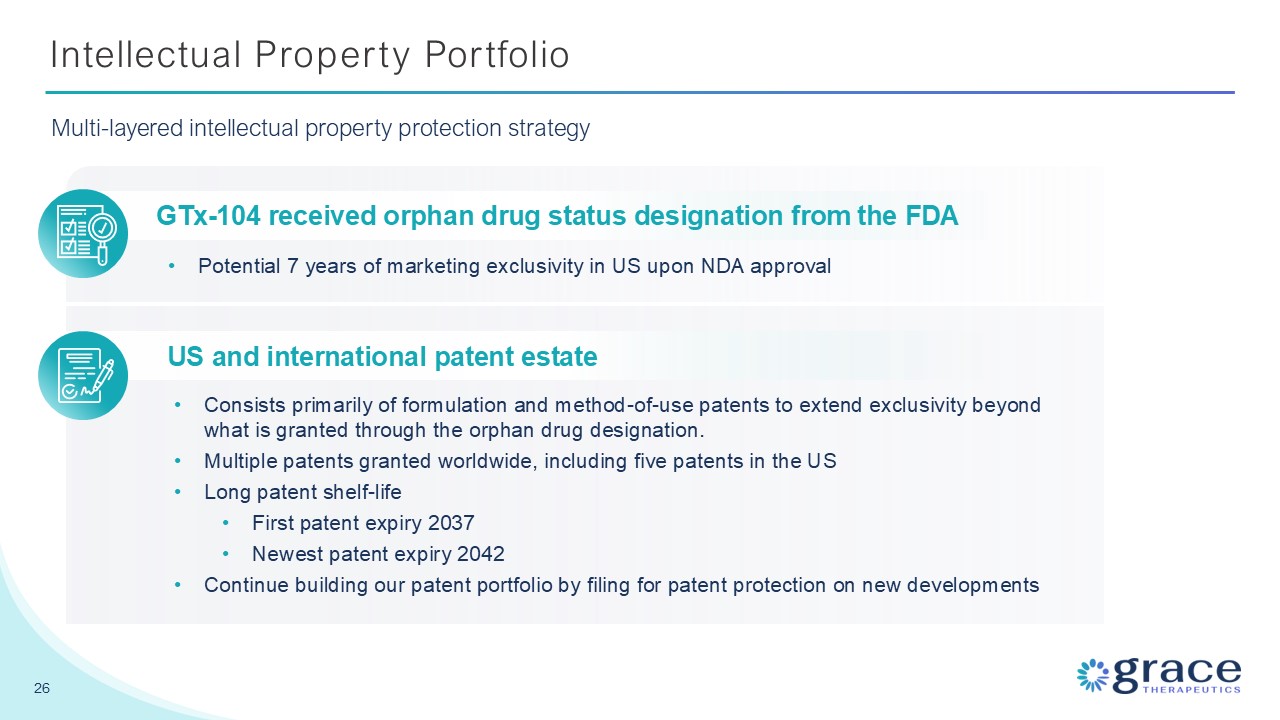
On September 16, 2025, U.S. Patent and Trademark Office issued a U.S. Patent No. 12,414,943, titled “Nimodipine Parenteral Administration”. The new method of use patent covers the dosing regimen for IV administration of nimodipine used in the Phase 3 STRIVE-ON safety trial for GTx-104. Grace Therapeutics has established a multi-layered intellectual property estate for GTx-104, including five patents on the composition of the Company’s formulation of nimodipine, which provide patent protection to 2037. The new patent on the IV dosing regimen for GTx-104 strengthens the Company’s intellectual property position and extends protection to 2043. Grace has also been granted Orphan Drug Designation from the FDA, which provides GTx-104 with seven years of marketing exclusivity in United States upon FDA approval of the Company’s NDA.


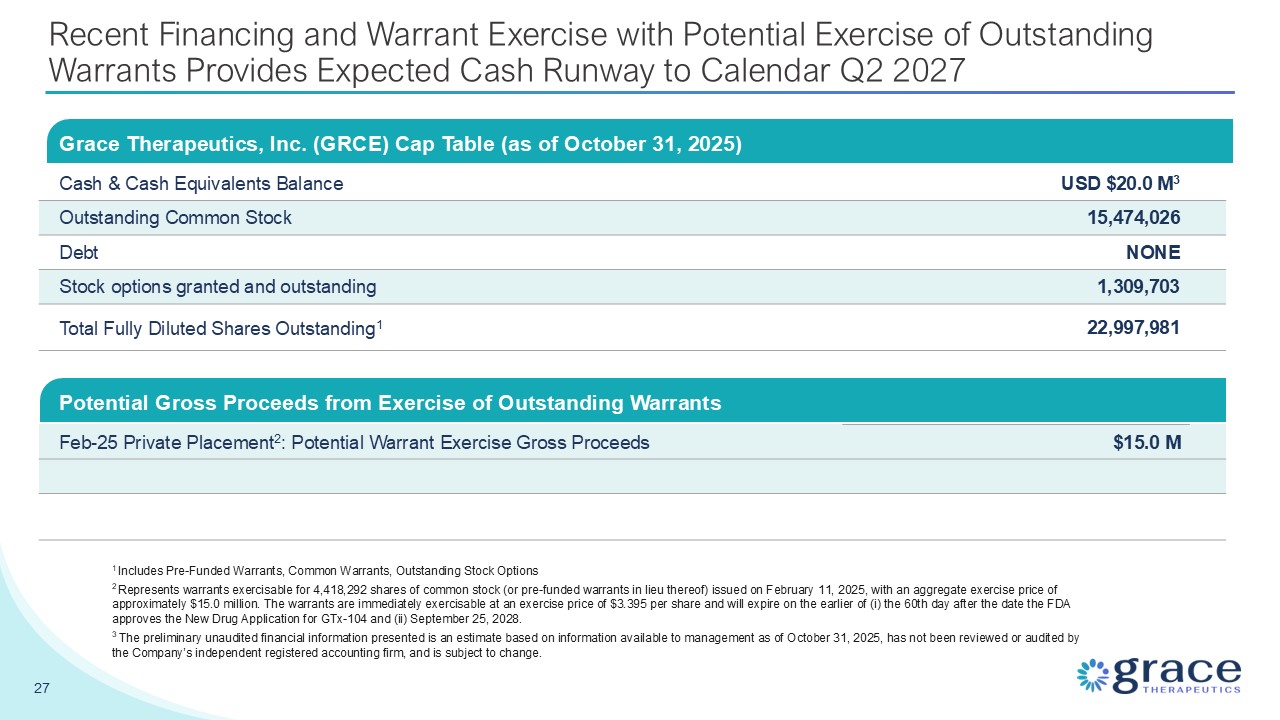
On October 23, 2025, the Company announced that it has secured approximately $4.0 million in additional funding through exercises of common warrants that were previously issued in a private placement that the Company closed in September 2023. The Company issued 1,345,464 new shares of common stock at an exercise price of $3.003 per share. The remaining 1,190,927 common warrants issued in the 2023 private placement expired as the 60th day after the FDA’s acceptance for review of the Company’s NDA for GTx-104 has passed. The Company estimates that its cash and cash equivalents were approximately $20.0 million as of October 31, 2025.

Second Quarter 2026 Financial Results

The Company reported a net loss of $0.9 million, or $0.06 per share, for the three months ended September 30, 2025, a decrease of $2.5 million from a net loss of $3.4 million, or $0.30 per share, for the three months ended September 30, 2024. The decrease in net loss was primarily due to a $2.4 million decrease in research and development expenses and a $1.1 million difference in the change in fair value of derivative warrant liabilities, partially offset by a $0.9 million decrease in income tax benefit and a $0.1 million increase in general and administrative expenses.

Total research and development expenses for the three months ended September 30, 2025, were $0.6 million, compared to $3.0 million for the three months ended September 30, 2024. The decrease of $2.4 million was primarily due to a $2.5 million decrease in research activities mainly due to completion of our GTx-104 pivotal Phase 3 STRIVE-ON safety trial, partially offset by an increase in salaries and benefits due to merit increases.

General and administrative expenses were $2.0 million for the three months ended September 30, 2025, an increase of $0.1 million from $1.9 million for the three months ended September 30, 2024. The increase was primarily a result of an increase in other general and administrative expenses primarily due to costs for GTx-104 pre-commercial planning.

Cash Runway

As of September 30, 2025, cash and cash equivalents were $16.9 million, a net decrease of $5.2 million compared to cash and cash equivalents of $22.1 million at March 31, 2025.

In October 2025, the Company received $4.0 million in gross proceeds from exercises of common warrants that were previously issued in a private placement in September 2023. The private placement the Company completed in February 2025 included common warrants exercisable for shares of common stock (or pre-funded warrants in lieu thereof) at an exercise price of $3.395 per share. Each common warrant is immediately exercisable and will expire on the earlier of (i) the 60th day after the date the FDA approves the NDA for GTx-104 and (ii) September 25, 2028. Potential gross proceeds from the exercise of the February 2025 common warrants are $15.0 million.

While the Company believes that current cash and cash equivalents provide cash runway through at least the next twelve months, the runway could extend into the second quarter of calendar 2027 if all of the common warrants issued in connection with the Company’s February 2025 private placement are exercised at the election of the investors.

About the STRIVE-ON Trial

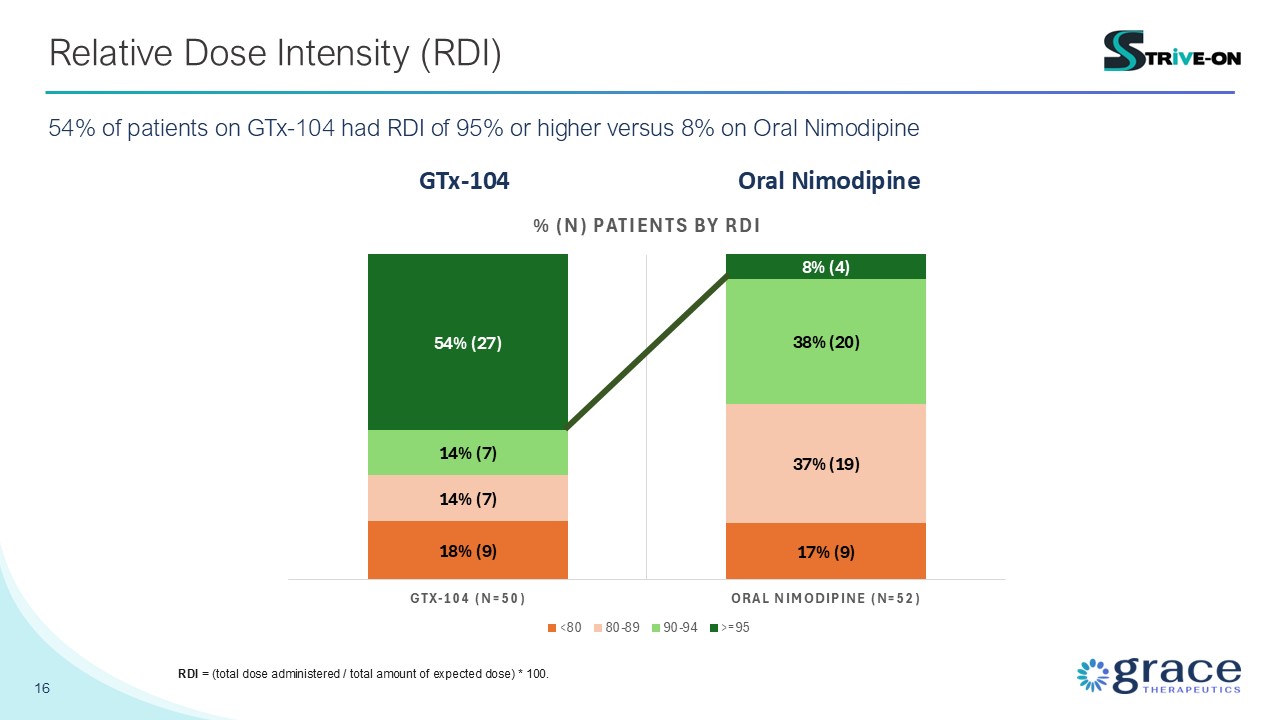
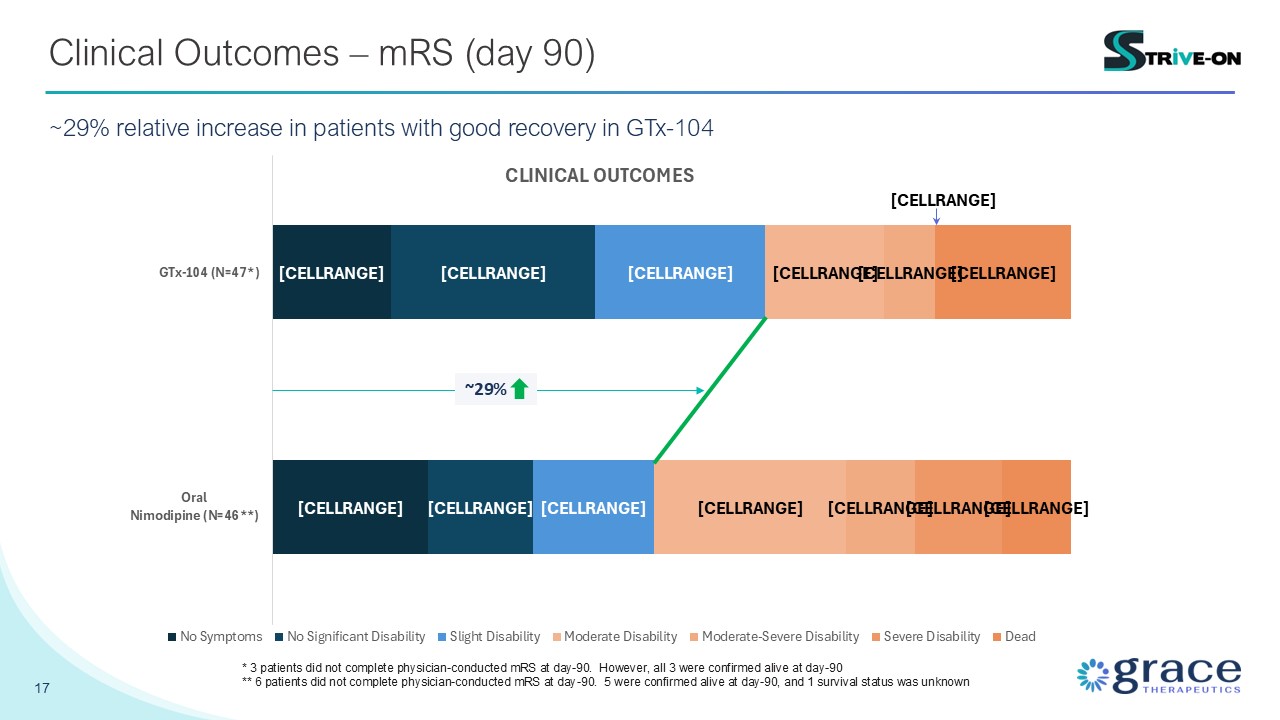
The STRIVE-ON trial (NCT05995405) was a prospective, randomized open-label trial of GTx-104 compared with oral nimodipine in patients hospitalized with aSAH. 50 patients were administered GTx-104 and 52 patients received oral nimodipine. The primary endpoint was the number of patients with at least one episode of clinically significant hypotension reasonably considered to be caused by the drug, and additional secondary endpoints included safety, clinical, and pharmacoeconomic outcomes. The trial met its primary endpoint, with patients receiving GTx-104 observed to have a 19% reduction in at least one incidence of clinically significant hypotension compared to oral nimodipine (28% versus 35%). Other measures also favored or were comparable to GTx-104, including: 54% patients had relative dose intensity (RDI) of 95% or higher compared to only 8% on oral nimodipine, and 29% more patients had favorable functional outcomes at 90 days. In addition, there were fewer intensive care unit (ICU) readmissions, ICU days, and ventilator days for patients receiving GTx-104 versus oral nimodipine. Adverse events were comparable between the two arms and no new safety issues were identified with patients receiving GTx-104. All deaths in both arms of the trial were due to severity of the patient’s underlying disease. There were eight deaths on the GTx-104 arm compared to four deaths on the oral nimodipine arm. The survival status of one patient on the oral nimodipine arm was unknown. No deaths were determined to be related to GTx-104 or oral nimodipine.


About aneurysmal Subarachnoid Hemorrhage (aSAH)

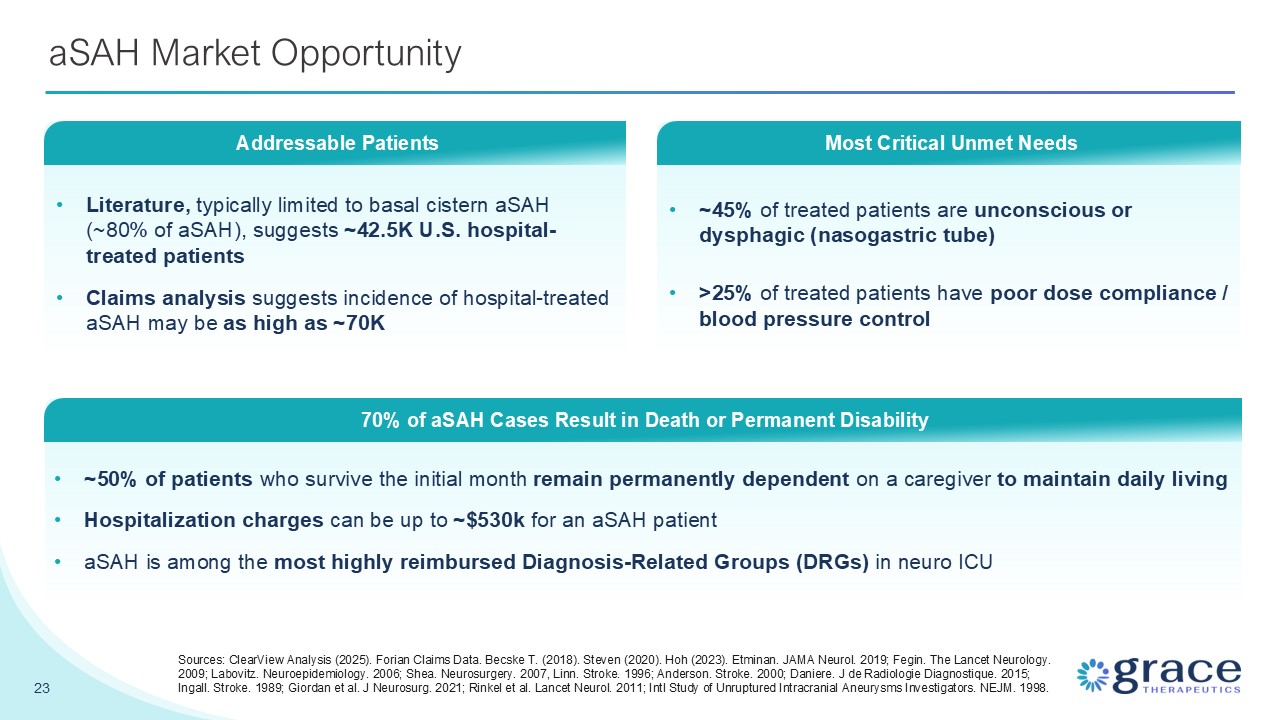
aSAH is bleeding over the surface of the brain in the subarachnoid space between the brain and the skull, which contains blood vessels that supply the brain. A primary cause of such bleeding is the rupture of an aneurysm in the brain. The result is aSAH, a relatively uncommon type of stroke that accounts for about 5% of all strokes and an estimated 42,500 U.S. hospital treated patients.

About the Grace Therapeutics Asset Portfolio

GTx-104 is a clinical stage, novel, injectable formulation of nimodipine being developed for IV infusion in aSAH patients to address significant unmet medical needs. The unique nanoparticle technology of GTx-104 facilitates aqueous formulation of insoluble nimodipine for a standard peripheral IV infusion. GTx-104 provides a convenient IV delivery of nimodipine in the Intensive Care Unit potentially eliminating the need for nasogastric tube administration in unconscious or dysphagic patients. Intravenous delivery of GTx-104 also has the potential to lower food effects, drug-to-drug interactions, and eliminate potential dosing errors. Further, GTx-104 has the potential to better manage hypotension in aSAH patients. GTx-104 has been administered in over 200 patients and healthy volunteers and was well tolerated with significantly lower inter- and intra-subject pharmacokinetic variability compared to oral nimodipine.

GTx-102 is a novel, concentrated oral-mucosal spray of betamethasone intended to improve neurological symptoms of Ataxia-Telangiectasia (A-T), for which there are currently no FDA-approved therapies. GTx-102 is a stable, concentrated oral spray formulation comprised of the gluco-corticosteroid betamethasone that, together with other excipients can be sprayed conveniently over the tongue of the A-T patient and is rapidly absorbed. The Company received written responses to its End of Phase 1 meeting in GTx-102 where the FDA made recommendations on the path toward an NDA. The FDA provided guidance on the design of a single pivotal efficacy and safety trial, including the neurological assessment scale for the primary endpoint, that could, with appropriate confirmatory evidence, support an NDA. The further development of GTx-102 has been deprioritized in favor of focusing on development of GTx-104. It is also possible that the Company may license or sell GTx-102.

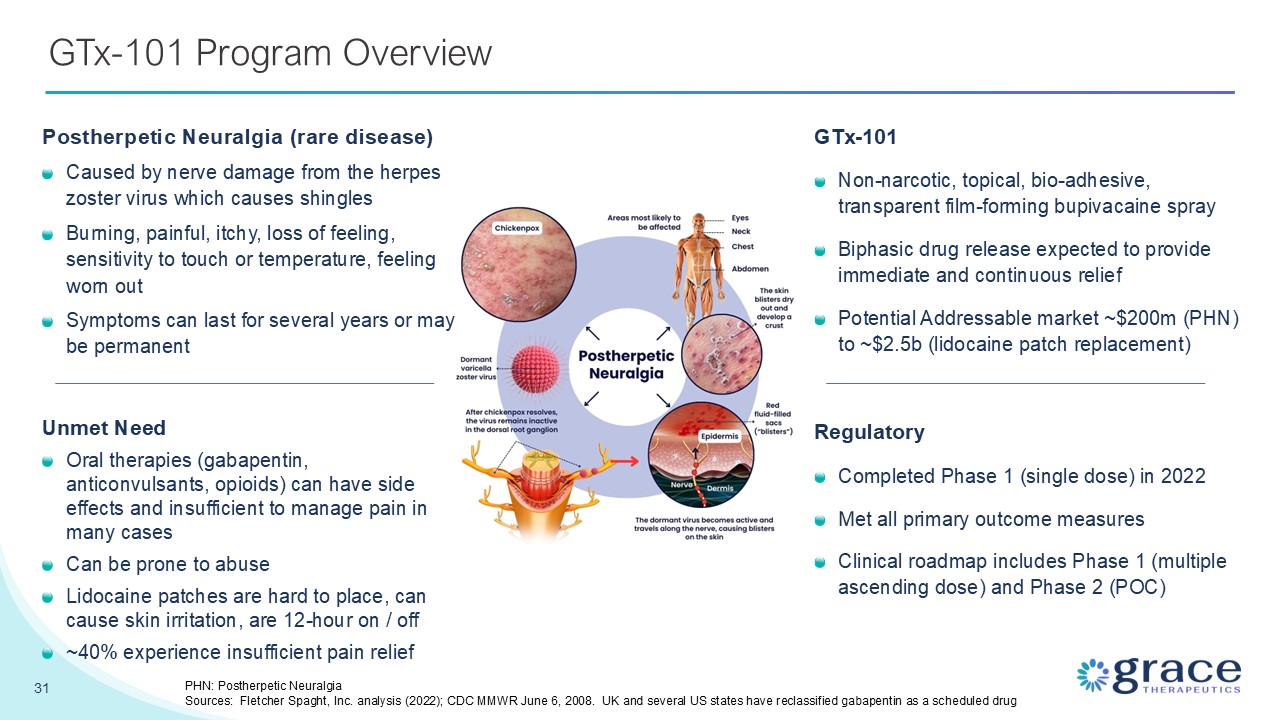
GTx-101 is a non-narcotic, topical bio-adhesive film-forming bupivacaine spray designed to ease the symptoms of patients suffering with postherpetic neuralgia (PHN). GTx-101 is administered via a metered-dose of bupivacaine spray and forms a thin bio-adhesive topical film on the surface of the patient’s skin, which enables a touch-free, non-greasy application. It also comes in convenient, portable 30 ml plastic bottles. Unlike oral gabapentin and lidocaine patches, which are used for the treatment of PHN, the Company believes that the biphasic delivery mechanism of GTx-101 has the potential for rapid onset of action and continuous pain relief for up to eight hours. No skin sensitivity was reported in a Phase 1 trial. The further development of GTx-101 has been deprioritized in favor of focusing on development of GTx-104. It is also possible that the Company may license or sell GTx-101.

About Grace Therapeutics

Grace Therapeutics, Inc. (Grace Therapeutics or the Company) is a late-stage biopharma company with drug candidates addressing rare and orphan diseases. Grace Therapeutics’ novel drug delivery technologies have the potential to improve the performance of currently marketed drugs by achieving faster onset of action, enhanced efficacy, reduced side effects, and more convenient drug delivery. Grace Therapeutic’s lead clinical assets have each been granted Orphan Drug Designation by the FDA, which provides seven years of marketing exclusivity post-launch in the United States, and additional intellectual property protection with over 40 granted and pending patents. Grace Therapeutics’ lead clinical asset, GTx-104, is an IV infusion targeting aneurysmal Subarachnoid Hemorrhage (aSAH), a rare and life-threatening medical emergency in which bleeding occurs over the surface of the brain in the subarachnoid space between the brain and skull.

For more information, please visit: www.gracetx.com.


Forward-Looking Statements

Statements in this press release that are not statements of historical or current fact constitute “forward-looking statements” within the meaning of the U.S. Private Securities Litigation Reform Act of 1995, as amended, Section 27A of the Securities Act of 1933, as amended, and Section 21E of the Securities Exchange Act of 1934, as amended, and “forward-looking information” within the meaning of Canadian securities laws (collectively, “forward-looking statements”). Such forward-looking statements involve known and unknown risks, uncertainties, and other factors that could cause the actual results of Grace Therapeutics to be materially different from historical results or from any future results expressed or implied by such forward-looking statements. In addition to statements which explicitly describe such risks and uncertainties, readers are urged to consider statements containing the terms “believes,” “belief,” “expects,” “intends,” “anticipates,” “estimates,” “potential,” “should,” “may,” “will,” “plans,” “continue,” “targeted” or other similar expressions to be uncertain and forward-looking. Readers are cautioned not to place undue reliance on these forward-looking statements, which speak only as of the date of this press release. The forward-looking statements in this press release, including statements regarding, the Company’s cash runway and cash position, the future prospects of the Company’s GTx-104 drug candidate, the outcome of the Company’s NDA submission for GTx-104, GTx-104’s potential to bring enhanced treatment options to patients suffering from aSAH, GTx-104’s potential to be administered to improve the management of hypotension in patients with aSAH, the ability of GTx-104 to achieve a pharmacokinetic and safety profile similar to the oral form of nimodipine, GTx-104’s potential to achieve medical and pharmacoeconomic benefit, GTx-104’s commercial prospects, the future prospects of the Company’s GTx-102 drug candidate, GTx-102’s potential to provide clinical benefits to decrease symptoms associated with A-T, the timing and outcomes of a Phase 3 efficacy and safety trial for GTx-102, the timing of an NDA filing for GTx-102, the future prospects of the Company’s GTX-101 drug candidate, GTX-101’s potential to be administered to PHN patients to treat the severe nerve pain associated with the disease and any future patent and other intellectual property filings made by the Company for new developments are based upon Grace Therapeutics’ current expectations and involve assumptions that may never materialize or may prove to be incorrect. Actual results and the timing of events could differ materially from those anticipated in such forward-looking statements as a result of various risks and uncertainties, including, without limitation: (i) the success and timing of regulatory submissions of the Phase 3 STRIVE-ON safety trial for GTx-104; (ii) regulatory requirements or developments and the outcome of the Company’s NDA application for GTx-104; (iii) changes to regulatory pathways; (iv) our ability to protect our intellectual property for our drug candidates; and (v) legislative, regulatory, political and economic developments. The foregoing list of important factors that could cause actual events to differ from expectations should not be construed as exhaustive and should be read in conjunction with statements that are included herein and elsewhere, including the risk factors detailed in the “Special Note Regarding Forward-Looking Statements,” “Risk Factors” and “Management’s Discussion and Analysis of Financial Condition and Results of Operations” sections of the Company’s Annual Report on Form 10-K for the fiscal year ended March 31, 2025, the Company’s Quarterly Report on Form 10-Q for the quarterly period ended June 30, 2025 and the Company’s Quarterly Report on Form 10-Q for the quarterly period ended September 30, 2025 to be filed with the Securities and Exchange Commission (“SEC”) and other documents that have been and will be filed by Grace Therapeutics from time to time with the SEC and Canadian securities regulators. All forward-looking statements contained in this press release speak only as of the date on which they were made. Grace Therapeutics undertakes no obligation to update such statements to reflect events that occur or circumstances that exist after the date on which they were made, except as required by applicable securities laws.

For more information, please contact:

Grace Therapeutics Contact:


Prashant Kohli
 
Chief Executive Officer
 
Tel: 609-322-1602
 
Email: info@gracetx.com
 
www.gracetx.com


Investor Relations:


LifeSci Advisors  
Mike Moyer
 
Managing Director
 
Phone: 617-308-4306
 
Email: mmoyer@lifesciadvisors.com
 

---tables to follow---


GRACE THERAPEUTICS, INC.
Condensed Consolidated Balance Sheets
(Unaudited)

   
September 30,2025
   
March 31,2025
 
(Expressed in thousands except share data)
 
$
     
$
   
Assets
               
Current assets:
               
Cash and cash equivalents
   
16,862
     
22,133
 
Receivables
   
20
     
126
 
Prepaid expenses
   
416
     
453
 
Total current assets
   
17,298
     
22,712
 
Equipment, net
   
12
     
15
 
Intangible assets
   
41,128
     
41,128
 
Goodwill
   
8,138
     
8,138
 
Total assets
   
66,576
     
71,993
 
                 
Liabilities and Stockholders’ equity
               
Current liabilities:
               
Trade and other payables
   
1,245
     
1,930
 
Total current liabilities
   
1,245
     
1,930
 
                 
Derivative warrant liabilities
   
201
     
1,141
 
Deferred tax liability
   
2,312
     
2,312
 
Total liabilities
   
3,758
     
5,383
 
                 
Commitments and contingencies
               
                 
Stockholders’ equity:
               
Preferred stock, $0.0001 par value per share; 10,000,000 authorized; none issued and outstanding as of September 30, 2025 and March 31, 2025


Common stock, $0.0001 par value per share; 100,000,000 authorized; 14,128,562 and 13,718,106 shares issued and outstanding as of September 30, 2025 and March 31, 2025, respectively
   
1
     
1
 
Additional paid-in capital
   
293,842
     
293,334
 
Accumulated other comprehensive loss
   
(6,038
)
   
(6,038
)
Accumulated deficit
   
(224,987
)
   
(220,687
)
Total stockholders’ equity
   
62,818
     
66,610
 
Total liabilities and stockholders’ equity
   
66,576
     
71,993


GRACE THERAPEUTICS, INC.
Condensed Consolidated Statements of Loss and Comprehensive Loss
(Unaudited)

   
Three months ended
   
Six months ended
 
   
September 30, 2025
   
September 30, 2024
   
September 30, 2025
   
September 30, 2024
 
(Expressed in thousands, except share and per share data)
 
$
     
$
     
$
     
$
   
                                 
Operating expenses
                               
Research and development expenses, net of government assistance
   
(568
)
   
(2,976
)
   
(1,523
)
   
(5,684
)
General and administrative expenses
   
(1,961
)
   
(1,855
)
   
(4,096
)
   
(4,109
)
Loss from operating activities
   
(2,529
)
   
(4,831
)
   
(5,619
)
   
(9,793
)
                                 
                                 
Foreign exchange (loss) gain
   
(8
)
   
13
     
3
     
5
 
Change in fair value of derivative warrant liabilities
   
1,427
     
362
     
940
     
1,756
 
Interest and other income, net
   
172
     
172
     
375
     
407
 
Total other income, net
   
1,591
     
547
     
1,318
     
2,168
 
Loss before income tax recovery
   
(938
)
   
(4,284
)
   
(4,301
)
   
(7,625
)
                                 
Income tax benefit
   
     
852
     
     
1,576
 
                                 
Net loss and total comprehensive loss
   
(938
)
   
(3,432
)
   
(4,301
)
   
(6,049
)
                                 
Basic and diluted loss per share
   
(0.06
)
   
(0.30
)
   
(0.27
)
   
(0.53
)
                                 
Weighted-average number of shares outstanding
   
15,924,522
     
11,506,234
     
15,924,522
     
11,506,234


EX-99.2 3 ef20058656_ex99-2.htm EXHIBIT 99.2

Exhibit 99.2

 Corporate Presentation   Fall 2025 
 

 Summary  2  Forward Looking Statements  Statements in this presentation that are not statements of historical or current fact constitute "forward-looking statements" within the meaning of the U.S. Private Securities Litigation Reform Act of 1995, as amended, Section 27A of the Securities Act of 1933, as amended, and Section 21E of the Securities Exchange Act of 1934, as amended, and "forward-looking information" within the meaning of Canadian securities laws (collectively, "forward-looking statements"). Such forward-looking statements involve known and unknown risks, uncertainties, and other factors that could cause the actual results of Grace Therapeutics, Inc. (the “Company”) to be materially different from historical results or from any future results expressed or implied by such forward-looking statements. In addition to statements which explicitly describe such risks and uncertainties, readers are urged to consider statements containing the terms "believes," "belief," "expects," "intends," "anticipates," "estimates," "potential," "should," "may," "will," "plans," "continue," "targeted" or other similar expressions to be uncertain and forward-looking. Readers are cautioned not to place undue reliance on these forward-looking statements, which speak only as of the date of this presentation. The forward-looking statements in this presentation, including, but not limited to, statements regarding the Company’s expected cash runway, the potential exercise of outstanding warrants, the future prospects of the Company’s GTx-104 drug candidate, the outcome of the Company's NDA submission for GTx-104 with the FDA, GTx-104's potential to bring enhanced treatment options to patients suffering from aneurysmal subarachnoid hemorrhage (“aSAH”), GTx-104’s potential to be administered to improve the management of hypotension in patients with aSAH, the ability of GTx-104 to achieve a pharmacokinetic and safety profile similar to the oral form of nimodipine, GTx-104’s potential to provide improved bioavailability and the potential for reduced use of rescue therapies, GTx-104’s potential to achieve pharmacoeconomic benefit over the oral form of nimodipine, GTx-104’s commercial prospects, the Company’s pre-commercial launch strategy for GTx104, the future prospects of the Company’s GTx-102 drug candidate, GTx-102’s potential to provide clinical benefits to decrease symptoms associated with Ataxia Telangiectasia, the timing and outcomes of a Phase 3 efficacy and safety trial for GTx-102, the timing of an NDA filing for GTx-102, the future prospects of the Company’s GTx-101 drug candidate, GTx-101’s potential to be administered to Postherpetic Neuralgia (“PHN”) patients to treat severe nerve pain associated with the disease, the timing and outcomes of a Phase 3 efficacy and safety trial for GTx-101, the size of the addressable market for GTx-104 and GTx 102, and any future patent and other intellectual property filings made by the Company for new developments are based upon Grace Therapeutics, Inc.’s current expectations and involve assumptions that may never materialize or may prove to be incorrect. Actual results and the timing of events could differ materially from those anticipated in such forward-looking statements as a result of various risks and uncertainties, including, without limitation: (i) the success and timing of regulatory submissions of the STRIVE-ON Phase 3 safety trial for GTx-104; (ii) regulatory requirements or developments and the outcome of the NDA submission for GTx-104; (iii) changes to clinical trial designs and regulatory pathways; (iv) the Company’s ability to protect its intellectual property rights for its product candidates; and (v) legislative, regulatory, political and economic developments. The foregoing list of important factors that could cause actual events to differ from expectations should not be construed as exhaustive and should be read in conjunction with statements that are included herein and elsewhere, including the risk factors detailed in the "Special Note Regarding Forward-Looking Statements," "Risk Factors" and "Management's Discussion and Analysis of Financial Condition and Results of Operations" sections of the Company's Annual Report on Form 10-K for the fiscal year ended March 31, 2025, Quarterly Reports on Forms 10-Q for the quarterly periods ended June 30, 2025 and September 30, 2025 and other documents that have been and will be filed by Grace Therapeutics, Inc. from time to time with the Securities and Exchange Commission and Canadian securities regulators. All forward-looking statements contained in this presentation speak only as of the date on which they were made. Grace Therapeutics undertakes no obligation to update such statements to reflect events that occur or circumstances that exist after the date on which they were made, except as required by applicable securities laws. 
 

 Summary  GTx-104 – novel intravenous nimodipine – well positioned to solve oral challenges and potentially displace oral as SoC   Nimodipine is the SoC and clinically de-risked; however, significant unmet needs remain with its only available oral form  Pivotal Phase 3 STRIVE-ON safety trial met primary endpoint; clinical evidence of GTx-104 benefit vs oral  3  Executive Summary  aSAH: aneurysmal Subarachnoid Hemorrhage.   All dates based on calendar year in the presentation.  GTx-104 | aSAH  Potential to address a severe rare disease with efficient commercial organization; concentrated patient care  Orphan Drug Status with seven-year market exclusivity and additional multi-layered IP protection  NDA filed June 2025; accepted for review August 22, 2025 Target PDUFA April 23, 2026 
 

 aSAH is a Rare and Severe Acute Brain Injury  Subarachnoid Hemorrhage  aSAH results in bleeding over the surface of the brain in the space between the brain and skull  Primary cause is rupture of an aneurysm  Condition can occur quickly, immediate intervention is key to survival  Patients require surgical intervention and oral nimodipine therapy  4  Sources: ClearView Analysis (2025). Forian Claims Data. Fletcher Spaght market research; Becske T. (2018). Steven (2020).   Occurs in Relatively Young Patients (~50% <60 yrs)  Significant Mortality (~10-15% before reaching hospital)  Est. Annual U.S. Hospital-Treated Patients (2023)  Hospital-treated aSAH may be as high as ~70k 
 

 Oral Nimodipine – The aSAH Standard of Care for >3 Decades  5  Sources: Hoh (2023). Hernandez-Duran (2019). Sandow (2016).  DCI: Delayed Cerebral Infarction  The Joint Commision is a hospital accredation agency  2023 AHA/ASA GuidelinesFor the management of patients with aSAH  Nimodipine is the only approved therapy to improve neurological outcomes  Limited use of off-label therapies due to The Joint Commission monitoring adherence to care guidelines 
 

 Nimodipine – Consistent Drug Administration Drives Positive Patient Outcomes  6  Sources: Hoh (2023). Hernandez-Duran (2019). Sandow (2016).  aOR: adjusted odds ratio; CI: Confidence Interval  Nimodipine cessation or dose reduction independently associated with poor functional outcomes (aOR 0.89, 95% CI 0.80-0.99)  P = 0.037  P = 0.061  Received Reduced Nimodipine Course  Received Full Nimodipine Course  Received Reduced Nimodipine Course  Received Full Nimodipine Course  Hunt Hess 1-3  Hunt Hess 4-5  Nimodipine is administered six times per day for up to 21 days   Limited use of off-label therapies due to Joint Commission monitoring adherence to care guidelines 
 

 7  Substantial Shortcomings of Oral Nimodipine  Sources: Nimodipine Prescribing Label, Sandow et al., Mahmoud et al., Abboud et al., Soppi et al., Rabaut et al., Ho et al., Fletcher Spaght market research.  Administration Challenges  High dosing burden of 60mg (2 x 30mg capsules), 6 times per day  45% of patients receive nimodipine through nasogastric tube (NGT) – often via capsule extraction  Capsule extraction and administration is labor intensive  Dosing Interruption  Increased Hypotension  Too High  Fatal Medication Errors  Inadvertent parenteral injection can result in death or serious life-threatening AEs  Highest risk with capsule extraction  NYMALIZE (oral liquid) tempers the risk of error, but has tolerability challenges (e.g., severe diarrhea) due to solubility limitations of nimodipine  3  Sub-optimal Therapeutic Benefit with Oral Administration  High Pharmacokinetic Variability  Inconsistent plasma concentration in both inter and intra subject  High first-pass metabolism, leads to low bioavailability and frequent dosing  Gastric motility issues and presence of food delay rate of absorption  Potentially negligible concentration with NGT administration  Hypotension drives missed doses and diminished efficacy  Blood   Concentration  55% of patients do not receive the full daily dose due to hypotension  Sub-optimal   Outcomes  Too Low 
 

 GTx-104 is a Novel IV Nimodipine Designed to Overcome Oral Delivery Challenges Supported by Strong IP, Ph. III Trial Success, and a filed NDA   8  CMC: Critical micelle concentration.  Orphan Drug Status with seven-year market exclusivity and additional multi-layered IP protection  Drug loaded micelles  Nimodipine  10– 15 nm  Blank micelles  Surfactant Monomers  Hydrophilic Part  Hydrophobic Part  A novel intravenous nimodipine that is well positioned to solve oral challenges and potentially displace oral as SoC   Pivotal Phase 3 STRIVE-ON safety trial met primary endpoint; clinical evidence of GTx-104 benefit vs. oral  Target PDUFA April 23, 2026   GTx-104  Overcomes solubility limitations of nimodipine in current formulations  Patented formulation uses non-ionic surfactant micelles as the drug carrier to solubilize nimodipine  Simple to prepare in pharmacy, stable at room temperature  GTx-104 drug delivery technology 
 

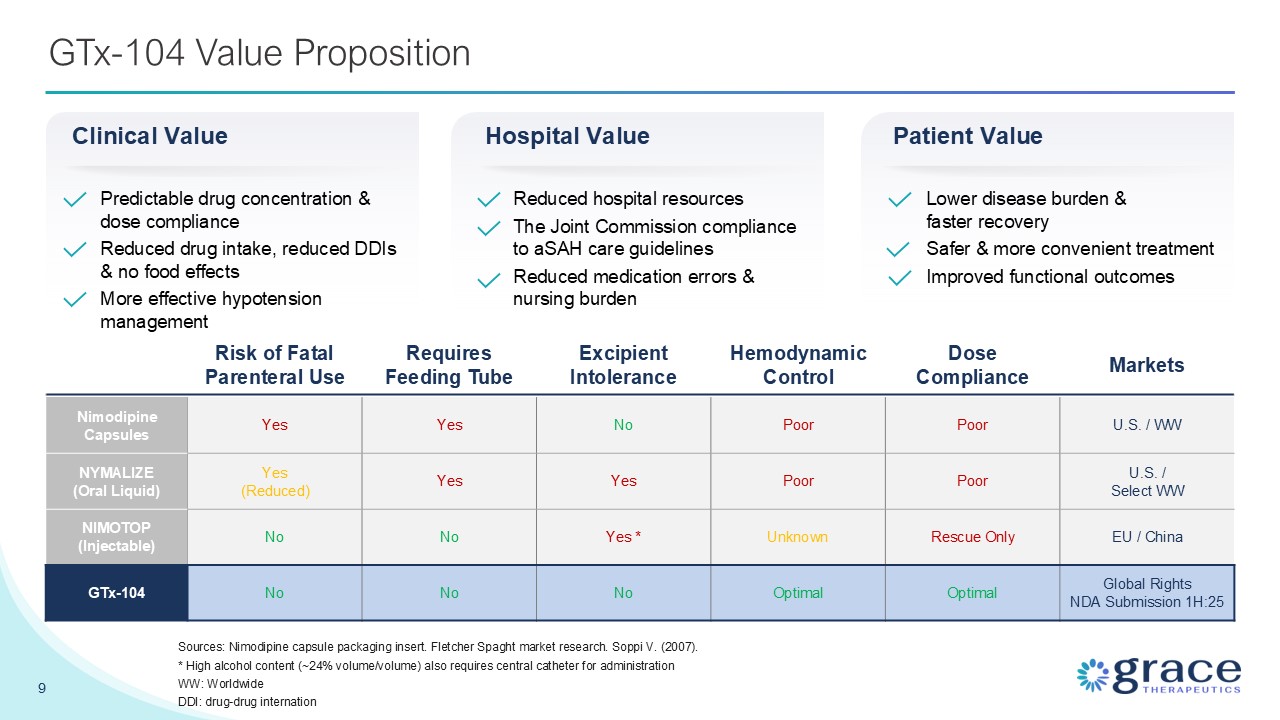
 GTx-104 Value Proposition  9  Risk of Fatal Parenteral Use  Requires Feeding Tube  Excipient Intolerance  Hemodynamic Control  Dose Compliance  Markets  Nimodipine Capsules  Yes  Yes  No  Poor  Poor  U.S. / WW  NYMALIZE (Oral Liquid)  Yes  (Reduced)  Yes  Yes  Poor  Poor  U.S. / Select WW  NIMOTOP (Injectable)  No  No  Yes *  Unknown  Rescue Only  EU / China  GTx-104  No  No  No  Optimal  Optimal  Global Rights  NDA Submission 1H:25  Sources: Nimodipine capsule packaging insert. Fletcher Spaght market research. Soppi V. (2007).   * High alcohol content (~24% volume/volume) also requires central catheter for administration  WW: Worldwide   DDI: drug-drug internation   Predictable drug concentration & dose compliance  Reduced drug intake, reduced DDIs & no food effects  More effective hypotension management  Clinical Value  Hospital Value  Reduced hospital resources  The Joint Commission compliance to aSAH care guidelines   Reduced medication errors & nursing burden  Patient Value  Lower disease burden & faster recovery  Safer & more convenient treatment  Improved functional outcomes 
 

 Phase 1 Trial Established Scientific Bridge between GTx-104 and Oral Nimodipine  10  Source: GTx-104-002 CSR; results announced May 2022  Significantly lower dose variability relative to oral capsule  Consistent and predictable plasma concentrations  GTx-104 IV infusion vs Oral capsule: AUC Day_3 0-24hr  GTx-104  Oral Capsule  0  100  200  300  400  500  600  700  800  900  1000  AUC dav-3 0-24hour  GTx-104  Trial met all primary and secondary endpoints; enabling the 505(b)2 regulatory pathway  
 

 STRIVE-ON Phase 3 Trial 
 

 GTx-104 STRIVE-ON Phase 3 Pivotal Safety Trial Design  12  mRS: modified Rankin Scale  STRIVE-ON (NCT05995405) is a ~100-patient prospective, open-label, randomized (1:1 ratio), parallel group trial of GTx-104 compared with oral nimodipine in patients hospitalized for aSAH   Screening Period  (within 96 hours of aSAH onset)  Day 1  Treatment Period  Day 2-21  Onset of aSAH  Follow up Period  Day 30 and Day 90  Primary Endpoint   Incidence of subjects with at least one episode of clinically significant hypotension  Informed Consent  Inclusion/exclusion  Randomize  Initiate investigational product   Hypotension events   Relative dose intensity  Safety  Adverse events  Functional outcomes (mRS)  Pharmacoeconomic outcomes  Trial complete and reported topline data in January 2025 
 

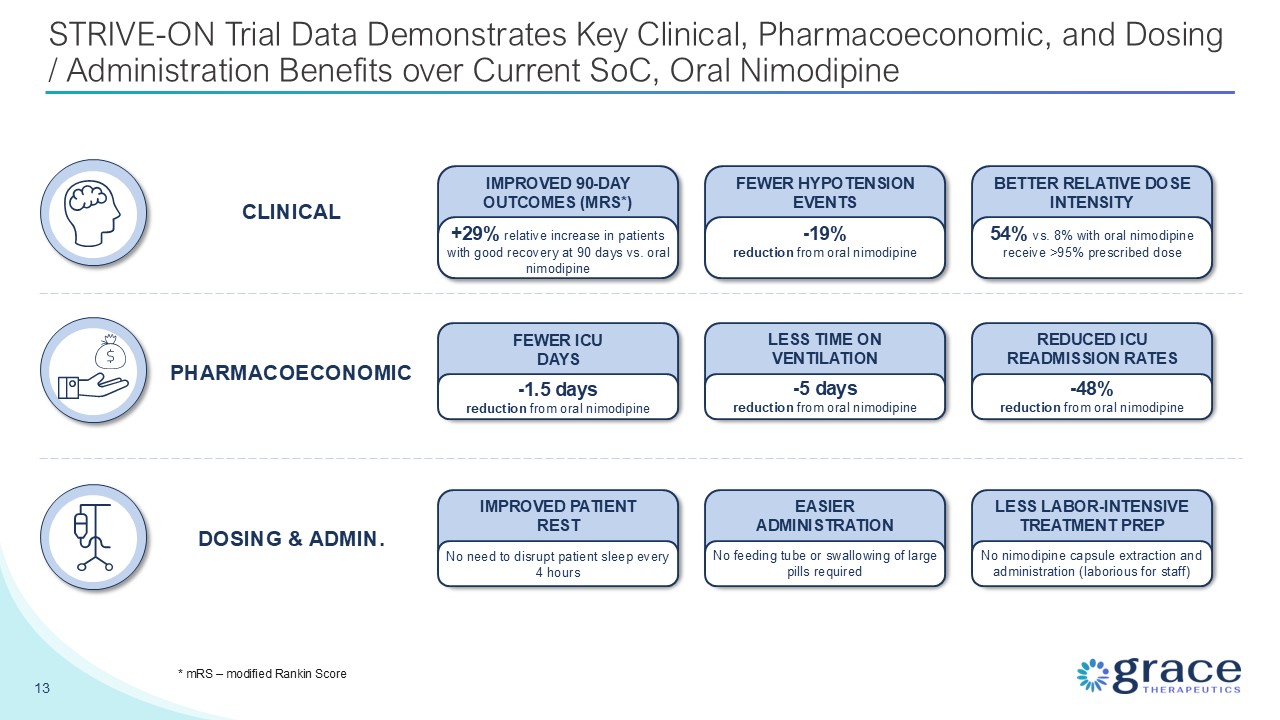
 13  STRIVE-ON Trial Data Demonstrates Key Clinical, Pharmacoeconomic, and Dosing / Administration Benefits over Current SoC, Oral Nimodipine  CLINICAL  IMPROVED 90-DAY OUTCOMES (MRS*)  +29% relative increase in patients with good recovery at 90 days vs. oral nimodipine  FEWER HYPOTENSION EVENTS  -19%   reduction from oral nimodipine  BETTER RELATIVE DOSE INTENSITY  54% vs. 8% with oral nimodipine receive >95% prescribed dose  PHARMACOECONOMIC  FEWER ICU   DAYS  -1.5 days  reduction from oral nimodipine  LESS TIME ON   VENTILATION  -5 days   reduction from oral nimodipine  REDUCED ICU   READMISSION RATES  -48%   reduction from oral nimodipine  DOSING & ADMIN.  IMPROVED PATIENT   REST  No need to disrupt patient sleep every 4 hours  EASIER   ADMINISTRATION  No feeding tube or swallowing of large pills required  LESS LABOR-INTENSIVE TREATMENT PREP  No nimodipine capsule extraction and administration (laborious for staff)  * mRS – modified Rankin Score  
 

 14  Demographics & Baseline Characteristics  GTX-104  (N = 50)  Oral Nimodipine  (N = 52)  Age (mean)  55  56  Sex, n (%)   Female   Male  33 (66.0%)  17 (34.0%)  33 (63.5%)  19 (36.5%)  Hunt & Hess Grade, n (%)   I   II   III   IV   V  10 (20%)  15 (30%)  15 (30%)  6 (12%)  4 (8%)  8 (15%)  15 (29%)  16 (31%)  12 (23%)  1 (2%)  Demographics well-balanced, except higher proportion of most severe with worst prognosis (Grade V) in GTx-104 
 

 15  Primary Endpoint – Clinically Significant Hypotension   ~19% relatively fewer patients with clinically significant hypotension in GTx-104  GTX-104  (N = 50)  n (%)  Oral Nimodipine  (N = 52)  n (%)  Clinically Significant Hypotension  14 (28%)  18 (35%)  Clinically significant hypotension: decrease in systolic BP > 20 mm Hg or diastolic BP > 10 mm Hg or systolic BP <= 100 confirmed by two consecutive readings within five minutes AND requiring medical intervention. 
 

 16  Relative Dose Intensity (RDI)   54% of patients on GTx-104 had RDI of 95% or higher versus 8% on Oral Nimodipine   GTx-104  Oral Nimodipine  RDI = (total dose administered / total amount of expected dose) * 100. 
 

 17  Clinical Outcomes – mRS (day 90)  ~29% relative increase in patients with good recovery in GTx-104  ~29%  * 3 patients did not complete physician-conducted mRS at day-90. However, all 3 were confirmed alive at day-90  ** 6 patients did not complete physician-conducted mRS at day-90. 5 were confirmed alive at day-90, and 1 survival status was unknown  
 

 18  Clinical Outcomes – QoL (Quality of Life; day 90)  Patient-reported health scores favor GTx-104  QoL  GTx-104  (N = 381)  Oral Nimodipine  (N = 402)  Your Health Today Score    mean (0 = being worst -> 100 = great)  75  70  Mobility, n (%)   I have no or some problems   I am confined to bed   38 (100%)  0  35 (88%)  5 (12%)  Self-Care, n (%)   I have no or some problems   I am unable to wash/dress   37 (97%)  1 (2.6%)  35 (88%)  5 (12%)  Usual Activities, n (%)    I have no or some problems   I am unable to perform   35 (92%)  3 (8%)  33 (84%)  7 (16%)  Pain/Discomfort, n (%)   I have no or moderate pain   I have extreme pain  36 (95%)  2 (5%)  38 (95%)  1 (2%)  Anxiety/Depression, n (%)   I am not or moderately    I am extremely   36 (95%)  2 (5%)  36 (90%)  3 (7%)  1 GTx-104: patient did not complete survey (4), dead (8 – all due to underlying disease, none were GTx-104 related).   2 Oral Nimodipine: patient did not complete survey (8), dead (4 – all due to underlying disease, none were Oral Nimodipine related). Oral also had 2 incomplete (pain, anxiety).  
 

 19  Safety   Overall safety was comparable between the two groups  Summary of Adverse Events (AEs)  (entire study duration of 90 days)  GTx-104  (N = 50)  Oral Nimodipine  (N = 52)  All AEs, n (%) # of events  44 (88%) 157  43 (83%) 193  All AEs, events per n  3.6  4.5  All SAEs1, n (%) # of events  18 (36%) 34  25 (48%) 48  All SAEs, events per n  1.9  1.9   Treatment-Related SAEs, n (%) # of events2  0  2 (4%) 2   Mortality3, n (%)  8 (16%)  4 (8%)   Cause of death4 (n)   All deaths were due to severity of underlying disease  No deaths due to GTx-104  aSAH (5), ICH (1), rebleed (1), cardiac arrest (1)  No deaths due to Oral Nimodipine  aSAH (2), rebleed (1), cardiac arrest (1)  1 A few include sepsis, deep vein thrombosis, ICH, hydrocephalus, cerebral infarction, urinary tract infection, C. difficile, systemic inflammatory response, acute kidney injury, as well as death  2 Oral Nimodipine: bradycardia, vasospasm   3 Mortality rate is equivalent or lower than previous well-controlled clinical trials (Oral NIMOTOP NDA)   4 Based on investigator assessment  SAEs: Serious Adverse Events; ICH: Intracerebral Hemorrhage; DCI: Delayed Cerebral Hemorrhage 
 

 20  ICU Length of Stay (los), Mechanical Ventilator & Readmissions  1.5 fewer ICU days, 5 fewer ventilator days, and 48% relatively fewer ICU readmissions in GTx-104  GTx-104  (N = 50)  Oral Nimodipine  (N = 52)  ICU los, days    Mean (SD)   16.4 (6.7)  17.9 (10.4)  Mechanical Ventilation days   Mean (SD)  5.6 (5.7)  10.6 (13.9)  Hospital Readmissions*   One readmission, n (%)   Two readmissions, n (%)    Three readmissions, n (%)   6 (12%)  0  0  7 (14%)  0  1 (2%)  ICU Readmissions   One readmission, n (%)   Two readmissions, n (%)  2 (4%)  0  3 (6%)  1 (2%)  * Hospital Readmissions includes ICU readmissions. Readmissions were due to sequelae of aSAH e.g., UTI (urinary tract infection), DVT (deep vein thrombosis), Pneumonia, Seizures, Hydrocephalus, Cranioplasty.  SD: standard deviation 
 

 21  Pharmacoeconomics  Major patient resource utilization drivers in aSAH favor GTx-104  GTx-104  (N = 50)  n*  Oral Nimodipine  (N = 52)  n*  Day 1  Day 14  % change  Day 1  Day 14  % change  Mechanical Ventilation   14  1  -93%  12  7  -42%  External Ventricular Drain  32  10  -69%  35  17  -51%  Deep Sedation  5  1  -80%  8  5  -38%  Comatose  4  0  -100%  5  2  -60%  * Excludes patients that died before Day 14 for this analysis. 
 

 Commercial Preparation 
 

 ~45% of treated patients are unconscious or dysphagic (nasogastric tube)  >25% of treated patients have poor dose compliance / blood pressure control   aSAH Market Opportunity  23  Literature, typically limited to basal cistern aSAH (~80% of aSAH), suggests ~42.5K U.S. hospital-treated patients  Claims analysis suggests incidence of hospital-treated aSAH may be as high as ~70K  Addressable Patients  ~50% of patients who survive the initial month remain permanently dependent on a caregiver to maintain daily living  Hospitalization charges can be up to ~$530k for an aSAH patient  aSAH is among the most highly reimbursed Diagnosis-Related Groups (DRGs) in neuro ICU  70% of aSAH Cases Result in Death or Permanent Disability  Most Critical Unmet Needs  Sources: ClearView Analysis (2025). Forian Claims Data. Becske T. (2018). Steven (2020). Hoh (2023). Etminan. JAMA Neurol. 2019; Fegin. The Lancet Neurology. 2009; Labovitz. Neuroepidemiology. 2006; Shea. Neurosurgery. 2007, Linn. Stroke. 1996; Anderson. Stroke. 2000; Daniere. J de Radiologie Diagnostique. 2015; Ingall. Stroke. 1989; Giordan et al. J Neurosurg. 2021; Rinkel et al. Lancet Neurol. 2011; Intl Study of Unruptured Intracranial Aneurysms Investigators. NEJM. 1998. 
 

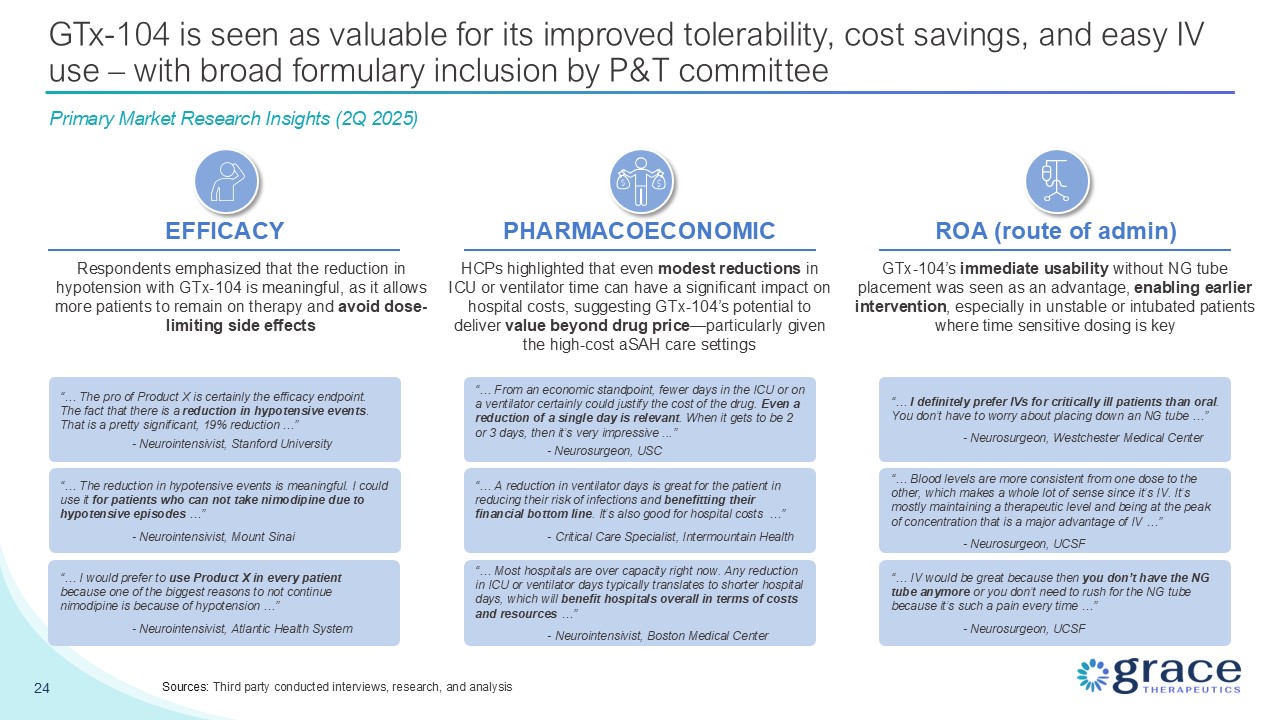
 24  GTx-104 is seen as valuable for its improved tolerability, cost savings, and easy IV use – with broad formulary inclusion by P&T committee  EFFICACY  PHARMACOECONOMIC  ROA (route of admin)  “… The pro of Product X is certainly the efficacy endpoint. The fact that there is a reduction in hypotensive events. That is a pretty significant, 19% reduction …”   - Neurointensivist, Stanford University  “… The reduction in hypotensive events is meaningful. I could use it for patients who can not take nimodipine due to hypotensive episodes …”   - Neurointensivist, Mount Sinai  “… I would prefer to use Product X in every patient because one of the biggest reasons to not continue nimodipine is because of hypotension …”   - Neurointensivist, Atlantic Health System  Respondents emphasized that the reduction in hypotension with GTx-104 is meaningful, as it allows more patients to remain on therapy and avoid dose-limiting side effects   HCPs highlighted that even modest reductions in ICU or ventilator time can have a significant impact on hospital costs, suggesting GTx-104’s potential to deliver value beyond drug price—particularly given the high-cost aSAH care settings  GTx-104’s immediate usability without NG tube placement was seen as an advantage, enabling earlier intervention, especially in unstable or intubated patients where time sensitive dosing is key  “… From an economic standpoint, fewer days in the ICU or on a ventilator certainly could justify the cost of the drug. Even a reduction of a single day is relevant. When it gets to be 2 or 3 days, then it’s very impressive ...”   - Neurosurgeon, USC  “… A reduction in ventilator days is great for the patient in reducing their risk of infections and benefitting their financial bottom line. It’s also good for hospital costs …”   - Critical Care Specialist, Intermountain Health  “… Most hospitals are over capacity right now. Any reduction in ICU or ventilator days typically translates to shorter hospital days, which will benefit hospitals overall in terms of costs and resources …”   - Neurointensivist, Boston Medical Center  “… I definitely prefer IVs for critically ill patients than oral. You don’t have to worry about placing down an NG tube …”   - Neurosurgeon, Westchester Medical Center  “… Blood levels are more consistent from one dose to the other, which makes a whole lot of sense since it’s IV. It’s mostly maintaining a therapeutic level and being at the peak of concentration that is a major advantage of IV …”   - Neurosurgeon, UCSF  “… IV would be great because then you don’t have the NG tube anymore or you don’t need to rush for the NG tube because it’s such a pain every time …”   - Neurosurgeon, UCSF  Primary Market Research Insights (2Q 2025)  Sources: Third party conducted interviews, research, and analysis  
 

 Concentration of aSAH Care – Efficient Commercialization   25  aSAH-Treating Institutions Concentration  PatientVolume  Analysis includes n = 3,227 institutions where at least one aneurysmal SAH patient is treated  Concentration of aSAH Patients  % of Institutions  % of Patients  ~80% of aSAH patients spread across 880 centers   ~15 rep sales force to reach ~50% of aSAH patients, concentrated in 242 centers  1 Assumes each sales rep manages ~15 accounts.   Sources: ClearView Analysis (2025). Forian Claims Data.  
 

 Intellectual Property Portfolio  26  Multi-layered intellectual property protection strategy  GTx-104 received orphan drug status designation from the FDA  Potential 7 years of marketing exclusivity in US upon NDA approval   US and international patent estate  Consists primarily of formulation and method-of-use patents to extend exclusivity beyond what is granted through the orphan drug designation.   Multiple patents granted worldwide, including five patents in the US  Long patent shelf-life   First patent expiry 2037  Newest patent expiry 2042  Continue building our patent portfolio by filing for patent protection on new developments 
 

 Recent Financing and Warrant Exercise with Potential Exercise of Outstanding Warrants Provides Expected Cash Runway to Calendar Q2 2027   Grace Therapeutics, Inc. (GRCE) Cap Table (as of October 31, 2025)  Cash & Cash Equivalents Balance  USD $20.0 M3   Outstanding Common Stock  15,474,026  Debt  NONE  Stock options granted and outstanding  1,309,703  Total Fully Diluted Shares Outstanding1  22,997,981  27  1 Includes Pre-Funded Warrants, Common Warrants, Outstanding Stock Options  2 Represents warrants exercisable for 4,418,292 shares of common stock (or pre-funded warrants in lieu thereof) issued on February 11, 2025, with an aggregate exercise price of approximately $15.0 million. The warrants are immediately exercisable at an exercise price of $3.395 per share and will expire on the earlier of (i) the 60th day after the date the FDA approves the New Drug Application for GTx-104 and (ii) September 25, 2028.  3 The preliminary unaudited financial information presented is an estimate based on information available to management as of October 31, 2025, has not been reviewed or audited by the Company’s independent registered accounting firm, and is subject to change.  Potential Gross Proceeds from Exercise of Outstanding Warrants  Feb-25 Private Placement2: Potential Warrant Exercise Gross Proceeds  $15.0 M  
 

 Experienced Leadership Team  28  Carrie D'Andrea  VP Clinical Operations  Loch Macdonald, MD, PhD  Chief Medical Officer  Prashant Kohli  Chief Executive Officer  Amresh Kumar, PhD  VP Program Management  Robert J. DelAversano  Principal Financial Officer and Principal Accounting Officer  Alejandro A. Rabinstein, MD  Alex Choi, MD  Andrew Ducruet, MD  Sherry H-Y Chou, MD  W. Taylor Kimberly, MD, PhD  Management Team  Scientific Advisory Board  Deep aSAH Expertise in Research, Commercial, Drug & AHA Care Guidelines Development 
 

 Appendix (Deprioritized Programs) 
 

 30  GTx-102 Program Overview & Regulatory Update  GTx-102  Novel oral spray formulation of betamethasone intended to improve neurological symptoms of A-T patients   Proof of concept supported by well-controlled Phase 1 trial with A-T patients   PK bridging study topline results announced on 12/18/22 met all outcome measures  Sources: Fletcher Spaght market research; National Organization for Rare Disorders (NORD); Lefton-Greif (2000); U.S. National Cancer Institute, A-T (2015).  Unmet Need (No drugs approved)   Treatment primarily directed toward control of symptoms  Limited to speech, occupational and physical therapy  Less than 20% of patients on any type of drug therapy for A-T symptoms   Ataxia-Telangiectasia  Complex genetic neurodegenerative disorder diagnosed during infancy  Inherited as an autosomal recessive trait, often affects more than one child in a family  Average lifespan ~25 years   Potential addressable market ~$150 million  Regulatory   FDA’s written responses to EoP1 provides feedback on design of a single pivotal efficacy trial to support NDA  Guidance includes primary endpoint scale and appropriate confirmatory evidence  Plan to discuss with SAB potential trial design 
 

 31  GTx-101 Program Overview   GTx-101  Non-narcotic, topical, bio-adhesive, transparent film-forming bupivacaine spray  Biphasic drug release expected to provide immediate and continuous relief   Potential Addressable market ~$200m (PHN) to ~$2.5b (lidocaine patch replacement)  PHN: Postherpetic Neuralgia   Sources: Fletcher Spaght, Inc. analysis (2022); CDC MMWR June 6, 2008. UK and several US states have reclassified gabapentin as a scheduled drug  Unmet Need  Oral therapies (gabapentin, anticonvulsants, opioids) can have side effects and insufficient to manage pain in many cases  Can be prone to abuse  Lidocaine patches are hard to place, can cause skin irritation, are 12-hour on / off   ~40% experience insufficient pain relief   Postherpetic Neuralgia (rare disease)  Caused by nerve damage from the herpes zoster virus which causes shingles   Burning, painful, itchy, loss of feeling, sensitivity to touch or temperature, feeling worn out   Symptoms can last for several years or may be permanent   Regulatory   Completed Phase 1 (single dose) in 2022   Met all primary outcome measures   Clinical roadmap includes Phase 1 (multiple ascending dose) and Phase 2 (POC)