エドガーで原本を確認する
UNITED STATES
SECURITIES AND EXCHANGE COMMISSION
Washington, D.C. 20549
FORM 8-K
CURRENT REPORT
Pursuant to Section 13 or 15(D)
of the Securities Exchange Act of 1934
Date of report (Date of earliest event reported): June 23, 2025
Leap Therapeutics, Inc.
(Exact name of registrant as specified in its charter)
| Delaware | 001-37990 | 27-4412575 | ||
| (State or other jurisdiction of incorporation) |
(Commission File Number) |
(IRS Employer Identification No.) |
| 47 Thorndike Street, Suite B1-1 Cambridge, MA |
02141 |
| (Address of principal executive offices) | (Zip Code) |
Registrant’s telephone number, including area code: (617) 714-0360
N/A
(Former name or former address, if changed since last report)
Check the appropriate box below if the Form 8-K is intended to simultaneously satisfy the filing obligation of the registrant under any of the following provisions:
| ¨ | Written communications pursuant to Rule 425 under the Securities Act (17 CFR 230.425). |
| ¨ | Soliciting material pursuant to Rule 14a-12 under the Exchange Act (17 CFR 240.14a-12). |
| ¨ | Pre-commencement communications pursuant to Rule 14d-2(b) under the Exchange Act (17 CFR 240.14d-2(b)). |
| ¨ | Pre-commencement communications pursuant to Rule 13e-4(c) under the Exchange Act (17 CFR 240.13e-4(c)). |
Securities registered pursuant to Section 12(b) of the Act:
| Title of each class | Trading Symbol(s) | Name
of each exchange on which registered |
| Common Stock, par value $0.001 | LPTX | Nasdaq Capital Market |
Indicate by check mark whether the registrant is an emerging growth company as defined in Rule 405 of the Securities Act of 1933 (§230.405 of this chapter) or Rule 12b-2 of the Securities Exchange Act of 1934 (§240.12b-2 of this chapter)
Emerging growth company ¨
If an emerging growth company, indicate by check mark if the registrant has elected not to use the extended transition period for complying with any new or revised financial accounting standards provided pursuant to Section 13(a) of the Exchange Act. ¨
Item 2.05. Costs Associated with Exit or Disposal Activities
Due to current market conditions and the financial position of Leap Therapeutics, Inc. (the “Company”), the Company’s Board of Directors has approved a series of measures to conserve cash and reduce operating costs, including (i) the completion of the DeFianCe clinical trial and the wind-down of the Company’s research and development activities, including the Company’s sirexatamab and FL-501 development programs, and (ii) a reduction in force that will impact approximately 75% of the Company’s current workforce (the “Reduction In Force”) to be implemented in two phases (a) first, on or about June 30, 2025 that will impact the Company’s Chief Operating Officer, and (b) second, on or about July 31, 2025 that will impact the Chief Medical Officer of the Company. The Company estimates that it will incur approximately $3.2 million in costs primarily related to severance payments and related expenses in connection with the Reduction In Force. The Company expects that the majority of these costs will be recognized during the third quarter of fiscal year 2025. The estimate of the costs that the Company expects to incur in connection with the Reduction In Force, and the timing of such costs, are subject to a number of assumptions, and actual results may differ. The Company’s cash and cash equivalents totaled approximately $23.3 million as of May 31, 2025.
The Company has initiated a process to explore strategic options to preserve and maximize shareholder value, including, without limitation, exploring a potential sale of the Company or of sirexatamab or FL-501. The Company has engaged Raymond James & Associates, Inc. to serve as exclusive financial advisor to assist the Company in connection with process of exploring strategic options.
Item 5.02. Departure of Directors or Certain Officers; Election of Directors; Appointment of Certain Officers; Compensatory Arrangements of Certain Officers
In connection with the Reduction In Force, Augustine Lawlor will be terminated without cause from his position as the Company’s Chief Operating Officer, effective June 30, 2025, and Cyndi Sirard, MD will be terminated without cause from her position as the Company’s Chief Medical Officer, effective on or about July 31, 2025.
Item 5.07 Submission of Matters to a Vote of Security Holders.
(a) Leap Therapeutics, Inc. (the “Company”) held its 2025 Annual Meeting of Stockholders (the “Annual Meeting”) on June 18, 2025.
(b) The final voting results on each of the matters submitted to a vote of stockholders at the Annual Meeting are set forth below.
(1) The following director nominees were elected to serve as Class II directors until the Company’s 2028 annual meeting of stockholders and until their successors are duly elected and qualified.
| Nominee | Votes For | Votes Withheld | Broker Non-Votes | |||
| Thomas Dietz | 15,702,690 | 957,792 | 10,861,636 | |||
| William Li | 15,690,547 | 969,935 | 10,861,636 | |||
| Patricia Martin | 11,530,069 | 5,130,413 | 10,861,636 |
(2) The Company’s stockholders approved, on an advisory basis, the executive compensation of the Company’s named executive officers.
| Votes For | Votes Against | Votes Abstaining |
Broker Non-Votes | |||
| 15,362,822 | 1,274,783 | 22,877 | 10,861,636 |
-
(3) The appointment of EisnerAmper LLP as the Company’s independent registered public accounting firm for the fiscal year ending December 31, 2025, was ratified.
| Votes For | Votes Against | Votes Abstaining | ||
| 26,992,562 | 418,369 | 111,187 |
Item 8.01. Other Events
On June 23, 2025, the Company issued a press release entitled “Leap Therapeutics Reports Updated Clinical Data from Sirexatamab Colorectal Cancer Study and Announces Exploration of Strategic Alternatives.” The full text of the press release is filed as Exhibit 99.1 to this Current Report on Form 8-K and incorporated herein by reference; provided, however that information on or connected to our website referenced in the Company’s press release is expressly not incorporated by reference into or intended to be filed as a part of this Current Report on Form 8-K.
On June 23, 2025, the Company posted an updated corporate presentation on its website, www.leaptx.com. A copy of the presentation is filed as Exhibit 99.2 to this Current Report on Form 8-K and incorporated herein by reference. The information contained on, or that can be accessed from, the Company’s website is not incorporated into, and does not constitute a part of, this Current Report on Form 8-K.
Item 9.01. Financial Statements and Exhibits.
(d) Exhibits.
| Exhibit Number |
Description | |
| 99.1 | Press Release dated June 23, 2025 | |
| 99.2 | Corporate Presentation | |
| 104 | Cover Page Interactive Data File. (Embedded within the Inline XBRL document.) |
-
SIGNATURES
Pursuant to the requirements of the Securities Exchange Act of 1934, the registrant has duly caused this report to be signed on its behalf by the undersigned hereunto duly authorized.
| LEAP THERAPEUTICS, INC. | ||
| Dated: June 23, 2025 | By: | /s/ Douglas E. Onsi |
| Name: | Douglas E. Onsi | |
| Title: | Chief Executive Officer and President | |
Exhibit 99.1

Leap Therapeutics Reports Updated Clinical Data
from Sirexatamab Colorectal Cancer Study and
Announces Exploration of Strategic Alternatives
Updated data from DeFianCe study
continue to demonstrate statistically significant improvements in PFS
among the DKK1-high, VEGF-naïve and liver metastasis subgroups
Board of Directors has initiated process to explore strategic alternatives
to maximize shareholder value
Cambridge, MA – June 23, 2025 – Leap Therapeutics, Inc. (Nasdaq:LPTX), a biotechnology company focused on developing targeted and immuno-oncology therapeutics, today reported updated results from Part B of the DeFianCe study (NCT05480306), a Phase 2 study of sirexatamab (DKN-01), an anti-DKK1 monoclonal antibody, in combination with bevacizumab and chemotherapy (Sirexatamab Arm) compared to bevacizumab and chemotherapy (Control Arm) in patients with advanced microsatellite stable (MSS) colorectal cancer (CRC) who have received one prior systemic therapy for advanced disease. Due to the Company’s financial position, Leap’s Board of Directors is taking further steps to preserve capital and has initiated a process to explore strategic options to preserve and maximize shareholder value.
“Sirexatamab demonstrated a statistically significant benefit in patients with high levels of DKK1, no prior exposure to anti-VEGF therapy, or liver metastasis, with a positive trend on ORR and PFS in the full second-line CRC population. With the additional patient follow-up, we believe that the objectives of the DeFianCe study have been achieved. On behalf of everyone at Leap, I thank all the patients and physicians who have participated in our sirexatamab clinical trials,” said Douglas E. Onsi, President and Chief Executive Officer of Leap. “However, due to current market conditions, we have decided to wind-down the DeFianCe clinical trial and further reduce internal expenses. In parallel, we have initiated a review of the full range of strategic alternatives to maximize shareholder value.”
DeFianCe Study Update
In the updated analysis as of May 22, 2025, sirexatamab demonstrated a positive trend on overall response rate (ORR), by investigator assessment (IA) and blinded independent central review (BICR), and progression-free survival (PFS) in the full second-line CRC population, driven by the statistically significant benefit in patients with high levels of DKK1, no prior exposure to anti-VEGF therapy, or liver metastasis.
| · | Across the intent-to-treat population (n=188): |
| Sirexatamab Arm (n=94) |
Control Arm (n=94) |
||
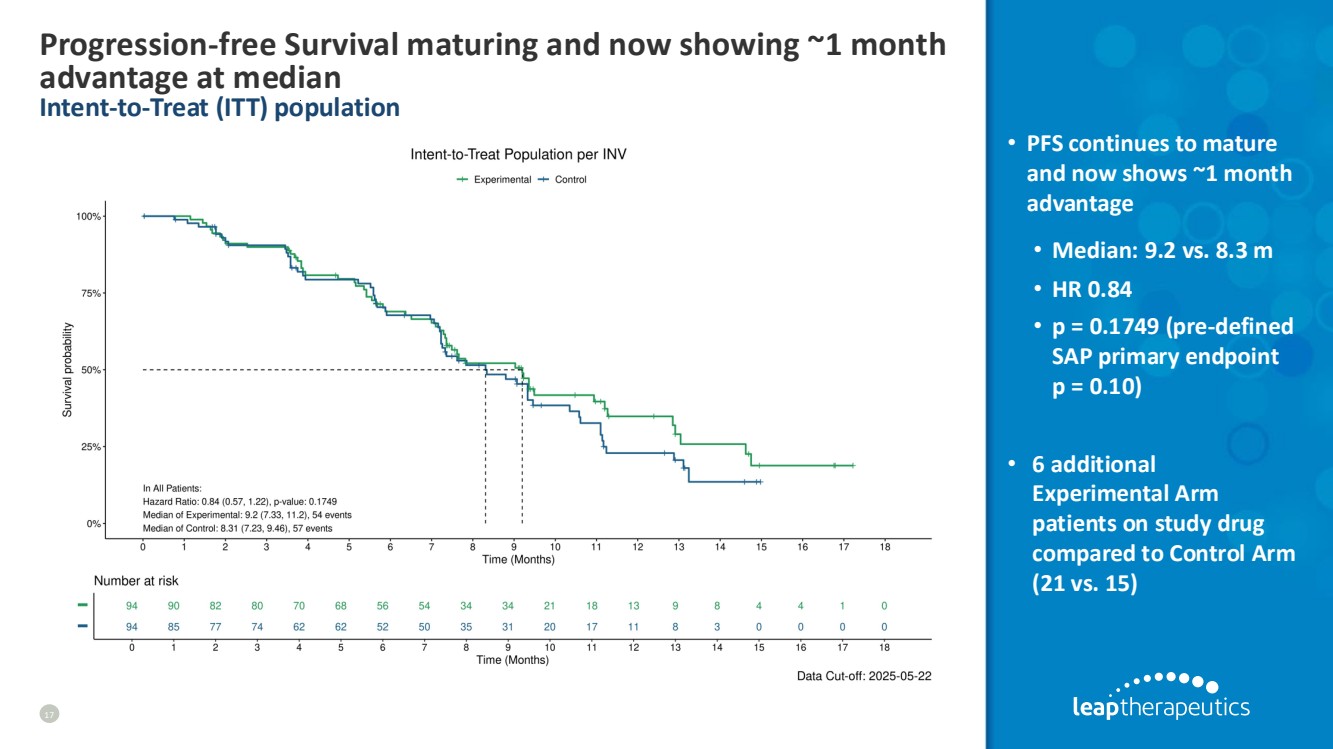
| Median PFS | 9.2 months | 8.31 months | HR 0.84 95% CI: 0.57, 1.22 p = 0.1749 |
| ORR by IA | 35.1% | 26.6% | p = 0.1009 |
| ORR by BICR | 33.0% | 20.2% | P = 0.0203 |
| Remaining on study drug | 21 | 15 |
| · | In patients with high DKK1 levels (upper quartile, n=44): |
| Sirexatamab Arm (n=25) |
Control Arm (n=19) |
||
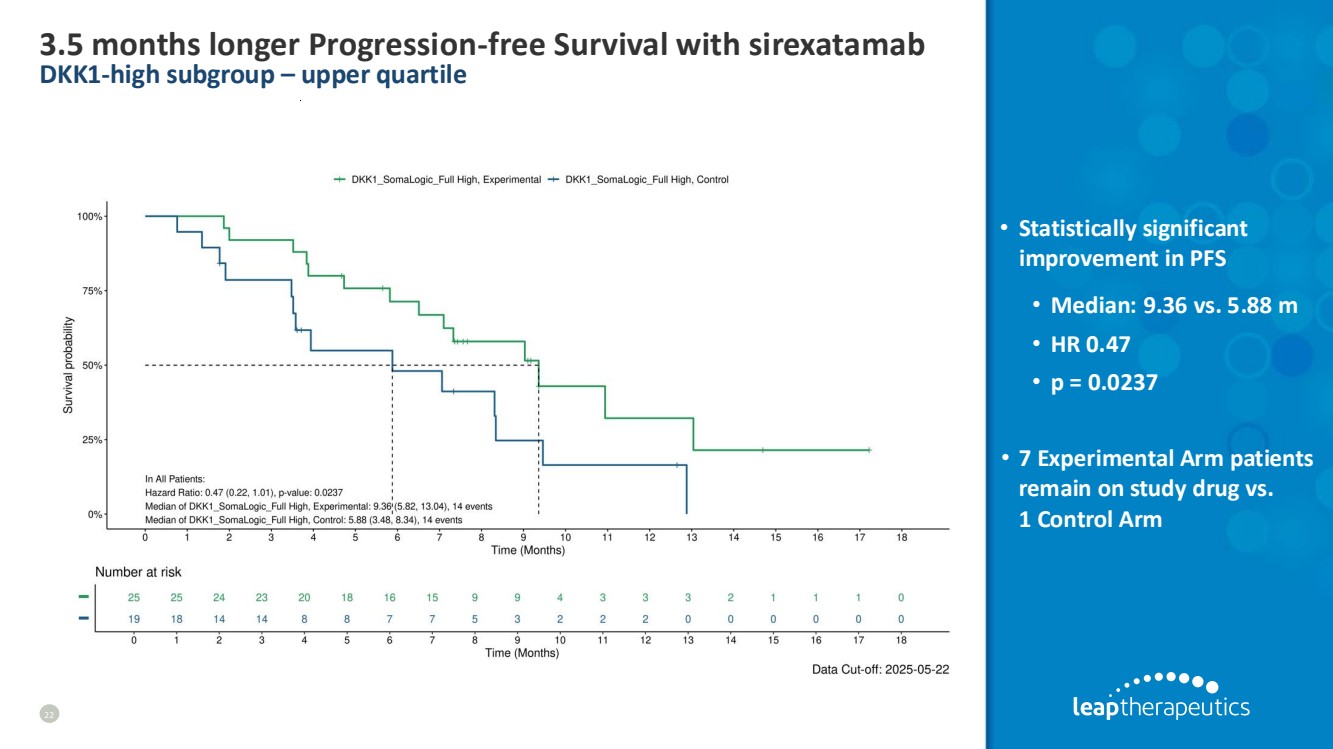
| Median PFS | 9.36 months | 5.88 months | HR 0.47 95% CI: 0.22, 1.01 p = 0.0237 |
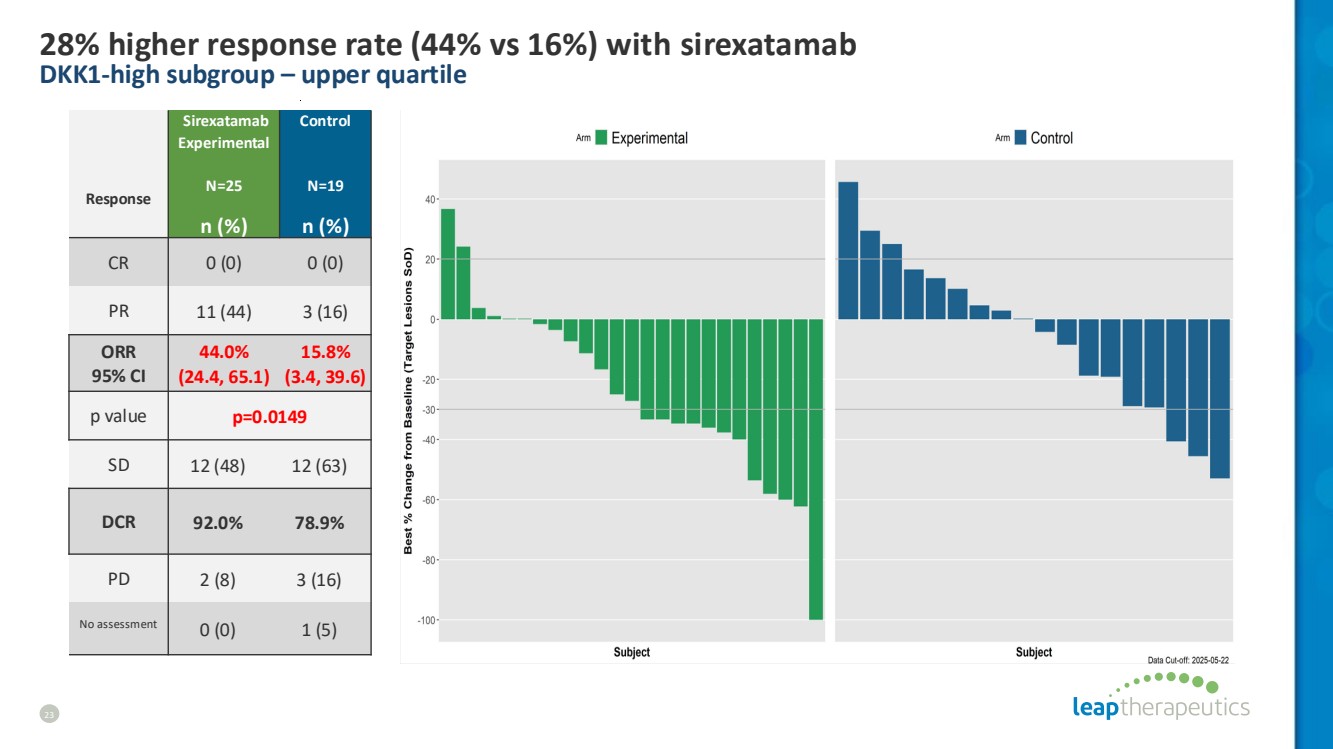
| ORR by IA | 44.0% | 15.8% | p = 0.0149 |
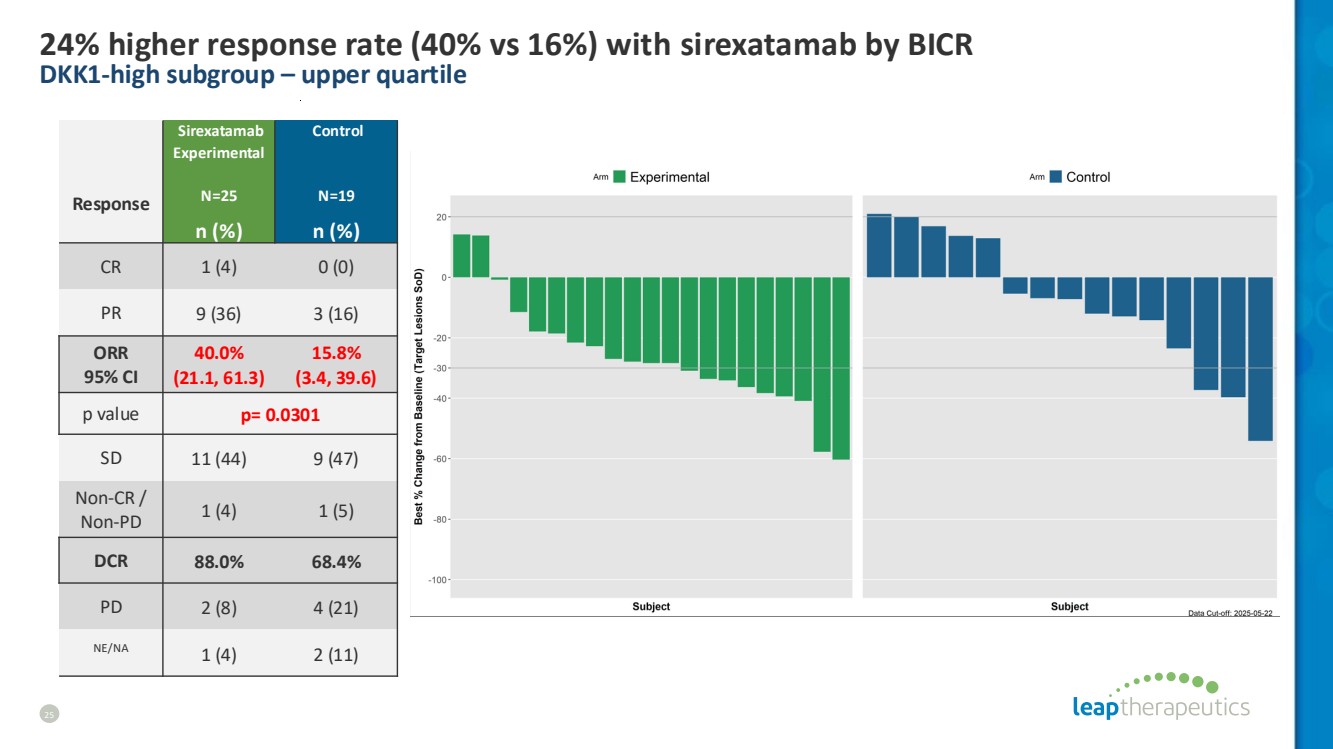
| ORR by BICR | 40.0% | 15.8% | p = 0.0301 |
| Median OS | Not Yet Reached | 9.66 months | HR 0.19 95% CI: 0.05, 0.73 p = 0.0037 |
| Remaining on study drug | 7 | 1 |
| · | In patients with DKK1 levels above the median (upper median, n=88): |
| Sirexatamab Arm (n=50) |
Control Arm (n=38) |
||
| Median PFS | 9.03 months | 7.23 months | HR 0.56 95% CI: 0.33, 0.94 p = 0.0146 |
| ORR by IA | 38.0% | 23.7% | p = 0.0706 |
| ORR by BICR | 40.0% | 15.8% | p = 0.0039 |
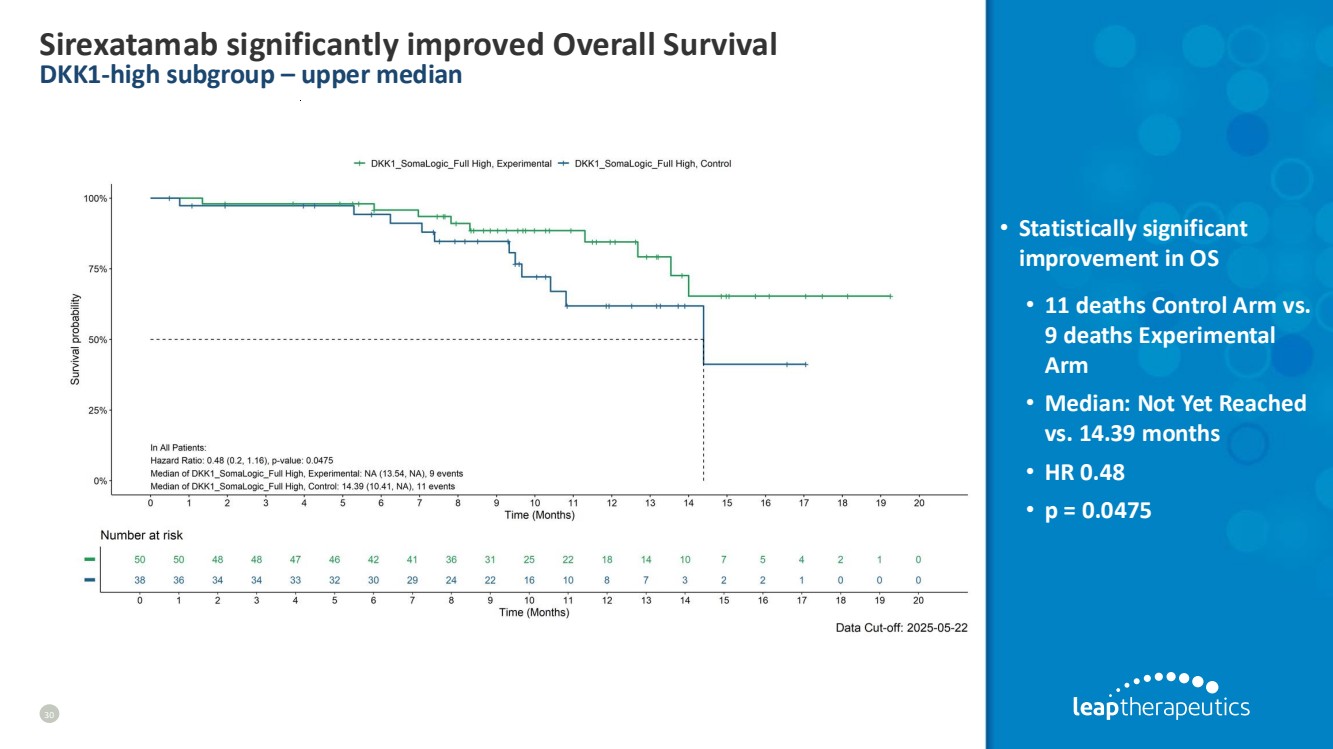
| Median OS | Not Yet Reached | 14.39 months | HR 0.48 95% CI: 0.2, 1.16 p = 0.0475 |
| Remaining on study drug | 12 | 3 |
| · | In patients who had not received prior anti-VEGF therapy (n=95): |
| Sirexatamab Arm (n=49) |
Control Arm (n=46) |
||
| Median PFS | 11.2 months | 8.34 months | HR 0.61 95% CI: 0.35, 1.06 p = 0.0383 |
| ORR by IA | 55.1% | 32.6% | p = 0.0116 |
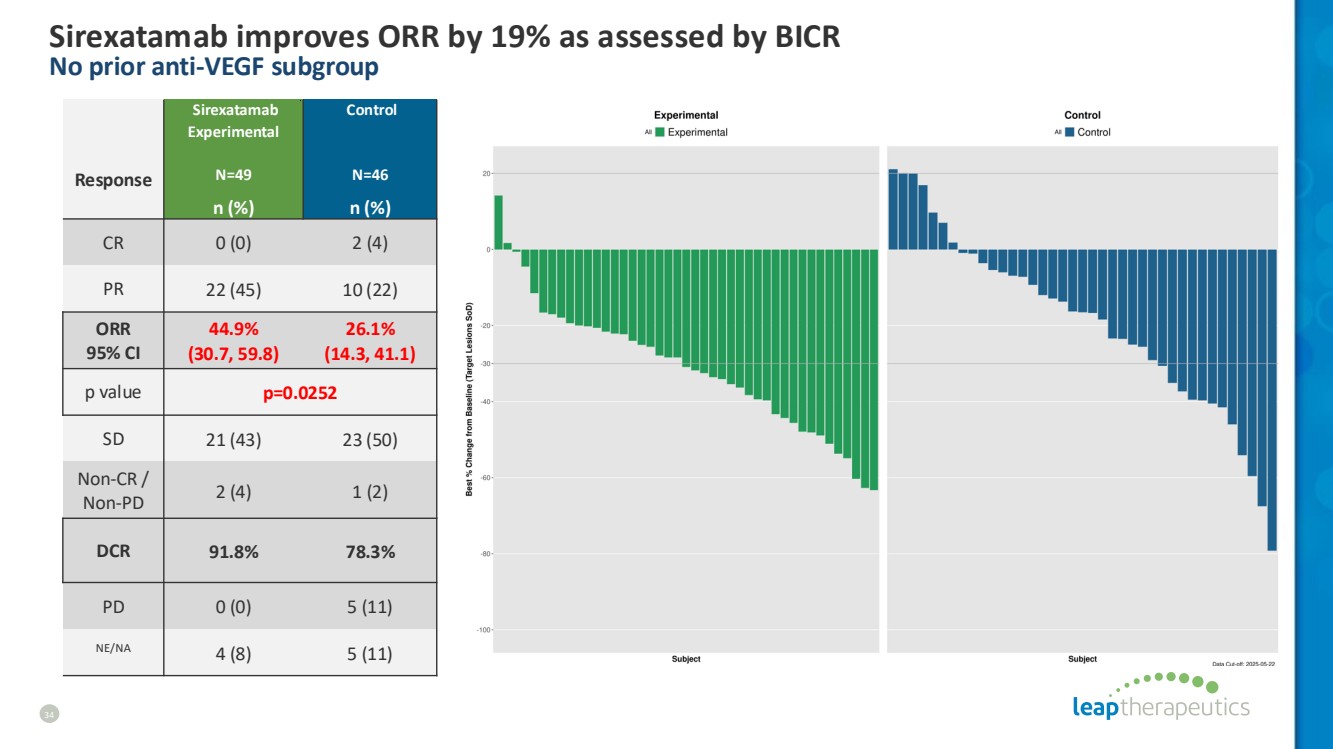
| ORR by BICR | 44.9% | 26.1% | p = 0.0252 |
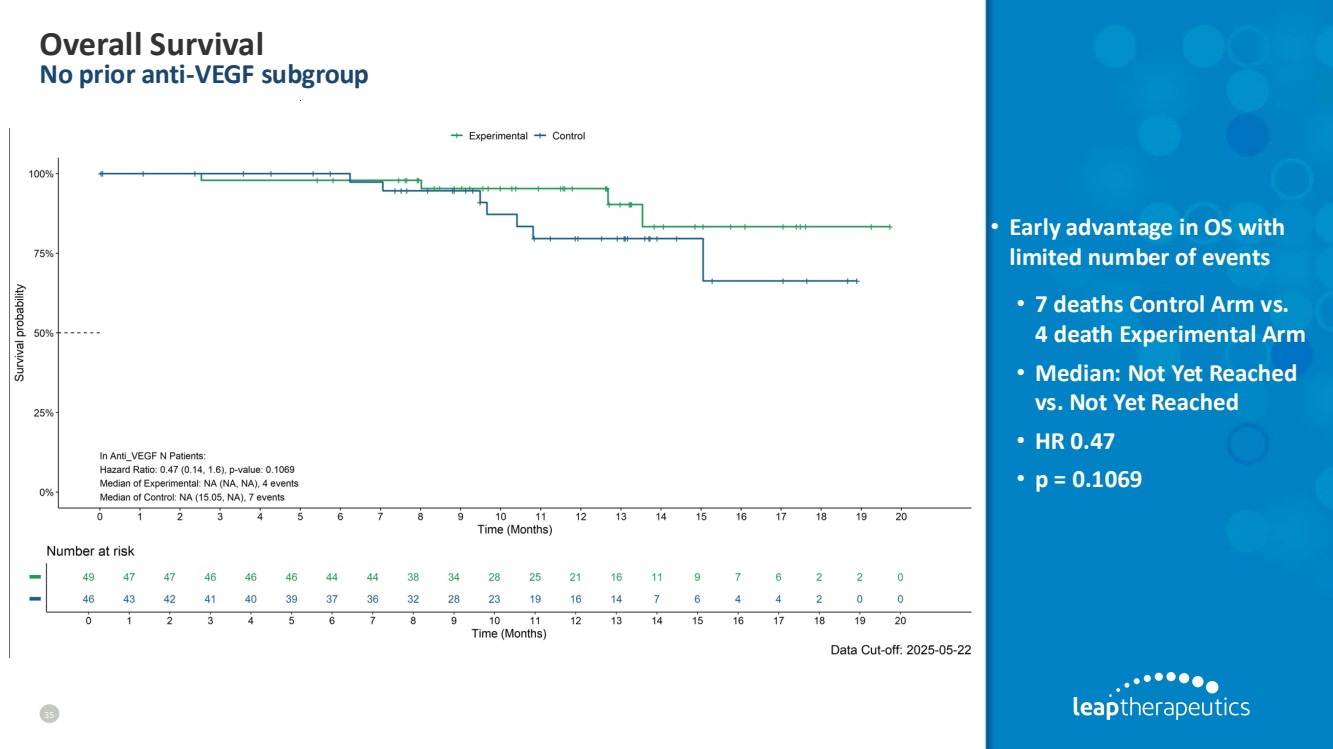
| Median OS | Not Yet Reached | Not Yet Reached | HR 0.47 95% CI: 0.14, 1.6 p = 0.1069 |
| Remaining on study drug | 15 | 5 |
| · | In patients with liver metastases (n=138): |
| Sirexatamab Arm (n=73) |
Control Arm (n=65) |
||
| Median PFS | 9.03 months | 7.26 months | HR 0.7 95% CI: 0.46, 1.06 p = 0.0443 |
| ORR by IA | 37.0% | 27.7% | p = 0.1203 |
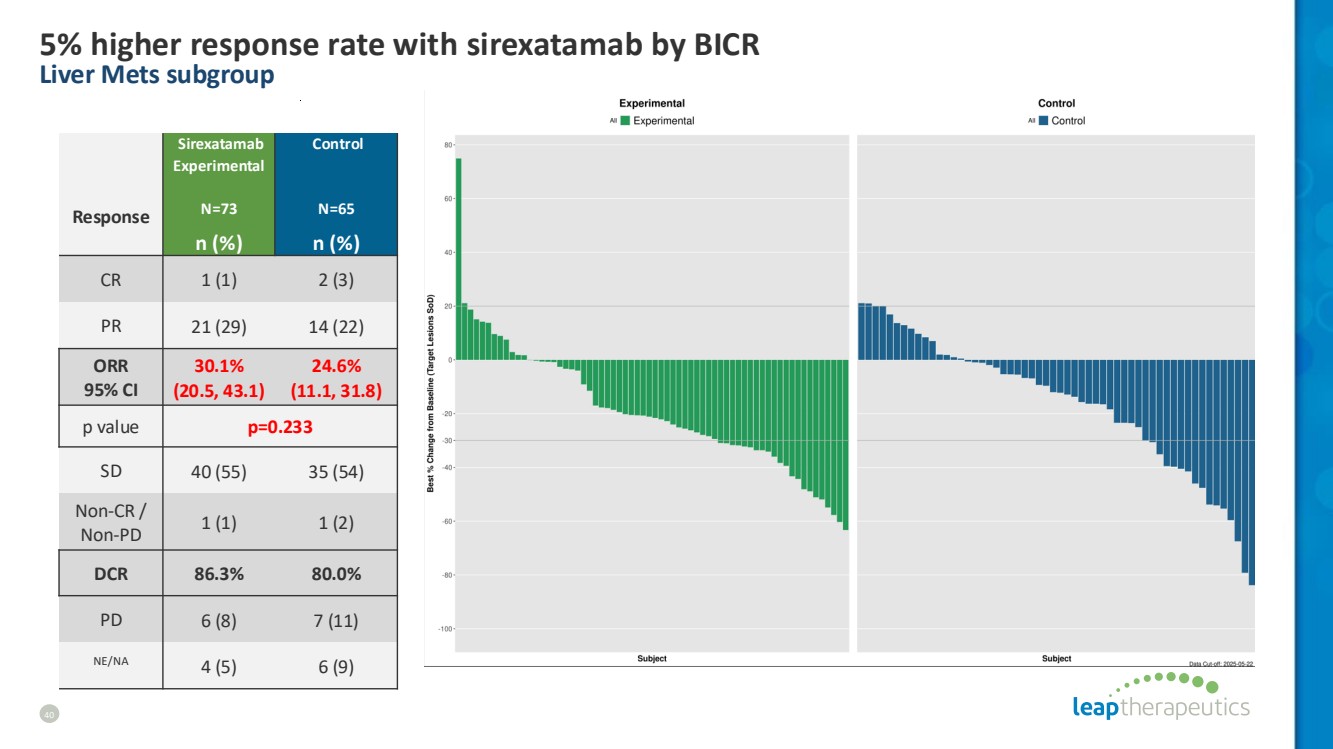
| ORR by BICR | 30.1% | 24.6% | p = 0.233 |
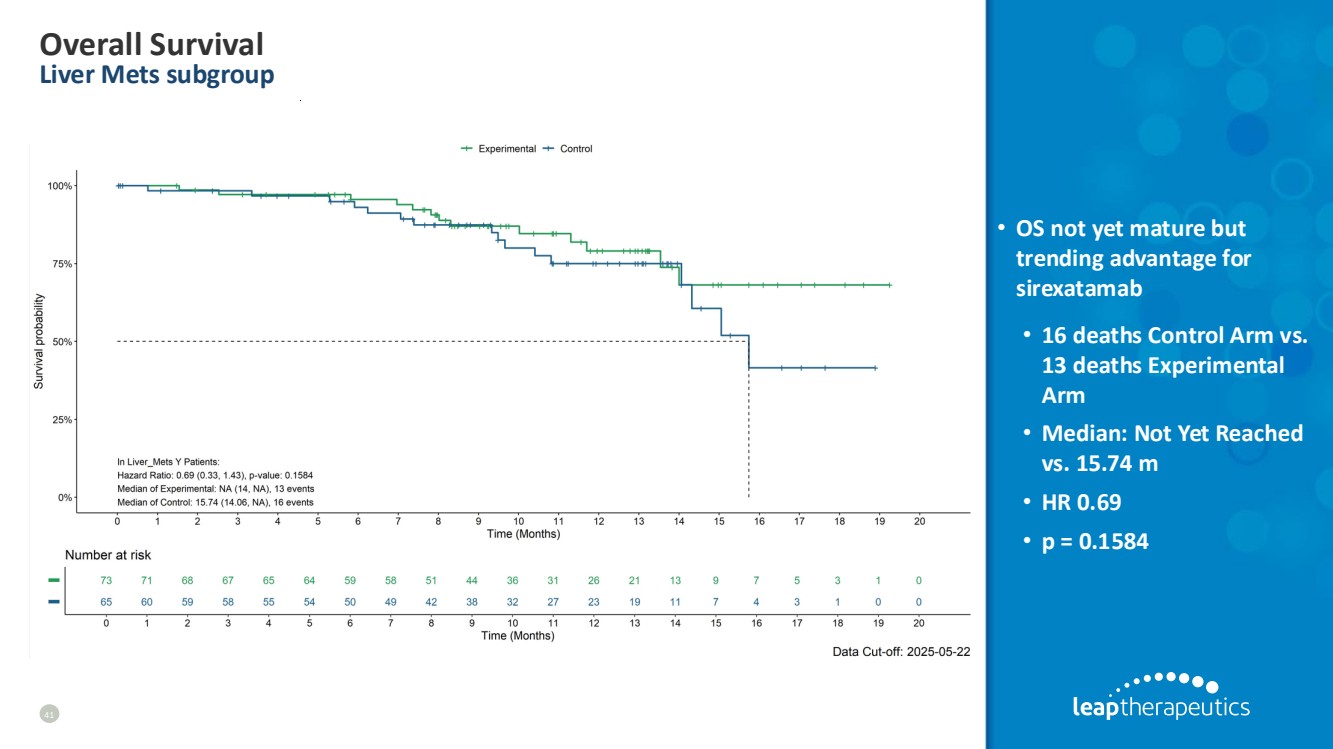
| Median OS | Not Yet Reached | 15.74 | HR 0.69 95% CI: 0.33, 1.43 p = 0.1584 |
| Remaining on study drug | 14 | 6 |
Corporate Update
Leap is taking additional steps to reduce spending and preserve capital. Over the next two months as the DeFianCe study completes, the Company will implement a workforce reduction of approximately 75%. The total cash payments and costs related to this reduction in force, including severance payments, are estimated to be approximately $3.2 million. The majority of these costs will be recognized in the third quarter of 2025. The Company’s cash and cash equivalents totaled $32.7 million as of March 31, 2025.
Leap has initiated a process to explore strategic alternatives to preserve and maximize shareholder value, including leveraging its cash balance and exploring potential sale or partnership opportunities for sirexatamab and FL-501. The Company’s Board of Directors has approved the engagement of Raymond James & Associates, Inc. to serve as exclusive financial advisor to assist in the strategic evaluation process.
About Leap Therapeutics
Leap Therapeutics (Nasdaq: LPTX) is focused on developing targeted and immuno-oncology therapeutics. Leap's most advanced clinical candidate, sirexatamab (DKN-01), is a humanized monoclonal antibody targeting the Dickkopf-1 (DKK1) protein. Sirexatamab is being studied in patients with colorectal cancer. Leap's pipeline also includes FL-501, a humanized monoclonal antibody targeting the growth and differentiation factor 15 (GDF-15) protein, in preclinical development. For more information about Leap Therapeutics, visit http://www.leaptx.com or view our public filings with the SEC that are available via EDGAR at http://www.sec.gov or via https://investors.leaptx.com/.
FORWARD-LOOKING STATEMENTS
This press release contains forward-looking statements within the meaning of the federal securities laws. Such statements are based upon current plans, estimates and expectations of the management of Leap that are subject to various risks and uncertainties that could cause actual results to differ materially from such statements. The inclusion of forward-looking statements should not be regarded as a representation that such plans, estimates and expectations will be achieved. Words such as "anticipate," "expect," "project," "intend," "believe," "may," "will," "should," "plan," "could," "continue," "target," "contemplate," "estimate," "forecast," "guidance," "predict," "possible," "potential," "pursue," "likely," and words and terms of similar substance used in connection with any discussion of future plans, actions or events identify forward-looking statements.
All statements, other than historical facts, including statements regarding the potential safety, efficacy, and regulatory and clinical progress of Leap's product candidates, including sirexatamab and FL-501; Leap’s intention to implement a workforce reduction of approximately 75%, reduce clinical and operational activities, reduce spending and conserve cash, explore strategic alternatives to preserve and maximize shareholder value, including by leveraging its cash balance and potentially selling or partnering sirexatamab or FL-501; and any assumptions underlying any of the foregoing, are forward-looking statements. Important factors that could cause actual results to differ materially from Leap's plans, estimates or expectations could include, but are not limited to: (i) Leap's ability to successfully sell or enter into partnerships for sirexatamab or FL-501; (ii) the cost and timeline to complete the DeFianCe Study and wind-down clinical operations; (iii) any regulatory feedback that Leap may receive from U.S. Food and Drug Administration (FDA) or equivalent foreign regulatory agency or from site institutional review boards; (iv) the magnitude, timing and costs associated with the implementation of a workforce reduction; and (v) the availability of strategic alternatives would preserve or generate any shareholder value. New risks and uncertainties may emerge from time to time, and it is not possible to predict all risks and uncertainties. No representations or warranties (expressed or implied) are made about the accuracy of any such forward-looking statements. Leap may not actually achieve the forecasts disclosed in such forward-looking statements, and you should not place undue reliance on such forward-looking statements. Such forward-looking statements are subject to a number of material risks and uncertainties including but not limited to those set forth under the caption "Risk Factors" in Leap's most recent Annual Report on Form 10-K filed with the SEC, as well as discussions of potential risks, uncertainties, and other important factors in its subsequent filings with the SEC. Any forward-looking statement speaks only as of the date on which it was made. Neither Leap, nor any of its affiliates, advisors or representatives, undertake any obligation to publicly update or revise any forward-looking statement, whether as a result of new information, future events or otherwise, except as required by law. These forward-looking statements should not be relied upon as representing Leap's views as of any date subsequent to the date hereof.
CONTACT:
Douglas E. Onsi
President & Chief Executive Officer
Leap Therapeutics, Inc.
617-714-0360
donsi@leaptx.com
Matthew DeYoung
Investor Relations
Argot Partners
212-600-1902
leap@argotpartners.com
|
company presentation LEAP THERAPEUTICS June 23, 2025 |
|
Forward looking statements 2 This presentation contains forward-looking statements that involve substantial risks and uncertainties. All statements, other than statements of historical facts, contained in this presentation, including statements regarding our strategy, future operations, clinical trials, collaborations and partnerships, future financial position, future revenues, projected costs, prospects, plans and objectives of management, are forward-looking statements within the meaning of U.S. securities laws. The words “anticipate,” “believe,” “estimate,” “expect,” “intend,” “may,” “plan,” “predict,” “project,” “target,” “potential,” “will,” “would,” “could,” “should,” “continue,” and similar expressions are intended to identify forward-looking statements, although not all forward-looking statements contain these identifying words. Forward-looking statements are neither historical facts nor assurances of future performance. Instead, they are based only on our current beliefs, expectations and assumptions regarding the future of our business, future plans and strategies, projections, anticipated events and trends, the economy and other future conditions. Because forward-looking statements relate to the future, they are subject to inherent uncertainties, risks and changes in circumstances that are difficult to predict and many of which are outside of our control. We may not actually achieve the plans, intentions or expectations disclosed in our forward-looking statements, and you should not place undue reliance on our forward-looking statements. Actual results or events could differ materially from the plans, intentions and expectations disclosed in the forward-looking statements we make. These and other risk factors are listed from time to time in reports filed with the Securities and Exchange Commission, including, but not limited to, our Annual Reports on Form 10-K and our Quarterly Reports on Form 10-Q. We assume no obligation to update any forward-looking statements, except as required by applicable law. This presentation does not constitute an offer to sell, or the solicitation of an offer to buy, any securities. |
|
Pipeline 3 Indication: Treatment: Preclinical Phase 1 Phase 2 Phase 3 sirexatamab (DKN-01) Anti-DKK1 antibody bevacizumab + chemotherapy Colorectal cancer FL-501 Anti-GDF-15 antibody |
|
SIREXATAMAB (DKN-01) Anti-DKK1 monoclonal antibody |
|
The role of DKK1 in cancer 5 Tumor CKAP4 Angiogenesis Akt PI3K Cancer cell Cancer cells DKK1 is produced and secreted by cancer cells, and functions on several tumor pathways and nearby immune cells. Enhances the suppressive activity of MDSCs and M2 macrophages. Reduces NK cell activity and T-cell infiltration. Promotes angiogenesis by increasing the number and size of blood vessels. Promotes activation of Akt by direct signaling through CKAP4 and PI3 kinase. Cancer cell DKK1 |
|
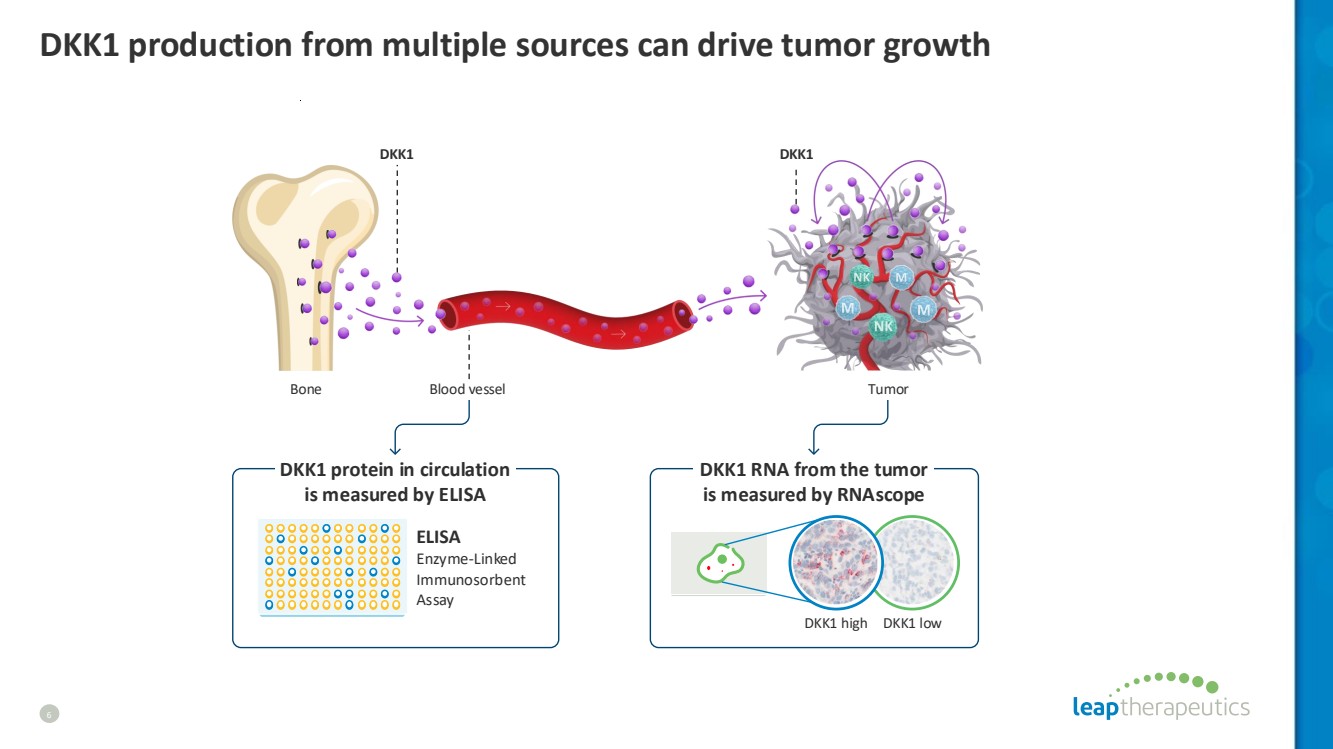
DKK1 production from multiple sources can drive tumor growth 6 Tumor DKK1 DKK1 Bone DKK1 high DKK1 low Blood vessel ELISA Enzyme-Linked Immunosorbent Assay DKK1 RNA from the tumor is measured by RNAscope DKK1 protein in circulation is measured by ELISA |
|
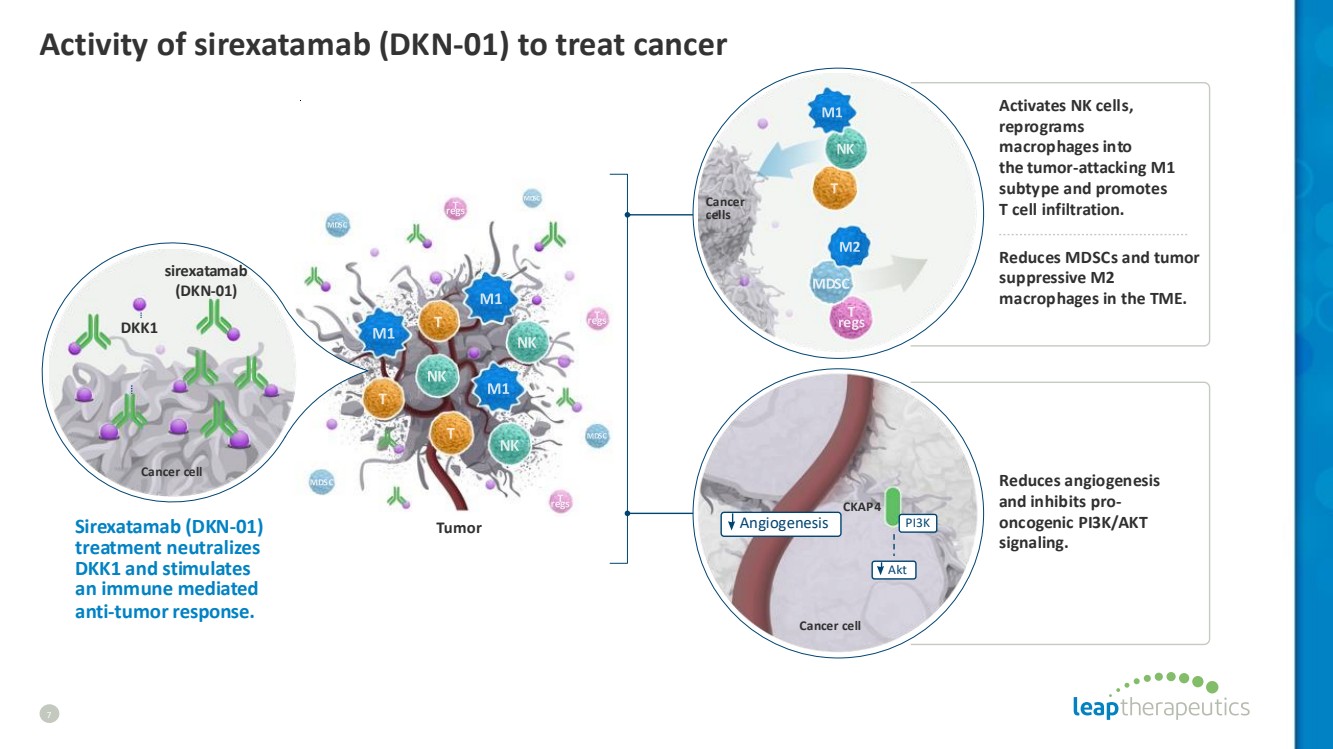
Activity of sirexatamab (DKN-01) to treat cancer 7 CKAP4 Angiogenesis Akt PI3K Cancer cell Cancer cells Tumor Cancer cell DKK1 Sirexatamab (DKN-01) treatment neutralizes DKK1 and stimulates an immune mediated anti-tumor response. sirexatamab (DKN-01) Activates NK cells, reprograms macrophagesinto the tumor-attacking M1 subtype and promotes T cell infiltration. Reduces MDSCs and tumor suppressive M2 macrophages in the TME. Reduces angiogenesis and inhibits pro-oncogenic PI3K/AKT signaling. |
|
SIREXATAMAB (DKN-01) Colorectal cancer |
|
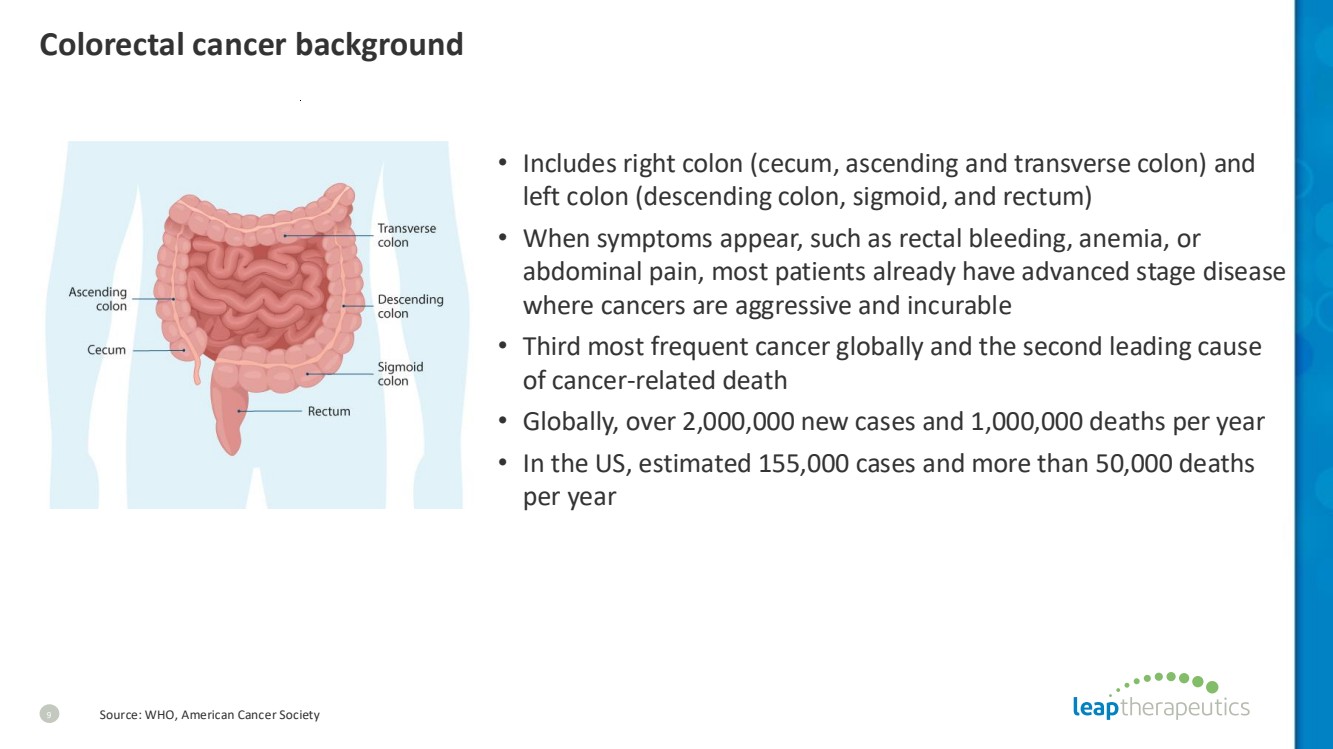
Colorectal cancer background • Includes right colon (cecum, ascending and transverse colon) and left colon (descending colon, sigmoid, and rectum) • When symptoms appear, such as rectal bleeding, anemia, or abdominal pain, most patients already have advanced stage disease where cancers are aggressive and incurable • Third most frequent cancer globally and the second leading cause of cancer-related death • Globally, over 2,000,000 new cases and 1,000,000 deaths per year • In the US, estimated 155,000 cases and more than 50,000 deaths per year 9 Source: WHO, American Cancer Society |
|
Bevacizumab benchmark studies demonstrate need for new options for today’s heterogeneous second-line patient population ML18147 409 5.4% E3200 286 22.7% SLAVE 228 25.7% Bevacizumab + Chemo Bevacizumab + Chemo Bevacizumab + Chemo* *SLAVE included N=198 left sided CRC patients. This subgroup has an ORR of 22.7% Bevacizumab-experienced Bevacizumab-naïve EGFR-experienced Treatment Study ORR Population PFS OS 11.2 5.7 7.3 7.1 12.9 16.2 Significant unmet needs in 2L patients 10 |
|
DeFianCe study design 11 Randomized phase 2 study of FOLFIRI/FOLFOX and bevacizumab +/- sirexatamab (DKN-01) as second-line treatment of advanced colorectal cancer Primary: PFS (Investigator assessed) Secondary: • ORR • OS Sirexatamab (DKN-01) + SOC chemotherapy (FOLFIRI or mFOLFOX6) + bevacizumab SOC chemotherapy (FOLFIRI or mFOLFOX6) + bevacizumab N=94 N=94 Key eligibility criteria: • One prior 5-FU based therapy for advanced colorectal adenocarcinoma • RECIST v1.1 measurable disease • MSS and absence of BRAFV600 mutation N=188* 1:1 Safety run in IA safety review Sirexatamab (DKN-01) + SOC + bevacizumab N=33 OBJECTIVES *Right-sided mCRC capped at 45 Key Exploratory Populations: – DKK1 biomarker high – VEGF-naive Data update as of May 22, 2025, representing nearly 8 months from last patient enrolled |
|
Part B population demographics 12 N=188 Experimental Arm N=94 n (%) Control Arm N=94 n (%) Male 64 (68) 52 (55) Female 30 (32) 42 (45) Age, mean (min, max) 59.6 (33, 84) 58.7 (29, 84) Geography United States 41 (44) 40 (43) South Korea 50 (53) 45 (48) Germany 3 (3) 9 (10) Tumor Sidedness Right 24 (25) 23 (25) Left 70 (75) 71 (75) ECOG PS 0 41 (44) 44 (47) 1 53 (56) 50 (53) Race Asian 55 (59) 45 (48) Black/African American 4 (4) 4 (4) White 31 (33) 42 (45) Other 4 (4) 3 (3) |
|
Part B population 13 N=188 Experimental Arm N=94 n (%) Control Arm N=94 n (%) Liver metastasis Yes 73 (78) 65 (69) No 21 (22) 29 (31) Lung metastasis Yes 46 (49) 48 (51) No 48 (51) 46 (49) RAS Mutated# Yes 44 (47) 54 (57) No 36 (38) 26 (28) Unknown 14 (15) 14 (15) Prior Systemic Therapy- 5FU based Oxaliplatin based 72 (77) 81 (86) Irinotecan based 20 (21) 12 (13) Anti- VEGF 45 (48) 48 (51) Anti- EGFR 29 (31) 23 (25) #central lab (FMI C1D1 ctDNA) |
|
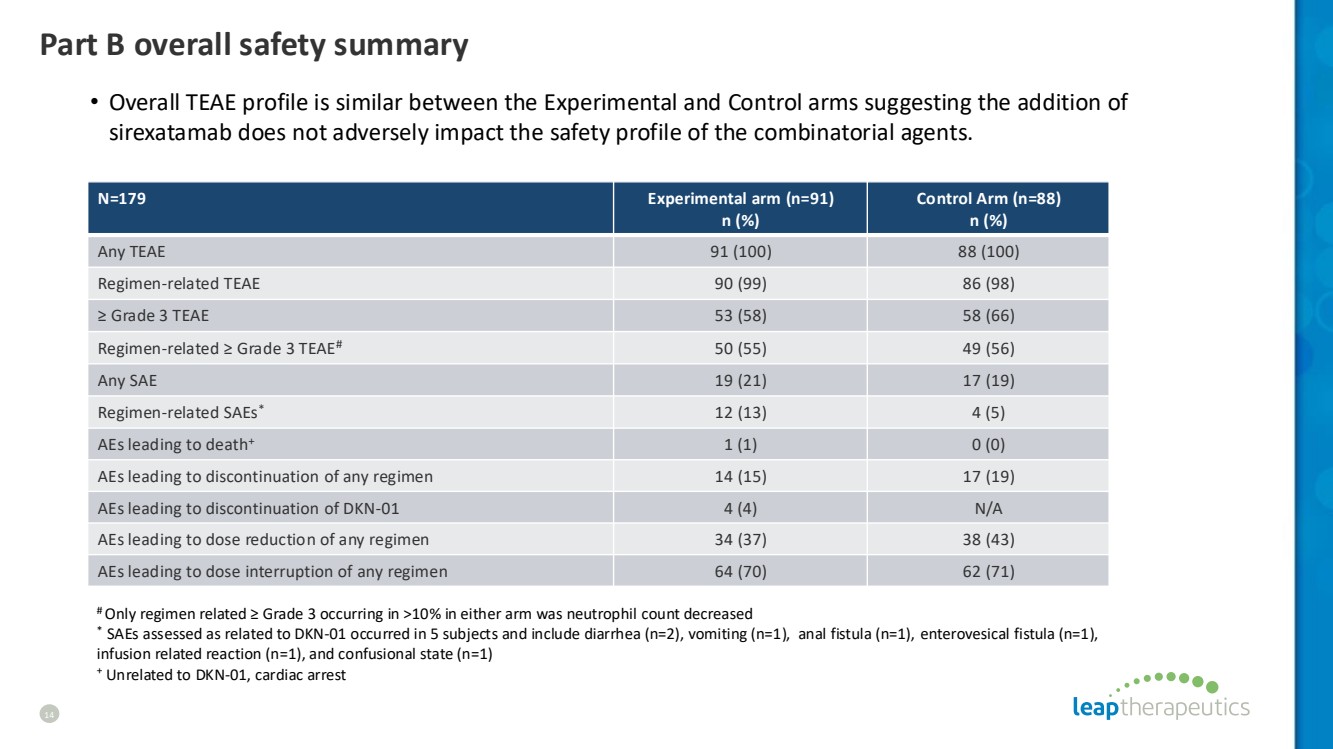
Part B overall safety summary 14 N=179 Experimental arm (n=91) n (%) Control Arm (n=88) n (%) Any TEAE 91 (100) 88 (100) Regimen-related TEAE 90 (99) 86 (98) ≥ Grade 3 TEAE 53 (58) 58 (66) Regimen-related ≥ Grade 3 TEAE# 50 (55) 49 (56) Any SAE 19 (21) 17 (19) Regimen-related SAEs* 12 (13) 4 (5) AEs leading to death+ 1 (1) 0 (0) AEs leading to discontinuation of any regimen 14 (15) 17 (19) AEs leading to discontinuation of DKN-01 4 (4) N/A AEs leading to dose reduction of any regimen 34 (37) 38 (43) AEs leading to dose interruption of any regimen 64 (70) 62 (71) # Only regimen related ≥ Grade 3 occurring in >10% in either arm was neutrophil count decreased * SAEs assessed as related to DKN-01 occurred in 5 subjects and include diarrhea (n=2), vomiting (n=1), anal fistula (n=1), enterovesical fistula (n=1), infusion related reaction (n=1), and confusional state (n=1) + Unrelated to DKN-01, cardiac arrest • Overall TEAE profile is similar between the Experimental and Control arms suggesting the addition of sirexatamab does not adversely impact the safety profile of the combinatorial agents. |
|
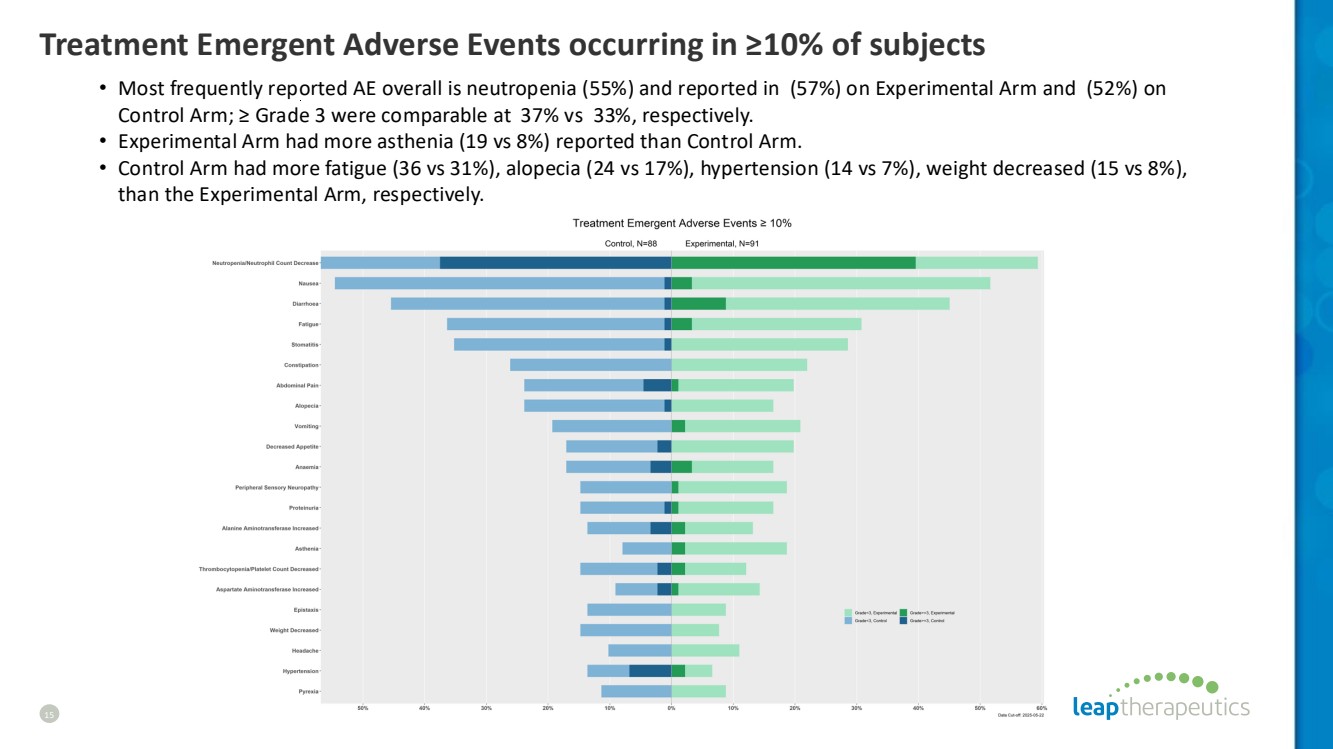
Treatment Emergent Adverse Events occurring in ≥10% of subjects 15 • Most frequently reported AE overall is neutropenia (55%) and reported in (57%) on Experimental Arm and (52%) on Control Arm; ≥ Grade 3 were comparable at 37% vs 33%, respectively. • Experimental Arm had more asthenia (19 vs 8%) reported than Control Arm. • Control Arm had more fatigue (36 vs 31%), alopecia (24 vs 17%), hypertension (14 vs 7%), weight decreased (15 vs 8%), than the Experimental Arm, respectively. |
|
INTENT-TO-TREAT POPULATION |
|
Progression-free Survival maturing and now showing ~1 month advantage at median Intent-to-Treat (ITT) population 17 • PFS continues to mature and now shows ~1 month advantage • Median: 9.2 vs. 8.3 m • HR 0.84 • p = 0.1749 (pre-defined SAP primary endpoint p = 0.10) • 6 additional Experimental Arm patients on study drug compared to Control Arm (21 vs. 15) |
|
Sirexatamab improved ORR by 8% (35% vs. 27%) Intent-to-Treat (ITT) population 18 Sirexatamab Experimental N=94 Control N=94 Response n (%) n (%) CR 0 (0) 3 (3) PR 33 (35) 22 (23) ORR 95% CI 35.1% (25.5, 45.6) 26.6% (18.0, 36.7) p value p=0.1009 SD 48 (51) 54 (57) DCR 86.2% 84.0% PD 6 (6) 7 (7) No assessment 7 (7) 8 (9) |
|
Sirexatamab improved ORR by 13% (33% vs. 20%) assessed by BICR Intent-to-Treat (ITT) population 19 Response Sirexatamab Experimental N=94 Control N=94 n (%) n (%) CR 1 (1) 2 (2) PR 30 (32) 17 (18) ORR 95% CI 33.0% (23.6, 43.4) 20.2% (12.6, 29.8) p value p=0.0203 SD 47 (50) 50 (53) Non-CR / Non-PD 2 (2) 4 (4) DCR 85.1% 77.7% PD 6 (6) 9 (10) NE/NA 8 (9) 12 (13) |
|
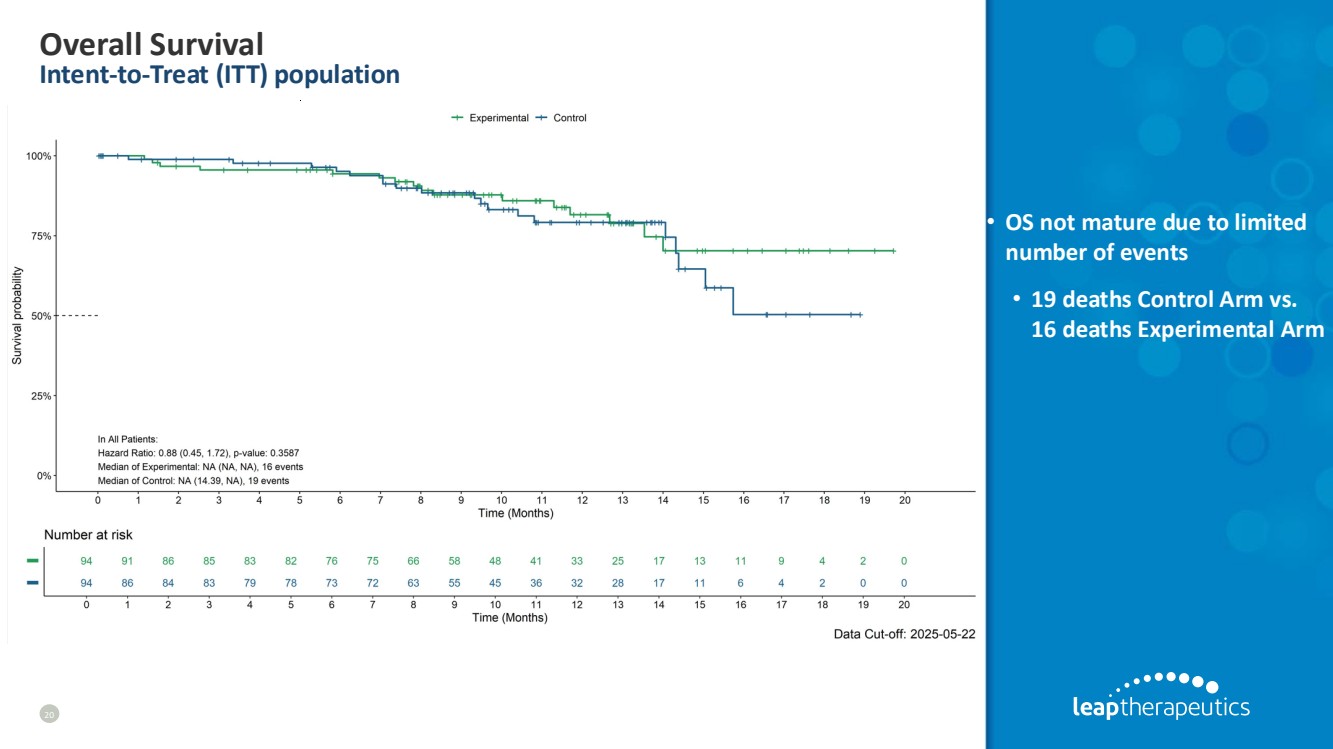
Overall Survival Intent-to-Treat (ITT) population 20 • OS not mature due to limited number of events • 19 deaths Control Arm vs. 16 deaths Experimental Arm |
|
DKK1 BIOMARKER POPULATION |
|
3.5 months longer Progression-free Survival with sirexatamab DKK1-high subgroup – upper quartile 22 • Statistically significant improvement in PFS • Median: 9.36 vs. 5.88 m • HR 0.47 • p = 0.0237 • 7 Experimental Arm patients remain on study drug vs. 1 Control Arm |
|
28% higher response rate (44% vs 16%) with sirexatamab DKK1-high subgroup – upper quartile 23 Response Sirexatamab Experimental N=25 Control N=19 n (%) n (%) CR 0 (0) 0 (0) PR 11 (44) 3 (16) ORR 95% CI 44.0% (24.4, 65.1) 15.8% (3.4, 39.6) p value p=0.0149 SD 12 (48) 12 (63) DCR 92.0% 78.9% PD 2 (8) 3 (16) No assessment 0 (0) 1 (5) |
|
28% higher response rate (44% vs 16%) with sirexatamab by Investigator Assessment DKK1-high subgroup – upper quartile 24 Response Sirexatamab Experimental N=25 Control N=19 n (%) n (%) CR 0 (0) 0 (0) PR 11 (44) 3 (16) ORR 95% CI 44.0% (24.4, 65.1) 15.8% (3.4, 39.6) p value p=0.0149 SD 12 (48) 12 (63) DCR 92.0% 78.9% PD 2 (8) 3 (16) No assessment 0 (0) 1 (5) |
|
24% higher response rate (40% vs 16%) with sirexatamab by BICR DKK1-high subgroup – upper quartile 25 Response Sirexatamab Experimental N=25 Control N=19 n (%) n (%) CR 1 (4) 0 (0) PR 9 (36) 3 (16) ORR 95% CI 40.0% (21.1, 61.3) 15.8% (3.4, 39.6) p value p= 0.0301 SD 11 (44) 9 (47) Non-CR / Non-PD 1 (4) 1 (5) DCR 88.0% 68.4% PD 2 (8) 4 (21) NE/NA 1 (4) 2 (11) |
|
Sirexatamab significantly improved Overall Survival DKK1-high subgroup – upper quartile 26 • Statistically significant improvement in OS • 9 deaths Control Arm vs. 3 deaths Experimental Arm • Median: Not Yet Reached vs. 9.66 m • HR 0.19 • p = 0.0037 |
|
~2 months longer Progression-free Survival with sirexatamab DKK1-high subgroup – upper median 27 • Statistically significant improvement in PFS • Median: 9.03 vs. 7.23 m • HR 0.56 • p = 0.0146 • 12 Experimental Arm patients remain on study drug vs. 3 Control Arm patients |
|
14% higher response rate (38% vs 24%) with sirexatamab DKK1-high subgroup – upper median 28 Response Sirexatamab Experimental N=50 Control N=38 n (%) n (%) CR 0 (0) 0 (0) PR 19 (38) 9 (24) ORR 38.0% (24.7, 52.8) 23.7% (11.4, 40.2) P value p=0.0706 SD 26 (52) 23 (61) DCR 90.0% 84.2% PD 4 (8) 4 (11) No assessment 1 (2) 2 (5) |
|
24% higher response rate (40% vs 16%) with sirexatamab by BICR DKK1-high subgroup – upper median 29 Response Sirexatamab Experimental N=50 Control N=38 n (%) n (%) CR 1 (2) 0 (0) PR 19 (38) 6 (16) ORR 95% CI 40.0% (26.4, 54.8) 15.8% (6.0, 31.3) p value p=0.0039 SD 23 (46) 19 (50) Non-CR / Non-PD 1 (2) 3 (8) DCR 88.0% 73.7% PD 4 (8) 5 (13) NE/NA 2 (4) 5 (13) |
|
Sirexatamab significantly improved Overall Survival DKK1-high subgroup – upper median 30 • Statistically significant improvement in OS • 11 deaths Control Arm vs. 9 deaths Experimental Arm • Median: Not Yet Reached vs. 14.39 months • HR 0.48 • p = 0.0475 |
|
NO PRIOR ANTI-VEGF POPULATION |
|
2.9 months longer Progression-free Survival with sirexatamab No prior anti-VEGF subgroup 32 • Statistically significant improvement in PFS • Median: 11.2 vs. 8.34 m • HR 0.61 • p = 0.0383 • 15 Experimental Arm patients remain on study drug vs. 5 Control Arm |
|
Sirexatamab improved ORR by 22% (55% vs. 33%) No prior anti-VEGF subgroup 33 Sirexatamab Experimental N=49 Control N=46 Response n (%) n (%) CR 0 (0) 3 (7) PR 27 (55) 12 (26) ORR 95% CI 55.1% (40.2, 69.3) 32.6% (19.5, 48.0) p value p=0.0116 SD 19 (39) 24 (52) DCR 93.9% 84.8% PD 0 (0) 4 (9) No assessment 3 (6) 3 (7) |
|
Sirexatamab improves ORR by 19% as assessed by BICR No prior anti-VEGF subgroup 34 Response Sirexatamab Experimental N=49 Control N=46 n (%) n (%) CR 0 (0) 2 (4) PR 22 (45) 10 (22) ORR 95% CI 44.9% (30.7, 59.8) 26.1% (14.3, 41.1) p value p=0.0252 SD 21 (43) 23 (50) Non-CR / Non-PD 2 (4) 1 (2) DCR 91.8% 78.3% PD 0 (0) 5 (11) NE/NA 4 (8) 5 (11) |
|
Overall Survival No prior anti-VEGF subgroup 35 • Early advantage in OS with limited number of events • 7 deaths Control Arm vs. 4 death Experimental Arm • Median: Not Yet Reached vs. Not Yet Reached • HR 0.47 • p = 0.1069 |
|
LIVER METS POPULATION |
|
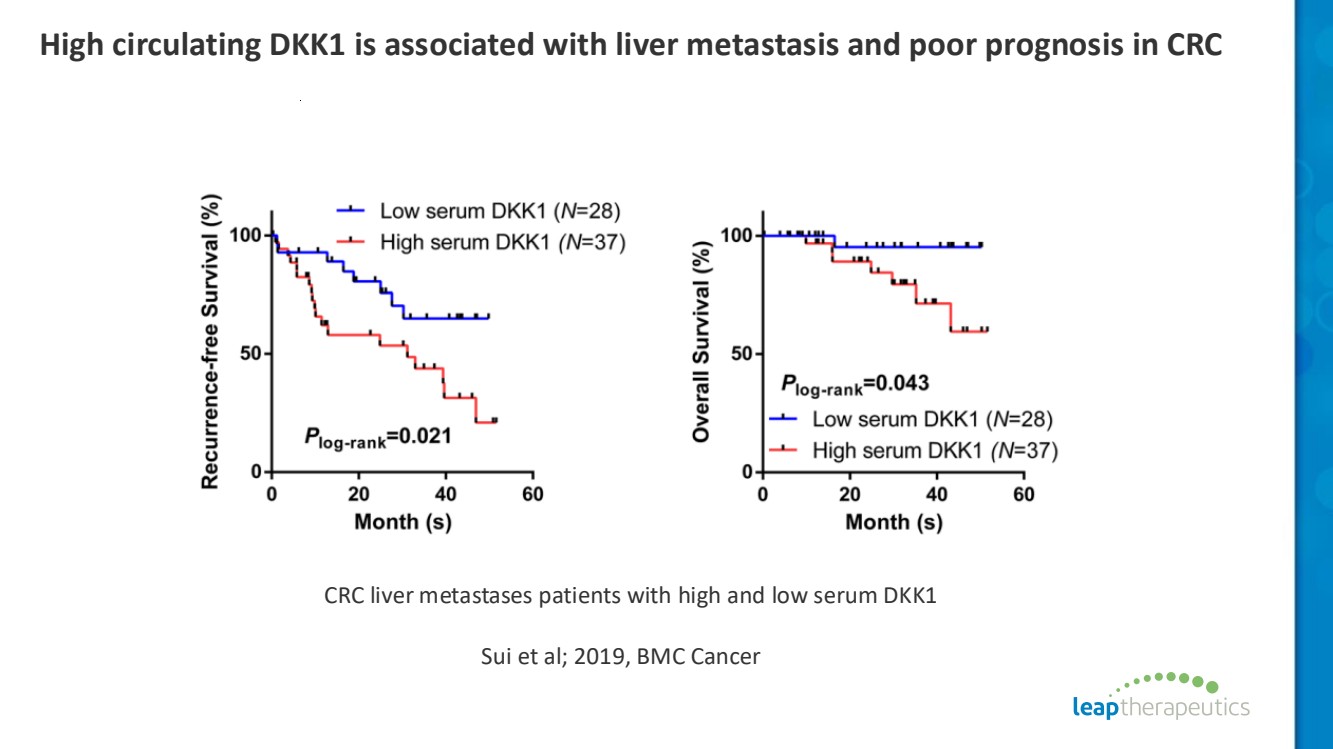
High circulating DKK1 is associated with liver metastasis and poor prognosis in CRC CRC liver metastases patients with high and low serum DKK1 Sui et al; 2019, BMC Cancer |
|
1.8 months longer Progression-free Survival with sirexatamab Liver Mets subgroup 38 • Nearly 2 month and 30% risk reduction favoring the Experimental Arm • Median: 9.03 vs. 7.26 m • HR 0.70 • p = 0.0443 • 14 Experimental Arm patients remain on study drug vs. 6 Control Arm |
|
9% higher response rate with sirexatamab Liver Mets subgroup 39 Response Sirexatamab Experimental N=73 Control N=65 n (%) n (%) CR 0 (0) 2 (3) PR 27 (37) 16 (25) ORR 95% CI 37.0% (26.0, 49.1) 27.7% (17.3, 40.2) p value p=0.1203 SD 36 (49) 36 (55) DCR 86.3% 83.1% PD 6 (8) 6 (9) No assessment 4 (5) 5 (8) |
|
5% higher response rate with sirexatamab by BICR Liver Mets subgroup 40 Response Sirexatamab Experimental N=73 Control N=65 n (%) n (%) CR 1 (1) 2 (3) PR 21 (29) 14 (22) ORR 95% CI 30.1% (20.5, 43.1) 24.6% (11.1, 31.8) p value p=0.233 SD 40 (55) 35 (54) Non-CR / Non-PD 1 (1) 1 (2) DCR 86.3% 80.0% PD 6 (8) 7 (11) NE/NA 4 (5) 6 (9) |
|
Overall Survival Liver Mets subgroup 41 • OS not yet mature but trending advantage for sirexatamab • 16 deaths Control Arm vs. 13 deaths Experimental Arm • Median: Not Yet Reached vs. 15.74 m • HR 0.69 • p = 0.1584 |
|
~3 months longer Progression-free Survival with sirexatamab Liver Mets subgroup without prior VEGF 42 • Nearly 3 month improvement favoring the Experimental Arm in patients with liver mets and no prior VEGF exposure • Median: 11.2 vs. 8.34 m • HR 0.64 • p = 0.0725 • 9 Experimental Arm patients remain on study drug vs. 4 Control Arm |
|
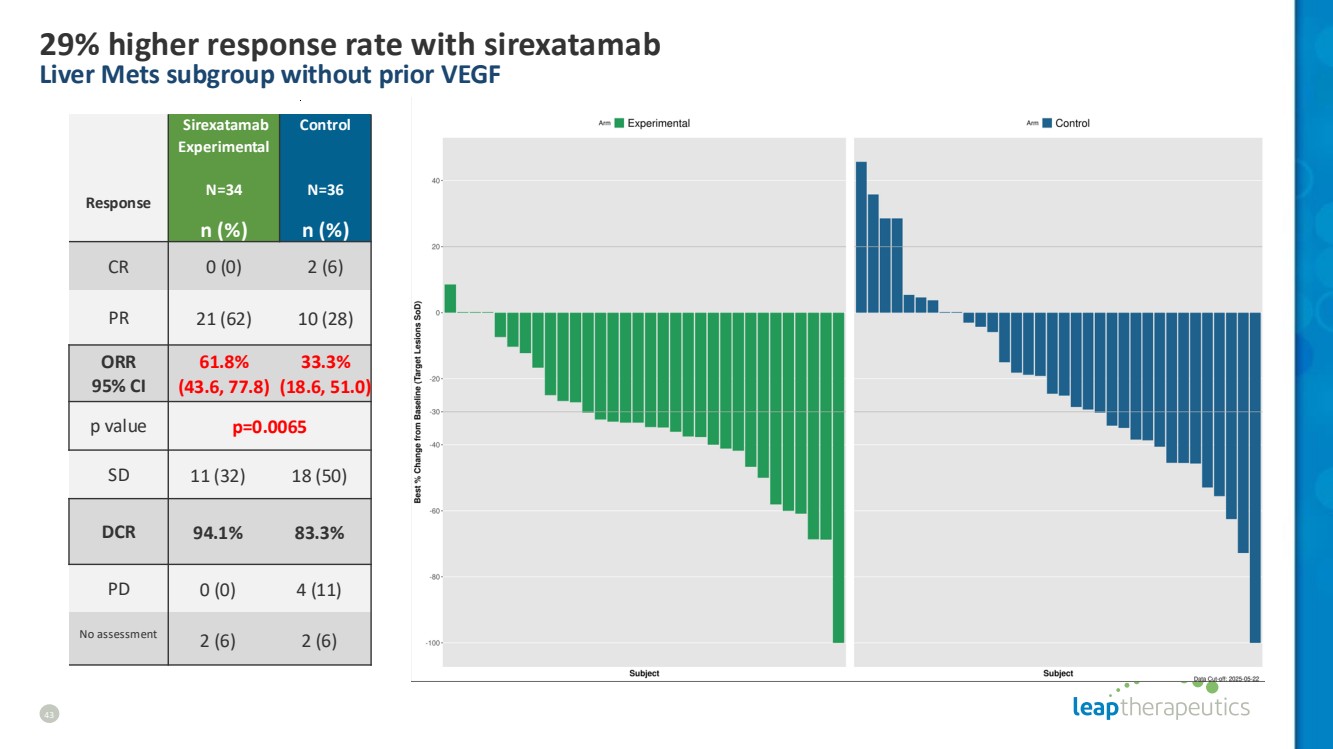
43 29% higher response rate with sirexatamab Liver Mets subgroup without prior VEGF Response Sirexatamab Experimental N=34 Control N=36 n (%) n (%) CR 0 (0) 2 (6) PR 21 (62) 10 (28) ORR 95% CI 61.8% (43.6, 77.8) 33.3% (18.6, 51.0) p value p=0.0065 SD 11 (32) 18 (50) DCR 94.1% 83.3% PD 0 (0) 4 (11) No assessment 2 (6) 2 (6) |
|
MARKET OPPORTUNITY |
|
Large potential colorectal cancer market opportunity Global Incidence and Deaths US: 155,000 patients and 53,000 deaths ROW: 1,900,000 patients and 910,000 deaths Second-Line Treated Patients US: 30,000 patients Largest 7 non-US markets: 160,000 patients First-Line Treated Patients for Advanced Disease US: 45,000 patients Largest 7 non-US markets: 265,000 patients ~5% ~10% ~25% ~50% EGFR inhibitor + Chemo RAS/BRAF wt Left Sided encorafenib + EGFR inhibitor + Chemo BRAF V600E HER2 agent combination HER2- amplified + RAS/BRAF wt Bevacizumab + Chemo Other ~10% MSI-H Checkpoint Inhibitor • DKK1 biomarker high = ~25% - ~50% • VEGF-naïve = ~50% Sources: American Cancer Society, World Health Organization, Company estimates 45 |
|
Sirexatamab ORR is enhanced by increasing DKK1 across biomarker subgroups 46 All Patients DKK1-High (upper median) DKK1-High (upper quartile) Group Sirexatamab Experimental Control Sirexatamab Experimental Control Sirexatamab Experimental Control ITT 35% 27% 38% 24% 44% 16% VEGF-naïve 55% 33% 56% 36% 56% 25% VEGF-experienced 13% 21% 17% 6% 22% 0% Liver mets Y 37% 28% 40% 30% 48% 20% Liver mets N 29% 24% 30% 9% 25% 0% • Control arm demonstrates decreasing response with higher DKK1 across subgroups • Experimental arm demonstrates increasing response with higher DKK1 across subgroups |
|
FL-501 Anti-GDF-15 monoclonal antibody |
|
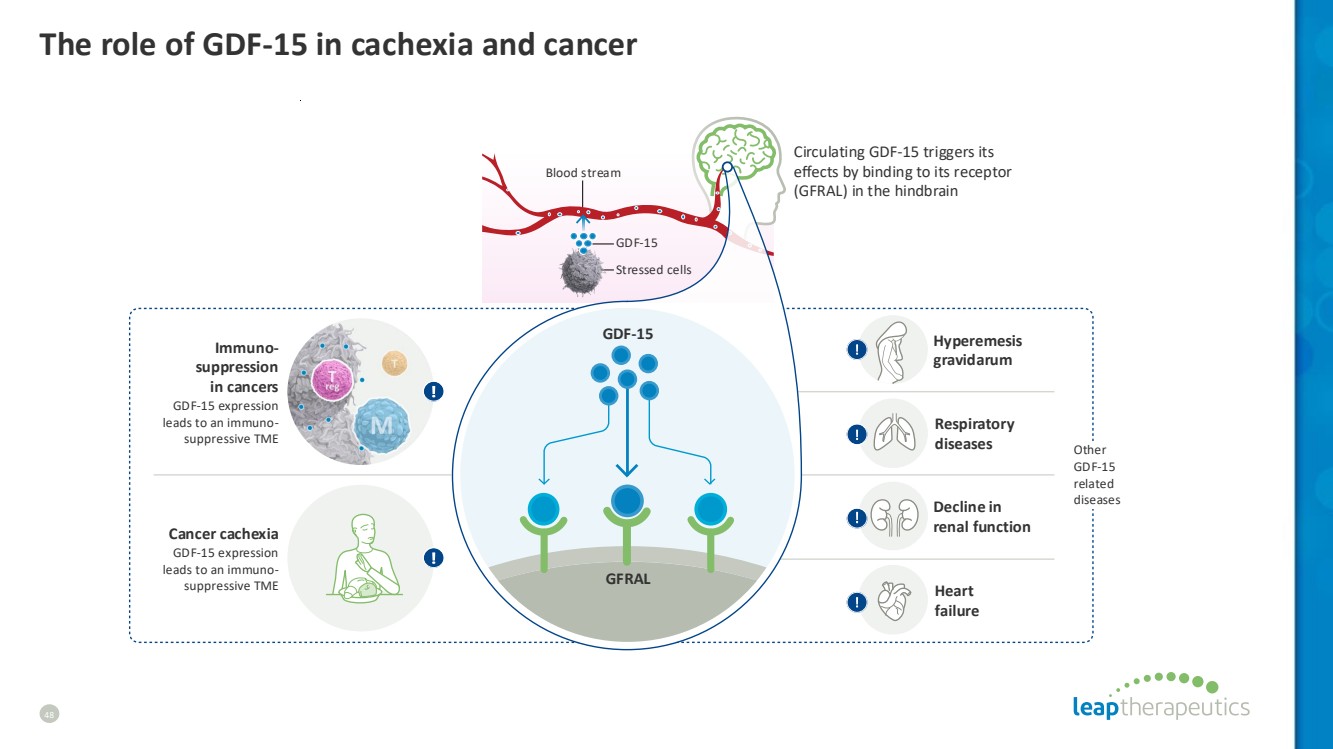
GDF-15 Blood stream Stressed сells Cancer cachexia GDF-15 expression leads to an immuno-suppressive TME Heart failure Decline in renal function Hyperemesis gravidarum GFRAL GDF-15 Other GDF-15 related diseases Circulating GDF-15 triggers its effects by binding to its receptor (GFRAL) in the hindbrain Immuno-suppression in cancers GDF-15 expression leads to an immuno-suppressive TME Respiratory diseases The role of GDF-15 in cachexia and cancer 48 |
|
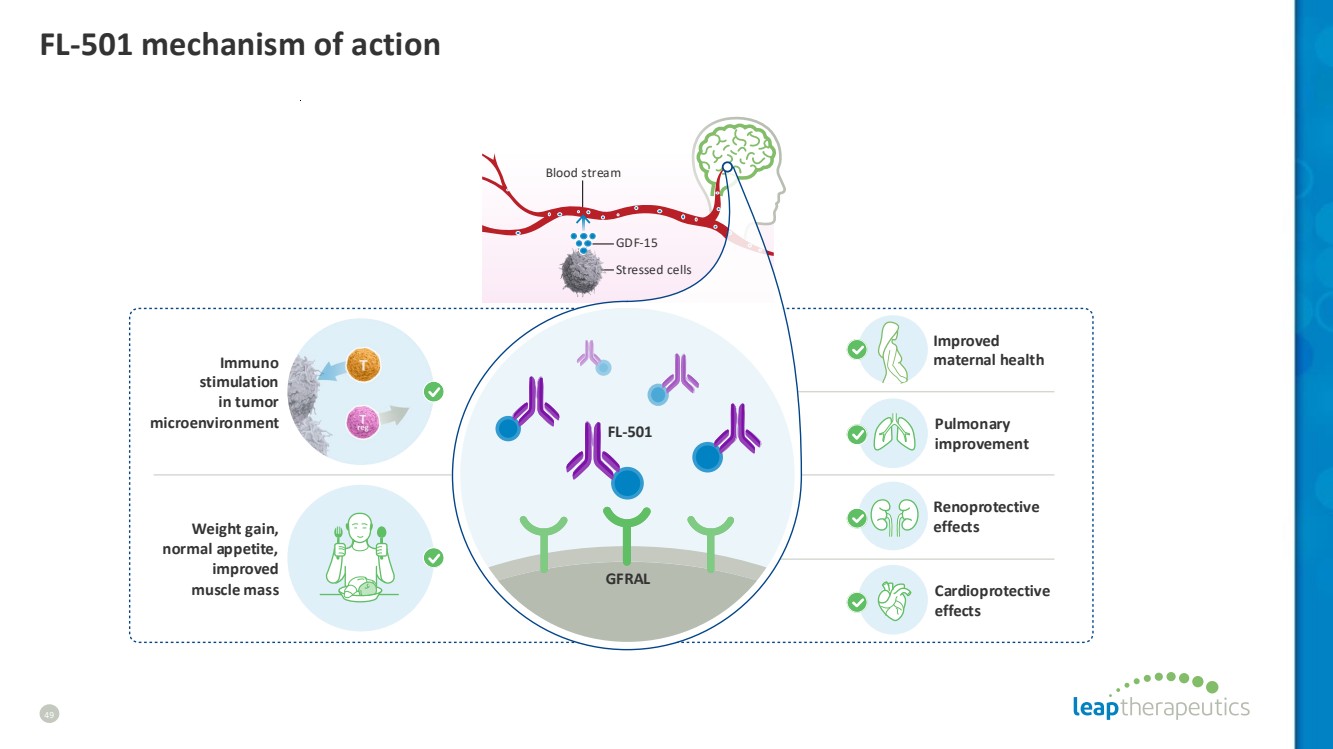
GDF-15 Blood stream Stressed сells Weight gain, normal appetite, improved muscle mass Cardioprotective effects Renoprotective effects Improved maternal health GFRAL Immuno stimulation in tumor microenvironment Pulmonary improvement FL-501 FL-501 mechanism of action 49 |
|
company presentation LEAP THERAPEUTICS June 23, 2025 |