株探米国株
英語
エドガーで原本を確認する
0001730463FALSE00017304632026-01-122026-01-120001730463sic:Z88802026-01-122026-01-120001730463us-gaap:CommonClassAMember2026-01-122026-01-12

UNITED STATES
SECURITIES AND EXCHANGE COMMISSION
WASHINGTON, D.C. 20549

FORM 8-K

CURRENT REPORT
Pursuant to Section 13 or 15(d)
of the Securities Exchange Act of 1934

Date of Report (Date of earliest event reported): January 12, 2026
Autolus Therapeutics plc
(Exact name of registrant as specified in its Charter)

England and Wales
001-38547
Not applicable
(State or other jurisdiction of incorporation or organization)
(Commission File Number)
(I.R.S. Employer Identification No.)
The Mediaworks
191 Wood Lane
London W12 7FP
United Kingdom
(Address of principal executive offices)(Zip Code)
(44) 20
3829 6230
(Registrant's telephone number, including area code)
Not Applicable
(Former name or former address, if changed since last report)

Check the appropriate box below if the Form 8-K filing is intended to simultaneously satisfy the filing obligation of the registrant under any of the following provisions (see General Instruction A.2. below):
Written communications pursuant to Rule 425 under the Securities Act (17 CFR 230.425)
Soliciting material pursuant to Rule 14a-12 under the Exchange Act (17 CFR 240.14a-12)
Pre-commencement communications pursuant to Rule 14d-2(b) under the Exchange Act (17 CFR 240.14d-2(b))
Pre-commencement communications pursuant to Rule 13e-4(c) under the Exchange Act (17 CFR 240.13e-4(c))


Securities registered pursuant to Section 12(b) of the Act:
Title of each class Trading Symbol(s) Name of each exchange on which registered
American Depositary Shares, each representing one ordinary share, nominal value $0.000042 per share
AUTL The Nasdaq Global Select Market
Ordinary shares, nominal value $0.000042 per share* *
The Nasdaq Stock Market LLC*
*
Not for trading, but only in connection with the listing of the American Depositary Shares on The Nasdaq Global Select Market. The American Depositary Shares represent the right to receive ordinary shares and are being registered under the Securities Act of 1933, as amended, pursuant to a separate Registration Statement on Form F-6. Accordingly, the American Depositary Shares are exempt from the operation of Section 12(a) of the Securities Exchange Act of 1934, as amended, pursuant to Rule 12a-8 thereunder.
Indicate by check mark whether the registrant is an emerging growth company as defined in Rule 405 of the Securities Act of 1933 (§230.405 of this chapter) or Rule 12b-2 of the Securities Exchange Act of 1934 (§240.12b-2 of this chapter).
Emerging growth company ☐

If an emerging growth company, indicate by check mark if the registrant has elected not to use the extended transition period for complying with any new or revised financial accounting standards provided pursuant to Section 13(a) of the Exchange Act. ☐

Item 2.02 Results of Operations and Financial Condition.
On January 12, 2026, Autolus Therapeutics plc (the “Company”) issued a press release announcing preliminary unaudited net product revenue from sales of AUCATZYL® (obe-cel) for the fourth quarter and full year of 2025, an update to its cash runway position, guidance on 2026 AUCATZYL net product revenue as well as updates to its pipeline programs and anticipated future milestones. An updated corporate presentation reflecting these announcements will be used at one-on-one meetings with analysts and investors at the J.P. Morgan Health Conference and posted to the Company’s website. The press release and slides from the presentation are being furnished as Exhibits 99.1 and 99.2, respectively, to this Current Report on Form 8-K and are incorporated by reference herein.
The information contained in this Item 2.02, including Exhibits 99.1 and 99.2, shall not be deemed “filed” for purposes of Section 18 of the Securities Exchange Act of 1934, as amended (the “Exchange Act”), or otherwise subject to the liability of that section, nor shall it be deemed incorporated by reference in any filing under the Securities Act of 1933, as amended, or the Exchange Act, except as shall be expressly set forth by reference in such a filing.
Item 8.01 Other Events.
On January 12, 2026, the Company announced preliminary unaudited AUCATZYL net product revenue of approximately $24 million for the fourth quarter of 2025 and approximately $75 million for the full year of 2025. Based on current operating plans, including anticipated AUCATZYL® net revenues, the Company expects that its current and projected cash, cash equivalents and marketable securities will be sufficient to fund the Company’s operations into the fourth quarter of 2027. The Company anticipates full year 2026 AUCATZYL net product revenue of $120 million to $135 million.


The preliminary financial information in this Item 8.01 has not been audited and is subject to change pending completion of the Company’s audited financial statements for the year ended December 31, 2025. It is possible that the Company or its independent registered public accounting firm may identify items that require the Company to make adjustments to the amounts included in this Item 8.01, and such changes could be material. Additional information and disclosures would also be required for a more complete understanding of the Company’s financial position and results of operations as of December 31, 2025.
Forward-Looking Statements
This Current Report contains forward-looking statements within the meaning of the "safe harbor" provisions of the Private Securities Litigation Reform Act of 1995. Forward-looking statements are statements that are not historical facts, and in some cases can be identified by terms such as "may," "will," "could," "expects," "plans," "anticipates," and "believes." These statements include, but are not limited to, statements regarding the Company’s future expectations, plans and prospects, including the anticipated level of fourth quarter 2025 and full year 2025 AUCATZYL net product revenue and guidance on 2026 AUCATZYL net product revenue and gross margin; the Company’s anticipated cash runway; the expected timing of the release of the Company’s fourth quarter and full year 2025 financial results in March 2026; the therapeutic potential and expected clinical benefits of AUCATZYL (obe-cel; obecabtagene autoleucel) for adult patients with r/r B-ALL and obe-cel in additional indications including lupus nephritis and progressive multiple sclerosis; the Company’s ability to generate revenues from AUCATZYL; the Company’s ability to obtain and maintain regulatory approval for obe-cel for adult r/r B-ALL in additional territories and the timing thereof; expectations regarding the commercialization, marketing and manufacturing of AUCATZYL for adult r/r B-ALL, including expanding into additional territories and the related timing of reaching patients in such territories; the development of obe-cel in autoimmune indications and of additional product candidates, including statements regarding the initiation, timing, progress and the results of clinical studies or trials and related preparatory work; the period during which the results of clinical studies or trials will become available; the Company’s plans to expand, develop and enhance its manufacturing activities; and the Company’s pursuit of expanded market access across Europe. Any forward-looking statements are based on management's current views and assumptions and involve risks and uncertainties that could cause actual results, performance, or events to differ materially from those expressed or implied in such statements. These risks and uncertainties include, but are not limited to, the risks identified in the section titled "Risk Factors" in the Company’s Annual Report on Form 10-K filed with the Securities and Exchange Commission, or the SEC, on March 20, 2025 as well as discussions of potential risks, uncertainties, and other important factors in the Company’s subsequent Quarterly Reports on Form 10-Q and other filings with the Securities and Exchange Commission. All information in this Current Report is as of the date of this Current Report, and the Company undertakes no obligation to publicly update any forward-looking statement, whether as a result of new information, future events, or otherwise, except as required by law. You should, therefore, not rely on these forward-looking statements as representing the Company’s views as of any date subsequent to the date of this Current Report.

Item 9.01 Exhibits
d) Exhibits
Exhibit No. Description of Exhibit
104
Cover Page Interactive Date File (embedded within the Inline XBRL document)


SIGNATURES
Pursuant to the requirements of the Securities Exchange Act of 1934, as amended, the registrant has duly caused this report to be signed on its behalf by the undersigned hereunto duly authorized.
AUTOLUS THERAPEUTICS PLC
Dated: January 12, 2026
By: /s/Christian Itin, Ph.D.
Name: Christian Itin, Ph.D.
Title: Chief Executive Officer


EX-99.1 2 autlex-991pr120126.htm EX-99.1 autlex-991pr120126
Autolus Therapeutics Announces Preliminary Unaudited Fourth Quarter and Full Year 2025 Net Product Revenue, Pipeline Advancements and Outlook for 2026 January 12, 2026 at 7:00 AM EST Company expects preliminary unaudited AUCATZYL® net product revenue of approximately $24 million for the fourth quarter of 2025 and approximately $75 million for the full year of 2025 Autolus anticipates full year 2026 AUCATZYL® net product revenue of $120 million to $135 million Independent real-world AUCATZYL® data from ROCCA consortium confirm high level of clinical activity with favorable safety profile Focus for 2026 is: Driving AUCATZYL® top line growth Optimizing manufacturing operation to improve gross margin and innovating on next generation manufacturing platform Progressing the CATULUS, LUMINA and BOBCAT trials to expand the utility of obe-cel in pediatric hem-oncology and autoimmune indications LONDON and Gaithersburg, Md., Jan. 12, 2026 (GLOBE NEWSWIRE) -- Autolus Therapeutics plc   (Nasdaq: AUTL), a commercial-stage biopharmaceutical company developing, manufacturing and delivering next-generation programmed T cell therapies, today announced preliminary unaudited net product revenue from sales of AUCATZYL® (obecabtagene autoleucel; obe-cel) for the fourth quarter and full year of 2025. The Company also announced pipeline advancement updates and anticipated future milestones. AUCATZYL® 2025 Preliminary Unaudited Net Product Revenues, Commercial Updates and 2026 Revenue Guidance Dr. Christian Itin, Chief Executive Officer of Autolus, said: “We had a successful launch of AUCATZYL in the US with full year sales well above expectations and more than 60 centers offering treatment. We established reliable, high-quality product delivery with short and consistent turn-around time. Parallel to the launch and independent from the Company, the ROCCA consortium collected real-world data for AUCATZYL in adult r/r B-ALL patients and presented initial data at ASH 2025. The real-world data confirmed a high level of clinical activity and a favorable safety profile for AUCATZYL consistent with prior clinical trial results, and we believe this positive customer experience will be a key driver for the future growth of AUCATZYL in 2026. “In addition to our launch of AUCATZYL in the US, we obtained regulatory approvals in the UK and EU. We successfully navigated the challenging pricing and reimbursement process with NICE, establishing cost effectiveness of AUCATZYL for the NHS and initiating our commercial launch in the UK in December under routine commissioning – a first for a CAR T therapy in the UK.” Based on preliminary unaudited financial information, Autolus expects net product revenue from sales of AUCATZYL to be approximately $24 million1 for the fourth quarter of 2025. Net product revenues for the full year of 2025, the first year of commercial sales, are expected to be approximately $75 million1. The Company plans to report its fourth quarter and full year 2025 financial results in March 2026. For 2026, the Company projects net product revenue for AUCATZYL of between $120 million to $135 million. Pipeline Updates and Upcoming Clinical Milestones Dr. Matthias Will, Chief Development Officer of Autolus, said: “In 2025 we reported strong initial clinical data for the Phase 1 CATULUS trial in pediatric r/r B-ALL patients and in the Phase 1 CARLYSLE trial in patients with severe lupus erythematosus. Both data sets form a compelling basis for progressing those studies in pediatric B-ALL and in lupus nephritis to Phase 2. With this strong foundation of clinical data, Phase 2 studies enrolling and demonstrated commercial and manufacturing capabilities, we believe Autolus is well positioned to drive growth with obe-cel in additional and significant indications.” Obe-cel data in pediatric r/r B-ALL Preliminary data from the CATULUS Phase 1 trial of obe-cel in pediatric relapsed or refractory (r/r) B-ALL patients were presented at the American Society of Hematology (ASH) Annual Meeting. Obe-cel demonstrated high remission rates in pediatric patients with high-risk r/r B-ALL with overall response rate (ORR) of 95.5%. Low rates of high-grade cytokine release syndrome (CRS) and immune effector cell-associated neurotoxicity syndrome (ICANS) were observed, consistent with obe-cel’s adult safety profile. Autolus is now advancing obe-cel into the Phase 2 portion of the trial and expects to have the trial fully enrolled in the first half of 2027. EX-99.1


Obe-cel in lupus nephritis (LN) Data from the ongoing Phase 1 CARLYSLE trial in patients with severe refractory systemic lupus erythematosus (srSLE) were reported at the American Society of Hematology (ASH) Annual Meeting. All patients show deep B-cell depletion after infusion, suggesting an immune reset. No ICANS or high-grade CRS were observed in the nine patients evaluable for safety. Data support progressing obe-cel as a treatment for LN and 50 million cells was selected as the recommended Phase 2 dose. Autolus has previously aligned with the US Food and Drug Administration (FDA) on a Phase 2 trial design in LN and potential registrational path to approval. The LUMINA trial is now enrolling. Obe-cel in progressive multiple sclerosis (MS)  Autolus is advancing obe-cel into initial clinical development to explore treatment in progressive MS. The first patient in the BOBCAT trial was dosed in October 2025. The Phase 1 trial, expected to include up to 18 adult patients, will determine the safety, tolerability, and preliminary efficacy of obe-cel in participants with refractory progressive forms of MS. Initial data from the trial are expected to be reported at the end of 2026. AUTO8 in light-chain amyloidosis The first patient was dosed in the Phase 1 ALARIC trial in AL amyloidosis and initial data is expected to be reported at the end of 2026. Operational Updates & 2026 Outlook Dr. Christian Itin concluded: “Our 2026 commercial focus for AUCATZYL is to build on the strong center presence and positive physician experience to drive top line growth, while improving margins by reducing our manufacturing costs per batch. Our development focus is on progressing our pivotal pediatric ALL CATLULUS and lupus nephritis LUMINA studies and the exploratory BOBCAT study in progressive multiple sclerosis. Our plans for innovation will focus on manufacturing technology and European market access.” Increasing patient numbers in 2026 will improve manufacturing plant utilization and together with operational efficiencies, Autolus expects a shift from previously reported negative gross margin to positive gross margin in 2026. Autolus has initiated an overall manufacturing life cycle plan to facilitate additional cost reductions and gross margin improvements as the Company plans to expand obe-cel into new indications and pursue larger market opportunities. The initiatives are focused on: 1) optimizing the Company’s current manufacturing operating model; 2) enhancing automation opportunities for the Company’s existing manufacturing process; and 3) developing a next-generation manufacturing platform with a step change in the cost and capacity profile. The Company plans to provide a detailed update on these plans in mid-2026. Based on current operating plans, including anticipated AUCATZYL® net revenues, Autolus expects that its current and projected cash, cash equivalents and marketable securities will be sufficient to fund the Company’s operations into Q4 2027. Financial Disclosure Advisory1 This press release contains certain estimated preliminary unaudited financial results for the fourth quarter and year ended December 31, 2025. These estimates are based on the information available to the Company at this time. The Company’s financial closing procedures for the fourth quarter and year ended December 31, 2025 are not yet complete and, as a result, actual results may vary from the estimated preliminary results presented here due to the completion of the Company’s financial closing and audit procedures. The estimated preliminary financial results have not been audited or reviewed by the Company’s independent registered public accounting firm. These estimates should not be viewed as a substitute for the Company’s full interim or annual financial statements. About Autolus Therapeutics plc Autolus Therapeutics plc   (Nasdaq: AUTL) is a commercial-stage biopharmaceutical company developing, manufacturing and delivering next-generation T cell therapies and candidates for the treatment of cancer and autoimmune disease. Using a broad suite of proprietary and modular T cell programming technologies, Autolus is engineering precisely targeted and controlled T cell therapies that are designed to better recognize target cells, break down their defense mechanisms and eliminate these cells. Autolus has a marketed therapy, AUCATZYL®, and a pipeline of product candidates in development for the treatment of hematological malignancies, solid tumors and autoimmune diseases. For more information, please visit www.autolus.com. About AUCATZYL® (obecabtagene autoleucel; obe-cel) AUCATZYL is a B-lymphocyte antigen CD19 (CD19) chimeric antigen receptor (CAR) T cell therapy designed to overcome the limitations in clinical activity and safety compared to current CD19 CAR T cell therapies. AUCATZYL is designed with a fast target binding off-rate to minimize excessive activation of the programmed T cells. AUCATZYL was approved by the FDA for the treatment of adult patients with relapsed or refractory B-cell precursor acute lymphoblastic leukemia on November 8, 2024, and was granted conditional marketing authorization by MHRA in the UK and EMA in the EU in 2025. INDICATION  AUCATZYL® is a CD19-directed genetically modified autologous T cell immunotherapy indicated for the treatment of adult patients with relapsed or refractory B-cell precursor acute lymphoblastic leukemia (ALL).  IMPORTANT SAFETY INFORMATION  WARNING: CYTOKINE RELEASE SYNDROME, NEUROLOGIC TOXICITIES, and SECONDARY HEMATOLOGICAL MALIGNANCIES


Cytokine Release Syndrome (CRS) occurred in patients receiving AUCATZYL. Do not administer AUCATZYL to patients with active infection or inflammatory disorders. Prior to administering AUCATZYL, ensure that healthcare providers have immediate access to medications and resuscitative equipment to manage CRS [see Dosage and Administration (2.2, 2.3), Warnings and Precautions (5.1)]. Immune Effector Cell-Associated Neurotoxicity Syndrome (ICANS), including fatal or life-threatening reactions, occurred in patients receiving AUCATZYL, including concurrently with CRS or after CRS resolution. Monitor for neurologic signs and symptoms after treatment with AUCATZYL. Prior to administering AUCATZYL, ensure that healthcare providers have immediate access to medications and resuscitative equipment to manage neurologic toxicities. Provide supportive care and/or corticosteroids, as needed [see Dosage and Administration (2.2, 2.3), Warnings and Precautions (5.2)]. T cell malignancies have occurred following treatment of hematologic malignancies with BCMA- and CD19-directed genetically modified autologous T cell immunotherapies [see Warnings and Precautions (5.8)]. WARNINGS AND PRECAUTIONS  Cytokine Release Syndrome (CRS)  Cytokine Release Syndrome (CRS) occurred following treatment with AUCATZYL. CRS was reported in 75% (75/100) of patients including Grade 3 CRS in 3% of patients. The median time to onset of CRS was 8 days following the first infusion (range: 1 to 23 days) with a median duration of 5 days (range: 1 to 21 days). The most common manifestations of CRS included fever (100%), hypotension (35%), and hypoxia (19%).  Cytokine Release Syndrome (CRS) occurred following treatment with AUCATZYL. CRS was reported in 75% (75/100) of patients including Grade 3 CRS in 3% of patients. The median time to onset of CRS was 8 days (range: 1 to 23 days) with a median duration of 5 days (range: 1 to 21 days). Sixty-eight percent of patients (51/75) experienced CRS after the first infusion, but prior to the second infusion of AUCATZYL with a median time to onset of 6 days (range: 1 to 10 days). Among patients with CRS, the most common manifestations of CRS included fever (100%), hypotension (35%) and hypoxia (19%). The primary treatment for CRS was tocilizumab (73%; 55/75), with patients also receiving corticosteroids (21%; 16/75).   Prior to administering AUCATZYL, ensure that healthcare providers have immediate access to medications and resuscitative equipment to manage CRS. During and following treatment with AUCATZYL, closely monitor patients for signs and symptoms of CRS daily for at least 7 days following each infusion. Continue to monitor patients for CRS for at least 2 weeks following each infusion with AUCATZYL. Counsel patients to seek immediate medical attention should signs or symptoms of CRS occur at any time. At the first sign of CRS, immediately evaluate the patient for hospitalization and institute treatment with supportive care based on severity and consider further management per current practice guidelines.  Neurologic Toxicities   Neurologic toxicities including Immune Effector Cell-associated Neurotoxicity Syndrome (ICANS), which were fatal or life-threatening, occurred following treatment with AUCATZYL. Neurologic toxicities were reported in 64% (64/100) of patients, including Grade ≥ 3 in 12% of patients. The median time to onset of neurologic toxicities was 10 days (range: 1 to 246 days) with a median duration of 13 days (range: 1 to 904 days). Fifty-five percent of patients (35/64) experienced neurologic toxicities after the first infusion but prior to the second infusion of AUCATZYL with a median time to onset of 6 days (range: 1 to 11 days). Among patients with neurologic toxicities, the most common symptoms (> 5%) included ICANS (38%), headache (34%), encephalopathy (33%), dizziness (22%), tremor (13%), anxiety (9%), insomnia (9%), and delirium (8%).  Immune Effector Cell-associated Neurotoxicity Syndrome (ICANS)  ICANS events occurred in 24% (24/100) of patients, including Grade ≥ 3 in 7% (7/100) of patients. Of the 24 patients who experienced ICANS, 33% (8/24) experienced an onset after the first infusion, but prior to the second infusion of AUCATZYL. The median time to onset for ICANS events after the first infusion was 8 days (range: 1 to 10 days) and 6.5 days (range: 2 to 22 days) after the second infusion, with a median duration of 8.5 days (range: 1 to 53 days). Eighty-eight percent (21/24) of patients received treatment for ICANS. All treated patients received high-dose corticosteroids and 42% (10/24) of patients received anti-epileptics prophylactically. Prior to administering AUCATZYL, ensure that healthcare providers have immediate access to medications and resuscitative equipment to manage ICANS.   During and following AUCATZYL administration, closely monitor patients for signs and symptoms of Neurologic Toxicity/ICANS. Following treatment with AUCATZYL, monitor patients daily for at least 7 days. Continue to monitor patients for at least 2 weeks following treatment with AUCATZYL. Avoid driving for at least 2 weeks after each infusion. Counsel patients to seek medical attention should signs or symptoms of neurologic toxicity/ ICANS occur. At the first sign of Neurologic Toxicity/ICANS, immediately evaluate patients for hospitalization and institute treatment with supportive care based on severity and consider further management per current practice guidelines.  Prolonged Cytopenias   Patients may exhibit cytopenias including anemia, neutropenia, and thrombocytopenia for several weeks after treatment with lymphodepleting chemotherapy and AUCATZYL. In patients who were responders to AUCATZYL, Grade ≥ 3 cytopenias that persisted beyond Day 30 following AUCATZYL infusion were observed in 71% (29/41) of patients and included neutropenia (66%, 27/41) and thrombocytopenia (54%, 22/41). Grade 3 or higher cytopenias that persisted beyond Day 60 following AUCATZYL infusion was observed in 27% (11/41) of patients and included neutropenia (17%, 7/41) and thrombocytopenia (15%, 6/41). Monitor blood counts after AUCATZYL infusion.  Infections   Severe, including life-threatening and fatal infections occurred in patients after AUCATZYL infusion. Non-COVID-19 infections of all grades occurred in 67% (67/100) of patients. Grade 3 or higher non-COVID-19 infections occurred in 41% (41/100) of patients. AUCATZYL should not be administered to patients with clinically significant active systemic infections. Monitor patients for signs and symptoms of infection before and after AUCATZYL infusion and treat appropriately. Administer prophylactic antimicrobials according to local guidelines.  Grade 3 or higher febrile neutropenia was observed in 26% (26/100) of patients after AUCATZYL infusion and may be concurrent with CRS. In the event of febrile neutropenia, evaluate for infection and manage with broad-spectrum antibiotics, fluids, and other supportive care as medically


indicated.  Viral reactivation, potentially severe or life-threatening, can occur in patients treated with drugs directed against B cells. There is no experience with manufacturing AUCATZYL for patients with a positive test for human immunodeficiency virus (HIV) or with active hepatitis B virus (HBV) or active hepatitis C virus (HCV). Perform screening for HBV, HCV and HIV in accordance with clinical guidelines before collection of cells for manufacturing.  Hypogammaglobulinemia   Hypogammaglobulinemia and B-cell aplasia can occur in patients after AUCATZYL infusion. Hypogammaglobulinemia was reported in 10% (10/100) of patients treated with AUCATZYL including Grade 3 events in 2 patients (2%).  Immunoglobulin levels should be monitored after treatment with AUCATZYL and managed per institutional guidelines including infection precautions, antibiotic or antiviral prophylaxis, and immunoglobulin replacement.  The safety of immunization with live viral vaccines during or following treatment with AUCATZYL has not been studied. Vaccination with live viral vaccines is not recommended for at least 6 weeks prior to the start of lymphodepleting chemotherapy treatment, during AUCATZYL treatment, and until immune recovery following treatment with AUCATZYL.  Hemophagocytic Lymphohistiocytosis/Macrophage Activation Syndrome (HLH/MAS)   HLH/MAS including fatal and life-threatening reactions occurred after treatment with AUCATZYL. HLH/MAS was reported in 2% (2/100) of patients and included Grade 3 and Grade 4 events with a time of onset at Day 22 and Day 41, respectively. One patient experienced a concurrent ICANS events after AUCATZYL infusion and died due to sepsis with ongoing HLH/MAS that had not resolved. Administer treatment for HLH/MAS according to institutional standards.  Hypersensitivity Reactions   Serious hypersensitivity reactions, including anaphylaxis, may occur due to dimethyl sulfoxide (DMSO), an excipient used in AUCATZYL. Observe patients for hypersensitivity reactions during and after AUCATZYL infusion.  Secondary Malignancies  Patients treated with AUCATZYL may develop secondary malignancies. T cell malignancies have occurred following treatment of hematologic malignancies with BCMA- and CD19-directed genetically modified autologous T cell immunotherapies. Mature T cell malignancies, including CAR-positive tumors, may present as soon as weeks following infusion, and may include fatal outcomes. Monitor lifelong for secondary malignancies. In the event that a secondary malignancy occurs, contact Autolus at 1-855-288-5227 for reporting and to obtain instructions on the collection of patient samples for testing.  Adverse Reactions   The safety of AUCATZYL was evaluated in the FELIX study in which 100 patients with relapsed or refractory B-cell acute lymphoblastic leukemia (B-ALL) received AUCATZYL at a median dose of 410 × 106 CD19 CAR-positive viable T cells (range: 10 to 480 × 106 CD19 CAR-positive viable T cells with 90% of patients receiving the recommended dose of 410 × 106 +/- 25%).     The most common serious adverse reactions of any Grade (incidence ≥ 2%) included infections-pathogen unspecified, febrile neutropenia, ICANS, CRS, fever, bacterial infectious disorders, encephalopathy, fungal infections, hemorrhage, respiratory failure, hypotension, ascites, HLH/MAS, thrombosis and hypoxia. Nine patients (9%) experienced fatal adverse reactions which included infections (sepsis, pneumonia, peritonitis), ascites, pulmonary embolism, acute respiratory distress syndrome, HLH/MAS and ICANS. Of the 9 patients, five patients who died from infections had pre-existing and ongoing neutropenia prior to receiving bridging therapy, lymphodepletion chemotherapy treatment and/or AUCATZYL.  Please see full Prescribing Information, including BOXED WARNING and Medication Guide.  Forward-Looking Statements This press release contains forward-looking statements within the meaning of the "safe harbor" provisions of the Private Securities Litigation Reform Act of 1995. Forward-looking statements are statements that are not historical facts, and in some cases can be identified by terms such as "may," "will," "could," "expects," "plans," "anticipates," and "believes." These statements include, but are not limited to, statements regarding Autolus’ future expectations, plans and prospects, including the anticipated level of fourth quarter 2025 and full year 2025 AUCATZYL net product revenue and guidance on 2026 AUCATZYL net product revenue and gross margin; Autolus’ anticipated cash runway; the expected timing of the release of Autolus’ fourth quarter and full year 2025 financial results in March 2026; the therapeutic potential and expected clinical benefits of AUCATZYL (obe-cel; obecabtagene autoleucel) for adult patients with r/r B-ALL and obe-cel in additional indications including LN and progressive MS; Autolus’ ability to generate revenues from AUCATZYL; Autolus’ ability to obtain and maintain regulatory approval for obe-cel for adult r/r B-ALL in additional territories and the timing thereof; expectations regarding the commercialization, marketing and manufacturing of AUCATZYL for adult r/r B-ALL, including expanding into additional territories and the related timing of reaching patients in such territories; the development of obe-cel in autoimmune indications and of additional product candidates, including statements regarding the initiation, timing, progress and the results of clinical studies or trials and related preparatory work; the period during which the results of clinical studies or trials will become available; Autolus’ plans to expand, develop and enhance its manufacturing activities; and Autolus’ pursuit of expanded market access across Europe. Any forward-looking statements are based on management's current views and assumptions and involve risks and uncertainties that could cause actual results, performance, or events to differ materially from those expressed or implied in such statements. These risks and uncertainties include, but are not limited to, the risks identified in the section titled "Risk Factors" in Autolus' Annual Report on Form 10-K filed with the Securities and Exchange Commission (the SEC), on March 20, 2025 and its subsequent Quarterly Reports on Form 10-Q, as well as discussions of potential risks, uncertainties, and other important factors in Autolus' subsequent filings with the SEC. All information in this press release is as of the date of the release, and Autolus undertakes no obligation to publicly update any forward-looking statement, whether as a result of new information, future events, or otherwise, except as required by law. You should, therefore, not rely on these forward-looking statements as representing Autolus’ views as of any date subsequent to the date of this press release.   Contact:   Amanda Cray  +1 617-967-0207  a.cray@autolus.com 


EX-99.2 3 autlex-992cp120126.htm EX-99.2 autlex-992cp120126
Developing Next Generation Programmed T Cell Therapies January 2026 Autolus.com For Investor communication only. Not for use in product promotion. EX-99.2


If the title goes over more than one line move the subtitle text box down by 1.15cm per additional line Disclaimer These slides contain forward-looking statements within the meaning of the “safe harbor” provisions of the Private Securities Litigation Reform Act of 1995. Forward-looking statements are statements that are not historical facts, and in some cases can be identified by terms such as “may,” “will,” “could,” “expects,” “plans,” “anticipates,” and “believes.” These statements include, but are not limited to: statements regarding Autolus’ development and commercialization of its product candidates; Autolus' manufacturing, sales and marketing plans for AUCATZYL, including expectations regarding the commercial launch in the United States and the ability to reach patients in a timely manner; the amount and timing of milestone payments under Autolus' collaboration and license agreements; and future development plans of obe-cel, including the timing or likelihood of expansion into additional markets or geographies and related regulatory approvals. Any forward-looking statements are based on management’s current views and assumptions and involve risks and uncertainties that could cause actual results, performance, or events to differ materially from those expressed or implied in such statements. Actual results and the timing of events could differ materially from those anticipated in such forward-looking statements as a result of various risks and uncertainties, which include, without limitation: Autolus' ability to maintain regulatory approval of AUCATZYL; its ability to execute its commercialization strategy for AUCATZYL; its ability to develop, manufacture and commercialize its other product candidates and the timing or likelihood of expansion of AUCATZYL into additional markets or geographies; Autolus' ability to establish and expand a commercial infrastructure and to successfully launch, market and sell AUCATZYL; actions of regulatory agencies, which may affect the initiation, timing and progress of clinical trials or future regulatory approval; the labelling for AUCATZYL/obe-cel in any future indication or patient population, if approved; the potential for payors to delay, limit or deny coverage for AUCATZYL; Autolus' ability to obtain, maintain and enforce intellectual property protection for AUCATZYL or any product candidates it is developing; the results of clinical trials are not always being predictive of future results; the cost, timing and results of clinical trials; that many product candidates do not become approved drugs on a timely or cost effective basis or at all; the ability to enroll patients in clinical trials; and possible safety and efficacy concerns. For a discussion of other risks and uncertainties, and other important factors, any of which could cause Autolus’ actual results to differ from those contained in the forward-looking statements, see the section titled “Risk Factors” in Autolus' Annual Report on Form 10-K filed with the Securities and Exchange Commission, or the SEC, on March 20, 2025, as well as discussions of potential risks, uncertainties, and other important factors in Autolus’ subsequent filings with the Securities and Exchange Commission. All information in this presentation is as of the date of the presentation, and Autolus undertakes no obligation to publicly update any forward-looking statement, whether as a result of new information, future events, or otherwise, except as required by law. You should, therefore, not rely on these forward-looking statements as representing the Company’s views as of any date subsequent to the date of this presentation. 2 Developing and Delivering a New Generation of T Cell Therapies


If the title goes over more than one line move the subtitle text box down by 1.15cm per additional line Autolus is positioned for value creation Obe-cel product franchise supports multiple growth opportunities 3 *Preliminary and unaudited Developing and Delivering a New Generation of T Cell Therapies Initial Indication: Adult r/r B-ALL Strong Execution in First Year of Launch Achieved CAR T market leadership in r/r B-ALL Significant opportunity to grow overall CAR T market in adult r/r B-ALL Physician interest to pursue investigator sponsored trials in 1st line ALL FY 2025 Net Product Revenue Pipeline expansion opportunities grow future commercial potential in new indications Commercial and pipeline opportunities supported by proven manufacturing and product delivery capabilities and established authorized treatment centers Opportunity to establish a pipeline in a product with recent data presentations supporting potentially pivotal Phase 2 clinical trials with obe-cel in lupus nephritis and pediatric ALL ~$75 million*


If the title goes over more than one line move the subtitle text box down by 1.15cm per additional line Autolus is a leader in CAR T manufacturing & product delivery Developing and Delivering a New Generation of T Cell Therapies 4 ✓ Manufacturing success rate >90% ✓ Fast, reliable and consistent product delivery ✓ No capacity limitations Executing on manufacturing and product delivery in the first year of launch: Manufacturing Life Cycle Strategy: Opportunities for Innovation to Improve Margins Optimizing the current manufacturing process and operating model Enhancing automation opportunities on our existing process Developing next-generation manufacturing platform with a step change in the cost and capacity profile 1 2 3


AUCATZYL® AUTOLUS’ FIRST APPROVED PRODUCT A potentially best-in-class, standalone CD19 CAR T cell therapy


If the title goes over more than one line move the subtitle text box down by 1.15cm per additional line AUCATZYL® now approved in US, UK and EU • Highly active, fast off-rate CD19 CAR T therapy with a well managed safety profile1 – approved in US, UK, EU • First and currently only approved CAR T therapy with customized, tumor-burden guided dosing – no FDA REMS obligation • Established infrastructure for manufacturing and commercialization • Commercial presence in more than 60 US centers • NICE determined AUCATZYL to be cost effective, UK* launch initiated in December 2025 • Approval in EU† in 2025; pricing and reimbursement evaluation ongoing on a country-by-country basis Developing and Delivering a New Generation of T Cell Therapies 6 AUCATZYL indicated for the treatment of adults with relapsed or refractory B-cell precursor acute lymphoblastic leukemia (B-ALL) 1Roddie C, et al "Obecabtagene autoleucel in B-cell acute lymphoblastic leukemia" N Engl J Med 2024; DOI: 10.1056/NEJMoa2406526; *Conditional marketing authorization, †European Commission (EC) conditional approval


If the title goes over more than one line move the subtitle text box down by 1.15cm per additional line 7 Strong first year of U.S. AUCATZYL® launch 2026 ExpectationsAUCATZYL Net Product Revenue Q4 2025: ~$24 Million* FY 2025: ~$75 Million* Developing and Delivering a New Generation of T Cell Therapies Strong initial launch based on: • More than 60 treatment centers activated • Positive physician and patient experience • Reliable manufacture and delivery of product FY 2026 Net Product Revenue: $120-$135 million Shift to positive gross margin in 2026 based on increasing volumes and improved manufacturing plant utilization *Preliminary unaudited financials; Autolus will report Q4 & FY 2025 financial results in March 2026 Increase commercial footprint in the US to more than 80 treatment centers and ongoing launch in the UK


AUCATZYL geographic growth opportunities in ALL 8 ✓ Conditional marketing authorization in the UK received April 2025 ✓ Successful NICE pricing and reimbursement process Nov 2025 ✓ AUCATZYL available in routine commissioning in NHS Dec 2025 ✓ European Commission (EC) conditional approval received July 2025 • Ongoing country-by-country evaluation of pricing and reimbursement decisions to assess feasibility of market entry; no anticipated EU sales in 2026 • Exploration of alternate market access mechanisms in 2026 Expansion EU market access - pending Developing and Delivering a New Generation of T Cell Therapies UK Launch Q1 2026


If the title goes over more than one line move the subtitle text box down by 1.15cm per additional line Potential for improved potency, reduced toxicity We believe AUCATZYL® has a unique mechanism of action 9 Clinical data show increased activity and reduced toxicity References:1. AUCATZYL. Prescribing Information. Autolus, Inc. 2024. 2. Ghorashian S, Kramer AM, Onuoha S, et al. Enhanced CAR T cell expansion and prolonged persistence in pediatric patients with ALL treated with a low-affinity CD19 CAR. Nat Med. 2019;25:1408- 1414. 3. Data on file. Autolus, Inc. 2024. 4. Zhao X, Yang J, Zhang X, et al. Efficacy and safety of CD28- or 4-1BB-based CD19 CAR-T cells in B cell acute lymphoblastic leukemia. Mol Ther Oncolytics. 2020;18:272-281. Fast off-rate Avoided over-activation of CAR T cells → Reduced toxicities Increased CAR T peak expansion → Improved peak activity and persistence Avoided exhaustion of CAR T-cells → Improved engraftment Improved persistence CAT19 fast off-rate binder² CD8-derived hinge region/ transmembrane domain2 4-1BB co-stimulatory domain1,4 Shown to enhance CAR T-cell expansion and reduce exhaustion compared with CD28 CARs in preclinical studies CD3Ɀ activation domain¹ HD37 FMC63 B4 4G7 CAT Off Rate: Kd [S-1] O n -R at e : K a [M -1 S- 1 ] Other CD19 Binders Obe-cel Binder 10-4 10-3 10-2 10-1 107 106 105 104 Shorter half-life of interaction compared to binders used in other approved products • AUCATZYL® = 9.8 seconds • Kymriah® = 21 minutes Developing and Delivering a New Generation of T Cell Therapies


If the title goes over more than one line move the subtitle text box down by 1.15cm per additional line AUCATZYL was approved based on results from the FELIX trial 10 FELIX Phase 1b/2 Cohort IA ≥5% BM blast 1,2 Roddie C, et al "Obecabtagene autoleucel in B-cell acute lymphoblastic leukemia" N Engl J Med 2024; DOI: 10.1056/NEJMoa2406526 Cohort IB <5% BM blast MRD+ Cohort IIA ≥5% BM blast Cohort IIB <5% BM blast MRD+ Cohort IIC Isolated EMD at screening Patients (N) Ph1b/2 pooled1 Enrolled 153 Infused 127 Background • Open-label, multinational, single-arm Phase 1b/2 trial in adult patients with R/R B-ALL1-2; largest CAR T cell therapy trial in R/R B-ALL to date (N=153 enrolled) • Conducted during COVID-19 pandemic with highly immune compromised patients Summary of Trial Experience • High ORR, encouraging EFS/OS and favorable tolerability with low levels of high- grade CRS and ICANS • Timely and reliable clinical product supply and logistics despite COVID-19 pandemic restrictions • Across all Phase 1b/2 cohorts, 40% of responders in ongoing remission without subsequent stem cell transplant/other therapy1 • Survival outcomes suggesting potential of long-term plateau1 Developing and Delivering a New Generation of T Cell Therapies


If the title goes over more than one line move the subtitle text box down by 1.15cm per additional line FELIX trial published in New England Journal of Medicine1 High overall response rate with deep molecular responses • Durable responses, particularly in patients with a low-to- intermediate bone marrow burden 11 Favourable response rate and tolerability, despite challenging patient population Excellent tolerability profile • Very low rates of high-grade immunotoxicities • No high-grade events in low disease burden patients 1. Roddie C, et al "Obecabtagene autoleucel in B-cell acute lymphoblastic leukemia" N Engl J Med 2024; DOI: 10.1056/NEJMoa2406526 Response by disease status at lymphodepletion Overall Remission Rate (CR/CRi) All patients (n=127) 77% Morphological disease (n=91) 75% Measurable residual disease (n=29) 96% Isolated extramedullary disease (n=7) 71% Safety by disease burden at lymphodepletion Grade ≥3 CRS Grade ≥3 ICANS All patients (n=127) 2% 7% >75% Blasts (n=40) 2% 12% 5-75% Blasts (n=51) 4% 8% <5% Blasts (n=36) 0% 0% Developing and Delivering a New Generation of T Cell Therapies


If the title goes over more than one line move the subtitle text box down by 1.15cm per additional line Data continue to show long term remissions in r/r adult B-ALL At 24 months, overall survival probability was 46.0% Jae H Park et al, EHA 2025, oral presentation #S113 12 Developing and Delivering a New Generation of T Cell Therapies


If the title goes over more than one line move the subtitle text box down by 1.15cm per additional line Duration of response: median 42.6 months at last data cut More than half of patients still in remission at 24 months Jae H Park et al, EHA 2025, oral presentation #S113 13 Developing and Delivering a New Generation of T Cell Therapies


Expanding the obe-cel opportunity Deep value program with potentially broad applicability


If the title goes over more than one line move the subtitle text box down by 1.15cm per additional line Pipeline supports growth with multiple development opportunities 15 Product Indication Target Preclinical Phase 1 Phase 2/Pivotal Approved Status AUCATZYL® (obe-cel) Adult ALL CD19 FDA, MHRA^ & EC approved† obe-cel Pediatric ALL CD19 Currently enrolling obe-cel Lupus Nephritis CD19 Currently enrolling obe-cel Progressive Multiple Sclerosis CD19 Currently enrolling ^Conditional marketing authorization; †European Commission (EC) conditional approval; *UCL Collaboration Oncology Autoimmune / B-cell mediated Product Indication Target Preclinical Phase 1 Status AUTO8* Multiple Myeloma CD19 & BCMA Currently enrolling AUTO8* Light Chain Amyloidosis CD19 & BCMA Currently enrolling AUTO1/22* Pediatric ALL CD19 & CD22 Currently enrolling Developing and Delivering a New Generation of T Cell Therapies Near-Term Growth Drivers Early Stage / UCL Collaborations


If the title goes over more than one line move the subtitle text box down by 1.15cm per additional line Growing the obe-cel franchise commercial opportunity Robust clinical database and demonstrated commercial capabilities position Autolus for efficient path in new indications Developing and Delivering a New Generation of T Cell Therapies 16 Pediatric r/r B-ALL Phase 2 Adult r/r B-ALL Approved Progressive MS Phase 1 Refractory Lupus Nephritis Phase 2 ~1,6001 Estimated U.S. addressable patient population for obe-cel indications approved or in development ~4001 Graphic is illustrative, not to scale AutoimmuneHem Oncology ~25,000 - 35,0002 ~300,0003 Significant Market Opportunity 1. Based on National Cancer Institue SEER estimates and internal analysis; 2. Clarivate/DRG Epidemiology, Arthritis Rheumatol. 2023 Apr;75(4):567-573, Arthritis & Rheumatology. 2017;69(10):2006-2017; 3. GlobalData MS Market Forecast 2020-2030 April 2023;


If the title goes over more than one line move the subtitle text box down by 1.15cm per additional line Development Rationale: High Unmet Medical Need Pediatric r/r B-ALL development strategy 17 Regenerative Medicine Advanced Therapy (RMAT) designation supports development pathway Developing and Delivering a New Generation of T Cell Therapies • Kymriah approved for refractory and 2nd relapse patients - excluding first line high-risk relapsed patients • Obe-cel aims to include all patients post-frontline therapy, including first line high-risk relapsed patients Complete CATULUS Phase 1 CATULUS Phase 2 CATULUS trial is currently enrolling; enrollment expected to be complete by first half of 2027 • Data reported at ASH 2025 annual meeting • ORR of 95%, CRR of 91% • Low rates of high-grade CRS and ICANS • 30 patients, SAT • International study (US, UK, SP) • Collaboration with Children's Oncology Group (COG) • Ages 0 - 18 and a minimum weight of 6 kg • Single weight-based infusion of 1 million cells per kg
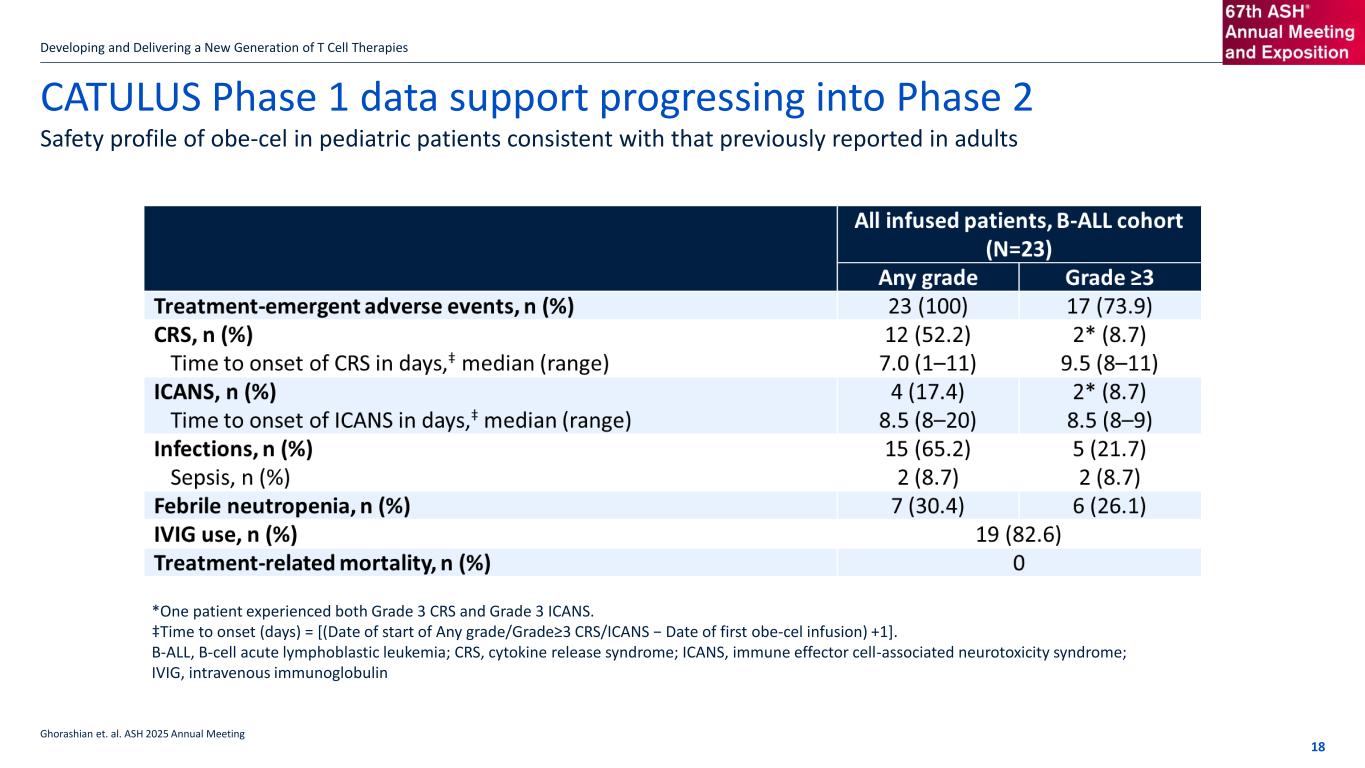

 
If the title goes over more than one line move the subtitle text box down by 1.15cm per additional line CATULUS Phase 1 data support progressing into Phase 2 Developing and Delivering a New Generation of T Cell Therapies 18 Safety profile of obe-cel in pediatric patients consistent with that previously reported in adults Ghorashian et. al. ASH 2025 Annual Meeting *One patient experienced both Grade 3 CRS and Grade 3 ICANS. ‡Time to onset (days) = [(Date of start of Any grade/Grade≥3 CRS/ICANS − Date of first obe-cel infusion) +1]. B-ALL, B-cell acute lymphoblastic leukemia; CRS, cytokine release syndrome; ICANS, immune effector cell-associated neurotoxicity syndrome; IVIG, intravenous immunoglobulin


If the title goes over more than one line move the subtitle text box down by 1.15cm per additional line CATULUS data demonstrate promising initial efficacy in pediatric patients Developing and Delivering a New Generation of T Cell Therapies 19 At median follow-up of 8.8 months in pediatric r/r B-ALL patients: ORR was 95.5%; CR was achieved in 90.9% Ghorashian et. al. ASH 2025 Annual Meeting Swimmer plot showing disease assessments in the B-ALL cohort


If the title goes over more than one line move the subtitle text box down by 1.15cm per additional line MOA and commercial capabilities are key differentiators in AID 20 Autolus Potential Advantage Favorable tolerability to drive acceptability in non-oncology indications Deep cut into the CD19+ B cells and plasma blasts Robust, economical and scalable manufacturing and established commercial infrastructure Potential for accelerated clinical program Supports differentiated approach and potential for obe-cel in autoimmune disease areas FDA-approved CAR-T therapy, with existing safety database, now in development for autoimmune indications Obe-cel is the only CD19 CAR approved in other indications that is now being tested for autoimmune disease Developing and Delivering a New Generation of T Cell Therapies


CARSLYLE: Obe-cel shows promise as a new approach for SLE/LN Patient population: • Patients were significantly impaired with their kidney function and had across the board some of the highest SLEDAI-2K disease scores included in current SLE studies. Efficacy: Median follow up of 11.4 months in 50 million cell dose cohort • Achievement of DORIS in 83.3% (n=5/6) of patients • Achievement of renal complete remission in 50% (n=3/6 pts) of patients Safety: Obe-cel was generally well tolerated in all patients with no ICANS, no high-grade CRS PK/Biomarkers: All patients showed deep B-cell depletion shortly after infusion, which was subsequently followed by a predominance of naïve B-cell reconstitution, suggesting an obe-cel-driven immune reset Next Steps: • Completion of adolescent (aged 12–17 years) and higher dose level patient cohorts • Data support progression into a Phase 2 lupus nephritis trial Developing and Delivering a New Generation of T Cell Therapies 50 million cell dose selected as recommended Phase 2 dose Leandro et al., American College of Rheumatology Conference 2025 Abstract #2458 21
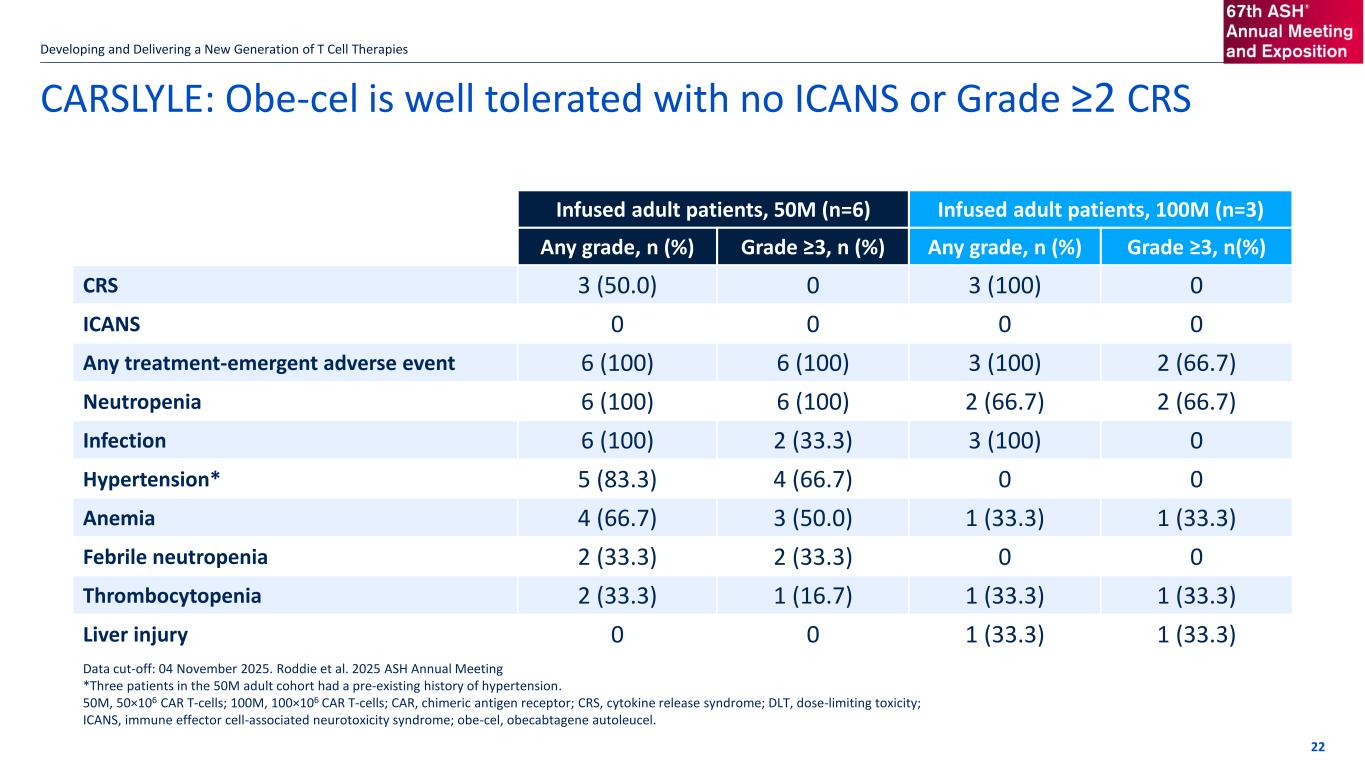

 
If the title goes over more than one line move the subtitle text box down by 1.15cm per additional line CARSLYLE: Obe-cel is well tolerated with no ICANS or Grade ≥2 CRS Developing and Delivering a New Generation of T Cell Therapies 22 Infused adult patients, 50M (n=6) Infused adult patients, 100M (n=3) Any grade, n (%) Grade ≥3, n (%) Any grade, n (%) Grade ≥3, n(%) CRS 3 (50.0) 0 3 (100) 0 ICANS 0 0 0 0 Any treatment-emergent adverse event 6 (100) 6 (100) 3 (100) 2 (66.7) Neutropenia 6 (100) 6 (100) 2 (66.7) 2 (66.7) Infection 6 (100) 2 (33.3) 3 (100) 0 Hypertension* 5 (83.3) 4 (66.7) 0 0 Anemia 4 (66.7) 3 (50.0) 1 (33.3) 1 (33.3) Febrile neutropenia 2 (33.3) 2 (33.3) 0 0 Thrombocytopenia 2 (33.3) 1 (16.7) 1 (33.3) 1 (33.3) Liver injury 0 0 1 (33.3) 1 (33.3) Data cut-off: 04 November 2025. Roddie et al. 2025 ASH Annual Meeting *Three patients in the 50M adult cohort had a pre-existing history of hypertension. 50M, 50×106 CAR T-cells; 100M, 100×106 CAR T-cells; CAR, chimeric antigen receptor; CRS, cytokine release syndrome; DLT, dose-limiting toxicity; ICANS, immune effector cell-associated neurotoxicity syndrome; obe-cel, obecabtagene autoleucel.


5 of 6 patients achieved DORIS with median onset of 5.1 months Developing and Delivering a New Generation of T Cell Therapies 23 Data cut-off: 04 November 2025. DORIS is defined as: SLEDAI = 0 (irrespective of serology), PGA <0.5, and ≤5 mg/day corticosteroid use. Use of stable antimalarials and immunosuppressives, including biologics, is allowed. 50M, 50×106 CAR T-cells; 100M, 100×106 CAR T-cells; CAR, chimeric antigen receptor; CRR, complete renal response; DORIS, Definition of Remission in systemic lupus erythematosus; PGA, Physician Global Assessment; PRR, partial renal response; SLEDAI-2K, Systemic Lupus Erythematosus Disease Activity Index 2000. • Renal responses reported at last follow-up visit in the 50M adult cohort indicate that three patients (50.0%) achieved CRR with onset at Month 1 and one patient (16.7%) achieved PRR with onset at Month 7 • The length of follow up was insufficient to calculate DORIS response or CRR/PRR for the 100M adult cohort Swimmer plot showing DORIS over time in the 50M adult cohort (n=6) Time since obe-cel infusion (month) Patient 1 Patient 2 Patient 3 Patient 4 Patient 5 Patient 6 5 0 M a d u lt s (n =6 ) DORIS non-responder DORIS responder 1 2 3 4 5 6 7 8 9 10 11 12 23
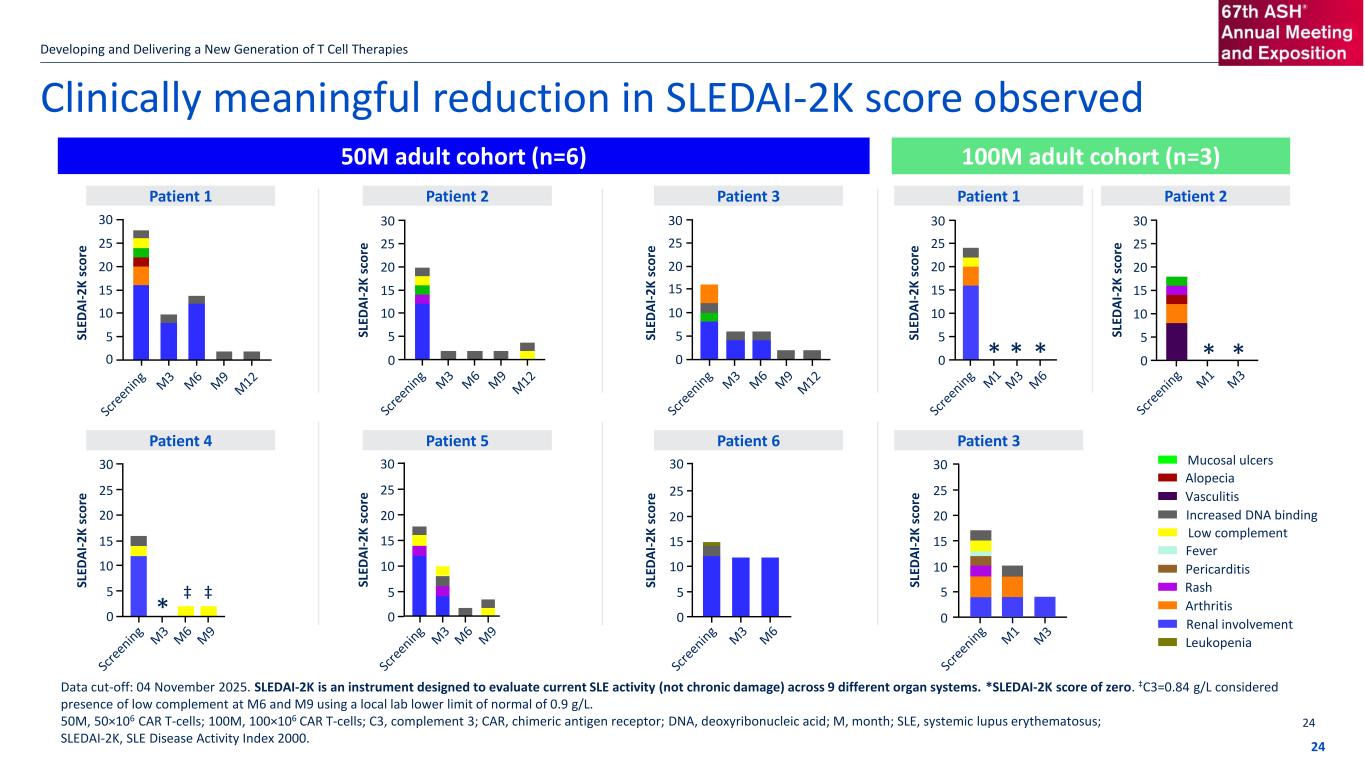

 
Clinically meaningful reduction in SLEDAI-2K score observed Developing and Delivering a New Generation of T Cell Therapies 24 50M adult cohort (n=6) 100M adult cohort (n=3) Data cut-off: 04 November 2025. SLEDAI-2K is an instrument designed to evaluate current SLE activity (not chronic damage) across 9 different organ systems. *SLEDAI-2K score of zero. ‡C3=0.84 g/L considered presence of low complement at M6 and M9 using a local lab lower limit of normal of 0.9 g/L. 50M, 50×106 CAR T-cells; 100M, 100×106 CAR T-cells; C3, complement 3; CAR, chimeric antigen receptor; DNA, deoxyribonucleic acid; M, month; SLE, systemic lupus erythematosus; SLEDAI-2K, SLE Disease Activity Index 2000. SL ED A I- 2 K s co re Patient 1 Patient 2 Patient 3 Patient 4 Patient 5 Patient 6 SL ED A I- 2 K s co re SL ED A I- 2 K s co re SL ED A I- 2 K s co re SL ED A I- 2 K s co re SL ED A I- 2 K s co re Patient 1 Patient 2 SL ED A I- 2 K s co re Patient 3 * ‡ 30 25 20 15 10 5 0 30 25 20 15 10 5 30 25 20 15 10 5 30 25 20 15 10 5 30 25 20 15 10 5 30 25 20 15 10 5 30 25 20 15 10 5 0 0 0 SL ED A I- 2 K s co re 30 25 20 15 10 5 0 SL ED A I- 2 K s co re 30 25 20 15 10 5 0000 Mucosal ulcers Alopecia Vasculitis Increased DNA binding Low complement Fever Pericarditis Rash Arthritis Renal involvement Leukopenia * * * * * ‡ 24
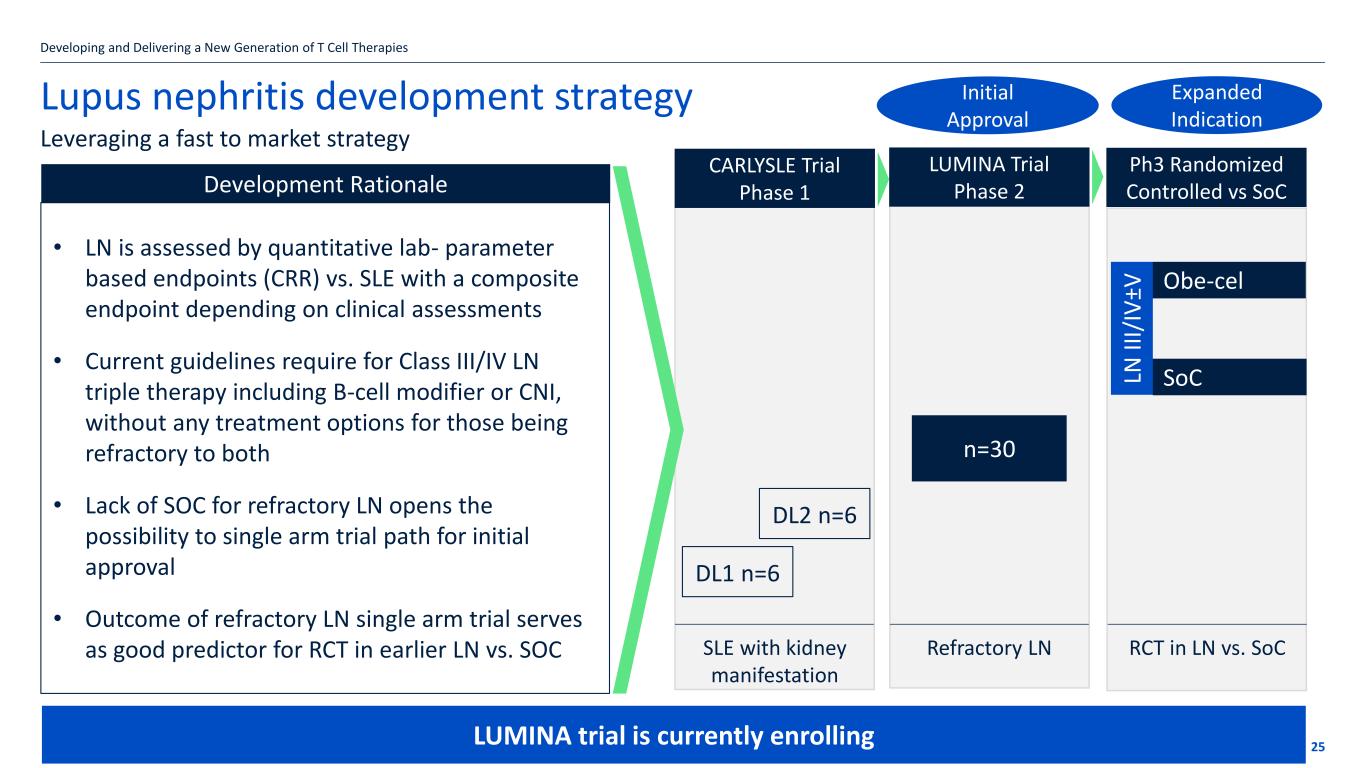

 
If the title goes over more than one line move the subtitle text box down by 1.15cm per additional line Development Rationale Lupus nephritis development strategy 25 Leveraging a fast to market strategy Developing and Delivering a New Generation of T Cell Therapies • LN is assessed by quantitative lab- parameter based endpoints (CRR) vs. SLE with a composite endpoint depending on clinical assessments • Current guidelines require for Class III/IV LN triple therapy including B-cell modifier or CNI, without any treatment options for those being refractory to both • Lack of SOC for refractory LN opens the possibility to single arm trial path for initial approval • Outcome of refractory LN single arm trial serves as good predictor for RCT in earlier LN vs. SOC DL1 n=6 DL2 n=6 SLE with kidney manifestation Refractory LN n=30 RCT in LN vs. SoC SoC Obe-cel LN II I/ IV ±V CARLYSLE Trial Phase 1 LUMINA Trial Phase 2 Ph3 Randomized Controlled vs SoC Initial Approval Expanded Indication LUMINA trial is currently enrolling


If the title goes over more than one line move the subtitle text box down by 1.15cm per additional line Phase 2 LUMINA trial supports efficient path to market 26 Evaluating severe, refractory lupus nephritis (LN) Trial design Single arm, open-label, multi-centre, phase 2 Sample size 30 patients Patient population • 12-65 years of age, body weight ≥ 40kg • Diagnosis of SLE based on (EULAR)/ (ACR) 2019 classification • Positive (ANA) (≥ 1:80), or anti-dsDNA (≥ 30 IU/mL) or anti-Smith (> ULN), anti-histone or anti-chromatin (> ULN) • Severe, refractory LN (ongoing active class III, IV or V (only in combination with III or IV) • Prior immunosuppressive and biologic therapies with inadequate response or intolerance Treatment 50 x 106 CAR positive T-cells following Flu/Cy lymphodepletion Endpoints Primary: Complete Renal Response at 6 months Key Secondary: DORIS at 6 months Timing • LUMINA trial is currently enrolling Developing and Delivering a New Generation of T Cell Therapies Day-5 Day 1 Monthly safety and efficacy follow-upL Leukapheresis Obe-cel Manufacturing Lymphodepletion Obe-cel Infusion Screening Cy 1000 mg/m2 Flu 25 mg/m2
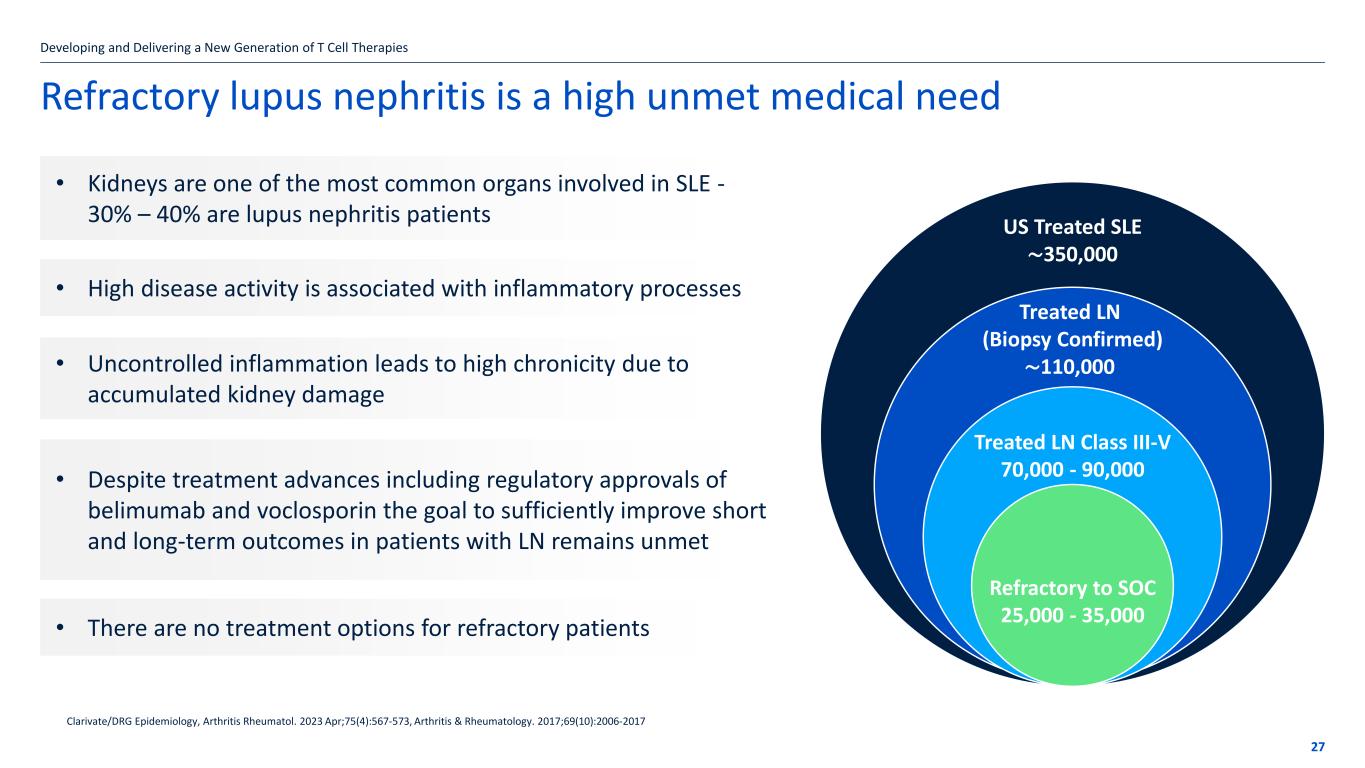

 
If the title goes over more than one line move the subtitle text box down by 1.15cm per additional line • High disease activity is associated with inflammatory processes • Uncontrolled inflammation leads to high chronicity due to accumulated kidney damage • Despite treatment advances including regulatory approvals of belimumab and voclosporin the goal to sufficiently improve short and long-term outcomes in patients with LN remains unmet • There are no treatment options for refractory patients • Kidneys are one of the most common organs involved in SLE - 30% – 40% are lupus nephritis patients Refractory lupus nephritis is a high unmet medical need Developing and Delivering a New Generation of T Cell Therapies 27 Clarivate/DRG Epidemiology, Arthritis Rheumatol. 2023 Apr;75(4):567-573, Arthritis & Rheumatology. 2017;69(10):2006-2017 US Treated SLE ∼350,000 Treated LN (Biopsy Confirmed) ∼110,000 Treated LN Class III-V 70,000 - 90,000 Refractory to SOC 25,000 - 35,000


If the title goes over more than one line move the subtitle text box down by 1.15cm per additional line Multiple sclerosis development strategy 28 Establish Phase 1 Clinical Proof of Concept in MS 3 x 6 dose escalation design - a higher dose may be required for CNS effect Biomarker readouts to provide nearer term evidence of biological effect at 6 months + Definitive clinical outcomes based on clinical disability progression at 12 months + Initiate Phase 2/3 study in progressive MS patients exhibiting PIRA • Anticipate a randomised phase 2/3 study design as path to approval • Phase 1 clinical PoC is derisking for initiation of development in other neurology indications Developing and Delivering a New Generation of T Cell Therapies First patient dosed in October 2025


If the title goes over more than one line move the subtitle text box down by 1.15cm per additional line BOBCAT study population represents the highest unmet need in MS Developing and Delivering a New Generation of T Cell Therapies 29 Current SOC delays an estimated ~ 6 months but does not halt or reverse disability progression Transformational – halting disease progression Aspirational – improving disability and moving back on EDSS timeline1. Progressive forms of MS including all forms of progressive MS with EDSS scores of 3.5 to 6.5 included 2. Will include both active and non-active patients 3. Have failed high efficacy therapy for at least six months (e.g. CD20 mAb, S1P inhibitor) 1. Graphic based on Kurtzke JF Neurology 1983 Nov;33(11):1444-52.


If the title goes over more than one line move the subtitle text box down by 1.15cm per additional line BOBCAT Phase 1 study design Sample size: 12-18 patients infused with obe-cel Dosing: Standard Flu/Cy based preconditioning and a single infusion of 100 or 200 million CART cells and flexibility to adjust dose up or down Primary endpoint: •Safety Secondary endpoints: •12-week confirmed disability progression (CDP) at one-year, composite measure of disability at one year, confirmed disability improvement •Other functional measures: cognition, fatigue, QoL •Imaging: MRI lesion counts (T1 Gd+, T2), MRI – MTR, MRI – regional brain volumes, MRI – cervical spinal cord volume, SEL, PRL) •Biomarkers (blood and CSF): OCBs, IgG index, NfL, GFAP, Kappa chains, PK Interim analysis at 6 months: •Biomarkers including OCBs, IgG index, NfL, MRI lesions, MTR, Kappa chains, PK SEL: slowly expanding lesions, PRL: paramagnetic rim lesions, NfL: Neurofilament light chain, GFAP: glial fibrillary acidic protein Developing Next Generation Programmed T Cell Therapies 30


If the title goes over more than one line move the subtitle text box down by 1.15cm per additional line Progressive multiple sclerosis is a high unmet medical need • MS impacts approximately 1,000,000 individuals in the US1 and there is currently no known cure 1: GlobalData MS Market Forecast 2020-2030 April 2023 2:Watson, C., Thirumalai, D., Barlev, A. et al. Treatment Patterns and Unmet Need for Patients with Progressive Multiple Sclerosis in the United States: Survey Results from 2016 to 2021. Neurol Ther 12, 1961–1979 (2023). https://doi.org/10.1007/s40120-023-00532-2 Developing and Delivering a New Generation of T Cell Therapies • Around 30% of patients have progressive disease and more than half of Progressive MS patients experience disability progression despite receiving disease modifying agents2 • Highest unmet need for patients who continue to progress despite being treated with highly effective agents for at least 6 months Relapsing Remitting MS ∼ 700,000 Primary Progressive MS ∼100,000 Secondary Progressive MS ∼ 200,000 Obe-cel focus 31


Upcoming milestones Anticipated Milestone or Catalyst Anticipated Timing Updated real world experience data from ROCCA consortium H1 2026 Longer-term follow up data from CARLYSLE trial ACR Annual Meeting 2026 Initial clinical data from BOBCAT Phase 1 trial in progressive MS By YE 2026 Initial clinical data from ALARIC Phase 1 trial in AL amyloidosis (UCL collaboration) By YE 2026 CATULUS trial in pediatric r/r B-ALL fully enrolled H1 2027 Obe-cel Oncology Obe-cel Autoimmune/B cell Mediated Disease 32 Developing and Delivering a New Generation of T Cell Therapies


If the title goes over more than one line move the subtitle text box down by 1.15cm per additional line 33 Developing and Delivering a New Generation of T Cell Therapies 2026 Focus: Drive market share in ALL – Improve margins – Expand beyond ALL Building value with obe-cel Strong execution in r/r B-ALL: ✓ Market leadership ✓ Broad market access / coverage ✓ Reliable product delivery ✓ Significant opportunity to grow CAR T market in adult B-ALL ✓ Physician interest in ISTs in 1L ALL Leveraging investments: • Optimize manufacturing operating model and technology • Business process efficiencies targeting margin improvement Potential “pipeline in a product" new indications: • Pediatric ALL – Potential pivotal study • Lupus nephritis – Potential pivotal study • Multiple sclerosis – Phase 1 study ExpandLaunch Optimize


Autolus.com Thank you Investor Contact: A.Cray@autolus.com Executive Director, Investor Relations & External Communications
