FALSE2025FY0001059556P1Y2025four yearshttp://fasb.org/us-gaap/2025#InterestIncomeExpenseNonoperatingNethttp://fasb.org/us-gaap/2025#InterestIncomeExpenseNonoperatingNethttp://fasb.org/us-gaap/2025#InterestIncomeExpenseNonoperatingNethttp://fasb.org/us-gaap/2025#OtherAssetsCurrent http://fasb.org/us-gaap/2025#OtherAssetsNoncurrenthttp://fasb.org/us-gaap/2025#OtherAssetsCurrent http://fasb.org/us-gaap/2025#OtherAssetsNoncurrenthttp://fasb.org/us-gaap/2025#AccountsPayableAndAccruedLiabilitiesCurrent http://fasb.org/us-gaap/2025#OtherLiabilitiesNoncurrenthttp://fasb.org/us-gaap/2025#AccountsPayableAndAccruedLiabilitiesCurrent http://fasb.org/us-gaap/2025#OtherLiabilitiesNoncurrenthttp://fasb.org/us-gaap/2025#RestructuringChargesP1Yiso4217:USDxbrli:sharesiso4217:USDxbrli:sharesmco:segmentmco:reportingUnitmco:customerxbrli:pureiso4217:EURiso4217:HKDiso4217:SGDiso4217:GBPiso4217:JPYiso4217:CADiso4217:INRmco:lineOfBusiness00010595562025-01-012025-12-310001059556us-gaap:CommonStockMember2025-01-012025-12-310001059556mco:TwoThousandAndFifteenSeniorNotesDueTwoThousandAndTwentySevenMember2025-01-012025-12-310001059556mco:A950SeniorNotesDueTwoThousandAndThirtyMember2025-01-012025-12-3100010595562025-06-3000010595562026-01-3100010595562024-01-012024-12-3100010595562023-01-012023-12-3100010595562025-12-3100010595562024-12-310001059556mco:SeriesCommonStockMember2025-12-310001059556mco:SeriesCommonStockMember2024-12-310001059556us-gaap:CommonStockMember2024-12-310001059556us-gaap:CommonStockMember2025-12-3100010595562023-12-3100010595562022-12-310001059556us-gaap:CommonStockMember2022-12-310001059556us-gaap:AdditionalPaidInCapitalMember2022-12-310001059556us-gaap:RetainedEarningsMember2022-12-310001059556us-gaap:TreasuryStockCommonMember2022-12-310001059556us-gaap:AccumulatedOtherComprehensiveIncomeMember2022-12-310001059556us-gaap:ParentMember2022-12-310001059556us-gaap:NoncontrollingInterestMember2022-12-310001059556us-gaap:RetainedEarningsMember2023-01-012023-12-310001059556us-gaap:ParentMember2023-01-012023-12-310001059556us-gaap:NoncontrollingInterestMember2023-01-012023-12-310001059556us-gaap:AdditionalPaidInCapitalMember2023-01-012023-12-310001059556us-gaap:TreasuryStockCommonMember2023-01-012023-12-310001059556us-gaap:AccumulatedOtherComprehensiveIncomeMember2023-01-012023-12-310001059556us-gaap:CommonStockMember2023-12-310001059556us-gaap:AdditionalPaidInCapitalMember2023-12-310001059556us-gaap:RetainedEarningsMember2023-12-310001059556us-gaap:TreasuryStockCommonMember2023-12-310001059556us-gaap:AccumulatedOtherComprehensiveIncomeMember2023-12-310001059556us-gaap:ParentMember2023-12-310001059556us-gaap:NoncontrollingInterestMember2023-12-310001059556us-gaap:RetainedEarningsMember2024-01-012024-12-310001059556us-gaap:ParentMember2024-01-012024-12-310001059556us-gaap:NoncontrollingInterestMember2024-01-012024-12-310001059556us-gaap:AdditionalPaidInCapitalMember2024-01-012024-12-310001059556us-gaap:TreasuryStockCommonMember2024-01-012024-12-310001059556us-gaap:AccumulatedOtherComprehensiveIncomeMember2024-01-012024-12-310001059556us-gaap:CommonStockMember2024-12-310001059556us-gaap:AdditionalPaidInCapitalMember2024-12-310001059556us-gaap:RetainedEarningsMember2024-12-310001059556us-gaap:TreasuryStockCommonMember2024-12-310001059556us-gaap:AccumulatedOtherComprehensiveIncomeMember2024-12-310001059556us-gaap:ParentMember2024-12-310001059556us-gaap:NoncontrollingInterestMember2024-12-310001059556us-gaap:RetainedEarningsMember2025-01-012025-12-310001059556us-gaap:ParentMember2025-01-012025-12-310001059556us-gaap:NoncontrollingInterestMember2025-01-012025-12-310001059556us-gaap:AdditionalPaidInCapitalMember2025-01-012025-12-310001059556us-gaap:TreasuryStockCommonMember2025-01-012025-12-310001059556us-gaap:AccumulatedOtherComprehensiveIncomeMember2025-01-012025-12-310001059556us-gaap:CommonStockMember2025-12-310001059556us-gaap:AdditionalPaidInCapitalMember2025-12-310001059556us-gaap:RetainedEarningsMember2025-12-310001059556us-gaap:TreasuryStockCommonMember2025-12-310001059556us-gaap:AccumulatedOtherComprehensiveIncomeMember2025-12-310001059556us-gaap:ParentMember2025-12-310001059556us-gaap:NoncontrollingInterestMember2025-12-310001059556mco:MoodysAnalyticsMember2024-01-012024-12-310001059556mco:MoodysInvestorsServiceMember2025-01-012025-12-310001059556mco:MoodysOtherRatingsOperationsMembermco:MoodysInvestorsServiceMember2025-01-012025-12-310001059556mco:MoodysAnalyticsMember2025-01-012025-12-310001059556mco:SubscriptionAndMaintenanceContractsMembersrt:MinimumMembermco:MoodysAnalyticsMember2025-01-012025-12-310001059556mco:SubscriptionAndMaintenanceContractsMembersrt:MaximumMembermco:MoodysAnalyticsMember2025-01-012025-12-310001059556us-gaap:OperatingSegmentsMemberus-gaap:BankingMembermco:DecisionSolutionsMembermco:MoodysAnalyticsMember2025-01-012025-12-310001059556us-gaap:OperatingSegmentsMemberus-gaap:BankingMembermco:DecisionSolutionsMembermco:MoodysAnalyticsMember2024-01-012024-12-310001059556us-gaap:OperatingSegmentsMemberus-gaap:BankingMembermco:DecisionSolutionsMembermco:MoodysAnalyticsMember2023-01-012023-12-310001059556us-gaap:OperatingSegmentsMembermco:InsuranceMembermco:DecisionSolutionsMembermco:MoodysAnalyticsMember2025-01-012025-12-310001059556us-gaap:OperatingSegmentsMembermco:InsuranceMembermco:DecisionSolutionsMembermco:MoodysAnalyticsMember2024-01-012024-12-310001059556us-gaap:OperatingSegmentsMembermco:InsuranceMembermco:DecisionSolutionsMembermco:MoodysAnalyticsMember2023-01-012023-12-310001059556us-gaap:OperatingSegmentsMembermco:KYCMembermco:DecisionSolutionsMembermco:MoodysAnalyticsMember2025-01-012025-12-310001059556us-gaap:OperatingSegmentsMembermco:KYCMembermco:DecisionSolutionsMembermco:MoodysAnalyticsMember2024-01-012024-12-310001059556us-gaap:OperatingSegmentsMembermco:KYCMembermco:DecisionSolutionsMembermco:MoodysAnalyticsMember2023-01-012023-12-310001059556us-gaap:OperatingSegmentsMembermco:DecisionSolutionsMembermco:MoodysAnalyticsMember2025-01-012025-12-310001059556us-gaap:OperatingSegmentsMembermco:DecisionSolutionsMembermco:MoodysAnalyticsMember2024-01-012024-12-310001059556us-gaap:OperatingSegmentsMembermco:DecisionSolutionsMembermco:MoodysAnalyticsMember2023-01-012023-12-310001059556us-gaap:OperatingSegmentsMembermco:ResearchAndInsightsMembermco:MoodysAnalyticsMember2025-01-012025-12-310001059556us-gaap:OperatingSegmentsMembermco:ResearchAndInsightsMembermco:MoodysAnalyticsMember2024-01-012024-12-310001059556us-gaap:OperatingSegmentsMembermco:ResearchAndInsightsMembermco:MoodysAnalyticsMember2023-01-012023-12-310001059556us-gaap:OperatingSegmentsMembermco:DataAndInformationMembermco:MoodysAnalyticsMember2025-01-012025-12-310001059556us-gaap:OperatingSegmentsMembermco:DataAndInformationMembermco:MoodysAnalyticsMember2024-01-012024-12-310001059556us-gaap:OperatingSegmentsMembermco:DataAndInformationMembermco:MoodysAnalyticsMember2023-01-012023-12-310001059556mco:MoodysAnalyticsMember2023-01-012023-12-310001059556us-gaap:IntersegmentEliminationMembermco:MoodysAnalyticsMember2025-01-012025-12-310001059556us-gaap:IntersegmentEliminationMembermco:MoodysAnalyticsMember2024-01-012024-12-310001059556us-gaap:IntersegmentEliminationMembermco:MoodysAnalyticsMember2023-01-012023-12-310001059556us-gaap:OperatingSegmentsMembermco:MoodysAnalyticsMember2025-01-012025-12-310001059556us-gaap:OperatingSegmentsMembermco:MoodysAnalyticsMember2024-01-012024-12-310001059556us-gaap:OperatingSegmentsMembermco:MoodysAnalyticsMember2023-01-012023-12-310001059556us-gaap:OperatingSegmentsMembermco:InvestmentGradeMembermco:CorporateFinanceMembermco:MoodysInvestorsServiceMember2025-01-012025-12-310001059556us-gaap:OperatingSegmentsMembermco:InvestmentGradeMembermco:CorporateFinanceMembermco:MoodysInvestorsServiceMember2024-01-012024-12-310001059556us-gaap:OperatingSegmentsMembermco:InvestmentGradeMembermco:CorporateFinanceMembermco:MoodysInvestorsServiceMember2023-01-012023-12-310001059556us-gaap:OperatingSegmentsMembermco:HighYieldMembermco:CorporateFinanceMembermco:MoodysInvestorsServiceMember2025-01-012025-12-310001059556us-gaap:OperatingSegmentsMembermco:HighYieldMembermco:CorporateFinanceMembermco:MoodysInvestorsServiceMember2024-01-012024-12-310001059556us-gaap:OperatingSegmentsMembermco:HighYieldMembermco:CorporateFinanceMembermco:MoodysInvestorsServiceMember2023-01-012023-12-310001059556us-gaap:OperatingSegmentsMembermco:BankLoansMembermco:CorporateFinanceMembermco:MoodysInvestorsServiceMember2025-01-012025-12-310001059556us-gaap:OperatingSegmentsMembermco:BankLoansMembermco:CorporateFinanceMembermco:MoodysInvestorsServiceMember2024-01-012024-12-310001059556us-gaap:OperatingSegmentsMembermco:BankLoansMembermco:CorporateFinanceMembermco:MoodysInvestorsServiceMember2023-01-012023-12-310001059556us-gaap:OperatingSegmentsMembermco:OtherProductLinesMembermco:CorporateFinanceMembermco:MoodysInvestorsServiceMember2025-01-012025-12-310001059556us-gaap:OperatingSegmentsMembermco:OtherProductLinesMembermco:CorporateFinanceMembermco:MoodysInvestorsServiceMember2024-01-012024-12-310001059556us-gaap:OperatingSegmentsMembermco:OtherProductLinesMembermco:CorporateFinanceMembermco:MoodysInvestorsServiceMember2023-01-012023-12-310001059556us-gaap:OperatingSegmentsMembermco:CorporateFinanceMembermco:MoodysInvestorsServiceMember2025-01-012025-12-310001059556us-gaap:OperatingSegmentsMembermco:CorporateFinanceMembermco:MoodysInvestorsServiceMember2024-01-012024-12-310001059556us-gaap:OperatingSegmentsMembermco:CorporateFinanceMembermco:MoodysInvestorsServiceMember2023-01-012023-12-310001059556us-gaap:OperatingSegmentsMembermco:AssetsBackedSecuritiesMembermco:StructuredFinanceLineOfBusinessMembermco:MoodysInvestorsServiceMember2025-01-012025-12-310001059556us-gaap:OperatingSegmentsMembermco:AssetsBackedSecuritiesMembermco:StructuredFinanceLineOfBusinessMembermco:MoodysInvestorsServiceMember2024-01-012024-12-310001059556us-gaap:OperatingSegmentsMembermco:AssetsBackedSecuritiesMembermco:StructuredFinanceLineOfBusinessMembermco:MoodysInvestorsServiceMember2023-01-012023-12-310001059556us-gaap:OperatingSegmentsMembermco:ResidentialMortgageBackedSecuritiesProductMembermco:StructuredFinanceLineOfBusinessMembermco:MoodysInvestorsServiceMember2025-01-012025-12-310001059556us-gaap:OperatingSegmentsMembermco:ResidentialMortgageBackedSecuritiesProductMembermco:StructuredFinanceLineOfBusinessMembermco:MoodysInvestorsServiceMember2024-01-012024-12-310001059556us-gaap:OperatingSegmentsMembermco:ResidentialMortgageBackedSecuritiesProductMembermco:StructuredFinanceLineOfBusinessMembermco:MoodysInvestorsServiceMember2023-01-012023-12-310001059556us-gaap:OperatingSegmentsMembermco:CommercialMortgageBackedSecuritiesProductMembermco:StructuredFinanceLineOfBusinessMembermco:MoodysInvestorsServiceMember2025-01-012025-12-310001059556us-gaap:OperatingSegmentsMembermco:CommercialMortgageBackedSecuritiesProductMembermco:StructuredFinanceLineOfBusinessMembermco:MoodysInvestorsServiceMember2024-01-012024-12-310001059556us-gaap:OperatingSegmentsMembermco:CommercialMortgageBackedSecuritiesProductMembermco:StructuredFinanceLineOfBusinessMembermco:MoodysInvestorsServiceMember2023-01-012023-12-310001059556us-gaap:OperatingSegmentsMembermco:StructuredCreditMembermco:StructuredFinanceLineOfBusinessMembermco:MoodysInvestorsServiceMember2025-01-012025-12-310001059556us-gaap:OperatingSegmentsMembermco:StructuredCreditMembermco:StructuredFinanceLineOfBusinessMembermco:MoodysInvestorsServiceMember2024-01-012024-12-310001059556us-gaap:OperatingSegmentsMembermco:StructuredCreditMembermco:StructuredFinanceLineOfBusinessMembermco:MoodysInvestorsServiceMember2023-01-012023-12-310001059556us-gaap:OperatingSegmentsMembermco:OtherProductLinesMembermco:StructuredFinanceLineOfBusinessMembermco:MoodysInvestorsServiceMember2025-01-012025-12-310001059556us-gaap:OperatingSegmentsMembermco:OtherProductLinesMembermco:StructuredFinanceLineOfBusinessMembermco:MoodysInvestorsServiceMember2024-01-012024-12-310001059556us-gaap:OperatingSegmentsMembermco:OtherProductLinesMembermco:StructuredFinanceLineOfBusinessMembermco:MoodysInvestorsServiceMember2023-01-012023-12-310001059556us-gaap:OperatingSegmentsMembermco:StructuredFinanceLineOfBusinessMembermco:MoodysInvestorsServiceMember2025-01-012025-12-310001059556us-gaap:OperatingSegmentsMembermco:StructuredFinanceLineOfBusinessMembermco:MoodysInvestorsServiceMember2024-01-012024-12-310001059556us-gaap:OperatingSegmentsMembermco:StructuredFinanceLineOfBusinessMembermco:MoodysInvestorsServiceMember2023-01-012023-12-310001059556us-gaap:OperatingSegmentsMemberus-gaap:BankingMembermco:FinancialInstitutionsMembermco:MoodysInvestorsServiceMember2025-01-012025-12-310001059556us-gaap:OperatingSegmentsMemberus-gaap:BankingMembermco:FinancialInstitutionsMembermco:MoodysInvestorsServiceMember2024-01-012024-12-310001059556us-gaap:OperatingSegmentsMemberus-gaap:BankingMembermco:FinancialInstitutionsMembermco:MoodysInvestorsServiceMember2023-01-012023-12-310001059556us-gaap:OperatingSegmentsMembermco:InsuranceMembermco:FinancialInstitutionsMembermco:MoodysInvestorsServiceMember2025-01-012025-12-310001059556us-gaap:OperatingSegmentsMembermco:InsuranceMembermco:FinancialInstitutionsMembermco:MoodysInvestorsServiceMember2024-01-012024-12-310001059556us-gaap:OperatingSegmentsMembermco:InsuranceMembermco:FinancialInstitutionsMembermco:MoodysInvestorsServiceMember2023-01-012023-12-310001059556us-gaap:OperatingSegmentsMembermco:ManagedInvestmentsMembermco:FinancialInstitutionsMembermco:MoodysInvestorsServiceMember2025-01-012025-12-310001059556us-gaap:OperatingSegmentsMembermco:ManagedInvestmentsMembermco:FinancialInstitutionsMembermco:MoodysInvestorsServiceMember2024-01-012024-12-310001059556us-gaap:OperatingSegmentsMembermco:ManagedInvestmentsMembermco:FinancialInstitutionsMembermco:MoodysInvestorsServiceMember2023-01-012023-12-310001059556us-gaap:OperatingSegmentsMembermco:OtherProductLinesMembermco:FinancialInstitutionsMembermco:MoodysInvestorsServiceMember2025-01-012025-12-310001059556us-gaap:OperatingSegmentsMembermco:OtherProductLinesMembermco:FinancialInstitutionsMembermco:MoodysInvestorsServiceMember2024-01-012024-12-310001059556us-gaap:OperatingSegmentsMembermco:OtherProductLinesMembermco:FinancialInstitutionsMembermco:MoodysInvestorsServiceMember2023-01-012023-12-310001059556us-gaap:OperatingSegmentsMembermco:FinancialInstitutionsMembermco:MoodysInvestorsServiceMember2025-01-012025-12-310001059556us-gaap:OperatingSegmentsMembermco:FinancialInstitutionsMembermco:MoodysInvestorsServiceMember2024-01-012024-12-310001059556us-gaap:OperatingSegmentsMembermco:FinancialInstitutionsMembermco:MoodysInvestorsServiceMember2023-01-012023-12-310001059556us-gaap:OperatingSegmentsMembermco:PublicFinanceSovereignMembermco:PublicProjectAndInfrastructureFinanceMembermco:MoodysInvestorsServiceMember2025-01-012025-12-310001059556us-gaap:OperatingSegmentsMembermco:PublicFinanceSovereignMembermco:PublicProjectAndInfrastructureFinanceMembermco:MoodysInvestorsServiceMember2024-01-012024-12-310001059556us-gaap:OperatingSegmentsMembermco:PublicFinanceSovereignMembermco:PublicProjectAndInfrastructureFinanceMembermco:MoodysInvestorsServiceMember2023-01-012023-12-310001059556us-gaap:OperatingSegmentsMembermco:ProjectAndInfrastructureMembermco:PublicProjectAndInfrastructureFinanceMembermco:MoodysInvestorsServiceMember2025-01-012025-12-310001059556us-gaap:OperatingSegmentsMembermco:ProjectAndInfrastructureMembermco:PublicProjectAndInfrastructureFinanceMembermco:MoodysInvestorsServiceMember2024-01-012024-12-310001059556us-gaap:OperatingSegmentsMembermco:ProjectAndInfrastructureMembermco:PublicProjectAndInfrastructureFinanceMembermco:MoodysInvestorsServiceMember2023-01-012023-12-310001059556us-gaap:OperatingSegmentsMembermco:PublicProjectAndInfrastructureFinanceMembermco:MoodysInvestorsServiceMember2025-01-012025-12-310001059556us-gaap:OperatingSegmentsMembermco:PublicProjectAndInfrastructureFinanceMembermco:MoodysInvestorsServiceMember2024-01-012024-12-310001059556us-gaap:OperatingSegmentsMembermco:PublicProjectAndInfrastructureFinanceMembermco:MoodysInvestorsServiceMember2023-01-012023-12-310001059556us-gaap:OperatingSegmentsMembermco:RatingRevenueMembermco:MoodysInvestorsServiceMember2025-01-012025-12-310001059556us-gaap:OperatingSegmentsMembermco:RatingRevenueMembermco:MoodysInvestorsServiceMember2024-01-012024-12-310001059556us-gaap:OperatingSegmentsMembermco:RatingRevenueMembermco:MoodysInvestorsServiceMember2023-01-012023-12-310001059556us-gaap:OperatingSegmentsMembermco:MisOtherMembermco:MoodysInvestorsServiceMember2025-01-012025-12-310001059556us-gaap:OperatingSegmentsMembermco:MisOtherMembermco:MoodysInvestorsServiceMember2024-01-012024-12-310001059556us-gaap:OperatingSegmentsMembermco:MisOtherMembermco:MoodysInvestorsServiceMember2023-01-012023-12-310001059556mco:MoodysInvestorsServiceMember2024-01-012024-12-310001059556mco:MoodysInvestorsServiceMember2023-01-012023-12-310001059556us-gaap:IntersegmentEliminationMembermco:MoodysInvestorsServiceMember2025-01-012025-12-310001059556us-gaap:IntersegmentEliminationMembermco:MoodysInvestorsServiceMember2024-01-012024-12-310001059556us-gaap:IntersegmentEliminationMembermco:MoodysInvestorsServiceMember2023-01-012023-12-310001059556us-gaap:OperatingSegmentsMembermco:MoodysInvestorsServiceMember2025-01-012025-12-310001059556us-gaap:OperatingSegmentsMembermco:MoodysInvestorsServiceMember2024-01-012024-12-310001059556us-gaap:OperatingSegmentsMembermco:MoodysInvestorsServiceMember2023-01-012023-12-310001059556us-gaap:IntersegmentEliminationMember2025-01-012025-12-310001059556us-gaap:IntersegmentEliminationMember2024-01-012024-12-310001059556us-gaap:IntersegmentEliminationMember2023-01-012023-12-310001059556us-gaap:OperatingSegmentsMember2025-01-012025-12-310001059556us-gaap:OperatingSegmentsMember2024-01-012024-12-310001059556us-gaap:OperatingSegmentsMember2023-01-012023-12-310001059556us-gaap:OperatingSegmentsMembercountry:USmco:DecisionSolutionsMembermco:MoodysAnalyticsMember2025-01-012025-12-310001059556us-gaap:OperatingSegmentsMemberus-gaap:NonUsMembermco:DecisionSolutionsMembermco:MoodysAnalyticsMember2025-01-012025-12-310001059556us-gaap:OperatingSegmentsMembercountry:USmco:DecisionSolutionsMembermco:MoodysAnalyticsMember2024-01-012024-12-310001059556us-gaap:OperatingSegmentsMemberus-gaap:NonUsMembermco:DecisionSolutionsMembermco:MoodysAnalyticsMember2024-01-012024-12-310001059556us-gaap:OperatingSegmentsMembercountry:USmco:DecisionSolutionsMembermco:MoodysAnalyticsMember2023-01-012023-12-310001059556us-gaap:OperatingSegmentsMemberus-gaap:NonUsMembermco:DecisionSolutionsMembermco:MoodysAnalyticsMember2023-01-012023-12-310001059556us-gaap:OperatingSegmentsMembercountry:USmco:ResearchAndInsightsMembermco:MoodysAnalyticsMember2025-01-012025-12-310001059556us-gaap:OperatingSegmentsMemberus-gaap:NonUsMembermco:ResearchAndInsightsMembermco:MoodysAnalyticsMember2025-01-012025-12-310001059556us-gaap:OperatingSegmentsMembercountry:USmco:ResearchAndInsightsMembermco:MoodysAnalyticsMember2024-01-012024-12-310001059556us-gaap:OperatingSegmentsMemberus-gaap:NonUsMembermco:ResearchAndInsightsMembermco:MoodysAnalyticsMember2024-01-012024-12-310001059556us-gaap:OperatingSegmentsMembercountry:USmco:ResearchAndInsightsMembermco:MoodysAnalyticsMember2023-01-012023-12-310001059556us-gaap:OperatingSegmentsMemberus-gaap:NonUsMembermco:ResearchAndInsightsMembermco:MoodysAnalyticsMember2023-01-012023-12-310001059556us-gaap:OperatingSegmentsMembercountry:USmco:DataAndInformationMembermco:MoodysAnalyticsMember2025-01-012025-12-310001059556us-gaap:OperatingSegmentsMemberus-gaap:NonUsMembermco:DataAndInformationMembermco:MoodysAnalyticsMember2025-01-012025-12-310001059556us-gaap:OperatingSegmentsMembercountry:USmco:DataAndInformationMembermco:MoodysAnalyticsMember2024-01-012024-12-310001059556us-gaap:OperatingSegmentsMemberus-gaap:NonUsMembermco:DataAndInformationMembermco:MoodysAnalyticsMember2024-01-012024-12-310001059556us-gaap:OperatingSegmentsMembercountry:USmco:DataAndInformationMembermco:MoodysAnalyticsMember2023-01-012023-12-310001059556us-gaap:OperatingSegmentsMemberus-gaap:NonUsMembermco:DataAndInformationMembermco:MoodysAnalyticsMember2023-01-012023-12-310001059556country:USmco:MoodysAnalyticsMember2025-01-012025-12-310001059556us-gaap:NonUsMembermco:MoodysAnalyticsMember2025-01-012025-12-310001059556country:USmco:MoodysAnalyticsMember2024-01-012024-12-310001059556us-gaap:NonUsMembermco:MoodysAnalyticsMember2024-01-012024-12-310001059556country:USmco:MoodysAnalyticsMember2023-01-012023-12-310001059556us-gaap:NonUsMembermco:MoodysAnalyticsMember2023-01-012023-12-310001059556us-gaap:OperatingSegmentsMembercountry:USmco:CorporateFinanceMembermco:MoodysInvestorsServiceMember2025-01-012025-12-310001059556us-gaap:OperatingSegmentsMemberus-gaap:NonUsMembermco:CorporateFinanceMembermco:MoodysInvestorsServiceMember2025-01-012025-12-310001059556us-gaap:OperatingSegmentsMembercountry:USmco:CorporateFinanceMembermco:MoodysInvestorsServiceMember2024-01-012024-12-310001059556us-gaap:OperatingSegmentsMemberus-gaap:NonUsMembermco:CorporateFinanceMembermco:MoodysInvestorsServiceMember2024-01-012024-12-310001059556us-gaap:OperatingSegmentsMembercountry:USmco:CorporateFinanceMembermco:MoodysInvestorsServiceMember2023-01-012023-12-310001059556us-gaap:OperatingSegmentsMemberus-gaap:NonUsMembermco:CorporateFinanceMembermco:MoodysInvestorsServiceMember2023-01-012023-12-310001059556us-gaap:OperatingSegmentsMembercountry:USmco:StructuredFinanceLineOfBusinessMembermco:MoodysInvestorsServiceMember2025-01-012025-12-310001059556us-gaap:OperatingSegmentsMemberus-gaap:NonUsMembermco:StructuredFinanceLineOfBusinessMembermco:MoodysInvestorsServiceMember2025-01-012025-12-310001059556us-gaap:OperatingSegmentsMembercountry:USmco:StructuredFinanceLineOfBusinessMembermco:MoodysInvestorsServiceMember2024-01-012024-12-310001059556us-gaap:OperatingSegmentsMemberus-gaap:NonUsMembermco:StructuredFinanceLineOfBusinessMembermco:MoodysInvestorsServiceMember2024-01-012024-12-310001059556us-gaap:OperatingSegmentsMembercountry:USmco:StructuredFinanceLineOfBusinessMembermco:MoodysInvestorsServiceMember2023-01-012023-12-310001059556us-gaap:OperatingSegmentsMemberus-gaap:NonUsMembermco:StructuredFinanceLineOfBusinessMembermco:MoodysInvestorsServiceMember2023-01-012023-12-310001059556us-gaap:OperatingSegmentsMembercountry:USmco:FinancialInstitutionsMembermco:MoodysInvestorsServiceMember2025-01-012025-12-310001059556us-gaap:OperatingSegmentsMemberus-gaap:NonUsMembermco:FinancialInstitutionsMembermco:MoodysInvestorsServiceMember2025-01-012025-12-310001059556us-gaap:OperatingSegmentsMembercountry:USmco:FinancialInstitutionsMembermco:MoodysInvestorsServiceMember2024-01-012024-12-310001059556us-gaap:OperatingSegmentsMemberus-gaap:NonUsMembermco:FinancialInstitutionsMembermco:MoodysInvestorsServiceMember2024-01-012024-12-310001059556us-gaap:OperatingSegmentsMembercountry:USmco:FinancialInstitutionsMembermco:MoodysInvestorsServiceMember2023-01-012023-12-310001059556us-gaap:OperatingSegmentsMemberus-gaap:NonUsMembermco:FinancialInstitutionsMembermco:MoodysInvestorsServiceMember2023-01-012023-12-310001059556us-gaap:OperatingSegmentsMembercountry:USmco:PublicProjectAndInfrastructureFinanceMembermco:MoodysInvestorsServiceMember2025-01-012025-12-310001059556us-gaap:OperatingSegmentsMemberus-gaap:NonUsMembermco:PublicProjectAndInfrastructureFinanceMembermco:MoodysInvestorsServiceMember2025-01-012025-12-310001059556us-gaap:OperatingSegmentsMembercountry:USmco:PublicProjectAndInfrastructureFinanceMembermco:MoodysInvestorsServiceMember2024-01-012024-12-310001059556us-gaap:OperatingSegmentsMemberus-gaap:NonUsMembermco:PublicProjectAndInfrastructureFinanceMembermco:MoodysInvestorsServiceMember2024-01-012024-12-310001059556us-gaap:OperatingSegmentsMembercountry:USmco:PublicProjectAndInfrastructureFinanceMembermco:MoodysInvestorsServiceMember2023-01-012023-12-310001059556us-gaap:OperatingSegmentsMemberus-gaap:NonUsMembermco:PublicProjectAndInfrastructureFinanceMembermco:MoodysInvestorsServiceMember2023-01-012023-12-310001059556us-gaap:OperatingSegmentsMembercountry:USmco:RatingRevenueMembermco:MoodysInvestorsServiceMember2025-01-012025-12-310001059556us-gaap:OperatingSegmentsMemberus-gaap:NonUsMembermco:RatingRevenueMembermco:MoodysInvestorsServiceMember2025-01-012025-12-310001059556us-gaap:OperatingSegmentsMembercountry:USmco:RatingRevenueMembermco:MoodysInvestorsServiceMember2024-01-012024-12-310001059556us-gaap:OperatingSegmentsMemberus-gaap:NonUsMembermco:RatingRevenueMembermco:MoodysInvestorsServiceMember2024-01-012024-12-310001059556us-gaap:OperatingSegmentsMembercountry:USmco:RatingRevenueMembermco:MoodysInvestorsServiceMember2023-01-012023-12-310001059556us-gaap:OperatingSegmentsMemberus-gaap:NonUsMembermco:RatingRevenueMembermco:MoodysInvestorsServiceMember2023-01-012023-12-310001059556us-gaap:OperatingSegmentsMembercountry:USmco:MisOtherMembermco:MoodysInvestorsServiceMember2025-01-012025-12-310001059556us-gaap:OperatingSegmentsMemberus-gaap:NonUsMembermco:MisOtherMembermco:MoodysInvestorsServiceMember2025-01-012025-12-310001059556us-gaap:OperatingSegmentsMembercountry:USmco:MisOtherMembermco:MoodysInvestorsServiceMember2024-01-012024-12-310001059556us-gaap:OperatingSegmentsMemberus-gaap:NonUsMembermco:MisOtherMembermco:MoodysInvestorsServiceMember2024-01-012024-12-310001059556us-gaap:OperatingSegmentsMembercountry:USmco:MisOtherMembermco:MoodysInvestorsServiceMember2023-01-012023-12-310001059556us-gaap:OperatingSegmentsMemberus-gaap:NonUsMembermco:MisOtherMembermco:MoodysInvestorsServiceMember2023-01-012023-12-310001059556country:USmco:MoodysInvestorsServiceMember2025-01-012025-12-310001059556us-gaap:NonUsMembermco:MoodysInvestorsServiceMember2025-01-012025-12-310001059556country:USmco:MoodysInvestorsServiceMember2024-01-012024-12-310001059556us-gaap:NonUsMembermco:MoodysInvestorsServiceMember2024-01-012024-12-310001059556country:USmco:MoodysInvestorsServiceMember2023-01-012023-12-310001059556us-gaap:NonUsMembermco:MoodysInvestorsServiceMember2023-01-012023-12-310001059556country:US2025-01-012025-12-310001059556us-gaap:NonUsMember2025-01-012025-12-310001059556country:US2024-01-012024-12-310001059556us-gaap:NonUsMember2024-01-012024-12-310001059556country:US2023-01-012023-12-310001059556us-gaap:NonUsMember2023-01-012023-12-310001059556us-gaap:OperatingSegmentsMembercountry:USmco:MoodysAnalyticsMember2025-01-012025-12-310001059556us-gaap:OperatingSegmentsMembercountry:USmco:MoodysAnalyticsMember2024-01-012024-12-310001059556us-gaap:OperatingSegmentsMembercountry:USmco:MoodysAnalyticsMember2023-01-012023-12-310001059556us-gaap:OperatingSegmentsMemberus-gaap:EMEAMembermco:MoodysAnalyticsMember2025-01-012025-12-310001059556us-gaap:OperatingSegmentsMemberus-gaap:EMEAMembermco:MoodysAnalyticsMember2024-01-012024-12-310001059556us-gaap:OperatingSegmentsMemberus-gaap:EMEAMembermco:MoodysAnalyticsMember2023-01-012023-12-310001059556us-gaap:OperatingSegmentsMembersrt:AsiaPacificMembermco:MoodysAnalyticsMember2025-01-012025-12-310001059556us-gaap:OperatingSegmentsMembersrt:AsiaPacificMembermco:MoodysAnalyticsMember2024-01-012024-12-310001059556us-gaap:OperatingSegmentsMembersrt:AsiaPacificMembermco:MoodysAnalyticsMember2023-01-012023-12-310001059556us-gaap:OperatingSegmentsMembersrt:AmericasMembermco:MoodysAnalyticsMember2025-01-012025-12-310001059556us-gaap:OperatingSegmentsMembersrt:AmericasMembermco:MoodysAnalyticsMember2024-01-012024-12-310001059556us-gaap:OperatingSegmentsMembersrt:AmericasMembermco:MoodysAnalyticsMember2023-01-012023-12-310001059556us-gaap:OperatingSegmentsMemberus-gaap:NonUsMembermco:MoodysAnalyticsMember2025-01-012025-12-310001059556us-gaap:OperatingSegmentsMemberus-gaap:NonUsMembermco:MoodysAnalyticsMember2024-01-012024-12-310001059556us-gaap:OperatingSegmentsMemberus-gaap:NonUsMembermco:MoodysAnalyticsMember2023-01-012023-12-310001059556us-gaap:OperatingSegmentsMembercountry:USmco:MoodysInvestorsServiceMember2025-01-012025-12-310001059556us-gaap:OperatingSegmentsMembercountry:USmco:MoodysInvestorsServiceMember2024-01-012024-12-310001059556us-gaap:OperatingSegmentsMembercountry:USmco:MoodysInvestorsServiceMember2023-01-012023-12-310001059556us-gaap:OperatingSegmentsMemberus-gaap:EMEAMembermco:MoodysInvestorsServiceMember2025-01-012025-12-310001059556us-gaap:OperatingSegmentsMemberus-gaap:EMEAMembermco:MoodysInvestorsServiceMember2024-01-012024-12-310001059556us-gaap:OperatingSegmentsMemberus-gaap:EMEAMembermco:MoodysInvestorsServiceMember2023-01-012023-12-310001059556us-gaap:OperatingSegmentsMembersrt:AsiaPacificMembermco:MoodysInvestorsServiceMember2025-01-012025-12-310001059556us-gaap:OperatingSegmentsMembersrt:AsiaPacificMembermco:MoodysInvestorsServiceMember2024-01-012024-12-310001059556us-gaap:OperatingSegmentsMembersrt:AsiaPacificMembermco:MoodysInvestorsServiceMember2023-01-012023-12-310001059556us-gaap:OperatingSegmentsMembersrt:AmericasMembermco:MoodysInvestorsServiceMember2025-01-012025-12-310001059556us-gaap:OperatingSegmentsMembersrt:AmericasMembermco:MoodysInvestorsServiceMember2024-01-012024-12-310001059556us-gaap:OperatingSegmentsMembersrt:AmericasMembermco:MoodysInvestorsServiceMember2023-01-012023-12-310001059556us-gaap:OperatingSegmentsMemberus-gaap:NonUsMembermco:MoodysInvestorsServiceMember2025-01-012025-12-310001059556us-gaap:OperatingSegmentsMemberus-gaap:NonUsMembermco:MoodysInvestorsServiceMember2024-01-012024-12-310001059556us-gaap:OperatingSegmentsMemberus-gaap:NonUsMembermco:MoodysInvestorsServiceMember2023-01-012023-12-310001059556us-gaap:OperatingSegmentsMembermco:TransactionRevenueMembermco:DSBankingProductAndServiceMembermco:MoodysAnalyticsMember2025-01-012025-12-310001059556us-gaap:OperatingSegmentsMembermco:RecurringRevenueMembermco:DSBankingProductAndServiceMembermco:MoodysAnalyticsMember2025-01-012025-12-310001059556us-gaap:OperatingSegmentsMembermco:DSBankingProductAndServiceMembermco:MoodysAnalyticsMember2025-01-012025-12-310001059556us-gaap:OperatingSegmentsMembermco:TransactionRevenueMembermco:DSBankingProductAndServiceMembermco:MoodysAnalyticsMember2024-01-012024-12-310001059556us-gaap:OperatingSegmentsMembermco:RecurringRevenueMembermco:DSBankingProductAndServiceMembermco:MoodysAnalyticsMember2024-01-012024-12-310001059556us-gaap:OperatingSegmentsMembermco:DSBankingProductAndServiceMembermco:MoodysAnalyticsMember2024-01-012024-12-310001059556us-gaap:OperatingSegmentsMembermco:TransactionRevenueMembermco:DSBankingProductAndServiceMembermco:MoodysAnalyticsMember2023-01-012023-12-310001059556us-gaap:OperatingSegmentsMembermco:RecurringRevenueMembermco:DSBankingProductAndServiceMembermco:MoodysAnalyticsMember2023-01-012023-12-310001059556us-gaap:OperatingSegmentsMembermco:DSBankingProductAndServiceMembermco:MoodysAnalyticsMember2023-01-012023-12-310001059556us-gaap:OperatingSegmentsMembermco:TransactionRevenueMembermco:InsuranceMembermco:MoodysAnalyticsMember2025-01-012025-12-310001059556us-gaap:OperatingSegmentsMembermco:RecurringRevenueMembermco:InsuranceMembermco:MoodysAnalyticsMember2025-01-012025-12-310001059556us-gaap:OperatingSegmentsMembermco:InsuranceMembermco:MoodysAnalyticsMember2025-01-012025-12-310001059556us-gaap:OperatingSegmentsMembermco:TransactionRevenueMembermco:InsuranceMembermco:MoodysAnalyticsMember2024-01-012024-12-310001059556us-gaap:OperatingSegmentsMembermco:RecurringRevenueMembermco:InsuranceMembermco:MoodysAnalyticsMember2024-01-012024-12-310001059556us-gaap:OperatingSegmentsMembermco:InsuranceMembermco:MoodysAnalyticsMember2024-01-012024-12-310001059556us-gaap:OperatingSegmentsMembermco:TransactionRevenueMembermco:InsuranceMembermco:MoodysAnalyticsMember2023-01-012023-12-310001059556us-gaap:OperatingSegmentsMembermco:RecurringRevenueMembermco:InsuranceMembermco:MoodysAnalyticsMember2023-01-012023-12-310001059556us-gaap:OperatingSegmentsMembermco:InsuranceMembermco:MoodysAnalyticsMember2023-01-012023-12-310001059556us-gaap:OperatingSegmentsMembermco:TransactionRevenueMembermco:KYCMembermco:MoodysAnalyticsMember2025-01-012025-12-310001059556us-gaap:OperatingSegmentsMembermco:RecurringRevenueMembermco:KYCMembermco:MoodysAnalyticsMember2025-01-012025-12-310001059556us-gaap:OperatingSegmentsMembermco:KYCMembermco:MoodysAnalyticsMember2025-01-012025-12-310001059556us-gaap:OperatingSegmentsMembermco:TransactionRevenueMembermco:KYCMembermco:MoodysAnalyticsMember2024-01-012024-12-310001059556us-gaap:OperatingSegmentsMembermco:RecurringRevenueMembermco:KYCMembermco:MoodysAnalyticsMember2024-01-012024-12-310001059556us-gaap:OperatingSegmentsMembermco:KYCMembermco:MoodysAnalyticsMember2024-01-012024-12-310001059556us-gaap:OperatingSegmentsMembermco:TransactionRevenueMembermco:KYCMembermco:MoodysAnalyticsMember2023-01-012023-12-310001059556us-gaap:OperatingSegmentsMembermco:RecurringRevenueMembermco:KYCMembermco:MoodysAnalyticsMember2023-01-012023-12-310001059556us-gaap:OperatingSegmentsMembermco:KYCMembermco:MoodysAnalyticsMember2023-01-012023-12-310001059556us-gaap:OperatingSegmentsMembermco:TransactionRevenueMembermco:DecisionSolutionsMembermco:MoodysAnalyticsMember2025-01-012025-12-310001059556us-gaap:OperatingSegmentsMembermco:RecurringRevenueMembermco:DecisionSolutionsMembermco:MoodysAnalyticsMember2025-01-012025-12-310001059556us-gaap:OperatingSegmentsMembermco:TransactionRevenueMembermco:DecisionSolutionsMembermco:MoodysAnalyticsMember2024-01-012024-12-310001059556us-gaap:OperatingSegmentsMembermco:RecurringRevenueMembermco:DecisionSolutionsMembermco:MoodysAnalyticsMember2024-01-012024-12-310001059556us-gaap:OperatingSegmentsMembermco:TransactionRevenueMembermco:DecisionSolutionsMembermco:MoodysAnalyticsMember2023-01-012023-12-310001059556us-gaap:OperatingSegmentsMembermco:RecurringRevenueMembermco:DecisionSolutionsMembermco:MoodysAnalyticsMember2023-01-012023-12-310001059556us-gaap:OperatingSegmentsMembermco:TransactionRevenueMembermco:ResearchAndInsightsMembermco:MoodysAnalyticsMember2025-01-012025-12-310001059556us-gaap:OperatingSegmentsMembermco:RecurringRevenueMembermco:ResearchAndInsightsMembermco:MoodysAnalyticsMember2025-01-012025-12-310001059556us-gaap:OperatingSegmentsMembermco:TransactionRevenueMembermco:ResearchAndInsightsMembermco:MoodysAnalyticsMember2024-01-012024-12-310001059556us-gaap:OperatingSegmentsMembermco:RecurringRevenueMembermco:ResearchAndInsightsMembermco:MoodysAnalyticsMember2024-01-012024-12-310001059556us-gaap:OperatingSegmentsMembermco:TransactionRevenueMembermco:ResearchAndInsightsMembermco:MoodysAnalyticsMember2023-01-012023-12-310001059556us-gaap:OperatingSegmentsMembermco:RecurringRevenueMembermco:ResearchAndInsightsMembermco:MoodysAnalyticsMember2023-01-012023-12-310001059556us-gaap:OperatingSegmentsMembermco:TransactionRevenueMembermco:DataAndInformationMembermco:MoodysAnalyticsMember2025-01-012025-12-310001059556us-gaap:OperatingSegmentsMembermco:RecurringRevenueMembermco:DataAndInformationMembermco:MoodysAnalyticsMember2025-01-012025-12-310001059556us-gaap:OperatingSegmentsMembermco:TransactionRevenueMembermco:DataAndInformationMembermco:MoodysAnalyticsMember2024-01-012024-12-310001059556us-gaap:OperatingSegmentsMembermco:RecurringRevenueMembermco:DataAndInformationMembermco:MoodysAnalyticsMember2024-01-012024-12-310001059556us-gaap:OperatingSegmentsMembermco:TransactionRevenueMembermco:DataAndInformationMembermco:MoodysAnalyticsMember2023-01-012023-12-310001059556us-gaap:OperatingSegmentsMembermco:RecurringRevenueMembermco:DataAndInformationMembermco:MoodysAnalyticsMember2023-01-012023-12-310001059556mco:TransactionRevenueMembermco:MoodysAnalyticsMember2025-01-012025-12-310001059556mco:RecurringRevenueMembermco:MoodysAnalyticsMember2025-01-012025-12-310001059556mco:TransactionRevenueMembermco:MoodysAnalyticsMember2024-01-012024-12-310001059556mco:RecurringRevenueMembermco:MoodysAnalyticsMember2024-01-012024-12-310001059556mco:TransactionRevenueMembermco:MoodysAnalyticsMember2023-01-012023-12-310001059556mco:RecurringRevenueMembermco:MoodysAnalyticsMember2023-01-012023-12-310001059556us-gaap:OperatingSegmentsMembermco:TransactionRevenueMembermco:MoodysAnalyticsMember2025-01-012025-12-310001059556us-gaap:OperatingSegmentsMembermco:RecurringRevenueMembermco:MoodysAnalyticsMember2025-01-012025-12-310001059556us-gaap:OperatingSegmentsMembermco:TransactionRevenueMembermco:MoodysAnalyticsMember2024-01-012024-12-310001059556us-gaap:OperatingSegmentsMembermco:RecurringRevenueMembermco:MoodysAnalyticsMember2024-01-012024-12-310001059556us-gaap:OperatingSegmentsMembermco:TransactionRevenueMembermco:MoodysAnalyticsMember2023-01-012023-12-310001059556us-gaap:OperatingSegmentsMembermco:RecurringRevenueMembermco:MoodysAnalyticsMember2023-01-012023-12-310001059556us-gaap:OperatingSegmentsMembermco:TransactionRevenueMembermco:CorporateFinanceMembermco:MoodysInvestorsServiceMember2025-01-012025-12-310001059556us-gaap:OperatingSegmentsMembermco:RecurringRevenueMembermco:CorporateFinanceMembermco:MoodysInvestorsServiceMember2025-01-012025-12-310001059556us-gaap:OperatingSegmentsMembermco:TransactionRevenueMembermco:CorporateFinanceMembermco:MoodysInvestorsServiceMember2024-01-012024-12-310001059556us-gaap:OperatingSegmentsMembermco:RecurringRevenueMembermco:CorporateFinanceMembermco:MoodysInvestorsServiceMember2024-01-012024-12-310001059556us-gaap:OperatingSegmentsMembermco:TransactionRevenueMembermco:CorporateFinanceMembermco:MoodysInvestorsServiceMember2023-01-012023-12-310001059556us-gaap:OperatingSegmentsMembermco:RecurringRevenueMembermco:CorporateFinanceMembermco:MoodysInvestorsServiceMember2023-01-012023-12-310001059556us-gaap:OperatingSegmentsMembermco:TransactionRevenueMembermco:StructuredFinanceLineOfBusinessMembermco:MoodysInvestorsServiceMember2025-01-012025-12-310001059556us-gaap:OperatingSegmentsMembermco:RecurringRevenueMembermco:StructuredFinanceLineOfBusinessMembermco:MoodysInvestorsServiceMember2025-01-012025-12-310001059556us-gaap:OperatingSegmentsMembermco:TransactionRevenueMembermco:StructuredFinanceLineOfBusinessMembermco:MoodysInvestorsServiceMember2024-01-012024-12-310001059556us-gaap:OperatingSegmentsMembermco:RecurringRevenueMembermco:StructuredFinanceLineOfBusinessMembermco:MoodysInvestorsServiceMember2024-01-012024-12-310001059556us-gaap:OperatingSegmentsMembermco:TransactionRevenueMembermco:StructuredFinanceLineOfBusinessMembermco:MoodysInvestorsServiceMember2023-01-012023-12-310001059556us-gaap:OperatingSegmentsMembermco:RecurringRevenueMembermco:StructuredFinanceLineOfBusinessMembermco:MoodysInvestorsServiceMember2023-01-012023-12-310001059556us-gaap:OperatingSegmentsMembermco:TransactionRevenueMembermco:FinancialInstitutionsMembermco:MoodysInvestorsServiceMember2025-01-012025-12-310001059556us-gaap:OperatingSegmentsMembermco:RecurringRevenueMembermco:FinancialInstitutionsMembermco:MoodysInvestorsServiceMember2025-01-012025-12-310001059556us-gaap:OperatingSegmentsMembermco:TransactionRevenueMembermco:FinancialInstitutionsMembermco:MoodysInvestorsServiceMember2024-01-012024-12-310001059556us-gaap:OperatingSegmentsMembermco:RecurringRevenueMembermco:FinancialInstitutionsMembermco:MoodysInvestorsServiceMember2024-01-012024-12-310001059556us-gaap:OperatingSegmentsMembermco:TransactionRevenueMembermco:FinancialInstitutionsMembermco:MoodysInvestorsServiceMember2023-01-012023-12-310001059556us-gaap:OperatingSegmentsMembermco:RecurringRevenueMembermco:FinancialInstitutionsMembermco:MoodysInvestorsServiceMember2023-01-012023-12-310001059556us-gaap:OperatingSegmentsMembermco:TransactionRevenueMembermco:PublicProjectAndInfrastructureFinanceMembermco:MoodysInvestorsServiceMember2025-01-012025-12-310001059556us-gaap:OperatingSegmentsMembermco:RecurringRevenueMembermco:PublicProjectAndInfrastructureFinanceMembermco:MoodysInvestorsServiceMember2025-01-012025-12-310001059556us-gaap:OperatingSegmentsMembermco:TransactionRevenueMembermco:PublicProjectAndInfrastructureFinanceMembermco:MoodysInvestorsServiceMember2024-01-012024-12-310001059556us-gaap:OperatingSegmentsMembermco:RecurringRevenueMembermco:PublicProjectAndInfrastructureFinanceMembermco:MoodysInvestorsServiceMember2024-01-012024-12-310001059556us-gaap:OperatingSegmentsMembermco:TransactionRevenueMembermco:PublicProjectAndInfrastructureFinanceMembermco:MoodysInvestorsServiceMember2023-01-012023-12-310001059556us-gaap:OperatingSegmentsMembermco:RecurringRevenueMembermco:PublicProjectAndInfrastructureFinanceMembermco:MoodysInvestorsServiceMember2023-01-012023-12-310001059556us-gaap:OperatingSegmentsMembermco:TransactionRevenueMembermco:MisOtherMembermco:MoodysInvestorsServiceMember2025-01-012025-12-310001059556us-gaap:OperatingSegmentsMembermco:RecurringRevenueMembermco:MisOtherMembermco:MoodysInvestorsServiceMember2025-01-012025-12-310001059556us-gaap:OperatingSegmentsMembermco:TransactionRevenueMembermco:MisOtherMembermco:MoodysInvestorsServiceMember2024-01-012024-12-310001059556us-gaap:OperatingSegmentsMembermco:RecurringRevenueMembermco:MisOtherMembermco:MoodysInvestorsServiceMember2024-01-012024-12-310001059556us-gaap:OperatingSegmentsMembermco:TransactionRevenueMembermco:MisOtherMembermco:MoodysInvestorsServiceMember2023-01-012023-12-310001059556us-gaap:OperatingSegmentsMembermco:RecurringRevenueMembermco:MisOtherMembermco:MoodysInvestorsServiceMember2023-01-012023-12-310001059556mco:TransactionRevenueMembermco:MoodysInvestorsServiceMember2025-01-012025-12-310001059556mco:RecurringRevenueMembermco:MoodysInvestorsServiceMember2025-01-012025-12-310001059556mco:TransactionRevenueMembermco:MoodysInvestorsServiceMember2024-01-012024-12-310001059556mco:RecurringRevenueMembermco:MoodysInvestorsServiceMember2024-01-012024-12-310001059556mco:TransactionRevenueMembermco:MoodysInvestorsServiceMember2023-01-012023-12-310001059556mco:RecurringRevenueMembermco:MoodysInvestorsServiceMember2023-01-012023-12-310001059556us-gaap:OperatingSegmentsMembermco:TransactionRevenueMembermco:MoodysInvestorsServiceMember2025-01-012025-12-310001059556us-gaap:OperatingSegmentsMembermco:RecurringRevenueMembermco:MoodysInvestorsServiceMember2025-01-012025-12-310001059556us-gaap:OperatingSegmentsMembermco:TransactionRevenueMembermco:MoodysInvestorsServiceMember2024-01-012024-12-310001059556us-gaap:OperatingSegmentsMembermco:RecurringRevenueMembermco:MoodysInvestorsServiceMember2024-01-012024-12-310001059556us-gaap:OperatingSegmentsMembermco:TransactionRevenueMembermco:MoodysInvestorsServiceMember2023-01-012023-12-310001059556us-gaap:OperatingSegmentsMembermco:RecurringRevenueMembermco:MoodysInvestorsServiceMember2023-01-012023-12-310001059556mco:TransactionRevenueMember2025-01-012025-12-310001059556mco:RecurringRevenueMember2025-01-012025-12-310001059556mco:TransactionRevenueMember2024-01-012024-12-310001059556mco:RecurringRevenueMember2024-01-012024-12-310001059556mco:TransactionRevenueMember2023-01-012023-12-310001059556mco:RecurringRevenueMember2023-01-012023-12-310001059556us-gaap:OperatingSegmentsMembermco:MoodysAnalyticsMemberus-gaap:TransferredAtPointInTimeMember2025-01-012025-12-310001059556us-gaap:OperatingSegmentsMembermco:MoodysInvestorsServiceMemberus-gaap:TransferredAtPointInTimeMember2025-01-012025-12-310001059556us-gaap:TransferredAtPointInTimeMember2025-01-012025-12-310001059556us-gaap:OperatingSegmentsMembermco:MoodysAnalyticsMemberus-gaap:TransferredAtPointInTimeMember2024-01-012024-12-310001059556us-gaap:OperatingSegmentsMembermco:MoodysInvestorsServiceMemberus-gaap:TransferredAtPointInTimeMember2024-01-012024-12-310001059556us-gaap:TransferredAtPointInTimeMember2024-01-012024-12-310001059556us-gaap:OperatingSegmentsMembermco:MoodysAnalyticsMemberus-gaap:TransferredAtPointInTimeMember2023-01-012023-12-310001059556us-gaap:OperatingSegmentsMembermco:MoodysInvestorsServiceMemberus-gaap:TransferredAtPointInTimeMember2023-01-012023-12-310001059556us-gaap:TransferredAtPointInTimeMember2023-01-012023-12-310001059556us-gaap:OperatingSegmentsMembermco:MoodysAnalyticsMemberus-gaap:TransferredOverTimeMember2025-01-012025-12-310001059556us-gaap:OperatingSegmentsMembermco:MoodysInvestorsServiceMemberus-gaap:TransferredOverTimeMember2025-01-012025-12-310001059556us-gaap:TransferredOverTimeMember2025-01-012025-12-310001059556us-gaap:OperatingSegmentsMembermco:MoodysAnalyticsMemberus-gaap:TransferredOverTimeMember2024-01-012024-12-310001059556us-gaap:OperatingSegmentsMembermco:MoodysInvestorsServiceMemberus-gaap:TransferredOverTimeMember2024-01-012024-12-310001059556us-gaap:TransferredOverTimeMember2024-01-012024-12-310001059556us-gaap:OperatingSegmentsMembermco:MoodysAnalyticsMemberus-gaap:TransferredOverTimeMember2023-01-012023-12-310001059556us-gaap:OperatingSegmentsMembermco:MoodysInvestorsServiceMemberus-gaap:TransferredOverTimeMember2023-01-012023-12-310001059556us-gaap:TransferredOverTimeMember2023-01-012023-12-310001059556us-gaap:AccountsReceivableMembermco:MoodysAnalyticsMember2025-12-310001059556us-gaap:AccountsReceivableMembermco:MoodysInvestorsServiceMember2025-12-310001059556us-gaap:AccountsReceivableMembermco:MoodysAnalyticsMember2024-12-310001059556us-gaap:AccountsReceivableMembermco:MoodysInvestorsServiceMember2024-12-310001059556mco:MoodysAnalyticsMember2024-12-310001059556mco:MoodysInvestorsServiceMember2024-12-310001059556mco:MoodysAnalyticsMember2025-12-310001059556mco:MoodysInvestorsServiceMember2025-12-310001059556mco:MoodysAnalyticsMember2023-12-310001059556mco:MoodysInvestorsServiceMember2023-12-310001059556mco:MoodysAnalyticsMember2022-12-310001059556mco:MoodysInvestorsServiceMember2022-12-310001059556mco:MoodysAnalyticsMember2026-01-012025-12-310001059556mco:MoodysAnalyticsMember2027-01-012025-12-310001059556mco:MoodysInvestorsServiceMember2026-01-012025-12-310001059556mco:MoodysInvestorsServiceMember2027-01-012025-12-310001059556mco:CapitalizedCostsToObtainSalesContractsMembermco:MoodysAnalyticsMember2025-12-310001059556mco:CapitalizedCostsToObtainSalesContractsMembermco:MoodysAnalyticsMember2024-12-310001059556mco:CapitalizedCostsToObtainSalesContractsMemberus-gaap:SellingGeneralAndAdministrativeExpensesMembermco:MoodysAnalyticsMember2025-01-012025-12-310001059556mco:CapitalizedCostsToObtainSalesContractsMemberus-gaap:SellingGeneralAndAdministrativeExpensesMembermco:MoodysAnalyticsMember2024-01-012024-12-310001059556mco:CapitalizedCostsToObtainSalesContractsMemberus-gaap:SellingGeneralAndAdministrativeExpensesMembermco:MoodysAnalyticsMember2023-01-012023-12-310001059556mco:CapitalizedCostsToFulfillSalesContractsMembermco:MoodysAnalyticsMember2025-12-310001059556mco:CapitalizedCostsToFulfillSalesContractsMembermco:MoodysInvestorsServiceMember2025-12-310001059556mco:CapitalizedCostsToFulfillSalesContractsMember2025-12-310001059556mco:CapitalizedCostsToFulfillSalesContractsMembermco:MoodysAnalyticsMember2024-12-310001059556mco:CapitalizedCostsToFulfillSalesContractsMembermco:MoodysInvestorsServiceMember2024-12-310001059556mco:CapitalizedCostsToFulfillSalesContractsMember2024-12-310001059556mco:RoyaltyCostMemberus-gaap:OperatingExpenseMembermco:MoodysAnalyticsMember2025-01-012025-12-310001059556mco:CapitalizationOfWorkInProcessForInProgressRatingsMemberus-gaap:OperatingExpenseMembermco:MoodysInvestorsServiceMember2025-01-012025-12-310001059556mco:CapitalizedCostsToFulfillSalesContractsMemberus-gaap:OperatingExpenseMember2025-01-012025-12-310001059556mco:RoyaltyCostMemberus-gaap:OperatingExpenseMembermco:MoodysAnalyticsMember2024-01-012024-12-310001059556mco:CapitalizationOfWorkInProcessForInProgressRatingsMemberus-gaap:OperatingExpenseMembermco:MoodysInvestorsServiceMember2024-01-012024-12-310001059556mco:CapitalizedCostsToFulfillSalesContractsMemberus-gaap:OperatingExpenseMember2024-01-012024-12-310001059556mco:RoyaltyCostMemberus-gaap:OperatingExpenseMembermco:MoodysAnalyticsMember2023-01-012023-12-310001059556mco:CapitalizationOfWorkInProcessForInProgressRatingsMemberus-gaap:OperatingExpenseMembermco:MoodysInvestorsServiceMember2023-01-012023-12-310001059556mco:CapitalizedCostsToFulfillSalesContractsMemberus-gaap:OperatingExpenseMember2023-01-012023-12-310001059556mco:MoodysAnalyticsMember2028-01-012025-12-310001059556mco:MoodysInvestorsServiceMember2031-01-012025-12-310001059556us-gaap:CertificatesOfDepositMember2025-12-310001059556us-gaap:CertificatesOfDepositMember2025-01-012025-12-310001059556us-gaap:MutualFundMember2025-12-310001059556us-gaap:MutualFundMember2025-01-012025-12-310001059556us-gaap:CertificatesOfDepositMember2024-12-310001059556us-gaap:CertificatesOfDepositMember2024-01-012024-12-310001059556us-gaap:MutualFundMember2024-12-310001059556us-gaap:MutualFundMember2024-01-012024-12-310001059556us-gaap:CertificatesOfDepositMemberus-gaap:ShortTermInvestmentsMembersrt:MinimumMember2025-12-310001059556us-gaap:CertificatesOfDepositMemberus-gaap:ShortTermInvestmentsMembersrt:MinimumMember2024-12-310001059556us-gaap:CertificatesOfDepositMemberus-gaap:ShortTermInvestmentsMembersrt:MaximumMember2024-12-310001059556us-gaap:CertificatesOfDepositMemberus-gaap:ShortTermInvestmentsMembersrt:MaximumMember2025-12-310001059556us-gaap:CertificatesOfDepositMemberus-gaap:OtherAssetsMembersrt:MinimumMember2025-12-310001059556us-gaap:CertificatesOfDepositMemberus-gaap:OtherAssetsMembersrt:MaximumMember2025-12-310001059556us-gaap:CertificatesOfDepositMemberus-gaap:CashAndCashEquivalentsMembersrt:MaximumMember2025-12-310001059556us-gaap:InterestRateSwapMemberus-gaap:FairValueHedgingMembermco:TwoThousandFourteenSeniorNotesThirtyYearMember2025-12-310001059556us-gaap:InterestRateSwapMemberus-gaap:FairValueHedgingMembermco:TwoThousandFourteenSeniorNotesThirtyYearMember2024-12-310001059556us-gaap:InterestRateSwapMemberus-gaap:FairValueHedgingMembermco:TwoThousandFourteenSeniorNotesThirtyYearMember2024-01-012024-12-310001059556us-gaap:InterestRateSwapMemberus-gaap:FairValueHedgingMembermco:TwoThousandFourteenSeniorNotesThirtyYearMember2025-01-012025-12-310001059556us-gaap:InterestRateSwapMemberus-gaap:FairValueHedgingMembermco:TwoThousandSeventeenSeniorNoteDueTwoThousandTwentyEightMember2025-12-310001059556us-gaap:InterestRateSwapMemberus-gaap:FairValueHedgingMembermco:TwoThousandSeventeenSeniorNoteDueTwoThousandTwentyEightMember2024-12-310001059556us-gaap:InterestRateSwapMemberus-gaap:FairValueHedgingMembermco:TwoThousandSeventeenSeniorNoteDueTwoThousandTwentyEightMember2024-01-012024-12-310001059556us-gaap:InterestRateSwapMemberus-gaap:FairValueHedgingMembermco:TwoThousandSeventeenSeniorNoteDueTwoThousandTwentyEightMember2025-01-012025-12-310001059556us-gaap:InterestRateSwapMemberus-gaap:FairValueHedgingMembermco:TwoThousandEighteenSeniorNoteDueTwoThousandTwentyNineMember2025-12-310001059556us-gaap:InterestRateSwapMemberus-gaap:FairValueHedgingMembermco:TwoThousandEighteenSeniorNoteDueTwoThousandTwentyNineMember2024-12-310001059556us-gaap:InterestRateSwapMemberus-gaap:FairValueHedgingMembermco:TwoThousandEighteenSeniorNoteDueTwoThousandTwentyNineMember2025-01-012025-12-310001059556us-gaap:InterestRateSwapMemberus-gaap:FairValueHedgingMembermco:TwoThousandEighteenSeniorNoteDueTwoThousandTwentyNineMember2024-01-012024-12-310001059556us-gaap:InterestRateSwapMemberus-gaap:FairValueHedgingMembermco:TwoThousandEighteenSeniorNoteDueTwoThousandFourtyEightMember2025-12-310001059556us-gaap:InterestRateSwapMemberus-gaap:FairValueHedgingMembermco:TwoThousandEighteenSeniorNoteDueTwoThousandFourtyEightMember2024-12-310001059556us-gaap:InterestRateSwapMemberus-gaap:FairValueHedgingMembermco:TwoThousandEighteenSeniorNoteDueTwoThousandFourtyEightMember2024-01-012024-12-310001059556us-gaap:InterestRateSwapMemberus-gaap:FairValueHedgingMembermco:TwoThousandEighteenSeniorNoteDueTwoThousandFourtyEightMember2025-01-012025-12-310001059556us-gaap:InterestRateSwapMemberus-gaap:FairValueHedgingMembermco:TwoThousandAndTwentySeniorNoteDueTwoThousandAndTwentyFiveMember2025-12-310001059556us-gaap:InterestRateSwapMemberus-gaap:FairValueHedgingMembermco:TwoThousandAndTwentySeniorNoteDueTwoThousandAndTwentyFiveMember2024-12-310001059556us-gaap:InterestRateSwapMemberus-gaap:FairValueHedgingMembermco:TwoThousandAndTwentySeniorNoteDueTwoThousandAndTwentyFiveMember2025-01-012025-12-310001059556us-gaap:InterestRateSwapMemberus-gaap:FairValueHedgingMembermco:TwoThousandAndTwentySeniorNoteDueTwoThousandAndTwentyFiveMember2024-01-012024-12-310001059556us-gaap:InterestRateSwapMemberus-gaap:FairValueHedgingMembermco:TwoThousandAndTwentyTwoSeniorNoteDueTwoThousandAndFiftyTwoMember2025-12-310001059556us-gaap:InterestRateSwapMemberus-gaap:FairValueHedgingMembermco:TwoThousandAndTwentyTwoSeniorNoteDueTwoThousandAndFiftyTwoMember2024-12-310001059556us-gaap:InterestRateSwapMemberus-gaap:FairValueHedgingMembermco:TwoThousandAndTwentyTwoSeniorNoteDueTwoThousandAndFiftyTwoMember2025-01-012025-12-310001059556us-gaap:InterestRateSwapMemberus-gaap:FairValueHedgingMembermco:TwoThousandAndTwentyTwoSeniorNoteDueTwoThousandAndFiftyTwoMember2024-01-012024-12-310001059556us-gaap:InterestRateSwapMemberus-gaap:FairValueHedgingMembermco:TwoThousandAndTwentyTwoSeniorNoteDueTwoThousandAndThirtyTwoMember2025-12-310001059556us-gaap:InterestRateSwapMemberus-gaap:FairValueHedgingMembermco:TwoThousandAndTwentyTwoSeniorNoteDueTwoThousandAndThirtyTwoMember2024-12-310001059556us-gaap:InterestRateSwapMemberus-gaap:FairValueHedgingMembermco:TwoThousandAndTwentyTwoSeniorNoteDueTwoThousandAndThirtyTwoMember2024-01-012024-12-310001059556us-gaap:InterestRateSwapMemberus-gaap:FairValueHedgingMembermco:TwoThousandAndTwentyTwoSeniorNoteDueTwoThousandAndThirtyTwoMember2025-01-012025-12-310001059556us-gaap:InterestRateSwapMemberus-gaap:FairValueHedgingMember2025-12-310001059556us-gaap:InterestRateSwapMemberus-gaap:FairValueHedgingMember2024-12-310001059556us-gaap:InterestRateSwapMemberus-gaap:DesignatedAsHedgingInstrumentMembermco:FairValueHedgeNetInterestSettlementsAndAccrualsMember2023-01-012023-12-310001059556us-gaap:InterestRateSwapMemberus-gaap:DesignatedAsHedgingInstrumentMembermco:FairValueHedgeNetInterestSettlementsAndAccrualsMember2025-01-012025-12-310001059556us-gaap:InterestRateSwapMemberus-gaap:DesignatedAsHedgingInstrumentMembermco:FairValueHedgeNetInterestSettlementsAndAccrualsMember2024-01-012024-12-310001059556us-gaap:InterestRateSwapMemberus-gaap:DesignatedAsHedgingInstrumentMember2025-01-012025-12-310001059556us-gaap:InterestRateSwapMemberus-gaap:DesignatedAsHedgingInstrumentMember2024-01-012024-12-310001059556us-gaap:InterestRateSwapMemberus-gaap:DesignatedAsHedgingInstrumentMember2023-01-012023-12-310001059556us-gaap:CurrencySwapMemberus-gaap:DesignatedAsHedgingInstrumentMemberus-gaap:NetInvestmentHedgingMembermco:TwoThousandAndFifteenSeniorNotesDueTwoThousandAndTwentySevenMember2025-12-310001059556us-gaap:CurrencySwapMemberus-gaap:DesignatedAsHedgingInstrumentMemberus-gaap:NetInvestmentHedgingMembermco:TwoThousandNineteenSeniorNoteDueTwoThousandThirtyMember2025-12-310001059556us-gaap:CurrencySwapMembermco:FixedPayWeightedAverageInterestRateMembermco:CurrencyPaidMemberus-gaap:NetInvestmentHedgingMember2025-12-310001059556us-gaap:CurrencySwapMembermco:FixedReceivedWeightedAverageInterestRateMembermco:CurrencyReceivedMemberus-gaap:NetInvestmentHedgingMember2025-12-310001059556us-gaap:CurrencySwapMembermco:EuroShortTermRateMembermco:CurrencyPaidMemberus-gaap:NetInvestmentHedgingMember2025-12-310001059556us-gaap:CurrencySwapMembermco:EuroShortTermRateMembermco:CurrencyPaidMemberus-gaap:NetInvestmentHedgingMember2025-01-012025-12-310001059556us-gaap:CurrencySwapMemberus-gaap:SecuredOvernightFinancingRateSofrOvernightIndexSwapRateMembermco:CurrencyReceivedMemberus-gaap:NetInvestmentHedgingMember2025-12-310001059556us-gaap:CurrencySwapMemberus-gaap:SecuredOvernightFinancingRateSofrOvernightIndexSwapRateMembermco:CurrencyReceivedMemberus-gaap:NetInvestmentHedgingMember2025-01-012025-12-310001059556mco:CurrencySwapTwoMembermco:FixedPayWeightedAverageInterestRateMembermco:CurrencyPaidMemberus-gaap:NetInvestmentHedgingMember2025-12-310001059556mco:CurrencySwapTwoMembermco:FixedReceivedWeightedAverageInterestRateMembermco:CurrencyReceivedMemberus-gaap:NetInvestmentHedgingMember2025-12-310001059556mco:CurrencySwapThreeMembermco:FixedPayWeightedAverageInterestRateMembermco:CurrencyPaidMemberus-gaap:NetInvestmentHedgingMember2025-12-310001059556mco:CurrencySwapThreeMembermco:FixedReceivedWeightedAverageInterestRateMembermco:CurrencyReceivedMemberus-gaap:NetInvestmentHedgingMember2025-12-310001059556us-gaap:CurrencySwapMembermco:FixedPayWeightedAverageInterestRateMembermco:CurrencyPaidMemberus-gaap:NetInvestmentHedgingMember2024-12-310001059556us-gaap:CurrencySwapMembermco:FixedReceivedWeightedAverageInterestRateMembermco:CurrencyReceivedMemberus-gaap:NetInvestmentHedgingMember2024-12-310001059556us-gaap:CurrencySwapMembermco:EuroShortTermRateMembermco:CurrencyPaidMemberus-gaap:NetInvestmentHedgingMember2024-12-310001059556us-gaap:CurrencySwapMembermco:EuroShortTermRateMembermco:CurrencyPaidMemberus-gaap:NetInvestmentHedgingMember2024-01-012024-12-310001059556us-gaap:CurrencySwapMemberus-gaap:SecuredOvernightFinancingRateSofrOvernightIndexSwapRateMembermco:CurrencyReceivedMemberus-gaap:NetInvestmentHedgingMember2024-12-310001059556us-gaap:CurrencySwapMemberus-gaap:SecuredOvernightFinancingRateSofrOvernightIndexSwapRateMembermco:CurrencyReceivedMemberus-gaap:NetInvestmentHedgingMember2024-01-012024-12-310001059556mco:CurrencySwapOneMemberus-gaap:DesignatedAsHedgingInstrumentMembermco:CurrencyPaidMembermco:NetInvestmentHedgingSettlementYearOneMember2025-12-310001059556mco:CurrencySwapOneMemberus-gaap:DesignatedAsHedgingInstrumentMembermco:CurrencyReceivedMembermco:NetInvestmentHedgingSettlementYearOneMember2025-12-310001059556mco:CurrencySwapTwoMemberus-gaap:DesignatedAsHedgingInstrumentMembermco:CurrencyPaidMembermco:NetInvestmentHedgingSettlementYearOneMember2025-12-310001059556mco:CurrencySwapTwoMemberus-gaap:DesignatedAsHedgingInstrumentMembermco:CurrencyReceivedMembermco:NetInvestmentHedgingSettlementYearOneMember2025-12-310001059556mco:CurrencySwapThreeMemberus-gaap:DesignatedAsHedgingInstrumentMembermco:CurrencyPaidMembermco:NetInvestmentHedgingSettlementYearOneMember2025-12-310001059556mco:CurrencySwapThreeMemberus-gaap:DesignatedAsHedgingInstrumentMembermco:CurrencyReceivedMembermco:NetInvestmentHedgingSettlementYearOneMember2025-12-310001059556mco:CurrencySwapOneMemberus-gaap:DesignatedAsHedgingInstrumentMembermco:CurrencyPaidMembermco:NetInvestmentHedgingSettlementYearTwoMember2025-12-310001059556mco:CurrencySwapOneMemberus-gaap:DesignatedAsHedgingInstrumentMembermco:CurrencyReceivedMembermco:NetInvestmentHedgingSettlementYearTwoMember2025-12-310001059556mco:CurrencySwapTwoMemberus-gaap:DesignatedAsHedgingInstrumentMembermco:CurrencyPaidMembermco:NetInvestmentHedgingSettlementYearTwoMember2025-12-310001059556mco:CurrencySwapTwoMemberus-gaap:DesignatedAsHedgingInstrumentMembermco:CurrencyReceivedMembermco:NetInvestmentHedgingSettlementYearTwoMember2025-12-310001059556mco:CurrencySwapThreeMemberus-gaap:DesignatedAsHedgingInstrumentMembermco:CurrencyPaidMembermco:NetInvestmentHedgingSettlementYearTwoMember2025-12-310001059556mco:CurrencySwapThreeMemberus-gaap:DesignatedAsHedgingInstrumentMembermco:CurrencyReceivedMembermco:NetInvestmentHedgingSettlementYearTwoMember2025-12-310001059556mco:CurrencySwapOneMemberus-gaap:DesignatedAsHedgingInstrumentMembermco:CurrencyPaidMembermco:NetInvestmentHedgingSettlementYearThreeMember2025-12-310001059556mco:CurrencySwapOneMemberus-gaap:DesignatedAsHedgingInstrumentMembermco:CurrencyReceivedMembermco:NetInvestmentHedgingSettlementYearThreeMember2025-12-310001059556mco:CurrencySwapTwoMemberus-gaap:DesignatedAsHedgingInstrumentMembermco:CurrencyPaidMembermco:NetInvestmentHedgingSettlementYearThreeMember2025-12-310001059556mco:CurrencySwapTwoMemberus-gaap:DesignatedAsHedgingInstrumentMembermco:CurrencyReceivedMembermco:NetInvestmentHedgingSettlementYearThreeMember2025-12-310001059556mco:CurrencySwapThreeMemberus-gaap:DesignatedAsHedgingInstrumentMembermco:CurrencyPaidMembermco:NetInvestmentHedgingSettlementYearThreeMember2025-12-310001059556mco:CurrencySwapThreeMemberus-gaap:DesignatedAsHedgingInstrumentMembermco:CurrencyReceivedMembermco:NetInvestmentHedgingSettlementYearThreeMember2025-12-310001059556mco:CurrencySwapOneMemberus-gaap:DesignatedAsHedgingInstrumentMembermco:CurrencyPaidMembermco:NetInvestmentHedgingSettlementYearFourMember2025-12-310001059556mco:CurrencySwapOneMemberus-gaap:DesignatedAsHedgingInstrumentMembermco:CurrencyReceivedMembermco:NetInvestmentHedgingSettlementYearFourMember2025-12-310001059556mco:CurrencySwapTwoMemberus-gaap:DesignatedAsHedgingInstrumentMembermco:CurrencyPaidMembermco:NetInvestmentHedgingSettlementYearFourMember2025-12-310001059556mco:CurrencySwapTwoMemberus-gaap:DesignatedAsHedgingInstrumentMembermco:CurrencyReceivedMembermco:NetInvestmentHedgingSettlementYearFourMember2025-12-310001059556mco:CurrencySwapThreeMemberus-gaap:DesignatedAsHedgingInstrumentMembermco:CurrencyPaidMembermco:NetInvestmentHedgingSettlementYearFourMember2025-12-310001059556mco:CurrencySwapThreeMemberus-gaap:DesignatedAsHedgingInstrumentMembermco:CurrencyReceivedMembermco:NetInvestmentHedgingSettlementYearFourMember2025-12-310001059556mco:CurrencySwapOneMemberus-gaap:DesignatedAsHedgingInstrumentMembermco:CurrencyPaidMembermco:NetInvestmentHedgingSettlementYearFiveMember2025-12-310001059556mco:CurrencySwapOneMemberus-gaap:DesignatedAsHedgingInstrumentMembermco:CurrencyReceivedMembermco:NetInvestmentHedgingSettlementYearFiveMember2025-12-310001059556mco:CurrencySwapTwoMemberus-gaap:DesignatedAsHedgingInstrumentMembermco:CurrencyPaidMembermco:NetInvestmentHedgingSettlementYearFiveMember2025-12-310001059556mco:CurrencySwapTwoMemberus-gaap:DesignatedAsHedgingInstrumentMembermco:CurrencyReceivedMembermco:NetInvestmentHedgingSettlementYearFiveMember2025-12-310001059556mco:CurrencySwapThreeMemberus-gaap:DesignatedAsHedgingInstrumentMembermco:CurrencyPaidMembermco:NetInvestmentHedgingSettlementYearFiveMember2025-12-310001059556mco:CurrencySwapThreeMemberus-gaap:DesignatedAsHedgingInstrumentMembermco:CurrencyReceivedMembermco:NetInvestmentHedgingSettlementYearFiveMember2025-12-310001059556mco:CurrencySwapOneMemberus-gaap:DesignatedAsHedgingInstrumentMembermco:CurrencyPaidMembermco:NetInvestmentHedgingSettlementYearSixMember2025-12-310001059556mco:CurrencySwapOneMemberus-gaap:DesignatedAsHedgingInstrumentMembermco:CurrencyReceivedMembermco:NetInvestmentHedgingSettlementYearSixMember2025-12-310001059556mco:CurrencySwapTwoMemberus-gaap:DesignatedAsHedgingInstrumentMembermco:CurrencyPaidMembermco:NetInvestmentHedgingSettlementYearSixMember2025-12-310001059556mco:CurrencySwapTwoMemberus-gaap:DesignatedAsHedgingInstrumentMembermco:CurrencyReceivedMembermco:NetInvestmentHedgingSettlementYearSixMember2025-12-310001059556mco:CurrencySwapThreeMemberus-gaap:DesignatedAsHedgingInstrumentMembermco:CurrencyPaidMembermco:NetInvestmentHedgingSettlementYearSixMember2025-12-310001059556mco:CurrencySwapThreeMemberus-gaap:DesignatedAsHedgingInstrumentMembermco:CurrencyReceivedMembermco:NetInvestmentHedgingSettlementYearSixMember2025-12-310001059556mco:CurrencySwapOneMemberus-gaap:DesignatedAsHedgingInstrumentMembermco:CurrencyPaidMembermco:NetInvestmentHedgingSettlementYearSevenMember2025-12-310001059556mco:CurrencySwapOneMemberus-gaap:DesignatedAsHedgingInstrumentMembermco:CurrencyReceivedMembermco:NetInvestmentHedgingSettlementYearSevenMember2025-12-310001059556mco:CurrencySwapTwoMemberus-gaap:DesignatedAsHedgingInstrumentMembermco:CurrencyPaidMembermco:NetInvestmentHedgingSettlementYearSevenMember2025-12-310001059556mco:CurrencySwapTwoMemberus-gaap:DesignatedAsHedgingInstrumentMembermco:CurrencyReceivedMembermco:NetInvestmentHedgingSettlementYearSevenMember2025-12-310001059556mco:CurrencySwapThreeMemberus-gaap:DesignatedAsHedgingInstrumentMembermco:CurrencyPaidMembermco:NetInvestmentHedgingSettlementYearSevenMember2025-12-310001059556mco:CurrencySwapThreeMemberus-gaap:DesignatedAsHedgingInstrumentMembermco:CurrencyReceivedMembermco:NetInvestmentHedgingSettlementYearSevenMember2025-12-310001059556mco:CurrencySwapOneMemberus-gaap:DesignatedAsHedgingInstrumentMembermco:CurrencyPaidMemberus-gaap:NetInvestmentHedgingMember2025-12-310001059556mco:CurrencySwapOneMemberus-gaap:DesignatedAsHedgingInstrumentMembermco:CurrencyReceivedMemberus-gaap:NetInvestmentHedgingMember2025-12-310001059556mco:CurrencySwapTwoMemberus-gaap:DesignatedAsHedgingInstrumentMembermco:CurrencyPaidMemberus-gaap:NetInvestmentHedgingMember2025-12-310001059556mco:CurrencySwapTwoMemberus-gaap:DesignatedAsHedgingInstrumentMembermco:CurrencyReceivedMemberus-gaap:NetInvestmentHedgingMember2025-12-310001059556mco:CurrencySwapThreeMemberus-gaap:DesignatedAsHedgingInstrumentMembermco:CurrencyPaidMemberus-gaap:NetInvestmentHedgingMember2025-12-310001059556mco:CurrencySwapThreeMemberus-gaap:DesignatedAsHedgingInstrumentMembermco:CurrencyReceivedMemberus-gaap:NetInvestmentHedgingMember2025-12-310001059556us-gaap:CurrencySwapMemberus-gaap:NetInvestmentHedgingMember2025-01-012025-12-310001059556us-gaap:CurrencySwapMemberus-gaap:NetInvestmentHedgingMember2024-01-012024-12-310001059556us-gaap:CurrencySwapMemberus-gaap:NetInvestmentHedgingMember2023-01-012023-12-310001059556us-gaap:LongTermDebtMemberus-gaap:NetInvestmentHedgingMember2025-01-012025-12-310001059556us-gaap:LongTermDebtMemberus-gaap:NetInvestmentHedgingMember2024-01-012024-12-310001059556us-gaap:LongTermDebtMemberus-gaap:NetInvestmentHedgingMember2023-01-012023-12-310001059556us-gaap:NetInvestmentHedgingMember2025-01-012025-12-310001059556us-gaap:NetInvestmentHedgingMember2024-01-012024-12-310001059556us-gaap:NetInvestmentHedgingMember2023-01-012023-12-310001059556us-gaap:CurrencySwapMemberus-gaap:CashFlowHedgingMember2025-01-012025-12-310001059556us-gaap:CurrencySwapMemberus-gaap:CashFlowHedgingMember2024-01-012024-12-310001059556us-gaap:CurrencySwapMemberus-gaap:CashFlowHedgingMember2023-01-012023-12-310001059556us-gaap:InterestRateContractMemberus-gaap:CashFlowHedgingMember2025-01-012025-12-310001059556us-gaap:InterestRateContractMemberus-gaap:CashFlowHedgingMember2024-01-012024-12-310001059556us-gaap:InterestRateContractMemberus-gaap:CashFlowHedgingMember2023-01-012023-12-310001059556us-gaap:CashFlowHedgingMember2025-01-012025-12-310001059556us-gaap:CashFlowHedgingMember2024-01-012024-12-310001059556us-gaap:CashFlowHedgingMember2023-01-012023-12-310001059556us-gaap:CurrencySwapMemberus-gaap:DesignatedAsHedgingInstrumentMemberus-gaap:NetInvestmentHedgingMember2025-12-310001059556us-gaap:CurrencySwapMemberus-gaap:DesignatedAsHedgingInstrumentMemberus-gaap:NetInvestmentHedgingMember2024-12-310001059556us-gaap:ForeignExchangeForwardMemberus-gaap:DesignatedAsHedgingInstrumentMemberus-gaap:NetInvestmentHedgingMember2025-12-310001059556us-gaap:ForeignExchangeForwardMemberus-gaap:DesignatedAsHedgingInstrumentMemberus-gaap:NetInvestmentHedgingMember2024-12-310001059556us-gaap:LongTermDebtMemberus-gaap:DesignatedAsHedgingInstrumentMemberus-gaap:NetInvestmentHedgingMember2025-12-310001059556us-gaap:LongTermDebtMemberus-gaap:DesignatedAsHedgingInstrumentMemberus-gaap:NetInvestmentHedgingMember2024-12-310001059556us-gaap:NetInvestmentHedgingMemberus-gaap:DesignatedAsHedgingInstrumentMember2025-12-310001059556us-gaap:NetInvestmentHedgingMemberus-gaap:DesignatedAsHedgingInstrumentMember2024-12-310001059556us-gaap:InterestRateContractMemberus-gaap:DesignatedAsHedgingInstrumentMemberus-gaap:CashFlowHedgingMember2025-12-310001059556us-gaap:InterestRateContractMemberus-gaap:DesignatedAsHedgingInstrumentMemberus-gaap:CashFlowHedgingMember2024-12-310001059556us-gaap:CurrencySwapMemberus-gaap:DesignatedAsHedgingInstrumentMemberus-gaap:CashFlowHedgingMember2025-12-310001059556us-gaap:CurrencySwapMemberus-gaap:DesignatedAsHedgingInstrumentMemberus-gaap:CashFlowHedgingMember2024-12-310001059556us-gaap:CashFlowHedgingMemberus-gaap:DesignatedAsHedgingInstrumentMember2025-12-310001059556us-gaap:CashFlowHedgingMemberus-gaap:DesignatedAsHedgingInstrumentMember2024-12-310001059556us-gaap:DesignatedAsHedgingInstrumentMember2025-12-310001059556us-gaap:DesignatedAsHedgingInstrumentMember2024-12-310001059556mco:ForeignCurrencyForwardContractsToSellUsDollarsForGbpMemberus-gaap:NondesignatedMember2025-12-310001059556mco:ForeignCurrencyForwardContractsToSellUsDollarsForGbpMemberus-gaap:NondesignatedMember2024-12-310001059556mco:ForeignCurrencyForwardContractsToSellUsdForJapaneseYenMemberus-gaap:NondesignatedMember2025-12-310001059556mco:ForeignCurrencyForwardContractsToSellUsdForJapaneseYenMemberus-gaap:NondesignatedMember2024-12-310001059556mco:ForeignCurrencyForwardContractsToSellUsDollarsForCanadianDollarsMemberus-gaap:NondesignatedMember2025-12-310001059556mco:ForeignCurrencyForwardContractsToSellUsDollarsForCanadianDollarsMemberus-gaap:NondesignatedMember2024-12-310001059556mco:ForeignCurrencyForwardContractsToSellUSDollarsForSingaporeDollarsMemberus-gaap:NondesignatedMember2025-12-310001059556mco:ForeignCurrencyForwardContractsToSellUSDollarsForSingaporeDollarsMemberus-gaap:NondesignatedMember2024-12-310001059556mco:ForeignCurrencyForwardContractsToSellUsDollarsForEurosMemberus-gaap:NondesignatedMember2025-12-310001059556mco:ForeignCurrencyForwardContractsToSellUsDollarsForEurosMemberus-gaap:NondesignatedMember2024-12-310001059556mco:ForeignCurrencyForwardContractsToSellUSDollarsForIndianRupeesMemberus-gaap:NondesignatedMember2025-12-310001059556mco:ForeignCurrencyForwardContractsToSellUSDollarsForIndianRupeesMemberus-gaap:NondesignatedMember2024-12-310001059556mco:ForeignCurrencyForwardContractsToSellEurosForUSDMemberus-gaap:NondesignatedMember2025-12-310001059556mco:ForeignCurrencyForwardContractsToSellEurosForUSDMemberus-gaap:NondesignatedMember2024-12-310001059556us-gaap:TotalReturnSwapMemberus-gaap:NondesignatedMember2025-12-310001059556us-gaap:TotalReturnSwapMemberus-gaap:NondesignatedMember2024-12-310001059556us-gaap:ForeignExchangeForwardMemberus-gaap:OtherNonoperatingIncomeExpenseMember2025-01-012025-12-310001059556us-gaap:ForeignExchangeForwardMemberus-gaap:OtherNonoperatingIncomeExpenseMember2024-01-012024-12-310001059556us-gaap:ForeignExchangeForwardMemberus-gaap:OtherNonoperatingIncomeExpenseMember2023-01-012023-12-310001059556us-gaap:ForeignExchangeForwardMembermco:RMSMemberus-gaap:OtherNonoperatingIncomeExpenseMember2025-01-012025-12-310001059556us-gaap:TotalReturnSwapMemberus-gaap:OperatingExpenseMember2025-01-012025-12-310001059556us-gaap:TotalReturnSwapMemberus-gaap:OperatingExpenseMember2024-01-012024-12-310001059556us-gaap:ForeignExchangeForwardMembermco:RMSMemberus-gaap:OtherNonoperatingIncomeExpenseMember2024-01-012024-12-310001059556us-gaap:TotalReturnSwapMemberus-gaap:OperatingExpenseMember2023-01-012023-12-310001059556us-gaap:ForeignExchangeForwardMembermco:RMSMemberus-gaap:OtherNonoperatingIncomeExpenseMember2023-01-012023-12-310001059556us-gaap:TotalReturnSwapMemberus-gaap:SellingGeneralAndAdministrativeExpensesMember2025-01-012025-12-310001059556us-gaap:TotalReturnSwapMemberus-gaap:SellingGeneralAndAdministrativeExpensesMember2024-01-012024-12-310001059556us-gaap:TotalReturnSwapMemberus-gaap:SellingGeneralAndAdministrativeExpensesMember2023-01-012023-12-310001059556us-gaap:CurrencySwapMemberus-gaap:OtherNoncurrentAssetsMemberus-gaap:DesignatedAsHedgingInstrumentMemberus-gaap:NetInvestmentHedgingMember2025-12-310001059556us-gaap:CurrencySwapMemberus-gaap:OtherNoncurrentAssetsMemberus-gaap:DesignatedAsHedgingInstrumentMemberus-gaap:NetInvestmentHedgingMember2024-12-310001059556us-gaap:ForeignExchangeForwardMemberus-gaap:OtherCurrentAssetsMemberus-gaap:NondesignatedMember2025-12-310001059556us-gaap:ForeignExchangeForwardMemberus-gaap:OtherCurrentAssetsMemberus-gaap:NondesignatedMember2024-12-310001059556us-gaap:CurrencySwapMemberus-gaap:AccountsPayableAndAccruedLiabilitiesMemberus-gaap:DesignatedAsHedgingInstrumentMemberus-gaap:NetInvestmentHedgingMember2025-12-310001059556us-gaap:CurrencySwapMemberus-gaap:AccountsPayableAndAccruedLiabilitiesMemberus-gaap:DesignatedAsHedgingInstrumentMemberus-gaap:NetInvestmentHedgingMember2024-12-310001059556us-gaap:CurrencySwapMemberus-gaap:OtherNoncurrentLiabilitiesMemberus-gaap:DesignatedAsHedgingInstrumentMemberus-gaap:NetInvestmentHedgingMember2025-12-310001059556us-gaap:CurrencySwapMemberus-gaap:OtherNoncurrentLiabilitiesMemberus-gaap:DesignatedAsHedgingInstrumentMemberus-gaap:NetInvestmentHedgingMember2024-12-310001059556us-gaap:InterestRateSwapMemberus-gaap:OtherNoncurrentLiabilitiesMemberus-gaap:DesignatedAsHedgingInstrumentMemberus-gaap:FairValueHedgingMember2025-12-310001059556us-gaap:InterestRateSwapMemberus-gaap:OtherNoncurrentLiabilitiesMemberus-gaap:DesignatedAsHedgingInstrumentMemberus-gaap:FairValueHedgingMember2024-12-310001059556us-gaap:ForeignExchangeForwardMemberus-gaap:AccountsPayableAndAccruedLiabilitiesMemberus-gaap:NondesignatedMember2025-12-310001059556us-gaap:ForeignExchangeForwardMemberus-gaap:AccountsPayableAndAccruedLiabilitiesMemberus-gaap:NondesignatedMember2024-12-310001059556srt:MinimumMemberus-gaap:MachineryAndEquipmentMember2025-12-310001059556srt:MaximumMemberus-gaap:MachineryAndEquipmentMember2025-12-310001059556us-gaap:MachineryAndEquipmentMember2025-12-310001059556us-gaap:MachineryAndEquipmentMember2024-12-310001059556srt:MinimumMemberus-gaap:FurnitureAndFixturesMember2025-12-310001059556srt:MaximumMemberus-gaap:FurnitureAndFixturesMember2025-12-310001059556us-gaap:FurnitureAndFixturesMember2025-12-310001059556us-gaap:FurnitureAndFixturesMember2024-12-310001059556srt:MinimumMembermco:ComputerSoftwareMember2025-12-310001059556srt:MaximumMembermco:ComputerSoftwareMember2025-12-310001059556mco:ComputerSoftwareMember2025-12-310001059556mco:ComputerSoftwareMember2024-12-310001059556srt:MinimumMemberus-gaap:LeaseholdImprovementsMember2025-12-310001059556srt:MaximumMemberus-gaap:LeaseholdImprovementsMember2025-12-310001059556us-gaap:LeaseholdImprovementsMember2025-12-310001059556us-gaap:LeaseholdImprovementsMember2024-12-310001059556mco:ComputerSoftwareMember2025-01-012025-12-310001059556mco:ComputerSoftwareMember2024-01-012024-12-310001059556mco:ComputerSoftwareMember2023-01-012023-12-310001059556mco:InternallyDevelopedSoftwareRelatedChargesMembermco:StrategicAndOperationalEfficiencyRestructuringProgramMember2025-01-012025-12-310001059556mco:AcceleratedAmortizationChargesMembermco:ComputerSoftwareMember2025-01-012025-12-310001059556srt:WeightedAverageMembermco:ComputerSoftwareMember2025-12-310001059556us-gaap:DisposalGroupHeldforsaleNotDiscontinuedOperationsMembermco:MoodysAnalyticsMember2025-01-012025-12-310001059556us-gaap:DisposalGroupHeldforsaleNotDiscontinuedOperationsMembermco:MoodysInvestorsServiceMember2025-01-012025-12-310001059556us-gaap:DisposalGroupHeldforsaleNotDiscontinuedOperationsMember2025-01-012025-12-310001059556us-gaap:CustomerRelationshipsMember2025-12-310001059556us-gaap:CustomerRelationshipsMember2024-12-310001059556us-gaap:ComputerSoftwareIntangibleAssetMember2025-12-310001059556us-gaap:ComputerSoftwareIntangibleAssetMember2024-12-310001059556us-gaap:DatabasesMember2025-12-310001059556us-gaap:DatabasesMember2024-12-310001059556us-gaap:TradeNamesMember2025-12-310001059556us-gaap:TradeNamesMember2024-12-310001059556us-gaap:OtherIntangibleAssetsMember2025-12-310001059556us-gaap:OtherIntangibleAssetsMember2024-12-310001059556mco:AmortizationOfIntangibleAssetsMembermco:AcceleratedAmortizationChargesMember2025-01-012025-12-310001059556mco:EstimatedAnnualSavingsMembersrt:MinimumMembermco:StrategicAndOperationalEfficiencyRestructuringProgramMember2024-12-192024-12-190001059556mco:EstimatedAnnualSavingsMembersrt:MaximumMembermco:StrategicAndOperationalEfficiencyRestructuringProgramMember2024-12-192024-12-190001059556us-gaap:EmployeeSeveranceMembersrt:MinimumMembermco:StrategicAndOperationalEfficiencyRestructuringProgramMember2025-12-310001059556us-gaap:EmployeeSeveranceMembersrt:MaximumMembermco:StrategicAndOperationalEfficiencyRestructuringProgramMember2025-12-310001059556us-gaap:RealEstateMembersrt:MinimumMembermco:StrategicAndOperationalEfficiencyRestructuringProgramMember2025-12-310001059556mco:AcceleratedAmortizationChargesMembersrt:MinimumMembermco:StrategicAndOperationalEfficiencyRestructuringProgramMember2025-12-310001059556mco:AcceleratedAmortizationChargesMembersrt:MaximumMembermco:StrategicAndOperationalEfficiencyRestructuringProgramMember2025-12-310001059556srt:MinimumMembersrt:ScenarioForecastMembermco:StrategicAndOperationalEfficiencyRestructuringProgramMember2024-12-192027-12-310001059556srt:MaximumMembersrt:ScenarioForecastMembermco:StrategicAndOperationalEfficiencyRestructuringProgramMember2024-12-192027-12-310001059556us-gaap:EmployeeSeveranceMembermco:A20222023GeolocationRestructuringProgramMember2025-01-012025-12-310001059556us-gaap:EmployeeSeveranceMembermco:A20222023GeolocationRestructuringProgramMember2024-01-012024-12-310001059556us-gaap:EmployeeSeveranceMembermco:A20222023GeolocationRestructuringProgramMember2023-01-012023-12-310001059556us-gaap:EmployeeSeveranceMembermco:A20222023GeolocationRestructuringProgramMember2025-12-310001059556us-gaap:RealEstateMembermco:A20222023GeolocationRestructuringProgramMember2025-01-012025-12-310001059556us-gaap:RealEstateMembermco:A20222023GeolocationRestructuringProgramMember2024-01-012024-12-310001059556us-gaap:RealEstateMembermco:A20222023GeolocationRestructuringProgramMember2023-01-012023-12-310001059556us-gaap:RealEstateMembermco:A20222023GeolocationRestructuringProgramMember2025-12-310001059556mco:A20222023GeolocationRestructuringProgramMember2025-01-012025-12-310001059556mco:A20222023GeolocationRestructuringProgramMember2024-01-012024-12-310001059556mco:A20222023GeolocationRestructuringProgramMember2023-01-012023-12-310001059556mco:A20222023GeolocationRestructuringProgramMember2025-12-310001059556us-gaap:EmployeeSeveranceMembermco:StrategicAndOperationalEfficiencyRestructuringProgramMember2025-01-012025-12-310001059556us-gaap:EmployeeSeveranceMembermco:StrategicAndOperationalEfficiencyRestructuringProgramMember2024-01-012024-12-310001059556us-gaap:EmployeeSeveranceMembermco:StrategicAndOperationalEfficiencyRestructuringProgramMember2023-01-012023-12-310001059556us-gaap:EmployeeSeveranceMembermco:StrategicAndOperationalEfficiencyRestructuringProgramMember2025-12-310001059556us-gaap:RealEstateMembermco:StrategicAndOperationalEfficiencyRestructuringProgramMember2025-01-012025-12-310001059556us-gaap:RealEstateMembermco:StrategicAndOperationalEfficiencyRestructuringProgramMember2024-01-012024-12-310001059556us-gaap:RealEstateMembermco:StrategicAndOperationalEfficiencyRestructuringProgramMember2023-01-012023-12-310001059556us-gaap:RealEstateMembermco:StrategicAndOperationalEfficiencyRestructuringProgramMember2025-12-310001059556mco:InternallyDevelopedSoftwareRelatedChargesMembermco:StrategicAndOperationalEfficiencyRestructuringProgramMember2024-01-012024-12-310001059556mco:InternallyDevelopedSoftwareRelatedChargesMembermco:StrategicAndOperationalEfficiencyRestructuringProgramMember2023-01-012023-12-310001059556mco:InternallyDevelopedSoftwareRelatedChargesMembermco:StrategicAndOperationalEfficiencyRestructuringProgramMember2025-12-310001059556mco:StrategicAndOperationalEfficiencyRestructuringProgramMember2025-01-012025-12-310001059556mco:StrategicAndOperationalEfficiencyRestructuringProgramMember2024-01-012024-12-310001059556mco:StrategicAndOperationalEfficiencyRestructuringProgramMember2023-01-012023-12-310001059556mco:StrategicAndOperationalEfficiencyRestructuringProgramMember2025-12-310001059556us-gaap:RealEstateMember2023-12-310001059556us-gaap:FairValueInputsLevel1Member2025-12-310001059556us-gaap:FairValueInputsLevel2Member2025-12-310001059556mco:MutualFundsAndMoneyMarketFundsMember2025-12-310001059556mco:MutualFundsAndMoneyMarketFundsMemberus-gaap:FairValueInputsLevel1Member2025-12-310001059556mco:MutualFundsAndMoneyMarketFundsMemberus-gaap:FairValueInputsLevel2Member2025-12-310001059556us-gaap:FairValueInputsLevel1Member2024-12-310001059556us-gaap:FairValueInputsLevel2Member2024-12-310001059556mco:MutualFundsAndMoneyMarketFundsMember2024-12-310001059556mco:MutualFundsAndMoneyMarketFundsMemberus-gaap:FairValueInputsLevel1Member2024-12-310001059556mco:MutualFundsAndMoneyMarketFundsMemberus-gaap:FairValueInputsLevel2Member2024-12-310001059556us-gaap:DebtMember2025-12-310001059556us-gaap:DebtMember2024-12-310001059556us-gaap:SwapMember2025-12-310001059556us-gaap:SwapMember2024-12-310001059556us-gaap:AccumulatedDefinedBenefitPlansAdjustmentMember2024-12-310001059556us-gaap:AccumulatedGainLossNetCashFlowHedgeParentMember2024-12-310001059556us-gaap:AccumulatedTranslationAdjustmentMember2024-12-310001059556mco:AccumulatedNetInvestmentHedgesGainLossAttributabletoParentMember2024-12-310001059556us-gaap:AccumulatedDefinedBenefitPlansAdjustmentMember2025-01-012025-12-310001059556us-gaap:AccumulatedGainLossNetCashFlowHedgeParentMember2025-01-012025-12-310001059556us-gaap:AccumulatedTranslationAdjustmentMember2025-01-012025-12-310001059556mco:AccumulatedNetInvestmentHedgesGainLossAttributabletoParentMember2025-01-012025-12-310001059556us-gaap:AccumulatedDefinedBenefitPlansAdjustmentMember2025-12-310001059556us-gaap:AccumulatedGainLossNetCashFlowHedgeParentMember2025-12-310001059556us-gaap:AccumulatedTranslationAdjustmentMember2025-12-310001059556mco:AccumulatedNetInvestmentHedgesGainLossAttributabletoParentMember2025-12-310001059556us-gaap:AccumulatedDefinedBenefitPlansAdjustmentMember2023-12-310001059556us-gaap:AccumulatedGainLossNetCashFlowHedgeParentMember2023-12-310001059556us-gaap:AccumulatedTranslationAdjustmentMember2023-12-310001059556mco:AccumulatedNetInvestmentHedgesGainLossAttributabletoParentMember2023-12-310001059556us-gaap:AccumulatedDefinedBenefitPlansAdjustmentMember2024-01-012024-12-310001059556us-gaap:AccumulatedGainLossNetCashFlowHedgeParentMember2024-01-012024-12-310001059556us-gaap:AccumulatedTranslationAdjustmentMember2024-01-012024-12-310001059556mco:AccumulatedNetInvestmentHedgesGainLossAttributabletoParentMember2024-01-012024-12-310001059556us-gaap:AccumulatedDefinedBenefitPlansAdjustmentMember2022-12-310001059556us-gaap:AccumulatedGainLossNetCashFlowHedgeParentMember2022-12-310001059556us-gaap:AccumulatedTranslationAdjustmentMember2022-12-310001059556mco:AccumulatedNetInvestmentHedgesGainLossAttributabletoParentMember2022-12-310001059556us-gaap:AccumulatedDefinedBenefitPlansAdjustmentMember2023-01-012023-12-310001059556us-gaap:AccumulatedGainLossNetCashFlowHedgeParentMember2023-01-012023-12-310001059556us-gaap:AccumulatedTranslationAdjustmentMember2023-01-012023-12-310001059556mco:AccumulatedNetInvestmentHedgesGainLossAttributabletoParentMember2023-01-012023-12-310001059556country:USus-gaap:PensionPlansDefinedBenefitMember2024-12-310001059556country:USus-gaap:PensionPlansDefinedBenefitMember2023-12-310001059556country:USus-gaap:OtherPostretirementBenefitPlansDefinedBenefitMember2024-12-310001059556country:USus-gaap:OtherPostretirementBenefitPlansDefinedBenefitMember2023-12-310001059556country:USus-gaap:PensionPlansDefinedBenefitMember2025-01-012025-12-310001059556country:USus-gaap:PensionPlansDefinedBenefitMember2024-01-012024-12-310001059556country:USus-gaap:OtherPostretirementBenefitPlansDefinedBenefitMember2025-01-012025-12-310001059556country:USus-gaap:OtherPostretirementBenefitPlansDefinedBenefitMember2024-01-012024-12-310001059556country:USus-gaap:PensionPlansDefinedBenefitMember2025-12-310001059556country:USus-gaap:OtherPostretirementBenefitPlansDefinedBenefitMember2025-12-310001059556us-gaap:PensionPlansDefinedBenefitMember2024-12-310001059556us-gaap:PensionPlansDefinedBenefitMember2023-12-310001059556us-gaap:OtherPostretirementBenefitPlansDefinedBenefitMember2024-12-310001059556us-gaap:OtherPostretirementBenefitPlansDefinedBenefitMember2023-12-310001059556us-gaap:PensionPlansDefinedBenefitMember2025-01-012025-12-310001059556us-gaap:PensionPlansDefinedBenefitMember2024-01-012024-12-310001059556us-gaap:OtherPostretirementBenefitPlansDefinedBenefitMember2025-01-012025-12-310001059556us-gaap:OtherPostretirementBenefitPlansDefinedBenefitMember2024-01-012024-12-310001059556us-gaap:PensionPlansDefinedBenefitMember2025-12-310001059556us-gaap:OtherPostretirementBenefitPlansDefinedBenefitMember2025-12-310001059556country:USus-gaap:PensionPlansDefinedBenefitMember2023-01-012023-12-310001059556country:USus-gaap:OtherPostretirementBenefitPlansDefinedBenefitMember2023-01-012023-12-310001059556country:USus-gaap:PensionPlansDefinedBenefitMembersrt:ScenarioForecastMember2026-01-012026-12-310001059556country:USus-gaap:PensionPlansDefinedBenefitMemberus-gaap:DefinedBenefitPlanEquitySecuritiesMember2025-12-310001059556country:USus-gaap:PensionPlansDefinedBenefitMembersrt:MinimumMemberus-gaap:DefinedBenefitPlanEquitySecuritiesMember2025-12-310001059556country:USus-gaap:PensionPlansDefinedBenefitMembersrt:MaximumMemberus-gaap:DefinedBenefitPlanEquitySecuritiesMember2025-12-310001059556country:USus-gaap:PensionPlansDefinedBenefitMemberus-gaap:FixedIncomeSecuritiesMember2025-12-310001059556country:USus-gaap:PensionPlansDefinedBenefitMembersrt:MinimumMemberus-gaap:FixedIncomeSecuritiesMember2025-12-310001059556country:USus-gaap:PensionPlansDefinedBenefitMembersrt:MaximumMemberus-gaap:FixedIncomeSecuritiesMember2025-12-310001059556country:USus-gaap:PensionPlansDefinedBenefitMemberus-gaap:OtherInvestmentsMember2025-12-310001059556country:USus-gaap:PensionPlansDefinedBenefitMembersrt:MinimumMemberus-gaap:OtherInvestmentsMember2025-12-310001059556country:USus-gaap:PensionPlansDefinedBenefitMembersrt:MaximumMemberus-gaap:OtherInvestmentsMember2025-12-310001059556country:USus-gaap:PensionPlansDefinedBenefitMemberus-gaap:DefinedBenefitPlanCashAndCashEquivalentsMember2025-12-310001059556country:USus-gaap:FairValueInputsLevel2Memberus-gaap:PensionPlansDefinedBenefitMemberus-gaap:DefinedBenefitPlanCashAndCashEquivalentsMember2025-12-310001059556country:USus-gaap:PensionPlansDefinedBenefitMemberus-gaap:DefinedBenefitPlanEquitySecuritiesUsLargeCapMember2025-12-310001059556country:USus-gaap:FairValueInputsLevel2Memberus-gaap:PensionPlansDefinedBenefitMemberus-gaap:DefinedBenefitPlanEquitySecuritiesUsLargeCapMember2025-12-310001059556country:USus-gaap:PensionPlansDefinedBenefitMembermco:DefinedBenefitPlanEquitySecuritiesUSSmallandMidCapMember2025-12-310001059556country:USus-gaap:FairValueInputsLevel2Memberus-gaap:PensionPlansDefinedBenefitMembermco:DefinedBenefitPlanEquitySecuritiesUSSmallandMidCapMember2025-12-310001059556country:USus-gaap:FairValueInputsLevel2Memberus-gaap:PensionPlansDefinedBenefitMemberus-gaap:DefinedBenefitPlanEquitySecuritiesMember2025-12-310001059556country:USus-gaap:PensionPlansDefinedBenefitMembermco:DefinedBenefitPlanEmergingMarketsBondFundMember2025-12-310001059556country:USus-gaap:FairValueMeasuredAtNetAssetValuePerShareMemberus-gaap:PensionPlansDefinedBenefitMembermco:DefinedBenefitPlanEmergingMarketsBondFundMember2025-12-310001059556country:USus-gaap:PensionPlansDefinedBenefitMembermco:DefinedBenefitPlanCommonCollectiveTrustFundFixedIncomeSecuritiesIntermediateTermInvestmentGradeU.S.GovernmentCorporateBondsMember2025-12-310001059556country:USus-gaap:FairValueInputsLevel2Memberus-gaap:PensionPlansDefinedBenefitMembermco:DefinedBenefitPlanCommonCollectiveTrustFundFixedIncomeSecuritiesIntermediateTermInvestmentGradeU.S.GovernmentCorporateBondsMember2025-12-310001059556country:USus-gaap:PensionPlansDefinedBenefitMemberus-gaap:CorporateBondSecuritiesMember2025-12-310001059556country:USus-gaap:FairValueInputsLevel2Memberus-gaap:PensionPlansDefinedBenefitMemberus-gaap:CorporateBondSecuritiesMember2025-12-310001059556country:USus-gaap:PensionPlansDefinedBenefitMemberus-gaap:USTreasurySecuritiesMember2025-12-310001059556country:USus-gaap:FairValueInputsLevel1Memberus-gaap:PensionPlansDefinedBenefitMemberus-gaap:USTreasurySecuritiesMember2025-12-310001059556country:USus-gaap:PensionPlansDefinedBenefitMembermco:EmergingMarketsEquityMutualFundMember2025-12-310001059556country:USus-gaap:FairValueInputsLevel2Memberus-gaap:PensionPlansDefinedBenefitMembermco:EmergingMarketsEquityMutualFundMember2025-12-310001059556country:USus-gaap:PensionPlansDefinedBenefitMembermco:PrivateEquityFundsHighYieldSecuritiesMember2025-12-310001059556country:USus-gaap:FairValueMeasuredAtNetAssetValuePerShareMemberus-gaap:PensionPlansDefinedBenefitMembermco:PrivateEquityFundsHighYieldSecuritiesMember2025-12-310001059556country:USus-gaap:PensionPlansDefinedBenefitMemberus-gaap:DefinedBenefitPlanDebtSecurityMember2025-12-310001059556country:USus-gaap:FairValueInputsLevel1Memberus-gaap:PensionPlansDefinedBenefitMemberus-gaap:DefinedBenefitPlanDebtSecurityMember2025-12-310001059556country:USus-gaap:FairValueInputsLevel2Memberus-gaap:PensionPlansDefinedBenefitMemberus-gaap:DefinedBenefitPlanDebtSecurityMember2025-12-310001059556country:USus-gaap:FairValueMeasuredAtNetAssetValuePerShareMemberus-gaap:PensionPlansDefinedBenefitMemberus-gaap:DefinedBenefitPlanDebtSecurityMember2025-12-310001059556country:USus-gaap:PensionPlansDefinedBenefitMemberus-gaap:DefinedBenefitPlanRealEstateMember2025-12-310001059556country:USus-gaap:FairValueMeasuredAtNetAssetValuePerShareMemberus-gaap:PensionPlansDefinedBenefitMemberus-gaap:DefinedBenefitPlanRealEstateMember2025-12-310001059556country:USus-gaap:FairValueInputsLevel1Memberus-gaap:PensionPlansDefinedBenefitMember2025-12-310001059556country:USus-gaap:FairValueInputsLevel2Memberus-gaap:PensionPlansDefinedBenefitMember2025-12-310001059556country:USus-gaap:FairValueMeasuredAtNetAssetValuePerShareMemberus-gaap:PensionPlansDefinedBenefitMember2025-12-310001059556country:USus-gaap:PensionPlansDefinedBenefitMemberus-gaap:DefinedBenefitPlanCashAndCashEquivalentsMember2024-12-310001059556country:USus-gaap:FairValueInputsLevel2Memberus-gaap:PensionPlansDefinedBenefitMemberus-gaap:DefinedBenefitPlanCashAndCashEquivalentsMember2024-12-310001059556country:USus-gaap:PensionPlansDefinedBenefitMemberus-gaap:DefinedBenefitPlanEquitySecuritiesUsLargeCapMember2024-12-310001059556country:USus-gaap:FairValueInputsLevel2Memberus-gaap:PensionPlansDefinedBenefitMemberus-gaap:DefinedBenefitPlanEquitySecuritiesUsLargeCapMember2024-12-310001059556country:USus-gaap:PensionPlansDefinedBenefitMembermco:DefinedBenefitPlanEquitySecuritiesUSSmallandMidCapMember2024-12-310001059556country:USus-gaap:FairValueInputsLevel2Memberus-gaap:PensionPlansDefinedBenefitMembermco:DefinedBenefitPlanEquitySecuritiesUSSmallandMidCapMember2024-12-310001059556country:USus-gaap:PensionPlansDefinedBenefitMemberus-gaap:DefinedBenefitPlanEquitySecuritiesMember2024-12-310001059556country:USus-gaap:FairValueInputsLevel2Memberus-gaap:PensionPlansDefinedBenefitMemberus-gaap:DefinedBenefitPlanEquitySecuritiesMember2024-12-310001059556country:USus-gaap:PensionPlansDefinedBenefitMembermco:DefinedBenefitPlanEmergingMarketsBondFundMember2024-12-310001059556country:USus-gaap:FairValueMeasuredAtNetAssetValuePerShareMemberus-gaap:PensionPlansDefinedBenefitMembermco:DefinedBenefitPlanEmergingMarketsBondFundMember2024-12-310001059556country:USus-gaap:PensionPlansDefinedBenefitMembermco:DefinedBenefitPlanCommonCollectiveTrustFundFixedIncomeSecuritiesIntermediateTermInvestmentGradeU.S.GovernmentCorporateBondsMember2024-12-310001059556country:USus-gaap:FairValueInputsLevel2Memberus-gaap:PensionPlansDefinedBenefitMembermco:DefinedBenefitPlanCommonCollectiveTrustFundFixedIncomeSecuritiesIntermediateTermInvestmentGradeU.S.GovernmentCorporateBondsMember2024-12-310001059556country:USus-gaap:PensionPlansDefinedBenefitMemberus-gaap:CorporateBondSecuritiesMember2024-12-310001059556country:USus-gaap:FairValueInputsLevel2Memberus-gaap:PensionPlansDefinedBenefitMemberus-gaap:CorporateBondSecuritiesMember2024-12-310001059556country:USus-gaap:PensionPlansDefinedBenefitMemberus-gaap:USTreasurySecuritiesMember2024-12-310001059556country:USus-gaap:FairValueInputsLevel1Memberus-gaap:PensionPlansDefinedBenefitMemberus-gaap:USTreasurySecuritiesMember2024-12-310001059556country:USus-gaap:PensionPlansDefinedBenefitMembermco:EmergingMarketsEquityMutualFundMember2024-12-310001059556country:USus-gaap:FairValueInputsLevel2Memberus-gaap:PensionPlansDefinedBenefitMembermco:EmergingMarketsEquityMutualFundMember2024-12-310001059556country:USus-gaap:PensionPlansDefinedBenefitMembermco:PrivateEquityFundsHighYieldSecuritiesMember2024-12-310001059556country:USus-gaap:FairValueMeasuredAtNetAssetValuePerShareMemberus-gaap:PensionPlansDefinedBenefitMembermco:PrivateEquityFundsHighYieldSecuritiesMember2024-12-310001059556country:USus-gaap:PensionPlansDefinedBenefitMemberus-gaap:DefinedBenefitPlanDebtSecurityMember2024-12-310001059556country:USus-gaap:FairValueInputsLevel1Memberus-gaap:PensionPlansDefinedBenefitMemberus-gaap:DefinedBenefitPlanDebtSecurityMember2024-12-310001059556country:USus-gaap:FairValueInputsLevel2Memberus-gaap:PensionPlansDefinedBenefitMemberus-gaap:DefinedBenefitPlanDebtSecurityMember2024-12-310001059556country:USus-gaap:FairValueMeasuredAtNetAssetValuePerShareMemberus-gaap:PensionPlansDefinedBenefitMemberus-gaap:DefinedBenefitPlanDebtSecurityMember2024-12-310001059556country:USus-gaap:PensionPlansDefinedBenefitMemberus-gaap:DefinedBenefitPlanRealEstateMember2024-12-310001059556country:USus-gaap:FairValueMeasuredAtNetAssetValuePerShareMemberus-gaap:PensionPlansDefinedBenefitMemberus-gaap:DefinedBenefitPlanRealEstateMember2024-12-310001059556us-gaap:FairValueInputsLevel1Memberus-gaap:PensionPlansDefinedBenefitMember2024-12-310001059556us-gaap:FairValueInputsLevel2Memberus-gaap:PensionPlansDefinedBenefitMember2024-12-310001059556us-gaap:FairValueMeasuredAtNetAssetValuePerShareMemberus-gaap:PensionPlansDefinedBenefitMember2024-12-310001059556country:US2025-01-012025-12-310001059556country:US2024-01-012024-12-310001059556country:US2023-01-012023-12-310001059556us-gaap:ForeignPlanMember2025-01-012025-12-310001059556us-gaap:ForeignPlanMember2024-01-012024-12-310001059556us-gaap:ForeignPlanMember2023-01-012023-12-310001059556mco:NineteenNinetyEightPlanMember2025-12-310001059556mco:TwoThousandOnePlanMember2025-12-310001059556mco:TwoThousandOnePlanMembermco:InstrumentsOtherThanOptionsMember2025-12-310001059556us-gaap:StockOptionMembersrt:MaximumMembermco:A1998And2001PlanMember2025-01-012025-12-310001059556mco:A1998And2001PlanMemberus-gaap:StockOptionMember2025-01-012025-12-310001059556us-gaap:StockOptionMembersrt:MinimumMembermco:A1998And2001PlanMembermco:EmployeesAtOrNearRetirementEligibilityMember2025-01-012025-12-310001059556us-gaap:StockOptionMembersrt:MaximumMembermco:A1998And2001PlanMembermco:EmployeesAtOrNearRetirementEligibilityMember2025-01-012025-12-310001059556mco:PerformanceBasedRestrictedStockMembersrt:MinimumMembermco:A1998And2001PlanMember2025-01-012025-12-310001059556mco:PerformanceBasedRestrictedStockMembersrt:MaximumMembermco:A1998And2001PlanMember2025-01-012025-12-310001059556mco:DirectorsPlanMember2025-01-012025-12-310001059556mco:DirectorsPlanMember2025-12-310001059556us-gaap:StockOptionMember2025-12-310001059556us-gaap:StockOptionMember2025-01-012025-12-310001059556mco:NonVestedRestrictedStockMember2024-12-310001059556mco:NonVestedRestrictedStockMember2025-01-012025-12-310001059556mco:NonVestedRestrictedStockMember2025-12-310001059556us-gaap:RestrictedStockMember2025-12-310001059556us-gaap:RestrictedStockMember2025-01-012025-12-310001059556us-gaap:RestrictedStockMember2024-01-012024-12-310001059556us-gaap:RestrictedStockMember2023-01-012023-12-310001059556mco:PerformanceBasedRestrictedStockMember2024-12-310001059556mco:PerformanceBasedRestrictedStockMember2025-01-012025-12-310001059556mco:PerformanceBasedRestrictedStockMember2025-12-310001059556mco:PerformanceBasedRestrictedStockMember2024-01-012024-12-310001059556mco:PerformanceBasedRestrictedStockMember2023-01-012023-12-310001059556mco:EmployeeStockPurchasePlanMember2025-12-310001059556mco:EmployeeStockPurchasePlanMember2023-01-012023-12-310001059556mco:EmployeeStockPurchasePlanMember2024-01-012024-12-310001059556mco:EmployeeStockPurchasePlanMember2025-01-012025-12-310001059556srt:MinimumMembermco:EmployeeStockPurchasePlanMember2025-12-310001059556srt:MaximumMembermco:EmployeeStockPurchasePlanMember2025-12-310001059556country:US2025-01-012025-12-310001059556country:US2024-01-012024-12-310001059556country:US2023-01-012023-12-310001059556country:BE2025-01-012025-12-310001059556country:BE2024-01-012024-12-310001059556country:BE2023-01-012023-12-310001059556country:GB2025-01-012025-12-310001059556country:GB2024-01-012024-12-310001059556country:GB2023-01-012023-12-310001059556us-gaap:ForeignTaxJurisdictionOtherMember2025-01-012025-12-310001059556us-gaap:ForeignTaxJurisdictionOtherMember2024-01-012024-12-310001059556us-gaap:ForeignTaxJurisdictionOtherMember2023-01-012023-12-310001059556us-gaap:DomesticCountryMember2025-01-012025-12-310001059556us-gaap:DomesticCountryMember2024-01-012024-12-310001059556us-gaap:DomesticCountryMember2023-01-012023-12-310001059556country:CA2025-01-012025-12-310001059556country:CA2024-01-012024-12-310001059556country:CA2023-01-012023-12-310001059556country:DE2025-01-012025-12-310001059556country:DE2024-01-012024-12-310001059556country:DE2023-01-012023-12-3100010595562025-10-012025-12-310001059556mco:TwoThousandFourteenSeniorNotesThirtyYearMember2025-12-310001059556mco:TwoThousandAndFifteenSeniorNotesDueTwoThousandAndTwentySevenMember2025-12-310001059556mco:TwoThousandSeventeenSeniorNoteDueTwoThousandTwentyEightMember2025-12-310001059556mco:TwoThousandEighteenSeniorNoteDueTwoThousandTwentyNineMember2025-12-310001059556mco:TwoThousandEighteenSeniorNoteDueTwoThousandFourtyEightMember2025-12-310001059556mco:A950SeniorNotesDueTwoThousandAndThirtyMember2025-12-310001059556mco:TwoThousandAndTwentySeniorNoteDueTwoThousandAndFiftyMember2025-12-310001059556mco:TwoThousandAndTwentySeniorNoteDueTwoThousandAndSixtyMember2025-12-310001059556mco:TwoThousandAndTwentyOneSeniorNoteDueTwoThousandAndThirtyOneMember2025-12-310001059556mco:TwoThousandAndTwentyOneSeniorNoteDueTwoThousandAndFortyOneMember2025-12-310001059556mco:TwoThousandAndTwentyOneSeniorNoteDueTwoThousandAndSixtyOneMember2025-12-310001059556mco:TwoThousandAndTwentyTwoSeniorNoteDueTwoThousandAndFiftyTwoMember2025-12-310001059556mco:TwoThousandAndTwentyTwoSeniorNoteDueTwoThousandAndThirtyTwoMember2025-12-310001059556mco:TwoThousandAndTwentyFourSeniorNoteDueTwoThousandThirtyFourMember2025-12-310001059556mco:TwoThousandFourteenSeniorNotesThirtyYearMember2024-12-310001059556mco:TwoThousandAndFifteenSeniorNotesDueTwoThousandAndTwentySevenMember2024-12-310001059556mco:TwoThousandSeventeenSeniorNoteDueTwoThousandTwentyEightMember2024-12-310001059556mco:TwoThousandEighteenSeniorNoteDueTwoThousandTwentyNineMember2024-12-310001059556mco:TwoThousandEighteenSeniorNoteDueTwoThousandFourtyEightMember2024-12-310001059556mco:A950SeniorNotesDueTwoThousandAndThirtyMember2024-12-310001059556mco:TwoThousandAndTwentySeniorNoteDueTwoThousandAndTwentyFiveMember2024-12-310001059556mco:TwoThousandAndTwentySeniorNoteDueTwoThousandAndFiftyMember2024-12-310001059556mco:TwoThousandAndTwentySeniorNoteDueTwoThousandAndSixtyMember2024-12-310001059556mco:TwoThousandAndTwentyOneSeniorNoteDueTwoThousandAndThirtyOneMember2024-12-310001059556mco:TwoThousandAndTwentyOneSeniorNoteDueTwoThousandAndFortyOneMember2024-12-310001059556mco:TwoThousandAndTwentyOneSeniorNoteDueTwoThousandAndSixtyOneMember2024-12-310001059556mco:TwoThousandAndTwentyTwoSeniorNoteDueTwoThousandAndFiftyTwoMember2024-12-310001059556mco:TwoThousandAndTwentyTwoSeniorNoteDueTwoThousandAndThirtyTwoMember2024-12-310001059556mco:TwoThousandAndTwentyFourSeniorNoteDueTwoThousandThirtyFourMember2024-12-310001059556mco:TwoThousandTwentyFourCreditFacilityMember2024-05-062024-05-060001059556mco:TwoThousandTwentyFourCreditFacilityMember2024-05-060001059556mco:TwoThousandTwentyFourCreditFacilityMember2025-12-310001059556mco:TwoThousandTwentyFourCreditFacilityMember2024-12-310001059556mco:TwoThousandTwentyFourCreditFacilityMembersrt:MinimumMember2025-01-012025-12-310001059556mco:TwoThousandTwentyFourCreditFacilityMembersrt:MaximumMember2025-01-012025-12-310001059556mco:TermLoanFacilityAnyFiscalQuarterMembermco:TwoThousandTwentyFourCreditFacilityMember2025-01-012025-12-310001059556mco:TermLoanFacilityFirstThreeConsecutiveQuartersImmediatelyFollowingAnyAcquisitionMembermco:TwoThousandTwentyFourCreditFacilityMember2025-01-012025-12-310001059556mco:TwoThousandTwentyFourCreditFacilityMembersrt:MinimumMember2025-12-310001059556us-gaap:CommercialPaperMember2016-08-030001059556us-gaap:CommercialPaperMembersrt:MaximumMember2025-01-012025-12-310001059556us-gaap:CommercialPaperMember2025-12-310001059556mco:TwoThousandAndTwentySeniorNoteDueTwoThousandAndTwentyFiveMember2025-01-012025-03-310001059556mco:TwoThousandAndTwentySeniorNoteDueTwoThousandAndTwentyFiveMember2025-03-310001059556mco:October21.2025Member2025-12-3100010595562025-01-012025-03-3100010595562024-01-012024-03-3100010595562023-01-012023-03-3100010595562025-04-012025-06-3000010595562024-04-012024-06-3000010595562023-04-012023-06-3000010595562025-07-012025-09-3000010595562024-07-012024-09-3000010595562023-07-012023-09-3000010595562024-10-012024-12-3100010595562023-10-012023-12-310001059556mco:O2025Q4DividendsMemberus-gaap:SubsequentEventMember2026-02-102026-02-100001059556mco:O2025Q4DividendsMemberus-gaap:SubsequentEventMember2026-02-100001059556srt:MinimumMember2025-12-310001059556srt:MaximumMember2025-12-310001059556us-gaap:RestructuringChargesMember2024-01-012024-12-310001059556us-gaap:IntersegmentEliminationMember2025-01-012025-12-310001059556us-gaap:IntersegmentEliminationMember2024-01-012024-12-310001059556us-gaap:IntersegmentEliminationMember2023-01-012023-12-310001059556mco:A20222023GeolocationRestructuringProgramMembermco:MoodysAnalyticsMember2025-12-310001059556mco:A20222023GeolocationRestructuringProgramMembermco:MoodysInvestorsServiceMember2025-12-310001059556mco:A20222023GeolocationRestructuringProgramMember2025-12-310001059556mco:StrategicAndOperationalEfficiencyRestructuringProgramMembermco:MoodysAnalyticsMember2025-12-310001059556mco:StrategicAndOperationalEfficiencyRestructuringProgramMembermco:MoodysInvestorsServiceMember2025-12-310001059556mco:StrategicAndOperationalEfficiencyRestructuringProgramMember2025-12-310001059556mco:StrategicAndOperationalEfficiencyRestructuringProgramMembersrt:MinimumMembermco:MoodysAnalyticsMember2025-12-310001059556mco:StrategicAndOperationalEfficiencyRestructuringProgramMembersrt:MaximumMembermco:MoodysAnalyticsMember2025-12-310001059556mco:StrategicAndOperationalEfficiencyRestructuringProgramMembersrt:MinimumMembermco:MoodysInvestorsServiceMember2025-12-310001059556mco:StrategicAndOperationalEfficiencyRestructuringProgramMembersrt:MaximumMembermco:MoodysInvestorsServiceMember2025-12-310001059556us-gaap:EMEAMember2025-01-012025-12-310001059556us-gaap:EMEAMember2024-01-012024-12-310001059556us-gaap:EMEAMember2023-01-012023-12-310001059556srt:AsiaPacificMember2025-01-012025-12-310001059556srt:AsiaPacificMember2024-01-012024-12-310001059556srt:AsiaPacificMember2023-01-012023-12-310001059556srt:AmericasMember2025-01-012025-12-310001059556srt:AmericasMember2024-01-012024-12-310001059556srt:AmericasMember2023-01-012023-12-310001059556country:US2025-12-310001059556country:US2024-12-310001059556country:US2023-12-310001059556us-gaap:NonUsMember2025-12-310001059556us-gaap:NonUsMember2024-12-310001059556us-gaap:NonUsMember2023-12-310001059556us-gaap:EmployeeSeveranceMember2025-01-012025-12-310001059556us-gaap:EmployeeSeveranceMember2024-01-012024-12-310001059556us-gaap:EmployeeSeveranceMember2023-01-012025-12-310001059556mco:AcceleratedAmortizationChargesMember2025-01-012025-12-310001059556mco:AcceleratedAmortizationChargesMember2024-01-012024-12-310001059556mco:AcceleratedAmortizationChargesMember2023-01-012025-12-3100010595562023-01-012025-12-31
UNITED STATES
SECURITIES AND EXCHANGE COMMISSION
FORM 10-K
(MARK ONE)
☑ ANNUAL REPORT PURSUANT TO SECTION 13 OR 15(d) OF THE SECURITIES EXCHANGE ACT OF 1934
FOR THE FISCAL YEAR ENDED December 31, 2025
OR
☐ TRANSITION REPORT PURSUANT TO SECTION 13 OR 15(d) OF THE SECURITIES EXCHANGE ACT OF 1934
FOR THE TRANSITION PERIOD FROM TO .
COMMISSION FILE NUMBER 1-14037
MOODY’S CORPORATION
(EXACT NAME OF REGISTRANT AS SPECIFIED IN ITS CHARTER)
|
|
|
|
|
|
| Delaware |
13-3998945 |
| (STATE OF INCORPORATION) |
(I.R.S. EMPLOYER IDENTIFICATION NO.) |
7 World Trade Center at 250 Greenwich Street, New York, New York 10007
(ADDRESS OF PRINCIPAL EXECUTIVE OFFICES)
(ZIP CODE)
REGISTRANT’S TELEPHONE NUMBER, INCLUDING AREA CODE: (212) 553-0300.
SECURITIES REGISTERED PURSUANT TO SECTION 12(b) OF THE ACT:
|
|
|
|
|
|
|
|
|
|
|
|
|
|
|
|
|
| TITLE OF EACH CLASS |
|
|
|
TRADING SYMBOL(S) |
|
NAME OF EACH EXCHANGE ON WHICH REGISTERED |
| Common Stock, par value $0.01 per share |
|
|
|
MCO |
|
New York Stock Exchange |
| 1.75% Senior Notes Due 2027 |
|
|
|
MCO 27 |
|
New York Stock Exchange |
| 0.950% Senior Notes Due 2030 |
|
|
|
MCO 30 |
|
New York Stock Exchange |
SECURITIES REGISTERED PURSUANT TO SECTION 12(g) OF THE ACT:
NONE
Indicate by check mark if the registrant is a well-known seasoned issuer, as defined in Rule 405 of the Securities Act. Yes ☑ No ☐
Indicate by check mark if the registrant is not required to file reports pursuant to Section 13 or Section 15(d) of the Act. Yes ☐ No ☑
Indicate by check mark whether the registrant (1) has filed all reports required to be filed by Section 13 or 15(d) of the Securities Exchange Act of 1934 during the preceding 12 months (or for such shorter period that the registrant was required to file such reports), and (2) has been subject to such filing requirements for the past 90 days. Yes ☑ No ☐
Indicate by check mark whether the registrant has submitted electronically every Interactive Data File required to be submitted pursuant to Rule 405 of Regulation S-T (§232.405 of this chapter) during the preceding 12 months (or for such shorter period that the registrant was required to submit such files). Yes ☑ No ☐
Indicate by check mark whether the registrant is a large accelerated filer, an accelerated filer, a non-accelerated filer, a smaller reporting company, or an emerging growth company. See the definitions of “large accelerated filer,” “accelerated filer,” “smaller reporting company,” and “emerging growth company” in Rule 12b-2 of the Exchange Act.
|
|
|
|
|
|
|
|
|
|
|
|
|
|
|
|
|
|
|
|
|
|
|
|
| Large Accelerated Filer |
☑ |
Accelerated Filer ☐ |
Non-accelerated Filer ☐ |
Smaller reporting company |
☐ |
Emerging growth company |
☐ |
If an emerging growth company, indicate by check mark if the registrant has elected not to use the extended transition period for complying with any new or revised financial accounting standards provided pursuant to Section 13(a) of the Exchange Act. ☐
Indicate by check mark whether the registrant has filed a report on and attestation to its management’s assessment of the effectiveness of its internal control over financial reporting under Section 404(b) of the Sarbanes-Oxley Act (15 U.S.C.7262(b)) by the registered public accounting firm that prepared or issued its audit report. ☑
If securities are registered pursuant to Section 12(b) of the Act, indicate by check mark whether the financial statements of the registrant included in the filing reflect the correction of an error to previously issued financial statements. ☐
Indicate by check mark whether any of those error corrections are restatements that required a recovery analysis of incentive-based compensation received by any of the registrant’s executive officers during the relevant recovery period pursuant to §240.10D-1(b). ☐
Indicate by check mark whether the registrant is a shell company (as defined in Rule 12b-2 of the Act). Yes ☐ No ☑
The aggregate market value of Moody’s Corporation Common Stock held by nonaffiliates* on June 30, 2025 (based upon its closing transaction price on the New York Stock Exchange on such date) was approximately $87 billion.
As of January 31, 2026, 177.3 million shares of Common Stock of Moody’s Corporation were outstanding.
DOCUMENTS INCORPORATED BY REFERENCE
Portions of the Registrant’s definitive proxy statement for use in connection with its annual meeting of stockholders scheduled to be held on April 14, 2026, are incorporated by reference into Part III of this Form 10-K.
The Index to Exhibits is included as Part IV, Item 15(3) of this Form 10-K.
*Calculated by excluding all shares held by executive officers and directors of the Registrant without conceding that all such persons are “affiliates” of the Registrant for purposes of federal securities laws.
*
|
|
|
|
|
|
|
|
|
|
|
|
|
|
|
|
|
|
| Auditor Name: |
KPMG LLP |
Auditor Location: |
New York, NY |
Auditor Firm ID: |
185 |
MOODY’S CORPORATION
INDEX TO FORM 10-K
|
|
|
|
|
|
|
|
|
|
|
|
|
|
Page |
|
|
|
|
|
| Item 1. |
|
|
|
|
|
|
|
|
|
|
|
|
|
|
|
|
|
|
|
|
|
|
|
|
|
|
|
|
|
|
|
|
|
|
|
|
|
|
|
|
|
|
|
|
|
|
|
|
|
|
|
|
|
|
|
| Item 1A. |
|
|
|
| Item 1B. |
|
|
|
Item 1C. |
|
|
|
| Item 2. |
|
|
|
| Item 3. |
|
|
|
| Item 4. |
|
|
|
|
| Item 5. |
|
|
|
|
|
|
|
|
|
|
|
|
|
|
|
|
|
|
|
|
|
|
|
| Item 7. |
|
|
|
|
|
|
|
|
|
|
|
|
|
|
|
|
|
|
|
|
|
|
|
|
|
|
|
|
|
|
|
|
|
|
|
|
|
|
|
| Item 7A. |
|
|
|
|
|
|
|
|
|
|
|
|
|
|
|
|
|
Page |
| Item 8. |
|
|
|
| Item 9. |
|
|
|
| Item 9A. |
|
|
|
| Item 9B. |
|
|
|
| Item 9C. |
|
|
|
|
| Item 10. |
|
|
|
| Item 11. |
|
|
|
| Item 12. |
|
|
|
| Item 13. |
|
|
|
| Item 14. |
|
|
|
|
| Item 15. |
|
|
|
|
|
|
|
|
|
|
| Item 16. |
|
|
|
|
|
|
GLOSSARY OF TERMS AND ABBREVIATIONS
The following terms, abbreviations and acronyms are used to identify frequently used terms in this report:
|
|
|
|
|
|
| TERM |
DEFINITION |
|
|
| Acquisition-Related Intangible Amortization Expense |
Amortization expense relating to definite-lived intangible assets acquired by the Company from all business combination transactions |
|
|
| Adjusted Diluted EPS |
Diluted EPS excluding the impact of certain items as detailed in the section entitled “Non-GAAP Financial Measures” |
|
|
| Adjusted Net Income |
Net Income excluding the impact of certain items as detailed in the section entitled “Non-GAAP Financial Measures” |
|
|
| Adjusted Operating Income |
Operating income excluding the impact of certain items as detailed in the section entitled "Non-GAAP Financial Measures" |
|
|
| Adjusted Operating Margin |
Adjusted Operating Income divided by revenue |
|
|
AI |
Artificial Intelligence |
|
|
| Americas |
Represents countries within North and South America, excluding the U.S. |
|
|
| AOCI(L) |
Accumulated other comprehensive income (loss); a separate component of shareholders’ equity |
|
|
ARR |
Annualized Recurring Revenue; a supplemental performance metric to provide additional insight on the estimated value of MA's recurring revenue contracts at a given point in time, excluding the impact of FX and contracts related to acquisitions |
|
|
| ASC |
The FASB Accounting Standards Codification; the sole source of authoritative GAAP as of July 1, 2009 except for rules and interpretive releases of the SEC, which are also sources of authoritative GAAP for SEC registrants |
|
|
| Asia-Pacific |
Represents Australia and countries in Asia including but not limited to: China, India, Indonesia, Japan, Republic of South Korea, Malaysia, Singapore, Sri Lanka and Thailand |
|
|
| ASU |
The FASB Accounting Standards Update to the ASC. Provides background information for accounting guidance and the bases for conclusions on the changes in the ASC. ASUs are not considered authoritative until codified into the ASC |
|
|
BES |
Business Engagement Survey; A Moody's employee survey that focuses on purpose, leadership, manager effectiveness, well-being, connection and empowerment |
|
|
| BitSight |
A provider that helps global market participants understand cyber risk through ratings, analytics, and performance management tools; the Company acquired a minority investment in BitSight in 2021 |
|
|
| Board |
The board of directors of the Company |
|
|
| BPS |
Basis points |
|
|
BRG |
Business Resource Group |
|
|
CAO |
Chief Administrative Officer |
|
|
CAD |
Canadian dollar |
|
|
| CCXI |
China Cheng Xin International Credit Rating Co. Ltd.; the first and largest domestic credit rating agency approved by the People’s Bank of China; the Company acquired a 49% interest in 2006 and currently Moody’s owns 30% of CCXI |
|
|
CCPA |
California Consumer Privacy Act; a privacy law enacted in 2018 by the state of California to regulate the way businesses all over the world can collect, use and share the personal information of California residents |
|
|
CEO |
Chief Executive Officer |
|
|
| CFG |
Corporate finance group; a LOB of MIS |
|
|
CISO |
Chief Information Security Officer |
|
|
| CMBS |
Commercial mortgage-backed securities; an asset class within SFG |
|
|
|
|
|
|
|
|
| TERM |
DEFINITION |
|
|
CODM |
Chief Operating Decision Maker; identified as the Company's CEO |
|
|
| COLI |
Corporate-Owned Life Insurance |
|
|
| Common Stock |
The Company’s common stock |
|
|
| Company |
Moody’s Corporation and its subsidiaries; MCO; Moody’s |
|
|
Compensation expense |
Compensation expenses include salaries, benefits, incentive and stock based compensation and other related expenses for employees. These expenses are charged to income as incurred. |
|
|
| CP |
Commercial Paper |
|
|
| CP Notes |
Unsecured commercial paper issued under the CP Program |
|
|
| CP Program |
A program entered into on August 3, 2016 allowing the Company to privately place CP up to a maximum of $1 billion for which the maturity may not exceed 397 days from the date of issue, and which is backstopped by the 2024 Facility |
|
|
CPRA |
California Privacy Rights Act of 2020; an amendment to the CCPA, which adds additional consumer privacy rights and obligations for businesses |
|
|
| CRAs |
Credit rating agencies |
|
|
| CRE |
Commercial Real Estate |
|
|
CRRO |
Chief Risk and Resiliency Officer |
|
|
CTPP |
Critical ICT third-party provider |
|
|
CTSO |
Chief Technology Services Officer |
|
|
| Data and Information (D&I) |
LOB within MA which provides vast data sets on companies and securities via data feeds and data applications products |
|
|
| DBPPs |
Defined benefit pension plans |
|
|
| Decision Solutions (DS) |
LOB within MA that provides subscription-based solutions supporting banking, insurance, and KYC workflows. This LOB utilizes components from the Data & Information and Research & Insights LOBs to provide risk assessment solutions |
|
|
| Dodd-Frank Act |
Dodd-Frank Wall Street Reform and Consumer Protection Act |
|
|
DORA |
The European Union Digital Operational Resilience Act |
|
|
| EBITDA |
Earnings before interest, taxes, depreciation and amortization |
|
|
| EMEA |
Represents countries within Europe, the Middle East and Africa |
|
|
| EPS |
Earnings per share |
|
|
| ESG |
Environmental, Social and Governance |
|
|
| ESMA |
European Securities and Markets Authority |
|
|
| ESTR |
Euro Short-Term Rate |
|
|
| ESPP |
Employee stock purchase plan |
|
|
| ETR |
Effective tax rate |
|
|
| EU |
European Union |
|
|
EU AI Act |
A European regulation adopted in 2024 to introduce a common regulatory and legal framework for artificial intelligence |
|
|
EU Institutions |
Refers to the main EU institutions including: the European Parliament, European Commission, European Council, Council of the European Union, European Central Bank, European Court of Justice, among others |
|
|
| EUR |
Euros |
|
|
| Eurozone |
Monetary union of the EU member states which have adopted the euro as their common currency |
|
|
|
|
|
|
|
|
| TERM |
DEFINITION |
|
|
| Excess Tax Benefits |
The difference between the tax benefit realized at exercise of an option or delivery of a restricted share and the tax benefit recorded at the time the option or restricted share is expensed under GAAP |
|
|
| Exchange Act |
The Securities Exchange Act of 1934, as amended |
|
|
| External Revenue |
Revenue excluding any intersegment amounts |
|
|
| FASB |
Financial Accounting Standards Board |
|
|
FCA |
Financial Conduct Authority; supervises Credit Rating Agencies in the U.K. in order to ensure credit ratings are independent, objective and of adequate quality |
|
|
| FIG |
Financial institutions group; an LOB of MIS |
|
|
| Free Cash Flow |
Net cash provided by operating activities less cash paid for capital additions |
|
|
FTC |
Federal Trade Commission |
|
|
| FTSE |
Financial Times Stock Exchange |
|
|
| FX |
Foreign exchange |
|
|
| GAAP |
U.S. Generally Accepted Accounting Principles |
|
|
| GBP |
British pounds |
|
|
| GCR (Global Credit Rating Company Limited and subsidiaries) |
A domestic credit rating agency with operations spanning Africa; the Company acquired a controlling financial interest in GCR in July 2024; the Company previously accounted for GCR as an equity method investment |
|
|
| GDP |
Gross domestic product |
|
|
GDPR |
General Data Protection Regulation; a European regulation implemented in 2018 to enhance EU citizens' control over the personal data that companies can legally hold. GDPR was simultaneously implemented in the U.K., with slight modification to the EU's regulation in 2021 following the withdrawal of the U.K. from the EU |
|
|
Gen AI |
Generative Artificial Intelligence |
|
|
GLoBE |
Global Anti-Base Erosion, also known as "Pillar II"; tax model issued by the OECD in 2023 |
|
|
HKD |
Hong Kong Dollar |
|
|
ICR Chile |
A domestic credit rating agency with operations in Chile; the Company acquired ICR Chile in Q3 2025 |
|
|
| ICRA |
ICRA Limited; a provider of credit ratings and research in India |
|
|
Incident Response Plan |
The Company's Information Security Incident Response Plan |
|
|
INR |
Indian rupee |
|
|
ICT |
Information, communication and technology |
|
|
| IRS |
Internal Revenue Service |
|
|
ISO 27001 |
An international standard to manage information security |
|
|
JPY |
Japanese yen |
|
|
KMV |
KMV LLC and KMV Corporation (“KMV”); a provider of market-based quantitative services for banks and investors in credit-sensitive assets acquired by Moody's in April 2002 |
|
|
| KYC |
Know-your-customer |
|
|
LLM |
Large language model used in the context of Gen AI |
|
|
| LOB |
Line of business |
|
|
| MA |
Moody’s Analytics - a reportable segment of MCO; consists of three LOBs - Decision Solutions; Research and Insights; and Data and Information |
|
|
ML |
Machine Learning |
|
|
|
|
|
|
|
|
| TERM |
DEFINITION |
|
|
| MAKS |
Moody’s Analytics Knowledge Services; formerly known as Copal Amba; provided offshore research and analytic services to the global financial and corporate sectors; business was divested in the fourth quarter of 2019 and a reporting unit within the MA reportable segment |
|
|
| MCO |
Moody’s Corporation and its subsidiaries; the Company; Moody’s |
|
|
| MD&A |
Management’s Discussion and Analysis of Financial Condition and Results of Operations |
|
|
M&A |
Mergers and acquisitions |
|
|
| MIS |
Moody’s Investors Service - a reportable segment of MCO; consists of five LOBs - CFG; SFG; FIG; PPIF; and MIS Other |
|
|
| MIS Other |
Consists of financial instruments pricing services in the Asia-Pacific region, ICRA non-ratings revenue, and revenue from professional services. These businesses are components of MIS; MIS Other is an LOB of MIS |
|
|
MNPI |
Material non-public information |
|
|
| Moody’s |
Moody’s Corporation and its subsidiaries; MCO; the Company |
|
|
| Moody's Local |
A ratings platform focused on providing credit rating services in Latin American capital markets |
|
|
| MSS |
Moody's Shared Services; primarily consists of information technology and support staff such as finance, human resources and legal that support both MA and MIS |
|
|
| NAV |
Net asset value |
|
|
| Net Income |
Net income attributable to Moody’s Corporation, which excludes net income from consolidated noncontrolling interests belonging to the minority interest holder |
|
|
Net Zero Assessments |
An independent assessment of an entity’s carbon transition plan relative to a global net zero pathway, consistent with the goals of the 2015 Paris Agreement on climate change |
|
|
| NIST |
The National Institute of Standards and Technology |
|
|
NIST Framework |
NIST Cybersecurity Framework; a set of cybersecurity best practices and recommendations from the NIST |
|
|
| NM |
Percentage change is not meaningful |
|
|
Non-compensation expense |
Non-compensation expenses include costs incurred that are not related to employee compensation. This includes, but is not limited to, consulting and professional service fees, hosting and licensing expenses, rent, and marketing expenses. These expenses are charged to income as incurred |
|
|
| Non-GAAP |
A financial measure not in accordance with GAAP; these measures, when read in conjunction with the Company’s reported results, can provide useful supplemental information for investors analyzing period-to-period comparisons of the Company’s performance, facilitate comparisons to competitors’ operating results and to provide greater transparency to investors of supplemental information used by management in its financial and operational decision making |
|
|
| NRSRO |
Nationally Recognized Statistical Rating Organization, which is a credit rating agency registered with the SEC |
|
|
Numerated |
A provider of commercial lending platforms; the Company acquired Numerated in November 2024 |
|
|
OBBBA |
The “One Big Beautiful Bill Act” enacted into U.S. law on July 4, 2025 |
|
|
OCI(L) |
Other comprehensive income (loss); includes gains and losses on cash flow and net investment hedges, certain gains and losses relating to pension and other retirement benefit obligations and foreign currency translation adjustments |
|
|
OECD |
Organization for Economic Co-operation and Development |
|
|
| Operating segment |
Term defined in the ASC relating to segment reporting; the ASC defines an operating segment as a component of a business entity that has each of the three following characteristics: i) the component engages in business activities from which it may recognize revenue and incur expenses; ii) the operating results of the component are regularly reviewed by the entity’s chief operating decision maker; and iii) discrete financial information about the component is available |
|
|
|
|
|
|
|
|
| TERM |
DEFINITION |
|
|
| Other Retirement Plans |
Moody's Postretirement Medical and Life Insurance Plan |
|
|
| PCS |
Post-Contract Customer Support |
|
|
Pillar II |
Tax model issued by the OECD in 2023; also referred to as the "Global Anti-Base Erosion" or "GLoBE" rules |
|
|
| PPIF |
Public, project and infrastructure finance; an LOB of MIS |
|
|
Praedicat |
A provider of casualty insurance analytics; the Company acquired a controlling financial interest in Praedicat in September 2024; the Company previously accounted for Praedicat as an equity method investment |
|
|
| Profit Participation Plan |
Defined contribution profit participation plan that covers substantially all U.S. employees of the Company |
|
|
| Recurring Revenue |
For MA, represents subscription-based revenue and software maintenance revenue. For MIS, represents recurring monitoring fees of a rated debt obligation and/or entities that issue such obligations, as well as revenue from programs such as commercial paper, medium-term notes and shelf registrations. For MIS Other, represents financial instrument pricing services. |
|
|
| Reform Act |
Credit Rating Agency Reform Act of 2006 |
|
|
| Reporting unit |
The level at which Moody’s evaluates its goodwill for impairment under U.S. GAAP; defined as an operating segment or one level below an operating segment |
|
|
| Research and Insights (R&I) |
LOB within MA that provides models, scores, insights and commentary. This LOB includes credit research; credit models and analytics; economics data and models; and structured finance solutions |
|
|
| Retirement Plans |
Moody’s funded and unfunded pension plans, the healthcare plans and life insurance plans |
|
|
| RMBS |
Residential mortgage-backed securities; an asset class within SFG |
|
|
| RMS |
A global provider of climate and natural disaster risk modeling and analytics; acquired by the Company in September 2021 |
|
|
| ROU Asset |
Assets which represent the Company’s right to use an underlying asset for the term of a lease |
|
|
| SEC |
U.S. Securities and Exchange Commission |
|
|
Second Party Opinions |
An independent assessment of how debt instruments or financing frameworks align to sustainability principles and the extent to which they are expected to contribute to long-term sustainable development |
|
|
| Securities Act |
Securities Act of 1933, as amended |
|
|
| SFG |
Structured finance group; an LOB of MIS |
|
|
| SG&A |
Selling, general and administrative expenses |
|
|
SGD |
Singapore dollar |
|
|
SOC 1 |
An examination of controls at a service organization that are likely to be relevant to user entities’ internal control over financial reporting, as defined by the American Institute of Certified Public Accountants |
|
|
SOC 2 |
A report on controls at a service organization relevant to security, availability, processing integrity, confidentiality, or privacy, as defined by the American Institute of Certified Public Accountants |
|
|
| SOFR |
Secured Overnight Financing Rate |
|
|
| SSP |
Standalone selling price |
|
|
Strategic and Operational Efficiency Restructuring Program |
Multi-year restructuring program approved by the CEO of Moody’s on December 19, 2024 relating to the Company's strategy to realign the business toward high priority growth areas and to consolidate certain functions to simplify the organizational structure to enable efficiency and improved operating leverage; includes a reduction in staff, the rationalization and exit of certain real estate leases and incremental amortization of certain software |
|
|
| T&M |
Time-and-Material |
|
|
| Tax Act |
The “Tax Cuts and Jobs Act” enacted into U.S. law on December 22, 2017, which significantly amended the tax code in the U.S. |
|
|
|
|
|
|
|
|
| TERM |
DEFINITION |
|
|
TCRC |
The Tech and Cyber Risk Committee |
|
|
| Transaction Revenue |
For MA, represents perpetual software license fees and revenue from software implementation services, risk management advisory projects, and training and certification services. For MIS (excluding MIS Other), represents the initial rating of a new debt issuance as well as other one-time fees. For MIS Other, represents revenue from professional services |
|
|
| U.K. |
United Kingdom |
|
|
| U.S. |
United States |
|
|
| USD |
U.S. dollar |
|
|
| UTPs |
Uncertain tax positions |
|
|
| WACC |
Weighted Average Cost of Capital |
|
|
| 2022 - 2023 Geolocation Restructuring Program |
Restructuring program approved by the CEO of Moody’s on June 30, 2022 relating to the Company's post-COVID-19 geolocation strategy and other strategic initiatives; includes the rationalization and exit of certain real estate leases and a reduction in staff, including the relocation of certain job functions from their current locations |
PART I
ITEM 1. BUSINESS
Background
As used in this report, except where the context indicates otherwise, the terms “Moody’s” or the “Company” refer to Moody’s Corporation, a Delaware corporation, and its subsidiaries. The Company’s executive offices are located at 7 World Trade Center at 250 Greenwich Street, New York, NY 10007 and its telephone number is (212) 553-0300.
THE COMPANY
Company Overview
In a world shaped by increasingly interconnected risks, Moody's data, insights, and innovative technologies help customers develop a holistic view of their world and unlock opportunities. Moody’s offerings are distinguished by our vast proprietary and curated data and validated analytical models, which provide the trusted foundation that enable our customers to navigate an increasingly complex risk landscape. Moody’s solutions enable the transformation of information into decision-grade intelligence, which is deeply interconnected across risk domains. Moody's also offers valuable insights into financial stability and creditworthiness for organizations, debt instruments, and securities, serving a key role in bringing transparency to the global debt markets. With a rich history of experience in global markets and a diverse workforce of approximately 16,000 across more than 40 countries, Moody's gives customers the comprehensive perspective needed to act with confidence and thrive in a dynamic global environment.
|
|
|
|
|
|
|
|
|
|
|
|
|
|
|
|
|
|
|
|
|
|
|
|
|
|
|
|
|
|
|
|
|
Moody's is helping customers accelerate value creation in an era of exponential risk by embedding our decision-grade intelligence directly into customer workflows |
|
|
|
|
|
|
|
|
|
|
|
Moody's |
|
Ratings |
|
Research & Insights |
|
Data & Information |
|
Decision Solutions |
|
|
|
|
Banking |
Insurance |
KYC |
|
|
|
|
|
|
|
|
|
Agency of Choice |
|
Premier fixed income research business |
|
Unparalleled, decision-grade intelligence |
|
Serving mission critical workflows across lending, underwriting, and KYC |
|
|
|
|
|
|
|
|
|
|
|
|
|
|
|
|
|
|
|
|
|
|
|
Enabling Banks, Insurers, Investors, Corporations and Governments to... |
What do
we do? |
|
Issue, Originate, Select, Underwrite |
|
Identify, Measure,
Monitor & Manage Risk |
|
Verify, Comply, Plan
& Report
|
|
|
|
|
|
|
|
|
|
|
|
|
|
|
|
|
|
|
|
|
|
|
|
|
|
|
|
|
|
Leveraging AI, decision-grade data, analytics & domain expertise across... |
How do we
do this? |
|
Credit
Companies
|
|
Properties
Securities
|
|
People
Economies
|
|
Climate
ESG
|
Moody’s has two reportable segments: MA and MIS.
|
|
|
|
|
|
|
|
|
|
|
|
|
|
|
|
Moody's Analytics |
|
|
Moody's Investors Service |
MA provides curated data, intelligence and analytical tools to help business and financial leaders make confident decisions. |
|
|
|
For more than 115 years, MIS has been a leading provider of credit ratings, research, and risk analysis helping businesses, governments, and other entities around the globe. |
|
|
|
|
|
Financial information and operating results of these segments, including revenue, expenses and Adjusted Operating Income, are included in Part II, Item 8. Financial Statements of this annual report and are herein incorporated by reference.
Moody's Analytics Overview
MA empowers financial services, corporate and public sector customers to anticipate risks, adapt and thrive in a new era of exponential risk. MA's curated data and analytics transform information into decision-grade intelligence and power its AI-enabled cloud-based workflow tools, helping customers start business relationships, monitor and manage risk, and comply and report based on global laws, rules and regulations.
MA is comprised of: i) a premier fixed income and economic research business (Research & Insights); ii) a data business powered by the world’s largest database on companies and credit (Data & Information); and iii) three cloud-based subscription businesses serving banking, insurance and KYC workflows (Decision Solutions), enabling customers to integrate Moody's proprietary data and analytics through a number of delivery channels.
Moody's Investors Service Overview
MIS is a leading global provider of credit ratings, research, and risk analysis. A rating from Moody’s enables issuers to create timely, go-to-market debt strategies with the ability to capture wider investor focus and provides investors with a comprehensive view of global debt markets through our credit ratings and research. Moody’s trusted insights can help decision-makers navigate the safest path through market turmoil and volatility.
MIS publishes credit ratings and provides assessment services on a wide range of debt obligations, programs and facilities, and the entities that issue such obligations in markets worldwide, including various corporate, financial institution and governmental obligations, and structured finance securities.
MIS also generates revenue from certain non-ratings-related operations, which primarily consist of financial instruments pricing services in the Asia-Pacific region, revenue from Second Party Opinions and Net Zero Assessments and revenue from ICRA's non-ratings operations. The revenue from these operations is included in the MIS Other LOB and is not material to the results of the MIS segment.
Sustainability
Moody's manages its business with the goal of delivering value to all of its stakeholders, including its customers, employees, business partners, local communities, and stockholders. Moody's considers sustainability-related factors throughout our operations, value chain, products, and services. We use our expertise, technology tools, and research and analytical services to help other organizations evaluate sustainability-related risk and make better risk mitigation and planning decisions.
The Company provides updated information on its sustainability strategy and progress via its sustainability website, and discloses information frequently requested by investors via its sustainability-related disclosures website.
The Board oversees sustainability matters via the Audit, Governance & Nominating, and Compensation & Human Resources Committees, as part of its oversight of management and the Company’s overall strategy. The Audit Committee oversees financial, risk and other disclosures made in the Company’s annual and quarterly reports related to sustainability. The Governance & Nominating Committee oversees sustainability matters, including significant issues of corporate social and environmental responsibility, as they pertain to the Company’s business and to long-term value creation for the Company and its stockholders, and makes recommendations to the Board regarding these issues. Finally, the Compensation & Human Resources Committee oversees inclusion of sustainability-related performance goals for determining compensation of certain senior executives. Together, these committee functions support the development of a robust sustainability-related strategy and disclosure framework for the Company. The Board also oversees Moody’s policies for assessing and managing the Company's exposure to risk, including climate-related risks such as business continuity disruption and reputational or credibility concerns stemming from incorporation of climate-related risks into our credit rating methodologies and credit ratings of Moody's Ratings.
HUMAN CAPITAL
Our employees are vital to Moody’s continued success, and we seek to create an environment that attracts, develops and sustains a highly skilled, performance-oriented and engaged workforce. Our approach is oriented around the following pillars:
–providing market-competitive compensation, benefits and wellness programs as part of our Total Rewards program;
–implementing a robust talent management, employee engagement and retention strategy; and
–fostering an inclusive environment where all employees have a sense of belonging and are given the opportunity to perform their best.
Total Rewards
Moody's Total Rewards programs are designed to attract and maintain a high-performing, engaged and motivated global workforce. The Company's compensation packages include market-competitive salaries, performance-based annual bonuses, and equity grants aligned to our long-term performance for certain employees.
The Company's industry leading benefits programs offer comprehensive resources to support physical, mental and financial well-being. We invest in AI powered technologies in order to provide our employees with a world-class experience accessing and managing their benefits. We continuously evaluate our market benchmarks and employee feedback so that our benefits are competitive and support the attraction of the best talent. For example, in recent years we implemented a global paid parental leave policy to give parents time off to care for and bond with a new child and updated our tuition reimbursement program.
The Company also promotes flexible work arrangements, which support the Company's efforts to create a work atmosphere in which people feel valued and inspired to give their best. The Company has implemented a "PurposeFirst" framework, which fosters purpose-driven decisions relating to how and where Moody's teams work.
Talent Management, Employee Engagement and Retention
Moody’s believes that our long-term success depends on our ability to attract, develop and retain a high-performing workforce. Our goal is to create an environment where colleagues can thrive personally and professionally and can maximize their potential. Our culture is one of continuous learning, which we believe is crucial for colleagues to thrive as part of our organization and to feel a sense of accomplishment and purpose, and our leaders are key in reinforcing this at Moody’s.
Moody's talent strategy helps us create integrated, cohesive talent activities that support the growth and success of our employees and the business. This strategy informs all of our talent programs, guiding our efforts to attract, develop and retain top talent. It also helps us remain aligned with Moody’s overall business objectives and values while designing programs to meet the evolving needs of our organization.
Moody’s offers various talent development programs and resources through Moody’s University that are focused on building professional, technical and leadership skills to support employees' goals and objectives. Moody’s also places significant emphasis on our high-potential and high-performance programs, which are designed to identify and nurture emerging leaders within the organization. These programs provide tailored development opportunities, mentorship and the chance to work on strategic projects that drive our business forward.
Moody's Employee Experience function conducts listening sessions with our employees and creates targeted plans to act on the feedback provided. We measure employee engagement via multiple channels, including the BES for employees to provide anonymous and candid feedback to management. This periodic survey helps Moody's management understand our employees' level of engagement in critical areas, which include, but are not limited to, purpose, leadership, managerial effectiveness, connection, enablement and empowerment and well-being. Managers are accountable for identifying opportunity areas and taking targeted actions based on survey results. The feedback received through the BES is used as a vital input into making decisions to improve employee experience and retention. As we strive to make Moody’s a place people want to come and grow, management also carefully monitors local and global employee turnover rates.
Inclusion and Belonging
Moody's believes that a workforce comprised of individuals with varied thoughts, backgrounds and experiences fosters an environment that makes our opinions stronger, our products more innovative, our workplace more welcoming and improves how we relate and respond to our customers. We are committed to cultivating a culture where every individual feels a sense of belonging and has an equal opportunity to succeed.
Our Inclusion Operating and Governance Model turns our inclusion strategy into reality by providing a functional framework to guide how our People team, councils, sponsors, BRGs and committees work together. The Global Inclusion Council, composed of senior leaders, is charged with oversight of our global inclusion strategy and its progress. The members of the council meet quarterly.
Our governance model also includes three Regional Inclusion Councils tasked with overseeing the inclusion strategy within their respective regions. Each council meets on a quarterly basis.
Our operating model includes 11 active BRGs which represent 51 chapters. These groups are open to all Moody's employees, with more than 5,300 employees participating globally as of December 31, 2025.
Workforce Overview
As of December 31, 2025 and 2024, the number of Moody’s employees was as follows:
|
|
|
|
|
|
|
|
|
|
|
|
|
|
|
|
|
|
|
|
|
|
|
|
|
|
|
|
|
December 31, |
|
|
|
Change |
|
|
2025 |
|
2024 |
|
|
|
% |
| MA |
U.S. |
|
2,822 |
|
|
2,989 |
|
|
|
|
(6) |
% |
|
Non-U.S. |
|
4,981 |
|
|
5,156 |
|
|
|
|
(3) |
% |
|
Total |
|
7,803 |
|
|
8,145 |
|
|
|
|
(4) |
% |
| MIS |
U.S. |
|
1,556 |
|
|
1,571 |
|
|
|
|
(1) |
% |
|
Non-U.S. |
|
4,572 |
|
|
4,186 |
|
|
|
|
9 |
% |
|
Total |
|
6,128 |
|
|
5,757 |
|
|
|
|
6 |
% |
| MSS |
U.S. |
|
665 |
|
|
696 |
|
|
|
|
(4) |
% |
|
Non-U.S. |
|
1,480 |
|
|
1,240 |
|
|
|
|
19 |
% |
|
Total |
|
2,145 |
|
|
1,936 |
|
|
|
|
11 |
% |
| Total MCO |
U.S. |
|
5,043 |
|
|
5,256 |
|
|
|
|
(4) |
% |
|
Non-U.S. |
|
11,033 |
|
|
10,582 |
|
|
|
|
4 |
% |
|
Total (1) |
|
16,076 |
|
|
15,838 |
|
|
|
|
2 |
% |
(1) Includes approximately 2,000 employees of majority-owned MIS affiliates for both 2025 and 2024.
–MA’s employee population primarily consists of software engineers, product managers and strategists, data and operations analysts, advisory and implementation teams and economists, as well as sales, business development, and sales support professionals.
–The MIS employee population primarily consists of credit analysts, data and operations analysts, credit strategy and methodology professionals, software engineers, sales and sales operations, and international strategy teams.
–The MSS employee population primarily consists of information technology professionals and other professional staff such as finance, human resources, compliance, and legal that support both MA and MIS.
CLIMATE CHANGE
While Moody’s operations have a limited direct environmental impact, the Company is taking steps to reduce emissions across its operations and value chain in accordance with its decarbonization strategy.
Our decarbonization plan outlines tangible strategies for realizing our climate goals, including the procurement of 100% of renewable electricity in the Company’s office spaces and optimizing efficiencies in its operations through its hybrid work program. The costs associated with the implementation of the decarbonization plan are not expected to be material.
We have integrated RMS’ climate capabilities into our existing offerings and as a result we are providing analysts and researchers with streamlined access to consistent and high-quality climate insights. We are investing to maintain a highly competitive offering in this evolving field and are working with customers across all industries to better understand, manage, mitigate and report on their climate related risk exposures. Additionally, we have launched a Net Zero Assessment framework to provide an independent and comparable evaluation of the strength of an entity’s carbon transition plan.
MOODY’S STRATEGY
Moody’s is a global integrated risk assessment firm that empowers organizations to anticipate, adapt and thrive in a new era of exponential risk. Our solutions incorporate decades of financial and risk expertise and domain knowledge into integrated, decision-grade intelligence that can be embedded into our customers' mission-critical workflows through a variety of channels. Our data, analytical solutions and insights help decision-makers identify opportunities and manage the risks of doing business with others.
|
|
|
|
|
|
|
|
|
|
|
|
|
|
|
|
|
|
|
|
|
|
|
|
|
|
|
|
| Mission |
Our mission is to be the leading source of relevant insights on exponential risk |
|
|
|
|
|
|
|
| Growth Strategy |
Invest with intent to grow and scale |
|
|
|
|
|
|
|
|
|
|
Invest with intent to grow and strengthen our core business with a foundation of credibility, transparency, technology, data and analytics and decision enablement |
|
Invest in integrated solutions to allow customers to manage multiple risks, bringing the best of Moody's capabilities |
|
Invest to successfully scale in priority growth markets with highly differentiated products and services |
|
|
|
|
|
|
| Execution Priorities |
How we will get it done |
|
|
|
|
|
|
|
|
|
|
|
| Customer first |
|
Develop our people and culture |
|
Collaborate, modernize and innovate |
|
|
|
|
|
|
|
Moody’s invests in initiatives to implement the Company’s strategy, including internally-led organic development and targeted acquisitions. Illustrative examples include:
|
|
|
|
|
|
|
|
|
|
|
|
|
|
|
|
|
|
Enhancements to ratings quality and product extensions |
|
Expansion in emerging markets |
New products, services, proprietary data and technology capabilities, including Gen AI and Agentic AI offerings, to help customers attain competitive advantage and improve internal productivity |
Investments that extend ownership and participation in joint ventures as well as acquisitions and strategic partnerships that accelerate the ability to scale and grow Moody’s businesses |
In this era of exponential risk, we know that risks are interconnected, and organizations want a complete view of risk. This includes having a greater breadth and depth of understanding around how risks connect.
Our integrated approach provides stakeholders with a more comprehensive view of risk, helping them to make better decisions and unlock opportunities. Moody’s brings together vast amounts of curated data, creates proprietary linkages and develops risk analysis solutions that help our customers to assess multiple risk factors concurrently (e.g., supply chain failures; cyberattacks; geopolitical tensions; sanctions and security issues; and extreme weather events).
PROSPECTS FOR GROWTH
Moody’s believes that the overall long-term outlook remains favorable for continued growth from the offerings of both of our reportable segments.
Moody’s growth is influenced by a number of trends that impact the market for our products, including:
|
|
|
|
|
|
|
|
|
|
|
|
|
|
|
|
|
|
|
|
|
|
|
|
|
|
|
|
|
|
|
|
|
|
|
|
|
|
|
|
|
|
|
|
|
|
|
|
|
|
|
|
Enablement of Gen AI and Agentic AI |
|
Health of the world’s major economies |
|
Debt capital markets activity, including Private Credit |
|
Disintermediation of credit markets |
|
Fiscal and monetary policy of governments |
|
Expansion of market for integrated data and analytics solutions |
|
Business investment spending, including mergers and acquisitions |
In an environment of increasing financial complexity and exponential risk, Moody’s is well positioned to benefit from continued growth in global fixed-income market activity and more widespread use of credit ratings and integrated risk solutions. Moreover, pricing opportunities aligned with customer value creation and advances in technology present growth opportunities for Moody’s.
Over the last decade, Moody’s has leveraged the power of AI and ML to better serve our customer base. As an early adopter of Gen AI and agentic AI, which Moody's believes will help our customers make better decisions by unlocking deeper, more integrated perspectives on risk, we believe Moody's has positioned itself to benefit from the capabilities of this technology and harness the proprietary insights resulting from being embedded in customer workflows. Through enablement of Gen AI and agentic AI, both through internal innovations and certain strategic partnerships, we are evolving how Moody's delivers insights on exponential risk to our customers with the potential to reimagine knowledge-intensive workflows, activate deeper insights and empower confident, intelligent decision-making for organizations globally.
Moody’s operations are subject to various risks, as more fully described in Part I, Item 1A “Risk Factors,” inherent in conducting business on a global basis.
MA Prospects for Growth
MA provides insights on the evolving risks of our customers and supports their ability to capitalize on related opportunities. Growth in MA is likely to be driven by landing new customers and expanding customer relationships across use cases over time. We believe our trusted and curated proprietary data, as well as our domain expertise, are crucial in an environment that is increasingly using Gen AI and agentic AI. The integration of AI and agentic solutions across our platforms, grounded in and informed by our vast proprietary and curated data, enables our customers to increase their efficiency and productivity, ultimately transforming how organizations work and manage risk to make decisions.
Strategic growth drivers:
|
|
|
|
|
|
|
|
|
|
|
|
|
|
|
|
|
|
|
|
|
|
|
|
|
|
|
|
|
|
|
|
|
|
|
|
|
|
|
|
|
|
|
|
|
|
|
|
|
|
|
|
|
|
|
| STRONG CUSTOMER RETENTION RATES |
|
CROSS-SELLING, UPSELLING & PRICING |
|
EXPANDING AND FORTIFYING OUR DATA ESTATE |
|
INNOVATION AND NEW PRODUCT DEVELOPMENT |
|
NEW DISTRIBUTION CHANNELS |
|
STRATEGIC PARTNERSHIPS |
|
|
|
|
|
|
|
|
|
|
|
Market growth drivers:
Customers need to understand a large range of interconnected and emerging risks. Our comprehensive solutions help to provide clarity in a complex world by supporting the transformation underway across various industries due to:
|
|
|
|
|
|
|
|
|
|
|
|
|
Operational and reputational risks |
|
Digitization & Artificial Intelligence |
|
Evolving regulatory environment |
|
Fluctuations in credit and financial markets |
|
Extreme weather impacts |
|
Geopolitical risks |
MIS Prospects for Growth
Strong secular trends should continue to provide long-term growth opportunities in MIS. Key growth drivers include:
|
|
|
|
|
|
|
|
|
|
|
|
|
|
|
|
|
|
|
|
|
|
|
|
Long-term Revenue Growth Algorithm |
|
|
|
|
|
|
|
|
|
Economic Expansion |
+ |
|
Value Proposition |
+ |
|
Developing Capital Markets and Evolving Risks |
|
•GDP growth drives demand for debt capital to fund business investments
•Refinancing needs support future supply
|
•Proven rating accuracy and deeply experienced analysts
•Mix of issuers and opportunistic issuance
|
•Bank system capacity remains constrained
•Deepening participation in developing markets
•Meeting customers’ evolving risk assessment demands, including across Private Credit, Cybersecurity, and Sustainable and Transition Finance
|
|
|
In addition to the factors noted above, growth in global fixed income markets in a given year is dependent on many macroeconomic and capital market factors including:
|
|
|
|
|
|
|
|
|
|
|
|
|
|
|
|
|
|
|
|
|
|
|
|
|
|
|
|
|
|
|
|
|
|
|
|
Interest rates |
Business investment spending |
Corporate refinancing needs |
Merger and acquisition activity |
Issuer financial health |
Consumer borrowing levels |
Securitization activity |
Expansion of ratings coverage |
Expansion into emerging markets |
Rating fees paid by debt issuers account for most of the revenue of MIS. Therefore, a substantial portion of MIS’s revenue is dependent upon the dollar-equivalent volume and number of ratable debt securities issued in the global capital markets. However, annual fee arrangements with frequent debt issuers, annual fees from debt monitoring, commercial paper and medium-term note programs, bank deposit ratings, insurance company financial strength ratings, mutual fund ratings, and other areas partially mitigate MIS’s dependence on the volume or number of new debt securities issued in the global fixed-income markets.
Within MIS, we remain firmly committed to ratings quality, timely and insightful AI-elevated research, and engagement with issuers and investors. In the past year, we have enhanced our footprint in domestic markets by expanding in Latin American markets through Moody's Local domestic rating business, including the acquisition of ICR Chile. This strategic expansion has enhanced the capacity and reach of our domestic rating agency.
Competition
MA competes broadly in the financial information and enterprise risk software industries against various diversified competitors. MA’s main competitors within DS are providers of software and analytic solutions. In R&I, MA faces competition from providers of economic data, financial research and analysis. MA's main competitors within D&I are providers of commercial and financial data.
MIS competes with other CRAs and with investment banks and brokerage firms that offer credit opinions and research. Many users of MIS’s ratings also have in-house credit research capabilities.
Regulation
MIS, certain of the Company's credit rating affiliates, and many of the issuers and/or securities that MIS and the affiliates rate, are subject to extensive regulation in the U.S. (including by state and local authorities), EU, U.K. and in other countries. In addition, some of the services offered by MA and its affiliates are subject to regulation in a number of countries. MA also derives a significant amount of its sales from banks, insurers and other financial services providers who are subject to regulatory oversight and who are required to conduct due diligence and pass through certain regulatory requirements to key suppliers such as MA by contract. Existing and proposed laws and regulations can impact the Company’s operations, products and the markets in which the Company operates. Additional laws and regulations have been proposed or are being considered. Each of the existing, adopted, proposed and potential laws and regulations can increase the costs and legal risk associated with the Company’s operations, including the issuance of credit ratings, and may negatively impact the Company’s profitability and ability to compete, or result in changes in the demand for the Company's products and services, in the manner in which the Company's products and services are utilized, and in the manner in which the Company operates.
In the U.S., CRAs are subject to extensive regulation primarily pursuant to Section 15E of the Exchange Act and rules thereunder. MIS is registered with the SEC as an NRSRO and is subject to the SEC's oversight and examination authority.
In the EU, the CRA industry is registered and supervised through a pan-EU regulatory framework. ESMA has direct supervisory responsibility for registered CRAs throughout the EU. MIS’s EU CRA subsidiaries are registered with ESMA and are subject to its ongoing supervision. EU CRAs are also subject to DORA, which imposes a range of requirements in relation to the management of ICT risk, regulatory reporting, testing and the management of risks related to ICT services provided by third-parties. DORA also establishes an EU-wide oversight framework for ICT service providers who are designated by the EU supervisory authorities as CTPPs. MIS is not an ICT service provider. MA is an ICT service provider but has not been designated as a CTPP.
In November 2024, the EU published in the EU Official Journal a new Regulation on ESG Rating Activities. This new regulation will become applicable in July 2026 and will subject ESG rating and/or score providers to a number of substantive and procedural requirements and formal supervision by ESMA. Certain products currently offered by MIS may fall in scope of the Regulation and we continue to assess and prepare for the implications. We do not currently expect MA products to fall into scope.
The EU AI Act was published in the EU Official Journal in July 2024, though elements of the Act have different implementation periods and further grace periods have been proposed. The impact of the Regulation remains uncertain as it is currently being reviewed by the EU Institutions; however, it could increase the Company's costs and expose it to the risk of penalties over time.
In the U.K., MIS U.K. is registered with and regulated by the FCA.
The U.K. Parliament has now passed legislation to authorize the FCA to regulate ESG ratings. Certain products currently offered by MIS may fall into scope of the legislation. The FCA has begun consulting on rules for the U.K. ESG ratings framework. We continue to assess the implications for the Company.
Intellectual Property
Moody’s and its affiliates own and control a variety of intellectual property, including but not limited to:
|
|
|
|
|
|
|
|
|
|
|
|
|
|
|
|
|
|
|
|
|
|
|
|
|
Proprietary information |
|
|
Publications |
|
|
Databases |
|
|
|
|
|
|
|
|
|
Trademarks and Patents |
|
|
Cloud-based and other software tools and applications |
|
|
Domain names |
|
|
|
|
|
|
|
|
|
Research |
|
|
Models and methodologies |
|
|
Other proprietary materials that, in the aggregate, are of material importance to Moody’s business |
Management of Moody’s believes that the trademarks and related corporate names, marks and logos relating to its businesses, including those containing the term “Moody’s”, are of material importance to the Company.
The Company, primarily through MA and its affiliates, provides access to certain of its databases, cloud-based, AI, and other software applications, credit, catastrophe, and other risk models, assessments, research and other publications and services that contain intellectual property to its customers. These licenses are provided pursuant to standard agreements containing customary restrictions and intellectual property protections.
In addition, Moody’s licenses from third parties certain technology, data and other intellectual property rights. For example, Moody’s obtains licenses from third parties to use financial information (such as market and index data, financial statement data, research data, default data and security identifiers) as well as AI software and software development tools and libraries. In addition, certain of the Company’s affiliates obtain from third-party information providers certain financial, credit risk, compliance, firmographic, management, ownership, news and/or other data worldwide, which are distributed through Moody's information products. The Company obtains such technology and intellectual property rights from generally available commercial sources. The Company also utilizes generally available open-source software and libraries subject to appropriately permissive open-source licenses, to carry out routine functions in certain of the Company’s software products. Most of such technology and intellectual property is available from a variety of sources. Although certain financial information (particularly security identifiers, certain pricing or index data, and company financial data in selected geographic markets) is available from a limited number of sources, Moody’s does not believe it is dependent on any one data source for a material aspect of its business.
The names of Moody’s products and services referred to herein are trademarks, service marks or registered trademarks or service marks owned by or licensed to Moody’s or one or more of its affiliates. The Company owns patents (including granted, allowed and pending patents). None of the Company's intellectual property is subject to a specific expiration date, except to the extent that the patents and the copyright in items that the Company holds (such as credit reports, research, software, and other written opinions) expire pursuant to relevant law.
The Company considers its intellectual property to be proprietary, and Moody’s relies on a combination of copyright, trademark, trade secret, patent, non-disclosure and other contractual and technological safeguards for protection. Moody’s also pursues instances of third-party infringement of its intellectual property in order to protect the Company’s rights.
Available Information
Moody’s investor relations internet website is https://ir.moodys.com/. Under the “SEC Filings” tab at this website, the Company makes available free of charge its annual reports on Form 10-K, proxy and other information statements, quarterly reports on Form 10-Q, current reports on Form 8-K and amendments to those reports as soon as reasonably practicable after they are filed with, or furnished to, the SEC.
The SEC maintains an internet website that contains annual, quarterly and current reports, proxy and other information statements that the Company files electronically with the SEC. The SEC’s internet website is https://www.sec.gov/.
Information About Our Executive Officers
|
|
|
|
|
|
|
|
|
|
|
Name, Age, Position and Biographical Data |
|
|
|
|
Robert Fauber, 55
President and Chief Executive Officer
Mr. Fauber has served as the Company’s President and Chief Executive Officer since January 2021. Mr. Fauber joined the Board of Directors in October 2020 and he currently serves on the Executive Committee of the Board of Directors. Prior to serving as CEO, Mr. Fauber served as Chief Operating Officer from November 2019 to December 2020, as President of MIS from June 2016 to October 2019, as Senior Vice President—Corporate & Commercial Development of Moody’s Corporation from April 2014 to May 2016, and was Head of the MIS Commercial Group from January 2013 to May 2016.
|
|
|
Noémie Heuland, 48
Senior Vice President and Chief Financial Officer
Ms. Heuland has served as the Company’s Senior Vice President and Chief Financial Officer since April 2024. She joined the Company most recently from Ceridian HCM Holding Inc. (which changed its name to Dayforce, Inc. on January 1, 2024), a global leader of human capital management technology, where she served as Executive Vice President, Chief Financial Officer from September 2020 to December 2023. From April 2018 to September 2020, Ms. Heuland held the position of Senior Vice President, Chief Financial Officer at SAP Latin America and Caribbean region, and held various other finance leadership roles in Europe and the Americas at SAP beginning in 2008. Prior to joining SAP, a global software company, Ms. Heuland spent eight years at PricewaterhouseCoopers. Ms. Heuland is a certified public accountant.
|
|
|
|
|
|
|
|
|
|
|
|
Name, Age, Position and Biographical Data |
|
|
|
|
Richard Steele, 56
Senior Vice President and General Counsel
Mr. Steele has served as the Company’s Senior Vice President and General Counsel since September 2023. Mr. Steele joined Moody’s KMV Company in 2006 as its Chief Legal Officer, and was named General Counsel of Moody’s Analytics in January 2008. Prior to joining the Company, Mr. Steele was a corporate lawyer at Wilson Sonsini Goodrich & Rosati, and also held senior legal positions at several firms in financial technology, software and venture capital.
|
|
|
Michael West, 57
President, Moody’s Investors Service
Mr. West has served as President of Moody’s Investors Service, Inc. since November 2019. Mr. West served as Managing Director—Head of MIS Ratings and Research from June 2016 to October 2019. Previously, Mr. West served as Managing Director—Head of Global Structured Finance from February 2014 to May 2016 and Managing Director—Head of Global Corporate Finance from January 2010 to January 2014. Earlier in his career, he was also responsible for the research strategy for the ratings businesses and before that led Corporate Finance for the EMEA Region, European Corporates and the EMEA leveraged finance business.
|
ITEM 1A. RISK FACTORS
Please carefully consider the following discussion of significant factors, events and uncertainties that make an investment in the Company’s securities risky and provide important information for the understanding of the “forward-looking” statements discussed in Item 7 of this Form 10-K and elsewhere. These risk factors should be read in conjunction with the other information in this annual report on Form 10-K.
The events and consequences discussed in these risk factors could, in circumstances the Company may not be able to accurately predict, recognize, or control, have a material adverse effect on Moody’s business, financial condition, operating results (including components of the Company’s financial results such as sales and profits), cash flows and stock price. These risk factors do not identify all risks that Moody’s faces. The Company could also be affected by factors, events, or uncertainties that are not presently known to the Company or that the Company currently does not consider to present significant risks. Some of the factors, events and contingencies discussed below may have occurred in the past, but the disclosures below are not representations as to whether or not the factors, events or contingencies have occurred in the past and instead reflect our beliefs and opinions as to the factors, events or contingencies that could materially and adversely affect us in the future. In addition to the effects of general economic conditions, including inflation and related monetary policy actions in response to inflation, changes in international conditions, including the impact of ongoing or new developments in the Russia-Ukraine military conflict and the military conflicts in the Middle East, and resulting global disruptions on our business and operations discussed in Item 7 of this Form 10-K and in the risk factors below, additional or unforeseen effects from the global economic climate may give rise to or amplify many of these risks discussed below.
A. Legal and Regulatory Risks
Moody’s Faces Risks Related to Laws and Regulations that Affect the Financial Industry, Including the Credit Rating Industry, Moody's Businesses and Moody’s Customers.
Moody’s is subject to extensive regulation by federal, state and local authorities in the U.S. and by foreign jurisdictions. These regulations, the most important of which are discussed in further detail below, are complex, continually evolving and have tended to become more stringent over time. Additionally, in the U.S., changes in the Presidential administration, changes in Congress, and recent judicial actions may increase the uncertainty with regard to potential changes in these laws and regulations and the enforcement of any new or existing legislation or directives by government authorities. See “Regulation” in Part I, Item 1 of this annual report on Form 10-K for more information.
Speculation concerning the impact of legislative, regulatory and government initiatives, including initiatives related to the emerging technology of AI systems, operational resilience, data privacy and climate-related risks, among others, that our products and services incorporate, and the increased uncertainty over potential liability and adverse legal or judicial determinations may negatively affect Moody's stock price, affect demand for our products and services, increase our costs of operations and impact our future business plans. Further, the Company's compliance and efforts to reduce the risk of fines, penalties or other sanctions can result in significant expenses. Legal proceedings that are increasingly lengthy can result in uncertainty over and exposure to liability.
Moody's Investors Service. MIS operates in a highly regulated industry. The current U.S. laws and regulations relating to MIS, including the Reform Act and the Dodd-Frank Act:
–seek to encourage, and may result in, increased competition among CRAs and in the credit rating business;
–may result in alternatives to credit ratings, changes in the pricing of credit ratings, and/or diminished intellectual property protection relating to credit ratings and related research produced by MIS;
–restrict the use of information in the development or maintenance of credit ratings;
–increase regulatory oversight of the credit markets and CRA operations;
–provide the SEC with direct jurisdiction over CRAs that seek NRSRO status, and grant authority to the SEC to inspect the operations of CRAs; and
–provide for enhanced oversight standards and specialized pleading standards, which may result in increases in the number of legal proceedings claiming liability for losses suffered by investors on rated securities and aggregate legal defense costs.
In addition to the extensive and evolving U.S. laws and regulations governing the credit rating industry, foreign jurisdictions have taken measures to regulate CRAs and the markets for credit ratings that significantly impact the operations and the markets for the Company's ratings-related products and services. In particular, the EU has adopted a common regulatory framework for CRAs operating in the EU, continues to monitor the credit rating industry and analyzes approaches that may strengthen existing regulation. The U.K. also has adopted a regulatory framework for CRAs that is based on the EU version. Credit ratings emanating from outside the EU are subject to ESMA's oversight if they are endorsed into the EU, and ratings endorsed into the U.K. are similarly subject to oversight of the FCA. Additionally, other foreign jurisdictions, such as Australia and Hong Kong and China, have taken measures to increase regulation of CRAs and markets for credit ratings. A failure to comply with these procedural and substantive requirements also exposes MIS to the risk of regulatory enforcement action, which could result in financial penalties or, in serious cases, affect its ability to conduct credit rating activities in certain jurisdictions. For example:
–MIS is subject to formal regulation and periodic or other inspections in the EU and other foreign jurisdictions, such as, but not limited to, the U.K., Australia, Singapore, Japan, and Hong Kong, where it operates through registered subsidiaries.
–In the EU and the U.K., applicable rules include procedural requirements with respect to credit ratings of sovereign issuers, liability for intentional or grossly negligent failure to abide by applicable regulations, mandatory analyst rotation requirements, and restrictions on CRAs or their shareholders if certain ownership thresholds are crossed. Additional procedural and substantive requirements include conditions for the issuance of credit ratings, rules regarding the organization of CRAs, restrictions on activities deemed to create a conflict of interest, including requirements that fees be based on costs and non-discriminatory, special requirements for credit ratings of structured finance instruments. Certain products currently offered by MIS may fall into scope of the EU Regulation on ESG Rating Activities, which could impose new substantive and procedural requirements on MIS relating to those products similar to those applicable to credit ratings. In addition, EU CRAs are also subject to DORA, which imposes a range of requirements in relation to the management of ICT risk, regulatory reporting, testing and the management of risks related to ICT services provided by third-parties.
–In Hong Kong, applicable rules include liability for the intentional or negligent dissemination of false and misleading information and procedural requirements for the notification of certain matters to regulators. In addition, MIS Hong Kong is subject to a code of conduct applicable to CRAs that imposes procedural and substantive requirements on the preparation and issuance of credit ratings, restrictions on activities deemed to create a conflict of interest including the disclosure of its compensation arrangements with rated entities and special requirements for credit ratings of structured finance instruments.
–In China, while MIS is not a licensed CRA, it does issue global credit ratings on Chinese issuers from offices outside of China. In addition, the Company holds a 30% investment in CCXI, a domestic CRA licensed in China. China has laws applicable to domestic CRAs as well as foreign investment in such entities and entities in general (including national security review).
–In Australia, unless an exemption applies, CRAs are required to hold an Australian financial services license (AFSL) if they carry on a business of providing credit ratings in Australia. MIS Australia holds an AFSL authorizing it to provide general advice to wholesale clients only by issuing a credit rating. It is therefore required to comply with obligations as an AFSL holder including the requirement to provide financial services efficiently, honestly, and fairly, to manage conflicts of interest, and to comply with the conditions of its AFSL (which conditions include specific conditions about credit ratings).
Future laws and regulations could extend to products and services not currently regulated. These regulations could:
–affect the need for debt securities to be rated;
–expand supervisory remits to include credit ratings issued outside the home jurisdiction;
–increase the level of competition for credit ratings, including the distribution of credit ratings;
–establish criteria for credit ratings or limit the entities authorized to provide credit ratings;
–restrict the collection, use, accuracy, correction and sharing of information by CRAs; or
–regulate pricing (for example, to require fees that are based on costs and are non-discriminatory) on products and services provided by MA such as those products that incorporate credit ratings and research originated by MIS.
In turn, such developments may affect MIS’s communications with issuers as part of the rating assignment process, alter the manner in which MIS’s credit ratings are developed, assigned and communicated, affect the manner in which MIS or its customers or users of credit ratings operate, impact the demand for MIS’s credit ratings or alter the economics of the credit ratings business, including by restricting or mandating business models for CRAs. It is difficult to accurately assess the future impact of legislative and regulatory requirements on MIS’s business and its customers’ businesses. If these laws and regulations, and any future rulemaking or court rulings, reduce demand for credit ratings or increase costs, MIS may be unable to pass such costs through to customers. Additionally, legislative and regulatory initiatives that apply to CRAs and credit markets generally may affect Moody’s in a disproportionate manner. Each of these developments increases the costs and legal risk associated with the issuance of credit ratings and can have a material adverse effect on Moody’s operations, profitability and competitiveness, the demand for credit ratings and the manner in which such ratings are utilized.
Moody's Analytics. Certain of MA’s subscription products contain credit ratings data and related research produced by MIS, and often are used by MA customers for regulatory compliance purposes, including determination of capital charges and regulatory reporting.
Regulations concerning the issuance of credit ratings and the activities of CRAs, including the dissemination of ratings data, are likely to continue to be considered in the future, including, for example, provisions regarding fair and reasonable availability of ratings data, the terms and conditions associated with such data feeds, remuneration for data and the nature of the information to be included in credit opinions. Other laws, regulations and rules that are being considered or are likely to be considered in the future may impact MA products and services, for example, by requiring certain information to be provided free of charge.
MA’s other products and services, in particular its offering of products and services relating to sanctions, KYC and financial crime, are potentially subject to various laws and regulations affecting the collection, processing and sale of data-driven solutions. These laws and regulations generally are designed to protect information relating to individuals and small businesses, including information used for consumer credit reporting purposes, the data rights of individuals, and to prevent the unauthorized collection, access to and use of personal or confidential information available in the marketplace and prohibit certain deceptive and unfair acts. Additionally, refer to the risk factor entitled “The Company Is Exposed to Risks Related to Protection of Confidential and Personal Information.”
New laws and regulations are likely to be enacted and existing laws and regulations may change or be interpreted and applied differently over time and from jurisdiction to jurisdiction, and it is possible they will be interpreted and applied in ways that will materially and adversely affect our business. As a result of current and future laws and regulations, our customers’ and other third parties’ use of our products and services, as well as our use of information supplied by our suppliers and other third parties, can lead to regulatory inquiries or actions or related private litigation against us. The application of current and future laws relating to data access and portability may also require changes in the way that we contract for certain of our hosted data services and provide our customers of such services with the ability to terminate their relationships with us and port their data to alternative providers, and changes in the applicability of laws and regulations could require MA to modify its data processing practices and policies and restrict or dictate how MA collects, maintains, combines and disseminates information, which could have a material adverse effect on Moody’s business, financial condition or results of operations. In the future, the Company may be subject to significant additional expense to ensure continued compliance with laws and regulations applicable to MA and to investigate, defend or remedy actual or alleged violations. Additionally, refer to the risk factor entitled “The Company Is Exposed to Risks Related to Protection of Confidential and Personal Information.”
Further, MA’s bank and financial services customers are subject to additional regulatory oversight. For example:
–U.S. banking regulators, including the Office of the Comptroller of the Currency, the Federal Deposit Insurance Corporation, the Board of Governors of the Federal Reserve System and the Consumer Financial Protection Bureau, as well as many state agencies, have issued guidance to insured depository institutions and other providers of financial services on assessing and managing risks associated with third-party relationships, which include all business arrangements between a financial services provider and another entity, by contract or otherwise, and generally requires banks and financial services providers to exercise comprehensive oversight throughout each phase of a bank or financial service provider’s business arrangement with third-party service providers, and instructs banks and financial service providers to adopt risk management processes commensurate with the level of risk and complexity of their third-party relationships. This guidance requires more rigorous oversight of third-party relationships that involve certain "critical activities."
–Regulators in Europe and other foreign markets in which MA is active have issued guidance similar to that issued in the U.S. relating to financial institutions' assessment and management of risks associated with third-party relationships. For example, DORA requires EU financial institutions to have a comprehensive governance and control framework of the management of ICT risks, including risks relating to third-party providers of technology and data such as MA. In light of this, MA’s existing or potential bank and financial services customers subject to this guidance have sought to and may further revise their third-party risk management policies and processes and the terms on which they do business with MA.
–In China, MA is licensed to provide subscriptions to credit research and ratings data and other information relevant to the financial markets. China has laws applicable to Moody’s that are broadly crafted, and the implementation, interpretation and enforcement of such laws are subject to the broad discretion of Chinese regulators, which could affect the Company’s ability to conduct business in China.
The EU AI Act has introduced a risk-based framework for regulating AI systems which applies different obligations to various participants in the AI supply chain. Compliance with the regulation, in its current form, could increase the Company’s costs and expose it to the risk of penalties or fines for noncompliance; however, the ultimate impact of the EU AI Act on the Company remains uncertain, as the European Commission has proposed measures intended to reduce the regulatory burden on businesses. In addition, numerous other foreign jurisdictions and U.S. states have proposed or enacted legislation relating to the development and use of GenAI.
Legal and regulatory developments can result in delayed or reduced sales to MA’s customers, adversely affect MA’s relationship with such customers, increase the costs of doing business with such customers and/or result in MA assuming greater financial and legal risk under its agreements with such customers.
The Company Faces Exposure to Litigation and Government Regulatory Proceedings, Investigations and Inquiries (Including Competition Market Studies) Related to Rating Opinions, Analytics Services and Other Business Practices.
Moody’s faces exposure to litigation and government and regulatory proceedings, investigations and inquiries (including market studies) related to MIS’s ratings actions, as well as other business practices and products within both MIS and MA. When the market value of credit-dependent instruments has declined or defaults have occurred, whether as a result of difficult economic times, rapid changes in interest rates, decreased liquidity, turbulent markets or otherwise, the number of investigations and legal proceedings that Moody’s has faced has increased significantly. Parties who invest in securities rated by MIS or issued by MIS-rated entities have pursued claims against MIS or Moody’s for losses they faced in their portfolios. For instance, Moody’s faced numerous class action lawsuits and other litigation, government investigations and inquiries (including market studies) concerning events linked to the U.S. subprime residential mortgage sector and broader deterioration in the credit markets during and after the financial crisis of 2007-2008. Moody's may face additional government investigations and inquiries related to the private credit market, where there has been increased regulatory attention relating to the rapid growth of private credit, new financing structures, and CRA ratings for private credit-related instruments, issuers, and credit facilities.
Evolving and/or inconsistent expectations regarding climate-risk and other sustainability disclosures and reporting could also result in increased regulatory scrutiny and new regulatory actions at a corporate and business unit level. MA’s offering of products and services relating to sanctions, KYC and financial crime, as well as climate, default, and other risks may result in increased regulatory scrutiny and could expose the Company to increased risk of litigation from companies, data subjects, property owners and other third-parties, including due to potential inaccuracies in the products and services we offer, as well as regulatory recordkeeping requirements associated with our services. Additionally Moody’s development of new technologies, including Gen AI and agentic AI product offerings may introduce new risks. Large language models, agentic workflows and related AI-technologies licensed by or developed by the Company, and the data used to train or power them may be incomplete or inadequate, our Gen AI or agentic AI products or platforms may result in adverse impacts to our business operations or reputation and increased regulatory scrutiny and exposure to litigation. Legal proceedings and regulatory inquiries and investigations impose additional expenses on the Company and require the attention of senior management to an extent that may significantly reduce their ability to devote time to addressing other business issues, and any of these proceedings, investigations or inquiries (including market studies) could ultimately result in adverse judgments, damages, fines, penalties or activity restrictions. Risks relating to legal proceedings are heightened in foreign jurisdictions that lack the legal protections or liability standards comparable to those that exist in the U.S. In addition, new laws and regulations have been and may continue to be enacted that establish lower liability standards, shift the burden of proof or relax pleading requirements, thereby increasing the risk of successful litigations in the U.S. and in foreign jurisdictions. These litigation risks are often difficult to assess or quantify. Moody’s may not have adequate insurance or reserves to cover these risks, and the existence and magnitude of these risks often remain unknown for substantial periods of time. Furthermore, when Moody’s is unable to achieve dismissals at an early stage and litigation matters proceed to trial, the aggregate legal defense costs incurred by Moody’s increase substantially, as does the risk of an adverse outcome.
Additionally, as litigation or the process to resolve pending matters progress, Moody’s will continue to review the latest information available and may change its accounting estimates, which could require Moody’s to record or increase liabilities in the consolidated financial statements in future periods. See Note
19 to the consolidated financial statements for more information regarding ongoing investigations and civil litigation that the Company currently faces. Due to the potential number of these proceedings and the significant amount of damages that could be sought, there is a risk that Moody’s will be subject to judgments, settlements, fines, penalties or other adverse results that have a material adverse effect on its business, operating results and financial condition.
The Company Is Exposed to Risks Related to Its Compliance and Risk Management Programs.
Moody’s operates in a number of countries, and as a result the Company is required to comply with and quickly adapt to numerous international and U.S. federal, state and local laws and regulations. The Company’s ability to comply with applicable laws and regulations, including anti-corruption, antitrust, economic and trade sanctions, and securities trading laws, the Reform Act, the Dodd-Frank Act and regulations thereunder, is largely dependent on its establishment and maintenance of compliance, review and reporting systems, as well as its ability to attract and retain qualified compliance and risk management personnel. Moody’s policies and procedures to identify, evaluate and manage the Company’s risks, including risks resulting from acquisitions and from Gen AI developments (such as maintaining the quality and integrity of data of Gen AI product offerings), may not be fully effective, and Moody’s employees or agents may engage in misconduct, fraud or other errors. It is not always possible to deter such errors, and the precautions the Company takes to prevent and detect this activity may not be effective in all cases. If Moody’s employees violate its policies or if the Company’s risk management methods are not effective, the Company may be subject to criminal and civil liability, the suspension of the Company’s employees, fines, penalties, regulatory sanctions, injunctive relief, exclusion from certain markets or other penalties, and may suffer harm to its reputation, financial condition and operating results.
Moody’s Faces Risks Related to Intellectual Property Rights.
Moody’s considers many aspects of its products and services to be proprietary. Failure to protect the Company’s intellectual property adequately could harm its reputation and affect the Company’s ability to compete effectively. Businesses the Company acquires also involve intellectual property portfolios, which increase the challenges the Company faces in protecting its strategic advantage. In addition, the Company’s operating results can be adversely affected by inadequate or changing legal and technological protections for intellectual property and proprietary rights in some jurisdictions and markets, including if and how rights in these markets evolve to address unauthorized or unintended use of intellectual property from new technologies like Gen AI. The lack of strong legal and technological intellectual property protections in foreign jurisdictions in which we operate may increase our vulnerability and may pose risks to our business. From time to time, laws are passed that require publication of certain information, in some cases at no cost, that the Company considers to be its intellectual property and that it currently sells or licenses for a fee, which could result in lost revenue.
We also incorporate third-party software, including open-source software components, in certain of our products and services. Our reliance on third-party and open-source software exposes us to risks of non-compliance, including potential audits, litigation, injunctions, and the forced disclosure of our proprietary intellectual property, which could materially impact our financial results and operations. Unauthorized third parties may also try to obtain and use technology or other information that the Company regards as proprietary. It is also possible that Moody’s competitors or other entities could obtain patents or other intellectual property rights related to the types of products and services that Moody’s offers, and attempt to require Moody’s to stop developing or marketing the products or services, to modify or redesign the products or services to avoid infringing, or to obtain licenses from the holders of the intellectual property in order to continue developing and marketing the products and services. Even if Moody’s attempts to assert or protect its intellectual property rights through litigation, it may require considerable cost, time and resources to do so, and there is no guarantee that the Company will be successful. The Company’s ability to establish, maintain and protect its intellectual property and proprietary rights against theft, misappropriation or infringement could be materially and adversely affected by insufficient and/or changing proprietary rights and intellectual property legal protections in some jurisdictions and markets.
These risks, and the cost, time and resources needed to address them, may increase as the Company’s business grows and its profile rises in countries with intellectual property regimes that are less protective than the rules and regulations applied in the United States.
Moody’s Faces Risks Related to Tax Matters, Including Changes in Tax Rates or Tax Rules.
As a global company, Moody’s is subject to taxation in the United States and various other countries and jurisdictions. As a result, our effective tax rate is determined based on the taxable income and applicable tax rates in the various jurisdictions in which the Company operates. Moody’s future tax rates could be affected by changes in the composition of earnings in countries or states with differing tax rates or other factors, including by increased earnings in jurisdictions where Moody’s faces higher tax rates, losses incurred in jurisdictions for which Moody’s is not able to realize the related tax benefit, or changes in foreign currency exchange rates. Changes in the tax, accounting and other laws, treaties, regulations, policies and administrative practices, or changes to their interpretation or enforcement, including changes applicable to multinational corporations such as the Base Erosion Profit Shifting initiative being led by the OECD, which requires companies to disclose more information to tax authorities on operations around the world, and the EU’s state aid rulings, could have a material adverse effect on the Company’s effective tax rate, results of operations and financial condition and may lead to greater audit scrutiny of profits earned in various countries.
In addition, Moody’s is subject to regular examination of its income tax returns by the IRS and other tax authorities around the world. Moody’s regularly assesses the likelihood of favorable or unfavorable outcomes resulting from these examinations to determine the adequacy of its provision for income taxes, including unrecognized tax benefits; however, developments in an audit or litigation could materially and adversely affect the Company. Although the Company believes its tax estimates and accruals are reasonable, there can be no assurance that any final determination will not be materially different than the treatment reflected in its income tax provisions, accruals and unrecognized tax benefits, which could materially and adversely affect the Company’s business, operating results, cash flows and financial condition.
During 2023, multiple foreign jurisdictions in which the Company operates have enacted legislation to adopt a minimum tax rate described in the GloBE or Pillar II, tax model rules issued by the OECD. A minimum ETR of 15% would apply to multinational companies with consolidated revenue above €750 million with an effective date beginning in 2024. Under the GloBE rules, a company would be required to determine a combined ETR for all entities located in a jurisdiction. If the jurisdictional tax rate is less than 15%, an additional tax will be due to bring the jurisdictional effective tax rate up to 15%. While the Pillar II minimum tax requirement is not currently anticipated to have a material impact on the Company’s results of operations or financial position, management is evaluating and will continue to monitor the potential impact of the Pillar II global minimum tax proposals on our consolidated financial statements and related disclosures. On July 4, 2025, President Trump signed into law the legislation commonly referred to as the OBBBA. The OBBBA includes various provisions, such as the permanent extension of certain expiring provisions of the Tax Act of 2017, modifications to the international tax framework and the restoration of favorable tax treatment for certain business provisions. Additional regulatory guidance interpreting or clarifying the OBBBA may affect our expected future effective tax rates and tax assets and liabilities which could have a material adverse effect on Moody’s business, results of operations, cash flows and financial condition.
B. Risks Related to our Business
The Company is Exposed to Legal, Economic, Operational and Regulatory Risks of Operating in Multiple Jurisdictions.
Moody’s conducts operations in various countries outside the U.S. and derives a significant portion of its revenue from foreign sources. Changes in the economic condition of the various foreign economies in which the Company operates have an impact on the Company’s business. For example, global economic uncertainty, including in the Eurozone, affects the number of securities offerings undertaken within those particular areas. In addition to the risks addressed elsewhere in this section, operations abroad expose Moody’s to a number of legal, economic and regulatory risks such as:
–economic and geopolitical events and market conditions in countries where we have large employee populations, such as the ongoing tensions between India and Pakistan, and conflicts such as the Russia-Ukraine military conflict and the military conflicts in the Middle East, including the effect of these events and conditions on customers, customer retention and demands for our products and services;
–fluctuations in interest rates and credit spreads, and exposure to exchange rate movements between foreign currencies and USD;
–restrictions on the ability to convert local currency into USD and the costs, including the tax impact, of repatriating cash held by entities outside the U.S.;
–U.S. laws affecting overseas operations, including domestic and foreign export and import restrictions, tariffs and other trade barriers and restrictions, such as those related to the U.S.’s relationship with China and embargoes and sanctions laws with respect to Russia, including the Russia-Ukraine military conflict. For example, U.S. economic sanctions have increasingly targeted Chinese persons. In response, China issued a blocking statute that establishes a framework for limiting the effect of foreign sanctions on Chinese persons. Blocking statutes typically create conflicts of law. An entity that is subject to conflicting laws in multiple jurisdictions may need to determine a means to comply with such laws. Such conflicts could eventually affect the ability of entities to adhere to applicable laws or continue to operate in certain jurisdictions; –differing and potentially conflicting legal or civil liability, compliance and regulatory standards;
–current and future regulations relating to the imposition of mandatory rotation requirements on CRAs hired by issuers of securities;
–uncertain, evolving and new laws and regulations, including employment laws, various proposed and enacted data laws including those relating to data sharing, portability of data services, cybersecurity rules, and laws and regulations applicable to the financial services industries, such as the EU’s implementation of DORA in January 2025, and to the protection of intellectual property and to the emergence of LLMs in the context of Gen AI and other technologies, such as the EU AI Act and other AI legislation, including the effect of these laws and regulations on our customers and on the products and services that we offer;
–uncertainty regarding the future relationship and increasing tensions between the U.S. and China, which may result in further restrictions or actions by the U.S. government with respect to doing business in China and/or by the Chinese government with respect to business conducted by foreign entities in China;
–restrictive actions of governmental authorities in the jurisdictions in which we operate which may affect trade, cross-border data transfer, and foreign investment, especially during periods of heightened tension between governmental authorities in such jurisdictions, including protective measures such as export restrictions and customs duties and tariffs, government intervention favoring local competitors, data localization efforts, and restrictions on the level of foreign ownership;
–competition with CRAs that have greater familiarity, longer operating histories and/or support from local governments or other institutions;
–uncertainties in obtaining reliable data and creating products and services relevant to particular geographic markets;
–longer payment cycles and possible problems in collecting receivables;
–differing accounting principles and standards;
–difficulties in staffing and managing foreign operations;
–difficulties and delays in translating documentation into foreign languages; and
–potentially adverse tax consequences.
Additionally, Moody’s is subject to complex U.S., foreign and other local laws and regulations that are applicable to its operations abroad, such as laws and regulations governing economic and trade sanctions, tariffs, embargoes, and anti-corruption including the Foreign Corrupt Practices Act of 1977, the U.K. Bribery Act of 2010 and other similar local laws. The internal controls, policies and procedures and employee training and compliance programs to deter prohibited practices the Company has implemented may not be effective in preventing employees, contractors or agents from violating or circumventing such internal policies or from material violations of applicable laws and regulations. Compliance with international and U.S. laws and regulations that apply to the Company’s international operations increases the cost of doing business in foreign jurisdictions. Violations or allegations, even if unfounded, that the Company has violated such laws and regulations may result in severe fines and penalties, criminal sanctions, administrative remedies and restrictions on business conduct and could have a material adverse effect on Moody’s reputation, its ability to attract and retain employees, its business, operating results and financial condition.
Moody’s Operations are Exposed to Risks from Infrastructure Malfunctions or Failures.
Moody’s ability to conduct business may be materially and adversely impacted by a disruption in the infrastructure that supports its businesses and the communities in which Moody’s has large employee populations, including: (i) New York City, the location of Moody’s headquarters, (ii) India, (iii) major cities worldwide in which Moody’s has offices, and (iv) locations that may be affected by the Russia-Ukraine military conflict and the military conflicts in the Middle East. This may include a disruption involving physical or technological infrastructure (whether or not controlled by the Company), including the Company’s electronic delivery systems, the Company's data center facilities, or the Internet, used by the Company or third parties with or through whom Moody’s conducts business. Many of the Company’s products and services are delivered electronically and the Company’s customers depend on the Company’s ability to receive, store, process, transmit and otherwise rapidly handle very substantial quantities of data and transactions on computer-based networks. Some of Moody’s operations require complex processes and the Company’s extensive controls to reduce the risk of error inherent in our operations cannot eliminate such risk completely. To the extent the Company grows through acquisitions, newly acquired businesses may not have invested in technological infrastructure and disaster recovery to the same extent as Moody's has. As their systems are integrated into Moody's, a vulnerability could be introduced, which could impact platforms across the Company. The Company’s customers also depend on the continued capacity, reliability and security of the Company’s telecommunications, data centers, networks and other electronic delivery systems, including its websites and connections to the Internet. The Company’s employees also depend on these systems for internal use. Any significant failure, compromise, cyber-breach, interruption or a significant slowdown of operations of the Company’s infrastructure, whether due to human error, capacity constraints, hardware failure or defect, weather (including climate-related risks), natural disasters, fire, power loss, telecommunication failures, break-ins, sabotage, intentional acts of vandalism, acts of terrorism, political unrest, pandemic, war or otherwise, may impair the Company’s ability to deliver its products and services. Additionally, refer to the risk factor below entitled "The Company Is Exposed to Risks Related to Cybersecurity and Protection of Confidential Information." Moody’s efforts to secure and plan for potential disruptions of its major operating systems may not be successful.
The Company also relies on third-party providers, including, increasingly, cloud-based service providers, to provide certain essential services. While the Company believes that such providers are generally reliable, the Company has limited control over the performance of such providers. To the extent any of the Company’s third-party providers ceases to provide these services in an efficient, cost-effective manner or fails to adequately expand its services to meet the Company’s needs and the needs of the Company’s customers, the Company could experience lower revenues and higher costs. Additionally, refer to the risk factor entitled “The Company Is Dependent on the Use of Third-Party Software, Data, Hosted Solutions, Data Centers, Cloud and Network Infrastructure (Together, the “Third-Party Technology”), and Any Reduction in Third-Party Product Quality or Service Offerings, Could Have a Material Adverse Effect on the Company’s Business, Financial Condition or Results of Operations.”
Additionally, although the Company maintains processes to prevent, detect and recover from a disruption, the Company also does not have fully redundant systems for most of its smaller office locations and low-risk systems, and its disaster recovery plan does not include restoration of non-essential services. If a disruption occurs in one of Moody’s locations or systems and its personnel in those locations or those who rely on such systems are unable to utilize other systems or communicate with or travel to other locations, such persons’ ability to service and interact with Moody’s customers will suffer. The Company cannot predict with certainty all of the adverse effects that could result from the Company’s failure, or the failure of a third party, to efficiently address and resolve these delays and interruptions. A disruption to Moody’s operations or infrastructure may have a material adverse effect on its reputation, business, operating results and financial condition.
The Economics of the Company’s Business is Dependent on the Volume of Debt Securities Issued in Domestic and/or Global Capital Markets. Recent Financial Market Conditions, Including Decreased Asset Levels and Flows into Investment Vehicles, Increases in Interest Rates and Other Volatility Has Had, and May Continue to Have, a Material Adverse Impact on the Volume of Debt Securities Issued.
Moody’s business is impacted by general economic conditions and volatility in world financial markets. Furthermore, issuers of debt securities have increasingly elected to issue securities without ratings or securities which are rated or evaluated by non-traditional parties such as financial advisors, rather than traditional CRAs, such as MIS. Companies are also increasingly accessing alternative sources of financing, such as loans and debt financing from non-bank lenders that do not involve a CRA-issued credit rating. A majority of Moody’s credit-rating-based revenue is transaction-based, and therefore it is especially dependent on the number and dollar volume of debt securities issued in the capital markets. Conditions that reduce issuers’ ability or willingness to issue debt securities, such as interest rate and market volatility, declining growth, currency devaluations, changes in laws (including tax-related laws) or other adverse economic trends, reduce the number and dollar-equivalent volume of debt issuances for which MIS provides ratings services and thereby adversely affect the fees Moody’s earns in its ratings business.
Current market, economic and government factors could negatively impact the volume of debt securities issued in global capital markets and the demand for credit ratings, which could materially and adversely affect the Company’s business, operating results and financial condition. These factors include increases in or uncertainty around interest rates (as well as related monetary policy by governments in the response to factors such as inflation, inflationary pressures, increases or volatility in mortgage rates, widening credit spreads, regulatory and political developments (including evolving government policies in the U.S. and abroad, the enactment of the OBBBA, and geopolitical uncertainty in various jurisdictions where Moody's operates), difficult economic conditions, growth in the use of alternative sources of credit, and defaults by significant issuers. Further declines or other changes in the markets for debt securities may materially and adversely affect the Company’s business, operating results, financial condition, cash flows and prospects.
Moody’s initiatives to reduce costs to counteract a decline in its business may not be sufficient. Cost reductions may be difficult or impossible to obtain in the short term, due in part to rent, technology, compliance, compensation and other fixed costs associated with some of the Company’s operations as well as the need to monitor outstanding ratings. Further, cost-reduction initiatives, including those under-taken to date, could make it difficult for the Company to rapidly expand operations in order to accommodate any unexpected increase in the demand for ratings. Further volatility in the financial markets, including decreases in the volumes of debt securities, increases in interest rates, and fluctuations in credit spreads, may have a material adverse effect on the business, operating results and financial condition, which the Company may not be able to successfully offset with cost reductions.
The Introduction of Competing Products, Technologies or Services by Other Companies Can Negatively Impact the Nature and Economics of the Company’s Business.
The markets for credit ratings, research, credit risk management services, business intelligence and analytical services are highly competitive and characterized by rapid technological change, including change based on our Gen AI offerings, disruption by the Gen AI offerings of others, changes in customer and investor demands, and evolving regulatory requirements, industry standards and market preferences. The ability to develop, successfully launch and maintain innovative products, technologies and services that anticipate customers’ and investors’ changing requirements and utilize emerging technological trends in a timely and cost-effective manner is a key factor in maintaining a competitive market position. Moody’s competitors include both established companies with significant financial resources, brand recognition, market experience and technological expertise, and smaller companies which may be more agile and better poised to quickly adopt new or emerging technologies or respond to customer requirements. Competitors may develop quantitative methodologies or related services, including services based on Gen AI or utilizing agentic AI workflows, for assessing credit or climate risk that customers and market participants may deem preferable, more cost-effective or more valuable than the risk assessment methods currently employed by Moody’s. Moody’s also competes indirectly against consulting firms and technology and information providers, some of whom are also suppliers to Moody’s; these indirect competitors could in the future choose to compete directly with Moody’s, cease doing business with Moody’s or change the terms under which they do business with Moody’s in a way that could negatively impact our business. In addition, customers or others may develop alternative, proprietary systems for assessing risk, including credit and climate risk.
Such developments could affect demand for Moody’s products and services and its growth prospects. Further, the increased availability in recent years of free or relatively inexpensive information, online and through the use of Gen AI, may reduce the demand for Moody’s products and services. Moody’s growth prospects and operating margins also could be adversely affected by Moody’s failure to make necessary or optimal capital infrastructure expenditures and improvements and the inability of its information technologies to provide adequate capacity and capabilities to meet increased demands of producing quality ratings and research products at levels achieved by competitors. Any inability of Moody’s to compete successfully may have a material adverse effect on its business, operating results and financial condition.
The Company Faces Increased Pricing Pressure from Competitors and/or Customers.
There is price competition in the credit rating, research, and credit risk management segments, as well as in the segment for research, business intelligence and analytical services offered by MA. Moody’s faces competition globally from other CRAs and from investment banks and brokerage firms that offer credit opinions in research, as well as from in-house research operations. Competition for customers and market share has spurred more aggressive tactics by some competitors in areas such as pricing and services, as well as increased competition from non-NRSROs that evaluate debt risk for issuers or investors. In addition, the emergence of Gen AI and other technologies may further intensify these pressures, as the Company's competitors may use these tools to deliver solutions at lower prices, or these tools may be used in a way that significantly increases access to publicly available information. At the same time, a challenging business environment and consolidation among both competitors and customers, particularly those involved in structured finance products and commercial real estate, and other factors affecting demand may enhance the market power of competitors and reduce the Company’s customer base. Competitive pricing pressures have intensified, which may result in customers’ use of free or lower-cost information that is increasingly becoming available from alternative sources or their development of alternative, proprietary systems for assessing credit risk that replace the products currently purchased from Moody’s. While Moody’s seeks to compete primarily on the basis of the quality of its products and services, it can lose market share when its pricing is not sufficiently competitive. In addition, the Reform Act was designed to encourage competition among rating agencies. The formation of additional NRSROs may increase pricing and competitive pressures. Furthermore, in some of the countries in which Moody’s operates, governments may provide financial or other support to local rating agencies. Any inability of Moody’s to compete successfully with respect to the pricing of its products and services will have a material adverse impact on its business, operating results and financial condition.
The Company Is Exposed to Reputation and Credibility Concerns.
Moody’s reputation and the strength of its brand are key competitive strengths. To the extent that the credit rating business as a whole or Moody's, relative to its competitors, suffers a loss in credibility, Moody’s business will be significantly impacted. Factors that may have already affected credibility and could potentially continue to have an impact include the appearance of conflicts of interest, the performance of securities relative to the ratings assigned to such securities, the timing and nature of changes in ratings and rating methodologies, a major compliance failure, security breaches or cyber-attacks (including those impacting our third-party vendors or other service providers), accuracy and timelines of our data, analytics, AI models and outputs, negative perceptions or publicity and increased criticism by users of ratings and other Company products and services, regulators, media influencers, and legislative bodies, including as to the ratings process, or the Company’s recent sustainability strategies and our incorporation of climate and other sustainability-related risks in the Company's rating process or other product and service offerings, and intentional, poor representation of our products and services by our partners or agents, manipulation of our products and services by third parties, or unintentional misrepresentations of Moody’s products and services in advertising materials, public relations information, social media or other external communications. Operational errors, including calculation or methodological errors, or errors in software, data or outputs from our AI-supported products, whether by Moody’s or a Moody’s competitor, could also harm the reputation of the Company or the industries in which the Company operates. Additionally, as Moody's develops its Gen AI product offerings, the Company may incur risks or challenges in its adoption, such as falling behind market expectations for the performance and cost savings related to these offerings, as well as for Moody's perceived expertise regarding these offerings, that could lead to reputational harm. Damage to reputation and credibility could have a material adverse impact on Moody’s business, operating results and financial condition, as well as on the Company’s ability to find suitable candidates for acquisition.
Our Reputation or Business Could Be Negatively Impacted by Sustainability Matters and Our Reporting of Such Matters
Over the past several years, both in the United States and internationally, regulators, certain investors and other stakeholders have focused on various sustainability matters, including environmental impact, human capital, and human rights. We communicate our goals and initiatives related to these matters via various public disclosures available on our website, in our filings with the SEC, and elsewhere. Failure to achieve these goals or complete initiatives could result in scrutiny, criticism or claims from certain stakeholders, including governmental authorities, regulators, shareholders and customers that could negatively impact our business or reputation. Furthermore, MIS incorporates climate and other sustainability-related risks in its rating process, which also could cause reputational risk or could lead to regulatory action or litigation. Several regulatory oversight regimes for ESG ratings providers which may impose new regulatory requirements on Moody’s include the EU regulation on the transparency and integrity of ESG rating activities, adopted by the European Parliament and Council in November 2024 and published in the Official Journal of the EU in December 2024, or draft legislation published by the United Kingdom in 2024 to empower the FCA to supervise ESG rating providers. The Company could fail to achieve, or be perceived to fail to achieve, our sustainability-related initiatives, goals or commitments. Furthermore, we could be criticized for the timing, scope or nature of these initiatives, goals or commitments, or for any changes to them. To the extent that our required and voluntary disclosures about such sustainability matters increase, we could be criticized for the accuracy, sufficiency or completeness of such disclosures. We could be subject to litigation or regulatory enforcement actions regarding the accuracy, sufficiency or completeness of our sustainability-related disclosures. Our pursuit of, or actual or perceived failure to achieve our sustainability-related initiatives, goals or commitments could negatively impact our reputation or otherwise materially harm our business.
In addition, there has been a recent increase in “anti-ESG” sentiment in the United States by certain activists, institutions and governmental entities criticizing ESG or climate-focused products and services. We may face scrutiny, reputational risk, lawsuits or heightened scrutiny from these parties regarding our sustainability initiatives, goals and commitments, even where such initiatives, goals and commitments are expected or required in other jurisdictions outside the United States. To the extent we continue to make disclosures about our sustainability initiatives, goals and commitments, we could be criticized for such matters, which could negatively impact our reputation or otherwise materially harm our business.
Moody’s Is Exposed to Risks Related to Loss of Skilled Employees and Related Compensation Cost Pressures.
Moody’s success depends upon its ability to recruit, retain and motivate highly skilled, experienced professionals, including financial analysts, data scientists and software engineers. Competition for skilled individuals in the financial services and technology industries is intense, and Moody’s ability to attract high-quality employees could be impaired if it is unable to offer competitive compensation and other incentives or if the regulatory environment mandates restrictions on or disclosures about individual employees that would not be necessary in competing industries. Rising expenses including wage inflation, and global labor shortages could adversely affect Moody’s ability to attract and retain high-quality employees. As greater focus has been placed on executive compensation at public companies, in the future, Moody’s may be required to alter its compensation practices in ways that adversely affect its ability to attract and retain talented employees. Competitors and other companies may seek to attract analyst talent by providing more favorable working conditions or offering significantly more attractive compensation packages than Moody’s. Moody’s also may not be able to identify and hire the appropriate qualified employees in some markets outside the U.S. with the required experience or skills to perform sophisticated credit analysis. We could also fail to effectively respond to evolving perceptions and goals of those in our workforce or whom we might seek to hire, including with respect to flexible or remote working arrangements or other matters. Also, the emergence and adoption Gen AI technologies and progress towards digitalization of the global economy has required and will continue to require upskilling and additional training of Moody's employees, making retention and training increasingly important, particularly in roles where demand for experienced individuals with the right skill set may exceed supply in the labor market. There is a risk that even when the Company invests significant resources in attempting to attract, train and retain qualified personnel, it will not succeed in its efforts, and its business could be harmed. Further, employee expectations in areas such as ESG have been evolving. A failure to adequately meet employee expectations may result in an inability to attract and retain talented employees.
Moody’s is highly dependent on the continued services of Robert Fauber, the Company's President and Chief Executive Officer, and other senior officers and key employees. The loss of the services of skilled personnel for any reason and Moody’s inability to replace them with suitable candidates quickly or at all, as well as any negative market perception resulting from such loss, could have a material adverse effect on Moody’s business, operating results and financial condition.
Moody’s Acquisitions, Dispositions and Other Strategic Transactions, Partnerships or Investments May Not Produce Anticipated Results Exposing the Company to Future Significant Impairment Charges Relating to Its Goodwill, Intangible Assets or Property and Equipment.
Moody’s regularly evaluates and enters into acquisitions, dispositions or other strategic transactions, partnerships and investments to strengthen its business and grow the Company. Such transactions and investments present significant challenges and risks. The Company faces intense competition for acquisition targets, especially in light of industry consolidation, which may affect Moody’s ability to complete such transactions on favorable terms or at all. Additionally, the Company makes significant investments in technology, including software for internal use, which can be expensive, time-intensive and complex to develop and implement.
The anticipated growth, synergies and other strategic objectives of completed transactions may not be fully realized, and a variety of factors may adversely affect any anticipated benefits from such transactions. Any strategic transaction involves a number of risks, including unanticipated challenges regarding integration of operations, technologies and new employees; the existence of liabilities or contingencies not disclosed to or otherwise known by the Company prior to closing a transaction; unexpected regulatory and operating difficulties and expenditures; scrutiny from competition and antitrust authorities; failure to retain key personnel of the acquired business; future developments that impair the value of purchased goodwill or intangible assets; diversion of management’s focus from other business operations; failure to implement or remediate controls, procedures and policies appropriate for a larger public company at acquired companies that prior to the acquisition lacked such controls, procedures and policies; disputes or litigation arising out of acquisitions or dispositions; challenges retaining the customers of the acquired business; coordination of product, sales, marketing and program and systems management functions; integration of employees from the acquired business into Moody’s organization; integration of the acquired business’s accounting, information technology, human resources, legal and other administrative systems with Moody’s; risks that acquired systems expose us to cybersecurity risks; and for foreign transactions, additional risks related to the integration of operations across different cultures and languages, and the economic, political and regulatory risks associated with specific countries. The anticipated benefits from an acquisition or other strategic transaction or investment may not be realized fully, or may take longer to realize than expected. As a result, the failure of acquisitions, dispositions and other strategic transactions and investments to perform as expected may have a material adverse effect on Moody’s business, operating results and financial condition.
At December 31, 2025, Moody’s had $6,368 million of goodwill and $1,866 million of intangible assets on its balance sheet. Approximately 94% of the goodwill and intangible assets reside in the MA business and are allocated to the MA reporting unit. The remaining 6% of goodwill and intangible assets reside in MIS and primarily relate to ICRA. Failure to achieve business objectives and financial projections in any of these reporting units could result in a significant asset impairment charge, which would result in a non-cash charge to operating expenses.
Goodwill and intangible assets are tested for impairment on an annual basis and also when events or changes in circumstances indicate that impairment may have occurred. Determining whether an impairment of goodwill exists can be especially difficult in periods of market or economic uncertainty and turmoil, and requires significant management estimates and judgment. In addition, the potential for goodwill impairment is increased during periods of economic uncertainty. An asset impairment charge could have a material adverse effect on Moody’s business, operating results and financial condition.
Our business could be negatively impacted by physical and transitional climate risks.
As a global company, our employees and offices are subject to physical climate risks. We have offices in locations that are vulnerable to the effects of extreme weather. In addition, continued reliable energy sources are critical for business continuity globally and those sources too can be impacted by extreme weather. The frequency and impact of extreme weather events on critical infrastructure has the potential to disrupt the Company’s ongoing operations, as well as the operations of our vendors and customers, and may result in losses and additional costs to maintain or resume operations.
We are also subject to changes in policies, technologies, or market preferences that are intended to address the effects of climate related risks, as well as ongoing legislative and regulatory uncertainties and changes regarding climate risk management and practices. These considerations could impact us and our customers and result in increased regulatory, compliance or operational costs. Furthermore, a number of states in which we operate have enacted or proposed statutes and regulations addressing climate and sustainability issues, while certain other states and governments in non-U.S. countries where we operate have enacted, or have proposed to enact, divergent and sometimes conflicting statutes, regulations or policies. Our products and services may fail to meet the needs and expectations of our customers in response to future changes in policies, technologies or market preferences, which could adversely impact our business, operating results and financial condition.
C. Technology Risks
The Company Is Exposed to Risks Related to Cybersecurity and Protection of Confidential Information.
The Company’s operations rely on the secure access to and processing, storage and transmission of confidential, sensitive, proprietary and other types of information. Such information relates to its business operations and confidential and sensitive information about its customers and employees in the Company’s computer systems and networks, and in those of its third-party vendors. The Company also often has access to MNPI and other confidential information concerning its customers, including public and private companies, sovereigns, and other third parties, and their customers, suppliers or transaction counterparties. Unauthorized disclosure of the foregoing information could cause our customers to lose faith in our ability to protect their confidential information, affecting the trading of their securities, damage their reputations or competitive positions and therefore cause customers to cease doing business with us, and potentially expose us to risk of litigation or investigations and penalties from data protection or other regulators.
The risks the Company faces range from cyber-attacks common to most industries, to more advanced threats that target the Company because of its prominence in the global marketplace, or due to its ratings of sovereign debt and corporate issuers. The Company and its third-party service providers, including our vendors, regularly experience cyber-attacks and data breaches of varying degrees. Cyber-attacks targeting Moody’s or Moody’s vendors’ technology and systems, whether from circumvention of security systems, exploitation of security vulnerabilities, denial-of-service attacks, ransomware, malware, hacking, social engineering or "phishing" attacks, deepfake attacks, computer viruses, employee or insider threats, malfeasance, supply chain attacks, physical breaches, vendor email compromise, payment fraud or other cyber-attacks some of which may be carried out by state-sponsored actors, may result in unauthorized access, exfiltration, manipulation, encryption or corruption of sensitive data, material interruptions or malfunctions in the Company’s or such vendors’ web sites or systems, applications, data processing, or disruption of other business operations. Such events may compromise the confidentiality, integrity, or availability of material information held by the Company (including information about Moody’s business, employees or customers), as well as other sensitive data, including personally identifiable information, the disclosure of which could lead to identity theft. The Company's MNPI concerning customers and clients could be improperly used by authorized or unauthorized parties, including for insider trading. The Company has implemented administrative, technical, and physical measures to detect, prevent and respond to unauthorized activity, but such precautions may not be successful.
As the Company has grown and acquired businesses, IT guidelines have been developed and applied within business units or inherited from legacy organizations, which can result in internal differences in the Company's approach to IT standards until acquired entities are integrated. This creates a risk of developing unintended vulnerabilities and could result in additional costs, difficulty meeting new regulatory standards, or failing to meet customer expectations. The Company may be exposed to additional threats as it migrates its data from legacy systems to cloud-based solutions, and increased dependence on third-parties to store cloud-based data subjects the Company to further cyber risks. Further, many of our employees work remotely, which magnifies the importance of the integrity of our remote access security measures and may expose the Company to additional cyber risks.
The Company has invested and continues to invest in risk management and information security measures in order to protect its systems and data, including employee training, disaster and incident response plans, and technical defenses. Although Moody’s devotes significant resources to maintain and regularly update such systems and processes, measures that Moody’s takes to avoid, detect, mitigate or recover from material incidents can be expensive, and may be insufficient, circumvented, or may become ineffective. Further, Moody’s relies on third-party technical subject matter experts to assist in managing its cyber security risk management processes. While Moody’s employs such third parties to assist in strengthening its cybersecurity defenses, there can be no guarantee that any action taken as advised by such third party will be adequate or sufficient to address the evolving threat landscape. Additionally, any measures that Moody’s takes in connection with such third parties to avoid, detect, mitigate or recover from material cyber security threats or incidents can be expensive, and may be insufficient, circumvented, or may become ineffective.
Additionally, Gen AI has contributed to an increase in the prevalence and sophistication of cyber threats, expanding the Company's exposure to potential breaches and systems disruptions. Despite the Company’s best efforts, it is not fully insulated from, and has in the past experienced, security threats and system disruptions. As Gen AI technologies continue to advance, threat actors will develop increasingly sophisticated methods as well as technology and tools to facilitate the commission of cyber-attacks and develop new cyber-crime business models such as Ransomware-as-a-Service (RaaS) or Vulnerabilities-as-a-Service (VaaS). This may include the use of Gen AI to automate and enhance phishing schemes, advance malware, carry out more effective cyber-attacks. As Gen AI technologies advance, these cyber threats will increase in number and may also become more difficult to detect and stop. As a result, the cost and operational consequences of implementing, maintaining and enhancing further data or system protection measures could increase significantly to overcome increasingly intense, complex and sophisticated global cyber threats. Although past incidents have not had a material adverse effect on the Company's operating results, there can be no assurance of a similar result in the future. Because the methods used for these systems cyberattacks are rapidly changing, the Company or its third-party vendors, despite significant focus and investment, may be unable to anticipate and/or deploy sufficient protections against such incidents. Further, the extent of a particular security incident and the steps needed to investigate may not be immediately clear, and it may take a significant amount of time before such an investigation can be completed and full and reliable information about the incident, including the extent of the harm and how best to remediate it, is known. Recent well-publicized security breaches at other companies have led to enhanced government and regulatory scrutiny of the measures taken by companies to protect against cyber-attacks, and may in the future result in heightened cybersecurity compliance requirements, including additional regulatory expectations for oversight of third-party vendors and service providers. Cybersecurity incidents, including the accidental loss, inadvertent disclosure or unapproved dissemination of proprietary information or sensitive or confidential data, could trigger governmental notice requirements and public disclosures, cause reputational harm, loss of customers and revenue, fines, regulatory actions and scrutiny, sanctions or other statutory penalties, litigation, liability for failure to safeguard the Company’s customers’ information, or financial losses that are either not insured against or not fully covered through any insurance maintained by the Company. In addition, disclosure or media reports of actual or perceived security vulnerabilities to the Company’s systems or those of the Company’s third parties, even if no breach has been attempted or occurred, could lead to reputational harm, loss of customers and revenue, or increased regulatory actions oversight and scrutiny.
Any of the foregoing may have a material adverse effect on Moody’s business, operating results and financial condition.
The Company Is Exposed to Risks Related to Protection of Confidential and Personal Information
To conduct its operations, the Company regularly moves data across national borders, and consequently is subject to a variety of continuously evolving and developing laws and regulations in the U.S. and abroad regarding privacy, data protection and data security, such as the Federal Trade Commission Act in the U.S., the GDPR in the EU, the GDPR in the U.K., the Cyber Security Law, the Data Security Law, and the Personal Information Protection Law in China and various other international, federal, state and local laws and regulations. The scope of the laws that may be applicable to Moody’s is often uncertain and may be conflicting, particularly with respect to foreign laws. Additionally, other countries have enacted or are enacting data localization laws that require data to stay within their borders. Further, laws such as the California Consumer Privacy Act of 2018 ("CCPA"), require among other things, covered companies to provide disclosures to consumers, and affords consumers the ability to opt-out of certain sales of personal information. A number of U.S. states have passed or enacted data privacy laws, including the California Privacy Rights Act of 2020 (“CPRA”). The effects of non-compliance with the CCPA, CPRA and other similar data privacy laws are significant, and may require the Company to modify its data processing practices and policies and to incur additional costs and expenses. All of these evolving compliance and operational requirements have required or could require in the future, changes to certain business practices, thereby increasing costs, requiring significant management time and attention, and subjecting the Company to negative publicity, as well as remedies that may harm its business, including fines, modified demands or orders, the cessation of existing business practices and exposure to litigation, regulatory actions, sanctions or other statutory penalties.
The Company Is Dependent on the Use of Third-Party Software, Data, Hosted Solutions, Data Centers, Cloud and Network Infrastructure (Together, the “Third-Party Technology”), and Any Reduction in Third-Party Product Quality or Service Offerings, Could Have a Material Adverse Effect on the Company’s Business, Financial Condition or Results of Operations.
Moody’s relies on Third-Party Technology in connection with its product development and offerings and operations. The Company depends on the ability of Third-Party Technology providers to deliver and support reliable products, provide sufficient cloud computing capacity to meet demand, enhance their current products, develop new products on a timely and cost-effective basis, provide data necessary to develop and maintain its products and respond to emerging industry standards and other technological changes. The Third-Party Technology Moody’s uses can become obsolete or restrictive, incompatible with future versions of the Company’s products, fail to be comprehensive or accurate, unavailable or fail to operate effectively, and Moody’s business could be adversely affected when the Company is unable to timely or effectively replace such Third-Party Technology.
In addition, certain aspects of the Company’s business rely on a concentrated group of vendors, and a cybersecurity breach or event and/or an error caused by one or more of such vendors could have a significant impact on the Company’s operations, as well as the operations of the Company's customers and other Third-Party Technology.
The Company also monitors its use of Third-Party Technology to comply with applicable license and other contractual requirements. Despite the Company’s efforts, the Company cannot ensure that such third parties will permit Moody’s use in the future, resulting in increased Third-Party Technology acquisition costs and loss of rights. In addition, the Company’s operating costs could increase if license or other usage fees for Third-Party Technology increase or the efforts to incorporate enhancements to Third-Party Technology are substantial. Some of these third-party suppliers are also Moody’s competitors, increasing the risks noted above.
In the ordinary course, third-parties, including the Company’s vendors, are subject to various forms of cyber-attacks or security incidents. Vulnerabilities in our vendors' software, system or networks or failure of their safeguards, policies or procedures may cause material interruptions to Moody's or our vendors' websites, applications, or data processing, or could compromise the confidentiality or integrity of the impacted information. Additionally, the Company may be exposed to threats as the Company migrates its data from legacy systems to cloud-based solutions, and becomes increasingly dependent on third parties to store cloud-based data subjects.
If any of these attacks on Moody’s or its vendors are successful, or if any of these risks materialize, they could have a material adverse effect on the Company’s business, financial condition or results of operations.
ITEM 1B. UNRESOLVED STAFF COMMENTS
None.
ITEM 1C. CYBERSECURITY AND RISK MANAGEMENT
Governance
Management
The Company maintains a dedicated internal cybersecurity team that interacts with executive management and its business units to identify, assess, manage, and respond to cybersecurity risks and incidents relating to the Company’s information systems and operations. In addition, this internal cybersecurity team is responsible for managing detection, mitigation and remediation of cybersecurity incidents. At December 31, 2025, the Company’s internal cybersecurity team consisted of members located in various countries and time zones across the world, managed by the CISO, who reports to the CAO, who is a member of the executive leadership team. The team has members with experience in governance, risk management and compliance, threat monitoring, threat emulation, penetration testing and cyber incident management. Team members have both individual responsibilities and a team focus, covering areas such as network, endpoint device, and e-mail security engineering as well as operations and threat management, monitoring, and response.
The TCRC, chaired by the CISO, and whose members include the CTSO, CAO and CRRO, as well as other members of senior management and the legal team, is responsible for identifying cybersecurity risks and threats, recommending mitigating actions to strengthen cybersecurity resilience, and meeting risk tolerance thresholds established by senior management. The TCRC also validates that the Company has appropriate people, process and technology capabilities to identify, mitigate and report on cybersecurity risks to the executive leadership team and the Board of Directors. The TCRC meets regularly to allow members of the internal cybersecurity team to present concerns and recommendations for decisions on preventing, identifying, mitigating, and remediating risks and threats. To the extent warranted, the TCRC may additionally be convened on an ad hoc basis. The TCRC makes decisions regarding the reporting of cybersecurity concerns to the executive leadership team, who escalate issues to the Board and/or the Audit Committee as necessary. In the case of incidents that arise, the TCRC, under the direction of the Board and/or executive leadership team when appropriate, works to involve all appropriate personnel with the aim of resolving the incident, performing any required remediation/reporting, and taking appropriate steps to comply with applicable laws and regulations. The process that the TCRC follows upon emergence of incidents is documented in the Company’s Incident Response Plan. Additionally, cybersecurity risks and the adequacy of associated mitigations are analyzed by senior leadership as part of the enterprise risk assessments that are reported to and discussed by the Board.
The CISO has extensive cybersecurity knowledge and skills, gained from over 20 years’ experience working in regulated industries. The CISO holds a number of cybersecurity related certifications, including the Certified Information Systems Security Professional and Certified Information Security Manager. In addition to the CISO, the CTSO has been a close partner and advocate for cybersecurity at the Company, and is consulted or informed on all decisions or risks that affect the Company's technology systems and/or implicate cybersecurity. The CAO is responsible for overseeing the cybersecurity team at the executive leadership level.
Board of Directors and Audit Committee
The Board provides oversight of management’s efforts to assess and manage cybersecurity risks and respond to cybersecurity incidents and threats. In addition, the Audit Committee of the Board of Directors regularly receives reports from management regarding the Company’s financial and compliance risks, including, but not limited to, risks relating to internal controls and cybersecurity risks.
The Board receives regular presentations and updates from the CISO, CRRO and CAO regarding matters related to technology and cybersecurity, including as part of enterprise risk updates that are a recurring Board agenda item. The Company has protocols, as discussed below, by which certain cybersecurity concerns, incidents and threats are escalated within the Company and, where appropriate, reported in a timely manner to the Board.
Risk Management and Strategy
The objective of the Company's comprehensive cybersecurity program is to assess, identify, and manage risks from cybersecurity incidents and threats. The Company's cybersecurity program leverages the NIST Framework and it incorporates training and awareness coupled with ongoing monitoring and assessment. The cybersecurity program is an important part of the Company’s enterprise risk management (ERM), with the head of the Company’s ERM program (the CRRO) sitting on the Cyber Committee, and sets forth a process for escalating certain incidents to the Company’s ERM group integrated into the Company’s Incident Response Plan.
As part of the cybersecurity program, the Company’s cybersecurity environment is monitored by automated tools on an ongoing basis and an internal cybersecurity team that reviews threats, alerts, and incidents. The Company’s Incident Response Plan provides governance and guidance in responding to information security incidents and is tested regularly for calibration against existing and emerging threats. The Incident Response Plan describes the process to be followed by the TCRC in connection with the oversight of the cybersecurity environment and specific events that occur from time to time. The cybersecurity program undergoes periodic internal and external reviews. In addition, the Company's Internal Controls Department performs an independent assessment of the design and operating effectiveness of the Company’s network of cybersecurity controls in accordance with the NIST Framework. The results of the assessment are periodically shared with the TCRC.
The Company’s cybersecurity environment is also subject to routine vulnerability assessment processes. Internal and external teams, including the TCRC, conduct activities such as penetration testing, red teaming, tabletop exercises and phishing drills. Results are measured and assessed for possible improvements. In addition to these ongoing efforts, the Company has a set of third-party risk management tools through which it monitors for cybersecurity risks and threats associated with its third-party service providers. The Incident Response Plan includes processes that define how the Company manages and responds to such risks or threats associated with its third-party service providers.
The Company contracts with reputable third parties to conduct annual external assessments of its cybersecurity program and its components. Government agencies and their contracted agents also conduct periodic reviews in certain jurisdictions where the Company operates. Insurance agents, customers and other market participants routinely assess the Company’s security posture relative to their own standards.
Security Policy and Requirements
The Company has an Information Security Policy and Information Security Standards, which, taken together, describe the standards and minimum requirements that are expected of all business and information security personnel to protect the Company’s information and technology assets. The policy provides a framework guided by security principles designed to address the confidentiality, integrity and availability of the Company’s information assets in the context of internal, external, deliberate and accidental threats, while supporting the Company’s information creation and sharing needs.
The Company is subject to various privacy laws in the jurisdictions where it operates including CCPA and GDPR, as well as U.S. Federal regulation by the FTC, for certain privacy-related aspects of its business, and the Sarbanes-Oxley Act of 2002. The Company is audited in connection with requirements set forth in the Sarbanes-Oxley Act of 2002, and Moody’s Analytics obtains third-party audits in connection with the ISO 27001 certification and SOC 1 and SOC 2 attestation reports, respectively, for certain products. As previously mentioned, the Company also aligns with NIST standards in connection with information security, which it uses to evaluate its cybersecurity readiness and resilience, and is required to make various filings and comply with requirements in certain jurisdictions in which it operates.
The Company’s cybersecurity program also includes an information security training and awareness program for all employees. The program includes annual certification to having read and understood the Company's IT Use Policy, continuing education on phishing awareness, regular communications about cybersecurity best practices, and participation in annual events like Cybersecurity Awareness Month. Employees are expected to complete annual cybersecurity training, and compliance is monitored. The Company uses general and targeted phishing simulations to help employees better recognize and respond to potential threats. The training program is further enhanced by cybersecurity experts speaking at educational events. The Company also offers specialized training modules on emerging cybersecurity threats for its software development teams. The Company’s IT Use Policy outlines a detailed escalation process under which employees are to immediately report any suspected cybersecurity incident.
The cybersecurity threat landscape is dynamic and volatile, and requires significant investment on the part of the Company in terms of talent recruitment and retention, as well as procuring and deploying the correct tools to address threats. Additional information on cybersecurity risks is discussed in Item 1A of Part I, “Risk Factors,” under the heading “Technology Risks,” which should be read in conjunction with the foregoing information.
ITEM 2. PROPERTIES
Moody’s corporate headquarters is located at 7 World Trade Center at 250 Greenwich Street, New York, New York 10007. As of December 31, 2025, Moody’s operations were conducted from 24 U.S. offices and 99 non-U.S. office locations, all of which are leased. These properties are geographically distributed to meet operating and sales requirements worldwide. These properties are generally considered to be both suitable and adequate to meet current operating requirements.
ITEM 3. LEGAL PROCEEDINGS
For information regarding legal proceedings, see Part II, Item 8 – “Financial Statements,” Note 19 “Contingencies” in this Form 10-K.
ITEM 4. MINE SAFETY DISCLOSURES
Not applicable.
PART II
ITEM 5. MARKET FOR THE REGISTRANT’S COMMON EQUITY, RELATED SHAREHOLDER MATTERS AND ISSUER PURCHASES OF EQUITY SECURITIES
Information in response to this Item is set forth under the captions below.
MOODY’S PURCHASES OF EQUITY SECURITIES
For the three months ended December 31, 2025:
|
|
|
|
|
|
|
|
|
|
|
|
|
|
|
|
|
|
|
|
|
|
|
|
|
|
|
| Period |
|
Total Number of Shares Purchased (1) |
|
Average Price Paid per Share |
|
Total Number of Shares Purchased as Part of Publicly Announced Program |
|
Approximate Dollar Value of Shares That May Yet Be Purchased Under The Program (2) |
| October 1- 31 |
|
480,352 |
|
|
$ |
482.30 |
|
|
472,215 |
|
|
$4,170 million |
| November 1- 30 |
|
224,252 |
|
|
$ |
482.43 |
|
|
220,306 |
|
|
$4,064 million |
| December 1- 31 |
|
210,351 |
|
|
$ |
496.23 |
|
|
207,805 |
|
|
$3,960 million |
| Total |
|
914,955 |
|
|
$ |
485.55 |
|
|
900,326 |
|
|
|
(1)Includes surrender to the Company of 8,137; 3,946; and 2,546 shares of common stock in October, November, and December, respectively, to satisfy tax withholding obligations in connection with the vesting of restricted stock issued to employees.
(2)As of the last day of each of the months.
On October 21, 2025, the Board authorized $4 billion in share repurchase authority. At December 31, 2025, there was approximately $4.0 billion of share repurchase authority remaining under this authorization. There is no established expiration date for the remaining authorization.
During the fourth quarter of 2025, Moody’s issued a net 48 thousand shares under employee stock-based compensation plans.
COMMON STOCK INFORMATION
The Company’s common stock trades on the New York Stock Exchange under the symbol “MCO”. The number of registered shareholders of record at January 31, 2026 was 1,277. A substantially greater number of the Company’s common stock is held by beneficial holders whose shares of record are held by banks, brokers and other financial institutions.
EQUITY COMPENSATION PLAN INFORMATION
The table below sets forth, as of December 31, 2025, certain information regarding the Company’s equity compensation plans.
|
|
|
|
|
|
|
|
|
|
|
|
|
|
|
|
|
|
|
|
|
|
|
|
|
|
|
| Plan Category |
|
Number of Securities to be Issued Upon Exercise of Outstanding Options, Warrants and Rights |
|
|
Weighted-Average Exercise Price of Outstanding Options, Warrants and Rights (2) |
|
Number of Securities Remaining Available for Future Issuance Under Equity Compensation Plans (excluding Securities Reflected in Column (a)) |
|
|
(a) |
|
|
(b) |
|
(c) |
|
| Equity compensation plans approved by security holders |
|
2,247,957 |
|
(1) |
|
$ |
313.90 |
|
|
18,551,584 |
|
(3) |
| Equity compensation plans not approved by security holders |
|
— |
|
|
|
$ |
— |
|
|
— |
|
|
| Total |
|
2,247,957 |
|
|
|
$ |
313.90 |
|
|
18,551,584 |
|
|
(1)Includes 1,693,687 options and unvested restricted stock units outstanding under the Company's 2001 Key Employees' Stock Incentive Plan, 14,467 options and unvested restricted stock units outstanding under the Risk Management Solutions, Inc. 2015 Equity Incentive Plan and 3,659 unvested restricted stock units outstanding under the 1998 Non-Employee Directors' Stock Incentive Plan. This number also includes a maximum of 536,144 performance shares outstanding under the Company's 2001 Key Employees' Stock Incentive Plan, which is the maximum number of shares issuable pursuant to performance share awards assuming the maximum payout of the target award for performance shares granted in 2023, 2024 and 2025. Assuming payout at target, the number of shares to be issued upon the vesting of outstanding performance share awards is 283,070.
(2)Does not reflect unvested restricted stock units or performance share awards included in column (a) because these awards have no exercise price.
(3)Includes 14,855,368 shares available for issuance as under the 2001 Stock Incentive Plan, of which all may be issued as options and 9,291,985 may be issued as awards of unrestricted shares, restricted stock, restricted stock units, performance shares or any other stock-based awards under the 2001 Stock Incentive Plan, 469,868 shares available for issuance as options or restricted stock units under the Risk Management Solutions, Inc. 2015 Equity Incentive Plan, and 856,877 shares available for issuance as options, shares of restricted stock, restricted stock units or performance shares under the 1998 Directors Plan, and 2,369,471 shares available for issuance under the Company’s Employee Stock Purchase Plan.
PERFORMANCE GRAPH
The following graph compares the total cumulative shareholder return of the Company to the performance of S&P 500 Composite Index and the Russell 3000 Financial Services Index.
The comparison assumes that $100.00 was invested in the Company’s common stock and in each of the foregoing indices on December 31, 2020. The comparison also assumes the reinvestment of dividends, if any. The total return for the Company's common stock was 83% during the performance period as compared with a total return during the same period of 96% and 116% for the S&P 500 Composite Index and the Russell 3000 Financial Services Index, respectively.
COMPARISON OF 5 YEAR CUMULATIVE TOTAL RETURN
Among Moody’s Corporation, the Standard & Poor’s 500 Composite Index, and
the Russell 3000 Financial Services Index
|
|
|
|
|
|
|
|
|
|
|
|
|
|
|
|
|
|
|
|
|
|
|
|
|
|
|
|
|
|
|
|
|
|
|
|
|
|
Year Ended December 31, |
|
|
2020 |
|
2021 |
|
2022 |
|
2023 |
|
2024 |
|
2025 |
|
| Moody’s Corporation |
$ |
100.00 |
|
|
$ |
135.57 |
|
|
$ |
97.60 |
|
|
$ |
138.13 |
|
|
$ |
168.73 |
|
|
$ |
183.48 |
|
|
S&P 500 Composite Index |
$ |
100.00 |
|
|
$ |
128.71 |
|
|
$ |
105.40 |
|
|
$ |
133.10 |
|
|
$ |
166.40 |
|
|
$ |
196.16 |
|
|
| Russell 3000—Financial Services Index |
$ |
100.00 |
|
|
$ |
137.56 |
|
|
$ |
117.68 |
|
|
$ |
144.37 |
|
|
$ |
186.59 |
|
|
$ |
215.66 |
|
|
The comparisons in the graph above are provided in response to disclosure requirements of the SEC and are not intended to forecast or be indicative of future performance of the Company’s common stock.
ITEM 7. MANAGEMENT'S DISCUSSION AND ANALYSIS OF FINANCIAL CONDITION AND RESULTS OF OPERATIONS
This discussion and analysis of financial condition and results of operations should be read in conjunction with the Moody’s Corporation consolidated financial statements and notes thereto included elsewhere in this annual report on Form 10-K.
This Management’s Discussion and Analysis of Financial Condition and Results of Operations contains Forward-Looking Statements. See “Forward-Looking Statements” commencing on page
64 and Item 1A. “Risk Factors” commencing on page
20 for a discussion of uncertainties, risks and other factors associated with these statements.
The Company
Moody’s is a global integrated risk assessment firm that empowers organizations to anticipate, adapt and thrive in a new era of exponential risk. Moody’s reports in two segments: MA and MIS.
MA is a global provider of: i) research and insights; ii) data and information; and iii) decision solutions, which help companies make better and faster decisions. MA leverages its proprietary data and analytics and deep industry knowledge across multiple risks such as credit, market, financial crime, supply chain, catastrophe and climate to deliver integrated risk assessment solutions that enable business leaders to identify, measure and manage the implications of interrelated risks and opportunities.
MIS publishes credit ratings and provides assessment services on a wide range of debt obligations, programs and facilities, and the entities that issue such obligations in markets worldwide, including various corporate, financial institution and governmental obligations, and structured finance securities.
Critical Accounting Estimates
Moody’s discussion and analysis of its financial condition and results of operations are based on the Company’s consolidated financial statements, which have been prepared in accordance with accounting principles generally accepted in the United States. The preparation of these financial statements requires Moody’s to make estimates and judgments that affect reported amounts of assets and liabilities and related disclosures of contingent assets and liabilities at the dates of the financial statements and revenue and expenses during the reporting periods. These estimates are based on historical experience and on other assumptions that are believed to be reasonable under the circumstances. On an ongoing basis, Moody’s evaluates its critical accounting estimates. Actual results may differ from these estimates under different assumptions or conditions. The following accounting estimates are considered critical because they are particularly dependent on management’s judgment about matters that are uncertain at the time the accounting estimates are made and changes to those estimates could have a material impact on the Company’s consolidated results of operations or financial condition.
Goodwill and Other Acquired Intangible Assets
At July 31st of each year, Moody’s evaluates its goodwill for impairment at the reporting unit level, defined as an operating segment (i.e., MA and MIS), or one level below an operating segment (i.e., a component of an operating segment).
The Company evaluates the recoverability of goodwill using a two-step impairment test approach at the reporting unit level. In the first step, the Company assesses various qualitative factors to determine whether the fair value of a reporting unit may be less than its carrying amount. If a determination is made based on the qualitative factors that an impairment does not exist, the Company is not required to perform further testing. If the aforementioned qualitative assessment results in the Company concluding that it is more likely than not that the fair value of a reporting unit may be less than its carrying amount, the fair value of the reporting unit will be quantitatively determined and compared to its carrying value including goodwill. If the fair value of the reporting unit exceeds the carrying value of the net assets assigned to that unit, goodwill is not impaired, and the Company is not required to perform further testing. If the fair value of the reporting unit is less than the carrying value, the Company will record a goodwill impairment charge for the amount by which the carrying value exceeds the reporting unit’s fair value. The Company evaluates its reporting units on an annual basis, or more frequently if there are changes in the reporting structure of the Company due to acquisitions, realignments or if there are indicators of potential impairment. For the reporting units where the Company is consistently able to conclude that no impairment exists using only a qualitative approach, the Company’s accounting policy is to perform the second step of the aforementioned goodwill impairment assessment at least once every three years.
The Company last performed quantitative assessments on all reporting units at July 31, 2024. The quantitative assessments performed at July 31, 2024 resulted in fair values that significantly exceeded carrying values for all reporting units.
Determining the fair value of a reporting unit involves the use of significant estimates and assumptions, which are more fully described below. In addition, the Company also makes certain judgments and assumptions in allocating shared assets and liabilities to determine the carrying values for each of its reporting units.
Other assets and liabilities, including applicable corporate assets, are allocated to the extent they are related to the operation of respective reporting units.
Prior to 2025, MA's reporting unit structure consisted of two reporting units comprised of businesses that offer: i) data and data-driven analytical solutions; and ii) risk-management software, workflow and CRE solutions. During the first quarter of 2025, MA reorganized its management and reporting structure, which affected the composition of the reporting units within the MA reportable segment. As a result, MA's reporting unit structure now consists of one reporting unit, which is consistent with the segment's current management structure and operating model. This reorganization did not result in a change to the Company's reportable segments. The Company performed assessments of the reporting units impacted by the reorganization immediately before and after the reorganization became effective and determined that it was not more likely than not that the fair value of any reporting unit was less than its carrying amount.
Subsequent to the aforementioned reorganization of the MA reporting unit structure, the Company now has three reporting units: two within the Company’s ratings business (one for the ICRA business and one that encompasses all of Moody’s other ratings operations) and one reporting unit within MA.
At July 31, 2025, the Company performed qualitative assessments for each reporting unit. These qualitative assessments resulted in the Company determining that it was not more likely than not that the fair value of any reporting unit was less than its carrying amount.
Methodologies and significant estimates utilized in determining the fair value of reporting units:
The following is a discussion regarding the Company’s methodology for determining the fair value of its reporting units, excluding ICRA, as of July 31, 2024 (the date of the last quantitative assessment). As ICRA is a publicly traded company in India, the Company was able to observe its fair value based on its market capitalization.
The fair value of each reporting unit, excluding ICRA, was estimated using a discounted cash flow methodology and comparable public company and precedent transaction multiples. The discounted cash flow analysis requires significant estimates, including projections of future operating results and cash flows of each reporting unit that are based on internal budgets and strategic plans, expected long-term growth rates, terminal values, weighted average cost of capital and the effects of external factors and market conditions. Changes in these estimates and assumptions could materially affect the estimated fair value of each reporting unit that could result in an impairment charge to reduce the carrying value of goodwill, which could be material to the Company’s financial position and results of operations. Moody’s allocates newly acquired goodwill to reporting units based on the reporting unit expected to benefit from the acquisition.
The sensitivity analyses on the future cash flows and WACC assumptions are described below. These key assumptions utilized in the discounted cash flow valuation methodology require significant management judgment:
–Future cash flow assumptions - The projections for future cash flows utilized in the models are derived from historical experience and assumptions regarding future growth and profitability of each reporting unit. These projections are consistent with the Company’s operating budget and strategic plan. Cash flows for the five years subsequent to the date of the quantitative goodwill impairment test were utilized in the determination of the fair value of each reporting unit. Beyond five years, a terminal value was determined using a perpetuity growth rate based on inflation and real GDP growth rates. A sensitivity analysis of the revenue growth rates was performed on all reporting units. For each reporting unit analyzed, a 10% reduction in the revenue growth rates used would still result in fair values that significantly exceeded carrying values.
–WACC - The WACC is the rate used to discount each reporting unit’s estimated future cash flows. The WACC is calculated based on the proportionate weighting of the cost of debt and equity. The cost of equity is based on a risk-free interest rate and an equity risk factor, which is derived from public companies similar to the reporting unit and which captures the perceived risks and uncertainties associated with the reporting unit’s cash flows. The cost of debt component is calculated as the weighted average cost associated with all of the Company’s outstanding borrowings as of the date of the impairment test and was immaterial to the computation of the WACC. The cost of debt and equity is weighted based on the debt to market capitalization ratio of publicly traded companies with similarities to the reporting unit being tested. The WACC for all reporting units ranged from 10.0% to 10.5% as of July 31, 2024. Differences in the WACC used between reporting units is primarily due to distinct risks and uncertainties regarding the cash flows of the different reporting units. A sensitivity analysis of the WACC was performed on all reporting units as of July 31, 2024 for each reporting unit. For all reporting units, an increase in the WACC of one percentage point would still result in fair values that significantly exceeded carrying values.
Impairment of Long-lived assets
Long-lived assets, which consist primarily of amortizable intangible assets, internal-use computer software, lease ROU Assets and property and equipment, are reviewed for recoverability whenever events or changes in circumstances indicate that the carrying amount may not be recoverable.
Under the first step of the recoverability assessment, Moody's compares the estimated undiscounted future cash flows attributable to the asset or asset group to its carrying value. If the undiscounted future cash flows are greater than the carrying value, no further assessment is required. If the undiscounted future cash flows are less than the carrying value, Moody's proceeds with step two of the assessment. Under step two of this assessment, Moody's is required to determine the fair value of the asset or asset group and recognize an impairment loss if the carrying amount exceeds its fair value. In performing this assessment, Moody's must include assumptions that market participants would use in their estimates of fair value, including the estimated future cash flows and discount rate. Moody's must apply judgment in developing estimated future cash flows and in the determination of market participant assumptions.
Income Taxes
The Company is subject to income taxes in the U.S. and various foreign jurisdictions. The Company’s tax assets and liabilities are affected by the amounts charged for services provided and expenses incurred as well as other tax matters such as intercompany transactions. The Company accounts for income taxes under the asset and liability method in accordance with ASC Topic 740. Therefore, income tax expense is based on reported income before income taxes, and deferred income taxes reflect the effect of temporary differences between the amounts of assets and liabilities that are recognized for financial reporting purposes and the amounts that are recognized for income tax purposes.
The Company is subject to tax audits in the U.S. and various foreign jurisdictions. The Company regularly assesses the likely outcomes of such audits in order to determine the appropriateness of liabilities for UTPs. The Company classifies interest related to income taxes as a component of interest expense in the Company’s consolidated statements of operations and associated penalties, if any, as part of other non-operating expenses.
For UTPs, ASC Topic 740 requires a company to first determine whether it is more-likely-than-not (defined as a likelihood of more than fifty percent) that a tax position will be sustained based on its technical merits as of the reporting date, assuming that taxing authorities will examine the position and have full knowledge of all relevant information. A tax position that meets this more-likely-than-not threshold is then measured and recognized at the largest amount of benefit that is greater than fifty percent likely to be realized upon effective settlement with a taxing authority. As the determination of liabilities related to UTPs and associated interest and penalties requires significant estimates to be made by the Company, there can be no assurance that the Company will accurately predict the outcomes of these audits, and thus the eventual outcomes could have a material impact on the Company’s operating results or financial condition.
Contingencies
Accounting for contingencies, including those matters described in Note 19 to the consolidated financial statements, is highly subjective and requires the use of judgments and estimates in assessing their magnitude and likely outcome. In many cases, the outcomes of such matters will be determined by third parties, including governmental or judicial bodies. The provisions made in the consolidated financial statements, as well as the related disclosures, represent management’s best estimates of the current status of such matters and their potential outcome based on a review of the facts and in consultation with outside legal counsel where deemed appropriate. The Company regularly reviews contingencies and as new information becomes available may, in the future, adjust its associated liabilities.
For claims, litigation and proceedings and governmental investigations and inquiries not related to income taxes, the Company records liabilities in the consolidated financial statements when it is both probable that a liability has been incurred and the amount of loss can be reasonably estimated and periodically adjusts these as appropriate. When the reasonable estimate of the loss is within a range of amounts, the minimum amount of the range is accrued unless some higher amount within the range is a better estimate than another amount within the range. In instances when a loss is reasonably possible but uncertainties exist related to the probable outcome and/or the amount or range of loss, management does not record a liability but discloses the contingency if material. As additional information becomes available, the Company adjusts its assessments and estimates of such matters accordingly. Moody’s also discloses material pending legal proceedings pursuant to SEC rules and other pending matters as it may determine to be appropriate.
In view of the inherent difficulty of assessing the potential outcome of legal proceedings, governmental, regulatory and legislative investigations and inquiries, claims and litigation and similar matters and contingencies, particularly when the claimants seek large or indeterminate damages or assert novel legal theories or the matters involve a large number of parties, the Company often cannot predict what the eventual outcome of the pending matters will be or the timing of any resolution of such matters. The Company also may be unable to predict the impact (if any) that any such matters may have on how its business is conducted, on its competitive position or on its financial position, results of operations or cash flows. As the process to resolve any pending matters progresses, management will continue to review the latest information available and assess its ability to predict the outcome of such matters and the effects, if any, on its operations and financial condition and to accrue for and disclose such matters as and when required. However, because such matters are inherently unpredictable and unfavorable developments or resolutions can occur, the ultimate outcome of such matters, including the amount of any loss, may differ from those estimates.
Pension and Other Retirement Benefits
The expenses, assets and liabilities that Moody’s reports for its Retirement Plans are dependent on many assumptions concerning the outcome of future events and circumstances. These significant assumptions include the following:
–future compensation increases based on the Company’s long-term actual experience and future outlook;
–long-term expected return on pension plan assets based on historical portfolio results and the expected future average annual return for each major asset class within the plan’s portfolio (which is principally comprised of equity and fixed-income investments); and
–discount rates based on current yields on high-grade corporate long-term bonds.
The discount rates used to measure the present value of the Company’s benefit obligation for its Retirement Plans as of December 31, 2025 were derived using a cash flow matching method whereby the Company compares each plan’s projected payment obligations by year with the corresponding yield on the FTSE pension discount curve. The cash flows by plan are then discounted back to present value to determine the discount rate applicable to each plan.
Moody’s major assumptions vary by plan and assumptions used are set forth in Note 13 to the consolidated financial statements. In determining these assumptions, the Company consults with third-party actuaries and other advisors as deemed appropriate. While the Company believes that the assumptions used in its calculations are reasonable, differences in actual experience or changes in assumptions could have a significant effect on the expenses, assets and liabilities related to the Company’s Retirement Plans.
When actual plan experience differs from the assumptions used, actuarial gains or losses arise. Excluding differences between the expected long-term rate of return assumption and actual returns on plan assets, the Company amortizes, as a component of annual pension expense, total outstanding actuarial gains or losses over the estimated average future working lifetime of active plan participants to the extent that the gain/loss exceeds 10% of the greater of the beginning-of-year projected benefit obligation or the market-related value of plan assets. For Moody’s Retirement Plans, the total actuarial losses as of December 31, 2025 that have not been recognized in annual expense are $41 million, and Moody’s expects the net periodic expense related to the amortization of net actuarial (losses)/gains will be immaterial in 2026.
For Moody’s funded U.S. pension plan, the differences between the expected long-term rate of return assumption and actual returns could also affect the net periodic pension expense. As permitted under ASC Topic 715, the Company amortizes the impact of asset returns over a five-year period for purposes of calculating the market-related value of assets that is used in determining the expected return on assets’ component of annual expense and in calculating the total unrecognized gain or loss subject to amortization. As of December 31, 2025, the Company has an unrecognized loss of $27 million, of which $20 million will be recognized in the market-related value of assets that is used to calculate the expected return on assets component of 2026 expense.
The table below shows the estimated effect that a one percentage-point decrease in each of these assumptions will have on Moody’s 2026 income before provision for income taxes. These effects have been calculated using the Company’s current projections of 2026 expenses, assets and liabilities related to Moody’s Retirement Plans, which could change as updated data becomes available.
|
|
|
|
|
|
|
|
|
|
|
|
| (dollars in millions) |
Assumptions Used for 2026 |
|
Estimated Impact on 2026 Income before Provision for Income Taxes (Decrease) Increase |
Weighted Average Discount Rates (1) |
5.24%/5.30% |
|
$ |
(6) |
|
| Weighted Average Assumed Compensation Growth Rate |
3.10% |
|
$ |
1 |
|
| Assumed Long-Term Rate of Return on Pension Assets |
6.95% |
|
$ |
(5) |
|
(1)Weighted average discount rates of 5.24% and 5.30% for pension plans and Other Retirement Plans, respectively.
Based on current projections, the Company estimates that net periodic expense related to Retirement Plans will be immaterial in 2026.
Investments in Non-consolidated Affiliates
Equity method investments are reviewed for indicators of other-than-temporary impairment on a quarterly basis. These investments are written down to fair value if there is evidence of a loss in value that is other-than-temporary.
For equity investments without a readily determinable fair value for which the Company does not have significant influence, Moody's generally elects to measure these investments at cost, less impairment, adjusted for subsequent observable price changes as of the date that an observable transaction takes place.
The Company performs an assessment on a quarterly basis to determine if there are indicators of impairment for its investments in non-consolidated affiliates. If there are indicators of impairment, the Company estimates the investment’s fair value and records an impairment if the carrying value of the investment exceeds its fair value.
In situations where estimation of fair value is required for investments in non-consolidated affiliates, the Company considers various factors, including: recent observable investee equity transactions, comparable public company/precedent transaction multiples and discounted cash flow models. The estimation of fair value for these investments may involve significant judgment.
Other Estimates
In addition to the critical accounting estimates described above, there are other accounting estimates within Moody’s consolidated financial statements. Management believes the current assumptions and other considerations used to estimate amounts reflected in Moody’s consolidated financial statements are appropriate. However, if actual experience differs from the assumptions and other considerations used in estimating amounts reflected in Moody’s consolidated financial statements, the resulting changes could have a material adverse effect on Moody’s consolidated results of operations or financial condition.
See Note 2 to the consolidated financial statements for further information on significant accounting policies that impact Moody’s.
Reportable Segments
The Company is organized into two reportable segments at December 31, 2025: MA and MIS, which are more fully described in the section entitled “The Company” above and in Note 20 to the consolidated financial statements.
Results of Operations
This section of this Form 10-K generally discusses the year ended December 31, 2025 and 2024 financial results and year-to-year comparisons between these years. Discussions related to the year ended December 31, 2024 financial results and year-to-year comparisons between the years ended December 31, 2024 and 2023 that are not included in this Form 10-K can be found in “Management’s Discussion and Analysis of Financial Condition and Results of Operations” in Part II, Item 7 of the Company’s Annual Report on Form 10-K for the fiscal year ended December 31, 2024.
The following footnotes are applicable throughout the discussion of the Company's results of operations:
(1)Refer to the section entitled "Non-GAAP Financial Measures" of this MD&A for the definition and methodology that the Company utilizes to calculate this metric.
(2)Refer to the section entitled "Key Performance Metrics" of this MD&A for the definition and methodology that the Company utilizes to calculate this metric.
Year ended December 31, 2025 compared with year ended December 31, 2024
Executive Summary
The following table provides an executive summary of key operating results for the year ended December 31, 2025. Following this executive summary is a more detailed discussion of the Company’s operating results as well as a discussion of the operating results of the Company’s reportable segments.
|
|
|
|
|
|
|
|
|
|
|
|
|
|
|
|
Year Ended December 31, |
|
| Financial measure: |
2025 |
2024 |
% Change Favorable (Unfavorable) |
Insight and Key Drivers of Change Compared to Prior Year |
| Moody's total revenue |
$ |
7,718 |
|
$ |
7,088 |
|
9 |
% |
— reflects strong revenue growth in both segments |
| MA external revenue |
$ |
3,599 |
|
$ |
3,295 |
|
9 |
% |
— sustained demand for insurance and KYC offerings; and
— continued demand for credit research and ratings data feed product offerings
— Organic constant currency revenue(1) growth was 7%, and ARR(2) grew 8%
|
| MIS external revenue |
$ |
4,119 |
|
$ |
3,793 |
|
9 |
% |
— strong investor demand and tight credit spreads supported revenue growth in all ratings LOBs |
| Total operating and SG&A expenses |
$ |
3,776 |
|
$ |
3,680 |
|
(3 |
%) |
— higher salaries and benefits reflecting an increase in headcount, including from acquisitions, and annual salary increases; and
— increases in technology infrastructure costs within the MA segment attributable to operational growth; partially offset by
— a decrease in incentive compensation which aligns with financial and operational performance relative to targets
|
| Depreciation and amortization |
$ |
480 |
|
$ |
431 |
|
(11 |
%) |
— higher amortization of internally developed software, primarily related to the development of MA cloud-based solutions; and
— amortization of recently acquired intangible assets
|
| Restructuring |
$ |
108 |
|
$ |
59 |
|
(83 |
%) |
— relates to the Company's restructuring programs, more fully discussed in Note 9 to the consolidated financial statements |
| Charges related to asset abandonment |
$ |
3 |
|
$ |
43 |
|
93 |
% |
— costs related to the Company's decision to outsource the production of certain sustainability content utilized in our product offerings, which are more fully discussed in Note 22 to the consolidated financial statements |
| Total non-operating (expense) income, net |
$ |
(221) |
|
$ |
(176) |
|
(26 |
%) |
— a net expense reflecting the release of an indemnification asset and tax-related interest accruals associated with the resolution of tax exposures assumed in a prior-year M&A transaction. These amounts offset the tax benefit described in the ETR section below, and accordingly, have no impact on diluted or Adjusted Diluted EPS(1); partially offset by
— a gain on the divestiture of the MA Learning Solutions business as more fully discussed in Note 22 to the consolidated financial statements.
|
| Operating Margin |
43.4 |
% |
40.6 |
% |
280BPS |
— Operating margin and Adjusted Operating Margin(1) expansion reflects revenue growth coupled with disciplined cost management |
Adjusted Operating Margin(1) |
51.1 |
% |
48.1 |
% |
300BPS |
| ETR |
21.3 |
% |
23.7 |
% |
240BPS |
— Primarily reflects tax benefits recognized in 2025 pursuant to the lapse of a statute of limitations related to tax exposures assumed in a prior-year M&A transaction, as more fully discussed in Note 15 to the consolidated financial statements. These amounts offset the net expense described in the non-operating (expense) income, net section above, and accordingly, have no impact on diluted or Adjusted Diluted EPS(1) |
| Diluted EPS |
$ |
13.67 |
|
$ |
11.26 |
|
21 |
% |
— increase reflects the aforementioned revenue growth and margin expansion |
Adjusted Diluted EPS(1) |
$ |
14.94 |
|
$ |
12.47 |
|
20 |
% |
Moody’s Corporation
|
|
|
|
|
|
|
|
|
|
|
|
|
|
|
|
|
|
|
Year Ended December 31, |
|
% Change Favorable
(Unfavorable) |
|
2025 |
|
2024 |
|
| Revenue: |
|
|
|
|
|
| United States |
$ |
4,171 |
|
|
$ |
3,836 |
|
|
9 |
% |
| Non-U.S.: |
|
|
|
|
|
| EMEA |
2,376 |
|
|
2,174 |
|
|
9 |
% |
| Asia-Pacific |
699 |
|
|
629 |
|
|
11 |
% |
| Americas |
472 |
|
|
449 |
|
|
5 |
% |
| Total Non-U.S. |
3,547 |
|
|
3,252 |
|
|
9 |
% |
| Total |
7,718 |
|
|
7,088 |
|
|
9 |
% |
| Expenses: |
|
|
|
|
|
| Operating |
1,973 |
|
|
1,945 |
|
|
(1 |
%) |
| SG&A |
1,803 |
|
|
1,735 |
|
|
(4 |
%) |
| Depreciation and amortization |
480 |
|
|
431 |
|
|
(11 |
%) |
| Restructuring |
108 |
|
|
59 |
|
|
(83 |
%) |
Charges related to asset abandonment |
3 |
|
|
43 |
|
|
93 |
% |
| Total |
4,367 |
|
|
4,213 |
|
|
(4 |
%) |
| Operating income |
3,351 |
|
|
2,875 |
|
|
17 |
% |
Adjusted Operating Income (1) |
3,942 |
|
|
3,408 |
|
|
16 |
% |
| Interest expense, net |
(213) |
|
|
(237) |
|
|
10 |
% |
| Other non-operating income, net |
(31) |
|
|
61 |
|
|
(151 |
%) |
Gain on divestiture of business |
23 |
|
|
— |
|
|
NM |
| Non-operating (expense) income, net |
(221) |
|
|
(176) |
|
|
(26 |
%) |
| Net income attributable to Moody’s |
$ |
2,459 |
|
|
$ |
2,058 |
|
|
19 |
% |
| Diluted weighted average shares outstanding |
179.9 |
|
|
182.7 |
|
|
2 |
% |
| Diluted EPS attributable to Moody’s common shareholders |
$ |
13.67 |
|
|
$ |
11.26 |
|
|
21 |
% |
Adjusted Diluted EPS (1) |
$ |
14.94 |
|
|
$ |
12.47 |
|
|
20 |
% |
| Operating margin |
43.4 |
% |
|
40.6 |
% |
|
|
Adjusted Operating Margin (1) |
51.1 |
% |
|
48.1 |
% |
|
|
ETR |
21.3 |
% |
|
23.7 |
% |
|
|
GLOBAL REVENUE
2025---------------------------------------------------------------------------------------2024
________________________________________________________________________________________________________
|
|
|
|
|
|
|
|
|
|
|
|
|
|
|
|
|
|
Global Revenue ⇑ $630 million |
U.S. Revenue ⇑ $335 million |
Non-U.S. Revenue ⇑ $295 million |
Growth in global revenue reflected increases in both MA and MIS, both in the U.S. and internationally. Refer to the section entitled “Segment Results” of this MD&A for a more fulsome discussion of the Company’s segment revenue.
|
|
|
|
|
|
|
|
|
|
Operating Expense ⇑ $28 million |
|
|
|
|
|
|
|
|
|
Compensation expenses of $1,467 million decreased $2 million, with the most notable drivers reflecting: |
Non-compensation expenses of $506 million increased $30 million, with the most notable drivers reflecting: |
— a decrease in incentive compensation, which aligns with actual financial and operational performance relative to targets; mostly offset by |
— costs associated with recent acquisitions; and |
— increases in increases in technology infrastructure costs correlated with operating growth |
— growth in salaries and benefits attributable to hiring and salary increases to support continued growth in the business as well as recent acquisitions |
|
|
|
|
|
|
|
SG&A Expense ⇑ $68 million |
|
|
|
|
|
|
Compensation expenses of $1,107 million increased $37 million, reflecting: |
Non-compensation expenses of $696 million increased $31 million, with the most notable driver reflecting: |
— growth in salaries and benefits attributable to hiring and salary increases to support continued business growth, coupled with costs from recent acquisitions; partially offset by |
— costs to support business growth, including from recent acquisitions |
— a decrease in incentive compensation, which aligns with actual financial and operational performance relative to targets |
|
|
|
|
| Depreciation and amortization |
The increase is driven by the amortization of internally developed software, which is primarily related to the development of MA cloud-based solutions as well as the amortization of recently acquired intangible assets.
The amounts reflect charges and adjustments related to the Company's restructuring programs as more fully discussed in Note 9 to the consolidated financial statements.
|
|
|
| Charges related to asset abandonment |
Reflects costs related to the Company's decision to outsource the production of certain sustainability content utilized in our product offerings, which are more fully discussed in Note 22 to the consolidated financial statements.
|
|
|
|
|
|
|
|
|
|
|
|
|
|
|
|
|
|
Operating margin 43.4%, up 280 BPS |
|
|
Adjusted Operating Margin 51.1%, up 300 BPS |
Operating margin and Adjusted Operating Margin(1) expansion reflects the 9% increase in revenue, partially offset by growth of 3% in operating and SG&A expenses.
|
|
|
|
|
|
|
|
|
|
|
|
Interest Expense ⇓ $24 million |
|
|
Other non-operating income ⇓ $92 million |
|
|
|
|
|
|
|
|
|
| The decrease in expense is primarily due to: |
|
The most notable driver of the decrease in income is: |
— lower interest expense on borrowings of $49 million, which is primarily attributable to favorable impacts from fixed-to-floating interest rate swaps reflecting a lower interest rate environment compared to the prior year; and |
|
— the release of an indemnification asset of $79 million associated with the lapse of a statute of limitations related to tax exposures assumed in a prior-year M&A transaction(3), as more fully discussed in Note 15 to the consolidated financial statements. |
— a $16 million reduction in tax-related interest expense primarily reflecting the lapse in the statute of limitations related to tax exposures assumed in a prior-year M&A transaction(3), as more fully discussed in Note 15 to the consolidated financial statements; partially offset by |
|
— lower interest income of $37 million reflecting lower cash and short-term investment balances and lower interest rates |
|
(3) These amounts offset the tax benefit described in the ETR section below, and accordingly, have no impact on diluted or Adjusted Diluted EPS(1)
|
|
|
|
|
|
|
Gain on divestiture of business ⇑ 23 million |
Reflects the gain on divestiture of the MA Learning Solutions business.
Decrease primarily reflects tax benefits recognized in 2025 pursuant to the lapse of a statute of limitations related to tax exposures assumed in a prior-year M&A transaction(3) as more fully discussed in Note 15 to the consolidated financial statements. These tax benefits had no impact on Diluted EPS/Adjusted Diluted EPS(1) as they were offset by the net impact of the reversal of indemnification assets and tax-related interest accruals as further described above.
|
|
|
|
|
|
|
|
|
|
|
|
Diluted EPS ⇑ $2.41 |
|
|
Adjusted Diluted EPS ⇑ $2.47 |
Both diluted EPS and Adjusted Diluted EPS(1) growth is mostly attributable to the aforementioned growth in operating income/adjusted operating income(2).
Segment Results
Moody’s Analytics
The table below provides a summary of revenue and operating results, followed by further insight and commentary:
|
|
|
|
|
|
|
|
|
|
|
|
|
|
|
|
|
|
|
Year Ended December 31, |
|
% Change Favorable
(Unfavorable) |
|
2025 |
|
2024 |
|
| Revenue: |
|
|
|
|
|
| Decision Solutions (DS) |
$ |
1,692 |
|
|
$ |
1,516 |
|
|
12 |
% |
| Research and Insights (R&I) |
995 |
|
|
926 |
|
|
7 |
% |
| Data and Information (D&I) |
912 |
|
|
853 |
|
|
7 |
% |
| Total external revenue |
3,599 |
|
|
3,295 |
|
|
9 |
% |
| Intersegment revenue |
12 |
|
|
13 |
|
|
(8 |
%) |
| Total MA Revenue |
3,611 |
|
|
3,308 |
|
|
9 |
% |
| Expenses: |
|
|
|
|
|
Operating and SG&A (external): |
|
|
|
|
|
Compensation expense |
1,438 |
|
|
1,370 |
|
|
(5 |
%) |
Non-compensation expense |
779 |
|
|
731 |
|
|
(7 |
%) |
Total Operating and SG&A (external) |
2,217 |
|
|
2,101 |
|
|
(6 |
%) |
| Operating and SG&A (intersegment) |
198 |
|
|
193 |
|
|
(3 |
%) |
| Total operating and SG&A expense |
2,415 |
|
|
2,294 |
|
|
(5 |
%) |
| Adjusted Operating Income |
$ |
1,196 |
|
|
$ |
1,014 |
|
|
18 |
% |
| Adjusted Operating Margin |
33.1 |
% |
|
30.7 |
% |
|
|
|
|
|
|
|
|
| Depreciation and amortization |
393 |
|
|
353 |
|
|
(11 |
%) |
| Restructuring |
77 |
|
|
42 |
|
|
(83 |
%) |
Charges related to asset abandonment |
3 |
|
|
43 |
|
|
93 |
% |
MOODY'S ANALYTICS REVENUE
2025---------------------------------------------------------------------------------------2024
________________________________________________________________________________________________________
|
|
|
|
|
|
|
|
|
MA: Global Revenue ⇑ $304 million |
U.S. Revenue ⇑ $158 million |
Non-U.S. Revenue ⇑ $146 million |
The 9% increase in global MA revenue reflects growth both in the U.S. (11%) and internationally (8%).
–Organic constant currency revenue(1) growth was 7%.
–Recurring revenue growth and organic constant currency recurring revenue(1) growth was 11% and 8%, respectively.
–ARR(2) increased 8%.
These increases are reflective of growth across all LOBs, as discussed in further detail below.
DECISION SOLUTIONS REVENUE
2025---------------------------------------------------------------------------------------2024
________________________________________________________________________________________________________


|
|
|
|
|
|
|
|
|
DS: Global Revenue ⇑ $176 million |
U.S. Revenue ⇑ $104 million |
Non-U.S. Revenue ⇑ $72 million |
Global DS revenue for the years ended December 31, 2025 and 2024 was comprised as follows:
Global DS revenue increased 12% driven by growth in both the U.S. (18%) and internationally (8%). DS recurring revenue grew 15%. Organic constant currency revenue(1) and organic constant currency recurring revenue(1) growth for DS was 8% and 11%, respectively, and ARR(2) grew 10%.
The most notable drivers of the growth in Decision Solutions are as follows:
–Insurance revenue grew 15%
–recurring revenue growth of 16% in Insurance was attributable to:
–continued demand resulting in new sales for subscription-based revenue for catastrophe modeling tools; and
–revenue from Praedicat and CAPE Analytics, which the Company acquired in the third quarter of 2024 and first quarter of 2025, respectively
–Organic constant currency revenue(1) and organic constant currency recurring revenue(1) growth was 8% and 9%, respectively
–ARR(2) grew 7%, reflecting the aforementioned continued demand for subscription-based catastrophe modeling tools
–KYC revenue grew 19%
–recurring revenue growth of 21% in KYC reflects strong demand and customer retention for KYC and compliance solutions, driven by increased customer and supplier risk data usage
–Organic constant currency revenue(1) and organic constant currency recurring revenue(1) growth for KYC was 17% and 18%, respectively
–ARR(2) grew 15%, reflecting the aforementioned strong demand for KYC solutions, however trailed organic constant currency recurring revenue(1) growth mainly due to certain isolated customer attrition events in 2025 –recurring revenue growth of 9% within Banking reflected:
–Banking revenue grew 3%
–expansion of existing customer relationships into cloud-hosted subscription-based banking offerings, which enable customers' lending, risk management and finance workflows; and
–revenue from Numerated, which the Company acquired in the fourth quarter of 2024;
partially offset by:
–a decline in transaction revenue of 18%, reflecting MA's continued strategic shift to cloud-hosted subscription-based solutions
–Organic constant currency revenue(1) and organic constant currency recurring revenue(1) growth for Banking was 2% and 6%, respectively
–ARR(2) grew 8% reflecting the aforementioned expansion of existing customer relationships into cloud-hosted subscription-based offerings.
RESEARCH AND INSIGHTS REVENUE
2025---------------------------------------------------------------------------------------2024
________________________________________________________________________________________________________


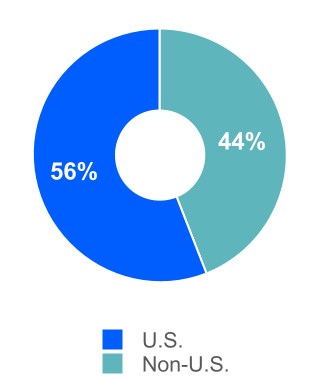
|
|
|
|
|
|
|
|
|
R&I: Global Revenue ⇑ $69 million |
U.S. Revenue ⇑ $33 million |
Non-U.S. Revenue ⇑ $36 million |
Global R&I revenue increased 7% compared to 2024 and reflects growth in both the U.S. (6%) and internationally (9%).
The revenue increase was attributable to sales growth for credit research product offerings, which contributed to ARR(2) growth of 8%.
DATA AND INFORMATION REVENUE
2025---------------------------------------------------------------------------------------2024
________________________________________________________________________________________________________
|
|
|
|
|
|
|
|
|
D&I: Global Revenue ⇑ $59 million |
U.S. Revenue ⇑ $21 million |
Non-U.S. Revenue ⇑ $38 million |
Global D&I revenue increased 7% compared to 2024 and reflects growth in both the U.S. (7%) and internationally (7%). Organic constant currency revenue(1) growth for D&I was 5%.
This growth was mainly driven by continued strong demand for ratings data feeds and company data applications, which contributed to ARR(2) growth of 7% for D&I.
|
|
|
|
|
|
|
MA: Operating and SG&A Expense ⇑ $116 million |
|
|
|
|
|
|
|
|
|
Compensation expenses of $1,438 million increased $68 million, reflecting: |
|
Non-compensation expenses of $779 million increased $48 million, reflecting: |
— growth in salaries and benefits driven by recent acquisitions and annual salary increases |
|
— increases in technology infrastructure costs correlated with operating growth; and |
|
— costs associated with recent acquisitions |
|
|
|
|
|
|
|
MA: Adjusted Operating Margin 33.1% ⇑ 240BPS |
Adjusted Operating Margin expansion reflects the aforementioned 9% increase in global MA revenue outpacing growth of 6% in operating and SG&A expenses, which was supported by operational efficiency/disciplined cost management and cost savings from the Strategic and Operational Efficiency Restructuring Program.
|
|
|
| Depreciation and amortization |
The increase in depreciation and amortization expense primarily reflects higher amortization of internally developed software relating to the development of cloud-based solutions as well as the amortization of recently acquired intangible assets.
The restructuring charges relate to the Company's restructuring programs as more fully discussed in Note 9 to the consolidated financial statements.
|
|
|
| Charges related to asset abandonment |
Reflects costs related to the Company's decision to outsource the production of certain sustainability content utilized in our product offerings, which are more fully discussed in Note 22 to the consolidated financial statements.
Moody’s Investors Service
The table below provides a summary of revenue and operating results, followed by further insight and commentary:
|
|
|
|
|
|
|
|
|
|
|
|
|
|
|
|
|
|
|
Year Ended December 31, |
|
% Change Favorable
(Unfavorable) |
|
2025 |
|
2024 |
|
| Revenue: |
|
|
|
|
|
| Corporate finance (CFG) |
$ |
2,132 |
|
|
$ |
1,950 |
|
|
9 |
% |
| Structured finance (SFG) |
558 |
|
|
518 |
|
|
8 |
% |
| Financial institutions (FIG) |
759 |
|
|
727 |
|
|
4 |
% |
| Public, project and infrastructure finance (PPIF) |
635 |
|
|
564 |
|
|
13 |
% |
| Total ratings revenue |
4,084 |
|
|
3,759 |
|
|
9 |
% |
| MIS Other |
35 |
|
|
34 |
|
|
3 |
% |
| Total external revenue |
4,119 |
|
|
3,793 |
|
|
9 |
% |
| Intersegment royalty |
198 |
|
|
193 |
|
|
3 |
% |
| Total |
4,317 |
|
|
3,986 |
|
|
8 |
% |
| Expenses: |
|
|
|
|
|
Operating and SG&A (external): |
|
|
|
|
|
Compensation expense |
1,136 |
|
|
1,169 |
|
|
3 |
% |
Non-compensation expense |
423 |
|
|
410 |
|
|
(3 |
%) |
Total Operating and SG&A (external) |
1,559 |
|
|
1,579 |
|
|
1 |
% |
| Operating and SG&A (intersegment) |
12 |
|
|
13 |
|
|
8 |
% |
| Total operating and SG&A expense |
1,571 |
|
|
1,592 |
|
|
1 |
% |
| Adjusted Operating Income |
$ |
2,746 |
|
|
$ |
2,394 |
|
|
15 |
% |
| Adjusted Operating Margin |
63.6 |
% |
|
60.1 |
% |
|
|
|
|
|
|
|
|
| Depreciation and amortization |
87 |
|
|
78 |
|
|
(12 |
%) |
| Restructuring |
31 |
|
|
17 |
|
|
(82 |
%) |
The following chart presents changes in rated issuance volumes compared to 2024. To the extent that changes in rated issuance volumes had a material impact to MIS's revenue compared to the prior year, those impacts are discussed below.
MOODY'S INVESTORS SERVICE REVENUE
2025---------------------------------------------------------------------------------------2024
________________________________________________________________________________________________________
|
|
|
|
|
|
|
|
|
MIS: Global Revenue ⇑ $326 million |
U.S. Revenue ⇑ $177 million |
Non-U.S. Revenue ⇑ $149 million |
The increase in global MIS revenue reflects growth across all ratings LOBs.
CFG REVENUE
2025---------------------------------------------------------------------------------------2024
________________________________________________________________________________________________________
|
|
|
|
|
|
|
|
|
CFG: Global Revenue ⇑ $182 million |
U.S. Revenue ⇑ $94 million |
Non-U.S. Revenue ⇑ $88 million |
Global CFG revenue for the years ended December 31, 2025 and 2024 was comprised as follows:
* Other includes: recurring monitoring fees of a rated debt obligation and/or entities that issue such obligations as well as fees from programs such as commercial paper, medium term notes, and ICRA corporate finance revenue.
The increase in CFG revenue of 9% reflects increases in both the U.S (7%) and internationally (14%).
Transaction revenue increased $144 million compared to the prior year, which primarily reflected:
–higher issuance activity for investment-grade bonds, which reflected continued tight credit spreads and investor demand for higher quality credits, and includes the impact of several jumbo transactions in the technology sector; and
–higher issuance activity for high-yield bonds as issuers took advantage of favorable conditions, including tight spreads and lower interest rates, primarily to refinance debt.
Recurring revenue increased $38 million, primarily reflecting the impact of annual price increases and higher monitored credits.
SFG REVENUE
2025---------------------------------------------------------------------------------------2024
________________________________________________________________________________________________________
|
|
|
|
|
|
|
|
|
SFG: Global Revenue ⇑ $40 million |
U.S. Revenue ⇑ $28 million |
Non-U.S. Revenue ⇑ $12 million |
Global SFG revenue for the years ended December 31, 2025 and 2024 was comprised as follows:
The increase in SFG revenue of 8% reflects growth in the U.S. (8%) and internationally (8%).
The increase in revenue reflected growth across all asset classes, supported by tight credit spreads and strong investor demand.
FIG REVENUE
2025---------------------------------------------------------------------------------------2024
________________________________________________________________________________________________________
|
|
|
|
|
|
|
|
|
FIG: Global Revenue ⇑ $32 million |
U.S. Revenue ⇓ $2 million |
Non-U.S. Revenue ⇑ $34 million |
Global FIG revenue for the years ended December 31, 2025 and 2024 was comprised as follows:
** Other includes: monitoring, commercial paper, medium term notes, and ICRA revenue.
The increase in FIG revenue of 4% reflects growth internationally (10%), partially offset by a decline in the U.S. (1%).
Revenue increased $32 million compared to the same period in the prior year, primarily due to:
–strong issuance volumes from infrequent issuers in the banking sector;
partially offset by:
–lower volumes from infrequent issuers in the insurance sector, compared to strong activity in the prior year.
PPIF REVENUE
2025---------------------------------------------------------------------------------------2024
________________________________________________________________________________________________________
|
|
|
|
|
|
|
|
|
PPIF: Global Revenue ⇑ $71 million |
U.S. Revenue ⇑ $57 million |
Non-U.S. Revenue ⇑ $14 million |
Global PPIF revenue for the years ended December 31, 2025 and 2024 was comprised as follows:
The 13% increase in PPIF revenue reflects increases in both the U.S. (16%) and internationally (7%), reflecting:
–higher issuance in U.S. Public Finance, particularly within the state, regional, and healthcare sectors; and
–higher investment‑grade issuance within U.S. Infrastructure Finance, most notably from the utilities sector, coupled with a favorable issuance mix The MIS Adjusted Operating Margin expansion primarily reflected the aforementioned 9% increase in revenue, supported by the operating leverage of the business, benefits from technology investments and a disciplined approach to expense management.
|
|
|
|
|
|
|
MIS: Operating and SG&A Expense ⇓ $20 million |
|
|
|
|
|
|
|
|
|
Compensation expenses of $1,136 million decreased $33 million, reflecting: |
|
Non-compensation expenses of $423 million increased $13 million, primarily reflecting: |
— a decrease in incentive compensation aligned with actual financial and operating performance relative to targets; partially offset by: |
|
— an increase in costs to support operating growth |
— growth in salaries and benefits reflecting higher headcount and annual salary increases |
|
|
|
|
|
|
|
|
|
|
|
|
|
|
|
MIS: Adjusted Operating Margin of 63.6% ⇑ 350BPS |
The restructuring charges relate to the Company's restructuring programs as more fully discussed in Note 9 to the consolidated financial statements.
Market Risk
FX risk:
Moody’s maintains a presence in more than 40 countries. In 2025, approximately 39% of the Company’s revenue and approximately 38% of the Company's expenses were denominated in functional currencies other than the U.S. dollar, principally in the British pound and the euro. As such, the Company is exposed to market risk from changes in FX rates. As of December 31, 2025, approximately 52% of Moody’s assets were located outside the U.S., making the Company susceptible to fluctuations in FX rates. The effects of translating assets and liabilities of non-U.S. operations with non-U.S. functional currencies to the U.S. dollar are charged or credited to OCI.
The effects of revaluing assets and liabilities that are denominated in currencies other than a subsidiary’s functional currency are charged to other non-operating income, net in the Company’s consolidated statements of operations. Accordingly, the Company enters into foreign exchange forward contracts to partially mitigate the change in fair value on certain assets and liabilities denominated in currencies other than a subsidiary’s functional currency. The following table shows the impact to the fair value of the forward contracts if currencies being purchased were to weaken by 10%:
|
|
|
|
|
|
|
|
|
|
|
|
|
|
|
Foreign Currency Forwards (1) |
|
Impact on fair value of contract |
| Sell |
|
Buy |
| U.S. dollar |
|
British pound |
|
$64 million unfavorable impact |
| U.S. dollar |
|
Euro |
|
$10 million unfavorable impact |
| U.S. dollar |
|
Singapore dollar |
|
$4 million unfavorable impact |
| U.S. dollar |
|
Canadian dollar |
|
$4 million unfavorable impact |
| U.S. dollar |
|
Japanese yen |
|
$2 million unfavorable impact |
| U.S. dollar |
|
Indian rupee |
|
$2 million unfavorable impact |
| Euro |
|
U.S. dollar |
|
$2 million unfavorable impact |
|
|
|
|
|
|
|
|
|
|
|
|
|
|
|
|
|
|
|
|
|
|
|
|
$88 million unfavorable impact |
(1)Refer to Note 6 to the consolidated financial statements in Item 8 of this Form 10-K for further detail on the forward contracts.
The change in fair value of the foreign exchange forward contracts would be offset by FX revaluation gains or losses on underlying assets and liabilities denominated in currencies other than a subsidiary’s functional currency.
Derivatives and non-derivatives designated as net investment hedges:
The Company designates derivative instruments and foreign currency-denominated debt as hedges of foreign currency risk of net investments in certain foreign subsidiaries (net investment hedges) under ASC Topic 815, Derivatives and Hedging.
Cross-currency swaps
As of December 31, 2025, the Company had cross-currency swaps designated as net investment hedges to mitigate FX exposure related to a portion of the Company's net investment in certain foreign subsidiaries against changes in exchange rates. The notional values and corresponding interest rates are disclosed in Note 6 to the consolidated financial statements located in Item 8 of this Form 10-K.
•If the euro were to strengthen 10% relative to the U.S. dollar, there would be an approximate $430 million unfavorable impact to the fair value of the cross-currency swaps recognized in OCI.
•If the Hong Kong dollar were to strengthen 10% relative to the U.S. dollar, there would be an approximate $50 million unfavorable impact to the fair value of the cross-currency swaps recognized in OCI.
•If the Singapore dollar were to strengthen 10% relative to the Hong Kong dollar, there would be an approximate $30 million unfavorable impact to the fair value of the cross-currency swaps recognized in OCI.
The aforementioned unfavorable impacts recognized within OCI would be offset by favorable currency translation gains on the Company’s hedged net investments in those foreign subsidiaries.
Euro-denominated debt
As of December 31, 2025, the Company has designated €500 million of the 2015 Senior Notes and €750 million of the 2019 Senior Notes as net investment hedges to mitigate FX exposure relating to euro denominated net investments in subsidiaries. If the euro were to strengthen 10% relative to the U.S. dollar, there would be an approximate $150 million unfavorable adjustment to OCI related to these net investment hedges. This adjustment would be offset by favorable currency translation adjustments on the Company’s euro net investment in subsidiaries.
Interest rate and credit risk:
Interest rate swaps designated as a fair value hedge:
The Company’s interest rate risk management objectives are to reduce the funding cost and volatility to the Company and to alter the interest rate exposure to a desired risk profile. Moody’s uses interest rate swaps as deemed necessary to assist in accomplishing these objectives. The Company is exposed to interest rate risk on its various outstanding fixed-rate debt for which the fair value of the outstanding fixed rate debt fluctuates based on changes in interest rates. The Company has entered into interest rate swaps to convert the fixed interest rate on certain of its long-term debt to a floating interest rate based on the SOFR. These swaps are adjusted to fair market value based on prevailing interest rates at the end of each reporting period and fluctuations are recorded as a reduction or addition to the carrying value of the borrowing, while net interest payments are recorded as interest expense/income in the Company’s consolidated statements of operations. A hypothetical change of 100 BPS in the SOFR-based swap rate would result in an approximate $130 million change to the fair value of the swaps, which would be offset by the change in fair value of the hedged item.
Additional information on these interest rate swaps is disclosed in Note 6 to the consolidated financial statements located in Item 8 of this Form 10-K.
Moody’s cash equivalents primarily consist of certificates of deposit within and outside the U.S. with maturities of three months or less when purchased. The Company manages its credit risk exposure by allocating its cash equivalents among various money market deposit accounts and certificates of deposit and by limiting the amount it can invest with any single issuer. Short-term investments primarily consist of certificates of deposit.
Liquidity and Capital Resources
Moody's remains committed to using its strong cash flow to create value for shareholders by both investing in the Company's employees and growing the business through targeted organic initiatives and inorganic acquisitions aligned with strategic priorities. Additional excess capital is returned to the Company’s shareholders via a combination of dividends and share repurchases.
Cash Flow
The following is a summary of the changes in the Company’s cash flows followed by a brief discussion of these changes:
|
|
|
|
|
|
|
|
|
|
|
|
|
|
|
|
|
|
|
|
Year Ended December 31, |
|
$ Change
Favorable/ (unfavorable) |
|
|
2025 |
|
2024 |
|
|
| Net cash provided by operating activities |
$ |
2,901 |
|
|
$ |
2,838 |
|
|
$ |
63 |
|
|
| Net cash provided by (used in) investing activities |
$ |
2 |
|
|
$ |
(1,056) |
|
|
$ |
1,058 |
|
|
| Net cash used in financing activities |
$ |
(3,063) |
|
|
$ |
(1,446) |
|
|
$ |
(1,617) |
|
|
Free Cash Flow (1) |
$ |
2,575 |
|
|
$ |
2,521 |
|
|
$ |
54 |
|
|
(1)Free Cash Flow is a non-GAAP measure and is defined by the Company as net cash provided by operating activities minus cash paid for capital additions. Refer to the section entitled “Non-GAAP Financial Measures” of this MD&A for further information on this financial measure.
Net cash provided by operating activities
Net cash flows from operating activities increased by $63 million compared to the prior year, with the most notable drivers reflecting:
–growth in operating income of $476 million, partially offset by various changes in working capital;
partially offset by:
–$212 million in higher income tax payments in the current year; and
–approximately $100 million in higher annual incentive compensation payments in 2025 (based on full-year 2024 financial and operating results) compared to payments made in the prior year (based on full-year 2023 financial and operating results)
Net cash provided by (used in) investing activities
The $1,058 million increase in cash provided by investing activities compared to 2024 primarily reflects:
–a $463 million decrease in purchases of investments, primarily due to the purchase of certificates of deposit in the prior year; and
–a $555 million increase in sales and maturities of investments primarily due to the maturity of certificates of deposit in the first quarter of 2025.
Net cash used in financing activities
The $1,617 million increase in cash used in financing activities was primarily attributed to:
–a $700 million repayment of notes payable in 2025;
–a $496 million issuance of notes in the third quarter of 2024; and
– higher cash paid for treasury share repurchases in 2025 of $315 million compared to the prior year.
Cash and cash equivalents and short-term investments
The Company’s aggregate cash and cash equivalents and short-term investments of $2.4 billion at December 31, 2025 included approximately $1.8 billion located outside of the U.S. Approximately 38% of the Company’s aggregate cash and cash equivalents and short-term investments is denominated in EUR and GBP. The Company manages both its U.S. and non-U.S. cash flow to maintain sufficient liquidity in all regions to effectively meet its operating needs.
The Company regularly evaluates which entities it will indefinitely reinvest earnings outside the U.S. The Company has provided deferred taxes for those entities whose earnings are not considered indefinitely reinvested. Accordingly, the Company continues to repatriate a portion of its non-U.S. cash in these subsidiaries and will continue to repatriate certain of its offshore cash in a manner that addresses compliance with local statutory requirements, sufficient offshore working capital and any other factors that may be relevant in certain jurisdictions. Notwithstanding the Tax Act, which generally eliminated federal income tax on future cash repatriation to the U.S., cash repatriation may be subject to state and local taxes or withholding or similar taxes.
Material Cash Requirements
The Company's material cash requirements consist of the following contractual and other obligations:
Financing Arrangements
Indebtedness
At December 31, 2025, Moody’s had $7.2 billion of outstanding debt and approximately $1 billion of additional capacity available under the Company’s CP program, which is backstopped by the $1.25 billion 2024 Credit Facility.
The repayment schedule for the Company’s borrowings outstanding at December 31, 2025 is as follows:
Future interest payments and fees associated with the Company's debt and credit facility are expected to be $3.7 billion. Of this amount, approximately $300 million is expected to be paid in each of the next two years, approximately $200 million in each of the subsequent three years, with the remaining balance expected to be paid thereafter. For additional information on the Company's outstanding debt, CP program and 2024 Credit Facility, refer to Note 16 to the consolidated financial statements.
Management may consider pursuing additional long-term financing when it is appropriate in light of cash requirements for operations, share repurchases and other strategic opportunities, which could result in higher financing costs.
Purchase Obligations
Purchase obligations generally include multi-year agreements with vendors to purchase goods or services and mainly include data center/cloud hosting fees and fees for information technology licensing and maintenance. As of December 31, 2025, these purchase obligations totaled approximately $650 million, of which approximately 60% is expected to be paid in the next twelve months and another approximate 40% expected to be paid over the next two subsequent years, with the remainder to be paid thereafter.
Leases
The Company has remaining payments related to its operating leases of $1,031 million at December 31, 2025, primarily related to real estate leases, of which $100 million in payments are expected over the next twelve months. For more information on the expected cash flows relating to the Company's operating leases, refer to Note 18 to the consolidated financial statements.
Pension and Other Retirement Plan Obligations
The Company does not anticipate making significant contributions to its funded pension plan in the next twelve months. This plan is overfunded at December 31, 2025, and accordingly holds sufficient investments to fund future benefit obligations. Payments for the Company's unfunded plans are not expected to be material in either the short or long-term. For further information on the Company's pension and other retirement plan obligations, refer to Note 13 to the consolidated financial statements.
Dividends and share repurchases
On February 10, 2026, the Board approved the declaration of a quarterly dividend of $1.03 per share for Moody’s common stock, payable March 13, 2026 to shareholders of record at the close of business on March 2, 2026. The continued payment of dividends at this rate, or at all, is subject to the discretion of the Board.
On October 21, 2025 the Board authorized $4.0 billion in share repurchase authority. At December 31, 2025, the Company had approximately $4.0 billion of remaining authority under this authorization. There is no established expiration date for the remaining authorization.
Restructuring
As more fully discussed in Note 9 to the consolidated financial statements, the Company is currently in the process of executing the Strategic and Operational Efficiency Restructuring Program. Future cash outlays associated with this program are expected to be between $110 million and $130 million, which are expected to be paid out through 2027.
Sources of Funding to Satisfy Material Cash Requirements
The Company believes that it has the financial resources needed to meet its cash requirements and expects to have positive operating cash flow in 2026. Cash requirements for periods beyond the next twelve months will depend, among other things, on the Company’s profitability and its ability to manage working capital requirements. The Company may also borrow from various sources as described above.
Non-GAAP Financial Measures:
In addition to its reported results, Moody’s has included in this MD&A certain adjusted results that the SEC defines as “Non-GAAP financial measures.” Management believes that such adjusted financial measures, when read in conjunction with the Company’s reported results, can provide useful supplemental information for investors analyzing period-to-period comparisons of the Company’s performance, facilitate comparisons to competitors’ operating results and can provide greater transparency to investors of supplemental information used by management in its financial and operational decision-making. These adjusted measures, as defined by the Company, are not necessarily comparable to similarly defined measures of other companies. Furthermore, these adjusted measures should not be viewed in isolation or used as a substitute for other GAAP measures in assessing the operating performance or cash flows of the Company. Below are brief descriptions of the Company’s adjusted financial measures accompanied by a reconciliation of the adjusted measure to its most directly comparable GAAP measure.
Adjusted Operating Income and Adjusted Operating Margin:
The Company presents Adjusted Operating Income and Adjusted Operating Margin because management deems these metrics to be useful measures to provide additional perspective on Moody's operating performance. Adjusted Operating Income excludes the impact of: i) depreciation and amortization; ii) restructuring charges/adjustments; and iii) charges related to asset abandonment. Depreciation and amortization are excluded because companies utilize productive assets of different useful lives and use different methods of acquiring and depreciating productive assets. Restructuring charges/adjustments and charges related to asset abandonment, which the Company believes are not reflective of its ongoing operating cost structure, are excluded as the frequency and magnitude of these charges may vary widely across periods and companies. Refer to Notes 9 and 22 to the consolidated financial statements for further information regarding the nature of the Company’s restructuring programs and asset abandonment, respectively.
Management believes that the exclusion of the aforementioned items, as detailed in the reconciliation below, allows for an additional perspective on the Company’s operating results from period to period and across companies. The Company defines Adjusted Operating Margin as Adjusted Operating Income divided by revenue.
|
|
|
|
|
|
|
|
|
|
|
|
|
|
|
Year ended December 31, |
|
2025 |
|
2024 |
|
|
| Operating income |
$ |
3,351 |
|
|
$ |
2,875 |
|
|
|
| Adjustments: |
|
|
|
|
|
| Depreciation and amortization |
480 |
|
|
431 |
|
|
|
| Restructuring |
108 |
|
|
59 |
|
|
|
Charges related to asset abandonment |
3 |
|
|
43 |
|
|
|
| Adjusted Operating Income |
$ |
3,942 |
|
|
$ |
3,408 |
|
|
|
| Operating margin |
43.4 |
% |
|
40.6 |
% |
|
|
| Adjusted Operating Margin |
51.1 |
% |
|
48.1 |
% |
|
|
Adjusted Net Income and Adjusted Diluted EPS attributable to Moody’s common shareholders:
The Company presents Adjusted Net Income and Adjusted Diluted EPS because management deems these metrics to be useful measures to provide additional perspective on Moody's operating performance. Adjusted Net Income and Adjusted Diluted EPS exclude the impact of: i) amortization of acquired intangible assets; ii) restructuring charges/adjustments; iii) charges related to asset abandonment; iv) gains on previously held equity method investments and v) gain on the divestiture of a business and certain direct costs to transact the divestiture.
The Company excludes the impact of amortization of acquired intangible assets as companies utilize intangible assets with different estimated useful lives and have different methods of acquiring and amortizing intangible assets. These intangible assets were recorded as part of acquisition accounting and contribute to revenue generation. The amortization of intangible assets related to acquisitions will recur in future periods until such intangible assets have been fully amortized. Furthermore, the timing and magnitude of business combination transactions are not predictable and the purchase price allocated to amortizable intangible assets and the related amortization period are unique to each acquisition and can vary significantly from period to period. The impact of restructuring charges/adjustments and charges related to asset abandonment, which the Company believes are not reflective of its ongoing operating cost structure are also excluded. Similarly, gains on previously held equity method investments and the gain pursuant to the divestiture of the MA Learning Solutions business along with certain related direct costs to transact the divestiture are excluded due to their infrequent nature and because they do not reflect the Company's ongoing operations. The frequency and magnitude of all of the aforementioned items may vary widely across periods and companies.
The Company excludes the aforementioned items to provide additional perspective when comparing net income and diluted EPS from period to period and across companies as the frequency and magnitude of similar transactions may vary widely across periods.
|
|
|
|
|
|
|
|
|
|
|
|
|
|
|
|
|
|
|
|
|
|
|
|
|
|
|
Year ended December 31, |
| Amounts in millions |
|
2025 |
|
2024 |
| Net income attributable to Moody’s common shareholders |
|
|
|
$ |
2,459 |
|
|
|
|
$ |
2,058 |
|
| Pre-tax Acquisition-Related Intangible Amortization Expenses |
|
$ |
215 |
|
|
|
|
$ |
198 |
|
|
|
| Tax on Acquisition-Related Intangible Amortization Expenses |
|
(52) |
|
|
|
|
(48) |
|
|
|
| Net Acquisition-Related Intangible Amortization Expenses |
|
|
|
163 |
|
|
|
|
150 |
|
| Pre-tax restructuring |
|
$ |
108 |
|
|
|
|
$ |
59 |
|
|
|
| Tax on restructuring |
|
(27) |
|
|
|
|
(15) |
|
|
|
| Net restructuring |
|
|
|
81 |
|
|
|
|
44 |
|
Pre-tax charges related to asset abandonment |
|
$ |
3 |
|
|
|
|
$ |
43 |
|
|
|
Tax on charges related to asset abandonment |
|
(1) |
|
|
|
|
(11) |
|
|
|
Net charges related to asset abandonment |
|
|
|
2 |
|
|
|
|
32 |
|
| Pre-tax gain on previously held equity method investments |
|
$ |
— |
|
|
|
|
$ |
(7) |
|
|
|
| Tax on gain on previously held equity method investments |
|
— |
|
|
|
|
2 |
|
|
|
| Net gain on previously held equity method investments |
|
|
|
— |
|
|
|
|
(5) |
|
| Pre-tax gain on divestiture of business |
|
$ |
(23) |
|
|
|
|
$ |
— |
|
|
|
| Pre-tax costs to transact divestiture |
|
2 |
|
|
|
|
— |
|
|
|
| Tax on gain on divestiture and related costs |
|
3 |
|
|
|
|
— |
|
|
|
| Net gain on divestiture of business and related costs |
|
|
|
(18) |
|
|
|
|
— |
|
|
|
|
|
|
|
|
|
|
|
|
|
|
|
|
|
|
|
|
|
|
|
|
|
|
|
|
|
|
|
|
|
|
|
|
|
| Adjusted Net Income |
|
|
|
$ |
2,687 |
|
|
|
|
$ |
2,279 |
|
|
|
|
|
|
|
|
|
|
|
|
|
|
|
|
|
|
|
|
|
|
|
|
|
|
|
|
|
|
Year ended December 31, |
|
2025 |
|
2024 |
|
|
| Diluted earnings per share attributable to Moody’s common shareholders |
|
|
$ |
13.67 |
|
|
|
|
$ |
11.26 |
|
|
|
|
|
| Pre-tax Acquisition-Related Intangible Amortization Expenses |
$ |
1.20 |
|
|
|
|
$ |
1.08 |
|
|
|
|
|
|
|
| Tax on Acquisition-Related Intangible Amortization Expenses |
(0.29) |
|
|
|
|
(0.26) |
|
|
|
|
|
|
|
| Net Acquisition-Related Intangible Amortization Expenses |
|
|
0.91 |
|
|
|
|
0.82 |
|
|
|
|
|
| Pre-tax restructuring |
$ |
0.60 |
|
|
|
|
$ |
0.32 |
|
|
|
|
|
|
|
| Tax on restructuring |
(0.15) |
|
|
|
|
(0.08) |
|
|
|
|
|
|
|
| Net restructuring |
|
|
0.45 |
|
|
|
|
0.24 |
|
|
|
|
|
Pre-tax charges related to asset abandonment |
$ |
0.02 |
|
|
|
|
$ |
0.24 |
|
|
|
|
|
|
|
Tax on charges related to asset abandonment |
(0.01) |
|
|
|
|
(0.06) |
|
|
|
|
|
|
|
Net charges related to asset abandonment |
|
|
0.01 |
|
|
|
|
0.18 |
|
|
|
|
|
| Pre-tax gain on previously held equity method investments |
$ |
— |
|
|
|
|
$ |
(0.04) |
|
|
|
|
|
|
|
| Tax on gain on previously held equity method investments |
— |
|
|
|
|
0.01 |
|
|
|
|
|
|
|
| Net gain on previously held equity method investments |
|
|
— |
|
|
|
|
(0.03) |
|
|
|
|
|
| Pre-tax gain on divestiture of business |
$ |
(0.13) |
|
|
|
|
$ |
— |
|
|
|
|
|
|
|
| Pre-tax costs to transact divestiture |
0.01 |
|
|
|
|
— |
|
|
|
|
|
|
|
| Tax on gain on divestiture and related costs |
0.02 |
|
|
|
|
— |
|
|
|
|
|
|
|
| Net gain on divestiture of business and related costs |
|
|
(0.10) |
|
|
|
|
— |
|
|
|
|
|
|
|
|
|
|
|
|
|
|
|
|
|
|
|
|
|
|
|
|
|
|
|
|
|
|
|
|
|
|
|
|
|
|
|
|
|
|
|
|
|
|
|
|
|
|
|
|
|
| Adjusted Diluted EPS |
|
|
$ |
14.94 |
|
|
|
|
$ |
12.47 |
|
|
|
|
|
Note: the tax impacts in the table above were calculated using tax rates in effect in the jurisdiction for which the item relates.
Free Cash Flow:
The Company defines Free Cash Flow as net cash provided by operating activities minus cash paid for capital additions. Management believes that Free Cash Flow is a useful metric in assessing the Company’s cash flows to service debt, pay dividends and to fund acquisitions and share repurchases. Management deems capital expenditures essential to the Company’s product and service innovations and maintenance of Moody’s operational capabilities. Accordingly, capital expenditures are deemed to be a recurring use of Moody’s cash flow. Below is a reconciliation of the Company’s net cash flows from operating activities to Free Cash Flow:
|
|
|
|
|
|
|
|
|
|
|
|
|
|
|
Year ended December 31, |
|
2025 |
|
2024 |
|
|
| Net cash provided by operating activities |
$ |
2,901 |
|
|
$ |
2,838 |
|
|
|
| Capital additions |
(326) |
|
|
(317) |
|
|
|
| Free Cash Flow |
$ |
2,575 |
|
|
$ |
2,521 |
|
|
|
| Net cash provided by (used in) investing activities |
$ |
2 |
|
|
$ |
(1,056) |
|
|
|
| Net cash used in financing activities |
$ |
(3,063) |
|
|
$ |
(1,446) |
|
|
|
Organic Constant Currency Revenue Growth:
The Company presents organic constant currency revenue growth as its non-GAAP measure of revenue growth. Management deems this measure to be useful in providing additional perspective in assessing the Company's revenue growth excluding both the inorganic revenue impacts from certain acquisition and divestiture activity completed within the last 12 months and the impacts of changes in foreign exchange rates. The Company calculates the dollar impact of foreign exchange as the difference between the translation of its current period non-USD functional currency results using comparative prior period weighted average foreign exchange translation rates and current year reported results.
Below is a reconciliation of the Company's reported revenue and growth rates to its organic constant currency revenue growth measures:
|
|
|
|
|
|
|
|
|
|
|
|
|
|
|
|
|
|
|
|
|
|
|
|
|
|
|
Year ended December 31, |
| Amounts in millions |
|
2025 |
|
2024 |
|
Change |
|
Growth |
| MCO revenue |
|
$ |
7,718 |
|
|
$ |
7,088 |
|
|
$ |
630 |
|
|
9% |
| FX impact |
|
(68) |
|
|
— |
|
|
(68) |
|
|
|
| Inorganic revenue from acquisitions |
|
(57) |
|
|
— |
|
|
(57) |
|
|
|
Divestitures |
|
— |
|
|
(5) |
|
|
5 |
|
|
|
Organic constant currency MCO revenue |
|
$ |
7,593 |
|
|
$ |
7,083 |
|
|
$ |
510 |
|
|
7% |
|
|
|
|
|
|
|
|
|
| MA revenue |
|
$ |
3,599 |
|
|
$ |
3,295 |
|
|
$ |
304 |
|
|
9% |
| FX impact |
|
(39) |
|
|
— |
|
|
(39) |
|
|
|
| Inorganic revenue from acquisitions |
|
(49) |
|
|
— |
|
|
(49) |
|
|
|
Divestitures |
|
— |
|
|
(5) |
|
|
5 |
|
|
|
Organic constant currency MA revenue |
|
$ |
3,511 |
|
|
$ |
3,290 |
|
|
$ |
221 |
|
|
7% |
|
|
|
|
|
|
|
|
|
| Decision Solutions revenue |
|
$ |
1,692 |
|
|
$ |
1,516 |
|
|
$ |
176 |
|
|
12% |
| FX impact |
|
(13) |
|
|
— |
|
|
(13) |
|
|
|
| Inorganic revenue from acquisitions |
|
(49) |
|
|
— |
|
|
(49) |
|
|
|
Divestitures |
|
— |
|
|
(5) |
|
|
5 |
|
|
|
Organic constant currency Decision Solutions revenue |
|
$ |
1,630 |
|
|
$ |
1,511 |
|
|
$ |
119 |
|
|
8% |
|
|
|
|
|
|
|
|
|
Banking revenue |
|
$ |
569 |
|
|
$ |
551 |
|
|
$ |
18 |
|
|
3% |
| FX impact |
|
(2) |
|
|
— |
|
|
(2) |
|
|
|
| Inorganic revenue from acquisitions |
|
(9) |
|
|
— |
|
|
(9) |
|
|
|
| Divestitures |
|
— |
|
|
(5) |
|
|
5 |
|
|
|
Organic constant currency Banking revenue |
|
$ |
558 |
|
|
$ |
546 |
|
|
$ |
12 |
|
|
2% |
|
|
|
|
|
|
|
|
|
Insurance revenue |
|
$ |
685 |
|
|
$ |
598 |
|
|
$ |
87 |
|
|
15% |
| FX impact |
|
(2) |
|
|
— |
|
|
(2) |
|
|
|
| Inorganic revenue from acquisitions |
|
(40) |
|
|
— |
|
|
(40) |
|
|
|
Organic constant currency Insurance revenue |
|
$ |
643 |
|
|
$ |
598 |
|
|
$ |
45 |
|
|
8% |
|
|
|
|
|
|
|
|
|
KYC revenue |
|
$ |
438 |
|
|
$ |
367 |
|
|
$ |
71 |
|
|
19% |
| FX impact |
|
(9) |
|
|
— |
|
|
(9) |
|
|
|
Organic constant currency KYC revenue |
|
$ |
429 |
|
|
$ |
367 |
|
|
$ |
62 |
|
|
17% |
|
|
|
|
|
|
|
|
|
| Data and Information revenue |
|
$ |
912 |
|
|
$ |
853 |
|
|
$ |
59 |
|
|
7% |
| FX impact |
|
(17) |
|
|
— |
|
|
(17) |
|
|
|
Constant currency Data and Information revenue |
|
$ |
895 |
|
|
$ |
853 |
|
|
$ |
42 |
|
|
5% |
|
|
|
|
|
|
|
|
|
MA recurring revenue |
|
$ |
3,462 |
|
|
$ |
3,125 |
|
|
$ |
337 |
|
|
11% |
| FX impact |
|
(40) |
|
|
— |
|
|
(40) |
|
|
|
| Inorganic revenue from acquisitions |
|
(47) |
|
|
— |
|
|
(47) |
|
|
|
Organic constant currency MA recurring revenue |
|
$ |
3,375 |
|
|
$ |
3,125 |
|
|
$ |
250 |
|
|
8% |
|
|
|
|
|
|
|
|
|
Decision Solutions recurring revenue |
|
$ |
1,575 |
|
|
$ |
1,370 |
|
|
$ |
205 |
|
|
15% |
| FX impact |
|
(14) |
|
|
— |
|
|
(14) |
|
|
|
| Inorganic revenue from acquisitions |
|
(47) |
|
|
— |
|
|
(47) |
|
|
|
Organic constant currency Decision Solutions recurring revenue |
|
$ |
1,514 |
|
|
$ |
1,370 |
|
|
$ |
144 |
|
0 |
11% |
|
|
|
|
|
|
|
|
|
|
|
|
|
|
|
|
|
|
|
|
|
|
|
|
|
|
|
Year ended December 31, |
|
|
2025 |
|
2024 |
|
Change |
|
Growth |
Banking recurring revenue |
|
$ |
476 |
|
|
$ |
438 |
|
|
$ |
38 |
|
|
9% |
| FX impact |
|
(3) |
|
|
— |
|
|
(3) |
|
|
|
| Inorganic revenue from acquisitions |
|
(8) |
|
|
— |
|
|
(8) |
|
|
|
Organic constant currency Banking recurring revenue |
|
$ |
465 |
|
|
$ |
438 |
|
|
$ |
27 |
|
|
6% |
|
|
|
|
|
|
|
|
|
Insurance recurring revenue |
|
$ |
664 |
|
|
$ |
572 |
|
|
$ |
92 |
|
|
16% |
| FX impact |
|
(2) |
|
|
— |
|
|
(2) |
|
|
|
| Inorganic revenue from acquisitions |
|
(39) |
|
|
— |
|
|
(39) |
|
|
|
Organic constant currency Insurance recurring revenue |
|
$ |
623 |
|
|
$ |
572 |
|
|
$ |
51 |
|
|
9% |
|
|
|
|
|
|
|
|
|
KYC recurring revenue |
|
$ |
435 |
|
|
$ |
360 |
|
|
$ |
75 |
|
|
21% |
FX impact |
|
$ |
(9) |
|
|
— |
|
|
(9) |
|
|
|
Organic constant currency KYC recurring revenue |
|
$ |
426 |
|
|
$ |
360 |
|
|
$ |
66 |
|
|
18% |
Key Performance Metrics:
The Company presents ARR on an organic constant currency basis for its MA business as a supplemental performance metric to provide additional insight on the estimated value of MA's recurring revenue contracts at a given point in time. The Company uses ARR to manage and monitor performance of its MA operating segment and believes that this metric is a key indicator of the trajectory of MA's recurring revenue base.
The Company calculates ARR by taking the total recurring contract value for each active renewable contract as of the reporting date, divided by the number of days in the contract and multiplied by 365 days to create an annualized value. The Company defines renewable contracts as subscriptions, term licenses, maintenance and renewable services. ARR excludes transaction sales including one-time training, services and perpetual licenses. In order to compare period-over-period ARR excluding the effects of foreign currency translation, the Company bases the calculation on currency rates utilized in its current year operating budget and holds these FX rates constant for the duration of all current and prior periods being reported. Additionally, to provide better perspective in assessing growth, the Company excludes from ARR contracts associated with acquisitions and divestitures completed within the last 12 months.
The Company’s definition of ARR may differ from definitions utilized by other companies reporting similarly named measures, and this metric should be viewed in addition to, and not as a substitute for, financial measures presented in accordance with GAAP.
|
|
|
|
|
|
|
|
|
|
|
|
|
|
|
|
|
|
|
|
|
|
|
|
| Amounts in millions |
December 31, 2025 |
|
December 31, 2024 |
|
Change |
|
Growth |
| MA ARR |
|
|
|
|
|
|
|
|
|
|
|
|
|
|
|
| Banking |
$ |
494 |
|
|
$ |
458 |
|
|
$ |
36 |
|
|
8% |
| Insurance |
649 |
|
|
604 |
|
|
45 |
|
|
7% |
| KYC |
436 |
|
|
380 |
|
|
56 |
|
|
15% |
Total Decision Solutions |
$ |
1,579 |
|
|
$ |
1,442 |
|
|
$ |
137 |
|
|
10% |
Research and Insights |
1,002 |
|
|
932 |
|
|
70 |
|
|
8% |
| Data and Information |
917 |
|
|
859 |
|
|
58 |
|
|
7% |
| Total MA ARR |
$ |
3,498 |
|
|
$ |
3,233 |
|
|
$ |
265 |
|
|
8% |
Recently Issued Accounting Pronouncements
Refer to Note 2 to the consolidated financial statements located in Part II, Item 8 on this Form 10-K for a discussion on the impact to the Company relating to recently issued accounting pronouncements.
Contingencies
Legal proceedings in which the Company is involved also may impact Moody’s liquidity or operating results. No assurance can be provided as to the outcome of such proceedings. In addition, litigation inherently involves significant costs. For information regarding legal proceedings, see Part II, Item 8 – “Financial Statements,” Note 19 “Contingencies” in this Form 10-K.
Forward-Looking Statements
Certain statements contained in this annual report on Form 10-K are forward-looking statements and are based on future expectations, plans and prospects for the Company's business and operations that involve a number of risks and uncertainties. Such statements involve estimates, projections, goals, forecasts, assumptions and uncertainties that could cause actual results or outcomes to differ materially from those contemplated, expressed, projected, anticipated or implied in the forward-looking statements. Those statements appear at various places throughout this annual report on Form 10-K, including in the sections entitled “Contingencies” under Item 7, “MD&A”, commencing on page
36 of this annual report on Form 10-K, under “Legal Proceedings” in Part I, Item 3, of this Form 10-K, and elsewhere in the context of statements containing the words “believe,” “expect,” “anticipate,” “intend,” “plan,” “will,” “predict,” “potential,” “continue,” “strategy,” “aspire,” “target,” “forecast,” “project,” “estimate,” “should,” “could,” “may,” and similar expressions or words and variations thereof relating to the Company’s views on future events, trends and contingencies or otherwise convey the prospective nature of events or outcomes generally indicative of forward-looking statements. Stockholders and investors are cautioned not to place undue reliance on these forward-looking statements. The forward-looking statements and other information in this document are made as of the date of this annual report on Form 10-K, and the Company undertakes no obligation (nor does it intend) to publicly supplement, update or revise such statements on a going-forward basis, whether as a result of subsequent developments, changed expectations or otherwise, except as required by applicable law or regulation. In connection with the “safe harbor” provisions of the Private Securities Litigation Reform Act of 1995, the Company is identifying certain factors that could cause actual results to differ, perhaps materially, from those indicated by these forward-looking statements.
Those factors, risks and uncertainties include, but are not limited to:
–the uncertain effects of U.S. and foreign government actions affecting international trade and economic policy, including changes and volatility in tariffs and trade policies and retaliatory actions, on credit markets, customers, and customer retention, and demand for our products and services;
–the impact of general economic conditions (including significant government debt and deficit levels and inflation or recessions and related monetary policy actions by governments in response thereto) on worldwide credit markets and on economic activity, including on the level of merger and acquisition activity, and their effects on the volume of debt and other securities issued in domestic and/or global capital markets;
–the uncertain effects of U.S. and foreign government initiatives and monetary policy to respond to the current economic climate, including instability of financial institutions, credit quality concerns, and other potential impacts of volatility in financial and credit markets;
–the impacts of geopolitical events and actions, such as the Russia-Ukraine military conflict, military conflicts in the Middle East, and tensions between India and Pakistan, and of tensions and disputes in political and global relations, on volatility in world financial markets, on general economic conditions and GDP in the U.S. and worldwide and on the Company's own operations and personnel;
–other matters that could affect the volume of debt and other securities issued in domestic and/or global capital markets, including regulation, increased utilization of technologies that have the potential to intensify competition and accelerate disruption and disintermediation in the financial services industry, as well as the number of issuances of securities without ratings or securities which are rated or evaluated by non-traditional parties;
–the level of merger and acquisition activity in the U.S. and abroad;
–the impact of MIS’s withdrawal of its credit ratings on countries or entities within countries and of Moody’s no longer conducting commercial operations in countries where political instability warrants such actions;
–concerns in the marketplace affecting our credibility or otherwise affecting market perceptions of the integrity or utility of independent credit agency ratings;
–the introduction or development of competing and/or emerging technologies and products;
–pricing pressure from competitors and/or customers;
–the level of success of new product development and global expansion;
–the impact of regulation as an NRSRO, the potential for new U.S., state and local legislation and regulations;
–the potential for increased competition and regulation in the jurisdictions in which we operate, including the EU;
–exposure to litigation related to our rating opinions, as well as any other litigation, government and regulatory proceedings, investigations and inquiries to which Moody’s may be subject from time to time;
–provisions in U.S. legislation modifying the pleading standards and EU regulations modifying the liability standards, applicable to CRAs in a manner adverse to CRAs;
–provisions of EU regulations imposing additional procedural and substantive requirements on the pricing of services and the expansion of supervisory remit to include non-EU ratings used for regulatory purposes;
–uncertainty regarding the future relationship between the U.S. and China; –the possible loss of key employees and the impact of the global labor environment;
–failures or malfunctions of our operations and infrastructure;
–any vulnerabilities to cyber threats or other cybersecurity concerns;
–the timing and effectiveness of our restructuring programs;
–currency and foreign exchange volatility;
–the outcome of any review by tax authorities of Moody’s global tax planning initiatives;
–exposure to potential criminal sanctions or civil remedies if Moody’s fails to comply with foreign and U.S. laws and regulations that are applicable in the jurisdictions in which Moody’s operates, including data protection and privacy laws, sanctions laws, anti-corruption laws, and local laws prohibiting corrupt payments to government officials;
–the impact of mergers, acquisitions, or other business combinations and the ability of Moody’s to successfully integrate acquired businesses;
–the level of future cash flows;
–the levels of capital investments; and
–a decline in the demand for credit risk management tools by financial institutions, corporate or government entities.
These factors, risks and uncertainties as well as other risks and uncertainties that could cause Moody’s actual results to differ materially from those contemplated, expressed, projected, anticipated or implied in the forward-looking statements are described in greater detail under “Risk Factors” in Part I, Item 1A of this annual report on Form 10-K, and in other filings made by the Company from time to time with the SEC or in materials incorporated herein or therein. Stockholders and investors are cautioned that the occurrence of any of these factors, risks and uncertainties may cause the Company’s actual results to differ materially from those contemplated, expressed, projected, anticipated or implied in the forward-looking statements, which could have a material and adverse effect on the Company’s business, results of operations and financial condition. New factors may emerge from time to time, and it is not possible for the Company to predict new factors, nor can the Company assess the potential effect of any new factors on it. Forward-looking and other statements in this document may also address our corporate responsibility progress, plans, and goals (including sustainability and environmental matters), and the inclusion of such statements is not an indication that these contents are necessarily material to investors or required to be disclosed in the Company’s filings with the Securities and Exchange Commission. In addition, historical, current, and forward-looking sustainability-related statements may be based on standards for measuring progress that are still developing, internal controls and processes that continue to evolve, and assumptions that are subject to change in the future.
ITEM 7A. QUANTITATIVE AND QUALITATIVE DISCLOSURES ABOUT MARKET RISK
Information in response to this item is set forth under the caption “Market Risk” in Part II, Item 7 on page
56 of this annual report on Form 10-K.
ITEM 8. FINANCIAL STATEMENTS
Index to Financial Statements
|
|
|
|
|
|
|
|
|
|
|
Page |
|
|
|
|
|
|
| Consolidated Financial Statements: |
|
|
|
|
|
|
|
|
|
|
|
|
|
|
|
|
|
|
|
|
Schedules are omitted as not required or inapplicable or because the required information is provided in the consolidated financial statements, including the notes thereto.
MANAGEMENT’S REPORT ON INTERNAL CONTROL OVER FINANCIAL REPORTING
Management of Moody’s Corporation is responsible for establishing and maintaining adequate internal control over financial reporting and for the assessment of the effectiveness of internal control over financial reporting. As defined by the SEC in Rules 13a-15(f) and 15d-15(f) under the Securities Exchange Act of 1934, internal control over financial reporting is a process designed by, or under the supervision of, the Company’s principal executive and principal financial officers, or persons performing similar functions, and effected by the Company’s Board, management and other personnel, to provide reasonable assurance regarding the reliability of financial reporting and the preparation of financial statements for external purposes in accordance with generally accepted accounting principles.
Moody’s internal control over financial reporting includes those policies and procedures that (1) pertain to the maintenance of records that, in reasonable detail, accurately and fairly reflect the transactions and dispositions of assets of the Company; (2) provide reasonable assurance that transactions are recorded as necessary to permit preparation of financial statements in accordance with generally accepted accounting principles, and that receipts and expenditures of the Company are being made only in accordance with authorizations of Moody’s management and directors; and (3) provide reasonable assurance regarding prevention or timely detection of unauthorized acquisition, use or disposition of the Company’s assets that could have a material effect on the financial statements.
Because of its inherent limitations, internal control over financial reporting may not prevent or detect misstatements. Also, projections of any evaluation of effectiveness to future periods are subject to the risk that controls may become inadequate because of changes in conditions, or that the degree of compliance with the policies or procedures may deteriorate.
Management of the Company evaluated and assessed the design and operational effectiveness of the Company’s internal control over financial reporting as of December 31, 2025 based on criteria established in the Internal Control—Integrated Framework (2013) issued by the Committee of Sponsoring Organizations of the Treadway Commission (COSO).
Based on the assessment performed, management has concluded that Moody’s maintained effective internal control over financial reporting as of December 31, 2025.
The effectiveness of our internal control over financial reporting as of December 31, 2025 has been audited by KPMG LLP, an independent registered public accounting firm, as stated in their accompanying report which expresses an unqualified opinion on the effectiveness of Moody's internal control over financial reporting as of December 31, 2025.
/s/ ROBERT FAUBER
Robert Fauber
President and Chief Executive Officer
/s/ NOÉMIE HEULAND
Noémie Heuland
Senior Vice President and Chief Financial Officer
February 18, 2026
Report of Independent Registered Public Accounting Firm
To the Shareholders and Board of Directors
Moody’s Corporation:
Opinions on the Consolidated Financial Statements and Internal Control Over Financial Reporting
We have audited the accompanying consolidated balance sheets of Moody's Corporation and subsidiaries (the Company) as December 31, 2025 and 2024, the related consolidated statements of operations, comprehensive income, shareholders’ equity, and cash flows for each of the years in the three-year period ended December 31, 2025, and the related notes (collectively, the consolidated financial statements). We also have audited the Company’s internal control over financial reporting as of December 31, 2025, based on criteria established in Internal Control – Integrated Framework (2013) issued by the Committee of Sponsoring Organizations of the Treadway Commission.
In our opinion, the consolidated financial statements referred to above present fairly, in all material respects, the financial position of the Company as of December 31, 2025 and 2024, and the results of its operations and its cash flows for each of the years in the three-year period ended December 31, 2025, in conformity with U.S. generally accepted accounting principles. Also in our opinion, the Company maintained, in all material respects, effective internal control over financial reporting as of December 31, 2025 based on criteria established in Internal Control – Integrated Framework (2013) issued by the Committee of Sponsoring Organizations of the Treadway Commission.
Basis for Opinions
The Company’s management is responsible for these consolidated financial statements, for maintaining effective internal control over financial reporting, and for its assessment of the effectiveness of internal control over financial reporting, included in the accompanying Management’s Report on Internal Control Over Financial Reporting. Our responsibility is to express an opinion on the Company’s consolidated financial statements and an opinion on the Company’s internal control over financial reporting based on our audits. We are a public accounting firm registered with the Public Company Accounting Oversight Board (United States) (PCAOB) and are required to be independent with respect to the Company in accordance with the U.S. federal securities laws and the applicable rules and regulations of the Securities and Exchange Commission and the PCAOB.
We conducted our audits in accordance with the standards of the PCAOB. Those standards require that we plan and perform the audits to obtain reasonable assurance about whether the consolidated financial statements are free of material misstatement, whether due to error or fraud, and whether effective internal control over financial reporting was maintained in all material respects.
Our audits of the consolidated financial statements included performing procedures to assess the risks of material misstatement of the consolidated financial statements, whether due to error or fraud, and performing procedures that respond to those risks. Such procedures included examining, on a test basis, evidence regarding the amounts and disclosures in the consolidated financial statements. Our audits also included evaluating the accounting principles used and significant estimates made by management, as well as evaluating the overall presentation of the consolidated financial statements. Our audit of internal control over financial reporting included obtaining an understanding of internal control over financial reporting, assessing the risk that a material weakness exists, and testing and evaluating the design and operating effectiveness of internal control based on the assessed risk. Our audits also included performing such other procedures as we considered necessary in the circumstances. We believe that our audits provide a reasonable basis for our opinions.
Definition and Limitations of Internal Control Over Financial Reporting
A company’s internal control over financial reporting is a process designed to provide reasonable assurance regarding the reliability of financial reporting and the preparation of financial statements for external purposes in accordance with generally accepted accounting principles. A company’s internal control over financial reporting includes those policies and procedures that (1) pertain to the maintenance of records that, in reasonable detail, accurately and fairly reflect the transactions and dispositions of the assets of the company; (2) provide reasonable assurance that transactions are recorded as necessary to permit preparation of financial statements in accordance with generally accepted accounting principles, and that receipts and expenditures of the company are being made only in accordance with authorizations of management and directors of the company; and (3) provide reasonable assurance regarding prevention or timely detection of unauthorized acquisition, use, or disposition of the company’s assets that could have a material effect on the financial statements.
Because of its inherent limitations, internal control over financial reporting may not prevent or detect misstatements. Also, projections of any evaluation of effectiveness to future periods are subject to the risk that controls may become inadequate because of changes in conditions, or that the degree of compliance with the policies or procedures may deteriorate.
Critical Audit Matter
The critical audit matter communicated below is a matter arising from the current period audit of the consolidated financial statements that was communicated or required to be communicated to the audit committee and that: (1) relates to accounts or disclosures that are material to the consolidated financial statements and (2) involved our especially challenging, subjective, or complex judgments. The communication of a critical audit matter does not alter in any way our opinion on the consolidated financial statements, taken as a whole, and we are not, by communicating the critical audit matter below, providing a separate opinion on the critical audit matter or on the accounts or disclosures to which it relates.
Gross uncertain tax positions
As discussed in Note 15 to the consolidated financial statements, the Company has recorded uncertain tax positions (UTPs) of $158 million as of December 31, 2025. The Company determines whether it is more-likely-than-not that a tax position will be sustained based on its technical merits as of the reporting date. A tax position that meets this more-likely-than-not threshold is then measured and recognized at the largest amount of benefit that is greater than fifty percent likely to be realized upon effective settlement with a taxing authority.
We identified the assessment of the Company’s gross UTPs as a critical audit matter because complex judgment was required in evaluating the Company’s interpretation of tax laws and its estimate of the ultimate resolution of the tax positions.
The following are the primary procedures we performed to address this critical audit matter. We evaluated the design and tested the operating effectiveness of internal controls over the Company’s tax process, including those related to the timely identification of UTPs, the assessment of new information related to previously identified UTPs, and the measurement of UTPs. We involved valuation professionals with specialized skills and knowledge, who assisted in assessing transfer pricing documentation for compliance with applicable laws and regulations. Additionally, we involved tax professionals with specialized skills and knowledge, who assisted in:
•evaluating the Company’s interpretation of tax laws and judgments about the administrative practices of tax authorities;
•assessing the expiration of statutes of limitations; and
•performing an assessment of the Company’s tax positions and comparing the results to the Company’s assessment.
In addition, we evaluated the Company’s ability to accurately estimate its gross UTPs by comparing historical gross UTPs to actual results upon conclusion of tax audits.
/s/ KPMG LLP
We have served as the Company’s auditor since 2008.
New York, New York
February 18, 2026
MOODY’S CORPORATION
CONSOLIDATED STATEMENTS OF OPERATIONS
(Amounts in millions, except per share data)
|
|
|
|
|
|
|
|
|
|
|
|
|
|
|
|
|
|
|
Year Ended December 31, |
|
2025 |
|
2024 |
|
2023 |
| Revenue |
$ |
7,718 |
|
|
$ |
7,088 |
|
|
$ |
5,916 |
|
| Expenses |
|
|
|
|
|
| Operating |
1,973 |
|
|
1,945 |
|
|
1,687 |
|
| Selling, general and administrative |
1,803 |
|
|
1,735 |
|
|
1,632 |
|
| Depreciation and amortization |
480 |
|
|
431 |
|
|
373 |
|
| Restructuring |
108 |
|
|
59 |
|
|
87 |
|
| Charges related to asset abandonment |
3 |
|
|
43 |
|
|
— |
|
|
|
|
|
|
|
| Total expenses |
4,367 |
|
|
4,213 |
|
|
3,779 |
|
| Operating income |
3,351 |
|
|
2,875 |
|
|
2,137 |
|
Non-operating expense, net |
|
|
|
|
|
| Interest expense, net |
(213) |
|
|
(237) |
|
|
(251) |
|
Other non-operating (expense) income, net |
(31) |
|
|
61 |
|
|
49 |
|
Gain on divestiture of business |
23 |
|
|
— |
|
|
— |
|
Non-operating expense, net |
(221) |
|
|
(176) |
|
|
(202) |
|
| Income before provision for income taxes |
3,130 |
|
|
2,699 |
|
|
1,935 |
|
| Provision for income taxes |
668 |
|
|
640 |
|
|
327 |
|
| Net income |
2,462 |
|
|
2,059 |
|
|
1,608 |
|
Less: Net income attributable to noncontrolling interests |
3 |
|
|
1 |
|
|
1 |
|
| Net income attributable to Moody’s |
$ |
2,459 |
|
|
$ |
2,058 |
|
|
$ |
1,607 |
|
| Earnings per share |
|
|
|
|
|
| Basic |
$ |
13.73 |
|
|
$ |
11.32 |
|
|
$ |
8.77 |
|
| Diluted |
$ |
13.67 |
|
|
$ |
11.26 |
|
|
$ |
8.73 |
|
| Weighted average shares outstanding |
|
|
|
|
|
| Basic |
179.1 |
|
|
181.8 |
|
|
183.2 |
|
| Diluted |
179.9 |
|
|
182.7 |
|
|
184.0 |
|
The accompanying notes are an integral part of the consolidated financial statements.
MOODY’S CORPORATION
CONSOLIDATED STATEMENTS OF COMPREHENSIVE INCOME
(Amounts in millions)
|
|
|
|
|
|
|
|
|
|
|
|
|
|
|
|
|
|
|
|
|
|
|
|
|
|
|
|
|
|
|
|
|
|
|
|
|
|
|
|
|
|
|
|
|
|
|
|
|
|
|
|
|
|
|
Year Ended December 31, 2025 |
|
Year Ended December 31, 2024 |
|
Year Ended December 31, 2023 |
|
Pre-tax
amounts |
|
Tax
amounts |
|
After-tax
amounts |
|
Pre-tax
amounts |
|
Tax
amounts |
|
After-tax
amounts |
|
Pre-tax
amounts |
|
Tax
amounts |
|
After-tax
amounts |
| Net Income |
|
|
|
|
$ |
2,462 |
|
|
|
|
|
|
$ |
2,059 |
|
|
|
|
|
|
$ |
1,608 |
|
| Other Comprehensive Income (Loss): |
|
|
|
|
|
|
|
|
|
|
|
|
|
|
|
|
|
| Foreign Currency Adjustments: |
|
|
|
|
|
|
|
|
|
|
|
|
|
|
|
|
|
| Foreign currency translation adjustments, net |
$ |
594 |
|
|
$ |
(2) |
|
|
$ |
592 |
|
|
$ |
(309) |
|
|
$ |
(3) |
|
|
$ |
(312) |
|
|
$ |
213 |
|
|
$ |
(1) |
|
|
$ |
212 |
|
|
|
|
|
|
|
|
|
|
|
|
|
|
|
|
|
|
|
Net gains (losses) on net investment hedges |
(629) |
|
|
160 |
|
|
(469) |
|
|
299 |
|
|
(77) |
|
|
222 |
|
|
(177) |
|
|
45 |
|
|
(132) |
|
|
|
|
|
|
|
|
|
|
|
|
|
|
|
|
|
|
|
| Cash Flow Hedges: |
|
|
|
|
|
|
|
|
|
|
|
|
|
|
|
|
|
|
|
|
|
|
|
|
|
|
|
|
|
|
|
|
|
|
|
| Reclassification of losses included in net income |
2 |
|
|
(1) |
|
|
1 |
|
|
3 |
|
|
(1) |
|
|
2 |
|
|
2 |
|
|
(1) |
|
|
1 |
|
|
|
|
|
|
|
|
|
|
|
|
|
|
|
|
|
|
|
|
|
|
|
|
|
|
|
|
|
|
|
|
|
|
|
|
|
|
|
|
|
|
|
|
|
|
|
|
|
|
|
|
|
|
|
| Pension and Other Retirement Benefits: |
|
|
|
|
|
|
|
|
|
|
|
|
|
|
|
|
|
Amortization of actuarial (gains) losses, prior service (credits) costs, and settlement (gain) charge included in net income |
(2) |
|
|
— |
|
|
(2) |
|
|
(2) |
|
|
— |
|
|
(2) |
|
|
(3) |
|
|
— |
|
|
(3) |
|
Net actuarial gains (losses) |
9 |
|
|
(2) |
|
|
7 |
|
|
25 |
|
|
(6) |
|
|
19 |
|
|
(8) |
|
|
2 |
|
|
(6) |
|
| Total Other Comprehensive Income (Loss) |
$ |
(26) |
|
|
$ |
155 |
|
|
$ |
129 |
|
|
$ |
16 |
|
|
$ |
(87) |
|
|
$ |
(71) |
|
|
$ |
27 |
|
|
$ |
45 |
|
|
$ |
72 |
|
| Comprehensive Income |
|
|
|
|
2,591 |
|
|
|
|
|
|
1,988 |
|
|
|
|
|
|
1,680 |
|
| Less: comprehensive loss attributable to noncontrolling interests |
|
|
|
|
(9) |
|
|
|
|
|
|
— |
|
|
|
|
|
|
(4) |
|
| Comprehensive Income Attributable to Moody’s |
|
|
|
|
$ |
2,600 |
|
|
|
|
|
|
$ |
1,988 |
|
|
|
|
|
|
$ |
1,684 |
|
The accompanying notes are an integral part of the consolidated financial statements.
MOODY’S CORPORATION
CONSOLIDATED BALANCE SHEETS
(Amounts in millions, except share and per share data)
|
|
|
|
|
|
|
|
|
|
|
|
|
December 31, |
|
2025 |
|
2024 |
| ASSETS |
|
|
|
| Current assets: |
|
|
|
| Cash and cash equivalents |
$ |
2,384 |
|
|
$ |
2,408 |
|
| Short-term investments |
64 |
|
|
566 |
|
Accounts receivable, net of allowances for credit losses of $29 in 2025 and $32 in 2024 |
2,024 |
|
|
1,801 |
|
| Other current assets |
714 |
|
|
515 |
|
|
|
|
|
| Total current assets |
5,186 |
|
|
5,290 |
|
Property and equipment, net of accumulated depreciation of $1,572 in 2025 and $1,453 in 2024 |
722 |
|
|
656 |
|
| Operating lease right-of-use assets |
282 |
|
|
216 |
|
| Goodwill |
6,368 |
|
|
5,994 |
|
| Intangible assets, net |
1,866 |
|
|
1,890 |
|
| Deferred tax assets, net |
305 |
|
|
293 |
|
| Other assets |
1,101 |
|
|
1,166 |
|
| Total assets |
$ |
15,830 |
|
|
$ |
15,505 |
|
| LIABILITIES AND SHAREHOLDERS’ EQUITY |
|
|
|
| Current liabilities: |
|
|
|
| Accounts payable and accrued liabilities |
$ |
1,304 |
|
|
$ |
1,344 |
|
| Current portion of operating lease liabilities |
95 |
|
|
102 |
|
| Current portion of long-term debt |
— |
|
|
697 |
|
| Deferred revenue |
1,582 |
|
|
1,454 |
|
|
|
|
|
| Total current liabilities |
2,981 |
|
|
3,597 |
|
| Non-current portion of deferred revenue |
56 |
|
|
57 |
|
| Long-term debt |
6,994 |
|
|
6,731 |
|
| Deferred tax liabilities, net |
315 |
|
|
449 |
|
| Uncertain tax positions |
158 |
|
|
211 |
|
| Operating lease liabilities |
262 |
|
|
216 |
|
| Other liabilities |
859 |
|
|
517 |
|
| Total liabilities |
11,625 |
|
|
11,778 |
|
| Contingencies (Note 19) |
|
|
|
| Shareholders’ equity: |
|
|
|
Preferred stock, par value $0.01 per share; 10,000,000 shares authorized; no shares issued and outstanding |
— |
|
|
— |
|
Series common stock, par value $0.01 per share; 10,000,000 shares authorized; no shares issued and outstanding |
|
|
— |
|
Common stock, par value $0.01 per share; 1,000,000,000 shares authorized; 342,902,272 shares issued at December 31, 2025 and December 31, 2024, respectively. |
3 |
|
|
3 |
|
| Capital surplus |
1,676 |
|
|
1,451 |
|
| Retained earnings |
17,853 |
|
|
16,071 |
|
Treasury stock, at cost; 165,359,285 and 162,593,213 shares of common stock at December 31, 2025 and December 31, 2024, respectively |
(14,978) |
|
|
(13,322) |
|
| Accumulated other comprehensive loss |
(500) |
|
|
(638) |
|
| Total Moody’s shareholders’ equity |
4,054 |
|
|
3,565 |
|
| Noncontrolling interests |
151 |
|
|
162 |
|
| Total shareholders’ equity |
4,205 |
|
|
3,727 |
|
| Total liabilities and shareholders’ equity |
$ |
15,830 |
|
|
$ |
15,505 |
|
The accompanying notes are an integral part of the consolidated financial statements.
MOODY’S CORPORATION
CONSOLIDATED STATEMENTS OF CASH FLOWS
(Amounts in millions)
|
|
|
|
|
|
|
|
|
|
|
|
|
|
|
|
|
|
|
Year Ended December 31, |
|
2025 |
|
2024 |
|
2023 |
| Cash flows from operating activities |
|
|
|
|
|
| Net income |
$ |
2,462 |
|
|
$ |
2,059 |
|
|
$ |
1,608 |
|
| Reconciliation of net income to net cash provided by operating activities: |
|
|
|
|
|
| Depreciation and amortization |
480 |
|
|
431 |
|
|
373 |
|
| Stock-based compensation |
232 |
|
|
220 |
|
|
193 |
|
| Deferred income taxes |
(17) |
|
|
(62) |
|
|
(38) |
|
Non-cash restructuring and abandonment-related charges |
9 |
|
|
32 |
|
|
35 |
|
|
|
|
|
|
|
Provision for credit losses on accounts receivable |
12 |
|
|
15 |
|
|
22 |
|
|
|
|
|
|
|
|
|
|
|
|
|
Gain on previously held/sold investments in non-consolidated affiliates |
— |
|
|
(7) |
|
|
(4) |
|
|
|
|
|
|
|
| Gain on divestiture of business |
(23) |
|
|
— |
|
|
— |
|
| Changes in assets and liabilities: |
|
|
|
|
|
| Accounts receivable |
(203) |
|
|
(187) |
|
|
(12) |
|
| Other current assets |
(76) |
|
|
(36) |
|
|
119 |
|
| Other assets |
36 |
|
|
(17) |
|
|
(69) |
|
| Lease obligations |
(33) |
|
|
(33) |
|
|
(26) |
|
| Accounts payable and accrued liabilities |
(55) |
|
|
225 |
|
|
76 |
|
| Deferred revenue |
148 |
|
|
154 |
|
|
24 |
|
| Unrecognized tax positions and other non-current tax liabilities |
(57) |
|
|
18 |
|
|
(129) |
|
| Other liabilities |
(14) |
|
|
26 |
|
|
(21) |
|
| Net cash provided by operating activities |
2,901 |
|
|
2,838 |
|
|
2,151 |
|
| Cash flows from investing activities |
|
|
|
|
|
| Capital additions |
(326) |
|
|
(317) |
|
|
(271) |
|
| Purchases of investments |
(188) |
|
|
(651) |
|
|
(143) |
|
| Sales and maturities of investments |
690 |
|
|
135 |
|
|
162 |
|
| Purchases of investments in non-consolidated affiliates |
(19) |
|
|
(4) |
|
|
(5) |
|
| Sales of/distributions from investments in non-consolidated affiliates |
— |
|
|
2 |
|
|
13 |
|
|
|
|
|
|
|
| Cash received upon divestiture of business, net of cash transferred to purchaser |
40 |
|
|
— |
|
|
— |
|
| Cash paid for acquisitions, net of cash acquired |
(227) |
|
|
(221) |
|
|
(3) |
|
| Receipts from settlements of net investment hedges |
32 |
|
|
— |
|
|
— |
|
|
|
|
|
|
|
| Net cash provided by (used in) investing activities |
2 |
|
|
(1,056) |
|
|
(247) |
|
| Cash flows from financing activities |
|
|
|
|
|
| Issuance of notes |
— |
|
|
496 |
|
|
— |
|
| Repayment of notes |
(700) |
|
|
— |
|
|
(500) |
|
|
|
|
|
|
|
|
|
|
|
|
|
| Proceeds from stock-based compensation plans |
49 |
|
|
73 |
|
|
50 |
|
| Repurchase of shares related to stock-based compensation |
(99) |
|
|
(91) |
|
|
(71) |
|
| Treasury shares |
(1,607) |
|
|
(1,292) |
|
|
(490) |
|
| Dividends |
(701) |
|
|
(620) |
|
|
(564) |
|
| Dividends to noncontrolling interests |
(5) |
|
|
(7) |
|
|
(9) |
|
|
|
|
|
|
|
|
|
|
|
|
|
Debt issuance costs, extinguishment costs and related fees |
— |
|
|
(5) |
|
|
— |
|
| Net cash used in financing activities |
(3,063) |
|
|
(1,446) |
|
|
(1,584) |
|
| Effect of exchange rate changes on cash and cash equivalents |
136 |
|
|
(58) |
|
|
41 |
|
(Decrease) increase in cash and cash equivalents |
(24) |
|
|
278 |
|
|
361 |
|
| Cash and cash equivalents, beginning of period |
2,408 |
|
|
2,130 |
|
|
1,769 |
|
| Cash and cash equivalents, end of period |
$ |
2,384 |
|
|
$ |
2,408 |
|
|
$ |
2,130 |
|
The accompanying notes are an integral part of the consolidated financial statements.
MOODY’S CORPORATION
CONSOLIDATED STATEMENTS OF SHAREHOLDERS’ EQUITY
(Amounts in millions, except per share data)
|
|
|
|
|
|
|
|
|
|
|
|
|
|
|
|
|
|
|
|
|
|
|
|
|
|
|
|
|
|
|
|
|
|
|
|
|
|
|
|
|
|
|
|
|
|
|
|
|
|
|
|
|
|
|
|
|
|
|
|
|
Shareholders of Moody’s Corporation |
|
|
|
|
|
Common Stock |
|
|
|
|
|
Treasury Stock |
|
Accumulated
Other
Comprehensive
Loss |
|
Total Moody’s
Shareholders’
Equity |
|
Non-
Controlling
Interests |
|
Total
Shareholders’
Equity |
|
Shares |
|
Amount |
|
Capital
Surplus |
|
Retained
Earnings |
|
Shares |
|
Amount |
|
|
|
|
Balance at December 31, 2022 |
342.9 |
|
|
$ |
3 |
|
|
$ |
1,054 |
|
|
$ |
13,618 |
|
|
(159.7) |
|
|
$ |
(11,513) |
|
|
$ |
(643) |
|
|
$ |
2,519 |
|
|
$ |
170 |
|
|
$ |
2,689 |
|
| Net income |
|
|
|
|
|
|
1,607 |
|
|
|
|
|
|
|
|
1,607 |
|
|
1 |
|
|
1,608 |
|
Dividends ($3.08 per share) |
|
|
|
|
|
|
(566) |
|
|
|
|
|
|
|
|
(566) |
|
|
(9) |
|
|
(575) |
|
|
|
|
|
|
|
|
|
|
|
|
|
|
|
|
|
|
|
|
|
|
|
|
|
|
|
|
|
|
|
|
|
|
|
|
|
|
|
|
|
| Stock-based compensation |
|
|
|
|
193 |
|
|
|
|
|
|
|
|
|
|
193 |
|
|
|
|
193 |
|
| Shares issued for stock-based compensation plans at average cost, net |
|
|
|
|
(19) |
|
|
|
|
0.8 |
|
|
— |
|
|
|
|
(19) |
|
|
|
|
(19) |
|
|
|
|
|
|
|
|
|
|
|
|
|
|
|
|
|
|
|
|
|
|
|
|
|
|
|
|
|
|
|
|
|
|
|
|
|
|
|
|
|
Treasury shares repurchased, inclusive of excise tax |
|
|
|
|
— |
|
|
|
|
(1.5) |
|
|
(492) |
|
|
|
|
(492) |
|
|
|
|
(492) |
|
Currency translation adjustment, net of net investment hedge activity (net of tax of $44 million) |
|
|
|
|
|
|
|
|
|
|
|
|
84 |
|
|
84 |
|
|
(4) |
|
|
80 |
|
Net actuarial losses (net of tax of $2 million) |
|
|
|
|
|
|
|
|
|
|
|
|
(6) |
|
|
(6) |
|
|
|
|
(6) |
|
Amortization of actuarial gains, prior service credits and settlement gain |
|
|
|
|
|
|
|
|
|
|
|
|
(3) |
|
|
(3) |
|
|
|
|
(3) |
|
|
|
|
|
|
|
|
|
|
|
|
|
|
|
|
|
|
|
|
|
|
|
|
|
|
|
|
|
|
|
|
|
|
|
|
|
|
|
|
|
Amortization of losses on cash flow hedges (net of tax of $1 million) |
|
|
|
|
|
|
|
|
|
|
|
|
1 |
|
|
1 |
|
|
|
|
1 |
|
Balance at December 31, 2023 |
342.9 |
|
|
$ |
3 |
|
|
$ |
1,228 |
|
|
$ |
14,659 |
|
|
(160.4) |
|
|
$ |
(12,005) |
|
|
$ |
(567) |
|
|
$ |
3,318 |
|
|
$ |
158 |
|
|
$ |
3,476 |
|
The accompanying notes are an integral part of the consolidated financial statements.
MOODY’S CORPORATION
CONSOLIDATED STATEMENTS OF SHAREHOLDERS’ EQUITY continued
(Amounts in millions, except per share data)
|
|
|
|
|
|
|
|
|
|
|
|
|
|
|
|
|
|
|
|
|
|
|
|
|
|
|
|
|
|
|
|
|
|
|
|
|
|
|
|
|
|
|
|
|
|
|
|
|
|
|
|
|
|
|
|
|
|
|
|
|
Shareholders of Moody’s Corporation |
|
|
|
|
|
Common Stock |
|
|
|
|
|
Treasury Stock |
|
Accumulated
Other
Comprehensive
Loss |
|
Total Moody’s
Shareholders’
Equity |
|
Non-
Controlling
Interests |
|
Total
Shareholders’
Equity |
|
Shares |
|
Amount |
|
Capital
Surplus |
|
Retained
Earnings |
|
Shares |
|
Amount |
|
|
|
|
Balance at December 31, 2023 |
342.9 |
|
|
$ |
3 |
|
|
$ |
1,228 |
|
|
$ |
14,659 |
|
|
(160.4) |
|
|
$ |
(12,005) |
|
|
$ |
(567) |
|
|
$ |
3,318 |
|
|
$ |
158 |
|
|
$ |
3,476 |
|
| Net income |
|
|
|
|
|
|
2,058 |
|
|
|
|
|
|
|
|
2,058 |
|
|
1 |
|
|
2,059 |
|
Dividends ($3.40 per share) |
|
|
|
|
|
|
(646) |
|
|
|
|
|
|
|
|
(646) |
|
|
(7) |
|
|
(653) |
|
|
|
|
|
|
|
|
|
|
|
|
|
|
|
|
|
|
|
|
|
|
|
|
|
|
|
|
|
|
|
|
|
|
|
|
|
|
|
|
|
| Stock-based compensation |
|
|
|
|
225 |
|
|
|
|
|
|
|
|
|
|
225 |
|
|
|
|
225 |
|
| Shares issued for stock-based compensation plans at average cost, net |
|
|
|
|
(2) |
|
|
|
|
0.7 |
|
|
(16) |
|
|
|
|
(18) |
|
|
|
|
(18) |
|
| Noncontrolling interest resulting from majority acquisition |
|
|
|
|
|
|
|
|
|
|
|
|
|
|
— |
|
|
10 |
|
|
10 |
|
|
|
|
|
|
|
|
|
|
|
|
|
|
|
|
|
|
|
|
|
|
|
|
|
|
|
|
|
|
|
|
|
|
|
|
|
|
|
|
|
| Treasury shares repurchased, inclusive of excise tax |
|
|
|
|
— |
|
|
|
|
(2.9) |
|
|
(1,301) |
|
|
|
|
(1,301) |
|
|
|
|
(1,301) |
|
Currency translation adjustment, net of net investment hedge activity (net of tax of $80 million) |
|
|
|
|
|
|
|
|
|
|
|
|
(90) |
|
|
(90) |
|
|
— |
|
|
(90) |
|
Net actuarial gains (net of tax of $6 million) |
|
|
|
|
|
|
|
|
|
|
|
|
19 |
|
|
19 |
|
|
|
|
19 |
|
Amortization of actuarial gains and prior service credits |
|
|
|
|
|
|
|
|
|
|
|
|
(2) |
|
|
(2) |
|
|
|
|
(2) |
|
Amortization of losses on cash flow hedges (net of tax of $1 million) |
|
|
|
|
|
|
|
|
|
|
|
|
2 |
|
|
2 |
|
|
|
|
2 |
|
Balance at December 31, 2024 |
342.9 |
|
|
$ |
3 |
|
|
$ |
1,451 |
|
|
$ |
16,071 |
|
|
(162.6) |
|
|
$ |
(13,322) |
|
|
$ |
(638) |
|
|
$ |
3,565 |
|
|
$ |
162 |
|
|
$ |
3,727 |
|
The accompanying notes are an integral part of the consolidated financial statements.
MOODY’S CORPORATION
CONSOLIDATED STATEMENTS OF SHAREHOLDERS’ EQUITY continued
(Amounts in millions, except per share data)
|
|
|
|
|
|
|
|
|
|
|
|
|
|
|
|
|
|
|
|
|
|
|
|
|
|
|
|
|
|
|
|
|
|
|
|
|
|
|
|
|
|
|
|
|
|
|
|
|
|
|
|
|
|
|
|
|
|
|
|
|
Shareholders of Moody’s Corporation |
|
|
|
|
|
Common Stock |
|
|
|
|
|
Treasury Stock |
|
Accumulated
Other
Comprehensive
Loss |
|
Total Moody’s
Shareholders’
Equity |
|
Non-
Controlling
Interests |
|
Total
Shareholders’
Equity |
|
Shares |
|
Amount |
|
Capital
Surplus |
|
Retained
Earnings |
|
Shares |
|
Amount |
|
|
|
|
Balance at December 31, 2024 |
342.9 |
|
|
$ |
3 |
|
|
$ |
1,451 |
|
|
$ |
16,071 |
|
|
(162.6) |
|
|
$ |
(13,322) |
|
|
$ |
(638) |
|
|
$ |
3,565 |
|
|
$ |
162 |
|
|
$ |
3,727 |
|
| Net income |
|
|
|
|
|
|
2,459 |
|
|
|
|
|
|
|
|
2,459 |
|
|
3 |
|
|
2,462 |
|
Dividends ($3.76 per share) |
|
|
|
|
|
|
(677) |
|
|
|
|
|
|
|
|
(677) |
|
|
(5) |
|
|
(682) |
|
|
|
|
|
|
|
|
|
|
|
|
|
|
|
|
|
|
|
|
|
|
|
|
|
|
|
|
|
|
|
|
|
|
|
|
|
|
|
|
|
| Stock-based compensation |
|
|
|
|
239 |
|
|
|
|
|
|
|
|
|
|
239 |
|
|
|
|
239 |
|
| Shares issued for stock-based compensation plans at average cost, net |
|
|
|
|
(14) |
|
|
|
|
0.5 |
|
|
(36) |
|
|
|
|
(50) |
|
|
|
|
(50) |
|
|
|
|
|
|
|
|
|
|
|
|
|
|
|
|
|
|
|
|
|
|
|
|
|
|
|
|
|
|
|
|
|
|
|
|
|
|
|
|
|
|
|
|
|
|
|
|
|
|
|
|
|
|
|
|
|
|
|
|
|
| Treasury shares repurchased, inclusive of excise tax |
|
|
|
|
— |
|
|
|
|
(3.3) |
|
|
(1,620) |
|
|
|
|
(1,620) |
|
|
|
|
(1,620) |
|
Currency translation adjustment, net of net investment hedge activity (net of tax of $158 million) |
|
|
|
|
|
|
|
|
|
|
|
|
132 |
|
|
132 |
|
|
(9) |
|
|
123 |
|
Net actuarial gains (net of tax of $2 million) |
|
|
|
|
|
|
|
|
|
|
|
|
7 |
|
|
7 |
|
|
|
|
7 |
|
Amortization of actuarial gains and prior service credits |
|
|
|
|
|
|
|
|
|
|
|
|
(2) |
|
|
(2) |
|
|
|
|
(2) |
|
Amortization of losses on cash flow hedges (net of tax of $1 million) |
|
|
|
|
|
|
|
|
|
|
|
|
1 |
|
|
1 |
|
|
|
|
1 |
|
|
|
|
|
|
|
|
|
|
|
|
|
|
|
|
|
|
|
|
|
Balance at December 31, 2025 |
342.9 |
|
|
$ |
3 |
|
|
$ |
1,676 |
|
|
$ |
17,853 |
|
|
(165.4) |
|
|
$ |
(14,978) |
|
|
$ |
(500) |
|
|
$ |
4,054 |
|
|
$ |
151 |
|
|
$ |
4,205 |
|
The accompanying notes are an integral part of the consolidated financial statements.
MOODY’S CORPORATION
NOTES TO CONSOLIDATED FINANCIAL STATEMENTS
(tabular dollar and share amounts in millions, except per share data)
NOTE 1 DESCRIPTION OF BUSINESS AND BASIS OF PRESENTATION
Moody’s is a global provider of integrated perspectives on risk that empowers organizations and investors to make better decisions. Moody’s reports in two reportable segments: MA and MIS.
MA is comprised of: i) a premier fixed income and economic research business (Research & Insights); ii) a curated data business powered by an extensive database on companies and credit (Data & Information); and iii) three cloud-based subscription businesses serving banking, insurance, and KYC workflows (Decision Solutions). MA leverages its industry expertise across multiple risks such as credit, market, financial crime, supply chain, catastrophe and climate to deliver integrated risk assessment solutions that enable business leaders to identify, measure and manage the implications of interrelated risks and opportunities.
MIS publishes credit ratings and provides assessment services on a wide range of debt obligations, programs and facilities, and the entities that issue such obligations in markets worldwide, including various corporate, financial institution and governmental obligations, and structured finance securities.
Certain reclassifications have been made to prior period amounts to conform to the current presentation.
Adoption of New Accounting Standards in 2025
In December 2023, the FASB issued ASU 2023-09, "Income Taxes (Topic 740): Improvements to Income Tax Disclosures" ("ASU No. 2023-09"), which is intended to enhance the transparency and decision usefulness of income tax disclosures. The amendments in ASU No. 2023-09 require entities to disclose additional income tax information, primarily related to greater disaggregation of the entity's ETR reconciliation and income taxes paid by jurisdiction disclosures. This ASU is effective for annual periods beginning after December 15, 2024, and should be applied on a prospective basis; however, retrospective application is permitted. The Company adopted this ASU retrospectively for all periods presented with the new required disclosures presented in Note 15.
In July 2025, the FASB issued ASU 2025-05, "Financial Instruments—Credit Losses (Topic 326): Measurement of Credit Losses for Accounts Receivable and Contract Assets", which amends Topic 326 to provide a practical expedient and an accounting policy election related to the estimation of expected credit losses for current accounts receivable and current contract assets that arise from transactions accounted for under ASC 606. Specifically, in developing reasonable and supportable forecasts as part of estimating expected credit losses on accounts receivable, entities may elect a practical expedient that assumes that current conditions as of the balance sheet date do not change for the remaining life of the asset. This ASU is effective for annual reporting periods beginning after December 15, 2025, and interim reporting periods within those annual reporting periods, with early adoption permitted. The Company early adopted this ASU in the fourth quarter of 2025, and applied it prospectively as of January 1, 2025, in accordance with the transition provisions for early adoption. The adoption of this ASU did not have a material impact on the financial statements.
Reclassification of Previously Reported Transaction and Recurring Revenue
In the first quarter of 2025, the Company reclassified certain prior-year transaction and recurring revenue amounts to align with a refined classification methodology. The impact of the reclassifications was not material, and the reclassified amounts for 2024 and 2023 are reflected in Note 3.
NOTE 2 SUMMARY OF SIGNIFICANT ACCOUNTING POLICIES
Basis of Consolidation
The consolidated financial statements include those of Moody’s Corporation and its majority- and wholly-owned subsidiaries. The effects of all intercompany transactions have been eliminated. Investments in companies for which the Company has significant influence over operating and financial policies but not a controlling interest are accounted for on an equity basis whereby the Company records its proportional share of the investment’s net income or loss as part of other non-operating income (expense), net and any dividends received reduce the carrying amount of the investment. Equity investments without a readily determinable fair value for which the Company does not have significant influence are accounted for under the ASC Topic 321 measurement alternative; these investments are recorded at initial cost, less impairment, adjusted upward or downward for any observable price changes in similar investments. The Company applies the guidelines set forth in ASC Topic 810 assessing its interests in voting and variable interest entities to decide whether to consolidate an entity. The Company has reviewed the potential variable interest entities and determined that there are no consolidation requirements under ASC Topic 810. The Company consolidates its ICRA subsidiaries on a three month lag.
Cash and Cash Equivalents
Cash equivalents principally consist of investments in money market deposit accounts and money market funds as well as certificates of deposit with maturities of three months or less when purchased.
Short-term Investments
Short-term investments are securities with maturities greater than 90 days at the time of purchase that are available for operations in the next 12 months. The Company’s short-term investments primarily consist of certificates of deposit and their cost approximates fair value due to the short-term nature of the instruments. Interest and dividends on these investments are recorded into income when earned.
Property and Equipment
Property and equipment are stated at cost and are depreciated using the straight-line method over their estimated useful lives. Expenditures for maintenance and repairs that do not extend the economic useful life of the related assets are charged to expense as incurred.
Computer Software Developed or Obtained for Internal Use
The Company capitalizes costs related to software developed or obtained for internal use. These assets, included in property and equipment in the consolidated balance sheets, relate to MA's cloud-based solutions as well as the Company’s financial, website and other systems. Such costs generally consist of employee compensation, direct costs for third-party license fees and professional services provided by third parties, in each case incurred either during the application development stage or in connection with upgrades and enhancements that increase functionality. Such costs are depreciated over their estimated useful lives on a straight-line basis. Costs incurred during the preliminary project stage of development as well as maintenance costs are expensed as incurred.
The Company also capitalizes implementation costs incurred in cloud computing arrangements (e.g., hosted arrangements) and depreciates the costs over the non-cancellable term of the cloud computing arrangements plus any option renewal periods that are reasonably certain to be exercised or for which the exercise is controlled by the service provider. The Company classifies the amortization of capitalized implementation costs in the same line item in the consolidated statement of operations as the fees associated with the hosting service (i.e., operating and SG&A expense) and classifies the related payments in the consolidated statement of cash flows in the same manner as payments made for fees associated with the hosting service (i.e. cash flows from operating activities). In addition, the capitalization of implementation costs is reflected in the consolidated balance sheets consistent with the location of prepayment of fees for the hosting element (i.e., within other current assets or other assets).
Goodwill
Moody’s evaluates its goodwill for impairment at the reporting unit level, defined as an operating segment (i.e., MA and MIS), or one level below an operating segment (i.e., a component of an operating segment), annually as of July 31 or more frequently if impairment indicators arise in accordance with ASC Topic 350.
The Company evaluates the recoverability of goodwill using a two-step impairment test approach at the reporting unit level. In the first step, the Company assesses various qualitative factors to determine whether the fair value of a reporting unit may be less than its carrying amount. If a determination is made based on the qualitative factors that an impairment does not exist, the Company is not required to perform further testing. If the aforementioned qualitative assessment results in the Company concluding that it is more likely than not that the fair value of a reporting unit may be less than its carrying amount, the fair value of the reporting unit will be quantitatively determined and compared to its carrying value including goodwill. If the fair value of the reporting unit exceeds the carrying value of the net assets assigned to that unit, goodwill is not impaired and the Company is not required to perform further testing. If the fair value of the reporting unit is less than the carrying value, the Company will record a goodwill impairment charge for the amount by which the carrying value exceeds the reporting unit’s fair value.
The Company evaluates its reporting units on an annual basis, or more frequently if there are changes in the reporting structure of the Company due to acquisitions, realignments or if there are indicators of potential impairment. For the reporting units where the Company is consistently able to conclude that no impairment exists using only a qualitative approach, the Company’s accounting policy is to perform the second step of the aforementioned goodwill impairment assessment at least once every three years.
Prior to 2025, MA's reporting unit structure consisted of two reporting units comprised of businesses that offer: i) data and data-driven analytical solutions; and ii) risk-management software, workflow and CRE solutions. During the first quarter of 2025, MA reorganized its management and reporting structure, which affected the composition of the reporting units within the MA reportable segment. As a result, MA's reporting unit structure now consists of one reporting unit, which is consistent with the segment's current management structure and operating model. This reorganization did not result in a change to the Company's reportable segments. The Company performed assessments of the reporting units impacted by the reorganization immediately before and after the reorganization became effective and determined that it was not more likely than not that the fair value of any reporting unit was less than its carrying amount.
Subsequent to the aforementioned reorganization of the MA reporting unit structure, for the purposes of assessing the recoverability of goodwill, the Company now has three reporting units: two within the Company’s ratings business (one for the ICRA business and one that encompasses all of Moody’s other ratings operations) and one reporting unit within MA.
Impairment of Long-lived Assets and Definite-lived Intangible assets
Long-lived assets, which consist primarily of amortizable intangible assets, internal-use computer software, lease ROU Assets and property and equipment are reviewed for recoverability whenever events or changes in circumstances indicate that the carrying amount may not be recoverable.
Under the first step of the recoverability assessment, the Company compares the estimated undiscounted future cash flows attributable to the asset or asset group to their carrying value. If the undiscounted future cash flows are greater than the carrying value, no further assessment is required. If the undiscounted future cash flows are less than the carrying value, Moody's proceeds with step two of the assessment. Under step two of this assessment, Moody's is required to determine the fair value of the asset or asset group (reduced by the estimated cost to sell the asset for assets or disposal groups classified as held-for-sale) and recognize an impairment loss if the carrying amount exceeds its fair value.
Stock-Based Compensation
The Company records compensation expense over the requisite service period for all share-based payment award transactions granted to employees based on the fair value of the equity instrument at the time of grant. This includes shares issued under stock option and restricted stock plans.
Derivative Instruments and Hedging Activities
Based on the Company’s risk management policy, the Company may use derivative financial instruments to reduce exposure to changes in foreign exchange rates and interest rates. The Company does not enter into derivative financial instruments for speculative purposes. All derivative financial instruments are recorded on the consolidated balance sheets at their respective fair values on a gross basis. The changes in the value of derivatives that qualify as fair value hedges are recorded in the same income statement line item in earnings in which the corresponding adjustment to the carrying value of the hedged item is presented. The entire change in the fair value of derivatives that qualify as cash flow hedges is recorded to OCI and such amounts are reclassified from AOCI(L) to the same income statement line in earnings in the same period or periods during which the hedged transaction affects income. The Company assesses effectiveness for net investment hedges using the spot-method. The entire change in the fair value of derivatives that qualify as net investment hedges is initially recorded to OCI. Those changes in fair value attributable to components included in the assessment of hedge effectiveness in a net investment hedge are recorded in the currency translation adjustment component of OCI and remain in AOCI(L) until the period in which the hedged item affects earnings. Those changes in fair value attributable to components excluded from the assessment of hedge effectiveness in a net investment hedge are recorded to OCI and amortized to earnings using a systematic and rational method over the duration of the hedge. Any changes in the fair value of derivatives that the Company does not designate as hedging instruments under ASC Topic 815 are recorded in the consolidated statements of operations in the period in which they occur. Cash flows from derivatives are recognized in the consolidated statements of cash flows in a manner consistent with the recognition of the underlying hedged item.
Revenue Recognition and Costs to Obtain or Fulfill a Contract with a Customer
Revenue recognition:
Revenue is recognized when control of promised goods or services is transferred to the customer, in an amount that reflects the consideration the Company expects to be entitled to in exchange for those goods or services.
When contracts with customers contain multiple performance obligations, the Company accounts for individual performance obligations separately if they are distinct. The transaction price is allocated to each distinct performance obligation on a relative SSP basis. The Company determines the SSP by using the price charged for a deliverable when sold separately or uses management’s best estimate of SSP for goods or services not sold separately using estimation techniques that maximize observable data points, including: internal factors relevant to its pricing practices such as costs and margin objectives; standalone sales prices of similar products; pricing policies; percentage of the fee charged for a primary product or service relative to a related product or service; and geography.
Sales, usage-based, value added and other taxes are excluded from revenues.
MA Revenue
In the MA segment, products and services offered by the Company include hosted research and data subscriptions, installed and hosted software subscriptions, perpetual installed software licenses and related maintenance, or PCS, and professional services. Subscription and PCS contracts are generally invoiced in advance of the contractual coverage period, which is principally one year, but can range from 3-5 years. Professional services are invoiced as those services are provided. Payment terms and conditions vary by contract type, but primarily include a requirement of payment within 30 to 60 days.
Revenue from research, data and other hosted subscriptions is recognized ratably over the related subscription period as MA's performance obligation to provide access to these products is progressively fulfilled over the stated term of the contract. A large portion of these services are invoiced in the months of November, December and January.
Revenue from installed software subscriptions, which includes PCS, is bifurcated into a software license performance obligation and a PCS performance obligation, which follow the patterns of recognition described above, except for those installed subscriptions where the software license and PCS performance obligations were determined to be incapable of being distinct from each other in accordance with ASC 606-10-25-19 and ASC 606-10-25-20. In such instances, revenue is recognized over time. Revenue from the sale of a software license, when considered distinct from the related software implementation services, is generally recognized at the time the product master or first copy is delivered or transferred to the customer.
PCS is generally recognized ratably over the contractual period commencing when the software license is fully delivered.
For implementation services and other service projects for which fees are fixed, the Company determined progress towards completion is most accurately measured on a percentage-of-completion basis (input method) as this approach utilizes the most directly observable data points and is therefore used to recognize the related revenue. For implementation services where price varies based on time expended, a time-based measure of progress towards completion of the performance obligation is utilized.
Revenue from professional services rendered is generally recognized over time as the services are performed.
Products and services offered within the MA segment are sold either stand-alone or together in various combinations. In instances where an arrangement contains multiple performance obligations, the Company accounts for the individual performance obligations separately if they are considered distinct. Revenue is generally allocated to all performance obligations based upon the relative SSP at contract inception. For certain performance obligations, judgment is required to determine the SSP. Revenue is recognized for each performance obligation based upon the conditions for revenue recognition noted above.
In the MA segment, customers usually pay a fixed fee for the products and services based on signed contracts. However, accounting for variable consideration is applied mainly for: i) estimates for cancellation rights and price concessions and ii) T&M based services.
The Company estimates the variable consideration associated with cancellation rights and price concessions based on the expected amount to be provided to customers and reduces the amount of revenue to be recognized.
MIS Revenue
In the MIS segment, revenue arrangements with multiple elements are generally comprised of two distinct performance obligations, a rating and the related monitoring service. Revenue attributed to ratings of issued securities is generally recognized when the rating is delivered to the issuer. Revenue attributed to monitoring of issuers or issued securities is recognized ratably over the period in which the monitoring is performed, generally one year. In the case of certain structured finance products, primarily CMBS, issuers can elect to pay all of the annual monitoring fees upfront. These fees are deferred and recognized over the future monitoring periods based on the expected lives of the rated securities.
MIS arrangements generally have standard contractual terms for which the stated payments are due at conclusion of the ratings process for ratings and either upfront or in arrears for monitoring services; and are signed by customers either on a per issue basis or at the beginning of the relationship with the customer. In situations when customer fees for an arrangement may be variable, the Company estimates the variable consideration at inception using the expected value method based on analysis of similar contracts in the same line of business, which is constrained based on the Company’s assessment of the realization of the adjustment amount.
The Company allocates the transaction price within arrangements that include multiple performance obligations based upon the relative SSP of each service. The SSP for both rating and monitoring services is generally based upon observable selling prices where the rating or monitoring service is sold separately to similar customers.
Costs to Obtain or Fulfill a Contract with a Customer:
Costs to obtain a contract with a customer
Costs incurred to obtain customer contracts, such as sales commissions, are deferred and recorded within other current assets and other assets when such costs are determined to be incremental to obtaining a contract, would not have been incurred otherwise and the Company expects to recover those costs. These costs are amortized to expense on a systematic basis consistent with the transfer of the products or services to the customer. Depending on the line of business to which the contract relates, this may be based upon the average economic life of the products sold or average period for which services are provided, inclusive of anticipated contract renewals. Determining the estimated economic life of the products sold requires judgment with respect to anticipated future technological changes. Costs to obtain customer contracts are only incurred in the MA segment.
Cost to fulfill a contract with a customer
Costs incurred to fulfill customer contracts, are deferred and recorded within other current assets and other assets when such costs relate directly to a contract, generate or enhance resources of the Company that will be used in satisfying performance obligations in the future and the Company expects to recover those costs.
The Company capitalizes royalty costs within the MA segment related to third-party information data providers associated with hosted company information and business intelligence products. These costs are amortized to expense consistent with the recognition pattern of the related revenue over time.
In addition, the Company capitalizes work-in-process costs for in-progress MIS ratings, which is recognized consistent with the rendering of the related services to the customers, as ratings are issued.
Accounts Receivable Allowances
In order to determine an estimate of expected credit losses, receivables are segmented based on similar risk characteristics including historical credit loss patterns to calculate reserve rates. The Company uses an aging method for developing its allowance for credit losses by which receivable balances are stratified based on aging category. A reserve rate is calculated for each aging category which is generally based on historical information, and is adjusted, when necessary, for current conditions (e.g., macroeconomic or industry related). The Company also considers customer specific information (e.g., bankruptcy or financial difficulty) when estimating its expected credit losses, as well as the economic environment of the customers, both from an industry and geographic perspective, in evaluating the need for allowances. Expected credit losses are reflected as additions to the accounts receivable allowance. Actual uncollectible account write-offs are recorded against the allowance.
Leases
The Company has operating leases, which substantially all relate to the lease of office space. The Company’s leases which are classified as finance leases are not material to the consolidated financial statements.
The Company determines if an arrangement meets the definition of a lease at contract inception. The Company recognizes in its consolidated balance sheets a lease liability and an ROU Asset for all leases with a lease term greater than 12 months. In determining the length of the lease term, the Company utilizes judgment in assessing the likelihood of whether it is reasonably certain that it will exercise an option to extend or early-terminate a lease, if such options are provided in the lease agreement.
ROU Assets represent the Company’s right to use an underlying asset for the lease term and lease liabilities represent the Company’s obligation to make lease payments arising from the lease. ROU Assets and lease liabilities are recognized at the lease commencement date based on the present value of lease payments over the lease term. As substantially all of the Company’s leases do not provide an implicit interest rate, the Company uses its estimated secured incremental borrowing rates at the lease commencement date in determining the present value of lease payments. These secured incremental borrowing rates are attributable to the currency in which the lease is denominated.
At commencement, the Company’s initial measurement of the ROU Asset is calculated as the present value of the remaining lease payments (i.e., lease liability), with additive adjustments reflecting: initial direct costs (e.g., broker commissions) and prepaid lease payments (if any); and reduced by any lease incentives provided by the lessor if: (i) received before lease commencement or (ii) receipt of the lease incentive is contingent upon future events for which the occurrence is both probable and within the Company’s control.
Lease expense for minimum operating lease payments is recognized on a straight-line basis over the lease term. This straight-line lease expense represents a single lease cost which is comprised of both an interest accretion component relating to the lease liability and amortization of the ROU Assets. The Company records this single lease cost in SG&A expenses. However, in situations where an operating lease ROU Asset has been impaired, the subsequent amortization of the ROU Asset is then recorded on a straight-line basis over the remaining lease term and is combined with accretion expense on the lease liability to result in single operating lease cost (which subsequent to impairment will no longer follow a straight-line recognition pattern).
The Company has lease agreements which include lease and non-lease components. For the Company’s office space leases, the lease components (e.g., fixed rent payments) and non-lease components (e.g., fixed common-area maintenance costs) are combined and accounted for as a single lease component.
Variable lease payments (e.g., variable common-area-maintenance costs) are only included in the initial measurement of the lease liability to the extent those payments depend on an index or a rate. Variable lease payments not included in the lease liability are recognized in net income in the period in which the obligation for those payments is incurred.
Contingencies
Moody’s is involved in legal and tax proceedings, governmental, regulatory and legislative investigations and inquiries, claims and litigation that are incidental to the Company’s business, including claims based on ratings assigned by MIS. Moody’s is also subject to ongoing tax audits in the normal course of business. Management periodically assesses the Company’s liabilities and contingencies in connection with these matters based upon the latest information available. Moody’s discloses material pending legal proceedings pursuant to SEC rules and other pending matters as it may determine to be appropriate.
For claims, litigation and proceedings and governmental investigations and inquiries not related to income taxes, the Company records liabilities in the consolidated financial statements when it is both probable that a liability has been incurred and the amount of loss can be reasonably estimated and periodically adjusts these as appropriate. When the reasonable estimate of the loss is within a range of amounts, the minimum amount of the range is accrued unless some higher amount within the range is a better estimate than another amount within the range. In instances when a loss is reasonably possible but uncertainties exist related to the probable outcome and/or the amount or range of loss, management does not record a liability but discloses the contingency if material. As additional information becomes available, the Company adjusts its assessments and estimates of such matters accordingly. Moody’s also discloses material pending legal proceedings pursuant to SEC rules and other pending matters as it may determine to be appropriate.
In view of the inherent difficulty of assessing the potential outcome of legal proceedings, governmental, regulatory and legislative investigations and inquiries, claims and litigation and similar matters and contingencies, particularly when the claimants seek large or indeterminate damages or assert novel legal theories or the matters involve a large number of parties, the Company often cannot predict what the eventual outcome of the pending matters will be or the timing of any resolution of such matters.
The Company also may be unable to predict the impact (if any) that any such matters may have on how its business is conducted, on its competitive position or on its financial position, results of operations or cash flows. As the process to resolve any pending matters progresses, management will continue to review the latest information available and assess its ability to predict the outcome of such matters and the effects, if any, on its operations and financial condition and to accrue for and disclose such matters as and when required. However, because such matters are inherently unpredictable and unfavorable developments or resolutions can occur, the ultimate outcome of such matters, including the amount of any loss, may differ from those estimates.
Operating Expenses
Operating expenses include costs associated with the development and production of the Company’s products and services and their delivery to customers. These expenses principally include employee compensation and benefits and travel costs that are incurred in connection with these activities. Operating expenses are charged to income as incurred.
Selling, General and Administrative Expenses
SG&A expenses include such items as compensation and benefits for corporate officers and staff and compensation and other expenses related to sales. They also include items such as office rent, business insurance and professional fees. SG&A expenses are charged to income as incurred.
Foreign Currency Translation
For all operations outside the U.S. where the Company has designated the local currency as the functional currency, assets and liabilities are translated into U.S. dollars using end of year exchange rates, and revenue and expenses are translated using average exchange rates for the year. For these foreign operations, currency translation adjustments are recorded to other comprehensive income.
Comprehensive Income
Comprehensive income represents the change in net assets of a business enterprise during a period due to transactions and other events and circumstances from non-owner sources including: foreign currency translation impacts; net actuarial gains and losses and net prior service costs related to pension and other retirement plans; and gains and losses on derivative instruments designated as net investment hedges or cash flow hedges. Comprehensive income items, including cumulative translation adjustments of entities that are less-than-wholly-owned subsidiaries, will be reclassified to noncontrolling interests and thereby, adjusting AOCI(L) proportionately in accordance with the percentage of ownership interest of the non-controlling shareholder. Additionally, the Company reclassifies the income tax effects from AOCI(L) at such time as the earnings or loss of the related activity are recognized in earnings.
Income Taxes
The Company accounts for income taxes under the asset and liability method in accordance with ASC Topic 740. Therefore, income tax expense is based on reported income before income taxes and deferred income taxes reflect the effect of temporary differences between the amounts of assets and liabilities that are recognized for financial reporting purposes and the amounts that are recognized for income tax purposes.
The Company classifies interest related to unrecognized tax benefits as a component of interest expense in its consolidated statements of operations. Penalties are recognized in other non-operating expenses. For UTPs, the Company first determines whether it is more-likely-than-not (defined as a likelihood of more than fifty percent) that a tax position will be sustained based on its technical merits as of the reporting date, assuming that taxing authorities will examine the position and have full knowledge of all relevant information. A tax position that meets this more-likely-than-not threshold is then measured and recognized at the largest amount of benefit that is greater than fifty percent likely to be realized upon effective settlement with a taxing authority.
The Company has provided deferred taxes for those entities whose earnings are not considered indefinitely reinvested.
Fair Value of Financial Instruments
The Company’s financial instruments include cash, cash equivalents, trade receivables and payables, and certain short-term investments consisting primarily of certificates of deposit and money market deposits, all of which are short-term in nature and, accordingly, approximate fair value.
The Company also invests in mutual funds, which are accounted for as equity securities with readily determinable fair values under ASC Topic 321. The Company measures these investments at fair value with both realized gains and losses and unrealized holding gains and losses for these investments included in net income.
Also, the Company uses derivative instruments to manage certain financial exposures that occur in the normal course of business. These derivative instruments are carried at fair value in the Company’s consolidated balance sheets.
Fair value is defined by the ASC Topic 820 as the price that would be received from selling an asset or paid to transfer a liability (i.e., an exit price) in an orderly transaction between market participants at the measurement date. The determination of this fair value is based on the principal or most advantageous market in which the Company could commence transactions and considers assumptions that market participants would use when pricing the asset or liability, such as inherent risk, transfer restrictions and risk of nonperformance. Also, determination of fair value assumes that market participants will consider the highest and best use of the asset.
The ASC establishes a fair value hierarchy whereby the inputs contained in valuation techniques used to measure fair value are categorized into three broad levels as follows:
Level 1: quoted market prices in active markets that the reporting entity has the ability to access at the date of the fair value measurement;
Level 2: inputs other than quoted market prices described in Level 1 that are observable for the asset or liability, either directly or indirectly, such as quoted prices in active markets for similar assets or liabilities, quoted prices for identical or similar assets or liabilities in markets that are not active or other inputs that are observable or can be corroborated by observable market data for substantially the full term of the assets or liabilities;
Level 3: unobservable inputs that are supported by little or no market activity and that are significant to the fair value measurement of the assets or liabilities.
Concentration of Credit Risk
Financial instruments that potentially subject the Company to concentration of credit risk principally consist of cash and cash equivalents, short-term investments, trade receivables and derivatives.
For cash and cash equivalents, short-term investments and derivatives, the Company manages its credit exposure by limiting the amount of counterparty risk with any particular financial institution; limits are assigned to each counterparty based on perceived quality of credit and are monitored daily. Cash equivalents are held among various money market deposit accounts, money market funds, and certificates of deposits as of December 31, 2025 and 2024. Short-term investments primarily consist of certificates of deposit as of December 31, 2025 and 2024. Derivatives primarily consist of foreign exchange forwards or swap contracts (interest rate swaps and cross-currency swaps) as of December 31, 2025 and 2024. For trade receivables, no customer accounted for 10% or more of accounts receivable at December 31, 2025 or 2024.
Earnings per Share of Common Stock
Basic shares outstanding is calculated based on the weighted average number of shares of common stock outstanding during the reporting period. Diluted shares outstanding is calculated giving effect to all potentially dilutive common shares, assuming that such shares were outstanding and dilutive during the reporting period.
Pension and Other Retirement Benefits
Moody’s maintains various noncontributory DBPPs as well as other contributory and noncontributory retirement plans. The expense and assets/liabilities that the Company reports for its pension and other retirement benefits are dependent on many assumptions concerning the outcome of future events and circumstances. These assumptions represent the Company’s best estimates and may vary by plan. The differences between the assumptions for the expected long-term rate of return on plan assets and actual experience is spread over a five-year period to the market-related value of plan assets, which is used in determining the expected return on assets component of annual pension expense. All other actuarial gains and losses are generally deferred and amortized over the estimated average future working life of active plan participants.
The Company recognizes as an asset or liability in its consolidated balance sheet the funded status of its defined benefit retirement plans, measured on a plan-by-plan basis. Changes in the funded status due to actuarial gains/losses are recorded as part of other comprehensive income during the period the changes occur.
Use of Estimates
The preparation of financial statements in conformity with GAAP requires management to make estimates and assumptions that affect the reported amounts of assets and liabilities, the disclosure of contingent assets and liabilities at the date of the financial statements, and the reported amounts of revenue and expenses during the period. Actual results could differ from those estimates.
Recently Issued Accounting Pronouncements
In November 2024, the FASB issued ASU 2024-03, "Income Statement—Reporting Comprehensive Income—Expense Disaggregation Disclosures (Subtopic 220-40): Disaggregation of Income Statement Expenses" ("ASU No. 2024-03"). The amendments in this ASU require more detailed disclosures about specific expense categories in the notes to financial statements (including employee compensation, depreciation and intangible asset amortization) and apply to both interim and annual reporting periods. ASU No. 2024-03 also requires disclosure of total selling expenses for both interim and annual reporting periods, with an additional requirement to provide an entity’s definition of selling expenses in annual reporting. This ASU is effective in fiscal years beginning after December 15, 2026, and interim periods within fiscal years beginning after December 15, 2027. Early adoption is permitted. The amendments in this ASU should be applied either (1) prospectively for annual and interim reporting periods beginning after the aforementioned effective dates or (2) retrospectively to any or all prior periods presented in the financial statements. The Company is currently evaluating the impact of adopting this ASU on its consolidated financial statements and disclosures.
In September 2025, the FASB issued ASU 2025-06 "Intangibles—Goodwill and Other—Internal-Use Software (Subtopic 350-40): Targeted Improvements to the Accounting for Internal-Use Software" ("ASU No. 2025-06"). This ASU eliminates prescriptive software development stages and requires capitalization of software costs when (1) management commits to funding the project, and (2) completion and intended use are probable, with consideration to when significant uncertainty associated with the development activities of the software no longer exists. This ASU also clarifies the disclosure requirements for internal-use software costs and supersedes prior guidance on website development costs. This ASU is effective for annual reporting periods beginning after December 15, 2027, with early adoption permitted. Entities may transition using prospective, modified prospective, or retrospective approaches. The Company is currently evaluating the impact of adopting this ASU on its consolidated financial statements and disclosures.
NOTE 3 REVENUES
Revenue by Category
The following table presents the Company’s revenues disaggregated by LOB:
|
|
|
|
|
|
|
|
|
|
|
|
|
|
|
|
|
|
|
Year Ended December 31, |
|
2025 |
|
2024 |
|
2023 |
| MA: |
|
|
|
|
|
| Decision Solutions (DS) |
|
|
|
|
|
| Banking |
$ |
569 |
|
|
$ |
551 |
|
|
$ |
521 |
|
| Insurance |
685 |
|
|
598 |
|
|
550 |
|
| KYC |
438 |
|
|
367 |
|
|
312 |
|
| Total DS |
1,692 |
|
|
1,516 |
|
|
1,383 |
|
| Research and Insights (R&I) |
995 |
|
|
926 |
|
|
884 |
|
| Data and Information (D&I) |
912 |
|
|
853 |
|
|
789 |
|
| Total external revenue |
3,599 |
|
|
3,295 |
|
|
3,056 |
|
| Intersegment revenue |
12 |
|
|
13 |
|
|
13 |
|
| Total MA |
3,611 |
|
|
3,308 |
|
|
3,069 |
|
| MIS: |
|
|
|
|
|
| Corporate finance (CFG) |
|
|
|
|
|
| Investment-grade |
573 |
|
|
488 |
|
|
335 |
|
| High-yield |
324 |
|
|
285 |
|
|
150 |
|
| Bank loans |
503 |
|
|
527 |
|
|
292 |
|
Other accounts (1) |
732 |
|
|
650 |
|
|
627 |
|
| Total CFG |
2,132 |
|
|
1,950 |
|
|
1,404 |
|
| Structured finance (SFG) |
|
|
|
|
|
| Asset-backed securities |
142 |
|
|
130 |
|
|
121 |
|
| RMBS |
111 |
|
|
98 |
|
|
92 |
|
| CMBS |
99 |
|
|
94 |
|
|
60 |
|
| Structured credit |
202 |
|
|
193 |
|
|
129 |
|
| Other accounts (SFG) |
4 |
|
|
3 |
|
|
3 |
|
| Total SFG |
558 |
|
|
518 |
|
|
405 |
|
| Financial institutions (FIG) |
|
|
|
|
|
| Banking |
500 |
|
|
450 |
|
|
378 |
|
| Insurance |
186 |
|
|
214 |
|
|
123 |
|
| Managed investments |
59 |
|
|
49 |
|
|
32 |
|
| Other accounts (FIG) |
14 |
|
|
14 |
|
|
12 |
|
| Total FIG |
759 |
|
|
727 |
|
|
545 |
|
| Public, project and infrastructure finance (PPIF) |
|
|
|
|
|
| Public finance / sovereign |
275 |
|
|
240 |
|
|
205 |
|
| Project and infrastructure |
360 |
|
|
324 |
|
|
271 |
|
| Total PPIF |
635 |
|
|
564 |
|
|
476 |
|
| Total ratings revenue |
4,084 |
|
|
3,759 |
|
|
2,830 |
|
| MIS Other |
35 |
|
|
34 |
|
|
30 |
|
| Total external revenue |
4,119 |
|
|
3,793 |
|
|
2,860 |
|
| Intersegment royalty |
198 |
|
|
193 |
|
|
186 |
|
| Total MIS |
4,317 |
|
|
3,986 |
|
|
3,046 |
|
| Eliminations |
(210) |
|
|
(206) |
|
|
(199) |
|
| Total MCO |
$ |
7,718 |
|
|
$ |
7,088 |
|
|
$ |
5,916 |
|
(1)Other includes: recurring monitoring fees of a rated debt obligation and/or entities that issue such obligations as well as fees from programs such as commercial paper, medium term notes, and ICRA corporate finance revenue.
The following table presents the Company’s revenues disaggregated by LOB and geographic area:
|
|
|
|
|
|
|
|
|
|
|
|
|
|
|
|
|
|
|
|
|
|
|
|
|
|
|
|
|
|
|
|
|
|
|
|
|
|
|
|
|
|
|
|
|
|
|
|
|
|
|
|
|
|
|
Year Ended December 31, 2025 |
|
Year Ended December 31, 2024 |
|
Year Ended December 31, 2023 |
|
U.S. |
|
Non-U.S. |
|
Total |
|
U.S. |
|
Non-U.S. |
|
Total |
|
U.S. |
|
Non-U.S. |
|
Total |
| MA: |
|
|
|
|
|
|
|
|
|
|
|
|
|
|
|
|
|
| Decision Solutions |
$ |
674 |
|
|
$ |
1,018 |
|
|
$ |
1,692 |
|
|
$ |
570 |
|
|
$ |
946 |
|
|
$ |
1,516 |
|
|
$ |
550 |
|
|
$ |
833 |
|
|
$ |
1,383 |
|
| Research and Insights |
547 |
|
|
448 |
|
|
995 |
|
|
514 |
|
|
412 |
|
|
926 |
|
|
490 |
|
|
394 |
|
|
884 |
|
| Data and Information |
327 |
|
|
585 |
|
|
912 |
|
|
306 |
|
|
547 |
|
|
853 |
|
|
281 |
|
|
508 |
|
|
789 |
|
| Total MA |
1,548 |
|
|
2,051 |
|
|
3,599 |
|
|
1,390 |
|
|
1,905 |
|
|
3,295 |
|
|
1,321 |
|
|
1,735 |
|
|
3,056 |
|
| MIS: |
|
|
|
|
|
|
|
|
|
|
|
|
|
|
|
|
|
| Corporate finance |
1,427 |
|
|
705 |
|
|
2,132 |
|
|
1,333 |
|
|
617 |
|
|
1,950 |
|
|
952 |
|
|
452 |
|
|
1,404 |
|
| Structured finance |
396 |
|
|
162 |
|
|
558 |
|
|
368 |
|
|
150 |
|
|
518 |
|
|
252 |
|
|
153 |
|
|
405 |
|
| Financial institutions |
384 |
|
|
375 |
|
|
759 |
|
|
386 |
|
|
341 |
|
|
727 |
|
|
253 |
|
|
292 |
|
|
545 |
|
| Public, project and infrastructure finance |
416 |
|
|
219 |
|
|
635 |
|
|
359 |
|
|
205 |
|
|
564 |
|
|
292 |
|
|
184 |
|
|
476 |
|
| Total ratings revenue |
2,623 |
|
|
1,461 |
|
|
4,084 |
|
|
2,446 |
|
|
1,313 |
|
|
3,759 |
|
|
1,749 |
|
|
1,081 |
|
|
2,830 |
|
| MIS Other |
— |
|
|
35 |
|
|
35 |
|
|
— |
|
|
34 |
|
|
34 |
|
|
1 |
|
|
29 |
|
|
30 |
|
| Total MIS |
2,623 |
|
|
1,496 |
|
|
4,119 |
|
|
2,446 |
|
|
1,347 |
|
|
3,793 |
|
|
1,750 |
|
|
1,110 |
|
|
2,860 |
|
| Total MCO |
$ |
4,171 |
|
|
$ |
3,547 |
|
|
$ |
7,718 |
|
|
$ |
3,836 |
|
|
$ |
3,252 |
|
|
$ |
7,088 |
|
|
$ |
3,071 |
|
|
$ |
2,845 |
|
|
$ |
5,916 |
|
The following table presents the Company's reportable segment revenues disaggregated by segment and geographic region:
|
|
|
|
|
|
|
|
|
|
|
|
|
|
|
|
|
|
|
|
|
|
|
Year Ended December 31, |
|
|
2025 |
|
2024 |
|
2023 |
| MA: |
|
|
|
|
|
|
| U.S. |
|
$ |
1,548 |
|
|
$ |
1,390 |
|
|
$ |
1,321 |
|
| Non-U.S.: |
|
|
|
|
|
|
| EMEA |
|
1,406 |
|
|
1,306 |
|
|
1,207 |
|
| Asia-Pacific |
|
374 |
|
|
345 |
|
|
299 |
|
| Americas |
|
271 |
|
|
254 |
|
|
229 |
|
| Total Non-U.S. |
|
2,051 |
|
|
1,905 |
|
|
1,735 |
|
| Total MA |
|
3,599 |
|
|
3,295 |
|
|
3,056 |
|
| MIS: |
|
|
|
|
|
|
| U.S. |
|
2,623 |
|
|
2,446 |
|
|
1,750 |
|
| Non-U.S.: |
|
|
|
|
|
|
| EMEA |
|
970 |
|
|
868 |
|
|
679 |
|
| Asia-Pacific |
|
325 |
|
|
284 |
|
|
271 |
|
| Americas |
|
201 |
|
|
195 |
|
|
160 |
|
| Total Non-U.S. |
|
1,496 |
|
|
1,347 |
|
|
1,110 |
|
| Total MIS |
|
4,119 |
|
|
3,793 |
|
|
2,860 |
|
| Total MCO |
|
$ |
7,718 |
|
|
$ |
7,088 |
|
|
$ |
5,916 |
|
The following table summarizes the split between transaction and recurring revenue:
|
|
|
|
|
|
|
|
|
|
|
|
|
|
|
|
|
|
|
|
|
|
|
|
|
|
|
|
|
|
|
|
|
|
|
|
|
|
|
|
|
|
|
|
|
|
|
|
|
|
|
|
|
|
|
|
Year Ended December 31, |
|
|
2025 |
|
2024 |
|
2023 |
|
|
Transaction |
|
Recurring |
|
Total |
|
Transaction |
|
Recurring |
|
Total |
|
Transaction |
|
Recurring |
|
Total |
|
Decision Solutions |
|
|
|
|
|
|
|
|
|
|
|
|
|
|
|
|
|
|
Banking |
$ |
93 |
|
|
$ |
476 |
|
|
$ |
569 |
|
|
$ |
113 |
|
|
$ |
438 |
|
|
$ |
551 |
|
|
$ |
126 |
|
|
$ |
395 |
|
|
$ |
521 |
|
|
|
16 |
% |
|
84 |
% |
|
100 |
% |
|
21 |
% |
|
79 |
% |
|
100 |
% |
|
24 |
% |
|
76 |
% |
|
100 |
% |
|
Insurance |
$ |
21 |
|
|
$ |
664 |
|
|
$ |
685 |
|
|
$ |
26 |
|
|
$ |
572 |
|
|
$ |
598 |
|
|
$ |
47 |
|
|
$ |
503 |
|
|
$ |
550 |
|
|
|
3 |
% |
|
97 |
% |
|
100 |
% |
|
4 |
% |
|
96 |
% |
|
100 |
% |
|
9 |
% |
|
91 |
% |
|
100 |
% |
|
KYC |
$ |
3 |
|
|
$ |
435 |
|
|
$ |
438 |
|
|
$ |
7 |
|
|
$ |
360 |
|
|
$ |
367 |
|
|
$ |
5 |
|
|
$ |
307 |
|
|
$ |
312 |
|
|
|
1 |
% |
|
99 |
% |
|
100 |
% |
|
2 |
% |
|
98 |
% |
|
100 |
% |
|
2 |
% |
|
98 |
% |
|
100 |
% |
|
Total Decision Solutions |
$ |
117 |
|
|
$ |
1,575 |
|
|
$ |
1,692 |
|
|
$ |
146 |
|
|
$ |
1,370 |
|
|
$ |
1,516 |
|
|
$ |
178 |
|
|
$ |
1,205 |
|
|
$ |
1,383 |
|
|
|
7 |
% |
|
93 |
% |
|
100 |
% |
|
10 |
% |
|
90 |
% |
|
100 |
% |
|
13 |
% |
|
87 |
% |
|
100 |
% |
|
| Research and Insights |
$ |
12 |
|
|
$ |
983 |
|
|
$ |
995 |
|
|
$ |
12 |
|
|
$ |
914 |
|
|
$ |
926 |
|
|
$ |
14 |
|
|
$ |
870 |
|
|
$ |
884 |
|
|
|
1 |
% |
|
99 |
% |
|
100 |
% |
|
1 |
% |
|
99 |
% |
|
100 |
% |
|
2 |
% |
|
98 |
% |
|
100 |
% |
|
| Data and Information |
$ |
8 |
|
|
$ |
904 |
|
|
$ |
912 |
|
|
$ |
12 |
|
|
$ |
841 |
|
|
$ |
853 |
|
|
$ |
7 |
|
|
$ |
782 |
|
|
$ |
789 |
|
|
|
1 |
% |
|
99 |
% |
|
100 |
% |
|
1 |
% |
|
99 |
% |
|
100 |
% |
|
1 |
% |
|
99 |
% |
|
100 |
% |
|
Total MA (1) |
$ |
137 |
|
|
$ |
3,462 |
|
|
$ |
3,599 |
|
|
$ |
170 |
|
|
$ |
3,125 |
|
|
$ |
3,295 |
|
|
$ |
199 |
|
|
$ |
2,857 |
|
|
$ |
3,056 |
|
|
|
4 |
% |
|
96 |
% |
|
100 |
% |
|
5 |
% |
|
95 |
% |
|
100 |
% |
|
7 |
% |
|
93 |
% |
|
100 |
% |
|
| Corporate Finance |
$ |
1,559 |
|
|
$ |
573 |
|
|
$ |
2,132 |
|
|
$ |
1,415 |
|
|
$ |
535 |
|
|
$ |
1,950 |
|
|
$ |
887 |
|
|
$ |
517 |
|
|
$ |
1,404 |
|
|
|
73 |
% |
|
27 |
% |
|
100 |
% |
|
73 |
% |
|
27 |
% |
|
100 |
% |
|
63 |
% |
|
37 |
% |
|
100 |
% |
|
| Structured Finance |
$ |
315 |
|
|
$ |
243 |
|
|
$ |
558 |
|
|
$ |
292 |
|
|
$ |
226 |
|
|
$ |
518 |
|
|
$ |
190 |
|
|
$ |
215 |
|
|
$ |
405 |
|
|
|
56 |
% |
|
44 |
% |
|
100 |
% |
|
56 |
% |
|
44 |
% |
|
100 |
% |
|
47 |
% |
|
53 |
% |
|
100 |
% |
|
| Financial Institutions |
$ |
422 |
|
|
$ |
337 |
|
|
$ |
759 |
|
|
$ |
418 |
|
|
$ |
309 |
|
|
$ |
727 |
|
|
$ |
254 |
|
|
$ |
291 |
|
|
$ |
545 |
|
|
|
56 |
% |
|
44 |
% |
|
100 |
% |
|
57 |
% |
|
43 |
% |
|
100 |
% |
|
47 |
% |
|
53 |
% |
|
100 |
% |
|
| Public, Project and Infrastructure Finance |
$ |
438 |
|
|
$ |
197 |
|
|
$ |
635 |
|
|
$ |
384 |
|
|
$ |
180 |
|
|
$ |
564 |
|
|
$ |
301 |
|
|
$ |
175 |
|
|
$ |
476 |
|
|
|
69 |
% |
|
31 |
% |
|
100 |
% |
|
68 |
% |
|
32 |
% |
|
100 |
% |
|
63 |
% |
|
37 |
% |
|
100 |
% |
|
| MIS Other |
$ |
7 |
|
|
$ |
28 |
|
|
$ |
35 |
|
|
$ |
8 |
|
|
$ |
26 |
|
|
$ |
34 |
|
|
$ |
6 |
|
|
$ |
24 |
|
|
$ |
30 |
|
|
|
20 |
% |
|
80 |
% |
|
100 |
% |
|
24 |
% |
|
76 |
% |
|
100 |
% |
|
20 |
% |
|
80 |
% |
|
100 |
% |
|
| Total MIS |
$ |
2,741 |
|
|
$ |
1,378 |
|
|
$ |
4,119 |
|
|
$ |
2,517 |
|
|
$ |
1,276 |
|
|
$ |
3,793 |
|
|
$ |
1,638 |
|
|
$ |
1,222 |
|
|
$ |
2,860 |
|
|
|
67 |
% |
|
33 |
% |
|
100 |
% |
|
66 |
% |
|
34 |
% |
|
100 |
% |
|
57 |
% |
|
43 |
% |
|
100 |
% |
|
| Total Moody’s Corporation |
$ |
2,878 |
|
|
$ |
4,840 |
|
|
$ |
7,718 |
|
|
$ |
2,687 |
|
|
$ |
4,401 |
|
|
$ |
7,088 |
|
|
$ |
1,837 |
|
|
$ |
4,079 |
|
|
$ |
5,916 |
|
|
|
37 |
% |
|
63 |
% |
|
100 |
% |
|
38 |
% |
|
62 |
% |
|
100 |
% |
|
31 |
% |
|
69 |
% |
|
100 |
% |
|
(1) Revenue from software implementation services and risk management advisory projects, while classified by management as transactional revenue, is recognized over time under GAAP.
The following table presents the timing of revenue recognition:
|
|
|
|
|
|
|
|
|
|
|
|
|
|
|
|
|
|
|
|
|
|
|
|
|
|
|
|
|
|
|
|
|
|
|
|
|
|
|
|
|
|
|
|
|
|
|
|
|
|
|
|
|
|
|
|
|
|
|
|
|
Year Ended December 31, 2025 |
|
Year Ended December 31, 2024 |
|
Year Ended December 31, 2023 |
|
|
MA |
|
MIS |
|
Total |
|
MA |
|
MIS |
|
Total |
|
MA |
|
MIS |
|
|
|
Total |
| Revenue recognized at a point in time |
|
$ |
100 |
|
|
$ |
2,741 |
|
|
$ |
2,841 |
|
|
$ |
101 |
|
|
$ |
2,517 |
|
|
$ |
2,618 |
|
|
$ |
102 |
|
|
$ |
1,638 |
|
|
|
|
$ |
1,740 |
|
| Revenue recognized over time |
|
3,499 |
|
|
1,378 |
|
|
4,877 |
|
|
3,194 |
|
|
1,276 |
|
|
4,470 |
|
|
2,954 |
|
|
1,222 |
|
|
|
|
4,176 |
|
| Total |
|
$ |
3,599 |
|
|
$ |
4,119 |
|
|
$ |
7,718 |
|
|
$ |
3,295 |
|
|
$ |
3,793 |
|
|
$ |
7,088 |
|
|
$ |
3,056 |
|
|
$ |
2,860 |
|
|
|
|
$ |
5,916 |
|
Unbilled Receivables, Deferred Revenue and Remaining Performance Obligations
Unbilled receivables
For certain MA arrangements, the timing of when the Company has the unconditional right to consideration and recognizes revenue occurs prior to invoicing the customer. In addition, certain MIS arrangements contain contractual terms whereby the customers are billed in arrears for annual monitoring services, requiring revenue to be accrued as an unbilled receivable as such services are provided.
The following table presents the Company's unbilled receivables, which are included within accounts receivable, net, at December 31, 2025 and December 31, 2024:
|
|
|
|
|
|
|
|
|
|
|
|
|
|
|
|
|
|
|
|
|
|
|
|
|
As of December 31, 2025 |
|
As of December 31, 2024 |
|
MA |
|
MIS |
|
MA |
|
MIS |
| Unbilled Receivables |
$ |
106 |
|
|
$ |
500 |
|
|
$ |
122 |
|
|
$ |
426 |
|
Deferred revenue
The Company recognizes deferred revenue when a contract requires a customer to pay consideration to the Company in advance of when revenue related to that contract is recognized. This deferred revenue is relieved when the Company satisfies the related performance obligation and revenue is recognized.
Significant changes in the deferred revenue balances during the year ended December 31, 2025 are as follows:
|
|
|
|
|
|
|
|
|
|
|
|
|
|
|
|
|
|
|
Year Ended December 31, 2025 |
|
MA |
|
MIS |
|
Total |
Balance at December 31, 2024 |
$ |
1,243 |
|
|
$ |
268 |
|
|
$ |
1,511 |
|
| Changes in deferred revenue |
|
|
|
|
|
| Revenue recognized that was included in the deferred revenue balance at the beginning of the period |
(1,152) |
|
|
(220) |
|
|
(1,372) |
|
| Increases due to amounts billable excluding amounts recognized as revenue during the period |
1,290 |
|
|
212 |
|
|
1,502 |
|
Reclassification to liabilities held-for-sale (1) |
(36) |
|
|
$ |
— |
|
|
(36) |
|
| Increases due to acquisitions during the period |
15 |
|
|
|
|
15 |
|
Decreases due to divestiture during the period (2) |
(26) |
|
|
$ |
— |
|
|
(26) |
|
| Effect of exchange rate changes |
34 |
|
|
10 |
|
|
44 |
|
| Total changes in deferred revenue |
125 |
|
|
2 |
|
|
127 |
|
Balance at December 31, 2025 |
$ |
1,368 |
|
|
$ |
270 |
|
|
$ |
1,638 |
|
| Deferred revenue - current |
$ |
1,366 |
|
|
$ |
216 |
|
|
$ |
1,582 |
|
| Deferred revenue - non-current |
$ |
2 |
|
|
$ |
54 |
|
|
$ |
56 |
|
(1) The 2025 reclassification to liabilities held-for-sale for the MA segment in the table above relates to the planned divestiture of the MA Regulatory Solutions business, more fully discussed in Note 11.
(2) The 2025 divestiture of a business for the MA segment in the table above relates to the divestiture of the MA Learning Solutions Business, more fully discussed in Note 22.
Significant changes in the deferred revenue balances during the year ended December 31, 2024 are as follows:
|
|
|
|
|
|
|
|
|
|
|
|
|
|
|
|
|
|
|
Year Ended December 31, 2024 |
|
MA |
|
MIS |
|
Total |
Balance at December 31, 2023 |
$ |
1,111 |
|
|
$ |
270 |
|
|
$ |
1,381 |
|
| Changes in deferred revenue |
|
|
|
|
|
| Revenue recognized that was included in the deferred revenue balance at the beginning of the period |
(1,044) |
|
|
(209) |
|
|
(1,253) |
|
| Increases due to amounts billable excluding amounts recognized as revenue during the period |
1,200 |
|
|
211 |
|
|
1,411 |
|
| Increases due to acquisitions during the period |
9 |
|
|
— |
|
|
9 |
|
| Effect of exchange rate changes |
(33) |
|
|
(4) |
|
|
(37) |
|
| Total changes in deferred revenue |
132 |
|
|
(2) |
|
|
130 |
|
Balance at December 31, 2024 |
$ |
1,243 |
|
|
$ |
268 |
|
|
$ |
1,511 |
|
Deferred revenue - current |
$ |
1,243 |
|
|
$ |
211 |
|
|
$ |
1,454 |
|
Deferred revenue - non-current |
$ |
— |
|
|
$ |
57 |
|
|
$ |
57 |
|
Significant changes in the deferred revenue balances during the year ended December 31, 2023 are as follows:
|
|
|
|
|
|
|
|
|
|
|
|
|
|
|
|
|
|
|
Year Ended December 31, 2023 |
|
MA |
|
MIS |
|
Total |
Balance at December 31, 2022 |
$ |
1,055 |
|
|
$ |
278 |
|
|
$ |
1,333 |
|
| Changes in deferred revenue |
|
|
|
|
|
| Revenue recognized that was included in the deferred revenue balance at the beginning of the period |
(980) |
|
|
(211) |
|
|
(1,191) |
|
| Increases due to amounts billable excluding amounts recognized as revenue during the period |
1,015 |
|
|
200 |
|
|
1,215 |
|
|
|
|
|
|
|
| Effect of exchange rate changes |
21 |
|
|
3 |
|
|
24 |
|
| Total changes in deferred revenue |
56 |
|
|
(8) |
|
|
48 |
|
Balance at December 31, 2023 |
$ |
1,111 |
|
|
$ |
270 |
|
|
$ |
1,381 |
|
| Deferred revenue—current |
$ |
1,109 |
|
|
$ |
207 |
|
|
$ |
1,316 |
|
Deferred revenue—non-current |
$ |
2 |
|
|
$ |
63 |
|
|
$ |
65 |
|
For the MA segment, for all periods presented, the increase in deferred revenue was primarily due to organic growth. For the MIS segment, the change in deferred revenue was not significant for all periods presented.
Remaining performance obligations
Remaining performance obligations in the MA segment include both amounts recorded as deferred revenue on the consolidated balance sheet as of December 31, 2025 as well as amounts not yet invoiced to customers as of December 31, 2025, largely reflecting future revenue related to signed multi-year arrangements for hosted and installed subscription-based products. As of December 31, 2025, the aggregate amount of the transaction price allocated to remaining performance obligations was approximately $4.8 billion. The Company expects to recognize into revenue approximately 55% of this balance within one year, approximately 25% of this balance between one to two years and the remaining amount thereafter.
Remaining performance obligations in the MIS segment largely reflect deferred revenue related to monitoring fees for certain structured finance products, primarily CMBS, where the issuers can elect to pay the monitoring fees for the life of the security in advance. As of December 31, 2025, the aggregate amount of the transaction price allocated to remaining performance obligations was approximately $85 million. The Company expects to recognize into revenue approximately 25% of this balance within one year, approximately 50% of this balance between one to five years and the remaining amount thereafter. With respect to the remaining performance obligations for the MIS segment, the Company has applied a practical expedient set forth in ASC Topic 606 permitting the omission of unsatisfied performance obligations relating to contracts with an original expected length of one year or less.
Costs to Obtain or Fulfill a Contract with a Customer
MA Costs to Obtain a Contract with a Customer
|
|
|
|
|
|
|
|
|
|
|
|
|
|
|
As of December 31, |
|
|
|
2025 |
|
2024 |
|
|
|
|
|
|
|
|
| Capitalized costs to obtain sales contracts |
$ |
337 |
|
|
$ |
294 |
|
|
|
|
|
|
|
|
|
|
|
|
|
|
|
|
|
|
|
|
|
|
Year ended December 31, |
|
2025 |
|
2024 |
|
2023 |
| Amortization of capitalized costs to obtain sales contracts |
$ |
117 |
|
|
$ |
110 |
|
|
$ |
102 |
|
Amortization of costs incurred to obtain customer contracts is included within SG&A expenses in the consolidated statements of operations. Costs incurred to obtain customer contracts are only in the MA segment.
MA and MIS Costs to Fulfill a Contract with a Customer
|
|
|
|
|
|
|
|
|
|
|
|
|
|
|
|
|
|
|
|
|
|
|
|
|
|
|
|
|
|
|
|
|
|
|
|
|
|
|
|
|
|
|
As of December 31, 2025 |
|
As of December 31, 2024 |
|
|
|
MA |
|
MIS |
|
Total |
|
MA |
|
MIS |
|
Total |
|
|
|
|
|
|
|
|
|
|
|
|
|
|
|
|
|
|
|
|
|
|
|
|
| Capitalized costs to fulfill sales contracts |
$ |
44 |
|
|
$ |
15 |
|
|
$ |
59 |
|
|
$ |
39 |
|
|
$ |
12 |
|
|
$ |
51 |
|
|
|
|
|
|
|
|
|
|
|
|
|
|
|
|
|
|
|
|
|
|
|
|
|
|
|
|
|
|
|
|
|
|
|
|
|
|
|
|
|
|
|
|
|
|
|
|
|
|
|
|
|
|
|
|
|
|
|
|
|
|
Year Ended
December 31, 2025 |
|
Year Ended
December 31, 2024 |
|
Year Ended
December 31, 2023 |
|
MA |
|
MIS |
|
Total |
|
MA |
|
MIS |
|
Total |
|
MA |
|
MIS |
|
Total |
| Amortization of capitalized costs to fulfill sales contracts |
$ |
77 |
|
|
$ |
51 |
|
|
$ |
128 |
|
|
$ |
77 |
|
|
$ |
43 |
|
|
$ |
120 |
|
|
$ |
70 |
|
|
$ |
44 |
|
|
$ |
114 |
|
Amortization of costs to fulfill customer contracts is included within operating expenses in the consolidated statements of operations.
NOTE 4 RECONCILIATION OF WEIGHTED AVERAGE SHARES OUTSTANDING
Below is a reconciliation of basic to diluted shares outstanding:
|
|
|
|
|
|
|
|
|
|
|
|
|
|
|
|
|
|
|
Year Ended December 31, |
|
2025 |
|
2024 |
|
2023 |
| Basic |
179.1 |
|
|
181.8 |
|
|
183.2 |
|
| Dilutive effect of shares issuable under stock-based compensation plans |
0.8 |
|
|
0.9 |
|
|
0.8 |
|
| Diluted |
179.9 |
|
|
182.7 |
|
|
184.0 |
|
| Antidilutive options to purchase common shares and restricted stock as well as contingently issuable restricted stock which are excluded from the table above |
0.2 |
|
|
0.4 |
|
|
0.5 |
|
The calculation of basic shares outstanding is based on the weighted average number of shares of common stock outstanding during the reporting period. The calculation of diluted EPS requires certain assumptions regarding the use of both cash proceeds and assumed proceeds that would be received upon the exercise of stock options and vesting of restricted stock outstanding as of December 31, 2025, 2024 and 2023.
NOTE 5 CASH EQUIVALENTS AND INVESTMENTS
The tables below provide additional information on the Company’s cash equivalents and investments:
|
|
|
|
|
|
|
|
|
|
|
|
|
|
|
|
|
|
|
|
|
|
|
|
|
|
|
|
|
|
|
|
|
|
|
|
|
As of December 31, 2025 |
|
Cost |
|
Gross Unrealized Gains |
|
Fair Value |
|
Consolidated Balance Sheet location |
|
Cash and cash equivalents |
|
Short-term investments |
|
Other assets |
Certificates of deposit and money market deposit accounts/funds (1) |
$ |
1,459 |
|
|
$ |
— |
|
|
$ |
1,459 |
|
|
$ |
1,393 |
|
|
$ |
64 |
|
|
$ |
2 |
|
| Mutual funds |
$ |
95 |
|
|
$ |
13 |
|
|
$ |
108 |
|
|
$ |
— |
|
|
$ |
— |
|
|
$ |
108 |
|
|
|
|
|
|
|
|
|
|
|
|
|
|
|
|
|
|
|
|
|
|
|
|
|
|
|
|
|
|
|
|
|
|
|
|
|
|
As of December 31, 2024 |
|
Cost |
|
Gross Unrealized Gains |
|
Fair Value |
|
Consolidated Balance Sheet location |
|
Cash and cash equivalents |
|
Short-term investments |
|
Other assets |
|
|
|
|
|
|
|
|
|
|
|
|
Certificates of deposit and money market deposit accounts/funds (1) |
$ |
1,911 |
|
|
$ |
— |
|
|
$ |
1,911 |
|
|
$ |
1,345 |
|
|
$ |
566 |
|
|
$ |
— |
|
| Mutual funds |
$ |
88 |
|
|
$ |
10 |
|
|
$ |
98 |
|
|
$ |
— |
|
|
$ |
— |
|
|
$ |
98 |
|
(1) Consists of time deposits, money market deposit accounts and money market funds. The remaining contractual maturities for the certificates of deposits classified as short-term investments are 1 month to 12 months at both December 31, 2025 and December 31, 2024. The remaining contractual maturities for the certificates of deposit classified in other assets are 13 months to 22 months at December 31, 2025. Time deposits with a maturity of less than 90 days at time of purchase are classified as cash and cash equivalents.
In addition, the Company is invested in COLI. As of December 31, 2025 and December 31, 2024, the contract value of the COLI was $50 million and $48 million, respectively.
NOTE 6 DERIVATIVE INSTRUMENTS AND HEDGING ACTIVITIES
The Company is exposed to global market risks, including risks from changes in FX rates and changes in interest rates. Accordingly, the Company uses derivatives in certain instances to manage financial exposures that occur in the normal course of business. The Company does not hold or issue derivatives for speculative purposes.
Derivatives and non-derivative instruments designated as accounting hedges:
Fair Value Hedges
Interest Rate Swaps
The Company has entered into interest rate swaps to convert the fixed interest rate on certain of its long-term debt to a floating interest rate based on the SOFR. The purpose of these hedges is to mitigate the risk associated with changes in the fair value of the long-term debt, thus the Company has designated these swaps as fair value hedges. The fair value of the swaps is adjusted quarterly with a corresponding adjustment to the carrying value of the debt. The changes in the fair value of the swaps and the underlying hedged item generally offset and the net cash settlements on the swaps are recorded each period within interest expense, net in the Company’s consolidated statements of operations.
The following table summarizes the Company’s interest rate swaps designated as fair value hedges:
|
|
|
|
|
|
|
|
|
|
|
|
|
|
|
|
|
|
|
|
|
|
|
|
|
|
|
|
|
|
|
Notional Amount |
|
|
| Hedged Item |
|
Nature of Swap |
As of
December 31, 2025
|
|
As of
December 31, 2024
|
|
Floating
Interest Rate
|
| 2014 Senior Notes due 2044 |
|
Pay Floating/Receive Fixed |
|
$ |
300 |
|
|
$ |
300 |
|
|
SOFR |
| 2017 Senior Notes due 2028 |
|
Pay Floating/Receive Fixed |
|
500 |
|
|
500 |
|
|
SOFR |
2018 Senior Notes due 2029 |
|
Pay Floating/Receive Fixed |
|
400 |
|
|
400 |
|
|
SOFR |
| 2018 Senior Notes due 2048 |
|
Pay Floating/Receive Fixed |
|
300 |
|
|
300 |
|
|
SOFR |
| 2020 Senior Notes due 2025 |
|
Pay Floating/Receive Fixed |
|
— |
|
|
300 |
|
|
SOFR |
2022 Senior Notes due 2052 |
|
Pay Floating/Receive Fixed |
|
500 |
|
|
500 |
|
|
SOFR |
2022 Senior Notes due 2032 |
|
Pay Floating/Receive Fixed |
|
250 |
|
|
250 |
|
|
SOFR |
| Total |
|
|
|
$ |
2,250 |
|
|
$ |
2,550 |
|
|
|
Refer to Note 16 for information on the cumulative amount of fair value hedging adjustments included in the carrying amount of the above hedged items.
The following table summarizes the impact to the statements of operations of the Company’s interest rate swaps designated as fair value hedges:
|
|
|
|
|
|
|
|
|
|
|
|
|
|
|
|
|
|
|
|
|
|
|
|
|
|
|
| Total amounts of financial statement line item presented in the statements of operations in which the effects of fair value hedges are recorded |
|
Amount of income (expense)
recognized in the Consolidated
Statements of Operations
|
|
Year Ended December 31, |
|
2025 |
|
2024 |
|
2023 |
| Interest expense, net |
|
|
|
$ |
(213) |
|
|
$ |
(237) |
|
|
$ |
(251) |
|
|
Description
|
|
Location on Consolidated Statements of Operations |
|
|
|
|
|
|
| Net interest settlements and accruals on interest rate swaps |
|
Interest expense, net |
|
$ |
(62) |
|
|
$ |
(96) |
|
|
$ |
(89) |
|
| Fair value changes on interest rate swaps |
|
Interest expense, net |
|
$ |
85 |
|
|
$ |
14 |
|
|
$ |
56 |
|
| Fair value changes on hedged debt |
|
Interest expense, net |
|
$ |
(85) |
|
|
$ |
(14) |
|
|
$ |
(56) |
|
Net Investment Hedges
Debt designated as net investment hedges
The Company has designated €500 million of the 2015 Senior Notes Due 2027 and €750 million of the 2019 Senior Notes due 2030 as net investment hedges to mitigate FX exposure related to a portion of the Company’s euro net investment in certain foreign subsidiaries against changes in euro/USD exchange rates. These hedges are designated as accounting hedges under the applicable sections of ASC Topic 815 and will end upon the repayment of the notes in 2027 and 2030, respectively, unless terminated early at the discretion of the Company.
Cross currency swaps designated as net investment hedges
The Company enters into cross-currency swaps to mitigate FX exposure related to a portion of the Company’s net investment in certain foreign subsidiaries against changes in exchange rates. The following tables provide information on the cross-currency swaps designated as net investment hedges under ASC Topic 815:
|
|
|
|
|
|
|
|
|
|
|
|
|
|
|
|
|
|
|
|
|
|
|
|
|
|
|
| December 31, 2025 |
|
|
Pay |
|
Receive |
| Nature of Swap |
|
Notional Amount |
|
Weighted Average Interest Rate |
|
Notional Amount |
|
Weighted Average Interest Rate |
| Pay Fixed/Receive Fixed |
|
€ |
1,997 |
|
|
2.48% |
|
$ |
2,114 |
|
|
3.98% |
| Pay Floating/Receive Floating |
|
€ |
1,688 |
|
|
Based on ESTR |
|
$ |
1,750 |
|
|
Based on SOFR |
| Pay Fixed/Receive Fixed |
|
HK$ |
3,907 |
|
|
—% |
|
$ |
500 |
|
|
0.64% |
| Pay Fixed/Receive Fixed |
|
S$ |
389 |
|
|
—% |
|
HK$ |
2,350 |
|
|
0.62% |
|
|
|
|
|
|
|
|
|
|
|
|
|
|
|
|
|
|
|
|
|
|
|
|
|
|
|
| December 31, 2024 |
|
|
Pay |
|
Receive |
| Nature of Swap |
|
Notional Amount |
|
Weighted Average Interest Rate |
|
Notional Amount |
|
Weighted Average Interest Rate |
| Pay Fixed/Receive Fixed |
|
€ |
965 |
|
|
2.91% |
|
$ |
1,014 |
|
|
4.41% |
| Pay Floating/Receive Floating |
|
€ |
2,138 |
|
|
Based on ESTR |
|
$ |
2,250 |
|
|
Based on SOFR |
As of December 31, 2025, these hedges will expire and the notional amounts will be settled as follows unless terminated early at the discretion of the Company:
|
|
|
|
|
|
|
|
|
|
|
|
|
|
|
|
|
|
|
|
|
|
|
|
|
|
|
|
|
|
|
|
|
|
|
|
|
|
|
|
|
EUR/USD |
|
HKD/USD |
|
SGD/HKD |
| Year Ending December 31, |
|
Notional Amount (Pay) |
|
Notional Amount (Receive) |
|
Notional Amount (Pay) |
|
Notional Amount (Receive) |
|
Notional Amount (Pay) |
|
Notional Amount (Receive) |
| 2027 |
|
€ |
530 |
|
|
$ |
550 |
|
|
HK$ |
— |
|
|
$ |
— |
|
|
S$ |
— |
|
|
HK$ |
— |
|
| 2028 |
|
588 |
|
|
600 |
|
|
— |
|
|
— |
|
|
— |
|
|
— |
|
| 2029 |
|
573 |
|
|
614 |
|
|
— |
|
|
— |
|
|
— |
|
|
— |
|
| 2030 |
|
662 |
|
|
700 |
|
|
— |
|
|
— |
|
|
— |
|
|
— |
|
| 2031 |
|
481 |
|
|
500 |
|
|
— |
|
|
— |
|
|
— |
|
|
— |
|
| 2032 |
|
481 |
|
|
500 |
|
|
3,907 |
|
|
500 |
|
|
389 |
|
|
2,350 |
|
| 2033 |
|
370 |
|
|
400 |
|
|
$ |
— |
|
|
$ |
— |
|
|
$ |
— |
|
|
$ |
— |
|
| Total |
|
€ |
3,685 |
|
|
$ |
3,864 |
|
|
HK$ |
3,907 |
|
|
$ |
500 |
|
|
S$ |
389 |
|
|
HK$ |
2,350 |
|
The following table provides information on the gains (losses) on the Company’s net investment and cash flow hedges:
|
|
|
|
|
|
|
|
|
|
|
|
|
|
|
|
|
|
|
|
|
|
|
|
|
|
|
|
|
|
|
|
|
|
|
|
|
|
|
|
|
|
|
|
|
|
|
|
|
|
|
|
|
|
|
Amount of Gain (Loss)
Recognized in AOCL on
Derivative, net of Tax
|
|
Amount of Gain (Loss)
Reclassified from AOCL into Income, net of tax
|
|
Gain (Loss) Recognized in
Income on Derivative
(Amount Excluded from
Effectiveness Testing)
|
| Derivative and Non-Derivative Instruments in Net Investment Hedging Relationships |
Year Ended December 31, |
|
Year Ended December 31, |
|
Year Ended December 31, |
| 2025 |
|
2024 |
|
2023 |
|
2025 |
|
2024 |
|
2023 |
|
2025 |
|
2024 |
|
2023 |
| Cross currency swaps |
$ |
(339) |
|
|
$ |
157 |
|
|
$ |
(97) |
|
|
$ |
— |
|
|
$ |
— |
|
|
$ |
— |
|
|
$ |
62 |
|
|
$ |
47 |
|
|
$ |
54 |
|
| Long-term debt |
(130) |
|
|
65 |
|
|
(35) |
|
|
— |
|
|
— |
|
|
— |
|
|
— |
|
|
— |
|
|
— |
|
| Total net investment hedges |
$ |
(469) |
|
|
$ |
222 |
|
|
$ |
(132) |
|
|
$ |
— |
|
|
$ |
— |
|
|
$ |
— |
|
|
$ |
62 |
|
|
$ |
47 |
|
|
$ |
54 |
|
| Derivatives in Cash Flow Hedging Relationships |
|
|
|
|
|
|
|
|
|
|
|
|
|
|
|
|
|
| Cross currency swaps |
$ |
— |
|
|
$ |
— |
|
|
$ |
— |
|
|
$ |
1 |
|
|
$ |
— |
|
|
$ |
1 |
|
|
$ |
— |
|
|
$ |
— |
|
|
$ |
— |
|
| Interest rate contracts |
— |
|
|
— |
|
|
— |
|
|
(2) |
|
|
(2) |
|
|
(2) |
|
|
— |
|
|
— |
|
|
— |
|
| Total cash flow hedges |
$ |
— |
|
|
$ |
— |
|
|
$ |
— |
|
|
$ |
(1) |
|
|
$ |
(2) |
|
|
$ |
(1) |
|
|
$ |
— |
|
|
$ |
— |
|
|
$ |
— |
|
| Total |
$ |
(469) |
|
|
$ |
222 |
|
|
$ |
(132) |
|
|
$ |
(1) |
|
|
$ |
(2) |
|
|
$ |
(1) |
|
|
$ |
62 |
|
|
$ |
47 |
|
|
$ |
54 |
|
The cumulative amount of net investment hedge and cash flow hedge gains (losses) remaining in AOCL is as follows:
|
|
|
|
|
|
|
|
|
|
|
|
|
Cumulative Gains (Losses), net of tax |
|
December 31, 2025 |
|
December 31, 2024 |
| Net investment hedges |
|
|
|
| Cross currency swaps |
$ |
(161) |
|
|
$ |
178 |
|
| FX forwards |
29 |
|
|
29 |
|
| Long-term debt |
(62) |
|
|
68 |
|
| Total net investment hedges |
(194) |
|
|
275 |
|
| Cash flow hedges |
|
|
|
| Interest rate contracts |
(42) |
|
|
(43) |
|
Cross currency swaps |
1 |
|
|
1 |
|
| Total cash flow hedges |
(41) |
|
|
(42) |
|
| Total net gain in AOCL |
$ |
(235) |
|
|
$ |
233 |
|
Derivatives not designated as accounting hedges:
Foreign exchange forwards
The Company also enters into foreign exchange forward contracts to mitigate the change in fair value on certain assets and liabilities denominated in currencies other than a subsidiary’s functional currency. These forward contracts are not designated as accounting hedges under the applicable sections of ASC Topic 815. Accordingly, changes in the fair value of these contracts are recognized immediately in other non-operating income, net in the Company’s consolidated statements of operations along with the FX gain or loss recognized on the assets and liabilities denominated in a currency other than the subsidiary’s functional currency. These contracts have expiration dates at various times through July 2025.
The following table summarizes the notional amounts of the Company’s outstanding foreign exchange forwards:
|
|
|
|
|
|
|
|
|
|
|
|
|
|
|
|
|
|
|
|
|
|
|
|
|
|
|
|
|
|
| |
December 31, 2025 |
|
December 31, 2024 |
Notional amount of currency pair(1): |
Sell |
|
Buy |
|
Sell |
|
Buy |
| Contracts to sell USD for GBP |
$ |
693 |
|
|
£ |
522 |
|
|
$ |
604 |
|
|
£ |
470 |
|
Contracts to sell USD for JPY |
$ |
17 |
|
|
¥ |
2,700 |
|
|
$ |
29 |
|
|
¥ |
4,000 |
|
Contracts to sell USD for CAD |
$ |
39 |
|
|
C$ |
53 |
|
|
$ |
35 |
|
|
C$ |
50 |
|
Contracts to sell USD for SGD |
$ |
39 |
|
|
S$ |
50 |
|
|
$ |
45 |
|
|
S$ |
59 |
|
Contracts to sell USD for EUR |
$ |
107 |
|
|
€ |
91 |
|
|
$ |
— |
|
|
€ |
— |
|
|
|
|
|
|
|
|
|
|
|
Contracts to sell USD for INR |
$ |
26 |
|
|
₹ |
2,400 |
|
|
$ |
23 |
|
|
₹ |
1,900 |
|
|
|
|
|
|
|
|
|
|
|
Contracts to sell EUR for USD |
€ |
21 |
|
|
$ |
25 |
|
|
€ |
12 |
|
|
$ |
12 |
|
|
|
|
|
|
|
|
|
|
|
|
|
|
|
|
|
|
|
|
|
(1) € = euro, £ = British pound, S$ = Singapore dollar, $ = U.S. dollar, ¥ = Japanese yen, C$ = Canadian dollar, ₹= Indian rupee
Total Return Swaps
The Company has entered into total return swaps to mitigate market-driven changes in the value of certain liabilities associated with the Company's deferred compensation plans. The fair value of these swaps at December 31, 2025 and related gains in the year ended December 31, 2025 were not material. The notional amount of the total return swaps at December 31, 2025 and December 31, 2024 was $72 million and $66 million, respectively.
The following table summarizes the impact to the consolidated statements of operations relating to the gains (losses) on the Company’s derivatives which are not designated as hedging instruments:
|
|
|
|
|
|
|
|
|
|
|
|
|
|
|
|
|
|
|
|
|
|
|
|
|
|
|
|
|
|
|
Year Ended December 31, |
Derivatives not designated as accounting hedges |
|
Location on Consolidated Statements of Operations |
|
2025 |
|
2024 |
|
2023 |
| FX forwards |
|
Other non-operating income, net |
|
$ |
48 |
|
|
$ |
(24) |
|
|
$ |
15 |
|
Total return swaps |
|
Operating expense |
|
$ |
5 |
|
|
$ |
5 |
|
|
$ |
2 |
|
Total return swaps |
|
SG&A expense |
|
$ |
2 |
|
|
$ |
1 |
|
|
$ |
1 |
|
The table below shows the classification between assets and liabilities on the Company’s consolidated balance sheets for the fair value of the derivative instruments as well as the carrying value of its non-derivative debt instruments designated and qualifying as net investment hedges:
|
|
|
|
|
|
|
|
|
|
|
|
|
|
|
|
|
|
|
Derivative and Non-derivative Instruments |
|
Consolidated Balance Sheet Location |
|
December 31, 2025 |
|
December 31, 2024 |
| Assets: |
|
|
|
|
|
| Derivatives designated as accounting hedges: |
|
|
|
|
|
Cross currency swaps designated as net investment hedges |
Other assets |
|
$ |
— |
|
|
$ |
58 |
|
|
|
|
|
|
|
| Total derivatives designated as accounting hedges |
|
|
— |
|
|
58 |
|
| Derivatives not designated as accounting hedges: |
|
|
|
|
|
| FX forwards on certain assets and liabilities |
Other current assets |
|
9 |
|
|
— |
|
| Total assets |
|
|
$ |
9 |
|
|
$ |
58 |
|
| Liabilities: |
|
|
|
|
|
| Derivatives designated as accounting hedges: |
|
|
|
|
|
|
|
|
|
|
|
| Interest rate swaps designated as fair value hedges |
Accounts payable and accrued liabilities |
|
$ |
— |
|
|
$ |
3 |
|
Cross currency swaps designated as net investment hedges |
Other liabilities |
|
456 |
|
|
26 |
|
| Interest rate swaps designated as fair value hedges |
Other liabilities |
|
84 |
|
|
166 |
|
| Total derivatives designated as accounting hedges |
|
|
540 |
|
|
195 |
|
Non-derivatives designated as accounting hedges: |
|
|
|
|
|
| Long-term debt designated as net investment hedge |
Long-term debt |
|
1,468 |
|
|
1,294 |
|
| Derivatives not designated as accounting hedges: |
|
|
|
|
|
| FX forwards on certain assets and liabilities |
Accounts payable and accrued liabilities |
|
— |
|
|
21 |
|
| Total liabilities |
|
|
$ |
2,008 |
|
|
$ |
1,510 |
|
NOTE 7 PROPERTY AND EQUIPMENT, NET
Property and equipment, net consisted of:
|
|
|
|
|
|
|
|
|
|
|
|
|
|
|
|
December 31, |
|
|
2025 |
|
|
2024 |
Office and computer equipment (3 - 10 year estimated useful life) |
|
$ |
322 |
|
|
|
$ |
400 |
|
Office furniture and fixtures (3 - 10 year estimated useful life) |
|
58 |
|
|
|
57 |
|
Internal-use computer software (1 - 10 year estimated useful life) |
|
1,649 |
|
|
|
1,417 |
|
Leasehold improvements and building (4 - 20 year estimated useful life) |
|
265 |
|
|
|
235 |
|
| Total property and equipment, at cost |
|
2,294 |
|
|
|
2,109 |
|
| Less: accumulated depreciation and amortization |
|
(1,572) |
|
|
|
(1,453) |
|
| Total property and equipment, net |
|
$ |
722 |
|
|
|
$ |
656 |
|
The increase in internal-use computer software in the table above primarily relates to capitalized software development costs pursuant to MA's strategic shift to cloud-based solutions. Depreciation and amortization expense related to the above assets for the years ended December 31, 2025, 2024, and 2023 was $265 million, $233 million, and $175 million, respectively, of which $211 million, $180 million, and $121 million, respectively, related to amortization of internal-use computer software. The amounts for the year ended December 31, 2025 exclude incremental amortization expense of $3 million due to a reduction in the useful life of the internal-use software assets pursuant to the Strategic and Operational Efficiency Restructuring Program, which is included within restructuring expense on the consolidated statement of operations, as more fully discussed in Note 9. The amounts for the year ended December 31, 2024 exclude incremental amortization expense of $26 million associated with internal-use computer software which is presented within charges related to asset abandonment on the consolidated statement of operations, as more fully discussed in Note 22.
On a weighted-average basis, Moody's internal-use computer software has an estimated useful life of approximately 4.4 years.
NOTE 8 GOODWILL AND OTHER ACQUIRED INTANGIBLE ASSETS
The following tables summarize the activity in goodwill:
|
|
|
|
|
|
|
|
|
|
|
|
|
|
|
|
|
|
|
|
|
|
|
|
|
|
|
|
|
|
|
|
|
|
|
|
|
|
|
|
|
|
|
|
|
|
|
|
|
|
|
|
|
|
|
|
|
|
Year Ended December 31, 2025 |
|
MA |
|
MIS |
|
|
Consolidated |
|
Gross
goodwill |
|
Accumulated
impairment
charge |
|
Net
goodwill |
|
Gross
goodwill |
|
Accumulated
impairment
charge |
|
Net
goodwill |
|
|
Gross
goodwill |
|
Accumulated
impairment
charge |
|
Net
goodwill |
| Balance at beginning of year |
$ |
5,626 |
|
|
$ |
(12) |
|
|
$ |
5,614 |
|
|
$ |
380 |
|
|
$ |
— |
|
|
$ |
380 |
|
|
|
$ |
6,006 |
|
|
$ |
(12) |
|
|
$ |
5,994 |
|
|
Additions/
adjustments (1)
|
135 |
|
|
— |
|
|
135 |
|
|
8 |
|
|
— |
|
|
8 |
|
|
|
143 |
|
|
— |
|
|
143 |
|
| Foreign currency translation adjustments |
334 |
|
|
— |
|
|
334 |
|
|
(5) |
|
|
— |
|
|
(5) |
|
|
|
329 |
|
|
— |
|
|
329 |
|
Reclassification to assets held-for-sale (2) |
(89) |
|
|
— |
|
|
(89) |
|
|
— |
|
|
— |
|
|
— |
|
|
|
(89) |
|
|
— |
|
|
(89) |
|
Divestiture of business (3) |
(9) |
|
|
— |
|
|
(9) |
|
|
— |
|
|
— |
|
|
— |
|
|
|
(9) |
|
|
— |
|
|
(9) |
|
| Ending Balance |
$ |
5,997 |
|
|
$ |
(12) |
|
|
$ |
5,985 |
|
|
$ |
383 |
|
|
$ |
— |
|
|
$ |
383 |
|
|
|
$ |
6,380 |
|
|
$ |
(12) |
|
|
$ |
6,368 |
|
|
|
|
|
|
|
|
|
|
|
|
|
|
|
|
|
|
|
|
|
|
|
|
|
|
|
|
|
|
|
|
|
|
|
|
|
|
|
|
|
|
|
|
|
|
|
|
|
|
|
|
|
|
|
|
Year Ended December 31, 2024 |
|
MA |
|
MIS |
|
Consolidated |
|
Gross
goodwill |
|
Accumulated
impairment
charge |
|
Net
goodwill |
|
Gross
goodwill |
|
Accumulated
impairment
charge |
|
Net
goodwill |
|
Gross
goodwill |
|
Accumulated
impairment
charge |
|
Net
goodwill |
| Balance at beginning of year |
$ |
5,681 |
|
|
$ |
(12) |
|
|
$ |
5,669 |
|
|
$ |
287 |
|
|
$ |
— |
|
|
$ |
287 |
|
|
$ |
5,968 |
|
|
$ |
(12) |
|
|
$ |
5,956 |
|
|
Additions/
adjustments (4)
|
112 |
|
|
— |
|
|
112 |
|
|
97 |
|
|
— |
|
|
97 |
|
|
209 |
|
|
— |
|
|
209 |
|
| Foreign currency translation adjustments |
(167) |
|
|
— |
|
|
(167) |
|
|
(4) |
|
|
— |
|
|
(4) |
|
|
(171) |
|
|
— |
|
|
(171) |
|
|
|
|
|
|
|
|
|
|
|
|
|
|
|
|
|
|
|
| Ending balance |
$ |
5,626 |
|
|
$ |
(12) |
|
|
$ |
5,614 |
|
|
$ |
380 |
|
|
$ |
— |
|
|
$ |
380 |
|
|
$ |
6,006 |
|
|
$ |
(12) |
|
|
$ |
5,994 |
|
(1)The 2025 additions/adjustments primarily relate to the acquisition of CAPE Analytics and ICR Chile in 2025.
(2)The 2025 reclassification to assets held-for-sale for the MA segment in the table above relates to the planned divestiture of the MA Regulatory Solutions business, more fully discussed in Note 11.
(3)The 2025 divestiture of business for the MA segment in the table above relates to the divestiture of the MA Learning Solutions Business, more fully discussed in Note 22.
(4)The 2024 additions/adjustments primarily relate to acquisitions in 2024 (most notably GCR, Numerated and Praedicat).
Acquired intangible assets and related accumulated amortization consisted of:
|
|
|
|
|
|
|
|
|
|
|
|
|
December 31, |
|
2025 |
|
2024 |
| Customer relationships |
$ |
2,165 |
|
|
$ |
2,035 |
|
| Accumulated amortization |
(724) |
|
|
(631) |
|
| Net customer relationships |
1,441 |
|
|
1,404 |
|
| Software/product technology |
774 |
|
|
695 |
|
| Accumulated amortization |
(526) |
|
|
(419) |
|
| Net software/product technology |
248 |
|
|
276 |
|
| Database |
164 |
|
|
166 |
|
| Accumulated amortization |
(103) |
|
|
(89) |
|
| Net database |
61 |
|
|
77 |
|
| Trade names |
201 |
|
|
199 |
|
| Accumulated amortization |
(96) |
|
|
(83) |
|
| Net trade names |
105 |
|
|
116 |
|
Other (1) |
64 |
|
|
67 |
|
| Accumulated amortization |
(53) |
|
|
(50) |
|
| Net other |
11 |
|
|
17 |
|
| Total |
$ |
1,866 |
|
|
$ |
1,890 |
|
(1)Other intangible assets primarily consist of trade secrets, covenants not to compete, and acquired ratings methodologies and models.
Amortization expense relating to acquired intangible assets is as follows:
|
|
|
|
|
|
|
|
|
|
|
|
|
|
|
|
|
|
|
Year Ended December 31, |
|
2025 |
|
2024 |
|
2023 |
Amortization expense (1) |
$ |
215 |
|
|
$ |
198 |
|
|
$ |
198 |
|
(1)Amount for the year ended December 31, 2024 excludes incremental amortization expense of $5 million associated with amortizable intangible assets which is presented within charges related to asset abandonment on the consolidated statement of operations, as more fully discussed in Note 22 to the consolidated financial statements.
Estimated future annual amortization expense for intangible assets subject to amortization is as follows:
|
|
|
|
|
|
|
|
|
| Year Ending December 31, |
|
|
| 2026 |
|
$ |
207 |
|
| 2027 |
|
195 |
|
| 2028 |
|
182 |
|
| 2029 |
|
150 |
|
| 2030 |
|
126 |
|
| Thereafter |
|
1,006 |
|
| Total estimated future amortization |
|
$ |
1,866 |
|
NOTE 9 RESTRUCTURING
On December 19, 2024, the CEO of Moody’s approved the Strategic and Operational Efficiency Restructuring Program. The Company estimates that upon completion, the program will result in annualized savings of $250 million to $300 million. This program relates to the Company's strategy to realign its operations toward high priority growth areas and to consolidate certain functions to simplify the organization to enable improved operating efficiency and leverage. This program will primarily include a reduction in staff, the rationalization and exit of certain leased office spaces and the retirement of certain legacy software applications. The program includes $210 million to $230 million of expected pre-tax personnel-related restructuring charges, an amount that includes severance costs (primarily determined under the Company’s existing severance plans), expense related to the modification of equity awards and other related costs. In addition, the program is expected to result in approximately $5 million of non-cash charges from the exit from certain leased office spaces and $10 million to $15 million of non-cash charges related to incremental amortization of internally developed software due to a reduction in the useful life of the software assets. The savings generated from the Strategic and Operational Efficiency Restructuring Program are expected to strengthen the Company's operating margin, with a portion being deployed to support strategic investments. The Strategic and Operational Efficiency Restructuring Program is expected to be substantially complete by the end of 2026. Cash outlays associated with this program are expected to be $210 million to $230 million, which are expected to be paid through 2027.
On June 30, 2022, the CEO of Moody’s approved the 2022 - 2023 Geolocation Restructuring Program. This program related to the Company's post-COVID-19 geolocation strategy and other strategic initiatives and included the rationalization and exit of certain leased office spaces and a reduction in staff, including the relocation of certain job functions. Cumulative charges related to this program are shown in the table below. The savings generated from the 2022 - 2023 Geolocation Restructuring Program strengthened the Company's operating margin, with a portion being deployed to support strategic investments, including the Company's workplace of the future program and employee retention initiatives. The 2022 - 2023 Geolocation Restructuring Program was substantially complete at the end of 2023.
Total expenses included in the accompanying consolidated statements of operations related to the aforementioned restructuring programs are outlined below:
|
|
|
|
|
|
|
|
|
|
|
|
|
|
|
|
|
|
|
|
|
|
|
|
|
|
|
Year ended December 31, |
|
|
Cumulative expense incurred |
|
|
2025 |
|
2024 |
|
2023 |
|
|
|
2022 - 2023 Geolocation Restructuring Program |
|
Employee Termination Costs (1) |
$ |
— |
|
|
$ |
14 |
|
|
$ |
51 |
|
|
|
$ |
151 |
|
|
Real Estate Related Costs (2) |
— |
|
|
— |
|
|
36 |
|
|
|
63 |
|
|
Total 2022-2023 Geolocation Restructuring Program Costs |
$ |
— |
|
|
$ |
14 |
|
|
$ |
87 |
|
|
|
$ |
214 |
|
|
Strategic and Operational Efficiency Restructuring Program |
|
Employee Termination Costs (1) |
$ |
101 |
|
|
$ |
45 |
|
|
$ |
— |
|
|
|
$ |
146 |
|
|
|
|
|
|
|
|
|
|
|
|
|
|
|
|
|
|
|
|
|
|
Real Estate Related Costs (3) |
4 |
|
|
— |
|
|
— |
|
|
|
4 |
|
|
Internally developed software-related charges (4) |
3 |
|
|
— |
|
|
— |
|
|
|
3 |
|
|
Total Strategic and Operational Efficiency Restructuring Program Costs |
$ |
108 |
|
|
$ |
45 |
|
|
$ |
— |
|
|
|
$ |
153 |
|
|
| Total Restructuring |
$ |
108 |
|
|
$ |
59 |
|
|
$ |
87 |
|
|
|
|
|
(1)Primarily includes severance costs, expense related to the modification of equity awards and professional service fees related to execution of the restructuring program.
(2)For the year ended December 31, 2023, primarily includes ROU Asset impairment charges. The fair value of the impaired assets was determined by utilizing the present value of the estimated future cash flows attributable to the assets. The fair value of those assets subsequent to the impairment for the year ended December 31, 2023 was $4 million and was categorized as Level 3 within the ASC Topic 820 fair value hierarchy.
(3)Includes the incremental amortization in the period of ROU Assets that have been abandoned or for which abandonment is planned in future periods.
(4)Includes the incremental amortization in the period relating to a change in estimated useful lives for certain internally developed software that has been abandoned or for which abandonment is planned in future periods.
Changes to the restructuring liability for the aforementioned restructuring programs were as follows:
|
|
|
|
|
|
|
|
|
|
|
|
|
|
|
|
|
|
|
2025 |
|
2024 |
|
2023 |
| Balance as of January 1 |
$ |
47 |
|
|
$ |
36 |
|
|
$ |
64 |
|
|
|
|
|
|
|
|
|
|
|
|
|
|
|
|
|
|
|
|
|
|
|
|
|
|
|
|
|
|
|
|
|
|
|
|
|
|
|
|
|
|
|
|
|
|
|
|
|
| 2022 - 2023 Geolocation Restructuring Program: |
|
|
|
|
|
| Cost incurred and adjustments |
(1) |
|
|
14 |
|
|
51 |
|
Cash payments |
(7) |
|
|
(42) |
|
|
(79) |
|
Strategic and Operational Efficiency Restructuring Program: |
|
|
|
|
|
| Cost incurred and adjustments |
99 |
|
|
44 |
|
|
— |
|
Cash payments |
(97) |
|
|
(5) |
|
|
— |
|
Balance as of December 31 (1) |
$ |
41 |
|
|
$ |
47 |
|
|
$ |
36 |
|
(1)Restructuring liability is primarily comprised of employee termination costs and other severance-related charges.
As of December 31, 2025, substantially all of the remaining $41 million restructuring liability is expected to be paid out in 2026.
NOTE 10 FAIR VALUE
The tables below present information about items that are carried at fair value at December 31, 2025 and 2024:
|
|
|
|
|
|
|
|
|
|
|
|
|
|
|
|
|
|
|
|
|
|
|
|
|
|
|
Fair value Measurement as of December 31, 2025 |
|
Description |
|
Balance |
|
Level 1 |
|
Level 2 |
| Assets: |
|
|
|
|
|
|
|
Derivatives (1) |
|
$ |
9 |
|
|
$ |
— |
|
|
$ |
9 |
|
|
|
|
|
|
|
|
|
|
Money market funds/mutual funds |
|
113 |
|
|
113 |
|
|
— |
|
|
Total |
|
$ |
122 |
|
|
$ |
113 |
|
|
$ |
9 |
|
| Liabilities: |
|
|
|
|
|
|
|
Derivatives (1) |
|
$ |
540 |
|
|
$ |
— |
|
|
$ |
540 |
|
|
Total |
|
$ |
540 |
|
|
$ |
— |
|
|
$ |
540 |
|
|
|
|
|
|
|
|
|
|
|
|
|
|
|
|
|
|
|
|
|
|
|
|
|
|
|
|
Fair Value Measurement as of December 31, 2024 |
|
Description |
|
Balance |
|
Level 1 |
|
Level 2 |
| Assets: |
|
|
|
|
|
|
|
Derivatives (1) |
|
$ |
58 |
|
|
$ |
— |
|
|
$ |
58 |
|
|
Money market funds/mutual funds |
|
108 |
|
|
108 |
|
|
— |
|
|
Total |
|
$ |
166 |
|
|
$ |
108 |
|
|
$ |
58 |
|
| Liabilities: |
|
|
|
|
|
|
|
Derivatives (1) |
|
$ |
216 |
|
|
$ |
— |
|
|
$ |
216 |
|
|
Total |
|
$ |
216 |
|
|
$ |
— |
|
|
$ |
216 |
|
(1)Represents fair value of certain derivative contracts as more fully described in Note 6 to the consolidated financial statements.
The following are descriptions of the methodologies utilized by the Company to estimate the fair value of its derivative contracts, money market mutual funds and mutual funds:
Derivatives:
In determining the fair value of the derivative contracts in the tables above, the Company utilizes industry standard valuation models. Where applicable, these models project future cash flows and discount the future amounts to a present value using spot rates, forward points, currency volatilities, interest rates as well as the risk of non-performance of the Company and the counterparties with whom it has derivative contracts. The Company established strict counterparty credit guidelines and only enters into transactions with financial institutions that adhere to these guidelines. Accordingly, the risk of counterparty default is deemed to be minimal.
Money market funds and mutual funds:
The money market funds and mutual funds in the tables above are deemed to be equity securities with readily determinable fair values with changes in fair value recognized through net income under ASC Topic 321. The fair value of these instruments is determined using Level 1 inputs as defined in the ASC Topic 820.
NOTE 11 OTHER BALANCE SHEET INFORMATION
The following tables contain additional detail related to certain balance sheet captions:
|
|
|
|
|
|
|
|
|
|
|
|
|
December 31, |
|
2025 |
|
2024 |
| Other current assets: |
|
|
|
| Prepaid taxes |
$ |
139 |
|
|
$ |
81 |
|
| Prepaid expenses |
184 |
|
|
179 |
|
| Capitalized costs to obtain and fulfill sales contracts |
143 |
|
|
131 |
|
| Foreign exchange forwards on certain assets and liabilities |
9 |
|
|
— |
|
| Interest receivable on interest rate and cross currency swaps |
95 |
|
|
77 |
|
Assets held for sale |
98 |
|
|
— |
|
| Other |
46 |
|
|
47 |
|
| Total other current assets |
$ |
714 |
|
|
$ |
515 |
|
|
|
|
|
|
|
|
|
|
|
|
|
|
December 31, |
|
2025 |
|
2024 |
| Other assets: |
|
|
|
| Investments in non-consolidated affiliates |
$ |
489 |
|
|
$ |
465 |
|
| Deposits for real-estate leases |
16 |
|
|
15 |
|
| Indemnification assets related to acquisitions |
35 |
|
|
109 |
|
Mutual funds, certificates of deposit and money market deposit accounts/funds |
110 |
|
|
98 |
|
| Company owned life insurance (at contract value) |
50 |
|
|
48 |
|
Capitalized costs to obtain sales contracts |
253 |
|
|
214 |
|
| Derivative instruments designated as accounting hedges |
— |
|
|
58 |
|
| Pension and other retirement employee benefits |
74 |
|
|
60 |
|
| Other |
74 |
|
|
99 |
|
| Total other assets |
$ |
1,101 |
|
|
$ |
1,166 |
|
|
|
|
|
|
|
|
|
|
|
|
|
|
December 31, |
|
2025 |
|
2024 |
| Accounts payable and accrued liabilities: |
|
|
|
Benefits and payroll taxes |
$ |
126 |
|
|
$ |
133 |
|
| Incentive compensation |
390 |
|
|
452 |
|
| Customer credits, advanced payments and advanced billings |
163 |
|
|
142 |
|
| Dividends |
8 |
|
|
32 |
|
| Professional service fees |
49 |
|
|
38 |
|
| Interest accrued on debt |
86 |
|
|
92 |
|
| Accounts payable |
62 |
|
|
53 |
|
| Income taxes |
146 |
|
|
144 |
|
| Pension and other retirement employee benefits |
9 |
|
|
11 |
|
| Accrued royalties |
20 |
|
|
25 |
|
FX forwards on certain assets and liabilities |
— |
|
|
21 |
|
| Restructuring liability |
41 |
|
|
46 |
|
| Derivative instruments designated as accounting hedges |
— |
|
|
3 |
|
| Interest payable on interest rate and cross currency swaps |
66 |
|
|
60 |
|
Liabilities held for sale |
36 |
|
|
— |
|
| Other |
102 |
|
|
92 |
|
| Total accounts payable and accrued liabilities |
$ |
1,304 |
|
|
$ |
1,344 |
|
|
|
|
|
|
|
|
|
|
|
|
|
|
December 31, |
|
2025 |
|
2024 |
| Other liabilities: |
|
|
|
| Pension and other retirement employee benefits |
$ |
216 |
|
|
$ |
195 |
|
|
|
|
|
| Interest accrued on UTPs |
43 |
|
|
47 |
|
| MAKS indemnification provisions |
19 |
|
|
19 |
|
| Income tax liability – non-current portion |
— |
|
|
12 |
|
| Derivative instruments designated as accounting hedges |
540 |
|
|
192 |
|
|
|
|
|
| Other |
41 |
|
|
52 |
|
| Total other liabilities |
$ |
859 |
|
|
$ |
517 |
|
Assets and Liabilities Held-for-Sale:
In December 2025, the Company entered into an agreement to sell the MA Regulatory Solutions business. As of December 31, 2025, the assets and liabilities related to this business are classified as held-for-sale. The Company expects the transaction to close during the first half of 2026.
Investments in non-consolidated affiliates:
The following table provides additional detail regarding Moody's investments in non-consolidated affiliates, as included in other assets in the consolidated balance sheets:
|
|
|
|
|
|
|
|
|
|
|
|
|
December 31, |
|
2025 |
|
2024 |
Equity method investments (1) |
$ |
121 |
|
|
$ |
127 |
|
Investments measured using the measurement alternative (2) |
350 |
|
|
328 |
|
| Other |
18 |
|
|
10 |
|
| Total investments in non-consolidated affiliates |
$ |
489 |
|
|
$ |
465 |
|
(1)Equity securities in which the Company has significant influence over the investee but does not have a controlling financial interest in accordance with ASC Topic 323.
(2)Equity securities without readily determinable fair value for which the Company has elected to apply the measurement alternative in accordance with ASC Topic 321, which is more fully discussed in Note 2.
Moody's holds various investments accounted for under the equity method, the most significant of which is the Company's minority investment in CCXI. Moody's also holds various investments measured using the measurement alternative, the most significant of which is the Company's minority interest in BitSight.
Refer to Note 22 for disclosure on earnings from non-consolidated affiliates, which are included within other non-operating income, net.
NOTE 12 COMPREHENSIVE INCOME AND ACCUMULATED OTHER COMPREHENSIVE INCOME
The amounts reclassified out of AOCL, as shown in the consolidated statements of comprehensive income, were not material for all periods presented.
The following tables show changes in AOCL by component (net of tax):
|
|
|
|
|
|
|
|
|
|
|
|
|
|
|
|
|
|
|
|
|
|
|
|
|
|
|
|
|
|
|
|
|
Year Ended December 31, 2025 |
|
Pension and
Other Retirement Benefits |
|
Gains (Losses) on Cash Flow Hedges |
|
Foreign
Currency Translation Adjustments |
|
Net Investment Hedges |
|
|
|
Total |
Balance at December 31, 2024 |
$ |
(39) |
|
|
$ |
(42) |
|
|
$ |
(832) |
|
|
$ |
275 |
|
|
|
|
$ |
(638) |
|
Other comprehensive income (loss) before reclassifications |
7 |
|
|
— |
|
|
601 |
|
|
(469) |
|
|
|
|
139 |
|
| Amounts reclassified from AOCL |
(2) |
|
|
1 |
|
|
— |
|
|
— |
|
|
|
|
(1) |
|
Other comprehensive income (loss) |
5 |
|
|
1 |
|
|
601 |
|
|
(469) |
|
|
|
|
138 |
|
Balance at December 31, 2025 |
$ |
(34) |
|
|
$ |
(41) |
|
|
$ |
(231) |
|
|
$ |
(194) |
|
|
|
|
$ |
(500) |
|
|
|
|
|
|
|
|
|
|
|
|
|
|
|
|
|
|
|
|
|
|
|
|
|
|
|
|
|
|
|
|
|
|
Year Ended December 31, 2024 |
|
Pension and
Other Retirement Benefits |
|
Gains (Losses) on Cash Flow Hedges |
|
Foreign
Currency Translation Adjustments |
|
Net Investment Hedges |
|
|
|
Total |
Balance at December 31, 2023 |
$ |
(56) |
|
|
$ |
(44) |
|
|
$ |
(520) |
|
|
$ |
53 |
|
|
|
|
$ |
(567) |
|
Other comprehensive income (loss) before reclassifications |
19 |
|
|
— |
|
|
(312) |
|
|
222 |
|
|
|
|
(71) |
|
| Amounts reclassified from AOCL |
(2) |
|
|
2 |
|
|
— |
|
|
— |
|
|
|
|
— |
|
Other comprehensive income (loss) |
17 |
|
|
2 |
|
|
(312) |
|
|
222 |
|
|
|
|
(71) |
|
Balance at December 31, 2024 |
$ |
(39) |
|
|
$ |
(42) |
|
|
$ |
(832) |
|
|
$ |
275 |
|
|
|
|
$ |
(638) |
|
|
|
|
|
|
|
|
|
|
|
|
|
|
|
|
|
|
|
|
|
|
|
|
|
|
|
|
|
|
|
|
|
|
Year Ended December 31, 2023 |
|
Pension and
Other Retirement Benefits |
|
Gains (Losses) on Cash Flow Hedges |
|
Foreign
Currency Translation Adjustments |
|
Net Investment Hedges |
|
|
|
Total |
Balance at December 31, 2022 |
$ |
(47) |
|
|
$ |
(45) |
|
|
$ |
(736) |
|
|
$ |
185 |
|
|
|
|
$ |
(643) |
|
Other comprehensive income (loss) before reclassifications |
(6) |
|
|
— |
|
|
216 |
|
|
(132) |
|
|
|
|
78 |
|
| Amounts reclassified from AOCL |
(3) |
|
|
1 |
|
|
— |
|
|
— |
|
|
|
|
(2) |
|
Other comprehensive income (loss) |
(9) |
|
|
1 |
|
|
216 |
|
|
(132) |
|
|
|
|
76 |
|
Balance at December 31, 2023 |
$ |
(56) |
|
|
$ |
(44) |
|
|
$ |
(520) |
|
|
$ |
53 |
|
|
|
|
$ |
(567) |
|
NOTE 13 PENSION AND OTHER RETIREMENT BENEFITS
U.S. Plans
Moody’s maintains funded and unfunded noncontributory DBPPs. The DBPPs provide defined benefits using a cash balance formula based on years of service and career average salary or final average pay for selected executives. The Company also provides certain healthcare and life insurance benefits for retired U.S. employees. The retirement healthcare plans are contributory; the life insurance plans are noncontributory. Moody’s funded and unfunded U.S. pension plans, the U.S. retirement healthcare plans and the U.S. retirement life insurance plans are collectively referred to herein as the “Retirement Plans.” The U.S. retirement healthcare plans and the U.S. retirement life insurance plans are collectively referred to herein as the “Other Retirement Plans.”
Through 2007, substantially all U.S. employees were eligible to participate in the Company’s DBPPs. Effective January 1, 2008, the Company no longer offers DBPPs to U.S. employees hired or rehired on or after January 1, 2008, and new hires in the U.S. instead will receive a retirement contribution in similar benefit value under the Company’s Profit Participation Plan. Current participants of the Company’s Retirement Plans and Other Retirement Plans continue to accrue benefits based on existing plan benefit formulas.
The following is a summary of changes in benefit obligations and fair value of plan assets for the Retirement Plans for the years ended December 31:
|
|
|
|
|
|
|
|
|
|
|
|
|
|
|
|
|
|
|
|
|
|
|
|
|
Pension Plans |
|
Other Retirement Plans |
|
2025 |
|
2024 |
|
2025 |
|
2024 |
| Change in benefit obligation: |
|
|
|
|
|
|
|
| Benefit obligation, beginning of the period |
$ |
(464) |
|
|
$ |
(484) |
|
|
$ |
(42) |
|
|
$ |
(42) |
|
| Service cost |
(10) |
|
|
(10) |
|
|
(3) |
|
|
(3) |
|
| Interest cost |
(25) |
|
|
(22) |
|
|
(2) |
|
|
(2) |
|
| Plan participants’ contributions |
— |
|
|
— |
|
|
(2) |
|
|
(2) |
|
| Benefits paid |
21 |
|
|
24 |
|
|
4 |
|
|
3 |
|
| Actuarial (loss) gain |
(3) |
|
|
— |
|
|
2 |
|
|
— |
|
| Assumption changes |
(11) |
|
|
28 |
|
|
(1) |
|
|
4 |
|
| Benefit obligation, end of the period |
$ |
(492) |
|
|
$ |
(464) |
|
|
$ |
(44) |
|
|
$ |
(42) |
|
| Change in plan assets: |
|
|
|
|
|
|
|
| Fair value of plan assets, beginning of the period |
$ |
460 |
|
|
$ |
449 |
|
|
$ |
— |
|
|
$ |
— |
|
| Actual return on plan assets |
55 |
|
|
24 |
|
|
— |
|
|
— |
|
| Benefits paid |
(21) |
|
|
(24) |
|
|
(3) |
|
|
(3) |
|
| Employer contributions |
6 |
|
|
11 |
|
|
1 |
|
|
1 |
|
| Plan participants’ contributions |
— |
|
|
— |
|
|
2 |
|
|
2 |
|
| Fair value of plan assets, end of the period |
$ |
500 |
|
|
$ |
460 |
|
|
$ |
— |
|
|
$ |
— |
|
| Funded status of the plans |
$ |
8 |
|
|
$ |
(4) |
|
|
$ |
(44) |
|
|
$ |
(42) |
|
| Amounts recorded on the consolidated balance sheets: |
|
|
|
|
|
|
|
| Pension and retirement benefits asset – non current |
$ |
75 |
|
|
$ |
60 |
|
|
$ |
— |
|
|
$ |
— |
|
| Pension and retirement benefits liability – current |
(7) |
|
|
(8) |
|
|
(2) |
|
|
(2) |
|
| Pension and retirement benefits liability – non current |
(60) |
|
|
(56) |
|
|
(42) |
|
|
(40) |
|
| Net amount recognized |
$ |
8 |
|
|
$ |
(4) |
|
|
$ |
(44) |
|
|
$ |
(42) |
|
| Accumulated benefit obligation, end of the period |
$ |
(464) |
|
|
$ |
(436) |
|
|
|
|
|
The net increase in the pension benefit obligation from assumption changes in 2025 primarily resulted from a decrease to the discount rates used to measure the obligation. The net decrease in the pension benefit obligation from assumption changes and actuarial losses in 2024 primarily resulted from increase to the discount rates used to measure the obligation.
The following information is for those pension plans with an accumulated benefit obligation in excess of plan assets:
|
|
|
|
|
|
|
|
|
|
|
|
|
December 31, |
|
2025 |
|
2024 |
| Aggregate projected benefit obligation |
$ |
68 |
|
|
$ |
65 |
|
| Aggregate accumulated benefit obligation |
$ |
60 |
|
|
$ |
57 |
|
|
|
|
|
The following table summarizes the pre-tax net actuarial losses and prior service costs recognized in AOCL for the Company’s Retirement Plans as of December 31:
|
|
|
|
|
|
|
|
|
|
|
|
|
|
|
|
|
|
|
|
|
|
|
|
|
Pension Plans |
|
Other Retirement Plans |
|
2025 |
|
2024 |
|
2025 |
|
2024 |
Net actuarial gains (losses) |
$ |
(53) |
|
|
$ |
(61) |
|
|
$ |
13 |
|
|
$ |
13 |
|
| Net prior service credits |
— |
|
|
1 |
|
|
— |
|
|
— |
|
Total recognized in AOCL – pre-tax |
$ |
(53) |
|
|
$ |
(60) |
|
|
$ |
13 |
|
|
$ |
13 |
|
Net periodic pension expenses (income) recognized for the Retirement Plans are as follows for the years ended December 31:
|
|
|
|
|
|
|
|
|
|
|
|
|
|
|
|
|
|
|
|
|
|
|
|
|
|
|
|
|
|
|
|
|
|
|
|
|
Pension Plans |
|
Other Retirement Plans |
|
2025 |
|
2024 |
|
2023 |
|
2025 |
|
2024 |
|
2023 |
Components of net periodic expense (income) |
|
|
|
|
|
|
|
|
|
|
|
| Service cost |
$ |
10 |
|
|
$ |
10 |
|
|
$ |
11 |
|
|
$ |
3 |
|
|
$ |
3 |
|
|
$ |
3 |
|
| Interest cost |
25 |
|
|
22 |
|
|
22 |
|
|
2 |
|
|
2 |
|
|
2 |
|
| Expected return on plan assets |
(33) |
|
|
(30) |
|
|
(32) |
|
|
— |
|
|
— |
|
|
— |
|
Amortization of net actuarial (gains) losses and prior service credits from earlier periods |
(1) |
|
|
— |
|
|
(1) |
|
|
(1) |
|
|
(1) |
|
|
(1) |
|
(Gain) loss on settlement of pension obligations |
— |
|
|
(1) |
|
|
(2) |
|
|
— |
|
|
— |
|
|
— |
|
Net periodic expense (income) |
$ |
1 |
|
|
$ |
1 |
|
|
$ |
(2) |
|
|
$ |
4 |
|
|
$ |
4 |
|
|
$ |
4 |
|
The following table summarizes the pre-tax amounts recorded in OCI related to the Company’s Retirement Plans for the years ended December 31:
|
|
|
|
|
|
|
|
|
|
|
|
|
|
|
|
|
|
|
|
|
|
|
|
|
|
|
|
|
|
|
|
|
|
|
|
|
Pension Plans |
|
Other Retirement Plans |
|
2025 |
|
2024 |
|
2023 |
|
2025 |
|
2024 |
|
2023 |
Amortization of net actuarial (gains) losses and prior service credit |
$ |
(1) |
|
|
$ |
(1) |
|
|
$ |
(1) |
|
|
$ |
(1) |
|
|
$ |
(1) |
|
|
$ |
(1) |
|
(Gain) loss on settlement of pension obligations |
— |
|
|
(1) |
|
|
(2) |
|
|
— |
|
|
— |
|
|
— |
|
Net actuarial gain (loss) arising during the period |
8 |
|
|
22 |
|
|
(3) |
|
|
1 |
|
|
4 |
|
|
1 |
|
| Total recognized in OCI – pre-tax |
$ |
7 |
|
|
$ |
20 |
|
|
$ |
(6) |
|
|
$ |
— |
|
|
$ |
3 |
|
|
$ |
— |
|
ADDITIONAL INFORMATION:
Assumptions—Retirement Plans
Weighted-average assumptions used to determine benefit obligations at December 31:
|
|
|
|
|
|
|
|
|
|
|
|
|
|
|
|
|
|
|
|
|
|
|
|
|
Pension Plans |
|
Other Retirement Plans |
|
2025 |
|
2024 |
|
2025 |
|
2024 |
| Discount rate |
5.24 |
% |
|
5.43 |
% |
|
5.30 |
% |
|
5.40 |
% |
| Rate of compensation increase |
3.10 |
% |
|
3.60 |
% |
|
— |
|
|
— |
|
Cash balance plan interest crediting rate |
4.71 |
% |
|
4.78 |
% |
|
— |
|
|
— |
|
Weighted-average assumptions used to determine net periodic benefit expense for years ended December 31:
|
|
|
|
|
|
|
|
|
|
|
|
|
|
|
|
|
|
|
|
|
|
|
|
|
|
|
|
|
|
|
|
|
|
|
|
|
Pension Plans |
|
Other Retirement Plans |
| 2025 |
|
2024 |
|
2023 |
|
2025 |
|
2024 |
|
2023 |
| Discount rate |
5.43 |
% |
|
4.73 |
% |
|
4.93 |
% |
|
5.40 |
% |
|
4.75 |
% |
|
4.90 |
% |
| Expected return on plan assets |
6.60 |
% |
|
6.10 |
% |
|
6.55 |
% |
|
— |
|
|
— |
|
|
— |
|
| Rate of compensation increase |
3.60 |
% |
|
3.60 |
% |
|
3.63 |
% |
|
— |
|
|
— |
|
|
— |
|
| Cash balance plan interest crediting rate |
4.78 |
% |
|
4.50 |
% |
|
4.50 |
% |
|
— |
|
|
— |
|
|
— |
|
The expected rate of return on plan assets represents the Company’s best estimate of the long-term return on plan assets and is determined by using a building block approach, which generally weighs the underlying long-term expected rate of return for each major asset class based on their respective allocation target within the plan portfolio, net of plan paid expenses. As the assumption reflects a long-term time horizon, the plan performance in any one particular year does not, by itself, significantly influence the Company’s evaluation. For 2025, the expected rate of return used in calculating the net periodic benefit costs was 6.60%. For 2026, the Company’s expected rate of return assumption is 6.95% to reflect the Company’s current view of long-term capital market outlook.
Plan Assets
Moody’s investment objective for the assets in the funded pension plan is to earn total returns that will minimize future contribution requirements over the long-term within a prudent level of risk. The Company works with its independent investment consultants to determine asset allocation targets for its pension plan investment portfolio based on its assessment of business and financial conditions, demographic and actuarial data, funding characteristics, and related risk factors. Other relevant factors, including historical and forward looking views of inflation and capital market returns, are also considered. Risk management practices include monitoring plan asset performance, diversification across asset classes and investment styles and periodic rebalancing toward asset allocation targets. The Company’s Asset Management Committee is responsible for overseeing the investment activities of the plan, which includes selecting acceptable asset classes, defining allowable ranges of holdings by asset class and by individual investment managers, defining acceptable securities within each asset class, and establishing investment performance expectations. Ongoing monitoring of the plan includes reviews of investment performance and managers on a regular basis, annual liability measurements, and periodic asset/liability studies.
The Company’s investment policy uses risk-controlled investment strategies by increasing the plan’s asset allocation to fixed income securities and specifying ranges of acceptable target allocation by asset class based on different levels of the plan’s accounting funded status. In addition, the investment policy also requires the investment-grade fixed income assets to be rebalanced between shorter and longer duration bonds as the interest rate environment changes. This investment policy is designed to help protect the plan’s funded status and to limit volatility of the Company’s contributions. Based on the policy, the Company’s current target asset allocation is approximately 35% (range of 23% to 46%) in equity securities, 61% (range of 44% to 77%) in fixed income securities and 5% (range of 2% to 8%) in other investments and the plan will use a combination of active and passive investment strategies and different investment styles for its investment portfolios within each asset class. The plan’s equity investments are diversified across U.S. and non-U.S. stocks of small, medium and large capitalization. The plan’s fixed income investments are diversified principally across U.S. and non-U.S. government and corporate bonds, which are expected to help reduce plan exposure to interest rate variation and to better align assets with obligations. The plan also invests in other fixed income investments such as debts rated below investment grade, emerging market debt, and convertible securities. The plan’s other investment, which is made through a private real estate debt fund, is expected to provide additional diversification benefits and absolute return enhancement to the plan assets.
Fair value of the assets in the Company’s funded pension plan by asset category at December 31, 2025 and 2024 are as follows:
|
|
|
|
|
|
|
|
|
|
|
|
|
|
|
|
|
|
|
|
|
|
|
|
|
|
|
|
|
|
|
Fair Value Measurement as of December 31, 2025 |
| Asset Category |
Balance |
|
Level 1 |
|
Level 2 |
|
Measured using NAV practical expedient (1) |
|
% of total
assets |
Cash and cash equivalents |
$ |
4 |
|
|
$ |
— |
|
|
$ |
4 |
|
|
$ |
— |
|
|
1 |
% |
| Common/collective trust funds—equity securities |
|
|
|
|
|
|
|
|
|
| U.S. large-cap |
119 |
|
|
— |
|
|
119 |
|
|
— |
|
|
24 |
% |
| U.S. small and mid-cap |
28 |
|
|
— |
|
|
28 |
|
|
— |
|
|
6 |
% |
|
|
|
|
|
|
|
|
|
|
| Total equity investments |
147 |
|
|
— |
|
|
147 |
|
|
— |
|
|
30 |
% |
| Emerging markets bond fund |
35 |
|
|
— |
|
|
— |
|
|
35 |
|
|
7 |
% |
Common/collective trust funds and corporate bonds—fixed income securities |
|
|
|
|
|
|
|
|
|
| Intermediate-term investment grade U.S. government/ corporate bonds |
64 |
|
|
— |
|
|
64 |
|
|
— |
|
|
13 |
% |
| Mutual funds |
|
|
|
|
|
|
|
|
|
|
|
|
|
|
|
|
|
|
|
| Long duration corporate bonds |
157 |
|
|
— |
|
|
157 |
|
|
— |
|
|
31 |
% |
| U.S. Treasury Inflation-Protected Securities (TIPs) |
27 |
|
|
27 |
|
|
— |
|
|
— |
|
|
5 |
% |
Emerging markets equity |
26 |
|
|
— |
|
|
26 |
|
|
— |
|
|
5 |
% |
|
|
|
|
|
|
|
|
|
|
| Private investment fund—high yield securities |
16 |
|
|
— |
|
|
— |
|
|
16 |
|
|
3 |
% |
| Total fixed-income investments |
325 |
|
|
27 |
|
|
247 |
|
|
51 |
|
|
64 |
% |
| Other investment—private real estate fund |
24 |
|
|
— |
|
|
— |
|
|
24 |
|
|
5 |
% |
| Total Assets |
$ |
500 |
|
|
$ |
27 |
|
|
$ |
398 |
|
|
$ |
75 |
|
|
100 |
% |
|
|
|
|
|
|
|
|
|
|
|
|
|
|
|
|
|
|
|
|
|
|
|
|
|
|
|
|
|
|
|
Fair Value Measurement as of December 31, 2024 |
| Asset Category |
Balance |
|
Level 1 |
|
Level 2 |
|
Measured using NAV practical expedient (1) |
|
% of total
assets |
Cash and cash equivalents |
$ |
2 |
|
|
$ |
— |
|
|
$ |
2 |
|
|
$ |
— |
|
|
— |
% |
| Common/collective trust funds—equity securities |
|
|
|
|
|
|
|
|
|
| U.S. large-cap |
114 |
|
|
— |
|
|
114 |
|
|
— |
|
|
25 |
% |
| U.S. small and mid-cap |
25 |
|
|
— |
|
|
25 |
|
|
— |
|
|
5 |
% |
|
|
|
|
|
|
|
|
|
|
| Total equity investments |
139 |
|
|
— |
|
|
139 |
|
|
— |
|
|
30 |
% |
| Emerging markets bond fund |
30 |
|
|
— |
|
|
— |
|
|
30 |
|
|
7 |
% |
Common/collective trust funds and corporate bonds—fixed income securities |
|
|
|
|
|
|
|
|
|
| Intermediate-term investment grade U.S. government/ corporate bonds |
57 |
|
|
— |
|
|
57 |
|
|
— |
|
|
12 |
% |
| Mutual funds |
|
|
|
|
|
|
|
|
|
| Long duration corporate bonds |
146 |
|
|
— |
|
|
146 |
|
|
— |
|
|
32 |
% |
| U.S. Treasury Inflation-Protected Securities (TIPs) |
26 |
|
|
26 |
|
|
— |
|
|
— |
|
|
6 |
% |
Emerging markets equity |
21 |
|
|
— |
|
|
21 |
|
|
— |
|
|
5 |
% |
| Private investment fund—high yield securities |
15 |
|
|
— |
|
|
— |
|
|
15 |
|
|
3 |
% |
| Total fixed-income investments |
295 |
|
|
26 |
|
|
224 |
|
|
45 |
|
|
65 |
% |
| Other investment—private real estate debt fund |
24 |
|
|
— |
|
|
— |
|
|
24 |
|
|
5 |
% |
| Total Assets |
$ |
460 |
|
|
$ |
26 |
|
|
$ |
365 |
|
|
$ |
69 |
|
|
100 |
% |
(1)Investments are measured using the net asset value per share (or its equivalent) practical expedient and have not been categorized in the fair value hierarchy. The fair value amounts presented in the table are intended to permit a reconciliation of the fair value hierarchy to the value of the total plan assets.
Cash and cash equivalents are primarily comprised of investments in money market mutual funds. In determining fair value, Level 1 investments are valued based on quoted market prices in active markets. Investments in common/collective trust and private mutual funds are valued using the NAV per unit in each fund. The NAV is based on the value of the underlying investments owned by each fund, minus its liabilities, and then divided by the number of shares outstanding. Common/collective trust funds and the private mutual fund are categorized in Level 2 to the extent that they are considered to have a readily determinable fair value. Government/corporate bonds are categorized as Level 2 as their fair values are derived from observable market data. Investments for which fair value is estimated by using the NAV per share (or its equivalent) as a practical expedient are not categorized in the fair value hierarchy.
Except for the Company’s U.S. funded pension plan, all of Moody’s Retirement Plans are unfunded and therefore have no plan assets.
Cash Flows
The Company did not contribute to its U.S. funded pension plan during the years ended December 31, 2025 and 2024, and does not anticipate making a contribution to the funded plan in 2026. For its unfunded plans, actual contributions in 2025 were not material and expected payments in 2026 are not expected to be material.
Estimated Future Benefits Payable
Estimated future benefits payments for the Retirement Plans are as follows as of the year ended December 31, 2025:
|
|
|
|
|
|
|
|
|
|
|
|
|
|
|
| Year Ending December 31, |
|
Pension Plans |
|
Other Retirement Plans |
| 2026 |
|
$ |
33 |
|
|
$ |
2 |
|
| 2027 |
|
35 |
|
|
2 |
|
| 2028 |
|
38 |
|
|
3 |
|
| 2029 |
|
39 |
|
|
3 |
|
| 2030 |
|
39 |
|
|
3 |
|
| 2031 - 2035 |
|
182 |
|
|
20 |
|
Defined Contribution Plans
Moody’s has a Profit Participation Plan covering substantially all U.S. employees. The Profit Participation Plan provides for an employee salary deferral and the Company matches employee contributions, equal to 50% of employee contribution up to a maximum of 3% of the employee’s pay. Effective January 1, 2008, all new hires are automatically enrolled in the Profit Participation Plan when they meet eligibility requirements unless they decline participation. As the Company’s U.S. DBPPs are closed to new entrants effective January 1, 2008, all eligible new hires will instead receive a retirement contribution into the Profit Participation Plan in value similar to the pension benefits. Additionally, effective January 1, 2008, the Company implemented a deferred compensation plan in the U.S., which is unfunded and provides for employee deferral of compensation and Company matching contributions related to compensation in excess of the IRS limitations on benefits and contributions under qualified retirement plans. Total expenses associated with U.S. defined contribution plans were $67 million, $73 million and $71 million in the years ended December 31, 2025, 2024 and 2023, respectively.
Effective January 1, 2008, Moody’s has designated the Moody’s Stock Fund, an investment option under the Profit Participation Plan, as an Employee Stock Ownership Plan and, as a result, participants in the Moody’s Stock Fund may receive dividends in cash or may reinvest such dividends into the Moody’s Stock Fund. Dividend payments relating to the Moody’s Stock Fund were immaterial in each of the years ended December 31, 2025, 2024, and 2023. The Company records the dividends as a reduction of retained earnings in the Consolidated Statements of Shareholders’ Equity. The Moody’s Stock Fund held approximately 282,442 and 304,076 shares of Moody’s common stock at December 31, 2025 and 2024, respectively.
Non-U.S. Plans
Certain of the Company’s non-U.S. operations provide pension benefits to their employees. The non-U.S. defined benefit pension plans are immaterial. For defined contribution plans, company contributions are primarily determined as a percentage of employees’ eligible compensation. Expenses related to these defined contribution plans for the years ended December 31, 2025, 2024, and 2023 were $61 million, $50 million, and $42 million, respectively.
NOTE 14 STOCK-BASED COMPENSATION PLANS
Under the 1998 Plan, 33.0 million shares of the Company’s common stock have been reserved for issuance. The 2001 Plan, which is shareholder approved, permits the granting of up to 54.6 million shares, of which not more than 10.7 million shares are available for grants of awards other than stock options. The stock plans also provide for the granting of restricted stock. The stock plans provide that options are exercisable not later than ten years from the grant date. The vesting period for awards under the stock plans is generally determined by the Board at the date of the grant and has been four years except for employees who are at or near retirement eligibility, as defined, for which vesting is between one and four years. Additionally, the vesting period is between three years and four years for certain performance-based restricted stock that contain a condition whereby the number of shares that ultimately vest are based on the achievement of certain non-market based performance metrics of the Company. Options may not be granted at less than the fair market value of the Company’s common stock at the date of grant.
The Company maintains the Directors’ Plan for its Board, which permits the granting of awards in the form of non-qualified stock options, restricted stock or performance shares. The vesting period is determined by the Board at the date of the grant and is generally one year for both options and restricted stock. Under the Directors’ Plan, 1.7 million shares of common stock were reserved for issuance. Any director of the Company who is not an employee of the Company or any of its subsidiaries as of the date that an award is granted is eligible to participate in the Directors’ Plan.
Presented below is a summary of the stock-based compensation expense and associated tax benefit in the accompanying consolidated statements of operations:
|
|
|
|
|
|
|
|
|
|
|
|
|
|
|
|
|
|
|
|
Year Ended December 31, |
|
|
2025 |
|
2024 |
|
2023 |
|
| Stock-based compensation expense |
$ |
234 |
|
|
$ |
221 |
|
|
$ |
193 |
|
|
| Tax benefit |
$ |
50 |
|
|
$ |
48 |
|
|
$ |
45 |
|
|
The fair value of each employee stock option award is estimated on the date of grant using the Black-Scholes option-pricing model that uses the assumptions noted below. The expected dividend yield is derived from the annual dividend rate on the date of grant. The expected stock volatility is based on an assessment of historical weekly stock prices of the Company as well as implied volatility from Moody’s traded options. The risk-free interest rate is based on U.S. government zero coupon bonds with maturities similar to the expected holding period. The expected holding period is determined by examining historical and projected post-vesting exercise behavior activity.
The following weighted average assumptions were used for options granted:
|
|
|
|
|
|
|
|
|
|
|
|
|
|
|
|
|
|
|
Year Ended December 31, |
|
2025 |
|
2024 |
|
2023 |
| Expected dividend yield |
0.73 |
% |
|
0.91 |
% |
|
1.04 |
% |
| Expected stock volatility |
27 |
% |
|
28 |
% |
|
29 |
% |
| Risk-free interest rate |
4.51 |
% |
|
4.34 |
% |
|
4.19 |
% |
| Expected holding period (in years) |
5.6 |
|
5.9 |
|
5.8 |
Grant date fair value |
$ |
163.75 |
|
|
$ |
120.42 |
|
|
$ |
94.71 |
|
A summary of option activity as of December 31, 2025 and changes during the year then ended is presented below:
|
|
|
|
|
|
|
|
|
|
|
|
|
|
|
|
|
|
|
|
|
|
|
|
|
|
|
| Options |
|
Shares |
|
Weighted Average Exercise Price Per Share |
|
Weighted Average Remaining Contractual Term |
|
Aggregate Intrinsic Value |
Outstanding, December 31, 2024 |
|
0.7 |
|
|
$ |
267.64 |
|
|
|
|
|
| Granted |
|
0.1 |
|
|
$ |
513.21 |
|
|
|
|
|
| Exercised |
|
(0.2) |
|
|
$ |
185.62 |
|
|
|
|
|
Outstanding, December 31, 2025 |
|
0.6 |
|
|
$ |
313.90 |
|
|
5.7 years |
|
$ |
116 |
|
Vested and expected to vest, December 31, 2025 |
|
0.6 |
|
|
$ |
313.15 |
|
|
5.7 years |
|
$ |
115 |
|
Exercisable, December 31, 2025 |
|
0.3 |
|
|
$ |
250.42 |
|
|
4.2 years |
|
$ |
82 |
|
The aggregate intrinsic value in the table above represents the total pre-tax intrinsic value (the difference between Moody’s closing stock price on the last trading day of the year ended December 31, 2025 and the exercise prices, multiplied by the number of in-the-money options) that would have been received by the option holders had all option holders exercised their options as of December 31, 2025. This amount varies based on the fair value of Moody’s stock. As of December 31, 2025, there was $8 million of total unrecognized compensation expense related to options. The expense is expected to be recognized over a weighted average period of 2.0 years.
The following table summarizes information relating to stock option exercises:
|
|
|
|
|
|
|
|
|
|
|
|
|
|
|
|
|
|
|
Year Ended December 31, |
|
2025 |
|
2024 |
|
2023 |
| Proceeds from stock option exercises |
$ |
28 |
|
|
$ |
53 |
|
|
$ |
32 |
|
| Aggregate intrinsic value |
$ |
47 |
|
|
$ |
76 |
|
|
$ |
58 |
|
| Tax benefit realized upon exercise |
$ |
10 |
|
|
$ |
13 |
|
|
$ |
14 |
|
A summary of nonvested restricted stock activity for the year ended December 31, 2025 is presented below:
|
|
|
|
|
|
|
|
|
|
|
|
|
|
|
| Nonvested Restricted Stock |
|
Shares |
|
Weighted Average Grant Date Fair Value Per Share |
Balance, December 31, 2024 |
|
1.3 |
|
|
$ |
330.84 |
|
| Granted |
|
0.4 |
|
|
$ |
479.70 |
|
| Vested |
|
(0.5) |
|
|
$ |
323.29 |
|
| Forfeited |
|
(0.1) |
|
|
$ |
395.00 |
|
Balance, December 31, 2025 |
|
1.1 |
|
|
$ |
400.12 |
|
As of December 31, 2025, there was $251 million of total unrecognized compensation expense related to nonvested restricted stock. The expense is expected to be recognized over a weighted average period of 2.5 years.
The following table summarizes information relating to the vesting of restricted stock awards:
|
|
|
|
|
|
|
|
|
|
|
|
|
|
|
|
|
|
|
Year Ended December 31, |
|
2025 |
|
2024 |
|
2023 |
| Fair value of shares vested |
$ |
263 |
|
|
$ |
199 |
|
|
$ |
164 |
|
| Tax benefit realized upon vesting |
$ |
65 |
|
|
$ |
48 |
|
|
$ |
40 |
|
A summary of performance-based restricted stock activity for the year ended December 31, 2025 is presented below:
|
|
|
|
|
|
|
|
|
|
|
|
|
|
|
| Performance-based restricted stock |
|
Shares |
|
Weighted Average Grant Date Fair Value Per Share |
Balance, December 31, 2024 |
|
0.3 |
|
|
$ |
330.78 |
|
| Granted |
|
0.1 |
|
|
$ |
501.88 |
|
| Vested |
|
(0.1) |
|
|
$ |
313.05 |
|
Balance, December 31, 2025 |
|
0.3 |
|
|
$ |
370.34 |
|
The following table summarizes information relating to the vesting of the Company’s performance-based restricted stock awards:
|
|
|
|
|
|
|
|
|
|
|
|
|
|
|
|
|
|
|
Year Ended December 31, |
|
2025 |
|
2024 |
|
2023 |
| Fair value of shares vested |
$ |
8 |
|
|
$ |
40 |
|
|
$ |
24 |
|
| Tax benefit realized upon vesting |
$ |
1 |
|
|
$ |
9 |
|
|
$ |
3 |
|
As of December 31, 2025, there was $50 million of total unrecognized compensation expense related to this plan. The expense is expected to be recognized over a weighted average period of 1.7 years.
The Company has a policy of issuing treasury stock to satisfy shares issued under stock-based compensation plans.
In addition, the Company also sponsors the ESPP. Under the ESPP, 6.0 million shares of common stock were reserved for issuance. The ESPP permits eligible employees to purchase common stock of the Company on a monthly basis at a discount to the average of the high and the low trading prices on the New York Stock Exchange on the last trading day of each month. This discount was 5% in 2025, 2024, and 2023, resulting in the ESPP qualifying for non-compensatory status under ASC Topic 718. Accordingly, no compensation expense was recognized for the ESPP in 2025, 2024, and 2023. The employee purchases are funded through after-tax payroll deductions, which plan participants can elect from one percent to ten percent of compensation, subject to the annual federal limit.
NOTE 15 INCOME TAXES
Components of the Company’s income tax provision are as follows:
|
|
|
|
|
|
|
|
|
|
|
|
|
|
|
|
|
|
|
Year Ended December 31, |
|
2025 |
|
2024 |
|
2023 |
| Current: |
|
|
|
|
|
| Federal |
$ |
231 |
|
|
$ |
280 |
|
|
$ |
76 |
|
| State and Local |
99 |
|
|
106 |
|
|
67 |
|
| Non-U.S. |
355 |
|
|
316 |
|
|
222 |
|
| Total current |
685 |
|
|
702 |
|
|
365 |
|
| Deferred: |
|
|
|
|
|
| Federal |
35 |
|
|
(21) |
|
|
(14) |
|
| State and Local |
8 |
|
|
(6) |
|
|
(4) |
|
| Non-U.S. |
(60) |
|
|
(35) |
|
|
(20) |
|
| Total deferred |
(17) |
|
|
(62) |
|
|
(38) |
|
| Total provision for income taxes |
$ |
668 |
|
|
$ |
640 |
|
|
$ |
327 |
|
A reconciliation of the U.S. federal statutory tax rate to the Company’s ETR on income before provision for income taxes is as follows:
|
|
|
|
|
|
|
|
|
|
|
|
|
|
|
|
|
|
|
|
|
|
|
|
|
|
|
|
|
|
|
|
|
|
|
|
|
|
|
|
|
|
Year Ended December 31, |
|
2025 |
|
2024 |
|
2023 |
|
|
|
| U.S. statutory tax rate |
$ |
657 |
|
|
21.0 |
% |
|
$ |
567 |
|
|
21.0 |
% |
|
$ |
406 |
|
|
21.0 |
% |
|
|
|
|
|
State and local taxes, net of federal tax benefit (1) |
93 |
|
|
3.0 |
% |
|
74 |
|
|
2.7 |
% |
|
49 |
|
|
2.5 |
% |
|
|
|
|
|
| Net U.S. tax effect of cross-border tax laws |
(4) |
|
|
(0.1) |
% |
|
(14) |
|
|
(0.5) |
% |
|
2 |
|
|
0.1 |
% |
|
|
|
|
|
| Other nontaxable or nondeductible items |
30 |
|
|
1.0 |
% |
|
22 |
|
|
0.9 |
% |
|
4 |
|
|
0.2 |
% |
|
|
|
|
|
| Excess tax benefits on share-based payments |
(33) |
|
|
(1.1) |
% |
|
(27) |
|
|
(1.0) |
% |
|
(15) |
|
|
(0.8) |
% |
|
|
|
|
|
| Tax credits - research credit |
(12) |
|
|
(0.4) |
% |
|
(15) |
|
|
(0.6) |
% |
|
(19) |
|
|
(0.9) |
% |
|
|
|
|
|
| Domestic state and local income taxes, net of federal effect |
731 |
|
|
23.4 |
% |
|
607 |
|
|
22.5 |
% |
|
427 |
|
|
22.1 |
% |
|
|
|
|
|
| Foreign Tax Expense |
|
|
|
|
|
|
|
|
|
|
|
|
|
|
|
|
| Belgium |
|
|
|
|
|
|
|
|
|
|
|
|
|
|
|
|
| Innovation deduction |
(37) |
|
|
(1.2) |
% |
|
(25) |
|
|
(0.9) |
% |
|
(26) |
|
|
(1.3) |
% |
|
|
|
|
|
| Other |
15 |
|
|
0.4 |
% |
|
3 |
|
|
0.1 |
% |
|
10 |
|
|
0.5 |
% |
|
|
|
|
|
| United Kingdom |
11 |
|
|
0.4 |
% |
|
34 |
|
|
1.3 |
% |
|
25 |
|
|
1.2 |
% |
|
|
|
|
|
| Other foreign jurisdictions |
3 |
|
|
0.1 |
% |
|
1 |
|
|
— |
% |
|
7 |
|
|
0.4 |
% |
|
|
|
|
|
| Tax expense (benefit) relating to foreign operations |
(8) |
|
|
(0.3) |
% |
|
13 |
|
|
0.5 |
% |
|
16 |
|
|
0.8 |
% |
|
|
|
|
|
|
|
|
|
|
|
|
|
|
|
|
|
|
|
|
|
|
| Changes in unrecognized tax benefits |
(55) |
|
|
(1.8) |
% |
|
20 |
|
|
0.7 |
% |
|
(116) |
|
|
(6.0) |
% |
|
|
|
|
|
|
|
|
|
|
|
|
|
|
|
|
|
|
|
|
|
|
| Total |
$ |
668 |
|
|
21.3 |
% |
|
$ |
640 |
|
|
23.7 |
% |
|
$ |
327 |
|
|
16.9 |
% |
|
|
|
|
|
(1) For all years presented, state taxes in California, New York and New York City made up the majority (greater than 50 percent) of the tax effect in this category.
Components of the Company’s income tax paid are as follows:
|
|
|
|
|
|
|
|
|
|
|
|
|
|
|
|
|
|
|
|
|
|
|
|
Year Ended December 31, |
|
|
2025 |
|
2024 |
|
2023 |
|
|
|
| U.S. Federal |
|
$ |
353 |
|
|
$ |
223 |
|
|
$ |
59 |
|
|
|
|
| U.S. State and Local |
|
132 |
|
|
88 |
|
|
23 |
|
|
|
|
| Total U.S. |
|
485 |
|
|
311 |
|
|
82 |
|
|
|
|
|
|
|
|
|
|
|
|
|
|
| Belgium |
|
32 |
|
|
39 |
|
|
32 |
|
|
|
|
| Canada |
|
68 |
|
|
63 |
|
|
44 |
|
|
|
|
| Germany |
|
43 |
|
|
30 |
|
|
35 |
|
|
|
|
| United Kingdom |
|
79 |
|
|
93 |
|
|
64 |
|
|
|
|
| Other foreign jurisdictions |
|
118 |
|
|
77 |
|
|
87 |
|
|
|
|
| Total non-U.S. |
|
340 |
|
|
302 |
|
|
262 |
|
|
|
|
|
|
|
|
|
|
|
|
|
|
| Total Income Tax Paid |
|
$ |
825 |
|
|
$ |
613 |
|
|
$ |
344 |
|
|
|
|
The source of income before provision for income taxes is as follows:
|
|
|
|
|
|
|
|
|
|
|
|
|
|
|
|
|
|
|
|
|
Year Ended December 31, |
|
|
2025 |
|
2024 |
|
2023 |
| U.S. |
|
$ |
1,743 |
|
|
$ |
1,446 |
|
|
$ |
892 |
|
| Non-U.S. |
|
1,387 |
|
|
1,253 |
|
|
1,043 |
|
| Income before provision for income taxes |
|
$ |
3,130 |
|
|
$ |
2,699 |
|
|
$ |
1,935 |
|
The components of deferred tax assets and liabilities are as follows:
|
|
|
|
|
|
|
|
|
|
|
|
|
December 31, |
|
2025 |
|
2024 |
| Deferred tax assets: |
|
|
|
| Account receivable allowances |
$ |
10 |
|
|
$ |
10 |
|
| Stock-based compensation |
69 |
|
|
60 |
|
| Accrued compensation and benefits |
52 |
|
|
50 |
|
| Capitalized costs |
43 |
|
|
24 |
|
| Operating lease liabilities |
87 |
|
|
84 |
|
| Deferred revenue |
217 |
|
|
211 |
|
| Net operating loss |
64 |
|
|
58 |
|
| Uncertain tax positions |
30 |
|
|
33 |
|
|
Loss on net investment hedges - OCI
|
83 |
|
|
— |
|
| Interest expense carryforward |
25 |
|
|
20 |
|
| Other |
25 |
|
|
30 |
|
| Total deferred tax assets |
705 |
|
|
580 |
|
| Deferred tax liabilities: |
|
|
|
| Accumulated depreciation and amortization of intangible assets and capitalized software |
(563) |
|
|
(522) |
|
| ROU Assets |
(67) |
|
|
(56) |
|
| Capital gains |
(14) |
|
|
(13) |
|
|
|
|
|
|
|
|
|
| Deferred tax on unremitted foreign earnings |
(21) |
|
|
(20) |
|
| Gain on net investment hedges - OCI |
(4) |
|
|
(82) |
|
| Other |
(16) |
|
|
(18) |
|
| Total deferred tax liabilities |
(685) |
|
|
(711) |
|
Net deferred tax asset and (liabilities) |
20 |
|
|
(131) |
|
| Valuation allowance |
(30) |
|
|
(25) |
|
| Total net deferred tax liabilities |
$ |
(10) |
|
|
$ |
(156) |
|
The Company regularly evaluates which entities it will indefinitely reinvest earnings. The Company has provided deferred taxes for those entities whose earnings are not considered indefinitely reinvested.
The Company had valuation allowances of $30 million and $25 million at December 31, 2025 and 2024, respectively, related to foreign net operating losses, for which realization is uncertain.
A reconciliation of the beginning and ending amount of UTPs is as follows:
|
|
|
|
|
|
|
|
|
|
|
|
|
|
|
|
|
|
|
Year Ended December 31, |
|
2025 |
|
2024 |
|
2023 |
| Balance as of January 1 |
$ |
211 |
|
|
$ |
196 |
|
|
$ |
322 |
|
| Additions for tax positions related to the current year |
22 |
|
|
33 |
|
|
21 |
|
| Additions for tax positions of prior years |
— |
|
|
11 |
|
|
3 |
|
| Reductions for tax positions of prior years |
(5) |
|
|
(11) |
|
|
(17) |
|
| Settlements with taxing authorities |
— |
|
|
(3) |
|
|
(108) |
|
| Lapse of statute of limitations |
(70) |
|
|
(15) |
|
|
(25) |
|
| Balance as of December 31 |
$ |
158 |
|
|
$ |
211 |
|
|
$ |
196 |
|
As of December 31, 2025, the Company had $158 million of UTPs of which $145 million represents the amount that, if recognized, would impact the ETR in future periods.
Moody’s Corporation and subsidiaries are subject to U.S. federal income tax as well as income tax in various state, local and multiple foreign jurisdictions. The Company’s U.S. federal income tax returns for 2022 through 2024 remain open to examination. Currently, the Company's New York State tax returns for 2022 through 2024 are under examination. Additionally, New York City tax returns for the years 2018 through 2022 are also under examination, while returns for 2023 and 2024 are open for examination. Furthermore, the Company's U.K. corporate income tax returns are under audit for the years 2017 through 2023, with the 2024 return still open for examination.
The Company classifies interest related to UTPs in interest expense in its consolidated statements of operations. Penalties, if incurred, are recognized in other non-operating (expense) income, net. Refer to Note 16 for disclosure of interest (expense) income relating to UTPs and other tax-related liabilities. As of December 31, 2025, 2024, and 2023 the amount of accrued interest recorded in the Company’s consolidated balance sheets related to UTPs was $43 million, $47 million and $36 million, respectively.
In the fourth quarter of 2025, pursuant to a lapse of a statute of limitations, the Company reversed $64 million in reserves (and $15 million in related interest accruals) for uncertain tax positions that were assumed as part of a prior year M&A transaction, for which the sellers had indemnified Moody's. This tax benefit and related reduction to Interest expense, net is offset by the release of the related indemnification asset within Other non-operating income, net, with no impact to net income. In 2023, settlements with taxing authorities were primarily attributable to the favorable resolution of UTPs across various U.S. and non-U.S. jurisdictions.
Tax Legislation
Effective in 2024, multiple foreign jurisdictions in which the Company operates have enacted legislation to adopt a minimum tax rate described in the Global Anti-Base Erosion tax model rules (referred to as GloBE or Pillar II) issued by the OECD. A minimum ETR of 15% would apply to multinational companies with consolidated revenue above €750 million. Under the GloBE rules, a company would be required to determine a combined ETR for all entities located in a jurisdiction. If the jurisdictional tax rate is less than 15%, an additional tax generally will be due to bring the jurisdictional effective tax rate up to 15%. The Pillar II minimum tax did not have a material impact on the Company's results of operations or financial position.
On July 4, 2025, the One Big Beautiful Bill Act was enacted in the U.S. Key provisions of the OBBBA include making permanent certain aspects of the Tax Act, modifying certain international tax rules, and restoring provisions that accelerate deductions for certain business investments and expenditures. The legislation has multiple effective dates, with certain provisions effective in 2025 and others implemented in subsequent years. The OBBBA did not have material impact on the Company’s consolidated financial statements for the year ended December 31, 2025, and the Company does not expect the changes to have a material impact on the provision for income taxes or net income in future periods.
NOTE 16 INDEBTEDNESS
The Company’s debt is recorded at its carrying amount, which represents the issuance amount plus or minus any issuance premium or discount, except for certain debt as depicted in the table below, which is recorded at the carrying amount adjusted for the fair value of an interest rate swap used to hedge the fair value of the note.
The following table summarizes total indebtedness:
|
|
|
|
|
|
|
|
|
|
|
|
|
|
|
|
|
|
|
|
|
|
|
|
|
|
|
|
|
|
|
December 31, 2025 |
| Notes Payable: |
Principal Amount |
|
Fair Value of Interest Rate Swaps(1) |
|
Unamortized (Discount) Premium |
|
Unamortized Debt Issuance Costs |
|
Carrying Value |
|
|
|
|
|
|
|
|
|
|
|
|
|
|
|
|
|
|
|
|
5.25% 2014 Senior Notes, due 2044 |
$ |
600 |
|
|
$ |
(18) |
|
|
$ |
3 |
|
|
$ |
(4) |
|
|
$ |
581 |
|
1.75% 2015 Senior Notes, due 2027 |
587 |
|
|
— |
|
|
— |
|
|
— |
|
|
587 |
|
|
|
|
|
|
|
|
|
|
|
|
|
|
|
|
|
|
|
|
|
3.25% 2017 Senior Notes, due 2028 |
500 |
|
|
— |
|
|
(1) |
|
|
(1) |
|
|
498 |
|
|
|
|
|
|
|
|
|
|
|
4.25% 2018 Senior Notes, due 2029 |
400 |
|
|
(19) |
|
|
(1) |
|
|
(1) |
|
|
379 |
|
4.875% 2018 Senior Notes, due 2048 |
400 |
|
|
(21) |
|
|
(6) |
|
|
(3) |
|
|
370 |
|
0.950% 2019 Senior Notes, due 2030 |
881 |
|
|
— |
|
|
(2) |
|
|
(3) |
|
|
876 |
|
|
|
|
|
|
|
|
|
|
|
3.25% 2020 Senior Notes, due 2050 |
300 |
|
|
— |
|
|
(4) |
|
|
(3) |
|
|
293 |
|
2.55% 2020 Senior Notes, due 2060 |
300 |
|
|
— |
|
|
(2) |
|
|
(3) |
|
|
295 |
|
2.00% 2021 Senior Notes, due 2031 |
600 |
|
|
— |
|
|
(5) |
|
|
(3) |
|
|
592 |
|
2.75% 2021 Senior Notes, due 2041 |
600 |
|
|
— |
|
|
(11) |
|
|
(4) |
|
|
585 |
|
3.10% 2021 Senior Notes, due 2061 |
500 |
|
|
— |
|
|
(7) |
|
|
(5) |
|
|
488 |
|
3.75% 2022 Senior Notes, due 2052 |
500 |
|
|
(23) |
|
|
(8) |
|
|
(4) |
|
|
465 |
|
4.25% 2022 Senior Notes, due 2032 |
500 |
|
|
(3) |
|
|
(1) |
|
|
(3) |
|
|
493 |
|
5.00% 2024 Senior Notes, due 2034 |
500 |
|
|
— |
|
|
(4) |
|
|
(4) |
|
|
492 |
|
Total debt |
$ |
7,168 |
|
|
$ |
(84) |
|
|
$ |
(49) |
|
|
$ |
(41) |
|
|
$ |
6,994 |
|
|
|
|
|
|
|
|
|
|
|
|
|
|
|
|
|
|
|
|
|
|
|
|
|
|
|
|
|
|
|
|
|
|
|
|
|
|
|
|
|
|
|
|
|
|
|
|
|
|
|
|
December 31, 2024 |
Notes Payable: |
Principal Amount |
|
Fair Value of Interest Rate Swaps (1) |
|
Unamortized (Discount) Premium |
|
Unamortized Debt Issuance Costs |
|
Carrying Value |
5.25% 2014 Senior Notes, due 2044 |
$ |
600 |
|
|
$ |
(32) |
|
|
$ |
3 |
|
|
$ |
(4) |
|
|
$ |
567 |
|
1.75% 2015 Senior Notes due 2027 |
518 |
|
|
— |
|
|
— |
|
|
(1) |
|
|
517 |
|
3.25% 2017 Senior Notes, due 2028 |
500 |
|
|
(13) |
|
|
(2) |
|
|
(1) |
|
|
484 |
|
4.25% 2018 Senior Notes, due 2029 |
400 |
|
|
(35) |
|
|
(1) |
|
|
(1) |
|
|
363 |
|
4.875% 2018 Senior Notes, due 2048 |
400 |
|
|
(35) |
|
|
(6) |
|
|
(3) |
|
|
356 |
|
0.950% 2019 Senior Notes, due 2030 |
776 |
|
|
— |
|
|
(1) |
|
|
(3) |
|
|
772 |
|
3.75% 2020 Senior Notes, due 2025 |
700 |
|
|
(3) |
|
|
— |
|
|
— |
|
|
697 |
|
3.25% 2020 Senior Notes, due 2050 |
300 |
|
|
— |
|
|
(4) |
|
|
(3) |
|
|
293 |
|
2.55% 2020 Senior Notes, due 2060 |
300 |
|
|
— |
|
|
(2) |
|
|
(3) |
|
|
295 |
|
2.00% 2021 Senior Notes, due 2031 |
600 |
|
|
— |
|
|
(6) |
|
|
(4) |
|
|
590 |
|
2.75% 2021 Senior Notes, due 2041 |
600 |
|
|
— |
|
|
(12) |
|
|
(5) |
|
|
583 |
|
3.10% 2021 Senior Notes, due 2061 |
500 |
|
|
— |
|
|
(7) |
|
|
(5) |
|
|
488 |
|
3.75% 2022 Senior Notes, due 2052 |
500 |
|
|
(43) |
|
|
(8) |
|
|
(5) |
|
|
444 |
|
4.25% 2022 Senior Notes, due 2032 |
500 |
|
|
(8) |
|
|
(2) |
|
|
(3) |
|
|
487 |
|
5.00% 2024 Senior Notes, due 2034 |
500 |
|
|
— |
|
|
(4) |
|
|
(4) |
|
|
492 |
|
| Total long-term debt |
$ |
7,694 |
|
|
$ |
(169) |
|
|
$ |
(52) |
|
|
$ |
(45) |
|
|
$ |
7,428 |
|
| Current portion |
|
|
|
|
|
|
|
|
(697) |
|
| Total long-term debt |
|
|
|
|
|
|
|
|
$ |
6,731 |
|
(1)The fair value of interest rate swaps in the tables above represents the cumulative amount of fair value hedging adjustments included in the carrying amount of the hedged debt.
Credit Facility
On May 6, 2024, the Company entered into a five-year senior, unsecured revolving credit facility with the capacity to borrow up to $1.25 billion, which expires in May 2029. Further information on the key terms of this revolving credit facility is below:
|
|
|
|
|
|
|
|
|
|
|
|
|
|
|
|
|
|
|
|
|
|
|
|
|
|
|
|
|
|
|
|
|
|
|
|
|
|
|
|
|
|
|
|
|
|
|
|
|
December 31, 2025 |
|
December 31, 2024 |
|
Issue Date |
|
Capacity |
|
Maturity |
|
Drawn |
|
Undrawn |
|
Drawn |
|
Undrawn |
|
|
|
|
|
|
|
|
|
|
|
|
|
|
2024 Credit Facility |
May 6, 2024 |
|
$ |
1,250 |
|
|
May 6, 2029 |
|
$ |
— |
|
|
$ |
1,250 |
|
|
$ |
— |
|
|
$ |
1,250 |
|
Interest on borrowings under the 2024 Credit Facility is payable at rates that are based on an adjusted term SOFR Rate plus a premium that can range from 80.5 BPS to 122.5 BPS, depending on the Company’s index debt ratings, as set forth in the 2024 Credit Facility. The Company also has the option to choose other rates, such as those based on adjusted Daily Simple SOFR or an alternate base rate, as set forth in the 2024 Credit Facility. Regardless of borrowing activity under the 2024 Credit Facility, the Company pays quarterly fees for the 2024 Credit Facility that can range from 7 BPS of the 2024 Credit Facility amount to 15 BPS, depending on the Company’s index debt ratings. The 2024 Credit Facility contains certain customary covenants and also contains a financial covenant that requires the Company to maintain a total debt to EBITDA Ratio of (i) not more than 4 to 1 at the end of any fiscal quarter or (ii) not more than 4.5 to 1 as of the end of the first three consecutive quarters immediately following any acquisition with consideration in excess of $500 million, subject to certain conditions as set forth in the 2024 Credit Facility.
Commercial Paper
On August 3, 2016, the Company entered into a private placement commercial paper program under which the Company may issue CP notes up to a maximum amount of $1.0 billion. Borrowings under the CP Program are backstopped by the 2024 Credit Facility. Amounts under the CP Program may be re-borrowed. The maturity of the CP Notes will vary, but may not exceed 397 days from the date of issue. The CP Notes are sold at a discount from par, or alternatively, sold at par and bear interest at rates that will vary based upon market conditions. The rates of interest will depend on whether the CP Notes will be a fixed or floating rate. The interest on a floating rate may be based on the following: (a) certificate of deposit rate; (b) commercial paper rate; (c) the federal funds rate; (d) the SOFR; (e) prime rate; (f) Treasury rate; or (g) such other base rate as may be specified in a supplement to the private placement agreement. The CP Program contains certain events of default including, among other things: non-payment of principal, interest or fees; entrance into any form of moratorium; and bankruptcy and insolvency events, subject in certain instances to cure periods. As of December 31, 2025, the Company has no CP borrowings outstanding.
Notes Payable
During the first quarter of 2025, the Company fully repaid the $700 million of 3.75% 2020 Senior Notes which had reached maturity.
At December 31, 2025, the Company was in compliance with all covenants contained within all of the debt agreements. All of the debt agreements contain cross default provisions which state that default under one of the aforementioned debt instruments could in turn permit lenders under other debt instruments to declare borrowings outstanding under those instruments to be immediately due and payable. As of December 31, 2025, there were no such cross defaults.
The repayment schedule for the Company’s borrowings is as follows:
|
|
|
|
|
|
| Year Ending December 31, |
Total |
| 2026 |
$ |
— |
|
| 2027 |
587 |
|
| 2028 |
500 |
|
| 2029 |
400 |
|
| 2030 |
881 |
|
| Thereafter |
4,800 |
|
| Total |
$ |
7,168 |
|
Interest expense, net
The following table summarizes the components of interest as presented in the consolidated statements of operations and the cash paid for interest:
|
|
|
|
|
|
|
|
|
|
|
|
|
|
|
|
|
|
|
|
Year Ended December 31, |
|
|
2025 |
|
2024 |
|
2023 |
|
Expense on borrowings(1) |
$ |
(251) |
|
|
$ |
(300) |
|
|
$ |
(296) |
|
|
(Expense) income on UTPs and other tax related liabilities(2) |
3 |
|
|
(13) |
|
|
8 |
|
|
| Net periodic pension costs - interest component |
(30) |
|
|
(26) |
|
|
(26) |
|
|
| Income |
65 |
|
|
102 |
|
|
63 |
|
|
|
|
|
|
|
|
|
| Interest expense, net |
$ |
(213) |
|
|
$ |
(237) |
|
|
$ |
(251) |
|
|
Interest paid(3) |
$ |
235 |
|
|
$ |
280 |
|
|
$ |
281 |
|
|
(1) Expense on borrowings includes interest on long-term debt, as well as realized gains/losses related to interest rate swaps and cross currency swaps, which are more fully discussed in Note 6.
(2) The amount for the year ended December 31, 2025 includes a $15 million reduction of tax-related interest expense related to the lapse in the statute of limitations of certain tax positions. Refer to Note 15 for additional information. The amount for the year ended December 31, 2023 includes a $22 million reduction of tax-related interest expense primarily related to the resolutions of tax matters.
(3) Interest paid includes net settlements on interest rate swaps more fully discussed in Note 6.
The fair value and carrying value of the Company’s debt as of December 31, 2025 and 2024 are as follows:
|
|
|
|
|
|
|
|
|
|
|
|
|
|
|
|
|
|
|
|
|
|
|
|
|
December 31, 2025 |
|
December 31, 2024 |
|
Carrying Amount |
|
Estimated Fair Value |
|
Carrying Amount |
|
Estimated Fair Value |
Total debt |
$ |
6,994 |
|
|
$ |
6,245 |
|
|
$ |
7,428 |
|
|
$ |
6,601 |
|
The fair value of the Company’s debt is estimated based on quoted prices in active markets as of the reporting date, which are considered Level 1 inputs within the fair value hierarchy.
NOTE 17 CAPITAL STOCK
Authorized Capital Stock
The total number of shares of all classes of stock that the Company has authority to issue under its Restated Certificate of Incorporation is 1.02 billion shares with a par value of $0.01, of which 1.0 billion are shares of common stock, 10.0 million are shares of preferred stock and 10.0 million are shares of series common stock. The preferred stock and series common stock can be issued with varying terms, as determined by the Board.
Share Repurchase Program
The Company first implemented a systematic share repurchase program in the third quarter of 2005 through an SEC Rule 10b5-1 program and has maintained its program since. Moody’s may also purchase opportunistically when conditions warrant. As a result, Moody’s share repurchase activity will continue to vary from quarter to quarter. The table below summarizes the Company’s remaining authority under its share repurchase program as of December 31, 2025:
|
|
|
|
|
|
|
|
|
|
|
|
|
|
|
| Date Authorized |
|
Amount Authorized |
|
Remaining Authority |
| October 21, 2025 |
|
$ |
4,000 |
|
|
$ |
3,960 |
|
|
|
|
|
|
|
|
|
|
|
During 2025, Moody’s repurchased 3.3 million shares of its common stock under its share repurchase program and issued a net 0.5 million shares under employee stock-based compensation plans. The net amount includes shares withheld for employee payroll taxes.
Dividends
The Company’s cash dividends were:
|
|
|
|
|
|
|
|
|
|
|
|
|
|
|
|
|
|
|
|
|
|
|
|
|
|
|
|
|
|
|
|
|
|
|
|
|
Dividends Per Share |
|
Year ended December 31, |
|
2025 |
|
2024 |
|
2023 |
|
Declared |
|
Paid |
|
Declared |
|
Paid |
|
Declared |
|
Paid |
| First quarter |
$ |
0.94 |
|
|
$ |
0.94 |
|
|
$ |
0.85 |
|
|
$ |
0.85 |
|
|
$ |
0.77 |
|
|
$ |
0.77 |
|
| Second quarter |
0.94 |
|
|
0.94 |
|
|
0.85 |
|
|
0.85 |
|
|
0.77 |
|
|
0.77 |
|
| Third quarter |
0.94 |
|
|
0.94 |
|
|
0.85 |
|
|
0.85 |
|
|
0.77 |
|
|
0.77 |
|
| Fourth quarter |
0.94 |
|
|
0.94 |
|
|
0.85 |
|
|
0.85 |
|
|
0.77 |
|
|
0.77 |
|
| Total |
$ |
3.76 |
|
|
$ |
3.76 |
|
|
$ |
3.40 |
|
|
$ |
3.40 |
|
|
$ |
3.08 |
|
|
$ |
3.08 |
|
On February 10, 2026, the Board approved the declaration of a quarterly dividend of $1.03 per share of Moody’s common stock, payable on March 13, 2026 to shareholders of record at the close of business on March 2, 2026. The continued payment of dividends at the rate noted above, or at all, is subject to the discretion of the Board.
NOTE 18 LEASES
The Company has operating leases, substantially all of which relate to the lease of office space. The Company's leases which are classified as finance leases are not material to the consolidated financial statements. Certain of the Company's leases include options to renew, with renewal terms that can extend the lease term from one year to 20 years at the Company's discretion.
The following table presents the components of the Company’s lease cost:
|
|
|
|
|
|
|
|
|
|
|
|
|
|
|
|
|
|
|
Year ended December 31, |
|
2025 |
|
2024 |
|
2023 |
| Operating lease cost |
$ |
88 |
|
|
$ |
88 |
|
|
$ |
93 |
|
|
|
|
|
|
|
| Sublease income |
(7) |
|
|
(7) |
|
|
(7) |
|
| Variable lease cost |
21 |
|
|
22 |
|
|
22 |
|
| Total lease cost |
$ |
102 |
|
|
$ |
103 |
|
|
$ |
108 |
|
During 2025, the Company recorded charges of $4 million related to the non-cash acceleration of amortization of ROU Assets that have been abandoned or for which abandonment is planned in future periods. During 2023, the Company recorded charges of $32 million related to the exit of certain real estate leases that resulted in ROU Asset impairment. These charges were recorded within restructuring expense in the consolidated statements of operations. Refer to Note 9 for further details.
The following tables present other information related to the Company’s operating leases:
|
|
|
|
|
|
|
|
|
|
|
|
|
|
|
|
|
|
|
Year ended December 31, |
|
2025 |
|
2024 |
|
2023 |
| Cash paid for amounts included in the measurement of operating lease liabilities |
$ |
117 |
|
|
$ |
120 |
|
|
$ |
119 |
|
Right-of-use assets obtained in exchange for new operating lease liabilities |
$ |
143 |
|
|
$ |
21 |
|
|
$ |
40 |
|
|
|
|
|
|
|
|
|
|
|
|
|
|
December 31, |
|
2025 |
2024 |
2023 |
Weighted-average remaining lease term (in years) |
6.6 |
3.8 |
4.4 |
Weighted-average discount rate applied to operating leases |
4.7 |
% |
3.2 |
% |
3.2 |
% |
The following table presents a maturity analysis of the future minimum lease payments included within the Company’s operating lease liabilities at December 31, 2025:
|
|
|
|
|
|
|
|
|
| Year Ending December 31, |
|
Operating Leases |
| 2026 |
|
$ |
100 |
|
| 2027 |
|
87 |
|
| 2028 |
|
31 |
|
| 2029 |
|
36 |
|
| 2030 |
|
30 |
|
| Thereafter |
|
147 |
|
| Total lease payments (undiscounted) |
|
431 |
|
| Less: Interest |
|
74 |
|
| Present value of lease liabilities: |
|
$ |
357 |
|
| Lease liabilities - current |
|
$ |
95 |
|
| Lease liabilities - noncurrent |
|
$ |
262 |
|
In the fourth quarter of 2025, the Company entered into an operating lease for a new headquarters in New York City, for which the Company has not yet been granted access to the leased floors. Accordingly, the ROU Assets and operating lease liabilities at December 31, 2025 do not reflect the amounts for this lease. The future minimum lease payments for this lease are approximately $600 million and will commence in 2026 with a lease term of 17 years.
NOTE 19 CONTINGENCIES
Given the nature of the Company's activities, Moody’s and its subsidiaries are subject to legal and tax proceedings, governmental, regulatory and legislative investigations, subpoenas and other inquiries, and claims and litigation by governmental and private parties that are based on ratings assigned by MIS or that are otherwise incidental to the Company’s business. Moody’s and MIS also are subject to periodic reviews, inspections, examinations and investigations by regulators in the U.S. and other jurisdictions, any of which may result in claims, legal proceedings, assessments, fines, penalties or restrictions on business activities. Moody’s also is subject to ongoing tax audits as addressed in Note 15 to the consolidated financial statements.
Management periodically assesses the Company’s liabilities and contingencies in connection with these matters based upon the latest information available. For claims, litigation and proceedings and governmental investigations and inquiries not related to income taxes, the Company records liabilities in the consolidated financial statements when it is both probable that a liability has been incurred and the amount of loss can be reasonably estimated and periodically adjusts these as appropriate. When the reasonable estimate of the loss is within a range of amounts, the minimum amount of the range is accrued unless some higher amount within the range is a better estimate than another amount within the range. In instances when a loss is reasonably possible but uncertainties exist related to the probable outcome and/or the amount or range of loss, management does not record a liability but discloses the contingency if material. As additional information becomes available, the Company adjusts its assessments and estimates of such matters accordingly. Moody’s also discloses material pending legal proceedings pursuant to SEC rules and other pending matters as it may determine to be appropriate.
In view of the inherent difficulty of assessing the potential outcome of legal proceedings, governmental, regulatory and legislative investigations and inquiries, claims and litigation and similar matters and contingencies, particularly when the claimants seek large or indeterminate damages or assert novel legal theories or the matters involve a large number of parties, the Company often cannot predict what the eventual outcome of the pending matters will be or the timing of any resolution of such matters. The Company also may be unable to predict the impact (if any) that any such matters may have on how its business is conducted, on its competitive position or on its financial position, results of operations or cash flows. As the process to resolve any pending matters progresses, management will continue to review the latest information available and assess its ability to predict the outcome of such matters and the effects, if any, on its operations and financial condition and to accrue for and disclose such matters as and when required. However, because such matters are inherently unpredictable and unfavorable developments or resolutions can occur, the ultimate outcome of such matters, including the amount of any loss, may differ from those estimates.
NOTE 20 SEGMENT INFORMATION
The Company is organized into two operating segments: MA and MIS and accordingly, the Company reports in two reportable segments: MA and MIS.
The MA segment develops a wide range of products and services that support the risk management activities of institutional participants in global financial markets. The MA segment consists of three LOBs - DS, R&I, and D&I.
The MIS segment consists of five LOBs. The CFG, FIG, PPIF and SFG LOBs generate revenue principally from fees for the assignment and ongoing monitoring of credit ratings on debt obligations and the entities that issue such obligations in markets worldwide. The MIS Other LOB primarily consists of financial instruments pricing services in the Asia-Pacific region, ICRA non-ratings revenue and revenue from providing professional services.
Revenue for MA and expenses for MIS include an intersegment fee charged to MIS from MA for certain MA products and services utilized in MIS’s ratings process. Additionally, revenue for MIS and expenses for MA include intersegment fees charged to MA for the rights to use and distribute content, data and products developed by MIS. These intersegment fees are generally based on the market value of the products and services being transferred between the segments.
Overhead expenses include costs such as rent and occupancy, information technology and support staff such as finance, human resources and legal. Such costs and corporate expenses that exclusively benefit one segment are fully charged to that segment.
For overhead costs and corporate expenses that benefit both segments, costs are generally allocated to each segment based on historical and forecasted current year revenue amounts.
“Eliminations” in the following table represent intersegment revenue/expense. Moody’s does not report the Company’s assets by reportable segment, as this metric is not used by the chief operating decision maker to allocate resources to the segments.
Financial Information by Segment
The table below presents revenue, significant expenses regularly provided to the CODM and Adjusted Operating Income by reportable segment. The CODM, identified as the Company's CEO, utilizes the Adjusted Operating Income measure to assess the profitability of the Company and each of its reportable segments each quarter. Adjusted Operating Income is also used in our budgeting and forecasting processes, enabling the allocation of capital resources across the Company's strategic initiatives.
|
|
|
|
|
|
|
|
|
|
|
|
|
|
|
|
|
|
|
|
|
|
|
|
|
|
|
|
|
|
|
|
|
|
|
|
|
|
|
|
|
|
|
|
|
|
|
|
|
Year Ended December 31, |
|
2025 |
|
2024 |
|
MA |
|
MIS |
|
Eliminations |
|
Consolidated |
|
MA |
|
MIS |
|
Eliminations |
|
Consolidated |
| Total external revenue |
$ |
3,599 |
|
|
$ |
4,119 |
|
|
$ |
— |
|
|
$ |
7,718 |
|
|
$ |
3,295 |
|
|
$ |
3,793 |
|
|
$ |
— |
|
|
$ |
7,088 |
|
| Intersegment revenue |
12 |
|
|
198 |
|
|
(210) |
|
|
— |
|
|
13 |
|
|
193 |
|
|
(206) |
|
|
— |
|
| Revenue |
3,611 |
|
|
4,317 |
|
|
(210) |
|
|
7,718 |
|
|
3,308 |
|
|
3,986 |
|
|
(206) |
|
|
7,088 |
|
Compensation expense |
1,438 |
|
|
1,136 |
|
|
— |
|
|
2,574 |
|
|
1,370 |
|
|
1,169 |
|
|
— |
|
|
2,539 |
|
Non-compensation expense |
779 |
|
|
423 |
|
|
— |
|
|
1,202 |
|
|
731 |
|
|
410 |
|
|
— |
|
|
1,141 |
|
Intersegment expense |
198 |
|
|
12 |
|
|
(210) |
|
|
— |
|
|
193 |
|
|
13 |
|
|
(206) |
|
|
— |
|
| Operating, SG&A |
2,415 |
|
|
1,571 |
|
|
(210) |
|
|
3,776 |
|
|
2,294 |
|
|
1,592 |
|
|
(206) |
|
|
3,680 |
|
| Adjusted Operating Income |
1,196 |
|
|
2,746 |
|
|
— |
|
|
3,942 |
|
|
1,014 |
|
|
2,394 |
|
|
— |
|
|
3,408 |
|
| Add: |
|
|
|
|
|
|
|
|
|
|
|
|
|
|
|
| Depreciation and amortization |
393 |
|
|
87 |
|
|
— |
|
|
480 |
|
|
353 |
|
|
78 |
|
|
— |
|
|
431 |
|
| Restructuring |
77 |
|
|
31 |
|
|
— |
|
|
108 |
|
|
42 |
|
|
17 |
|
|
— |
|
|
59 |
|
| Charges related to asset abandonment |
3 |
|
|
— |
|
|
— |
|
|
3 |
|
|
43 |
|
|
— |
|
|
— |
|
|
43 |
|
|
|
|
|
|
|
|
|
|
|
|
|
|
|
|
|
|
|
|
|
|
|
|
|
|
|
|
|
|
|
|
|
|
|
|
|
|
|
|
|
|
|
|
|
|
|
|
|
| Operating Income |
|
|
|
|
|
|
$ |
3,351 |
|
|
|
|
|
|
|
|
$ |
2,875 |
|
Non-operating expense, net |
|
|
|
|
|
|
$ |
(221) |
|
|
|
|
|
|
|
|
$ |
(176) |
|
| Income before provision for income taxes |
|
|
|
|
|
|
$ |
3,130 |
|
|
|
|
|
|
|
|
$ |
2,699 |
|
|
|
|
|
|
|
|
|
|
|
|
|
|
|
|
|
|
|
|
|
|
|
|
|
|
Year Ended December 31, 2023 |
|
MA |
|
MIS |
|
Eliminations |
|
Consolidated |
| Total external revenue |
$ |
3,056 |
|
|
$ |
2,860 |
|
|
$ |
— |
|
|
$ |
5,916 |
|
| Intersegment revenue |
13 |
|
|
186 |
|
|
(199) |
|
|
— |
|
| Revenue |
3,069 |
|
|
3,046 |
|
|
(199) |
|
|
5,916 |
|
| Compensation expense |
1,238 |
|
|
1,003 |
|
|
— |
|
|
2,241 |
|
| Non-compensation expense |
708 |
|
|
370 |
|
|
— |
|
|
1,078 |
|
| Intersegment expense |
186 |
|
|
13 |
|
|
(199) |
|
|
— |
|
| Operating, SG&A |
2,132 |
|
|
1,386 |
|
|
(199) |
|
|
3,319 |
|
| Adjusted Operating Income |
937 |
|
|
1,660 |
|
|
— |
|
|
2,597 |
|
| Add: |
|
|
|
|
|
|
|
| Depreciation and amortization |
298 |
|
|
75 |
|
|
— |
|
|
373 |
|
| Restructuring |
59 |
|
|
28 |
|
|
— |
|
|
87 |
|
| Operating income |
|
|
|
|
|
|
$ |
2,137 |
|
Non-operating expense, net |
|
|
|
|
|
|
$ |
(202) |
|
| Income before provision for income taxes |
|
|
|
|
|
|
$ |
1,935 |
|
The table below shows cumulative restructuring expense incurred through December 31, 2025 by reportable segment.
|
|
|
|
|
|
|
|
|
|
|
|
|
|
|
|
|
|
|
MA |
|
MIS |
|
Total |
|
|
|
|
|
|
|
|
|
|
|
|
|
|
|
|
|
|
| 2022 - 2023 Geolocation Restructuring Program |
$ |
116 |
|
|
$ |
98 |
|
|
$ |
214 |
|
Strategic and Operational Efficiency Restructuring Program |
$ |
111 |
|
|
$ |
42 |
|
|
$ |
153 |
|
The total costs expected to be incurred related to the Strategic and Operational Efficiency Restructuring Program are $150 million to $165 million for the MA segment and $75 million to $85 million for the MIS segment, which include allocations of charges associated with corporate functions.
The restructuring programs are more fully discussed in Note 9.
CONSOLIDATED REVENUE AND LONG-LIVED ASSETS INFORMATION BY GEOGRAPHIC AREA
|
|
|
|
|
|
|
|
|
|
|
|
|
|
|
|
|
|
|
Year Ended December 31, |
|
2025 |
|
2024 |
|
2023 |
| Revenue: |
|
|
|
|
|
| U.S. |
$ |
4,171 |
|
|
$ |
3,836 |
|
|
$ |
3,071 |
|
| Non-U.S.: |
|
|
|
|
|
| EMEA |
2,376 |
|
|
2,174 |
|
|
1,886 |
|
| Asia-Pacific |
699 |
|
|
629 |
|
|
570 |
|
| Americas |
472 |
|
|
449 |
|
|
389 |
|
| Total Non-U.S. |
3,547 |
|
|
3,252 |
|
|
2,845 |
|
| Total |
$ |
7,718 |
|
|
$ |
7,088 |
|
|
$ |
5,916 |
|
|
|
|
|
|
|
| Long-lived assets at December 31: |
|
|
|
|
|
| U.S. |
$ |
4,516 |
|
|
$ |
4,395 |
|
|
$ |
4,323 |
|
| Non-U.S. |
4,722 |
|
|
4,361 |
|
|
4,562 |
|
| Total |
$ |
9,238 |
|
|
$ |
8,756 |
|
|
$ |
8,885 |
|
NOTE 21 VALUATION AND QUALIFYING ACCOUNTS
Accounts receivable allowances represent estimates for uncollectible accounts. The valuation allowance on deferred tax assets relates to foreign net operating tax losses for which realization is uncertain. Below is a summary of activity:
|
|
|
|
|
|
|
|
|
|
|
|
|
|
|
|
|
|
|
|
|
|
|
|
|
|
|
| Year Ended December 31, |
|
Balance at Beginning of the Year |
|
Charged to costs and expenses |
|
Deductions (1) |
|
Balance at End of the Year |
| 2025 |
|
|
|
|
|
|
|
|
| Allowances for credit losses |
|
$ |
(32) |
|
|
$ |
(12) |
|
|
$ |
15 |
|
|
$ |
(29) |
|
| Deferred tax assets—valuation allowance |
|
$ |
(25) |
|
|
$ |
(2) |
|
|
$ |
(3) |
|
|
$ |
(30) |
|
| 2024 |
|
|
|
|
|
|
|
|
| Allowances for credit losses |
|
$ |
(35) |
|
|
$ |
(15) |
|
|
$ |
18 |
|
|
$ |
(32) |
|
| Deferred tax assets—valuation allowance |
|
$ |
(24) |
|
|
$ |
(2) |
|
|
$ |
1 |
|
|
$ |
(25) |
|
| 2023 |
|
|
|
|
|
|
|
|
| Allowances for credit losses |
|
$ |
(40) |
|
|
$ |
(22) |
|
|
$ |
27 |
|
|
$ |
(35) |
|
| Deferred tax assets—valuation allowance |
|
$ |
(21) |
|
|
$ |
(2) |
|
|
$ |
(1) |
|
|
$ |
(24) |
|
(1)Primarily reflects write-off of uncollectible accounts receivable and currency translation adjustments.
NOTE 22 OTHER STATEMENTS OF OPERATIONS INFORMATION
Other non-operating (expense) income, net
The following table summarizes the components of other non-operating income, net as presented in the consolidated statements of operations:
|
|
|
|
|
|
|
|
|
|
|
|
|
|
|
|
|
|
|
|
|
|
Year Ended December 31, |
|
2025 |
|
|
2024 |
|
|
|
2023 |
FX loss (1) |
$ |
(9) |
|
|
|
$ |
— |
|
|
|
|
$ |
(30) |
|
Net periodic pension income - non-service and non-interest cost components |
36 |
|
|
|
30 |
|
|
|
|
35 |
|
Income/gain from investments in non-consolidated affiliates |
20 |
|
|
|
15 |
|
|
|
|
19 |
|
Gain on previously held equity method investments (2) |
— |
|
|
|
7 |
|
|
|
|
— |
|
Gain (loss) on investments |
11 |
|
|
|
13 |
|
|
|
|
14 |
|
Release of indemnification asset (3) |
(79) |
|
|
|
— |
|
|
|
|
— |
|
Other |
(10) |
|
|
|
(4) |
|
|
|
|
11 |
|
| Total |
$ |
(31) |
|
|
|
$ |
61 |
|
|
|
|
$ |
49 |
|
(1) The amount for the year ended December 31, 2023 includes a $23 million loss recorded pursuant to an immaterial out-of-period adjustment relating to the 2022 fiscal year.
(2) The amount for the year ended December 31, 2024 reflects non-cash gains relating to the step-acquisitions of Praedicat and GCR.
(3) In the fourth quarter of 2025, pursuant to a lapse of a statute of limitations, the Company reversed $64 million in reserves, and $15 million in related interest, for uncertain tax positions that it had assumed as part of a prior year M&A transaction, for which the sellers had indemnified Moody's. This tax benefit and related reduction to Interest expense, net are offset by the release of the related indemnification asset with no impact to net income. Refer to Note 15 for additional information.
Gain on divestiture of business:
The gain on divestiture of business relates to the sale of the MA Learning Solutions business, which was completed in the fourth quarter of 2025.
Charges related to asset abandonment:
During the years ended December 31, 2025 and 2024, the Company incurred severance charges and incremental amortization expense related to the change in estimated useful lives of certain internally developed software and amortizable intangible assets that were associated with the sustainability content offerings, for which production is now being outsourced. The following table summarizes the expenses related to asset abandonment included in the accompanying consolidated statements of operations:
|
|
|
|
|
|
|
|
|
|
|
|
|
|
|
|
|
|
|
|
|
|
Year ended December 31, |
|
|
Cumulative expense incurred |
|
2025 |
|
2024 |
|
|
|
|
| Severance charges |
$ |
3 |
|
|
$ |
12 |
|
|
|
|
|
$ |
15 |
|
| Incremental amortization |
— |
|
|
31 |
|
|
|
|
|
31 |
|
| Total |
$ |
3 |
|
|
$ |
43 |
|
|
|
|
|
$ |
46 |
|
ITEM 9. CHANGES IN AND DISAGREEMENTS WITH ACCOUNTANTS ON ACCOUNTING AND FINANCIAL DISCLOSURE
Not applicable.
ITEM 9A. CONTROLS AND PROCEDURES
Evaluation of Disclosure Controls and Procedures
The Company carried out an evaluation, as required by Rule 13a-15(b) under the Exchange Act, under the supervision and with the participation of the Company’s management, including the Company’s Chief Executive Officer and Chief Financial Officer, of the effectiveness of the design and operation of the Company’s disclosure controls and procedures, as defined in Rule 13a-15(e) of the Exchange Act, as of the end of the period covered by this report (the “Evaluation Date”). Based on such evaluation, such officers have concluded that, as of the Evaluation Date, the Company’s disclosure controls and procedures were effective to provide reasonable assurance that information required to be disclosed by the Company in reports that it files or submits under the Exchange Act is recorded, processed, summarized and reported within the time periods specified in the communication to the Company’s management, including the Company’s Chief Executive Officer and Chief Financial Officer, as appropriate to allow timely decisions regarding required disclosure.
Changes in Internal Control Over Financial Reporting
Information in response to this Item is set forth under the caption “Management’s Report on Internal Control Over Financial Reporting,” in Part II, Item 8 of this annual report on Form 10-K.
The Company’s management, including the Company’s Chief Executive Officer and Chief Financial Officer, has determined that there were no changes in the Company’s internal control over financial reporting that have materially affected, or are reasonably likely to materially affect, these internal controls over financial reporting during the three months ended December 31, 2025.
Limitations on Controls
The Company's disclosure controls and procedures are designed to provide reasonable assurance of achieving the objectives as specified above. The Company's management does not expect, however, that these disclosure controls and procedures will prevent or detect all instances of error or fraud. Any control system, regardless of how well designed and operated, is based upon certain assumptions and can provide only reasonable, not absolute, assurance that its objectives will be met. Further, no evaluation of controls can provide absolute assurance that misstatements due to error or fraud will not occur, or that all control issues and instances of fraud, if any, within the Company have been detected.
ITEM 9B. OTHER INFORMATION
Not applicable.
ITEM 9C. DISCLOSURE REGARDING FOREIGN JURISDICTIONS THAT PREVENT INSPECTIONS
Not applicable.
PART III
Except for the information relating to the executive officers of the Company set forth in Part I of this annual report on Form 10-K, the information called for by Items 10-14 is contained in the Company’s definitive proxy statement for use in connection with its annual meeting of stockholders and is incorporated herein by reference.
ITEM 10 DIRECTORS, EXECUTIVE OFFICERS AND CORPORATE GOVERNANCE
Information required by this Item 10 is included under the heading “Information about our Executive Officers” in Part I, Item 1 of this Form 10‑K, as well as under the headings “Item 1–Election of Directors,” “Corporate Governance–Codes of Business Conduct and Ethics; Insider Trading Policies and Procedures” “The Audit Committee,” and "Delinquent Section 16(a) Reports" in the 2026 Proxy Statement and is incorporated by reference.
ITEM 11 EXECUTIVE COMPENSATION
Information required by this Item 11 is included under the headings “Compensation Discussion and Analysis,” “Summary Compensation Table,” “Grants of Plan-Based Awards Table for 2025,” “Outstanding Equity Awards at Fiscal Year-End Table for 2025,” “Option Exercises and Stock Vested Table for 2025,” “Pension Benefits Table for 2025,” “Non-Qualified Deferred Compensation Table,” “Potential Payments Upon Termination or Change in Control,” “Compensation of Directors,” “Relationship of Compensation Practices to Risk Management,” "Pay Versus Performance," “CEO Pay Ratio,” and “Report of the Compensation & Human Resources Committee” in the 2026 Proxy Statement and is incorporated by reference.
ITEM 12 SECURITY OWNERSHIP OF CERTAIN BENEFICIAL OWNERS AND MANAGEMENT AND RELATED STOCKHOLDER MATTERS
Information required by this Item 12 is included under the heading “Equity Compensation Plan Information” in Part II, Item 5 of this Form 10-K, as well as under the heading “Security Ownership of Certain Beneficial Owners and Management” in the 2026 Proxy Statement and is incorporated by reference.
ITEM 13 CERTAIN RELATIONSHIPS AND RELATED TRANSACTIONS, AND DIRECTOR INDEPENDENCE
Information required by this Item 13 is included under the headings “Corporate Governance–Director Independence” and “Certain Relationships and Related Transactions” in the 2026 Proxy Statement and is incorporated by reference.
ITEM 14 PRINCIPAL ACCOUNTING FEES AND SERVICES
Information required by this Item 14 is included under the headings “Item 2–Ratification of Appointment of Independent Registered Public Accountants–Principal Accounting Fees and Services” and “The Audit Committee” in the 2026 Proxy Statement and is incorporated by reference.
PART IV
ITEM 15. EXHIBITS AND FINANCIAL STATEMENT SCHEDULES
LIST OF DOCUMENTS FILED AS PART OF THIS REPORT.
(1) Financial Statements.
See Index to Financial Statements on page
65, in Part II. Item 8 of this Form 10-K.
(2) Financial Statement Schedules.
None.
(3) Exhibits.
INDEX TO EXHIBITS
|
|
|
|
|
|
|
|
|
|
|
|
| S-K EXHIBIT NUMBER |
|
|
| 3 |
|
Articles of Incorporation and By-laws |
|
|
.1 |
|
|
|
.2* |
|
| 4 |
|
Instruments Defining the Rights of Security Holders, Including Indentures |
|
|
.1 |
|
|
|
.2 |
|
|
|
.3.1 |
|
|
|
.3.2 |
|
|
|
.3.3.1 |
Fifth Supplemental Indenture, dated March 9, 2015, between the Company, Wells Fargo Bank, National Association, as trustee and Elavon Financial Services Limited, UK Branch as paying agent and transfer agent and Elavon Financial Services Limited as registrar, including the form of 1.75% Senior Notes due 2027 (incorporated by reference to Exhibit 4.1 to the Report on Form 8-K of the Registrant, file number 1-14037, filed March 10, 2015) |
|
|
.3.3.2 |
Agency Agreement, dated March 9, 2015, between the Company, Wells Fargo Bank, National Association, as trustee and Elavon Financial Services Limited, UK Branch as paying agent and transfer agent and Elavon Financial Services Limited as registrar (incorporated by reference to Exhibit 4.3 to the Report on Form 8-K of the Registrant, file number 1-14037, filed March 10, 2015) |
|
|
.3.4 |
|
|
|
.3.5 |
|
|
|
.3.6.1 |
Tenth Supplemental Indenture, dated as of November 25, 2019, between the Company, Wells Fargo Bank, National Association, as trustee, Elavon Financial Services Limited, UK Branch as paying agent and U.S. Bank National Association as registrar and transfer agent, including the form of 0.950% Senior Note due 2030 (incorporated by reference to Exhibit 4.1 to the Report on Form 8-K of the Registrant, file number 1-14037, filed November 25, 2019) |
|
|
|
|
|
|
|
|
|
|
|
|
| S-K EXHIBIT NUMBER |
|
|
|
|
.3.6.2 |
Agency Agreement, dated November 25, 2019, between the Company, Wells Fargo Bank, National Association, as trustee, Elavon Financial Services Limited, UK Branch as paying agent and U.S. Bank National Association as registrar and transfer agent (incorporated by reference to Exhibit 4.3 to the Report on Form 8-K of the Registrant, file number 1-14037, filed November 25, 2019) |
|
|
.3.7 |
|
|
|
.3.8 |
|
|
|
.3.9 |
|
|
|
.3.10 |
|
|
|
.3.11 |
Fifteenth Supplemental Indenture, dated as of November 29, 2021, between the Company and Computershare Trust Company, N.A. as successor to Wells Fargo Bank, National Association, as trustee, including the form of 3.100% Senior Note due 2061 (incorporated by reference to Exhibit 4.1 to the Report on Form 8-K of the Registrant, file number 1-14037, filed November 29, 2021 |
|
|
.3.12 |
Sixteenth Supplemental Indenture, dated as of February 25, 2022, between the Company and Computershare Trust Company, N.A. as successor to Wells Fargo Bank, National Association, as Trustee, including the form of 3.750% Senior Note due 2052 (incorporated by reference to Exhibit 4.1 to the Report on Form 8-K of the Registrant, file number 1-14037, filed February 28, 2022) |
|
|
.3.13 |
Seventeenth Supplemental Indenture, dated as of August 8, 2022, between the Company and Computershare Trust Company, N.A. as successor to Wells Fargo Bank, National Association, as Trustee, including the form of 4.250% Senior Note due 2032 (incorporated by reference to Exhibit 4.1 to the Report on Form 8-K of the Registrant, file number 1-14037, filed August 8, 2022) |
|
|
.3.14 |
Eighteenth Supplemental Indenture, dated as of August 5, 2024, between the Company and Computershare Trust Company, N.A. as successor to Wells Fargo Bank, National Association, as Trustee, including the form of 5.000% Senior Note due 2034 (incorporated by reference to Exhibit 4.1 to the Report on Form 8-K of the Registrant, file number 1-14037, filed August 5, 2024)
|
| 10 |
|
Material Contracts |
|
|
.1.1† |
1998 Moody’s Corporation Non-Employee Directors’ Stock Incentive Plan (Adopted September 8, 2000; Amended and Restated as of December 11, 2012, October 20, 2015, December 14, 2015 and December 18, 2017) (incorporated by reference to Exhibit 10.2.1 to the Registrant’s Annual Report on Form 10-K, file number 1-14037, filed February 27, 2018) |
|
|
.1.2† |
Form of Non-Employee Director Restricted Stock Unit Grant Agreement (for awards after 2017) for the 1998 Moody’s Corporation Non-Employee Directors’ Stock Incentive Plan (Adopted September 8, 2000; Amended and Restated as of December 11, 2012, October 20, 2015, December 14, 2015 and December 18, 2017) (incorporated by reference to Exhibit 10.2.3 to the Registrant’s Annual Report on Form 10-K, file number 1-14037, filed February 27, 2018) |
|
|
.2†* |
|
|
|
.3.1† |
|
|
|
.3.2.1† |
|
|
|
.3.2.2† |
|
|
|
.3.2.3† |
|
|
|
.3.2.4† |
|
|
|
|
|
|
|
|
|
|
|
|
|
| S-K EXHIBIT NUMBER |
|
|
|
|
.3.2.5† |
|
|
|
.3.2.6†* |
|
|
|
.3.3.1† |
|
|
|
.3.3.2† |
|
|
|
.3.3.3† |
|
|
|
.3.3.4† |
|
|
|
.3.3.4†* |
|
|
|
.3.4.1† |
|
|
|
.3.4.2† |
|
|
|
.3.4.3† |
|
|
|
.3.4.4† |
|
|
|
.3.4.5†* |
|
|
|
.3.5.1† |
|
|
|
.3.5.2† |
|
|
|
.3.5.3† |
|
|
|
.4† |
|
|
|
.5† |
|
|
|
.6† |
|
|
|
.7† |
|
|
|
.8.1† |
|
|
|
.8.2† |
|
|
|
.8.3† |
|
|
|
|
|
|
|
|
|
|
|
|
|
| S-K EXHIBIT NUMBER |
|
|
|
|
.9† |
|
|
|
.10.1† |
|
|
|
.10.2† |
|
|
|
.11.1† |
|
|
|
.11.2† |
|
|
|
.12† |
|
|
|
.13† |
|
|
|
.14† |
|
|
|
.15† |
|
|
|
.16 |
|
|
|
.17 |
|
|
|
.18 |
Credit Agreement, dated as of May 6, 2024, among Moody’s Corporation, the borrowing subsidiaries party thereto, the lenders and issuing banks party thereto, JPMorgan Chase Bank, N.A., as administrative agent, and the other agents party thereto (incorporated by reference to Exhibit 10.1 to the Report on Form 8-K of the Registrant, file number 1-14037, filed May 6, 2024) |
| 19 |
|
Insider Trading Policies |
|
|
.1* |
|
|
|
.2 |
|
|
|
Subsidiaries |
| 21* |
|
|
|
| 23 |
|
Consent of Independent Registered Public Accounting Firm |
|
|
.1* |
|
| 31 |
|
Certifications Pursuant to Section 302 of the Sarbanes-Oxley Act of 2002 |
|
|
.1* |
|
|
|
.2* |
|
| 32 |
|
Certifications Pursuant to Section 906 of the Sarbanes-Oxley Act of 2002 |
|
|
.1* |
|
|
|
.2* |
|
| 97 |
|
Policy Relating to Recovery of Erroneously Awarded Compensation |
|
|
.1 |
|
| 101 |
|
Inline XBRL |
|
|
.INS* |
Inline XBRL Instance Document |
|
|
.SCH* |
Inline XBRL Taxonomy Extension Schema Document |
|
|
|
|
|
|
|
|
|
|
|
|
| S-K EXHIBIT NUMBER |
|
|
|
|
.CAL* |
Inline XBRL Taxonomy Extension Calculation Linkbase Document |
|
|
.DEF* |
Inline XBRL Definitions Linkbase Document |
|
|
.LAB* |
Inline XBRL Taxonomy Extension Labels Linkbase Document |
|
|
.PRE* |
Inline XBRL Taxonomy Extension Presentation Linkbase Document |
| 104 |
|
|
The cover page from this Annual Report on Form 10-K (formatted in Inline XBRL and contained in Exhibit 101) |
*Filed herewith
†Management contract or compensatory plan or arrangement Pursuant to the requirements of Section 13 or 15(d) of the Securities Exchange Act of 1934, the Registrant has duly caused this report to be signed on its behalf by the undersigned, thereunto duly authorized.
ITEM 16 FORM 10-K SUMMARY
None.
SIGNATURES
|
|
|
| MOODY’S CORPORATION |
| (Registrant) |
|
| By: /s/ ROBERT FAUBER |
|
Robert Fauber |
| President and Chief Executive Officer |
Date: February 18, 2026
Pursuant to the requirements of the Securities Exchange Act of 1934, this report has been signed below by the following persons on behalf of the Registrant and in the capacities and on the date indicated.
|
|
|
|
|
|
| /s/ ROBERT FAUBER |
/s/ VINCENT A. FORLENZA |
Robert Fauber, |
Vincent A. Forlenza, |
| President and Chief Executive Officer |
Chairman of the Board |
| (principal executive officer) |
|
|
|
| /s/ NOÉMIE HEULAND |
/s/ JOSE MINAYA |
Noémie Heuland, |
Jose Minaya, |
Senior Vice President and Chief Financial Officer |
Director |
| (principal financial officer) |
|
|
|
/s/ JASON PHILLIPS |
/s/ LESLIE F. SEIDMAN |
Jason Phillips, |
Leslie F. Seidman, |
| Chief Accounting Officer and Corporate Controller |
Director |
| (principal accounting officer) |
|
|
|
| /s/ JORGE A. BERMUDEZ |
/s/ ZIG SERAFIN |
| Jorge A. Bermudez, |
Zig Serafin, |
| Director |
Director |
|
|
/s/ SUMIT DHAWAN |
/s/ BRUCE VAN SAUN |
Sumit Dhawan, |
Bruce Van Saun, |
| Director |
Director |
|
|
| /s/ THÉRÈSE ESPERDY |
|
| Thérèse Esperdy, |
|
| Director |
|
|
|
|
|
|
Date: February 18, 2026 |
|
|
EX-3.2
2
mco-20251231xexx32.htm
EX-3.2
Document
AMENDED AND RESTATED BY-LAWS
OF
MOODY’S CORPORATION
Article I
STOCKHOLDERS
Section 1.Annual Meetings of Stockholders. The annual meeting of the stockholders of the corporation for the purpose of electing directors and for the transaction of such other business as may properly be brought before the meeting shall be held on such date, and at such time and place (if any) within or without the State of Delaware as may be designated from time to time by the Board of Directors of the corporation (the “Board of Directors” or the “Board”).
Section 2.Special Meetings of Stockholders.
(A)Special meetings of the stockholders (i) may be called at any time by the Chief Executive Officer or Secretary or any other officer, whenever directed by the Chairman of the Board, the Board of Directors or the Chief Executive Officer, and (ii) shall be called by the Chief Executive Officer or Secretary upon the written request or requests of one or more stockholders that: (1) Own (as defined below), or who are acting on behalf of persons who Own, shares representing at least 25% of the voting power of the stock entitled to vote on the matter or matters to be brought before the proposed special meeting (hereinafter, the “Requisite Percent”) as of the record date fixed in accordance with these By-Laws to determine who may deliver a written request to call the special meeting; and (2) comply with the notice procedures set forth in this Section 2 with respect to any matter that is a proper subject for the meeting pursuant to Section 2(E) (a meeting called in accordance with this clause (ii), a “Stockholder-Requested Special Meeting”). Except as otherwise required by law, and except as otherwise provided for or fixed pursuant to the Restated Certificate of Incorporation (including any certificate of designation relating to any series of Preferred Stock or Series Common Stock), special meetings of the stockholders may not be called by any other person or persons. Business transacted at any special meeting of stockholders shall be confined to the purpose or purposes stated in the notice of meeting. The purpose or purposes of the proposed meeting shall be included in the notice setting forth such call.
(B)For purposes of satisfying the Requisite Percent under this Section 2, “Own” or “Owned” shall have the meaning set forth in Article I, Section 13(B)(3) below.
(C)The stockholder or stockholders seeking to request a special meeting, and the beneficial owner or owners on whose behalf any such stockholder is acting (each such person, a “Requesting Owner”), shall first request that the Board of Directors fix a record date to determine the stockholders entitled to request a special meeting (the “Ownership Record Date”) by delivering notice in writing to the Secretary at the principal executive offices of the corporation (the “Record Date Request Notice”). A Requesting Owner’s Record Date Request Notice shall state (i) the business or actions proposed to be acted on at the meeting (including the identity of nominees for election as a director, if any), and the reasons for conducting such matters at the special meeting, (ii) all of the information described in Article I, Section 12(A)(2)(a) and (b) with respect to any nominations or other business proposed to be considered at the special meeting, including the information required of any proposed nominees pursuant to Article I, Section 11, provided that the number of nominees as to whom such information is provided shall not exceed the number of directors proposed to be elected at the special meeting, (iii) as to each Requesting Owner, all of the information described in Article I, Section 12(A)(2)(c)(i) and (ii) and Article I, Section 12(A)(2) (d)(i) through (iii). Upon receiving a Record Date Request Notice, the Board of Directors may set an Ownership Record Date. Notwithstanding any other provision of these By-Laws, the Ownership Record Date shall not precede the date upon which the resolution fixing the Ownership Record Date is adopted by the Board of Directors, and shall not be more than 10 days after the close of business (as defined in Article I, Section 12(C) below) on the date upon which the resolution fixing the Ownership Record Date is adopted by the Board of Directors (or, if such 10th day is not a business day, the first business day thereafter). If the Board of Directors does not adopt a resolution within 21 days after the date upon which a valid Record Date Request Notice is received by the Secretary fixing the Ownership Record Date, the Ownership Record Date shall be the close of business on the 31st day after the date upon which a valid Record Date Request Notice is received by the Secretary (or, if such 31st day is not a business day, the first business day thereafter).
(D)In order for a Stockholder-Requested Special Meeting to be called by the Secretary, one or more written requests for a special meeting signed by persons (or their duly authorized agents) who Own or who are acting on behalf of persons who Own, as of the Ownership Record Date, at least the Requisite Percent (the “Special Meeting Request”), shall be delivered to the Secretary. A Special Meeting Request shall be delivered to the Secretary at the principal executive offices of the corporation, by hand or by certified or registered delivery, with delivery signature confirmation, not more than 65 days after the Ownership Record Date and shall: (i) state the business or actions (including the identity of nominees for election as a director, if any) proposed to be acted on at the meeting, which shall be limited to those matters set forth in the Record Date Request Notice received by the Secretary; (ii) bear the signature and date of signature of each such person (or duly authorized agent) who Owns the shares to be counted toward the Requisite Percentage, which date must not be earlier than or more than 60 days after the Ownership Record Date; (iii) set forth the name and address of each person submitting the Special Meeting Request (as they appear on the corporation’s books, if applicable) and the name of the beneficial owner(s), if any, on whose behalf the Special Meeting Request is being submitted; and (iv) include an affidavit by each stockholder or beneficial owner stating the number of shares that it Owned as of the Ownership Record Date that are to be counted toward the Requisite Percentage, and documentary evidence of the number of shares so Owned, acknowledging that any reduction in the number of shares Owned by such person(s) as of the Ownership Record Date through the date of the requested special meeting of stockholders (including any adjournment or postponement thereof) shall constitute a revocation of the Special Meeting Request as to the number of shares it has ceased to Own, and committing to notify the corporation promptly (and in any event within 2 business days) of any such decrease in the number of shares Owned. The Special Meeting Request so delivered by each Requesting Owner shall in addition include (v) all of the information described in Article I, Section 12(A)(2)(a) and (b) with respect to any nominations or other business proposed to be considered at the special meeting, including the information required of any proposed nominees pursuant to Article I, Section 11, provided that the number of nominees as to whom such information is provided shall not exceed the number of directors proposed to be elected at the special meeting, and (vi) as to each Requesting Owner, all of the information described in Article I, Section 12(A)(2)(c) and (d). The Requesting Owner shall confirm the continued accuracy or update and supplement the information required under this Article I, Section (2)(D) (iii), (iv), and (vi) within five business days after the record date for determining the stockholders entitled to vote at the stockholder requested-special meeting, and such information when provided to the corporation shall be current as of the record date for determining the stockholders entitled to vote at the meeting. In addition, the Requesting Owner shall provide such other information as the corporation may reasonably request within 10 business days of such a request.
(E)A Special Meeting Request shall not be valid, and the corporation shall not call a special meeting if and to the extent that: (i) the Special Meeting Request relates to an item of business that is not a proper subject for stockholder action under, or that involves a violation of, applicable law; (ii) does not comply with this Article I, Section 2 or includes an item of business proposed to be transacted at such meeting or nomination that was not included in the Record Date Request Notice; (iii) an item of business that is the same or substantially similar (as determined in good faith by the Board of Directors, a “Similar Item”) was presented at a meeting of stockholders occurring within ninety (90) days preceding the earliest date of signature on the Special Meeting Request; (iv) the Special Meeting Request is submitted after the earliest date specified under Article I, Section 12(A)(2) of the By-Laws for providing timely notice of nominations or business to be considered at the corporation’s next annual meeting of stockholders; or (v) the Board of Directors has called or calls for an annual or special meeting of stockholders to be held within ninety (90) days after the Secretary receives the Special Meeting Request and the Board of Directors determines that the business of such meeting includes (among any other matters properly brought before the annual or special meeting) a Similar Item.
(F)After receiving a Special Meeting Request, the Board of Directors shall determine in good faith whether the persons requesting the special meeting have satisfied the requirements for requesting a special meeting of stockholders, and the corporation shall notify the requesting person of the Board’s determination about whether the Special Meeting Request is valid. The date, time and place of the special meeting shall be fixed by the Board of Directors, and the date of the special meeting shall not be more than 90 days after the date on which the Board of Directors fixes the date of the special meeting. The record date for the special meeting shall be fixed by the Board of Directors as set forth in Article I, Section 8 below. In no event shall an adjournment, recess or postponement of a special meeting (or a public announcement thereof) commence a new time period (or extend any time period) for the giving of a Special Meeting Request as described above.
(G)Any Requesting Owner may revoke a special meeting request by written revocation delivered to the Secretary at the principal executive offices of the corporation, by hand or by certified or registered delivery, at any time prior to the stockholder-requested special meeting (including any adjournment or postponement thereof). Any person whose shares are counted as part of the Requisite Percentage may revoke its Special Meeting Request by written revocation delivered to the Secretary at the principal executive offices of the corporation at any time prior to the Stockholder- Requested Special Meeting. A Special Meeting Request shall be deemed revoked (and any meeting scheduled in response may be cancelled) if all of the persons who signed the Special Meeting Request (including any beneficial owners, as applicable), do not continue to Own at least the Requisite Percent at all times between the Ownership Record Date and the date of the applicable Stockholder-Requested Special Meeting (including any adjournment, recess or postponement thereof), and the requesting person shall promptly notify the Secretary of any decrease in ownership of shares of stock of the corporation that results in such a revocation. If, as a result of any revocations, there are no longer valid unrevoked written requests from the Requisite Percent, the Board of Directors shall have the discretion to determine whether or not to proceed with the special meeting.
(H)Business transacted at a Stockholder-Requested Special Meeting shall be limited to: (i) the business stated in the valid Special Meeting Request received from the Requisite Percent; and (ii) any additional business that the Board of Directors determines to include in the corporation’s notice of meeting. If none of the persons who submitted the Special Meeting Request (or their qualified representatives, as defined in Article I, Section 13(C)(1)) appears at the special meeting to present the matter or matters to be brought before
the special meeting that were specified in the Special Meeting Request, the corporation need not present the matter or matters for a vote at the meeting, notwithstanding that proxies in respect of such vote may have been received by the corporation. The Board of Directors may adjourn, recess, or postpone any special meeting of stockholders previously scheduled pursuant to this Section 2.
Section 3.Notice of Stockholders’ Meetings. Except as otherwise provided by law, notice of the date, time, place or the means of remote communication, if any, by which stockholders may be deemed present in person or by proxy and, in the case of a special meeting, the purpose or purposes of the meeting of stockholders shall be given not more than sixty (60), nor less than ten (10) days before the date of the meeting, to each stockholder of record entitled to such notice at such address as appears on the records of the corporation.
Section 4.Quorum; Adjourned Meeting. The holders of a majority in voting power of the stock issued and outstanding and entitled to vote thereat, present in person or represented by proxy, shall constitute a quorum at all meetings of the stockholders for the transaction of business, except as otherwise required by statute or provided by the Restated Certificate of Incorporation or these By-laws; but if at any meeting of stockholders there be less than a quorum present, the Chairman of the meeting or the stockholders representing a majority of the voting power of the stock entitled to vote thereat, present in person or represented by proxy, may adjourn the meeting from time to time until a quorum shall be present or represented. If a quorum initially is present at any meeting of stockholders, the stockholders may continue to transact business until adjournment or recess, notwithstanding the withdrawal of enough stockholders to leave less than a quorum, but if a quorum is not present at least initially, no business other than adjournment or recess may be transacted. At such adjourned meeting at which a quorum shall be present or represented, any business may be transacted which might have been transacted at the original meeting. When a meeting is adjourned to another time or place (including an adjournment taken to address a technical failure to convene or continue a meeting using remote communication), notice need not be given of the adjourned meeting if the place, if any, date and time thereof, and the means of remote communications, if any, by which stockholders and proxyholders may be deemed to be present in person and vote at such adjourned meeting are: (i) announced at the meeting at which the adjournment is taken; (ii) displayed, during the time scheduled for the meeting, on the same electronic network used to enable stockholders and proxyholders to participate in the meeting by means of remote communication; (iii) set forth in the notice of meeting given in accordance with Section 3 above; or (iv) otherwise provided as permitted under the Delaware General Corporation Law (the “DGCL”); provided, however, if the adjournment is for more than thirty (30) days, or if, after the adjournment, a new record date is fixed for the adjourned meeting, a notice of the adjourned meeting shall be given to each stockholder of record entitled thereto. Any previously scheduled annual or special meeting of stockholders may be postponed by resolution of the Board of Directors, subject to the requirements of Section 2(D) of this Article I.
Section 5.Organization. The Chairman of the Board, or in the Chairman’s absence or at the Chairman’s direction, the Chief Executive Officer, or in the Chief Executive Officer’s absence or at the Chief Executive Officer’s direction, any officer of the corporation shall call all meetings of the stockholders to order and shall act as Chairman of such meeting. The Secretary of the corporation or, in such officer’s absence, an Assistant Secretary shall act as secretary of the meeting. If neither the Secretary nor an Assistant Secretary is present, the Chairman of the meeting shall appoint a secretary of the meeting. The Board of Directors shall be entitled to make such rules and regulations for the conduct of any meeting of stockholders as it shall deem appropriate. Subject to such rules and regulations of the Board of Directors, if any, , the Chairman of the meeting shall determine the order of business and shall have the authority in his or her discretion to regulate the conduct of any such meeting, including, without limitation, establishing: (i) an agenda or order of business for the meeting; (ii) rules and procedures for maintaining order at the meeting and the safety of those present; (iii) limitations on attendance at or participation in the meeting to stockholders entitled to vote at the meeting, their duly authorized and constituted proxies, qualified representatives (including rules around who qualifies as such) and such other persons as the Chairman of the meeting shall permit; (iv) restrictions on entry to the meeting after the time fixed for the commencement thereof; (v) limitations on the time allotted for consideration of each agenda item and for questions and comments by participants; (vi) timing of the opening and closing of the polls; and/or (vii) procedures (if any) requiring attendees to provide the corporation advance notice of their intent to attend the meeting. The Chairman of the meeting shall have authority to adjourn or recess any meeting of stockholders from time to time, whether or not a quorum is present and without notice other than announcement at the meeting, except as provided in Section 4 of this Article I.
Section 6.Proxies. At all meetings of stockholders, any stockholder entitled to vote thereat shall be entitled to vote in person or by proxy. Without limiting the manner in which a stockholder may authorize another person or persons to act for the stockholder as proxy pursuant to the DGCL, the following shall constitute a valid means by which a stockholder may grant such authority: (1) a stockholder, or such stockholder’s authorized officer, director, employee or agent, may execute a document authorizing another person or persons to act for the stockholder as proxy, (2) a stockholder may authorize another person or persons to act for the stockholder as proxy by transmitting or authorizing an electronic transmission to the person who will be the holder of the proxy or to a proxy solicitation firm, proxy support service organization or like agent duly authorized by the person who will be the holder of the proxy to receive such transmission, provided that any such electronic transmission must either set forth or be submitted with information from which it can be determined that the electronic transmission was authorized by the stockholder, or (3) the authorization of a person to act as a proxy may be documented, signed and delivered in accordance with Section 116 of the DGCL, provided that such authorization shall set forth, or be delivered with, information enabling the corporation to determine the identity of the stockholder granting such authorization.
If it is determined that such electronic transmissions are valid, the inspector of election shall specify the information upon which such inspector relied.
Any copy, facsimile telecommunication or other reliable reproduction of a document (including any electronic transmission) created pursuant to the preceding paragraph of this Section 6 may be substituted or used in lieu of the original document for any and all purposes for which the original document could be used, provided that such copy, facsimile telecommunication or other reproduction shall be a complete reproduction of the entire original document.
Section 7.Voting. When a quorum is present at any meeting, the affirmative vote of the holders of a majority in voting power of the stock present in person or represented by proxy and entitled to vote on the matter shall decide any question brought before such meeting, unless the question is one upon which by express provision of statute or of the Restated Certificate of Incorporation or these By-Laws, a different vote is required, in which case such express provision shall govern and control the decision of such question.
Section 8.Record Date for Determining Stockholders. Without limiting the application of Section 213 of the DGCL with respect to the corporation, in order that the corporation may determine the stockholders (a) entitled to notice of or to vote at any meeting of stockholders or any adjournment thereof, or (b) entitled to receive payment of any dividend or other distribution or allotment of any rights, or entitled to exercise any rights in respect of any change, conversion or exchange of stock or for the purpose of any other lawful action, the Board of Directors may fix a record date, which record date shall not precede the date upon which the resolution fixing the record date is adopted, and which record date (i) in the case of clause (a) above, shall, unless otherwise required by law, not be more than sixty (60) nor less than ten (10) days before the date of such meeting, and (ii) in the case of clause (b) above, shall not be more than sixty days prior to such action. If for any reason the Board of Directors shall not have fixed a record date for any such purpose, the record date for such purpose shall be determined as provided by law. Only those stockholders of record on the date so fixed or determined shall be entitled to any of the foregoing rights, notwithstanding the transfer of any such stock on the books of the corporation after any such record date so fixed or determined.
Section 9.List of Stockholders. The corporation shall prepare, no later than the tenth day before every meeting of stockholders, a complete list of the stockholders entitled to vote at the meeting; provided, however, that if the record date for determining the stockholders entitled to vote is less than ten (10) days before the meeting date, the list shall reflect the stockholders entitled to vote as of the tenth (10th) day before the meeting date, arranged in alphabetical order, and showing the address of each stockholder and the number of shares registered in the name of each stockholder. Nothing contained in this Section 9 shall require the corporation to include electronic mail addresses or other electronic contact information on such list. Such list shall be open to the examination of any stockholder for any purpose germane to the meeting for a period of ten (10) days ending on the day before the meeting: (i) on a reasonably accessible electronic network, provided that the information required to gain access to such list is provided with the notice of the meeting, or (ii) during ordinary business hours, at the principal place of business of the corporation.
Section 10.Inspectors of Election. The corporation, in advance of all meetings of the stockholders, shall appoint one or more inspectors, who may be stockholders or their proxies, but not directors of the corporation or director nominees, to act at the meeting and make a written report thereof. Inspectors may be employees of the corporation. The corporation may designate one or more persons as alternate inspectors to replace any inspector who fails to act. In the event that the corporation fails to so appoint an inspector or an alternate inspector or, in the event that one or more inspectors or alternate inspectors previously designated by the corporation fails to appear or act at the meeting of stockholders, the Chairman of the meeting may, and shall if required by law, appoint one or more inspectors to act with respect to the meeting. Each inspector appointed to act at any meeting of the stockholders, before entering upon the discharge of their duties, shall take and sign an oath faithfully to execute the duties of inspector with strict impartiality and according to the best of their ability. Inspectors shall have the duties set forth in Section 231 of the DGCL.
Section 11.Submission of Information by Director Nominees.
(A)As to each person whom a stockholder proposes to nominate for election or reelection as a director of the corporation, the stockholder must deliver to the Secretary of the corporation at the principal executive offices of the corporation the following information:
(1)a written representation and agreement, which shall be signed by such person and pursuant to which such person shall represent and agree that such person: (a) consents to serving as a director if elected and (if applicable) to being named in a proxy statement and form of proxy as a nominee, and currently intends to serve as a director for the full term for which such person is standing for election, (b) is not and will not become a party to any agreement, arrangement or understanding with, and has not given any commitment or assurance to, any person or entity (i) as to how the person, if elected as a director, will act or vote on any issue or question that has not been disclosed to the corporation, or (ii) that could limit or interfere with the person’s ability to comply, if elected as a director, with such person’s fiduciary duties under applicable law, (c) is not and will not become a party to any agreement, arrangement or understanding with any person or entity other than the corporation with respect to any direct or indirect compensation, reimbursement or indemnification in connection with service or action as a director or nominee that has not been disclosed to the corporation, and (d) if elected as a director, will comply with all of the corporation’s corporate governance, conflict of interest, confidentiality, and stock ownership and trading policies and guidelines, and any other corporation policies and guidelines applicable to directors (which will be provided to such person promptly following a request therefor); and
(2)all completed and signed questionnaires in the form provided by the corporation (including those questionnaires required of the corporation’s directors and any other questionnaire the corporation determines is necessary or advisable to assess whether a nominee will satisfy any qualifications or requirements imposed by the Restated Certificate of Incorporation or these By-Laws, any law, rule, regulation or listing standard that may be applicable to the corporation, and the corporation’s corporate governance policies and guidelines) (all of the foregoing, “Questionnaires”). The form of Questionnaires will be promptly provided by the Secretary following a request therefor.
(B)A nominee for election or re-election as a director of the corporation shall also provide to the corporation such other information as it may reasonably request. The corporation may request such additional information as necessary to permit the corporation to determine the eligibility of such person to serve as a director of the corporation, including information relevant to a determination whether such person satisfies any qualifications or requirements imposed by the Restated Certificate of Incorporation or these By-Laws, any law, rule, regulation or listing standard that may be applicable to the corporation (including whether such person can be considered an independent director).
(C)Notwithstanding any other provision of these By-Laws, all written and signed representations and agreements and the fully completed and signed Questionnaire described in Section 11(A) above shall be considered timely for a candidate for election or re-election as a director of the corporation under Article I, Section 2, Section 12 or Section 13 if provided to the corporation in accordance with the time period for delivery of the stockholder notice pursuant to Section 2(D), Section 12(A)(2) or Section 12(B), or the time periods specified in Section 13(C)(3), whichever is applicable, and the additional information described in Section 11(B) above shall be provided to the corporation promptly upon request by the Corporation, but in any event within five (5) business days after such request (or by the day prior to the day of the annual meeting, if earlier). All information provided pursuant to this Section 11 shall be deemed part of the Special Meeting Request submitted pursuant to Section 2, the stockholder’s notice submitted pursuant to such Section 12 or a Stockholder Notice submitted pursuant to such Section 13, as applicable.
Section 12.Notice of Stockholder Business and Nominations.
(A)Annual Meetings of Stockholders.
(1)Nominations of persons for election to the Board of Directors of the corporation and the proposal of business other than nominations to be considered by the stockholders may be made at an annual meeting of stockholders only: (a) pursuant to the corporation’s notice of meeting (or any supplement thereto), (b) by or at the direction of the Board of Directors (or any authorized committee thereof) or the Chairman of the Board, (c) by any stockholder of the corporation who is a stockholder of record at the time the notice provided for in this Section 12(A) is delivered to the Secretary of the corporation, who is entitled to vote at the meeting and who complies with the notice procedures set forth in this Section 12(A), or (d) by any Eligible Stockholder (as defined in Article I, Section 13) whose Stockholder Nominee (as defined in Article I, Section 13) is included in the corporation’s proxy materials for the relevant annual meeting. For the avoidance of doubt, the foregoing clauses (c) and (d) shall be the exclusive means for a stockholder to make director nominations at an annual meeting of stockholders, and the foregoing clause (c) shall be the exclusive means for a stockholder to propose other business at an annual meeting of stockholders (other than a proposal included in the corporation’s proxy statement pursuant to and in compliance with Rule 14a-8 under the Securities Exchange Act of 1934, as amended (the “Exchange Act”)).
(2)For nominations or other business to be properly brought before an annual meeting by a stockholder pursuant to clause (c) of paragraph (A)(1) of this By-Law, the stockholder must have given timely notice thereof in writing to the Secretary of the corporation, and, in the case of business other than nominations, such business must be a proper subject for stockholder action under Delaware law. To be timely, a stockholder’s notice must be delivered to the Secretary at the principal executive offices of the corporation, by hand or by certified or registered delivery, with delivery signature confirmation, not later than the close of business (as defined in Section 12(C)(2) below) on the ninetieth (90th) day nor earlier than the close of business on the one hundred and twentieth (120th) day prior to the first anniversary of the preceding year’s annual meeting; provided, however, that in the event that the date of the annual meeting is more than thirty (30) days before or more than thirty (30) days after such anniversary date, or if no annual meeting was held in the preceding year, notice by the stockholder to be timely must be so delivered not earlier than the close of business on the one hundred and twentieth (120th) day prior to such annual meeting and not later than the close of business on the later of the ninetieth (90th) day prior to such annual meeting or the tenth (10th) day following the date on which public announcement (as defined in Section 12(C)(2) below) of the date of such meeting is first made by the corporation. In no event shall an adjournment or recess of an annual meeting, or a postponement of an annual meeting for which notice of the meeting has already been given to stockholders or a public announcement of the meeting date has already been made, commence a new time period (or extend any time period) for the giving of a stockholder’s notice as described above. A stockholder’s notice given in accordance with this Section 12(A)(2) with respect to nominations must contain the names of only the nominees for whom the Proposing Stockholder (as defined in Section 12(A)(2)(d) below) intends to solicit proxies, and a stockholder shall not be entitled to make additional or substitute nominations following the expiration of the time periods set forth in this Section 12(A)(2). The number of nominees a stockholder may nominate for election at the annual meeting (or in the case of a stockholder giving the notice on behalf of a beneficial owner, the number of nominees a stockholder may nominate for election at the annual meeting on behalf of the beneficial owner) shall not exceed the number of directors to be elected at such annual meeting. Such stockholder’s notice shall set forth:
(a)as to each person whom the stockholder proposes to nominate for election or re-election as a director: (i) all information relating to such person that is required to be disclosed in solicitations of proxies for election of directors in an election contest, or is otherwise required, in each case pursuant to and in accordance with Regulation 14A under the Exchange Act, and (ii) all information required to be submitted by nominees pursuant to Section 11 above;
(b)as to any other business that the stockholder proposes to bring before the meeting: (i) a brief description of the business desired to be brought before the meeting, the text of the proposal or business (including the text of any resolutions proposed for consideration and, in the event that such business includes a proposal to amend the By-Laws of the corporation, the language of the proposed amendment), the reasons for conducting such business at the meeting, and (ii) any substantial interest (within the meaning of Item 5 of Schedule 14A under the Exchange Act) in such business of the Proposing Stockholder (as defined in Section 12(A)(2)(d) below) or any Stockholder Associated Person (as defined in Section 12(A)(2)(d) below);
(c)as to the stockholder giving the notice and the beneficial owner, if any, on whose behalf the nomination is made or the other business is proposed: (i) the name and address of such stockholder, as they appear on the corporation’s books, and the name and address of such beneficial owner, (ii) the class or series and number of shares of stock of the corporation which are owned of record by such stockholder and such beneficial owner as of the date of the notice, and (iii) a representation that the stockholder will remain a holder of record of stock of the corporation entitled to vote at such meeting and the stockholder (or a qualified representative of the stockholder) intends to appear at the meeting to make such nomination or propose such business;
(d)as to the “Proposing Stockholder” (which for purposes hereof shall mean the stockholder giving the notice or, if the notice is given on behalf of a beneficial owner on whose behalf the nomination is made or the other business is proposed, such beneficial owner) and as to each “Stockholder Associated Person” (which for purposes hereof shall mean (i) any person who is, or is a member of a group of persons within the meaning of Exchange Act Section 13(d) that is, known to the Proposing Stockholder to be acting in concert with such Proposing Stockholder with respect to such business or such director nomination, and (ii) if such Proposing Stockholder or any such person acting in concert is an entity, each director, executive officer, general partner or managing member or control person of such entity and of any other entity that has or shares control of such entity): (i) the class or series and number of shares of stock of the corporation which are beneficially owned (as defined in Section 12(C)(2) below) by such Proposing Stockholder and by each Stockholder Associated Person as of the date of the notice, (ii) a description of (A) any plans or proposals that such Proposing Stockholder and any Stockholder Associated Person may have with respect to securities of the corporation that would be required to be disclosed pursuant to Item 4 of the Exchange Act Schedule 13D and (B) any agreement, arrangement or understanding with respect to the nomination or other proposed business between or among such Proposing Stockholder and any Stockholder Associated Person and any other person or persons (naming such person or persons), including without limitation any agreements that would be required to be disclosed pursuant to Item 5 or Item 6 of Exchange Act Schedule 13D (in the case of either clause (A) or (B), regardless of whether the requirement to file a Schedule 13D is applicable), (iii) a description (which description shall include, in addition to all other information described in this clause (iii), information identifying all parties thereto) of any instrument, agreement, arrangement or understanding (including, without limitation, any derivative or short positions, profit interests, options, warrants, convertible securities, stock appreciation or similar rights, hedging transactions, and borrowed or loaned shares) that has been entered into as of the date of the stockholder’s notice by, or on behalf of, such Proposing Stockholder or any Stockholder Associated Person, whether or not such instrument or right shall be subject to settlement in underlying shares of capital stock of the corporation or with cash based on the notional amount or value of outstanding shares of capital stock of the corporation, the effect or intent of which is to mitigate loss, manage risk or benefit from changes in the share price of any class or series of the corporation’s stock, or maintain, increase or decrease the voting power of the Proposing Stockholder or any Stockholder Associated Person with respect to securities of the corporation, (iv) any equity interests in, and any instrument, agreement, arrangement or understanding of the type referred to in clause (A)(2)(d)(iii) of this Section 12 relating to, any principal competitor of the corporation (as defined for the purposes of Section 8 of the Clayton Antitrust Act of 1914) held by or on behalf of such Proposing Stockholder or any Stockholder Associated Person as of the date of the notice, (v) any performance-related fees (other than an asset-based fee) that such Proposing Stockholder or any Stockholder Associated Person is directly or indirectly entitled to based on any increase or decrease in the value of shares of the corporation or based on any instrument, agreement, arrangement or understanding of the type referred to in clause (A)(2)(d)(iii) of this Section 12, (vi) a description of all direct and indirect compensation and other material monetary agreements, arrangements and understandings during the past three (3) years, and any other material relationships, between or among such Proposing Stockholder and any Stockholder Associated Person, on the one hand, and any of the Proposing Stockholder’s proposed nominees, and his or her respective affiliates, on the other hand, including, without limitation, all information that would be required to be disclosed pursuant to Rule 404 promulgated under Regulation S‐K if the Proposing Stockholder or any Stockholder Associated Person were the “registrant” for purposes of such rule and the nominee were a director or executive officer of such registrant, (vii) a representation whether the Proposing Stockholder or any Stockholder Associated Person will engage in a solicitation (within the meaning of Exchange Act Rule 14a-1(l)) with respect to the nomination or other proposed business and, if so, (A) whether such solicitation will be conducted as an exempt solicitation under Rule 14a-2(b) of the Exchange Act, (B) the name of each participant (as defined in Item 4 of Schedule 14A under the Exchange Act) in such solicitation, (C) in the case of a proposal of business other than nominations, whether such person intends or is part of a group which intends to deliver, through means satisfying each of the conditions that would be applicable to the corporation under either Rule 14a-16(a) or Rule 14a-16(n) of the Exchange Act, a proxy statement and form of proxy to holders (including any beneficial owners pursuant to Rule 14b-1 and Rule 14b-2 of the Exchange Act) of at least the percentage of the voting power of the stock required under applicable law to carry the proposal, and (D) in the case of any solicitation that is subject to Rule 14a-19 of the Exchange Act, confirming that such Proposing Stockholder or Stockholder Associated Person will deliver, through means satisfying each of the conditions that would be applicable to the corporation under either Rule 14a-16(a) or Rule 14a-16(n) of the Exchange Act, a proxy statement and form of proxy to holders (including any beneficial owners pursuant to Rule 14b-1 and Rule 14b-2 of the Exchange Act) of at least 67% of the voting power of the stock entitled to vote generally in the election of directors, and (viii) a representation that immediately after soliciting the percentage of stockholders referred to in the representations required under clause (vii) above, and in any event no later than the 10th business day after the Proposing Stockholder or Stockholder Associated Person files a definitive proxy statement in connection with such meeting, such Proposing Stockholder or any Stockholder Associated Person will provide the corporation with documents, which may take the form of a certified statement and documentation from a proxy solicitor, specifically demonstrating that the necessary steps have been taken to deliver a proxy statement and form of proxy to holders of such percentage of the corporation’s outstanding stock;
(e)any other information relating to such Proposing Stockholder or any Stockholder Associated Person required to be disclosed in a proxy statement or other filings required to be made in connection with solicitations of proxies for, as applicable, the proposal and/or for the election of directors in an election contest pursuant to and in accordance with Section 14(a) of the Exchange Act and the rules and regulations promulgated thereunder; and
(f)In addition, a stockholder’s notice to the Secretary of the corporation must include a representation that the information disclosed pursuant to Section 12(A)(2)(c)(ii) and Section 12(A)(2)(d)(i)-(iii) of this Article I will be updated and supplemented (i) as of the record date for the meeting, and such update and supplement must be delivered to the Secretary of the corporation not later than five (5) business days following the record date for such meeting, and (ii) as of the date that is ten (10) business days prior to the meeting date or any adjournment or postponement thereof, and such update and supplement must be delivered to the Secretary of the corporation, not later than nine (9) business days prior to the meeting date or any adjournment or postponement thereof.
(3)This Section 12(A) shall not apply to a proposal proposed to be made by a stockholder if the stockholder has notified the corporation of his or her intention to present the proposal at an annual or special meeting only pursuant to and in compliance with Rule 14a-8 under the Exchange Act and such proposal has been included in a proxy statement that has been prepared by the corporation to solicit proxies for such meeting.
(4)Notwithstanding anything in this Section 12(A) to the contrary, if any information or communication submitted pursuant to this Section 12 is inaccurate or incomplete in any material respect (as determined by the Board of Directors (or any authorized committee thereof)), such information shall be deemed not to have been provided in accordance with this Section 12. Upon written request of the Secretary, the stockholder giving notice of an intent to nominate a candidate for election or propose other business shall provide, within five business days after delivery of such request (or such longer period as may be specified in such request), (i) written verification, reasonably satisfactory to the corporation, to demonstrate the accuracy of any information submitted and (ii) a written affirmation of any information submitted as of an earlier date. If such stockholder fails to provide such written verification or affirmation within such time period, the information as to which written verification or affirmation was requested may be deemed not to have been provided in accordance with this Section 12. For the avoidance of doubt, the obligation to update and supplement as set forth in Section 11, this Section 12 or any other section of these By-laws shall not limit the corporation’s rights with respect to any deficiencies in any notice provided by a stockholder, extend any applicable deadlines hereunder or under any other provision of these By-Laws or enable or be deemed to permit a stockholder who has previously submitted notice hereunder or under any other provision of these By-Laws to amend or update any nomination or other business proposal or to submit any new nomination or other business proposal, including by changing or adding nominees, matters, business and/or resolutions proposed to be brought before a meeting of stockholders.
(B)Special Meetings of Stockholders. Only such business shall be conducted at a special meeting of stockholders as shall have been brought before the meeting pursuant to the corporation’s notice of meeting (or any supplement thereto) (i) by or at the direction of the Chairman of the Board, the Board of Directors or the Chief Executive Officer; or (ii) in the case of a Stockholder-Requested Special Meeting, by any stockholder of the corporation pursuant to Article I, Section 2 of these By-Laws. Nominations of persons for election to the Board of Directors may be made at a special meeting of stockholders at which directors are to be elected pursuant to the corporation’s notice of meeting: (1) by or at the direction of the Board of Directors (or any authorized committee thereof) or (2) at any meeting called pursuant to Article I, Section 12(B)(i) at which one or more directors are to be elected, by any stockholder of the corporation who is a stockholder of record at the time the notice provided for in this Section 12(B) is delivered to the Secretary of the corporation, who is entitled to vote at the meeting and upon such election and who timely delivers notice thereof in writing setting forth the information required by Section 12(A) above, including the additional information required by Section 11 above and who complies with all applicable requirements of the Exchange Act and the rules and regulations thereunder with respect to such special meeting; provided, however, that to be timely, a stockholder’s notice under this Section 12(B) must be delivered to the Secretary at the principal executive offices of the corporation, by hand or by certified or registered delivery, with delivery signature confirmation, not earlier than the close of business on the one hundred and twentieth (120th) prior to such special meeting and not later than the close of business on the later of the ninetieth (90th) day prior to such special meeting or the tenth day following the date on which public announcement of the date of the special meeting and of the nominees proposed by the Board of Directors to be elected at such meeting is first made by the corporation. A stockholder’s notice given in accordance with this Section 12(B) with respect to nominations must contain the names of only the nominees for whom the Proposing Stockholder intends to solicit proxies, and a stockholder shall not be entitled to make additional or substitute nominations following the expiration of the time periods set forth in this Section 12(B). The number of nominees a stockholder may nominate for election at the special meeting (or in the case of a stockholder giving the notice on behalf of a beneficial owner, the number of nominees a stockholder may nominate for election at the special meeting on behalf of such beneficial owner) shall not exceed the number of directors to be elected at such special meeting. In no event shall an adjournment, recess or postponement of a special meeting (or a public announcement thereof) commence a new time period (or extend any time period) for the giving of a stockholder’s notice as described above. Notwithstanding any other provision of these By-Laws, in the case of a Stockholder- Requested Special Meeting, no stockholder may nominate a person for election to the Board of Directors or propose any other business to be considered at the meeting, except pursuant to the Special Meeting Request delivered for such special meeting pursuant to Article I, Section 2(D).
(C)General.
(1)Except as otherwise required by law, only such persons who are nominated in accordance with the procedures set forth in Article I, Section 2, this Section 12 or, with respect to annual meetings only, in Article I, Section 13, shall be eligible to be elected at any meeting of stockholders of the corporation to serve as directors and only such other business shall be conducted at a meeting of stockholders as shall have been brought before the meeting in accordance with the procedures set forth in this Section 12 or Article I, Section 2, as applicable, and only if the Proposing Stockholder or any Stockholder Associated Person also complies with applicable law, including, without limitation, the requirements of the Exchange Act and the rules and regulations promulgated thereunder with respect to the matters set forth in this Section 12 and Article I, Section 2, as applicable. Except as otherwise required by law, the Restated Certificate of Incorporation or these By-Laws, the Chairman of the Board of Directors or the Chairman of the meeting shall have the power to determine whether a nomination or any other business proposed to be brought before the meeting was made or proposed, as the case may be, in accordance with the procedures set forth in these By-Laws. If any proposed nomination or other business is not in compliance with these By-Laws, including if the stockholder does not provide the information required under Article I, Section 11 or clauses (A)(2)(c)(ii) and (A)(2)(d)(i)-(v) of this Section 12 to the corporation within the time frames specified in these By-Laws or if the Proposing Stockholder or Stockholder Associated Person fails to comply with all applicable requirements of the Exchange Act and the rules and regulations thereunder with respect to the matters set forth in this By-Law, then except as otherwise required by law, the Chairman of the Board of Directors or the Chairman of the meeting shall declare that such nomination be disregarded and that such other business shall not be transacted, notwithstanding that proxies in respect of such vote may have been received by the corporation. Notwithstanding the foregoing provisions of this Section 12, if the stockholder (or a qualified representative of the stockholder) does not appear at the annual or special meeting of stockholders of the corporation to present a nomination or other business pursuant to the requirements of these By-Laws, such nomination shall be disregarded and such other business shall not be transacted, notwithstanding that proxies in respect of such vote may have been received by the corporation. For purposes of these By-Laws, to be considered a qualified representative of a stockholder, a person must be a duly authorized officer, manager or partner of such stockholder or authorized by a writing executed by such stockholder (or a reliable reproduction or electronic transmission of the writing) delivered to the corporation prior to the making of such nomination or proposal at such meeting (and in any event not fewer than five days before the meeting) stating that such person is authorized to act for such stockholder as proxy at the meeting of stockholders.
(2)For purposes of this Section 12, Article I, Section 2 and Article I, Section 13, the “close of business” shall mean 6:00 p.m. local time at the principal executive offices of the corporation on any calendar day, whether or not the day is a business day, and a “public announcement” shall mean disclosure in a press release reported by the Dow Jones News Service, Associated Press or a comparable national news service or in a document publicly filed by the corporation with the Securities and Exchange Commission (the “SEC”) pursuant to Sections 13, 14 or 15(d) of the Exchange Act. For purposes of clause (A)(2)(d)(i) of this Section 12, shares shall be treated as “beneficially owned” by a person if the person beneficially owns such shares, directly or indirectly, for purposes of Section 13(d) of the Exchange Act and Regulations 13D and 13G thereunder or has or shares pursuant to any agreement, arrangement or understanding (whether or not in writing): (a) the right to acquire such shares (whether such right is exercisable immediately or only after the passage of time or the fulfillment of a condition or both), (b) the right to vote such shares, alone or in concert with others, and/or (c) investment power with respect to such shares, including the power to dispose of, or to direct the disposition of, such shares.
(3)Nothing in these By-Laws shall be deemed to affect any rights of stockholders to request inclusion of proposals in the corporation’s proxy statement pursuant to Rule 14a-8 under the Exchange Act.
(4)A stockholder or other person who is soliciting proxy voting authority on behalf of any person other than the corporation or the Board of Directors shall, in connection with the solicitation of proxies, use a proxy card color other than white, and the white proxy card shall be reserved for the exclusive use for solicitation by or on behalf of the corporation or the Board of Directors.
(5)Nothing in this Section 12 shall be deemed to affect any rights of the holders of any series of Preferred Stock to elect directors pursuant to any applicable provisions of the Restated Certificate of Incorporation (including any certificate of designation relating to any series of Preferred Stock).
Section 13.Proxy Access for Director Nominations.
(A)Eligibility. Subject to the terms and conditions of these By-Laws, in connection with an annual meeting of stockholders at which directors are to be elected, the corporation: (1) shall include in its proxy statement and on its form of proxy the names of, and (2) shall include in its proxy statement the “Additional Information” (as defined below) relating to, a number of nominees specified pursuant to Article I, Section 13(B)(1) (the “Authorized Number”) for election to the Board of Directors submitted pursuant to this Section 13 (each, a “Stockholder Nominee”), if:
(a)the Stockholder Nominee satisfies the eligibility requirements in this Section 13;
(b)the Stockholder Nominee is identified in a timely notice (the “Stockholder Notice”) that satisfies this Section 13 and is delivered by a stockholder that qualifies as, or is acting on behalf of, an Eligible Stockholder (as defined below);
(c)the Eligible Stockholder satisfies the requirements in this Section 13 and expressly elects at the time of the delivery of the Stockholder Notice to have the Stockholder Nominee included in the corporation’s proxy materials; and
(d)the additional requirements of these By-Laws are met.
(B)Definitions.
(1)The maximum number of Stockholder Nominees appearing in the corporation’s proxy materials with respect to an annual meeting of stockholders (the “Authorized Number”) shall not exceed the greater of (a) two or (b) 20% of the number of directors in office as of the last day on which a Stockholder Notice may be delivered pursuant to this Section 13 with respect to the annual meeting, or if such amount is not a whole number, the closest whole number (rounding down) below 20%, but not less than one; provided that the Authorized Number shall be reduced: (i) by any Stockholder Nominee whose name was submitted for inclusion in the corporation’s proxy materials pursuant to this Section 13 but either is subsequently withdrawn or that the Board of Directors decides to nominate as a Board nominee, (ii) by any directors in office or director nominees that in either case shall be included in the corporation’s proxy materials with respect to the annual meeting as an unopposed (by the corporation) nominee pursuant to an agreement, arrangement or other understanding between the corporation and a stockholder or group of stockholders (other than any such agreement, arrangement or understanding entered into in connection with an acquisition of capital stock, by the stockholder or group of stockholders, from the corporation), (iii) by any directors currently serving on the Board of Directors who were previously elected to the Board of Directors as Stockholder Nominees at any of the preceding two annual meetings and who are nominated for election at the annual meeting by the Board of Directors as a Board nominee, and (iv) by any Stockholder Nominee who is not included in the corporation’s proxy materials or is not submitted for director election for any reason, in accordance with the last sentence of Article I, Section 13(D)(2). In the event that one or more vacancies for any reason occurs after the date of the Stockholder Notice but before the annual meeting and the Board of Directors resolves to reduce the size of the Board of Directors in connection therewith, the Authorized Number shall be calculated based on the number of directors in office as so reduced.
(2)To qualify as an “Eligible Stockholder,” a stockholder or a group as described in this Section 13 must:
(a)Own and have Owned (as defined below), continuously for at least three years as of the date of the Stockholder Notice, a number of shares (as adjusted to account for any stock dividend, stock split, subdivision, combination, reclassification or recapitalization of shares of stock of the corporation that are entitled to vote generally in the election of directors) that represents at least 3% of the outstanding shares of stock of the corporation that are entitled to vote generally in the election of directors as of the date of the Stockholder Notice (the “Required Shares”); and
(b)thereafter continue to Own the Required Shares through such annual meeting of stockholders.
For purposes of satisfying the ownership requirements of this Section 13(B)(2), a group of not more than twenty stockholders and/or beneficial owners may aggregate the number of shares of stock of the corporation that are entitled to vote generally in the election of directors that each group member has individually Owned continuously for at least three years as of the date of the Stockholder Notice if all other requirements and obligations for an Eligible Stockholder set forth in this Section 13 are satisfied by and as to each stockholder or beneficial owner comprising the group whose shares are aggregated. No shares may be attributed to more than one Eligible Stockholder, and no stockholder or beneficial owner, alone or together with any of its affiliates, may individually or as a member of a group qualify as or constitute more than one Eligible Stockholder under this Section 13. A group of any two or more funds shall be treated as only one stockholder or beneficial owner for this purpose if they are (1) under common management and investment control, (2) under common management and funded primarily by a single employer, or (3) part of a “group of investment companies,” as such term is defined in Section 12(d)(1)(G)(ii) of the Investment Company Act of 1940, as amended.
For purposes of this Section 13, the term “affiliate” or “affiliates” shall have the meanings ascribed thereto under the rules and regulations promulgated under the Exchange Act.
(3)For purposes of this Section 13:
(a)A stockholder or beneficial owner is deemed to “Own” only those outstanding shares of stock of the corporation that are entitled to vote generally in the election of directors as to which the person possesses both: (i) the full voting and investment rights pertaining to the shares, and (ii) the full economic interest in (including the opportunity for profit and risk of loss on) such shares, except that the number of shares calculated in accordance with clauses (i) and (ii) shall not include any shares: (A) sold by such person in any transaction that has not been settled or closed, (B) borrowed by the person for any purposes or purchased by the person pursuant to an agreement to resell, or (C) subject to any option, warrant, forward contract, swap, contract of sale, or other derivative or similar agreement entered into by the person, whether the instrument or agreement is to be settled with shares or with cash based on the notional amount or value of outstanding shares of stock of the corporation that are entitled to vote generally in the election of directors, if the instrument or agreement has, or is intended to have, or if exercised would have, the purpose or effect of: (1) reducing in any manner, to any extent or at any time in the future, the person’s full right to vote or direct the voting of the shares, and/or (2) hedging, offsetting or altering to any degree any gain or loss arising from the full economic ownership of the shares by the person. The terms “Owned,” “Owning” and other variations of the word “Own,” when used with respect to a stockholder or beneficial owner, have correlative meanings. For purposes of clauses (A) through (C), the term “person” includes its affiliates.
(b)A stockholder or beneficial owner “Owns” shares held in the name of a nominee or other intermediary so long as the person retains both: (i) the full voting and investment rights pertaining to the shares, and (ii) the full economic interest in the shares. The person’s Ownership of shares is deemed to continue during any period in which the person has delegated any voting power by means of a proxy, power of attorney, or other instrument or arrangement that is revocable at any time by the stockholder.
(c)A stockholder or beneficial owner’s Ownership of shares shall be deemed to continue during any period in which the person has loaned the shares if the person has the power to recall the loaned shares on not more than five business days’ notice and (i) the person recalls the loaned shares within five business days of being notified that its Stockholder Nominee shall be included in the corporation’s proxy materials for the relevant annual meeting, and (ii) the person holds the recalled shares through the annual meeting.
(4)For purposes of this Section 13, the “Additional Information” referred to in Section 13(A)(2) that the corporation will include in its proxy statement is:
(a)the information set forth in the Schedule 14N provided with the Stockholder Notice concerning each Stockholder Nominee and the Eligible Stockholder that is required to be disclosed in the corporation’s proxy statement by the applicable requirements of the Exchange Act and the rules and regulations thereunder; and
(b)if the Eligible Stockholder so elects, a written statement of the Eligible Stockholder (or, in the case of a group, a written statement of the group), not to exceed five hundred words, in support of its Stockholder Nominee(s), which must be provided at the same time as the Stockholder Notice for inclusion in the corporation’s proxy statement for the annual meeting (the “Statement”).
Notwithstanding anything to the contrary contained in this Section 13, the corporation may omit from its proxy materials any information or Statement that it, in good faith, believes is untrue in any material respect (or omits a material fact necessary in order to make the statements made, in light of the circumstances under which they are made, not misleading) or would violate any applicable law, rule, regulation or listing standard. Nothing in this Section 13 shall limit the corporation’s ability to solicit against and include in its proxy materials its own statements relating to any Eligible Stockholder or Stockholder Nominee.
(C)Stockholder Notice and Other Informational Requirements.
(1)The Stockholder Notice shall set forth all information, representations (except for the representations required by Section 12(A) (2) (d)(iv) and (v)) and agreements required under Section 12(A)(2) above, including the information required with respect to any nominee for election as a director, any stockholder giving notice of an intent to nominate a candidate for election, and any stockholder, beneficial owner or other person on whose behalf the nomination is made under this Section 13. In addition, such Stockholder Notice shall include:
(a)a copy of the Schedule 14N that has been or concurrently is filed with the SEC under the Exchange Act;
(b)a written statement of the Eligible Stockholder (and in the case of a group, the written statement of each stockholder or beneficial owner whose shares are aggregated for purposes of constituting an Eligible Stockholder), which statement(s) shall also be included in the Schedule 14N filed with the SEC: (i) setting forth and certifying to the number of shares of stock of the corporation that are entitled to vote generally in the election of directors the Eligible Stockholder Owns and has Owned (as defined in Article I, Section 13(B)(3)) continuously for at least three years as of the date of the Stockholder Notice, and (ii) agreeing to continue to Own such shares through the annual meeting;
(c)the written agreement of the Eligible Stockholder (and in the case of a group, the written agreement of each stockholder or beneficial owner whose shares are aggregated for purposes of constituting an Eligible Stockholder) addressed to the corporation, setting forth the following additional agreements, representations, and warranties:
(i)it shall provide: (A) within five business days after the date of the Stockholder Notice, one or more written statements from the record holder(s) of the Required Shares and from each intermediary through which the Required Shares are or have been held, in each case during the requisite three-year holding period, specifying the number of shares that the Eligible Stockholder Owns, and has Owned continuously in compliance with this Section 13, (B) within five business days after the record date for determining stockholders entitled to vote at the annual meeting both the information required under clauses (A)(2)(c)(ii) and (A)(2) (d)(i)-(iii) of Section 12 above and notification in writing verifying the Eligible Stockholder’s continuous Ownership of the Required Shares, in each case, as of such date, and (C) immediate notice to the corporation if the Eligible Stockholder ceases to own any of the Required Shares prior to the annual meeting;
(ii)it: (A) acquired the Required Shares in the ordinary course of business and not with the intent to change or influence control at the corporation, and does not presently have this intent, (B) has not nominated and shall not nominate for election to the Board of Directors at the annual meeting any person other than the Stockholder Nominee(s) being nominated pursuant to this Section 13, (C) has not engaged and shall not engage in, and has not been and shall not be a participant (as defined in Item 4 of Exchange Act Schedule 14A) in, a solicitation within the meaning of Exchange Act Rule 14a-1(l), in support of the election of any individual as a director at the annual meeting other than its Stockholder Nominee(s) or any nominee(s) of the Board of Directors, and (D) shall not distribute to any stockholder any form of proxy for the annual meeting other than the form distributed by the corporation; and
(iii)it will: (A) assume all liability stemming from any legal or regulatory violation arising out of the Eligible Stockholder’s communications with the stockholders of the corporation or out of the information that the Eligible Stockholder provided to the corporation, (B) indemnify and hold harmless the corporation and each of its directors, officers and employees individually against any liability, loss or damages in connection with any threatened or pending action, suit or proceeding, whether legal, administrative or investigative, against the corporation or any of its directors, officers or employees arising out of the nomination or solicitation process pursuant to this Section 13, (C) comply with all laws, rules, regulations and listing standards applicable to its nomination or any solicitation in connection with the annual meeting, (D) file with the SEC any solicitation or other communication by or on behalf of the Eligible Stockholder relating to the corporation’s annual meeting of stockholders, one or more of the corporation’s directors or director nominees or any Stockholder Nominee, regardless of whether the filing is required under Exchange Act Regulation 14A, or whether any exemption from filing is available for the materials under Exchange Act Regulation 14A, and (E) at the request of the corporation, promptly, but in any event within five business days after such request (or by the day prior to the day of the annual meeting, if earlier), provide to the corporation such additional information as the corporation may reasonably request; and
(d)in the case of a nomination by a group, the designation by all group members of one group member that is authorized to act on behalf of all members of the group with respect to the nomination and matters related thereto, including withdrawal of the nomination, and the written agreement, representation, and warranty of the Eligible Stockholder that it shall provide, within five business days after the date of the Stockholder Notice, documentation reasonably satisfactory to the corporation demonstrating that the number of stockholders and/or beneficial owners within such group does not exceed twenty, including whether a group of funds qualifies as one stockholder or beneficial owner within the meaning of Article I, Section 13(B)(2).
(2)To be timely under this Section 13, the Stockholder Notice must be delivered by a stockholder to the Secretary of the corporation at the principal executive offices of the corporation not later than the close of business (as defined in Section 12(C)(2) above) on the one hundred twentieth day nor earlier than the close of business on the one hundred fiftieth day prior to the first anniversary of the date (as stated in the corporation’s proxy materials) the definitive proxy statement was first released to stockholders in connection with the preceding year’s annual meeting of stockholders; provided, however, that in the event that the date of the annual meeting is more than thirty days before or after the anniversary of the previous year’s annual meeting, or if no annual meeting was held in the preceding year, to be timely, the Stockholder Notice must be so delivered not earlier than the close of business on the one hundred fiftieth day prior to such annual meeting and not later than the close of business on the later of the one hundred twentieth day prior to such annual meeting or the tenth day following the day on which public announcement (as defined in Section 12(C)(2) above) of the date of such meeting is first made by the corporation. In no event shall an adjournment or recess of an annual meeting, or a postponement of an annual meeting for which notice of the meeting has already been given to stockholders or a public announcement of the meeting date has already been made, commence a new time period (or extend any time period) for the giving of the Stockholder Notice as described above.
(3)The Stockholder Notice shall include, for each Stockholder Nominee, all written and signed representations and agreements required pursuant to Section 11(A)(1) above. In addition to the information required in a Stockholder Notice, the Questionnaires described in Section 11(A)(2) above shall be provided to the Secretary of the corporation within the time period for delivery of a Stockholder Notice. At the request of the corporation, a Stockholder Nominee shall promptly, but in any event within five business days after such request (or by the day prior to the day of the annual meeting, if earlier), provide to the corporation such additional information as the corporation may reasonably request. The corporation may request such additional information as necessary to permit the corporation to determine if a Stockholder Nominee satisfies the requirements of this Section 13, including information relevant to a determination whether the Stockholder Nominee can be considered an independent director.
(4)In the event that any information or communications provided by the Eligible Stockholder or any Stockholder Nominees to the corporation or its stockholders is not, when provided, or thereafter ceases to be, true, correct and complete in all material respects (including omitting a material fact necessary to make the statements made, in light of the circumstances under which they were made, not misleading), such Eligible Stockholder or Stockholder Nominee, as the case may be, shall promptly notify the Secretary and provide the information that is required to make such information or communication true, correct, complete and not misleading; it being understood that providing any such notification shall not be deemed to cure any defect or limit the corporation’s right to omit a Stockholder Nominee from its proxy materials as provided in this Section 13.
(5)All information provided pursuant to this Section 13(C) shall be deemed part of the Stockholder Notice for purposes of this Section 13(C).
(D)Proxy Access Procedures.
(1)Notwithstanding anything to the contrary contained in this Section 13, the corporation may omit from its proxy materials any Stockholder Nominee, and such nomination shall be disregarded and no vote on such Stockholder Nominee shall occur, notwithstanding that proxies in respect of such vote may have been received by the corporation, if:
(a)the Eligible Stockholder or Stockholder Nominee breaches any of its agreements, representations or warranties set forth in the Stockholder Notice or otherwise submitted pursuant to this Section 13, any of the information in the Stockholder Notice or otherwise submitted pursuant to this Section 13 was not, when provided, true, correct and complete, or the Eligible Stockholder or applicable Stockholder Nominee otherwise fails to comply with its obligations pursuant to these By-Laws, including, but not limited to, its obligations under this Section 13;
(b)the Stockholder Nominee: (i) is not independent under any applicable listing standards, any applicable rules of the SEC and any publicly disclosed standards used by the Board of Directors in determining and disclosing the independence of the corporation’s directors, (ii) is or has been, within the past three years, an officer or director of a competitor, as defined for the purposes of Section 8 of the Clayton Antitrust Act of 1914, as amended, (iii) is a named subject of a pending criminal proceeding (excluding traffic violations and other minor offenses) or has been convicted in a criminal proceeding (excluding traffic violations and other minor offenses) within the past ten years, or (iv) is subject to any order of the type specified in Rule 506(d) of Regulation D promulgated under the Securities Act of 1933, as amended;
(c)the corporation has received a notice (whether or not subsequently withdrawn) that a stockholder intends to nominate any candidate for election to the Board of Directors pursuant to the advance notice requirements for stockholder nominees for director in Section 12(A) above; or
(d)the election of the Stockholder Nominee to the Board of Directors would cause the corporation to violate the Restated Certificate of Incorporation, these By-Laws, or any applicable law, rule, regulation or listing standard.
(2)An Eligible Stockholder submitting more than one Stockholder Nominee for inclusion in the corporation’s proxy materials pursuant to this Section 13 shall rank such Stockholder Nominees based on the order that the Eligible Stockholder desires such Stockholder Nominees to be selected for inclusion in the corporation’s proxy materials and include such assigned rank in its Stockholder Notice submitted to the corporation. In the event that the number of Stockholder Nominees submitted by Eligible Stockholders pursuant to this Section 13 exceeds the Authorized Number, the Stockholder Nominees to be included in the corporation’s proxy materials shall be determined in accordance with the following provisions: one Stockholder Nominee who satisfies the eligibility requirements in this Section 13 shall be selected from each Eligible Stockholder for inclusion in the corporation’s proxy materials until the Authorized Number is reached, going in order of the amount (largest to smallest) of shares of the corporation each Eligible Stockholder disclosed as Owned in its Stockholder Notice submitted to the corporation and going in the order of the rank (highest to lowest) assigned to each Stockholder Nominee by such Eligible Stockholder. If the Authorized Number is not reached after one Stockholder Nominee who satisfies the eligibility requirements in this Section 13 has been selected from each Eligible Stockholder, this selection process shall continue as many times as necessary, following the same order each time, until the Authorized Number is reached. Following such determination, if any Stockholder Nominee who satisfies the eligibility requirements in this Section 13 thereafter is nominated by the Board of Directors, thereafter is not included in the corporation’s proxy materials or thereafter is not submitted for director election for any reason (including the Eligible Stockholder’s or Stockholder Nominee’s failure to comply with this Section 13), no other nominee or nominees shall be included in the corporation’s proxy materials or otherwise submitted for election as a director at the applicable annual meeting in substitution for such Stockholder Nominee.
(3)Any Stockholder Nominee who is included in the corporation’s proxy materials for a particular annual meeting of stockholders but either (a) withdraws from or becomes ineligible or unavailable for election at the annual meeting for any reason, including for the failure to comply with any provision of these By-Laws (provided that in no event shall any such withdrawal, ineligibility or unavailability commence a new time period (or extend any time period) for the giving of a Stockholder Notice), or (b) does not receive a number of votes cast in favor of his or her election that is at least equal to 25% of the shares present in person or represented by proxy and entitled to vote in the election of directors, shall be ineligible to be a Stockholder Nominee pursuant to this Section 13 for the next two annual meetings.
(4)Notwithstanding the foregoing provisions of this Section 13, unless otherwise required by law or otherwise determined by the Chairman of the meeting or the Board of Directors, if the stockholder delivering the Stockholder Notice (or a qualified representative of the stockholder, as defined in Section 12(C)(1) above) does not appear at the annual meeting of stockholders of the corporation to present its Stockholder Nominee or Stockholder Nominees, such nomination or nominations shall be disregarded, notwithstanding that proxies in respect of the election of the Stockholder Nominee or Stockholder Nominees may have been received by the corporation. Without limiting the Board of Directors’ power and authority to interpret any other provisions of these By-Laws, the Board of Directors (and any other person or body authorized by the Board of Directors) shall have the power and authority to interpret this Section 13 and to make any and all determinations necessary or advisable to apply this Section 13 to any persons, facts or circumstances, in each case
acting in good faith. This Section 13 shall be the exclusive method for stockholders to include nominees for director election in the corporation’s proxy materials.
Section 14.Whenever this Article I requires one or more persons (including a record or beneficial owner of stock) to deliver a document or information to the corporation or any officer, employee or agent thereof (including any notice, request, questionnaire, revocation, representation or other document or agreement), the corporation shall not be required to accept delivery of such document or information unless the document or information is in writing exclusively (and not in an electronic transmission) and delivered exclusively by hand (including, without limitation, overnight courier service) or by certified or registered mail, return receipt requested.
Article II
BOARD OF DIRECTORS
Section 1.Number, Term of Office and Election. The Board of Directors of the corporation shall consist of such number of directors, not less than three, as shall from time to time be fixed exclusively by resolution of the Board of Directors. Each director’s term shall be as set forth in the Restated Certificate of Incorporation of the corporation. Each nominee for election as a director at a meeting shall be elected by the vote of the majority of the votes cast with respect to the director nominee at such meeting assuming that a quorum is present, provided that if as of a date that is fourteen days in advance of the date the corporation files its definitive proxy statement (regardless of whether or not thereafter revised or supplemented) with the SEC, the number of nominees exceeds the number of directors to be elected, the director nominees shall be elected by the vote of a plurality of the voting power present in person or represented by proxy at any such meeting and entitled to vote. A majority of the total number of directors then in office (but not less than one- third of the number of directors constituting the entire Board of Directors) shall constitute a quorum for the transaction of business and, except as otherwise provided by law or by the corporation’s Restated Certificate of Incorporation, the act of a majority of the directors present at any meeting at which there is a quorum shall be the act of the Board of Directors. Directors need not be stockholders.
For purposes of this Section, a majority of the votes cast means that the number of shares voted “for” a director must exceed the number of votes cast “against” that director. Any director subject to election at a meeting who fails to receive, to the extent required, a majority of the votes cast, shall tender his or her resignation for consideration by the Board of Directors in accordance with the corporation’s Director Resignation Policy, as it may be in effect from time to time.
Section 2.Vacancies and Newly Created Directorships. Subject to the rights of the holders of any outstanding series of Preferred Stock, and unless otherwise required by law, newly created directorships in the Board of Directors that result from an increase in the authorized number of directors, and any vacancy occurring in the Board of Directors resulting from death, resignation, retirement, disqualification, removal from office or other cause shall be filled only by a majority of the directors then in office, although less than a quorum, or by a sole remaining director; and the directors so chosen shall hold office for a term as set forth in the Restated Certificate of Incorporation of the corporation.
Section 3.Meetings. Meetings of the Board of Directors shall be held at such place (if any) within or without the State of Delaware as may from time to time be fixed by resolution of the Board or as may be specified in the notice of any meeting. Regular meetings of the Board of Directors shall be held at such times as may from time to time be fixed by resolution of the Board and special meetings may be held at any time upon the call of the Chairman of the Board or the Chief Executive Officer (if separate), by oral, or written notice including, e-mail or other means of electronic transmission, duly served on or sent or mailed to each director to such director’s physical or electronic address as shown on the books of the corporation not less than one day before the meeting. The notice of any meeting need not specify the purposes thereof. A meeting of the Board may be held without notice immediately after the annual meeting of stockholders at the same place at which such meeting is held. Notice need not be given of regular meetings of the Board held at times fixed by resolution of the Board. Notice of any meeting need not be given to any director who shall attend such meeting in person (except when the director attends a meeting for the express purpose of objecting at the beginning of the meeting, to the transaction of any business because the meeting is not lawfully called or convened), or who shall waive notice thereof, before or after such meeting, in writing or by electronic transmission.
Section 4.Notwithstanding the foregoing, whenever the holders of any one or more series of Preferred Stock or Series Common Stock issued by the corporation shall have the right, voting separately by series, to elect directors at an annual or special meeting of stockholders, the election, term of office, removal, filling of vacancies and other features of such directorships shall be governed by the terms of the Restated Certificate of Incorporation expressly applicable to such directorships. The number of directors that may be elected by the holders of any such series of Preferred Stock or Series Common Stock shall be in addition to the number fixed by or pursuant to the By-Laws.
Section 5.If at any meeting for the election of directors, the corporation has outstanding more than one class of stock, and one or more such classes or series thereof are entitled to vote separately as a class, and there shall be a quorum of only one such class or series of stock, that class or series of stock shall be entitled to elect its quota of directors notwithstanding absence of a quorum of the other class or series of stock.
Section 6.Executive Committee. The Board of Directors may designate three or more directors to constitute an executive committee, one of whom shall be designated Chairman of such committee. The members of such committee shall hold such office until their successors are elected and qualified. Any vacancy occurring in the committee shall be filled by the Board of Directors. Regular meetings of the committee shall be held at such times and on such notice and at such places as it may from time to time determine. The committee shall act, advise with and aid the officers of the corporation in all matters concerning the interest of the corporation and the management of its business, and shall generally perform such duties and exercise such powers as may from time to time be delegated to it by the Board of Directors, and shall have authority to exercise all the powers of the Board of Directors, so far as may be permitted by law, in the management of the business and the affairs of the corporation whenever the Board of Directors is not in session or whenever a quorum of the Board of Directors fails to attend any regular or special meeting of such Board. The committee shall have power to authorize the seal of the corporation to be affixed to all papers that may require it. The fact that the executive committee has acted shall be conclusive evidence that the Board of Directors was not in session at such time or that a quorum of the Board had failed to attend the regular or special meeting thereof.
The executive committee shall keep regular minutes of its transactions and shall cause them to be recorded in a book kept in the office of the corporation designated for that purpose, and shall report the same to the Board of Directors at their regular meeting. Unless the Board of Directors provides otherwise by resolution, the committee shall make and adopt its own rules for the government thereof .
Section 7.Other Committees of the Board. The Board of Directors may from time to time establish such other committees to serve at the pleasure of the Board which shall be comprised of such members of the Board and have such duties as the Board shall from time to time establish to the fullest extent permitted by law. Any director may belong to any number of committees of the Board. The Board may also establish such other committees with such members (whether or not directors) and such duties as the Board may from time to time determine.
Section 8.Committee Members. The Board of Directors may designate one or more directors as alternate members of any committee to replace any absent or disqualified member at any meeting of the committee. In the absence or disqualification of a member of a committee, the member or members present at any meeting and not disqualified from voting, whether or not he, she or they constitute a quorum, may unanimously appoint another member of the Board of Directors to act at the meeting in the place of any such absent or disqualified member.
Section 9.Action by Written Consent. Unless otherwise restricted by the Restated Certificate of Incorporation or these By-Laws, any action required or permitted to be taken at any meeting of the Board of Directors or of any committee thereof may be taken without a meeting if all members of the Board or the committee, as the case may be, consent thereto in writing or by electronic transmission. After an action is taken, the consent or consents relating thereto shall be filed with the minutes of proceedings of the Board of Directors or committee in the same paper or electronic form as the minutes are maintained. Any person (whether or not then a director) may provide, whether through instruction to an agent or otherwise, that a consent to action shall be effective at a future time (including a time determined upon the happening of an event), no later than 60 days after such instruction is given or such provision is made and such consent shall be deemed to have been given at such effective time so long as such person is then a director and did not revoke the consent prior to such time. Any such consent shall be revocable prior to its becoming effective.
Section 10.Remote Participation in Meetings. The members of the Board of Directors, or of any committee thereof, may participate in a meeting of such Board or committee, as the case may be, by means of conference telephone or similar communications equipment by means of which all persons participating in the meeting can hear each other, and participation in a meeting pursuant to this subsection shall constitute presence in person at such a meeting.
Section 11.Fees and Compensation of Directors. The Board of Directors may establish policies for the compensation of directors and for the reimbursement of the expenses of directors, in each case, in connection with services provided by directors to the corporation.
Section 12.Chairman of the Board. The Board of Directors shall elect one of its members to be Chairman of the Board of Directors. The Chairman of the Board shall preside at meetings of the Board of Directors at which he is present and shall have the powers and duties prescribed by law, by the By-Laws and by the Board of Directors. If the Chairman of the Board is not present at a meeting of the Board of Directors, the Chief Executive Officer (if separate and serving as a director) or another director chosen by the Board of Directors shall preside.
Section 13.Emergency By-laws. This Section 13 shall be operative during any emergency condition as contemplated by Section 110 of the DGCL (an “Emergency”), notwithstanding any different or conflicting provisions in these By-Laws, the Restated Certificate of Incorporation or the DGCL. In the event of any Emergency, or other similar emergency condition, the director or directors in attendance at a meeting of the Board of Directors or a standing committee thereof shall constitute a quorum. Such director or directors in attendance may further take action to appoint one or more of themselves or other directors to membership on any standing or temporary committees of the Board of Directors as they shall deem necessary and appropriate. Except as the Board of Directors may otherwise determine, during any Emergency, the corporation and its directors and officers may exercise any authority and take any action or measure contemplated by Section 110 of the DGCL.
Article III
OFFICERS
Section 1.Officers. The Board of Directors shall annually elect officers of the corporation, including a Chief Executive Officer and a Secretary. The Chief Executive Officer shall have the general direction of the affairs of the corporation. The Board of Directors may also from time to time elect such other officers (including a President, who may but need not be a different person than the Chief Executive Officer, one or more Vice Presidents, a Treasurer, one or more Assistant Vice Presidents, one or more Assistant Secretaries and one or more Assistant Treasurers) as it may deem proper or may delegate to any elected officer of the corporation the power to appoint and remove any such other officers and to prescribe their respective terms of office, authorities and duties. Any Vice President may be designated Executive, Senior or Corporate, or may be given such other designation or combination of designations as the Board of Directors may determine. Any two or more offices may be held by the same person.
Section 2.Removal. All officers of the corporation elected by the Board of Directors shall hold office for such term as may be determined by the Board of Directors or until their respective successors are chosen and qualified. Any officer may be removed from office at any time either with or without cause by the affirmative vote of a majority of the members of the Board then in office, or, in the case of appointed officers, by any elected officer upon whom such power of removal shall have been conferred by the Board of Directors.
Section 3.Authority and Duties of Officers. Each of the officers of the corporation elected by the Board of Directors or appointed by an officer in accordance with these By-Laws shall have the powers and duties prescribed by law, by the By-Laws and by the Board of Directors and, in the case of appointed officers, the powers and duties prescribed by the appointing officer, and, unless otherwise prescribed by the By-Laws or by the Board of Directors or such appointing officer, shall have such further powers and duties as ordinarily pertain to that office.
Section 4.Additional Matters. Unless otherwise provided in these By-Laws, in the absence or disability of any officer of the corporation, the Board of Directors may, during such period, delegate such officer’s powers and duties to any other officer or to any director and the person to whom such powers and duties are delegated shall, for the time being, hold such office.
Article IV
CERTIFICATES OF STOCK
Section 1.Certificates of Stock. Except to the extent required by applicable law or otherwise authorized by the Board of Directors, the shares of stock of the corporation shall be uncertificated other than any shares represented by a certificate until such certificate is surrendered to the corporation (at which time such shares shall be uncertificated shares). Every holder of stock represented by certificates shall be entitled to have a certificate signed by, or in the name of the corporation by any two authorized officers of the corporation, including, without limitation, by the Chief Executive Officer, Chairman of the Board of Directors, the President, a Vice President, the Treasurer, an Assistant Treasurer, the Secretary or an Assistant Secretary of the corporation, or as otherwise permitted by law, representing the number of shares registered in certificate form. Any or all the signatures on the certificate may be a facsimile or otherwise electronic signatures.
Section 2.Transfers of Stock. Transfers of stock of the corporation shall be made only on the books of the corporation upon authorization by the registered holder of the shares or by such holder’s attorney thereunto authorized by a power of attorney duly executed and filed with the Secretary of the corporation or a transfer agent for such stock, and if such shares are represented by a certificate, upon surrender and cancellation of the certificate or certificates for such shares properly endorsed or accompanied by a duly executed stock transfer power and the payment of any taxes thereon, or as otherwise provided by law with respect to uncertificated shares.
Section 3.Lost Certificates. The corporation may issue a new share certificate or uncertificated shares in the place of any certificate theretofore issued by it, alleged to have been lost, stolen or destroyed, and the corporation may require the owner of the lost, stolen or destroyed certificate or the owner’s legal representative to give the corporation a bond (or other adequate security) sufficient to indemnify it against any claim that may be made against it (including any expense or liability) on account of the alleged loss, theft or destruction of any such certificate or the issuance of such new certificate or uncertificated shares.
The Board of Directors may adopt such other provisions and restrictions with reference to lost certificates, not inconsistent with applicable law, as it shall in its discretion deem appropriate.
Article V
CORPORATE BOOKS
The books of the corporation may be kept outside of the State of Delaware at such place or places as the Board of Directors may from time to time determine.
Article VI
CHECKS, NOTES, PROXIES, ETC.
All checks and drafts on the corporation’s bank accounts and all bills of exchange and promissory notes, and all acceptances, obligations and other instruments for the payment of money, shall be signed by such officer or officers or agent or agents as shall be hereunto authorized from time to time by the Board of Directors or the Chief Executive Officer. Proxies to vote and consents with respect to securities of other corporations owned by or standing in the name of the corporation may be executed and delivered from time to time on behalf of the corporation by the Chairman of the Board, the Chief Executive Officer, or by such officers as the Board of Directors may from time to time determine.
Article VII
FISCAL YEAR
The fiscal year of the corporation shall begin on the first day of January in each year and shall end on the thirty-first day of December following.
Article VIII
CORPORATE SEAL
The Board of Directors may provide a suitable seal, containing the name of the Corporation, which seal, if any, shall have inscribed thereon the name of the corporation. In lieu of the corporate seal, when so authorized by the Board of Directors or a duly empowered committee thereof, a facsimile thereof may be impressed or affixed or reproduced.
Article IX
AMENDMENTS
Section 1.These By-Laws may be amended, added to, rescinded or repealed at any meeting of the Board of Directors or of the stockholders, provided notice of the proposed change was given in the notice of the meeting of the stockholders or, in the case of a meeting of the Board of Directors, in a notice given not less than two days prior to the meeting; provided, however, that, notwithstanding any other provisions of these By-Laws or any provision of law which might otherwise permit a lesser vote of the stockholders, the affirmative vote of the holders of at least a majority of the voting power of all the outstanding shares of the corporation entitled to vote thereon, voting together as a single class, shall be required in order for the stockholders to alter, amend or repeal Section 2 and Section 12 of Article I, Sections 1 and 2 of Article II or this proviso to this Article IX of these By-Laws or to adopt any provision inconsistent with any of such Sections or with this proviso.
EX-10.2
3
mco-20251231xexx102.htm
EX-10.2
Document
Moody’s Corporation
1999 Employee Stock Purchase Plan
(as amended and restated October 14, 2025)
|
|
|
|
|
|
(a) |
“Account” means an Employee Stock Purchase Plan account maintained by the Company or a designated recordkeeper. |
|
|
|
|
|
|
(b) |
“Board” means the Board of Directors of the Company. |
|
|
|
|
|
|
(c) |
“Code” means the U.S. Internal Revenue Code of 1986, as amended. |
|
|
|
|
|
|
(d) |
“Committee” means the Compensation and Human Resources Committee of the Board. |
|
|
|
|
|
|
(e) |
“Common Stock” means common stock of the Company. |
|
|
|
|
|
|
(f) |
“Company” means Moody’s Corporation. |
|
|
|
|
|
|
(g) |
“Eligible Compensation” means the total amount paid by the Company or any Subsidiary to the Eligible Employee (other than amounts paid after termination of employment) as salary, wages, overtime, regular cash bonuses and commissions, and any portion of such amounts voluntarily deferred or reduced by the Eligible Employee under any employee benefit plan of the Company or a Subsidiary available to all levels of Employees on a nondiscriminatory basis upon satisfaction of eligibility requirements, but excluding any pension, retainers, severance pay, special stay-on bonus payments, income derived from stock appreciation rights, stock options, restricted stock or restricted stock units and dispositions of stock acquired thereunder, payments dependent upon any contingency and other special remunerations (including performance units). The Committee shall have the authority to determine and approve all forms of pay to be included in the definition of Eligible Compensation and may change the definition on a prospective basis. |
|
|
|
|
|
|
(h) |
“Eligible Employee” means an Employee eligible to participate in the Plan pursuant to the provisions of section 5. |
|
|
|
|
|
|
(i) |
“Employee” means an individual classified as an employee (within the meaning of Code section 3401(c) and the regulations thereunder) by the Company or a Subsidiary on the Company’s or such Subsidiary’s payroll records during the relevant period. |
|
|
|
|
|
|
(j) |
“Fair Market Value” means the mean of the high and low sales prices of a share of Common Stock on the New York Stock Exchange on the last trading day of the applicable Stock Purchase Period. |
|
|
|
|
|
|
(k) |
“Participating Employee” means an Employee (1) for whom payroll deductions are currently being made or (2) for whom payroll deductions are not currently being made because he or she has reached the limitation set forth in section 7. |
(l)“Plan” means the Moody’s Corporation 1999 Employee Stock Purchase Plan.
(m)“Regular Paycheck” means any bi-weekly, limited hour, or monthly base salary paycheck.
(n)“Stock Purchase Period” means a calendar month.
(o)“Subsidiary” means any present or future corporation which (1) is a “subsidiary corporation” of the Company as that term is defined in Code section 424 and (2) is designated a participating employer by the Committee.
2.Purpose of the Plan
The purpose of the Plan is to secure for the Company and its stockholders the benefits of the incentive inherent in the ownership of the Company’s capital stock by present and future Employees of the Company and its Subsidiaries. The Plan is intended to comply with the provisions of Code sections 421, 423, and 424. The Plan may also include sub-plans applicable to non-U.S. jurisdictions that are designed to be outside the scope of Code section 423.
3.Shares Reserved for the Plan
There shall be reserved for issuance and purchase by Participating Employees under the Plan an aggregate of 6 million shares of Common Stock, as adjusted pursuant to section 12 from the original 3 million shares, subject to further adjustment as provided in section 12. Shares subject to the Plan may be shares now or hereafter authorized but unissued, or shares that were once issued and subsequently reacquired by the Company. If and to the extent that any right to purchase reserved shares shall not be exercised by any Participating Employee for any reason or if such right to purchase shall terminate as provided herein, shares that have not been so purchased hereunder shall again become available for the purposes of the Plan unless the Plan shall have been terminated.
4.Administration of the Plan
The Plan shall be administered, at the expense of the Company, by the Committee. The Committee consists of not less than three members of the Board who are not employees of the Company and who shall serve at the pleasure of the Board. The Committee may request advice or assistance from or employ such other persons as are necessary for proper administration of the Plan. Subject to the express provisions of the Plan, the Committee shall have authority to interpret the Plan, to prescribe, amend, and rescind rules and regulations relating to it, and to make all other determinations necessary or advisable in administering the Plan, all of which determinations shall be final and binding upon all persons. Subject to the terms of the Plan, the Committee may delegate any or all of its administrative duties under the Plan to a committee consisting of management employees of the Company.
The Committee may adopt rules or procedures relating to the operation and administration of the Plan to accommodate the specific requirements of local laws and procedures in foreign jurisdictions. Without limiting the generality of the foregoing, the Committee is specifically authorized to adopt rules and procedures regarding the handling of payroll deductions, payment of interest, conversion of local currency, payroll tax withholding procedures and handling the stock certificates which may vary with local requirements.
The Committee may also adopt sub-plans applicable to particular Subsidiaries or locations, which sub-plans may be designed to be outside the scope of Code section 423. The rules of such sub- plans may take precedence over other provisions of this Plan with the exception of section 3, but unless otherwise superseded by the terms of any such sub-plan, the provisions of this Plan shall govern the operation of such sub-plan.
Each Employee of the Company or any Subsidiary shall be eligible to participate in the Plan, provided that such Employee:
|
|
|
|
|
|
(a) |
Is not in a group of highly compensated employees, as defined in Code section 423(b)(4)(D), that the Committee determines to be ineligible to participate in the Plan; and |
|
|
|
|
|
|
(b) |
Does not own, immediately after the right is granted, stock possessing five percent (5%) or more of the total combined voting power or value of all classes of capital stock of the Company or of a Subsidiary. |
In determining stock ownership under this section 5, the rules of Code section 424(d) shall apply and stock that the Employee may purchase under outstanding options shall be treated as stock owned by the Employee.
For purposes of determining eligibility to participate in the Plan, (i) a person on an approved leave of absence with his or her employer shall be deemed to be an Employee for the first 90 days of such leave of absence and (ii) such Employee’s employment shall be deemed to have terminated at the close of business on the 90th day of such leave of absence unless such Employee shall have returned to regular employment prior to the close of business on such 90th day. Termination of any Employee’s leave of absence, other than termination of such leave of absence on return to regular employment, shall terminate an Employee’s employment for all purposes of the Plan and shall terminate such Employee’s participation in the Plan and right to purchase shares under the Plan. Notwithstanding the foregoing, the 90-day limit described in this paragraph shall not apply if the Employee on leave has reemployment rights guaranteed by law or by contract.
|
|
|
|
|
|
6. |
Election to Participate and Payroll Deductions |
Each Eligible Employee may elect to participate in the Plan during the enrollment period established by the Committee that is just prior to the applicable Stock Purchase Period. Participation shall become effective as of the beginning of the Stock Purchase Period immediately following the applicable enrollment period during which the Eligible Employee elected to participate in the Plan.
Each Eligible Employee may elect a payroll deduction of from 1% to 10% (in whole percentages) of Eligible Compensation. Such percentage shall be deducted from each Regular Paycheck. Employees of certain overseas Subsidiaries, as determined by the Committee to be unable to legally require payroll deductions, may make each of their payments by personal check rather than payroll deduction.
Elections under this section 6 are subject to the limit set forth in section 7. All payroll deductions shall be credited, as promptly as practicable, to an account in the name of the Participating Employee and may be used by the Company for any corporate purpose. No interest will be paid or allowed on any money paid into the Plan or credited to the account of any Participating Employee, except as required by law.
Unless a Participating Employee elects otherwise and follows the procedures established by the Committee to discontinue or change the rate of payroll deductions, the rate of payroll deductions shall continue through the then-current Stock Purchase Period and for future Stock Purchase Periods, unless the Committee determines to change the maximum permissible contribution rate.
A Participating Employee may at any time cease participation in the Plan by notifying the Company in the manner specified by the Committee. The cessation will be effective as soon as practicable, whereupon no further payroll deductions shall be made, and all accumulated payroll deductions shall be used to purchase shares as provided in section 9. Any Participating Employee who ceases to participate may elect to participate during the applicable enrollment period for a subsequent Stock Purchase Period, if then eligible.
Subject to the requirements of section 5, a Participating Employee who is on an approved leave of absence with his or her employer may continue to participate in the Plan as though actively employed so long as such employee continues to be paid Eligible Compensation.
|
|
|
|
|
|
7. |
Limitation of Number of Shares That an Employee May Purchase |
No right to purchase shares under the Plan shall permit an Employee to purchase stock under all employee stock purchase plans of the Company and its Subsidiaries at a rate which in the aggregate exceeds USD$25,000 of Fair Market Value of such stock (determined at the time the right is granted) for each calendar year in which the right is outstanding at any time.
The purchase price for each share of Common Stock shall be ninety-five percent (95%) of the Fair Market Value of such share on the last trading day of the applicable Stock Purchase Period.
|
|
|
|
|
|
9. |
Method of Purchase and Investment Accounts |
As of the last trading day of each Stock Purchase Period, each Participating Employee shall be deemed, without any further action, to have purchased the number of whole and fractional shares of Common Stock determined by dividing the amount of his or her accumulated payroll deductions by the purchase price as determined in section 8. All such shares shall be deposited in separate Accounts for the Participating Employees. All dividends paid with respect to such shares shall be credited to each Participating Employee’s Account, and will be automatically reinvested in whole and fractional shares of Common Stock unless the Participating Employee elects to receive dividends as a payment in cash in accordance with a procedure established by the Company.
|
|
|
|
|
|
10. |
Rights as a Stockholder |
At the time funds from a Participating Employee’s payroll deductions account are used to purchase Common Stock, he or she shall have all of the rights and privileges of a stockholder of the Company with respect to whole shares purchased under the Plan whether or not certificates representing shares have been issued.
|
|
|
|
|
|
11. |
Rights Not Transferable |
Rights granted under the Plan are not transferable by a Participating Employee other than by will or the laws of descent and distribution and are exercisable during his or her lifetime only by him or her.
|
|
|
|
|
|
12. |
Adjustment in Case of Changes Affecting the Company’s Common Stock |
In the event of a subdivision of outstanding shares of Common Stock, or the payment of a stock dividend thereon, the number of shares reserved or authorized to be reserved under the Plan shall be increased proportionately, and such other adjustment shall be made as may be deemed necessary or equitable by the Committee. In the event of any other change affecting the Common Stock, such adjustment shall be made as may be deemed equitable by the Committee to give proper effect to such event, subject to the limitations of Code section 424.
13.Retirement, Termination, and Death
In the event of a Participating Employee’s retirement, death or termination of employment during a Stock Purchase Period, the amount of his or her accumulated payroll deductions shall be used to purchase shares of Common Stock on the last trading day of such Stock Purchase Period.
14.Amendment of the Plan
The Board or the Committee may at any time, or from time to time, amend the Plan in any respect.
15.Termination of the Plan
The Plan and all rights of Employees hereunder shall terminate:
(a)On the last trading day of the Stock Purchase Period on which Participating Employees become entitled to purchase a number of shares greater than the number of reserved shares remaining available for purchase; or
(b)At any time, at the discretion of the Board or the Committee.
In the event that the Plan terminates under circumstances described in subsection (a) above, reserved shares remaining as of the termination date shall be sold to Participating Employees on a pro rata basis based on the total amount of payroll deductions accumulated by all Participating Employees during the applicable Stock Purchase Period. Accumulated payroll deductions in excess of the amount needed to purchase the reserved shares remaining under the Plan shall be refunded to the Participating Employees on a pro rata basis.
16.Effective Date of the Plan
The Plan was originally effective as of January 1, 1999. The Plan has been approved by the holders of a majority of the Common Stock of The Dun & Bradstreet Corporation on April 20, 1999. Effective October 2, 2000, the Plan was amended to reflect the change of name from The Dun & Bradstreet Corporation 1999 Employee Stock Purchase Plan to the Moody’s Corporation 1999 Employee Stock Purchase Plan. Effective December 15, 2008 and October 14, 2025, the Plan was amended to change certain provisions.
17.Governmental and Other Regulations
The Plan, and the grant and exercise of the rights to purchase shares hereunder, and the Company’s obligation to sell and deliver shares upon the exercise of rights to purchase shares, shall be subject to all applicable Federal, state, and local laws, rules and regulations, and to such approvals by any regulatory or governmental agency as may, in the opinion of counsel for the Company, be required.
18.No Employment Rights
The Plan does not, directly or indirectly, create in any Employee or class of employees any right with respect to continuation of employment by the Company or a Subsidiary, and it shall not be deemed to interfere in any way with the Company’s or the Subsidiary’s right to terminate, or otherwise modify, an Employee’s employment at any time.
19.Effect of Plan
The provisions of the Plan shall, in accordance with its terms, be binding upon, and inure to the benefit of, all successors of each Participating Employee, including, without limitation, such Participating Employee’s estate and the executors, administrators, or trustees thereof, and the heirs and legatees and any receiver, trustee in bankruptcy, or representative of creditors of such Participating Employee.
20.Governing Law
The internal laws of the State of Delaware govern all matters relating to the Plan.
EX-10.3 2 6
4
mco-20251231xexx10326.htm
EX-10.3 2 6
Document
[FORM OF NON-QUALIFIED STOCK OPTION GRANT AGREEMENT FOR THE AMENDED AND RESTATED 2001 MOODY’S CORPORATION KEY EMPLOYEES’ STOCK INCENTIVE PLAN]
[COMPANY LETTERHEAD]
Dear [Participant Name]:
Congratulations! I am pleased to inform you that the Board of Directors of Moody’s Corporation (“Moody’s”) awarded you [Quantity Granted] stock options (“options”) with an exercise price of US$[Grant Price] on [Grant Date]. This grant letter agreement (this “grant letter”) outlines the key terms and conditions of your options grant.
Your options grant is subject to the terms and conditions of the Amended and Restated 2001 Moody’s Corporation Key Employees’ Stock Incentive Plan, as amended (the “Plan”). By accepting the grant, you agree to the terms and conditions as set forth in the Plan and in this grant letter, including the terms and conditions applicable to you based on your country of residence as set forth in the attached Appendices. Moody’s reserves the right, in its sole discretion, to cancel your grant without prior notice to you if you do not accept the grant by agreeing to this grant letter within 60 days of the date it first becomes available to you.
A copy of the Plan, as well as the prospectus relating to the offering of shares of Moody’s stock pursuant to the Plan, is enclosed with this grant letter. You should read each of the Plan and the prospectus in their entirety for a better understanding of your grant. Capitalized terms not defined herein shall have the same meaning ascribed to them in the Plan.
Moody’s has engaged Fidelity Stock Plan Services, LLC (“Fidelity”) as the Plan administrator. Each Moody’s employee who received an options grant and timely accepted the options grant will be provided with a Fidelity on-line brokerage account, at no cost to the employee, through which Moody’s options may be exercised. Generally, once you exercise your options and purchase shares, you may transfer your shares to another brokerage account or leave them in your Fidelity account, subject to applicable exchange controls and/or repatriation requirements which may apply based on the country in which you work and/or reside. Please refer to Appendix A for country-specific provisions.
Your options provide you with a right to receive an equity stake in Moody’s and an opportunity for long-term capital appreciation.
Details of Your Stock Options Grant
Your options give you the right to buy Moody’s stock at a fixed price in the future. This is called the exercise price. The value of your options is tied directly to the stock market price of Moody’s stock during the life span of the options. The higher the stock price, the more valuable your options become.
Your options grant is a grant of U.S. non-qualified options, which expires 10 years after the date of grant, or upon the expiration of any applicable post-termination exercise period following your Termination of Employment, if earlier, as set forth in the Plan. Moody’s shall have the exclusive discretion to determine when your Termination of Employment occurs for purposes of your options grant. You should review the enclosed copy of the Plan for details about the effect of a Termination of Employment on your equity award.
Subject to you continuing to provide services as an employee to Moody’s or a Subsidiary or Affiliate, your options will vest and become exercisable with respect to 25% of the shares on each of the first, second, third and fourth anniversaries of the date of grant, so that your options will be 100% vested and exercisable after the fourth anniversary of the date of grant.
In the event of your Termination of Employment due to your death or Disability, the vesting of the option will be accelerated as of the date of Termination of Employment, and your options will be exercisable, as set forth in the Plan, provided that you were employed in Good Standing on the date of your Termination of Employment and you satisfy the other conditions set forth in the Plan and this grant letter.
In the event of your Termination of Employment due to Retirement after the first anniversary of the date of grant, the option shall continue to vest during the Post-Retirement Exercise Period set forth in the Plan and, to the extent vested, shall be exercisable as set forth in the Plan, provided that you were employed in Good Standing on the date of your Termination of Employment and you satisfy the other conditions set forth in the Plan and this grant letter.
You may exercise all or a portion of your options to purchase shares, to the extent vested, at the fixed exercise price at any time after vesting commences and on or before the expiration date as described above. You may exercise the vested portion of your options by contacting Fidelity Investments either on-line or by using the toll-free number, depending on your means of exercise. In addition, if the vested options remain outstanding on their expiration date (or, if earlier, the last trading day of the term of the vested options in the event of your Termination of Employment) and the Moody’s stock trading price is higher than the exercise price on such day by more than a de minimis amount (as determined by Moody’s in its discretion), unless otherwise determined by Moody’s, the options will be automatically exercised pursuant to a net exercise method on such date.
Transferability of Options
Your options may not be assigned, alienated, pledged, attached, sold or otherwise transferred or encumbered by you otherwise than by will or by the laws of descent and distribution, and any such purported assignment, alienation, pledge, attachment, sale, transfer or encumbrance will be void and unenforceable against Moody’s. During your lifetime, your options are exercisable only by you.
Restrictive Covenants
If you are employed in Canada, Dubai, Hong Kong, India, Singapore, the UK and the U.S., you acknowledge that you have reviewed and understand the terms of Appendix B (including Appendices B-1 and B-2), and that, by accepting this award, you are accepting the terms of Appendix B (including Appendices B-1 and B-2), including any and all confidentiality, non-competition, non-solicitation of clients and prospective clients, and non-solicitation of employees provisions therein.
Repayment/Forfeiture
Any payments or benefits you may receive hereunder shall be subject to repayment or forfeiture in accordance with any clawback policy adopted by Moody’s, including Section 19 of the Plan and Paragraph 7 of Appendix B. No recovery of compensation under such a clawback policy will be an event giving rise to a right to resign for “good reason” or “constructive termination” (or similar term) under any agreement with Moody’s. By accepting this grant, you are agreeing to be bound by Section 19 of the Plan and Paragraph 7 of Appendix B and any other such clawback policy, as in effect or as may be adopted and/or modified from time to time by Moody’s in its discretion.
Nature of the Grant
In accepting the grant, you acknowledge, understand and agree that:
(1)the Plan is established voluntarily by Moody’s, it is discretionary in nature and it may be modified, amended, suspended or terminated by Moody’s at any time, to the extent permitted by the Plan;
(2)the Plan is operated and the options are granted solely by Moody’s and only Moody’s is a party to this grant letter; accordingly, any rights you may have under this grant letter may be raised only against Moody’s but not any Subsidiary or Affiliate (including, but not limited to, your employer);
(3)no Subsidiary or Affiliate (including, but not limited to, your employer) has any obligation to make any payment of any kind to you under this grant letter;
(4)the grant of the options is exceptional, voluntary and occasional and does not create any contractual or other right to receive future options grants, or benefits in lieu of options, even if options have been granted in the past;
(5)all decisions with respect to future options or other grants, if any, will be at the sole discretion of Moody’s;
(6)the options grant and your participation in the Plan shall not create a right to employment or be interpreted as forming or amending an employment or service contract with Moody’s, your employer or any Subsidiary or Affiliate of Moody’s and shall not interfere with the ability of Moody’s, your employer or any Subsidiary or Affiliate of Moody’s, as applicable, to terminate your employment or service relationship (if any);
(7)you are voluntarily participating in the Plan;
(8)the options and the shares subject to the options do not constitute and are not intended to replace any pension rights or compensation;
(9)the options and the shares subject to the options, and the income and value of same, do not constitute and are not part of normal or expected compensation, salary, remuneration or wages for purposes of calculating any severance, resignation, termination, redundancy, dismissal, end-of-service payments, holiday pay, bonuses, long-service awards, pension or retirement or welfare benefits or similar mandatory payments;
(10)the future value of the underlying shares is unknown, indeterminable and cannot be predicted with certainty;
(11)if the underlying shares do not increase in value, the options will have no value;
(12)if you exercise your options and obtain shares, the value of those shares acquired upon exercise may increase or decrease in value, even below the fixed exercise price;
(13)unless otherwise agreed with Moody’s, the options and the shares subject to the options, and the income and value of same, are not granted as consideration for, or in connection with, the service you may provide as a director of a Subsidiary or Affiliate of Moody’s;
(14)unless otherwise provided in the Plan or by Moody’s in its discretion, your options and the benefits evidenced by this letter do not create any entitlement to have your options or any such benefits transferred to, or assumed by, another company nor to be exchanged, cashed out or substituted for, in connection with any corporate transaction affecting the shares; and
(15)in addition to paragraphs (1) through (14) above, the following provisions shall also apply to you if you are employed outside the United States:
(a)no claim or entitlement to compensation or damages, including pro-rated compensation or damages, shall arise from forfeiture of the options or termination of your right to exercise the options or the recoupment of any shares acquired under the Plan resulting from (i) your Termination of Employment (regardless of the reason for such termination and whether or not the termination is later found to be invalid or in breach of employment laws in the jurisdiction where you are employed or the terms of your employment agreement, if any) and/or (ii) the application of any recoupment policy or any recovery or clawback policy otherwise required by applicable laws. In consideration of the grant of the options to which you are otherwise not entitled, you irrevocably agree never to institute any claim against Moody’s, any of its Subsidiaries and Affiliates or your employer, waive your ability, if any, to bring such a claim, and release Moody’s, its Subsidiaries and Affiliates and your employer from any such claim; if, notwithstanding the foregoing, any such claim is allowed by a court of competent jurisdiction, then, by participating in the Plan, you shall be deemed irrevocably to have agreed not to pursue such claim and agree to execute any and all documents necessary to request dismissal or withdrawal of such claim;
(b)your options and the shares subject to your options are not part of normal or expected compensation or salary for any purpose; and
(c)neither your employer nor Moody’s (nor any of its Subsidiaries or Affiliates) shall be liable for any foreign exchange rate fluctuation between your local currency and the United States Dollar that may affect the value of your options grant or any amounts due to you pursuant to the exercise of the options or the subsequent sale of shares acquired upon exercise.
No Advice Regarding Grant
Moody’s is not providing any tax, legal or financial advice, nor is Moody’s making any recommendations regarding your participation in the Plan or your acquisition or sale of the underlying shares. You are advised to consult with your own personal tax, legal and financial advisors regarding your participation in the Plan before taking any action related to the Plan.
Responsibility for Taxes
You acknowledge that, regardless of any action taken by Moody’s or, if different, your employer, the ultimate liability for all income tax, social insurance, payroll tax, fringe benefits tax, payment on account or other tax-related items related to your participation in the Plan and legally applicable or deemed applicable to you (“Tax-Related Items”), is and remains your responsibility and may exceed the amount, if any, actually withheld by Moody’s or your employer. You further acknowledge that Moody’s and/or your employer (1) make no representations or undertakings regarding the treatment of any Tax-Related Items in connection with any aspect of the option or the underlying shares, including the grant, vesting or exercise of the option, the subsequent sale of shares acquired pursuant to such exercise and the receipt of any dividends, and (2) do not commit to and are under no obligation to structure the terms of the grant or any aspect of the option to reduce or eliminate your liability for Tax-Related Items or achieve any particular tax result. Further, if you are subject to Tax-Related Items in more than one jurisdiction, you acknowledge that Moody’s and/or your employer (or former employer, as applicable) may be required to withhold or account for Tax-Related Items in more than one jurisdiction.
In connection with any relevant taxable or tax withholding event, as applicable, you agree to make adequate arrangements satisfactory to Moody’s and/or your employer to satisfy all Tax-Related Items. In this regard, you authorize Moody’s, your employer or their respective agents, at their discretion, to satisfy the obligations with regard to all Tax-Related Items by one or a combination of the following:
(1) withholding from your wages or other cash compensation paid to you by Moody’s and/or your employer; or
(2) withholding from proceeds of the sale of whole and fractional shares acquired upon exercise either through a voluntary sale or through a mandatory sale arranged by Moody’s (on your behalf pursuant to this authorization without further consent);
Moody’s and/or your employer may withhold or account for Tax-Related Items by considering applicable statutory withholding rates or other applicable withholding rates, including the maximum rate applicable in your jurisdiction. If Tax-Related Items are withheld in excess of your actual tax liability, you may receive a refund of any over-withheld amount and will have no entitlement to the shares equivalent or, if not refunded, you may seek a refund from the local tax authorities.
Finally, you shall pay to Moody’s or your employer any amount of Tax-Related Items that Moody’s or your employer may be required to withhold or account for as a result of your participation in the Plan that cannot be satisfied by the means previously described. Moody’s may refuse to deliver the shares or the proceeds from the sale of shares if you fail to comply with your obligations in connection with the Tax-Related Items.
Data Privacy Information and Consent
Moody’s is located at 7 World Trade Center at 250 Greenwich Street, New York, NY, 10007, USA and grants options to employees of Moody’s and its Subsidiaries and Affiliates, at its sole discretion. If you would like to participate in the Plan, please review the following information about Moody’s data processing practices and declare your consent.
1.Data Collection and Usage. Moody’s collects, processes and uses personal data of employees, including name, home address, email address and telephone number, date of birth, social insurance, passport or other identification number, salary, citizenship, job title, any shares of stock or directorships held in Moody’s, and details of all options canceled, vested, exercised or outstanding in your favor, which Moody’s receives from you or your employer. If Moody’s offers you a grant of options under the Plan, then Moody’s will collect your personal data for purposes of allocating shares and implementing, administering and managing the Plan. Moody’s legal basis for the processing of your personal data will be your consent.
2.Stock Plan Administration Service Providers. Moody’s transfers employee data to Fidelity, an independent service provider based in the United States which assists Moody’s with the implementation, administration and management of the Plan. In the future, Moody’s may select a different service provider and share your data with another company that serves in a similar manner. Moody’s service provider will open an account for you to receive and trade shares. You will be asked to agree on separate terms and
data processing practices with the service provider, which is a condition of your ability to participate in the Plan.
3.International Data Transfers. Moody’s and its service providers are based in the United States. If you are outside the United States, you should note that your country has enacted data privacy laws that are different from the United States. Moody’s legal basis for the transfer of your personal data is your consent.
4.Data Retention. Moody’s will use your personal data only as long as is necessary to implement, administer and manage your participation in the Plan or as required to comply with applicable laws, exercise or defense of legal rights, and archiving, backup, and deletion process. When Moody’s no longer needs your personal data, which will generally be seven years after you are granted options under the Plan, Moody’s will remove it from it from its systems. If Moody’s keeps data longer, it would be to satisfy legal or regulatory obligations and Moody’s legal basis would be compliance with the relevant laws or regulations.
5.Voluntariness and Consequences of Consent Denial or Withdrawal. Your participation in the Plan and your grant of consent is purely voluntary. You may deny or withdraw your consent at any time. If you do not consent, or if you withdraw your consent, you cannot participate in the Plan. This would not affect your salary as an employee or your employment; you would merely forfeit the opportunities associated with the Plan.
6.Data Subject Rights. You have a number of rights under data privacy laws in your country. Depending on where you are based, your rights may include the right to (a) to request access or copies of personal data Moody’s processes, (b) rectification of incorrect data, (c) deletion of data, (d) restrictions on processing, (e) portability of data, (f) to lodge complaints with competent authorities in your country, and/or (g) a list with the names and addresses of any potential recipients of your personal data. To receive clarification regarding your rights or to exercise your rights please contact HR Connect at HRConnect@moodys.com.
By clicking “Accept Your Grant” on the Fidelity award acceptance page, you also provide your consent to the data processing practices described in this section to the extent that such consent is required by applicable law.
Electronic Delivery and Acceptance
Moody’s may, in its sole discretion, decide to deliver any documents related to current or future participation in the Plan by electronic means. You hereby consent to receive such documents by electronic delivery and agree to participate in the Plan through an on-line or electronic system established and maintained by Moody’s or any third party designated by Moody’s.
Governing Law, Venue, Documents and Severability
Except to the extent provided otherwise in the Appendices, this options grant is made in the state of Delaware and is governed by, and subject to, the laws of the state of Delaware applicable to contracts made and to be performed in the state of Delaware without regard to any conflicts of law provisions, as provided in the Plan, and the requirements of the New York Stock Exchange as well as the terms and conditions set forth herein.
Any and all disputes relating to, concerning or arising from this grant letter, or relating to, concerning or arising from the relationship between the parties evidenced by the options grant or this grant letter, shall be brought and heard exclusively in the United States District Court for the District of Delaware or the Delaware Superior Court, New Castle County. Each of the parties hereby represents and agrees that such party is subject to the personal jurisdiction of said courts, hereby irrevocably consents to the jurisdiction of such courts in any legal or equitable proceedings related to, concerning or arising from such dispute, and waives, to the fullest extent permitted by law, any objection which such party may now or hereafter have that the laying of the venue of any legal or equitable proceedings related to, concerning or arising from such dispute which is brought in such courts is improper or that such proceedings have been brought in an inconvenient forum.
You acknowledge that you are proficient in the English language or have consulted with an advisor who is sufficiently proficient in English, so as to enable you to understand the terms and conditions of this grant letter and understand the provisions of the Plan. If you have received this grant letter or any other document related to the Plan translated into a language other than English, and if the translated version is different than the English version, the English version will control, unless otherwise required by applicable law.
The terms and conditions provided herein are severable and if any one or more provisions are determined to be illegal or otherwise unenforceable, in whole or in part, the remaining provisions shall nevertheless be binding and enforceable.
Compliance with Law
Notwithstanding any other provision of the Plan or this grant letter, unless there is an available exemption from any registration, qualification or other legal requirement applicable to the shares, Moody’s shall not be required to deliver any shares issuable upon exercise of the options prior to the completion of any registration or qualification of the shares under any local, state, federal or foreign securities or exchange control law or under rulings or regulations of the U.S. Securities and Exchange Commission (“SEC”) or of any other governmental regulatory body, or prior to obtaining any approval or other clearance from any local, state, federal or foreign governmental agency, which registration, qualification or approval Moody’s shall, in its absolute discretion, deem necessary or advisable. You understand that Moody’s is under no obligation to register or qualify the shares with the SEC or any state or foreign securities commission or to seek approval or clearance from any governmental authority for the issuance or sale of the shares. Further, you agree that Moody’s shall have unilateral authority to amend the Plan and the terms of the options grant without your consent to the extent necessary to comply with securities or other laws applicable to issuance of shares.
Insider Trading Restriction/Market Abuse Laws
You may be subject to insider trading restrictions and/or market abuse laws in applicable jurisdictions, including the United States, your country and Fidelity’s (or any other stock plan service provider’s) country, which may affect your ability to accept, acquire, sell or attempt to sell or otherwise dispose of shares, rights to shares (e.g., options) or rights linked to the value of shares during such times as you are considered to have “inside information” regarding Moody’s (as defined by or determined under the laws in applicable jurisdictions). Local insider trading laws and regulations may prohibit the cancellation or amendment of orders you placed before you possessed inside information. Furthermore, you could be prohibited from (i) disclosing the inside information to any third party, including fellow employees (other than on a “need to know” basis), and (ii) “tipping” third parties or causing them otherwise to buy or sell securities. Any restrictions under these laws or regulations are separate from and in addition to any restrictions that may be imposed under any applicable Moody’s insider trading policy.
You acknowledge that it is your responsibility to comply with any applicable restrictions, and you are advised to speak to your personal advisor on this matter.
Foreign Asset/Account Reporting
You may have certain foreign asset and/or account reporting requirements which may affect your ability to acquire or hold shares under the Plan or cash received from participating in the Plan (including from any dividends received or sale proceeds arising from the sale of shares) in a brokerage or bank account outside your country of residence. Your country may require that you report such accounts, assets or transactions to the applicable authorities in that country.
You acknowledge that it is your responsibility to be informed of and compliant with such regulations, and you are advised to speak to your personal advisor on this matter
Appendices
Notwithstanding any provisions in this grant letter, the options grant shall be subject to any additional or different terms and conditions set forth in any Appendix to this grant letter for your state or country. Moreover, if you relocate to one of the states or countries included in Appendix A, B-1 or B-2, the additional or different terms and conditions for such state or country will apply to you, to the extent Moody’s determines that the application of such terms and conditions is necessary or advisable for legal or administrative reasons. The Appendices constitutes part of this grant letter.
Imposition of Other Requirements
Moody’s reserves the right to impose other requirements on your participation in the Plan, on the options and on any shares acquired under the Plan, to the extent Moody’s determines it is necessary or advisable for legal or administrative reasons, and to require you to sign any additional agreements or undertakings that may be necessary to accomplish the foregoing.
Waiver
You acknowledge that waiver by Moody’s of breach of any provision of this grant letter shall not operate or be construed as a waiver of any other provision of this grant letter, or of any subsequent breach by you or any other participant in the Plan.
* * *
If you have any questions regarding this one-time grant, please contact your Human Resources representative.
Sincerely,
[MOODY’S CORPORATION]
EX-10.3 3 4
5
mco-20251231xexx10334.htm
EX-10.3 3 4
Document
[FORM OF PERFORMANCE SHARE LETTER FOR THE AMENDED AND RESTATED 2001 MOODY’S CORPORATION KEY EMPLOYEES’ STOCK INCENTIVE PLAN]
[COMPANY LETTERHEAD]
Dear [Participant Name]:
Congratulations! I am pleased to inform you that the Board of Directors of Moody’s Corporation (“Moody’s”) awarded you [Quantity Granted] performance shares (“Performance Shares”) on [Grant Date]. This grant letter agreement (this “grant letter”) outlines the key terms and conditions of your Performance Shares grant.
Your Performance Shares grant is subject to the terms and conditions of the Amended and Restated 2001 Moody’s Corporation Key Employees’ Stock Incentive Plan, as amended (the “Plan”) and this grant letter. By accepting the grant, you agree to the terms and conditions as set forth in the Plan and in this grant letter, including the terms and conditions applicable to you based on your country of residence as set forth in the attached Appendices. Moody’s reserves the right, in its sole discretion, to cancel your grant without prior notice to you if you do not accept the grant by agreeing to this grant letter within 60 days of the date it first becomes available to you.
A copy of the Plan, as well as the prospectus relating to the offering of shares of Moody’s stock pursuant to the Plan, is enclosed with this grant letter. You should read each of the Plan and the prospectus in their entirety for a better understanding of your grant. Capitalized terms not defined herein shall have the same meaning ascribed to them in the Plan.
Moody’s has engaged Fidelity Stock Plan Services, LLC (“Fidelity”) as the Plan administrator. Each Moody’s employee who received a Performance Shares grant and timely accepted the grant will be provided with a Fidelity on-line brokerage account, at no cost to you, in which shares will be delivered when and to the extent that your Performance Shares vest. Once your Performance Shares are issued, you may transfer your shares to another brokerage account or leave them in your Fidelity account, subject to applicable exchange controls and/or repatriation requirements which may apply based on the country in which you work and/or reside. Please refer to Appendix A for country-specific provisions.
Your Performance Shares grant provides you with a right to receive an equity stake in Moody’s and an opportunity for long-term capital appreciation if performance measures are achieved.
Details of Your Performance Shares Grant
As a holder of Performance Shares, you have an unfunded, unsecured promise of Moody’s to issue shares of Moody’s common stock, par value $0.01 per share, in the future if and to the extent that certain performance goals are achieved. The maximum number of shares that can be issued to you shall equal two hundred percent (200%) of the number of target Performance Shares granted to you. You shall not have the rights of a shareholder, including any right to vote shares or receive dividends with respect to shares of Moody’s common stock, unless and until such shares are issued pursuant to the terms of this grant letter at the conclusion of the performance period, as hereinafter defined. In the event of a stock split, a stock dividend or similar change in Moody’s common stock, the number of your Performance Shares will be adjusted as determined by the Compensation & Human Resources Committee (the “Committee”) under the Plan.
Your Performance Shares will vest, subject to your continued employment through the Vesting Date (as hereinafter defined), to the extent that Moody’s or one or more of its Subsidiaries or Affiliates, as applicable, achieves certain performance objectives which will be measured cumulatively over the three calendar years 2026-2028 (the “Performance Period”); provided, however, that the number of Performance Shares treated as vested and the corresponding number of shares actually issued to you as a payout may be less than the number determined by the performance payment percentages (including zero), at the discretion of the Committee in accordance with the Plan. For example, in the event there is negative total shareholder return or acquisition over the Performance Period, the Committee would consider whether it was appropriate to exercise negative discretion and reduce the performance payment percentages in accordance with the Plan. The vesting of Performance Shares on the Vesting Date will be determined by the Committee and shall be expressed as a percentage of the total number of target Performance Shares granted to you as determined pursuant to the following tables, subject to the Committee’s discretion to reduce such percentages as defined in the Plan.
The following table indicates the weight ascribed to the three performance measures:
|
|
|
|
|
|
|
|
|
| Performance Measures |
| Cumulative Adjusted EPS |
Cumulative MA Revenue |
MR Ratings Performance |
| [__]% |
[__]% |
[__]% |
The following table indicates the 2026 cumulative three-year targets:
|
|
|
|
|
|
| 2026 Performance Share Targets |
| Performance Measure |
Cumulative
3-Year Target |
| MCO Profitability (Adjusted EPS) |
$[_____] |
| MR Ratings Performance (Average Position) |
[__]% Accuracy above expected |
| Cumulative MA Revenue (millions) |
$[______] |
Payout attributable to the achievement of each performance measure will be determined as follows:
|
|
|
|
|
|
|
|
|
|
|
|
|
|
|
|
|
Payout Percentage **** |
|
|
|
MCO Adjusted EPS Achievement * |
|
|
|
|
|
|
|
|
|
Less than [__]% of Target |
[__]% |
|
|
|
[__]% of Target |
[__]% |
|
|
|
[__]% of Target |
[__]% |
|
|
|
[__]% of Target |
[__]% |
|
|
|
[__]% or more of Target |
[__]% |
|
|
|
|
|
|
|
|
MA Cumulative Revenue ** |
|
|
|
|
|
|
|
|
|
Less than [__]% of Target |
[__]% |
|
|
|
[__]% of Target |
[__]% |
|
|
|
[__]% of Target |
[__]% |
|
|
|
[__]% of Target |
[__]% |
|
|
|
[__]% or more of Target |
[__]% |
|
|
|
|
|
|
|
|
MR Ratings Performance Achievement *** |
|
|
|
|
|
|
|
|
|
Less than [__]% below Target |
[__]% |
|
|
|
[__]% below Target |
[__]% |
|
|
|
[__]% below Target |
[__]% |
|
|
|
[__]% above / below Target |
[__]% |
|
|
|
[__]% above Target |
[__]% |
|
|
|
[__]% or more above Target |
[__]% |
|
|
|
|
|
|
|
|
|
|
|
|
| * Moody's Corporation Adjusted EPS means cumulative Adjusted EPS for the three-year Performance Period. |
|
| ** Moody's Analytics Cumulative Revenue means Moody's Analytics revenue for the three-year Performance Period. |
|
| *** Ratings Performance from Moody's Ratings expressed as the difference between realized Average Default Positions (ADP) and predicted ADP based on the default environment. |
|
|
| **** Subject to reduction in the Committee's discretion in accordance with the Plan. |
|
Immediately following the conclusion of the Performance Period, the Committee shall certify whether the performance measures were attained, the percentage of payout, if any, and the date on which your Performance Shares will vest and be issued (the “Vesting Date”). For purposes of this grant letter, the Vesting Date shall be the date that the Committee determines the shares will be paid, which is expected to be the first trading day in March (but in no event after March 15th) following the conclusion of the Performance Period.
In the event of your Termination of Employment prior to the Vesting Date (for reasons other than your Retirement after the first anniversary of the grant of the Performance Shares or your death or Disability), you will forfeit all unvested Performance Shares. Moody’s shall have the exclusive discretion to determine when your Termination of Employment occurs for purposes of your Performance Shares grant (including whether you may still be considered to be employed while on a leave of absence), subject to U.S. Internal Revenue Code Section 409A (“Code Section 409A”) in the event you are a U.S. taxpayer.
In the event of your Termination of Employment by (i) Retirement after the first anniversary of the date of your Performance Shares grant hereunder or (ii) death or Disability, and provided that you were employed in Good Standing on the date of your Termination of Employment and you satisfy the other conditions set forth in the Plan and this grant letter, you shall be entitled to receive as a payout a pro rata portion of the number of shares issuable pursuant to your Performance Shares based on the number of days of your actual service during the Performance Period, such shares to be issued after the end of the Performance Period on the originally scheduled Vesting Date set forth above but only if and to the extent that such shares would have been earned by achievement of performance measures and become issuable to you had your Termination of Employment not occurred prior to the end of the Performance Period; provided, however, that the number of shares actually issued to you may be less than the number determined by the performance payout percentage (including zero), at the discretion of the Committee.
In the event of a Change in Control, shares or, in the discretion of the Committee, cash equal to the fair market value of the shares as of immediately prior to the Change in Control, shall be issued in satisfaction of your Performance Shares immediately prior to the Change in Control as if the performance measures for the Performance Period had been achieved at 100% of Target.
Compliance with Stock Ownership Guidelines
As a holder of Performance Shares, you are subject to Moody’s stock ownership guidelines. You should familiarize yourself with these guidelines, as you are solely responsible for ensuring compliance thereto. To request a copy of the guidelines, please contact your Human Resources representative.
Transferability of Performance Shares
Your Performance Shares may not be assigned, alienated, pledged, attached, sold or otherwise transferred or encumbered by you otherwise than by will or by the laws of descent and distribution, and any such purported assignment, alienation, pledge, attachment, sale, transfer or encumbrance will be void and unenforceable against Moody’s.
Restrictive Covenants
If you are employed in Canada, Dubai, Hong Kong, India, Singapore, the UK and the U.S., you acknowledge that you have reviewed and understand the terms of Appendix B (including Appendices B-1 and B-2), and that, by accepting this award, you are accepting the terms of Appendix B (including Appendices B-1 and B-2), including any and all confidentiality, non-competition, non-solicitation of clients and prospective clients, and non-solicitation of employees provisions therein.
Repayment/Forfeiture
Any payments or benefits you may receive hereunder shall be subject to repayment or forfeiture in accordance with any clawback policy adopted by Moody’s, including Section 19 of the Plan and Paragraph 7 of Appendix B. No recovery of compensation under such a clawback policy will be an event giving rise to a right to resign for “good reason” or “constructive termination” (or similar term) under any agreement with Moody’s. By accepting this grant, you are agreeing to be bound by Section 19 of the Plan and Paragraph 7 of Appendix B and any other such clawback policy as in effect or as may be adopted and/or modified from time to time by Moody’s in its discretion.
Nature of the Grant
In accepting the grant, you acknowledge, understand and agree that:
(1)the Plan is established voluntarily by Moody’s, it is discretionary in nature and it may be modified, amended, suspended or terminated by Moody’s at any time, to the extent permitted by the Plan;
(2)the Plan is operated and the Performance Shares are granted solely by Moody’s and only Moody’s is a party to this grant letter; accordingly, any rights you may have under this grant letter may be raised only against Moody’s but not any Subsidiary or Affiliate (including, but not limited to, your employer);
(3)no Subsidiary or Affiliate (including, but not limited to, your employer) has any obligation to make any payment of any kind to you under this grant letter;
(4)the Performance Shares grant is exceptional, voluntary and occasional and does not create any contractual or other right to receive future Performance Shares grants, or benefits in lieu of Performance Shares, even if Performance Shares have been granted in the past;
(5)all decisions with respect to future Performance Shares or other grants, if any, will be at the sole discretion of Moody’s;
(6)the grant of Performance Shares and your participation in the Plan shall not create a right to employment or be interpreted as forming or amending an employment or service contract with Moody’s, your employer or any Subsidiary or Affiliate and shall not interfere with the ability of Moody’s, your employer or any Subsidiary or Affiliate, as applicable, to terminate your employment or service relationship (if any);
(7)you are voluntarily participating in the Plan;
(8)the Performance Shares grant and the shares subject to the Performance Shares do not constitute and are not intended to replace any pension rights or compensation;
(9)the Performance Shares grant and the shares subject to the Performance Shares, and the income and value of same, do not constitute and are not part of normal or expected compensation, salary, remuneration or wages for purposes of calculating any severance, resignation, termination, redundancy, dismissal, end-of-service payments, holiday pay, bonuses, long-service awards, pension or retirement or welfare benefits or similar mandatory payments;
(10)the future value of the underlying shares is unknown, indeterminable and cannot be predicted with certainty;
(11)unless otherwise agreed with Moody’s, the Performance Shares grant and the shares subject to the Performance Shares, and the income and value of same, are not granted as consideration for, or in connection with, the service you may provide as a director of a Subsidiary or Affiliate of Moody’s;
(12)unless otherwise provided in the Plan or by Moody’s in its discretion, your Performance Shares grant and the benefits evidenced by this letter do not create any entitlement to have your options or any such benefits transferred to, or assumed by, another company nor to be exchanged, cashed out or substituted for, in connection with any corporate transaction affecting the shares; and
(13)in addition to paragraphs (1) through (12) above, the following provisions will also apply to you if you are employed outside the United States:
(a)the Performance Shares and the shares subject to the Performance Shares are not part of normal or expected compensation or salary for any purpose;
(b)no claim or entitlement to compensation or damages, including pro-rated compensation or damages, shall arise from forfeiture of the Performance Shares or the recoupment of any shares acquired under the Plan resulting from (i) your Termination of Employment (regardless of the reason for such termination and whether or not the termination is later found to be invalid or in breach of employment laws in the jurisdiction where you are employed or the terms of your employment agreement, if any) and/or (ii) the application of any recoupment policy or any recovery or clawback policy otherwise required by applicable laws. In consideration of the grant of Performance Shares to which you are otherwise not entitled, you irrevocably agree never to institute any claim against Moody’s, its Subsidiaries or Affiliates and your employer, waive your ability, if any, to bring such a claim, and release Moody’s, its Subsidiaries or Affiliates and your employer from any such claim that may arise; if, notwithstanding the foregoing, any such claim is allowed by a court of competent jurisdiction, then, by participating in the Plan, you shall be deemed irrevocably to have agreed not to pursue such claim and agree to execute any and all documents necessary to request dismissal or withdrawal of such claim; and
(c)neither your employer nor Moody’s (nor any of its Subsidiaries or Affiliates) shall be liable for any foreign exchange rate fluctuation between your local currency and the United States Dollar that may affect the value of your Performance Shares or any amounts due to you pursuant to the settlement of your Performance Shares or the subsequent sale of shares acquired upon settlement.
No Advice Regarding Grant
Moody’s is not providing any tax, legal or financial advice, nor is Moody’s making any recommendations regarding your participation in the Plan or your acquisition or sale of the underlying shares. You are advised to consult with your own personal tax, legal and financial advisors regarding your participation in the Plan before taking any action related to the Plan.
Responsibility for Taxes
You acknowledge that regardless of any action taken by Moody’s or, if different, your employer, the ultimate liability for all income tax, social insurance, payroll tax, fringe benefits tax, payment on account or other tax-related items related to your participation in the Plan and legally applicable or deemed applicable to you (“Tax-Related Items”), is and remains your responsibility and may exceed the amount, if any, actually withheld by Moody’s or your employer. You further acknowledge that Moody’s and/or your employer (1) make no representations or undertakings regarding the treatment of any Tax-Related Items in connection with any aspect of your Performance Shares grant or the underlying shares, including the grant, vesting or settlement of your Performance Shares, the subsequent sale of shares acquired pursuant to such settlement and the receipt of any dividends or dividend equivalents; and (2) do not commit to and are under no obligation to structure the terms of the grant or any aspect of your Performance Shares to reduce or eliminate your liability for Tax-Related Items or achieve any particular tax result.
Further, if you are subject to Tax-Related Items in more than one jurisdiction, you acknowledge that Moody’s and/or your employer (or former employer, as applicable) may be required to withhold or account for Tax-Related Items in more than one jurisdiction.
In connection with any relevant taxable or tax withholding event, as applicable, you agree to make adequate arrangements satisfactory to Moody’s and/or your employer to satisfy all Tax-Related Items. In this regard, you authorize Moody’s and/ or your employer to satisfy the obligations with regard to all Tax-Related Items by withholding in whole and fractional shares to be issued upon settlement of your Performance Shares. In the event that such withholding in shares is problematic under applicable tax or securities law or has materially adverse accounting consequences, by your acceptance of your Performance Shares, you authorize and direct Moody’s and any brokerage firm determined acceptable to Moody’s to sell on your behalf a whole and fractional number of shares from those shares issuable to you as Moody’s determines to be appropriate to generate cash proceeds sufficient to satisfy the obligation for Tax-Related Items.
Moody’s and/or your employer may withhold or account for Tax-Related Items by considering applicable statutory withholding rates or other applicable withholding rates, including the maximum rate applicable in your jurisdiction. If Tax-Related Items are withheld in excess of your actual tax liability, you may receive a refund of any over-withheld amount and will have no entitlement to the shares equivalent or, if not refunded, you may seek a refund from the local tax authorities. If the obligation for Tax-Related Items is satisfied by withholding in whole and fractional shares, for tax purposes, you will be deemed to have been issued the full number of shares subject to your Performance Shares that have been earned by achievement of performance goals hereunder, notwithstanding that a number of the shares are withheld solely for the purpose of paying the Tax-Related Items.
Finally, you shall pay to Moody’s or your employer, including through withholding from your wages or other cash compensation payable to you, any amount of Tax-Related Items that Moody’s or your employer may be required to withhold or account for as a result of your participation in the Plan that cannot be satisfied by the means previously described. Moody’s may refuse to deliver the shares or the proceeds from your Performance Shares award if you fail to comply with your obligations in connection with the Tax-Related Items.
Code Section 409A
For purposes of U.S. taxpayers, the provisions of this grant of Performance Shares are intended to either be exempt from Section 409A of the Code under the “short-term deferral” exception or comply with Section 409A of the Code, and the provisions of this grant will be interpreted, operated and administered in a manner that is consistent with this intent. In furtherance of this intent, the Committee may, at any time and without your consent, modify the terms of this grant as it determines appropriate to comply with the requirements of Section 409A of the Code and the related U.S. Department of Treasury guidance. Moody’s makes no representation or covenant to ensure that your Performance Shares or other payment hereunder are exempt from or compliant with Section 409A of the Code, and will have no liability to you or any other party if your Performance Shares or other payment hereunder that is intended to be exempt from, or compliant with, Section 409A of the Code, is not so exempt or compliant or for any action taken by the Committee with respect thereto.
Data Privacy Information and Consent
Moody’s is located at 7 World Trade Center at 250 Greenwich Street, New York, NY, 10007, USA and grants Performance Shares to employees of Moody’s and its Subsidiaries and Affiliates, at its sole discretion. If you would like to participate in the Plan, please review the following information about Moody’s data processing practices and declare your consent.
1.Data Collection and Usage. Moody’s collects, processes and uses personal data of employees, including name, home address, email address and telephone number, date of birth, social insurance, passport or other identification number, salary, citizenship, job title, any shares of stock or directorships held in Moody’s, and details of all Performance Shares canceled, vested, or outstanding in your favor, which Moody’s receives from you or your employer. If Moody’s offers you a grant of Performance Shares under the Plan, then Moody’s will collect your personal data for purposes of allocating shares and implementing, administering and managing the Plan. Moody’s legal basis for the processing of your personal data will be your consent.
2.Stock Plan Administration Service Providers. Moody’s transfers employee data to Fidelity, an independent service provider based in the United States which assists Moody’s with the implementation, administration and management of the Plan. In the future, Moody’s may select a different service provider and share your data with another company that serves in a similar manner. Moody’s service provider will open an account for you to receive and trade shares. You will be asked to agree on separate terms and data processing practices with the service provider, which is a condition of your ability to participate in the Plan.
3.International Data Transfers. Moody’s and its service providers are based in the United States. If you are outside the United States, you should note that your country has enacted data privacy laws that are different from the United States. Moody’s legal basis for the transfer of your personal data is your consent.
4.Data Retention. Moody’s will use your personal data only as long as is necessary to implement, administer and manage your participation in the Plan or as required to comply with applicable laws, exercise or defense of legal rights, and archiving, backup, and deletion processes. When Moody’s no longer needs your personal data, which will generally be seven years after you are granted Performance Shares under the Plan, Moody’s will remove it from it from its systems. If Moody’s keeps data longer, it would be to satisfy legal or regulatory obligations and Moody’s legal basis would be compliance with the relevant laws or regulations.
5.Voluntariness and Consequences of Consent Denial or Withdrawal. Your participation in the Plan and your grant of consent is purely voluntary. You may deny or withdraw your consent at any time. If you do not consent, or if you withdraw your consent, you cannot participate in the Plan. This would not affect your salary as an employee or your employment; you would merely forfeit the opportunities associated with the Plan.
6.Data Subject Rights. You have a number of rights under data privacy laws in your country. Depending on where you are based, your rights may include the right to (a) to request access or copies of personal data Moody’s processes, (b) rectification of incorrect data, (c) deletion of data, (d) restrictions on processing, (e) portability of data, (f) to lodge complaints with competent authorities in your country, and/or (g) a list with the names and addresses of any potential recipients of your personal data. To receive clarification regarding your rights or to exercise your rights please contact HR Connect at HRConnect@moodys.com.
By clicking “Accept Your Grant” on the Fidelity award acceptance page, you also provide your consent to the data processing practices described in this section to the extent that such consent is required by applicable law.
Electronic Delivery and Acceptance
Moody’s may, in its sole discretion, decide to deliver by electronic means any documents related to current or future participation in the Plan. You hereby consent to receive such documents by electronic delivery and agree to participate in the Plan through an on-line or electronic system established and maintained by Moody’s or any third party designated by Moody’s.
Governing Law, Venue, Documents and Severability
Except to the extent provided otherwise in the Appendices, your Performance Shares grant is made in the state of Delaware and is governed by, and subject to, the laws of the state of Delaware, applicable to contracts made and to be performed in the state of Delaware without reference to its conflicts of laws principles, and the requirements of the New York Stock Exchange as well as the terms and conditions set forth herein.
Any and all disputes relating to, concerning or arising from this grant letter, or relating to, concerning or arising from the relationship between the parties evidenced by your Performance Shares or this grant letter, shall be brought and heard exclusively in the United States District Court for the District of Delaware or the Delaware Superior Court, New Castle County. Each of the parties hereby represents and agrees that such party is subject to the personal jurisdiction of said courts, hereby irrevocably consents to the jurisdiction of such courts in any legal or equitable proceedings related to, concerning or arising from such dispute, and waives, to the fullest extent permitted by law, any objection which such party may now or hereafter have that the laying of the venue of any legal or equitable proceedings related to, concerning or arising from such dispute which is brought in such courts is improper or that such proceedings have been brought in an inconvenient forum.
You acknowledge that you are proficient in the English language or have consulted with an advisor who is sufficiently proficient in English, so as to enable you to understand the terms and conditions of this grant letter and understand the provisions of the Plan. If you have received this grant letter or any other document related to the Plan translated into a language other than English, and if the translated version is different than the English version, the English version will control, unless otherwise required by applicable law.
The terms and conditions provided herein are severable and if any one or more provisions are determined to be illegal or otherwise unenforceable, in whole or in part, the remaining provisions shall nevertheless be binding and enforceable.
Compliance with Law
Notwithstanding any other provision of the Plan or this grant letter, unless there is an available exemption from any registration, qualification or other legal requirement applicable to the shares, Moody’s shall not be required to deliver any shares issuable upon settlement of your Performance Shares prior to the completion of any registration or qualification of the shares under any local, state, federal or foreign securities or exchange control law or under rulings or regulations of the U.S. Securities and Exchange Commission (“SEC”) or of any other governmental regulatory body, or prior to obtaining any approval or other clearance from any local, state, federal or foreign governmental agency, which registration, qualification or approval Moody’s shall, in its absolute discretion, deem necessary or advisable. You understand that Moody’s is under no obligation to register or qualify the shares with the SEC or any state or foreign securities commission or to seek approval or clearance from any governmental authority for the issuance or sale of the shares. Further, you agree that Moody’s shall have unilateral authority to amend the Plan and the terms of your Performance Shares without your consent to the extent necessary to comply with securities or other laws applicable to issuance of shares.
Insider Trading Restriction/Market Abuse Laws
You may be subject to insider trading restrictions and/or market abuse laws in applicable jurisdictions, including the United States, your country and Fidelity’s (or any other stock plan service provider’s) country, which may affect your ability to accept, acquire, sell or attempt to sell or otherwise dispose of shares, rights to shares (e.g., Performance Shares) or rights linked to the value of shares (e.g., dividend equivalents) during such times as you are considered to have “inside information” regarding Moody’s (or “material nonpublic information” or similar concepts as defined by or determined under the laws in applicable jurisdictions). Local insider trading laws and regulations may prohibit the cancellation or amendment of orders you placed before you possessed inside information. Furthermore, you could be prohibited from (i) disclosing the inside information to any third party, including fellow employees (other than on a “need to know” basis), and (ii) “tipping” third parties or causing them otherwise to buy or sell securities. Any restrictions under these laws or regulations are separate from and in addition to any restrictions that may be imposed under any applicable Moody’s securities trading or other policy. You acknowledge that it is your responsibility to comply with any applicable restrictions, and you are advised to speak to your personal advisor on this matter.
Foreign Asset/Account Reporting
You may have certain foreign asset and/or account reporting requirements which may affect your ability to acquire or hold shares under the Plan or cash received from participating in the Plan (including from any dividends received or sale proceeds arising from the sale of shares) in a brokerage or bank account outside your country of residence. Your country may require that you report such accounts, assets or transactions to the applicable authorities in that country.
You acknowledge that it is your responsibility to be informed of and compliant with such regulations, and you are advised to speak to your personal advisor on this matter.
Appendices
Notwithstanding any provisions in this grant letter, your Performance Shares grant shall be subject to any additional or different terms and conditions set forth for your state or country in any Appendix to this grant letter for your country. Moreover, if you relocate to one of the states or countries included in Appendix A, B-1 or B-2, the additional or different terms and conditions for such state or country will apply to you, to the extent Moody’s determines that the application of such terms and conditions is necessary or advisable for legal or administrative reasons. The Appendices constitute part of this grant letter.
Imposition of Other Requirements
Moody’s reserves the right to impose other requirements on your participation in the Plan, on your Performance Shares and on any shares acquired pursuant to your Performance Shares, to the extent Moody’s determines it is necessary or advisable for legal or administrative reasons, and to require you to sign any additional agreements or undertakings that may be necessary to accomplish the foregoing.
Waiver
You acknowledge that waiver by Moody’s of breach of any provision of this grant letter shall not operate or be construed as a waiver of any other provision of this grant letter, or of any subsequent breach by you or any other participant in the Plan.
* * *
If you have any questions regarding this one-time grant, please contact your Human Resources representative.
Sincerely,
[MOODY’S CORPORATION]
EX-10.3 4 5
6
mco-2025x1231xexx10345.htm
EX-10.3 4 5
Document
[FORM OF RESTRICTED STOCK UNIT AWARD LETTER FOR THE AMENDED AND RESTATED 2001 MOODY’S CORPORATION KEY EMPLOYEES’ STOCK INCENTIVE PLAN]
[COMPANY LETTERHEAD]
Dear [Participant Name]:
Congratulations! I am pleased to inform you that the Board of Directors of Moody’s Corporation (“Moody’s”) awarded you [Quantity Granted] restricted stock units (“RSUs”) on [Grant Date]. This grant letter agreement (this “grant letter”) outlines the key terms and conditions of your RSU grant.
Your RSU grant is subject to the terms and conditions of the Amended and Restated 2001 Moody’s Corporation Key Employees’ Stock Incentive Plan, as amended (the “Plan”) and this grant letter. By accepting the grant, you agree to the terms and conditions as set forth in the Plan and in this grant letter, including the terms and conditions applicable to you based on your country of residence as set forth in the attached Appendices. Moody’s reserves the right, in its sole discretion, to cancel your grant without prior notice to you if you do not accept the grant by agreeing to this grant letter within 60 days of the date it first becomes available to you.
A copy of the Plan, as well as the prospectus relating to the offering of shares of Moody’s stock pursuant to the Plan, is enclosed with this grant letter. You should read each of the Plan and the prospectus in their entirety for a better understanding of your grant. Capitalized terms not defined herein shall have the same meanings ascribed in the Plan.
Moody’s has engaged Fidelity Stock Plan Services, LLC (“Fidelity”) as the Plan administrator. Each Moody’s employee who received an RSU grant and timely accepted the grant will be provided with a Fidelity on-line brokerage account, at no cost to you, in which shares will be delivered when your RSUs vest. Generally, once your RSUs vest, you may transfer your shares to another brokerage account or leave them in your Fidelity account, subject to applicable exchange controls and/or repatriation requirements which may apply based on the country in which you work and/or reside. Please refer to Appendix A for country-specific provisions.
Your RSU grant provides you with a right to receive an equity stake in Moody’s and an opportunity for long-term capital appreciation.
Details of Your Restricted Stock Unit Grant
As an RSU holder, you have an unfunded, unsecured promise of Moody’s to issue shares of Moody’s stock in the future if certain vesting conditions are met. You shall not have the rights of a shareholder, including any right to vote shares or receive dividends with respect to shares of Moody’s stock, unless and until such shares are issued pursuant to the terms of this grant letter. Should any cash or stock dividends be awarded to Moody’s shareholders during the time that you hold an unvested RSU, you will receive a right to an equivalent dividend amount; however, this dividend equivalent payment will vest and be paid to you only at such time as the RSUs themselves vest (otherwise the payment will be forfeited). You will have no right to the dividend equivalent until or unless you vest in the RSUs. In the event of a stock split, a stock dividend or similar change in Moody’s stock, the number of your RSUs will be adjusted as determined by the Compensation & Human Resources Committee under the Plan.
Subject to your continued employment with Moody’s or a Subsidiary or Affiliate, your RSUs will vest as follows: (1) provided that the date of grant falls on January 1 through August 1, 25% of the RSUs will vest on the first trading day in March that is at least six months after the date of grant and at the same percentage on each first trading day in March in the years thereafter until 100% of the RSUs are vested; or (2) provided that the date of grant falls on August 2 through December 31, 25% of the RSUs will vest on the first trading day in March that is at least 12 months after the date of grant and at the same percentage on each first trading day in March in the years thereafter until 100% of the RSUs are vested.
In the event of your Termination of Employment (for reasons other than your Retirement after the first anniversary of the grant of the RSUs or your death or Disability), you will forfeit all unvested RSUs immediately upon such termination. Moody’s shall have the exclusive discretion to determine when your Termination of Employment occurs for purposes of your RSU grant (including whether you may still be considered to be employed while on a leave of absence), subject to U.S. Internal Revenue Code Section 409A (“Code Section 409A”) in the event you are a U.S. taxpayer.
Except as otherwise provided in the Plan, in the event of your Termination of Employment due to Retirement after the first anniversary of your RSU grant or due to your death or Disability, the RSUs awarded hereunder shall vest in full, provided that you were employed in Good Standing on the date of your Termination of Employment and you satisfy the other conditions set forth in the Plan and this grant letter.
Transferability of Restricted Stock Units
Your RSUs may not be assigned, alienated, pledged, attached, sold or otherwise transferred or encumbered by you otherwise than by will or by the laws of descent and distribution, and any such purported assignment, alienation, pledge, attachment, sale, transfer or encumbrance will be void and unenforceable against Moody’s.
Restrictive Covenants
If you are employed in Canada, Dubai, Hong Kong, India, Singapore, the UK and the U.S., you acknowledge that you have reviewed and understand the terms of Appendix B (including Appendices B-1 and B-2), and that, by accepting this award, you are accepting the terms of Appendix B (including Appendices B-1 and B-2), including any and all confidentiality, non-competition, non-solicitation of clients and prospective clients, and non-solicitation of employees provisions therein.
Repayment/Forfeiture
Any payments or benefits you may receive hereunder shall be subject to repayment or forfeiture in accordance with any clawback policy adopted by Moody’s, including Section 19 of the Plan and Paragraph 7 of Appendix B. No recovery of compensation under such a clawback policy will be an event giving rise to a right to resign for “good reason” or “constructive termination” (or similar term) under any agreement with Moody’s. By accepting this grant, you are agreeing to be bound by Section 19 of the Plan and Paragraph 7 of Appendix B and any other such clawback policy, as in effect or as may be adopted and/or modified from time to time by Moody’s in its discretion.
Nature of the Grant
In accepting the grant, you acknowledge, understand and agree that:
(1)the Plan is established voluntarily by Moody’s, it is discretionary in nature, and it may be modified, amended, suspended or terminated by Moody’s at any time, to the extent permitted by the Plan;
(2)the Plan is operated and the RSUs are granted solely by Moody’s and only Moody’s is a party to this grant letter; accordingly, any rights you may have under this grant letter may be raised only against Moody’s but not any Subsidiary or Affiliate (including, but not limited to, your employer);
(3)no Subsidiary or Affiliate (including, but not limited to, your employer) has any obligation to make any payment of any kind to you under this grant letter;
(4)the grant of the RSUs is exceptional, voluntary and occasional and does not create any contractual or other right to receive future RSU grants, or benefits in lieu of RSUs, even if RSUs have been granted in the past;
(5)all decisions with respect to future RSU or other grants, if any, will be at the sole discretion of Moody’s;
(6)the RSU grant and your participation in the Plan shall not create a right to employment or be interpreted as forming or amending an employment or service contract with Moody’s, your employer or any Subsidiary or Affiliate and shall not interfere with the ability of Moody’s, your employer or any Subsidiary or Affiliate, as applicable, to terminate your employment or service relationship (if any);
(7)you are voluntarily participating in the Plan;
(8)the RSU grant and the shares subject to the RSUs do not constitute and are not intended to replace any pension rights or compensation;
(9)the RSU grant and the shares subject to the RSUs, and the income and value of same, do not constitute and are not part of normal or expected compensation, salary, remuneration or wages for purposes of calculating any severance, resignation, termination, redundancy, dismissal, end-of-service payments, holiday pay, bonuses, long-service awards, pension or retirement or welfare benefits or similar mandatory payments;
(10)the future value of the underlying shares is unknown, indeterminable and cannot be predicted with certainty;
(11)unless otherwise agreed with Moody’s, the RSU grant and the shares subject to the RSUs, and the income and value of same, are not granted as consideration for, or in connection with, the service you may provide as a director of a Subsidiary or Affiliate of Moody’s;
(12)unless otherwise provided in the Plan or by Moody’s in its discretion, the RSUs and the benefits evidenced by this grant letter do not create any entitlement to have the RSUs or any such benefits transferred to, or assumed by, another company nor to be exchanged, cashed out or substituted for, in connection with any corporate transaction affecting the shares; and
(13)in addition to paragraphs (1) through (12) above, the following provisions will also apply to you if you are employed outside the United States:
(a)no claim or entitlement to compensation or damages, including pro-rated compensation or damages, shall arise from forfeiture of the RSU grant or the recoupment of any shares acquired under the Plan resulting from (i) your Termination of Employment (regardless of the reason for such termination and whether or not the termination is later found to be invalid or in breach of employment laws in the jurisdiction where you are employed or the terms of your employment agreement, if any) and/or (ii) the application of any recoupment policy or any recovery or clawback policy otherwise required by applicable laws. In consideration of the grant of RSUs to which you are otherwise not entitled, you irrevocably agree never to institute any claim against Moody’s, its Subsidiaries or Affiliates and your employer, waive your ability, if any, to bring such a claim, and release Moody’s, its Subsidiaries or Affiliates and your employer from any such claim that may arise; if, notwithstanding the foregoing, any such claim is allowed by a court of competent jurisdiction, then, by participating in the Plan, you shall be deemed irrevocably to have agreed not to pursue such claim and agree to execute any and all documents necessary to request dismissal or withdrawal of such claim;
(b)the RSUs and the shares subject to the RSUs are not part of normal or expected compensation or salary for any purpose; and
(c)neither your employer nor Moody’s (nor any of its Subsidiaries or Affiliates) shall be liable for any foreign exchange rate fluctuation between your local currency and the United States Dollar that may affect the value of the RSUs or any amounts due to you pursuant to the settlement of the RSUs or the subsequent sale of shares acquired upon settlement.
No Advice Regarding Grant
Moody’s is not providing any tax, legal or financial advice, nor is Moody’s making any recommendations regarding your participation in the Plan or your acquisition or sale of the underlying shares. You are advised to consult with your own personal tax, legal and financial advisors regarding your participation in the Plan before taking any action related to the Plan.
Responsibility for Taxes
You acknowledge that, regardless of any action taken by Moody’s or, if different, your employer, the ultimate liability for all income tax, social insurance, payroll tax, fringe benefits tax, payment on account or other tax-related items related to your participation in the Plan and legally applicable or deemed applicable to you (“Tax-Related Items”) is and remains your responsibility and may exceed the amount, if any, actually withheld by Moody’s or your employer. You further acknowledge that Moody’s and/or your employer (1) make no representations or undertakings regarding the treatment of any Tax-Related Items in connection with any aspect of the RSU grant or the underlying shares, including the grant, vesting or settlement of the RSUs, the subsequent sale of shares acquired pursuant to such settlement and the receipt of any dividends or dividend equivalents; and (2) do not commit to and are under no obligation to structure the terms of the grant or any aspect of the RSUs to reduce or eliminate your liability for Tax-Related Items or achieve any particular tax result. Further, if you are subject to Tax-Related Items in more than one jurisdiction, you acknowledge that Moody’s and/or your employer (or former employer, as applicable) may be required to withhold or account for Tax-Related Items in more than one jurisdiction.
In connection with any relevant taxable or tax withholding event, as applicable, you agree to make adequate arrangements satisfactory to Moody’s and/or your employer to satisfy all Tax-Related Items. In this regard, you authorize Moody’s and/ or your employer to satisfy the obligations with regard to all Tax-Related Items by withholding in whole and fractional shares to be issued upon settlement of the RSUs. In the event that such withholding in shares is problematic under applicable tax or securities law or has materially adverse accounting consequences, by your acceptance of the RSUs, you authorize and direct Moody’s and any brokerage firm determined acceptable to Moody’s to sell on your behalf a whole and fractional number of shares from those shares issuable to you as Moody’s determines to be appropriate to generate cash proceeds sufficient to satisfy the obligation for Tax-Related Items.
In the event the RSUs (or a portion thereof) cease to be subject to a “substantial risk of forfeiture” for tax purposes prior to the vesting dates set forth above, Moody’s may cause the RSUs to vest on a date that is earlier than is provided in the vesting schedule set forth above to facilitate the satisfaction of Tax-Related Items using the withholding methods described above. Anything in this paragraph to the contrary notwithstanding, with respect to U.S. taxpayers and in order to avoid a prohibited acceleration under Code Section 409A, the number of whole and fractional shares subject to RSUs that will be permitted to be withheld (or sold on your behalf) to satisfy any Tax-Related Items for any portion of the RSUs that is considered nonqualified deferred compensation subject to Code Section 409A may not exceed the number of shares that equals the liability for the Tax-Related Items.
Moody’s and/or your employer may withhold or account for Tax-Related Items by considering applicable statutory withholding rates or other applicable withholding rates, including the maximum rate applicable in your jurisdiction. If Tax-Related Items are withheld in excess of your actual tax liability, you may receive a refund of any over-withheld amount and will have no entitlement to the shares equivalent or, if not refunded, you may seek a refund from the local tax authorities. If the obligation for Tax-Related Items is satisfied by withholding in whole and fractional shares, for tax purposes, you will be deemed to have been issued the full number of shares subject to the RSUs, notwithstanding that a number of the shares are held back solely for the purpose of paying the Tax-Related Items.
Finally, you shall pay to Moody’s or your employer, including through withholding from your wages or other cash compensation payable to you, any amount of Tax-Related Items that Moody’s or your employer may be required to withhold or account for as a result of your participation in the Plan that cannot be satisfied by the means previously described. Moody’s may refuse to deliver the shares or the proceeds from the sale of shares if you fail to comply with your obligations in connection with the Tax-Related Items.
Data Privacy Information and Consent
Moody’s is located at 7 World Trade Center at 250 Greenwich Street, New York, NY, 10007, USA and grants RSUs to employees of Moody’s and its Subsidiaries and Affiliates, at its sole discretion. If you would like to participate in the Plan, please review the following information about Moody’s data processing practices and declare your consent.
1.Data Collection and Usage. Moody’s collects, processes and uses personal data of employees, including name, home address, email address and telephone number, date of birth, social insurance, passport or other identification number, salary, citizenship, job title, any shares of stock or directorships held in Moody’s, and details of all RSUs canceled, vested, or outstanding in your favor, which Moody’s receives from you or your employer. If Moody’s offers you a grant of RSUs under the Plan, then Moody’s will collect your personal data for purposes of allocating shares and implementing, administering and managing the Plan. Moody’s legal basis for the processing of your personal data will be your consent.
2.Stock Plan Administration Service Providers. Moody’s transfers employee data to Fidelity, an independent service provider based in the United States which assists Moody’s with the implementation, administration and management of the Plan. In the future, Moody’s may select a different service provider and share your data with another company that serves in a similar manner. Moody’s service provider will open an account for you to receive and trade shares. You will be asked to agree on separate terms and data processing practices with the service provider, which is a condition of your ability to participate in the Plan.
3.International Data Transfers. Moody’s and its service providers are based in the United States. If you are outside the United States, you should note that your country has enacted data privacy laws that are different from the United States. Moody’s legal basis for the transfer of your personal data is your consent.
4.Data Retention. Moody’s will use your personal data only as long as is necessary to implement, administer and manage your participation in the Plan or as required to comply with applicable laws, exercise or defense of legal rights, and archiving, backup, and deletion processes. When Moody’s no longer needs your personal data, which will generally be seven years after you are granted RSUs under the Plan, Moody’s will remove it from it from its systems. If Moody’s keeps data longer, it would be to satisfy legal or regulatory obligations and Moody’s legal basis would be compliance with the relevant laws or regulations.
5.Voluntariness and Consequences of Consent Denial or Withdrawal. Your participation in the Plan and your grant of consent is purely voluntary. You may deny or withdraw your consent at any time. If you do not consent, or if you withdraw your consent, you cannot participate in the Plan. This would not affect your salary as an employee or your employment; you would merely forfeit the opportunities associated with the Plan.
6.Data Subject Rights. You have a number of rights under data privacy laws in your country. Depending on where you are based, your rights may include the right to (a) to request access or copies of personal data Moody’s processes, (b) rectification of incorrect data, (c) deletion of data, (d) restrictions on processing, (e) portability of data, (f) to lodge complaints with competent authorities in your country, and/or (g) a list with the names and addresses of any potential recipients of your personal data. To receive clarification regarding your rights or to exercise your rights please contact HR Connect at HRConnect@moodys.com.
By clicking “Accept Your Grant” on the Fidelity award acceptance page, you also provide your consent to the data processing practices described in this section to the extent that such consent is required by applicable law.
Electronic Delivery and Acceptance
Moody’s may, in its sole discretion, decide to deliver any documents related to current or future participation in the Plan by electronic means. You hereby consent to receive such documents by electronic delivery and agree to participate in the Plan through an on-line or electronic system established and maintained by Moody’s or any third party designated by Moody’s.
Governing Law; Venue; Documents and Severability
Except to the extent provided otherwise in the Appendices, this RSU grant is made in the state of Delaware and is governed by, and subject to, the laws of the state of Delaware applicable to contracts made and to be performed in the state of Delaware, without regard to any conflict of law provisions, as provided in the Plan, and the requirements of the New York Stock Exchange as well as the terms and conditions set forth herein.
Any and all disputes relating to, concerning or arising from this grant letter or the RSUs shall be brought and heard exclusively in the United States District Court for the District of Delaware or the Delaware Superior Court, New Castle County.
Each of the parties hereby represents and agrees that such party is subject to the personal jurisdiction of said courts, hereby irrevocably consents to the jurisdiction of such courts in any legal or equitable proceedings related to, concerning or arising from such dispute, and waives, to the fullest extent permitted by law, any objection which such party may now or hereafter have that the laying of the venue of any legal or equitable proceedings related to, concerning or arising from such dispute which is brought in such courts is improper or that such proceedings have been brought in an inconvenient forum.
You acknowledge that you are proficient in the English language, or have consulted with an advisor who is sufficiently proficient in English, so as to enable you to understand the terms and conditions of this grant letter and understand the provisions of the Plan. If you have received this grant letter or any other document related to the Plan translated into a language other than English, and if the translated version is different than the English version, the English version will control, unless otherwise required by applicable law.
The terms and conditions provided herein are severable and if any one or more provisions are determined to be illegal or otherwise unenforceable, in whole or in part, the remaining provisions shall nevertheless be binding and enforceable.
Share Issuance Restrictions; Compliance with Law
Notwithstanding any other provision of the Plan or this grant letter, unless there is an available exemption from any registration, qualification or other legal requirement applicable to the shares, Moody’s shall not be required to deliver any shares issuable upon settlement of the RSUs prior to the completion of any registration or qualification of the shares under any local, state, federal or foreign securities or exchange control law or under rulings or regulations of the U.S. Securities and Exchange Commission (“SEC”) or of any other governmental regulatory body, or prior to obtaining any approval or other clearance from any local, state, federal or foreign governmental agency, which registration, qualification or approval Moody’s shall, in its absolute discretion, deem necessary or advisable. You understand that Moody’s is under no obligation to register or qualify the shares with the SEC or any state or foreign securities commission or to seek approval or clearance from any governmental authority for the issuance or sale of the shares. Further, you agree that Moody’s shall have unilateral authority to amend the Plan and the terms of the RSUs without your consent to the extent necessary to comply with securities or other laws applicable to issuance of shares.
Subject to the terms and conditions of the Plan and this grant letter, the shares subject to the RSUs shall be delivered on (i) the applicable vesting dates or, (ii) if earlier, the earliest vesting event contemplated in connection (1) with death, Disability or Retirement or (2) with a Change in Control as set forth in the Plan; provided, however, that with regard to U.S. taxpayers only, if the RSUs or settlement of the RSUs constitutes an item of deferred compensation under Code Section 409A and the Change in Control is not a “change in control event” within the meaning of Code Section 409A, subject to the terms and conditions of the Plan and this grant letter, the shares subject to the RSUs shall be delivered in accordance with the applicable vesting dates or, if earlier, the earliest vesting event contemplated in the event of death, Disability or Retirement.
Anything in the provisions of this grant letter to the contrary notwithstanding, for U.S. taxpayers, the delivery of the shares subject to the RSUs or any other payment under this RSU that constitutes an item of deferred compensation under Code Section 409A and becomes payable to you by reason of your termination of employment shall not be made unless your termination of employment constitutes a “separation from service” (within the meaning of Code Section 409A and any regulations or other guidance thereunder (“Section 409A Guidance”)). In addition, no shares subject to the RSUs will be delivered (or no other payments will be made) to you if you are a U.S. taxpayer prior to the earlier of (a) the expiration of the six-month period measured from the date of your separation from service or (b) the date of your death, if you are deemed at the time of such separation from service to be a “specified employee” (within the meaning of Section 409A Guidance) and to the extent such delayed commencement is otherwise required in order to avoid a prohibited distribution under Section 409A Guidance.
The delivery of all shares subject to the RSUs which had been delayed pursuant to the immediately preceding sentence will be delivered to you in a lump sum upon expiration of such six-month period (or, if earlier, upon your death).
The provisions in this grant letter are to be interpreted, construed and operated to reflect the intent of Moody’s that all aspects of this grant letter will be interpreted either to be exempt from the provisions of Code Section 409A or, to the extent subject to Code Section 409A, comply with Section 409A. The terms of this grant letter may be amended at any time, without your consent, to avoid the application of Code Section 409A in a particular circumstance or as is necessary or desirable to satisfy any of the requirements under Code Section 409A, but Moody’s will not be under any obligation to make any such amendment. Nothing in this grant letter may provide a basis for any person to take action against Moody’s or any Subsidiary or Affiliate based on matters covered by Code Section 409A, including the tax treatment of any shares delivered or other payments made under this grant letter, and neither Moody’s nor any Subsidiary or Affiliate will under any circumstances have any liability to you, your estate or any other party for any taxes, penalties or interest due on amounts paid or payable under this grant letter, including taxes, penalties or interest imposed under Code Section 409A.
Insider Trading Restriction/Market Abuse Laws
You may be subject to insider trading restrictions and/or market abuse laws in applicable jurisdictions, including the United States, your country and Fidelity’s (or any other stock plan service provider’s) country, which may affect your ability to accept, acquire, sell or attempt to sell or otherwise dispose of shares, rights to shares (e.g., RSUs) or rights linked to the value of shares (e.g., dividend equivalents) during such times as you are considered to have “inside information” regarding Moody’s (or “material nonpublic information” or similar concepts as defined by or determined under the laws in applicable jurisdictions). Local insider trading and market abuse laws and regulations may prohibit the cancellation or amendment of orders you placed before you possessed inside information. Furthermore, you could be prohibited from (i) disclosing the inside information to any third party, including fellow employees (other than on a “need to know” basis), and (ii) “tipping” third parties or causing them otherwise to buy or sell securities. Any restrictions under these laws or regulations are separate from and in addition to any restrictions that may be imposed under any applicable Moody’s securities trading or other policy. You acknowledge that it is your responsibility to comply with any applicable restrictions, and you are advised to speak to your personal advisor on this matter.
Foreign Asset/Account Reporting
You may have certain foreign asset and/or account reporting requirements which may affect your ability to acquire or hold shares under the Plan or cash received from participating in the Plan (including from any dividends received or sale proceeds arising from the sale of shares) in a brokerage or bank account outside your country of residence. Your country may require that you report such accounts, assets or transactions to the applicable authorities in that country.
You acknowledge that it is your responsibility to be informed of and compliant with such regulations, and you are advised to speak to your personal advisor on this matter.
Appendices
Notwithstanding any provisions in this grant letter, your RSU grant shall be subject to any additional or different terms and conditions set forth in any Appendix to this grant letter for your state or country of employment. Moreover, if you relocate to one of the states or countries included in Appendix A, B-1 or B-2, the additional or different terms and conditions for such state or country will apply to you, to the extent Moody’s determines that the application of such terms and conditions is necessary or advisable for legal or administrative reasons.
The Appendices constitute part of this grant letter.
Imposition of Other Requirements
Moody’s reserves the right to impose other requirements on your participation in the Plan, on the RSUs and on any shares acquired under the Plan, to the extent Moody’s determines it is necessary or advisable for legal or administrative reasons, and to require you to sign any additional agreements or undertakings that may be necessary to accomplish the foregoing.
Waiver
You acknowledge that waiver by Moody’s of breach of any provision of this grant letter shall not operate or be construed as a waiver of any other provision of this grant letter, or of any subsequent breach by you or any other participant in the Plan.
* * *
If you have any questions regarding this one-time grant, please contact your Human Resources representative.
Sincerely,
[MOODY’S CORPORATION]
EX-19.1
7
mco-2025x1231xexx191.htm
EX-19.1
Document
|
|
|
|
|
|
|
|
|
| Exhibit 19.1 |
|
|
| MOODY’S |
|
Compliance |
Securities Trading Policy
|
|
|
|
|
|
Issued by: |
Moody’s Compliance Department |
Applicable to: |
All Employees, Executive Officers and Members of the Board of Directors |
Scope: |
Global |
Creation Date: |
9 September 2011 |
Last Revision Date: |
1 October 2025 |
This Securities Trading Policy (the “Policy”) sets forth Moody’s restrictions, requirements and expectations for Ownership and Trading of Securities for all Employees.
→Section I of the Policy is applicable to all Employees. Appendix A sets forth additional trading window and preclearance requirements for trading in Moody’s Securities that are applicable to Executive Officers, Members of the Board of Directors, and certain other Employees.
→Section II of the Policy sets out the meaning of capitalized terms used in this Policy.
→Sections III and IV of the Policy set forth Moody’s restrictions, requirements and expectations for Ownership and Trading of Securities for certain Employees based on their role in and influence over the ratings process (see the definition of “Monitored Employees”), including any Reporting obligations Monitored Employees have in connection with Owning and Trading Securities. Specific policy requirements for Moody’s Ratings Singapore Employees can be found in Appendix B. Details regarding requirements for employees of certain Moody’s Local entities can be found in Appendix C.
I. GENERAL PROVISIONS
A. Policy Against Insider Trading and Tipping
1. Insider Trading
It is a violation of this Policy (and illegal in many countries) for any Employee or Family Member to:
→engage in any Trade of a Moody’s Security while aware of Material Non-Public Information (MNPI) about Moody’s. This prohibition applies regardless of the source from which the Employee or Family Member becomes aware of MNPI about Moody’s;
→engage in any Trade of a Security while aware of MNPI relating to the Issuer of the Security or the Security itself as a result of their employment or other relationship with Moody’s. This prohibition applies with respect to any MNPI concerning any Issuer or Security learned as a result of the person’s employment or other relationship with Moody’s, regardless of whether or not rated by Moody’s, and regardless of the circumstances under which a Moody’s Employee or Family Member becomes aware of MNPI concerning another Issuer or Security; and
→engage in any Trade of a Security while the Employee or Family Member is aware of Non-Public Information relating to that Issuer or Security that is proprietary to Moody’s, regardless of whether the information is MNPI. Information relating to a potential rating action decision—including a decision not to take a rating action—is considered “proprietary” to Moody’s and Moody’s treats such information as MNPI for the purposes of this Policy.
The foregoing prohibitions on Trading remain in effect through the end of the second business day after the MNPI or proprietary Non-Public Information has been widely disseminated to the public.
2. Tipping
It is a violation of this Policy (and illegal in many countries) for any Employee or Family Member:
→while aware of MNPI about Moody’s, to recommend that a third party Trade in Moody’s Securities or to convey such MNPI to a third party other than on a work-related need-to-know basis; and →while aware of either (i) MNPI about another Issuer or Security as a result of their employment or other relationship with Moody’s or (ii) proprietary Non-Public Information about another Issuer or Security, to recommend that a third party Trade in such Issuer’s Securities or to convey such information to an unauthorized third party other than on a work-related need-to-know basis.
Such actions constitute “tipping.” Tipping is prohibited regardless of whether or not the Employee or Family Member who provides the tip receives any monetary or other benefit.
3. Penalties for Insider Trading and Violations of This Policy
Persons who violate Insider Trading laws, including by Tipping, in the United States and in many other jurisdictions may face criminal penalties (including lengthy prison sentences), civil penalties and private damage awards. Aside from such penalties, subject to applicable law, an Employee who violates this Policy or who has a Family Member whose actions cause the Employee to violate this Policy may be required to take certain remedial steps including, potentially, the divestment of Securities, and/or will be subject to disciplinary action by Moody’s up to and including termination of employment.
4. Rule 10b5-1 Trading Plans
Rule 10b5-1 under the Securities Exchange Act of 1934 (“Rule 10b5-1”) and this Policy permit Employees to Trade in Moody’s Securities regardless of their awareness of MNPI if the transaction is made pursuant to a pre-arranged written Trading plan entered into when the person was not aware of MNPI and that complies with the requirements of Rule 10b5-1, including all applicable cooling-off periods (a “Rule 10b5-1 Trading Plan”). All Rule 10b5-1 Trading Plans, including amendments to plans and termination of plans, must be approved by the Moody’s Legal Department.
5. Post-Termination Transactions
This Policy will continue to apply to an Employee and their Family Members after the Employee’s employment, service, or relationship with Moody’s has terminated with respect to any MNPI or proprietary Non-Public Information until such information has been publicly disclosed or, if applicable, when the MNPI is no longer material.
B. Additional Restrictions on Moody’s Securities - Applicable to All Employees of Moody’s Corporation
1. Short Sales
Employees and their Family Members may not sell Moody’s Securities “short,” regardless of whether they are aware of any MNPI about Moody’s. A short sale has occurred if the seller: (i) does not own the securities sold; or (ii) does own the securities sold but does not deliver or transmit them within the customary settlement period (which is referred to as “selling short against the box”).
2. Purchasing Moody’s Securities on Margin
Employees and their Family Members may not buy Moody’s Securities on margin, regardless of whether they are aware of any MNPI about Moody’s.
3. Pledging Moody’s Securities (including in Margin Accounts)
Employees and their Family Members may not pledge Moody’s Securities as collateral for a loan, including by holding Moody’s Securities in a broker’s margin account when there is an outstanding loan or extension of credit to the account. This restriction does not apply to broker-assisted exercise or settlement of equity awards granted by Moody’s that may involve an extension of credit only until the sale is settled.
4. Speculative Trades
Employees and their Family Members are prohibited from engaging in short-term or speculative transactions primarily involving or referencing Moody’s Securities, including purchasing or selling put or call options and entering into other derivative transactions primarily involving or referencing Moody’s Securities. The prohibition on speculative Trading of Moody’s Securities does not apply to Employees’ exercise of Moody’s stock options received in connection with their compensation.
5. Hedging Transactions
Employees and their Family Members are prohibited from engaging in any derivative transaction primarily involving or referencing Moody’s Securities (including prepaid variable forward contracts and collars) that hedge or offset, or are designed to hedge or offset, any decrease in the market value of Moody’s Securities.
C. Applicability of this Policy
1. Entities Subject to This Policy
As reflected in the definition of “Family Member,” this Policy applies to any other legal person, trust, entity or partnership (other than blind trusts) whose investment responsibilities are discharged by, or that is directly or indirectly controlled by, or whose economic interests are substantially equivalent to, the Employee or any Family Member.
2. Transactions Subject to This Policy
The prohibitions in this Policy also apply to Managed Accounts and other investment portfolios that hold Moody’s Securities or another Issuer if the Employee or Family Member has, shares, or can exercise control over the transactions in individual stocks within the fund or portfolio in addition to the third-party investment manager. In addition, Trading shares of a mutual fund or exchange traded fund may violate this Policy and may be deemed to constitute insider trading if Moody’s Securities or Securities of another Issuer represent a significant percentage of the fund’s assets and the Trade is intended to take advantage of MNPI regarding Moody’s or the other Issuer.
D. Applicability to Moody’s Stock Plans
1. Moody’s Stock Options
Employees may not sell shares issued under any Moody’s stock options while aware of MNPI about Moody’s, including in connection with a broker-assisted stock option exercise, unless the Trading is undertaken pursuant to an approved Rule 10b5-1 Trading Plan.
2. Moody’s Employee Stock Purchase Plan
This Policy does not apply to transactions involving Moody’s Corporation Common Stock resulting from an Employee’s payroll contributions to Moody’s Employee Stock Purchase Plan (“ESPP”) under an election made when the Employee was not aware of any MNPI about Moody’s. However, no Employee, while aware of MNPI about Moody’s or while subject to a closed trading window (as discussed below), may:
→elect to begin participating or cease participating in the ESPP;
→increase or decrease the percentage of the Employee’s monthly payroll contributions to the ESPP; or
→sell Moody’s Securities purchased pursuant to the ESPP.
3. Moody’s Profit Participation Plan
This Policy does not apply to Trades or the non-discretionary reallocation of Moody’s Securities in Moody’s Profit Participation Plan (“PPP”) or other Moody’s-sponsored retirement plans resulting from an Employee’s periodic payroll contributions to the plans under an election made when the Employee was not aware of any MNPI about Moody’s. However, no Employee, while aware of MNPI about Moody’s or while subject to a closed trading window, may:
→increase or decrease the percentage of the Employee’s periodic payroll contribution that will be allocated to Moody’s stock fund;
→make an intra-plan transfer of an existing account balance into or out of Moody’s stock fund;
→elect to borrow money against the Employee’s PPP or other Moody’s sponsored retirement plan if the loan will result in a liquidation of some or all of the Employee’s Moody’s stock fund balance; or
→prepay a plan loan if the pre-payment will result in the allocation of loan proceeds to Moody’s stock fund.
E. Additional Requirements
1. Certification of Compliance
All Employees must certify compliance with this Policy:
→within 60 days of being notified of the requirement; and
→on an annual basis thereafter.
2. Reporting Violations/Seeking Advice
Employees must immediately report violations or suspected violations of this Policy to the Moody’s Compliance Department. If you have any questions about this Policy or any doubt as to your obligations under this Policy, you should immediately seek guidance from the Securities Trade Monitoring Unit. Do not attempt to resolve uncertainties on your own and do not Trade if you are uncertain until you have received guidance from the Securities Trade Monitoring Unit.
3. Compliance with Local Laws
Where a local jurisdiction’s laws contain mandatory requirements that prohibit conduct in addition to what is prohibited under this Policy, that jurisdiction’s laws apply in addition to this Policy. Please contact the Moody’s Legal Department if you have any questions regarding the interaction of this Policy and the laws of the country in which you are employed.
4. No Rights Created
This Policy is not intended to, and does not, create any obligations to or rights in any Employee, Family Member, client, supplier, competitor, shareholder or any other person or entity. From time to time, Moody’s may impose additional restrictions that supplement and extend those stipulated in this Policy. Moody’s will communicate any such changes to Employees.
F. Special Protocols (Tents) for Certain Non-Public Information
1. Establishment of a Tent
Certain upcoming Credit Rating Actions or mergers or acquisitions involving Moody’s (prior to public announcement) may have systemic consequences and/or involve a large number of Employees such that additional measures are warranted to reduce any additional risks regarding the misuse of MNPI. In such circumstances, Moody’s may establish special protocols (a “Tent”) and apply additional Restricted Lists, and/or restrict trades in Moody’s Securities or other Securities, for relevant Employees. A Tent should be considered whenever advance preparation for a single Credit Rating Action, multiple closely related Credit Rating Actions, or a merger or acquisition involving Moody’s could cause a large number of Employees to become aware of MNPI for an extended period of time (i.e., multiple weeks) and/or such event will likely have systemic consequences.
When deciding whether to establish a Tent, systemic consequences to consider include:
→the breadth and number of Securities the price of which may be impacted;
→the extent to which market stability, investor confidence, or multiple sectors could potentially be impacted;
→the number of Employees and rating groups or different teams that would be involved; and
→in the case of Credit Rating Actions, the number of dependent, related, or closely associated Credit Rating Actions that will follow on from the Credit Rating Action and/or other materially impacted Credit Ratings.
For Tents established for Credit Rating Actions, the Head of Global Ratings and Research is responsible for making the decision to establish a Tent (or modify an existing Tent), as well as its scope, in consultation with the Chief Compliance Officer and Chief Credit Officer (or their respective designees). For Tents established for a merger or acquisition involving Moody’s, the decision to establish or modify an existing Tent, as well as its scope, will be made by the appropriate Senior Leadership Team member(s) who are involved in the transaction in consultation with the General Counsel and Chief Compliance Officer (or their respective designees).
2. Communication with Employees
A decision to establish (or modify) a Tent must be communicated to impacted Employees, including the scope of the restrictions, the fact that the establishment of the Tent is confidential, and any other relevant details. The Tent will be lifted once the Credit Rating Action(s) have been disseminated to the public or the merger/acquisition is publicly announced. Upon its lifting, the affected Employees must be so notified.
II. DEFINED TERMS
A. General Defined Terms
Employee means, for purposes of this Policy, any Member of the Board of Directors or any full-time or part-time employee of Moody’s Corporation or any of its direct or indirect wholly-owned and majority-owned subsidiaries, wherever located, provided that the employees of any Excluded Subsidiary shall not be considered “Employees” under this Policy.
Excluded Subsidiary means any non-U.S. direct or indirect wholly or majority-owned subsidiary of Moody’s Corporation that is designated by the Moody’s Legal Department as being excluded from application of this Policy and whose Employees are subject to their subsidiary-specific securities trading policies.
Executive Officer means an “officer” of Moody’s Corporation subject to Section 16 of the Securities Exchange Act of 1934.
Family Member means any of the following:
→an Employee’s spouse or domestic partner;
→a person with whom an Employee cohabits, such as a shared living arrangement where the relationship is more than casual or more than a typical roommate relationship, whether or not they share financial responsibilities;
→an Employee’s minor or dependent children, regardless of whether living at home or away at school; →any other relative sharing the same household as an Employee;
→any persons who do not live in the same household as an Employee but whose Trades in Securities are directed by or are subject to the Employee’s influence or control (either direct or indirect) (such as parents or children living in separate households who consult with the Employee before they Trade); and
→any other natural or legal person, trust, entity or partnership (other than blind trusts) whose investment responsibilities are discharged by, or that is directly or indirectly controlled by, or whose economic interests are substantially equivalent to, the Employee or any Family Member.
Insider Trading means Trading a Security while aware of Material Non-Public Information.
Issuer means any entity by which a Security has been issued, guaranteed or by which the credit underlying a Security has been otherwise supported. The term Issuer also includes the corporate parent or majority-owned subsidiary of an issuer.
Managed Account is an investment account where Trading decisions and activities are performed by a third-party investment manager under a formal advisory agreement granting the investment manager discretion to trade in individual securities for the account.
Material Non-Public Information or MNPI refers to Non-Public Information that is also material, meaning that it might reasonably be expected to have an effect on the market for a Security generally or affect an investment decision of a reasonable investor. Examples include, but are not limited to: sales results; earnings or estimates (including reaffirmations or changes to previously released earnings information); dividend actions; strategic plans; new products, discoveries or services; important personnel changes; acquisition and divestiture plans; financing plans; proposed Securities offerings; marketing plans and joint ventures; government actions; major litigation, litigation developments or potential claims; restructurings and recapitalizations; the negotiation or termination of major contracts; data or security breaches or cyber-related incidents and vulnerabilities; and potential or pending Moody’s Ratings or Moody’s Local rating actions. Information about pending or future Moody’s rating actions or other material public announcements (such as research reports) is presumed to be material.
Member of the Board of Directors means a member of the Moody’s Corporation Board of Directors.
Moody’s means Moody’s Corporation, together with its direct and indirect wholly-owned subsidiaries.
Moody’s Security means any Security issued by, or that has a value derived from a Security issued by, Moody’s.
Non-Public Information is information that has not been broadly publicly disseminated (including through any of the following methods: public filing with a securities regulatory authority; issuance of a press release; disclosure of the information in a national or broadly disseminated financial news service; or the issuance of a proxy statement or prospectus). The fact that rumors, speculation or statements attributed to unidentified sources are public is not sufficient for information to be considered publicly disclosed even when the information is accurate.
Own, Owning and Ownership refer to all methods by which an Employee or Family Member may possess direct or indirect investment control over a Security or an account with a financial services institution. For the purposes of this Policy, ownership includes all Securities held in trust (other than a blind trust) over which the person has investment control and all Securities held in any individual retirement account or 401(k) other than Moody’s Profit Participation Investment Plan, and Employees are deemed to own all Securities held by their Family Members.
Security means any equity or fixed-income security or any non-deposit financial instrument that has a value derived from an equity or fixed income security. This includes, but is not limited to: stocks, bonds, debentures, options, equity securities, convertible securities, warrants, derivative instruments (including swaps, commodities and futures based on or linked to equity or fixed income securities), notes, collective investment schemes, fixed annuities, variable annuities, open- or closed-end mutual funds, exchange-traded funds and unit investment trusts. For example, as used in this Policy, references to Securities issued or guaranteed by an Issuer such as Moody’s Corporation include options or other Securities with a value derived from any equity or fixed-income security issued by Moody’s Corporation, even if the derivative security is not issued directly by Moody’s.
Securities Trade Monitoring Unit refers to the Moody’s Compliance team that administers the securities trading monitoring program described in this Policy.
Tipping refers to when a person who is aware of Material Non-Public Information about Moody’s or any other Issuer (i) recommends that a third party Trade in the Issuer’s Securities or (ii) conveys such Material Non-Public Information to a third party.
Trade (including Trades, Traded and/or Trading) refers to any transaction by which a person acquires or divests from an interest or position in a Security, including but not limited to purchases, sales (including entry into or modification of a Rule 10b5-1 Trading Plan), gifts, charitable donations (including dispositions to donor advised funds), certain transfers to trusts or estate planning entities, repurchase agreements, short sales, spread betting (and other forms of gambling on Securities) and entering into derivative transactions, including put options, calls and equity swaps as well as liquidating such derivative positions through purchase, sale or exercise.
B. Additional Defined Terms Applicable to Monitored Employees
The defined terms below apply to Monitored Employees for purposes of Sections III and IV of this Policy.
Analyst means any Moody’s Ratings or Moody’s Local Employee assigned to, or supporting in an analytical capacity, a ratings team with the title of Ratings Associate or higher whose function is to (i) assign or monitor Ratings and, if applicable, the related Outlook or Review, (ii) assist in drafting materials or developing deal-specific models being considered for rating committees, or (iii) supervise Moody’s Ratings or Moody’s Local Employees included in clauses (i) or (ii) of this definition. The definition of Analyst excludes any Moody’s Ratings or Moody’s Local Employee assigned to a rating team who does not participate in the Rating process or who supports the Rating process solely through administrative tasks, such as entering information into internal systems.
Ancillary Service means those Moody's Ratings or Moody’s Local products and services that are not Credit Rating Services and which may include market forecasts, estimates of economic trends, pricing analysis or other general data analysis as well as related distribution services.
Anticipated Ratings Process means the process by which a provisional notation may be removed from a Credit Rating assigned to an instrument or issuer, when the applicable contingencies which were the basis for affixing the (P) notation are deemed to have been fulfilled. For example, when a rating of (P) Baa1 is assigned to a debt instrument, it is anticipated that the (P) notation will be removed from the Baa1 rating when it is determined that the contingencies indicated by the (P) notation have been fulfilled.
Category means the classification to which all Employees are assigned under this Policy and that defines their securities ownership trading and reporting requirements based on the responsibilities of their job position. Every Employee is either in Category A, B, C or D.
Credit Rating means an opinion from Moody's Ratings or Moody’s Local regarding the creditworthiness of an entity, a debt or financial obligation, debt security, preferred share or other financial instrument, or of an issuer of such a debt or financial obligation, debt security, preferred share or other financial instrument, issued using an established and defined ranking system of rating categories. All references to a Credit Rating in this Policy include the Credit Rating and, to the extent applicable, any related Outlook or Review.
Credit Rating Action means any one of the items below:
→the assignment of a Credit Rating to an Issuer or obligation, including Credit Ratings assigned in the Subsequent Ratings Process;
→the removal of a provisional notation from a Credit Rating when applicable contingencies are deemed to have been fulfilled in the Anticipated Ratings Process;
→a change in a Credit Rating (i.e., upgrade or downgrade);
→placing a Credit Rating on Review, changing the direction of an existing Review or taking a Credit Rating off Review (i.e., Credit Rating confirmation);
→the assignment or change in an Outlook associated with a Rated Entity or one or more Credit Ratings;
→an affirmation of a Credit Rating; and
→a withdrawal of a Credit Rating
Credit Rating Services means those products and services offered with respect to Credit Ratings and, if applicable, the related Outlook or Review. Credit Rating Services specifically exclude all Ancillary Services or Other Permissible Services.
Designated Broker-Dealer are those broker-dealers approved by Moody’s to provide electronic feeds of Trades and account activity. For certain US and UK Employees, ByAllAccounts will be considered a Designated Broker-Dealer for purposes of this Policy.
Lead Rating Analyst, Lead Analyst or Lead is the Moody’s Ratings or Moody’s Local Employee who is currently assigned the primary responsibility for assigning or monitoring a given Rating and, if applicable, the related Outlook or Review.
Monitored Accounts are those accounts in which Reportable Securities are held.
Monitored Employees are those Employees in Categories A, B or C whose Trading activity and Securities holdings are required to be disclosed due to Ownership of Reportable Securities.
Moody’s Local refers to the affiliates of MCO that issue Ratings under the "Moody's Local" brand name. A suffix is added to specify each jurisdiction using the brand name.
Moody’s Non-Public Ratings Information means MNPI about Issuers or obligations, including but not limited to non-public information relating to Credit Rating Actions or the Anticipated Rating Process.
Moody’s Ratings means all subsidiaries of Moody’s Corporation that issue Ratings under the “Moody's Ratings” brand name, including Moody’s Investor Services, Inc. and the credit rating affiliates listed in Item 3 of Form NRSRO filed with the U.S. Securities and Exchange Commission (available on ratings.Moodys.com).
Other Permissible Service are those products and services identified in the Rating Symbols and Definitions publication that are not Credit Rating Services or Ancillary Services.
Outlook means an opinion regarding the likely direction of an Issuer's rating over the medium term, as further described in the Rating Symbols and Definitions publication.
Person Approving Credit Ratings (PACR) is the person who is designated to oversee and provide senior level approval for a Credit Rating Action. Designation of individuals as PACR is determined by each Rating Group.
Position Profile refers to the Category—A, B, C, or D—to which an Employee belongs as well as any Restricted List(s), if any, that apply to the Employee.
Rated Entity means any entity rated by Moody's Ratings or Moody’s Local or any entity that issues securities rated by Moody's Ratings or Moody’s Local, or any entity that is seeking a Credit Rating from Moody's Ratings or Moody’s Local.
Rating means any rating or assessment with respect to Credit Rating Services, Ancillary Services, and Other Permissible Services.
Rating Group means an analytical rating team in Moody’s Ratings or Moody’s Local.
Rating Group Head means, for Moody’s Ratings, the Managing Director or, for Moody’s Local, the Rating Manager who is, in either case, in charge of a Rating Group.
Rating Symbols and Definitions is a reference guide that sets out definitions of the rating symbols and rating scales used by Moody's Ratings or Moody’s Local.
Reporting means disclosing to Moody’s all Reportable Securities held or Traded.
Reportable Securities means any Securities (based on the definition of Security above) held by a Monitored Employee and/or his or her Family Members that are not subject to an exemption as set forth in Section III.F, Exemptions.
Restricted List means a list of Securities by industry, geography or regulation, which an Employee and any Family Members of that Employee may not Own or Trade.
Review means is an indication that a rating is under consideration for a change in the near term as further described in the Rating Symbols and Definitions publication.
Subsequent Ratings Process means the process of assigning Credit Ratings that (together with the associated outlook or review status, if applicable) are derived exclusively by reference to an existing Credit Rating of a program, series category/class of debt or primary Rated Entity. This includes:
→Assignment of a Credit Rating to issuance of debt within or under an existing rated program where the transaction structure and terms have not changed in a manner that would affect the Credit Rating indicated by the program rating (examples include covered bond programs, shelf registrations, and medium term note programs);
→Credit Ratings assigned based on the pass-through of a primary Issuer’s Credit Rating, including monoline or guarantee linked ratings; or
→Assignment of Credit Ratings to debt instruments of the same seniority as previously rated debt when such issuance of debt is contemplated in the existing Credit Ratings. Examples include ratings on debt issued by frequent corporate and government issuers. This also includes Credit Ratings assigned to new debts, new programs, or amended and extended credit facilities by reference to an existing rating of the same debt class, at the same rating level, whether or not the new debts or programs replace similarly structured debts, programs or credit facilities.
III. REPORTING AND TRADING REQUIREMENTS Monitored Employees must ensure that all Reportable Securities and Monitored Accounts are reported to the Securities Trade Monitoring Unit.
A. Reportable Securities
Certain Securities are exempt and are considered not Reportable for purposes of this Policy. These are detailed in Section III.F, Exemptions, and Section III.G, Exempted Securities Issued by Moody’s. Unless a Security is explicitly exempted in Section III.F or Section III.G, it is considered to be a Reportable Security for the purposes of this Policy.
B. Categorization of Employees
Under this Policy, different requirements apply to Employees and their Family Members depending on the Employee’s ability to access MNPI and the Employee’s role in and influence over the ratings process. Each Employee falls into one of four Categories, which are outlined below in Table 3.1. Each Category of Employees is subject to different requirements, which are outlined in Table 3.2, except that Employees in Category D are not “Monitored Employees” and therefore are not subject to any of the additional restrictions set out in this Section III. Your assigned Category and Restricted List(s) can be found in Expo under “View Your STP Category/Restrictions.” Each Employee will be able to view only his or her own Position Profile information. If you have questions about the Category to which you have been assigned, please contact your manager.
Table 3.1: Employee Categories
|
|
|
|
|
|
Category |
Description |
A |
→Influence on ratings and access to Moody’s Non-Public Ratings Information
→Perceived or actual influence on a rating
→Sits on rating committees
→Provides input to the rating process
→Manages Employees with ratings influence
→Ability to routinely access Moody’s Non-Public Ratings Information as part of the regular course of Employee’s job
|
B |
→Ability to routinely access Moody’s Non-Public Ratings Information as part of job responsibility, but no influence on ratings
→Ability to routinely access rating action information prior to publication
→Ability to routinely access folders, shared drives or systems (e.g., AccuRate) containing MNPI
|
C |
→Sporadic access to Moody’s Non-Public Ratings Information, but no influence on ratings
→No systematic access to Moody’s Non-Public Ratings Information as part of job responsibility
→No responsibility for processing Moody’s Non-Public Ratings Information
→Occasional access to Moody’s Non-Public Ratings Information as a result of inquiries, special projects or other tasks on a case-by-case basis
|
D |
→No influence on ratings and no access to Moody’s Non-Public Ratings Information |
C. Requirements Applicable to Employee Categories
The Reporting requirements under this Section are based on (i) your Employee Category and (ii) the type of Monitored Account(s) in which you hold Reportable Securities. For purposes of this Policy, there are three types of Monitored Accounts:
→Direct Control Accounts: a Trading or investment account where the account holder has full discretion/control over the account and can effect Trades in the account. This includes, but is not limited to, regular brokerage accounts or other financial services accounts, 401ks, IRAs, custodial and similar accounts. These accounts may be controlled directly by the account holder or through direction provided by the account holder to a financial services provider or financial advisor.
→Managed Self Directed Accounts: an investment account where the account holder may choose the initial asset allocation but cannot direct any Trading activity after the initial investment. All Trading decisions and activities are performed by a third-party manager/advisor under a formal investment agreement.
→Managed Fully Discretionary Accounts: an investment account where the account holder has no control over the investments or Trading activity in the account. The initial asset allocation and all Trading decisions and activities are performed by a third-party manager/advisor under a formal investment agreement.
Managed Accounts where the Employee or Family Member has, shares, or can exercise control over the transactions in individual stocks within the fund or portfolio in addition to the third-party investment manager will be treated as Direct Control Accounts under this Policy.
For Managed Accounts where Employees or their Family Members hold Reportable Securities, Employees must submit documentation to the Securities Trade Monitoring Unit detailing the nature of the Managed Account, including the extent of any control over transactions by the Employee or a Family Member. Table 3.3 provides the Reporting requirements as they pertain to each Employee Category.
D. Description of Employee Requirements
All Reporting on Monitored Employees will be conducted through the Employee Compliance Manager System (the “ECM System”), which may be accessed on the Expo Securities Trading Program page.
1. Monitored Employee Account Disclosure
Subject to local law, existing Employees must:
→provide to Moody’s a complete list of all Reportable Securities and Monitored Accounts held by the Employee or their Family Members (including the name of the financial institution, account number, the name of the account holder(s) and the type of account); and
→provide consent authorizing all relevant financial institutions to provide Moody’s with access to all Trade confirmations and account statements relating to their Monitored Accounts.
Securities that are not held in a brokerage account or other financial services account must be reported to the Securities Trade Monitoring Unit separately.
2. Changes to Employee Securities Account Status
Monitored Employees must promptly notify the Securities Trade Monitoring Unit by email in any of the following circumstances:
→when they or a Family Member opens a new Monitored Account at a brokerage firm or other financial services firm that contains Reportable Securities or obtains a beneficial interest in, or the authority to Trade in, an additional Monitored Account containing Reportable Securities; or1
→when an existing Monitored Account is closed or materially changed.2
The Compliance Department may require additional documentation regarding such accounts.
3. Designated Broker-Dealers
All Monitored Employees and their Family Members (wherever they are located) who have a Monitored Account that holds Reportable Securities maintained in the United States and/or the United Kingdom are required to maintain such Monitored Account(s) with one or more Designated Broker-Dealers. In limited circumstances, the Compliance Department may grant a waiver of the requirement to maintain Monitored Accounts at Designated Broker-Dealers pursuant to the waiver procedures set out in Section III.D.13.
The list3 of current Designated Broker-Dealers is:
→Charles Schwab (including former TD Ameritrade accounts)
→Fidelity
→Interactive Brokers
→Bank of America Merrill Lynch
→Morgan Stanley (including former E-Trade Financial accounts)
→UBS Financial Services
→Vanguard
→Hargreaves Lansdown (U.K.)
→Interactive Investor (U.K.)
→Fidelity International (U.K.)
1 Fidelity accounts opened by Moody’s Corporation for Employee Stock Purchase Plan or to hold shares of Moody’s stock received as compensation are not automatically reported to the Compliance Department for monitoring. These accounts must be reported to Compliance by the Employee if and when they choose to invest in Reportable Securities within the account.
2 An example of a material change would be the addition of another beneficial owner or person who can authorize Trades in the account or the account becoming (or ceasing to be) a Managed Account or other Reportable account.
3 Subsidiaries of these Designated Broker-Dealers, where the electronic feed is confirmed as being supported by the approved Broker-Dealer, can be utilized by Employees. Additional Designated Broker-Dealers may be added or permitted through the waiver process discussed in Section III.D.13. The list will be updated once new Designated Broker-Dealer relationships are established.
For accounts with Reportable Securities established at a Designated Broker-Dealer, Employees are required to complete and submit the associated Duplicate Authorization form to the Securities Trade Monitoring Unit granting consent for the brokerage firm to send duplicate Trade confirmations and account statements to Moody’s via electronic feeds. Required forms and submission details are available on the Expo Securities Trading Program page.
→Designated Broker-Dealers will provide all Trade confirmations and Monitored Account holdings to Moody’s by electronic data feed.
→Securities information received via electronic feeds will be automatically fed into Moody’s third-party vendor system used for monitoring Employee trading activity.
All Monitored Employees and their Family Members (wherever they are located) who have a Monitored Account that holds Reportable Securities maintained in any jurisdiction other than the United States and the United Kingdom may use any Designated Broker-Dealer if available in their jurisdiction or a local non- Designated Broker-Dealer.
→For Monitored Accounts not held at a Designated Broker-Dealer, the Monitored Employee must provide duplicate Trade confirmations and account statements to the local Moody’s Compliance Officer or the Securities Trade Monitoring Unit on a timely basis.
→For monitoring purposes, the Securities Trade Monitoring Unit will enter into the ECM System Securities information as reflected on the duplicate Trade Confirmations and/or account statements provided to Moody’s.
4. Non-Designated Broker-Dealers - Manual Reporting of Trades
Employees and their Family Members may report their Trades other than electronically only if their Monitored Accounts are held in jurisdictions in which the use of Designated Broker-Dealers is not required under this Policy or where a waiver has been granted by the Moody’s Compliance Department. In those limited cases where Designated Broker-Dealers are not required, Employees and their Family Members must make arrangements with their broker-dealer for the Securities Trade Monitoring Unit to receive duplicate account statements or they are to provide copies directly to the Securities Trade Monitoring Unit.
5. Reporting of Securities Not Held at a Broker-Dealer or Other Financial Firms
Employees are required to disclose Reportable Securities in the form of stock certificates, government Securities that are purchased and redeemed directly from a sovereign in paperless electronic form (e.g., U.S. Treasuries via Treasury Direct or U.K. Gilts via Direct.gov), as well as securities not custodied at a broker-dealer. Required forms and submission details are available on the Expo Securities Trading Program page.
6. Restricted Lists
Restricted Lists have been developed for Moody’s Employees based on each Rating Group in Moody’s Ratings and cover both US and global Issuers regardless of whether they are rated by Moody’s Ratings. Additional Restricted Lists have been created for Employees of certain Moody’s Local entities as described in Appendix C. Monitored Employees assigned Category A or B, and their Family Members, may not Own or Trade any Security on the Restricted List(s) applied to them. Additional restrictions may apply depending on an Employee’s geography.
Each Employee’s Position Profile, including any Restricted List(s) that applies to the Employee, is available on Expo. Each Employee will be able to view only his or her own position profile information. Employees and their Family Members may not Own or Trade Securities on any Restricted List applicable to the Employee.
Moody’s reserves the right to prohibit Trades of Securities not listed on the applicable Restricted Lists for any Employee and his/her Family Members. Moody’s will communicate all such further restrictions to Employees if and when they occur.
Note that Restricted Lists include sector funds. For example, an Analyst (or his or her Family Member) who is prohibited from holding or Trading any Security on the “CFG –Technology / Telecommunications / Media/Services” Restricted List also may not Own a telecommunications sector fund, and Analysts (and their Family Members) who are prohibited from holding or Trading any securities on the “Financials” Restricted List also may not Own or Trade financial institution sector funds. Such Analysts (and their Family Members) may, however, Own or Trade a health care sector fund, for example.
Any investments you select in a Moody’s sponsored retirement account (e.g., Profit Participation Plan) must comply with any Restricted List(s) assigned to you in your current role at Moody’s and must be evaluated as your role and/or those lists change.
Employees who, on limited occasions, participate in rating committees outside of their area of analytic/professional responsibility will be subject to restrictions based on the specific committee participation, not the entire Restricted List for that Rating Group. Employees who routinely participate in rating committees outside of their area of analytic/professional responsibility will be subject to the respective Restricted List for that Rating Group in addition to the Restricted List applicable to their own Rating Group.4 In both circumstances, these additional restrictions will remain in place for a period of 90 calendar days following the date of the rating committee or three days after the Rating becomes public, whichever is longer.
When an Employee is no longer deemed subject to a specific Restricted List (for example due to a change in responsibilities), the Restricted List that previously applied will continue to apply to the Employee and their Family Members for a period of 90 calendar days to provide for a cooling-off period.
7. Pre-Trade Clearance for Category A and B Employees and Family Members
Subject to local law requirements, Employees in Categories A and B, and their Family Members in all jurisdictions, are required to provide advance notice and obtain pre-approval of any Trades in Reportable Securities. Such Employees are responsible for ensuring that their Family Members provide their proposed Trades to the Employee for compliance with this Policy’s pre-clearance requirements. Prior to Category A and B Employees or their Family Members executing any Reportable Trade, they must obtain a pre-clearance approval from the ECM System or in writing from the Securities Trade Monitoring Unit.
To accomplish this requirement, Category A and B Employees must enter all reportable Trade requests into the ECM System and receive an approval before executing any Trades with their broker-dealer. The ECM System will instantly display an Approved or Denied message depending on the restrictions that apply. The system will also send an email detailing the outcome of the request.
Employees in job positions classified as Category A or B who are Trading products that are not recognized by the ECM System must obtain written pre-clearance approval from the Securities Trade Monitoring Unit. For example, Trade requests for “new issues” that are not yet included in the ECM System will require a written pre-clearance from the Securities Trade Monitoring Unit.
Trade requests will be denied if: (a) the security to be Traded is on any Restricted List associated with the requesting Category A or B Employee; (b) a sell request does not meet the 30-Day Hold requirement; or (c) additional restrictions are in effect.
All approved pre-clearance requests will remain in effect for the duration of the day of the approval, through the close of business on the following business day. After a pre-clearance request is approved, Category A and B Employees, and their Family Members, must place orders with their broker-dealer by the close of business on the next business day after approval was granted. If the order is not placed with your broker-dealer before the pre-clearance approval expires, a new pre-clearance request must be submitted and approved.
Managed Self-Directed Accounts and Managed Fully Discretionary Accounts as defined in Section III.C are not subject to the pre-Trade clearance requirement. For exceptions to pre-Trade clearance requirements, see Table 3.3.
8. Post-Trade Review
Trading activity for Employees in Categories A, B, and C, and their Family Members, will also be monitored on a post-Trade basis as shown in Tables 3.2 and 3.3 below. Compliance reserves the right to conduct additional post-Trade reviews as may be appropriate.
9. 30-Day Holding Period
Employees in Categories A and B, and their Family Members, who purchase a Reportable Security in a Direct Control Account must hold that Security for at least 30 consecutive calendar days after the most recent purchase of the Security (the “30-Day Holding Period”). The reinvestment of dividends, interest or capital gains will not be considered a new purchase and will not impact the holding period. No sale of a Reportable Security may occur less than 30 days after the most recent purchase of such a Security, regardless of the account(s) in which the Security is held. Further, Employees in Categories A and B, and their Family Members, may not enter into a derivative contract that will expire in less than 30 days.
The 30-Day Holding Period does not apply to Employees in Category C or to Trades made within Managed Self-Directed Accounts and Managed Fully Discretionary Accounts, as defined in Section III.C. See Table 3.3 below for additional details regarding Managed Accounts.
10. Orders
A Good-Til-Canceled (GTC) order is an order to buy or sell a Security at a specific price which lasts until the Trade is executed or cancelled. A Stop Order, also referred to as a Stop-Loss Order, is considered a GTC order for the purposes of this Policy. GTC orders are permitted and may remain in effect as permitted by the rules of your broker-dealer subject to restrictions regarding Trading Securities while aware of MNPI as set out in this Policy. Prior to placing a GTC order, Category A and B Employees and their Family Members must also obtain a pre-clearance approval to Trade the Security. This approval must be obtained from the ECM System or in writing from the Compliance department prior to the initial order. Any changes to the GTC
4 Category A or B Employees hired by or transferred into Moody’s Ratings on or after October 1, 2017 will continue to have all Restricted Lists apply to them regardless of their Rating Committee participation status.
order other than cancellation must also be submitted for pre-trade clearance. All approved pre-clearance requests on GTC orders will remain in effect for the duration of the day of the approval, through close of business on the following business day. If the GTC order is not placed with your broker-dealer before the pre-clearance approval expires, a new pre-clearance request for the GTC order must be submitted and approved. The 30-Day Holding Period also applies to Trades that are executed as a result of a GTC order to sell.
11. Leave of Absence
If an Employee is on a leave of absence, their Reporting obligations are dependent upon whether or not they continue to have access to Moody’s systems. An Employee who continues to have access to Moody’s systems, including mobile devices, laptop, or any other mechanism, is required to comply with the Reporting requirements of the Policy, including pre-trade clearance and submissions of periodic trade confirmations and monthly statements. If an Employee relinquishes his/her Moody’s issued mobile devices, laptop, or any other mechanism by which he/she can access Moody’s systems, the Reporting obligations can be temporarily lifted until the Employee returns to work.
However, in these instances, an Employee is still subject to his/her Restricted Lists for a period of 90 calendar days to provide for a cooling-off period. While on leave of absence, Employees are bound by the Moody’s Corporation Code of Business Conduct and this Policy and cannot engage in any trading activity with respect to an Issuer while aware of MNPI regarding such Issuer. For instances in which the Reporting requirements are temporarily lifted, accounts held with designated brokers will continue to provide trade data through our direct feeds. For those accounts not maintained with a designated broker, the Employee will be required to provide the Securities Trade Monitoring Unit with monthly account statements generated during the leave upon their return to work.
12. Summary of Employee and Reporting Requirements
Tables 3.2 and 3.3 below provide a summary of Employee and Reporting requirements under this Policy, organized by Employee Category and account type.
Table 3.2: Employee Requirements by Category
|
|
|
|
|
|
|
|
|
|
|
|
|
|
|
|
|
|
|
|
|
|
|
|
|
|
|
|
|
|
|
Category A |
Category B |
Category C |
Category D |
|
| Required to use Designated Broker-Dealer5 |
|
|
|
NA |
| Restricted List(s) Apply |
|
|
NA |
NA |
| Disclosure/Certifications |
|
|
|
|
| New Employee Securities disclosure |
|
|
|
NA |
| New Employee STP certification |
|
|
|
|
| Annual STP certification |
|
|
|
|
| Trades and holdings in Monitored accounts |
|
|
|
NA |
| Self-disclosure of violations or suspected violations |
|
|
|
|
| Trade Requirements by Account Type |
|
|
|
|
| Direct Control account |
|
|
|
|
| Pre-Trade clearance |
|
|
NA |
NA |
| Post-Trade review |
|
|
|
NA |
| 30-Day Holding Period |
|
|
NA |
NA |
| Restricted List(s) apply |
|
|
NA |
NA |
| Managed Self Directed account |
|
|
|
|
| Post-Trade review |
* |
* |
* |
NA |
| Restricted List(s) apply |
|
|
NA |
NA |
| Managed Fully Discretionary account |
|
|
|
|
| Post-Trade review |
* |
* |
* |
NA |
| Restricted List(s) apply |
|
|
NA |
NA |
Requirement applies to this Category
*Post-Trade Review only required in the event of account opening, closure, or in the case of material amendments or material funding changes as described in Table 3.3
5 This is applicable in the US and UK.
Table 3.3: Monitored Account Type Details
|
|
|
|
|
|
|
|
|
|
|
|
|
Category A |
Category B |
Category C |
|
|
|
|
|
|
|
|
|
|
|
|
Direct Control Account (including through use of a financial advisor or money manager) |
→Restricted List(s) apply
→Pre-Trade clearance and 30-Day Holding Period apply
|
→Restricted List(s) apply
→Pre-Trade clearance and 30-Day Holding Period apply
|
→Post-Trade review applies |
|
Managed Self Directed Account
Documentation must be provided to the Securities Trade Monitoring Unit that supports the discretionary nature of accounts and that the advisor has been notified of the applicable restricted list(s)
|
→Restricted List(s) apply
→Pre-Trade clearance and 30-Day Holding Period do not apply
→Employee must notify the Compliance Department when account is opened, closed, materially changed or when funds are added or withdrawn (representing 50% or greater of the account value except for pre- programmed additions or withdrawals)
→In these instances, any Trades associated with the opening, closing, material amendment or funding change will be monitored on a post-Trade basis
|
→Restricted List(s) apply
→Pre-Trade clearance and 30-Day Holding Period do not apply
→Employee must notify the Compliance Department when account is opened, closed, materially changed, or when funds are added or withdrawn (representing 50% or greater of the account value except for pre- programmed additions or withdrawals)
→In these instances, any Trades associated with the opening, closing, material amendment or funding change will be monitored on a post-Trade basis
|
→Employee must notify the Compliance Department when account is opened, closed, materially changed, or when funds are added or withdrawn (representing 50% or greater of the account value except for pre-programmed additions or withdrawals)
→In these instances, any Trades associated with the opening, closing, material amendment or funding change will be monitored on a post-Trade basis
|
|
Managed Fully Discretionary Account
Documentation must be provided to the Securities Trade Monitoring Unit that supports the discretionary nature of accounts and that the advisor has been notified of the applicable restricted list(s)
|
→Restricted List(s) apply
→Pre-Trade clearance and 30-Day Holding Period do not apply
→Employee must notify the Compliance Department when account is opened, closed, materially changed, or funds are added or withdrawn (representing 50% or greater of the account value except for pre-programmed additions or withdrawals)
→In these instances, any Trades associated with the opening, closing, material amendment or funding change will be monitored on a post-Trade basis
|
→Restricted List(s) apply
→Pre-Trade clearance and 30-Day Holding Period do not apply
→Employee must notify the Compliance Department when account is opened, closed, materially changed, or funds are added or withdrawn (representing 50% or greater of the account value except for preprogrammed additions or withdrawals)
→In these instances, any Trades associated with the opening, closing, material amendment or funding change will be monitored on a post-Trade basis
|
→Employee must notify the Compliance Department when account is opened, closed, materially changed, or funds are added or withdrawn (representing 50% or greater of the account value except for pre-programmed additions or withdrawals)
→In these instances, any Trades associated with the opening, closing, material amendment or funding change will be monitored on a post-Trade basis
|
13. Waivers
Under certain limited circumstances, the Compliance Department may grant written waivers of the Reporting, Trading or Ownership restrictions imposed upon Employees and their Family Members. Waiver requests must be made in writing and should include all relevant facts in support of the waiver request. Requests must be submitted by the Employee to his/her direct manager for approval. If the manager approves the request, it must then be submitted to the Securities Trade Monitoring Unit for consideration. The Employee is bound by the restrictions in this Policy unless and until the Compliance Department approves the waiver request.
In those cases, in which the Securities Trade Monitoring Unit grants a waiver of the Trading or Ownership restrictions with respect to a particular Issuer, the Employee still will be precluded from participating in any rating action, including attending rating committees, for that Issuer. In situations in which a waiver relating to one or more aspects of the Policy is granted, the Employee will still be subject to the other provisions of the Policy and certain restrictions relating to his or her job activities may apply.
Under no circumstances would a waiver authorize an Employee or Family Member to violate Insider Trading or other applicable laws.
E. Certifications And Self Disclosure
1. New Employee Compliance Certification
Prior to their employment start date, all Category A, B and C candidates must submit a list of all Reportable Securities held by them and their Family Members for review by the hiring manager. Each Category A, B and C Employee must complete an initial compliance certification within 60 days of being notified of the requirement to certify. The certification acknowledges that such Employee has read, understands and agrees to comply with this Policy.
Subject to local law requirements, each Category A, B and C Employee also must certify that such Employee:
→agrees to provide Moody’s with a complete list of all Reportable Securities held by the Employee and his/her Family Members, as well as a list of all Monitored Accounts associated with such Securities;
→has submitted Duplicate Account Authorization Form(s) to Moody’s allowing the Compliance Department to obtain access to all Trade confirmations and account statements for all Monitored Accounts in which the Employee or his/her Family Members hold Reportable Securities; and
→has disclosed all Reportable holdings and Trades conducted by the Employee and/or his or her Family Members for Securities that are not held in a brokerage account or other financial services account (e.g., when the Security is in the form of a physical certificate).
2. Annual Compliance Certification
Annually, each Category A, B and C Employee also must certify that such Employee has been in continuous compliance with the Monitored Employees Policy since the prior certification, including compliance with the Reporting requirements of the Policy as applicable to the Employee’s Category. During the annual certification, Monitored Employees will also be required to confirm their Reportable Accounts. Employees are able to review their own accounts and holdings information in the ECM System.
3. Self-Disclosure of Non-Compliance
Either you or a Family Member may find that a change of circumstances creates potential non-compliance with this Policy. For example, you may be re-assigned to a new rating team, or you or a Family Member may inherit Securities that are on a Restricted List(s) that applies to you. In such circumstances, you must contact your manager and the Compliance Department promptly in writing to address any such potential non-compliance with this Policy. Please note that before you or your Family Member sells any Security you believe may not be in compliance with this Policy, you must obtain clearance from the Securities Trade Monitoring Unit.
F. Exemptions
The following are exemptions from Section III Reporting and Trading Requirements:
1. Government-issued Savings Bonds
Government-issued bonds that are non-transferable and backed by the full faith and credit of the issuing government (e.g., US Savings Bonds, Japanese Government Bonds (JGBs), or similar savings bond type securities issued by other sovereigns for individual investors) are exempt. However, government securities (e.g., Treasury bonds, bills, or “gilts”) that may be sold or transferred in the secondary market are subject to the Reporting requirements and Trading restrictions for Monitored Employees.
2. Precious Metals
Funds or ETFs solely holding physical precious metal bullion (i.e., gold, silver, and platinum) are exempt. However, ETFs holding securities related to the precious metals industry are subject to the Reporting requirements and Trading restrictions for Monitored Employees.
3. Insurance Policies and Annuities
Personal insurance policies, such as homeowners, life, auto, disability and individual annuity policies, where there is no ability for the account holder to direct the investments or Trading within the annuity are exempt.
4. Certificates of Deposit
Certificates of deposits and equivalents, such as those issued by governments, banks, credit unions, and savings and loans, are exempt.
5. Blind Trusts
Trades of Securities made in a “blind trust” held for the benefit of an Employee or his or her Family Members are exempt. For the trust to qualify as a blind trust, however, the Employee and/or his or her Family Members must have:
→no knowledge of the Securities held in the trust; and
→no discretion or control over the Trading of Securities in the trust.
To rely on this exemption, an Employee or his or her Family Member must provide a copy of the agreement covering any blind trust that is held for the benefit of the Employee or his or her Family Members to the Moody’s Legal Department for approval. The Legal Department will report approvals to the Securities Trade Monitoring Unit who will record the approval in the ECM System and notify the Employee that an exemption from Reporting has been granted. This exemption does not apply until the documentation establishing the trust has been approved by the Legal Department, reported to the Securities Trade Monitoring Unit and has become effective (i.e., the Securities have been transferred to the trust account). All changes to an approved blind trust must be made in writing and must be approved by the Legal Department. An Employee who opens a blind trust will be prevented from participating in any rating committees relating to any Security that is being transferred into the trust for a period of 90 days from the date that the blind trust was opened.
6. Widely Diversified Funds
This exemption applies to:
→money market mutual funds;
→widely diversified mutual funds6, meaning that the fund’s investment objectives are not focused on any particular type of investment or industry and the fund does not invest 80% or more of its assets in a particular industry;
→widely diversified collective investment schemes;
→exchange-traded funds that represent a diversified index or otherwise are not sector specific; and
→unit investment trusts.
7. Dividend Reinvestment Plans
Although participation by Employees or their Family Members in a dividend reinvestment plan in a Security is subject to pre-approval for Category A and B Employees, each subsequent investment through the dividend reinvestment plan does not need to be pre-cleared unless the Employee or his or her Family Member is changing the manner of the investment or the Security in which the investment is being made. To obtain pre-approval for a dividend reinvestment plan, please contact the Securities Trade Monitoring Unit.
8. Education Savings Plans
Education savings plans (such as plans that comply with Section 529 of the U.S. Internal Revenue Code, commonly referred to as “529 Plans”), where there is no ability for the account holder to view the underlying securities or direct the investments or Trading within the account, are also exempt.
G. Exempted Securities Issued by Moody’s
1. Moody’s Stock Options
The Reporting requirements outlined in this Section III do not apply to the receipt, holding or exercise of Moody’s stock options received by an Employee in connection with their compensation.
2. Moody’s Stock Received in Connection with Compensation
Neither the Reporting requirements nor the 30-Day Holding Period apply to Trades of Moody’s shares received by an Employee under Moody’s compensation plans.
6 Mutual funds previously considered widely diversified and held by an Employee as of October 1, 2012 for U.S. Employees; December 31, 2012, for U.K. Employees; and March 31, 2013, for Employees in all other regions will continue to be treated as such for that Employee.
3. Moody’s Employee Stock Purchase Plan
Neither the Reporting requirements nor the 30-Day Holding Period apply to MCO trades resulting from an Employee’s payroll contributions to Moody’s Employee Stock Purchase Plan (“ESPP”) under an election made when the Employee was not aware of any MNPI about Moody’s.
4. Moody’s Profit Participation and Other Moody’s Sponsored Plans
Neither the Reporting requirements nor the 30-Day Holding Period apply to Trades or the non-discretionary reallocation of Moody’s Securities in Moody’s Profit Participation Plan (“PPP”), Moody’s Deferred Compensation Plans, or other Moody’s-sponsored retirement plans resulting from an Employee’s periodic payroll contributions to the plans under an election made when the Employee was not aware of any MNPI about Moody’s.
H. Employees of Moody’s Corporation Participating In Credit Rating Actions
1. Participation in Credit Rating Actions
Employees may not directly or indirectly participate in a Credit Rating Action if they or their Family Members Own any Security that could be affected by that Credit Rating Action. Direct or indirect participation in a Credit Rating Action includes, but is not limited to: serving in various roles (Lead Analyst, back-up Analyst, Rating Analyst, Rating Committee Chair, Person Approving Credit Rating); participating in rating committee meeting(s) (both voting and non-voting participants); assisting in drafting the materials specifically produced for the rating committee (financial analysis, models, drafting); providing the approval to record and release a Credit Rating Action; or working with a rating team or Analyst on a model specific to the Credit Rating.
2. Ownership of Certain Securities
Monitored Employees categorized as A or B are restricted from Owning or Trading certain Securities on Restricted Lists assigned to them where they have access to MNPI or influence on ratings. For more information, see Section III.D.6 (subsection “Restricted Lists”). Effective October 1, 2017, all new hires in Moody’s Ratings in Categories A or B, and Employees transferring from outside Moody’s Ratings to Moody’s Ratings Category A or B positions, are precluded from holding any Reportable Securities as a condition of employment and are required to divest Reportable Securities prior to commencing employment. All Restricted Lists are assigned to these Employees and to their Family Members for as long as they continue in Category A or B roles.
IV. MANAGER RESPONSIBILITIES
A. Assistance to the Compliance Department
Managers are responsible for assisting the Compliance Department with any matters identified as potential violations or where further information may be required and must promptly respond to any such requests.
B. Post-Trade Review
Managers are responsible for performing post-Trade reviews of all Trades by any Employee or Family Member as requested by the Compliance Department. Managers must promptly, but in no event later than six (6) business days after being notified by the Compliance Department of any Trade(s), review such Trade(s) for compliance with this Policy and immediately report any possible violations or concerns to the Securities Trade Monitoring Unit. Management review also includes consideration of whether the Employee had access to MNPI.
For trading activity subject to post-trade review, Compliance forwards a report of all outstanding reportable transactions to each manager, detailing the executed transactions of their direct reports, for their review and approval. Once reviewed, the information will be retained in the associated Compliance tracking system.
C. Appropriate Employee Categorization/Restricted List
Managers are responsible for maintaining the Employee Category of A, B, C, or D for their Employees by reviewing all such categorizations on an annual basis. Managers must determine if any change in role, position or responsibility necessitates a change in the Employee Category and Restricted List(s). In such an event, the manager must make the necessary change in the Employee Position Profile (located in WorkWise) promptly following the determination. Management must also report the change to the Securities Trade Monitoring Unit.
If an Employee in Category A or B has changed roles and transitioned from one Restricted List to a different Restricted List, the manager is responsible for reporting the change to the Securities Trade Monitoring Unit in addition to changing the Restricted List categorization in the Employee’s Position Profile.
D. Restricted List Maintenance
Rating Group Heads or their designees, with Compliance oversight, are responsible for reviewing Restricted Lists in their Rating Groups and for keeping them current, including providing changes to the Securities Trade Monitoring Unit as they arise as well as undertaking a periodic review when requested by the Compliance Department.
Restricted Lists must be reviewed quarterly, and any changes must be reviewed by the Compliance Department prior to implementation.
E. New Employee Securities Disclosure Form
Managers must review the Security disclosures provided by candidates for positions in Categories A, B, and C to confirm that none of the candidates’ job roles or responsibilities conflict with any of the Securities he or she may hold at the time of on-boarding and, for US and UK candidates, that the candidate’s Monitored Accounts are maintained at a Designated Broker-Dealer. If the candidates hold any Securities that are on a Restricted List applicable to the position for which the candidate is being considered, the Securities must be divested or, subject to the requirements in Section III.F.5 above, moved to a blind trust, prior to onboarding and a revised Disclosure Form submitted. Additionally, for US and UK candidates who have Monitored Accounts maintained at a broker-dealer or other institution that is not one of the Designated Broker- Dealers, the candidate must submit a disclosure form showing the accounts have been moved to a Designated Broker-Dealer.
APPENDIX A
ADDITIONAL TRADING WINDOWS AND PRE-CLEARANCE REQUIREMENTS APPLICABLE TO CERTAIN EMPLOYEES
A. Trading Window
All Executive Officers, Members of the Board of Directors, and certain other Employees identified by the Moody’s Legal Department, as well as their Family Members, are subject to “trading window” restrictions. Persons subject to the trading window may Trade Moody’s Securities only during an open trading window. Moody’s will notify persons subject to the trading window restrictions of the dates when the trading window opens and closes. Trading windows will be pre-announced each quarter, but generally will open each quarter at the beginning of the third business day after the filing with the SEC of the Moody’s Corporation annual or quarterly report and the trading window typically will close on the date set forth in the quarterly window period notice, although Moody’s may close the trading window at other times. Even if the trading window is open, persons subject to the trading window restrictions and their Family Members should not Trade any Moody’s Securities while aware of MNPI, unless otherwise specifically allowed under this Policy.
It is recommended that persons subject to trading window restrictions and their Family Members (1) execute any Trades in Moody’s Securities and enter into Rule 10b5-1 Trading Plans during the first ten business days of the open trading window, and (2) provide written notice to the brokerage firm that administers any Managed Account for their benefit instructing the firm not to purchase or sell Moody’s Securities for the account.
B. Permission to Trade
All persons subject to the trading window, as well as their Family Members, are required to provide advance notice and obtain permission to proceed with any Trade of Moody’s Securities.
→Executive Officers, Members of the Board of Directors and direct reports to the Chief Executive Officer of Moody’s Corporation are required to provide advance notice of and request to proceed with any proposed Trade or other change to the Moody’s General Counsel or, if unavailable, to the Moody’s Company Secretary.
→All other Employees subject to the trading window must request permission to Trade following the procedure set out in the notice announcing the opening of the window period.
All requests for permission to Trade should be submitted at least two business days in advance of the proposed transaction.
If a person subject to trading window restrictions believes that he or she may be aware of MNPI, the situation should be discussed with Moody’s General Counsel or, if unavailable, the Moody’s Corporate Secretary when seeking permission to Trade. If in doubt as to whether permission is required for a particular transfer or transaction, a person subject to the trading window restrictions should assume that prior permission is required.
When requesting permission to Trade, the requester will be required to certify that they are not aware of MNPI, and may be required to provide additional information including (1) the number of shares involved and, if stock options are involved, exactly which stock options are proposed to be exercised, (2) the exact date the transaction is proposed to occur or other conditions to the transaction (for example, any minimum price condition), (3) the exact nature of the transaction, including information on any other entity (trust, limited partnership, etc.) involved in the transaction and (4) if a market transaction, contact information for the broker who will be responsible for the order. Executive Officers and other Employees subject to Moody’s Stock Ownership Guidelines will also be required to confirm that the proposed transaction will not result in non-compliance with such guidelines.
C. Entities and Transactions Subject to These Additional Restrictions
The trading window and permission to trade restrictions imposed under A and B above apply to Executive Officers, Members of the Board of Directors and other Employees who have been notified that they are subject to the trading window and permission to trade restrictions, as well as to their Family Members and to the entities and transactions described in Section III.C of the Policy.
D. Exempt Transactions
The following categories of Trades by Members of the Board of Directors are not subject to the window period and do not require advance notice or permission to trade: the accumulation of shares in the Moody’s Common Stock Fund, Rabbi Trust Account for deferred Restricted Stock or Deferred Performance Share Account through dividend reinvestment or allocation of directors’ fees. In addition, under certain limited conditions, Moody’s General Counsel or, if unavailable, the Moody’s Corporate Secretary may grant written exceptions of the trading window restriction imposed under Section A above.
APPENDIX B
MOODY’S RATINGS SINGAPORE
This section sets out additional requirements for the following Employees (referred to as Applicable Persons):
→Moody’s Investors Service Singapore Pte. Ltd. (“Moody’s Ratings Singapore”) Employees;
→Moody’s Ratings Singapore Board of Directors; and
→any Employee who is licensed by the Monetary Authority of Singapore (“MAS-licensed Representative”).
Prohibitions
Applicable Persons and their Family Members are prohibited from:
→engaging in any trade or holding any derivative contracts (not based on or linked to equity or fixed income securities); and
→engaging in any trade or holding spot foreign exchange contracts for the purposes of leveraged foreign exchange trading.
Some of the examples of above-mentioned products include:
→Derivatives linked to currencies (e.g. forex swaps, forex futures, forex options);
→Derivatives linked to interest rates (e.g. interest rate swaps, forward rate agreements, interest rate caps and floors); and
→Derivatives linked to commodities (such as gold, silver, copper, crude oil, coffee, cocoa, etc. (e.g., gold futures, options))
APPENDIX C
MOODY’S LOCAL
Moody’s Local Employees (including Moody’s Employees that are members of the Board of Directors of any Moody’s Local entity) are subject to all provisions of the Policy and the following country-specific requirements based on their geographic coverage:7
|
|
|
|
|
|
|
|
|
|
|
|
|
|
|
|
|
|
|
ARGENTINA / URUGUAY |
BRAZIL |
MEXICO |
CENTRAL AMERICA |
PERU / BOLIVIA |
ADDITIONAL RESTRICTIONS FOR MOODY’S LOCAL EMPLOYEES AND THEIR FAMILY MEMBERS |
Prohibition to Own or Trade any Security:
Rated by Moody’s Local Argentina (ML-AR), whether in Argentina or in Uruguay; or
Issued by an ML-AR Rated Entity, in Argentina or in Uruguay, regardless of whether such Securities are rated by ML-AR.
Any instruments listed in Section III.F of the Policy that are rated by ML-AR in Uruguay are also subject to this prohibition. For the avoidance of doubt, in Argentina, the instruments listed in Section III.F of the Policy are not subject to this prohibition.
|
Prohibition to Own or Trade any Security:
Rated by Moody’s Local Brazil (ML-BR) and all other Securities issued by that same Issuer even if they are not rated by ML-BR; or
Issued by an ML-BR Rated Entity regardless of whether such Securities are rated by ML-BR.
Any instruments listed in Section III.F of the Policy that are rated by ML-BR are also subject to this prohibition.
|
Prohibition to Own or Trade any Security:
Rated by Moody’s Local Mexico (ML-MX); or
Issued by an ML-MX Rated Entity regardless of whether such Securities are rated by ML-MX.
Any instruments listed in Section III.F of the Policy that are rated by ML-MX are also subject to this prohibition.
|
Prohibition to Own or Trade any Security:
Rated by Moody’s Local Central America (ML-CA); or
Issued by an ML-CA Rated Entity regardless of whether such Securities are rated by ML-CA.
Any instruments listed in Section III.F of the Policy that are rated by ML-CA are also subject to this prohibition.8
|
Prohibition to Own or Trade any Security:
Issued by a Peruvian entity and registered in the Public Registry of the Securities Market under the responsibility of the Superintendency of the Peruvian Securities Market (Superintendencia del Mercado de Valores), except for mutual funds that are not rated by Moody’s Local Peru (ML-PE);
Rated by ML-PE, whether in Peru or in Bolivia; or
Issued by an ML-PE Rated Entity, in Peru or in Bolivia, regardless of whether such Securities are rated by ML-PE.
Any instruments listed in Section III.F of the Policy that are rated by ML-PE are also subject to this prohibition.
|
7 Except for the following provision: “Effective October 1, 2017, all new hires in Moody’s Ratings in Categories A or B, and Employees transferring from outside Moody’s Ratings to Moody’s Ratings Category A or B positions, are precluded from holding any Reportable Securities as a condition of employment and are required to divest Reportable Securities prior to commencing employment. All Restricted Lists are assigned to these Employees and to their Family Members for as long as they continue in Category A or B roles.”
8 The term “ML-CA” refers to individually and collectively, ML Costa Rica, ML Dominican Republic, ML El Salvador, ML Guatemala, ML Honduras, ML Nicaragua and ML Panama.
|
|
|
|
|
|
|
|
|
|
|
|
|
|
|
|
|
|
|
ARGENTINA / URUGUAY |
BRAZIL |
MEXICO |
CENTRAL AMERICA |
PERU / BOLIVIA |
SCOPE OF APPLICATION |
Category A, B and C Employees. Category C employees are also required to pre-clear any Trades of Reportable Securities
Members of the Board of Directors of ML-AR
General Manager
|
Category A and B Employees
Members of the Board of Directors of ML-BR
General Manager
|
Category A and B Employees
Members of the Board of Directors of ML-MX
General Manager
|
Category A and B Employees
Members of the Board of Directors of ML-CA entities
General Manager
|
Category A, B and C Employees. Category C employees are also required to pre-clear any Trades of Reportable Securities
Members of the Board of Directors of ML-PE
General Manager
|
APPLICABLE RESTRICTED LIST |
ML Argentina Restricted List |
ML Brazil Restricted List |
ML Mexico Restricted List |
ML Central America Restricted List |
ML Peru Restricted List |
© 2025 Moody’s Corporation, Moody’s Investors Service, Inc., Moody’s Analytics, Inc. and/or their licensors and affiliates (collectively, “MOODY’S”). All rights reserved.
CREDIT RATINGS ISSUED BY MOODY'S CREDIT RATINGS AFFILIATES ARE THEIR CURRENT OPINIONS OF THE RELATIVE FUTURE CREDIT RISK OF ENTITIES, CREDIT COMMITMENTS, OR DEBT OR DEBT-LIKE SECURITIES, AND MATERIALS, PRODUCTS, SERVICES AND INFORMATION PUBLISHED OR OTHERWISE MADE AVAILABLE BY MOODY’S (COLLECTIVELY, “MATERIALS”) MAY INCLUDE SUCH CURRENT OPINIONS. MOODY’S DEFINES CREDIT RISK AS THE RISK THAT AN ENTITY MAY NOT MEET ITS CONTRACTUAL FINANCIAL OBLIGATIONS AS THEY COME DUE AND ANY ESTIMATED FINANCIAL LOSS IN THE EVENT OF DEFAULT OR IMPAIRMENT. SEE APPLICABLE MOODY’S RATING SYMBOLS AND DEFINITIONS PUBLICATION FOR INFORMATION ON THE TYPES OF CONTRACTUAL FINANCIAL OBLIGATIONS ADDRESSED BY MOODY’S CREDIT RATINGS. CREDIT RATINGS DO NOT ADDRESS ANY OTHER RISK, INCLUDING BUT NOT LIMITED TO: LIQUIDITY RISK, MARKET VALUE RISK, OR PRICE VOLATILITY. CREDIT RATINGS, NON-CREDIT ASSESSMENTS (“ASSESSMENTS”), AND OTHER OPINIONS INCLUDED IN MOODY’S MATERIALS ARE NOT STATEMENTS OF CURRENT OR HISTORICAL FACT. MOODY’S MATERIALS MAY ALSO INCLUDE QUANTITATIVE MODEL-BASED ESTIMATES OF CREDIT RISK AND RELATED OPINIONS OR COMMENTARY PUBLISHED BY MOODY’S ANALYTICS, INC. AND/OR ITS AFFILIATES. MOODY’S CREDIT RATINGS, ASSESSMENTS, OTHER OPINIONS AND MATERIALS DO NOT CONSTITUTE OR PROVIDE INVESTMENT OR FINANCIAL ADVICE, AND MOODY’S CREDIT RATINGS, ASSESSMENTS, OTHER OPINIONS AND MATERIALS ARE NOT AND DO NOT PROVIDE RECOMMENDATIONS TO PURCHASE, SELL, OR HOLD PARTICULAR SECURITIES. MOODY’S CREDIT RATINGS, ASSESSMENTS, OTHER OPINIONS AND MATERIALS DO NOT COMMENT ON THE SUITABILITY OF AN INVESTMENT FOR ANY PARTICULAR INVESTOR. MOODY’S ISSUES ITS CREDIT RATINGS, ASSESSMENTS AND OTHER OPINIONS AND PUBLISHES OR OTHERWISE MAKES AVAILABLE ITS MATERIALS WITH THE EXPECTATION AND UNDERSTANDING THAT EACH INVESTOR WILL, WITH DUE CARE, MAKE ITS OWN STUDY AND EVALUATION OF EACH SECURITY THAT IS UNDER CONSIDERATION FOR PURCHASE, HOLDING, OR SALE.
MOODY’S CREDIT RATINGS, ASSESSMENTS, OTHER OPINIONS, AND MATERIALS ARE NOT INTENDED FOR USE BY RETAIL INVESTORS AND IT WOULD BE RECKLESS AND INAPPROPRIATE FOR RETAIL INVESTORS TO USE MOODY’S CREDIT RATINGS, ASSESSMENTS, OTHER OPINIONS OR MATERIALS WHEN MAKING AN INVESTMENT DECISION. IF IN DOUBT YOU SHOULD CONTACT YOUR FINANCIAL OR OTHER PROFESSIONAL ADVISER.
ALL INFORMATION CONTAINED HEREIN IS PROTECTED BY LAW, INCLUDING BUT NOT LIMITED TO, COPYRIGHT LAW, AND NONE OF SUCH INFORMATION MAY BE COPIED OR OTHERWISE REPRODUCED, REPACKAGED, FURTHER TRANSMITTED, TRANSFERRED, DISSEMINATED, REDISTRIBUTED OR RESOLD, OR STORED FOR SUBSEQUENT USE FOR ANY SUCH PURPOSE, IN WHOLE OR IN PART, IN ANY FORM OR MANNER OR BY ANY MEANS WHATSOEVER, BY ANY PERSON WITHOUT MOODY’S PRIOR WRITTEN CONSENT. FOR CLARITY, NO INFORMATION CONTAINED HEREIN MAY BE USED TO DEVELOP, IMPROVE, TRAIN OR RETRAIN ANY SOFTWARE PROGRAM OR DATABASE, INCLUDING, BUT NOT LIMITED TO, FOR ANY ARTIFICIAL INTELLIGENCE, MACHINE LEARNING OR NATURAL LANGUAGE PROCESSING SOFTWARE, ALGORITHM, METHODOLOGY AND/OR MODEL.
MOODY’S CREDIT RATINGS, ASSESSMENTS, OTHER OPINIONS AND MATERIALS ARE NOT INTENDED FOR USE BY ANY PERSON AS A BENCHMARK AS THAT TERM IS DEFINED FOR REGULATORY PURPOSES AND MUST NOT BE USED IN ANY WAY THAT COULD RESULT IN THEM BEING CONSIDERED A BENCHMARK.
All information contained herein is obtained by MOODY’S from sources believed by it to be accurate and reliable. Because of the possibility of human or mechanical error as well as other factors, however, all information contained herein is provided “AS IS” without warranty of any kind. MOODY'S adopts all necessary measures so that the information it uses in assigning a credit rating is of sufficient quality and from sources MOODY'S considers to be reliable including, when appropriate, independent third-party sources. However, MOODY’S is not an auditor and cannot in every instance independently verify or validate information received in the credit rating process or in preparing its Materials.
To the extent permitted by law, MOODY’S and its directors, officers, employees, agents, representatives, licensors and suppliers disclaim liability to any person or entity for any indirect, special, consequential, or incidental losses or damages whatsoever arising from or in connection with the information contained herein or the use of or inability to use any such information, even if MOODY’S or any of its directors, officers, employees, agents, representatives, licensors or suppliers is advised in advance of the possibility of such losses or damages, including but not limited to: (a) any loss of present or prospective profits or (b) any loss or damage arising where the relevant financial instrument is not the subject of a particular credit rating assigned by MOODY’S.
To the extent permitted by law, MOODY’S and its directors, officers, employees, agents, representatives, licensors and suppliers disclaim liability for any direct or compensatory losses or damages caused to any person or entity, including but not limited to by any negligence (but excluding fraud, willful misconduct or any other type of liability that, for the avoidance of doubt, by law cannot be excluded) on the part of, or any contingency within or beyond the control of, MOODY’S or any of its directors, officers, employees, agents, representatives, licensors or suppliers, arising from or in connection with the information contained herein or the use of or inability to use any such information.
NO WARRANTY, EXPRESS OR IMPLIED, AS TO THE ACCURACY, TIMELINESS, COMPLETENESS, MERCHANTABILITY OR FITNESS FOR ANY PARTICULAR PURPOSE OF ANY CREDIT RATING, ASSESSMENT, OTHER OPINION OR INFORMATION IS GIVEN OR MADE BY MOODY’S IN ANY FORM OR MANNER WHATSOEVER.
Moody’s Investors Service, Inc., a wholly-owned credit rating agency subsidiary of Moody’s Corporation (“MCO”), hereby discloses that most issuers of debt securities (including corporate and municipal bonds, debentures, notes and commercial paper) and preferred stock rated by Moody’s Investors Service, Inc. have, prior to assignment of any credit rating, agreed to pay Moody’s Investors Service, Inc. for credit ratings opinions and services rendered by it. MCO and all MCO entities that issue ratings under the “Moody’s Ratings” brand name (“Moody’s Ratings”), also maintain policies and procedures to address the independence of Moody’s Ratings’ credit ratings and credit rating processes. Information regarding certain affiliations that may exist between directors of MCO and rated entities, and between entities who hold credit ratings from Moody’s Investors Service, Inc. and have also publicly reported to the SEC an ownership interest in MCO of more than 5%, is posted annually at ir.moodys.com under the heading “Investor Relations — Corporate Governance — Charter and Governance Documents - Director and Shareholder Affiliation Policy.”
Moody's SF Japan K.K., Moody's Local AR Agente de Calificación de Riesgo S.A., Moody’s Local BR Agência de Classificação de Risco LTDA, Moody’s Local MX S.A. de C.V, I.C.V., Moody's Local PE Clasificadora de Riesgo S.A., and Moody's Local PA Calificadora de Riesgo S.A. (collectively, the “Moody’s Non-NRSRO CRAs”) are all indirectly wholly-owned credit rating agency subsidiaries of MCO. None of the Moody’s Non-NRSRO CRAs is a Nationally Recognized Statistical Rating Organization.
Additional terms for Australia only: Any publication into Australia of this document is pursuant to the Australian Financial Services License of MOODY’S affiliate, Moody’s Investors Service Pty Limited ABN 61 003 399 657AFSL 336969 and/or Moody’s Analytics Australia Pty Ltd ABN 94 105 136 972 AFSL 383569 (as applicable). This document is intended to be provided only to “wholesale clients” within the meaning of section 761G of the Corporations Act 2001. By continuing to access this document from within Australia, you represent to MOODY’S that you are, or are accessing the document as a representative of, a “wholesale client” and that neither you nor the entity you represent will directly or indirectly disseminate this document or its contents to “retail clients” within the meaning of section 761G of the Corporations Act 2001. MOODY’S credit rating is an opinion as to the creditworthiness of a debt obligation of the issuer, not on the equity securities of the issuer or any form of security that is available to retail investors.
Additional terms for India only: Moody’s credit ratings, Assessments, other opinions and Materials are not intended to be and shall not be relied upon or used by any users located in India in relation to securities listed or proposed to be listed on Indian stock exchanges.
Additional terms with respect to Second Party Opinions and Net Zero Assessments (as defined in Moody’s Ratings Rating Symbols and Definitions): Please note that neither a Second Party Opinion (“SPO”) nor a Net Zero Assessment (“NZA”) is a “credit rating”. The issuance of SPOs and NZAs is not a regulated activity in many jurisdictions, including Singapore. JAPAN: In Japan, development and provision of SPOs and NZAs fall under the category of “Ancillary Businesses”, not “Credit Rating Business”, and are not subject to the regulations applicable to “Credit Rating Business” under the Financial Instruments and Exchange Act of Japan and its relevant regulation. PRC: Any SPO: (1) does not constitute a PRC Green Bond Assessment as defined under any relevant PRC laws or regulations; (2) cannot be included in any registration statement, offering circular, prospectus or any other documents submitted to the PRC regulatory authorities or otherwise used to satisfy any PRC regulatory disclosure requirement; and (3) cannot be used within the PRC for any regulatory purpose or for any other purpose which is not permitted under relevant PRC laws or regulations. For the purposes of this disclaimer, “PRC” refers to the mainland of the People’s Republic of China, excluding Hong Kong, Macau and Taiwan.
EX-21
8
mco-20251231xexx21.htm
EX-21
Document
EXHIBIT 21
SUBSIDIARIES OF MOODY’S CORPORATION
The following is a list of active, majority-owned subsidiaries of Moody’s Corporation as of December 31, 2025.
U.S. Entities
|
|
|
|
|
|
Acquire Media U.S., LLC |
Delaware |
Bureau van Dijk Electronic Publishing Inc. |
New York |
Cape Analytics, Inc. |
Delaware |
DMG US Investments, Inc. |
Delaware |
DMGT US, Inc. |
Delaware |
DVBS, Inc. |
Delaware |
Fincura Inc. |
Delaware |
Fintellix US LLC |
Delaware |
GGYAXIS INC |
Delaware |
Lewtan Technologies Inc. |
Massachusetts |
MIS Asset Holdings Inc. |
Delaware |
MIS Quality Management Corp. |
Delaware |
Moody’s Advisors Inc. |
Delaware |
Moody’s Analytics, Inc. |
Delaware |
Moody’s Analytics Solutions, LLC |
Delaware |
Moody’s Assurance Company Inc. |
New York |
Moody’s Assureco Inc. |
Delaware |
Moody’s Capital Markets Research, Inc. |
Delaware |
Moody’s ESG Solutions USA Inc. |
Delaware |
Moody’s Group Holdings Inc. |
Delaware |
Moody’s Holdings LLC |
Delaware |
Moody’s International LLC |
Delaware |
Moody’s Investors Service, Inc. |
Delaware |
Moody’s Overseas Holdings, Inc. |
Delaware |
Moody’s Risk Assessments Holdings LLC |
Delaware |
Moody’s Risk Assessments, Inc. |
Delaware |
Moody’s Shared Services, Inc. |
Delaware |
Numerated Growth Technologies, Inc. |
Delaware |
Numerated Growth Technologies Securities Corporation |
Massachusetts |
Omega Performance Corporation |
California |
Praedicat, Inc. |
Delaware |
Regulatory DataCorp, Inc. |
Delaware |
Risk First Inc. |
Delaware |
Risk Management Solutions Holdings, Inc. |
Delaware |
Risk Management Solutions, Inc. |
California |
RMS UK Holdings, Inc. |
Delaware |
RMS Worldwide, Inc. |
California |
The Moody’s Foundation |
New York |
Vigeo Eiris USA, LLC |
Delaware |
Non-U.S. Entities
|
|
|
|
|
|
Acquire Media 1 UK Limited |
UK |
Bureau van Dijk Editions Electroniques SARL |
Switzerland |
Bureau van Dijk Editions Electroniques SRL |
Belgium |
Bureau van Dijk Electronic Publishing Beijing Co., Ltd. |
China |
Bureau van Dijk Electronic Publishing GmbH |
Germany |
Bureau van Dijk Electronic Publishing Hong Kong Limited |
Hong Kong |
Bureau van Dijk Electronic Publishing K.K. |
Japan |
Bureau van Dijk Electronic Publishing Limited Liability Company |
Korea, Republic of |
Bureau van Dijk Electronic Publishing Ltd. |
UK |
Bureau van Dijk Electronic Publishing Pte. Ltd. |
Singapore |
Bureau van Dijk Electronic Publishing Pty. Limited |
Australia |
Bureau van Dijk EP DMCC |
United Arab Emirates |
Bureau van Dijk Publicaçao Eletronica Ltda. |
Brazil |
Cortera Software Private Limited |
India |
D2K Technologies India Private Limited |
India |
GCR Kenya Limited |
Kenya |
Fintellix India Private Limited |
India |
Fintellix South Africa Proprietary Ltd. |
South Africa |
Gilliland Gold Young Consulting Inc. |
Canada |
Global Credit Rating Company Limited |
Mauritius |
Global Credit Rating Company Limited (Nigeria) |
Nigeria |
Global Credit Rating Company Limited (Senegal) |
Senegal |
Global Credit Rating Co. (Proprietary) Limited |
South Africa |
ICRA Analytics Limited |
India |
ICRA ESG Ratings Limited |
India |
ICRA Limited |
India |
ICRA Lanka Limited |
Sri Lanka |
ICRA Nepal Limited |
Nepal |
International Credit Rating Compañia Clasificadora de Riesgo Limitada |
Chile |
KIS Pricing, Inc. |
Korea, Republic of |
Korea Investors Service, Inc. |
Korea, Republic of |
MAGE Holdings (Cayman) Limited |
Cayman Islands |
MA Support Services CR SRL |
Costa Rica |
Midroog Ltd. |
Israel |
MIS Argentina S.A. |
Argentina |
MIS Brazil Servicos Tecnicos Ltda. |
Brazil |
MIS MX S.A. de C.V. |
Mexico |
MIS Support Center Private Limited |
India |
MIS Support Services CR Sociedad de Responsabilidad Ltda. |
Costa Rica |
Moody’s (UK) Limited |
UK |
Moody’s Africa Holdings Limited |
Mauritius |
Moody’s Analytics (India) Private Limited |
India |
Moody's Analytics (DIFC) Limited |
United Arab Emirates |
Moody’s Analytics (Malaysia) Sdn. Bhd. |
Malaysia |
Moody’s Analytics (Thailand) Co., Ltd. |
Thailand |
|
|
|
|
|
|
Moody’s Analytics Austria GmbH |
Austria |
Moody’s Analytics Bermuda Limited |
Bermuda |
Moody’s Analytics do Brasil Soluções para Gerenciamento de Risco de Crédito Ltda |
Brazil |
Moody’s Analytics Australia Pty. Ltd. |
Australia |
Moody’s Analytics Canada Inc. |
Canada |
Moody’s Analytics Czech Republic s.r.o. |
Czech Republic |
Moody’s Analytics Denmark ApS |
Denmark |
Moody’s Analytics Deutschland GmbH |
Germany |
Moody’s Analytics Hong Kong Limited |
Hong Kong |
Moody’s Analytics Italy S.p.a |
Italy |
Moody’s Analytics Japan K.K. |
Japan |
Moody’s Analytics Knowledge Services (Jersey) Limited |
Jersey |
Moody’s Analytics Korea Co., Ltd. |
Korea, Republic of |
Moodys Analytics Mexico S.A. de C.V. |
Mexico |
Moody’s Analytics Netherlands B.V. |
Netherlands |
Moody’s Analytics Portugal, Unipessoal Lda. |
Portugal |
Moody’s Analytics S.A.S. |
France |
Moody’s Analytics Singapore Pte. Ltd. |
Singapore |
Moody’s Analytics South Africa Proprietary Ltd |
South Africa |
Moody’s Analytics Spain S.A. |
Spain |
Moody’s Analytics Sweden AB |
Sweden |
Moody’s Analytics Taiwan Co., Ltd. |
Taiwan |
Moody’s Analytics UK Limited |
UK |
Moody’s Asia Pacific Limited |
Hong Kong |
Moody’s Asia Pacific Group (Singapore) Pte. Ltd. |
Singapore |
Moody’s Canada Inc. |
Canada |
Moody’s Canada LP |
Canada |
Moody’s China (B.V.I.) Limited |
Virgin Islands (British) |
Moody’s Company Holdings (BVI) I Limited |
Virgin Islands (British) |
Moody’s Company Hong Kong Limited |
Hong Kong |
Moody’s Credit Ratings (China) Limited |
China |
Moody’s Deutschland GmbH |
Germany |
Moody’s EMEA Financing (Cyprus) Ltd |
Cyprus |
Moody’s EMEA Holdings Limited |
UK |
Moody’s Equilibrium I (BVI) Holding Corporation |
Virgin Islands (British) |
Moody’s Equilibrium II (BVI) Holding Corporation |
Virgin Islands (British) |
Moody’s ESG Solutions Chile SpA |
Chile |
Moody’s ESG Solutions France SAS |
France |
Moody’s ESG Solutions Italia SrL |
Italy |
Moody’s ESG Solutions UK Ltd. |
UK |
Moody’s Finance (BVI) Limited |
Virgin Islands (British) |
Moody’s Financing (BVI) Limited |
Virgin Islands (British) |
Moody’s Financing (Cyprus) Limited |
Cyprus |
Moody’s France SAS |
France |
Moody’s Group Australia Pty. Ltd. |
Australia |
Moody’s Group Cyprus Ltd. |
Cyprus |
|
|
|
|
|
|
Moody’s Group Deutschland GmbH |
Germany |
Moody’s Group Finance Limited |
UK |
Moody’s Group France SAS |
France |
Moody’s Group Holdings (BVI) Limited |
Virgin Islands (British) |
Moody’s Group Japan G.K. |
Japan |
Moody’s Group NL B.V. |
Netherlands |
Moody’s Group UK Ltd. |
UK |
Moody’s Group (Holdings) Unlimited |
UK |
Moody’s Holdings (B.V.I.) Limited |
Virgin Islands (British) |
Moody’s Holdings Ltd. |
UK |
Moody’s Holdings NL B.V. |
Netherlands |
Moody’s Information Consulting (Shenzhen) Co., Ltd. |
China |
Moody’s International (UK) Limited |
UK |
Moody’s Investment Company India Private Limited |
India |
Moody’s Investors Service (Beijing), Ltd. |
China |
Moody’s Investors Service (BVI) Limited |
Virgin Islands (British) |
Moody’s Investors Service (Korea) Inc. |
Korea, Republic of |
Moody’s Investors Service (Nordics) AB |
Sweden |
Moody’s Investors Service Cyprus Ltd. |
Cyprus |
Moody’s Investors Service España SA |
Spain |
Moody’s Investors Service Hong Kong Limited |
Hong Kong |
Moody’s Investors Service India Private Limited |
India |
Moody’s Investors Service Limited |
UK |
Moody’s Investors Service Limited (Rep Office) |
Switzerland |
Moody’s Investors Service Middle East Limited |
United Arab Emirates |
Moody’s Investors Service Pty Limited |
Australia |
Moody’s Investors Service Singapore Pte. Ltd. |
Singapore |
Moody’s Investors Service South Africa (Pty) Limited |
South Africa |
Moody’s Israel Holdings Inc. |
Virgin Islands (British) |
Moody’s Italia S.r.l. |
Italy |
Moody’s Japan K.K. |
Japan |
Moody’s Latin America Holding Corp. |
Virgin Islands (British) |
Moody’s Lithuania, UAB |
Lithuania |
Moody’s Local (Chile) SpA |
Chile |
Moody’s Local AR Agente de Calificación de Riesgo S.A. |
Argentina |
Moody’s Local BR Agencia de Classificacao de Risco Ltda. |
Brazil |
Moody’s Local CR Calificadora De Riesgo S.A. |
Costa Rica |
Moody’s Local ES S.A. de C.V. Clasificadora de Riesgo |
El Salvador |
Moody’s Local GT S.A. |
Guatemala |
Moody’s Local MX S.A. de C.V. I.C.V. |
Mexico |
Moody’s Local PA Calificadora de Riesgo S.A |
Panama |
Moody’s Local PE Clasificadora de Riesgo S.A. |
Peru |
Moody’s Local RD Sociedad Calificadora de Riesgo S.R.L. |
Dominican Republic |
Moody’s Malta Finance Limited |
Malta |
Moody’s Mauritius Holdings Limited |
Mauritius |
Moody’s Risk Assessments Limited |
UK |
|
|
|
|
|
|
Moody’s SF Japan K.K. |
Japan |
Moody’s Shared Services India Private Limited |
India |
Moody’s Shared Services UK Limited |
UK |
Moody’s Singapore Pte Ltd |
Singapore |
Moody’s South Africa (B.V.I.) Limited |
Virgin Islands (British) |
Omega Performance Corp./S.C.C. Á Rendement Omega |
Canada |
RealXData GmbH |
Germany |
Regulatory DataCorp Limited |
UK |
Risk First Limited |
UK |
Risk Management Solutions Limited |
UK |
RMS Risk Management Solutions India Private Limited (Noida) |
India |
Yellow Maple Holding B.V. |
Netherlands |
Yellow Maple II B.V. |
Netherlands |
Zephus Ltd. |
UK |
EX-23.1
9
mco-20251231xexx231.htm
EX-23.1
Document
EXHIBIT 23.1
Consent of Independent Registered Public Accounting Firm
We consent to the incorporation by reference in the registration statements (No. 333-269918, No. 333-263152, No. 333-236611, No. 333-216211, No. 333-190259, No. 333-168453) on Form S-3 and (No. 333-273620, No. 333-268134, No. 333-259539, No. 333-228577, No. 333-192334, No. 333-192333, No. 333- 170753, No. 333-170727, No. 333-145127, No. 333-126564, No. 333- 103496, No. 333-47848, No. 333-81121, No. 333-68555, No. 333-64653, No. 333-60737, No. 333- 57915, No. 333-57267) on Form S-8 (of our report dated February 18, 2026, with respect to the consolidated financial statements of Moody's Corporation and the effectiveness of internal control over financial reporting.
/s/ KPMG LLP
New York, New York
February 18, 2026
EX-31.1
10
mco-20251231xexx311.htm
EX-31.1
Document
EXHIBIT 31.1
CHIEF EXECUTIVE OFFICER CERTIFICATION PURSUANT TO SECTION 302 OF THE SARBANES-OXLEY ACT OF 2002
I, Robert Fauber, certify that:
1.I have reviewed this annual report on Form 10-K of Moody’s Corporation;
2.Based on my knowledge, this report does not contain any untrue statement of a material fact or omit to state a material fact necessary to make the statements made, in light of the circumstances under which such statements were made, not misleading with respect to the periods covered by this report;
3.Based on my knowledge, the financial statements, and other financial information included in this report, fairly present in all material respects the financial condition, results of operations and cash flows of the registrant as of, and for, the periods presented in this report;
4.The registrant’s other certifying officer and I are responsible for establishing and maintaining disclosure controls and procedures (as defined in Exchange Act Rules 13a-15(e) and 15d-15(e)) and internal control over financial reporting (as defined in Exchange Act Rules 13a-15(f) and 15(d)-15(f)) for the registrant and have:
a)Designed such disclosure controls and procedures, or caused such disclosure controls and procedures to be designed under our supervision, to ensure that material information relating to the registrant, including its consolidated subsidiaries, is made known to us by others within those entities, particularly during the period in which this report is being prepared;
b)Designed such internal control over financial reporting, or caused such internal control over financial reporting to be designed under our supervision, to provide reasonable assurance regarding the reliability of financial reporting and the preparation of financial statements for external purposes in accordance with generally accepted accounting principles;
c)Evaluated the effectiveness of the registrant’s disclosure controls and procedures and presented in this report our conclusions about the effectiveness of the disclosure controls and procedures, as of the end of the period covered by this report based on such evaluation; and
d)Disclosed in this report any change in the registrant’s internal control over financial reporting that occurred during the registrant’s most recent fiscal quarter (the registrant’s fourth fiscal quarter in the case of an annual report) that has materially affected, or is reasonably likely to materially affect, the registrant’s internal control over financial reporting; and
5.The registrant’s other certifying officer and I have disclosed, based on our most recent evaluation of internal control over financial reporting, to the registrant’s auditors and the audit committee of the registrant’s board of directors (or persons performing the equivalent functions):
a)All significant deficiencies and material weaknesses in the design or operation of internal control over financial reporting which are reasonably likely to adversely affect the registrant’s ability to record, process, summarize and report financial information; and
b)Any fraud, whether or not material, that involves management or other employees who have a significant role in the registrant’s internal control over financial reporting.
|
|
|
| /s/ ROBERT FAUBER |
|
Robert Fauber |
| President and Chief Executive Officer |
|
| February 18, 2026 |
EX-31.2
11
mco-20251231xexx312.htm
EX-31.2
Document
EXHIBIT 31.2
CHIEF FINANCIAL OFFICER CERTIFICATION PURSUANT TO SECTION 302 OF THE SARBANES-OXLEY ACT OF 2002
I, Noémie Heuland, certify that:
1.I have reviewed this annual report on Form 10-K of Moody’s Corporation;
2.Based on my knowledge, this report does not contain any untrue statement of a material fact or omit to state a material fact necessary to make the statements made, in light of the circumstances under which such statements were made, not misleading with respect to the periods covered by this report;
3.Based on my knowledge, the financial statements, and other financial information included in this report, fairly present in all material respects the financial condition, results of operations and cash flows of the registrant as of, and for, the periods presented in this report;
4.The registrant’s other certifying officer and I are responsible for establishing and maintaining disclosure controls and procedures (as defined in Exchange Act Rules 13a-15(e) and 15d-15(e)) and internal control over financial reporting (as defined in Exchange Act Rules 13a-15(f) and 15(d)-15(f)) for the registrant and have:
a)Designed such disclosure controls and procedures, or caused such disclosure controls and procedures to be designed under our supervision, to ensure that material information relating to the registrant, including its consolidated subsidiaries, is made known to us by others within those entities, particularly during the period in which this report is being prepared;
b)Designed such internal control over financial reporting, or caused such internal control over financial reporting to be designed under our supervision, to provide reasonable assurance regarding the reliability of financial reporting and the preparation of financial statements for external purposes in accordance with generally accepted accounting principles;
c)Evaluated the effectiveness of the registrant’s disclosure controls and procedures and presented in this report our conclusions about the effectiveness of the disclosure controls and procedures, as of the end of the period covered by this report based on such evaluation; and
d)Disclosed in this report any change in the registrant’s internal control over financial reporting that occurred during the registrant’s most recent fiscal quarter (the registrant’s fourth fiscal quarter in the case of an annual report) that has materially affected, or is reasonably likely to materially affect, the registrant’s internal control over financial reporting; and
5.The registrant’s other certifying officer and I have disclosed, based on our most recent evaluation of internal control over financial reporting, to the registrant’s auditors and the audit committee of the registrant’s board of directors (or persons performing the equivalent functions):
a)All significant deficiencies and material weaknesses in the design or operation of internal control over financial reporting which are reasonably likely to adversely affect the registrant’s ability to record, process, summarize and report financial information; and
b)Any fraud, whether or not material, that involves management or other employees who have a significant role in the registrant’s internal control over financial reporting.
|
|
|
| /s/ NOÉMIE HEULAND |
|
Noémie Heuland |
Senior Vice President and Chief Financial Officer |
|
| February 18, 2026 |
EX-32.1
12
mco-20251231xexx321.htm
EX-32.1
Document
EXHIBIT 32.1
CERTIFICATION PURSUANT TO 18 U.S.C. SECTION 1350, AS ADOPTED PURSUANT TO SECTION 906 OF THE SARBANES-OXLEY ACT OF 2002
In connection with the Annual Report of Moody’s Corporation on Form 10-K for the year ended December 31, 2025 as filed with the SEC on the date hereof (the “Report”), I, Robert Fauber, certify, pursuant to 18 U.S.C. § 1350, as adopted pursuant to Section 906 of the Sarbanes-Oxley Act of 2002, that to the best of my knowledge:
(1)the Report fully complies with the requirements of Section 13(a) or 15(d) of the Securities Exchange Act of 1934; and
(2)the information contained in the Report fairly presents, in all material respects, the financial condition and results of operations of the Company.
|
|
|
/s/ ROBERT FAUBER |
|
| Robert Fauber |
| President and Chief Executive Officer |
|
| February 18, 2026 |
EX-32.2
13
mco-20251231xexx322.htm
EX-32.2
Document
EXHIBIT 32.2
CERTIFICATION PURSUANT TO 18 U.S.C. SECTION 1350, AS ADOPTED PURSUANT TO SECTION 906 OF THE SARBANES-OXLEY ACT OF 2002
In connection with the Annual Report of Moody’s Corporation on Form 10-K for the year ended December 31, 2025 as filed with the SEC on the date hereof (the “Report”), I, Noémie Heuland, certify, pursuant to 18 U.S.C. § 1350, as adopted pursuant to Section 906 of the Sarbanes-Oxley Act of 2002, that to the best of my knowledge:
(1)the Report fully complies with the requirements of Section 13(a) or 15(d) of the Securities Exchange Act of 1934; and
(2)the information contained in the Report fairly presents, in all material respects, the financial condition and results of operations of the Company.
|
|
|
| /s/ NOÉMIE HEULAND |
|
Noémie Heuland |
Senior Vice President and Chief Financial Officer |
|
| February 18, 2026 |
 エドガーで原本を確認する