 エドガーで原本を確認する
UNITED STATES
SECURITIES AND EXCHANGE COMMISSION
WASHINGTON, D.C. 20549
FORM
(Mark One)
OR
For
the fiscal year ended
OR
OR
1934
Date of event requiring this shell company report ……………….
Commission
File Number:
(Exact name of Registrant as specified in its charter)
| Not applicable | ||
| (Translation of Registrant’s name into English) | (Jurisdiction of incorporation or organization) |
(Address of Principal Executive Offices)
Telephone:
Email:
(Name, Telephone, Email and/or Facsimile number and Address of Company Contact Person)
Securities registered or to be registered pursuant to Section 12(b) of the Act:
| Title of each class | Trading Symbol | Name of each exchange on which registered | ||
| The Stock Market LLC | ||||
| The Stock Market LLC |
Securities registered or to be registered pursuant to Section 12(g) of the Act: None
Securities for which there is a reporting obligation pursuant to Section 15(d) of the Act: None
Indicate the number of outstanding shares of each of the issuer’s classes of capital or common stock as of the close of the period covered by the annual report: Class A Ordinary Shares, Class B Ordinary Shares and 6,546,254 warrants.
Indicate
by check mark if the registrant is a well-known seasoned issuer, as defined in Rule 405 of the Securities Act. Yes ☐
If
this report is an annual or transition report, indicate by check mark if the registrant is not required to file reports pursuant to Section
13 or 15(d) of the Securities Exchange Act of 1934. Yes ☐
Indicate
by check mark whether the registrant: (1) has filed all reports required to be filed by Section 13 or 15(d) of the Securities Exchange
Act of 1934 during the preceding 12 months (or for such shorter period that the registrant was required to file such reports), and (2)
has been subject to such filing requirements for the past 90 days.
Indicate
by check mark whether the registrant has submitted electronically every Interactive Data File required to be submitted pursuant to Rule
405 of Regulation S-T (§232.405 of this chapter) during the preceding 12 months (or for such shorter period that the registrant
was required to submit such files).
Indicate by check mark whether the registrant is a large accelerated filer, an accelerated filer, a non-accelerated filer, or an emerging growth company. See definition of “large accelerated filer”, “accelerated filer,” and “emerging growth company” in Rule 12b-2 of the Exchange Act.
| Large accelerated filer ☐ | Accelerated filer ☐ | |
| Emerging
growth company |
If
an emerging growth company that prepares its financial statements in accordance with U.S. GAAP, indicate by check mark if the registrant
has elected not to use the extended transition period for complying with any new or revised financial accounting standards† provided
pursuant to Section 13(a) of the Exchange Act.
† The term “new or revised financial accounting standard” refers to any update issued by the Financial Accounting Standards Board to its Accounting Standards Codification after April 5, 2012.
Indicate by check mark which basis of accounting the registrant has used to prepare the financial statements included in this filing:
| International Financial Reporting Standards as issued by the International Accounting Standards Board ☐ | Other ☐ |
If “Other” has been checked in response to the previous question, indicate by check mark which financial statement item the registrant has elected to follow. Item 17 ☐ Item 18 ☐
If
securities are registered pursuant to Section 12(b) of the Act, indicate by check mark whether the financial statements of the registrant
included in the filing reflect the correction of an error to previously issued financial statements.
Indicate by check mark whether any of those error corrections are restatements that required a recovery analysis of incentive-based compensation received by any of the registrant’s executive officers during the relevant recovery period pursuant to §240.10D-1(b). ☐
If
this is an annual report, indicate by check mark whether the registrant is a shell company (as defined in Rule 12b-2 of the Exchange
Act). Yes ☐ No
(APPLICABLE ONLY TO ISSUERS INVOLVED IN BANKRUPTCY PROCEEDINGS DURING THE PAST FIVE YEARS)
Indicate by check mark whether the registrant has filed all documents and reports required to be filed by Sections 12, 13 or 15(d) of the Securities Exchange Act of 1934 subsequent to the distribution of securities under a plan confirmed by a court. Yes ☐ No ☐
TABLE OF CONTENTS
| i |
CAUTIONARY NOTE REGARDING FORWARD-LOOKING STATEMENTS
This annual report on Form 20-F (including information incorporated by reference herein, the “Report”) is being filed by Real Messenger Corporation., a Cayman Islands business company. Unless otherwise indicated, “we,” “us,” “our,” “RMSG,” the “Group” and similar terminology refer to Real Messenger Corporation and its subsidiaries. References to “RMHL”, “Real Messenger”, and “Real Messenger Holdings” refer to Real Messenger Holdings Limited, a Cayman Islands exempted company. References to “HK$” refers to the legal currency of Hong Kong SAR.
Forward-looking statements are typically identified by words such as “plan,” “believe,” “expect,” “anticipate,” “intend,” “outlook,” “estimate,” “forecast,” “project,” “continue,” “could,” “may,” “might,” “possible,” “potential,” “predict,” “should,” “would” and other similar words and expressions, but the absence of these words does not mean that a statement is not forward- looking. Forward-looking statements in this Report may include, for example, statements about:
| ● | Our business strategies and outcomes; | |
| ● | our financial performance following the Business Combination (defined below); | |
| ● | government regulations governing business operations, and in particular those governing the financial services and real estate industries; | |
| ● | macro-economic conditions in the markets in which we operate; | |
| ● | our ability to establish and expand our operations and to offer additional integrated services; | |
| ● | our ability to pursue and fund acquisitions, partnerships, and strategic investments that are successful and integrated into our existing operations; and | |
| ● | the outcome of any known and unknown litigation and regulatory proceedings. |
These forward-looking statements are based on information available as of the date of this Report, and current expectations, forecasts and assumptions, and involve a number of judgments, risks and uncertainties. Accordingly, forward-looking statements should not be relied upon as representing our views as of any subsequent date, and we do not undertake any obligation to update forward-looking statements to reflect events or circumstances after the date they were made, whether as a result of new information, future events or otherwise, except as may be required under applicable securities laws.
You should not place undue reliance on these forward-looking statements. New risk factors and uncertainties emerge from time to time and it is not possible for our management to predict all risk factors and uncertainties, nor can we assess the impact of all factors on our business or the extent to which any factor, or combination of factors, may cause actual results to differ materially from those contained in any forward-looking statements. As a result of a number of known and unknown risks and uncertainties, our actual results or performance may be materially different from those expressed or implied by these forward-looking statements.
This Report also contains statistical data and estimates that we obtained from industry publications and reports generated by third-party providers of market intelligence. These industry publications and reports generally indicate that the information contained therein was obtained from sources believed to be reliable, but do not guarantee the accuracy and completeness of such information.
| 1 |
INTRODUCTION
We are a holding company primarily operating in Hong Kong through our holding subsidiaries, Real Messenger Holdings Limited (“RMHL”) and Real Messenger Inc(“Real USA”). Unless otherwise stated or unless the context otherwise requires, the terms “Company,” “the registrant,” “our company,” “the company,” “we,” “us,” “our,” “ours” and “RMSG” refer to Real Messenger Corporation, a Cayman Islands exempted company, and its subsidiaries.
Our consolidated financial statements are presented in U.S. dollars. All references in this annual report to “$,” “U.S. $,” “U.S. dollars” and “dollars” mean U.S. dollars, unless otherwise noted.
We completed a merger with Nova Vision Acquisition Corp., a British Virgin Islands company (“Nova SPAC” or “Nova Vision”), on November 19, 2024 and the Company’s Class A Ordinary Shares and warrants began trading on the Nasdaq Stock Exchange on November 20, 2024. The Company, Nova SPAC, RM2 Limited, a Cayman Islands exempted company and wholly-owned subsidiary of the Company (the “Merger Sub”), and RMHL, entered into a Merger Agreement dated as of March 27, 2023, which was amended as of August 15, 2023, October 27, 2023, March 7, 2024, May 29, 2024, July 17, 2024, and August 13, 2024 (the “Merger Agreement”). The Merger Agreement provided for a business combination which was effected in two steps: (i) Nova SPAC reincorporated to Cayman Islands by merging with and into the Company, with the Company remaining as the surviving publicly traded entity (the “Reincorporation Merger”); and (ii) following the Reincorporation Merger, Merger Sub merged with and into RMHL, resulting in RMHL being a wholly owned subsidiary of the Company (the “Acquisition Merger,” together with Reincorporation Merger, the “Business Combination”).
Further, in this annual report:
| ● | “$” or “US$” or “U.S. dollars” or “USD” refers to the legal currency of the United States. | |
| ● | “Amended and Restated Memorandum and Articles of Association” means the Company’s second amended and restated memorandum and articles of association adopted by special resolutions dated May 5, 2026. | |
| ● | “Board” means the board of directors of the Company. | |
| ● | “Business Combination” means the Merger contemplated by the Merger Agreement. | |
| ● | “Company” means Real Messenger Corporation. | |
|
● |
“Company’s Class A Ordinary Shares” or “Class A Ordinary Shares” means the Class A Ordinary Shares, $0.0001 par value per share, of Real Messenger Corporation. |
|
| ● |
“Company’s Class B Ordinary Shares” or “Class B Ordinary Shares” means the Class B Ordinary Shares, $0.0001 par value per share, of Real Messenger Corporation. |
|
| ● | “Closing” means the closing of the Business Combination. |
| 2 |
| ● | “Exchange Act” means the Securities Exchange Act of 1934, as amended. | |
| ● | “U.S. GAAP”or “GAAP” means accounting principles generally accepted in the United States of America. | |
| ● | “Group” means the Company and its subsidiaries, including RMHL, Real USA, Real Corporation HK, and Hohojo. | |
| ● | “Hohojo” means HOHOJO.com Limited, a Hong Kong Company | |
| ● | “IPO” refers to the initial public offering of 5,000,000 units (including 750,000 units as a result of the underwriters’ exercise of its over-allotment option) of Nova SPAC consummated on August 10, 2021. | |
| ● | “IRS” means the United States Internal Revenue Service. | |
| ● | “Merger” means the transactions contemplated by the Merger Agreement. |
| ● | “Merger Agreement” means that certain Agreement and Plan of Merger, dated as of March 27, 2023, as may be amended from time to time, by and among the Company, Nova SPAC, RMHL, Merger Sub, and the other parties named therein. | |
| ● |
“Merger Sub” means RM2 Limited, a Cayman Islands exempted company and wholly-owned subsidiary of the Company |
|
| ● | “Ordinary Shares” means the Company’s Class A Ordinary Shares and the Company’s Class B Ordinary Shares, collectively. | |
| ● | “proptech” which is short for property technology, means the use of technology to improve, streamline, and innovate within the real estate industry, so as to make real estate processes more efficient, transparent, and accessible. | |
| ● | “Real Corporation HK” means Real Corporation Limited, a limited liability company incorporated under the laws of Hong Kong on April 9, 2015. | |
| ● |
“RMHL” means Real Messenger Holdings Limited, a holding company incorporated under the laws of the Cayman Islands as an exempted company with limited liability on June 27, 2023. |
|
| ● |
“Real USA” means Real Messenger Inc., a limited liability company incorporated under the laws of Delaware on September 24, 2021. |
|
| ● |
“Nova SPAC” or “Nova Vision” means Nova Vision Acquisition Corporation, a British Virgin Islands company. |
|
| ● |
“Nova Shares” means shares of Nova SPAC Class A Ordinary Shares and Nova SPAC Class B Ordinary Shares, collectively. |
|
| ● | “SEC” means the U.S. Securities and Exchange Commission. | |
| ● | “Securities Act” means the Securities Act of 1933, as amended. | |
| ● | “Sponsor” means Nova Pulsar Holdings Limited. |
| 3 |
PART I
ITEM 1. IDENTITY OF DIRECTORS, SENIOR MANAGEMENT AND ADVISERS
Not applicable.
ITEM 2. OFFER STATISTICS AND EXPECTED TIMETABLE
Not applicable.
ITEM 3. KEY INFORMATION
| A. | [Reserved] |
| B. | Capitalization and Indebtedness |
Not applicable.
| C. | Reasons for the Offer and Use of Proceeds |
Not applicable.
| D. | Risk Factors |
Risks Relating to the Group’s Business and Industry
Our limited operating history and our evolving business make it difficult to evaluate and assess the success of our business to date, our future prospects and the risks and challenges that we may encounter.
These risks and challenges include our ability to:
| ● | accurately forecast our future revenue and plan our expenses; | |
| ● | successfully introduce new products and services; | |
| ● | successfully compete with current and future competitors; | |
| ● | successfully expand our business in existing markets and enter new markets and geographies; | |
| ● | comply with existing and new laws and regulations applicable to our business and the industry in which we operate; | |
| ● | anticipate and respond to macroeconomic changes as well as changes in the markets and geographies in which we operate; | |
| ● | obtain sufficient additional capital on reasonable terms to grow our business; | |
| ● | maintain and expand our relationships with users, advertisers and other third parties; | |
| ● | successfully execute on our sales and marketing strategies; | |
| ● | hire, integrate and retain talented people at all levels of our organization; | |
| ● | expand through future acquisitions and successfully identify and integrate acquired entities; | |
| ● | successfully in-license or acquire other products and technologies and the terms of these transactions; | |
| ● | successfully protect, maintain, expand, defend and enforce our intellectual property rights; and | |
| ● | effectively manage our growth. |
If we fail to address the risks and difficulties that we face, including those associated with the challenges listed above as well as those described elsewhere in this “Risk Factors” section, our business, financial condition, results of operations and prospects could be adversely affected. Further, because we have limited historical financial data and our business continues to evolve, any predictions about our future revenue and expenses may not be as accurate as they would be if we had a longer operating history, operated a more predictable business or operated in a less regulated industry. We have encountered and will continue to encounter multiple risks and uncertainties that are frequently experienced by growing companies with limited operating histories and evolving business that operate in rapidly changing, competitive industries. If our assumptions regarding these risks and uncertainties, which we use to plan and operate our business, are incorrect or change, or if we do not address these risks successfully, our results of operations could differ materially from our expectations and our business, financial condition and results of operations could be adversely affected.
| 4 |
We are implementing a new strategy focused on acquiring a controlling stake in revenue-generating real estate brokerages and technology companies to build a vertically integrated real estate platform. During our transformation, our operations may be exposed to new risks.
As part of our strategy to transform the business into a global real estate technology ecosystem, we intend to expand through acquisitions of revenue-generating real estate brokerages and complementary proptech companies. This will require us to navigate new risks, including but not limited to:
| ● | the complexities of identifying, valuing, acquiring, and integrating brokerage and proptech companies, which may lead to us incurring increased legal and other professional costs arising from the acquisition transactions. There is inherent risk in every acquisition transaction, such as the Company bearing responsibility for the hidden liabilities of the target company that were not uncovered by due diligence, or an inflated valuation of the target company. Hidden liabilities could arise out of the target company’s failure to maintain effective data security, data integrity, disaster recovery and privacy controls prior to the acquisition, or its infringement or alleged infringement of third-party intellectual property, contract or data access rights prior to the acquisition; | |
| ● | upon our acquisition of a real estate brokerage, we are subject to the acquired brokerages’ financial performance, revenue volatility of the acquired brokerages may result in an adverse impact on our financial operations; | |
| ● | we are dependent on the retention of agents of any acquired brokerages, failure to adequately retain or integrate agents into our platform ecosystem and not capturing synergies, can result in anticipated revenue boosts not materializing; | |
| ● | we may face hurdles in the integration of systems, teams, and workflows with acquired brokerages and proptech companies, this can increase the likelihood of disruptions to our operations and affect productivity; | |
| ● | in the process of acquiring and integrating real estate brokerages and proptech companies of different jurisdictions, we are exposed to legal and regulatory compliance risks across multiple jurisdiction in terms of corporation requirements, licensing requirements, cross-border contractual obligations, taxation and financial compliance, cybersecurity, intellectual property, data privacy and consumer protection; | |
| ● | execution risks associated with developing and integrating proprietary technology solutions, such as poor project management, system incompatibilities, data migration issues, workflow disruptions, and user resistance; | |
| ● | risks relating to our ability to successfully raise funding whether through private placements or registered offerings; | |
| ● | in evolving our business, we face a shift in the competitive landscape and tech-enabled brokerages pose a growing threat. We face the challenge that tech-enabled brokerages may have leaner operations, rapid scalability, and compete for talent in the market; and | |
| ● | operational and reputational risks that stem from managing decentralized brokerage teams, such as difficulty monitoring performance across different jurisdictions, inconsistent approaches between teams that may lead to inefficiencies and errors, coordination breakdown in strategic alignment, data security vulnerabilities, training gaps, teams operating under different standards leading to mixed client experiences that dilute brand trust, communication missteps where messaging from local teams conflict with our overreaching values or strategy, and poor service quality in a region affecting reputation of the entire ecosystem, |
As the Company pursues a strategic transformation, failure to effectively manage the new risks associated or to address the broader challenges encountered may prevent the Company from realizing the expected benefits of vertical integration. These risks may result in operational inefficiencies, regulatory liabilities, reputational damage, and integration setbacks, which could adversely affect the Company’s operating results and financial condition.
Possible failure to realize anticipated benefits of future acquisitions could impact the Company’s business.
The Company intends to complete acquisitions to strengthen its position in the real estate industry and to create the opportunity to realize certain benefits including, among other things, potential cost savings. Achieving the benefits of any future acquisitions depends, in part, on successfully consolidating functions and integrating operations, procedures and personnel in a timely and efficient manner, as well as the Company’s ability to realize the anticipated growth opportunities and synergies from combining the acquired businesses and operations with its own. The integration of acquired businesses requires the dedication of substantial management effort, time and resources which may divert management’s focus and resources from other strategic opportunities and from operational matters during this process. The integration process may result in the loss of key employees and the disruption of ongoing business, user and employee relationships that may adversely affect the Company’s ability to achieve the anticipated benefits of these and future acquisitions.
| 5 |
Acquisitions and joint ventures are inherently risky, and any that the Company completes may not be successful. Any acquisitions and joint ventures that the Company pursues would involve numerous risks that can hinder materialization of anticipated benefits, including the following: (i) difficulties in integrating and managing the operations and technologies of the companies the Company acquires, including higher than expected integration costs and longer integration periods; (ii) diversion of the Company’s management’s attention from normal daily operations of its business; (iii) the Company’s inability to maintain the users, key employees, key business relationships and reputations of the businesses it acquires; (iv) the Company’s inability to generate sufficient revenue or business efficiencies from acquisitions or joint ventures to offset its increased expenses associated with acquisitions or joint ventures; (v) delays in the Company’s ability to implement internal standards, controls, procedures and policies in the businesses it acquires or gains ownership in through joint ventures and increased risk that its internal controls will be ineffective; (vi) operations in a nascent state depend directly on utilization by the Company’s agents and brokers; (vii) adverse effects of acquisition and joint venture activity on the key performance indicators the Company uses to monitor its performance as a business; (viii) disagreements with partners in the joint ventures which could lead to litigation, and (ix) inability to fully realize intangible assets recognized through acquisitions or joint ventures and related non-cash impairment charges that may result if the Company is required to revalue such intangible assets.
The Company’s failure to address these risks or any other challenges it encounters with its future acquisitions, joint ventures, and investments could cause it to not realize all or any of the anticipated benefits of such acquisitions or investments, incur unanticipated liabilities, and harm the Company’s business, which could negatively impact its operating results, financial condition, and cash flows.
We are an early-stage company and have not generated, and may never generate, material revenue or become profitable.
To generate and grow our revenue, we intend to move quickly to establish our business as a “go-to” solution for influential real estate industry participants and consumers, on a large scale, benefitting from network effects. This will require us to be successful in a range of challenging activities, including validating our business model and leveraging key third-party relationships.
Our ability to generate revenue depends on a number of factors, including, but not limited to, our ability to:
| ● | grow and position our real estate portal to effectively compete with other solutions; | |
| ● | hire additional qualified personnel; | |
| ● |
acquire and integrate high performing brokerages and proptech companies into our business; |
|
| ● | enforce and defend intellectual property rights and claims; and | |
| ● | maintain substantial and sustained interest in, and engagement with, our solutions. |
Due to the uncertainties and risks associated with these activities, we are unable to accurately and precisely predict the timing and amount of revenues, or the extent of any losses. We may never generate revenue that is significant enough to achieve profitability. If we do achieve profitability, we may not be able to sustain or increase profitability on a quarterly or annual basis and we will continue to incur substantial research and development, advertising, and other expenditures to grow and market our solutions. Our failure in any of the above activities could jeopardize our revenue generation, growth and profitability and could decrease the value of our securities and impair our ability to raise capital, maintain our research and development efforts, expand our business or continue our operations.
Our business model is untested and may never be successful or generate sufficient growth to sustain profitability.
We are building an innovative platform for the real estate industry, leveraging our proprietary technology and unique experiences. However, our business model is untested, and any of the assumptions underlying our expectations may be incorrect. There can be no assurance that our assumptions are correct or that, if correct, our strategy will succeed.
Our business model may never be successful or generate sufficient growth to sustain profitability. Our competitors or new market entrants may adopt similar or otherwise more favorable products and strategies, leading to significant price competition and/or reducing or eliminating our competitive advantage, each of which could adversely affect our potential future revenues.
| 6 |
We are dependent on the active involvement of our key personnel.
The Company’s ability to effectively manage its growth relies on the performance of highly skilled personnel, including its Chief Executive Officer and Co-Founder, Kwai Hoi, Ma (Thomas Ma), among other members of its management team and other key employees. The loss of key personnel or an inability to attract, retain and motivate qualified personnel may impair the Company’s ability to expand its business and achieve its financial goals. The Company’s success is substantially dependent upon the continued service and performance of its senior management team and key personnel with digital, technical and real estate expertise. Mr. Ma has a significant influence on and is a driver of the Company’s business plan and business, design and technology development. If he were to discontinue his service to the Company, The Company would be significantly disadvantaged. The replacement of any members of the Company’s senior management team or other key personnel likely would involve significant time and costs and may significantly delay or prevent the achievement of the Company’s business objectives.
We have a short operating history in a new and unproven market, which makes it difficult to evaluate our future prospects and may increase the risk that we will not be successful.
We have a short operating history in a new and unproven market that may not develop as expected, if at all. This short operating history makes it difficult to effectively assess our future prospects. You should consider our business and prospects in light of the risks and difficulties we encounter in this rapidly evolving market. These risks and difficulties include our ability to, among other things:
| ● | increase our number of users in our portal and the level of user engagement; | |
| ● | finance and conduct M&A activities to bring high performing real estate brokerages into our portal; | |
| ● |
continue the revenue generation performance of real estate brokerages that we may acquire in the future; |
|
| ● |
avoid interruptions or disruptions in our services and our app; |
|
| ● | develop a scalable, high-performance technology infrastructure that can efficiently and reliably handle increased usage globally, as well as the deployment of new features and products; | |
| ● | responsibly use the data that our users share with us to provide solutions that make our users more successful and productive; | |
| ● | generate and then increase revenue by offering users a more efficient way to conduct their business; | |
| ● | continue to earn and preserve our users’ trust with respect to their real estate needs; | |
| ● | process, store and use personal data in compliance with governmental regulation and other legal obligations related to privacy; | |
| ● | successfully compete with other companies that are currently in, or may in the future enter, the online real estate space; | |
| ● | hire, integrate and retain world class talent; and | |
| ● | successfully expand our business, especially in different countries. |
If the market for our solutions does not develop as we expect, or if we fail to address the needs of this market, our business will be harmed. We may not be able to successfully address these risks and difficulties or others, including those described elsewhere in these risk factors. Failure to adequately address these risks and difficulties could harm our business and cause our operating results to suffer.
We may not timely and effectively scale and adapt our existing technology and network infrastructure to ensure that our portal attracts and retains higher performing real estate brokerage teams and users. We may also face user resistance in our introduction of new technology features.
The Company’s business strategy is dependent on its ability to develop platforms and features to attract new businesses and users, while retaining existing ones. The introduction of new products and new technologies, the emergence of new industry standards, or improvements to existing technologies could render the Company’s platform obsolete or relatively less competitive. There is no guarantee that agents or users will use the Company’s new features and the Company may fail to generate revenue from these services. Existing users of our platform may feel alienated by unfamiliar interfaces and changes in features they had previously relied on, leading to reduced engagement and user resistance. Users may require additional communication, training, and opportunities for feedback upon the Company’s launching of new features to its platform.
| 7 |
Additionally, any of the following events may cause decreased use of our platform: (a) emergence of competing platforms and applications with novel technologies; (b) inability to convince potential agents to join our platform; (c); technical issues or delays in releasing, updating or integrating certain platforms or in the cross-compatibility of multiple platforms; (d) security breaches with respect to our data; (e) a rise in safety or privacy concerns; and (f) an increase in the level of spam or undesired content on the network.
Structural changes in the U.S. residential real estate market have materially impacted, and may continue to impact, the future of home purchases in the U.S., including overall market financial condition, and subsequently, our operating results.
Our performance is related to the health and dynamics of the U.S. residential real estate and mortgage markets, which have been undergoing sustained structural changes. These changes—rather than short-term cyclical fluctuations—reflect fundamental shifts in affordability, consumer behavior, monetary policy, and industry structure that are beyond our control. Key drivers include persistently elevated mortgage interest rates, affordability constraints driven by years of home price appreciation outpacing wage growth, and limited housing inventory. These factors have contributed to a prolonged reduction in existing home sales, which began in 2022 and has persisted in the years since, leaving annual transaction volumes near multi-decade lows despite periods of intermittent, month-to-month improvement.
Although the Federal Reserve began reducing interest rates in late 2024 and lowered them further during 2025, borrowing cost remain well above pre-2022 levels, and housing affordability remains a major barrier for both first-time and move-up buyers. Additionally, demographic trends, evolving consumer preferences (including delayed homeownership), and structural shifts in the financial sector’s approach to mortgage lending are contributing to a realignment of the market’s long-term baseline activity levels. These developments may continue to suppress transaction volume and reduce market velocity. Structural weakness in the market has historically correlated with agent attrition, reduced productivity, and downward pressure on pricing. Accordingly, these changes may have—and may continue to have—a material adverse effect on the overall financial condition of the U.S. residential brokerage industry, and subsequently, the results of our future operations.
The market is also increasingly exposed to broader systemic risks, including a tightening regulatory environment, potential changes to tax laws, and environmental risks such as climate-related disasters, which can destabilize local housing markets. Weakness or instability in financial institutions could reduce access to mortgage financing, further compounding these pressures.
Monetary policies of the U.S. federal government and its agencies may have an adverse impact on the residential brokerage market, influencing the results of our operations and financial condition.
Monetary policies enacted by the federal government and its agencies have a significant impact on our business, financial condition, and results of operations. The residential real estate market is particularly influenced by the policies of the Federal Reserve Board, which regulate the supply of money and credit in the U.S. economy and influence home mortgage interest rates.
Mortgage rates have in recent years remained elevated relative to the historically low levels of the prior decade, and periodic efforts by the Federal Reserve to ease monetary policy have not returned them to those levels. Persistently elevated mortgage rates continue to weigh on housing affordability and have contributed to a prolonged period of subdued transaction volume. Companies involved in the residential real estate sector have experienced—and may continue to experience—negative effects from this high interest rate environment.
Elevated mortgage rates can lead potential home sellers to delay listing their properties, opting to retain lower-rate mortgages rather than incur higher financing costs on new purchases. Similarly, many potential homebuyers may choose to rent rather than face higher monthly mortgage payments, reducing overall market activity. These dynamics create a structural shift in the housing market, impacting supply, demand, and transaction velocity over the medium to long term.
Changes in Federal Reserve policies, the interest rate environment, and mortgage market conditions remain largely beyond our control and difficult to predict. These factors pose ongoing risks that could materially and adversely affect our business, results of operations, and financial condition.
| 8 |
Ongoing antitrust litigation involving real estate brokerage firms, the National Association of Realtors (NAR) and related real estate industry participants, could result in material changes to the residential real estate market, which may present both opportunities for our business, and risks that are difficult to quantify.
Although we believe that our technology is likely to fare well amid industry disruption, we cannot provide assurance that this will be the case. Ongoing antitrust litigation (including any injunctive relief, appeals or settlements), either alone or in combination with related regulatory or governmental actions, or any resulting changes to competitive dynamics or consumer preferences, could materially adversely impact the structure of the industry, including by potentially changing brokerage commission structures in ways that disincentivize real estate agents, and potentially reducing the number of active real estate agents in the market particularly on the buyer agent side.
If we do not anticipate and prepare for such changes, or capitalize upon them, they may adversely affect our services and financial results.
The Company’s commercial and financial success depends on market acceptance, and if not achieved will result in the Company not being able to generate revenue to support its operations.
The commercial success of the Company depends, among other things, on market acceptance. The success of the Company’s products and any new products and services that it may launch is dependent upon its ability to attract and retain a critical mass of users in potentially diverse geographic locations. Competitive pricing and market acceptance also depends on the future pricing and availability of competing services and the perceived comparative efficacy of its products. If the Company cannot monetize these services, or cannot offer competitive pricing packages, its operating results and revenue generation efforts will be adversely affected.
If agents and brokers do not understand the Company’s value proposition the Company may not be able to attract, retain and incentivize agents.
Agents may not appreciate the Company’s value proposition in respect of the technology platform, the mobility it affords, the systems and tools that it provides to agents and brokers, among other benefits. If agents and brokers do not understand the elements of the Company’s service offering, or do not perceive it to be more valuable than the models used by most competitors or the model used prior to joining the Company’s network, the Company may not be able to attract, retain and incentivize new and existing agents and brokers to grow their revenues.
If the Company fails to grow in the various local markets that it serves in the future or is unsuccessful in identifying and pursuing new business opportunities, the Company’s long-term prospects and profitability will be harmed.
To capture and retain market share in the various local markets that the Company seeks to serve, it must compete successfully against other brokerages for agents and brokers and for the consumer relationships that it brings. The Company’s competitors could lower the fees that they charge to agents and brokers or could raise the compensation structure for those agents. The Company’s competitors may have access to greater financial resources than it, allowing them to undertake expensive local advertising or marketing efforts. In addition, the Company’s competitors may be able to leverage local relationships, referral sources and strong local brand and name recognition that it has not established. The Company’s competitors could, as a result, have greater leverage in attracting new and established agents in the market and in generating business among local consumers. The Company’s ability to grow in the local markets that it seeks to serve will depend on its ability to compete with these local brokerages.
The Company may implement changes to its business model and operations to generate and grow revenues that cause a disproportionate increase in its expenses or reduce profit margins. Establishing and expanding its service offerings could involve significant up-front costs that may only be recovered after lengthy periods of time. In addition, expansion into new markets, including internationally, could expose the Company to additional compliance obligations and regulatory risks. If the Company fails to continue to grow in the local markets it serves or if it fails to successfully identify and pursue new business opportunities, its long-term prospects, financial condition, and results of operations may be harmed, and its stock price may decline.
| 9 |
The Company’s growth strategy may not achieve the anticipated results.
The Company’s future success will depend on its ability to grow its business, including through benefiting from the financial performances of acquired brokerages, synergies generated from joint ventures or integration of proprietary technology from acquired proptech companies, and monetization of its platform services. Growth and innovation strategies require significant commitments of management resources and investments and the Company may not grow the revenues of the brokerage firm that it may acquire in the future at the rate it expects or at all. As a result, the Company may not be able to recover the costs incurred in its acquisition of brokerages or proptech companies, development of new features and initiatives, or to realize their intended or projected benefits, which could materially adversely affect its business, financial condition or results of operations.
There is intense competition in the Software as a Service and real estate brokerage industries.
Both the SaaS and real estate brokerage industries are highly competitive and rapidly changing, and the Company expects that competition will intensify in the future. The Company may be significantly affected by new product introductions and geographic expansion by existing competition. Specific factors upon which the Company competes include, but are not limited to, the functionality of its applications, ease of use, timing for implementation, quality of support and services, and price. The Company’s potential competitors include other real estate brokerage firms, as well as technology companies developing SaaS services and novel technologies designed for the real estate sector. Many of these potential competitors have significantly greater financial, technical, marketing and other resources than the Company does. Many of them also have longer operating histories, greater name recognition and stronger relationships with agents and/or consumers who use or might use a software-based real estate platform. The Company may not be able to successfully compete with these competitors.
If our security measures are compromised, or if our apps or our platform is subject to attacks that degrade or deny the ability of users to access our solutions, users may curtail or stop use of our solutions.
Our solutions involve the storage and transmission of users’ information, some of which may be private, and security breaches could expose us to a risk of loss of this information, which could result in potential liability and litigation. Like all apps and websites, our app and our websites are vulnerable to computer viruses, break-ins, phishing attacks, attempts to overload our servers with denial-of-service or other attacks and similar disruptions from unauthorized use of our computer systems, any of which could lead to interruptions, delays, or website shutdowns, causing loss of critical data or the unauthorized disclosure or use of personally identifiable or other confidential information. If we experience compromises to our security that result in app/website performance or availability problems, the complete shutdown of our app, or the loss or unauthorized disclosure of confidential information, our users may lose trust and confidence in us, and decrease the use of our app or stop using our app in its entirety. Further, outside parties may attempt to fraudulently induce employees, or users to disclose sensitive information in order to gain access to our information or our users’ information. Because the techniques used to obtain unauthorized access, disable or degrade service, or sabotage systems change frequently, often are not recognized until launched against a target and may originate from less regulated and remote areas around the world, we may be unable to proactively address these techniques or to implement adequate preventative measures. Any or all of these issues could negatively impact our ability to attract new users and increase engagement by existing users, cause existing users to close their accounts or to cancel their contracts, subject us to third-party lawsuits, regulatory fines or other action or liability, thereby harming our operating results.
| 10 |
We process, store and use personal information and other data, which subjects us to governmental regulation and other legal obligations related to privacy, and our actual or perceived failure to comply with such obligations could harm our business.
We receive, store and process personal information and other user data, and we enable our users to share their personal information with each other and with third parties. There are numerous federal, state and local laws around the world regarding privacy and the storing, sharing, use, processing, disclosure and protection of personal information and other user data, the scope of which are changing, subject to differing interpretations, and may be inconsistent between countries or conflict with other rules. We generally comply with industry standards and are subject to the terms of our privacy policies and privacy-related obligations to third parties (including voluntary third-party certification bodies such as TRUSTe). We strive to comply with all applicable laws, policies, legal obligations and industry codes of conduct relating to privacy and data protection, to the extent possible. However, it is possible that these obligations may be interpreted and applied in a manner that is inconsistent from one jurisdiction to another and may conflict with other rules or our practices. Any failure or perceived failure by us to comply with our privacy policies, our privacy-related obligations to users or other third parties, or our privacy-related legal obligations, or any compromise of security that results in the unauthorized release or transfer of personally identifiable information or other user data, may result in governmental enforcement actions, litigation or public statements against us by consumer advocacy groups or others and could cause our users to lose trust in us, which could have an adverse effect on our business. Additionally, if third parties we work with, such as vendors or developers, violate applicable laws or our policies, such violations may also put our users’ information at risk and could in turn have an adverse effect on our business.
Public scrutiny of Internet privacy issues may result in increased regulation and different industry standards, which could deter or prevent us from providing our current products and solutions to our users, thereby harming our business.
The regulatory framework for privacy issues worldwide is currently in flux and is likely to remain so for the foreseeable future. Practices regarding the collection, use, storage, transmission and security of personal information by companies operating over the Internet have recently come under increased public scrutiny. The U.S. government, including the Federal Trade Commission and the Department of Commerce, has announced that it is reviewing the need for greater regulation for the collection of information concerning consumer behavior on the Internet, including regulation aimed at restricting certain targeted advertising practices. In addition, the European Union is in the process of proposing reforms to its existing data protection legal framework, which may result in a greater compliance burden for companies with users in Europe. Various government and consumer agencies have also called for new regulation and changes in industry practices.
Artificial intelligence (AI) is a rapidly growing technology with the potential to transform many industries, but it also poses significant risks for our business.
Our solutions incorporate AI and the potential for unintended consequences is a major concern, as it could lead to unexpected disruptions in business operations, financial losses, and reputational damage. AI has the potential to rapidly disrupt established industries, business models and practices. Notwithstanding the powerful potential of this new technology, it entails substantial risks. These include the potential for bias in the data used to train AI systems. If the data used to train an AI system is biased, the resulting model may make inaccurate or unfair decisions, leading to negative consequences for our users and our business. Use of biased models could lead to regulatory fines and legal action for our users and potentially for our business. Another risk associated with AI is the potential for unintended consequences from the use of AI systems. This could include users feeling misled by, or mistrustful of, our solutions. Although we regularly take steps to mitigate the risks posed by AI, such as by implementing robust governance and risk management processes for our AI systems, and regularly testing and monitoring their performance, we cannot provide assurance that we will successfully leverage their potential.
Our business, including our ability to operate and expand internationally, could be adversely affected if legislation or regulations are adopted, interpreted, or implemented in a manner that is inconsistent with our current business practices and that require changes to these practices, the design of our website, products, features or our privacy policy.
In particular, the success of our business has been, and we expect will continue to be, driven by our ability to responsibly use the data that our users share with us. Therefore, our business could be harmed by any significant change to applicable laws, regulations or industry practices regarding the use or disclosure of data our users choose to share with us, or regarding the manner in which the express or implied consent of consumers for such use and disclosure is obtained. Such changes may require us to modify our products and features, possibly in a material manner, and may limit our ability to develop new products and features that make use of the data that our users voluntarily share with us.
| 11 |
Our business is subject to a variety of U.S. and foreign laws, many of which are unsettled and still developing and which could subject us to claims or otherwise harm our business.
We are subject to a variety of laws in the United States and abroad, including laws regarding data retention, privacy and consumer protection, that are continuously evolving and developing. The scope and interpretation of the laws that are or may be applicable to us are often uncertain and may be conflicting, particularly laws outside the United States. For example, laws relating to the liability of providers of online services for activities of their users and other third parties are currently being tested by a number of claims, including actions based on invasion of privacy and other torts, unfair competition, copyright and trademark infringement, and other theories based on the nature and content of the materials searched, the ads posted, or the content provided by users. In addition, regulatory authorities around the world are considering a number of legislative and regulatory proposals concerning data protection and other matters that may be applicable to our business. It is also likely that as our business grows and evolves and our solutions are used in a greater number of countries, we will become subject to laws and regulations in additional jurisdictions. It is difficult to predict how existing laws will be applied to our business and the new laws to which we may become subject.
If we are not able to comply with these laws or regulations or if we become liable under these laws or regulations, we could be directly harmed, and we may be forced to implement new measures to reduce our exposure to this liability. This may require us to expend substantial resources or to discontinue certain solutions, which would negatively affect our business, financial condition and results of operations. In addition, the increased attention focused upon liability issues as a result of lawsuits and legislative proposals could harm our reputation or otherwise impact the growth of our business. Any costs incurred as a result of this potential liability could harm our business and operating results.
We expect our operating results to fluctuate on a quarterly and annual basis, which may result in a decline in our stock price if such fluctuations result in a failure to meet the expectations of securities analysts or investors.
Our future potential revenue and operating results could vary significantly from quarter-to-quarter and year-to-year and may fail to match our past performance because of a variety of factors, some of which are outside of our control. Any of these events could cause the market price of our Class A Ordinary Shares to fluctuate. Factors that may contribute to the variability of our operating results include:
| ● | the unproven nature of our business model; | |
| ● | our commitment to putting our users first even if it means forgoing short-term revenue opportunities; | |
| ● | the cost of investing in our technology infrastructure may be greater than we anticipate; | |
| ● | our ability to increase our user base and user engagement; | |
| ● | disruptions or outages in our website availability, actual or perceived breaches of privacy, and compromises of our user data; | |
| ● | the entrance of new competitors in our market whether by established companies or the entrance of new companies; | |
| ● | changes in our pricing policies or those of our competitors; | |
| ● | macroeconomic changes, in particular, deterioration in real estate markets, which would adversely impact sales of our solutions, or economic growth that does not lead to growth in real estate prices and activity, for instance growth coupled with increases in interest rates; | |
| ● | the timing and costs of expanding our sales organization and delays or inability in achieving expected productivity; | |
| ● | our ability to increase sales of our products and solutions to new users and expand sales of additional products and solutions to our existing users; and | |
| ● | general industry and macroeconomic conditions. |
| 12 |
Given our short operating history and the rapidly evolving market of real estate-related apps, our historical operating results may not be useful to you in predicting our future operating results. If and when our revenue growth rate slows, we expect that the cyclicality and seasonality in our business may become more pronounced and may in the future cause our operating results to fluctuate. In addition, global economic concerns continue to create uncertainty and unpredictability and add risk to our future outlook. Sovereign debt issues and economic uncertainty in the United States and Europe and around the world raise concerns in markets important to our business. An economic downturn in any particular region in which we do business or globally could result in reductions in real estate activity and other adverse effects that could harm our operating results.
We have implemented a disaster recovery program, which allows us to move production to a back-up data center in the event of a catastrophe. Although this program is functional, it does not yet provide a real-time back-up data center, so if our primary data center shuts down, there will be a period of time that the website will remain shut down while the transition to the back-up data center takes place.
Our systems are also vulnerable to damage or interruption from catastrophic occurrences such as earthquakes, floods, fires, power loss, telecommunication failures, terrorist attacks and similar events. Our U.S. corporate offices and certain of the facilities we lease to house our computer and telecommunications equipment are located in Southern California, a region known for seismic activity. Despite any precautions we may take, the occurrence of a natural disaster or other unanticipated problems at our hosting facilities could result in lengthy interruptions in our services.
We do not carry business interruption insurance sufficient to compensate us for the potentially significant losses, including the potential harm to the future growth of our business that may result from interruptions in our service as a result of system failures.
We expect that our costs will increase, such we may not be able to generate sufficient revenue to create and sustain profitability over the long term.
We expect our costs to increase in future periods, which could negatively affect our future operating results. We plan to continue to invest for future growth, and as a result we do not expect to be profitable on a GAAP basis in near future. We expect to continue to expend substantial financial and other resources on:
| ● | our technology infrastructure, including website architecture, development tools scalability, availability, performance and security, as well as disaster recovery measures; | |
| ● | product development, including investments in our product development team and the development of new features; | |
| ● | sales and marketing, including a significant expansion of our sales organization; | |
| ● | international expansion in an effort to increase our user base, engagement and sales; and | |
| ● | general administration, including legal and accounting expenses related to being a public company. |
These investments may not result in the generation of revenue, or in increased revenue or growth in our business. If we fail to generate and then grow our revenue and overall business, our operating results and business would be harmed.
We face significant competition in all aspects of our business, and we expect such competition to increase, particularly in the global real estate brokerage, listing-portal and protect markets.
Our industry is evolving rapidly and is becoming increasingly competitive.
Larger and more established companies may focus on our market and could directly compete with us. Smaller companies, including application developers, could also launch new products and services that compete with us and that could gain market acceptance quickly. We also expect our existing competitors in the market for online real estate solutions to continue to focus on these areas. A number of these companies may have greater resources than us, which may enable them to compete more effectively. Additionally, users of social networks may choose to use, or increase their use of, those networks for their real estate activities, which may result in those users decreasing or eliminating their use of Real Messenger mobile application. Companies that currently focus on social networking could also expand their focus to professionals. We and other companies have historically established alliances and relationships with some of these companies to allow broader exposure to users and access to data online. We may also, in the future, establish alliances or relationships with other competitors or potential competitors. To the extent companies terminate such relationships and establish alliances and relationships with others, our business could be harmed. Specifically, we compete for users, enterprises and professional organizations as discussed below.
| 13 |
The market for online solutions focused on real estate is established (in terms of widespread interest by industry participants and solutions) and yet rapidly evolving (in terms of changes in features offered). Other companies such as large real estate brokerages, listing portals and brokerage platforms are developing or could develop competing solutions. General-purpose social networks (such as Facebook, Instagram and LinkedIn) are used by agents for brand awareness but are not tailored to real estate transactions; to the extent they expand into industry-specific tools, they could become competitors. Further, some of these companies are partnering with third parties to offer products and services that could compete with ours. Our competitors may announce new products, services or enhancements that better address changing industry standards or the needs of users, such as mobile access. Any such increased competition could cause pricing pressure, loss of market share or decreased user engagement, any of which could adversely affect our business and operating results. Internet search engines could also change their methodologies in ways that adversely affect our ability to optimize our page rankings within their search results.
If we fail to effectively manage our growth, our business and operating results could be harmed.
We expect growth in our headcount and operations, which will place significant demands on our management and our operational and financial infrastructure. As of March 31, 2026, approximately 50% of our employees had been with us for less than one year and approximately 16.7% for less than two years. As we continue to grow, we must effectively integrate, develop and motivate new employees in various countries around the world, and we must maintain the beneficial aspects of our corporate culture. In particular, we intend to continue to make investments in our research and development, sales, and our international operations. To attract top talent, we have had to offer, and believe we will need to continue to offer, highly competitive compensation packages before we can validate the productivity of those employees. The risks of over-hiring or over-compensating and the challenges of integrating a growing employee base into our corporate culture are exacerbated by our international expansion. Additionally, we may not be able to hire new employees quickly enough to meet our needs. If we fail to effectively manage our hiring needs and successfully integrate our new hires, our efficiency and ability to meet our forecasts and our employee morale, productivity and retention could suffer, and our business and operating results could be adversely affected.
Additionally, if we do not effectively manage the growth of our business and operations, the quality of our solutions could suffer, which could negatively affect our brand, operating results and overall business. Further, we have made changes in the past, and will in the future make changes, to our features, products and services that our users may not like, find useful or agree with. We may also decide to discontinue certain features, products or services, or charge for certain features, products or services that are currently free or increase fees for any of our features, products or services. If users are unhappy with these changes, they may decrease their engagement on our site, or stop using features, products or services or the site generally. They may, in addition, choose to take other types of action against us such as organizing petitions or boycotts focused on our company, our website or any of our services, filing claims with the government or other regulatory bodies, or filing lawsuits against us. Any of these actions could negatively impact our user growth and engagement and our brand, which would harm our business. To effectively manage this growth, we will need to continue to improve our operational, financial and management controls, and our reporting systems and procedures by, among other things:
| ● | improving our information technology infrastructure to maintain the effectiveness of our solutions; | |
| ● | enhancing information and communication systems to ensure that our employees and offices around the world are well-coordinated and can effectively communicate with each other and our growing base of users, enterprises and professional organizations; | |
| ● | enhancing our internal controls to ensure timely and accurate reporting of all of our operations; and | |
| ● | appropriately documenting our information technology systems and our business processes. |
These systems enhancements and improvements will require significant capital expenditures and allocation of valuable management and employee resources. If we fail to implement these improvements effectively, our ability to manage our expected growth and comply with the rules and regulations that are applicable to publicly reporting companies will be impaired.
| 14 |
Our international operations are subject to increased challenges and risks.
We expect to significantly expand our international operations in the future through our acquisition strategy and by expanding our offerings in new languages and possibly by opening offices in new countries. However, we have limited operating history, and our ability to manage our business and conduct our operations internationally requires considerable management attention and resources and is subject to the particular challenges of supporting a rapidly growing business in an environment of multiple languages, cultures, customs, legal systems, alternative dispute systems, regulatory systems and commercial infrastructures. International expansion will require us to invest significant funds and other resources. Expanding internationally may subject us to risks that we have either not faced before or increase risks that we currently face, including risks associated with:
| ● | recruiting and retaining talented and capable employees in foreign countries; | |
| ● | providing solutions across a significant distance, in different languages and among different cultures, including potentially modifying our solutions and features to ensure that they are culturally relevant in different countries; | |
| ● | increased competition from local websites and services, that provide online real estate solutions, who may also expand their geographic footprint; | |
| ● | compliance with applicable foreign laws and regulations; | |
| ● | longer payment cycles in some countries; | |
| ● | credit risk and higher levels of payment fraud; | |
| ● | compliance with anti-bribery laws including without limitation, compliance with the Foreign Corrupt Practices Act and the UK Anti-Bribery Act; | |
| ● | currency exchange rate fluctuations; | |
| ● | foreign exchange controls that might prevent us from repatriating cash earned outside the United States; | |
| ● | political and economic instability in some countries; | |
| ● | double taxation of our international earnings and potentially adverse tax consequences due to changes in the tax laws of the United States or the foreign jurisdictions in which we operate; and | |
| ● | higher costs of doing business internationally. |
If our future potential revenue from our international operations, and particularly from our operations in the countries and regions on which we have focused our spending, do not exceed the expense of establishing and maintaining these operations, our business and operating results will suffer.
Our business depends on a strong brand, and any failure to maintain, protect and enhance our brand would hurt our ability to retain or expand our base of users, enterprises and professional organizations, or our ability to increase their level of engagement.
We have developed a strong brand that we believe has contributed significantly to the success of our business. Our brand is predicated on the idea that individual professionals will find immense value in building and maintaining their professional identities and reputations on our platform. Maintaining, protecting and enhancing the “Real Messenger” brand is critical to expanding our base of users, enterprises, advertisers, and other partners, and increasing their engagement with our website, and will depend largely on our ability to maintain user trust, be a technology leader and continue to provide high-quality solutions, which we may not do successfully. If we do not successfully maintain a strong brand, our business could be harmed.
| 15 |
We may not be able to successfully halt the operations of apps and websites that aggregate our data as well as data from other companies, including social networks, or copycat websites that have misappropriated our data in the past or may misappropriate our data in the future.
From time to time, third parties have misappropriated our data through website scraping, robots or other means and aggregated this data on their websites with data from other companies. In addition, “copycat” websites and apps have misappropriated data on our network and attempted to imitate our brand or the functionality of our website. When we have become aware of such occurrences, we have employed technological or legal measures in an attempt to halt their operations. However, we may not be able to detect all such occurrences in a timely manner and, even if we could, technological and legal measures may be insufficient to stop their operations. In some cases, particularly in the case of third parties operating outside of the United States, our available remedies may not be adequate to protect us against such websites. Regardless of whether we can successfully enforce our rights against these third parties, any measures that we may take could require us to expend significant financial or other resources.
Failure to protect or enforce our intellectual property rights could harm our business and operating results.
We regard the protection of our trade secrets, copyrights, trademarks, trade dress, domain names and patents as critical to our success. In particular, we must maintain, protect and enhance the Real Messenger brand. We strive to protect our intellectual property rights by relying on foreign, federal, state and common law rights, as well as contractual restrictions. We enter into confidentiality and invention assignment agreements with our employees and contractors, and confidentiality agreements with parties with whom we conduct business in order to limit access to, and disclosure and use of, our proprietary information. However, these contractual arrangements and the other steps we have taken to protect our intellectual property may not prevent the misappropriation of our proprietary information or deter independent development of similar technologies by others.
We pursue the registration of our domain names, trademarks, and service marks in the United States and in certain locations outside the United States. Effective trade secret, copyright, trademark, trade dress, domain name and patent prosecution is expensive to develop and maintain, both in terms of initial and ongoing registration requirements and the costs of defending our rights. We are seeking to protect our trademarks, patents, and domain names in an increasing number of jurisdictions, a process that is expensive and may not be successful or which may not pursue in every location. We may, over time, increase our investment in protecting our innovations through increased patent filing that is expensive and time-consuming.
Litigation may be necessary to enforce our intellectual property rights, protect our respective trade secrets or determine the validity and scope of proprietary rights claimed by others. Any litigation of this nature, regardless of outcome or merit, could result in substantial costs and diversion of management and technical resources, any of which could adversely affect our business and operating results. We may incur significant costs in enforcing our trademarks against those who attempt to imitate our “Real Messenger” brand. If we fail to maintain, protect and enhance our intellectual property rights, our business and operating results may be harmed and the market price of our Class A Ordinary Shares could decline.
We may in the future be subject to legal proceedings and litigation, including intellectual property and privacy disputes, which are costly to defend and could harm our business and operating results.
We may become party to lawsuits in the normal course of business. Litigation in general is often expensive and disruptive to normal business operations. We expect to face in the future, allegations and lawsuits that we have infringed the intellectual property and other rights of third parties, including patents, privacy, trademarks, copyrights and other rights. Litigation, and particularly the patent infringement and class action matters we may face, may be protracted and expensive, and the results are difficult to predict. Adverse outcomes may result in significant settlement costs or judgments, require us to modify our products and features while we develop non-infringing substitutes or require us to stop offering certain features.
In addition, we use open-source software in our solutions and will use open-source software in the future. From time to time, we may face claims against companies that incorporate open-source software into their products, claiming ownership of, or demanding release of, the source code, the open-source software and/or derivative works that were developed using such software, or otherwise seeking to enforce the terms of the applicable open-source license. These claims could also result in litigation, require us to purchase a costly license or require us to devote additional research and development resources to change our solutions, any of which would have a negative effect on our business and operating results.
| 16 |
Although the results of litigation and claims cannot be predicted with certainty, we do not believe that the final outcome of any matter that we currently face will have a material adverse effect on our business. However, there can be no assurance that our expectations will prove correct, and even if these matters are not resolved in our favor or without significant cash settlements, these matters, and the time and resources necessary to litigate or, resolve them, could harm our business, our operating results, our reputation or the market price of our Class A Ordinary Shares.
If we do not continue to attract new users, or if existing users do not maintain their relationship with us, reduce their interaction with us, or fail to adopt or purchase additional solutions, we may not achieve our revenue projections, and our operating results would be harmed.
In order to generate revenue and grow our business, we must continually attract new users, sell additional solutions to existing users and retain users while maintaining their engagement. The success of our business will be highly correlated with the “network effect” that we and our users achieve. Having a large user network is expected to provide users confidence that Real Messenger mobile application is the best place for their real estate activities, and the best source of information on real estate opportunities of interest to them. A large user network creates a “domino effect” that inures to the benefit of Real Messenger mobile application and its users – namely, more users makes our solution more attractive to new users, resulting in a network effect that potentially strengthens our first-to-market advantage. However, despite the potential first-mover advantage of the Real Messenger mobile application network over other similar solutions, it is possible that real or perceived shortcomings in our network, or technological, regulatory or other developments, including the failure to implement planned changes, could result in a decline in popularity and acceptance of our network.
Our ability to do so depends in large part on the success of our sales and marketing efforts. We do not enter into long-term contracts with our users, and even if we do in future, they would likely be terminable on short notice. We have limited historical data with respect to rates of long-term user usage and retention, so we may not accurately predict future trends for any of these metrics.
We must demonstrate that our real estate solutions are an important tool for participants in the relevant real estate markets, and that our solutions provide them with access to desirable properties and to influential, affluent and highly educated audiences. However, potential users may not be familiar with our solutions or may prefer other more traditional products and services for their real estate needs.
The rate at which we expand our user base or increase our users’ renewal rates may decline or fluctuate because of several factors, including the prices of our solutions, the prices of products and services offered by our competitors, reduced hiring by our users or reductions in their hiring or marketing spending levels due to macroeconomic or other factors and the efficacy and cost-effectiveness of our solutions. If we do not attract new users or if our users do not renew their agreements for our solutions, renew on less favorable terms, or do not purchase additional functionality or offerings, our future revenue may grow more slowly than expected or decline.
Ultimately, attracting new users and retaining existing users requires that we continue to provide high quality solutions that our users value. In particular, if and when we begin offering paid solution, our real estate solutions users may decline to purchase, or may discontinue purchasing our solutions if we fail to effectively connect them with the properties they seek. Therefore we must continue to demonstrate to our users that using our solutions is the most effective and cost-efficient way to maximize their results. Even if our marketing solutions are providing value to our users, advertisers are sensitive to general economic downturns and reductions in consumer spending, among other events and trends, which generally results in reduced advertising expenditures and could adversely affect sales of our marketing solutions. If we fail to provide high quality solutions and convince users of our value proposition, we may not be able to retain existing users or attract new users, which would harm our business and operating results.
We depend on world class talent to grow and operate our business, and if we are unable to hire, retain and motivate our personnel, we may not be able to grow effectively.
Our future success will depend upon our continued ability to identify, hire, develop, motivate and retain world class talent. Our ability to execute efficiently is dependent upon contributions from all of our employees, in particular our senior management team. Key institutional knowledge remains with a small group of long-term employees and directors whom we may not be able to retain. We may not be able to retain the services of any of our long-term employees or other members of senior management in the future. We do not have employment agreements other than offer letters with any key employee, and we do not maintain key person life insurance for any employee. In addition, from time to time, there may be changes in our senior management team that may be disruptive to our business. If our senior management team, including any new hires that we may make, fails to work together effectively and to execute our plans and strategies on a timely basis, our business could be harmed.
| 17 |
Our growth strategy also depends on our ability to expand and retain our organization with world class talent.
Identifying, recruiting, training and integrating qualified individuals will require significant time, expense and attention. In addition to hiring new employees, we must continue to focus on retaining our best talent. If we are not able to effectively increase and retain our talent, our ability to achieve our strategic objectives will be adversely impacted, and our business will be harmed.
Enterprises or professional organizations, including governmental agencies, may restrict access to our solutions, which could lead to the loss or slowing of growth in our user base or the level of user engagement.
Our solutions depend on the ability of our users to access the Internet and our application. Enterprises or professional organizations, including governmental agencies, could block access to our application or the Internet generally for a number of reasons such as security or confidentiality concerns or regulatory reasons, or they may adopt policies that prohibit listing the employers’ names on their employees’ Real Messenger profiles in order to minimize the risk that employees will be contacted and hired by other employers. For example, the government of the People’s Republic of China has at times blocked access to other social networks in China, temporarily or permanently. We cannot assure you that the Chinese government will not block access to one or more of our features and products or our application in China for a longer period of time or permanently. As another example, governmental agencies and industry organizations with responsibility for regulating real estate brokerage and related professions (whether such regulation has the force of law or otherwise), may block or limit access to our application out of concern that our solution competes with established means of marketing real estate, and/or violates applicable law. If these entities block or limit access to our application or adopt policies restricting our users from providing us with accurate and up-to-date information, the value of our network could be negatively impacted, which would adversely affect our ability to offer compelling real estate solutions to our users.
Our growth depends in part on the success of our strategic relationships with third parties.
We anticipate that we will continue to depend on relationships with various third parties, including technology and content providers to grow our business. Identifying, negotiating and documenting relationships with third parties require significant time and resources, as does integrating third-party content and technology. Our agreements with technology and content providers and similar third parties are typically non-exclusive and do not prohibit them from working with our competitors or from offering competing services. Our competitors may be effective in providing incentives to these parties to favor their solutions or may prevent us from developing strategic relationships with these parties. In addition, these third parties may not perform as expected under our agreements with them, and we have had, and may in the future have, disagreements or disputes with these parties, which could negatively affect our brand and reputation. It is possible that these third parties may not be able to devote the resources we expect to the relationship. If we are unsuccessful in establishing or maintaining our relationships with these third parties, our ability to compete in the marketplace or to generate or grow our revenue could be impaired, and our operating results would suffer. Even if we are successful, these relationships may not result in improved operating results.
If currency exchange rates fluctuate substantially in the future, the results of our operations, which are reported in U.S. dollars, could be adversely affected.
As we continue to expand our international operations, we become more exposed to the effects of fluctuations in currency exchange rates. We incur expenses for employee compensation and other operating expenses in Hong Kong and in the United States (in the local currency), and we expect that an increasing percentage of our future potential international revenue will be from users who pay us in currencies other than the U.S. dollar. Fluctuations in the exchange rates between the U.S. dollar and those other currencies could result in the dollar equivalent of such expenses being higher and/or the dollar equivalent of any such foreign-denominated revenue being lower than would be the case if exchange rates were stable. This may result in losses on foreign currency exchange and could have a negative impact on our reported operating results. To date, we have not engaged in any hedging strategies, and any such strategies, such as forward contracts, options and foreign exchange swaps related to transaction exposures that we may implement to mitigate this risk may not eliminate our exposure to foreign exchange fluctuations.
| 18 |
The intended tax benefits of our corporate structure and intercompany arrangements depend on the application of the tax laws of various jurisdictions and on how we operate our business.
Our corporate structure and intercompany arrangements, including the manner in which we develop and use our intellectual property and the transfer pricing of our intercompany transactions, are intended to reduce our worldwide effective tax rate. The application of the tax laws of various jurisdictions, including the United States, to our international business activities is subject to interpretation and depends on our ability to operate our business in a manner consistent with our corporate structure and intercompany arrangements. The taxing authorities of the jurisdictions in which we operate may challenge our methodologies for valuing developed technology or intercompany arrangements, including our transfer pricing, or determine that the manner in which we operate our business does not achieve the intended tax consequences, which could increase our worldwide effective tax rate and harm our financial position and results of operations.
The enactment of legislation implementing changes in the U.S. taxation of international business activities or the adoption of other tax reform policies could materially impact our financial position and results of operations.
The current administration has made public statements indicating that it has made international tax reform a priority, and key members of the U.S. Congress have conducted hearings and proposed new legislation. Changes to U.S. tax laws, including limitations on the ability of taxpayers to claim and utilize foreign tax credits and the deferral of certain tax deductions until earnings outside of the United States are repatriated to the United States, as well as changes to U.S. tax laws that may be enacted in the future, could impact the tax treatment of our foreign earnings. Due to the large and expanding scale of our international business activities, any changes in the U.S. taxation of such activities may increase our worldwide effective tax rate and harm our financial position and results of operations.
In order to support our acquisition strategy, we will require additional capital, and this capital might not be available on acceptable terms, if at all.
The Company has made the strategic decision to transition from a pure-play social app to a vertically integrated, technology-enabled real estate platform built through acquisitions. This strategy will require us to procure additional funds to finance our future acquisitions and/or to issue additional Class A Ordinary Shares as acquisition consideration.
If we raise additional funds through future issuances of equity or convertible debt securities, our existing shareholders could suffer significant dilution, and any new equity securities we issue could have rights, preferences and privileges superior to those of holders of our Class A Ordinary Shares. Any debt financing we secure in the future could involve restrictive covenants relating to our capital raising activities and other financial and operational matters, which may make it more difficult for us to obtain additional capital and to pursue business opportunities, including potential acquisitions. In addition, the issuance of Class A Ordinary Shares as acquisition consideration could result in significant dilution to our existing holders of Class A Ordinary Shares.
We may not be able to obtain additional financing on terms favorable to us, if at all. If we are unable to obtain adequate financing or financing on terms satisfactory to us when we require it, our ability to continue to support our business growth through our acquisition strategy and to respond to business challenges could be significantly impaired, and our business may be harmed.
| 19 |
We have identified material weaknesses in our internal control over financial reporting. These material weaknesses could adversely affect our ability to report our results of operations and financial condition accurately and in a timely manner.
Our management is responsible for establishing and maintaining adequate internal controls over financial reporting designed to provide reasonable assurance regarding the reliability of financial reporting and the preparation of financial statements for external purposes in accordance with U.S. GAAP. Our management is likewise required, on a quarterly basis, to evaluate the effectiveness of our internal controls and to disclose any changes and material weaknesses identified through such evaluation of those internal controls. A material weakness is a deficiency, or a combination of deficiencies, in internal control over financial reporting, such that there is a reasonable possibility that a material misstatement of our annual or interim financial statements will not be prevented or detected and corrected on a timely basis.
As described elsewhere in this annual report, we have identified material weaknesses in our internal control over financial reporting as follows: (1) we lack sufficient financial reporting and accounting personnel with appropriate knowledge of U.S. GAAP and SEC reporting requirements to properly address certain accounting issues, and prepare and review financial statements and related disclosures in accordance with U.S. GAAP and SEC reporting requirements; (2) we lack comprehensive accounting policies and procedures manual in accordance with U.S. GAAP; and (3) we lack sufficient controls designed and implemented in IT environment and IT general control activities, which are mainly associated with areas of logical access management, change management as well as cyber security management.
We intend to take a number of measures to remediate these material weakness, including without limitation:
- Hiring additional qualified accounting personnel with relevant U.S. GAAP and SEC reporting experience and qualifications to strengthen our financial reporting function and to establish and maintain an appropriate financial and system control framework;
- Implementing regular and continuous U.S. GAAP accounting and financial reporting training programs for our accounting and financial reporting personnel; and
- Review additional options to strengthen corporate governance.
However, if we are unable to remediate these material weaknesses in a timely manner or if we identify additional material weaknesses, we may be unable to provide required financial information in a timely or reliable manner and we may incorrectly report financial information. Likewise, if our financial statements are not filed on a timely basis, we could be subject to sanctions or investigations by the SEC, Nasdaq or other regulatory authorities. In such a case, there could be a material adverse effect on our business.
The existence of material weaknesses or significant deficiencies in internal control over financial reporting could adversely affect our reputation or investor perceptions of us, which could have a negative effect on the trading price of our stock. In addition, we may incur additional costs to remediate the material weakness in our internal control over financial reporting.
We can give no assurance that the measures we intend to take will remediate the material weaknesses identified or that any additional material weaknesses or restatements of financial results will not arise in the future due to a failure to implement and maintain adequate internal control over financial reporting or circumvention of these controls or otherwise.
We may face litigation and other risks as a result of the material weaknesses in our internal control over financial reporting.
As a result of the material weaknesses described above, we face potential litigation or other disputes, which may include, among others, claims invoking the federal and state securities laws, contractual claims or other claims arising from, among others, the material weakness in our internal control over financial reporting and the preparation of our financial statements. As of the date of this annual report, we have no knowledge of any such litigation or dispute. However, we can provide no assurance that such litigation or dispute will not arise in the future.
Risks Related to Doing Business in China and/or Hong Kong
The Company is headquartered in California. The initial focus of its business is on the U.S. market and it currently generates only limited advisory and consultancy service revenue (US$29,472 for the year ended March 31, 2026) through its Hong Kong subsidiary and does not expect China (including Hong Kong and Macau) to be a material source of its future revenue. However, the majority of the Company’s development team is located in Hong Kong and majority of its board members currently reside in Hong Kong. It also has two Hong Kong subsidiaries: Real Corporation Limited, which houses the majority of its development team; and HOHOJO.com Limited, which is dormant company that holds certain deferred tax losses and conducts no operations whatsoever. Although Hong Kong, a Special Administrative Region of China, has its own governmental and legal system that is independent from China under “One Country, Two Systems” policy, it is uncertain whether in the future the PRC government will exert substantial influence, discretion, oversight, and control over the manner in which Hong Kong-based entities must conduct their business activities. As a result, the legal and operational risks associated with operating in China also apply to the Company’s operations in Hong Kong.
China’s or Hong Kong’s economic, political and social conditions, as well as changes in any government policies, laws and regulations, could have a material adverse effect on our business.
Our business, financial condition, results of operations, prospects and certain transactions we may undertake are subject to economic, political and legal developments in Hong Kong and/or China.
Although Hong Kong has a separate legal and government system from China and has a market economy that is different from the planned economy in China, there is no guarantee that Hong Kong’s legal, governmental and economic systems will remain separate from those of China. China’s economy differs from the economies of most developed countries in many respects, including the amount of government involvement, level of development, growth rate, control of foreign exchange and allocation of resources. Although China’s economy has been transitioning from a planned economy to a more market-oriented economy since the late 1970s, the PRC government continues to play a significant role in regulating industry development by imposing industrial policies. The PRC government also exercises significant control over China’s economic growth through allocating resources, controlling the incurrence and payment of foreign currency-denominated obligations, setting monetary policy and providing preferential treatment to particular industries or companies. Changes in any of these policies, laws and regulations could adversely affect the economy in China and could have a material adverse effect on our business.
The PRC government has implemented various measures to encourage foreign investment and sustainable economic growth and to guide the allocation of financial and other resources. However, we cannot assure you that the PRC government will not repeal or alter these measures or introduce new measures that will have a negative effect on us. China’s social and political conditions may change and become unstable. Any sudden changes to China’s political system or the occurrence of widespread social unrest could have a material adverse effect on our business and results of operations.
| 20 |
Our business is subject to complex and rapidly evolving laws and regulations in the PRC. The Chinese government may exercise significant oversight and discretion over the conduct of our business and may intervene in or influence our operations at any time, which could result in a material change in our operations and/or the value of our securities.
The PRC government has the power to exercise significant oversight and discretion over the conduct of our business, and the regulations to which we are subject may change rapidly and with little notice to us or our shareholders. As a result, the application, interpretation, and enforcement of new and existing laws and regulations in the PRC are often uncertain. In addition, these laws and regulations may be interpreted and applied inconsistently by different agencies or authorities, and inconsistently with our current policies and practices. New laws, regulations, and other government directives in the PRC may also be costly to comply with, and such compliance or any associated inquiries or investigations or any other government actions may:
● Delay or impede our development,
● Result in negative publicity or increase our operating costs,
● Require significant management time and attention, and
● Subject us to remedies, administrative penalties and even criminal liabilities that may harm our business, including fines assessed for our current or historical operations, or demands or orders that we modify or even cease our business practices.
The promulgation of new laws or regulations, or the new interpretation of existing laws and regulations, in each case that restrict or otherwise unfavorably impact the ability or manner in which we conduct our business and could require us to change certain aspects of our business to ensure compliance, could decrease demand for our services, reduce future revenues, increase costs, require us to obtain more licenses, permits, approvals or certificates, or subject us to additional liabilities. To the extent any new or more stringent measures are required to be implemented, our business, financial condition and results of operations could be adversely affected, and the value of Company’s Ordinary Shares could be materially adversely affected.
Uncertainties with respect to the PRC legal system, including uncertainties regarding the enforcement of laws, and sudden or unexpected changes in laws and regulations in China could adversely affect us.
The PRC legal system is a civil law system based on written statutes. Unlike the common law system, prior court decisions may be cited for reference but have limited precedential value.
In 1979, the PRC government began to promulgate a comprehensive system of laws, rules and regulations governing economic matters in general. The overall effect of legislation over the past four decades has significantly enhanced the protections afforded to various forms of foreign investment in China. However, China has not developed a fully integrated legal system, and recently enacted laws, rules and regulations may not sufficiently cover all aspects of economic activities in China or may be subject to significant degrees of interpretation by PRC regulatory agencies. In particular, because these laws, rules and regulations are relatively new, and because of the limited number of published decisions and the nonbinding nature of such decisions, and because the laws, rules and regulations often give the relevant regulator significant discretion in how to enforce them, the interpretation and enforcement of these laws, rules and regulations involve uncertainties and can be inconsistent and unpredictable. In addition, the PRC legal system is based in part on government policies and internal rules, some of which are not published on a timely basis or at all, and which may have a retroactive effect. As a result, we may not be aware of our violation of these policies and rules until after the occurrence of the violation.
Any administrative and court proceedings in China may be protracted, resulting in substantial costs and diversion of resources and management attention. Since PRC administrative and court authorities have significant discretion in interpreting and implementing statutory and contractual terms, it may be more difficult to evaluate the outcome of administrative and court proceedings and the level of legal protection we enjoy than in more developed legal systems. These uncertainties may impede our ability to enforce the contracts we have entered into and could materially and adversely affect our business, financial condition and results of operations.
The PRC government has significant oversight and discretion over the conduct of a PRC company’s business and may intervene with or influence its operations at any time as the government deems appropriate to further regulatory, political and societal goals. The PRC government has recently published new policies that significantly affected certain industries such as the education and internet industries, and we cannot rule out the possibility that it will in the future release regulations or policies regarding any industry that could adversely affect the business, financial condition and results of operations of our Hong Kong subsidiaries. Uncertainties regarding the enforcement of laws and the fact that rules and regulations in China can change quickly with little advance notice, along with the risk that the Chinese government may intervene or influence our operations at any time, could result in a material change in our operations and/or the value of Company’s securities.
| 21 |
If the Chinese government were to impose new requirements for approval from the PRC authorities to issue Company’s securities to foreign investors or list on a foreign exchange, such action could significantly limit or completely hinder our ability to offer or continue to offer securities to investors and cause the value of such securities to significantly decline or become worthless.
The General Office of the Central Committee of the Communist Party of China and the General Office of the State Council jointly issued the “Opinions on Severely Cracking Down on Illegal Securities Activities According to Law,” or the Opinions, which were made available to the public on July 6, 2021. The Opinions emphasized the need to strengthen the administration over illegal securities activities, and the need to strengthen the supervision over overseas listings by Chinese companies. We have been closely monitoring regulatory developments in China regarding any necessary approvals from the CSRC or other PRC governmental authorities required for overseas listings, including the Business Combination.
The Regulations on Mergers and Acquisitions of Domestic Enterprises by Foreign Investors, or the “M&A Rules,” adopted by the Chinese government requires an overseas special purpose vehicle formed for listing purposes through acquisitions of PRC domestic companies and controlled by PRC companies or individuals to obtain the approval of the CSRC prior to the listing and trading of such special purpose vehicle’s securities on an overseas stock exchange. On February 17, 2023, the CSRC released the Trial Administrative Measures of Overseas Securities Offering and Listing by Domestic Companies, or the Trial Measures, and five supporting guidelines, which came into effect on March 31, 2023. Pursuant to the Trial Measures, domestic companies that seek to offer or list securities overseas, both directly and indirectly, should fulfill the filing procedure and report relevant information to the CSRC. Since these statements and regulatory actions by the PRC government are newly published, their interpretation, application and enforcement is unclear and there also remains significant uncertainty as to the enactment, interpretation and implementation of other regulatory requirements related to overseas securities offerings and other capital markets activities.
To the best of our knowledge, on the basis that the Company does not have any business operations in mainland China, the Business Combination is not subject to any registration or filing with the CSRC under the Trial Measures. However, our ability to offer, or continue to offer, securities to investors would be potentially hindered and the value of our securities might significantly decline or become worthless, by existing or future laws and regulations relating to its business or industry or by intervene or interruption by PRC governmental authorities, if (i) we or our subsidiaries do not receive or maintain such filings, permissions or approvals required by the PRC government, (ii) we inadvertently conclude that such filings, permissions or approvals are not required, (iii) applicable laws, regulations, or interpretations change and we are required to obtain such filings, permissions or approvals in the future, or (iv) any intervention or interruption by PRC governmental occurs with little advance notice. Since these statements and regulatory actions by the PRC government are newly published and official guidance and related implementation rules have not been issued, it is highly uncertain how soon legislative or administrative regulation making bodies will respond and what existing or new laws or regulations or detailed implementations and interpretations will be modified or promulgated, if any, and the potential impact such modified or new laws and regulations will have on our daily business operation, the ability to accept foreign investments and list on an U.S. or other foreign exchange.
According to the Provisions of the State Council on the Administration of Overseas Securities Offering and Listing by Domestic Companies (Draft for Comments) (the “Administration Provisions”) and the Administrative Measures for the Filing of Overseas Securities Offering and Listing by Domestic Companies (Draft for Comments) (the “Measures”), only new initial public offerings and refinancings by existing overseas listed Chinese companies will be required to go through the filing process with PRC administrations; other existing overseas listed companies will be allowed sufficient transition period to complete their filing procedure. It is uncertain when the Administration Provisions and the Measures will take effect or if they will take effect as currently drafted.
To the best of our knowledge, on the basis that the Company does not have any business operations in mainland China, (1) we and our subsidiaries are not required to obtain permission or approval from Chinese authorities to operate our business and to offer the securities being registered to foreign investors, (2) neither we nor our subsidiaries have applied for any permission or approval from Chinese authorities, including CSRC and CAC and we have not received or been denied such permissions by any PRC authorities, and (3) neither we nor our subsidiaries are covered by permissions requirements from the CSRC, CAC or any other governmental agency that is required to approve our operations or the Business Combination. As of the date of this annual report, we have not received any inquiry, notice, warning, sanctions or regulatory objection to the Business Combination from the CSRC or other PRC governmental authorities. However, there remains significant uncertainty as to the enactment, interpretation and implementation of regulatory requirements related to overseas securities offerings and other capital markets activities.
| 22 |
If it is determined in the future that the approval of the CSRC, the CAC or any other regulatory authority is required for the Business Combination, we may face sanctions by the CSRC, the CAC or other PRC regulatory agencies. The CSRC, the CAC, or other PRC regulatory agencies also may take actions requiring us, or making it advisable for us, to halt the Business Combination before settlement and delivery of Company’s securities. Consequently, if you engage in market trading or other activities in anticipation of and prior to settlement and delivery, you do so at the risk that settlement and delivery may not occur. In addition, if the CSRC, the CAC or other regulatory PRC agencies later promulgate new rules requiring that we obtain their approvals for the Business Combination, we may be unable to obtain a waiver of such approval requirements, if and when procedures are established to obtain such a waiver. Any uncertainties and/or negative publicity regarding such an approval requirement could have a material adverse effect on the trading price of our securities.
Moreover, if (1) we are required to but do not receive or maintain approvals from the PRC authorities, (2) we inadvertently conclude that such approvals are not required, or (3) applicable laws, regulations, or interpretations change such that we are required to obtain approval in the future, we may be subject to investigations by competent regulators, or to fines or penalties, and/or we may be ordered to suspend our relevant operations and rectify any non-compliance, or prohibited from engaging in relevant business or conducting any offering or business combination; and these risks could result in a material adverse change in our operations, significantly limit or completely hinder Company’s ability to offer or continue to offer securities to investors, or cause such securities to significantly decline in value or become worthless.
The Chinese government may exert substantial influence over the manner in which we must conduct our business activities, and may intervene or influence our operations at any time, which could result in a material change in our operations and/or cause the value of Company’s securities to significantly decline or become worthless.
The Chinese government has exercised and continues to exercise substantial control over virtually every sector of the Chinese economy through regulation and state ownership. Despite the current Hong Kong legal environment of “One Country, Two Systems,” if such policy extends to cover Hong Kong, the Company’s ability to operate in Hong Kong may be harmed by changes in its laws and regulations, including those relating to taxation, environmental regulations, land use rights, property and other matters. Accordingly, government actions in the future, including any decision not to continue to support recent economic reforms and to return to a more centrally planned economy or regional or local variations in the implementation of economic policies, could have a significant effect on economic conditions in China or particular regions thereof, and could require us to divest ourselves of any interest we then hold in Chinese properties.
We could be subject to regulations by various political and regulatory entities, including various local and municipal agencies and government sub-divisions. We may incur increased costs necessary to comply with existing and newly adopted laws and regulations or penalties for any failure to comply. If the PRC government initiates an investigation into us at any time alleging us violation of cybersecurity laws, anti-monopoly laws, and securities offering rules in China in connection with the Business Combination, we may have to spend additional resources and incur additional time delays to comply with the applicable rules, and our business operations will be affected materially and any such action could cause the value of our securities to significantly decline or become worthless. Any of the above could result in a material change in our operations and/or cause the value of Company’s securities to significantly decline or become worthless.
If the Chinese government chooses to exert more oversight and control over offerings that are conducted overseas and/or foreign investment in China-based issuers, such action could significantly limit or completely hinder our ability to offer or continue to offer securities to investors and cause the value of such securities to significantly decline or become worthless.
Recent statements by the Chinese government have indicated an intent to exert more oversight and control over offerings that are conducted overseas and/or foreign investments in China based issuers. The PRC has recently promulgated new rules that require companies collecting or holding large amounts of data to undergo a cybersecurity review prior to listing in foreign countries, a move that will significantly tighten oversight over China-based internet giants. The Measures for Cybersecurity Review (2021 version) was promulgated on December 28, 2021 and became effective on February 15, 2022. These measures specify that any “online platform operators” controlling the personal information of more than one million users which seek to list on a foreign stock exchange are subject to prior cybersecurity review.
| 23 |
To the best of our knowledge, on the basis that the Company does not have any business operations in mainland China, the Business Combination is not subject to the review or prior approval of the CAC or the CSRC and we and our subsidiaries are not covered by such permissions requirements. Uncertainties still exist, however, due to the possibility that laws, regulations, or policies in the PRC could change rapidly in the future. Any future action by the PRC government expanding the categories of industries and companies whose foreign securities offerings are subject to review by the CSRC or the CAC could significantly limit or completely hinder our ability to offer or continue to offer securities to investors and could cause the value of such securities to significantly decline or become worthless.
U.S. regulatory bodies may be limited in their ability to conduct investigations or inspections of our Hong Kong subsidiaries.
Any disclosure of documents or information located in China by foreign agencies may be subject to jurisdiction constraints and must comply with China’s state secrecy laws, which broadly define the scope of “state secrets” to include matters involving economic interests and technologies. There is no guarantee that requests from U.S. federal or state regulators or agencies to investigate or inspect our Hong Kong subsidiaries could be honored by us, by entities who provide services to us or with whom we associate in China, without violating PRC legal requirements.
You may experience difficulties in effecting service of legal process, enforcing foreign judgments or bringing original actions in Hong Kong, based on United States or other foreign laws, against us, our directors, executive officers or experts named in this prospectus. Therefore, you may not be able to enjoy the protection of such laws in an effective manner.
The Company is a Cayman Islands company. The Company currently conducts a portion of its operations in Hong Kong and has assets that are located in Hong Kong. Moreover, a majority of the Company’s executive officers and directors will reside in and/or have significant ties to Hong Kong. As a result, it may be difficult or impossible for shareholders to bring an action against us or against these individuals in Hong Kong in the event that you believe that your rights have been infringed under the securities laws of the United States or otherwise.
In addition, uncertainty also exists as to whether the courts of Hong Kong would recognize or enforce judgments of U.S. courts obtained against us or our officers and/or directors predicated upon the civil liability provisions of the securities laws of the United States or any state thereof, or be competent to hear original actions brought in Hong Kong against us or such persons predicated upon the securities laws of the United States or any state thereof.
Risks Related to the Company’s Corporate Structure
In the event that the Company relies on dividends and other distributions on equity paid by its Hong Kong subsidiaries to fund any cash and financing requirements it may have, any limitation on the ability of the Hong Kong subsidiaries to make payments to the Company could have a material and adverse effect on its ability to conduct its business.
In general, PRC companies’ ability to distribute dividends is based upon their distributable earnings. Current PRC regulations permit a PRC company to pay dividends to its shareholders only out of its accumulated profits, if any, determined in accordance with PRC accounting standards and regulations. If a PRC company incurs debt on its own in the future, the instruments governing the debt may restrict their ability to pay dividends or make other payments to its parent. The PRC Enterprise Income Tax Law and its implementation rules provide that a withholding tax rate of up to 10% will be applicable to dividends payable by Chinese companies to non-PRC-resident enterprises unless otherwise exempted or reduced according to treaties or arrangements between the PRC central government and governments of other countries or regions where the non-PRC resident enterprises are incorporated.
Under Hong Kong law, dividends could only be paid out of distributable profits (that is, accumulated realized profits less accumulated realized losses) or other distributable reserves. Dividends cannot be paid out of share capital. Under the current practice of the Inland Revenue Department of Hong Kong, no tax is payable in Hong Kong in respect of dividends paid by us.
| 24 |
Any limitation on the ability of the Company’s Hong Kong subsidiaries to pay dividends or make other distributions to the Company could materially and adversely limit the Company’s ability to grow, make investments or acquisitions that could be beneficial to the Company’s business, pay dividends, or otherwise fund and conduct its business.
To the extent cash or assets in the Company’s business is in Hong Kong or in its Hong Kong subsidiaries, the funds or assets may not be available to fund operations or for other use outside of Hong Kong due to interventions in or the imposition of restrictions and limitations on the Company’s ability or the ability of its subsidiaries by the PRC government to transfer cash or assets.
The Company may in the future depend on dividends and other distributions on equity paid by its Hong Kong subsidiaries or depend on its assets located in China or Hong Kong for its cash and financing requirements. The PRC government imposes controls on the convertibility of the Renminbi into foreign currencies and, in certain cases, the remittance of currency out of China. Shortages in availability of foreign currency may then restrict the ability of the Company’s subsidiaries to remit sufficient foreign currency to its offshore entities for its offshore entities to pay dividends or make other payments or otherwise to satisfy its foreign-currency-denominated obligations. Therefore, to the extent cash or assets in the Company’s business is in the PRC or Hong Kong or in the Hong Kong subsidiaries, the funds or assets may not be available to fund operations or for other use outside of the PRC or Hong Kong due to interventions in or the imposition of restrictions and limitations on the Company’s ability or the ability of the Company’s subsidiaries by the PRC government to transfer cash or assets.
The PRC government may continue to strengthen its capital controls, and more restrictions and substantial vetting processes may be put forward by the State Administration of Foreign Exchange of the PRC (“SAFE”) for cross-border transactions. Any limitation on the ability of the Hong Kong subsidiaries to pay dividends or make other kinds of payments to the Company could materially and adversely limit its ability to grow, make investments or acquisitions that could be beneficial to its business, pay dividends or otherwise fund and conduct its business.
PRC regulation of loans to and direct investment in PRC entities by offshore holding companies and governmental control of currency conversion may delay us from using the proceeds of this offering to make loans or additional capital contributions to the Company’s Hong Kong subsidiaries, which could materially and adversely affect the Company’s liquidity and its ability to fund and expand its business.
Any funds transfer to a PRC subsidiary, either as a shareholder loan or as an increase in registered capital, are subject to approval by or registration with relevant governmental authorities in China. According to the relevant PRC regulations on foreign-invested enterprises, or FIEs, in China, capital contributions to a PRC company are subject to the approval of or filing with the Ministry of Commerce, or MOFCOM or its local branches and registration with a local bank authorized by the State Administration of Foreign Exchange, or SAFE. In addition, (i) a foreign loan of less one year duration procured by a PRC company is required to be registered with SAFE or its local branches and (ii) a foreign loan of one year duration or more procured by a PRC company is required to be applied to the NDRC in advance for undergoing recordation registration formalities. Any medium or long-term loan to be provided to a PRC company, must be registered with the NDRC and the SAFE or its local branches. If such regulations are applied to the Company’s Hong Kong subsidiaries in the future, we may not be able to complete such registrations on a timely basis, with respect to future capital contributions or foreign loans by the Company to the Hong Kong subsidiaries.
Currently the Hong Kong subsidiaries do not need to obtain approval from or register with governmental authorities in China or in Hong Kong in order to raise capital, but it is unclear if the PRC or Hong Kong authorities will in the future interpret the abovementioned regulations in a way that will subject Hong Kong companies to the same restrictions as a PRC company. If the abovementioned regulations is applied by the authorities to the Hong Kong subsidiaries, the Company’s ability to capitalize our operations through the Hong Kong subsidiaries may be negatively affected, which could adversely affect the Company’s liquidity and its ability to fund and expand its business.
| 25 |
Risks Relating to our Securities
Certain judgments obtained against the Company by the Company’s shareholders may not be enforceable.
The Company is a company incorporated under the laws of the Cayman Islands. All of the Company’s assets are located outside of the United States. All of the Company’s senior executive officers will reside outside of the United States for a significant portion of the time and all are nationals of countries other than the United States. Substantially all of the assets of these persons are located outside the United States. As a result, it may be difficult or impossible for you to bring an action against the Company or against these individuals in the United States in the event that you believe that your rights have been infringed under the U.S. federal securities laws or otherwise. Even if you are successful in bringing an action of this kind, the laws of the Cayman Islands may render you unable to enforce a judgment against the Company’s assets or the assets of the Company’s directors and officers.
The Company’s share price may be volatile and could decline substantially.
The market price of Ordinary Shares may be volatile, both because of actual and perceived changes in the company’s financial results and prospects, and because of general volatility in the stock market. The factors that could cause fluctuations in the Company’s share price may include, among other factors discussed in this section, the following:
| ● | actual or anticipated variations in the financial results and prospects of the Company or other companies in a similar business; | |
| ● | changes in financial estimates by research analysts; | |
| ● | changes in the market valuations of other education technology companies; | |
| ● | announcements by the Company or its competitors of expansions, investments, acquisitions, strategic partnerships or joint ventures; | |
| ● | mergers or other business combinations involving the Company; | |
| ● | additions and departures of key personnel and senior management; | |
| ● | changes in accounting principles; | |
| ● | the passage of legislation or other developments affecting the Company or its industry; | |
| ● | the trading volume of the Ordinary Shares in the public market; | |
| ● | the release of lockup, escrow or other transfer restrictions on the Company’s outstanding equity securities or sales of additional equity securities; | |
| ● | potential litigation or regulatory investigations; | |
| ● | changes in economic conditions, including fluctuations in global and regional economies; | |
| ● | financial market conditions; | |
| ● | natural disasters, terrorist acts, acts of war or periods of civil unrest; and | |
| ● | the realization of some or all of the risks described in this section. |
In addition, the stock markets have experienced significant price and trading volume fluctuations from time to time, and the market prices of the equity securities of retailers have been extremely volatile and are sometimes subject to sharp price and trading volume changes. These broad market fluctuations may materially and adversely affect the market price of Ordinary Shares.
| 26 |
The Company may issue additional Ordinary Shares or other equity or convertible debt securities without approval of the holders of Ordinary Shares which would dilute existing ownership interests and may depress the market price of Ordinary Shares.
The Company may issue additional Ordinary Shares or other equity or convertible debt securities of equal or senior rank in the future without approval of the holders of the Ordinary Shares in certain circumstances. The Company’s issuance of additional Ordinary Shares or other equity or convertible debt securities of equal or senior rank would have the following effects: (1) the Company’s existing shareholders’ proportionate ownership interest may decrease; (2) the amount of cash available per share, including for payment of dividends in the future, may decrease; (3) the relative voting power of each previously outstanding Ordinary Share may be diminished; and (4) the market price of Ordinary Shares may decline.
Volatility in the Company’s share price could subject the Company to securities class action litigation.
The market price of the Ordinary Shares may be volatile and, in the past, companies that have experienced volatility in the market price of their shares have been subject to securities class action litigation. The Company may be the target of securities class action litigation and investigations. Securities litigation against the Company, regardless of the result thereof, could result in substantial costs and divert management’s attention from other business concerns, which could adversely affect the Company’s business, financial condition and results of operations.
The requirements of being a public company may strain the Company’s resources, divert the Company management’s attention and affect the Company’s ability to attract and retain qualified board members.
The Company is subject to the reporting requirements of the Securities Exchange Act of 1934, the Sarbanes-Oxley Act, the Dodd-Frank Act, listing requirements of Nasdaq and other applicable securities rules and regulations. As such, the Company will incur relevant legal, accounting and other expenses, and these expenses may increase even more if the Company no longer qualifies as an “emerging growth company,” as defined in Section 2(a) of the Securities Act. The Exchange Act requires, among other things, that the Company file annual and current reports with respect to the Company’s business and results of operations. The Sarbanes-Oxley Act requires, among other things, that the Company maintains effective disclosure controls and procedures and internal control over financial reporting. the Company may need to hire more employees or engage outside consultants to comply with these requirements, which will increase the Company’s costs and expenses.
Changing laws, regulations and standards relating to corporate governance and public disclosure are creating uncertainty for public companies, increasing legal and financial compliance costs and making some activities more time-consuming. These laws, regulations and standards are subject to varying interpretations, in many cases due to their lack of specificity, and, as a result, their application in practice may evolve over time as new guidance is provided by regulatory and governing bodies. This could result in continuing uncertainty regarding compliance matters and higher costs necessitated by ongoing revisions to disclosure and governance practices. These laws and regulations may increase the Company’s legal and financial compliance costs and render the Company’s certain business activities more time-consuming and costly.
Members of the Company’s management team have limited experience managing a publicly traded company, interacting with public company investors and complying with the increasingly complex laws pertaining to public companies. The Company’s management team may not successfully or efficiently manage the transition to being a public company subject to significant regulatory oversight and reporting obligations under the federal securities laws and regulations and the continuous scrutiny of securities analysts and investors. The need to establish the corporate infrastructure demanded of a public company may divert the management’s attention from implementing the Company’s growth strategy, which could prevent the improvement of the Company’s business, financial condition and results of operations. Furthermore, these rules and regulations may make it more difficult and more expensive for the Company to obtain director and officer liability insurance, and consequently the Company may be required to incur substantial costs to maintain the same or similar coverage. These additional obligations could have a material adverse effect on the Company’s business, financial condition, results of operations and prospects. These factors could also make it more difficult to attract and retain qualified members of the Company’s board of directors, particularly to serve on the Company’s audit committee, compensation committee and nominating committee, and qualified executive officers.
| 27 |
As a result of disclosure of information in filings required of a public company, the Company’s business and financial condition will become more visible, which it believes may result in threatened or actual litigation, including by competitors and other third parties. If such claims are successful, the Company’s business and results of operations could be adversely affected, and, even if the claims do not result in litigation or are resolved in the Company’s favor, these claims, and the time and resources necessary to resolve them, could cause an adverse effect on the Company’s business, financial condition, results of operations, prospects and reputation.
Recent market volatility could impact the share price and trading volume of the Company’s securities.
The trading market for the Company’s securities could be impacted by recent market volatility. Recent stock run-ups, divergences in valuation ratios relative to those seen during traditional markets, high short interest or short squeezes, and strong and atypical retail investor interest in the markets may impact the demand for the Ordinary Shares.
A possible “short squeeze” due to a sudden increase in demand of the Ordinary Shares that largely exceeds supply may lead to price volatility in the Ordinary Shares. Investors may purchase the Ordinary Shares to hedge existing exposure or to speculate on the price of the Ordinary Shares. Speculation on the price of the Ordinary Shares may involve both long and short exposures. To the extent aggregate short exposure exceeds the number of the Ordinary Shares available for purchase (for example, in the event that large redemption requests dramatically affect liquidity), investors with short exposure may have to pay a premium to repurchase the Ordinary Shares for delivery to lenders. Those repurchases may in turn, dramatically increase the price of the Ordinary Shares. This is often referred to as a “short squeeze.” A short squeeze could lead to volatile price movements in the Ordinary Shares that are not directly correlated to the operating performance of the Company.
It is not expected that the Company will pay dividends in the foreseeable future.
It is expected that the Company will retain most, if not all, of its available funds and any future earnings to fund the development and growth of the Company’s business. As a result, it is not expected that the Company will pay any cash dividends in the foreseeable future.
The Company’s board of directors will have complete discretion as to whether to distribute dividends. Even if the board of directors decides to declare and pay dividends, the timing, amount and form of future dividends, if any, will depend on the future results of operations and cash flow, capital requirements and surplus, the amount of distributions, if any, received from the Company’s subsidiaries, the Company’s financial condition, contractual restrictions and other factors deemed relevant by the board of directors. There is no guarantee that the Company’s shares will appreciate in value or that the trading price of the shares will not decline.
If securities or industry analysts do not publish research or publish inaccurate or unfavorable research about the Company or its business, its ordinary shares price and trading volume could decline.
The trading market for the Ordinary Shares will depend in part on the research and reports that securities or industry analysts publish about the Company or its business. Securities and industry analysts do not currently, and may never, publish research on the Company. If no securities or industry analysts commence coverage of the Company, the trading price for its ordinary shares would likely be negatively impacted. In the event securities or industry analysts initiate coverage, if one or more of the analysts who cover the Company downgrade its securities or publish inaccurate or unfavorable research about its business, its stock price would likely decline. If one or more of these analysts cease coverage of the Company or fail to publish reports on the Company, demand for its ordinary shares could decrease, which might cause its ordinary share price and trading volume to decline.
The Company’s dual class share structure with different voting rights will limit your ability to influence corporate matters and could discourage others from pursuing any change of control transactions that holders of the Class A Ordinary Shares may view as beneficial.
The Company has adopted a dual class share structure such that the Company’s Ordinary Shares is comprised of Class A Ordinary Shares and Class B Ordinary Shares. In respect of matters requiring the votes of shareholders, each Class A Ordinary Share is entitled to one vote, and each Class B Ordinary Share is entitled to twenty-five votes. Each Class B Ordinary Share is convertible into one Class A Ordinary Share at any time by the holder thereof. Class A Ordinary Shares are not convertible into Class B Ordinary Shares under any circumstances. Only Class A Ordinary Shares are tradable on the market.
| 28 |
As a result of such dual class share structure and the concentration of ownership, holders of Class B Ordinary Shares have substantial influence over the Company’s business, including decisions regarding mergers, consolidations and the sale of all or substantially all of the Company’s assets, election of directors and other significant corporate actions. They may take actions that are not in the best interest of the Company or the Company’s other shareholders. Such dual class arrangement may discourage, delay or prevent a change in control of the Company, which could deprive the Company’s shareholders of an opportunity to receive a premium for their shares as part of a sale of the Company and may reduce the price of the Class A Ordinary Shares. This concentrated control will limit your ability to influence corporate matters and could discourage others from pursuing any potential merger, takeover or other change of control transactions that holders of Class A Ordinary Shares may view as beneficial.
The Company’s Amended and Restated memorandum and Articles of Association contains anti-takeover provisions that could have a material adverse effect on the rights of holders of the Ordinary Shares.
The Company has adopted an Amended and Restated Memorandum and Articles of Association. The Company’s post-closing memorandum and articles of association contains provisions to limit the ability of others to acquire control of the Company or cause the Company to engage in change-of-control transactions. These provisions could have the effect of depriving the Company shareholders of an opportunity to sell their shares at a premium over prevailing market prices by discouraging third parties from seeking to obtain control of the Company in a tender offer or similar transaction. For example, the Company’s board of directors has the authority to issue any additional shares, provided such issuance will not exceed the authorized share capital of the Company, without any approval required from the shareholders.
The Company has adopted a dual-class share structure with different voting rights, which may adversely affect the value and liquidity of the Ordinary Shares.
The Company has adopted a dual-class structure with different voting rights, and such dual-class share structure may result in a lower or more volatile market price of the Company’s Class A Ordinary Shares. Certain shareholder advisory firms have announced changes to their eligibility criteria for inclusion of shares of public companies on certain stock market indices, including the S&P 500, to exclude companies with multiple classes of shares and companies whose public shareholders hold no more than 5% of total voting power from being added to such indices. In addition, several shareholder advisory firms have announced their opposition to the use of multiple class structures. As a result, the Company’s dual-class share structure may prevent the inclusion of the Company’s Class A Ordinary Shares in such indices and may cause shareholder advisory firms to publish negative commentary about the Company’s corporate governance practices or otherwise seek to cause the Company to change its capital structure. Any such exclusion from indices could result in a less active trading market for the Company’s securities. Any actions or publications by shareholder advisory firms critical of the Company’s corporate governance practices or capital structure could also adversely affect the value of the Company’s securities.
Risks Relating to Operating as a Public Company
Because the Company is a foreign private issuer and is exempt from certain Nasdaq corporate governance standards applicable to U.S. issuers, you will have less protection than you would have if it were a domestic issuer.
The Company’s status as a foreign private issuer exempts it from compliance with certain Nasdaq corporate governance requirements if it instead complies with the statutory requirements applicable to a Cayman Islands exempted company. The statutory requirements of the Company’s home country of Cayman Islands, do not strictly require a majority of its board to consist of independent directors. Thus, although a director must act in the best interests of the Company, it is possible that fewer board members will be exercising independent judgment and the level of board oversight on the management of the company may decrease as a result. In addition, the Nasdaq Listing Rules also require U.S. domestic issuers to have an independent compensation committee with a minimum of two members, a nominating committee, and an independent audit committee with a minimum of three members. The Company, as a foreign private issuer, with the exception of needing an independent audit committee composed of at least three members, is not subject to these requirements. The Nasdaq Listing Rules may also require shareholder approval for certain corporate matters that the Company’s home country’s rules do not. Following Cayman Islands governance practices, as opposed to complying with the requirements applicable to a U.S. company listed on Nasdaq, may provide less protection to you than would otherwise be the case.
| 29 |
Although as a foreign private issuer the Company is exempt from certain corporate governance standards applicable to U.S. domestic issuers, if the Company cannot satisfy, or continue to satisfy, the initial listing requirements and other rules of Nasdaq the Company’s securities may not be listed or may be delisted, which could negatively impact the price of its securities and your ability to sell them.
In order to maintain its listing on Nasdaq, the Company is required to comply with certain rules of Nasdaq, including those regarding minimum shareholders’ equity, minimum share price, minimum market value of publicly held shares, minimum number of shareholders and various additional requirements. Even if the Company initially meets the listing requirements and other applicable rules of Nasdaq, the Company may not be able to continue to satisfy these requirements and applicable rules. If the Company is unable to satisfy Nasdaq criteria for maintaining its listing, its securities could be subject to delisting.
If Nasdaq does not list the Company’s securities, or subsequently delists its securities from trading, the Company could face significant consequences, including:
| ● | a limited availability for market quotations for its securities; | |
| ● | reduced liquidity with respect to its securities; | |
| ● | a determination that its ordinary shares are a “penny stock,” which will require brokers trading in the Ordinary Shares to adhere to more stringent rules and possibly result in a reduced level of trading activity in the secondary trading market for the Ordinary Shares; | |
| ● | limited amount of news and analyst coverage; and | |
| ● |
a decreased ability to issue additional securities or obtain additional financing in the future. |
On April 6, 2026, the Company received a written notification from Nasdaq Stock Market LLC (“Nasdaq”) indicating that, based on the reported stockholders’ equity of US$1,110,873 of the Company as reported in its unaudited interim financial report on Form 6-K, filed with the Securities and Exchange Commission on March 31, 2026, the Company does not meet the minimum shareholders’ equity criteria of US$2,500,000 in stockholders’ equity required under the Nasdaq Listing Rule 5550(b)(1) (the “Rule”) for continued listing. Under Nasdaq Listing Rule, the Company has 45 calendar days, or until, May 21, 2026, to submit a plan to regain compliance. If the plan is accepted, Nasdaq can grant an extension of up to 180 calendar days from the date of the Nasdaq letter to evidence compliance. The Company intends to regain compliance within the applicable compliance period and is currently working on a plan including financial projections.
On May 20, 2026, the Company submitted to the staff of Nasdaq a plan to regain compliance with the Rule, pursuant to which the Company indicated that it intended to complete a best-efforts public offering of units in order to increase its stockholders’ equity above the minimum threshold required by the Rule.
On June 9, 2026, the staff of Nasdaq notified the Company by letter that, based on its review of the materials submitted on May 20, 2026, it had determined to grant the Company an extension of time, through October 3, 2026, to complete the public offering and to evidence compliance with the Rule.
Nasdaq is continuing to monitor the Company’s ongoing compliance with the stockholders’ equity requirement. If the Company does not evidence compliance with the stockholders’ equity requirement, the Company may be subject to delisting.
On July 22, 2026, the Company received a letter from Nasdaq (the “Notification Letter”) notifying the Company that based on the closing bid price of the Company’s Class A Ordinary Shares being below $1 per share for the last 30 consecutive business days (i.e. from June 8, 2026 to July 21, 2026), the Company no longer complies with the minimum bid price requirement for continued listing as set forth in Nasdaq Listing Rule 5550(a)(2). The Notification Letter does not impact the Company’s listing on the Nasdaq Capital Market currently.
In accordance with Nasdaq Listing Rule 5810(c)(3)(A), the Company has 180 calendar days, or until January 19, 2027, to regain compliance with the minimum bid price requirement. If at any time before January 19, 2027, the closing bid price per share of the Company’s Class A ordinary shares is at least $1.00 for a minimum of ten consecutive business days, Nasdaq will provide the Company a written confirmation of compliance and the matter will be closed. In the event the Company does not regain compliance with the minimum bid price requirement by January 19, 2027, subject to the determination by the staff of Nasdaq, the Company may be eligible for an additional 180-calendar-day grace period if it meets the continued listing requirements for market value of publicly held shares and all other initial listing standards, with the exception of bid price requirement, of the Nasdaq Capital Market, and provides written notice to Nasdaq of its intention to cure the deficiency.
The Company intends to monitor the closing bid price of its Class A Ordinary Shares and may, if appropriate, consider implementing available options to maintain compliance with the minimum bid price requirement under the Nasdaq Listing Rules, which may include, among other things, effecting a reverse stock split of its outstanding ordinary shares. The Board of Directors is evaluating various alternatives to regain compliance with the minimum bid price requirement. Though we intend to maintain compliance with the minimum bid price requirement, we cannot assure you that the Company will continue to comply with the requirements for continued listing on the Nasdaq Capital Market in the future. If our Class A Ordinary Shares are delisted from Nasdaq, the liquidity and value of an investment in our Class A Ordinary Shares will be materially and adversely affected.
If the Company ceases to qualify as a foreign private issuer, it would be required to comply fully with the reporting requirements of the Exchange Act applicable to U.S. domestic issuers, and it would incur significant additional legal, accounting and other expenses that it would not incur as a foreign private issuer.
As a foreign private issuer, the Company will be exempt from the rules under the Exchange Act prescribing the furnishing and content of proxy statements, and its officers, directors and principal shareholders will be exempt from the reporting and short-swing profit recovery provisions contained in Section 16 of the Exchange Act. In addition, it will not be required under the Exchange Act to file periodic reports and financial statements with the SEC as frequently or as promptly as United States domestic issuers, and it will not be required to disclose in its periodic reports all of the information that United States domestic issuers are required to disclose. If it ceases to qualify as a foreign private issuer in the future, it would incur significant additional expenses that could have a material adverse effect on its results of operations.
As an exempted company incorporated in the Cayman Islands, the Company is permitted to adopt certain home country practices in relation to corporate governance matters that differ significantly from Nasdaq corporate governance listing standards; these practices may afford less protection to shareholders than they would enjoy if the Company complied fully with Nasdaq corporate governance listing standards.
The Company is a company incorporated in the Cayman Islands. Nasdaq market rules permit a foreign private issuer like the Company to follow the corporate governance practices of the Company’s home country. Certain corporate governance practices in the Cayman Islands, which is the Company’s home country, may differ significantly from Nasdaq corporate governance listing standards applicable to domestic U.S. companies.
| 30 |
Among other things, as a matter of Cayman Islands law, the Company is not required to have: (1) a majority-independent board of directors; (2) a compensation committee consisting of independent directors; (3) a nominating committee consisting of independent directors; or (4) regularly scheduled executive sessions with only independent directors each year.
Currently, the Company does not plan to rely on any exemption offered to foreign private issuers under Nasdaq Stock Market Rules. However, if the Company relies on any of these exemptions in the future, you may not be provided with the benefits of certain corporate governance requirements of The Nasdaq Capital Market or Capital Market. the Company may also follow the home country practice for certain other corporate governance practices in the future, which may differ from the requirements of The Nasdaq Capital Market or Capital Market. If the Company chooses to follow the home country practice, the Company’s shareholders may be afforded less protection than they would otherwise enjoy under the Nasdaq Stock Market Rules applicable to U.S. domestic issuers.
You may face difficulties in protecting your interests, and your ability to protect your rights through U.S. courts may be limited, because the Company is incorporated under Cayman Islands law.
The Company is an exempted company with limited liability incorporated under the laws of the Cayman Islands. The Company’s corporate affairs are governed by its memorandum and articles of association, the Companies Act and the common law of the Cayman Islands. The rights of shareholders to take action against the Company’s directors, actions by the Company’s minority shareholders and the fiduciary duties of the Company’s directors to the Company under Cayman Islands law are to a large extent governed by the common law of the Cayman Islands. The common law of the Cayman Islands is derived in part from comparatively limited judicial precedent in the Cayman Islands as well as from the common law of England, the decisions of whose courts are of persuasive authority, but are not binding, on a court in the Cayman Islands. The rights of the Company’s shareholders and the fiduciary duties of the Company’s directors under Cayman Islands law are not as clearly established as they would be under statutes or judicial precedent in some jurisdictions in the United States. In particular, the Cayman Islands have a less developed body of securities laws than the United States. Some U.S. states, such as Delaware, have more fully developed and judicially interpreted bodies of corporate law than the Cayman Islands. In addition, Cayman Islands companies may not have standings to initiate a shareholder derivative action in a federal court of the United States.
There is no statutory enforcement in the Cayman Islands of judgments obtained in the United States, although the courts of the Cayman Islands will in certain circumstances recognize and enforce a foreign judgment, without any re-examination or re-litigation of matters adjudicating upon provided such judgment: (a) is given by a foreign court of competent jurisdiction; (b) imposes on the judgment debtor a liability to pay a liquidated sum for which the judgment has been given; (c) is final; (d) is not in respect of taxes, a fine or a penalty; and (e) was not obtained by fraud and (f) is not of a kind the enforcement of which is contrary to natural justice or the public policy of the Cayman Islands. It may be difficult or impossible for you to bring an action against the Company or against the Company’s directors and officers in the Cayman Islands in the event that you believe that your rights have been infringed under the applicable securities laws or otherwise. Even if you are successful in bringing an action of this kind, the laws of the Cayman Islands may render you unable to enforce a judgment against the Company’s assets or the assets of the Company’s directors and officers.
Shareholders of Cayman Islands exempted companies like the Company have no general rights under Cayman Islands law to inspect corporate records (other than the memorandum and articles of association and any special resolutions passed by such companies, and the register of mortgages and charges of such companies) or to obtain copies of lists of shareholders of these companies. The Company’s directors have discretion under its Amended and Restated Articles of Association to determine whether or not, and under what conditions, its corporate records may be inspected by its shareholders, but are not obliged to make them available to its shareholders. This may make it more difficult for you to obtain the information needed to establish any facts necessary for a shareholder motion or to solicit proxies from other shareholders in connection with a proxy contest.
As a result of all of the above, the Company’s public shareholders may have more difficulty in protecting their interests in the face of actions taken by the Company’s management, members of the board of directors or controlling shareholders than they would as public shareholders of a company incorporated in the United States.
| 31 |
You may experience difficulties in effecting service of legal process, enforcing foreign judgments or bringing actions outside of the United States against the Company or its management named in this annual report based on foreign laws.
The Company is an exempted company with limited liability incorporated under the laws of the Cayman Islands. In addition, all of the Company’s senior executive officers reside outside of the United States for a significant portion of the time and most are nationals of countries other than the United States. As a result, it may be difficult or impossible for you to bring an action against the Company or against these individuals in the United States in the event that you believe that your rights have been infringed under the U.S. federal securities laws or otherwise. It may also be difficult for you to effect service of process upon the Company or those persons outside of the United States or to enforce judgments obtained in U.S. courts based on the civil liability provisions of the U.S. federal securities laws against the Company and its officers and directors. Even if you are successful in bringing an action of this kind, the laws of the Cayman Islands may render you unable to enforce a judgment against the Company, its assets, directors and officers or their assets. Therefore, you may not be able to enjoy the same protection provided by various U.S. authorities as it is provided to investors in U.S. domestic companies. For more information regarding the relevant laws of the Cayman Islands, see “Enforceability of Civil Liabilities.”
The Company is an “emerging growth company,” as defined under the federal securities laws, and the Company cannot be certain if the reduced disclosure requirements applicable to emerging growth companies will make the Company’s securities less attractive to investors.
The Company is an “emerging growth company” as defined in the JOBS Act, and it will remain an “emerging growth company” until the earliest to occur of (1) the last day of the fiscal year (a) following the fifth anniversary of the closing of the Business Combination, (b) in which the Company has total annual gross revenue of at least $1.235 billion or (c) in which the Company is deemed to be a large accelerated filer, which means the market value of the Company’s Shares held by non-affiliates exceeds $700 million as of the last business day of the prior second fiscal quarter, and (2) the date on which the Company issued more than $1.0 billion in non-convertible debt during the prior three-year period. It is expected that the Company will take advantage of exemptions from various reporting requirements that are applicable to most other public companies, whether or not they are classified as “emerging growth companies,” including, but not limited to, an exemption from the provisions of Section 404(b) of the Sarbanes-Oxley Act requiring that the Company’s independent registered public accounting firm provide an attestation report on the effectiveness of the Company’s internal control over financial reporting and reduced disclosure obligations regarding executive compensation.
In addition, Section 102(b)(1) of the JOBS Act exempts “emerging growth companies” from being required to comply with new or revised financial accounting standards until private companies (that is, those that have not had a Securities Act registration statement declared effective or do not have a class of securities registered under the Exchange Act) are required to comply with the new or revised financial accounting standards. The JOBS Act provides that a company can elect to opt out of the extended transition period and comply with the requirements that apply to non-emerging growth companies but any such election to opt out is irrevocable. The Company has not elected to opt out of such extended transition period, which means that when a standard is issued or revised and the Company has different application dates for public or private companies, the Company, as an emerging growth company, can adopt the new or revised standard at the time private companies adopt the new or revised standard. This may make comparison of the Company’s financial statements with certain other public companies difficult or impossible because of the potential differences in accounting standards used.
Furthermore, even after the Company no longer qualifies as an “emerging growth company,” as long as the Company continues to qualify as a foreign private issuer under the Exchange Act, the Company will be exempt from certain provisions of the Exchange Act that are applicable to U.S. domestic public companies, including, but not limited to, the sections of the Exchange Act regulating the solicitation of proxies, consents or authorizations in respect of a security registered under the Exchange Act; the sections of the Exchange Act requiring insiders to file public reports of their stock ownership and trading activities and liability for insiders who profit from trades made in a short period of time; and the rules under the Exchange Act requiring the filing with the SEC of quarterly reports on Form 10-Q containing unaudited financial and other specified information, or current reports on Form 8-K, upon the occurrence of specified significant events. In addition, the Company will not be required to file annual reports and financial statements with the SEC as promptly as U.S. domestic companies whose securities are registered under the Exchange Act, and are not required to comply with Regulation FD, which restricts the selective disclosure of material information.
| 32 |
As a result, the Company’s shareholders may not have access to certain information they deem important. the Company cannot predict if investors will find the Company’s Ordinary Shares less attractive because the Company relies on these exemptions. If some investors find the Company’s Ordinary Shares less attractive as a result, there may be a less active trading market and share price for the Company’s Ordinary Shares may be more volatile.
The Company will be a “controlled company” under the Corporate Governance Rules of Nasdaq and can rely on exemptions from certain corporate governance requirements that could adversely affect the Company’s public shareholders.
Mr. Thomas Ma and his family members together hold 8,367,555 of the Ordinary Shares (consisting of 6,337,680 Class B Ordinary Shares) giving them a majority of the aggregate voting power of the Company. Therefore, the Company will qualify as a “controlled company” under the Corporate Governance Rules of Nasdaq. Under these rules, a company of which more than 50% of the voting power is held by an individual, group or another company is a controlled company and may elect not to comply with certain corporate governance requirements, including the requirement that a majority of its directors be independent, as defined in the Corporate Governance Rules of the Nasdaq and the requirement that the compensation committee and nominating and corporate governance committee of the Company consist entirely of independent directors. The Company currently does not intend to rely on these exemptions. However, if the Company decides to rely on exemptions applicable to controlled company under the Corporate Governance Rules of Nasdaq in the future, its public shareholders will not have the same protections afforded to shareholders of companies that are subject to all of Nasdaq corporate governance requirements.
In addition to the Incentive Plan, the Company may adopt share incentive plans in the future, which may adversely affect the Company’s results of operations.
In addition to the Incentive Plan, the Company may adopt share-based incentive plan in the future, and grant share-based awards to its employees, directors and consultants to incentivize their performance and align their interests with that of the Company. If the Company adopts one or more share-based incentive plans and grants share-based compensation in the future, it will be required to account such awards for share-based compensation expenses in accordance with the applicable accounting standards. The Financial Accounting Standards Board Accounting Standards Codification Topic 718, Compensation — Stock Compensation generally requires a company to recognize, as an expense, the fair value of share options and other equity incentives to employees based on the fair value of equity awards on the date of the grant, with the compensation expense recognized over the period in which the recipient is required to provide service in exchange for the equity award. If the Company adopts any such share incentive plan and grants options or other equity incentives in the future, such grants could have dilutive impact on the Company’s existing shareholders, and cause the Company to incur significant compensation charges and its results of operations could be adversely affected.
The securities of the Company may be delisted or prohibited from being traded “over-the-counter” under the Holding Foreign Companies Accountable Act and the Accelerated Holding Foreign Companies Accountable Act if the PCAOB were unable to fully inspect the company’s auditor.
The Holding Foreign Companies Accountable Act, or the HFCAA, was enacted on December 18, 2020. In accordance with the HFCAA, trading in securities of any registrant on a national securities exchange or in the over-the-counter trading market in the United States may be prohibited if the Public Company Accounting Oversight Board (the “PCAOB”) determines that it cannot inspect or fully investigate the registrant’s auditor for three consecutive years beginning in 2021, and, as a result, an exchange may determine to delist the securities of such registrant. On December 23, 2022, the Accelerating Holding Foreign Companies Accountable Act, or the AHFCAA, was enacted, which amended the HFCAA by reducing the aforementioned inspection period from three to two consecutive years, thus reducing the time period before our securities may be prohibited from trading or delisted if our auditor is unable to meet the PCAOB inspection requirement.
| 33 |
Pursuant to the HFCAA, the PCAOB issued a Determination Report on December 16, 2021 which found that the PCAOB is unable to inspect or investigate completely registered public accounting firms headquartered in: (1) mainland China of the People’s Republic of China because of a position taken by one or more authorities in mainland China; and (2) Hong Kong, a Special Administrative Region and dependency of the PRC, because of a position taken by one or more authorities in Hong Kong. In addition, the PCAOB’s report identified the specific registered public accounting firms which are subject to these determinations (“2021 Determinations”). The Company’s auditors Marcum Asia CPAs LLP, are headquartered in the U.S. and have been inspected by the PCAOB on a regular basis, and are subject to laws in the U.S. pursuant to which the PCAOB conducts regular inspections to assess its compliance with the applicable professional standards. Our auditors are not included in the list of determinations announced by the PCAOB on December 21, 2021 in their HFCAA Determination Report under PCAOB Rule 6100.
On December 15, 2022, the PCAOB Board determined that the PCAOB was able to secure complete access to inspect and investigate registered public accounting firms headquartered in mainland China and Hong Kong and voted to vacate its previous determinations to the contrary. The PCAOB vacated its previous 2021 Determinations accordingly. On December 29, 2022, the Consolidated Appropriations Act, 2023 (the “CAA”) was signed into law by President Biden. The CAA contained, among other things, an identical provision to the AHFCAA, which reduces the number of consecutive non-inspection years required for triggering the prohibitions under the HFCA Act from three years to two.
If, in the future, the PCAOB is unable to continue to satisfactorily conduct inspections of PCAOB-registered public accounting firms headquartered in mainland China and Hong Kong, the failure to comply with the requirement under the HFCAA and the AHFCAA that the PCAOB be permitted to inspect the issuer’s public accounting firm within two consecutive years, would subject the Company to consequences including the delisting of the Company in the future if the PCAOB is unable to inspect the Company’s accounting firm (whether Marcum Asia CPAs LLP or another firm) at such future time.
ITEM 4. INFORMATION ON THE COMPANY
| A. | History and Development of the Company |
The Company was formed to serve as a holding company for RMHL and Nova SPAC after consummation of the Business Combination contemplated by the Merger Agreement. The Company, a Cayman Islands exempted company, was formed on June 27, 2023. Prior to the Business Combination, the Company owned no material assets and did not operate any business. The Company’s principal executive office is located at 695 Town Center Drive, Suite 1200, Costa Mesa, CA 92626, and its telephone number is +1-657-408-8684.
RMHL is a holding company incorporated under the laws of the Cayman Islands as an exempted company with limited liability on September 13, 2021. RMHL has no substantive operations other than holding all of the issued shares of Real USA, a limited liability company incorporated under the laws of the Delaware on September 24, 2021.
Nova SPAC was a blank check company incorporated on March 18, 2021 under the laws of the British Virgin Islands for the purpose of acquiring, engaging in a share exchange, share reconstruction and amalgamation, purchasing all or substantially all of the assets of, entering into contractual arrangements, or engaging in any other similar business combination with one or more businesses or entities.
On November 19, 2024, the parties consummated the Business Combination, and an aggregate of 200,133 Nova Shares were redeemed.
On March 23, 2022, as part of a reorganization, Real Corporation HK, a limited liability company incorporated under the laws of Hong Kong on April 9, 2015, acquired the entire equity interest in Hohojo, from its shareholder Mr. Kwai Hoi Ma. Hohojo, a limited liability company incorporated under the laws of Hong Kong on March 18, 2008, is a dormant company which holds some deferred tax losses, and as such conducts no operations whatsoever. On the same day, Real USA acquired the entire equity interest in Real Corporation HK from its shareholder Mr. Kwai Hoi Ma. Prior to the reorganization, Real Corporation HK and Hohojo were both indirectly wholly owned by Mr. Kwai Hoi, Ma, who was the ultimate sole shareholder of RMHL.
Upon completion of such reorganization, the Company became the holding company of RMHL, Real USA, Real Corporation HK, and Hohojo.
| 34 |
| B. | Business Overview |
Overview
The Company is a holding company incorporated as an exempted company under the laws of the Cayman Islands. While the Company has no material operations of its own, it conducts its business operations primarily through Real Corporation Limited, a wholly-owned subsidiary incorporated in Hong Kong. The Group also anticipates establishing or acquiring subsidiaries in other key jurisdictions as part of its expansion strategy.
The Company is building a global real estate technology ecosystem that combines a proprietary social portal with a digital-first real estate brokerage model. Through this platform, we aim to unify property professionals, brokerage teams, investors, and consumers under one vertically integrated technology solution. The Group’s operations are designed to scale internationally, with a current presence in North America, Asia-Pacific, and other strategic markets where we intend to expand through acquisitions of revenue-generating real estate brokerages and complementary proptech companies.
The Company’s business is managing brokerage operations and future revenue across the world. We recognize the strategic value of maintaining a strong U.S. brokerage footprint, while also actively expanding into markets across Asia, Europe, the Middle East, and Latin America through a combination of acquisitions, joint ventures, and partnerships.
The majority of our technology development is led by Real Corporation Limited, our wholly-owned subsidiary in Hong Kong. This team is responsible for the design, engineering, and maintenance of our proprietary application infrastructure, including back-end systems that support agent services, transaction workflows, and digital media tools. Although we do not currently expect to generate any revenue in Hong Kong or mainland China, we consider our Hong Kong operations critical to our global development roadmap.
We believe that the future of real estate lies in empowering brokerage professionals with advanced digital tools, real-time market data, and AI-driven productivity enhancements. Our platform enables agents and teams to operate with greater efficiency, transparency, and reach, connecting stakeholders across geographic and organizational boundaries. Whether in a developed urban market or an emerging economy, we aim to support brokers and consumers alike with modern, scalable infrastructure.
We are an early stage company. To date, we have generated only limited advisory and consultancy service revenue (US$29,472 for the year ended March 31, 2026) and have not generated any revenue from brokerage or SaaS operations. We may never generate material revenue or become profitable.
Through ongoing acquisitions, we aim to integrate successful brokerage businesses into our operating ecosystem while providing them with proprietary tools to grow their client base, improve efficiency, and drive profitability. We believe that combining transaction-based future potential revenue from brokerage activities with SaaS-based future potential revenue from our digital tools will create a resilient, diversified business model.
Our monetization model will be driven by a combination of: (i) gross commission income from brokerage transactions, (ii) licensing fees for technology and productivity tools, and (iii) value-added services, such as premium marketing, lead generation, and data analytics. This strategy is designed to support sustainable earnings growth and unlock synergies across our acquired portfolio of real estate companies.
We currently operate and have strategic initiatives underway in over 35 countries, with a growing footprint in markets that demonstrate strong real estate activity and digital adoption. Our global perspective informs every aspect of our product roadmap and acquisition strategy, enabling us to scale a unified, tech-enabled real estate ecosystem that aligns with the diverse needs of agents, brokers, sellers, buyers, and investors around the world.
| 35 |
Business Model Transition
Strategic M&A and Partnership Opportunities
In Q3 2025, the Company underwent a comprehensive strategic transformation in response to significant shifts in capital markets, macroeconomic conditions, and structural disruptions within the real estate brokerage ecosystem.
The Company is transitioning from a pure-play social app to a vertically integrated, technology-enabled real estate platform built through acquisitions and partnerships. We believe the time is now to consolidate and modernize the global brokerage market by acquiring revenue-generating brokerage teams, offering agents flexible business models, and integrating all operations into a shared technology ecosystem.
Unlike traditional franchising, which often limits platform control, brand consistency, and data centralization, our approach is ownership- and partnership-based. By acquiring brokerages and/or controlling their technology stack directly, we can drive alignment between technology adoption, branding, agent compensation, and long-term value creation. Moreover, our model supports multiple brokerage archetypes under one roof, from high-split, equity-aligned models to low-commission, high-lead generation environments, enabling us to retain agents throughout their career evolution, without forcing them to exit the platform. This mitigates geographic, market, and key person risk across our various investments and partnerships.
Our business continues to be powered by (i) commission income from acquired brokerage operations, (ii) expected future recurring subscription revenue from our proprietary software suite, and (iii) a growing share of monetization across our real estate agent ecosystem.
Competitive Strengths
We believe the Company is uniquely positioned to build a next-generation global real estate platform by combining a high-performing technology portal, digital brokerage with proprietary technology, and an acquisition-led expansion strategy. Our key competitive strengths include:
Scalable Acquisition Engine with Embedded Revenue
Our strategic focus on acquiring and partnering with profitable, operationally oriented brokerage firms allows us to scale quickly in target geographies while securing recurring commission-based revenue upon completion of an acquisition. These acquisitions and partnership are underpinned by rigorous financial and operational diligence and are selected for strong local brand equity, existing gross commission income, and team retention potential. For partners, our technology optimizes their existing stack to improve P&L efficiency and agent productivity, which lets us create value alongside a brokerage without the full risk of an outright acquisition.
| 36 |
Tech-Enabled Brokerage Infrastructure
Our platform is purpose-built to empower real estate agents and brokerage teams through a vertically integrated ecosystem of tools, services, and support. We focus on acquiring and scaling high-performing brokerages globally, and equipping them with proprietary digital solutions to drive productivity, efficiency, and client satisfaction. Unlike traditional models that rely on app engagement or advertising revenue, our value proposition is grounded in operating real brokerage businesses with superior economics and digital leverage.
At the core of our ecosystem is a modular technology platform designed to empower agents and team leaders. Our tools support lead generation, deal management, listing distribution, deal lifecycle management, video marketing, and performance analytics, giving agents a digital operating system that improves productivity, transparency, and client service. As we expand, these capabilities will be standardized across acquired entities, improving margins and efficiency.
Scalable Global Acquisition Strategy
We are pursuing an acquisition and partnership led growth model, targeting established and profitable brokerage operations in key markets. Our ability to acquire and integrate such businesses, while standardizing their operations on our proprietary technology stack, provides us with a highly scalable global model. We currently make our application available to users in over 35 countries, and expect our reach to grow significantly as we execute on our M&A roadmap. We expect that any and each acquisition and partnership we make will deepen our presence in strategic geographies and also contribute predictable commission revenue and long-term team retention.
We plan to acquire and partner with these businesses using a combination of cash to be raised by future funding rounds and issuance of our Class A Ordinary Shares while structuring multi-year earnout and incentive plan to drive mutual growth goals. There can be no assurance that we will be successful in raising funds for acquisitions, whether on favorable terms or at all.
As of the date of this report, other than a non-binding memorandum of understanding entered into on March 25, 2026 with a publicly traded U.S. real estate brokerage (the “Brokerage”) to explore both a potential licensing of our technology and a potential strategic transaction (subject to due diligence and definitive agreements, and which may not be consummated), we have not signed any legally binding acquisition agreements or any non-binding letters of intent with any potential acquisition candidates.
Strong Brand Affinity with Agents
We benefit from early adoption by influential agents and team leaders across the markets we serve. Our emphasis on agent enablement, equitable value sharing, and brand alignment creates a compelling platform for entrepreneurial agents looking to grow their businesses. These partnerships enhance our recruiting and retention capabilities, enabling us to onboard productive teams and expand market share.
Centralized Technology with Local Flexibility
Our global operations are unified by a centralized tech and data infrastructure managed by our Hong Kong-based development team. This allows us to standardize core brokerage operations, while adapting to the compliance and cultural nuances of each regional market. This hybrid approach provides us with both operating leverage and local relevance, a combination that is rare among global real estate platforms.
Proprietary Real-estate Specific AI
By combining proprietary dynamic data with static data, our proprietary AI - RealAI - can help in unlocking new insights, streamlining workflows, and improving decision-making at every stage of the real estate journey.
Having a well-curated vertical data set that is specific to the Real Estate Industry, an AI model can be trained to recognize patterns and trends that are unique to the real estate community. RealAI will predict the real estate needs and wants of its users, whether they are buyers, sellers, agents, investors, or renters.
| 37 |
For real estate agents, AI can provide a wealth of new opportunities to generate leads, connect with clients, and close deals. With advanced machine learning algorithms and predictive analytics, AI can help agents to identify promising leads, personalize their outreach, and optimize their sales strategies. By using AI-powered lead scoring systems, agents can quickly identify and prioritize hot leads, increasing their chances of closing more deals.
For buyers and sellers, AI can provide a more seamless and personalized experience, helping them to identify the best properties for their needs and navigate the complex process of buying or selling a home. By analyzing vast amounts of data on everything from local market trends to individual buyer preferences, AI can help to streamline the search process and improve the accuracy of pricing and valuation estimates. Additionally, AI can help to identify the best agents to close the deal, based on their experience, success rate, and areas of expertise. This can help buyers and sellers to make more informed decisions and find the right agent to represent them.
At the same time, AI can also benefit real estate owners and investors, by providing real-time insights into market conditions, investment opportunities, and risk management strategies. By analyzing data on past and present market trends, AI can help to identify hot spots and potential opportunities, giving owners and investors a competitive edge in the market. Additionally, AI can help to identify potential risks and provide recommendations for mitigating those risks, helping to ensure a more profitable and sustainable investment strategy.
In short, the power of real estate AI lies in its ability to combine the best of dynamic and static data, unlocking new opportunities and insights for all stakeholders in the industry. By leveraging this technology to its full potential, we can build a more transparent, efficient, and sustainable real estate industry for everyone.
By having a well-curated vertical data set that is specific to a particular industry, like real estate for example, an AI model can be trained to recognize patterns and trends that are unique to that industry.
Growth Strategy
Building the World’s Most Scalable Tech-Enabled Real Estate Platforms
The Company’s growth strategy is centered on building a global real estate platform through the acquisition of and partnership with revenue-generating brokerages, the development of proprietary agent-enablement technology, and the integration of these components into a unified digital ecosystem. Our vision is to become the backbone infrastructure for the modern real estate professional, offering brokerage support, transaction technology, and data-driven services that create long-term operating leverage and recurring revenue.
Multi-Platform Brokerage Strategy: Unlocking Lifetime Agent Alignment
One of the most significant innovations underpinning the Company’s growth strategy is our ability to offer a multi-platform brokerage model, a first-of-its-kind framework designed to align with agents not just at the moment of onboarding, but throughout every stage of their professional journey.
Unlike traditional brokerage models, which offer fixed compensation structures and limited career flexibility, our ecosystem is intentionally designed to house multiple brokerage brands and models under a single operational and technological umbrella. This means an agent can begin their career on a low-barrier, high-lead volume model optimized for new agents who prioritize transaction flow and learning opportunities. As their business matures, they may opt to transition into a high-commission model that rewards personal production, or even shift into an equity-aligned model where long-term ownership and upside are paramount. For elite agents or teams who want to run their own operations with minimal oversight and fees, we will offer technology-first, media and AI centric models embedded into our platform. Furthermore, because our platform is global, agents are no longer restricted to their geographic region(s) or brokerage model should they desire to move markets due to any reason. All these transitions can happen without an agent ever leaving the Company’s ecosystem.
| 38 |
We believe this approach will fundamentally redefine agent retention and loyalty across the industry. Traditional brokerages often suffer from high churn rates as agents outgrow the original value proposition, whether it’s lead generation, culture, compensation, or ownership opportunity. We view agent mobility within our system as a strength, not a weakness. By allowing agents to evolve with us instead of departing for competitors, we extend agent lifetime value and preserve network effects across our ecosystem.
No other real estate platform is currently positioned to deliver this kind of flexibility at scale. Competitors tend to enforce one-size-fits-all brokerage models that optimize for either top-producing agents or new entrants, but not both. Our technology stack, unified back office infrastructure, and modular business logic enable us to support multiple brokerage brands and commission structures with low marginal cost. We are not building a single brokerage brand, we are building a portfolio of interconnected platforms, united by shared technology and a long-term vision of agent enablement.
In doing so, we are not only building the world’s most scalable real estate platform, but also the most agent-aligned. We believe the brokerage of the future will not ask agents to conform to a rigid structure; it will offer them the freedom to choose the path that suits them best, without ever needing to leave.
Inorganic Expansion Through Strategic Acquisitions and Partnerships
We are executing a buy-and-build strategy, complemented by technology partnerships that focuses on acquiring or partnering with established brokerage teams and real estate businesses in key global markets. These acquisitions serve as foundational operating units within our ecosystem and provide immediate commission income, agent networks, and localized brand equity. We prioritize businesses with strong agent retention, cultural alignment, and leadership talent, enabling seamless integration into our platform.
Our M&A strategy targets markets with high transaction velocity, fragmented brokerage structures, and unmet demand for technology-driven operational models. We aim to optimize the P&L of target firms through technology and operational efficiency, strengthening leadership where appropriate. Where we partner rather than acquire, we focus on modernizing a brokerage’s technology stack while its existing leadership retains day-to-day control. Acquisitions and partnerships are selected based on strategic geography, margin profile, and the ability to scale via technology and support centralization.
As of the date of this report, we have not completed any M&A transactions.
Unifying Acquired Brokerages Through Technology Integration
In both acquisitions and technology partnerships, we deploy our proprietary suite of agent productivity tools, including CRM, lead management, digital marketing, and data analytics, to modernize brokerage operations. This technology-first integration strategy reduces cost duplication, improves transaction speed and visibility, and enhances the client experience across the board.
Our platform creates consistency across diverse brokerage units while preserving local market expertise. By standardizing agent enablement and transaction processes, we unlock operating synergies and create a more scalable business model than traditional franchise or licensing models.
Product and Platform Innovation
Our technology team, based in Hong Kong, continues to develop modular SaaS tools and smart workflow solutions that drive operational efficiency for agents and brokers. RealAI, our proprietary AI engine, enhances lead scoring, client matching, pricing intelligence, and transaction forecasting, enabling brokers to operate with greater precision and foresight.
As part of our platform innovation roadmap, we are building media capabilities, predictive analytics, and social selling features that will further differentiate our value proposition in a competitive brokerage landscape.
| 39 |
Global Footprint with Local Relevance
Although the Company originated in the U.S., our platform has already reached over 35 countries organically. Moving forward, we will expand through targeted acquisitions in North America, Asia-Pacific, Europe, and the Middle East, focusing on gateway cities and high-growth real estate markets.
Our growth model is designed to balance global scalability with local execution. Each acquired or partner brokerage maintains operational autonomy in the market it knows best, while benefiting from the technology, brand strength, and infrastructure of a global platform.
Capital Partnerships to Accelerate Expansion
To support our acquisition strategy, we are actively developing capital partnerships that will allow us to scale efficiently and opportunistically. These may include joint ventures, structured equity / debt instruments, or co-investment vehicles that align investor returns with value creation at the brokerage level.
Our Key Metrics
Our business success will be driven by our ability to acquire and integrate high-performing brokerage teams, partner with brokerages to modernize their technology, increase agent productivity through proprietary technology, and generate sustainable commission-based and SaaS revenues.
Our management team evaluates the business using a set of operator-focused, financially grounded, and scalability-oriented metrics that are directly tied to long-term shareholder value creation. These key metrics are tracked across the lifecycle of acquisitions, integrations, and platform adoption, and reflect both revenue generation and operational effectiveness:
(i) Real Estate Transaction Commission Revenue
We expect to calculate our total commission revenue generated across all brokerages operated by the Company, inclusive of wholly owned acquisitions and any directly operated Real-branded entities. Commission revenue, if and when generated, will be a direct indicator of the productive output of our agent network and serves as a proxy for market share in the real estate transaction value chain. Generation of and growth in commission revenue will reflect both successful acquisition execution and the expansion of transaction volume through agent enablement.
(ii) Brokerage Agent Count (Active Licensed Professionals)
We will measure our active agent base as the total number of licensed real estate agents affiliated with our operating brokerages. This figure expands through a combination of (a) acquisitions of firms with embedded teams, (b) organic recruiting efforts, and (c) launch of new brokerage brands in key markets. Agent count is a core growth lever, as it directly influences transaction throughput, revenue generation, and market coverage. We view our ability to attract and retain top agents as a competitive differentiator and a signal of the platform’s utility.
| 40 |
(iii) Commission Revenue Per Agent
To assess operational efficiency at a unit level, once we begin to generate revenues, we will calculate contribution margin per agent as the gross profit derived from an agent’s production after brokerage-related expenses, excluding corporate overhead. This metric is expected to enable us to compare the economics of acquired brokerages, evaluate ROI on technology investments, and prioritize integration activities that are expected to yield the highest operational leverage. Over time, improving this margin will be critical to building a scalable and profitable brokerage model.
(iv) Agent Retention Rate
Retention is a cornerstone of brokerage stability and long-term revenue performance. We will monitor future retention rates and related metrics to assess the satisfaction, engagement, and productivity of agents over time. Strong retention supports commission consistency, reduces churn-related costs, and indicates the strength of our value proposition, including technology, support, and brand equity.
(v) Technology Adoption Rate
Our proprietary software platform is a key enabler of operational scale and differentiation. Once we generate revenue from our platform, we will monitor the percentage of agents actively using our core tools including CRM, RealAI, marketing automation, deal tracking, and listing syndication. Adoption is tracked both at the brokerage level and the individual agent level. This metric will reflect successful onboarding, training efficacy, and integration maturity, and is strongly correlated with improvements in agent output, team efficiency, and brand stickiness.
(vi) User Revenue
We also measure future potential revenue derived from homebuyers, sellers, owners, and investors who use our ecosystem tools. This is expected to include subscription fees for advanced data tools, listing services, and communication features offered via our platform. We expect focus on high-quality, recurring potential future revenue from these user segments and continue to refine our value proposition based on usage data and feedback.
(vii) Inside Sales and Ecosystem Revenue
This metric will track potential future revenue generated from within our network, whether through upselling services to brokerage teams, referrals to ecosystem vendors (e.g., mortgage, title, insurance), or in-app purchases by agents and users. As our ecosystem is established and matures, we expect inside sales and marketplace monetization to become a meaningful driver of growth. This growth also would include ancillary SaaS tools, media production, advertising, and AI features sold internally to our owned brokerages or partner agents.
Evolving Toward a Durable, Scalable Operating Model
These key metrics provide us with a more accurate and actionable lens through which to manage and scale our potential future revenue and our operations. They align with our strategic priorities: acquiring profitable businesses, retaining productive talent, embedding technology at the core of brokerage operations, and establishing and expanding our footprint globally. As we move forward, we will report against these metrics to demonstrate our operational execution, value creation through M&A and partnership and technology-led competitive edge.
Our Solutions
We provide real estate agents and their teams of all sizes with solutions designed to attract leads within our global network, enable them to be more productive and successful, build their reputation and brand awareness, and market their services.
Our solution is designed to cater to the diverse needs of all core stakeholders within the real estate sector, from buyers and sellers, to agents, owners, and investors, providing them with tailored resources, tools, and services for an enhanced real estate experience. Our solution will include different subscription packages, with each subscription boasting a unique suite of features, as well as a free-of-charge solution for all agents and home buyers and sellers. This free solution will be a limited preview version of our full suite of AI-powered brokerage technology software and be made available to all users with a verified phone number and/or real estate license.
Beyond these features, we are building toward a unified productivity suite for agents that brings chat, CRM, listing management, and transaction management together in one environment. Rather than a set of standalone products, we envision this as a single, integrated ecosystem that lets agents run their business end to end, with capabilities introduced over time as the platform matures.
| 41 |
Free Solutions
Our free solution features are as follows:
Social Feed: Shows the latest posts of any agents that the users follow.
Profile (for Agents):Displays a profile page of the agent user showcasing any real estate listings, track record, and skills or expertise that they find interesting to share to their followers or others.
Explore: Enables users to conduct home searches in order to browse all lisitngs and agents in the app.
Interaction: Encourages users to initiate conversations with agents, including those who are not yet present on our platform.
Chat: Empowers everyone on our app to communicate with each other, improving the connection between users and increasing engagement.
User Connection: Connect with anyone on the app by following or liking each other.
CRM (for Agents): Chat with any consumer or agent via a conversation-driven CRM providing analytics and conversation synopsis of each buyer or seller’s requirements and stage of conversion.
Listing Management: Create and manage listings natively from the software, distributing the listing internally via Real and externally via channels such as MLS, portals, and brokerage websites.
| 42 |
Monetized Solutions
All monetized solutions will be developed in order to provide added value to the real estate community through various productivity and analytics tools, and our app will never charge a listing fee or contain paid promotions. Our current focus is on productivity tools for home seekers and real estate agents. Afterwards, we will implement analytics tools for real estate agents, as well as specialized features for real estate investors and owners.
Our monetized solutions will include, but are not limited to:
Productivity Tools
| ● | Prioritized ranking | |
| ● | Post longer videos in 1080p | |
| ● | Customizable profile and team pages | |
| ● | Additional features |
Data Analytics
| ● | Lead quality scores | |
| ● | Lead recommendations and save | |
| ● | Team collaboration tools | |
| ● | Content performance tracking | |
| ● | Additional features |
Desktop Application
| ● | AI-driven client Relationship Management (CRM) dashboard and tools | |
| ● | Smart virtual assistant | |
| ● | Advanced desktop application on messaging functions |
Customizable Profile and Team Page
Sales, Marketing and User Support
Technology Infrastructure
Our technology platform is designed to create an engaging networking experience for real estate stakeholders and is built to enable future growth at scale. We will employ technological innovations whenever possible in order to increase efficiency and to generate revenues and scale our business.
Our products rely upon our proprietary RealAI. By combining proprietary dynamic data with static data, our AI helps to unlock new insights, streamline workflows, and improve decision-making at every stage of the real estate journey.
| 43 |
Our AI is based on a well-curated vertical data set that is specific to the real estate sector, and it is trained to recognize patterns and trends that are unique to the real estate community.
Our technology platform is designed to create an engaging networking experience for real estate stakeholders and is built to enable future growth at scale. We will employ technological innovations whenever possible in order to increase efficiency and scale our business.
Our technology infrastructure will also include robust cybersecurity measures, which will ensure the safekeeping of user data.
Intellectual Property
Our success depends in part on our ability to protect our intellectual property and proprietary technologies. To protect our proprietary rights, we rely on a combination of intellectual property rights in the United States and other jurisdictions, including patents, trademarks, copyrights, trade secret laws, license agreements, internal procedures, and contractual provisions. Our internal controls restrict access to priority technology.
Circumstances outside our control could pose a threat to our intellectual property rights. For example, effective intellectual property protection may not be available in the United States or other countries in which our products and solutions are distributed. Also, the efforts we have taken to protect our proprietary rights may not be sufficient or effective. Any significant impairment of our intellectual property rights could harm our business or our ability to compete. Any unauthorized disclosure or use of our intellectual property could make it more expensive to do business and harm our operating results
Third parties, including our competitors and non-practicing entities, may make claims from time to time that we have infringed their patents, trademarks, copyrights, trade secrets, and/or other intellectual property rights. As our business grows and competition increases, we will likely face more claims related to intellectual property and litigation matters. In addition, to the extent that we gain greater visibility and market exposure, we face a higher risk of being the subject of intellectual property infringement claims from third parties.
Competition
The global real estate brokerage industry is highly competitive and fragmented, with a wide range of players including traditional brick-and-mortar brokerages, digitally native brokerage platforms, listing portals, and social media networks. As we seek to close our initial acquisition and then scale our business across international markets, we expect to face intense competition for brokerage talent, local market share, and technology leadership.
Despite this competition, we believe our vertically integrated model, combining proprietary technology, M&A-led geographic expansion, and centralized platform services, will position the Company to attract and retain productive agents and brokerage teams for the full duration of their careers.
Brokerage Industry Competition: We compete directly with real estate brokerages of all sizes, including legacy firms, regional independent brands, and publicly traded digital brokerages in several major global markets. These firms typically differentiate themselves through compensation structures, branding support, lead generation systems, and culture.
Our advantage lies in our confidence in our ability to acquire and scale brokerage operations globally while offering agents a unified technology platform that enhances productivity, automates administrative tasks, and amplifies their brand presence. We believe agents and teams increasingly seek platforms that reduce operational complexity, offer centralized support, and provide tools to win and close more business. Our value proposition—designed to improve net income per agent through digital leverage—differentiates us in a highly commoditized brokerage market.
We also offer agents and team leaders in our future acquired companies long-term alignment via participation in a larger technology ecosystem with greater upside than traditional brokerage models can offer.
| 44 |
Traditional Property Listing Platforms: Traditional real estate listing platforms operate largely as advertising marketplaces. These portals typically sit between agents and home seekers, monetizing through lead sales, pay-to-play advertising, and referral commission models.
We take a fundamentally different approach. Rather than charging agents to compete for visibility or leads, we operate as a vertically integrated brokerage network, enabling agents to own the relationship with future clients while equipping them with powerful marketing and transaction tools. Our platform reduces friction, eliminates advertising gatekeeping, and increases margins for agents by enabling more efficient workflows and data-driven prospecting.
Social Networks: General-purpose social networks such as Facebook, Instagram, and LinkedIn allow real estate professionals to build audiences but are not tailored to the needs of real estate transactions. These networks do not provide industry-specific tools, workflows, or data services, and engagement is often fragmented and dependent on paid content promotion.
While agents may continue to use general-purpose social networks for brand awareness, we offer a purpose-built platform where real estate professionals can build their brand, manage transactions, and connect with clients within a platform optimized for their needs. Our long-term goal is to consolidate these workflows into a single environment, reducing the need for agents to rely on multiple third-party tools.
Government Regulation
We are subject to a number of foreign and domestic laws and regulations that affect companies conducting business on the Internet, as well as those utilizing AI, many of which are still evolving. Currently, the United States does not have a comprehensive legal framework to regulate AI’s development and use, and could be interpreted in ways that could harm our business.
Both within the United States and abroad, laws relating to the liability of providers of online services for activities of their users and other third parties are currently being tested by a number of claims, including actions based on invasion of privacy and other torts, unfair competition, copyright, trademark infringement, and other theories based on the nature and content of the materials searched, the ads posted, or the content provided by users. Any court ruling or other governmental action that imposes liability on providers of online services for the activities of their users and other third parties could potentially harm our business.
In addition, rising concern about the use of AI technologies for illegal conduct may in the future produce legislation or other governmental action that could require changes to our products or services, restrict or impose additional costs upon the conduct of our business, or cause users to abandon material aspects of our service.
In the area of information security and data protection, there are laws requiring notification to users when there is a security breach for personal data or requiring the adoption of minimum information security standards that are often vaguely defined and, as such, difficult to practically implement.
The costs of compliance with these laws may increase in the future as a result of changes in interpretation. Furthermore, any failure on our part to comply with these laws may subject us to significant liabilities.
We are also subject to federal, state, and foreign laws regarding privacy and protection of user data. We post on our website our privacy policy and user agreement, which describe our practices concerning the use, transmission, and disclosure of user data. Any failure by us to comply with our posted privacy policy or privacy-related laws and regulations could result in proceedings against us by governmental authorities or others, which could harm our business.
In addition, because we strive to make our app accessible worldwide, certain foreign jurisdictions could claim that we are required to comply with their laws, including in jurisdictions where we have no local entity, employees, or infrastructure.
| 45 |
Our Values and Company Culture
Our values are the principles by which we manage our day-to-day business and facilitate decision-making. Our core values are as follows:
Real Estate Should Be Fun - we are dedicated to bringing the thrill and excitement back to the real estate community by redefining the way that people consume real estate information.
Quality Content Should be Rewarded - we believe that creating high-quality content should be rewarded with free inbound connections and attention.
Improve Relationships, Reduce Barriers – by providing a centralized communication platform, we strive to reduce the barriers to communication and collaboration, thereby improving the real estate community’s overall efficiency and effectiveness.
Our Competitive Advantages
Efficient Acquisition, Integration, and Growth: Our ability to acquire and integrate profitable brokerages, standardize their operations on a shared technology platform, and deliver superior economics to agents positions the Company to grow sustainably in a highly competitive environment. We believe that over time, agents will prioritize platforms that provide consistent support, modern digital infrastructure, and the ability to grow their business globally.
Global Platform, Local Execution: While the real estate industry is inherently local, we believe there is a global opportunity to unify brokerage operations on a shared technology and support platform. Our approach balances global scale with local execution, enabling the Company to expand rapidly while preserving the autonomy, culture, and compliance standards of local brokerage teams.
Facilities
Our headquarters is our office in Costa Mesa, California, which we opened in February 2022. Real Corporation Limited, our wholly-owned Hong Kong subsidiary, leases office Space in Hong Kong, where a number of its employees work on the development and maintenance of the back-end of the app. Over the past two years, we have hired talent who work remotely in the U.S., United Kingdom, Singapore and India, reflecting our focus on finding the right talent regardless of location.
Legal Proceedings
We are not currently (but may become in the future) involved in legal proceedings, claims, or investigations in the ordinary course of our business, including claims for infringing intellectual property rights related to our products and the content contributed by our users. Although the results of these potential future proceedings, claims, and investigations cannot be predicted with certainty, we do not believe that the final outcome of these matters is reasonably likely to have a material adverse effect on our business, financial condition, or results of operations. Regardless of final outcomes, however, any such proceedings, claims, and investigations may nonetheless impose a significant burden on management and employees and may come with costly defense costs or unfavorable preliminary and interim rulings.
| 46 |
| C. | Organizational Structure |
The Company’s organizational chart is below:
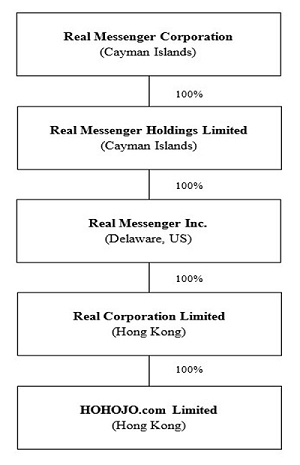
| D. | Property, Plant and Equipment |
The Company’s principal place of business is located at 695 Town Center Drive, Suite 1200, Costa Mesa, CA 92626 and its telephone number is +1-657-408-8684.
ITEM 4A. UNRESOLVED STAFF COMMENTS
None.
ITEM 5. OPERATING AND FINANCIAL REVIEW AND PROSPECTS
Overview
During the fiscal year ended March 31, 2026, we develop and operate a technology platform for the real estate industry. Our platform provides customer relationship management (CRM), listing management, marketing tools, and communication infrastructure designed to support real estate brokerages and their agents. Our strategy is to partner with or acquire ownership interests in real estate brokerages and integrate those brokerages into our technology platform. By doing so, we are able to deploy our technology across the brokerage’s entire agent base, which drives high adoption rates and enables us to generate recurring technology service fees.
Through our proprietary real estate technology platform, we provide brokerages and their agents with an integrated operating system for managing listings, customer relationships, communications, and marketing activities. The platform is designed to serve as the central infrastructure through which agents manage transactions and client engagement.
We intend to generate revenue through two primary sources: (i) brokerage-related income, including gross commission income generated by brokerages in which we hold ownership interests; and (ii) technology service fees, which are recurring fees charged to brokerages and agents for the use of our software platform, including CRM, listing management systems, and related technology tools. Our strategy is to align our technology platform with brokerage ownership so that all agents within those brokerages operate on our platform, enabling consistent adoption and recurring technology revenue. In addition, we currently generate limited consultancy service income through an engagement arrangement providing digital marketing and technology advisory services.
| 47 |
For the year ended March 31, 2026, we generated $29,472 revenue and reported net losses of $4.1 million. For the years ended March 31, 2025 and 2024, we did not generate revenue, and reported net losses of $3.4 million and $4.9 million, respectively. These results reflect our continued investment in technology development, product innovation, and business infrastructure, in advance of revenue recognition from brokerage acquisitions and SaaS deployment.
As we continue executing our strategic plan, we expect our cost base to evolve toward acquisition-related expenses, platform support, and global integration efforts. Over time, we believe that we will generate revenue and that our revenue mix will shift toward a balance of commission-based brokerage income and recurring subscription revenue from our software suite.
Key Operating Metrics
In line with our transition to a revenue-generating operating platform, our management team has revised the key metrics used to evaluate business performance. We no longer consider consumer-facing metrics—such as downloads, app session time, or user engagement—as relevant indicators of financial or operational success. Instead, we now focus on business fundamentals that align with our scalable brokerage model and technology monetization strategy.
Our primary metrics will include:
| ● | Real Estate Transaction Commission Revenue, as an indicator of brokerage production and market share; | |
| ● | Agent Count through acquisitions, direct recruitment, or other means; | |
| ● | Commission Revenue per Agent, which we expect will reflect unit-level economics excluding corporate overhead; | |
| ● | Agent Retention Rate, which we expect will reflect desirability of agents to remain in our platform; | |
| ● | Technology Adoption Rate across our acquired brokerages, which measures the integration and utility of our proprietary software suite; | |
| ● | User Revenue to be generated in the future from all agents and others who use our paid technology services; and, | |
| ● | Inside Sales and Ecosystem Revenue to be generated in the future from agents within our brokerage ecosystem who subscribe to and pay for services proprietary to the Company ecosystem for Company brokers. |
We believe these key metrics will provide a clearer and more actionable view of our operational performance, resource allocation, and growth trajectory.
A. OPERATING RESULTS
Strategic Shift to Revenue-Generating Operations
In the fiscal year 2026, the Company initiated a strategic pivot from a pre-revenue, growth-stage technology company into an acquisition-led real estate operating platform. This transition reflects shifting investor preferences and evolving macroeconomic conditions. Our focus is now on acquiring and integrating cash-flowing brokerages, monetizing agents through software subscriptions, and increasing operational leverage through a proprietary real estate technology stack. This repositioning marks a fundamental shift in how we define growth and financial sustainability. On March 25, 2026, the Company entered into a non-binding memorandum of understanding with a publicly traded U.S. real estate brokerage company (the “Brokerage”) to explore the integration of the Company’s platform, including CRM functionality, messaging and communication systems, listing management software, lead generation tools, transaction management capabilities, and analytics, into the Brokerage’s agent network. If implemented and subject to the execution of a definitive agreement by the parties, the collaboration could result in the deployment of the Company’s technology across a portion or all of the Brokerage’s agent base under a commercial licensing and services framework.
The real estate industry is undergoing structural change. High interest rates have significantly reduced transaction volume, resulting in widespread brokerage consolidation. Simultaneously, litigation and regulatory reforms are forcing a re-examination of agent compensation structures and value delivery. We believe these pressures will accelerate the bifurcation of the market—favoring either low-cost digital models or high-touch, brand-centric teams. Our multi-model platform is designed to support both, allowing us to capture agent migration and retention in ways that traditional brokerages cannot.
| 48 |
Factors Affecting the Group’s Performance and Related Trends
Our business, financial condition and results of operations have been, and are expected to continue to be, affected by a number of factors, which primarily include the following:
Our ability to successfully deploy our technology platform across brokerages and generate recurring technology service fees.
Our ability to grow revenue depends on our success in integrating brokerages onto our platform and generating recurring technology services fees from agents operating within those brokerages. We may introduce significant changes to our existing products or develop and introduce new and unproven products that we have little or no prior development or operating experience. If new or enhanced products fail to engage our users and members, we may fail to attract or retain users or to generate sufficient revenue, operating margin, or other value to justify our investments, any of which may seriously harm our business.
Adoption of our technology platform depends on the willingness of real estate brokerages and agents to integrate our software tools into their daily workflow, including listing management, customer relationship management, and transaction coordination. These new behaviors are not always intuitive to users. This can create a lag in adoption of new products and new user additions related to new products. To date, this has not hindered our user growth or engagement, but that may be the result of a large portion of our user base being in a younger demographic and more willing to invest the time to learn to use our products most effectively. To the extent that future users, including those in older demographics, are less willing to invest the time to learn to use our products, and if we are unable to make our products easier to learn to use, our user growth or engagement could be affected, and our business could be harmed. We may develop new products that increase user engagement and costs without increasing revenue.
Our ability to expand our brokerage partnerships and increase the number of agents operating on our platform.
We continue to invest in the development of software tools designed to improve brokerage operations, agent productivity, and listing distribution across our technology ecosystem. Our ability to expand depends on acquiring or partnering with additional brokerages and onboarding their agents onto our platform, and on retaining the agents and management of the brokerages we integrate. We do not seek to monetize every feature of our platform, and we may not achieve a balance that continues to attract and retain brokerages and agents. If we are unable to grow our brokerage relationships and agent base, or to maintain good relations with the brokerages and agents on our platform, our agent adoption and engagement and our business may be seriously harmed. In addition, we may expend significant resources to launch new services that we are unable to monetize, which may seriously harm our business.
Our ability to expand our technology ecosystem and enhance the functionality of our CRM, listing management system, and brokerage operating tools.
The industry for residential real estate transaction services, technology, and information marketplaces is dynamic, and the expectations and behaviors of customers and consumers shift constantly and rapidly. As part of our operating strategy, we have increased, and plan in the future to continue to change, the nature and number of products, including depth products, that we offer to our customers and, with that, the prices we charge our customers for the services and products we offer. Changes or additions to our products and services may not attract or engage our customers, and may reduce confidence in our products and services, negatively impact the quality of our brands, negatively impact our relationships with partners or other industry participants, expose us to increased market or legal risks, subject us to new laws and regulations or otherwise harm our business. Our customers may not accept new products and services (which would adversely affect our average revenue per agent (“ARPA”)), or such price increases may not be absorbed by the market, or our price increases may result in the loss of customers or the loss of some of our customers’ business. We may not successfully anticipate or keep pace with industry changes, and we may invest considerable financial, personnel and other resources to pursue strategies that do not ultimately prove effective such that our results of operations and financial condition may be harmed. If we are not able to raise our prices or encourage our customers to upgrade their subscription packages or invest in depth products to further differentiate their listings, or if we lose some of our customers or some of our customers’ business as a result of price increases, or if the bargaining power of our customer base increases and the subscription prices and other fees we are able to charge real estate developer or agent customers decline, our business, financial condition and results of operations could be adversely affected.
| 49 |
Our ability to operate in a highly competitive and rapidly changing industry.
We face competition from real estate technology platforms, brokerage software providers, and real estate marketplaces that provide tools for brokerages and agents. The markets for online real estate information technology, communication and productivity tools product and services in the markets we serve are highly competitive and rapidly changing. Our business is subject to the risk of digital and other disruption. Our success depends on our ability to continue to attract and retain brokerages and agents to our platform. Existing or new competitors could increase their product offerings or develop new products or technology that compete with ours.
In addition, large real estate technology companies, listing portals, and brokerage networks may expand their technology offerings and compete with our platform for brokerage adoption and start to provide information technology, communication and productivity tools products and services on their existing or new platforms, which could increase competition in the markets we serve and may have a materially adverse effect on our business. These companies could devote greater technical and other resources than we have available, have a more accelerated time frame for deployment and leverage their existing brokerage and agent relationships and proprietary technologies to provide products and services that brokerages and agents might view as superior to our offerings. Any of our future or existing competitors may introduce different solutions that attract brokerages and agents or provide solutions similar to our own but with better branding or marketing resources. If we are unable to continue to grow the number of brokerages and agents that adopt our platform, our business, financial condition and results of operations could be adversely affected.
We compete to attract brokerages and agents with media sites, including but not limited to other companies that operate digital property classified marketplaces in our Priority Markets and agent and property developer websites. We also compete for a share of advertisers’ overall marketing budgets with traditional media such as television, magazines, newspapers and home/apartment guide publications. To compete successfully for customers against future and existing competitors, we must continue to invest resources in developing our platform and proving the effectiveness and relevance of our information technology, communication and productivity tools product and services. New business models frequently emerge in our industry and may require us to modify our own business model or offerings in order to continue to compete effectively. For example, we may in the future face new competition from digital companies that use data to buy properties instantly from sellers, renovate/repair and then re-sell the property online at a profit. Additionally, competitors may drive traffic away from our platform and increase their market share through aggressive or high-spend marketing campaigns, or prolonged price discounting.
Results Of Operations
| For the Years Ended March 31, | ||||||||||||
| 2026 | 2025 | 2024 | ||||||||||
| Revenues | $ | 29,472 | $ | - | $ | - | ||||||
| Cost of revenues | (14,304 | ) | - | - | ||||||||
| Gross profit | 15,168 | - | - | |||||||||
| Operating expenses | ||||||||||||
| Sales and marketing expenses | (244,353 | ) | (716,264 | ) | (1,771,614 | ) | ||||||
| General and administrative expenses | (3,247,350 | ) | (1,838,740 | ) | (1,657,879 | ) | ||||||
| Research and development expenses | (656,363 | ) | (832,565 | ) | (1,459,828 | ) | ||||||
| Total operating expenses | (4,148,066 | ) | (3,387,569 | ) | (4,889,321 | ) | ||||||
| Loss from operations | (4,132,898 | ) | (3,387,569 | ) | (4,889,321 | ) | ||||||
| Other income (expense) | ||||||||||||
| Other income | 17,831 | 24,644 | - | |||||||||
| Interest income | 22,640 | 82,268 | 12,743 | |||||||||
| Interest expense | - | (95,753 | ) | (22,428 | ) | |||||||
| Total other income (expense), net | 40,471 | 11,159 | (9,685 | ) | ||||||||
| Loss before income taxes | (4,092,427 | ) | (3,376,410 | ) | (4,899,006 | ) | ||||||
| Income tax expense | - | - | - | |||||||||
| Net loss | $ | (4,092,427 | ) | $ | (3,376,410 | ) | $ | (4,899,006 | ) | |||
The following table summarizes our results of operations for the fiscal years ended March 31, 2026 and 2025, and provides information regarding the dollar and percentage increase or (decrease) during such periods. This information should be read together with our consolidated financial statements and related notes included elsewhere in this Form 20-F.
| 50 |
Key Components of Results of Operations
Revenue
The Company currently generates one source of revenue:
| For the Years Ended March 31, | ||||||||||||||||||||||||
| Type of revenue sources | 2026 | 2025 | Changes | |||||||||||||||||||||
| US$ | % | US$ | % | Amount | % | |||||||||||||||||||
| Advisory services income | $ | 29,472 | 100 | % | $ | - | 0 | % | $ | 29,472 | 100 | % | ||||||||||||
Our revenue increased by $0.03 million, from $nil for the year ended March 31, 2025 to $0.03 million for the year ended March 31, 2026. The increase was mainly due to the advisory service fee received.
Cost of revenue
| For the Years Ended March 31, | ||||||||||||||||||||||||
| 2026 | 2025 | Changes | ||||||||||||||||||||||
| US$ | % | US$ | % | Amount | % | |||||||||||||||||||
| Cost of revenue | $ | 14,304 | 100 | % | $ | - | 0 | % | $ | 14,304 | 100 | % | ||||||||||||
Our cost of revenue increased by $14,304 from $nil for the year ended March 31, 2025 to $14,304 for the year ended March 31, 2026. The increase was mainly due to the staffs cost related to the above-mentioned advisory service.
Comparison of the Years Ended March 31, 2026 and 2025
Operating expenses
| For the years ended March 31, | Variance | |||||||||||||||
| 2026 | 2025 | Amount | % | |||||||||||||
| Sales and marketing expenses | 244,353 | 716,264 | (471,911 | ) | (66 | ) | ||||||||||
| General and administrative expenses | 3,247,350 | 1,838,740 | 1,408,610 | 77 | ||||||||||||
| Research and development expenses | 656,363 | 832,565 | (176,202 | ) | (21 | ) | ||||||||||
| Total | 4,148,066 | 3,387,569 | 760,497 | 22 | ||||||||||||
Sales and marketing expenses
Sales and marketing expenses primarily consist of marketing expenses incurred for promotion of our app. Our sales and marketing expenses decreased by $0.5 million, or 66% from $0.7 million for the year ended March 31, 2025 to $0.2 million for the year ended March 31, 2026. The decrease was mainly due to the decrease of human resource costs of marketing team and decreasing expenditure on content creation, social media revamp and online advertising.
General and administrative expenses
General and administrative expenses primarily consist of (i) staff costs consisting of salaries, social insurance, and housing funds for our personnel in administrative departments, (ii) professional service fees, such as audit fees, consultancy fees and legal fees for our daily operations, (iii) office rental expenses, and (iv) other miscellaneous expenses. Our general and administrative expenses increased by $1.4 million, or 77% from $1.8 million for the year ended March 31, 2025 to $3.2 million for the year ended March 31, 2026. The increase was primarily due to (i) the increase in consultancy fee of $0.52 million, (ii) the increase in legal and Nasdaq listing fee of US$0.34 million and (iii) the increase in directors’ fees, newly recruited administrative staff and the associated recruitment costs of US$0.2 million.
Research and development expenses
Research and development expenses primarily consist of staff costs including salaries, social insurance, and housing funds for our personnel in research and development departments, and (ii) other miscellaneous expenses.
| For the Years Ended March 31, | ||||||||||||||||||||||||
| 2026 | 2025 | Changes | ||||||||||||||||||||||
| US$ | % | US$ | % | Amount | % | |||||||||||||||||||
| Staff costs | $ | 511,421 | 77 | % | $ | 663,896 | 80 | % | $ | (152,475 | ) |
(23 | )% | |||||||||||
| Others | 144,942 | 23 | % | 168,669 | 20 | % | (23,727 | ) |
(14 | )% | ||||||||||||||
| Total | $ | 656,363 | 100 | % | $ | 832,565 | 100 | % | $ | (176,202 | ) |
(21 | )% | |||||||||||
Our research and development expenses decreased by approximately $0.2 million, or 21% from $0.8 million for the year ended March 31, 2025 to $0.6 million for the year ended March 31, 2026. The decrease was primarily due to the phase out of the data team and we reduced the spending on recruitment costs.
| 51 |
Taxation
Cayman Islands
Under the current tax laws of the Cayman, the Company is not subject to tax on its income or capital gains. In addition, no Cayman withholding tax will be imposed upon the payment of dividends by the Company to its shareholders.
The United States
For the U.S. jurisdiction, Real USA is subject to federal income taxes on its business operations at a statutory rate of 21%. Based on management’s analysis, no recent U.S. tax law changes have had a material impact on the Company’s effective tax rate. The Company will continue to monitor for any future tax legislation that could affect its operations.
As a result of the Tax Act, the Company has evaluated whether it has an additional tax liability from the Global Intangible Low Taxed Income (“GILTI”) inclusion on current earnings and profits of its foreign controlled corporations. The law also provides that corporate taxpayers may benefit from a 50% reduction in the GILTI inclusion, which effectively reduces the tax rate on the foreign income to 10.5%. The GILTI inclusion further provides for a foreign tax credit in connection with the foreign taxes paid. For the fiscal years ended March 31, 2026, 2025 and 2024, the Company does not have an aggregate positive tested income; and as such the Company did not record a liability for GILTI tax.
On July 4, 2025, the One Big Beautiful Act (“OBBBA”) was signed into law. The OBBBA made several key provisions of the Tax Cuts and Jobs Act of 2017 permanent, including 100% bonus depreciation, the immediate expensing of domestic research costs, and the introduction of a favorable modification to the business interest expense limitation. Together, these changes accelerate the timing of certain tax deductions in the current period that allow for reductions in cash taxes.
Hong Kong
According to Tax (Amendment) (No. 3) Ordinance 2018 published by Hong Kong government, from April 1, 2018, under the two-tiered profits tax rates regime, the profits tax rate for the first Hong Kong Dollar 2 million of assessable profits will be lowered to 8.25% (half of the rate specified in Schedule 8 to the Inland Revenue Ordinance (IRO)) for corporations, and the profits tax rate for remaining profits will be subjected to 16.5%. Real Corporation Limited and HOHOJO.com Limited were not subject to Hong Kong profit tax for any period presented as they did not have assessable profit during the periods presented. There are no withholding taxes in Hong Kong on remittance of dividends.
| 52 |
Comparison of the Years Ended March 31, 2025 and 2024
Operating expenses
| For the years ended March 31, | Variance | |||||||||||||||
| 2025 | 2024 | Amount | % | |||||||||||||
| Sales and marketing expenses | 716,264 | 1,771,614 | (1,055,350 | ) | (59.6 | ) | ||||||||||
| General and administrative expenses | 1,838,740 | 1,657,879 | 180,861 | 10.9 | ||||||||||||
| Research and development expenses | 832,565 | 1,459,828 | (627,263 | ) | (43.0 | ) | ||||||||||
| Total | 3,387,569 | 4,889,321 | (1,501,752 | ) | (30.7 | ) | ||||||||||
Sales and marketing expenses
Sales and marketing expenses primarily consist of marketing expenses incurred for promotion of our app. Our sales and marketing expenses decreased by approximately $1.1 million, or 59.6% from $1.8 million for the year ended March 31, 2024 to $0.7 million for the year ended March 31, 2025. The decrease was mainly due to decreasing expenditure on conference events sponsorship.
General and administrative expenses
General and administrative expenses primarily consist of (i) staff costs consisting of salaries, social insurance, and housing funds for our personnel in administrative departments, (ii) professional service fees, such as audit fees and legal fees for our daily operations, (iii) office rental expenses, and (iv) other miscellaneous expenses. Our general and administrative expenses increased by approximately $0.2 million, or 10.9% from $1.7 million for the year ended March 31, 2024 to $1.8 million for the year ended March 31, 2025. The increase was primarily due to an increase in legal and professional fees in related to the business combination transactions costs with Nova SPAC and the related listing expenses after the business combination transactions.
Research and development expenses
Research and development expenses primarily consist of staff costs including salaries, social insurance, and housing funds for our personnel in research and development departments, and other miscellaneous expenses. Our research and development expenses decreased by approximately $0.6 million, or 43.0% from $1.5 million for the year ended March 31, 2024 to $0.8 million for the year ended March 31, 2025. The decrease was primarily due to the reductions in headcounts which we closely monitored and controlled the expenditures in the research and development department.
Net loss
As a result of the foregoing, our net loss was approximately $3.4 million and $4.9 million for the years ended March 31, 2025 and 2024, respectively.
| 53 |
Discussion of Certain Balance Sheet Items
The following table sets forth selected information from our consolidated balance sheets as of the date indicated. This information should be read together with our consolidated financial statements and related notes included elsewhere in this 20-F.
| As of March 31, | ||||||||
| 2026 | 2025 | |||||||
| ASSETS | ||||||||
| Current assets | ||||||||
| Cash and cash equivalents | $ | 321,965 | $ | 2,575,225 | ||||
| Accounts receivable | 1,913 | - | ||||||
| Prepaid expenses and other current assets | 458,015 | 502,528 | ||||||
| Due from a related party | - | 714,527 | ||||||
| Total current assets | 781,893 | 3,792,280 | ||||||
| Non-current assets | ||||||||
| Property and equipment, net | 61,186 | 30,078 | ||||||
| Right-of-use assets, net | 152,284 | 228,439 | ||||||
| Total non-current assets | 213,470 | 258,517 | ||||||
| TOTAL ASSETS | $ | 995,363 | $ | 4,050,797 | ||||
| LIABILITIES AND SHAREHOLDERS’ EQUITY (DEFICIT) | ||||||||
| Current liabilities | ||||||||
| Due to a director - current | $ | 297,221 | $ | 37,512 | ||||
| Accrued expenses and other liabilities - current | 54,474 | 76,213 | ||||||
| Operating lease liabilities - current | 82,346 | 78,734 | ||||||
| Total current liabilities | 434,041 | 192,459 | ||||||
| Non-current liabilities | ||||||||
| Operating lease liabilities – non-current | 74,504 | 156,551 | ||||||
| Total non-current liabilities | 74,504 | 156,551 | ||||||
| TOTAL LIABILITIES | $ | 508,545 | $ | 349,010 | ||||
Cash and cash equivalents
Cash and cash equivalents consist of funds deposited with banks, which are highly liquid and are unrestricted as to withdrawal or use. The total balance of cash was $0.3 million and $2.6 million as of March 31, 2026 and 2025, respectively.
Compared with the balance as of March 31, 2025, the change in the balance of cash as of March 31, 2026 was primarily $1.6 million advance from a director, and $0.4 million repayments of borrowings from related parties, net off by $3.5 million used in operating activities.
| 54 |
Prepaid expenses and other current assets
As of March 31, 2026 and 2025, the breakdown of prepaid expenses and other current assets was as the following:
| As of March 31, | ||||||||
| 2026 | 2025 | |||||||
| Prepaid insurance expenses(i) | $ | 385,832 | $ | 376,678 | ||||
| Deposit | 30,183 | 73,350 | ||||||
| Other prepayments | 42,000 | 52,500 | ||||||
| $ | 458,015 | $ | 502,528 | |||||
| (i) | The prepaid insurance expenses represented prepaid insurance expense for our directors and executive officers. |
Due from a related party
Immediately after giving effect to the Business Combination, the Sponsor became a shareholder of the Company. In March and April 2024, the Sponsor issued promissory notes of $69,764, $69,763 and $575,000 to Real Messenger Corporation. Pursuant to the promissory notes, the advances were unsecured, non-interest bearing and Real Messenger Corporation has the right, but no obligation, to convert the advances, in whole or in part, into the ordinary shares of the Company with a conversion price of $10.00 per share. On June 2, 2025, the Company and the Sponsor entered into a new agreement that both parties agreed to convert the promissory notes due from the Sponsor of $714,527 as of March 31, 2025 into 316,004 shares of Class A ordinary share of the Company, at a conversion price of $2.26113 per share. On June 5, 2025, the Company, through Real Messenger exercised the right to convert all the promissory notes by receiving 316,004 shares of Class A ordinary share of the Company.
As of March 31, 2026 and 2025, the receivable balance due from a related party was $nil and $714,527, respectively.
Certain Related Party Transactions of RMSG
The following table summarizes our related party transactions during the periods presented.
| For the Years ended March 31, | ||||||||||||
| 2026 | 2025 | 2024 | ||||||||||
| Borrowings from related parties (a) | ||||||||||||
| Kwai Hoi, Ma | $ | - | $ | - | $ | 3,536,592 | ||||||
| Mui Ko | - | 449,877 | 1,409,014 | |||||||||
| $ | - | $ | 449,877 | $ | 4,945,606 | |||||||
| Repayment of borrowings from related parties | ||||||||||||
| Cash repayments to a director — Kwai Hoi, Ma | $ | 409,186 | $ | 615,969 | $ | 4,253,628 | ||||||
| Settlement via issuance of 1,837,680 Class B ordinary shares — Kwai Hoi, Ma: | 1,086,439 | - | - | |||||||||
| Mui Ko | - | 449,877 | 409,014 | |||||||||
| $ | 1,495,625 | $ | 1,065,846 | $ | 4,662,642 | |||||||
| Payment of operating expenses on behalf of the Company (b) | ||||||||||||
| Kwai Hoi, Ma | $ | 1,675,338 | $ | 593,263 | $ | 791,871 | ||||||
| Board Director fee | ||||||||||||
| Kwai Hoi, Ma | $ |
323,076 | $ | 121,795 | $ | - | ||||||
| Payment of SPAC extension fee | ||||||||||||
| Nova Pulsar Holding Limited | $ | - | $ | 69,763 | $ | - | ||||||
| Purchase of convertible promissory note issued by the Company | ||||||||||||
| TKO Investment Limited | $ | - | $ | 4,500,000 | $ | - | ||||||
| Fantastic Global Venture Limited | $ | - | $ | - | $ | 3,500,000 | ||||||
| Edinburgh DH Holdings Limited | $ | - | $ | - | $ | 1,000,000 | ||||||
| Payment of marketing expenses | ||||||||||||
| True Blue | $ | - | $ | - | $ | 451,613 | ||||||
| Purchase of property and equipment on behalf of the Company (b) | ||||||||||||
| Kwai Hoi, Ma | $ | - | $ | - | $ | 12,621 | ||||||
| Interest expense of convertible promissory notes - related parties | ||||||||||||
| Edinburgh DH Holdings Limited | $ | - | $ | 19,151 | $ | 12,951 | ||||||
| Fantastic Global Venture Limited | - | 67,027 | 4,382 | |||||||||
| $ | - | $ | 86,178 | $ | 17,333 | |||||||
| (a) | The borrowings from related parties were interest free and repayable on demand. |
| (b) | The payments of operating expenses, deferred offering costs and purchase of property and equipment on behalf of the Company were subject to repayments to Mr. Kwai Hoi, Ma. |
| 55 |
Balances with related parties
As of March 31, 2026 and 2025, the balances due from (to) related parties were as follows:
| As of March 31, | ||||||||
| 2026 | 2025 | |||||||
| Due from a related party (a) | ||||||||
| Nova Pulsar Holdings Limited | $ | - | $ | 714,527 | ||||
| Due to a director | ||||||||
| Kwai Hoi, Ma | $ | 297,221 | $ | 37,512 | ||||
Cash flows
The following table sets forth a summary of our cash flows for the periods indicated:
| For the Year Ended March 31, | ||||||||||||
| 2026 | 2025 | 2024 | ||||||||||
| Net cash used in operating activities | $ | (3,569,510 | ) | $ | (4,012,901 | ) | $ | (4,755,165 | ) | |||
| Net cash used in investing activities | (7,843 | ) | (69,764 | ) | (12,621 | ) | ||||||
| Net cash provided by financing activities | 1,266,152 | 6,112,058 | 5,087,456 | |||||||||
| Effect of exchange rate changes on cash | 57,941 | (51,328 | ) | 1,340 | ||||||||
| Net (decrease)/increase in cash | (2,253,260 | ) | 1,978,065 | 321,010 | ||||||||
| Cash at beginning of year | 2,575,225 | 597,160 | 276,150 | |||||||||
| Cash at end of year | $ | 321,965 | $ | 2,575,225 | $ | 597,160 | ||||||
Operating activities
Net cash used in operating activities for the year ended March 31, 2026 was $3.6 million, primarily attributable to net loss of $4.1 million, adjusted for (i) an increase in account receivables of $0.01 million, (ii) a stock-based compensation for consultancy service of $0.5 million and (iii) $0.1 million on the changes in depreciation, interest expense and amortization cost.
Net cash used in operating activities for the year ended March 31, 2025 was $4.0 million, primarily attributable to net loss of $3.4 million, adjusted for (i) an increase in prepaid expenses and other current assets of $0.5 million as a result of prepayments of $0.4 million insurance expense for directors and officer, and (ii) a decrease in accrued expenses and other liabilities of $0.1 million with decrease in operating expenses incurred.
Net cash used in operating activities for the year ended March 31, 2024 was $4.8 million, primarily attributable to net loss of $4.9 million.
Investing activities
For the year ended March 31, 2026, we had cash used in investing activities of $7,843 for purchase of property and equipment.
For the years ended March 31, 2025 and 2024, we had cash used in investing activities of $69,764 and $12,621, respectively, for promissory notes borrowed to a related party and purchase of property and equipment.
Financing activities
For the year ended March 31, 2026, the cash provided by financing activities was $1.3 million, which was primarily caused by advance $1.3 million from a director.
For the year ended March 31, 2025, the cash provided by financing activities was $6.0 million, which was primarily caused by the proceeds from convertible promissory notes from TKO Investments Limited and Compass AI Venture Incorporation in aggregate of $7.0 million and offset by payment of offering costs of $1.0 million and repayments of borrowings of $1.1 million to the related parties.
For the year ended March 31, 2024, the cash provided by financing activities was $5.1 million, which was primarily caused by proceeds of $4.0 million from convertible promissory notes and borrowings of $5.8 million from the related parties, partially offset by repayment of borrowings of $4.7 million to the related parties.
| 56 |
B. LIQUIDITY AND CAPITAL RESOURCES
Our consolidated financial statements have been prepared assuming that the Company will continue as a going concern. We suffered from continuous losses from operations since its inception and reported its accumulated deficit of $24.2 million at March 31, 2026. For the year ended March 31, 2026, the Company still did not generate any revenues from the launch of its online platform, however, the Company generated revenue of $0.03 million from the provision of advisory services during the year.
Our ability to continue as a going concern is dependent upon management’s ability to successfully execute its business plans including, generating revenue, controlling operating costs and expenses to achieve positive operating cash flows, and securing funding from external sources to support positive financing cash flows. As of March 31, 2026, our bank balance was $0.3 million, the operating cash outflow of the Company was $3.6 million.
The Company’s ability to continue as a going concern is dependent upon its ability to successfully execute its business plans including generating revenue, controlling operating costs and expenses to achieve positive operating cash flows, and securing funding from external sources to support positive financing cash flows. On June 8, 2026, the Company entered into securities purchase agreements with several investors, pursuant to which the Company agreed to issue and sell a total of 5,714,284 units, on a best-efforts basis, at an offering price of US$0.70 per unit. The Offering was closed on June 9, 2026 and resulted in aggregate gross proceeds of approximately US$4.0 million.
Management has evaluated this event in accordance with ASC 205-40 and believes that, when considered together with the Company’s existing cash position and planned cost optimization measures, the proceeds from the June 2026 offering provide the Company with sufficient liquidity to fund its operations for at least one year from the date the financial statements are issued. Accordingly, while the conditions described above initially raised substantial doubt about the Company’s ability to continue as a going concern, management believes the June 2026 offering has alleviated such doubt.
Lease Properties
The Group recognized and measured lease liabilities in accordance with ASU 2016-02 “Leases (Topic 842). The Group leases a commercial property in Hong Kong mainly for use as office space with a lease term of 3 years. The table below sets forth the breakdown of the Group’s lease liabilities as of the dates indicated:
| As of March 31, | ||||||||
| 2026 | 2025 | |||||||
| (US$) | (US$) | |||||||
| Current | 82,346 | 78,734 | ||||||
| Non-current | 74,504 | 156,551 | ||||||
| 156,850 | 235,285 | |||||||
The Group’s lease liabilities (comprising current and non-current liabilities) decreased approximately US$0.07 million from US$0.23 million as of March 31, 2025 to approximately US$0.16 million as of March 31, 2026, in line with the normal utilization of the lease tenure.
Capital Commitments
During the years ended March 31, 2026, 2025 and 2024, the Group did not have any capital expenditures incurred.
Off-Balance Sheet Arrangements
The Group has no off-balance sheet arrangements including arrangements that would affect its liquidity, capital resources, market risk support and credit risk support or other benefits.
| 57 |
Critical Accounting Policies, Judgments and Estimates
We prepare our consolidated financial statements in accordance with U.S. GAAP, which requires our management to make estimates that affect the reported amounts of assets, liabilities and disclosures of contingent assets and liabilities at the balance sheet dates, as well as the reported amounts of revenues and expenses during the reporting periods. To the extent that there are material differences between these estimates and actual results, our financial condition or results of operations would be affected. We base our estimates on our own historical experience and other assumptions that we believe are reasonable after taking account of our circumstances and expectations for the future based on available information. We evaluate these estimates on an ongoing basis.
Our expectations regarding the future are based on available information and assumptions that we believe to be reasonable, which together form our basis for making judgments about matters that are not readily apparent from other sources. Since the use of estimates is an integral component of the financial reporting process, our actual results could differ from those estimates. When reading our consolidated financial statements, you should consider our selection of critical accounting policies, the judgment and other uncertainties affecting the application of such policies and the sensitivity of reported results to changes in conditions and assumptions. Our critical accounting policies and practices include income taxes. Out of our significant accounting policies, which are described in Note 2—Summary of Significant Accounting Policies of our consolidated financial statements included elsewhere in this Registration Statement, certain accounting policies are deemed “critical”, as they require management’s highest degree of judgment, estimates and assumptions, including valuation allowance for deferred tax assets.
We consider an accounting estimate to be critical if: (i) the accounting estimate requires us to make assumptions about matters that were highly uncertain at the time the accounting estimate was made, and (ii) changes in the estimate that are reasonably likely to occur from period to period or use of different estimates that we reasonably could have used in the current period, would have a material impact on our financial condition or results of operations. We believe the following accounting estimates involve the most significant judgments used in the preparation of our financial statements.
Valuation allowance for deferred tax assets
We account for income taxes using the liability method in accordance with ASC 740, Income Taxes (“ASC 740”). Under the asset and liability method as required by this accounting standard, the recognition of deferred income tax liabilities and assets for the expected future tax consequences of temporary differences between the income tax basis and financial reporting basis of assets and liabilities.
Deferred tax assets are recognized to the extent that it is probable that taxable income to be utilized with prior net operating loss carried forwards. Deferred tax is calculated using tax rates that are expected to apply to the period when the asset is realized or the liability is settled. Deferred tax is charged or credited in the income statement, except when it is related to items credited or charged directly to equity. Deferred tax assets are reduced by a valuation allowance when, in the opinion of management, it is more likely than not that some portion or all of the deferred tax assets will not be realized. Current income taxes are provided for in accordance with the laws of the relevant taxing authorities.
We evaluate our valuation allowance requirements at end of each reporting period by reviewing all available evidence, both positive and negative, and considering whether, based on the weight of that evidence, a valuation allowance is needed. When circumstances cause a change in management’s judgement about the realizability of deferred tax assets, the impact of the change on the valuation allowance is generally reflected in income from operations. The future realization of the tax benefit of an existing deductible temporary difference ultimately depends on the existence of sufficient taxable income of the appropriate character within the carryforward period available under applicable tax law. As of March 31, 2026 and 2025, due to uncertainties surrounding future utilization, we accrued full valuation allowance against the deferred tax assets based upon management’s assessment as to their realization.
As of March 31, 2026 and 2025, the valuation allowance for deferred tax assets was $4.2 million and $3.7 million, respectively.
Recently Issued Accounting Pronouncements
Recently adopted accounting standard
In December 2023, the FASB issued ASU 2023-09, Improvement to Income Tax Disclosure. This standard requires more transparency about income tax information through improvements to income tax disclosures primarily related to the rate reconciliation and income taxes paid information. This standard also includes certain other amendments to improve the effectiveness of income tax disclosures. ASU 2023-09 is effective for public business entities, for annual periods beginning after December 15, 2024. For entities other than public business entities, the amendments are effective for annual periods beginning after December 15, 2025. Early adoption is permitted. As a public business entity, the Group adopted ASU 2023-09 effective on April 1, 2025 on a prospective basis on its consolidated financial statements.
| 58 |
Recently issued accounting standards not yet adopted
In November 2024, the FASB issued ASU No. 2024-03, Income Statement - Reporting Comprehensive Income - Expense Disaggregation Disclosures (Subtopic 220-40): Disaggregation of Income Statement Expenses (“ASU 2024-03”), and in January 2025, the FASB issued ASU No. 2025-01, Income Statement - Reporting Comprehensive Income - Expense Disaggregation Disclosures (Subtopic 220-40): Clarifying the Effective Date (“ASU 2025-01”). ASU 2024-03 requires additional disclosure of the nature of expenses included in the income statement as well as disclosures about specific types of expenses included in the expense captions presented in the income statement. ASU 2024-03, as clarified by ASU 2025-01, is effective for annual reporting periods beginning after December 15, 2026, and interim periods within annual reporting periods beginning after December 15, 2027. Both early adoption and retrospective application are permitted. The Company is currently evaluating the impact that the adoption of these standards will have on its consolidated financial statements.
In July 2025, the FASB issued ASU No. 2025-05, Financial Instruments — Credit Losses (Topic 326): Measurement of Credit Losses for Accounts Receivable and Contract Assets. The amendment provides (1) all entities with a practical expedient to assume that current conditions as of the balance sheet date do not change for the remaining life of the assets and (2) entities other than public business entities with an accounting policy election to consider collection activity after the balance sheet date when estimating expected credit losses for current accounts receivable and current contract assets arising from transactions accounted for under Topic 606. This guidance is effective for annual reporting periods beginning after December 15, 2025 and interim reporting periods within those annual reporting periods. Early adoption is permitted. The Company is currently evaluating the impact that the adoption of these standards will have on its consolidated financial statements.
In September 2025, the FASB issued ASU No. 2025-06, Intangibles—Goodwill and Other— Internal-Use Software (Subtopic 350-40): Targeted Improvements to the Accounting for Internal-Use Software. The amendments in this ASU are intended to improve the operability of the guidance by removing all references to software development project stages so that the guidance is neutral to different software development methods, including methods that entities may use to develop software in the future. Therefore, the amendments require that an entity capitalize software costs when both: Management has authorized and committed to funding the software project; and it is probable that the project will be completed and the software will be used to perform the function intended (referred to as the “probable-to-complete recognition threshold”). This guidance is effective for annual reporting periods beginning after December 15, 2027, and interim reporting periods within those annual reporting periods. Early adoption is permitted. The Company is currently evaluating the impact that the adoption of these standards will have on its consolidated financial statements.
In September 2025, the FASB issued ASU 2025-07, Derivatives and Hedging (Topic 815) and Revenue from Contracts with Customers (Topic 606): Derivatives Scope Refinements and Scope Clarification for Share-Based Noncash Consideration from a Customer in a Revenue Contract. The ASU clarifies derivative scope exceptions for certain contracts with underlying that are based on the operations or activities of one of the parties to the contract. The ASU also clarifies the applicability of ASC Topic 606, Revenue from Contracts with Customers, and its interaction with other ASC Topics (including ASC Topic 815 on derivatives and hedging and ASC Topic 321 on equity securities), in the accounting for share-based noncash consideration (such as warrants or shares) received from a customer for the transfer of goods or services. This guidance is effective for annual reporting periods beginning after December 15, 2026, and interim reporting periods within those annual reporting periods. Early adoption is permitted. The Company is currently evaluating the impact that the adoption of these standards will have on its consolidated financial statements.
In November 2025, the FASB issued ASU 2025-08, Financial Instruments—Credit Losses (Topic 326): Purchased Loans. The new ASU expands the population of acquired financial assets accounted for using the gross-up approach. Acquired loans (excluding credit cards) are deemed purchased seasoned loans and accounted for using the gross-up approach upon acquisition if criteria established by the new guidance are met. This change aims to enhance comparability, consistency, and better reflect the economics of acquiring financial assets. This guidance is effective for annual reporting periods beginning after December 15, 2026, and interim reporting periods within those annual reporting periods. Early adoption is permitted. The Company is currently evaluating the impact that the adoption of these standards will have on its consolidated financial statements.
In November 2025, the FASB issued ASU 2025-09, Derivatives and Hedging (Topic 815): Hedge Accounting Improvements. The ASU enables entities to apply hedge accounting to a greater number of highly effective economic hedges in the following five areas, (1) Similar Risk Assessment for Cash Flow Hedges: The ASU expands the hedged risks permitted to be aggregated in a group of individual forecasted transactions, enabling entities to apply hedge accounting to potentially broader portfolios of forecasted transactions; (2) Hedging Forecasted Interest Payments on Choose-Your-Rate Debt Instruments: The ASU establishes a model that enables hedge accounting to be applied more broadly to choose-your-rate debt and address existing diversity in practice; (3) Cash Flow Hedges of Nonfinancial Forecasted Transactions: The ASU expands hedge accounting for forecasted purchases and sales of nonfinancial assets subject to certain criteria; (4) Net Written Options as Hedging Instruments: The ASU accommodates differences in the loan and swap markets that resulted from reference rate reform, eliminating the requirement for the net written option test in certain instances; and (5) Foreign-Currency-Denominated Debt Instrument as Hedging Instrument and Hedged Item (Dual Hedge): The ASU eliminates the recognition and presentation mismatch related to a dual hedge strategy (that is, a hedge for which a foreign-currency-denominated debt instrument is both designated as the hedging instrument in a net investment hedge and designated as the hedged item in a fair value hedge of interest rate risk). This guidance is effective for annual reporting periods beginning after December 15, 2027, and interim reporting periods within those annual reporting periods for entities other than public business entities. Early adoption is permitted. The Company is currently evaluating the impact that the adoption of these standards will have on its consolidated financial statements.
In December 2025, the FASB issued ASU No. 2025-11, Interim Reporting (Topic 270): Narrow-Scope Improvements. This update clarifies the applicability, form and content, and interim disclosure requirements in ASC Topic 270 and enhances navigability of the interim reporting guidance. The amendments are effective for interim reporting periods within annual reporting periods beginning after December 15, 2027, for public business entities and after December 15, 2028, for entities other than public business entities. Early adoption is permitted. The Company is currently evaluating the impact that the adoption of these standards will have on its consolidated financial statements.
In December 2025, the FASB issued ASU 2025-12, Codification Improvements, which updates the FASB Accounting Standards Codification to clarify, correct errors, and improve the overall usability of GAAP. The improvements consist of narrow-scope amendments, technical corrections, clarification of existing guidance, and updates to clarify the appropriate scope and application of certain disclosure requirements. ASU 2025-12 is effective for annual and interim periods beginning after December 15, 2026. Early adoption is permitted. The Company is currently evaluating the impact that the adoption of these standards will have on its consolidated financial statements.
C. RESEARCH AND DEVELOPMENT, PATENTS AND LICENSES, ETC.
See “Item 4. Information on the Company—Business Overview—Intellectual Property.”
D. TREND INFORMATION.
Other than as disclosed elsewhere in this annual report, we are not aware of any trends, uncertainties, demands, commitments, or events that are reasonably likely to have a material effect on our net revenue, income from continuing operations, profitability, liquidity, or capital resources, or that would cause reported financial information not necessarily to be indicative of future operating results or financial condition.
E. CRITICAL ACCOUNTING ESTIMATES
See “Item 5. Operating and Financial Review and Prospects — Critical Accounting Policies, Judgments And Estimates.”
| 59 |
ITEM 6. DIRECTORS, SENIOR MANAGEMENT AND EMPLOYEES
| A. | Directors and Executive Officers |
Our directors and executive officers are as follows:
| Name | Age | Position(s) | ||
| Kwai Hoi Ma | 48 | Chief Executive Officer and Chairman | ||
| Elaine Yee Ling Ho | 52 | Acting Chief Financial Officer | ||
| Felix Ko(1) | 47 | Independent Director | ||
| David Wai Keung Chung (1) | 60 | Independent Director | ||
| Chun Fung Horace Ma(1) | 55 | Independent Director |
| (1) | Member of the Audit Committee, Compensation Committee and Nominating and Corporate Governance Committee. |
Mr. Kwai Hoi Ma (Mr. Thomas Ma) has served as our Chief Executive Officer and Chairman of the Board of Directors following the consummation of the Business Combination. Mr. Ma is a founder of RMSG. He has served as RMSG’s (and its affiliates’) Chief Executive Officer and as Chairman of the Board, since their respective dates of incorporation. Mr. Ma was raised in both Hong Kong and the United Kingdom, affording him a distinct global perspective that Real Messenger believes helps it both address local needs and expand its influence internationally. Mr. Ma and his family are deeply entrenched in Hong Kong’s banking and real estate industries, with Tai Sang Bank, founded by his family in 1961. This background has instilled in him a profound entrepreneurial spirit and a business mindset, enabling him to make significant strides in the real estate sector. After obtaining his degree from The University of Manchester in the United Kingdom in 1999, Mr. Ma embarked on his professional journey with Arthur Andersen, where he honed his skills from 1999 to 2001. Subsequently, he joined his family businesses, leveraging his expertise to foster growth in the banking and real estate sectors. Over a decade of immersion in this industry have helped him cultivate an in-depth understanding of the market dynamics and the evolving needs of consumers. In 2010, Mr. Ma founded HOHOJO, a trailblazing rental marketplace. He formed Real Messenger mobile application in 2018, with a focus on transforming the real estate sector and providing tools for real estate agents to excel in their work.
Ms. Elaine Yee Ling Ho has served as our acting Chief Financial Officer following the consummation of the Business Combination. Ms. Ho is also RMSG’s Acting Chief Financial Officer. Ms. Ho has over 20 years working experience in professional accounting firm, MNCs and Private Equity Funds. Ms. Ho joined RMSG as Financial Controller since February 2023. In this capacity, Ms. Ho is responsible for overseeing the finance and accounting function of the group companies. Before joining RMSG, Ms. Ho spent majority of her professional career in the PE Fund industry. She was the Vice President, Finance at Phoenix Property Investors and was responsible for the Fund administration and finance operation of a number of reputable PE Funds in the Asia Pacific region. She also worked at Tencent, where her role was Fund Financial Controller and responsible for overseeing the PE Fund investments from Tencent’s investment portfolio. Ms. Ho is a Certified Public Accountant and a member of The Hong Kong Institute of Certified Public Accountants. She obtained her Bachelor of Accounting and Master’s degree in Finance from The Hong Kong University of Science and Technology.
| 60 |
Mr. Felix Ko has served as our Independent Director since February 2025. Mr. Ko is a highly accomplished consultant based in London with over two decades of experience in financial services, chartered accounting, and talent acquisition. Over the past 14 years, Mr. Ko has specialized in talent acquisition and insights within the financial services sector, helping global clients design cost-effective talent strategies. Since 2023, he has been a director of Future Crest Ltd. From 2020 to 2023, he was the Head of Financial Services Practice in Parkhouse Bell, specializing in business development and talent research. Prior to that, he worked as a client partner at Armstrong Craven from 2017 to 2019, also specializing in business development and talent research. As a Fellow of the Institute of Chartered Accountants in England and Wales (ICAEW) and a member of the Chartered Alternative Investment Analyst (CAIA) Association, Mr. Ko will bring exceptional financial expertise and strategic insight to the board. Mr. Ko began his career in London, completing his Chartered Accountant qualification while working in auditing. He later joined JP Morgan as an Associate in 2006, where he gained extensive experience in investment banking operations, risk management, and financial strategy. Mr. Ko graduated with a Bachelor of Arts in Economics from the University of Manchester in the United Kingdom in 2000.
Mr. David Wai Keung Chung has served as our Independent Director following the consummation of the Business Combination. Mr. Chung has served as RMHL’s Independent Director since March 2021. Mr. Chung is a seasoned technologist, entrepreneur, and policymaker with over 30 years of experience. He is a strong advocate for impact investment and has held senior management positions in leading multinational, Hong Kong, and mainland enterprises such as Cyberport, Microsoft, and Jardine Pacific. He has also led the expansion of several technology startups into international markets. Currently, Professor Chung is an Adjunct Professor in the Department of Computer Science at City University and the Founder and Chief Impact Officer of ImpactD Limited. He previously served as the Under Secretary for Innovation and Technology Bureau of the HKSAR for two terms. In recognition of his contributions to the field, he was awarded the Iconic Star - IFTA FinTech and Innovation Award 2021/22 and was named Top CIO of Greater China by CEO/CIO magazine in 2013. Professor Chung is actively involved in various high-level advisory committees in the academic, professional, and community arenas. He has served as a member of the Consumer Council and Expert Group on Cloud Computing Services and Standards. Professor Chung holds a Doctorate in Engineering Management from City University of Hong Kong, an MBA from Open University of Hong Kong, a Postgraduate Diploma in Business Management from Chinese University of Hong Kong, and a Bachelor of Science (Engineering) in Computer Science from Imperial College London.
Mr. Chun Fung Horace Ma has served as our Independent Director following the consummation of the Business Combination. Mr. Ma has served as RMHL’s Independent Director since March 2021. Mr. Ma has over 20 years of experience in senior management, audit, compliance and finance in the technology and consumer sectors. Mr. Ma is currently the chief financial officer of S. Culture Holdings (BVI) Limited, where he joined in 2011 to lead the company to a successful IPO on the Hong Kong Stock Exchange in July 2013. Prior to joining S. Culture Holdings (BVI) Limited, Mr. Ma was the Group Financial Controller of Samvo Strategic Holdings Limited, an online gaming company licensed out of London, England from 2009 to 2010. Prior to Samvo Strategic Holdings Limited, Mr. Ma founded Protiviti Hong Kong, a leading independent risk consulting firm in 2003. Mr. Ma’s core clients focused in technology, telecom and real estate sectors. Mr. Ma started his formal professional training in Arthur Andersen Hong Kong in 1993. He has been a Certified Public Accountant (Practicing) registered with the Hong Kong Institute of Certified Public Accountants since 2003, a fellow member of the Association of Chartered Certified Accountants since 2004, a Certified Internal Auditor registered with the Institute of Internal Auditors since 2005 and holder of Certification of Control Self-Assessment of the Institute of Internal Auditors since 2006. Mr. Ma graduated with a Master of Science in Finance (2004) and Bachelor of Business Administration and Professional Accountancy (1993) conferred by The Chinese University of Hong Kong and Bachelor of Laws External Programme (2001) conferred by the University of London.
| B. | Compensation |
Decisions with respect to the compensation of RMSG’s executive officers, including its named executive officers, will be made by the compensation committee of the Board. The actual compensation of the named executive officers will depend on the judgment of the members of the compensation committee and may differ from that set forth in the following discussion.
| 61 |
For so long as we qualify as a foreign private issuer, we are not required to comply with the proxy rules applicable to U.S. domestic companies, including the requirement applicable to emerging growth companies to disclose the compensation of our executive officers on an individual, rather than an aggregate basis.
For the fiscal year ended March 31, 2026, we paid an aggregate of $332,307 to our directors and executive officers to compensate for their services and accrued an aggregate of $105,519 in compensation to our independent directors and executive officers. We have not set aside any amount to provide pension, retirement or other similar benefits to our executive officers and directors. We do not have any equity incentive plan in place as of the date of this annual report.
Our Hong Kong subsidiary, Real Corporation Hong Kong, is required by law to make contributions equal to certain percentage of each employee’s salary for his or her Mandatory Provident Fund Scheme.
| C. | Board Practices |
Board of Directors
The Board consists of four directors, including three independent directors, namely Mr. Felix Ko, Mr. David Wai Keung Chung, and Mr. Chun Fung Horace Ma. A director is not required to hold any shares in RMSG to qualify as a director.
Board Committees
The Board has established an audit committee, a compensation committee and a nomination and governance committee, which have the responsibilities and authority necessary to comply with applicable Nasdaq and SEC rules. The audit committee is comprised of Mr. Felix Ko, Mr. David Wai Keung Chung, and Mr. Chun Fung Horace Ma. The compensation committee is comprised of Mr. Felix Ko, Mr. David Wai Keung Chung, and Mr. Chun Fung Horace Ma. The nomination and governance committee is comprised of Mr. Felix Ko, Mr. David Wai Keung Chung, and Mr. Chun Fung Horace Ma. We have adopted a charter for each of these committees that complies with Nasdaq rules. The Board may establish other committees as it deems necessary or appropriate from time to time.
Audit Committee
Mr. Felix Ko, Mr. David Wai Keung Chung, and Mr. Chun Fung Horace Ma serve as members of the audit committee of the Company (the “Audit Committee”). Mr. Chun Fung Horace Ma serves as the chair of the Audit Committee. Each of the members of the Audit Committee satisfies all independence requirements under the applicable rules and regulations of the SEC and Nasdaq. Our Board has determined that Mr. Chun Fung Horace Ma possesses accounting or related financial management experience that qualifies him as an “audit committee financial expert” as defined by the rules and regulations of the SEC and Nasdaq.
The Audit Committee oversees our accounting and financial reporting processes and the audits of our financial statements. The Audit Committee is generally responsible for, among other things:
| ● | appointing the independent auditors and pre-approving all auditing and non-auditing services permitted to be performed by the independent auditors; | |
| ● | reviewing with the independent auditors any audit problems or difficulties and management’s response; | |
| ● | discussing the annual audited financial statements with management and the independent auditors; | |
| ● | reviewing the adequacy and effectiveness of our accounting and internal control policies and procedures and any steps taken to monitor and control major financial risk exposures; | |
| ● | reviewing and approving all proposed related party transactions; | |
| ● | meeting separately and periodically with management and the independent auditors; and | |
| ● | monitoring compliance with our code of business conduct and ethics, including reviewing the adequacy and effectiveness of our procedures to ensure proper compliance. |
| 62 |
Compensation Committee
Mr. Chun Fung Horace Ma, Mr. David Wai Keung Chung and Mr. Felix Ko serve as members of the compensation committee of the Company (the “Compensation Committee”). Mr. Felix Ko serves as the chair of the Compensation Committee. Each of the members of the Compensation Committee satisfies the independence requirements under the applicable rules and regulations of the SEC and Nasdaq.
The Compensation Committee is generally responsible for overseeing and making recommendations to the Board regarding the salaries and other compensation of our Executive Officers and general employees and providing assistance and recommendations with respect to our compensation policies and practices. The Compensation Committee is generally responsible for, among other things:
| ● | reviewing and approving annually the corporate goals and objectives applicable to the compensation of the chief executive officer, evaluating the chief executive officer’s performance at least annually, and determining and approving the chief executive officer’s compensation level based on this evaluation; | |
| ● | reviewing and approving the compensation of all other Executive Officers; | |
| ● | reviewing, approving and recommending incentive compensation plans and equity-based plans to the Board and shareholders of the Company for approval, and administering the Company’s incentive compensation plans and equity-based plans; | |
| ● | reviewing, approving and recommending employment agreements and severance arrangements or plans to the Board for approval; | |
| ● | reviewing all Director compensation and benefits for service on the Board and Board committees at least once a year, and recommending any changes to the Board as necessary; and | |
| ● | overseeing, in conjunction with the Nominating and Corporate Governance Committee, engagement with shareholders and proxy advisory firms on executive compensation matters. |
Nominating and Governance Committee
Mr. Chun Fung Horace Ma, Mr. David Wai Keung Chung and Mr. Felix Ko serve as members of the nominating and governance committee of RMSG (the “Nominating and Governance Committee”). Mr. David Wai Keung Chung serves as the chair of the Nominating and Governance Committee. Each of the members of the Nominating and Governance Committee satisfies all independence requirements under the applicable rules and regulations of the SEC and Nasdaq.
The Nominating and Governance Committee is generally responsible for identifying and proposing new potential director nominees to the Board for consideration and for reviewing our corporate governance policies. The Nominating and Governance Committee is generally responsible for, among other things:
| ● | determining the qualifications, qualities, skills, and other expertise required to be a Director, and developing and recommending to the Board the criteria to be considered in selecting director nominees for the Board’s approval; | |
| ● | identifying and screening individuals qualified to become members of the Board, and considering any director candidates recommended by the Company’s shareholders pursuant to the procedures described in the Company’s annual report; |
| 63 |
| ● | selecting and approving the director nominees to be submitted to a shareholder vote at the shareholders’ annual meeting, subject to approval by the Board; | |
| ● | developing and recommending to the Board a set of corporate governance guidelines applicable to the Company, reviewing these principles at least once a year and recommending any changes to the Board; | |
| ● | overseeing the Company’s corporate governance practices and procedures, including identifying best practices, and reviewing and recommending to the Board for approval any changes to the documents, policies and procedures in the Company’s corporate governance framework; | |
| ● | reviewing the Board’s committee structure and composition and to make recommendations to the Board annually regarding the appointment of directors to serve as members of each committee and committee chairmen; | |
| ● | if a vacancy on the Board and/or any Board committee occurs, identifying and making recommendations to the Board regarding the selection and approval of candidates to fill such vacancy either by election by shareholders or appointment by the Board; | |
| ● | developing and overseeing a Company orientation program for new Directors and a continuing education program for current Directors, periodically reviewing these programs and updating them as necessary; | |
| ● | reviewing, approving and overseeing any transaction between the Company and any related person on an ongoing basis in accordance with the Company’s related party transaction approval policy; | |
| ● | reviewing and discussing with management disclosure of the Company’s corporate governance practices; | |
| ● | developing and recommending to the Board for approval an officer succession plan, to review such succession plan periodically with the chief executive officer, developing and evaluating potential candidates for executive positions, and recommending to the Board any changes to and any candidates for succession under the succession plan. |
Duties and Functions of Directors
As a matter of Cayman Islands law, a director of a Cayman Islands company is in the position of a fiduciary with respect to the company and therefore it is considered that he owes the following duties to the company — a duty to act bona fide in the best interests of the company, a duty not to make a profit based on his or her position as director (unless the company permits him to do so) and a duty not to put himself in a position where the interests of the company conflict with his or her personal interest or his or her duty to a third party, and a duty to exercise powers for the purpose for which such powers were intended. A director of a Cayman Islands company owes to the company a duty to act with skill and care. It was previously considered that a director need not exhibit in the performance of his or her duties a greater degree of skill than may reasonably be expected from a person of his or her knowledge and experience. However, English and Commonwealth courts have moved towards an objective standard with regard to the required skill and care and these authorities are likely to be followed in the Cayman Islands. In fulfilling their duty of care to the Company, the directors must ensure compliance with our Amended and Restated Memorandum and Articles of Association. The Company has the right to seek damages if a duty owed by any of the directors is breached.
Terms of Directors and Officers
RMSG’s officers are appointed by and serve at the discretion of the Board. Each director holds office for the term fixed by the resolution of shareholders or the resolution of directors appointing him until such time as his successor takes office or until the earlier of his or her death, resignation or removal from office by resolution of directors with or without cause or by resolution of shareholders for cause. The directors may at any time appoint any person to be a director either to fill a vacancy or as an addition to the existing directors. Where the directors appoint a person as director to fill a vacancy, the term shall not exceed the term that remained when the person who has ceased to be a director ceased to hold office. A vacancy in relation to directors occurs if a director dies or otherwise ceases to hold office prior to the expiration of his term of office.
| 64 |
Interested Transactions
A director may, subject to any separate requirements for Audit Committee approval under applicable laws or applicable Nasdaq Stock Market Listing Rules, vote on a matter relating to the transaction in which he or she is interested, provided that the interest of any directors in such transaction is disclosed by him or her to all other directors.
| D. | Employees |
As of March 31, 2026, RMSG had 13 full-time employees, of whom 13, or 100% are based in Hong Kong.
The following table sets forth the number of its employees by function as of March 31, 2026.
| Function: | ||||
| Management | 4 | |||
| Operations | 8 | |||
| Finance | 1 | |||
| HR & Admin | 0 | |||
| Total | 13 | |||
| E. | Share Ownership |
The following table sets forth information regarding the beneficial ownership of our ordinary shares by:
| ● | each person or “group” (as such term is used in Section 13(d)(3) of the Exchange Act) known by us to be the beneficial owner of more than 5% of our ordinary shares; |
| ● | each of our current executive officers and directors; and |
| ● | all executive officers and directors of the Company as a group. |
The beneficial ownership of Ordinary Shares is based on 16,168,670 ordinary shares outstanding as of July 1, 2026. As of that date, the Company had 16,484,674 Ordinary Shares issued and 16,168,670 Ordinary Shares outstanding consisting of (i) 10,146,994 Class A Ordinary Shares issued and 9,830,990 Class A Ordinary Share outstanding, the difference of 316,004 shares being held in treasury stock; and (ii) 6,337,680 Class B Ordinary Shares issued and outstanding, includes 450,000 Class B Ordinary Shares that were holdback shares released from escrow on May 26, 2026.
On March 25, 2026, the Company entered into a Subscription Agreement (the “Subscription Agreement”) with Bloomington DH Holdings Limited. Pursuant to the Subscription Agreement, the Company issued to the Purchaser 1,837,680 Class B ordinary shares of the Company, at a price of US$0.5912 per Share.
On June 9, 2026, the Company completed a public offering of 5,714,284 units at an offering price of $0.7 per share pursuant to a securities purchase agreement dated June 8, 2026. Each Unit consists of one Class A ordinary share of the Company, or one pre-funded warrant to purchase one Class A Ordinary Share in lieu thereof, and one common warrant initially exercisable for the purchase of one Class A Ordinary Share.
Each Class A Ordinary Share is entitled to one vote and each Class B Ordinary Share is entitled to twenty-five votes.
Beneficial ownership is determined according to the rules of the SEC, which generally provide that a person has beneficial ownership of a security if he, she or it possesses sole or shared voting or investment power over that security, including options and warrants that are currently exercisable or exercisable within sixty (60) days.
| 65 |
Unless otherwise indicated, we believe that all persons named in the table have sole voting and investment power with respect to all of our ordinary shares beneficially owned by them, subject to applicable community property laws. Any our Ordinary Shares subject to options or warrants exercisable within 60 days of the consummation of this annual report are deemed to be outstanding and beneficially owned by the persons holding those options or warrants for the purpose of computing the number of shares beneficially owned and the percentage ownership of that person. They are not, however, deemed to be outstanding and beneficially owned for the purpose of computing the percentage ownership of any other person.
| Name and Address of Beneficial Owner as at July 1, 2026 (1) | Number of Shares | Percentage of Shares | Voting Power | |||||||||
| Five Percent or Greater Holders: | ||||||||||||
| Kwai Hoi, Ma(2) | 8,367,555 | 51.75 | % | 95.37 | % | |||||||
| Bloomington DH Holdings Limited(3) | 6,267,555 | 38.76 | % | 77.00 | % | |||||||
| Edinburgh DH Holdings Limited(4) | 1,400,000 | 8.66 | % | 17.95 | % | |||||||
| Fantastic Global Venture Limited(5) | 700,000 | 4.33 | % | 0.42 | % | |||||||
| Directors and Executive Officers: | ||||||||||||
| Kwai Hoi, Ma | 8,367,555 | 51.75 | % | 95.37 | % | |||||||
| Elaine Yee Ling Ho | — | — | % | — | ||||||||
| Wing-Ho Ngan | — | — | % | — | % | |||||||
| Felix Ko | — | — | % | — | % | |||||||
| Wai Keung David Chung | — | — | — | |||||||||
| Chun Fung Horace Ma | 20,000 | * | % | * | % | |||||||
| All Directors and Executive Officers as a group (6 individuals) | 8,387,555 | 51.88 | % | 95.38 | % | |||||||
* Less than 1%.
| (1) | Unless otherwise indicated, the business address of each of the individuals or entities is c/o 695 Town Center Drive, Suite 1200, Costa Mesa, CA 92626. |
| (2) | Includes (i) 5,137,680 Class B Ordinary Shares owned by Bloomington DH Holdings Limited, a holding company owned and controlled by Kwai Hoi, Ma; (ii) 1,129,875 Class A Ordinary Shares converted from promissory notes; (iii) 1,200,000 Class B Ordinary Shares and 200,000 Class A Ordinary Shares owned by Edinburgh DH Holdings Limited, a holding company owned and controlled by the spouse of Kwai Hoi, Ma of which the 200,000 Class A Ordinary Shares consist of 100,000 Class A Ordinary Shares transferred from Nova Pulsar Holdings Limited and 100,000 Class A Ordinary Shares issued upon the conversion of a 2023 Convertible Note purchased in the 2023 Private Placement; and (iv) 700,000 Class A Ordinary Shares owned by Fantastic Global Venture Limited, a holding company owned and controlled by the immediate family member of Kwai Hoi Ma. |
| (3) | Holding company owned and controlled by Kwai Hoi, Ma, who holds voting and/or dispositive power of the shares of the Company. |
| (4) | Holding company owned and controlled by the spouse of Kwai Hoi, Ma, who holds voting and/or dispositive power of the shares of the Company. |
| (5) | Holding company owned and controlled by an immediate family member of Kwai Hoi, Ma, who holds voting and/or dispositive power of the shares of the Company. |
ITEM 7. MAJOR SHAREHOLDERS AND RELATED PARTY TRANSACTIONS
| A. | Major Shareholders |
See “Item 6. Directors, Senior Management and Employees— E. Share Ownership.”
| B. | Related Party Transactions, Related Party Balances, and Convertible Promissory Notes with Related Parties |
| 66 |
Certain Related Party Transactions of RMSG
The following table summarizes our related party transactions during the periods presented.
| For the Years Ended March 31, | ||||||||||||
| 2026 | 2025 | 2024 | ||||||||||
| Borrowings from related parties (a) | ||||||||||||
| Kwai Hoi, Ma | $ | - | $ | - | $ | 3,536,592 | ||||||
| Mui Ko | - | 449,877 | 1,409,014 | |||||||||
| $ | - | $ | 449,877 | $ | 4,945,606 | |||||||
| Repayment of borrowings from related parties | ||||||||||||
| Cash repayments to a director — Kwai Hoi, Ma | $ | 409,186 | $ | 615,969 | $ | 4,253,628 | ||||||
| Settlement via issuance of 1,837,680 Class B ordinary shares — Kwai Hoi, Ma: | 1,086,439 | - | - | |||||||||
| Mui Ko | - | 449,877 | 409,014 | |||||||||
| $ | 1,495,625 | $ | 1,065,846 | $ | 4,662,642 | |||||||
| Payment of operating expenses of behalf of the Company (b) | ||||||||||||
| Kwai Hoi, Ma | $ | 1,675,338 | $ | 593,263 | $ | 791,871 | ||||||
| Board Director fee | ||||||||||||
Kwai Hoi, Ma |
$ | 323,076 | $ | 121,795 | $ | - | ||||||
| Payment of SPAC extension fee, as part of deferred offering costs | ||||||||||||
| Nova Pulsar Holdings Limited | $ | - | $ | 69,763 | $ | - | ||||||
| Purchase of convertible promissory note issued by the Company (c) | ||||||||||||
| TKO Investment Limited | $ | - | $ | 4,500,000 | $ | - | ||||||
| Fantastic Global Venture Limited | $ | - | $ | - | $ | 3,500,000 | ||||||
| Edinburgh DH Holdings Limited | $ | - | $ | - | $ | 1,000,000 | ||||||
| Payment of marketing expenses (d) | ||||||||||||
| True Blue | $ | - | $ | - | $ | 451,613 | ||||||
| Purchase of property and equipment on behalf of the Company (b) | ||||||||||||
| Kwai Hoi, Ma | $ | - | $ | - | $ | 12,621 | ||||||
| Interest expense of convertible promissory notes - related parties | ||||||||||||
| Edinburgh DH Holdings Limited | $ | - | $ | 19,151 | $ | 12,951 | ||||||
| Fantastic Global Venture Limited | - | 67,027 | 4,382 | |||||||||
| $ | - | $ | 86,178 | $ | 17,333 | |||||||
| (a) | The borrowings from related parties were interest free and repayable on demand. |
| (b) | The payments of operating expenses, deferred offering costs and purchase of property and equipment on behalf of us were subject to repayments to Mr. Kwai Hoi, Ma. |
| (c) | TKO Investment Limited was no longer considered as related parties since July 2025 as it was no longer a shareholder of the Company. |
| (d) | True Blue was no longer considered as related parties since April 29, 2024. |
Balances with related parties
As of March 31, 2026 and 2025, the balances due from (to) related parties were as follows:
| As of March 31, | ||||||||
| 2026 | 2025 | |||||||
| Due from a related party (a) | ||||||||
| Nova Pulsar Holdings Limited | $ | - | $ | 714,527 | ||||
| Due to related parties | ||||||||
| Kwai Hoi, Ma | $ | 297,221 | $ | 37,512 | ||||
| (a) | No longer considered as related parties since June 5, 2025. |
| C. | Interests of Experts and Counsel |
Not Applicable.
| 67 |
ITEM 8. FINANCIAL INFORMATION
| A. | Consolidated Statements and Other Financial Information |
See Item 18 of this Report.
| B. | Significant Changes |
Except as otherwise disclosed in this annual report, we have not experienced any significant changes since the date of our audited consolidated financial statements included herein.
ITEM 9. THE OFFER AND LISTING
| A. | Offer and Listing Details |
Our ordinary shares and warrants are listed on the Nasdaq Capital Market under the symbols “RMSG” and “RMSGW,” respectively.
| B. | Plan of Distribution |
Not applicable.
| C. | Markets |
Our ordinary shares and warrants are listed on the Nasdaq Capital Market under the symbols “RMSG” and “RMSGW,” respectively.
On May 6, 2026, the Company received a formal notification from the Listing Qualifications Staff of Nasdaq indicating that the Company has regained compliance with Nasdaq Listing Rule 5550(a)(2), which requires listed securities to maintain a minimum bid price of $1.00 per share (the “Nasdaq Minimum Bid Price Requirement”). The prior minimum bid price deficiency matter dated March 13, 2026 is now closed.
On July 22, 2026, the Company received a Nasdaq Letter from the staff at Nasdaq, notifying the Company that it is not in compliance with the requirement to maintain a minimum closing bid price of $1 per shares, as set forth in Nasdaq Listing Rule 5550(a)(2), because the closing bid price of the Company’s class A ordinary shares was below $1 per share for the last 30 consecutive business days (i.e. from June 8, 2026 to July 21, 2026). The Nasdaq Letter is only a notification of deficiency. It does not result in the immediate delisting and has no current effect on the listing or trading of the Company’s class A ordinary shares on the Nasdaq Capital Market at this time. The Company has 180 calendar days, or until January 19, 2027, to regain compliance with the minimum bid price requirement
| D. | Selling Shareholders |
Not applicable.
| E. | Dilution |
Not applicable.
| F. | Expenses of the Issue |
Not applicable.
ITEM 10. ADDITIONAL INFORMATION
| A. | Share Capital |
As of the date of this Report, we are authorized to issue 488,000,000 Class A Ordinary Shares of par value of $0.0001 each, and 12,000,000 Class B Ordinary Shares of par value of $0.0001 each.
Holders of Class A Ordinary Shares and Class B Ordinary Shares have the same rights except for voting and conversion rights. In respect of matters requiring a shareholder vote, each Class A Ordinary Shares will be entitled to one (1) vote and each Class B Ordinary Shares will be entitled to twenty-five (25) votes. The Class A Ordinary Shares are not convertible into shares of any other class. The Class B Ordinary Shares are convertible into Class A Ordinary Shares at any time after issuance at the option of the holder on a one-to-one basis.
As of March 31, 2026, 5,071,281 shares of Class A ordinary shares were issued and 4,755,277 shares of Class A ordinary shares were outstanding, among which 316,004 issued ordinary shares are treasury shares.
As of March 31, 2025, 4,821,281 shares of Class A ordinary shares were issued and outstanding.
As of March 31, 2026, 6,337,680 shares of Class B ordinary shares were issued and 5,887,680 shares of Class B ordinary shares were outstanding, among which 450,000 issued ordinary shares are holdback shares in escrow.
As of March 31, 2025, 4,500,000 shares of Class B ordinary shares were issued and 4,050,000 shares of Class B ordinary shares were outstanding, among which 450,000 issued ordinary shares are holdback shares in escrow.
The shares were subsequently released from escrow on May 26, 2026, in accordance with the escrow agreement, with no material claims deducted.
| B. | Memorandum and Articles of Association |
We are a Cayman Islands company incorporated under the laws of the Cayman Islands and our affairs are governed by our memorandum and articles of association, as amended and restated from time to time, and the Companies Act (As Revised) of the Cayman Islands.
The following are summaries of material provisions of our Amended and Restated Memorandum and Articles of Association and the Companies Act insofar as they relate to the material terms of our ordinary shares.
General. The Company’s authorized share capital is US$50,000 divided into 488,000,000 Class A Ordinary Shares of par value of $0.0001 each, and 12,000,000 Class B Ordinary Shares of par value of $0.0001 each. All of the Company’s issued and outstanding Ordinary Shares are fully paid and non-assessable. Certificates representing the ordinary shares are issued in registered form. The Company shall not issue shares or warrants to bearer. The Company’s shareholders who are non-residents of the Cayman Islands may freely hold and vote their ordinary shares.
| 68 |
Dividends. The holders of the Company’s Ordinary Shares are entitled to such dividends as may be declared by its the Company’s board of directors subject to the Company’s Amended and Restated Memorandum and Articles of Association and the Companies Act. In addition, such to any rights and restrictions for the time being attached to any shares, the Company’s shareholders may by ordinary resolution declare a dividend, but no dividend may exceed the amount recommended by its directors. The Company’s Amended and Restated Memorandum and Articles of Association provide that dividends may be declared and paid out of any funds of the Company lawfully available for distribution. Subject to the requirements of the Companies Act and the Company’s Amended and Restated Memorandum and Articles regarding the application of a company’s share premium account, dividends may also be declared and paid out of any share premium account. The directors when paying dividends to shareholders may make such payment either in cash or in specie. Unless provided by the rights attached to a share, no dividend shall bear interest. No dividend may be declared and paid unless the Company’s directors determine that, immediately after the payment, the Company will be able to pay its debts as they become due in the ordinary course of business and the Company has funds lawfully available for such purpose.
Voting Rights. In respect of all matters subject to a shareholders’ vote, each Company Class A Ordinary Share is entitled to one vote and each Company Class B Ordinary Share is entitled to twenty-five votes. Subject to any rights or restrictions as to voting attached to any shares, unless otherwise required under the Companies Act or by the Company’s Amended and Restated Memorandum and Articles of Association, holders of the Company’s Class A Ordinary Share and the Company’s Class B Ordinary Share shall at all times vote together as one class on all resolutions submitted to a vote by the shareholders of the Company. On a show of hands every shareholder of the Company who is present in person and every person representing a shareholder of the Company by proxy shall have one vote, and on a poll, every shareholder shall have one vote for each Class A Ordinary Share and twenty-five votes for each Class B Ordinary Share of which he or the person represented by proxy is the holder. In addition, unless the shares carry no right to vote, or unless a call or other amount presently payable has not been paid, all shareholders of the Company holding shares of a particular class are entitled to vote at a meeting of the holders of that class of shares. Votes may be given either in person or by proxy.
General Meetings. As a Cayman Islands exempted company, the Company is not obligated by the Companies Act to call shareholders’ annual general meetings; accordingly, the Company may, but shall not be obliged to, in each year hold a general meeting as an annual general meeting. Any annual general meeting held shall be held at such time and place as may be determined by the board of directors of the Company. All general meetings other than annual general meetings shall be called extraordinary general meetings.
The chairperson or a majority of directors of the Company (acting by a resolution of the Company’s board of directors) may convene general meetings whenever they think fit. General meetings of the Company shall also be convened on the written requisition of one or more of the shareholders of the Company entitled to attend and vote at the general meetings of the Company who (together) hold at least ten percent of the rights to vote at such general meeting in accordance with the notice provisions in the Company’s Amended and Restated Memorandum and Articles of Association, specifying the purpose of the meeting and signed by or on behalf of each of the shareholders of the Company making the requisition. If the directors of the Company do not convene such meeting within 21 calendar days’ from the date of deposit of the written requisition, those shareholders of the Company who requested the meeting or any of them representing more than one-half of the total voting rights of all of them, may convene the general meeting themselves within three months after the end of such period of 21 calendar days in which case reasonable expenses incurred by them as a result of the directors of the Company failing to convene a meeting shall be reimbursed by us.
At least 7 calendar days’ notice of a general meeting shall be given to shareholders of the Company entitled to attend and vote at such meeting. The notice shall specify the place, the date and the hour of the meeting and the general nature of that business. In addition, if a resolution is proposed as a special resolution, the text of that resolution shall be given to all shareholders. Notice of every general meeting shall also be given to the directors of the Company.
Subject to the Companies Act and with the consent of the shareholders of the Company who, individually or collectively, hold at least 90 percent of the voting rights of all those who have a right to vote at a general meeting, a general meeting may be convened on shorter notice.
| 69 |
A quorum shall consist of the presence (whether in person or represented by proxy) of (a) if the Company has only one shareholder: that shareholder; (b) if the Company has more than one shareholder, then (i) subject to requirement (ii) set forth below, two or more shareholders holding Class B Ordinary Share carrying the right to vote at such general meeting; or (ii) for so long as the Company’s shares are listed on a designated stock exchange, one or more shareholders of the Company holding shares that represent not less than one-third of the outstanding shares of the Company carrying the right to vote at such general meeting.
If, within 15 minutes from the time appointed for the general meeting, or at any time during the meeting, a quorum is not present, the meeting, if convened upon the requisition of shareholders, shall be cancelled. In any other case it shall stand adjourned to the same time and place seven days hence or to such other time or place as is determined by the directors of the Company. If a quorum is not present within fifteen minutes of the time appointed for the adjourned meeting, then the shareholders of the Company present in person or by proxy shall constitute a quorum.
The chairman at such meeting of the Company may, with the consent of a meeting at which a quorum is present, adjourn the meeting. When a meeting is adjourned for seven calendar days or more, notice of the adjourned meeting shall be given in accordance with the Company’s Amended and Restated Memorandum and Articles of Association.
At any general meeting a resolution put to the vote of the meeting shall be decided on a show of hands, unless a poll is (before, or on, the declaration of the result of the show of hands) demanded by the chairman of the meeting or by at least two shareholders having the right to vote on the resolutions or one or more shareholders present who together hold not at least ten percent of the voting rights of all those who are entitled to vote on the resolution. Unless a poll is so demanded, a declaration by the chairman as to the result of a resolution and an entry to that effect in the minutes of the meeting, shall be conclusive evidence of the outcome of a show of hands, without proof of the number or proportion of the votes recorded in favor of, or against, that resolution.
If a poll is duly demanded it shall be taken in such manner as the chairman of the meeting directs and the result of the poll shall be deemed to be the resolution of the meeting at which the poll was demanded.
In the case of an equality of votes, whether on a show of hands or on a poll, the chairman of the meeting at which the show of hands takes place or at which the poll is demanded, shall not be entitled to a second or casting vote.
Transfer of Ordinary Shares. Subject to the restrictions in the Company’s Amended and Restated Memorandum and Articles of Association as set out below, any of Company’s shareholders may transfer all or any of his or her ordinary shares by an instrument of transfer in the usual or common form or any other form approved by Company’s board of directors. The transferor shall be deemed to remain the holder of an Ordinary Share until the name of the transferee is entered into the register of members of the Company in respect of the relevant shares of the Company.
The Company’s board of directors may, in its absolute discretion, decline to register any transfer of any shares of the Company which is not fully paid up or on which the Company has a lien. The Company’s board of directors may also decline to register any transfer of any ordinary share unless:
| ● | the instrument of transfer is lodged with the Company, accompanied by the certificate for the shares of the Company to which it relates and such other evidence as Company’s board of directors may reasonably require to show the right of the transferor to make the transfer; | |
| ● | the instrument of transfer is in respect of only one class of shares of the Company; | |
| ● | the instrument of transfer is properly stamped, if required; | |
| ● | the Ordinary Share transferred is fully paid and free of any lien in favor of the Company; and | |
| ● | any fee related to the transfer has been paid to the Company; and | |
| ● | the transfer is not more than four joint holders. |
| 70 |
If the Company’s board of directors refuse to register a transfer they shall, within three months after the date on which the instrument of transfer was lodged, send to each of the transferor and the transferee notice of such refusal.
The registration of transfers may, on 14 calendar days’ notice being given by advertisement in such one or more newspapers or by electronic means, be suspended and the Company’s register of members closed at such times and for such periods as the Company’s board of directors may, in their absolute discretion, from time to time determine. The registration of transfers, however, shall not be suspended, and the Company’s register of members may not be closed, for more than 30 calendar days in any year.
Liquidation. If the Company is wound up, the Company’s shareholders may, subject to the Company’s Amended and Restated Memorandum and Articles of Association and any other sanction required by the Companies Act, pass a special resolution allowing the liquidator to do either or both of the following:
| ● | to divide in specie among the shareholders of the Company the whole or any part of the Company’s assets and, for that purpose, to value any assets and to determine how the division shall be carried out as between the Company’s shareholders or different classes of the Company’s shareholders; and/or | |
| ● | to vest the whole or any part of the assets in trustees for the benefit of the Company’s shareholders and those liable to contribute to the winding up. |
Redemption, Repurchase and Surrender of Ordinary Shares. Subject to the Companies Act and any rights for the time being conferred on the Company’s shareholders holding a particular class of shares, the Company may by action of the Company’s directors:
| ● | issue shares that are to be redeemed or liable to be redeemed, at the Company’s option or the Company’s shareholder holding those redeemable shares, on the terms and in the manner the Company’s directors determine before the issue of those shares; | |
| ● | with the consent by special resolution of the Company’s shareholders holding shares of a particular class, vary the rights attaching to that class of shares so as to provide that those shares are to be redeemed or are liable to be redeemed at the Company’s option on the terms and in the manner which the Company’s directors determine at the time of such variation; and | |
| ● | purchase all or any of the Company’s own shares of any class including any redeemable shares on the terms and in the manner which the Company’s directors determine at the time of such purchase. |
The Company may make a payment in respect of the redemption or purchase of its own shares in any manner authorized by the Companies Act, including out of any combination of capital, the Company’s profits and the proceeds of a fresh issue of shares.
When making a payment in respect of the redemption or purchase of shares, the Company’s directors may make the payment in cash or in specie (or partly in one and partly in the other) if so authorized by the terms of the allotment of those shares or by the terms applying to those shares, or otherwise by agreement with the shareholder holding those shares.
Variations of Rights of Shares. Whenever the Company’s capital is divided into different classes of shares, the rights attaching to any class of share (unless otherwise provided by the terms of issue of the shares of that class) may be varied either with the consent in writing of the holders of not less than two-thirds of the issued shares of that class, or with the sanction of a special resolution passed by a majority of not less than two-thirds of the holders of shares of the class voting in person or by proxy at a separate general meeting of the holders of shares of that class.
| 71 |
Unless the terms on which a class of shares was issued state otherwise, the rights conferred on the shareholder of the Company holding the Company’s shares of any class shall not be deemed to be varied by the creation or issue of further shares ranking pari passu with the existing shares of that class.
For the purposes of a separate class meeting, the directors may treat two or more or all the classes of Shares as forming one class of Shares if the directors consider that such classes of Shares would be affected in the same way by the proposals under consideration, but in any other case shall treat them as separate classes of Shares.
Inspection of Books and Records. Holders of the Company’s Ordinary Shares have no general right under Cayman Islands law to inspect or obtain copies of the Company’s register of members or its corporate records. However, the Company will provide its shareholders with annual audited financial statements. See “Where You Can Find Additional Information.”
Issuance of Additional Shares. The Company’s Amended and Restated Memorandum and Articles of Association authorize its board of directors to issue additional ordinary shares from time to time as its board of directors shall determine, to the extent of available authorized but unissued shares.
Anti-Takeover Provisions. Some provisions of the Company’s Amended and Restated Memorandum and Articles of Association may discourage, delay or prevent a change of control of the Company or management that shareholders may consider favorable, including provisions that authorize the Company’s board of directors to issue further Class A Ordinary Shares without any further vote or action by its shareholders.
| C. | Material Contracts |
| D. | Exchange Controls and Other Limitations Affecting Security Holders |
Under the laws of the Cayman Islands, there are currently no restrictions on the export or import of capital, including foreign exchange controls or restrictions that affect the remittance of dividends, interest or other payments to non-resident holders of our ordinary shares.
| E. | Taxation |
Cayman Islands Taxation
Under the current tax laws of the Cayman, the Company is not subject to tax on its income or capital gains. In addition, no Cayman withholding tax will be imposed upon the payment of dividends by the Company to its shareholders.
| 72 |
Hong Kong Taxation
According to Tax (Amendment) (No. 3) Ordinance 2018 published by Hong Kong government, from April 1, 2018, under the two-tiered profits tax rates regime, the profits tax rate for the first Hong Kong Dollar 2 million of assessable profits will be lowered to 8.25% (half of the rate specified in Schedule 8 to the Inland Revenue Ordinance (IRO)) for corporations, and the profits tax rate for remaining profits will be subjected to 16.5%. Real Corporation Limited and HOHOJO.com Limited were not subject to Hong Kong profit tax for any period presented as they did not have assessable profit during the periods presented. There are no withholding taxes in Hong Kong on remittance of dividends.
United States Taxation
For the U.S. jurisdiction, Real USA is subject to federal income taxes on its business operations at a statutory rate of 21%. Based on management’s analysis, no recent U.S. tax law changes have had a material impact on the Company’s effective tax rate. The Company will continue to monitor for any future tax legislation that could affect its operations.
As a result of the Tax Act, the Company has evaluated whether it has an additional tax liability from the Global Intangible Low Taxed Income (“GILTI”) inclusion on current earnings and profits of its foreign controlled corporations. The law also provides that corporate taxpayers may benefit from a 50% reduction in the GILTI inclusion, which effectively reduces the tax rate on the foreign income to 10.5%. The GILTI inclusion further provides for a foreign tax credit in connection with the foreign taxes paid. For the fiscal years ended March 31, 2026, 2025 and 2024, the Company does not have an aggregate positive tested income; and as such the Company did not record a liability for GILTI tax.
On July 4, 2025, the One Big Beautiful Act (“OBBBA”) was signed into law. The OBBBA made several key provisions of the Tax Cuts and Jobs Act of 2017 permanent, including 100% bonus depreciation, the immediate expensing of domestic research costs, and the introduction of a favorable modification to the business interest expense limitation. Together, these changes accelerate the timing of certain tax deductions in the current period that allow for reductions in cash taxes.
| 73 |
General
For purposes of this discussion, a “U.S. Holder” is a beneficial owner of our ordinary shares that is, for U.S. federal income tax purposes:
| ● | an individual who is a citizen or resident of the United States; | |
| ● | a corporation (or other entity taxable as a corporation for U.S. federal income tax purposes) created or organized in the United States or under the laws of the United States, any state thereof or the District of Columbia; | |
| ● | an estate, the income of which is subject to U.S. federal income taxation regardless of its source; or | |
| ● | a trust that (1) is subject to the primary supervision of a court within the United States and the control of one or more U.S. persons for all substantial decisions, or (2) has a valid election in effect under applicable U.S. Treasury regulations to be treated as a U.S. person. |
If a partnership (or other entity treated as a partnership for U.S. federal income tax purposes) is a beneficial owner of our ordinary shares, the tax treatment of a partner in the partnership will generally depend upon the status of the partner and the activities of the partnership. Partnerships holding our ordinary shares and their partners are urged to consult their tax advisors regarding an investment in our ordinary shares.
Taxation of Dividends and Other Distributions on our Ordinary Shares
Subject to the discussion below under “Passive Foreign Investment Company Rules,” any cash distributions (including the amount of any PRC tax withheld) paid on our ordinary shares out of our current or accumulated earnings and profits, as determined under U.S. federal income tax principles, will generally be includible in the gross income of a U.S. Holder as dividend income on the day actually or constructively received by the U.S. Holder. Because we do not intend to determine our earnings and profits on the basis of U.S. federal income tax principles, any distribution we pay will generally be treated as a “dividend” for U.S. federal income tax purposes. A non-corporate U.S. Holder will be subject to tax on dividend income from a “qualified foreign corporation” at a lower applicable capital gains rate rather than the marginal tax rates generally applicable to ordinary income provided that certain holding period requirements are met. A non -U.S. corporation (other than a corporation that is classified as a PFIC for the taxable year in which the dividend is paid or the preceding taxable year) will generally be considered to be a qualified foreign corporation (i) if it is eligible for the benefits of a comprehensive tax treaty with the United States that the U.S. Secretary of Treasury determines is satisfactory for purposes of this provision and includes an exchange of information program, or (ii) with respect to any dividend it pays on stock that is readily tradable on an established securities market in the United States, including NYSE American. It is unclear whether dividends that we pay on our ordinary shares will meet the conditions required for the reduced tax rate. However, in the event that we are deemed to be a PRC resident enterprise under the PRC Enterprise Income Tax Law, we may be eligible for the benefits of the United States -PRC income tax treaty. If we are eligible for such benefits, dividends we pay on our ordinary shares, would be eligible for the reduced rates of taxation described in this paragraph. You are urged to consult your tax advisor regarding the availability of the lower rate for dividends paid with respect to our ordinary shares. Dividends received on our ordinary shares will not be eligible for the dividends-received deduction allowed to corporations.
| 74 |
Dividends will generally be treated as income from foreign sources for U.S. foreign tax credit purposes and will generally constitute passive category income. Depending on the U.S. Holder’s individual facts and circumstances, a U.S. Holder may be eligible, subject to a number of complex limitations, to claim a foreign tax credit not in excess of any applicable treaty rate in respect of any foreign withholding taxes imposed on dividends received on our ordinary shares. A U.S. Holder who does not elect to claim a foreign tax credit for foreign tax withheld may instead claim a deduction, for U.S. federal income tax purposes, in respect of such withholding, but only for a year in which such U.S. Holder elects to do so for all creditable foreign income taxes. The rules governing the foreign tax credit are complex and their outcome depends in large part on the U.S. Holder’s individual facts and circumstances. Accordingly, U.S. Holders are urged to consult their tax advisors regarding the availability of the foreign tax credit under their particular circumstances.
Taxation of Sale or Other Disposition of Ordinary Shares
Subject to the discussion below under “Passive Foreign Investment Company Rules,” a U.S. Holder will generally recognize capital gain or loss upon the sale or other disposition of ordinary shares in an amount equal to the difference between the amount realized upon the disposition and the U.S. Holder’s adjusted tax basis in such ordinary shares. Any capital gain or loss will be long term if the ordinary shares have been held for more than one year and will generally be U.S.-source gain or loss for U.S. foreign tax credit purposes. Long-term capital gains of non-corporate taxpayers are currently eligible for reduced rates of taxation. In the event that gain from the disposition of the ordinary shares is subject to tax in the PRC, such gain may be treated as PRC-source gain under the United States-PRC income tax treaty. The deductibility of a capital loss may be subject to limitations. U.S. Holders are urged to consult their tax advisors regarding the tax consequences if a foreign tax is imposed on a disposition of our ordinary shares, including the availability of the foreign tax credit under their particular circumstances.
Passive Foreign Investment Company Rules
A non-U.S. corporation, such as our company, will be classified as a PFIC, for U.S. federal income tax purposes for any taxable year, if either (i) 75% or more of its gross income for such year consists of certain types of “passive” income or (ii) 50% or more of the value of its assets (determined on the basis of a quarterly average) during such year is attributable to assets that produce or are held for the production of passive income. For this purpose, cash and cash equivalents are categorized as passive assets and the company’s goodwill and other unbooked intangibles are taken into account as non-passive assets. Passive income generally includes, among other things, dividends, interest, rents, royalties, and gains from the disposition of passive assets. We will be treated as owning a proportionate share of the assets and earning a proportionate share of the income of any other corporation in which we own, directly or indirectly, more than 25% (by value) of the stock.
Based on our current composition of assets, subsidiaries and market capitalization (which will fluctuate from time to time), we do not expect to be or become a PFIC for U.S. federal income tax purposes. However, no assurance can be given in this regard because the determination of whether we will be or become a PFIC is a factual determination made annually that will depend, in part, upon the composition of our income and assets. Furthermore, the composition of our income and assets may also be affected by how, and how quickly, we use our liquid assets. Under circumstances where our revenue from activities that produce passive income significantly increase relative to our revenue from activities that produce non-passive income, or where we determine not to deploy significant amounts of cash for active purposes, our risk of becoming classified as a PFIC may substantially increase. In addition, because there are uncertainties in the application of the relevant rules, it is possible that the Internal Revenue Service may challenge our classification of certain income and assets as non-passive or our valuation of our tangible and intangible assets, each of which may result in our becoming a PFIC for the current or subsequent taxable years. If we were classified as a PFIC for any year during which a U.S. Holder held our ordinary shares, we generally would continue to be treated as a PFIC for all succeeding years during which such U.S. Holder held our ordinary shares even if we cease to be a PFIC in subsequent years, unless certain elections are made.
| 75 |
If we are classified as a PFIC for any taxable year during which a U.S. Holder holds our ordinary shares, and unless the U.S. Holder makes a mark -to-market election (as described below), the U.S. Holder will generally be subject to special tax rules that have a penalizing effect, regardless of whether we remain a PFIC, on (i) any excess distribution that we make to the U.S. Holder (which generally means any distribution paid during a taxable year to a U.S. Holder that is greater than 125 percent of the average annual distributions paid in the three preceding taxable years or, if shorter, the U.S. Holder’s holding period for the ordinary shares), and (ii) any gain realized on the sale or other disposition of ordinary shares. Under these rules,
| ● | the U.S. Holder’s gain or excess distribution will be allocated ratably over the U.S. Holder’s holding period for the ordinary shares; | |
| ● | the amount allocated to the current taxable year and any taxable years in the U.S. Holder’s holding period prior to the first taxable year in which we are classified as a PFIC (each, a “pre-PFIC year”), will be taxable as ordinary income; | |
| ● | the amount allocated to each prior taxable year, other than a pre-PFIC year, will be subject to tax at the highest tax rate in effect for individuals or corporations, as appropriate, for that year; and | |
| ● | an additional tax equal to the interest charge generally applicable to underpayments of tax will be imposed in respect of the tax attributable to each prior taxable year, other than a pre-PFIC year, of the U.S. Holder. |
If we are treated as a PFIC for any taxable year during which a U.S. Holder holds our ordinary shares, or if any of our subsidiaries is also a PFIC, such U.S. Holder would be treated as owning a proportionate amount (by value) of the shares of any lower-tier PFICs for purposes of the application of these rules. U.S. Holders are urged to consult their tax advisors regarding the application of the PFIC rules to any of our subsidiaries.
As an alternative to the foregoing rules, a U.S. Holder of “marketable stock” in a PFIC may make a mark-to-market election with respect to such stock, provided that such stock is “regularly traded” within the meaning of applicable U.S. Treasury regulations. If our ordinary shares qualify as being regularly traded, and an election is made, the U.S. Holder will generally (i) include as ordinary income for each taxable year that we are a PFIC the excess, if any, of the fair market value of ordinary shares held at the end of the taxable year over the adjusted tax basis of such ordinary shares and (ii) deduct as an ordinary loss the excess, if any, of the adjusted tax basis of the ordinary shares over the fair market value of such ordinary shares held at the end of the taxable year, but such deduction will only be allowed to the extent of the amount previously included in income as a result of the mark-to-market election. The U.S. Holder’s adjusted tax basis in the ordinary shares would be adjusted to reflect any income or loss resulting from the mark-to-market election. If a U.S. Holder makes a mark-to-market election in respect of a corporation classified as a PFIC and such corporation ceases to be classified as a PFIC, the U.S. Holder will not be required to take into account the gain or loss described above during any period that such corporation is not classified as a PFIC. If a U.S. Holder makes a mark-to-market election, any gain such U.S. Holder recognizes upon the sale or other disposition of our ordinary shares in a year when we are a PFIC will be treated as ordinary income and any loss will be treated as ordinary loss, but such loss will only be treated as ordinary loss to the extent of the net amount previously included in income as a result of the mark-to-market election.
Because a mark-to-market election cannot be made for any lower-tier PFICs that we may own, a U.S. Holder may continue to be subject to the PFIC rules with respect to such U.S. Holder’s indirect interest in any investments held by us that are treated as an equity interest in a PFIC for U.S. federal income tax purposes.
| 76 |
Furthermore, as an alternative to the foregoing rules, a U.S. Holder that owns stock of a PFIC generally may make a “qualified electing fund” election regarding such corporation to elect out of the PFIC rules described above regarding excess distributions and recognized gains. However, we do not intend to provide information necessary for U.S. Holders to make qualified electing fund elections which, if available, would result in tax treatment different from the general tax treatment for PFICs described above.
If a U.S. Holder owns our ordinary shares during any taxable year that we are a PFIC, the U.S. Holder must generally file an annual Internal Revenue Service Form 8621 and provide such other information as may be required by the U.S. Treasury Department, whether or not a mark-to-market election is or has been made. If we are or become a PFIC, you should consult your tax advisor regarding any reporting requirements that may apply to you.
You should consult your tax advisors regarding how the PFIC rules apply to your investment in our ordinary shares.
Non-U.S. Holders
Cash dividends paid or deemed paid to a Non-U.S. Holder with respect to the ordinary shares generally will not be subject to U.S. federal income tax unless such dividends are effectively connected with the Non-U.S. Holder’s conduct of a trade or business within the United States (and, if required by an applicable income tax treaty, are attributable to a permanent establishment or fixed base that such holder maintains or maintained in the United States).
In addition, a Non-U.S. Holder generally will not be subject to U.S. federal income tax on any gain attributable to a sale or other taxable disposition of the ordinary shares unless such gain is effectively connected with its conduct of a trade or business in the United States (and, if required by an applicable income tax treaty, is attributable to a permanent establishment or fixed base that such holder maintains or maintained in the United States) or the Non-U.S. Holder is an individual who is present in the United States for 183 days or more in the taxable year of such sale or other disposition and certain other conditions are met (in which case, such gain from U.S. sources generally is subject to U.S. federal income tax at a 30% rate or a lower applicable tax treaty rate).
Cash dividends and gains that are effectively connected with the Non-U.S. Holder’s conduct of a trade or business in the United States (and, if required by an applicable income tax treaty, are attributable to a permanent establishment or fixed base that such holder maintains or maintained in the United States) generally will be subject to regular U.S. federal income tax at the same regular U.S. federal income tax rates as applicable to a comparable U.S. Holder and, in the case of a Non-U.S. Holder that is a corporation for U.S. federal income tax purposes, may also be subject to an additional branch profits tax at a 30% rate or a lower applicable tax treaty rate.
Information Reporting and Backup Withholding
Certain U.S. Holders are required to report information to the Internal Revenue Service relating to an interest in “specified foreign financial assets,” including shares issued by a non-United States corporation, for any year in which the aggregate value of all specified foreign financial assets exceeds $50,000 (or a higher dollar amount prescribed by the Internal Revenue Service), subject to certain exceptions (including an exception for shares held in custodial accounts maintained with a U.S. financial institution). These rules also impose penalties if a U.S. Holder is required to submit such information to the Internal Revenue Service and fails to do so.
In addition, dividend payments with respect to our ordinary shares and proceeds from the sale, exchange or redemption of our ordinary shares may be subject to additional information reporting to the IRS and possible U.S. backup withholding. Backup withholding will not apply, however, to a U.S. Holder who furnishes a correct taxpayer identification number and makes any other required certification on IRS Form W-9 or who is otherwise exempt from backup withholding. U.S. Holders who are required to establish their exempt status generally must provide such certification on IRS Form W-9. U.S. Holders are urged to consult their tax advisors regarding the application of the U.S. information reporting and backup withholding rules.
Backup withholding is not an additional tax. Amounts withheld as backup withholding may be credited against your U.S. federal income tax liability, and you may obtain a refund of any excess amounts withheld under the backup withholding rules by filing the appropriate claim for refund with the IRS and furnishing any required information. We do not intend to withhold taxes for individual shareholders. However, transactions effected through certain brokers or other intermediaries may be subject to withholding taxes (including backup withholding), and such brokers or intermediaries may be required by law to withhold such taxes.
| 77 |
The preceding discussion of U.S. federal tax considerations is for general information purposes only. It is not tax advice. Each prospective investor should consult its own tax advisor regarding the particular U.S. federal, state, local and foreign tax consequences of purchasing, holding and disposing of our ordinary shares, including the consequences of any proposed change in applicable laws.
| F. | Dividends and Paying Agents |
Not applicable.
| G. | Statement by Experts |
Not applicable.
| H. | Documents on Display |
We are subject to certain of the informational filing requirements of the Exchange Act. Since we are a “foreign private issuer,” we are exempt from the rules and regulations under the Exchange Act prescribing the furnishing and content of proxy statements, and our officers, directors and principal shareholders are exempt from the reporting and “short-swing” profit recovery provisions contained in Section 16 of the Exchange Act, with respect to their purchase and sale of our shares. In addition, we are not required to file reports and financial statements with the SEC as frequently or as promptly as U.S. companies whose securities are registered under the Exchange Act. However, we are required to file with the SEC an Annual Report on Form 20-F containing financial statements audited by an independent accounting firm. The SEC also maintains a website at http://www.sec.gov that contains reports and other information that we file with or furnish electronically with the SEC.
| I. | Subsidiary Information |
Not applicable.
| J. | Subsidiary Information |
Not applicable.
ITEM 11. QUANTITATIVE AND QUALITATIVE DISCLOSURES ABOUT MARKET RISKS
We are a smaller reporting company as defined by Rule 12b-2 of the Securities Exchange Act of 1934, as amended, (the Exchange Act), and are not required to provide the information otherwise required under this item.
ITEM 12. DESCRIPTION OF SECURITIES OTHER THAN EQUITY SECURITIES
Not applicable.
| 78 |
PART II
ITEM 13. DEFAULTS, DIVIDEND ARREARAGES AND DELINQUENCIES
Not required
ITEM 14. MATERIAL MODIFICATIONS TO THE RIGHTS OF SECURITY HOLDERS AND USE OF PROCEEDS
Not required
ITEM 15. CONTROLS AND PROCEDURES
(a) Evaluation of Disclosure Controls and Procedures
Our Chief Executive Officer and our Chief Financial Officer have evaluated the effectiveness of our disclosure controls and procedures (as defined in Rules 13a-15(e) and 15d-15(e) under the Exchange Act) as of the end of the period covered by this Annual Report on Form 20-F. Our disclosure controls and procedures are designed to ensure that information we are required to disclose in reports that we file or submit under the Exchange Act is recorded, processed, summarized, and reported within the time periods specified in SEC rules and forms, and that such information is accumulated and communicated to our management, including our Chief Executive Officer and Chief Financial Officer, as appropriate, to allow timely decisions regarding required disclosure.
Based upon this evaluation, our chief executive officer and our chief financial officer have concluded that, as of March 31, 2026, our disclosure controls and procedures were ineffective. Such conclusion is due to the presence of material weakness in internal control over financial reporting as described below.
Internal Control over Financial Reporting
In connection with the preparation and external audit of our consolidated financial statements, we identified the following material weaknesses in our internal control over financial reporting as of and for the year ended March 31, 2026.
The material weaknesses identified relate to the following: (1) lack of sufficient financial reporting and accounting personnel with appropriate knowledge of U.S. GAAP and SEC reporting requirements to properly address certain accounting issues, and prepare and review financial statements and related disclosures in accordance with U.S. GAAP and SEC reporting requirements; (2) lack of comprehensive accounting policies and procedures manual in accordance with U.S. GAAP; and (3) lack of sufficient controls designed and implemented in IT environment and IT general control activities, which are mainly associated with areas of logical access management, change management, and cyber security management.
To remediate our identified material weaknesses, we plan to implement several measures to strengthen our internal control over financial reporting, including: (i) hiring additional qualified accounting personnel with relevant U.S. GAAP and SEC reporting experience and qualifications to strengthen our financial reporting function and to establish and maintain an appropriate financial and system control framework, (ii) implementing regular and continuous U.S. GAAP accounting and financial reporting training programs for our accounting and financial reporting personnel, and (iii) review of additional options to strengthen corporate governance.
The process of designing and implementing an effective financial reporting system is a continuous effort that requires us to anticipate and react to changes in our business and the economic and regulatory environments and to expend significant resources to maintain a financial reporting system that is adequate to satisfy our reporting obligations. See “Item 3. KEY INFORMATION — D. Risk Factors — Risks Relating to the Group’s Business and Industry — We have identified material weaknesses in our internal control over financial reporting. These material weaknesses could adversely affect our ability to report our results of operations and financial condition accurately and in a timely manner.”
(b) Management’s annual report on internal control over financial reporting.
Management is responsible for establishing and maintaining adequate internal control over financial reporting at the Company. The Company’s internal control over financial reporting is a process designed under the supervision of the Chief Executive Officer and Chief Financial Officer to provide reasonable assurance regarding the reliability of financial reporting and the preparation of financial statements for external reporting purposes in accordance with generally accepted accounting principles, and includes those policies and procedures that:
| ● | Pertain to the maintenance of records that, in reasonable detail, accurately and fairly reflect the transactions and dispositions of the assets of the Company; | |
| ● | Provide reasonable assurance that transactions are recorded as necessary to permit preparation of financial statements in accordance with generally accepted accounting principles, and that receipts and expenditures of the Company are being made only in accordance with authorizations of management and directors of the Company; and | |
| ● | Provide reasonable assurance regarding prevention or timely detection of unauthorized acquisition, use or disposition of the Company’s assets that could have a material effect on the financial statements. |
| 79 |
Because of its inherent limitations, internal control over financial reporting may not prevent or detect misstatements. Also, projections of any evaluation of effectiveness to future periods are subject to the risk that controls may become inadequate because of changes in conditions, or that the degree of compliance with the policies or procedures may deteriorate.
Under the supervision and with participation of our management, including our CEO and CFO, we conducted an evaluation of the effectiveness of our internal control over financial reporting based on criteria established in Internal Control – Integrated Framework (2013) issued by the Committee of Sponsoring Organizations of the Treadway Commission (“COSO”). Based on this evaluation, our management concluded that our internal control over financial reporting was not effective as of March 31, 2026.
(c) Attestation Report of the Registered Public Accounting Firm
This annual report on Form 20-F does not include an attestation report of the Company’s registered public accounting firm as we are a non-accelerated filer and an “emerging growth company” as defined under the JOBS Act.
(d) Changes in Internal Control over Financial Reporting
There were no changes in our internal controls over financial reporting that occurred during the period covered by this annual report that have materially affected, or are reasonably likely to materially affect, our internal control over financial reporting.
ITEM 16. [RESERVED]
Not required
ITEM 16A. AUDIT COMMITTEE FINANCIAL EXPERT
Our board of directors has determined that Mr. Chun Fung Horace Ma, an independent director and a member of our audit committee, qualifies as an “audit committee financial expert” within the meaning of the SEC rules and possesses financial sophistication within the meaning of the Nasdaq rules. Each member of our audit committee satisfies the requirements of Nasdaq rules and meet the independence standards under Rule 10A-3 under the Securities Exchange Act of 1934, as amended.
ITEM 16B. CODE OF ETHICS
We have adopted a code of business conduct and ethics, which is applicable to all of our directors, executive officers and employees and is publicly available. There were no amendments to our code of business conduct and ethics during the fiscal year ended March 31, 2026. We did not grant any waivers to the provisions of our code of business conduct and ethics during the fiscal year ended March 31, 2026.
ITEM 16C. PRINCIPAL ACCOUNTANT FEES AND SERVICES
Auditor Fees
The following table sets forth the aggregate fees by categories specified below in connection with certain professional services rendered by our principal external auditors, Marcum Asia CPAs LLP (“Marcum Asia”), the independent registered public accounting firm of the Company following the Business Combination, and RMHL since before the Business Combination. We did not pay any other fees to Marcum Asia during the periods indicated below.
| Year Ended March 31, | ||||||||
| Services | 2026 | 2025 | ||||||
| US$ | US$ | |||||||
| Audit Fees(1) | 240,620 | 295,253 | ||||||
Note:
| (1) | “Audit fees” means the aggregate fees billed in each of the fiscal years listed for professional services rendered by the independent registered public accounting firms for the audit of the annual financial statements and the review of the interim financial information, included in our Form 20-F, registration statements and other required filings with the SEC. We did not pay Marcum Asia for any other audit-related and tax fees in each of the fiscal years listed. |
The policy of our audit committee is to pre-approve all audit and non-audit services provided by our independent registered public accounting firm, including audit services, audit-related services and tax services as described above, other than those for de minimis services which are approved by the audit committee prior to the completion of the audit.
ITEM 16D. EXEMPTIONS FROM THE LISTING STANDARDS FOR AUDIT COMMITTEES
Not required
| 80 |
ITEM 16E. PURCHASES OF EQUITY SECURITIES BY THE ISSUER AND AFFILIATED PURCHASERS
None
ITEM 16F. CHANGE IN REGISTRANT’S CERTIFYING ACCOUNTANT
None
ITEM 16G. CORPORATE GOVERNANCE
As an exempted company incorporated in the Cayman Islands and listed on Nasdaq, we are subject to corporate governance listing standards of Nasdaq. However, Nasdaq rules permit a foreign private issuer like us to follow the corporate governance practices of its home country. Certain corporate governance practices in the Cayman Islands, which is our home country, may differ significantly from the Nasdaq corporate governance listing standards. We believe that our established practices in the area of corporate governance provide adequate protection to our shareholders. In this respect, we have voluntarily adopted a number of Nasdaq practices applicable to U.S. companies, such as having a majority of independent directors, establishing a compensation committee and a nominating and corporate governance committee each composed of independent directors, and adopting corporate governance guidelines. The following is, among others, the significant ways in which our corporate governance practices differ from those followed by U.S. domestic companies listed on Nasdaq, and which difference is permitted by Nasdaq rules for “foreign private issuers” such as us: we are exempt from certain provisions of the Exchange Act that are applicable to U.S. domestic public companies, including (i) the sections of the Exchange Act regulating the solicitation of proxies, consents or authorizations in respect of a security registered under the Exchange Act; (ii) the sections of the Exchange Act relating to liability for insiders who profit from trades made in a short period of time; and (iii) the rules under the Exchange Act requiring the filing with the SEC of quarterly reports on Form 10-Q containing unaudited financial and other specified information, or current reports on Form 8-K upon the occurrence of specified significant events. See “Item 3. Key Information—3.D. Risk Factors—— Because the Company is a foreign private issuer and is exempt from certain Nasdaq corporate governance standards applicable to U.S. issuers, you will have less protection than you would have if it were a domestic issuer..”
ITEM 16H. MINE SAFETY DISCLOSURE
Not applicable.
ITEM 16I. DISCLOSURE REGARDING FOREIGN JURISDICTIONS THAT PREVENT INSPECTIONS
Not applicable.
ITEM 16J. INSIDER TRADING POLICIES
Not applicable
ITEM 16K. CYBERSECURITY
Risk management and strategy
We
have developed and
| ● | risk assessments designed to help identify material cybersecurity risks to our critical systems, information, products, services, and our broader enterprise information technology environment; | |
| ● | the use of external service providers, where appropriate, to assess, test or otherwise assist with aspects of our security controls; | |
| ● | training and awareness programs for team members that include periodic and ongoing assessments to drive adoption and awareness of cybersecurity processes and controls; | |
| ● | a
cybersecurity incident response plan that includes procedures for responding to cybersecurity incidents; and a |
As
of the date of this Report, the Company has
As
part of our overall enterprise risk management program, we prioritize the identification and management of cybersecurity risk at several
levels.
As of the date of this Report, however, the Company has identified a material weakness in its internal control over financial reporting relating to the design and implementation of IT general controls, including in the areas of logical access management, change management, and cybersecurity management, which may impact the effectiveness of certain elements of the Company’s cybersecurity risk management program.
| 81 |
PART III
ITEM 17. FINANCIAL STATEMENTS
See “Item 18. Financial Statements.”
ITEM 18. FINANCIAL STATEMENTS
The consolidated financial statements Real Messenger Corporation are included at the end of this annual report.
ITEM 19. EXHIBITS
* Filed herewith
| 82 |
SIGNATURES
The registrant hereby certifies that it meets all of the requirements for filing on Form 20-F and that it has duly caused and authorized the undersigned to sign this report on its behalf.
| REAL MESSENGER CORPORATION | ||
| July 28, 2026 | By: | /s/ Kwai Hoi Ma |
| Name: | Kwai Hoi Ma | |
| Title: | Chief Executive Officer and Chairman of the Board of Directors | |
| 83 |
INDEX TO CONSOLIDATED FINANCIAL STATEMENTS
TABLE OF CONTENTS
| F-1 |

Report of Independent Registered Public Accounting Firm
To the Shareholders and Board of Directors of
Real Messenger Corporation
Opinion on the Financial Statements
Basis for Opinion
These financial statements are the responsibility of the Company’s management. Our responsibility is to express an opinion on the Company’s financial statements based on our audits. We are a public accounting firm registered with the Public Company Accounting Oversight Board (United States) (“PCAOB”) and are required to be independent with respect to the Company in accordance with the U.S. federal securities laws and the applicable rules and regulations of the Securities and Exchange Commission and the PCAOB.
We conducted our audits in accordance with the standards of the PCAOB. Those standards require that we plan and perform the audits to obtain reasonable assurance about whether the financial statements are free of material misstatement, whether due to error or fraud. The Company is not required to have, nor were we engaged to perform, an audit of its internal control over financial reporting. As part of our audits we are required to obtain an understanding of internal control over financial reporting but not for the purpose of expressing an opinion on the effectiveness of the Company’s internal control over financial reporting. Accordingly, we express no such opinion.
Our audits included performing procedures to assess the risks of material misstatement of the financial statements, whether due to error or fraud, and performing procedures that respond to those risks. Such procedures included examining, on a test basis, evidence regarding the amounts and disclosures in the financial statements. Our audits also included evaluating the accounting principles used and significant estimates made by management, as well as evaluating the overall presentation of the financial statements. We believe that our audits provide a reasonable basis for our opinion.
/s/ Marcum Asia CPAs LLP
We have served as the Company’s auditor since 2022. (Such date takes into account the acquisition of certain assets of Friedman LLP by Marcum Asia CPAs LLP effective September 1, 2022)
July 28, 2026
NEW YORK OFFICE ● 7 Penn Plaza ● Suite 830 ● New York, New York ● 10001
Phone 646.442.4845 ● Fax 646.349.5200 ● www.marcumasia.com
| F-2 |
REAL
MESSENGER CORPORATION AND SUBSIDIARIES
CONSOLIDATED BALANCE SHEETS
(Expressed in U.S. dollar (“US$”), except for the number of shares)
| As of March 31, | ||||||||
2026 |
2025 |
|||||||
| ASSETS | ||||||||
| Current assets | ||||||||
| Cash and cash equivalents | $ | $ | ||||||
| Accounts receivable | ||||||||
| Due from a related party | ||||||||
| Prepaid expenses and other current assets | ||||||||
| Total current assets | ||||||||
| Non-current assets | ||||||||
| Property and equipment, net | ||||||||
| Right-of-use assets, net | ||||||||
| Total non-current assets | ||||||||
| TOTAL ASSETS | $ | $ | ||||||
| LIABILITIES AND SHAREHOLDERS’ EQUITY | ||||||||
| Current liabilities | ||||||||
| Due to a director | $ | $ | ||||||
| Accrued expenses and other liabilities | ||||||||
| Operating lease liabilities - current | ||||||||
| Total current liabilities | ||||||||
| Non-current liabilities | ||||||||
| Operating lease liabilities – non-current | ||||||||
| Total non-current liabilities | ||||||||
| TOTAL LIABILITIES | ||||||||
| Commitments and contingencies | ||||||||
| Shareholders’ equity | ||||||||
| Class A Ordinary Share (par value $ per share, shares authorized; and shares issued as of March 31, 2026 and 2025, respectively; and outstanding as of March 31, 2026 and 2025, respectively) | ||||||||
| Class B Ordinary Share (par value $ per share, shares authorized; and shares issued as of March 31, 2026 and 2025, respectively; and outstanding as of March 31, 2026 and 2025, respectively (excluding holdback shares subject to surrender and forfeiture) | ||||||||
| Less: Class A Ordinary shares held in treasury, at cost; and shares as of March 31, 2026 and 2025, respectively | ( |
) | ||||||
| Additional paid-in capital | ||||||||
| Accumulated deficit | ( |
) | ( |
) | ||||
| Accumulated other comprehensive income | ||||||||
| Total shareholders’ equity | ||||||||
| TOTAL LIABILITES AND SHAREHOLDERS’ EQUITY | $ | $ | ||||||
The accompanying notes are an integral part of the consolidated financial statements.
| F-3 |
REAL
MESSENGER CORPORATION AND SUBSIDIARIES
CONSOLIDATED STATEMENTS OF OPERATIONS AND COMPREHENSIVE LOSS
(Expressed in U.S. dollar (“US$”), except for the number of shares)
| For the Years Ended March 31, | ||||||||||||
| 2026 | 2025 | 2024 | ||||||||||
| Revenues | $ | $ | $ | |||||||||
| Cost of revenues | ( |
) | ||||||||||
| Gross profit | ||||||||||||
| Operating expenses | ||||||||||||
| Sales and marketing expenses | ( |
) | ( |
) | ( |
) | ||||||
| General and administrative expenses | ( |
) | ( |
) | ( |
) | ||||||
| Research and development expenses | ( |
) | ( |
) | ( |
) | ||||||
| Total operating expenses | ( |
) | ( |
) | ( |
) | ||||||
| Loss from operations | ( |
) | ( |
) | ( |
) | ||||||
| Other income (expense) | ||||||||||||
| Other income, net | ||||||||||||
| Interest income | ||||||||||||
| Interest expense | ( |
) | ( |
) | ||||||||
| Total other income (expense), net | ( |
) | ||||||||||
| Loss before income taxes | ( |
) | ( |
) | ( |
) | ||||||
| Income tax expense | ||||||||||||
| Net loss | $ | ( |
) | $ | ( |
) | $ | ( |
) | |||
| Other comprehensive (loss) income | ||||||||||||
| Foreign currency translation adjustment | ( |
) | ( |
) | ||||||||
| Comprehensive loss | $ | ( |
) | $ | ( |
) | $ | ( |
) | |||
| Weighted average number of ordinary shares outstanding* | ||||||||||||
| Basic and diluted | # | # | ||||||||||
| Loss per share* | ||||||||||||
| Basic and diluted | $ | ) | $ | ) | $ | ) | ||||||
| # | |
| * |
The accompanying notes are an integral part of the consolidated financial statements.
| F-4 |
REAL
MESSENGER CORPORATION AND SUBSIDIARIES
CONSOLIDATED STATEMENTS OF CHANGES IN SHAREHOLDERS’ EQUITY (DEFICIT)
(Expressed in U.S. dollar (“US$”), except for the number of shares)
| Class A | Class B | Accumulated | Total | |||||||||||||||||||||||||||||||||||||
| Ordinary Shares | Ordinary Shares | Treasury Stock | Additional | Other | Stockholders’ | |||||||||||||||||||||||||||||||||||
| Number | Number | Number | Paid-in | Accumulated | Comprehensive | (deficit) | ||||||||||||||||||||||||||||||||||
of Shares* |
Amount | of Shares* |
Amount | of Shares | Amount |
Capital |
deficits |
income |
equity |
|||||||||||||||||||||||||||||||
| Balance at April 1, 2023 | $ | $ | $ | $ | $ | ( |
) | $ | $ | |
||||||||||||||||||||||||||||||
| Net loss for the year | - | - | - | ( |
) | ( |
) | |||||||||||||||||||||||||||||||||
| Foreign currency translation adjustment | - | - | - | |||||||||||||||||||||||||||||||||||||
| Balances at March 31, 2024 | ( |
) | ( |
) | ||||||||||||||||||||||||||||||||||||
| Reverse recapitalization | ( |
) | ( |
) | - | |||||||||||||||||||||||||||||||||||
| Issuance of ordinary shares for conversion of convertible promissory notes payable | - | - | ||||||||||||||||||||||||||||||||||||||
| Capitalization of deferred offering costs | - | - | - | ( |
) | ( |
) | |||||||||||||||||||||||||||||||||
| Foreign currency translation adjustment | - | - | - | ( |
) | ( |
) | |||||||||||||||||||||||||||||||||
| Net loss for the year | - | - | - | ( |
) | ( |
) | |||||||||||||||||||||||||||||||||
| Balances at March 31, 2025 | $ | $ | $ | $ | $ | ( |
) | $ | $ | |||||||||||||||||||||||||||||||
| Share issued for consultancy fee | - | - | ||||||||||||||||||||||||||||||||||||||
| Settlement in share received from promissory note receivable | ( |
) | - | ( |
) | ( |
) | ( |
) | |||||||||||||||||||||||||||||||
| Share issued for related party settlement | - | - | ||||||||||||||||||||||||||||||||||||||
| Foreign currency translation adjustment | - | - | - | ( |
) | ( |
) | |||||||||||||||||||||||||||||||||
| Net loss for the year | - | - | - | ( |
) | ( |
) | |||||||||||||||||||||||||||||||||
| Balances at March 31, 2026 | $ | $ | $ | ( |
) | $ | $ | ( |
) | $ | $ | |||||||||||||||||||||||||||||
| * |
The accompanying notes are an integral part of the consolidated financial statements.
| F-5 |
REAL
MESSENGER CORPORATION AND SUBSIDIARIES
CONSOLIDATED STATEMENTS OF CASH FLOWS
(Expressed in U.S. dollar, except for the number of shares)
| For the Years Ended March 31, | ||||||||||||
| 2026 | 2025 | 2024 | ||||||||||
| CASH FLOWS FROM OPERATING ACTIVITIES: | ||||||||||||
| Net loss | $ | ( |
) | $ | ( |
) | $ | ( |
) | |||
| Adjustments to reconcile net loss to net cash used in operating activities: | ||||||||||||
| Depreciation of property and equipment | ||||||||||||
| Interest expense on operating lease liabilities | ||||||||||||
| Amortization of right-of-use assets | ||||||||||||
| Stock-based compensation for consultancy service | ||||||||||||
| Changes in operating assets and liabilities: | ||||||||||||
| Account receivables | ( |
) | ||||||||||
| Prepaid expenses and other current assets | ( |
) | ||||||||||
| Accrued expenses and other liabilities | ( |
) | ( |
) | ||||||||
| Amount due to related party | ( |
) | ||||||||||
| Operating lease liabilities | ( |
) | ( |
) | ||||||||
| Net cash used in operating activities | ( |
) | ( |
) | ( |
) | ||||||
| CASH FLOWS FROM INVESTING ACTIVITIES: | ||||||||||||
| Promissory notes lent to a related party | ( |
) | ||||||||||
| Purchase of property and equipment | ( |
) | ( |
) | ||||||||
| Net cash used in investing activities | ( |
) | ( |
) | ( |
) | ||||||
| CASH FLOWS FROM FINANCING ACTIVITIES: | ||||||||||||
| Cash from reverse merger | ||||||||||||
| Borrowings from related parties | ||||||||||||
| Advance from a director | ||||||||||||
| Repayments of borrowings from a director | ( |
) | ( |
) | ( |
) | ||||||
| Proceeds from convertible promissory notes payable | ||||||||||||
| Payment of offering costs | ( |
) | ||||||||||
| Net cash provided by financing activities | ||||||||||||
| Effect of exchange rate changes on cash and cash equivalents | ( |
) | ||||||||||
| Net increase in cash and cash equivalents | ( |
) | ||||||||||
| Cash and cash equivalents at beginning of year | ||||||||||||
| Cash and cash equivalents at end of year | $ | $ | $ | |||||||||
| Supplementary cash flow information | ||||||||||||
| Cash paid for income taxes | $ | $ | $ | |||||||||
| Cash paid for interest | $ | $ | $ | |||||||||
| Cash received for interest | $ | $ | $ | |||||||||
| Supplemental disclosure of non-cash investing and financing activities | ||||||||||||
| Related party borrowing in exchange for convertible promissory notes | $ | $ | $ | |||||||||
| Settlement by shares received from promissory note receivable | $ | $ | $ | |||||||||
| Shares issued to settle related party loans | $ | $ | $ | |||||||||
| Shares issued to settle consultancy fee | $ | $ | $ | |||||||||
| ROU assets obtained in exchange for new operating lease liabilities | $ | $ | $ | |||||||||
| Reclassification of other receivable to due from a related party | $ | $ | $ | |||||||||
The accompanying notes are an integral part of the consolidated financial statements.
| F-6 |
REAL
MESSENGER CORPORATION AND SUBSIDIARIES
NOTES TO CONSOLIDATED FINANCIAL STATEMENTS
(Expressed in U.S. dollar, except for the number of shares)
| 1. | ORGANIZATION AND BUSINESS DESCRIPTION |
Real Messenger Corporation (the “Company”) was incorporated in the Cayman Islands on June 27, 2023 as an exempted company with limited liability for the purpose of effecting the business combination with Nova Vision Acquisition Corp. (“Nova SPAC”) (the “Business Combination”). Nova SPAC was a blank check company incorporated on March 18, 2021 under the laws of the British Virgin Islands for the purpose of acquiring, engaging in a share exchange, share reconstruction and amalgamation, purchasing all or substantially all of the assets of, entering into contractual arrangements, or engaging in any other similar Business Combination and to serve as the publicly traded parent company of Real Messenger Holdings Limited (“Real Messenger”) following the Business Combination. The Business Combination was completed on November 19, 2024.
Real Messenger was incorporated on September 13, 2021 under the laws of the Cayman Islands (“Cayman”) as an exempted company with limited liability.
Real
Messenger owns
Real
USA owns
The Company and its subsidiaries operate an online marketplace that directly connects real estate agents with home buyers and sellers, through its social network application namely “Real”. The Company also provides advisory services that assist customers in the strategic use of their websites and social media platforms. During the fiscal year ended March 31, 2026, the Company commenced generating revenue from the advisory services (see Note 2 — Revenue Recognition for further details).
The Company and its subsidiaries are hereinafter referred to as (the “Company”).
| 2. | SUMMARY OF SIGNIFICANT ACCOUNTING POLICIES |
Basis of Presentation
The accompanying consolidated financial statements have been prepared in accordance with accounting principles generally accepted in the United States of America (“U.S. GAAP”) and pursuant to the rules and regulations of the Securities Exchange Commission (“SEC”).
Principles of Consolidation
The consolidated financial statements include the financial statements of the Company and its wholly owned subsidiaries. All intercompany transactions and balances among the Company and its subsidiaries have been eliminated upon consolidation.
Use of estimates
The preparation of financial statements in conformity with U.S. GAAP requires management to make estimates and assumptions that affect the reported amounts of assets and liabilities, disclosures of contingent assets and liabilities on the date of the financial statements, and the reported amounts of revenue and expenses during the reporting period. Actual results could differ from those estimates. On an ongoing basis, management reviews these estimates and assumptions using the currently available information. Changes in facts and circumstances may cause the Company to revise its estimates. The Company bases its estimates on past experience and on various other assumptions that are believed to be reasonable, the results of which form the basis for making judgments about the carrying values of assets and liabilities. Estimates are used when accounting for items and matters including but not limited to valuation allowance on deferred tax assets and other provisions and contingencies.
Cash
Cash
primarily consists of bank deposits, as well as highly liquid investments, with original maturities of three months or less, which are
unrestricted as to withdrawal and use. The Company maintains most of the bank accounts in Hong Kong. Each bank account in Hong Kong is
insured by the government authority with the maximum limit of HK$
| F-7 |
Operating leases
The Company adopts the Financial Accounting Standard Board (“FASB”) Accounting Standards Update (“ASU”) 2016-02, Leases (Topic 842) for all periods presented. This standard requires lessees to recognize lease assets (“right-of-use”) and related lease obligations (“lease liabilities”) on the consolidated balance sheet for leases with terms in excess of twelve months. For lease terms of twelve months or fewer, a lessee is permitted to make an accounting policy election not to recognize lease assets and liabilities.
The Company determines if an arrangement is a lease at inception. Operating leases are included in operating lease right-of-use (“ROU”) assets and operating lease liabilities in the consolidated balance sheets. Finance leases are included in finance lease ROU assets and finance lease liabilities in the consolidated balance sheets.
ROU assets represent the Company’s right to use an underlying asset for the lease term and lease liabilities represent the Company’s obligation to make lease payments arising from the lease. Operating lease and finance lease ROU assets and liabilities are recognized, based on the present value of lease payments over the lease term discounted using the rate implicit in the lease. In cases where the implicit rate is not readily determinable, the Company uses its incremental borrowing rate based on the information available at commencement date in determining the present value of lease payments. The incremental borrowing rate is the rate that the Company would have to pay to borrow, on a collateralized basis, an amount equal to the lease payments, in a similar economic environment and over a similar term. The Company depreciated the ROU assets on a straight-line basis from the lease commencement date to the earlier of the end of the useful life of the ROU assets or the end of the lease term. Lease expense for lease payments is recognized on a straight-line basis over the lease term.
Property and equipment
Property
and equipment primarily consist of office equipment, which is stated at cost less accumulated depreciation and impairment losses. Depreciation
is provided using the straight-line method based on the estimated useful life. The estimated useful life of office equipment is
Expenditures for repairs and maintenance, which do not materially extend the useful lives of the assets, are expensed as incurred. Expenditures for major renewals and betterments which substantially extend the useful life of assets are capitalized. The cost and related accumulated depreciation of assets disposed of or retired are removed from the accounts, and any resulting gain or loss is reflected in the consolidated statements of operations and other comprehensive loss in other income or expenses.
Impairment of long-lived assets
The
Company reviews long-lived assets for impairment whenever events or changes in circumstances indicate that the carrying amount of an
asset may not be recoverable. Recoverability of assets to be held and used is measured by a comparison of the carrying amount of an asset
to the future undiscounted net cash flows expected to be generated by the asset. If such assets are considered to be impaired, the impairment
recognized is measured by the amount by which the carrying amount of the assets exceeds the fair value of the assets.
Revenue recognition
The Company adopted Accounting Standards Update (“ASU”) No. 2014-09, Revenue from Contracts with Customers (Topic 606) (“ASU 2014-09”) using the full retrospective transition method.
The Company applies the following five steps in order to determine the appropriate amount of revenue to be recognized as it fulfills its obligations under each of its agreements:
| ● | identify the contract with a customer; | |
| ● | identify the performance obligations in the contract; | |
| ● | determine the transaction price; | |
| ● | allocate the transaction price to performance obligations in the contract; and | |
| ● | recognize revenue as the performance obligation is satisfied. |
Revenue is recognized when the Company satisfies its performance obligation under the contract by transferring the promised product to its customer that obtains control of the product and collection is reasonably assured. A performance obligation is a promise in a contract to transfer a distinct product or service to a customer. Most of the Company’s contracts have a single performance obligation, and such fees are billed to the customer when the performance obligation is satisfied. The Company recognizes such revenue in the period when the amounts are determined to be fixed and the performance obligation is satisfied as the Company completes the obligations.
| F-8 |
Advisory services income
The Company generates advisory services income from providing advisory services that assist customers in the strategic use of their websites and social medial platforms. Revenue from the provision of these services is recognized both over time and at point of time when the services are rendered to the customer in accordance with the terms of the relevant contracts. For certain contracts where the Company’s performance obligations are satisfied evenly over the contract term, the Company recognizes revenue on a straight-line basis over the service period, commonly referred to as the time-elapsed (lapse-of-time) method. This method is applied when the pattern of transfer of control to the customer is substantially uniform throughout the contract duration.
Principal vs Agent Considerations
When another party is involved in providing services to the client, the Company will apply the principal versus agent guidance in ASC 606 to determine if the Company is acting as the principal or an agent to the transaction. This evaluation determined that the Company is in control of establishing the transaction price, managing all aspects of the service term, and taking the risk of loss for delivery, collection, and returns. Based on the Company’s evaluation of the control model, it has determined that the Company acts as the principal rather than an agent within the revenue arrangements and such revenues are reported on a gross basis.
Revenue is measured as the amount of consideration the Company expects to receive in exchange for transferring products or providing services. As such, revenue is recorded net of returns, allowances, customer discounts, and incentives. Sales taxes and other taxes are excluded from revenues.
Disaggregation of Revenue
The Company has disaggregated its revenue from contracts with customers into categories based on the business operation of the revenue under ASC 606, as follows:
| For the Years Ended March 31, | ||||||||||||||
| Types of revenue | Point of recognition | 2026 | 2025 | 2024 | ||||||||||
| Advisory services income- point in time | Point in time | |||||||||||||
| Advisory services income- over time | Over time | |||||||||||||
| Total advisory services income | $ | $ | $ | |||||||||||
Research and development expenses
Research and development expenses consist primarily of salary and welfare for research and development personnel, software expenses and other expenses associated with research and development activities. Cost incurred for the internally developed platform and application during the planning and designing stage are expensed when incurred and are included in the research and development expenses. Costs incurred in the phase subsequent to establishing technological feasibility of such software and application are capitalized.
For
the fiscal years ended March 31, 2026, 2025 and 2024, no costs were qualified for capitalization. Research and development expenses were
$
The Company accounts for share-based awards issued to employees in accordance with ASC Topic 718 Compensation – Stock Compensation. Share-based awards granted are measured at fair value on grant date and share-based compensation expense is recognized (i) immediately at the grant date if no vesting conditions are required, or (ii) using the straight-line method over the requisite service period. For awards with performance conditions, the Company recognizes compensation cost if it is probable that the performance condition will be met. Forfeitures are recognized when they occur.
Employee benefits
All
salaried employees of the Company in Hong Kong are enrolled in a Mandatory Provident Fund Scheme (“MPF scheme”) under the
Hong Kong Mandatory Provident Fund Schemes Ordinance, within two months of employment. The MPF scheme is a defined contribution retirement
plan administered by an independent trustee. The Company makes regular contributions of
Income taxes
Income taxes are determined in accordance with the provisions of ASC Topic 740, “Income Taxes” (“ASC 740”). Under this method, deferred tax assets and liabilities are recognized for the future tax consequences attributable to differences between the consolidated financial statement carrying amounts of existing assets and liabilities and their respective tax basis. Deferred tax assets and liabilities are measured using enacted income tax rates expected to apply to taxable income in the years in which those temporary differences are expected to be recovered or settled. Any effect on deferred tax assets and liabilities of a change in tax rates is recognized in income in the period that includes the enactment date.
ASC 740 prescribes a comprehensive model for how companies should recognize, measure, present, and disclose in their consolidated financial statements uncertain tax positions taken or expected to be taken on a tax return. Under ASC 740, tax positions must initially be recognized in the consolidated financial statements when it is more likely than not the position will be sustained upon examination by the tax authorities. The Company recognizes accrued interest and penalties related to unrecognized tax benefits, if any, as income tax expense. There were no unrecognized tax benefits and no amounts accrued for interest and penalties as of March 31, 2026 and 2025. The Company is currently not aware of any issues under review that could result in significant payments, accruals or material deviation from its position.
The Company may be subject to potential examination by foreign taxing authorities in the area of income taxes. These potential examinations may include questioning the timing and amount of deductions, the nexus of income among various tax jurisdictions and compliance with foreign tax laws. The Company’s management does not expect that the total amount of unrecognized tax benefits will materially change over the next twelve months.
The Company’s tax provision is for the fiscal years ended March 31, 2026, 2025 and 2024.
| F-9 |
In accordance with ASC 260, Earnings Per Share, basic net earnings (loss) per share is computed by dividing net income (loss) attributable to ordinary shareholders by the weighted average number of unrestricted ordinary shares outstanding during the year using the two-class method. Under the two-class method, net income (loss) is allocated between ordinary shares and other participating securities based on dividends declared (or accumulated) and participating rights in undistributed earnings as if all the earnings for the reporting period had been distributed. The Company’s holdback shares are participating securities because they are entitled to non-forfeitable dividends.
Basic loss per ordinary share is computed by dividing net loss by the weighted-average number of ordinary shares outstanding during the period. Diluted loss per share is computed by dividing net loss by the sum of the weighted average number of ordinary share outstanding and of potential dilutive securities (e.g., convertible securities, options and warrants) as if they had been converted at the beginning of the periods presented, or issuance date, if later. Potential ordinary shares that have an anti-dilutive effect (i.e., those that increase income per share or decrease loss per share) are excluded from the calculation of diluted loss per share.
Foreign currency translation
The Company’s reporting currency is the U.S. dollar. Assets and liabilities denominated in foreign currencies are translated at year-end exchange rates, income and expense accounts are translated at average rates of exchange for the year and equity is translated at historical exchange rates. Any translation gains or losses are recorded in other comprehensive income (loss). Gains or losses resulting from foreign currency transactions are included in net income (loss).
The functional currency is U.S. dollar for the Company’s US entities and Hong Kong dollar for all other entities, which represents the primary currency of the economic environment in which the entity operates. In general, for consolidation purposes, assets and liabilities of its subsidiaries whose functional currency is not US$ are translated into US$, in accordance with the ASC Topic 830, “Foreign Currency Matters”, using the exchange rate on the balance sheet date. Revenues and expenses are translated at average rates prevailing during the year. The gains and losses resulting from translation of financial statements of foreign subsidiaries are recorded as a separate component of accumulated other comprehensive income within the consolidated statements of changes in shareholders’ equity.
Translations of amounts in the consolidated balance sheets, consolidated statements of operations and comprehensive loss, and consolidated statements of cash flows from HK$ into US$ as of and for the years presented are adopted the following exchange rates in preparing the consolidated financial statements:
| For the Years Ended March 31, | ||||||||||||
| 2026 | 2025 | 2024 | ||||||||||
| Year-end spot rate | ||||||||||||
| For the Years Ended March 31, | ||||||||||||
| 2026 | 2025 | 2024 | ||||||||||
| Average rate | ||||||||||||
Fair value of financial instruments
Fair value is defined as the price that would be received to sell an asset or paid to transfer a liability in an orderly transaction between market participants at the measurement date. A three-level fair value hierarchy prioritizes the inputs used to measure fair value. The hierarchy requires entities to maximize the use of observable inputs and minimize the use of unobservable inputs. The three levels of the fair value hierarchy are described below:
Level 1 – inputs to the valuation methodology are quoted prices (unadjusted) for identical assets or liabilities in active markets.
Level 2 – inputs to the valuation methodology include quoted prices for similar assets and liabilities in active markets, and inputs that are observable for the assets or liability, either directly or indirectly, for substantially the full term of the financial instruments.
Level 3 – inputs to the valuation methodology are unobservable and significant to the fair value.
As of March 31, 2026 and 2025, financial instruments of the Company comprised primarily current assets and current liabilities including cash and cash equivalents, other current assets, due from a related party, due from a director and accrued expenses and other liabilities, which approximate their fair values because of the short-term nature of these instruments.
Segment reporting
ASC Topic 280, “Segment Reporting” establishes standards for reporting information about operating segments on a basis consistent with the Company’s internal organizational structure as well as information about geographical areas, business segments and major users in consolidated financial statements for details on the Company’s business segments.
In accordance with Accounting Standards Update (“ASU”) No. 2023-07, Segment Reporting (Topic 280), “Improvements to Reportable Segment Disclosures”, the Company considered whether additional disclosures were required, including significant segment expenses and measures used by the CODM. However, the CODM evaluates the Company’s performance based solely on consolidated financial results, and no additional measures or expense categories are used for internal decision-making.
Operating
segments are reported in a manner consistent with the internal reporting provided to the chief operating decision maker (the “CODM”),
the Chief Executive Officer of the Company for making decisions, allocating resources and assessing performance. Consequently, the Company
has determined that it has only
| F-10 |
Related parties
The Company follows ASC 850-10, “Related Party Disclosures” for the identification of related parties and disclosure of related party transactions.
Pursuant to ASC 850-10-20 the related parties include a) affiliates of the Company; b) entities for which investments in their equity securities would be required, absent the election of the fair value option under the Fair Value Option Subsection of ASC 825-10-15, to be accounted for by the equity method by the investing entity; c) trusts for the benefit of employees, such as pension and Income-sharing trusts that are managed by or under the trusteeship of management; d) principal owners of the Company; e) management of the Company; f) other parties with which the Company may deal if one party controls or can significantly influence the management or operating policies of the other to an extent that one of the transacting parties might be prevented from fully pursuing its own separate interests; and g) other parties that can significantly influence the management or operating policies of the transacting parties or that have an ownership interest in one of the transacting parties and can significantly influence the other to an extent that one or more of the transacting parties might be prevented from fully pursuing its own separate interests.
The consolidated financial statements shall include disclosures of material related party transactions, other than compensation arrangements, expense allowances, and other similar items in the ordinary course of business. However, disclosure of transactions that are eliminated in the preparation of consolidated or combined financial statements is not required in those statements. The disclosures shall include: a) the nature of the relationship(s) involved; b) a description of the transactions, including transactions to which no amounts or nominal amounts were ascribed, for each of the periods for which income statements are presented, and such other information deemed necessary to an understanding of the effects of the transactions on the financial statements; c) the dollar amounts of transactions for each of the periods for which income statements are presented and the effects of any change in the method of establishing the terms from that used in the preceding period; and d) amount due from or to related parties as of the date of each balance sheet presented and, if not otherwise apparent, the terms and manner of settlement.
Commitments and contingencies
The Company follows ASC 450-20, “Contingencies” to report accounting for contingencies. Certain conditions may exist as of the date of the financial statements are issued, which may result in a loss to the Company but which will only be resolved when one or more future events occur or fail to occur. The Company assesses such contingent liabilities, and such assessment inherently involves an exercise of judgment. In assessing loss contingencies related to legal proceedings that are pending against the Company or un-asserted claims that may result in such proceedings, the Company evaluates the perceived merits of any legal proceedings or un-asserted claims as well as the perceived merits of the amount of relief sought or expected to be sought therein.
If the assessment of a contingency indicates that it is probable that a material loss has been incurred and the amount of the liability can be estimated, then the estimated liability would be accrued in the Company’s consolidated financial statements. If the assessment indicates that a potentially material loss contingency is not probable but is reasonably possible, or is probable but cannot be estimated, then the nature of the contingent liability, and an estimate of the range of possible losses, if determinable and material, would be disclosed.
Loss contingencies considered remote are generally not disclosed unless they involve guarantees, in which case the guarantees would be disclosed. Management does not believe, based upon information available at this time that these matters will have a material adverse effect on the Company’s financial position, results of operations or cash flows. However, there is no assurance that such matters will not materially and adversely affect the Company’s business, financial position, and results of operations or cash flows.
Recently issued accounting pronouncements
From time to time, new accounting pronouncements are issued by the FASB or other standard setting bodies and adopted by the Company as of the specified effective date. Unless otherwise discussed, the Company believes that the impact of recently issued standards that are not yet effective will not have a material impact on its financial position or results of operations upon adoption.
Recently adopted accounting standard
In December 2023, the FASB issued ASU 2023-09, Improvement to Income Tax Disclosure. This standard requires more transparency about income tax information through improvements to income tax disclosures primarily related to the rate reconciliation and income taxes paid information. This standard also includes certain other amendments to improve the effectiveness of income tax disclosures. ASU 2023-09 is effective for public business entities, for annual periods beginning after December 15, 2024. For entities other than public business entities, the amendments are effective for annual periods beginning after December 15, 2025. Early adoption is permitted. As a public business entity, the Group adopted ASU 2023-09 effective on April 1, 2025 on a prospective basis on its consolidated financial statements.
Recently issued accounting standards not yet adopted
In November 2024, the FASB issued ASU No. 2024-03, Income Statement - Reporting Comprehensive Income - Expense Disaggregation Disclosures (Subtopic 220-40): Disaggregation of Income Statement Expenses (“ASU 2024-03”), and in January 2025, the FASB issued ASU No. 2025-01, Income Statement - Reporting Comprehensive Income - Expense Disaggregation Disclosures (Subtopic 220-40): Clarifying the Effective Date (“ASU 2025-01”). ASU 2024-03 requires additional disclosure of the nature of expenses included in the income statement as well as disclosures about specific types of expenses included in the expense captions presented in the income statement. ASU 2024-03, as clarified by ASU 2025-01, is effective for annual reporting periods beginning after December 15, 2026, and interim periods within annual reporting periods beginning after December 15, 2027. Both early adoption and retrospective application are permitted. The Company is currently evaluating the impact that the adoption of these standards will have on its consolidated financial statements.
| F-11 |
In July 2025, the FASB issued ASU No. 2025-05, Financial Instruments — Credit Losses (Topic 326): Measurement of Credit Losses for Accounts Receivable and Contract Assets. The amendment provides (1) all entities with a practical expedient to assume that current conditions as of the balance sheet date do not change for the remaining life of the assets and (2) entities other than public business entities with an accounting policy election to consider collection activity after the balance sheet date when estimating expected credit losses for current accounts receivable and current contract assets arising from transactions accounted for under Topic 606. This guidance is effective for annual reporting periods beginning after December 15, 2025 and interim reporting periods within those annual reporting periods. Early adoption is permitted. The Company is currently evaluating the impact that the adoption of these standards will have on its consolidated financial statements.
In September 2025, the FASB issued ASU No. 2025-06, Intangibles—Goodwill and Other— Internal-Use Software (Subtopic 350-40): Targeted Improvements to the Accounting for Internal-Use Software. The amendments in this ASU are intended to improve the operability of the guidance by removing all references to software development project stages so that the guidance is neutral to different software development methods, including methods that entities may use to develop software in the future. Therefore, the amendments require that an entity capitalize software costs when both: Management has authorized and committed to funding the software project; and it is probable that the project will be completed and the software will be used to perform the function intended (referred to as the “probable-to-complete recognition threshold”). This guidance is effective for annual reporting periods beginning after December 15, 2027, and interim reporting periods within those annual reporting periods. Early adoption is permitted. The Company is currently evaluating the impact that the adoption of these standards will have on its consolidated financial statements.
In September 2025, the FASB issued ASU 2025-07, Derivatives and Hedging (Topic 815) and Revenue from Contracts with Customers (Topic 606): Derivatives Scope Refinements and Scope Clarification for Share-Based Noncash Consideration from a Customer in a Revenue Contract. The ASU clarifies derivative scope exceptions for certain contracts with underlyings that are based on the operations or activities of one of the parties to the contract. The ASU also clarifies the applicability of ASC Topic 606, Revenue from Contracts with Customers, and its interaction with other ASC Topics (including ASC Topic 815 on derivatives and hedging and ASC Topic 321 on equity securities), in the accounting for share-based noncash consideration (such as warrants or shares) received from a customer for the transfer of goods or services. This guidance is effective for annual reporting periods beginning after December 15, 2026, and interim reporting periods within those annual reporting periods. Early adoption is permitted. The Company is currently evaluating the impact that the adoption of these standards will have on its consolidated financial statements.
In November 2025, the FASB issued ASU 2025-08, Financial Instruments—Credit Losses (Topic 326): Purchased Loans. The new ASU expands the population of acquired financial assets accounted for using the gross-up approach. Acquired loans (excluding credit cards) are deemed purchased seasoned loans and accounted for using the gross-up approach upon acquisition if criteria established by the new guidance are met. This change aims to enhance comparability, consistency, and better reflect the economics of acquiring financial assets. This guidance is effective for annual reporting periods beginning after December 15, 2026, and interim reporting periods within those annual reporting periods. Early adoption is permitted. The Company is currently evaluating the impact that the adoption of these standards will have on its consolidated financial statements.
In November 2025, the FASB issued ASU 2025-09, Derivatives and Hedging (Topic 815): Hedge Accounting Improvements. The ASU enables entities to apply hedge accounting to a greater number of highly effective economic hedges in the following five areas, (1) Similar Risk Assessment for Cash Flow Hedges: The ASU expands the hedged risks permitted to be aggregated in a group of individual forecasted transactions, enabling entities to apply hedge accounting to potentially broader portfolios of forecasted transactions; (2) Hedging Forecasted Interest Payments on Choose-Your-Rate Debt Instruments: The ASU establishes a model that enables hedge accounting to be applied more broadly to choose-your-rate debt and address existing diversity in practice; (3) Cash Flow Hedges of Nonfinancial Forecasted Transactions: The ASU expands hedge accounting for forecasted purchases and sales of nonfinancial assets subject to certain criteria; (4) Net Written Options as Hedging Instruments: The ASU accommodates differences in the loan and swap markets that resulted from reference rate reform, eliminating the requirement for the net written option test in certain instances; and (5) Foreign-Currency-Denominated Debt Instrument as Hedging Instrument and Hedged Item (Dual Hedge): The ASU eliminates the recognition and presentation mismatch related to a dual hedge strategy (that is, a hedge for which a foreign-currency-denominated debt instrument is both designated as the hedging instrument in a net investment hedge and designated as the hedged item in a fair value hedge of interest rate risk). This guidance is effective for annual reporting periods beginning after December 15, 2027, and interim reporting periods within those annual reporting periods for entities other than public business entities. Early adoption is permitted. The Company is currently evaluating the impact that the adoption of these standards will have on its consolidated financial statements.
In December 2025, the FASB issued ASU No. 2025-11, Interim Reporting (Topic 270): Narrow-Scope Improvements. This update clarifies the applicability, form and content, and interim disclosure requirements in ASC Topic 270 and enhances navigability of the interim reporting guidance. The amendments are effective for interim reporting periods within annual reporting periods beginning after December 15, 2027, for public business entities and after December 15, 2028, for entities other than public business entities. Early adoption is permitted. The Company is currently evaluating the impact that the adoption of these standards will have on its consolidated financial statements.
In December 2025, the FASB issued ASU 2025-12, Codification Improvements, which updates the FASB Accounting Standards Codification to clarify, correct errors, and improve the overall usability of GAAP. The improvements consist of narrow-scope amendments, technical corrections, clarification of existing guidance, and updates to clarify the appropriate scope and application of certain disclosure requirements. ASU 2025-12 is effective for annual and interim periods beginning after December 15, 2026. Early adoption is permitted. The Company is currently evaluating the impact that the adoption of these standards will have on its consolidated financial statements.
The Company has reviewed all recently issued, but not yet effective, accounting pronouncements and does not believe the future adoption of any such pronouncements may be expected to cause a material impact on its financial condition or the results of its operations.
| F-12 |
| 3. | LIQUIDITY AND GOING CONCERN |
The
accompanying consolidated financial statements have been prepared assuming that the Company will continue as a going concern. The Company
suffered from continuous losses from operations since its inception and reported its accumulated deficit of $
The
Company’s ability to continue as a going concern is dependent upon its ability to successfully execute its business plans including,
generating revenue, controlling operating costs and expenses to achieve positive operating cash flows, and securing funding from external
sources to support positive financing cash flows. As of March 31, 2026, the Company’s bank balance was $
Subsequent
to March 31, 2026, on June 9, 2026, the Company completed a public offering resulting in aggregate gross proceeds of approximately
$
| 4. | BUSINESS COMBINATION AND REVERSE RECAPITALIZATION |
On March 27, 2023, Nova SPAC entered into an Agreement and Plan of Merger (the “Merger Agreement”) with the Company, Real Messenger, RM2 Limited, and an exempted company incorporated with limited liability in the Cayman Islands and a wholly-owned subsidiary of the Company (“Merger Sub”).
On November 19, 2024 (“Closing Date”), pursuant to the Merger Agreement, Nova SPAC merged with and into Merger Sub (the “Reincorporation Merger”), with Merger Sub surviving the Reincorporation Merger as a wholly-owned subsidiary of the Company and the outstanding ordinary shares of Nova SPAC being converted into the right to receive the ordinary shares of the Company. Immediately following the Reincorporation Merger, and as part of the same overall transaction as the Reincorporation Merger, Merger Sub merged with and into the Real Messenger (the “Acquisition Merger”, and together with the Reincorporation Merger, the “Mergers”), with the Merger Sub surviving the Acquisition Merger as a wholly-owned subsidiary of the Company and the outstanding ordinary shares being converted into the right to receive the ordinary shares of the Company.
On the Closing Date, upon consummation of the Business Combination, Ordinary Shares were issued and Ordinary Shares were outstanding. Such amount includes the issuance of (i) Ordinary Shares in the Acquisition Merger, including Class A Ordinary Shares and Class B Ordinary Shares to the Real Messenger Corporation shareholders, among which, Class B Ordinary Shares are holdback shares in escrow for eighteen months from the closing of Business Combination; (ii) Ordinary Shares to the shareholders of Nova SPAC in connection with the Redomestication Merger; (iii) Ordinary Shares to the holders of convertible promissory notes issued by Nova; (iv) additional Ordinary Shares to be transferred from the Sponsor to the private placement investors; and (v) Ordinary Shares to underwriter in connection with the Redomestication Merger.
Immediately
after giving effect to the Business Combination, the Company has Class A Ordinary Shares issued and outstanding, and Class
B Ordinary Shares issued and outstanding, respectively, among which, Class B Ordinary Shares are holdback shares in
escrow for eighteen months, and
The transactions were accounted for as a reverse merger in accordance with the U.S. GAAP because the primary assets of Nova SPAC would be nominal following the close of the Business Combination. Under this method of accounting, Nova SPAC was treated as the “acquired” company for financial reporting purposes and Real Messenger was determined to be the accounting acquirer based on the terms of the Business Combination and other factors including: (i) Real Messenger Corporation shareholders have a majority of the voting power of the combined company, (ii) Real Messenger Corporation comprises all of the ongoing operations of the combined entity, and (iii) Real Messenger Corporation comprises a majority of the governing body of the combined company, and the Company’s senior management comprising the senior management of the combined company. Accordingly, for accounting purposes, this transaction was treated as the equivalent of the Company issuing share for the net assets of Nova SPAC, accompanied by a recapitalization. The net assets of Nova SPAC were recorded at historical carrying amount, with no goodwill or other intangible assets recorded. Operations prior to the reverse recapitalization are those of Real Messenger Corporation.
| F-13 |
| 5. | SEGMENT REPORTING |
ASC 280 Segment Reporting establishes standards for reporting information about operating segments on a basis consistent with the Company’s internal organizational structure as well as information about geographical areas, business segments and major users in financial statements for details on the Company’s business segments.
The Company uses the management approach to determine reportable operating segments. The management approach considers the internal organization and reporting used by the Company’s CODM for making decisions, allocating resources and assessing performance.
Based
on the management’s assessment, the Company determined that it has only
| Years ended March 31, | ||||||||||||
| 2026 | 2025 | 2024 | ||||||||||
| Revenues | $ | $ | $ | |||||||||
| Cost of revenue | ( |
) | ||||||||||
| Gross profit | ||||||||||||
| Sales and marketing expenses | ( |
) | ( |
) | ( |
) | ||||||
| General and administrative expenses | ( |
) | ( |
) | ( |
) | ||||||
| Research and development expenses | ( |
) | ( |
) | ( |
) | ||||||
| Total other incomes, net | ( |
) | ||||||||||
| Income tax expense | ||||||||||||
| Net loss | $ | ( |
) | $ | ( |
) | $ | ( |
) | |||
The Company’s long-lived assets are all located in Hong Kong.
| 6. | PREPAID EXPENSES AND OTHER CURRENT ASSETS |
As of March 31, 2026 and 2025, prepaid expenses and other current assets were comprised of the following:
| As of March 31, | ||||||||
| 2026 | 2025 | |||||||
| Prepaid insurance expenses (i) | $ | $ | ||||||
| Deposit | ||||||||
| Other prepaid expenses | ||||||||
| $ | $ | |||||||
| (i) |
| F-14 |
| 7. | DUE FROM A RELATED PARTY |
Immediately
after giving effect to the Business Combination, Nova Pulsar Holdings Limited (“Sponsor”) became a shareholder of the Company.
In March and April 2024, the Sponsor issued promissory notes of $
On June 5, 2025, the Company, through Real Messenger exercised the right to convert all the promissory notes by receiving shares of Class A ordinary share of the Company.
| 8. | DUE TO A DIRECTOR |
As
of March 31, 2026 and 2025, the amount due to a director, Mr. Thomas Ma, totalled $
| 9. | PROPERTY AND EQUIPMENT, NET |
As of March 31, 2026 and 2025, property and equipment, net was comprised of the following:
| As of March 31, | ||||||||
| 2026 | 2025 | |||||||
| Office equipment | $ | $ | ||||||
| Less: accumulated depreciation | ( |
) | ( |
) | ||||
| $ | $ | |||||||
For
the fiscal years ended March 31, 2026, 2025 and
2024, the Company recognized depreciation expenses of $
| 10. | LEASE |
Operating lease right-of-use (“ROU”) asset and liabilities are recognized at commencement date based on the present value of lease payments over the lease term. ROU asset represents the Company’s right to use an underlying asset for the lease term and lease liabilities represent the Company’s obligation to make lease payments arising from the lease. Generally, the implicit rate of interest (“discount rate”) in arrangements is not readily determinable and the Company utilizes its incremental borrowing rate in determining the present value of lease payments. The Company’s incremental borrowing rate is a hypothetical rate based on its understanding of what its credit rating would be. The operating lease ROU asset includes any lease payments made and excludes lease incentives.
The
Company entered into a commercial operating lease with an independent third party for the use of an office in Hong Kong. The lease term
of this operating lease is
Supplemental balance sheet information related to operating leases was as follows:
| As of | ||||||||
| March 31, 2026 | March 31, 2025 | |||||||
| Operating lease: | ||||||||
| Right-of-use asset, net | $ | $ | ||||||
| Operating lease liabilities: | ||||||||
| Current operating lease liabilities | $ | $ | ||||||
| Non-current operating lease liabilities | ||||||||
| $ | $ | |||||||
For
the fiscal years ended March 31, 2026, 2025 and 2024, cash paid for operating leases were $
Operating
lease expense for the fiscal years ended March 31, 2026, 2025 and 2024 were $
| F-15 |
Other supplemental information about the Company’s operating lease as of March 31, 2026 and 2025 are as follow:
| As of | ||||||||
| March 31, 2026 | March 31, 2025 | |||||||
| Weighted average discount rate | % | % | ||||||
| Weighted average remaining lease term (years) | ||||||||
The following table summarizes the future minimum lease payments due under the Company’s operating leases in the next two years:
| Year ending March 31, | ||||
| 2027 | ||||
| 2028 | ||||
| Total minimum operating lease liabilities payment | ||||
| Less: imputed interest | ( |
) | ||
| Future minimum lease liabilities | $ |
| 11. | SHAREHOLDERS EQUITY (DEFICIT) |
Ordinary Shares
The Company’s authorized share capital is ordinary shares consisting of (i) shares of Class A ordinary share with a par value of $ per share and (ii) shares of Class B ordinary share with a par value of $ per share.
On the Closing Date, pursuant to the Business Combination (see Note 4), the following share transactions were completed:
| ● | and Class A Ordinary Shares and Class B Ordinary Shares, respectively were issued, among which Class B Ordinary Shares are holdback shares in escrow for eighteen months from the Closing Date; and | |
| ● | Class A Ordinary Shares were issued
to convert all the convertible promissory notes payable with the conversion prices ranging from $ |
On
April 8,2025, the Company issued Class A Ordinary Shares to consultant to settle $
On
June 5, 2025, Class A Ordinary Shares were received to convert all the convertible promissory notes receivable from a related party with the conversion
prices of $
On March 25, 2026, the Company entered into a Subscription Agreement (the “Subscription Agreement”) with Bloomington DH Holdings Limited. Pursuant to the Subscription Agreement, the Company issued to Bloomington DH Holdings Limited Class B ordinary shares of the Company, at a price of US$ per share to settle the borrowings from a director.
Holders
of Class A Ordinary Shares and Class B Ordinary Shares have the same rights except for voting and conversion rights. In respect of matters
requiring a shareholder vote, each Class A Ordinary Shares will be entitled to one (
As of March 31, 2026, shares of Class A ordinary shares were issued and shares of Class A ordinary shares were outstanding, among which issued ordinary shares are treasury shares.
As of March 31, 2025, shares of Class A ordinary shares were issued and outstanding.
As of March 31, 2026, shares of Class B ordinary shares were issued and shares of Class B ordinary shares were outstanding, among which issued ordinary shares are holdback shares in escrow.
As of March 31, 2025, shares of Class B ordinary shares were issued and shares of Class B ordinary shares were outstanding, among which issued ordinary shares are holdback shares in escrow.
The shares were subsequently released from escrow on May 26, 2026, in accordance with the escrow agreement, with no material claims deducted.
Warrants
Each public warrant entitles the holder thereof to purchase one-half of one ordinary share at a price of $ per share, subject to adjustment as discussed herein. The warrants become exercisable after the closing of the Business Combination and will expire five years after the closing of the Business Combination, at 5:00 p.m., New York City time, or earlier upon redemption or liquidation.
Once
the warrants become exercisable, the Company may call the warrants for redemption (excluding the private warrants), in whole and not
in part, at a price of $
| ● | at any time while the public warrants are exercisable, |
| ● | upon not less than 30 days’ prior written notice of redemption to each public warrant holder, |
| ● | if, and only if, the reported last sale price of the ordinary shares equals or exceeds $ per share, for any 20 trading days within a 30 trading day period ending on the third trading day prior to the notice of redemption to public warrant holders, and |
| ● | if, and only if, there is a current registration statement in effect with respect to the issuance of the ordinary shares underlying such warrants at the time of redemption and for the entire 30-day trading period referred to above and continuing each day thereafter until the date of redemption. |
The private warrants are identical to the public warrants. The private warrants (including the ordinary shares issuable upon exercise of the private warrants) are not transferable, assignable or salable until 30 days after the completion of the Business Combination, subject to certain limited exceptions.
If the Company calls the public warrants for redemption, management will have the option to require all holders that wish to exercise the public warrants to do so on a “cashless basis,” as described in the warrant agreement. The exercise price and number of ordinary shares issuable upon exercise of the warrants may be adjusted in certain circumstances including in the event of a share dividend, extraordinary dividend or recapitalization, reorganization, merger or consolidation. However, the warrants will not be adjusted for issuances of ordinary shares at a price below its exercise price. Additionally, in no event will the Company be required to net cash settle the warrants. The Company assessed the key terms applicable to the public warrants as well as the private warrants and believes the public warrants and private warrants should be classified as equity in accordance with ASC 480 and ASC 815.
As
of March 31, 2026 and 2025, there were
| F-16 |
Treasury Shares
On
June 2, 2025, the Company and Nova Pulsar Holdings Limited entered into an agreement to convert the promissory notes receivable of $
| 12. | NET LOSS PER SHARE |
The Company applies the two-class method when computing net loss per share attributable to the shareholders when shares are issued that meet the definition of a participating security. The two-class method determines net loss per share for each class of ordinary shares and participating securities according to dividends declared or accumulated and participation rights in undistributed earnings. The two-class method requires earnings available to the shareholders for the period to be allocated between ordinary share and participating securities based upon their respective rights to receive dividends as if all earnings for the period had been distributed.
| For the Years Ended March 31, | ||||||||||||
| 2026 | 2025 | 2024 | ||||||||||
| Numerator: | ||||||||||||
| Net loss | $ | ( |
) | $ | ( |
) | $ | ( |
) | |||
| Less: Net loss attributable to holdback shares | ( |
) | ( |
) | ||||||||
| Net loss attributable to the Company’s shareholders | ( |
) | ( |
) | ( |
) | ||||||
| Denominator: | ||||||||||||
| Weighted average ordinary shares outstanding – Basic and diluted | ||||||||||||
| Net loss per share – Basic and diluted | $ | ) | $ | ) | $ | ) | ||||||
For the fiscal years ended March 31, 2026, 2025 and 2024, diluted weighted average ordinary shares outstanding were equal to basic weighted average ordinary shares due to the Company’s net loss position. Hence, no ordinary shares equivalents were included in the computation of diluted net loss per share since such inclusion would have been antidilutive. The treasury shares were excluded from the computation of diluted net loss per ordinary share. Besides, the Company had holdback shares outstanding as of and for the fiscal year ended March 31, 2026. The holdback shares contain a non-forfeitable right to dividends and hence are considered as participating securities. The two-class method was applied to compute basic earnings per share attributable to ordinary shareholders. units of public and private warrants were also excluded from the computation of diluted net loss per ordinary share because including them would have had an anti-dilutive effect for the fiscal year ended March 31, 2026.
| 13. | INCOME TAXES |
Cayman Islands
Under the current tax laws of the Cayman, the Company is not subject to tax on its income or capital gains. In addition, no Cayman withholding tax will be imposed upon the payment of dividends by the Company to its shareholders.
The United States
For
the U.S. jurisdiction, Real USA is subject to federal income taxes on its business operations at a statutory rate of
As
a result of the Tax Act, the Company has evaluated whether it has an additional tax liability from the Global Intangible Low Taxed Income
(“GILTI”) inclusion on current earnings and profits of its foreign controlled corporations. The law also provides that corporate
taxpayers may benefit from a
On July 4, 2025, the One Big Beautiful Act (“OBBBA”) was signed into law. The OBBBA made several key provisions of the Tax Cuts and Jobs Act of 2017 permanent, including 100% bonus depreciation, the immediate expensing of domestic research costs, and the introduction of a favorable modification to the business interest expense limitation. Together, these changes accelerate the timing of certain tax deductions in the current period that allow for reductions in cash taxes.
| F-17 |
Hong Kong
According to Tax (Amendment) (No. 3) Ordinance 2018
published by Hong Kong government, from April 1, 2018, under the two-tiered profits tax rates regime, the profits tax rate for the first
Hong Kong Dollar
(Loss)/income before income tax expense is attributable to the following geographic locations:
| For the Years Ended March 31, | ||||||||||||
| 2026 | 2025 | 2024 | ||||||||||
| Cayman | $ | ( |
) | $ | ( |
) | ( |
) | ||||
| Hong Kong | ( |
) | ( |
) | ( |
) | ||||||
| United States | ( |
) | ( |
) | ||||||||
| $ | ( |
) | $ | ( |
) | ( |
) | |||||
The income tax provision consists of the following components:
| For the Years Ended March 31, | ||||||||||||
| 2026 | 2025 | 2024 | ||||||||||
| Current income tax expense: | ||||||||||||
| - Cayman | $ | $ | $ | |||||||||
| - Hong Kong | ||||||||||||
| - United States | ||||||||||||
| Total current income tax expense | ||||||||||||
| Deferred income tax expense: | ||||||||||||
| - Cayman | ||||||||||||
| - Hong Kong | ||||||||||||
| - United States | ||||||||||||
| Total deferred income tax expense | ||||||||||||
| Total income tax expense: | ||||||||||||
| - Cayman | ||||||||||||
| - Hong Kong | ||||||||||||
| - United States | ||||||||||||
| Total income tax expense | $ | $ | $ | |||||||||
The reconciliation of taxes at the Hong Kong statutory rate to our provision for income taxes for the years ended March 31, 2025 and 2024 in accordance with the guidance prior to the adoption of ASU 2023-09 was as follows:
| For the Years Ended March 31, | ||||||||
| 2025 | 2024 | |||||||
| Amount | Amount | |||||||
| Loss before income tax expenses | $ | ( |
) | $ | ( |
) | ||
| Hong Kong statutory income tax rate | % | % | ||||||
| Computed income tax benefit with Hong Kong statutory income tax rate | ( |
) | ( |
) | ||||
| Effect of differences in income tax rates in other jurisdictions | ( |
) | ||||||
| Effect of true-up on NOL | ( |
) | ||||||
| Effect of change in valuation allowance | ||||||||
| Income tax expense | $ | $ | ||||||
| F-18 |
Upon adoption of ASU 2023-09, Improvements to Income Tax Disclosures, as described in Note 2, Summary of Significant Accounting Policies, the reconciliation of taxes at the Hong Kong statutory rate to our provision for income taxes for the year ended March 31, 2026 was as follows:
| For the Year ended March 31, | ||||||||
| 2026 | ||||||||
| Amount | Percent | |||||||
| Loss before income tax | $ | ( |
) | % | ||||
| Hong Kong statutory income tax rate | % | % | ||||||
| Computed income tax benefit with Hong Kong statutory income tax rate | ( |
) | % | |||||
| Domestic tax effects | ||||||||
| Non-taxable interest income | ( |
) | % | |||||
| Changes in valuation allowance | ( |
)% | ||||||
| Foreign tax effects | ||||||||
| United States | ||||||||
| - Statutory tax rate difference between United States and Hong Kong | % | |||||||
| - Changes in valuation allowances | % | |||||||
| Cayman | ||||||||
| - Statutory tax rate difference between Cayman and Hong Kong | ( |
)% | ||||||
| Effective tax rate | $ | % | ||||||
Upon adoption of ASU 2023-09, Improvements to Income Tax Disclosures, as described in Note 2, Summary of Significant Accounting Policies, cash paid for income taxes, during the years ended March 31, 2026, 2025 and 2024 was as follows:
| For the Years Ended March 31, | ||||||||||||
| 2026 | 2025 | 2024 | ||||||||||
| Cayman | $ | $ | $ | |||||||||
| Hong Kong | ||||||||||||
| United States | ||||||||||||
| Total | $ | $ | $ | |||||||||
Deferred tax assets as of March 31, 2026 and 2025 consist of the following:
| As of March 31, | ||||||||
| 2026 | 2025 | |||||||
| Net operating losses carry forwards | $ | $ | ||||||
| Excess research and development expenses | ||||||||
| Less: allowance on deferred tax assets | ( |
) | ( |
) | ||||
| $ | $ | |||||||
The changes related to valuation allowance are as follows:
| As of March 31, | ||||||||
| 2026 | 2025 | |||||||
| Balance at beginning of the year | $ | $ | ||||||
| Current year addition | ||||||||
| Reversals | ( |
) | ||||||
| Balance at end of the year | $ | $ | ||||||
As of March 31, 2026, the net operating losses of $
The Group considers positive and negative evidence to determine whether some portion or all of the deferred tax assets will more likely than not be realized. This assessment considers, among other matters, the nature, frequency and severity of recent losses, forecasts of future profitability, the duration of statutory carry forward periods, the Group’s experience with tax attributes expiring unused and tax planning alternatives. Valuation allowances have been established for deferred tax assets based on a more-likely-than-not threshold.
Under the applicable accounting standards,
the management has considered the Group’s history of losses and the uncertainty regarding the future profitability and concluded
that it is more likely than not that the Group will not generate future taxable income to utilize the deferred tax assets. A full valuation
allowance has been maintained against the deferred tax assets of Real Corporation Limited, HOHOJO.com Limited and Real USA. Accordingly,
as of March 31, 2026 and 2025, a USD
The Group evaluates each uncertain tax position (including the potential application of interest and penalties) based on the technical merits, and measure the unrecognized benefits associated with the tax positions. As of March 31, 2026 and 2025, the Group did not have any unrecognized uncertain tax positions. For the years ended March 31, 2026, 2025 and 2024, the Company did not incur any interest and penalties related to potential underpaid income tax expenses.
In Hong Kong, an additional assessment may be made by a Hong Kong IRD tax assessor if a taxpayer chargeable to tax has not been assessed to tax or has been assessed at less than the proper amount. The assessment must be made within the relevant year of assessment or within six years after the end of that year of assessment. The time limit for making additional assessments is extended when a taxpayer either has not been assessed, or is under-assessed, due to fraud or wilful evasion. In that case, an additional assessment may be made up to ten years after the end of the relevant assessment year.
In the United States, the IRS generally has three years after an original return is filed to assess income taxes. A return will be deemed to have been filed on its original due date even if the return is actually filed on an earlier date. If a return is filed on extension, the limitations period runs from the date of filing the return and not from the extended due date.
| F-19 |
| 14. | RELATED PARTIES |
| 1) | Nature of relationships with related parties |
| Name | Relationship with the Company | |
| Kwai Hoi, Ma | ||
| Mui Ko | ||
| Edinburgh DH Holdings Limited | ||
| Fantastic Global Venture Limited | ||
| TKO Investments Limited | ||
| Bloomington DH Holdings Limited | ||
| Nova Pulsar Holdings Limited | ||
| True Blue Entertainment, LLC (“True Blue”) |
| 2) | Transactions with related parties |
| For the Years ended March 31, | ||||||||||||
| 2026 | 2025 | 2024 | ||||||||||
| Borrowings from related parties (a) | ||||||||||||
| Kwai Hoi, Ma | $ | $ | $ | |||||||||
| Mui Ko | ||||||||||||
| $ | $ | $ | ||||||||||
| Repayment of borrowings from related parties | ||||||||||||
| Cash repayments to a director — Kwai Hoi, Ma | $ | $ | $ | |||||||||
| Settlement via issuance of Class B ordinary shares (Note 11) — Kwai Hoi, Ma: | ||||||||||||
| Mui Ko | ||||||||||||
| $ | $ | $ | ||||||||||
| Payment of operating expenses on behalf of the Company (b) | ||||||||||||
| Kwai Hoi, Ma | $ | $ | $ | |||||||||
| Board Director fee | ||||||||||||
| Kwai Hoi, Ma | $ | $ | $ | |||||||||
| Payment of SPAC extension fee | ||||||||||||
| Nova Pulsar Holding Limited | $ | $ | $ | |||||||||
| Purchase of convertible promissory note issued by the Company (c) | ||||||||||||
| TKO Investment Limited | $ | $ | $ | |||||||||
| Fantastic Global Venture Limited | $ | $ | $ | |||||||||
| Edinburgh DH Holdings Limited | $ | $ | $ | |||||||||
| Payment of marketing expenses (d) | ||||||||||||
| True Blue | $ | $ | $ | |||||||||
| Purchase of property and equipment on behalf of the Company (b) | ||||||||||||
| Kwai Hoi, Ma | $ | $ | $ | |||||||||
| Interest expense of convertible promissory notes - related parties | ||||||||||||
| Edinburgh DH Holdings Limited | $ | $ | ||||||||||
| Fantastic Global Venture Limited | ||||||||||||
| $ | $ | |||||||||||
| (a) | |
| (b) | |
| (c) | |
| (d) |
| 3) | Balances with related parties |
As of March 31, 2026 and 2025, the balances due from (to) related parties were as follows:
| As of March 31, | ||||||||
| 2026 | 2025 | |||||||
| Due from a related party (a) | ||||||||
| Nova Pulsar Holdings Limited | $ | $ | ||||||
| Due to a director | ||||||||
| Kwai Hoi, Ma | $ | $ | ||||||
| (a) |
| F-20 |
| 15. | RISKS AND UNCERTAINTIES |
The Company is exposed to the following concentrations of risks:
| (a) | Credit risk |
Financial
instruments that potentially subject the Company to credit risk consist of cash. Cash are maintained with high credit quality institutions
in Hong Kong. Effective from October 1, 2024, the Hong Kong Deposit Protection Board pays compensation up to a limit of HK$
| (b) | Economic and political risk |
The Company’s major operations are conducted in Hong Kong. Accordingly, the political, economic, and legal environments in Hong Kong, as well as the general state of Hong Kong’s economy may influence the Company’s business, financial condition, and results of operations.
| (c) | Exchange rate risk |
The Company cannot guarantee that the current exchange rate will remain steady; therefore there is a possibility that the Company could post the same amount of profit for two comparable periods and because of the fluctuating exchange rate actually post higher or lower profit depending on exchange rate of HKD converted to US$ on that date. The exchange rate could fluctuate depending on changes in political and economic environments without notice.
| 16. | COMMITMENTS AND CONTINGENCIES |
Lease commitments
The Company entered into a commercial operating lease for the use of an office located in Hong Kong with terms ended 2028. The Company’s minimum lease payment commitments under the operating leases as of March 31, 2026 is set forth in the “Note 10 - Leases”.
Contingencies
In the normal course of business, the Company is subject to loss contingencies, such as certain legal proceedings, claims and disputes. The Company records a liability for such loss contingencies when the likelihood of an unfavorable outcome is probable and the amount of loss can be reasonably estimated. Although the outcomes of these legal proceedings cannot be predicted, the Company does not believe these actions, in the aggregate, will have a material adverse impact on its financial position, results of operations or liquidity.
| 17. | SUBSEQUENT EVENTS |
In accordance with ASC Topic 855, “Subsequent Events”, which establishes general standards of accounting for and disclosure of events that occur after the balance sheet date but before the consolidated financial statements are issued, the Company has evaluated all events or transactions that occurred after March 31, 2026, up to July 28, 2026 that the consolidated financial statements were available to be issued.
The holdback shares were released from escrow on May 26, 2026, in accordance with the terms of the escrow agreement. Upon release, the shares were transferred to the former shareholders of the acquired entity, with no material claims deducted from the holdback.
On
June 8, 2026, the Company entered into securities purchase agreements with several investors, pursuant to which the Company agreed to
issue and sell a total of
units at an offering price of US$
per unit, on a best-efforts basis. Each unit consists of one
Class A ordinary share (or one pre-funded warrant to purchase one Class A ordinary share in lieu thereof) and one common warrant exercisable
for one Class A ordinary share. The offering closed on June 9, 2026, resulting in aggregate gross proceeds of approximately $
| F-21 |
Exhibit 2.9
UNDER SECTION 12 OF THE EXCHANGE ACT
DESCRIPTION OF SECURITIES
As of the end of the fiscal year covered by the annual report on Form 20-F (the “Annual Report”) of Real Messenger Corporation (“we,” “us” or “our”) to which this description is attached or incorporated by reference as an exhibit, we registered the Class A Ordinary Shares, par value $0.0001 (the “Class A Ordinary Shares”), as set forth below, pursuant to Section 12 of the Securities Exchange Act of 1934, as amended (the “Exchange Act”):
| Title of Each Class | Trading Symbol | Name of Each Exchange on Which Registered | ||
| Class A Ordinary Shares, par value $0.0001 per share | RMSG | The Nasdaq Stock Market LLC | ||
| Warrants to purchase Class A Ordinary Shares | RMSGW | The Nasdaq Stock Market LLC |
We also have a separate class of ordinary shares, which is the Class B Ordinary Shares (“Class B Ordinary Shares”). The Class A Ordinary Shares and Class B Ordinary Shares are collectively referred to as “Ordinary Shares”.
The following summary is subject to and qualified in its entirety by our Amended and Restated Memorandum and Articles of Association, and by the Companies Act (As Revised) of the Cayman Islands, as amended, and the common law of the Cayman Islands. This is not a summary of all the significant provisions of our Amended and Restated Memorandum and Articles of Association or of the Companies Act (As Revised) of the Cayman Islands and does not purport to be complete.
Information called for by Items 9.A.3 (Shareholder’s Pre-emptive Purchase Right) and 9.A.6 (Limitation or Qualifications) of the Form 20-F
None.
Information called for by Items 9.A.5, 10.B.3, 10.B.4, 10.B.6, 10.B.7, 10.B.8, 10.B.9 and 10.B.10 of the Form 20-F
The number of Ordinary Shares issued and outstanding as of the end of the fiscal year covered by the Annual Report, as required by Item 9.A.5(a) of the Form 20-F, is given on the cover page of the Annual Report to which this description is attached or incorporated by reference as an exhibit.
Registered Office and Objects
We are a Cayman Islands exempted company with limited liability and our affairs are governed by our Amended and Restated Memorandum and Articles of Association, the Companies Act (As Revised) of the Cayman Islands, which is referred to as the Companies Act below, and the common law of the Cayman Islands.
Our registered office is located at the office of Ogier Global (Cayman) Limited, 89 Nexus Way, Camana Bay, Grand Cayman, KY1-9009, Cayman Islands, and its phone number is +1 345 949 9876.
The objects of our company are unrestricted, and we are capable of exercising all the functions of a natural person of full capacity irrespective of any question of corporate benefit, as provided by section 27(2) of the Companies Act.
Board of Directors
See “Item 6. Directors, Senior Management and Employees.”
| 1 |
Ordinary Shares. Our Ordinary Shares are issued in registered form and are issued when registered in our register of members. We may not issue shares to bearer. Our shareholders who are non-residents of the Cayman Islands may freely hold and vote their shares.
Dividends. The holders of our Ordinary Shares are entitled to such dividends as may be declared by our board of directors. Our Second Amended and Restated Memorandum and Articles of Association adopted by a special resolution passed on 5 May 2026 and effective on 5 May 2026 (the “Amended Memorandum and Articles”) provide that dividends may be declared and paid out of the funds of our company lawfully available therefor. Under the laws of the Cayman Islands, our company may pay a dividend out of either profit or share premium account; provided that in no circumstances may a dividend be paid out of our share premium if this would result in our company being unable to pay its debts as they fall due in the ordinary course of business.
Voting Rights. Voting at any meeting of shareholders is by show of hands unless a poll is demanded. A poll may be demanded by:
| ● | the chairperson of such meeting; | |
| ● | by at least two shareholders present in person or by proxy for the time being entitled to vote at the meeting; and | |
| ● | by shareholder(s) present in person or by proxy representing not less than one-tenth of the total voting rights of all shareholders having the right to vote at the meeting. |
An ordinary resolution to be passed at a meeting by the shareholders requires the affirmative vote of a simple majority of the votes attaching to the Ordinary Shares cast at a meeting, while a special resolution requires the affirmative vote of no less than two-thirds of the votes cast attaching to the issued and outstanding Ordinary Shares at a meeting. A special resolution will be required for important matters such as a change of name, making changes to our Amended Memorandum and Articles, a reduction of our share capital and the winding up of our company. We may, among other things, divide or consolidate alter our share capital by ordinary resolution.
General Meetings of Shareholders. As a Cayman Islands exempted company, we are not obliged by the Companies Act to call shareholders’ annual general meetings. Our Amended Memorandum and Articles provide that we may (but shall not be obliged to) in each calendar year hold a general meeting as its annual general meeting, and shall specify the meeting as such in the notices calling it, and the annual general meeting shall be held at such time and place as may be determined by our directors. General meetings, including annual general meetings, may be held at such times and in any location in the world as may be determined by the Board. A general meeting or any class meeting may also be held by means of such telephone, electronic or other communication facilities as to permit all persons participating in the meeting to communicate with each other, and participation in such a meeting constitutes presence at such meeting.
Shareholders’ general meetings may be convened by the chairperson of our board of directors or by a majority of our board of directors. Advance notice of at least seven calendar days is required for the convening of any other general meeting of our shareholders. A quorum required for any general meeting of shareholders consists of, at the time when the meeting proceeds to business, two shareholders holding shares which carry in aggregate (or representing by proxy) not less than one-third of all votes attaching to issued and outstanding shares in our company entitled to vote at such general meeting.
| 2 |
The Companies Act does not provide shareholders with any right to requisition a general meeting or to put any proposal before a general meeting. However, these rights may be provided in a company’s articles of association. Our Amended Memorandum and Articles provide that upon the requisition of any one or more of our shareholders holding at the date of deposit of the requisition Shares which carry in aggregate not less than ten per cent (10%) of all votes attaching to all issued and outstanding Shares of the Company that as at the date of the deposit carry the right to vote at general meetings of the Company, our board will convene an extraordinary general meeting and put the resolutions so requisitioned to a vote at such meeting. However, our Amended Memorandum and Articles do not provide our shareholders with any right to put any proposals before annual general meetings or extraordinary general meetings not called by such shareholders.
Transfer of Ordinary Shares. Subject to the restrictions contained in our Amended Memorandum and Articles, any of our shareholders may transfer all or any of his or her Ordinary Shares by an instrument of transfer in the usual or common form or in a form prescribed by Nasdaq or any other form approved by our board of directors. Notwithstanding the foregoing, ordinary shares may also be transferred in accordance with the applicable rules and regulations of Nasdaq.
Our board of directors may, in its absolute discretion, decline to register any transfer of any ordinary share which is not fully paid up or on which we have a lien. Our board of directors may also decline to register any transfer of any ordinary share unless:
| ● | the instrument of transfer is lodged with us, accompanied by the certificate for the ordinary shares to which it relates and such other evidence as our board of directors may reasonably require to show the right of the transferor to make the transfer; | |
| ● | the instrument of transfer is in respect of only one class of ordinary shares; | |
| ● | the instrument of transfer is properly stamped, if required; | |
| ● | in the case of a transfer to joint holders, the number of joint holders to whom the ordinary share is to be transferred does not exceed four; and | |
| ● | a fee of such maximum sum as the Nasdaq may determine to be payable or such lesser sum as our directors may from time to time require is paid to us in respect thereof. |
If our directors refuse to register a transfer they shall, within three calendar months after the date on which the instrument of transfer was lodged, send to each of the transferor and the transferee notice of such refusal.
The registration of transfers may, after compliance with any notice required in accordance with the rules of the Nasdaq, be suspended and the register closed at such times and for such periods as our board of directors may from time to time determine; provided, however, that the registration of transfers shall not be suspended nor the register closed for more than 30 calendar days in any year as our board may determine.
Liquidation. On the winding up of our company, if the assets available for distribution amongst our shareholders shall be more than sufficient to repay the whole of the share capital at the commencement of the winding up, the surplus shall be distributed amongst our shareholders in proportion to the par value of the shares held by them at the commencement of the winding up, subject to a deduction from those shares in respect of which there are monies due, of all monies payable to our company for unpaid calls or otherwise. If our assets available for distribution are insufficient to repay all of the paid-up capital, such the assets will be distributed so that, as nearly as may be, the losses are borne by our shareholders in proportion to the par value of the shares held by them.
Calls on Shares and Forfeiture of Shares. Our board of directors may from time to time make calls upon shareholders for any amounts unpaid on their shares in a notice served to such shareholders at least 14 clear days prior to the specified time and place of payment. The shares that have been called upon and remain unpaid are subject to forfeiture.
Redemption, Repurchase and Surrender of Shares. We may issue shares on terms that such shares are subject to redemption, at our option or at the option of the holders of these shares, on such terms and in such manner as may be determined by our board of directors. Our company may also repurchase any of our shares on such terms and in such manner as have been approved by our board of directors. Under the Companies Act, the redemption or repurchase of any share may be paid out of our company’s profits, share premium or out of the proceeds of a new issue of shares made for the purpose of such redemption or repurchase, or out of capital if our company can, immediately following such payment, pay its debts as they fall due in the ordinary course of business. In addition, under the Companies Act no such share may be redeemed or repurchased (a) unless it is fully paid up, (b) if such redemption or repurchase would result in there being no shares outstanding or (c) if the company has commenced liquidation. In addition, our company may accept the surrender of any fully paid share for no consideration.
| 3 |
Variations of Rights of Shares. Whenever the share capital of our company is divided into different classes the rights attached to any such class may, subject to any rights or restrictions for the time being attached to any class, only be varied either with the consent in writing of the holders of not less than two-thirds of the issued shares of that class, or with the sanction of a resolution passed by a majority of not less than two-thirds of the holders of shares of the class present in person or by proxy at a separate general meeting of the holders of shares of that class. The rights conferred upon the holders of the shares of any class issued with preferred or other rights shall not, unless otherwise expressly provided by the terms of issue of the shares of that class, be deemed to be varied by the creation, allotment or issue of further shares ranking pari passu with such existing class of shares.
Issuance of Additional Shares. Our Amended Memorandum and Articles authorizes our board of directors to issue additional ordinary shares from time to time as our board of directors shall determine, to the extent of available authorized but unissued shares.
Our Amended Memorandum and Articles also authorizes our board of directors to establish from time to time one or more series of preference shares and to determine, with respect to any series of preference shares, the terms and rights of that series, including, among other things:
| ● | the designation of the series; | |
| ● | the number of shares of the series; | |
| ● | the dividend rights, dividend rates, conversion rights and voting rights; and | |
| ● | the rights and terms of redemption and liquidation preferences. |
Our board of directors may issue preference shares without action by our shareholders to the extent of available authorized but unissued shares. Issuance of these shares may dilute the voting power of holders of ordinary shares.
Inspection of Books and Records. Holders of our ordinary shares will have no general right under Cayman Islands law to inspect or obtain copies of our list of shareholders or our corporate records (except for the memorandum and articles of association of our company, any special resolutions passed by our company and the register of mortgages and charges of our company). However, we will provide our shareholders with the right to receive annual audited financial statements. See “Where You Can Find Additional Information.”
Anti-Takeover Provisions. Some provisions of our Amended Memorandum and Articles may discourage, delay or prevent a change of control of our company or management that shareholders may consider favorable, including provisions that authorize our board of directors to issue shares with preferred, deferred or other special rights or restrictions.
However, under Cayman Islands law, our directors may only exercise the rights and powers granted to them under our Amended Memorandum and Articles for a proper purpose and for what they believe in good faith to be in the best interests of our company.
Exempted Company. We are an exempted company with limited liability under the Companies Act. The Companies Act distinguishes between ordinary resident companies and exempted companies. Any company that is registered in the Cayman Islands but conducts business mainly outside of the Cayman Islands may apply to be registered as an exempted company. The requirements for an exempted company are essentially the same as for an ordinary company except that an exempted company except for the exemptions and privileges listed below:
| ● | does not have to make its register of members open to inspection by shareholders of that company; | |
| ● | does not have to hold an annual general meeting; | |
| ● | is prohibited from trading in the Cayman Islands with any person, firm or corporation except in furtherance of the business of the exempted company carried on outside the Cayman Islands (and for this purpose can effect and conclude contracts in the Cayman Islands and exercise in the Cayman Islands all of its powers necessary for the carrying on of its business outside the Cayman Islands); | |
| ● | may obtain an undertaking against the imposition of any future taxation (such undertakings are usually given for 20 years in the first instance); | |
| ● | may register by way of continuation in another jurisdiction and be deregistered in the Cayman Islands; | |
| ● | may register as an exempted limited duration company; and | |
| ● | may register as a segregated portfolio company. |
“Limited liability” means that the liability of each shareholder is limited to the amount unpaid by the shareholder on that shareholder’s shares of the company.
| 4 |
Exhibit 3.1
The Companies Act (Revised)
Company Limited by Shares
Real Messenger Corporation
second AMENDED AND RESTATED
memorandum AND ARTICLES of association
(adopted by special resolution passed on 5 May 2026)

The Companies Act (Revised)
OF THE CAYMAN ISLANDS
Company Limited by Shares
second Amended and Restated
MEMORANDUM of Association
of
Real Messenger Corporation
(adopted by special resolution passed on 5 May 2026)
| 1 | The name of the Company is Real Messenger Corporation. |
| 2 | The Company’s registered office will be situated at the office of Ogier Global (Cayman) Limited, 89 Nexus Way, Camana Bay, Grand Cayman, KY1-9009, Cayman Islands or at such other place in the Cayman Islands as the directors may at any time decide. |
| 3 | The objects for which the Company is established are unrestricted and the Company shall have full power and authority to carry out any object not prohibited by the Companies Act or any other law of the Cayman Islands. |
| 4 | The Company shall have and be capable of exercising all the functions of a natural person of full capacity irrespective of any question of corporate benefit as provided by the Companies Act. |
| 5 | The Company will not trade in the Cayman Islands with any person, firm or corporation except in furtherance of the business of the Company carried on outside the Cayman Islands; provided that nothing in this section shall be construed as to prevent the Company effecting and concluding contracts in the Cayman Islands, and exercising in the Cayman Islands all of its powers necessary for the carrying on of its business outside the Cayman Islands. |
| 6 | The liability of each Shareholder is limited to the amount, if any, unpaid on the Shares held by such Shareholder. |
| 7 | The authorised share capital of the Company is US$50,000 divided into (i) 488,000,000 class A ordinary shares of a par value of USD0.0001 each and (ii) 12,000,000 class B ordinary shares of a par value of USD0.0001 each. Subject to the Companies Act and the Articles, the Company shall have power to redeem or purchase any of its Shares and to increase or reduce its authorised share capital and to sub-divide or consolidate the said Shares or any of them and to issue all or any part of its capital whether original, redeemed, increased or reduced with or without any preference, priority, special privilege or other rights or subject to any postponement of rights or to any conditions or restrictions whatsoever and so that unless the conditions of issue shall otherwise expressly provide every issue of shares whether stated to be ordinary, preference or otherwise shall be subject to the powers on the part of the Company hereinbefore provided. |
| 8 | The Company has the power contained in the Companies Act to deregister in the Cayman Islands and be registered by way of continuation in some other jurisdiction. |
| 9 | Capitalised terms that are not defined in this Memorandum of Association bear the same meanings as those given in the Articles of Association of the Company. |
| 2 |
The Companies Act (Revised)
OF THE CAYMAN ISLANDS
Company Limited by Shares
second Amended and Restated
ARTICLES of Association
of
Real Messenger Corporation
(adopted by special resolution passed on 5 May 2026)
TABLE A
The regulations contained or incorporated in Table ‘A’ in the First Schedule of the Companies Act shall not apply to the Company and the following Articles shall comprise the Articles of Association of the Company.
INTERPRETATION
| 1 | In these Articles the following defined terms will have the meanings ascribed to them, if not inconsistent with the subject or context: |
| “Affiliate” | means in respect of a Person, any other Person that, directly or indirectly, through one or more intermediaries, controls, is controlled by, or is under common control with, such Person, and (i) in the case of a natural person, shall include, without limitation, such person’s spouse, parents, children, siblings, mother-in-law, father-in-law, brothers-in-law and sisters-in-law, a trust for the benefit of any of the foregoing, and a corporation, partnership or any other entity wholly or jointly owned by any of the foregoing, and (ii) in the case of an entity, shall include a partnership, a corporation or any other entity or any natural person which directly, or indirectly through one or more intermediaries, controls, is controlled by, or is under common control with, such entity. The term “control” shall mean the ownership, directly or indirectly, of shares possessing more than fifty per cent (50%) of the voting power of the corporation, partnership or other entity (other than, in the case of a corporation, securities having such power only by reason of the happening of a contingency), or having the power to control the management or elect a majority of members to the board of directors or equivalent decision-making body of such corporation, partnership or other entity; |
| 3 |
| “Articles” | means these articles of association of the Company, as amended or substituted from time to time; | |
| “Board” and “Board of Directors” and “Directors” | means the directors of the Company for the time being, or as the case may be, the directors assembled as a board or as a committee thereof; | |
| “Chairperson” | means the chairperson of the Board of Directors; | |
| “Class” or “Classes” | means any class or classes of Shares as may from time to time be issued by the Company; | |
| “Class A Ordinary Share” | means an Ordinary Share of a par value of US$0.0001 in the capital of the Company, designated as a Class A Ordinary Share and having the rights provided for in these Articles; | |
| “Class B Ordinary Share” | means an Ordinary Share of a par value of US$0.0001 in the capital of the Company, designated as a Class B Ordinary Share and having the rights provided for in these Articles; | |
| “Commission” | means the Securities and Exchange Commission of the United States of America or any other federal agency for the time being administering the Securities Act; | |
| “Communication Facilities” | means video, video-conferencing, internet or online conferencing applications, telephone or tele-conferencing and/or any other video-communications, internet or online conferencing application or telecommunications facilities by means of which all Persons participating in a meeting are capable of hearing and being heard by each other; | |
| “Company” | means Real Messenger Corporation, a Cayman Islands exempted company; | |
| “Companies Act” | means the Companies Act (As Revised) of the Cayman Islands and any statutory amendment or re-enactment thereof; | |
| “Company’s Website” | means the main corporate/investor relations website of the Company, the address or domain name of which has been notified to the Shareholders; |
| 4 |
| “Designated Person” | means Mr. Kwai Hoi Ma. | |
| “Designated Stock Exchange” | means the stock exchange in the United States on which the Company’s securities are traded; | |
| “Designated Stock Exchange Rules” | means the relevant code, rules and regulations, as amended, from time to time, applicable as a result of the original and continued listing of any securities of the Company on the Designated Stock Exchange; | |
| “electronic” | has the meaning given to it in the Electronic Transactions Act and any amendment thereto or re-enactments thereof for the time being in force and includes every other law incorporated therewith or substituted therefor; | |
| “electronic communication” | means electronic posting to the Company’s Website, transmission to any number, address or internet website or other electronic delivery methods as otherwise decided and approved by not less than two-thirds of the vote of the Board; | |
| “Electronic Transactions Act” | means the Electronic Transactions Act (As Revised) of the Cayman Islands and any statutory amendment or re-enactment thereof; | |
| “electronic record” | has the meaning given to it in the Electronic Transactions Act and any amendment thereto or re-enactments thereof for the time being in force and includes every other law incorporated therewith or substituted therefor; |
| “Memorandum of Association” | means the memorandum of association of the Company, as amended or substituted from time to time; | |
| “Ordinary Resolution” | means a resolution: | |
| (a) | passed by a simple majority of the votes cast by such Shareholders as, being entitled to do so, vote in person or, where proxies are allowed, by proxy or, in the case of corporations, by their duly authorised representatives, at a general meeting of the Company held in accordance with these Articles; or | |
(b) |
approved in writing by all of the Shareholders entitled to vote at a general meeting of the Company in one or more instruments each signed by one or more of the Shareholders and the effective date of the resolution so adopted shall be the date on which the instrument, or the last of such instruments, if more than one, is executed; |
| 5 |
| “Ordinary Share” | means a Class A Ordinary Share or a Class B Ordinary Share; | |
| “paid up” | means paid up as to the par value in respect of the issue of any Shares and includes credited as paid up; | |
| “Person” | means any natural person, firm, company, joint venture, partnership, corporation, association or other entity (whether or not having a separate legal personality) or any of them as the context so requires; | |
| “Present” | means, in respect of any Person, such Person’s presence at a general meeting of Shareholders (or any meeting of the holders of any Class of Shares), which may be satisfied by means of such Person or, if a corporation or other non-natural Person, its duly authorised representative (or, in the case of any Shareholder, a proxy which has been validly appointed by such Shareholder in accordance with these Articles), being: (a) physically present at the meeting; or (b) in the case of any meeting at which Communication Facilities are permitted in accordance with these Articles, including any Virtual Meeting, connected by means of the use of such Communication Facilities; | |
| “Register” | means the register of Members of the Company maintained in accordance with the Companies Act; | |
| “Registered Office” | means the registered office of the Company as required by the Companies Act; | |
| “Seal” | means the common seal of the Company (if adopted) including any facsimile thereof; | |
| “Secretary” | means any Person appointed by the Directors to perform any of the duties of the secretary of the Company; |
| 6 |
| “Securities Act” | means the Securities Act of 1933 of the United States of America, as amended, or any similar federal statute and the rules and regulations of the Commission thereunder, all as the same shall be in effect at the time; | |
| “Share” | means a share in the capital of the Company. All references to “Shares” herein shall be deemed to be Shares of any or all Classes as the context may require. For the avoidance of doubt in these Articles the expression “Share” shall include a fraction of a Share; | |
| “Shareholder” or “Member” | means a Person who is registered as the holder of one or more Shares in the Register; | |
| “Share Premium Account” | means the share premium account established in accordance with these Articles and the Companies Act; | |
| “signed” | means bearing a signature or representation of a signature affixed by mechanical means or an electronic symbol or process attached to or logically associated with an electronic communication and executed or adopted by a Person with the intent to sign the electronic communication; | |
| “Special Resolution” | means a special resolution of the Company passed in accordance with the Companies Act, being a resolution: | |
| (a) | passed by not less than two-thirds of the votes cast by such Shareholders as, being entitled to do so, vote in person or, where proxies are allowed, by proxy or, in the case of corporations, by their duly authorised representatives, at a general meeting of the Company of which notice specifying the intention to propose the resolution as a special resolution has been duly given; or | |
| (b) | approved in writing by all of the Shareholders entitled to vote at a general meeting of the Company in one or more instruments each signed by one or more of the Shareholders and the effective date of the special resolution so adopted shall be the date on which the instrument or the last of such instruments, if more than one, is executed; | |
| “Treasury Share” | means a Share held in the name of the Company as a treasury share in accordance with the Companies Act; | |
| “United States” | means the United States of America, its territories, its possessions and all areas subject to its jurisdiction; and | |
| “Virtual Meeting” | means any general meeting of the Shareholders (or any meeting of the holders of any Class of Shares) at which the Shareholders (and any other permitted participants of such meeting, including without limitation the chairperson of the meeting and any Directors) are permitted to attend and participate solely by means of Communication Facilities. |
| 7 |
| 2 | In these Articles, save where the context requires otherwise: |
| (a) | words importing the singular number shall include the plural number and vice versa; |
| (b) | words importing the masculine gender only shall include the feminine gender and any Person as the context may require; |
| (c) | the word “may” shall be construed as permissive and the word “shall” shall be construed as imperative; |
| (d) | reference to a dollar or dollars (or US$) and to a cent or cents is reference to dollars and cents of the United States of America; |
| (e) | reference to a statutory enactment shall include reference to any amendment or re-enactment thereof for the time being in force; |
| (f) | reference to any determination by the Directors shall be construed as a determination by the Directors in their sole and absolute discretion and shall be applicable either generally or in any particular case; |
| (g) | reference to “in writing” shall be construed as written or represented by any means reproducible in writing, including any form of print, lithograph, email, facsimile, photograph or telex or represented by any other substitute or format for storage or transmission for writing including in the form of an electronic record or partly one and partly another; |
| (h) | any requirements as to delivery under the Articles include delivery in the form of an electronic record or an electronic communication; |
| (i) | any requirements as to execution or signature under the Articles, including the execution of the Articles themselves, can be satisfied in the form of an electronic signature as defined in the Electronic Transactions Act; and |
| (j) | Sections 8 and 19(3) of the Electronic Transactions Act shall not apply. |
| 3 | Subject to the last two preceding Articles, any words defined in the Companies Act shall, if not inconsistent with the subject or context, bear the same meaning in these Articles. |
| 8 |
PRELIMINARY
| 4 | The business of the Company may be conducted as the Directors see fit. |
| 5 | The Registered Office shall be at such address in the Cayman Islands as the Directors may from time to time determine. The Company may in addition establish and maintain such other offices and places of business and agencies in such places as the Directors may from time to time determine. |
| 6 | The expenses incurred in the formation of the Company and in connection with the offer for subscription and issue of Shares shall be paid by the Company. Such expenses may be amortised over such period as the Directors may determine and the amount so paid shall be charged against income and/or capital in the accounts of the Company as the Directors shall determine. |
| 7 | The Directors shall keep, or cause to be kept, the Register as required by the Companies Act and may cause the Company to maintain one or more branch registers as contemplated by the Companies Act, provided that where the Company is maintaining one or more branch registers, the Directors shall ensure that a duplicate of each branch register is kept with the Company’s principal register of Members and updated within such number of days of any amendment having been made to such branch register as may be required by the Companies Act. The title to Shares listed on a Designated Stock Exchange may be evidenced and transferred in accordance with the laws applicable to the rules and regulations of the Designated Stock Exchange and, for these purposes, the register of Members may be maintained in accordance with section 40B of the Companies Act. |
SHARES
| 8 | Subject to these Articles, all Shares for the time being unissued shall be under the control of the Directors who may, in their absolute discretion and without the approval of the Members, cause the Company to: |
| (a) | issue, allot and dispose of Shares (including, without limitation, preferred shares) (whether in certificated form or non-certificated form) to such Persons, in such manner, on such terms and having such rights and being subject to such restrictions as they may from time to time determine; |
| 9 |
| (b) | grant rights over Shares or other securities to be issued in one or more classes or series as they deem necessary or appropriate and determine the designations, powers, preferences, privileges and other rights attaching to such Shares or securities, including dividend rights, voting rights, conversion rights, terms of redemption and liquidation preferences, any or all of which may be greater than the powers, preferences, privileges and rights associated with the then issued and outstanding Shares, at such times and on such other terms as they think proper; and |
| (c) | grant options with respect to Shares and issue warrants or similar instruments with respect thereto. |
| 9 | The Directors may authorise the division of Shares into any number of Classes and the different Classes shall be authorised, established and designated (or re-designated as the case may be) and the variations in the relative rights (including, without limitation, voting, dividend and redemption rights), restrictions, preferences, privileges and payment obligations as between the different Classes (if any) may be fixed and determined by the Directors or by an Ordinary Resolution. The Directors may issue Shares with such preferred or other rights, all or any of which may be greater than the rights of Ordinary Shares, at such time and on such terms as they may think appropriate. Notwithstanding Article 17, the Directors may issue from time to time, out of the authorised share capital of the Company (other than the authorised but unissued Ordinary Shares), series of preferred shares in their absolute discretion and without approval of the Members; provided, however, before any preferred shares of any such series are issued, the Directors shall by resolution of Directors determine, with respect to any series of preferred shares, the terms and rights of that series, including: |
| (a) | the designation of such series, the number of preferred shares to constitute such series and the subscription price thereof if different from the par value thereof; |
| (b) | whether the preferred shares of such series shall have voting rights, in addition to any voting rights provided by law, and, if so, the terms of such voting rights, which may be general or limited; |
| (c) | the dividends, if any, payable on such series, whether any such dividends shall be cumulative, and, if so, from what dates, the conditions and dates upon which such dividends shall be payable, and the preference or relation which such dividends shall bear to the dividends payable on any shares of any other class or any other series of shares; |
| (d) | whether the preferred shares of such series shall be subject to redemption by the Company, and, if so, the times, prices and other conditions of such redemption; |
| 10 |
| (e) | whether the preferred shares of such series shall have any rights to receive any part of the assets available for distribution amongst the Members upon the liquidation of the Company, and, if so, the terms of such liquidation preference, and the relation which such liquidation preference shall bear to the entitlements of the holders of shares of any other class or any other series of shares; |
| (f) | whether the preferred shares of such series shall be subject to the operation of a retirement or sinking fund and, if so, the extent to and manner in which any such retirement or sinking fund shall be applied to the purchase or redemption of the preferred shares of such series for retirement or other corporate purposes and the terms and provisions relative to the operation thereof; |
| (g) | whether the preferred shares of such series shall be convertible into, or exchangeable for, shares of any other class or any other series of preferred shares or any other securities and, if so, the price or prices or the rate or rates of conversion or exchange and the method, if any, of adjusting the same, and any other terms and conditions of conversion or exchange; |
| (h) | the limitations and restrictions, if any, to be effective while any preferred shares of such series are outstanding upon the payment of dividends or the making of other distributions on, and upon the purchase, redemption or other acquisition by the Company of, the existing shares or shares of any other class of shares or any other series of preferred shares; |
| (i) | the conditions or restrictions, if any, upon the creation of indebtedness of the Company or upon the issue of any additional shares, including additional shares of such series or of any other class of shares or any other series of preferred shares; and |
| (j) | any other powers, preferences and relative, participating, optional and other special rights, and any qualifications, limitations and restrictions thereof; |
and, for such purposes, the Directors may reserve an appropriate number of Shares for the time being unissued. The Company shall not issue Shares to bearer.
| 10 | The Company may insofar as may be permitted by law, pay a commission to any Person in consideration of his subscribing or agreeing to subscribe whether absolutely or conditionally for any Shares. Such commissions may be satisfied by the payment of cash or the lodgement of fully or partly paid-up Shares or partly in one way and partly in the other. The Company may also pay such brokerage as may be lawful on any issue of Shares. |
| 11 | The Directors may refuse to accept any application for Shares, and may accept any application in whole or in part, for any reason or for no reason. |
| 11 |
CLASS A ORDINARY SHARES AND CLASS B ORDINARY SHARES
| 12 | Holders of Class A Ordinary Shares and Class B Ordinary Shares shall at all times vote together as one class on all resolutions submitted to a vote by the Members. Each Class A Ordinary Share shall entitle the holder thereof to one (1) vote on all matters subject to vote at general meetings of the Company, and each Class B Ordinary Share shall entitle the holder thereof to twenty-five (25) votes on all matters subject to vote at general meetings of the Company. |
| 13 | Each Class B Ordinary Share is convertible into one (1) Class A Ordinary Share at any time at the option of the holder thereof. The right to convert shall be exercisable by the holder of the Class B Ordinary Share delivering a written notice to the Company that such holder elects to convert a specified number of Class B Ordinary Shares into Class A Ordinary Shares. In no event shall Class A Ordinary Shares be convertible into Class B Ordinary Shares. |
| 14 | Any conversion of Class B Ordinary Shares into Class A Ordinary Shares pursuant to these Articles shall be effected by means of the re-designation of each relevant Class B Ordinary Share as a Class A Ordinary Share. Such conversion shall become effective (i) in the case of any conversion effected pursuant to Article 13, forthwith upon the receipt by the Company of the written notice delivered to the Company as described in Article 13 (or at such later date as may be specified in such notice), or (ii) in the case of any automatic conversion effected pursuant to Article 15, forthwith upon occurrence of the event specified in Article 15 which triggers such automatic conversion, and the Company shall make entries in the Register to record the re-designation of the relevant Class B Ordinary Shares as Class A Ordinary Shares. |
| 15 | Upon any sale, transfer, assignment or disposition of any Class B Ordinary Share by a Shareholder to any person who is not the Designated Person or an Affiliate of the Designated Person, or upon a change of ultimate beneficial ownership of any Class B Ordinary Share to any Person who is not the Designated Person or an Affiliate of the Designated Person, such Class B Ordinary Share shall be automatically and immediately converted into the same number of Class A Ordinary Share. For the avoidance of doubt, (i) a sale, transfer, assignment or disposition shall be effective upon the Company’s registration of such sale, transfer, assignment or disposition in its Register; and (ii) the creation of any pledge, charge, encumbrance or other third party right of whatever description on any Class B Ordinary Shares to secure a holder’s contractual or legal obligations shall not be deemed as a sale, transfer, assignment or disposition, or a change of ultimate beneficial ownership, unless and until any such pledge, charge, encumbrance or other third party right is enforced and results in the third party holding legal title to the relevant Class B Ordinary Shares, in which case all the related Class B Ordinary Shares shall be automatically converted into the same number of Class A Ordinary Shares. For the purposes of this Article 15, beneficial ownership shall have the meaning set forth in Rule 13d-3 under the United States Securities Exchange Act of 1934, as amended. |
| 16 | Save and except for voting rights and conversion rights as set out in Articles 12 to 15 (inclusive), the Class A Ordinary Shares and the Class B Ordinary Shares shall rank pari passu with one another and shall have the same rights, preferences, privileges and restrictions. |
| 12 |
MODIFICATION OF RIGHTS
| 17 | Whenever the capital of the Company is divided into different Classes the rights attached to any such Class may, subject to any rights or restrictions for the time being attached to any Class, only be materially adversely varied with the consent in writing of the holders of two-thirds of the issued Shares of that Class or with the sanction of a Special Resolution passed at a separate meeting of the holders of the Shares of that Class. To every such separate meeting all the provisions of these Articles relating to general meetings of the Company or to the proceedings thereat shall, mutatis mutandis, apply, except that the necessary quorum shall be one or more Persons holding or representing by proxy at least one-third in nominal or par value amount of the issued Shares of the relevant Class (but so that if at any adjourned meeting of such holders a quorum as above defined is not Present, those Shareholders who are Present shall form a quorum) and that, subject to any rights or restrictions for the time being attached to the Shares of that Class, every Shareholder of the Class shall on a poll have one vote for each Share of the Class held by him. For the purposes of this Article the Directors may treat all the Classes or any two or more Classes as forming one Class if they consider that all such Classes would be affected in the same way by the proposals under consideration, but in any other case shall treat them as separate Classes. |
| 18 | The rights conferred upon the holders of the Shares of any Class issued with preferred or other rights shall not, subject to any rights or restrictions for the time being attached to the Shares of that Class, be deemed to be materially adversely varied by, inter alia, the creation, allotment or issue of further Shares ranking pari passu with or subsequent to them or the redemption or purchase of any Shares of any Class by the Company. The rights of the holders of Shares shall not be deemed to be materially adversely varied by the creation or issue of Shares with preferred or other rights including, without limitation, the creation of Shares with enhanced or weighted voting rights. The rights conferred on the holders of the Shares of any Class issued shall not be deemed to be varied by the Company’s consolidation and division of only one class of Shares, without consolidating or dividing any other class of Shares. |
CERTIFICATES
| 19 | Every Person whose name is entered as a Member in the Register may, without payment and upon its written request, request a certificate within two calendar months after allotment or lodgement of transfer (or within such other period as the conditions of issue shall provide) in the form determined by the Directors. All certificates shall specify the Share or Shares held by that Person, provided that in respect of a Share or Shares held jointly by several Persons the Company shall not be bound to issue more than one certificate, and delivery of a certificate for a Share to one of several joint holders shall be sufficient delivery to all. All certificates for Shares shall be delivered personally or sent through the post addressed to the Member entitled thereto at the Member’s registered address as appearing in the Register. |
| 20 | Every share certificate of the Company shall bear such legends as may be required under applicable laws, including the Securities Act. |
| 21 | Any two or more certificates representing Shares of any one Class held by any Member may at the Member’s request be cancelled and a single new certificate for such Shares issued in lieu on payment (if the Directors shall so require) of one dollar (US$1.00) or such smaller sum as the Directors shall determine. |
| 22 | If a share certificate shall be damaged or defaced or alleged to have been lost, stolen or destroyed, a new certificate representing the same Shares may be issued to the relevant Member upon request, subject to delivery up of the old certificate or (if alleged to have been lost, stolen or destroyed) compliance with such conditions as to evidence and indemnity and the payment of out-of-pocket expenses of the Company in connection with the request as the Directors may think fit. |
| 23 | In the event that Shares are held jointly by several Persons, any request may be made by any one of the joint holders and if so made shall be binding on all of the joint holders. |
| 13 |
FRACTIONAL SHARES
| 24 | The Directors may issue fractions of a Share and, if so issued, a fraction of a Share shall be subject to and carry the corresponding fraction of liabilities (whether with respect to nominal or par value, premium, contributions, calls or otherwise), limitations, preferences, privileges, qualifications, restrictions, rights (including, without prejudice to the generality of the foregoing, voting and participation rights) and other attributes of a whole Share. If more than one fraction of a Share of the same Class is issued to or acquired by the same Shareholder such fractions shall be accumulated. |
LIEN
| 25 | The Company has a first and paramount lien on every Share (whether or not fully paid) for all amounts (whether presently payable or not) payable at a fixed time or called in respect of that Share. The Company also has a first and paramount lien on every Share registered in the name of a Person indebted or under liability to the Company (whether he is the sole registered holder of a Share or one of two or more joint holders) for all amounts owing by him or his estate to the Company (whether or not presently payable). The Directors may at any time declare a Share to be wholly or in part exempt from the provisions of this Article. The Company’s lien on a Share extends to any amount payable in respect of it, including but not limited to dividends. |
| 26 | The Company may sell, in such manner as the Directors in their absolute discretion think fit, any Share on which the Company has a lien, but no sale shall be made unless an amount in respect of which the lien exists is presently payable nor until the expiration of fourteen calendar days after a notice in writing, demanding payment of such part of the amount in respect of which the lien exists as is presently payable, has been given to the registered holder for the time being of the Share, or the Persons entitled thereto by reason of his death or bankruptcy. |
| 27 | For giving effect to any such sale the Directors may authorise a Person to transfer the Shares sold to the purchaser thereof. The purchaser shall be registered as the holder of the Shares comprised in any such transfer and he shall not be bound to see to the application of the purchase money, nor shall his title to the Shares be affected by any irregularity or invalidity in the proceedings in reference to the sale. |
| 28 | The proceeds of the sale after deduction of expenses, fees and commissions incurred by the Company shall be received by the Company and applied in payment of such part of the amount in respect of which the lien exists as is presently payable, and the residue shall (subject to a like lien for sums not presently payable as existed upon the Shares prior to the sale) be paid to the Person entitled to the Shares immediately prior to the sale. |
CALLS ON SHARES
| 29 | Subject to the terms of the allotment, the Directors may from time to time make calls upon the Shareholders in respect of any moneys unpaid on their Shares, and each Shareholder shall (subject to receiving at least fourteen calendar days’ notice specifying the time or times of payment) pay to the Company at the time or times so specified the amount called on such Shares. A call shall be deemed to have been made at the time when the resolution of the Directors authorising such call was passed. |
| 30 | The joint holders of a Share shall be jointly and severally liable to pay calls in respect thereof. |
| 31 | If a sum called in respect of a Share is not paid before or on the day appointed for payment thereof, the Person from whom the sum is due shall pay interest upon the sum at the rate of eight percent per annum from the day appointed for the payment thereof to the time of the actual payment, but the Directors shall be at liberty to waive payment of that interest wholly or in part. |
| 14 |
| 32 | The provisions of these Articles as to the liability of joint holders and as to payment of interest shall apply in the case of non-payment of any sum which, by the terms of issue of a Share, becomes payable at a fixed time, whether on account of the amount of the Share, or by way of premium, as if the same had become payable by virtue of a call duly made and notified. |
| 33 | The Directors may make arrangements with respect to the issue of partly paid Shares for a difference between the Shareholders, or the particular Shares, in the amount of calls to be paid and in the times of payment. |
| 34 | The Directors may, if they think fit, receive from any Shareholder willing to advance the same all or any part of the moneys uncalled and unpaid upon any partly paid Shares held by him, and upon all or any of the moneys so advanced may (until the same would, but for such advance, become presently payable) pay interest at such rate (not exceeding without the sanction of an Ordinary Resolution, eight percent per annum) as may be agreed upon between the Shareholder paying the sum in advance and the Directors. No such sum paid in advance of calls shall entitle the Member paying such sum to any portion of a dividend declared in respect of any period prior to the date upon which such sum would, but for such payment, become presently payable. |
FORFEITURE OF SHARES
| 35 | If a Shareholder fails to pay any call or instalment of a call in respect of partly paid Shares on the day appointed for payment, the Directors may, at any time thereafter during such time as any part of such call or instalment remains unpaid, serve a notice on him requiring payment of so much of the call or instalment as is unpaid, together with any interest which may have accrued. |
| 36 | The notice shall name a further day (not earlier than the expiration of fourteen calendar days from the date of the notice) on or before which the payment required by the notice is to be made, and shall state that in the event of non-payment at or before the time appointed, the Shares in respect of which the call was made will be liable to be forfeited. |
| 37 | If the requirements of any such notice as aforesaid are not complied with, any Share in respect of which the notice has been given may at any time thereafter, before the payment required by notice has been made, be forfeited by a resolution of the Directors to that effect. |
| 15 |
| 38 | A forfeited Share may be sold or otherwise disposed of on such terms and in such manner as the Directors think fit, and at any time before a sale or disposition the forfeiture may be cancelled on such terms as the Directors think fit. |
| 39 | A Person whose Shares have been forfeited shall cease to be a Shareholder in respect of the forfeited Shares, but shall, notwithstanding, remain liable to pay to the Company all moneys which at the date of forfeiture were payable by him to the Company in respect of the Shares forfeited, but his liability shall cease if and when the Company receives payment in full of the amount unpaid on the Shares forfeited. |
| 40 | A certificate in writing under the hand of a Director that a Share has been duly forfeited on a date stated in the certificate shall be conclusive evidence of the facts in the declaration as against all Persons claiming to be entitled to the Share. |
| 41 | The Company may receive the consideration, if any, given for a Share on any sale or disposition thereof pursuant to the provisions of these Articles as to forfeiture and may execute a transfer of the Share in favour of the Person to whom the Share is sold or disposed of and that Person shall be registered as the holder of the Share and shall not be bound to see to the application of the purchase money, if any, nor shall his title to the Shares be affected by any irregularity or invalidity in the proceedings in reference to the disposition or sale. |
| 42 | The provisions of these Articles as to forfeiture shall apply in the case of non-payment of any sum which by the terms of issue of a Share becomes due and payable, whether on account of the amount of the Share, or by way of premium, as if the same had been payable by virtue of a call duly made and notified. |
TRANSFER OF SHARES
| 43 | The instrument of transfer of any Share shall be in writing and in any usual or common form or such other form as the Directors may, in their absolute discretion, approve and be executed by or on behalf of the transferor and if in respect of a nil or partly paid up Share, or if so required by the Directors, shall also be executed on behalf of the transferee and shall be accompanied by the certificate (if any) of the Shares to which it relates and such other evidence as the Directors may reasonably require to show the right of the transferor to make the transfer. The transferor shall be deemed to remain a Shareholder until the name of the transferee is entered in the Register in respect of the relevant Shares. |
| 44 | (a) The Directors may in their absolute discretion decline to register any transfer of Shares which is not fully paid up or on which the Company has a lien. |
| (b) The Directors may also decline to register any transfer of any Share unless: |
| 16 |
| (i) | the instrument of transfer is lodged with the Company, accompanied by the certificate for the Shares to which it relates and such other evidence as the Board may reasonably require to show the right of the transferor to make the transfer; |
| (ii) | the instrument of transfer is in respect of only one Class of Shares; |
| (iii) | the instrument of transfer is properly stamped, if required; |
| (iv) | in the case of a transfer to joint holders, the number of joint holders to whom the Share is to be transferred does not exceed four; and |
| (v) | a fee of such maximum sum as the Designated Stock Exchange may determine to be payable, or such lesser sum as the Board of Directors may from time to time require, is paid to the Company in respect thereof. |
| 45 | The registration of transfers may, on fourteen calendar days’ notice being given by advertisement in such one or more newspapers, by electronic means or by any other means in accordance with the Designated Stock Exchange Rules, be suspended and the Register closed at such times and for such periods as the Directors may, in their absolute discretion, from time to time determine, provided always that such registration of transfer shall not be suspended nor the Register closed for more than thirty calendar days in any calendar year. |
| 46 | All instruments of transfer that are registered shall be retained by the Company. If the Directors refuse to register a transfer of any Shares, they shall within three calendar months after the date on which the transfer was lodged with the Company send notice of the refusal to each of the transferor and the transferee. |
TRANSMISSION OF SHARES
| 47 | The legal personal representative of a deceased sole holder of a Share shall be the only Person recognised by the Company as having any title to the Share. In the case of a Share registered in the name of two or more holders, the survivors or survivor, or the legal personal representatives of the deceased survivor, shall be the only Person recognised by the Company as having any title to the Share. |
| 48 | Any Person becoming entitled to a Share in consequence of the death or bankruptcy of a Shareholder shall, upon such evidence being produced as may from time to time be required by the Directors, have the right either to be registered as a Shareholder in respect of the Share or, instead of being registered himself, to make such transfer of the Share as the deceased or bankrupt Person could have made; but the Directors shall, in either case, have the same right to decline or suspend registration as they would have had in the case of a transfer of the Share by the deceased or bankrupt Person before the death or bankruptcy. |
| 17 |
| 49 | A Person becoming entitled to a Share by reason of the death or bankruptcy of a Shareholder shall be entitled to the same dividends and other advantages to which he would be entitled if he were the registered Shareholder, except that he shall not, before being registered as a Shareholder in respect of the Share, be entitled in respect of it to exercise any right conferred by membership in relation to meetings of the Company, provided however, that the Directors may at any time give notice requiring any such Person to elect either to be registered himself or to transfer the Share, and if the notice is not complied with within ninety calendar days, the Directors may thereafter withhold payment of all dividends, bonuses or other monies payable in respect of the Share until the requirements of the notice have been complied with. |
REGISTRATION OF EMPOWERING INSTRUMENTS
| 50 | The Company shall be entitled to charge a fee not exceeding one U.S. dollar (US$1.00) on the registration of every probate, letters of administration, certificate of death or marriage, power of attorney, notice in lieu of distringas, or other instrument. |
ALTERATION OF SHARE CAPITAL
| 51 | The Company may from time to time by Ordinary Resolution increase the share capital by such sum, to be divided into Shares of such Classes and amount, as the resolution shall prescribe. |
| 52 | The Company may by Ordinary Resolution: |
| (a) | increase its share capital by new Shares of such amount as it thinks expedient; |
| (b) | consolidate and divide all or any of its share capital into Shares of a larger amount than its existing Shares; |
| (c) | subdivide its Shares, or any of them, into Shares of an amount smaller than that fixed by the Memorandum, provided that in the subdivision the proportion between the amount paid and the amount, if any, unpaid on each reduced Share shall be the same as it was in case of the Share from which the reduced Share is derived; and |
| (d) | cancel any Shares that, at the date of the passing of the resolution, have not been taken or agreed to be taken by any Person and diminish the amount of its share capital by the amount of the Shares so cancelled. |
| 53 | The Company may by Special Resolution reduce its share capital and any capital redemption reserve in any manner authorised by the Companies Act. |
| 18 |
REDEMPTION, PURCHASE AND SURRENDER OF SHARES
| 54 | Subject to the provisions of the Companies Act and these Articles, the Company may: |
| (a) | issue Shares that are to be redeemed or are liable to be redeemed at the option of the Shareholder or the Company. The redemption of Shares shall be effected in such manner and upon such terms as may be determined, before the issue of such Shares, by the Board; |
| (b) | purchase its own Shares (including any redeemable Shares) on such terms and in such manner and terms as have been approved by the Board or, or are otherwise authorised by these Articles; and |
| (c) | make a payment in respect of the redemption or purchase of its own Shares in any manner permitted by the Companies Act, including out of capital. |
| 55 | The purchase of any Share shall not oblige the Company to purchase any other Share other than as may be required pursuant to applicable law and any other contractual obligations of the Company. |
| 56 | The holder of the Shares being purchased shall be bound to deliver up to the Company the certificate(s) (if any) thereof for cancellation and thereupon the Company shall pay to him the purchase or redemption monies or consideration in respect thereof. |
| 57 | The Directors may accept the surrender for no consideration of any fully paid Share. |
TREASURY SHARES
| 58 | The Directors may, prior to the purchase, redemption or surrender of any Share, determine that such Share shall be held as a Treasury Share. |
| 59 | The Directors may determine to cancel a Treasury Share or transfer a Treasury Share on such terms as they think proper (including, without limitation, for nil consideration). |
GENERAL MEETINGS
| 60 | All general meetings other than annual general meetings shall be called extraordinary general meetings. |
| 61 | (a) The Company may (but shall not be obliged to) in each calendar year hold a general meeting as its annual general meeting and shall specify the meeting as such in the notices calling it. The annual general meeting shall be held at such time and place as may be determined by the Directors. |
| (b) At these meetings the report of the Directors (if any) shall be presented. |
| 19 |
| 62 | (a) The Chairperson or a majority of the Directors (acting by a resolution of the Board) may call general meetings, and they shall on a Shareholders’ requisition forthwith proceed to convene an extraordinary general meeting of the Company. |
| (b) A Shareholders’ requisition is a requisition of Members holding at the date of deposit of the requisition Shares which carry in aggregate not less than ten per cent (10%) of all votes attaching to all issued and outstanding Shares of the Company that as at the date of the deposit carry the right to vote at general meetings of the Company. | |
| (c) The requisition must state the objects of the meeting and must be signed by the requisitionists and deposited at the Registered Office, and may consist of several documents in like form each signed by one or more requisitionists. | |
| (d) If there are no Directors as at the date of the deposit of the Shareholders’ requisition, or if the Directors do not within twenty-one (21) calendar days from the date of the deposit of the requisition duly proceed to convene a general meeting to be held within a further twenty-one (21) calendar days, the requisitionists, or any of them representing more than one-half of the total voting rights of all of them, may themselves convene a general meeting, but any meeting so convened shall not be held after the expiration of three calendar months after the expiration of the said twenty-one (21) calendar days. | |
| (e) A general meeting convened as aforesaid by requisitionists shall be convened in the same manner as nearly as possible as that in which general meetings are to be convened by Directors. |
NOTICE OF GENERAL MEETINGS
| 63 | At least seven (7) calendar days’ notice shall be given for any general meeting. Every notice shall be exclusive of the day on which it is given or deemed to be given and of the day for which it is given and shall specify the place, the day and the hour of the meeting and the general nature of the business and shall be given in the manner hereinafter mentioned or in such other manner if any as may be prescribed by the Company, provided that a general meeting of the Company shall, whether or not the notice specified in this Article has been given and whether or not the provisions of these Articles regarding general meetings have been complied with, be deemed to have been duly convened if it is so agreed by ninety per cent (90%) of the Shareholders entitled to attend and vote thereat. |
| 64 | The accidental omission to give notice of a meeting to or the non-receipt of a notice of a meeting by any Shareholder shall not invalidate the proceedings at any meeting. |
| 20 |
PROCEEDINGS AT GENERAL MEETINGS
| 65 | No business except for the appointment of a chairperson for the meeting shall be transacted at any general meeting unless a quorum of Shareholders is Present at the time when the meeting proceeds to business. A quorum shall consist of the presence of (a) if the Company has only one Shareholder, that Shareholder; (b) if the Company has more than one Shareholder, then (i) subject to the requirement as set forth in (ii) below, two or more Shareholders holding Class B Ordinary Shares carrying the right to vote at such general meeting; or (ii) for so long as the Shares are listed on the Designated Stock Exchange, one or more Shareholders holding shares that represent not less than one-third of the issued and outstanding Shares carrying the right to vote at such general meeting. |
| 66 | If, within fifteen minutes from the time appointed for the general meeting, or at any time during the meeting, a quorum is not Present, the meeting, if convened upon the requisition of Shareholders, shall be dissolved. In any other case it shall stand adjourned to the same time and place seven days hence or to such other time or place as is determined by the Directors. If a quorum is not present within fifteen minutes of the time appointed for the adjourned meeting, then the Shareholders Present in person or by proxy shall constitute a quorum. |
| 67 | If the Directors wish to make this facility available for a specific general meeting or all general meetings of the Company, attendance and participation in any general meeting of the Company may be by means of Communication Facilities. Without limiting the generality of the foregoing, the Directors may determine that any general meeting may be held as a Virtual Meeting. The notice of any general meeting at which Communication Facilities will be utilized (including any Virtual Meeting) must disclose the Communication Facilities that will be used, including the procedures to be followed by any Shareholder or other participant of the Meeting who wishes to utilize such Communication Facilities for the purposes of attending and participating in such meeting, including attending and casting any vote thereat. |
| 68 | The Chairperson, if any, of the Board of Directors shall preside as chairperson at every general meeting of the Company. If there is no such Chairperson of the Board of Directors, or if at any general meeting he is not Present within fifteen minutes after the time appointed for holding the meeting or is unwilling to act as chairperson of the meeting, any Director or Person nominated by the Chairperson (or, in the absence of such Chairperson nomination, the Directors) shall preside as chairperson of that meeting, failing which the Shareholders Present shall choose any Person Present to be chairperson of that meeting. |
| 21 |
| 69 | The chairperson of any general meeting (including any Virtual Meeting) shall be entitled to attend and participate at any such general meeting by means of Communication Facilities, and to act as the chairperson of such general meeting, in which event the following provisions shall apply: |
| (a) | The chairperson of the meeting shall be deemed to be Present at the meeting; and |
| (b) | If the Communication Facilities are interrupted or fail for any reason to enable the chairperson of the meeting to hear and be heard by all other Persons participating in the meeting, then the other Directors Present at the meeting shall choose another Director Present to act as chairperson of the meeting for the remainder of the meeting; provided that if no other Director is Present at the meeting, or if all the Directors Present decline to take the chair, then the meeting shall be automatically adjourned to the same day in the next week and at such time and place as shall be decided by the board of Directors. |
| 70 | The chairperson may with the consent of any general meeting at which a quorum is Present (and shall if so directed by the meeting) adjourn the meeting from time to time and from place to place, but no business shall be transacted at any adjourned meeting other than the business left unfinished at the meeting from which the adjournment took place. When a meeting, or adjourned meeting, is adjourned for seven calendar days or more, notice of the adjourned meeting shall be given as in the case of an original meeting. Save as aforesaid it shall not be necessary to give any notice of an adjournment or of the business to be transacted at an adjourned meeting. |
| 71 | The Directors may cancel or postpone any duly convened general meeting at any time prior to such meeting, except for general meetings requisitioned by the Shareholders in accordance with these Articles, for any reason or for no reason, upon notice in writing to Shareholders. A postponement may be for a stated period of any length or indefinitely as the Directors may determine. |
| 72 | At any general meeting a resolution put to the vote of the meeting shall be decided on a show of hands, unless a poll is (before or on the declaration of the result of the show of hands) demanded by the chairperson of the meeting or at least two Shareholders Present having the right to vote on the resolutions or one or more Shareholders Present who together hold at least ten per cent (10%) of the voting rights of all those who are entitled to vote on the resolutions, and unless a poll is so demanded, a declaration by the chairperson of the meeting that a resolution has, on a show of hands, been carried, or carried unanimously, or by a particular majority, or lost, and an entry to that effect in the book of the proceedings of the Company, shall be conclusive evidence of the fact, without proof of the number or proportion of the votes recorded in favour of, or against, that resolution. |
| 22 |
| 73 | If a poll is duly demanded it shall be taken in such manner as the chairperson of the meeting directs, and the result of the poll shall be deemed to be the resolution of the meeting at which the poll was demanded. |
| 74 | All questions submitted to a meeting shall be decided by an Ordinary Resolution except where a greater majority is required by these Articles or by the Companies Act. In the case of an equality of votes, whether on a show of hands or on a poll, the chairperson of the meeting at which the show of hands takes place or at which the poll is demanded, shall not be entitled to a second or casting vote. |
| 75 | A poll demanded on the election of a chairperson of the meeting or on a question of adjournment shall be taken forthwith. A poll demanded on any other question shall be taken at such time as the chairperson of the meeting directs. |
VOTES OF SHAREHOLDERS
| 76 | Subject to any rights and restrictions for the time being attached to any Share, on a show of hands every Shareholder Present at the meeting shall, at a general meeting of the Company, each have one vote and on a poll every Shareholder Present at the meeting shall have one (1) vote for each Class A Ordinary Share and twenty-five (25) votes for each Class B Ordinary Share of which he is the holder. |
| 77 | In the case of joint holders the vote of the senior who tenders a vote whether in person or by proxy (or, if a corporation or other non-natural person, by its duly authorised representative or proxy) shall be accepted to the exclusion of the votes of the other joint holders and for this purpose seniority shall be determined by the order in which the names stand in the Register. |
| 78 | Shares carrying the right to vote that are held by a Shareholder of unsound mind, or in respect of whom an order has been made by any court having jurisdiction in lunacy, may be voted, whether on a show of hands or on a poll, by his committee, or other Person in the nature of a committee appointed by that court, and any such committee or other Person may vote in respect of such Shares by proxy. |
| 79 | No Shareholder shall be entitled to vote at any general meeting of the Company unless all calls, if any, or other sums presently payable by him in respect of Shares carrying the right to vote held by him have been paid. |
| 80 | On a poll votes may be given either personally or by proxy. |
| 81 | Each Shareholder, other than a recognised clearing house (or its nominee(s)) or depositary (or its nominee(s)), may only appoint one proxy on a show of hand. The instrument appointing a proxy shall be in writing under the hand of the appointor or of his attorney duly authorised in writing or, if the appointor is a corporation, either under Seal or under the hand of an officer or attorney duly authorised. A proxy need not be a Shareholder. |
| 23 |
| 82 | An instrument appointing a proxy may be in any usual or common form or such other form as the Directors may approve. |
| 83 | The instrument appointing a proxy shall be deposited at the Registered Office or at such other place as is specified for that purpose in the notice convening the meeting, or in any instrument of proxy sent out by the Company: |
| (a) | not less than 48 hours before the time for holding the meeting or adjourned meeting at which the person named in the instrument proposes to vote; or |
| (b) | in the case of a poll taken more than 48 hours after it is demanded, be deposited as aforesaid after the poll has been demanded and not less than 24 hours before the time appointed for the taking of the poll; or |
| (c) | where the poll is not taken forthwith but is taken not more than 48 hours after it was demanded be delivered at the meeting at which the poll was demanded to the chairperson or to the secretary or to any director; |
provided that the Directors may in the notice convening the meeting, or in an instrument of proxy sent out by the Company, direct that the instrument appointing a proxy may be deposited at such other time (no later than the time for holding the meeting or adjourned meeting) at the Registered Office or at such other place as is specified for that purpose in the notice convening the meeting, or in any instrument of proxy sent out by the Company. The Chairperson may in any event at his discretion direct that an instrument of proxy shall be deemed to have been duly deposited. An instrument of proxy that is not deposited in the manner permitted shall be invalid.
| 84 | The instrument appointing a proxy shall be deemed to confer authority to demand or join in demanding a poll. |
| 85 | A resolution in writing signed by all the Shareholders for the time being entitled to receive notice of and to attend and vote at general meetings of the Company (or being corporations by their duly authorised representatives) shall be as valid and effective as if the same had been passed at a general meeting of the Company duly convened and held. |
| 24 |
CORPORATIONS ACTING BY REPRESENTATIVES AT MEETINGS
| 86 | Any corporation which is a Shareholder or a Director may by resolution of its directors or other governing body authorise such Person as it thinks fit to act as its representative at any meeting of the Company or of any meeting of holders of a Class or of the Directors or of a committee of Directors, and the Person so authorised shall be entitled to exercise the same powers on behalf of the corporation which he represents as that corporation could exercise if it were an individual Shareholder or Director. |
DEPOSITARY AND CLEARING HOUSES
| 87 | If a recognised clearing house (or its nominee(s)) or depositary (or its nominee(s)) is a Member of the Company it may, by resolution of its directors or other governing body or by power of attorney, authorise such Person(s) as it thinks fit to act as its representative(s) at any general meeting of the Company or of any Class of Shareholders provided that, if more than one Person is so authorised, the authorisation shall specify the number and Class of Shares in respect of which each such Person is so authorised. A Person so authorised pursuant to this Article shall be entitled to exercise the same powers on behalf of the recognised clearing house (or its nominee(s)) or depositary (or its nominee(s)) which he represents as that recognised clearing house (or its nominee(s)) or depositary (or its nominee(s)) could exercise if it were an individual Member holding the number and Class of Shares specified in such authorisation, including the right to vote individually on a show of hands. |
DIRECTORS
| 88 | (a) Unless otherwise determined by the Company in general meeting, the number of Directors shall not be less than one (1) Director, the exact number of Directors to be determined from time to time by the Board of Directors. |
(b) The Board of Directors shall elect and appoint a Chairperson by a majority of the Directors then in office. The period for which the Chairperson will hold office will also be determined by a majority of all of the Directors then in office. The Chairperson shall preside as chairperson at every meeting of the Board of Directors. To the extent the Chairperson is not present at a meeting of the Board of Directors within fifteen minutes after the time appointed for holding the same, the attending Directors may choose one of their number to be the chairperson of the meeting.
(c) The Company may by Ordinary Resolution appoint any person to be a Director.
(d) The Board may, by the affirmative vote of a simple majority of the Directors present and voting at a Board meeting, appoint any person as a Director, to fill a casual vacancy on the Board or as an addition to the Board.
| 25 |
(e) An appointment of a Director may be on terms that the Director shall automatically retire from office (unless he has sooner vacated office) at the next or a subsequent annual general meeting or upon any specified event or after any specified period in a written agreement between the Company and the Director, if any; but no such term shall be implied in the absence of express provision. Each Director whose term of office expires shall be eligible for re-election at a meeting of the Shareholders or re-appointment by the Board.
| 89 | A Director may be removed from office by an Ordinary Resolution, notwithstanding anything in these Articles or in any agreement between the Company and such Director (but without prejudice to any claim for damages under such agreement). A vacancy on the Board created by the removal of a Director under the previous sentence may be filled by an Ordinary Resolution or by the affirmative vote of a simple majority of the remaining Directors present and voting at a Board meeting. The notice of any meeting at which a resolution to remove a Director shall be proposed or voted upon must contain a statement of the intention to remove that Director and such notice must be served on that Director not less than ten (10) calendar days before the meeting. Such Director is entitled to attend the meeting and be heard on the motion for his removal. |
| 90 | The Board may, from time to time, and except as required by applicable law or Designated Stock Exchange Rules, adopt, institute, amend, modify or revoke the corporate governance policies or initiatives of the Company and determine on various corporate governance related matters of the Company as the Board shall determine by resolution of Directors from time to time. |
| 91 | A Director shall not be required to hold any Shares in the Company by way of qualification. A Director who is not a Member of the Company shall nevertheless be entitled to attend and speak at general meetings. |
| 92 | The remuneration of the Directors may be determined by the Directors or by Ordinary Resolution. |
| 93 | The Directors shall be entitled to be paid their travelling, hotel and other expenses properly incurred by them in going to, attending and returning from meetings of the Directors, or any committee of the Directors, or general meetings of the Company, or otherwise in connection with the business of the Company, or to receive such fixed allowance in respect thereof as may be determined by the Directors from time to time, or a combination partly of one such method and partly the other. |
| 26 |
ALTERNATE DIRECTOR OR PROXY
| 94 | Any Director may in writing appoint another Person to be his alternate and, save to the extent provided otherwise in the form of appointment, such alternate shall have authority to sign written resolutions on behalf of the appointing Director, but shall not be required to sign such written resolutions where they have been signed by the appointing director, and to act in such Director’s place at any meeting of the Directors at which the appointing Director is unable to be present. Every such alternate shall be entitled to attend and vote at meetings of the Directors as a Director when the Director appointing him is not personally present and where he is a Director to have a separate vote on behalf of the Director he is representing in addition to his own vote. A Director may at any time in writing revoke the appointment of an alternate appointed by him. Such alternate shall be deemed for all purposes to be a Director and shall not be deemed to be the agent of the Director appointing him. The remuneration of such alternate shall be payable out of the remuneration of the Director appointing him and the proportion thereof shall be agreed between them. |
| 95 | Any Director may appoint any Person, whether or not a Director, to be the proxy of that Director to attend and vote on his behalf, in accordance with instructions given by that Director, or in the absence of such instructions at the discretion of the proxy, at a meeting or meetings of the Directors which that Director is unable to attend personally. The instrument appointing the proxy shall be in writing under the hand of the appointing Director and shall be in any usual or common form or such other form as the Directors may approve, and must be lodged with the chairperson of the meeting of the Directors at which such proxy is to be used, or first used, prior to the commencement of the meeting. |
POWERS AND DUTIES OF DIRECTORS
| 96 | Subject to the Companies Act, these Articles and to any resolutions passed in a general meeting, the business of the Company shall be managed by the Directors, who may pay all expenses incurred in setting up and registering the Company and may exercise all powers of the Company. No resolution passed by the Company in general meeting shall invalidate any prior act of the Directors that would have been valid if that resolution had not been passed. |
| 97 | Subject to these Articles, the Directors may from time to time appoint any natural person or corporation, whether or not a Director to hold such office in the Company as the Directors may think necessary for the administration of the Company, including but not limited to, chief executive officer, one or more other executive officers, president, one or more vice presidents, treasurer, assistant treasurer, manager or controller, and for such term and at such remuneration (whether by way of salary or commission or participation in profits or partly in one way and partly in another), and with such powers and duties as the Directors may think fit. Any natural person or corporation so appointed by the Directors may be removed by the Directors. The Directors may also appoint one or more of their number to the office of managing director upon like terms, but any such appointment shall ipso facto terminate if any managing director ceases for any cause to be a Director, or if the Company by Ordinary Resolution resolves that his tenure of office be terminated. |
| 27 |
| 98 | The Directors may appoint any natural person or corporation to be a Secretary (and if need be an assistant Secretary or assistant Secretaries) who shall hold office for such term, at such remuneration and upon such conditions and with such powers as they think fit. Any Secretary or assistant Secretary so appointed by the Directors may be removed by the Directors or by the Company by Ordinary Resolution. |
| 99 | The Directors may delegate any of their powers to committees consisting of such member or members of their body as they think fit; any committee so formed shall in the exercise of the powers so delegated conform to any regulations that may be imposed on it by the Directors. |
| 100 | The Directors may from time to time and at any time by power of attorney (whether under Seal or under hand) or otherwise appoint any company, firm or Person or body of Persons, whether nominated directly or indirectly by the Directors, to be the attorney or attorneys or authorised signatory (any such Person being an “Attorney” or “Authorised Signatory”, respectively) of the Company for such purposes and with such powers, authorities and discretion (not exceeding those vested in or exercisable by the Directors under these Articles) and for such period and subject to such conditions as they may think fit, and any such power of attorney or other appointment may contain such provisions for the protection and convenience of Persons dealing with any such Attorney or Authorised Signatory as the Directors may think fit, and may also authorise any such Attorney or Authorised Signatory to delegate all or any of the powers, authorities and discretion vested in him. |
| 101 | The Directors may from time to time provide for the management of the affairs of the Company in such manner as they shall think fit and the provisions contained in the three next following Articles shall not limit the general powers conferred by this Article. |
| 102 | The Directors from time to time and at any time may establish any committees, local boards or agencies for managing any of the affairs of the Company and may appoint any natural person or corporation to be a member of such committees or local boards and may appoint any managers or agents of the Company and may fix the remuneration of any such natural person or corporation. |
| 103 | The Directors from time to time and at any time may delegate to any such committee, local board, manager or agent any of the powers, authorities and discretions for the time being vested in the Directors and may authorise the members for the time being of any such local board, or any of them to fill any vacancies therein and to act notwithstanding vacancies and any such appointment or delegation may be made on such terms and subject to such conditions as the Directors may think fit and the Directors may at any time remove any natural person or corporation so appointed and may annul or vary any such delegation, but no Person dealing in good faith and without notice of any such annulment or variation shall be affected thereby. |
| 104 | Any such delegates as aforesaid may be authorised by the Directors to sub-delegate all or any of the powers, authorities, and discretion for the time being vested in them. |
| 28 |
BORROWING POWERS OF DIRECTORS
| 105 | The Directors may from time to time at their discretion exercise all the powers of the Company to raise or borrow money and to mortgage or charge its undertaking, property and assets (present and future) and uncalled capital or any part thereof, to issue debentures, debenture stock, bonds and other securities, whether outright or as collateral security for any debt, liability or obligation of the Company or of any third party. |
THE SEAL
| 106 | The Seal shall not be affixed to any instrument except by the authority of a resolution of the Directors provided always that such authority may be given prior to or after the affixing of the Seal and if given after may be in general form confirming a number of affixing of the Seal. The Seal shall be affixed in the presence of a Director or a Secretary (or an assistant Secretary) or in the presence of any one or more Persons as the Directors may appoint for the purpose and every Person as aforesaid shall sign every instrument to which the Seal is so affixed in their presence. |
| 107 | The Company may maintain a facsimile of the Seal in such countries or places as the Directors may appoint and such facsimile Seal shall not be affixed to any instrument except by the authority of a resolution of the Directors provided always that such authority may be given prior to or after the affixing of such facsimile Seal and if given after may be in general form confirming a number of affixing of such facsimile Seal. The facsimile Seal shall be affixed in the presence of such Person or Persons as the Directors shall for this purpose appoint and such Person or Persons as aforesaid shall sign every instrument to which the facsimile Seal is so affixed in their presence and such affixing of the facsimile Seal and signing as aforesaid shall have the same meaning and effect as if the Seal had been affixed in the presence of and the instrument signed by a Director or a Secretary (or an assistant Secretary) or in the presence of any one or more Persons as the Directors may appoint for the purpose. |
| 108 | Notwithstanding the foregoing, a Secretary or any assistant Secretary shall have the authority to affix the Seal, or the facsimile Seal, to any instrument for the purposes of attesting authenticity of the matter contained therein but which does not create any obligation binding on the Company. |
| 29 |
DISQUALIFICATION OF DIRECTORS
| 109 | The office of Director shall be vacated, if the Director: |
| (a) | becomes bankrupt or makes any arrangement or composition with his creditors; |
| (b) | dies or is found to be or becomes of unsound mind; |
| (c) | resigns his office by notice in writing to the Company; |
| (d) | without special leave of absence from the Board, is absent from meetings of the Board for three consecutive meetings and the Board resolves that his office be vacated; or |
| (e) | is removed from office pursuant to any other provision of these Articles. |
PROCEEDINGS OF DIRECTORS
| 110 | The Directors may meet together (either within or outside the Cayman Islands) for the despatch of business, adjourn, and otherwise regulate their meetings and proceedings as they think fit. Questions arising at any meeting shall be decided by a majority of votes. At any meeting of the Directors, each Director present in person or represented by his proxy or alternate shall be entitled to one vote. In case of an equality of votes the Chairperson shall have a second or casting vote. A Director may, and a Secretary or assistant Secretary on the requisition of a Director shall, at any time summon a meeting of the Directors. |
| 111 | A Director may participate in any meeting of the Directors, or of any committee appointed by the Directors of which such Director is a member, by means of telephone or similar communication equipment by way of which all Persons participating in such meeting can communicate with each other and such participation shall be deemed to constitute presence in person at the meeting. |
| 112 | The quorum necessary for the transaction of the business of the Board may be fixed by the Directors, and unless so fixed, the quorum shall be a majority of Directors then in office. A Director represented by proxy or by an alternate Director at any meeting shall be deemed to be present for the purposes of determining whether or not a quorum is present. |
| 113 | A Director who is in any way, whether directly or indirectly, interested in a contract or transaction or proposed contract or transaction with the Company shall declare the nature of his interest at a meeting of the Directors. A general notice given to the Directors by any Director to the effect that he is a member of any specified company or firm and is to be regarded as interested in any contract or transaction which may thereafter be made with that company or firm shall be deemed a sufficient declaration of interest in regard to any contract so made or transaction so consummated. Subject to the Designated Stock Exchange Rules and disqualification by the chairperson of the relevant Board meeting, a Director may vote in respect of any contract or transaction or proposed contract or transaction notwithstanding that he may be interested therein and if he does so his vote shall be counted and he may be counted in the quorum at any meeting of the Directors at which any such contract or transaction or proposed contract or transaction shall come before the meeting for consideration. |
| 30 |
| 114 | A Director may hold any other office or place of profit under the Company (other than the office of auditor) in conjunction with his office of Director for such period and on such terms (as to remuneration and otherwise) as the Directors may determine and no Director or intending Director shall be disqualified by his office from contracting with the Company either with regard to his tenure of any such other office or place of profit or as vendor, purchaser or otherwise, nor shall any such contract or arrangement entered into by or on behalf of the Company in which any Director is in any way interested be liable to be avoided, nor shall any Director so contracting or being so interested be liable to account to the Company for any profit realised by any such contract or arrangement by reason of such Director holding that office or of the fiduciary relation thereby established. A Director, notwithstanding his interest, may be counted in the quorum present at any meeting of the Directors whereat he or any other Director is appointed to hold any such office or place of profit under the Company or whereat the terms of any such appointment are arranged and he may vote on any such appointment or arrangement. |
| 115 | Any Director may act by himself or through his firm in a professional capacity for the Company, and he or his firm shall be entitled to remuneration for professional services as if he were not a Director; provided that nothing herein contained shall authorise a Director or his firm to act as auditor to the Company. |
| 116 | The Directors shall cause minutes to be made for the purpose of recording: |
| (a) | all appointments of officers made by the Directors; |
| (b) | the names of the Directors present at each meeting of the Directors and of any committee of the Directors; and |
| (c) | all resolutions and proceedings at all meetings of the Company, and of the Directors and of committees of Directors. |
| 117 | When the chairperson of a meeting of the Directors signs the minutes of such meeting the same shall be deemed to have been duly held notwithstanding that all the Directors have not actually come together or that there may have been a technical defect in the proceedings. |
| 31 |
| 118 | A resolution in writing signed by all the Directors or all the members of a committee of Directors entitled to receive notice of a meeting of Directors or committee of Directors, as the case may be (an alternate Director, subject as provided otherwise in the terms of appointment of the alternate Director, being entitled to sign such a resolution on behalf of his appointer), shall be as valid and effectual as if it had been passed at a duly called and constituted meeting of Directors or committee of Directors, as the case may be. When signed a resolution may consist of several documents each signed by one or more of the Directors or his duly appointed alternate. |
| 119 | The continuing Directors may act notwithstanding any vacancy in their body but if and for so long as their number is reduced below the number fixed by or pursuant to these Articles as the necessary quorum of Directors, the continuing Directors may act for the purpose of increasing the number, or of summoning a general meeting of the Company, but for no other purpose. |
| 120 | Subject to any regulations imposed on it by the Directors, a committee appointed by the Directors may elect a chairperson of its meetings. If no such chairperson is elected, or if at any meeting the chairperson is not present within fifteen minutes after the time appointed for holding the meeting, the committee members present may choose one of their number to be chairperson of the meeting. |
| 121 | A committee appointed by the Directors may meet and adjourn as it thinks proper. Subject to any regulations imposed on it by the Directors, questions arising at any meeting shall be determined by a majority of votes of the committee members present and in case of an equality of votes the chairperson shall have a second or casting vote. |
| 122 | All acts done by any meeting of the Directors or of a committee of Directors, or by any Person acting as a Director, shall notwithstanding that it be afterwards discovered that there was some defect in the appointment of any such Director or Person acting as aforesaid, or that they or any of them were disqualified, be as valid as if every such Person had been duly appointed and was qualified to be a Director. |
PRESUMPTION OF ASSENT
| 123 | A Director who is present at a meeting of the Board of Directors at which an action on any Company matter is taken shall be presumed to have assented to the action taken unless his dissent shall be entered in the minutes of the meeting or unless he shall file his written dissent from such action with the person acting as the chairperson or secretary of the meeting before the adjournment thereof or shall forward such dissent by registered post to such person immediately after the adjournment of the meeting. Such right to dissent shall not apply to a Director who voted in favour of such action. |
| 32 |
DIVIDENDS
| 124 | Subject to any rights and restrictions for the time being attached to any Shares, the Directors may from time to time declare dividends (including interim dividends) and other distributions on Shares in issue and authorise payment of the same out of the funds of the Company lawfully available therefor. |
| 125 | Subject to any rights and restrictions for the time being attached to any Shares, the Company by Ordinary Resolution may declare dividends, but no dividend shall exceed the amount recommended by the Directors. |
| 126 | The Directors may, before recommending or declaring any dividend, set aside out of the funds legally available for distribution such sums as they think proper as a reserve or reserves which shall, in the absolute discretion of the Directors, be applicable for meeting contingencies or for equalising dividends or for any other purpose to which those funds may be properly applied, and pending such application may in the absolute discretion of the Directors, either be employed in the business of the Company or be invested in such investments (other than Shares of the Company) as the Directors may from time to time think fit. |
| 127 | Any dividend payable in cash to the holder of Shares may be paid in any manner determined by the Directors. If paid by cheque it will be sent by mail addressed to the holder at his address in the Register, or addressed to such person and at such addresses as the holder may direct. Every such cheque or warrant shall, unless the holder or joint holders otherwise direct, be made payable to the order of the holder or, in the case of joint holders, to the order of the holder whose name stands first on the Register in respect of such Shares, and shall be sent at his or their risk and payment of the cheque or warrant by the bank on which it is drawn shall constitute a good discharge to the Company. |
| 128 | The Directors may determine that a dividend shall be paid wholly or partly by the distribution of specific assets (which may consist of the shares or securities of any other company) and may settle all questions concerning such distribution. Without limiting the generality of the foregoing, the Directors may fix the value of such specific assets, may determine that cash payment shall be made to some Shareholders in lieu of specific assets and may vest any such specific assets in trustees on such terms as the Directors think fit. |
| 129 | Subject to any rights and restrictions for the time being attached to any Shares, all dividends shall be declared and paid according to the amounts paid up on the Shares, but if and for so long as nothing is paid up on any of the Shares dividends may be declared and paid according to the par value of the Shares. No amount paid on a Share in advance of calls shall, while carrying interest, be treated for the purposes of this Article as paid on the Share. |
| 33 |
| 130 | If several Persons are registered as joint holders of any Share, any of them may give effective receipts for any dividend or other moneys payable on or in respect of the Share. |
| 131 | No dividend shall bear interest against the Company. |
| 132 | Any dividend unclaimed after a period of six calendar years from the date of declaration of such dividend may be forfeited by the Board of Directors and, if so forfeited, shall revert to the Company. |
ACCOUNTS, AUDIT AND ANNUAL RETURN AND DECLARATION
| 133 | The books of account relating to the Company’s affairs shall be kept in such manner as may be determined from time to time by the Directors. |
| 134 | The books of account shall be kept at the Registered Office, or at such other place or places as the Directors think fit, and shall always be open to the inspection of the Directors. |
| 135 | The Directors may from time to time determine whether and to what extent and at what times and places and under what conditions or regulations the accounts and books of the Company or any of them shall be open to the inspection of Shareholders not being Directors, and no Shareholder (not being a Director) shall have any right to inspect any account or book or document of the Company except as conferred by law or authorised by the Directors or by Ordinary Resolution. |
| 136 | The accounts relating to the Company’s affairs shall be audited in such manner and with such financial year end as may be determined from time to time by the Directors or failing any determination as aforesaid shall not be audited. |
| 137 | The Directors may appoint an auditor of the Company who shall hold office until removed from office by a resolution of the Directors and may fix his or their remuneration. |
| 138 | Every auditor of the Company shall have a right of access at all times to the books and accounts and vouchers of the Company and shall be entitled to require from the Directors and officers of the Company such information and explanation as may be necessary for the performance of the duties of the auditors. |
| 139 | The auditors shall, if so required by the Directors, make a report on the accounts of the Company during their tenure of office at the next annual general meeting following their appointment, and at any time during their term of office, upon request of the Directors or any general meeting of the Members. |
| 140 | The Directors in each calendar year shall prepare, or cause to be prepared, an annual return and declaration setting forth the particulars required by the Companies Act and deliver a copy thereof to the Registrar of Companies in the Cayman Islands. |
| 34 |
CAPITALISATION OF RESERVES
| 141 | Subject to the Companies Act, the Directors may: |
| (a) | resolve to capitalise an amount standing to the credit of reserves (including a Share Premium Account, capital redemption reserve and profit and loss account), which is available for distribution; |
| (b) | appropriate the sum resolved to be capitalised to the Shareholders in proportion to the nominal amount of Shares (whether or not fully paid) held by them respectively and apply that sum on their behalf in or towards: |
| (i) | paying up the amounts (if any) for the time being unpaid on Shares held by them respectively, or |
| (ii) | paying up in full unissued Shares or debentures of a nominal amount equal to that sum, |
and allot the Shares or debentures, credited as fully paid, to the Shareholders (or as they may direct) in those proportions, or partly in one way and partly in the other, but the Share Premium Account, the capital redemption reserve and profits which are not available for distribution may, for the purposes of this Article, only be applied in paying up unissued Shares to be allotted to Shareholders credited as fully paid;
| (c) | make any arrangements they think fit to resolve a difficulty arising in the distribution of a capitalised reserve and in particular, without limitation, where Shares or debentures become distributable in fractions the Directors may deal with the fractions as they think fit; |
| (d) | authorise a Person to enter (on behalf of all the Shareholders concerned) into an agreement with the Company providing for either: |
| (i) | the allotment to the Shareholders respectively, credited as fully paid, of Shares or debentures to which they may be entitled on the capitalisation, or |
| 35 |
| (ii) | the payment by the Company on behalf of the Shareholders (by the application of their respective proportions of the reserves resolved to be capitalised) of the amounts or part of the amounts remaining unpaid on their existing Shares, |
and any such agreement made under this authority being effective and binding on all those Shareholders; and
| (e) | generally do all acts and things required to give effect to the resolution. |
SHARE PREMIUM ACCOUNT
| 142 | The Directors shall in accordance with the Companies Act establish a Share Premium Account and shall carry to the credit of such account from time to time a sum equal to the amount or value of the premium paid on the issue of any Share. |
| 143 | There shall be debited to any Share Premium Account on the redemption or purchase of a Share the difference between the nominal value of such Share and the redemption or purchase price provided always that at the discretion of the Directors such sum may be paid out of the profits of the Company or, if permitted by the Companies Act, out of capital. |
NOTICES
| 144 | Except as otherwise provided in these Articles, any notice or document may be served by the Company or by the Person entitled to give notice to any Shareholder either personally, or by posting it by airmail or a recognised courier service in a prepaid letter addressed to such Shareholder at his address as appearing in the Register, or by electronic mail to any electronic mail address such Shareholder may have specified in writing for the purpose of such service of notices, or by facsimile to any facsimile number such Shareholder may have specified in writing for the purpose of such service of notices, or by placing it on the Company’s Website should the Directors deem it appropriate. In the case of joint holders of a Share, all notices shall be given to that one of the joint holders whose name stands first in the Register in respect of the joint holding, and notice so given shall be sufficient notice to all the joint holders. |
| 145 | Notices sent from one country to another shall be sent or forwarded by prepaid airmail or a recognised courier service. |
| 146 | Any Shareholder Present at any meeting of the Company shall for all purposes be deemed to have received due notice of such meeting and, where requisite, of the purposes for which such meeting was convened. |
| 36 |
| 147 | Any notice or other document, if served by: |
| (a) | post, shall be deemed to have been served five calendar days after the time when the letter containing the same is posted; |
| (b) | facsimile, shall be deemed to have been served upon production by the transmitting facsimile machine of a report confirming transmission of the facsimile in full to the facsimile number of the recipient; |
| (c) | recognised courier service, shall be deemed to have been served 48 hours after the time when the letter containing the same is delivered to the courier service; or |
| (d) | electronic means, shall be deemed to have been served immediately (i) upon the time of the transmission to the electronic mail address supplied by the Shareholder to the Company or (ii) upon the time of its placement on the Company’s Website. |
In proving service by post or courier service it shall be sufficient to prove that the letter containing the notice or documents was properly addressed and duly posted or delivered to the courier service.
| 148 | Any notice or document delivered or sent by post to or left at the registered address of any Shareholder in accordance with the terms of these Articles shall notwithstanding that such Shareholder be then dead or bankrupt, and whether or not the Company has notice of his death or bankruptcy, be deemed to have been duly served in respect of any Share registered in the name of such Shareholder as sole or joint holder, unless his name shall at the time of the service of the notice or document have been removed from the Register as the holder of the Share, and such service shall for all purposes be deemed a sufficient service of such notice or document on all Persons interested (whether jointly with or as claiming through or under him) in the Share. |
| 149 | Notice of every general meeting of the Company shall be given to: |
| (a) | all Shareholders holding Shares with the right to receive notice and who have supplied to the Company an address for the giving of notices to them; and |
| (b) | every Person entitled to a Share in consequence of the death or bankruptcy of a Shareholder, who but for his death or bankruptcy would be entitled to receive notice of the meeting. |
No other Person shall be entitled to receive notices of general meetings.
| 37 |
INFORMATION
| 150 | Subject to the relevant laws, rules and regulations applicable to the Company, no Member shall be entitled to require discovery of any information in respect of any detail of the Company’s trading or any information which is or may be in the nature of a trade secret or secret process which may relate to the conduct of the business of the Company and which in the opinion of the Board would not be in the interests of the Members of the Company to communicate to the public. |
| 151 | Subject to due compliance with the relevant laws, rules and regulations applicable to the Company, the Board shall be entitled to release or disclose any information in its possession, custody or control regarding the Company or its affairs to any of its Members including, without limitation, information contained in the Register and transfer books of the Company. |
INDEMNITY
| 152 | Every Director (including for the purposes of this Article any alternate Director appointed pursuant to the provisions of these Articles), Secretary, assistant Secretary, or other officer for the time being and from time to time of the Company (but not including the Company’s auditors) and the personal representatives of the same (each an “Indemnified Person”) shall be indemnified and secured harmless against all actions, proceedings, costs, charges, expenses, losses, damages or liabilities incurred or sustained by such Indemnified Person, other than by reason of such Indemnified Person’s own dishonesty, wilful default or fraud, in or about the conduct of the Company’s business or affairs (including as a result of any mistake of judgment) or in the execution or discharge of his duties, powers, authorities or discretions, including without prejudice to the generality of the foregoing, any costs, expenses, losses or liabilities incurred by such Indemnified Person in defending (whether successfully or otherwise) any civil proceedings concerning the Company or its affairs in any court whether in the Cayman Islands or elsewhere. |
| 153 | No Indemnified Person shall be liable: |
| (a) | for the acts, receipts, neglects, defaults or omissions of any other Director or officer or agent of the Company; or |
| (b) | for any loss on account of defect of title to any property of the Company; or |
| (c) | on account of the insufficiency of any security in or upon which any money of the Company shall be invested; or |
| (d) | for any loss incurred through any bank, broker or other similar Person; or |
| 38 |
| (e) | for any loss occasioned by any negligence, default, breach of duty, breach of trust, error of judgement or oversight on such Indemnified Person’s part; or |
| (f) | for any loss, damage or misfortune whatsoever which may happen in or arise from the execution or discharge of the duties, powers, authorities, or discretions of such Indemnified Person’s office or in relation thereto; |
unless the same shall happen through such Indemnified Person’s own dishonesty, wilful default or fraud.
FINANCIAL YEAR
| 154 | Unless the Directors otherwise prescribe, the financial year of the Company shall end on 31 March in each calendar year and shall begin on 1 April in each calendar year. |
NON-RECOGNITION OF TRUSTS
| 155 | No Person shall be recognised by the Company as holding any Share upon any trust and the Company shall not, unless required by law, be bound by or be compelled in any way to recognise (even when having notice thereof) any equitable, contingent, future or partial interest in any Share or (except only as otherwise provided by these Articles or as the Companies Act requires) any other right in respect of any Share except an absolute right to the entirety thereof in each Shareholder registered in the Register. |
WINDING UP
| 156 | If the Company shall be wound up the liquidator may, with the sanction of a Special Resolution of the Company and any other sanction required by the Companies Act, divide amongst the Members in species or in kind the whole or any part of the assets of the Company (whether they shall consist of property of the same kind or not) and may for that purpose value any assets and determine how the division shall be carried out as between the Members or different classes of Members. The liquidator may, with the like sanction, vest the whole or any part of such assets in trustees upon such trusts for the benefit of the Members as the liquidator, with the like sanction, shall think fit, but so that no Member shall be compelled to accept any asset upon which there is a liability. |
| 157 | If the Company shall be wound up, and the assets available for distribution amongst the Members shall be insufficient to repay the whole of the share capital, such assets shall be distributed so that, as nearly as may be, the losses shall be borne by the Members in proportion to the par value of the Shares held by them. If in a winding up the assets available for distribution amongst the Members shall be more than sufficient to repay the whole of the share capital at the commencement of the winding up, the surplus shall be distributed amongst the Members in proportion to the par value of the Shares held by them at the commencement of the winding up subject to a deduction from those Shares in respect of which there are monies due, of all monies payable to the Company for unpaid calls or otherwise. This Article is without prejudice to the rights of the holders of Shares issued upon special terms and conditions. |
| 39 |
AMENDMENT OF MEMORANDUM AND ARTICLES OF ASSOCIATION
| 158 | Subject to the Companies Act, the Company may at any time and from time to time by Special Resolution alter or amend the Memorandum of Association or these Articles in whole or in part. |
CLOSING OF REGISTER OR FIXING RECORD DATE
| 159 | For the purpose of determining those Shareholders that are entitled to receive notice of, attend or vote at any meeting of Shareholders or any adjournment thereof, or those Shareholders that are entitled to receive payment of any dividend, or in order to make a determination as to who is a Shareholder for any other purpose, the Directors may provide that the Register shall be closed for transfers for a stated period which shall not exceed in any case thirty calendar days in any calendar year. |
| 160 | In lieu of or apart from closing the Register, the Directors may fix in advance a date as the record date for any such determination of those Shareholders that are entitled to receive notice of, attend or vote at a meeting of the Shareholders and for the purpose of determining those Shareholders that are entitled to receive payment of any dividend the Directors may, at or within ninety calendar days prior to the date of declaration of such dividend, fix a subsequent date as the record date for such determination. |
| 161 | If the Register is not so closed and no record date is fixed for the determination of those Shareholders entitled to receive notice of, attend or vote at a meeting of Shareholders or those Shareholders that are entitled to receive payment of a dividend, the date on which notice of the meeting is posted or the date on which the resolution of the Directors declaring such dividend is adopted, as the case may be, shall be the record date for such determination of Shareholders. When a determination of those Shareholders that are entitled to receive notice of, attend or vote at a meeting of Shareholders has been made as provided in this Article, such determination shall apply to any adjournment thereof. |
REGISTRATION BY WAY OF CONTINUATION
| 162 | The Company may by Special Resolution resolve to be registered by way of continuation in a jurisdiction outside the Cayman Islands or such other jurisdiction in which it is for the time being incorporated, registered or existing. In furtherance of a resolution adopted pursuant to this Article, the Directors may cause an application to be made to the Registrar of Companies to deregister the Company in the Cayman Islands or such other jurisdiction in which it is for the time being incorporated, registered or existing and may cause all such further steps as they consider appropriate to be taken to effect the transfer by way of continuation of the Company. |
DISCLOSURE
| 163 | The Directors, or any service providers (including the officers, the Secretary and the registered office provider of the Company) specifically authorised by the Directors, shall be entitled to disclose to any regulatory or judicial authority or to any stock exchange on which securities the Company may from time to time be listed any information regarding the affairs of the Company including without limitation information contained in the Register and books of the Company. |
MERGERS AND CONSOLIDATION
| 164 | The Company shall have the power to merge or consolidate with one or more other constituent companies (as defined in the Companies Act) upon such terms as the Directors may determine and (to the extent required by the Companies Act) with the approval of a Special Resolution. |
| 40 |
Exhibit 8.1
List of Principal Subsidiaries
| Name of Subsidiaries | Jurisdiction of Incorporation | |
| Real Messenger Holdings Limited | Cayman Islands | |
| Real Messenger Inc. | Delaware | |
| Real Corporation Limited | Hong Kong | |
| HOHOJO.com Limited | Hong Kong |
Exhibit 11.1
REAL MESSENGER CORPORATION
CODE OF BUSINESS CONDUCT AND ETHICS
1. Introduction
The Board of Directors (the “Board”) of Real Messenger Corporation (the “Company”) has adopted this code of ethics (this “Code”), which is applicable to all directors, officers, and employees (to the extent that employees are hired in the future) (each a “person,” as used herein) of the Company, with the intent to:
| ● | promote honest and ethical conduct, including the ethical handling of actual or apparent conflicts of interest between personal and professional relationships; | |
| ● | promote the full, fair, accurate, timely, and understandable disclosure in reports and documents that the Company files with, or submits to, the Securities and Exchange Commission (the “SEC”), as well as in other public communications made by or on behalf of the Company; | |
| ● | promote compliance with applicable governmental laws, rules, and regulations; | |
| ● | deter wrongdoing; and | |
| ● | require prompt internal reporting of breaches of, and accountability for adherence to, this Code. |
This Code may be amended only by resolution of the Board. In this Code, references to the “Company” mean Real Messenger Corporation, and include, in appropriate context, the Company’s subsidiaries.
2. Honest, Ethical and Fair Conduct
Each person owes a duty to the Company to act with integrity. Integrity requires, among other things, being honest, fair, and candid. Deceit, dishonesty, and subordination of the Company’s interests to personal interests are inconsistent with integrity. Service to the Company should never be subordinated to personal gain or advantage.
Each person must:
| ● | Act with integrity, including being honest and candid while still maintaining the confidentiality of the Company’s information where required or in the Company’s interests. | |
| ● | Observe all applicable governmental laws, rules, and regulations. | |
| ● | Comply with the requirements of applicable accounting and auditing standards, as well as Company policies, in order to maintain a high standard of accuracy and completeness in the Company’s financial records and other business-related information and data. | |
| ● | Adhere to a high standard of business ethics and not seek competitive advantage through unlawful or unethical business practices. | |
| ● | Deal fairly with the Company’s customers, suppliers, competitors, and employees. | |
| ● | Refrain from taking advantage of anyone through manipulation, concealment, abuse of privileged information, misrepresentation of material facts, or any other unfair-dealing practice. |
| ● | Protect the assets of the Company and ensure their proper use. | |
| ● | Refrain from (i) taking for themselves corporate or business opportunities that are discovered through the use of corporate assets, (ii) using corporate assets, information, or position for personal gain, and (iii) competing with the Company. | |
| ● | Avoid conflicts of interest, wherever possible, except as may be allowed under guidelines or resolutions approved by the Board (or the appropriate committee of the Board). Anything that would be a conflict for a person subject to this Code also will be a conflict if it is related to a member of his or her family or a close relative. Examples of conflict of interest situations include, but are not limited to, the following: |
| ● | any significant ownership interest in any supplier or customer; | |
| ● | any consulting or employment relationship with any customer, supplier, or competitor; | |
| ● | any outside business activity that detracts from a person’s ability to devote appropriate time and attention to his or her responsibilities with the Company; | |
| ● | the receipt of any money, non-nominal gifts, or excessive entertainment from any entity with which the Company has current or prospective business dealings; | |
| ● | being in the position of supervising, reviewing, or having any influence on the job evaluation, pay, or benefit of any close relative; | |
| ● | selling anything to the Company or buying anything from the Company, except on the same terms and conditions as comparable officers or directors are permitted to so purchase or sell; | |
| ● | any other financial transaction, arrangement or relationship (including any indebtedness or guarantee of indebtedness) involving the Company; and | |
| ● | any other circumstance, event, relationship, or situation in which the personal interest of a person subject to this Code interferes – or even appears to interfere – with the interests of the Company as a whole. |
3. Disclosure
The Company strives to ensure that the contents of and the disclosures in the reports and documents that the Company files with the SEC and other public communications shall be full, fair, accurate, timely, and understandable in accordance with applicable disclosure standards, including standards of materiality, where appropriate. Each person must:
| ● | not knowingly misrepresent, or cause others to misrepresent, facts about the Company to others, whether within or outside the Company, including to the Company’s independent auditors, governmental regulators, self-regulating organizations, and other governmental officials, as appropriate; and | |
| ● | in relation to his or her area of responsibility, properly review and critically analyze proposed disclosure for accuracy and completeness. |
In addition to the foregoing, the Chief Executive Officer and Chief Financial Officer of the Company and each subsidiary of the Company (or persons performing similar functions), and each other person that typically is involved in the financial reporting of the Company must familiarize himself or herself with the disclosure requirements applicable to the Company as well as the business and financial operations of the Company.
Each person must promptly bring to the attention of the Chairman of the audit committee of the Board (the “Audit Committee”) (or the Chairman of the Board if no Audit Committee exists) any information he or she may have concerning (a) significant deficiencies in the design or operation of internal and/or disclosure controls which could adversely affect the Company’s ability to record, process, summarize, and report financial data or (b) any fraud, whether or not material, that involves management or other employees who have a significant role in the Company’s financial reporting, disclosures, or internal controls.
4. Compliance
It is the Company’s obligation and policy to comply with all applicable governmental laws, rules, and regulations. It is the personal responsibility of each person to, and each person must, adhere to the standards and restrictions imposed by those laws, rules, and regulations, including those relating to accounting and auditing matters.
5. Reporting and Accountability
The Board or Audit Committee, if one exists, is responsible for applying this Code to specific situations in which questions are presented to it and has the authority to interpret this Code in any particular situation. Any person who becomes aware of any existing or potential breach of this Code is required to notify the Chairman of the Board or Audit Committee promptly. Failure to do so is itself a breach of this Code.
Specifically, each person must:
| ● | Notify the Chairman promptly of any existing or potential violation of this Code. | |
| ● | Not retaliate against any other person for reports of potential violations that are made in good faith. The Company will follow the following procedures in investigating and enforcing this Code and in reporting on this Code: | |
| ● | The Board or Audit Committee, if one exists, will take all appropriate action to investigate any breaches reported to it. | |
| ● | If the Audit Committee, if one exists, determines by majority decision that a breach has occurred, it will inform the Board. | |
| ● | Upon being notified that a breach has occurred, the Board by majority decision will take or authorize such disciplinary or preventive action as it deems appropriate, after consultation with the Audit Committee, if one exists, and/or the Company’s counsel, up to and including dismissal or, in the event of criminal or other serious violations of law, notification of the SEC or other appropriate law enforcement authorities. |
No person following the above procedure shall, as a result of following such procedure, be subject by the Company or any officer or employee thereof to discharge, demotion, suspension, threat, harassment, or, in any manner, discrimination against such person in terms and conditions of employment.
6. Waivers and Amendments
Any waiver (defined below) or an implicit waiver (defined below) from a provision of this Code for the principal executive officer, principal financial officer, principal accounting officer or controller, and persons performing similar functions or any amendment (as defined below) to this Code is required to be disclosed in the Company’s Annual Report on Form 20-F or in a Current Report on Form 6-K filed with the SEC.
A “waiver” means the approval by the Board of a material departure from a provision of this Code. An “implicit waiver” means the Company’s failure to take action within a reasonable period of time regarding a material departure from a provision of this Code that has been made known to an executive officer of the Company. An “amendment” means any amendment to this Code other than minor technical, administrative, or other non-substantive amendments hereto.
All persons should note that it is not the Company’s intention to grant or to permit waivers from the requirements of this Code. The Company expects full compliance with this Code.
7. Insider Trading And Dissemination Of Inside Information
Each person shall comply with the Company’s Policy Regarding Insider Trading and Dissemination of Inside Information.
8. Financial Statements and Other Records
All of the Company’s books, records, accounts and financial statements must be maintained in reasonable detail, must appropriately reflect the Company’s transactions and must both conform to applicable legal requirements and to the Company’s system of internal controls. Unrecorded or “off the books” funds or assets should not be maintained unless permitted by applicable law or regulation. Records should always be retained or destroyed according to the Company’s record retention policies. In accordance with those policies, in the event of litigation or governmental investigation, please consult the Board or the Company’s internal or external legal counsel.
9. Improper Influence on Conduct of Audits
No director, officer or employee, or any other person acting under the direction thereof, shall directly or indirectly take any action to coerce, manipulate, mislead or fraudulently influence any public or certified public accountant engaged in the performance of an audit or review of the financial statements of the Company or take any action that such person knows or should know that if successful could result in rendering the Company’s financial statements materially misleading. Any person who believes such improper influence is being exerted should report such action to such person’s supervisor, or if that is impractical under the circumstances, to any of our directors.
Types of conduct that could constitute improper influence include, but are not limited to, directly or indirectly:
| ● | Offering or paying bribes or other financial incentives, including future employment or contracts for non-audit services; | |
| ● | Providing an auditor with an inaccurate or misleading legal analysis; | |
| ● | Threatening to cancel or canceling existing non-audit or audit engagements if the auditor objects to the Company’s accounting; | |
| ● | Seeking to have a partner removed from the audit engagement because the partner objects to the Company’s accounting; | |
| ● | Blackmailing; and | |
| ● | Making physical threats. |
10. Anti-Corruption Laws
The Company complies with the anti-corruption laws of the countries in which it does business, including the U.S. Foreign Corrupt Practices Act. To the extent prohibited by applicable law, directors, officers and employees will not directly or indirectly give anything of value to government officials, including employees of state-owned enterprises or foreign political candidates. These requirements apply both to Company employees and agents, such as third party sales representatives, no matter where they are doing business. If you are authorized to engage agents, you are responsible for ensuring they are reputable and for obtaining a written agreement to uphold the Company’s standards in this area.
11. Violations
Violation of this Code is grounds for disciplinary action up to and including termination of employment. Such action is in addition to any civil or criminal liability which might be imposed by any court or regulatory agency.
12. Other Policies and Procedures
Any other policy or procedure set out by the Company in writing or made generally known to employees, officers, or directors of the Company prior to the date hereof or hereafter are separate requirements and remain in full force and effect.
13. Inquiries
All inquiries and questions in relation to this Code or its applicability to particular people or situations should be addressed to the Company’s Secretary.
EXHIBIT 12.1
CERTIFICATION
I, Kwai Hoi Ma, Chief Executive Officer, certify that:
| 1. | I have reviewed this Annual Report on Form 20-F of Real Messenger Corporation: | |
| 2. | Based on my knowledge, this Annual Report does not contain any untrue statement of a material fact or omit to state a material fact necessary to make the statements made, in light of the circumstances under which such statements were made, not misleading regarding the period covered by this Annual Report; | |
| 3. | Based on my knowledge, the financial statements, and other financial information included in this Annual Report, fairly present in all material respects the financial condition, results of operations and cash flows of the Company as of, and for, the periods presented in this Annual Report; | |
| 4. | The Company’s other certifying officer(s) and I are responsible for establishing and maintaining disclosure controls and procedures (as defined in Exchange Act Rules 13a-15(e) and 15d-15(e)) and internal control over financial reporting (as defined in Exchange Act Rules 13a-15(f) and 15d-15(f)) for the Company and have: |
| (a) | Designed such disclosure controls and procedures, or caused such disclosure controls and procedures to be designed under our supervision, to ensure that material information relating to the Company, including its consolidated subsidiaries, is made known to us by others within those entities, particularly during the period in which this Annual Report is being prepared; | |
| (b) | Designed such internal control over financial reporting, or caused such internal control over financial reporting to be designed under our supervision, to provide reasonable assurance regarding the reliability of financial reporting and the preparation of financial statements for external purposes in accordance with generally accepted accounting principles; | |
| (c) | Evaluated the effectiveness of the Company’s disclosure controls and procedures and presented in this Annual Report our conclusions about the effectiveness of the disclosure controls and procedures, as of the end of the period covered by this Annual Report based on such evaluation; and | |
| (d) | Disclosed in this Annual Report any change in the Company’s internal control over financial reporting that occurred during the period covered by the Annual Report that has materially affected, or is reasonably likely to materially affect, the Company’s internal control over financial reporting; and |
| 5. | The Company’s other certifying officer(s) and I have disclosed, based on our most recent evaluation of internal control over financial reporting, to the Company’s auditors and the audit committee of the Company’s Board of Directors (or persons performing the equivalent functions): |
| (a) | All significant deficiencies and material weaknesses in the design or operation of internal control over financial reporting which are reasonably likely to adversely affect the Company’s ability to record, process, summarize and report financial information; and | |
| (b) | Any fraud, whether or not material, that involves management or other employees who have a significant role in the Company’s internal control over financial reporting. |
| Dated: July 28, 2026 | By: | /s/ Kwai Hoi Ma |
| Name: | Kwai Hoi Ma | |
| Title: | Chief Executive Officer and Chairman (Principal Executive Officer) |
Signature Page to Form 20-F
EXHIBIT 12.2
CERTIFICATION
I, Elaine Yee Ling Ho, Acting Chief Financial Officer, certify that:
| 1. | I have reviewed this Annual Report on Form 20-F of Real Messenger Corporation; |
| 2. | Based on my knowledge, this Annual Report does not contain any untrue statement of a material fact or omit to state a material fact necessary to make the statements made, in light of the circumstances under which such statements were made, not misleading regarding the period covered by this Annual Report; |
| 3. | Based on my knowledge, the financial statements, and other financial information included in this Annual Report, fairly present in all material respects the financial condition, results of operations and cash flows of the Company as of, and for, the periods presented in this Annual Report; |
| 4. |
The Company’s other certifying officer(s) and I are responsible for establishing and maintaining disclosure controls and procedures (as defined in Exchange Act Rules 13a-15(e) and 15d-15(e)) and internal control over financial reporting (as defined in Exchange Act Rules 13a-15(f) and 15d-15(f)) for the Company and have: |
| (a) | Designed such disclosure controls and procedures, or caused such disclosure controls and procedures to be designed under our supervision, to ensure that material information relating to the Company, including its consolidated subsidiaries, is made known to us by others within those entities, particularly during the period in which this Annual Report is being prepared; | |
| (b) | Designed such internal control over financial reporting, or caused such internal control over financial reporting to be designed under our supervision, to provide reasonable assurance regarding the reliability of financial reporting and the preparation of financial statements for external purposes in accordance with generally accepted accounting principles; | |
| (c) | Evaluated the effectiveness of the Company’s disclosure controls and procedures and presented in this Annual Report our conclusions about the effectiveness of the disclosure controls and procedures, as of the end of the period covered by this Annual Report based on such evaluation; and | |
| (d) | Disclosed in this Annual Report any change in the Company’s internal control over financial reporting that occurred during the period covered by the Annual Report that has materially affected, or is reasonably likely to materially affect, the Company’s internal control over financial reporting; and |
| 5. | The Company’s other certifying officer(s) and I have disclosed, based on our most recent evaluation of internal control over financial reporting, to the Company’s auditors and the audit committee of the Company’s Board of Directors (or persons performing the equivalent functions): |
| (a) | All significant deficiencies and material weaknesses in the design or operation of internal control over financial reporting which are reasonably likely to adversely affect the Company’s ability to record, process, summarize and report financial information; and | |
| (b) | Any fraud, whether or not material, that involves management or other employees who have a significant role in the Company’s internal control over financial reporting. |
| Dated: July 28, 2026 | By: | /s/ Elaine Yee Ling Ho |
| Name: | Elaine Yee Ling Ho | |
| Title: | Acting Chief Financial Officer (Principal Financial Officer) |
Signature Page to Form 20-F
EXHIBIT 13.1
CERTIFICATION PURSUANT TO
18 U.S.C. SECTION 1350,
AS ADOPTED PURSUANT TO
SECTION 906 OF THE SARBANES-OXLEY ACT OF 2002
In connection with the Annual Report of Real Messenger Corporation (the “Company”) on Form 20-F for the year ended March 31, 2026, as filed with the Securities and Exchange Commission on the date hereof (the “Annual Report”), I, Kwai Hoi Ma, Chief Executive Officer of the Company, certify, pursuant to 18 U.S.C. Section 1350, as adopted pursuant to Section 906 of the Sarbanes-Oxley Act of 2002, that:
(1) The Annual Report fully complies with the requirements of Section 13(a) or 15(d) of the Securities Exchange Act of 1934; and
(2) The information contained in the Annual Report fairly presents, in all material respects, the financial condition and result of operations of the Company.
| Dated: July 28, 2026 | By: | /s/ Kwai Hoi Ma |
| Name: | Kwai Hoi Ma | |
| Title: | Chief Executive Officer and Chairman (Principal Executive Officer) |
Signature Page to Form 20-F
EXHIBIT 13.2
CERTIFICATION PURSUANT TO
18 U.S.C. SECTION 1350,
AS ADOPTED PURSUANT TO
SECTION 906 OF THE SARBANES-OXLEY ACT OF 2002
In connection with the Annual Report of Real Messenger Corporation (the “Company”) on Form 20-F for the year ended March 31, 2026, as filed with the Securities and Exchange Commission on the date hereof (the “Annual Report”), I, Elaine Yee Ling Ho, Acting Chief Financial Officer of the Company, certify, pursuant to 18 U.S.C. Section 1350, as adopted pursuant to Section 906 of the Sarbanes-Oxley Act of 2002, that:
(1) The Annual Report fully complies with the requirements of Section 13(a) or 15(d) of the Securities Exchange Act of 1934; and
(2) The information contained in the Annual Report fairly presents, in all material respects, the financial condition and result of operations of the Company.
| Dated: July 28, 2026 | By: | /s/ Elaine Yee Ling Ho |
| Name: | Elaine Yee Ling Ho | |
| Title: | Acting Chief Financial Officer (Principal Financial Officer) |
Signature Page to Form 20-F