 エドガーで原本を確認する
UNITED STATES
SECURITIES AND EXCHANGE COMMISSION
WASHINGTON, D.C. 20549
FORM 10-K
☒ ANNUAL REPORT UNDER SECTION 13 OR 15(d) OF THE SECURITIES EXCHANGE ACT OF 1934
For the fiscal year ended September 28, 2025
☐ TRANSITION REPORT UNDER SECTION 13 OR 15(d) OF THE SECURITIES EXCHANGE ACT OF 1934
For the transition period from ___ until ___
Commission File Number 001-41644
OPTEX SYSTEMS HOLDINGS, INC.
(Exact name of registrant as specified in its charter)
| Delaware | 90-0609531 | |
|
(State or other jurisdiction of incorporation organization) |
(I.R.S. Employer Identification No.) |
|
| 1420 Presidential Drive | ||
| Richardson, TX | 75081-2439 | |
| (Address of principal executive offices) | (Zip Code) |
Registrant’s telephone number, including area code (972) 764-5700
Securities Registered under Section 12(b) of the Act
| Title of each class | Trading Symbol(s) | Name of each exchange on which registered | ||
| Common Stock, $0.001 par value | OPXS | The Nasdaq Stock Market LLC |
Securities Registered under Section 12(g) of the Act
Common Stock, par value $.001 per share
Indicate by check mark if the registrant is a well-known seasoned issuer, as defined in Rule 405 of the Securities Act. Yes ☐ No ☒
Indicate by check mark if the registrant is not required to file reports pursuant to Section 13 or Section 15(d) of the Act. Yes ☐ No ☒
Indicate by check mark whether the issuer (1) has filed all reports required to be filed by Section 13 or 15(d) of the Securities Exchange Act of 1934 during the past 12 months (or for such shorter period that the registrant was required to file such reports), and (2) has been subject to such filing requirements for the past 90 days. Yes ☒ No ☐
Indicate by check mark whether the registrant has submitted electronically every Interactive Data File required to be submitted pursuant to Rule 405 of Regulation S-T (§ 232.405 of this chapter) during the preceding 12 months (or for such shorter period that the registrant was required to submit post such files). Yes ☒ No ☐
Indicate by check mark whether the registrant is a large accelerated filer, an accelerated filer, a non-accelerated filer, a smaller reporting company, or an emerging growth company. See the definitions of “large accelerated filer,” “accelerated filer,” “smaller reporting company,” and “emerging growth company” in Rule 12b-2 of the Exchange Act.
| Large accelerated filer ☐ | Accelerated filer ☐ | |
| Non-accelerated filer ☒ | Smaller reporting company ☒ | |
| Emerging Growth Company ☐ |
If an emerging growth company, indicate by check mark if the registrant has elected not to use the extended transition period for complying with any new or revised financial accounting standards provided pursuant to section 13(a) of the Exchange Act. ☐
Indicate by check mark whether the registrant has filed a report on and attestation to its management’s assessment of the effectiveness of its internal control over financial reporting under Section 404(b) of the Sarbanes-Oxley Act (15 U.S.C. 7262(b)) by the registered public accounting firm that prepared or issued its audit report. ☐
If securities are registered pursuant to Section 12(b) of the Act, indicate by check mark whether the financial statements of the registrant included in the filing reflect the correction of an error to previously issued financial statements. ☐
Indicate by check mark whether any of those error corrections are restatements that required a recovery analysis of incentive-based compensation received by any of the registrant’s executive officers during the relevant recovery period pursuant to §240.10D-1(b). ☐
Indicate by check mark whether the registrant is a shell company (as defined in Rule 12b-2 of the Exchange Act). Yes ☐ No ☒
The aggregate market value of the 4,748,418 shares of voting stock held by non-affiliates of the registrant based on the Nasdaq closing price on March 30, 2025 was $25,591,141.
Indicate the number of shares outstanding of each of the registrant’s classes of common stock, as of the latest practicable date.
| Shares Outstanding | ||
| Title of Class | December 16, 2025 | |
| Common Stock | 6,937,358 |
DOCUMENTS INCORPORATED BY REFERENCE
Portions of the registrant’s definitive proxy statement for the annual meeting of stockholders to be filed pursuant to Regulation 14A or an amendment to this Annual Report on Form 10-K are incorporated by reference into Items 10, 11, 12, 13, and 14 of Part III of this report. The registrant expects to file its definitive proxy statement or an amendment to this Annual Report on Form 10-K with the Securities and Exchange Commission within 120 days of September 28, 2025.
TABLE OF CONTENTS
| PART I | ||
| Item 1. | Business | 4 |
| Item 1A. | Risk Factors | 21 |
| Item 1C. | Cybersecurity | 31 |
| Item 2. | Properties | 32 |
| Item 3. | Legal Proceedings | 32 |
| Item 4. | Mine Safety Disclosures | 32 |
| PART II | ||
| Item 5. | Market for Registrant’s Common Equity, Related Stockholder Matters and Issuer Purchases of Equity Securities | 32 |
| Item 7. | Management’s Discussion and Analysis of Financial Conditions and Results of Operations | 33 |
| Item 8. | Financial Statements and Supplementary Data | 43 |
| Item 9. | Changes in and Disagreements With Accountants on Accounting and Financial Disclosure | 65 |
| Item 9A. | Controls and Procedures | 65 |
| PART III | ||
| Item 10. | Directors, Executive Officers and Corporate Governance | 66 |
| Item 11. | Executive Compensation | 66 |
| Item 12. | Security Ownership of Certain Beneficial Owners | 67 |
| Item 13. | Certain Relationships and Related Transactions, and Director Independence | 67 |
| Item 14. | Principal Accountant Fees and Services | 67 |
| PART IV | ||
| Item 15. | Exhibits | 67 |
|
|
Cautionary Note Regarding Forward-Looking Information
This Annual Report on Form 10-K by Optex Systems Holdings, Inc. (“Optex Systems Holdings,” the “Company,” “we,” “us,” or “our”), in particular Part II Item 7 “Management’s Discussion and Analysis of Financial Condition and Results of Operations,” contains certain “forward-looking statements” within the meaning of Section 27A of the Securities Act of 1933, as amended (the “Securities Act”), and Section 21E of the Securities Exchange Act of 1934, as amended (the “Exchange Act”). Any statements contained in this Annual Report on Form 10-K that are not statements of historical fact may be deemed to be forward-looking statements. When used in this Annual Report on Form 10- K and other reports, statements, and information we have filed with the Securities and Exchange Commission (“Commission” or “SEC”), in our press releases, presentations to securities analysts or investors, or in oral statements made by or with the approval of an executive officer, the words or phrases “believes,” “may,” “will,” “expects,” “should,” “continue,” “anticipates,” “intends,” “will likely result,” “estimates,” “projects” or similar expressions and variations thereof are intended to identify such forward-looking statements.
These forward-looking statements represent our expectations, beliefs, intentions or strategies concerning future events, including, but not limited to, any statements regarding growth strategy; product and development programs; financial performance and financial condition (including revenue, net income, profit margins and working capital); orders and backlog; expected timing of contract deliveries to customers and corresponding revenue recognition; increases in the cost of materials and labor; costs remaining to fulfill contracts; contract loss reserves; labor shortages; follow-on orders; supply chain challenges; the continuation of historical trends; the sufficiency of our cash balances for future liquidity and capital resource needs; the expected impact of changes in accounting policies on our results of operations, financial condition or cash flows; anticipated problems and our plans for future operations; and the economy in general or the future of the defense industry.
We caution that these statements by their nature involve risks and uncertainties, certain of which are beyond our control, and actual results may differ materially depending on a variety of important factors. Such risks and uncertainties include, but are not limited to, continued funding of defense programs and military spending, the timing of such funding, general economic and business conditions, including unforeseen weakness in the Company’s markets, effects of continued geopolitical unrest and regional conflicts, competition, changes in technology and methods of marketing, delays in completing engineering and manufacturing programs, changes in customer order patterns, changes in product mix, continued success in technological advances and delivering technological innovations, changes in the U.S. government’s interpretation of federal procurement rules and regulations, changes in spending due to policy changes in any new federal presidential administration, market acceptance of the Company’s products, shortages in components, production delays due to performance quality issues with outsourced components, inability to fully realize the expected benefits from acquisitions and restructurings or delays in realizing such benefits, challenges in integrating acquired businesses and achieving anticipated synergies, changes to export regulations, increases in tax rates, changes to generally accepted accounting principles, difficulties in retaining key employees and customers, unanticipated costs under fixed-price service and system integration engagements, changes in the market for microcap stocks regardless of growth and value and various other factors beyond our control. Some of these risks and uncertainties are identified in this Management’s Discussion and Analysis of Financial Condition and Results of Operations and the section “Item 1A Risk Factors” in this Annual Report on Form 10-K and you are urged to review those sections. You should understand that it is not possible to predict or identify all such factors. Consequently, you should not consider any such list to be a complete list of all potential risks or uncertainties.
We do not assume the obligation to update any forward-looking statement. You should carefully evaluate such statements in light of factors described in this Annual Report on Form 10-K.
|
|
PART I
Item 1. Business
Current Lines of Business
We manufacture optical sighting systems and assemblies for the U.S. Department of Defense (“DoD”), foreign military applications, commercial markets, and consumer markets. Our products are installed on a variety of U.S. military land vehicles, such as the Abrams and Bradley fighting vehicles, light armored and advanced security vehicles and the Stryker family of vehicles. We also manufacture and deliver numerous periscope configurations, rifle and surveillance sights and night vision optical assemblies. Our products consist primarily of build-to-customer print products that are delivered both directly to the armed services and to other defense prime contractors. Less than 1% of our revenue is related to the resale of products substantially manufactured by others. In this case, the product would likely be a simple replacement part of a larger system previously produced by us.
We continue to field new product opportunities from both domestic and international customers. We believe that given continuing unrest in multiple global “hot spots”, the need for precision optics continues to increase. Most of these requirements are for observation and situational awareness applications; however, we continue to see requests for higher magnification and custom reticles in various product modifications. The basic need to protect the soldier while providing information about the mission environment continues to be the primary driver for these requirements.
Recent Events
Appointment of Chief Executive Officer
In response to the notification by Danny Schoening that he intends to resign from the position of Chief Executive Officer of the Company, effective as of December 20, 2025 (the “Effective Date”), on December 5, 2025, the Board of Directors of the Company (the “Board”) appointed Chad George, the Company’s President, to assume the additional role of Chief Executive Officer to fill the vacancy left by Mr. Schoening, effective as of the Effective Date.
Mr. George, 48, has served as President of the Company since August 11, 2025. Previously, he spent 20 years in senior operations and supply chain roles in the defense sector. Between January 2022 and August 2025, he served as Vice President of Operations and Supply Chain at Leonardo DRS, where he played a key role in streamlining production processes and enhancing strategic sourcing capabilities. He also worked as Factory Manager and Operations Leader at Raytheon from April 2009 through March 2021. He holds a Bachelor’s Degree in Industrial Engineering from Oklahoma State University and a Master of Business Administration from the University of Texas at Dallas.
In connection with the appointment, the Company entered into a new employment agreement with Mr. George as of the Effective Date (the “New Employment Agreement”). Pursuant to the agreement, Mr. George will serve as the Company’s President and Chief Executive Officer through December 31, 2028. Thereafter, the term of the agreement will automatically extend for successive additional 12-month periods unless Mr. George or the Company provides written notice of termination at least 90 days prior to the end of the term then in effect.
Mr. George’s initial annual base salary under the new agreement is $300,000, which may be increased by the Compensation Committee and/or by the Board in their sole discretion but may not be decreased without Mr. George’s consent. Mr. George’s base salary will increase at 3.5% annually in accordance with the then-current Company policy. Mr. George will be eligible for a performance bonus based upon a one-year operating plan adopted by the Company’s Board. The bonus will be based on financial and/or operating metrics decided annually by the Board or the Compensation Committee and tied to such one-year plan. The target bonus will equate to 30% of Mr. George’s base salary. The Board will have discretion in good faith to alter the performance bonus upward or downward by 20%. Mr. George is entitled to 200 hours paid vacation and paid time off (PTO) each year and all other benefits accorded to our other senior executives.
|
|
The employment agreement may be terminated by either party upon written notice. Other events of termination consist of: (i) death or permanent disability of Mr. George; (ii) termination by the Company for cause (including in connection with the conviction of a felony, commission of fraudulent, illegal or dishonest acts, certain willful misconduct or gross negligence, continued failure to perform material duties or cure material breach after written notice, violation of securities laws and material breach of the employment agreement), (iii) termination by the Company without cause and (iv) termination by Mr. George for good reason (including continued breach by the Company of its material obligations under the agreement after written notice, the requirement for Mr. George to move more than 100 miles away for his employment without consent, and merger or consolidation that results in more than 66% of the combined voting power of the Company’s then outstanding securities or those of its successor changing ownership or the sale of all or substantially all of its assets, without the surviving entity assuming the obligations under the agreement). For a termination by the Company for cause or upon death or permanent disability of Mr. George, Mr. George will be paid accrued and unpaid salary and any bonus earned through the date of termination. For a termination by the Company without cause or by Mr. George with good reason, Mr. George will also be paid six months’ base salary in effect.
Increase in Board Size and Election of New Director
Concurrently with Mr. George’s appointment as Chief Executive Officer, the Board elected Mr. George to serve as a director of the Board, effective as of the Effective Date, until the Company’s 2026 annual meeting of shareholders and until his successor has been elected and qualified. In connection with Mr. George’s election as a director of the Board, the Board increased the total number of Board seats from four to five.
The New Employment Agreement requires Mr. George to fulfill his duties as a director without additional compensation.
Resignation of Chief Executive Officer
On December 4, 2025, Mr. Schoening notified the Company that he intends to resign, effective as of the Effective Date, from the position of Chief Executive Officer of the Company. Mr. Schoening will remain on the Board, will continue to serve in the position of Chairman of the Board, and will continue to serve as the Company’s Facilities Security Officer (“FSO”).
Appointment of New President
Effective August 11, 2025, the Board appointed Mr. George as the Company’s new President.
In connection with Mr. George’s appointment as President, the Board granted him 10,000 shares of restricted stock under an exemption from registration effective August 11, 2025, which will vest on January 1, 2026.
Amendment to Bylaws
Effective August 10, 2025, the Board amended the Company’s Bylaws to, among other things, (i) create a new Chief Executive Officer position, allowing for the offices of Chief Executive Officer and President to be held by different individuals, with the Chief Executive Officer being the principal executive officer of the Company, (ii) add deadlines and procedural requirements for shareholders to follow in making (A) proposals for consideration at an annual meeting, (B) nominations for directors to be elected at an annual meeting, and (C) nominations for directors to be elected at a special meeting, (iii) add a new article to provide for indemnification of directors and officers to the fullest extent permitted by Delaware law, and (iv) add a forum selection clause.
|
|
Recent Orders
| ● | On December 15, 2025, the Company announced it was awarded a new contract for optical sub-assemblies. The order value is $2.3 million with deliveries from April 2026 through December 2026. The units will be manufactured at the Applied Optics Center segment (“Applied Optics Center” or “AOC”) location in Dallas, Texas. | |
| ● | On August 5, 2025, the Company announced it was awarded a firm fixed price purchase order from General Dynamics Land Systems - Canada. This $1.6 million award for laser protected periscopes will be delivered in fiscal year 2026. The periscopes will be manufactured at the Optex Systems – Richardson segment (“Optex Richardson”) location in Richardson, Texas. | |
| ● | On July 22, 2025 the Company announced it was awarded an up to $10.2 million, five-year requirement-type contract by the Army Contracting Command - Detroit Arsenal for Abrams-based optical sighting systems. The contract estimates the first-year order amount to exceed $4.3 million with deliveries scheduled to begin in fiscal year 2026. The units will be manufactured at the Optex Richardson location. | |
| ● | On July 7, 2025 the Company announced it was awarded a $2.8 million purchase order from a major U.S. prime contractor in support of the XM30 Combat Vehicle. This contract will provide 13 sighting systems in support of the next milestone with deliveries in fiscal 2026. The units will be manufactured at the Optex Richardson location. | |
| ● | On April 9, 2025 the Company announced it was awarded a new contract for laser filter units associated with the XM157 Next Generation Fire Control Scope. The order value is $5.7 million with deliveries between August 2025 through December 2026. The units will be manufactured at the Applied Optics Center location. | |
| ● | On March 19, 2025 the Company announced it was awarded a $4.2 million firm fixed price purchase order from BAE Systems in support of the Bradley A4 Follow-On Production award for laser protected periscopes and optical sighting systems. This order will be manufactured at the Optex Richardson location and delivered over 28 months. | |
| ● | On December 11, 2024 the Company announced it was awarded a three-year, Indefinite Delivery Indefinite Quantity (IDIQ) contract for Optically Improved Periscopes from DLA Land and Marine with a maximum value of $6.5 million and two additional option years. The units will be manufactured at the Optex Richardson location. | |
| ● | On December 10, 2024 the Company announced it was awarded a new contract for Laser Filter Units and Window Assemblies supporting Night Vision devices utilized by the U.S. Armed Forces. The order value is $2.0 million with deliveries covering March 2025 through February 2026. The units will be manufactured at the Applied Optics Center location. |
|
|
Products
Our products are installed on various types of U.S. military land vehicles, such as the Abrams, and Bradley and Stryker families of fighting vehicles, as well as light armored and armored security vehicles. We also manufacture and deliver numerous periscope configurations, rifle and surveillance sights and night vision optical assemblies. We deliver our products both directly to the federal government and to prime contractors.
In addition, the Company offers military specification (“mil-spec”) quality High Efficiency Anti-Reflective Coatings for Infrared applications in both the military and commercial markets. These coatings are manufactured at the Applied Optics Center in Dallas, Texas.
We deliver high volume products, under multi-year contracts, to large defense contractors and government customers. Increased emphasis in the past several years has been on new opportunities to promote and deliver our products in foreign military sales, where U.S.-manufactured combat and wheeled vehicles are supplied (and upgraded) in cooperation with the DoD. We have a reputation for quality and credibility with our customers as a strategic supplier. We also anticipate the opportunity to integrate some of our night vision and optical sights products into commercial applications.
Specific product categories by product line include:
| Product Line | Product Category | |
| Periscopes | Laser & Non-Laser Protected Plastic & Glass Periscopes (“ICWS”), Electronic M17 Day/Thermal Periscopes, Digital Periscopes, Vision Blocks | |
| Sighting Systems | Back Up Sights, Digital Day and Night Sighting Systems (“DDAN”), M36 Thermal Periscope, Unity Mirrors, Optical Weapon System Support and Maintenance (“OWSS”), Commander Weapon Station Sight (“CWSS”), Sight Assembly Refurbishment (“GOI MOD/Aquila”), XM30 Driver Periscope Assembly | |
| Howitzers | M137 Telescope, M187 Mount, M119 Aiming Device, XM10 Aiming Circle | |
| Other | Muzzle Reference Systems (“MRS”), Binoculars, Collimators, Speedtracker, Optical Lenses & Elements, Windows and Optex Outdoors products | |
| Applied Optics Center | Laser Interference Filter (“LIF”), Optical Assemblies, Laser Filter Units (“LFU”), Reticles, Day Windows, Binoculars, Specialty Thin Film Coatings. |
Contracts
Our government contracts allow for Federal Acquisition Regulation (“FAR”) 52.243-1 which entitles the contractor to an “equitable adjustment” for contract or statement of work changes affecting cost or time of performance. In essence, an equitable price adjustment request is a request for a contract price modification (generally an increase) that allows for the contractor to be “made whole” for additional costs incurred which were necessitated by some modification of the contract effort. This modification may come from an overt change in U.S. government requirements or scope, or it may come from a change in the conditions surrounding the contract (e.g., differing site conditions or late delivery of U.S. government-furnished property) which result in statement of work additions, deletions, part substitutions, schedule or other changes to the contract which impact the contractor’s overall cost to complete.
|
|
Each contract with our customers has specific quantities of material that need to be purchased, assembled, and then shipped. Prior to bidding for a contract, we contact potential sources of material and receive qualified quotations for each material. In some cases, the entire volume is given to a single supplier and in other cases, the volume might be split between several suppliers. If a contract has a single source supplier and that supplier fails to meet their obligations (e.g., quality, delivery), then we would attempt to find an acceptable alternate supplier, and if successful, we would then renegotiate contractual deliverables (e.g., specifications, delivery or price). As of December 3, 2025, approximately 83% of our material requirements are single-sourced across 104 suppliers representing approximately 96% of our active supplier order values. Single-sourced component requirements span across all of our major product lines. Of these single-sourced components, we have material contracts (purchase orders) with firm pricing and delivery schedules in place with each of the suppliers to supply the parts necessary to satisfy our current contractual needs. See “Item 1.A. Risk Factors – Risks Relating to Our Business – Certain of our products are dependent on specialized sources of supply potentially subject to disruption which could have a material, adverse impact on our business” for a description of certain supplier risks we face, which description is incorporated herein by reference.
Approximately 99% of our contracts contain termination clauses for convenience. In the event these clauses should be invoked by our customer, future revenues against these contracts could be affected. However, these clauses allow for a full recovery of any incurred contract costs plus a reasonable fee up through and as a result of the contract termination. We currently have eight subcontract customer awards, representing $1.1 million of our current backlog, which are associated with two government prime contracts pending termination. We are currently in negotiation with the customer regarding the final termination claim amount, but expect to recover all of our incurred costs to date, plus a reasonable fee, against these contracts.
In some cases, contract awards may be issued that are subject to renegotiation at a date (up to 180 days) subsequent to the initial award date. Generally, these subsequent negotiations have had an immaterial impact (0% to 5%) on the contract price of the affected contracts. Currently, none of our awarded contracts are subject to renegotiation.
We are subject to, and must comply with, various laws and governmental regulations that impact, among other things, our revenue, operating costs, profit margins and the internal organization and operation of our business. The material laws and regulations affecting our U.S. government business are summarized in the table below.
| Law/Regulation | Summary | |
| Federal Acquisition Regulation (FAR) | The principal set of rules is the Federal Acquisition Regulation System. This system consists of sets of regulations issued by agencies of the federal government of the United States to govern what is called the “acquisition process,” which is the process through which the government acquires goods and services. That process consists of three phases: (1) need recognition and acquisition planning, (2) contract formation, and (3) contract administration. This system regulates the activities of government personnel in carrying out that process. It does not regulate the purchasing activities of private sector firms, except to the extent that those activities involve government solicitations and contracts by reference. | |
| International Traffic in Arms Regulations (ITAR) | United States government regulations that control the export and import of defense-related articles and services on the United States Munitions List. These regulations implement the provisions of the Arms Export Control Act. | |
| Truth in Negotiations Act (TINA) | A public law enacted for the purpose of providing for full and fair disclosure by contractors in the conduct of negotiations with the government. The most significant provision included is the requirement that contractors submit certified cost and pricing data for negotiated procurements above a defined threshold of $2.5 million for contracts entered into after June 30, 2018. The law requires contractors to provide the government with an extremely broad range of cost or pricing information relevant to the expected costs of contract performance, and it requires contractors and subcontractors to submit cost or pricing data to the government and to certify that, to the best of their knowledge and belief, the data are current, accurate, and complete. A contracting officer may still request cost or price data, if necessary, without certification, to determine whether the proposed cost or price is fair and reasonable for contracts which are below the threshold. |
|
|
We are responsible for full compliance with the FAR. Upon award, the contract may identify certain regulations that we need to meet. For example, a contract may allow progress billing pursuant to specific FAR clauses incorporated into the contract. Other contracts may call for specific first article acceptance and testing requirements. The FAR will identify the specific regulations that we must follow based on the type of contract awarded and contains guidelines and regulations for managing a contract after award, including conditions under which contracts may be terminated, in whole or in part, at the government’s convenience or for default. These regulations also subject us to financial audits and other reviews by the government of our costs, performance, accounting and general business practices relating to our government contracts, which may result in adjustment of our contract-related costs and fees and, among other things and impose accounting rules that define allowable and unallowable costs governing our right to reimbursement under certain contracts.
First Article Acceptance and Testing requirements consist of specific steps which could be comprehensive and time consuming. The dimensions and material specifications of each piece of the assembly must be verified, and some products may have in excess of 100 assembled parts. Once the individual piece parts are verified to be compliant to the specification, the assembly processes are documented and verified. A sample of the production (typically three units) is verified to meet final performance specifications. Once the units meet the final performance specification, they are then subjected to accelerated life testing, a series of tests which simulate the lifetime use of the product in the field. This consists of exposing the units to thermal extremes, humidity, mechanical shock, vibration, and other physical exposure tests. Once completed, the units undergo a final verification process to ensure that no damage has occurred as a result of the testing and that they continue to meet the performance specification. All of the information and data is recorded into a final first article inspection and test report and submitted to the customer along with the test units for final approval. First Article Acceptance and Testing is generally required on new contracts/product awards but may also be required on existing products or contracts where there has been a significant gap in production, or where the product has undergone significant manufacturing process, material, tooling, equipment or product configuration changes.
We are also subject to laws, regulations and executive orders restricting the use and dissemination of information deemed classified for national security purposes and the exportation of certain products and technical data as covered by the International Traffic in Arms Regulation (“ITAR”). In order to import or export items listed on the United States Munitions List, we are required to be registered with the Directorate of Defense Trade Controls office. The registration is valid for one year, and the registration fees are established based on the number of license applications submitted the previous year. We currently have an approved and current registration on file with the Directorate of Defense Trade Controls office. Once the registration is approved, each import/export license must be filed separately. License approval requires the company to provide proof of need, such as a valid contract or purchase order requirement for the specific product or technical data requested on the license and requires a detailed listing of the items requested for export/import, the end-user, the end-user statement, the value of the items, consignees/freight forwarders and a copy of a valid contract or purchase order from the end-user. The approval process for the license can vary from several weeks to six months or more. The licenses we currently use are the Department of State licenses: DSP-5 (permanent export), DSP-6 (license revisions) and DSP-73 (temporary export) and Department of Commerce: BIS-711 (export).
|
|
The above licenses are valid for 48 months from date that each license is issued. A summary of our active ITAR licenses is presented below (updated as of December 3, 2025):
| Fiscal Year | Number of | Total Contract Value of | ||||||||||
| Active ITAR Licenses | of Expiration | Licenses | Licenses | |||||||||
| DSP-5 | ||||||||||||
| Issued 2022 | 2026 | 4 | $ | 321,722 | ||||||||
| Issued 2023 (none issued) | N/A | — | — | |||||||||
| Issued 2024 | 2028 |
3 | 125,577 | |||||||||
| Issued 2025 | 2029 | 3 | 99,350 | |||||||||
| Total DSP-5 Licenses | 10 | $ | 546,649 | |||||||||
| DSP-6 (no active licenses) | N/A | — | $ | — | ||||||||
| DSP-73 (no active licenses) | N/A | — | $ | — | ||||||||
| BIS-711 | ||||||||||||
| Issued 2022 | 2026 | 1 | 9,372 | |||||||||
| Issued 2023 | 2027 | 10 | 1,359,344 | |||||||||
| Issued 2024 | 2028 |
7 | 1,270,327 | |||||||||
| Issued 2025 | 2029 | 3 | 72,240 | |||||||||
| Total BIS-711 Licenses | 21 | $ | 2,711,283 | |||||||||
| Total All Licenses | 31 | $ | 3,257,932 | |||||||||
These licenses are subject to termination if a licensee is found to be in violation of the Arms Export Control Act or the ITAR requirements. If a licensee is found to be in violation, in addition to a termination of its licenses, it can be subject to fines and penalties by the government.
Our contracts may also be governed by the Truth in Negotiation Act (“TINA”) requirements where certain of our contracts or proposals exceed the TINA threshold ($2.5 million for awards after June 30, 2018), and/or are deemed as sole source, or non-competitive awards, covered under this act. For these contracts, we must provide a vast array of cost and pricing data in addition to certification that our pricing data and disclosure materials are current, accurate and complete upon conclusion of the negotiation. Due to the additional disclosure and certification requirements, if a post contract award audit were to uncover that the pricing data provided was in any way not current, accurate or complete as of the certification date, we could be subjected to a defective pricing claim adjustment with accrued interest. We have no history of defective pricing claim adjustments and have no outstanding defective pricing claims pending. Additionally, as a result of this requirement, contract price negotiations may span from two to six months and can result in un-definitized or not to exceed ceiling priced contracts subject to future downward negotiations and price adjustments. Currently, we do not have any un-definitized contracts subject to further price negotiation.
Our failure to comply with applicable regulations, rules and approvals or misconduct by any of our employees could result in the imposition of fines and penalties, the loss of security clearances, the loss of our U.S. government contracts or our suspension or debarment from contracting with the U.S. government generally, any of which could have a material adverse effect our business, financial condition, results of operations and cash flows. We are currently in compliance with all applicable regulations and do not have any pending claims as a result of noncompliance.
|
|
The terms of our significant contracts with a total award value of more than $1.0 million as of December 4, 2025, are as follows:
| Location | Customer | Contract/PO | Product | Type | Award | Backlog | Delivery Period | |||||||||||
| OPX | DLA Land and Maritime(1) | SPE7LX21D0057 | Periscopes | IDIQ | $ | 7.4 | $ | 0.7 | Dec 2024 - Jun 2025 | |||||||||
| OPX | General Dynamics Land Systems - Canada(2) | PO 35713970 | Periscopes | FFPQ | 1.7 | 1.7 | Oct 2025 - Sept 2026 | |||||||||||
| OPX | US Army(3) | W912CH-25-D-0066 | Collimators | IDIQ | 4.3 | 4.3 | Jul 2025 - Jul 2030 | |||||||||||
| OPX | U.S. Prime Contractor(4) | PO 40471011 | Periscopes | FFPQ | 2.6 | 2.5 | Jul 2025 - Apr 2026 | |||||||||||
| AOC | U.S. Prime Contractor(5) | PO 835 | Laser Filter Units | FFPQ | 5.7 | 4.1 | Aug 2025 - Dec 2026 | |||||||||||
| OPX | BAE Systems(6) | PO 392878 | Periscopes & Optical Sighting Systems | FFPQ | 4.3 | 4.3 | Mar 2025 - Jul 2027 | |||||||||||
| OPX | DLA Land and Maritime(7) | SPE7LX25D0023 | Periscopes | IDIQ | 3.8 | 1.1 | Dec 2024 - Dec 2027 | |||||||||||
| AOC | U.S. Prime Contractor(8) | PO 921493 | Light Interference Filters | FFPQ | 1.3 | 0.5 | Mar 2025 - Feb 2026 | |||||||||||
| OPX | DLA Land and Maritime(9) | SPE7LX24D0030 | Periscopes | IDIQ | 2.8 | 0.3 | Jan 2024 - Jan 2029 | |||||||||||
| AOC | U.S. Prime Contractor(10) | NHAGP00452 | Light Interference Filters | FFPQ | 1.0 | 0.4 | Jun 2025 - Apr 2026 | |||||||||||
| OPX | U.S. Prime Contractor(11) | PO 50896 | Periscopes | FFPQ | 1.1 | 1.1 | Jun 2026 - Oct 2026 | |||||||||||
| (1) | Prime contract awarded on January 6, 2021. This is a long-term, IDIQ contract with firm fixed pricing for the duration of the contract with a base period of three years plus two firm fixed priced option years for a potential total of five years for periscopes valued up to $14.4 million. On October 7, 2024, second option was exercised by DLA Land and Maritime, extending the ordering period from January 6, 2025 through January 5, 2026. |
|
|
| (2) | Subcontract awarded on August 5, 2025 for periscope assemblies with firm fixed pricing for the duration of the contract. The award has a maximum order value of $1.7 million. |
| (3) | Prime contract with direct solicitation for W56HZV-23-R-0159 for Collimators awarded on July 22, 2025. This is a long-term IDIQ contract with firm fixed pricing for the duration of the contract with potential revenue up to $10.2 million. |
| (4) | Subcontract awarded on July 7, 2025 for periscope assemblies supporting XM30 Combat Vehicles with firm fixed pricing for the duration of the contract. The award has a maximum order value of $2.6 million. |
| (5) | Subcontract purchase order awarded on April 9, 2025 by a U.S. prime contractor in support of U.S. government contracts. |
| (6) | Subcontract with BAE Systems in support of government contract W56HZV-22-D-0083 & W912CH25F0096 for periscopes & optical subassemblies. The purchase order was awarded on March 19, 2025 for $4.3 million with final revision dated November 5, 2025. |
| (7) | Subcontract awarded on December 11, 2024. This is a long-term IDIQ contract with firm fixed pricing for the duration of the contract with a base period of three years plus two firm fixed priced option years for a potential total of five years for periscopes valued up to $6.5 million. |
| (8) | Subcontract purchase order awarded on December 10, 2024 by a U.S. prime contractor in support of U.S. government contracts. |
| (9) | Subcontract awarded on January 31, 2024 for periscopes and direct vision blocks. This is a three-year IDIQ contract with two option years and firm fixed pricing for the duration of the contract. The award has a maximum order value of $2.8 million. |
| (10) | Subcontract purchase order awarded on February 14, 2025 by a U.S. prime contractor in support of U.S. government contracts. |
| (11) | Subcontract purchase order awarded on November 19, 2025 by a U.S. prime contractor in support of U.S. government contracts. |
Market Opportunity — U.S. Military
During the twelve months ended September 28, 2025, approximately 90% of our business was in support of U.S. military products. The purpose of including the chart below is to provide the reader with historical trend data and projected U.S. military defense and procurement spending over time. However, the Company cannot provide any assurances that the historical trend data is predictive of future spending.
In the chart below, for fiscal year 2026, the Government Publishing Office (“GPO”) projects total DoD spending at $961.7 billion, an overall increase of 11.6% over estimated fiscal year 2025 spending. For defense procurement spending, a subset of total defense spending, the GPO projects an overall increase of $30.8 billion, or 17.7%, in fiscal year 2026 as compared to the estimated spending in fiscal year 2025.
|
|
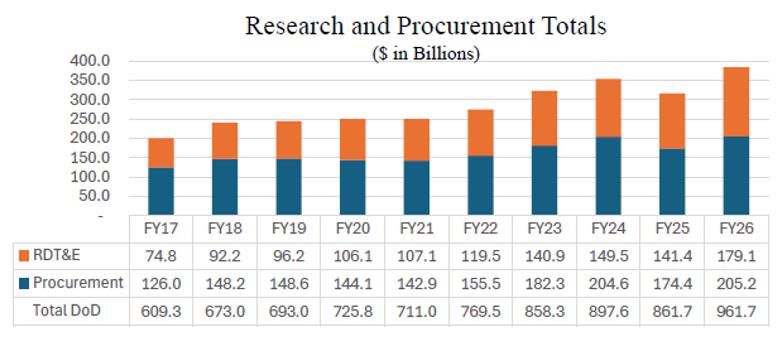
Source: Office of the Under Secretary of Defense (Comptroller)/Chief Financial Officer, “Program Acquisition Cost by Weapon System, United States Department of Defense, Fiscal Year 2026 Budget Request”, July 2025.
The table below depicts the DoD budget request for fiscal year 2026 for major ground system programs. The last two years have experienced a significant reduction in spending for U.S. ground system military programs. The total fiscal year 2026 budget request for major ground system programs decreased by 10.8% from the fiscal year 2025 levels and by 16.5% from the fiscal year 2024 levels. Although it is difficult to directly tie the budget request to specific components provided by Optex Richardson, we provide periscopes, collimator assemblies, vision blocks and laser interface filters to the U.S. armed forces on almost all of the ground system platforms categorized below and budget requests for at least two of the major platforms (AMPV and M1) are showing growth of 39.2% and 43.6% respectively in fiscal year 2026.
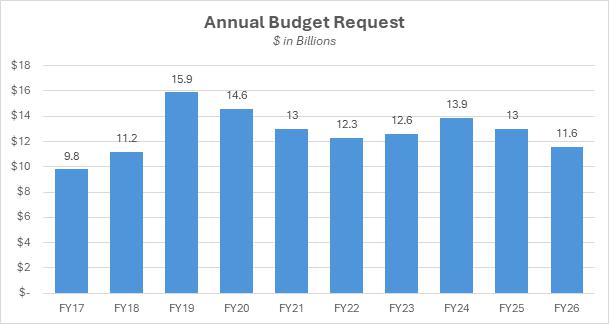
Source: Office of the Under Secretary of Defense (Comptroller)/Chief Financial Officer, “Program Acquisition Cost by Weapon System, United States Department of Defense, Fiscal Year 2026 Budget Request”, July 2025.
|
|
The table below depicts the DoD budget request for fiscal year 2026 for major ground system programs. The last three years have experienced a significant reduction in spending for U.S. ground system military programs. The total fiscal year 2026 budget request for major ground system programs decreased by 27% from the fiscal year 2025 levels and by 36% from the fiscal year 2024 levels. Although it is difficult to directly tie the budget request to specific components provided by Optex Richardson, we provide periscopes, collimator assemblies, vision blocks and laser interface filters to the U.S. armed forces on almost all of the ground system platforms categorized below.
| ($ in Millions) | FY2022 | FY2023 | FY2024 | FY2025 | FY2026 | |||||||||||||||
| ARMY | ||||||||||||||||||||
| Abrams Tank Modification/Upgrade (M-1) | $ | 1,264.3 | $ | 1,297.7 | $ | 1,421.3 | $ | 1,051.4 | $ | 1,464.0 | ||||||||||
| Armored Multi-Purpose Vehicle (AMPV) | 984.6 | 1,237.0 | 603.9 | 393.8 | 565.4 | |||||||||||||||
| Paladin Integrated Management (PIM) | 662.9 | 1,026.8 | 783.2 | 611.1 | 262.7 | |||||||||||||||
| Family of Medium Tactical Vehicles (PIM) | 144.4 | 233.9 | 230.5 | 262.0 | 107.9 | |||||||||||||||
| Family Of Heavy Tactical Vehicles (FHTV) | 214.0 | 326.3 | 283.2 | 220.2 | 148.5 | |||||||||||||||
| Next Generation Squad Weapon (NGSW) | 127.6 | 199.6 | 343.4 | 389.4 | 395.5 | |||||||||||||||
| XM30 Combat Vehicle | 194.9 | 519.1 | 565.0 | 499.5 | 387.4 | |||||||||||||||
| M10 Booker (Mobile Protected Firepower) | - | 410.5 | 482.2 | 487.2 | 81.5 | |||||||||||||||
| Stryker | 1,112.7 | 1,275.0 | 694.2 | 503.3 | 145.6 | |||||||||||||||
| USMC | ||||||||||||||||||||
| Amphibious Combat Vehicle (ACV) | 591.9 | 605.4 | 632.8 | 857.0 | 835.4 | |||||||||||||||
| Total Ground Systems Vehicles (millions) | $ | 5,297.3 | $ | 7,131.3 | $ | 6,039.7 | $ | 5,274.9 | $ | 4,393.9 | ||||||||||
Sources: Office of the Under Secretary of Defense (Comptroller)/Chief Financial Officer, “Program Acquisition Cost by Weapon System, United States Department of Defense, Fiscal Year 2026 Budget Request”, July 2025, “Program Acquisition Cost by Weapon System, United States Department of Defense, Fiscal Year 2025 Budget Request”, March 2024 and “Program Acquisition Cost by Weapon System, United States Department of Defense, Fiscal Year 2024 Budget Request”, April 2023.
The proposed 2026 Department of Defense Budget indicates an overall decrease in ground system vehicle program spending (or requests therefor) since fiscal year 2023. There is generally a six- to eighteen-month delay between U.S. defense budget requests and program delivery orders related to our products from government agencies and our prime defense customers. In addition, DoD budget requests are often changed throughout the congressional National Defense Authorization Act (“NDAA”) Budgeting and Budget appropriations process. The DoD budget requests exclude any foreign military sales as they are funded separately from the annual NDAA budgets. We are carefully watching the projected trends in both DoD military spending and FMS as defense allocation priorities change, as well as challenges which are presented from the global recession and changes in political climate to ascertain any potential impact to the Company’s future revenue.
A substantial portion of our revenue is derived from U.S. government contracts, which are subject to annual congressional appropriations. Failure to pass the annual appropriations by October 1, the start of the new fiscal year, often results in a continuing resolution (“CR”) which can delay new contract awards, exercising of contract options, and starting of new program initiatives, which could materially and adversely affect our future revenues. From October 1, 2025 to November 12, 2025, the federal government of the United States was in a shutdown as Congress failed to pass appropriations legislation for the 2026 fiscal year. On November 10, 2025, Congress passed a CR, which funds the government at existing spending levels through January 30, 2026, by which time the legislature must approve the annual appropriations bill or an additional CR to avoid another government shutdown. As a result of the 2025 government shutdown and CR through January 2026, the Company has experienced a slow-down of contract awards. While we are unable to predict the outcome past January 2026, we anticipate the funding delays may affect our revenue during the second through fourth quarters of fiscal year 2026. See “Item 1.A. Risk Factors – Risks Relating to Our Business – A delay in the completion of the U.S. government’s budget and appropriation process could delay procurement of our products and services and have an adverse effect on our future revenues.”
The Applied Optics Center supports numerous other military platforms outside of the ground system vehicles budget, such as infantry rifle scopes, night vision monoculars, infantry and navy binoculars, night goggles, and infrared aircraft filters. The Applied Optics Center has seen a substantial increase in orders from new and existing customers in support of the other platforms, which we expect to offset the impact of the ground systems reductions to their base revenue.
|
|
Market Opportunity — Foreign Military
Our products directly support FMS combat vehicles globally, including Canada, the Kingdom of Saudi Arabia, Kuwait, Morocco, Egypt, South America, and Israel. We have increased efforts to promote our proven military products, as well as newly improved product solutions directly to foreign military representatives and domestic defense contractors supporting the FMS initiatives.
We were successful with the Israeli Ministry of Defense (“IMOD”) in refurbishing a small quantity of their Night Vision Rifle Scopes. Given this success, in November 2022, the IMOD awarded us a $3.4 million follow on contract to continue this activity through fiscal year 2026. We began deliveries against the contract during the first quarter of fiscal year 2024. If we successfully execute this contract, we would expect another contract award of similar size and duration in fiscal year 2026 or 2027.
We are also exploring possibilities to adapt some of our products for commercial use in those markets that demonstrate potential for solid revenue growth, both domestically and internationally.
Market Opportunity — Commercial
Our products are currently sold to military and related government markets. We believe there may be opportunities to commercialize various products we presently manufacture to address other markets. Our initial focus will be directed in four product areas.
| ● | Big Eye Binoculars — While the military application we produce is based on mature military designs, we own all castings, tooling and glass technology. The big eye binocular technology is potentially applicable to other commercial uses where high magnification and resolution is required. | |
| ● | Thin Film Coatings — The acquisition of the Applied Optics Center also creates a new sector of opportunity for commercial products for us. Globally, commercial optical products use thin film coatings to create product differentiation. These coatings can be used for redirecting light (mirrors), blocking light (laser protection), absorbing select light (desired wavelengths), and many other combinations. They are used in telescopes, rifle scopes, binoculars, microscopes, range finders, protective eyewear, photography, etc. Given this broad potential, the commercial applications are a key opportunity going forward. | |
| ● | Optical Assemblies – Through the Applied Optics Center, we are utilizing our experience in military sighting systems to pursue commercial opportunities associated with products that incorporate multi-lens optical cell assemblies, bonded optical elements and mechanical assemblies. There are a wide variety of products in the medical, machine vision, automotive and outdoor recreation fields that can benefit from our capabilities. Support to domestic customers for these type products has driven significant increases in Applied Optics Segment sales during the last five years. | |
| ● | Optex Outdoors – This launch brings military-grade optical technology directly to civilian marksmen and extreme long-range competitors, expanding Optex’s reach beyond its traditional military market. The Optex Outdoors webstore offers a curated selection of advanced optical products, including riflescope prisms, chronographs, and stabilized viewing products—designed specifically for the needs of elite shooters and outdoor enthusiasts. Each product is engineered and built in Richardson, Texas. |
Customer Base
We serve customers in four primary categories: as prime defense contractor (Defense Logistics Agency (“DLA”) Land and Maritime, DLA Land at Aberdeen, DLA Aviation, U.S. Army, Navy and Marine Corps), as defense subcontractor (General Dynamics, L-3 Communications, Elbit Systems, BAE, Sig Sauer, Vortex Optics, Trijicon Inc. and Ducommun Aerostructures), as a military supplier to foreign governments (Israel, Australia, South America and Canada) and as a commercial optical assembly supplier (Nightforce Optics, Lightforce USA, Inc. and Gables Engineering). During the twelve months ended September 28, 2025, we derived approximately 70% of our gross business revenue from five major customers: U.S. government agencies (29%) and four U.S. defense contractors (19%, 10%, 6% and 6%). We have approximately 120 discrete contracts for items that are utilized in vehicles, optical product lines and as spare parts. Due to the high percentage of prime and subcontracted U.S. defense revenues, large customer size and the fact that there are multiple contracts with each entity, which are not interdependent, we are of the opinion that this provides us with a fairly well diversified revenue pool.
|
|
Marketing Plan
We believe we are well positioned to service both U.S. and foreign military needs by our focus on delivering products that satisfy the following factors important to the U.S. military:
| ● | Product reliability — failure can cost lives | |
| ● | Speed to delivery and adherence to delivery schedule | |
| ● | System life cycle extension | |
| ● | Low cost/best value | |
| ● | Visual aids for successful execution of mission objectives | |
| ● | Mission critical products specifically related to soldier safety. |
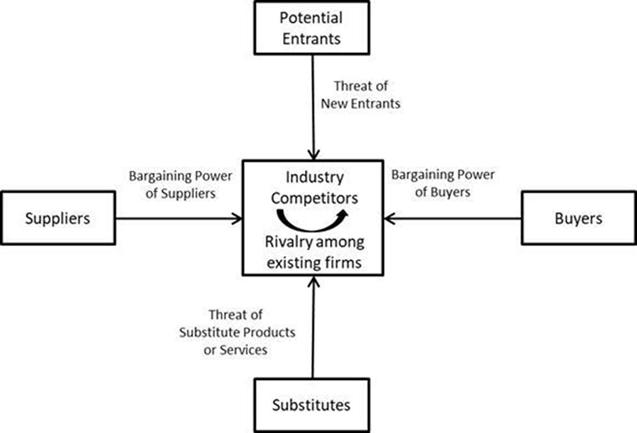
Potential Entrants — Low Risk to us. In order to enter this market, potential competitors must overcome several barriers to entry. The first hurdle is that an entrant would need to prove to the government agency in question the existence of a government approved accounting system for larger contracts. Second, the entrant would need to develop the processes required to produce the product. Third, the entrant would then need to produce the product and submit successful test requirements (many of which require lengthy government consultation for completion). Finally, in many cases, the customer has an immediate need and therefore cannot wait for this qualification cycle and therefore must issue the contracts to existing suppliers. Given the expense and time commitment of development and qualification testing, the barrier to entry is high for new competitors.
|
|
Buyers — Medium Risk to us. In most cases the buyers (usually government agencies or defense contractors) have two fairly strong suppliers. It is in their best interest to keep at least two, and therefore, in some cases, the contracts are split between suppliers. In the case of larger contracts, the customer can request an open book policy on costs and expects a reasonable margin to have been applied.
Substitutes — Low Risk to us. We have both new vehicle contracts and replacement part contracts for the same product. Three combat vehicles have a long history of service in the U.S. Army. The first M-1 Abrams Tank entered service with the Army in 1980; the M-2/M-3 Bradley Fighting Vehicle in 1981; and the Stryker Combat Vehicle in 2001. Since it was first fielded in 1980, the Abrams tank has undergone near-continuous upgrades and improvements and is the principal battle tank of the United States Army and Marine Corps, and the armies of Egypt, Kuwait, Saudi Arabia, Iraq and Australia. On average, there has been a new improvement package every seven years. The XM30 Mechanized Infantry Combat Vehicle, formerly known as the Optionally Manned Combat Vehicle, is the U.S. Army’s sixth attempt to replace the Bradley fighting vehicle. The latest Army “light tank” is the M10 Booker Combat Vehicle, formerly known as the Mobile Protected Firepower System, and is much smaller than the Abrams main battle tank. The Abrams, XM30, M10 Booker and Stryker vehicles are the only tanks currently in production by the government. Optex Richardson provides periscopes and optical sighting systems in support of all four vehicle platforms. We expect that these tanks will continue to be used through approximately 2040.
Suppliers — Low to Medium Risk to us. The suppliers of standard processes (e.g., casting, machining and plating) need to be very competitive to gain and/or maintain contracts. Those suppliers of products that use top secret clearance processes have a slight advantage; however, there continues to be multiple avenues of supply and therefore only moderate power.
Consistent with our marketing plan and business model, the AOC acquisition strengthened our overall position by decreasing the bargaining power of their suppliers through the backwards integration of a key supplier and created additional barriers of entry for potential competitors.
The following matrix reflects the current focus of our four basic approaches for sales and development:
| 1) | Sell existing products to existing customers. | |
| 2) | Sell existing products to new customers. | |
| 3) | Develop new products to meet the needs of our existing customers. | |
| 4) | Develop new products to meet the needs of new customers. |
| Existing Customers | New Customers | |||
| New Products |
US Army Central Command - Binoculars GDLS - DDAN, OWSS, XM30 |
Israel - GOI MOD/Aquila U.S. Prime Contractor - XM10 Aiming Circle |
||
|
Commercial - Optical Lens, Reticles, DLC coatings, IR Opto-Mechanical Assembly, Micro Optical Systems |
Commercial - Optical Lens, Spotting Scopes, Monocular Lens, Chronographs, Optical Wedges U.S. Prime Contractor – Aerospace and Space U.S. Prime Contractor – Drone Technology |
|||
| Existing Products | US Army Central Command - Periscopes, Back Up Sights, | Commercial - Optical Lens, Spotting Scopes Monocular Lens | ||
| Binoculars, Vision Blocks, | ||||
| Laser Filter Units | U.S. Prime Contractor – Laser Filter Units | |||
| GDLS - Periscopes, Collimators | ||||
| BAE - Periscopes | ||||
| L3 - Laser Interface Filters | ||||
| DLA - Optical Elements |
|
|
Operations Plan
Our operations plan can be broken down into three distinct areas: material management, manufacturing space planning and efficiencies associated with economies of scale.
Materials Management
The largest portion of our costs is materials. Our continuous improvements to effectively manage material costs include the following activities:
| - | Successful completion of annual surveillance audit for ISO 9001:2008 certificate, with no major nonconformance issues | |
| - | Weekly cycle counts on inventory items | |
| - | Weekly material review board meeting on non-moving piece parts | |
| - | Kanban kitting on products with consistent ship weekly ship quantities | |
| - | Daily cross functional floor meetings focused on delivery, yields and labor savings | |
| - | Redesigned floor layout using tenant improvement funds | |
| - | Daily review of yields and product velocity | |
| - |
Bill of material reviews prior to work order release
|
|
| - | Supplier management and notification tools for on time delivery and quality tracking |
Future continuous improvement opportunities include the full implementation and training of the shop floor control module within our ERP system. We have begun testing and implementation within selected process.
Manufacturing Space Planning
We currently lease 93,967 square feet of manufacturing space (see “Properties”). Our current facilities are sufficient to meet our immediate production needs without excess capacity. As our processes are primarily labor driven, we are able to easily adapt to changes in customer demand by adjusting headcounts, overtime schedules and shifts in line with production needs. In the event additional floor space is required to accommodate new contracts, Optex has the option to lease adjacent floor space at the current negotiated lease cost per square foot. Consistent with the space planning, we will drive economies of scale to reduce support costs on a percentage of sales basis. These cost reductions can then be either passed through directly to the bottom line or used for business investment.
Our manufacturing process is driven by the use of six sigma techniques and process standardization. Our activities in this area have included the use of six sigma projects in several production areas which has led to improved output and customer approval on the aesthetics of the work environment. In addition, we use many tools including 5S programs, six sigma processes, and define, measure, analyze, improve, control (DMAIC) problem solving techniques, to identify bottlenecks within the process flow, reduce cost and improve product yields. Successful results can then be replicated across the production floor and drive operational improvements.
|
|
Economies of Scale
Plant efficiencies fluctuate as a function of program longevity, complexity and overall production volume. Our internal processes are primarily direct labor intensive and can be more easily adapted to meet fluctuations in customer demand; however, our material purchases, subcontracted operations and manufacturing support costs are extremely sensitive to changes in volume. As our volume increases, our support labor, material and scrap costs decline as a percentage of revenue as we are able to obtain better material pricing, and scrap, start up and support labor (fixed) costs and they are spread across a higher volume base. Conversely, as production volumes decline, our labor and material costs per unit of production generally increase. Additional factors that contribute to economies of scale relate to the longevity of the program. Long running, less complex programs (e.g., periscopes) do not experience as significant of an impact on labor costs as production volumes change, as the associated workforce is generally less specialized and can be ramped quickly as headcounts shift. Our more complex thin laser filter coatings, Howitzer and thermal day/night programs are more significantly impacted by volume changes as they require a highly specialized workforce and ramp time is longer as the training is more complex. We continually monitor customer demand over a rolling twelve-month window and in order to anticipate any changes in necessary manpower and material which allows us to capitalize on any benefits associated with increased volume and minimize any negative impact associated with potential declines in product quantities.
Sources and Availability of Raw Materials
Disclosure responsive to this item is incorporated herein by reference to “Risk Factors – Risks Related to Our Business – Certain of our products are dependent on specialized sources of supply potentially subject to disruption which could have a material, adverse impact on our business.”
Intellectual Property
Trade Secrets and Know-How
We utilize several highly specialized and unique processes in the manufacture of our products. While we believe that these trade secrets have value, it is probable that our future success will depend primarily on the innovation, technical expertise, manufacturing and marketing abilities of our personnel. We cannot assure you that we will be able to maintain the confidentiality of our trade secrets or that our non-disclosure agreements will provide meaningful protection of our trade secrets, know-how or other proprietary information in the event of any unauthorized use, misappropriation or other disclosure. The confidentiality agreements that are designed to protect our trade secrets could be breached, and we might not have adequate remedies for the breach. Additionally, our trade secrets and proprietary know-how might otherwise become known or be independently discovered by others.
Patents
We possess five utility patents and three design patents. Two new patents have been reviewed by the U.S. Patent and Trademark Office and approved in fiscal year 2025. These are for U.S. Patent No. 12,352,533 titled “Improved Next Shot Compensation System for Weapons” and for our Laser Filter Antenna, which is awaiting a U.S. Patent number.
The following patents generally expire 20 years after issuance.
On November 6, 2025, we received a notice of allowance for our U.S. Patent Application No. 18/809,740 filed on August 20, 2024 on the Laser Filter Antenna. The U.S. Patent number is pending receipt of our payment of the Issue Fee which is due by January 9, 2026.
On July 8, 2025, we were issued U.S. Patent No. 12,352,533 titled “Next Shot Compensation System for Weapons” which is a filtered unit to prevent light having a threshold wavelength from passing through the filter unit; and one or more radar antennae deposited on a surface of the filter unit, wherein the one or more radar antennae are configured to capture a velocity of a projectile fired from the weapon.
On April 4, 2023, we were issued U.S. Patent No. 11,619,824 B2 titled “Selectable Offset Image Wedge” which is a mechanical wedge used to offset the image anywhere in the selectable range of circular travel within the defined offset field of view. This application is a continuation-in-part of U.S. Patent No. 10,324,298 and claims priority to U.S. Patent No. 10,324,298, issued on June 18, 2019.
|
|
On November 4, 2021 we were issued U.S. Patent No. 2021/0341746A1 titled “Selectable Offset Image Wedge” which is a mechanical wedge used to offset the image anywhere in the selectable range of circular travel within the defined offset field of view. This application is a continuation-in-part of U.S. Patent No. 10,324,298 and claims priority to U.S. Patent No. 10,324,298, issued on June 18, 2019.
On June 18, 2019 we were issued U.S. Patent No. 10,324,298 titled “Offset Image Wedge with Dual Capability and Alignment Technique”. The invention relates to an offset image wedge for use on a bore-sighted rifle mounted directly onto the scope via a clamp mounting device. The wedge allows for a dual image which can be aligned in the field and provides the user with a choice of either a bore-sighted image or an offset image without removing the wedge.
On July 11, 2017, we were issued U.S. Patent No. D791,852 S, for our Red Tail Digital Spotting Scope. We have a retail sales relationship with Cabela’s Inc. and Amazon, to distribute these scopes. They are currently the only digital spotting scope offered by Cabela’s Inc. Our Red Tail Digital Spotting Scopes also received a favorable review from Trigger Magazine in 2017.
In May 2015, we announced the issuance to us of U.S. Patent No. 13,792,297 titled “ICWS Periscope”. This invention improves previously accepted levels of periscope performance that, in turn, improves soldier’s safety.
In December 2013, Optex Systems, Inc. was issued U.S. Patent No. 23,357,802 titled “Multiple Spectral Single Image Sighting System Using Single Objective Lens Set.” The technology platform, designed for our DDAN program, is applicable to all ground combat vehicles used by the US and foreign militaries. This invention presents a single image to both day and night sensors using precision optics, which in turn allows the user to individually observe day, night, or day and night simultaneously. In addition, it has proven to be especially useful in light transition points experienced at dusk and dawn. We are in production and currently delivering sighting systems with this advanced technology, a significant upgrade in the goal of supporting our customers as they modernize the worldwide inventory of aging armored vehicles. This technology is applicable to many sighting systems, and it has already been designed for implementation on the Light Armored Vehicles, the Armored Security Vehicle, the Amphibious Assault Vehicle, and the M60 Main Battle Tank. DDAN technology has advanced the capabilities of these installed weapon systems and is the first in a series of patents we have applied for to protect our Intellectual Property portfolio in support of the warfighters who use these systems.
Licenses
In May 2012, we purchased a perpetual, non-exclusive license, with a single up-front license fee of $200,000 to use Patent 7,880,792 “Optical and Infrared Periscope with Display Monitor” (issued in 2011 and owned by Synergy International Optronics, LLC). We believe the purchase of the license agreement may allow us to extend and expand our market potential for the M113APC vehicle type which has the highest number of commonly used armored vehicles in the world. The current estimated active M113 APC worldwide inventory is over 80,000 units. This licensing of this patent allows us to develop additional products for this vehicle type, including the M17 Day/Thermal and M17 Day/Night periscopes. We are actively marketing the new periscopes internationally and completed our first international shipment utilizing this technology in March 2014. We continue to prototype these products and demonstrate them to potential customers.
On June 29, 2023, the “Effective Date”, we executed a License agreement LA12342 with Pratt & Whitney Division (“P&W”) of Raytheon Technologies Corporation for a six-year term from the Effective date. The agreement allows the Company the use of P&W’s proprietary technology to perform the application and inspection of proprietary coatings on a selection of vane part numbers for the upturned exhaust system (UESII) utilized on Sikorsky’s Blackhawk aircraft variants. The license grant is exclusive to the Applied Optics Center for the application and inspection of coatings for the end customer, provided that AOC is able to sufficiently meet the end customer volume demand for the licensed items during the term. In consideration of the license rights, AOC agrees to pay P&W a royalty of $200 per vain, or $2000 per shipset of 10 vanes to which the coating is applied. On the 2nd anniversary of the Effective date, and every two years thereafter during the term of the agreement, the royalty rate shall be increased by 3%. Semiannual payments are to be paid within 15 days of June 30th and December 31st throughout the duration of the agreement.
Our competitors, many of which have substantially greater resources, may have applied for or obtained, or may in the future apply for and obtain, patents that will prevent, limit or interfere with our ability to make and sell some of our products. Although we believe that our products do not infringe on the patents or other proprietary rights of third parties, we cannot assure you that third parties will not assert infringement claims against us or that such claims will not be successful.
Competition
The markets for our products are competitive. We compete primarily on the basis of our ability to design and engineer products to meet performance specifications set by our customers. Our customers include military and government end users as well as prime contractors that purchase component parts or subassemblies, which they incorporate into their end products. Product pricing, quality, customer support, experience, reputation and financial stability are also important competitive factors.
|
|
There are a limited number of competitors in each of the markets for the various types of products that we design, manufacture and sell. At this time, we consider our primary competitor for the Optex Richardson site to be Gus Periscopes. The Applied Optics Center thin film and laser coatings products compete primarily with Materion-Barr, G&H Artemis and Alluxa.
Our competitors are often well entrenched, particularly in the defense markets. While we believe that the quality of our technologies and product offerings provides us with a competitive advantage over certain manufacturers, some of our competitors have substantially greater financial and other resources than we do to spend on the research and development of their technologies and for funding the construction and operation of commercial scale plants.
We expect our competitors to continue to improve the design and performance of their products. We cannot assure investors that our competitors will not develop enhancements to, or future generations of, competitive products that will offer superior price or performance features, or that new technology or processes will not emerge that render our products less competitive or obsolete. Increased competitive pressure could lead to lower prices for our products, thereby adversely affecting our business, financial condition and results of operations. Also, competitive pressures may force us to implement new technologies at a substantial cost, and we may not be able to successfully develop or expend the financial resources necessary to acquire new technology. We cannot assure you that we will be able to compete successfully in the future.
Employees and Human Capital
We had 132 full-time equivalent employees as of September 28, 2025, which include a small temporary work force to handle peak loads as needed. We are in compliance with local prevailing wage, contractor licensing and insurance regulations, and have good relations with our employees, who are not currently unionized. We use outside consultants for various services. We have not experienced any work stoppages and are not a party to a collective bargaining agreement. Management considers labor relations to be good.
We are dedicated to preserving operational excellence and remaining an employer of choice. We provide and maintain a work environment that is designed to attract, develop and retain top talent through offering our employees an engaging work experience that contributes to their career development. We recognize that our success is based on the collective talents and dedication of those we employ, and we are highly invested in their success. We value our employees and believe that employee loyalty and enthusiasm are key elements of our operating performance.
Corporate History
Optex Systems Holdings, Inc. is a Delaware corporation originally organized in Delaware as Sustut Exploration, Inc. in April 2006. Optex Systems, Inc. is a Delaware corporation organized in September 2008. In March 2009, Optex Systems, Inc. engaged in a reverse merger with Sustut Exploration, Inc., in connection with which the latter was renamed Optex Systems Holdings, Inc. and the former became a wholly-owned subsidiary of Optex Systems Holdings, Inc.
Internet Address
The Company maintains an internet website at the following address: www.optexsys.com. The information on the Company’s website is not incorporated by reference in this Annual Report on Form 10-K.
Item 1A. Risk Factors
Investing in our common stock involves a high degree of risk. Prospective investors should carefully consider the risks described below, together with all of the other information included or referred to in this Annual Report, before purchasing shares of our common stock. There are numerous and varied risks, known and unknown, that may prevent us from achieving our goals. The risks described below are not the only risks we face. If any of these risks actually materializes, our business, financial condition or results of operations may be materially adversely affected. In such case, the trading price of our common stock could decline and investors in our common stock could lose all or part of their investment. The risks and uncertainties described below are not exclusive and are intended to reflect the material risks that are specific to us, our industry and companies that have securities trading on an over-the-counter market.
|
|
Risks Related to our Business
Our historical operations depend on government contracts and subcontracts. We face risks related to contracting with the federal government, including federal budget issues and fixed price contracts.
Future general political and economic conditions, which cannot be accurately predicted, may directly and indirectly affect the quantity and allocation of expenditures by federal agencies and foreign governments. Even the timing of incremental funding commitments to existing, but partially funded, contracts can be affected by these factors. Therefore, cutbacks or re-allocations in the federal or foreign government budgets could have a material adverse impact on our results of operations. Obtaining government contracts may also involve long purchase and payment cycles, competitive bidding, qualification requirements, delays or changes in funding, budgetary constraints, political agendas, extensive specification development, price negotiations and milestone requirements. In addition, our government contracts are primarily fixed price contracts, which may prevent us from recovering costs incurred in excess of budgeted costs. Fixed price contracts require us to estimate the total project cost based on preliminary projections of the project’s requirements. The financial viability of any given project depends in large part on our ability to estimate such costs accurately and complete the project on a timely basis. Some of those contracts are for products that are new to our business and are thus subject to unanticipated impacts to manufacturing costs. Even if our estimates are reasonable at the time made, prices of materials are subject to unanticipated adverse fluctuation, and are affected by inflationary pressures. In the event our actual costs exceed the fixed costs determined under our product contracts, we will not be able to recover the excess costs which could have a material adverse effect on our business and results of operations. We examine these contracts on a regular basis and accrue for anticipated losses on these contracts, if necessary.
We have several multiyear IDIQ contracts at fixed prices which have open ordering periods and are currently at low profit rates or in a loss condition. These contracts are typically three-year IDIQ contracts with two optional award years, and as such, we are obligated to accept new task awards against these contracts until the contract expiration. Should contract costs continue to increase above the negotiated selling price, or in the event the customer should release substantial quantities against these existing loss contracts, the losses could be material. For contracts currently in a loss status based on the estimated per unit contract costs, losses are booked immediately on new task order awards. As of September 28, 2025, there was $132 thousand in accrued loss provisions for loss contracts or cost overruns.
Approximately 99% of our contracts contain termination clauses for convenience. In the event these clauses should be invoked by our customer, future revenues against these contracts could be affected. However, these clauses allow for a full recovery of any incurred contract costs plus a reasonable fee up through and as a result of the contract termination. We currently have eight customer awards, representing $1.1 million of our current backlog, which are associated with two government prime contracts pending termination. We are currently in negotiation with the customer regarding the final termination claim amount, but expect to recover all of our incurred cost to date, plus a reasonable fee, against these contracts.
|
|
In some cases, contract awards may be issued that are subject to renegotiation at a date (up to 180 days) subsequent to the initial award date. Generally, these subsequent negotiations have had an immaterial impact (zero to 5%) on the contract price of the affected contracts. Currently, none of our awarded contracts are subject to renegotiation.
We have sought to minimize the adverse impact from the slower pace of U.S. military orders on our results of operations by seeking to obtain foreign military orders, expanding our customer base as well as seeking new commercial business. We do not expect these markets to completely mitigate the negative impact of lower U.S. defense spending.
A delay in the completion of the U.S. government’s budget and appropriation process could delay procurement of our products and services and have an adverse effect on our future revenues.
The funding of U.S. government programs is subject to an annual congressional budget authorization and appropriations process. In years when the U.S. government does not complete its appropriations before the beginning of the new fiscal year on October 1, government operations are typically funded pursuant to a CR, which allows federal government agencies to operate at spending levels approved in the previous appropriations cycle, but does not authorize new spending initiatives. When the U.S. government operates under a CR, delays can occur in the procurement of the products, services and solutions that we provide and may result in new initiatives being canceled. We have on occasion experienced delays in contract awards which affect our future revenues as a result of this annual appropriations cycle, and we could experience similar declines in revenues from future delays in the appropriations process. When the U.S. government fails to complete its appropriations process or to provide for a CR, a full or partial federal government shutdown may result. A federal government shutdown could result in delays or cancellations of key programs and during extended government shutdown periods, the delay of contract payments, which could have a negative effect on our cash flows and adversely affect our future results. We refer also to “Item 1. Business – Market Opportunity: U.S. Military” of this Annual Report on Form 10-K for a description of current trends in U.S. government military spending and its potential impact on the Company.
Our results of operations could be adversely affected by economic and political conditions globally and the effects of these conditions on our customers’ businesses and levels of business activity.
The volatile global economic and political environment has created market uncertainty. A slowdown in the financial markets or other economic conditions, including but not limited to global supply chain issues, inflation, fuel and energy costs, freight costs, lack of available credit, sovereign debt crises, interest rates, and tax rates, may adversely affect the Company’s growth and profitability. In response to inflationary pressures, between January 2022 and July 2023, the U.S. Federal Reserve incrementally raised interest rates, resulting in an increase in the cost of borrowing for us, our customers, our suppliers, and other companies relying on debt financing. While the U.S. Federal Reserve lowered interest rates slightly during 2025, future increases in interest rates may again result in an increase in the cost of borrowing for us, our customers, our suppliers and other companies relying on debt finance. Prolonged inflationary conditions and prolonged periods of high interest rates could further negatively affect U.S. and international commerce and exacerbate or prolong the period of high energy prices and supply chain constraints. In addition, the continuing conflict in the Middle East could affect oil prices and have other, potentially recessionary, effects on the global economy. At this time, the extent and duration of global economic and political events and their effects on the economy and the Company are impossible to predict.
If we fail to scale our operations appropriately in response to changes in demand, we may be unable to meet competitive challenges or exploit potential market opportunities, and our business could be materially and adversely affected.
Significant fluctuations in customer demand place a significant strain on our management personnel, infrastructure and resources. To implement our current business and product plans, we need to appropriately manage our cost base, as well as train, manage and motivate our workforce, while continuing to maintain our critical operational and financial systems and our manufacturing and service capabilities. All of these endeavors require substantial management effort and potential capital. If we are unable to effectively manage our operations to our customer demand levels, we may be unable to scale our business quickly enough to meet competitive challenges or exploit potential market opportunities, and our current or future business could be materially and adversely affected.
Low unemployment and tight labor markets may adversely affect our labor costs and our ability to hire and retain a sufficient workforce required to meet the backlog and customer demands. If we are not able to maintain a sufficient workforce and attract and retain additional personnel as required, we may not be able to implement our business plan and our results of operations could be materially and adversely affected.
We compete with several other large defense contractors, as well as homebuilding, industrial manufacturing and warehousing industries within the immediate area of our manufacturing facilities for both lower and higher skill level manufacturing employees. The limited supply of available workers for hire, combined with increasing competition among other local industries, may result in increased production costs associated with higher wages, employee bonuses, overtime premiums and enhanced employee benefits in addition to cost increases associated with employee recruitment, employee turnover, training and learning curve inefficiencies. We may be unable to fill the labor positions required to meet our customer demands in a timely or cost-effective manner, which would impede our ability to meet current or increasing production levels in line with our customer expectations and adversely affect our ability to grow revenue or maintain our current margin levels.
|
|
Our ability to fulfill our backlog may have an effect on our long-term ability to procure contracts and fulfill current contracts.
Our ability to fulfill our backlog may be limited by our ability obtain material supplies and to devote sufficient financial and human capital resources. Disruptions in our supply chain and transportation delays, combined with inflationary pressures and tight labor market conditions could impede our ability to meet customer requirements. If we do not fulfill our backlog in a timely manner, we may experience delays in product delivery which would postpone receipt of revenue from those delayed deliveries. Additionally, if we are consistently unable to fulfill our backlog, this may be a disincentive to customers to award large contracts to us in the future until they are comfortable that we can effectively manage our backlog.
We do not have employment agreements with our key personnel, other than our Chief Executive Officer, Chief Financial Officer, and President and our management has minimal unencumbered equity ownership in us. If we are not able to retain our key personnel or attract additional key personnel as required, we may not be able to implement our business plan and our results of operations could be materially and adversely affected.
We depend to a large extent on the abilities and continued participation of our executive officers and other key employees. The loss of either executive officer or any other key employee could have a material adverse effect on our business. We currently have only two employment agreements. We presently maintain “key man” insurance on the Chief Executive Officer. We believe that experienced personnel will continue to be required to implement our business plan. Competition for such personnel is intense, and we cannot assure you that they will be available when required, or that we will have the ability to attract and retain them. In addition, due to our small size, we do not presently have depth of staffing in our executive, operational and financial management areas in order to have an effective succession plan should the need arise. Thus, in the event of the loss of one or more of our management employees, our results of operations could be vulnerable to challenges associated with recruiting additional key personnel.
Certain of our products are dependent on specialized sources of supply potentially subject to disruption which could have a material, adverse impact on our business.
We expect recent supply chain disruptions driven by Russia’s invasion of Ukraine and the related sanctions, combined with raw material shortages, labor shortages, and transportation delays, to continue for the foreseeable future. These conditions have strained our suppliers and extended supplier delivery lead times, affecting their ability to sustain operations. We have experienced market wide material shortages for paint and resin products as well as critical epoxies and chemicals used in our manufacturing process. In addition, we have seen substantial increases in the costs of aluminum, steel and acrylic commodities and experienced supplier schedule delays for other key components which were driven by supplier labor and material shortages. In several cases, spotty supply and material shortages have resulted in stocking higher inventory “safety stock” levels to ensure adequate lead time to replenish critical supplies.
We have selectively single-sourced some of our material components in order to mitigate excess procurement costs associated with significant tooling and startup costs. Furthermore, because of the nature of government contracts, we are often required to purchase selected items from U.S. government approved suppliers, which may further limit our ability to utilize multiple supply sources for these key components.
To the extent any of these single sourced or government approved suppliers may have disruptions in deliveries due to production, quality, or other issues, we may also experience related production delays or unfavorable cost increases associated with retooling and qualifying alternate suppliers. The impact of delays resulting from disruptions in supply for these items could negatively impact our revenue, our reputation with our customers, and our results of operations. In addition, significant price increases from single-source suppliers could have a negative impact on our profitability to the extent that we are unable to recover these cost increases on our fixed price contracts.
Each contract has a specific quantity of material which needs to be purchased, assembled, and shipped. Prior to bidding on a contract, we contact potential sources of material and receive qualified quotations for this material. In some cases, the entire volume is given to a single supplier and in other cases, the volume might be split between several suppliers.
|
|
If a contract has a single source supplier and that supplier fails to meet their obligations (e.g., quality, delivery), then we would seek to find an alternate supplier and bring this information back to the final customer. Contractual deliverables would then generally be re-negotiated (e.g., specifications, delivery, price). As of September 28, 2025, approximately 83% of our material requirements were single-sourced across 104 suppliers representing approximately 96% of our active supplier order values. Single-sourced component requirements span across all of our major product lines.
We consider it a material financial or schedule risk if we believe it will take us at least three months to identify and qualify a suitable replacement for specialized single source suppliers. In the table below, we identify those specialized single source suppliers with respect to which we face such a material risk and the product lines supported by those materials utilized by us as of September 28, 2025.
| Product Line | Supply Item | Risk | Purchase Orders | |||
| Sighting Systems DDAN | Digital camera system | Alternative source would take in excess of six months to qualify | Current firm fixed price & quantity purchase orders are in place with the supplier to meet all contractual requirements. | |||
| Periscopes | Steel castings | Several suppliers qualified and vetted. Risk is overloading current supplier capacity. | Current firm fixed price & quantity purchase orders are in place with the supplier to meet all contractual requirements. | |||
| Vision Blocks | Military Spec welded housings for vision blocks | Would take approximately 8-10 months to re-qualify a new supplier source. | Currently working with single source for purchasing material on a forecast projection basis. | |||
| Vision Blocks | Large/Small/Customs Blocks | Would take approximately 4-6 months to re-qualify a new supplier source. | Currently working with single source for purchasing material on a forecast projection basis | |||
| MRS | Aluminum Castings for Housing | Would take approximately six months to re-qualify a new supplier source and cost/time for new tooling. Looking at investment castings (3D printing) as mitigation. | Currently, ordering for a single source, new casting tool and FAT will be required to qualify a new source. | |||
| Big Eye | Sand castings for big eye binocular parts | Would take approximately six months to re-qualify a new supplier source and cost/time for new tooling. Looking at investment castings (3D printing) as mitigation. | Current firm fixed price & quantity purchase orders are in place with the supplier to meet all contractual requirements. | |||
| Beamsplitter | Glass tight dimensions and Special Coating | Limited number of suppliers that can meet tight customer specifications without deviation | Current firm fixed price & quantity purchase orders are in place with the supplier to meet all contractual requirements. |
|
|
|
Applied Optics Center
M22/M24 Binocular |
Spare Components | Sole source provider. Only approved source due to proprietary rights. Alternate source cannot be developed. | Current firm fixed price and quantity purchase orders are in place with the supplier to meet all contractual requirements. Supplier is on schedule. | |||
|
Applied Optics Center LIF Assembly |
Container Wrench and Retaining Ring | Mold tooling was manufactured by and used by one source. Tooling would not fit other potential supplier’s equipment. Finding another source would be very expensive and take approximately 1 year to transition | Current firm fixed price and quantity purchase orders are in place with the supplier to meet all contractual requirements. Supplier is on schedule. |
|
Applied Optics Center LIF Assembly |
Rubber Seal | Mold tooling was manufactured by and used by one source. Tooling would not fit other potential supplier’s equipment. Finding another source would be very expensive and take approximately 1 year to transition | Current firm fixed price and quantity purchase orders are in place with the supplier to meet all contractual requirements. Supplier is on schedule. | |||
|
Applied Optics Center Assorted LFU Assemblies |
Anti-Reflective Device | Sole source provider. Only one approved government source of supply at this time | Current firm fixed price and quantity purchase orders are in place with the supplier to meet all contractual requirements. Supplier is on schedule. |
The defense technology supply industry is subject to technological change and if we are not able to keep up with our competitors and/or they develop advanced technology as response to our products, we may be at a competitive disadvantage.
The market for our products is generally characterized by technological developments, evolving industry standards, changes in customer requirements, frequent new product introductions and enhancements, short product life cycles and severe price competition. Our competitors could also develop new, more advanced technologies in reaction to our products. Currently accepted industry standards may change. Our success depends substantially on our ability, on a cost-effective and timely basis, to continue to enhance our existing products and to develop and introduce new products that take advantage of technological advances and adhere to evolving industry standards. An unexpected change in one or more of the technologies related to our products, in market demand for products based on a particular technology or of accepted industry standards could materially and adversely affect our business. We may or may not be able to develop new products in a timely and satisfactory manner to address new industry standards and technological changes, or to respond to new product announcements by others. In addition, new products may or may not achieve market acceptance.
Unexpected warranty and product liability claims could adversely affect our business and results of operations.
The possibility of future product failures could cause us to incur substantial expense to repair or replace defective products. We warrant the quality of our products to meet customer requirements and be free of defects for twelve months subsequent to delivery. We establish reserves for warranty claims based on our historical rate of returned shipments against these contracts. There can be no assurance that this reserve will be sufficient if we were to experience an unexpectedly high incidence of problems with our products. Significant increases in the incidence of such claims may adversely affect our sales and our reputation with consumers. Costs associated with warranty and product liability claims could materially affect our financial condition and results of operations.
|
|
We rely on the proper function, availability and security of information technology systems to operate our business and a cyber-attack or other breach of these systems could have a material adverse effect on our business, financial condition or results of operations.
We rely on information technology systems to process, transmit, and store electronic information in our day-to-day operations. Similar to other companies, the size and complexity of our information technology systems make them vulnerable to a cyber-attack, malicious intrusion, breakdown, destruction, loss of data privacy, or other significant disruption. Our information systems require an ongoing commitment of significant resources to maintain, protect, and enhance existing systems and develop new systems to keep pace with continuing changes in information processing technology, evolving systems and regulatory standards.
On July 13, 2021, we experienced a ransomware attack. While that attack did not have material adverse consequences, similar attacks, if not caught and effectively addressed in a timely manner, could have a material adverse effect on our business, financial condition and results of operations.
Any failure by us to maintain or protect our information technology systems and data integrity, including from cyber-attacks, intrusions or other breaches, could result in the unauthorized access to personally identifiable information, theft of intellectual property or other misappropriation of assets, or otherwise compromise our confidential or proprietary information and disrupt our operations. Any of these events may cause us to have difficulty preventing, detecting, and controlling fraud, be subject to legal claims and liability, have regulatory sanctions or penalties imposed, have increases in operating expenses, incur expenses or lose revenues as a result of a data privacy breach or theft of intellectual property, or suffer other adverse consequences, any of which could have a material adverse effect on our business, financial condition or results of operations.
We derive almost all of our revenue from a small number of customers and the loss of any of these customers could have a material adverse effect on our revenues.
The Company’s revenues for fiscal year ended September 28, 2025 were derived from sales to U.S. government agencies (29%), four major U.S. defense contractors (19%, 10%, 6% and 6%) and all other customers (30%). Approximately 95% of total Company revenue is generated from domestic customers and 5% is derived from foreign customers. In particular, a decision by one of our major defense contract customers, U.S. government agencies or other major customers to cease issuing contracts to us could have a significant material impact on our business and results of operations given that they represent over 70% of our gross business revenue. There can be no assurance that we could replace these customers on a timely basis or at all.
We have approximately 120 discrete contracts with major defense contractors, the U.S. government (primarily Defense Logistics Agencies (DLA)), and other prime U.S. defense contractors. If they choose to terminate these contracts, we are entitled to fully recover all contractual costs and reasonable profits incurred up to or as a result of the terminated contract.
We possess only eight patents and rely primarily on trade secrets to protect our intellectual property.
We utilize several highly specialized and unique processes in the manufacture of our products, for which we rely solely on trade secrets to protect our innovations. We cannot assure you that we will be able to maintain the confidentiality of our trade secrets or that our non-disclosure agreements will provide meaningful protection of our trade secrets, know-how or other proprietary information in the event of any unauthorized use, misappropriation or other disclosure. The non-disclosure agreements that are designed to protect our trade secrets could be breached, and we might not have adequate remedies for the breach. It is also possible that our trade secrets will otherwise become known or independently developed by our competitors, many of which have substantially greater resources than us, and these competitors may have applied for or obtained, or may in the future apply for or obtain, patents that will prevent, limit or interfere with our ability to make and sell some of our products. Although based upon our general knowledge (and we have not conducted patent searches), we believe that our products do not infringe on the patents or other proprietary rights of third parties; however, we cannot assure you that third parties will not assert infringement claims against us or that such claims will not be successful.
|
|
We may need to raise additional capital in the future beyond any cash flow from our existing business; additional funds may not be available on terms that are acceptable to us, or at all.
We may need to raise additional capital in the future to finance our future working capital needs. We cannot assure you that any additional capital will be available on a timely basis, on acceptable terms, or at all. Future equity or debt financings may be difficult to obtain. If we are not able to obtain additional capital as may be required, our business, financial condition and results of operations could be materially and adversely affected.
We anticipate that our capital requirements will depend on many factors, including:
| ● | our ability to fulfill backlog; | |
| ● | our ability to procure additional production contracts; | |
| ● | our ability to control costs; | |
| ● | the timing of payments and reimbursements from government and other contracts, including but not limited to changes in federal government military spending and the federal government procurement process; | |
| ● | increased sales and marketing expenses; | |
| ● | technological advancements and competitors’ response to our products; | |
| ● | capital improvements to new and existing facilities; | |
| ● | our relationships with customers and suppliers; and | |
| ● | general economic conditions including the effects of future economic slowdowns, acts of war or terrorism and the current international conflicts. |
Even if available, financings may involve significant costs and expenses, such as legal and accounting fees, diversion of management’s time and efforts, and substantial transaction costs. If adequate funds are not available on acceptable terms, or at all, we may be unable to finance our operations, develop or enhance our products, expand our sales and marketing programs, take advantage of future opportunities or respond to competitive pressures.
Risks Related to our Credit Facility and Liquidity
Our level of debt and restrictions in our credit agreement could negatively affect our operations and limit our liquidity and our ability to react to changes in the economy.
Our Loan Agreement with Texas Capital Bank contains restrictive covenants that require us to maintain a fixed charge coverage ratio of at least 1.25:1 and a total leverage ratio of 3.00:1, which we may fail to meet if there is a material decrease in our profitability or liquidity. In addition, the Loan Agreement contains restrictive covenants governing indebtedness, liens, fundamental changes (including changes in management), investments, and restricted payments (including cash dividends). The borrowings under the Loan Agreement are secured by substantially all of our operating assets as collateral.
A breach of any of the restrictions and covenants could result in a default under our Loan Agreement, which, if not cured or waived, could cause any outstanding indebtedness under the agreement (or under any future financing arrangements) to become immediately due and payable, and result in the termination of commitments to extend further credit. We may not have sufficient funds on hand to repay the loan, and if we are forced to refinance these borrowings on less favorable terms, or are unable to refinance at all, our results of operations and financial condition could be materially adversely affected by increased costs and rates.
|
|
If our debt level significantly increases in the future, it could have significant consequences on our ongoing operations including requiring us to dedicate a significant portion of our cash flow from operations to servicing debt rather than using it to execute our strategic initiatives; limiting our ability to obtain additional debt financing for future working capital, capital expenditures, or other worthwhile endeavors; and limiting our ability to react to changes in the market.
Risks Related to Our Stock
Our stock typically trades in low volumes daily which could lead to illiquidity, volatility, or depressed stock price.
Our stock is listed on Nasdaq, but typically trades in low daily volumes. Because of a history of low trading volume, our stock is relatively illiquid and its price may be volatile. This may make it more difficult for our stockholders to resell shares when desired or at attractive prices. Some investors view low-volume stocks as unduly speculative and therefore not appropriate candidates for investment. Also, due to the low volume of shares traded on any trading day, persons buying or selling in relatively small quantities may easily influence prices of our stock.
Any analysts covering our stock could negatively impact the stock price.
The trading market for our common stock will likely be influenced by the research and reports that industry or securities analysts may publish about us, our business, our market or our competitors. If any such analysts downgrade their evaluation of our stock, the price of our stock could decline. Furthermore, if our operating results fail to meet analysts’ expectations, our stock price would likely decline.
Our stock price has been and will likely continue to be extremely volatile, and, as a result, stockholders may not be able to resell shares at or above their purchase price, and we may be more vulnerable to securities class action litigation.
Since our common stock was listed on Nasdaq in March 2023, our stock price, as reported by Nasdaq, has ranged from a low of $2.87 to a high of $17.76. As a result, the market price and trading volume of our common stock is likely to be similarly volatile in the future, and investors in our common stock may experience a decrease, which could be substantial, in the value of their stock, including decreases unrelated to our results of operations or prospects, and could lose part or all of their investment.
In the past, following periods of volatility in the market price of a company’s securities, securities class action litigation has often been brought against that company. Because of the potential volatility of our stock price, we may become the target of securities litigation in the future. If we were to become involved in securities litigation, it could result in substantial costs, divert management’s attention and resources from our business and adversely affect our business.
We are a “smaller reporting company” as defined in SEC regulations, and a “baby shelf” issuer based on our public float, which may make our common stock less attractive to investors due to the reduced disclosure requirements of smaller reporting companies and certain limitations on our ability to raise capital as a “baby shelf” issuer.
We are a “smaller reporting company” as defined under SEC regulations and we may, and do, take advantage of certain exemptions from reporting requirements that are applicable to other public companies that are not smaller reporting companies including, among other things, reduced financial disclosure requirements including being permitted to provide only two years of audited financial statements and reduced disclosure obligations regarding executive compensation. As a result, our stockholders may not have access to certain information that they may deem important. We could remain a smaller reporting company indefinitely. As a smaller reporting company, investors may deem our stock less attractive and, as a result, there may be less active trading of our common stock, and our stock price may be more volatile.
We have a public float of less than $75 million, which classifies us a “baby shelf” issuer. Our status as a “baby shelf” issuer limits our ability to raise significant equity capital under a shelf registration statement in a public offering and may restrict our financing options and flexibility. These constraints could lead to higher costs and potential delays in accessing additional capital.
|
|
General Risk Factors
Changes in current economic conditions may adversely affect our ability to continue operations.
Changes in current economic conditions may cause a decline in business, consumer and defense spending and capital market performance, which could adversely affect our business and financial performance. Our ability to raise funds, which could be required for business continuity or expansion of our operations, may be adversely affected by current and future economic conditions, such as a reduction in the availability of credit, financial market volatility and economic recession.
In the future, we may look to acquire other businesses in our industry and the acquisitions will require us to use substantial resources.
In the future, we may decide to pursue acquisitions of other businesses in our industry. In order to successfully acquire other businesses, we would be forced to spend significant resources for both acquisition and transactional costs, which could divert substantial resources in terms of both financial and personnel capital from our current operations. Additionally, we might assume liabilities of the acquired business, and the repayment of those liabilities could have a material adverse impact on our cash flow. Furthermore, when a new business is integrated into our ongoing business, it is possible that there would be a period of integration and adjustment required which could divert resources from ongoing business operations.
The elimination of monetary liability against our directors, officers and employees under Delaware law and the existence of indemnification rights to our directors, officers and employees may result in substantial expenditures by us and may discourage lawsuits against our directors, officers and employees.
We provide indemnification to our directors and officers to the extent provided by Delaware law. The foregoing indemnification obligation could result in our incurring substantial expenditures to cover the cost of settlement or damage awards against directors and officers, which we may be unable to recoup. These provisions and resultant costs may also discourage us from bringing a lawsuit against directors and officers for breaches of their fiduciary duties and may similarly discourage the filing of derivative litigation by our stockholders against our directors and officers even though such actions, if successful, might otherwise benefit us and our stockholders.
Our stock price is speculative, and there is a risk of litigation.
The trading price of our common stock has in the past and may in the future be subject to wide fluctuations in response to factors such as the following:
| ● | revenue or results of operations in any quarter failing to meet the expectations, published or otherwise, of the investment community; | |
| ● | speculation in the press or investment community; | |
| ● | wide fluctuations in stock prices, particularly with respect to the stock prices for other defense industry companies; | |
| ● | announcements of technological innovations by us or our competitors; | |
| ● | new products or the acquisition of significant customers by us or our competitors; | |
| ● | changes in investors’ beliefs as to the appropriate price-earnings ratios for us and our competitors; | |
| ● | changes in management; | |
| ● | sales of common stock by directors and executive officers; | |
| ● | rumors or dissemination of false or misleading information, particularly through Internet chat rooms, instant messaging, and other rapid-dissemination methods; | |
| ● | conditions and trends in the defense industry generally; |
|
|
| ● | the announcement of acquisitions or other significant transactions by us or our competitors; | |
| ● | adoption of new accounting standards affecting our industry; | |
| ● | general market conditions; | |
| ● | domestic or international terrorism and other factors; and | |
| ● | other factors as described in this section. |
Fluctuations in the price of our common stock may expose us to the risk of securities class action lawsuits. Although no such lawsuits are currently pending against us and we are not aware that any such lawsuit is threatened to be filed in the future, there is no assurance that we will not be sued based on fluctuations in the price of our common stock. Defending against such suits could result in substantial cost and divert management’s attention and resources. In addition, any settlement or adverse determination of such lawsuits could subject us to significant liability.
Item 1C. Cybersecurity
Cybersecurity Risk Management and Strategy
We recognize the increasing volume and sophistication of cyber threats and take our responsibility to protect the information and systems under our purview seriously. We consider cybersecurity threat risks alongside other Company risks as part of our overall risk assessment process. Our cybersecurity processes aim to provide a comprehensive approach to assess, identify, manage, mitigate, and respond to cybersecurity threats.
We maintain a cybersecurity risk program predicated on a risk-based approach. We use cost-effective controls that are commensurate with the risk and sensitivity of our specific information systems, control systems and enterprise data. Our cybersecurity program incorporates best practices and industry standards from multiple sources and is designed to comply with applicable regulations. The cybersecurity program includes, but is not limited to, the following elements: risk assessment, policies and procedures, training and awareness, auditing, log collection and analysis, threat hunting and intelligence surveillance, compliance monitoring and testing, and incident response.
Our internal professionals collaborate with external subject matter specialists, as necessary. All third parties engaged for such matters are subjected to scrutiny to ensure they satisfy our security standards. We periodically review our third-party engagements to ensure that the providers maintain the necessary levels of protection and competency, as well as to oversee and identify potential cybersecurity risks and/or threats from such engagements.
We describe how risks from cybersecurity threats could materially affect us, including our business strategy, results of operations, or financial condition, as part of our risk factor disclosures at Part I, Item 1A, “Risk Factors” of this Annual Report on Form 10-K.
Cybersecurity Governance
Cybersecurity is an important part of our risk management processes and an area of focus for our Board and management. Our Board is responsible for oversight of our cybersecurity risk, including the effectiveness of cybersecurity risk management policies and protocols, while our FSO and IT Manager are responsible for assessing and managing cybersecurity risk. We use a third-party service which monitors the Company’s security threats twenty-four hours each day throughout the year. Any detected deviation from the expected operating parameters will initiate a communication to our IT Manager for investigation and remediation of the detected deviation in a timely manner. Our IT Manager has over 30 years of IT and cybersecurity experience.
Our IT Manager provides timely reports on cyber security incidents to the FSO, Danny Schoening, who also serves as the Chief Executive Officer and as Chairman of the board of directors. These reports may in turn be presented to the full board depending on the severity of the incident. In the event of a major incident, the Company’s Incident Response policy will be executed and the appropriate parties notified.
|
|
Item 2. Properties
We are headquartered in Richardson, TX and lease approximately 93,967 combined square feet of facilities between Richardson, Texas and Dallas, Texas. We operate with a single shift, and capacity could be expanded by adding a second shift.
We renewed the lease on our 49,100 square foot, Richardson, Texas facility, which houses our Optex Richardson segment and our corporate headquarters, effective as of January 11, 2021, for eighty-six (86) months, commencing on April 1, 2021 and ending on May 31, 2028. Our Applied Optics Center, which houses our AOC segment, is located in Dallas, Texas with leased premises consisting of approximately 44,867 square feet of space. The Applied Optics Center lease was renewed on January 11, 2021 for eighty-six (86) months, commencing on November 1, 2021 and ending on December 31, 2028. The Applied Optics Center amendment provides for a five-year renewal option at the end of the lease term at the greater of the then “prevailing rental rate” or the then current base rent rate.
Item 3. Legal Proceedings
From time to time, we are involved in lawsuits, claims, investigations and proceedings, including pending opposition proceedings involving patents that arise in the ordinary course of business. There are no matters pending that we expect to have a material adverse impact on our business, results of operations, financial condition or cash flows.
Item 4. Mine Safety Disclosures
Not applicable.
PART II
Item 5. Market for Registrant’s Common Equity, Related Stockholder Matters and Issuer Purchases of Equity Securities
Market information
Our common stock is listed on the Nasdaq Capital Market under the symbol “OPXS”.
On December 16, 2025, the closing price for our common stock was $14.31 per share.
Securities outstanding and holders of record
On December 16, 2025, there were approximately 87 shareholders of record for our common stock and 6,937,358 shares of our common stock issued and outstanding.
Dividends
We have in the past paid dividends but we have no plans to do so in the foreseeable future.
Unregistered Sales of Equity Securities
Effective August 11, 2025, the Board granted Chad George 10,000 shares of restricted stock in connection with Mr. George’s appointment as President of the Company. The shares will vest on January 1, 2026. The grant was exempt from registration under the Securities Act in reliance on Section 4(a)(2) and Rule 506 thereunder.
Issuer Purchases of Equity Securities
There were no purchases made by or on behalf of the Company or any “affiliated purchaser” (as defined in Rule 10b-18(a)(3) of its common stock under the Exchange Act) during the three months ended September 28, 2025.
|
|
Item 6. Reserved
Item 7. Management’s Discussion and Analysis of Financial Condition and Results of Operations
The following discussion should be read in conjunction with the consolidated financial statements and the related notes that are set forth in our financial statements elsewhere in this Annual Report.
This management’s discussion and analysis reflects information known to management as of our fiscal year end, September 28, 2025, and the date of filing. This MD&A is intended to supplement and complement our audited financial statements and notes thereto for the year ended September 28, 2025, prepared in accordance with U.S. generally accepted accounting principles (GAAP). You are encouraged to read our financial statements in conjunction with this MD&A. The financial information in this MD&A has been prepared in accordance with GAAP, unless otherwise indicated. In addition, we use non-GAAP financial measures as supplemental indicators of our operating performance and financial position. We use these non-GAAP financial measures internally for comparing actual results from one period to another, as well as for planning purposes. We will also report non-GAAP financial results as supplemental information, as we believe their use provides more insight into our performance. When a non-GAAP measure is used in this MD&A, it is clearly identified as a non-GAAP measures and reconciled to the most closely corresponding GAAP measure.
The following discussion highlights the principal factors that have affected our financial condition and results of operations as well as our liquidity and capital resources for the periods described. This discussion contains forward-looking statements. Please see “Special cautionary statement concerning forward-looking statements” and “Risk factors” for a discussion of the uncertainties, risks and assumptions associated with these forward-looking statements. The operating results for the periods presented were not significantly affected by inflation.
All references in the following section to 2024 or 2025 with respect to our financial position and results of operations are to our fiscal years ended September 29, 2024 or September 28, 2025, respectively.
Background
Our wholly-owned subsidiary, Optex Systems, Inc., manufactures optical sighting systems and assemblies, primarily for DoD applications. Its products are installed on various types of U.S. military land vehicles, such as the Abrams and Bradley fighting vehicles and light armored and advanced security vehicles, and have been selected for installation on the Stryker family of vehicles. Optex Systems, Inc. also manufactures and delivers numerous periscope configurations, rifle and surveillance sights and night vision optical assemblies. Optex Systems, Inc. products consist primarily of build-to-customer print products that are delivered both directly to the armed services and to other defense prime contractors. Less than 1% of revenue is related to the resale of products substantially manufactured by others. In this case, the product would likely be a simple replacement part of a larger system previously produced by Optex Systems, Inc.
We are both a prime and sub-prime contractor to the DoD. Sub-prime contracts are typically issued through major defense contractors such as General Dynamics Land Systems, Raytheon Corp., BAE, ADS Inc. and others. We are also a military supplier to foreign governments such as Israel, Australia and South American countries and a subcontractor for several large U.S. defense companies serving foreign governments.
The FAR is the principal set of regulations that govern the acquisition process of government agencies and contracts with the U.S. government. In general, parts of the FAR are incorporated into government solicitations and contracts by reference as terms and conditions effecting contract awards and pricing solicitations.
Many of our contracts are prime or subcontracted directly with the U.S. federal government and, as such, are subject to FAR Subpart 49.5, “Contract Termination Clauses” and more specifically Federal Acquisition Regulation clauses 52.249-2 “Termination for Convenience of the Government (Fixed-Price)”, and 49.504 “Termination of fixed-price contracts for default”. These clauses are standard clauses on our prime military contracts and generally apply to us as subcontractors. It has been our experience that the termination for convenience is rarely invoked, except where it is mutually beneficial for both parties. We are currently not aware of any material pending terminations for convenience or for default on our existing contracts.
|
|
In the event a termination for convenience were to occur, FAR clause 52.249-2 provides for full recovery of all contractual costs and profits reasonably occurred up to and as a result of the terminated contract. In the event a termination for default were to occur, we could be liable for any excess cost incurred by the government to acquire supplies from another supplier similar to those terminated from us. We would not be liable for any excess costs if the failure to perform the contract arises from causes beyond the control and without the fault or negligence of the Company as defined by FAR clause 52.249-8.
Material Trends and Recent Developments
The Optex Richardson segment has numerous fixed price multi-year contracts covering delivery periods up to five years from the contract award. Approximately 4% of our Optex Richardson segment backlog are for items priced prior to fiscal year 2021. Since fiscal year 2021, we have experienced substantial increases in the costs of aluminum, steel and acrylic commodities, which has affected the Optex Richardson segment margins for deliveries against those orders during the year ended September 28, 2025 and which is expected to continue to have a negative effect through the first fiscal quarter of 2026. See also “Item 1A. Risk Factors – Risks Related to Our Business - Certain of our products are dependent on specialized sources of supply potentially subject to disruption which could have a material, adverse impact on our business.”
We experienced significant material shortages during the first half of fiscal year 2024 from several significant suppliers of our periscope covers and housings. These shortages affected several of our periscope products at the Optex Richardson segment. The delays in key components, combined with labor shortages experienced in fiscal year 2023, negatively impacted our production levels and pushed the delivery dates of several of our contracts into fiscal year 2025 and early fiscal year 2026. We have obtained an alternative source for one of our key components and expedited our other suppliers to support the increased production levels.
We have seen improvements in the local labor market since fiscal year 2023 and increased our direct labor force and employee overtime in concert with improvements in our supplier delivery performance. Further, we have invested in additional machinery and equipment and other process improvements to increase production capacity and alleviate process bottlenecks. During the 2025 fiscal year, we increased our periscope production levels by 56% over the 2024 fiscal year levels.
We currently do not anticipate any significant material risks as a result of the recent tariff uncertainties. Our defense products are primarily sourced domestically, but those which are imported are primarily duty free. We produce some commercial optical assemblies with selective components sourced from Taiwan; however, our existing customer backlog is covered with existing material in inventory. We anticipate any future orders for these commercial products will have updated pricing inclusive of any tariff impact.
We refer also to “Item 1. Business – Market Opportunity: U.S. Military” for a description of current trends in U.S. government military spending and its potential impact on Optex, which may be material, including particularly the tables included in that section and disclosure on the significant reduction in spending for U.S. ground system military programs, in combination with the U.S. government shutdown and CR which has a direct impact on the Optex Richardson segment revenue, all of which is incorporated herein by reference.
We refer to “Item 1. Business – Recent Events” of this report for recent developments affecting the Company.
Results of Operations by Segment
We have presented the operating results by segment to provide investors with an additional tool to evaluate our operating results. Management of Optex Systems Holdings uses the selected financial measures by segment internally to evaluate its ongoing segment operations and to allocate resources within the organization accordingly. Segments are determined based on differences in products, location, internal reporting and how operational decisions are made. Management has determined that the Optex Richardson plant and the Applied Optics Center, Dallas plant, which was acquired on November 3, 2014 (to which we refer below as the Applied Optics Center segment or Applied Optics Center), are separately managed, organized, and internally reported as separate business segments. The table below provides a summary of selective statement of operations data by operating segment for the years ended September 29, 2024 and September 28, 2025 reconciled to the Audited Consolidated Results of Operations as presented in Item 8, “Financial Statements and Supplementary Data”.
|
|
Results of Operations Selective Financial Info
(Thousands)
| Twelve months ended | ||||||||||||||||||||||||||||||||
| September 28, 2025 | September 29, 2024 | |||||||||||||||||||||||||||||||
|
Optex Systems Richardson |
Applied Dallas |
Other (non- |
Consolidated |
Optex Systems Richardson |
Applied Optics Dallas |
Other (non- |
Consolidated | |||||||||||||||||||||||||
| Revenue from External Customers | $ | 23,761 | $ | 17,576 | $ | - | $ | 41,337 | $ | 18,171 | $ | 15,824 | $ | - | $ | 33,995 | ||||||||||||||||
| Intersegment Revenues | - | 1,157 | (1,157 | ) | - | - | 1,042 | (1,042 | ) | - | ||||||||||||||||||||||
| Total Segment Revenue | 23,761 | 18,733 | (1,157 | ) | 41,337 | 18,171 | 16,866 | (1,042 | ) | 33,995 | ||||||||||||||||||||||
| Total Cost of Sales | 17,699 | 12,738 | (1,157 | ) | 29,280 | 14,401 | 11,107 | (1,042 | ) | 24,466 | ||||||||||||||||||||||
| Gross Profit | 6,062 | 5,995 | - | 12,057 | 3,770 | 5,759 | - | 9,529 | ||||||||||||||||||||||||
| Gross Margin % | 25.5 | % | 32.0 | % | - | 29.2 | % | 20.7 | % | 34.1 | % | - | 28.0 | % | ||||||||||||||||||
| General and Administrative Expense | 3,771 | 771 | 383 | 4,925 | 3,630 | 653 | 425 | 4,708 | ||||||||||||||||||||||||
| Segment Allocated G&A Expense | (1,356 | ) | 1,356 | - | - | (1,486 | ) | 1,486 | - | - | ||||||||||||||||||||||
| Net General & Administrative Expense | 2,415 | 2,127 | 383 | 4,925 | 2,144 | 2,139 | 425 | 4,708 | ||||||||||||||||||||||||
| Operating Income (Loss) | 3,647 | 3,868 | (383 | ) | 7,132 | 1,626 | 3,620 | (425 | ) | 4,821 | ||||||||||||||||||||||
| Operating Income (Loss) % | 15.3 | % | 20.6 | % | - | 17.3 | % | 8.9 | % | 21.5 | % | - | 14.2 | % | ||||||||||||||||||
| Asset Impairment | (804 | ) | - | - | (804 | ) | - | - | - | - | ||||||||||||||||||||||
| Interest Income (Expense) | - | - | 23 | 23 | - | - | (47 | ) | (47 | ) | ||||||||||||||||||||||
| Income (Loss) before taxes | $ | 2,843 | 3,868 | (360 | ) | 6,351 | $ | 1,626 | 3,620 | (472 | ) | 4,774 | ||||||||||||||||||||
| Income (loss) before taxes % | 12.0 | % | 20.6 | % | - | 15.4 | % | 8.9 | % | 21.5 | % | - | 14.0 | % | ||||||||||||||||||
Our total external revenues increased by $7.3 million for the 2025 fiscal year, or 21.6%, compared to the 2024 fiscal year. The Optex Richardson segment realized a $5.6 million, or 30.8% increase, and the Applied Optics Center segment realized an increase of $1.8 million, or 11.1%, in external revenue compared to the prior year period. Intersegment revenues were $1.2 million for the 2025 fiscal year and $1.0 million for the 2024 fiscal year. Intersegment revenues relate primarily to coated filters provided by the Applied Optics Center to Optex Richardson in support of the Optex Richardson periscope line.
Gross profit increased $2.5 million, and the gross margin percentage increased by 1.2 points from 28.0% for the 2024 fiscal year to 29.2% for the 2025 fiscal year. Optex Richardson gross profit increased by $2.3 million and the gross margin percentage increased to 25.5% for the 2025 fiscal year from 20.7% for the prior year. The gross profit and gross margin percentage increases were primarily attributable to improved manufacturing overhead rates as the fixed costs were spread across a higher revenue base. Applied Optics Center’s gross profit increased by $0.2 million and the gross margin percentage decreased to 32.0% for the 2025 fiscal year from 34.1% for the prior year period. The gross profit percentage decrease at the Applied Optics Center was attributable to changes in mix combined with increased costs for warranties and gold with respect to our Day Window products.
Consolidated general and administrative costs increased from $4.7 million for the twelve months ended September 29, 2024 to $4.9 million for the twelve months ended September 28, 2025. General and administrative costs increased $0.2 million due to increased royalties and selling expenses of $0.1 million, increased labor and fringe costs of $0.1 million and increased information technology costs of $0.1 million, offset by decreased investor relation expenses of $0.1 million. During the fiscal years 2025 and 2024, Applied Optics Center absorbed $1.4 million and $1.5 million, respectively, of fixed general and administrative costs incurred by Optex Richardson for support services. These expenses cover accounting, executive, human resources, information technology, board fees and other corporate expenses paid by Optex Richardson and shared across both operating segments.
|
|
Consolidated operating income increased by $2.3 million in the year ended September 28, 2025 to $7.1 million as compared to the prior fiscal year operating income of $4.8 million. Operating income increased as a result of higher revenues and increased gross profit as compared to the prior fiscal year.
Income before taxes increased $1.6 million, to $6.4 million in the 2025 fiscal year from a prior fiscal year income before taxes of $4.8 million as a result of higher operating income offset by $0.8 million in asset impairment.
New Orders and Backlog
Product backlog represents the value of unfulfilled customer manufacturing orders yet to be recognized as revenue. While backlog is not a non-GAAP financial measure, it is also not defined by GAAP. Therefore, our methodology for calculating backlog may not be consistent with methodologies used by other companies. The booked backlog by period may also not be fully indicative of the predicted revenues for those periods as many of our orders provide for accelerated delivery without penalty and may additionally provide customers the option to adjust schedules to meet their most recent projected demand quantities. However, we provide customer order and backlog information as we believe it provides significant insight into forward demand, with some predictive power to short term future revenues.
During the twelve months ended September 28, 2025, the Company booked $36.2 million in new orders, representing a 0.5% decrease from the prior year period orders of $36.4 million. The orders for the most recently completed twelve months consist of $21.3 million for our Optex Richardson segment and $14.9 million attributable to the Applied Optics Center segment.
The following table depicts the new customer orders for the twelve months ending September 28, 2025 as compared to the prior year period in millions of dollars:
| (Millions) | ||||||||||||||||
| Product Line | Twelve months ended September 28, 2025 | Twelve months ended September 29, 2024 | Variance | % Chg | ||||||||||||
| Periscopes | $ | 11.5 | $ | 19.9 | $ | (8.4 | ) | (42.2 | ) | |||||||
| Sighting Systems | 3.3 | 0.4 | 2.9 | 725.0 | ||||||||||||
| Howitzer | - | - | - | - | ||||||||||||
| Other | 6.5 | 3.2 | 3.3 | 103.1 | ||||||||||||
| Optex Systems – Richardson | 21.3 | 23.5 | (2.2 | ) | (9.4 | ) | ||||||||||
| Optical Assemblies | 1.0 | 1.8 | (0.8 | ) | (44.4 | ) | ||||||||||
| Laser Filters | 10.2 | 9.2 | 1.0 | 10.9 | ||||||||||||
| Day Windows | 0.9 | 0.1 | 0.8 | 800.0 | ||||||||||||
| Other | 2.8 | 1.8 | 1.0 | 55.6 | ||||||||||||
| Applied Optics Center – Dallas | 14.9 | 12.9 | 2.0 | 15.5 | ||||||||||||
| Total Customer Orders | $ | 36.2 | $ | 36.4 | $ | (0.2 | ) | (0.5 | ) | |||||||
During the year ended September 28, 2025, orders in the Company’s Optex Richardson segment decreased by $2.2 million, or 9.4%, as compared to the prior year. The decrease in orders was primarily driven by lower customer demand for periscopes, mostly offset by increased demand for sighting system and other products. During the twelve months ended September 28, 2025, the Company experienced a 42.2%, or $8.4 million reduction in military periscope orders as compared to the prior year twelve-month period. During the year ended September 28, 2025, Applied Optics Center orders increased by $2.0 million, or 15.5%, on increased customer demand for laser filters, day windows and other products, offset by lower demand for our commercial optical assemblies.
The Optex Richardson segment currently has four open US Government IDIQ type military contracts for periscopes, vision blocks and collimators with unspent funding which covers base year and option year requirement ordering periods into July 2030. During the 2025 fiscal year, approximately 31% of Optex Richardson’s segment orders, or $6.7 million, were awards against active IDIQ contracts. We anticipate additional orders throughout the next five years for these ongoing contracts. In addition, the Company has an active bid request for a new multi-year IDIQ contract pending with the U.S. government for additional periscopes and infrared filter assemblies that are expected to be awarded in the next three to six months. The Applied Optics Center has no open US government IDIQ orders.
|
|
Backlog as of September 28, 2025 was $39.1 million as compared to a backlog of $44.2 million as of September 29, 2024, representing a decrease of 11.5%. The following table depicts the current expected delivery by quarter of all contracts awarded as of September 28, 2025, as well as the September 28, 2025 backlog as compared to the backlog on September 29, 2024.
(Millions)
| Product Line |
Q1 2026 |
Q2 2026 |
Q3 2026 |
Q4 2026 |
2026 Delivery |
2027+ Delivery |
Total Backlog 9/28/2025 |
Total Backlog 9/29/2024 |
Variance |
% Chg |
||||||||||||||||||||||||||||||
| Periscopes | $ | 4.2 | $ | 3.1 | $ | 2.7 | $ | 1.3 | $ | 11.3 | $ | 3.7 | $ | 15.0 | $ | 22.7 | $ | (7.7 | ) | (33.9 | ) | |||||||||||||||||||
| Sighting Systems | 0.4 | 2.2 | 1.4 | 0.9 | 4.9 | 0.7 | 5.6 | 3.8 | 1.8 | 47.4 | ||||||||||||||||||||||||||||||
| Howitzer | - | - | - | - | - | 2.3 | 2.3 | 2.3 | - | - | ||||||||||||||||||||||||||||||
| Other | 0.6 | 0.4 | 2.5 | 1.6 | 5.1 | 1.4 | 6.5 | 3.0 | 3.5 | 116.7 | ||||||||||||||||||||||||||||||
| Optex Systems – Richardson | 5.2 | 5.7 | 6.6 | 3.8 | 21.3 | 8.1 | 29.4 | 31.8 | (2.4 | ) | (7.5 | ) | ||||||||||||||||||||||||||||
| Optical Assemblies | 0.1 | - | - | - | 0.1 | - | 0.1 | 0.7 | (0.6 | ) | (85.7 | ) | ||||||||||||||||||||||||||||
| Laser Filters | 2.5 | 1.7 | 1.0 | 1.0 | 6.2 | 1.1 | 7.3 | 9.5 | (2.2 | ) | (23.2 | ) | ||||||||||||||||||||||||||||
| Day Windows | 0.4 | 0.2 | 0.2 | 0.1 | 0.9 | 0.1 | 1.0 | 1.1 | (0.1 | ) | (9.1 | ) | ||||||||||||||||||||||||||||
| Other | 0.7 | 0.4 | - | 0.1 | 1.2 | 0.1 | 1.3 | 1.1 | 0.2 | 18.2 | ||||||||||||||||||||||||||||||
| Applied Optics Center – Dallas | 3.7 | 2.3 | 1.2 | 1.2 | 8.4 | 1.3 | 9.7 | 12.4 | (2.7 | ) | (21.8 | ) | ||||||||||||||||||||||||||||
| Total Backlog | $ | 8.9 | $ | 8.0 | $ | 7.8 | $ | 5.0 | $ | 29.7 | $ | 9.4 | $ | 39.1 | $ | 44.2 | $ | (5.1 | ) | (11.5 | ) | |||||||||||||||||||
Optex Systems - Richardson
At September 28, 2025, backlog for our Optex Richardson segment was 7.5%, or $2.4 million lower than the prior fiscal year backlog of $31.8 million.
Backlog for our periscope product line for our 2025 fiscal year was 33.9% or $7.7 million lower than our 2024 fiscal year end level, primarily on lower customer demand during the twelve-month period. We believe the reduced demand is partially related to the delay in the award of ARC III Abrams replenishment contracts to the prime contractors, which had been anticipated in early 2025.
Fiscal year end 2025 sighting systems backlog increased 47.4%, to $5.6 million, from our 2024 fiscal year end level of $3.8 million. The primary reason for the increase in backlog relates to a new $2.8 million purchase order from a major U.S. prime contractor in support of the XM30 Combat Vehicle. This contract will provide 13 sighting systems with deliveries in the 2026 fiscal year. The XM30 backlog increase was partially offset by deliveries of refurbished units against the night vision equipment program for the Government of Israel. The current order Israeli order is expected to complete within the next twelve months and includes an option for an additional quantity up to 100% of the original contract. We anticipate the option to be exercised in the next twelve months.
The Howitzer contract awarded in July 2020 continues to experience customer driven delays related to customer furnished materials. This program is currently on hold pending statement of work changes and materials furnished by the customer. We anticipate deliveries against the Howitzer contract to begin in fiscal year 2027.
Our backlog in other product groups increased by $3.5 million, or 116.7%, from $3.0 million at fiscal year end 2024 to $6.5 million at fiscal year end 2025, primarily due to the award of a $4.3 million order for MRS collimator assemblies against a five-year requirement-type contract by the Army Contracting Command - Detroit Arsenal.
Applied Optics Center – Dallas
The Applied Optics Center backlog decreased by $2.7 million, or 21.8%, for the year ended September 28, 2025, from $12.4 million in fiscal year 2024 to $9.7 million in fiscal year 2025. The majority of this reduction is due the delay in award for the BNVG Night Vision Goggle program.
Backlog for our optical assemblies decreased by $0.6 million, or 85.7%, during the 2025 fiscal year, compared to prior fiscal year-end backlog on lower customer demand for commercial optical assemblies. We anticipate new orders during the next three to six months for deliveries in fiscal year 2026.
|
|
Laser filter backlog decreased by $2.2 million, or 23.2%, during the 2025 fiscal year due to the timing of customer orders versus customer delivery schedule. Our laser filter orders increased 10.9%, or $1.0 million, during the 2025 fiscal year as compared to the prior year, but were below the pace of our 2025 fiscal year shipments. We are anticipating additional orders over the next six months for shipment during the 2026 fiscal year.
Day window backlog decreased by $0.1 million, or 9.1%, during the 2025 fiscal year primarily due to lower customer demand. We anticipate additional orders over the next twelve months.
Other Applied Optics Center backlog increased by $0.2 million, or 18.2% during the 2025 fiscal year on increased customer orders on for our specialty coatings products.
Please refer to “Material Trends and Recent Events” above or “Liquidity and Capital Resources” below for more information on recent developments and trends with respect to our orders and backlog, which information is incorporated herein by reference.
The Company continues to pursue domestic, international and commercial opportunities in addition to maintaining its current footprint with U.S. vehicle manufactures, with existing as well as new product lines. We are also reviewing potential products outside our traditional product lines. Further, we continue to look for strategic businesses to acquire that will strengthen our existing product line, expand our operations, offer operational scale and enter new markets.
Twelve months ended September 28, 2025 compared to the twelve months ended September 29, 2024
Revenues
The table below details the revenue changes by segment and product line for the year ended September 28, 2025 as compared to the year ended September 29, 2024.
Twelve months ended
(Millions)
| Product Line | September 28, 2025 | September 29, 2024 | Variance | % Chg | ||||||||||||
| Periscopes | $ | 19.2 | $ | 12.1 | $ | 7.1 | 58.7 | |||||||||
| Sighting Systems | 1.5 | 1.4 | 0.1 | 7.1 | ||||||||||||
| Howitzers | - | - | - | - | ||||||||||||
| Other | 3.1 | 4.7 | (1.6 | ) | (34.0 | ) | ||||||||||
| Optex Systems – Richardson | 23.8 | 18.2 | 5.6 | 30.8 | ||||||||||||
| Optical Assemblies | 1.6 | 3.9 | (2.3 | ) | (60.0 | ) | ||||||||||
| Laser Filters | 12.4 | 9.6 | 2.8 | 29.2 | ||||||||||||
| Day Windows | 1.0 | 0.7 | 0.3 | 42.9 | ||||||||||||
| Other | 2.5 | 1.6 | 0.9 | 56.3 | ||||||||||||
| Applied Optics Center – Dallas | 17.5 | 15.8 | 1.7 | 10.8 | ||||||||||||
| Total Revenue | $ | 41.3 | $ | 34.0 | $ | 7.3 | 21.6 | |||||||||
Our total revenues increased by $7.3 million, or 21.6% in fiscal year 2025 compared to fiscal year 2024. The Optex Richardson segment realized a $5.6 million, or 30.8%, increase in revenue and the Applied Optics Center segment realized an increase of $1.7 million, or 10.8%, in revenue compared to the prior fiscal year.
Optex Systems - Richardson
Revenues on our periscope line increased $7.1 million, or 58.7%, for the twelve months ended September 28, 2025 compared to the twelve months ended September 29, 2024 on higher production throughput. We have increased our direct labor force and employee overtime in concert with improvements in our supplier delivery performance as well as invested in additional machinery and equipment and other process improvements to increase production capacity and alleviate process bottlenecks. During the 2025 fiscal year, we increased our periscope production levels by approximately 56% over the 2024 fiscal year levels.
|
|
Revenues on sighting systems increased by $0.1 million, or 7.1% from the prior fiscal year due to increased deliveries of refurbished units for the night vision equipment program to the Government of Israel.
Optex Richardson revenue on other product lines decreased by $1.6 million, or 34.0%, compared to revenues in the prior fiscal year due to lower customer demand for beamsplitters, unity mirrors, bonded mirrors, wedge prism assemblies and other spare parts.
Applied Optics Center - Dallas
Revenue from optical assemblies decreased by $2.3 million, or 60.0%, for the twelve months ended September 28, 2025 as compared to the prior twelve-month period on lower customer demand.
Laser filter revenue increased by $2.8 million, or 29.2%, for the twelve months ended September 28, 2025 as compared to the prior twelve-month period on higher customer demand.
Revenues on our day windows increased by $0.3 million, or 42.9%, for the twelve months ended September 28, 2025 as compared to September 29, 2024 on higher customer orders.
Applied Optics Center revenue for other product lines increased by $0.9 million, or 56.3%, for the twelve months ended September 28, 2025 as compared to the prior twelve-month period on increased deliveries of binoculars over the prior year combined with higher customer demand for specialty coatings.
Gross Margin. The gross margin for the year ended September 28, 2025 was 29.2% of revenue as compared to a gross margin of 28.0% of revenue for the year ended September 29, 2024. Cost of sales increased by $4.8 million to $29.3 million for fiscal year 2025 compared to $24.5 million for fiscal year 2024. The gross profit increased by $2.5 million to $12.1 million in fiscal year 2025 as compared to $9.5 million in fiscal year 2024. The increased gross profit as compared to the prior year is primarily driven by higher revenue and product mix changes combined with improved manufacturing overhead rates as the fixed overhead costs are spread across a significantly higher revenue base.
G&A Expenses. For the years ended September 28, 2025 and September 29, 2024, we recorded operating expenses of $4.9 million and $4.7 million, respectively. General and administrative costs increased $0.2 million, or 4.3%, during the fiscal year 2025 due to increased royalties and selling expenses of $0.1 million, increased labor and fringe costs of $0.1 million and increased information technology costs of $0.1 million offset by decreased investor relation expenses of ($0.1) million.
Operating Income. For the year ended September 28, 2025, we recorded operating income of $7.1 million as compared to operating income of $4.8 million during the year ended September 29, 2024. The $2.3 million increase in operating income is primarily due to increased gross profit of $2.5 million, offset by an increase of ($0.2) million in general and administrative spending.
Net income applicable to common shareholders. During the year ended September 28, 2025, we recorded net income applicable to common shareholders of $5.1 million as compared to net income applicable to common shareholders of $3.8 million during the year ended September 29, 2024. The increase of net income of $1.3 million is primarily attributable to increased operating income of $2.3 million, offset by ($0.8) million in asset impairment for our Speedtracker product line acquisition and increased federal income tax expense of ($0.2) million.
Non GAAP Adjusted EBITDA
We use adjusted earnings before interest, taxes, depreciation and amortization (EBITDA) as an additional measure for evaluating the performance of our business as “net income” includes the significant impact of noncash compensation expenses related to equity stock issues, as well as depreciation, amortization, interest expenses and federal income taxes. We believe that Adjusted EBITDA is a meaningful indicator of our operating performance because it permits period-over-period comparisons of our ongoing core operations before the excluded items, which we do not consider relevant to our operations. Adjusted EBITDA is a financial measure not required by, or presented in accordance with, U.S. generally accepted accounting principles (“GAAP”).
|
|
Adjusted EBITDA has limitations and should not be considered in isolation or a substitute for performance measures calculated under GAAP. This non-GAAP measure excludes certain cash expenses that we are obligated to make. In addition, other companies in our industry may calculate Adjusted EBITDA differently than we do or may not calculate it at all, which limits the usefulness of Adjusted EBITDA as a comparative measure.
The table below summarizes our twelve-month operating results for the periods ended September 28, 2025 and September 29, 2024, in terms of both the GAAP net income measure and the non-GAAP Adjusted EBITDA measure.
|
(Thousands) Twelve months ended |
||||||||
|
September 28, 2025 |
September 29, 2024 |
|||||||
| Net Income — GAAP | $ | 5,147 | $ | 3,768 | ||||
| Add: | ||||||||
| Federal Income Tax Expense | 1,204 | 1,006 | ||||||
| Asset Impairment | 804 | - | ||||||
| Depreciation & Amortization | 515 | 487 | ||||||
| Stock Compensation | 383 | 425 | ||||||
| Interest (Income) Expense | (23 | ) | 47 | |||||
| Adjusted EBITDA - Non GAAP | $ | 8,030 | $ | 5,733 | ||||
Our Adjusted EBITDA increased by $2.3 million to $8.0 million during the twelve months ended September 28, 2025 as compared to $5.7 million during the twelve months ended September 29, 2024. The increase in EBITDA is primarily driven by increased revenue and gross profit. Operating segment performance is discussed in greater detail throughout the previous sections.
Liquidity and Capital Resources
As of September 28, 2025, Optex Systems Holdings had working capital of $21.1 million, as compared to $15.1 million as of September 29, 2024. During the twelve months ended September 28, 2025, we generated operating cash of $6.9 million, primarily driven by increased net income of $5.1 million, non-cash expenses of $1.7 million for depreciation and amortization, asset impairment and stock compensation, and all other changes in other working capital of $0.1 million. During the twelve months ended September 28, 2025, we paid $1.0 million against the credit facility and purchased capital assets of $0.5 million.
As of September 28, 2025, the Company had no outstanding capital commitments for the purchase of property and equipment. The Company plans to spend $2.4 million in capital investment over the next twelve months to expand its current capacity as well as develop new capabilities to expand into adjacent markets. Obsolete equipment will be replaced with new or upgraded systems to reduce downtime and drive capacity improvements for both Optex Richardson and the Applied Optics Center. Also, new capabilities will be required to support new product lines at AOC, as well as support the increased focus on research and rapid prototype development at Optex Richardson.
Backlog as of September 28, 2025 was $39.1 million as compared to a backlog of $44.2 million as of September 29, 2024, representing a decrease of 11.5%. For further details, see “Results of Operations – New Orders and Backlog” above.
The Company has historically funded its operations through cash from operations, convertible notes, common and preferred stock offerings and bank debt. The Company’s ability to generate positive cash flows depends on a variety of factors, including the continued development and successful marketing of the Company’s products.
|
|
At September 28, 2025, the Company had approximately $6.4 million in cash and no draws against its revolving credit line. Our cash balance is split between current operating interest-bearing money market accounts based on our immediate working capital requirements. As of September 28, 2025, $4.0 million of our cash balance was carried in a money market account with an annual interest rate of 3.84%. For the twelve months ended September 28, 2025, the total interest income under such money market account was $35 thousand. As of September 28, 2025, our outstanding accounts receivable balance was $4.6 million, which has been collected during the first quarter of fiscal year 2026. During the first quarter of 2025, we paid $1.0 million against our credit facility bringing the balance to zero.
We refer to the disclosure above under “Material Trends and Recent Developments” with respect to recent supply chain disruptions and material shortages, which disclosure is incorporated herein by reference.
In the short term, the Company plans to utilize its current cash, available line of credit and operating cash flow to fund inventory purchases in support of the backlog growth and higher anticipated revenue during the next twelve months. Short term cash in excess of our working capital needs may be also be used to fund the purchase of product lines and other assets. We may also repurchase common stock against our current stock repurchase plan. Longer term, excess cash beyond our operating needs may be used to fund new product development, company, product line or other asset acquisitions, or additional stock purchases as attractive opportunities present themselves.
On January 18, 2024, the Company acquired certain intellectual property and technical and marketing information relating to the Speedtracker Mach product line and entered into an asset purchase agreement and a contract manufacturing agreement with RUB Aluminium s.r.o. (“RUB”). The Company acquired the assets using $1 million cash on hand, with potential additional future cash payments based on successful completion of defined milestones. The initial term of the contract manufacturing agreement was one year, subject to additional one-year renewal terms. After the acquisition, the Company determined it would be more economical to move the manufacturing operations in house and is no longer ordering assembled units under the original contract manufacturing agreement. RUB will continue to provide the Company with purchased kit parts for the manufacture of the Speedtracker Mach products.
The acquisition included transaction costs of $30 thousand. Pursuant to the asset purchase agreement, the total earnout payment will be $238 thousand only if the earnout revenue milestone is achieved during the earnout period, otherwise the earnout will be zero. As of September 28, 2025, it was determined that the earnout revenue milestone was unlikely to be achieved during the earnout period and the fair value of the contingent liability was zero. The asset was amortized on a straight-line basis over a seven-year period through September 28, 2025. On September 28, 2025, the Company reviewed the intangible asset value based on the anticipated revenues and cash flow of the product line over the next five years and determined that the remaining asset value could not be recovered. As a result, the remaining $0.8 million of unamortized intangible assets was impaired and as of September 28, 2025, the remaining balance of intangible assets is zero.
We refer to “Note 8 – Commitments and Contingencies – Rental Payments under Non-cancellable Operating Leases” for a tabular depiction of our remaining minimum lease and estimated Common Area Maintenance (“CAM”) payments under such leases as of September 28, 2025, which disclosure is incorporated herein by reference.
The Company expects to generate net income and positive cash flow from operating activities over the next twelve months. To remain profitable, we need to maintain a level of revenue adequate to support our cost structure. Management intends to manage operations commensurate with its level of working capital and line of credit facility during the next twelve months and beyond; however, uneven revenue levels driven by changes in customer delivery demands, first article inspection requirements or other program delays associated with delays of government funding and government shutdowns could create a working capital shortfall. In the event the Company does not successfully implement its ultimate business plan, certain assets may not be recoverable.
On March 22, 2023, the Company and Optex Systems, Inc. entered into a Business Loan Agreement with Texas Capital Bank (the “Lender”), pursuant to which the Lender will make available to the Company a revolving line of credit in the principal amount of $3 million.
The commitment period for advances under the facility expired on May 22, 2025. Outstanding advances under the facility accrued interest at a rate equal to the secured overnight financing rate (SOFR) plus a specified margin, subject to a specified floor interest rate. The related agreement provided for a $125 thousand Letter of Credit sublimit.
|
|
On May 21, 2025, the Company and Optex Systems, Inc. renewed their existing credit facility with the Lender by entering into a new Business Loan Agreement (the “Loan Agreement”) effective May 22, 2025, pursuant to which the Lender will continue to make available a revolving line of credit in the principal amount of $3 million (the “Texas Capital Facility”). The commitment period for advances under the Texas Capital Facility is twenty-four months expiring on May 22, 2027 (the “Maturity Date”). Outstanding advances under the Texas Capital Facility will accrue interest at a variable rate equal to the secured overnight financing rate (SOFR) plus a specified margin. The interest rate is currently at 6.7% per annum.
The Loan Agreement contains customary events of default and negative covenants, including but not limited to those governing capital expenditures (limited to $1 million per year), indebtedness and liens, affiliate transactions, fundamental changes (including change in management), investments, and restricted payments (including dividends). The Loan Agreement also requires the borrowers to maintain a fixed charge coverage ratio of at least 1.25:1 and a total leverage ratio of 3:1. The Texas Capital Facility is secured by substantially all of the operating assets of the borrowers as collateral. The obligations under the Texas Capital Facility are subject to acceleration upon the occurrence of an event of default as defined in the Loan Agreement. The Loan Agreement further provides for a $125,000 Letter of Credit sublimit.
The outstanding balance under the Texas Capital Facility was $0 as of September 28, 2025.
For the twelve months ended September 28, 2025, the total interest expense under the facility was $12 thousand.
During the twelve months ended September 28, 2025 the Company declared and paid no dividends. As of September 28, 2025, there are no outstanding declared and unpaid dividends.
Critical Accounting Estimates
A critical accounting estimate is an estimate that:
| ● | is made in accordance with generally accepted accounting principles, | |
| ● | involves a significant level of estimation uncertainty, and | |
| ● | has had or is reasonably likely to have a material impact on the company’s financial condition or results of operation. |
Our significant accounting policies are fundamental to understanding our results of operations and financial condition. Some accounting policies require that we use estimates and assumptions that may affect the value of our assets or liabilities and financial results. These policies are described in Note 2 “Summary of Significant Accounting Policies” of Item 8 “Financial Statements and Supplementary Data” of this report.
Our critical accounting estimates include warranty costs, contract losses and the deferred tax asset valuation. Future warranty costs are based on the estimated cost of replacement for expected returns based upon our most recent experience rate of defects as a percentage of warranty covered sales. Our warranty covered sales primarily include the Applied Optics Center optical assemblies. While our warranty period is 12 months, our reserve balances assume a general 90-day return period for optical assemblies previously delivered plus any returned backlog in-house that has not yet been repaired or replaced to our customer. If our actual warranty returns should significantly exceed our historical rates on new customer products, significant production changes, or substantial customer changes to the 90-day turn-around times on returned goods, the impact could be material to our operating profit. We have not experienced any significant changes to our warranty trends in the preceding three years and do not anticipate any significant impacts in the near term. We monitor the actual warranty costs incurred to the expected values on a quarterly basis and adjust our estimates accordingly. As of September 28, 2025, the Company had accrued warranty costs of $162 thousand, as compared to $52 thousand as of September 29, 2024. The primary reason for the increase in reserve balances relates to an expected warranty repair cost of $143 thousand for shipped day windows due to a glass cracking issue which was partially offset by lower warranties realized on our commercial optical assemblies.
|
|
As of September 28, 2025 and September 29, 2024, we had $132 thousand, and $259 thousand, respectively, of contract loss reserves included in our balance sheet accrued expenses. These loss contracts are related to some of our older legacy periscope contracts which were priced in 2019 and 2020, prior to Covid-19. Due to inflationary price increases on component parts and higher internal manufacturing costs (as a result of escalating labor costs and higher burden rates), some of our contracts are in a loss condition, or at marginal profit rates. These contracts are typically three-year IDIQ contracts with two optional award years, and as such, we are obligated to accept new task awards against these contracts until the contract expiration. Should contract costs continue to increase above the negotiated selling price, or in the event the customer should release substantial quantities against these existing loss contracts, the losses could be material. For contracts currently in a loss status based on the estimated per unit contract costs, losses are booked immediately on new task order awards. There is one open IDIQ option year to which the customer may place additional awards through January 5, 2026. During the twelve months ended September 28, 2025, the accrued contract losses decreased by $127 thousand on shipments for the existing IDIQ contracts during the twelve-month period. There is no way to reasonably estimate future inflationary impacts, or customer awards on the existing loss contracts. We continue to monitor these contracts throughout the year for any significant changes in addition to seeking potential cost saving strategies to mitigate risk.
As of September 28, 2025 and September 29, 2024, Optex Systems, Inc. had a net carrying value of $1.2 million and $0.9 million, respectively, in deferred tax assets represented by deferred tax assets of $2.0 million and $1.7 million, respectively, and a deferred tax asset valuation allowance of ($0.8) million each year, against those assets. The valuation allowance covers certain deferred tax assets where we believe we will be unlikely to recover those tax assets through future operations. The valuation reserve includes assumptions related to future taxable income which would be available to cover net operating loss carryforward amounts. Because of the uncertainties of future income forecasts combined with the complexity of some of the deferred assets, these forecasts are subject to change over time. While we believe our current estimate to be reasonable, changing market conditions and profitability, changes in equity structure and changes in tax regulations may impact our estimated reserves in future periods.
Recent Accounting Pronouncements
Recent Accounting Pronouncements are detailed under Note 3 of Item 8 “Financial Statements and Supplementary Data” of this report.
Item 7A. Quantitative and Qualitative Disclosures About Market Risk
Not applicable.
Item 8. Financial Statements and Supplementary Data
|
|
REPORT OF INDEPENDENT REGISTERED PUBLIC ACCOUNTING FIRM
To the Board of Directors and Stockholders
Optex Systems Holdings, Inc.
Opinion on the Financial Statements
We have audited the accompanying consolidated balance sheets of Optex Systems Holdings, Inc. and subsidiaries (the “Company”) as of September 28, 2025 and September 29, 2024, and the related consolidated statements of income, stockholders’ equity, and cash flows for the twelve months then ended, and the related notes (collectively referred to as the “financial statements”). In our opinion, the financial statements present fairly, in all material respects, the financial position of the Company as of September 28, 2025 and September 29, 2024, and the results of their operations and their cash flows for the twelve months then ended, in conformity with accounting principles generally accepted in the United States of America.
Basis for Opinion
These financial statements are the responsibility of the Company’s management. Our responsibility is to express an opinion on these financial statements based on our audits. We are a public accounting firm registered with the Public Company Accounting Oversight Board (United States) (“PCAOB”) and are required to be independent with respect to the Company in accordance with the U.S. federal securities laws and the applicable rules and regulations of the Securities and Exchange Commission and the PCAOB.
We conducted our audits in accordance with the standards of the PCAOB. Those standards require that we plan and perform the audit to obtain reasonable assurance about whether the financial statements are free of material misstatement, whether due to error or fraud. The Company is not required to have, nor were we engaged to perform, an audit of its internal control over financial reporting. As part of our audits we are required to obtain an understanding of internal control over financial reporting, but not for the purpose of expressing an opinion on the effectiveness of the entity’s internal control over financial reporting. Accordingly, we express no such opinion.
Our audits included performing procedures to assess the risks of material misstatement of the financial statements, whether due to error or fraud, and performing procedures that respond to those risks. Such procedures included examining, on a test basis, evidence regarding the amounts and disclosures in the financial statements. Our audits also included evaluating the accounting principles used and significant estimates made by management, as well as evaluating the overall presentation of the financial statements. We believe that our audits provide a reasonable basis for our opinion.
Critical Audit Matters
Critical audit matters are matters arising from the current period audit of the financial statements that were communicated or required to be communicated to the audit committee and that: (1) relate to accounts or disclosures that are material to the financial statements and (2) involved our especially challenging, subjective, or complex judgments. We determined that there are no critical audit matters.
/s/ Whitley Penn LLP
We have served as the Company’s auditor since 2017.
Dallas, Texas
December 16, 2025
|
|
Optex Systems Holdings, Inc.
Consolidated Balance Sheets
| (Thousands, except share and per share data) | ||||||||
|
September 28, 2025 |
September 29, 2024 |
|||||||
| ASSETS | ||||||||
| Cash and Cash Equivalents | $ | 6,389 | $ | 1,009 | ||||
| Accounts Receivable, Net | 4,569 | 3,764 | ||||||
| Inventory, Net | 14,322 | 14,863 | ||||||
| Contract Asset | 142 | 219 | ||||||
| Prepaid Expenses | 285 | 217 | ||||||
| Current Assets | 25,707 | 20,072 | ||||||
| Property and Equipment, Net | 1,427 | 1,292 | ||||||
| Other Assets | ||||||||
| Deferred Tax Asset | 1,199 | 947 | ||||||
| Intangibles, net | - | 951 | ||||||
| Right-of-use Asset | 1,700 | 2,233 | ||||||
| Security Deposits | 23 | 23 | ||||||
| Other Assets | 2,922 | 4,154 | ||||||
| Total Assets | $ | 30,056 | $ | 25,518 | ||||
| LIABILITIES AND STOCKHOLDERS’ EQUITY | ||||||||
| Current Liabilities | ||||||||
| Accounts Payable | $ | 1,525 | $ | 1,177 | ||||
| Credit Facility | - | 1,000 | ||||||
| Operating Lease Liability | 645 | 638 | ||||||
| Federal Income Taxes Payable | 87 | 74 | ||||||
| Accrued Expenses | 1,634 | 1,258 | ||||||
| Accrued Selling Expense | 141 | 237 | ||||||
| Accrued Warranty Costs | 162 | 52 | ||||||
| Contract Loss Reserves | 132 | 259 | ||||||
| Customer Advance Deposits | 234 | 255 | ||||||
| Current Liabilities | 4,560 | 4,950 | ||||||
| Other Liabilities | ||||||||
| Operating Lease Liability, net of current portion | 1,205 | 1,760 | ||||||
| Total Liabilities | 5,765 | 6,710 | ||||||
| Commitments and Contingencies | - | |||||||
| Stockholders’ Equity | ||||||||
| Common Stock – ($0.001 par, 2,000,000,000 authorized, 6,920,658 and 6,873,938 shares issued and outstanding, respectively) | 7 | 7 | ||||||
| Additional Paid in Capital | 21,801 | 21,465 | ||||||
| Retained Earnings (Accumulated Deficit) | 2,483 | (2,664 | ) | |||||
| Stockholders’ Equity | 24,291 | 18,808 | ||||||
| Total Liabilities and Stockholders’ Equity | $ | 30,056 | $ | 25,518 | ||||
The accompanying notes are an integral part of these financial statements.
|
|
Optex Systems Holdings, Inc.
Consolidated Statements of Income
| (Thousands, except share and per share data) | ||||||||
| Twelve months ended | ||||||||
|
September 28, 2025 |
September 29, 2024 |
|||||||
| Revenue | $ | 41,337 | $ | 33,995 | ||||
| Cost of Sales | 29,280 | 24,466 | ||||||
| Gross Profit | 12,057 | 9,529 | ||||||
| General and Administrative Expense | 4,925 | 4,708 | ||||||
| Operating Income | 7,132 | 4,821 | ||||||
| Other Expenses | ||||||||
| Asset Impairment | 804 | - | ||||||
| Interest (Income) Expense, net | (23 | ) | 47 | |||||
| Other Expenses | 781 | 47 | ||||||
| Income Before Taxes | 6,351 | 4,774 | ||||||
| Income Tax Expense, net | 1,204 | 1,006 | ||||||
| Net income applicable to common shareholders | $ | 5,147 | $ | 3,768 | ||||
| Basic income per share | $ | 0.75 | $ | 0.56 | ||||
| Weighted Average Common Shares Outstanding - basic | 6,865,280 | 6,762,145 | ||||||
| Diluted income per share | $ | 0.74 | $ | 0.55 | ||||
| Weighted Average Common Shares Outstanding - diluted | 6,923,657 | 6,833,274 | ||||||
The accompanying notes are an integral part of these financial statements.
|
|
Optex Systems Holdings, Inc.
Consolidated Statements of Cash Flows
| (Thousands) | ||||||||
| Twelve months ended | ||||||||
|
September 28, 2025 |
September 29, 2024 |
|||||||
| Cash Flows from Operating Activities: | ||||||||
| Net Income | $ | 5,147 | $ | 3,768 | ||||
| Adjustments to Reconcile Net Income to Net Cash provided by Operating Activities: | ||||||||
| Depreciation and Amortization | 515 | 487 | ||||||
| Asset Impairment | 804 | - | ||||||
| Stock Compensation Expense | 383 | 425 | ||||||
| Change in Deferred Tax Asset | (252 | ) | (25 | ) | ||||
| Change in Accounts Receivable | (810 | ) | (150 | ) | ||||
| Bad Debt Expense | 4 | 10 | ||||||
| Change in Inventory | 541 | (2,710 | ) | |||||
| Change in Contract Asset | 77 | 118 | ||||||
| Change in Prepaid Expenses | (69 | ) | 2 | |||||
| Change in Leases | (15 | ) | 3 | |||||
| Change in Accounts Payable and Accrued Expenses | 725 | 359 | ||||||
| Change in Federal Income Taxes Payable | 13 | (173 | ) | |||||
| Change in Accrued Warranty Costs | 111 | (23 | ) | |||||
| Change in Accrued Selling Expense | (95 | ) | (100 | ) | ||||
| Change in Customer Advance Deposits | (21 | ) | (226 | ) | ||||
| Change in Accrued Estimated Loss on Contracts | (127 | ) | 16 | |||||
| Total Adjustments | 1,784 | (1,987 | ) | |||||
| Net Cash provided by Operating Activities | 6,931 | 1,781 | ||||||
| Cash Flows used in Investing Activities | ||||||||
| Purchases of Intangible Assets | (10 | ) | (1,050 | ) | ||||
| Purchases of Property and Equipment | (494 | ) | (681 | ) | ||||
| Net Cash used in Investing Activities | (504 | ) | (1,731 | ) | ||||
| Cash Flows used in Financing Activities | ||||||||
| Cash Paid for Taxes Withheld On Net Settled Restricted Stock Unit Share Issue | (47 | ) | (245 | ) | ||||
| Borrowings from Credit Facility | - | 1,350 | ||||||
| Payments to Credit Facility | (1,000 | ) | (1,350 | ) | ||||
| Net Cash used in Financing Activities | (1,047 | ) | (245 | ) | ||||
| Net Increase (Decrease) in Cash and Cash Equivalents | 5,380 | (195 | ) | |||||
| Cash and Cash Equivalents at Beginning of Year | 1,009 | 1,204 | ||||||
| Cash and Cash Equivalents at End of Year | $ | 6,389 | $ | 1,009 | ||||
| Supplemental Cash Flow Information: | ||||||||
| Cash Transactions: | ||||||||
| Cash Paid for Taxes | 1,443 | 1,204 | ||||||
| Cash Received from Interest | 35 | - | ||||||
| Cash Paid for Interest | 12 | 47 | ||||||
The accompanying notes are an integral part of these financial statements.
|
|
Optex Systems Holdings, Inc.
Consolidated Statement of Stockholders’ Equity
| Thousands (except share data) | ||||||||||||||||||||
| Common | Additional |
(Accumulated Deficit) / |
Total | |||||||||||||||||
| Shares | Common | Paid in | Retained | Stockholders | ||||||||||||||||
| Issued | Stock | Capital | Earnings | Equity | ||||||||||||||||
| Balance at October 1, 2023 | 6,763,070 | $ | 7 | $ | 21,285 | $ | (6,432 | ) | $ | 14,860 | ||||||||||
| Stock Compensation Expense | - | - | 425 | - | 425 | |||||||||||||||
| Vested restricted stock units issued net of tax withholding | 110,868 | - | (245 | ) | - | (245 | ) | |||||||||||||
| Net income | - | - | - | 3,768 | 3,768 | |||||||||||||||
| Balance at September 29, 2024 | 6,873,938 | $ | 7 | $ | 21,465 | $ | (2,664 | ) | $ | 18,808 | ||||||||||
| Stock Compensation Expense | - | - | 383 | - | 383 | |||||||||||||||
| Vested restricted stock units issued net of tax withholding | 16,885 | - | (47 | ) | - | (47 | ) | |||||||||||||
| Restricted Board Shares issued1 | 22,800 | - | - | - | - | |||||||||||||||
| Restricted Officer Shares issued, net of tax shares withheld2 | 7,035 | - | - | - | - | |||||||||||||||
| Net income | - | - | - | 5,147 | 5,147 | |||||||||||||||
| Balance at September 28, 2025 | 6,920,658 | $ | 7 | $ | 21,801 | $ | 2,483 | $ | 24,291 | |||||||||||
| (1) | Restricted stock award made on November 5, 2024 which consisted of 7,600 shares each of restricted stock for the three independent directors. |
| (2) | Restricted stock award made on August 11, 2025 to Chad George, President. The award was for 10,000 shares which was issued net of tax shares withheld of 2,935 shares. |
The accompanying notes are an integral part of these financial statements.
|
|
Note 1 — Organization and Operations
Optex Systems Holdings, Inc. (together with its subsidiaries, the “Company,” “Optex Systems Holdings,” “we,” “us,” and “our”) manufactures optical sighting systems and assemblies for the U.S. Department of Defense, foreign military applications and commercial markets. Our products are installed on a variety of U.S. military land vehicles, such as the Abrams and Bradley fighting vehicles, light armored and advanced security vehicles, and have been selected for installation on the Stryker family of vehicles. The Company also manufactures and delivers numerous periscope configurations, rifle and surveillance sights and night vision optical assemblies. Optex Systems Holdings’ products consist primarily of build to customer print products that are delivered both directly to the military and to other defense prime contractors or commercial customers. The Company’s consolidated revenues for the twelve months ended September 28, 2025 were derived from military sales to the U.S. government (28%), U.S. prime military contractors (61%), foreign military contractors (6%), and commercial customers (5%). Approximately 94% of the total company revenue is generated from domestic customers and 6% is derived from foreign customers, primarily in Canada and Israel. Optex Systems Holdings’ operations are based in Dallas and Richardson, Texas in leased facilities comprising 93,967 square feet. As of September 28, 2025, Optex Systems Holdings operated with 132 full-time equivalent employees.
Note 2 — Summary of Significant Accounting Policies
Basis of Presentation
Principles of Consolidation: The consolidated financial statements include the accounts of Optex Systems Holdings and its wholly owned subsidiary, Optex Systems, Inc. All significant intercompany balances and transactions have been eliminated in consolidation.
Use of Estimates: The preparation of financial statements in conformity with accounting principles generally accepted in the United States of America requires management to make estimates and assumptions that affect reported amounts of assets and liabilities and disclosure of contingent assets and liabilities at the date of the financial statement and the reported amounts of revenues and expenses during the reporting period. Actual results could differ from the estimates.
Segment Reporting: FASB ASC 280 requires that a public business enterprise report financial and descriptive information about its reportable operating segments. Operating segments are components of an enterprise about which separate financial information is available and evaluated regularly by the chief operating decision maker in decisions regarding resource allocations and performance assessments. Generally, financial information is required to be reported on the basis that it is used internally for evaluating segment performance and deciding how to allocate resources to segments. Segments are determined based on differences in products, internal reporting and how operational decisions are made. Management has determined that the Optex Systems, Richardson plant, and the Applied Optics Center, Dallas plant are separately managed, organized, and internally reported as separate business segments. The FASB ASC 280 requires that a public business enterprise report a measure of segment profit or loss, certain specific revenue and expense items, and segment assets. It requires reconciliations of total segment revenues, total segment profit or loss, total segment assets, and other amounts disclosed for segments to corresponding amounts in the enterprise’s general-purpose financial statements.
The Chief Operating Decision Maker (CODM), which is our CEO, uses the segment revenue, cost of sales and net operating income to assess the Company’s performance and allocation of resources. The CODM assesses the performance of our segments and decides how to allocate resources based on each segment’s revenue growth, gross profit and operating profit. The CODM utilizes these metrics by comparing budget versus actual results as well as benchmarking to our competitors. For the twelve months ended September 28, 2025 and September 29, 2024, the Company’s CODM was Danny Schoening, CEO. See also Note 14 “Subsequent Events” regarding changes to the CODM and CEO effective on December 20, 2025.
Fiscal Year: Optex System Holdings’ fiscal year ends on the Sunday nearest September 30. Fiscal year 2025 ended on September 28, 2025 and included 52 weeks. Fiscal year 2024 ended on September 29, 2024 and included 52 weeks.
Fair Value of Financial Instruments: Fair value estimates discussed herein are based upon certain market assumptions and pertinent information available to management as of the financial statement presentation date.
The carrying value of cash and cash equivalents, accounts receivable, accounts payable, accrued liabilities, are carried at, or approximate, fair value as of the reporting date because of their short-term nature. The credit facility is reported at fair value as it bears market rates of interest.
The fair value hierarchy prioritizes the inputs to valuation techniques used to measure fair value and requires that assets and liabilities carried at fair value be classified and disclosed in one of the following three categories:
Level 1: Quoted market prices in active markets for identical assets or liabilities.
Level 2: Observable market-based inputs or unobservable inputs that are corroborated by market data.
Level 3: Unobservable inputs reflecting the reporting entity’s own assumptions.
The accounting guidance establishes a hierarchy which requires an entity to maximize the use of quoted market prices and minimize the use of unobservable inputs. An asset or liability’s level is based on the lowest level of input that is significant to the fair value measurement. Fair value estimates are reviewed at the origination date and again at each applicable measurement date and interim or annual financial reporting dates, as applicable for the financial instrument, and are based upon certain market assumptions and pertinent information available to management at those times.
Cash and Cash Equivalents: For financial statement presentation purposes, Optex Systems Holdings considers those short-term, highly liquid investments with original maturities of three months or less to be cash or cash equivalents. Optex Systems Holdings has $6.4 million in cash on deposit with our banks. As of September 28, 2025, $4.0 million of our cash balance was carried in a money market account with an annual interest rate of 3.84%. For the twelve months ended September 28, 2025, the total interest income under the money market account was $35 thousand. Only a portion of the cash, currently $250 thousand, would be covered by federal deposit insurance and the uninsured balances are substantially greater than the insured amounts.
Concentration of Credit Risk: The Company’s revenues for fiscal year ended September 28, 2025 were derived from sales to U.S. government agencies (29%), four major U.S. defense contractors (19%, 10%, 6% and 6%), and all other customers (30%). The Company’s revenues for fiscal year ended September 29, 2024 were derived from sales to U.S. government agencies (20%), four major U.S. defense contractors (25%, 7%, 6% and 6%), one major commercial customer (13%) and all other customers (23%). Optex Systems Holdings does not believe that this concentration results in undue credit risk because of the financial strength of the obligees.
|
|
Accounts Receivable: Optex Systems Holdings records its accounts receivable at the original sales invoice amount less liquidations for previously collected advance/progress bills and an allowance for expected credit losses. As of the fiscal year beginning October 2, 2023, the Company adopted Accounting Standards Update (ASU) 2016-13, “Financial Instruments – Credit Losses (Topic 326): Measurement of Credit Losses on Financial Instruments.” Under the new standard, the current expected credit loss (“CECL”) model is used for estimating an allowance for credit losses and an allowance is set up when the receivable is initially recorded, even if the probability of loss is remote. The Company utilizes a CECL model based on the aging schedule method. As the customer base is primarily U.S. government and government prime contractors, Optex Systems Holdings allowance for credit losses is minimal. On a quarterly basis, Optex Systems Holdings evaluates its accounts receivable and establishes an allowance for credit losses, using a CECL model based on a rolling aging schedule method. An account receivable is considered to be past due if any portion of the receivable balance is outstanding beyond its scheduled due date. No interest is accrued on past due accounts receivable. As of September 28, 2025, and September 29, 2024, Optex Systems Holdings had an allowance for credit losses of $5 thousand and $15 thousand, respectively, for non U.S. government account balances. Optex Systems Holdings charges uncollectible accounts to credit loss expense in the period in which they are first deemed uncollectible. In the fiscal year 2025 we recognized $4 thousand in credit loss expenses associated with uncollectible accounts. In the fiscal year 2024 we recognized $10 thousand in credit loss expenses associated with uncollectible accounts.
As of September 28, 2025, 91% of the accounts receivable balance was comprised of eight customers: the U.S. government, 12%, seven major defense contractors, 27%, 22%, 8%, 6%, 6%, 5% and 5%. As of September 29, 2024, 79% of the accounts receivable balance was comprised of seven customers: the U.S. government, 15%, five major defense contractors, 26%, 10%, 9%, 7% and 7%, and a foreign military customer, 5%.
Inventory: Inventory is recorded at the lower of cost or net realizable value and adjusted as appropriate for decreases in valuation and obsolescence. Adjustments to the valuation and obsolescence reserves are made after analyzing market conditions, current and projected sales activity, inventory costs and inventory balances to determine appropriate reserve levels. Cost is determined using the first-in first-out method. As of September 28, 2025, and September 29, 2024 inventory included:
Schedule of Inventory
| (Thousands) | ||||||||
|
As of September 28, 2025 |
As of September 29, 2024 |
|||||||
| Raw Materials | $ | 9,394 | $ | 9,460 | ||||
| Work in Process | 6,063 | 5,954 | ||||||
| Finished Goods | 788 | 556 | ||||||
| Gross Inventory | 16,245 | 15,970 | ||||||
| Less: Inventory Reserves | (1,923 | ) | (1,107 | ) | ||||
| Net Inventory | $ | 14,322 | $ | 14,863 | ||||
In the twelve months ended September 28, 2025 Optex Systems Holdings recorded $0.8 million of excess and obsolete inventory reserves. We increased our reserves on old and slow-moving sighting systems inventories by $0.7 million due to the expected phase out of LAV and LAV-25 tanks by the U.S. government using the DDAN sighting system platform, combined with the modernization of the Abrams Commander Weapon Station with more advanced sighting systems. We set aside additional reserves of $0.1 million for other product inventories that were either slow moving, obsolete, or showed zero requirements over the prior five years. Net inventory decreased by $0.5 million primarily as a result of the increased reserves.
|
|
Warranty Costs: Some of Optex Systems Holdings’ customers require that the Company warrant the quality of its products to meet customer requirements and be free of defects for up to twelve months subsequent to delivery. Future warranty costs are based on the estimated cost of replacement for expected returns based upon our most recent experience rate of defects as a percentage of warranty covered sales. Throughout the year, warranty costs are expensed as incurred, and as of each year end, Optex Systems Holdings reviews the prior 12-month warranty experience rate and may adjust the warranty accrual as required to cover any estimated warranty expenses associated with the period end backlog of returned customer units awaiting repair or replacement plus any estimated warranty expenses related to anticipated future returns on previous deliveries. As of September 28, 2025 and September 29, 2024, the existing warranty reserve balances of $162 thousand and $52 thousand, respectively, were reviewed and determined to be adequate to satisfy any future warranty claims that may have existed as of the end of each fiscal year for shipments occurring in the prior 12 months. We have made numerous improvements to our supplier bases and internal production process to reduce the return rate on future shipments but will continue to review and monitor the reserve balances related to this product line against any existing warranty backlog and current trend data as we repair and replace our current warranty backlog and process future warranty returns.
The table below summarizes the warranty expenses and incurred warranty costs for the twelve months ended September 28, 2025 and September 29, 2024.
Schedule of Warranty Reserves
| (Thousands) Years ended |
||||||||
| 2025 | 2024 | |||||||
| Beginning balance | $ | 52 | $ | 75 | ||||
| Incurred costs for warranties satisfied during the period | - | (52 | ) | |||||
| Warranty Expenses: | ||||||||
| Warranties reserved for new product shipped during the period(1) | 152 | 106 | ||||||
| Change in estimate for pre-existing warranty liabilities (2) | (42 | ) | (77 | ) | ||||
| Warranty Expense | 110 | 29 | ||||||
| Ending balance | $ | 162 | $ | 52 | ||||
| (1) | Warranty expenses accrued to cost of sales for shipped optical assemblies of $9 thousand (based on prior three months shipments of optical assemblies and the optical assembly historical warranty return rate) in addition to an expected warranty repair cost of $143 thousand for shipped day windows due to a glass cracking issue. | |
| (2) | Changes in estimated warranty liabilities recognized in cost of sales associated with: the period end customer returned warranty backlog, or the actual costs of repaired/replaced warranty units which were shipped to the customer during the year. During the twelve months ended September 28, 2025, the warranty return rate was below historical levels resulting in a favorable change in estimate during the period. |
Property and Equipment: Property and equipment are recorded at cost. Depreciation is computed using the straight-line method over the estimated useful lives of the assets, ranging from 3three to seven years. Expenditures for renewals and betterments are capitalized. Expenditures for minor items, repairs and maintenance are charged to operations as incurred. Gain or loss upon sale or retirement due to obsolescence is reflected in the operating results in the period the event takes place.
Leases: Optex Systems Holdings has two significant operating facilities leases which extend beyond twelve months and fall under the guidance of ASC Topic 842. See also Note 8.
|
|
Revenue Recognition: The Company has adopted FASB ASC 606—Revenue from Contracts with Customers which requires revenue recognition based on a five-step model that includes: identifying the contract, identifying the performance obligations, determining the transaction price, allocating the transaction price and recognizing the revenue. The standard results in the recognition of revenue depicting the transfer of promised goods or services to customers in an amount reflecting the expected consideration to be received from the customer for such goods and services, based on the satisfaction of performance obligations, occurring when the control of the goods or services transfer to the customer. The majority of the Company’s contracts and customer orders originate with fixed determinable unit prices for each deliverable quantity of goods defined by the customer order line item (performance obligation) and include the specific due date for the transfer of control and title of each of those deliverables to the customer at pre-established payment terms, which are generally within thirty to sixty days from the transfer of title and control. We have elected to account for shipping and handling costs as fulfillment costs after the customer obtains control of the goods. In addition, the Company has one ongoing service contract which relates to optimized weapon system support (OWSS) and includes ongoing program maintenance, repairs and spare inventory support for the customer’s existing fleet units in service during the duration of the contract. Revenue recognition for this program has been recorded by the Company, and compensated by the customer, at fixed monthly increments over time, consistent with the defined contract maintenance period. The total revenue recognized over time related to the contract is $517 thousand for the twelve months ended September 28, 2025 and $483 thousand for the twelve months ended September 29, 2024.
The Company has on occasion, outside of the presented periods, received selective contract awards and modifications which included substantive milestone performance obligations, contract modifications, negotiated settlements and financing arrangements which could fall within the scope of FASB ASC 606 revenue recognition guidance on reoccurrence, and as such, the Company has expanded their contract review process to ensure any new contract awards, changes, modifications, financing arrangements or potential negotiated settlements are recorded in compliance to the new standard guidance.
During the twelve months ended September 28, 2025, there was $186 thousand of revenue recognized from customer deposit liabilities (deferred contract revenue). During the twelve months ended September 29, 2024, there was $226 thousand revenue recognized during the period from customer deposit liabilities (deferred contract revenue).
As of September 28, 2025 and September 29, 2024, there were $141 thousand and $237 thousand in accrued selling expenses, respectively, and $142 thousand and $219 thousand in contract assets, respectively, related to agency fees for an Israeli contract booked in November 2022. The selling costs are amortized against the revenue for the contract deliveries which began in the first half of fiscal year 2024 and are expected to extend into fiscal year 2027.
Customer Advance Deposits: Customer advance deposits represent amounts collected from customers in advance of shipment or revenue recognition which relate to undelivered product due to non-substantive milestone payments or other cash in advance payment terms. As of September 28, 2025 and September 29, 2024, Optex Systems, Inc. had a balance of $234 thousand and $255 thousand, respectively, in customer advance deposits.
Contract Loss Reserves: The Company records loss provisions in the event that the current estimated total revenue against a contract and the total estimated cost remaining to fulfill the contract indicate a loss upon completion. When the estimated costs indicate a loss, we record the entire value of the loss against the contract loss reserve in the period the determination is made. The Company has several long-term fixed price contracts that are currently indicative of a loss condition due to recent inflationary pressures on material and labor, combined with increased manufacturing overhead costs. One of these long-term contracts has an active option year ordering period that expires January 5, 2026, with deliveries that could potentially extend into fiscal year 2027. As of September 28, 2025, the Company had contract loss reserves of $132 thousand. As of September 29, 2024, the Company had contract loss reserves of $259 thousand.
Government Contracts: Many of Optex Systems Holdings’ contracts are prime or subcontracted directly with the Federal government and as such, are subject to FAR Subpart 49.5, “Contract Termination Clauses” and more specifically FAR 52.249-2 “Termination for Convenience of the Government (Fixed-Price)”, and FAR 49.504 “Termination of fixed-price contracts for default”. These clauses are standard clauses on prime military contracts and are required by the government to be “flowed down” by the prime contractor to any subcontractors used to perform work or provide components against the award. It has been Optex Systems Holdings’ experience that the termination for convenience is rarely invoked, except where it has been mutually beneficial for both parties. As of September 28, 2025, the Company had eight subcontract customer awards which are associated with two government prime contracts pending termination. We are currently in negotiation with the customer regarding the final termination claim amount, but expect to recover all of our incurred costs to date, plus a reasonable fee, against these contracts.
|
|
Impairment or Disposal of Long-Lived Assets: Optex Systems Holdings follows the provisions of FASB ASC 360-10, “Accounting for the Impairment or Disposal of Long-lived Assets”. This standard requires, among other things, that long-lived assets be reviewed for potential impairment whenever events or circumstances indicate that the carrying amounts may not be recoverable. The assessment of possible impairment is based on the ability to recover the carrying value of the asset from the expected future pre-tax cash flows (undiscounted and without interest charges) of the related operations. If these cash flows are less than the carrying value of such assets, an impairment loss is recognized for the difference between estimated fair value and carrying value. The measurement of impairment requires management to estimate future cash flows and the fair value of long-lived assets. On September 28, 2025, the Company reviewed the Speedtracter intangible asset value based on the anticipated cash flow of the associated products over the next five years and determined that the remaining asset value could not be recovered. As a result, the remaining $0.8 million of unamortized intangible assets was impaired and as of September 28, 2025 and the remaining balance of intangible assets is zero. See also Note 6.
Income Tax/Deferred Tax: FASB ASC 740 requires recognition of deferred tax assets and liabilities for the expected future tax consequences of events that have been included in the financial statements or tax returns. Under this method, deferred tax assets and liabilities are determined based on differing treatment of items for financial reporting and income tax reporting purposes. The deferred tax balances are adjusted to reflect tax rates by tax jurisdiction, based on currently enacted tax laws, which will be in effect in the years in which the temporary differences are expected to reverse. Under FASB ASC 740, the effect on deferred tax assets and liabilities of a change in tax rates is recognized in income in the period that includes the enactment date. A valuation allowance is provided for certain deferred tax assets if it is more likely than not that Optex Systems Holdings will not realize tax assets through future operations. When assessing the recoverability of deferred tax assets, management considers the scheduled reversal of deferred tax liabilities, projected future taxable income and tax planning strategies and results of recent operations. Based on those estimates, management has determined that a portion of the deferred tax assets may not be realized and has established a valuation allowance against the deferred tax asset balance. We record uncertain tax positions in accordance with ASC 740 on the basis of a two-step process in which (1) we determine whether it is more likely than not that the tax positions will be sustained on the basis of the technical merits of the position and (2) for those tax positions that meet the more-likely-than-not recognition threshold, we recognize the largest amount of tax benefit that is more than 50 percent likely to be realized upon ultimate settlement with the related tax authority.
As of September 28, 2025 and September 29, 2024, Optex Systems, Inc. had a net carrying value of $1.2 million and $0.9 million, respectively, in deferred tax assets represented by deferred tax assets of $2.0 million and $1.7 million, respectively, and a deferred tax asset valuation allowance of ($0.8) million each of the years ended periods, against those assets. The valuation allowance has been established due to historical losses resulting in a Net Operating Loss Carryforward for each of the fiscal years 2010 through 2016 which may not be fully recognized due to an IRS Section 382 limitation related to a change in control occurring in fiscal year 2018. As of September 28, 2025 and September 29, 2024, we reviewed the deferred tax assets and determined it was more likely than not that we would be able to utilize a substantial portion of the deferred tax asset balance against future earnings. Our assumptions were based on the previous three years earnings trend as well as anticipated future earnings. During the twelve months ended September 28, 2025 and September 29, 2024, the Company recognized an income tax expense of $1.2 million and $1.0 million, respectively. We will continue to review the deferred tax assets and related valuation reserves in accordance with ASC 740 on an annual basis.
|
|
The Company has potentially dilutive securities outstanding, which include unvested restricted stock units and unvested shares of restricted stock. The Company uses the Treasury Stock Method to compute the dilutive effect of any dilutive shares. Unvested restricted stock units and shares of restricted stock that are anti-dilutive are excluded from the calculation of diluted earnings per common share.
For the twelve months ended September 28, 2025, 74,000 unvested restricted stock units and 32,800 unvested restricted shares (which converts to 58,377 incremental dilutive shares) were included in the diluted earnings per share calculation as dilutive. For the twelve months ended September 29, 2024, 66,500 unvested restricted stock units and 60,000 unvested restricted shares (which converts to 71,129 incremental dilutive shares) were included in the diluted earnings per share calculation as dilutive.
Note 3 — Recent Accounting Pronouncements
In November 2023, the FASB issued ASU 2023-07, Segment Reporting (Topic 280): Improvements to Reportable Segment Disclosures (“ASU 2023-07”), which requires disclosure of segment expenses that are significant and regularly provided to the CODM. In addition, ASU 2023-07 requires the Company to disclose the title and position of its CODM and how the CODM uses segment profit or loss information in assessing segment performance and deciding how to allocate resources. The guidance is effective for fiscal years beginning after December 15, 2023, and interim periods within fiscal years beginning after December 15, 2024, with early adoption permitted. Retrospective application to all prior periods presented in the financial statements is required. The Company adopted this guidance effective on September 30, 2024, the beginning of the fiscal year. As ASU 2023-07 applies to reportable segment disclosures, the adoption did not have a material impact on the Company’s consolidated financial statements.
Note 4 — Segment Reporting
The Company’s 2two reportable segments, Applied Optics Center (“Applied Optics Center” or “AOC”) and Optex Systems – Richardson (“Optex Richardson”), are strategic businesses offering similar products to similar markets and customers; however, they are operated and managed separately due to differences in manufacturing technology, equipment, geographic location, and specific product mix. Applied Optics Center was acquired as a unit, and management at the time of the acquisition was retained.
The Applied Optics Center segment also serves as the key supplier of laser coated filters used in the production of periscope assemblies for the Optex Richardson segment. Intersegment sales and transfers are accounted for at annually agreed to pricing rates based on estimated segment product cost, which include segment direct manufacturing and general and administrative costs but exclude profits that would apply to third party external customers.
The Chief Operating Decision Maker (CODM), which is our CEO, uses the segment revenue, cost of sales and net operating income to assess the Company’s performance and allocation of resources. A summary of segment performance for the twelve months ended September 28, 2025 and September 29, 2024 is included in the table below:
Schedule of Summary of Segment Performance
| (Thousands)
Twelve months ended |
||||||||||||||||||||||||||||||||
| September 28, 2025 | September 29, 2024 | |||||||||||||||||||||||||||||||
|
Optex Systems Richardson |
Applied Dallas |
Other (non- |
Consolidated |
Optex Systems Richardson |
Applied
Optics Dallas |
Other (non- |
Consolidated | |||||||||||||||||||||||||
| Revenue from External Customers | $ | 23,761 | $ | 17,576 | $ | - | $ | 41,337 | $ | 18,171 | $ | 15,824 | $ | - | $ | 33,995 | ||||||||||||||||
| Intersegment Revenues | - | 1,157 | (1,157 | ) | - | - | 1,042 | (1,042 | ) | - | ||||||||||||||||||||||
| Total Segment Revenue | 23,761 | 18,733 | (1,157 | ) | 41,337 | 18,171 | 16,866 | (1,042 | ) | 33,995 | ||||||||||||||||||||||
| Total Cost of Sales | 17,699 | 12,738 | (1,157 | ) | 29,280 | 14,401 | 11,107 | (1,042 | ) | 24,466 | ||||||||||||||||||||||
| Gross Profit | 6,062 | 5,995 | - | 12,057 | 3,770 | 5,759 | - | 9,529 | ||||||||||||||||||||||||
| Gross Margin % | 25.5 | % | 32.0 | % | - | 29.2 | % | 20.7 | % | 34.1 | % | - | 28.0 | % | ||||||||||||||||||
| General and Administrative Expense | 3,771 | 771 | 383 | 4,925 | 3,630 | 653 | 425 | 4,708 | ||||||||||||||||||||||||
| Segment Allocated G&A Expense | (1,356 | ) | 1,356 | - | - | (1,486 | ) | 1,486 | - | - | ||||||||||||||||||||||
| Net General & Administrative Expense | 2,415 | 2,127 | 383 | 4,925 | 2,144 | 2,139 | 425 | 4,708 | ||||||||||||||||||||||||
| Operating Income (Loss) | 3,647 | 3,868 | (383 | ) | 7,132 | 1,626 | 3,620 | (425 | ) | 4,821 | ||||||||||||||||||||||
| Operating Income (Loss) % | 15.3 | % | 20.6 | % | - | 17.3 | % | 8.9 | % | 21.5 | % | - | 14.2 | % | ||||||||||||||||||
| Asset Impairment | (804 | ) | - | - | (804 | ) | - | - | - | - | ||||||||||||||||||||||
| Interest Income (Expense) | - | - | 23 | 23 | - | - | (47 | ) | (47 | ) | ||||||||||||||||||||||
| Income (Loss) before taxes | $ | 2,843 | 3,868 | (360 | ) | 6,351 | $ | 1,626 | 3,620 | (472 | ) | 4,774 | ||||||||||||||||||||
| Income (loss) before taxes % | 12.0 | % | 20.6 | % | - | 15.4 | % | 8.9 | % | 21.5 | % | - | 14.0 | % | ||||||||||||||||||
Optex Systems (OPX) – Richardson, Texas
Optex Richardson revenues are primarily in support of prime and subcontracted military customers. Approximately 90% of the Optex Richardson segment revenue is comprised of domestic military customers, and 10% is comprised of foreign military customers. For the twelve months ended September 28, 2025, Optex Richardson represented 58% of the Company’s total consolidated revenue and consisted of the U.S. government, 22%, and two major U.S. defense contractors representing 15% and 10%, of the Company’s consolidated revenue, respectively.
Optex Richardson is located in Richardson Texas, with leased premises consisting of approximately 49,100 square feet. As of September 28, 2025, the Richardson facility operated with 87 full-time equivalent employees in a single shift operation. The facilities at Optex Richardson serve as the home office for both the Optex Richardson and Applied Optics Center segments.
Applied Optics Center (AOC) – Dallas, Texas
The Applied Optics Center serves primarily domestic U.S. customers. Sales to commercial customers represent 10% and military sales to prime and subcontracted customers represent 90% of the total segment revenue. Approximately 94% of the AOC revenue is derived from external customers and approximately 6% is related to intersegment sales to Optex Richardson in support of military contracts. For the twelve months ended September 28, 2025, AOC represented 42% of the Company’s total consolidated revenue and consisted of revenue from the U.S. government, 5%, and two major defense contractors representing 6% and 6% of the Company’s consolidated revenue, respectively.
The Applied Optics Center is located in Dallas, Texas with leased premises consisting of approximately 44,867 square feet of space. As of September 28, 2025, AOC operated with 45 full-time equivalent employees in a single shift operation.
|
|
The financial table below presents the information for each of the reportable segments profit or loss as well as segment assets for each year. The Company does not allocate interest expense, income taxes or unusual items to segments.
Schedule of Segment Reporting Information
|
Reportable Segment Financial Information (thousands) |
||||||||||||||||
| Twelve months ended September 28, 2025 | ||||||||||||||||
|
Optex Systems Richardson |
Applied Optics Center Dallas |
Other (non-allocated |
Consolidated Total |
|||||||||||||
| Revenues from external customers | $ | 23,761 | $ | 17,576 | $ | - | $ | 41,337 | ||||||||
| Intersegment revenues | - | 1,157 | (1,157 | ) | - | |||||||||||
| Total Revenue | 23,761 | 18,733 | (1,157 | ) | 41,337 | |||||||||||
| Interest income | - | - | (23 | ) | (23 | ) | ||||||||||
| Depreciation and Amortization | 276 | 239 | - | 515 | ||||||||||||
| Income (loss) before taxes | 2,843 | 3,868 | (360 | ) | 6,351 | |||||||||||
| Other significant noncash items: | ||||||||||||||||
| Allocated home office expense | (1,356 | ) | 1,356 | - | - | |||||||||||
| Stock compensation expense | - | - | 383 | 383 | ||||||||||||
| Warranty expense | - | 110 | - | 110 | ||||||||||||
| Segment Assets | 22,126 | 7,930 | - | 30,056 | ||||||||||||
| Expenditures for segment assets | 259 | 245 | - | 504 | ||||||||||||
|
Reportable Segment Financial Information (thousands) |
||||||||||||||||
| Twelve months ended September 29, 2024 | ||||||||||||||||
|
Optex Systems Richardson |
Applied Optics Center Dallas |
Other (non-allocated |
Consolidated Total |
|||||||||||||
| Revenues from external customers | $ | 18,171 | $ | 15,824 | $ | - | $ | 33,995 | ||||||||
| Intersegment revenues | - | 1,042 | (1,042 | ) | - | |||||||||||
| Total Revenue | 18,171 | 16,866 | (1,042 | ) | 33,995 | |||||||||||
| Interest expense | - | - | 47 | 47 | ||||||||||||
| Depreciation and Amortization | 167 | 320 | - | 487 | ||||||||||||
| Income (loss) before taxes | 1,626 | 3,620 | (472 | ) | 4,774 | |||||||||||
| Other significant noncash items: | ||||||||||||||||
| Allocated home office expense | (1,486 | ) | 1,486 | - | - | |||||||||||
| Stock compensation expense | - | - | 425 | 425 | ||||||||||||
| Warranty expense | 17 | 12 | - | 29 | ||||||||||||
| Segment Assets | 17,038 | 8,480 | - | 25,518 | ||||||||||||
| Expenditures for segment assets | 1,382 | 349 | - | 1,731 | ||||||||||||
|
|
Note 5 — Property and Equipment
A summary of property and equipment at September 28, 2025 and September 29, 2024 is as follows:
Schedule of Property and Equipment
| (Thousands) | ||||||||||
|
Estimated Useful Life |
September 28, 2025 |
September 29, 2024 |
||||||||
| Property and Equipment | ||||||||||
| Furniture and Fixtures | 3-5 yrs | $ | 485 | $ | 451 | |||||
| Machinery and Equipment | 5 yrs | 5,605 | 5,145 | |||||||
| Leasehold Improvements | 7 yrs | 448 | 448 | |||||||
| Less: Accumulated Depreciation | (5,111 | ) | (4,752 | ) | ||||||
| Net Property & Equipment | $ | 1,427 | $ | 1,292 | ||||||
| Depreciation Expense | $ | 359 | $ | 387 | ||||||
During the twelve months ended September 28, 2025, Optex Systems Holdings purchased $34 thousand in new furniture and fixtures, $460 thousand in machinery and equipment and zero leasehold improvements. During the twelve months ended September 29, 2024, Optex Systems Holdings purchased $23 thousand in new furniture and fixtures, $614 thousand in machinery and equipment and $44 thousand in leasehold improvements. During the twelve months ended September 28, 2025 and September 29, 2024, there were no sales or retirements of fixed assets.
Note 6 – Asset Purchase of Intellectual Property
On January 18, 2024, Optex Systems Holdings, Inc., through its wholly-owned subsidiary Optex Systems, Inc. (collectively, the “Company”), entered into an asset purchase agreement and a contract manufacturing agreement with RUB Aluminum s.r.o. (“RUB”). Under the agreements, the Company acquired certain intellectual property and technical and marketing information relating to the Speedtracker Mach product line, which is primarily used for firearm projectile speed detection, measuring and tracking. RUB may continue to manufacture Speedtracker Mach products on behalf of the Company. The Company acquired the assets using $1 million cash on hand, with potential additional future cash payments based on successful completion of defined milestones. The initial term of the contract manufacturing agreement is one year, subject to additional 1one-year renewal terms to which both parties must agree. Subsequent to the acquisition, the Company has determined it would be more economical to move the manufacturing operations in house and is no longer ordering assembled units against the contract manufacturing agreement.
The acquisition included transaction costs of $30 thousand for legal fees. Pursuant to the asset purchase agreement, the total earnout payment would have been $238 thousand only if the earnout revenue milestones were achieved during the earnout period, otherwise the earnout would be zero. As of January 18, 2024, the fair value of the contingent liability was $83 thousand. As of September 29, 2024, it was determined that the revenue milestones related to the earnout agreement would be unachievable within the earnout period and the fair value of the contingent liability related to the earnout was set to zero. The intangible asset for the Speedtracker product acquisition was amortized on a straight-line basis over a seven-year period.
Subsequent to the asset purchases, the Company invested an additional $30 thousand for software app development for the Speedtracker product. The software app development was amortized on a straight-line basis across a 3three-year period.
Unlike indefinite-lived intangible assets and goodwill, which are required to be tested for impairment at least annually, ASC 360-10 does not require annual impairment testing for long-lived assets that are held and used. Instead, a long-lived asset (asset group) that is held and used should be tested for recoverability whenever events or changes in circumstances indicate that the carrying amount of the asset group may not be recoverable regardless of whether such carrying amount is zero or negative. Due to delays in the Speedtracker product line launch during the twelve months ended September 29, 2024, the Company reviewed the recoverability of the intangible assets as of September 29, 2024 and found no impairment. The Speedtracker product was launched during the second quarter of 2025, with minimal revenue for the twelve months ended on September 28, 2025. On September 28, 2025, the Company reviewed the intangible asset value based on the anticipated cash flow of the product line over the next five years and determined that the remaining asset value could not be recovered. As a result, the remaining $0.8 million of unamortized intangible assets was impaired and as of September 28, 2025, the remaining balance of intangible assets is zero.
|
|
As of September 28, 2025 and September 29, 2024 the value of intangible assets was as follows:
Schedule of the Value of Intangible Assets
| (Thousands) | ||||||||
|
September 28, 2025 |
September 29, 2024 |
|||||||
| Intangible Assets – Speedtracker | $ | 951 | $ | 1,030 | ||||
| Software App Development | 10 | 20 | ||||||
| Amortization of Intangible Assets | (157 | ) | (99 | ) | ||||
| Asset Impairment | (804 | ) | - | |||||
| Net Intangible Assets | $ | - | $ | 951 | ||||
Note 7 — Accrued Expenses
The components of accrued liabilities as of September 28, 2025 and September 29, 2024 are summarized below:
Schedule of Accrued Liabilities
| (Thousands) | ||||||||
|
September 28, 2025 |
September 29, 2024 |
|||||||
| Accrued Vacation | $ | 488 | $ | 439 | ||||
| Property Taxes | 123 | 122 | ||||||
| Operating Expenses | 737 | 398 | ||||||
| Payroll & Payroll Related | 286 | 299 | ||||||
| Total Accrued Expenses | $ | 1,634 | $ | 1,258 | ||||
Note 8 — Commitments and Contingencies
Non-cancellable Operating Leases
The Company leases its office and manufacturing facilities for the Optex Systems, Inc. Richardson location and the Applied Optics Center Dallas location. The Company also leases certain office equipment under non-cancellable operating leases.
The leased facility under Optex Systems, Inc. located at 1420 Presidential Drive, Richardson, Texas consists of 49,100 square feet of space at the premises. The previous lease term for this location expired March 31, 2021 and the monthly base rent was $24.6 thousand through March 31, 2021. On January 11, 2021 the Company executed a sixth amendment extending the terms of the lease for eighty-six (86) months, commencing on April 1, 2021 and ending on May 31, 2028. The initial base rent is set at $25.3 thousand and escalates 3% on April 1 each year thereafter. The initial term included two months of rent abatement for April and May of 2021. The monthly rent includes approximately $15 thousand for additional Common Area Maintenance fees and taxes (“CAM”), to be adjusted annually based on actual expenses incurred by the landlord.
The leased facility under the Applied Optics Center located at 9839 and 9827 Chartwell Drive, Dallas, Texas, consists of 44,867 square feet of space at the premises. The previous lease term for this location expired on October 31, 2021 and the monthly base rent was $21.9 thousand through the end of the lease. On January 11, 2021 the Company executed a first amendment extending the terms of the lease for eighty-six (86) months, commencing on November 1, 2021 and ending on December 31, 2028. The initial base rent is set at $23.6 thousand as of January 1, 2022 and escalates 2.75% on January 1 each year thereafter. The initial term includes 2 months of rent abatement for November and December of 2021. The amendment provides for a five-year renewal option at the end of the lease term at the greater of the then “prevailing rental rate” or the then current base rental rate. Our obligations to make payments under the lease are secured by a $125 thousand standby letter of credit. The monthly rent includes approximately $9 thousand for additional CAM, to be adjusted annually based on actual expenses incurred by the landlord.
|
|
The Company had one non-cancellable office equipment lease with a commencement date of October 1, 2018 and a term of 39 months. The lease cost for the equipment was $1.5 thousand per month from October 1, 2018 through December 31, 2021. The lease was renewed on November 18, 2021 for an additional 48 months at a cost of $1.2 thousand per month.
As of September 28, 2025, the remaining minimum base lease and estimated common area maintenance (CAM) payments under the non-cancellable office equipment and facility space leases are as follows:
Schedule of Non-cancellable Operating Leases Minimum Payments
Non-cancellable Operating Leases Minimum Payments
| (Thousands) | ||||||||||||||||||||
| Optex Richardson | Applied Optics Center | Office Equipment | Consolidated | |||||||||||||||||
| Fiscal Year | Facility Lease Payments | Facility Lease Payments | Lease Payments | Total Lease Payments | Total Variable CAM Estimate | |||||||||||||||
| 2026 Base year lease | $ | 346 | $ | 313 | $ | 4 | $ | 663 | $ | 293 | ||||||||||
| 2027 Base year lease | 357 | 322 | - | 679 | 298 | |||||||||||||||
| 2028 Base year lease | 241 | 330 | - | 571 | 213 | |||||||||||||||
| 2029 Base year lease | - | 83 | - | 83 | 30 | |||||||||||||||
| 2030 Base year lease | ||||||||||||||||||||
| Total base lease payments | $ | 944 | $ | 1,048 | $ | 4 | $ | 1,996 | $ | 834 | ||||||||||
| Imputed interest on lease payments (1) | (62 | ) | (84 | ) | - | (146 | ) | |||||||||||||
| Total Operating Lease Liability(2) | $ | 882 | 964 | $ | 4 | $ | 1,850 | |||||||||||||
| Right-of-use Asset(3) | $ | 806 | 890 | $ | 4 | $ | 1,700 | |||||||||||||
| (1) | Assumes a discount borrowing rate of 5.0% on the new lease amendments effective as of January 11, 2021. |
| (2) | Short-term and Long-term portion of Operating Lease Liability is $645 thousand and $1,205 thousand, respectively. |
| (3) | Includes $150 thousand of unamortized deferred rent. |
Total expense under both facility lease agreements for the twelve months ended September 28, 2025 was $951 thousand. Total expense under both facility lease agreements as of the twelve months ended September 29, 2024 was $905 thousand.
Total office equipment rentals included in operating expenses was $21 thousand for the twelve months ended September 28, 2025 and $24 thousand for the twelve months ended September 29, 2024.
|
|
Note 9 — Debt Financing
Credit Facility — Texas Capital Bank
On March 22, 2023, the Company and Optex Systems, Inc. entered into a Business Loan Agreement with Texas Capital Bank (the “Lender”), pursuant to which the Lender will make available a revolving line of credit in the principal amount of $3 million.
The commitment period for advances under the facility expired on May 22, 2025. Outstanding advances under the facility accrued interest at a rate equal to the secured overnight financing rate (SOFR) plus a specified margin, subject to a specified floor interest rate. The related agreement provided for a $125 thousand Letter of Credit sublimit.
On May 21, 2025, the Company and Optex Systems, Inc. renewed their existing credit facility with the Lender by entering into a new Business Loan Agreement (the “Loan Agreement”) effective May 22, 2025, pursuant to which the Lender will continue to make available a revolving line of credit in the principal amount of $3 million (the “Texas Capital Facility”). The commitment period for advances under the Texas Capital Facility is twenty-four months expiring on May 22, 2027 (the “Maturity Date”). Outstanding advances under the Texas Capital Facility will accrue interest at a variable rate equal to the secured overnight financing rate (SOFR) plus a specified margin. The interest rate is currently at 6.7% per annum.
The Loan Agreement contains customary events of default and negative covenants, including but not limited to those governing capital expenditures (limited to $1 million per year), indebtedness and liens, affiliate transactions, fundamental changes (including change in management), investments, and restricted payments (including dividends). The Loan Agreement also requires the borrowers to maintain a fixed charge coverage ratio of at least 1.25:1 and a total leverage ratio of 3:1. The Texas Capital Facility is secured by substantially all of the operating assets of the borrowers as collateral. The borrowers’ obligations under the Texas Capital Facility are subject to acceleration upon the occurrence of an event of default as defined in the Loan Agreement. The Loan Agreement further provides for a $125,000 Letter of Credit sublimit. As of September 28, 2025, the Company is in compliance with all covenants.
The outstanding balance under the Texas Capital Facility was zero as of September 28, 2025 and $1.0 million as of September 29, 2024.
For the years ended September 28, 2025 and September 29, 2024, the total interest expense under the facility was $12 thousand and $47 thousand, respectively.
Restricted Stock, Performance Shares and Restricted Stock Units issued to Directors, Officers and Employees
The following table summarizes the status of Optex Systems Holdings’ aggregate non-vested restricted stock and restricted stock units and performance shares:
Schedule of Aggregate Non-vested Restricted Stock and Restricted Stock Units Granted and Performance Shares
| Restricted Stock Units | Weighted Average Grant Date Fair Value | Restricted Shares | Weighted Average Grant Date Fair Value | Performance Shares | Weighted Average Grant Date Fair Value | |||||||||||||||||||
| Outstanding at October 1, 2023 | 39,000 | $ | 3.06 | 120,000 | $ | 2.20 | 135,000 | $ | 2.37 | |||||||||||||||
| Granted | 40,500 | 7.17 | - | - | - | - | ||||||||||||||||||
| Vested | (13,000 | ) | 3.06 | (60,000 | ) | 2.20 | (135,000 | ) | 2.37 | |||||||||||||||
| Forfeited | - | - | - | - | - | - | ||||||||||||||||||
| Outstanding at September 29, 2024 | 66,500 | $ | 5.56 | 60,000 | $ | 2.20 | - | $ | - | |||||||||||||||
| Granted | 39,000 | 6.35 | 32,800 | 9.29 | - | - | ||||||||||||||||||
| Vested | (24,000 | ) | 5.17 | (60,000 | ) | 2.20 | - | - | ||||||||||||||||
| Forfeited | (7,500 | ) | 5.19 | - | - | |||||||||||||||||||
| Outstanding at September 28, 2025 | 74,000 | $ | 6.11 | 32,800 | $ | 9.29 | - | $ | - | |||||||||||||||
|
|
Restricted Stock Units
On May 1, 2024, the Company granted an aggregate of 39,000 restricted stock units to eleven employees under its 2023 Equity Incentive Plan. As of the grant date, assuming a 7.7% forfeiture rate based on expected turnover across the three years, the aggregate value of the restricted stock units is $258 thousand which will be amortized across the three-year period on a straight-line basis. The restricted stock units will vest at a rate of 33.33% annually on the anniversary date of the grant and any unvested restricted stock units will be forfeited if employment terminates prior to the relevant vesting date. On June 4, 2024 there was an additional grant of 500 restricted stock units to one employee with a fair value of $4 thousand. The 500 restricted stock units will vest 100% on the anniversary date of the grant and will be forfeited if employment terminates prior to the relevant vesting date. On July 3, 2024 there was an additional grant of 1,000 restricted stock units to one employee with a fair value of $7 thousand. The 1,000 restricted stock units will vest 100% on the anniversary date of the grant and will be forfeited if employment terminates prior to the relevant vesting date.
During the twelve months ended September 29, 2024, there were 13,000 shares vested under its 2023 Equity Incentive Plan for restricted stock units granted on May 1, 2023 and August 14, 2023, which resulted in 9,150 shares issued to eleven employees, net of tax withheld of $28 thousand.
During the twelve months ended September 28, 2025, there were 24,000 shares vested under its 2023 Equity Incentive Plan for restricted stock units granted on May 1, 2023, May 1, 2024 and July 3, 2024, which resulted in 16,885 shares issued to eleven employees, net of tax withheld of $47 thousand.
During the twelve months ended September 28, 2025, there were 7,500 restricted stock units forfeited on the resignation of two employees.
On May 1, 2025, the Company granted an aggregate of 39,000 restricted stock units to eleven employees under its 2023 Equity Incentive Plan. As of the grant date, assuming a 12.8% forfeiture rate based on expected turnover across the three years, the aggregate value of the restricted stock units is $216 thousand which will be amortized across the three-year period on a straight-line basis. The restricted stock units will vest at a rate of 33.33% annually on the anniversary date of the grant and any unvested restricted stock units will be forfeited if employment terminates prior to the relevant vesting date.
As of September 28, 2025, there were 74,000 unvested restricted stock units outstanding.
Restricted Shares
On April 30, 2020, the Board of Directors of the Company (the “Board”) voted to increase the annual board compensation for the three independent directors from $22,000 to $36,000 with an effective date of January 1, 2020, in addition to granting 100,000 shares of restricted stock to each independent director which vest at a rate of 20% per year (20,000 shares) each January 1st through January 1, 2025. The total fair value for the 300,000 shares was $525 thousand based on the stock price of $1.75 as of April 30, 2020. On each of January 1, 2021, January 1, 2022, and January 1, 2023, 60,000 of the restricted director shares vested. On February 16, 2023, 40,000 of the unvested restricted shares were forfeited and cancelled when one of the independent directors departed the Board. On May 9, 2023, the Board approved a grant of 40,000 shares of restricted stock to independent board member Dayton Judd. The shares vested 50% on each of January 1, 2024 and January 1, 2025. As of the grant date, the fair value of the shares was $124 thousand, to be amortized on a straight-line basis through December 31, 2024. The Company amortized the grant date fair value to stock compensation expense on a straight-line basis across the 5 five-year and 2 two-year vesting periods beginning on April 30, 2020 and May 9, 2023, respectively. On January 1, 2025, the remaining 60,000 shares were vested.
|
|
On November 5, 2024, the Board approved the following Board compensation for the three independent directors, effective January 1, 2025: (a) a cash retainer of $44,000, paid quarterly, and (b) $66,000 in restricted stock awarded under the 2023 Equity Incentive Plan, with 100% vesting on January 1, 2026, the share price calculated on the basis of the 10-day Volume Weighted Average Price (“VWAP”), and the number of shares rounded up to the nearest 100 shares. The restricted stock award was made on November 5, 2024 and consisted of 7,600 shares of restricted stock for each independent director. The total fair value for the 22,800 shares was $185 thousand based on the stock price of $8.10 as of November 5, 2024. As of September 28, 2025, there were 22,800 of such unvested restricted shares outstanding which will vest on January 1, 2026.
On August 11, 2025, the Board approved an award to Chad George of 10,000 shares of restricted stock under the Company’s 2023 Equity Incentive Plan pursuant to his employment as Optex Systems Holdings, Inc.’s President. The shares will vest on January 1, 2026. The total fair value for the 10,000 shares was $120 thousand based on the stock price of $12.00 as of August 12, 2025. As of September 28, 2025, there were 10,000 of such unvested restricted shares outstanding which will vest on January 1, 2026. The share issue was 7,035 shares, net of 2,965 shares which were withheld for taxes due upon the vesting date.
Also see Note 14 “Subsequent Events” for additional restricted share issues occurring after September 28, 2025.
Performance Shares
On May 3, 2023, the Board approved a grant of 100,000 and 35,000 performance shares to Danny Schoening, CEO, and Karen Hawkins, CFO, respectively. Each performance share represents a contingent right to receive one share of common stock. The performance shares vest in five equal increments if, in each case and during a five-year performance period beginning on October 2, 2023, the average VWAP per share of common stock over a 30 consecutive trading day period equals or exceeds $3.70, $4.45, $5.35, $6.40, or $7.70. The fair value of the shares, as of the grant date, is $320 thousand and will be amortized through December 31, 2025 based on the derived service periods using a Monte Carlo simulation valuation model.
On October 2, 2023, 27,000 performance shares vested each date for reaching the 30-day VWAP for Tranche 1. The Company issued a total of 21,060 shares on October 24, 2023 in settlement of the vested shares, net of tax withheld of $27 thousand.
On December 22, 2023 and December 29, 2023, 27,000 performance shares vested each date for reaching the 30-day VWAP for Tranche 2 and Tranche 3. On January 8, 2024, the Company issued a total of 39,563 shares in settlement of the vested shares, net of tax withheld of $91 thousand.
On March 11, 2024, 27,000 performance shares vested each date for reaching the 30-day VWAP for Tranche 4. The Company issued a total of 20,669 shares on March 13, 2024 in settlement of the vested shares, net of tax withheld of $46 thousand.
On May 17, 2024, 27,000 performance shares vested for reaching the 30-day VWAP for Tranche 5. The Company issued a total of 20,426 shares on May 17, 2024 in settlement of the vested shares, net of tax withheld of $53 thousand.
As of September 29, 2024 and September 28, 2025, there were no performance shares remaining to vest.
|
|
Schedule of Assumptions and Results for the Monte Carlo Simulation for the Performance Shares
| Assumptions | ||||
| Performance Period Start | 10/2/2023 | |||
| Performance Period End | 10/1/2028 | |||
| Term of simulation (1) | 5.42 years | |||
| Time steps in simulation | 1,365 | |||
| Time steps per year | 252 | |||
| Common share price at valuation date (2) | $ | 3.04 | ||
| Volatility (annual) (4) | 50.0 | % | ||
| Risk-free rate (annual) (5) | 3.37 | % | ||
| Cost of equity (6) | 11.5 | % | ||
| Dividend yield (3) | 0.0 | % | ||
| Tranche 1 | Tranche 2 | Tranche 3 | Tranche 4 | Tranche 5 | ||||||||||||||||
| Number of performance shares in the Tranche (1) | 27,000 | 27,000 | 27,000 | 27,000 | 27,000 | |||||||||||||||
| Fair Value of One Performance share (7) | $ | 2.75 | $ | 2.58 | $ | 2.39 | $ | 2.18 | $ | 1.93 | ||||||||||
| Total Fair Value of Tranche | $ | 74,345 | $ | 69,742 | $ | 64,446 | $ | 58,819 | $ | 52,238 | ||||||||||
| Derived Service Period (Years) (7) | 0.71 | 1.13 | 1.60 | 2.06 | 2.48 | |||||||||||||||
| (1) | Based on the terms of the Performance Shares agreement issued by the Company on May 3, 2023. | |
| (2) | Closing price of OPXS shares on the Valuation Date, as obtained via S&P Capital IQ. | |
| (3) | Expected dividends provided by management. | |
| (4) | Based on historical volatility of OPXS and comparable public companies. | |
| (5) | Interest rate for US Treasury commensurate with the Performance Shares holding period, as of the Valuation Date, as obtained via S&P Capital IQ. | |
| (6) | Estimated cost of equity for OPXS as of the Valuation Date. | |
| (7) | Based on Monte Carlo simulation. |
Stock Based Compensation Expense
Equity compensation is amortized based on a straight-line basis across the vesting or service period as applicable. The recorded compensation costs for options and shares granted and restricted stock units awarded as well as the unrecognized compensation costs are summarized in the table below:
Schedule of Unrecognized Compensation Costs
| (Thousands) | ||||||||||||||||
|
Recognized Compensation Expense |
Unrecognized Compensation Expense |
|||||||||||||||
| Year Ended | Year Ended | |||||||||||||||
| September 28, 2025 | September 29, 2024 | September 28, 2025 | September 29, 2024 | |||||||||||||
| Restricted Shares | $ | 226 | $ | 140 | $ | 112 | $ | 33 | ||||||||
| Performance Shares | - | 212 | - | - | ||||||||||||
| Restricted Stock Units | 157 | 73 | 342 | 284 | ||||||||||||
| Total Stock Compensation | $ | 383 | $ | 425 | $ | 454 | $ | 317 | ||||||||
The unrecognized compensation expense for restricted shares and restricted stock units as of September 28, 2025, is expected to be recognized over a weighted-average period of 0.26 years and 2 years, respectively.
Note 11 — Defined Contribution Plan
The Company sponsors a defined contribution pension plan under Section 401(k) of the Internal Revenue Code for all employees. Company contributions are voluntary and are determined annually at the discretion of the Board at the beginning of each fiscal year. For the fiscal years ended September 28, 2025 and September 29, 2024, the Company offered a qualified automatic contribution arrangement (QACA) with a 100% match of the first 1% and 50% matching of the next 5% and a 2-year vesting requirement. The Company’s contribution expense for the fiscal years ended September 28, 2025 and September 29, 2024 were $261 thousand and $202 thousand, respectively.
Note 12 — Stockholders’ Equity
Dividends
There were no dividends declared or paid during the twelve months ended September 28, 2025 or September 29, 2024.
Common stock
During the twelve months ended September 28, 2025, there were zero shares repurchased.
|
|
During the twelve months ended September 29, 2024, there were 110,868 common shares issued to officers and employees, net of tax withholding of $245 thousand, in settlement of 13,000 vested restricted stock units, and 135,000 vested performance shares.
During the twelve months ended September 28, 2025, the Company issued 16,885 shares to eleven employees in settlement of 24,000 restricted stock units, which vested during the twelve months. The shares were issued net of tax withholding of $47 thousand.
During the twelve months ended September 28, 2025, the Company issued 22,800 restricted shares to the three independent board members which will vest on January 1, 2026.
During the twelve months ended September 28, 2025, the Company issued 7,035 restricted shares to Mr. George pursuant to his employment as President of the Company. The shares were issued net of 2,965 shares which were withheld for taxes due upon the vesting date of January 1, 2026. The total fair value for the 10,000 shares was $120 thousand based on the stock price of $12.00 as of August 12, 2025.
As of September 28, 2025, and September 29, 2024, the total outstanding common shares were 6,920,658 and 6,873,938, respectively.
Note 13 — Income Taxes
The income tax provision for the twelve months ended September 28, 2025 and September 29, 2024 include the following:
Schedule of Income Tax Provision
| (Thousands) | ||||||||
| 2025 | 2024 | |||||||
| Current income tax expense: | ||||||||
| Current year federal income tax | $ | 1,456 | $ | 1,045 | ||||
| Prior year tax adjustment | - | (14 | ) | |||||
| Current income tax expense | 1,456 | 1,031 | ||||||
| Deferred income tax provision (benefit): | ||||||||
| Federal | (252 | ) | (25 | ) | ||||
| Provision for income taxes, net | $ | 1,204 | $ | 1,006 | ||||
As of September 28, 2025 and September 29, 2024, Optex Systems, Inc. had a net carrying value of $1.2 million and $0.9 million, respectively, in deferred tax assets represented by deferred tax assets of $2.0 million and $1.7 million, respectively, and a deferred tax asset valuation allowance of ($0.8) million, against those assets. The valuation allowance has been established due to historical losses resulting in a Net Operating Loss Carryforward for each of the fiscal years 2010 through 2016 which may not be fully recognized due to an IRS Section 382 limitation related to a change in control occurring in fiscal year 2018. As of September 28, 2025 and September 29, 2024, we reviewed the deferred tax assets and determined it was more likely than not that we would be able to utilize a substantial portion of the deferred tax asset balance against future earnings. Our assumptions were based on the previous three years earnings trend as well as anticipated future earnings. During the twelve months ended September 28, 2025, the Company recognized a ($252) thousand tax benefit to deferred tax assets. During the twelve months ended September 29, 2024, the Company recognized a ($25) thousand in tax benefit to deferred tax assets. We will continue to review the deferred tax assets and related valuation reserves in accordance with ASC 740 on an annual basis.
|
|
The income tax provision for Optex Systems Holdings as of September 28, 2025 and September 29, 2024 differs from those computed using the statutory federal tax rate in the respective years due to the following permanent differences:
Schedule of Effective Income Tax Rate Reconciliation
| ($ in Thousands) | ||||||||||||||||
| 2025 | % | 2024 | % | |||||||||||||
| Tax provision at statutory federal rate | $ | 1,334 | 21 | $ | 1,003 | 21 | ||||||||||
| Nondeductible expenses | 1 | - | 3 | - | ||||||||||||
| Other permanent adjustments | (131 | ) | (2 | ) | 14 | - | ||||||||||
| Prior year federal income tax adjustment | - | - | (14 | ) | - | |||||||||||
| Change in deferred tax valuation allowance | - | - | - | - | ||||||||||||
| Provision for income taxes, net | $ | 1,204 | 19 | $ | 1,006 | 21 | ||||||||||
Deferred income taxes recorded in the balance sheets result from differences between financial statement and tax reporting of income and deductions. A summary of the composition of the deferred income tax assets (liabilities) follows:
Schedule of Deferred Income Tax Assets (Liabilities)
| (Thousands) | ||||||||
| Deferred Tax Asset | ||||||||
|
As of September 28, 2025 |
As of September 29, 2024 |
|||||||
| Stock Compensation | $ | 83 | $ | 177 | ||||
| Inventory Reserve | 404 | 232 | ||||||
| Unicap | 60 | 59 | ||||||
| Deferred Compensation | 65 | 56 | ||||||
| Property and Equipment | (213 | ) | (233 | ) | ||||
| Intangible Asset Amortization | 188 | 10 | ||||||
| Contract Loss Reserve | 28 | 54 | ||||||
| Accrued Paid Time Off | 103 | 92 | ||||||
| Net Operating Losses | 1,189 | 1,223 | ||||||
| Other | 65 | 50 | ||||||
| Subtotal | $ | 1,972 | $ | 1,720 | ||||
| Valuation allowance | (773 | ) | (773 | ) | ||||
| Net deferred asset | $ | 1,199 | $ | 947 | ||||
The Company has a net loss carryforward of $5.7 million as of September 28, 2025 as compared to a net loss carryforward of $5.8 million as of September 29, 2024. Due to an IRS section 382 change in control limitation which was effective during the fiscal year ended 2017, it is anticipated that the Company may only realize $2.0 million of the current net operating loss carryforward for a net tax benefit of $0.4 million through fiscal year ending in 2037. Accordingly, a valuation allowance of $0.8 is recorded as of September 28, 2025 and September 29, 2024.
The Company applied FASB ASC 740-10 and has no unrecognized tax benefits. By statute, the tax years ended September 28, 2025, September 29, 2024 and October 1, 2023 are open to examination by the major taxing jurisdictions to which the Company is subject.
During the twelve months ended September 28, 2025, the Company paid $1.4 million in income taxes. During the twelve months ended September 29, 2024, the Company paid $1.2 million in income taxes. As of September 28, 2025 the Company has recorded a tax liability of $87 thousand.
|
|
Note 14 — Subsequent Events
On November 4, 2025 the Board approved board compensation, effective January 1, 2026, for each of Dale Lehmann, Rimmy Malhotra and Dayton Judd of $44,000 annually, in cash, combined $66,000 in restricted stock issued under the 2023 Equity Incentive Plan, with 100% vesting on January 1, 2027, share price calculated on the basis of the 10-day (immediately preceding and including the grant date) VWAP, and the number of shares rounded up to the nearest 100 shares. On November 4, 2025, 4,000 shares each of restricted stock were issued pursuant to the board resolution.
On December 4, 2025, Danny Schoening notified the Company that he intends to resign, effective as of December 20, 2025 (the “Effective Date”), from the position of Chief Executive Officer of the Company. Mr. Schoening will remain on the Board, will continue to serve in the position of Chairman of the Board, and will continue to serve as the Company’s facilities security officer.
On December 5, 2025, the Board appointed Chad George, the Company’s President, to assume the additional role of Chief Executive Officer to fill the vacancy left by Mr. Schoening, effective as of the Effective Date. In connection with the appointment, the Company entered into a new employment agreement with Mr. George as of the Effective Date (the “New Employment Agreement”). Pursuant to the agreement, Mr. George will serve as the Company’s President and Chief Executive Officer through December 31, 2028. Thereafter, the term of the agreement will automatically extend for successive additional 12-month periods unless Mr. George or the Company provides written notice of termination at least 90 days prior to the end of the term then in effect. Mr. George’s initial annual base salary under the new agreement is $300,000 and will be eligible for a performance bonus based upon a one-year operating plan adopted by the Company’s Board.
Concurrently with Mr. George’s appointment as Chief Executive Officer, the Board elected Mr. George to serve as a director of the Board, effective as of the Effective Date, until the Company’s 2026 annual meeting of shareholders and until his successor has been elected and qualified. In connection with Mr. George’s election as a director of the Board, the Board increased the total number of Board seats from four to five.
On December 5, 2025, the Board also approved compensation for Mr. Schoening as an independent board member, effective January 1, 2026, of $44,000 annually, in cash, combined with $66,000 in restricted stock issued under the 2023 Equity Incentive Plan, with 100% vesting on January 1, 2027, share price calculated on the basis of the 10-day (immediately preceding and including the grant date) VWAP, and the number of shares rounded up to the nearest 100 shares. On December 5, 2025, 4,700 shares of restricted stock were issued pursuant to the board resolution.
Item 9. Changes in and Disagreements with Accountants on Accounting and Financial Disclosure
None.
Item 9A. Controls and Procedures
Evaluation of Disclosure Controls and Procedures
As of September 28, 2025, management performed, with the participation of our Principal Executive Officer and Principal Financial Officer, an evaluation of the effectiveness of our disclosure controls and procedures as defined in Rules 13a-15(e) and 15d-15(e) of the Exchange Act. Our disclosure controls and procedures are designed to ensure that information required to be disclosed in the report we file or submit under the Exchange Act is recorded, processed, summarized, and reported within the time periods specified in the SEC’s forms, and that such information is accumulated and communicated to our management including our Principal Executive Officer and our Principal Financial Officer, to allow timely decisions regarding required disclosures. Based on the evaluation, our Principal Executive Officer and our Principal Financial Officer concluded that, as of September 28, 2025, our disclosure controls and procedures were effective.
|
|
Changes in Internal Control Over Financial Reporting
During the quarter ended September 28, 2025, there were no changes in our internal control over financial reporting that have materially affected, or are reasonably likely to materially affect, our internal control over financial reporting.
Management’s Report on Internal Control Over Financial Reporting
Management is responsible for establishing and maintaining adequate internal control over financial reporting, as defined in Rules 13a-15(f) and 15d-15(f) of the Exchange Act. Internal control over financial reporting is a process designed to provide reasonable assurance regarding the reliability of financial reporting and the preparation of financial statements in accordance with GAAP. Because of its inherent limitations, internal control over financial reporting may not prevent or detect misstatements. Also, projection of any evaluation of effectiveness to future periods is subject to the risk that controls may become inadequate because of changes in conditions, or that the degree of compliance with the policies or procedures may deteriorate.
Management has conducted, with the participation of our Principal Executive Officer and our Principal Financial Officer, an assessment, including testing of the effectiveness, of our internal control over financial reporting as of September 28, 2025. Management’s assessment of internal control over financial reporting was conducted using the criteria in the 2013 Internal Control-Integrated Framework issued by the Committee of Sponsoring Organizations of the Treadway Commission.
A material weakness is a deficiency, or a combination of deficiencies, in internal control over financial reporting, such that there is a reasonable possibility that a material misstatement of our annual or interim financial statements will not be prevented or detected on a timely basis. In connection with our management’s assessment of our internal control over financial reporting as required under Section 404 of the Sarbanes-Oxley Act of 2002, we have not identified any material weaknesses in our internal control over financial reporting as of September 28, 2025. We have thus concluded that our internal control over financial reporting was effective as of September 28, 2025.
Item 9B. Other Information
On September 8, 2025, our Chief Executive Officer, Danny Schoening, adopted a written plan for the sale of Company common stock intended to satisfy the affirmative defense conditions of Rule 10b5-1. The plan has a greater than 90-day cooling off period, provides for the sale of up to 110,398 shares if the pricing terms of the plan are met, and terminates no later than December 31, 2026.
PART III
Item 10. Directors, Executive Officers and Corporate Governance
The information required by this Item 10 will be included in the Proxy Statement or in an amendment to this Annual Report on Form 10-K and is incorporated herein by reference.
Item 11. Executive Compensation
The information required by this Item 11 will be included in the Proxy Statement or in an amendment to this Annual Report on Form 10-K and is incorporated herein by reference.
|
|
Item 12. Security Ownership of Certain Beneficial Owners and Management and Related Stockholder Matters
The information required by this Item 12 will be included in the Proxy Statement or in an amendment to this Annual Report on Form 10-K and is incorporated herein by reference.
Item 13. Certain Relationships and Related Transactions, and Director Independence
The information required by this Item 13 will be included in the Proxy Statement or in an amendment to this Annual Report on Form 10-K and is incorporated herein by reference.
Item 14. Principal Accountant Fees and Services
The information required by this Item 14 will be included in the Proxy Statement or in an amendment to this Annual Report on Form 10-K and is incorporated herein by reference.
Item 15. Exhibits
| (a)(1) | Financial Statements. The following financial statements of Optex Systems Holdings, Inc. are included in Part II, Item 8: |
| (a)(2) | Financial Statement Schedules. |
| All schedules are omitted because they are not applicable, or not required, or because the required information is included in the consolidated financial statements or notes thereto. |
| (a)(3) | Exhibits. |
| See Exhibit Index |
2 Note to Draft: Exhibit List and Footnotes subject to HWH review.
|
|
Exhibits
|
|
| (1) | Incorporated by reference from our Annual Report on Form 10-K for the year ended October 3, 2021. |
| (2) | Incorporated by reference from our Current Report on Form 8-K dated April 3, 2009. |
| (3) | Incorporated by reference from our Amendment No. 1 to Registration Statement on Form S-1 filed on July 23, 2015. |
| (4) | Incorporated by reference from our Annual Report on Form 10-K for the year ended October 3, 2021. |
| (5) | Incorporated by reference from our Registration Statement on Form S-1 filed on May 19, 2009. |
| (6) | Incorporated by reference from our Current Report on Form 8-K dated April 3, 2009. |
| (7) | Incorporated by reference from our Amendment No. 4 to Registration Statement on Form S-1 filed on June 14, 2010. |
| (8) | Incorporated by reference from our Current Report on Form 8-K, filed on January 5, 2024. |
| (9) | Incorporated by reference from our Current Report on Form 8-K, filed on November 23, 2016. |
| (10) | Incorporated by reference from our Current Report on Form 8-K, filed on November 23, 2016. |
| (11) | Incorporated by reference from our Current Report on Form 8-K, filed on July 10, 2017. |
| (12) | Incorporated by reference from our Current Report on Form 8-K, dated November 21, 2022. |
| (13) | Incorporated by reference from our Annual Report on Form 10-K for the year ended October 3, 2021. |
| (14) | Incorporated by reference from Annex B to our Definitive Proxy Statement on Schedule 14A, filed on January 17, 2023. |
| (15) | Incorporated by reference from our Quarterly Report on Form 10-Q for the quarter ended June 29, 2025. |
| (16) | Incorporated by reference from our Registration Statement on Form S-1 filed on May 19, 2009. |
| (17) | Incorporated by reference from our Current Report on Form 8-K dated April 3, 2009. |
| (18) | Incorporated by reference from our Quarterly Report on Form 10-Q for the quarter ended March 31, 2024. |
| (19) | Incorporated by reference from our Annual Report on Form 10-K for the year ended October 1, 2023. |
| (20) | Incorporated by reference from our Current Report on Form 8-K, filed on August 11, 2025. |
† Management contracts and compensatory plans and arrangements.
Item 16. Form 10-K Summary
None.
|
|
SIGNATURES
Pursuant to the requirements of Section 13 or 15(d) of the Securities Exchange Act of 1934, the registrant has duly caused this report to be signed on its behalf by the undersigned, thereunto duly authorized.
| OPTEX SYSTEMS HOLDINGS, INC. | ||
| By: | /s/ Danny Schoening | |
| Danny Schoening, Principal Executive Officer and Director | ||
| Date: December 16, 2025 | ||
| By: | /s/ Karen Hawkins | |
| Karen Hawkins, Principal Financial Officer and Principal Accounting Officer | ||
| Date: December 16, 2025 | ||
Pursuant to the requirements of the Exchange Act of 1934, this report has been signed below by the following persons on behalf of the registrant and in the capacities and on the dates indicated.
| Signature | Title | Date | ||
| /s/ Danny Schoening | ||||
| Danny Schoening | Chairman, Principal Executive Officer and Director | December 16, 2025 | ||
| /s/ Karen Hawkins | ||||
| Karen Hawkins | Principal Financial Officer and Principal Accounting Officer | December 16, 2025 | ||
| /s/ Rimmy Malhotra | ||||
| Rimmy Malhotra | Director | December 16, 2025 | ||
| /s/ Dale Lehmann | ||||
| Dale Lehmann | Director | December 16, 2025 | ||
| /s/ Dayton Judd | ||||
| Dayton Judd | Director | December 16, 2025 |
|
|
Exhibit 10.20
EMPLOYMENT AGREEMENT
This Employment Agreement (this “Agreement”), by and between Optex Systems Holdings, Inc., a Delaware corporation (the “Company”), and Chad George, an individual (“Executive”), is dated as of December 20, 2025 (the “Effective Date”).
RECITALS
WHEREAS, the Company is currently employing Executive as President pursuant to the terms of the Employment Agreement, dated August 11, 2025 (the “Original Employment Agreement”);
WHEREAS, the Company desires to retain Executive as its President and Chief Executive Officer and to replace the Original Employment Agreement with this Agreement; and
WHEREAS, in connection therewith, the Company and Executive desire to enter into this Agreement.
PART ONE – DEFINITIONS
Definitions. For purposes of this Agreement, the following definitions will be in effect:
“Affiliates” means all persons and entities directly or indirectly controlling, controlled by or under common control with the person or entity specified, where control may be by management authority, contract or equity interest.
“Board” means the Board of Directors of the Company or the Compensation Committee thereof (or any other committee subsequently granted authority by the Board), subject to Section 17 below.
“Code” means the Internal Revenue Code of 1986, as amended from time to time, and the Treasury regulations and administrative guidance promulgated thereunder.
“Company” means, unless the context otherwise requires, Optex Systems Holdings, Inc., a Delaware corporation, and all of its subsidiaries.
“Compensation Committee” means the Compensation Committee of the Board.
“Good Reason” means Executive terminates employment after (i) the Company has breached any of its material obligations hereunder and fails to cure such breach within 30 business days following receipt of written notice of such breach from Executive by Company, (ii) the Company requires the Executive, without his consent, to be based in any office or location more than 100 miles from the Company’s current location, or (iii) there is a merger or consolidation that results in more than 66% of the combined voting power of the then outstanding voting securities of the Company or its successor changing ownership or the sale of all or substantially all of the Company’s assets, and the obligations under this Agreement are not assumed by the surviving entity.
|
|
“Termination for Cause” means termination because of Executive’s (i) conviction of, guilty plea to or confession of guilt of a felony, (ii) commission of fraudulent, illegal or dishonest acts, (iii) willful misconduct or gross negligence which reasonably could be expected to be materially injurious to the business, operations or reputation of the Company (monetarily or otherwise), either individually or in the aggregate, (iv) after a written warning and a reasonable opportunity to cure non-performance, failure to perform Executive’s material duties as assigned to Executive pursuant to the terms of this Agreement from time to time or failure to cure any other material breach of this Agreement, (v) any violation of any securities laws or regulations or laws or regulations of similar import with regard to the disclosure of information to the Company or discharge of duties with respect to the Company, or (vi) material breach of the Executive’s obligations hereunder.
PART TWO - TERMS AND CONDITIONS OF EMPLOYMENT
The following terms and conditions will govern Executive’s employment with the Company throughout the Employment Period and will also, to the extent expressly indicated below, remain in effect following Executive’s cessation of employment with the Company.
| 1. | Employment and Duties. During the Employment Period, Executive will serve as the President and Chief Executive Officer of Company and will report to the Board. Executive will have such duties and responsibilities as are commensurate with such position and such other duties and responsibilities commensurate with such position (including with the Company’s subsidiaries) as are from time to time assigned to Executive by the Board (or a committee thereof). During the Employment Period, Executive will devote his full business time, energy and skill to the performance of his duties and responsibilities hereunder, provided the foregoing will not prevent Executive from (a) serving as a non-executive director on the board of directors of non-profit organizations and other companies, (b) participating in charitable, civic, educational, professional, community or industry affairs, (c) managing his and his family’s personal investments, including in an advisory capacity related to current or potential investments or (d) such other activities approved by the Board from time to time; provided, that such activities individually or in the aggregate do not interfere or conflict with Executive’s duties and responsibilities hereunder, violate applicable law, or create a potential business or fiduciary conflict. |
| 2. | Service as Director. As of the Effective Date, Executive is serving as a member of the Company’s Board of Directors. For as long as Executive shall continue to serve as Chief Executive Officer, he shall make himself available to stand for re-election to such position at each annual meeting of the Company’s stockholders. Executive’s failure to be re-elected to the Board, in and of itself, shall not constitute a termination of this Agreement (and shall not constitute a Termination for Cause or a resignation by Executive for Good Reason, each as defined in this Agreement), nor shall it entitle Executive to any severance benefits. Pursuant to the Company’s policies and practices, for the duration of this Agreement, Executive will fulfill his duties as a director without additional compensation. This Agreement shall not in any way be construed or interpreted so as to affect adversely or otherwise impair the right of the Company or the stockholders to remove the Executive from the Board at any time in accordance with the provisions of applicable law. |
|
|
| 3. | Term. The term of this Agreement shall run from the Effective Date through December 31, 2028 (such period, the “Initial Term”), and may be terminated earlier as contemplated by Section 9.A. After the Initial Term, the term of this Agreement shall be automatically extended for successive and additional 12-month periods (each, an “Additional Term”), unless the Company shall provide a written notice of termination at least ninety (90) days, or the Executive shall provide a written notice of termination at least ninety (90) days, prior to the end of the Initial Term or any Additional Term, as applicable. Termination of this Agreement due to the Company or the Executive providing such written notice shall not constitute a Termination for Cause or a resignation by Executive for Good Reason. The Initial Term and any Additional Term(s) are herein referred to as the “Term.” |
| 4. | Compensation; Additional Incentives. |
| A. | Base Salary. Executive’s base salary (the “Base Salary”) will be paid at the rate of $25,000 monthly ($300,000 annualized) during the Term. Executive’s Base Salary may be increased by the Compensation Committee and/or Board in their sole discretion but shall not be decreased without Executive’s consent. Executive’s Base Salary will be paid at periodic intervals in accordance with the Company’s normal payroll practices for salaried employees. The Base Salary will increase at 3.5% annually in accordance with the then current Company policy. | |
| B. | Performance Bonus Opportunities. Executive will be eligible for a performance bonus (the “Performance Bonus”), which is based upon a one-year operating plan adopted by the Board. The bonus will be based on financial and/or operating metrics decided annually by the Board (so long as the Executive is not present at voting or deliberations on any such metrics) or the Compensation Committee and tied to such one-year plan. The target bonus will equate to 30% of Executive’s Base Salary. The Board will have discretion to alter the Performance Bonus upward or downward by 20% based on its good faith discretion. | |
| C. | The Company may deduct and withhold, from the compensation payable and benefits provided to Executive hereunder, any and all applicable federal, state, local and other taxes and any other amounts required to be deducted or withheld by the Company under applicable statute or regulation. | |
| D. | To the extent that any compensation paid or payable pursuant to this Agreement is considered “incentive-based compensation” within the meaning and subject to the requirements of Section 10D of the Exchange Act, such compensation shall be subject to potential forfeiture or recovery by the Company in accordance with any compensation recovery policy adopted by the Board or any committee thereof in response to the requirements of Section 10D of the Exchange Act, Rule 10D-1 thereunder and any implementing rules and regulations thereunder adopted by any national securities exchange (if any) on which the Company’s common stock is then listed. This Agreement may be unilaterally amended by the Company to comply with any such compensation recovery policy, and the Board or the Compensation Committee retains complete discretion on awarding a Performance Bonus. |
|
|
5. Other Benefits.
| A. | Executive will be entitled to reimbursement from the Company for customary, ordinary and necessary business expenses incurred by Executive in the performance of Executive’s duties hereunder, provided that Executive’s entitlement to such reimbursements shall be conditioned upon Executive’s provision to the Company of vouchers, receipts and other substantiation of such expenses in accordance with Company policies and practices. | |
| B. | Company will pay for dues and fees required for any professional licenses maintained by Executive, membership in professional or industry associations, continuing education requirements associated with any professional license and conferences and seminars commonly attended by executives in similar companies. | |
| C. | During the Term, Executive will be eligible to participate in any group life insurance plan, group medical and/or dental insurance plan, accidental death and dismemberment plan, short-term disability program and other employee benefit plans, including profit sharing plans, cafeteria benefit programs and stock purchase and option plans, which are made available to executives of the Company and for which Executive qualifies under the terms of such plan or plans. | |
| D. | Executive shall be entitled to 200 hours paid vacation each year and paid time off (PTO) in accordance with the Company’s policies and practices as in effect from time to time. |
| 6. | Confidential Information and Non-Solicitation of Employees. The Executive understands and acknowledges that the Executive will have access to and learn about confidential information, and agrees to comply with the terms and conditions of the Non-Disclosure Agreement between the Executive and the Company, as it may be amended from time to time in accordance with its terms, which also contains non-solicitation provisions (the “NDA”). |
| 7. | Executive Covenants. |
| A. | Acknowledgement. The Executive understands that the nature of the Executive’s position gives the Executive access to and knowledge of Confidential Information and places the Executive in a position of trust and confidence with the Company. The Executive understands and acknowledges that the intellectual services the Executive provides to the Company are unique, special, or extraordinary. The Executive further understands and acknowledges that the Company’s ability to reserve these for the exclusive knowledge and use of the Company is of great competitive importance and commercial value to the Company, and that improper use or disclosure by the Executive is likely to result in unfair or unlawful competitive activity. |
|
|
| B. | Non-Competition. Because of the Company’s legitimate business interest as described herein and the good and valuable consideration offered to the Executive, during the Term and for 5 years, to run consecutively, beginning on the last day of the Executive’s employment with the Company, regardless of the reason for the termination and whether employment is terminated at the option of the Executive or the Company, the Executive agrees and covenants not to engage in Prohibited Activity. | |
| For purposes of this Section 7, “Prohibited Activity” is activity in which the Executive contributes the Executive’s knowledge, directly or indirectly, in whole or in part, as an employee, employer, owner, operator, manager, advisor, consultant, agent, employee, partner, director, stockholder, officer, volunteer, intern, or any other similar capacity to an entity engaged in the same or similar business as the Company, including those engaged in the business of Optical Assemblies or Laser Filters. Prohibited Activity also includes activity that may require or inevitably requires disclosure of trade secrets, proprietary information, or Confidential Information. | ||
| Nothing herein shall prohibit the Executive from purchasing or owning less than five percent (5%) of the publicly traded securities of any corporation, provided that such ownership represents a passive investment and that the Executive is not a controlling person of, or a member of a group that controls, such corporation. | ||
| This Section 7 does not, in any way, restrict or impede the Executive from exercising protected rights to the extent that such rights cannot be waived by agreement or from complying with any applicable law or regulation or a valid order of a court of competent jurisdiction or an authorized government agency, provided that such compliance does not exceed that required by the law, regulation, or order. The Executive shall promptly provide written notice of any such order to the CEO. | ||
| C. | Non-Solicitation of Customers. The Executive understands and acknowledges that because of the Executive’s experience with and relationship to the Company, the Executive will have access to and learn about much or all of the Company’s customer information. “Customer Information” includes, but is not limited to, names, phone numbers, addresses, email addresses, order history, order preferences, chain of command, decisionmakers, pricing information, and other information identifying facts and circumstances specific to the customer and relevant to sales. | |
| The Executive understands and acknowledges that loss of this customer relationship and/or goodwill will cause significant and irreparable harm. | ||
| The Executive agrees and covenants, during the 5 years, to run consecutively, beginning on the last day of the Executive’s employment with the Company, not to directly or indirectly solicit, contact (including but not limited to email, regular mail, express mail, telephone, fax, instant message, or social media), attempt to contact, or meet with the Company’s current, former or prospective customers for purposes of offering or accepting goods or services similar to or competitive with those offered by the Company. |
|
|
This restriction shall only apply to:
| a. | Customers or prospective customers the Executive contacted in any way during the Term; | |
| b. | Customers about whom the Executive has trade secret or confidential information; | |
| c. | Customers who became customers during the Executive’s employment with the Company; and | |
| d. | Customers about whom the Executive has information that is not available publicly. |
| D. | Transition and Other Assistance. During the 30 days following the termination of the Term, Executive will take all actions the Company may reasonably request to maintain the Company’s business, goodwill and business relationships and to assist with transition matters, all at Company expense. In addition, upon the receipt of notice from the Company (including outside counsel), during the Term and thereafter, Executive will respond and provide information with regard to matters in which he has knowledge as a result of his employment with the Company, and will provide assistance to the Company and its representatives in the defense or prosecution of any claims that may be made by or against the Company, to the extent that such claims may relate to the period of Executive’s employment with the Company, all at Company expense. During the Term and thereafter, Executive shall promptly inform the Company if he becomes aware of any lawsuits involving such claims that may be filed or threatened against the Company. During the Term and thereafter, Executive shall also promptly inform the Company (to the extent he is legally permitted to do so) if he is asked to assist in any investigation of the Company (or its actions), regardless of whether a lawsuit or other proceeding has then been filed against the Company with respect to such investigation, and will not do so unless legally required. The Company will pay Executive at a rate of $250 per hour, plus reasonable expenses, in connection with any actions requested by the Company under this paragraph following any termination of Executive’s employment, with such amounts being paid to Executive at periodic intervals in accordance with the Company’s normal payroll practices for salaried employees. Executive’s obligations under this paragraph shall be subject to the Company’s reasonable cooperation in scheduling in light of Executive’s other obligations. |
| 8. | Non-Disparagement. The Executive agrees and covenants that the Executive will not at any time make, publish, or communicate to any person or entity or in any public forum any defamatory or disparaging remarks, comments, or statements concerning the Company or its businesses, or any of its employees, officers, and existing and prospective customers, suppliers, investors and other associated third parties. |
|
|
|
This Section 8 does not, in any way, restrict or impede the Executive from exercising protected rights to the extent that such rights cannot be waived by agreement or from complying with any applicable law or regulation or a valid order of a court of competent jurisdiction or an authorized government agency, provided that such compliance does not exceed that required by the law, regulation, or order. The Executive shall promptly provide written notice of any such order to the Board. |
|
| 9. | Termination of Employment. |
| A. | General. Subject to Section 9.D., Executive’s employment with the Company is “at-will” and may be terminated at any time by either Executive or the Company for any reason (or no reason) in accordance with this Agreement, which will also result in the Term ending, by the party seeking to terminate Executive’s employment providing 30-days written notice of such termination to the other party. | |
| B. | Death and Permanent Disability. Upon termination of Executive’s employment with the Company due to death or permanent disability during the Term, the employment relationship created pursuant to this Agreement will immediately terminate, the Term will end and amounts will only be payable under this Agreement as specified in this Section 9.B. Should Executive’s employment with the Company terminate by reason of Executive’s death or permanent disability during the Term, Executive, or Executive’s estate, shall be entitled to receive: |
| a. | the unpaid Base Salary earned by Executive pursuant to Section 4.A for services rendered through the date of Executive’s death or permanent disability, as applicable, payable in accordance with the Company’s normal payroll practices for terminated salaried employees; | |
| b. | reimbursement of all expenses for which Executive is entitled to be reimbursed pursuant to Section 5, payable in accordance with the Company’s normal reimbursement practices; | |
| c. | the right to continue health care benefits under the Consolidated Omnibus Budget Reconciliation Act of 1986, as amended, COBRA or Executive subsidized, to the extent required and available by law and subject to the Company continuing to maintain a group health plan; | |
| d. | the limited death, disability, and/or income continuation benefits provided under Section 5.C, if any, will be payable in accordance with the terms of the plans pursuant to which such limited death or disability benefits are provided. |
Compensation and benefits provided pursuant to Section 9.B.a. through d. are collectively referred to as the “Accrued Obligations.”
|
|
If Executive’s death occurs before payment of any earned Performance Bonus, the applicable payments will be made to the Executive’s estate. For purposes of this Agreement, Executive will be deemed “permanently disabled” if Executive is so characterized pursuant to the terms of the Company’s disability policies or programs applicable to Executive from time to time, or if no such policy or program is applicable, if the Compensation Committee determines, in its sole discretion, that Executive is unable to perform the essential functions of Executive’s duties for physical or mental reasons for ninety (90) days in any twelve-month period.
| C. | Termination for Cause; Resignation without Good Reason. The Company may at any time during the Term, upon written notice summarizing with reasonable specificity the basis for the Termination for Cause, terminate Executive’s employment hereunder for any act qualifying as a Termination for Cause. Such termination will be effective immediately upon such notice. Upon any Termination for Cause (or employee’s resignation other than for Good Reason), Executive shall be solely entitled to receive: |
| a. | the unpaid Base Salary and Bonuses earned by Executive pursuant to Section 4 for services rendered through the date of termination, payable in accordance with the Company’s normal payroll practices for terminated salaried employees; | |
| b. | reimbursement of all expenses for which Executive is entitled to be reimbursed pursuant to Section 5, payable in accordance with the Company’s normal reimbursement practices; and | |
| c. | the right to continue health care benefits under the Consolidated Omnibus Budget Reconciliation Act of 1986, as amended, COBRA or Executive subsidized, to the extent required and available by law and subject to the Company continuing to maintain a group health plan. |
| D. | Involuntary Termination Without Cause by the Company; Resignation by Executive for Good Reason. The Company shall be entitled to terminate Executive with no notice, other than a Termination for Cause, and Executive shall be entitled to resign with or without Good Reason with 90 days’ prior notice, in each case at any time; provided, however, that if Executive (1) is terminated by the Company other than in circumstances constituting a Termination for Cause, or (2) resigns for Good Reason, then Executive shall be solely entitled to receive: |
| a. | The Accrued Obligations through the date of termination, payable in accordance with the Company’s payroll practices for terminated salaried employees; |
|
|
| b. | Six months of Base Salary, payable in accordance with the Company’s payroll practices for terminated salaried employees until this sum is satisfied; |
| For purposes of clarity, a termination of Executive’s employment due to Executive’s death or to Executive’s permanent disability shall not be considered either a termination by the Company without cause or a resignation by Executive for Good Reason, and such termination shall not entitle Executive (or his heirs or representatives) to any compensation or benefits pursuant to this Section 9.D. | ||
| E. | Termination by Non-Renewal. In the event the Company fails to renew Executive’s employment before the expiration of this Agreement (“Non-Renewal”), Executive shall be entitled to receive: |
| a. | The Accrued Obligations through the date of termination, payable in accordance with the Company’s normal payroll practices for terminated salaried employees. |
| F. | Release. Notwithstanding anything contained herein, Executive’s right to receive (or retain) the payments and benefits set forth in Section 9.D. or 9.E., as applicable, other than the Accrued Obligations through the date of termination, is conditioned on and subject to Executive’s execution within twenty-one (21) days (or, to the extent required by applicable law, forty-five (45) days) following the termination date and non-revocation within seven (7) days thereafter of a general release of claims in a form provided by the Company. |
| 10. | Section 409A of the Code. |
| A. | General. This Agreement shall be interpreted and applied in all circumstances in a manner that is consistent with the intent of the parties that, to the extent applicable, amounts earned and payable pursuant to this Agreement shall constitute short-term deferrals exempt from the application of Section 409A of the Code and, if not exempt, that amounts earned and payable pursuant to this Agreement shall not be subject to the premature income recognition or adverse tax provisions of Section 409A of the Code. | |
| B. | Separation from Service. References in this Agreement to “termination” of Executive’s employment, “resignation” by Executive from employment and similar terms shall, with respect to such events that will result in payments of compensation or benefits, mean for such purposes a “separation from service” as defined under Section 409A of the Code. | |
| C. | Specified Executive. In the event any one or more amounts payable under this Agreement constitute a “deferral of compensation” and become payable on account of the “separation from service” (as determined pursuant to Section 409A of the Code) of Executive and if as such date Executive is a “specified employee” (as determined pursuant to Section 409A of the Code), such amounts shall not be paid to Executive before the earlier of (i) the first day of the seventh calendar month beginning after the date of Executive’s “separation from service” or (ii) the date of Executive’s death following such “separation from service.” Where there is more than one such amount, each shall be considered a separate payment and all such amounts that would otherwise be payable prior to the date specified in the preceding sentence shall be accumulated (without interest) and paid together on the date specified in the preceding sentence. |
|
|
| D. | Separate Payments. For purposes of Section 409A of the Code, each payment or amount due under this Agreement shall be considered a separate payment, and Executive’s entitlement to a series of payments under this Agreement is to be treated as an entitlement to a series of separate payments. | |
| E. | Reimbursements. Any reimbursement to which Executive is entitled pursuant to this Agreement that would constitute nonqualified deferred compensation subject to Section 409A of the Code shall be subject to the following additional rules: (i) no reimbursement of any such expense shall affect Executive’s right to reimbursement of any other such expense in any other taxable year; (ii) reimbursement of the expense shall be made, if at all, not later than the end of the calendar year following the calendar year in which the expense was incurred; (iii) the right to reimbursement shall not be subject to liquidation or exchange for any other benefit; and (iv) the right to reimbursement of expenses incurred kind shall terminate one year after the end of the Term. |
| 11. | Section 280G of the Code. Notwithstanding anything to the contrary contained herein (or any other agreement entered into by and between Executive and the Company or any incentive arrangement or plan offered by the Company), in the event that any amount or benefit paid or distributed to Executive pursuant to this Agreement, taken together with any amounts or benefits otherwise paid to Executive by the Company (collectively, the “Covered Payments”), would constitute an “excess parachute payment” as defined in Section 280G of the Code, and would thereby subject Executive to an excise tax under Section 4999 of the Code (an “Excise Tax”), the provisions of this Section 11 shall apply. If the aggregate present value (as determined for purposes of Section 280G of the Code) of the Covered Payments exceeds the amount which can be paid to Executive without Executive incurring an Excise Tax, then the amounts payable to Executive under this Agreement (or any other agreement by and between Executive and the Company or pursuant to any incentive arrangement or plan offered by the Company) shall be reduced (but not below zero) to the maximum amount which may be paid hereunder without Executive becoming subject to the Excise Tax (such reduced payments to be referred to as the “Payment Cap”). In the event Executive receives reduced payments and benefits as a result of application of this Section 11, Executive shall have the right to designate which of the payments and benefits otherwise set forth herein (or any other agreement between the Company and Executive or any incentive arrangement or plan offered by the Company) shall be received in connection with the application of the Payment Cap, subject to the following sentence. Reduction shall first be made from payments and benefits which are determined not to be nonqualified deferred compensation for purposes of Section 409A of the Code, and then shall be made (to the extent necessary) out of payments and benefits that are subject to Section 409A of the Code and that are due at the latest future date. |
|
|
| 12. | No Guarantee of Tax Consequences. The Board, the Compensation Committee, the Company and its Affiliates, officers and employees make no commitment or guarantee to Executive that any federal, state, local or other tax treatment will apply or be available to Executive or any other person eligible for compensation or benefits under this Agreement and assume no liability whatsoever for the tax consequences to Executive or to any other person eligible for compensation or benefits under this Agreement. |
| 13. | Proprietary Rights. |
| A. | Work Product. The Executive acknowledges and agrees that all right, title, and interest in and to all writings, works of authorship, technology, inventions, discoveries, processes, techniques, methods, ideas, concepts, research, proposals, materials, and all other work product of any nature whatsoever, that are created, prepared, produced, authored, edited, amended, conceived, or reduced to practice by the Executive individually or jointly with others during the Term and relate in any way to the business or contemplated business, products, activities, research, or development of the Company or result from any work performed by the Executive for the Company (in each case, regardless of when or where prepared or whose equipment or other resources is used in preparing the same), all rights and claims related to the foregoing, and all printed, physical and electronic copies, and other tangible embodiments thereof (collectively, “Work Product”), as well as any and all rights in and to U.S. and foreign (a) patents, patent disclosures and inventions (whether patentable or not), (b) trademarks, service marks, trade dress, trade names, logos, corporate names, and domain names, and other similar designations of source or origin, together with the goodwill symbolized by any of the foregoing, (c) copyrights and copyrightable works (including computer programs), mask works, and rights in data and databases, (d) trade secrets, know-how, and other confidential information, and (e) all other intellectual property rights, in each case whether registered or unregistered and including all registrations and applications for, and renewals and extensions of, such rights, all improvements thereto and all similar or equivalent rights or forms of protection in any part of the world (collectively, “Intellectual Property Rights”), shall be the sole and exclusive property of the Company. | |
| For purposes of this Agreement, Work Product includes, but is not limited to, Company information, including plans, publications, research, strategies, techniques, agreements, documents, contracts, terms of agreements, negotiations, know-how, computer programs, computer applications, software design, web design, work in process, databases, manuals, results, developments, reports, graphics, drawings, sketches, market studies, formulae, notes, communications, algorithms, product plans, product designs, styles, models, audiovisual programs, inventions, unpublished patent applications, original works of authorship, discoveries, experimental processes, experimental results, specifications, customer information, client information, customer lists, client lists, manufacturing information, marketing information, advertising information, and sales information. |
|
|
| B. | Work Made for Hire; Assignment. The Executive acknowledges that, by reason of being employed by the Company at the relevant times, to the extent permitted by law, all of the Work Product consisting of copyrightable subject matter is “work made for hire” as defined in 17 U.S.C. § 101 and such copyrights are therefore owned by the Company. To the extent that the foregoing does not apply, the Executive hereby irrevocably assigns to the Company, for no additional consideration, the Executive’s entire right, title, and interest in and to all Work Product and Intellectual Property Rights therein, including the right to sue, counterclaim, and recover for all past, present, and future infringement, misappropriation, or dilution thereof, and all rights corresponding thereto throughout the world. Nothing contained in this Agreement shall be construed to reduce or limit the Company’s rights, title, or interest in any Work Product or Intellectual Property Rights so as to be less in any respect than that the Company would have had in the absence of this Agreement. | |
| C. | Further Assurances; Power of Attorney. During and after the Term, the Executive agrees to reasonably cooperate with the Company to (a) apply for, obtain, perfect, and transfer to the Company the Work Product as well as any and all Intellectual Property Rights in the Work Product in any jurisdiction in the world; and (b) maintain, protect and enforce the same, including, without limitation, giving testimony and executing and delivering to the Company any and all applications, oaths, declarations, affidavits, waivers, assignments, and other documents and instruments as shall be requested by the Company. The Executive hereby irrevocably grants the Company power of attorney to execute and deliver any such documents on the Executive’s behalf in the Executive’s name and to do all other lawfully permitted acts to transfer the Work Product to the Company and further the transfer, prosecution, issuance, and maintenance of all Intellectual Property Rights therein, to the full extent permitted by law, if the Executive does not promptly cooperate with the Company’s request (without limiting the rights the Company shall have in such circumstances by operation of law). The power of attorney is coupled with an interest and shall not be affected by the Executive’s subsequent incapacity. | |
| D. | No License. The Executive understands that this Agreement does not, and shall not be construed to, grant the Executive any license or right of any nature with respect to any Work Product or Intellectual Property Rights or any Confidential Information, materials, software, or other tools made available to the Executive by the Company. |
|
|
| 14. | Security. |
| A. | Security and Access. The Executive agrees and covenants (a) to comply with all Company security policies and procedures as in force from time to time including without limitation those regarding computer equipment, telephone systems, voicemail systems, facilities access, monitoring, key cards, access codes, Company intranet, internet, social media and instant messaging systems, computer systems, email systems, computer networks, document storage systems, software, data security, encryption, firewalls, passwords and any and all other Company Group facilities, IT resources and communication technologies (“Facilities and Information Technology Resources”); (b) not to access or use any Facilities and Information Technology Resources except as authorized by the Company; and (iii) not to access or use any Facilities and Information Technology Resources in any manner after the termination of the Executive’s employment by the Company, whether termination is voluntary or involuntary. The Executive agrees to notify the Company promptly in the event the Executive learns of any violation of the foregoing by others, or of any other misappropriation or unauthorized access, use, reproduction, or reverse engineering of, or tampering with any Facilities and Information Technology Resources or other Company property or materials by others. | |
| B. | Exit Obligations. Upon (a) voluntary or involuntary termination of the Executive’s employment or (b) the Company’s request at any time during the Executive’s employment, the Executive shall (i) provide or return to the Company any and all Company Group property, including keys, key cards, access cards, identification cards, security devices, employer credit cards, network access devices, computers, cell phones, smartphones, PDAs, pagers, fax machines, equipment, speakers, webcams, manuals, reports, files, books, compilations, work product, email messages, recordings, tapes, disks, thumb drives or other removable information storage devices, hard drives, negatives, and data and all Company Group documents and materials belonging to the Company and stored in any fashion, including but not limited to those that constitute or contain any Confidential Information or Work Product, that are in the possession or control of the Executive, whether they were provided to the Executive by the Company Group or any of its business associates or created by the Executive in connection with the Executive’s employment by the Company; and (ii) delete or destroy all copies of any such documents and materials not returned to the Company that remain in the Executive’s possession or control, including those stored on any non-Company Group devices, networks, storage locations, and media in the Executive’s possession or control. |
| 15. | Controlling Law, Jurisdiction and Venue. This Agreement and all questions relating to its validity, interpretation, performance, and enforcement will be governed by and construed in accordance with the laws of the State of Texas, notwithstanding any Texas or other conflict-of-interest provisions to the contrary. Executive agrees that any and all claims arising between the parties out of this agreement shall be controlled by the laws of the State of Texas, as follows: any dispute, controversy arising out of, connected to, or relating to any matters herein of the transactions between Company and Executive, or this Agreement, which cannot be resolved by negotiation (including, without limitation, any dispute over the arbitrability of an issue), will be settled by binding arbitration in accordance with the J.A.M.S/ENDISPUTE Arbitration Rules and Procedures, as amended by this Agreement. Arbitration proceedings will be held in Dallas, Texas. Company and Executive agree that the prevailing party will be entitled to receive reasonable attorney fees. The parties agree that this provision and the Arbitrator’s authority to grant relief are subject to the United States Arbitration Act, 9 U.S.C. 1- 16 et seq. (“USAA”) and the provisions of this Agreement. The parties agree that the arbitrator have no power or authority to make awards or issue orders of any kind except as expressly permitted by this Agreement, and in no event does the arbitrator have the authority to make any award that provides for punitive or exemplary damages. The award may be confirmed and enforced in any court of competent jurisdiction. All post-award proceedings will be governed by the USAA. Company and Executive irrevocably consent to the jurisdiction and venue of such arbitration and such courts. |
|
|
| 16. | Entire Agreement; Severability. This Agreement and the agreements referenced herein contain the entire agreement of the parties relating to the subject matter hereof, and supersede in their entirety any and all prior agreements, understandings or representations relating to the subject matter hereof, including the Original Employment Agreement. No agreements or representations, oral or otherwise, express or implied, with respect to the subject matter hereof have been made by either party which are not expressly set forth in this Agreement. The provisions of this Agreement shall be deemed severable and, if any provision is found to be illegal, invalid or unenforceable for any reason, (a) the provision will be amended automatically to the minimum extent necessary to cure the illegality or invalidity and permit enforcement and (b) the illegality, invalidity or unenforceability will not affect the legality, validity or enforceability of the other provisions hereof. |
| 17. | Amendment; Committee Authority. This Agreement may be amended, supplemented, or modified only by a written instrument duly executed by or on behalf of each party hereto. All determinations and other actions required or permitted hereunder to be made by or on behalf of the Company or the Board may be made by either the Board (with Executive excluded from any voting or deliberations) or the Compensation Committee (or any other committee subsequently granted authority by the Board); provided that the actions of the Compensation Committee (or any other committee subsequently granted authority by the Board) shall be subject to the authority then vested in such committee by the Board, it being understood and agreed that as of the date of this Agreement the Compensation Committee has full authority, concurrent with the Board (so long as the Executive is not present at voting or deliberations on his compensation), to administer this Agreement; and provided, further, that a decision or action by the Compensation Committee (or any other committee subsequently granted authority by the Board) hereunder shall be subject to review or modification by the Board if the Board so chooses, so long as the Executive is not present at voting or deliberations on his compensation. |
| 18. | Waiver. The rights and remedies of the parties to this Agreement are cumulative and not alternative. Neither the failure nor any delay by either party in exercising any right, power, or privilege under this Agreement will operate as a waiver of such right, power, or privilege, and no single or partial exercise of any such right, power, or privilege will preclude any other or further exercise of such right, power, or privilege or the exercise of any other right, power, or privilege. To the maximum extent permitted by applicable law, (a) no claim or right arising out of this Agreement can be discharged by one party, in whole or in part, by a waiver or renunciation of the claim or right unless in writing signed by the other party; (b) no waiver that may be given by a party will be applicable except in the specific instance for which it is given; and (c) no notice to or demand on one party will be deemed to be a waiver of any obligation of such party or of the right of the party giving such notice or demand to take further action without notice or demand as provided in this Agreement. |
|
|
| 19. | No Violation. Executive represents and warrants that the execution and delivery of this Agreement and the performance of Executive’s services contemplated hereby will not violate or result in a breach by Executive of, or constitute a default under, or conflict with: (i) any provision or restriction of any employment, consulting, or other similar agreement; (ii) any agreement by Executive with any third party not to compete with, solicit from, or otherwise disparage such third party; (iii) any provision or restriction of any agreement, contract, or instrument to which Executive is a party or by which Executive is bound; or (iv) any order, judgment, award, decree, law, rule, ordinance, or regulation or any other restriction of any kind or character to which Executive is subject or by which Executive is bound. |
| 20. | Assignment. Notwithstanding anything else herein, this Agreement is personal to Executive and neither this Agreement nor any rights hereunder may be assigned by Executive. The Company may assign this Agreement to an affiliate or to any acquirer of all or substantially all of the business and/or assets of the Company, in which case the term “Company” will mean such affiliate or acquirer. This Agreement will inure to the benefit of and be binding upon the personal or legal representatives, executors, administrators, successors, heirs, distributees, devisees, legatees and permitted assignees of the parties. |
| 21. | Counterparts, Facsimile. This Agreement may be executed in one or more counterparts, each of which will be deemed to be an original copy of this Agreement and all of which, when taken together, will be deemed to constitute one and the same agreement. To the maximum extent permitted by applicable law, this Agreement may be executed via facsimile. |
| 22. | Notices. Any notice required to be given under this Agreement shall be deemed sufficient, if in writing, and sent by certified mail, return receipt requested, via overnight courier, by or hand delivered to the Company at its corporate address, Attn: Chairman of the Compensation Committee and Chief Financial Officer, and to Executive at the most recent address reflected in the Company’s employment records or e-mail. |
| 23. | Survival; Remedies. Sections 6, 7, 8, 13, 14 and 15 shall survive the Term of this Agreement and will be fully enforceable thereafter. In the event of a breach or threatened breach by the Executive of Sections 6, 7, 8, 13 or 14, whether or not such breach or threatened breach occurs during the Term, the Executive hereby consents and agrees that the Company shall be entitled to seek, in addition to other available remedies, a temporary or permanent injunction or other equitable relief against such breach or threatened breach from any court of competent jurisdiction, and that money damages would not afford an adequate remedy, without the necessity of showing any actual damages, and without the necessity of posting any bond or other security. The aforementioned equitable relief shall be in addition to, not in lieu of, legal remedies, monetary damages, or other available forms of relief. |
| 24. | Acknowledgement of Full Understanding. THE EXECUTIVE ACKNOWLEDGES AND AGREES THAT THE EXECUTIVE HAS FULLY READ, UNDERSTANDS AND VOLUNTARILY ENTERS INTO THIS AGREEMENT. THE EXECUTIVE ACKNOWLEDGES AND AGREES THAT THE EXECUTIVE HAS HAD AN OPPORTUNITY TO ASK QUESTIONS AND CONSULT WITH AN ATTORNEY OF THE EXECUTIVE’S CHOICE BEFORE SIGNING THIS AGREEMENT. |
[signature page follows]
|
|
IN WITNESS WHEREOF, the parties hereto have executed this Employment Agreement as of the Effective Date.
| Optex Systems Holdings, Inc., a Delaware corporation | ||
| By: | /s/ Dale E. Lehmann | |
| Name: | Dale E. Lehmann | |
| Title: | Director, Chair of Compensation Committee | |
| Date: | ||
| EXECUTIVE | ||
| By: | /s/ Chad George | |
| Chad George, an individual | ||
| Date: | ||
|
|
Exhibit 23.1
CONSENT OF INDEPENDENT REGISTERED PUBLIC ACCOUNTING FIRM
We consent to the incorporation by reference in the Registration Statement on Form S-8 (File No. 333-270298) of our report dated December 16, 2025 relating to the consolidated financial statements of Optex Systems Holdings, Inc. appearing in this Annual Report on Form 10-K of Optex Systems Holdings, Inc. for the twelve months ended September 28, 2025.
/s/ Whitley Penn LLP
Dallas, Texas
December 16, 2025
Exhibit 31.1
CERTIFICATION OF PRINCIPAL EXECUTIVE OFFICER
PURSUANT TO
18 U.S.C. SECTION 1350,
AS ADOPTED PURSUANT TO SECTION 302 OF
THE SARBANES-OXLEY ACT OF 2002
I, Danny Schoening, certify that:
1. I have reviewed this Form 10-K of Optex Systems Holdings, Inc.:
2. Based on my knowledge, this report does not contain any untrue statement of a material fact or omit to state a material fact necessary to make the statements made, in light of the circumstances under which such statements were made, not misleading with respect to the period covered by this report;
3. Based on my knowledge, the financial statements, and other financial information included in this report, fairly present in all material respects the financial condition, results of operations and cash flows of the registrant as of, and for, the periods presented in this report;
4. The registrant’s other certifying officer(s) and I are responsible for establishing and maintaining disclosure controls and procedures (as defined in Exchange Act Rules 13a–15(e) and 15d–15(e)) and internal control over financial reporting (as defined in Exchange Act Rules 13a–15(f) and 15d–15(f)) for the registrant and have:
(a) Designed such disclosure controls and procedures, or caused such disclosure controls and procedures to be designed under our supervision, to ensure that material information relating to the registrant, including its consolidated subsidiaries, is made known to us by others within those entities, particularly during the period in which this report is being prepared;
(b) Designed such internal control over financial reporting, or caused such internal control over financial reporting to be designed under our supervision, to provide reasonable assurance regarding the reliability of financial reporting and the preparation of financial statements for external purposes in accordance with generally accepted accounting principles;
(c) Evaluated the effectiveness of the registrant’s disclosure controls and procedures and presented in this report our conclusions about the effectiveness of the disclosure controls and procedures, as of the end of the period covered by this report based on such evaluation; and
(d) Disclosed in this report any change in the registrant’s internal control over financial reporting that occurred during the registrant’s most recent fiscal quarter (the registrant’s fourth fiscal quarter in the case of an annual report) that has materially affected, or is reasonably likely to materially affect, the registrant’s internal control over financial reporting; and
5. The registrant’s other certifying officer(s) and I have disclosed, based on our most recent evaluation of internal control over financial reporting, to the registrant’s auditors and the audit committee of the registrant’s board of directors (or persons performing the equivalent functions):
(a) All significant deficiencies and material weaknesses in the design or operation of internal control over financial reporting which are reasonably likely to adversely affect the registrant’s ability to record, process, summarize and report financial information; and
(b) Any fraud, whether or not material, that involves management or other employees who have a significant role in the registrant’s internal control over financial reporting.
| By: | /s/ Danny Schoening | |
| Danny Schoening | ||
| Principal Executive Officer | ||
| Dated: December 16, 2025 |
Exhibit 31.2
CERTIFICATION OF PRINCIPAL FINANCIAL OFFICER
PURSUANT TO
18 U.S.C. SECTION 1350,
AS ADOPTED PURSUANT TO SECTION 302 OF
THE SARBANES-OXLEY ACT OF 2002
I, Karen Hawkins, certify that:
1. I have reviewed this Form 10-K of Optex Systems Holdings, Inc.:
2. Based on my knowledge, this report does not contain any untrue statement of a material fact or omit to state a material fact necessary to make the statements made, in light of the circumstances under which such statements were made, not misleading with respect to the period covered by this report;
3. Based on my knowledge, the financial statements, and other financial information included in this report, fairly present in all material respects the financial condition, results of operations and cash flows of the registrant as of, and for, the periods presented in this report;
4. The registrant’s other certifying officer(s) and I are responsible for establishing and maintaining disclosure controls and procedures (as defined in Exchange Act Rules 13a–15(e) and 15d–15(e)) and internal control over financial reporting (as defined in Exchange Act Rules 13a–15(f) and 15d–15(f)) for the registrant and have:
(a) Designed such disclosure controls and procedures, or caused such disclosure controls and procedures to be designed under our supervision, to ensure that material information relating to the registrant, including its consolidated subsidiaries, is made known to us by others within those entities, particularly during the period in which this report is being prepared;
(b) Designed such internal control over financial reporting, or caused such internal control over financial reporting to be designed under our supervision, to provide reasonable assurance regarding the reliability of financial reporting and the preparation of financial statements for external purposes in accordance with generally accepted accounting principles;
(c) Evaluated the effectiveness of the registrant’s disclosure controls and procedures and presented in this report our conclusions about the effectiveness of the disclosure controls and procedures, as of the end of the period covered by this report based on such evaluation; and
(d) Disclosed in this report any change in the registrant’s internal control over financial reporting that occurred during the registrant’s most recent fiscal quarter (the registrant’s fourth fiscal quarter in the case of an annual report) that has materially affected, or is reasonably likely to materially affect, the registrant’s internal control over financial reporting; and
5. The registrant’s other certifying officer(s) and I have disclosed, based on our most recent evaluation of internal control over financial reporting, to the registrant’s auditors and the audit committee of the registrant’s board of directors (or persons performing the equivalent functions):
(a) All significant deficiencies and material weaknesses in the design or operation of internal control over financial reporting which are reasonably likely to adversely affect the registrant’s ability to record, process, summarize and report financial information; and
(b) Any fraud, whether or not material, that involves management or other employees who have a significant role in the registrant’s internal control over financial reporting.
| By: | /s/ Karen Hawkins | |
| Karen Hawkins | ||
| Principal Financial Officer and Principal Accounting Officer | ||
| Dated: December 16, 2025 |
Exhibit 32.1
CERTIFICATION PURSUANT TO
18 U.S.C. SECTION 1350,
AS ADOPTED PURSUANT TO
SECTION 906 OF THE SARBANES-OXLEY ACT OF 2002
In connection with this Annual Report of Optex Systems Holdings, Inc. (the “Company”) on this Form 10-K for the year ended September 28, 2025, as filed with the Securities and Exchange Commission on the date hereof (the “Report”), I, Danny Schoening, Principal Executive Officer of the Company, certify to the best of my knowledge, pursuant to 18 U.S.C. Sec. 1350, as adopted pursuant to Sec. 906 of the Sarbanes-Oxley Act of 2002, that:
| 1. | The Report fully complies with the requirements of Section 13(a) or 15(d) of the Securities Exchange Act of 1934; and |
| 2. | The information contained in the Report fairly presents, in all material respects, the financial condition and result of operations of the Company. |
| By: | /s/ Danny Schoening | |
| Danny Schoening | ||
| Principal Executive Officer | ||
| Dated: December 16, 2025 |
Exhibit 32.2
CERTIFICATION PURSUANT TO
18 U.S.C. SECTION 1350,
AS ADOPTED PURSUANT TO
SECTION 906 OF THE SARBANES-OXLEY ACT OF 2002
In connection with this Annual Report of Optex Systems Holdings, Inc. (the “Company”) on this Form 10-K for the year ended September 28, 2025, as filed with the Securities and Exchange Commission on the date hereof (the “Report”), I, Karen Hawkins, Principal Financial Officer and Principal Accounting Officer of the Company, certify to the best of my knowledge, pursuant to 18 U.S.C. Sec. 1350, as adopted pursuant to Sec. 906 of the Sarbanes-Oxley Act of 2002, that:
| 1. | The Report fully complies with the requirements of Section 13(a) or 15(d) of the Securities Exchange Act of 1934; and |
| 2. | The information contained in the Report fairly presents, in all material respects, the financial condition and result of operations of the Company. |
| By: | /s/ Karen Hawkins | |
| Karen Hawkins | ||
| Principal Financial Officer and Principal Accounting Officer | ||
| Dated: December 16, 2025 |