 エドガーで原本を確認する
UNITED STATES
SECURITIES AND EXCHANGE COMMISSION
Washington, D.C. 20549
FORM 10-K
| ☒ |
ANNUAL REPORT PURSUANT TO SECTION 13 OR 15(d) OF THE SECURITIES EXCHANGE ACT OF 1934 |
For the fiscal year ended July 31, 2025
| ☐ |
TRANSITION REPORT PURSUANT TO SECTION 13 OR 15(d) OF THE SECURITIES EXCHANGE ACT OF 1934 |
|
|
|
| For the transition period from ________________ to ________________ |
Commission file number: 001-33706
URANIUM ENERGY CORP.
(Exact name of registrant as specified in its charter)
| Nevada |
98-0399476 |
|
| (State or other jurisdiction of incorporation of organization) |
(I.R.S. Employer Identification No.) |
| 500 North Shoreline, Ste. 800, Corpus Christi, Texas, U.S.A. |
78401 |
|
| (U.S. corporate headquarters) |
(Zip Code) |
| 1830 – 1188 West Georgia Street |
V6E 4A2 |
|
| (Canadian corporate headquarters) |
(Zip Code) |
(Address of principal executive offices)
| (361) 888-8235 |
||
| (Registrant’s telephone number, including area code) |
Securities registered pursuant to Section 12(b) of the Act:
| Title of each class: |
Trading Symbol(s) |
Name of each exchange on which registered: |
| Common Stock |
UEC |
NYSE American |
Securities registered pursuant to Section 12(g) of the Act:
N/A
(Title of class)
Indicate by check mark if the registrant is a well-known seasoned issuer, as defined in Rule 405 of the Securities Act.
Yes ☒ No ☐
Indicate by check mark if the registrant is not required to file reports pursuant to Section 13 or Section 15(d) of the Act.
Yes ☐ No ☒
Indicate by check mark whether the registrant (1) has filed all reports required to be filed by Section 13 or 15(d) of the Securities Exchange Act of 1934 during the preceding 12 months (or for such shorter period that the registrant was required to file such reports), and (2) has been subject to such filing requirements for the past 90 days.
Yes ☒ No ☐
Indicate by check mark whether the registrant has submitted electronically every Interactive Data File required to be submitted pursuant to Rule 405 of Regulation S-T (§232.405 of this chapter) during the preceding 12 months (or for such shorter period that the registrant was required to submit such files). Yes ☒ No ☐
Indicate by checkmark whether the registrant is a large accelerated filer, an accelerated filer, a non-accelerated filer, a smaller reporting company, or an emerging growth company. See the definitions of “large accelerated filer”, “accelerated filer”, “smaller reporting company” and “emerging growth company” in Rule 12b-2 of the Exchange Act.
| ☒ Large accelerated filer |
☐ Accelerated filer |
| ☐ Non-accelerated filer |
☐ Smaller reporting company |
| ☐ Emerging growth company |
If an emerging growth company, indicate by check mark if the registrant has elected not to use the extended transition period for complying with any new or revised financial accounting standards provided pursuant to Section 13(a) of the Exchange Act. ☐
Indicate by check mark whether the registrant has filed a report on and attestation to its management’s assessment of the effectiveness of its internal control over financial reporting under Section 404(b) of the Sarbanes-Oxley Act (15 U.S.C. 7262(b)) by the registered public accounting firm that prepared or issued its audit report. ☒
If securities are registered pursuant to Section 12(b) of the Act, indicate by check mark whether the financial statements of the registrant included in the filing reflect the correction of an error to previously issued financial statements. ☐
Indicate by check mark whether any of those error corrections are restatements that required a recovery analysis of incentive-based compensation received by any of the registrant’s executive officers during the relevant recovery period pursuant to §240.10D-1(b). ☐
Indicate by checkmark whether the registrant is a shell company (as defined in Rule 12b-2 of the Exchange Act).
Yes ☐ No ☒
The aggregate market value of the voting and non-voting common equity held by non-affiliates computed by reference to the price at which the common equity was last sold, or the average bid and asked price of such common equity, as of the last business day of the registrant’s most recently completed second fiscal quarter ($7.06 on January 31, 2025) was approximately $2,972,477,921.
The registrant had 464,704,265 shares of common stock outstanding as of September 23, 2025.
CAUTIONARY NOTE REGARDING FORWARD-LOOKING STATEMENTS
This Annual Report on Form 10-K and any documents incorporated herein by reference (collectively, the “Annual Report”) include statements and information about our strategy, objectives, plans and expectations for the future that are not statements or information of historical fact. These statements and information are considered to be forward-looking statements, or forward-looking information, within the meaning of and under the protection provided by the safe harbor provisions for forward-looking statements as contained in the Private Securities Litigation Reform Act of 1995 and similar Canadian securities laws.
Forward-looking statements, and any estimates and assumptions upon which they are based, are made in good faith and reflect our views and expectations for the future as of the date of this Annual Report, which can change significantly. Furthermore, forward-looking statements are subject to known and unknown risks and uncertainties which may cause actual results, performance, achievements or events to be materially different from any future results, performance, achievements or events implied, suggested or expressed by such forward-looking statements. Accordingly, forward-looking statements in this Annual Report should not be unduly relied upon.
Forward-looking statements may be based on a number of material estimates and assumptions, of which any one or more may prove to be incorrect. Forward-looking statements may be identifiable by terminology concerning the future, such as “anticipate”, “believe”, “continue”, “could”, “estimate”, “expect”, “forecast”, “intend”, “goal”, “likely”, “may”, “might”, “outlook”, “plan”, “predict”, “potential”, “project”, “should”, “schedule”, “strategy”, “target”, “will” or “would”, and similar expressions or variations thereof including the negative use of such terminology. Examples in this Annual Report include, but are not limited to, such forward-looking statements reflecting or pertaining to:
| ● |
our overall strategy, objectives, plans and expectations for the fiscal year ended July 31, 2025 (“Fiscal 2025”) and beyond; |
| ● |
our expectations for worldwide nuclear power generation and future uranium supply and demand, including long-term market prices for uranium oxide (“U3O8”); |
| ● |
our belief and expectations of in-situ recovery mining for our uranium projects, where applicable; |
| ● |
our estimation of mineral resources, which are based on certain estimates and assumptions, and the economics of future extraction for our uranium projects including our Palangana Mine and Christensen Ranch Mine (collectively, the “ISR Mines”); |
| ● |
our plans and expectations including anticipated expenditures relating to exploration, pre-extraction, extraction and reclamation activities for our uranium projects including our ISR Mines; |
| ● |
our ability to obtain, maintain and amend, within a reasonable period of time, required rights, permits and licenses from landowners, governments and regulatory authorities; |
| ● |
our ability to obtain adequate additional financing including access to the equity and credit markets; |
| ● |
our ability to remain in compliance with the terms of our indebtedness; and |
| ● |
our belief and expectations including the possible impact of any legal proceedings or regulatory actions against the Company. |
Forward-looking statements, and any estimates and assumptions upon which they are based, are made as of the date of this Annual Report, and we do not intend or undertake to revise, update or supplement any forward-looking statements to reflect actual results, future events or changes in estimates and assumptions or other factors affecting such forward-looking statements, except as required by applicable securities laws. Should one or more forward-looking statements be revised, updated or supplemented, no inference should be made that we will revise, update or supplement any other forward-looking statements.
Forward-looking statements are subject to known and unknown risks and uncertainties. As discussed in more detail under Item 1A. Risk Factors herein, we have identified a number of material risks and uncertainties which reflect our outlook and conditions known to us as of the date of this Annual Report, including but not limited to the following:
| ● |
our need for additional financing; |
| ● |
our ability to service our indebtedness; |
| ● |
our limited uranium extraction and sales history; |
| ● |
our operations are inherently subject to numerous significant risks and uncertainties, of which many are beyond our control; |
| ● |
our exploration activities on our mineral properties may not result in commercially recoverable quantities of uranium; |
| ● |
limits to our insurance coverage; |
| ● |
the level of government regulation, including environmental regulation; |
| ● |
changes in governmental regulation and administrative practices; |
| ● |
nuclear incidents; |
| ● |
the marketability of uranium concentrates; |
| ● |
the competitive environment in which we operate; |
| ● |
our dependence on key personnel; and |
| ● |
conflicts of interest of our directors and officers; and |
| ● |
our financial and operating history with significant negative operating cash flow. |
Any one of the foregoing material risks and uncertainties has the potential to cause actual results, performance, achievements or events to be materially different from any future results, performance, achievements or events implied, suggested or expressed by any forward-looking statements made by us or by persons acting on our behalf. Furthermore, there is no assurance that we will be successful in preventing the material adverse effects that any one or more of these material risks and uncertainties may cause on our business, prospects, financial condition and operating results, or that the foregoing list represents a complete list of the material risks and uncertainties facing us. There may be additional risks and uncertainties of a material nature that, as of the date of this Annual Report, we are unaware of or that we consider immaterial that may become material in the future, any one or more of which may result in a material adverse effect on us.
Forward-looking statements made by us or by persons acting on our behalf are expressly qualified in their entirety by the foregoing cautionary information.
CAUTIONARY NOTE TO U.S. RESIDENTS CONCERNING DISCLOSURE OF MINERAL RESOURCES
The Company is a U.S. Domestic Issuer for United States Securities and Exchange Commission (“SEC”) purposes, most of its shareholders are U.S. residents, the Company is required to report its financial results under United States Generally Accepted Accounting Principles (“U.S. GAAP”) and its only trading market is the NYSE American. However, because the Company is a reporting issuer in Canada, certain prior regulatory filings required of the Company in Canada contain or incorporate by reference therein certain disclosure that satisfies the additional requirements of Canadian securities laws, which differ from the requirements of United States’ securities laws. Unless otherwise indicated, all Company resource estimates included in those Canadian filings, and in the documents incorporated by reference therein, had been prepared in accordance with Canadian National Instrument 43-101 – Standards of Disclosure for Mineral Projects (“NI 43-101”) and the Canadian Institute of Mining, Metallurgy and Petroleum classification system. NI 43-101 is a rule developed by the Canadian Securities Administrators which establishes standards for all public disclosure an issuer makes of scientific and technical information concerning mineral projects.
On October 31, 2018, the SEC adopted the Modernization of Property Disclosures for Mining Registrants (the “New Rule”), introducing significant changes to the existing mining disclosure framework to better align it with international industry and regulatory practice, including NI 43-101. The New Rule was codified as 17 CFR Subpart 220.1300 and 229.601(b)(96) (collectively, “S-K 1300”) and replaced SEC Industry Guide 7. The New Rule became effective as of February 25, 2019, and issuers are required to comply with the New Rule as of the annual report for their first fiscal year beginning on or after January 1, 2021, and earlier in certain circumstances. The Company has been complying with the New Rule since the filing of its Annual Report for the fiscal year ended July 31, 2022 and its related filings.
All mineral estimates constituting mining operations that are material to our business or financial condition included in this Annual Report for Fiscal 2025, and in the documents incorporated by reference herein, have been prepared in accordance with S-K 1300 and are supported by initial assessments prepared in accordance with the requirements of S-K 1300. S-K 1300 provides for the disclosure of: (i) “Inferred Mineral Resources”, which investors should understand have the lowest level of geological confidence of all mineral resources and thus may not be considered when assessing the economic viability of a mining project and may not be converted to a Mineral Reserve; (ii) “Indicated Mineral Resources”, which investors should understand have a lower level of confidence than that of a “Measured Mineral Resource” and thus may be converted only to a “Probable Mineral Reserve”; and (iii) Measured Mineral Resources, which investors should understand have sufficient geological certainty to be converted to a “Proven Mineral Reserve” or to a “Probable Mineral Reserve”. Investors are cautioned not to assume that all or any part of Measured or Indicated Mineral Resources will ever be converted into Mineral Reserves as defined by S-K 1300. Investors are cautioned not to assume that all or any part of an Inferred Mineral Resource exists or is economically or legally mineable, or that an Inferred Mineral Resource will ever be upgraded to a higher category.
CAUTIONARY NOTE REGARDING EXPLORATION STAGE COMPANIES
We are an exploration stage issuer and do not currently have any known mineral reserves and cannot expect to have known mineral reserves unless and until an appropriate technical and economic study is completed for ISR Mines or any of our other properties that shows “Proven Mineral Reserves” or “Probable Mineral Reserves” as defined by Regulation S-K 1300. We currently do not have any “Proven Mineral Reserves” or “Probable Mineral Reserves”. There can be no assurance that ISR Mines or any of our other properties contains or will contain any such SEC-compliant “Proven Mineral Reserves” or “Probable Mineral Reserves” or that, even if such reserves are found, the quantities of any such reserves warrant continued operations or that we will be successful in economically recovering them. During August 2024, we commenced the process for uranium extraction which is being funded with existing cash on the Company’s balance sheet.
REFERENCES
As used in this Annual Report: (i) the terms “we”, “us”, “our”, “Uranium Energy”, “UEC” and the “Company” mean Uranium Energy Corp., including our wholly-owned subsidiaries and a controlled partnership; (ii) “SEC” refers to the United States Securities and Exchange Commission; (iii) “Securities Act” refers to the United States Securities Act of 1933, as amended; (iv) “Exchange Act” refers to the United States Securities Exchange Act of 1934, as amended; and (v) all dollar amounts refer to United States dollars unless otherwise indicated.
Uranium Energy Corp. is a fast growing, uranium mining company listed on the NYSE American. UEC is working towards fueling the global demand for carbon-free nuclear energy, a key solution to climate change, and energy source for the low-carbon future.
UEC is a pure-play uranium company and is advancing its next generation of low-cost, in-situ recovery (“ISR”) mining uranium projects, and which ISR mining process is expected to reduce the impact on the environment as compared to conventional mining. We have two extraction ready ISR hub and spoke platforms in South Texas and Wyoming, anchored by fully licensed and operational processing capacity at its Hobson and Irigaray plants. UEC also has several U.S. ISR uranium projects with all of their major permits in place, with additional diversified holdings of uranium assets across the U.S., Canada and the Republic of Paraguay.
We believe nuclear energy will continue to be an important part of the energy transition and the energy mix of a future low carbon economy. As such, we are focused on scaling our business to meet the future energy needs for nuclear in the U.S. and globally.
Uranium Energy Corp. was incorporated under the laws of the State of Nevada on May 16, 2003 under the name Carlin Gold Inc. During 2004, we changed our business operations and focus from precious metals exploration to uranium exploration in the U.S. Our principal executive office and corporate headquarters in the U.S. is located at 500 North Shoreline, Ste. 800, Corpus Christi, Texas, 78401, and our principal executive office and corporate headquarters in Canada is located at 1188 West Georgia Street, Suite 1830, Vancouver, British Columbia, Canada, V6E 4A2.
General Business
We are primarily engaged in uranium mining and related activities, including exploration, pre-extraction, extraction and processing, on uranium projects located in the United States, Canada and the Republic of Paraguay. We utilize ISR mining where possible which we believe, when compared to conventional open pit or underground mining, requires lower capital and operating expenditures with a shorter lead time to extraction and a reduced impact on the environment. We do not expect, however, to utilize ISR mining for all of our uranium projects in which case we would expect to rely on conventional open pit and/or underground mining techniques. We have one uranium mine located in the State of Texas, our Palangana Mine, which utilizes ISR mining and commenced extraction of U3O8, or yellowcake, in November 2010. We have one uranium processing facility located in the State of Texas, our Hobson Processing Facility, which processes material from our ISR Mines into drums of U3O8, our only sales product and source of revenue, for shipping to a third-party storage and sales facility. Since commencement of uranium extraction from our ISR Mines in November 2010 to July 31, 2025, our Hobson Processing Facility has processed 578,000 pounds of U3O8.
Our fully licensed and 100% owned Hobson Processing Facility forms the basis for our regional operating strategy in the State of Texas, specifically the South Texas Uranium Belt where we utilize ISR mining. We utilize a “hub-and-spoke” strategy whereby the Hobson Processing Facility, which has a physical capacity to process uranium-loaded resins up to a total of two million pounds of U3O8 annually and is licensed to process up to four million pounds of U3O8 annually, acts as the central processing site (the “hub”) for our Palangana Mine and future satellite uranium mining activities, such as our Burke Hollow Project, located within the South Texas Uranium Belt (the “spokes”).
The Christensen Ranch ISR Project area is equipped with a satellite ion exchange ("IX") plant with 6,500 gallons per minute installed capacity, a groundwater restoration plant with 1,000 gallons per minute capacity, two wastewater disposal wells and four lined evaporation ponds. Loaded resin from Christensen Ranch's satellite IX plant is trucked to our Irigaray central processing plant (“CPP”) for processing. The Irigaray CPP is the hub central to our fully permitted ISR projects located in the Powder River Basin of Wyoming, including our Christensen Ranch Mine, Reno Creek and Ludeman Projects. The Irigaray CPP was first constructed in 1977-1978 and is located in Johnson County about 80 miles north of Casper, Wyoming. The Irigaray CPP is a fully operational and licensed ISR processing plant for resin elution, precipitation, filtration and drying and packaging of U3O8. On October 16, 2024, we received approval from the Wyoming Department of Environmental Quality (“WDEQ”), Uranium Recovery Program, to increase the licensed production capacity at the Irigaray CPP to 4.0 million pounds of U3O8 annually.
In August 2024, we restarted uranium extraction at our fully permitted, and past producing, Christensen Ranch Mine ISR operation in Wyoming. During Fiscal 2025, our initial production as part of ramp up yielded 103,545 pounds and 26,421 pounds of precipitated uranium and dried and drummed concentrate, respectively, at the end of such period. We expect the ramp-up phase will continue while new production areas are being constructed in 2025 and 2026. At the same time, we have continued to advance our Roughrider and Burke Hollow Projects with resource expansions and development programs, respectively.
On December 17, 2021, we acquired a 100% interest in Uranium One Americas, Inc. (“U1A”) (now UEC Wyoming Corp.). With the acquisition of U1A in Fiscal 2022, the Irigaray CPP forms the focus of our regional operating strategy in the Powder River and Great Divide uranium districts in the state of Wyoming.
In 2022, we acquired a substantial portfolio of projects in Canada, with the purchase of UEX Corporation (“UEX”) and the Roughrider Project from a subsidiary of Rio Tinto plc (“Rio Tinto”). The UEX portfolio consists of a mix of uranium deposits, primarily focused on the Athabasca Basin uranium district in Saskatchewan, Canada. This includes interests in the Shea Creek, Christie Lake, Horseshoe Raven, Millennium and Wheeler River Projects. In addition to advancing its uranium development projects through its ownership interest in JCU (Canada) Exploration Company, Limited (“JCU”), UEX was advancing several other uranium deposits in the Athabasca Basin which include the Paul Bay, Ken Pen and Ōrora deposits at the Christie Lake Project, the Kianna, Anne, Colette and 58B deposits at its currently 49.1%-owned Shea Creek Project, and the Horseshoe and Raven deposits located on its 100%-owned Horseshoe-Raven Project. The Roughrider Project is an exploration stage asset, having been advanced by Rio Tinto over a decade of work. The acquisition brought in an exploration stage, high-grade, conventional asset into UEC’s portfolio that, along with the UEX acquisition, begins to develop a critical mass of 100% owned resources in the Athabasca Basin to accelerate extraction and/or production plans. The two transactions provide a portfolio of medium to long term, high-grade, conventional projects that complement our nearer term, U.S. ISR assets.
On November 7, 2024, we filed an initial assessment technical report summary (“TRS”) that includes an economic analysis and mineral resource estimate for our Roughrider Project, located in Northern Saskatchewan, Canada. The economic analysis is included in a TRS titled “S-K 1300 Initial Assessment Report – Roughrider Uranium Project, Saskatchewan, Canada”, issued on November 5, 2024 and prepared for the Company by Tetra Tech Canada Inc., Understood Mineral Resources Ltd., Snowden Optiro, Terracon Geotechnique Ltd. and Clifton Engineering Group Inc., in accordance with Item 1302 of S-K 1300.
On December 6, 2024, we completed the acquisition of all of the issued and outstanding shares of capital stock of Kennecott Uranium Company (“KUC”) and Wyoming Coal Resources Company (“WCRC”) from Rio Tinto America Inc. (collectively, the “Sweetwater Acquisition”). Sweetwater Uranium Inc, (formerly KUC) and WCRC collectively own or hold the following major assets: (i) the facilities, equipment, improvements and fixtures for the processing of uranium located in Sweetwater County, Wyoming, and related facilities and impoundments (the Sweetwater Plant); (ii) the Red Desert Project, a uranium project adjacent to the Sweetwater Plant; and (iii) the Green Mountain Project, a uranium project located 22 miles north of the Sweetwater Plant, with two deposits that have potential for ISR mining and three deposits that are considered appropriate for conventional mining. The consideration for the Sweetwater Acquisition was $175.4 million in cash plus acquisition related costs of $4.2 million. On August 5, 2025, Sweetwater was designated as a transparency project by the U.S. Federal Permitting Improvement Steering Council as part of the implementation of President Trump’s March 20, 2025 Executive Order on Immediate Measures to Increase American Mineral Production.
With the completion of the Sweetwater Acquisition in December 2024, we expanded our footprints in Wyoming with our Wyoming hub-and-spoke operations. The acquisition of UEX in August 2022 and the acquisition of Roughrider Mineral Holdings Inc. in October 2022 further expanded our footprints in Canada and, in particular, the Athabasca Basin in Saskatchewan. We continue to establish additional uranium mines through exploration and pre-extraction activities and direct acquisitions in both the U.S. and Paraguay, all of which require us to manage numerous challenges, risks and uncertainties inherent in our business and operations as more fully described in Item 1A. Risk Factors herein.
During Fiscal 2025, we increased our equity interests in Anfield Energy Inc. (“Anfield”) (TSX-V: AEC). Effective August 1, 2025, Anfield completed a share consolidation on the basis of one (1) post-consolidation common share for every seventy-five (75) pre-consolidation common shares. As at July 31, 2025, we owned 4,978,877 post-consolidated common shares of Anfield, representing approximately 31.8% of the outstanding common shares of Anfield on a non-diluted basis and approximately 36.99% on a partially diluted basis after assuming the exercise of 1,283,639 post-consolidated share purchase warrants of Anfield held by us.
On August 18, 2025, we incorporated UEC US Uranium LLC for the purpose of holding and administering our physical uranium assets and related contractual arrangements in the U.S.
In September 2025, we announced the incorporation of United States Uranium Refining & Conversion Corp. (“UR&C”), which is intended to pursue the feasibility of developing a new uranium refining and conversion facility in the U.S. To date, a conceptual study has been completed that envisions a conversion facility with an initial capacity of 10,000 metric tonnes uranium per year. The project will move forward contingent on several factors, including completion and assessment of additional engineering and economic studies, securing strategic government commitments, utility contracts, regulatory approvals and favorable market conditions. We have begun initial discussions with the U.S. government, state-level energy authorities, utilities and financial entities, and will report further updates as these engagements advance.
As at July 31, 2025, we also hold certain mineral rights in various stages in the States of Arizona, New Mexico, Texas and Wyoming, in Canada and in the Republic of Paraguay, many of which are located in historically successful mining areas and have been the subject of past exploration and pre-extraction activities by other mining companies.
With the completion of the acquisition of U1A in December 2021, together with the completion of the Sweetwater Acquisition in December 2024, we expanded our footprints in Wyoming with our Wyoming hub-and-spoke operations. The acquisition of UEX in August 2022 and the acquisition of Roughrider Mineral Holdings Inc. in October 2022 further expanded our footprints in Canada and, in particular, the Athabasca Basin in Saskatchewan. We continue to establish additional uranium projects through exploration and pre-extraction activities and direct acquisitions in the U.S., which require us to manage numerous challenges, risks and uncertainties inherent in our business and operations as more fully described in Item 1A. Risk Factors herein.
As at July 31, 2025, we had no uranium supply or off-take agreements in place. Future sales of U3O8 are therefore expected to generally occur through the uranium spot market, with any fluctuations in the market price continuing to have a direct impact on our revenues and cash flows.
Physical Uranium Program
We are investing in building the next generation of low-cost uranium projects that will be competitive on a global basis and which will use the ISR mining process which is expected to reduce the impact on the environment as compared to conventional mining. Despite our focus on low cost ISR mining with its low capital requirements, we saw a unique opportunity to purchase drummed uranium at prevailing spot prices which are below most global industry mining costs. Hence, we established a physical uranium portfolio (the “Physical Uranium Program”) and, as of July 31, 2025, we had 1,356,000 pounds of uranium, excluding 103,545 pounds and 26,421 pounds of precipitated uranium and dried and drummed concentrate, respectively, of initial production at Christensen Ranch ISR Project at the end of such period. We had entered into agreements to purchase 300,000 pounds of warehoused uranium in Fiscal 2026 at conversion facilities located in North America at a volume weighted average price of approximately $37.05 per pound.
Our Physical Uranium Program will support three objectives for our Company: (i) to bolster our balance sheet as uranium prices appreciate; (ii) to provide strategic inventory to support future marketing efforts with utilities that could compliment production and accelerate cash flows; and (iii) to increase the availability of our Texas and Wyoming production capacity for emerging U.S. origin specific opportunities which may command premium pricing due to the scarcity of domestic uranium. One such U.S. origin specific opportunity is our plan to participate in supplying the Uranium Reserve, as outlined in the Nuclear Fuel Working Group report published by the U.S. Department of Energy (“DOE”).
Uranium Market Developments
The uranium market is being driven by a macro demand for more electricity generation, an unprecedented global push for clean energy, geopolitical situations and under investment among other factors. An April 2025 study from the National Electrical Manufacturers Association projected that electricity demand in the United States will see a 50% increase by 2050. This included expectations that artificial intelligence growth and demand to power data centers will increase by 300% over the next 10 years (Source: NEMA's Grid Reliability Study, April 7, 2025).
There is a growing realization that the highly reliable, safe, economical baseload power nuclear energy provides should be a part of any clean energy platform. An increasing number of governments have announced that they are pursuing strategies to increase energy independence for national security interests that dovetail well with nuclear power as a key component in their energy mix.
In the United States, several pieces of bipartisan legislation have passed in recent years supporting nuclear development and expansion, including the Nuclear Fuel Security Act, the Advance Act and the Inflation Reduction Act. In combination, these bills and other legislative efforts seek to encourage the restoration and rebuilding of a robust domestic fuel cycle in the United States. For example, the United States Secretary of Energy signed a Secretarial Order directing the United States Department of Energy to "unleash commercial nuclear power in the United States" and "strengthen grid reliability and security” (Source: Energy.Gov - Secretary Wright Acts to Unleash Golden Era of American Energy Dominance, February 5, 2025).
On May 23, 2025 the President of the United States, Donald J. Trump, signed Executive Orders that include a policy objective to quadruple United States nuclear energy by 2050. Among other things, the orders directed the DOE to work with industry to deliver 5 Gigawatt electric (“GW”) of power uprates at existing nuclear plants and have 10 new large reactors under construction by 2030 in addition to restarting closed plants and completing advanced designs. These Executive Orders mark a historic level of policy support to rejuvenate the United States nuclear industry and its infrastructure, underscoring its importance as a matter of national security. The Executive Orders invoke the Defense Production Act and are intended to have significant positive policy and economic impacts on the domestic fuel cycle, reactor new builds, research and new technology advancements. The Executive Orders also authorize the United States Secretary of Energy to support spent nuclear fuel management, an evaluation of policies regarding commercial recycling and reprocessing of nuclear fuels, and recommendations for the efficient use of nuclear waste materials. The Executive Orders are expected to result in an accelerated and coordinated approach to regulatory actions, all aimed at a more secure and independent energy future for the United States.
Additionally, large technology companies like Microsoft, Meta, Google, Oracle and Amazon are making significant nuclear energy commitments for their data center energy demand with large investments in the clean, affordable and reliable power that nuclear energy provides.
Global uranium market fundamentals have improved in recent years, and the market began a transition from being inventory driven to production driven. The spot market bottomed out in November 2016 at about $17.75 per pound U3O8, but has since shown appreciation, reaching a high in 2024 of $107.00 per pound U3O8. Since that time the spot uranium market has seen a corrective move, reaching a low of $63.45 per pound U3O8 on March 17, 2025 before increasing to above $78.75 per pound U3O8 on June 27, 2025. Since that time, the market has experienced a shorter-term pullback, trading on light volume with prices ranging from $78.00 on July 1, 2025 to $80.80 on September 23, 2025. (Source: UxC LLC Historical Ux Daily Prices).
During the year ended July 31, 2025, uranium prices averaged $73.59 per pound U3O8 representing an approximate 11.40% decrease compared to the average price of $83.06 per pound U3O8 in the year ended July 31, 2024. As at July 31, 2025, the U3O8 price was $71.10 per pound U3O8, representing an approximate 16.84% decrease from $85.50 per pound as at July 31, 2024. (Source: UxC LLC Historical Ux Daily Prices).
Relative underinvestment in uranium mining operations over the past decade has been a major factor contributing to a structural deficit between global production and uranium requirements. Reduced production from existing uranium mines has also been a contributing factor with some large producers cutting back and/or unable to reach previously planned production levels. In 2025 and 2026 the mid-case gap between production and requirements is projected to be 44 million pounds U3O8, and by 2035 accumulates to a total above 345 million pounds U3O8 (Source: UxC 2025 Q2 Uranium Market Outlook). For context, utilities in the United States purchased 51.6 million pounds U3O8 in 2023 (Source: United States Energy Information Administration, June 6, 2024 - Uranium Marketing Annual Report). The current gap is being filled with secondary market sources, including finite inventory that has been declining and is projected to decline further in coming years. Secondary supply is also expected to be further reduced with western enrichers, reversing operations from underfeeding to overfeeding that requires more uranium to increase the production of enrichment services. As secondary supplies continue to diminish, and as existing mines deplete resources, new production will be needed to meet future demand. The timeline for many new mining projects can be 10 years or longer and will require prices high enough to stimulate new mining investments.
Since 2022, uranium supply has become more complicated due to Russia's invasion of Ukraine with its State Atomic Energy Corporation, Rosatom, being a significant supplier of nuclear fuel around the globe. Economic sanctions, transportation restrictions and United States legislation banning the importation of Russian nuclear fuel and the European Union’s goals to reduce and eventually eliminate its dependence on Russian fuel is causing a fundamental change to the nuclear fuel markets. As a result of the instability and assurance of supply risks, United States and European utilities are shifting supply focus to areas of low geopolitical risk.
Additionally, the United States Presidential Executive Order “Establishing the National Energy Dominance Council” noted one of its objectives is to “reduce dependency on foreign imports” for the United States’ national security and recognized uranium as an “amazing national asset” (Source: The White House News & Update, February 14, 2025). Critical minerals, including uranium are also receiving additional scrutiny as mandated by the Trump Administration's Executive Order initiating a new investigation under Section 232 of the Trade Expansion Act of 1962 to ensure imports are not in such quantities or circumstances as to threaten or impair national security and or economic resilience. This action being performed by the Department of Commerce could potentially lead to tariffs or other import restrictions on foreign uranium to bolster domestic production.
On the demand side, the global nuclear energy industry continues robust growth, with 68 new reactors connected to the grid in 2015 through March of 2025, and with another 62 reactors under construction. In 2024, six new reactors were connected to the grid, and four reactors were permanently shut down (Source: International Atomic Energy Association Power Reactor Information System – August 10, 2025). Total nuclear generating capacity for the world's 439 operable reactors as of July 11, 2025, stands at 398 GW (Source: World Nuclear Association). In November 2024, at the United Nations Climate Change Conference (COP29), six more countries joined the pledge to triple their nuclear capacity by 2050, bringing the total to 31 countries, further supporting additional growth for the nuclear industry and uranium demand. In addition, over 150 nuclear industry companies, 14 of the world's largest banks like Citibank, Morgan Stanley and Goldman Sachs, and more recently, 15 large energy users such as Microsoft, Amazon and Google, have all pledged to support this goal in their investments and commercial activities.
Additionally, there is positive momentum from the utility industry as they return to a longer-term contracting cycle to replace expiring contracts and inventory drawdowns. It is estimated that cumulative uncommitted demand through 2035 is more than 926 million pounds U3O8 (Source: UxC Uranium Market Overview Q2 2025). This utility demand, together with potential demand from financial entities, government programs and the overall increase in interest in nuclear energy as a source for growing electricity demand from artificial intelligence and data center applications, are continuing to add positive tailwinds to the strong fundamentals in the uranium market.
Advancements
During Fiscal 2025, we made significant advancements in various aspects of our operations, including:
| ● |
we acquired, through the Sweetwater Acquisition, the Sweetwater Plant, the Red Desert Project and the Green Mountain Project, further expanding our portfolio; |
| ● |
we announced restarting uranium extraction at our fully permitted, and past producing, Christensen Ranch Mine ISR operation in Wyoming during August 2024. During Fiscal 2025, our initial production as part of ramp up yielded 103,545 pounds and 26,421 pounds of precipitated uranium and dried and drummed concentrate, respectively, at the end of such period; |
| ● |
we announced an increase in the licensed production capacity at its Irigaray Central Processing Plant to 4.0 million pounds of U3O8 annually; |
| ● |
we completed and filed a TRS in accordance with S-K 1300, that included an economic analysis and mineral resource estimate, for our Roughrider Project, located in Northern Saskatchewan, Canada, on November 7, 2024; and |
| ● |
we commenced construction at our Burke Hollow Project in Texas, with our initial planned production area and a new satellite ion exchange facility. |
In-Situ Recovery (ISR) Mining
We are utilizing in-situ recovery or ISR uranium mining for our South Texas projects as well as our Christensen Ranch Project in Wyoming. We will continue to utilize ISR mining whenever such an alternative is available to conventional mining. When compared to conventional mining, ISR mining requires lower capital expenditures, has a reduced impact on the environment and results in a shorter lead time to uranium recovery.
ISR mining is considered significantly more environmentally friendly than alternative, traditional mining approaches as the ISR process does not require blasting or waste rock movement, resulting in less damage to the environment, minimal dust, and no resulting tailings or tailings facilities. Further, ISR mining is more discrete and, therefore, land access does not typically have to be restricted, and the area may be restored to its pre-mining usage faster than when applying traditional mining approaches.
ISR mining involves circulating oxidized water through an underground uranium deposit, dissolving the uranium and then pumping the uranium-rich solution to the surface for processing. Oxidizing solution enters the formation through a series of injection wells and is drawn to a series of communicating extraction wells. To create a localized hydrologic cone of depression in each wellfield, more groundwater will be produced than injected. Under this gradient, the natural groundwater movement from the surrounding area is toward the wellfield, providing control of the injection fluid. Over-extraction is adjusted as necessary to maintain a cone of depression which ensures that the injection fluid does not move outside the permitted area.
The uranium-rich solution is pumped from an ore zone to the surface and circulated through a series of ion exchange columns located at the mine site. The solution flows through resin beads inside an ion exchange column where the uranium bonds to small resin beads. As the solution exits the ion exchange column, it is mostly void of uranium and is re-circulated back to the wellfield and through the ore zone. Once the resin beads are fully loaded with uranium, they are transported by truck to our Hobson Processing Facility and transferred to a tank for flushing with a brine solution, or elution, which strips the uranium from the resin beads. The stripped resin beads are then transported back to the mine and reused in the ion exchange columns. The uranium solution, now free from the resin, is precipitated out and concentrated into a slurry mixture and fed to a filter press to remove unwanted solids and contaminants. The slurry is then dried in a zero-emissions rotary vacuum dryer, packed in metal drums and shipped out as uranium concentrates, or yellowcake, to a conversion facility for storage and sales.
Each project is divided into a mining unit, known as a Production Area Authorization (“PAA”) or Mine Unit (“Mine Unit”), which lies inside an approved Mine Permit Boundary. Each PAA or Mine Unit will be developed, extracted and restored as one unit and will have its own set of monitor wells. It is common to have multiple PAAs or Mine Units in extraction at any one time with additional units in various states of exploration, pre-extraction and/or restoration.
After mining is complete in a PAA or Mine Unit, aquifer restoration will begin as soon as practicable and will continue until the groundwater is restored to pre-mining conditions. Once restoration is complete, a stability period of no less than one year is scheduled with quarterly baseline and monitor well sampling. Wellfield reclamation will follow after aquifer restoration is complete and the stability period has passed.
Seasonality
The timing of our uranium concentrate sales is dependent upon factors such as extraction results from our mining activities, cash requirements, contractual requirements and perception of the uranium market. As a result, our sales are neither tied to nor dependent upon any particular season. In addition, our ability to conduct exploration on our Canadian projects can be limited in the spring and fall seasons when access to lakes is limited by thin and or unstable ice.
Mineral Rights
In Texas, our mineral rights are held exclusively through private leases from the owners of the land/mineral/surface rights with varying terms. In general, these leases provide for uranium and certain other specified mineral rights only including surface access rights for an initial term of five years and renewal for a second five-year term. We have amended the majority of the leases to extend the time period for an additional five years past the original five-year renewal periods. Some of our project leases have a fixed royalty amount based on net proceeds from sales of uranium, and our other projects have production royalties calculated on a sliding-scale basis tied to the gross sales price of uranium. Remediation of a property is required in accordance with regulatory standards, which may include the posting of reclamation bonds.
In Arizona, New Mexico and Wyoming, our mineral rights are held either exclusively or through a combination of federal mining claims and state and private mineral leases. Remediation of a property is required in accordance with regulatory standards, which may include the posting of reclamation bonds. Our federal mining claims consist of both unpatented lode and placer mining claims registered with the U.S. Bureau of Land Management (“BLM”) and the appropriate counties. To hold the BLM claims, fees of $200 per claim must be paid annually by September 1st. Our state mineral leases are registered with their respective states. These leases provide for mineral rights, and are subject to a production royalty of 4% in Wyoming and 5% to 6% in Arizona, ranging from a five-year term in Arizona to a ten-year term in Wyoming. Annual maintenance requirements include lease fees of between $1 and $4 per acre in Wyoming and minimum exploration expenditure requirements of between $10 and $20 per acre in Arizona. Our private mineral leases are negotiated directly with the owners of the land/mineral/surface rights with varying terms. These leases provide for uranium and certain other specified mineral rights only, including surface access rights, subject to production royalties, ranging from an initial term of five to seven years and renewal for a second five-year to seven-year term. In Wyoming, the Sweetwater site contains 410 mill site claims that are paid for annually at $200 per claim as are mineral claims. A mill site claim must be located on "non-mineral lands” and must include the erection of a mill and other structures that will support a mining operation. The Sweetwater mill, SX building, process tanks and tailings storage facility are all located on these mill site claims.
Under the mining laws of Saskatchewan, Canada, title to mineral rights for our projects in Saskatchewan is held through The Crown Minerals Act of the Province of Saskatchewan. In addition, The Mineral Resources Act, 1985 and The Mineral Tenure Registry Regulations affect the rights and administration of mineral tenure in Saskatchewan. The lands of our Saskatchewan projects are currently claimed as “Crown dispositions” or “mineral dispositions”, or “mineral leases”. Subject to section 19 of The Crown Minerals Act, a claim grants to the holder the exclusive right to explore for any Crown minerals that are subject to these regulations within the claim lands. Claims are renewed annually and the claim holder is required to satisfy work expenditure requirements. Expenditure requirements are $Nil for the first year, $15 per hectare for the second year to the tenth year of assessment work periods and $25 per hectare for the eleventh year and subsequent assessment work periods. For registering exploration expenditures, mineral dispositions may be grouped at the time of submission if the total mineral disposition area is not greater than 18,000 hectares. The holder may also submit a cash payment or cash deposit in lieu of a work assessment submission for not more than three consecutive work periods. A claim may be converted to a mineral lease upon application and payment of a registration fee.
Environmental, Social and Governance Overview
UEC is dedicated to preserving the environment in which we operate, and to being a responsible neighbor to our local communities. We believe in mining in a responsible manner, such as through the deployment of ISR technology when possible, adhering to all applicable environmental regulations and minimizing our impact on the environment. UEC believes that uranium and nuclear energy will be an important part of the energy transition as it can provide reliable and consistent power to the grid. Ensuring responsible mining practices better positions nuclear to be an energy source of choice to governments, and enables us to be a better partner and corporate citizen to our local communities.
Environmental Management
Environmental Governance
Our objectives for the management of the environment are set out in an Environmental, Health and Safety Policy, which can be found on our website. Topics covered in this policy include the management of hazardous waste, water, biodiversity and land use, air quality and pollutants, green-house gas (“GHG”) emissions and energy management. Adherence to and performance against this policy will be reviewed by our Board of Directors’ (the “Board of Directors” or “Board”) Sustainability Committee annually.
U.S. Environmental Regulations
We believe that we comply with all federal, state and local applicable laws and regulations which govern environmental quality and pollution control. Our operations are subject to stringent environmental regulation by state and federal authorities including the Railroad Commission of Texas (“RCT”), the Texas Commission on Environmental Quality (“TCEQ”), the WDEQ Land, Water and Air Quality Divisions, the United States BLM (Wyoming) and the United States Environmental Protection Agency (“EPA”).
Texas
In Texas, where the Company’s hub-and-spoke operations are anchored by our fully licensed Hobson Processing Facility, surface extraction and exploration for uranium is regulated by the RCT, while ISR uranium extraction is regulated by the TCEQ. An exploration permit is the initial permit granted by the RCT that authorizes exploration drilling activities inside an approved area. This permit authorizes specific drilling and plugging activities requiring documentation for each borehole drilled. All documentation is submitted to the RCT on a monthly basis and each borehole drilled under the exploration permit is inspected by an RCT inspector to ensure compliance. As at July 31, 2025, we held one exploration permit in each of Bee, Duval and Goliad Counties in Texas.
As an example of the regulation that guides our industry, before ISR uranium extraction can begin in Texas, a number of permits must be granted by the TCEQ.
A Mine Area Permit (“MAP”) application is required for submission to the TCEQ to establish a specific permit area boundary, aquifer exemption boundary and the mineral zones of interests or production zones. The application also includes a financial surety plan to ensure funding for all plugging and abandonment requirements. Funding for surety is in the form of cash or bonds, including an excess of 15% for contingencies and 10% for overhead, adjusted annually for inflation. As at July 31, 2025, we held MAPs for our Palangana Mine and our Goliad and Burke Hollow Projects.
A Radioactive Material License (“RML”) application is also required for submission to the TCEQ for authorization to operate a uranium recovery facility. The application includes baseline environmental data for soil, vegetation, surface water and groundwater along with operational sampling frequencies and locations. A Radiation Safety Manual is a key component of the application which defines the environmental health and safety programs and procedures to protect employees and the environment. Another important component of the application is a financial surety mechanism to ensure plant and wellfield decommissioning is properly funded and maintained. Surety funding is in the form of cash or bonds, and includes an excess of 15% for contingencies and 10% for overhead, adjusted annually for inflation. As at July 31, 2025, we held RMLs for our Palangana Mine, Burke Hollow and Goliad Projects and Hobson Processing Facility.
PAA applications are also required for submission to the TCEQ to establish specific extraction areas inside the MAP boundary. These are typically 30 to 100-acre units that have been delineated and contain extractible quantities of uranium. The PAA application includes baseline water quality data that is characteristic of that individual unit, proposes upper control limits for monitor well analysis and establishes restoration values. The application will also include a financial security plan for wellfield restoration and reclamation which must be funded and in place prior to commencing uranium extraction. As at July 31, 2025, we held four PAA permits for our Palangana Mine, one for our Goliad Project and one for our Burke Hollow Project.
A Class I disposal well permit application is also required for submission to the TCEQ for authorization for deep underground wastewater injection. It is the primary method for disposing of excess fluid from the extraction areas and for reverse osmosis concentrate during the restoration phase. This permit authorizes injection into a specific injection zone within a designated injection interval. The permit requires continuous monitoring of numerous parameters, including injection flow rate, injection pressure, annulus pressure and injection/annulus differential pressure. Mechanical integrity testing is required initially and annually to ensure the well is mechanically sound. Surety funding for plugging and abandonment of each well is in the form of cash or bonds, including 15% for contingencies and 10% for overhead, adjusted annually for inflation. As at July 31, 2025, we held two Class I disposal well permits for each of our Hobson Processing Facility, Palangana Satellite Facility and Burke Hollow and Goliad Projects.
The federal Safe Drinking Water Act (“SDWA”) creates a regulatory program to protect groundwater and is administered by the EPA. The SDWA allows states to issue underground injection control (“UIC”) permits under two conditions: the state’s program must have been granted primacy, and the EPA must have granted an aquifer exemption upon the state’s request (an “Aquifer Exemption”). Texas, being a primacy state, is therefore authorized to grant UIC permits and makes the official requests for an Aquifer Exemption to the EPA. The Aquifer Exemption request is submitted by the Company to the TCEQ and, once approved, is then submitted by the TCEQ to the EPA for concurrence and final issuance. As at July 31, 2025, we held an Aquifer Exemption for each of our Palangana Mine and our Goliad and Burke Hollow Projects.
Wyoming
In Wyoming, ISR mining activities are regulated by the WDEQ, Land Quality Division (“LQD”), under Wyoming Administrative Code §35-11-401 through §35-11-437. Before ISR uranium mining is allowed to proceed in Wyoming, certain permits and licenses must be granted by WDEQ, which are subject to financial assurance plans to ensure anticipated future costs for decontamination, decommissioning, reclamation, groundwater restoration, disposal or any other reclamation requirements are adequately funded. Bonding regulations for ISR facilities are discussed in §35-11-417 of the Wyoming Administrative Code and further in WDEQ/LQD regulations contained in Non-Coal Chapters 1 through 13.
There are two major permits/licenses required for ISR uranium mining in Wyoming. The first is the Permit to Mine, issued by the WDEQ/LQD. The second is the RML, previously issued by the U.S. Nuclear Regulatory Commission (“NRC”), now issued by the WDEQ/LQD Uranium Recovery Program (“URP”). In 2018, the State of Wyoming became an NRC agreement state for the licensing of uranium recovery operations. RMLs are now issued and regulated by the WDEQ/LQD/URP. Annual financial surety updates are required on the Mine Permit anniversary date and are reviewed by both the WDEQ/LQD and WDEQ/LQD/URP as part of the approval process. As at July 31, 2025, UEC held Permits to Mine and RMLs for each of its Christensen Ranch, Irigaray, Ludeman, Moore Ranch and Reno Creek Projects. Mine Permits are also held for UEC’s Sweetwater, Big Eagle and Jackpot mines in the Great Divide Basin of Wyoming and an RML for the Sweetwater mine, mill and tailing storage facility.
In Wyoming, a Class I disposal well permit is required for deep underground wastewater injection (same process as in Texas). It is the primary method for disposing of excess fluid from the extraction areas and for reverse osmosis concentrate during the restoration phase. Permits for Class I Injection wells are authorized by the WDEQ Water Quality Division who has primacy for this program under EPA. In Wyoming, as at July 31, 2025, UEC holds Class I Injection well permits for four disposal wells at the Christensen Ranch Project, two disposal wells at the Irigaray Project, four disposal wells at the Moore Ranch Project and four disposal wells at its Reno Creek Project.
Exploration drilling outside of areas within a Permit to Mine is regulated by the WDEQ LQD. To conduct exploration drilling, an application must be filed with the LQD that provides location details of the areas to be explored, the number of drill holes anticipated, the methods of drill hole abandonment to be used, the location of access roads to be used or constructed and an estimate of the cost to reclaim all drill holes and surfaces impacted by the drilling program. If approved, the LQD will approve the reclamation cost estimate and the Company will post a bond or other financial assurance instrument acceptable to the LQD. After the financial assurance instrument is approved by the LQD, they will issue a Drilling Notification permit to the Company to conduct the exploration drilling. After reclamation is completed, the LQD will inspect the drill hole sites and either approve the reclamation and release the bond, or make recommendations for further corrective action. As at July 31, 2025, UEC holds five Drilling Notification Permits, two for various exploration projects in the Powder River Basin and three for exploration in the Great Divide Basin of Wyoming.
Under the WDEQ Bonding Provisions (§35-11-417) and the regulations for Financial Assurance Requirements for Closure, Post Closure and Corrective Action, financial assurance for ISR uranium sites will include costs relating to: decommissioning; decontamination; demolition and waste disposal for buildings; structures; foundations; equipment and utilities; well plugging and abandonment; surface reclamation of operating areas; roads; wellfields and surface impoundments; groundwater restoration in mining areas; and radiological surveying for final release of the lands. Funding for the financial assurance is in the form of cash, reclamation bonds, letters of credit and/or other mechanisms approved by the WDEQ. The financial assurance calculations include an excess of 15% for contingencies and 10% for overhead, adjusted annually for inflation. As at July 31, 2025, UEC held reclamation bonds for all of its Permits to Mine and RML licenses plus five Drilling Notifications (exploration by drilling permits).
As in Texas, the State of Wyoming is allowed to issue UIC permits under two conditions: the state’s program must have been granted primacy, and the EPA must have granted an Aquifer Exemption upon the state’s request. Wyoming issues UIC Class I permits (disposal wells) and UIC Class III permits for ISR wells. Wyoming requests the official Aquifer Exemption from the EPA for these permits. As at July 31, 2025, UEC held Aquifer Exemptions for each of its Christensen Ranch, Irigaray, Ludeman, Moore Ranch and Reno Creek Projects, as well as the Christensen Ranch, Irigaray, Moore Ranch and Reno Creek Class I disposal wells.
Canada Environmental Regulations
Uranium mining and milling projects in Canada are among the most heavily regulated types of projects in the country with full regulatory oversight from both the federal and provincial levels of government. That full regulatory oversight includes a strong, independent federal nuclear regulator, the Canadian Nuclear Safety Commission (“CNSC”), which is charged with regulating all aspects of nuclear activities in Canada under the Nuclear Safety and Control Act (“NSCA”). Modern uranium mines, despite their strong safety and environmental protection record, operate in this heavily regulated environment effectively using integrated management systems to maintain compliance and includes extensive reporting to demonstrate that ongoing compliance. Monitoring includes regulatory agencies, community groups (e.g., North Environmental Quality Committee), Indigenous groups, periodic state of the environment reporting and occasional independent third-party monitoring funded by the CNSC.
Province of Saskatchewan
The first step in the provincial Environmental Impact Assessment (“EIA”) process is for the proponent to develop a Technical Proposal that details the project and its potential impacts to the environment and human health and safety. That Technical Proposal is reviewed under the Saskatchewan Environmental Assessment Review Panel (“SEARP”), which represents most of the ministries. Following review of the Technical Proposal, to require a provincial EIA, a project must be deemed a Development per section 2(d) of the Saskatchewan Environmental Assessment Act (“EAA”) by triggering one or more of the six criteria, and be issued a formal Ministerial Determination to that effect. The proponent will them develop a draft project-specific Terms of Reference for review by the Environmental Assessment and Stewardship Branch (“EASB”). The work required for an EIA includes any delegated engagement and consultation in support of the province’s Duty to Consult requirements along with site characterization and environmental baseline work.
It is the responsibility of the proponent to fulfill all of the information requirements of the EAA and the project-specific final Terms of Reference. Once an EIA is submitted and the provincial internal reviews are finished, the EASB compiles the comments and produces a technical review comments (“TRC”) document. If there are deficiencies in the EIA, the proponent will be required to address them before the TRC document and the final EIA are placed into public review. Public review is generally for 30 or 60 days. When the public comments period is complete, the EASB will produce an EIA decision document for the Minister of Environment. While there are three outcomes possible, the likely outcome for a project that gets to this stage is approval of the EIA with conditions. With approval of the EIA, licensing and permitting can be completed.
For mining in Saskatchewan, a surface lease is required prior to work commencing on site. The surface lease will generally cover all areas that are predicted to be disturbed, plus a buffer zone, and will accrue annual fees per hectare. Surface leases are coordinated through the Ministry of Government Relations, Northern Engagement Branch, and the Ministry of Environment (“ENV”), Lands Branch, and includes input from other government agencies where appropriate. While negotiations can start early, and in parallel with the provincial EIA process, a precondition of the issuance of a surface lease is the successful outcome of the EIA process. In Saskatchewan, the EIA and licensing processes are sequential, as the EIA process must be completed prior to the issuance of specific leases, licenses and permits.
While the EIA is in progress, the proponent can work with the government to finalize the surface lease and licensing packages, although approval of these cannot occur until there is a positive EIA outcome. Provincially, the licensing is through the ENV Environmental Protection Branch, which largely provides a one window approach for mining project licensing on behalf of other branches and ministries. There will be other ministries and permitting required related to health and safety, labour, employment, and royalties. Overall, a number of permissions, of one form or another, are required to complete the project, but when compared to the EIA process, they are rarely material to the schedule or budget if organized properly. Most ministries will indicate their interest and the need for any permits at the Technical Proposal and EIA review stages and those comments will come forward in the TRC.
Canadian Government
The federal Impact Assessment Act, 2019 (“IAA”) and the need to produce an Impact Assessment (“IA”) can be triggered in two ways. The first is by triggering one of the activity thresholds in the Physical Activities Regulations, 2019, and the second is that the project can be designated by the federal Minister of Environment and Climate Change (the “Minister”) in response to a request to designate the project and a supporting recommendation from the Canadian Impact Assessment Agency (“CIAA”). Currently, our proposed project does not trigger any thresholds in the Physical Activities Regulations. As such, there is no federal IA required for our projects.
The CNSC and Saskatchewan ENV have historically worked closely together and the CNSC can participate in the provincial EIA process. The regulators have demonstrated that they can cooperate in their review of projects despite the expiration of their cooperation agreement. The CNSC can review and provide comments on any submission to EASB. In addition, the CNSC will act as a technical advisor and is a participant in the EIA review process; however, the provincial EIA decision is independent of the federal government’s.
The main federal licensing agency for the project, the CNSC, will conduct an environmental protection review (“EPR”) for the license application in accordance with their mandate under the NSCA to ensure the protection of the environment and the health of persons. The CNSC follows the federal mandates with respect to Indigenous peoples and other initiatives such as climate change.
Per the NSCA, a project needs to initiate the licensing process have discussions with the agency and early discussions with the CNSC on the licensing process, engagement and consultation expectations, and the scope of the project’s licensing are essential to advance the project in a timely manner. While the option of sequentially doing the provincial EIA and the CNSC licensing is available to the proponent, the CNSC suggests doing these two distinct processes in parallel to save time, although they will need the results of the provincial EIA to support the EPR. Effectively, while the EIA process is proceeding, the development and submission of the provincial and CNSC licensing packages can proceed in parallel. As with Saskatchewan, a positive environmental decision is required prior to the CNSC approving any licensing packages. The CNSC’s licensing and oversight processes are done on a cost recovery basis through the Cost Recovery Fees Regulations.
In support of licensing, proponents are required to develop management systems complete with policies, systems/programs, procedures and monitoring commensurate with the proposed scope of activities. To protect human health and the environment, the CNSC focuses on their regulated areas of safety and control in their assessment of projects, including areas of higher risk such as quality management, occupational health and safety, environmental protection, radiation protection, tailings management and safeguards and non-proliferation, to name a few. The CNSC staff will present the findings on the safety and control areas to the CNSC as part of their licensing deliberations. A licensing stage can take 26 months from the time the application is deemed sufficient to the written Commission license decision.
There may be a need to engage with Fisheries and Oceans Canada (under the Fisheries Act) regarding treated effluent discharge or pump stations for fresh water. Transport Canada authorization may be required if there are any works with a potential to impact navigation (under the Canadian Navigable Waters Act or under the Canadian Aviation Regulations). Water quality and the monitoring of biological effects will be governed by the Metal and Diamond Mining Effluent Regulations to the Fisheries Act, in addition to any provincial requirements. Other federal legislation of importance to a project will be compliance with the Species at Risk Act (e.g. the need for a woodland caribou management plan) and the Migratory Birds Convention Act. It is not clear whether the proposed federal Policy on Biodiversity will have an impact on our projects but, if enacted, it could mean more bio-physical offsets will be required for disturbed ground.
Project End of Life
As part of the environmental assessment process, projects are required to develop conceptual decommissioning plans for inclusion in the EIA that detail the steps to be taken to decommission project facilities and reclaim the land at the end of project life. For both levels of government and as part of licensing, the conceptual plan is expanded into a more detailed Preliminary Decommissioning Plan (“PDP”) and a cost estimate for implementation is prepared from that: the Preliminary Decommissioning Cost (“PDC”). The Company will then be required to provide some form of security or bond to cover the cost of carrying out the work detailed in the PDP. The surety is designed to cover the unlikely situation whereby the proponent is unable to complete the decommissioning and reclamation and the government must step in to complete the work in a ‘decommission tomorrow’ scenario. While salvage of some materials is likely, these cannot be considered in the PDC. The plan and costs are periodically reviewed and updated and can be scaled to reflect the current state of a project. As operations progress, progressive decommissioning is encouraged as it lowers close-out liabilities which, in turn, can reduce the amount of a surety bond, and often reduces the cost of disturbed-land lease fees.
For a uranium mining and milling project, once operations have stopped, the first step is to conduct systematic surveys to determine the extent of contamination, if any. Contamination may be chemical or radiological. Areas that can be decontaminated will be cleaned and re-surveyed to ensure that the clean-up criteria are met. Material that cannot be decontaminated to release standards would be disposed of on site or at an approved off-site disposal facility. The remainder of the site will be decommissioned as the facilities are no longer required with the material salvaged for reuse, recycling or disposal.
In Saskatchewan, reclaimed land can be returned to the Crown under The Reclaimed Industrial Sites Act and The Reclaimed Industrial Sites Regulations, which establish an Institutional Control Program. This program is implemented once a decommissioned site has been deemed to be reclaimed in a stable, self-sustaining and non-polluting manner. The property can then be transferred back to the province for monitoring and maintenance. For this to happen, the proponent pays a calculated sum into the Institutional Control Monitoring and Maintenance Fund, and the Institutional Control Unforeseen Events Fund for long term monitoring of the property and maintenance, if required. In the unlikely event that the site does not behave as predicted, the government can seek redress from the proponent if the costs exceed the funds available.
Indigenous Engagement
For both the federal and provincial EIA and permitting/licensing processes, engagement and consultation are required with Indigenous groups. Engagement in Saskatchewan consists of the Crown’s Duty to Consult, a legal requirement and interest-based engagement, which is essential to a project’s social license. Both levels of government (‘the Crown’) have a Duty to Consult potentially impacted Indigenous groups (i.e. First Nations, Inuit and Métis groups) on any decision within their purview with the potential to affect Aboriginal or Treaty Rights. As the project progresses through the regulatory process, several provincial and federal decisions will be made that must be informed by engagement and consultation results. Implementation of the Duty to Consult is guided by a combination of provincial and federal regulatory requirements and guidance documents (e.g. Section 35, The Constitution Act, 1982).
Although the Duty to Consult lies with the federal and provincial governments, the procedural aspects of the Duty to Consult are largely delegated to the proponent to undertake. This often results in the proponent entering into engagement agreements with some First Nations and Metis governments to do studies to identify potential impacts to rights. Companies are expected to meet with each potentially affected community to discuss engagement plans and an appropriate budget for the communities to complete the necessary meetings and studies, although the level of effort is generally commensurate with proximity to the project. The engagement plan should include opportunities to inform communities of the nature of the proposed activities and potential impacts of a project, and to discuss the proposed mitigation strategies. The purpose is to receive feedback on current traditional land uses and potential impacts to Treaty and Aboriginal rights. Companies are expected to work with the communities to determine the impacts of the projects and mitigation strategies. Accommodation may be required if potential impacts cannot be avoided, and this may take the form of an Impact benefit Agreement.
Waste Disposal
The Resource Conservation and Recovery Act (“RCRA”) and comparable state statutes affect mineral exploration and production activities by imposing regulations on the generation, transportation, treatment, storage, disposal and cleanup of “hazardous wastes” and on the disposal of non-hazardous wastes. Under the auspices of the EPA, the individual states administer some or all of the provisions of RCRA, sometimes in conjunction with their own, more stringent requirements.
Air Emissions
Our operations are subject to local, state and federal regulations for the control of emissions of air pollution. Major sources of air pollutants are subject to more stringent, federally imposed permitting requirements. Administrative enforcement actions for failure to comply strictly with air pollution regulations or permits are generally resolved by payment of monetary fines and correction of any identified deficiencies. Alternatively, regulatory agencies could require us to forego construction, modification or operation of certain air emission sources. In Texas, the TCEQ issues an exemption for those processes that meet the criteria for low to zero emission by issuing a permit by rule. Presently our Palangana Mine, our Hobson Processing Facility and our Goliad Project all have permits by rule covering air emissions. In Wyoming, air permits are required for point source emissions of particulate. UEC has an air quality permit for the calciner present at the Irigaray Central Processing Plant. Typically air quality permits are not required for ISR mining operations as emissions are near zero.
Water Management
UEC commits its management team, employees and contractors to be good stewards of the water it utilizes in all parts of its operations. From exploration to restoration, water is the critical factor for ISR mining and responsibly managing that water is crucial to our business.
At all UEC’s ISR projects the ore hosted groundwater does not meet either primary or secondary drinking water standards and should only be used for industrial or agricultural use without proper treatment.
Water consumption at UEC’s ISR mining projects is primarily natural groundwater. During the recovery process, water is pumped from the ore hosted aquifer and piped to the satellite facility. The groundwater is filtered for solids, stripped of uranium, and then approximately 95% is reinjected or recirculated back into the same aquifer it was recovered from. This recycling process is an overwhelming advantage of ISR mining compared to other methods such as conventional or open pit.
In order to ensure appropriate water management, and to ensure our team can continuously make decisions to reduce our water usage, UEC closely monitors our water consumption. UEC is identifying ways to reduce water consumption on an ongoing basis.
Compliance with the Clean Water Act
The Clean Water Act (“CWA”) imposes restrictions and strict controls regarding the discharge of wastes, including mineral processing wastes, into waters of the U.S., a term broadly defined. Permits must be obtained to discharge pollutants into federal waters. The CWA provides for civil, criminal and administrative penalties for unauthorized discharges of hazardous substances and other pollutants. It imposes substantial potential liability for the costs of removal or remediation associated with discharges of oil or hazardous substances. State laws governing discharges to water also provide varying civil, criminal and administrative penalties and impose liabilities in the case of a discharge of petroleum or its derivatives, or other hazardous substances, into state waters. In addition, the EPA has promulgated regulations that may require us to obtain permits to discharge storm water runoff. In Wyoming, storm water permits for construction and operation of ISR wellfields and plants are required. We have storm water permits for Christensen Ranch where wellfields are under construction. Management believes that we are in substantial compliance with current applicable environmental laws and regulations.
Sustainability
At UEC, we are committed to conducting our business in a responsible and transparent manner. We hold ourselves accountable for quality and detailed sustainability reporting to ensure our stakeholders have access to the information most important to them. The Company’s annual sustainability reports, which can be found on the Company’s website at www.uraniumenergy.com, document the Company’s efforts to manage key operational environmental and social risks.
GHG Emissions Management
Mining is an essential industry to enable the global energy transition to net-zero. Uranium mining, at the heart of UEC’s business, fuels nuclear energy, which is an essential carbon-free energy source. Beyond this, we understand that our operational activities do contribute to climate change through the release of emissions. Therefore, over the last several years, we have developed a process to track and report on scope 1, 2 and 3 emissions, as well as identify and implement opportunities to reduce emissions, where and when possible.
Based on our emissions tracking and reporting, the Company has developed emissions reduction pathways for its Texas and Wyoming ISR operations, as well as conducted decarbonization studies related to the Roughrider mine design in Northern Saskatchewan. In Fiscal 2025, the Company purchased Renewable Energy Credits to offset scope 2 emissions from purchased electricity. Additionally, the Company updated its climate-risk assessment, highlighting physical and transition risks and opportunities for the Company.
Health and Safety
Our operations are under strict health and safety regulations with the priority to keep individuals safe as they work. The Company’s Environmental, Health and Safety Policy provides overall objectives and guidance for our health and safety management. Supporting this policy, at each site, UEC has a number of operational policies and practices covering many aspects of health and safety, including radiation safety and procedures, spills and leakage reporting, equipment training and emergency response procedures.
We closely monitor the health and safety risks of our employees and contractors, which include risks from day-to-day operation of equipment and exposure to uranium and radon. Operational procedures and protocols are in place to address these risks and keep employees safe. UEC workers are asked to follow procedures for identifying potential hazards, assessing health and safety risks, reporting risks and developing solutions to address them. All injuries are recorded and reports are analyzed and tracked annually as required by our regulators.
Training for employees on health and safety protocols are essential to ensuring we employ best safety practices at all times. In Fiscal 2025, UEC has provided training to staff on a variety of safety topics, including, but not limited to, the following topics:
| ● |
Annual radiation safety training for all plant and wellfield employees; |
| ● |
Bi-Annual Radiation Safety Officer training; |
| ● |
Radiation Safety Technician training; |
| ● |
Logging training; |
| ● |
First Aid/CPR training; |
| ● |
Rig Safety/Inspections training; and |
| ● |
Annual DOT Training/HazMat training and TDG training. |
UEC’s health and safety practices are developed to ensure that all regulatory requirements are met. Given the nature of UEC’s specialized industry, the Company maintains site-specific emergency procedures in place that identify the steps employees should take in the event of a health and safety emergency.
Competition
The uranium industry is highly competitive, and our competition includes larger, more established companies with longer operating histories that not only explore for and produce uranium but also market uranium and other products on a regional, national or worldwide basis. Due to their greater financial and technical resources, we may not be able to acquire additional uranium projects in a competitive bidding process involving such companies. Additionally, these larger companies have greater resources to continue with their operations during periods of depressed market conditions.
Research and Development Activities
No research and development expenditures have been incurred, either on our account or sponsored by customers, for our three most recently completed fiscal years.
Human Capital
As of July 31, 2025, our employee population consisted of 171 individuals working for us and our consolidated subsidiaries, 129 of whom were located in the U.S., 28 in Canada and 14 in Paraguay. Our Company is committed to attracting and retaining talented and experienced individuals to manage and support our operations. We engage in a variety of learning and development opportunities with our employees, including ongoing training, continuing education courses, workshops and seminars and membership in professional organizations relating to employees’ projects areas of expertise. We strive to fill employment openings through internal promotions or transfers of qualified employees, as appropriate.
Available Information
The Company’s website address is www.uraniumenergy.com and our annual reports on Form 10-K and quarterly reports on Form 10-Q, and amendments to such reports, are available free of charge on our website as soon as reasonably practicable after such materials are filed or furnished electronically with the SEC. These same reports, as well as our current reports on Form 8-K, and amendments to those reports, filed or furnished electronically with the SEC are available for review at the SEC’s website at www.sec.gov. Printed copies of the foregoing materials are available free of charge upon written request by email at info@uraniumenergy.com. Additional information about the Company can be found on our website; however, such information is neither incorporated by reference nor included as part of this or any other report or information filed with or furnished to the SEC.
We routinely post important information for investors on our website, www.uraniumenergy.com, in the “Invest” section. We also may use our website as a means of disclosing material, non-public information and for complying with our disclosure obligations under Regulation FD. Accordingly, investors should monitor the Invest section of our website, in addition to following our press releases, SEC filings, public conference calls, presentations and webcasts. The information contained on, or that may be accessed through, our website is not incorporated by reference into, and is not a part of, this Annual Report.
In addition to the information contained in this Annual Report, we have identified the following material risks and uncertainties which reflect our outlook and conditions known to us as of the date of this Annual Report. These material risks and uncertainties should be carefully reviewed by our stockholders and any potential investors in evaluating the Company, our business and the market value of our common stock. Furthermore, any one of these material risks and uncertainties has the potential to cause actual results, performance, achievements or events to be materially different from any future results, performance, achievements or events implied, suggested or expressed by any forward-looking statements made by us or by persons acting on our behalf. Refer to “Cautionary Note Regarding Forward-Looking Statements”.
There is no assurance that we will be successful in preventing the material adverse effects that any one or more of the following material risks and uncertainties may cause on our business, prospects, financial condition and operating results, which may result in a significant decrease in the market price of our common stock. Furthermore, there is no assurance that these material risks and uncertainties represent a complete list of the material risks and uncertainties facing us. There may be additional risks and uncertainties of a material nature that, as of the date of this Annual Report, we are unaware of or that we consider immaterial that may become material in the future, any one or more of which may result in a material adverse effect on us. You could lose all or a significant portion of your investment due to any one of these material risks and uncertainties.
Risks Related to Our Company and Business
Our operations are capital intensive and we will require significant additional financing to acquire additional mineral projects and continue with our exploration, pre-extraction and extraction activities on our existing projects.
Our operations are capital intensive and future capital expenditures are expected to be substantial. We will require significant additional financing to fund our operations, including acquiring additional mineral projects and continuing with our exploration, pre-extraction and extraction activities which include assaying, drilling, geological and geochemical analysis and mine construction costs. Historically, we have been reliant primarily on equity financings from the sale of our common stock to fund our operations. We have also relied on cash flows generated from the sales of our purchased uranium inventories under our Physical Uranium Program to fund our operations. However, we have yet to achieve consistent profitability or develop consistent positive cash flow from operations. In the absence of such additional financing we would not be able to fund our operations or continue with our exploration, pre-extraction and extraction activities, which may result in delays, curtailment or abandonment of any one or all of our projects.
Any failure to successfully develop and/or ramp-up operations at our projects may adversely affects our financial condition and operating results.
We are primarily engaged in uranium mining and related activities, including exploration, pre-extraction, extraction and processing, on projects primarily located in the U.S. and Canada. In November 2010, we commenced uranium extraction for the first time at our Palangana Mine utilizing ISR methods and processed those materials at our Hobson Processing Facility into drums of U3O8. We also hold uranium projects in various stages of exploration and pre-extraction in the States of Arizona, New Mexico, Texas and Wyoming, in Canada and the Republic of Paraguay. In August 2024, we restarted uranium extraction at our fully permitted, and past producing, Christensen Ranch Mine ISR operation in Wyoming. We expect the ramp-up phase will continue while new production areas are being constructed and completed in 2025 and 2026. In December 2024, we completed the Sweetwater Acquisition.
We are currently in the ramp-up phase of our uranium mining and processing operations at Christensen Ranch ISR operation in Wyoming, and there is no assurance that we will achieve or sustain commercial extraction or profitability. The ramp-up stage of our operations involves significant technical, operational, and financial risks. We may experience delays in commissioning equipment, achieving nameplate capacity, and optimizing our processing systems. These challenges could result in lower-than-expected production volumes, increased costs, and extended timelines to reach steady-state operations. Our operations are also vulnerable to interruptions in the supply of critical inputs such as water, electricity, as well as potential equipment failures or shortages of spare parts. These disruptions could lead to unplanned downtime and materially impact our operations.
The economic viability of our mining activities, including the expected duration and profitability of our ISR Mines and of any future satellite ISR mines, such as our Burke Hollow located within the South Texas Uranium Belt, our Christensen Ranch Mine, Ludeman and Reno Creek Project located in the Powder River Basin, Wyoming, and our projects in the Athabasca Basin in Saskatchewan, Canada, have many risks and uncertainties. These include, but are not limited to: (i) a significant, prolonged decrease in the market price of uranium; (ii) difficulty in marketing and/or selling uranium concentrates; (iii) significantly higher than expected capital costs to construct a mine and/or processing plant; (iv) significantly higher than expected extraction costs; (v) significantly lower than expected mineral extraction; (vi) significant delays, reductions or stoppages of uranium extraction activities; and (vii) the introduction of significantly more stringent regulatory laws and regulations. Our mining activities may change as a result of any one or more of these risks and uncertainties and there is no assurance that any ore body that we extract mineralized materials from will result in achieving and maintaining profitability and developing positive cash flow. Furthermore, continued mining activities at our ISR Mines will eventually deplete the mines or cause such activities to become uneconomical, and if we are unable to directly acquire or develop existing uranium projects into additional uranium mines from which we can commence uranium extraction, it will negatively impact our ability to generate revenues. Any one or more of these occurrences may adversely affect our financial condition and operating results.
Exploration, pre-extraction and extraction programs and mining activities are inherently subject to numerous significant risks and uncertainties, and actual results may differ significantly from expectations or anticipated amounts. Furthermore, exploration programs conducted on our projects may not result in the establishment of ore bodies that contain commercially recoverable uranium.
Exploration, pre-extraction and extraction programs and mining activities are inherently subject to numerous significant risks and uncertainties, with many beyond our control and including, but not limited to: (i) unanticipated ground and water conditions and adverse claims to water rights; (ii) unusual or unexpected geological formations; (iii) metallurgical and other processing problems; (iv) the occurrence of unusual weather or operating conditions and other force majeure events; (v) lower than expected ore grades; (vi) industrial accidents; (vii) delays in the receipt of or failure to receive necessary government permits; (viii) delays in transportation; (ix) availability of contractors and labor; (x) government permit restrictions and regulation restrictions; (xi) unavailability of materials and equipment; and (xii) the failure of equipment or processes to operate in accordance with specifications or expectations. These risks and uncertainties could result in: (i) delays, reductions or stoppages in our mining activities; (ii) increased capital and/or extraction costs; (iii) damage to, or destruction of, our mineral projects, extraction facilities or other properties; (iv) personal injuries; (v) environmental damage; (vi) monetary losses; and (vii) legal claims.
Success in mineral exploration is dependent on many factors including, without limitation, the experience and capabilities of a company’s management, the availability of geological expertise and the availability of sufficient funds to conduct the exploration program. Even if an exploration program is successful and commercially recoverable material is established, it may take a number of years from the initial phases of drilling and identification of the mineralization until extraction is possible, during which time the economic feasibility of extraction may change such that the material ceases to be economically recoverable. Exploration is frequently non-productive due, for example, to poor exploration results or the inability to establish ore bodies that contain commercially recoverable material, in which case the project may be abandoned and written-off. Furthermore, we will not be able to benefit from our exploration efforts and recover the expenditures that we incur on our exploration programs if we do not establish ore bodies that contain commercially recoverable material and develop these projects into profitable mining activities, and there is no assurance that we will be successful in doing so for any of our projects.
Whether an ore body contains commercially recoverable material depends on many factors including, without limitation: (i) the particular attributes, including material changes to those attributes, of the ore body such as size, grade, recovery rates and proximity to infrastructure; (ii) the market price of uranium, which may be volatile; and (iii) government regulations and regulatory requirements including, without limitation, those relating to environmental protection, permitting and land use, taxes, land tenure and transportation.
We have not established proven or probable reserves through the completion of a final or bankable feasibility study for any of our projects, including our ISR Mines. Furthermore, we currently have no plans to establish proven or probable reserves for any of our uranium projects for which we plan on utilizing ISR mining, such as our ISR Mines. Since we commenced extraction of mineralized materials from our ISR Mines without having established proven or probable reserves, it may result in our mining activities at our ISR Mines, and at any future projects for which proven or probable reserves are not established, being inherently riskier than other mining activities for which proven or probable reserves have been established.
We have established the existence of mineral resources for certain of our projects, including our ISR Mines. We have not established proven or probable reserves, as defined by the SEC, through the completion of a final or bankable feasibility study for any of our projects, including our ISR Mines. Furthermore, we have no present plans to establish proven or probable reserves for any of our projects for which we plan on utilizing ISR mining. Since we commenced the extraction of mineralized materials at our ISR Mines without having established proven or probable reserves, there may be greater inherent uncertainty as to whether or not any mineralized material can be economically extracted as originally planned and anticipated. Any mineralized materials established or extracted from our ISR Mines should not in any way be associated with having established or produced from proven or probable reserves.
We have not established proven or probable reserves through the completion of a final or bankable feasibility study for any of the mineral projects we operate. We have established the existence of mineral resources for certain uranium projects, including our ISR Mines. Since we commenced uranium extraction at our ISR Mines without having established proven or probable reserves, there may be greater inherent uncertainty as to whether or not any mineral resources can be economically extracted as originally planned and anticipated.
We prepare estimates of future uranium extraction and recovery, and there are no assurances that such estimates will be achieved.
We may from time to time prepare estimates of future uranium extraction and recovery, or increases in uranium extraction and recovery, for particular operations, or relating to our ability to increase uranium extraction and recovery in response to increases in commodity prices, as market conditions warrant or otherwise. No assurance can be given that any such extraction and recovery estimates will be achieved, nor can assurance be given that extraction or recovery increases will be achieved in a cost effective or timely manner. Failure to achieve extraction and recovery estimates or failure to achieve extraction and recovery in a cost effective or timely manner could have an adverse impact on our future cash flows, earnings, results of operations and financial condition. These estimates are based on, among other things, the following factors: the accuracy of mineral resource estimates; the accuracy of assumptions regarding ground conditions and physical characteristics of mineralized materials, such as hardness and presence or absence of particular metallurgical characteristics; the accuracy of estimated rates and costs of extraction, recovery and processing; assumptions as to future commodity prices; assumptions relating to changes in laws, regulations or policies, or lack thereof, that could impact the cost and time required to obtain regulatory approvals, licenses and permits; assumptions relating to obtaining required licenses and permits in a timely manner, including the time required to satisfy environmental analyses, consultations and public input processes; assumptions relating to challenges to or delays in the licensing and permitting process; and assumptions regarding any appeals or lack thereof, or injunctions or lack thereof, relating to any approvals, licenses or permits.
Our actual uranium extraction and recovery may vary from estimates for a variety of reasons, including, among others: actual mineralized material extracted, mined or recovered varying from estimates of grade, tonnage, dilution, metallurgical and other characteristics; short-term operating factors relating to the mineral resources, such as the need for sequential construction or development of mineralized materials or deposits and the processing of new or different mineral grades; risk and hazards associated with extraction, mining and recovery; natural phenomena, such as inclement weather conditions, underground floods, earthquakes, pit wall failures and cave-ins; unexpected labor shortages or strikes; varying conditions in the commodities markets; and delays in obtaining or denial, challenges or appeals of regulatory approvals, licenses and permits or renewals of existing approvals, licenses or permits.
There is uncertainty in the estimation of mineral resources.
Mineral resources are statistical estimates of mineral content pursuant to S-K 1300 based on limited information acquired, in large part, through drilling and other sampling techniques and require judgmental interpretations of geology. Successful extraction requires safe and efficient mining and processing. Our mineral resources are estimates, and no assurance can be given that the estimated mineral resources are accurate or that the indicated levels of uranium will be produced economically or otherwise. Actual mineralization or formations may be different than predicted. Further, it may be many years from the initial phase of drilling before extraction is possible and, during that time, the economic feasibility of exploiting a discovery may change.
Mineral resource estimates for properties that have not commenced extraction are based, in many instances, on limited and widely spaced drill-hole information, which is not necessarily indicative of the conditions between and around drill holes. Accordingly, such mineral resource estimates may require revision as more drilling information becomes available, as actual extraction experience is gained, and as methods and technologies develop further.
Since we are an exploration stage issuer, pre-production expenditures including those related to pre-extraction activities are expensed as incurred, the effects of which may result in our consolidated financial statements not being directly comparable to the financial statements of companies that are a production stage issuer.
Despite the fact that we commenced uranium extraction at our ISR Mines, we remain an Exploration Stage Issuer (as defined by the SEC in Item 1300 of Regulation S-K) and will continue to remain an Exploration Stage Issuer until such time as proven or probable reserves have been established, which may never occur. We prepare our consolidated financial statements in accordance with U.S. GAAP under which acquisition costs of mineral rights are initially capitalized as incurred while pre-production expenditures are expensed as incurred until such time as we are no longer an Exploration Stage Issuer. Expenditures relating to exploration activities are expensed as incurred and expenditures relating to pre-extraction activities are expensed as incurred until such time as proven or probable reserves are established for that uranium project, after which subsequent expenditures relating to mine development activities for that particular project are capitalized as incurred.
We have neither established nor have any present plans to establish proven or probable reserves for our uranium projects for which we plan on utilizing ISR mining. Companies that are a Production Stage Issuer (as defined by the SEC in Item 1300 of Regulation S-K), have established proven and probable reserves and are an Exploration Stage Issuer, typically capitalize expenditures relating to ongoing development activities, with corresponding depletion calculated over proven and probable reserves using the units-of-production method and allocated to inventory and, as that inventory is sold, to cost of goods sold. As we are an Exploration Stage Issuer, such has resulted in us reporting larger losses than if we had been a Production Stage Issuer due to the expensing, instead of capitalization, of expenditures relating to ongoing processing facility and mine pre-extraction activities. Additionally, there would be no corresponding amortization allocated to our future reporting periods since those costs would have been expensed previously, resulting in both lower inventory costs and cost of goods sold and results of operations with higher gross profits and lower losses than if we would have been a Production Stage Issuer. Any capitalized costs, such as acquisition costs of mineral rights, are depleted over the estimated extraction life using the straight-line method. As a result, our consolidated financial statements may not be directly comparable to the financial statements of companies that are a Production Stage Issuer.
Our mineral resource estimates may not be reliable and are inherently more uncertain than estimates of proven and probable reserves; there is risk and increased uncertainty to commencing and conducting production without established mineral reserves.
Our properties do not contain mineral reserves as defined under S-K 1300. Until mineral reserves or mineral resources are mined and processed, the quantity of mineral resources and grades must be considered as estimates only and may be inaccurate. We have not established proven or probable reserves, as defined under S-K 1300, through the completion of a feasibility study, for any of our uranium projects Furthermore, we currently have no plans to establish proven or probable reserves for any of our uranium projects for which we utilize ISR methods, such as the Palangana Mine and Christensen Ranch Mine. As a result, and despite the fact that we have previously produced U3O8 at the Palangana Mine and resumed production at Christensen Ranch Mine in August 2024, there is increased uncertainty and risk that may result in economic and technical failure which may adversely impact our future profitability.
There are numerous uncertainties inherent in estimating quantities of mineral resources, including many factors beyond our control, and no assurance can be given that the recovery of mineral resources will be realized. In general, estimates of mineral resources are based upon several factors and assumptions made as of the date on which the estimates were determined, including (i) geological and engineering estimates that have inherent uncertainties and the assumed effects of regulation by governmental agencies; (ii) the judgment of the geologists, engineers and other professionals preparing the estimate; (iii) estimates of future uranium prices and operating costs; (iv) the quality and quantity of available data and the interpretation of that data; and (v) the accuracy of various mandated economic assumptions, all of which may vary considerably from actual results.
All estimates are, to some degree, uncertain; with in situ recovery, this is due in part to limited sampling information collected prior to mining. For these reasons, estimates of the recoverable mineral resources prepared by different professionals or by the same professionals at different times, may vary substantially. As such, there is significant uncertainty in any mineral resource estimate and actual deposits encountered and the economic viability of a deposit may differ materially from our estimates.
Estimated costs of future reclamation obligations may be significantly exceeded by actual costs incurred in the future. Furthermore, only a portion of the financial assurance required for the future reclamation obligations has been funded.
We are responsible for certain remediation and decommissioning activities in the future, primarily for our processing facilities and uranium projects, and have recorded a liability of $39.06 million on our balance sheet at July 31, 2025, to recognize the present value of the estimated costs of such reclamation obligations. Should the actual costs to fulfill these future reclamation obligations materially exceed these estimated costs, it may have an adverse effect on our financial condition and operating results, including not having the financial resources required to fulfill such obligations when required to do so.
As at July 31, 2025, the total estimated reclamation costs for all of our projects was $88.67 million. We have secured $59.22 million of surety bonds as an alternate source of financial assurance for the estimated costs of the reclamation obligations, of which $9.21 million is funded and held as restricted cash for collateral purposes as required by the surety. We may be required at any time to fund the remaining $50.01 million or any portion thereof for a number of reasons including, but not limited to, the following: (i) the terms of the surety bonds are amended, such as an increase in collateral requirements; (ii) we are in default with the terms of the surety bonds; (iii) the surety bonds are no longer acceptable as an alternate source of financial assurance by the regulatory authorities; or (iv) the surety encounters financial difficulties. Should any one or more of these events occur in the future, we may not have the financial resources to fund the remaining amount or any portion thereof when required to do so.
We cannot provide any assurance that our Physical Uranium Program will be successful, which may have an adverse effect on our results of operations.
To date, we have, and may from time to time, acquire additional drummed uranium under our Physical Uranium Program. Typically, we utilize cash on hand, including the proceeds from financings, to fund such acquisitions. This strategy will be subject to a number of risks and there is no assurance that the strategy will be successful. Future deliveries are subject to performance by other parties and there is a possibility of default by those parties, thus depriving us of potential benefits. The value of our uranium holdings and our ability to sell them at profitable levels in the future may be negatively impacted if uranium prices decline and is subject to commodity price risk generally.
Due to the fluctuation of uranium prices, and depending on the price at which we sell any drummed uranium under our Physical Uranium Program, we will be subject to losses should we ultimately determine to sell the uranium at prices lower than the acquisition cost. The primary risks associated with physical uranium will be the normal risks associated with supply and demand fundamentals affecting price movements. We may be required to sell a portion or all of the physical uranium accumulated to fund our operations should other forms of financing not be available to meet our capital requirements.
Since there is no public market for uranium, selling the uranium may take extended periods of time and suitable purchasers may be difficult to find, which could have a material adverse effect on our financial condition and may have a material adverse effect on our securities.
There is no public market for the sale of uranium, although there are several trading and brokerage houses that serve the industry with bid and ask data as well as locations and quantities. The uranium futures market on the New York Mercantile Exchange does not provide for physical delivery of uranium, only cash on settlement, and that trading forum does not offer a formal market but rather facilitates the introduction of buyers to sellers.
The pool of potential purchasers and sellers is limited, and each transaction may require the negotiation of specific provisions. Accordingly, a sale may take several weeks or months to complete. If we determine to sell any physical uranium that we have acquired, we may likewise experience difficulties in finding purchasers that are able to accept a material quantity of physical uranium at a price and at a location that is compatible with our interests. The inability to sell uranium on a timely basis in sufficient quantities and at a desired price and location could have a material adverse effect on our securities.
As part of our Physical Uranium Program, we have entered into commitments to purchase U3O8 and may purchase additional quantities. There is no certainty that any future purchases contemplated by us will be completed.
Storage arrangements, including the extension of storage arrangements, along with credit and operational risks of uranium storage facilities, may result in the loss or damage of our physical uranium which may not be covered by insurance or indemnity provisions and could have a material adverse effect on our financial condition.
Currently, the uranium we purchase is or will be stored at the licensed uranium conversion facilities at ConverDyn, located in Metropolis, Illinois, owned by Honeywell, and at Cameco Corporation's facilities, located in Ontario, Canada. There can be no assurance that storage arrangements that have been negotiated will be extended indefinitely, forcing actions or costs not currently contemplated. Failure to negotiate commercially reasonable storage terms for a subsequent storage period with ConverDyn and Cameco may have a material adverse effect on our financial condition.
By holding our uranium inventory at the ConverDyn and Cameco conversion facilities, we are exposed to the credit and operational risks of the facility. There is no guarantee that we can fully recover all of our investment in uranium held with the facility in the event of a disruptive event. Failure to recover all uranium holdings could have a material adverse effect on our financial condition. Any loss or damage of the uranium may not be fully covered or absolved by contractual arrangements with ConverDyn or Cameco, and we may be financially and legally responsible for losses and/or damages not covered by indemnity provisions or insurance. Such responsibility could have a material adverse effect on our financial condition.
The uranium industry is subject to influential political and regulatory factors which could have a material adverse effect on our business and financial condition.
The international uranium industry, including the supply of uranium concentrates, is relatively small, competitive and heavily regulated. Worldwide demand for uranium is directly tied to the demand for electricity produced by the nuclear power industry, which is also subject to extensive government regulation and policies. In addition, the international marketing and trade of uranium is subject to political changes in governmental policies, regulatory requirements and international trade restrictions (including trade agreements, customs, duties and/or taxes). International agreements, governmental policies and trade restrictions are beyond our control. Changes in regulatory requirements, customs, duties or taxes may affect the availability of uranium, which could have a material adverse effect on our business and financial condition.
We do not insure against all of the risks we face in our operations.
In general, where coverage is available and not prohibitively expensive relative to the perceived risk, we will maintain insurance against such risk, subject to exclusions and limitations. We currently maintain insurance against certain risks, including securities and general commercial liability claims and certain physical assets used in our operations, subject to exclusions and limitations, however, we do not maintain insurance to cover all of the potential risks and hazards associated with our operations. We may be subject to liability for environmental, pollution or other hazards associated with our exploration, pre-extraction and extraction activities, which we may not be insured against, which may exceed the limits of our insurance coverage or which we may elect not to insure against because of high premiums or other reasons. Furthermore, we cannot provide assurance that any insurance coverage we currently have will continue to be available at reasonable premiums or that such insurance will adequately cover any resulting liability.
Acquisitions that we may make from time to time could have an adverse impact on us.
From time to time, we examine opportunities to acquire additional mining assets and businesses. Any acquisition that we may choose to complete may be of a significant size, may change the scale of our business and operations and may expose us to new geographic, political, operating, financial and geological risks. Our success in our acquisition activities depends on our ability to identify suitable acquisition candidates, negotiate acceptable terms for any such acquisition and integrate the acquired operations successfully with those of our Company. Any acquisitions would be accompanied by risks which could have a material adverse effect on our business. For example: (i) there may be a significant change in commodity prices after we have committed to complete the transaction and established the purchase price or exchange ratio; (ii) a material ore body may prove to be below expectations; (iii) we may have difficulty integrating and assimilating the operations and personnel of any acquired companies, realizing anticipated synergies and maximizing the financial and strategic position of the combined enterprise and maintaining uniform standards, policies and controls across the organization; (iv) the integration of the acquired business or assets may disrupt our ongoing business and our relationships with employees, customers, suppliers and contractors; and (v) the acquired business or assets may have unknown liabilities which may be significant. In the event that we choose to raise debt capital to finance any such acquisition, our leverage will be increased. If we choose to use equity as consideration for such acquisition, existing shareholders may suffer dilution. Alternatively, we may choose to finance any such acquisition with our existing resources. There can be no assurance that we would be successful in overcoming these risks or any other problems encountered in connection with such acquisitions.
We may not be able to obtain, maintain or amend rights, authorizations, licenses, permits or consents required for our operations.
Our exploration and mining activities are dependent upon the grant of appropriate rights, authorizations, licences, permits and consents, as well as continuation and amendment of these rights, authorizations, licences, permits and consents already granted, which may be granted for a defined period of time, or may not be granted or may be withdrawn or made subject to limitations. There can be no assurance that all necessary rights, authorizations, licences, permits and consents will be granted to us, or that authorizations, licences, permits and consents already granted will not be withdrawn or made subject to limitations.
The marketability of uranium concentrates will be affected by numerous factors beyond our control which may result in our inability to receive an adequate return on our invested capital.
The marketability of uranium concentrates extracted by us will be affected by numerous factors beyond our control. These factors include: (i) macroeconomic factors; (ii) fluctuations in the market price of uranium; (iii) governmental regulations; (iv) land tenure and use; (v) regulations concerning the importing and exporting of uranium; and (vi) environmental protection regulations. The future effects of these factors cannot be accurately predicted, but any one or a combination of these factors may result in our inability to receive an adequate return on our invested capital.
We hold mineral rights in foreign jurisdictions which could be subject to additional risks due to political, taxation, economic and cultural factors.
Operations in foreign jurisdictions outside of the U.S., including Canada and the Republic of Paraguay, may be subject to additional risks as they may have different political, regulatory, taxation, economic and cultural environments that may adversely affect the value or continued viability of our rights. These additional risks include, but are not limited to: (i) changes in governments or senior government officials; (ii) changes to existing laws or policies on foreign investments, environmental protection, mining and ownership of mineral interests; (iii) renegotiation, cancellation, expropriation and nationalization of existing permits or contracts; (iv) foreign currency controls and fluctuations; and (v) civil disturbances, terrorism and war. In the event of a dispute arising at our foreign operations, we may be subject to the exclusive jurisdiction of foreign courts or may not be successful in subjecting foreign persons to the jurisdiction of the courts in the U.S. We may also be hindered or prevented from enforcing our rights with respect to a government entity or instrumentality because of the doctrine of sovereign immunity. Any adverse or arbitrary decision of a foreign court may have a material and adverse impact on our business, prospects, financial condition and results of operations.
The title to our mineral property interests may be challenged.
Although we have taken reasonable measures to ensure proper title to our interests in mineral properties and other assets, there is no guarantee that the title to any of such interests will not be challenged. No assurance can be given that we will be able to secure the grant or the renewal of existing mineral rights and tenures on terms satisfactory to us, or that governments in the jurisdictions in which we operate will not revoke or significantly alter such rights or tenures or that such rights or tenures will not be challenged or impugned by third parties, including local governments, counterparties and joint venture partners, aboriginal peoples or other claimants. See also “Item 3 – Legal Proceedings” herein.
Due to the nature of our business, we may be subject to legal proceedings which may divert management’s time and attention from our business and result in substantial damage awards.
Due to the nature of our business, we may be subject to numerous regulatory investigations, securities claims, civil claims, lawsuits and other proceedings in the ordinary course of our business including those described under Item 3, Legal Proceedings, herein. The outcome of these lawsuits is uncertain and subject to inherent uncertainties, and the actual costs to be incurred will depend upon many unknown factors. We may be forced to expend significant resources in the defense of these suits, and we may not prevail. Defending against these and other lawsuits in the future may not only require us to incur significant legal fees and expenses, but may become time-consuming for us and detract from our ability to fully focus our internal resources on our business activities. The results of any legal proceeding cannot be predicted with certainty due to the uncertainty inherent in litigation, the difficulty of predicting decisions of regulators, judges and juries and the possibility that decisions may be reversed on appeal. There can be no assurances that these matters will not have a material adverse effect on our business, financial position or operating results.
We depend on certain key personnel, and our success will depend on our continued ability to retain and attract such qualified personnel.
Our success is dependent on the efforts, abilities and continued service of certain senior officers and key employees and consultants. A number of our key employees and consultants have significant experience in the uranium industry. A loss of service from any one of these individuals may adversely affect our operations, and we may have difficulty or may not be able to locate and hire a suitable replacement.
Certain directors and officers may be subject to conflicts of interest.
The majority of our directors and officers are involved in other business ventures including similar capacities with other private or publicly traded companies. Such individuals may have significant responsibilities to these other business ventures, including consulting relationships, which may require significant amounts of their available time. Conflicts of interest may include decisions on how much time to devote to our business affairs and what business opportunities should be presented to us. Our Code of Conduct and Ethics provides for guidance on conflicts of interest.
The laws of the State of Nevada and our Articles of Incorporation and Bylaws may protect our directors and officers from certain types of lawsuits.
The laws of the State of Nevada provide that our directors and officers will not be liable to our Company or to our stockholders for monetary damages for all but certain types of conduct as directors and officers. Our Articles of Incorporation and Bylaws provide for broad indemnification powers to all persons against all damages incurred in connection with our business to the fullest extent provided or allowed by law. These indemnification provisions may require us to use our limited assets to defend our directors and officers against claims, and may have the effect of preventing stockholders from recovering damages against our directors and officers caused by their negligence, poor judgment or other circumstances.
Several of our directors and officers are residents outside of the United States, and it may be difficult for stockholders to enforce within the United States any judgments obtained against such directors or officers.
Several of our directors and officers are nationals and/or residents of countries other than the United States, and all or a substantial portion of such persons’ assets are located outside of the United States. As a result, it may be difficult for investors to effect service of process on such directors and officers, or enforce within the United States any judgments obtained against such directors and officers, including judgments predicated upon the civil liability provisions of the securities laws of the United States or any state thereof. Consequently, stockholders may be effectively prevented from pursuing remedies against such directors and officers under United States federal securities laws. In addition, stockholders may not be able to commence an action in a Canadian court predicated upon the civil liability provisions under United States federal securities laws. The foregoing risks also apply to those experts identified in this Annual Report that are not residents of the United States.
Disclosure controls and procedures and internal control over financial reporting, no matter how well designed and operated, are designed to obtain reasonable, and not absolute, assurance as to its reliability and effectiveness.
Management’s evaluation on the effectiveness of disclosure controls and procedures is designed to ensure that information required for disclosure in our public filings is recorded, processed, summarized and reported on a timely basis to our senior management, as appropriate, to allow timely decisions regarding required disclosure. Management’s report on internal control over financial reporting is designed to provide reasonable assurance that transactions are properly authorized, assets are safeguarded against unauthorized or improper use and transactions are properly recorded and reported. However, any system of controls, no matter how well designed and operated, is based in part upon certain assumptions designed to obtain reasonable, and not absolute, assurance as to its reliability and effectiveness. Any failure to maintain effective disclosure controls and procedures in the future may result in our inability to continue meeting our reporting obligations in a timely manner, qualified audit opinions or restatements of our financial reports, any one of which may affect the market price for our common stock and our ability to access the capital markets.
Proposed and new legislation in the U.S. Congress, including changes in U.S. tax law, may adversely impact the Company and the value of shares of our common stock.
Changes to U.S. tax laws (which changes may have retroactive application) could adversely affect the Company or holders of shares of our common stock. In recent years, many changes to U.S. federal income tax laws have been proposed and made, and additional changes to U.S. federal income tax laws are likely to continue to occur in the future.
The U.S. Congress passed and is currently considering numerous items of legislation which may be enacted prospectively or with retroactive effect, and which legislation could adversely impact the Company’s financial performance and the value of shares of our common stock.
Mining, extraction, recovery, processing, construction, development and exploration activities depend, to a substantial degree, on adequate infrastructure.
Reliable roads, bridges, power sources and water supply are important determinants affecting capital and operating costs. We consider the existing infrastructure to be adequate to support our proposed operations and activities. However, unusual or infrequent weather phenomena, including drought, flooding, sabotage, government and/or other interference in the maintenance or provision of such infrastructure could adversely affect our operations and activities, financial condition and results of operations.
Tariffs and other changes in international trade policy could adversely affect our business, financial condition and results of operations.
Changes in tariffs, duties and other trade policies may impact the demand for uranium and the costs of products we require to operate and develop our projects. On February 1, 2025, President Trump signed executive orders directing the U.S. to impose tariffs on goods originating from Canada, Mexico and China. In the case of Canadian goods, these measures took effect on March 4, 2025 and include an additional 25% tariff on goods originating from Canada, except for Canadian energy products, which include critical minerals such as uranium that are subject to a lower rate of 10%. These tariffs took effect in March 2025, with tariffs on certain goods of Mexican origin delayed until April 2, 2025. On March 4, 2025, Canada also announced additional 25% tariffs against certain goods of U.S. origin, including uranium. On August 1, 2025, U.S. increased tariffs on Canadian goods not covered by United States-Mexico-Canada Agreement from 25% to 35%, and imposed a 50% tariff on all imports of semi-finished copper products. On August 22, 2025, Canada announced it will lift its retaliatory tariffs on U.S. goods that fall under free trade rules on September 1, 2025. On September 8, 2025, the U.S. officially removed import tariffs on uranium as part of a broader executive order aimed at strengthening domestic supply chains and supporting strategic industries. These developments are ongoing and are subject to change, including the imposition of additional tariffs and retaliatory measures by these and other countries. Depending on their extent, scope and duration, these tariffs and retaliatory measures may result in increased costs for any equipment and other goods we require to operate and develop our projects in accordance with our current plans. At the same time, it is possible that these tariffs and other measures may benefit certain aspects of our business, including by increasing demand for uranium produced in the U.S. Although discussions continue regarding potential economic arrangements between these countries, there remains significant uncertainty over the scope, impact and duration of any tariffs and retaliatory measures, and they may, among other things, adversely impact general economic conditions, including the market and demand for uranium and our business financial condition and results of operations.
In addition, the U.S. government continues to impose a ban on the import of low-enriched uranium from Russia. If the United States Government reduces or rescinds any sanctions or restrictive measures that currently limit U.S. imports of uranium from other countries, such modification could adversely affect the market for uranium of U.S. origin and could have a material adverse impact on our business, financial condition, and results of operations.
Negative cash flow from our mining activities.
As more fully described under “Liquidity and Capital Resources” of Item 7. Management’s Discussion and Analysis of Financial Condition and Result of Operations herein, we have a history of significant negative cash flow and net losses. Historically, we have been reliant primarily on equity financings, from the sale of our common stock and on debt financing in order to fund our operations. Although we generated revenues from sales of U3O8 we extracted during Fiscal 2015, Fiscal 2013 and Fiscal 2012 of $3.1 million, $9.0 million and $13.8 million, respectively, and generated revenues from sales of purchased uranium inventory and toll processing services totaling $164.4 million during Fiscal 2023 and sales of purchased uranium inventory of $66.84 million during Fiscal 2025, we have yet to achieve consistent profitability or develop consistent positive cash flow from our operations, and we do not expect to achieve consistent profitability or develop consistent positive cash flow from operations in the near term.
Our reliance on equity and debt financings is expected to continue for the foreseeable future, and their availability whenever such additional financing is required will be dependent on many factors beyond our control including, but not limited to, the market price of uranium, the continuing public support of nuclear power as a viable source of electrical generation, the volatility in the global financial markets affecting our stock price and the status of the worldwide economy, any one of which may cause significant challenges in our ability to access additional financing, including access to the equity and credit markets. Our inability to obtain additional financing would have a negative impact on our operations, including delays, curtailment or abandonment of any one or all of our uranium projects.
Our recently announced launch of UR&C and its development of a uranium refining and conversion project is at the early stage, and is subject to a number of risks.
UR&C’s advancement of its plan to pursue the development of a uranium refining and conversion facility is contingent on several factors, including completion and assessment of additional engineering and economic studies, securing strategic government commitments, utility contracts, regulatory approvals, and favorable market conditions. As the project is at the early stage, there are uncertainties regarding its potential benefits, U.S. government engagement and support for the project, and capital requirement for the project.
Risks Related to our Industry
We are subject to the risks normally encountered by companies in the mineral extraction industry.
We are subject to the risks normally encountered by companies in the mineral extraction industry, such as:
| ● |
the discovery of unusual or unexpected geological formations; |
| ● |
accidental fires, floods, earthquakes, volcanic eruptions and other natural disasters; |
| ● |
unplanned power outages and water shortages; |
| ● |
controlling water and other similar mining hazards; |
| ● |
operating labor disruptions and labor disputes; |
| ● |
the ability to obtain suitable or adequate machinery, equipment or labor; |
| ● |
our liability for potential pollution or other hazards; and |
| ● |
other known and unknown risks involved in the conduct of exploration, development and operation of mines, extraction and recovery facilities and mills, along with the markets for uranium. |
The development of mineral properties is affected by many factors, including, but not limited to: the cost of operations; variations in the grade of mineralized material; fluctuations in the minerals markets; costs of extraction and processing equipment; availability of equipment and labor; labor costs and possible labor strikes; government regulations, including without limitation, regulations relating to taxes, royalties, allowable extraction or production, and importing and exporting of minerals; government actions, including without limitation the establishment or expansion of mineral withdrawals, parks and monuments; land exchanges; foreign exchange; employment; worker safety; transportation; and environmental protection.
Mining operations involve a high degree of risk.
The exploration, construction, development, operation and other activities associated with mineral projects, along with the expansion of existing recovery operations and mining activities and restarting of projects, involve significant risks, including financial, technical and regulatory risks. The development or advancement of any of the exploration properties in which we have an interest is contingent upon obtaining satisfactory exploration results, project permitting and licensing and financing. The exploration, construction, development, operation and other activities associated with mineral projects involves significant financial risks over an extended period of time, which even a combination of careful evaluation, experience and knowledge may not eliminate. While discovery of a mine or other facility may result in substantial value, few properties that are staked and explored are ultimately developed into producing mines or extraction or recovery facilities. Major expenses may be required to establish mineral resources and mineral reserves by drilling and to finance, permit, license and construct extraction, mining, recovery and processing facilities. It is very difficult to ensure that the current or proposed exploration, permitting, construction and development programs on our mineral properties will result in profitable commercial extraction, mining or recovery operations.
Whether a mineral deposit will be commercially viable depends on a number of factors, which include, among other things: the accuracy of mineral resource estimates; the particular attributes of the deposit, such as its size, geology, grade and accessibility; the ability to economically recover commercial quantities of the minerals; proximity to necessary infrastructure and availability of personnel; financing costs; governmental regulations, including regulations relating to prices, taxes, reclamation bonds and royalties; the potential for litigation; land use; importing and exporting; and environmental and cultural protection, including but not limited to the governmental establishment of mineral withdrawals, parks and monuments and land exchanges. The construction, development, expansion and restarting of projects are also subject to: the successful completion of engineering studies with adequate results to proceed; the issuance of necessary governmental licenses and permits; the availability of adequate financing; engineering and construction timetables and capital costs being correctly estimated for our projects, including restarting projects on standby; and such construction timetables and capital costs not being affected by unforeseen circumstances, including but not limited to delays due to litigation/injunctions. The effect of these factors cannot be accurately predicted, but the combination of these factors, along with others, may result in our not receiving an adequate return on invested capital.
It is possible that actual costs and economic returns of current and new extraction, mining, or recovery operations may differ materially from our best estimates. It is not unusual in the mining industry for new mining operations and facilities to experience unexpected problems during the start-up phase, to take much longer than originally anticipated to bring them into a recovery or producing phase, to require more capital than anticipated, to operate at a higher cost than expected and/or to have reclamation liabilities that are higher than expected.
Major nuclear and global market incidents may have adverse effects on the nuclear and uranium industries.
The nuclear incident that occurred in Fukushima, Japan on March 11, 2011 had significant and adverse effects on both the nuclear and uranium industries. If another nuclear incident were to occur, it may have further adverse effects for both industries. Public opinion of nuclear power as a source of electrical generation may be adversely affected, which may cause governments of certain countries to further increase regulation for the nuclear industry, reduce or abandon current reliance on nuclear power or reduce or abandon existing plans for nuclear power expansion. Any one of these occurrences has the potential to reduce current and/or future demand for nuclear power, resulting in lower demand for uranium and lower market prices for uranium, adversely affecting the operations and prospects of our Company. Furthermore, the growth of the nuclear and uranium industries is dependent on continuing and growing public support of nuclear power as a viable source of electrical generation.
Nuclear energy competes with other sources of energy, including oil, natural gas, coal and hydroelectricity. These other energy sources are, to some extent, interchangeable with nuclear energy, particularly over the longer term. Technical advancements in, and government subsidies for, renewable and other alternate forms of energy, such as wind and solar power, could make these forms of energy more commercially viable and put additional pressure on the demand for uranium concentrates. Sustained lower prices of alternate forms of energy may result in lower demand for uranium concentrates.
Market projections for future demand for uranium are based on various assumptions regarding the rate of construction and approval of new nuclear power plants, as well as continued public acceptance of nuclear energy around the world. The rationale for adopting nuclear energy can be varied, but often includes the clean and environmentally friendly operation of nuclear power plants, as well as the affordability and round-the-clock reliability of nuclear power. A change in public sentiment regarding nuclear energy could have a material impact on the number of nuclear power plants under construction, planned or proposed, which could have a material impact on the market’s and the Company’s expectations for the future demand for uranium and the future price of uranium.
The Russia-Ukraine war has highlighted to many global policymakers the significant geopolitical risk associated with an over reliance on sources of energy from politically unstable jurisdictions. In many cases, this has resulted in increased calls for a renewed focus on energy independence, to which many nations have identified nuclear power as a potentially critical energy alternative that can both improve energy sovereignty and support the achievement of carbon emission reduction climate goals.
The uranium industry is subject to numerous stringent laws, regulations and standards, including environmental protection laws and regulations. If any changes occur that would make these laws, regulations and standards more stringent, it may require capital outlays in excess of those anticipated or cause substantial delays, which would have a material adverse effect on our operations.
Uranium exploration, pre-extraction and extraction programs and mining activities are subject to numerous stringent laws, regulations and standards at the federal, state and local levels governing permitting, pre-extraction, extraction, exports, taxes, labor standards, occupational health, waste disposal, protection and reclamation of the environment, protection of endangered and protected species, mine safety, hazardous substances and other matters. Our compliance with these requirements requires significant financial and personnel resources.
The laws, regulations, policies or current administrative practices of any government body, organization or regulatory agency in the U.S., or any other applicable jurisdiction, may change or be applied or interpreted in a manner which may also have a material adverse effect on our operations. The actions, policies or regulations, or changes thereto, of any government body or regulatory agency or special interest group may also have a material adverse effect on our operations.
Uranium exploration, pre-extraction and extraction programs and mining activities are subject to stringent environmental protection laws and regulations at the federal, state and local levels. These laws and regulations include permitting and reclamation requirements, regulate emissions, water storage and discharges and disposal of hazardous wastes. Uranium mining activities are also subject to laws and regulations which seek to maintain health and safety standards by regulating the design and use of mining methods. Various permits from governmental and regulatory bodies are required for mining to commence or continue, and no assurance can be provided that required permits will be received in a timely manner.
Our compliance costs, including the posting of surety bonds associated with environmental protection laws and regulations and health and safety standards, have been significant to date, and are expected to increase in scale and scope as we expand our operations in the future. Furthermore, environmental protection laws and regulations may become more stringent in the future, and compliance with such changes may require capital outlays in excess of those anticipated or cause substantial delays, which would have a material adverse effect on our operations.
While the very heart of our business – uranium extraction, which is the fuel for carbon-free, emission-free baseload nuclear power – helps address global climate change and reduces air pollution, the world’s focus on addressing climate change will require the Company to continue to conduct all of its operations in a manner that minimizes the use of resources, including enhancing energy efficiency and reducing our reliance on fossil fuels, in order to continue to minimize air emissions at our facilities, which can also increase mine and facility, construction, development and operating costs. Regulatory and environmental standards may also change over time to address global climate change, which could further increase these costs.
To the best of our knowledge, our operations are in compliance, in all material respects, with all applicable laws, regulations and standards. If we become subject to liability for any violations, we may not be able or may elect not to insure against such risk due to high insurance premiums or other reasons. Where coverage is available and not prohibitively expensive relative to the perceived risk, we will maintain insurance against such risk, subject to exclusions and limitations. However, we cannot provide any assurance that such insurance will continue to be available at reasonable premiums or that such insurance will be adequate to cover any resulting liability.
The uranium industry is subject to influential political and regulatory factors which could have a material adverse effect on our business and financial condition.
The international uranium industry, including the supply of uranium concentrates, is relatively small, competitive and heavily regulated. Worldwide demand for uranium is directly tied to the demand for electricity produced by the nuclear power industry, which is also subject to extensive government regulation and policies. In addition, the international marketing and trade of uranium is subject to political changes in governmental policies, regulatory requirements and international trade restrictions (including trade agreements, customs, duties and/or taxes). International agreements, governmental policies and trade restrictions are beyond our control. Changes in regulatory requirements, customs, duties or taxes may affect the availability of uranium, which could have a material adverse effect on our business and financial condition.
The uranium industry is highly competitive and we may not be successful in acquiring additional projects.
The uranium industry is highly competitive, and our competition includes larger, more established companies with longer operating histories that not only explore for and produce uranium, but also market uranium and other products on a regional, national or worldwide basis. Due to their greater financial and technical resources, we may not be able to acquire additional uranium projects in a competitive bidding process involving such companies. Additionally, these larger companies have greater resources to continue with their operations during periods of depressed market conditions.
Risks Related to Our Common Stock
Historically, the market price of our common stock has been and may continue to fluctuate significantly.
On September 28, 2007, our common stock commenced trading on the NYSE American (formerly known as the American Stock Exchange, the NYSE Amex Equities Exchange and the NYSE MKT) and prior to that, traded on the OTC Bulletin Board.
The global markets have experienced significant and increased volatility in the past, and have been impacted by the effects of mass sub-prime mortgage defaults and liquidity problems of the asset-backed commercial paper market, resulting in a number of large financial institutions requiring government bailouts or filing for bankruptcy. The effects of these past events and any similar events in the future may continue to or further affect the global markets, which may directly affect the market price of our common stock and our accessibility for additional financing. Although this volatility may be unrelated to specific company performance, it can have an adverse effect on the market price of our shares which, historically, has fluctuated significantly and may continue to do so in the future.
In addition to the volatility associated with general economic trends and market conditions, the market price of our common stock could decline significantly due to the impact of any one or more events including, but not limited to, the following: (i) volatility in the uranium market; (ii) occurrence of a major nuclear incident such as the events in Japan in March 2011; (iii) changes in the outlook for the nuclear power and uranium industries; (iv) failure to meet market expectations on our exploration, pre-extraction or extraction activities, including abandonment of key uranium projects; (v) sales of a large number of our shares held by certain stockholders including institutions and insiders; (vi) downward revisions to previous estimates on us by analysts; (vii) removal from market indices; (viii) legal claims brought forth against us; and (ix) introduction of technological innovations by competitors or in competing technologies.
A prolonged decline in the market price of our common stock could affect our ability to obtain additional financing which would adversely affect our operations.
Historically, we have relied on equity financing and, more recently, on debt financing, as primary sources of financing. A prolonged decline in the market price of our common stock or a reduction in our accessibility to the global markets may result in our inability to secure additional financing which would have an adverse effect on our operations.
Additional issuances of our common stock may result in significant dilution to our existing shareholders and reduce the market value of their investment.
We are authorized to issue 750,000,000 shares of common stock of which 454,015,855 shares were issued and outstanding as of July 31, 2025. Future issuances for financings, mergers and acquisitions, exercise of stock options and share purchase warrants and for other reasons may result in significant dilution to and be issued at prices substantially below the price paid for our shares held by our existing stockholders. Significant dilution would reduce the proportionate ownership and voting power held by our existing stockholders and may result in a decrease in the market price of our shares.
We are subject to the Continued Listing Criteria of the NYSE American and our failure to satisfy these criteria may result in delisting of our common stock.
Our common stock is currently listed on the NYSE American. In order to maintain this listing, we must maintain certain share prices, financial and share distribution targets, including maintaining a minimum amount of shareholders’ equity and a minimum number of public shareholders. In addition to these objective standards, the NYSE American may delist the securities of any issuer: (i) if in its opinion, the issuer’s financial condition and/or operating results appear unsatisfactory; (ii) if it appears that the extent of public distribution or the aggregate market value of the security has become so reduced as to make continued listing on the NYSE American inadvisable; (iii) if the issuer sells or disposes of principal operating assets or ceases to be an operating company; (iv) if an issuer fails to comply with the NYSE American’s listing requirements; (v) if an issuer’s common stock sells at what the NYSE American considers a “low selling price” and the issuer fails to correct this via a reverse split of shares after notification by the NYSE American; or (vi) if any other event occurs or any condition exists which makes continued listing on the NYSE American, in its opinion, inadvisable.
If the NYSE American delists our common stock, investors may face material adverse consequences including, but not limited to, a lack of trading market for our securities, reduced liquidity, decreased analyst coverage of our securities, and an inability for us to obtain additional financing to fund our operations.
Item 1B. Unresolved Staff Comments
Not applicable
Globally, organizations are encountering cybersecurity incidents with growing frequency, and the nature of these threats is becoming more sophisticated and constantly changing. We recognize the importance of developing, implementing and maintaining strong cybersecurity policies and processes to protect our information systems and the confidentiality, integrity and accessibility and availability of our data.
Risk Management and Strategy
Managing Material Risks & Integrated Overall Risk Management
We have developed and maintained policies, procedures and controls that seek to mitigate material risks from cybersecurity threats, and assess and disclose information to investors concerning material cybersecurity incidents. Further, we have strategically integrated cybersecurity risk management into our broader risk management framework to promote awareness and attention to cybersecurity risk management Company wide. These risks are evaluated on an ongoing basis as part of our overall risk management strategy that is generally overseen by our Audit Committee. The lead information technology (“IT”) manager (the “IT Manager”) of the Company evaluates the effectiveness of the data and information systems, which is to protect the data and information systems from security threats. The evaluation stratifies IT systems based on the risk and severity of potential security breaches related to the data handled and assesses the effectiveness of the systems in safeguarding against cyber threats. The evaluation includes attributes such as physical security, network security, host security, application security and data security. Our Security Operations Center continuously monitors for security events and threats, responding and escalating when appropriate.
The IT Manager reports directly to the Audit Committee to review the Company’s information security and cybersecurity risks. Despite these efforts, no system is impenetrable, and we cannot provide assurances that we will prevent every attack or timely detect every incident.
Engage Third Parties on Cyber-Risk Management
We have engaged third parties that supply IT services or have access to our systems or data to adhere to our security policies. These third parties provide detailed information on their established security controls via our risk assessment process. Specific certification may be required of critical third-party IT service providers.
The Company will consider resource and capital constraints when determining the nature and timing of enhancing our cybersecurity infrastructure.
Overseeing Risks stemming from Third-Party Service Providers
We maintain comprehensive internal protocols to mitigate cybersecurity threats associated with our use of third-party service providers. We are currently enhancing these protocols to further strengthen our defenses and reduce potential vulnerabilities.
Risks from Cybersecurity Threats
We do not currently identify any major cybersecurity threats that have materially affected or are reasonably likely to materially affect us (including our business strategy, results of operations or financial condition).
Governance
Board of Directors Oversight
Our Board of Directors recognizes the importance of information security and mitigating cybersecurity and other data security threats and risks as part of our efforts to protect and maintain the confidentiality and security of our employees, service providers, consultants and business associates, as well as non-public information about our Company. Although our Board of Directors has ultimate responsibility with respect to risk management oversight, the Audit Committee of our Board of Directors is charged with and bears primary responsibility for, among other matters, overseeing risks specific to the identification and mitigation of cybersecurity risks.
Management’s Role Managing Risk
The IT Manager plays a pivotal role in informing the Audit Committee on cybersecurity risks. Management will immediately notify the Audit Committee and Board of Directors of any cybersecurity incident that is determined to be material. Management delivers updates to the Audit Committee annually, or more frequently as needed, in response to specific incidents or emerging threats. These briefings encompass a broad range of topics, including:
| ● |
Current cybersecurity landscape and emerging threats; |
| ● |
Status of ongoing cybersecurity initiatives, strategies, and best practices; |
| ● |
Incident reports and learnings from any cybersecurity events |
As we progress in the assessment and enhancement of our cybersecurity program, we plan to consider the following areas for enhancement and incorporation into the cybersecurity risk management and governance program in the future:
| ● |
Oversight of third-party cybersecurity risk; |
| ● |
Engaging/ outsourcing risk management personnel; |
| ● |
Monitoring system/procedures for cybersecurity incidents; and |
| ● |
Reporting to Board of Directors regarding cybersecurity risks and incidents. |
Risk Management Personnel
Our Chief Executive Officer and Chief Financial Officer oversee the details of our information security risk management approach and may appoint team leads from various departments from time to time to assist with certain aspects of our cybersecurity risk mitigation strategy.
All of our employees, consultants and contractors are encouraged to exercise professional judgement in using computing devices and network resources connected to the information technology network and infrastructure, and are strictly prohibited from certain acts enumerated in our cybersecurity policy including, among other things, access for non-business purposes, disabling our security features and requirement, exporting information or technologies without consent and password sharing. Violations or breaches of our cybersecurity policy or the associated schedules, standards or guidelines may result in suspension and/or discipline up to and including termination, in addition to administrative sanctions or legal actions We are engaged in conventional and ISR uranium extraction and recovery, along with the exploration, permitting and evaluation of uranium properties in the United States, Canada and the Republic of Paraguay.
Overview
We currently have three hub and spoke platforms in South Texas and Wyoming with a combined licensed production capacity of approximately 12.1 million pounds U3O8 per year. These production platforms are anchored by licensed CPPs and are served by our ISR uranium projects. In August 2024, we commenced ISR operations at our Christensen Ranch project in Wyoming, sending uranium loaded resin to the Irigaray CPP in Wyoming. Other than Christensen Ranch, there was no production from our properties during the Fiscal 2025.
The following sets forth the locations of our projects.
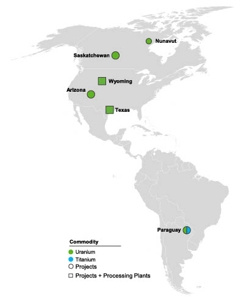
Figure 2.1 – Portfolio Overview of UEC Properties
Note on Mineral Property Disclosures
Information concerning our mining properties in this Annual Report has been prepared in accordance with the requirements of S-K 1300. S-K 1300 requires us to disclose our mineral resources as of the end of our most recently completed fiscal year both in the aggregate and for each of our individually material mining properties. For Fiscal 2025, we reviewed the materiality of each of our mineral properties based on various factors in the context of our overall business and financial condition, including their individual book values, relative project stage, resource estimates, planned activities and existing operations. Based on the foregoing, we determined that Christensen Ranch, Reno Creek and Ludeman in Wyoming, Burke Hollow in Texas and Roughrider in Saskatchewan, Canada are our material individual properties for the purposes of S-K 1300. Further information regarding such material individual properties is set forth under “- Material Individual Properties” herein.
Summary Disclosure
The following table sets forth summary information regarding each of our mineral properties and is presented as at the date hereof.
Table 2.1(a) Uranium Projects
| Project |
Location |
Acres |
Hectares |
Ownership Interest |
Operator |
Stage |
Mining Method |
Mineralization Style |
Commodities |
| Allemand- Ross |
Wyoming, USA |
13,331.72 |
5,395.16 |
100% |
UEC |
Exploration Stage |
ISR |
Roll-Front |
U |
| Antelope |
Wyoming, USA |
13,220 |
5,349.94 |
100% |
UEC |
Exploration Stage |
ISR |
Roll-Front |
U |
| Barge |
Wyoming, USA |
7,480 |
3,027.05 |
100% |
UEC |
Exploration Stage |
ISR |
Roll-Front |
U |
| Black Hills |
Wyoming, USA |
1,280 |
518 |
100% |
UEC |
Exploration Stage |
ISR |
Roll-Front |
U |
| Brown Ranch |
Wyoming, USA |
3,480 |
1,408.31 |
100% |
UEC |
Exploration Stage |
ISR |
Roll-Front |
U |
| Bull Springs |
Wyoming, USA |
5,702.80 |
2,307.84 |
100% |
UEC |
Exploration Stage |
ISR |
Roll-Front |
U |
| Central Shirley Basin |
Wyoming, USA |
2,380 |
963.15 |
100% |
UEC |
Exploration Stage |
ISR |
Roll-Front |
U |
| Charlie |
Wyoming, USA |
720 |
291.37 |
100% |
UEC |
Exploration Stage |
ISR |
Roll-Front |
U |
| Christensen Ranch |
Wyoming, USA |
9,420 |
3,812.14 |
100% |
UEC |
Exploration Stage |
ISR |
Roll-Front |
U |
| Clarkson Hills |
Wyoming, USA |
400 |
161.87 |
100% |
UEC |
Exploration Stage |
ISR |
Roll-Front |
U |
| Crooks Creek |
Wyoming, USA |
8,379.25 |
3,390.96 |
100% |
UEC |
Exploration Stage |
ISR |
Roll-Front |
U |
| Crook's Mountain |
Wyoming, USA |
2,480 |
1,003.62 |
100% |
UEC |
Exploration Stage |
ISR |
Roll-Front |
U |
| Crossroads |
Wyoming, USA |
5,680 |
2,298.61 |
100% |
UEC |
Exploration Stage |
ISR |
Roll-Front |
U |
| Cyclone Rim |
Wyoming, USA |
4,280 |
1,732.06 |
100% |
UEC |
Exploration Stage |
ISR |
Roll-Front |
U |
| East Shirley Basin |
Wyoming, USA |
4,599.90 |
1,861.51 |
100% |
UEC |
Exploration Stage |
ISR |
Roll-Front |
U |
| Gas Hills |
Wyoming, USA |
6,114.76 |
2,474.56 |
100% |
UEC |
Exploration Stage |
ISR |
Roll-Front |
U |
| Horse Creek |
Wyoming, USA |
540 |
218.53 |
100% |
UEC |
Exploration Stage |
ISR |
Roll-Front |
U |
| Irigaray |
Wyoming, USA |
2,320 |
938.87 |
100% |
UEC |
Exploration Stage |
ISR |
Roll-Front |
U |
| Jab/West Jab |
Wyoming, USA |
5,300 |
2,144.83 |
100% |
UEC |
Exploration Stage |
ISR |
Roll-Front |
U |
| Ludeman |
Wyoming, USA |
18,102 |
7,325.62 |
100% |
UEC |
Exploration Stage |
ISR |
Roll-Front |
U |
| Moore Ranch |
Wyoming, USA |
4,180 |
1691.59 |
100% |
UEC |
Exploration Stage |
ISR |
Roll-Front |
U |
| Mule Creek |
Wyoming, USA |
260 |
105.22 |
100% |
UEC |
Exploration Stage |
ISR |
Roll-Front |
U |
| Niles Ranch |
Wyoming, USA |
3,560 |
1,440.68 |
100% |
UEC |
Exploration Stage |
ISR |
Roll-Front |
U |
| Nine Mile Lake |
Wyoming, USA |
2,620 |
1,060.28 |
100% |
UEC |
Exploration Stage |
ISR |
Roll-Front |
U |
| Pine Ridge |
Wyoming, USA |
3,780 |
1,529.71 |
100% |
UEC |
Exploration Stage |
ISR |
Roll-Front |
U |
| Pine Tree U1 |
Wyoming, USA |
1,940 |
785.09 |
100% |
UEC |
Exploration Stage |
ISR |
Roll-Front |
U |
| Pumpkin Creek |
Wyoming, USA |
1,000 |
404.69 |
100% |
UEC |
Exploration Stage |
ISR |
Roll-Front |
U |
| Red Rim |
Wyoming, USA |
680 |
275.19 |
100% |
UEC |
Exploration Stage |
ISR |
Roll-Front |
U |
| Reno Creek |
Wyoming, USA |
18,867 |
7,635.20 |
100% |
UEC |
Exploration Stage |
ISR |
Roll-Front |
U |
| Ross Flats |
Wyoming, USA |
5,640 |
2,282.43 |
100% |
UEC |
Exploration Stage |
ISR |
Roll-Front |
U |
| Sand Creek |
Wyoming, USA |
3,000 |
1,214.06 |
100% |
UEC |
Exploration Stage |
ISR |
Roll-Front |
U |
| South Pine Ridge |
Wyoming, USA |
4,020 |
1,626.84 |
100% |
UEC |
Exploration Stage |
ISR |
Roll-Front |
U |
| South Reno Creek |
Wyoming, USA |
2,640 |
1,068.37 |
100% |
UEC |
Exploration Stage |
ISR |
Roll-Front |
U |
| South Sweetwater |
Wyoming, USA |
1,120 |
453.25 |
100% |
UEC |
Exploration Stage |
ISR |
Roll-Front |
U |
| Stewart Creek |
Wyoming, USA |
2,460 |
995.53 |
100% |
UEC |
Exploration Stage |
ISR |
Roll-Front |
U |
| Taylor Ranch |
Wyoming, USA |
4,699.65 |
1,901.88 |
100% |
UEC |
Exploration Stage |
ISR |
Roll-Front |
U |
| Twin Buttes |
Wyoming, USA |
8,380 |
3,391.27 |
100% |
UEC |
Exploration Stage |
ISR |
Roll-Front |
U |
| West Beaver Rim |
Wyoming, USA |
1,900 |
768.9 |
100% |
UEC |
Exploration Stage |
ISR |
Roll-Front |
U |
| West Crook's Creek |
Wyoming, USA |
1,520 |
615.12 |
100% |
UEC |
Exploration Stage |
ISR |
Roll-Front |
U |
| West Sweetwater |
Wyoming, USA |
1,080 |
437.06 |
100% |
UEC |
Exploration Stage |
ISR |
Roll-Front |
U |
| Burke Hollow |
Texas, USA |
17,511 |
7,086 |
100% |
UEC |
Exploration Stage |
ISR |
Roll-Front |
U |
| Goliad |
Texas, USA |
636 |
257 |
100% |
UEC |
Exploration Stage |
ISR |
Roll-Front |
U |
| La Palangana |
Texas, USA |
6,969 |
2,820 |
100% |
UEC |
Exploration Stage |
ISR |
Roll-Front |
U |
| Salvo |
Texas, USA |
800 |
324 |
100% |
UEC |
Exploration Stage |
ISR |
Roll-Front |
U |
| Longhorn |
Texas, USA |
594 |
240 |
100% |
UEC |
Exploration Stage |
ISR |
Roll-Front |
U |
| Anderson |
Arizona, USA |
12,968 |
5248 |
100% |
UEC |
Exploration Stage |
Conventional |
Tabular |
U |
| Los Cuatros |
Arizona, USA |
640 |
259 |
100% |
UEC |
Exploration Stage |
Conventional |
Tabular |
U |
| Workman Creek |
Arizona, USA |
4,036 |
1,374 |
100% |
UEC |
Exploration Stage |
Conventional |
Tabular |
U |
| C de Baca |
New Mexico, USA |
600 |
243 |
100% |
UEC |
Exploration Stage |
Conventional |
Tabular |
U |
| Dalton Pass |
New Mexico, USA |
1,020 |
413 |
100% |
UEC |
Exploration Stage |
Conventional |
Tabular |
U |
| Alexandra |
Saskatchewan, Canada |
36,485 |
14,765 |
21.05% |
Orano Canada Inc. |
Exploration Stage |
Conventional |
Unconformity Related |
U |
| Beatty River |
Saskatchewan, Canada |
16,526 |
6,688 |
32.76% |
Orano Canada Inc. |
Exploration Stage |
Conventional |
Unconformity Related |
U |
| Black Lake |
Saskatchewan, Canada |
78,335 |
31,701 |
51.43% |
UEC |
Exploration Stage |
Conventional |
Unconformity Related |
U |
| Brander Lake |
Saskatchewan, Canada |
34,577 |
13,993 |
49.10% |
Orano Canada Inc. |
Exploration Stage |
Conventional |
Unconformity Related |
U |
| Candle Lake |
Saskatchewan, Canada |
6,412 |
2,595 |
12.50% |
Denison Mines Corp. |
Exploration Stage |
Conventional |
Unconformity Related |
U |
| Carswell |
Saskatchewan, Canada |
51,492 |
20,838 |
100% |
UEC |
Exploration Stage |
Conventional |
Unconformity Related |
U |
| Christie Lake |
Saskatchewan, Canada |
19,575 |
7,922 |
82.77% |
UEC |
Exploration Stage |
Conventional |
Unconformity Related |
U |
| Close Lake |
Saskatchewan, Canada |
95,578 |
38,679 |
5.16% |
Orano Canada Inc. |
Exploration Stage |
Conventional |
Unconformity Related |
U |
| Cree Extension |
Saskatchewan, Canada |
30,115 |
12,187 |
15.05% |
Cameco Corporation |
Exploration Stage |
Conventional |
Unconformity Related |
U |
| Diabase Peninsula |
Saskatchewan, Canada |
77,164 |
31,227 |
100.00% |
UEC |
Exploration Stage |
Conventional |
Unconformity Related |
U |
| Erica |
Saskatchewan, Canada |
91,409 |
36,992 |
49.10% |
Orano Canada Inc. |
Exploration Stage |
Conventional |
Unconformity Related |
U |
| Henday |
Saskatchewan, Canada |
17,801 |
7,204 |
60% |
UEC |
Exploration Stage |
Conventional |
Unconformity Related |
U |
| Hidden Bay |
Saskatchewan, Canada |
126,933 |
51,368 |
100.00% |
UEC |
Exploration Stage |
Conventional |
Unconformity Related |
U |
| Horseshoe- Raven |
Saskatchewan, Canada |
11,085 |
4,486 |
100.00% |
UEC |
Exploration Stage |
Conventional |
Unconformity Related |
U |
| Key West |
Saskatchewan, Canada |
31,827 |
12,880 |
100.00% |
UEC |
Exploration Stage |
Conventional |
Unconformity Related |
U |
| Laurie |
Saskatchewan, Canada |
21,691 |
8,778 |
32.99% |
Orano Canada Inc. |
Exploration Stage |
Conventional |
Unconformity Related |
U |
| Millennium |
Saskatchewan, Canada |
1,458 |
590 |
15.05% |
Cameco Corporation |
Exploration Stage |
Conventional |
Unconformity Related |
U |
| Milliken |
Saskatchewan, Canada |
9,872 |
3,995 |
100% |
UEC |
Exploration Stage |
Conventional |
Unconformity Related |
U |
| Mirror River |
Saskatchewan, Canada |
42,996 |
17,400 |
32.34% |
Orano Canada Inc. |
Exploration Stage |
Conventional |
Unconformity Related |
U |
| Moon Lake |
Saskatchewan, Canada |
9,385 |
3,798 |
10.07% |
Cameco Corporation |
Exploration Stage |
Conventional |
Unconformity Related |
U |
| Moore Tomblin |
Saskatchewan, Canada |
3,249 |
1,315 |
6.80% |
Orano Canada Inc. |
Exploration Stage |
Conventional |
Unconformity Related |
U |
| Nikita |
Saskatchewan, Canada |
37,390 |
15,131 |
12.72% |
Orano Canada Inc. |
Exploration Stage |
Conventional |
Unconformity Related |
U |
| Riou Lake |
Saskatchewan, Canada |
27,634 |
11,183 |
100.00% |
UEC |
Exploration Stage |
Conventional |
Unconformity Related |
U |
| Roughrider |
Saskatchewan, Canada |
1,475 |
597 |
100.00% |
UEC |
Exploration Stage |
Conventional |
Unconformity Related |
U |
| Shea Creek |
Saskatchewan, Canada |
81,451 |
32,962 |
49.10% |
Orano Canada Inc. |
Exploration Stage |
Conventional |
Unconformity Related |
U |
| Uchrich |
Saskatchewan, Canada |
5,592 |
2,263 |
30.48% |
Orano Canada Inc. |
Exploration Stage |
Conventional |
Unconformity Related |
U |
| Waterfound River |
Saskatchewan, Canada |
28,837 |
11,670 |
12.90% |
Orano Canada Inc. |
Exploration Stage |
Conventional |
Unconformity Related |
U |
| West Bear |
Saskatchewan, Canada |
27,439 |
11,104 |
100.00% |
UEC |
Exploration Stage |
Conventional |
Unconformity Related |
U, Co, Ni |
| Wheeler River |
Saskatchewan, Canada |
28,961 |
11,720 |
5.00% |
Denison Mines Corp. |
Development |
ISR / Conventional |
Unconformity Related |
U |
| Wolly |
Saskatchewan, Canada |
58,564 |
23,700 |
6.38% |
Orano Canada Inc. |
Exploration Stage |
Conventional |
Unconformity Related |
U |
| Kiggavik |
Nunavut, Canada |
45,638 |
18,469 |
16.91% |
Orano Canada Inc. |
Exploration Stage |
Conventional |
Unconformity Related |
U |
| Yuty |
Paraguay |
289,687 |
117,232 |
100.00% |
UEC |
Exploration Stage |
ISR |
Roll-Front |
U |
| Oviedo |
Paraguay |
223,754 |
90,550 |
100.00% |
UEC |
Exploration Stage |
ISR |
Roll-Front |
U |
Table 2.1(b) Titanium Projects
| Project |
Location |
Acres |
Hectares |
Ownership Interest |
Operator |
Stage |
Mining Method |
Mineralization Style |
Commodities |
| Alto Parana |
Paraguay |
174,204 |
70,498 |
100.00% |
UEC |
Exploration Stage |
Conventional |
Surficial |
Ti |
Mineral Resources
The following table sets forth the current mineral resource estimates for our uranium properties. For further information regarding estimates concerning our material individual properties, please see "– Material Individual Properties" herein.
| Country |
State / Province |
Project |
Measured |
Indicated |
Inferred |
|||||||||
| Tons ('000's) |
Tonnes |
Grade |
Pounds U3O8 ('000's) |
Tons ('000's) |
Tonnes |
Grade |
Pounds U3O8 ('000's) |
Tons ('000's) |
Tonnes |
Grade |
Pounds U3O8 ('000's) |
|||
|
|
|
Allemand-Ross |
246 |
223 |
0.09% |
417 |
32 |
29 |
0.07% |
42 |
1,275 |
1,157 |
0.10% |
2,496 |
| Barge |
4,301 |
3,902 |
0.05% |
4,361 |
||||||||||
| Charlie |
1,255 |
1,139 |
0.12% |
3,100 |
411 |
373 |
0.12% |
988 |
||||||
| Christensen Ranch |
6,555 |
5,947 |
0.07% |
9,596 |
||||||||||
| Clarkson Hill |
957 |
868 |
0.06% |
1,113 |
||||||||||
| Irigaray |
3,881 |
3,521 |
0.08% |
5,899 |
104 |
94 |
0.07% |
141 |
||||||
| Wyoming | Jab/West Jab |
1,621 |
1,471 |
0.07% |
2,335 |
253 |
230 |
0.08% |
392 |
1,402 |
1,272 |
0.06% |
1,677 |
|
| Ludeman |
2,674 |
2,426 |
0.09% |
5,017 |
2,660 |
2,413 |
0.09% |
4,697 |
866 |
786 |
0.07% |
1,258 |
||
| Moore Ranch |
2,675 |
2,427 |
0.06% |
3,210 |
46 |
42 |
0.05% |
44 |
||||||
| Nine Mile Lake |
3,405 |
3,089 |
0.04% |
4,308 |
||||||||||
| United States | Red Rim |
337 |
306 |
0.17% |
1,142 |
473 |
429 |
0.16% |
1,539 |
|||||
| Reno Creek |
14,990 |
13,599 |
0.04% |
12,920 |
16,980 |
15,404 |
0.04% |
13,070 |
1,920 |
1,742 |
0.04% |
1,490 |
||
| Wyoming Total |
22,206 |
20,145 |
0.05% |
23,899 |
36,254 |
32,889 |
0.06% |
42,299 |
10,859 |
9,851 |
0.07% |
15,054 |
||
|
|
Burke Hollow |
581 |
527 |
0.09% |
964 |
3,329 |
3,020 |
0.08% |
5,191 |
2,596 |
2,355 |
0.10% |
4,883 |
|
| Goliad |
1,595 |
1,447 |
0.05% |
2,668 |
1,504 |
1,364 |
0.10% |
3,492 |
333 |
302 |
0.20% |
1,225 |
||
| Texas | Palangana |
232 |
210 |
0.13% |
643 |
302 |
274 |
0.18% |
1,001 |
|||||
| Salvo |
1125 |
1,021 |
0.09% |
2,839 |
||||||||||
| Texas Total |
2,176 |
1,974 |
0.08% |
3,632 |
5,065 |
4,595 |
0.09% |
9,326 |
4,356 |
3,952 |
0.11% |
9,948 |
||
|
|
Anderson |
16,175 |
14,674 |
0.10% |
32,055 |
|||||||||
| Arizona | Workman Creek |
1,981 |
1,797 |
0.11% |
4,459 |
|||||||||
| Arizona Total |
16,175 |
14,674 |
0.10% |
32,055 |
1,981 |
1,797 |
0.11% |
4,459 |
||||||
| United States Total |
24,382 |
22,119 |
0.06% |
27,531 |
57,494 |
52,158 |
0.07% |
83,680 |
17,196 |
15,600 |
0.09% |
29,461 |
||
|
|
|
Christie Lake |
537 |
488 |
1.57% |
16,836 |
||||||||
| Roughrider |
771 |
699 |
1.81% |
27,860 |
683 |
620 |
2.44% |
33,380 |
||||||
| Canada | Saskatchewan | Horseshoe-Raven |
11,412 |
10,353 |
0.16% |
37,426 |
||||||||
| Shea Creek |
1,113 |
1,009 |
1.49% |
33,176 |
679 |
616 |
1.02% |
13,776 |
||||||
| Millennium |
239 |
217 |
2.39% |
11,423 |
68 |
62 |
3.19% |
4,364 |
||||||
| Canada Total |
13,534 |
12,278 |
0.41% |
109,885 |
1,968 |
1,785 |
1.74% |
68,021 |
||||||
| Paraguay |
Yuty |
9,074 |
8,232 |
0.05% |
8,962 |
2,733 |
2,479 |
0.04% |
2,203 |
|||||
| Total Resources |
24,382 |
22,119 |
0.06% |
27,531 |
80,102 |
72,668 |
0.13% |
202,527 |
21,897 |
19,865 |
0.23% |
100,021 |
||
Notes:
| 1. |
Mineral resources are not mineral reserves and do not have demonstrated economic viability. |
|
| 2. |
The point of reference for mineral resources is in-situ at the project. |
|
| 3. |
In the year ended July 31, 2025, we commenced operations at Christensen Ranch which included minimal initial production as part of ramp up of 103,545 pounds and 26,421 pounds of precipitated uranium and dried and drummed concentrate, respectively, at the end of such period. Such amount has not been deducted from estimate above. |
|
| 4. |
Mineral resources are estimated using a long-term uranium price of $40 per pound for ISR projects and $65 per pound for conventional projects, except for the Canadian projects where a price of $85 per pound was used for the Roughrider Project, a price of $75 per pound was used for the Horseshoe-Raven Project, a price of $50 per pound was used for the Shea Creek Project, a price of $50 per pound was used for the Christie Lake Project and a price of $62 per pound was used for the Millennium Project. |
|
| 5. |
Mineral resources are 100% attributable to the Company. Where joint venture projects have resources that are attributable to other companies, these resources are not listed in the table. |
|
| 6. |
Numbers may not add due to rounding. |
In addition to our uranium properties, we also own the Alto Parana titanium project in Paraguay. The following table sets forth the mineral resource for such project.
| Measured |
Indicated |
Inferred |
|||||||||||||||
| Country |
State / Department |
Project |
Tons (106) |
Tonnes (106) |
Grade Whole Rock TiO2 |
Whole Rock TiO2 tonnes (106) |
Recoverable TiO2 tonnes (106) |
Tons (106) |
Tonnes (106) |
Grade Whole Rock TiO2 |
Whole Rock TiO2 tonnes (106) |
Recoverable TiO2 tonnes (106) |
Tons (106) |
Tonnes (106) |
Grade Whole Rock TiO2 |
Whole Rock TiO2 tonnes (106) |
Recoverable TiO2 tonnes (106) |
| Paraguay |
Alto Parana and Canindeyú |
Alto Parana |
- |
- |
- |
- |
- |
77 |
70 |
7.60% |
5.32 |
2.86 |
3,945 |
3,580 |
7.31% |
261.66 |
N/A |
Notes:
| 1. |
Ilmenite: ‘heavy mineral’ particles between 45µm and 1mm, denser than 2.8g/cm3 containing an average of 50% TiO2 |
|
| 2. |
All grades are expressed as in situ grades. |
|
| 3. |
Estimates for the mineral resources and the total and the total are rounded to two significant figures, as appropriate for inferred resources. |
|
| 4. |
On the basis of sampling and comparison assays done to date it is estimated the inferred resources contain between 4 and 5% ilmenite. |
|
| 5. |
A cut-off grade of 2% ilmenite has been applied where the ilmenite grade is known, otherwise whole rock TiO₂ of 5.75% |
|
| 6. |
Cut-off grade was determined using the price of $1,025 per tonne for chlorite slag, $720 per tonne for Chlorite slag fines, and $747 for high purity pig iron |
|
| 7. |
As the salable product is a concentrate in the form of either slag or pig iron, metallurgical recovery occurs downstream from the salable product and cannot be reported for TiO2. |
Internal Controls Respecting Exploration and Resource Estimation
For Canadian and U.S. exploration programs, Quality Control and Quality Assurance (“QA/QC”) programs for geologic data collection and resource estimation are defined in each TRS along with protocols and procedures for data collection. To summarize, the QA/QC programs for exploration data are in place that cover four categories: geologic data collection; data verification; radiometric equivalent data; and geochemical data. The controls in each of these categories serve to help the Company and its qualified persons (each, a “QP”) under each TRS have confidence in the data and geologic interpretations that are being used in resource estimation.
Geochemical data for Canadian exploration programs is supplied by the Geoanalytical Laboratory at the Saskatchewan Research Council (“SRC”). The quality management system at SRC, Geoanalytical Laboratories, operates in accordance with ISO/IEC 17025, General Requirements for the Competence of Testing and Calibration Laboratories, and is also compliant to ASB, Requirements and Guidance for Mineral Analysis Testing Laboratories. The management system and selected methods are accredited by the Standards Council of Canada. As part of the SRC’s commitment to continually assess the effectiveness of the services, all processes are subject to internal, second party and third-party audits. In addition to the lab controls on QA/QC, the Company submits duplicate samples and blank samples to the lab at a rate of approximately one in 20 samples each along with standard and a round robin pulp that are inserted at the lab, so that in a 20-sample batch there are 16 geochemistry samples for analysis. Failures of lab standards, blanks or duplicates are investigated and can result in the re-assay of the samples to replace the original data in the database if necessary. Samples of mineralization at a rate of about 5% of the population are checked externally with a different accredited lab to help assure accuracy.
For U.S. exploration programs, the preponderance of data utilized for resource and reserve estimates is generated from radiometric equivalent measurements made utilizing downhole geophysical logging techniques such as gamma-ray and prompt fission neutron (“PFN”) techniques. This technology has been employed in the exploration and development of sandstone uranium deposits in the U.S. since the 1950s. QA/QC of gamma-ray and PFN probes from each logging truck are required to maintain calibration by regular cross-checking the probes at U.S. DOE test pits located in George West, Texas, or Casper, Wyoming. The pit is set up for logging units to calibrate the probes with a known radioactive source. Each test run generates calibration files for the operator to review and make necessary tool adjustments. Calibration runs typically are made on a one- or two-month interval, and files with the test pit run results are maintained by the operator. The available data indicate that the logging provided by the Company and contract probe trucks at the various U.S. projects have maintained industry standard calibration procedures for their probes.
For resource estimation the internal controls are more common to the U.S. and Canadian operations. Company staff will perform database verification on the geologic database which is then reviewed by the QP. If the QP was not involved in the primary data collection field program the QP will spot check a subset of drill collar locations and, if available, also compare collar elevations against a digital elevation model to evaluate and cross check the drill hole collar elevations. For resource estimation the block model is evaluated visually against geologic cross sections to ensure block grades match drill hole grades. The QP will evaluate probability plots and perform statistical analysis of the sample population to determine the need for an appropriate grade cap to limit the influence of high-grade samples to the appropriate area. The preparation of Swath Plots is another internal control which can inform the QP if high-grade samples have had an exaggerated influence on the resource model.
The resource estimates have inherent risks due to data accuracy, uncertainty from geological interpretation, mine plan assumptions, uncontrolled rights for mineral and surface properties, environmental challenges, uncertainty for future market supply and demand and changes in laws and regulations. Company management and QPs are aware of those risks that might directly impact the assessment of mineral reserves and resources. The current mineral resources are estimated based on the best information available and are subject to reassessment when conditions change.
Central Processing Plants
We currently own three processing plants, consisting of the Irigaray CPP, an ISR plant located in northeastern Wyoming, the Hobson CPP, an ISR plant located in South Texas, and the Sweetwater Plant, a conventional plant located in Southwestern Wyoming. Additional information regarding each processing facility is set forth where applicable in “Individual Material Properties” herein.
Individual Material Properties
Wyoming Properties
Below is a map showing our material Wyoming projects:
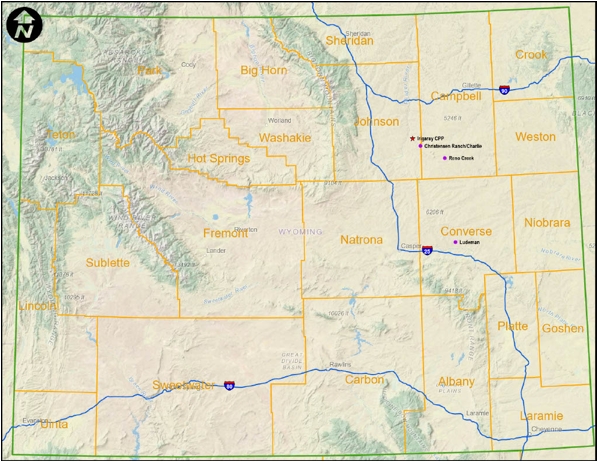
Figure 2.2 – Locations of our Projects in Wyoming
Permitting Requirements in Wyoming
The Irigaray CPP is fully permitted. The Christensen Ranch, Ludeman, Moore Ranch and portions of the Reno Creek Project areas are permitted for ISR operations through both WDEQ/LQD and the BLM as appropriate.
Geology and Mineralization in Wyoming
Uranium was first discovered in the southern PRB during the early 1950s. By the mid- to late 1950s, small open pit mine operations were established in the PRB. Early prospecting and exploration included geologic mapping and gamma surveys, which led to discoveries of uranium in the Wasatch and Fort Union Formations. Extensive drill hole exploration has been utilized to locate deeper uranium mineralization since the 1960s to progress geologic models.
Uranium mineralization was discovered in the GDB at the Lost Creek Schoekingerite deposit in the early 1950s. The Schoekingerite deposits were exposed at the surface along the Lost Creek drainage and were located using radiometric surveys. The USGS used shallow exploration to further evaluate the deposits. Similar to the PRB, drilling for deeper deposits began in the 1960s and exploration has primarily consisted of drilling since that time.
The Allemand-Ross, Barge, Charlie, Christensen Ranch, Irigaray, Ludeman, Moore Ranch, Nine Mile and Reno Creek Project areas reside in the Powder River Basin (“PRB”). The PRB is a structural basin that extends over much of northeastern Wyoming and southeastern Montana and consists of a large north-northwest trending asymmetric syncline. The basin is bounded by the Big Horn Mountains on the west and Casper Arch to the southwest, the Black Hills to the east and the Hartville Uplift and Laramie Mountains to the south. The PRB is filled with marine, non-marine and continental sediments ranging in age from early Paleozoic through Cenozoic.
The Jab/West Jab, Crooks Mountain, Crooks Creek, West Cooks Creek, Bull Springs, Stewart Creek, South Sweetwater, West Sweetwater, Antelope, Twin Buttes, Cyclone Rim, Red Desert, Green Mountain and Red Rim Project areas are located within the northeastern portion of the Greater Green River Basin (“GGRB”). The GGRB is a structural basin that extends over southwestern Wyoming and northwestern Colorado and is divided by the Rock Springs Uplift, a north-south trending anticline. The basin is bounded by the Wyoming thrust belt to the west, the Rawlins Uplift and the Sierra Madre Mountains to the east, the Wind River Mountains to the north and the Uinta Mountains to the south. The GGRB contains up to 25,000 feet of Cretaceous to recent sedimentary rocks.
The Clarkson Hill Project area is located in the eastern portion of the Wind River Basin (“WRB”). The WRB is a structural basin in west-central Wyoming. The basin is bounded by the Wind River Range to the west, the Casper Arch to the east, the Owl Creek Mountains to the north and the Granite Mountains to the south. The WRB is filled with marine, lacustrine and fluvial sediments ranging in age from Paleozoic to Cenozoic.
Uranium mineralization at the project is typical of Wyoming roll-front sandstone deposits. The formation of roll-front deposits is largely a groundwater process that occurs when uranium-bearing, oxygenated groundwater interacts with a reducing environment in the subsurface and precipitates uranium. The most favorable host rocks for roll-fronts are permeable sandstones with large aquifer systems. Interbedded mudstone, claystone and siltstone are often present and aid in the formation process by focusing groundwater flow.
Geology of the Powder River Basin
The PRB extends over much of northeastern Wyoming and southeastern Montana and consists of a large north-northwest trending asymmetric syncline, with the basin axis located to the west of the projects. The PRB is bounded by the Big Horn Mountains and Casper Arch to the west, the Black Hills to the east and the Hartville Uplift and Laramie Mountains to the south. The PRB is filled with marine, non-marine and continental sediments ranging in age from early Paleozoic through Cenozoic.
Within the PRB, the Paleocene Fort Union Formation conformably overlies the Lance Formation and is a fluvial-sedimentary stratigraphic unit that consists of fine- to coarse-grained arkosic sandstone, which is interbedded with siltstone, mudstone and carbonaceous materials. In some areas of the PRB, the Fort Union Formation is divided into two members, identified as the Upper and Lower members of the Fort Union Formation. However, Flores divides the Fort Union into three members: the Tullock; Lebo; and Tongue River members (listed from oldest to youngest); as follows:
| ● |
the Tullock member consists of sandstone, siltstone and sparse coal and carbonaceous shale; |
| ● |
the Lebo member consists of abundant drab gray mudstone, minor siltstone and sandstone and sparse coal and carbonaceous shale beds; and |
| ● |
the Tongue River member consists of interbedded sandstone, conglomerate, siltstone, mudstone, limestone, anomalously thick coal beds and carbonaceous shale beds. This member has been mined extensively for its coal beds, which can be hundreds of feet thick. |
Uranium mineralization occurs in zones that are located in channel sands of the Fort Union Formation. These channel sands are typical fining upward sand sequences consisting of fine-grained sandstones. The zones of mineralization are formed as typical roll-front deposits in these sandstones.
The early Eocene Wasatch Formation unconformably overlies the Fort Union Formation around the margins of the PRB. However, the two formations are conformable and gradational towards the basin center. The relative amount of coarse, permeable clastic sediments increases near the top of Fort Union, and the overlying Wasatch Formation contains numerous beds of sandstone that can sometimes be correlated over wide areas. The Wasatch-Fort Union contact is separated by Paleocene and Eocene rocks and is generally placed above the Roland coal. However, other authors have placed the Wasatch-Fort Union contact above the School, Badger and Anderson Coals in other parts of the PRB.
The Wasatch Formation occurs at the surface in the central PRB, but has been mostly removed by erosion with only small, scattered outcrops still present in the southern PRB. The Wasatch Formation is also a fluvial sedimentary unit that consists of a series of silt to very coarse-grained gradational intervals in arkosic sandstone. The sandstone horizons in the Wasatch Formation are the host rocks for several uranium deposits in the central PRB. Within this area, uranium mineralization is found in a 50- to 100-ft thick sandstone lens. On a regional scale, the mineralization is localized and controlled by facies changes within this sandstone, including thinning of the sandstone unit, decrease in grain size and increase in clay and organic material content. The Wasatch Formation reaches a maximum thickness of about 1,600 feet and dips northwestward from one degree to two-and-a-half degrees in the southern and central parts of the PRB.
The Oligocene White River Formation overlies the Wasatch Formation and has been removed from most of the basin by erosion. Remnants of this unit crop out on the Pumpkin Buttes, and at the extreme southern edge of the PRB. The White River Formation consists of clayey sandstone, claystone, a boulder conglomerate and tuffaceous sediments, which may be the primary source rock for uranium in the southern part of the PRB as a whole. The youngest sediments consist of Quaternary alluvial sands and gravels locally present in larger valleys. Quaternary eolian sands can also be found locally.
Geology of the Great Divide and Greater Green River Basins
The Jab/West Jab, Crooks Mountain, Crooks Creek, West Cooks Creek, Bull Springs, Stewart Creek, South Sweetwater, West Sweetwater, Antelope, Twin Buttes, Cyclone Rim, Red Desert, Green Mountain and Red Rim Project areas are located within the northeastern portion of the Great Divide Basin (“GDB”).
The GDB and the Washakie Basin (“WB”) in the southwest together comprise the GGRB. The GGRB is a structural basin that extends over southwestern Wyoming and northwestern Colorado and is divided by the Rock Springs Uplift, a north-south trending anticline. The basin is bounded by the Wyoming thrust belt to the west, the Rawlins Uplift and the Sierra Madre Mountains to the east, the Wind River Mountains to the north and the Uinta Mountains to the south. The GGRB contains up to 25,000 feet of Cretaceous to recent sedimentary rocks.
During the end of the Cretaceous Period, the Laramide Orogeny divided the Wyoming Basin Province into a series of down warped basins. As these basins were created, uplift created the Granite and Seminoe Mountains and older formations were altered during the same time. In the northern regions of the GDB, swamps, alluvial plains and fluvial fans were present at the margins of the uplifted Granite Mountains. To the southwest, the GDB is occupied by the lacustrine Eocene Green River Formation and by the lower energy Wasatch Formation. These two facies interfinger with the high-energy fluvial facies of the Battle Spring Formation at the central and eastern areas in the GDB.
Uranium deposits occur principally in the Battle Spring Formation which consists of alluvial-fluvial fan deposits of west- to southwest-flowing paleodrainage. The common rock type is arkosic sandstone with interbedded claystone. These types of rock are typical of alluvial-fan facies. Much of this material is sourced from the Granite Mountains, by blockages in normal drainages due to differential subsidence rates. The Wasatch Formation, due to its fluvial nature, contains interbedded siltstones, coal, carbonaceous shale, fine-grained sandstone, sandy limestone and medium-grained fluvial sandstones.
The Battle Spring Formation consists of alluvial-fluvial fan deposits of west to southwest-flowing paleodrainage. The common rock type is arkosic sandstone with interbedded claystone. These types of rock are typical of alluvial-fan facies. Much of this material is sourced from the Granite Mountains by blockages in normal drainages due to differential subsidence rates. The Wasatch Formation, due to its fluvial nature, contains interbedded siltstones, coal, carbonaceous shale, fine-grained sandstone, sandy limestone and medium-grained fluvial sandstones. The permeable medium- to very coarse-grained sandstones and arkoses are a favorable host for sandstone-type uranium deposits. Fluvial channels incised into less permeable underlying siltstones and sandstones in the Battle Spring during early Eocene time. The channels were backfilled by the massive, poorly-sorted, coalescing alluvial fan deposits, known as the Battle Spring Formation. The Battle Spring Formation includes impermeable carbonaceous shales that created an impermeable boundary for uranium deposits.
The Fort Union Formation surfaces around the boundary of the GDB. The Fort Union Formation is described as an interbedded sequence of white, gray, tan, buff and brown sandstone, gray to black shale, carbonaceous shale, siltstone, local conglomerate beds and (usually) thin coal beds. It may truncate and unconformably overlie older units near basin margins. The Fort Union is unconformably underlain by the Cretaceous Lance Formation and regionally overlain by either the Eocene Wasatch or Battle Spring Formation.
The Lance Formation is described as a gray to buff fine-grained to very fine-grained silty sandstone interbedded with drab to light-green to gray locally carbonaceous siltstone and thin conglomeratic lenses locally. The Lance Formation contains the upper Red Rim Member and the lower (unnamed) member. The Red Rim Member is a prominent sandstone package named for its color as it crops out south of Interstate 80 on the eastern rim of the WB.
Overbank and floodplain deposits in the Battle Spring Formation also were likely to restrict groundwater flow. These boundaries focused uranium-rich waters into confined permeable units. Faulting also created structural and permeability control.
Geology of the Wind River Basin
The Clarkson Hill Project area is located in the eastern portion of the WRB. The WRB is a structural basin in west-central Wyoming. The basin is bounded by the Wind River Range to the west, the Casper Arch to the east, the Owl Creek Mountains to the north and the Granite Mountains to the south. The WRB is filled with marine, lacustrine and fluvial sediments ranging in age from Paleozoic to Cenozoic.
Both the Wind River and Fort Union Formations are Cenozoic fluvial sedimentary deposits containing sandstone with economic quantities of uranium. The primary source of sediments for the Wind River and Fort Union Formations in the eastern WRB was the ancestral Granite Mountains along the southern boundary of the basin. The Granite Mountains were formed during the Laramide Orogeny, a period of extensive mountain building, which began at the end of the Mesozoic Era and continued into the early Cenozoic Era. Subsequent erosion of the Granite Mountain highlands coupled with the down-warping of adjacent basins, such as the Wind River and Powder River Basins, combined to accumulate thousands of feet of sedimentary deposits.
The Paleocene Fort Union is the oldest Tertiary formation and consists of sandstone, siltstone, shale, coal and local conglomerates. The Fort Union is overlain, often unconformably, by the Eocene Wind River Formation, which consists of sandstones, conglomerates, siltstones and shale. Overlying the Wind River Formation is the Oligocene White River Formation. The White River Formation also consists of sandstones, siltstone and shale, however, along with fluvial deposition of the sands and clays, substantial volumes of windblown volcanic ash (tuffs) were also deposited. This volcanic ash is regarded by many as the source of uranium for many Wyoming sandstone uranium deposits. Economic uranium deposits in the WRB typically occur as roll-front deposits in porous sandstones within the Wind River and Fort Union Formations.
Material Project Descriptions in Wyoming
Irigaray CPP
The following technical and scientific description for the Irigaray CPP is based in part on the TRS titled “S-K 1300 Mineral Resource Report Wyoming Assets ISR Hub and Spoke Project, WY USA”, dated March 9, 2023, prepared for the Company by Western Water Consultants d/b/a WWC Engineering (“WWC”), a qualified firm (the QP herein) that is not affiliated with UEC.
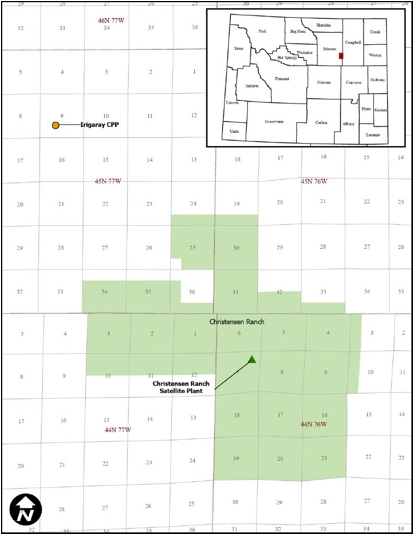
Figure 2.3 – Location of the Irigaray Project The Irigaray CPP hub is located in Johnson County, Wyoming, northwest of Pumpkin Buttes and near Willow Creek.
Property Description
The Irigaray CPP is approximately 70 air miles north-northeast of Casper, Wyoming, 48 air miles southeast of Buffalo, Wyoming, and 40 air miles southwest of Gillette at Latitude / Longitude of 43.888 / -106.128. The site is accessible year-round on county and private roads which are shared by oil and gas operators and ranchers. Limited services are available from several smaller towns near the site. Primarily, services and personnel are available from Buffalo, Gillette and Casper. Casper and Gillette provide flight services with daily service to Denver, Billings and Salt Lake City. Water is sourced locally at the mine while electrical service is provided by a regional power company.
Facilities, Infrastructure and Underground Development
The Irigaray CPP was first constructed in 1977-1978. Mining occurred at the time in Wellfields 1 through 9. These wellfields have gone through groundwater restoration, decommissioning and final reclamation, which has been approved by the WDEQ. Currently, the only facilities at the Irigaray Project are the CPP and associated infrastructure including evaporation ponds, access roads, power lines and chemical and fuel storage tanks. The CPP was upgraded in 2009 by removing the original equipment and adding replacement elution systems, additional precipitation tanks, new concrete foundations and upgrades to the filter press and other equipment. The CPP now contains two complete resin elution systems, multiple precipitation areas, filter press, yellowcake thickeners, and a calciner for drying yellowcake product. A vacuum dryer is in storage at the CPP for future installation when needed. The plant is capable of accepting third party resins for stripping, precipitation and drying of yellowcake product, as well as our own resins from Christensen Ranch and other properties. Although the building is older, it has been maintained in good condition. The entire CPP roof was replaced in 2021. In addition, significant upgrades at the Irigaray CPP were initiated in the fourth quarter of Fiscal 2025, including a full rebuild of one of two yellowcake thickeners along with calciner improvements.
Christensen Ranch Project
The following technical and scientific description for the Christensen Ranch Project area (the “Christensen Ranch Project Area”) is based in part on the TRS titled “S-K 1300 Mineral Resource Report Wyoming Assets ISR Hub and Spoke Project, WY USA”, dated March 9, 2023, prepared for the Company by WWC, a qualified firm (the QP herein) who is not affiliated with UEC.
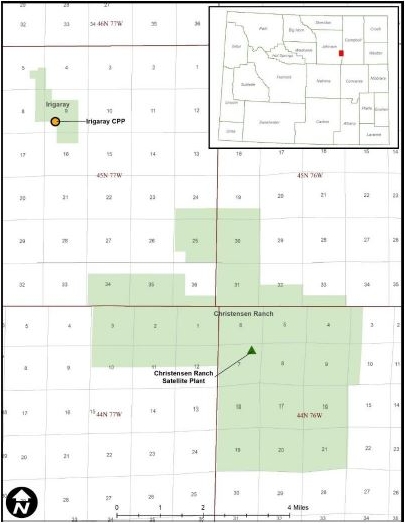
Figure 2.4 – Location of the Christensen Ranch Project The Christensen Ranch Project Area is located in Johnson and Campbell Counties, Wyoming, west of Pumpkin Buttes within the PRB. Details of this area and number of claims tabulated below.
Property Description
The Christensen Ranch Project Area is approximately 70 air miles north-northeast of Casper, Wyoming, 48 air miles southeast of Buffalo, Wyoming and 40 air miles southwest of Gillette at Latitude / Longitude of 43.7982 / -106.0235. The Christensen Ranch Project Area is primarily located on private surface land, with two portions located on federal BLM-managed land. The site is accessible year-round on county and private roads which are shared by oil and gas operators and ranchers. Limited services are available from several smaller towns proximal to the site. Primarily, services and personnel are available from Buffalo, Gillette and Casper. Casper and Gillette provide flight services with daily service to Denver, Billings and Salt Lake City. Water is sourced locally at the mine while electrical service is provided by a regional power company.
Table 2.2 Christensen Ranch Project Claims Details.
| Acres |
Hectares |
State Leases |
Fee Mineral Leases |
Federal Lode Mining Claims |
||||||
| Total |
Total |
Number |
Acres |
Expiration Date |
Number |
Acres |
Expiration Date |
Number |
Acres |
Expiration Date |
| 9,420 |
3,812.14 |
1 |
1,280 |
Annual |
1 |
720 |
Annual |
399 |
7,980 |
Annual |
History
The table below describes the historic ownership and operations at the Christensen Ranch Project Area.
Table 2.3: Historic Ownership and Operations at the Christensen Ranch Project Area
| Year |
Company |
Operations/Activity |
Amount (No. of Drill holes) |
Results of Work |
| 1967 |
Independent Operators |
Assembled as a large land package by independent operators. |
Approximately 4,860 |
Right to mine secured. Preliminary delineation of mineralized areas. |
| 1979 |
Arizona Public Services (“APS”), parent company of Malapai |
APS became a 50% partner in 1979. |
Approximately 2,220 |
Delineation of mineralized areas. |
| 1981 |
Malapai |
Malapai assumed sole ownership of the Christensen Ranch Project Area by acquiring the interests of Wold Energy (“Wold”) and Western Nuclear Corporation (“WNC”). Malapai purchased the Irigaray Project Area from Westinghouse in 1987, and the Christensen Ranch Project Area was licensed for operations under the Irigaray U.S. NRC and Wyoming Department of Environmental Quality (“WDEQ”) license/permit in 1988. Uranium production by ISR was started by Malapai in 1989 and was placed on standby in 1990. |
Approximately 1,460 |
Delineation of mineralized areas. Began ISR production. |
| 1990 |
TOMIN and EDF |
EDF acquired the Irigaray and Christensen Ranch Project Areas from Malapai in 1990. TOMIN acted as project operator for EDF under a joint participation agreement. TOMIN restarted ISR operations in 1991. |
Approximately 2,270 |
Delineation of mineralized areas. Restarted ISR production. |
| 1993 |
COGEMA and EDF |
In 1993, COGEMA acquired the assets of TOMIN and changed the name of the operating entity to COGEMA Mining, Inc. EDF (now Malapai) was still owner of 29%, COGEMA, as operator, owned 71% through the joint participation agreement. |
Approximately 3,690 |
3.70 million pounds of U3O8 produced from 1989 through 2000. |
| 2000 |
COGEMA and Malapai |
Groundwater restoration of Mine Units 2 through 6 was completed. The Christensen Ranch Project Area was placed on standby from 2006 through 2010, at which time COGEMA and Malapai sold the project to Uranium One and Uranium One USA, Inc. (collectively, “Uranium One”). |
N/A |
188,000 pounds of U3O8 produced during restoration. |
| 2010 |
Uranium One |
Mine Units 7, 8 and 10 were installed and operated. A ramp up occurred in 2011, and a ramp down occurred in 2013 (all wellfield development ceased). Low production mode occurred in 2014 through 2018, and production ended in 2018, at which time the Christensen Ranch Project Area was placed on care and maintenance. |
N/A |
2.6 million pounds of U3O8 produced. |
| 2021 |
UEC |
The Christensen Ranch Project Area acquired by UEC from Uranium One. |
N/A |
Ownership transition. |
| 2024 |
UEC |
Restarted uranium extraction and ramp-up phase expected to continue while new production areas are being constructed and completed through 2025 and 2016. |
N/A |
Property Condition and Proposed Development
The condition of the property is very good while meeting all standards and requirements of federal, state and local regulations. Development activity to advance the property included the drilling of 62 delineation holes for a total of 33,507 feet in an area adjacent to Mine Unit 5. Additionally, a nine-hole coring program was conducted in previously produced Mine Units to evaluate non-recovered resource potential remaining in those Mine Units. Production from header houses 10-7 and 10-8 has begun, marking the first two new production areas at Christensen Ranch as part of its phased restart. Construction of four new header houses in Mine Unit 11 are underway with power poles placed and buildings being set on their foundations. Wellfield development advanced with active well installation (piloting, casing, underreaming) in Mine Unit 11, delineation drilling completed in Mine Unit 12, and extensions planned in Mine Unit 8 and Mine Unit 10.
Facilities, Infrastructure and Underground Development
The Christensen Ranch Project facilities include the ion exchange satellite plant, four evaporation ponds, one permeate storage pond, two EPA Class I injection disposal wells, several miles of buried production and injection trunklines connecting Mine Units to the satellite plant, access roads, office building, maintenance shop, powerlines and eight installed wellfields (Mine Units 2, 3, 4, 5, 6, 7, 8 and 10). Mine Units 2, 3, 4 and 6 have gone through groundwater restoration, which has been approved by WDEQ. These wellfields are undergoing decommissioning with plugging and abandonment of injection and recovery wells undertaken in Mine Unit 2. Mine Units 7, 8 and 10 have been partially mined and have resumed operations. Operations in portions of Mine Unit 5 may also be resumed in the future. All facilities are in very good condition.
Permit Status and Encumbrances
The Christensen Ranch Project is permitted under WDEQ Permit to Mine No. 478. The project is also licensed under WDEQ RML WYSUA-1341, formerly a U.S. NRC license. Permit to Mine No. 478 and RML WYSUA-1341 are in good standing, with no violations of permit or license conditions. Mining permit requirements can be found in Wyoming Statutes §35-11-400 through 437, with specific laws for ISR mining in sections 426 – 436. Conditions of the RML applicable to ISR mining are generally standard for all licensees. Requirements of RMLs are found in WDEQ, LQD/Uranium Recovery Program Chapter 4 Rules and Regulations for Licensing of Source and Byproduct Material. There are no materially significant encumbrances on the Christensen Ranch Project. Standard encumbrances include reclamation bonding, mining and surface lease royalties. The Christensen Ranch Project Permitting details are tabulated below.
Table 2.4 Christensen Ranch Permit Details
| Property |
Fully Permitted to Mine |
Partially Permitted to Mine |
Not Permitted to Mine |
Class III UIC Permit to Mine |
WDEQ Class 1 Well Permits |
Source and Byproduct Materials License |
BLM Plan of Operations |
WDEQ/EPA Aquifer Exemption |
Notes |
| Christensen Ranch |
X |
Yes |
Yes |
Yes |
Yes |
Geologic Setting, Mineralization and Deposit
The Christensen Ranch Project Area targets mineralization in the Eocene-aged Wasatch Formation of the Powder River Basin.
Mineralization in the Christensen Ranch Project Area occurs in fluvial sandstones of the lower parts of the Wasatch Formation. Most of the upper Wasatch Formation has been eroded away. The sandstones are arkosic, fine- to coarse-grained with local calcareous lenses. The sandstones contain minor amounts of organic carbon that occurs as dispersed bits or as stringers. Unaltered sandstones are generally gray, while altered sandstones are tan or pink due to hematite, or show yellowish coloring due to limonite.
Pyrite occurs in several forms within the host sandstones. In unaltered sandstones, pyrite occurs as small to large single euhedral crystals associated with magnetite, ilmenite and other dark detrital minerals. In altered sandstone, pyrite is typically absent, but locally occurs as tarnished, very fine-grained euhedral crystals. In areas of intense or heavy mineralization, pyrite locally occurs as massive, tarnished crystal aggregates.
The Christensen Ranch Project Area contains portions of four alteration systems, all within fluvial sands of the Wasatch Formation. These fluvial host systems are identified as K1, K2, K3 and K4 sands and are in descending order. These sands vary in thickness from 0 feet to 100 feet within the Christensen Ranch Project Area. They coalesce within portions of the Christensen Ranch Project Area and form sand sequences of roughly 250 feet (80 m) in thickness. These sands in turn host the K1, K2, K3 and K4 uranium roll-front systems, each of which is composed of multiple stacked individual roll-front deposits.
Uranium mineralization at the Christensen Ranch Project Area is typical of Wyoming roll-front sandstone deposits. The formation of roll-front deposits is largely a groundwater process that occurs when uranium-rich, oxygenated groundwater interacts with a reducing environment in the subsurface and precipitates uranium. The most favorable host rocks for roll-fronts are permeable sandstones with large aquifer systems. Interbedded mudstone, claystone and siltstone are often present and aid in the formation process by focusing groundwater flux. The geometry of mineralization is dominated by the classic roll-front “C” shape or crescent configuration at the redox interface. The highest-grade portion of the front occurs in a zone termed the “nose” within reduced ground just ahead of the alteration front. Ahead of the nose, at the leading edge of the solution front, mineral quality gradually diminishes to barren within the “seepage” zone. Trailing behind the nose, in oxidized (altered) ground, are weak remnants of mineralization referred to as “tails” which have resisted re-mobilization to the nose due to association with shale, carbonaceous material or other lithologies of lower permeability. Tails are generally not amenable to ISR because the uranium is typically found within strongly reduced or impermeable strata, therefore making it difficult to leach.
Table 2.5 – Mineral Resources for the Christensen Ranch Project as at the date of this Annual Report
| Classification |
Tons Ore (000’s) |
Tonnes Ore (1000’s) |
Average Grade (% eU3O8) |
Pounds eU3O8 (000’s) |
| Measured |
- |
- |
- |
- |
| Indicated |
6,555 |
5,947 |
0.073 |
9,596 |
| Total M&I |
6,555 |
5,947 |
0.073 |
9,596 |
| Inferred |
- |
- |
- |
- |
| Total Resources |
6,555 |
5,947 |
0.073 |
9,596 |
Notes:
| 1. |
The sum of resource tons and pounds may not add up to the reported total due to rounding. |
|
| 2. |
Measured, indicated, and inferred mineral resources as defined in 17 CFR § 229.1300. |
|
| 3. |
GT Cutoff = 0.25 ft% eU3O8. |
|
| 4. |
All reported resources occur below the static water table. |
|
| 5. |
The point of reference for mineral resources is in-situ at the Project. |
|
| 6. |
Mineral resources that are not mineral reserves do not have demonstrated economic viability. |
|
| 7. |
In the year ended July 31, 2025, we commenced operations at Christensen Ranch which included minimal initial production as part of ramp up of 103,545 pounds and 26,421 pounds of precipitated uranium and dried and drummed concentrate, respectively, at the end of such period. Such amount has not been deducted from estimate above. |
|
| 8. |
A long-term uranium price of $40 per pound U3O8 and an 80% metallurgical recovery factor were considered for the purposes of determining the reasonable prospect of economic extraction. |
Reno Creek Project
The following technical and scientific description for the Reno Creek Project area (the “Reno Creek Project Area”) is based in part on the TRS titled “S-K 1300 Mineral Resource Report Wyoming Assets ISR Hub and Spoke Project, WY USA”, dated March 9, 2023, prepared by WWC, a qualified firm (the QP herein) who is not affiliated with UEC.
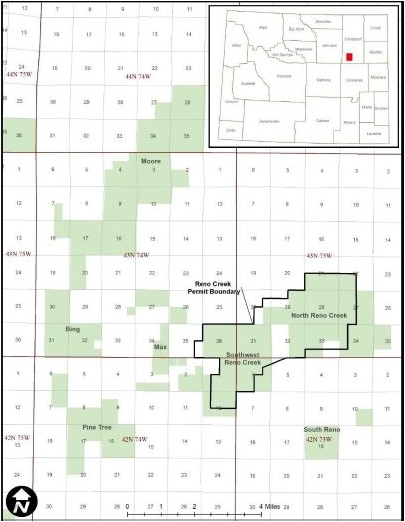
Figure 2.5 - Location of the Reno Creek Project
Property Description
The Reno Creek Project Area is in Campbell County, Wyoming, within the PRB, details of project location, area and number of claims are tabulated below.
The Reno Creek Project Area is approximately five miles to the northwest of the North and Southwest Reno Creek Resource Areas at Latitude / Longitude of 43.6796 / -105.7226. The Pine Tree resource area lies approximately five miles to the southwest of the permitted resource areas, immediately southeast of the intersection of U.S. Highway 387 and Wyoming Highway 50, also known as Pine Tree Junction. The Bing resource area lies approximately five miles west of the permitted resource areas adjacent to Wyoming Highway 50, three miles north of Pine Tree Junction. The site is accessible year-round via state, county and private roads which are shared by oil and gas operators and ranchers. Services and personnel are available from Gillette or Casper. Flight service is offered from Gillette or Casper with daily service to Denver, Billings and Salt Lake City. Water will be sourced locally while electrical service will be provided by a regional power company.
Table 2.6 Reno Creek Project Claims Details
| Acres |
Hectares |
State Leases |
Fee Mineral Leases |
Federal Lode Mining Claims |
||||||
| Total |
Total |
Number |
Acres |
Expiration Date |
Number |
Acres |
Expiration Date |
Number |
Acres |
Expiration Date |
| 18,867 |
7,635.20 |
5 |
3,840 |
Annual |
36 |
3,467.21 |
Variable |
578 |
11,560 |
Annual |
History
The table below describes the historic ownership and operations at the Reno Creek Project Area.
Table 2.7: Historic Ownership and Operations at the Reno Creek Project Area
| Year |
Company |
Operations/Activity |
Amount (No. of Drill holes) |
Results of Work |
| Reno Creek – North Reno Creek |
||||
| Late 1960s |
Rocky Mountain Energy Company (“RME”) |
Drilled exploration holes at and around North Reno Creek resource area. |
Approximately 5,800 |
Delineated Approximately 10 miles of roll-front deposits. |
| Mid 1970s |
RME, Mono Power Company (“Mono”) and Halliburton Services |
Partnership formed to develop North Reno Creek Resource Area using ISR methods. |
N/A |
Acquisition of the Reno Creek Project Area. |
| 1992 |
Energy Fuels Nuclear Inc./International Uranium Corporation |
Energy Fuels Nuclear Inc. acquired RME’s North Reno Creek Resource Area and later became International Uranium Corporation. |
N/A |
Acquisition of the Reno Creek Project Area. |
| 2001 |
Rio Algom |
Rio Algom acquired International Uranium Corporation’s property. |
N/A |
Acquisition of the Reno Creek Project Area. |
| 2001 |
PRI |
PRI acquired North Reno Creek Area and dropped claims in 2003. |
N/A |
Acquisition of the Reno Creek Project Area and mining claims dropped. |
| 2004 |
Strathmore Minerals Corporation and American Uranium Corporation (“AUCA”) |
Re-staked and filed new mining claims on approximately 16,000 acres. |
N/A |
Refiled mining claims and secured right to mine. |
| 2007 |
AUCA |
Advanced project through acquisition of most major permits and required authorizations. |
N/A |
Acquisition of the Reno Creek Project Area and secured permits and authorizations. |
| 2017 |
UEC |
Consolidated ownership of multiple resource areas and oversaw technical reporting and auditing of Project resources. |
N/A |
Consolidation of ownership. Auditing of project resources. |
| Reno Creek – Southwest Reno Creek |
||||
| Pre-2007 |
AUCA and Tennessee Valley Authority JV |
Controlled Southwest Reno Creek and drilled exploration holes. |
Approximately 700 |
Delineation of mineralized areas. |
| 2007 |
AUCA |
Advanced project through acquisition of most major permits and required authorizations. |
N/A |
Secured permits and required authorizations. |
| 2017 |
UEC |
Consolidated ownership of multiple Resource Areas and oversaw technical reporting and auditing of Project resources. |
N/A |
Consolidation of ownership. Auditing of the Reno Creek Project Area resources. |
| Year |
Company |
Operations/Activity |
Amount (No. of Drill holes) |
Results of Work |
| Reno Creek – Moore, Pine Tree, and Bing |
||||
| 1960s |
Utah International Mining Company |
Exploration on Moore and Pine Tree Resource Areas. |
N/A |
Delineation of mineralized areas. |
| Late 1970s |
Pathfinder Mines, Inc. |
Utah International Mining Company becomes Pathfinder Mines, Inc. and continues exploration on Moore and Pine Tree Resource Areas. |
>1,560 |
Delineation of mineralized areas. |
| 1980s |
RME |
Obtained ownership of Moore Area, continued exploration drilling until the 1990s. |
>400 |
Acquired the Reno Creek Project Area. Delineation of mineralized areas. |
| 1960s |
Cleveland-Cliffs Iron Company |
Exploration of Bing Area, drilled several hundred exploration holes and conducted limited hydrologic testing in the 1970s. |
177 |
Delineation of mineralized areas through drilling and conducted hydrologic testing. |
| 2007 |
AUCA |
Consolidated the Resource Areas under one owner. |
N/A |
Consolidated ownership. |
| 2017 |
UEC |
Oversaw technical reporting and auditing of project resources. |
N/A |
Auditing of the Reno Creek Project Area resources. |
Property Condition and Proposed Development
The condition of the property is good while meeting all standards and requirements of federal, state and local regulations. Development is in the planning stage with no immediate plans for exploration or delineation drilling.
Facilities, Infrastructure and Underground Development
Facilities or wellfields have not been constructed.
Permit Status and Encumbrances
The Reno Project is permitted under WDEQ Permit to Mine No. 824. The project is also licensed under WDEQ RML WYSUA-1602, formerly a U.S. NRC license. Permit to Mine No. 824 and RML WYSUA-1602 are in good standing, with no violations of permit or license conditions. Mining permit requirements can be found in Wyoming Statutes §35-11-400 through 437, with specific laws for ISR mining in sections 426 – 436. Conditions of the RML applicable to ISR mining are generally standard for all licensees. Requirements of RMLs are found in WDEQ, LQD/Uranium Recovery Program Chapter 4 Rules and Regulations for Licensing of Source and Byproduct Material. There are no materially significant encumbrances on the Reno Creek Project. Standard encumbrances include reclamation bonding, mining and surface lease royalties. The details of the Reno Creek Project Permit status are tabulated below.
Table 2.8 Reno Creek Permit Details
| Property |
Fully Permitted to Mine |
Partially Permitted to Mine |
Not Permitted to Mine |
Class III UIC Permit to Mine |
WDEQ Class 1 Well Permits |
Source and Byproduct Materials License |
BLM Plan of Operations |
WDEQ/EPA Aquifer Exemption |
Notes |
| Reno Creek |
Yes |
Yes |
Yes |
Yes |
Yes |
North Reno Creek and SW Reno Creek Resource areas are permitted. |
Geologic Setting, Mineralization and Deposit
The Reno Creek Project Area targets mineralization in the Eocene-aged Wasatch Formation.
Mineralization in the Reno Creek Project Area occurs in fluvial sandstones of the lower parts of the Wasatch Formation. Most of the upper Wasatch Formation has been eroded away. The sandstones are arkosic, fine- to coarse-grained with local calcareous lenses. The sandstones contain minor amounts of organic carbon that occurs as dispersed bits or as stringers. Unaltered sandstones are generally gray, while altered sandstones are tan or pink due to hematite or show yellowish coloring due to limonite.
Pyrite occurs in several forms within the host sandstones. In unaltered sandstones, pyrite occurs as small to large single euhedral crystals associated with magnetite, ilmenite and other dark detrital minerals. In altered sandstone, pyrite is typically absent, but locally occurs as tarnished, very fine-grained euhedral crystals. In areas of intense or heavy mineralization, pyrite locally occurs as massive, tarnished crystal aggregates.
At the Reno Creek Project Area, the Felix Coal seams are laterally continuous in the North and Southwest Reno Creek resource areas and extend northward into the Moore and Bing resource areas. The Felix Coal seams, and the underlying Badger Coal seam, provide important correlation points across the Reno Creek Project Area. Sandstone horizons that host uranium mineralization within the production zone aquifer are typically cross-bedded, graded sequences fining upward from very coarse-grained at the base to fine-grained at the top, representing sedimentary cycles from 5-20 feet thick. Stacking of depositional cycles resulted in sandstone body accumulations over 200 feet thick.
Uranium mineralization at the Reno Creek Project Area is typical of Wyoming roll-front sandstone deposits. The formation of roll-front deposits is largely a groundwater process that occurs when uranium-bearing, oxygenated groundwater interacts with a reducing environment in the subsurface and precipitates uranium. The most favorable host rocks for roll-fronts are permeable sandstones with large aquifer systems. Interbedded mudstone, claystone and siltstone are often present and aid in the formation process by focusing groundwater flux. The geometry of mineralization is dominated by the classic roll-front “C” shape or crescent configuration at the redox interface. The highest-grade portion of the front occurs in a zone termed the “nose” within reduced ground just ahead of the alteration front. Ahead of the nose, at the leading edge of the solution front, mineral quality gradually diminishes to barren within the “seepage” zone. Trailing behind the nose, in oxidized (altered) ground, are weak remnants of mineralization referred to as “tails” which have resisted re-mobilization to the nose due to association with shale, carbonaceous material or other lithologies of lower permeability. Tails are generally not amenable to ISR because the uranium is typically found within strongly reduced or impermeable strata, therefore making it difficult to leach.
Table 2.9 – Mineral Resources for the Reno Creek Project as at the date of this Annual Report
| Classification |
Tons Ore (000’s) |
Tonnes Ore (1000’s) |
Average Grade (% eU3O8) |
Pounds eU3O8 (000’s) |
| Measured |
14,990 |
13,599 |
0.043 |
12,920.0 |
| Indicated |
16,980 |
15,404 |
0.039 |
13,070.0 |
| Total M&I |
31,970 |
29,003 |
0.041 |
25,990.0 |
| Inferred |
1,920 |
1,742 |
0.039 |
1,490.0 |
| Total Resources |
33,890 |
30,745 |
0.041 |
27,480.0 |
Notes:
| 1. |
The sum of resources tons and pounds may not add up to the reported total due to rounding. |
|
| 2. |
Measured, indicated, and inferred mineral resources as defined in 17 CFR § 229.1300. |
|
| 3. |
GT Cutoff = 0.20 ft% eU3O8. |
|
| 4. |
All reported resources occur below the static water table. |
|
| 5. |
The point of reference for mineral resources is in-situ at the project. |
|
| 6. |
Mineral resources that are not mineral reserves do not have demonstrated economic viability. |
|
| 7. |
A long-term uranium price of $40 per pound U3O8 and an 80% metallurgical recovery factor were considered for the purposes of determining the reasonable prospect of economic extraction. |
Ludeman Project
The following technical and scientific description for the Ludeman Project area (the “Ludeman Project Area”) is based in part on the TRS titled “S-K 1300 Mineral Resource Report Wyoming Assets ISR Hub and Spoke Project, WY USA”, dated March 9, 2023, prepared by WWC, a qualified firm (the QP herein) who is not affiliated with UEC. The Ludeman Project Area does not have mineral reserves and is therefore considered an Exploration Stage property under S-K 1300 definitions, despite a history of successful in situ research and development testing.
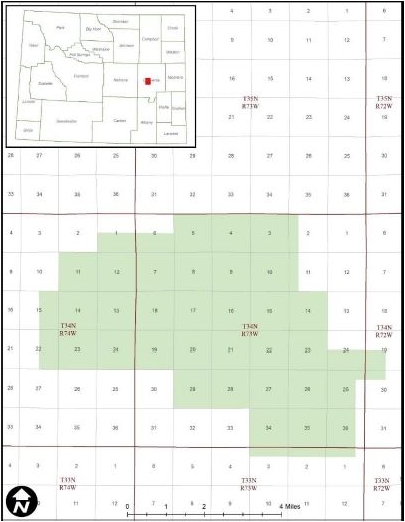
Figure 2.6 – Location of the Ludeman Project The Ludeman Project Area is located in Converse County, Wyoming, in the southern portion of the PRB, details of project location, area and number of claims are tabulated below.
Property Description
The Ludeman Project Area is located approximately 12 miles northeast of Glenrock and 30 miles east-northeast of Casper, Wyoming at Latitude / Longitude of 42.9119 / -105.6277. State Highway 95 provides access to the Ludeman Project Area from the Towns of Glenrock and Rolling Hills to the west and State Highway 93 provides access from Douglas to the southeast. Interstate 25 provides access to both of these state highways from the south of the Ludeman Project Area. The Ludeman Project Area is primarily located on private surface land with some areas of Federal or state lands.
The site is accessible year-round on state and county roads. Services and personnel are available from Glenrock, Douglas or from Casper, which has full services and the nearest airport with daily service to Denver and Salt Lake City. Water will be sourced locally at the site while electrical service will be provided by a regional power company.
Table 2.10 Ludeman Project Claims Details
| Acres |
Hectares |
State Leases |
Fee Mineral Leases |
Federal Lode Mining Claims |
||||||
| Total |
Total |
Number |
Acres |
Expiration Date |
Number |
Acres |
Expiration Date |
Number |
Acres |
Expiration Date |
| 18,102 |
7,325.62 |
4 |
1,440 |
Annual |
2 |
1,742 |
Sept. 2026 and Jan. 2029 |
746 |
14,920 |
Annual |
History
The table below describes the historic ownership and operations at the Ludeman Project Area.
Table 2.11: Historic Ownership and operations at the Ludeman Project Area
| Year |
Company |
Operations/Activity |
Amount (No. of Drill holes) |
Results of Work |
| 1960s- 1970s |
Cordero Mining |
Numerous exploration companies including Teton Exploration (“Teton”), PRI, Uranium Resources, Inc. (“URI”) and Malapai (a subsidiary of APS) collectively explored in the Ludeman Project Area. |
Approximately 5,420 |
Explored for uranium roll-front mineralization and delineated deposits in the Ludeman Project Area. |
| 1980 |
United Nuclear Corp. (“UNC”) and partner Teton |
Constructed and operated the Leuenberger ISR pilot test facility for 12 months. Groundwater restoration was completed following production and a commercial permit to mine was granted. Due to a decline in the market, the permitted mine was not placed into commercial operation and the permit expired. |
N/A |
Produced 12,800 pounds of U3O8 from the pilot facility. |
| 1981 |
URI |
Constructed and operated the North Platte ISR project on a portion of the Ludeman Project Area. The pilot test facility produced for five months during 1982. |
N/A |
Produced 1,515 pounds of U3O8 from the pilot facility. |
| 1980s |
Malapai |
Permitted the Peterson Project for pilot operations but was never operated. |
N/A |
Facility was never operated. |
| 1985-Early 1990s |
Central Electrical Generating Board of England (known as PRI) |
Nedco and Union Pacific properties were consolidated into the Teton Leuenberger Project. PRI purchased the property and added to the acreage through the purchase of adjacent claim blocks owned by Kerr-McGee. |
N/A |
Ownership transition and growth in acreage through acquisitions. |
| Late 1990s |
PRI |
Leuenberger properties were released due to declining market trends. Some claims reverted to previous owners. |
N/A |
Decrease in claims and generally the Ludeman Project Area. |
| Early to Mid- 2000s |
High Plains Uranium (“HPU”) and EMC |
HPU held most claims and leases in the Ludeman Project Area. Energy Metals held the remaining claims in the Ludeman Project Area. |
N/A |
Claims and leases increased in the Ludeman Project Area. |
| 2007 |
EMC |
EMC acquired HPU. |
N/A |
Consolidation through acquisition. |
| 2007 |
Uranium One |
Uranium One acquired Energy Metals in late 2007 and continued exploration of the Ludeman Project Area from 2007 through 2012. The primary goals of drilling included exploration to establish continuity of regional ore trends, development drilling to determine the lateral extents of the ore body, stratigraphic investigation, confirmation of the location and nature of mineralization, and collection of cores for leach testing and analysis of uranium, mineralogy, trace metals, disequilibrium, permeability, porosity and density. Acquired the WDEQ/LQD mine permit and NRC license. |
Approximately 2,180 |
Continued exploration of the Ludeman Project Area. Additional holes included boreholes, core holes, and monitor wells. |
| 2021 |
UEC |
The Ludeman Project Area acquired by UEC from Uranium One. |
N/A |
Ownership transition. |
Property Condition and Proposed Development
The condition of the property is very good while meeting all standards and requirements of federal, state and local regulations. There are no immediate plans for exploration or delineation drilling.
Facilities, Infrastructure and Underground Development
The Ludeman property is fully permitted and licensed for commercial ISR production. The engineering and design work has been completed for the satellite plant, evaporation ponds, infrastructure, and the first Mine Unit. Construction of these facilities has not occurred to date.
Permit Status and Encumbrances
The Ludeman Project is permitted under WDEQ Permit to Mine No. 844. The project is also licensed under WDEQ RML WYSUA-1341, formerly a U.S. NRC license. Permit to Mine No. 844 and RML WYSUA-1341 are in good standing, with no violations of permit or license conditions. Mining permit requirements can be found in Wyoming Statutes §35-11-400 through 437, with specific laws for ISR mining in sections 426 – 436. Conditions of the RML applicable to ISR mining are generally standard for all licensees. Requirements of Radioactive Materials Licenses are found in WDEQ, LQD/Uranium Recovery Program Chapter 4 Rules and Regulations for Licensing of Source and Byproduct Material. There are no materially significant encumbrances on the Ludeman Project. Standard encumbrances include reclamation bonding, mining and surface lease royalties. Ludeman permit status is tabulated below.
Table 2.12 Ludeman Permit Details
| Property |
Fully Permitted to Mine |
Partially Permitted to Mine |
Not Permitted to Mine |
Class III UIC Permit to Mine |
WDEQ Class 1 Well Permits |
Source and Byproduct Materials License |
BLM Plan of Operations |
WDEQ/EPA Aquifer Exemption |
Notes |
| Ludeman |
X |
Yes |
Yes |
Yes |
Geologic Setting, Mineralization, and Deposit
The Ludeman Project Area targets mineralization in the Fort Union Formation, which underlies the Wasatch Formation. The host rocks for the uranium ore deposits in the project areas are the arkosic sandstones of the Fort Union Formation. These channel deposits are confined by mudstones that serve as aquitards to the water saturated aquifers.
Uranium mineralization at the Ludeman Project Area is typical of Wyoming roll-front sandstone deposits. The formation of roll-front deposits is largely a groundwater process that occurs when uranium-bearing, oxygenated groundwater interacts with a reducing environment in the subsurface and precipitates uranium. The most favorable host rocks for roll-fronts are permeable sandstones with large aquifer systems. Interbedded mudstone, claystone and siltstone are often present and aid in the formation process by focusing groundwater flux. The geometry of mineralization is dominated by the classic roll-front “C” shape or crescent configuration at the redox interface. The highest-grade portion of the front occurs in a zone termed the “nose” within reduced ground just ahead of the alteration front. Ahead of the nose, at the leading edge of the solution front, mineral quality gradually diminishes to barren within the “seepage” zone. Trailing behind the nose, in oxidized (altered) ground, are weak remnants of mineralization referred to as “tails” which have resisted re-mobilization to the nose due to association with shale, carbonaceous material or other lithologies of lower permeability. Tails are generally not amenable to ISR because the uranium is typically found within strongly reduced or impermeable strata, therefore making it difficult to leach.
Table 2.13 – Mineral Resources for the Ludeman Project as at the date of this Annual Report
| Classification |
Tons Ore (000’s) |
Tonnes Ore (1000’s) |
Average Grade (% eU3O8) |
Pounds eU3O8 (000’s) |
| Measured |
2,674 |
2426 |
0.094 |
5,016.9 |
| Indicated |
2,660 |
2660 |
0.088 |
4,696.9 |
| Total M&I |
5,334 |
5,086 |
0.091 |
9,713.8 |
| Inferred |
866 |
786 |
0.073 |
1,258.0 |
| Total Resources |
6,200 |
5,872 |
0.088 |
10,971.8 |
Notes:
| 1. |
The sum of measured and indicated tons and pounds may not add up to the reported total due to rounding. |
|
| 2. |
Measured and indicated mineral resources as defined in 17 CFR § 229.1300. |
|
| 3. |
GT Cutoff = 0.25 ft% eU3O8. |
|
| 4. |
All reported resources occur below the static water table. |
|
| 5. |
The point of reference for mineral resources is in-situ at the Project. |
|
| 6. |
Mineral resources that are not mineral reserves do not have demonstrated economic viability. |
|
| 7. |
A long-term uranium price of $40 per pound U3O8 and an 80% metallurgical recovery factor were considered for the purposes of determining the reasonable prospect of economic extraction |
Texas Properties
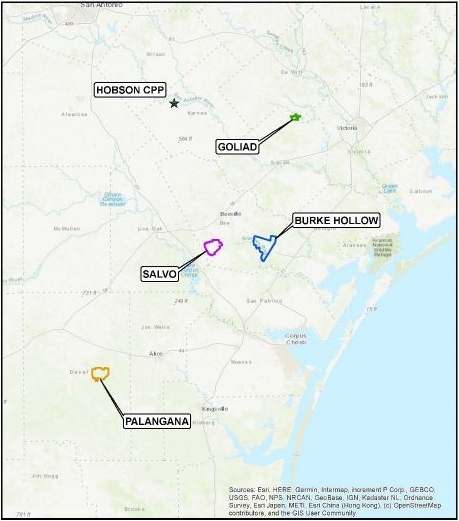
Figure 2.7 – Location of our Projects in Texas
ISR Uranium Activities in Texas
Our ISR operations in Texas consist of the following projects, (i) the Hobson CPP; (ii) the Palangana Project; (iii) the Burke Hollow Project; (iv) the Goliad Project; and (v) the Salvo Project. Production from existing wellfields at the Palangana Project ceased in 2016 and the project was put in care and maintenance. In order for Palangana to engage in future uranium production, the Company will need to incur capital expenditures to restart idled wellfields.
Permitting Requirements in Texas
The Hobson CPP is fully permitted. The Burke Hollow, Goliad and Palangana Projects are fully permitted to mine. The Salvo Project still requires all mining permits. Regulatory agencies include the TCEQ, the Railroad Commission of Texas (“RRC”) and the EPA.
Other potential permitting requirements, depending on the status of each project area, may include:
| ● |
the TCEQ will require UEC to apply for and obtain a RML pursuant to Title 30 Texas Administrative Code Chapters 305 and 336. The application must address a number of matters including, but not limited to, site characteristics (ecology, geology, topography, hydrology, meteorology, historical and cultural landmarks and archaeology), radiological and non-radiological impacts, environmental effects of accidents, decommissioning, decontamination and reclamation; |
| ● |
to produce uranium from subsurface deposits, an operator must obtain a PAA pursuant to the Texas Water Code, Chapter 27. Underground injection activities cannot commence until the TCEQ has issued an area permit and PAA to authorize such activities. In addition, all portions of the proposed production zone in groundwater with a total dissolved solids concentration less than 10,000 mg/L, which will be affected by mining solutions, are included within an aquifer exemption approved by TCEQ and the EPA. The PAA application may be developed concurrently with or after the area permit application. As additional production areas are proposed to be activated within the area permit, additional PAA applications must be submitted to the TCEQ for processing and issuance before injecting within the production area; |
| ● |
in 1975, the Texas Legislature gave the RRC jurisdiction to regulate surface mining for coal and uranium. No surface mining for uranium is currently conducted at the Project, but uranium exploration for ISR operations is administered by the Surface Mining and Reclamation Division of the RRC. Active uranium exploration sites are inspected monthly (RRC, 2023). The RRC requires exploration permits for any uranium exploration in the state; |
| ● |
Texas state law does not provide any agency with the authority to regulate the use or production of groundwater unless the location lies within a water conservation district (“WCD”). Burke Hollow and Salvo are both located in the Bee County WCD, Goliad is located in the Goliad County WCD and Palangana resides in the Duval County WCD. Prior to initiating uranium recovery at the project, UEC will need to acquire industrial permits to withdraw groundwater from the host sandstones. Please refer to the TRS report for the Texas Hub and Spoke Project for further details.; and |
| ● |
Class I and III injection wells are also regulated by the TCEQ. Therefore, UEC will need to acquire the appropriate permits in order to construct and operate these wells. |
In terms of leases and mineral rights, UEC’s mineral rights in Texas are held through private (fee) mineral leases. Fee mineral leases were obtained through negotiation with individual mineral owners.
Fee minerals have varying royalty rates and calculations, depending on the agreements negotiated with individual mineral owners. In addition, surface use and access agreements may include a production royalty, depending on agreements negotiated with individual surface owners at various levels. UEC’s average combined mineral plus surface production royalty applicable to each project are variable and based upon the selling price of U3O8. Most of the leases have term periods of five years with a five-year renewal option. The primary lease stipulation for ISR mining is the royalty payments as a percentage of production. Royalties vary by lease and are confidential. The various lease fees and royalty conditions are negotiated with individual lessors and conditions may vary from lease to lease. No resources are reported in areas outside of the project area boundaries, which are determined by each project area’s leases.
Surface ownership at each project consists of fee lands predominantly used for agriculture and wind turbine development. On the project areas that are currently permitted, UEC has surface use agreements in place with the private landowners where appropriate. Obtaining surface access rights is a standard process in mine permitting and UEC does not anticipate that maintaining these rights presents a significant risk to UEC’s ability to perform work in Texas.
Geology and Mineralization in Texas
The Texas ISR Projects resides in the Gulf of Mexico Basin (“GMB”). The GMB extends over much of South Texas and includes the Texas coastal plain and South Texas Uranium Province (“STUP”) where the project is located. The coastal plain is bounded by the Rocky Mountain uplift to the west and drains into the Gulf of Mexico. The coastal plain is comprised of marine, non-marine and continental sediments ranging in age from Paleozoic through Cenozoic.
Uranium mineralization at the projects is typical of Texas roll-front sandstone deposits. The formation of roll-front deposits is largely a groundwater process that occurs when uranium-bearing, oxygenated groundwater interacts with a reducing environment in the subsurface and precipitates uranium. The most favorable host rocks for roll-fronts are permeable sandstones with large aquifer systems. Interbedded mudstone, claystone and siltstone are often present and aid in the formation process by focusing groundwater flux.
The coastal plains of the GMB were formed by the downfaulting and down warping of Paleozoic Era (252-541 Mya) basement rocks during the breakup of the Paleozoic mega continent, Pangaea and the opening of the North Atlantic Ocean in the Late Triassic Epoch (201-237 Mya). The Rocky Mountain Uplift in the Paleogene Period (43-65 Mya) gave rise to the vast river systems that flowed toward the Gulf of Mexico carrying abundant sediments. Deposits typically thicken down-dip towards the Gulf of Mexico from western-northwestern sources. Stratigraphy in this area can be complex because of the cyclic deposition of sedimentary facies. Shallow inland seas formed broad continental shelves that covered most of Texas and deposited sedimentary units that are dominantly continental clastic with some near shore and shallow marine facies. Volcanic episodes during deposition (more than 20 Mya) are credited as being the source of the uranium deposits through ash-fall and related sediments.
All mineralization at our Texas projects occurs in the Goliad Formation. The Goliad Formation was originally classified as Pliocene in age by most sources, but the formation has been reclassified as early Pliocene to middle Miocene after recent research revealed the presence of indigenous Pliocene-aged mega-fossils occurring in upper Goliad sands, whereas the lower Goliad fluvial sands are correlative with down-dip strata containing benthic foraminifera indicating a Miocene age. The Geology of Texas map published by the Texas Bureau of Economic Geology (“BEG”) in 1992 classifies the Goliad as Miocene in age.
The BEG’s geologic map of Texas describes the Goliad Formation as clays, sandstones, marls, caliches, limestones and conglomerates with a thickness of 100 to 500 feet. Above the Goliad Formation lies the Deweyville Formation, Beaumont Clay, Lissie Formation, Montgomery Formation and the Willis Sand, which are composed of sand, gravel, silt and clay.
Three main structural zones are present in the STUP: the Balcones Fault Zone; the San Marcos Arch; and the Rio Grande Embayment. The Balcones Fault Zone is north of the Hobson Project Area and divides the Upper Cretaceous and Eocene strata. The Balcones Fault Zone is comprised of mainly normal faults that displace sediments by up to 1,500 feet, moving downward to the Gulf of Mexico. The San Marcos Arch, northeast of the Hobson Project Area between the Rio Grande Embayment and East Texas Basin, is a broad area of lesser subsidence and a subsurface extension of the Llano Uplift. The arch is crossed by basement-related normal faults that parallel the buried Ouachita Orogenic Belt of Paleozoic age. The Rio Grande Embayment is a small, deformed basin that lies between the El Burro Uplift in northeast Mexico and the basin marginal Balcones Fault Zone to the south. Some data indicate that the embayment was possibly compressed during the Laramide Orogeny in the Late Cretaceous–Paleogene.
The uranium-bearing units in the STUP include most sands and sandstones in Tertiary formations ranging in age from Eocene (oldest) to Lower Pliocene (youngest).
The formation of roll-front deposits is largely a groundwater process that occurs when uranium-bearing, oxygenated groundwater interacts with a reducing environment in the subsurface and precipitates uranium. The most favorable host rocks for roll-fronts are permeable sandstones with large aquifer systems. Interbedded mudstone, claystone and siltstone are often present and aid in the formation process by focusing groundwater flux. The geometry of mineralization is dominated by the classic roll-front “C” shape or crescent configuration at the redox interface. The highest-grade portion of the front occurs in a zone termed the “nose” within reduced ground just ahead of the alteration front. Ahead of the nose, at the leading edge of the solution front, mineral quality gradually diminishes to barren within the “seepage” zone. Trailing behind the nose, in oxidized (altered) ground, are weak remnants of mineralization referred to as “tails” which have resisted re-mobilization to the nose due to association with shale, carbonaceous material or other lithologies of lower permeability. Tails are generally not amenable to ISR because the uranium is typically found within strongly reduced or impermeable strata, therefore making it difficult to leach.
Material Properties in Texas
Hobson CPP
The following technical and scientific description for the Hobson CPP Project area (the “Hobson Project Area”) is based in part on the TRS titled “S-K 1300 Initial Assessment Texas Hub and Spoke ISR Project, U.S.A.”, dated June 10, 2024, prepared for the Company by WWC, a qualified firm (the QP herein) who is not affiliated with UEC. This TRS identifies and summarizes the scientific and technical information and conclusions reached from the initial assessment (“IA”) to support disclosure of mineral resources on projects surrounding the Hobson Project Area. There are no resources directly associated with the Hobson Project Area.
Property Description
The Hobson Project Area is located in Karnes County, Texas, northwest of Karnes City, within the GMB, approximately 100 miles northwest of Corpus Christi and 40 miles southeast of San Antonio at Latitude / Longitude of 28.945 / -97.989. This facility represents the ‘hub’ of UEC’s ‘hub-and-spoke’ business model, which comprises a central processing facility supplied with uranium-loaded IX resin from ISR mining at one or more of the project areas. The Hobson CPP was constructed in 1978 when the Hobson Project Area was mined. In 2008, the plant was refurbished. The Hobson CPP has previously processed uranium from UEC’s Palangana Mine satellite facility (i.e., the first UEC ‘spoke’), and UEC plans to also process uranium from its Burke Hollow, Goliad, and Salvo Project satellite facilities.
The Hobson CPP consists of a resin transfer circuit for loading/unloading IX resin from tanker trucks, an elution circuit to strip uranium from the IX resin, a circuit to precipitate uranium oxide solids, a yellowcake thickener (if necessary) and a modern, zero-emission vacuum dryer. Other facilities and equipment include an advanced laboratory with inductively coupled plasma mass spectrometry, office building, yellowcake and byproduct material storage area, chemical storage tanks and one permitted and constructed waste disposal well. Another waste disposal well is permitted but has not been drilled because additional disposal capacity is not needed at the current time. With an average dryer cycle time of 40 hours and a current dryer loading capacity of 8 to 10 drums, the plant appears capable of yielding up to 1.5 million pounds per year without requiring physical modifications. An amendment to the license to increase annual capacity up to 4.0 million pounds per year was recently approved, so the Hobson CPP is now permitted for production of up to four million pounds per year of uranium concentrates (yellowcake or U3O8). WWC personnel visited the Hobson CPP on November 2, 2021, and found it to be in a well-maintained and apparently fully operational condition, although the plant was inactive (i.e., not processing a batch of uranium-loaded resin) during the site visit.
The Hobson CPP will serve as the ‘hub’ of the Hobson Project Area with the other project areas serving as satellite facilities, or the ‘spokes”. The satellite facilities are considered material to the Hobson CPP. Mineral is mined at the project areas and is then transported to the Hobson CPP for processing.
A surety bond is in place for the Hobson CPP decommissioning requirements and is updated annually.
History
Uranium exploration and mining in South Texas primarily targets sandstone formations throughout the Coastal Plain bordering the Gulf of Mexico. The area has long been known to contain uranium oxide, which was first discovered in Karnes County, Texas, in 1954 using airborne radiometric survey. The uranium deposits discovered were within a belt of strata extending 250 miles from the middle coastal plain southwestward to the Rio Grande. This area includes the Carrizo, Whitsett, Catahoula, Oakville and Goliad geologic formations. Open pit mining began in 1961 and ISR mining was initiated in 1975. The uranium market experienced lower demand and price in the late 1970s, and in 1980 there was a sharp decline in all Texas uranium operations.
During the late 1970s and early 1980s, exploration for uranium in South Texas had evolved towards deeper drilling targets within the known host sandstone formations. Deeper exploration drilling was more costly and excluded many of the smaller uranium mining companies from participating in the down-dip, deeper undrilled trend extensions. Uranium had been mined by several major oil companies in the past in South Texas, including Conoco, Mobil, Humble (later Exxon), Atlantic Richfield (“ARCO”) and others. Mobil had found numerous deposits in South Texas in the past, including the O’Hern, Holiday-El Mesquite and several smaller deposits, mostly in Oligocene-age Catahoula Formation tuffaceous sands. ARCO discovered several Oakville Formation (Miocene-age) uranium-bearing deposits and acquired other deposits located nearby in Live Oak County. They were exploring deeper extensions of Oakville Formation trends when they discovered the Mt. Lucas deposit, located near Lake Corpus Christi in Live Oak County near the Bee County line.
Ownership, control and operation of the Hobson Project Areas has varied greatly since the 1950s. The table below summarizes the operations and activities of various companies, the timeframe during which these activities were completed and the results of the work. The table below also summarizes historic drilling and the number of drill holes completed during each period.
Table 2.14: Historic Ownership and Operations at the Hobson Project Area
| Year |
Company |
Operations/Activity |
Amount |
Results of Work |
| 1979-1988 |
Everest Minerals Corporation (later Everest Exploration, Inc. (EEI)) |
Hobson facility constructed. |
N/A |
N/A |
| 2005 |
Standard Uranium |
N/A |
N/A |
N/A |
| 2006 |
EMC |
Standard Uranium and EMC merger. |
N/A |
N/A |
| 2007 |
Uranium One |
Renovation of the plant. |
N/A |
CPP capable of processing 1.5 million pounds per year. |
| 2009 |
UEC |
Acquires the Hobson Plant through acquisition of South Texas Mining Venture (STMV)/Uranium One. |
N/A |
N/A |
Burke Hollow ISR Project
The following technical and scientific description for the Burke Hollow Project area (the “Burke Hollow Project Area”) is based in part on the TRS titled “S-K 1300 Initial Assessment Texas Hub and Spoke ISR Project, U.S.A.”, dated June 10, 2024, prepared for the Company by WWC, a qualified firm (the QP herein) who is not affiliated with UEC. This TRS identifies and summarizes the scientific and technical information and conclusions reached from the IA to support disclosure of mineral resources on the Burke Hollow Project Area. There are no reserves associated with the Burke Hollow Project Area. Table 2.15 describes the permit status of the project.
Table 2.15 Burke Hollow Project Permit Status
| Property |
Fully Permitted to Mine |
Partially Permitted to Mine |
Not Permitted to Mine |
RRC Exploration Permit |
TCEQ Class 1 Well Permits |
TCEQ Underground Injection Control Area Permit |
TCEQ Production Authorization (PAA-1) Permit |
TCEQ/EPA Aquifer Exemption |
TCEQ Radioactive Materials License |
Notes |
| Burke Hollow |
X |
Yes |
2 |
Yes |
Yes |
Yes |
Yes |
Has all major permits and first production area authorization |
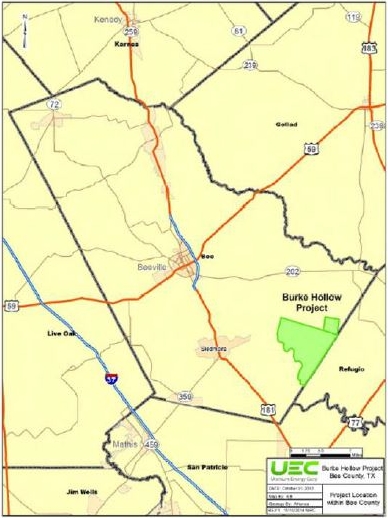
Figure 2.8 – Location of the Burke Hollow Project
Property Description
UEC’s Burke Hollow Project property is located within the extensive STUP. The Burke Hollow Project is about 18 miles southeast of the town of Beeville and is located on the western side of US 77 and northeasterly of US 181, which links with US 59 in Beeville at Latitude / Longitude of 27.6756 / -97.5176. Details of project location, area, and number of claims are tabulated below. Site drilling roads are entirely composed of caliche and gravel, allowing access for trucks and cars in most weather conditions. Four-wheel drive vehicles may be needed during high rainfall periods.
The Burke Hollow Project consists of one fee (private) mineral lease area that would allow for the mining of uranium by ISR methods while utilizing the land surface (with variable conditions) as needed, for mining wells and above ground surface facilities for fluid processing and uranium production during the mining and groundwater restoration phases of the Burke Hollow Project. No mineral resources are reported in areas outside of the Burke Hollow Project boundary.
The present condition of the property is considered advanced with monitor well installation completed in the first production area. A caliche pad site with offices and storage containers in addition to some all-weather roads are constructed, and plans are in place for power and other infrastructure needs. Construction of the Burke Hollow IX facility and first production area were initiated in Fiscal 2025. IX columns were installed and loaded with resin, and drilling of the deep disposal well was completed with testing underway, necessary for the well completion report to be submitted to TCEQ. Additionally, the high-density polyethylene trunkline between the satellite IX facility and the first production area was fused, pressure tested and connected to the IX facility. Installation of wellfield and IX facility equipment has continued concurrently through Fiscal 2025 with provision of three-phase power to the project site by the utility provider.
No significant encumbrances exist on the property. The permit for the initial PAA is in place and we will be seeking for the permits for PAAs 2, 3, and 4 in the coming years. To date, there have been no violations or fines levied on the property. A surety estimate for Burke Hollow’s project restoration, reclamation and decommissioning costs have been prepared and approved by the TCEQ. A surety bond for the current restoration, reclamation and decommissioning requirements is in place.
Table 2.16 Burke Hollow Project Claims Details
| Acres |
Hectares |
State Leases |
Fee Mineral Leases |
Federal Lode Mining Claims |
||||||
| Total |
Total |
Number |
Acres |
Expiration Date |
Number |
Acres |
Expiration Date |
Number |
Acres |
Expiration Date |
| 17,511 |
7,086 |
1 |
17,511 |
2032 |
||||||
History
Uranium exploration and mining in South Texas primarily targets sandstone formations throughout the Coastal Plain bordering the Gulf of Mexico. The area has long been known to contain uranium oxide, which was first discovered in Karnes County, Texas, in 1954 using airborne radiometric survey. The uranium deposits discovered were within a belt of strata extending 250 miles from the middle coastal plain southwestward to the Rio Grande. This area includes the Carrizo, Whitsett, Catahoula, Oakville, and Goliad geologic formations. Open pit mining began in 1961 and ISR mining was initiated in 1975. The uranium market experienced lower demand and price in the late 1970s and in 1980, there was a sharp decline in all Texas uranium operations.
During the late 1970s and early 1980s, exploration for uranium in South Texas had evolved towards deeper drilling targets within the known host sandstone formations. Deeper exploration drilling was more costly and excluded many of the smaller uranium mining companies from participating in the down-dip, deeper undrilled trend extensions. Uranium had been mined by several major oil companies in the past in South Texas, including Conoco, Mobil, Humble (later Exxon), ARCO and others. Mobil had found numerous deposits in South Texas in the past, including the O’Hern, Holiday-El Mesquite and several smaller deposits, mostly in Oligocene-age Catahoula Formation tuffaceous sands. ARCO discovered several Oakville Formation (Miocene-age) uranium-bearing deposits and acquired other deposits located nearby in Live Oak County. They were exploring deeper extensions of Oakville Formation trends when they discovered the Mt. Lucas Goliad Formation deposit, located near Lake Corpus Christi in Live Oak County near the Bee County line.
The earliest known uranium exploration in the immediate area of the Burke Hollow Project Area was performed by Nufuels Corporation (“Nufuels”, a Mobil Corporation subsidiary) in 1982. Nufuels drilled a total of 18 exploration holes on or nearby UEC’s 1,825 acre Welder lease. These holes were drilled in conjunction with a larger regional program that was conducted by Nufuels. Each exploration hole was drilled to an average total depth of approximately 1,100 ft in order to test the entire prospective Goliad Formation. UEC acquired copies of the Nufuels logs through its purchase of TOMIN’s database.
Following Nufuels, in 1993, TOMIN conducted a short reconnaissance exploration drilling program on the Thomson-Barrow lease. TOMIN drilled a total of 12 holes on permitted acreage that they negotiated for exploration. 11 of the 12 drill holes intersected anomalous gamma ray log signatures indicative of uranium mineralization.
The historic data package obtained by UEC for portions of the current Burke Hollow Project Area provided the above-described information. Based on the limited number of drill holes, no meaningful resource or reserve determination was made by TOMIN or Nufuels. However, the actual drilling and geophysical logging results have been determined to be properly conducted according to current industry standards.
Table 2.17: Historic Ownership and Operations at the Burke Hollow Project Area
| Year |
Company |
Operations/Activity |
Amount |
Results of Work |
| 1982 |
Nufuels |
Original controller of the Burke Hollow Project Area. |
18 exploration holes on or nearby the Welder Lease |
Nufuels drilled 18 exploration holes on or nearby UEC’s 1,825-acre Welder lease in conjunction with a larger regional program, which was conducted by Nufuels. Exploration holes were drilled to approximately 1,100 ft bgs and tested the entire prospective Goliad Formation. Results showed the presence of a reduction-oxidation interface in sands of the lower Goliad Formation, but there was insufficient data to link economically viable uranium mineralization. |
| 1993 |
TOMIN |
Exploration program. |
12 exploration holes on or near the Thomson-Barrow Lease. |
TOMIN conducted a short reconnaissance exploration drilling program on the Thomson-Barrow lease. TOMIN drilled a total of 12 holes on permitted acreage that they negotiated for exploration. 11 of the 12 drill holes intersected anomalous gamma ray log signatures indicative of uranium mineralization, but there was insufficient data to link economically viable uranium mineralization. |
| Year | Company | Operations/Activity | Amount (No. of Drill holes) |
Results of Work |
| 2011 |
UEC |
The Burke Hollow Project Area was acquired by UEC from TOMIN. |
From 2012-2017, 707 uranium exploration drill holes, including 30 monitor wells completed at the Welder lease (Kurrus et al. 2014). |
The historic data package was obtained and reviewed by UEC for portions of the current Burke Hollow Project Area (Kurrus and Yancy, 2017). Based on the limited number of drill holes, no meaningful resource or reserve determination was made using the historic exploration data. However, the actual drilling and geophysical logging results were determined to be properly conducted, per industry standards. UEC completed two drilling campaigns to delineate the opened ended Lower B1 and B2 trends (Carothers et al., 2013). The results of historic and contemporary borehole gamma-ray, SP and resistance logs, as well as PFN logs indicate that uranium mineralization occurs in the upper to lower Goliad Formation sand/sandstone units below the water table at depths from approximately 180 to 1,100 ft bgs. Evidence indicate ISR would likely be the most suitable mining method for this project. In 2017, UEC estimated an Inferred Mineral Resource of 4,064,575 tons grading 0.088% pU3O8 (PFN determination) containing approximately 7.09 million pounds U3O8 in the combined Graben and Eastern Lower B trends. |
| 2019 |
UEC |
Exploration program. |
In 2019, 129 delineation holes were drilled. |
In 2019, UEC completed 129 drill holes, mostly focusing on delineating the Lower B1 and Lower B2 sands in the proposed PA-1. In addition, UEC began installing perimeter monitor wells in proposed PA-1. In total, 57 holes were drilled solely for delineation and exploration purposes and 72 holes were drilled for monitoring purposes. From 2021 to 2022, UEC conducted another drilling program to upgrade a portion of their resources from inferred to measured and indicated, to better define the ore body in proposed PA-1 and to install monitor wells. 168 delineation and exploration holes were drilled as of March 7, 2022. 24 of these holes were also used as monitor wells. This drilling program is ongoing for the purpose of completing more monitor wells. The first production area authorization application has been submitted and 533 exploration and delineation holes have been drilled within PA-2 area as of July 31, 2023.
|
Geologic Setting, Mineralization and Deposit
The Burke Hollow Project Area is located in the STUP, which lies along the GMB.
Uranium mineralization at the Burke Hollow Project Area is typical of Texas roll-front sandstone deposits. All mineralization at the Burke Hollow Project Area occurs in the Goliad Formation. Uranium mineralization occurs along oxidation/reduction interfaces in fluvial channel sands of the Goliad Formation. These deposits consist of multiple mineralized sand horizons which are separated vertically by confining beds of silt, mudstone, and clay.
The uranium-bearing sands of the Goliad Formation at the Burke Hollow Project Area occur beneath a thin layer of Pleistocene-aged Lissie Formation gravels, sands, silts, and clays, which overlie much of the Burke Hollow Project Area. The Goliad Formation uncomfortably underlies the Lissie Formation. Uranium mineralization discovered to date occurs within three of the four sand members of the Goliad, designated as the uppermost Goliad A, Goliad B and the lowermost Goliad D.
The Goliad sand is one of the principal water-bearing formations in South Texas and is capable of yielding moderate to large quantities of water. All of the project areas included in this Burke Hollow Project Area target the Goliad Formation, which is a proven aquifer with characteristics favorable to ISR.
There are two northeast-southwest trending faults at the Burke Hollow Project Area that are likely related to the formation of uranium mineralization. The northwesterly fault is a typical Gulf Coast normal fault, downthrown toward the coast, while the southeastern fault is an antithetic fault downthrown to the northwest, forming a large graben structure. The presence of these faults is likely related to the increased mineralization at the site. The faulting may have served as conduits for reducing waters and natural gas to migrate upward from deeper horizons, as well as altering the groundwater flow system in the uranium-bearing sands.
Table 2.18 – Mineral Resources for the Burke Hollow Project as at the date of this Annual Report
| Classification |
Tons Ore (000’s) |
Tonnes Ore (1000’s) |
Average Grade (% eU3O8) |
Pounds eU3O8 (000’s) |
| Measured |
581 |
527 |
0.086 |
964 |
| Indicated |
3,329 |
3,020 |
0.083 |
5,191 |
| Total M&I |
3,910 |
3,547 |
0.083 |
6,155 |
| Inferred |
2,596 |
2,355 |
0.104 |
4,883 |
| Total Resources |
6,506 |
5,902 |
0.092 |
11,038 |
Notes:
| 1. |
Pounds reported with Disequilibrium Factor (DEF) applied. |
|
| 2. |
The sum of resource tons and pounds may not add up to the reported total due to rounding. |
|
| 3. |
Measured, indicated, and inferred mineral resources as defined in 17 CFR § 229.1300. |
|
| 4. |
GT Cutoff = 0.30 ft% eU3O8. |
|
| 5. |
All reported resources occur below the static water table. |
|
| 6. |
The point of reference for mineral resources is in-situ at the Project. |
|
| 7. |
Mineral resources that are not mineral reserves do not have demonstrated economic viability. |
|
| 8. |
A long-term uranium price of $40 per pound U3O8 and an 80% metallurgical recovery factor were considered for the purposes of determining the reasonable prospect of economic extraction. |
Canadian Properties
Material Canadian Properties
Roughrider Project
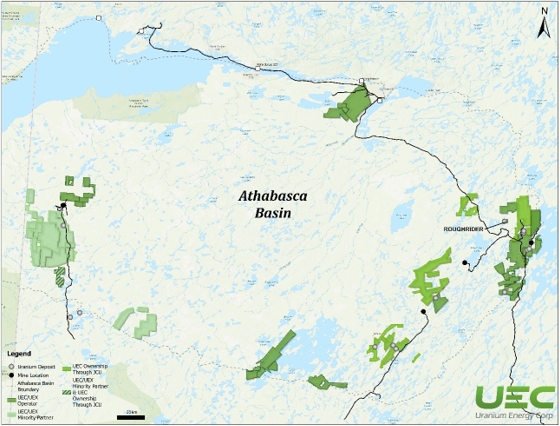
Figure 2.9 – Saskatchewan Uranium Projects The following technical and scientific description for the Roughrider Project area (the “Roughrider Project Area”) is based on the TRS titled “S-K 1300 Initial Assessment Report – Roughrider Uranium Project, Saskatchewan, Canada”, dated November 5, 2024, prepared for the Company by each of Tetra Tech Canada Inc., Understood Mineral Resources Ltd., Clifton Engineering Group Ltd., Snowden Optiro and Terracon Geotechnique Ltd., qualified firms (the QPs herein) who are not affiliated with UEC. This TRS identifies and summarizes the scientific and technical information and conclusions reached from the initial assessment to support disclosure of mineral resources on the Roughrider Project Area.

Figure 2.10 – Location of the Roughrider Project
Property Description
The Roughrider Project Area is 100% held by UEC, and located seven kms north, via gravel road, of Points North Landing, a service centre on Provincial Road 905, in the eastern Athabasca basin of northern Saskatchewan, Canada. The Roughrider Project Area is approximately 440 kms north of La Ronge, and 700 kms north of Saskatoon at Latitude / Longitude of 58.3374 / -104.021, details of project location, area, and number of claims are tabulated below. The Roughrider Project Area site comprises core logging, office and storage facilities.
The area around the Roughrider Project Area is a well-developed mining area close to necessary infrastructure and resources. The Roughrider Project Area can be accessed by a seven km gravel road, floatplane or helicopter from Points North Landing. Points North Landing is on Provincial Road 905 which is linked to the nearest sizeable population centre, La Ronge 440 kms south, by Highway 102. There are several weekly commercial airline services from Saskatoon to Points North Landing, and regular charter flights for Orano’s McLean Lake operation.
The project is a mature Exploration Stage project, with significant historical drilling, environmental baseline work and historical economic assessment work as outlined below. On November 5, 2024, UEC completed an updated economic analysis and mineral resource estimate at the project. UEC intends to complete additional resource delineation work in the upcoming 2025/2026 fiscal year to further advance the project. The current exploration camp facilities are over 10 years old but remain in good condition. No mine infrastructure or underground development is present on the project.
Table 2.19 Burke Hollow Project Claims Details
| Acres |
Hectares |
Provincial Mineral Dispositions |
Provincial Mining Leases |
||||
| Total |
Total |
Number |
Hectares |
Expiration Date |
Number |
Hectares |
Expiration Date |
| 1,475 |
597 |
1 |
597 |
Jan. 2028 |
|||
History
Between 1969 and 1974, following the discovery of the Rabbit Lake uranium deposit in 1968 by Gulf Minerals Ltd., Numac Oil and Gas (“Numac”) held the large Permit Number Eight over the Midwest Lake (McMahon Lake) and Dawn Lake areas. At the time, Numac, in conjunction with their partners. Esso Minerals and Bow Valley Industries, focused on the Midwest Lake area, located adjacent to the Roughrider Project Area. In 1976, Asamera Oil Corp. (“Asamera”) initiated the Dawn Lake project, located approximately six kms southeast of the current Roughrider Project Area. In 1983, the Saskatchewan Mining and Development Corporation (“SMDC”), predecessor to Cameco Corporation (“Cameco”), became the operator of the Dawn Lake Joint Venture. By 1995, the Dawn Lake Joint Venture consisted of Cameco, Cogema Resources Inc. (now Orano SA), PNC Exploration Canada Ltd. and Kepco Canada Ltd.
Early work by Asamera on the Esso North claim consisted of electromagnetic (“EM”) and aeromagnetic surveys in 1977, followed by airborne very low frequency (“VLF”) EM, magnetic and radiometric surveys in 1978 and 1979 by Kenting and Geoterrex, respectively. From 1978 to 1981, Turam, Vector Pulse EM and VLF-EM surveys confirmed the east-west conductor as well as some weaker northeast trending VLF-EM conductors. During this same period, Asamera drilled 21 holes on the Esso North claim. The first 10 holes were drilled across the projected northeast strike extent of the Roughrider Project Area. The other eleven holes were drilled on the main east-west striking conductor.
In 1984, SMDC carried out Time Domain EM (“TEM”) on the Esso North claim and completed two additional holes. Exploration on the Esso North claim was dormant until 1995, when Cameco resurveyed the area with TEM and located both the east-west conductor and the weak northeast striking conductor. The latter target was tested by one hole, EN-20; it intersected faulted and altered sandstone but no significant radioactivity. In 1996 one drillhole, EN-21, was completed that targeted the east-west conductor. No conductive material was intersected, and the basement lithology was granite.
Under an agreement dated September 10, 2004, between Roughrider Uranium Corp. (“Roughrider”) and Bullion Fund Inc. (“Bullion Fund”), Roughrider earned a 90% interest in claim S-107243 (and six other claims that became part of Roughrider’s Russell South property). On August 10, 2006, Roughrider became a wholly owned subsidiary of Hathor. On April 12, 2007, Terra Ventures Inc. (“Terra”) announced that it had closed a deal with Bullion Fund to acquire an 8% carried working interest in seven claims comprising 56,360 acres in two separate projects located in the Athabasca Basin, Saskatchewan, of which 90% of the remaining 92% working interest was held by Hathor. One of the claims was S-107243. Terra’s interest was to be carried in all respects through to the completion of a feasibility study and the public announcement that the claims will be put into commercial production. On March 24, 2008, Terra announced that it had closed its agreement with Bullion Fund to purchase Bullion Fund’s remaining 2% of Hathor’s carried working interest in the project. This purchase increased Terra’s holding to a 10% carried working interest through to the completion of a feasibility study and the public announcement that the claims will be put into commercial production.
RRW was discovered by Hathor during the winter drilling program of February 2008. RRE was discovered during the summer drilling program in September 2009. A third zone, RRFE, was discovered during the winter drilling program in February 2011.
On April 18, 2011, Hathor and Terra announced that they had executed a binding letter agreement pursuant to which Hathor would acquire, in an all-share transaction, all of the issued and outstanding shares of Terra. On May 9, 2011, Hathor and Terra announced that they had executed a definitive plan of arrangement agreement (the “Arrangement”) to complete the previously announced merger. The result of the Arrangement was consolidation of 100% ownership of the Roughrider Project. On August 5, 2011, Hathor and Terra announced the completion of the Arrangement and Terra became a wholly owned subsidiary of Hathor.
On December 1, 2011, Rio Tinto announced that it was successful in acquiring Hathor, through a wholly-owned Canadian subsidiary, RTCU. On January 11, 2012, RTCU acquired all remaining Hathor common shares making RTCU 100% owners of the Roughrider Project Area. After acquiring the Roughrider Project, RTCU continued to advance the Roughrider Project Area. On October 17, 2022, UEC completed the acquisition of 100% of the Roughrider Project Area from RTCU.
Since acquisition UEC completed a drill program to explore on the property for additional deposits and also collect an updated metallurgy sample that would support a potential future economic study.
Permitting and Licensing
Should the Roughrider Project Area proceed, either to advanced exploration or to full development, the necessary development and operational approvals will need to be obtained. This includes federal and provincial EIA and permitting/licensing processes and engagement and consultation with Indigenous groups. It is estimated the environmental and social assessment and CSNC licensing for the Roughrider Project Area may require between 48 months and 72 months to complete. A comprehensive list of the potential permits, approvals and authorizations required for the Roughrider Project Area can be found in the Roughrider Project Area TRS as filed. Currently, the project does not require formal environmental bonding or rehabilitation requirements outside of those required as part of early-stage exploration permit requirements.
Geology of the Athabasca Basin
The Athabasca Basin is elongated along an east-west axis and straddles the boundary between two subdivisions of the Western Churchill Province. The Rae Subprovince to the west and the Hearne Subprovince to the east. The subprovinces are separated by the northeast trending Snowbird Tectonic Zone, locally known as the Virgin River-Black Lake shear zone in the area of the Athabasca Basin.
The Hearne Craton beneath the eastern Athabasca Basin comprises variably reworked Archean basement, which is dominated by granitic domes and foliated to gneissic granitoid rocks with infolded outliers of Paleoproterozoic metasedimentary rocks. The structural and tectonic regime of the area has been influenced strongly by collisional tectonics between the Hearne and Superior Cratons during the early Proterozoic Trans-Hudson Orogen, which occurred approximately 1.9 billion years ago (“Ga”) to 1.77 Ga. Prior to deposition of the Athabasca Group, rocks of the Rae and Hearne Provinces that would later form the basement of the basin rocks experienced a lengthy period of weathering and non-deposition. Consequently, the basal Athabasca stratigraphy is underlain by a regolith of deeply weathered, hematite-stained basement. In places, the preserved regolith can reach a thickness of up to 50 m, but typically less than 10 m.
Unconformably overlying the basement rocks is the late Mesoproterozoic Athabasca Group consisting mainly of fluvial clastic sedimentary rocks, which are about 1,400 m thick in the central part of the basin (Ramaekers, 2001). The Athabasca Group comprises eight formations, although in the eastern Athabasca Basin, the Manitou Falls Formation is the only formation present. It is subdivided into four units, from bottom to top, designated MFa to MFd. Lithologies are dominated by fine to coarse-grained, partly pebbly or clay-intraclast-bearing quartz arenites. Minor conglomerates, mudstones, and dolostones also occur. Apart from faulting and local folding associated with thrusting, the Athabasca Group strata are undeformed and unmetamorphosed. Age dating of zircons and diagenetic fluorapatite (SGS, 2003) indicate an age of sedimentary deposition around 1.77 Ga, post-dating the Trans-Hudson Orogeny (circa 1.9 Ga to 1.77 Ga).
Geological Setting, Mineralization and Deposit
The Roughrider Project Area, comprising the Roughrider West (“RRW”), Roughrider East (“RRE”) and Roughrider Far East (“RRFE”) deposits, occurs in the Athabasca Basin, which covers over 85,000 km2 in northern Saskatchewan and north-eastern Alberta. The saucer-shaped basin contains a relatively undeformed and unmetamorphosed sequence of Mesoproterozoic clastic rocks known as the Athabasca. These rocks lie unconformably on the basement rocks. The basement rocks consist of Archean orthogneisses, which are overlain by, and structurally intercalated with, the highly deformed supracrustal Palaeoproterozoic Wollaston Group.
The RRW, RRE, and RRFE deposits occur in the basal part of the Wollaston Group of the WMTZ. The basement is structurally complex, comprising steeply dipping Wollaston Group rocks dominated by garnet- and cordierite-bearing pelitic gneisses with subordinate amounts of graphitic pelitic gneisses and psammopelitic to psammitic gneisses, and rare garnetites. The pelitic gneiss varies from equigranular to porphyroblastic in texture. The porphyroblasts vary in size up to centimetre-scale and normally comprise red almandine rich garnets when fresh. The gneisses have been intruded by syn- to post-peak metamorphic felsic pegmatites, granites, and microgranites of Hudsonian age. These rocks locally contain up to 400 ppm of primary uranium.
Proximal to mineralization, graphite in graphitic pelitic gneisses has been consumed by alteration and mineralization; distal to mineralization, the graphite appears to be discontinuous. These two features may help explain the absence of basement-hosted graphitic conductors at the Roughrider Project. Hydrothermal calc-silicate alteration of the orthogneisses is present locally. The alteration is interpreted to be post-peak metamorphism in age and is probably related to the introduction of the Hudsonian felsic rocks. The sandstone and basement rocks have been subjected to several episodes of brittle deformation, including the brittle reactivation of older ductile shear zones.
Uranium deposits in the Athabasca Basin can be broadly subdivided into two styles: unconformity-hosted (occurring at or above the unconformity) and basement-hosted. The Roughrider Project is characterized by basement hosted mineralization, which is typically hosted in faults (often referred to as veins when hosting mineralization) which must have been open to hydrothermal fluid flow at the time of mineralization and thus were likely active at some stage post basin formation. Uranium mineralization at the Project is highly variable in thickness and style in all zones. High grade uranium mineralization occurs primarily as structurally controlled, medium- to coarse-grained, semi-massive to massive pitchblende with what has been termed worm-rock texture, and texturally complex redox controlled mineralization. This high-grade uranium mineralization is intimately associated locally with lesser amounts of red-to-orange coloured oxy-hydroxillized iron oxides. Yellow secondary uranium minerals, probably uranophane, are present locally as veinlets or void-filling masses within the high-grade primary mineralization.
Lower grade mineralization occurs as either disseminated grains of pitchblende, fracture-lining, or veins of pitchblende. Galena occurs in a number of habits and is variably present associated with the uranium mineralization. The lead is presumed to have formed from the radioactive decay of uranium. Veinlets of galena are up to 5 mm thick and either crosscut massive pitchblende, as anhedral masses (less than 1 mm in size) interstitial to the massive pitchblende, or as fine-grained, sub-millimetre-scale disseminated flecks of galena omnipresent throughout mineralized drill core. In all cases, the galena appears to have formed later than the uranium mineralization.
Mineralization is in general terms, mono-metallic (uraninite) in composition. In the RRW deposit, visible, crystalline nickel-cobalt sulph-arsenides are present locally. At the RRE and RRFE deposits, the presence of nickel-cobalt sulph-arsenides is rare. The exact relationship of these elements to uranium is variable and still unclear at this time. However, unlike many unconformity-type uranium deposits in the Athabasca Basin, variable amounts of copper mineralization are present within the Project deposits.
The deposits of the Roughrider Project are interpreted to be Athabasca unconformity-associated uranium deposits, or some variant thereof. Two end-members of the unconformity-associated uranium deposit model have been defined. A sandstone hosted egress-type model (one example is the Midwest A deposit south of the Roughrider Project) involves the mixing of oxidizing sandstone-hosted brine with relatively reduced fluids from the basement in the sandstone. Basement-hosted, ingress-type deposits (one example is the Rabbit Lake deposit) formed by fluid-rock reactions between an oxidizing sandstone brine and the local wall rock of a basement fault zone. Both types of mineralization and associated host-rock alteration occur at sites of basement—sandstone fluid interaction where a spatially stable redox gradient, or front, was present. Although either type of deposit can result in high grade pitchblende mineralization with up to 20% pitchblende, they are not physically large.
Egress-type deposits tend to be polymetallic (uranium-nickel-cobalt-copper-arsenic) and typically follow the trace of the underlying graphitic pelite and associated faults along the unconformity. Ingress-type, tend to be mono-minerallic uranium deposits, and can have more irregular, structurally controlled geometry. The RRW, RRE, and RRFE deposits at the Project are interpreted to be ingress types, although minor sections of the RRW mineralization do extend above the unconformity and the mineralization is polymetallic compared to the RRE and RRFE deposits.
Mineral Resources and Reserves
The year over year change in the resources from FY 2024 to FY 2025 is that in the November 5, 2024 TRS the estimated pounds in the indicated resource category have increased from 27,842,000 Lb. U3O8 to 27,860,000 Lb. U3O8, in FY 2025, an increase of 0.1%. The pounds of U3O8 in the inferred category have decreased from 36,043,000 Lb. U3O8 to 33,380,000 Lb. U3O8, in Fy 2025, a decrease of 7.4%. The decrease is largely the result of a revised mining plan for the project. The current Mineral Resource Estimate for the Roughrider project is outlined in the following table:
Table 2.20– Mineral Resources for the Roughrider Project as at the date of this Annual Report
| Deposit |
Classification |
Tons (‘000’s) |
Tonnes (‘000s) |
Grade |
Pounds U3O8 (‘000s) |
| RRW |
Indicated |
475 |
431 |
1.89 |
17,970 |
| Inferred |
168 |
152 |
2.80 |
9,390 |
|
| RRE |
Indicated |
- |
- |
- |
- |
| Inferred |
430 |
390 |
2.57 |
22,050 |
|
| RRFE |
Indicated |
295 |
268 |
1.67 |
9,890 |
| Inferred |
86 |
78 |
1.13 |
1,940 |
|
| Combined RRW, RRE, and RRFE |
|||||
| TOTAL |
Indicated |
771 |
699 |
1.81 |
27,860 |
| Inferred |
683 |
620 |
2.45 |
33,380 |
|
Notes:
| 1. |
Mineral resources are not mineral reserves and do not have demonstrated economic viability. |
| 2. |
Mineral resources are reported exclusive of mineral reserves. There are no mineral reserves for the Project. |
| 3. |
Mineral resources are reported on a 100% ownership basis. |
| 4. |
Mineral resources are reported diluted within the MSO shapes based on a U3O8 price of $85 per pound of U3O8 and a metallurgical recovery of 97.5%. Cut and Fill and long-hole open stoping scenario cut-off grades are 0.52% U3O8 and 0.45% U3O8 respectively. |
| 5. |
The mineral resources were estimated by UMR, a third-party QP under the definitions defined by S-K 1300.The tonnage (presented in metric tonnes), grade (%), and contained metal (metric tonnes and imperial pounds) have been rounded to reflect the accuracy of the estimates. |
As of the date of this Annual Report, other than routine litigation incidental to our business or as disclosed below, we are not currently a party to any material pending legal proceedings that management believes would be likely to have a material adverse effect on our financial position, results of operations or cash flows. In addition, there are no material pending legal proceedings to which any director, officer, affiliate or the Company, beneficial owner of more than 5% of our common stock, or any associate or any such director, officer, affiliate or security holder, is: (i) a party adverse to us or any of our subsidiaries in any legal proceeding; or (ii) has an adverse interest to us or any of our subsidiaries.
On or about March 9, 2011, the TCEQ granted our Company’s applications for a Class III Injection Well Permit, Permit Area Authorization and Aquifer Exemption (“AE”) for our Goliad Project. On or about December 4, 2012, the EPA concurred with the TCEQ issuance of the AE permit. With the receipt of this concurrence, the final authorization required for uranium extraction, our Goliad Project achieved fully permitted status. On or about May 24, 2011, a group of petitioners, inclusive of Goliad County, appealed the TCEQ action to the 250th District Court in Travis County, Texas. A motion filed by our Company to intervene in this matter was granted. The petitioners’ appeal lay dormant until on or about June 14, 2013, when the petitioners filed their initial brief in support of their position. On or about January 18, 2013, a different group of petitioners, exclusive of Goliad County, filed a petition for review with the Court of Appeals for the Fifth Circuit to appeal the EPA’s decision. On or about March 5, 2013, a motion filed by our Company to intervene in this matter was granted. The parties attempted to resolve both appeals, to facilitate discussions and avoid further legal costs. The parties jointly agreed, through mediation initially conducted through the Fifth Circuit on or about August 8, 2013, to abate the proceedings in the State District Court. On or about August 21, 2013, the State District Court agreed to abate the proceedings. The EPA subsequently filed a motion to remand without vacatur with the Fifth Circuit wherein the EPA’s stated purpose was to elicit additional public input and further explain its rationale for the approval. In requesting the remand without vacatur, which would allow the AE to remain in place during the review period, the EPA denied the existence of legal error and stated that it was unaware of any additional information that would merit reversal of the AE. We and the TCEQ filed a request to the Fifth Circuit for the motion to remand without vacatur, and if granted, to be limited to a 60-day review period. On December 9, 2013, by way of a procedural order from a three-judge panel of the Fifth Circuit, the Court granted the remand without vacatur and initially limited the review period to 60 days. In March of 2014, at the EPA’s request, the Fifth Circuit extended the EPA’s time period for review and additionally, during that same period, our Company conducted a joint groundwater survey of the site, the result of which reaffirmed our previously filed groundwater direction studies. On or about June 17, 2014, the EPA reaffirmed its earlier decision to uphold the granting of our existing AE, with the exception of a northwestern portion containing less than 10% of the uranium resource which was withdrawn, but not denied, from the AE area until additional information is provided in the normal course of mine development. On or about September 9, 2014, the petitioners filed a status report with the State District Court which included a request to remove the stay agreed to in August 2013 and to set a briefing schedule. In that Status Report the petitioners also stated that they had decided not to pursue their appeal at the Fifth Circuit.
A Class I renewal application for the Goliad Project disposal wells was received by the TCEQ on January 23, 2020 and declared administratively complete on April 27, 2020. The application went through technical review and, on September 13, 2022, the executive director of the TCEQ made a decision that the permit application met the requirements of the law. On or around October 4, 2022, petitioners in Goliad County requested a hearing and reconsideration on the renewal permits. The TCEQ considered the requests on December 14, 2022, during its open meeting, and denied the petitioner’s request for reconsideration but granted its request for hearing. The TCEQ referred the application to the State Office of Administrative Hearing (“SOAH”) to discuss three issues: (i) whether the permit application adequately characterizes the geology and identified and assessed faults in the vicinity of the proposed injections wells; (ii) whether the draft permit provides for adequate monitoring of migration of injected fluids in the vicinity of the proposed injection wells: and (iii) whether the location and design of the injection wells and pre-injection facilities are adequate. Closing statements were submitted by all parties to the SOAH Administrative Law Judges (“ALJs”) on February 5, 2024. On April 10, 2024, the ALJs made a recommendation to remand the matter to the executive director of the TCEQ for further examination, stating the Company failed to meet its burden of proof. The executive director, via Executive Director’s Exceptions to the Proposal for Decision (“PFD”), respectfully disagreed with the recommendation presented in the PFD to remand the application to the executive director for further consideration. The executive director commented that the ALJ’s PFD improperly broadened the scope of the refereed contested case hearing; misapplied the application requirements in commission rule for providing geoscientific information; mischaracterized the position of the executive director; and prematurely imposed monitoring or corrective action requirements before the subject injection wells were drilled, constructed and tested. The TCEQ reissued the permits on September 4, 2024. A Motion for Rehearing was filed on November 21, 2024. No other information is available on the potential proceeding at this time. We continue to believe that the pending appeal is without merit and that the Goliad Project remains fully permitted for uranium extraction.
The Company has had communications and filings with the Ministry of Public Works and Communications (“MOPC”), the mining regulator in Paraguay, whereby the MOPC is taking the position that certain concessions forming part of the Company’s Yuty, Alto Parana and Colonel Oviedo Projects are not eligible for extension as to exploration or continuation to exploitation in their current stages. While we remain fully committed to our development path forward in Paraguay, we have filed certain applications and appeals in Paraguay to reverse the MOPC’s position in order to protect the Company’s continuing rights in those concessions.
Item 4. Mine Safety Disclosures
Pursuant to Section 1503(a) of the Dodd-Frank Wall Street Reform and Consumer Protection Act of 2010, issuers that are operators, or that have a subsidiary that is an operator, of a coal or other mine in the United States, and that is subject to regulation by the Federal Mine Safety and Health Administration under the Mine Safety and Health Act of 1977 (the “Mine Safety Act”), are required to disclose in their periodic reports filed with the SEC information regarding specified health and safety violations, orders and citations, related assessments and legal actions, and mining-related fatalities. During the fiscal year ended July 31, 2025, UEC held both ISR and conventional mines. Under U.S. regulation, UEC's ISR Mines were not subject to regulation by the Federal Mine Safety and Health Administration under the Mine Safety Act, but rather fall under oversight by the U.S. Occupational Safety and Health Administration (“OSHA”).
Item 5. Market for Registrant’s Common Equity, Related Stockholder Matters and Issuer Purchases of Equity Securities
Shares of our common stock commenced trading on the OTC Bulletin Board under the symbol “URME” on December 5, 2005. On September 28, 2007, shares of our common stock commenced trading on the NYSE American (formerly known as the American Stock Exchange, the NYSE Amex Equities Exchange and the NYSE MKT) under the symbol “UEC”. The market for our common stock is limited and can be volatile.
The last reported closing price for our shares on the NYSE American on September 23, 2025 was $13.85 per share. As of September 23, 2025, we had 239 registered shareholders.
Dividend Policy
No dividends have been declared or paid on our common stock. We have incurred recurring losses and do not currently intend to pay any cash dividends in the foreseeable future.
Securities Authorized For Issuance Under Compensation Plans
At July 31, 2025, we had one equity compensation plan, our 2024 Stock Incentive Plan (the “2024 Plan”). Our 2024 Plan was ratified by our shareholders on July 16, 2024 and thereby superseded and replaced our then 2023 Stock Incentive Plan (the “2023 Plan”); having been ratified by our shareholders on July 20, 2023; with all stock-based compensation awards granted in accordance with our 2023 Plan and each of our preceding stock incentive plans being continued under our 2024 Plan (and the 2024 Plan, the 2023 Plan and all preceding stock incentive plans being, collectively, our “Stock Incentive Plan” herein).
The table below sets forth information relating to our equity compensation plan at our fiscal year end July 31, 2025:
| Plan Category |
Number of Securities to be Issued Upon Exercise of Outstanding Options, Warrants and Rights (1) |
Weighted Average Exercise Price Options, Warrants and Rights (2) |
Number of Securities Remaining Available for Future Issuance Under Equity Compensation Plans (excluding column (a)) |
||||||
| Equity Compensation Plans Approved by Security Holders (the 2024 Plan) (3) |
8,015,361 | $2.71 | 16,727,071 | ||||||
| Equity Compensation Plans Not Approved by Security Holders |
Nil |
N/A | Nil |
||||||
| Total |
8,015,361 | $2.71 | 16,727,071 |
Notes:
| (1) |
This figure represents: (i) 4,594,207 outstanding stock options having a weighted average exercise price of $2.71 and a weighted average remaining term of 6.32 years; (ii) 1,203,197 shares of our common stock underlying restricted stock units (the “RSUs”); and (iii) 2,217,957 shares of our common stock underlying performance based restricted stock units (the “PRSUs”). Shares of our common stock underlying PRSUs are included assuming maximum payout, but may be paid out at lesser amounts, or not at all, depending on the achievement of performance criteria. |
| (2) |
This price applies only to the stock options included in column (a) and is not applicable to the RSUs or PRSUs included in column (a). |
| (3) |
Under our Stock Incentive Plan, stock-based awards are granted from a pool of available shares, with: (i) every share issuable pursuant to the exercise of a stock option or SAR counting as one share of our common stock; and (ii) every share underlying restricted stock, a RSU, a PRSU or other right or benefit under our Stock Incentive Plan counting as two shares of our common stock under and from our Stock Incentive Plan. |
Securities Authorized For Issuance Under Compensation Plans
2024 Stock Incentive Plan
On May 24, 2024, our Board of Directors authorized and approved the adoption of the Company’s 2024 Plan, under which an aggregate of 29,755,663 of our shares may be issued, subject to adjustment as described in the 2024 Plan, and which, at that time, consisted of: (i) 6,970,941 shares issuable pursuant to awards previously granted that were outstanding under our 2023 Plan; (ii) 16,784,722 shares remaining available for issuance under the 2023 Plan; and (iii) 6,000,000 additional shares that may be issued pursuant to awards that may be granted under the 2024 Plan. On July 16, 2024, our shareholders approved the adoption of our 2024 Plan. The 2024 Plan supersedes and replaces our most recent and prior equity compensation plan, being the 2023 Plan.
The purpose of our Stock Incentive Plan is to enhance our long-term stockholder value by offering opportunities to our directors, officers, employees and eligible consultants to acquire and maintain stock ownership in order to give these persons the opportunity to participate in our growth and success, and to encourage them to remain in our service.
Our Stock Incentive Plan is administered by our Compensation Committee (therein our “Administrator”) which shall determine, among other things: (i) the persons to be granted awards under the Stock Incentive Plan (each an “Award” to an “Eligible Participant”); (ii) the number of shares or amount of other Awards to be granted; and (iii) the terms and conditions of the Awards granted. We may issue shares, options, stock appreciation rights, RSUs, PRSUs, deferred stock units and dividend equivalent rights, among others, under our Stock Incentive Plan.
An Award may not be exercised after the termination date of the Award and may be exercised following the termination of an Eligible Participant’s continuous service only to the extent provided by the Administrator under the Stock Incentive Plan. If the Administrator of our Stock Incentive Plan permits an Eligible Participant to exercise an Award following the termination of continuous service for a specified period, the Award terminates to the extent not exercised on the last day of the specified period or the last day of the original term of the Award, whichever occurs first. In the event an Eligible Participant’s service has been terminated for “cause”, he or she shall immediately forfeit all rights to any of the Awards outstanding.
The foregoing summary of our Stock Incentive Plan is not complete and is qualified in its entirety by reference to the Stock Incentive Plan, a copy of which has been filed electronically with the SEC, which is available under the Company’s filings at www.sec.gov.
As of September 23, 2025, there were stock options outstanding under our Stock Incentive Plan exercisable for an aggregate of 3,845,354 shares of our common stock.
Common Stock Purchase Warrants
As of September 23, 2025, there were common stock purchase warrants issued and outstanding exercisable for an aggregate of 159,091 shares of our common stock.
Recent Issuances of Unregistered Securities
None.
Comparative Stock Performance
The graph below compares the cumulative total stockholder return on our common stock assuming an investment of $100 and the reinvestment of all dividends, if any, for the years ended July 31, 2021, through to July 31, 2025, with: (i) the cumulative total return on the shares of common stock of a current peer group index comprised of Cameco Corporation, Centrus Energy Corp., Comstock Resources, Inc., Denison Mines Corp., Energy Fuels Inc., Gulfport Energy Corporation, Magnolia Oil & Gas Corporation, NexGen Energy Ltd., NGEx Minerals Ltd., Northern Oil and Gas, Inc., NuScale Power Corporation, Oklo Inc. and Vital Energy, Inc. (collectively, the “Peer Group”); (ii) the cumulative total return on the shares of common stock of a previous peer group index comprised of Black Stone Minerals, L.P., Cameco Corporation, Comstock Resources, Inc., Denison Mines Corp., Energy Fuels Inc., Filo Corp., Fission Uranium Corp., Gulfport Energy Corporation, Magnolia Oil & Gas Corporation, NexGen Energy Ltd., NGEx Minerals Ltd., Northern Oil and Gas, Inc. and Vital Energy, Inc. (collectively, the “Previous Peer Group”); and (iii) the cumulative return on the Russell 3000 Index. The change in Peer Group was made to address changes in the external market and to better reflect our Company’s business.
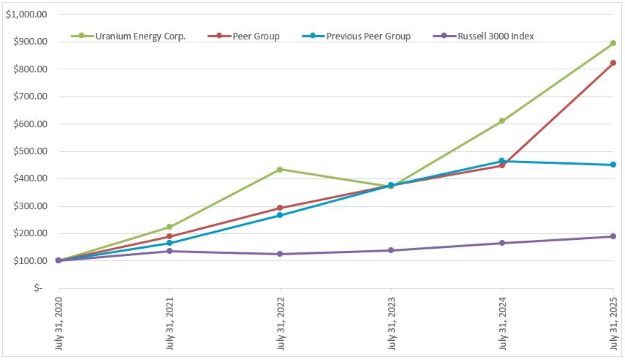
Item 7. Management’s Discussion and Analysis of Financial Condition and Results of Operations
(Expressed in thousands of U.S. dollars, except per share amounts)
The following management’s discussion and analysis of the Company’s financial condition and results of operations contain forward-looking statements that involve risks, uncertainties and assumptions including, among others, statements regarding our capital needs, business plans and expectations. In evaluating these statements, you should consider various factors, including the risks, uncertainties and assumptions set forth in reports and other documents we have filed with or furnished to the SEC and, including, without limitation, this Annual Report for the fiscal year ended July 31, 2025, including the consolidated financial statements and related notes contained herein. These factors, or any one of them, may cause our actual results or actions in the future to differ materially from any forward-looking statement made in this document. Refer to “Cautionary Note Regarding Forward-Looking Statements” and Item 1A. Risk Factors herein.
Introduction
The following discussion summarizes the results of operations for each of our fiscal years ended July 31, 2025, 2024 and 2023 and our financial condition as at July 31, 2025 and 2024, with a particular emphasis on Fiscal 2025, our most recently completed fiscal year.
Business
We have been primarily engaged in uranium mining and related activities, including exploration, pre-extraction, extraction and processing. Our principal projects are located in Wyoming and Texas in the United States and in Saskatchewan, Canada.
We utilize ISR mining for our uranium projects where possible which we believe, when compared to conventional open pit or underground mining, requires lower capital and operating expenditures with a shorter lead time to extraction and a reduced impact on the environment. At July 31, 2025, we had no uranium supply or off-take agreements in place.
In August 2024, we restarted uranium extraction at our fully permitted, and past producing, Christensen Ranch Mine ISR operation in Wyoming. During Fiscal 2025, our initial production as part of ramp up yielded 103,545 pounds and 26,421 pounds of precipitated uranium and dried and drummed concentrate, respectively, at the end of such period. We expect the ramp-up phase will continue while new production areas are being constructed in 2025 and 2026. At the same time, we have continued to advance our Roughrider and Burke Hollow Projects with resource expansions and development programs, respectively. Uranium recovered from the Christensen Ranch Mine ISR operation will be processed at our Irigaray CPP. The Irigaray CPP is the hub central to our fully permitted ISR projects located in the Powder River Basin of Wyoming, including our Christensen Ranch Mine, Reno Creek and Ludeman Projects. On October 16, 2024, we received approval from the WDEQ Quality, Uranium Recovery Program, to increase the licensed production capacity at the Irigaray CPP to 4.0 million pounds of U3O8 annually.
Our fully-licensed and 100% owned Hobson processing facility forms the basis for our regional operating strategy in the State of Texas, specifically the South Texas Uranium Belt, where we utilize ISR mining. We utilize a “hub-and-spoke” strategy whereby the Hobson processing facility, which has a physical capacity to process uranium-loaded resins of up to a total of two million pounds of U3O8 annually and is licensed to process up to four million pounds of U3O8 annually, acts as the central processing site (the hub) for our Palangana Mine, and future satellite uranium mining activities, such as our Burke Hollow Project, located within the South Texas Uranium Belt (the spokes).
On December 17, 2021, we acquired a 100% interest in U1A (now UEC Wyoming Corp.). With the acquisition of U1A in Fiscal 2022, the Irigaray CPP forms the focus of our regional operating strategy in the Powder River and Great Divide uranium districts in the state of Wyoming.
In 2022, we acquired a substantial portfolio of projects in Canada, with the purchase of UEX and the Roughrider Project from a subsidiary of Rio Tinto. The UEX portfolio consists of a mix of uranium deposits, primarily focused on the Athabasca Basin uranium district in Saskatchewan, Canada. This includes interests in the Shea Creek, Christie Lake, Horseshoe Raven, Millennium and Wheeler River Projects. In addition to advancing its uranium development projects through its ownership interest in JCU, UEX was advancing several other uranium deposits in the Athabasca Basin which include the Paul Bay, Ken Pen and Ōrora deposits at the Christie Lake Project, the Kianna, Anne, Colette and 58B deposits at its currently 49.1%-owned Shea Creek Project, and the Horseshoe and Raven deposits located on its 100%-owned Horseshoe-Raven Project. The Roughrider Project is an exploration stage asset, having been advanced by Rio Tinto over a decade of work. The acquisition brought in an exploration stage, high-grade, conventional asset into UEC’s portfolio that, along with the UEX acquisition, begins to develop a critical mass of 100% owned resources in the Athabasca Basin to accelerate extraction and/or production plans. The two transactions provide a portfolio of medium to long term, high-grade, conventional projects that complement our nearer term, U.S. ISR assets.
On November 7, 2024, we filed an initial assessment TRS that includes an economic analysis and mineral resource estimate for our Roughrider Project, located in Northern Saskatchewan, Canada. The economic analysis is included in a TRS titled “S-K 1300 Initial Assessment Report – Roughrider Uranium Project, Saskatchewan, Canada”, issued on November 5, 2024 and prepared for the Company by Tetra Tech Canada Inc., Understood Mineral Resources Ltd., Snowden Optiro, Terracon Geotechnique Ltd. and Clifton Engineering Group Inc., in accordance with Item 1302 of S-K 1300.
On December 6, 2024, the Company completed the acquisition of all of the issued and outstanding shares of capital stock of (i) Sweetwater Uranium Inc. (formerly Kennecott Uranium Company (again KUC)) and (ii) Wyoming Coal Resources Company (again WCRC) from Rio Tinto America Inc. (collectively, again, the Sweetwater Acquisition). KUC and WCRC collectively own or hold the following major assets: (i) the facilities, equipment, improvements and fixtures for the processing of uranium located in Sweetwater County, Wyoming, and related facilities and impoundments (again, the Sweetwater Plant); (ii) the Red Desert Project, a uranium project adjacent to the Sweetwater Plant; and (iii) the Green Mountain Project, a uranium project located 22 miles north of the Sweetwater Plant, with two deposits that have potential for ISR mining and three deposits that are considered appropriate for conventional mining. The consideration for the Sweetwater Acquisition was $175.4 million in cash plus acquisition related costs of $4.2 million.
With the completion of the Sweetwater Acquisition in December 2024, we expanded our footprints in Wyoming with our Wyoming hub-and-spoke operations. The acquisition of UEX in August 2022 and the acquisition of Roughrider Mineral Holdings Inc. in October 2022 further expanded our footprints in Canada and, in particular, the Athabasca Basin in Saskatchewan. We continue to establish additional uranium mines through exploration and pre-extraction activities and direct acquisitions in both the U.S. and Paraguay, all of which require us to manage numerous challenges, risks and uncertainties inherent in our business and operations as more fully described in Item 1A. Risk Factors herein.
During Fiscal 2025, the Company increased its equity interests in Anfield (TSX-V: AEC, NASDAQ: AEC). Effective August 1, 2025, Anfield completed a share consolidation on the basis of one (1) post-consolidation common share for every seventy-five (75) pre-consolidation common shares. As at July 31, 2025, the Company owned 4,978,877 post-consolidated common shares of Anfield, representing approximately 31.8% of the outstanding common shares of Anfield on a non-diluted basis and approximately 36.99% on a partially diluted basis after assuming the exercise of 1,283,639 post-consolidated share purchase warrants of Anfield held by the Company.
On August 18, 2025, we incorporated UEC US Uranium LLC for the purpose of holding and administering our physical uranium assets and related contractual arrangements in the U.S.
In September 2025, we announced the incorporation of UR&C, which is intended to pursue the feasibility of developing a new uranium refining and conversion facility in the U.S. The project will move forward contingent on several factors, including completion and assessment of additional engineering and economic studies, securing strategic government commitments, utility contracts, regulatory approvals and favorable market conditions. The Company has begun initial discussions with the U.S. government, state-level energy authorities, utilities and financial entities, and will report further updates as these engagements advance.
We also hold certain mineral rights in various stages in the States of Arizona, New Mexico, Texas and Wyoming, and in Canada and in the Republic of Paraguay, many of which are located in historically successful mining areas and have been the subject of past exploration and pre-extraction activities by other mining companies.
Our operating and strategic framework is to become a leading low-cost North American focused uranium supplier based on expanding our uranium extraction activities, which includes advancing certain uranium projects with established mineralized materials towards uranium extraction and establishing additional mineralized materials on our existing uranium projects or through acquisition of additional uranium projects.
Results of Operations
For Fiscal 2025, we recorded sales and service revenue of $66.84 million and realized gross profit of $24.48 million. For Fiscal 2024, we recorded sales and service revenue of $0.22 million and realized gross profit of $0.04 million. For Fiscal 2023, we recorded sales and service revenue of $164.39 million and realized gross profit of $49.67 million.
We recorded a net loss of $87.66 million ($0.20 per share) for Fiscal 2025, $29.22 ($0.07 per share) for Fiscal 2024, and $3.31 million ($0.01 per share) for Fiscal 2023. Income (loss) from operations during Fiscal 2025, Fiscal 2024 and Fiscal 2023 were $(73.32) million, $(56.40) million and $8.87 million, respectively.
Throughout Fiscal 2025, we continued ramping up mining activities at our Christensen Ranch Mine, resulting in initial production of 103,545 pounds and 26,421 pounds of precipitated uranium and dried and drummed concentrate, respectively, as of the end of the period. We expect the ramp-up phase will continue while new production areas are being constructed in 2025 and 2026. The rest of our uranium projects are expected to remain in a state of operational readiness and the relevant expenditures, which are directly related to regulatory/mine permit compliance, lease maintenance obligations and maintaining a necessary labor force, are being charged to our consolidated statement of operations.
As of July 31, 2025, we had 300,000 pounds of uranium inventory purchase commitments outstanding for a total purchase price of $11.11 million. Deliveries under these commitments are scheduled for Fiscal 2026 at a weighted average price of $37.05 per pound.
As of July 31, 2025, the carrying value of our uranium inventories, including uranium concentrates from extraction and purchased uranium) was $74.04 million (July 31, 2024: $75.62 million).
Sales and Service Revenue
The table below provides a breakdown of our sales and service revenue and cost of sales and services:
| Year Ended July 31, |
||||||||||||
| 2025 |
2024 |
2023 |
||||||||||
| Sales of purchased uranium inventory |
$ | 66,837 | $ | - | $ | 163,950 | ||||||
| Revenue from toll processing services |
- | 224 | 439 | |||||||||
| Total sales and service revenue |
$ | 66,837 | $ | 224 | $ | 164,389 | ||||||
| Cost of purchased uranium inventory |
$ | (42,360 | ) | $ | - | $ | (114,353 | ) | ||||
| Cost of toll processing services |
- | (187 | ) | (366 | ) | |||||||
| Total cost of sales and services |
$ | (42,360 | ) |
$ | (187 | ) | $ | (114,719 | ) | |||
During Fiscal 2025, we generated revenue of $66.84 million and achieved a gross profit of $24.48 million from sales of purchased uranium inventory. The Company did not engage in any sales activities during Fiscal 2024 while sales of purchased uranium inventory totaled $163.95 million in Fiscal 2023. Variations in sales of purchased uranium inventory depend on our cash position, prevailing market prices, and the liquidity of the uranium market.
Revenue from toll processing services is related to a toll processing agreement which was terminated in Fiscal 2024.
Operating Costs
Mineral Property Expenditures
Mineral property expenditures primarily consisted of costs relating to permitting, property maintenance, exploration and pre-extraction activities and other non-extraction related activities on our mineral projects.
The following table provides the nature of mineral property expenditures during the past three fiscal years:
| Year Ended July 31, |
||||||||||||
| 2025 |
2024 |
2023 |
||||||||||
| Permitting and compliance |
$ | 1,167 | $ | 1,895 | $ | 396 | ||||||
| Property maintenance |
4,974 | 3,986 | 3,608 | |||||||||
| Exploration |
11,140 | 14,669 | 9,308 | |||||||||
| Development |
33,891 | 6,650 | 1,749 | |||||||||
| Production readiness |
14,892 | 5,183 | 3,559 | |||||||||
| Total |
$ | 66,064 | $ | 32,383 | $ | 18,620 | ||||||
During Fiscal 2025, the exploration expenditures, such as drilling and preliminary economic assessments, were primarily spent on the following projects:
| ● |
Roughrider Project: $5.68 million (compared to Fiscal 2024: $6.32 million, Fiscal 2023: $1.29 million, respectively); and |
| ● |
Burke Hollow Project: $2.86 million (compared to Fiscal 2024: $5.23 million, Fiscal 2023: $3.11 million, respectively). |
During Fiscal 2025, development expenditures were primarily spent on the following projects:
| ● |
Burke Hollow Project: $12.11 million (compared to Fiscal 2024: $1.01 million, Fiscal 2023: $nil, respectively); and |
| ● |
Christensen Ranch Mine: $17.19 million (compared to Fiscal 2024: $2.64 million, Fiscal 2023: $0.02 million, respectively). |
During Fiscal 2025, the production readiness expenditures were primarily spent on the following projects:
|
|
● |
Christensen Ranch Mine: $10.66 million (compared to Fiscal 2024: $2.90 million, Fiscal 2023: $1.80 million, respectively); |
|
|
● |
Irigaray CPP: $2.29 million (compared to Fiscal 2024: $0.45 million, Fiscal 2023: $0.27 million, respectively); and |
| ● |
Palangana Mine: $0.86 (compared to Fiscal 2024: $1.27 million, Fiscal 2023: $0.91 million, respectively). |
General and Administrative
During Fiscal 2025, general and administrative (“G&A”) expenses totaled $27.26 million, compared to $21.87 million in Fiscal 2024 and $20.06 million in Fiscal 2023. G&A expenses were comprised of the following:
| Year Ended July 31, |
||||||||||||
| 2025 |
2024 |
2023 |
||||||||||
| Salaries and management fees |
$ | 9,960 | $ | 7,705 | $ | 5,168 | ||||||
| Office, investor relations, communication, insurance and travel |
6,995 | 5,807 | 6,801 | |||||||||
| Foreign exchange (gain) loss |
(100 | ) | (151 | ) | 71 | |||||||
| Professional fees |
4,390 | 3,340 | 2,609 | |||||||||
| Sub-total |
21,245 | 16,701 | 14,649 | |||||||||
| Stock-based compensation |
6,015 | 5,172 | 5,415 | |||||||||
| Total general and administrative expenses |
$ | 27,260 | $ | 21,873 | $ | 20,064 | ||||||
The following summary provides a discussion of the major expense categories, including analyses of factors that caused significant variances from year-to-year:
| ● |
During Fiscal 2025, salaries and management fees totaled $9.96 million, compared to $7.71 million in Fiscal 2024, which was primarily the result of hiring additional mid-level management and office personnel to support the Company's expansion and corporate-wide salary increases to adjust for inflation, and compared to $5.17 million in Fiscal 2023. The increase in salaries and managements fee in Fiscal 2024 from Fiscal 2023 was primarily due to corporate-wide salary increases and the acquisition of UEX; |
| ● |
During Fiscal 2025, office, investor relations, communications, insurance and travel expenses totaled $7.00 million, compared to $5.81 million during Fiscal 2024, primarily due to increased business activities and the expansion of our operations, and compared to $6.80 million in Fiscal 2023. The decrease in these expenses in Fiscal 2024 compared to Fiscal 2023 was mainly attributable to lower corporate development, investor relations and travel expenses; |
| ● |
During Fiscal 2025, professional fees totaled $4.39 million, compared to $3.34 million in Fiscal 2024 and $2.61 million in Fiscal 2023. Professional fees are comprised primarily of legal services related to regulatory compliance and legal affairs, and for audit, accounting and tax compliance services. The overall increasing trend in professional fees is due to the growth in our business activities and the expansion of our operations; and |
| ● |
During Fiscal 2025 stock-based compensation expense totaled $6.02 million, compared to $5.17 million during Fiscal 2024 and $5.42 million during Fiscal 2023. Stock-based compensation includes the amortization of the fair value of stock options granted to optionees and the fair value of shares of the Company issued to directors, officers, employees and consultants of the Company under our Stock Incentive Plan. The stock-based compensation varies from year to year primarily as a result of changes in the amount of compensation shares and stock award expenses which were amortized on an accelerating basis, resulting in more expenses being recorded at the beginning of the vesting period than at the end. |
Depreciation, Amortization and Accretion
During Fiscal 2025, depreciation, amortization and accretion totaled $4.47 million, compared to $2.18 million during Fiscal 2024 and $2.01 million during Fiscal 2023. The increase in Fiscal 2025 was primarily due to the increase of property, plant and equipment and asset retirement obligations from the Sweetwater Acquisition.
Depreciation, amortization and accretion includes depreciation and amortization of long-term assets acquired in the normal course of operations and accretion of asset retirement obligations.
Other Income and Expenses
Interest and Finance Costs
Interest and finance costs were comprised of the following:
| Year Ended July 31, |
||||||||||||
| 2025 |
2024 |
2023 |
||||||||||
| Surety bond premium |
$ | 1,400 | $ | 772 | $ | 760 | ||||||
| Other |
46 | 55 | 45 | |||||||||
| Total |
$ | 1,446 | $ | 827 | $ | 805 | ||||||
The surety bond premiums resulted from the surety bonds related to our uranium mines and projects. The increase in surety bond premium in Fiscal 2025 was due to additional surety bonds associated with the Sweetwater Acquisition and the development of our Burke Hollow Project.
Income (Loss) from Equity-Accounted Investment
During Fiscal 2025, Fiscal 2024 and Fiscal 2023, income from the equity-accounted investment comprised of the following:
| Year Ended July 31, |
||||||||||||
| 2025 |
2024 |
2023 |
||||||||||
| Share of income (loss) |
$ | (3,380 | ) | $ | 592 | $ | (1,648 | ) | ||||
| Gain on dilution of ownership interest |
28 | 425 | 654 | |||||||||
| Total |
$ | (3,352 | ) | $ | 1,017 | $ | (994 | ) | ||||
During Fiscal 2025, Fiscal 2024 and Fiscal 2023, we recorded a gain on dilution of ownership interest in Uranium Royalty Corp. (“URC”; TSX: URC, NASDAQ: UROY) as a result of URC issuing more shares from its equity financing and exercises of warrants and/or stock options, which decreased our ownership interest in URC to 13.5% at July 31, 2025, from 14.8% at July 31, 2024, from 14.9% at July 31, 2023 and from 15.5% at July 31, 2022.
During Fiscal 2025, Fiscal 2024 and Fiscal 2023, we recorded a share of URC’s income (loss) of $(0.27) million, $2.03 million and $0.41 million, respectively. The remaining share of loss during these periods was attributable to JCU.
Fair Value Gain (Loss) on Equity Securities
During Fiscal 2025, Fiscal 2024 and Fiscal 2023, fair value gain (loss) on equity securities comprised of the following:
| Year Ended July 31, |
||||||||||||
| 2025 |
2024 |
2023 |
||||||||||
| Unrealized and realized gain (loss) from common shares and warrants of public listed companies |
$ | (14,778 | ) | $ | 26,350 | $ | (9,785 | ) | ||||
| Unrealized gain (loss) from fair value changes of Anfield common shares |
(3,273 | ) | 1,155 | (2,214 | ) | |||||||
| Realized loss from investment in UEX shares transferred as consideration for UEX Acquisition |
- | - | (1,084 | ) | ||||||||
| Total |
$ | (18,051 | ) | $ | 27,505 | $ | (13,083 | ) | ||||
During Fiscal 2025, we recognized a realized loss of $14.37 million from the disposition of certain equity securities, with the remaining loss attributable to the revaluation of equity securities at the year end. In Fiscal 2024 and Fiscal 2023, substantially all fair value gain or loss on equity securities were attributable to year-end revaluation at market values.
Gain (Loss) on Revaluation of Derivative Liabilities
In connection with the UEX Acquisition, we issued replacement warrants (each, a “Replacements Warrant”), which are accounted for as derivative liabilities as the exercise prices of the UEX warrants were denominated in Canadian dollars which differs from the functional currency of the Company. As at July 31, 2025, all Replacement Warrants had been either exercised or expired. A gain of $1.71 million and $3.29 million on revaluation of derivative liabilities was recorded in Fiscal 2025 and Fiscal 2023 due to the decrease in time value of the Replacement Warrants. During Fiscal 2024, we recorded a loss of $8.23 million primarily due to changes in our share price.
Interest income
Interest income totaled $4.02 million, $2.63 million, $0.35 million for Fiscal 2025, Fiscal 2024 and Fiscal 2023, respectively. The interest earned resulted from the investment of cash proceeds received from our at-the-market offerings and the sale of equity securities in short-term deposits.
Liquidity and Capital Resources
| July 31, 2025 |
July 31, 2024 |
|||||||
| Cash and cash equivalents |
$ | 148,930 | $ | 87,533 | ||||
| Current assets |
234,016 | 235,244 | ||||||
| Current liabilities |
26,433 | 29,222 | ||||||
| Working capital |
207,583 | 206,022 | ||||||
During Fiscal 2025, we received net proceeds of $287.51 million from at-the-market offerings and from exercises of stock options and share purchase warrants. As at July 31, 2025, we had a working capital of $207.58 million.
We have a history of operating losses resulting in an accumulated deficit balance since inception. We had an accumulated deficit balance of $406.56 million as at July 31, 2025. During Fiscal 2025, net cash used in operating activities totaled $64.46 million. Furthermore, we may not achieve and maintain profitability or develop positive cash flow from our operations in the near term.
Historically, we have been reliant primarily on equity financings from the sale of our common stock in order to fund our operations. We have yet to achieve consistent profitability or develop consistent positive cash flow from operations. Currently, we also rely on cash flows generated from the sales of our purchased uranium concentrates to fund our operations. Our reliance on equity is expected to continue for the foreseeable future, and their availability whenever such additional financing is required will be dependent on many factors beyond our control and including, but not limited to, the market price of uranium, the continuing public support of nuclear power as a viable source of electricity generation, the volatility in the global financial markets affecting our stock price and the status of the worldwide economy, any one of which may cause significant challenges in our ability to access additional financing, including access to the equity and credit markets. There is no assurance that we will be successful in securing any form of additional financing when required and on terms favorable to us.
Our operations are capital intensive and future capital expenditures are expected to be substantial. We will require significant additional financing to fund our operations, including continuing with our exploration, pre-extraction and extraction activities and acquiring additional uranium projects. In the absence of such additional financing, we would not be able to fund our operations, including continuing with our exploration, pre-extraction and extraction activities, which may result in delays, curtailment or abandonment of any one or all of our uranium projects.
Our anticipated operations, including exploration, pre-extraction and extraction activities, however, will be dependent on and may change as a result of our financial position, the market price of uranium and other considerations, and such changes may include accelerating the pace or broadening the scope of reducing our operations. Our ability to secure adequate funding for these activities will be impacted by our operating performance, other uses of cash, the market price of uranium, the market price of our common stock and other factors which may be beyond our control. Specific examples of such factors include, but are not limited to:
| ● |
if the market price of uranium weakens; |
| ● |
if the market price of our common stock weakens; and |
| ● |
if a nuclear incident, such as the event that occurred in Japan in March 2011, were to occur, continuing public support of nuclear power as a viable source of electricity generation may be adversely affected, which may result in significant and adverse effects on both the nuclear and uranium industries. |
We believe our existing cash resources, and if necessary, cash generated from the sale of the Company’s liquid assets, will provide sufficient funds to carry out our planned operations for 12 months from the date that this Annual Report is issued. Our continuation as a going concern for a period beyond those 12 months will be dependent upon our ability to achieve consistent positive cash flow from the sale of our produced and purchased uranium inventories and to obtain adequate additional financing, as our operations are capital intensive and future capital expenditures are expected to be substantial.
Our long-term success, including the recoverability of the carrying values of our assets and our ability to acquire additional uranium projects and continue with exploration, pre-extraction, extraction and mining activities on our existing uranium projects, will depend ultimately on our ability to achieve and maintain profitability and positive cash flow from our operations by establishing ore bodies that contain commercially recoverable uranium and to develop these into profitable mining activities.
Equity Financings
On May 17, 2021, we filed a Form S-3 shelf registration statement under the Securities Act, which was declared effective by the SEC on June 1, 2021, providing for the public offer and sale of certain securities of the Company from time to time, at our discretion, of up to an aggregate offering amount of $200 million (the “2021 Shelf”), which included an at-the-market offering agreement prospectus (the “May 2021 ATM Offering”) covering the offering, issuance and sale of up to a maximum offering of $100 million as part of the $200 million under the 2021 Shelf.
On May 14, 2021, we entered into an at-the-market offering agreement (the “2021 ATM Offering Agreement”) with H.C. Wainwright & Co., LLC and certain co-managers (the “ATM Managers”) as set forth in the 2021 ATM Offering Agreement under which we may, from time to time, sell shares of our common stock having an aggregate offering price of up to $100 million through the ATM Managers selected by us.
On November 26, 2021, we filed a prospectus supplement to our 2021 Shelf with respect to the continuation of the 2021 ATM Offering Agreement with the ATM Managers under which we may, if eligible, from time to time, sell shares of our common stock having an aggregate offering price of up to an additional $100 million for a total of $200 million through the ATM Managers selected by us (the “November 2021 ATM Offering”; and, together with the May 2021 ATM Offering, the “2021 ATM Offering”).
On November 16, 2022, we filed a Form S-3 automatic shelf registration statement under the Securities Act, which became effective upon filing, providing for the public offer and sale of certain securities of the Company from time to time, at our discretion, of an undetermined dollar value of common stock, debt securities, warrants to purchase common stock or debt securities, subscription receipts for and units which include common stock, debt securities, warrants or any combination thereof (the “2022 Shelf”), which included an at-the-market offering agreement prospectus (the “2022 ATM Offering”; and, together with the 2021 ATM Offering, the “ATM Offerings”) covering the offering, issuance and sale of up to a maximum offering of $300 million under the 2022 Shelf.
On November 16, 2022, we entered into an at-the-market offering agreement (the “2022 ATM Offering Agreement”) with the ATM Managers as set forth in the 2022 ATM Offering Agreement under which we may, from time to time, sell shares of our common stock having an aggregate offering price of up to $300 million through the ATM Managers selected by us.
On December 20, 2024, we filed a prospectus supplement to our 2022 Shelf (the “2024 ATM Offering”) under which we may, from time to time, sell shares of our common stock having an aggregate offering price of up to $300 million pursuant to an at-the-market offering agreement (the “2024 ATM Offering Agreement”) we have with Goldman Sachs & Co. LLC and certain co-managers (the “2024 ATM Managers”). Under the 2024 ATM Offering Agreement, we may, from time to time, sell shares of our common stock through the 2024 ATM Managers selected by us.
During Fiscal 2023, we issued 15,171,253 shares of the Company’s common stock under our ATM Offerings for gross cash proceeds of $59.82 million. The total issuance costs were $1.40 million, which includes compensation of $1.35 million paid to the ATM Managers.
During Fiscal 2024, we issued 26,375,699 shares of the Company’s common stock under our 2022 ATM Offering for gross cash proceeds of $171.74 million. The total issuance costs were $3.86 million, all of which was related to compensation paid to the ATM Managers.
During Fiscal 2025, we issued 41,764,036 shares of the Company’s common stock under the 2022 ATM Offering and 2024 ATM Offering for gross cash proceeds of $292.35 million. The total issuance costs were $6.60 million, which includes compensation of $6.58 million paid to the ATM Managers and 2024 ATM Managers.
Subsequent to July 31, 2025, we issued 10,077,186 of the Company’s common stock under the 2024 ATM Offering for gross cash proceeds of $101.97 million. The total issuance costs were $2.29 million, all of which was related to compensation paid to the 2024 ATM Managers.
Operating Activities
During Fiscal 2025, net cash used in operating activities totaled $64.46 million, which was primarily related to mineral property expenditures of $66.06 million, G&A expenses excluding stock-based compensation of $21.25 million and changes in operating assets and liabilities, partially offset by a gross profit from the sale of purchased uranium inventory of $24.48 million.
During Fiscal 2024, we recorded net cash used in operating activities of $106.49 million. The negative cash flow was primarily driven by the purchase of uranium concentrates of $69.63 million and operating expenditures such as mineral property expenditures and G&A expenses.
During Fiscal 2023, we recorded net cash provided by operating activities of $72.57 million. The positive cash flow was primarily driven by the gross profit of $49.67 million, a decrease in our inventory balance of $60.36 million and was partially offset by operating expenditures such as mineral property expenditures and G&A expenses.
Financing Activities
During Fiscal 2025, net cash provided from financing activities totaled $284.84 million, from net cash of $287.51 million from our 2022 ATM Offering and 2024 ATM Offering, and the exercises of stock options and share purchase warrants, offset by payments of $2.67 million for tax withholding amounts related to the issuance of options, RSU and PRSU shares.
During Fiscal 2024, net cash provided from financing activities totaled $173.08 million, from net cash of $176.71 million from our 2022 ATM Offering and the exercises of stock options and share purchase warrants, offset by payments of $3.63 million for tax withholding amounts related to the issuance of options, RSU and PRSU shares.
During Fiscal 2023, net cash provided from financing activities totaled $65.42 million, primarily from net cash of $66.53 million from our ATM Offerings and the exercises of stock options and share purchase warrants, offset by payments of $1.04 million for tax withholding amounts related to the issuance of RSU and PRSU shares.
Investing Activities
During Fiscal 2025, net cash used for investing activities totaled $157.03 million, primarily comprised of cash used for the acquisition of Sweetwater Assets of $179.60 million, purchase of property, plant and equipment of $5.48 million, the purchase of equity securities and an additional interest in Anfield for a total of $25.70 million, capital contributions to JCU of $0.54 million, investment in mineral rights and properties of $0.22 million, partially offset by cash proceeds of $54.44 million from the sale of equity securities.
During Fiscal 2024, net cash used for investing activities totaled $24.64 million, primarily comprised of cash used for investment in equity securities of $12.12 million, the purchase of an additional interest in URC of $9.24 million, capital contributions to JCU of $2.88 million, investment in mineral rights and properties of $1.44 million and the purchase of property, plant and equipment of $1.99 million, offset by cash proceeds of $3.01 million from the sale of equity securities.
During Fiscal 2023, net cash used for investing activities totaled $124.78 million, primarily comprised of net cash used for the acquisition of the Roughrider Project of $82.12 million, investment in equity securities of $47.19 million, capital contributions to JCU of $1.42 million, investment in mineral rights and properties of $0.10 million and the purchase of property, plant and equipment of $0.56 million, offset by cash received as a result of the acquisition of UEX of $1.98 million.
Stock Options and Warrants
As at July 31, 2025, the Company had 4,594,207 stock options outstanding at a weighted-average exercise price of $2.71 per share, and 159,091 share purchase warrants outstanding at a weighted-average exercise price of $4.13 per share. As at July 31, 2025, the Company had 4,527,875 in-the-money stock options outstanding at a weighted-average exercise price of $2.62 per share and 159,091 in-the-money share purchase warrants outstanding at a weighted-average exercise price of $4.13 per share. As at July 31, 2025, outstanding in-the-money stock options and share purchase warrants represented a total of 4,686,966 shares issuable for gross proceeds of approximately $12.52 million should the stock options and the share purchase warrants be exercised in full. The exercise of these stock options and share purchase warrants is at the discretion of their respective holders and, accordingly, there is no assurance that any of these stock options or share purchase warrants will be exercised in the future.
Plan of Operations
In August 2024, we restarted uranium extraction at our fully permitted, and past producing, Christensen Ranch Mine ISR operation in Wyoming. We expect the ramp-up phase will continue while new production areas are being constructed in 2025 and 2026. We will hire additional personnel for future wellfield development and expand extraction at the Christensen Ranch Mine and Burke Hollow Project in Fiscal 2026. Our Palangana Mine is expected to continue being operated at a reduced pace, including the deferral of major pre-extraction expenditures, and to remain in a state of operational readiness. In addition, we will continue the construction of ion exchange facility and production area at our Burke Hollow, along with the drilling program at Roughrider Projects, as well as carry out additional exploration activities as required on our remaining project portfolio.
Material Contractual Obligations and Commitments
As at July 31, 2025, significant payment obligations of the Company over the next five years and beyond are as follows:
| Payment Due by Period |
||||||||||||||||||||
| Contractual Obligations |
Total |
Less Than 1 Year |
1-3 Years |
3-5 Years |
More Than 5 Years |
|||||||||||||||
| Asset Retirement Obligations |
$ | 88,669 | $ | 5,160 | $ | 4,702 | $ | 8,579 | $ | 70,228 | ||||||||||
| Operating Lease Obligations |
2,304 | 491 | 731 | 294 | 788 | |||||||||||||||
| Uranium Inventory Purchase Obligations |
11,114 | 11,114 | - | - | - | |||||||||||||||
| Total |
$ | 102,087 | $ | 16,765 | $ | 5,433 | $ | 8,873 | $ | 71,016 | ||||||||||
Off-Balance Sheet Arrangements
We do not have any off-balance sheet arrangements that have or are reasonably likely to have a current or future material effect on our financial condition, changes in financial condition, revenues or expenses, results of operations, liquidity, capital expenditures or capital resources.
Critical Accounting Estimates
The preparation of financial statements in conformity with U.S. GAAP requires management to make judgements, estimates and assumptions that affect the reported amount of assets and liabilities and disclosure of contingent assets and liabilities at the date of the financial statements and the reported revenues and expenses during the reported periods. We have identified the accounting estimates listed below as critical to understanding and evaluating the financial results reported in our consolidated financial statements. These accounting estimates require the application of significant management judgment and are critical due to the significant level of estimation uncertainty regarding the assumptions involved and the magnitude of the asset, liability, revenue or expense being reported. We base our assumptions and estimates on historical experience and various other sources that we believe to be reasonable under the circumstances. We review the underlying factors used in our estimates regularly, including reviewing the significant accounting policies impacting the estimates, to ensure compliance with U.S. GAAP. However, due to the uncertainty inherent in our estimates, actual results may materially differ from the estimates we calculate due to changes in circumstances, global economics and politics, and general business conditions. For a complete summary of all of our significant accounting policies, refer to Note 2: Summary of Significant Accounting Policies of the Notes to the Consolidated Financial Statements as presented under Item 8. Financial Statements and Supplementary Data herein.
Mineral Rights and Properties
Acquisition costs of mineral rights are initially capitalized as incurred while exploration and pre-extraction expenditures are expensed as incurred until such time proven or probable reserves are established for that project.
We have established the existence of mineralized materials for certain uranium projects, including our Palangana Mine and Christensen Ranch Mine (our “ISR Mines”), and our Red Desert, Green Mountain, Roughrider and Christie Lake Projects. We have not established proven or probable reserves, as defined by S-K 1300, through the completion of a “final” or “bankable” feasibility study for any of the uranium projects we operate, including our ISR Mines. Furthermore, we currently have no plans to establish proven or probable reserves for any of our uranium projects for which we plan on utilizing in-situ recovery mining, such as our ISR Mines. As a result, and despite the fact that we commenced extraction of mineralized materials at some of our ISR Mines, we remain an Exploration Stage Issuer, as defined by the SEC, and will continue to remain as an Exploration Stage Issuer until such time proven or probable reserves have been established.
Since we commenced extraction of mineralized materials at some of our ISR Mines without having established proven or probable reserves, any mineralized materials established or extracted from our ISR Mines should not in any way be associated with having established or produced from proven or probable reserves.
In accordance with U.S. GAAP, expenditures relating to the acquisition of mineral rights are initially capitalized as incurred while exploration and pre-extraction expenditures are expensed as incurred until such time as we exit the exploration stage by establishing proven or probable reserves. Expenditures relating to exploration activities, such as drill programs to establish mineralized materials, are expensed as incurred. Expenditures relating to pre-extraction activities, such as the construction of mine wellfields and disposal wells, are expensed as incurred until such time that proven or probable reserves are established for that project, after which expenditures relating to mine development activities for that particular project are capitalized as incurred.
Companies that are Production Stage Issuers, as defined by the SEC, having established proven and probable reserves and exited the exploration stage, typically capitalize expenditures relating to ongoing development activities, with corresponding depletion calculated over proven and probable reserves using the units-of-production method and allocated to future reporting periods to inventory and, as that inventory is sold, to cost of goods sold. We are in the exploration stage which has resulted in our Company reporting larger losses than if it would have been in the production stage due to the expensing, instead of capitalization, of expenditures relating to ongoing mine development activities. Additionally, there would be no corresponding depletion allocated to future reporting periods of our Company since those costs had been expensed previously, resulting in both lower inventory costs and cost of goods sold and results of operations with higher gross profits and lower losses than if we would have been in the production stage. Any capitalized costs, such as acquisition costs of mineral rights, are depleted over the estimated extraction life using the straight-line method. As a result, our consolidated financial statements may not be directly comparable to the financial statements of companies in the production stage.
Business Combination and Asset Acquisition
We recognize and measure the assets acquired and liabilities assumed based on their estimated fair values at the acquisition date. An income, market or cost valuation method may be utilized to estimate the fair value of the assets acquired and liabilities assumed, if any, in a business combination or asset acquisition. The income valuation method represents the present value of future cash flows over the life of the asset using: (i) discrete financial forecasts, which rely on management’s estimates of resource quantities and exploration potential, costs to produce and develop resources, revenues and operating expenses; (ii) appropriate discount rates; and (iii) expected future capital requirements. The market valuation method uses prices paid for a similar asset by other purchasers in the market, normalized for any differences between the assets. The cost valuation method is based on the replacement cost of a comparable asset at the time of the acquisition adjusted for depreciation and economic and functional obsolescence of the asset.
For business combination, subsequent to the acquisition date, and not later than one year from the acquisition date, we will record any material adjustments to the initial estimate based on new information obtained that would have existed as of the date of the acquisition. Any adjustment that arises from information obtained that did not exist as of the date of the acquisition will be recorded in the period the adjustments arises.
Impairment of Long-lived Assets
Long-lived assets including mineral rights and property, plant and equipment are reviewed for impairment whenever events or changes in circumstances indicate the carrying amount of an asset or asset group may not be recoverable. Management applies judgment to assess whenever events or changes in circumstances indicate the carrying amount of an asset or asset group may not be recoverable giving rise to the requirement to conduct an impairment test. Circumstances which could trigger an impairment test include, but are not limited to: (i) significant decreases in the market price of the asset; (ii) significant adverse changes in the business climate or legal factors including significant decreases in uranium prices and material adverse changes relating to the Company’s legal rights to its mineral rights and properties; (iii) significant increase in reclamation costs and accumulation of costs significantly in excess of the amount originally expected for the acquisition or construction of the asset; (iv) current period cash flow or operating losses combined with a history of losses or a forecast of continuing losses associated with the use of the asset; and (v) current expectation that the asset will more likely than not be sold or disposed of significantly before the end of its estimated useful life. Recoverability of these assets is measured by comparing the carrying value to the future undiscounted cash flows expected to be generated by the assets. When the carrying value of an asset exceeds the related undiscounted cash flows, an impairment loss is recorded by writing down the carrying value of the related asset to its estimated fair value, which is determined using discounted future cash flows or other measures of fair value.
Restoration and Remediation Costs (Asset Retirement Obligations)
Various federal and state mining laws and regulations require our Company to reclaim the surface areas and restore underground water quality to the pre-existing quality or class of use after the completion of mining. We recognize the present value of the future restoration and remediation costs as an asset retirement obligation (each, an “ARO”) in the period in which we incur an obligation associated with the retirement of tangible long-lived assets that result from the acquisition, construction, development and/or normal use of the assets.
AROs consist of estimated final well closure, plant and equipment decommissioning and removal and environmental remediation costs to be incurred by our Company in the future. The AROs are estimated based on the current costs escalated at an inflation rate and discounted at a credit adjusted risk-free rate. The AROs are capitalized as part of the costs of the underlying assets and amortized over its remaining useful life. The AROs are accreted to an undiscounted value until they are settled. The accretion expenses are charged to earnings and the actual retirement costs are recorded against the AROs when incurred. Any difference between the recorded AROs and the actual retirement costs incurred will be recorded as a gain or loss in the period of settlement.
Stock-based Compensation
We measure stock-based awards at fair value on the date of the grant and expense the Awards in our Consolidated Statements of Operations and Comprehensive Loss over the requisite service period of employees or consultants. The fair value of stock options is determined using the Black-Scholes Valuation Model. The fair value of RSUs is determined using the share price of the Company at the date of grant. The fair value of PRSUs is determined using a Monte Carlo Simulation Model. Stock-based compensation expense related to stock awards is recognized over the requisite service period on a graded vesting basis. Forfeitures are accounted for as they occur.
Item 7A. Quantitative and Qualitative Disclosures About Market Risk
Our exposure to market risks includes, but is not limited to, equity price risk, uranium price risk, foreign currency risk and country risk.
Equity Price Risk
We are subject to market risk related to the market price of our common stock which trades on the NYSE American. Historically, we have relied upon equity financings from the sale of our common stock to fund our operations. Movements in the price of our common stock have been volatile in the past and may continue to be volatile in the future. As a result, there is a risk that we may not be able to complete an equity financing at an acceptable price when required.
In addition, we have investment in equity securities, which are common shares and warrants of publicly listed companies. Movements in the price of these equity securities have been volatile in the past and may continue to be volatile in the future. With all other variables held constant, the Company's loss before income taxes would decrease or increase by $2.85 million if the price of these equity securities increase or decrease by 10%.
Uranium Price Risk
We are subject to market risk related to the market price of uranium. As at July 31, 2025, we had no uranium supply or off-take agreements in place. Since future sales of uranium concentrates are expected to generally occur through the uranium spot market, fluctuations in the market price of uranium would have a direct impact on our revenues, results of operations and cash flows. We do not use derivative financial instruments for speculative trading purposes, nor do we hedge our uranium price exposure to manage our uranium price risk.
Foreign Currency Risk
We are subject to market risk related to foreign currency exchange rate fluctuations. Our functional currency is the United States dollar, however, a portion of our business is transacted in other currencies including the Canadian dollar and the Paraguayan Guarani. To date, these fluctuations have not had a material impact on our results of operations.
We do not use derivative financial instruments for speculative trading purposes, nor do we hedge our foreign currency exposure to manage our foreign currency fluctuation risk.
Item 8. Financial Statements and Supplementary Data
Financial Statements
The consolidated financial statements and related information as listed below for the fiscal year ended July 31, 2025, are included in this Annual Report beginning on page F-1:
| ● |
Reports of Independent Registered Public Accounting Firm (PCAOB ID 271); |
| ● |
Consolidated Balance Sheets; |
| ● |
Consolidated Statements of Operations and Comprehensive Loss; |
| ● |
Consolidated Statements of Cash Flows; |
| ● |
Consolidated Statements of Stockholders’ Equity; and |
| ● |
Notes to the Consolidated Financial Statements. |
Supplementary Financial Information
The selected unaudited financial data for each of the quarters for the two most recent fiscal years are presented below:
| For the Quarters Ended |
||||||||||||||||
| July 31, 2025 |
April 30, 2025 |
January 31, 2025 |
October 31, 2024 |
|||||||||||||
| Sales and service revenue |
$ | - | $ | - | $ | 49,750 | $ | 17,087 | ||||||||
| Gross profit |
- | - | 18,226 | 6,251 | ||||||||||||
| Net loss |
(27,052 | ) | (30,212 | ) | (10,234 | ) | (20,158 | ) | ||||||||
| Total comprehensive loss |
(27,559 | ) | (19,796 | ) | (19,003 | ) | (21,886 | ) | ||||||||
| Basic and diluted loss per share |
(0.06 | ) | (0.07 | ) | (0.02 | ) | (0.05 | ) | ||||||||
| Total assets |
1,107,653 | 1,007,810 | 981,957 | 917,798 | ||||||||||||
| For the Quarters Ended |
||||||||||||||||
| July 31, 2024 |
April 30, 2024 |
January 31, 2024 |
October 31, 2023 |
|||||||||||||
| Sales and service revenue |
$ | - | $ | - | $ | 116 | $ | 108 | ||||||||
| Gross profit |
- | - | 19 | 18 | ||||||||||||
| Net income (loss) |
(15,115 | ) | (19,677 | ) | 2,250 | 3,321 | ||||||||||
| Total comprehensive income (loss) |
(16,169 | ) | (25,527 | ) | 9,982 | (7,728 | ) | |||||||||
| Basic and diluted income (loss) per share |
(0.04 | ) | (0.05 | ) | 0.01 | 0.01 | ||||||||||
| Total assets |
889,828 | 878,268 | 878,878 | 798,129 | ||||||||||||
Item 9. Changes in and Disagreements with Accountants on Accounting and Financial Disclosure
None.
Item 9A. Controls and Procedures
Evaluation of Disclosure Controls and Procedures
Our management, with the participation of our Principal Executive Officer and Principal Financial Officer, has evaluated the effectiveness of our disclosure controls and procedures (as such term is defined in Rules 13a-15(e) and 15d-15(e) under the Exchange Act), as of the end of the period covered by this Annual Report. Based on such evaluation, our Principal Executive Officer and Principal Financial Officer have concluded that, as of the end of the period covered by this Annual Report, our disclosure controls and procedures were effective.
It should be noted that any system of controls is based in part upon certain assumptions designed to obtain reasonable (and not absolute) assurance as to its effectiveness, and there can be no assurance that any design will succeed in achieving its stated goals.
Management’s Report on Internal Control Over Financial Reporting
Management of the Company is responsible for establishing and maintaining adequate internal control over financial reporting, as required by Sarbanes-Oxley (SOX) Section 404(a). The Company’s internal control over financial reporting is a process designed under the supervision of the Company’s Principal Executive Officer and Principal Financial Officer and effected by the Company’s Board of Directors, management and other personnel, to provide reasonable assurance regarding the reliability of financial reporting and the preparation of the Company’s consolidated financial statements for external purposes in accordance with United States generally accepted accounting principles. Due to its inherent limitations, internal control over financial reporting may not prevent or detect misstatements on a timely basis. Also, projections of any evaluation of the effectiveness of internal control over financial reporting to future periods are subject to the risk that the controls may become inadequate because of changes in conditions, or that the degree of compliance with the policies or procedures may deteriorate.
As at July 31, 2025, management assessed the effectiveness of the Company’s internal control over financial reporting based on the criteria set forth in Internal Control - Integrated Framework (2013) issued by the Committee of Sponsoring Organizations of the Treadway Commission. Based on that evaluation, the Company’s management concluded that, as of July 31, 2025, the Company’s internal control over financial reporting was effective.
The independent registered public accounting firm that audited the consolidated financial statements included in this Annual Report has issued an attestation report on the Company’s internal control over financial reporting which appears herein.
Changes in Internal Controls
There have been no changes in our internal control over financial reporting (as defined in Rules 13a-15(f) and 15d-15(f) under the Exchange Act) that occurred during the fourth fiscal quarter for the fiscal year ended July 31, 2025, that have materially affected, or are reasonably likely to materially affect, our internal control over financial reporting.
During our fourth quarter ended July 31, 2025, none of our directors or executive officers adopted, modified or terminated any contract, instruction or written plan for the purchase or sale of our securities that was intended to satisfy the affirmative defense conditions of Rule 10b5-1(c) or any “non-Rule 10b5-1 trading arrangement” as defined in Item 408(c) of Regulation S-K.
Item 9C. Disclosure Regarding Foreign Jurisdictions that Prevent Inspections
Not applicable.
Item 10. Directors, Executive Officers and Corporate Governance
Our current directors and executive officers and their respective ages as of September 23, 2025 are as follows:
| Name |
Age |
Position with the Company |
| Amir Adnani |
47 |
President, Chief Executive Officer, Principal Executive Officer and Director |
| Spencer Abraham |
73 |
Chairman (non-executive) and Director |
| David Kong |
79 |
Director |
| Vincent Della Volpe |
83 |
Director |
| Gloria Ballesta |
50 |
Director |
| Trecia Canty |
56 |
Director |
| Josephine Man |
51 |
Chief Financial Officer, Treasurer, Secretary and Principal Accounting Officer |
| Scott Melbye |
63 |
Executive Vice President |
| Brent Berg |
54 |
Senior Vice President, U.S. Operations |
On October 1, 2024, Josephine Man was appointed our Chief Financial Officer, Treasurer and Secretary, succeeding Pat Obara, who ceased to be an executive officer of our Company as of such date. On that date, Mr. Obara was appointed as Senior Vice President, Administration of our Company.
The following describes the business experience of each of our current directors, including other directorships held in reporting companies.
Amir Adnani. Amir Adnani is a founder of Uranium Energy Corp and has served as President, Chief Executive Officer and a director since January 2005. Under his leadership, the Company has developed into the largest diversified North American focused uranium company with low-cost In-Situ Recovery (“ISR”) uranium projects in the U.S. and high-grade conventional projects in Canada. In the U.S., UEC controls the largest portfolio of fully permitted ISR projects, anchored by three operational processing plants in Wyoming and Texas. In Canada, UEC controls one of the largest portfolios of exploration and development holdings in the prolific Athabasca basin, including the world-class, 100% owned Roughrider Project.
Mr. Adnani serves on the World Nuclear Association board of management, contributing to governance, policy and strategy development. Mr. Adnani has represented the industry in key world forums and has given a variety of presentations at prominent industry conferences organized by the International Atomic Energy Agency, World Nuclear Fuel Market and the Milken Institute. He is a frequent contributor to the business media, including CNBC, The Wall Street Journal, Bloomberg and Fox Business News.
Fortune magazine distinguished Mr. Adnani on their “40 Under 40, Ones to Watch” list of North American executives. He was selected as one of “Mining’s Future Leaders” by Mining Journal, a UK-based global industry publication. He was also a nominee for Ernst & Young’s “Entrepreneur of the Year” distinction.
Mr. Adnani is the founder and Co-Chairman of GoldMining Inc., a publicly listed gold acquisition and development company and is the Chairman of URC, the first and only publicly listed royalty company in the uranium sector. Mr. Adnani is also a founder of Gold Royalty Corp., a publicly listed gold royalty company where he served as a director from November 2020 to March 2023.
Mr. Adnani holds a Bachelor of Science degree from the University of British Columbia and was a director of the university’s Alumni Association from 2015 to 2021.
We believe that Mr. Adnani’s involvement with the Company since its inception and his business and uranium industry experience qualify him to serve as a Director.
Spencer Abraham. Spencer Abraham has served as Chairman (non-executive) of our Board of Directors since March 2017. Mr. Abraham served as Executive Chairman from October 2015 to March 2017 and as the Chairman of our Advisory Board from December 2012 to October 2015. Mr. Abraham is the Chairman and Chief Executive Officer of The Abraham Group LLC, an international strategic consulting firm based in Washington, D.C. President George W. Bush selected Mr. Abraham as the tenth Secretary of Energy of the United States in 2001. During his tenure at the Energy Department from 2001 to 2005, Mr. Abraham developed policies and regulations to ensure the nation’s energy security, was responsible for the U.S. Strategic Petroleum Reserve, oversaw domestic oil and gas development policy and nuclear energy policy, developed relationships with international governments, including members of the Organization of the Petroleum Exporting Countries, and led the landmark nuclear nonproliferation HEU program between the United States and Russia. Mr. Abraham served as a United States Senator for the State of Michigan from 1995 to 2001. At a time when the Trump Administration and U.S. Congress are considering significant issues pertaining to the U.S. uranium mining sector, Mr. Abraham’s expertise in the public policy arena is especially valuable and he is very actively involved in working with the Company to address these matters.
Mr. Abraham has served as a director of Two Harbors Investment Corp. (NYSE: TWO) since May 2014, as a director of PBF Energy Inc. (NYSE: PBF) since October 2012 and as a director of NRG Energy, Inc. (NYSE: NRG) since December 2012. Mr. Abraham served as a director of GenOn Energy, Inc. from January to December 2012, when it was acquired by NRG Energy, Inc. Previously, Mr. Abraham served as a director of Occidental Petroleum Corporation (NYSE: OXY) from 2005 to May 2020, as the U.S. Chairman of Areva Inc., the North American subsidiary of Areva, and on the boards of several other public and private companies.
Mr. Abraham holds a Juris Doctor degree from Harvard Law School and is an alumnus of Michigan State University.
We believe that Mr. Abraham’s extensive experience in the energy sector, including directing key aspects of energy strategy as Secretary of Energy of the United States from 2001 to 2005, and as a board member of various public companies in the oil, gas and power sectors qualifies him to serve as the Chairman (non-executive) of our Board.
David Kong. David Kong has served on our Board of Directors since January 2011 and served as our lead independent director from June 2016 to May 2024. Mr. Kong serves as Chairperson of our Audit Committee and is a member of our Compensation Committee, our Corporate Governance and Nominating Committee and our Sustainability Committee. Mr. Kong has also served as a director of GoldMining Inc., a public company listed on the Toronto Stock Exchange (the “TSX”) and the NYSE American, since October 2010, as a director of Silvercorp Metals Inc., a public company listed on the TSX and the NYSE American, from November 2011 to September 2023, and as a director of New Pacific Metals Corp., a public company listed on the TSX and the NYSE American, from November 2010 to December 2022.
Mr. Kong holds a Bachelor in Business Administration and earned his Chartered Accountant designation (CPA, CA) in British Columbia, Canada, in 1978. Mr. Kong was a partner at Ellis Foster, Chartered Accountants, from 1981 to 2004, before merging with EY (formerly Ernst & Young LLP), Chartered Professional Accountants, in 2005, where he was a partner until 2010. Mr. Kong is a certified director (ICD.D) of the Institute of Corporate Directors.
We believe that Mr. Kong’s business experience and specialized expertise in finance and accounting qualify him to serve as a Director.
Vincent Della Volpe. Vincent Della Volpe has served on our Board of Directors since July 2007 and also serves as Chairperson of our Compensation Committee and is a member of our Audit Committee and our Corporate Governance and Nominating Committee. Mr. Della Volpe has served as a professional money manager for over 35 years, including as a senior portfolio manager of pension funds for Honeywell Corporation and as Senior Vice President of the YMCA Retirement fund in New York. Throughout his career, Mr. Della Volpe has particularly focused on the management of energy and utility equity portfolios, and he also has experience managing venture capital investments. Mr. Della Volpe holds a Bachelor of Arts in Accounting and an MBA in finance, both from Seton Hall University.
We believe that Mr. Della Volpe’s prior business experience and specialized expertise in finance qualify him to serve as a Director.
Gloria Ballesta. Gloria Ballesta has served on our Board of Directors since July 2018 and also serves as Chairperson of our Corporate Governance and Nominating Committee and is a member of our Audit Committee, our Compensation Committee and our Sustainability Committee. Ms. Ballesta has served as the Chief Executive Officer of Camglo Management SAS, a private company providing software security solutions, since December 2023, and serves as a director of GoldMining Inc., a public company listed on the TSX and the NYSE American, since August 2010. Ms. Ballesta served as the Chief Executive Officer of Content Mode SAS, a contact center based in Colombia, from January 2016 to December 2023. Ms. Ballesta has experience managing administrative and compliance procedures for spin-offs, take-overs and financings of various public companies. Ms. Ballesta holds an LLB (Hons.) from the CEU Cardenal Herrera University in Spain and a Master’s degree in Marketing and Business Management from ESIC School of Business in Spain.
We believe that Ms. Ballesta’s significant international experience and experience serving as an independent director for other reporting companies qualify her to serve as a Director.
Trecia Canty. Trecia Canty has served on our Board of Directors since March 2023 and also serves as Chairperson of our Sustainability Committee. Ms. Canty has over 25 years of experience in finance, strategic transactions, corporate governance, compliance, enterprise risk and ESG and has extensive energy industry experience, including exploration and production, public utilities, pipelines and related businesses in the United States and Canada. Since 2015, Ms. Canty has served as the Senior Vice President, General Counsel and Corporate Secretary and a member of the Executive Committee of PBF Energy Inc. (NYSE: PBF), a Fortune 200 company that is one of the largest independent petroleum refiners and suppliers of unbranded transportation fuels, heating oil, petrochemical feedstocks, lubricants and other petroleum products in the United States. Ms. Canty is a graduate of Dartmouth College and received a Master’s degree in Public Affairs from Princeton University’s School of International and Public Affairs and a Juris Doctor from Columbia University’s School of Law.
We believe that Ms. Canty’s extensive legal, regulatory and senior leadership experience in the energy industry qualifies her to serve as a Director.
The following describes the business experience of each of our non-director executive officers:
Josephine Man. Josephine Man has served as our Chief Financial Officer, Treasurer and Secretary since October 2024. Ms. Man has over 28 years of experience in financial reporting, corporate finance, mergers and acquisitions, and risk management. Previously, from 2018 to 2025, Ms. Man served as Chief Financial Officer of URC where she was responsible for leading all finance functions and risk management, and served as Corporate Secretary from 2024 to 2025 and from 2019 to 2023. From 2020 to 2022, Ms. Man served as Chief Financial Officer of Gold Royalty Corp., a public company listed on the NYSE American. From 2010 to 2013, Ms. Man was an audit partner with Ernst & Young LLP in Vancouver. Ms. Man is a Chartered Professional Accountant, Certified Public Accountant (Washington) and Certified Public Accountant (Hong Kong). Ms. Man holds a Bachelor of Business Administration from Simon Fraser University and a Master of Business Administration from the University of British Columbia.
Scott Melbye. Scott Melbye has served as our Executive Vice President since September 2014. Mr. Melbye is a 42-year veteran of the nuclear energy industry having held key leadership positions in major global uranium mining companies and various industry organizations. He has passionately promoted the growth and competitiveness of the nuclear fuel cycle in supporting nuclear power as a clean, affordable and reliable source of energy to meet the world’s ever-expanding needs.
As our Executive Vice President, Mr. Melbye is responsible for the uranium marketing and sales function and is a key contributor towards the achievement of the Company’s strategic growth objectives. Mr. Melbye currently serves as the Chief Executive Officer, President and a director of URC. Previously, Mr. Melbye served as the Vice President, Commercial at Uranium Participation Corporation (now Sprott Physical Uranium Trust) from 2014 to 2018, and concurrently served as an advisor, to the Chairman of Kazatomprom, the world’s leading uranium producer in Kazakhstan, guiding their business transformation process as it related to marketing and sales strategy. Through June 2014, Mr. Melbye was Executive Vice President, Marketing for Uranium One, responsible for global sales activities, where he expanded that company’s forward book, particularly in the emerging markets of the United Arab Emirates and China. He also supported the global investor-relations efforts of the Chief Executive Officer during the time that Uranium One was publicly traded on the TSX.
Prior to this, Mr. Melbye spent 22 years with the Cameco Group of companies, both at their Saskatoon head office and with their U.S. subsidiaries. He most recently served as President of Cameco Inc., the subsidiary responsible for managing that company’s world-wide uranium marketing and trading activities (achieving annual sales exceeding 30 million pounds U3O8 through established relationships with most global nuclear utilities). Mr. Melbye’s previous experience includes uranium brokerage and trading at Nukem Inc. in New York, and nuclear fuel procurement at the Palo Verde Nuclear Generating Station in Arizona.
Mr. Melbye is currently the President of the Uranium Producers of America (“UPA”). The UPA is the domestic mining organization that advocates for U.S. Government policies supportive of national energy, and security and interests of a strong and competitive American uranium industry. He is also a past Chair of the Board of Governors of the World Nuclear Fuel Market. Mr. Melbye is a frequent speaker at nuclear industry conferences and has participated in numerous high-level, United States and Canadian trade missions to markets such as Central Europe, China, India, United Arab Emirates and Mexico. Mr. Melbye has provided expert testimony before the U.S. House Oversight Committee on Department of Energy inventory dispositions, and the U.S. Senate Energy and Natural Resources Committee on regaining American nuclear leadership and foreign critical minerals dependency. In addition, he testified before the U.S. International Trade Commission on uranium imports from Kazakhstan following the dissolution of the Soviet Union. Mr. Melbye received a Bachelor of Science in Business Administration with degree specialization in International Business from Arizona State University in 1984.
Brent Berg. Brent Berg has served as our Senior Vice President, U.S. Operations since March 2024. Mr. Berg is a highly qualified mining and mineral processing professional with over 28 years of experience in the minerals industry, including more than 22 years in uranium production in the U.S. and Canada. Mr. Berg is the former President of Cameco Resources, where he led Cameco’s U.S. uranium ISR operations in Wyoming and Nebraska. This experience included management and oversight of Cameco’s ISR facilities and the successful start-up and operation of its North Butte satellite ISR operation in Wyoming. Under his management, U.S. production reached over 2.6 million pounds prior to Cameco curtailing production due to market conditions. Mr. Berg also has extensive open pit and underground mining experience, including Cameco’s Key Lake, McArthur River and Rabbit Lake operations.
Most recently, Mr. Berg was the President and Chief Executive Officer of Rare Element Resources Ltd., where he was responsible for overall day-to-day management and operation of that company, including its strategic, financial and operational leadership. Mr. Berg is a Professional Engineer with a B.A.Sc. in Regional Environmental Systems Engineering from the University of Regina and an MBA from the University of Regina. In 2023, Mr. Berg completed a Master of Legal Studies, Magna Cum Laude, from the University of Arizona, with a focus on mining law and policy.
Director Qualifications and Experience
The following summarizes the relevant experiences, qualifications, attributes and skills that our directors bring to our Board of Directors that are important to our business.
| Mining Industry Experience |
Directors who have experience serving on mining company boards, in senior leadership roles at mining companies and/or technical expertise in one or more of the following areas: production, mine operations, mine development, exploration, project development and mergers and acquisitions; bring an understanding of our business and oversight of strategy. |
| Senior Leadership Experience |
Directors who have experience serving in senior leadership roles at large/complex organizations bring strong abilities to motivate others, to identify and develop leadership qualities in others, to achieve strategic priorities and to create long-term value. |
| Public Company Board Experience |
Directors who have experience serving on other public company boards bring knowledge of the operation of the board and relationships between the board, the chief executive officer and other senior management, insights on key issues, agenda setting, risk oversight, corporate governance, executive compensation and operational and compliance-related matters. |
| International Business Experience |
Directors who have experience serving on other company boards or in senior leadership roles at other companies that have international operations bring knowledge of diverse business, political, cultural and regulatory environments. |
| Capital Markets Experience |
Directors who have experience relating to capital markets bring knowledge of investor expectations and perspectives related to capital raising, capital structure, financing transactions, dispositions, mergers, acquisitions and other strategic transactions. |
| Accounting and Financial Reporting Experience |
Directors who have past professional experience in finance or accounting and a requisite professional certification in accounting or experience serving as a chief executive officer, chief financial officer or as another senior officer with financial oversight responsibilities or experience serving on other public company audit committees, bring an understanding of financial oversight responsibilities required to oversee our financial reporting and internal control functions. |
| Corporate Governance, Safety, Health, Environment and Sustainability Experience |
Directors who have experience relating to corporate governance, workplace safety, health, the environment and sustainability bring knowledge of leading practices to oversee strong performance. |
| Government, Regulatory and Public Policy Experience |
Directors who have experience relating to government, regulatory or public policy matters bring knowledge helpful to operate in a complex regulatory environment. |
The following identifies the relevant experiences, qualifications, attributes and skills possessed by our directors:
| Skill |
Amir Adnani |
Spencer Abraham |
David Kong |
Vincent Della Volpe |
Gloria Ballesta |
Trecia Canty |
| Mining Industry Experience |
✔ |
✔ |
✔ |
✔ |
✔ |
✔ |
| Senior Leadership Experience |
✔ |
✔ |
✔ |
✔ |
||
| Public Company Board Experience |
✔ |
✔ |
✔ |
✔ |
✔ |
|
| International Business Experience |
✔ |
✔ |
✔ |
✔ |
✔ |
✔ |
| Capital Markets Experience |
✔ |
✔ |
✔ |
✔ |
||
| Accounting and Financial Reporting Experience |
✔ |
✔ |
✔ |
✔ |
✔ |
|
| Corporate Governance, Safety, Health, Environment and Sustainability Experience |
✔ |
✔ |
✔ |
✔ |
✔ |
✔ |
| Government, Regulatory and Public Policy Experience |
✔ |
✔ |
Term of Office
Pursuant to our Bylaws, as amended, all of our directors hold office until the next annual general meeting of the stockholders or until their successors are elected and qualified. Our officers are appointed by our Board of Directors and hold office until their successors are appointed and qualified.
Significant Employees
There are no significant employees other than our executive officers.
Family Relationships
There is no family relationship between any of our executive officers or directors.
Audit Committee
Our Board of Directors has established an Audit Committee that operates under a written charter approved by our Board of Directors. Our Audit Committee has been structured to comply with Rule 10A-3 under the Exchange Act. Our Audit Committee is comprised of David Kong, Vincent Della Volpe and Gloria Ballesta, all of whom meet the audit committee member independence standards of the NYSE American. Mr. Kong is the Chairperson of the Audit Committee. Our Board of Directors has determined that Mr. Kong satisfies the criteria for an audit committee financial expert under Item 407(d)(5) of Regulation S-K of the rules of the SEC.
Code of Conduct
We have adopted a Code of Conduct for Directors, Officers and Employees (the “Code”) that applies to all directors and officers. The Code describes the legal, ethical and regulatory standards that must be followed by our directors, officers and employees and sets forth high standards of business conduct applicable to each of them. As adopted, the Code sets forth written standards that are designed to deter wrongdoing and to promote, among other things:
| ● |
honest and ethical conduct, including the ethical handling of actual or apparent conflicts of interest between personal and professional relationships; |
| ● |
compliance with applicable governmental laws, rules and regulations; |
| ● |
the prompt internal reporting of violations of the Code to the appropriate person or persons identified in the Code; and |
| ● |
accountability for adherence to the Code. |
A copy of the Code can be viewed on our website at: www.uraniumenergy.com.
Corporate Governance and Nominating Committee
We have established a Corporate Governance and Nominating Committee that operates under a written charter approved by our Board of Directors. The Corporate Governance and Nominating Committee is comprised of Gloria Ballesta, Vincent Della Volpe and David Kong. Ms. Ballesta is the Chairperson of the Corporate Governance and Nominating Committee. All of the members of the Corporate Governance and Nominating Committee qualify as independent directors under the listing standards of the NYSE American.
The Corporate Governance and Nominating Committee is responsible for developing an appropriate approach to corporate governance issues and compliance with governance rules. The Corporate Governance and Nominating Committee is also mandated to plan for the succession of our Company, including recommending director candidates, review of Board of Director procedures, size and organization and monitoring of senior management with respect to governance issues.
The Corporate Governance and Nominating Committee identifies individuals believed to be qualified to become directors and recommends individuals to fill vacancies. There are no minimum qualifications for consideration for nomination to be our director. The Corporate Governance and Nominating Committee assesses all nominees using generally the same criteria. In nominating candidates, the Corporate Governance and Nominating Committee takes into consideration such factors as it deems appropriate, including skills, knowledge, experience and personal character, as well as the needs of the Company.
Director Time Commitments Policy
Our Board of Directors believes that wider perspectives and best practices learned by directors serving in other public directorships must be balanced against the time commitment that service on boards entails. Therefore, we have adopted a Director Time Commitments Policy (the “Director Time Commitments Policy”). The Director Time Commitments Policy provides that our non-executive Chairman and, if applicable, lead independent director shall be limited to serving on four public company boards, including our Board of Directors (excluding private companies and other non-public companies). Our Corporate Governance and Nominating Committee evaluates on at least an annual basis the outside director time commitments of our non-executive Chairman and, if applicable, lead independent director. Our Director Time Commitments Policy can be viewed on our website at www.uraniumenergy.com. All of our directors are in compliance with the Director Time Commitments Policy as of the filing date of this Annual Report.
Sustainability Committee
Our Sustainability Committee is comprised of Trecia Canty, David Kong and Gloria Ballesta. Our Board of Directors has determined that each member of the Sustainability Committee meets the independence standards of the NYSE American. Ms. Canty is the Chairperson of the Sustainability Committee.
The Sustainability Committee is responsible for oversight of sustainability including environmental, social, health and safety matters. The Sustainability Committee is mandated to oversee our framework for the development of environmental, social, health and safety policies and programs and performance thereunder. The Sustainability Committee reports regularly to our Board of Directors.
Human Rights Policy
We have adopted a Human Rights Policy (the “Human Rights Policy”) that applies comprehensive standards to our operations across all geographic locations regarding the protection of human rights. Our Human Rights Policy can be viewed on our website at www.uraniumenergy.com.
Diversity Policy
Our Board of Directors has adopted a written Diversity Policy (the “Diversity Policy”) that sets out our approach to diversity, including gender, on our Board of Directors and among our executive officers. The Corporate Governance and Nominating Committee and our Board of Directors aim to attract and maintain directors and an executive team that have an appropriate mix of diversity, skill and expertise.
Pursuant to the Diversity Policy, all Board of Directors and executive officer appointments will be based on merit, and the skill and contribution that the candidate is expected to bring to our Board of Directors and the executive team, with due consideration given to the benefits of diversity. Pursuant to the Diversity Policy, when considering the composition of, and individuals to nominate or hire to, our Board of Directors and the executive team, the Corporate Governance and Nominating Committee and our Board of Directors, as applicable, shall consider diversity from a number of aspects and including, but not limited to, gender, age, ethnicity, cultural diversity, education, experience, skills, thought, perspectives, personal qualities and attributes and geographic profiles. In addition, when assessing and identifying potential new members to join our Board of Directors or the executive team, the Corporate Governance and Nominating Committee and our Board of Directors, as applicable, considers the current level of diversity on our Board of Directors and the executive team.
Our Diversity Policy can be viewed on our website at www.uraniumenergy.com.
The Corporate Governance and Nominating Committee and our Board of Directors are responsible for developing measurable objectives to implement the Diversity Policy and to measure its effectiveness. The Corporate Governance and Nominating Committee meets annually, or otherwise as applicable, to consider whether to set targets based on diversity for the appointment of individuals to our Board of Directors or the executive team, recognizing that, notwithstanding any targets set in any given year, the selection of diverse candidates will depend on the pool of available candidates with the necessary skills, knowledge and experience.
As at the date of this Annual Report, the members of our Board of Directors identify as 50% racially diverse, 50% White, 17% Asian, 17% Hispanic, 17% Black, 67% ethnically diverse and 33% female. Our executive officers identify as 50% ethnically diverse and 25% female. Our Board of Directors believes that having directors with diverse backgrounds and experiences can enhance the effectiveness of our Board of Directors and our long-term performance.
The Corporate Governance and Nominating Committee has performed a review of the experience, qualifications, attributes and skills of our Company’s current directors and believes that our Company’s current directors possess a variety of complementary skills and characteristics, including the following:
| ● |
personal characteristics, including leadership, character, integrity, accountability, sound business judgment and personal reputation; |
| ● |
successful business or professional experience; |
| ● |
various areas of expertise or experience; |
| ● |
willingness and ability to commit the necessary time to fully discharge the responsibilities of a director in connection with our affairs; |
| ● |
a demonstrated commitment to our success; and |
| ● |
diverse perspectives, qualifications and knowledge. |
The Corporate Governance and Nominating Committee considers nominees recommended by stockholders if such recommendations are made in writing to the Corporate Governance and Nominating Committee and evaluates nominees for election in the same manner whether the nominee has been recommended by a stockholder or otherwise.
Conflicts of Interest
To our knowledge, and other than as disclosed in this Annual Report, there are currently no known existing or potential conflicts of interest among us, our promoters, directors and officers, or other members of management, or any proposed director, officer or other member of management as a result of their outside business interests, except that certain of the directors and officers serve as directors and officers of other companies and, therefore, it is possible that a conflict may arise between their duties to us and their duties as a director or officer of such other companies.
Compliance with Section 16(a) of the Exchange Act
Section 16(a) of the Exchange Act requires our directors and officers, and the persons who beneficially own more than 10% of our common stock, to file reports of ownership and changes in ownership with the SEC. Copies of all filed reports are required to be furnished to us pursuant to Rule 16a-3 promulgated under the Exchange Act. Based solely on the reports received by us and on the representations of the reporting persons, we believe that all such reports were timely filed during Fiscal 2025 within two business days as required by the SEC.
Board Leadership Structure and Role in Risk Oversight
Amir Adnani serves as our President and Chief Executive Officer and Spencer Abraham serves as our independent Chairman (non-executive). Our Board of Directors takes an active role in risk oversight. Our executive officers report any significant risks that come to their attention to our Board of Directors. Our Audit Committee reviews significant financial and enterprise risks and reports them to our Board of Directors as well.
Insider Trading Arrangements and Policies
Our Board of Directors has adopted an updated Insider Trading, Reporting and Blackout Policy which governs the purchase, sale and/or other dispositions of securities by directors, officers and employees of the Company and its subsidiary companies that are designed to promote compliance with insider trading laws and rules and regulations as part of the Company’s commitment to ethical and lawful business conduct. Since the adoption of our Insider Trading, Reporting and Blackout Policy, the policy administrator has not granted any such exemptions to the policy's general prohibition on hedging or pledging. While the Company is not subject to the Insider Trading, Reporting and Blackout Policy, the Company does not trade in its securities when it is in possession of material nonpublic information (as defined herein) other than pursuant to previously adopted Rule 10b5-1 trading plans.
We have also adopted an Anti-Hedging and Anti-Pledging Policy, Clawback Policy and Stock Ownership Guidelines. Please see "Item 11. Executive Compensation" for further details.
Copies of committee charters, the policies referenced herein and other selected governance documents are available on our website at www.uraniumenergy.com.
Item 11. Executive Compensation
Compensation Discussion and Analysis
Oversight of Executive Compensation Program
Our Board of Directors has established a Compensation Committee that operates under a written charter approved by our Board of Directors. The Compensation Committee is comprised of Vincent Della Volpe, David Kong and Gloria Ballesta. Mr. Della Volpe is the Chairperson of the Compensation Committee. All of the members of the Compensation Committee meet the compensation committee independence standards of the NYSE American. Our Board of Directors has determined that none of the Compensation Committee members have any material business relationships with the Company. The independence of the Compensation Committee members is re-assessed regularly by the Company.
The Compensation Committee of our Board of Directors is responsible for establishing and administering the Company’s executive and director compensation.
The responsibilities of the Compensation Committee, as stated in its charter, include the following:
| ● |
review and approve our compensation guidelines and structure; |
| ● |
review and approve on an annual basis the corporate goals and objectives with respect to compensation for the Chief Executive Officer; |
| ● |
review and approve on an annual basis the evaluation process and compensation structure for our other officers, including base compensation, bonus, incentive and equity compensation; and |
| ● |
periodically review and make recommendations to our Board of Directors regarding the compensation of non-executive directors. |
The Compensation Committee is responsible for developing the executive compensation philosophy and reviewing and recommending to our Board of Directors for approval all compensation policies and compensation programs for the executive team.
Since May 2012, consistent with good governance practices, the Compensation Committee retains on an annual basis an independent compensation advisor to provide advice on the structure and levels of compensation for our executive officers and directors and to undertake a comprehensive review of our incentive plans. In Fiscal 2025, the Compensation Committee retained Global Governance Advisors (“GGA”) to provide independent compensation advice to the Compensation Committee and to our Board of Directors. GGA is an internationally recognized, independent advisory firm that provides counsel to boards of directors on matters relating to executive compensation and governance and has significant experience in the mining sector. GGA is retained to continually review the compensation levels for our executive officers and directors and short and long-term incentive plans, and to evaluate and make recommendations based on competitive market trends on our overall executive and director compensation philosophy, objectives and approach.
GGA’s services in Fiscal 2025 included:
| ● |
compensation philosophy validation; |
| ● |
peer group review; |
| ● |
executive compensation review and recommendations for our Chief Executive Officer, Chief Financial Officer, Executive Vice President and Senior Vice President, U.S. Operations; |
| ● |
review and design of the annual non-equity incentive plan; |
| ● |
review and design of the equity incentive plan, including performance criteria and vesting conditions; |
| ● |
non-executive director compensation review; and |
| ● |
review of compensation discussion and analysis in our proxy statement. |
Fees paid for GGA’s services were $44,398 and $66,747 for Fiscal 2024 and Fiscal 2025, respectively.
The Compensation Committee reviews all fees and the terms of consulting services provided by GGA.
Overview of Executive Compensation Program
| What We Do ✓ |
What We Do NOT Do × |
||
| ✓ |
DO align annual incentive pay and performance by linking annual incentive compensation to the achievement of performance goals tied to Company strategic objectives. |
× |
NO guaranteed cash incentives, equity compensation or salary increases for executives except in limited scenarios in connection with their hiring. |
| ✓ |
DO align long-term incentive pay and performance by linking a portion of long-term compensation to the achievement of relative and absolute total stockholder return (“TSR”) goals. |
× |
NO full single trigger acceleration of annual equity Awards granted to executives. |
| ✓ |
DO cap payouts for annual incentive awards. |
× |
NO executive retirement plans for any of our executives. |
| ✓ |
DO maintain rigorous stock ownership guidelines (3x base compensation for the CEO and 1x base compensation for other executive officers). |
× |
NO compensation or incentives that encourage unnecessary or excessive risk taking. |
| ✓ |
DO maintain a clawback policy with respect to cash and equity incentive compensation. |
× |
NO tax gross ups. |
| ✓ |
DO conduct annual compensation review and approval of our compensation philosophy and strategy. |
× |
NO pledging of any of our securities by directors, executive officers or other employees. |
| ✓ |
DO appoint a Compensation Committee comprised entirely of independent directors. |
× |
NO hedging or derivative transactions by directors, executive officers or other employees involving our securities. |
| ✓ |
DO use an independent compensation consultant engaged by our Compensation Committee. |
× |
NO perquisites for executives. |
| ✓ |
DO have a majority of executive compensation at risk based on corporate performance. |
In Fiscal 2025, with the recommendations put forth by GGA (the “GGA Recommendations”), the Compensation Committee maintained the following general principles in determining its executive and non-executive director total compensation plans.
We recognize that people are our primary asset and our principal source of establishing a competitive advantage. In order to recruit, motivate and retain the most qualified individuals as senior executive officers, we strive to maintain an executive compensation program that is competitive in the mining industry, which is a competitive, global labor market.
The Compensation Committee’s objective is to establish a compensation program that is designed to align with industry trends and attract and retain the best available talent while efficiently utilizing available resources. These objectives are achieved primarily through base compensation and equity compensation designed to be competitive with comparable companies, and to align management’s compensation with the long-term interests of stockholders. In determining executive management’s compensation, the Compensation Committee also takes into consideration our performance and financial condition.
In order to accomplish our goals and to ensure that our executive compensation program is consistent with its direction and business strategy, the compensation program for our senior executive officers is based on the following objectives:
| ● |
to attract, motivate, retain and reward a knowledgeable and driven management team and to encourage them to attain and exceed performance expectations within a calculated risk framework; and |
| ● |
to reward each executive based on individual and corporate performance and to incentivize such executives to drive our current growth and sustainability objectives. |
The following key principles guide our overall compensation philosophy:
| ● |
compensation is designed to align executives to the critical business issues facing us; |
| ● |
compensation should be fair and reasonable to stockholders and be set with reference to the local market and similar positions of comparable companies; |
| ● |
a substantial portion of total compensation is at risk and linked to individual efforts, as well as divisional and corporate performance. This ensures the link between executive pay and business performance; |
| ● |
an appropriate portion of total compensation should be equity-based, aligning the interests of executives with stockholders; and |
| ● |
compensation should be transparent to our Board of Directors, executives and stockholders. |
Benchmarking Compensation and Peer Groups
As we continued to scale our operations and balance sheet, the Compensation Committee reviewed the Peer Group to ensure continued alignment with market comparables in both size and sector exposure.
In Fiscal 2025, the Compensation Committee commissioned a Peer Group review from GGA as part of a competitive compensation market update review of executive and director compensation in order to stay abreast of changes in the external market and to ensure that we continued to benchmark compensation with appropriate market comparators. In addition to external market trends, the Compensation Committee considered the complexity of our operations and the range of size of several of the appropriate comparable companies and, with the GGA Recommendations provided to them, revised the Peer Group from the prior year to address changes in the external market and to better reflect our business. The Peer Group remained relatively consistent with the prior year and included uranium and precious metals mining and oil and gas companies publicly traded on major North American exchanges, of similar size to us, primarily from a market capitalization perspective, but also considering other factors such as revenue and total assets. The Peer Group was used by the Compensation Committee to establish the compensation levels for our executive officers and our directors.
In Fiscal 2025, with the GGA Recommendations, our compensation philosophy aimed to align both our executive officers’ and directors’ compensation around the median of the Peer Group. At the time of the Peer Group review, we were positioned at the 35th percentile on a market capitalization basis, and at the 39th percentile on a total assets basis compared with the Peer Group.
In Fiscal 2025, the following companies were removed from or added to the Peer Group:
| Removed from the Peer Group |
Added to the Peer Group |
| Black Stone Minerals, L.P. |
Centrus Energy Corp. |
| Filo Corp. (1) |
NuScale Power Corporation |
| Fission Uranium Corp. (1) |
Oklo Inc. |
Note:
| (1) |
Filo Corp. was acquired by BHP and Lundin Mining Corporation in 2025. Additionally, Fission Uranium Corp. was acquired by Paladin Energy Ltd. in 2024. |
The peers removed from the Peer Group were linked to changes in the external market or reflected the increased scale and complexity of our operations. The peers added to the Peer Group were approved on the merit of industry/sector relevance where we are directly competing for talent, operations and size. Overall, adjustments made for the Peer Group were completed to address our operational and overall year over year total asset growth. When examining peer alternatives, a balanced approach that examined shareholder and other uranium mining company peer groups was used to ensure that the Peer Group aligned within market norms.
In Fiscal 2025, the Peer Group was comprised of the following companies:
| Peer Group |
||
| Cameco Corporation |
Gulfport Energy Corporation |
NuScale Power Corporation |
| Centrus Energy Corp. |
Magnolia Oil & Gas Corporation |
Oklo Inc. |
| Comstock Resources, Inc. |
NexGen Energy Ltd. |
Vital Energy, Inc. |
| Denison Mines Corp. |
NGEx Minerals Ltd. |
|
| Energy Fuels Inc. |
Northern Oil and Gas, Inc. |
|
Named Executive Officers
Our named executive officers (collectively, the “Named Executive Officers” or “NEOs”) for Fiscal 2025 were:
| ● |
Amir Adnani, President and Chief Executive Officer; |
| ● |
Josephine Man, Chief Financial Officer, Treasurer and Secretary; |
| ● |
Scott Melbye, Executive Vice President; |
| ● |
Brent Berg, Senior Vice President, U.S. Operations; and |
| ● |
Pat Obara, former Secretary, Treasurer and Chief Financial Officer. |
On October 1, 2024, Josephine Man was appointed our Chief Financial Officer, Treasurer and Secretary, succeeding Pat Obara, who ceased to be an executive officer of our Company as of such date. On that date, Mr. Obara was appointed as Senior Vice President, Administration of our Company.
Compensation Elements and Rationale
Our executive compensation program consists of base compensation, short-term incentive awards and long-term incentive equity compensation.
Base Compensation
Base compensation is the foundation of the compensation program and is intended to compensate competitively relative to comparable companies within our industry and the marketplace where we compete for talent. Base compensation is a fixed component of the compensation program and is used as the base to determine elements of incentive compensation and benefits.
The base compensation paid to our NEOs is more particularly described below under “Executive Services Agreements”.
Short-Term Incentive Awards
Our short-term incentive plan (the “STIP”) is a variable component of compensation and has the objective of motivating the executive officers to achieve corporate objectives over a one-year period and to provide a means to reward the achievement of corporate milestones and fulfillment of our annual business plan. The STIP provides an opportunity for an annual cash payout based on performance relative to the achievement of corporate and individual performance goals and metrics. The STIP has a maximum payout opportunity, which is 200% of each executive officer’s target STIP.
The Compensation Committee establishes STIP performance goals, metrics, weightings and targets in the first quarter of each fiscal year. Each of our executive officers has a target STIP set as a percentage of their base compensation (each, a “Target Award”), with payouts based on a performance multiplier dependent on corporate and individual performance. The performance multiplier and payouts achieved can range between 0% and 200% of each Target Award. No payout is awarded if the Compensation Committee deems that performance goals were not achieved. To determine Target Awards our Compensation Committee considers the breadth, scope and complexity of each executive officer’s role, internal equity and whether the executive officer's incentive compensation is competitive relative to similarly situated executives at companies in our Peer Group.
The following sets forth the Fiscal 2025 base compensation and the formula for payment of STIP awards.

The following sets forth the Target Awards expressed as a percentage of base compensation along with the corresponding corporate and individual performance weightings for our NEOs for Fiscal 2025.
| Fiscal 2025 Target Award |
Performance Weighting |
||||
| Executive Officer |
Base Compensation |
% of Base Compensation |
Target Award |
Corporate |
Individual |
| Amir Adnani President and Chief Executive Officer |
$660,000 |
110% |
$726,000 |
90% |
10% |
| Josephine Man Chief Financial Officer, Treasurer and Secretary |
$200,000 |
50% |
$100,000 |
65% |
35% |
| Scott Melbye Executive Vice President |
$335,000 |
70% |
$234,500 |
65% |
35% |
| Brent Berg Senior Vice President, U.S. Operations |
$320,000 |
50% |
$160,000 |
65% |
35% |
| Pat Obara (1) |
|
|
|
|
|
Note:
| (1) |
Mr. Obara did not participate in the STIP in Fiscal 2025. |
Performance Scorecard
The Compensation Committee establishes a performance scorecard in the first quarter of each fiscal year that sets out performance goals and metrics to guide and motivate the executives to execute on our strategy. At the end of each fiscal year, the Compensation Committee evaluates actual performance relative to the performance goals and metrics and recommends to our Board of Directors the payment of STIP awards. The Compensation Committee and our Board of Directors may exercise discretion to pay cash bonuses outside of the STIP and to not pay STIP awards even if performance awards are earned.
In the first quarter of Fiscal 2025, the Compensation Committee selected performance goals and metrics within a performance scorecard. At the end of Fiscal 2025, the Compensation Committee evaluated the performance achieved relative to the performance goals and metrics. The corporate goals are viewed as critical to adding value to stockholders and cover a mix of operational, balance sheet, health and safety and business development criteria. The key performance indicators are provided in the balanced scorecard below. Each of the corporate objectives had met or exceeded the breakthrough stretch objectives resulting in a 200% multiplier for the corporate objectives component of the scorecard. Each executive was also evaluated on a set of individual performance objectives tied to their unique role, responsibility and time-commitment.
The following sets forth the performance scorecard for Fiscal 2025.
| Weight |
Performance Levels |
||||||
| Performance Metrics |
Chief Executive Officer |
Other Executive Officers |
Threshold |
Target (100% of |
Breakthrough (200% of |
Result |
Payout |
|
|
|
|
Operational Objectives 1. Wyoming - Commencing operational ramp up 2. Texas - Commencing construction at the Burke Hollow Project 3. Saskatchewan - Completion of initial economic assessment at the Roughrider Project |
Operational Objectives: |
|
||
| Operational Objectives | 31.5% | 23% | One of three objectives |
Two of three objectives |
Three of three objectives |
Three of three objectives completed |
Breakthrough |
|
|
|
|
Strengthen the balance sheet to support growth initiatives using liquid assets comprised of cash and the fair value of physical uranium and equity holdings |
Balance Sheet: |
|
||
| Balance Sheet | 18% | 13% | $50 million |
$75 million |
$100 million |
Exceeded $100 million | Breakthrough |
| Total Recordable Injury |
|
|
Promote high performing safe environments with no recordable injuries among employees |
|
|
||
| and Illness Incidence Rate |
9% | 7% | Rate below 4.8 |
Rate below 3.2 |
Rate below 1.6 and no fatalities |
Rate: 1.59 and no fatalities |
Breakthrough |
| Business Development |
31.5% |
23% |
Increase production capacity and resources with accretive acquisition |
Acquisition: Completed |
Breakthrough |
||
|
|
|
|
Chief Executive Officer: Exceeded Expectations |
Individual |
|
||
| Chief Executive Officer Individual Performance |
10% | - | Below Expectations |
Met Expectations |
Exceeded Expectations |
Performance: Exceeded Expectations |
Breakthrough |
| Other Executive |
|
|
Other Executive Officers: Met Expectations |
Individual |
|
||
| Officers Individual Performance |
- | 35% | Below Expectations |
Met Expectations |
Exceeded Expectations |
Performance: Met Expectations |
Target |
Secondary Performance Considerations
In addition to the corporate objectives defined within the scorecard, the Compensation Committee also factored secondary performance considerations. UEC's broader sustainability objectives had the ability to reduce the corporate scorecard by up to 10% of the overall corporate multiplier. The Sustainability Committee and Compensation Committee monitored overall satisfaction on the results of the following areas: Wyoming and Texas - enhancing reclamation efforts for exploration drilling by implementing sediment control, soil recontouring, and revegetation; Wyoming - optimizing 11(e)2 byproduct management by using a bailer compactor, reducing waste volume and fuel consumption for shipments and continuing reclamation in mine unit 2 to meet expectations of stakeholders, including regulatory agencies and landowners; and at our Roughrider Project - continuing to advance environmental baseline studies.
Performance Goals and Metrics
The Compensation Committee selected the following performance goals and metrics within our performance scorecard on the belief that these performance goals and metrics were aligned with our corporate strategy and could be impacted by our executive officers. In Fiscal 2025, the payout opportunities for threshold, target and breakthrough performance levels were set at 50%, 100% and 200% of each Target Award, respectively, with interpolation between performance levels.
Operational Objectives: The Compensation Committee selected this metric based on the belief that achieving operational objectives will advance our ability to scale production and support additional extraction capacity. This metric required us to: (i) commence operational ramp up at our Christensen Ranch Mine in Wyoming; (ii) commence construction at our Burke Hollow Project in Texas; and (iii) complete an initial economic assessment at our Roughrider Project in Saskatchewan. The target level of performance required us to achieve any two of three operational objectives, the threshold level of performance required us to achieve any one operational objective and the breakthrough level of performance required us to achieve all of the three operational objectives. The result was performance at 200%. As of July 31, 2025, we had achieved all of our operational objectives.
Balance Sheet: The Compensation Committee selected this metric based on the belief that strengthening our balance sheet with at least $50 million of liquid assets comprised of cash and the fair value of physical uranium and equity holdings is important to support our growth initiatives. $75 million of liquid assets represented the target level of performance, $50 million of liquid assets represented the threshold level of performance and $100 million of liquid assets represented the breakthrough level of performance. The result was performance at 200%. As of July 31, 2025, we had cash, equities and inventory (excluding 103,545 pounds and 26,421 pounds of precipitated uranium and dried and drummed concentrate, respectively) of approximately $320.58 million (based on closing prices as of July 31, 2025).
Total Recordable Injury and Illness Incidence Rate: The Compensation Committee selected this metric based on the belief that the Total Recordable Injury and Illness Incidence Rate (“IIR”) is critical to our overall approach to promoting high performing safe environments. Our Company’s IIR is calculated by multiplying the total number of recordable injuries and illnesses at our operations, as determined in accordance with the safety standards established by the OSHA by 200,000 and dividing that result by the total number of hours worked by all employees at our operations. In this formula, 200,000 represents the number of hours that would be worked by 100 employees working 40 hours per week, 50 weeks per year and provides the standard base for calculating incidence rates for a year pursuant to OSHA guidance. An IIR below 3.2 represented the target level of performance, an IIR below 4.8 represented the threshold level of performance and an IIR below 1.6 and no work-related fatalities represented the breakthrough level of performance. The result was performance at 200%. We achieved an IIR of 1.59 and had no work-related fatalities among employees at our operations.
Business Development: The Compensation Committee selected this metric based on the belief that increasing production capacity and the acquisition of additional accretive uranium resources will build on our strategic objectives. The acquisition of the Sweetwater Plant and portfolio of uranium mining properties in Wyoming from Rio Tinto completed in December of 2024 represented an opportunity to add a 3,000-ton-per-day processing mill with licensed capacity of 4.1 million pounds U3O8 per year. The acquisition established our third hub-and-spoke ISR production platform and strengthened our position as the largest licensed uranium producer in the U.S. Completion of the acquisition represented the breakthrough level of performance. No threshold or target award opportunities were established for this metric. The result was breakthrough performance at 200%.
Individual Performance: The Compensation Committee made a subjective determination of individual performance for each executive officer to determine whether the executive officer earned an award for performance in Fiscal 2025. Individual performance goals are defined for each executive based on their core area of responsibility. The CEO’s individual objectives are set by the Compensation Committee, while the CEO’s direct reports are determined by the CEO and approved by the Compensation Committee. Individual objectives are defined as either qualitative, quantitative or both.
Review of Executive Officer Performance
In Fiscal 2025 the following milestones were attained as a result of the success of the executives meeting their performance goals:
| ● |
we completed the successful restart of uranium extraction at our Christensen Ranch Mine in Wyoming; |
| ● |
we advanced the phased ramp-up of mining activities at our Wyoming operations; |
| ● |
we commenced construction at our Burke Hollow Project in Texas, with our initial planned production area and a new satellite ion exchange facility; |
| ● |
we completed and filed a TRS report in accordance with S-K 1300 disclosing an initial economic assessment for our Roughrider Project in the Eastern Athabasca Basin of Saskatchewan, Canada in November of 2024; |
| ● |
we completed the acquisition of the Sweetwater Plant and uranium assets in Wyoming from Rio Tinto in December of 2024. The Sweetwater Plant added a 3,000-ton-per-day processing mill with licensed capacity of 4.1 million pounds U3O8 per year. The Sweetwater Acquisition established our third hub-and-spoke ISR production platform and strengthened our position as the largest licensed uranium producer in the U.S.; |
| ● |
our President and Chief Executive Officer, Amir Adnani, was appointed to the World Nuclear Association board of management in April of 2025; |
| ● |
we generated revenue of $66.84 million from sales made in the first half of 2025 of 810,000 pounds of U3O8, at $82.52 per pound from our physical portfolio, generating a gross profit of $24.48 million during Fiscal 2025; and |
| ● |
as at the end of Fiscal 2025 we had $320.58 million of cash, inventory(1) and equities at market prices(2). |
Subsequent to Fiscal 2025:
| ● |
our Sweetwater Plant in Wyoming was designated by the U.S. Government for fast-track permitting to add ISR capability. On completion our Sweetwater Plant will be the largest dual-feed uranium facility in the United States, licensed to process both conventional ore and ISR resin; and |
| ● |
we launched UR&C, a wholly owned subsidiary of the Company, to pursue the feasibility of developing a new state-of-the-art American uranium refining and conversion facility. |
Notes:
| (1) |
This figure excludes 103,545 pounds and 26,421 pounds of precipitated uranium and dried and drummed concentrate, respectively. |
| (2) |
Market values for securities are based on closing prices as at July 31, 2025, and for U3O8 inventories are based on the spot price quoted on UxC ConverDyn as of such date. |
Long-Term Incentive (Equity)
Our long-term incentive program (the “LTIP”) provides for, among other Awards, the granting of stock options, performance stock options (“PSOs”), RSUs and PRSUs to executive officers to both motivate executive performance and retention, as well as to align executive officer performance to stockholder value creation. In awarding long-term incentives, we compare our long-term incentive program to the Peer Group and evaluate such factors as the number of shares available for Awards under our Stock Incentive Plan and the number of Awards outstanding relative to the number of shares outstanding.
Each LTIP grant is based on the level of the position held and overall market competitiveness. The Compensation Committee takes into consideration previous grants when it considers new grants of equity Awards. The Compensation Committee administers the granting of equity Awards in accordance with our Stock Incentive Plan.
In each of Fiscals 2023 and 2024 performance based long-term equity incentive plan Awards were awarded to the executive officers in the form of PRSUs. The PRSUs are measured based on the Company’s three-year TSR relative to the Global X Uranium ETF. The PRSUs cliff vest and settle based on the achievement of the performance criteria at the end of 36 months. The number of PRSUs that may vest at the end of 36 months is contingent on the level of performance achieved and ranges from 0% to 200% of the PRSU target number of units. Regardless of the relative TSR performance of the Company versus the Global X Uranium ETF TSR, if the Company’s absolute TSR is negative between the grant date and the 36th month share price, the maximum number of PRSUs that can vest is capped at 100%. In Fiscal 2025, the Compensation Committee requested that GGA complete a stress test and review of the Global X Uranium ETF and relative TSR methodology. Two areas were identified for potential change as a result of the findings of this review. The first finding was that as the uranium sector has evolved in the public markets, there are more benchmark indices and peers to evaluate performance against. Secondly, as we have grown, measuring TSR on a relative basis point methodology results in a volatile performance multiplier that does not necessarily reflect the stockholder experience. A TSR ranking methodology on the other hand provides more stability tied to the stockholder experience. As a result of this review, the Compensation Committee amended the Fiscals 2023 and 2024 PRSU grants based on this analysis as described in more detail below. The Compensation Committee adjusted the multiplier design to address potential volatility that could misalign payouts with stockholder returns and result in excessive rewards or penalties, which was a decision made based on the findings from the PRSU stress test. The PRSUs granted in Fiscal 2023 and 2024 vest on July 31, 2026 and July 26, 2027, respectively.
The following table summarizes the Fiscals 2023 and 2024 PRSU vesting schedules.
|
|
|
Performance Multiplier |
|
|
|
| Measurement Period |
Performance Criteria | Relative TSR
Company TSR vs. Global X Uranium ETF TSR |
TSR Ranking
Company TSR vs. Global X Uranium ETF TSR |
Performance Multiplier if Absolute Company TSR is Positive over the Measurement Period |
Performance Multiplier if Absolute Company TSR is Negative over the Measurement Period |
| Grant date to end |
Three-Year |
Greater than -2,500 bps |
Below 33rd percentile |
0% |
0% |
| of 36-month |
Relative TSR against |
-2,500 bps |
33rd percentile |
50% |
50% |
| period |
Global X Uranium ETF |
0 bps |
50th percentile |
100% |
100% |
| 2,500 bps |
75th percentile and above |
200% |
100% |
||
In Fiscal 2025, performance based long-term equity incentive plan Awards were awarded to the executive officers in the form of PRSUs. The PRSUs accrue over 36 months but will not settle until the end of the 36-month period and are contingent on the level of performance achieved. Each vested PRSU represents the opportunity to receive a share of common stock or its cash equivalent at the discretion of the Compensation Committee. The PRSUs are measured based on our TSR relative to a Performance Peer Group. The Performance Peer Group was determined after reviewing the constituents comprising the Sprott Uranium Miners Index and the Global X Uranium ETF as of the grant date. Our TSR will be ranked against the selected constituents. The PRSUs are evaluated using relative TSR over three annual periods and one 36-month period. The measurement periods are weighted as to 15% in each of years one, two and three and 55% over a 36-month period. The number of PRSUs that may accrue at the end of each annual period and at the end of the 36-month period is contingent on the level of performance achieved over each measurement period and ranges from 0% to 200% of the PRSU target number of weighted units.
The following table summarizes the Fiscal 2025 PRSU vesting schedule.
| Measurement Period |
Weight |
Performance Criteria |
Company TSR Ranking vs. Performance Peer Group TSR |
Performance Multiplier over the Measurement Period |
| Year 1 |
15% |
Annual | Below 33rd percentile |
0% |
| Relative TSR against | 33rd percentile |
50% |
||
| Performance Peer Group | 50th percentile |
100% |
||
| 75th percentile and above |
200% |
|||
| Year 2 |
15% |
Annual | Below 33rd percentile |
0% |
| Relative TSR against | 33rd percentile |
50% |
||
| Performance Peer Group | 50th percentile |
100% |
||
| 75th percentile and above |
200% |
|||
| Year 3 |
15% |
Annual | Below 33rd percentile |
0% |
| Relative TSR against | 33rd percentile |
50% |
||
| Performance Peer Group | 50th percentile |
100% |
||
| 75th percentile and above |
200% |
|||
| Year 1 to Year 3 |
55% |
Three Year |
Below 33rd percentile |
0% |
| Relative TSR against | 33rd percentile |
50% |
||
| Performance Peer Group | 50th percentile |
100% |
||
| 75th percentile and above |
200% |
Performance Peer Group
| Performance Peer Group |
|||
| Alligator Energy Limited |
Deep Yellow Limited |
GoviEx Uranium Inc. |
Peninsula Energy Limited |
| ATHA Energy Corp. |
Denison Mines Corp. |
IsoEnergy Ltd. |
Premier American Uranium Inc. |
| Aura Energy Limited |
Elevate Uranium Ltd |
Laramide Resources Ltd. |
Skyharbour Resources Ltd. |
| Bannerman Energy Ltd |
enCore Energy Corp. |
Lotus Resources Limited |
Sprott Physical Uranium Trust |
| Boss Energy Limited |
Energy Fuels Inc. |
Mega Uranium Ltd. |
Sprott Uranium Miners ETF |
| Cameco Corporation |
F3 Uranium Corp. |
National Atomic Company Kazatomprom JSC |
Ur-Energy Inc. |
| CanAlaska Uranium Ltd. |
Forsys Metals Corp. |
NexGen Energy Ltd. |
Western Uranium & Vanadium Corp. |
| CGN Mining Company Limited |
Global Atomic Corporation |
Paladin Energy Ltd |
Yellow Cake PLC |
The following table summarizes the payouts earned by NEOs in Fiscal 2025 pursuant to PRSUs granted in Fiscal 2022. The TSR for our shares of common stock outperformed the Global X Uranium ETF by 1,659 basis points for the applicable performance period (being from July 29, 2022 to July 29, 2025). During such performance period, the absolute TSR was also positive. Accordingly, the PRSUs granted in Fiscal 2022 achieved payouts at 166% of target pursuant to the applicable performance period.
| Name and Principal Position |
Target Payout |
Payout Earned |
Payout |
| Amir Adnani, President and Chief Executive Officer |
81,424 units |
166% |
135,463 shares |
| Scott Melbye, Executive Vice President |
22,358 units |
166% |
37,196 shares |
| Pat Obara, Former Secretary, Treasurer and Chief Financial Officer |
17,034 units |
166% |
28,339 shares |
| Josephine Man, Chief Financial Officer, Treasurer and Secretary | - | - | - |
| Brent Berg, Senior Vice President, U.S. Operations | - | - | - |
In Fiscal 2025 the Compensation Committee reviewed the market prevalence of long-term equity incentive plans within the Peer Group and determined that PRSUs and RSUs were the most appropriate form of long-term equity incentive to grant in Fiscal 2025 due to market practice. The LTIP Awards awarded to our executive officers in Fiscal 2025 are more particularly described below in the “Grants of Plan Based Awards” table.
The following table summarizes the pay mix for our NEOs in Fiscal 2025 and illustrates the percentage of fixed versus at-risk pay:
| Name and Principal Position |
Base Compensation Cash |
Cash Bonus (1) |
Non-Equity Incentive Plan (STIP) |
Stock Awards (LTIP) (2) |
Stock Options (LTIP) |
At-Risk Pay |
| Amir Adnani President and Chief Executive Officer |
10% |
4% |
23% |
63% |
- | 90% |
| Josephine Man (3) Chief Financial Officer, Treasurer and Secretary |
15% |
- | 15% |
61% |
9% |
85% |
| Scott Melbye Executive Vice President |
25% |
5% |
22% |
48% |
- | 75% |
| Brent Berg Senior Vice President, U.S. Operations |
45% |
- | 24% (2) |
32% |
- | 55% |
| Pat Obara (4) |
37% |
30% |
- | 33% |
- | 63% |
Notes:
| (1) |
These amounts represent discretionary bonuses paid in the fiscal year. |
| (2) |
These amounts represent RSUs and PRSUs. |
| (3) |
Ms. Man was appointed as Chief Financial Officer, Treasurer and Secretary of our Company effective October 1, 2024. |
| (4) |
On October 1, 2024, Mr. Obara stepped down as Secretary, Treasurer and Chief Financial Officer and was appointed as Senior Vice President, Administration of our Company effective October 1, 2024. He ceased to be an executive officer of the Company as of such date. |
Other Non-Cash Compensation
We provide standard health benefits to our executive officers, including medical, dental and disability insurance.
Our other non-cash compensation is intended to provide a similar level of benefits as those provided by comparable companies within our industry.
Executive Compensation
Amir Adnani, President and Chief Executive Officer
During Fiscal 2025, Amir Adnani provided his services to us pursuant to a services agreement between us and Amir Adnani Corp. (“Adnani Corp.”), a private company over which Mr. Adnani exercises control. See “Summary Compensation Table” below for his direct and indirect compensation for Fiscal 2025, including through Adnani Corp. Our compensation policy for Mr. Adnani is based on comparisons of other companies’ remunerations made to their Presidents and Chief Executive Officers and the value of Mr. Adnani’s expertise.
Mr. Adnani does not receive additional compensation in connection with his service as a director.
Scott Melbye, Executive Vice President
Scott Melbye is retained according to an executive services agreement with us, and his compensation for serving as an executive officer is disclosed below in the “Summary Compensation Table”. Our compensation policy for Mr. Melbye is based on comparisons of other companies’ remunerations made to their Executive Vice Presidents and the value of Mr. Melbye’s expertise.
Josephine Man, Chief Financial Officer, Treasurer and Secretary
We appointed Josephine Man as our Chief Financial Officer, Treasurer and Secretary effective October 1, 2024. Ms. Man is retained according to an executive services agreement, and her compensation is disclosed below in the “Summary Compensation Table”. Our compensation policy for Ms. Man is based on comparisons of other companies’ remunerations made to their Chief Financial Officers and the value of Ms. Man’s expertise.
Pat Obara, former Secretary, Treasurer and Chief Financial Officer
Pat Obara stepped down as our Secretary, Treasurer and Chief Financial Officer effective October 1, 2024, ceasing to be an executive officer as of such date. Since such date, he has served as Senior Vice President, Administration. Mr. Obara served as our Secretary, Treasurer and Chief Financial Officer from October 2015 to October 2024, as our Vice President Administration from January 2011 to October 2015 and as our Chief Financial Officer from August 2006 to January 2011. Mr. Obara is retained according to an employment arrangement with our Company, and his compensation is disclosed below in the “Summary Compensation Table”. Our compensation policy for Mr. Obara in his role as Chief Financial Officer was based on comparisons of other companies’ remunerations made to their Chief Financial Officers (and subsequently, to officers that have similar responsibilities to Mr. Obara) and the value of Mr. Obara’s expertise.
Brent Berg, Senior Vice President, U.S. Operations
Brent Berg is retained according to an executive services agreement with our Company, and his compensation for serving as an executive officer is disclosed below in the “Summary Compensation Table”. Our compensation policy for Mr. Berg is based on comparisons of other companies’ remunerations made to their Senior Vice Presidents and the value of Mr. Berg’s expertise.
Retirement, Resignation or Termination Plans
Our executive officers with contracts for services have notice requirements which permit pay in lieu of notice.
Each of our executive services arrangements with Messrs. Melbye, Obara and Berg, Adnani Corp. and Ms. Man contemplates the case of termination due to various provisions whereby the NEOs will receive termination payments, as described below under “Executive Services Agreements”.
Compensation and Risk
We do not believe that our compensation policies and practices are reasonably likely to have a material adverse effect on us. We have taken steps to ensure that our executive compensation program does not incentivize risk outside our risk appetite. Some of the key ways that we currently manage compensation risk are as follows:
| ● |
appointed a Compensation Committee which is composed entirely of independent directors to oversee the executive compensation program; |
| ● |
retained an independent compensation advisor, GGA, to provide advice on the structure and levels of compensation for our executive officers and directors; |
| ● |
our STIP has a cap on the total amount of payment any position may receive; |
| ● |
the use of performance based long-term incentive compensation to encourage a focus on long-term corporate performance; |
| ● |
disclosure of executive compensation to stakeholders; |
| ● |
established a clawback policy applicable to all cash and equity incentive compensation; and |
| ● |
adoption of say-on-pay. |
Clawback Policy
We adopted a Policy for the Recovery of Erroneously Awarded Incentive-Based Compensation (the “Clawback Policy”), with an effective date of November 20, 2023, in order to comply with Section 10D of the Exchange Act, Rule 10D-1 of the Exchange Act (“Rule 10D-1”) and Section 811 of the NYSE American Company Guide (collectively, the “Final Clawback Rules”). Our Board has designated the Compensation Committee of our Board as the administrator of the Clawback Policy.
The Clawback Policy provides for the mandatory recovery of erroneously awarded incentive-based compensation from our current and former executive officers, as defined in Rule 10D-1 (each, a “Covered Officer”), in the event that we are required to prepare an accounting restatement in accordance with the Final Clawback Rules. The recovery of such compensation applies regardless of whether a Covered Officer engaged in misconduct or otherwise caused or contributed to the requirement of an accounting restatement. Under the Clawback Policy, we may recoup from the Covered Officers erroneously awarded incentive-based compensation received within a lookback period of the three completed fiscal years preceding the date on which we are required to prepare an accounting restatement.
A copy of our Clawback Policy is included as Exhibit 97.1 to this Annual Report on Form 10-K.
Timing of Stock Awards and Disclosure of Material Nonpublic Information
We do not follow a predetermined scheduled for granting stock-based compensation. Typically, our Board of Directors and the Compensation Committee consider granting stock-based compensation on an annual basis in the last quarter of each fiscal year or for new hires around the hire date and outside of the filing of our financial results. The granting of Awards under our Stock Incentive Plan is contingent on our performance.
Our Board of Directors and the Compensation Committee review and approve these Awards. They ensure that material nonpublic information (“MNPI”) is taken into account when determining the timing and terms of the Awards and, if MNPI is present, the Awards will be deferred until such information has been publicly disclosed.
We do not time the disclosure of MNPI to influence the value of executive compensation. All material information is disclosed promptly in accordance with SEC rules and regulations and our internal policies.
Anti-Hedging and Anti-Pledging Policy
We adopted an Anti-Hedging and Anti-Pledging Policy (the “Anti-Hedging and Anti-Pledging Policy”). The Anti-Hedging and Anti-Pledging Policy provides that, unless otherwise previously approved by our Corporate Governance and Nominating Committee, no director, officer or employee of the Company or its subsidiaries or, to the extent practicable, any other person (or their associates) in a special relationship (within the meaning of applicable securities laws) with the Company, may, at any time: (i) purchase financial instruments, including prepaid variable forward contracts, instruments for the short sale or purchase or sale of call or put options, equity swaps, collars, or units of exchangeable funds that are based on fluctuations of the Company’s debt or equity instruments and that are designed to or that may reasonably be expected to have the effect of hedging or offsetting a decrease in the market value of any securities of the Company; or (ii) purchase Company securities on a margin or otherwise pledge Company securities as collateral for a loan. Any violation of our Anti-Hedging and Anti-Pledging Policy will be regarded as a serious offence. Our Anti-Hedging and Anti-Pledging Policy is available on our website at www.uraniumenergy.com.
Stock Ownership Guidelines
We adopted Stock Ownership Guidelines for our executive officers to further align the interests of our executive officers and stockholders (the “Stock Ownership Guidelines”). The Stock Ownership Guidelines provide that each executive officer should attain a specified level of ownership of shares of our common stock equal to a multiple of their base compensation within five years of the executive officer’s first appointment to their role. The stock ownership requirement is three times (3x) base compensation for our President and Chief Executive Officer and one times (1x) base compensation for our other executive officers. Our Stock Ownership Guidelines are available on our website at www.uraniumenergy.com. The following table sets forth the total stock ownership and value thereof for each of our executive officers as of September 23, 2025.
| Executive Officer |
Total Stock Ownership |
Total Value of |
Stock Ownership Requirement |
Meets Stock Ownership Requirement |
| Amir Adnani |
5,379,214 |
$58,579,640 |
$2,250,000 |
Yes |
| Josephine Man |
38,827 |
$422,826 |
$285,000 |
Yes |
| Scott Melbye |
1,041,536 |
$11,342,327 |
$365,000 |
Yes |
| Brent Berg |
5,611 |
$61,104 |
$342,000 |
(2) |
Notes:
| (1) |
The total value of stock owned is based on the $10.89 average closing price of our common stock for the 53 days preceding September 23, 2025. |
| (2) |
Mr. Berg was appointed as an executive officer of the Company on March 21, 2024 and has until March 21, 2029 to meet his stock ownership guidelines. |
As of July 31, 2025, and the filing date of this Annual Report, each of our executive officers are in compliance with the Stock Ownership Guidelines.
Consideration of Most Recent Shareholder Advisory Vote on Executive Compensation
At our 2025 annual meeting of stockholders, we held an advisory vote on the compensation of our Named Executive Officers. The proposal received strong support, with approximately 95% of votes cast in favor. We viewed this level of support as general shareholder endorsement of our executive compensation philosophy and performance-based structure. As such, we did not implement any significant changes to our executive compensation program based on this advisory vote.
Compensation Committee Interlocks and Insider Participation
No person who served as a member of our Compensation Committee during Fiscal 2025 was a current or former officer or employee of our Company or engaged in certain transactions with our Company required to be disclosed by regulations of the SEC. Additionally, during Fiscal 2025, there were no Compensation Committee “interlocks”, which generally means that no executive officer of our Company served: (i) as a member of the Compensation Committee (or other Board of Directors’ committee performing equivalent functions or, in the absence of any such committee, the entire Board of Directors) of another entity which had an executive officer serving as a member of our Company’s Compensation Committee; (ii) as a director of another entity which had an executive officer serving as a member of our Company’s Compensation Committee; or (iii) as a member of the Compensation Committee (or other Board of Directors’ committee performing equivalent functions or, in the absence of any such committee, the entire Board of Directors) of another entity which had an executive officer serving as a director of our Company.
Compensation Committee Report
The Compensation Committee has reviewed and discussed the foregoing compensation discussion and analysis with Company management. Based on that review and those discussions, the Compensation Committee recommended to our Board of Directors that the compensation discussion and analysis be included in this Annual Report. This report is provided by our independent directors, Vincent Della Volpe, David Kong and Gloria Ballesta, who comprise our Compensation Committee.
Summary Compensation Table
The following table sets forth the compensation paid to our Named Executive Officers during each of the fiscal years ended July 31, 2025, 2024 and 2023:
| Name and Position |
Year |
Salary (1) |
Bonus |
Stock |
Option Awards |
Non-Equity Incentive Plan |
Non-Qualified Deferred Compensation Earnings |
All Other Compensation |
Total |
||||||||||||||||||||||||
| Amir Adnani |
2025 |
$ | 660,000 | $ | 246,193 | (4) | $ | 3,998,055 | $ | - | $ | 1,452,000 | $ | - | $ | - | $ | 6,356,248 | (11) | ||||||||||||||
| President and | 2024 |
575,000 | - | 3,640,453 | - | 1,150,000 | - | - | 5,365,453 | (11) | |||||||||||||||||||||||
| Chief Executive | 2023 |
478,000 | - | 2,026,264 | 240,516 | (5) | 956,000 | - | - | 3,700,780 | (11) | ||||||||||||||||||||||
| Officer | |||||||||||||||||||||||||||||||||
| Josephine Man (7) |
2025 |
166,667 | - | 674,812 | 99,954 | (6) | 160,000 | - | - | 1,101,432 | |||||||||||||||||||||||
| Chief Financial | 2024 |
- | - | - | - | - | - | - | - | ||||||||||||||||||||||||
| Officer, Treasurer | 2023 |
- | - | - | - | - | - | - | - | ||||||||||||||||||||||||
| and Secretary | |||||||||||||||||||||||||||||||||
| Scott Melbye |
2025 |
351,749 | 67,605 | (4) | 671,516 | - | 300,000 | - | - | 1,390,871 | |||||||||||||||||||||||
| Executive | 2024 |
301,153 | - | 554,345 | - | 284,200 | - | - | 1,139,698 | ||||||||||||||||||||||||
| Vice President | 2023 |
277,644 | - | 344,894 | 40,939 | (5) | 170,000 | - | - | 833,477 | |||||||||||||||||||||||
| Brent Berg (8) |
2025 |
320,000 | - | 227,901 | - | 170,000 | - | - | 717,901 | ||||||||||||||||||||||||
| Senior Vice | 2024 |
115,282 | 60,000 | (9) | 110,319 | - | - | - | - | 285,601 | |||||||||||||||||||||||
| President, U.S. | 2023 |
- | - | - | - | - | - | - | - | ||||||||||||||||||||||||
| Operations | |||||||||||||||||||||||||||||||||
| Pat Obara (10) |
2025 |
243,800 | 201,504 | (4) | 221,930 | - | - | - | - | 667,234 | |||||||||||||||||||||||
| Former | 2024 |
216,000 | - | 316,251 | - | 252,000 | - | - | 784,251 | ||||||||||||||||||||||||
| Secretary, | 2023 |
152,023 | - | 280,229 | 33,262 | (5) | 186,462 | - | - | 651,976 | |||||||||||||||||||||||
| Treasurer and | |||||||||||||||||||||||||||||||||
| Chief Financial | |||||||||||||||||||||||||||||||||
| Officer | |||||||||||||||||||||||||||||||||
Notes:
| (1) |
These amounts represent fees paid by us to our Named Executive Officers during the year pursuant to various executive services agreements, between us and the Named Executive Officers, which are more particularly described below. |
| (2) |
These amounts represent the aggregate grant date fair value of RSUs and PRSUs for the fiscal years noted. For Fiscal 2025, the grant date fair value of each RSU is $6.21 and $8.68 per share based on the most recent closing price of our common stock as of the grant dates of October 1, 2024 and July 31, 2025, respectively, and the grant date fair value of each PRSU granted on July 31, 2025 is $3.22 per unit, which incorporates the potential to vest, depending on the performance, from 0% to 200% of the number of PRSUs. The fair value of each PRSU was calculated using the Monte Carlo simulation model. The following assumptions were used to value the PRSUs granted on July 31, 2025: expected risk free interest rate: 3.56%; expected volatility: 60.70%; expected dividend yield: 0%; expected life in years: 3.0; and average correlation: 38.47%. For Fiscal 2024, the grant date fair value of each RSU is $5.49 per share based on the most recent closing price of our common stock as of the grant date of July 26, 2024, and the grant date fair value of each PRSU is $5.41 per unit, which incorporates the potential to vest, depending on the performance, from 0% to 200% of the number of PRSUs. The fair value of each PRSU was calculated using the Monte Carlo simulation model. The following assumptions were used to value the PRSUs granted on July 26, 2024: expected risk free interest rate: 4.20%; expected volatility: 73.50%; expected dividend yield: 0%; expected life in years: 3.0; and correlation: 83.80%. For Fiscal 2023, the grant date fair value of each RSU is $3.32 per share based on the most recent closing price of our common stock as of the grant date of July 31, 2023, and the grant date fair value of each PRSU is $3.35 per unit, which incorporates the potential to vest, depending on the performance, from 0% to 200% of the number of PRSUs. The fair value of each PRSU was calculated using the Monte Carlo simulation model. The following assumptions were used to value the PRSUs granted on July 31, 2023: expected risk free interest rate: 4.52%; expected volatility: 84.56%; expected dividend yield: 0%; expected life in years: 3.0; and correlation: 81.22%. |
| (3) |
These amounts represent cash awards under our STIP. The payments for the fiscal years noted were made after our year-end results were evaluated in August 2025, 2024 and 2023, respectively. |
| (4) |
These amounts represent discretionary bonuses paid in the fiscal year noted. |
| (5) |
These amounts represent the aggregate grant date fair value of PSOs which was estimated using the Black-Scholes option pricing model. The following assumptions were used to value the PSOs granted on July 31, 2023: exercise price: $3.98; expected risk free interest rate: 4.14%; expected annual volatility: 79.46%; expected life in years: 5.0; expected annual dividend yield: $Nil; and Black-Scholes value: $2.09. |
| (6) |
These amounts represent the grant date fair value of the stock options which was estimated using the Black-Scholes option pricing model. The following assumptions were used to value the stock options granted on October 1, 2024: exercise price: $6.21; expected risk free interest rate: 3.48%; expected annual volatility: 79.75%; expected life in years: 5.0; expected annual dividend yield: $Nil; and Black-Scholes value: $4.09. |
| (7) |
Ms. Man was appointed as Chief Financial Officer, Treasurer and Secretary of our Company effective October 1, 2024. |
| (8) |
Mr. Berg was appointed as Senior Vice President, U.S. Operations of our Company effective March 21, 2024. |
| (9) |
This amount represents a one-time sign-on bonus paid to Mr. Berg. |
| (10) |
On October 1, 2024, Mr. Obara stepped down as Secretary, Treasurer and Chief Financial Officer and was appointed as Senior Vice President, Administration of our Company effective October 1, 2024. He ceased to be an executive officer of the Company as of such date. |
| (11) |
This compensation reflects all amounts paid, both directly and indirectly through Adnani Corp. |
Grants of Plan Based Awards
We granted awards to the Named Executive Officers in Fiscal 2025, as follows:
| Estimated Future Payouts Under |
Estimated Future Payouts Under |
All Other Stock Awards: Number of |
All Other Option Awards: Number of |
Exercise Price of |
Grant Date Fair Value of Stock and |
|||||||||||||||||||||||||||||||||||||||
| Name | Award Type (1) |
Grant Date | Threshold ($) |
Target ($) |
Maximum ($) |
Threshold |
Target |
Maximum |
Shares of Stock or Units |
Securities Underlying Options |
Option Awards ($) |
Option Awards ($) |
||||||||||||||||||||||||||||||||
| Amir Adnani |
STIP |
August 1, 2024 |
248,655 | 497,310 | 1,452,000 | - | - | - | - | - | - | - | ||||||||||||||||||||||||||||||||
| President and | RSU |
July 31, 2025 |
- | - | - | - | - | - | 330,682 | - | - | 2,870,320 | (3) | |||||||||||||||||||||||||||||||
| Chief | PRSU |
July 31, 2025 |
- | - | - | 175,000 | 350,000 | 700,000 | - | - | - | 1,127,735 | (4) | |||||||||||||||||||||||||||||||
| Executive Officer | ||||||||||||||||||||||||||||||||||||||||||||
| Josephine Man (7) |
STIP |
October 1, 2024 |
38,625 | 77,250 | 200,000 | - | - | - | - | - | - | - | ||||||||||||||||||||||||||||||||
| Chief Financial | Option |
October 1, 2024 |
- | - | - | - | - | - | - | 24,415 | 6.21 | 99,954 | (5) | |||||||||||||||||||||||||||||||
| Officer, Treasurer | RSU |
October 1, 2024 |
- | - | - | - | - | - | 16,103 | - | - | 100,000 | (6) | |||||||||||||||||||||||||||||||
| and Secretary | RSU |
July 31, 2025 |
- | - | - | - | - | - | 48,295 | - | - | 419,201 | (3) | |||||||||||||||||||||||||||||||
| PRSU |
July 31, 2025 |
- | - | - | 24,148 | 48,295 | 96,590 | - | - | - | 155,611 | (4) | ||||||||||||||||||||||||||||||||
| Scott Melbye |
STIP |
August 1, 2024 |
90,576 | 181,151 | 469,000 | - | - | - | - | - | - | - | ||||||||||||||||||||||||||||||||
| Executive Vice | RSU |
July 31, 2025 |
- | - | - | - | - | - | 56,420 | - | - | 489,726 | (3) | |||||||||||||||||||||||||||||||
| President | PRSU |
July 31, 2025 |
- | - | - | 28,210 | 56,420 | 112,840 | - | - | - | 181,791 | (4) | |||||||||||||||||||||||||||||||
| Brent Berg |
STIP |
August 1, 2024 |
61,800 | 123,600 | 320,000 | - | - | - | - | - | - | - | ||||||||||||||||||||||||||||||||
| Senior Vice | RSU |
July 31, 2025 |
- | - | - | - | - | - | 19,148 | - | - | 166,205 | (3) | |||||||||||||||||||||||||||||||
| President, U.S. | PRSU |
July 31, 2025 |
- | - | - | 9,574 | 19,148 | 38,296 | - | - | - | 61,697 | (4) | |||||||||||||||||||||||||||||||
| Operations | ||||||||||||||||||||||||||||||||||||||||||||
| Pat Obara (8) |
STIP |
- | - | - | - | - | - | - | - | - | - | - | ||||||||||||||||||||||||||||||||
| Former Secretary, | RSU |
July 31, 2025 |
- | - | - | - | - | - | 25,568 | - | - | 221,930 | (3) | |||||||||||||||||||||||||||||||
| Treasurer and | PRSU |
- | - | - | - | - | - | - | - | - | - | - | ||||||||||||||||||||||||||||||||
| Chief Financial | ||||||||||||||||||||||||||||||||||||||||||||
| Officer | ||||||||||||||||||||||||||||||||||||||||||||
Notes:
| (1) |
STIP – refers to awards under our STIP. |
| RSU – refers to restricted stock units granted under our Stock Incentive Plan. |
|
| PRSU – refers to performance based restricted stock units granted under our Stock Incentive Plan. |
|
| Option – refers to stock options granted under our Stock Incentive Plan. |
|
| (2) |
These figures represent possible payouts pursuant to the STIP for Fiscal 2025. |
| (3) |
The grant date fair value of each RSU is $8.68 per share based on the most recent closing price of our common stock as of the grant date of July 31, 2025. |
| (4) |
The grant date fair value of each PRSU granted on July 31, 2025 is $3.22 per unit, which incorporates the potential to vest, depending on the performance, from 0% to 200% of the number of PRSUs. The fair value of each PRSU was calculated using the Monte Carlo simulation model. The following assumptions were used to value the PRSUs granted on July 31, 2025: expected risk free interest rate: 3.56%; expected volatility: 60.70%; expected dividend yield: 0%; expected life in years: 3.0; and average correlation: 38.47%. |
| (5) |
These amounts represent the grant date fair value of the stock options which was estimated using the Black-Scholes option pricing model. The following assumptions were used to value the stock options granted on October 1, 2024: exercise price: $6.21; expected risk free interest rate: 3.48%; expected annual volatility: 79.75%; expected life in years: 5.0; expected annual dividend yield: $Nil; and Black-Scholes value: $4.09. |
| (6) |
The grant date fair value of each RSU is $6.21 per share based on the most recent closing price of our common stock as of the grant date of October 1, 2024. |
| (7) |
Ms. Man was appointed as Chief Financial Officer, Treasurer and Secretary of our Company effective October 1, 2024. |
| (8) |
On October 1, 2024, Mr. Obara stepped down as Secretary, Treasurer and Chief Financial Officer and was appointed as Senior Vice President, Administration of our Company effective October 1, 2024. He ceased to be an executive officer of the Company as of such date. |
Outstanding Equity Awards
The following table sets forth information as at July 31, 2025, relating to equity Awards that have been granted to the Named Executive Officers:
| Option Awards |
Stock Awards |
|||||||||||||||||||||||||||||||||
| Name |
Award Type (1) |
Grant Date |
Number of Securities Underlying Unexercised Options Exercisable (#) |
Number of Securities Underlying Unexercised Options Unexercisable (#) |
Option Exercise Price ($) |
Option Expiration Date |
Number of Shares or Units of Stock That Have Not Vested (#) (2) |
Market Value of Shares or Units of Stock That Have Not Vested ($) (3) |
Equity Incentive Plan Awards: Number of Unearned Shares or Units of Stock That Have Not Vested (#) (4) |
Equity Incentive Plan Awards: Market or Payout Value of Unearned Shares or Units of Stock That Have Not Vested |
||||||||||||||||||||||||
| Amir Adnani |
PSO (6) |
July 31, 2023 |
76,610 | 38,305 | 3.98 | July 31, 2033 |
- | - | - | - | ||||||||||||||||||||||||
| President | RSU (7) |
July 31, 2023 |
- | - | - | - | 132,564 | 1,149,330 | - | - | ||||||||||||||||||||||||
| and | RSU |
July 26, 2024 |
- | - | - | - | 264,481 | 2,293,050 | - | - | ||||||||||||||||||||||||
| Chief | RSU |
July 31, 2025 |
- | - | - | - | 330,682 | 2,867,013 | - | - | ||||||||||||||||||||||||
| Executive | PRSU (7) |
July 31, 2023 |
- | - | - | - | - | - | 210,897 | 705,926 | ||||||||||||||||||||||||
| Officer | PRSU |
July 26, 2024 |
- | - | - | - | - | - | 270,492 | 1,462,454 | ||||||||||||||||||||||||
| PRSU |
July 31, 2025 |
- | - | - | - | - | - | 350,000 | 1,127,735 | |||||||||||||||||||||||||
| Josephine |
Option (8) |
July 16, 2020 |
40,000 | - | 0.91 | July 16, 2030 |
- | - | - | - | ||||||||||||||||||||||||
| Man (10) | Option (8) |
July 21, 2021 |
11,440 | - | 2.15 | July 21, 2031 |
- | - | - | - | ||||||||||||||||||||||||
| Chief Financial | Option (8) |
July 29, 2022 |
15,000 | - | 3.98 | July 29, 2032 |
- | - | - | - | ||||||||||||||||||||||||
| Officer, Treasurer | Option (8) |
July 31, 2023 |
15,000 | - | 3.32 | July 31, 2033 |
- | - | - | - | ||||||||||||||||||||||||
| and Secretary | Option (8) |
October 1, 2024 |
6,104 | 18,311 | 6.21 | October 1, 2034 |
- | - | - | - | ||||||||||||||||||||||||
| RSU |
October 1, 2024 |
- | - | - | - | 16,103 | 139,613 | - | - | |||||||||||||||||||||||||
| RSU |
July 31, 2025 |
- | - | - | - | 48,295 | 418,718 | - | - | |||||||||||||||||||||||||
| PRSU |
July 31, 2025 |
- | - | - | - | - | - | 48,295 | 155,611 | |||||||||||||||||||||||||
| Scott Melbye |
Option (8) |
July 30, 2019 |
125,000 | - | 0.9421 | July 30, 2029 |
- | - | - | - | ||||||||||||||||||||||||
| Executive | Option (8) |
July 16, 2020 |
125,000 | - | 0.91 | July 16, 2030 |
- | - | - | - | ||||||||||||||||||||||||
| Vice | PSO (9) |
July 16, 2020 |
225,000 | - | 1.10 | July 16, 2030 |
- | - | - | - | ||||||||||||||||||||||||
| President | PSO (6) |
July 31, 2023 |
13,040 | 6,520 | 3.98 | July 31, 2033 |
- | - | - | - | ||||||||||||||||||||||||
| RSU |
July 31, 2023 |
- | - | - | - | 22,564 | 195,630 | - | - | |||||||||||||||||||||||||
| RSU |
July 26, 2024 |
- | - | - | - | 40,274 | 349,176 | - | - | |||||||||||||||||||||||||
| RSU |
July 31, 2025 |
- | - | - | - | 56,420 | 489,161 | - | - | |||||||||||||||||||||||||
| PRSU |
July 31, 2023 |
- | - | - | - | - | - | 35,897 | 120,156 | |||||||||||||||||||||||||
| PRSU |
July 26, 2024 |
- | - | - | - | - | - | 41,189 | 222,694 | |||||||||||||||||||||||||
| PRSU |
July 31, 2025 |
- | - | - | - | - | - | 56,420 | 181,791 | |||||||||||||||||||||||||
| Brent Berg |
Option (8) |
March 21, 2024 |
17,919 | 17,918 | 6.72 | March 21, 2034 |
- | - | - | - | ||||||||||||||||||||||||
| Senior Vice | RSU |
July 26, 2024 |
- | - | - | - | 8,015 | 69,490 | - | - | ||||||||||||||||||||||||
| President, | RSU |
July 31, 2025 |
- | - | - | - | 19,148 | 166,013 | - | - | ||||||||||||||||||||||||
| U.S. | PRSU |
July 26, 2024 |
- | - | - | - | - | - | 8,197 | 44,318 | ||||||||||||||||||||||||
| Operations | PRSU |
July 31, 2025 |
- | - | - | - | - | - | 19,148 | 61,697 | ||||||||||||||||||||||||
| Pat Obara (11) |
Option (8) |
July 30, 2019 |
50,000 | - | 0.9421 | July 30, 2029 |
- | - | - | - | ||||||||||||||||||||||||
| Former | Option (8) |
July 16, 2020 |
125,000 | - | 0.91 | July 16, 2030 |
- | - | - | - | ||||||||||||||||||||||||
| Secretary, | PSO (9) |
July 16, 2020 |
250,000 | - | 1.10 | July 16, 2030 |
- | - | - | - | ||||||||||||||||||||||||
| Treasurer and | PSO (6) |
July 31, 2023 |
10,594 | 5,298 | 3.98 | July 31, 2033 |
- | - | - | - | ||||||||||||||||||||||||
| Chief | RSU |
July 31, 2023 |
- | - | - | - | 18,334 | 158,956 | - | - | ||||||||||||||||||||||||
| Financial | RSU |
July 26, 2024 |
- | - | - | - | 38,404 | 332,963 | - | - | ||||||||||||||||||||||||
| Officer | RSU |
July 31, 2025 |
- | - | - | - | 25,568 | 221,675 | - | - | ||||||||||||||||||||||||
| PRSU |
July 31, 2023 |
- | - | - | - | - | - | 29,167 | 97,629 | |||||||||||||||||||||||||
| PRSU |
July 26, 2024 |
- | - | - | - | - | - | 39,276 | 212,351 | |||||||||||||||||||||||||
Notes:
| (1) |
Option – refers to stock options granted under our Stock Incentive Plan. |
| PSO – refers to performance stock options granted under our Stock Incentive Plan. |
|
| RSU – refers to restricted stock units granted under our Stock Incentive Plan. |
|
| PRSU – refers to performance based restricted stock units granted under our Stock Incentive Plan. |
| (2) |
RSUs granted on July 29, 2022 vest in substantially equal installments on each of July 29, 2023, 2024 and 2025. RSUs granted on July 31, 2023 vest in substantially equal installments on each of July 31, 2024, 2025 and 2026. RSUs granted on July 26, 2024 vest in substantially equal installments on each of July 29, 2025, 2026 and 2027. |
| (3) |
The value shown is based on the closing price of our common stock of $8.67 per share on July 31, 2025. |
| (4) |
Represents unearned shares under target PRSUs granted on July 31, 2023, July 26, 2024 and July 31, 2025. The PRSUs granted on July 31, 2023 cliff vest on July 31, 2026 depending on a three-year relative TSR performance. The PRSUs granted on July 26, 2024 cliff vest on July 26, 2027 depending on a three-year relative TSR performance. The PRSUs granted on July 31, 2025 accrue as to 15% on each of July 31, 2026, 2027 and 2028 depending on one-year relative TSR performance and 55% on July 31, 2028 depending on three-year relative TSR performance. The PRSUs accrue annually and settle after 36 months. |
| (5) |
The grant date fair value of each PRSU granted on July 31, 2023 is $3.35 per unit, which incorporates the potential to vest, depending on the performance, from 0% to 200% of the number of PRSUs. The fair value of each PRSU was calculated using the Monte Carlo simulation model. The following assumptions were used to value the PRSUs granted on July 31, 2023: expected risk free interest rate: 4.52%; expected volatility: 84.56%; expected dividend yield: 0%; expected life in years: 3.0; and correlation: 81.22%. The grant date fair value of each PRSU granted on July 26, 2024 is $5.41 per unit, which incorporates the potential to vest, depending on the performance, from 0% to 200% of the number of PRSUs. The fair value of each PRSU was calculated using the Monte Carlo simulation model. The following assumptions were used to value the PRSUs granted on July 26, 2024: expected risk free interest rate: 4.20%; expected volatility: 73.50%; expected dividend yield: 0%; expected life in years: 3.0; and correlation: 83.80%. The grant date fair value of each PRSU granted on July 31, 2025 is $3.22 per unit, which incorporates the potential to vest, depending on the performance, from 0% to 200% of the number of PRSUs. The fair value of each PRSU was calculated using the Monte Carlo simulation model. The following assumptions were used to value the PRSUs granted on July 31, 2025: expected risk free interest rate: 3.56%; expected volatility: 60.70%; expected dividend yield: 0%; expected life in years: 3.0; and average correlation: 38.47%. |
| (6) |
PSOs granted on July 31, 2023 vest in substantially equal installments on each of July 31, 2024, 2025 and 2026. |
| (7) |
Indirectly held by the Named Executive Officer. |
| (8) |
Stock options granted on July 30, 2019, July 16, 2020, July 21, 2021, July 29, 2022, July 31, 2023, March 21, 2024 and October 1, 2024 vest as to one-eighth on each day which is three and six months, respectively, from the date of grant and one-quarter on each day which is 12, 18 and 24 months, respectively, from the date of grant. |
| (9) |
PSOs granted on July 16, 2020 vest in substantially equal installments on each of July 16, 2021, 2022 and 2023. |
| (10) |
Ms. Man was appointed as Chief Financial Officer, Treasurer and Secretary of our Company effective October 1, 2024. |
| (11) |
On October 1, 2024, Mr. Obara stepped down as Secretary, Treasurer and Chief Financial Officer and was appointed as Senior Vice President, Administration of our Company effective October 1, 2024. He ceased to be an executive officer of the Company as of such date. |
Option Exercises and Stock Vested
The following table sets forth the value realized on stock options exercised and stock Awards vested for the Named Executive Officers for Fiscal 2025:
|
|
Option Awards |
Stock Awards |
||||||||||||||
| Name | Number of Shares |
Value Realized |
Number of Shares |
Value Realized on Vesting (1) ($) |
||||||||||||
| Amir Adnani, President and Chief Executive Officer |
- | - | 448,308 | 3,989,194 | ||||||||||||
| Josephine Man, Chief Financial Officer, Treasurer and Secretary |
- | - | - | - | ||||||||||||
| Scott Melbye, Executive Vice President |
- | - | 93,087 | 829,857 | ||||||||||||
| Brent Berg, Senior Vice President, U.S. Operations |
- | - | 4,007 | 36,023 | ||||||||||||
| Pat Obara, Former Secretary, Treasurer and Chief Financial Officer |
- | - | 75,924 | 675,337 | ||||||||||||
Note:
| (1) |
These amounts represent the number of RSUs and PRSUs vested multiplied by the closing price of our common stock on each of the vesting dates. |
No Pension Benefits
We do not maintain any plan that provides for payments or other benefits to our executive officers at, following or in connection with their retirement and including, without limitation, any tax-qualified defined benefit plans or supplemental executive retirement plans.
No Nonqualified Deferred Compensation
We do not maintain any defined contribution or other plan that provides for the deferral of compensation on a basis that is not tax-qualified.
Director Compensation
Our non-executive directors receive an annual retainer consisting of cash and equity compensation for their annual service. The value and form of equity Awards granted to each director is based on the experience of the director, time spent on Company matters and the compensation paid to directors of other companies in the industry. In Fiscal 2025, RSUs and stock options were awarded to our non-executive directors. The RSUs vest over 36 months. The stock options vest over 24 months.
The following table sets forth information relating to compensation paid to our non-employee directors for Fiscal 2025:
| Name (1) |
Fees Earned Or Paid In Cash |
Stock |
Option Awards (3) |
Non-Equity Incentive Plan Compensation |
Non-Qualified Deferred Compensation Earnings |
All Compensation |
Total |
|||||||||||||||||||||
| Spencer Abraham |
$ | 170,000 | $ | 146,597 | $ | 139,322 | $ | - | $ | - | $ | - | $ | 455,919 | ||||||||||||||
| David Kong |
73,000 | 59,180 | 56,244 | - | - | - | 188,424 | |||||||||||||||||||||
| Gloria Ballesta |
65,500 | 59,180 | 56,244 | - | - | - | 180,924 | |||||||||||||||||||||
| Vincent Della Volpe |
65,500 | 59,180 | 56,244 | - | - | - | 180,924 | |||||||||||||||||||||
| Trecia Canty |
48,000 | 59,180 | 56,244 | - | - | - | 163,424 | |||||||||||||||||||||
Notes:
| (1) |
Information for Mr. Adnani is disclosed above in the “Summary Compensation Table” and is not reported in the “Director Compensation” table of this Annual Report. |
| (2) |
These amounts represent the grant date fair value of RSUs. The grant date fair value of each RSU is $8.68 per share based on the most recent closing price of our common stock as of the grant date of July 31, 2025. RSUs granted on July 31, 2025 vest in substantially equal installments on each of July 31, 2026, 2027 and 2028. |
| (3) |
These amounts represent the grant date fair value of the stock options which was estimated using the Black-Scholes option pricing model. The following assumptions were used to value the stock options granted on July 31, 2025: exercise price: $8.68; expected risk free interest rate: 3.92%; expected annual volatility: 74.26%; expected life in years: 5.0; expected annual dividend yield: $Nil; and Black-Scholes value: $5.49. |
As at July 31, 2025, our directors held stock options to acquire an aggregate of 1,123,454 shares of our common stock as follows: Spencer Abraham: 191,073 stock options; Amir Adnani: 114,915 stock options including PSOs; David Kong: 189,331 stock options; Vincent Della Volpe: 236,290 stock options; Gloria Ballesta: 243,290 stock options; and Trecia Canty: 148,555 stock options.
Amir Adnani serves as our Chief Executive Officer, President and director. Within his capacity as President and Chief Executive Officer, and through an executive services agreement with a private company, Adnani Corp., controlled by Mr. Adnani, he provides various consulting services. Mr. Adnani does not receive additional compensation in connection with his service as a director. Mr. Adnani’s direct and indirect compensation as an executive officer is disclosed above in the “Summary Compensation Table”.
In Fiscal 2025, Spencer Abraham, David Kong, Vincent Della Volpe, Gloria Ballesta and Trecia Canty served as independent directors. Mr. Abraham serves as our Chairman (non-executive). Mr. Kong serves as Chairperson of our Audit Committee. Mr. Della Volpe serves as Chairperson of our Compensation Committee. Ms. Ballesta serves as Chairperson of our Corporate Governance and Nominating Committee. Ms. Canty serves as Chairperson of our Sustainability Committee.
The following table sets forth the annual retainer fees paid to our non-executive directors in Fiscal 2025 and thereafter.
| Retainer |
||||||||
| Board Position |
Fiscal 2025 |
Fiscal 2026 |
||||||
| Chairperson (non-executive) |
$ | 170,000 | $ | 170,000 | ||||
| Non-Executive Director |
$ | 38,000 | $ | 40,000 | ||||
| Audit Committee Chairperson |
$ | 12,500 | $ | 12,500 | ||||
| Compensation Committee Chairperson |
$ | 10,000 | $ | 10,000 | ||||
| Corporate Governance and Nominating Committee Chairperson |
$ | 5,000 | $ | 5,000 | ||||
| Sustainability Committee Chairperson |
$ | 5,000 | $ | 5,000 | ||||
| Audit Committee Members including the Chairperson |
$ | 7,500 | $ | 7,500 | ||||
| Committee Members other than Audit including the Chairperson (1) |
$ | 5,000 | $ | 5,000 | ||||
Note:
| (1) |
Committee member retainers are applicable to the Compensation Committee, the Corporate Governance and Nominating Committee and the Sustainability Committee. Each Committee Chairperson also receives the base Committee member retainer. |
In addition to such annual retainer fees, our non-executive directors may, from time to time, receive equity compensation, which is granted on a discretionary basis. The value and form of equity compensation granted is based on the experience of the director, time spent on Company matters and a comparison of the compensation paid to directors of other companies in the industry.
Pay Ratio
As required by the Dodd-Frank Wall Street Reform and Consumer Protection Act of 2010, and Item 402(u) of SEC Regulation S-K, we are providing the following information about the relationship of the annual total compensation of our employees and the annual total compensation of Amir Adnani, our President and Chief Executive Officer (“CEO”; and the “CEO Pay Ratio”). For Fiscal 2025, our last completed fiscal year:
| ● |
the median of the annual total compensation of all employees of our Company (other than our CEO) was $68,387; and |
| ● |
the annual total compensation of our CEO, including incentive based compensation, as reported in the “Summary Compensation Table” above, was $6,356,248. |
Based on this information, for Fiscal 2025 the ratio of the annual total compensation of our CEO to the median of the annual total compensation of all employees was approximately 93 to 1.
We believe our CEO Pay Ratio for Fiscal 2025 demonstrates our pay-for-performance philosophy. Our compensation program consists of both fixed and variable components and is designed to motivate all employees to produce superior short and long-term corporate performance. The ratio of our CEO’s base compensation to the base compensation of our median employee was approximately 93 to 1 because our compensation philosophy aims to position the fixed portion of our CEO’s compensation near the 50th percentile of his position per the Peer Group review conducted by GGA. Given our CEO’s level of responsibility, experience and potential, the Compensation Committee awards the CEO a mix of compensation with a higher variable component (i.e., annual bonus, RSUs and PRSUs) that is based upon individual performance. As a result, a substantial percentage of our CEO’s total compensation is at risk every year, providing our CEO with greater incentive to increase stockholder value and improve corporate performance over the long term.
To identify the median of the annual total compensation of all our employees, we took the following steps:
| ● |
we selected July 31, 2025 as the date upon which we would identify the median employee to allow sufficient time to identify the median employee given the global scope of our operations; |
| ● |
we determined that, as of July 31, 2025, our employee population consisted of approximately 170 individuals, excluding our CEO, working for us and our consolidated subsidiaries, with approximately 76% of these individuals located in the United States, 16% in Canada and 8% in Paraguay. This population consisted of our full-time employees. We do not have part-time, temporary and seasonal employees; |
| ● |
to identify the median employee from our employee population, we examined the annual base compensation and annual bonus target for Fiscal 2025 for all full-time, part-time and temporary employees employed by us and our consolidated subsidiaries at the start of business on July 31, 2025. We believe that these pay elements are appropriate because it was impractical to gather actual data from multiple payroll systems utilized to pay our worldwide workforce, and the actual achievement of the variable portion of compensation can vary widely from year to year; |
| ● |
we annualized compensation for any permanent employees that were only employed for part of Fiscal 2025; |
| ● |
no adjustments were made for cost-of-living differences; |
| ● |
an average exchange rate for the U.S. dollar for Fiscal 2025 was applied to compensation reported in a foreign currency; and |
| ● |
all employees except for our CEO were ranked from lowest to highest with the median determined from this list. |
Once we identified our median employee, we combined all of the elements of such employee’s compensation for Fiscal 2025 in accordance with the requirements of Item 402(c)(2)(x) of Regulation S-K, resulting in annual total compensation of $68,387. With respect to the annual total compensation of our CEO, we used the amount reported in the “Total” column of our “Summary Compensation Table” included above.
The CEO Pay Ratio reported above is a reasonable estimate calculated in a manner consistent with SEC rules, based on our internal records and the methodology described above. The SEC rules for identifying the median compensated employee allow companies to adopt a variety of methodologies, to apply certain exclusions and to make reasonable estimates and assumptions that reflect their employee populations and compensation practices. Accordingly, the pay ratio reported by other companies may not be comparable to the CEO Pay Ratio reported above, as other companies have different employee populations and compensation practices and may use different methodologies, exclusions, estimates and assumptions in calculating their own pay ratios.
Executive Services Agreements
Adnani Services Agreement
On July 24, 2013, our Board of Directors approved the entering into of a services agreement with Adnani Corp. with an initial term commencing retroactively on July 1, 2013, as supplemented by letter agreements dated August 1, 2015 and September 24, 2024 (collectively the “Adnani Agreement”).
The Adnani Agreement is subject to automatic renewal on a three-month to three-month term renewal basis unless either the Company or Adnani Corp. provides written notice not to renew the Adnani Agreement no later than 90 days prior to the end of the then current or renewal term.
Pursuant to the terms and provisions of the Adnani Agreement: (i) through Adnani Corp., Mr. Adnani provides various consulting services to the Company which are in addition to his duties and responsibilities as our President and Chief Executive Officer; and (ii) we shall pay to Adnani Corp. a monthly fee of $34,000. Effective on April 1, 2020, due to the COVID-19 pandemic, the monthly fee payable to Adnani Corp. was reduced on a non-accrued basis from its original and stated amount to $16,830. Effective on October 1, 2020 and again effective on May 31, 2021, the monthly fee payable to Adnani Corp. was reinstated to the levels in effect prior to April 1, 2020 and May 1, 2016, respectively. Effective on May 31, 2021 and again effective on March 1, 2022, the monthly fee payable to Adnani Corp. was increased to $36,666 and $38,500, respectively. Effective on August 1, 2022 and again effective on August 1, 2023, the monthly fee payable to Adnani Corp. was increased to $39,833 and $47,916.67, respectively. Effective on August 1, 2024 and again effective on August 1, 2025, the monthly fee payable to Adnani Corp. was increased to $55,000 and $62,500, respectively.
If the Company elects to not renew the Adnani Agreement, and provided that Adnani Corp. is in compliance with the relevant terms and conditions of the Adnani Agreement, the Company shall be obligated to provide a termination package to Adnani Corp. as follows: (i) a cash payment equating to an aggregate of four months of the then monthly fee for each full year, and any portion thereof, of the initial term effective from July 23, 2009 and any renewal period during which the Adnani Agreement was in force and effect and during which Adnani Corp. rendered services thereunder, together with a cash payment equating to Adnani Corp.’s average annual bonus during the most recent two years, payable by the Company to Adnani Corp. within 14 calendar days of the effective termination date; (ii) any expense payment reimbursements which would then be due and owing by the Company to Adnani Corp. to the effective termination date, payable within 14 calendar days of the effective termination date (the “Adnani Outstanding Expense Reimbursements”); (iii) subject to applicable provisions of the Adnani Agreement and the Company’s Stock Incentive Plan, all of Mr. Adnani’s then issued and outstanding stock-based equity Awards in and to the Company as at the effective termination date shall immediately vest, if not otherwise vested, and shall continue to be exercisable for a period of two years from the effective termination date (the “Adnani Options Extension”); (iv) confirmation that all of Adnani Corp.’s and Mr. Adnani’s then benefits coverage would be extended to Mr. Adnani for a period ending two years from the effective termination date (the “Adnani Benefits Extension”); and (v) confirmation that all other unvested LTIP compensation then granted vests and is exercisable in accordance with the terms of the Stock Incentive Plan (the “Adnani LTIP Vesting”).
If the Company elects to terminate the Adnani Agreement without just cause (as defined therein), or if Adnani Corp. terminates the Adnani Agreement for just cause, for good reason or for good reason as a result of a change of control (each as also defined therein), and provided that Adnani Corp. is in compliance with the relevant terms and conditions of the Adnani Agreement, the Company shall be obligated to provide a termination package to Adnani Corp. as follows: (i) a cash payment equating to an aggregate of 24 months of the then monthly fee, together with a cash payment equating to two times the sum of Adnani Corp.’s average annual bonus during the most recent two years, payable by the Company to Adnani Corp. within 14 calendar days of the effective termination date; (ii) all Adnani Outstanding Expense Reimbursements; (iii) subject to applicable provisions of the Adnani Agreement, the Adnani Options Extension; (iv) the Adnani Benefits Extension; and (v) the Adnani LTIP Vesting.
If Adnani Corp. elects to terminate the Adnani Agreement, except for just cause, or if the Company terminates the Adnani Agreement for just cause, Adnani Corp. is not entitled to a termination package of any kind.
The Adnani Agreement will be deemed terminated on the 30th calendar day following the death or disability of Mr. Adnani, in which case the Company shall be obligated to provide a termination package to Adnani Corp. or Mr. Adnani’s estate as follows, provided that Adnani Corp. is or was in compliance with the relevant terms and conditions of the Adnani Agreement: (i) a cash payment equating to an aggregate of 12 months of the then monthly fee, together with a cash payment equating to Adnani Corp.’s average annual bonus during the most recent two years, payable by the Company to Adnani Corp. or Mr. Adnani’s estate within 14 calendar days of the effective termination date; (ii) all Adnani Outstanding Expense Reimbursements; and (iii) subject to applicable provisions of the Adnani Agreement, the Adnani Options Extension.
Melbye Executive Employment Agreement
On December 15, 2014, our Board of Directors approved the entering into of an executive services agreement with Scott Melbye, as amended by a letter agreement, dated for reference effective as at May 1, 2016, with an initial term commencing retroactively on September 1, 2014 and expiring on February 28, 2017 (collectively, the “Melbye Agreement”).
The Melbye Agreement is subject to automatic renewal on a one-month to one-month term renewal basis unless either the Company or Mr. Melbye provides written notice not to renew the Melbye Agreement no later than 30 calendar days prior to the end of the then current or renewal term.
Pursuant to the terms and provisions of the Melbye Agreement: (i) Mr. Melbye shall provide duties to us commensurate with his position as our Executive Vice President; and (ii) we shall pay to Mr. Melbye a monthly fee of $20,833. Effective on April 1, 2020, due to the COVID-19 pandemic, the monthly fee payable to Mr. Melbye was reduced on a non-accrued basis from its original and stated amount to $12,187.50. Effective on October 1, 2020 and again effective on May 31, 2021, the monthly fee payable to Mr. Melbye was reinstated to the levels in effect prior to April 1, 2020 and May 1, 2016, respectively. Effective on March 1, 2022 and again effective on August 1, 2023, the monthly fee payable to Mr. Melbye was increased to $21,875 and $24,166.67, respectively. Effective on August 1, 2024 and again effective on August 1, 2025, the monthly fee payable to Mr. Melbye was increased to $27,916.67 and $30,416.67, respectively.
If the Company elects to not renew the Melbye Agreement, and provided that Mr. Melbye is in compliance with the relevant terms and conditions of the same, the Company shall be obligated to provide a severance package to Mr. Melbye as follows: (i) a cash payment equating to any outstanding fees and bonuses which would then be due and owing by the Company to Mr. Melbye to the effective termination date, payable within 14 calendar days of the effective termination date (the “Melbye Outstanding Fees and Bonuses”); (ii) any expense payment reimbursements which would then be due and owing by the Company to Mr. Melbye to the effective termination date, payable within 14 calendar days of the effective termination date (the “Melbye Outstanding Expense Reimbursements”); (iii) any pro rata and unused vacation pay which would then be due and owing by the Company to Mr. Melbye to the effective termination date, payable within 14 calendar days of the effective termination date (the “Melbye Outstanding Vacation Pay”); (iv) subject to applicable provisions of the Melbye Agreement and the Company’s then Stock Incentive Plan, all of Mr. Melbye’s then issued and outstanding stock-based equity Awards in and to the Company as at the effective termination date shall immediately vest, if not otherwise vested, and shall continue to be exercisable for a period of 90 calendar days from the effective termination date (the “Melbye Options Extension”); and (v) confirmation that all of Mr. Melbye’s then benefits coverage would be extended to Mr. Melbye for a period ending 90 calendar days from the effective termination date (the “Melbye Benefits Extension”).
If the Company elects to terminate the Melbye Agreement without just cause (as defined therein), or if Mr. Melbye terminates the Melbye Agreement for just cause, and provided that Mr. Melbye is in compliance with the relevant terms and conditions of the same, the Company shall be obligated to provide a severance package to Mr. Melbye as follows: (i) all Melbye Outstanding Fees and Bonuses, together with a cash payment equating to any additional fees which Mr. Melbye would have been entitled to receive until the end of the applicable initial term or renewal period; (ii) all Melbye Outstanding Expense Reimbursements; (iii) all Melbye Outstanding Vacation Pay; (iv) the Melbye Options Extension; and (v) the Melbye Benefits Extension.
If Mr. Melbye elects to terminate the Melbye Agreement, except for just cause, and provided that Mr. Melbye is in compliance with the relevant terms and conditions of the Melbye Agreement, the Company shall be obligated to provide a severance package to Mr. Melbye as follows: (i) all Melbye Outstanding Fees and Bonuses; (ii) all Melbye Outstanding Expense Reimbursements; (iii) all Melbye Outstanding Vacation Pay; and (iv) subject to applicable provisions of the Melbye Agreement, all of Mr. Melbye’s then issued and outstanding stock-based equity Awards in and to the Company that have vested as at the effective termination date shall continue to be exercisable for a period of 90 calendar days from the effective termination date.
If the Company elects to terminate the Melbye Agreement for just cause, the Company shall be obligated to provide a severance package to Mr. Melbye as follows: (i) a cash payment equating to any outstanding fees which would then be due and owing by the Company to Mr. Melbye to the effective termination date, payable within 14 calendar days of the effective termination date; (ii) all Melbye Outstanding Expense Reimbursements; and (iii) all Melbye Outstanding Vacation Pay.
The Melbye Agreement will be deemed terminated on the 30th calendar day following the death or disability of Mr. Melbye, in which case the Company shall be obligated to provide a severance package to Mr. Melbye or Mr. Melbye’s estate as follows, provided that Mr. Melbye is or was in compliance with the relevant terms and conditions of the Melbye Agreement: (i) all Melbye Outstanding Fees and Bonuses; (ii) all Melbye Outstanding Expense Reimbursements; (iii) all Melbye Outstanding Vacation Pay; and (iv) subject to applicable provisions of the Melbye Agreement, all of Mr. Melbye’s then issued and outstanding stock-based equity Awards in and to the Company that have vested as at the effective termination date shall continue to be exercisable for a period of one year from the effective termination date.
Man Executive Employment Services Agreement
We appointed Josephine Man as our Chief Financial Officer, Treasurer and Secretary effective October 1, 2024. The terms of Ms. Man’s employment agreement are described below.
On October 1, 2024, our Board of Directors approved the entering into of an executive employment services agreement with Josephine Man, with an initial term commencing on October 1, 2024 and expiring on October 1, 2026 (the “Man Agreement”).
The Man Agreement is subject to automatic renewal on a 90-day to 90-day renewal basis unless either the Company or Ms. Man provides written notice not to renew the Man Agreement no later than 90 days prior to the end of the then current or renewal term.
Pursuant to the terms and provisions of the Man Agreement: (i) Ms. Man provides various employment services to the Company which are inclusive of her duties and responsibilities commensurate with her position as our Company’s Chief Financial Officer, Treasurer and Secretary; and (ii) Ms. Man is entitled to: (a) a gross monthly salary of $16,666.67 (the “Man Monthly Fee”) representing $200,000 on a yearly basis (the “Man Annual Fee”); (b) a yearly cash bonus (each, a “Man Bonus”) of up to 50% of the then Man Annual Fee based upon certain performance goals to be determined from year to year; (c) a STIP payment (each, a “Man STIP Bonus”) from 0% to up to 50% of the then Man Annual Fee based upon certain factors to be determined by our Board and Compensation Committee from time to time; (d) an initial vesting incentive stock option to purchase up to an aggregate of $100,000 in shares of common stock of the Company and vesting over a period of 24 months from the date of grant (which has now been awarded); (e) an initial vesting restricted stock unit award (the “Man RSU”) to acquire up to an aggregate of $100,000 in gross value RSUs of the Company and vesting equally over a period of three years from the date of grant (which has now been awarded); (f) a LTIP payment (each, a “Man LTIP Bonus”) from 0% to up to 50% of the then Man Annual Fee based upon certain factors to be determined by our Board and the Compensation Committee from time to time; (g) participation in all Company employee benefit and health insurance plans (each, a “Man Benefit”) at the Company’s cost; and (h) four weeks of accrued vacation per calendar year (the “Man Vacation”). Effective on August 1, 2025, the Man Monthly Fee was increased to $23,750.
If the Company elects to not renew the Man Agreement, and provided that Ms. Man is in compliance with the relevant terms and conditions of the Man Agreement, the Company shall be obligated to provide a termination package to Ms. Man as follows: (i) a cash payment equating to any outstanding Man Monthly Fee, Man Vacation, Man Bonus, Man STIP Bonus and Man LTIP Bonus entitlements (if any and calculated pro rata up to the effective termination date) earned by Ms. Man to the effective termination date (collectively, the “Man Outstanding Amounts”); (ii) a cash payment equal to any Man Monthly Fee that would be due and owing to the end of, respectively, the then term or renewal period of the Man Agreement (the “Man Termination Amount”); (iii) confirmation that all of Ms. Man’s then Benefits coverage would be extended for a period ending three months from the effective termination date (the “Man Benefits Extension”); and (iv) subject to the applicable provisions of the Man Agreement and the Company’s then Stock Incentive Plan, Ms. Man shall be entitled to then exercise any unexercised and fully vested portion of any stock options for a period of three months from the effective date of termination (the “Man Initial Options Extension”).
If the Company elects to terminate the Man Agreement without just cause (as defined therein), or if Ms. Man terminates the Man Agreement for just cause or for good reason as a result of a change of control (each as also defined therein), and provided that Ms. Man is in compliance with the relevant terms and conditions of the same, the Company shall be obligated to provide a termination package to Ms. Man as follows: (i) a cash payment equal to all Man Outstanding Amounts to the effective termination date; (ii) a cash payment equal to the Man Termination Amount to the effective date of termination; (iii) confirmation of the Man Benefits Extension; and (iv) subject to the applicable provisions of the Man Agreement and the Company’s then Stock Incentive Plan, Ms. Man shall be entitled to then exercise any unexercised and fully vested portion of any stock options for a period of one year from the effective date of termination.
If Ms. Man elects to terminate the Man Agreement, except for just cause, and provided that Ms. Man is in compliance with the relevant terms and conditions of the Man Agreement, or if the Company elects to terminate the Man Agreement for just cause, then the Company shall only be obligated to provide Ms. Man a cash payment equal to all Man Outstanding Amounts to the effective termination date.
The Man Agreement will be deemed terminated on the 30th calendar day following the death or disability of Ms. Man, in which case the Company shall be obligated to provide a termination package to Ms. Man, or Ms. Man’s estate as the case may be, as follows, provided that Ms. Man is or was in compliance with the relevant terms and conditions of the Man Agreement: (i) a cash payment equal to all Man Outstanding Amounts to the effective termination date; (ii) if disabled only, confirmation of the Man Benefits Extension; and (iii) subject to the applicable provisions of the Man Agreement and the Company’s Stock Incentive Plan, Ms. Man, or Ms. Man’s estate as the case may be, shall be entitled to then exercise any unexercised and fully vested portion of any stock options for a period of one year from the effective termination date.
Obara Employment Arrangement
Mr. Obara stepped down as our Secretary, Treasurer and Chief Financial Officer on October 1, 2024, and currently serves as our Senior Vice President, Administration of our Company. The terms of Mr. Obara’s employment arrangement are described below.
In Fiscal 2016 we effected an employment arrangement with Mr. Obara (the “Obara Employment Arrangement”). The Obara Employment Arrangement is subject to automatic renewal on a three-month to three-month basis unless the Company provides written notice not to renew the Obara Employment Arrangement no later than 90 days prior to the end of the then current or renewal term.
Pursuant to the terms of the Obara Employment Arrangement: (i) Mr. Obara provides various employment services to the Company; (ii) Mr. Obara is entitled to receive a monthly employment salary; (iii) Mr. Obara is entitled to participate in the Company’s group benefits plan; and (iv) Mr. Obara is entitled to four weeks’ paid vacation per year of employment. Effective on August 1, 2023, and again effective on August 1, 2024, the monthly employment salary payable to Mr. Obara was increased to $16,666.67 and $19,166.67, respectively.
If the Company elects to not renew the Obara Employment Arrangement or if any party elects to terminate the Obara Employment Arrangement, Mr. Obara’s obligation to provide the services to the Company will continue only until the effective termination date and the Company shall be obligated to provide to Mr. Obara: (i) any salary which would then be due and owing by the Company to Mr. Obara to the effective termination date; (ii) any expense payment reimbursements which would then be due and owing by the Company to Mr. Obara to the effective termination date; (iii) any pro rata and unused vacation pay which would then be due and owing by the Company to Mr. Obara to the effective termination date; (iv) subject to applicable provisions of the Obara Employment Arrangement and the Company’s then Stock Incentive Plan, the vested portion of all Mr. Obara’s then issued and outstanding stock-based equity Awards in and to the Company as at the effective termination date shall continue to be exercisable for a period of 90 calendar days following the effective termination date; and (v) confirmation that all of Mr. Obara’s then benefits coverage would be covered until the effective termination date.
Berg Executive Employment Services Agreement
On February 6, 2024, our Board of Directors approved the entering into of an executive employment services agreement with Brent Berg, together with the Company’s wholly-owned subsidiary, UEC Wyoming, with an initial term commencing on March 21, 2024 and expiring on March 21, 2026 (the “Term” and, collectively, the “Berg Agreement”).
The Berg Agreement Term is subject to automatic renewal on a 90-day to 90-day renewal basis unless either the Company or Mr. Berg provides written notice not to renew the Berg Agreement no later than 90 days prior to the end of the then current or renewal term.
Pursuant to the terms and provisions of the Berg Agreement: (i) Mr. Berg provides various employment services to UEC Wyoming and the Company which are inclusive of his duties and responsibilities commensurate with his position as our Company’s Senior Vice-President, U.S. Operations; and (ii) Mr. Berg is entitled to (a) a gross monthly salary of $26,666.67 (the “Monthly Salary”); representing $320,000 on a yearly basis (the “Annual Salary”); (b) a yearly cash bonus (each, a “Bonus”) of up to 50% of his then Annual Salary based upon certain performance goals to be determined from year to year; (c) a short-term incentive payment (each, a “STIP Bonus”) from 0% to up to 50% of his then Annual Salary based upon certain factors to be determined by our Board and the Compensation Committee from time to time; (d) an initial incentive stock option to purchase up to an aggregate of $160,000 in shares of common stock of the Company (which has been awarded); (e) a long-term incentive payment (each, an “LTIP Bonus”) from 0% to up to 50% of his then Annual Salary based upon certain factors to be determined by our Board and the Compensation Committee from time to time; (f) participation in all Company employee benefit and health insurance plans (each, a “Benefit”) at the Company’s cost; and (g) five weeks of accrued vacation per calendar year (the “Vacation”). Effective on August 1, 2025, the Monthly Salary was increased to $28,500.
If the Company elects to not renew the Berg Agreement, and provided that Mr. Berg is in compliance with the relevant terms and conditions of the Berg Agreement, the Company shall be obligated to provide a termination package to Mr. Berg as follows: (i) a cash payment equating to any outstanding Monthly Salary, Vacation pay and annual performance Bonus, STIP Bonus and LTIP Bonus entitlements (if any and calculated pro rata up to the effective termination date) earned by Mr. Berg to the effective termination date (collectively, the “Outstanding Amounts”); (ii) a cash payment equal to any Monthly Salary that would be due and owing to the end of, respectively, the then Term or renewal period of the Berg Agreement (the “Termination Amount”); (iii) confirmation that all of Mr. Berg’s then Benefits coverage would be extended for a period ending three months from the effective termination date (the “Benefits Extension”); and (iv) subject to the applicable provisions of the Berg Agreement and the Company’s then Stock Incentive Plan, and the rules of any then regulatory authority and stock exchange having jurisdiction over the Company, Mr. Berg shall be entitled to then exercise any unexercised and the fully vested portion of any stock options for a period of three months from the effective date of termination (the “Initial Options Extension”); with all cash payments being due and owing within 30 days of the effective termination date.
If the Company elects to terminate the Berg Agreement without just cause (as defined therein), or if Mr. Berg terminates the Berg Agreement for just cause, and provided that Mr. Berg is in compliance with the relevant terms and conditions of the same, the Company shall be obligated to provide a termination package to Mr. Berg as follows: (i) a cash payment equal to all Outstanding Amounts to the effective termination date; (ii) a cash payment equal to the Termination Amount to the effective date of termination; (iii) confirmation of the Benefits Extension; and (iv) confirmation of the Initial Options Extension; with all cash payments being due and owing within 30 days of the effective termination date.
If Mr. Berg elects to terminate the Berg Agreement, except for just cause, and provided that Mr. Berg is in compliance with the relevant terms and conditions of the Berg Agreement, or if the Company elects to termination the Berg Agreement for just cause, then the Company shall only be obligated to provide Mr. Berg a cash payment equal to all Outstanding Amounts to the effective termination date; with the cash payment being due and owing within 30 days of the effective termination date.
The Berg Agreement will be deemed terminated on the 30th calendar day following the death or disability of Mr. Berg, in which case the Company shall be obligated to provide a termination package to Mr. Berg, or Mr. Berg’s estate as the case may be, as follows, provided that Mr. Berg is or was in compliance with the relevant terms and conditions of the Berg Agreement: (i) a cash payment equal to all Outstanding Amounts to the effective termination date; (ii) if disabled only, confirmation of the Benefits Extension; and (iii) subject to the applicable provisions of the Berg Agreement and the Company’s then Stock Incentive Plan, and the rules of any then regulatory authority and stock exchange having jurisdiction over the Company, Mr. Berg, or Mr. Berg’s estate as the case may be, shall be entitled to then exercise any unexercised and the fully vested portion of any stock options for a period of one year from the effective termination date.
Item 12. Security Ownership of Certain Beneficial Owners and Management and Related Stockholder Matters
The following table sets forth information regarding the beneficial ownership of our common stock as of September 23, 2025, by:
| ● |
each person who is known by us to beneficially own more than 5% of our shares of common stock; |
|
| ● |
each Named Executive Officer; |
|
| ● | each director; and | |
| ● | all of our directors and executive officers as a group. |
The number of shares beneficially owned and the related percentages are based on 464,704,265 shares of common stock outstanding as of September 23, 2025.
For the purposes of the information provided below, shares that may be issued upon the exercise or conversion of stock options, warrants and other rights to acquire shares of our common stock that are exercisable or convertible within 60 days following September 23, 2025, are deemed to be outstanding and beneficially owned by the holder for the purpose of computing the number of shares and percentage ownership of that holder, but are not deemed to be outstanding for the purpose of computing the percentage ownership of any other person.
| Name and Address of Beneficial Owner (1) |
Amount and Nature of |
Percentage of |
| Directors and Named Executive Officers: |
||
| Amir Adnani |
5,458,824 (2) |
1.2% |
| Spencer Abraham |
855,866 (3) |
* |
| David Kong |
280,061 (4) |
* |
| Vincent Della Volpe |
427,011 (5) |
* |
| Trecia Canty |
145,643 (6) |
* |
| Gloria Ballesta |
329,671 (7) |
* |
| Scott Melbye |
1,529,576 (8) |
* |
| Brent Berg |
32,489 (9) |
* |
| Josephine Man |
137,843 (10) |
* |
| Pat Obara |
1,288,811 (11) |
* |
| All directors and executive officers as a group |
9,196,984 (12) |
2.0% |
| 5% Stockholders: |
||
| T. Rowe Price Associates, Inc. 1307 Point Street Baltimore, MD, U.S.A., 21231 |
56,674,925 (13) |
12.2% |
| BlackRock, Inc. |
29,529,945 (14) |
6.4% |
| Global X Management Company LLC |
23,742,499 (15) |
5.1% |
| State Street Corporation |
23,461,520 (16) |
5.0% |
Notes:
| * |
Less than one percent. |
| (1) |
Under Rule 13d-3 of the Exchange Act, a beneficial owner of a security includes any person who, directly or indirectly, through any contract, arrangement, understanding, relationship or otherwise, has or shares: (i) voting power, which includes the power to vote, or to direct the voting of such security; and (ii) investment power, which includes the power to dispose or direct the disposition of the security. Certain shares of common stock may be deemed to be beneficially owned by more than one person (if, for example, persons share the power to vote or the power to dispose of the shares). In addition, shares of common stock are deemed to be beneficially owned by a person if the person has the right to acquire the shares (for example, upon exercise of an option) within 60 days of the date as of which the information is provided. In computing the percentage ownership of any person, the amount of shares of common stock outstanding is deemed to include the amount of shares beneficially owned by such person (and only such person) by reason of these acquisition rights. As a result, the percentage of outstanding shares of common stock of any person as shown in this table does not necessarily reflect the person’s actual ownership or voting power with respect to the number of shares of common stock actually outstanding as of the date hereof. As of September 23, 2025, there were 464,704,265 shares of our common stock issued and outstanding. |
| (2) |
This figure represents (i) 5,379,214 shares of our common stock held directly or indirectly by Mr. Adnani, (ii) 3,000 shares of our common stock held of record by Mr. Adnani’s wife and (iii) stock options to purchase 76,610 shares of our common stock, which have vested or will vest within 60 days of the date hereof. |
| (3) |
This figure represents (i) 705,859 shares of our common stock held directly by Mr. Abraham and (ii) stock options to purchase 150,007 shares of our common stock, which have vested or will vest within 60 days of the date hereof. |
| (4) |
This figure represents (i) 182,237 shares of our common stock held directly by Mr. Kong and (ii) stock options to purchase 97,824 shares of our common stock, which have vested or will vest within 60 days of the date hereof. |
| (5) |
This figure represents (i) 207,228 shares of our common stock held directly by Mr. Della Volpe and (ii) stock options to purchase 219,783 shares of our common stock, which have vested or will vest within 60 days of the date hereof. |
| (6) |
This figure represents (i) 13,595 shares of our common stock held directly by Ms. Canty and (ii) stock options to purchase 132,048 shares of our common stock, which have vested or will vest within 60 days of the date hereof. |
| (7) |
This figure represents (i) 102,888 shares of our common stock held directly by Ms. Ballesta and (ii) stock options to purchase 226,783 shares of our common stock, which have vested or will vest within 60 days of the date hereof. |
| (8) |
This figure represents (i) 1,041,536 shares of our common stock held directly by Mr. Melbye and (ii) stock options to purchase 488,040 shares of our common stock, which have vested or will vest within 60 days of the date hereof. |
| (9) |
This figure represents (i) 5,611 shares of our common stock held directly by Mr. Berg and (ii) stock options to purchase 26,878 shares of our common stock, which have vested or will vest within 60 days of the date hereof. |
| (10) |
This figure represents (i) 38,827 shares of our common stock held directly by Ms. Man (ii) stock options to purchase 93,648 shares of our common stock, which have vested or will vest within 60 days of the date hereof and (iii) 5,368 shares of our common stock issuable pursuant to restricted stock units that will vest within 60 days of the date hereof. |
| (11) |
On October 1, 2024, Mr. Obara stepped down as Secretary, Treasurer and Chief Financial Officer of our Company and was succeeded by Josephine Man as Chief Financial Officer, Treasurer and Secretary, and was appointed as Senior Vice President, Administration of our Company. He ceased to be an executive officer of our Company as of such date. This figure represents (i) 853,217 shares of our common stock held directly by Mr. Obara and (ii) stock options to purchase 435,594 shares of our common stock, which have vested or will vest within 60 days of the date hereof. |
| (12) |
This figure represents (i) 7,679,995 shares of our common stock (ii) stock options to purchase 1,511,621 shares of our common stock, which have vested or will vest within 60 days of the date hereof and (iii) 5,368 shares of our common stock issuable pursuant to restricted stock units that will vest within 60 days of the date hereof. |
| (13) |
This information is based on a Schedule 13G filed with the SEC by T. Rowe Price Associates, Inc. on September 8, 2025. |
| (14) |
This information is based on a Schedule 13G/A filed with the SEC by BlackRock, Inc. on January 26, 2024. |
| (15) |
This information is based on a Schedule 13G/A filed with the SEC by Global X Management Company LLC on August 14, 2025. |
| (16) |
This information is based on a Schedule 13G filed with the SEC by State Street Corporation on August 12, 2025. |
Changes in Control
We have no knowledge of any arrangements, including any pledge by any person of our securities, the operation of which may, at a subsequent date, result in a change in our control.
Item 13. Certain Relationships and Related Transactions, and Director Independence
Related Party Transactions
Except as described in this Annual Report, the Company was not involved in any transactions since the beginning of Fiscal 2025, and is not involved in any currently proposed transaction, in which the Company was or is to be a participant and the amount involved exceeds $120,000 in which a related person had or will have a direct or indirect material interest.
During Fiscal 2025 and Fiscal 2024, the Company incurred $28,509 and $28,384, respectively, in G&A costs paid to Blender Media Inc. (“Blender”), a company controlled by Arash Adnani, a direct family member of our President and Chief Executive Officer, for various services, including information technology, corporate branding, media, website design, maintenance and hosting, provided to our Company. Our President and Chief Executive Officer does not sit on any of our Board of Directors’ key committees: Audit Committee; Compensation Committee; Corporate Governance and Nominating Committee; or Sustainability Committee. Blender is an award-winning design agency and a leader of investor marketing in North America. Blender works with over 500 private and publicly traded companies on all major stock exchanges, including the NYSE, NASDAQ and TSX.
As of July 31, 2025, the amount owing to Blender totaled $108 (July 31, 2024: $1,456).
Our Audit Committee is charged with reviewing and approving all related party transactions and reviewing and making recommendations to our Board of Directors, or approving any contracts or other transactions with any of our current or former executive officers. The Charter of the Audit Committee sets forth our written policy for the review of related party transactions.
Director Independence
Our Board of Directors has determined that Spencer Abraham, David Kong, Vincent Della Volpe, Gloria Ballesta and Trecia Canty each qualify as independent directors under the listing standards of the NYSE American.
Item 14. Principal Accounting Fees and Services
PricewaterhouseCoopers LLP has served as our independent registered public accounting firm and audited our financial statements for the fiscal years ended July 31, 2025 and 2024. Aggregate fees for professional services rendered to us by our auditor for our last two years are set forth below:
| Year Ended July 31, 2025 |
Year Ended July 31, 2024 |
|||||||
| Audit Fees |
$ | 445,000 | $ | 410,000 | ||||
| Audit-Related Fees |
- | - | ||||||
| Tax Fees |
226,000 | 180,000 | ||||||
| Total |
$ | 671,000 | $ | 590,000 | ||||
Audit Fees. Audit fees consist of aggregate fees for professional services in connection with the audit of our annual financial statements, quarterly reviews of our financial statements included in our quarterly reports and services in connection with statutory and regulatory filings.
Audit-Related Fees. Audit-related fees consist of aggregate fees for assurance and related services related to the audit or review of our financial statements that are not reported under “Audit Fees” above.
Tax Fees. Tax fees consist of aggregate fees for professional services for tax compliance, tax advice and tax planning, primarily, fees related to tax preparation services.
Pre-Approval of Services by the Independent Auditor
The Audit Committee is responsible for the pre-approval of audit and permitted non-audit services to be performed by the Company’s independent auditor. The Audit Committee will, on an annual basis, consider and, if appropriate, approve the provision of audit and non-audit services by the Company’s independent auditor. Thereafter, the Audit Committee will, as necessary, consider and, if appropriate, approve the provision of additional audit and non-audit services by the Company’s independent auditor which are not encompassed by the Audit Committee’s annual pre-approval and are not prohibited by law. The Audit Committee has delegated to the Chairperson of the Audit Committee the authority to pre-approve, on a case-by-case basis, non-audit services to be performed by the Company’s independent auditor. The Audit Committee has approved all audit and permitted non-audit services performed by its independent auditor, PricewaterhouseCoopers LLP, for Fiscal 2025.
Item 15. Exhibits, Financial Statement Schedules
The following exhibits are filed with this Annual Report on Form 10-K:
| Exhibit Number |
Description of Exhibit |
| 3.1 |
|
| 3.1.1 |
|
| 3.2 |
|
| 4.1† |
|
| 10.1+ |
|
| 10.2+ |
|
| 10.3+ |
|
| 10.4+ |
|
| 10.5+ |
|
| 10.6+ |
|
| 10.7+*‡ |
|
| 10.8* |
|
| 14.1* |
|
| 19.1* |
|
| 21.1* |
|
| 23.1* |
|
| 23.2* |
|
| 23.3* |
|
| 23.4* |
|
| 23.5* |
|
| 23.6* |
|
| 23.7* |
|
| 31.1* |
|
| 31.2* |
|
| 32.1** |
|
| 96.1 |
|
| 96.2 |
|
| 96.3 |
|
| 97.1* |
Policy for the Recovery of Erroneously Awarded Incentive-Based Compensation |
| 101.1NS |
Inline XBRL Instance Document |
| 101.SCH |
Inline XBRL Taxonomy Extension Schema Document |
| 101.CAL |
Inline XBRL Taxonomy Extension Calculation Linkbase Document |
| 101.DEF |
Inline XBRL Taxonomy Extension Definitions Linkbase Document |
| 101.LAB |
Inline XBRL Taxonomy Extension Label Linkbase Document |
| 101.PRE |
Inline XBRL Taxonomy Extension Presentation Linkbase Document |
| 104 |
Cover Page Interactive Data File (formatted as Inline XBRL and contained in Exhibit 101) |
Notes:
| * |
Filed herewith. |
| ** |
Furnished herewith. |
| † |
Incorporated by reference to Exhibit 4.3 to our Annual Report on Form 10-K filed with the SEC on September 29, 2022. |
| + |
Indicates a management contract or compensatory plan. |
| ‡ | Portions of this exhibit have been omitted. |
| (1) |
Incorporated by reference to Exhibit 3.1 of our Registration Statement on Form SB-2 filed with the SEC on August 4, 2005. |
| (2) |
Incorporated by reference to Exhibit 3.1 of our Current Report on Form 8-K filed with the SEC on February 9, 2006. |
| (3) |
Incorporated by reference to Exhibit 10.1 of our Current Report on Form 8-K/A filed with the SEC on December 6, 2013. |
| (4) |
Incorporated by reference to Exhibit 3.2 of our Annual Report on Form 10-K filed with the SEC on October 14, 2014 |
| (5) |
Incorporated by reference to Exhibit 10.1 of our Quarterly Report on Form 10-Q filed with the SEC on March 12, 2015. |
| (6) |
Incorporated by reference to Exhibit 10.1 of our Quarterly Report on Form 10-Q filed with the SEC on December 8, 2015. |
| (7) |
Incorporated by reference to Exhibit 96.6 to our Amendment to our Annual Report on Form 10-K/A filed with the SEC on April 3, 2023. |
| (8) |
Incorporated by reference to Exhibit 10.95 to our Annual Report on Form 10-K filed with the SEC on September 27, 2024. |
| (9) |
Incorporated by reference to Exhibit 10.96 to our Annual Report on Form 10-K filed with the SEC on September 27, 2024. |
| (10) |
Incorporated by reference to Exhibit 96.1 to our Current Report on Form 8-K filed with the SEC on June 12, 2024. |
| (11) |
Incorporated by reference to Exhibit 10.97 to our Annual Report on Form 10-K filed with the SEC on September 27, 2024. |
| (12) |
Incorporated by reference to Exhibit 96.1 to our Current Report on Form 8-K filed with the SEC on November 7, 2024. |
None.
URANIUM ENERGY CORP.
CONSOLIDATED FINANCIAL STATEMENTS
JULY 31, 2025
Report of Independent Registered Public Accounting Firm
To the Board of Directors and Stockholders of Uranium Energy Corp.
Opinions on the Financial Statements and Internal Control over Financial Reporting
We have audited the accompanying consolidated balance sheets of Uranium Energy Corp. and its subsidiaries (the Company) as of July 31, 2025 and 2024, and the related consolidated statements of operations and comprehensive loss, of stockholders’ equity and of cash flows for each of the three years in the period ended July 31, 2025, including the related notes (collectively referred to as the consolidated financial statements). We also have audited the Company’s internal control over financial reporting as of July 31, 2025, based on criteria established in Internal Control ‒ Integrated Framework (2013) issued by the Committee of Sponsoring Organizations of the Treadway Commission (COSO).
In our opinion, the consolidated financial statements referred to above present fairly, in all material respects, the financial position of the Company as of July 31, 2025 and 2024, and the results of its operations and its cash flows for each of the three years in the period ended July 31, 2025 in conformity with accounting principles generally accepted in the United States of America. Also in our opinion, the Company maintained, in all material respects, effective internal control over financial reporting as of July 31, 2025, based on criteria established in Internal Control ‒ Integrated Framework (2013) issued by the COSO.
Basis for Opinions
The Company’s management is responsible for these consolidated financial statements, for maintaining effective internal control over financial reporting, and for its assessment of the effectiveness of internal control over financial reporting, included in Management’s Report on Internal Control over Financial Reporting appearing under Item 9A. Our responsibility is to express opinions on the Company’s consolidated financial statements and on the Company’s internal control over financial reporting based on our audits. We are a public accounting firm registered with the Public Company Accounting Oversight Board (United States) (PCAOB) and are required to be independent with respect to the Company in accordance with the U.S. federal securities laws and the applicable rules and regulations of the Securities and Exchange Commission and the PCAOB.
We conducted our audits in accordance with the standards of the PCAOB. Those standards require that we plan and perform the audits to obtain reasonable assurance about whether the consolidated financial statements are free of material misstatement, whether due to error or fraud, and whether effective internal control over financial reporting was maintained in all material respects.
Our audits of the consolidated financial statements included performing procedures to assess the risks of material misstatement of the consolidated financial statements, whether due to error or fraud, and performing procedures that respond to those risks. Such procedures included examining, on a test basis, evidence regarding the amounts and disclosures in the consolidated financial statements. Our audits also included evaluating the accounting principles used and significant estimates made by management, as well as evaluating the overall presentation of the consolidated financial statements. Our audit of internal control over financial reporting included obtaining an understanding of internal control over financial reporting, assessing the risk that a material weakness exists, and testing and evaluating the design and operating effectiveness of internal control based on the assessed risk. Our audits also included performing such other procedures as we considered necessary in the circumstances. We believe that our audits provide a reasonable basis for our opinions.
PricewaterhouseCoopers LLP
PricewaterhouseCoopers Place, 250 Howe Street, Suite 1400, Vancouver, British Columbia, Canada V6C 3S7
T: +1 604 806 7000, F: +1 604 806 7806, ca_vancouver_main_fax@pwc.com
“PwC” refers to PricewaterhouseCoopers LLP, an Ontario limited liability partnership.

Definition and Limitations of Internal Control over Financial Reporting
A company’s internal control over financial reporting is a process designed to provide reasonable assurance regarding the reliability of financial reporting and the preparation of financial statements for external purposes in accordance with generally accepted accounting principles. A company’s internal control over financial reporting includes those policies and procedures that (i) pertain to the maintenance of records that, in reasonable detail, accurately and fairly reflect the transactions and dispositions of the assets of the company; (ii) provide reasonable assurance that transactions are recorded as necessary to permit preparation of financial statements in accordance with generally accepted accounting principles, and that receipts and expenditures of the company are being made only in accordance with authorizations of management and directors of the company; and (iii) provide reasonable assurance regarding prevention or timely detection of unauthorized acquisition, use, or disposition of the company’s assets that could have a material effect on the financial statements.
Because of its inherent limitations, internal control over financial reporting may not prevent or detect misstatements. Also, projections of any evaluation of effectiveness to future periods are subject to the risk that controls may become inadequate because of changes in conditions, or that the degree of compliance with the policies or procedures may deteriorate.
Critical Audit Matters
The critical audit matter communicated below is a matter arising from the current period audit of the consolidated financial statements that was communicated or required to be communicated to the audit committee and that (i) relates to accounts or disclosures that are material to the consolidated financial statements and (ii) involved our especially challenging, subjective, or complex judgments. The communication of critical audit matters does not alter in any way our opinion on the consolidated financial statements, taken as a whole, and we are not, by communicating the critical audit matter below, providing a separate opinion on the critical audit matter or on the accounts or disclosures to which it relates.
Assessment of impairment indicators of long-lived assets
As described in Note 2 to the consolidated financial statements, the carrying value of long-lived assets (consisting of mineral rights and properties and property, plant and equipment) are reviewed for impairment whenever events or changes in circumstances indicate that the carrying amount of the asset or asset group may not be recoverable (impairment indicators). The carrying amounts of the Company’s mineral rights and properties and property, plant and equipment were $709.6 million and $67.5 million, respectively, as of July 31, 2025. Management applies significant judgment to assess whenever events or changes in circumstances indicate the carrying amount of an asset may not be recoverable giving rise to the requirement to conduct an impairment test. Circumstances that could trigger an impairment test include:(i) significant decreases in the market price of the asset, (ii) significant adverse changes in the business climate or legal factors including significant decreases in uranium prices and material adverse changes relating to the Company’s legal rights to its mineral rights and properties, and (iii) accumulation of costs significantly in excess of the amount originally expected for the acquisition or construction of the asset.
The principal considerations for our determination that performing procedures relating to the assessment of impairment indicators of long-lived assets is a critical audit matter are that there was significant judgment by management when assessing whether there were indicators of impairment related to the Company’s long-lived assets, specifically related to assessing whether there were: (i) significant decreases in the market price of the assets, (ii) significant adverse changes in the business climate including significant decreases in uranium prices, or significant adverse changes in legal factors including material adverse changes related to the Company’s legal rights to its mineral rights and properties, (iii) significant increases in reclamation costs and accumulation of costs significantly in excess of the amount originally expected for the acquisition or construction of the asset, and (iv) current period cash flow or operating losses combined with a history of losses or a forecast of continuing losses associated with the use of the asset. This in turn led to a high degree of auditor judgment and subjectivity performing procedures to evaluate audit evidence relating to the significant judgment made by management in their assessment of any events or changes in circumstances that could give rise to the requirement to conduct an impairment test.
Addressing the matter involved performing procedures and evaluating audit evidence in connection with forming our overall opinion on the consolidated financial statements. These procedures included testing the effectiveness of controls relating to management’s assessment of impairment indicators of long-lived assets. These procedures also included, among others, (i) assessing whether there were significant decreases in the market price of the assets by comparing the Company’s market capitalization to the carrying value of its net assets, (ii) evaluating whether there were significant adverse changes in the business climate including significant decreases in uranium prices by considering external market and industry data, and whether there were material adverse changes relating to the Company’s legal rights to its mineral rights and properties by obtaining evidence to support the mineral rights including inquiring with the Company’s legal counsel, and obtaining on a sample basis evidence to support the rights to the mineral properties, (iii) evaluating whether there were significant increases in reclamation costs and accumulation of costs significantly in excess of the amount originally expected for the acquisition or construction of the asset, and (iv) current period cash flow or operating losses combined with a history of losses or a forecast of continuing losses associated with the use of the asset, or other factors that may indicate that the carrying amounts of the long-lived asset may not be recoverable, through consideration of evidence obtained in other areas of the audit.
/s/PricewaterhouseCoopers LLP
Chartered Professional Accountants
Vancouver, Canada
September 23, 2025
We have served as the Company’s auditor since 2020.
CONSOLIDATED BALANCE SHEETS
(Expressed in thousands of U.S. dollars)
| Notes |
July 31, 2025 |
July 31, 2024 |
|||||||||
| CURRENT ASSETS |
|||||||||||
| Cash and cash equivalents |
9 | $ | 148,930 | $ | 87,533 | ||||||
| Inventories |
6 | 79,279 | 75,833 | ||||||||
| Prepaid expenses, deposits and other receivables |
5,807 | 3,147 | |||||||||
| Investment in equity securities |
11 | - | 68,731 | ||||||||
| TOTAL CURRENT ASSETS |
234,016 | 235,244 | |||||||||
| MINERAL RIGHTS AND PROPERTIES |
7 | 709,651 | 557,583 | ||||||||
| PROPERTY, PLANT AND EQUIPMENT |
8 | 67,513 | 20,465 | ||||||||
| RESTRICTED CASH |
9 | 9,207 | 7,251 | ||||||||
| EQUITY-ACCOUNTED INVESTMENT |
10 | 55,825 | 58,809 | ||||||||
| INVESTMENT IN EQUITY SECURITIES |
11 | 28,470 | 6,533 | ||||||||
| OTHER NON-CURRENT ASSETS |
2,971 | 3,943 | |||||||||
| TOTAL ASSETS |
$ | 1,107,653 | $ | 889,828 | |||||||
| CURRENT LIABILITIES |
|||||||||||
| Accounts payable and accrued liabilities |
12 | $ | 20,560 | $ | 22,938 | ||||||
| Asset retirement obligations - current |
13 | 5,160 | 2,953 | ||||||||
| Derivative liabilities |
14 | - | 3,030 | ||||||||
| Other current liabilities |
713 | 301 | |||||||||
| TOTAL CURRENT LIABILITIES |
26,433 | 29,222 | |||||||||
| ASSET RETIREMENT OBLIGATIONS |
13 | 33,904 | 16,672 | ||||||||
| OTHER NON-CURRENT LIABILITIES |
1,293 | 1,474 | |||||||||
| DEFERRED TAX LIABILITIES |
21 | 62,123 | 64,347 | ||||||||
| TOTAL LIABILITIES |
123,753 | 111,715 | |||||||||
| STOCKHOLDERS' EQUITY |
|||||||||||
| Capital stock |
|||||||||||
| Common stock $0.001 par value: 750,000,000 shares authorized, 454,015,855 shares issued and outstanding (July 31, 2024 - 410,355,768) |
15 | 454 | 410 | ||||||||
| Additional paid-in capital |
1,404,420 | 1,110,433 | |||||||||
| Accumulated deficit |
(406,557 | ) | (318,901 | ) | |||||||
| Accumulated other comprehensive loss |
(14,417 | ) | (13,829 | ) | |||||||
| TOTAL EQUITY |
983,900 | 778,113 | |||||||||
| TOTAL LIABILITIES AND EQUITY |
$ | 1,107,653 | $ | 889,828 | |||||||
| COMMITMENTS |
6, 13 | ||||||||||
| SUBSEQUENT EVENT |
15 | ||||||||||
The accompanying notes are an integral part of these consolidated financial statements.
CONSOLIDATED STATEMENTS OF OPERATIONS AND COMPREHENSIVE LOSS
(Expressed in thousands of U.S. dollars, except per share data)
| Year Ended July 31, |
||||||||||||||||
| Notes |
2025 |
2024 |
2023 |
|||||||||||||
| SALES AND SERVICE REVENUE |
17 | $ | 66,837 | $ | 224 | $ | 164,389 | |||||||||
| COST OF SALES AND SERVICES |
17 | (42,360 | ) | (187 | ) | (114,719 | ) | |||||||||
| GROSS PROFIT |
24,477 | 37 | 49,670 | |||||||||||||
| OPERATING COSTS |
||||||||||||||||
| Mineral property expenditures |
7 | 66,064 | 32,383 | 18,620 | ||||||||||||
| General and administrative |
19 | 27,260 | 21,873 | 20,064 | ||||||||||||
| Depreciation, amortization and accretion |
7, 8, 13 | 4,474 | 2,183 | 2,007 | ||||||||||||
| Impairment loss on mineral properties |
7 | - | - | 112 | ||||||||||||
| TOTAL OPERATING COSTS |
97,798 | 56,439 | 40,803 | |||||||||||||
| INCOME (LOSS) FROM OPERATIONS |
(73,321 | ) | (56,402 | ) | 8,867 | |||||||||||
| OTHER INCOME (EXPENSES) |
||||||||||||||||
| Interest expenses and finance costs |
(1,446 | ) | (827 | ) | (805 | ) | ||||||||||
| Income (loss) from equity-accounted investment |
10 | (3,352 | ) | 1,017 | (994 | ) | ||||||||||
| Gain on settlement of liabilities |
- | - | 428 | |||||||||||||
| Gain (loss) on disposition of assets |
(98 | ) | (27 | ) | 20 | |||||||||||
| Fair value gain (loss) on equity securities |
18 | (18,051 | ) | 27,505 | (13,083 | ) | ||||||||||
| Gain (loss) on revaluation of derivative liabilities |
14 | 1,706 | (8,226 | ) | 3,293 | |||||||||||
| Interest income |
4,022 | 2,629 | 350 | |||||||||||||
| Other income (expenses) |
105 | 76 | (513 | ) | ||||||||||||
| OTHER INCOME (EXPENSES) |
(17,114 | ) | 22,147 | (11,304 | ) | |||||||||||
| LOSS BEFORE INCOME TAXES |
(90,435 | ) | (34,255 | ) | (2,437 | ) | ||||||||||
| DEFERRED TAX RECOVERY (EXPENSE) |
21 | 2,779 | 5,034 | (870 | ) | |||||||||||
| NET LOSS FOR THE YEAR |
(87,656 | ) | (29,221 | ) | (3,307 | ) | ||||||||||
| OTHER COMPREHENSIVE LOSS |
||||||||||||||||
| Translation loss |
(588 | ) | (10,221 | ) | (3,422 | ) | ||||||||||
| TOTAL OTHER COMPREHENSIVE LOSS |
(588 | ) | (10,221 | ) | (3,422 | ) | ||||||||||
| TOTAL COMPREHENSIVE LOSS FOR THE YEAR |
$ | (88,244 | ) | $ | (39,442 | ) | $ | (6,729 | ) | |||||||
| NET LOSS PER SHARE |
20 | |||||||||||||||
| Basic |
$ | (0.20 | ) | $ | (0.07 | ) | $ | (0.01 | ) | |||||||
| Diluted |
$ | (0.20 | ) | $ | (0.07 | ) | $ | (0.01 | ) | |||||||
| WEIGHTED AVERAGE NUMBER OF SHARES OUTSTANDING, |
||||||||||||||||
| Basic |
427,680,193 | 397,309,780 | 364,789,621 | |||||||||||||
| Diluted |
427,680,193 | 397,309,780 | 364,789,621 | |||||||||||||
The accompanying notes are an integral part of these consolidated financial statements.
CONSOLIDATED STATEMENTS OF CASH FLOWS
(Expressed in thousands of U.S. dollars)
| Year Ended July 31 |
|||||||||||||||
| Notes |
2025 |
2024 |
2023 |
||||||||||||
| NET CASH PROVIDED BY (USED IN): |
|||||||||||||||
| OPERATING ACTIVITIES |
|||||||||||||||
| Net loss for the year |
$ | (87,656 | ) | $ | (29,221 | ) | $ | (3,307 | ) | ||||||
| Adjustments to reconcile net loss to cash flows in operating activities |
|||||||||||||||
| Stock-based compensation |
6,015 | 5,172 | 5,523 | ||||||||||||
| Depreciation, amortization and accretion |
7, 8, 13 | 4,486 | 2,183 | 2,007 | |||||||||||
| (Income) loss from equity-accounted investment |
10 | 3,352 | (1,017 | ) | 994 | ||||||||||
| (Gain) loss on disposition of assets |
98 | 27 | (20 | ) | |||||||||||
| Impairment loss on mineral properties |
7 | - | - | 112 | |||||||||||
| Fair value (gain) loss on equity securities |
18 | 18,051 | (27,505 | ) | 13,083 | ||||||||||
| (Gain) loss on revaluation of derivative liabilities |
14 | (1,706 | ) | 8,226 | (3,293 | ) | |||||||||
| Gain on settlement of liabilities |
- | - | (428 | ) | |||||||||||
| Deferred tax expense (recovery) |
21 | (2,779 | ) | (5,034 | ) | 870 | |||||||||
| Changes in operating assets and liabilities |
|||||||||||||||
| Inventories |
(2,305 | ) | (69,626 | ) | 60,363 | ||||||||||
| Prepaid expenses, deposits and other receivables |
232 | (74 | ) | 966 | |||||||||||
| Other non-current assets |
519 | - | - | ||||||||||||
| Accounts payable and accrued liabilities |
(2,993 | ) | 10,360 | (4,355 | ) | ||||||||||
| Other liabilities |
228 | 22 | 58 | ||||||||||||
| NET CASH PROVIDED BY (USED IN) OPERATING ACTIVITIES |
(64,458 | ) | (106,487 | ) | 72,573 | ||||||||||
| FINANCING ACTIVITIES |
|||||||||||||||
| Proceeds from share issuances, net of issuance costs |
15, 16 | 287,513 | 176,708 | 66,527 | |||||||||||
| Repayments of other loans |
- | - | (66 | ) | |||||||||||
| Payments for withholding of employee taxes related to options, Restricted Stock Units ("RSUs") and Performance Based Restricted Stock Units ("PRSUs") |
(2,674 | ) | (3,632 | ) | (1,044 | ) | |||||||||
| NET CASH PROVIDED BY FINANCING ACTIVITIES |
284,839 | 173,076 | 65,417 | ||||||||||||
| INVESTING ACTIVITIES |
|||||||||||||||
| Acquisition of Sweetwater Assets |
5 | (179,598 | ) | - | - | ||||||||||
| Acquisition of UEX, net of cash acquired |
3 | - | - | 1,984 | |||||||||||
| Acquisition of Roughrider Project |
4 | - | - | (82,117 | ) | ||||||||||
| Investment in mineral rights and properties |
(215 | ) | (1,440 | ) | (101 | ) | |||||||||
| Purchase of property, plant and equipment |
(5,480 | ) | (1,988 | ) | (555 | ) | |||||||||
| Capital contribution to equity-accounted investment |
10 | (538 | ) | (2,876 | ) | (1,415 | ) | ||||||||
| Purchase of additional interest in equity-accounted investment |
10 | - | (9,238 | ) | - | ||||||||||
| Investment in equity securities |
11 | (25,695 | ) | (12,115 | ) | (47,192 | ) | ||||||||
| Proceeds from sale of equity securities |
11 | 54,438 | 3,008 | 4,590 | |||||||||||
| Proceeds from disposition of assets |
59 | 8 | 26 | ||||||||||||
| NET CASH USED IN INVESTING ACTIVITIES |
(157,029 | ) | (24,641 | ) | (124,780 | ) | |||||||||
| NET CHANGE IN CASH, CASH EQUIVALENTS AND RESTRICTED CASH |
63,352 | 41,948 | 13,210 | ||||||||||||
| FOREIGN EXCHANGE DIFFERENCE ON CASH |
1 | (29 | ) | (132 | ) | ||||||||||
| CASH, CASH EQUIVALENTS AND RESTRICTED CASH, BEGINNING OF YEAR |
94,784 | 52,865 | 39,787 | ||||||||||||
| CASH, CASH EQUIVALENTS AND RESTRICTED CASH, END OF YEAR |
9 | $ | 158,137 | $ | 94,784 | $ | 52,865 | ||||||||
The accompanying notes are an integral part of these consolidated financial statements.
CONSOLIDATED STATEMENTS OF STOCKHOLDERS’ EQUITY
(Expressed in thousands of U.S. dollars, except share data)
| Common Stock |
Additional Paid- |
Accumulated |
Accumulated Other Comprehensive |
Stockholders' |
||||||||||||||||||||
| Shares |
Amount |
in Capital |
Deficit |
Loss |
Equity |
|||||||||||||||||||
| Balance, July 31, 2024 |
410,355,768 | $ | 410 | $ | 1,110,433 | $ | (318,901 | ) | $ | (13,829 | ) | $ | 778,113 | |||||||||||
| Common stock |
||||||||||||||||||||||||
| Issued under ATM offering, net of issuance costs |
41,764,036 | 43 | 285,706 | - | - | 285,749 | ||||||||||||||||||
| Issued upon vesting of RSUs and PRSUs |
393,655 | - | - | - | - | - | ||||||||||||||||||
| Issued upon exercise of stock options |
428,700 | - | 727 | - | - | 727 | ||||||||||||||||||
| Issued upon exercise of warrants |
1,054,997 | 1 | 4,618 | - | - | 4,619 | ||||||||||||||||||
| Stock-based compensation |
||||||||||||||||||||||||
| Common stock issued for consulting services |
18,699 | - | 107 | - | - | 107 | ||||||||||||||||||
| Amortization of stock-based compensation |
- | - | 5,911 | - | - | 5,911 | ||||||||||||||||||
| Withholding of employee taxes related to stock options and RSUs |
- | - | (3,082 | ) | - | - | (3,082 | ) | ||||||||||||||||
| Net loss for the year |
- | - | - | (87,656 | ) | - | (87,656 | ) | ||||||||||||||||
| Other comprehensive loss |
- | - | - | - | (588 | ) | (588 | ) | ||||||||||||||||
| Balance, July 31, 2025 |
454,015,855 | $ | 454 | $ | 1,404,420 | $ | (406,557 | ) | $ | (14,417 | ) | $ | 983,900 | |||||||||||
The accompanying notes are an integral part of these consolidated financial statements.
URANIUM ENERGY CORP.
CONSOLIDATED STATEMENTS OF STOCKHOLDERS’ EQUITY
(Expressed in thousands of U.S. dollars, except share data)
| Common Stock |
Additional Paid- |
Accumulated |
Accumulated Other Comprehensive |
Stockholders' |
||||||||||||||||||||
| Shares |
Amount |
in Capital |
Deficit |
Loss |
Equity |
|||||||||||||||||||
| Balance, July 31, 2022 |
289,638,307 | $ | 289 | $ | 613,179 | $ | (286,373 | ) | $ | (186 | ) | $ | 326,909 | |||||||||||
| Common stock |
||||||||||||||||||||||||
| Issued under ATM offering, net of issuance costs |
15,171,253 | 15 | 58,405 | - | - | 58,420 | ||||||||||||||||||
| Issued upon vesting of RSUs and PRSUs |
261,232 | - | 37 | - | - | 37 | ||||||||||||||||||
| Issued upon exercise of stock options |
2,351,544 | 3 | 562 | - | - | 565 | ||||||||||||||||||
| Issued upon exercise of warrants |
4,359,086 | 5 | 8,846 | - | - | 8,851 | ||||||||||||||||||
| Issued for acquisition of UEX and Roughrider |
66,359,126 | 66 | 239,447 | - | - | 239,513 | ||||||||||||||||||
| Stock-based compensation |
||||||||||||||||||||||||
| Common stock issued for consulting services |
53,407 | - | 218 | - | - | 218 | ||||||||||||||||||
| Common stock issued under Stock Incentive Plan |
258,909 | - | 945 | - | - | 945 | ||||||||||||||||||
| Amortization of stock-based compensation |
- | - | 4,190 | - | - | 4,190 | ||||||||||||||||||
| Withholding of employee taxes related to stock options and RSUs |
- | - | (1,092 | ) | - | - | (1,092 | ) | ||||||||||||||||
| Net loss for the year |
- | - | - | (3,307 | ) | - | (3,307 | ) | ||||||||||||||||
| Other comprehensive loss |
- | - | - | - | (3,422 | ) | (3,422 | ) | ||||||||||||||||
| Balance, July 31, 2023 |
378,452,864 | $ | 378 | $ | 924,737 | $ | (289,680 | ) | $ | (3,608 | ) | $ | 631,827 | |||||||||||
| Common stock |
||||||||||||||||||||||||
| Issued under ATM offering, net of issuance costs |
26,375,699 | 26 | 167,848 | - | - | 167,874 | ||||||||||||||||||
| Issued upon vesting of RSUs and PRSUs |
489,746 | - | - | - | - | - | ||||||||||||||||||
| Issued upon exercise of stock options |
2,445,748 | 3 | 679 | - | - | 682 | ||||||||||||||||||
| Issued upon exercise of warrants |
2,591,711 | 3 | 17,659 | - | - | 17,662 | ||||||||||||||||||
| Stock-based compensation |
||||||||||||||||||||||||
| Amortization of stock-based compensation |
- | - | 5,172 | - | - | 5,172 | ||||||||||||||||||
| Withholding of employee taxes related to stock options and RSUs |
- | - | (5,662 | ) | - | - | (5,662 | ) | ||||||||||||||||
| Net loss for the year |
- | - | - | (29,221 | ) | - | (29,221 | ) | ||||||||||||||||
| Other comprehensive loss |
- | - | - | - | (10,221 | ) | (10,221 | ) | ||||||||||||||||
| Balance, July 31, 2024 |
410,355,768 | $ | 410 | $ | 1,110,433 | $ | (318,901 | ) | $ | (13,829 | ) | 778,113 | ||||||||||||
The accompanying notes are an integral part of these consolidated financial statements.
JULY 31, 2025
| NOTE 1: |
NATURE OF OPERATIONS |
Uranium Energy Corp. was incorporated in the State of Nevada on May 16, 2003. Uranium Energy Corp. and its subsidiary companies and a controlled partnership (collectively, the “Company”) are engaged in uranium mining and related activities, including exploration, pre-extraction, extraction and processing of uranium and titanium concentrates, on projects located in the United States, Canada and the Republic of Paraguay.
As at July 31, 2025, the Company had working capital (current assets less current liabilities) of $207.58 million including cash and cash equivalents of $148.93 million and purchased uranium inventories of $72.90 million. We believe our existing cash resources and cash flow from sale of uranium concentrates, and, if necessary, cash generated from the sale of the Company’s liquid assets, will provide sufficient funds to carry out our planned operations including uranium mining and our inventory purchase commitments for 12 months from the date that these audited consolidated financial statements are issued.
Our continuation as a going concern for a period beyond those 12 months will be dependent upon our ability to achieve consistent positive cash flow from the sale of our produced and purchased uranium inventories and to obtain adequate additional financing, as our operations are capital intensive and future capital expenditures are expected to be substantial. Historically, we have been reliant primarily on equity financings from the sale of our common stock and on debt financing in order to fund our operations, and this reliance is expected to continue for the foreseeable future. Our continued operations, including the recoverability of the carrying values of our assets, are dependent ultimately on our ability to achieve and maintain profitability and positive cash flow from our operations.
| NOTE 2: |
SUMMARY OF SIGNIFICANT ACCOUNTING POLICIES |
Basis of Presentation and Principles of Consolidation
These consolidated financial statements have been prepared in accordance with United States generally accepted accounting principles (“U.S. GAAP”) and are presented in thousands of United States dollars. All inter-company transactions and balances have been eliminated upon consolidation.
Mineral Rights and Properties
We have established the existence of mineral resources for certain uranium projects, including our Palangana Mine and Christensen Ranch Mine (collectively, the “ISR Mines”), and our Red Desert, Green Mountain, Roughrider and Christie Lake Projects. We have not established proven or probable reserves, as defined by the United States Securities and Exchange Commission (“SEC”) subpart 1300 of Regulation S-K (“S-K 1300”), through the completion of a “final” or “bankable” feasibility study for any of the uranium projects we operate, including our ISR Mines. Furthermore, we currently have no plans to establish proven or probable reserves for any of our uranium projects for which we plan on utilizing in-situ recovery (“ISR”) mining, such as our ISR Mines. As a result, and despite the fact that we commenced extraction of mineralized materials at some of our ISR Mines, we remain an Exploration Stage Issuer, as defined by the SEC, and will continue to remain as an Exploration Stage Issuer until such time proven or probable reserves have been established.
Since we commenced extraction of mineralized materials at some of our ISR Mines without having established proven or probable reserves, any mineralized materials established or extracted from our ISR Mines should not in any way be associated with having established or produced from proven or probable reserves.
In accordance with U.S. GAAP, expenditures relating to the acquisition of mineral rights are initially capitalized as incurred while exploration and pre-extraction expenditures are expensed as incurred until such time as we exit the exploration stage by establishing proven or probable reserves. Expenditures relating to exploration activities, such as drill programs to establish mineralized materials, are expensed as incurred. Expenditures relating to pre-extraction activities, such as the construction of mine wellfields and disposal wells, are expensed as incurred until such time that proven or probable reserves are established for that project, after which expenditures relating to mine development activities for that particular project are capitalized as incurred.
JULY 31, 2025
Companies that are Production Stage Issuers, as defined by the SEC, having established proven and probable reserves and exited the exploration stage, typically capitalize expenditures relating to ongoing development activities, with corresponding depletion calculated over proven and probable reserves using the units-of-production method and allocated to future reporting periods to inventory and, as that inventory is sold, to cost of goods sold. We are in the exploration stage which has resulted in our Company reporting larger losses than if it would have been in the production stage due to the expensing, instead of capitalization, of expenditures relating to ongoing mine development activities. Additionally, there would be no corresponding depletion allocated to future reporting periods of our Company since those costs had been expensed previously, resulting in both lower inventory costs and cost of goods sold and results of operations with higher gross profits and lower losses than if we would have been in the production stage. Any capitalized costs, such as acquisition costs of mineral rights, are depleted over the estimated extraction life using the straight-line method. As a result, our consolidated financial statements may not be directly comparable to the financial statements of companies in the production stage.
Business Combination and Asset Acquisition
The Company performs a screen test as required under U.S. GAAP to determine whether a transaction is an asset acquisition. If substantially all of the fair value of gross assets acquired is concentrated in a single identifiable asset (or a group of similar identifiable assets), the assets acquired would not represent a business and we account for the acquisition as an asset acquisition. In addition, when an acquisition does not meet the definition of a business combination as the acquired entity does not have an input and a substantive process that together significantly contribute to the ability to create outputs, we also account for the acquisition as an asset acquisition. In an asset acquisition, any direct acquisition-related transaction costs are capitalized as part of the purchase consideration. Deferred taxes are recorded on temporary book/tax differences in an asset acquisition using the simultaneous equations method and adjusted the assigned value of the non-monetary assets acquired to include the deferred tax liability.
When an acquisition is accounted for as a business combination, we recognize and measure the assets acquired and liabilities assumed based on their estimated fair values at the acquisition date, while transaction costs related to business combinations are expensed as incurred. An income, market or cost valuation method may be utilized to estimate the fair value of the assets acquired and liabilities assumed, if any, in a business combination. The income valuation method represents the present value of future cash flows over the life of the asset using: (i) discrete financial forecasts, which rely on management’s estimates of resource quantities and exploration potential, costs to produce and develop resources, revenues and operating expenses; (ii) appropriate discount rates; and (iii) expected future capital requirements. The market valuation method uses prices paid for a similar asset by other purchasers in the market, normalized for any differences between the assets. The cost valuation method is based on the replacement cost of a comparable asset at the time of the acquisition adjusted for depreciation and economic and functional obsolescence of the asset. If the initial accounting for the business combination is incomplete by the end of the reporting period in which the acquisition occurs, an estimate will be recorded. Subsequent to the acquisition date, and not later than one year from the acquisition date, we will record any material adjustments to the initial estimate based on new information obtained that would have existed as of the date of the acquisition. Any adjustment that arises from information obtained that did not exist as of the date of the acquisition will be recorded in the period the adjustments arises.
Use of Estimates
The preparation of financial statements in conformity with U.S. GAAP requires management to make judgements, estimates and assumptions that affect the reported amount of assets and liabilities and disclosure of contingent assets and liabilities at the date of the financial statements and the reported revenues and expenses during the reported periods. Areas requiring significant judgements, estimates and assumptions include the valuation of acquired mineral rights, properties, properties, plant and equipment and equity-accounted investments, existence of impairment indicators for the Company’s long-lived assets, valuation and measurement of impairment losses on mineral rights and properties, valuation of recoverability of a credit loss, valuation of asset retirement obligations, and valuation of stock options, share purchase warrants and stock-based compensation. Other areas requiring estimates include allocations of expenditures to inventories, depletion and amortization of mineral rights and properties and depreciation of property, plant and equipment. Actual results could differ significantly from those estimates and assumptions.
JULY 31, 2025
Foreign Currency Translation
The functional currency of our Company, including its subsidiaries, is the United States dollar, except for UEX Corporation ("UEX"), whose functional currency is the Canadian dollar. In accordance with ASC 830: Foreign Currency Matters, the financial statements of our subsidiaries are translated into United States dollars using period-end exchange rates as to monetary assets and liabilities and average exchange rates as to revenues and expenses. Non-monetary assets are translated at their historical exchange rates. Net gains and losses resulting from foreign exchange translations and foreign currency exchange gains and losses on transactions occurring in a currency other than our Company’s functional currency are included in the determination of net loss in the period.
Cash and Cash Equivalents
Cash and cash equivalents consist of bank deposits and term deposits with an original maturity of three months or less.
Fair Value Measurement
Fair value accounting establishes a fair value hierarchy that prioritizes the inputs to valuation techniques used to measure fair value. The hierarchy gives the highest priority to unadjusted quoted prices in active markets for identical assets or liabilities (Level 1 measurements) and the lowest priority to unobservable inputs (Level 3 measurements).
The three levels of the fair value hierarchy are described below:
| ● |
Level 1 - Unadjusted quoted prices in active markets that are accessible at the measurement date for identical unrestricted assets or liabilities; |
| ● |
Level 2 - Quoted prices in markets that are not active, quoted prices for similar assets or liabilities in active markets, quoted prices or inputs that are observable, either directly or indirectly, for substantially the full term of the asset or liability, and model-based valuation techniques for which all significant inputs are observable in the market or can be corroborated by observable market data for substantially the full term of the assets or liabilities; and |
| ● |
Level 3 - Prices or valuation techniques that require inputs that are both significant to the fair value measurement and unobservable (supported by little or no market activity). |
The financial instruments, including cash and cash equivalents, accounts and other receivables, restricted cash, accounts payable and accrued liabilities, are carried at cost, which approximate their fair values due to the immediate or short-term maturity. Investment in equity securities (level 1) and derivative liabilities (level 2) are carried at fair value.
Inventories
Inventories are comprised of supplies, work-in-progress and uranium concentrates (“U3O8”) from production and purchased uranium concentrates from the market. Expenditures related to the extraction and processing of uranium concentrates and depreciation and depletion charges of extraction and processing plant and equipment are capitalized as work-in-progress and uranium concentrates from production. Uranium extraction and processing cost includes direct materials, labor, and overheads incurred under normal operating conditions. Abnormal costs arising from underutilization are excluded from inventory and expensed as incurred. Costs of purchased uranium concentrates include the purchase price and other direct costs incurred during the purchase process.
Inventories are carried at the lower of cost or net realizable value and are charged to cost of sales using the average costing method.
JULY 31, 2025
Equity Investments
Investments in an entity in which our ownership is greater than 20% but less than 50%, a 50/50 joint venture which the Company does not have control, or an entity where other facts and circumstances indicate that we have the ability to exercise significant influence over its operating and financing policies, are accounted for using the equity method in accordance with ASC 323: Investments – Equity Method and Joint Ventures. Equity-accounted investments are recorded initially at cost and adjusted subsequently to recognize our share of the earnings, losses or other changes in capital of the investee entity after the date of acquisition. We periodically evaluate whether declines in fair values of our equity investments below the carrying value are other-than-temporary and, if so, whether an impairment loss is required.
The Company's equity ownership in Anfield Energy Inc. ("Anfield") exceeds 20% but is less than 50%. As permitted under ASC 825 Financial Instruments, the Company elected to apply the fair value option to account for its investment in the common shares of Anfield (Note 11). Accordingly, subsequent changes in the fair value of Anfield's common shares are recognized in the Consolidated Statements of Operations.
Additionally, we hold certain equity investments in entities that we do not have the ability to exercise significant influence. These equity investments represent our ownership interests in certain entities, and therefore meet the definition of an equity security under ASC 321 Investments – Equity Securities and are measured at fair value at each period end, with unrealized holding gains or losses recorded in the Consolidated Statements of Operations.
Other Non-Current Assets
Other non-current assets include future expenditures that we have paid in advance but will not receive benefits within one year. Expenses are recognized over the period the expenditures are used or the benefits from the expenditures are received. Transaction costs incurred in connection with acquisitions of long-term assets are also included in other non-current assets, which will be capitalized as acquisition costs if the transaction succeeds or will be written off if the transaction does not complete. Right-of-use (“ROU”) assets recognized in connection with recognition of lease liabilities are also included in Other Non-Current Assets.
Mineral Rights
Acquisition costs of mineral rights are initially capitalized as incurred while exploration and pre-extraction expenditures are expensed as incurred until such time proven or probable reserves, as defined by the SEC under S-K 1300, are established for that project.
Where proven and probable reserves have been established, the project’s capitalized expenditures are depleted over proven and probable reserves using the units-of-production method upon commencement of production. Where proven and probable reserves have not been established, the project’s capitalized expenditures are depleted over the estimated extraction life using the straight-line method upon commencement of extraction. We have not established proven or probable reserves for any of our projects.
Property, Plant and Equipment
Property, plant and equipment are recorded at cost and depreciated to their estimated residual values using the straight-line method over their estimated useful lives, as follows:
| ● |
Plant and processing facilities: 10 to 21 years; |
| ● |
Mining and logging equipment and vehicles: 5 to 10 years; |
| ● |
Computer equipment: 3 years; |
| ● |
Furniture and fixtures: 5 years; and |
| ● |
Buildings: 20 years. |
JULY 31, 2025
Impairment of Long-Lived Assets
Long-lived assets including mineral rights and properties and property, plant and equipment are reviewed for impairment whenever events or changes in circumstances indicate the carrying amount of an asset or asset group may not be recoverable. Management applies judgment to assess whenever events or changes in circumstances indicate the carrying amount of an asset or asset group may not be recoverable giving rise to the requirement to conduct an impairment test. Circumstances which could trigger an impairment test include, but are not limited to: significant decreases in the market price of the asset; significant adverse changes in the business climate or legal factors including significant decreases in uranium prices and material adverse changes relating to the Company’s legal rights to its mineral rights and properties; significant increases in reclamation costs and accumulation of costs significantly in excess of the amount originally expected for the acquisition or construction of the asset; current period cash flow or operating losses combined with a history of losses or a forecast of continuing losses associated with the use of the asset; and current expectation that the asset will more likely than not be sold or disposed of significantly before the end of its estimated useful life. Recoverability of these assets is measured by comparing the carrying value to the future undiscounted cash flows expected to be generated by the assets. When the carrying value of an asset exceeds the related undiscounted cash flows, an impairment loss is recorded by writing down the carrying value of the related asset to its estimated fair value, which is determined using discounted future cash flows or other measures of fair value.
Income Taxes
We account for income taxes under the asset and liability method which requires the recognition of deferred tax assets and liabilities for the expected future tax consequences of temporary differences between the carrying amounts and tax bases of assets and liabilities. We provide a valuation allowance on deferred tax assets unless it is more likely than not that such assets will be realized. We review the valuation allowance requirements on an annual basis based on projected future operations.
Restoration and Remediation Costs (Asset Retirement Obligations)
Various federal and state mining laws and regulations require our Company to reclaim the surface areas and restore underground water quality to the pre-existing quality or class of use after the completion of mining. We recognize the present value of the future restoration and remediation costs as an asset retirement obligation in the period in which we incur an obligation associated with the retirement of tangible long-lived assets that result from the acquisition, construction, development and/or normal use of the assets.
Asset retirement obligations consist of estimated final well closure, plant and equipment decommissioning and removal and environmental remediation costs to be incurred by our Company in the future. The asset retirement obligation is estimated based on the current costs escalated at an inflation rate and discounted at a credit adjusted risk-free rate at inception. The asset retirement obligations are capitalized as part of the costs of the underlying assets and amortized over its remaining useful life. The asset retirement obligations are accreted to an undiscounted value until they are settled. The accretion expenses are charged to earnings and the actual retirement costs are recorded against the asset retirement obligations when incurred. Any difference between the recorded asset retirement obligations and the actual retirement costs incurred will be recorded as a gain or loss in the period of settlement.
Leases
We determine if a contractual arrangement represents or contains a lease at inception. Operating leases with lease terms greater than 12 months are included in Other Non-Current Assets, Other Current Liabilities and Other Non-Current Liabilities in our Consolidated Balance Sheets. Assets under finance leases are included in Property, Plant and Equipment and the related lease liabilities in Other Current Liabilities and Other Non-Current Liabilities in our Consolidated Balance Sheets.
Operating and finance lease ROU assets and lease liabilities are recognized based on the present value of the future lease payments over the lease term at the commencement date. When the rate implicit to the lease cannot be readily determined, we utilize the incremental borrowing rate in determining the present value of the future lease payments. The incremental borrowing rate is the rate of interest our Company would have to pay to borrow on a collateralized basis over a similar term and the amount equal to the lease payments in a similar economic environment.
JULY 31, 2025
The operating lease expenses are recognized on a straight-line basis over the lease term and included in general and administration expenses. Short-term leases, which have an initial term of 12 months or less, are not recorded in our Consolidated Balance Sheets.
We have lease arrangements that include both lease and non-lease components. We account for each separate lease component and its associated non-lease components as a single lease component for all of our asset classes.
Revenue Recognition
Our revenues are primarily derived from the sale of U3O8 that we purchased under our Physical Uranium Program. The sales contracts specify the quantity to be delivered, the price, payment terms and the period of delivery. The Company is required to notify the conversion facility with instructions for a title transfer to the customer. Revenue is recognized once a title transfer of the U3O8 is confirmed by the conversion facility.
Stock-Based Compensation
We measure stock-based awards at fair value on the date of the grant and expense the awards over the requisite service period of employees or consultants. The fair value of stock options is determined using the Black-Scholes Valuation Model. The fair value of restricted stock units is determined using the share price of the Company at the date of grant. The fair value of performance based restricted stock units is determined using the Monte Carlo Simulation Model. Stock-based compensation expense related to stock option awards is recognized over the requisite service period on a graded vesting basis. Forfeitures are accounted for as they occur.
The Company’s estimates may be impacted by certain variables including, but not limited to, stock price volatility, employee stock option exercise behaviors, additional stock option grants, the Company’s performance and related tax impacts.
Earnings (Loss) Per Common Share
Basic earnings or loss per share includes no potential dilution and is computed by dividing the earnings or loss attributable to common stockholders by the weighted-average number of common shares outstanding for the period. Diluted earnings or loss per share reflect the potential dilution of securities that could share in the earnings or loss of our Company. Dilutive securities are excluded from the calculation of our diluted weighted average common shares outstanding if their effect would be anti-dilutive based on the treasury stock method or due to a net loss from continuing operations.
Recently Adopted Accounting Pronouncements and Securities and Exchange Commission Rules
In November 2023, the Financial Accounting Standards Board (“FASB”) issued Accounting Standards Update (“ASU”) 2023-07, Segment Reporting (Topic 280): Improvements to Reportable Segment Disclosures. This ASU expands public entities’ segment disclosures by requiring disclosure of significant segment expenses that are regularly provided to the chief operating decision maker (“CODM”) and included within each reported measure of segment profit or loss, the title and position of the CODM, and an explanation of how the CODM uses the reported measure(s) of segment profit or loss in assessing segment performance and deciding how to allocate resources. This ASU is effective for the Company’s Annual Report on Form 10-K for the fiscal year ended July 31, 2025 and subsequent interim periods. The guidance is applied retrospectively to all prior periods presented in the financial statements. The adoption of this ASU did not materially impact the Company’s segment reporting as presented in Note 22.
Accounting Pronouncements Not Yet Adopted
In December 2023, the FASB issued ASU 2023-09, Income Taxes (Topic 740): Improvements to Income Tax Disclosures. This ASU expands public entities’ income tax disclosures by requiring disaggregated information about a reporting entity's effective tax rate reconciliation as well as information on income taxes paid. The standard is intended to benefit investors by providing more detailed income tax disclosures that would be useful in making capital allocation decisions. This ASU will be effective for fiscal years beginning after December 15, 2024. The guidance will be applied on a prospective basis with the option to apply the standard retrospectively. Early adoption is permitted. The Company is currently evaluating the impact of adopting this ASU on its consolidated financial statements and disclosures.
JULY 31, 2025
In March 2024, the FASB issued ASU 2024-02, Codification Improvements - Amendments to Remove References to the Concepts Statements. This ASU contains amendments to the Codification that remove references to various FASB Concepts Statements. The effort facilitates Codification updates for technical corrections such as conforming amendments, clarifications to guidance, simplifications to wording or the structure of guidance and other minor improvements. While the amendments are not expected to result in significant changes for most entities, the FASB provided transition guidance since some entities could be affected. This ASU will be effective for fiscal years beginning after December 15, 2024, with early adoption permitted. The Company is currently evaluating the impact of adopting this ASU on its consolidated financial statements and disclosures.
In November 2024, the FASB issued ASU 2024-03, Income Statement - Reporting Comprehensive Income (Topic 220): Expense Disaggregation Disclosures, which includes amendments to require the disclosure of certain specific costs and expenses that are included in a relevant expense caption on the face of the income statement. Specific costs and expenses that would be required to be disclosed include: purchases of inventory, employee compensation, depreciation and intangible asset amortization. Additionally, a qualitative description of other items is required, equal to the difference between the relevant expense caption and the separately disclosed specific costs. This ASU is effective for fiscal years beginning after December 15, 2026, and for interim periods beginning after December 15, 2027, and are applied either prospectively or retrospectively at the option of the Company. The Company is currently evaluating the impact of adopting this ASU on its consolidated financial statements and disclosures.
| NOTE 3: |
ACQUISITION OF UEX |
During Fiscal 2022, on June 13, 2022, we entered into a definitive agreement with UEX (the “UEX Agreement”) pursuant to which we would acquire all of the issued and outstanding common shares of UEX in an all-share transaction (the “UEX Acquisition”). On August 19, 2022, we acquired all of the issued and outstanding common shares of UEX.
In connection with the UEX Acquisition, we also issued 2,301,750 stock options (the “Replacement Options”) and 4,660,580 warrants (the “Replacement Warrants”) to replace the outstanding stock options and warrants of UEX that were outstanding immediately prior to the completion of the UEX Acquisition.
The estimated fair value of the Replacement Warrants in the amount of $8.90 million as of August 19, 2022 was classified as derivative liabilities in accordance with ASC 815 Derivatives and Hedging, as the exercise prices of the Replacement Warrants are denominated in Canadian dollars, which differs from the Company’s functional currency. The change in fair value on the derivative liabilities is recorded as a change in fair value of derivative liability in our consolidated statements of operations. The fair value of the Replacement Warrants on August 19, 2022 was estimated using the Black-Scholes model with the following assumptions, which is level 2 of the fair value measurement hierarchy:
| Exercise Price in U.S. dollars |
1.1111 to3.424242 |
||
| Exercise Price in Canadian dollars |
CA$1.44 to CA$4.44 |
||
| Expected Risk Free Interest Rate |
3.18% to 3.23% | ||
| Expected Volatility |
90.98% to 101.52% | ||
| Expected Life in Years |
0.75 to 2.05 | ||
| Expected Dividend Yield |
0.00 | % |
The UEX Acquisition is accounted for as an acquisition of assets rather than a business as UEX did not meet the definition of a business in accordance with ASC 805 Business Combinations.
JULY 31, 2025
| NOTE 4: |
ACQUISITION OF THE ROUGHRIDER PROJECT |
On October 14, 2022, we completed the acquisition of all of the issued and outstanding shares of Roughrider Mineral Holdings Inc. (“Roughrider”), which owns the Roughrider uranium development project (the “Roughrider Project”) located in the Athabasca Basin, in Saskatchewan, Canada, from a subsidiary of Rio Tinto plc (the “Roughrider Acquisition”). The Roughrider Acquisition is accounted for as an acquisition of assets rather than a business as the Roughrider Project did not meet the definition of a business in accordance with ASC 805 Business Combinations.
The following table summarizes the fair value of the consideration paid, and the fair value of the assets acquired and liabilities assumed, on the closing date of the Roughrider Acquisition:
| Consideration paid |
||||
| Cash |
$ | 80,000 | ||
| Fair value of 17,805,815 UEC shares issued at $3.60 per share |
64,101 | |||
| Acquisition related costs |
2,117 | |||
| Total consideration paid |
$ | 146,218 | ||
| Assets acquired and liabilities assumed |
||||
| Mineral rights and properties |
$ | 178,438 | ||
| Total assets |
178,438 | |||
| Asset retirement obligations |
445 | |||
| Deferred tax liabilities |
31,775 | |||
| Total liabilities |
32,220 | |||
| Total net assets |
$ | 146,218 |
Cash flow on acquisition:
| Cash paid |
$ | (80,000 | ) | |
| Acquisition related costs |
(2,117 | ) | ||
| Acquisition of Roughrider |
$ | (82,117 | ) |
JULY 31, 2025
| NOTE 5: |
ACQUISITION OF THE SWEETWATER ASSETS |
On December 6, 2024, the Company completed the acquisition of all of the issued and outstanding shares of capital stock of (i) Sweetwater Uranium Inc. (formerly Kennecott Uranium Company (“KUC”)) and (ii) Wyoming Coal Resources Company (“WCRC”) (collectively, the “Sweetwater Acquisition”) from Rio Tinto America Inc. KUC and WCRC collectively own or hold the following assets: (i) a fully-licensed conventional uranium processing mill, including buildings and equipment, located in Sweetwater County, Wyoming (the “Sweetwater Plant”); (ii) the Red Desert Project, an uranium project adjacent to the Sweetwater Plant; and (iii) the Green Mountain Project, an uranium project located 22 miles north of the Sweetwater Plant. The Sweetwater Acquisition is accounted for as an acquisition of assets rather than a business as both KUC and WCRC do not meet the definition of a business in accordance with ASC 805 Business Combinations.
The following table summarizes the fair value of the consideration paid, and the fair value of the assets acquired and liabilities assumed, on the closing date of the Sweetwater Acquisition:
| Consideration paid |
||||
| Cash |
$ | 175,399 | ||
| Acquisition related costs |
4,199 | |||
| Total consideration |
$ | 179,598 | ||
| Assets acquired and liabilities assumed |
||||
| Prepaid expenses |
$ | 399 | ||
| Property, plant and equipment |
44,493 | |||
| Mineral rights and properties |
145,749 | |||
| Total assets |
190,641 | |||
| Asset retirement obligations (Note 13) |
10,392 | |||
| Deferred tax liabilities |
651 | |||
| Total liabilities |
11,043 | |||
| Total net assets |
$ | 179,598 |
The Company recognized the assets and liabilities acquired in this acquisition by allocating the cost of the acquisition to the assets and liabilities based on their relative fair values. The fair value of the mineral rights and properties was based on a value per pound of uranium which was determined using an in situ multiples analysis. Management used data from comparable public companies and precedent transactions in the in situ multiples analysis to estimate a value per pound of uranium and apply that to the property resource estimates, taking into account project-specific characteristics. The fair value of property, plant and equipment was estimated using the cost approach by an independent valuation specialist, based on replacement cost new, adjusted for physical depreciation, functional obsolescence and economic obsolescence.
The fair value of asset retirement obligations was measured based on the expected costs and timing for final well closure, plant and equipment decommissioning and removal, and environmental remediation, which are discounted to present value using credit adjusted risk-free rates. Surety bonds providing $22.56 million of coverage towards reclamation obligations were collateralized by the restricted cash as of July 31, 2025 (Note 9).
Cash flow on acquisition:
| Cash paid |
$ | 175,399 | ||
| Acquisition related costs |
4,199 | |||
| Acquisition of Sweetwater Assets |
$ | 179,598 |
JULY 31, 2025
| NOTE 6: |
INVENTORIES |
As at July 31, 2025, we held 1,356,000 ( July 31, 2024: 1,466,000) pounds of purchased uranium concentrate inventory. Costs of inventory consisted of the following:
| July 31, 2025 |
July 31, 2024 |
|||||||
| Material and supplies |
$ | 1,470 | $ | 215 | ||||
| In-process inventory |
3,770 | - | ||||||
| Uranium concentrates from extraction |
1,140 | 178 | ||||||
| Purchased uranium inventories |
72,899 | 75,440 | ||||||
| $ | 79,279 | $ | 75,833 | |||||
As at July 31, 2025, our uranium inventory purchase commitments over the next five fiscal years are as follows:
| Purchase Commitments in Pounds | Total Purchase Price | |||||||
| Fiscal 2026 |
300,000 | $ | 11,114 | |||||
| Total |
300,000 | $ | 11,114 | |||||
| NOTE 7: |
MINERAL RIGHTS AND PROPERTIES |
Mineral Rights
As at July 31, 2025, we owned mineral rights in the States of Arizona, New Mexico, Texas and Wyoming, in Canada and in the Republic of Paraguay. These mineral rights were acquired through staking, purchase, lease or option agreements and are subject to varying royalty interests, some of which are indexed to the sale price of uranium.
As at July 31, 2025, the carrying value of these mineral rights and properties was as follows:
| Costs |
United States |
Canada |
Paraguay |
Total |
||||||||||||
| Balance at July 31, 2023 |
$ | 172,440 | $ | 384,607 | $ | 15,014 | $ | 572,061 | ||||||||
| Additions |
100 | 1,340 | - | 1,440 | ||||||||||||
| Impact of foreign currency translation |
- | (9,424 | ) | - | (9,424 | ) | ||||||||||
| Balance at July 31, 2024 |
172,540 | 376,523 | 15,014 | 564,077 | ||||||||||||
| Sweetwater Acquisition |
145,749 | - | - | 145,749 | ||||||||||||
| Additions |
215 | 1 | - | 216 | ||||||||||||
| Assets retirement obligations (Note 13) |
7,688 | - | - | 7,688 | ||||||||||||
| Impact of foreign currency translation |
- | (497 | ) | - | (497 | ) | ||||||||||
| Balance at July 31, 2025 |
$ | 326,192 | $ | 376,027 | $ | 15,014 | $ | 717,233 | ||||||||
| Accumulated Depletion, Amortization and Impairment |
United States |
Canada |
Paraguay |
Total |
||||||||||||
| Balance at July 31, 2023 |
$ | (6,389 | ) | $ | (112 | ) | $ | - | $ | (6,501 | ) | |||||
| Additions |
- | - | - | - | ||||||||||||
| Impact of foreign currency translation |
- | 7 | - | 7 | ||||||||||||
| Balance at July 31, 2024 |
(6,389 | ) | (105 | ) | - | (6,494 | ) | |||||||||
| Additions |
- | - | - | - | ||||||||||||
| Impairment |
- | - | - | - | ||||||||||||
| Additions |
(1,088 | ) | - | - | (1,088 | ) | ||||||||||
| Balance at July 31, 2025 |
$ | (7,477 | ) | $ | (105 | ) | $ | - | $ | (7,582 | ) | |||||
| Carrying Value |
||||||||||||||||
| Balance at July 31, 2024 |
$ | 166,151 | $ | 376,418 | $ | 15,014 | $ | 557,583 | ||||||||
| Balance at July 31, 2025 |
$ | 318,715 | $ | 375,922 | $ | 15,014 | $ | 709,651 | ||||||||
JULY 31, 2025
During Fiscal 2025, the Company recognized an addition of $7.69 million to asset retirement obligations, with a corresponding increase in mineral rights and properties. This is a non-cash transaction and therefore has been excluded from the consolidated statements of cash flows.
We have not established proven or probable reserves, as defined by the SEC under the S-K 1300, for any of our mineral projects. We have established the existence of mineral resources for certain uranium projects, including our ISR Mines. Since we commenced uranium extraction at some of our ISR Mines without having established proven or probable reserves, there may be greater inherent uncertainty as to whether or not any mineralized material can be economically extracted as originally planned and anticipated.
The details of mineral property expenditures are as follows:
| Year Ended July 31, |
||||||||||||
| 2025 |
2024 |
2023 |
||||||||||
| Permitting and compliance |
$ | 1,167 | $ | 1,895 | $ | 396 | ||||||
| Property maintenance |
4,974 | 3,986 | 3,608 | |||||||||
| Exploration |
11,140 | 14,669 | 9,308 | |||||||||
| Development |
33,891 | 6,650 | 1,749 | |||||||||
| Production readiness |
14,892 | 5,183 | 3,559 | |||||||||
| Total |
$ | 66,064 | $ | 32,383 | $ | 18,620 | ||||||
| NOTE 8: |
PROPERTY, PLANT AND EQUIPMENT |
Property, plant and equipment consisted of the following:
| July 31, 2025 |
July 31, 2024 |
|||||||||||||||||||||||
| Accumulated |
Net Book |
Accumulated |
Net Book |
|||||||||||||||||||||
| Cost |
Depreciation |
Value |
Cost |
Depreciation |
Value |
|||||||||||||||||||
| Plant and Processing Facilities |
$ | 61,624 | $ | (4,398 | ) | $ | 57,226 | $ | 19,346 | $ | (2,708 | ) | $ | 16,638 | ||||||||||
| Mining Equipment |
6,980 | (2,961 | ) | 4,019 | 3,740 | (2,523 | ) | 1,217 | ||||||||||||||||
| Logging Equipment and Vehicles |
5,518 | (2,716 | ) | 2,802 | 3,452 | (2,222 | ) | 1,230 | ||||||||||||||||
| Computer Equipment |
264 | (258 | ) | 6 | 300 | (287 | ) | 13 | ||||||||||||||||
| Furniture and Fixtures |
243 | (204 | ) | 39 | 243 | (190 | ) | 53 | ||||||||||||||||
| Buildings |
2,086 | (179 | ) | 1,907 | 337 | (103 | ) | 234 | ||||||||||||||||
| Land |
1,514 | - | 1,514 | 1,080 | - | 1,080 | ||||||||||||||||||
| $ | 78,229 | $ | (10,716 | ) | $ | 67,513 | $ | 28,498 | $ | (8,033 | ) | $ | 20,465 | |||||||||||
The depreciation expenses for the year ended July 31, 2025 was $2.88 million, ( July 31, 2024: $1.20 million, July 31, 2023: $1.06 million).
| NOTE 9: |
RESTRICTED CASH |
Restricted cash includes cash and cash equivalents and money market funds as collateral for various bonds posted in favor of applicable state regulatory agencies in Arizona, Texas and Wyoming, and for estimated reclamation costs associated with our plants, processing facilities and various projects. Restricted cash will be released upon completion of reclamation of a mineral property or restructuring of a surety and collateral arrangement.
Cash, cash equivalents and restricted cash are included in the following accounts:
| July 31, 2025 |
July 31, 2024 |
July 31, 2023 |
||||||||||
| Cash and cash equivalents |
$ | 148,930 | $ | 87,533 | $ | 45,614 | ||||||
| Restricted cash |
9,207 | 7,251 | 7,251 | |||||||||
| Total cash, cash equivalents and restricted cash |
$ | 158,137 | $ | 94,784 | $ | 52,865 | ||||||
Financial instruments that potentially subject the Company to concentrations of credit risk consist of cash and cash equivalents and restricted cash. These assets include Canadian dollar and U.S. dollar denominated certificates of deposit, money market accounts and demand deposits. These instruments are maintained at financial institutions in Canada and the U.S. The maximum credit risk of these assets is the carrying amount less amount covered by the Canada Deposit Insurance Corporation, the Securities Investor Protection Corporation or the U.S. Federal Deposit Insurance Corporation, should the financial institutions with which these amounts are invested be rendered insolvent. As of July 31, 2025, approximately $133.97 million of our cash and cash equivalents is held in a single financial institution at one of the largest banks in Canada and subject to concentration risk. The Company does not consider any of its financial assets to be impaired as of July 31, 2025.
| NOTE 10: |
EQUITY-ACCOUNTED INVESTMENT |
As at July 31, 2025, we owned 17,978,364 shares of Uranium Royalty Corp. (“URC”), representing a 13.5% ( July 31, 2024: 14.8%) interest in URC. In addition, two of our officers are members of URC’s board of directors, and two of our officers are also executive officers of URC. As a consequence, our ability to exercise significant influence over URC’s operating and financing policies continued to exist during Fiscal 2025. Should URC’s outstanding options and warrants be fully exercised, UEC’s ownership interest would decrease from 13.5% to 13.3%. URC is a public company listed on the Toronto Stock Exchange with the trading symbol "URC" and on NASDAQ with the trading symbol "UROY". As at July 31, 2025, the fair value of our investment in URC was approximately $46.56 million ( July 31, 2024: $43.33 million).
As at July 31, 2025, we owned 50% of the outstanding shares of JCU (Canada) Exploration Company Limited (“JCU”) acquired through the UEX Acquisition completed on August 19, 2022. JCU is a private Canadian company engaged in the exploration and development of uranium assets in Canada. The Company’s 50% interest in JCU is a joint venture, which is accounted for using the equity method.
During Fiscal 2025, Fiscal 2024 and Fiscal 2023, the changes in carrying value of our equity-accounted investment are summarized as follows:
| Investment in |
||||||||||||
| URC |
JCU |
Total |
||||||||||
| Balance, July 31, 2022 |
$ | 24,177 | $ | - | $ | 24,177 | ||||||
| Addition from UEX Acquisition |
- | 24,502 | 24,502 | |||||||||
| Capital contribution |
- | 1,415 | 1,415 | |||||||||
| Share of income (loss) |
414 | (2,062 | ) | (1,648 | ) | |||||||
| Gain on dilution of ownership interest |
654 | - | 654 | |||||||||
| Foreign exchange difference |
(634 | ) | (356 | ) | (990 | ) | ||||||
| Balance, July 31, 2023 |
24,611 | 23,499 | 48,110 | |||||||||
| Addition |
9,238 | - | 9,238 | |||||||||
| Capital contribution |
- | 2,876 | 2,876 | |||||||||
| Share of income (loss) |
2,032 | (1,439 | ) | 593 | ||||||||
| Gain on dilution of ownership interest |
424 | - | 424 | |||||||||
| Foreign exchange difference |
(1,327 | ) | (1,105 | ) | (2,432 | ) | ||||||
| Balance, July 31, 2024 |
34,978 | 23,831 | 58,809 | |||||||||
| Capital contribution |
- | 538 | 538 | |||||||||
| Share of loss |
(265 | ) | (3,115 | ) | (3,380 | ) | ||||||
| Gain on dilution of ownership interest |
28 | - | 28 | |||||||||
| Foreign exchange difference |
(84 | ) | (86 | ) | (170 | ) | ||||||
| Balance, July 31, 2025 |
$ | 34,657 | $ | 21,168 | $ | 55,825 | ||||||
JULY 31, 2025
| NOTE 11: |
INVESTMENTS IN EQUITY SECURITIES |
The changes in our investments in equity securities are summarized as follows:
| July 31, 2025 |
July 31, 2024 |
|||||||
| Balance, beginning of year |
$ | 75,264 | $ | 38,656 | ||||
| Investment in public listed companies |
25,695 | 12,115 | ||||||
| Sale of investment in public listed companies |
(54,438 | ) | (3,008 | ) | ||||
| Fair value gain (loss) on equity securities (Note 18) |
(18,051 | ) | 27,505 | |||||
| Foreign exchange difference |
- | (4 | ) | |||||
| Balance, end of year |
28,470 | 75,264 | ||||||
| Current investment in equity securities |
- | (68,731 | ) | |||||
| Non-current investment in equity securities |
$ | 28,470 | $ | 6,533 | ||||
On January 15, 2025, the Company completed the acquisition of 1,428,572 post-consolidated common shares of Anfield (1) for total consideration of $10.46 million pursuant to a subscription agreement between the Company and Anfield. On February 20, 2025, the Company entered into an indemnification support agreement with Anfield. Under this agreement the Company provides an indemnity of $3.00 million in favour of Anfield for its surety bond and, in return, obtains the right to nominate members to Anfield board of directors in proportion to the Company’s ownership in Anfield. The indemnity may be canceled by the Company upon delivery of 30 days’ written notice. On June 20, 2025, the Company acquired an additional 2,266,666 post-consolidated common shares of Anfield by a private agreement for total consideration of $14.24 million.
Pursuant to ASC 323 Investments – Equity Method and Joint Ventures, there is a rebuttable presumption that equity method of accounting shall be applied for investments of 20% or more of the investee’s outstanding voting common stock. As at July 31, 2025, the Company owned 4,978,877 post-consolidated common shares(1) of Anfield ( July 31, 2024: 1,283,639 on a post-consolidated basis(1)), representing approximately 31.8% ( July 31, 2024: 9.5%) of the outstanding common shares of Anfield on a non-diluted basis and approximately 37.0% ( July 31, 2024: 13.1%) on a partially diluted basis after assuming the exercise of 1,283,639 post - consolidated share purchase warrants of Anfield (the "Anfield Warrants") held by the Company. As a result, the Company’s investment in Anfield’s common shares is subject to equity method of accounting. However, as permitted under ASC 825 Financial Instruments, the Company elected to apply the fair value option to account for its investment in Anfield’s common shares. All subsequent changes in fair value of the common shares of Anfield are recognized in the consolidated statements of operations.
As at July 31, 2025, the fair value of the Company’s investment in Anfield’s common shares was $26.14 million ( July 31, 2024: $4.72 million) and the fair value of Anfield Warrants was $1.39 million ( July 31, 2024: $1.74 million). The fair value gain on the Company's investment in Anfield's common shares from the date of the fair value option was elected to July 31, 2025 was $1.22 million. See also Note 18.
The cumulative revaluation adjustment since acquisition of the equity securities held as at July 31, 2025 is a loss of $8.18 million.
(1) Effective August 1, 2025, Anfield completed a share consolidation on the basis of one (1) post-consolidation common share for every seventy-five (75) pre-consolidation common shares. All references to Anfield’s common shares in this note are presented on a post-consolidated basis.
| NOTE 12: |
ACCOUNTS PAYABLE AND ACCRUED LIABILITIES |
As at July 31, 2025, accounts payable and accrued liabilities consisted of the following:
| July 31, 2025 |
July 31, 2024 |
|||||||
| Trade payables |
$ | 10,585 | $ | 15,863 | ||||
| Accrued purchases |
3,048 | 2,977 | ||||||
| Accrued payroll liabilities |
6,927 | 4,098 | ||||||
| $ | 20,560 | $ | 22,938 | |||||
| NOTE 13: |
ASSET RETIREMENT OBLIGATIONS |
Asset retirement obligations (“ARO”s) relate to future remediation and decommissioning activities at our Palangana Mine, Hobson Processing Facility, Reno Creek Project, Alto Paraná Titanium Project, Christensen Ranch Mine and Irigaray Processing Facility, as well as the AROs related to Roughrider Acquisition, UEX Acquisition and Sweetwater Acquisition.
| July 31, 2025 |
July 31, 2024 |
|||||||
| Balance, beginning of year |
$ | 19,625 | $ | 18,670 | ||||
| Accretion |
1,654 | 988 | ||||||
| Assumed from Sweetwater Acquisition (Note 5) |
10,392 | - | ||||||
| Addition |
7,688 | - | ||||||
| Liabilities settled in cash |
(295 | ) | (33 | ) | ||||
| Balance, end of year |
$ | 39,064 | $ | 19,625 | ||||
| Current asset retirement obligations |
(5,160 | ) | (2,953 | ) | ||||
| Non-current assets retirement obligations |
$ | 33,904 | $ | 16,672 | ||||
The estimated amounts and timing of cash flows and assumptions used for the ARO estimates are as follows:
| July 31, 2025 |
July 31, 2024 |
|||||||
| Undiscounted amount of estimated cash flows |
$ | 88,669 | $ | 29,030 | ||||
| Payable in years |
1 to 37 | 1 to 23 | ||||||
| Inflation rate |
1.56% to 5.32% | 1.56% to 5.32% | ||||||
| Discount rate |
3.72% to 6.35% | 3.72% to 6.35% | ||||||
| NOTE 14: |
DERIVATIVE LIABILITIES |
On August 19, 2022, the Company issued Replacement Warrants (Note 3) in connection with the closing of the UEX Acquisition. The Replacement Warrants were accounted for as derivative liabilities as the exercise prices of the Replacement Warrants were denominated in Canadian dollars which differs from our functional currency.
As at July 31, 2025, there were no Replacement Warrants outstanding. As at July 31, 2024, the fair value of the Replacement Warrants was estimated using the Black-Scholes model with the following assumptions, which is level 2 of the fair value measurement hierarchy:
| July 31, 2024 |
||||
| Exercise Price in U.S. dollars |
2.333 to3.2222 |
|||
| Exercise Price in Canadian dollars |
CAD$3.22 to CAD$4.44 |
|||
| Expected Risk Free Interest Rate |
5.42 | % | ||
| Expected Volatility |
55.00 | % | ||
| Expected Life in Years |
0.1 | |||
| Expected Dividend Yield |
0.00 | % | ||
The movement in derivative liabilities is as follows:
| Balance, July 31, 2023 |
$ | 4,313 | ||
| Exercise of Replacement Warrants |
(9,509 | ) | ||
| Change in fair value |
8,226 | |||
| Balance, July 31, 2024 |
3,030 | |||
| Exercise of Replacement Warrants |
(1,324 | ) | ||
| Change in fair value |
(1,706 | ) | ||
| Balance, July 31, 2025 |
$ | — | ||
| NOTE 15: |
CAPITAL STOCK |
Equity Financing
On May 17, 2021, we filed a Form S-3 shelf registration statement under the United States Securities Act of 1933, as amended (the “Securities Act”), which was declared effective by the SEC on June 1, 2021, providing for the public offer and sale of certain securities of the Company from time to time, at our discretion, of up to an aggregate offering amount of $200 million (the “2021 Shelf”), which included an at-the-market offering agreement prospectus (the “May 2021 ATM Offering”) covering the offering, issuance and sale of up to a maximum offering of $100 million as part of the $200 million under the 2021 Shelf.
On May 14, 2021, we entered into an at-the-market offering agreement (the “2021 ATM Offering Agreement”) with H.C. Wainwright & Co., LLC and certain co-managers (collectively, the “ATM Managers”) as set forth in the 2021 ATM Offering Agreement under which we may, from time to time, sell shares of our common stock having an aggregate offering price of up to $100 million through the ATM Managers selected by us.
On November 26, 2021, we filed a prospectus supplement to our 2021 Shelf with respect to the continuation of the May 2021 ATM Offering Agreement with the ATM Managers under which we may, if eligible, from time to time, sell shares of our common stock having an aggregate offering price of up to an additional $100 million for a total of $200 million through the ATM Managers selected by us (the “November 2021 ATM Offering”; and, together with the May 2021 ATM Offering, the “2021 ATM Offering”).
On November 16, 2022, we filed a Form S-3 automatic shelf registration statement under the Securities Act, which became effective upon filing, providing for the public offer and sale of certain securities of the Company from time to time, at our discretion, of an undetermined dollar value of common stock, debt securities, warrants to purchase common stock or debt securities, subscription receipts for and units which include common stock, debt securities, warrants or any combination thereof (the “2022 Shelf”), which included an at-the-market offering agreement prospectus (the “2022 ATM Offering”; and, together with the 2021 ATM Offering, the “ATM Offerings”) covering the offering, issuance and sale of up to a maximum offering of $300 million under the 2022 Shelf.
On November 16, 2022, we entered into an at-the-market offering agreement (the “2022 ATM Offering Agreement”) with the ATM Managers as set forth in the 2022 ATM Offering Agreement under which we may, from time to time, sell shares of our common stock having an aggregate offering price of up to $300 million through the ATM Managers selected by us.
On December 20, 2024, we filed a prospectus supplement to our 2022 Shelf (the “2024 ATM Offering”) under which we may, from time to time, sell shares of our common stock having an aggregate offering price of up to $300 million pursuant to an at-the-market offering agreement (the “2024 ATM Offering Agreement”) we have with Goldman Sachs & Co. LLC and certain co-managers (collectively, the “2024 ATM Managers”). Under the 2024 ATM Offering Agreement, we may, from time to time, sell shares of our common stock through the 2024 ATM Managers selected by us.
URANIUM ENERGY CORP.
NOTES TO THE CONSOLIDATED FINANCIAL STATEMENTS
(Expressed in thousands of U.S. dollars unless otherwise stated)
JULY 31, 2025
During Fiscal 2023, we issued 15,171,253 shares of the Company’s common stock under our ATM Offerings for gross cash proceeds of $59.82 million. The total issuance costs were $1.40 million, which includes compensation of $1.35 million paid to the ATM Managers.
During Fiscal 2024, we issued 26,375,699 shares of the Company’s common stock under our 2022 ATM Offering for gross cash proceeds of $171.74 million. The total issuance costs were $3.86 million, all of which was related to compensation paid to the ATM Managers.
During Fiscal 2025, we issued 41,764,036 shares of the Company’s common stock under the 2022 ATM Offering and 2024 ATM Offering for gross cash proceeds of $292.35 million. The total issuance costs were $6.60 million, which includes compensation of $6.58 million paid to the ATM Managers and 2024 ATM Managers.
Subsequent to July 31, 2025, we issued 10,077,186 of the Company’s common stock under the 2024 ATM Offering for gross cash proceeds of $101.97 million. The total issuance costs were $2.29 million, all of which was related to compensation paid to the 2024 ATM Managers.
Share Purchase Warrants
A continuity schedule of outstanding share purchase warrants as at July 31, 2025, and the changes during the periods, is as follows:
| Number of |
Weighted Average |
|||||||
| Warrants |
Exercise Price |
|||||||
| Balance, July 31, 2022 |
3,615,454 | $ | 1.92 | |||||
| Issuance of Replacement Warrants (Note 3) |
4,660,580 | 2.95 | ||||||
| Exercised |
(4,359,086 | ) | 1.73 | |||||
| Expired |
(59,918 | ) | 1.80 | |||||
| Balance, July 31, 2023 |
3,857,030 | 3.31 | ||||||
| Exercised |
(2,591,711 | ) | 3.13 | |||||
| Balance, July 31, 2024 |
1,265,319 | 3.29 | ||||||
| Exercised |
(1,065,899 | ) | 3.21 | |||||
| Expired |
(40,329 | ) | 2.35 | |||||
| Balance, July 31, 2025 |
159,091 | $ | 4.13 | |||||
URANIUM ENERGY CORP.
NOTES TO THE CONSOLIDATED FINANCIAL STATEMENTS
(Expressed in thousands of U.S. dollars unless otherwise stated)
JULY 31, 2025
A summary of share purchase warrants outstanding and exercisable as at July 31, 2025 is as follows:
| Weighted Average Exercise Price |
Number of Warrants Outstanding |
Weighted Average Remaining Contractual Life (Years) |
Expiry Date |
||||||||
| $ | 4.13 | 159,091 | 0.68 | April 5, 2026 |
|||||||
During Fiscal 2025, Fiscal 2024 and Fiscal 2023, we received cash proceeds totaling $3.30 million, $8.12 million and $7.55 million, respectively, from the exercise of share purchase warrants.
| NOTE 16: |
STOCK-BASED COMPENSATION |
Stock Options
During Fiscal 2025, Fiscal 2024, and Fiscal 2023, we granted stock options under our stock incentive plans to certain directors, officers, employees and consultants to purchase an aggregate of 102,036, 483,461 and 3,507,004 shares of the Company, respectively, which are subject to a 24-month vesting provision whereby, at the end of each of the first three and six months after the grant date, 12.5% of the total stock options become exercisable, and whereby at the end of each of 12, 18 and 24 months after the grant date, 25% of the total stock options become exercisable. In addition, during Fiscal 2023, we granted performance stock options (“PSO”s) under our current stock incentive plan to certain of our directors and officers to purchase an aggregate up to 150,367 shares of the Company. No PSOs were granted in Fiscal 2024 and Fiscal 2025. The PSOs granted in Fiscal 2023 are subject to a three-year vesting provision whereby one-third of the total PSOs become exercisable at the end of each of the first, second and third year after the date of grant.
During Fiscal 2025, we granted stock options under our current stock incentive plan to one of our officers to purchase an aggregate of 24,415 shares of the Company, and the fair value of the stock option granted was $4.09 per share. We also granted stock options under our current stock incentive plan to our directors to purchase an aggregate of 66,332 shares of the Company, and the fair value of the stock options granted was $5.49 per share.
JULY 31, 2025
The fair value of these stock options was estimated at the date of grant, using the Black-Scholes Valuation Model, with the following weighted average assumptions, which is level 2 of the fair value measurement hierarchy:
| Year Ended July 31, |
||||||||||||
| 2025 |
2024 |
2023(1 |
) | |||||||||
| Expected Risk Free Interest Rate |
3.81 | % | 4.05 | % | 4.14 | % | ||||||
| Expected Volatility |
75.66 | % | 78.83 | % | 79.43 | % | ||||||
| Expected Life in Years |
5.00 | 5.00 | 4.90 | |||||||||
| Expected Dividend Yield |
0 | % | 0 | % | 0 | % | ||||||
| Weighted-Average Grant Date Fair Value |
$ | 4.88 | $ | 3.71 | $ | 2.18 | ||||||
(1) The assumptions used for the fair value measurement of the Replacement Options are excluded in the table above as they have been separately disclosed in Note 3.
A continuity schedule of outstanding stock options as at July 31, 2025, and the changes during the fiscal year periods, is as follows:
| Number of Stock Options |
Weighted Average Exercise Price |
|||||||
| Balance, July 31, 2022 |
8,880,527 | $ | 1.58 | |||||
| Granted |
3,507,004 | 2.46 | ||||||
| Exercised |
(3,995,897 | ) | 1.63 | |||||
| Forfeited |
(24,651 | ) | 3.18 | |||||
| Expired |
(40,000 | ) | 1.53 | |||||
| Balance, July 31, 2023 |
8,326,983 | 1.92 | ||||||
| Granted |
483,461 | 5.62 | ||||||
| Exercised |
(3,451,746 | ) | 1.33 | |||||
| Forfeited |
(203,359 | ) | 1.70 | |||||
| Expired |
(52,000 | ) | 2.62 | |||||
| Balance, July 31, 2024 |
5,103,339 | 2.66 | ||||||
| Granted |
102,036 | 7.65 | ||||||
| Exercised |
(552,052 | ) | 3.01 | |||||
| Forfeited |
(59,116 | ) | 4.60 | |||||
| Balance, July 31, 2025 |
4,594,207 | $ | 2.71 | |||||
The table below sets forth the number of shares issued and cash received upon exercise of stock options:
| Year Ended July 31, |
||||||||||||
| 2025 |
2024 |
2023 |
||||||||||
| Number of Options Exercised on Cash Basis |
264,663 | 492,112 | 365,537 | |||||||||
| Number of Options Exercised on Non-Cash Basis |
287,389 | 2,959,634 | 3,630,360 | |||||||||
| Total Number of Options Exercised |
552,052 | 3,451,746 | 3,995,897 | |||||||||
| Number of Shares Issued on Cash Exercise |
264,663 | 492,112 | 365,537 | |||||||||
| Number of Shares Issued on Non-Cash Basis |
164,037 | 1,953,636 | 1,986,007 | |||||||||
| Total Number of Shares Issued Upon Exercise of Options |
428,700 | 2,445,748 | 2,351,544 | |||||||||
| Cash Received from Exercise of Stock Options |
$ | 727 | $ | 681 | $ | 553 | ||||||
| Total Intrinsic Value of Options Exercised |
$ | 2,741 | $ | 19,137 | $ | 8,867 | ||||||
A continuity schedule of outstanding unvested stock options at July 31, 2025, and the changes during the fiscal year periods, is as follows:
| Number of Unvested Stock Options |
Weighted Average Grant-Date Fair Value |
|||||||
| Balance, July 31, 2022 |
2,186,154 | $ | 1.79 | |||||
| Issuance of Replacement Options (Note 3) |
2,301,750 | 1.75 | ||||||
| Granted |
1,205,254 | 2.18 | ||||||
| Forfeited |
(24,651 | ) | 2.00 | |||||
| Vested |
(3,865,242 | ) | 1.66 | |||||
| Balance, July 31, 2023 |
1,803,265 | 2.28 | ||||||
| Granted |
483,461 | 3.71 | ||||||
| Forfeited |
(24,400 | ) | 2.31 | |||||
| Vested |
(1,175,338 | ) | 2.35 | |||||
| Balance, July 31, 2024 |
1,086,988 | 2.83 | ||||||
| Granted |
102,036 | 4.88 | ||||||
| Forfeited |
(55,428 | ) | 3.04 | |||||
| Vested |
(773,977 | ) | 2.64 | |||||
| Balance, July 31, 2025 |
359,619 | $ | 3.80 | |||||
As at July 31, 2025, the aggregate intrinsic value of all outstanding stock options granted was estimated at $27.39 million (vested: $26.41 million and unvested: $0.98 million). As at July 31, 2025, the unrecognized compensation cost related to unvested stock options was $0.75 million, which is expected to be recognized over 1.01 years.
A summary of stock options outstanding and exercisable as at July 31, 2025 is as follows:
| Options Outstanding |
Options Exercisable |
|||||||||||||||||||||||
| Range of Exercise |
Outstanding at |
Weighted Average |
Weighted Average Remaining Contractual Term |
Exercisable at |
Weighted Average |
Weighted Average Remaining Contractual Term |
||||||||||||||||||
| Prices |
July 31, 2025 |
Exercise Price |
(Years) |
July 31, 2025 |
Exercise Price |
(Years) |
||||||||||||||||||
| $0.91 to $0.99 |
1,347,750 | $ | 0.92 | 4.76 | 1,347,750 | $ | 0.92 | 4.76 | ||||||||||||||||
| $1.00 to $1.99 |
475,000 | 1.10 | 4.96 | 475,000 | 1.10 | 4.96 | ||||||||||||||||||
| $2.00 to $2.99 |
464,649 | 2.27 | 5.92 | 464,649 | 2.27 | 5.92 | ||||||||||||||||||
| $3.00 to $3.99 |
1,767,379 | 3.61 | 7.15 | 1,717,256 | 3.60 | 7.12 | ||||||||||||||||||
| $4.00 to $4.99 |
15,000 | 4.39 | 9.16 | 5,000 | 4.60 | 8.50 | ||||||||||||||||||
| $5.00 to $5.99 |
383,217 | 5.48 | 8.96 | 190,935 | 5.47 | 8.95 | ||||||||||||||||||
| $6.00 to $6.99 |
64,558 | 6.51 | 8.84 | 26,176 | 6.58 | 8.76 | ||||||||||||||||||
| $7.00 to $7.99 |
10,000 | 7.63 | 8.48 | 7,500 | 7.63 | 8.48 | ||||||||||||||||||
| $8.00 to $8.68 |
66,654 | 8.68 | 10.00 | 322 | 8.28 | 9.30 | ||||||||||||||||||
| 4,594,207 | $ | 2.71 | 6.32 | 4,234,588 | $ | 2.43 | 6.09 | |||||||||||||||||
JULY 31, 2025
Restricted Stock Units
During Fiscal 2025, Fiscal 2024 and Fiscal 2023, the Company granted RSUs to certain directors and officers of the Company under our then stock incentive plans. RSUs granted during Fiscal 2025, Fiscal 2024 and Fiscal 2023 have a vesting period of three years from the grant date, whereby one-third of the RSUs will vest at the end of the first, second and third year, respectively, from the date of grant. The fair value of these RSUs was determined using the share prices at the respective grant dates.
A continuity schedule of outstanding RSUs as at July 31, 2025, and the changes during the fiscal year end periods, is as follows:
| Number of Restricted |
Weighted Average |
|||||||
| Stock Units |
Grant Date Fair Value |
|||||||
| Balance, July 31, 2022 |
836,034 | $ | 2.61 | |||||
| Granted |
620,386 | 3.32 | ||||||
| Vested |
(464,985 | ) | 2.02 | |||||
| Forfeited |
(11,935 | ) | 3.98 | |||||
| Balance, July 31, 2023 |
979,500 | 3.32 | ||||||
| Granted |
642,464 | 5.57 | ||||||
| Vested |
(454,284 | ) | 3.14 | |||||
| Balance, July 31, 2024 |
1,167,680 | 4.63 | ||||||
| Granted |
578,381 | 8.54 | ||||||
| Cancelled/Forfeited |
(993 | ) | 6.84 | |||||
| Vested |
(541,871 | ) | 4.42 | |||||
| Balance, July 31, 2025 |
1,203,197 | $ | 6.60 | |||||
A summary of outstanding unvested RSUs as at July 31, 2025, is as follows:
| Number of Restricted |
Grant Date |
Remaining Life |
Aggregate Intrinsic |
|||||||||||||
| Grant Date |
Stock Units |
Fair Value |
(Years) |
Value |
||||||||||||
| July 31, 2023 |
206,800 | $ | 3.32 | 1.08 | $ | 1,793 | ||||||||||
| April 1, 2024 |
13,334 | 7.07 | 1.75 | 116 | ||||||||||||
| July 26, 2024 |
406,732 | 5.49 | 2.07 | 3,526 | ||||||||||||
| September 1, 2024 |
355 | 5.23 | 0.17 | 3 | ||||||||||||
| October 1, 2024 |
16,103 | 6.21 | 2.25 | 140 | ||||||||||||
| November 5, 2024 |
1,673 | 7.12 | 1.35 | 15 | ||||||||||||
| November 5, 2024 |
14,344 | 7.12 | 2.35 | 124 | ||||||||||||
| January 6, 2025 |
5,874 | 7.06 | 2.52 | 51 | ||||||||||||
| January 27, 2025 |
2,122 | 7.07 | 2.58 | 18 | ||||||||||||
| June 9, 2025 |
222 | 6.61 | 1.94 | 2 | ||||||||||||
| July 31, 2025 |
535,638 | 8.68 | 3.09 | 4,644 | ||||||||||||
| 1,203,197 | $ | 6.60 | 2.36 | $ | 10,432 | |||||||||||
URANIUM ENERGY CORP.
NOTES TO THE CONSOLIDATED FINANCIAL STATEMENTS
(Expressed in thousands of U.S. dollars unless otherwise stated)
JULY 31, 2025
During Fiscal 2025, Fiscal 2024 and Fiscal 2023, the number of RSUs vested, the net RSU shares issued and the net RSU shares forfeited as payments of tax withholding amounts were as follows:
| Year Ended July 31, |
||||||||||||
| 2025 |
2024 |
2023 |
||||||||||
| Number of RSUs vested |
541,871 | 454,284 | 464,985 | |||||||||
| Number of net RSU shares issued |
296,238 | 250,994 | 261,232 | |||||||||
| Number of RSU shares forfeited as payments of withholding amounts |
245,633 | 203,290 | 203,753 | |||||||||
During Fiscal 2025, Fiscal 2024 and Fiscal 2023, stock-based compensation relating to the RSUs were $3.00 million, $1.82 million and $1.10 million, respectively. As at July 31, 2025, unrecognized compensation costs related to unvested RSUs totaled $6.35 million, which is expected to be recognized over a period of approximately 1.86 years.
Performance Based Restricted Stock Units
During Fiscal 2025, Fiscal 2024 and Fiscal 2023, the Company granted 947,726, 718,308 and 551,923 maximum PRSUs (the “Awarded PRSUs”) and allocated up to the same amount of respective PRSUs, respectively, to the Company’s executive officers under our then stock incentive plans.
The Awarded PRSUs granted are accounted for as equity awards at fair value, and will vest at the end of a three-year service period subject to continued employment and certain performance conditions being met. The number of Awarded PRSUs that vest are adjusted using a multiplier that is based on total shareholder return by the Company’s shares over the three-year period relative to a peer group as defined by the Company’s Board of Directors. Each vested PRSU granted in Fiscal 2023 and Fiscal 2024 entitles the recipient to a payment of one common stock. Each vested PRSU granted in Fiscal 2025 entitles the recipient to a payment of one common stock or cash at the discretion of the Company’s Board of Directors.
JULY 31, 2025
The fair values of the Awarded PRSUs granted were valued using the Monte Carlo Simulation Model at the date of grant with the following principal assumptions.
| Year Ended July 31, |
||||||||||||
| 2025 |
2024 |
2023 |
||||||||||
| Expected Risk Free Interest Rate |
3.56 | % | 4.20 | % | 4.52 | % | ||||||
| Expected Volatility |
60.70 | % | 73.50 | % | 84.56 | % | ||||||
| Expected Dividend Yield |
0 | % | 0 | % | 0 | % | ||||||
| Expected Life in Years |
3.00 | 3.00 | 3.00 | |||||||||
| Correlation |
38.47 | % | 83.80 | % | 81.22 | % | ||||||
| Grant Price |
$ | 8.68 | $ | 5.49 | $ | 3.32 | ||||||
| Grant Date Fair Value |
$ | 3.22 | $ | 5.41 | $ | 3.35 | ||||||
A continuity schedule of unvested PRSUs as at July 31, 2025, and the changes during the fiscal years, is as follows:
| Number of Unvested |
Weighted Average Grant Date |
|||||||
| PRSUs |
Fair Value |
|||||||
| Balance, July 31, 2022 |
734,582 | $ | 3.24 | |||||
| Granted |
551,923 | 3.35 | ||||||
| Balance, July 31, 2023 |
1,286,505 | 3.29 | ||||||
| Granted |
718,308 | 5.41 | ||||||
| Vested |
(492,950 | ) | 2.48 | |||||
| Balance, July 31, 2024 |
1,511,863 | 4.56 | ||||||
| Granted |
947,726 | 3.22 | ||||||
| Forfeited |
(40,634 | ) | 4.80 | |||||
| Vested |
(200,998 | ) | 4.80 | |||||
| Balance, July 31, 2025 |
2,217,957 | $ | 3.96 | |||||
During Fiscal 2025, Fiscal 2024 and Fiscal 2023, stock-based compensation related to amortization of PRSUs totaled $1.15 million, $0.71million and $0.40 million, respectively. As at July 31, 2025, unrecognized compensation costs relating to unvested PRSUs totaled $3.12 million, which is expected to be recognized over a weighted average period of approximately 2.47 years.
JULY 31, 2025
Stock-Based Compensation
A summary of stock-based compensation expense for Fiscal 2025, Fiscal 2024 and Fiscal 2023, is as follows:
| Year Ended July 31, |
||||||||||||
| 2025 |
2024 |
2023 |
||||||||||
| Stock-Based Compensation for Consultants |
||||||||||||
| Common stock issued to consultants |
$ | 107 | $ | - | $ | 445 | ||||||
| Amortization of stock option expenses |
146 | 347 | 561 | |||||||||
| Amortization of RSU expenses |
32 | 41 | - | |||||||||
| 285 | 388 | 1,006 | ||||||||||
| Stock-Based Compensation for Management |
||||||||||||
| Amortization of stock option expenses |
600 | 611 | 400 | |||||||||
| Amortization of RSU and PRSU expenses |
3,864 | 2,399 | 1,370 | |||||||||
| 4,464 | 3,010 | 1,770 | ||||||||||
| Stock-Based Compensation for Employees |
||||||||||||
| Common stock issued to employees |
- | - | 888 | |||||||||
| Amortization of stock option expenses |
1,019 | 1,682 | 1,727 | |||||||||
| Amortization of RSU expenses |
250 | 92 | 132 | |||||||||
| 1,269 | 1,774 | 2,747 | ||||||||||
| Total Stock-Based Compensation |
6,018 | 5,172 | 5,523 | |||||||||
| Stock-Based Compensation in General and Administrative Expenses |
(6,015 | ) | (5,172 | ) | (5,415 | ) | ||||||
| Stock-Based Compensation Capitalized |
$ | 3 | $ | - | $ | 108 | ||||||
| NOTE 17: |
SALES AND SERVICE REVENUE AND COST OF SALES AND SERVICES |
The table below provides a breakdown of sales and service revenue and cost of sales and service revenue:
| Year Ended July 31, |
||||||||||||
| 2025 |
2024 |
2023 |
||||||||||
| Sales of purchased uranium inventory |
$ | 66,837 | $ | - | $ | 163,950 | ||||||
| Revenue from toll processing services |
- | 224 | 439 | |||||||||
| Total sales and service revenue |
$ | 66,837 | $ | 224 | $ | 164,389 | ||||||
| Cost of purchased uranium inventory |
$ | (42,360 | ) | $ | - | $ | (114,353 | ) | ||||
| Cost of toll processing services |
- | (187 | ) | (366 | ) | |||||||
| Total cost of sales and services |
$ | (42,360 | ) | $ | (187 | ) | $ | (114,719 | ) | |||
The table below provides a breakdown of major customers:
| Year Ended July 31, |
||||||||
| 2025 |
2024 |
|||||||
| Customer A |
50 | % | 0 | % | ||||
| Customer B |
24 | % | 0 | % | ||||
| Customer C |
14 | % | 0 | % | ||||
| Customer D |
12 | % | 0 | % | ||||
| Customer E |
0 | % | 100 | % | ||||
| 100 | % | 100 | % | |||||
JULY 31, 2025
| NOTE 18: |
FAIR VALUE GAIN (LOSS) ON EQUITY SECURITIES |
Fair value gain (loss) on equity securities consisted of the following:
| Year Ended July 31, |
||||||||||||
| 2025 |
2024 |
2023 |
||||||||||
| Unrealized and realized gain (loss) from common shares and warrants of public listed companies |
$ | (14,778 | ) | $ | 26,350 | $ | (9,785 | ) | ||||
| Unrealized gain (loss) from fair value changes of Anfield common shares |
(3,273 | ) | 1,155 | (2,214 | ) | |||||||
| Realized loss from investment in UEX shares transferred as consideration for UEX Acquisition |
- | - | (1,084 | ) | ||||||||
| Total |
$ | (18,051 | ) | $ | 27,505 | $ | (13,083 | ) | ||||
Our investments in equity securities are Level 1 financial instruments, which were re-valued using quoted share prices.
| NOTE 19: |
GENERAL AND ADMINISTRATIVE EXPENSES |
The table below provides a breakdown of general and administrative expenses:
| Year Ended July 31, |
||||||||||||
| 2025 |
2024 |
2023 |
||||||||||
| Salaries and management fees |
$ | 9,960 | $ | 7,705 | $ | 5,168 | ||||||
| Office, investor relations, communication, insurance and travel |
6,995 | 5,807 | 6,801 | |||||||||
| Foreign exchange (gain) loss |
(100 | ) | (151 | ) | 71 | |||||||
| Professional fees |
4,390 | 3,340 | 2,609 | |||||||||
| Sub-total |
21,245 | 16,701 | 14,649 | |||||||||
| Stock-based compensation |
6,015 | 5,172 | 5,415 | |||||||||
| Total general and administrative expenses |
$ | 27,260 | $ | 21,873 | $ | 20,064 | ||||||
| NOTE 20: |
NET LOSS PER SHARE |
The following table reconciles the weighted average number of shares used in the computation of basic and diluted loss per share for Fiscal 2025, Fiscal 2024 and Fiscal 2023:
| Year Ended July 31, |
||||||||||||
| Numerator |
2025 |
2024 |
2023 |
|||||||||
| Net loss for the Year |
$ | (87,656 | ) | $ | (29,221 | ) | $ | (3,307 | ) | |||
| Denominator |
||||||||||||
| Basic weighted average number of shares |
427,680,193 | 397,309,780 | 364,789,621 | |||||||||
| Dilutive effect of stock awards and warrants |
- | - | - | |||||||||
| Diluted weighted average number of shares |
427,680,193 | 397,309,780 | 364,789,621 | |||||||||
| Net loss per share - Basic |
$ | (0.20 | ) | $ | (0.07 | ) | $ | (0.01 | ) | |||
| Net loss per share - Diluted |
$ | (0.20 | ) | $ | (0.07 | ) | $ | (0.01 | ) | |||
| NOTE 21: |
INCOME TAXES |
A reconciliation of income tax computed at the federal and state statutory tax rates including the Company’s effective tax rate is as follows:
| Year Ended July 31, |
||||||||||||
| 2025 |
2024 |
2023 |
||||||||||
| Federal income tax provision rate |
21.00 | % | 21.00 | % | 21.00 | % | ||||||
| State income tax provision rate, net of federal income tax effect |
2.89 | % | 2.89 | % | 2.89 | % | ||||||
| Total income tax provision rate |
23.89 | % | 23.89 | % | 23.89 | % | ||||||
The actual income tax provisions differ from the expected amounts calculated by applying the combined federal and state corporate income tax rates to our loss before income taxes.
The components of these differences are as follows:
| Year Ended July 31, |
||||||||||||
| 2025 |
2024 |
2023 |
||||||||||
| Loss before income taxes |
$ | (90,435 | ) | $ | (34,255 | ) | $ | (2,437 | ) | |||
| Corporate tax rate |
23.89 | % | 23.89 | % | 23.89 | % | ||||||
| Expected tax expense (recovery) |
(21,605 | ) | (8,184 | ) | (582 | ) | ||||||
| Increase (decrease) resulting from |
||||||||||||
| Foreign tax rate differences |
(186 | ) | (151 | ) | (83 | ) | ||||||
| Permanent differences |
(317 | ) | 4,155 | 1,486 | ||||||||
| Prior year true-up |
164 | (81 | ) | (464 | ) | |||||||
| Change in state tax rate |
982 | 77 | (182 | ) | ||||||||
| Foreign exchange rate differences |
330 | (1,231 | ) | 1,687 | ||||||||
| Other |
- | - | 1,138 | |||||||||
| Change in valuation allowance |
17,853 | 381 | (2,130 | ) | ||||||||
| Deferred tax expense (recovery) |
$ | (2,779 | ) | $ | (5,034 | ) | $ | 870 | ||||
We have incurred taxable losses for all years since inception and, accordingly, no provision for current income tax has been recorded for the current or any prior fiscal years.
JULY 31, 2025
As at July 31, 2025, we re-evaluated the realizability of our tax loss carry-forwards and our conclusion that the realization of these tax loss carry-forwards is not likely to occur remains unchanged. As a result, we will continue to record a full valuation allowance for the deferred tax assets relating to the remaining tax loss carry-forwards.
The components of income (loss) from operations before income taxes, by tax jurisdiction, are as follows:
| Year Ended July 31, |
||||||||||||
| 2025 |
2024 |
2023 |
||||||||||
| United States |
$ | (80,506 | ) | $ | (13,928 | ) | $ | 5,192 | ||||
| Canada |
(9,206 | ) | (19,468 | ) | (6,720 | ) | ||||||
| Paraguay |
(723 | ) | (859 | ) | (909 | ) | ||||||
| $ | (90,435 | ) | $ | (34,255 | ) | $ | (2,437 | ) | ||||
The Company’s deferred tax assets (liabilities) are as follows:
| July 31, 2025 |
July 31, 2024 |
|||||||
| Deferred tax assets (liabilities) |
||||||||
| Mineral properties |
$ | 60 | $ | 2,107 | ||||
| Exploration costs |
9,098 | 6,176 | ||||||
| Stock option expense |
2,985 | 2,448 | ||||||
| Depreciable property |
1,085 | 1,098 | ||||||
| Inventories |
296 | 334 | ||||||
| Asset retirement obligations |
6,280 | 4,267 | ||||||
| Investment in equity securities |
(3,745 | ) | (3,351 | ) | ||||
| Equity accounted for investment |
1,953 | (4,190 | ) | |||||
| Other |
(3,423 | ) | (3,643 | ) | ||||
| Section 163(j) interest expense carry forwards |
3,307 | 3,307 | ||||||
| Loss carry forwards |
83,499 | 72,214 | ||||||
| 101,395 | 80,767 | |||||||
| Valuation allowance |
(96,976 | ) | (78,741 | ) | ||||
| Deferred tax assets |
4,419 | 2,026 | ||||||
| Deferred tax liabilities |
||||||||
| Mineral properties |
(66,542 | ) | (66,373 | ) | ||||
| Net deferred tax liabilities |
$ | (62,123 | ) | $ | (64,347 | ) | ||
JULY 31, 2025
The Company’s U.S. net operating loss carry-forwards expire as follows:
| July 31, 2026 |
$ | 4,703 | ||
| July 31, 2027 |
3,171 | |||
| July 31, 2028 |
2,798 | |||
| July 31, 2029 |
10,332 | |||
| July 31, 2030 |
9,183 | |||
| Between July 31, 2031 and 2037 |
146,045 | |||
| No expiry |
167,234 | |||
| $ | 343,466 |
For U.S. federal income tax purposes, a change in ownership under IRC Section 382 has occurred as a result of the Company’s acquisitions in prior years. When an ownership change has occurred, the utilization of these losses against future income would be subject to an annual limitation, which would be equal to the value of the acquired company immediately prior to the change in ownership multiplied by the IRC Section 382 rate in effect during the month of the change.
The Company’s Canadian net operating loss carry-forwards in Canadian dollars expire as follows:
| July 31, 2027 |
$ | 132 | ||
| July 31, 2028 |
455 | |||
| July 31, 2029 |
556 | |||
| July 31, 2030 |
552 | |||
| July 31, 2031 |
706 | |||
| Remaining balance |
5,849 | |||
| $ | 8,250 |
| NOTE 22: |
SEGMENT INFORMATION |
The Company’s operating segments consist of uranium exploration and mining activities in Wyoming, Texas, Saskatchewan and Others, as well as a corporate segment engaged in investments and the trading of purchased uranium inventory.
Our Chief Executive Officer who is the CODM evaluates performance and allocates resources for all of the Company’s reportable segments based on income (loss) before income taxes. The CODM uses segment income (loss) before income taxes to allocate resources, including decisions related to capital investment in mining operations and potential expansion opportunities. The significant segment expenses reviewed by the CODM are consistent with the operating expense line items presented in the Company’s consolidated statements of operations.
JULY 31, 2025
The Company adopted ASU 2023-07, Segment Reporting (Topic 280), on August 1, 2024. The new segment reporting requirement is applied retrospectively to all prior periods presented in these consolidated financial statements. The tables below present financial information for each of the Company’s reportable segments. All intercompany transactions have been eliminated.
| Year ended July 31, 2025 |
||||||||||||||||||||||||
| Mining |
Corporate |
Total |
||||||||||||||||||||||
| Statement of Operations |
Wyoming | Texas | Saskatchewan | Others | ||||||||||||||||||||
| Sales and service revenue |
$ | - | $ | - | $ | - | $ | - | $ | 66,837 | $ | 66,837 | ||||||||||||
| Cost of sales and services |
- | - | - | - | (42,360 | ) | (42,360 | ) | ||||||||||||||||
| Depreciation, amortization and accretion |
(3,485 | ) | (822 | ) | (151 | ) | (7 | ) | (9 | ) | (4,474 | ) | ||||||||||||
| Other operating expenses(1) |
(42,895 | ) | (20,707 | ) | (8,491 | ) | (1,190 | ) | (20,041 | ) | (93,324 | ) | ||||||||||||
| Other income (expenses): |
||||||||||||||||||||||||
| Interest expense and finance costs |
(1,046 | ) | - | - | (19 | ) | (381 | ) | (1,446 | ) | ||||||||||||||
| Loss from equity-accounted investment |
- | - | - | - | (3,352 | ) | (3,352 | ) | ||||||||||||||||
| Fair value loss on equity securities |
- | - | - | - | (18,051 | ) | (18,051 | ) | ||||||||||||||||
| Gain on revaluation of derivative liabilities |
- | - | - | - | 1,706 | 1,706 | ||||||||||||||||||
| Interest income |
- | - | 2 | - | 4,020 | 4,022 | ||||||||||||||||||
| Other items |
(109 | ) | (290 | ) | 21 | 4 | 381 | 7 | ||||||||||||||||
| Loss before income taxes |
$ | (47,535 | ) | $ | (21,819 | ) | $ | (8,619 | ) | $ | (1,212 | ) | $ | (11,250 | ) | $ | (90,435 | ) | ||||||
| Total assets |
$ | 366,177 | $ | 34,849 | $ | 378,517 | $ | 20,883 | $ | 307,227 | $ | 1,107,653 | ||||||||||||
| Equity-accounted investments |
$ | - | $ | - | $ | - | $ | - | $ | 55,825 | $ | 55,825 | ||||||||||||
| Capital additions |
$ | 191,826 | $ | 3,736 | $ | 273 | $ | 102 | $ | - | $ | 195,937 | ||||||||||||
| Year ended July 31, 2024 |
||||||||||||||||||||||||
| Mining |
Corporate |
Total |
||||||||||||||||||||||
| Statement of Operations |
Wyoming | Texas | Saskatchewan | Others | ||||||||||||||||||||
| Sales and service revenue |
$ | 224 | $ | - | $ | - | $ | - | $ | - | $ | 224 | ||||||||||||
| Cost of sales and services |
(187 | ) | - | - | - | - | (187 | ) | ||||||||||||||||
| Depreciation, amortization and accretion |
(1,584 | ) | (500 | ) | (84 | ) | (4 | ) | (11 | ) | (2,183 | ) | ||||||||||||
| Other operating expenses(1) |
(12,609 | ) | (12,208 | ) | (11,706 | ) | (903 | ) | (16,830 | ) | (54,256 | ) | ||||||||||||
| Other income (expenses): |
||||||||||||||||||||||||
| Interest expense and finance costs |
(555 | ) | - | - | (19 | ) | (253 | ) | (827 | ) | ||||||||||||||
| Income (loss) from equity-accounted investment |
- | - | (1,440 | ) | - | 2,457 | 1,017 | |||||||||||||||||
| Fair value gain (loss) on equity securities |
- | - | (37 | ) | - | 27,542 | 27,505 | |||||||||||||||||
| Loss on revaluation of derivative liabilities |
- | - | - | - | (8,226 | ) | (8,226 | ) | ||||||||||||||||
| Interest income |
- | - | 1 | - | 2,628 | 2,629 | ||||||||||||||||||
| Other items |
(30 | ) | (204 | ) | 19 | 10 | 254 | 49 | ||||||||||||||||
| Income (loss) before income taxes |
$ | (14,741 | ) | $ | (12,912 | ) | $ | (13,247 | ) | $ | (916 | ) | $ | 7,561 | $ | (34,255 | ) | |||||||
| Total assets |
$ | 169,740 | $ | 23,776 | $ | 378,368 | $ | 20,789 | $ | 297,155 | $ | 889,828 | ||||||||||||
| Equity-accounted investments |
$ | - | $ | - | $ | - | $ | - | $ | 58,809 | $ | 58,809 | ||||||||||||
| Capital additions |
$ | 646 | $ | 408 | $ | 2,281 | $ | 119 | $ | 3 | $ | 3,457 | ||||||||||||
JULY 31, 2025
| Year ended July 31, 2023 |
||||||||||||||||||||||||
| Mining |
Corporate |
Total |
||||||||||||||||||||||
| Statement of Operations |
Wyoming | Texas | Saskatchewan | Others | ||||||||||||||||||||
| Sales and service revenue |
$ | 439 | $ | - | $ | - | $ | - | $ | 163,950 | $ | 164,389 | ||||||||||||
| Cost of sales and services |
(367 | ) | - | - | - | (114,352 | ) | (114,719 | ) | |||||||||||||||
| Depreciation, amortization and accretion |
(1,526 | ) | (460 | ) | (3 | ) | (6 | ) | (12 | ) | (2,007 | ) | ||||||||||||
| Other operating expenses(1) |
(7,143 | ) | (7,786 | ) | (5,134 | ) | (1,596 | ) | (17,025 | ) | (38,684 | ) | ||||||||||||
| Impairment loss on mineral properties |
- | - | (112 | ) | - | - | (112 | ) | ||||||||||||||||
| Other income (expenses): |
||||||||||||||||||||||||
| Interest expense and finance costs |
- | - | (563 | ) | (19 | ) | (223 | ) | (805 | ) | ||||||||||||||
| Income (loss) from equity-accounted investment |
- | - | (2,062 | ) | - | 1,068 | (994 | ) | ||||||||||||||||
| Fair value loss on equity securities |
- | - | (19 | ) | - | (13,064 | ) | (13,083 | ) | |||||||||||||||
| Gain on revaluation of derivative liabilities |
- | - | - | - | 3,293 | 3,293 | ||||||||||||||||||
| Interest income |
- | - | 36 | - | 314 | 350 | ||||||||||||||||||
| Other items |
(545 | ) | (183 | ) | 1,015 | 2 | (354 | ) | (65 | ) | ||||||||||||||
| Income (loss) before income taxes |
$ | (9,142 | ) | $ | (8,429 | ) | $ | (6,842 | ) | $ | (1,619 | ) | $ | 23,595 | $ | (2,437 | ) | |||||||
| Total assets |
$ | 169,706 | $ | 23,500 | $ | 386,356 | $ | 20,658 | $ | 137,369 | $ | 737,589 | ||||||||||||
| Equity-accounted investments |
$ | - | $ | - | $ | - | $ | - | $ | 48,110 | $ | 48,110 | ||||||||||||
| Capital additions |
$ | 62 | $ | 355 | $ | 386,684 | $ | 100 | $ | 15 | $ | 387,216 | ||||||||||||
(1) Other operating expenses include mineral property expenditures and general and administrative expenses.
SIGNATURES
Pursuant to the requirements of Section 13 or 15(d) of the Securities Exchange Act of 1934, the registrant has duly caused this Annual Report to be signed on its behalf by the undersigned, thereunto duly authorized.
| URANIUM ENERGY CORP. |
|||
| By: |
/s/ Amir Adnani |
||
| Amir Adnani President, Chief Executive Officer |
|||
| (Principal Executive Officer) and Director |
|||
| Date: September 23, 2025. |
|||
Pursuant to the requirements of the Securities Exchange Act of 1934, this Annual Report has been signed below by the following persons on behalf of the registrant and in the capacities and on the dates indicated.
| By: |
/s/ Amir Adnani |
||
| Amir Adnani |
|||
| President, Chief Executive Officer (Principal |
|||
| Executive Officer) and Director |
|||
| Date: September 23, 2025. |
| By: |
/s/ Josephine Man |
||
| Josephine Man |
|||
| Chief Financial Officer (Principal Financial |
|||
| Officer and Principal Accounting Officer) |
|||
| Date: September 23, 2025. |
| By: |
/s/ Spencer Abraham |
||
| Spencer Abraham |
|||
| Chairman and Director |
|||
| Date: September 23, 2025. |
| By: |
/s/ Vincent Della Volpe |
||
| Vincent Della Volpe |
|||
| Director |
|||
| Date: September 23, 2025. |
| By: |
/s/ David Kong |
||
| David Kong |
|||
| Director |
|||
| Date: September 23, 2025. |
| By: |
/s/ Trecia Canty |
||
| Trecia Canty |
|||
| Director |
|||
| Date: September 23, 2025. |
| By: |
/s/ Gloria Ballesta |
||
| Gloria Ballesta |
|||
| Director |
|||
| Date: September 23, 2025. |
Exhibit 10.7
CERTAIN IDENTIFIED INFORMATION HAS BEEN EXCLUDED FROM THIS EXHIBIT BECAUSE IT IS BOTH NOT MATERIAL AND IS THE TYPE THAT THE REGISTRANT TREATS AS PRIVATE OR CONFIDENTIAL

EXECUTIVE EMPLOYMENT SERVICES AGREEMENT
Between:
URANIUM ENERGY CORP.
And:
JOSEPHINE MAN
Uranium Energy Corp.
Suite 1830, 1188 West Georgia Street, Vancouver, British Columbia, Canada, V6E 4A2
EXECUTIVE EMPLOYMENT SERVICES AGREEMENT
THIS EXECUTIVE EMPLOYMENT SERVICES AGREEMENT is made and dated for reference as fully executed effective on this 1st day of October, 2024.
BETWEEN:
URANIUM ENERGY CORP., a company incorporated pursuant to the laws of the State of Nevada, U.S.A., and having an address for notice and delivery located at Suite 1830, 1188 West Georgia Street, Vancouver, British Columbia, Canada, V6E 4A2
(the “Company”);
OF THE FIRST PART
AND:
JOSEPHINE MAN, businessperson, having an address for notice and delivery located at [****]
(the “Executive”);
OF THE SECOND PART
(and each of the Company and the Executive being hereinafter singularly also referred to as a “Party” and collectively referred to as the “Parties” as the context so requires).
WHEREAS:
A. The Company is a reporting company incorporated under the laws of the State of Nevada, U.S.A., and has its common shares listed for trading on the NYSE American stock exchange (the “NYSE American”);
B.
The Executive has experience in and specializes in providing reporting and non-reporting companies with valuable financial and accounting services and has expertise in overseeing the daily financial operations of a mining company in order to provide them with valuable guidance in the execution of their business plans; C. The Company is involved in the principal business of acquiring, exploring and developing various resource properties of merit (collectively, the “Business”) and, as a consequence thereof, the Company is hereby desirous of retaining the Executive as its Chief Financial Officer, Treasurer and Secretary, and the Executive is hereby desirous of continuing to accept such position, in order to continue to provide such related and continuing services to the Company (collectively, the “Services”, and as more particularly defined hereinbelow); and
D. As a consequence of the Executive’s pending and valuable role within the Company, the Parties acknowledge and agree that there have been various recent discussions, negotiations, understandings and agreements between them relating to the terms and conditions of the Services and, correspondingly, that it is their intention by the terms and conditions of this Executive Employment Services Agreement (the “Agreement”) to hereby replace, in their entirety, all such prior and recent discussions, negotiations, understandings and agreements as between them, and, furthermore, to clarify their respective duties and obligations with respect to the within Services to be provided hereunder, all in accordance with the terms and conditions of this Agreement;
NOW THEREFORE THIS AGREEMENT WITNESSETH that, in consideration of the mutual covenants and provisos herein contained, THE PARTIES AGREE AS FOLLOWS:
Article 1
DEFINITIONS
Definitions
1.1 For the purposes of this Agreement, the following words and phrases shall have the following meanings:
|
(a) |
“Affiliate” has the meaning ascribed to it in the BCA; |
|
(b) |
“Agreement” means this Executive Employment Services Agreement, including any schedules hereto, as amended, supplemented or modified in writing from time to time; |
|
(c) |
“Arbitration Act” means the International Commercial Arbitration Act (British Columbia), as amended from time to time; |
|
(d) |
“Annual Fee” means the Annual Fee of the Executive as set out in Section 4.1 herein; |
|
(e) |
“BCA” means the Business Corporations Act (British Columbia), as amended from time to time; |
|
(f) |
“Benefit” and “Benefit Plan” have the meanings ascribed to them in Section 4.8 herein; |
|
(g) |
“Board of Directors” means the Board of Directors of the Company as duly constituted from time to time; |
|
|
(h) |
“Bonus” means, collectively, any STIP Bonus and LTIP Bonus which is due and payable by the Company to the Executive under this Agreement from time to time; |
|
(i) |
“Business” means the business of acquiring, exploring and developing various resource properties of merit or any other products or line of business that are actively carried on by the Company or in the Company’s active contemplation and about which the Executive has Confidential Information or is actively involved in as at the Date of Termination; |
|
(j) |
“Change of Control”, “Good Reason”, “Just Cause”, “Take-over Bid” and “Total Disability” have the meanings ascribed to them in Section 5.1 herein; |
|
(k) |
“Chief Executive Officer” means the Chief Executive Officer of the Company as duly appointed from time to time by the Board of Directors; |
|
(l) |
“Company” means, the Company or any successor company to the Company as duly constituted from time to time; |
|
(m) |
“Company’s Non-Renewal Notice” has the meaning ascribed to it in Section 2.2 herein; |
|
(n) |
“Compensation Committee” means the Compensation Committee of the Board of Directors of the Company as duly constituted from time to time; |
|
(o) |
“Confidential Information” has the meaning ascribed to it in Section 6.1 herein; |
|
(p) |
“Contract Partner” has the meaning ascribed to it in Section 7.2 herein; |
|
(q) |
“Date of Termination” means the date of cessation of the Executive’s employment with the Company (including by way of resignation) without regard to any notice of termination, pay in lieu of notice of termination or other damages; |
|
(r) |
“Effective Date” has the meaning ascribed to it in Section 2.1 herein; |
|
(s) |
“Exchange Act”, “Form S-8 Registration Statement”, “Registration Statement” and “Securities Act” have the meanings ascribed to them in Section 4.6 herein; |
|
(t) |
“Executive” means Josephine Man; |
|
(u) |
“Expenses” has the meaning ascribed to it in Section 4.11 herein; |
|
(v) |
“Indemnified Parties” and “Indemnitee” have the meanings ascribed to them in Sections 10.1 and 10.4 herein; |
|
(w) |
“Intellectual Property Rights” has the meaning ascribed to it in Section 8.2 herein; |
|
(x) |
“Inventions” has the meaning ascribed to it in Section 8.1 herein; |
|
(y) |
“LTIP” and “LTIP Bonus” have the meanings ascribed to them in Section 4.7 herein; |
|
(z) |
“Monthly Fee” means the Monthly Fee of the Executive as set out in Section 4.1 herein; |
|
(aa) |
“Notice of Termination” means the Company’s delivery to the Executive of written notice of its intention to terminate the Agreement; |
|
(bb) |
“NYSE American” means the NYSE American stock exchange; |
|
(cc) |
“Option” and “Option Share” have the meanings ascribed to them in Section 4.4 herein; |
|
(dd) |
“Person” has the meaning ascribed to it in the Interpretation Act (British Columbia) and which, for the purposes of this Agreement, shall include the Company; |
|
(ee) |
“Personal Day” and “Vacation” have the meanings ascribed to it in Section 4.9 herein; |
|
(ff) |
“Services” has the meaning ascribed to it in Section 3.1 herein; |
|
(gg) |
“Renewal Period” has the meaning ascribed to it in Section 2.2 herein; |
|
(hh) |
“RSU” and “RSU Share” have the meanings ascribed to them in Section 4.5 herein; |
|
(ii) |
“STIP” and “STIP Bonus” have the meanings ascribed to them in Section 4.3 herein; |
|
(jj) |
“Stock-Based Compensation” has the meaning ascribed to it in Section 4.5 herein; |
|
(kk) |
“Stock Incentive Plan” has the meaning ascribed to it in Section 4.4 herein; |
|
(ll) |
“Subsidiary” has the meaning ascribed to it in the BCA; |
|
(mm) |
“Term” has the meaning ascribed to it in Section 2.1 herein; |
|
(nn) |
“Termination Amount” has the meaning ascribed to it in Article 5 herein; and |
|
(oo) |
“Termination Option Exercise Period” has the meaning ascribed to it in Section 5.4 herein; and |
Article 2
TERM AND RENEWAL PERIOD
Term
2.1 The initial term of this Agreement (the “Term”) is for a period of two years commencing on October 1, 2024 (the “Effective Date”), unless this Agreement is terminated earlier as hereinafter provided.
Renewal
2.2 Subject at all times to the provisions of Article 7 hereof, this Agreement shall renew automatically if not specifically terminated in accordance with the following provisions. The Company agrees to notify the Executive in writing at least 90 calendar days prior to the end of the Term of its intent not to renew this Agreement (the “Company’s Non-Renewal Notice”). Should the Company fail to provide a Company’s Non-Renewal Notice this Agreement shall automatically renew on a three-month to three-month term renewal basis after the Term until otherwise specifically renewed in writing by each of the Parties for the next three-month term of renewal or, otherwise, terminated upon delivery by the Company of a corresponding and follow-up 30 calendar day Company’s Non-Renewal Notice in connection with and within 30 calendar days prior to the end of any such three-month term renewal period (in each instance, a “Renewal Period”). Any such Renewal Period on a three-month basis shall be on the same terms and conditions contained herein unless modified and agreed to in writing by the Parties in advance.
Article 3
POSITION, SERVICES AND DUTIES
Position and Services
3.1 Subject as otherwise herein provided, during the Term and during any Renewal Period the Company hereby agrees to continue to retain the Executive as the Chief Financial Officer, Treasurer and Secretary of the Company, and the Executive hereby agrees to accept such positions and be subject to the direction and supervision of, and to have the authority as is delegated to the Executive by, the Board of Directors consistent with such positions, and the Executive also agrees to accept such positions in order to provide such services as the Board of Directors shall, from time to time, reasonably assign to the Executive and as may be necessary for the ongoing maintenance and development of the Company’s various Business interests during the Term and during any Renewal Period of this Agreement (collectively, the “Services”); it being acknowledged and agreed by each of the Parties that the Executive shall commit and provide to the Company the Services on a reasonably sufficient basis during the Term and during any Renewal Period for which the Company, as more particularly set forth herein, hereby agrees to pay and provide to the order and direction of the Executive each of the proposed compensation amounts as set forth in Article 3 herein.
Place of Employment
3.2 The Executive shall perform the Services and duties at the Company’s Vancouver office or at such other locations as are necessary and/or agreed to by the Parties for the performance of the Services and the duties. The Executive acknowledges that travel within North America may be required for the purposes of providing certain of the Services hereunder.
Authority
3.3 In this regard it is hereby acknowledged and agreed that the Executive shall be entitled to communicate with and shall rely upon the immediate advice, direction and instructions of the Chief Executive Officer of the Company, or upon the advice or instructions of such other director or officer of the Company as the Chief Executive Officer shall, from time to time, designate in times of the Chief Executive Officer’s absence, in order to initiate, coordinate and implement the Services as contemplated herein subject, at all times, to the final direction and supervision of the Board of Directors.
Executive Covenant
3.4 Without in any manner limiting the generality of the Services to be provided as set forth in Section 3.1 hereinabove, the Executive shall devote a substantial part of the Executive’s working time and effort to the Executive’s Services, duties and obligations hereunder and shall use the Executive’s best efforts to promote the interests of the Company and its respective Subsidiaries and Affiliates; provided, however, that the Executive may serve as an independent director for other entities, subject to the prior written approval of the Board of Directors, and subject to such service as a director of another entity not placing the Executive into any conflict of interest in respect of the Executive’s duties hereunder and to the Company. Should the Company determine, with the Executive’s prior consent, that the Executive shall be appointed as a director of the Company, and with or without extra fees or compensation, the Company will provide the Executive with directors’ and officers’ liability insurance coverage (in terms satisfactory to the Company in its sole discretion and pursuant to applicable plans and policies) for each such appointment.
Concerns
3.5 Recognizing the Company’s commitment to achieving the highest standards of openness and accountability, the Executive shall raise, in a prompt manner, any good faith concerns the Executive has regarding the conduct of the Company’s Business or compliance with the Company’s financial, legal or reporting obligations. Such good faith concerns should be brought first to the attention of the Chief Executive Officer and subsequently to the Board of Directors.
Reporting
3.6 The Executive will report to the person holding the office of Chief Executive Officer. The Executive will report fully on the management, operations and business affairs of the Company and advise, to the best of the Executive’s ability and in accordance with reasonable business standards, on all Business matters that may arise from time to time.
Additional Duties and Obligations of Employment
3.7 Rules and Policies. The Executive hereby acknowledges and agrees to abide by the reasonable rules, regulations, instructions, personnel practices and policies of the Company and any changes therein which may be adopted from time to time by the same as such rules, regulations, instructions, personnel practices and policies may be reasonably applied to the Executive as an executive of the Company.
3.8 Effort. The Executive will also:
|
(a) |
devote reasonable efforts and attention to the Business and affairs of the Company; |
|
(b) |
perform the Services in a competent and efficient manner and in a manner consistent with the Executive’s obligations to the Company and in compliance with all the Company’s policies, and will carry out all lawful instructions and directions from time to time given to the Executive; and |
|
(c) |
promote the interests and goodwill of the Company. |
3.9 Reports. The Executive acknowledges and agrees that all written and oral opinions, reports, advice and materials provided by the Executive to the Company in connection with the Executive’s employment and the Services hereunder are intended solely for the Company’s benefit and for the Company’s uses only, and that any such written and oral opinions, reports, advice and information are the exclusive property of the Company. In this regard the Executive covenants and agrees that the Company may utilize any such opinion, report, advice and materials for any other purpose whatsoever and, furthermore, may reproduce, disseminate, quote from and refer to, in whole or in part, at any time and in any manner, any such opinion, report, advice and materials in the Company’s sole and absolute discretion.
3.10 Business Conduct. The Executive warrants that the Executive shall conduct the business and other activities in a manner which is lawful and reputable and which brings good repute to the Company, the Company’s Business interests and the Executive. In particular, and in this regard, the Executive specifically warrants to provide the Services in a sound and professional manner such that the same meet superior standards of performance quality within the standards of the industry or as set by the specifications of the Company. In the event that the Board of Directors has a reasonable concern that the business as conducted by the Executive is being conducted in a way contrary to law or is reasonably likely to bring disrepute to the Business interests or to the Company’s or the Executive’s reputation, the Company may require that the Executive make such alterations in the Executive’s business conduct or structure, whether of management or board representation or employee or sub-licensee representation, as the Board of Directors may reasonably require in its sole and absolute discretion.
3.11 Compliance with Laws. The Executive will comply with all Canadian, U.S. and foreign laws, whether federal, provincial or state, applicable to the Executive’s respective duties and obligations hereunder and, in addition, hereby represents and warrants that any information which the Executive may provide to any person or company hereunder will, to the best of the Executive’s knowledge, information and belief, be accurate and complete in all material respects and not misleading, and will not omit to state any fact or information which would be material to such person or company.
Article 4
COMPENSATION AND BENEFITS
Monthly Fee
4.1 It is hereby acknowledged and agreed that the Executive shall render the Services as defined hereinabove during the Term and during any Renewal Period of this Agreement and shall thus be compensated from the Effective Date of this Agreement to the termination of the same by way of the payment by the Company of the gross Monthly Fee of U.S.$16,666.67 (the “Monthly Fee”; representing U.S.$200,000.00 on a yearly basis and, collectively, the “Annual Fee” herein). All such Monthly Fee payments shall be paid in such instalments and at such times and in the same manner as the Company pays its other senior executives generally, but not less than monthly.
Increase in Monthly Fee
4.2 The Company will review the Monthly Fee payable to the Executive from time to time during the Term and during the continuance of this Agreement and may, in its sole and absolute discretion, increase the Monthly Fee depending on the Executive’s performance of the Services and having regard to the financial circumstances of the Company at that time.
Performance Review and Short-Term Incentive
4.3 It is hereby acknowledged and agreed that for each fiscal year from the Effective Date the Executive’s performance will be reviewed by the Chief Executive Officer and approved by the Board of Directors annually. The Executive shall be eligible to receive a short-term incentive payment (each, a “STIP Bonus”) from 0% to up to 50% of the then aggregate Annual Fee on such terms and conditions as the Board of Directors and/or the Compensation Committee in their sole discretion may determine from time to time, based upon such factors as the Board of Directors and/or the Compensation Committee in their sole discretion determines are relevant. The STIP Bonus is subject to the terms and conditions of any applicable Company short-term incentive program (the “STIP”), as the STIP may be determined by the Company’s Board of Directors and/or Compensation Committee from time to time. The Executive will be eligible to be paid for any such STIP Bonus, in either cash and/or common shares or other stock-based compensation at the Board of Directors’ sole discretion, no later than 90 calendar days following each fiscal year end.
Stock-Based Long-Term Compensation Incentive Awards
4.4 Option grant. Subject to the following and the provisions of Section 4.6 herein, it is hereby acknowledged and agreed that, effective on the Effective Date, the Executive will be granted, in accordance with the terms and conditions of the Company’s existing 2024 Stock Incentive Plan (the “Stock Incentive Plan”), an initial incentive stock option (the “Option”) to purchase up to an aggregate of up to U.S.$100,000 in common shares of the Company (each, an “Option Share”; as then equates on a Black-Scholes valuation basis), at an exercise price equal to the Company’s closing price on the NYSE American the day prior to the Effective Date, and vesting as to initial one-eighth of the Option Shares on each day which is three and six months from the date of grant and one-quarter of the Option Shares on each of the dates that are 12, 18 and 24 months from the date of grant, and for an exercise period ending ten years from the date of grant.
4.5 Restricted Stock Units award. Subject to the following, it is hereby acknowledged and agreed that, on or about the Effective Date hereof, the Executive will be granted, in accordance with the terms and conditions of the Company’s existing 2024 Stock Incentive Plan, an initial restrictive stock unit award (the “RSU”) to acquire up to an aggregate of U.S.$100,000 in gross value RSU common shares of the Company (each, an “RSU Share”), and vesting equally over a period of three years from the date of grant; such that one-third of the RSU award is deemed to vest at the end of each year from the date of grant; at a deemed issuance price per RSU Share which is equal to the closing price of the Company’s shares on the NYSE American on the date of the RSU grant (and the RSU award, together with the Option grant, being the “Stock Based Compensation”)
In this regard it is hereby acknowledged that all prior Stock-Based Compensation awarded to the Executive was negotiated as between the Parties in the context of the stage of development of the Company existing at the time of each award. Correspondingly, it is hereby acknowledged and agreed that any further Stock-Based Compensation award by the Company to the Executive shall be reviewed and renegotiated at the request of either Party on a reasonably consistent basis during the Term and during any Renewal Period of this Agreement and, in the event that the Parties cannot agree, then the number of Options and RSUs, if applicable, shall be increased on an annual basis by the percentage which is equal to the average percentage of all increases to Company executive Stock-Based Compensation within the Company during the previous 12-month period; and in each case on similar and reasonable exercise terms and conditions. Any dispute respecting either the effectiveness or magnitude of the final number and terms of any such further Stock-Based Compensation awards hereunder shall be determined by arbitration in accordance with Article 11 herein.
4.6 Stock-Based Compensation registration and compliance. In this regard, and subject also to the following, it is hereby acknowledged and agreed that the exercise of any such Options, the vesting of any such RSUs and the sale of any common shares underlying the same shall be subject, at all times, to such vesting and resale provisions as may then be contained in the Stock Incentive Plan and as may be finally determined by the Board of Directors, acting reasonably. In this regard, and in accordance with the terms and conditions of each final form of Company Stock-Based Compensation award agreement, as the same may exist from time to time, the Parties hereby also acknowledge and agree that:
|
(a) |
Registration of Shares under the Stock-Based Compensation: the Company will use reasonable commercial efforts to file with the United States Securities and Exchange Commission (the “SEC”) a registration statement on Form S-8 (the “Form S-8 Registration Statement”) within one year after the Effective Date hereof covering the issuance of all common shares of the Company underlying the then issued Stock-Based Compensation, and such Form S-8 Registration Statement shall comply with all requirements of the United States Securities Act of 1933, as amended (the “Securities Act”). In this regard the Company shall use its best efforts to ensure that the Form S-8 Registration Statement remains effective as long as such Stock-Based Compensation is outstanding, and the Executive fully understands and acknowledges that any such Stock-Based Compensation common shares will be issued in reliance upon the exemption afforded under the Form S-8 Registration Statement which is available only if the Executive acquires such common shares for investment purposes and not with a view to distribution. The Executive is familiar with the phrase “acquired for investment and not with a view to distribution” as it relates to the Securities Act and the special meaning given to such term in various releases of the SEC; |
|
(b) |
Section 16 compliance: the Company shall ensure that all grants of Stock-Based Compensation are made to ensure compliance with all applicable provisions, if applicable, of the exemption afforded under Rule 16b-3 promulgated under the Securities and Exchange Act of 1934, as amended (the “Exchange Act”). Without limiting the foregoing, the Company shall have an independent committee of the Board of Directors approve each award of Stock-Based Compensation to the Executive and, if required, by the applicable regulatory authorities and the shareholders of the Company. If and when required, the Company shall file, on behalf of the Executive, all reports required to filed with the SEC pursuant to the requirements of Section 16(a) under the Exchange Act and applicable rules and regulations; |
|
(c) |
Disposition of any Shares: the Executive acknowledges and understands that, without in anyway limiting the acknowledgements and understandings as set forth hereinabove, the Executive agrees that the Executive shall in no event make any disposition of all or any portion of the Stock-Based Compensation common shares which the Executive may acquire hereunder unless and until: |
|
(i) |
there is then in effect a “Registration Statement” under the Securities Act covering such proposed disposition and such disposition is made in accordance with said Registration Statement; or |
|
(ii) |
(A) the Executive shall have notified the Company of the proposed disposition and shall have furnished the Company with a detailed statement of the circumstances surrounding the proposed disposition; (B) the Executive shall have furnished the Company with an opinion of the Executive’s own counsel to the effect that such disposition will not require registration of any such Stock-Based Compensation common shares under the Securities Act; and (C) such opinion of the Executive’s counsel shall have been concurred in by counsel for the Company and the Company shall have advised the Executive of such concurrence; and |
|
(d) |
Payment for any Shares: it is hereby further acknowledged and agreed that, during the Term and any Renewal Period of this Agreement, the Executive shall be entitled to exercise any Option granted and pay for the same by way of the prior agreement of the Executive, in the Executive’s sole and absolute discretion, and with the prior knowledge of the Company, to settle any indebtedness which may be due and owing by the Company under this Agreement in payment for the exercise price of any Option common shares acquired thereunder. |
Long-Term Incentive Compensation
4.7 Long-Term Incentive Compensation. The Executive shall be eligible to receive a long-term incentive payment (each, an “LTIP Bonus”) from 0% to up to 50% of the then aggregate Annual Fee on such terms and conditions as the Board of Directors and/or the Compensation Committee in their sole discretion may determine from time to time, based upon such factors as the Board of Directors and/or the Compensation Committee in their sole discretion determines are relevant. The LTIP Bonus is subject to the terms and conditions of any applicable Company long-term incentive program (the “LTIP”), as the LTIP may be determined by the Company’s Board of Directors and/or Compensation Committee from time to time. The Executive will be eligible to be paid for any such LTIP Bonus, in either cash and/or common shares or other stock-based compensation at the Board of Directors’ sole discretion, no later than 90 calendar days following each fiscal year end.
Benefits
4.8 Subject to the terms and conditions of applicable employee benefits plans and policies in effect for the Company from time to time, and subject to the Executive taking the necessary steps to ensure that the Executive (and, where applicable, the Executive’s eligible dependents) are properly registered under the plans, the Executive will be entitled to participate in all applicable employee benefit or health insurance plans from time to time in effect for employees of the Company generally (each, a “Benefit Plan”), except to the extent that any participation in any such Benefits Plans is prohibited by applicable tax legislation. The Executive’s participation will be subject to the terms of the applicable Benefit Plan documents and generally applicable the Company’s respective policies. It will be the Company’s sole obligation is to pay the required premium costs for those benefits (each, a “Benefit”). Any claim or dispute relating to a decision made by the Company’s group benefits or health insurer will be with and directed to the insurer only and will not form the basis for any dispute or liability as between the Executive and the Company. The Executive acknowledges that Company, in their sole discretion, may modify, suspend or terminate any or all of its Benefit Plans and health insurances plans at any time.
Vacation, Personal Days and General Holidays
4.9 Vacation and Personal Days. The Executive shall be entitled to four weeks’ of accrued vacation per calendar year; such vacation to extend for such periods and to be taken at such intervals as shall be appropriate and consistent with the proper performance of the Executive’s duties and as agreed upon between the Executive and the Chief Executive Officer from time to time (the “Vacation”); with any and all Vacation pay to be taken from time to time as mutually agreed as between the Company and the Executive. The Executive will be allowed to carry forward up to 12 months in aggregate of unused Vacation time into the next calendar year, but only to the extent required by applicable employment standards legislation. Notwithstanding the foregoing, in no event shall the Executive utilize in excess of ten consecutive business days of vacation time without notification to and approval from the Chief Executive Officer acting reasonably. The Company shall also provide the Executive with five days of personal and/or sick time off per calendar year (each, a “Personal Day”), however, such Personal Days will not carry forward from one calendar year to the next, and any unused Personal Days at the end of the calendar year in which they are granted shall be forfeited by the Executive without compensation by the Company.
4.10 General Holidays. The Parties hereby acknowledge and agree that the Company recognizes statutory holidays and other holidays: New Year’s Day, Good Friday, Labour Day, Thanksgiving Day, Remembrance Day, Christmas Day and Boxing Day; together with any other paid holiday declared as such by the Province of British Columbia, Canada.
Reimbursement of Expenses
4.11 Upon presentation of proper receipts or other proof of expenditure and subject to such reasonable guidelines or limitations provided by the Company from time to time, the Company shall reimburse the Executive for all reasonable and necessary business and travel expenses actually incurred by the Executive directly in connection with the Business affairs of the Company and the performance of the Executive’s duties hereunder (collectively, the “Expenses”). The Executive shall comply with such reasonable limitations and reporting requirements with respect to such Expenses, including provision of receipts and related documentation, as the Chief Executive Officer may establish from time to time.
No other Benefits
4.12 The Executive is not entitled to any other payment, benefit, perquisite, allowance or entitlement other than as specifically set out in this Agreement or as otherwise approved by the Chief Executive Officer and agreed to in writing and signed by either of the Company and the Executive.
Payment of compensation and status as a taxable employee
4.12 It is hereby also acknowledged and agreed that, unless otherwise agreed to in advance and in writing by the Parties, the Executive will be classified as a taxable employee of the Company for all purposes, such that all compensation which is provided by the Company to the Executive under this Agreement, or otherwise, will be calculated on a net basis and otherwise for which statutory taxes will first be deducted by the Company.
Article 5
TERMINATION
Definitions
5.1 For the purposes of this Article 5, the following terms have the following meanings:
|
(a) |
“Change of Control” means any of: |
|
(i) |
any transaction at any time and by whatever means pursuant to which any person or any group of two or more persons acting jointly or in concert (other than the Company or any Affiliate or Subsidiary) thereafter acquires the direct or indirect “beneficial ownership” (as defined in the BCA) of, or acquires the right to exercise control or direction over, securities of the Company representing 50% or more of the then issued and outstanding voting securities of the Company in any manner whatsoever, and including, without limitation, as a result of a Take-Over Bid, an issuance or exchange of securities, an amalgamation of the Company with any other person, an arrangement, a capital reorganization or any other business combination or reorganization; |
|
(ii) |
the sale, assignment or other transfer of all or substantially all of the assets of the Company to a person or any group of two or more persons acting jointly or in concert (other than a wholly-owned Subsidiary of the Company); |
|
(iii) |
the occurrence of a transaction requiring approval of the Company’s security holders whereby the Company is acquired through consolidation, merger, exchange of securities, purchase of assets, amalgamation, statutory arrangement or otherwise by any person or any group of two or more persons acting jointly or in concert (other than an exchange of securities with a wholly-owned Subsidiary of the Company); |
|
(iv) |
a change in the majority of the directors of the Board of Directors other than directors approved by the then current Board of Directors; or |
|
(v) |
the Board of Directors passes a resolution to the effect that an event comparable to an event set forth in this definition has occurred; |
|
(b) |
“Good Reason” means the occurrence of any of the following occurrences without having received in advance the Executive’s written consent approving any such occurrence; provided, however, that the Executive has first provided written notice of such occurrence to the Company immediately upon the occurrence of such an event and the Company has not then corrected such occurrence within 30 calendar days following receipt of written notice from the Executive: |
|
(i) |
any material reduction or diminution (except temporarily during any period of physical or mental incapacity or disability of the Executive) in the Executive’s titles or positions or any material reduction or diminution in the Executive’s authority, duties or responsibilities with the Company (and including any position or duties as an officer of the Company or the failure to be re-appointed as an officer of the Company); |
|
(ii) |
a breach by the Company of any material provision of this Agreement and including, without limitation, a breach of the obligations of the Company under Articles “3” and “4” hereinbelow (other than a reduction in the Executive’s Annual Fee that does not exceed an aggregate of 10% of the Executive’s then Annual Fee and which reduction applies, in equal percentages, to all senior officers of the Company), or any failure to timely pay any part of the Executive’s compensation hereunder or to provide, in the aggregate, the level of benefits contemplated herein; |
|
(iii) |
the failure by or of the Company to continue in effect any benefit, bonus, incentive, remuneration, compensation, stock ownership, stock purchase, stock option, life insurance, disability, pension or retirement plans in which the Executive is participating or entitled to participate, or the Company takes, or fails to take, any action that materially adversely affects the Executive’s participation in, or reduces their rights or benefits, under or pursuant to any such plans, or the Company fails to increase or improve the rights or benefits on a basis consistent with practices in effect prior to such failure with respect to senior officers of the Company; |
|
(iv) |
the taking of any action by the Company that would materially adversely affect the Executive’s participation in or materially reduce the benefit plans in which the Executive is participating, except in any such case as part of a general reduction in benefits of all or substantially all of the officers of the Company that affects the Executive in substantially the same manner as the other officers who are also affected by such reduction; |
|
(v) |
the Company taking any action to deprive the Executive with any material fringe benefit enjoyed by either of them immediately prior to such deprivation, or failing to increase or improve such material fringe benefits on a basis consistent with practices implemented with respect to senior officers of the Company; |
|
(vi) |
any requirement by the Company that the Executive’s principal office in Canada be relocated to a location outside of a 50 kilometre radius from Vancouver, British Columbia, Canada; |
|
(vii) |
the failure of the Company to obtain and deliver to the Executive a written agreement, in form satisfactory to the Executive acting reasonably, and in a timely manner, to be entered into with any successor, assignee or transferee of the Company to assume and agree to perform this Agreement; or |
|
(viii) |
any reason which would be considered to amount to constructive dismissal by a court of competent jurisdiction; or |
|
(c) |
“Just Cause” means any act, omission, behaviour, conduct or circumstance of the Executive that constitutes just cause for dismissal of the Executive at common law; |
|
(d) |
Take-Over Bid” means a take-over bid as defined in National Instrument 62-104 – Take-Over Bids and Issuer Bids; and |
|
(e) |
“Total Disability” means any physical or mental incapacity, disease or affliction of the Executive (as determined by a legally qualified medical practitioner or by a court in accordance with the Company’s group benefit plan) which has prevented or which will prevent the Executive from performing the essential duties of the Executive’s positions (taking into account reasonable accommodation by the Company) for a continuous period of six months or any cumulative period of 180 days in any 12 consecutive month period. |
Termination
5.2 Notwithstanding any other provision in this Agreement, the Executive’s employment may be terminated at any time as follows:
|
(a) |
Death. This Agreement and the Executive’s employment shall automatically terminate upon the death of the Executive. In such event, the Company shall provide, and the Executive shall be entitled to receive, the payments and entitlements as set out in Section 5.4 herein; |
|
(b) |
Total Disability. The Company may terminate this Agreement and the Executive’s employment at any time as a result of Total Disability upon providing 30 calendar days’ written notice to the Executive. In such event, the Company shall provide, and the Executive shall be entitled to receive, the payments, benefits and entitlements as set out in Section 5.5 herein; |
|
(c) |
Just Cause. The Company may terminate this Agreement and the Executive’s employment at any time forthwith for any Just Cause; |
|
(d) |
Non-Renewal. This Agreement and the Executive’s employment shall terminate upon the delivery of a Company’s Non-Renewal Notice after the Term or any Renewal Period in accordance with Section 2.2 herein. In such event, the Company shall provide, and the Executive shall be entitled to receive, the payments, benefits and entitlements as set out in Section 5.6 herein; |
|
(e) |
Without Just Cause. The Company may terminate this Agreement and the Executive’s employment at any time without Just Cause and for any reason or no reason whatsoever by providing written Notice of Termination to the Executive specifying the effective Date of Termination (such date being not less than one month after the date of the Company’s written notice) (which may be forthwith). In such event, the Company shall provide, and the Executive shall be entitled to receive, the payments, benefits and entitlements as set out in Section 5.7 herein; |
|
(f) |
Resignation. The Executive may terminate this Agreement and the Executive’s employment at any time by providing written notice to the Board of Directors specifying the Date of Termination (such date being not less than three months after the date of the Executive’s written notice). The Company may elect to deem any date prior to the date specified in the notice as the Date of Termination. For greater certainty, the Executive shall not be entitled to any further payments whatsoever beyond the date specified by the Company; and |
|
(g) |
Change of Control. The Executive may terminate this Agreement and the Executive’s employment at any time in connection with any Change of Control of the Company by providing not less than 90 calendar days’ notice in writing of said Date of Termination to the Company after the Change of Control has been effected; provided, however, that the Company may waive or abridge any notice period specified in such notice in its sole and absolute discretion; and provided, further, that the Company will be entitled to carefully review and object to any said Change of Control designation by the Executive within 30 calendar days of said notice; the final determination of which, upon dispute, if any, to be determined by arbitration in accordance with Article 11 herein. |
Termination for Just Cause or Resignation
5.3 If this Agreement and the Executive’s employment is terminated pursuant to either subsections 5.2(c) or 5.2(f) herein, then the Company shall pay to the Executive an amount equal to the Monthly Fee, any annual performance Bonus entitlements (if any, and calculated pro rata for the period up to the Date of Termination) and Vacation pay earned by and payable to the Executive up to the Date of Termination, and the Executive shall have no entitlement to any further notice of termination, payment in lieu of notice of termination, continuation of Benefits or any damages whatsoever. Participation in all bonus plans (specifically including any Bonus) or other equity or profit participation plans terminates immediately upon the Date of Termination and the Executive shall not be entitled to any additional Bonus or incentive award, pro rata or otherwise, except as may have been owing to the Executive for the Company’s completed fiscal year immediately preceding the Date of Termination.
Termination by Reason of Death
5.4 If this Agreement and the Executive’s employment is terminated pursuant to subsection 5.2(a) herein, then the Company shall pay to and provide the Executive’s estate and, if applicable, the Executive’s immediate family members, with the following:
|
(a) |
the Company shall pay an amount equal to the Monthly Fee and Vacation pay earned by and payable to the Executive up to the Date of Termination; and the Executive shall then have no entitlement to any further notice of termination, payment in lieu of notice of termination, continuation of Benefits or any damages whatsoever save and except any entitlements to statutory termination, continuation of Benefits and termination pay that may be required in such circumstances; |
|
(b) |
the Company shall pay the Executive’s annual performance Bonus entitlements (if any) calculated pro rata for the period up to the Date of Termination based on the achievement of the objectives to such date, such payment(s) being made immediately if the amount can be readily determined but, in any event, no later than 30 calendar days following the Board of Directors’ approval of the audited financial statements for the fiscal year in which the Date of Termination occurs; and the Executive shall then have no right to further participation in all Company bonus plans (specifically including any Bonus) or other equity or profit participation plans which terminate immediately upon the Date of Termination; and |
|
(c) |
subject to Section 5.10 herein, and subject to the Company’s then Stock Incentive Plan and the rules and policies of any regulatory authority and stock exchange having jurisdiction over the Company, allow for the Executive’s estate to then exercise any unexercised and fully vested portion of any Options on the Date of Termination at any time during 12 months from the Date of Termination (the “Termination Option Exercise Period”). |
Termination by Reason of Total Disability
5.5 If this Agreement and the Executive’s employment is terminated pursuant to subsection 5.2(b) herein, then the Company shall pay to and provide the Executive with the following:
|
(a) |
the Company shall pay an amount equal to the Monthly Fee and Vacation pay earned by and payable to the Executive up to the Date of Termination; and the Executive shall then have no entitlement to any further notice of termination, payment in lieu of notice of termination, continuation of Benefits or any damages whatsoever save and except any entitlements to statutory termination, continuation of Benefits and termination pay that may be required in such circumstances; |
|
(b) |
the Company shall pay the Executive’s annual performance Bonus entitlements (if any) calculated pro rata for the period up to the Date of Termination based on the achievement of the objectives to such date, such payment(s) being made immediately if the amount can be readily determined but, in any event, no later than 30 calendar days following the Board of Directors’ approval of the audited financial statements for the fiscal year in which the Date of Termination occurs; and the Executive shall then have no right to further participation in all Company bonus plans (specifically including any Bonus) or other equity or profit participation plans which terminate immediately upon the Date of Termination; |
|
(c) |
subject to provisions of any of the Company’s plans and arrangements under which Benefits are being provided to the Executive hereunder, continue each of the Executive’s Benefits in full force and effect for a period of three months from the Date of Termination; and |
|
(d) |
subject to Section 5.10 herein, and subject to the Company’s then Stock Incentive Plan and the rules and policies of any regulatory authority and stock exchange having jurisdiction over the Company, allow for the Executive to then exercise any unexercised and fully vested portion of any Options on the Date of Termination at any time during the Termination Option Exercise Period. |
Termination by for Non-Renewal
5.6 If this Agreement and the Executive’s employment is terminated by the Company in accordance with a Company’s Non-Renewal Notice pursuant to subsection 5.1(d) herein, then the following provisions shall apply:
|
(a) |
the Company shall pay to the Executive an amount equal to the Monthly Fee and Vacation pay earned by the Executive and payable to the Executive up to the Date of Termination, together with any other Vacation pay required to comply with applicable employment standards legislation; |
|
(b) |
the Company shall pay to the Executive the Executive’s annual performance Bonus entitlements (if any) calculated pro rata for the period up to the Date of Termination based on achievement of the objectives to such date, such payment(s) being made not later than 30 calendar days following the Board of Directors’ approval of the audited financial statements for the fiscal year in which the Date of Termination occurs; |
|
(c) |
the Company shall pay to the Executive, as termination pay, an amount equal to any Monthly Fee that would be due and owing to the end of, respectively, either the Term or any then Renewal Period within which the Notice of Termination is provided (the “Termination Amount” herein). Unless otherwise agreed to in writing between the Parties, the foregoing Termination Amount shall be paid within 30 calendar days of the Date of Termination; |
|
(d) |
subject to provisions of any of the Company’s plans and arrangements under which Benefits are being provided to the Executive hereunder, continue each of the Executive’s Benefits to remain in full force and effect for a period of three months from the Date of Termination; and |
|
(e) |
subject to Section 5.10 herein, and subject to the Company’s then Stock Incentive Plan and the rules and policies of any regulatory authority and stock exchange having jurisdiction over the Company, allow for the Executive to then exercise any unexercised and fully vested portion of any Options on the Date of Termination at any time for a period of three months from the Date of Termination. |
Termination Without Just Cause
5.7 If this Agreement and the Executive’s employment is terminated by the Company without Just Cause pursuant to subsection 5.1(e) herein, then the following provisions shall apply:
|
(a) |
the Company shall pay to the Executive an amount equal to the Monthly Fee and Vacation pay earned by the Executive and payable to the Executive up to the Date of Termination, together with any other Vacation pay required to comply with applicable employment standards legislation; |
|
(b) |
the Company shall pay to the Executive the Executive’s annual performance Bonus entitlements (if any) calculated pro rata for the period up to the Date of Termination based on achievement of the objectives to such date, such payment(s) being made not later than 30 calendar days following the Board of Directors’ approval of the audited financial statements for the fiscal year in which the Date of Termination occurs; |
|
(c) |
the Company shall pay to the Executive any Termination Amount and, unless otherwise agreed to in writing between the Parties, the foregoing Termination Amount shall be paid within 30 calendar days of the Date of Termination; |
|
(d) |
subject to provisions of any of the Company’s plans and arrangements under which Benefits are being provided to the Executive hereunder, continue each of the Executive’s Benefits to remain in full force and effect for a period of three months from the Date of Termination; and |
|
(e) |
subject to Section 5.10 herein, and subject to the Company’s then Stock Incentive Plan and the rules and policies of any regulatory authority and stock exchange having jurisdiction over the Company, allow for the Executive to then exercise any unexercised and fully vested portion of any Options on the Date of Termination at any time during the Termination Option Exercise Period. |
Termination for Good Reason by the Executive for a Change of Control
5.8 Termination by the Executive. Notwithstanding any other provision of this Agreement, if, within 12 months following a Change of Control: (i) the Executive’s employment with the Company is terminated without Just Cause; or (ii) the Executive terminates the Executive’s employment for Good Reason; then the Company shall pay to and provide the Executive with the following:
|
(a) |
the Company shall pay to the Executive an amount equal to the Monthly Fee and Vacation pay earned by the Executive and payable to the Executive up to the Date of Termination, together with any other Vacation pay required to comply with applicable employment standards legislation; |
|
(b) |
the Company shall pay to the Executive the Executive’s annual performance Bonus entitlements (if any) calculated pro rata for the period up to the Date of Termination based on achievement of the objectives to such date, such payment(s) being made not later than 30 calendar days following the Board of Directors’ approval of the audited financial statements for the fiscal year in which the Date of Termination occurs; |
|
(c) |
the Company shall pay to the Executive any Termination Amount and, unless otherwise agreed to in writing between the Parties, the foregoing Termination Amount shall be paid within 30 calendar days of the Date of Termination; |
|
(d) |
subject to provisions of any of the Company’s plans and arrangements under which Benefits are being provided to the Executive hereunder, continue each of the Executive’s Benefits to remain in full force and effect for a period of three months from the Date of Termination; and |
|
(e) |
subject to Section 5.10 herein, and subject to the Company’s then Stock Incentive Plan and the rules and policies of any regulatory authority and stock exchange having jurisdiction over the Company, allow for the Executive to then exercise any unexercised and fully vested portion of any Options on the Date of Termination at any time during the Termination Option Exercise Period. |
Executive to Provide Release
5.9 The Executive acknowledges and agrees that the payments pursuant to this Article 5 shall be in full satisfaction of all terms of termination of the Executive’s employment. Except as otherwise provided in this Article 5, the Executive shall not be entitled to any further notice of termination, payment in lieu of notice of termination, benefits continuation, damages or any additional compensation whatsoever. As a condition precedent to any payments or benefits pursuant to Sections 5.4, 5.5, 5.6, 5.7 and 5.8 herein, the Executive shall deliver a full and final release from all actions or claims, known and unknown, in connection with the Executive’s employment with the Company or the termination thereof in favour of the Company, their Subsidiaries, their Affiliates and all of their respective officers, directors, trustees, shareholders, employees, attorneys, insurers and agents, such release to be in a form satisfactory to the Company. No payments or benefits under Sections 5.4, 5.5, 5.6, 5.7 and 5.8 herein shall be made until such release has been signed and returned by the Executive.
Executive to Provide Resignation
5.10 The Executive covenants and agrees that, upon any termination of this Agreement and of the Executive’s employment, howsoever caused, the Executive shall forthwith tender the Executive’s resignation from all offices, directorships and trusteeships then held by the Executive with the Company or with any of its respective Subsidiaries or Affiliates, such resignation to be effective upon the Date of Termination. If the Executive fails to resign as set out above, the Executive will be deemed to have resigned from all such offices, directorships and trusteeships, and the Company are hereby authorized by the Executive to appoint any person in the Executive’s name and on the Executive’s behalf to sign any documents or do anything necessary or required to give effect to such resignation.
Return of Property
5.11 All equipment, keys, pass cards, credit cards, software, material, data, written correspondence, memoranda, communication, reports or other documents or property pertaining to the Business of the Company used or produced by the Executive in connection with the Executive’s employment, or in the Executive’s possession or under the Executive’s control, shall at all times remain the property of the Company. The Executive shall return all property of the Company in the Executive’s possession or under the Executive’s control in good condition forthwith upon any request by the Company or upon any termination of this Agreement and of the Executive’s employment (regardless of the reason for such termination).]
Article 6
CONFIDENTIALITY
Confidential Information
6.1 The Executive acknowledges that:
|
(a) |
the Executive may, during the Term and during any Renewal Period of this Agreement, acquire information which is confidential in nature or of great value to the Company and their respective Subsidiaries and Affiliates and including, without limitation, matters or subjects concerning corporate assets, cost and pricing data, customer listing, financial reports, formulae, inventions, know-how, marketing strategies, products or devices, profit plans, research and development projects and findings, computer programs, suppliers and trade secrets, whether in the form of records, files, correspondence, notes, data, information or any other form, including copies or excerpts thereof (collectively, the “Confidential Information”); the disclosure of any of which to competitors, customers, clients or suppliers of the Company, unauthorized personnel of the Company or to third parties would be highly detrimental to the best interests of the Company and their Business interests; and |
|
(b) |
the right to maintain the confidentiality of Confidential Information, and the right to preserve the Company’s goodwill, constitute proprietary rights which the Company are entitled to protect. |
Protection of Confidential Information
6.2 While employed by the Company and following the termination of this Agreement and the Executive’s employment (regardless of the reason for any termination), the Executive shall not, directly or indirectly, in any way use or disclose to any person any Confidential Information except as provided for herein. The Executive agrees and acknowledges that the Confidential Information of the Company is the exclusive property of the Company to be used exclusively by the Executive to perform the Executive’s Services and duties and fulfil the Executive’s obligations to the Company and not for any other reason or purpose. Therefore, the Executive agrees to hold all such Confidential Information in trust for the Company, and the Executive further confirms and acknowledges the Executive’s fiduciary duty to use best efforts to protect the Confidential Information, not to misuse such information, and to protect such Confidential Information from any misuse, misappropriation, harm or interference by others in any manner whatsoever. The Executive agrees to protect the Confidential Information regardless of whether the information was disclosed in verbal, written, electronic, digital, visual or other form, and the Executive hereby agrees to give notice immediately to the Company of any unauthorized use or disclosure of Confidential Information of which the Executive becomes aware. The Executive further agrees to assist the Company in remedying any such unauthorized use or disclosure of Confidential Information. In the event that the Executive is requested or required to disclose to third parties any Confidential Information or any memoranda, opinions, judgments or recommendations developed from the Confidential Information, the Executive will, prior to disclosing such Confidential Information, provide the Company with prompt written notice of such request(s) or requirement(s) so that the Company may seek appropriate legal protection or waive compliance with the provisions of this Agreement. The Executive will not oppose action by, and will cooperate with, the Company to obtain legal protection or other reliable assurance that confidential treatment will be accorded the Confidential Information. The restrictions on the Executive’s use or disclosure of any of the Company’s information, including Confidential Information as set forth in this Article 6, shall continue following the expiration or termination of this Agreement regardless of the reasons for or manner of such termination.
Corporate Opportunity
6.3 Any business opportunities related in any way to the Business and affairs of the Company or any of their respective Subsidiaries or Affiliates which become known to the Executive during the Executive’s employment hereunder shall be fully disclosed and made available to the Company and shall not be appropriated by the Executive under any circumstance without the prior written consent of the Company.
Article 7
RESTRICTIVE COVENANTS
Non-Solicitation
7.1 The Executive covenants to not (without prior written consent of the Company) at any time during the Executive’s employment with the Company, nor during the periods set out below, directly or indirectly, either individually or in partnership, jointly or in conjunction with any other person, firm, association, syndicate, company or corporation, whether as agent, shareholder, employee, consultant, or in any manner whatsoever:
|
(a) |
for the 12 month period following the date the Executive ceases to be employed with the Company or any other termination of this Agreement (regardless of who initiated the termination and whether with or without Just Cause), solicit or entice away, or endeavour to solicit or entice away from the Company, employ, or otherwise engage (as an employee, independent consultant, independent sales representative, or otherwise) any person who is employed by the Company or employed as a consultant or independent sales representative by the Company as at the Date of Termination or who was so employed or employed within the 12 month period preceding such date; or |
|
(b) |
for the 12 month period following the date the Executive ceases to be employed with the Company or any other termination of this Agreement (regardless of who initiated the termination and whether with or without Just Cause), for any purpose competitive with the Business, canvass, solicit or approach for orders, or cause to be canvassed or solicited or approached for orders, or accept any business or patronage from any person or entity (i) who is or which is a customer, client, supplier, licensee or business relation of the Company as at the Date of Termination or within the one month period preceding such date and (ii) with whom the Executive worked, or about whom the Executive received Confidential Information, during the course of employment with the Company; or |
|
(c) |
for the 12 month period following the date the Executive ceases to be employed with the Company or any other termination of this Agreement (regardless of who initiated the termination and whether with or without Just Cause), induce or attempt to induce any customer, client, supplier, licensee or business relationship of the Company to cease doing business with the Company; or |
|
(d) |
for the period following the date the Executive ceases to be employed with the Company or any other termination of this Agreement (regardless of who initiated the termination and whether with or without Just Cause), disparage the Company or their respective Subsidiaries, Affiliates, directors, officers, employees, customers, clients, suppliers, licensees or business relations of the Company. |
Non-Interference
7.2 The Executive covenants to not (without prior written consent of the Company) at any time during the Executive’s employment with the Company, nor for a period of 12 months thereafter, interfere with any contractual relationship between the Company and any party that was a licensor, buyer, customer, partner, joint venturer or vendor (each, a “Contract Partner”) of the Company or that the Company were actively soliciting to be a Contract Partner during the 12 month period preceding that date upon which the Executive ceases to be employed with the Company. For purposes of this section, the Executive shall be deemed to interfere with a contractual relationship with a Contract Partner if (i) the Executive takes any action that the Executive, or a person in a similar position, should reasonably anticipate could result in a material adverse change of the terms of such relationship or (ii) the Executive disparages the Company, or any of their respective directors, officers, stockholders or employees, in any manner reasonably foreseeable to be harmful to the Company, or their reputation, or the personal or business reputation of such directors, officers, stockholders or employees; provided that the Executive may respond accurately and fully to any question, inquiry or request for information when required by legal process.
Company
7.3 For the purposes of Sections 7.2 and 7.3, references to the “Company” shall be deemed to include the Company, their respective successors (whether direct or indirect) by purchase, amalgamation, merger or otherwise of the Business, and their respective Subsidiaries, Affiliates and their subsidiaries.
Article 8
OWNERSHIP OF INTELLECTUAL PROPERTY
Definitions
8.1 In this Agreement, “Inventions” means, collectively, all:
|
(a) |
discoveries, inventions, ideas, suggestions, reports, documents, designs, technology, methodologies, compilations, concepts, procedures, processes, products, protocols, treatments, methods, tests, improvements, work product and computer programs (including all source code, object code, compilers, libraries and developer tools, and any manuals, descriptions, data files, resource files and other such materials relating thereto), and |
|
(b) |
each and every part of the foregoing; |
that are conceived, developed, reduced to practice or otherwise made by the Executive either alone or with others or, in any way, relate to the present or proposed programs, services, products or business of the Company, or to tasks assigned to the Executive in connection with the Executive’s duties or in connection with any research or development carried on or planned by the Company, whether or not such Inventions are conceived, developed, reduced to practice or otherwise made during the Executive’s employment or during regular working hours and whether or not the Executive is specifically instructed to conceive, develop, reduce to practice or otherwise make same.
Exclusive Property
8.2 The Executive agrees that all Inventions, and any and all services and products which embody, emulate or employ any such Invention, shall be the sole property of the Company, and all copyrights, patents, patent rights, trademarks, service marks, reproduction rights and all other proprietary title, rights and interest in and to each such Invention, whether or not registrable (collectively, the “Intellectual Property Rights”), shall belong exclusively to the Company.
Work for Hire
8.3 For purposes of all applicable copyright laws to the extent, if any, that such laws are applicable to any such Invention or any such service or product, it shall be considered a work made for hire and the Company shall be considered the author thereof.
Disclosure
8.4 The Executive will promptly disclose to the Company, or any persons designated by it, all Inventions and all such services or products.
Assignment
8.5 The Executive hereby assigns and further agrees to, from time to time as such Inventions arise, assign to the Company or their respective nominee (or their respective successors or assigns) all of the Executive’s right, title and interest in and to the Inventions and the Intellectual Property Rights without further payment by the Company.
Moral Rights
8.6 The Executive hereby waives and further agrees to, from time to time as such Inventions arise, waive for the benefit of the Company and their respective successors or assigns all the Executive‘s moral rights in respect of the Inventions.
Further Assistance
8.7 The Executive agrees to assist the Company in every proper way (but at the Company’s expense) to obtain and, from time to time, enforce the Intellectual Property Rights and to the Inventions in any and all countries, and to that end will execute all documents for use in applying for, obtaining and enforcing the Intellectual Property Rights in and to such Inventions as the Company may desire, together with any assignments of such Inventions to the Company or persons designated by them. The Executive’s obligation to assist the Company in obtaining and enforcing such Intellectual Property Rights in any and all countries shall continue beyond the termination of this Agreement for any reason.
Representations and Warranties
8.8 The Executive hereby represents and warrants that the Executive is subject to no contractual or other restriction or obligation that will in any manner limit the Executive’s obligations under this Agreement or its Services or activities on behalf of the Company. The Executive hereby represents and warrants to the Company that the Executive has no continuing obligations to any person (i) with respect to any previous invention, discovery or other item of intellectual property or (ii) that require the Executive not to disclose the same.
Article 9
REMEDIES
Remedy
9.1 The Executive acknowledges and agrees that the Executive is employed in a fiduciary capacity, with obligations of trust and loyalty owed by the Executive to the Company. Accordingly, the Executive agrees that the restrictions in Articles 6, 7 and 8 herein are reasonable in the circumstances of the Executive’s employment and that the Business and affairs of the Company cannot be properly protected from the adverse consequences of the actions of the Executive other than by the restrictions set forth in this Agreement. If any of the restrictions are determined to be unenforceable as going beyond what is reasonable in the circumstances for the protection of the interests of the Company but would be valid; for example, if the scope of their time periods or geographic areas were limited; the Parties consent to the court making such modifications as may be required and such restrictions shall apply with such modifications as may be necessary to make them valid and effective.
Injunctions, etc.
9.2 The Executive acknowledges and agrees that, in the event of a breach of the covenants, provisions and restrictions in Articles 6, 7 and 8 herein by the Executive, the Company’s remedy in the form of monetary damages will be inadequate. Therefore, the Company shall be and are hereby authorized and entitled, in addition to all other rights and remedies available to them, to apply to a court of competent jurisdiction for interim and permanent injunctive relief and an accounting of all profits and benefits arising out of such breach without the necessity of posting a bond or other security.
Loss of Entitlements
9.3 In addition to all other rights and remedies available to the Company, the Executive acknowledges and agrees that the Executive will immediately lose and not be entitled to the payments and benefits set out in Article 5 herein if the Executive breaches any of the covenants in Articles 6, 7 or 8 herein.
Survival
9.4 Each and every provisions of Articles 1, 6, 7, 8 and 9 herein shall survive the termination of this Agreement and the Executive’s employment hereunder (regardless of the reason for such termination).
Article 10
INDEMNIFICATION AND LEGAL PROCEEDINGS
Indemnification
10.1 The Parties hereby each agree to indemnify and save harmless the other Party and including, where applicable, the other Party’s respective Subsidiaries and Affiliates and each of their respective directors, officers, associates, affiliates and agents (each such party being an “Indemnified Party”), harmless from and against any and all losses, claims, actions, suits, proceedings, damages, liabilities or expenses of whatever nature or kind and including, without limitation, any investigative expenses incurred by any Indemnified Party, to which an Indemnified Party may become subject by reason of the terms and conditions of this Agreement.
No indemnification
10.2 This indemnity will not apply in respect of an Indemnified Party in the event and to the extent that a court of competent jurisdiction in a final judgment shall determine that the Indemnified Party was grossly negligent or guilty of wilful misconduct.
Claim of indemnification
10.3 The Parties agree to waive any right they might have of first requiring the Indemnified Party to proceed against or enforce any other right, power, remedy, security or claim payment from any other person before claiming this indemnity.
Notice of claim
10.4 In case any action is brought against an Indemnified Party in respect of which indemnity may be sought against either of the Parties (said Party then being the “Indemnitee”), the Indemnified Party will give both Parties prompt written notice of any such action of which the Indemnified Party has knowledge and the Indemnitee will undertake the investigation and defense thereof on behalf of the Indemnified Party, including the prompt employment of counsel acceptable to the Indemnified Party affected and the Indemnitee and the payment of all expenses. Failure by the Indemnified Party to so notify shall not relieve the Indemnitee of the Indemnitee‘s obligation of indemnification hereunder unless (and only to the extent that) such failure results in a forfeiture by the Indemnitee of substantive rights or defenses.
Settlement
10.5 No admission of liability and no settlement of any action shall be made without the consent of each of the Parties and the consent of the Indemnified Party affected, such consent not to be unreasonable withheld.
Legal Proceedings
10.6 Notwithstanding that the Indemnitee will undertake the investigation and defense of any action, an Indemnified Party will have the right to employ separate counsel in any such action and participate in the defense thereof, but the fees and expenses of such counsel will be at the expense of the Indemnified Party unless:
|
(a) |
such counsel has been authorized by the Indemnitee; |
|
(b) |
the Indemnitee has not assumed the defense of the action within a reasonable period of time after receiving notice of the action; |
|
(c) |
the named parties to any such action include that any Party and the Indemnified Party shall have been advised by counsel that there may be a conflict of interest between any Party and the Indemnified Party; or |
|
(d) |
there are one or more legal defenses available to the Indemnified Party which are different from or in addition to those available to any Party. |
Contribution
10.7 If for any reason other than the gross negligence or bad faith of the Indemnified Party being the primary cause of the loss claim, damage, liability, cost or expense, the foregoing indemnification is unavailable to the Indemnified Party or insufficient to hold them harmless, the Indemnitee shall contribute to the amount paid or payable by the Indemnified Party as a result of any and all such losses, claim, damages or liabilities in such proportion as is appropriate to reflect not only the relative benefits received by the Indemnitee on the one hand and the Indemnified Party on the other, but also the relative fault of the Indemnitee and the Indemnified Party and other equitable considerations which may be relevant. Notwithstanding the foregoing, the Indemnitee shall in any event contribute to the amount paid or payable by the Indemnified Party, as a result of the loss, claim, damage, liability, cost or expense (other than a loss, claim, damage, liability, cost or expenses, the primary cause of which is the gross negligence or bad faith of the Indemnified Party), any excess of such amount over the amount of the fees actually received by the Indemnified Party hereunder.
Article 11
ARBITRATION
Matters for arbitration
11.1 Except for matters of indemnity or in the case of urgency to prevent material harm to a substantive right or asset, the Parties agree that all questions or matters in dispute with respect to this Agreement shall be submitted to arbitration pursuant to the terms hereof. This provision shall not prejudice a Party from seeking a court order or assistance to garnish or secure sums or to seek summary remedy for such matters as counsel may consider amenable to summary proceedings.
Notice
11.2 It shall be a condition precedent to the right of any Party to submit any matter to arbitration pursuant to the provisions hereof that any Party intending to refer any matter to arbitration shall have given not less than five business days’ prior written notice of its intention to do so to the other Parties together with particulars of the matter in dispute. On the expiration of such five business days the Party who gave such notice may proceed to refer the dispute to arbitration as provided for herein. Except for matters of indemnity or in the case of urgency to prevent material harm to a substantive right or asset, the Parties agree that all questions or matters in dispute with respect to this Agreement shall be submitted to arbitration pursuant to the terms hereof. This provision shall not prejudice a Party from seeking a court order or assistance to garnish or secure sums or to seek summary remedy for such matters as counsel may consider amenable to summary proceedings.
Appointments
11.3 The Party desiring arbitration shall appoint one arbitrator, and shall notify the other Parties of such appointment, and the other Parties shall, within five business days after receiving such notice, appoint an arbitrator, and the two arbitrators so named, before proceeding to act, shall, within five business days of the appointment of the last appointed arbitrator, unanimously agree on the appointment of a third arbitrator, to act with them and be chairperson of the arbitration herein provided for. If the other Parties shall fail to appoint an arbitrator within five business days after receiving notice of the appointment of the first arbitrator, and if the two arbitrators appointed by the Parties shall be unable to agree on the appointment of the chairperson, the chairperson shall be appointed in accordance with the provisions of the Arbitration Act. Except as specifically otherwise provided in this section, the arbitration herein provided for shall be conducted in accordance with such Arbitration Act. The chairperson, or in the case where only one arbitrator is appointed, the single arbitrator, shall fix a time and place in Vancouver, British Columbia, Canada, for the purpose of hearing the evidence and representations of the Parties, and the chairperson shall preside over the arbitration and determine all questions of procedure not provided for by the Arbitration Act or this section. After hearing any evidence and representations that the Parties may submit, the single arbitrator, or the arbitrators, as the case may be, shall make an award and reduce the same to writing, and deliver one copy thereof to each of the Parties. The expense of the arbitration shall be paid as specified in the award.
Award
11.4 The Parties agree that the award of a majority of the arbitrators, or in the case of a single arbitrator, of such arbitrator, shall be final and binding upon each of them.
Article 12
OTHER PROVISIONS
Recitals
12.1 The Company and the Executive represent and warrant to each other that the Recitals set out above are true.
Currency
12.2 All amounts payable pursuant to this Agreement are expressed in and shall be paid in United States currency unless otherwise expressly provided for.
Withholding
12.3 All amounts paid or payable and all benefits, perquisites, allowances or entitlements provided to the Executive under this Agreement are subject to applicable taxes and withholdings. Accordingly, the Company shall be entitled to deduct and withhold from any amount payable to the Executive hereunder such sums that the Company is required to withhold pursuant to any federal, provincial, state, local or foreign withholding or other applicable taxes or levies. Notwithstanding the foregoing, the Executive acknowledges and agrees that the Executive is solely responsible for all tax liability arising from the Executive’s receipt of any payments, benefits, perquisites, allowances or entitlements as set out in this Agreement.
Rights and Waivers
12.4 All rights and remedies of the Parties are separate and cumulative, and none of them, whether exercised or not, shall be deemed to be to the exclusion of any other rights or remedies or shall be deemed to limit or prejudice any other legal or equitable rights or remedies which either of the Parties may have. Any purported waiver of any default, breach or non-compliance under this Agreement is not effective unless in writing and signed by the Party to be bound by the waiver. No waiver shall be inferred from or implied by any failure to act or delay in acting by a Party in respect of any default, breach or non-observance or by anything done or omitted to be done by the other Party. The waiver by a Party of any default, breach or non-compliance under this Agreement shall not operate as a waiver of that Party’s rights under this Agreement in respect of any continuing or subsequent default, breach or non-observance (whether of the same or any other nature).
No Representation or Claims
12.5 The Executive agrees that the Executive has not been induced to enter into this Agreement by reason of any statement, representation, understanding or promise not expressly set out in this Agreement. The Executive has no claim against the Company arising from any Services provided by the Executive to the Company in any capacity prior to the Effective Date of this Agreement.
Governing Law
12.6 The situs of this Agreement is Vancouver, British Columbia, Canada, and for all purposes this Agreement will be governed exclusively by and construed and enforced in accordance with the laws prevailing in the Province of British Columbia, Canada, and the federal laws of Canada applicable thereto.
Notices
12.7 Any notice or other communication or writing required or permitted to be given under this Agreement or for the purposes of this Agreement will be in writing and will be sufficiently given if delivered personally, or if transmitted by facsimile transmission (with original to follow by mail) or other form of recorded communication, tested prior to transmission, to:
|
(a) |
if to the Company: |
Uranium Energy Corp.
Suite 1830, 1188 West Georgia Street, Vancouver, British Columbia, Canada,
V6E 4A2
|
Attention: |
Amir Adnani, Chief Executive Officer |
|
Phone: |
(604) 682-9775 (Ext. 301) |
|
E-mail: |
aadnani@uraniumenergy.com; |
with a copy to counsel for the Company:
McMillan LLP
Suite 1500, 1055 West Georgia Street, Vancouver, British Columbia, Canada,
V6E 4N7
|
Attention: |
Thomas J. Deutsch |
|
Phone: |
(604) 691-7445 |
|
E-mail: |
thomas.deutsch@mcmillan.ca; and |
|
(b) |
if to the Executive: |
Josephine Man
[****]
|
Phone: |
[****] |
|
E-mail: |
[****] |
or to such other address as the Party to whom such notice is to be given will have last notified the Party giving the same in the manner provided in this section. Any notice so delivered will be deemed to have been given and received on the day it is so delivered at such address; provided that such day is not a Business Day (as herein defined) then the notice will be deemed to have been given and received on the Business Day next following the day it is so delivered. Any notice so transmitted by facsimile transmission or other form of recorded communication will be deemed to have been given and received on the day of its confirmed transmission (as confirmed by the transmitting medium), provided that if such day is not a Business Day then the notice will be deemed to have been given and received on the Business Day next following such day. “Business Day” means any day that is not a Saturday, Sunday or civic or statutory holiday in the Province of British Columbia, Canada.
Successors and Assigns
12.8 This Agreement shall inure to the benefit of, and be binding on, the Parties and their respective heirs, administrators, executors, successors (whether direct or indirect, by purchase, amalgamation, arrangement, merger, consolidation or otherwise) and permitted assigns. The Company shall have the right to assign this Agreement, or the benefit thereof, to any of their respective Affiliates or to any successor (whether direct or indirect, by purchase, amalgamation, arrangement, merger, consolidation or otherwise) to all or substantially all of the business and/or assets of the Company. The Executive, by the Executive’s signature hereto, expressly consents to such assignment and, provided that such successor agrees to assume and be bound by the terms and conditions of this Agreement, all references to the “Company” hereunder shall include their respective successors. The Company may also agree to enforce, for the benefit of any successor (whether direct or indirect, by purchase, amalgamation, arrangement, merger, consolidation or otherwise) the provisions contained in Articles 7 and 8, regardless of whether the Company continue to carry on or be involved in the Business. The Executive shall not assign or transfer, whether absolutely, by way of security or otherwise, all or any part of the Executive’s rights or obligations under this Agreement without the prior consent of the Company, which may be arbitrarily withheld.
Amendment
12.9 No amendment of this Agreement will be effective unless made in writing and signed by the Parties.
Severability
12.10 If any provision of this Agreement is determined to be invalid or unenforceable in whole or in part, such invalidity or unenforceability shall attach only to such provision or part thereof and the remaining part of such provision and all other provisions hereof shall continue in full force and effect. The Parties agree to negotiate in good faith to agree to a substitute provision which shall be as close as possible to the intention of any invalid or unenforceable provision as may be valid or enforceable.
Independent Legal Advice
12.11 The Parties acknowledge that, prior to executing this Agreement, they have each had the opportunity to obtain independent legal advice and that they fully understand the nature of this Agreement and that they are entering into this Agreement voluntarily.
Force Majeure
12.12 If either Party is at any time either during this Agreement or thereafter prevented or delayed in complying with any provisions of this Agreement by reason of strikes, walk-outs, labour shortages, power shortages, fires, wars, acts of God, earthquakes, storms, floods, explosions, accidents, protests or demonstrations by environmental lobbyists or native rights groups, delays in transportation, breakdown of machinery, inability to obtain necessary materials in the open market, unavailability of equipment, governmental regulations restricting normal operations, shipping delays or any other reason or reasons beyond the control of that Party, then the time limited for the performance by that Party of its respective obligations hereunder shall be extended by a period of time equal in length to the period of each such prevention or delay. A Party shall within three calendar days give notice to the other Parties of each event of force majeure under this section, and upon cessation of such event shall furnish the other Parties with notice of that event together with particulars of the number of days by which the obligations of that Party hereunder have been extended by virtue of such event of force majeure and all preceding events of force majeure.
Time of the essence
12.13 Time will be of the essence of this Agreement.
Enurement
12.14 This Agreement will enure to the benefit of and will be binding upon the Parties and their respective heirs, executors, administrators and assigns.
Further assurances
12.15 The Parties will from time to time after the execution of this Agreement make, do, execute or cause or permit to be made, done or executed, all such further and other acts, deeds, things, devices and assurances in law whatsoever as may be required to carry out the true intention and to give full force and effect to this Agreement.
No partnership or agency
12.16 The Parties have not created a partnership and nothing contained in this Agreement shall in any manner whatsoever constitute any Party the partner, agent or legal representative of the other Parties, nor create any fiduciary relationship between them for any purpose whatsoever.
Entire agreement
12.17 This Agreement constitutes the entire agreement to date between the Parties and supersedes every previous agreement, communication, expectation, negotiation, representation or understanding, whether oral or written, express or implied, statutory or otherwise, between the Parties with respect to the subject matter of this Agreement.
Personal Information
12.18 The Executive acknowledges that the Company are obligated to comply with the Personal Information Protection Act (British Columbia) and with any other applicable legislation governing the collection, use, storage and disclosure of personal information. The Executive agrees to comply with all of the Company’s personal information protection policies and with other policies, controls and practices as they may exist, from time to time, in ensuring that the Executive and the Company engage only in lawful collection, storage, use and disclosure of personal information.
Captions
12.19 The headings, captions, Article, section and subsection numbers appearing in this Agreement are inserted for convenience of reference only and shall in no way define, limit, construe or describe the scope or intent of this Agreement nor in any way affect this Agreement.
Ambiguities
12.20 As each Party and its legal counsel have participated in the review and revision of this Agreement, any rule of construction to the effect that ambiguities are to be resolved against the drafting Party shall not apply in interpreting this Agreement.
Accessibility
12.21 The Company have policies to support employees with disabilities, including, but not limited to, policies regarding the provision of job accommodations that take into account an employee’s accessibility needs due to disability.
Counterparts
12.22 This Agreement may be executed in two or more counterparts, each of which shall be deemed an original, and all of which together shall constitute one and the same instrument.
[The rest of this page left intentionally blank. The signature page follows:]
IN WITNESS WHEREOF the Parties have hereunto set their respective hands and seals as at the Effective Date as hereinabove determined.
| The COMMON SEAL of | ) | ||
| URANIUM ENERGY CORP., | ) | ||
| the Company herein, | ) | ||
| was hereunto affixed in the presence of: | ) | (C/S) | |
| ) | |||
| ) | |||
| /s/ Amir Adnani | ) | ||
| Authorized Signatory | ) | ||
| SIGNED and DELIVERED by | ) | ||
| JOSEPHINE MAN, | ) | ||
| the Executive herein, in the presence of: | ) | ||
| ) | |||
| ) | |||
| /s/ Julie Lawson | ) | /s/ Josephine Man | |
| Witness Signature | ) | JOSEPHINE MAN | |
| ) | |||
| ) | |||
| Julie Lawson, Paralegal | ) | ||
| Witness Name and Occupation | ) |
Exhibit 10.8
AMENDMENT NO. 1 TO AT THE MARKET OFFERING AGREEMENT
THIS AMENDMENT NO. 1 (the “Amendment”), dated as of July 2, 2025, to the At The Market Offering Agreement dated as of December 20, 2024 (the “Original Agreement”), by and between Uranium Energy Corp. (the “Company”) and Goldman Sachs & Co. (the “Lead Manager”) and the co-managers set forth therein (each, a “Co-Manager” and, together with the Company and the Lead Manager, the “Parties”), is being executed at the direction of the Parties. Capitalized terms not otherwise defined herein shall have the meaning assigned to them in the Original Agreement. The Parties desire to amend the Original Agreement as set forth in this Amendment as follows:
1. Effective as of the date of this Amendment, the Original Agreement is hereby amended to remove all references to Eight Capital as a party to the Original Agreement. Without limiting the generality of the foregoing, all references to Eight Capital as a co-manager or agent under the Agreement, including any related rights, duties, and obligations, are hereby deleted in their entirety.
2. Except as specifically set forth herein, all other provisions of the Original Agreement shall remain in full force and effect.
3. This Amendment together with the Original Agreement (including all exhibits attached hereto) constitutes the entire agreement and supersedes all other prior and contemporaneous agreements and undertakings, both written and oral, among the parties hereto with regard to the subject matter hereof. Neither this Amendment nor any term hereof may be amended except pursuant to a written instrument executed by the Company and the Lead Manager. In the event that any one or more of the provisions contained herein, or the application thereof in any circumstance, is held invalid, illegal or unenforceable as written by a court of competent jurisdiction, then such provision shall be given full force and effect to the fullest possible extent that it is valid, legal and enforceable, and the remainder of the terms and provisions herein shall be construed as if such invalid, illegal or unenforceable term or provision was not contained herein, but only to the extent that giving effect to such provision and the remainder of the terms and provisions hereof shall be in accordance with the intent of the parties as reflected in this Amendment. No implied waiver by a party shall arise in the absence of a waiver in writing signed by such party. No failure or delay in exercising any right, power, or privilege hereunder shall operate as a waiver thereof, nor shall any single or partial exercise thereof preclude any other or further exercise thereof or the exercise of any right, power, or privilege hereunder. All references in the Original Agreement to the “Agreement” shall mean the Original Agreement as amended by this Amendment; provided, however, that all references to “date of this Agreement” in the Original Agreement shall continue to refer to the date of the Original Agreement.
4. EACH OF THE COMPANY AND THE LEAD MANAGER HEREBY IRREVOCABLY WAIVES, TO THE FULLEST EXTENT PERMITTED BY APPLICABLE LAW, ANY AND ALL RIGHT TO TRIAL BY JURY IN ANY LEGAL PROCEEDING ARISING OUT OF OR RELATING TO THIS AMENDMENT OR THE TRANSACTIONS CONTEMPLATED HEREBY.
5. THIS AMENDMENT SHALL BE GOVERNED BY, AND CONSTRUED IN ACCORDANCE WITH THE LAWS OF, THE STATE OF NEW YORK WITHOUT REFERENCE TO ITS PRINCIPLES OF CONFLICTS OF LAW.
6. Each of the Company and the Lead Manager agrees that any legal suit, action or proceeding arising out of or based upon this Amendment or the transactions contemplated hereby (“Related Proceedings”) shall be instituted in New York Supreme Court, County of New York, or in the United States District Court for the Southern District of New York (collectively, the “Specified Courts”), and irrevocably submits to the exclusive jurisdiction (except for proceedings instituted in regard to the enforcement of a judgment of any Specified Court, as to which such jurisdiction is non-exclusive) of the Specified Courts in any such suit, action or proceeding. Service of any process, summons, notice or document by mail to a party’s address set forth in Section 10 of the Original Agreement, as amended by this Amendment, shall be effective service of process upon such party for any suit, action or proceeding brought in any Specified Court. Each of the Company and the Lead Manager irrevocably and unconditionally waives any objection to the laying of venue of any suit, action or proceeding in the Specified Courts and irrevocably and unconditionally waives and agrees not to plead or claim in any Specified Court that any such suit, action or proceeding brought in any Specified Court has been brought in an inconvenient forum.
7. This Amendment may be executed in two or more counterparts, each of which shall be deemed an original, but all of which together shall constitute one and the same instrument. Delivery of an executed amendment by one party to the other may be made by facsimile transmission or electronic transmission (e.g., PDF).
[REMAINDER OF PAGE INTENTIONALLY LEFT BLANK]
The Parties hereto have caused this Amendment to be executed and delivered as of the day and year first written above.
| COMPANY: | |||
| Uranium Energy Corp. | |||
| By: | /s/ Amir Adnani | ||
| Name: Amir Adnani | |||
| Title: President and CEO | |||
| LEAD MANAGER: | |||
| Goldman Sachs & Co. LLC | |||
| By: | /s/ Daniel M. Young | ||
| Name: Daniel M. Young | |||
| Title: Managing Director | |||
[Signature Page to Amendment No. 1]
Exhibit 14.1
Code of Ethics
Code of Business Conduct for Directors, Officers and Employees
The Board of Directors of Uranium Energy Corp. adopted the following Code of Business Conduct (the “Code”) for all directors, officers and employees of the Company. The “Company” includes Uranium Energy Corp. and all of its subsidiaries.
While there cannot be a specific rule for every situation you may encounter in your workday, we have adopted this Code to provide certain principles for the business conduct of the Company’s directors, officers and employees. In addition to this Code, you are expected to be familiar with and comply with the Company’s other policies and procedures, as well as adhere to the highest ethical standards in all your business dealings.
A violation of the law, or this Code is a serious matter. A director, officer or employee that violates a law, government regulation or this Code will face appropriate disciplinary action, which may include demotion or immediate termination of employment for cause.
The provisions of this Code may be amended or waived only by the Company’s Board of Directors.
|
1. |
Criteria for Ethical Decision Making |
Before embarking on any course of action, you need to ask yourself these questions:
|
● |
Is the life, health or safety of anyone, or the environment endangered by the action? |
|
● |
Is it legal? |
|
● |
Does it feel fair and honest? |
|
● |
Does it compromise trust or integrity? |
|
● |
Could I justify it to the public? |
You are required to promptly discuss any questions or concerns you may have about this Code or the correctness of any past, present or anticipated conduct with a member of the executive team or a Human Resources Manager.
|
2. |
Ethical Business Practices |
Each employee is to be accountable to adhere to and advocate high standards of honest and ethical conduct as outlined in this Code.
|
3. |
Fair Dealings |
Deal fairly and honestly with the Company’s collaborators, suppliers, competitors, other employees, and anyone else with whom you have contact in the course of performing your job. You should not take unfair advantage of anyone through manipulation, concealment, misappropriate or abuse of confidential information, falsification, misrepresentation of material facts or any other unfair dealing practice.
The Company requires that all contracts, agreements and other documents correctly set forth the terms of the underlying business arrangement and that any such documents are reviewed and approved through established Company policy and procedures.
|
4. |
Corporate Opportunities and Duty of Loyalty |
You have a duty of loyalty to the Company, which includes a duty to advance the Company’s legitimate interests when the opportunity to do so arises. Accordingly, you may not use your position or the Company’s name, property, information or good will for personal gain or for the gain of others. You are further prohibited from taking advantage of a personal opportunity that is discovered through the use of corporate property, information or your position with the Company.
|
5. |
Conflicts of Interest |
A conflict of interest arises when your private interests interfere, or appear to interfere, in any way, with the interest of the Company as a whole. You are to take care to ensure that you identify and avoid any situation of actual or apparent conflict of interest.
Some conflicts are clear-cut; others are less obvious. For that reason, you must fully disclose to a member of the executive team all circumstances that could be construed or perceived as a conflict of interest. Full disclosure enables us to resolve unclear situations and create an opportunity to dispose of or ethically handle conflicts of interest before any difficulty can arise. To the extent a conflict of interest cannot be avoided in a reasonable fashion then appropriate procedures must be put in place to minimize the involvement of any conflicted individuals in the relationship or interaction, giving rise to the conflict. Failure to make required disclosures or resolve conflicts of interest satisfactorily can result in discipline up to and including termination of employment.
Any employment agreement with the Company may appropriately prohibit an employee’s employment or engagement in any capacity in any other business without the prior permission of the Company. This provision broadly addresses potential conflicts of interest. Specific examples include, but are not limited to:
|
● |
Acting as an employee, director or officer of or a consultant to, a competitor or potential competitor of the Company, regardless of the nature of the employment or consulting relationship; |
|
● |
Holding a substantial interest in a business which is a customer, competitor or supplier of the Company or which otherwise does business with the Company; |
|
● |
The purchase of merchandise or services for the Company from, or placement of other business with, a company directly or beneficially owned or controlled by an employee, director or officer of the Company, his or her spouse, relative, in-law or co-habitant; |
|
● |
Serving as proprietor, general partner, officer or director of any business (except charitable organizations or family businesses that in no way compete with the Company or do business with the Company) without first obtaining written consent of the CEO of the Company. (Non-employee directors of the Company are excluded from this prohibition.). |
|
6. |
Accepting or Giving Gifts |
You must avoid activities or relationships that conflict with the Company’s interests or adversely affect the Company’s reputations. The types of activities and relationships you must avoid include, but are not limited to:
|
● |
Accepting or soliciting a gift, favor, or service that is intended to, or might appear to, influence the employee’s decision-making or professional conduct. |
|
● |
Giving or offering to give any gift, gratuity, favor, entertainment, reward, “bribe” or “kickback” or any other thing of value that might influence or appear to influence the judgment or conduct of the recipient in the performance of his or her job. This includes transactions with government personnel, customers and suppliers. |
You may give or receive unsolicited gifts or entertainment only in cases where the gifts or entertainment are of nominal value, are customary to the industry, will not violate any laws and will not influence or appear to influence the recipient’s judgment or conduct at his or her employer’s business.
|
7. |
Fraud, Theft or Dishonesty |
You will not commit any acts of fraud, theft, dishonesty, embezzlement, misappropriation or falsification in connection with the performance of your duties for the Company. The Company reports any suspicion of fraud or theft to the applicable law enforcement agency.
|
8. |
Compliance with Laws, Regulations and Rules |
You will at all times obey and comply with all federal, provincial, state and local laws, regulations and ordinances of the countries in which we operate, including but not limited to:
|
● |
Health and safety laws concerning the workplace; |
|
● |
Civil rights laws concerning harassment and job discrimination; |
|
● |
Employment laws concerning payment of minimum wage, overtime requirements, child labor and general working conditions; |
|
● |
Immigration related laws concerning the hiring of legally documented workers |
|
● |
Laws concerning racketeering and corrupt practices |
|
● |
Laws concerning the proper maintenance of books, records and internal controls |
|
● |
Laws, regulations, and accepted industry practices concerning drug development and commercialization |
|
● |
Laws prohibiting illegal payments, gifts, bribes or kickbacks to governmental officials, political parties or others |
|
● |
Privacy laws |
|
● |
Environmental laws |
|
● |
Laws prohibiting misappropriation, unauthorized use, reproduction or distribution of any third party’s trade secrets, copyrighted information or confidential proprietary information |
|
● |
Antitrust and other laws prohibiting unfair competition or restraint of trade |
|
● |
Any other applicable law or regulation ordinance |
You will not commit or condone an unethical or illegal act nor instruct another employee, consultant, contractor, supplier or representative of the Company to do so. You will not authorize or permit any consultant, contractor, distributor or representative of the Company to have authority to enter into, incur, make, change, enlarge or modify any contract, liability or agreement, obligation, representations, guarantee, warranty or commitment on behalf of the Company or its affiliated companies unless expressly approved by duly authorized representatives of the Company in the performance of the services contemplated under their respective agreement.
You are expected to be sufficiently familiar with any laws that apply to our work, to recognize potential breaches and to know when to seek legal advice. If in doubt, you should discuss the matter with a member of the executive team.
|
9. |
Insider Information and Tipping |
Securities laws prohibit the buying and selling of any securities, including Company securities, as well as securities of partners, contractors, suppliers and all other corporations, by anyone who possesses material, non-public information relating to the issuer of the securities. Material non-public information is information which, if disclosed, would reasonably be expected to have a significant impact on the market value of such securities or which would be likely to influence an investor’s decision to purchase or sell a security.
From time to time the Company implements stock trading blackout periods during which time directors, officers and employees are restricted from buying or selling shares. Background information on blackouts is made available to employees on the Company’s internet site.
Also prohibited is “tipping” – the disclosure of material, non-public information to anyone other than in the necessary course of business. “Tipping” is a violation of the law and may result in civil or criminal liability of the person who passes material non-public information to another person who buys or sells securities while in possession of the information.
The Company does not condone, nor assist others in conducting activities which contravene the securities laws.
|
10. |
Accounting and Recordkeeping |
Many people associated with the Company, not just accountants and controllers, participate in the financial control and reporting processes of the Company. If you have ANY responsibility for any aspect of the Company’s financial activities (including, but not limited to, processing of cash receipts or processing or approval of payments; creation, processing or approval of invoices and credit memos; payroll and benefits decisions; approval of expense reports and any and all other transactions; or the estimation of reserves or other claims or the amount of any accrual of deferral; or the recording of any of the foregoing in the Company’s ledgers) and/or the preparation of the Company’s financial statements or other reports, you must ensure your involvement complies with complete and accurate procedures as per established Company practice.
You shall not subvert the Company’s established systems of internal management and accounting controls, maintain funds or assets for any illegal or improper purposes or make false or misleading statements in any Company documents, reports or records. No undisclosed or unrecorded accounts may be established using the Company’s funds or other assets. All accounting records and the financial reports produced from those records must be kept and presented in accordance with applicable law, must accurately and fairly reflect in reasonable detail the Company’s assets, liabilities, revenue and expenses, and must be in accordance with generally accepted accounting principles.
Transactions must be supported by accurate and reasonably detailed documentation and recorded in the proper account. Best efforts are to be made to record transactions in the proper accounting time period. To the extent that estimates are necessary, they must be based on your good faith judgment and be supported by appropriate documentation. No payment or the related accounting entry may be approved or made with the intention or understanding that any part of the payment will be used for any purpose other than that described by the document supporting the entry or payment.
If you receive inquiries from the Company’s independent accountants, you must respond promptly, fully and accurately.
|
11. |
Use of Company Property |
You are entrusted with the care, management and cost-effective use of the Company’s property and you will not to make use of these resources for your own personal benefit or purposes or for the personal benefit of anyone else.
You will ensure that all Company property assigned to you is maintained in good condition and you should be able to account for such equipment. Any dispositions of Company property should be for the benefit of the Company and not for personal benefit.
Access to the Company’s computer systems is restricted where computer systems are defined as any combination of hardware, programs, applications, peripheral devices, personnel and/or associated documentation.
Passwords are to be kept confidential and use of the computer systems is limited to authorized business purposes with the exception of nominal personal use of email and voicemail which does not interfere or conflict with business use.
|
12. |
Proprietary and Confidential Information, Intellectual Property and Inventions |
We want our employees to be well informed about our business, our plans for the future, and the successes and challenges we have along the way. In return for this openness, the Company places trust in its employees to maintain, absent a court order or other legal requirement, the confidentiality of our proprietary information and those aspects of our business that we have not yet shared with shareholders and the general public.
You are to take all reasonable measures to protect the confidentiality of non-public information about the Company obtained or created in connection with your activities and to prevent the unauthorized disclosure of such information unless required by applicable law or regulation of legal or regulatory process. You must use proprietary information only for the Company’s legitimate business purposes, and not for your personal benefit or the personal benefit of anyone else.
To provide the Company with reasonable protection against disclosure of trade secrets and confidential information, all employees are required to sign an Employment Agreement prior to their start with the Company that includes clauses addressing Confidential Information, Invention Assignment and a Prior Invention declaration. These clauses state in part that the Company retains exclusive ownership of all inventions and discoveries arising out of employment and any information pertaining to the business or research activities of the Company.
Proprietary and confidential information is any information about the Company that has not been disclosed to the public and includes, without limitation:
|
● |
The Company’s ideas, discoveries, inventions, formulae, algorithms, techniques, processes, know how, trade secrets, research, laboratory notes, data, analysis, assays, designs, methods, flow charts, drawings, specifications, plans, prototypes, apparatus, devices, specimens, manufacturing and production processes |
|
● |
Regulatory filings and correspondences |
|
● |
Software |
|
● |
Information concerning actual or projected sales, earnings or operating results or business transactions |
|
● |
Customer and supplier lists, relationship with consultants, contracts, business plans and marketing strategies |
|
● |
Personnel information |
It is each employee’s responsibility to know what is confidential or proprietary and ensure that they use it only in the performance of duties with the Company. If unsure, consider the information to be confidential until you obtain clarification.
|
13. |
Reporting and Compliance Procedures |
Every employee, officer and director has the responsibility to ask questions, seek guidance, report suspected violation and express concern regarding compliance with this Code, including but not limited to questionable accounting, internal accounting control or auditing matters.
Any employee, officer or director who knows or believes that any other employee or representative of the Company has engaged or is engaging in Company-related conduct that violates applicable law or this Code has the responsibility to report such information.
You should first talk to any member of the executive team or a Human Resources manager.
If you are not comfortable reporting to the above, it is not feasible, or such reporting has resulted in unsatisfactory results, you are to report such suspected violations to an independent member of the Board’s Audit Committee as set out below.
Failure to comply with the standards outlined in this Code will result in disciplinary action including, but not limited to, reprimands, warnings, probation or suspension without pay, demotions, reductions in salary, discharge and restitution. Certain violations of this Code may require the Company to refer the matter to the appropriate governmental or regulatory authorities for investigation or persecution. Moreover, any supervisor who directs or approves of any conduct in violation of this Code, or who has knowledge of such conduct and does not immediately report it, also will be subject to disciplinary action, up to and including discharge.
|
14. |
Whistle-blower Protection |
Any employee, officer, stockholder or third party who has a concern about the Company’s business conduct or any possible violations of law, or of this Code, or about its accounting, internal accounting controls or financial or auditing matters may communicate that concern directly to the Chairman of the Board of the Company or Chairman of the Audit Committee of the Board.
Such communication may be confidential. You may also contact these persons to report any issues, complaints or concerns about potential breaches in ethics, compliance requirements or company policy.
Contact information:
David Kong
Chairman of the Audit Committee
1830-1188 West Georgia Street
Vancouver, BC V6E 4A2
Tel: (604) 682-9775 Ext 345
Toll Free: (866) 748-1030 Ext 345
Email: dkong@uraniumenergy.com
All such concerns will be forwarded to one or more appropriate individuals, inside or outside of the Company, for their review. The status of all outstanding concerns addressed to the Chairman of the Board or the Chairman of the Audit Committee will be reported to the Audit Committee periodically. The non-employee directors of the Audit Committee may direct specialized support, including the retention of outside advisors or counsel with payment by the Company, for any concern addressed to them.
No adverse action or retribution of any kind (i.e. discharge, demote, suspend, threaten or harass or in any other manner discriminate against an employee in the terms and conditions of employment) will be taken by the Company against any employee because he or she reports in good faith a suspected violation of this Code or other irregularity by any person other than the reporting employee.
|
15. |
Waivers and Amendments |
While some of the policies contained in this Code must be strictly adhered to and no exception can be allowed, in other cases exception may be possible. Any executive officer or director who seeks an exception to any of these policies should contact the Chairman of the Board of Directors. Any waiver of this Code for executive officers and directors or any change to this Code that applies to executive officers or directors may be made only by the Board of Directors of the Company and will be disclosed as required by law or stock market regulations.
Any other employee or officer who believes that an exception to any of these policies is appropriate in his or her case should first contact his or her immediate supervisor. If the supervisor agrees that an exception is appropriate, the approval of the Chief Executive Officer must be obtained. The Chief Executive Officer shall be responsible for maintaining a complete record of all requests for exceptions to any of these policies and the disposition of such requests.
|
16. |
Administration and Distribution |
The Company’s Board of Directors and Audit Committee have established the standards of business conduct contained in this Code and oversees compliance with this Code.
This Code shall be distributed to each new employee, officer and director of the Company upon commencement of his or her employment or other relationship with the Company. It will also be made available via the Company’s Internet site.
Strict adherence to this Code is vital. Managers are responsible for ensuring that employees are aware of and understand the provisions of the Code. For clarification or guidance on any point in the Code of Business Conduct, please consult a member of the executive team or a Human Resources Manager.
Exhibit 19.1

URANIUM ENERGY CORP.
(the “Corporation”)
INSIDER TRADING, REPORTING AND BLACKOUT POLICY
This Insider Trading, Reporting and Blackout Policy (the “Policy”) should be read in conjunction with each of the Corporation’s current Securities Trading and Reporting Guidelines and Corporate Disclosure Policy.
Purpose
The purpose of this Policy is to further explain certain legal concepts with respect to trading in the securities of the Corporation by certain individuals who are either employed by or in a particular relationship with the Corporation.
It is illegal for any director, officer or employee of the Corporation or any subsidiary of the Corporation to trade in the securities of the Corporation while in the possession of material non-public information concerning the Corporation. It is also illegal for any director, officer or employee of the Corporation to give material non-public information to others who may trade on the basis of that information. In order to comply with applicable securities laws governing (i) trading in Corporation securities while in the possession of material non-public information concerning the Corporation and (ii) tipping or disclosing material non-public information to outsiders, and in order to prevent the appearance of improper trading or tipping, the Corporation has adopted this Policy for all of its directors, officers and employees, members of their families and others living in their households, and investment partnerships and other entities (such as trusts and companies) over which such directors, officers or employees have or share voting or investment control.
It is the personal duty of each of directors, senior officers and other insiders of the Corporation to file insider reports following any trade or other change in holdings of securities of the Corporation (including the exercise of any options) in accordance with securities laws. Directors, officers and employees are also responsible for ensuring compliance by their families and other members of their households and entities over which they exercise voting or investment control. This Policy applies to any and all transactions in the Corporation’s securities, including its common shares and options to purchase common shares, warrants and any other type of securities that the Corporation may issue in the future or derivative instruments in such securities.
Any breach of this Policy is a serious offense which may lead to discipline by appropriate regulatory authorities, including possible fines and imprisonment. Any failure to adhere to the requirements specified herein also constitute grounds for immediate dismissal with cause from the Corporation.
This Policy provides a general explanation of the corporate governance requirements of a public company, like the Corporation, as well as the insider trading rules and insider reporting requirements under applicable securities laws and legislation in Canada and the United States. Each director, officer and employee is expected to review the enclosed materials and agrees to comply with the terms of this Policy. Any questions on this policy should be directed to the Corporation’s Chief Financial Officer.

Overview of Insider Trading Provisions under Securities Laws
Securities laws generally prohibit persons “in a special relationship” with the Corporation from (i) trading in securities with the knowledge of a material fact or change concerning the Corporation which is not generally disclosed, or (ii) informing another, except in the necessary course of business, of a material fact or change concerning the reporting issuer before it is generally disclosed. Securities laws also prohibit a person or company in a “special relationship” with a reporting issuer from purchasing or selling securities of such reporting issuer with knowledge of a material fact or material change with respect to that issuer that has not been generally disclosed.
Persons in a special relationship to the Corporation include (but are not limited to):
|
(i) |
members of the Board of Directors of the Corporation (each, a “Director”), officers and employees of the Corporation; |
|
(ii) |
directors and officers of corporations which have a significant investment (more than 10%) in the Corporation securities; |
|
(iii) |
a family member who lives in the same house as a person referred to above; and |
|
(iv) |
any person who learns of a material fact or material change from any person referred to above. |
A “material fact” is a piece of information which significantly affects or would reasonably be expected to have a significant effect on the market price or value of the Corporation securities.
“Securities” is broadly defined and includes common shares, debentures, puts, calls, options, derivatives (or any security the market price of which varies with the market price of the Corporation’s common shares) or other right or obligation to purchase or sell securities.
Securities laws generally also provide that every person or company in a special relationship with the Corporation who purchases or sells securities of the Corporation with the knowledge of a material fact that has not been generally disclosed, and every person who communicates knowledge of the material fact to another person or company (other than in the necessary course of business) who thereafter purchases or sells securities of the Corporation, is liable to a fine based on profits made or losses avoided. This fine is in addition to any other remedy sought, which could include a term of imprisonment imposed for a general breach of securities law.
Insider Trading Policy
Who Is an Insider of the Corporation?
Generally speaking, every person who holds the office of manager or higher and every member of the Corporation’s Board of Directors is an insider for the purposes of the insider trading rules and any employee or other person who becomes privy to a material fact which has not been generally disclosed would, for the purposes of that information, be an insider (each, an “Insider”). Any Insider is precluded from trading in shares of the Corporation until the material fact has been publicly disclosed.
What is Insider Information?
As discussed above, insider information includes material facts which have not been publicly disclosed. Material facts would include (but not be limited to):
|
(i) |
information about a significant transaction (such as the purchase or sale of a division or a new financing); |
|
(ii) |
financial information such as the results from the previous quarter or year which have not been released to the public; |
|
(iii) |
information about a significant event (such as the release of a material acquisition or earnings update); and |
|
(iv) |
other information which a reasonable person may conclude would have an impact on the price of the Corporation’s securities. |
Blackout Periods
There is a mandatory two week blackout period for all employees of the Corporation prior to the release of quarterly and annual financial statements which shall continue until two trading days after the time such information has been released to the public.
No Insider should trade in shares of the Corporation until two trading days after the issuance of any news release in which material information is conveyed. The Corporation will notify all Insiders if a blackout is in effect due to a material news release.
From time to time due to specific or anticipated events, the Corporation may feel it necessary to issue a general blackout period for a specific or indefinite period covering Insiders and all or some of its employees. The Corporation will notify Insiders and specific employees affected by a general blackout period. Additionally, an employee who is working on a particular transaction may be prohibited from selling securities of the Corporation for an indefinite period. You will be advised if the Corporation believes that you should not trade in securities of the Corporation as a result of your involvement in a particular transaction.
Transactions
In instances in which the Corporation is involved in a material undisclosed transaction or business or other arrangement (including proposed transactions or arrangements) with another entity, each employee, officer and director the Corporation is in a special relationship with the other entity as a result of having knowledge of a material fact or material change with respect to the other entity that has not been generally disclosed to the public and, therefore, cannot trade in securities of the other entity using knowledge or information pertaining to the transaction or arrangement and must not inform or “tip” others of any such knowledge or information, except as required in order to carry out the duties of the person’s office or employment with the Company.
General
There are instances where, unexpectedly, important issues will arise that may not be disseminated to an Insider at the precise time when they occur. In such circumstances, what the Corporation must avoid is the real potential that an insider may be trading in the Corporation’s stock during a period when the Corporation is involved in either considering or attempting to resolve such issue(s). Unfortunately, the Insider’s lack of specific knowledge of such issues does not preclude personal embarrassment and/or potential liability to the insider and the Corporation.
Accordingly, Insiders must inform either the Chief Executive Officer or the Chief Financial Officer in advance to any trading activity so that a determination may be made as to whether there is any corporate reason that could impact on such trading.
Preclearance
At any time outside the established Blackout Periods there may exist corporate information concerning an existing or potential material fact or material change that has not been publicly disclosed and which might significantly affect the price or value of the Corporation’s securities and, accordingly, any trades by a director or officer or by an employee who may have access to this information (or by any spouse or other relatives in the same household as such directors, officers or employees) must be approved in advance by the Chief Financial Officer.
Insider Trading Reports
The Corporation is subject to the securities laws of both the United States (including the United States Securities Exchange Act of 1934, as amended) and Canada (including the British Columbia Securities Commission). United States and Canadian law may differ with regard to the reporting obligations of insiders. The Corporation’s insiders must comply with both sets of obligations. An individual employee may be considered an “insider” under Canadian law without being an “insider” under U.S. federal law. All persons deemed to be insiders by the Corporation for securities law purposes will be notified of their status.
Insiders are required to file insider trading reports electronically with the British Columbia Securities Commission through the SEDI.ca online database for any trading activity related to Corporation’s securities, including common shares and any grant or exercise of stock options. An Insider Report must be filed (i) within two business days for EDGAR Form 4 filings and (ii) within five calendar days for SEDI Form 55-102F6 affiliate/Insider filings immediately following any trade of securities of the Corporation (including the purchase or sale of common shares of the Corporation or the exercise of options of the Corporation). This includes securities of the Corporation which you directly or indirectly acquire (i.e., including through a holding company) or over which you exercise control or discretion (i.e., shares acquired by a family trust that you control).
Post-Trade Notification
If you are an Insider under securities law and make an approved trade you must contact the Corporation’s Chief Financial Officer and provide the same with the following information within five calendar days of the trade. An Insider Report will be prepared and filed electronically for you unless otherwise agreed to with the Chief Financial Officer in accordance with your agreement to file yourself:
|
(i) |
your full name, address and business telephone number; |
|
(ii) |
the number of securities purchased or sold or the number of options you exercised; |
|
(iii) |
the date of the trade or exercise; |
|
(iv) |
the price of the securities bought and sold in each transaction or the exercise price of the options and the currency; |
|
(v) |
if the securities were indirectly acquired or are securities acquired over which you have control or discretion, the name of the registered holder of such securities; |
|
(vi) |
if the securities were acquired or disposed other than in the open market, the nature of the transaction; and |
|
(vii) |
the number of all Corporation securities (including options) you own after the trade. |
Insiders of the Corporation are also required to update the Corporation’s Chief Financial Officer of any change of name, address, relationship with the Corporation or other change in personal information so that their SEDI profile and EDGAR filing information can be updated.
Compliance Contacts
If you have any questions respecting this Policy, please contact the Corporation’s Chief Financial Officer.
Exhibit 21.1
SUBSIDIARIES OF URANIUM ENERGY CORP.
The following is a list of the significant subsidiaries of the Company and the corresponding state or jurisdiction of incorporation or organization of each. All subsidiaries of the Company are directly or indirectly wholly-owned by the Company.
|
Name of Subsidiary |
State or Jurisdiction of Incorporation or Organization |
|
AUC, LLC (1) |
Delaware |
|
Metalicos Y No Metalicos Paraguay S.R.L. (2) |
Paraguay |
|
JCU (Canada) Exploration Canada, Ltd. (3) |
British Columbia, Canada |
|
Roughrider Mineral Assets Inc. (4) |
Saskatchewan, Canada |
|
South Texas Mining Venture, L.L.P. (5) |
Texas |
|
Sweetwater Uranium Inc. (6) |
Wyoming |
|
Transandes Paraguay S.A.(7) |
Paraguay |
|
UEC Resources Ltd. |
British Columbia, Canada |
|
UEC Wyoming Corp. |
Wyoming |
|
UEC US Uranium LLC |
Nevada |
|
UEC Uranium Corp.(8) |
Delaware |
|
UEX Corporation |
Canada |
|
Wyoming Coal Resources Company (6) |
Delaware |
Notes:
|
(1) |
This limited liability company is a wholly-owned subsidiary of AUC Holdings (US), Inc. |
|
(2) |
This company is 90% owned by Paraguay Resources Inc. and 10% owned by CIC Resources (Paraguay) Inc. |
|
(3) |
This company is 50% owned by UEX Corporation. |
|
(4) |
This company is a wholly-owned subsidiary of Roughrider Mineral Holdings Inc. which is 100% owned by UEC Resources (SK) Ltd. |
|
(5) |
URN South Texas Project, Ltd. holds a 99% interest in the South Texas Mining Venture, L.L.P., with the remaining 1% interest held by URN Texas GP, LLC. |
|
(6) |
This company is a wholly-owned subsidiary of UEC Sweetwater Corp. |
|
(7) |
Transandes Paraguay S.A. is a wholly-owned subsidiary of Cue Resources Ltd. |
|
(8) |
This company is a wholly-owned subsidiary of UEC Wyoming Corp. which is 100% owned by the Company. |
Exhibit 23.1
Consent of Independent Registered Public Accounting Firm
We hereby consent to the incorporation by reference in the registration statements on Form S-3 (Nos. 333-267992 and 333-268417) and S-8 (Nos. 333-147626, 333-162264, 333-172092, 333-192462, 333-201423, 333-213500, 333-227023, 333-233736, 333-249679, 333-262197, 333-273321 and 333-280795) of Uranium Energy Corp. of our report dated September 23, 2025 relating to the financial statements and the effectiveness of internal control over financial reporting, which appears in this Form 10-K.
/s/PricewaterhouseCoopers LLP
Chartered Professional Accountants
Vancouver, Canada
September 23, 2025
Exhibit 23.2
CONSENT OF WESTERN WATER CONSULTANTS, INC.
We consent to the use of our name, or any quotation from, or summarization of the technical report summary entitled “Amended S-K 1300 Technical Report Summary for the Wyoming In-Situ Recovery Hub and Spoke Project, WY, USA” dated March 9, 2023; and the technical summary report entitled “S-K 1300 Initial Assessment Texas Hub and Spoke IRS Project, USA” dated June 10, 2024, that we prepared, included or incorporated by reference in:
|
(i) |
the Annual Report on Form 10-K for the period ended July 31, 2025 (the “Form 10-K”) of Uranium Energy Corp. (the “Company”) being filed with the United States Securities and Exchange Commission, and any amendments or supplements thereto; |
|
(ii) |
the Company’s Form S-3 Registration Statements (File Nos. 333-267992 and 333-268417), and any amendments or supplements thereto; and |
|
(iii) |
the Company’s Form S-8 Registration Statements (File Nos. 333-147626, 333-162264, 333-172092, 333-192462, 333-201423, 333-213500, 333-227023, 333-233736, 333-249679, 333-262197, 333-273321 and 333-280795); and any amendments or supplements thereto. |
We further consent to the filing of the technical report summaries as exhibits to the Form 10-K.
Western Water Consultants, Inc.,
d.b.a. WWC Engineering
| /s/ Brady Lewis |
Brady S. Lewis, President/CEO
Western Water Consultants, Inc.
d.b.a. WWC Engineering
Date: September 23, 2025
Exhibit 23.3
CONSENT OF TETRA TECH CANADA INC.
We consent to the use of our name, or any quotation from, or summarization of the technical report summary entitled “S-K 1300 Initial Assessment Report – Roughrider Uranium Project, Saskatchewan, Canada” dated November 5, 2024, that we prepared, included or incorporated by reference in:
|
(i) |
the Annual Report on Form 10-K for the period ended July 31, 2025 (the “Form 10-K”) of Uranium Energy Corp. (the “Company”) being filed with the United States Securities and Exchange Commission, and any amendments or supplements thereto; |
|
(ii) |
the Company’s Form S-3 Registration Statements (File Nos. 333-267992 and 333-268417), and any amendments or supplements thereto; and |
|
(iii) |
the Company’s Form S-8 Registration Statements (File Nos. 333-147626, 333-162264, 333-172092, 333-192462, 333-201423, 333-213500, 333-227023, 333-233736, 333-249679, 333-262197, 333-273321 and 333-280795); and any amendments or supplements thereto. |
We further consent to the filing of the technical report summaries as exhibits to the Form 10-K.
|
TETRA TECH CANADA INC. |
|
|
|
|
|
Per: /s/ Hassan Ghaffari |
|
|
Hassan Ghaffari, M.A.Sc., P.Eng. |
|
|
Director of Metallurgy |
|
Date: September 23, 2025.
Exhibit 23.4
CONSENT OF UNDERSTOOD MINERAL RESOURCES LTD.
We consent to the use of our name, or any quotation from, or summarization of the technical report summary entitled “S-K 1300 Initial Assessment Report – Roughrider Uranium Project, Saskatchewan, Canada” dated November 5, 2024, that we prepared, included or incorporated by reference in:
|
(i) |
the Annual Report on Form 10-K for the period ended July 31, 2025 (the “Form 10-K”) of Uranium Energy Corp. (the “Company”) being filed with the United States Securities and Exchange Commission, and any amendments or supplements thereto; |
|
(ii) |
the Company’s Form S-3 Registration Statements (File Nos. 333-267992 and 333-268417), and any amendments or supplements thereto; and |
|
(iii) |
the Company’s Form S-8 Registration Statements (File Nos. 333-147626, 333-162264, 333-172092, 333-192462, 333-201423, 333-213500, 333-227023, 333-233736, 333-249679, 333-262197, 333-273321 and 333-280795); and any amendments or supplements thereto. |
We further consent to the filing of the technical report summaries as exhibits to the Form 10-K.
|
UNDERSTOOD MINERAL RESOURCES LTD. |
|
|
|
|
|
Per: /s/ Matt Batty |
|
|
Matt Batty |
|
|
Geostatistican and Owner |
|
Date: September 23, 2025
Exhibit 23.5
CONSENT OF TERRACON GEOTECHNIQUE LTD.
We consent to the use of our name, or any quotation from, or summarization of the technical report summary entitled “S-K 1300 Initial Assessment Report – Roughrider Uranium Project, Saskatchewan, Canada” dated November 5, 2024, that we prepared, included or incorporated by reference in:
|
(i) |
the Annual Report on Form 10-K for the period ended July 31, 2025 (the “Form 10-K”) of Uranium Energy Corp. (the “Company”) being filed with the United States Securities and Exchange Commission, and any amendments or supplements thereto; |
|
(ii) |
the Company’s Form S-3 Registration Statements (File Nos. 333-267992 and 333-268417), and any amendments or supplements thereto; and |
|
(iii) |
the Company’s Form S-8 Registration Statements (File Nos. 333-147626, 333-162264, 333-172092, 333-192462, 333-201423, 333-213500, 333-227023, 333-233736, 333-249679, 333-262197, 333-273321 and 333-280795); and any amendments or supplements thereto. |
We further consent to the filing of the technical report summaries as exhibits to the Form 10-K.
|
TERRACON GEOTECHNIQUE LTD. |
|
|
|
|
|
Per: /s/ J. Roland Tosney |
|
|
J. Roland Tosney, P.Eng. |
|
|
Principal Mining Geotechnical Engineer |
|
Date: September 23, 2025
Exhibit 23.6
CONSENT OF SNOWDEN OPTIRO
We consent to the use of our name, or any quotation from, or summarization of the technical report summary entitled “S-K 1300 Initial Assessment Report – Roughrider Uranium Project, Saskatchewan, Canada” dated November 5, 2024, that we prepared, included or incorporated by reference in:
|
(i) |
the Annual Report on Form 10-K for the period ended July 31, 2025 (the “Form 10-K”) of Uranium Energy Corp. (the “Company”) being filed with the United States Securities and Exchange Commission, and any amendments or supplements thereto; |
|
(ii) |
the Company’s Form S-3 Registration Statements (File Nos. 333-267992 and 333-268417), and any amendments or supplements thereto; and |
|
(iii) |
the Company’s Form S-8 Registration Statements (File Nos. 333-147626, 333-162264, 333-172092, 333-192462, 333-201423, 333-213500, 333-227023, 333-233736, 333-249679, 333-262197, 333-273321 and 333-280795); and any amendments or supplements thereto. |
We further consent to the filing of the technical report summaries as exhibits to the Form 10-K.
|
SNOWDEN OPTIRO |
|
|
|
|
|
Per: /s/ Damian Gregory |
|
|
Damian Gregory, P.Eng |
|
|
Principal Consultant |
|
Date: September 23, 2025
Exhibit 23.7
CONSENT OF CLIFTON ENGINEERING GROUP LTD.
We consent to the use of our name, or any quotation from, or summarization of the technical report summary entitled “S-K 1300 Initial Assessment Report – Roughrider Uranium Project, Saskatchewan, Canada” dated November 5, 2024, that we prepared, included or incorporated by reference in:
|
(i) |
the Annual Report on Form 10-K for the period ended July 31, 2025 (the “Form 10-K”) of Uranium Energy Corp. (the “Company”) being filed with the United States Securities and Exchange Commission, and any amendments or supplements thereto; |
|
(ii) |
the Company’s Form S-3 Registration Statements (File Nos. 333-267992 and 333-268417), and any amendments or supplements thereto; and |
|
(iii) |
the Company’s Form S-8 Registration Statements (File Nos. 333-147626, 333-162264, 333-172092, 333-192462, 333-201423, 333-213500, 333-227023, 333-233736, 333-249679, 333-262197, 333-273321 and 333-280795); and any amendments or supplements thereto. |
We further consent to the filing of the technical report summaries as exhibits to the Form 10-K.
|
CLIFTON ENGINEERING GROUP LTD. |
|
|
|
|
|
Per: /s/ Mark Wittrup |
|
|
Mark Wittrup |
|
|
Vice-President Environmental and Regulatory Affairs |
|
Date: September 23, 2025
Exhibit 31.1
CERTIFICATION PURSUANT TO SECTION 302 OF SARBANES-OXLEY ACT OF 2002
I, Amir Adnani, certify that:
1. I have reviewed this Annual Report on Form 10-K (the “Annual Report”) of Uranium Energy Corp.;
2. Based on my knowledge, this Annual Report does not contain any untrue statement of a material fact or omit to state a material fact necessary to make the statements made, in light of the circumstances under which such statements were made, not misleading with respect to the period covered by this Annual Report;
3. Based on my knowledge, the financial statements, and other financial information included in this Annual Report, fairly present in all material respects the financial condition, results of operations and cash flows of the registrant as of, and for, the periods presented in this Annual Report;
4. The registrant’s other certifying officer(s) and I are responsible for establishing and maintaining disclosure controls and procedures (as defined in Exchange Act Rules 13a-15(e) and 15d-15(e)) and internal control over financial reporting (as defined in Exchange Act Rules 13a-15(f) and 15d-15(f)) for the registrant and have:
|
(a) |
Designed such disclosure controls and procedures, or caused such disclosure controls and procedures to be designed under our supervision, to ensure that material information relating to the registrant, including its consolidated subsidiaries, is made known to us by others within those entities, particularly during the period in which this Annual Report is being prepared; |
|
(b) |
Designed such internal control over financial reporting, or caused such internal control over financial reporting to be designed under our supervision, to provide reasonable assurance regarding the reliability of financial reporting and the preparation of financial statements for external purposes in accordance with generally accepted accounting principles; |
|
(c) |
Evaluated the effectiveness of the registrant’s disclosure controls and procedures and presented in this Annual Report our conclusions about the effectiveness of the disclosure controls and procedures, as of the end of the period covered by this Annual Report based on such evaluation; and |
|
(d) |
Disclosed in this Annual Report any change in the registrant’s internal control over financial reporting that occurred during the registrant’s most recent fiscal quarter (the registrant’s fourth quarter in the case of an annual report) that has materially affected, or is reasonably likely to materially affect, the registrant’s internal control over financial reporting; and |
5. The registrant’s other certifying officer(s) and I have disclosed, based on our most recent evaluation of internal control over financial reporting, to the registrant’s auditors and the Audit Committee of the registrant’s Board of Directors (or persons performing the equivalent functions):
|
(a) |
All significant deficiencies and material weaknesses in the design or operation of internal control over financial reporting, which are reasonably likely to adversely affect the registrant’s ability to record, process, summarize and report financial information; and |
|
(b) |
Any fraud, whether or not material, that involves management or other employees who have a significant role in the registrant’s internal control over financial reporting. |
Date: September 23, 2025.
|
By: |
/s/ Amir Adnani |
|
Amir Adnani |
|
|
President, Chief Executive Officer (Principal Executive Officer) and Director |
Exhibit 31.2
CERTIFICATION PURSUANT TO SECTION 302 OF SARBANES-OXLEY ACT OF 2002
I, Josephine Man, certify that:
1. I have reviewed this Annual Report on Form 10-K (the “Annual Report”) of Uranium Energy Corp.;
2. Based on my knowledge, this Annual Report does not contain any untrue statement of a material fact or omit to state a material fact necessary to make the statements made, in light of the circumstances under which such statements were made, not misleading with respect to the period covered by this Annual Report;
3. Based on my knowledge, the financial statements, and other financial information included in this Annual Report, fairly present in all material respects the financial condition, results of operations and cash flows of the registrant as of, and for, the periods presented in this Annual Report;
4. The registrant’s other certifying officer(s) and I are responsible for establishing and maintaining disclosure controls and procedures (as defined in Exchange Act Rules 13a-15(e) and 15d-15(e)) and internal control over financial reporting (as defined in Exchange Act Rules 13a-15(f) and 15d-15(f)) for the registrant and have:
|
(a) |
Designed such disclosure controls and procedures, or caused such disclosure controls and procedures to be designed under our supervision, to ensure that material information relating to the registrant, including its consolidated subsidiaries, is made known to us by others within those entities, particularly during the period in which this Annual Report is being prepared; |
|
(b) |
Designed such internal control over financial reporting, or caused such internal control over financial reporting to be designed under our supervision, to provide reasonable assurance regarding the reliability of financial reporting and the preparation of financial statements for external purposes in accordance with generally accepted accounting principles; |
|
(c) |
Evaluated the effectiveness of the registrant’s disclosure controls and procedures and presented in this Annual Report our conclusions about the effectiveness of the disclosure controls and procedures, as of the end of the period covered by this Annual Report based on such evaluation; and |
|
(d) |
Disclosed in this Annual Report any change in the registrant’s internal control over financial reporting that occurred during the registrant’s most recent fiscal quarter (the registrant’s fourth quarter in the case of an annual report) that has materially affected, or is reasonably likely to materially affect, the registrant’s internal control over financial reporting; and |
|
5. |
The registrant’s other certifying officer(s) and I have disclosed, based on our most recent evaluation of internal control over financial reporting, to the registrant’s auditors and the Audit Committee of the registrant’s Board of Directors (or persons performing the equivalent functions): |
|
(a) |
All significant deficiencies and material weaknesses in the design or operation of internal control over financial reporting, which are reasonably likely to adversely affect the registrant’s ability to record, process, summarize and report financial information; and |
|
(b) |
Any fraud, whether or not material, that involves management or other employees who have a significant role in the registrant’s internal control over financial reporting. |
Date: September 23, 2025.
|
By: |
/s/ Josephine Man |
|
Josephine Man |
|
|
Secretary, Treasurer and Chief Financial Officer (Principal Financial Officer and Principal Accounting Officer) |
Exhibit 32.1
CERTIFICATION OF PRINCIPAL EXECUTIVE OFFICER AND PRINCIPAL FINANCIAL OFFICER
PURSUANT TO 18 U.S.C. SECTION 1350,
AS ADOPTED PURSUANT TO
SECTION 906 OF THE SARBANES-OXLEY ACT OF 2002
The undersigned, Amir Adnani, the Chief Executive Officer of Uranium Energy Corp. (the “Company”), and Josephine Man, the Chief Financial Officer of the Company, each hereby certifies, pursuant to 18 U.S.C. Section 1350, as adopted pursuant to Section 906 of the Sarbanes-Oxley Act of 2002, that, to his knowledge, the Annual Report on Form 10-K for the year ended July 31, 2025, fully complies with the requirements of Section 13(a) or 15(d) of the Securities Exchange Act of 1934, as amended, and that the information contained in the Annual Report on Form 10-K fairly presents in all material respects the financial condition and results of operations of the Company.
Date: September 23, 2025.
/s/ Amir Adnani
Amir Adnani
President, Chief Executive Officer (Principal Executive Officer) and director
/s/ Josephine Man
Josephine Man
Chief Financial Officer (Principal Financial Officer and Principal Accounting Officer)
A signed original of this written statement required by Section 906, or other document authenticating, acknowledging, or otherwise adopting the signatures that appear in typed form within the electronic version of this written statement required by Section 906, has been provided to the Company and will be retained by the Company and furnished to the Securities and Exchange Commission or its staff upon request.
Exhibit 97.1
URANIUM ENERGY CORP.
(the “Corporation”)
POLICY FOR THE RECOVERY OF ERRONEOUSLY AWARDED
INCENTIVE BASED COMPENSATION
(the “RECOVERY POLICY”)
PART 1
GENERAL PROVISIONS
Purpose
1.1 This Recovery Policy has been adopted by resolution of the Board (as hereinafter defined) of the Corporation in accordance with certain listing standards of the NYSE American stock exchange mandated by Rule 10D-1 (as hereinafter defined), to facilitate reasonably prompt recovery by the Company of the amount of any Incentive-Based Compensation that is deemed to have been erroneously awarded in the event that the Company is required to restate its financial statements due to material non-compliance with any financial reporting requirement under relevant Securities Laws (as hereinafter defined).
Definitions
1.2 In this Recovery Policy, the following terms will have the following meanings:
|
(a) |
“Accounting Restatement” means an accounting restatement due to material noncompliance of the Company with any financial reporting requirement under the Securities Laws, including any required accounting restatement to correct an error in previously issued financial statements that is material to the previously issued financial statements, or that would result in a material misstatement if the error were corrected in the current period or left uncorrected in the current period; |
|
(b) |
“Board” means the Board of Directors of the Company; |
|
(c) |
“Company” means Uranium Energy Corp.; |
|
(d) |
“Compensation Committee” means the Compensation Committee of the Board; |
|
(e) |
“Effective Date” means the effective date of this Recovery Policy, being the 20th day of November, 2023; |
|
(f) |
“Erroneously Awarded Incentive-Based Compensation” means that portion of any Incentive-Based Compensation that has been paid to an Executive Officer and is recoverable under Section 4.1 of this Recovery Policy, as such Erroneously Awarded Incentive-Based Compensation is determined under this Recovery Policy; |
|
(g) |
“Exchange Act” means the United States Securities Exchange Act of 1934, as amended; |
|
(h) |
“Executive Officer” means any individual deemed to be an “executive officer” of the Company under Rule 10D-1. For the avoidance of doubt, the identification of an executive officer for purposes of this Recovery Policy shall include each executive officer who is or was identified pursuant to Item 401(b) of Regulation S-K or Item 6.A of Form 20-F, as applicable, as well as the principal financial officer and principal accounting officer (or, if there is no principal accounting officer, the controller). |
|
(i) |
“Financial Reporting Measures” means any measures that are determined and presented in accordance with the accounting principles used in preparing the Company’s financial statements, and any measures derived wholly or in part from such measures whether or not the measure is presented within the financial statements or included in a filing with the SEC. For greater certainty, stock price and TSR are included in the definition of Financial Reporting Measures; |
|
(j) |
“Incentive-Based Compensation” means any compensation that is granted, earned or vested based wholly or in part upon the attainment of a Financial Reporting Measure; |
|
(k) |
“NYSE American” means the NYSE American LLC; |
|
(l) |
“Received” means, in the context of Incentive-Based Compensation, the actual or deemed receipt in the Company’s fiscal period during which the Financial Reporting Measure specified in the Incentive-Based Compensation is attained, even if the payment or grant of the Incentive-Based Compensation occurs after the end of that period; |
|
(m) |
“Recovery Period” has the meaning set forth in Section 4.4; |
|
(n) |
“Recovery Policy” means this policy for the recovery of erroneously awarded executive compensation; |
|
(o) |
“Rule 10D-1” means Rule 10D-1 adopted by the SEC under the Exchange Act; |
|
(p) |
“SEC” means the United States Securities and Exchange Commission; |
|
(q) |
“SEC Final Release” means the final release no. 34-96159 of the SEC entitled “Listing Standards of Recovery of Erroneously Awarded Compensation” in respect of the adoption of Rule 10D-1 pursuant to the requirements of Section 10D of the Exchange Act; |
|
(r) |
“Securities Laws” means the Exchange Act and the U.S. Securities Act; |
|
(s) |
“TSR” means total shareholder return; and |
|
(t) |
“U.S. Securities Act” means the United States Securities Act of 1933, as amended; |
PART 2
ADMINISTRATION
Administration
2.1 This Recovery Policy will be administered by the Compensation Committee which will be empowered to, with consideration of applicable Securities Laws,
|
(a) |
interpret and administer this Recovery Policy; |
|
(b) |
make determinations as to whether any Incentive-Based Compensation that has been Received by the current and former Executive Officers of the Company constitutes Erroneously Awarded Incentive-Based Compensation in the event of an Accounting Restatement; |
|
(c) |
take action to enforce on behalf of the Company any recovery of any Erroneously Awarded Incentive-Based Compensation pursuant to the provisions of this Recovery Policy; |
|
(d) |
make any other determinations that the Compensation Committee deems necessary or desirable to give effect to the objectives of this Recovery Policy; and |
|
(e) |
periodically review legislative developments that may have an impact on this Recovery Policy, and report to the Board any recommendations. |
Interpretations
2.2 This Recovery Policy is intended to be a “Recovery Policy” for the purposes of Section 811 of the NYSE American Company Guide and will be interpreted by the Compensation Committee consistent with the SEC’s interpretation of Rule 10D-1, including the guidance of the SEC set forth in the SEC Final Release and any other applicable law, regulation, rule or interpretation of the SEC or NYSE American promulgated or issued in connection therewith. This Recovery Policy is in addition to the requirements of Section 304 of the Sarbanes-Oxley Act of 2002 that are applicable to the Company’s chief executive officer and chief financial officer.
Compliance
2.3 The Compensation Committee may require that any employment agreement, offer letter, compensation plan, equity award agreement, or any other agreement entered into on or after the Effective Date require an Executive Officer to agree to abide by the terms of this Recovery Policy. Further, the Compensation Committee may require each Executive Officer to acknowledge this Recovery Policy through execution of the form of acknowledgement attached hereto as Appendix A (or such other form as approved from time-to-time by the Compensation Committee).
PART 3
SCOPE AND INTERPRETATION OF THIS RECOVERY POLICY
Effective Period
3.1 This Recovery Policy will be applied to all Incentive Based Compensation that is Received by an Executive Officer on or after the Effective Date.
Scope of Executive Officers Subject to Recovery Policy
3.2 The Compensation Committee will determine from time-to-time the individuals that are deemed to be subject to the Recovery Policy by virtue of being considered an Executive Officer of the Company under Rule 10D-1.
Scope of Accounting Restatements Subject to Recovery Policy
3.3 The Accounting Restatements that will trigger the obligation to recover Erroneously Awarded Incentive-Based Compensation will include any restatement of any of the financial statements of the Company filed with the SEC under the Exchange Act to correct an error in previously issued financial statements that is material to the previously issued financial statements, or that would result in a material misstatement if the error were corrected in the current period or left uncorrected in the current period. For clarity, Accounting Restatements include for the purposes of this Recovery Policy both:
|
(a) |
big “R” restatements, being restatements to correct an error material to previously issued financial statements, and |
|
(b) |
little “r” restatements, being restatements to correct errors that were not material to those previously issued financial statements, but would result in a material misstatement if (i) the errors were left uncorrected in the current report or (ii) the error correction was recognized in the current period. |
Determination of When Incentive-Based Compensation is Received
3.4 Incentive-Based Compensation will be deemed Received in the fiscal period during which the Financial Reporting Measure specified in the Incentive-Based Compensation award was attained, even if the payment or grant occurs after the end of that period.
PART 4
RECOVERY OF ERRONEOUSLY AWARDED INCENTIVE-BASED COMPENSATION
Recovery
4.1 In that event that the Company is required to prepare an Accounting Restatement, the Company will reasonably promptly take action to recover the amount of any Erroneously Awarded Incentive-Based Compensation that has been Received by each applicable Executive Officer:
|
(a) |
after beginning services as an Executive Officer; |
|
(b) |
who served as Executive Officer at any time during the performance period for that Incentive-Based Compensation; |
|
(c) |
while the Company has a class of securities listed on NYSE American (or another national securities exchange in the United States); and |
|
(d) |
during the three completed fiscal years immediately preceding the date on which the Company was required to prepare the Accounting Statement, as this three year period is determined under Section 4.4 below. |
4.2 Recovery will be required on a “no fault” basis, without regard to whether an Executive Officer engaged in any misconduct or whether the Executive Officer was responsible for the erroneous financial statements that led to the Accounting Restatement.
Trigger for Recovery of Erroneously Award Compensation
4.3 The date on which the Company is deemed to be required to prepare an Accounting Statement for the purposes of determining the Recovery Period under Section 4.1 will be the earlier to occur of:
|
(a) |
the date that the Board or a committee of the Board concludes, or reasonably should have concluded that the Company, is required to prepare an Accounting Restatement, or |
|
(b) |
the date that a court, regulator or other legally authorized body directs the Company to prepare an Accounting Restatement. |
Determination of Recovery Period
4.4 The recovery period for the determination of Erroneously Awarded Incentive-Based Compensation (the “Recovery Period”) will determined as the three completed fiscal years immediately preceding the date that the Company is required to prepare an Accounting Restatement, as that date is determined under Section 4.3. In the event of a change in the financial year of the Company, the Recovery Period will also include any transition period that results from a change in the Company’s fiscal year within or immediately following those three completed fiscal years, provided that a transition period between the last day of the Company’s previous fiscal year end and the first day of its new fiscal year that comprises a period of nine to 12 months would be deemed a completed fiscal year.
Scope of Incentive Based Compensation Subject to Recovery
4.5 Recovery will be made against each current and former Executive Officer who has Received Incentive-Based Compensation during the three year Recovery Period to the extent that such Incentive-Based Compensation is determined to be Erroneously Awarded Incentive-Based Compensation. Recovery of Incentive-Based Compensation received while an individual was serving in a non-executive capacity prior to becoming an Executive Officer is not subject to this Recovery Policy and recovery will not be required. An award of incentive-based compensation granted to an individual before the individual becomes an Executive Officer will be subject to this Recovery Policy, so long as the Incentive-Based Compensation was received by the individual at any time during the performance period after beginning service as an Executive Officer.
Determination of Amount of Erroneously Awarded Compensation
4.6 The amount of any Erroneously Awarded Incentive-Based Compensation to be recovered under Section 4.1 will be determined as follows for each applicable Executive Officer:
|
(a) |
the amount of Incentive-Based Compensation that has been Received by the Executive Officer during the Recovery Period to which this Recovery Policy applies, less |
|
(b) |
the amount of the Incentive-Based Compensation that would have been received in respect of the Recovery Period had the Incentive-Based Compensation been determined based on the restated amount. |
4.7 Erroneously Awarded Incentive-Based Compensation will include any Incentive-Based Compensation that was based on stock price or TSR to the extent that the Incentive-Based Compensation was inaccurate as a result of the Accounting Restatement. For Incentive-Based Compensation based on stock price or TSR, where the amount of Erroneously Awarded Incentive-Based Compensation is not subject to mathematical recalculation directly from the information in the Accounting Restatement:
|
(a) |
the amount must be based on a reasonable estimate of the effect of the Accounting Restatement on the stock price or TSR upon which the Incentive-Based Compensation was received, and |
|
(b) |
the amount of the Incentive-Based Compensation that would have been received in respect of the Recovery Period had the Incentive-Based Compensation been determined based on the restated amount. |
4.8 The Compensation Committee shall promptly notify each Executive Officer with a written notice containing the amount of any Erroneously Awarded Compensation and a demand for repayment or return of such compensation.
4.9 The amount of any Erroneously Awarded Incentive-Based Compensation will be computed without regard to any taxes paid by the Executive Officer.
4.10 To the extent that the Executive Officer has already reimbursed the Company for any Erroneously Awarded Compensation Received under any duplicative recovery obligations established by the Company or applicable law, including Section 304 of the Sarbanes-Oxley Act of 2002, it shall be appropriate for any such reimbursed amount to be credited to the amount of Erroneously Awarded Compensation that is subject to recovery under this Recovery Policy.
4.11 Notwithstanding anything in this Recovery Policy, in no event will the Company be required to award any Executive Officer an additional payment or other compensation if the Accounting Restatement would have resulted in the grant, payment or vesting of Incentive-Based Compensation that is greater than the Incentive-Based Compensation actually received by the affected Executive Officer. The recovery of Erroneously Awarded Incentive-Based Compensation is not dependent on if or when the restatement is filed.
PART 5
REPORTING
Reporting of Erroneously Award Compensation
5.1 In the event of an Accounting Restatement pursuant to which the Compensation Committee has considered whether recovery of any Erroneously Awarded Incentive-Based Compensation is required, the Compensation Committee will prepare a report to management of the Company detailing the information required to be reported by the Company with respect to such Accounting Restatement on the Form 10-K or other form of annual report to be filed by the Company under the Exchange Act for the fiscal year in which the Accounting Restatement occurred and in any other filing required to be made by the Company under Securities Laws.
Documentation
5.2 The Compensation Committee will maintain documentation as to the determination of the amount of any Erroneously Awarded Incentive-Based Compensation, including any reasonable estimates made during the calculation process, and any efforts undertaken to recover Erroneously Awarded Incentive-Based Compensation. The Company will provide this information to NYSE American upon its request.
Documentation
5.3 Without limiting the above, the Company will comply will all disclosure, documentation and records requirements relating to this Recovery Policy under Section 10D of the Exchange Act, the NYSE American Company Guide and the filings required to be made by the Company under the Exchange Act.
PART 6
ENFORCEMENT OF RECOVERY
Requirement to Recover
6.1 Upon a determination by the Compensation Committee that the Company is obligated to recover Erroneously Awarded Incentive-Based Compensation under Section 4.1, the Company will take steps to recover such Erroneously Awarded Incentive-Based Compensation other than in circumstances where each of (a) and (b) below apply:
|
(a) |
one of the following circumstances exists: |
|
(i) |
the direct expense paid to a third party to assist in enforcing this Recovery Policy would exceed the amount to be recovered, provided that before concluding that it would be impracticable to recover any amount of Erroneously Awarded Incentive-Based Compensation based on expense of enforcement, the Company has made a reasonable attempt to recover such Erroneously Awarded Incentive-Based Compensation and documented such reasonable attempt(s) to recover (which documentation will be provided to NYSE American at the request of NYSE American); or |
|
(ii) |
recovery would likely cause an otherwise tax-qualified retirement plan, under which benefits are broadly available to employees of the registrant, to fail to meet the requirements of 26 U.S.C. 401(a)(13) or 26 U.S.C. 411(a) and regulations thereunder; and |
|
(b) |
the Compensation Committee, or a majority of the independent directors of the Board, has made a determination that recovery would be impracticable. |
Deferred Payment Plans
6.2 The Compensation Committee may consider the establishment of a deferred payment where recovery is required from an Executive Officer and where the deferred payment plan allows the Executive Officer to repay the Erroneously Awarded Incentive-Based Compensation as soon as possible without unreasonable economic hardship to the Executive Officer, depending on the facts and circumstances; provided that any such deferred payment plan shall be narrowly tailored to the Erroneously Awarded Incentive-Based Compensation being recovered so as not to constitute a personal loan to the Executive Officer that is prohibited by Section 13(k) of the Exchange Act.
Recovery of Costs
6.3 If an Executive Officer fails to repay all Erroneously Awarded Incentive-Based Compensation when due, the Company will take all actions reasonable and appropriate to recover the Erroneously Awarded Incentive-Based Compensation from the Executive Officer, and in that case the Executive Officer will be required to reimburse the Company for all reasonable expenses incurred in recovering the Erroneously Awarded Incentive-Based Compensation from the Executive Officer.
Other Legal Remedies
6.4 Any right of recovery under this Recovery Policy is in addition to, and not in lieu of, any other remedies or rights of recovery that may be available to the Company under applicable law, regulation or rule, or under the terms of any similar policy or agreement in any employment agreement, offer letter, compensation plan, equity award agreement, or similar agreement and any other legal remedies available to the Company.
6.5 This Recovery Policy does not preclude the Company from taking any other action to enforce an Executive Officer’s obligations to the Company or limit any other remedies that the Company may have available to it and any other actions that the Company may take, including termination of employment, institution of civil proceedings, or reporting of any misconduct to appropriate government authorities.
PART 7
PROHIBITION ON INDEMNIFICATION
Prohibition on Indemnification
7.1 The Company shall not be permitted to indemnify or insure any Executive Officer against (i) the loss of any Erroneously Awarded Compensation that is repaid, returned or recovered pursuant to the terms of this Policy, or (ii) any claims relating to the Company’s enforcement of its rights under this Recovery Policy. Further, the Company shall not enter into any agreement that exempts any Incentive-based Compensation that is granted, paid or awarded to an Executive Officer from the application of this Recovery Policy or that waives the Company’s right to recovery of any Erroneously Awarded Compensation, and this Recovery Policy shall supersede any such agreement (whether entered into before, on or after the Effective Date of this Recovery Policy).
Insurance
7.2 The Company will not purchase or pay or reimburse any Executive Officer for any insurance policy to cover losses incurred by any Executive Officer under this Recovery Policy.
Other Recovery Rights
7.3 This Recovery Policy shall be binding and enforceable against all Executive Officers and, to the extent required by applicable law or guidance from the SEC or NYSE American, their beneficiaries, heirs, executors, administrators or other legal representatives. The Compensation Committee intends that this Policy will be applied to the fullest extent required by applicable law. Any employment agreement, equity award agreement, compensatory plan or any other agreement or arrangement with an Executive Officer shall be deemed to include, as a condition to the grant of any benefit thereunder, an agreement by the Executive Officer to abide by the terms of this Recovery Policy. Any right of recovery under this Recovery Policy is in addition to, and not in lieu of, any other remedies or rights of recovery that may be available to the Company under applicable law, regulation or rule or pursuant to the terms of any policy of the Company or any provision in any employment agreement, equity award agreement, compensatory plan, agreement or other arrangement.
PART 8
AUTHORITY OF THE COMPENSATION COMMITTEE
Engagement of Professional Advisors
8.1 In addition to any authority provided under its charter, the Compensation Committee will have the authority to engage and retain independent legal counsel, independent accounting advisors and any outside professional advisor that it determines necessary to carry out its duties, at the expense of the Company, without the Board’s approval and at any time, and has the authority to determine any such advisor’s fees and other retention terms.
Oversight
8.2 In the event that the Company is required to recover any Erroneously Awarded Incentive-Based Compensation under this Recovery Policy, such recovery efforts will be undertaken with the supervision of the office of the Vice-President, General Counsel under oversight of the Compensation Committee, provided that Compensation Committee will directly supervise such efforts in the event of that the Vice-President, General Counsel is an Executive Officer who is subject to recovery.
Review
8.3 The Compensation Committee will periodically review legislative developments, regulatory initiatives, and similar matters relating to Securities Laws that may have an impact on this Recovery Policy, and report to the Board any recommendations it may have concerning the Recovery Policy.
Appendix A
ATTESTATION AND ACKNOWLEDGEMENT OF POLICY FOR THE RECOVERY
OF ERRONEOUSLY AWARDED INCENTIVE-BASED COMPENSATION
By my signature below, I acknowledge and agree that:
|
● |
I have received and read the attached Policy for the Recovery of Erroneously Awarded Incentive-Based Compensation (this “Recovery Policy”); and |
|
● |
I hereby agree to abide by all of the terms of this Recovery Policy both during and after my employment with the Company, including, without limitation, by promptly repaying or returning any Erroneously Awarded Incentive-Based Compensation to the Company as determined in accordance with this Recovery Policy. |
|
X |
||
|
Name: |
||
|
Date: |