 エドガーで原本を確認する
UNITED STATES
SECURITIES AND EXCHANGE COMMISSION
Washington, D.C. 20549
FORM 10-K
(Mark One)
☒ ANNUAL REPORT PURSUANT TO SECTION 13 OR 15(d) OF THE SECURITIES EXCHANGE ACT OF 1934
For the fiscal year ended: December 31, 2024
☐ TRANSITION REPORT PURSUANT TO SECTION 13 OR 15(d) OF THE SECURITIES EXCHANGE ACT OF 1934
For the transition period from ____________ to _____________
Commission File No. 000-41092
| FIREFLY NEUROSCIENCE, INC. |
| (Exact name of registrant as specified in its charter) |
| Delaware |
54-1167364 |
|
| (State or other jurisdiction of incorporation or organization) |
(I.R.S. Employer Identification No.) |
|
| 1100 Military Road, Kenmore, NY |
14217 |
|
| (Address of principal executive offices) |
(Zip Code) |
| (888) 237-6412 |
| (Registrant’s telephone number, including area code) |
Securities registered pursuant to Section 12(b) of the Act:
| Title of each class |
Trading Symbol(s) |
Name of each exchange on which registered |
||
| Common Stock, par value $0.0001 per share |
AIFF |
Nasdaq Capital Market |
Securities registered pursuant to Section 12(g) of the Act: None
Indicate by check mark if the registrant is a well-known seasoned issuer, as defined in Rule 405 of the Securities Act. Yes ☐ No ☒
Indicate by check mark if the registrant is not required to file reports pursuant to Section 13 or Section 15(d) of the Act. Yes ☐ No ☒
Indicate by check mark whether the registrant (1) has filed all reports required to be filed by Section 13 or 15(d) of the Securities Exchange Act of 1934 during the preceding 12 months (or for such shorter period that the registrant was required to file such reports), and (2) has been subject to such filing requirements for the past 90 days. Yes ☒ No ☐
Indicate by check mark whether the registrant has submitted electronically every Interactive Data File required to be submitted pursuant to Rule 405 of Regulation S-T during the preceding 12 months (or for such shorter period that the registrant was required to submit such files). Yes ☒ No ☐
Indicate by check mark whether the registrant is a large accelerated filer, an accelerated filer, a non-accelerated filer, a smaller reporting company, or an emerging growth company. See the definitions of “large accelerated filer,” “accelerated filer,” “smaller reporting company,” and “emerging growth company” in Rule 12b-2 of the Exchange Act.
| Large accelerated filer ☐ | Accelerated filer ☐ | |
| Non-accelerated filer ☒ | Smaller reporting company ☒ | |
| Emerging growth company ☐ |
If an emerging growth company, indicate by check mark if the registrant has elected not to use the extended transition period for complying with any new or revised financial accounting standards provided pursuant to Section 13(a) of the Exchange Act. ☐
Indicate by check mark whether the registrant has filed a report on and attestation to its management’s assessment of the effectiveness of its internal control over financial reporting under Section 404(b) of the Sarbanes-Oxley Act by the registered public accounting firm that prepared or issued its audit report. ☐
If securities are registered pursuant to Section 12(b) of the Act, indicate by check mark whether the financial statements of the registrant included in the filing reflect the correction of an error to previously issued financial statements. ☐
Indicate by check mark whether any of those error corrections are restatements that required a recovery analysis of incentive-based compensation received by any of the registrant’s executive officers during the relevant recovery period pursuant to §240.10D-1(b). ☐
Indicate by check mark whether the registrant is a shell company (as defined in Rule 12b-2 of the Act). Yes ☐ No ☒
The registrant was not a public company as of the last business day of its most recently completed second fiscal quarter and, therefore, cannot calculate the aggregate market value of its voting and non-voting common equity held by non-affiliates as of such date.
As of March 25, 2025, there were a total of 11,622,952 shares of the registrant’s Common Stock outstanding.
DOCUMENTS INCORPORATED BY REFERENCE
None.
FIREFLY NEUROSCIENCE, INC.
Annual Report on Form 10-K
Year Ended December 31, 2024
INTRODUCTORY NOTES
Use of Terms
“2024 Plan” means the Firefly Neuroscience, Inc. 2024 Long-Term Incentive Plan.
“AI” means artificial intelligence.
“Arena” refers to Arena Business Solutions Global SPC II, Ltd, an exempted company limited by shares incorporated under the laws of the Cayman Islands.
“BNA Platform” means Firefly’s FDA-510(k) cleared Brain Network Analytics software platform.
“Board” means the Board of Directors of Firefly.
“Broker Warrants” means the warrants to purchase shares of Common Stock issued to certain brokers as compensation in connection with certain transactions consummated prior to the Merger.
“Bylaws” means the Amended and Restated Bylaws of Firefly Neuroscience, Inc.
“Charter” means the Amended and Restated Certificate of Incorporation of Firefly Neuroscience, Inc.
“Closing Date” means August 12, 2024, the closing date of the Merger.
“Common Stock” means the shares of common stock of Firefly Neuroscience, Inc., par value $0.0001 per share.
“December 2024 Purchase Agreement” means that certain Securities Purchase Agreement, dated as of December 20, 2024, between the Company and Helena.
“EEG” means electroencephalograms.
“Effectiveness Date” means February 6, 2024, the date on which the SEC declared the registration statement on Form S-4 (File No. 333-276649) effective.
“ELOC Purchase Agreement” means that Purchase Agreement, dated as of December 20, 2024, by and between the Company and Arena.
“Exchange Act” means the U.S. Securities Exchange Act of 1934, as amended.
“Exchange Ratio” means 0.1040, the ratio in which the shares of WaveDancer Common Stock were converted to shares of Firefly Common Stock.
“FDA” means the U.S. Food and Drug Administration.
“GAAP” means U.S. generally accepted accounting principles.
“Helena” refers to Helena Special Opportunities LLC, an affiliate of Helena Partners Inc., a Cayman-Islands based advisor and investor.
“Merger” means the reverse merger transaction contemplated by the Merger Agreement.
“Merger Agreement” means that certain Agreement and Plan of Merger, dated as of November 15, 2023, as amended by that certain Amendment No. 1 on January 12, 2024, and that certain Amendment No. 2 on June 17, 2024, by and among Firefly Neuroscience, Inc. (formerly known as WaveDancer, Inc.), FFN Merger Sub, Inc. and Firefly Neuroscience 2023, Inc. (formerly known as Firefly Neuroscience, Inc.)
“Nasdaq” means the Nasdaq Capital Market.
“FFN” or “Merger Sub” means FFN Merger Sub, Inc., a Delaware corporation.
“Firefly” means Firefly Neuroscience, Inc., a Delaware corporation (formerly known as WaveDancer, Inc. prior to the consummation of the Merger).
“PIPE Investors” means the investors signatory to the Securities Purchase Agreement in the Private Placement.
“PIPE Shares” means the shares of Common Stock issued and sold in the Private Placement pursuant to the Securities Purchase Agreement.
“Pre-Funded Warrants” means the pre-funded warrants to purchase up to an aggregate of 504,324 shares of Common Stock at an exercise price of $0.0001 per share, issued to the PIPE Investors in the Private Placement.
“Private Firefly” means Firefly Neuroscience, Inc. a company incorporated under the State of Delaware
“Private Placement” means the private placement transaction contemplated by the Securities Purchase Agreement, which closed on August 12, 2024, simultaneously with the closing of the Merger.
“SEC” means the U.S. Securities and Exchange Commission.
“Securities Act” means the U.S. Securities Act of 1933, as amended.
“Securities Purchase Agreement” means that certain Securities Purchase Agreement to purchase shares of Common Stock, Pre-Funded Warrants and Warrants of Firefly, dated as of July 26, 2024, by and between Firefly and the purchasers named therein.
“Series C Financing” means a series of private placement transactions of Series C Units conducted by Private Firefly between October 17, 2023, and June 30, 2024.
“Series C Preferred Stock” means the shares of Series C Preferred Stock, par value $0.0001 per share, issued to investors to Series C Financing.
“Series C Units” means the shares of Series C Preferred Stock and Series C Warrants issued in connection with the Series C Financing.
“Series C Warrants” means the warrants to purchase shares of Common Stock issued as part of the Series C Units to investors in Series C Financing.
“Series D Warrants” means the warrants to purchase shares of Common Stock issued as compensation to certain consultants of Private Firefly for prior consulting services rendered.
“Warrants” means the warrants to purchase up to an aggregate of 823,530 shares of Common Stock at an exercise price of $0.71 per share, issued to the PIPE investors in the Private Placement.
“Warrant Shares” means, collectively, the shares of Common Stock issuable upon exercise of the Pre-Funded Warrants, the Warrants, the Series C Warrants, the Series D Warrants and the Broker Warrants.
“WaveDancer” means WaveDancer, Inc., a Delaware corporation (which was renamed Firefly Neuroscience, Inc. in connection with the Merger).
Note Regarding Trademarks, Trade Names and Service Marks
We use various trademarks, trade names and service marks in our business. For convenience, we may not include the ℠, ® or ™ symbols, but such omission is not meant to indicate that we would not protect our intellectual property rights to the fullest extent allowed by law. Any other trademarks, trade names or service marks referred to in this report are the property of their respective owners.
Note Regarding Industry and Market Data
We are not responsible for the information contained in this report. This report includes industry and market data that we obtained from independent third-party surveys, market research, publicly available information, reports of governmental agencies and industry publications and surveys. These sources generally state that the information they provide has been obtained from sources believed to be reliable, but that the accuracy and completeness of the information are not guaranteed. The forecasts and projections are based on historical market data, and there is no assurance that any of the forecasts or projected amounts will be achieved. Industry and market data could be wrong because of the method by which sources obtained their data and because information cannot always be verified with complete certainty due to the limits on the availability and reliability of raw data, the voluntary nature of the data gathering process and other limitations and uncertainties. The market and industry data used in this report involve risks and uncertainties that are subject to change based on various factors, including those discussed in Part II. Item 1A. “Risk Factors”. These and other factors could cause results to differ materially from those expressed in, or implied by, the estimates made by independent parties and by us. Furthermore, we cannot assure you that a third party using different methods to assemble, analyze or compute industry and market data would obtain the same results.
Cautionary Note Regarding Forward-Looking Statements
This report contains forward-looking statements that are based on our management’s beliefs and assumptions and on information currently available to us. All statements other than statements of historical facts are forward-looking statements. These statements relate to future events or to our future financial performance and involve known and unknown risks, uncertainties and other factors that may cause our actual results, levels of activity, performance or achievements to be materially different from any future results, levels of activity, performance or achievements expressed or implied by these forward-looking statements. Forward-looking statements include, but are not limited to, statements about:
| ● |
fluctuation and volatility in market price of our Common Stock due to market and industry factors, as well as general economic, political and market conditions; |
|
| ● | the availability of and our ability to continue to obtain sufficient funding to conduct planned operations and realize potential profits; | |
| ● |
the impact of dilution on our stockholders, including through the issuance of additional equity securities in the future; |
|
| ● |
the impact of our ability to realize the anticipated tax impact of the Merger; |
|
| ● |
the outcome of litigation or other proceedings may become subject to in the future; |
|
| ● |
delisting of our Common Stock from Nasdaq or the failure for an active trading market to develop; |
|
| ● |
the failure of our altered business operations, strategies and focus to result in an improvement for the value of our Common Stock; |
|
| ● |
the availability of and our ability to continue to obtain sufficient funding to conduct planned operations and realize potential profits; |
|
| ● |
our limited operating history; |
|
| ● |
the impact of the complexity of the regulatory landscape on our ability to seek and obtain regulatory approval for its BNA Platform, both within and outside of the U.S.; |
|
| ● |
challenges that we may face with maintaining regulatory approval, if achieved; |
|
| ● |
the impact of the concertation of capital stock ownership with our insiders on stockholders’ ability to influence corporate matters. |
|
| ● |
the impacts of future acquisitions of businesses or products and the potential to fail to realize intended benefits of such acquisition; |
|
| ● |
the potential impact of changes in the legal and regulatory landscape, both within and outside of the U.S.; |
|
| ● |
our dependence on third parties; |
|
| ● |
challenges we may face with respect to our BNA Platform achieving market acceptance; |
|
| ● |
the impact of pricing of our BNA Platform; |
|
| ● | patient and product variability may produce misleading BNA results | |
| ● |
emerging competition and rapidly advancing technology in our industry; |
|
| ● |
our ability to obtain, maintain and protect its trade secrets or other proprietary rights, operate without infringing upon the proprietary rights of others and prevent others from infringing on its proprietary rights; |
|
| ● |
our ability to maintain adequate cyber security and information systems; |
|
| ● |
our ability to generate sufficient revenue to achieve and sustain profitability; |
|
| ● |
the risk that our significant increased expenses and administrative burdens as a public company could have an adverse effect on our business, financial condition and results of operations; and |
|
| ● |
the other factors set forth in the section of this report in Part II. Item 1A. “Risk Factors”. |
In some cases, you can identify forward-looking statements by terms such as “may,” “could,” “will,” “should,” “would,” “expect,” “plan,” “intend,” “anticipate,” “believe,” “estimate,” “predict,” “potential,” “project” or “continue” or the negative of these terms or other comparable terminology. These statements are only predictions. You should not place undue reliance on forward-looking statements because they involve known and unknown risks, uncertainties and other factors, which are, in some cases, beyond our control and which could materially affect results. Factors that may cause actual results to differ materially from current expectations include, among other things, those listed under Part II. Item 1A. “Risk Factors” and elsewhere in this report. If one or more of these risks or uncertainties occur, or if our underlying assumptions prove to be incorrect, actual events or results may vary significantly from those implied or projected by the forward-looking statements. No forward-looking statement is a guarantee of future performance.
In addition, statements that “we believe” and similar statements reflect our beliefs and opinions on the relevant subject. These statements are based upon information available to us as of the date of this report, and while we believe such information forms a reasonable basis for such statements, such information may be limited or incomplete, and our statements should not be read to indicate that we have conducted an exhaustive inquiry into, or review of, all potentially available relevant information. These statements are inherently uncertain and investors are cautioned not to unduly rely upon these statements.
The forward-looking statements made in this report relate only to events or information as of the date on which the statements are made in this report. Except as expressly required by the federal securities laws, there is no undertaking to publicly update or revise any forward-looking statements, whether as a result of new information, future events, changed circumstances or any other reason.
Summary of Risk Factors
The following is a summary of material risks that could affect our business. This summary may not contain all of our material risks, and it is qualified in its entirety by the more detailed risk factors set forth under Part II. Item 1A. “Risk Factors”.
| ● |
We are in the development stage with minimum revenues and have no operating history in the broad commercialization of medical devices or platforms for consumer use. |
|
| ● |
Our financial statement footnotes and auditors opinion include disclosure regarding the substantial doubt about our ability to continue as a going concern. |
|
| ● |
We may be unable to raise additional capital, which could harm our ability to compete. |
|
| ● |
We are subject to operating risks, including excess or constrained capacity and operational inefficiencies, which could adversely affect our results of operations. |
|
| ● |
If we are not successful in enhancing awareness of our BNA platform, driving adoption across our current target population and expanding the population of eligible patients, our sales, business, financial condition and results of operations will be negatively affected. |
|
| ● |
Our commercial success will depend on the future adoption of the BNA platform into patient work streams in clinics. If we are unable to successfully drive interest in our BNA Platform, our business, financial condition and results of operations would be harmed. |
|
| ● |
We may be unable to compete successfully with competitive technologies, which could harm our sales, business, financial condition and results of operations. |
|
| ● |
Use of our BNA Platform requires appropriate training and inadequate training may lead to negative clinician experiences, which could harm our business, financial condition, and results of operations. |
|
| ● |
We are highly dependent on our senior management team and key personnel, and our business could be harmed if we are unable to attract and retain personnel necessary for our success. |
|
| ● |
We may not be able to achieve or maintain satisfactory pricing and margins for our BNA Platform, which could harm our business and results of operations. |
|
| ● |
Future sales of our BNA Platform may depend on healthcare providers’ or patients’ ability to obtain reimbursement from third-party payors, such as insurance carriers. |
|
| ● |
Complying with regulations enforced by FDA and other regulatory authorities is expensive and time consuming, and failure to comply could result in substantial penalties. |
|
| ● |
We may not receive the necessary authorizations to market our BNA Platform or any future new products, and any failure to timely do so may adversely affect our ability to grow our business. |
|
| ● |
Since our BNA Platform uses cloud-based information systems and the exchange of information between patents and doctors, we will be subject to numerous U.S. federal and state laws and regulations related to the privacy and security of personally identifiable information, including health information. |
|
| ● | The implementation of tariffs on foreign countries may increase operating costs and costs to acquire necessary equipment | |
| ● | The formation of the Department of Government Efficiency ("DOGE") may impact the FDA and other agencies that could have a negative impact on our product development |
|
| ● | The formation of the Department of Government Efficiency ("DOGE") may impact funding our customers rely upon | |
| ● |
If we fail to maintain an effective system of internal control over financial reporting, we may not be able to accurately report our financial results or prevent fraud. As a result, shareholders could lose confidence in our financial and other public reporting, which would harm our business and the trading price of our Common Stock. |
|
| ● |
Our success depends in part on our proprietary technology, and if we are unable to successfully enforce our intellectual property rights, our competitive position may be harmed. |
|
| ● |
We use AI in our business, and challenges with properly managing its use could result in reputational harm, competitive harm, and legal liability, and adversely affect our results of operations. |
|
| ● |
It is not possible to predict the actual number of shares of the Common Stock we will sell under the ELOC Purchase Agreement to Arena, or the actual gross proceeds resulting from those sales. |
|
| ● |
The sale and issuance of our Common Stock to Arena will cause dilution to our existing shareholders, and the sale of Common Stock acquired by Arena or the perception that such sales may occur could cause the price of our Common Stock to fall. |
|
| ● |
Arena will pay less than the then-prevailing market price for the Common Stock, which could cause the price of the Common Stock to decline. |
|
| ● |
Our management team will have broad discretion over the use of the net proceeds from the sales of our Common Stock to Arena, if any, and investors may not agree with how we use the proceeds, and the proceeds may not be invested successfully. |
|
| ● |
Substantial future sales or issuances of the Common Stock or securities convertible into, or exercisable or exchangeable for, the Common Stock, or the perception in the public markets that these sales or issuances may occur, may depress our stock price. Also, future issuances of the Common Stock or rights to purchase Common Stock could result in additional dilution of the percentage ownership of our shareholders and could cause our stock price to fall. |
Overview
We are an Artificial Intelligence (“AI”) technology company developing innovative neuroscientific solutions with goals to improve brain health outcomes for patients with mental illnesses and neurological disorders. Our FDA-510(k) cleared BNA™, or Brain Network Analytics, is an advanced neurophysiological assessment tool that uses AI and machine learning to analyze EEG data recorded during rest and cognitive activity. It may enhance neurological assessments by providing objective, data-driven insights that allow for the early and longitudinal detection of neurophysiological deviations. These insights into brainwave patterns underlying cognitive function may help in tailoring personalized treatment plans and improving patient outcomes more effectively than traditional EEG analysis.
We have taken a period of 15 years and an investment of more than $60 million, to develop the software, compile the requisite database of brain wave tests, gain patent protection, and receive Federal Drug Administration (“FDA”) clearance to market and sell the BNA Platform. The BNA Platform is a software as a medical solution that was developed using AI through unsupervised machine learning (via clustering analysis) on our extensive proprietary database of standardized, high-definition longitudinal electroencephalograms (“EEG”) of over 18,000 patients representing twelve disorders, as well as clinically healthy normal patients. The AI algorithms underlying the BNA platform play a crucial role throughout the workflow by automating complex computational tasks during the following steps of data analysis: (1) data pre-processing, (2) data segmentation, (3) clustering data, (4) functional modeling of the data and (5) single subject matching and scoring. These algorithms find and measure patterns of brain activity, identify locations and measure intensity over time and lastly compare the data generated to an age-matched normative database. Clustering data further aids in breaking down the dataset by grouping subjects based on EEG outputs and identifying key characteristics of the cluster such as age, gender, alertness or dominant hand.
As of the date of this filing, the BNA Platform has been developed and is in the early stages of a commercial launch. We believe there is potential for such commercialization, both with respect to pharmaceutical companies in their drug research and clinical trial activities, as well as medical practitioners in their clinics. In concert with the commercialization of BNA Platform, we are collaborating with neuroscience drug development companies to support their clinical strategies. We plan to generate revenue through two segments: through the use of BNA Platform by United States health care professionals and through collaborations with pharmaceutical companies in support of neuroscience drug development. The proposed business model for healthcare provider clinics consists of a base service fee for licensing the product and a per use fee based on volume. The proposed business model for pharmaceutical companies will be tailored to each customer based on the volume and costs associated to provide such services. In order to commercially launch to the medical community, the company has hired sales staff, conducted soft launches into a number of strategic accounts and plans to continue marketing efforts to secure new accounts. In the first half of 2025, the company will focus on targeted outreach and client engagement to commercialize the BNA Platform in the clinics segment. Using its database of potential customers and external lead generating services, the company will identify key targets in select markets and connect with them through personalized emails and calls to schedule meetings with decision-makers. The sales team, equipped with marketing materials, case studies, peer-reviewed publications, and knowledge gained from our current research partners, will present the platform’s benefits and practical applications during these meetings. Follow-up efforts, including addressing questions and offering assistance by our Clinical Support Team, will aim to build strong client relationships and drive adoption of the platform.
The clinical utility of EEG technology to support better outcomes for patients with mental illnesses and cognitive disorders has been well documented. Historically, clinical adoption of EEG by medical professionals, including psychiatrists, neurologists, nurse practitioners and general practitioners, has been limited due to the complexity of interpreting EEG recordings and the inability to practically compare a patient’s brain electrophysiology to that of a clinically normal age-matched patient. Firefly believes that without defining a standard deviation to the norm, it is not possible to objectively assess brain electrophysiology. By establishing an objective baseline measurement of brain electrophysiology, the BNA Platform enables clinicians to optimize patient care, leading to improved outcomes for people suffering from mental illnesses and cognitive disorders.
Our value proposition is supported by real-world use of the BNA Platform. Incorporating the BNA Platform as part of a patient management protocol demonstrated improved response rates, enhanced therapy compliance, reduced non-responder rates and a reduction in need for medication switching among patients. Further, we believe that our extensive clinical database, when combined with advanced AI, provides the opportunity to identify clinically relevant biomarkers that will support better patient outcomes through precision medicine and companion diagnostics. We expect to gather additional data through the clinical deployments and clinical studies conducted by drug companies. This additional data should allow us to discover new biomarkers and objectively measure the impact of therapeutic interventions on patients of different types, further enhancing our platform’s effectiveness. We believe that we will be able to enhance accurate diagnosis and predict what therapy or drug, or a combination thereof, is best suited to optimize patient outcomes. This represents a paradigm shift in how clinicians manage patients with mental illnesses and cognitive disorders holding the potential to transform brain health.
Our Strategy
We are dedicated to transforming brain health with the goal of advancing diagnostic and treatment approaches for people suffering from neurodegenerative diseases, disorders, and cognitive impairment and injuries. Firefly’s strategy is to develop state-of-the-art technologies that bridge the gap between neuroscience and clinical practice. Firefly’s next steps to realize this strategy include: Commercially launching the BNA Platform to medical professionals, including neurologists, psychiatrists, nurse practitioners, and general practitioners in the United States. Firefly believes that there are significant clinical, societal, and economic benefits that maybe realized when BNA Platform is used as part of a regular patient management protocol. Firefly aims to realize these benefits by providing medical professionals and their patients with objective, comparative data of brain electrophysiology. Poor outcomes associated with the treatment of disorders often result from the subjective, trial and error approach to patient treatment.
Firefly believes that by providing clinicians with the ability to compare a patient’s brain electrophysiology (as defined by BNA results to its FDA-cleared normative age-matched database will give both the clinician and the patient an objective baseline comparison of their brain electrophysiology that could aid in the diagnosis and optimization of the patient’s treatment pathway. This strategy is supported by the fact that real-world clinical use of the BNA Platform has shown that, when used as part of a patient management protocol, patients showed improved response rates, enhanced therapy compliance, and reduced non-responder rates and a reduction in the need for medication switching.
There is a strong motivation for medical professionals, looking to improve outcomes, to integrate the BNA Platform into their clinics. The BNA Platform could be new recurring revenue stream opportunity for the medical practitioner while providing new patient management strategies. In addition, the adoption of the BNA Platform represents an opportunity to offer a perceived competitive advantage in their market.
Performing research and clinical studies to identify clinically relevant biomarkers that could support diagnosis and possibly identify patients who are most likely to positively respond to a certain drug or treatment. Firefly is continuously improving the BNA Platform by actively analyzing its comprehensive database, which includes clinical and behavioral data, to discover biomarkers that may support diagnosis and optimize patient care pathways. In doing so, Firefly intends to empower the practitioners to apply principles of precision medicine to improve outcomes for people suffering from mental illnesses and cognitive disorders. By utilizing the Company’s ML pipeline to analyze its database, it could be possible to identify patterns (EEG-based biomarkers) that are useful for predicting treatment outcomes (predictive biomarkers), predicting disease progression (prognostic biomarkers) and monitoring treatment effects (monitoring biomarkers). Leveraging such biomarkers could inform patient selection and stratification in clinical trials in a way that could optimize trial design, leading to improved outcomes while reducing the cost and time it takes to obtain approval for the drug.
Partnering with leading drug development companies in the central nervous system (“CNS”) space in support of clinical research and companion diagnostics. Firefly is focused on growing its CNS pharmaceutical company partnerships for drug development. Based on the work Firefly has done with pharmaceutical companies like Novartis, Takeda Pharmaceutical Company Limited, Bright Mind Bioscience and others, Firefly believes that EEG data, processed by the BNA Platform, may be effective in CNS drug development by providing objectively measured brain activations that indicate normal or pathological neuronal processes. The BNA-based EEG data may be used as objective endpoints for pharmacokinetic-pharmacodynamic modelling. Moreover, by measuring electrophysiology commonly associated with cognitive functions, BNA biomarkers may also assist in understanding the drug’s effects in the cognitive domain and identifying adverse cognitive events. By enabling a quantitative and objective measurement of the change in brain electrophysiology following a treatment, drug developers could further optimize dose selection for next phases of development.
Management believes that through integration of the BNA Platform into drug development strategies, CNS pharmaceutical companies may realize significant savings of both cost and time by understanding a drug’s effect better and targeting patients who will respond better to the drug (patient enrichment). Improving patient targeting and effects on patient populations segments could lead to demonstrable improvement in clinical efficacy.
Many new CNS drugs being developed are considered to be high cost, often having annual costs of tens of thousands of dollars. There is considerable resistance from healthcare providers, governments, and Insurers to absorb the high cost of new CNS drugs without knowing who is most likely to benefit from the drug. Firefly believes that biomarkers represent a significant opportunity for drug development companies and practicing medical professionals. For drug development companies, conducting clinical trials with patients who are more likely to respond positively to the drug (patient enrichment) may reduce the clinical trial size required to show positive clinical outcomes (efficacy) and significantly reduce the cost and speed of clinical trials. Furthermore, the ability to show increased efficacy of the drug within a targeted patient group could expedite regulatory approval and provide justification for the cost of the new drug with payors. In concert with Firefly’s commercialization strategy, medical professionals who integrate the BNA Platform into their clinic maybe able to prescribe the drug to their patients who will benefit the most based on the companion diagnostic criteria.
Considering strategic acquisitions. Firefly may consider strategic acquisition opportunities where such transactions may accelerate Firefly’s market positioning through horizontal or vertical integration, expanding capacity, or gaining intellectual property that strengthens its competitive advantage.
Firefly believes that it is in a position to drive the adoption of objective assessment of brain electrophysiology in clinical practice by making the BNA Platform accessible to medical professionals in the United States and other countries around the world. Initial clinical use of the BNA Platform has demonstrated improvements in patient outcomes. Based on this, Firefly believes that the BNA Platform has the potential to deliver benefits within the healthcare system to a broad range of stakeholders - patients, clinicians, and payors.
Our Solution - The BNA Platform
Our Database
The BNA Platform is an FDA 510(k) cleared product and is a direct result of applying data science AI and ML expertise to Firefly’s extensive proprietary database of standardized, high-definition longitudinal EEG recordings of over 18,000 (80,000 BNA assessments) patients spanning 35,000 visits representing twelve disorders, as well as clinically normal patients.
Firefly’s proprietary database will continue to grow with each use of the BNA Platform in the clinical and research settings, which, through its application of AI and ML, allow for insights to continuously evolve and improve with the goal of continually increasing the value proposition of the BNA Platform to clinicians and pharmaceutical company clients. Firefly believes that this virtuous cycle could result in future product development, like biomarkers that can potentially drive the commercial adoption of the BNA Platform to a wider universe of medical professionals, and also enhance its value proposition to drug development companies.
The BNA Platform
The BNA Platform is intended for the post-hoc statistical analysis of the human electroencephalogram (EEG), utilizing both resting-state EEG and Event-Related Potentials (“ERP”) in a patient’s response to outside stimuli during various states of alertness, disease, diagnostic testing, treatment, surgery, or drug related dysfunction. An ERP is an electrical potential recorded from the nervous system following the presentation of a stimulus (e.g., as part of a cognitive task). An ERP signal consists of typical ERP components - positive or negative voltage spatiotemporal peaks within the ERP waveform that are measured within one second post-stimulus presentation. Each ERP component reflects the activity of brain networks responsible for different cognitive functions.
The system consists of the following components: a computer environment; EEG data input software algorithms for BNA calculations; a report generator and a functionality for data transfer and storage. In the first step EEG data is measured using a dedicated, commercially available, and FDA-cleared EEG system, which complies with the BNA Platform specifications. The BNA Platform processes and analyzes the data using Firefly’s BNA Algorithm (as further described below). Lastly, the results are compiled into individualized reports that provide clinicians with objective insight into brain electrophysiology. Each incremental scan further supports the growth of Firefly’s reference database. The steps are described in further detail below.
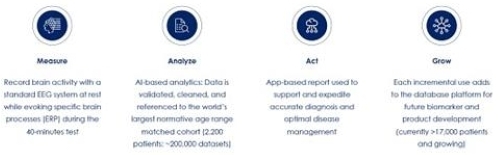
Figure 1. Overview of the BNA Platform Process
Measure - EEG Data
The BNA Platform is intended to analyze EEG data recorded at rest (“Resting-EEG”) and during the performance of two conventionally used ERP tasks: the Auditory Oddball (“AOB”) and the Visual Go-No-Go (“VGNG”). The EEG is recorded continuously while the patient is at rest with eyes-closed or performs one of the ERP tasks. The acquisition site is asked to provide reliable samples of artifact-free digital EEG for purposes of analysis. After the recording, the artifact-free EEG data is automatically imported into the BNA™ Platform This is useful to clinicians as the information from the Resting-EEG and ERP tasks are complementary to each other in many ways. The BNA Platform thus empowers clinicians by providing them with a multi-perspective, objective evaluation of the patient’s brain function in one product.
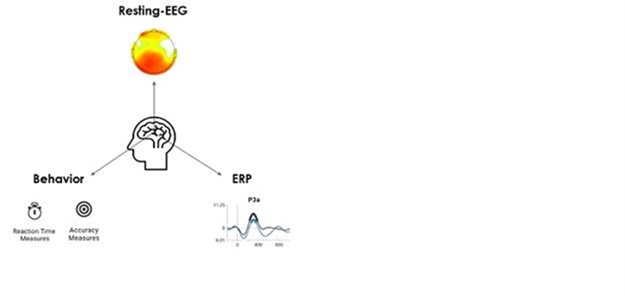
Figure 2. EEG Data Inputs
Analyze - The BNA Algorithm
After the recording, the artifact-free EEG data is imported into the BNA Platform and is automatically analyzed by the algorithm (the “BNA Algorithm”). EEG and ERP data quality is assessed through an automatic calculation of various metrics (e.g., correct response, noisy/flat electrodes, length of clean signal, test-retest reliability), followed by a manual review of major issues detected during the previous process.
The BNA Algorithm detects and quantifies the characteristics of EEG and ERP peaks, and behavioral performance: (AOB task: P50, N100, P200, P3a, P3b; VGNG task: P200, N200, P3a, P3b).
EEG spectral analysis – absolute and relative power in delta, theta, alpha and beta frequency bands, and alpha peak frequency.
| ● |
Absolute power: the average of the raw PSD within the frequency band of interest, calculated per electrode. |
| ● |
Relative power: calculated by dividing the power in each frequency band by the total power of all frequencies, per electrode. |
| ● |
Alpha peak frequency: calculated as the weighted average of the frequency sample points within the alpha band (8-12 Hz), taking the power values as weights, per electrode. |
AOB and VGNG Tasks – Event-Related Potential (ERP) and behavioral performance analysis.
| ● |
Brain Network Analytics (BNA) is used to detect the following ERP components: |
| ● |
VGNG: N200, P200, P3a, P3b |
| ● |
AOB: P50, N100, P200, P3a, P3b |
| ● |
BNA scores represent these ERP components in terms of amplitude (in microvolts) and latency (in milliseconds), and Neural Consistency (1- ERP variability). |
| ● |
Behavioral performance measurements are extracted from the AOB and VGNG tasks, including mean of accuracy, response times (with standard deviation), omission (missed responses to stimuli that required a response) and commission (incorrect responses to stimuli that did not require a response) errors. These behavioral measures complement the ERP measures in assessing cognitive function and are included in the analysis. |
The BNA Algorithm then leverages Firefly’s normative database to extract potentially clinically meaningful clinical information from EEG data.
EEG recordings are high-dimensional and complex. This is the result of the dynamic spatiotemporal nature of the neurophysiological signals. For example, the event-related potential wave measured at first, at a relatively focal location in time and space on the scalp, and then it evolves and propagates in the cortex while its amplitude changes simultaneously.
Traditional methods for EEG and ERP analysis follow waveform morphology over time at selected electrode locations, using either time-domain or frequency-domain tools, while neglecting the spatiotemporal dynamics associated with the electric field at the scalp. Moreover, focusing on a specific electrode or subset of electrodes, the traditional methods ignore the expected variability between patients in terms of where the ERP component appears on the scalp due to natural differences between cortex and scalp anatomy. The aim of the BNA Algorithm is to improve the accuracy of the ERP component detection by considering the spatiotemporal nature of the signal. It achieves this improvement by parceling the EEG activity into major spatiotemporal events - ERP peaks and their surrounding - spatiotemporal parcels.
The key strengths of the BNA Algorithm are:
| 1. |
Adaptive peak detection - the ERP peaks are detected in a more patient-specific way, by incorporating some degree of freedom in both time and space in a way that is proportional to the normal variability in time and space of the ERP peaks. |
| 2. |
Displaying ERP-peak location - due to the adaptive peak detection by the BNA Algorithm, the ERP peak is identified and displayed in the BNA report on a topographical map together with the group ERP-peak position. This adds potentially clinically useful information to the physician. |
| 3. |
Neural-Consistency score - another unique feature of the BNA report is the presentation of the Neural-Consistency score. Since this is a differentiating score, the Company will describe here shortly what this score is and why Firefly believes it is important. |
Since the ERP signal is an average of multiple single-trial ERP signals which can differ largely from each other, assessing the consistency between them may provide complementary functional information to the average measure. As part of the new peak-analysis, the algorithm calculates a new score - ‘Neural Consistency’ based on the similarity of the amplitude activation between single-ERP trials. The score is calculated based on averaging the inter-single trials variability of the ERP-peak and its surrounding points.
Act - Individualized Reports
The results of the data processed by the BNA Algorithm are compiled into individualized easy-to-read reports that provide clinicians with objective insight into brain electrophysiology:
| ● |
ERP Report |
| ● |
Behavioral Report |
| ● |
Summary Report |
| ● |
Resting-EEG Report |
Scores are presented as z-scores based on comparing the patient to an age-matched relevant reference group based on Firefly’s proprietary standardized longitudinal normative database. This presentation expresses the differences between the patient and the reference group. The reports are intended to be used by clinicians to enable the evaluation of the patient’s brain activity during a specific task compared to an age-range matched reference group.
The following diagram breaks down the components of Firefly’s normative database that underpins the BNA Platform:
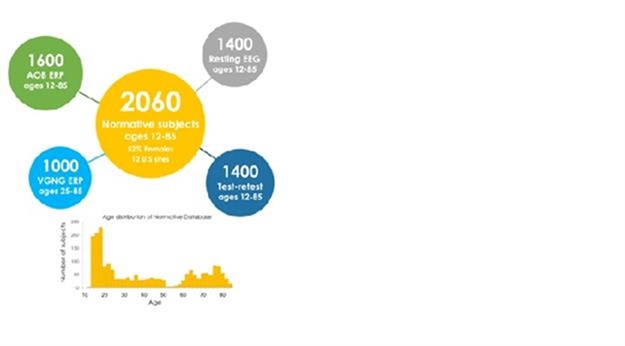
Figure 4. Components of the BNA Platform normative database.
The BNA Platform is a clinical decision support software tool that assists with the interpretations of Resting-State EEG and ERP results, where EEG- and ERP-based examinations are indicated and carried out by a qualified health care professional.
The core of the BNA Platform is a unique reference dataset to which the individual patient is compared. The reference database contains ERP recordings in response to the Auditory Oddball (AOB) and Visual Go No-Go (VGNG) tasks and Resting-State EEG collected from healthy volunteers. The database also includes demographic data and relevant clinical data (based on patient self-report and medical records, neuro-psychological questionnaires when problems were suspected, urine tests to rule out drug abuse and breath tests to rule out alcohol use) enabling adjudication of brain health status.
The Reference group was generated so that each age-bin contained a sample size of at least 120 eligible cases. For ERP analysis, groups were divided to reflect normality for similar electrophysiology The Reference-Group Database for the AOB and VGNG tasks is divided into the following age groups: 25-35, 35-50, 50-65, 65-75, and 75-85 years for VGNG, and 12-14, 14-16, 16-18, 18-25, 25-35, 35-50, 50-65, 65-75, and 75-85 years for AOB.
For the Resting-State EEG, the high volume of samples permitted the creation of reference groups in a higher 0.5-year resolution. Each reference group includes at least 200 individuals selected by their age proximity to the declared age-range of the group. This resulted in 133 reference groups for the ages 12-85 years. Patients are compared to the reference group based on their age proximity to the group.
Wherever the data was normally distributed, the reports present scores as Z-Scores indicating the differences between the patient and the age-matched reference group selected from Firefly’s reference database. A Z-Score is a statistical measure indicating how far a specific value is from the mean of the reference group. A positive or negative Z-Score suggests that a score is bigger or smaller than the mean of the group, respectively.
The 68%, 95%, 99.7% rule specifies the percentage of scores that fall within the ranges of ± 1, ± 2, ± 3, respectively. Figure 24 illustrates this concept. A score outside a range of ± 2 is commonly considered potentially meaningful in the clinic. Only about 5% of the population would have a result outside this range.
Often a score outside the range of ± 2 is considered potentially meaningful in the clinic. The rationale for this is the statistical definition of the central 95% of a distribution as the "normal" range, causing scores to fall outside this range to be considered “extreme” ( (Crawford, 2002); (Curtis, 2016)).
Most of the scores presented in the Behavioral Report showed a skewed distribution within the reference groups. As a conversion into Z-Scores is not appropriate for skewed distributions, the corresponding scores are presented as raw scores and the 25th-percentile limit is marked on the report as a reference value.
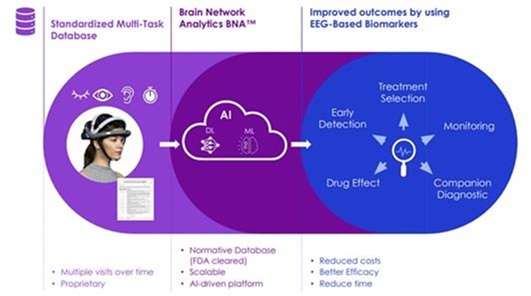
Figure 5. The BNA Platform Database
Real-World Evidence for the BNA Platform Clinical Utility
The findings presented in 2023 white paper study “Brain Network Analytics (BNA) in the Psychiatric Practice: Real-Life Data Analysis” by Charlotte Baumeister, Ph.D., with analysis by Offir Laufer, Ph.D., support the potential of the BNA Platform to transform psychiatric care by automating the analysis of EEG data. The comprehensive research involved a cohort of 2,253 patients seeking treatment at a prominent psychiatric and multispecialty clinic in the United States. The study demonstrated that the BNA Platform improved disease management in psychiatric patients suffering from major depressive disorder (MDD), generalized anxiety disorder (“GAD”), and ADHD.
The study has unveiled valuable insights into how the BNA Platform may revolutionize disease management in the field of psychiatry. Key highlights from the research include:
| ● |
Enhanced Treatment Compliance: Patients grappling with depression, who underwent therapy guided by BNA, exhibited a significant 15% increase in their adherence to MDD treatment protocols, encompassing both antidepressant medications and Transcranial Magnetic Stimulation (TMS). |
| ● |
Decreased Medication Alteration Necessity: The study demonstrated a noteworthy reduction of over 50% in the requirement to switch antidepressant medications among the patient population. This emphasizes the potential of the BNA Platform in optimizing medication selection and dosing. |
| ● |
Amplified Improvements in General Functionality: Individuals diagnosed with MDD, GAD, and ADHD experienced more than double the improvement in their overall general functioning when receiving BNA-guided interventions. This suggests that BNA Platform has the potential to comprehensively enhance patients' quality of life and daily functioning. |
| ● |
Elevated Rates of Antidepressant Response: The application of the BNA Platform was associated with a notable 10% increase in antidepressant response rates, signaling its potential to augment the effectiveness of traditional treatment approaches. |
| ● |
Reduction in Non-Responder Rates: Among MDD patients, the study observed a significant 17% decrease in the rate of treatment non-responders, indicating that the BNA Platform holds promise in mitigating treatment resistance and improving positive outcomes. |
The study thus demonstrated that the BNA Platform represents a potentially significant advancement in patient care in a real world setting and addresses some of the challenges associated with EEG utilization by medical professionals.
By automating EEG analysis and providing comprehensive insights into brain electrophysiology, the BNA Platform has the potential to revolutionize disease management, enhance treatment outcomes, and improve the overall well-being of patients with mental illnesses and cognitive disorders. Based on the real-world results highlighted above, Management believes that the societal impact of better outcomes for patients suffering from mental illnesses and cognitive disorders is substantial and the associated cost savings to healthcare systems and payors could be significant. Firefly intends to study the potential health economic benefits associated with the above findings to support rapid adoption of the BNA Platform into standard patient management protocols.
Research and Development
Firefly focuses its research and development efforts on advancing the treatment of patients suffering from mental illnesses and cognitive disorders. These efforts may be enhanced by the relationships that Firefly has developed with neurologists, psychiatrists, neuroscientists, and other experts. Firefly believes the BNA Platform may drive a better standard of care for patients suffering from mental illnesses and cognitive disorders.
Firefly’s research and development activities may encompass basic research and product development. Firefly’s research and development team has biomedical engineering, neuroscience, software development, project management, data science, and AI and ML expertise. Firefly believes the strength and strategic vision of its research and development team will continue to drive Firefly’s leadership position in the category of advancing the understanding of brain electrophysiology in support of better outcome for Firefly’s target patient population leveraging EEG hardware with the BNA Platform.
Firefly’s near-term research and development efforts are focused on continuing to improve the BNA Platform, enhancing the patient and provider experience, and expanding the population of patients that can be assessed with the BNA Platform. Since inception, Firefly’s research and development activities have resulted in significant improvements to the BNA Platform, Firefly’s first clearance and predicate device to the BNA Platform dates back to 2014 when Firefly received Class II medical device 510(k) clearance from FDA for the BNA Analysis System, with indication for use in individuals 14 to 24 years of age. In December 2020, Firefly received Class II medical device 510(k) clearance from the FDA for Firefly’s current product, the BNA Platform, with indication for use in individuals 12 to 85 years of age.
Additionally, Firefly’s near-term development pipeline includes potential enhancements that leverage its normative database, growing the database, advanced data analysis, ML and AI capabilities to enable medical professionals to enhance their clinical assessments, and to enable drug development companies to improve the success of their drug development programs, potentially bringing new drugs to market faster while reducing the cost and risk.
Market Opportunity
The market for the BNA Platform and Firefly’s future products is vast and growing significantly. According to the World Health Organization, in 2019, 1 in every 8 people, or 970 million people around the world were living with a mental disorder, with anxiety and depressive disorders being the most common. The economic burden of people suffering from depression alone in the United States was estimated at $326.2 billion for the year 2020. As our societies age, the number of cases of mental illness and cognitive disorders is projected to increase, along with the associated economic costs. For example, the number of people with dementia is estimated to increase from 57.3 million cases globally in 2019 more than 150 million cases in 2050. Yet, despite the growing need for effective treatment and substantial unmet treatment needs, CNS drug development remains costly, with the cost of developing a new drug typically ranging from $10 to 15 billion per drug, with CNS drugs having the lowest success rate of all other drug categories.
One of our initial areas of commercial focus will be on the sale of the BNA Platform to neurologists in the United States. Based on assumptions regarding the use of the BNA Platform by neurologists in the United States, this market segment potentially represents a total addressable market (TAM) of approximately $800,000,000 based on the following figures (based on the number of neurologists in the United States currently performing EEGs, the number of times such neurologists may perform a BNA analysis and approximate number of working days per year, summarized as follows).
According to data from Definitive Healthcare for 2023, there are 22,115 neurologists in the United States, of which 8,278 are currently performing EEGs. Our business model and TAM assumes that neurologists in the United Sates currently performing EEGs will perform a BNA analysis on average of two times per day over approximately 250 working days per year. Currently, our model assumes that a clinician will be invoiced approximately $200 for each BNA analysis.
Firefly believes that improving outcomes for people suffering from mental illnesses and cognitive disorders requires objective measurement. The clinical benefit of using EEG to understand how a person’s brain is functioning has been studied for decades. However, Firefly believes that, due to the complexity and time required to analyze and interpret EEG recordings, the inability to compare EEG recordings to what is clinically normal, and the inability to track changes over time, the clinical use of EEG has been limited. The BNA Platform holds the potential to transform brain health by allowing integration of EEG testing and analysis into patient care pathways to provide clinicians with an objective tool that may help them diagnosis and assess treatment efficacy, objectively and quickly. In addition, through Firefly’s research and development initiatives, the Company believes that by introducing biomarkers that could diagnose illnesses or disorders, it would assist in identifying what treatment will provide the most benefit for the patient and may drive adoption by clinicians and payors.
Through ongoing research of Firefly’s growing database, using the BNA Platform, Firefly aspires to enter other markets including, executive medical health and wellness for consumers who want to more actively manage their healthcare and lifestyles.
Firefly plans to offer its BNA Platform on a recurring revenue model basis. In addition, Firefly plans to provide EEG recording equipment on a monthly rental or purchase basis or as part of a bundle price. Driving adoption in the specialty of neurology may enable Firefly to reach its full potential. For this reason, Firefly plans to initially adopt a direct selling model that is supported by field based clinical specialists and medical affairs personnel. As adoption progresses, supported by clinical validation, biomarkers and improvements to the BNA Platform, Firefly aims to partner with national distributors that complement Firefly’s target markets, including EEG companies and installed bases of EEG systems in use today by medical professionals.
In concert with the commercialization of the BNA Platform to medical professionals, Firefly plans to actively engage with drug development companies and develop extensive strategic partnerships to support their drug development strategies. As of January 1, 2023, there were 187 trials assessing 141 unique treatments for Alzheimer’s disease. As of January 4, 2023, there were more than 160 pharmaceutical companies developing drugs to treat mental illnesses. In order to take full advantage of the opportunity in the CNS drug development market, Firefly intends to invest in business development resources focused on the CNS drug development sector.
Competition
Firefly’s industry is competitive and has been evolving rapidly with the introduction of new products and technologies as well as the market activities of industry participants. The BNA Platform is indicated for use in individuals 12 to 85 years of age for the post-hoc statistical analysis of the human electroencephalogram, including event-related potentials and Firefly currently markets its device to qualified medical professionals. Firefly competes against other companies that have developed AI-driven platforms, in the target market of neurological disorders.
Firefly believes that the BNA Platform is a paradigm shift on the approach to treating cognitive disorders, mental illnesses, injuries to the brain and degenerative diseases. Firefly’s believes its BNA Platform offers distinct advantages, including its FDA-cleared BNA Algorithm for data analysis, its proprietary extensive normative age matched database underpinning the BNA Platform, and the ability of the BNA Platform to generate individual reports that clinicians may use to optimize patient care. Firefly believes the BNA Platform may become a standard of care tool in addressing the primary unmet needs in mental illness and cognitive disorders today. Firefly also believes that the BNA Platform has a wide range of additional applications, including the ability to leverage data gathered through BNA sessions for additional clinical insight, pharmaceutical drug development and new product development. The longitudinal nature of the data, along with clinical disease context, provides many future development opportunities.
Furthermore, EEG technology, in concert with BNA Platform, represents a scalable, low-cost solution when compared to other imaging technologies that assess brain electrophysiology, such as functional magnetic resonance imaging (fMRI).
Intellectual Property
Firefly’s commercial success depends in part on its ability to obtain and maintain intellectual property protection for the BNA Platform and any future products, to prevent others from infringing, misappropriating, or otherwise violating its intellectual property rights, to defend and enforce its intellectual property rights, and to operate without infringing, misappropriating, or otherwise violating valid and enforceable intellectual property rights of others. Firefly actively seeks to protect intellectual property that it believes is important to its business, which includes patents covering the components of the BNA Platform and the methods used for optimizing the therapy that the BNA Platform delivers. Firefly also seeks patent protection for other processes and inventions that are commercially or strategically important to developing and maximizing the value of its enterprise. Firefly takes steps to build and maintain the integrity of its brand, for example, with trademarks and service marks, and Firefly seeks to protect the confidentiality of trade secrets that may be important to the development of its business. Firefly relies on a strategy that combines the use of patents, trademarks, trade secrets, know-how, and license agreements, as well as other intellectual property laws, employment, confidentiality and invention assignment agreements, and contractual protections, to establish and protect its intellectual property rights.
Patents
Our patents and patent applications assert claims generally related methods and systems. Specifically, there are multiple patent families relating to (i) ERP processing algorithms and the comparison to a reference group and estimation of brain electrophysiology based on the comparison; (ii) prediction of TMS treatment outcome; (iii) method and system for estimating brain concussion; (iv) method and system for managing pain; (v) method for brain stimulation tool configuration. As of December 31, 2023, we owned eight issued U.S. patents, which have expiration dates ranging from November 2028 to November 2037. We own one issued patent in Japan and there are currently patent applications pending in each of Australia, Canada, China, European Union and Israel, which, if issued, are expected to expire in 2037.
The anticipated expiration dates are without taking into account all possible patent term adjustments, extensions, or abandonments, and assuming payment of all appropriate maintenance, renewal, annuity, and other governmental fees. We continue to evaluate our intellectual property portfolio as patents reach end of life to determine the optimal course for continuing to protect our technology. We cannot ensure that patents will issue from any of our pending applications or that, if patents are issued, they will be of sufficient scope or strength to provide meaningful protection for our technology.
We recognize that the ability to obtain patent protection and the degree of such protection depends on a number of factors. The patent positions of medical device companies like ours are generally uncertain and involve complex legal, scientific, and factual questions. The protection afforded by a patent varies on a product-by-product basis, from jurisdiction-to-jurisdiction, and depends upon many factors, including the type of patent, the scope of its coverage, the availability of patent term adjustments and extensions, the availability of legal remedies, and the validity and enforceability of the patent.
In addition, the coverage claimed in a patent application can be significantly narrowed before the patent is issued, and patent claims can be reinterpreted or further altered even after patent issuance. We cannot predict whether the patent applications we are currently pursuing will issue as patents or whether the claims of any issued patents will provide sufficient protection from competitors. A competitor could develop systems, devices, or methods of manufacture or treatment that are not covered by our patents. Accordingly, our ability to stop third parties from commercializing any of our patented inventions, either directly or indirectly, will depend in part on our success in obtaining, maintaining, defending, and enforcing patent claims that adequately cover our inventions.
Our commercial success will also depend, in part, on not infringing, misappropriating, or otherwise violating the intellectual property rights of third parties. Third parties own numerous patents in the U.S. and in jurisdictions outside the U.S. with claims directed to inventions in the fields in which we operate or plan to operate. It is uncertain whether the issuance of any third-party patent would require us to alter our development or commercial strategies, seek licenses, cease certain activities, or participate in US Patent and Trademark Office ("USPTO") proceedings. Moreover, such licenses may not be available on commercially reasonable terms or at all. Our breach of any license agreements or failure to obtain a license necessary to our business may have a material adverse impact on us.
Trademarks
Our trademark portfolio is designed to protect the brands of our BNA Platform and any future products. As of December 31, 2024, we own one trademark registration for “BNA” in the United States and other countries, including Israel, Switzerland, European Union, Canada, and India. The trademark is also registered with World Intellectual Property Organization.
Trade Secrets
We also rely on trade secrets relating to our product and technology, including our data processing algorithms, and we maintain the confidentiality of such proprietary information to protect aspects of our business that are not amenable to, or that we do not consider appropriate for, patent protection. We seek to protect our trade secrets and know-how by entering into confidentiality and invention assignment agreements with employees, contractors, consultants, suppliers, customers, and other third parties, who have access to such information. These agreements generally provide that all confidential information concerning our business or financial affairs developed or made known to the individual during the course of the individual’s relationship with us are to be kept confidential and not disclosed to third parties except in specific circumstances.
For more information regarding the risks related to our intellectual property, please see “Risk Factors-Risks Related to Our Intellectual Property.”
Manufacturing
Our BNA Platform is hardware-agnostic and we do not manufacture any compatible hardware.
Employees
As of March 31, 2025, we have thirteen full-time employees and one contractor.
None of Firefly’s employees are represented by a labor union or covered by collective bargaining agreements, and Firefly considers its relationship with its employees to be good.
Government Regulation
Our products (including our BNA Platform) are considered medical devices, and, accordingly, are subject to rigorous regulation by government agencies in the United States and other countries in which we intend to sell our products. These regulations vary from country to country but cover, among other things, the following activities with respect to medical devices:
| ● |
design, development and manufacturing; |
|
| ● |
testing, labeling, content and language of instructions for use and storage; |
|
| ● |
product storage and safety; |
|
| ● |
marketing, sales and distribution; |
|
| ● |
pre-market clearance and approval; |
|
| ● |
record keeping procedures; |
|
| ● |
advertising and promotion; |
|
| ● |
recalls and field safety corrective actions; |
|
| ● |
post-market surveillance; |
|
| ● |
post-market approval studies; and |
|
| ● |
product import and export. |
FDA Regulation
In the U.S., numerous laws and regulations govern the processes by which medical devices are developed, manufactured, brought to market and marketed. These include the Federal Food, Drug, and Cosmetic Act (“FD&C Act”) and its implementing regulations issued by FDA, among others. Unless an exemption applies, each medical device commercially distributed in the United States requires FDA clearance of a 510(k) premarket notification (“510(k) clearance”), granting of a de novo request, or approval of an application for premarket approval (“PMA”). In general, under the FD&C Act, medical devices are classified in one of three classes on the basis of the controls necessary to reasonably assure their safety and effectiveness. A medical device’s classification determines the level of FDA review and approval to which the device is subject before it can be marketed to consumers:
| ● |
Class I devices, the lowest-risk FDA device classification, include devices with the lowest risk to the patient and are those for which safety and effectiveness can be assured by adherence to FDA’s medical device general controls, including labeling, establishment registration, device product listing, adverse event reporting, and, for some products, adherence to good manufacturing practices through FDA’s Quality System Regulations. |
|
| ● |
Class II devices, moderate-risk devices, also require compliance with general controls and in some cases, special controls as deemed necessary by FDA to ensure the safety and effectiveness of the device. These special controls may include performance standards, particular labeling requirements, or post-market surveillance obligations. While most Class I devices are exempt from the 510(k) premarket notification requirement, typically a Class II device also requires pre-market review and 510(k) clearance as well as adherence to the Quality System Regulations/good manufacturing practices for devices. |
|
| ● |
Class III devices, high-risk devices that are often implantable or life-sustaining, also require compliance with the medical device general controls and Quality System Regulations, and generally must be approved by FDA before entering the market through a PMA application. Approved PMAs can include post-approval conditions and post-market surveillance requirements, analogous to some of the special controls that may be imposed on Class II devices. |
Our BNA Platform is a Class II medical device, which was cleared by FDA for commercialization in the U.S. pursuant to the 510(k) notification process for the post-hoc statistical analysis of the human electroencephalogram, including ERP in December 2020. The marketing and distribution of the BNA Platform, is subject to continuing regulation and enforcement by FDA and other government authorities, which includes product listing requirements, medical device reporting regulations. If FDA finds that we have failed to comply with any legal or regulatory requirements, it or other government agencies may institute a wide variety of enforcement actions against us, ranging from Warning Letters to more severe sanctions, including but not limited to financial penalties, withdrawal of 510(k) clearances already granted, and criminal prosecution.
The 510(k) Process
Under the 510(k) process, the applicant must submit to FDA a premarket notification demonstrating that the device is “substantially equivalent” to either a device that was legally marketed prior to May 28, 1976, the date upon which the Medical Device Amendments of 1976 were enacted, and for which a PMA is not required, a device that has been reclassified from Class III to Class II or Class I, or another commercially available device that was cleared through the 510(k) process. To be “substantially equivalent,” the proposed device must have the same intended use as the predicate device, and either have the same technological characteristics as the predicate device or have different technological characteristics and not raise different questions of safety or effectiveness than the predicate device. Clinical data is sometimes required to support substantial equivalence.
After a 510(k) premarket notification is submitted, FDA determines whether to accept it for substantive review. If it lacks necessary information for substantive review, FDA will refuse to accept the 510(k) notification. If it is accepted for filing, FDA begins a substantive review. By statute, FDA is required to complete its review of a 510(k) notification within 90 days of receiving the 510(k) notification. As a practical matter, clearance often takes longer, and clearance is never assured. FDA may require further information, including clinical data, to make a determination regarding substantial equivalence, which may significantly prolong the review process. If FDA agrees that the device is substantially equivalent to a predicate device currently on the market, it will grant 510(k) clearance to commercially market the device.
Post-Market Regulation
After a device is cleared or approved for marketing, numerous and extensive regulatory requirements may continue to apply. These include but are not limited to:
| ● |
annual and updated establishment registration and device listing with FDA; |
|
| ● |
restrictions on sale, distribution, or use of a device; |
|
| ● |
labeling, advertising, promotion, and marketing regulations, which require that promotion is truthful, not misleading, and provide adequate risk disclosures and directions for use and that all claims are substantiated, and also prohibit the promotion of products for unapproved or “off-label” uses (i.e., indications that are inconsistent with or beyond the scope of the applicable FDA approval or clearance) and impose other restrictions on labeling; |
|
| ● |
clearance or approval of product modifications to legally marketed devices that could significantly affect safety or effectiveness or that would constitute a major change in intended use; |
|
| ● |
correction, removal, and recall reporting regulations, and FDA’s recall authority; |
|
| ● |
complying with the federal law and regulations requiring Unique Device Identifiers on devices; and |
|
| ● |
post-market surveillance activities and regulations, which apply when deemed by FDA to be necessary to protect the public health or to provide additional safety and effectiveness data for the device. |
|
| ● |
FDA has broad regulatory compliance and enforcement powers. If FDA determines that we failed to comply with applicable regulatory requirements, it can take a variety of compliance or enforcement actions, which may result in any of the following sanctions: |
|
| ● |
warning letters, untitled letters, fines, injunctions, consent decrees, and civil penalties; |
|
| ● |
recalls, withdrawals, or administrative detention, or seizure of our products; |
|
| ● |
operating restrictions or partial suspension or total shutdown of production; |
|
| ● |
refusing or delaying requests for 510(k) marketing clearance or PMA approvals of new products or modified products; |
|
| ● |
withdrawing 510(k) clearances or PMA approvals that have already been granted; |
|
| ● |
refusal to grant export or import approvals for our products; or |
|
| ● |
criminal prosecution. |
International Regulation
Many countries throughout the world have established regulatory frameworks for marketing and commercialization of medical devices. As a designer and marketer of medical devices, we are obligated to comply with the respective frameworks of these countries to obtain and maintain access to these global markets. The frameworks often define requirements for marketing authorizations which vary by country. Failure to obtain appropriate marketing authorization and to meet all local requirements, including specific quality and safety standards in any country in which we currently market our products, could cause commercial disruption and/or subject us to sanctions and fines. Delays in receipt of, or a failure to receive, such marketing authorizations, or the loss of any previously received authorizations, could have a material adverse effect on our business, financial condition and results of operations.
There is currently no premarket government review of medical devices in the European Economic Area (“EEA”). However, all medical devices placed on the market in the EEA must meet the relevant essential requirements laid down in Annex I of Directive 93/42/EEC concerning medical devices, or the Medical Devices Directive. The most fundamental essential requirement is that a medical device must be designed and manufactured in such a way that it will not compromise the clinical condition or safety of patients, or the safety and health of users and others. In addition, the device must achieve the performances intended by the manufacturer and be designed, manufactured, and packaged in a suitable manner. The European Commission has adopted various standards applicable to medical devices. These include standards governing common requirements, such as sterilization and safety of medical electrical equipment, and product standards for certain types of medical devices. There are also harmonized standards relating to design and manufacture. While not mandatory, compliance with these standards is viewed as the easiest way to satisfy the essential requirements as a practical matter. Compliance with a standard developed to implement an essential requirement also creates a rebuttable presumption that the device satisfies that essential requirement.
On April 5, 2017, the European Parliament passed the Medical Devices Regulation (Regulation 2017/745), which repeals and replaces the EU Medical Device Directive and became effective on May 26, 2021. The Medical Devices Regulation, among other things, is intended to establish a uniform, transparent, predictable, and sustainable regulatory framework across the EEA for medical devices and ensure a high level of safety and health while supporting innovation. The new regulations, among other things:
| ● |
strengthen the rules on placing devices on the market and reinforce surveillance once they are available; |
|
| ● |
improve the traceability of medical devices throughout the supply chain to the end-user or patient through a unique identification number; |
|
| ● |
set up a central database to provide patients, healthcare professionals, and the public with comprehensive information on products available in the E.U.; and |
|
| ● |
strengthen rules for the assessment of certain high-risk devices, such as implants, which may have to undergo an additional check by experts before they are placed on the market. |
We received our European CE mark, indicating that we affirm our product’s conformity with European health, safety and environmental protection standards, in 2021.
Healthcare Regulatory Laws
Within the United States, our products are subject to extensive regulation by a wide range of federal and state agencies that govern business practices in the medical device industry. These laws include federal and state anti-kickback, fraud and abuse, false claims and physician payment transparency laws and regulations.
The federal Anti-Kickback Statute prohibits, among other things, knowingly and willfully offering, paying, soliciting or receiving any remuneration (including any kickback, bribe or rebate), directly or indirectly, overtly or covertly, to induce or in return for purchasing, leasing, ordering or arranging for or recommending the purchase, lease or order of any good, facility, item or service reimbursable, in whole or part by Medicare, Medicaid or other federal healthcare programs. The term “remuneration” has been broadly interpreted to include anything of value, including cash, improper discounts, and free or reduced price items and services. Among other things, the Anti-Kickback Statute has been interpreted to apply to arrangements between medical device manufacturers on the one hand and prescribers and purchasers on the other. Although there are a number of statutory exceptions and regulatory safe harbors protecting some common activities from prosecution, the exceptions and safe harbors are drawn narrowly. Practices that involve remuneration that may be alleged to be intended to induce prescribing, purchases or recommendations may be subject to scrutiny if they do not qualify for an exception or safe harbor.
Failure to meet all of the requirements of a particular applicable statutory exception or regulatory safe harbor does not make the conduct per se illegal under the Anti-Kickback Statute. Instead, the legality of the arrangement will be evaluated on a case-by-case basis based on a cumulative review of all of its facts and circumstances. Several courts have interpreted the statute’s intent requirement to mean that if any one purpose of an arrangement involving remuneration is to induce referrals of federal healthcare covered business, the Anti-Kickback Statute has been violated. In addition, a person or entity does not need to have actual knowledge of the statute or specific intent to violate, in order to have committed a violation. Further, a claim including items or services resulting from a violation of the federal Anti-Kickback Statute also constitutes a false or fraudulent claim for purposes of the federal civil False Claims Act. Many states have adopted laws similar to the Anti-Kickback Statute. Some of these state prohibitions apply to referral of patients for healthcare items or services reimbursed by any payor, not only the Medicare and Medicaid programs. Commercial payors may also bring a private cause of action for treble damages against a manufacturer for a pattern of causing false claims to be filed under the federal Racketeer Influenced and Corrupt Organizations Act, or RICO.
The federal civil False Claims Act prohibits, among other things, any person or entity from knowingly presenting, or causing to be presented, a false or fraudulent claim for payment to or approval by the federal government or knowingly making, using or causing to be made or used a false record or statement material to a false or fraudulent claim to the federal government. A claim includes “any request or demand” for money or property presented to the U.S. government. The qui tam provisions of the False Claims Act allow a private individual to bring actions on behalf of the federal government alleging that the defendant has submitted a false claim to the federal government, and to share in any monetary recovery. In recent years, the number of suits brought against healthcare providers by private individuals has increased dramatically. The government has obtained multi-million and multi-billion dollar settlements under the False Claims Act in addition to individual criminal convictions under applicable criminal statutes. In addition, the federal civil monetary penalties statute imposes penalties against any person or entity that, among other things, is determined to have presented or caused to be presented a claim to a federal health program that the person knows or should know is for an item or service that was not provided as claimed or is false or fraudulent. Given the significant size of actual and potential settlements, it is expected that the government will continue to devote substantial resources to investigating healthcare providers’ and manufacturers’ compliance with applicable fraud and abuse laws. Various states have also enacted false claim laws analogous to the federal civil False Claims Act, although many of these state laws apply where a claim is submitted to any third-party payor and not merely a federal healthcare program.
The federal Health Insurance Portability and Accountability Act of 1996, as amended by the Health Information Technology for Economic and Clinical Health Act, or HIPAA, among other things, created two new federal crimes: healthcare fraud and false statements relating to healthcare matters. The HIPAA healthcare fraud statute prohibits, among other things, knowingly and willfully executing, or attempting to execute, a scheme to defraud any healthcare benefit program, including private payors. A violation of this statute is a felony and may result in fines, imprisonment and/or exclusion from government sponsored programs. The HIPAA false statements statute prohibits, among other things, knowingly and willfully falsifying, concealing or covering up a material fact or making any materially false, fictitious or fraudulent statement or representation in connection with the delivery of or payment for healthcare benefits, items or services. A violation of this statute is a felony and may result in fines and/or imprisonment. Similar to the Anti-Kickback Statute, a person or entity does not need to have actual knowledge of these statutes or specific intent to violate them in order to have committed a violation.
Additionally, there has been a recent trend of increased federal and state regulation of payments made to physicians and other healthcare providers. The ACA, imposed, among other things, new annual reporting requirements for covered manufacturers for certain payments and “transfers of value” provided to physicians and certain other healthcare providers and teaching hospitals, as well as ownership and investment interests held by physicians and their immediate family members. In addition, certain states require implementation of compliance programs and compliance with the device industry’s voluntary compliance guidelines and the relevant compliance guidance promulgated by the federal government, impose restrictions on marketing practices, and/or tracking and reporting of gifts, compensation and other remuneration or items of value provided to physicians and other healthcare professionals and entities.
Health Information Privacy and Security Laws
There are numerous U.S. federal and state laws and regulations related to the privacy and security of Personally Identifiable Information (“PII”), including health information. Among others, the federal Health Insurance Portability and Accountability Act of 1996, as amended by HITECH, and their implementing regulations, which we collectively refer to as HIPAA, establish privacy and security standards that limit the use and disclosure of Protected Health Information (“PHI”) and require covered entities and business associates to implement administrative, physical, and technical safeguards to ensure the confidentiality, integrity, and availability of individually identifiable health information in electronic form, among other requirements.
Violations of HIPAA may result in civil and criminal penalties. We must also comply with HIPAA’s breach notification rule which requires notification to affected individuals and HHS, and in certain cases to media outlets, in the case of a breach of unsecured PHI. The regulations also require business associates of covered entities to notify the covered entity of breaches by the business associate.
State attorneys general also have the right to prosecute HIPAA violations committed against residents of their states, and HIPAA standards have been used as the basis for the duty of care in state civil suits, such as those for negligence or recklessness in misusing personal information. In addition, HIPAA mandates that HHS conduct periodic compliance audits of HIPAA covered entities and their business associates for compliance.
Many states also have laws that protect the privacy and security of sensitive and personal information, including health information. These laws may be similar to or even more protective than HIPAA and other federal privacy laws. For example, the laws of the State of California, are more restrictive than HIPAA. Where state laws are more protective than HIPAA, we must comply with the state laws we are subject to, in addition to HIPAA. California passed the California Consumer Privacy Act or CCPA on June 28, 2018, which went into effect January 1, 2020. On November 3, 2020, the California Privacy Rights Act of 2020 (“CPRA”), which amends the CCPA and adds new privacy protections that became effective on January 1, 2023, was enacted through a ballot initiative. While information we maintain that is covered by HIPAA may be exempt from the CCPA, other records and information we maintain on our patients may be subject to the CCPA. In certain cases, it may be necessary to modify our planned operations and procedures to comply with these more stringent state laws. Not only may some of these state laws impose fines and penalties upon violators, but also some, unlike HIPAA, may afford private rights of action to individuals who believe their personal information has been misused. In addition, state and federal privacy laws subject to frequent change.
In addition to HIPAA and state health information privacy laws, we may be subject to other state and federal privacy laws, including laws that prohibit unfair privacy and security practices and deceptive statements about privacy and security, laws that place specific requirements on certain types of activities, such as data security and texting, and laws requiring holders of personal information to maintain safeguards and to take certain actions in response to a data breach.
Foreign data protection, privacy, and other laws and regulations are often more restrictive than those in the U.S. The E.U., for example, traditionally has imposed stricter obligations under its laws and regulations relating to privacy, data protection and consumer protection than the U.S. In May 2018, the GDPR, governing data practices and privacy in the E.U., became effective and replaced the data protection laws of the individual member states. GDPR requires companies to meet stringent requirements regarding the handling of personal data of individuals in the E.U. These more stringent requirements include expanded disclosures to inform members about how we may use their personal data, increased controls on profiling members, and increased rights for members to access, control and delete their personal data. In addition, there are mandatory data breach notification requirements. The law also includes significant penalties for non-compliance, which may result in monetary penalties of up to 20 million Euros or 4% of a company’s worldwide turnover, whichever is higher. GDPR and other similar regulations require companies to give specific types of notice and informed consent is required for the placement of a cookie or similar technologies on a user’s device for online tracking for behavioral advertising and other purposes and for direct electronic marketing, and the GDPR also imposes additional conditions in order to satisfy such consent, such as a prohibition on pre-checked consents. It remains unclear how the U.K. data protection laws or regulations will develop in the medium to longer term and how data transfer to the U.K. from the E.U. will be regulated. Outside of the E.U., there are many other countries with data protection laws, and new countries are adopting data protection legislation with increasing frequency.
Many of these laws may require consent from individuals for the use of data for various purposes, including marketing, which may reduce our ability to market our products.
There is no harmonized approach to these laws and regulations globally. Consequently, we increase our risk of non-compliance with applicable foreign data protection laws and regulations when we expand internationally. We may need to change and limit the way we use personal information in operating our business and may have difficulty maintaining a single operating model that is compliant. Compliance with such laws and regulations will result in additional costs and may necessitate changes to our business practices and divergent operating models, limit the effectiveness of our marketing activities, adversely affect our business, results of operations, and financial condition, and subject us to additional liabilities.
Corporate History and Structure
Firefly’s corporate history began in April 2006 with the formation of Elminda Ltd, a company organized under the laws of the State of Israel, for the purpose of developing a system to provide clinicians with an objective assessment of brain electrophysiology to support better outcomes for people with mental illnesses and cognitive disorders.
Firefly spent over ten years building a significant database of standardized longitudinal EEG brain scans using clinically defined paradigms that captured patients brain activity while resting and while activated (evoke response potential). Firefly collected this data in over 100 sites, over 20 countries, and over 40 studies. Significant time and resources went into analyzing and interpreting the data as well as preparing for an FDA 510k application process.
On May 2, 2014, management of Firefly Neuroscience Ltd. incorporated a new wholly owned subsidiary company named “Elminda Inc.” in the State of Delaware for the purpose of initiating the company’s United States marketing and distribution activity.
In July 2014, Firefly received Class II medical device 510(k) clearance from the U.S. Food and Drug Administration (the “FDA”) for the BNA Analysis System, the predicate device to the BNA Platform, with indication for use in individuals 14 to 24 years of age.
In September 2014, the company received the Conformity European approval for the BNA Platform allowing use in European Economic Area.
In December 2020, Firefly received Class II medical device 510(k) clearance from the FDA for Firefly’s current product, the BNA Platform, with indication for use in individuals 12 to 85 years of age.
On April 13, 2022, the name of Elminda Inc. was changed to “Elminda 2022 Inc.”
On April 21, 2022, management of Firefly Neuroscience Ltd. incorporated a new wholly owned subsidiary company named “Elminda Inc.” for the purpose of re-domiciling the company to enhance access to capital markets.
On July 5, 2022, Elminda Ltd. became a subsidiary of Elminda Inc. via a share exchange agreement wherein Elminda Inc. issued shares to shareholders of Elminda Ltd. against shares of Elminda Ltd.
On September 15, 2022 and October 24, 2022 management changed the name from Elminda Inc. and Elminda Ltd, respectively, to “Firefly Neuroscience, Inc.” and “Firefly Neuroscience Ltd.”, respectively.
On the August 12, 2024, pursuant to the Merger Agreement, FFN merged with and into Firefly Neuroscience, Inc., with Firefly Neuroscience, Inc. surviving the merger as a wholly owned subsidiary of WaveDancer, Inc. On the Closing Date (i) pursuant to the Amended and Restated Certificate of Incorporation of WaveDancer, we changed our name to Firefly Neuroscience, Inc. and (ii) pursuant to an amendment to its Certificate of Incorporation, Firefly changed its name to Firefly Neuroscience 2023, Inc. and (iii) Firefly and FFN filed the Certificate of Merger with the State of Delaware.
The Amended and Restated Certificate of Incorporation and the Amended and Restated Bylaws contain certain provisions relating to limitations of liability and indemnification of directors and certain officers, provide advance notice procedures for stockholder proposals at stockholder meetings, and other matters. See “Description of Capital Stock– Anti-Takeover Provisions” in Exhibit 4.1 to this Annual Report on Form 10-K and Item 10. “Directors, Executive Officers and Corporate Governance – Limitation on Liability and Indemnification of Directors and Certain Officers”.
Our fiscal year ends on December 31. Neither we nor any of our predecessors have been in bankruptcy, receivership or any similar proceeding.
| RISK FACTORS. |
An investment in our securities involves a high degree of risk. You should carefully read and consider all of the risks described below, together with all of the other information contained or referred to in this report, before making an investment decision with respect to our securities. If any of the following events occur, our financial condition, business and results of operations (including cash flows) may be materially adversely affected. In that event, the market price of our shares could decline, and you could lose all or part of your investment.
Risks Related to the Company’s Business, Operations and Industry
We are facing significant liquidity risks that raise substantial doubt about our ability to continue as a going concern.
We have incurred recurring losses and experienced negative cash flows from operations since our inception, and we may continue to incur operating losses. For the fiscal year ended December 31, 2024, we had an accumulated deficit of $87.1 million and negative cash flows from operating activities of approximately $6.2 million. We have generated minimal revenue to date, and our ability to generate recurring revenue depends on the successful commercialization of our BNA Platform, which remains in the early stages of market adoption.
Our financial position raises significant liquidity concerns. Our existing capital resources may be insufficient to fund our operations for the next twelve months, and we may be unable to realize our assets or discharge our liabilities in the normal course of business. These conditions raise substantial doubt about our ability to continue as a going concern. To mitigate these risks, we are actively pursuing additional capital through equity or debt financings and implementing cost-reduction measures. However, there is no assurance that we will be able to secure such funding on favorable terms or at all. Failure to obtain additional financing would materially and adversely affect our ability to continue operations and could force us to delay, reduce, or eliminate our commercialization efforts, product development activities, or other key initiatives.
Our continued existence is dependent on our ability to raise additional capital and ultimately achieve and maintain profitable operations. Even if we are successful in raising additional funds, our expenses may exceed expectations, or we may deplete our available capital resources more quickly than anticipated. The report of our independent registered public accounting firm for the fiscal year ended December 31, 2024, includes an explanatory paragraph expressing substantial doubt about our ability to continue as a going concern, which may further impair our ability to raise capital and negatively impact investor confidence.
We are subject to operating risks, including excess or constrained capacity and operational inefficiencies, which could adversely affect our results of operations.
We are subject to operating risks, including excess or constrained capacity and pressure on our internal systems and personnel. In order to manage current and anticipated future operations effectively, we must continually implement and improve our operational, financial and management information systems, hire, train, motivate, manage and retain employees. We may be unable to balance near-term efforts to meet existing demand with future customer demand, including adding personnel, creating scalable, secure and robust systems and operations, and automating processes needed for long term efficiencies. Any such failure could have a material impact on our business, operations and prospects.
Our products and information technology systems are critical to our business. Issues with product development or enhancements, IT system integration, implementation, updates and upgrades could disrupt our operations and have a material impact on our business and operating results.
We rely on the efficient, uninterrupted and secure operation of our IT systems and are dependent on key third-party software embedded in our products and IT systems as well as third-party hosted IT systems to support our operations. All software and IT systems are vulnerable to damage, cyber attacks or interruption from a variety of sources. To effectively manage and improve our operations, our IT systems and applications require an ongoing commitment of significant expenditures and resources to maintain, protect, upgrade, enhance and restore existing systems and develop new systems to keep pace with continuing changes in information processing technology, evolving industry and regulatory standards, increasingly sophisticated cyber threats, and changing consumer preferences. Failure to adequately protect and maintain the integrity of our products and IT systems may result in a material effect on our financial position, results of operations and cash flows.
We plan to continuously upgrade and issue new releases of our products and customer-facing software applications, upon which our operations depend. Software applications and products containing software frequently contain errors or defects, especially when first introduced or when new versions are released. Additionally, the third-party software integrated into or interoperable with our products and services will routinely reach end of life, and as a consequence, may be exposed to additional vulnerabilities, including increased security risks, errors and malfunctions that may be irreparable or difficult to repair. The discovery of a defect, error or security vulnerability in our products, software applications or IT systems, incompatibility with future customers’ computer operating systems and hardware configurations with a new release or upgraded version or the failure of our products or primary IT systems may cause adverse consequences, including: delay or loss of revenues, significant remediation costs, delay in market acceptance, loss of data, disclosure of financial, health or other personal information of any customers or patients, product recalls, damage to our reputation, or increased service costs, any of which could have a material effect on our business, financial condition or results of our operations and the operations of our potential customers or our business partners.
Our operations and financial performance depend on global and regional economic conditions. Inflation, fluctuations in currency exchange rates, changes in consumer confidence and demand, and weakness in general economic conditions and threats, or actual recessions, could materially affect our business, results of operations, and financial condition.
Macroeconomic conditions impact consumer confidence and discretionary spending, which could adversely affect demand for any products we bring to market. Consumer spending habits are affected by, among other things, inflation, fluctuations in currency exchange rates, weakness in general economic conditions, threats or actual recessions, pandemics, wars and military actions, levels of employment, wages, debt obligations, discretionary income, interest rates, volatility in capital, and consumer confidence and perceptions of current and future economic conditions. Changes and uncertainty can, among other things, reduce or shift spending away from treatments and procedures to address mental illness and cognitive disorders, and could drive patients and clinicians towards other options in the marketplace that may cost less than our products, reduce patient traffic in clinicians’ offices or reduce demand for services to treat mental illness and cognitive disorder generally. The recent declines in, or uncertain economic outlooks for, the U.S., European and certain other international economies has and may continue to adversely affect consumer and healthcare practice spending. The increase in the cost of fuel and energy, food and other essential items along with elevated interest rates could reduce consumers’ disposable income, resulting in less discretionary spending for products like ours. Decreases in disposable income and discretionary spending or change in consumer confidence and spending habits may adversely affect our revenues and operating results.
Inflation continues to adversely impact spending and trade activities and we are unable to predict the impacts of higher inflation on global and regional economies. Higher inflation has also increased domestic and international shipping costs, raw material prices, and labor rates, which could adversely impact the costs of producing, procuring and shipping any products we bring to market. If similar trends continue once we begin marketing our BNA Platform, our ability to recover these cost increases through price increases may have limited effectiveness, resulting in downward pressure on our operating results. Attempts to offset cost increases with price increases could reduce sales, increase customer dissatisfaction or otherwise harm our reputation. Further, we are unable to predict the impact of efforts by central banks and federal, state and local governments to combat elevated levels of inflation. If their efforts to reduce inflation are too aggressive, they may lead to a recession. Alternatively, if they are insufficient or are not sustained long enough to lower inflation to more acceptable levels, consumer spending may be adversely impacted for a prolonged period of time. Any of these events could materially affect our business and operating results.
Our business could be impacted by political events, trade and other international disputes, war, and terrorism, including the military conflict between Russia and Ukraine.
Political events, trade and other international disputes, war, and terrorism could harm or disrupt international commerce and the global economy and could have a material effect on our business as well as our potential customers, suppliers, contract manufacturers, distributors, and other business partners.
Political events, trade and other international disputes, wars, and terrorism can lead to unexpected tariffs or trade restrictions, which could adversely impact our business. Once we begin marketing our products, these increased costs could adversely impact our gross margin and make our products less competitive or reduce demand. Countries could also adopt other measures, such as controls on imports or exports of goods, technology or data, that could adversely impact our operations and supply chain and limit our ability to offer products and services. These measures could require us to take various actions, including changing suppliers or restructuring business relationships. Complying with new or changed trade restrictions is expensive, time-consuming and disruptive to our operations. Such restrictions can be announced with little or no advance notice and we may be unable to effectively mitigate the adverse impacts of such measures. If disputes and conflicts escalate in the future, actions by governments in response could be significantly more severe and restrictive and could materially affect our business.
Political unrest, threats, tensions, actions and responses to any social, economic, business, geopolitical, military, terrorism, or acts of war involving key commercial, development or manufacturing markets such as China, Mexico, Israel, Europe, or other countries or regions could materially impact any international operations we undertake. For example, our employees in Israel could be obligated to perform annual reserve duty in the Israeli military and be called for additional active duty under emergency circumstances. If any of these events or conditions occur, the impact on us, our employees and potential customers is uncertain, particularly if emergency circumstances, armed conflicts or an escalation in political instability or violence disrupts our product development, data or information exchange, payroll or banking operations, product or materials shipping by us or our suppliers and other unanticipated business disruptions, interruptions and limitations in telecommunication services or critical systems or applications reliant on a stable and uninterrupted communications infrastructure.
U.S. and global markets are experiencing volatility and disruption following the escalation of geopolitical tensions and the start of the military conflict between Russia and Ukraine. On February 24, 2022, a full-scale military invasion of Ukraine by Russian troops was reported. In response to the military conflict, the United States and other North Atlantic Treaty Organization member states, as well as non-member states, announced targeted economic sanctions on Russia, including certain Russian citizens and enterprises, and the continuation of the conflict may trigger additional economic and other sanctions. The potential impacts of the conflict and related sanctions could include supply chain and logistics disruptions, macro financial impacts resulting from the exclusion of Russian financial institutions from the global banking system, volatility in foreign exchange rates and interest rates, inflationary pressures on raw materials and energy and heightened cybersecurity threats. We have no way to predict the progress or outcome of the conflict in Ukraine or the reactions by governments, businesses or consumers. A prolonged conflict, intensified military activities or more extensive sanctions impacting the region and the resulting economic impact could have a material effect on our business, results of operations, financial condition, liquidity, growth prospects and business outlook.
We conduct certain of our operations in Israel. Conditions in Israel, including the recent attack by Hamas and other terrorist organizations from the Gaza Strip and Israel’s war against them, may affect our operations.
We currently have seven full-time employees, who are located in and/or reside in Israel. As a result, our business and operations are directly affected by economic, political, geopolitical and military conditions in Israel. Since the establishment of the State of Israel in 1948, a number of armed conflicts have occurred between Israel and its neighboring countries and terrorist organizations active in the region. These conflicts have involved missile strikes, hostile infiltrations and terrorism against civilian targets in various parts of Israel, which have negatively affected business conditions in Israel.
In October 2023, Hamas terrorists infiltrated Israel’s southern border from the Gaza Strip and conducted a series of attacks on civilian and military targets. Hamas also launched extensive rocket attacks on Israeli population and industrial centers located along Israel’s border with the Gaza Strip and in other areas within the State of Israel. Following the attack, Israel’s security cabinet declared war against Hamas and a military campaign against these terrorist organizations commenced in parallel to their continued rocket and terror attacks. Moreover, the clash between Israel and Hezbollah in Lebanon, may escalate in the future into a greater regional conflict.
Any hostilities involving Israel could adversely affect our operations and results of operations. Shelter-in-place and work-from-home measures, government-imposed restrictions on movement and travel and other precautions taken to address the ongoing conflict may temporarily disrupt our employees’ ability to effectively perform their daily tasks.
The Israel Defense Force (the “IDF”), the national military of Israel, is a conscripted military service, subject to certain exceptions. Several of our employees are subject to military service in the IDF and have been and may be called to serve. It is possible that there will be further or longer military reserve duty call-ups in the future, which may affect our business due to a shortage of skilled labor and loss of institutional knowledge, and necessary mitigation measures we may take to respond to a decrease in labor availability, such as overtime and third-party outsourcing, for example, which may have unintended negative effects and adversely impact our results of operations, liquidity or cash flows.
It is currently not possible to predict the duration or severity of the ongoing conflict or its effects on our business, operations and financial conditions. The ongoing conflict is rapidly evolving and developing, and could disrupt our business and operations.
Our operations may be impacted by natural disaster and may adversely impact our business and operating results as well as those of our potential customers and suppliers.
Natural disasters and other extreme weather events may impact us and our potential customers, as well as suppliers critical to our operations. Natural disasters include earthquakes, tsunamis, floods, droughts, hurricanes, wildfires, and other extreme weather conditions that can cause deaths, injuries, and critical health crises, power outages, restrictions and shortages of food, water, shelter, and medical supplies, telecommunications failures, materials scarcity, price volatility and other ramifications.
The frequency and severity of such events can vary over time and by region. Regardless of their cause, natural disasters and extreme weather may pose ongoing operational and financial risks to us and others within our supply chain. These events can lead to facility shutdowns, shipping and logistics disruptions, increased insurance or operating costs, and potential loss of revenue.
In addition, changes in the broader economic environment due to environmental factors may affect the supply, demand, or availability of energy and other critical resources used in our operations. Any of these factors could have a material adverse effect on our business, financial condition, or results of operations.
Risks Related to the BNA Platform
If we are not successful in enhancing awareness of our BNA Platform, driving adoption across our current target population and expanding the population of eligible patients, our sales, business, financial condition and results of operations will be negatively affected.
Our business currently depends primarily on our ability to successfully market our BNA Platform, which involves successfully launching our commercialization program, increasing adoption of and driving utilization our BNA Platform by target clinicians, namely neurologists in the United States. We are aiming to increase awareness about our BNA Platform, as well as grow the number of clinicians that utilize our BNA Platform after the launch of our commercialization program, but there can be no assurance that we will succeed.
The commercial success of our BNA Platform will continue to depend on a number of factors, including the following:
| ● |
the actual and perceived effectiveness and clinical benefit, of our BNA Platform; |
|
| ● |
the prevalence and severity of any adverse patient events involving our BNA Platform; |
|
| ● |
our ability to provide earlier awareness of and education about our BNA Platform to patients and clinicians; |
|
| ● |
the degree to which clinicians and patients adopt our BNA Platform; |
|
| ● |
the availability, relative cost and perceived advantages and disadvantages of alternative technologies or treatment methods for cognitive disorders; |
|
| ● |
the results of future clinical and other studies relating to the health, economic or other benefits of our BNA Platform; |
|
| ● |
whether key thought leaders in the medical community accept that our future clinical utility is sufficiently meaningful to influence their decision to adopt our BNA Platform; |
| ● |
the extent to which we are successful in educating clinicians and patients about the benefits of our BNA Platform; |
|
| ● |
our reputation among clinicians and patients; |
|
| ● |
our ability to predict product performance; |
|
| ● |
the strength of our marketing and distribution infrastructure, including our ability to drive adoption and utilization of our BNA Platform; |
|
| ● |
our ability to obtain, maintain, protect, enforce and defend our intellectual property rights, including those covering our BNA Platform; |
|
| ● |
our ability to maintain compliance with all legal and regulatory requirements, including those applicable to our BNA Platform; and |
|
| ● |
our ability to continue to attract and retain key talent. |
If we fail to successfully initiate our broad commercialization program, market and sell our BNA Platform cost-effectively, our sales, business, financial condition and results of operations will be negatively affected.
Our commercial success will depend on the future adoption of the BNA Platform into patient work streams in clinics. If we are unable to successfully drive interest in our BNA Platform, our business, financial condition and results of operations would be harmed.
Our commercial success will depend in large part on the future adoption of the BNA Platform into patient work streams in clinics. We cannot predict how quickly, if at all, clinicians and patients will adopt our BNA Platform. Moreover, we cannot predict how quickly, if at all, those currently living with mental illness or cognitive disorders but who are not being treated will seek treatment. Our ability to grow sales of our BNA Platform and drive market acceptance will depend on successfully educating clinicians and patients of the relative benefits of our BNA Platform. If we are unable to successfully drive interest in our BNA Platform, our business, financial condition and results of operations would be harmed.
We may be unable to compete successfully with competitive technologies, which could harm our sales, business, financial condition and results of operations.
Our industry is competitive and has been evolving rapidly. Our BNA Platform is indicated for use in in individuals 12 to 85 years of age for the post-hoc statistical analysis of the human electroencephalogram, including event-related potentials.
Our initial market entry strategy is focused on neurologists in the United States. Once we commence a broad commercialization program of our BNA Platform, we will face competition in the market for our BNA Platform from competing technologies, and we expect competition from new companies that may enter the market or introduce new technologies in the future. Third-party payors may encourage the use of competitors’ products due to lower costs of competing products or alternatives. Additionally, treating neurologists may promote the use of other competitors’ products or alternative therapies.
Our current and future competitors may include large, well-capitalized companies with significant market share and resources. They may have more established sales and marketing programs than we do and have greater name recognition. In addition to competing for market share, competitors may develop or acquire patents or other rights that may limit our ability to compete.
Our current and future competitors may include large, well-capitalized companies with significant market share and resources. They may have more established sales and marketing programs than we do and have greater name recognition. In addition to competing for market share, competitors may develop or acquire patents or other rights that may limit our ability to compete.
We believe that the competitive advantages of our BNA Platform will be important factors in our future success. Our continued success depends on, among other things, our ability to:
| ● |
successfully launch our commercialization program to target clinicians (i.e. neurologists in the United States); |
|
| ● |
drive awareness to increase the number of mental illness and cognitive impairment patients referred to target clinicians, namely neurologists in the United States; |
|
| ● |
attract and retain skilled research, development, sales, marketing and clinical personnel; |
|
| ● |
continue to innovate in order to improve our BNA Platform and enhance the patient and provider experience; |
|
| ● |
adequately predict product performance; |
| ● |
obtain and maintain regulatory clearances and approvals, including for expanded indications; |
|
| ● |
cost-effectively market and sell our BNA Platform; |
|
| ● |
obtain, maintain, protect, enforce and defend our intellectual property rights and operate our business without infringing, misappropriating or otherwise violating the intellectual property rights of others; and |
|
| ● |
acquire products or technologies complementary to or necessary for our business. |
The medical device industry is intensely competitive, subject to rapid change and significantly affected by new product introductions and other market activities of industry participants. There can be no assurance that other companies or institutions will not succeed in developing or marketing devices and products that are more effective than our BNA Platform or that would render our BNA Platform obsolete or noncompetitive.
Patient and product variability may produce misleading BNA results
Misled clinical decision due to incorrect score results is a known risk and is continually mitigated. EEG is subject to external “noise” or artifact that contaminates waveforms such as Electrical grid; nearby medical/other devices which cause interference in frequencies near EEG frequencies., or excessive patient movement. Artifact-free data cannot always be guaranteed. This variability may lead to customer dissatisfaction which could harm our sales, business, financial condition, and results of operations.
Use of our BNA Platform requires appropriate training and inadequate training may lead to negative clinician experiences, which could harm our business, financial condition, and results of operations.
The successful use of our BNA Platform depends in part on the training and skill of the clinician performing EEG recording and reading BNA reports. Clinicians could experience difficulty interpreting the results of BNA reports. Moreover, clinicians rely on their previous medical training and experience when recommending or utilizing our BNA Platform, and we cannot guarantee that all clinicians will have the necessary skills to properly utilize the BNA Platform. We cannot be certain that clinicians that will use our BNA Platform will have received sufficient training, and clinicians who have not received adequate training may nonetheless attempt to use our BNA Platform with their patients. If clinicians utilize our BNA Platform incorrectly, or without adhering to or completing all relevant training, their patient outcomes may not be consistent with the outcomes achieved in our research studies and any future clinical studies. Adverse safety outcomes that arise from improper or incorrect use of our BNA Platform may negatively impact the perception of patient benefit and the safety of our BNA Platform, notwithstanding results from our research studies and any future clinical studies. These results could limit adoption of our BNA Platform, which would harm our sales, business, financial condition, and results of operations.
We are highly dependent on our senior management team and key personnel, and our business could be harmed if we are unable to attract and retain personnel necessary for our success.
We are highly dependent on our senior management and key personnel. Our success will depend on our ability to retain senior management and to attract and retain qualified personnel in the future, including sales and marketing professionals, engineers, scientists, data science specialists and other highly skilled personnel and to integrate current and additional personnel in all departments.
Competition for skilled personnel in our market is intense and may limit our ability to hire and retain highly qualified personnel on acceptable terms, or at all. To induce valuable employees to remain at our company, in addition to salary and cash incentives, we have issued stock options that vest over time, restricted share units subject to vesting conditions, and certain performance warrants. The value to employees of stock options that vest over time may be significantly affected by fluctuations in our stock price that are beyond our control, and may at any time be insufficient to counteract more lucrative offers from other companies. Despite our efforts to retain valuable employees, members of our management and other key personnel may terminate their employment with us on short notice. Our employment arrangements with our employees provide for at-will employment, which means that any of our employees could leave our employment at any time, with or without notice. We also do not maintain “key man” insurance policies on the lives of these individuals or the lives of any of our other employees.
As we launch the commercialization program for our BNA Platforms, expand our product offerings in the future and increase our future marketing efforts, we will need to build and expand the reach of our marketing and sales networks. Our future success will depend largely on our ability to continue to hire, train, retain and motivate skilled employees with significant technical knowledge in various areas. An inability to attract, hire, train and retain employees will harm our sales, business, financial condition, and results of operations.
We expect to increase the size of our organization in the future, and we may experience difficulties in managing the operational elements or timing of this growth. If we are unable to manage or appropriately time the anticipated growth of our business, our future revenue and operating results may be harmed.
As of the date of this report, we have thirteen full time employees and one contractor. As our sales and marketing strategies evolve and as we launch commercialization of our BNA Platform, we may need additional managerial, operational, sales, marketing, financial and other personnel. Future growth would impose significant added responsibilities on members of management, including:
| ● |
identifying, recruiting, integrating, maintaining and motivating additional employees; |
|
| ● |
managing our internal development efforts effectively, while complying with our contractual obligations to contractors and other third parties; and |
|
| ● |
improving our operational, financial and management controls, reporting systems and procedures. |
Our future financial performance and our ability to successfully market and sell our BNA Platform will depend, in part, on our ability to effectively manage or time any future growth, and our management may also have to divert a disproportionate amount of attention away from day-to-day activities in order to devote a substantial amount of time to managing these growth activities.
As demand for our BNA Platform increases in the future, we will need to expand customer service, billing and systems processes and enhance our internal quality assurance program. We cannot be certain that any increases in scale, related improvements and quality assurance will be successfully implemented or that appropriate personnel will be available to facilitate the growth of our business. If we encounter difficulty meeting market demand, quality standards or clinician expectations, our reputation will be harmed and our business will suffer. Additionally, additional growth may result in higher fixed costs and may slow our ability to reduce costs in the face of a sudden decline in demand for our products.
We may not be able to achieve or maintain satisfactory pricing and margins for our BNA Platform, which could harm our business and results of operations.
The medical device industry has a history of price competition, and we can give no assurance that we will be able to maintain satisfactory prices for our BNA Platform or any future products at competitive levels. The pricing of our products could be impacted by several factors, including pressure to reduce prices by our customers due to a decline in the amount that third-party payors reimburse for EEG tests for clinicians utilizing our BNA Platform. If we are forced to lower or are unable to increase the price we charge for our BNA Platform, our gross margins will decrease, which will harm our ability to invest in and grow our business. If we are unable to maintain our prices, or if our costs increase and we are unable to offset such increase with an increase in our prices, our margins could erode, which could harm our business and results of operations.
Future sales of our BNA Platform may depend on healthcare providers’ or patients’ ability to obtain reimbursement from third-party payors, such as insurance carriers.
Future sales of our BNA Platform may depend on healthcare providers’ or patients’ ability to obtain reimbursement from third-party payors, such as insurance carriers. Where such insurance or third-party reimbursement becomes available in the future, any reduction in insurance or other third-party payor reimbursement for our BNA Platform may cause negative price pressure, which would reduce our revenues. Without a corresponding reduction in the cost to produce such products, the result would be a reduction in our overall gross profit. Similarly, any increase in the cost of such products would reduce our overall gross profit unless there was a corresponding increase in third-party payor reimbursement. Failure by our patients or healthcare provider customers to obtain or maintain coverage or to secure adequate reimbursement for our treatment by third-party payors could have an adverse effect on our business, results of operations, and financial condition.
Our results of operations may be harmed if we are unable to accurately forecast clinician demand for our BNA Platform or any future products.
Our ability to accurately forecast demand for our BNA Platform or our future our products could be negatively affected by many factors, including our failure to accurately manage our expansion strategy, product introductions by competitors, our inability to forecast the lifecycle of our products, an increase or decrease in customer demand for our products or for competitor products, our failure to accurately forecast customer adoption of new products, unanticipated changes in general market conditions or regulatory matters and weakening of economic conditions or consumer confidence in future economic conditions. Inventory levels in excess of customer demand may result in inventory write-downs or write-offs, which would cause our gross margin to be adversely affected and could impair the strength of our brand, which may negatively affect our business, financial condition, and results of operations.
Adoption of our BNA Platform depends on positive clinical data as well as clinician acceptance of the data and our products, and negative clinical data or perceptions among these clinicians would harm our sales, business, financial condition, and results of operations.
The rate of adoption and sales of our products is heavily influenced by clinical data. Although we have positive research data from a 2023 white paper study, there can be no assurance that future clinical studies, including those to demonstrate the efficacy of our BNA Platform or future products in current target patient populations and those to support label retention and expansion for our products, will demonstrate clinical utility and effectiveness. Unfavorable or inconsistent clinical data from future clinical studies conducted by us, our competitors, or third parties, or the negative interpretation of our clinical data internally and externally, including by customers, competitors, patients, and regulators could harm our business, financial condition, and results of operations.
The rate of adoption and sales of our products are also influenced by clinician perceptions. Negative perceptions of our products by clinicians, including due to negative clinical data, could result in decreased adoption or use of our products, which would harm our business, financial condition, and results of operations. Further, if we are not able to attain strong working relationships with clinicians and receive their advice and input, the marketing of our products could suffer, which could harm our business, financial condition and results of operations.
Our future success also depends upon patients having an experience with our products that meets their expectations in order to increase clinician demand for our products as a result of positive feedback and word-of-mouth. Patients may be dissatisfied if their expectations of the BNA Platform are not met or if the performing clinicians are not adequately trained on use of our BNA Platform. If the results of our products do not meet the expectations of the patient it could discourage the patient and/or their healthcare provider from continuing to use our device or referring our products to others. Dissatisfied patients may express negative opinions through social media, advocacy, or other publicity. Any failure to meet patient expectations and any resulting negative publicity could harm our reputation and future sales.
We may acquire businesses or products, or form strategic alliances, in the future, and may not realize the benefits of such acquisitions.
We may acquire additional businesses or products, form strategic alliances, or create joint ventures with third parties that we believe will complement or augment our existing business. If we acquire businesses with promising markets or technologies, we may not be able to realize the benefit of acquiring such businesses if we are unable to successfully integrate them with its existing operations and company culture. We may encounter numerous difficulties in developing, manufacturing, and marketing any new products resulting from a strategic alliance or acquisition that delay or prevent it from realizing our expected benefits or enhancing our business. There is no assurance that, following any such acquisition, we will achieve the synergies expected to justify the transaction, which could result in a material adverse effect on our business and prospects.
Risks Related to Legal, Regulatory and Compliance Matters
Complying with regulations enforced by FDA and other regulatory authorities is expensive and time consuming, and failure to comply could result in substantial penalties.
Our product, the BNA Platform (for which we have obtained FDA 510(k) clearance), and our future products are considered medical devices and, accordingly, are subject to rigorous regulation by government agencies in the U.S. and other countries in which we intend to sell our products. Compliance with these rigorous regulations will affect capital expenditures, earnings and the competitive position of the Company. These regulations vary from country to country but cover, among other things, the following activities with respect to medical devices:
| ● |
design, development and manufacturing; |
|
| ● |
testing, labeling, content and language of instructions for use and storage; |
|
| ● |
product storage and safety; |
|
| ● |
marketing, sales and distribution; |
|
| ● |
pre-market clearance and approval; |
|
| ● |
record keeping procedures; |
|
| ● |
advertising and promotion; |
|
| ● |
recalls and field safety corrective actions; |
|
| ● |
post-market surveillance; |
|
| ● |
post-market approval studies; and |
|
| ● |
product import and export. |
The regulations to which we are subject are complex. Regulatory changes could result in restrictions on our ability to carry on or expand our operations, higher than anticipated costs, or lower than anticipated sales. Our failure to comply with applicable regulatory requirements could result in enforcement action by FDA or state agencies, which may include any of the following sanctions:
| ● |
warning letters, fines, injunctions, consent decrees, and civil penalties; |
|
| ● |
repair, replacement, refunds, recall, or seizure of our products; |
|
| ● |
operating restrictions or partial suspension or total shutdown of production; |
|
| ● |
refusing our requests for 510(k) clearance or pre-market approval of new products, new intended uses, or modifications to existing products; |
|
| ● |
withdrawing clearance or pre-market approvals that have already been granted; and |
|
| ● |
criminal prosecution. |
If any of these events were to occur, they could harm our business.
We may not receive the necessary authorizations to market our BNA Platform or any future new products, and any failure to timely do so may adversely affect our ability to grow our business.
Before we can sell a new medical device in the U.S., or market a new use of, new claim for, or significant modification to a legally marketed device, we must first obtain either FDA 510(k) clearance or approval, unless an exemption applies. In the 510(k) clearance process, before a device may be marketed, the applicant must submit a premarket notification to FDA under Section 510(k) of the FD&C Act, and FDA must determine that a proposed device is “substantially equivalent” to a legally-marketed “predicate” device. To be “substantially equivalent,” the proposed device must have the same intended use as the predicate device, and either have the same technological characteristics as the predicate device or have different technological characteristics, not raise different questions of safety or effectiveness than the predicate device, and be as safe and as effective as the predicate device. The 510(k) clearance process can be expensive and uncertain and typically takes from three to 12 months, but may last significantly longer. Clinical data may be required in connection with an application for 510(k) clearance. Furthermore, even if we are granted regulatory clearances or approvals, they may include limitations on the indications for use or intended uses of the device, which may limit the market for the device.
Our BNA Platform is a Class II medical device, which was cleared by FDA for commercialization in the U.S. pursuant to the 510(k) notification process for the post-hoc statistical analysis of the human electroencephalogram in December 2020 for use in individuals 12 to 85 years of age.
FDA can delay, limit, or deny 510(k) clearance, or other approval or reclassification, of a device for many reasons, including:
| ● |
we may be unable to demonstrate to FDA’s satisfaction that the products or modifications are substantially equivalent to a proposed predicate device or safe and effective for their intended uses; |
|
| ● |
we may be unable to demonstrate that the clinical and other benefits of the device outweigh the risks; and |
|
| ● |
the applicable regulatory authority may identify deficiencies in our submissions or in the facilities or processes of our third party contract manufacturers. |
Any delay or failure to obtain necessary regulatory clearances or approvals could harm our business. For example, if we decide to market the BNA Platform for a broader or additional indication(s) for use and/or make any material modifications to any element of the device and/or the manufacturing or distribution thereof in the future, an additional 510(k) submission, and FDA clearance thereof, will be required prior to making any promotional communications expressly or impliedly claiming that the device may be used for such indication(s) and/or prior to making such modification, respectively.
In addition, FDA may change its policies, adopt additional regulations, revise existing regulations, or take other actions, or Congress may enact different or additional statutory requirements, which may prevent or delay clearance of our future products under development or impact our ability to modify our currently marketed products on a timely basis. Such policy, statutory, or regulatory changes could impose additional requirements upon us that could delay our ability to obtain new 510(k) clearances, increase the costs of compliance, or restrict our ability to maintain our current marketing authorizations.
We received our European CE mark, indicating that we affirm our product’s conformity with European health, safety and environmental protection standards, in 2021. We will also need to obtain regulatory approval in other foreign jurisdictions in which we plan to market and sell our products. The time required to obtain registrations or approvals, if required by other countries, may be longer than that required for FDA clearance, and requirements for such registrations, clearances, or approvals may significantly differ from FDA requirements. If we modify our products, we may need to apply for additional regulatory approvals before we are permitted to sell the modified product. In addition, we may not continue to meet the quality and safety standards required to maintain the authorizations that we have received. If we are unable to maintain our authorizations in a particular country, we will no longer be able to sell the applicable product in that country.
Failure to comply with these rules, regulations, self-regulatory codes, circulars, and orders could result in significant civil and criminal penalties and costs and could have a material adverse impact on our business. Also, these regulations may be interpreted or applied by a prosecutorial, regulatory, or judicial authority in a manner that could require us to make changes in our operations or incur substantial defense and settlement expenses. Even unsuccessful challenges by regulatory authorities or private relators could result in reputational harm and the incurring of substantial costs. In addition, many of these laws are vague or indefinite and have not been interpreted by the courts and have been subject to frequent modification and varied interpretation by prosecutorial and regulatory authorities, increasing compliance risks.
Certain modifications to our products may require new 510(k) clearance or other marketing authorizations.
Once a medical device is permitted to be legally marketed in the U.S. pursuant to a 510(k) clearance, a medical device developer may be required to notify FDA of certain modifications to the device. Medical device developers determine in the first instance whether a change to a product requires a new premarket submission, but FDA may review any such decision.
While our BNA Platform received 510(k) clearance in December 2020, we may in the future apply for 510(k) clearance for updated components of our BNA Platform, which must, then, be found by the FDA to be substantially equivalent to the cleared BNA Platform and, thus, may not be lawfully marketed in the U.S. until FDA make a substantial equivalence determination and issues the requisite 510(k) clearance for the updated BNA Platform. Although the development of our BNA Platform has been carefully monitored and documented by professionals who are experienced in the FDA clearance process, there is no assurance that the FDA will agree that an updated component of our BNA Platform is substantially equivalent to the cleared BNA Platform and allow the updated BNA Platform to be marketed in the United States. The FDA may determine that the device is not substantially equivalent and require a premarket approval (“PMA”) or, more likely, a de novo reclassification, and/or require further information, such as additional test data, including data from clinical studies, before it is able to make a determination regarding substantial equivalence. By requesting additional information, the FDA can delay market introduction of an updated BNA Platform. Delays in receipt of or failure to receive any necessary 510(k) clearance, de novo classification, or PMA, or the imposition of stringent restrictions for our BNA Platform, could have a material adverse effect on our business, results of operations and financial condition.
In the future, we may make other modifications to our products, including our BNA Platform, and determine, based on our review of the applicable FDA regulations and guidance, that in certain instances new 510(k) clearances or other premarket submissions are not required. If FDA disagrees with our determinations, we may be subject to a wide range of enforcement actions, including, for example, a warning letter, among other consequences, after which we will likely have to cease marketing the applicable modified product and/or to recall distributed units of such modified product until we obtain the requisite clearance or approval.
Ongoing changes in healthcare regulation could negatively affect our revenues, business and financial condition.
We could be affected by potential changes to healthcare laws, rules and regulations, including changes to subsidies, healthcare insurance marketplaces and Medicaid expansion and contraction. All federal and state government health care programs, including for example Medicare, Medicaid and the ACA, may be subject to change as a result of political, legislative, regulatory, and administrative developments, as well as judicial proceedings. The results of the 2024 federal election, including the election of President Trump and Republican control of both houses of Congress, may result in significant changes in, and have resulted in uncertainty with respect to, legislation, regulation, implementation or repeal of laws and rules related to government health programs, including Medicare and Medicaid. In addition, the staff of the Department of Government Efficiency (the "DOGE"), an executive administrative agency created by the second Trump Administration, have been provided access to key payment and contracting systems at CMS to look for opportunities for improving efficiency and to identify fraud and ineffective use of resources. While we cannot predict the actions of the DOGE, there is a possibility that changes will be made to CMS spending, which could ultimately affect our financial condition and results of operation.
Healthcare reform initiatives will continue to be proposed and may reduce healthcare related funding. It is impossible to predict the ultimate content and timing of any healthcare reform legislation and its resulting impact on us. If significant reforms are made to the healthcare system in the United States, or in other jurisdictions, those reforms may increase our costs or otherwise negatively effect on our business, results of operations, and financial condition.
On April 5, 2017, the European Parliament passed the Medical Devices Regulation (Regulation 2017/745), which repeals and replaces the EU Medical Device Directive and became effective on May 26, 2021. The Medical Devices Regulation, among other things, is intended to establish a uniform, transparent, predictable, and sustainable regulatory framework across the EEA for medical devices and ensure a high level of safety and health while supporting innovation. The new regulations, among other things:
| ● |
strengthen the rules on placing devices on the market and reinforce surveillance once they are available; |
|
| ● |
establish explicit provisions on manufacturers’ responsibilities for the follow-up of the quality, performance and safety of devices placed on the market; |
|
| ● |
improve the traceability of medical devices throughout the supply chain to the end-user or patient through a unique identification number; |
|
| ● |
set up a central database to provide patients, healthcare professionals and the public with comprehensive information on products available in the European Union; and |
|
| ● |
strengthen rules for the assessment of certain high-risk devices, such as implants, which may have to undergo an additional check by experts before they are placed on the market. |
These modifications may have an effect on the way we conduct our business in the EEA.
Any change in the laws or regulations that govern the clearance and approval processes relating to our current, planned and future products could make it more difficult and costly to obtain clearance or approval for new products or to produce, market and distribute existing products. Significant delays in receiving clearance or approval or the failure to receive clearance or approval for our new products would have an adverse effect on our ability to expand our business.
Our products may cause or contribute to adverse medical events that we are required to report to FDA and other governmental authorities, and if we fail to do so, we would be subject to sanctions that could harm our reputation, business, results of operations, and financial condition. The discovery of serious safety issues with our products, or a recall of our products either voluntarily or at the direction of FDA or another governmental authority, could have a negative impact on us.
We are required to timely file various reports with FDA, including reports required by the medical device reporting regulations which require us to report to FDA when we receive or become aware of information that reasonably suggests that one of our products may have caused or contributed to a death or serious injury or malfunctioned in a way that, if the malfunction were to recur in the device or a similar device that we market, could cause or contribute to a death or serious injury. If we fail to comply with our reporting obligations, FDA or other governmental authorities could take action, including warning letters, untitled letters, administrative actions, criminal prosecution, imposition of civil monetary penalties, revocation of our device clearance, seizure of our products, or delay in clearance of future products. FDA and certain foreign regulatory bodies have the authority to require the recall of commercialized products under certain circumstances.
A government-mandated or voluntary recall by us could occur as a result of an unacceptable risk to health, component failures, malfunctions, labeling or design deficiencies, packaging defects, or other deficiencies, or failures to comply with applicable regulations. If we do not adequately address problems associated with our devices, we may face additional regulatory requirements or enforcement action, including required new marketing authorizations, FDA warning letters, product seizure, injunctions, administrative penalties, or civil or criminal proceedings.
We may initiate voluntary withdrawals, removals, or corrections for our products in the future that we determine do not require notification of FDA because no material compliance issue or safety risk is involved. If FDA disagrees with our determinations, it could require us to report those actions and we may be subject to enforcement action. A future recall announcement or other corrective action could harm our financial results and reputation, potentially lead to product liability claims against us, require the dedication of our time and capital, and negatively affect our sales.
In addition, FDA’s and other regulatory authorities’ policies may change, and additional government regulations may be enacted that could prevent, limit, or delay regulatory approval of our future products. For example, in November 2018, FDA announced that it plans to develop proposals to drive manufacturers utilizing the 510(k) pathway toward the use of newer predicates. It is unclear the extent to which any proposals, if adopted, could impose additional regulatory requirements on us that could delay our ability to obtain new 510(k) clearances, increase the costs of compliance, or restrict our ability to maintain our current clearances.
We also cannot predict the likelihood, nature, or extent of government regulation that may arise from future legislation or administrative or executive action, either in the U.S. or abroad. For example, the Trump Administration previously enacted several executive actions that could impose significant burdens on, or otherwise materially delay, FDA’s ability to engage in routine regulatory and oversight activities. It is difficult to predict how these executive actions and executive actions that may be taken under the Biden Administration may affect FDA’s ability to exercise its regulatory authority. If these executive actions impose constraints on FDA’s ability to engage in oversight and implementation activities in the normal course, our business may be negatively impacted.
Changes in internet regulations could adversely affect our business.
Laws, rules, and regulations governing internet communications, advertising, and e-commerce are dynamic, and the extent of future government regulation is uncertain. Federal and state regulations govern various aspects of our online business, including intellectual property ownership and infringement, trade secrets, the distribution of electronic communications, marketing and advertising, user privacy and data security, search engines, and internet tracking technologies. Future taxation on the use of the internet or e-commerce transactions could also be imposed. Existing or future regulation or taxation could increase our operating expenses and expose us to significant liabilities.
Disruptions at the FDA, other agencies or notified bodies caused by funding shortages or global health concerns could hinder their ability to hire, retain, or deploy key leadership and other personnel, or otherwise prevent new or modified products from being developed, cleared or approved, or commercialized in a timely manner, or at all, which could negatively impact our business.
The ability of the FDA, other agencies and notified bodies to review and authorize or certify for marketing new products can be affected by a variety of factors, including government budget and funding levels, statutory, regulatory and policy changes, agency’s or notified body’s ability to hire and retain key personnel and accept the payment of user fees, and other events that may otherwise affect the agency’s or notified body’s ability to perform routine functions. Average review times at the FDA and other agencies and notified bodies have fluctuated in recent years as a result. In addition, government funding of other government agencies that fund research and development activities is subject to the political process, which is inherently fluid and unpredictable. Disruptions at the FDA, other agencies and notified bodies may also slow the time necessary for new medical devices or modifications to be reviewed and/or cleared, approved or certified by necessary agencies or notified bodies, which would adversely affect our business. For example, over the last several years, the U.S. government has shut down several times and certain regulatory agencies, such as the FDA, have had to furlough critical FDA employees and stop critical activities. In addition, in recent years, the FDA postponed most inspections of domestic and foreign manufacturing facilities at various points in response to the global COVID-19 pandemic. If a prolonged government shutdown occurs, or if global health concerns, including pandemics, were to prevent the FDA or other regulatory authorities from conducting their regular inspections, reviews, or other regulatory activities, it could significantly impact the ability of the FDA or other regulatory authorities to timely review and process our regulatory submissions, which could have a material adverse effect on our business.
In the EU, notified bodies must be officially designated to certify products and services in accordance with the MDR, which regulates the development and sale of medical devices in Europe. While several notified bodies have been designated, the COVID-19 pandemic significantly slowed down their designation process and the current designated notified bodies are facing a large amount of requests with the new regulation, as a consequence of which review times have lengthened although a regulation amending the EU MDR was adopted in March 2023, extending existing transitional provisions to December 31, 2028. This situation could significantly impact the ability of notified bodies to timely review and process our regulatory submissions, which could have a material adverse effect on our business in the EU and EEA (which consists of the 27 EU member states plus Norway, Liechtenstein and Iceland).
The misuse or off-label use of our BNA Platform may harm our reputation in the marketplace, result in injuries that lead to product liability suits or result in costly investigations, fines or sanctions by regulatory bodies, particularly if we are deemed to have engaged in the promotion of these uses, any of which could be costly to our business.
Our BNA Platform is a Class II medical device cleared by FDA for commercialization in the U.S. pursuant to the 510(k) notification process for the post-hoc statistical analysis of the human electroencephalogram in December 2020 for use in individuals 12 to 85 years of age. We, thus, are not currently able to promote the BNA Platform for any other indications for use or make any promotional claims that are inconsistent with, or outside the scope of, such FDA clearance (often referred to as “off-label” claims). However, the assessment of whether a given claim is or is not consistent with a given FDA clearance or approval can often be subjective, and we cannot guarantee that FDA will always agree with our position regarding a particular claim or that all of our employees, representatives, and agents will abide by our marketing policies. If FDA determines that we have promoted any product without the requisite clearance or approval and/or for an off-label or unapproved use, it could take any number of enforcement actions against us, including (among others), issuing untitled or warning letters and/or pursuing an injunction, seizure, civil fine and/or criminal penalties. It is also possible that other federal, state or foreign enforcement authorities might take action under other regulatory authority, such as laws prohibiting false claims for reimbursement, any of which would have a material adverse effect on our financial condition and/or business as a whole.
Additionally, we must have competent and reliable scientific evidence or, where applicable, other adequate substantiation for each reasonable interpretation of every promotional claim we make. In particular, comparative or superiority claims generally require adequate, well controlled, head-to-head clinical studies, comparing the product to the applicable competing products. To the extent we make any claims, or are otherwise held responsible for third-party claims about any product we may market in the United States, without the requisite clinical substantiation, we could be subject to enforcement action by FDA and/or the Federal Trade Commission (FTC), as well as a competitor challenge via the National Advertising Division (NAD) of the Better Business Bureau. Our plans to utilize social media as a primary promotional tool for our device(s) increases the applicable enforcement risk, as it makes it easier for our employees, affiliates, and any third parties with which we may have a relationship and/or arrangement under which we are deemed responsible for such party’s claims about our product(s) to disseminate promotional claims about our product(s) that may be inconsistent with applicable regulations governing device promotions. Further, consumers can bring private false-advertising lawsuits, including class actions, against us for any material misrepresentations and/or deceptive or unsubstantiated claims (among other similar causes of action) in our promotional materials or other advertising. Any of the foregoing could have a material adverse effect on our business.
We may be subject to certain federal, state, and foreign fraud and abuse laws, health information privacy and security laws, and transparency laws, which, if violated, could subject us to substantial penalties. Additionally, any challenge to or investigation into our practices under these laws could cause adverse publicity and be costly to respond to, and thus could harm our business.
There are numerous U.S. federal and state, as well as foreign, laws pertaining to healthcare fraud and abuse, including anti-kickback, false claims, and physician transparency laws. Efforts to ensure that our business arrangements with third parties will comply with applicable healthcare laws and regulations may involve substantial costs. Our business practices and relationships with providers and patients are subject to scrutiny under these laws. We may also be subject to patient information privacy and security regulation by both the federal government and the states and foreign jurisdictions in which we conduct our business. The healthcare laws and regulations that may affect our ability to operate include:
| ● |
the federal healthcare Medicare and Medicaid Patient Protection Act of 1987 (the “Anti-Kickback Statute”), which prohibits, among other things, persons, and entities from knowingly and willfully soliciting, offering, receiving or providing remuneration, directly or indirectly, in cash or in kind, to induce or reward either the referral of an individual for, or the purchase, lease, order, or arrange for or recommend a good or service, for which payment may be made, in whole or in part, under federal healthcare programs, such as Medicare and Medicaid. The term “remuneration” has been broadly interpreted to include anything of value. The government can establish a violation of the Anti-Kickback Statute without proving that a person or entity had actual knowledge of the law or a specific intent to violate. Moreover, the government may assert that a claim including items or services resulting from a violation of the federal healthcare Anti-Kickback Statute constitutes a false or fraudulent claim for purposes of the federal civil False Claims Act. Although there are a number of statutory exceptions and regulatory safe harbors to the federal healthcare Anti-Kickback Statute protecting certain common business arrangements and activities from prosecution or regulatory sanctions, the exceptions and safe harbors are drawn narrowly. Practices that involve remuneration to those who prescribe, purchase, or recommend medical device products, including discounts, or engaging individuals as speakers, consultants, or advisors, may be subject to scrutiny if they do not fit squarely within an exception or safe harbor. Our practices may not in all cases meet all of the criteria for safe harbor protection from anti- kickback liability. Moreover, there are no safe harbors for many common practices, such as reimbursement support programs, educational or research grants, or charitable donations; |
|
| ● |
the federal civil False Claims Act, which prohibits, among other things, individuals or entities from knowingly presenting, or causing to be presented, false or fraudulent claims for payment of federal government funds, and knowingly making, using or causing to be made or used a false record or statement material to a false or fraudulent claim to avoid, decrease or conceal an obligation to pay money to the federal government. Private individuals, commonly known as “whistleblowers,” can bring civil False Claims Act qui tam actions, on behalf of the government and such individuals and may share in amounts paid by the entity to the government in recovery or settlement. False Claims Act liability is potentially significant in the healthcare industry because the statute provides for treble damages and mandatory penalties for each false or fraudulent claim or statement. The government may assert that a claim including items or services resulting from a violation of the federal Anti-Kickback Statute constitutes a false or fraudulent claim under the federal civil False Claims Act. Many pharmaceutical and medical device manufacturers have been investigated and have reached substantial settlements under the federal civil False Claims Act in connection with alleged off-label promotion of their products and allegedly providing free products to customers with the expectation that the customers would bill federal health care programs for the product. In addition, manufacturers can be held liable under the federal civil False Claims Act even when they do not submit claims directly to government payers if they are deemed to “cause” the submission of false or fraudulent claims. There are also criminal penalties, including imprisonment and criminal fines, for making or presenting false, fictitious or fraudulent claims to the federal government; |
| ● |
Health Insurance Portability and Accountability Act of 1996 (“HIPAA”), which created additional federal criminal statutes that prohibit, among other things, knowingly and willfully executing or attempting to execute a scheme to defraud any healthcare benefit program, including private third-party payers, knowingly and willfully embezzling or stealing from a healthcare benefit program, willfully obstructing a criminal investigation of a healthcare offense, and knowingly and willfully falsifying, concealing or covering up a material fact or making any materially false, fictitious or fraudulent statements or representations, or making or using any false writing or document knowing the same to contain any materially false, fictitious or fraudulent statement or entry in connection with the delivery of, or payment for, healthcare benefits, items or services. Similar to the federal healthcare Anti-Kickback Statute, a person or entity does not need to have actual knowledge of the statute or specific intent to violate it to have committed a violation; |
|
| ● |
the federal Physician Payments Sunshine Act under the Affordable Care Act, which requires certain manufacturers of drugs, devices, biologics and medical supplies for which payment is available under Medicare, Medicaid or the Children’s Health Insurance Program (with certain exceptions) to report annually to the United States Department of Health and Human Services, Centers for Medicare and Medicaid Services, information related to payments and other transfers of value to physicians (defined to include doctors, dentists, optometrists, podiatrists and chiropractors) and teaching hospitals, and applicable manufacturers and group purchasing organizations, as well as ownership and investment interests held by physicians and their immediate family members. Since January 2022, applicable manufacturers are also required to report information regarding payments and transfers of value provided to physician assistants, nurse practitioners, clinical nurse specialists, certified nurse anesthetists, and certified nurse-midwives; |
|
| ● |
HIPAA, as amended by Health Information Technology for Economic and Clinical Health Act (“HITECH”), and their respective implementing regulations, which imposes privacy, security, and breach reporting obligations with respect to Protected Health Information (“PHI”), upon entities subject to the law, such as health plans, healthcare clearinghouses and certain healthcare providers, and their respective business associates that perform services on their behalf that involve PHI. HITECH also created new tiers of civil monetary penalties, amended HIPAA to make HIPAA compliance as well as civil and criminal penalties directly applicable to business associates, and gave state attorneys general new authority to file civil actions for damages or injunctions in federal courts to enforce the HIPAA laws and seek attorneys’ fees and costs associated with pursuing federal civil actions; and |
|
| ● |
analogous state and foreign law equivalents of each of the above federal laws, such as anti-kickback and false claims laws which may apply to items or services reimbursed by any third-party payer, including commercial insurers or patients; state laws that require device companies to comply with the industry’s voluntary compliance guidelines and the applicable compliance guidance promulgated by the federal government or otherwise restrict payments that may be made to healthcare providers and other potential referral sources; state and local laws that require the licensure of sales representatives; state laws that require device manufacturers to report information related to payments and other transfers of value to physicians and other healthcare providers or marketing expenditures and pricing information; data privacy and security laws and regulations in foreign jurisdictions that may be more stringent than those in the United States (such as the EU, which adopted the General Data Protection Regulation, which became effective in May 2018); state laws governing the privacy and security of health information in certain circumstances, many of which differ from each other in significant ways and may not have the same effect, thus complicating compliance efforts; and state laws related to insurance fraud in the case of claims involving private insurers. |
These laws and regulations, among other things, may constrain our business, marketing, and other promotional activities by limiting the kinds of financial arrangements, including sales programs, we may have with physicians or other potential purchasers of our products and consulting agreements we enter into with physicians. Further, while we do not submit claims and our future customers will make the ultimate decision on whether or how to submit any potential claims, we may provide reimbursement guidance and support regarding our products, to the extent reimbursement may be available, which could implicate these laws. Due to the breadth of these laws, the narrowness of statutory exceptions and regulatory safe harbors available, and the range of interpretations to which they are subject, it is possible that some of our current or future practices might be challenged under one or more of these laws.
To enforce compliance with healthcare regulatory laws, certain enforcement bodies have recently increased their scrutiny of interactions between healthcare companies and healthcare providers, which has led to a number of investigations, prosecutions, convictions and settlements in the healthcare industry. For example, U.S. federal and state regulatory and enforcement agencies continue to actively investigate violations of healthcare laws and regulations, including pursuing novel theories of liability under these laws. These government agencies recently have increased regulatory scrutiny and enforcement activity with respect to manufacturer reimbursement support activities and patient support programs, including bringing criminal charges or civil enforcement actions under the federal healthcare Anti-Kickback statute, federal civil False Claims Act, the health care fraud statute, and HIPAA privacy provisions. Responding to investigations can be time and resource consuming and can divert management’s attention from the business. Any such investigation or settlement could increase our costs or otherwise have an adverse effect on our business. Even an unsuccessful challenge or investigation into our practices could cause adverse publicity, and be costly to respond to.
If our operations are found to be in violation of any of the healthcare laws or regulations described above or any other healthcare regulations that may apply to us, we may be subject to administrative, civil and criminal penalties, damages, fines, disgorgement, substantial monetary penalties, exclusion from participation in government healthcare programs, such as Medicare and Medicaid, imprisonment, additional reporting obligations, and oversight if we become subject to a corporate integrity agreement or other agreement to resolve allegations of non-compliance with these laws, reputational harm, and the curtailment or restructuring of our operations.
Since our BNA Platform will utilize cloud-based information systems and the exchange of information between patents and doctors, we will be subject to numerous U.S. federal and state laws and regulations related to the privacy and security of personally identifiable information, including health information.
Among other data-privacy and/or confidentiality laws to which we may be subject, HIPAA establishes privacy and security standards that limit the use and disclosure of PHI and require covered entities and business associates to implement administrative, physical, and technical safeguards to ensure the confidentiality, integrity, and availability of individually identifiable health information in electronic form, among other requirements.
Violations of HIPAA may result in civil and criminal penalties. We must also comply with HIPAA’s breach notification rule which requires notification to affected individuals and the Secretary of Health and Human Services (“HHS”), and in certain cases to media outlets, in the case of a breach of unsecured PHI. The regulations also require business associates of covered entities to notify the covered entity of breaches by the business associate.
State attorneys general also have the right to prosecute HIPAA violations committed against residents of their states, and HIPAA standards have been used as the basis for the duty of care in state civil suits, such as those for negligence or recklessness in misusing personal information. In addition, HIPAA mandates that HHS conduct periodic compliance audits of HIPAA covered entities and their business associates for compliance.
Many states also have laws that protect the privacy and security of sensitive and personal information, including health information. These laws may be similar to or even more protective than HIPAA and other federal privacy laws. For example, the laws of the State of California are more restrictive than HIPAA. Where state laws are more protective than HIPAA, we must comply with the state laws we are subject to, in addition to HIPAA. For example, California passed the California Consumer Privacy Act or CCPA on June 28, 2018, which went into effect January 1, 2020. On November 3, 2020, the California Privacy Rights Act of 2020 (“CPRA”), which amends the CCPA and adds new privacy protections that became effective on January 1, 2023, was enacted through a ballot initiative. While information we maintain that is covered by HIPAA may be exempt from the CCPA, other records and information we maintain related to patients or personnel may be subject to the CCPA. In certain cases, it may be necessary to modify our planned operations and procedures to comply with these more stringent state laws. Not only may some of these state laws impose fines and penalties upon violators, but also some, unlike HIPAA, may afford private rights of action to individuals who believe their personal information has been misused. In addition, state and federal privacy laws subject to frequent change.
In addition to HIPAA and state health information privacy laws, we may be subject to other state and federal privacy laws, including laws that prohibit unfair privacy and security practices and deceptive statements about privacy and security, laws that place specific requirements on certain types of activities, such as data security and texting, and laws requiring holders of personal information to maintain safeguards and to take certain actions in response to a data breach.
Cybersecurity incidents, including data security breaches or computer viruses, could harm our business by disrupting our delivery of services, damaging our reputation, or exposing us to liability.
We receive, process, store, and transmit, often electronically, data of our customers and others which may be confidential. Unauthorized access to our computer systems or stored data could result in the theft or improper disclosure of confidential information, the deletion or modification of records, or could cause interruptions in our operations. These cybersecurity risks increase when we transmit information from one location to another, including transmissions over the Internet or other electronic networks. Despite implemented security measures, our facilities, systems, and procedures, and those of our third-party service providers, may be vulnerable to security breaches, phishing scams, acts of vandalism, software viruses, misplaced or lost data, programming and/or human errors, or other similar events which may disrupt our delivery of services or expose the confidential information of the Company, our customers and others. Any security breach involving the misappropriation, loss, or other unauthorized disclosure or use of confidential information of our customers or others, whether by us or a third party, could: (i) subject us to civil and criminal penalties; (ii) have a negative impact on our reputation; or (iii) expose us to liability to our customers, third parties, or government authorities. Any of these developments could have a material adverse effect on our business, financial condition, and results of operations.
Foreign data protection, privacy, and other laws and regulations are often more restrictive than those in the U.S. The E.U., for example, traditionally has imposed stricter obligations under its laws and regulations relating to privacy, data protection and consumer protection than the U.S. In May 2018, the GDPR, governing data practices and privacy in the E.U., became effective and replaced the data protection laws of the individual member states. GDPR requires companies to meet stringent requirements regarding the handling of personal data of individuals in the E.U. These more stringent requirements include expanded disclosures to inform members about how we may use their personal data, increased controls on profiling members, and increased rights for members to access, control and delete their personal data. In addition, there are mandatory data breach notification requirements. The law also includes significant penalties for non-compliance, which may result in monetary penalties of up to 20 million Euros or 4% of a company’s worldwide turnover, whichever is higher. GDPR and other similar regulations require companies to give specific types of notice, and informed consent is required for the placement of a cookie or similar technologies on a user’s device for online tracking for behavioral advertising and other purposes and for direct electronic marketing. The GDPR also imposes additional conditions in order to satisfy such consent, such as a prohibition on pre-checked consents. It remains unclear how the U.K. data protection laws or regulations will develop in the medium to longer term and how data transfer to the U.K. from the E.U. will be regulated. Outside of the E.U., there are many other countries with data protection laws, and new countries are adopting data protection legislation with increasing frequency.
Many of these laws may require consent from individuals for the use of data for various purposes, including marketing, which may reduce our ability to market our products.
There is no harmonized approach to these laws and regulations globally. Consequently, we increase our risk of non-compliance with applicable foreign data protection laws and regulations when we expand internationally. We may need to change and limit the way we use personal information in operating our business and may have difficulty maintaining a single operating model that is compliant. Compliance with such laws and regulations will result in additional costs and may necessitate changes to our business practices and divergent operating models, limit the effectiveness of our marketing activities, adversely affect our business, results of operations, and financial condition, and subject us to additional liabilities.
Our business could be adversely affected by professional and legal challenges to our business model or by new state actions restricting our ability to provide our products and services in certain states.
Since the success of our business will be dependent on the widespread adaptation of our BNA Platform as a valid method for statistical analysis of EEG scans, neurologists across multiple geographies will be needed to use our BNA Platform and provide positive feedback and results. This will expose us to legal risk of patients or neurologists who may have a negative experience with our BNA Platform filing lawsuits claiming damages or other claims. Although we will seek insurance coverage for such legal actions, there is no assurance that the amount of coverage will be sufficient to cover these claims. In addition, such legal actions from consumers and neurologists may result in material and adverse effects on our ability to continue to conduct business due to negative press.
Security breaches, data breaches, cyber attacks, other cybersecurity incidents or the failure to comply with privacy, security and data protection laws could materially impact our operations, patient care could suffer, we could be liable for damages, and our business, operations and reputation could be harmed.
We expect to retain confidential customer personal and financial, patient health information and our own proprietary information and data essential to our business operations. We will rely upon the effective operation of our IT systems, and those of our service providers, vendors, and other third parties to safeguard the information and data. Additionally, our success may be dependent on the success of healthcare providers, many of whom are comprised of individual or small operations with limited IT experience and inadequate or untested security protocols, in managing data privacy and data security requirements. It is critical that the facilities, infrastructure and IT systems on which we depend to run our business and the products we develop remain secure and be perceived by the marketplace and our potential customers to be secure. Despite the implementation of security features in our products and security measures in our IT systems, we and our service providers, vendors, and other third parties may become subject to physical break-ins, computer viruses or other malicious code, unauthorized or fraudulent access, programming errors or other technical malfunctions, hacking or phishing attacks, malware, ransomware, employee error or malfeasance, cyber attacks, and other breaches of IT systems or similar disruptive actions, including by organized groups and nation-state actors. For example, we may experience cybersecurity incidents and unauthorized internal employee exfiltration of company information.
Further, the frequency of third-party cyber-attacks has increased over the last several years. The military conflict in Ukraine may cause nation-state actors or hackers sympathetic to either side of the conflict to carry out cyber-attacks to achieve their goals, which may include espionage, information gathering operations, monetary gain, ransomware, disruption, and destruction. Significant service disruptions, breaches in our infrastructure and IT systems or other cybersecurity incidents could expose us to litigation or regulatory investigations, impair our reputation and competitive position, be distracting to our management, and require significant time and resources to address. Affected parties or regulatory agencies could initiate legal or regulatory action against us, which could prevent us from resolving the issues quickly or force us to resolve them in unanticipated ways, cause us to incur significant expense and liability, or result in judicial or governmental orders forcing us to cease operations or modify our business practices in ways that could materially limit or restrict the products and services we provide. Concerns over our privacy practices could adversely affect others’ perception of us and deter potential customers, patients and partners from using our products. In addition, patient care could suffer, and we could be liable if our products or IT systems fail to deliver accurate and complete information in a timely manner. We have internal monitoring and detection systems as well as cybersecurity and other forms of insurance coverage related to a breach event covering expenses for notification, credit monitoring, investigation, crisis management, public relations and legal advice. However, damages and claims arising from such incidents may not be covered or may exceed the amount of any coverage and do not cover the time and effort we may incur investigating and responding to any incidents, which may be material. The costs to eliminate, mitigate or recover from security problems and cyber attacks and incidents could be material and depending on the nature and extent of the problem and the networks or products impacted, may result in network or systems interruptions, decreased product sales, or data loss that may have a material impact on our operations, net revenues and operating results.
Our business will expose us to potential liability for the quality and safety of our products and services, how we advertise and market those products and services and how and to whom we sell them, and we may incur substantial expenses or be found liable for substantial damages or penalties if we are subject to claims or litigation.
Our products and services involve an inherent risk of claims concerning their design, manufacture, safety and performance, how they are marketed and advertised in a complex framework of highly regulated domestic and international laws and regulations, how we package, bundle or sell them to potential customers, who may be private individuals or companies or public entities such as hospitals and clinics, and how we train and support doctors, their staffs and patients who administer or use our products. Moreover, consumer products and services are routinely subject to claims of false, deceptive or misleading advertising, consumer fraud and unfair business practices. Additionally, we may be held liable if any product we develop or manufacture or services we offer or perform causes injury or is otherwise found unhealthy. If our products are safe but they are promoted for off-label usage, we may be investigated, fined or have our products or services enjoined or approvals rescinded or we may be required to defend ourselves in litigation. Although we maintain insurance for product liability, business practices and other types of activities we make or offer, coverage may not be available on acceptable terms, if at all, and may be insufficient for actual liabilities. Any claim for product liability, sales, advertising and business practices, regardless of its merit or eventual outcome, could result in material legal defense costs and damage our reputation, increase our expenses and divert management’s attention.
Increased focus on current and anticipated environmental, social and governance (“ESG”) laws and increased scrutiny of our ESG policies and practices may materially increase our costs, expose us to potential liability, adversely impact our reputation, employee retention, willingness of potential customers and suppliers to do business with us and willingness of investors to invest in us.
Our operations are subject to a variety of existing local, regional and global ESG laws and regulations, and we will likely be required to comply with new, broader, more complex and more costly laws and regulations that focus on ESG matters. Our compliance obligations will likely span all aspects of our business and operations, including product design and development, materials sourcing and other procurement activities, product packaging, product safety, energy and natural resources usage, facilities design and utilization, recycling and collection, transportation, disposal activities and workers’ rights.
Environmental regulations related to greenhouse gases are expected to have an increasingly larger impact on our or our suppliers’ energy sources. Many U.S. and foreign regulators have enacted or are considering enacting new or additional disclosure requirements or limits on the emissions of greenhouse gases, including, but not limited to, carbon dioxide and methane, from power generation units using fossil fuels. The effects of greenhouse gas emission limits on power generation are subject to significant uncertainties, including the timing of any new requirements, levels of emissions reductions and the scope and types of emissions regulated. These limits may have the effect of increasing our costs and those of our suppliers and could result in manufacturing, transportation and supply chain disruptions and delays if clean energy alternatives are not readily available in adequate amounts when required. Moreover, alternative energy sources, coupled with reduced investments in traditional energy sources and infrastructure, may fail to provide the predictable, reliable, and consistent energy that we, our suppliers and other businesses need for operations.
Meeting our obligations under existing ESG laws, rules, or regulations is already costly to us and our suppliers, and we expect those costs to increase as new laws are enacted, possibly materially. Additionally, we expect regulators to perform investigations, inspections and periodically audit our compliance with these laws and regulations, and we cannot provide assurance that our efforts or operations will be compliant. If we fail to comply with any requirements, we could be subject to significant penalties or liabilities and we may be required to implement new and materially more costly processes and procedures to come into compliance. Further, these laws are subject to unpredictable changes. Even if we successfully comply with these laws and regulations, our suppliers may fail to comply. We may also suffer financial and reputational harm if future customers require, and we are unable to deliver, certification that our products are conflict free. In all of these situations, our future customers may stop purchasing products from us, and may take legal action against us, which could harm our reputation, revenues and results of operations.
Investor advocacy groups, institutional investors, investment funds, proxy advisory services, stockholders, and consumers are also increasingly focused on corporate ESG practices. Additionally, public interest and legislative pressure related to public companies’ ESG practices continues to grow. If our ESG practices fail to meet investors’ or other industry stakeholders’ evolving expectations and standards, including environmental stewardship, support for local communities, board of director and employee diversity, human capital management, employee health and safety practices, product quality, supply chain management, corporate governance and transparency and employing ESG strategies in our operations, our brand, reputation and employee retention may be negatively impacted, potential customers and suppliers may be unwilling to do business with us and investors may be unwilling to invest in us. In addition, as we work to align our ESG practices with industry standards, we have expanded and will likely continue to expand our disclosures in these areas. We also expect to incur additional costs and require additional resources to monitor, report, and comply with our various ESG practices. If we fail to adopt ESG standards or practices as quickly as stakeholders desire, report on our ESG efforts or practices accurately, or satisfy the disclosure and other expectations of stakeholders, our reputation, business, financial performance, growth, and stock price may be adversely impacted.
We are subject to consumer protection laws that regulate our marketing practices and prohibit unfair or deceptive acts or practices. Our actual or perceived failure to comply with such obligations could harm our business, and changes in such regulations or laws could require us to modify our products, marketing or advertising efforts.
In connection with the marketing or advertisement of our products and services, we could be the target of claims relating to false, misleading, deceptive, or otherwise noncompliant advertising or marketing practices, including under the auspices of the FTC and state consumer protection statutes. If we rely on third parties to provide any marketing and advertising of our products and services, we could be liable for, or face reputational harm as a result of, their marketing practices if, for example, they fail to comply with applicable statutory and regulatory requirements.
If we are found to have breached any consumer protection, advertising, unfair competition, or other laws or regulations, we may be subject to enforcement actions that require us to change our marketing and business practices in a manner which may negatively impact us. This could also result in litigation, fines, penalties, and adverse publicity that could cause reputational harm and loss of patient trust, which could have an adverse effect on our business.
Risks related to out Intellectual Property
Our success depends in part on our proprietary technology, and if we are unable to successfully enforce our intellectual property rights, our competitive position may be harmed.
Our success will depend in part on our ability to maintain existing intellectual property and to obtain and maintain further intellectual property protection for our products and services, both in the U.S. and in other countries. We intend to protect our intellectual property rights, including our AI technology and related algorithms, through a combination of patent, trademark, copyright, and trade secret laws, as well as third-party confidentiality and assignment agreements. Our inability to do so could harm our competitive position.
We rely on our portfolio of issued and pending patent applications in the U.S. and other countries to protect a large part of our intellectual property and our competitive position; however, our currently pending or future patent filings may not result in the issuance of patents. While we generally apply for patents in those countries where we intend to make, have made, use, or sell patented products, we may not accurately predict all of the countries where patent protection will ultimately be desirable. If we fail to timely file for a patent, we may be precluded from doing so at a later date.
Economic and trade policy, including tariffs and customs regulations, could have a material and adverse effect on our business.
The U.S. has established free trade laws and regulations that set certain duties and tariffs for qualifying imports and exports, subject to compliance with the applicable classification and other requirements. Changes in laws or policies governing the terms of foreign trade, and in particular increased trade restrictions, tariffs or taxes on imports from countries where components of our products may be sourced, such as China, could have a material adverse effect on our business and financial results. In recent years, the U.S. and Chinese governments have imposed a series of significant incremental retaliatory tariffs to certain imported products. Most notably with respect to the automotive industry, the U.S. imposed tariffs on imports of certain steel, aluminum and automotive components, and China imposed retaliatory tariffs on imports of U.S. vehicles and certain automotive components. Further, the U.S. administration recently has proposed and begun to enact additional or enhanced tariffs in various jurisdictions relevant to our business. Implementation of tariffs or other restrictive trade measures by the United States and potentially reciprocally by other countries subject to such to tariffs remains highly uncertain. Due to the global nature of our business, specifically in the jurisdictions impacted by the recent tariffs announcements, if the actual and potential tariffs and reciprocal tariffs are implemented as currently proposed, our results of operations could be materially negatively impacted, both directly and indirectly through negative effects to our supply chain, as a result of increased costs, decreased demand and other adverse economic impacts, and we may not be able to successfully mitigate or offset such impacts. Depending upon their implementation and duration, as well as our ability to mitigate their impact, these tariffs and any other future regulatory actions implemented on a broader range of products or raw materials could materially affect our business, including in the form of increased cost of goods sold, decreased margins, increased pricing for customers, reduced sales and disruption in our supply chain. Furthermore, additional trade restrictions could be adopted with little to no advanced notice, and we may not be able to effectively mitigate the adverse impacts from such measures, which could further increase the cost of our products, disrupt our supply chain and impair our ability to effectively operate and compete in the countries where we do business.
In addition, various countries regulate cross-border transactions of certain products through import permitting and licensing requirements. The exportation, re-exportation, transfers within foreign countries and importation of our products, including by our suppliers and vendors, must comply with these laws and regulations, and any violations may result in reputational harm, government investigations and penalties, and a denial or curtailment of importing or exporting activities. Complying with U.S. export, sanctions and import laws, including ongoing and rapidly changing sanctions against certain countries, regions, governments and related persons and entities, may be time consuming, may increase our costs, and may result in the delay or loss of sales opportunities. If we are found to be in violation of U.S. export, sanctions or import laws, or similar laws in other jurisdictions, we and the individuals working for us could incur substantial fines and penalties. Changes in export, sanctions or import laws or regulations may delay the sale of complementary products in the U.S. and international markets, and require us to spend resources to seek necessary alternatives, or, in some cases, prevent the export or import of complementary products to certain countries, regions, governments, persons or entities, which could adversely affect our business, financial condition and operating results.
Patent rights are territorial, and patent protection extends only to those countries where we have issued patents. Filing, prosecuting and defending patents on our products and our future products in all countries and jurisdictions throughout the world would be prohibitively expensive, and our intellectual property rights in some countries outside the United States could be less extensive than those in the United States. Many countries do not protect intellectual property to the same extent as the U.S. or Europe, and their litigation processes differ. Competitors may successfully challenge or avoid our patents, or manufacture products in countries where we have not applied for patent protection. Changes in the patent laws in the U.S. or other countries may diminish the value of our patent rights. As a result of these and other factors, the scope, validity, enforceability, and commercial value of our patent rights are uncertain and unpredictable.
Furthermore, the patent positions of medical device companies involve complex legal and factual questions, and, therefore, the issuance, scope, validity and enforceability of any patent claims that we may obtain cannot be predicted with certainty. The issuance of a patent, while presumed valid and enforceable, is not conclusive as to its validity or its enforceability and it may not provide us with adequate proprietary protection or competitive advantages against competitors with similar products. Any patents issued to us may be challenged, invalidated, held unenforceable, circumvented, or may not be sufficiently broad to prevent third parties from producing competing products similar in design to our products. In addition, any protection afforded by foreign patents may be more limited than that provided under U.S. patent and intellectual property laws. There can be no assurance that any of our patents, any patents licensed to us, or any patents which we may be issued in the future, will provide us with a competitive advantage or afford us protection against infringement by others, or that the patents will not be successfully challenged or circumvented by third parties, including our competitors. Further, there can be no assurance that we will have adequate resources to enforce our patents. Competitors may also be able to design around our patents. Other parties may develop and obtain patent protection for more effective technologies, designs or methods.
Our ability to enforce our patent rights depends on our ability to detect infringement. It is difficult to detect infringers who do not advertise the components that are used in their products. Moreover, it may be difficult or impossible to obtain evidence of infringement in a competitor’s or potential competitor’s product, particularly in litigation in countries other than the U.S. that do not provide an extensive discovery procedure. Any litigation to enforce or defend our patent rights, if any, even if we were to prevail, could be costly and time-consuming and would divert the attention of our management and key personnel from our business operations. We may not prevail in any lawsuits that we initiate and the damages or other remedies awarded if we were to prevail may not be commercially meaningful.
Moreover, advances in AI technology may generate developments that existing IP laws do not adequately protect. The legislative and regulatory environment is out of our control, may change rapidly and unpredictably, and may negatively influence our revenue, costs, earnings, and growth. Some rules and regulations may be subject to litigation or other challenges that delay or modify their implementation and impact on us.
We also may seek to rely on protection of copyright, trade secrets, know how, and confidential and proprietary information. We generally enter into confidentiality and non-compete agreements with our employees, consultants, and collaborative partners upon their commencement of a relationship with us. However, these agreements may not provide meaningful protection against the unauthorized use or disclosure of our trade secrets or other confidential information, and adequate remedies may not exist if unauthorized use or disclosure were to occur. The exposure of our trade secrets and other proprietary information would impair our competitive advantages and could have a material adverse effect on our operating results, financial condition, and future growth prospects. In particular, a failure to protect our proprietary rights might allow competitors to copy our technology, which could adversely affect our pricing and market share. We may not be able to prevent the unauthorized disclosure or use of our technical knowledge or trade secrets by consultants, vendors, former employees and current employees. Further, other parties may independently develop substantially equivalent know-how and technology.
We currently own registered trademarks for our BNA Platform, and we intend to rely on both registered and common law rights for our trademarks in the future. There can be no assurance that our future trademark applications will be approved. Third parties may also oppose our trademark applications, or otherwise challenge our use of the trademarks. In the event that our trademarks are successfully challenged, we could be forced to rebrand our products and services, which could result in loss of brand recognition, and could require us to devote resources to advertising and marketing new brands. Further, there can be no assurance that competitors will not infringe our trademarks, or that we will have adequate resources to enforce our trademarks.
Litigation, interferences, oppositions, re-exams, inter partes reviews, post grant reviews, or other proceedings are, have been, and may in the future be necessary in some instances to determine the validity and scope of certain of our proprietary rights, and in other instances to determine the validity, scope, or non-infringement of certain proprietary rights claimed by third parties to be pertinent to the manufacture, use, or sale of our products or provision of our services. These types of proceedings are unpredictable and may be protracted, expensive, and distracting to management. The outcome of such proceedings could adversely affect the validity and scope of our patent or other proprietary rights, hinder our ability to manufacture and market our products and provide our services, require us to seek a license for the infringed product or technology, or result in the assessment of significant monetary damages. An unfavorable ruling could include monetary damages or, in cases where injunctive relief is sought, an injunction prohibiting us from selling our products or providing our services. Any of these results from litigation could adversely affect our business, financial condition, and results of operations.
Successful cybersecurity attacks, data breaches, unapproved use of machine learning or AI tools, or other security incidents could result in the loss of IP and key technological advantages. Security incidents could result in, for example, unauthorized access to, disclosure, modification, misuse, loss, or destruction of company, patient, or other third party data; theft or import of sensitive, regulated, or confidential data including personal information and IP, such as key innovations in AI; the loss of access to critical data or systems through ransomware; and business delays.
If we infringe or violate the patents or proprietary rights of other parties or are subject to an intellectual property infringement or misappropriation claim, our ability to grow our business may be severely limited.
Our commercial success also depends upon our ability, and the ability of any third party with which we may partner, to develop, manufacture, market and sell our products, if approved, and use our patent-protected technologies without infringing the patents of third parties. Extensive litigation over patents and other intellectual property rights is common in the medical device industry.
We may not have identified all patents, published applications or published literature that affect our business either by blocking our ability to commercialize our products, by preventing the patentability of one or more aspects of our products, or by covering the same or similar technologies that may affect our ability to market our products. For example, we may not have conducted a patent clearance search sufficient to identify potentially obstructing third party patent rights. Moreover, patent applications in the United States are maintained in confidence for up to 18 months after their filing. In some cases, however, patent applications remain confidential in the U.S. Patent and Trademark Office, or the USPTO, for the entire time prior to issuance as a U.S. patent. Patent applications filed in countries outside of the United States are not typically published until at least 18 months from their first filing date. Similarly, publication of discoveries in the scientific or patent literature often lags behind actual discoveries. We cannot be certain that we were the first to invent, or the first to file, patent applications covering our products. We also may not know if our competitors filed patent applications for technology covered by our pending applications or if we were the first to invent the technology that is the subject of our patent applications. Competitors may have filed patent applications or received patents and may obtain additional patents and proprietary rights that block or compete with our patents.
We may therefore in the future be the subject of patent or other litigation. From time to time, we may in the future receive letters from third parties drawing our attention to their patent rights. While we do not believe that we infringe upon any valid and enforceable rights that have been brought to our attention, and we take necessary steps to ensure that we do not infringe on the rights of others, there may be other more pertinent rights of which we are presently unaware. The defense and prosecution of intellectual property suits, interference proceedings, and related legal and administrative proceedings could result in substantial expense to us and significant diversion of effort by our technical and management personnel. An adverse determination of any litigation or interference proceeding to which we may become a party could subject us to significant liabilities. An adverse determination of this nature could also put our patents at risk of being invalidated or interpreted narrowly or require us to seek licenses from third parties. Licenses may not be available on commercially reasonable terms or at all, in which event, our business would be materially adversely affected. Intellectual property litigation or claims could force us to cease developing, selling or otherwise commercializing one or more of our products; to pay substantial damages for past use of the asserted intellectual property; and redesign, or rename in the case of trademark claims, our product(s) to avoid such third party rights, which may not be possible or which could be costly and time-consuming. Any of these risks coming to fruition could have a material adverse effect on our business, results of operations, financial condition and prospects.
Our failure to secure trademark registrations could adversely affect our ability to market our products and operate our business.
Any future trademark applications in the United States and any other jurisdictions where we may file may not be allowed registration, and we may not be able to maintain or enforce our registered trademarks. During trademark registration proceedings, we may receive rejections. Although we are given an opportunity to respond to those rejections, we may be unable to overcome such rejections. In addition, in the USPTO and in corresponding foreign agencies, third parties are given an opportunity to oppose pending trademark applications and to seek to cancel registered trademarks. Opposition or cancellation proceedings may be filed against our applications and/or registrations, and our applications and/or registrations may not survive such proceedings. Failure to secure such trademark registrations in the United States and in foreign jurisdictions could adversely affect our ability to market our products and our business.
We may be subject to claims that our employees have wrongfully used or disclosed alleged trade secrets of their former employers.
As is common in the medical device industry, we may employ individuals who were previously employed at other companies similar to ours, including our competitors or potential competitors. We may become subject to claims that these employees or we have inadvertently or otherwise used or disclosed trade secrets or other proprietary information of their former employers. Litigation may be necessary to defend against these claims. Even if we are successful in defending against these claims, litigation could result in substantial costs and be a distraction to management.
Obtaining and maintaining patent protection depends on compliance with various procedures and other requirements, and our patent protection could be reduced or eliminated in case of non-compliance with these requirements.
Periodic maintenance fees, renewal fees, annuity fees and various other governmental fees on patents and/or applications will be due to the relevant patent agencies in several stages over the lifetime of the patents and /or applications. The relevant patent agencies require compliance with a number of procedural, documentary, fee payment and other provisions during the patent application process. In many cases, an inadvertent lapse can be cured by payment of a late fee or by other means in accordance with the applicable rules. However, there are situations in which the failure to comply with the relevant requirements can result in the abandonment or lapse of the patent or patent application, resulting in partial or complete loss of patent rights in the relevant jurisdiction. In such an event, our competitors might be able to use our technologies and know-how which could have a material adverse effect on our business, prospects, financial condition and results of operation.
Patent terms may be inadequate to protect our competitive position on our products for an adequate amount of time.
Patents have a limited lifespan. In the United States, if all maintenance fees are timely paid, the natural expiration of a patent is generally 20 years from its earliest U.S. non-provisional filing date. Various extensions may be available, but the life of a patent, and the protection it affords, is limited. Even if patents covering our products are obtained, once the patent life has expired for a product, we may be open to competition from competitive products. Given the amount of time required for the development, testing and regulatory review of new products, patents protecting such products might expire before or shortly after such products are commercialized. As a result, our patent portfolio may not provide us with sufficient rights to exclude others from commercializing products similar or identical to ours.
We may be subject to claims challenging the inventorship of our patents and other intellectual property.
We may be subject to claims that former employees, collaborators or other third parties have an interest in our patents or other intellectual property as an inventor or co-inventor or an author. For example, we may have inventorship or ownership disputes arise from conflicting obligations of consultants or others who are involved in developing our products. Litigation may be necessary to defend against these and other claims challenging inventorship or our ownership of our patents or other intellectual property. If we fail in defending any such claims, in addition to paying monetary damages, we may lose valuable intellectual property rights, such as exclusive ownership of, or right to use, valuable intellectual property. Such an outcome could have a material adverse effect on our business. Even if we are successful in defending against such claims, litigation could result in substantial costs and be a distraction to management and other employees.
We use AI in our business, and challenges with properly managing its use could result in reputational harm, competitive harm, and legal liability, and adversely affect our results of operations.
We incorporate AI solutions into our BNA platform, services, and features, and these applications are important in our operations. Our competitors or other third parties may incorporate AI into their products more quickly or more successfully than us, which could impair our ability to compete effectively and adversely affect our results of operations.
Additionally, if the content, analyses, or recommendations that AI applications assist in producing are or are alleged to be deficient, inaccurate, or biased, our business, financial condition, and results of operations may be adversely affected. Our use of AI and machine learning is subject to risks related to flaws in our algorithms and datasets that may be insufficient or contain biased information. The development of AI technologies is complex, and there are several challenges associated with achieving the desired level of accuracy, efficiency, and reliability. The algorithms and models used in our AI systems may have limitations, including biases, errors, or inability to handle certain data types or scenarios. There is a risk of system failures, disruptions, or vulnerabilities that could compromise the integrity, security, or privacy of our platform. These failures could result in reputational damage, legal liabilities, or loss of user confidence, which could materially affect our business.
The use of AI applications has resulted in, and may in the future result in, cybersecurity incidents that implicate the personal data of patients and users of such applications. Any such cybersecurity incidents related to our use of AI applications could adversely affect our reputation and results of operations. AI also presents emerging ethical issues, and if our use of AI becomes controversial, we may experience brand or reputational harm, competitive harm, or legal liability. The rapid evolution of AI, including potential government regulation of AI, will require significant resources to develop, test and maintain our platform, services, and features to help us implement AI ethically in order to minimize unintended, harmful impact.
Legislative and governmental activity in the privacy area may result in new laws or regulations that are applicable to us and that may hinder our business, for example, by restricting use or sharing of patient data, limiting our ability to provide certain data to our customers, limiting our ability to develop or modify our AI systems, or otherwise regulating AI and machine learning, including the use of algorithms and automated processing in ways that could materially affect our business, or which may lead to significant increases in the cost of compliance.
General Risks Related To Us
Our limited access to sufficient funding may hinder our ability to conduct planned operations and realize potential profits.
To date, we have primarily funded our operations through the sale of equity securities and the issuance of convertible notes. These funding sources have been critical to supporting our ongoing research and development initiatives, maintaining our workforce, and financing our early commercialization efforts. However, the capital we have raised to date has not been sufficient to cover our long-term operational needs, and we continue to rely on external funding to sustain and grow our business. Although we have had success in raising funds previously, the availability of capital markets is subject to a variety of factors beyond our control, including macroeconomic conditions, investor sentiment, and market volatility.
There is no assurance that future financing will be available to us on acceptable terms. Market conditions or changes in our financial performance may limit our ability to attract new investment. If we are unable to raise sufficient funds through equity or debt financing or other strategic alternatives, we may be forced to delay, scale back, or discontinue our product development and commercialization efforts, reduce our workforce, or suspend or curtail planned operations altogether.
Moreover, the report of our independent registered public accounting firm for the fiscal year ended December 31, 2024, includes a statement that substantial doubt exists about our ability to continue as a going concern, which may also limit our ability to access the capital markets or obtain favorable financing terms. The going concern qualification may raise concerns among potential investors, creditors, and business partners, making it more challenging to secure future funding or enter into strategic relationships. Without adequate financing, we may be unable to achieve our planned milestones, capitalize on market opportunities, or execute our growth strategy in a timely and effective manner.
We may not continue to meet the continued listing requirements of Nasdaq, which could result in a delisting of our Common Stock.
Our Common Stock is listed on Nasdaq. While we are currently in compliance, WaveDancer has been in the past been, and we may in the future be, unable to comply with certain of the listing standards that we are required to meet to maintain the listing of our Common Stock on Nasdaq. For instance, on August 8, 2024, WaveDancer received a letter from the Listing Qualifications Department of the Nasdaq Stock Market LLC (the “Staff”) indicating that in the former WaveDancer’s Quarterly Report on Form 10-Q filed with the SEC on May 14, 2024, WaveDancer reported stockholders’ equity of $1,708,520 for the period ended March 31, 2024, which did not comply with Listing Rule 5550(b)(1) (the “Minimum Stockholders’ Equity Requirement”). Additionally, as previously reported, in a decision dated November 14, 2023, a Nasdaq Hearings Panel (the “Panel”) confirmed that we had regained compliance with the Minimum Stockholders’ Equity Requirement for a prior outstanding deficiency under the Minimum Stockholders’ Equity Requirement as related to the WaveDancer’s stockholders’ equity for the period ended March 31, 2023. In the decision, the Panel imposed a Mandatory Panel Monitor for a period of one year or until November 14, 2024, which would require the Staff to issue a Delist Determination Letter in the event that WaveDancer, prior to the consummation of the Merger, or we, following the consummation of the Merger, failed to maintain compliance with the Minimum Stockholders’ Equity Rule. On August 13, 2024, we received a notice from the Nasdaq Stock Market LLC indicating that following the Staff’s review of the Merger, the Staff determined that we now comply with the Minimum Stockholders’ Equity Requirement and that the matter is now closed.
While we have regained compliance with the continued listing requirements for Nasdaq, it cannot be assured that we will continue to do so. If Nasdaq delists our Common Stock from trading on its exchange for failure to meet the listing standards, an investor would likely find it significantly more difficult to dispose of or obtain our shares, and our ability raise future capital through the sale of our shares could be severely limited. Delisting could also have other negative results, including the potential loss of confidence by employees, the loss of institutional investor interest and fewer business development opportunities. Additionally, if we are unable to list on Nasdaq, it would likely be more difficult to trade in or obtain accurate quotations as to the market price of our Common Stock. If our securities are delisted from trading on Nasdaq, and we are not able to list its securities on another exchange or to have them quoted on Nasdaq, our securities could be quoted on the OTC Bulletin Board or on the “pink sheets.” As a result, we could face significant adverse consequences including:
| ● |
a limited availability of market quotations for its securities; |
|
| ● |
a determination that our Common Stock is a “penny stock,” which will require brokers trading in our Common Stock to adhere to more stringent rules and possibly result in a reduced level of trading activity in the secondary trading market for our securities; |
|
| ● |
a limited amount of news and analyst coverage for us; and |
|
| ● |
a decreased ability to issue additional securities (including pursuant to short-form registration statements on Form S-3) or to obtain additional financing in the future. |
The market price of our Common Stock may be subject to significant fluctuations and volatility, and the stockholders of the company may be unable to resell their shares at a profit and may incur losses.
Prior to the Merger, there has not been a public market for our Common Stock. The market price of our Common Stock could be subject to significant fluctuation. The previous business of WaveDancer differs from our business in important respects and, accordingly, our results of operations and the market price of our Common Stock following the Merger may be affected by factors different from those currently affecting the results of operations of WaveDancer. Market prices for securities of life sciences and medical technology companies in particular have historically been particularly volatile and have shown extreme price and volume fluctuations that have often been unrelated or disproportionate to the operating performance of those companies. Broad market and industry factors, as well as general economic, political and market conditions such as recessions or interest rate changes, may seriously affect the market price of our Common Stock, regardless of our actual operating performance. Some of the factors that may cause the market price of our Common Stock to fluctuate include:
| ● |
investors reacting negatively to the effect of our business and prospects from the Merger; |
|
| ● |
the announcement of new products, new developments, services or technological innovations by us or our competitors; |
|
| ● |
actual or anticipated quarterly increases or decreases in revenue, gross margin or earnings, and changes in our business, operations or prospects; |
|
| ● |
announcements relating to strategic relationships, mergers, acquisitions, partnerships, collaborations, joint ventures, capital commitments, or other events by us or our competitors; |
|
| ● |
conditions or trends in the life sciences and medical technology industries; |
|
| ● |
changes in the economic performance or market valuations of other life sciences and medical technology companies; |
|
| ● |
general market conditions or domestic or international macroeconomic and geopolitical factors unrelated to our performance or financial condition; |
|
| ● |
sale of our Common Stock by stockholders, including executives and directors; |
|
| ● |
volatility and limitations in trading volumes of our Common Stock; |
|
| ● |
volatility in the market prices and trading volumes of the life sciences and medical technology stocks; |
|
| ● |
our ability to finance our business; |
|
| ● |
ability to secure resources and the necessary personnel to pursue our plans; |
|
| ● |
failure to meet external expectations or management guidance; |
|
| ● |
changes in our capital structure or dividend policy, future issuances of securities, sales or distributions of large blocks of Common Stock by stockholders; |
|
| ● |
our cash position; |
|
| ● |
announcements and events surrounding financing efforts, including debt and equity securities; |
|
| ● |
analyst research reports, recommendations and changes in recommendations, price targets, and withdrawals of coverage; |
|
| ● |
departures and additions of key personnel; |
|
| ● |
disputes and litigation related to intellectual properties, proprietary rights, and contractual obligations; |
|
| ● |
investigations by regulators into our operations or those of our competitors; |
|
| ● |
changes in applicable laws, rules, regulations, or accounting practices and other dynamics; and |
|
| ● |
other events or factors, many of which may be out of our control. |
In the past, following periods of volatility in the overall market and the market prices of particular companies’ securities, securities class action litigation has often been instituted against these companies. Litigation of this type, if instituted against us, could result in substantial costs and a diversion of our management’s attention and resources. Any adverse determination in any such litigation or any amounts paid to settle any such actual or threatened litigation could require us to make significant payments.
We currently take advantage of reduced disclosure and governance requirements applicable to smaller reporting companies, which could result in our Common Stock being less attractive to investors.
We have a public float of less than $250 million and therefore qualify as a smaller reporting company under the rules of the SEC. As a smaller reporting company, we are able to take advantage of reduced disclosure requirements, such as simplified executive compensation disclosures and reduced financial statement disclosure requirements in our SEC filings. Decreased disclosures in our SEC filings due to our status as a smaller reporting company may make it harder for investors to analyze our results of operations and financial prospects. We cannot predict if investors will find our Common Stock less attractive if we rely on these exemptions. If some investors find our Common Stock less attractive as a result, there may be a less active trading market for our Common Stock and our stock price may be more volatile. We may take advantage of the reporting exemptions applicable to a smaller reporting company until we are no longer a smaller reporting company, which status would end once we have a public float greater than $250 million. In that event, we could still be a smaller reporting company if our annual revenues were below $100 million and we have a public float of less than $700 million.
Our Charter provides that the Court of Chancery of the State of Delaware will be the sole and exclusive forum for substantially all disputes between us and our stockholders, which could limit our stockholders’ ability to obtain a favorable judicial forum for disputes with us or our directors, officers or employees.
Our Charter provides that, unless we consent in writing to the selection of an alternative forum, the Court of Chancery of the State of Delaware is the sole and exclusive forum for (i) any derivative action or proceeding brought on behalf of the Company, (ii) any action asserting a claim of breach of a fiduciary duty owed by any current or former director, officer or stockholder to us or our stockholders, (iii) any action asserting a claim against the Company, its current or former directors, officers or employees arising pursuant to any provision of the DGCL or the Charter or the Bylaws, (iv) any action as to which the DGCL confers jurisdiction on the Court of Chancery of the State of Delaware, or (v) any action asserting a claim against us, our directors, officers or employees governed by the internal affairs doctrine. This exclusive forum provision would not apply to suits brought to enforce any liability or duty created by the Securities Act or the Exchange Act, or any other claim for which the federal courts have exclusive jurisdiction. To the extent that any such claims may be based upon federal law claims, Section 27 of the Exchange Act creates exclusive federal jurisdiction over all suits brought to enforce any duty or liability created by the Exchange Act or the rules and regulations thereunder. Furthermore, Section 22 of the Securities Act creates concurrent jurisdiction for federal and state courts over all suits brought to enforce any duty or liability created by the Securities Act or the rules and regulations thereunder.
This choice of forum provision may limit a stockholder’s ability to bring a claim in a judicial forum that it finds favorable for disputes with us or our directors, officers or employees, which may discourage such lawsuits against us and our directors, officers or employees. If a court were to find the choice of forum provision contained in our certificate of incorporation to be inapplicable or unenforceable in an action, we may incur additional costs associated with resolving such action in other jurisdictions, which could have a material adverse effect on our business, financial condition, results of operations and prospects.
We will issue additional equity securities in the future, which may result in dilution to existing investors.
To the extent we raise additional capital by issuing equity securities, our stockholders may experience substantial dilution. We will, from time to time, sell additional equity securities in one or more transactions at prices and in a manner it determines. If we sell additional equity securities, existing stockholders may be materially diluted. In addition, new investors could gain rights superior to existing stockholders, such as liquidation and other preferences. In addition, the number of shares available for future grant under our equity compensation plans may be increased in the future. In addition, the exercise or conversion of outstanding options or warrants to purchase shares of capital stock may result in dilution to our stockholders upon any such exercise or conversion.
All of WaveDancer’s outstanding shares of common stock, and any shares of WaveDancer Common Stock that were issued in the Merger are, freely tradable without restrictions or further registration under the Securities Act, except for any shares held by our affiliates, as defined in Rule 144 under the Securities Act. Rule 144 defines an affiliate as a person who directly, or indirectly through one or more intermediaries, controls, or is controlled by, or is under common control with, us and would include persons such as our directors and executive officers and large stockholders. In turn, resales, or the perception by the market that a substantial number of resales could occur, could have the effect of depressing the market price of our Common Stock.
The concentration of the capital stock ownership with our insiders will likely limit the ability of our stockholders to influence corporate matters.
Our executive officers, directors, five percent or greater stockholders, and the respective affiliated entities beneficially own approximately 20% of our outstanding Common Stock. As a result, these stockholders, acting together, have control over matters that require approval by our stockholders, including the election of directors and approval of significant corporate transactions. Corporate actions might be taken even if other stockholders oppose them. This concentration of ownership might also have the effect of delaying or preventing a corporate transaction that other stockholders may view as beneficial.
Certain stockholders could attempt to influence changes, which could adversely affect our operations, financial condition and the value of our Common Stock.
Our stockholders may from time to time seek to acquire a controlling stake, engage in proxy solicitations, advance stockholder proposals or otherwise attempt to effect changes. Campaigns by stockholders to effect changes at publicly traded companies are sometimes led by investors seeking to increase short-term stockholder value through actions such as financial restructuring, increased debt, special dividends, stock repurchases or sales of assets or the entire company. Responding to proxy contests and other actions by activist stockholders can be costly and time-consuming and could disrupt our operations and divert the attention of the Board and senior management from our business and operations. These actions could adversely affect our operations, financial condition and the value of our Common Stock.
The sale or availability for sale of a substantial number of shares of Common Stock of could adversely affect the market price of such shares.
Sales of a substantial number of shares of Common Stock in the public market and other legal restrictions on resale, or the perception that these sales could occur, could adversely affect the market price of such shares and could materially impair our ability to raise capital through equity offerings in the future. As of March 25, 2025 we have approximately 11,622,952 shares of Common Stock outstanding, without giving effect to the Reverse Stock Split, excluding securities underlying options and warrants, and based on the Exchange Ratio of 0.1040. This includes the shares being issued to our stockholders as merger consideration, which may be resold in the public market immediately without restriction. We are unable to predict what effect, if any, market sales of securities held by our significant stockholders, directors or officers or the availability of these securities for future sale will have on the market price of our Common Stock.
If securities analysts do not publish research or reports about our business, or if they publish negative evaluations, the price of our Common Stock could decline.
The trading market for our Common Stock will rely in part on the availability of research and reports that third-party industry or financial analysts publish about us. There are many large, publicly traded companies active in the life sciences and medical technology industries, which may mean it will be less likely that we receive widespread analyst coverage. Furthermore, if one or more of the analysts who do cover us downgrades our stock, our stock price would likely decline. If one or more of these analysts cease coverage of us, we could lose visibility in the market, which in turn could cause our stock price to decline. Additionally, if securities analysts publish negative evaluations of competitors in the life sciences and medical technology industries, the comparative effect could cause our stock price to decline.
Our management will be required to devote substantial time to comply with public company regulations.
As a public company, we will incur significant legal, accounting and other expenses we did not incur as a private company. The Sarbanes-Oxley Act of 2002 (the “Sarbanes-Oxley Act”), the Dodd-Frank Wall Street Reform and Consumer Protection Act (the “Dodd-Frank Act”), as well as rules implemented by the SEC and Nasdaq, impose various requirements on public companies, including those related to corporate governance practices. Our management and other personnel will need to devote a substantial amount of time to these requirements. Moreover, these rules and regulations will increase our legal and financial compliance costs relative to those of we incurred as a private company, and will make some activities more time consuming and costly.
The Sarbanes-Oxley Act requires, among other things, that we maintain effective internal control over financial reporting and disclosure controls and procedures. In particular, we must perform system and process evaluation and testing of its internal control over financial reporting to allow management and our independent registered public accounting firm to report on the effectiveness of our internal control over financial reporting, as required by Section 404 of the Sarbanes-Oxley Act (“Section 404”). Our compliance with these requirements will require that we incur substantial accounting and related expenses and expend significant management efforts. We will likely need to hire additional accounting and financial staff to satisfy the ongoing requirements of Section 404. The costs of hiring such staff may be material and there can be no assurance that such staff will be immediately available to us. Moreover, if we are not able to comply with the requirements of Section 404, or if we or our independent registered public accounting firm identifies deficiencies in our internal control over financial reporting that are deemed to be material weaknesses, investors could lose confidence in the accuracy and completeness of our financial reports, the market price of our Common Stock could decline and we could be subject to sanctions or investigations by Nasdaq, the SEC or other regulatory authorities.
As a non-accelerated filer, we will not be required to comply with the auditor attestation requirements of the Sarbanes-Oxley Act.
We are not an “accelerated filer” or a “large accelerated filer” under the Exchange Act. Rule 12b-2 under the Exchange Act defines an “accelerated filer” to mean any company that first meets the following conditions at the end of each fiscal year: The company had a public float of $75 million or more, but less than $700 million, as of the last business day of the company’s most recently completed second fiscal quarter; the company has been subject to the reporting requirements of the Exchange Act for at least twelve calendar months; the company has filed at least one annual report under the Exchange Act; and the company is not eligible to use the requirements for a “smaller reporting company” under the revenue test in paragraph (2) or (3)(iii)(B), as applicable, of the “smaller reporting company” definition in Rule 12b-2 of the Exchange Act. Rule 12b-2 under the Exchange Act defines a “large accelerated filer” in the same way as an “accelerated filer” except that the company meeting the definition must have a public float of $700 million or more as of the last business day of the company’s most recently completed second fiscal quarter.
A non-accelerated filer is not required to file an auditor attestation report on internal control over financial reporting that is otherwise required under Section 404(b) of the Sarbanes-Oxley Act.
Therefore, our internal control over financial reporting will not receive the level of review provided by the process relating to the auditor attestation included in annual reports of issuers that are subject to the auditor attestation requirements. In addition, we cannot predict if investors will find our common stock less attractive because we are not required to comply with the auditor attestation requirements. If some investors find our common stock less attractive as a result, there may be a less active trading market for our common stock and the trading price for our common stock may be negatively affected.
If we fail to maintain an effective system of internal control over financial reporting, we may not be able to accurately report our financial results or prevent fraud. As a result, shareholders could lose confidence in our financial and other public reporting, which would harm our business and the trading price of our Common Stock.
Effective internal controls over financial reporting are necessary for us to provide reliable financial reports and, together with adequate disclosure controls and procedures, are designed to prevent fraud. Any failure to implement required new or improved controls, or difficulties encountered in their implementation could cause us to fail to meet our reporting obligations. In addition, any testing by us conducted in connection with Section 404 or any subsequent testing by our independent registered public accounting firm, may reveal deficiencies in our internal controls over financial reporting that are deemed to be material weaknesses or that may require prospective or retroactive changes to our financial statements or identify other areas for further attention or improvement. Inferior internal controls could also cause investors to lose confidence in our reported financial information, which could have a negative effect on the trading price of our Common Stock.
A “material weakness” is a deficiency, or a combination of deficiencies, in internal control over financial reporting, such that there is a reasonable possibility that a material misstatement of our annual or interim consolidated financial statements will not be prevented or detected on a timely basis. Prior to the Merger in August 2024, we were a private company with limited accounting personnel and other resources with which to address our internal controls and procedures. In preparing our consolidated financial statements for the ended December 31, 2024, we and our independent registered public accounting firm identified material weaknesses in our internal control over financial reporting as related to the (i) not having adequate Information Technology General Controls ("ITGC") or related Information Produced by Entity ("IPE") Controls, and (ii) lack of segregation of duties
To remediate our material weaknesses, we expect to incur substantially more additional costs for addressing our material weaknesses and deficiencies. Our remedial measures will include: (a) developing, maintaining and revising impacted ITGC and IPE controls as necessary, including reviewing the names and functions of each individual involved in the overall control environment to ensure there is proper segregation of duties and (b) development of policies and procedures that require approval of journal entries by the appropriate supervisor of, or an individual that is in an oversight role to, the individuals who prepare them and retain such documentation. We have commenced the implementation of several aforementioned remedial measures, which we expect to complete in 2025.
The implementation of any or all of these aforementioned measures, however, still may not fully address the material weaknesses in our internal control over financial reporting. Additionally, as most of our documentation will be prepared internally, we do not expect there to be significant material costs to implement our remedial measures. Our failure to correct the material weaknesses or our failure to discover and address any other material weaknesses or control deficiencies could result in inaccuracies and material misstatements in our financial statements, which could result in a restatement of our consolidated financial statements, cause us to fail to meet our reporting obligations, reduce our ability to obtain financing or cause investors to lose confidence in our reported financial information, leading to a decline in our stock price. Material weaknesses could also impair our ability to comply with applicable financial reporting requirements and related regulatory filings on a timely basis, reduce our ability to obtain financing or cause investors to lose confidence in our reported financial information, leading to a decline in our stock price, and significantly hinder our ability to prevent fraud.
As a recently public company, we may not be able to timely and effectively implement controls and procedures required by Section 404 that are applicable to us as public company.
The standards required for a public company under Section 404 of the Sarbanes-Oxley Act are significantly more stringent than those required of a privately held company. Management may not be able to effectively and timely implement controls and procedures that adequately respond to the increased regulatory compliance and reporting requirements that will be applicable to us as a public company. If management is not able to implement the additional requirements of Section 404 in a timely manner or with adequate compliance, it may not be able to assess whether its internal control over financial reporting is effective, which may subject us to adverse regulatory consequences and could harm investor confidence and cause the market price of our Common Stock to decline.
We may be required to take write-downs or write-offs, restructuring and impairment or other charges that could have a significant negative effect on its financial condition, results of operations and stock price, which could cause you to lose some or all of your investment.
Although WaveDancer and Private Firefly had conducted due diligence on each other prior to the consummation of the Merger, there can be no assurances that their diligence revealed all material issues that may be present in our business, that all material issues through a customary amount of due diligence will be uncovered, or that factors outside of our control will not later arise. As a result, we may be forced to later write-down or write-off assets, restructure operations, or incur impairment or other charges that could result in losses. Even if due diligence successfully identifies certain risks, unexpected risks may arise, and previously known risks may materialize in a manner not consistent with each company’s preliminary risk analysis. Even though these charges may be non-cash items and may not have an immediate impact on liquidity, the fact that we report charges of this nature could contribute to negative market perceptions about us or our securities. In addition, charges of this nature may make future financing difficult to obtain on favorable terms or at all.
Anti-takeover provisions under Delaware corporate law may make it difficult for our stockholders to replace or remove our Board, and could deter or delay third parties from acquiring us, which may be beneficial to our stockholders.
We are subject to the anti-takeover provisions of Delaware law, including Section 203 of the DGCL. Under these provisions, which became effective upon the closing of the Merger, if anyone becomes an “interested stockholder,” we may not enter into a “business combination” with that person for three (3) years without special approval, which could discourage a third party from making a takeover offer and could delay or prevent a change of control. For purposes of Section 203 of the DGCL, “interested stockholder” means, generally, someone owning fifteen percent (15%) or more of our outstanding voting stock during the past three (3) years, subject to certain exceptions as described in Section 203 of the DGCL.
We do not anticipate that we will pay any cash dividends in the foreseeable future.
The current expectation is that we will retain our future earnings, if any, to fund the development and growth of our business. As a result, capital appreciation, if any, of our Common Stock will be your sole source of gain, if any, for the foreseeable future.
It is not possible to predict the actual number of shares of the Common Stock we will sell under the ELOC Purchase Agreement to Arena, or the actual gross proceeds resulting from those sales.
On December 20, 2024, we entered into the ELOC Purchase Agreement with Arena, pursuant to which Arena has committed to purchase up to $10,000,000 of our Common Stock, subject to certain limitations and conditions set forth in the ELOC Purchase Agreement. The Common Stock that may be issued under the ELOC Purchase Agreement may be sold by us to Arena at our discretion from time to time over the 36-month period beginning on the Commencement Date.
We generally have the right to control the timing and amount of any sales of our Common Stock to Arena under the ELOC Purchase Agreement. Sales of our Common Stock, if any, to Arena under the ELOC Purchase Agreement will depend upon market conditions and other factors to be determined by us. We may ultimately decide to sell to Arena all, some or none of our Common Stock that may be available for us to sell to Arena pursuant to the ELOC Purchase Agreement.
Because the purchase price per share to be paid by Arena for our Common Stock that we may elect to sell to Arena under the ELOC Purchase Agreement, if any, will fluctuate based on the market prices of our Common Stock at the time we elect to sell shares to Arena pursuant to the ELOC Purchase Agreement, if any, it is not possible for us to predict, as of the date of this filing and prior to any such sales, the number of our Common Stock that we will sell to Arena under the ELOC Purchase Agreement, the purchase price per share that Arena will pay for shares purchased from us under the ELOC Purchase Agreement, or the aggregate gross proceeds that we will receive from those purchases by Arena under the ELOC Purchase Agreement.
Although the ELOC Purchase Agreement provides that we may sell up to an aggregate of $10,000,000 of our Common Stock to Arena, up to 2,934,666 Common Stock have been registered for resale under a prior registration statement . The number of Common Stock ultimately offered for resale by Arena is dependent upon the number of the shares of Common Stock, if any, we ultimately elect to sell to Arena pursuant to the ELOC Purchase Agreement.
If we elect to issue and sell to Arena pursuant to the ELOC Purchase Agreement more Common Stock than have been registered for resale in order to receive aggregate gross proceeds equal to an aggregate of $10,000,000 available under the ELOC Purchase Agreement, we will file with the SEC one or more additional registration statements to register under the Securities Act the resale by Arena of any such additional Common Stock we elect to sell to Arena from time to time under the ELOC Purchase Agreement, and the SEC must declare such additional registration statements effective before we can sell any additional Common Stock to Arena under the ELOC Purchase Agreement. Any issuance and sale by us under the ELOC Purchase Agreement of a substantial amount of Common Stock in addition to the 2,934,666 Common Stock already registered for resale could cause additional substantial dilution to our shareholders.
In addition, pursuant to the terms of the ELOC Purchase Agreement, (i) the number of Common Stock we will sell to Arena under each Advance Notice will not exceed the ELOC Beneficial Ownership Limitation which is 9.99% of the then total outstanding Common Stock and (ii) the aggregate number of Common Stock we will sell to Arena will not exceed the “Exchange Cap” which is 19.99% of the then outstanding Common Stock before such proposed sale, unless we obtain shareholders’ approval to issue shares in excess of the Exchange Cap.
Our inability to access a portion or the full amount available under the ELOC Purchase Agreement, in the absence of any other financing sources, could have a material adverse effect on our business.
The sale and issuance of our Common Stock to Arena will cause dilution to our existing shareholders, and the sale of Common Stock acquired by Arena or the perception that such sales may occur could cause the price of our Common Stock to fall.
The purchase price for the Common Stock that we may sell to Arena under the ELOC Purchase Agreement will fluctuate based on the price of our Common Stock. Depending on market liquidity at the time, sales of such shares may cause the trading price of our Common Stock to fall.
If and when we do sell shares to Arena, after Arena has acquired the shares, Arena may resell all, some, or none of those shares at any time or from time to time in its discretion. Therefore, sales to Arena by us could result in substantial dilution to the interests of other holders of our Common Stock. Additionally, the sale of a substantial number of Common Stock to Arena, or the anticipation of such sales, could make it more difficult for us to sell equity or equity-related securities in the future at a time and at a price that we might otherwise wish to effect sales.
Investors who buy shares at different times will likely pay different prices. Pursuant to the ELOC Purchase Agreement, we will have discretion, subject to market demand, to vary the timing, prices, and numbers of shares of Common Stock sold to Arena. If and when we do elect to sell Common Stock to Arena pursuant to the ELOC Purchase Agreement, after Arena has acquired such shares, Arena may resell all, some or none of such shares at any time or from time to time in its discretion and at different prices. As a result, investors who purchase shares from Arena at different times will likely pay different prices for those shares, and so may experience different levels of dilution and in some cases substantial dilution and different outcomes in their investment results. Investors may experience a decline in the value of the shares they purchase from Arena as a result of future sales made by us to Arena at prices lower than the prices such investors paid for their shares. In addition, if we sell a substantial number of shares to Arena under the ELOC Purchase Agreement, or if investors expect that we will do so, the actual sales of shares or the mere existence of our arrangement with Arena may make it more difficult for us to sell equity or equity-related securities in the future at a time and at a price that we might otherwise wish to effect such sales.
Arena will pay less than the then-prevailing market price for the Common Stock, which could cause the price of the Common Stock to decline.
The purchase price of the Common Stock sold to Arena under the ELOC Purchase Agreement is derived from multiplying the market price of our Common Stock on Nasdaq by 88%. Our Common Stock to be sold to Arena pursuant to the ELOC Purchase Agreement will be purchased at a discounted price. As a result of the pricing structure, Arena may sell the Common Stock it receives immediately after receipt of such shares, which could cause the price of our Common Stock to decline.
Our management team will have broad discretion over the use of the net proceeds from the sales of our Common Stock to Arena, if any, and investors may not agree with how we use the proceeds and the proceeds may not be invested successfully.
Our management team will have broad discretion as to the use of the net proceeds from our sale of our Common Stock to Arena, if any, and we could use such proceeds for purposes other than those contemplated at the time of commencement of this offering. Accordingly, investors will be relying on the judgment of our management team with regard to the use of those net proceeds, and investors will not have the opportunity, as part of their investment decision, to assess whether the proceeds are being used appropriately. It is possible that, pending their use, we may invest those net proceeds in a way that does not yield a favorable, or any, return for us. The failure of our management team to use such funds effectively could have a material adverse effect on our business, financial condition, operating results and cash flows.
Substantial future sales or issuances of the Common Stock or securities convertible into, or exercisable or exchangeable for, the Common Stock, or the perception in the public markets that these sales or issuances may occur, may depress our stock price. Also, future issuances of the Common Stock or rights to purchase Common Stock could result in additional dilution of the percentage ownership of our shareholders and could cause our stock price to fall.
The conversion or exercise of our outstanding convertible or exercisable securities and resale of the underlying Common Stock, and any other future issuances of the Common Stock or securities convertible into, or exercisable or exchangeable for, the Common Stock, would result in a decrease in the ownership percentage of existing shareholders, i.e., dilution, which may cause the market price of the Common Stock to decline. We cannot predict the effect, if any, of future issuances, conversions, or exercises of our securities, on the price of the Common Stock. In all events, future issuances of the Common Stock would result in the dilution of your holdings. In addition, the perception that new issuances of our securities are likely to occur, or the perception that holders of securities convertible or exercisable for Common Stock are likely to sell their securities, could adversely affect the market price of the Common Stock. The effect of such dilution may be magnified as to all shares that are not or may eventually not be subject to restrictions on resale as enumerated below.
We also expect that significant additional capital may be needed in the future to continue our planned operations, including expanding research and development, hiring new personnel, marketing our products, and continuing activities as an operating public company. To the extent we raise additional capital by issuing equity securities, our shareholders may experience substantial dilution. We may sell Common Stock, convertible securities or other equity securities in one or more transactions at prices and in a manner we determine from time to time. If we sell Common Stock, convertible securities, or other equity securities in more than one transaction, investors may be materially diluted by subsequent sales. Such sales may also result in material dilution to our existing shareholders, and new investors could gain rights superior to our existing shareholders.
| UNRESOLVED STAFF COMMENTS. |
Not applicable.
| CYBERSECURITY. |
Risk Management and Strategy
The Company recognizes the critical importance of developing, implementing, and maintaining robust cybersecurity measures to safeguard our information systems and protect the confidentiality, integrity, and availability of our data. We have developed the following processes as part of our strategy for assessing, identifying, and managing material risks from cybersecurity threats.
Managing Material Risks and Integrated Overall Risk Management
We have integrated cybersecurity risk management into our risk management processes. This integration is intended to ensure that cybersecurity considerations are part of our decision-making processes. We continuously evaluate and address cybersecurity risks in alignment with our business objectives and operational needs.
Engaging Third Parties on Risk Management
We engage a range of external experts, including consultants, auditors, and cybersecurity assessors, who assist us in evaluating and testing our cybersecurity systems and processes. These partnerships are intended to give us access to specialized knowledge and insights that can inform our cybersecurity strategies and processes, including as to industry-standard control frameworks and applicable regulations, laws, and standards.
Overseeing Third-Party Risk
As part of our evolving cybersecurity roadmap, we plan to implement and conduct security assessments of all third-party service providers before engagement and maintain ongoing monitoring to ensure compliance with relevant cybersecurity standards.
Risks from Cybersecurity Threats
We have not experienced any material cybersecurity incidents. As a result, we do not believe that risks from cybersecurity threats, have materially affected us, our results of operations and financial condition. However, as discussed under “Risk Factors” in Part I, Item 1A of this Annual Report, cybersecurity threats pose multiple and potentially material risks to us, including potentially to our results of operations and financial condition. See also “Risk Factors — Failure to protect our information technology infrastructure against cyber-based attacks, network security breaches, service interruptions, or data corruption could significantly disrupt our operations and adversely affect our business strategy and operating results.” As cybersecurity threats become more frequent, sophisticated, and coordinated, it is reasonably likely that we may expend greater resources to continue to modify and enhance protective measures against such security risks
Governance
Board of Directors Oversight
Our board of directors oversees the management of risks associated with cybersecurity threats.
Management’s Role Managing Risk
The Company’s management is primarily responsible for assessing, monitoring and managing our cybersecurity risks. Management must ensure that all industry standard cybersecurity measures are functioning as required to prevent or detect cybersecurity threats and related risks. Management oversees and tests our compliance with standards, remediates known risks, and leads our employee training program.
Monitoring Cybersecurity Incidents
The Company’s management is continually informed about the latest developments in cybersecurity, including potential threats and innovative risk management techniques. Management implements and oversees processes for the regular monitoring of our information systems. This includes the deployment of industry-standard security measures and regular system audits to identify potential vulnerabilities. In the event of a cybersecurity incident, management will implement an incident response plan. This plan includes immediate actions to mitigate the impact and long-term strategies for remediation and prevention of future incidents.
Reporting to Board of Directors
Significant cybersecurity matters, and strategic risk management decisions, will be escalated to the board of directors.
| PROPERTIES. |
We do not own any real property or facilities. In connection with the Merger, we assumed the lease of WaveDancer’s principal executive offices, which expired in November 2024. If we advance our business operations, we may seek to lease facilities of our own in order to support our operational and administrative needs. There can be no assurance that such facilities will be available, or that they will be available on suitable terms. Our inability to obtain such facilities could have a material adverse effect on our future plans and operations.
| LEGAL PROCEEDINGS. |
From time to time, we may become involved in various lawsuits and legal proceedings which arise in the ordinary course of business. However, litigation is subject to inherent uncertainties, and an adverse result in these or other matters may arise from time to time that may harm our business. We are not currently aware of any such legal proceedings or claims that we believe will have a material adverse effect on our business, financial condition, or operating results.
| MINE SAFETY DISCLOSURES. |
Not applicable.
| MARKET FOR REGISTRANT’S COMMON EQUITY, RELATED STOCKHOLDER MATTERS AND ISSUER PURCHASES OF EQUITY SECURITIES. |
Market Information
On August 12, 2024, the Merger closed, and on August 13, 2024, we began trading on Nasdaq under the ticker symbol “AIFF.” Prior to the listing, there was no public market for our Common Stock.
Number of Holders of Our Common Stock
As of March 25, 2025, there were approximately 380 holders of record of our Common Stock, which does not include holders whose shares are held in nominee or “street name” accounts through banks, brokers or other financial institutions.
Securities Authorized for Issuance Under Equity Compensation Plans
The information required by this Item regarding equity compensation plans is incorporated by reference to the information set forth in Part III. Item 12. “Security Ownership of Certain Beneficial Owners and Management and Related Stockholder Matters – Securities Authorized for Issuance Under Equity Compensation Plans”.
Dividend Policy
We have never declared or paid cash dividends on our Common Stock. We currently intend to retain all available funds and any future earnings for use in the operation of our business and do not anticipate paying any cash dividends on our Common Stock in the near future. We may also enter into credit agreements or other borrowing arrangements in the future that will restrict our ability to declare or pay cash dividends on our Common Stock. Any future determination to declare dividends will be made at the discretion of our board of directors and will depend on our financial condition, operating results, capital requirements, contractual restrictions, general business conditions and other factors that our board of directors may deem relevant. See also Part II. Item 1A. “Risk Factors – We do not anticipate that we will pay any cash dividends in the foreseeable future.”
Recent Sales of Unregistered Securities
During 2024, we did not sell any equity securities that were not subsequently registered under the Securities Act and that were not previously disclosed in a Quarterly Report on Form 10-Q or Current Report on Form 8-K.
Purchases of Equity Securities
No repurchases of our Common Stock were made during the 2024 fiscal year. .
| [RESERVED] |
| MANAGEMENT’S DISCUSSION AND ANALYSIS OF FINANCIAL CONDITION AND RESULTS OF OPERATIONS. |
This summary highlights selected information from this filing and may not contain all of the information that is important to you in making an investment decision. Before investing in our securities, you should carefully read this entire filing, including our financial statements and the related notes included in this filing and the information set forth under the headings “Risk Factors” and “Management’s Discussion and Analysis of Financial Condition and Results of Operations.”
Overview
We are an Artificial Intelligence (“AI”) technology company developing innovative neuroscientific solutions that improve brain health outcomes for patients with mental illnesses and neurological disorders. Our FDA-510(k) cleared Brain Network Analytics software platform (the “BNA Platform”) is focused on advancing diagnostic and treatment approaches for people suffering from mental illnesses and cognitive disorders, including depression, dementia, anxiety disorders, concussions, and attention-deficit/hyperactivity disorder. We have invested a substantial amount of time and resources to develop the software, compile the requisite database of brain wave tests, gain patent protection, and receive Federal Drug Administration (“FDA”) clearance to market and sell the BNA Platform. The BNA Platform is a software as a medical solution that was developed using AI through unsupervised machine learning (via clustering analysis) on our extensive proprietary database of standardized, high-definition longitudinal electroencephalograms (“EEG”) of over 18,000 patients representing twelve disorders, as well as clinically normal patients. The BNA Platform, in conjunction with an FDA-cleared EEG system, may provide clinicians with comprehensive insights into brain function (cognition). These insights could enhance a clinician’s ability to accurately diagnose mental illnesses and cognitive disorders and assist in evaluating what therapy or drug is best suited to optimize a patient’s outcome.
As of the date of this filing, the BNA Platform has been developed and is in the pre-commercial stages, but has not yet been launched widely. However, we are currently planning to undertake a commercial launch of the BNA Platform in 2025. We do not expect that additional development costs to achieve this commercial launch will be material. We believe there is potential for such commercialization, both with respect to pharmaceutical companies in their drug research and clinical trial activities, as well as medical practitioners in their clinics. In concert with the commercialization of BNA Platform, we are collaborating with neuroscience drug development companies to support their clinical strategies. We plan to generate revenue through two segments: through the use of BNA Platform by United States neurologists and through collaborations with pharmaceutical companies in support of neuroscience drug development. The proposed business model for neurological clinics consists of a base service fee for licensing the product and a per use fee based on volume. The proposed business model for pharmaceutical companies will be tailored to each customer based on the volume and costs associated to provide such services. In order to commercially launch to the medical community, the company has hired sales staff, conducted soft launches into a number of strategic accounts and plans to continue marketing efforts to secure new accounts. In 2025, the company will focus on targeted outreach and client engagement to commercialize the BNA Platform in the clinics segment. Using its database of potential customers, the company will identify key targets in select markets and connect with them through personalized emails and calls to schedule meetings with decision-makers. The sales team, equipped with marketing materials, case studies, peer-reviewed publications, and knowledge gained from our current research partners, are focused on presenting the platform’s benefits and practical applications during these meetings. Follow-up efforts, including addressing questions and offering support by our Neurological Team, will aim to build strong client relationships and drive adoption of the platform.
The clinical utility of EEG technology to support better outcomes for patients with mental illnesses and cognitive disorders has been well documented. Historically, clinical adoption of EEG by medical professionals, including psychiatrists, neurologists, nurse practitioners and general practitioners, has been limited due to the complexity of interpreting EEG recordings and the inability to practically compare a patient’s brain function to that of a clinically normal age-matched patient. Firefly believes that without defining a standard deviation to the norm, it is not possible to objectively assess brain function. By establishing an objective baseline measurement of brain function, the BNA Platform enables clinicians to optimize patient care, leading to improved outcomes for people suffering from mental illnesses and cognitive disorders.
Our value proposition is supported by real-world use of the BNA Platform. Incorporating the BNA Platform as part of a patient management protocol demonstrated improved response rates, enhanced therapy compliance, reduced non-responder rates and a reduction in need for medication switching among patients. Further, we believe that our extensive clinical database, when combined with advanced AI, provides the opportunity to identify clinically relevant biomarkers that will support better patient outcomes through precision medicine and companion diagnostics. We expect to gather additional data through the clinical deployments and clinical studies conducted by drug companies. This additional data may allow us to discover new biomarkers and objectively measure the impact of therapeutic interventions on patients of different types, further enhancing our platform’s effectiveness. We believe that we will be able to enhance accurate diagnosis and predict what therapy or drug, or a combination thereof, may be best suited to optimize patient outcomes. This represents a paradigm shift in how clinicians manage patients with mental illnesses and cognitive disorders holding the potential to transform brain health.
Recent Developments
Reverse Merger with WaveDancer
On November 15, 2023, we entered into the Agreement and Plan of Merger (as amended, the “Merger Agreement”) with WaveDancer and FFN Merger Sub, Inc. (“Merger Sub”), pursuant to which, among other things, subject to the satisfaction or waiver of the conditions set forth in the Merger Agreement, Merger Sub merged with and into Private Firefly, with Private Firefly becoming a wholly-owned subsidiary of WaveDancer and the surviving corporation of the merger (the “Merger”). On August 12, 2024, prior to the consummation of the Merger, WaveDancer effectuated a 1-for-3 reverse stock split of its common stock (the “Reverse Stock Split”). On August 12, 2024, the Merger closed, and on August 13, 2024, we began trading on the Nasdaq Capital Market under the ticker symbol “AIFF.”
Private Placement
On July 26, 2024, prior to the consummation of the Merger, we entered into a securities purchase agreement with certain institutional investors, pursuant to which we agreed to issue and sell an aggregate of (i) 319,207 PIPE Shares, (ii) pre-funded warrants (the “Pre-Funded Warrants”) to purchase up to 504,324 shares of our Common Stock, and (iii) warrants (the “Warrants”) to purchase up to 823,529 shares of Common Stock in the Private Placement. The purchase price of each PIPE Share and accompanying Warrant was $4.25 and the purchase price of each Pre-Funded Warrant and accompanying Warrant was $4.249. The Private Placement closed on August 12, 2024, substantially contemporaneously with the consummation of the Merger. The aggregate gross proceeds from the transaction were approximately $3.5 million, before deducting estimated offering expenses payable by us.
Series C Financing
Between August 29, 2023 and December 31, 2024, we raised an aggregate of $3,039,000 from a private placement of 246,919 Series C units, which such Series C Units were comprised of shares of Series C Preferred Stock and warrants to purchase up to 246,786 shares of common stock, which were sold at a combined purchase price of $12.31 per Series C Unit. Each warrant has an exercise price of $24.62 per share (subject to adjustment from time to time in accordance with the terms thereof), is exercisable immediately upon issuance and expires at 4:30 p.m. (New York time) three years following the initial date of issuance.
The Convertible Promissory Note and Warrant Offering
On December 20, 2024, the Company entered into the December 2024 Purchase Agreement with Helena, pursuant to which Helena and the Company agreed to execute and deliver to Helena a convertible promissory note (the “December 2024 Note”) in the principal amount of $2,400,000 and a purchase price of $2,040,000, and common stock purchase warrant (the “December 2024 Warrant”) to initially purchase an aggregate of 800,000 shares of Common Stock. Pursuant to the December 2024 Purchase Agreement, the Company and Helena also entered into the December 2024 Registration Rights Agreement. On the same date, the closing under the December 2024 Purchase Agreement occurred, and the Company issued the December 2024 Note and the December 2024 Warrant to Helena. On February 14, 2025, the December 2024 Note was converted to 800,000 shares of Common Stock. On February 19, 2025, the December 2024 Warrant were exercised, and 800,000 shares of Common Stock were issued to Helena.
The ELOC Purchase Agreement
On December 20, 2024, we entered into the ELOC Purchase Agreement with Arena. Pursuant to the ELOC Purchase Agreement, we have the right to sell to Arena up to $10,000,000 of our Common Stock, subject to certain limitations and conditions set forth in the ELOC Purchase Agreement, from time to time during the term of the ELOC Purchase Agreement. Sales of our Common Stock pursuant to the ELOC Purchase Agreement, and the timing of any sales, are solely and exclusively at our option, and we are under no obligation to sell any securities to Arena under the ELOC Purchase Agreement.
In accordance with the ELOC Purchase Agreement, we have filed the registration statement with the SEC to register under the Securities Act the resale by Arena of up to 2,934,666 shares of Common Stock that we may elect, in our sole discretion, to issue and sell to Arena, from time to time from and after the Commencement Date (defined below) under the ELOC Purchase Agreement.
The net proceeds to us from sales that we elect to make to Arena under the ELOC Purchase Agreement, if any, will depend on the frequency and prices at which we sell our Common Stock to Arena. We expect that any proceeds received by us from such sales to Arena will be used for working capital and general corporate purposes.
The ELOC Purchase Agreement will automatically terminate on the earliest to occur of (i) the first day of the month following the 36-month anniversary of the Commencement Date, and (ii) the date on which Arena shall have purchased from us under the ELOC Purchase Agreement our Common Stock for an aggregate gross purchase price of $10,000,000, subject to the Exchange Cap. We may terminate the ELOC Purchase Agreement effective upon five trading days’ prior written notice to Arena; provided that (i) there are no outstanding Advance Notices, and the Common Stock under which have yet to be issued, and (ii) we have paid all amounts owed to Arena pursuant to the ELOC Purchase Agreement. The ELOC Purchase Agreement may be terminated at any time by the mutual written consent of the parties.
Units Offering
On March 28, 2025, we entered into a private placement subscription agreement (the “Subscription Agreement”) with certain accredited investors (the “Subscribers”), pursuant to which we agreed to issue and sell $547,737 of units (each a “Unit” and, collectively the “Units”), at a purchase price of $3.00 per Unit (the “Units Offering”). Each Unit consists of (i) either (A) one share of Common Stock or (B) a prefunded warrant to purchase Common Stock to the extent that acquiring the shares of Common Stock instead of such prefunded warrants would have caused the Subscriber to own in excess of 4.99% of the shares of outstanding Common Stock on a post-issuance basis and (ii) one common stock purchase warrant to purchase Common Stock over thirty-six (36) months at an exercise price of $4.00 per share. On the same date, the closing under the Subscription Agreement occurred, and we issued the Units to the Subscribers.
The prefunded warrants have a nominal exercise price of $0.0001 (subject to standard adjustments for stock splits, stock dividends, recapitalizations, mergers and similar transactions) and may be exercised on a cashless basis. The prefunded warrants also contain a beneficial ownership limitation which provides that the Company shall not effect any exercise, and a holder shall not have the right to exercise, any portion of a prefunded to the extent that, after giving effect to the exercise, such holder (together with such holder’s affiliates) would beneficially own in excess of 4.99% of the number of shares of common stock outstanding immediately after giving effect to the issuance of shares issuable upon the exercise. This limitation may be waived (up to a maximum of 9.99%) by the holder and in its sole discretion, upon not less than sixty-one (61) days’ prior notice to the Company.
In connection with the Units Offering, we entered into a finder fee agreement with Canaccord Genuity Corp. (“Canaccord”), pursuant to which the Company will pay Canaccord at the closing of the Units Offering (i) a payment of up to 7.5% of the gross proceeds raised from subscriptions in the Units Offering from persons introduced to the Company by Canaccord, payable in cash; and (ii) the issuance of share purchase warrants (the “Finder’s Warrant”) of the Company to Canaccord of up to 7.5% of the Units subscribed for by person introduced to the Company by Canaccord. Each Finder’s Warrant will be exercisable to purchase one additional Common Stock at $4.00 per share for a period of 36 months from the closing of the Units Offering.
Financial Operations Overview
Revenue
Revenue consists of BNA testing, equipment rental and the undertaking of projects and/or clinical studies. In the future, we plan to generate revenue through two segments: through the use of BNA Platform by neurologists in the United States and through collaborations with pharmaceutical companies in support of neuroscience drug development.
Operating Expense
Research and Development Expenses
Research and development expenses represent costs incurred to conduct research and development, such as the development of the BNA Platform. We recognize all research and development costs as they are incurred. Research and development expenses consist primarily of the following:
| ● |
salaries and benefits; |
| ● |
consulting arrangements; and |
| ● |
other expenses incurred to advance our research and development activities. |
The largest component of our operating expenses has historically been the investment in research and development activities. We expect research and development expenses will increase in the future as we further refine and optimize the BNA Platform and invest in its evolution. It is likely that we will continue to evaluate opportunities and strategic partnerships to acquire or license other products and technologies, which may result in higher research and development expenses due to licensing fees and/or integrations.
Selling and Marketing Expenses
Selling and marketing expenses consist of employee-related expenses, including salaries, benefits, travel, clinical fees and other marketing functions, as well as fees paid for consulting services.
General and Administrative Expenses
General and administrative expenses consist of employee-related expenses, including salaries, benefits, travel and noncash stock-based compensation, and other administrative functions, as well as fees paid for legal, and accounting services, consulting fees and facilities costs not otherwise included in research and development expense. Legal costs include general corporate legal fees and patent costs. We expect to incur additional expenses as a result of operating as a public company, including expenses related to compliance with the rules and regulations of the SEC and Nasdaq, additional insurance, investor relations and other administrative expenses and professional services.
Other (Income) Expense
Other (income) expense consists primarily of interest bank fees and loan fees, foreign exchange gain or loss, changes in derivative fair value and penalties.
Critical Accounting Estimates
Our management’s discussion and analysis of our financial condition and results of operations are based on our financial statements, which have been prepared in accordance with GAAP. The preparation of our financial statements and related disclosures requires us to make estimates and judgments that affect the reported amounts of assets, liabilities, expenses and the disclosure of our contingent liabilities in our financial statements. We base our estimates on historical experience, known trends and events and various other factors that we believe are reasonable under the circumstances, the results of which form the basis for making judgments about the carrying values of assets and liabilities that are not readily apparent from other sources. We evaluate our estimates and assumptions on an ongoing basis. Our actual results may differ from these estimates under different assumptions or conditions.
See Note 3 to our financial statements elsewhere in this Annual Report for information about our significant accounting policies and how estimates are involved in the preparation of our financial statements. We believe the following reflect the critical accounting estimates used in the preparation of our financial statements.
Results of Operations
The following table sets forth key components of our results of operations during the years ended December 31, 2024 and 2023.
| Year ended |
||||||||||||
| December 31, |
||||||||||||
| $US, in thousands |
||||||||||||
| 2024 |
2023 |
Change ($) |
||||||||||
| REVENUE |
$ | 108 |
$ | 498 |
$ | (390 |
) | |||||
| OPERATING EXPENSES: |
||||||||||||
| Research and development expenses |
1,954 |
741 |
1,213 | |||||||||
| Selling and marketing expenses |
1,201 |
639 |
562 |
|||||||||
| General and administration expenses |
6,113 |
2,196 |
3,937 |
|||||||||
| Impairment of intangible assets | 874 | - | 874 | |||||||||
| TOTAL OPERATING EXPENSES |
10,162 |
3,576 |
6,586 |
|||||||||
| OPERATING LOSS |
10,054 |
3,078 |
6,976 |
|||||||||
| OTHER (INCOME) EXPENSE |
||||||||||||
| Interest and bank fees |
69 |
18 |
51 |
|||||||||
| Foreign exchange gain | (11 | ) | (37 |
) | 26 |
|||||||
| Change in derivate fair value |
156 |
- |
156 |
|
||||||||
| Other (income) expenses | 190 | (457 | ) | 647 | ||||||||
| TOTAL OTHER EXPENSE | 404 | (476 | ) | 880 | ||||||||
| LOSS BEFORE INCOME TAX |
$ | 10,458 |
$ | 2,602 |
$ | 7,856 |
|
|||||
Revenue
Revenue for the year ended December 31, 2024, was $108,000, as compared to $498,000 in the year ended December 31, 2023, representing a decrease of $390,000 or 76%. The decrease is primarily due to the recognition of deferred revenue relating to outstanding contracts when such contractual obligations were deemed fulfilled in 2023.
Operating Expenses
Research and Development Expenses
Research and development expenses for the year ended December 31, 2024, were $1,954,000, as compared to $741,000 for the year ended December 31, 2023, representing an increase of $1,213,000, or 164%. The increase was primarily due to the vesting of outstanding management options in connection with the consummation of the Merger representing 47% of the increase and a further 26% due to additional internal resources being brought on in 2024.
Selling and Marketing Expenses
Selling and marketing expenses for the year ended December 31, 2024, were $1,201,000, as compared to $639,000 for the year ended December 31, 2023, representing an increase of $562,000, or 88%. The increase was primarily due to three main drivers; (i) the vesting of management options in connection with the consummation of the Merger representing 13% of the increase, (ii) additional internal resources in 2024 as compared to 2023 representing 7% of the increase, (iii) professional marketing services and related to brand image, brand awareness and the generation of marketing materials representing 59% of the increase.
General and Administration Expenses
General and administration expenses for the year ended December 31, 2024, were $6,133,000, as compared to $2,196,000 for the year ended December 31, 2023, representing an increase of $3,937,000, or 179%. The primary increase was due to five main drivers being; (i) the vesting of management options and other compensation in connection with the consummation of the Merger representing 25% of the increase, (ii) costs related to the vesting of certain warrants in connection with the consummation of the Merger representing 15% of the increase and as such, there is a one-time expense catch-up required, (iii) legal fees related to the consummation of the Merger representing 19% of the increase and as such a one-time expense, (iv) accounting and audit fees related to the reviewed and audited financial statements and notes thereto for the year ended December 31, 2024 and the years ended December 31, 2023 representing 11% of the increase and (v) other ongoing costs related to being a public company following the consummation of the Merger, including but not limited to the purchase of D&O insurance and the implementation of an investor relations program representing 11% of the increase.
Impairment of Intangible Assets
Impairment expenses for the year ended December 31, 2024, were $874,000, as compared to $nil for the year ended December 31, 2023 due to one of the capitalized upgrades no longer being expected to be utilized as a result in a change in management and subsequent direction. Consequently, the upgrade was deemed fully impaired, resulting in the Company recording an impairment charge of $874,000.
Other (income) expense
Other (income) expense for the year months ended December 31, 2024, was $404,000, as compared to ($476,000) for the year ended December 31, 2023, representing an increase in costs of $880,000 mainly due to an agreement settlement occurring in 2023 representing 52% of the increase, interest and penalties related to late filing of historical taxes each representing approximately 20% of the increase, and the change in the derivate fair value which relates to 18% of the increase.
Liquidity and Capital Resources
Going Concern
As of December 31, 2024, we had an accumulated deficit of $87,084,000 and negative cash flow from operating activities for the year ended December 31, 2024 of $6,155,000. Further, we have recurring losses with minimal revenue from operations and we expect to continue generate losses and using cash for operations. While we are attempting to raise funds for commercialization, our monthly cash requirements during the year ended December 31, 2024 have been met through the sale of common stock and convertible notes. These conditions raise substantial doubt about our ability to continue as a going concern. Therefore, we may be unable to realize our assets and discharge our liabilities in normal course of business.
Management has a reasonable expectation that we can continue raising additional capital to continue in operational existence for the foreseeable future. Subsequent to December 31, 2024, we raised $10.4 million of proceeds through the exercise of stock warrants and additional sales of our common stock.
For the next 12 months, we expect to continue to incur negative cash flows from operations as we continue to make targeted investments in sales and marketing and research and development of our next generation BNA Platform.
Beyond the next 12 months, our ability to achieve positive cash flow from operations depends on the commercialization of our flagship product, the BNA Platform. We expect to incur significant costs for at least two to four years to commercialize and distribute our products, and we expect our expenses to increase in connection with our ongoing activities, particularly as we continue our research and development and expand our production capabilities, as needed. As a result, we will require significant capital to support our ongoing operations and to drive our business strategy before we can be profitable.
Until we can generate adequate revenues from the sale of our products to cover our operating expenses and capital expenditure requirements, we expect to finance our operations through the sale of equity, debt financing, or other sources. There can be no guarantee that debt or equity financings will be available to us on commercially reasonable terms, if at all. Additionally, we may be unable to further pursue our business plan and we may be unable to continue operations. The report of our independent registered public accounting firm for the year ended December 31, 2024, states that there is substantial doubt about our ability to continue as a going concern.
The estimates and assumptions underlying our belief in the sufficiency of our capital resources in the short term and our ability to obtain capital resources in the long term may prove to be wrong, and we could exhaust our capital resources sooner than we expect and may not be able to obtain resources on favorable terms, or at all.
We have no material off-balance sheet arrangements that have or are reasonably likely to have a current or future effect on our financial condition, changes in financial condition, revenues or expenses, results of operations, liquidity, capital expenditures or capital resources that is material to investors.
Summary of Cash Flow
The following table provides detailed information about our net cash flow for fiscal years ended December 31, 2024 and December 31, 2023:
| For the year ended December 31, |
||||||||||||
| 2024 |
2023 |
Change |
||||||||||
| (in thousands) |
||||||||||||
| Net cash (used in) provided by |
||||||||||||
| Operating activities |
$ |
(6,155 | ) | $ |
(2,172 |
) |
$ |
(3,983 |
) |
|||
| Investing activities |
$ |
(477 |
) |
$ |
(386 |
) | $ |
(91 |
) |
|||
| Financing activities |
$ |
6,299 |
$ |
4,643 |
$ |
1,656 |
||||||
Operating Activities
For the year December 31, 2024, cash used in operating activities was $6,155,000, as compared to $2,172,000 for the year December 31, 2023 representing an increase of $3,983,000 or 183%. This increase in net cash used in operating activities is primarily due to an increase in day-to-day operating costs, a reduction in liabilities, costs related to the Merger, prepayment of insurance policies and research costs associated with the development of the next generation of the BNA Platform.
Investing Activities
For the year December 31, 2024, net cash used in investing activities was $477,000, as compared to cash used in investing activities of $386,000 for the year December 31, 2023 representing an increase of $95,000 or 24%. The increase in net cash used in investing activities which was primarily attributed to our investment into the development of the next generation BNA Platform and associated hardware.
Financing Activities
For the year December 31, 2024, net cash provided from financing activities was $6,299,000, as compared to $4,643,000 for the year December 31, 2023 representing an increase of $1,656,000 or 36%. The increase was primarily due to the proceeds the convertible note entered into in December 2024.
Known Trends, Events, and Uncertainties
As with other companies that are in our industry, we will need to successfully manage normal business and scientific risks. Research and development of new technologies is, by its nature, unpredictable. We cannot assure you that our technology will be adopted, that we will ever earn revenues sufficient to support our operations, or that we will ever be profitable. In addition, the emergence and effects of public health crises, such as endemics and epidemics are difficult to predict and the consequences of the ongoing war between Israel and Hamas, including related sanctions and countermeasures and the effects of such war on our employees in Israel, are difficult to predict, and could adversely impact geopolitical and macroeconomic conditions, the global economy, and contribute to increased market volatility, which may in turn adversely affect our business and operations. Furthermore, other than as discussed in this filing, we have no committed source of financing and may not be able to raise money as and when we need it to continue our operations. If we cannot raise funds as and when we need them, we may be required to severely curtail, or even to cease, our operations.
Other than as discussed above and elsewhere in this filing, we are not aware of any trends, events or uncertainties that are likely to have a material effect on our financial condition.
Changes In and Disagreements With Accountants on Accounting and Financial Disclosure
On October 29, 2024, the Audit Committee dismissed Turner, Stone & Company LLP (“Turner Stone”) as our independent registered public accounting firm, effective immediately.
The reports of Turner Stone on our consolidated financial statements for the years ended December 31, 2023, and December 31, 2022, did not contain an adverse opinion or a disclaimer of opinion, and was not qualified or modified as to uncertainty, audit scope, or accounting principles, except that Turner Stone’s reports for the years ended December 31, 2023, and December 31, 2022, each contained an explanatory paragraph stating there was substantial doubt about the Company’s ability to continue as a going concern.
During the two most recent fiscal years ended December 31, 2023, and December 31, 2022, and the subsequent interim period through October 29, 2024, there were no disagreements (as defined in Item 304(a)(1)(iv) of Regulation S-K of the Securities Exchange Act of 1934, as amended (“Regulation S-K”) and the related instructions to Item 304 of Regulation S-K) with Turner Stone on any matter of accounting principles or practices, financial statement disclosure, or auditing scope or procedure, which disagreements, if not resolved to the satisfaction of Turner Stone, would have caused Turner Stone to make reference to the subject matter of the disagreements in connection with its reports on the Company’s consolidated financial statements for such years. Also during this time, there were no “reportable events,” as defined in Item 304(a)(1)(v) of Regulation S-K, except that Turner Stone and our management identified material weaknesses in our internal control over financial reporting related to (i) lack of any documented flow charts or formal written procedures related to internal controls, (ii) lack of invoices and other documentation to support payments made to vendors and reimbursed expenses to contractors, and (iii) lack of sufficient documentation to show that journal entries are consistently reviewed and approved by someone other than the preparer.
We provided Turner Stone with a copy of the above disclosures and requested that Turner Stone furnish us with a letter addressed to the SEC stating whether or not it agrees with the statements made above. A copy of Turner Stone’s letter dated December 31, 2024, is attached as Exhibit 16.1 to this filing of which it forms a part.
On October 31, 2024, the Audit Committee engaged Marcum Canada, LLP (“Marcum”) as our independent registered public accounting firm for the fiscal year ending December 31, 2024, effective immediately. During the fiscal years ended December 31, 2023, and December 31, 2022, and the subsequent interim period through October 31, 2024, neither we nor anyone on our behalf has consulted with Marcum regarding (i) the application of accounting principles to any specified transaction, either completed or proposed or the type of audit opinion that might be rendered on our consolidated financial statements, and neither a written report nor oral advice was provided to us that Marcum concluded was an important factor considered by us in reaching a decision as to any accounting, auditing, or financial reporting issue, or (ii) any matter that was either the subject of a “disagreement,” as defined in Item 304(a)(1)(iv) of Regulation S-K, or a “reportable event,” as defined in Item 304(a)(1)(v) of Regulation S-K.
Off-Balance Sheet Arrangements
We have no off-balance sheet arrangements that have or are reasonably likely to have a current or future effect on our financial condition, changes in financial condition, revenues or expenses, results of operations, liquidity, capital expenditures or capital resources.
Recent Accounting Pronouncements
See the sections titled “BASIS OF PRESENTATION AND SUMMARY OF SIGNIFICANT ACCOUNTING POLICIES” and “w. Recent accounting pronouncements” in Note 3 to our consolidated financial statements included elsewhere in this Annual Report on Form 10‑K.
| QUANTITATIVE AND QUALITATIVE DISCLOSURES ABOUT MARKET RISK. |
Not applicable.
| FINANCIAL STATEMENTS AND SUPPLEMENTARY DATA. |
The full text of our audited consolidated financial statements begins on page F-1.
| CHANGES IN AND DISAGREEMENTS WITH ACCOUNTANTS ON ACCOUNTING AND FINANCIAL DISCLOSURE. |
None.
| CONTROLS AND PROCEDURES. |
Evaluation of Disclosure Controls and Procedures
We maintain disclosure controls and procedures that are designed to ensure that information required to be disclosed in our reports under the Exchange Act, is recorded, processed, summarized and reported within the time periods specified in the rules and forms, and that such information is accumulated and communicated to us, including our Chief Executive Officer and Chief Financial Officer, as appropriate, to allow timely decisions regarding required disclosure. In designing and evaluating our disclosure controls and procedures, we recognize that any controls and procedures, no matter how well designed and operated, can provide only reasonable assurance of achieving the desired control objectives, as ours are designed to do, and we apply our judgment in evaluating whether the benefits of the controls and procedures that we adopt outweigh their costs.
As required by Rule 13a-15(b) of the Exchange Act, an evaluation as of December 31, 2023, was conducted under the supervision and with the participation of our management, including our Chief Executive Officer and Chief Financial Officer, of the effectiveness of our disclosure controls and procedures (as defined in Rule 13a-15(e) under the Exchange Act). Based on this evaluation, our Chief Executive Officer and Chief Financial Officer concluded that our disclosure controls and procedures, as of December 31, 2024, were not effective for the reasons stated below.
Management’s Annual Report on Internal Control over Financial Reporting
Management is responsible for establishing and maintaining adequate internal control over financial reporting as such term is defined in Rule 13a-15(f) under the Exchange Act. Internal control over financial reporting is a process designed under the supervision and with the participation of our management including our Chief Executive Officer and Chief Financial Officer to provide reasonable assurance regarding the reliability of financial reporting and the preparation of financial statements for external purposes in accordance with generally accepted accounting principles. Our internal control over financial reporting includes those policies and procedures that (i) pertain to the maintenance of records that, in reasonable detail, accurately and fairly reflect the transactions and dispositions of our assets: (ii) provide reasonable assurance (a) transactions are recorded as necessary to permit preparation of financial statements in accordance with generally accepted accounting policies (b) our receipts and expenditures are being made only in accordance with authorizations of our management and directors: and (c) regarding the prevention or timely detection of the unauthorized acquisition use or disposition of assets that could have a material effect on our financial statements.
Because of its inherent limitations, internal control over financial reporting may not prevent or detect misstatements. Also, projections of any evaluation of effectiveness to future periods are subject to the risk that controls may become inadequate because of changes in conditions or that the degree of compliance with the policies or procedures may deteriorate.
As of December 31, 2024, our management conducted an evaluation of the effectiveness of our internal control over financial reporting using the criteria set forth by the Committee of Sponsoring Organizations of the Treadway Commission in Internal Control – Integrated Framework (2013). Based on this evaluation, our management concluded that, as of December 31, 2024 our internal control over financial reporting was not effective for the reasons stated in the following paragraph.
During our evaluations of internal controls, we concluded that material weaknesses exist in our internal controls over financial reporting as outlined below. These material weaknesses did not result in any identified misstatements and there were not changes to previously reported financial results.
(i) The Company does not have adequate Information Technology General Controls ("ITGCs") or related Information Produced by Entity (IPE) Controls resulting in transactional risk and subsequent downstream reporting risks;
(ii) The Company does not have a segregation of duties to ensure information is consistently reviewed and approved by someone other than the preparer;
This Annual Report does not include an attestation report of our registered public accounting firm regarding internal control over financial reporting. Management’s report was not subject to attestation by our registered public accounting firm pursuant to rules of the Securities and Exchange Commission that permit us to provide only management’s report in this Annual Report.
Remediation Plan for the Material Weaknesses
Management is committed to the remediation of the material weakness described above beginning in the first quarter of 2025. Management has implemented and will continue to implement measures designed to ensure that the control deficiencies contributing to the material weaknesses are remediated, such that these controls are designed, implemented, and operating effectively.
Remediation efforts include but are not limited to (a) developing, documenting and enhancing processes surrounding ITGCs, and (b) hiring / contracting additional resources to support the financial reporting process.
Management will test and evaluate the implementation of internal controls and revised processes to ascertain whether they are designed and operating effectively to provide reasonable assurance that they will prevent or detect a material error in our financial statements.
None.
ITEM 9C. DISCLOSURE REGARDING FOREIGN JURISDICTIONS THAT PREVENT INSPECTIONS.
Not applicable.
ITEM 10. DIRECTORS, EXECUTIVE OFFICERS AND CORPORATE GOVERNANCE.
Directors and Executive Officers
The following sets forth information about our directors and executive officers:
| Name |
Age |
Position |
||
| Greg Lipschitz |
36 |
Chief Executive Officer |
||
| Paul Krzywicki |
40 |
Chief Financial Officer |
||
| Gil Issachar |
42 |
Chief Technology Officer |
||
| Arun Menawat | 70 | Chairman of the Board | ||
| David DeCaprio |
52 |
Director |
||
| Brian Posner |
63 |
Director |
||
| Stella Vnook |
50 |
Director |
Greg Lipschitz. Mr. Lipschitz has served as Firefly’s director since August 2024. From December 2024 to March 2025, Mr. Lipschitz served as the Executive Chairman of the Company . On January 6, 2025, Mr. Lipschitz was appointed as the Interim Chief Executive Officer of the Company. On March 26, 2025, Mr. Lipschitz was appointed as the Chief Executive Officer of the Company. Mr. Lipschitz has over 15 years of combined experience in private equity, merchant banking, capital markets and advising high growth businesses. Since June 2018, Mr. Lipschitz served as the Managing Director of 2686225 Ontario Inc. From June 2018 to February 2024, Mr. Lipschitz served as the Vice President of Lazer Capital. Mr. Lipschitz is currently the Managing Director of Old Stone Advisors, a consulting and financial advisory firm. Mr. Lipschitz has advised high growth companies on over $1 billion of transactions. Mr. Lipschitz is a Chartered Financial Analyst and received his bachelor’s degree in Business from the Richard Ivey Business School at the University of Western Ontario. Firefly believes that Mr. Lipschitz is qualified to serve on its board of directors due to his experience in capital markets which will make him an asset to the Company.
Paul Krzywicki. Mr. Krzywicki, CPA, CGA has served as Firefly’s Chief Financial Officer since March 2024. Mr. Krzywicki initially joined Firefly as its Controller in November 2023 before his appointment as our Chief Financial Officer in March 2024. Over the last 5 years, Mr. Krzywicki has held senior leadership positions in a variety of organizations such as Nucor Canada, EllisDon and Canadian Curtis Refrigeration with a focus on modernization and increasing operating efficiency. Mr. Krzywicki is a Chartered Professional Accountant and holds an Honours Bachelors Degree in Commerce from Laurentian University.
Gil Issachar. Mr. Issachar has served as Firefly’s Chief Technology Officer since November 2022. Mr. Issachar is a biomedical engineer and a neuroscientist with an extensive experience working as a director of data-science, team leader, data scientist, and software engineer in the medical device industry (under FDA PMA regulations). Mr. Issachar has managed multiple research and development projects in collaboration with pharmaceutical companies, neuroscientists and other start-up companies. Prior to serving as Firefly’s Chief Technology Officer, Mr. Issachar served as Firefly’s Vice-President of Research and Data Science from December 2019 to August 2021, Director of Research and Data-Science from December 2019 to August 2021, Data-Science Team Leader from April 2018 to December 2019. From July 2013 to March 2017, Mr. Issachar served as R&D Software Engineer for Dune Medical Devices. Mr. Issachar received his Master’s Degree in Biomedical/Medical Engineering and Bachelor’s Degree from Tel Aviv University.
Arun Menawat. Dr. Menawat has served as Firefly’s Chairman since March 2025 and Firefly’s director since August 2024. Dr. Menawat has an accomplished history of executive leadership success in the healthcare industry. Since August 2026, Dr. Menawat is the Chief Executive Officer and a Director of Profound Medical Corp. Prior to joining Profound, Dr. Menawat served as the Chairman, President and CEO of Novadaq Technologies Inc., a TSX and Nasdaq listed company that marketed medical imaging and therapeutic devices for use in the operating room. From July 1999 to March 2023 , Dr. Menawat was President, Chief Operating Officer and Director of Cedara Software Ltd, a publicly listed medical imaging software company. Dr. Menawat’s educational background includes a Bachelor of Science in Biology from the University of District of Columbia, Washington, D.C., and a Ph.D. in Chemical Engineering from the University of Maryland, College Park, MD, including graduate research in Biomedical Engineering from the National Institute of Health, Bethesda, MD. Dr. Menawat also earned an Executive M.B.A. from the J.L. Kellogg School of Management, Northwestern University, Evanston, IL. Firefly believes that Mr. DeCaprio is qualified to serve on its board of directors due to his extensive experience in artificial intelligence and software engineering which will make him an asset to the Company.
David DeCaprio. Mr. DeCaprio has served as a member of Firefly’s board of directors since August 2024. Mr. DeCaprio has served in various capacities within the genome research, pharmaceutical development, health insurance, computer vision, sports analytics, speech recognition, transportation logistics, operations research, real-time collaboration, robotics and financial industries since 2003. Mr. DeCaprio has significant experience transitioning advanced technology from academic research labs into successful businesses. Since April 2024, Mr. DeCaprio has served and continues to serve as Chief Technology Officer of mbue.ai, a venture-backed AI startup in the architecture, engineering, and construction space. From January 2017 to December 2023, Mr. DeCaprio has served as Chief Technology Officer of ClosedLoop.ai, an award-winning startup focused on building a healthcare specific data science and machine learning platform. Prior to founding ClosedLoop.ai, Mr. DeCaprio was involved in various successful startups. Among other positions, Mr. DeCaprio has served as Chief Technology Officer of Fina Technologies from June 2008 to January 2015 and as Vice President of Engineering of GNS Healthcare from September 2005 to January 2017. Since May 2015, Mr. DeCaprio has served and presently serves as Chief Executive Officer of Cizr, a technology company focused on improving sports coaching efficiency. Mr. DeCaprio also has significant consulting experience, serving as a consultant for various organizations from 2006 to January 2015, for Baylor College of Medicine from January 2015 to June 2015 and for the Icahn School of Medicine at Mount Sinai from September 2016 to April 2017. Mr. DeCaprio received a Bachelor of Science Degree in Electrical Engineering and Computer Science from the Massachusetts Institute of Technology. Firefly believes that Mr. DeCaprio is qualified to serve on its board of directors due to his extensive experience in artificial intelligence and software engineering which will make him an asset to the Company.
Brian Posner. Mr. Posner has served as Firefly’s director since August 2024. Mr. Posner has served as Chief Financial Officer at several life science and emerging technology companies. He served as the Chief Financial Officer of electroCore, Inc. (Nasdaq: ECOR) (“electroCore”), a commercial stage bioelectronic medicine and wellness company from April 2019 to October 2024. Mr. Posner currently serves as a consultant to electroCore. Prior to electroCore, Mr. Posner served as Chief Financial Officer of Cellectar Biosciences, Alliqua BioMedical, Ocean Power Technologies, Power Medical Interventions and Pharmacopeia. Mr. Posner holds an undergraduate degree in accounting from Queens College and an M.B.A. in managerial accounting from Pace University. Firefly believes Mr. Posner’s extensive experience in public markets will make him an asset to the Company.
Stella Vnook, Ph.D. Dr. Vnook has served as Firefly’s director since August 2024. Dr. Vnook has served as a Chief Executive Officer, founder, board member, C-Suite advisor with 25 years’ experience driving transformational change for global clinical development portfolios from early-stage R&D to commercialization. She has an extensive background in building and managing successful start-up ventures, commercial scale-up, strategy and execution to support brand launch, research and development, acceleration, IP strategy, Corporate Board selection and formation, business development and investment strategy, venture capital initiatives, as well as managed markets and healthcare economics. Dr. Vnook’s experience includes serving as Chief Executive Officer of Likarda since April 2023; director, founder and president of Oral Biolife since April 2022; founder, president and executive advisor at Agile Consulting Group since March 2015; and Mentor-In-Residence and Entrepreneur-in-Residence at Pennsylvania State University since April 2024. Firefly believes that Dr. Vnook’s extensive experience in executive leadership roles in the pharmaceutical industry will make her an asset to the Company.
Family Relationships
There are no family relationships among any of our officers or directors.
Involvement in Certain Legal Proceedings
To the best of our knowledge, none of our directors or executive officers has, during the past ten years:
| ● |
been convicted in a criminal proceeding or been subject to a pending criminal proceeding (excluding traffic violations and other minor offences); |
| ● |
had any bankruptcy petition filed by or against the business or property of the person, or of any partnership, corporation or business association of which he was a general partner or executive officer, either at the time of the bankruptcy filing or within two years prior to that time; |
| ● |
been subject to any order, judgment, or decree, not subsequently reversed, suspended or vacated, of any court of competent jurisdiction or federal or state authority, permanently or temporarily enjoining, barring, suspending or otherwise limiting, his involvement in any type of business, securities, futures, commodities, investment, banking, savings and loan, or insurance activities, or to be associated with persons engaged in any such activity; |
| ● |
been found by a court of competent jurisdiction in a civil action or by the SEC or the Commodity Futures Trading Commission to have violated a federal or state securities or commodities law, and the judgment has not been reversed, suspended, or vacated; |
| ● |
been the subject of, or a party to, any federal or state judicial or administrative order, judgment, decree, or finding, not subsequently reversed, suspended or vacated (not including any settlement of a civil proceeding among private litigants), relating to an alleged violation of any federal or state securities or commodities law or regulation, any law or regulation respecting financial institutions or insurance companies including, but not limited to, a temporary or permanent injunction, order of disgorgement or restitution, civil money penalty or temporary or permanent cease-and-desist order, or removal or prohibition order, or any law or regulation prohibiting mail or wire fraud or fraud in connection with any business entity; or |
| ● |
been the subject of, or a party to, any sanction or order, not subsequently reversed, suspended or vacated, of any self-regulatory organization (as defined in Section 3(a)(26) of the Exchange Act (15 U.S.C. 78c(a)(26))), any registered entity (as defined in Section 1(a)(29) of the Commodity Exchange Act (7 U.S.C. 1(a)(29))), or any equivalent exchange, association, entity or organization that has disciplinary authority over its members or persons associated with a member. |
Material Changes to Director Nomination Procedures
There have been no material changes to the procedures by which stockholders may recommend nominees to our board of directors since such procedures were last disclosed.
Corporate Governance
Composition of the Board of Directors
Our business and affairs are organized under the direction of the Board. The Board consists of five (5) members. The primary responsibilities of the Board are to provide oversight, strategic guidance, counseling and direction to our management. The Board meets on a regular basis and additionally as it deems necessary.
In accordance with the terms of the Charter, the Board is divided into three classes, Class I, Class II and Class III, with only one class of directors being elected in each year and each class serving a three-year term, except as described below.
| • |
The Class I directors consist of David DeCaprio and Greg Lipschitz, to serve until the annual meeting of stockholders to be held in 2027, or until each one’s respective successor has been duly elected and qualified. |
| • |
The Class II directors consist of Brian Posner and Stella Vnook, whose terms will expire at the second annual meeting of stockholders to be held following the filing of the Amended and Restated Certificate of Incorporation ( the “Filing Date”). |
| • |
The Class III director consists of Arun Menawat, whose term will expire at the third annual meeting of stockholders to be held following the Filing Date. |
At each annual meeting of stockholders to be held after the initial classification, the successors to directors whose terms then expire will be elected to serve from the time of election and qualification until the third annual meeting following their election and until their successors are duly elected and qualified. This classification of the Board may have the effect of delaying or preventing changes in our control or management. There is no cumulative voting with respect to the election of directors.
Board Leadership Structure
Director Independence
We are required to comply with Nasdaq’s rules in determining whether a director is independent. The Board undertook a review of the independence of the individuals named above and determined that each of the directors except Greg Lipschitz qualify as “independent” as defined under the applicable Nasdaq rules.
The Nasdaq definition of “independence” includes a series of objective tests, such as the director or director nominee is not, and was not during the last three years, our employee and has not received certain payments from, or engaged in various types of business dealings with us. In addition, the Board has made a subjective determination that no relationships exist which, in the opinion of the Board, would interfere with such individual’s exercise of independent judgment in carrying out his or her responsibilities as a director. In making these determinations, the Board has reviewed and discussed information provided by the directors with regard to each director’s business and personal activities as they may relate us and our management.
With respect to its analysis of Mr. Lipschitz’s independence, the Board considered that certain strategic agreement, dated as of August 12, 2024, by and between us and Bower Four Corp. (the “Lipschitz Agreement”). Pursuant to the Lipschitz Agreement, Mr. Lipschitz, through Bower Four Corp., is entitled to receive aggregate consideration of $950,000 in shares of Common Stock during the term of the Lipschitz Agreement comprised of up to $316,667 of annual service credits over three years, as defined in the Lipschitz Agreement.
Committees of the Board of Directors
The Board established an Audit Committee, a Compensation Committee and a Nominating and Corporate Governance Committee. The composition and responsibilities of each of the committees of the Board are described below. Members serve on these committees until their resignation or until otherwise determined by the Board. The Board may establish other committees as it deems necessary or appropriate from time to time.
Audit Committee
The Audit Committee of the Board (the “Audit Committee”) consists of Brian Posner, David DeCaprio and Stella Vnook. The Board has determined that each member of the Audit Committee qualifies as “independent” under Nasdaq listing standards and Rule 10A-3(b)(1) of the Exchange Act. The chairperson of the Audit Committee is Brian Posner. The Board has determined that Brian Posner is an “audit committee financial expert” within the meaning of SEC regulations. Each member of our Audit Committee can read and understand fundamental financial statements in accordance with applicable requirements. In arriving at these determinations, the Board has examined each audit committee member’s scope of experience and the nature of their employment. For further related discussion, see Item 13. “Certain Relationships and Related Transactions, and Director Independence – Director Independence – Committees of the Board of Directors”.
Code of Ethics and Business Conduct
We have adopted a Code of Ethics and Business Conduct that applies to all of our directors, officers and employees, including our principal executive officer, principal financial officer and principal accounting officer. Such Code of Ethics and Business Conduct addresses, among other things, honesty and ethical conduct, conflicts of interest, compliance with laws, regulations and policies, including disclosure requirements under the federal securities laws, and reporting of violations of our Code of Ethics and Business Conduct.
The full text of our Code of Ethics and Business Conduct is posted on our website at fireflyneuro.com. Any waiver of our Code of Ethics and Business Conduct for directors or executive officers must be approved by our Audit Committee. We will disclose future amendments to our Code of Ethics and Business Conduct, or waivers from our Code of Ethics and Business Conduct for our principal executive officer, principal financial officer, principal accounting officer or controller, or persons performing similar functions, on our website within four business days following the date of the amendment or waiver. In addition, we will disclose any waiver from our Code of Ethics and Business Conduct for our other executive officers and our directors on our website. A copy of our Code of Ethics and Business Conduct will also be provided free of charge upon request to: Secretary, Firefly Neuroscience, Inc., 1100 Military Road, Kenmore, NY 14217.
Compensation Committee Interlocks and Insider Participation
None of our Compensation Committee members is or has ever been our executive officer or employee. None of our executive officers currently serve, or have served during the last completed fiscal year, on the Compensation Committee or the Board of any other entity that has one or more executive officers that will serve as a member of the Board or Compensation Committee. See “Certain Relationships and Related Person Transactions.”
Limitation on Liability and Indemnification of Directors and Officers
The Charter provides that directors and officers will be indemnified by us to the fullest extent authorized by Delaware law as it now exists or may in the future be amended. The Charter provides that directors will not be personally liable for monetary damages to us except to the extent such exemption from liability or limitation thereof is not permitted under the DGCL as the same exists or may hereafter be amended.
We have entered into agreements with our officers and directors to provide contractual indemnification. The Bylaws permit us to secure insurance on behalf of any officer, director or employee for any liability arising out of his or her actions, regardless of whether Delaware law would permit indemnification. We have purchased directors’ and officers’ liability insurance that insures our directors and officers against the cost of defense, settlement or payment of a judgment in some circumstances and insures us against our obligations to indemnify the directors and officers.
Delinquent Section 16(a) Reports
Section 16(a) of the Exchange Act requires our directors and executive officers and beneficial holders of more than 10% of our shares of common stock to file with the SEC initial reports of ownership and reports of changes in ownership of our equity securities. We believe, based solely on a review of the copies of such reports furnished to us and representations of these persons, that all reports were timely filed for the year ended December 31, 2024.
ITEM 11. EXECUTIVE COMPENSATION.
Summary Compensation Table - Years Ended December 31, 2024 and 2023
The following table sets forth information concerning all cash and non-cash compensation awarded to, earned by or paid to the named persons for services rendered in all capacities during the noted periods. No other executive officers received total compensation in excess of $100,000 during the fiscal year ended December 31, 2024.
| Name and Principal Position |
Year |
Salary ($) |
Bonus ($) |
Stock Awards ($) |
Option Awards ($)(1) |
All other compensation ($) |
Total ($) |
|||||||||||||||||||||
| Jon Olsen |
2023 |
$ | 168,380 | $ | - | $ | - | (3) | $ | - | (5) | $ | - | $ | 168,380 | |||||||||||||
| Former Chief Executive Officer |
2024 |
$ | 179,980 | $ | - | $ | 204,757 | (3) | $ | 358,231 | (5) | $ | - | $ | 742,968 | |||||||||||||
| Stephen Purcell (2) |
2023 |
$ | 121,184 | $ | - | $ | - | $ | - | (6) | $ | - | $ | 121,184 | ||||||||||||||
| Former Chief Financial Officer |
2024 |
$ | 16,497 | $ | - | $ | - | $ | - | (6) | $ | - | $ | 16,497 | ||||||||||||||
| Gil Issachar |
2023 |
$ | 133,556 | $ | 12,575 | $ | - | (4) | $ | - | (7) | $ | 46,738 | $ | 192,869 | |||||||||||||
| Chief Technology Officer |
2024 |
$ | 179,459 | $ | 13,687 | $ | 204,757 | (4) | $ | 358,231 | (7) | $ | 47,849 | $ | 803,967 | |||||||||||||
| Samer Kaba |
2023 |
$ | - | $ | - | $ | - | $ | - | $ | - | $ | - | |||||||||||||||
| Former Chief Medical Officer |
2024 |
$ | 97,000 | $ | - | $ | - | $ | 42,515 | (8) | $ | - | $ | 139,515 | ||||||||||||||
| Dave Johnson |
2023 |
$ | - | $ | - | $ | - | $ | - | $ | - | $ | - | |||||||||||||||
| Former Executive Chairman |
2024 |
$ | 72,500 | $ | - | $ | - | $ | - | $ | - | $ | 72,500 | |||||||||||||||
| Paul Krzywicki |
2023 |
$ | - | $ | - | $ | - | $ | - | $ | - | $ | - | |||||||||||||||
| Chief Financial Officer |
2024 |
$ | 98,629 | $ | - | $ | - | $ | 56,333 | (8) | $ | - | $ | 154,962 | ||||||||||||||
| (1) |
Amounts reflect the full grant-date fair value of option awards granted during the relevant fiscal year computed in accordance with ASC Topic 718, rather than the amounts paid to or realized by the named individual. The aggregate grant date fair value was computed in accordance with ASC Topic 718 based on the assumptions described in Part II. Item 7. “Management’s Discussion and Analysis of Financial Condition and Results of Operation – Critical Accounting Policies – Stock-Based Compensation”. |
| (2) |
On March 7, 2024, Stephen Purcell resigned as our Chief Financial Officer upon the appointment of our current Chief Financial Officer, Paul Krzywicki |
| (3) |
Consists of a restricted share units to purchase valued at $200,000 to Mr. Olsen, our former Chief Executive Officer, on July 8, 2023. These shares units vest once the Company lists on a recognized North American Stock Exchange. Mr. Olsen was removed from his position as the Company’s Chief Executive Officer by the Board without cause on January 6, 2025. |
| (4) |
Consists of a restricted share units to purchase valued at $200,000 to Mr. Issachar on July 8, 2023. These share units vest once the Company lists on a recognized North American Stock Exchange. |
| (5) |
Consists of a grant of options to purchase 75,417 shares of Common Stock made to Mr. Olsen on July 8, 2023, of which 47,241 are exercisable as of December 31, 2024. The options have a term of 5 years and an exercise price equal to a 25% discount to the issue price of Firefly's equity securities in an initial public offering that results in our Common Stock being listed on the Nasdaq Stock Market or another recognized securities exchange or traded on the over-the-counter market. |
| (6) |
Consists of a grant of options to purchase 11,037 shares of Common Stock made to Mr. Purcell on July 8, 2023, of which 0 are exercisable as of December 31, 2024. The options have a term of 5 years and an exercise price equal to a 25% discount to the issue price of Firefly's equity securities in an initial public offering that results in our Common Stock being listed on the Nasdaq Stock Market or another recognized securities exchange or traded on the over-the-counter market. |
| (7) |
Consists of a grant of options to purchase 75,417 shares of Common Stock made to Mr. Issachar on July 8, 2023, of which 47,241 are exercisable as of December 31, 2024. The options have a term of 5 years and an exercise price equal to a 25% discount to the issue price of Firefly's equity securities in an initial public offering that results in our Common Stock being listed on the Nasdaq Stock Market or another recognized securities exchange or traded on the over-the-counter market. |
| (8) |
Consists of a grant of options to purchase 8,320 shares of Common Stock made to Mr. Kaba on June 10, 2024, of which 1,572 are exercisable as of December 31, 2024. The options have a term of 5 years and an exercise price equal to a 25% discount to the issue price of Firefly's equity securities in an initial public offering that results in our Common Stock being listed on the Nasdaq Stock Market or another recognized securities exchange or traded on the over-the-counter market. |
| (9) |
Consists of a grant of options to purchase 11,024 shares of Common Stock made to Mr. Krzywicki on March 1, 2024, of which 3,113 are exercisable as of December 31, 2024. The options have a term of 5 years and an exercise price equal to a 25% discount to the issue price of Firefly's equity securities in an initial public offering that results in our Common Stock being listed on the Nasdaq Stock Market or another recognized securities exchange or traded on the over-the-counter market. |
Management Employment and Consulting Agreements
We have entered into written employment agreements or other arrangements with Gil Issachar, Paul Krzywicki and Greg Lipschitz and prior to Stephen Purcell’s resignation, we had entered into a consulting agreement with ElMindA Ltd., pursuant to which Mr. Purcell served as our Chief Financial Officer. The material terms of the employment agreements or other arrangements with such individuals, as applicable and as currently in effect, are summarized below.
Gil Issachar, Chief Technology Officer
Effective February 2, 2017, we and Mr. Issachar entered into an employment agreement, which was subsequently amended by four amendments dated April 28, 2018, December 16, 2018, July 1, 2019 and December 11, 2019, respectively, each of which raised Mr. Issachar’s base salary in connection with promotions or other events, and that certain Contract Addendum, dated June 21, 2021 (such agreement, as amended, the “Issachar Employment Agreement”), pursuant to which Mr. Issachar was hired as a research and data scientist. Mr. Issachar now serves as our Chief Technology Officer. Under the Issachar Employment Agreement, as amended, Mr. Issachar is entitled to a monthly base salary of approximately $13,340 on an as-converted basis in U.S. dollars. Mr. Issachar also received bonus compensation in the form of a one-time lump-sum cash payment equal to two months of salary in 2021, pursuant to the addendum to the Issachar Employment Agreement. Mr. Issachar will also be entitled to an annual bonus in the amount of one month’s salary at the end of each calendar year. Firefly also agrees to provide contributions for the cost of pension and education funds, managers’ insurance, disability policies, and other benefits for Mr. Issachar during the term of employment under the Issachar Employment Agreement.
Mr. Issachar’s employment with us pursuant to the Issachar Employment Agreement commenced as of the effective date of the Issachar Employment Agreement and will continue until terminated by either party, with such termination effective upon the provision of written notice to the other party. In any event of termination of employment by applicable prior written notice, Firefly shall be entitled to terminate Mr. Issachar’s employment, immediately or at any time during the prior notice period, and in such event, if and to the extent required by applicable law, Firefly shall pay Mr. Issachar full or partial prior notice redemption, as applicable. Notwithstanding the foregoing, in the event of termination of the Issachar Employment by us for cause, we shall not be required to pay the redemption of the advance notice period.
The Issachar Employment Agreement also contains certain standard confidentiality and assignment of inventions provisions.
Paul Krzywicki, Chief Financial Officer
On November 13, 2023, we entered into a consulting agreement with Paul Krzywicki (the “Krzywicki Consulting Agreement”), pursuant to which Mr. Krzywicki acted as controller of the Company. Mr. Krzywicki now serves as our Chief Financial Officer. Under the Krzywicki Consulting Agreement, Mr. Krzywicki is entitled a monthly payment of approximately $7,845 on an as-converted basis in U.S. dollars and the Company shall reimburse Mr. Krzywicki for all reasonable ordinary and customary business expenditures incurred in connection with his service provided to the Company. The Krzywicki Consulting Agreement commences on November 13, 2023 and may be terminated by either the Company or Mr. Krzywicki upon providing fifteen (15) days advance written notice.
On June 27, 2024, we entered into a master services agreement with Deel, Inc. (together with its affiliates, the “Deel Group”), pursuant to which Deel Group provides consulting services to the Company. On March 12, 2025, Deel Group and Mr. Krzywicki entered into an employment agreement (the “Krzywicki Employment Agreement”), which supersedes and replaces the Krzywicki Consulting Agreement. Under the Krzywicki Employment Agreement, Mr. Krzywicki is entitled to an annual salary of approximately $122,100 and internal allowances incurred in connection with Mr. Krzywicki’s service. The Krzywicki Employment Agreement commenced on March 15, 2025.
The Krzywicki Consulting Agreement also contains certain standard confidentiality and assignment of inventions provisions.
Greg Lipschitz, Chief Executive Officer
On March 27, 2025, we entered into an executive employment agreement with Greg Lipschitz (the “Lipschitz Employment Agreement”), pursuant to which Mr. Lipschitz acted as the Chief Executive Officer of the Company. Under the Lipschitz Employment Agreement, Mr. Lipschitz is entitled to a base salary of $300,000 per year and eligible to receive an annual cash bonus equal to fifty percent (50%) of the annual base salary as of December 31 of the applicable fiscal year and performance bonus. Mr. Lipschitz is also entitled to an award of restricted stock units under the 2024 Plan that represents, in the aggregate, three percent (3.0%) of our issued and outstanding Common Stock, determined on a fully diluted basis, as of the date of the Lipschitz Employment Agreement, which one and one-half percent (1.5%) of such award shall vest monthly in thirty-six (36) equal monthly installments, subject to satisfaction of Mr. Lipschitz’s continuous service; and the remaining one and one-half percent (1.5%) of such award shall vest at a rate of zero point five percent (0.5%) per year over three years, contingent upon the achievement of annual performance targets which these annual performance targets will be mutually reviewed and determined by both parties and approved by the Board or the Compensation Committee at the beginning of each calendar year.
The initial term of the Lipschitz Employment Agreement is three years commencing on January 6, 2025 unless terminated earlier by either party in accordance with the terms of the Lipschitz Employment Agreement and will be renewed automatically for an additional one year if neither party provides a notice of termination within thirty (30) days prior to the expiration of the application term. If the Company terminates Mr. Lipschitz without cause, Mr. Lipschitz will be entitled to the following severance payments: (i) cash in the amount of annual base salary in effect on the date of such termination plus any annual cash bonus payable in 12 monthly installments; and (ii) all outstanding equity compensation granted to Mr. Lipschitz which are deemed to vest over the following 12 months from the date of termination shall vest immediately. If the Company terminates Mr. Lipschitz upon a Change of Control (as defined in the Lipschitz Employment Agreement), Mr. Lipschitz will be entitled to severance payments: (i) in cash in the amount of the annual base salary in effect on the date of such termination payable in one single lump sum plus any annual cash bonus Mr. Lipschitz is entitled to; and (ii) all outstanding equity compensation granted to Mr. Lipschitz shall vest immediately. The payment of severance may be conditioned on receiving a release of any and all claims that Mr. Lipschitz may have against the Company.
Mr. Lipschitz was required to sign an Employee Confidential Information and Inventions Assignment Agreement, dated as of March 27, 2025, which prohibits unauthorized use or disclosure of the Company’s proprietary information, contains a general assignment of rights to inventions and intellectual property rights, non-competition provisions that apply during the term of employment, non-solicitation provisions that apply during the term of employment and for one year after the term of employment, and non-disparagement provisions that apply during and after the term of employment.
Stephen Purcell, Former Chief Financial Officer
On May 13, 2021, we entered into a consulting agreement with ElMindA Ltd. (the “Purcell Agreement”), pursuant to which we retained Stephen Purcell as our Project Coordinator, and on November 23, 2021, Mr. Purcell was appointed as our Chief Financial Officer. The term of the Purcell Agreement commenced on May 17, 2021, and could be terminated by either us or Mr. Purcell with requisite notice pursuant to the terms and conditions of the Purcell Agreement. Pursuant to the Purcell Agreement, Mr. Purcell was entitled to a fee of $12,500 per month. The Purcell Agreement also contained certain non-solicitation, non-competition and confidentiality provisions customary for agreements of such nature. On March 7, 2024, Mr. Purcell resigned as our Chief Financial Officer upon the appointment of Paul Krzywicki as our Chief Financial Officer.
Additional Equity Compensation to Executive Officers
Equity Compensation
We have offered stock options to our named executive officers (in addition to certain non-executive employees) as the long-term incentive component of our compensation program. Our stock options are subject to the terms and conditions of our 2007 Incentive Plan and allow employees to purchase shares of our Common Stock at a price per share not less than the fair market value of a share of our Common Stock on the date of grant. Other terms of such stock options, such as vesting schedules, exercise periods and forfeiture upon termination of the participant’s employment with us, are subject to the discretion of the Board and as set forth in the individual award agreements evidencing the grant of such options.
On November 17, 2022, Mr. Olsen was granted options to purchase 11,677 shares of our Common Stock, at an exercise price of $28.85. All such options vest monthly. The options have a term of ten years and expire on November 17, 2032. 8,379 of such options are currently exercisable.
On July 8, 2023, Mr. Olsen was granted options to purchase 75,417 shares of our Common Stock, at an exercise price described in footnote (5) above. All such options vest monthly. The options had an original term of five years from the date of grant, subject to earlier termination in the case of Mr. Olsen’s termination of employment with us, death, disability, retirement or termination for cause. 47,241 of such options are currently exercisable.
On July 8, 2023, Mr. Olsen was granted restricted share units valued at $200,000. These shares vested once the Company listed on a recognized North American Stock Exchange where the opening price is used to calculate the quantity.
On November 17, 2022, Mr. Issachar was granted options to purchase 2,919 shares our Common Stock, at an exercise price of $28,85. All such options vest monthly. The options have a term of ten years and expire on November 17, 2032. 2,095 of such options are currently exercisable.
On July 8, 2023, Mr. Issachar was granted options to purchase 75,417 shares of our Common Stock, at an exercise price of described in footnote (7) above. All such options vest monthly. The options had an original term of five years from the date of grant, subject to earlier termination in the case of Mr. Issachar's termination of employment with us, death, disability, retirement or termination for cause. 47,241 of such options are currently exercisable.
On July 8, 2023, Mr. Issachar was granted restricted share units valued at $200,000. These shares vested once the Company listed on a recognized North American Stock Exchange where the opening price is used to calculate the quantity.
On November 17, 2022, Mr. Purcell was granted options to purchase 5,839 shares our Common Stock, at an exercise price of $28.85. All such options vest monthly. The options have a term of ten years and expire on November 17, 2032. 0 of such options are currently exercisable.
On July 8, 2023, Mr. Purcell was granted options to purchase 11,037 shares of our Common Stock, at an exercise price of described in footnote (6) above. All such options vest monthly. The options had an original term of five years from the date of grant, subject to earlier termination in the case of Mr. Purcell’s termination of employment with us, death, disability, retirement or termination for cause. 0 of such options are currently exercisable.
On June 10, 2024, Mr. Kaba was granted options to purchase 8,320 shares of our Common Stock, at an exercise price of described in footnote (5) above. All such options vest monthly. The options had an original term of five years from the date of grant, subject to earlier termination in the case of Mr. Kaba’s termination of employment with us, death, disability, retirement or termination for cause. 1,572 of such options are currently exercisable
On March 1, 2024, Mr. Krzywicki was granted options to purchase 11,024 shares of our Common Stock, at an exercise price of described in footnote (5) above. All such options vest monthly. The options had an original term of five years from the date of grant, subject to earlier termination in the case of Mr. Krzywicki’s termination of employment with us, death, disability, retirement or termination for cause. 3,113 of such options are currently exercisable
Other Elements of Compensation
Pursuant to the terms of their respective employment agreements or arrangements, we provide and cover the costs of disability insurance policies and provide contributions to a pension fund for each of Mr. Olsen and Mr. Issachar. For the years ended December 31, 2023, there were no health insurance expenses for Mr. Olsen. Health Insurance was offered as of February 2024.
Potential Payments Upon Termination of Employment or Change in Control
Upon consummation of the Merger, each outstanding option to acquire shares of Private Firefly’s Common Stock held by executive officers was converted into an option to acquire shares of Firefly’s Common Stock, post-Merger. In addition, our executive officers also have certain rights to indemnification or to directors’ and officers’ liability insurance that survived the completion of the Merger.
Outstanding Equity Awards at Fiscal Year-End
The following table sets forth information concerning the outstanding equity awards that have been previously awarded to each of Firefly’s named executive officers and which remain outstanding as of December 31, 2024. Firefly does not have any equity incentive plans other than the Firefly 2007 Incentive Plan and the Firefly 2023 Incentive Plan. As of the date hereof, there are no share-based award plans for any of Firefly’s named executive officers or directors. All options vest monthly, beginning as of their respective grant dates and reflect adjustment for the Exchange Ratio.
| Named Executive Officer |
Number of securities underlying unexercised options (#) exercisable |
Number of securities underlying unexercised options (#) unexercisable |
Equity incentive plan awards: number of securities underlying unexercised unearned options (#) |
Option exercise price |
Option expiration date |
||||||||||||
| Jon Olsen (former Chief Executive Officer)(1) |
139 | - | - | $ | 28.85 | 9/25/2030 |
|||||||||||
| 2,635 | - | - | $ | 28.85 | 12/14/2030 |
||||||||||||
| 832 | - | - | $ | 28.85 | 6/21/2031 |
||||||||||||
| 8,379 | 3,298 | - | $ | 28.85 | 11/17/2032 |
||||||||||||
| 47,241 | 28,177 | - | $ | 5.18 | 7/8/2028 |
||||||||||||
| Gil Issachar |
13 | - | - | $ | 72.12 | 8/13/2018 |
|||||||||||
| 222 | - | - | $ | 28.85 | 10/14/2030 |
||||||||||||
| 76 | - | - | $ | 28.85 | 4/1/2031 |
||||||||||||
| 1,308 | - | - | $ | 28.85 | 6/21/2031 |
||||||||||||
| 2,095 | 824 | - | $ | 28.85 | 11/17/2032 |
||||||||||||
| 47,241 | 28,177 | - | $ | 5.18 | 7/8/2028 |
||||||||||||
| Stephen Purcell (former Chief Financial Officer) |
- | - | - | $ | 28.85 | 6/21/2031 |
|||||||||||
| - | - | - | $ | 28.85 | 11/17/2032 |
||||||||||||
| - | - | - | $ | 5.18 | 7/8/2028 |
||||||||||||
| Samer Kaba (former Chief Medical Officer) |
1,572 | 6,748 | - | $ | 5.18 | 6/10/2029 |
|||||||||||
| Paul Krzywicki (Chief Financial Officer) |
3,113 | 7,911 | - | $ | 5.18 | 3/1/2029 |
|||||||||||
| (1) |
Mr. Olsen was removed from his position as the Company’s Chief Executive Officer by the Board without cause on January 6, 2025. |
Additional Narrative to Named Executive Officer Compensation
Retirement Benefits
We have not maintained, and do not currently maintain, a defined benefit pension plan, nonqualified deferred compensation plan or other retirement benefits other than plans that do not discriminate in scope, terms or operation, in favor of executive officers of the registrant and that are available generally to all salaried employees.
Potential Payments Upon Termination or Change in Control
None of our named executive officers was entitled to severance compensation during the fiscal year ended December 31, 2024, except as described in “—Management Employment and Consulting Agreements”.
Additional Narrative to Director Compensation
The following table sets forth summary information concerning the total compensation earned for each non-employee member of the Board during the years ended December 31, 2024 and 2023, and is contemplated to continue serving as a director. All compensation paid to Mr. Olsen is reported above under the heading “Summary Compensation Table,” above.
| Name |
Year |
Salary |
Bonus |
Stock Awards |
Option (1) |
All other |
Total |
|||||||||||||||||||
| David DeCaprio(2) |
2023 |
- | - | - | - | - | - | |||||||||||||||||||
| 2024 |
- | - | - | - | - | - | ||||||||||||||||||||
| Greg Lipschitz |
2023 |
- | - | - | - | (6) | - | - | ||||||||||||||||||
| 2024 |
- | - | - | $262,119 | (6) | - | $262,119 | |||||||||||||||||||
| Arun Menawat(3) |
2023 |
- | - | - | - | - | - | |||||||||||||||||||
| 2024 |
- | - | - | - | - | - | ||||||||||||||||||||
| Brian Posner(4) |
2023 |
- | - | - | - | - | - | |||||||||||||||||||
| 2024 |
- | - | - | - | - | - | ||||||||||||||||||||
| Scott Reeves |
2023 |
- | - | - | - | (7) | - | - | ||||||||||||||||||
| 2024 |
- | - | - | $34,950 | (7) | - | $34,950 | |||||||||||||||||||
| Stella Vnook(5) |
2023 |
- | - | - | - | - | - | |||||||||||||||||||
| 2024 |
- | - | - | - | - | - | ||||||||||||||||||||
| (1) |
Amounts reflect the full grant-date fair value of option awards granted during the relevant fiscal year computed in accordance with ASC Topic 718, rather than the amounts paid to or realized by the named individual. Firefly provides information regarding the assumptions used to calculate the value of all option awards made to its executive officers in the section entitled “Firefly’s Management’s Discussion and Analysis and Results of Operations” contained elsewhere in this filing. |
|
| (2) |
Mr. DeCaprio has served as a director of the Board since January 2024 and received no compensation in the reported period in his capacity as a director. |
|
| (3) |
Mr. Menawat has served as a director of the Board since August 12, 2024, and received no compensation in the reported period in his capacity as a director. |
|
| (4) |
Mr. Posner has served as a director of the Board since August 12, 2024, and received no compensation in the reported period in his capacity as a director. |
|
| (3) |
Mr. DeCaprio has served as a director of the Board since January 2024 and received no compensation in the reported period in his capacity as a director. |
|
| (4) |
Mr. Menawat has served as a director of the Board since August 12, 2024, and received no compensation in the reported period in his capacity as a director. |
|
| (5) |
Ms. Vnook has served as a director of the Board since January 2024 and received no compensation in the reported period in her capacity as a director. |
|
| (6) |
Consists of a grant of options to purchase 55,183 shares of Firefly Common Stock made to 2686255 Ontario Inc., an entity controlled by Mr. Lipschitz, on July 8, 2023, of which 27,694 are currently exercisable. |
|
| (7) |
Consists of a grant of options to purchase 7,358 shares of Firefly Common Stock made to Mr. Reeves on July 8, 2023, of which 3,693 are currently exercisable. In August 2024, immediately prior to the consummation of the Merger, Mr. Reeves resigned as a member of the Board and all committees thereto. |
Narrative Disclosure to Director Compensation Table
During the periods covered by the table above, our non-employee directors received no monetary compensation for their service as directors during such periods. The directors’ compensation in the form of option awards is reported above.
Firefly 2007 Incentive Plan
Firefly adopted the Firefly 2007 Share Option Plan (the “Firefly 2007 Incentive Plan”) in 2007 for the purpose of granting stock options to employees, service providers, and consultants under Israeli law. The Firefly 2007 Incentive Plan provides for grants to be issued at the determination of the Board and/or any committee of the Board so appointed by the Board in accordance with applicable laws.
At the effective time of the merger, WaveDancer will assume all of Firefly’s rights and obligations under all stock options granted under the Firefly 2007 Incentive Plan that are outstanding immediately prior to the effective time of the merger. In addition, the Firefly 2007 Incentive Plan will be assumed by WaveDancer at the effective time of the merger, provided that no additional awards may be issued thereunder.
Authorized Shares. A total of 300,000 shares of Firefly Common Stock have been authorized for the grant of awards under the Firefly 2007 Incentive Plan.
Plan Administration. The Firefly 2007 Incentive Plan is administered by the Board, either directly or upon the recommendation of any committee of the Board so appointed by the Board (the “Committee”). Except as otherwise provided in the Firefly 2007 Incentive Plan, the Committee shall have the power to recommend to the Board, and the Board has full power and authority, to designate optionees, determine the terms and provisions of stock option agreements, determine the fair market value of the shares of Common Stock covered by each stock option, classify whether an award shall be granted pursuant to Section 102 (as defined below) or Section 3(i) (as defined below), designate grants made pursuant to Section 102 as either grants made through a trustee or not through a trustee, alter any restrictions and conditions of any awards, and make all other determinations deemed necessary or advisable for the administration of the Firefly 2007 Incentive Plan.
Stock Options. The Firefly 2007 Incentive Plan provides for the grant of stock options pursuant and subject to (i) Section 102 of the Israeli Income Tax Ordinance (New Version), 1961 (the “Income Tax Ordinance”) or any provision which may amend or replace it and any regulations, rules, orders or procedures promulgated thereunder (collectively, “Section 102”) and to classify them as (x) either grants made through a trustee or not through a trustee; and (y) grants qualified under capital gain or ordinary income tax treatment; and (ii) Section 3(i) of the Income Tax Ordinance (“Section 3(i)”). In connection with a grant of stock options, grantees receive the right to purchase a specified number of shares of Common Stock at a specified option exercise price, vesting schedule, and other terms and conditions as are specified by the Board and included in the applicable award agreement. The purchase price of each share of Common Stock shall be determined by the Committee in its sole and absolute discretion in accordance with applicable law, subject to any guidelines as may be determined by the Board from time to time.
Options may be exercised by the optionee by giving written notice to Firefly and/or to any third party designated by Firefly, in such form and method as may be determined by Firefly and when applicable, by the trustee in accordance with the requirements of Section 102, which exercise shall be effective upon receipt of such notice and the payment of the purchase price. Such notice shall specify the number of shares of Common Stock with respect to which the option is being exercised. Options may be exercised by the optionee in whole at any time or in part from time to time, to the extent that the options become vested and exercisable, prior to their expiration date, and provided that the optionee is employed by or providing services to Firefly or any of its affiliates during the period beginning with grant date and ending upon the date of exercise. Options, to the extent not previously exercised, shall terminate upon the earlier of: (i) the date set forth in the option agreement; (ii) ninety days after a termination without cause; (iii) six months following a termination as a result of death or disability; or (iv) if further extended by the Committee prior to date of termination.
Dividends. With respect to all shares of Common Stock allocated or issued upon the exercise of options purchased by the optionee and held by the optionee or by the trustee, as the case may be, the optionee shall be entitled to receive dividends in accordance with the quantity of such shares of Common Stock, subject to Firefly’s Articles of Association (and all amendments thereto) and any applicable taxation on distribution of dividends and, when applicable, subject to the provisions of Section 102 and the rules, regulations or orders promulgated thereunder.
Certain Adjustments; Corporate Transaction Events. In the event of a merger, acquisition or reorganization of Firefly with one or more other entities in which Firefly is not the surviving entity or a sale of all or substantially all of the assets of Firefly, the Board or the Committee may resolve that the unexercised options then outstanding under the Firefly 2007 Incentive Plan shall be assumed or substituted for an appropriate number of shares or other securities of the successor company (or a parent or subsidiary of the successor company) as were distributed to the shareholders of Firefly in connection and with respect to such a transaction. In the case of such assumption and/or substitution of options, appropriate adjustments shall be made to the purchase price so as to reflect such action and all other terms and conditions of the option agreements shall remain unchanged, including, but not limited to, the vesting schedule, subject to the determination of the Committee or the Board, which determination shall be in their sole and absolute discretion.
Amendment, Termination. The Board may at any time, but when applicable, after consultation with the trustee, amend, alter, suspend or terminate the Firefly 2007 Incentive Plan. No amendment, alteration, suspension, or termination of the Firefly 2007 Incentive Plan shall impair the rights of any optionee, unless mutually agreed otherwise between the optionee and Firefly, which agreement must be in writing and signed by the optionee and Firefly. Termination of the Firefly 2007 Incentive Plan shall not affect the Committee’s ability to exercise the powers granted to it under the Firefly 2007 Incentive Plan prior to the date of such termination.
Firefly 2023 Incentive Plan
Firefly adopted the Firefly 2023 Omnibus Equity Incentive Plan (the “Firefly 2023 Incentive Plan”) on July 8, 2023. The Firefly 2023 Incentive Plan was adopted to advance the interest of Firefly’s stockholders by enhancing Firefly’s ability to attract, retain, and motivate persons who are expected to make important contributions to Firefly by (i) providing Firefly with a mechanism to attract, retain and motivate highly qualified directors, officers, employees and consultants, (ii) aligning the interests of such persons with those of Firefly’s stockholders, and (iii) enabling and encouraging such persons to participate in the long-term growth of Firefly. The Firefly 2023 Incentive Plan authorizes the grant of stock options, share appreciation rights, deferred share units, restricted share units, and performance share units, or a combination of the foregoing.
At the effective time of the merger, we assumed all of Firefly’s rights and obligations under all stock options granted under the Firefly 2023 Incentive Plan that are outstanding immediately prior to the effective time of the merger. In addition, the Firefly 2023 Incentive Plan will be assumed by WaveDancer at the effective time of the merger, provided that no additional awards may be issued thereunder.
Authorized Shares. A total of 4,440,355 shares of Common Stock have been authorized for the grant of awards under the Firefly 2023 Incentive Plan.
Plan Administration. The Firefly 2023 Incentive Plan is administered by the Firefly board of directors or if so delegated in whole or in part by the Firefly board of directors, the Compensation Committee of the Firefly board of directors, or any other duly authorized committee of the board of directors appointed by the board of directors to administer the Firefly 2023 Incentive Plan (the “Committee”). The Committee shall have full and exclusive discretionary power to interpret the terms and the intent of the Firefly 2023 Incentive Plan and any award agreement or other agreement ancillary to or in connection with the Firefly 2023 Incentive Plan, to determine eligibility for awards, and to adopt such rules, regulations and guidelines for administering the Firefly 2023 Incentive Plan as the Committee may deem necessary or proper. Such authority shall include, but not be limited to, selecting award recipients, establishing all award terms and conditions, including grant, exercise price, issue price and vesting terms, whether awards payout in cash or shares where applicable, determining any performance goals applicable to awards and whether such performance goals have been achieved and adopting modifications and amendments to the Firefly 2023 Incentive Plan or any award agreement, including, without limitation, any that are necessary or appropriate to comply with the laws or compensation practices of the jurisdictions in which Firefly and its affiliates operate.
Stock Options. Options granted under the Firefly 2023 Incentive Plan may be granted to participants in such number, and upon such terms, and at any time and from time to time as shall be determined by the Committee in its discretion. Each stock option grant shall be evidenced by an award agreement that shall specify the option price, the duration of the option, the number of shares to which the option pertains, the conditions, if any, upon which an option shall become vested and exercisable, and any such other provisions as the Committee shall determine. Options may not have an exercise price per share of less than 100% of the fair market value of a share on the date of grant. Subject to any provisions of the Firefly 2023 Incentive Plan or the applicable award agreement relating to acceleration of vesting of options, regulatory requirements and the policies of the designated stock exchange or trading platform, the Committee shall determine the vesting provisions of each grant of options at the time. Notwithstanding the foregoing, options granted to any consultant or persons retained to provide investor relations activities shall vest in stages over a period of not less than twelve months with no more than one-quarter of the options vesting in any three-month period. Each option shall expire at such time as the Committee shall determine at the time of grant, provided, however, that, subject to any blackout periods, no option shall be exercisable later than the seventh anniversary date of its grant. The treatment of options under the Firefly 2023 Incentive Plan upon a participant’s termination of employment with or service to Firefly is set forth in the applicable award agreement or the Firefly 2023 Incentive Plan, but in no event can options terminate more than one year following the participant’s termination.
Share Appreciation Rights (“SARS”). Subject to any provisions of the Firefly 2023 Incentive Plan or an applicable award agreement, SARs may be granted to participants at any time and from time to time and upon such terms as shall be determined by the Committee in its discretion. Each SAR award shall be evidenced by an award agreement that shall specify the grant price, the term, and any such other provisions as the Committee shall determine. No SAR shall be exercisable later than the tenth anniversary date of its grant. Upon the exercise of a SAR, a participant shall be entitled to receive payment from Firefly in an amount representing the difference between the of the underlying shares on the date of exercise over the grant price. At the discretion of the Committee, the payment upon the exercise of a SAR may be in cash, shares of equivalent value (based on the fair market value of the shares on the date of exercise of the SAR, as defined in the award agreement or otherwise defined by the Committee thereafter), in some combination thereof, or in any other form approved by the Committee at its sole discretion. The treatment of SARs under the Firefly 2023 Incentive Plan upon a participant’s termination of employment with or service to Firefly is set forth in the applicable award agreement or the Firefly 2023 Incentive Plan, but in no event can SARs terminate more than one year following the participant’s termination.
Deferred Share Units. Subject to any provisions of the Firefly 2023 Incentive Plan or an applicable award agreement, the Committee, at any time and from time to time, may grant Deferred Share Units to participants in such amounts and upon such terms as the Committee shall determine. Each Deferred Share Unit grant shall be evidenced by an award agreement that shall specify the number of Deferred Share Units granted, the settlement date for Deferred Share Units, and any other provisions as the Committee shall determine, including, but not limited to, a requirement that participants pay a stipulated purchase price for each Deferred Share Unit, restrictions based upon the achievement of specific performance criteria, time-based restrictions, restrictions under applicable laws or other requirements, or holding requirements or sale restrictions placed on the shares upon vesting of such Deferred Share Units. The treatment of Deferred Share Units under the Firefly 2023 Incentive Plan upon a participant’s termination of employment with or service to Firefly is set forth in the applicable award agreement or the Firefly 2023 Incentive Plan, but in no event can Deferred Share Units terminate more than one year following the participant’s termination.
Restricted Share Units. Subject to any provisions of the Firefly 2023 Incentive Plan or an applicable award agreement, the Committee, at any time and from time to time, may grant Restricted Share Units to participants in such amounts and upon such terms as the Committee shall determine. Each Restricted Share Unit grant shall be evidenced by an award agreement that shall specify the period of any restrictions, the number of Restricted Share Units granted, the settlement date for Restricted Share Units, whether such Restricted Share Unit is settled in cash, shares or a combination thereof or if the form of payment is reserved for later determination by the Committee, and any such other provisions as the Committee shall determine, provided that unless otherwise determined by the Committee or as set out in any award agreement. The Committee shall impose, in the award agreement at the time of grant, such other conditions and/or restrictions on any Restricted Share Units granted pursuant to the Firefly 2023 Incentive Plan as it may deem advisable, including, without limitation, restrictions based upon the achievement of specific performance criteria, time-based restrictions on vesting following the attainment of the performance criteria, time-based restrictions, restrictions under applicable laws or other requirements.
Performance Share Units. Subject to any provisions of the Firefly 2023 Incentive Plan or an applicable award agreement, the Committee, at any time and from time to time, may grant Performance Share Units to participants in such amounts and upon such terms as the Committee shall determine. Each Performance Share Unit shall have an initial value equal to the fair market value of a share on the date of grant. The Committee shall set performance criteria for a performance period in its discretion, which, depending on the extent to which they are met, will determine, in the manner determined by the Committee and set forth in the award agreement, the value and/or number of each Performance Share Unit that will be paid to the participant. Subject to the terms of the Firefly 2023 Incentive Plan and the applicable award agreement, after the applicable performance period has ended, the holder of Performance Share Units shall be entitled to receive payout on the value and number of Performance Share Units, determined as a function of the extent to which the corresponding performance criteria have been achieved. Notwithstanding the foregoing, Firefly shall have the ability to require the participant to hold any shares received pursuant to such award for a specified period of time. Payment of earned Performance Share Units shall be as determined by the Committee and as set forth in the award agreement. Subject to the terms of the Firefly 2023 Incentive Plan, the Committee, in its sole discretion, may pay earned Performance Share Units in the form of: (i) cash equal to the value of the earned Performance Share Units at the end of the applicable performance period, (ii) a number of shares issued from treasury equal to the number of earned Performance Share Units at the end of the applicable performance period, or (iii) in a combination thereof in the discretion of Firefly. Any shares may be granted subject to any restrictions deemed appropriate by the Committee. The determination of the Committee with respect to the form of payout of such awards shall be set forth in the award agreement for the grant of the award or reserved for later determination. The treatment of Performance Share Units under the Firefly 2023 Incentive Plan upon a participant’s termination of employment with or service to Firefly is set forth in the applicable award agreement or the Firefly 2023 Incentive Plan, but in no event can Performance Share Units terminate more than one year following the participant’s termination.
Certain Adjustments; Corporate Reorganization Events. In the event of any corporate event or transaction (collectively, a “Corporate Reorganization”) (including, but not limited to, a change in the shares or the capitalization of Firefly) such as a merger, arrangement, amalgamation, consolidation, reorganization, recapitalization, separation, stock dividend, extraordinary dividend, stock split, reverse stock split, split up, spin-off or other distribution of stock or property of Firefly, combination of securities, exchange of securities, dividend in kind, or other like change in capital structure or distribution (other than normal cash dividends) to stockholders of Firefly, or any similar corporate event or transaction, the Committee shall make or provide for such adjustments or substitutions, as applicable, in the number and kind of shares that may be issued under the Firefly 2023 Incentive Plan, the number and kind of shares subject to outstanding awards, the option price or grant price applicable to outstanding awards, the limit on issuing awards other than options granted with an option price equal to at least the fair market value of a share on the date of grant or SARs with a grant price equal to at least the fair market value of a share on the date of grant, and any other value determinations applicable to outstanding awards or to the Firefly 2023 Incentive Plan, as are equitably necessary to prevent dilution or enlargement of participants’ rights under the Firefly 2023 Incentive Plan that otherwise would result from such corporate event or transaction. In connection with a Corporate Reorganization, the Committee shall have the discretion to permit a holder of options to purchase (at the times, for the consideration, and subject to the terms and conditions set out in the Firefly 2023 Incentive Plan and the applicable award agreement) and the holder will then accept on the exercise of such option, in lieu of the shares that such holder would otherwise have been entitled to purchase, the kind and amount of shares or other securities or property that such holder would have been entitled to receive as a result of the Corporate Reorganization if, on the effective date thereof, that holder had owned all shares that were subject to the option. Such adjustments shall be made automatically, without the necessity of Committee action, on the customary arithmetical basis in the case of any stock split, including a stock split effected by means of a stock dividend, and in the case of any other dividend paid in shares.
The Committee shall also make appropriate adjustments in the terms of any awards under the Firefly 2023 Incentive Plan as are equitably necessary to reflect such Corporate Reorganization and may modify any other terms of outstanding awards, including modifications of performance criteria and changes in the length of performance periods. The determination of the Committee as to the foregoing adjustments, if any, shall be conclusive and binding on participants under the Firefly 2023 Incentive Plan, provided that any such adjustments must comply with Section 409A of the Code with respect to any U.S. participants. Subject to the Firefly 2023 Incentive Plan and any applicable law or regulatory requirement, without affecting the number of shares reserved or available hereunder, the Committee may authorize the issuance, assumption, substitution or conversion of awards under the Firefly 2023 Incentive Plan in connection with any Corporate Reorganization, upon such terms and conditions as it may deem appropriate. Additionally, the Committee may amend the Plan, or adopt supplements to the Firefly 2023 Incentive Plan, in such manner as it deems appropriate to provide for such issuance, assumption, substitution or conversion as provided in the previous sentence.
Amendment, Termination. The Firefly board at any time, and from time to time, may amend or suspend any provision of an award or the Firefly 2023 Incentive Plan, or terminate the Firefly 2023 Incentive Plan, subject to those provisions that require the approval of security holders or any governmental or regulatory body regardless of whether any such amendment or suspension is material, fundamental or otherwise, and notwithstanding any rule of common law or equity to the contrary.
Firefly Neuroscience, Inc. 2024 Long-Term Incentive Plan
Prior to the consummation of the Merger, at a special meeting of WaveDancer’s stockholders on March 14, 2024, the stockholders of WaveDancer considered and approved the WaveDancer 2024 Long-Term Incentive Plan (the “WaveDancer Incentive Plan”). The WaveDancer Incentive Plan was previously approved and adopted, subject to stockholder approval, by the WaveDancer Board on February 1, 2024. On the Closing Date and following the consummation of the Merger, the Board approved the adoption of the WaveDancer Incentive Plan and to change the name of the WaveDancer Incentive Plan to the Firefly Neuroscience, Inc. 2024 Long-Term Incentive Plan (the “2024 Plan”).
Purpose. The purpose of the 2024 Plan is to enable us to remain competitive and innovative in our ability to attract and retain the services of our key employees, key contractors, and non-employee directors of Firefly or any of our subsidiaries. The 2024 Plan provides for the granting of incentive stock options, nonqualified stock options, stock appreciation rights, restricted stock, restricted stock units, performance awards, and other awards, which may be granted singly, in combination, or in tandem, and which may be paid in cash or shares of our Common Stock. The 2024 Plan is expected to provide flexibility to our compensation methods in order to adapt the compensation of our key employees, key contractors, and non-employee directors to a changing business environment, after giving due consideration to competitive conditions and the impact of applicable tax laws.
Effective Date and Expiration. The 2024 Plan was approved by our board of directors on February 1, 2024, subject to the 2024 Plan’s approval by our stockholders, and will become effective on the date of such approval (the “Effective Date”). The 2024 Plan will terminate on the tenth anniversary of the Effective Date, unless sooner terminated by our board of directors. No awards may be made under the 2024 Plan after its termination date, but awards made prior to the termination date may extend beyond that date in accordance with their terms.
Share Authorization. Subject to certain adjustments, the number of shares of our Common Stock that are reserved for issuance pursuant to awards under the 2024 Plan is eight hundred thirty-three thousand three hundred thirty-three (833,333) shares, 100% of which may be delivered as incentive stock options. Shares to be issued may be made available from authorized but unissued shares of our Common Stock, shares held by us in our treasury, or shares purchased by us on the open market or otherwise. During the term of the 2024 Plan, we will at all times reserve and keep enough shares available to satisfy the requirements of the 2024 Plan. If an award under the 2024 Plan is cancelled, forfeited, or expires, in whole or in part, the shares subject to such forfeited, expired, or cancelled award may again be awarded under the 2024 Plan. Awards that may be satisfied either by the issuance of Common Stock or by cash or other consideration shall be counted against the maximum number of shares that may be issued under the 2024 Plan only during the period that the award is outstanding or to the extent the award is ultimately satisfied by the issuance of shares. An award will not reduce the number of shares that may be issued pursuant to the 2024 Plan if the settlement of the award will not require the issuance of shares, as, for example, a stock appreciation right that can be satisfied only by the payment of cash. Shares of Common Stock that are otherwise deliverable pursuant to an award under the 2024 Plan that are withheld in payment of the option price of an option or for payment of applicable employment taxes and/or withholding obligations resulting from the award shall be treated as delivered to the award recipient and shall be counted against the maximum number of shares of our Common Stock that may be issued under the 2024 Plan. Only shares forfeited back to us or cancelled on account of termination, expiration, or lapse of an award shall again be available for grant of incentive stock options under the 2024 Plan but shall not increase the maximum number of shares described above as the maximum number of shares of our Common Stock that may be delivered pursuant to incentive stock options.
Administration. Subject to the terms of the 2024 Plan, the 2024 Plan shall be administered by the Board or such committee of the Board of Directors as is designated by the Board of Directors to administer the Plan (the “Committee”). Membership on the Committee shall be limited to “non-employee directors” in accordance with Rule 16b-3 under the Securities Exchange Act of 1934, as amended. The Committee may delegate certain duties to one or more officers as provided in the 2024 Plan. The Committee will determine the persons to whom awards are to be made, determine the type, size and terms of awards, interpret the 2024 Plan, establish and revise rules and regulations relating to the 2024 Plan and make any other determinations that it believes necessary for the administration of the 2024 Plan.
Eligibility. Employees (including any employee who is also a director or an officer), contractors, and non-employee directors of Firefly or any of our subsidiaries, whose judgment, initiative, and efforts contributed to or may be expected to contribute to our successful performance, are eligible to participate in the 2024 Plan. As of the date of this filing, we have thirteen full time employees and one contractors who would be eligible for awards under the 2024 Plan.
Stock Options. The Committee may grant either incentive stock options (“ISOs”) qualifying under Section 422 of the Internal Revenue Code of 1986, as amended (the “Code”), or nonqualified stock options, provided that only employees of Firefly and our subsidiaries (excluding subsidiaries that are not corporations) are eligible to receive ISOs. Stock options may not be granted with an option price less than 100% of the fair market value of a share of Common Stock on the date the stock option is granted. If an ISO is granted to an employee who owns or is deemed to own more than 10% of the combined voting power of all classes of our stock (or of any parent or subsidiary), the option price shall be at least 110% of the fair market value of a share of Common Stock on the date of grant. The Committee will determine the terms of each stock option at the time of grant, including, without limitation, the methods by or forms in which shares will be delivered to participants or registered in their names. The maximum term of each option, the times at which each option will be exercisable, and provisions requiring forfeiture of unexercised options at or following termination of employment or service generally are fixed by the Committee, except that the Committee may not grant stock options with a term exceeding 10 years or, in the case of an ISO granted to an employee who owns or is deemed to own more than 10% of the combined voting power of all classes of our stock (or of any parent or subsidiary), a term exceeding five years.
Recipients of stock options may pay the option price (i) in cash, check, bank draft, or money order payable to the order of Firefly; (ii) by delivering to us shares of our Common Stock (included restricted stock) already owned by the participant having a fair market value equal to the aggregate option price and that the participant has not acquired from us within six months prior to the exercise date; (iii) by delivering to us or our designated agent an executed irrevocable option exercise form, together with irrevocable instructions from the participant to a broker or dealer, reasonably acceptable to us, to sell certain of the shares purchased upon the exercise of the option or to pledge such shares to the broker as collateral for a loan from the broker and to deliver to us the amount of sale or loan proceeds necessary to pay the purchase price; (iv) by requesting us to withhold the number of shares otherwise deliverable upon exercise of the stock option by the number of shares having an aggregate fair market value equal to the aggregate option price at the time of exercise (i.e., a cashless net exercise); and (v) by any other form of valid consideration that is acceptable to the Committee in its sole discretion. No dividends or dividend equivalent rights may be paid or granted with respect to any stock options granted under the 2024 Plan.
Stock Appreciation Rights. The Committee is authorized to grant stock appreciation rights (“SARs”) as a stand-alone award, or freestanding SARs, or in conjunction with options granted under the 2024 Plan, or tandem SARs. SARs entitle a participant to receive an amount equal to the excess of the fair market value of a share of Common Stock on the date of exercise over the fair market value of a share of our Common Stock on the date of grant. The exercise price of a SAR cannot be less than 100% of the fair market value of a share of our Common Stock on the date of grant. The Committee will determine the terms of each SAR at the time of the grant, including, without limitation, the methods by or forms in which shares will be delivered to participants or registered in their names. The maximum term of each SAR, the times at which each SAR will be exercisable, and provisions requiring forfeiture of unexercised SARs at or following termination of employment or service generally are fixed by the Committee, except that no freestanding SAR may have a term exceeding 10 years and no tandem SAR may have a term exceeding the term of the option granted in conjunction with the tandem SAR. Distributions to the recipient may be made in Common Stock, cash, or a combination of both as determined by the Committee. No dividends or dividend equivalent rights may be paid or granted with respect to any SARs granted under the 2024 Plan.
Restricted Stock and Restricted Stock Units. The Committee is authorized to grant restricted stock and restricted stock units. Restricted stock consists of shares of our Common Stock that may not be sold, assigned, transferred, pledged, hypothecated, encumbered, or otherwise disposed of, and that may be forfeited in the event of certain terminations of employment or service, prior to the end of a restricted period as specified by the Committee. Restricted stock units are the right to receive shares of Common Stock at a future date in accordance with the terms of such grant upon the attainment of certain conditions specified by the Committee, which include a substantial risk of forfeiture and restrictions on their sale or other transfer by the participant. The Committee determines the eligible participants to whom, and the time or times at which, grants of restricted stock or restricted stock units will be made; the number of shares or units to be granted; the price to be paid, if any; the time or times within which the shares covered by such grants will be subject to forfeiture; the time or times at which the restrictions will terminate; and all other terms and conditions of the grants. Restrictions or conditions could include, but are not limited to, the attainment of performance goals (as described below), continuous service with us, the passage of time, or other restrictions and conditions. Except as otherwise provided in the 2024 Plan or the applicable award agreement, a participant shall have, with respect to shares of restricted stock, all of the rights of a stockholder of Firefly holding the class of Common Stock that is the subject of the restricted stock, including, if applicable, the right to vote the Common Stock and the right to receive any dividends thereon.
Performance Awards. The Committee may grant performance awards payable at the end of a specified performance period in cash, shares of Common Stock, units, or other rights based upon, payable in, or otherwise related to our Common Stock. Payment will be contingent upon achieving pre-established performance goals (as discussed below) by the end of the applicable performance period. The Committee will determine the length of the performance period, the maximum payment value of an award, and the minimum performance goals required before payment will be made, so long as such provisions are not inconsistent with the terms of the 2024 Plan and, to the extent an award is subject to Section 409A of the Code, are in compliance with the applicable requirements of Section 409A of the Code and any applicable regulations or guidance. In certain circumstances, the Committee may, in its discretion, determine that the amount payable with respect to certain performance awards will be reduced from the maximum amount of any potential awards. If the Committee determines, in its sole discretion, that the established performance measures or objectives are no longer suitable because of a change in our business, operations, corporate structure, or for other reasons that the Committee deems satisfactory, the Committee may modify the performance measures or objectives and/or the performance period.
Performance Goals. Awards (whether relating to cash or Common Stock) under the 2024 Plan may be made subject to the attainment of performance goals relating to one or more business criteria, and may consist of one or more or any combination of the following criteria: cash flow; cost; revenues; sales; ratio of debt to debt plus equity; net borrowing, credit quality or debt ratings; profit before tax; economic profit; earnings before interest and taxes; earnings before interest, taxes, depreciation and amortization; gross margin; earnings per share (whether on a pre-tax, after-tax, operational or other basis); operating earnings; capital expenditures; expenses or expense levels; economic value added; ratio of operating earnings to capital spending or any other operating ratios; free cash flow; net profit; net sales; net asset value per share; the accomplishment of mergers, acquisitions, dispositions, public offerings or similar extraordinary business transactions; sales growth; price of our Common Stock; return on assets, equity or stockholders’ equity; market share; inventory levels, inventory turn or shrinkage; total return to stockholders; or any other criteria determined by the Committee (“Performance Criteria”). Any Performance Criteria may be used to measure the performance of Firefly as a whole or any business unit of Firefly and may be measured relative to a peer group or index. Any Performance Criteria may include or exclude (i) events that are of an unusual nature or indicate infrequency of occurrence, (ii) gains or losses on the disposition of a business, (iii) changes in tax or accounting regulations or laws, (iv) the effect of a merger or acquisition, as identified in our quarterly and annual earnings releases, or (v) other similar occurrences. In all other respects, Performance Criteria shall be calculated in accordance with our financial statements, under generally accepted accounting principles, or under a methodology established by the Committee prior to the issuance of an award which is consistently applied and identified in the audited financial statements, including footnotes, or the Compensation Discussion and Analysis section of our annual report.
Other Awards. The Committee may grant other forms of awards, based upon, payable in, or that otherwise relate to, in whole or in part, shares of our Common Stock, if the Committee determines that such other form of award is consistent with the purpose and restrictions of the 2024 Plan. The terms and conditions of such other form of award shall be specified in the grant. Such other awards may be granted for no cash consideration, for such minimum consideration as may be required by applicable law, or for such other consideration as may be specified in the grant.
Vesting of Awards, Forfeiture, Assignment. The Committee, in its sole discretion, may determine that an award will be immediately vested, in whole or in part, or that all or any portion may not be vested until a date, or dates, subsequent to its date of grant, or until the occurrence of one or more specified events, subject in any case to the terms of the 2024 Plan. If the Committee imposes conditions upon vesting, then, subsequent to the date of grant, the Committee may, in its sole discretion, accelerate the date on which all or any portion of the award may be vested.
The Committee may impose on any award at the time of grant or thereafter, such additional terms and conditions as the Committee determines, including terms requiring forfeiture of awards in the event of a participant’s termination of employment or service. The Committee will specify the circumstances on which performance awards may be forfeited in the event of a termination of service by a participant prior to the end of a performance period or settlement of awards. Except as otherwise determined by the Committee, restricted stock will be forfeited upon a participant’s termination of employment or service during the applicable restriction period. In addition, we may recoup all or any portion of any shares or cash paid to a participant in connection with any award in the event of a restatement of our financial statements as set forth in our Clawback Policy, if any, as such policy may be approved or modified by our board of directors from time to time.
Awards granted under the 2024 Plan generally are not assignable or transferable except by will or by the laws of descent and distribution, except that the Committee may, in its discretion and pursuant to the terms of an award agreement, permit transfers of awards to (i) the spouse (or former spouse), children, or grandchildren of the participant (“Immediate Family Members”); (ii) a trust or trusts for the exclusive benefit of such Immediate Family Members; (iii) a partnership in which the only partners are (a) such Immediate Family Members and/or (b) entities which are controlled by the participant and/or his or her Immediate Family Members; (iv) an entity exempt from federal income tax pursuant to Section 501(c)(3) of the Code or any successor provision; or (v) a split interest trust or pooled income fund described in Section 2522(c)(2) of the Code or any successor provision, provided that (x) there shall be no consideration for any such transfer, (y) the applicable award agreement pursuant to which such awards are granted must be approved by the Committee and must expressly provide for such transferability, and (z) subsequent transfers of awards shall be prohibited except those by will or the laws of descent and distribution.
Adjustments Upon Changes in Capitalization. In the event that any dividend or other distribution (whether in the form of cash, shares of our Common Stock, other securities or other property), recapitalization, stock split, reverse stock split, rights offering, reorganization, merger, consolidation, split-up, spin-off, split-off, combination, subdivision, repurchase, or exchange of shares of Common Stock or other securities, issuance of warrants or other rights to purchase shares of Common Stock or other securities, or other similar corporate transaction or event affects the fair value of an award, then the Committee shall adjust any or all of the following so that the fair value of the award immediately after the transaction or event is equal to the fair value of the award immediately prior to the transaction or event: (i) the number of shares and type of Common Stock (or the securities or property) which thereafter may be made the subject of awards; (ii) the number of shares and type of Common Stock (or other securities or property) subject to outstanding awards; (iii) the option price of each outstanding stock option; (iv) the amount, if any, we pay for forfeited shares in accordance with the terms of the 2024 Plan; and (v) the number of or exercise price of shares then subject to outstanding SARs previously granted and unexercised under the 2024 Plan, to the end that the same proportion of our issued and outstanding shares of Common Stock in each instance shall remain subject to exercise at the same aggregate exercise price; provided, however, that the number of shares of Common Stock (or other securities or property) subject to any award shall always be a whole number. Notwithstanding the foregoing, no such adjustment shall be made or authorized to the extent that such adjustment would cause the 2024 Plan or any stock option to violate Section 422 of the Code or Section 409A of the Code. All such adjustments must be made in accordance with the rules of any securities exchange, stock market, or stock quotation system to which we are subject.
Amendment or Discontinuance of the 2024 Plan. Our board of directors may, at any time and from time to time, without the consent of participants, alter, amend, revise, suspend, or discontinue the 2024 Plan in whole or in part; provided, however, that (i) no amendment that requires stockholder approval in order for the 2024 Plan and any awards under the 2024 Plan to continue to comply with Sections 421 and 422 of the Code (including any successors to such sections or other applicable law) or any applicable requirements of any securities exchange or inter-dealer quotation system on which our stock is listed or traded, shall be effective unless such amendment is approved by the requisite vote of our stockholders entitled to vote on the amendment; and (ii) unless required by law, no action by our board of directors regarding amendment or discontinuance of the 2024 Plan may adversely affect any rights of any participants or obligations to any participants with respect to any outstanding awards under the 2024 Plan without the consent of the affected participant.
No Repricing of Stock Options or SARs. The Committee may not “reprice” any stock option or SAR without stockholder approval. For purposes of the 2024 Plan, “reprice” means any of the following or any other action that has the same effect: (i) amending a stock option or SAR to reduce its exercise price or base price, (ii) canceling a stock option or SAR at a time when its exercise price or base price exceeds the fair market value of a share of Common Stock in exchange for cash or a stock option, SAR, award of restricted stock or other equity award, or (iii) taking any other action that is treated as a repricing under generally accepted accounting principles, provided that nothing shall prevent the Committee from (x) making adjustments to awards upon changes in capitalization; (y) exchanging or cancelling awards upon a merger, consolidation, or recapitalization, or (z) substituting awards for awards granted by other entities, to the extent permitted by the 2024 Plan.
Recoupment for Restatements. The Committee may recoup all or any portion of any shares or cash paid to a participant in connection with an award, in the event of a restatement of our financial statements as set forth in our Clawback Policy, if any, approved by the Board from time to time.
Clawback Policy
On August 12, 2024, our board of directors adopted a Clawback Policy in accordance with applicable Nasdaq rules (the “Clawback Policy”). The Clawback Policy provides that we will recover reasonably promptly the amount of erroneously awarded incentive-based compensation to any current or former executive officers in the event that the Company is required to prepare an accounting restatement due to the material noncompliance of the Company with any financial reporting requirement under the securities laws, including any required accounting restatement to correct an error in previously issued financial statements that is material to the previously issued financial statements, or that would result in a material misstatement if the error were corrected in the current period or left uncorrected in the current period. A copy of the Clawback Policy is filed as Exhibit 97.1 to this Annual Report on Form 10-K.
Pursuant to Rule 10D-1(b) of the Exchange Act, Nasdaq Listing Rule 5608, and the Clawback Policy, the Company conducted a recovery analysis of incentive-based compensation received by its executive officers and that was subject to recovery, to ascertain whether any adjustments were required as a result of the error corrections to the Company’s financial results during the year that are described in Note B to the financial statements included in this Annual Report on Form 10-K. The recovery analysis concluded that no adjustments to executive compensation were required because the error corrections did not impact any of the measures by which the Company compensated its executives with respect to the compensation received by its executive officers and subject to recovery.
| SECURITY OWNERSHIP OF CERTAIN BENEFICIAL OWNERS AND MANAGEMENT AND RELATED STOCKHOLDER MATTERS. |
The following table sets forth certain information with respect to the beneficial ownership of our common stock as of March 25, 2025 by (i) each of our named executive officers, current executive officers, and directors; (ii) all of our executive officers and directors as a group; and (iii) each person who is known by us to beneficially own more than 5% of our common stock.
Beneficial ownership is determined in accordance with the rules of the SEC and generally includes voting or investment power with respect to securities. Under those rules, beneficial ownership includes any shares as to which a person has sole or shared voting power or investment power, and also any shares which the person has the right to acquire within 60 days of March 25, 2025, through the exercise or conversion of any stock option, convertible security, warrant or other right. Except as set forth below, each of the beneficial owners listed below has direct ownership of and sole voting power and investment power with respect to the shares of our common stock.
Unless otherwise specified, the address of each of the persons named in this table is c/o Firefly Neuroscience, Inc., 1100 Military Road, Kenmore, NY 14217.
| Name of Beneficial Owner |
Number of Stock |
% of |
||||||
| Five Percent Holders |
||||||||
| Windsor Private Capital LP(1) |
1,705,751 | 14.56 | % | |||||
| Canaccord Genuity Corp (2) |
606,373 | 5.08 | % | |||||
| Directors and Named Executive Officers |
||||||||
| David DeCaprio(3) |
5,850 | * | ||||||
| Gil Issachar(4) |
92,420 | * | % | |||||
| Greg Lipschitz(5) |
440,544 | 3.78 | % | |||||
| Arun Menawat(6) |
145,120 | 1.24 | % | |||||
| Brian Posner |
0 | 0 | % | |||||
| Stella Vnook |
0 | 0 | % | |||||
| Paul Krzywicki(7) |
4,593 | * | ||||||
| All Directors and Executive Officers of the Company as a Group (7 persons) |
688,527 | 5.02 | % | |||||
| * |
Represents beneficial ownership of less than 1%. |
| (1) |
Consists of 1,705,751 shares of Common Stock pursuant to the Schedule 13D filed jointly by WPC Management Services, Inc. WPC GP I Inc., Windsor Private Capital LP (“Windsor”), Jordan Kupinsky, HJRK Holdings, Inc., Rocco Marcello, and John Cundari on August 21, 2024. Jordan Kupinsky, Rocco Marcello and John Cundari jointly exercise voting and dispositive power over the shares held by Windsor Capital Private LP. As such, Messrs. Kupinsky, Marcello and Cundari may be deemed to be the beneficial owner of all shares of Common Stock held by Windsor. |
| (2) |
Consists of 292,770 shares of Common Stocks, 292,770 warrants with a strike price of $4.00 and 20,833 warrants with an exercise price of $3.00. |
| (3) |
Consists of shares underlying options to purchase up to 5,850 shares of Common Stock that are currently exercisable or exercisable within 60 days of March 25, 2025. |
| (4) |
Consist of (1) 33,480 shares of Common Stock held by Mr. Issachar and (2) underlying options to purchase up to 58,940 shares of Common Stock that are currently exercisable or exercisable within 60 days of March 25, 2025 |
| (5) |
Consists of (1) 404,707 shares of Common Stock and (2) up to 1,735 shares of Common Stock that are currently exercisable or exercisable within 60 days of March 25, 2025, underlying certain warrants, and (3) up to 36,837 shares of Common Stock that are currently exercisable or exercisable within 60 days of March 25, 2025, underlying certain stock options held by Bower Four Capital Corp., an entity in which Mr. Lipschitz is the sole stockholder. |
| (6) |
Consists of (1) 99,405 shares of Common Stock and (2) up to 2,602 shares of Common Stock that are currently exercisable or exercisable within 60 days of March 25, 2025, underlying certain warrants, and (3) up to 45,715 shares of Common Stock that are currently exercisable or exercisable within 60 days of March 25, 2025, underlying certain stock options held by Mr. Menawat. |
| (7) |
Consists of 4,593 shares of common stock that are currently exercisable or exercisable within 60 days of March 25, 2025, underlying certain stock options. |
Changes in Control
We do not have any arrangements known to us the operation of which may at a subsequent date result in a change in control of the Company.
Securities Authorized for Issuance Under Equity Compensation Plans
The following table sets forth certain information about the securities authorized for issuance under compensation plans (including individual compensation arrangements) under which equity securities of the Company are authorized for issuance as of December 31, 2024.
| Plan Category |
Number of securities to be issued upon exercise of outstanding options, warrants and rights (a) |
Weighted- average exercise price of outstanding options, warrants and rights (b) |
Number of securities remaining available for future issuance under equity compensation plans (excluding securities reflected in column (a)) (c) |
|||||||||
| Equity compensation plans approved by security holders(1) |
0 |
$- |
833,333(2) |
|||||||||
| Equity compensation plans not approved by security holders |
430,614(3) | $7.34 | 0(4) | |||||||||
| Total |
430,614
(3)
|
$7.34 |
833,333
|
|||||||||
| (1) |
On August 12, 2024, the board of directors of the Company approved the Firefly Neuroscience, Inc. 2024 Long-Term Incentive Plan. The purpose of the 2024 Plan is to enable us to remain competitive and innovative in our ability to attract and retain the services of our key employees, key contractors, and non-employee directors of Firefly or any of our subsidiaries. The maximum number of shares of common stock that may be issued pursuant to awards granted under the 2024 Plan is 833,333 shares. Cancelled and forfeited stock options and stock awards may again become available for grant under the Plan. For a description of the 2024 Plan, see Item 11. “Executive Compensation – Firefly Neuroscience, Inc.- Firefly Neuroscience, Inc. 2024 Long-Term Incentive Plan”. |
| (2) |
Represents shares available for award grant purposes under the 2024 Plan. | |
| (3) |
Includes both vested and unvested options to purchase common stock under the Firefly 2007 Incentive Plan and the Firefly 2023 Incentive Plan. Does not include any restricted stock that has been granted subject to forfeiture as of December 31, 2024. | |
| (4) | No additional awards may be granted under the Firefly 2007 Incentive Plan and the Firefly 2023 Incentive Plan after the Merger. |
| CERTAIN RELATIONSHIPS AND RELATED TRANSACTIONS, AND DIRECTOR INDEPENDENCE. |
Transactions with Related Persons
The following includes a summary of transactions since the beginning of our 2023 fiscal year, or any currently proposed transaction, in which we were or are to be a participant and the amount involved exceeded or exceeds the lesser of $120,000 or 1% of the average of our total assets at year-end for the last two completed fiscal years, and in which any related person had or will have a direct or indirect material interest (other than compensation described under Item 11. “Executive Compensation” above). We believe the terms obtained or consideration that we paid or received, as applicable, in connection with the transactions described below were comparable to terms available or the amounts that would be paid or received, as applicable, in arm’s-length transactions.
For purposes of this item, references to “WaveDancer” refer to the former WaveDancer, prior to the consummation of the Merger.
Transactions Involving the Merger
Private Placement
On July 26, 2024, prior to the consummation of the Merger, we entered into a securities purchase agreement with certain institutional investors, pursuant to which we agreed to issue and sell an aggregate of (i) 319,207 PIPE Shares, (ii) Pre-Funded Warrants to purchase up to 504,323 shares of our Common Stock, and (iii) Warrants to purchase up to 823,530 shares of Common Stock in the Private Placement. The purchase price of each PIPE Share and accompanying Warrant was $4.25 and the purchase price of each Pre-Funded Warrant and accompanying Warrant was $4.249. The Private Placement closed on August 12, 2024, substantially contemporaneously with the consummation of the Merger. The aggregate gross proceeds from the transaction were approximately $3.5 million, before deducting estimated offering expenses payable by us.
Series C Financing
Between October 17, 2023, and June 30, 2024, we raised an aggregate of $3,039,000 from a private placement of 2,374,219 Series C units (the “Series C Units”), which such Series C Units were comprised of shares of Series C Preferred Stock and warrants to purchase up to 2,374,665 shares of Common Stock, which were sold at a combined purchase price of $1.28 per Series C Unit. Each warrant has an exercise price of $2.56 per share (subject to adjustment from time to time in accordance with the terms thereof), is exercisable immediately upon issuance and expires at 4:30 p.m. (New York time) three years following the initial date of issuance.
WaveDancer Related Party Transactions
The following is a summary of transactions since January 1, 2022, to which WaveDancer has been a party, in which the amount involved exceeded or will exceed the lesser of $120,000 or 1% of the average of WaveDancer’s total assets as of the end of the last two completed fiscal years and in which any of the expected directors, executive officers or holders of more than 5% of capital stock of the continuing company, or an affiliate or immediate family member thereof, had or will have a direct or indirect material interest. The transactions described below occurred prior to the consummation of the Merger.
WaveDancer believes the terms obtained or consideration that WaveDancer paid or received, as applicable, in connection with the transactions described below were comparable to terms available or the amounts that would be paid or received, as applicable, in arm’s-length transactions.
In connection with a private placement of its shares, in August 2022, WaveDancer sold 157,256 shares of its common stock at a price of $12.00 per share to 16 accredited investors. The investors included G. James Benoit, Jr., Chairman and Chief Executive Officer, who purchased 50,000 shares at an aggregate price of $600,000, James C. DiPaula, director, who purchased 20,834 shares at an aggregate price of $250,000, and William C. Pickle, director, who purchased 4,167 shares at an aggregate price of $50,000.
On September 29, 2023, WaveDancer sold 35,000 shares of common stock to G. James Benoit, Jr., Chairman and Chief Executive Officer, at a price of $5.00 per share in a private placement offering from which it raised aggregate gross proceeds of $175,000.
Mr. Benoit is the principal stockholder of Wavetop, which purchased Tellenger in connection with the Merger for $1.5 million.
Firefly Related Party Transactions
Other than as described in the section “Management-Board Leadership Structure-Director Independence” as related to the Lipschitz Agreement (as defined herein) and Note 14 in the financial statements, since January 1, 2024, there were no transactions with executive officers, directors or their immediate family members which were in an amount in excess of $120,000, and in which any of the expected directors, executive officers or holders of more than 5% of capital stock of the continuing company, or an affiliate or immediate family member thereof, had or will have a direct or indirect material interest.
Other Transactions
Indemnification Agreements
In connection with the Merger, on the Closing Date, we entered into indemnification agreements (each, an “Indemnification Agreement” and collectively, the “Indemnification Agreements”) with each of our directors and executive officers. The Indemnification Agreements provide for indemnification and advancement by us of certain expenses and costs relating to claims, suits, or proceedings arising from service to us or, at our request, service to other entities to the fullest extent permitted by applicable law.
Compensation Matters
We have entered into employment agreements with certain of our executive officers. For a description of agreements with our named executive officers, see the section titled “Executive Compensation-Executive Compensation Arrangements” included elsewhere in this filing.
We have granted equity awards to certain of our executive officers. For a description of equity awards granted to our named executive officers, see the section titled “Executive Compensation” included elsewhere in this filing.
Other than as described in the section “Management-Board Leadership Structure-Director Independence” as related to the Lipschitz Agreement (as defined herein) and Note 14 to the Financial Statements, since January 1, 2024, there were no transactions with executive officers, directors or their immediate family members which were in an amount in excess of $120,000, and in which any of the expected directors, executive officers or holders of more than 5% of capital stock of the continuing company, or an affiliate or immediate family member thereof, had or will have a direct or indirect material interest.
Related Party Transactions Policy
Pursuant to the Charter of the Audit Committee, the Audit Committee has adopted a written related person transaction policy that sets forth the following policies and procedures for the review and approval or ratification of related person transactions. Pursuant to such policy, the Audit Committee shall review and approve, prior to our entry into any such transactions, all transactions in which we are or will be a participant, which would be reportable by us under Item 404 of Regulation S-K promulgated under the Securities Act as a result of any of the following persons having or expected to have a direct or indirect material interest (a “Related Person Transaction”):
| ● |
executive officers; |
|
| ● |
members of the Board; |
|
| ● |
beneficial holders of more than 5% of our securities; |
|
| ● |
immediate family members of any of the foregoing persons, with such immediate family members defined as any child, stepchild, parent, stepparent, spouse, sibling, mother-in-law, father-in-law, son-in-law, daughter-in-law, brother-in-law, or sister-in-law, and any person (other than a tenant or an employee) sharing the household with the executive officer, director or 5% beneficial owner; and |
|
| ● |
any other persons whom the Board determines may be considered to be related persons as defined by Item 404 of Regulation S-K promulgated under the Securities Act. |
In reviewing and approving such transactions, the Audit Committee shall obtain, or shall direct management to obtain on its behalf, all information that the Audit Committee believes to be relevant and important to a review of the transaction prior to its approval. Following receipt of the necessary information, a discussion shall be held of the relevant factors if deemed to be necessary by the Audit Committee prior to approval. If a discussion is not deemed to be necessary, approval may be given by written consent of the Audit Committee. This approval authority may also be delegated to the Chairperson of the Audit Committee in some circumstances. No Related Person Transaction shall be entered into prior to the completion of these procedures.
The Audit Committee or the Chairperson of the Audit Committee, as the case may be, shall approve only those Related Person Transactions that are determined to be in, or not inconsistent with, our and our stockholders’ best interests, taking into account all available facts and circumstances as the Audit Committee or the Chairperson determines in good faith to be necessary in accordance with principles of Delaware law generally applicable to directors of a Delaware corporation. No member of the Audit Committee shall participate in any review, consideration or approval of any Related Person Transaction with respect to which the member or any of his or her immediate family members has an interest.
The Audit Committee shall adopt any further policies and procedures relating to the approval of Related Person Transactions that it deems necessary or advisable from time to time.
Director Independence
We are required to comply with Nasdaq’s rules in determining whether a director is independent. The Board undertook a review of the independence of the individuals named above and determined that each of the directors except Greg Lipschitz qualify as “independent” as defined under the applicable Nasdaq rules.
The Nasdaq definition of “independence” includes a series of objective tests, such as the director or director nominee is not, and was not during the last three years, our employee and has not received certain payments from, or engaged in various types of business dealings with us. In addition, the Board has made a subjective determination that no relationships exist which, in the opinion of the Board, would interfere with such individual’s exercise of independent judgment in carrying out his or her responsibilities as a director. In making these determinations, the Board has reviewed and discussed information provided by the directors with regard to each director’s business and personal activities as they may relate us and our management.
With respect to its analysis of Mr. Lipschitz’s independence, the Board considered that certain strategic agreement, dated as of August 12, 2024, by and between us and Bower Four Corp. (the “Lipschitz Agreement”). Pursuant to the Lipschitz Agreement, Mr. Lipschitz, through Bower Four Corp., is entitled to receive aggregate consideration of $950,000 in shares of Common Stock during the term of the Lipschitz Agreement comprised of up to $316,667 of annual service credits over three years, as defined in the Lipschitz Agreement.
Committees of the Board of Directors
The Board established an Audit Committee, a Compensation Committee and a Nominating and Corporate Governance Committee. The composition and responsibilities of each of the committees of the Board are described below. Members serve on these committees until their resignation or until otherwise determined by the Board. The Board may establish other committees as it deems necessary or appropriate from time to time.
Audit Committee
The Audit Committee consists of Brian Posner, David DeCaprio and Stella Vnook. The Board has determined that each member of the Audit Committee qualifies as “independent” under Nasdaq listing standards and Rule 10A-3(b)(1) of the Exchange Act. The chairperson of the Audit Committee is Brian Posner. The Board has determined that Brian Posner is an “audit committee financial expert” within the meaning of SEC regulations. Each member of our Audit Committee can read and understand fundamental financial statements in accordance with applicable requirements. In arriving at these determinations, the Board has examined each audit committee member’s scope of experience and the nature of their employment.
The primary purpose of the Audit Committee is to assist the Board in its oversight of our accounting and financial reporting processes and our compliance with legal and regulatory requirements. To assist the Board in fulfilling its responsibilities, the Audit Committee: (A) oversees: (i) audits of our financial statements; (ii) the integrity of our financial statements; (iii) our processes relating to risk management and the conduct and systems of internal control over financial reporting and disclosure controls and procedures; (iv) the qualifications, engagement, compensation, independence and performance of our independent auditor, and the auditor’s conduct of the annual audit of our financial statements and any other services provided to us; and (v) the performance of our internal audit function, if any; and (B) produces the annual report of the Audit Committee. Specific responsibilities of the Audit Committee include, but are not limited, to:
| ● |
appoint, compensate, and oversee the work of any independent auditor; |
| ● |
resolve any disagreements between management and the independent auditor regarding financial reporting; |
| ● |
pre-approve all audit and permitted non-audit services by the independent auditor; |
| ● |
retain independent counsel, accountants, or other advisors or consultants to advise and assist the Audit Committee in carrying out its duties, without needing to seek approval for the retention of such advisors or consultants from the Board, and determine the appropriate compensation for any such advisors or consultants retained by the Audit Committee; |
| ● |
seek any information it requires from our employees or any direct or indirect subsidiary, all of whom are directed to cooperate with the Audit Committee’s requests, or external parties; |
| ● |
meet with any officer or employee, the independent auditor or outside counsel, as necessary, or request that any such persons meet with any members of, or advisors or consultants to, the Audit Committee; and |
| ● |
oversee that management has established and maintained processes to assure our compliance with applicable laws, regulations and corporate policy. |
Compensation Committee
The Compensation Committee of the Board (the “Compensation Committee”) consists of David DeCaprio, Stella Vnook and Brian Posner. The chairperson of the Compensation Committee is David DeCaprio. The Board has determined each member of the Compensation Committee qualifies as “independent” under Nasdaq listing standards and as “non-employee directors” as defined in Rule 16b-3 promulgated under the Exchange Act.
The primary purpose of the Compensation Committee is to (A) assist the Board in overseeing our employee compensation policies and practices, including (i) determining and approving the compensation of our Chief Executive Officer and other executive officers, and (ii) reviewing and approving incentive compensation and equity compensation policies and programs, and exercising discretion in the administration of such programs; and (B) produce a compensation discussion and analysis (“CD&A”) of the Compensation Committee, if required by applicable SEC rules. Specific responsibilities of the Compensation Committee include, but are not limited, to:
| ● |
establish a compensation policy for executive officers designed to (i) enhance our profitability and increase stockholder value; (ii) reward executive officers for their contribution to our growth and profitability; (iii) recognize individual initiative, leadership, achievement, and other contributions; and (iv) provide competitive compensation that will attract and retain qualified executives; |
| ● |
review competitive practices and trends to determine the adequacy of the executive compensation program; |
| ● |
review and consider participation and eligibility in the various components of the total executive compensation package; |
| ● |
annually review and approve corporate goals and objectives relevant to CEO compensation, evaluate the CEO’s performance in light of those goals and objectives, and recommend to the Board the CEO’s compensation levels based on this evaluation; the CEO may not be present during any deliberations or voting with respect to the CEO’s compensation; |
| ● |
annually review and make recommendations to the Board with respect to compensation of our directors and executive officers other than the CEO; |
| ● |
approve employment contracts, severance arrangements, change in control provisions and other agreements; |
| ● |
approve and administer cash incentives and deferred compensation plans for executive officers (including any modification to such plans) and oversight of performance objectives and funding for executive incentive plans; |
| ● |
approve and oversee reimbursement policies for directors and executive officers; |
| ● |
approve and oversee compensation programs involving the use of our stock; |
| ● |
if we are required by applicable SEC rules to include a CD&A in our SEC filings, review the CD&A prepared by management, discuss the CD&A with management and, based on such review and discussions, recommend to the Board that the CD&A be included in our Annual Report on Form 10-K, proxy statement, or any other applicable filing as required by the SEC; |
| ● |
review all compensation policies and practices for all employees to determine whether such policies and practices create risks that are reasonably likely to have a material adverse effect on us; |
| ● |
periodically review executive supplementary benefits and, as appropriate, the organization’s retirement, benefit, and special compensation programs involving significant cost; and |
| ● |
fulfill such other duties and responsibilities as may be assigned to the Compensation Committee, from time to time, by the Board and/or the Executive Chairman of the Board. |
Nominating and Corporate Governance Committee
The Nominating and Corporate Governance Committee of the Board (the “Nominating Committee”) consists of David DeCaprio, Stella Vnook and Brian Posner. The chairperson of the Nominating Committee is Stella Vnook. The Board has determined which members of the Nominating Committee qualify as independent under the Nasdaq listing standards. Specific responsibilities of the nominating and corporate governance committee include, but are not limited, to:
| ● |
evaluate the current composition, organization and governance of the Board and its committees, and make recommendations to the Board for approval; |
| ● |
annually review for each director and nominee, the particular experience, qualifications, attributes or skills that contribute to the Board’s conclusion that the person should serve or continue to serve as our director, as well as how the directors’ skills and background enable them to function well together as a Board; |
| ● |
determine desired Board member skills and attributes and conduct searches for prospective directors whose skills and attributes reflect those desired; |
| ● |
evaluate and propose nominees for election to the Board; |
| ● |
administer the annual Board performance evaluation process, including conducting surveys of director observations, suggestions and preferences; |
| ● |
evaluate and make recommendations to the Board concerning the appointment of directors to Board committees, the selection of Board committee chairs, and proposal of the slate of directors for election to the Board.; |
| ● |
as necessary in the Nominating Committee’s judgment from time to time, retain and compensate third party search firms to assist in identifying or evaluating potential nominees to the Board; |
| ● |
develop, adopt and oversee the implementation of a Code of Business Conduct and Ethics for all our directors, executive officers and employees; |
| ● |
review and maintain oversight of matters relating to the independence of Board and committee members, keeping in mind the independence standards of the Sarbanes-Oxley Act of 2002 and the rules of Nasdaq; |
| ● |
oversee and assess the effectiveness of the relationship between the Board and Corporation management; and |
| ● |
maintain appropriate records regarding its process of identifying and evaluating candidates for election to the Board. |
Disclosure Controls and Procedures Committee
The members of the Disclosure Controls and Procedures Committee are the officers of the Company. The Chief Financial Officer of the Company acts as the chair of the committee. The Disclosure Controls and Procedures Committee assists the Company’s officers in fulfilling the Company’s and their responsibilities regarding (i) the identification and disclosure of material information about the Company and (ii) the accuracy, completeness and timeliness of the Company’s financial reports under the Exchange Act and the rules of Nasdaq.
ITEM 14. PRINCIPAL ACCOUNTANT FEES AND SERVICES.
Independent Auditors’ Fees
The aggregate fees billed to the Company by Turner, Stone & Company, L.L.P., the Company’s prior auditor, and Marcum Canada, LLP, the Company’s principal registered public accounting firm performing services in connection with engagements for which independence is required (the “principal accountant”), for the indicated services for each of the last two fiscal years were as follows:
| Year Ended |
||||||||
| December 31, |
||||||||
| 2024 |
2023 |
|||||||
| Audit Fees |
402,080 |
184,897 |
||||||
| Audit-Related Fees |
222,714 | 171,714 | ||||||
| Tax Fees |
14,046 | 8,683 | ||||||
| All Other Fees |
20,000 | 20,000 | ||||||
| Total |
658,840 | 385,294 |
||||||
As used in the table above, the following terms have the meanings set forth below.
Audit Fees
Audit fees consist of aggregate fees billed for each of the last two fiscal years for professional services performed by the Company’s principal accountant for the audit of the financial statements included in our Annual Reports on Form 10-Q and review of the financial statements included in our Quarterly Reports on Form 10-Q, reviews of registration statements and issuances of consents, and services that are normally provided in connection with statutory and regulatory filings or engagements for those fiscal years.
Audit-Related Fees
Audit-related fees consist of aggregate fees billed for each of the last two fiscal years for assurance and related services performed by the Company’s principal accountant that are reasonably related to the performance of the audit or review of our financial statements and are not reported under the paragraph captioned “Audit Fees” above. We did not engage our principal accountant to provide assurance or related services during the last two fiscal years.
Tax Fees
Tax fees consist of aggregate fees billed for each of the last two fiscal years for professional services performed by the Company’s principal accountant with respect to tax compliance, tax advice, tax consulting and tax planning. We did not engage our principal accountant to provide tax compliance, tax advice or tax planning services during the last two fiscal years.
All Other Fees
All other fees consist of aggregate fees billed for each of the last two fiscal years for products and services provided by the Company’s principal accountant, other than for the services reported under the headings “Audit Fees,” “Audit-Related Fees” and “Tax Fees” above. We did not engage our principal accountant to render services to us during the last two fiscal years, other than as reported above.
Pre-Approval Policies and Procedures
The Audit Committee has reviewed and approved, or the board of directors of the Company has reviewed and approved by unanimous written consent, all fees earned in 2024 and 2023 by the Company’s principal accountant, and actively monitored the relationship between audit and non-audit services provided. The Audit Committee and the board of directors has concluded that the fees earned by the principal accountant were consistent with the maintenance of the principal accountant’s independence in the conduct of its auditing functions.
The Company’s principal accountant did not provide, and the Audit Committee or the board of directors of the Company did not approve, any services that would have been described under “—Tax Fees”, “—Audit-Related Fees”, or “—All Other Fees” above for either of the last two fiscal years.
The Audit Committee annually considers the provision of audit services. The Audit Committee must pre-approve all services provided and fees earned by the Company’s principal accountant. The Audit Committee has established pre-approval policies and procedures that are detailed as to the particular service, that require that the Audit Committee be informed of each service, and that do not include delegation of the Audit Committee’s responsibilities under the Exchange Act to management. The pre-approval policies and procedures provide only for defined audit services and, if any, specified audit-related fees, tax services, and other services, and may impose specific dollar value limits for the fees for pre-approved services. The Audit Committee also considers on a case-by-case basis specific engagements that are not otherwise pre-approved under the pre-approval policies and procedures or that materially exceed pre-approved fee amounts. On an interim basis, any proposed engagement that does not fit within the definition of a pre-approved service may be presented to a designated member of the Audit Committee for approval and to the full Audit Committee at its next regular meeting.
The percentage of hours expended on the Company’s principal accountant’s engagement to audit the Company’s financial statements for the most recent fiscal year that were attributed to work performed by persons other than the principal accountant’s full-time, permanent employees was not greater than 50%.
ITEM 15. EXHIBIT AND FINANCIAL STATEMENT SCHEDULES.
(a) List of Documents Filed as a Part of This Report:
(1) Index to Financial Statements:
Report of Independent Registered Public Accounting Firm
Consolidated Balance Sheets as of December 31, 2024 and 2023
Consolidated Statements of Operations for the Years Ended December 31, 2024 and 2023
Consolidated Statements of Stockholders’ Equity (Deficit) for the Years Ended December 31, 2024 and 2023
Consolidated Statements of Cash Flows for the Years Ended December 31, 2024 and 2023
Notes to Consolidated Financial Statements All schedules have been omitted because the required information is included in the financial statements or the notes thereto, or because it is not required.
(2) Index to Financial Statement Schedules:
(3) Index to Exhibits:
See exhibits listed under “—(b) Exhibits” below.
(b) Exhibits:
| † |
Executive Compensation plan or arrangement |
None.
FIREFLY NEUROSCIENCE, INC.
CONSOLIDATED FINANCIAL STATEMENTS
FOR THE YEARS ENDED DECEMBER 31, 2024 AND 2023
FIREFLY NEUROSCIENCE, INC.
INDEX TO CONSOLIDATED FINANCIAL STATEMENTS
Report of Independent Registered Public Accounting Firm
To the Stockholders and Board of Directors of
Firefly Neuroscience, Inc.
Opinion on the Financial Statements
We have audited the accompanying consolidated balance sheet of Firefly Neuroscience, Inc. (the “Company”) as of December 31, 2024, the related consolidated statements of operations and comprehensive loss, changes in shareholders’ equity (deficit) and cash flows for the year ended December 31, 2024, and the related notes (collectively referred to as the “financial statements”). In our opinion, the financial statements present fairly, in all material respects, the financial position of the Company as of December 31, 2024, and the results of its operations and its cash flows for the year ended December 31, 2024, in conformity with accounting principles generally accepted in the United States of America.
Explanatory Paragraph – Going Concern
The accompanying consolidated financial statements have been prepared assuming that the Company will continue as a going concern. As more fully described in Note 2, the Company has a significant working capital deficiency, has incurred significant losses and needs to raise additional funds to meet its obligations and sustain its operations. These conditions raise substantial doubt about the Company's ability to continue as a going concern. Management's plans in regard to these matters are also described in Note 2. The consolidated financial statements do not include any adjustments that might result from the outcome of this uncertainty.
Basis for Opinion
These financial statements are the responsibility of the Company's management. Our responsibility is to express an opinion on the Company's financial statements based on our audit. We are a public accounting firm registered with the Public Company Accounting Oversight Board (United States) ("PCAOB") and are required to be independent with respect to the Company in accordance with the U.S. federal securities laws and the applicable rules and regulations of the Securities and Exchange Commission and the PCAOB.
We conducted our audit in accordance with the standards of the PCAOB. Those standards require that we plan and perform the audit to obtain reasonable assurance about whether the financial statements are free of material misstatement, whether due to error or fraud. The Company is not required to have, nor were we engaged to perform, an audit of its internal control over financial reporting. As part of our audit we are required to obtain an understanding of internal control over financial reporting but not for the purpose of expressing an opinion on the effectiveness of the Company's internal control over financial reporting. Accordingly, we express no such opinion.
Our audit included performing procedures to assess the risks of material misstatement of the financial statements, whether due to error or fraud, and performing procedures that respond to those risks. Such procedures included examining, on a test basis, evidence regarding the amounts and disclosures in the financial statements. Our audit also included evaluating the accounting principles used and significant estimates made by management, as well as evaluating the overall presentation of the financial statements. We believe that our audit provides a reasonable basis for our opinion.
Critical Audit Matters
The critical audit matters communicated below are matters arising from the current period audit of the financial statements that were communicated or required to be communicated to the audit committee and that: (1) relate to accounts or disclosures that are material to the financial statements and (2) involved our especially challenging, subjective, or complex judgments. The communication of critical audit matters does not alter in any way our opinion on the financial statements, taken as a whole, and we are not, by communicating the critical audit matters below, providing separate opinions on the critical audit matters or on the accounts or disclosures to which they relate.
Convertible Promissory Note
As disclosed in Note 9, the Company entered into a securities purchase with a lender and issued a convertible promissory note and common stock warrants. The Company concluded that the embedded conversion feature within the convertible promissory note should be accounted for as a derivative liability and the warrants were classified as equity. The Company has exercised significant amount of judgement into how the conversion feature of the convertible promissory note should be accounted for under the basis of the accounting principles generally accepted in the United States of America.
We identified the evaluation of the accounting treatment of the convertible promissory note as a critical audit matter due to the nature and extent of audit effort required to obtain sufficient appropriate audit evidence to address the risks of material misstatement related to the accounting and disclosure of the Company’s convertible promissory note. The nature and extent of audit effort required to address the matter included significant involvement of more experienced engagement team members. The primary procedures we performed to address this critical audit matter included the following:
| ● |
We examined the executed securities purchase agreement and analyzed the terms in the agreement, such as the conversion price and conversion price adjustments, events of default, and other terms of the convertible note, and evaluated management’s analysis, accounting memorandum and supporting schedules. |
| ● |
We evaluated and tested management’s assumptions, including, but not limited to, peer company selection for volatility calculations and interest rate applied, and applicability to the general accepted accounting principles of the United States of America. |
| ● |
We concluded on the classification, valuation and accuracy of the accounting treatment and disclosure of the convertible promissory note. |
Marcum Canada LLP
(PCAOB ID 7192)
We have served as the Company’s auditor since 2024.
Toronto, ON, Canada
April 2 , 2025

Report of Independent Registered Public Accounting Firm
Board of Directors and Shareholders
Firefly Neuroscience, Inc.
Opinion on the Consolidated Financial Statements
We have audited the accompanying consolidated balance sheets of Firefly Neuroscience, Inc. as of December 31, 2023 and 2022, and the related consolidated statements of operations and comprehensive loss, changes in shareholders’ equity (deficit), and cash flows for each of the two years in the period ended December 31, 2023, and the related notes (collectively referred to as the “consolidated financial statements”). In our opinion, the consolidated financial statements present fairly, in all material respects, the consolidated financial position of the Company as of December 31, 2023 and 2022, and the consolidated results of its operations and its cash flows for each of the two years in the period ended December 31, 2023, in conformity with accounting principles generally accepted in the United States of America.
Going Concern
The accompanying consolidated financial statements have been prepared assuming that the Company will continue as a going concern. As discussed in Note 2 of the notes to consolidated financial statements, the Company suffered a loss from operations and will require significant capital to sustain operations that raises substantial doubt about its ability to continue as a going concern. Management's plans in regard to these matters are also described in Note 2. The consolidated financial statements do not include any adjustments that might result from the outcome of this uncertainty.
Basis for Opinion
These consolidated financial statements are the responsibility of the Company’s management. Our responsibility is to express an opinion on these consolidated financial statements based on our audits. We are a public accounting firm registered with the Public Company Accounting Oversight Board (United States) ("PCAOB") and are required to be independent with respect to the Company in accordance with the U.S. federal securities laws and the applicable rules and regulations of the Securities and Exchange Commission and the PCAOB.
We conducted our audits in accordance with the standards of the PCAOB. Those standards require that we plan and perform the audits to obtain reasonable assurance about whether the consolidated financial statements are free of material misstatement, whether due to error or fraud. The Company is not required to have, nor were we engaged to perform, an audit of its internal control over financial reporting. As part of our audits, we are required to obtain an understanding of internal control over financial reporting but not for the purpose of expressing an opinion on the effectiveness of the Company's internal control over financial reporting. Accordingly, we express no such opinion.
Our audits included performing procedures to assess the risks of material misstatement of the consolidated financial statements, whether due to error or fraud, and performing procedures that respond to those risks. Such procedures included examining, on a test basis, evidence regarding the amounts and disclosures in the consolidated financial statements. Our audits also included evaluating the accounting principles used and significant estimates made by management, as well as evaluating the overall presentation of the consolidated financial statements. We believe that our audits provide a reasonable basis for our opinion.

We have served as Firefly Neuroscience, Inc.'s auditor since 2023.
Dallas, Texas
May 22, 2024, except Note 22, as to which the date is January 13, 2025.
| Turner, Stone & Company, L.L.P. Accountants and Consultants 12700 Park Central Drive, Suite 1400 Dallas,Texas 75251 Telephone: 972-239-1660 ⁄ Facsimile: 972-239-1665 Toll Free: 877-853-4195 Web site: turnerstone.com |

|
CONSOLIDATED BALANCE SHEETS
AS OF DECEMBER 31, 2024 AND 2023
(IN THOUSANDS, EXCEPT SHARE AND PER SHARE DATA)
| December 31, |
||||||||
| 2024 |
2023 |
|||||||
| ASSETS |
||||||||
| Current assets |
||||||||
| Cash |
$ | 1,810 | $ | 2,143 | ||||
| Accounts receivable, net |
121 | 84 | ||||||
| Prepaid expenses and deposits |
697 | 28 | ||||||
| Total current assets |
2,628 | 2,255 | ||||||
| Non current assets |
||||||||
| Prepaid expenses and deposits |
1,657 | - | ||||||
| Equipment, net |
136 | - | ||||||
| Intangible assets, net |
180 | 386 | ||||||
| Total non current assets |
1,973 | 386 | ||||||
| TOTAL ASSETS |
$ | 4,601 | $ | 2,641 | ||||
| LIABILITIES |
||||||||
| Current liabilities |
||||||||
| Accounts payable |
$ | 1,816 | $ | 630 | ||||
| Accrued liabilities |
1,626 | 1,902 | ||||||
| Deferred revenue |
13 | - | ||||||
| Convertible promissory note, net of unamortized discount |
694 | - | ||||||
| Derivative liability |
827 | - | ||||||
| Total current liabilities |
4,976 | 2,532 | ||||||
| TOTAL LIABILITIES |
4,976 | 2,532 | ||||||
| COMMITMENTS AND CONTINGENCIES (See Note 11) |
||||||||
| SHAREHOLDERS’ EQUITY (DEFICIT) |
||||||||
| Preferred shares, $0.0001 par value: 1,000,000 shares authorized – 2024 3,120,000 shares authorized – 2023 Nil and 1,676,165 issued and outstanding at December 31, 2024 and 2023, respectively |
- | - | ||||||
| Common shares, $0.0001 par value: 100,000,000 shares authorized – 2024 258,880,000 shares authorized – 2023 8,122,060 and 3,678,550 issued and outstanding at December 31, 2024 and 2023, respectively |
- | - | ||||||
| Additional paid-in capital |
86,709 | 76,733 | ||||||
| Accumulated deficit |
(87,084 | ) | (76,624 | ) | ||||
| TOTAL SHAREHOLDERS’ EQUITY (DEFICIT) |
(375 | ) | 109 | |||||
| TOTAL LIABILITIES AND SHAREHOLDERS’ EQUITY |
$ | 4,601 | $ | 2,641 | ||||
The accompanying notes are an integral part of these consolidated financial statements.
CONSOLIDATED STATEMENTS OF OPERATIONS AND COMPREHENSIVE LOSS
FOR THE YEARS ENDED DECEMBER 31, 2024 AND 2023
(IN THOUSANDS, EXCEPT SHARE AND PER SHARE DATA)
| Year ended |
||||||||
| December 31 |
||||||||
| 2024 |
2023 |
|||||||
| REVENUE |
$ | 108 | $ | 498 | ||||
| OPERATING EXPENSES: |
||||||||
| Research and development expenses |
1,954 | 741 | ||||||
| Selling and marketing expenses |
1,201 | 639 | ||||||
| General and administration expenses |
6,133 | 2,196 | ||||||
| Impairment of intangible assets | 874 | - | ||||||
| TOTAL OPERATING EXPENSES |
10,162 | 3,576 | ||||||
| OPERATING LOSS |
(10,054 | ) | (3,078 | ) | ||||
| OTHER INCOME (EXPENSE) |
||||||||
| Interest and bank fees |
(69 | ) | (18 | ) | ||||
| Foreign exchange gain |
11 | 37 | ||||||
| Change in derivative fair value |
(156 | ) | - | |||||
| Other income (expenses) |
(190 | ) | 457 | |||||
| TOTAL OTHER INCOME (EXPENSE) | (404 | ) | 476 | |||||
| LOSS BEFORE INCOME TAX |
(10,458 | ) | (2,602 | ) | ||||
| Income tax provision |
(2 |
) | (1 | ) | ||||
| NET LOSS AND COMPREHENSIVE LOSS |
$ | (10,460 | ) | $ | (2,603 | ) | ||
| BASIC AND DILUTED LOSS PER SHARE |
$ | (1.60 | ) | $ | (0.81 | ) | ||
| WEIGHTED AVERAGE NUMBER OF SHARES OF COMMON STOCK OUTSTANDING, BASIC AND DILUTED |
6,546,769 | 3,233,270 | ||||||
The accompanying notes are an integral part of these consolidated financial statements.
CONSOLIDATED STATEMENTS OF CHANGES IN SHAREHOLDERS’ EQUITY (DEFICIT)
FOR THE YEARS ENDED DECEMBER 31, 2024 AND 2023
(IN THOUSANDS, EXCEPT SHARE DATA)
| Preferred stock |
Common stock |
|||||||||||||||||||||||||||||||||||
| Number of Shares |
Number of shares to be issued |
Amount |
Number of shares |
Number of shares to be issued |
Amount |
Additional paid-in capital |
Accumulated deficit |
Total Shareholder’s equity (deficit) |
||||||||||||||||||||||||||||
| BALANCE AT JANUARY 1, 2023 |
- | - | $ | - | 265,485 | - | $ | - | $ | 71,195 | $ | (74,021 | ) | $ | (2,226 | ) | ||||||||||||||||||||
| Common Stock Private Placement |
- | - | - | 3,383,784 | - | - | 133 | - | 133 | |||||||||||||||||||||||||||
| Series B Preferred Stock Offering |
1,516,199 | (1,516,199 | ) | - | - | 1,516,199 | - | 2,608 | - | 2,608 | ||||||||||||||||||||||||||
| Series C Preferred Stock Units offering |
159,966 | - | - | - | - | - | 1,902 | - | 1,902 | |||||||||||||||||||||||||||
| Share-based compensation expense |
- | - | - | 29,636 | - | - | 295 | - | 295 | |||||||||||||||||||||||||||
| Shares repurchase |
- | - | - | (439 | ) | - | - | - | - | - | ||||||||||||||||||||||||||
| Net loss |
- | - | - | - | - | - | - | (2,603 | ) | (2,603 | ) | |||||||||||||||||||||||||
| BALANCE AT DECEMBER 31, 2023 |
1,676,165 | (1,516,199 | ) | $ | - | 3,678,550 | 1,516,199 | $ | - | $ | 76,733 | $ | (76,624 | ) | $ | 109 | ||||||||||||||||||||
| Series B Preferred Stock conversion |
(1,516,199 | ) | 1,516,199 | $ | - | 1,516,199 | (1,516,199 | ) | $ | - | - | - | - | |||||||||||||||||||||||
| Series C Preferred Stock Units offering |
86,953 | - | - | - | - | - | 945 | - | 945 | |||||||||||||||||||||||||||
| Share exchange: former shareholders’ of WaveDancer |
- | - | - | 802,142 | - |
- |
(204 | ) | - | (204 | ) | |||||||||||||||||||||||||
| Series C Preferred Stock conversion |
(246,919 | ) | - | - | 596,145 | - | - | - | - | - | ||||||||||||||||||||||||||
| Private placement, net of issuance costs |
- | - | - | 319,207 | - | - | 3,363 | - | 3,363 | |||||||||||||||||||||||||||
| Shares issued for debt settlement |
- | - | - | 10,588 | - | - | 39 | - | 39 | |||||||||||||||||||||||||||
| Shares issued for future settlement of debt |
- | - | - | 45,344 | - | - | - | - | - | |||||||||||||||||||||||||||
| Shares and warrants issued for consulting services |
- | - | - | 22,344 | - | - | 127 | - | 127 | |||||||||||||||||||||||||||
| Shares issued for prepaid services |
- | - | - | 433,360 | - | - | 2,440 | - | 2,440 | |||||||||||||||||||||||||||
| Shares issued - stock options, warrants and RSU exercises |
- | - | - | 698,181 | - | - | 36 | - | 36 | |||||||||||||||||||||||||||
| Warrants issued for convertible promissory note |
- | - | - | - | - | - | 636 | - | 636 | |||||||||||||||||||||||||||
| Share-based compensation expense |
- | - | - | - | - | - | 2,594 | - | 2,594 | |||||||||||||||||||||||||||
| Net loss |
- | - | - | - | - | - | - | (10,460 | ) | (10,460 |
) | |||||||||||||||||||||||||
| BALANCE AT DECEMBER 31, 2024 |
- | - | $ | - | 8,122,060 | - | $ | - | $ | 86,709 | $ | (87,084 | ) | $ | (375 | ) | ||||||||||||||||||||
The accompanying notes are an integral part of these consolidated financial statements.
CONSOLIDATED STATEMENTS OF CASH FLOWS
FOR THE YEARS ENDED DECEMBER 31, 2024 AND 2023
(IN THOUSANDS)
| Year Ended December 31, |
||||||||
| 2024 |
2023 |
|||||||
| CASH FLOWS FROM OPERATING ACTIVITIES: |
||||||||
| Net loss |
$ | (10,460 | ) | $ | (2,603 | ) | ||
| Adjustments to reconcile net loss to net cash used in operating activities |
||||||||
| Depreciation and amortization |
67 | - | ||||||
| Interest and bank fees |
30 | - | ||||||
| Change in derivative fair value |
156 | - | ||||||
| Impairment of intangible assets | 874 | |||||||
| Other income (expenses) |
12 | - | ||||||
| Share-based compensation expense |
2,594 | 295 | ||||||
| Shares and warrants issued for consulting services |
127 | - | ||||||
| Changes in operating assets and liabilities: |
||||||||
| Change in accounts receivable |
(37 | ) | (65 | ) | ||||
| Change in prepaid expenses and deposits |
(73 | ) | 30 | |||||
| Change in accounts payable |
883 | 35 | ||||||
| Change in related party payable |
- | (2 | ) | |||||
| Change in accrued liabilities |
(341 | ) | 1,047 | |||||
| Change in deferred revenue |
13 | (909 | ) | |||||
| Net cash used in operating activities |
(6,155 | ) | (2,172 | ) | ||||
| CASH FLOWS FROM INVESTING ACTIVITIES: |
||||||||
| Payments to acquire equipment |
(148 | ) | - | |||||
| Outflow from recapitalization transaction |
(62 | ) | - | |||||
| Product enhancements – intangible asset |
(267 | ) | (386 | ) | ||||
| Net cash used in investing activities |
(477 | ) | (386 | ) | ||||
| CASH FLOWS FROM FINANCING ACTIVITIES: |
||||||||
| Proceeds from issuance of convertible promissory note, net of transaction costs |
1,955 | - | ||||||
| Proceeds from exercise of warrants |
36 | - | ||||||
| Proceeds from sale of shares, net of issuance costs |
4,308 | 4,643 | ||||||
| Net cash provided by financing activities |
6,299 | 4,643 | ||||||
| INCREASE (DECREASE) IN CASH |
(333 | ) | 2,085 | |||||
| BALANCE OF CASH AT THE BEGINNING OF YEAR |
2,143 | 58 | ||||||
| BALANCE OF CASH AT THE END OF YEAR |
$ | 1,810 | $ | 2,143 | ||||
| Supplemental cash flow information |
||||||||
| Cash paid for interest |
11 | - | ||||||
| Cash paid for income taxes |
- | - | ||||||
| Non-cash investing and financing activities | ||||||||
| Deemed issuance of shares to former shareholders’ of WaveDancer |
204 | - | ||||||
| Product enhancements - intangible asset in accounts payable and accrued liabilities | 206 | |||||||
| Shares issued for prepaid services |
2,440 | - | ||||||
| Shares issued for debt |
39 | - | ||||||
The accompanying notes are an integral part of these consolidated financial statements.
NOTES TO CONSOLIDATED FINANCIAL STATEMENTS
DECEMBER 31, 2024 AND 2023
(IN THOUSANDS, EXCEPT SHARE AND PER SHARE DATA)
NOTE 1: BUSINESS DESCRIPTION
Overview
Firefly Neuroscience, Inc. (formerly WaveDancer, Inc.), a Delaware corporation, and its wholly owned subsidiaries Firefly Neuroscience 2023, Inc., a Delaware corporation (formerly known as Firefly Neuroscience, Inc.), Firefly Neuroscience Ltd., an Israeli corporation (formerly known as Elminda Ltd.), Elminda 2022 Inc., a Delaware corporation (formerly known as Elminda Inc.), Firefly Neurosciences Canada Inc., a Canadian corporation, and Elminda Canada Inc., a Canadian corporation (collectively, the "Company"), are engaged in the development, marketing and distribution of medical devices and technology allowing high resolution visualization and evaluation of the complex neuro-physiological interconnections of the human brain.
Firefly Neuroscience Ltd. was initially incorporated and commenced its operations as a development company in 2006 under the laws of the State of Israel, and in May 2014, initiated its marketing and distribution activity in the United States through Elminda 2022 Inc.
In July 2014, the U.S. Food and Drug Administration (“FDA”) cleared Firefly Neuroscience Ltd.’s Brain Network Analytics (“BNA” ™) product for marketing in the USA. On September 11, 2014, the Company received the Conformity European (“CE”) approval for BNA™ allowing its use in the European Union.
On November 15, 2023, WaveDancer, Inc. (“WaveDancer”) and its wholly owned subsidiary, FFN Merger Sub, Inc. (“FFN”), entered into an Agreement and Plan of Merger (as amended by that certain Amendment No. 1, dated as of January 12, 2024, and that certain Amendment No. 2, dated as of June 17, 2024, “Merger Agreement”) with Firefly Neuroscience 2023, Inc. ("Private Firefly"). In accordance with the Merger Agreement, FFN merged with and into Private Firefly, with Private Firefly surviving as a wholly owned subsidiary of WaveDancer. On August 12, 2024, (i) pursuant to the Amended and Restated Certificate of Incorporation of WaveDancer, Inc., WaveDancer changed its name to Firefly Neuroscience, Inc., and (ii) pursuant to an amendment to its Certificate of Incorporation Firefly, Private Firefly changed its name to Firefly Neuroscience 2023, Inc. and (iii) Private Firefly and FFN filed the Certificate of Merger with the State of Delaware (the “Merger”). On August 12, 2024, the Merger closed (the “Closing” and such date, the “Closing Date”).
At the effective time of the Merger, each holder of outstanding shares of Private Firefly’s common stock, par value $0.00001 per share (the “Private Firefly Common Stock”) received the number of shares of common stock, par value $0.0001 per share, of the Company (the “New Firefly Common Stock”) equal to the number of shares of Private Firefly Common Stock such stockholders held multiplied by the exchange ratio(the “Exchange Ratio”) of 0.1040. Additionally, upon at the effective time of the Merger: (i) each outstanding option to purchase Private Firefly Common Stock that was not exercised prior to the Closing was assumed by the Company subject to certain terms contained in the Merger Agreement and became an option to purchase shares of New Firefly Common Stock, subject to adjustment to give effect to the Exchange Ratio, (ii) each outstanding Private Firefly restricted share unit outstanding immediately prior to the Closing vested pursuant to the terms thereof, and (iii) each outstanding warrant to purchase shares of Private Firefly Common Stock that was not exercised prior to the Closing was assumed by the Company, subject to certain terms contained in the Merger Agreement.
While WaveDancer was the legal acquirer of Private Firefly in the Merger, the Merger is treated as a reverse recapitalization under Generally Acceptance Accounting Principles in the United States of America (“U.S. GAAP”), whereby Private Firefly is deemed to be the accounting acquirer, WaveDancer was deemed to be the accounting acquiree and the historical financial statements of Private Firefly were carried forward for financial reporting purpose upon the closing of the merger. Accordingly, for accounting purposes, the Merger was treated as the equivalent of Private Firefly issuing stock for the net assets of WaveDancer, accompanied by a recapitalization. The net assets of WaveDancer were stated at carrying values, with no goodwill or other intangible assets recorded.
The combined entity operates under the name Firefly Neuroscience, Inc., and on August 13, 2024, the Company began trading on the Nasdaq Capital Market (NASDAQ Ticker Symbol: AIFF).
Immediately following the closing of the Merger, on August 12, 2024, there were 7,472,555 shares of the Firefly Common Stock outstanding. In accordance with guidance applicable to these circumstances, the equity structure has been recast in all comparative periods up to the Closing to reflect the equity structure of the legal acquirer, WaveDancer. The shares and corresponding capital amounts and losses per share, prior to the Merger, have been retroactively restated based on shares reflecting the exchange ratio established in the Merger.
NOTE 2: GOING CONCERN
As of December 31, 2024, the Company had an accumulated deficit of $87,084 and negative cash flow from operating activities for the year ended December 31, 2024 of $6,155. Further, the Company has recurring losses with minimal revenue from operations and expects to continue generating losses and using cash for operations. While the Company is attempting to raise funds for commercialization, its monthly cash requirements during the year ended December 31, 2024 have been met through the sales of common stock and convertible notes. These conditions raise substantial doubt about the Company’s ability to continue as a going concern. Therefore, the Company may be unable to realize its assets and discharge its liabilities in normal course of business.
Management of the Company has a reasonable expectation that the Company can continue raising additional capital to continue in operational existence for the foreseeable future. Ability to raise additional funds will depend on, among other factors, financial, economic and market conditions, many of which are outside of our control and there can be no assurance that we will be able to obtain additional funding on satisfactory terms or at all.
NOTE 3: BASIS OF PRESENTATION AND SUMMARY OF SIGNIFICANT ACCOUNTING POLICIES
|
a. |
Basis of Presentation |
The accompanying consolidated financial statements have been prepared in accordance with U.S. GAAP.
|
b. |
Principles of consolidation |
These consolidated financial statements include the financial information of the Company and its subsidiaries. The Company consolidates legal entities in which it holds a controlling financial interest. The Company has a two-tier consolidation model: one focused on voting rights (the voting interest model) and the second focused on a qualitative analysis of power over significant activities and exposure to potentially significant losses or benefits (the variable interest model). All entities are first evaluated to determine whether they are variable interest entities (“VIE”). If an entity is determined not to be a VIE, it is assessed on the basis of voting and other decision-making rights under the voting interest model. The accounts of the subsidiaries are prepared for the same reporting period using consistent accounting policies. All intercompany balances and transactions were eliminated on consolidation.
The consolidated assets, liabilities, and results of operations prior to the Merger are those of Private Firefly. In accordance with guidance applicable to these circumstances, the equity structure has been recast in all comparative periods up to the Closing to reflect the equity structure of the legal acquirer, WaveDancer. The shares and corresponding capital amounts and losses per share, prior to the Merger, have been retroactively restated based on shares reflecting the exchange ratio established in the Merger.
|
c. |
Use of estimates in the preparation of consolidated financial statements |
The preparation of consolidated financial statements in conformity with U.S. GAAP requires management to make estimates and assumptions that affect the reported amounts of assets and liabilities at the date of the financial statements and the reported amounts of expenses during the reporting period. Actual results could differ from those estimates and assumptions, and such differences could be material to the Company’s financial position and results of operations.
i) Share based payments
In calculating share-based compensation expense, key estimates are used such as, the stock price of the Company, the rate of forfeiture of options granted, the expected life of the option, the volatility of the Company’s stock price, and the risk-free interest rate.
ii) Warrants and Derivative liability
In calculating the fair value of warrants issued, the Company includes key estimates such as the selection of an appropriate valuation model, stock price of the Company, the expected life of the warrant, the volatility of the Company’s stock price, and the risk-free interest rate.
|
d. |
Functional currency and foreign currency translations |
The currency of the primary economic environment in which the operations of the Company is conducted is the U.S. dollar ("$" or "Dollar"). The reporting and the functional currency of the Company is the U.S Dollar.
The dollar figures are determined as follows: transactions and balances originally denominated in dollars are presented at their original amounts. Balances in non-dollar currencies are translated into dollars using historical and current exchange rates for non-monetary and monetary balances, respectively.
|
e. |
Fair value measurement |
The Company uses a three-tier fair value hierarchy to classify and disclose all assets and liabilities measured at fair value on a recurring basis, as well as assets and liabilities measured at fair value on a non-recurring basis, in periods subsequent to their initial measurement. The hierarchy requires the Company to use observable inputs when available, and to minimize the use of unobservable inputs, when determining fair value. The three tiers are defined as follows:
| • |
Level 1—Observable inputs that reflect quoted market prices (unadjusted) for identical assets or liabilities in active markets; |
| • |
Level 2—Observable inputs other than quoted prices in active markets that are observable either directly or indirectly in the marketplace for identical or similar assets and liabilities; and |
| • |
Level 3—Unobservable inputs that are supported by little or no market data, which require the Company to develop its own assumptions. |
Fair value is an exit price, representing the amount that would be received to sell an asset or paid to transfer a liability in an orderly transaction between market participants. As such, fair value is a market-based measurement that should be determined based on assumptions that market participants would use in pricing an asset or a liability. The carrying amounts of cash and equivalents, accounts receivable, other receivables, long-term deposits, accounts payable, balances to and from related party and convertible notes approximate their fair value due to the short-term maturity of such instruments. It is management’s opinion that the Company is not exposed to any significant market or credit risks arising from these financial instruments.
|
f. |
Fair value of financial instruments |
Cash, accounts receivable, accounts payable, related party payable and accrued liabilities are carried at amortized cost, which management believes approximates their respective fair value due to the short-term nature of these instruments.
Derivative liability of $827 as of December 31, 2024 is measured at fair value using an option-pricing model utilizing Level 2 inputs. These inputs include the stock price of the Company, the expected life of the derivative liability, the volatility of the Company’s stock price, and the risk-free interest rate.
|
g. |
Related party |
Parties are related if one party has the ability, directly or indirectly, to control the other party or exercise significant influence over the other party in making financial and operating decisions. Parties are also considered to be related if they are subject to common control or common significant influence, and related parties may be individuals or corporate entities. A transaction is a related party transaction when there is a transfer of resources or obligations between related parties. The Company has disclosed its transactions with related parties.
|
h. |
Cash |
The Company considers all highly liquid investments, which include short-term bank deposits that are not restricted as to withdrawal or use and the period to maturity of which did not exceed three months at time of investment, to be cash.
|
i. |
Accounts receivable |
Accounts receivable are recorded at net realizable value, which includes an allowance for expected credit losses. The allowance for expected credit losses (“allowance for doubtful receivables”) is based on the Company’s assessment of collectability of customer accounts. The Company regularly reviews the allowance by considering factors such as historical experience, credit quality, the age of the accounts receivable balances, and current economic conditions that may affect a customer’s ability to pay.
|
j. |
Contingent liabilities |
Certain conditions may exist as of the date the consolidated financial statements are issued, that may result in a loss to the Company but that will only be resolved when one or more future events occur or fail to occur. Such losses are disclosed as contingent liabilities if it is not both probable and reasonably estimable. The Company's management assesses such contingent liabilities and estimated legal fees, if any. Such assessment inherently involves an exercise of judgment. In assessing loss contingencies related to legal proceedings that are pending against the Company or unasserted claims that may result in such proceedings, the Company's management evaluates the perceived merits of any legal proceedings or unasserted claims as well as the perceived merits of the amount of relief sought or expected to be sought.
|
k. |
Warrants |
The Company accounts for the warrants as either equity-classified or liability-classified instruments based on an assessment of the specific terms of the warrants and the applicable authoritative guidance in Financial Accounting Standards Board (“FASB”) Accounting Standards Codification (“ASC”) 480, “Distinguishing Liabilities from Equity” (“ASC 480”) ASC 815, “Derivatives and Hedging” (“ASC 815”), and ASC 718, “Compensation—Stock Compensation” (“ASC 718”). The assessment considers whether they are freestanding financial instruments pursuant to ASC 480, meet the definition of a liability pursuant to ASC 480 or meet all of the requirements for equity classification under ASC 815, including whether the warrants are indexed to the Company’s own shares of common stock and whether the holders of the warrants could potentially require “net cash settlement” in a circumstance outside of the Company’s control, among other conditions for equity classification. This assessment, which requires the use of professional judgment, is conducted at the time of issuance of the warrants and as of each subsequent reporting date while the warrants are outstanding. For issued or modified warrants and that meet all of the criteria for equity classification, such warrants are required to be recorded as a component of additional paid-in capital at the time of issuance. For issued or modified warrants that do not meet all the criteria for equity classification, such warrants are required to be recorded at their initial fair value on the date of issuance, and each balance sheet date thereafter. Changes in the estimated fair value of liability-classified warrants are recognized as a non-cash gain or loss on the statements of operations.
| l. |
Derivative financial instruments |
The Company evaluates its debt or other funding agreements to determine if those agreements or embedded components of those agreements qualify as derivatives to be separately accounted for in accordance with ASC 815 and ASC 480. The result of this accounting treatment is that the fair value of the embedded derivative, if required to be bifurcated, is marked-to-market at each balance sheet date and recorded as a liability. The fair value measurements are determined using models that maximize the use of observable market inputs. The change in fair value is recorded in the accompanying consolidated statements of operations and comprehensive loss as a component of “Other income (expenses)”.
|
m. |
Stock options |
The Company grants stock options to certain employees and directors through an established stock option plan. All stock option grants or changes to existing grants, are subject to board of directors’ approval. For employees and directors, the fair value of the award is measured on the grant date. For non-employees, as per ASC 718, remeasurement is not required. The fair value amount is then recognized over the period during which services are required to be provided in exchange for the award, usually the vesting period. Determining the appropriate fair value model and the related assumptions requires judgment. During the year ended December 31, 2024 and 2023, the fair value of each option grant was estimated using a Black-Scholes option-pricing model.
|
n. |
Shares issued for services |
For fully vested, nonforfeitable equity instruments that are granted at the date the Company enters into an agreement for goods or services with a nonemployee, the Company’s recognizes the fair value of the equity instruments on the grant date. The corresponding cost is recognized as an immediate expense or a prepaid asset and expensed over the service period depending on the specific facts and circumstances of the agreement with the nonemployee.
|
o. |
Revenue recognition |
Revenue consists of BNA testing, equipment rental and the undertaking of projects and clinical studies.
Revenue is recognized in accordance with ASC 606, “Revenue from Contracts with Customers” (“ASC 606”). The Company performs the following five steps:
| (i) |
identify the contract(s) with a customer, |
|
| (ii) |
identify the performance obligations in the contract, |
|
| (iii) |
determine the transaction price, |
|
| (iv) |
allocate the transaction price to the performance obligations in the contract, and |
|
| (v) |
recognize revenue when (or as) the entity satisfies a performance obligation. |
The Company applies this five-step model to arrangements that meet the definition of a contract under ASC 606, including when it is probable that the entity will collect the consideration it is entitled to in exchange for the goods or services it transfers to the customer. At contract inception, once the contract is determined to be within the scope of ASC 606, the Company evaluates the goods or services promised within each contract, related performance obligation and assesses whether each promised good or service is distinct. The Company recognizes as revenue, the amount of the transaction price that is allocated to the respective performance obligation when (or as) the performance obligation is satisfied at a point in time.
The Company’s revenues are measured based on the consideration specified in the contract with each customer, net of any sales incentives and taxes collected from customers that are remitted to government authorities. For multiple-element arrangements, revenue is allocated to each performance obligation based on its relative standalone selling price. Standalone selling prices are based on observable prices at which the Company separately sells the products or services. The Company regularly reviews standalone selling prices and updates these estimates, as necessary.
The Company offerings are assessed to determine whether an embedded lease arrangement exists. The Company identifies certain contracts to be within the scope of ASC 842 and ASC 606. For contracts that are in the scope of both ASC 842 and ASC 606, and in which the lease component is an operating lease, the Company applies the practical expedient in ASC 842 to combine the lease component and non-lease components, and to account for the combined components as a single lease component. Accordingly, the Company accounts for the monthly payments as lease revenue.
|
p. |
Deferred revenue |
Deferred revenue consists of payments received from customers in advance of satisfying a performance obligation identified in accordance with ASC 606. The change in the deferred revenue balance for the years ended December 31, 2024, and 2023 was driven by payments from customers in advance of satisfying the performance obligations, offset by revenue recognized as performance obligations were completed.
|
q. |
Research and development expenses |
Research and development expenses are expensed as incurred and consist primarily of personnel, facilities, equipment and supplies related to the Company’s research and development activities.
| r. |
Software development costs |
Software development costs incurred in creating computer software solutions are expensed until technological feasibility has been established upon completion of a detailed program design. Thereafter, all software development costs incurred through the software's general release date are capitalized and subsequently recorded at the lower of amortized cost or net realizable value. Any costs incurred during subsequent efforts to significantly upgrade and enhance the functionality of the software are also capitalized once technological feasibility for the respective upgrades and enhancements has been established. Capitalized software costs are included in intangible assets, net on the consolidated balance sheets. Amortization of software costs are recorded on a straight-line basis over their estimated useful life of five years and begin once the project is substantially complete and the software is ready for its intended purpose.
Unamortized capitalized costs of a computer software product are compared to the net realizable value of the product. The amount by which the unamortized capitalized costs of a computer software product exceed the net realizable value of that asset is written off.
| s. |
Equipment |
Equipment is measured at cost, including capitalized borrowing costs, less accumulated depreciation and impairment losses. Ordinary repairs and maintenance are expensed as incurred. The Company uses an estimated useful life of four years for medical equipment.
|
t. |
Income taxes |
Income taxes are accounted for using the asset/liability method. Under this method, deferred tax assets and liabilities are determined based on differences between financial reporting and tax bases of assets and liabilities and are measured using the enacted tax rates and laws that are expected to be in effect when the differences are expected to reverse. In estimating future tax consequences, all expected future events are considered other than enactment of changes in the tax law or rates.
The Company adopted ASC 740 “Income Taxes” (“ASC 740”), which addresses the determination of whether tax benefits claimed or expected to be claimed on a tax return should be recorded in the consolidated financial statements. Under ASC 740, the Company may recognize the tax benefit from an uncertain tax position only if it is more likely than not that the tax position will be sustained on examination by the taxing authorities, based on the technical merits of the position.
|
u. |
Employee benefits |
Short-term employee benefits are benefits for which full settlement is expected within twelve months of the end of the financial year in which the members of staff rendered the corresponding services. These benefits include, paid annual leave, paid sick leave, health and governmental social security contributions which are expensed as the services are rendered. A liability for a cash bonus or plan profit-sharing is recognized when the Company has a legal or implied obligation to make such payments because of past services rendered by a member of staff, and it is possible to make a reasonable estimate of the amount.
For post-employment the Company has a defined contribution plan pursuant to section 14 to the Israeli Severance Compensation Act, 1963 under which the Company pays fixed contributions and will have no legal or constructive obligation to pay further contributions if the fund does not hold enough to pay all employee benefits relating to employee service in the current and prior periods. Contributions to the defined contribution plan in respect of severance or retirement pay are recognized as an expense when contributed monthly, concurrently with performance of the employee’s services.
|
v. |
Recent accounting policy adoption |
Reportable Segments
In November 2023, the FASB issued Accounting Standards Update (“ASU”) 2023-07, Improvements to Reportable Segment Disclosures. ASU 2023-07 is intended to improve reportable segment disclosures primarily through enhanced disclosure of reportable segment expenses. This ASU is effective for annual reporting periods beginning after December 15, 2023, and interim periods within fiscal years beginning after December 15, 2024. The Company adopted ASU 2023-07 in this Annual Report on Form 10-K for the year ended December 31, 2024 on a retrospective basis and concluded that the application of this guidance did not have any material impact on consolidated financial statements. Refer to Note 16 for related disclosures.
|
w. |
Recent accounting pronouncements |
Income taxes
In December 2023, the FASB issued ASU 2023-09 “Income Taxes (Topics 740): Improvements to Income Tax Disclosures” to expand the disclosure requirements for income taxes, specifically related to the rate reconciliation and income taxes paid. ASU 2023-09 is effective for annual periods beginning January 1, 2025, with early adoption permitted. The Company has not adopted this standard early and is currently evaluating the potential effect that the updated standard will have on its consolidated financial statements disclosures.
Disaggregation of Income Statement Expenses
In November 2024, the FASB issued ASU 2024-03, Disaggregation of Income Statement Expenses (“ASU 2024-03”). ASU 2024-03 is intended to improve the disclosure about certain operating expenses primarily through enhanced disclosure of cost of sales and selling, general and administrative expenses. This ASU is effective for annual reporting periods beginning after December 15, 2026, and interim periods within fiscal years beginning after December 15, 2027. Early adoption is permitted. ASU 2024-03 can be applied on either a prospective or a retrospective basis at the Company’s election. The Company has not adopted this standard early and is currently evaluating the potential effect that the updated standard will have on its consolidated financial statements disclosures.
Induced Conversions of Convertible Debt Instruments
In November 2024, the FASB issued Account Standards Update, or ASU, 2024-04 “Debt with Conversion and Other Options (Subtopic 470-20): Induced Conversions of Convertible Debt Instruments,”, or ASU 2024-04. ASU 2024-04 clarifies the accounting treatment for settlement of a convertible debt instrument as an induced conversion. ASU 2024-04 is effective on a prospective basis, with the option for retrospective application, for fiscal years beginning after December 15, 2025. The Company has not adopted this standard early and is currently evaluating the potential effect that the updated standard will have on its consolidated financial statements disclosures.
NOTE 4: THE MERGER
On August 12, 2024, Private Firefly consummated the Merger. The Merger was treated as a reverse recapitalization, whereby Private Firefly was deemed to be the accounting acquirer, and the historical financial statement of Private Firefly became the historical financial statement of WaveDancer (renamed Firefly Neuroscience, Inc.) upon the closing of the Merger. Under this method of accounting, WaveDancer was treated as the acquiree and Private Firefly is treated as the acquirer for financial reporting purposes.
Accordingly, for accounting purposes, the Merger was treated as the equivalent of Private Firefly issuing stock for the net assets of WaveDancer, accompanied by a recapitalization. The net assets of WaveDancer were stated at carrying values, with no goodwill or other intangible assets recorded.
The following table reconciles the elements of the Merger to the consolidated statements of changes in shareholders’ equity for the year ended December 31, 2024:
| Recapitalization |
||||
| Net working capital assumed from WaveDancer |
$ | (216 | ) | |
| Equipment |
12 | |||
| Effect of the Merger, net of transaction costs |
$ | (204 | ) | |
The net working capital assumed from WaveDancer included $137 related to a pre-existing relationship, which was settled upon the Merger. The following table details the number of shares of common stock issued following the consummation of the Merger:
| Number of Shares |
||||
| Shares of common stock owned by WaveDancer’s pre-Merger shareholders |
802,142 | |||
| Shares of common stock issued in exchange for Private Firefly shares of common stock |
6,670,413 | |||
| Total shares of common stock outstanding immediately after Merger |
7,472,555 | |||
As of December 31, 2024, 55,784 shares of common stock owned by WaveDancer’s pre-Merger shareholders were in Company’s treasury.
In addition to the shares of common stock, WaveDancer’s shareholders retained:
| – |
113,522 employee stock options; |
|
| – |
warrants exercisable for up to 76,098 shares of common stock of the combined entity. |
As of December 31, 2024, all WaveDancer options expired. The consolidated assets, liabilities, and results of operations prior to the Merger are those of Private Firefly. In accordance with guidance applicable to these circumstances, the equity structure has been recast in all comparative periods up to the Closing to reflect the equity structure of the legal acquirer, WaveDancer. The shares and corresponding capital amounts and losses per share, prior to the Merger, have been retroactively restated based on shares reflecting the Exchange Ratio of 0.1040 established in the Merger.
NOTE 5: ACCOUNTS RECEIVABLE, NET
Details of accounts receivable balance is as follows:
| December 31 |
||||||||
| 2024 |
2023 |
|||||||
| Accounts receivable |
$ | 233 | $ | 196 | ||||
| Allowance for doubtful receivables |
(112 | ) | (112 | ) | ||||
| Total |
$ | 121 | $ | 84 | ||||
NOTE 6: PREPAID EXPENSES AND DEPOSITS
Detail of prepaid expenses and deposits balance is as follows:
| December 31, |
||||||||
| 2024 |
2023 |
|||||||
| Shares issued for prepaid services |
$ | 417 | $ | - | ||||
| Prepaid expenses and deposits |
280 | 28 | ||||||
| Total (current) |
$ | 697 | $ | 28 | ||||
| Shares issued for prepaid services |
$ | 974 | $ | - | ||||
| Prepaid expenses and deposits |
683 | - | ||||||
| Total (non-current) |
$ | 1,657 | $ | - | ||||
The Company entered into four standalone strategic investment agreements. Pursuant to these agreements, the Company agreed to issue 433,360 of shares of common stock in exchange for $2,925 of service credits that are to be consumed in future. Refer Note 12.a for further details. Included in the non-current prepaid expenses and deposits is a $300 deferred financing cost related to the equity line of credit (Note 11).
NOTE 7: EQUIPMENT, NET
Equipment balance is as follows:
| December 31, |
||||||||
| 2024 |
2023 |
|||||||
| Medical equipment, cost |
$ | 148 | $ | - | ||||
| Less – accumulated depreciation |
(12 | ) | - | |||||
| Equipment, net |
$ | 136 | $ | - | ||||
Depreciation expense was $12 and $nil for the years ended December 31, 2024 and 2023, respectively. During the year ended December 31, 2024, the Company disposed of office equipment for $12 and recognized $12 loss on disposition of assets within “Other income (expenses).”
NOTE 8: INTANGIBLE ASSETS, NET
The following tables summarize the composition of intangible assets as of December 31, 2024:
| December 31, 2024 |
||||||||||||||||||||
| Gross Carrying Amount |
Accumulated Amortization |
Accumulated Impairment | Net Carrying Amount |
Weighted Average Life |
||||||||||||||||
| Finite lived intangible assets |
||||||||||||||||||||
| BNA software |
$ | 1,109 | $ | (55 | ) | $ | (874 | ) | $ | 180 | 4.75 | |||||||||
| Total intangible assets |
$ | 1,109 | $ | (55 | ) | $ | (874 | ) | $ | 180 | ||||||||||
| Year ending December 31 | Estimated Future Amortization Expense |
|||
| 2025 |
$ | 38 | ||
| 2026 | 38 | |||
| 2027 | 38 | |||
| 2028 | 38 | |||
| 2029 | 28 | |||
| Thereafter |
- | |||
| Total |
$ | 180 | ||
NOTE 9: CONVERTIBLE PROMISSORY NOTE
Convertible Promissory Note
On December 20, 2024, the Company issued a convertible promissory note of $2,400 and warrants to purchase up to 800,000 shares of common stock at an exercise price of $4.00 per share (“Convertible Promissory Note Warrants”) (Note 12.b). The note includes a discount of $360, and the Company received gross proceeds of $2,040. The note is convertible at $3.00 per share, subject to adjustments (“Conversion Option”). If the Company fails to secure $5,000 in financing within five months, the conversion price adjusts to 90% of the lowest daily VWAP during the five trading days before the conversion notice, with a minimum floor price of $0.48 per share. In the event of default, the conversion price adjusts to the lesser of (i) the then applicable conversion price and (ii) 85% of the lowest daily VWAP during the ten trading days before the conversion notice. If the Company enters into an agreement for a change of control, the holder of the convertible promissory note has the right to require prepayment of an amount equal to 115% of the outstanding principal amount (“Change of Control Prepayment Option”). The principal amount of $2,400 will mature and become due and payable on December 20, 2025.
The Company bifurcated the Conversion Option and accounted for it as a derivative liability due to the conversion feature not being clearly and closely related to the economic characteristics of the host contract.
The following table summarizes the amortized cost portion of the convertible promissory note:
| Balance at December 31, 2023 |
$ | - | ||
| Convertible promissory note proceeds, net of transaction costs |
1,955 | |||
| Allocation to warrants, net of transaction costs |
(636 | ) | ||
| Allocation to Conversion Option, at fair value including transaction costs |
(655 | ) | ||
| Interest and accretion |
30 | |||
| Balance at December 31, 2024 |
$ | 694 |
NOTE 10: LIABILITY FOR EMPLOYEE RIGHTS UPON RETIREMENT
Israeli labor law requires payment of severance pay upon dismissal of an employee or upon termination of employment in certain circumstances. Pursuant to Section 14 of the Israeli Severance Compensation Act, 1963, all the Company’s employees located in Israel are entitled to monthly deposits, at a rate of 8.33% of their monthly salary, made in their name with insurance companies. Payments made in accordance with Section 14 relieve the Company from any future severance payments in respect of those employees. In accordance with the Israeli Severance Compensation Act, payments for 2024 and 2023 were $45 and $33, respectively, which are included in salary and employee benefits within research and development expenses.
NOTE 11: COMMITMENTS AND CONTINGENCIES
a. Royalty Commitment - Israeli Innovation Authority (“IIA”)
The Company is committed to pay royalties to the State of Israel, through the IIA, on proceeds from sales of products which the IIA participated by way of grants for research and development. No grants were received in 2024 or 2023. Under the terms of the prior IIA grant agreements, the principal value of financial assistance received along with annual interest based on London Inter-Bank Offered Rate (“LIBOR”) is repayable in form of royalties based on 3.0% of BNA™ sales. Since the elimination of LIBOR, the Secured Overnight Financing Rate (“SOFR”) subsequently replaced LIBOR as a reference rate of interest for IIA grant agreements. In the case of lack of commercial feasibility of the project that was financed using the grant, the Company is not obligated to pay any royalty. The Company cannot reasonably determine the outcome of the commercialization of the technology and considers the liability to be contingent upon generation of sales, hence no liability has been recognized as of December 31, 2024 and 2023. The contingent liability amounts to $5,833 and $5,625 for 2024 and 2023, respectively.
Sale of the technology developed utilizing the grants from IIA is restricted and is subject to IIA’s approval.
b. Equity Line of Credit
On December 20, 2024, the Company entered into an equity line of credit agreement with an investor (the “Purchase Agreement”), allowing the Company to direct the investor purchase up to $10,000 in shares of common stock, subject to certain conditions, including filing a registration statement with the U.S. Securities and Exchange Commission (“SEC”). The Company has the right to submit an advance notice for the lower of (i) an amount equal to 40% of the average of the Daily Value Traded (as defined in the Purchase Agreement) of common stock on the five trading days immediately preceding an advance notice, or (ii) $2,000. The purchase price will be 88% of the daily VWAP on the trading day commencing on the date of the advance notice. In connection with the Purchase Agreement, the Company has committed to pay a $300 commitment fee. The Company may not issue shares to the counterparty if it would result in the counterparty owning more than 9.99% of the outstanding shares of common stock. The Company incurred $36 of deferred offering costs associated with the Purchase Agreement and recorded within prepaid expenses and deposits.
As of December 31, 2024, the Company did not issue any shares pursuant to the Purchase Agreement.
NOTE 12: EQUITY
| a. |
Shares |
On February 16, 2023, the Company sold 3,383,784 shares of common stock at a price per share of $0.0041. The Company received aggregate gross proceeds from the offering of $133.
On February 23, 2023, the Company offered up to 1,123,110 shares of Series B Preferred Stock (the “Series B Preferred Stock”) at $1.78 per share. On March 15, 2023, the Company increased the offering to up to 1,516,199 shares of Series B Preferred Stock, with the increase being subsequently approved by the board of directors on November 15, 2023. As of December 31, 2023, the Company received aggregate gross proceeds from the offering of $2,700. The Company incurred $92 of costs associated with the issuance. Series B Preferred Stock issued are equity classified instruments and are recorded as equity. As of December 31, 2023, 1,516,199 Series B Preferred Stock were subscribed and issued.
As of December 31, 2023, the mandatory conversion feature of the Series B Preferred Stock was triggered, as the proceeds from the Series C Offering exceeded $1,000. As per the terms of Series B Preferred Stock, all preferred shares were converted into one share of common stock. During the year ended December 31, 2024, 1,516,199 of shares of Series B Preferred Stock converted into 1,516,199 shares of common stock.
On May 1, 2023, the Company granted 29,636 shares of common stock to a related party as a payment for consulting services provided. The shares awarded are under the scope of ASC 718 and were accounted for as equity-classified awards. The shares were measured at fair value on the grant date at $0.0394 per share.
On August 29, 2023, the Company offered up to 812,500 units (the “Series C Units”), with each Series C Unit consisting of one share of Series C Preferred Stock (the “Series C Preferred Stock”) and one warrant to purchase one share of common stock (the “Series C warrants”), at a combined purchase price of $12.31 per Series C Unit (the “Series C Offering”).
On October 16, 2023, 355 shares of common stock were repurchased for a nominal amount and cancelled by the Company.
During the year ended December 31, 2023, the Company issued 159,966 Series C Units and received aggregate gross proceeds of $1,969. The Company incurred $67 of costs associated with the issuance.
During the year ended December 31, 2024, the Company issued 86,953 Series C Units and received aggregate gross proceeds of $1,070. The Company incurred $125 of costs associated with the issuance and issued broker warrants to purchase up to 4,163 shares of common stock to the associated broker in connection with the Series C Offering. The shares of Series C Preferred Stock issued are equity classified instruments and are recorded as equity. Each Series C Warrant entitles the purchasers to acquire one share of common stock at an exercise price of $24.62 per share for a period of three years from the date of issuance (Note 12.b). The conversion price of the Series C Preferred Stock was amended contemporaneously with the consummation of the Merger. As of August 12, 2024, the mandatory conversion feature of the Series C Preferred Stock was triggered upon the consummation of the Merger. Pursuant to the terms of Series C Preferred Stock, all issued and outstanding shares of the Series C Preferred Stock converted into 596,145 shares of common stock upon consummation of the Merger.
On July 26, 2024, the Company entered into a private placement transaction (the “PIPE”), pursuant to which the Company agreed to issue and sell (i) 319,207 shares of common stock and (ii) pre-funded warrants (the “Pre-Funded Warrants”) to purchase up to 504,324 shares of common stock, and (iii) warrants (the “PIPE Warrants”) to purchase up to 823,529 shares of common stock (as adjusted for the Exchange Ratio). The purchase price of each share of common stock and accompanying PIPE Warrant was $4.25 and the purchase price of each Pre-Funded Warrant and accompanying PIPE Warrant was $4.249. The PIPE closed on August 12, 2024, contemporaneously with the consummation of the Merger. The aggregate gross proceeds from the PIPE were approximately $3,500. The Company incurred $137 of costs associated with the issuance.
On July 27, 2024, the Company entered into four standalone strategic investment agreements. One of the service providers is owned by a director of the Company (Note 14). Pursuant to the strategic investment agreements, the Company agreed to issue 433,360 of shares of common stock. The shares are fully vested upon issuance and have been valued at $2,440. These shares were subject to regulatory lock-up restrictions. Of these shares, 140,749 are subject to a 12-month lock-up restriction and 292,611 shares are subject to a 6-month lock-up restriction. The restriction is a characteristic of the security and, therefore, is considered in the fair value measurements. The shares were measured at fair value, considering the effect of the post-vesting restrictions via accounting for discount for lack of marketability (“DLOM”), determined using the Finnerty model. The shares were issued on August 12, 2024, contemporaneously with the consummation of the Merger. Pursuant to the terms of the strategic investment agreements, the service providers granted the Company $2,925 of service credits to perform business consulting and software development services that are to be consumed in future. Service credits were recognized as prepaid expenses in accordance with ASC 718 (Note 6).
On August 12, 2024, the Company issued 45,344 shares of common stock with the intention to settle accrued liabilities. As the Company did not reach a contractual agreement to settle the outstanding amount, the Company recognized a note receivable as contra-equity in return for shares of common stock issued.
On August 12, 2024, pursuant to the terms of the restricted share units (the “RSUs”), all issued and outstanding RSUs of the Company vested and the Company issued 59,264 shares of common stock and recognized $410 of share-based compensation expense (Note 12.g).
In August 2024, the Company issued 802,142 shares of common stock to WaveDancer’s pre-Merger shareholders (Note 4).
During the year ended December 31, 2024, certain warrant holders exercised their warrants to purchase 638,919 shares of common stock for proceeds of $36 for the Company.
| b. |
Warrants |
The following table summarizes the Company’s warrant activity:
| Number of Warrants |
Weighted Average Exercise Price |
Weighted Average Remaining Life |
||||||||||
| Outstanding warrants, January 1, 2023 |
33,467 | $ | 45.43 | 2.54 | ||||||||
| Series C Warrants (Note 12.a) |
159,966 | 24.62 | ||||||||||
| Outstanding warrants, December 31, 2023 |
193,433 | $ | 23.46 | 2.74 | ||||||||
| Series C Warrants (Note 12.a) |
86,820 | 24.62 | ||||||||||
| Broker warrants for Series C Offering (Note 12.a) |
4,163 | 12.31 | ||||||||||
| PIPE Warrants (Note 12.a) |
823,529 | 6.83 | ||||||||||
| WaveDancer legacy warrants (Note 4) |
76,098 | 94.69 | ||||||||||
| Convertible Promissory Note Warrants (Note 9) |
800,000 | 4.00 | ||||||||||
| Exercised |
(12,827 | ) | 0.05 | |||||||||
| Outstanding warrants, December 31, 2024 |
1,971,216 | $ | 11.54 | 4.30 | ||||||||
| c. |
Warrants exercisable for little or no consideration |
Warrants exercisable for little or no consideration are fully vested warrants that allows the holders to acquire a specified number of the issuer’s shares at a nominal exercise price. The following table summarizes the Company’s penny warrant activity for the year ended December 31, 2024:
| Number of Warrants |
Weighted Average Remaining Life |
|||||||
| Outstanding warrants, January 1, 2023 |
54,708 | 2.51 | ||||||
| Outstanding warrants, December 31, 2023 |
54,708 | 1.51 | ||||||
| Pre-funded warrants (Note 12.a) |
504,324 | |||||||
| Series D warrants |
92,799 | |||||||
| Series A warrants |
629,047 | |||||||
| Consulting agreement warrants |
44,932 | |||||||
| Exercised |
(626,264 | ) | ||||||
| Outstanding warrants, December 31, 2024 |
699,546 | 3.22 | ||||||
On June 15, 2023, the Company granted Series A warrants to purchase up to an aggregate 629,047 shares of common stock to certain investors at a nominal exercise price for a period of five years from the issuance date. The exercisability of the Series A warrants was contingent upon meeting certain market capitalization or occurrence of a liquidity event. Upon the consummation of the Merger on August 12, 2024, the Series A warrants became fully vested. The Series A warrants were determined to be an equity instrument. The Company determined the fair value of the Series A warrants to be nominal based on the stock price established at grant date.
On June 7, 2024, the Company issued Series D warrants to purchase up to an aggregate 92,799 shares of common stock to certain investors at a nominal exercise price for a period of five years from the issuance date. The exercisability of the Series D warrants was contingent upon meeting certain market capitalization or the occurrence of a liquidity event. Upon the consummation of the Merger on August 12, 2024, the Series D warrants became fully vested. The Series D warrants were determined to be an equity instrument. The Company determined the fair value of the Series D warrants of $610 based on a stock price established on the grant date.
| d. |
Employees stock option plan |
In 2010, the Company’s board of directors approved an employee and service provider’s stock option plan. On July 8, 2023, the board of directors approved new equity incentive plan (the “Plan”). The Plan permits the grant of options, share appreciation rights (“SARs”), restricted share units (“RSUs”), deferred share units (“DSUs”) and performance share units (“PSUs”). In respect of options, the aggregate number of shares of common stock issuable under the Plan shall not exceed twelve percent of the issued and outstanding shares of common stock at any point in time. In respect of SARs, RSUs, DSUs and PSUs: (i) the maximum aggregate number of shares of common stock issuable under this Plan in respect of SARs, RSUs, DSUs and PSUs shall not exceed ten percent of the issued and outstanding shares of common stock as of July 8, 2023; (ii) the total number of SARs, RSUs, DSUs and PSUs issuable to any participant under this Plan shall not exceed one percent of the issued and outstanding shares of common stock at the time of the award.
A summary of option activity under the Plan as of December 31, 2024, and changes during the year then ended is presented below.
| Number of Stock Options |
Weighted Average Exercise Price |
Weighted Average Remaining Contractual Term |
Aggregate Intrinsic Value |
|||||||||||||
| Outstanding Options, December 31, 2023 |
134,333 | $ | 20.77 | 6.18 | $ | - | ||||||||||
| Options granted |
335,728 | 5.18 | ||||||||||||||
| WaveDancer options |
113,522 | 82.25 | ||||||||||||||
| Options expired |
(113,522 | ) | 82.25 | |||||||||||||
| Outstanding Options, December 31, 2024 |
470,061 | $ | 9.64 | 3.97 | $ | - | ||||||||||
The share-based compensation expense related to options for December 31, 2024 and 2023 was $1,574 and $295, respectively. The fair value of options granted for the year ended December 31, 2024 and 2023 was $1,600 and $nil, respectively. The intrinsic value of the options outstanding as of December 31, 2024 and 2023 was $nil.
The fair value of each option award is estimated on the date of grant using a Black-Scholes option-pricing model that uses the assumptions noted in the following table.
| 2024 |
2023 |
||||||||
| Risk free rate |
3.75% | - | 3.82% | 4.35 | % | ||||
| Dividend yield |
0% | 0 | % | ||||||
| Expected volatility |
86.50% | - | 87.60% | 86 | % | ||||
| Expected term (in years) |
3.91 | - | 4.93 | 3 | |||||
A summary of the Company’s non-vested options as of December 31, 2024, and changes during the year ended December 31, 2024, is presented below.
| Number of Stock Options |
Weighted Average Grant- Date Fair Value |
|||||||
| Non-Vested Options, December 31, 2023 |
90,988 | $ | 4.77 | |||||
| Options granted |
335,728 | 4.77 | ||||||
| Options vested |
(220,289 | ) | 4.97 | |||||
| Non-Vested Options, December 31, 2024 |
206,427 | $ | 4.56 | |||||
As of December 31, 2024, there was $461 of total unrecognized compensation cost related to nonvested options granted under the Plan.
| e. |
Management options 2024 |
On April 2, 2024, the Company issued stock options to its officers to purchase up to an aggregate of 19,344 shares of common stock at an exercise price of $5.18 with a term of five years, where the exercise price is equal to a 25% discount to the issue price of Private Firefly’s equity securities in an initial public offering (an “IPO Transaction”), that results in the Company’s shares of common stock being listed on the Nasdaq Stock Market or another recognized securities exchange or traded on the over-the-counter market. Options to purchase up to 11,024 shares of common stock shall vest in 36 equal installments at the end of each calendar month over a period of three years beginning March 1, 2024. Options to purchase up to 8,320 shares of common stock shall vest in 36 equal installments at the end of each calendar month over a period of Three years beginning on the date of the Merger. The vesting of management options was contingent upon the occurrence of a liquidity event. Upon the consummation of the Merger on August 12, 2024, the options were considered granted in accordance with ASC 718. The exercise price was determined to be $5.18 per share. The Company determined the fair value of the options of $99 using the Black-Scholes pricing model. The Company used graded-vesting method for the recognition of share-based compensation related to these management options.
| f. |
Management options 2023 |
On July 8, 2023, the Company issued stock options to its employees, officers, directors and consultants to purchase up to an aggregate of 327,421 shares of common stock at an exercise price of $5.18 with a term of five years, where the exercise price is equal to a 25% discount to the issue price of the Company's equity securities in an initial public offering, that results in the Company’s shares of common stock being listed on the Nasdaq Stock Market or another recognized securities exchange or traded on the over-the-counter market. Options to purchase up to 37,709 shares of common stock shall vest immediately with the remaining options vesting in 36 equal installments at the end of each calendar month over a period of three years from July 8, 2023. The vesting of management options was contingent upon the occurrence of a liquidity event. Upon the consummation of the Merger on August 12, 2024, the options were considered granted in accordance with ASC 718. The exercise price was determined to be $5.18 per share. 11,037 options were forfeited before the Merger. The Company determined the fair value of the options of $1,501 using the Black-Scholes pricing model. The Company used graded-vesting method for the recognition of share-based compensation related to management options.
| g. |
Restricted share units (“RSUs”) |
On July 8, 2023, the Company granted RSUs to certain management and directors. The vesting of the RSUs was contingent upon a liquidity event that results in the Company’s shares of common stock being listed on the Nasdaq Stock Market or another recognized securities exchange or traded on the over-the-counter market.
Upon the consummation of the Merger on August 12, 2024, RSUs vested and the Company issued 59,264 shares of common stock and recognized $410 of share-based compensation expense.
The following table presents share-based compensation expense by instrument type:
| December 31 |
||||||||
| 2024 |
2023 |
|||||||
| Employees stock options |
$ | 1,574 | $ | 295 | ||||
| Restricted share units |
410 | - | ||||||
| Series D warrants |
610 | - | ||||||
| Total |
$ | 2,594 | $ | 295 | ||||
NOTE 13: BASIC AND DILUTED NET LOSS PER SHARE
Basic net loss per common share is computed by dividing net loss attributable to holders of common stock by the weighted average number of shares of common stock outstanding during the period. Weighted average number of shares of common stock outstanding during the period computation includes shares of common stock to be contractually issued as of the year end date and warrants exercisable for little or no consideration in relation to the share price. Shares of common stock that were issued and are subject to vesting conditions are not considered outstanding during the requisite service period. The determination of whether shares of common stock that were issued in return for a note receivable are considered outstanding depends on whether the entity has the ability and intent to cancel the shares if the note receivable is not repaid.
Diluted net loss per common share is computed by giving effect to all potential dilutive shares of common stock that were outstanding during the period when the effect is dilutive. As at December 31, 2024, potential dilutive shares of common stock consist of shares issuable upon exercise of stock options, warrants and conversion of convertible promissory note. No adjustments have been made to the weighted average outstanding shares of common stock figures for the year ended December 31, 2024, or 2023, as the assumed conversion would be anti-dilutive.
NOTE 14: RELATED PARTY TRANSACTIONS
On May 1, 2023, the Company issued 29,636 shares of common stock to a related party as a payment for consulting services provided.
On July 8, 2023, the Company granted options to its employees, officers, directors and consultants to purchase an aggregate of 327,421 shares of common stock in the capital of the Company (Note 12.e), 288,794 of these options were granted to related parties.
On June 7, 2024, the Company issued Series D warrants to purchase up to an aggregate 92,799 shares of common stock to certain investors at a nominal exercise price for a period of five years from the issuance date (Note 12.c). 30,933 of Series D warrants were granted to a company wholly owned by one of the Company’s directors. The fair value of the warrants was $203. On September 19, 2024, the director exercised the warrants to purchase 30,933 shares of common stock.
On July 27, 2024, the Company entered into a strategic investment agreement with a company wholly owned by one of the Company’s directors. Pursuant to agreement, the Company agreed to issue 140,749 shares of common stock. The shares were issued on August 12, 2024. The shares were fully vested upon issuance and were valued at $745. Pursuant to the terms of the agreement, the Company was issued $950 of service credits that are to be consumed in future. As of the year ended December 31, 2024, $nil of related prepaid expenses were outstanding.
On August 8, 2024, the Company completed the closing of a $209 secured promissory notes with its related parties. The promissory notes were issued with a discount of $11 and the Company received gross proceeds of $198. The promissory notes had an annual interest rate of 18% to be paid monthly. The principal amount of $209 matured and become due and payable on August 23, 2024. Promissory notes were paid in full on the maturity date.
On August 12, 2024, all issued and outstanding RSUs vested and the Company issued 59,264 shares of common stock to related parties and recognized $410 of share-based compensation expense (Note 12.g).
NOTE 15: REVENUE
| December 31 |
||||||||
| 2024 |
2023 |
|||||||
| Type of goods and services |
||||||||
| Service |
$ | 41 | $ | 478 | ||||
| Rental |
67 | - | ||||||
| Other miscellaneous products |
- | 20 | ||||||
| Total |
$ | 108 | $ | 498 | ||||
| Timing of recognition of revenue |
||||||||
| Point in time |
$ | 41 | $ | - | ||||
| Over time |
67 | 498 | ||||||
| Total |
$ | 108 | $ | 498 | ||||
NOTE 16: SEGMENT REPORTING
The Company has one reportable segment managed on a consolidated basis: BNA platform. The Company derives revenue primarily in North America and manages the business activities on a consolidated basis. The technology used in the customer arrangements is based on a single software platform that is deployed to and implemented by customers in a similar manner. The service term for the software arrangements is variable. The Company does not have intra-entity sales or transfers.
The Company’s chief operating decision maker (“CODM”) is the Chief Executive Officer, who reviews financial information presented on a consolidated basis to allocate resources, evaluate financial performance and make overall operating decisions. The measure of segment profit or loss that is most consistent with the consolidated financial statements is consolidated net loss. The accounting policies of our single reportable segment are the same as those for the consolidated financial statements. The level of disaggregation and amounts of significant segment expenses that are regularly provided to the CODM are the same as those presented in the consolidated statements of operations. Likewise, the measure of segment assets is reported on the consolidated balance sheets as total assets.
NOTE 17: INCOME TAX
The total provision for income taxes differs from the amount which would be computed by applying the U.S. income tax rate to loss before income taxes. The reasons for these differences are as follows:
| December 31 |
||||||||
| 2024 |
2023 |
|||||||
| Statutory income tax rate |
21.00 | % | 27.60 | % | ||||
| Statutory income tax recovery |
$ | (2,197 | ) | $ | (718 | ) | ||
| Increase (decrease) in income taxes |
||||||||
| Nondeductible option expenses |
- | 135 | ||||||
| Nondeductible legal costs related to the Merger | 260 | - | ||||||
| Other non-deductible permanent differences | 76 | - | ||||||
| Taxable capital gain on sale of investment and equipment |
- | - | ||||||
| Difference in foreign tax rates |
(20 | ) | 30 | |||||
| Impact of the U.S. state tax rate | (349 | ) | - | |||||
| State income taxes (net of federal benefit) |
2 | 1 | ||||||
| Change in valuation allowance |
2,230 | 553 | ||||||
| Income tax expense |
$ | 2 | $ | 1 | ||||
The Company recognizes deferred tax assets and liabilities for the expected future tax consequences of temporary differences between the carrying amounts and the tax basis of assets and liabilities and certain carry-forward balances.
The primary components of the deferred tax assets and liabilities are as follows, for the years indicated below:
| December |
||||||||
| 2024 |
2023 |
|||||||
| $ |
$ |
|||||||
| Deferred tax assets |
||||||||
| Non-capital loss carry-forwards from Canada |
4 | - | ||||||
| Non-capital loss carry-forwards from U.S. |
4,149 | 1,418 | ||||||
| Non-capital loss carry-forwards from Israel |
15,572 | 15,449 | ||||||
| Stock-based compensation |
405 | 95 | ||||||
| Research and development expenses |
198 | 236 | ||||||
| Intangible asset | 221 | - | ||||||
| Reserves and others |
152 | 127 | ||||||
| 20,701 | 17,325 | |||||||
| Deferred tax liabilities | ||||||||
| Property, plant and equipment | (18 | ) | - | |||||
| Valuation allowances for deferred tax assets |
(20,683 | ) | (17,325 | ) | ||||
| Net deferred tax assets |
- | - | ||||||
The net deferred tax assets have been offset by a valuation allowance because it is not more likely than not the Company will realize the benefit of these deferred tax assets. The Company does not have any unrecognized tax benefits as of December 31, 2024 and 2023.
At December 31, 2024, the Company's Canadian, US, and Israeli non-capital income tax losses, the benefit of which has not been recognized on the consolidated financial statements, expire as follows:
| Canada |
US (Federal) |
US (State - California) |
Israel |
|||||||||||||
| 2034 |
$ | - | $ | - | $ | - | $ | - | ||||||||
| 2035 |
- | - | - | - | ||||||||||||
| 2036 |
- | - | - | - | ||||||||||||
| 2037 |
- | - | - | - | ||||||||||||
| 2038 |
- | - | - | - | ||||||||||||
| 2039 |
- | - | - | - | ||||||||||||
| 2040 |
- | - | - | - | ||||||||||||
| 2041 |
- | - | - | - | ||||||||||||
| 2042 |
2 | - | - | - | ||||||||||||
| 2043 | - | - | 1,278 | - | ||||||||||||
| 2044 | 15 | - | 4,803 | - | ||||||||||||
| Indefinite |
- | 17,733 | - | 67,706 | ||||||||||||
| $ | 17 | $ | 17,733 | $ | 6,081 | $ | 67,706 | |||||||||
The above losses are subject to limitation under IRC section 382 as a result of the ownership change on August 12, 2024. A preliminary estimate, based on the Company's valuation as of the date of the ownership change and utilizing the long-term tax-exempt rate, indicates an approximate annual Section 382 limitation of $1,870. It is important to note that this limitation may be subject to certain favourable adjustments available to annual limitation calculation .
Included within the above presentation, the Company reduced its pre-change net operating loss carryforwards of $5,411 related to subsidiary Elminda 2022 Inc. Due to the ownership change and the determination that Elminda 2022 Inc. had no realizable value, these carryforwards are deemed to be fully limited under Section 382.
At December 31, 2024 and 2023, the Company had a cumulative carry-forward pool of Israeli research and development expenditures in the amount of $862 and $889, respectively, which will be amortized within the next two years.
The 2021 through 2024 U.S. state tax returns are subject to examination by state tax authorities.
In Canada, the taxation years of 2021-2024 remain open to assessment by the Canadian tax authority, which the tax authority can reassess within four years of the date it sent the original notice of assessment for the tax year given the Company is not a Canadian-controlled private corporation.
In Israel, the taxation years of 2021-2024 remain open to assessment by the Israeli tax authority, which the tax authority can reassess within four years from the end of the tax year in which the tax return is filed.
NOTE 18: SUBSEQUENT EVENTS
The subsequent events below are major events or transactions that occurred after the year ended December 31, 2024, but before the issuance of these consolidated financial statements. The below events occurred between January 1, 2025 and April 3, 2025:
On February 12, 2025, PIPE Warrants (Note 12.b) to purchase up to 823,529 and Pre-funded warrants (Note 12.c) to purchase up to 504,324 were exercised and 1,327,853 shares of common stock were issued. The Company received aggregate gross proceeds of $5,625.
On February 14, 2025, convertible promissory note (Note 9) was converted to 800,000 shares of common stock.
On February 19, 2025, Convertible Promissory Note Warrants (Note 9) to purchase up to 800,000 warrants were exercised and 800,000 shares of common stock were issued. The Company received aggregate gross proceeds of $3,200.
On March 28, 2025, the Company issued 547,737 units, with each unit consisting of one share of common stock and one warrant to purchase one share of common stock, at a combined purchase price of $3.00 per unit. The Company received aggregate net proceeds of $1,567. Each warrant entitles the purchasers to acquire one share of common stock at a price of $4.00 per share for a period of three years from the date of issue. The Company issued broker warrants to purchase up to 25,958 shares of common stock to the associated broker in connection with the offering.
Pursuant to the requirements of Section 13 or 15(d) of the Securities Exchange Act of 1934, the registrant has duly caused this report to be signed on its behalf by the undersigned, thereunto duly authorized.
| Date: April 3, 2025 |
Firefly Neuroscience, Inc. |
| /s/ Greg Lipschitz |
|
| Name: Greg Lipschitz |
|
| Title: Chief Executive Officer |
|
| (Principal Executive Officer) |
|
| /s/ Paul Krzywicki |
|
| Name: Paul Krzywicki |
|
| Title: Chief Financial Officer |
|
| (Principal Financial and Accounting Officer) |
Pursuant to the requirements of the Securities Exchange Act of 1934, this report has been signed below by the following persons on behalf of the registrant and in the capacities and on the dates indicated.
| Signature |
Title |
Date |
||
| /s/ Greg Lipschitz |
Chief Executive Officer (principal executive officer) |
April 3, 2025 |
||
| Greg Lipschitz | ||||
| /s/ Paul Krzywicki |
Chief Financial Officer (principal financial officer and principal accounting officer) |
April 3, 2025 |
||
| Paul Krzywicki | ||||
| /s/ Arun Menawat |
Chairman of the Board of Directors |
April 3, 2025 |
||
| Arun Menawat | ||||
| /s/ David DeCaprio |
Director |
April 3, 2025 |
||
| David DeCaprio | ||||
| /s/ Brian Posner |
Director |
April 3, 2025 |
||
| Brian Posner | ||||
| /s/ Stella Vnook |
Director |
April 3, 2025 |
||
| Stella Vnook |
Exhibit 4.1
DESCRIPTION OF CAPITAL STOCK
Authorized and Outstanding Stock
Our authorized capital stock consists of 101,000,000 shares of capital stock, consisting of (i) 100,000,000 shares of Common Stock, par value $0.0001 per share and (ii) 1,000,000 shares of preferred stock, par value $0.0001 per share (“Preferred Stock”).
As of March 25, 2025, there are 11,622,952 shares of Common Stock outstanding and no shares of Preferred Stock outstanding.
Common Stock
Dividend Rights
Pursuant to the Bylaws, dividends upon the capital stock, subject to applicable law, if any, may be declared by the board of directors. Dividends may be paid in cash, in property, or in shares of capital stock or other securities, subject to the provisions of applicable law.
Voting Rights
Each outstanding share of Common Stock shall entitle the holder thereof to one vote on each matter properly submitted to the stockholders for their vote; provided, however, that, except as otherwise required by applicable law, holders of Common Stock shall not be entitled to vote on any amendment to the Charter (including any certificate of designation filed with respect to any series of Preferred Stock) that relates solely to the terms of one or more outstanding series of Preferred Stock if the holders of such affected series of Preferred Stock are entitled, either separately or together as a class with the holders of one or more other such series of Preferred Stock, to vote thereon pursuant to applicable law or the Charter (including any certificate of designation filed with respect to any series of Preferred Stock).
No Preemptive or Similar Rights
Holders of our Common Stock do not have preemptive rights, and our Common Stock is not convertible or redeemable.
Right to Receive Liquidation Distributions
Subject to the prior or equal rights, if any, of the holders of shares of any series of Preferred Stock duly created hereafter, the holders of Common Stock shall be entitled (in the event of any dissolution. liquidation or winding-up, whether voluntary or involuntary (sometimes referred to herein as a liquidation), after payment or provision for payment of the debts and other liabilities, to receive our remaining assets, ratably according to the number of shares of Common Stock held.
Preferred Stock
The Charter authorizes the board of directors to provide for the issue of all or any of the unissued and undesignated shares of the Preferred Stock, in one or more series, and to fix the number of shares of such series and to determine or alter for each such series, such voting powers, full or limited, or no voting powers, and such designation, preferences, and relative, participating, optional, or other rights and such qualifications, limitations, or restrictions thereof, as shall be stated and expressed in the resolution or resolutions adopted by the board of directors providing for the issuance of such shares and as may be permitted by the Delaware General Corporation Law (“DGCL”).
Following the consummation of the Merger, we have no shares of Preferred Stock outstanding.
Warrants
Legacy WaveDancer Warrants
The following warrants were issued by WaveDancer prior to the consummation of the Merger.
August 2021 Warrants
On August 26, 2021, WaveDancer sold 140,000 shares of its Common Stock, and for each share purchased, purchasers were issued a warrant granting the right to purchase an additional share of Common Stock at a price of $30.00 per share, with the warrants expiring on August 31, 2026. 140,000 shares of Common Stock issuable upon exercise of warrants in connection with the offering have been reserved for issuance.
Series A Warrants
On December 10, 2021, WaveDancer sold in a private placement offering from which it raised aggregate gross proceeds of $10,000,000, 328,987 units resulting in the issuance of a like number of shares of Common Stock and 65,802 Series A warrants exercisable for a like number of shares of Common Stock. The warrants are exercisable at a price of $45.00 per share, with the warrants exercisable from January 1, 2023, through December 31, 2026. If the shares underlying the warrants are not registered when the warrants become exercisable, the warrants can be exercised on a cashless basis. The warrants are subject to redemption at a price of $0.01 per warrant, if commencing January 1, 2024, the volume weighted average price per share for 10 consecutive trading days equals or exceeds $125.00. WaveDancer reserves the right to require the warrants to be exercised on a cashless basis following any notice of redemption.
Legacy Firefly Warrants
At the effective time of the Merger, each holder of a Firefly warrant shall be entitled to receive (and such holder shall accept) upon the exercise of such holder’s warrants, in lieu of Firefly Common Stock to which such holder was theretofore entitled upon such exercise, and for the same aggregate consideration payable therefor, that number of shares of WaveDancer common stock which the holder would have been entitled to receive as a result of the merger if, immediately prior to the effective time of the merger, such holder had been the registered holder of the number of shares of Firefly Common Stock to which such holder would have been entitled if such holder had exercised such holder’s warrants immediately prior to the effective time of the merger. Each Firefly warrant shall continue to be governed by and be subject to the terms of the applicable warrant following the effective time of the merger.
The following is a description of the material terms of the classes of warrants following the consummation of the Merger. However, share amounts underlying the warrants and related exercise price disclosed below do not reflect the application of the Exchange Ratio, which is necessary to determine the number of shares of WaveDancer Common Stock which the holder would be entitled to receive as a result of the Merger.
July 2022 Warrants
On July 5, 2022, Firefly issued to certain holders warrants to purchase up to an aggregate of 185,149 shares of Common Stock (the “July 2022 Warrants”). The July 2022 Warrants have an exercise price of $3.00 per share (subject to adjustment in accordance with the terms of the July 2022 Warrants), are exercisable immediately upon issuance and expire on July 4, 2025, on 4:30 p.m. (Toronto time).
August 2022 Warrant
On August 15, 2022, Firefly issued to a certain holder a warrant to purchase up to 13,333 shares of Common Stock (the “August 2022 Warrant”). The August 2022 Warrant has an exercise price $3.00 per share (subject to adjustment in accordance with the terms of the August 2022 Warrant), is exercisable immediately upon issuance and expires on August 15, 2025, at 4:30 p.m. (Toronto time).
February 2023 Amended and Restated Warrants
On February 17, 2023, Firefly issued to a certain holder certain amended and restated warrants, initially issued to such holder on November 8, 2021 (the “February 2023 A&R Warrants”), to reflect the 1-for-750 reverse stock split effectuated on November 23, 2022 by Firefly (the “2022 Reverse Stock Split”) and to adjust the exercise price therein in accordance with the terms of the February 2023 A&R Warrants, among others. The February 2023 A&R Warrants are exercisable for up to an aggregate of 43,333 and 80,000 shares of Common Stock, respectively, each at an exercise price of $0.00473 per share (subject to adjustment in accordance with the terms of the February 2023 A&R Warrants) and expire on February 17, 2026.
Amended and Restated Tranche A Warrants
On March 1, 2023, Firefly issued to a certain holders the amended and restated tranche A warrants (the “Tranche A Warrants”), initially granted to such holders on February 2, 2022, to reflect the 2022 Reverse Stock Split and to adjust the exercise price therein in accordance with the terms of the Tranche A Warrants, among others. The Tranche A Warrants are exercisable for up to an aggregate of 526,749 shares of Common Stock at an exercise price of (x) $0.001 in the event that on or after July 5, 2022, Firefly issues warrants, options and/or convertible debt in exchange for aggregate proceeds of at least $5,000,000 within 18 months thereafter or aggregate proceeds of at least $10,000,000 within three years thereafter, (y) $0.001 in the event that after July 5, 2022, all or substantially all of Firefly’s assets are sold, Firefly completes an initial public offering, including but not limited to by way of a reverse transaction takeover or via other similar “Sale of the Company” event, or (z) the per share purchase price resulting from the division of $20,000,000 by the total number of duly authorized, validly issued and fully paid and non-assessable shares of Common Stock of Firefly then outstanding on a fully diluted basis. The Tranche A Warrants are fully vested upon issuance, are exercisable immediately upon issuance and expire on July 5, 2025.
Series A Warrants
On July 15, 2023, Firefly issued to certain holders the Series A warrants to purchase up to an aggregate of 6,048,476 shares of Common Stock (the “Series A Warrants”). The Series A Warrants have an exercise price of CAD$0.01 per share (subject to adjustment from time to time in accordance with the terms of the Series A Warrants) and expire on June 15, 2028, at on 4:30 p.m. (Toronto time). The Series A Warrants are additionally subject to certain vesting events, with the shares of Common Stock issuable upon the exercise of the Series A Warrants vesting, if Firefly is then publicly traded, in two equal installments upon the market capitalization of the Common Stock reaching $100,000,000 and $200,000,000 respectively, each for a period of three consecutive trading days.
Series C Warrants
Between October 17, 2023 and December 21, 2023, the Company issued to certain holders Series C warrants to purchase up to an aggregate of 1,538,132 shares of Common Stock (the “Series C Warrants”). The Series C Warrants have an exercise price of $2.56 per share (subject to adjustment from time to time in accordance with the terms of the Series C Warrant), is exercisable immediately upon issuance and expires at 4:30 p.m. (New York time) three years following the initial date of issuance.
2024 Pre-Funded Warrants and Warrants
The Warrants are exercisable immediately upon issuance at an exercise price of $0.71 per share and expire five years from the date of issuance.
The Pre-Funded Warrants were offered in the Private Placement in lieu of shares of Common Stock, and provide that the holder may not exercise any portion of a Pre-Funded Warrant to the extent that immediately prior to or after giving effect to such exercise the holder would own more than 4.99% (or, at the election of the holder, 9.99%) of our outstanding Common Stock immediately following the consummation of the Private Placement. Each Pre-Funded Warrant is exercisable for one share of Common Stock at an exercise price of $0.0001 per share. The Pre-Funded Warrants are immediately exercisable upon issuance and may be exercised at any time until all of the Pre-Funded Warrants are exercised in full.
A holder (together with its affiliates) of the Warrants or Pre-Funded Warrants, as the case may be, may not exercise any portion of the Warrants or Pre-Funded Warrants, as applicable, to the extent that the holder would own more than 4.99% (or, at the holder’s option upon issuance, 9.99%) of our outstanding Common Stock immediately after exercise, as such percentage ownership is determined in accordance with the terms of the Warrants or Pre-Funded Warrants, as applicable. In lieu of making the cash payment otherwise contemplated to be made to us upon exercise of a Warrant, the holder may elect instead to receive upon such exercise (either in whole or in part) the net number of shares of our Common Stock determined according to a formula set forth in the Warrants, provided that such cashless exercise shall only be permitted if, at the time of such exercise, there is no effective registration statement registering the resale of shares of our Common Stock underlying the Warrants or if the prospectus contained in such registration statement is not available for the resale of shares of our Common Stock underlying the Warrants by the Warrant holder.
In lieu of making the cash payment otherwise contemplated to be made to us upon exercise of a Pre-Funded Warrant in payment of the aggregate exercise price, the holder may elect instead to receive upon such exercise (either in whole or in part) the net number of shares of our Common Stock determined according to a formula set forth in the Pre-Funded Warrants.
As of March 25, 2025, all Warrants and Pre-Funded Warrants have been fully exercised, and there are no remaining rights or obligations under the Warrants of the Pre-Funded Warrants.
2025 Pre-Funded Warrants and Warrants
In connection with the Units Offering, as part of the units, we issued common stock purchase warrant to purchase Common Stock over thirty-six (36) months at an exercise price of $4.00 per share or prefunded warrant to purchase Common Stock to the extent that acquiring the shares of Common Stock instead of such prefunded warrants would have caused the Subscriber to own in excess of 4.99% of the shares of outstanding Common Stock on a post-issuance basis.
The prefunded warrants have a nominal exercise price of $0.0001 (subject to standard adjustments for stock splits, stock dividends, recapitalizations, mergers and similar transactions) and may be exercised on a cashless basis. The prefunded warrants also contain a beneficial ownership limitation which provides that the Company shall not effect any exercise, and a holder shall not have the right to exercise, any portion of a prefunded to the extent that, after giving effect to the exercise, such holder (together with such holder’s affiliates) would beneficially own in excess of 4.99% of the number of shares of common stock outstanding immediately after giving effect to the issuance of shares issuable upon the exercise. This limitation may be waived (up to a maximum of 9.99%) by the holder and in its sole discretion, upon not less than sixty-one (61) days’ prior notice to the Company.
In connection with the Units Offering, we entered into a finder fee agreement with Canaccord Genuity Corp. (“Canaccord”), pursuant to which the Company will pay Canaccord at the closing of the Units Offering (i) a payment of up to 7.5% of the gross proceeds raised from subscriptions in the Units Offering from persons introduced to the Company by Canaccord, payable in cash; and (ii) the issuance of share purchase warrants (the “Finder’s Warrant”) of the Company to Canaccord of up to 7.5% of the Units subscribed for by person introduced to the Company by Canaccord. Each Finder’s Warrant will be exercisable to purchase one additional Common Stock at $4.00 per share for a period of 36 months from the closing of the Units Offering.
Options
At the effective time of the Merger, we assumed all of Private Firefly’s rights and obligations under the stock options granted pursuant to the Firefly 2007 Incentive Plan and the Firefly 2023 Incentive Plan that are outstanding immediately prior to the effective time of the merger, and such options shall become exercisable for shares of our Common Stock. The number of shares of Common Stock that may be purchased pursuant to such stock options and the exercise price for such stock options shall be adjusted to reflect the Exchange Ratio as set forth in the Merger Agreement.
Following the consummation of the Merger, we have 532,011 options outstanding.
Anti-takeover Provisions
Delaware Law
We are subject to Section 203 of the DGCL. Subject to certain exceptions, Section 203 prevents a publicly held Delaware corporation from engaging in a “business combination” with any “interested stockholder” for three years following the date that the person became an interested stockholder, unless either the interested stockholder attained such status with the approval of the board of directors, the business combination is approved by the board of directors and stockholders in a prescribed manner or the interested stockholder acquired at least 85% of combined company’s outstanding voting stock in the transaction in which it became an interested stockholder. A “business combination” includes, among other things, a merger or consolidation involving combined company and the “interested stockholder” and the sale of more than 10% of combined company’s assets. In general, an “interested stockholder” is any entity or person beneficially owning 15% or more of combined company’s outstanding voting stock and any entity or person affiliated with or controlling or controlled by such entity or person. The restrictions contained in Section 203 are not applicable to any of combined company’s existing stockholders that owned 15% or more of combined company’s outstanding voting stock upon the closing of combined company’s initial public offering.
Potential Effects of Authorized but Unissued Stock
We have shares of Common Stock and preferred stock available for future issuance without stockholder approval. We may utilize these additional shares for a variety of corporate purposes, including future public offerings to raise additional capital, to facilitate corporate acquisitions or payment as a dividend on the capital stock.
The existence of unissued and unreserved Common Stock and Preferred Stock may enable our Board to issue shares to persons friendly to current management or to issue Preferred Stock with terms that could render more difficult or discourage a third-party attempt to obtain control of us by means of a merger, tender offer, proxy contest or otherwise, thereby protecting the continuity of our management. In addition, our Board has the discretion to determine designations, rights, preferences, privileges and restrictions, including voting rights, dividend rights, conversion rights, redemption privileges and liquidation preferences of each series of Preferred Stock, all to the fullest extent permissible under the DGCL and subject to any limitations set forth in the Charter. The purpose of authorizing the Board to issue Preferred Stock and to determine the rights and preferences applicable to such Preferred Stock is to eliminate delays associated with a stockholder vote on specific issuances. The issuance of Preferred Stock, while providing desirable flexibility in connection with possible financings, acquisitions and other corporate purposes, could have the effect of making it more difficult for a third-party to acquire, or could discourage a third-party from acquiring, a majority of our outstanding voting stock.
Classified Board of Directors
Pursuant to the Charter, our Board is divided into three classes serving three-year terms, with one class being elected each year by a plurality of the votes cast by the stockholders entitled to vote on the election.
Amendment of Certificate of Incorporation or Bylaws
DGCL Law provides generally that the affirmative vote of a majority of the shares entitled to vote on any matter is required to amend a corporation’s certificate of incorporation or bylaws, unless a corporation’s certificate of incorporation or bylaws, as the case may be, requires a greater percentage. Pursuant to Bylaws, the affirmative vote of the holders of at least 66 2/3% of the voting power of all of the then-outstanding shares of our capital stock entitled to vote thereon, voting together as a single class, will be required to amend or repeal or to adopt any provisions inconsistent with any of the provisions of the Bylaws.
Limitations of Director Liability and Indemnification of Directors, Officers and Employees
Delaware Law
Section 145 of the DGCL permits indemnification of directors, officers, agents and controlling persons of a corporation under certain conditions and subject to certain limitations. Section 145 empowers a corporation to indemnify any person who was or is a party or is threatened to be made a party to any threatened, pending or completed action, suit or proceeding whether civil, criminal, administrative or investigative, by reason of the fact that he or she is or was a director, officer or agent of the corporation or another enterprise if serving at our request. Depending on the character of the proceeding, a corporation may indemnify against expenses (including attorneys’ fees), judgments, fines and amounts paid in settlement actually and reasonably incurred in connection with such action, suit or proceeding if the person indemnified acted in good faith and in a manner he or she reasonably believed to be in or not opposed to, the best interests of the corporation, and, with respect to any criminal action or proceeding, had no reasonable cause to believe his or her conduct was unlawful. In the case of an action by or in the right of the corporation, no indemnification may be made with respect to any claim, issue or matter as to which such person shall have been adjudged to be liable to the corporation unless and only to the extent that the Court of Chancery or the court in which such action or suit was brought shall determine that despite the adjudication of liability such person is fairly and reasonably entitled to indemnity for such expenses which the court shall deem proper. Section 145 further provides that to the extent a present or former director or officer of a corporation has been successful in the defense of any action, suit or proceeding referred to above or in the defense of any claim, issue or matter therein, such person shall be indemnified against expenses (including attorneys’ fees) actually and reasonably incurred by such person in connection therewith.
Amended and Restated Certificate of Incorporation
Pursuant to the Charter, we will indemnify to the fullest extent permitted by the DGCL as it presently exists or may hereafter be amended (but, in the case of any such amendment, only to the extent that such amendment permits the us to provide broader indemnification rights than such law permitted to us to provide prior to such amendment), any person who was or is made or is threatened to be made a party or is otherwise involved in a proceeding (as defined in the Charter), by reason of the fact that he or she is or was a director or executive officer (“executive officer” has the meaning defined in Rule 3b-7 promulgated under the Exchange Act), or while serving as our director or executive officer, is or was serving at our request as a director, executive officer, other officer, employee or agent of another corporation, partnership, trust, employee benefit plan or other enterprise, whether the basis of such proceeding is alleged action in an official capacity as a director or executive officer or in any other capacity while serving as a director or executive officer, against all expense, liability and loss (including attorneys’ fees, judgments, fines, ERISA excise taxes or penalties and amounts paid in settlement) reasonably incurred or suffered by such person in connection therewith; provided, however, that we will not be required to indemnify or advance expenses to any director or executive officer in connection with any proceeding (or part thereof) initiated by such person unless (i) the proceeding (or part thereof) was authorized by the board of directors or (ii) the proceeding (or part thereof) is initiated to enforce rights to indemnification or advancement of expenses as provided in the Charter or is a compulsory counterclaim brought by such person.
Forum Selection
Our Charter provides that unless the Company consents in writing to the selection of an alternative forum, the Court of Chancery of the State of Delaware (or, if and only if the Court of Chancery of the State of Delaware lacks subject matter jurisdiction, any state court located within the State of Delaware or, if and only if all such state courts lack subject matter jurisdiction, the federal district court for the District of Delaware) and any appellate court therefrom shall be the sole and exclusive forum for the following claims or causes of action under Delaware statutory or common law: (A) any derivative claim or cause of action brought on behalf of the Company; (B) any claim or cause of action for breach of a fiduciary duty owed by any current or former director, officer or other employee or stockholder of the Company, to the Company or the Company’s stockholders; (C) any claim or cause of action against the Company or any current or former director, officer or other employee of the Company, arising out of or pursuant to any provision of the DGCL, the Charter or the Bylaws; (D) any claim or cause of action seeking to interpret, apply, enforce or determine the validity of the Amended and Restated Certificate of Incorporation or the Amended and Restated Bylaws (including any right, obligation, or remedy thereunder); (E) any claim or cause of action as to which the DGCL confers jurisdiction on the Court of Chancery of the State of Delaware; and (F) any claim or cause of action against the Corporation or any current or former director, officer or other employee of the Corporation, governed by the internal-affairs doctrine or otherwise related to the Corporation’s internal affairs, in all cases to the fullest extent permitted by applicable law and subject to the court having personal jurisdiction over the indispensable parties named as defendants. The foregoing shall not apply to claims or causes of action brought to enforce a duty or liability created by the Securities Act or the Exchange Act, or any other claim for which the federal courts have exclusive jurisdiction.
While the Delaware courts have determined that such choice of forum provisions are facially valid, a stockholder may nevertheless seek to bring a claim in a venue other than those designated in the exclusive forum provisions. In such instance, we would expect to vigorously assert the validity and enforceability of the exclusive forum provisions of our certificate of incorporation and bylaws. This may require significant additional costs associated with resolving such action in other jurisdictions and there can be no assurance that the provisions will be enforced by a court in those other jurisdictions. These exclusive forum provisions may limit a stockholder’s ability to bring a claim in a judicial forum that it finds favorable for disputes with us or our directors, officers or other employees, which may discourage lawsuits against us and our directors, officers and other employees. If a court were to find either exclusive forum provision in our certificate of incorporation to be inapplicable or unenforceable in an action, we may incur further significant additional costs associated with resolving the dispute in other jurisdictions, all of which could harm our business.
Transfer Agent and Registrar
The transfer agent for our Common Stock is Broadridge Corporate Issuer Solutions, LLC, 51 Mercedes Way, Edgewood, NY 11717.
Listing of Common Stock
Our Common Stock is listed on Nasdaq under the symbol “AIFF.”
Exhibit 4.7
PRE-FUNDED COMMON STOCK PURCHASE WARRANT
FIREFLY NEUROSCIENCE, INC.
|
Warrant Shares: _________ |
This PRE-FUNDED COMMON STOCK PURCHASE WARRANT (this “Warrant”) certifies that, for value received, ___________________ or its assigns (the “Holder”) is entitled, upon the terms and subject to the limitations on exercise and the conditions hereinafter set forth, at any time on or after the date hereof (the “Initial Exercise Date”) and until this Warrant is exercised in full (the “Termination Date”) but not thereafter, to subscribe for and purchase from Firefly Neuroscience, Inc, a Delaware corporation (the “Company”), up to ______________________ shares of Common Stock, $0.0001 par value per share (the “Common Stock” and, shares of Common Stock being “Common Shares”) (as subject to adjustment hereunder, the “Warrant Shares”). The purchase price of one share of Common Stock under this Warrant shall be equal to the Exercise Price, as defined in Section 2(b).
Section 1. Definitions. Capitalized terms used and not otherwise defined herein shall have the meanings set forth in that certain Private Placement Subscription Agreement (the “Purchase Agreement”), dated ____________, 2025, by and between the Company and the several investors party thereto.
Section 2. Exercise.
a) Exercise of Warrant. Exercise of the purchase rights represented by this Warrant may be made, in whole or in part, at any time or times on or after the Initial Exercise Date and on or before the Termination Date by delivery to the Company of a duly executed facsimile copy or PDF copy submitted by e-mail (or e-mail attachment) of the Notice of Exercise in the form annexed hereto (the “Notice of Exercise”). Within the earlier of (i) two (2) Trading Days and (ii) the number of Trading Days comprising the Standard Settlement Period (as defined in Section 2(d)(i) herein) following the date of exercise as aforesaid, the Holder shall deliver to the Company the aggregate Exercise Price for the shares specified in the applicable Notice of Exercise by wire transfer or cashier’s check drawn on a United States bank unless the cashless exercise procedure specified in Section 2(c) below is specified in the applicable Notice of Exercise. No ink-original Notice of Exercise shall be required, nor shall any medallion guarantee (or other type of guarantee or notarization) of any Notice of Exercise be required. Notwithstanding anything herein to the contrary, the Holder shall not be required to physically surrender this Warrant to the Company until the Holder has purchased all of the Warrant Shares available hereunder and the Warrant has been exercised in full, in which case, the Holder shall surrender this Warrant to the Company for cancellation within three (3) Trading Days of the date on which the final Notice of Exercise is delivered to the Company. Partial exercises of this Warrant resulting in purchases of a portion of the total number of Warrant Shares available hereunder shall have the effect of lowering the outstanding number of Warrant Shares purchasable hereunder in an amount equal to the applicable number of Warrant Shares purchased. The Holder and the Company shall maintain records showing the number of Warrant Shares purchased and the date of such purchases. The Company shall deliver to the Holder any objection to any Notice of Exercise within one (1) Business Day of receipt of such notice. The Holder and any assignee, by acceptance of this Warrant, acknowledge and agree that, by reason of the provisions of this paragraph, following the purchase of a portion of the Warrant Shares hereunder, the number of Warrant Shares available for purchase hereunder at any given time may be less than the amount stated on the face hereof.
b) Exercise Price. The aggregate exercise price of this Warrant, except for a nominal exercise price of $0.0001 per Warrant Share, was pre-funded to the Company on or prior to the Initial Exercise Date and, consequently, no additional consideration (other than the nominal exercise price of $0.0001 per Warrant Share) shall be required to be paid by the Holder to any Person to effect any exercise of this Warrant. The Holder shall not be entitled to the return or refund of all, or any portion, of such pre-paid aggregate exercise price under any circumstance or for any reason whatsoever, including in the event this Warrant shall not have been exercised prior to the Termination Date. The remaining unpaid exercise price per Common Share under this Warrant shall be $0.0001 (subject to adjustment hereunder, the “Exercise Price”).
c) Cashless Exercise. If at the time of exercise hereof there is no effective registration statement registering, or the prospectus contained therein is not available for the issuance of the Warrant Shares to the Holder, then this Warrant may also be exercised, in whole or in part, at such time by means of a “cashless exercise” in which the Holder shall be entitled to receive a number of Warrant Shares equal to the quotient obtained by dividing [(A-B) (X)] by (A), where:
(A) = as applicable: (i) the VWAP on the Trading Day immediately preceding the date of the applicable Notice of Exercise if such Notice of Exercise is (1) both executed and delivered pursuant to Section 2(a) hereof on a day that is not a Trading Day or (2) both executed and delivered pursuant to Section 2(a) hereof on a Trading Day prior to the opening of “regular trading hours” (as defined in Rule 600(b) of Regulation NMS promulgated under the federal securities laws) on such Trading Day, (ii) at the option of the Holder, either (y) the VWAP on the Trading Day immediately preceding the date of the applicable Notice of Exercise or (z) the Bid Price of the Common Shares on the principal trading market on which the Company’s Common Stock is then listed (the “Trading Market”) as reported by Bloomberg L.P. (“Bloomberg”) as of the time of the Holder’s execution of the applicable Notice of Exercise if such Notice of Exercise is executed during “regular trading hours” on a Trading Day and is delivered within two (2) hours thereafter (including until two (2) hours after the close of “regular trading hours” on a Trading Day) pursuant to Section 2(a) hereof or (iii) the VWAP on the date of the applicable Notice of Exercise if the date of such Notice of Exercise is a Trading Day and such Notice of Exercise is both executed and delivered pursuant to Section 2(a) hereof after the close of “regular trading hours” on such Trading Day;
(B) = the Exercise Price of this Warrant, as adjusted hereunder; and
(X) = the number of Warrant Shares that would be issuable upon exercise of this Warrant in accordance with the terms of this Warrant if such exercise were by means of a cash exercise rather than a cashless exercise.
If Warrant Shares are issued in such a cashless exercise, the parties acknowledge and agree that in accordance with Section 3(a)(9) of the Securities Act, the Warrant Shares shall take on the registered characteristics of the Warrants being exercised. The Company agrees not to take any position contrary to this Section 2(c).
“Bid Price” means, for any date, the price determined by the first of the following clauses that applies: (a) if the Common Shares are then listed or quoted on a Trading Market, the bid price of the Common Shares for the time in question (or the nearest preceding date) on the Trading Market on which the Common Shares are then listed or quoted as reported by Bloomberg (based on a Trading Day from 9:30 a.m. (New York City time) to 4:02 p.m. (New York City time)), (b) if OTCQB or OTCQX is not a Trading Market, the volume weighted average price of the Common Shares for such date (or the nearest preceding date) on OTCQB or OTCQX as applicable, (c) if the Common Shares are not then listed or quoted for trading on OTCQB or OTCQX and if prices for the Common Shares are then reported on The Pink Open Market (or a similar organization or agency succeeding to its functions of reporting prices), the most recent bid price per share of the Common Shares so reported, or (d) in all other cases, the fair market value of a Common Share as determined by an independent appraiser selected in good faith by the Purchasers of a majority in interest of the Securities then outstanding and reasonably acceptable to the Company, the fees and expenses of which shall be paid by the Company.
“VWAP” means, for any date, the price determined by the first of the following clauses that applies: (a) if the Common Shares are then listed or quoted on a Trading Market, the daily volume weighted average price of the Common Share for such date (or the nearest preceding date) on the Trading Market on which the Common Shares are then listed or quoted as reported by Bloomberg (based on a Trading Day from 9:30 a.m. (New York City time) to 4:02 p.m. (New York City time)), (b) if OTCQB or OTCQX is not a Trading Market, the volume weighted average price of the Common Shares for such date (or the nearest preceding date) on OTCQB or OTCQX as applicable, (c) if the Common Shares are not then listed or quoted for trading on OTCQB or OTCQX and if prices for the Common Shares are then reported on The Pink Open Market (or a similar organization or agency succeeding to its functions of reporting prices), the most recent bid price per Common Share so reported, or (d) in all other cases, the fair market value of a s Common Share as determined by an independent appraiser selected in good faith by the Purchasers of a majority in interest of the Securities then outstanding and reasonably acceptable to the Company, the fees and expenses of which shall be paid by the Company.
d) Mechanics of Exercise.
i. Delivery of Warrant Shares Upon Exercise. The Company shall cause the Warrant Shares purchased hereunder to be transmitted by the Transfer Agent to the Holder by crediting the account of the Holder’s or its designee’s balance account with The Depository Trust Company through its Deposit or Withdrawal at Custodian system (“DWAC”) if the Company is then a participant in such system and either (A) there is an effective registration statement permitting the issuance of the Warrant Shares to or resale of the Warrant Shares by Holder or (B) this Warrant is being exercised via cashless exercise, and otherwise by physical delivery of a certificate, registered in the Company’s share register in the name of the Holder or its designee, for the number of Warrant Shares to which the Holder is entitled pursuant to such exercise to the address specified by the Holder in the Notice of Exercise by the date that is the earliest of (i) two (2) Trading Days after the delivery to the Company of the Notice of Exercise, (ii) one (1) Trading Day after delivery of the aggregate Exercise Price to the Company and (iii) the number of Trading Days comprising the Standard Settlement Period after the delivery to the Company of the Notice of Exercise (such date, the “Warrant Share Delivery Date”). Upon delivery of the Notice of Exercise, the Holder shall be deemed for all corporate purposes to have become the holder of record of the Warrant Shares with respect to which this Warrant has been exercised, irrespective of the date of delivery of the Warrant Shares, provided that payment of the aggregate Exercise Price (other than in the case of a cashless exercise) is received within the earlier of (i) two (2) Trading Days and (ii) the number of Trading Days comprising the Standard Settlement Period following delivery of the Notice of Exercise. If the Company fails for any reason to deliver to the Holder the Warrant Shares subject to a Notice of Exercise by the Warrant Share Delivery Date, the Company shall pay to the Holder, in cash, as liquidated damages and not as a penalty, for each $1,000 of Warrant Shares subject to such exercise (based on the VWAP of the Common Shares on the date of the applicable Notice of Exercise), $10 per Trading Day (increasing to $20 per Trading Day on the fifth Trading Day after the Warrant Share Delivery Date) for each Trading Day after such Warrant Share Delivery Date until such Warrant Shares are delivered or Holder rescinds such exercise. The Company agrees to maintain a transfer agent that is a participant in the FAST program so long as this Warrant remains outstanding and exercisable. As used herein, “Standard Settlement Period” means the standard settlement period, expressed in a number of Trading Days, on the Company’s primary Trading Market with respect to the Common Shares as in effect on the date of delivery of the Notice of Exercise. Notwithstanding the foregoing, with respect to any Notice(s) of Exercise delivered on or prior to 12:00 p.m. (New York City time) on the Initial Exercise Date, which may be delivered at any time after the time of execution of the Engagement Agreement, the Company agrees to deliver the Warrant Shares subject to such notice(s) by 4:00 p.m. (New York City time) on the Initial Exercise Date and the Initial Exercise Date shall be the Warrant Share Delivery Date for purposes hereunder, provided that payment of the aggregate Exercise Price (other than in the case of a cashless exercise) is received by such Warrant Share Delivery Date.
ii. Delivery of New Warrants Upon Exercise. If this Warrant shall have been exercised in part, the Company shall, at the request of a Holder and upon surrender of this Warrant certificate, at the time of delivery of the Warrant Shares, deliver to the Holder a new Warrant evidencing the rights of the Holder to purchase the unpurchased Warrant Shares called for by this Warrant, which new Warrant shall in all other respects be identical with this Warrant.
iii. Rescission Rights. If the Company fails to cause the Transfer Agent to transmit to the Holder the Warrant Shares pursuant to Section 2(d)(i) by the Warrant Share Delivery Date, then the Holder will have the right to rescind such exercise.
iv. Compensation for Buy-In on Failure to Timely Deliver Warrant Shares Upon Exercise. In addition to any other rights available to the Holder, if the Company fails to cause the Transfer Agent to transmit to the Holder the Warrant Shares in accordance with the provisions of Section 2(d)(i) above pursuant to an exercise on or before the Warrant Share Delivery Date, and if after such date the Holder is required by its broker to purchase (in an open market transaction or otherwise) or the Holder’s brokerage firm otherwise purchases, Common Shares to deliver in satisfaction of a sale by the Holder of the Warrant Shares which the Holder anticipated receiving upon such exercise (a “Buy-In”), then the Company shall (A) pay in cash to the Holder the amount, if any, by which (x) the Holder’s total purchase price (including brokerage commissions, if any) for the Common Shares so purchased exceeds (y) the amount obtained by multiplying (1) the number of Warrant Shares that the Company was required to deliver to the Holder in connection with the exercise at issue times (2) the price at which the sell order giving rise to such purchase obligation was executed, and (B) at the option of the Holder, either reinstate the portion of the Warrant and equivalent number of Warrant Shares for which such exercise was not honored (in which case such exercise shall be deemed rescinded) or deliver to the Holder the number of Common Shares that would have been issued had the Company timely complied with its exercise and delivery obligations hereunder. For example, if the Holder purchases Common Shares having a total purchase price of $11,000 to cover a Buy-In with respect to an attempted exercise Common Shares with an aggregate sale price giving rise to such purchase obligation of $10,000, under clause (A) of the immediately preceding sentence the Company shall be required to pay the Holder $1,000. The Holder shall provide the Company written notice indicating the amounts payable to the Holder in respect of the Buy-In and, upon request of the Company, evidence of the amount of such loss. Nothing herein shall limit a Holder’s right to pursue any other remedies available to it hereunder, at law or in equity including, without limitation, a decree of specific performance and/or injunctive relief with respect to the Company’s failure to timely deliver the Common Shares upon exercise of the Warrant as required pursuant to the terms hereof.
v. No Fractional Shares or Scrip. No fractional shares or scrip representing fractional shares shall be issued upon the exercise of this Warrant. As to any fraction of a share which the Holder would otherwise be entitled to purchase upon such exercise, the Company shall, at its election, either pay a cash adjustment in respect of such final fraction in an amount equal to such fraction multiplied by the Exercise Price or round up to the next whole share.
vi. Charges, Taxes and Expenses. Issuance of Warrant Shares shall be made without charge to the Holder for any issue or transfer tax or other incidental expense in respect of the issuance of such Warrant Shares, all of which taxes and expenses shall be paid by the Company, and such Warrant Shares shall be issued in the name of the Holder or in such name or names as may be directed by the Holder; provided, however, that, in the event that Warrant Shares are to be issued in a name other than the name of the Holder, this Warrant when surrendered for exercise shall be accompanied by the Assignment Form attached hereto duly executed by the Holder and the Company may require, as a condition thereto, the payment of a sum sufficient to reimburse it for any transfer tax incidental thereto. The Company shall pay all Transfer Agent fees required for same-day processing of any Notice of Exercise and all fees to the Depository Trust Company (or another established clearing corporation performing similar functions) required for same-day electronic delivery of the Warrant Shares.
vii. Closing of Books. The Company will not close its stockholder books or records in any manner which prevents the timely exercise of this Warrant, pursuant to the terms hereof.
e) Holder’s Exercise Limitations. The Company shall not effect any exercise of this Warrant, and a Holder shall not have the right to exercise any portion of this Warrant, pursuant to Section 2 or otherwise, to the extent that after giving effect to such issuance after exercise as set forth on the applicable Notice of Exercise, the Holder (together with the Holder’s Affiliates, and any other Persons acting as a group together with the Holder or any of the Holder’s Affiliates (such Persons, “Attribution Parties”)), would beneficially own in excess of the Beneficial Ownership Limitation (as defined below). For purposes of the foregoing sentence, the number of Common Shares beneficially owned by the Holder and its Affiliates and Attribution Parties shall include the number of Common Shares issuable upon exercise of this Warrant with respect to which such determination is being made, but shall exclude the number of Common Shares which would be issuable upon (i) exercise of the remaining, non-exercised portion of this Warrant beneficially owned by the Holder or any of its Affiliates or Attribution Parties and (ii) exercise or conversion of the unexercised or non-converted portion of any other securities of the Company (including, without limitation, any other Common Share Equivalents) subject to a limitation on conversion or exercise analogous to the limitation contained herein beneficially owned by the Holder or any of its Affiliates or Attribution Parties. Except as set forth in the preceding sentence, for purposes of this Section 2(e), beneficial ownership shall be calculated in accordance with Section 13(d) of the Exchange Act and the rules and regulations promulgated thereunder, it being acknowledged by the Holder that the Company is not representing to the Holder that such calculation is in compliance with Section 13(d) of the Exchange Act and the Holder is solely responsible for any schedules required to be filed in accordance therewith. To the extent that the limitation contained in this Section 2(e) applies, the determination of whether this Warrant is exercisable (in relation to other securities owned by the Holder together with any Affiliates and Attribution Parties) and of which portion of this Warrant is exercisable shall be in the sole discretion of the Holder, and the submission of a Notice of Exercise shall be deemed to be the Holder’s determination of whether this Warrant is exercisable (in relation to other securities owned by the Holder together with any Affiliates and Attribution Parties) and of which portion of this Warrant is exercisable, in each case subject to the Beneficial Ownership Limitation, and the Company shall not have an obligation to verify or confirm the accuracy of such determination. In addition, a determination as to any group status as contemplated above shall be determined in accordance with Section 13(d) of the Exchange Act and the rules and regulations promulgated thereunder. For purposes of this Section 2(e), in determining the number of outstanding Common Shares, a Holder may rely on the number of outstanding Common Shares as reflected in (A) the Company’s most recent periodic or annual report filed with the Securities and Exchange Commission (the “Commission”), as the case may be, (B) a more recent public announcement by the Company or (C) a more recent written notice by the Company or the Transfer Agent setting forth the number of Common Shares outstanding. Upon the written or oral request of a Holder, the Company shall within one Trading Day confirm orally and in writing to the Holder the number of Common Shares then outstanding. In any case, the number of outstanding Common Shares shall be determined after giving effect to the conversion or exercise of securities of the Company, including this Warrant, by the Holder or its Affiliates or Attribution Parties since the date as of which such number of outstanding Common Shares was reported. The “Beneficial Ownership Limitation” shall be 4.99% of the number of Common Shares outstanding immediately after giving effect to the issuance of Common Shares issuable upon exercise of this Warrant. Any change in the Beneficial Ownership Limitation will not be effective until the 61st day after such change is agreed to. The provisions of this paragraph shall be construed and implemented in a manner otherwise than in strict conformity with the terms of this Section 2(e) to correct this paragraph (or any portion hereof) which may be defective or inconsistent with the intended Beneficial Ownership Limitation herein contained or to make changes or supplements necessary or desirable to properly give effect to such limitation. The limitations contained in this paragraph shall apply to a successor holder of this Warrant.
Section 3. Certain Adjustments.
a) Stock Dividends and Splits. If the Company, at any time while this Warrant is outstanding: (i) pays a stock dividend or otherwise makes a distribution or distributions on its Common Shares or any other equity or equity equivalent securities payable in Common Shares (which, for avoidance of doubt, shall not include any Common Shares issued by the Company upon exercise of this Warrant), (ii) subdivides outstanding Common Shares into a larger number of shares, (iii) combines (including by way of reverse stock split) outstanding Common Shares into a smaller number of shares, or (iv) issues by reclassification of the Common Shares any shares of capital stock of the Company, then in each case the Exercise Price shall be multiplied by a fraction of which the numerator shall be the number of Common Shares (excluding treasury shares, if any) outstanding immediately before such event and of which the denominator shall be the number of Common Shares outstanding immediately after such event, and the number of shares issuable upon exercise of this Warrant shall be proportionately adjusted such that the aggregate Exercise Price of this Warrant shall remain unchanged. Any adjustment made pursuant to this Section 3(a) shall become effective immediately after the record date for the determination of stockholders entitled to receive such dividend or distribution and shall become effective immediately after the effective date in the case of a subdivision, combination or re-classification.
b) Subsequent Rights Offerings. In addition to (but without duplication of) any adjustments pursuant to Section 3(a) above, if at any time the Company grants, issues or sells any Common Share Equivalents or rights to purchase stock, warrants, securities or other property pro rata to the record holders of any class of Common Shares (the “Purchase Rights”), then the Holder will be entitled to acquire, upon the terms applicable to such Purchase Rights, the aggregate Purchase Rights which the Holder could have acquired if the Holder had held the number of Common Shares acquirable upon complete exercise of this Warrant (without regard to any limitations on exercise hereof, including without limitation, the Beneficial Ownership Limitation) immediately before the date on which a record is taken for the grant, issuance or sale of such Purchase Rights, or, if no such record is taken, the date as of which the record holders of Common Shares are to be determined for the grant, issue or sale of such Purchase Rights (provided, however, that, to the extent that the Holder’s right to participate in any such Purchase Right would result in the Holder exceeding the Beneficial Ownership Limitation, then the Holder shall not be entitled to participate in such Purchase Right to such extent (or beneficial ownership of such Common Shares as a result of such Purchase Right to such extent) and such Purchase Right to such extent shall be held in abeyance for the Holder until such time, if ever, as its right thereto would not result in the Holder exceeding the Beneficial Ownership Limitation).
c) Pro Rata Distributions. During such time as this Warrant is outstanding, if the Company shall declare or make any dividend or other distribution of its assets (or rights to acquire its assets) to holders of Common Shares, by way of return of capital or otherwise (including, without limitation, any distribution of cash, stock or other securities, property or options by way of a dividend, spin off, reclassification, corporate rearrangement, scheme of arrangement or other similar transaction) (a “Distribution”), at any time after the issuance of this Warrant, then, in each such case, the Holder shall be entitled to participate in such Distribution to the same extent that the Holder would have participated therein if the Holder had held the number of Common Shares acquirable upon complete exercise of this Warrant (without regard to any limitations on exercise hereof, including without limitation, the Beneficial Ownership Limitation) immediately before the date of which a record is taken for such Distribution, or, if no such record is taken, the date as of which the record holders of Common Shares are to be determined for the participation in such Distribution (provided, however, that, to the extent that the Holder’s right to participate in any such Distribution would result in the Holder exceeding the Beneficial Ownership Limitation, then the Holder shall not be entitled to participate in such Distribution to such extent (or in the beneficial ownership of any Common Shares as a result of such Distribution to such extent) and the portion of such Distribution shall be held in abeyance for the benefit of the Holder until such time, if ever, as its right thereto would not result in the Holder exceeding the Beneficial Ownership Limitation).
d) Fundamental Transaction. If, at any time while this Warrant is outstanding, (i) the Company, directly or indirectly, in one or more related transactions effects any merger or consolidation of the Company with or into another Person, (ii) the Company or any Subsidiary, directly or indirectly, effects any sale, lease, license, assignment, transfer, conveyance or other disposition of all or substantially all of its assets in one or a series of related transactions, (iii) any, direct or indirect, purchase offer, tender offer or exchange offer (whether by the Company or another Person) is completed pursuant to which holders of Common Shares are permitted to sell, tender or exchange their shares for other securities, cash or property and has been accepted by the holders of 50% or more of the outstanding Common Shares, (iv) the Company, directly or indirectly, in one or more related transactions effects any reclassification, reorganization or recapitalization of the Common Shares or any compulsory share exchange pursuant to which the Common Shares are effectively converted into or exchanged for other securities, cash or property, or (v) the Company, directly or indirectly, in one or more related transactions consummates a stock or share purchase agreement or other business combination (including, without limitation, a reorganization, recapitalization, spin-off, merger or scheme of arrangement) with another Person or group of Persons whereby such other Person or group acquires more than 50% of the outstanding Common Shares or becomes the beneficial owner of 50% of the voting power represented by our outstanding Common Shares (not including any Common Shares held by the other Person or other Persons making or party to, or associated or affiliated with the other Persons making or party to, such stock or share purchase agreement or other business combination) (each a “Fundamental Transaction”), then, upon any subsequent exercise of this Warrant, the Holder shall have the right to receive, for each Warrant Share that would have been issuable upon such exercise immediately prior to the occurrence of such Fundamental Transaction, at the option of the Holder (without regard to any limitation in Section 2(e) on the exercise of this Warrant), the number of Common Shares of the successor or acquiring corporation or of the Company, if it is the surviving corporation, and any additional consideration (the “Alternate Consideration”) receivable as a result of such Fundamental Transaction by a holder of the number of Common Shares for which this Warrant is exercisable immediately prior to such Fundamental Transaction (without regard to any limitation in Section 2(e) on the exercise of this Warrant). For purposes of any such exercise, the determination of the Exercise Price shall be appropriately adjusted to apply to such Alternate Consideration based on the amount of Alternate Consideration issuable in respect of one Common Share in such Fundamental Transaction, and the Company shall apportion the Exercise Price among the Alternate Consideration in a reasonable manner reflecting the relative value of any different components of the Alternate Consideration. If holders of Common Shares are given any choice as to the securities, cash or property to be received in a Fundamental Transaction, then the Holder shall be given the same choice as to the Alternate Consideration it receives upon any exercise of this Warrant following such Fundamental Transaction. The Company shall cause any successor entity in a Fundamental Transaction in which the Company is not the survivor (the “Successor Entity”) to assume in writing all of the obligations of the Company under this Warrant and the other Transaction Documents in accordance with the provisions of this Section 3(d) pursuant to written agreements in form and substance reasonably satisfactory to the Holder and approved by the Holder (without unreasonable delay) prior to such Fundamental Transaction and shall, at the option of the Holder, deliver to the Holder in exchange for this Warrant a security of the Successor Entity evidenced by a written instrument substantially similar in form and substance to this Warrant which is exercisable for a corresponding number of shares of capital stock of such Successor Entity (or its parent entity) equivalent to the Common Shares acquirable and receivable upon exercise of this Warrant (without regard to any limitations on the exercise of this Warrant) prior to such Fundamental Transaction, and with an exercise price which applies the exercise price hereunder to such shares of capital stock (but taking into account the relative value of the Common Shares pursuant to such Fundamental Transaction and the value of such shares of capital stock, such number of shares of capital stock and such exercise price being for the purpose of protecting the economic value of this Warrant immediately prior to the consummation of such Fundamental Transaction), and which is reasonably satisfactory in form and substance to the Holder. Upon the occurrence of any such Fundamental Transaction, the Successor Entity shall succeed to, and be substituted for (so that from and after the date of such Fundamental Transaction, the provisions of this Warrant and the other Transaction Documents referring to the “Company” shall refer instead to the Successor Entity), and may exercise every right and power of the Company and shall assume all of the obligations of the Company under this Warrant and the other Transaction Documents with the same effect as if such Successor Entity had been named as the Company herein.
e) Calculations. All calculations under this Section 3 shall be made by the Company to the nearest cent or the nearest 1/100th of a share, as the case may be. For purposes of this Section 3, the number of Common Shares deemed to be issued and outstanding as of a given date shall be the sum of the number of Common Shares (excluding treasury shares, if any) issued and outstanding.
f) Notice to Holder.
i. Adjustment to Exercise Price. Whenever the Exercise Price is adjusted pursuant to any provision of this Section 3, the Company shall promptly deliver to the Holder by facsimile or email a notice setting forth the Exercise Price after such adjustment and any resulting adjustment to the number of Warrant Shares and setting forth a brief statement of the facts requiring such adjustment.
ii. Notice to Allow Exercise by Holder. If (A) the Company shall declare a dividend (or any other distribution in whatever form) on the Common Shares, (B) the Company shall declare a special nonrecurring cash dividend on or a redemption of the Common Shares, (C) the Company shall authorize the granting to all holders of the Common Shares rights or warrants to subscribe for or purchase any shares of capital stock of any class or of any rights, (D) the approval of any stockholders of the Company shall be required in connection with any reclassification of the Common Shares, any consolidation or merger to which the Company (or any of its Subsidiaries) is a party, any sale or transfer of all or substantially all of the assets of the Company, or any compulsory share exchange whereby the Common Shares is converted into other securities, cash or property, or (E) the Company shall authorize the voluntary or involuntary dissolution, liquidation or winding up of the affairs of the Company, then, in each case, the Company shall cause to be delivered by facsimile or email to the Holder at its last facsimile number or email address as it shall appear upon the Warrant Register of the Company, at least 20 calendar days prior to the applicable record or effective date hereinafter specified, a notice stating (x) the date on which a record is to be taken for the purpose of such dividend, distribution, redemption, rights or warrants, or if a record is not to be taken, the date as of which the holders of the Common Shares of record to be entitled to such dividend, distributions, redemption, rights or warrants are to be determined or (y) the date on which such reclassification, consolidation, merger, sale, transfer or share exchange is expected to become effective or close, and the date as of which it is expected that holders of Common Shares of record shall be entitled to exchange their Common Shares for securities, cash or other property deliverable upon such reclassification, consolidation, merger, sale, transfer or share exchange; provided that the failure to deliver such notice or any defect therein or in the delivery thereof shall not affect the validity of the corporate action required to be specified in such notice. To the extent that any notice provided in this Warrant constitutes, or contains, material, non-public information regarding the Company or any of the Subsidiaries, the Company shall simultaneously file such notice with the Commission pursuant to a Current Report on Form 8-K. The Holder shall remain entitled to exercise this Warrant during the period commencing on the date of such notice to the effective date of the event triggering such notice except as may otherwise be expressly set forth herein.
g) Voluntary Adjustment By Company. Subject to the rules and regulations of the Trading Market, the Company may at any time during the term of this Warrant, subject to the prior written consent of the Holder, reduce the then current Exercise Price to any amount and for any period of time deemed appropriate by the board of directors of the Company.
Section 4. Transfer of Warrant.
a) Transferability. This Warrant and all rights hereunder (including, without limitation, any registration rights) are transferable, in whole or in part, upon surrender of this Warrant at the office of the Company designated for such purpose, together with a written assignment of this Warrant substantially in the form attached hereto duly executed by the Holder or its agent or attorney and funds sufficient to pay any transfer taxes payable upon the making of such transfer. Upon such surrender and, if required, such payment, the Company shall execute and deliver a new Warrant or Warrants in the name of the assignee or assignees, as applicable, and in the denomination or denominations specified in such instrument of assignment, and shall issue to the assignor a new Warrant evidencing the portion of this Warrant not so assigned, and this Warrant shall promptly be cancelled. Notwithstanding anything herein to the contrary, the Holder shall not be required to physically surrender this Warrant to the Company unless the Holder has assigned this Warrant in full, in which case, the Holder shall surrender this Warrant to the Company within three (3) Trading Days of the date on which the Holder delivers an Assignment Form to the Company assigning this Warrant in full. The Warrant, if properly assigned in accordance herewith, may be exercised by a new holder for the purchase of Warrant Shares without having a new Warrant issued.
b) New Warrants. This Warrant may be divided or combined with other Warrants upon presentation hereof at the aforesaid office of the Company, together with a written notice specifying the names and denominations in which new Warrants are to be issued, signed by the Holder or its agent or attorney. Subject to compliance with Section 4(a), as to any transfer which may be involved in such division or combination, the Company shall execute and deliver a new Warrant or Warrants in exchange for the Warrant or Warrants to be divided or combined in accordance with such notice. All Warrants issued on transfers or exchanges shall be dated the initial issuance date of this Warrant and shall be identical with this Warrant except as to the number of Warrant Shares issuable pursuant thereto.
c) Warrant Register. The Company shall register this Warrant, upon records to be maintained by the Company for that purpose (the “Warrant Register”), in the name of the record Holder hereof from time to time. The Company may deem and treat the registered Holder of this Warrant as the absolute owner hereof for the purpose of any exercise hereof or any distribution to the Holder, and for all other purposes, absent actual notice to the contrary.
Section 6. Miscellaneous.
a) No Rights as Stockholder Until Exercise; No Settlement in Cash. This Warrant does not entitle the Holder to any voting rights, dividends or other rights as a stockholder of the Company prior to the exercise hereof as set forth in Section 2(d)(i), except as expressly set forth in Section 3. Without limiting any rights of a Holder to receive Warrant Shares on a “cashless exercise” pursuant to Section 2(c) or to receive cash payments pursuant to Section 2(d)(i) and Section 2(d)(iv) herein, in no event shall the Company be required to net cash settle an exercise of this Warrant.
b) Loss, Theft, Destruction or Mutilation of Warrant. The Company covenants that upon receipt by the Company of evidence reasonably satisfactory to it of the loss, theft, destruction or mutilation of this Warrant or any stock certificate relating to the Warrant Shares, and in case of loss, theft or destruction, of indemnity or security reasonably satisfactory to it, and upon surrender and cancellation of such Warrant or stock certificate, if mutilated, the Company will make and deliver a new Warrant or stock certificate of like tenor and dated as of such cancellation, in lieu of such Warrant or stock certificate.
c) Saturdays, Sundays, Holidays, etc. If the last or appointed day for the taking of any action or the expiration of any right required or granted herein shall not be a Business Day, then such action may be taken or such right may be exercised on the next succeeding Business Day.
d) Authorized Shares.
The Company covenants that, during the period the Warrant is outstanding, it will reserve from its authorized and unissued Common Shares a sufficient number of shares to provide for the issuance of the Warrant Shares upon the exercise of any purchase rights under this Warrant. The Company further covenants that its issuance of this Warrant shall constitute full authority to its officers who are charged with the duty of issuing the necessary Warrant Shares upon the exercise of the purchase rights under this Warrant. The Company will take all such reasonable action as may be necessary to assure that such Warrant Shares may be issued as provided herein without violation of any applicable law or regulation, or of any requirements of the Trading Market upon which the Common Shares may be listed. The Company covenants that all Warrant Shares which may be issued upon the exercise of the purchase rights represented by this Warrant will, upon exercise of the purchase rights represented by this Warrant and payment for such Warrant Shares in accordance herewith, be duly authorized, validly issued, fully paid and non-assessable and free from all taxes, liens and charges created by the Company in respect of the issue thereof (other than taxes in respect of any transfer occurring contemporaneously with such issue).
Except and to the extent as waived or consented to by the Holder, the Company shall not by any action, including, without limitation, amending its certificate of incorporation or through any reorganization, transfer of assets, consolidation, merger, dissolution, issue or sale of securities or any other voluntary action, avoid or seek to avoid the observance or performance of any of the terms of this Warrant, but will at all times in good faith assist in the carrying out of all such terms and in the taking of all such actions as may be necessary or appropriate to protect the rights of Holder as set forth in this Warrant against impairment. Without limiting the generality of the foregoing, the Company will (i) not increase the par value of any Warrant Shares above the amount payable therefor upon such exercise immediately prior to such increase in par value, (ii) take all such action as may be necessary or appropriate in order that the Company may validly and legally issue fully paid and non-assessable Warrant Shares upon the exercise of this Warrant and (iii) use commercially reasonable efforts to obtain all such authorizations, exemptions or consents from any public regulatory body having jurisdiction thereof, as may be, necessary to enable the Company to perform its obligations under this Warrant.
Before taking any action which would result in an adjustment in the number of Warrant Shares for which this Warrant is exercisable or in the Exercise Price, the Company shall obtain all such authorizations or exemptions thereof, or consents thereto, as may be necessary from any public regulatory body or bodies having jurisdiction thereof.
e) Jurisdiction. All questions concerning the construction, validity, enforcement and interpretation of this Warrant shall be governed by and construed and enforced in accordance with the internal laws of the State of Nevada, without regard to the principles of conflicts of law thereof. The Company and the Holder agree that all legal proceedings concerning the interpretations, enforcement and defense of the transactions contemplated by this Warrant (whether brought against the Company, the Holder or its respective affiliates, directors, officers, shareholders, partners, members, employees or agents) shall be commenced exclusively in the state and federal courts sitting in Dallas, Texas. The Company and the Holder each irrevocably submits to the exclusive jurisdiction of the state and federal courts sitting in Dallas, Texas for the adjudication of any dispute hereunder or in connection herewith or with any transaction contemplated hereby or discussed herein (including with respect to the enforcement of this Warrant), and hereby irrevocably waives, and agrees not to assert in any action or proceeding, any claim that it is not personally subject to the jurisdiction of any such court, that such action or proceeding is improper or is an inconvenient venue for such proceeding. The Company and the Holder each irrevocably waives personal service of process and consents to process being served in any such action or proceeding by mailing a copy thereof via registered or certified mail or overnight delivery (with evidence of delivery) to such party at the address in effect for notices to it under this Warrant and agrees that such service shall constitute good and sufficient service of process and notice thereof. Nothing contained herein shall be deemed to limit in any way any right to serve process in any other manner permitted by law. If the Company or the Holder shall commence an action or proceeding to enforce any provisions of this Warrant, the prevailing party in such action or proceeding shall be reimbursed by the non-prevailing party for its reasonable attorneys’ fees and other costs and expenses incurred with the investigation, preparation and prosecution of such action or proceeding.
f) Restrictions. The Holder acknowledges that the Warrant Shares acquired upon the exercise of this Warrant, if not registered, and the Holder does not utilize cashless exercise, will have restrictions upon resale imposed by state and federal securities laws.
g) Non-waiver and Expenses. No course of dealing or any delay or failure to exercise any right hereunder on the part of Holder shall operate as a waiver of such right or otherwise prejudice the Holder’s rights, powers or remedies. Without limiting any other provision of this Warrant, if the Company willfully and knowingly fails to comply with any provision of this Warrant, which results in any material damages to the Holder, the Company shall pay to the Holder such amounts as shall be sufficient to cover any costs and expenses including, but not limited to, reasonable attorneys’ fees, including those of appellate proceedings, incurred by the Holder in collecting any amounts due pursuant hereto or in otherwise enforcing any of its rights, powers or remedies hereunder.
h) Notices. Any notice, request or other document required or permitted to be given or delivered to the Holder by the Company shall be delivered in accordance with the Engagement Agreement.
i) Limitation of Liability. No provision hereof, in the absence of any affirmative action by the Holder to exercise this Warrant to purchase Warrant Shares, and no enumeration herein of the rights or privileges of the Holder, shall give rise to any liability of the Holder for the purchase price of any Common Shares or as a stockholder of the Company, whether such liability is asserted by the Company or by creditors of the Company.
j) Remedies. The Holder, in addition to being entitled to exercise all rights granted by law, including recovery of damages, will be entitled to specific performance of its rights under this Warrant. The Company agrees that monetary damages would not be adequate compensation for any loss incurred by reason of a breach by it of the provisions of this Warrant and hereby agrees to waive and not to assert the defense in any action for specific performance that a remedy at law would be adequate.
k) Successors and Assigns. Subject to applicable securities laws, this Warrant and the rights and obligations evidenced hereby shall inure to the benefit of and be binding upon the successors and permitted assigns of the Company and the successors and permitted assigns of Holder. The provisions of this Warrant are intended to be for the benefit of any Holder from time to time of this Warrant and shall be enforceable by the Holder or holder of Warrant Shares.
l) Amendment. This Warrant may be modified or amended or the provisions hereof waived with the written consent of the Company and the Holder.
m) Severability. Wherever possible, each provision of this Warrant shall be interpreted in such manner as to be effective and valid under applicable law, but if any provision of this Warrant shall be prohibited by or invalid under applicable law, such provision shall be ineffective to the extent of such prohibition or invalidity, without invalidating the remainder of such provisions or the remaining provisions of this Warrant.
n) Headings. The headings used in this Warrant are for the convenience of reference only and shall not, for any purpose, be deemed a part of this Warrant.
IN WITNESS WHEREOF, the Company has caused this Warrant to be executed by its officer thereunto duly authorized as of the date first above indicated.
|
FIREFLY NEUROSCIENCE, INC. |
|
|
By:__________________________________________ Name: Greg Lipschitz Title: Chief Executive Officer |
NOTICE OF EXERCISE
TO: FIREFLY NEUROSCIENCE, INC.
(1) The undersigned hereby elects to purchase Warrant Shares of the Company pursuant to the terms of the attached Warrant (only if exercised in full), and tenders herewith payment of the exercise price in full, together with all applicable transfer taxes, if any.
(2) Payment shall take the form of (check applicable box):
☐ in lawful money of the United States; or
☐ if permitted the cancellation of such number of Warrant Shares as is necessary, in accordance with the formula set forth in subsection 2(c), to exercise this Warrant with respect to the maximum number of Warrant Shares purchasable pursuant to the cashless exercise procedure set forth in subsection 2(c).
(3) Please issue said Warrant Shares in the name of the undersigned or in such other name as is specified below:
The Warrant Shares shall be delivered to the following DWAC Account Number:
[SIGNATURE OF HOLDER]
| Name of Investing Entity: | |
| Signature of Authorized Signatory of Investing Entity: | |
| Name of Authorized Signatory: | |
| Title of Authorized Signatory: | |
| Date: |
ASSIGNMENT FORM
(To assign the foregoing Warrant, execute this form and supply required information. Do not use this form to purchase shares.)
FOR VALUE RECEIVED, the foregoing Warrant and all rights evidenced thereby are hereby assigned to
|
Name: ___________________________________ |
|
Address: |
|
Phone Number: ____________________________ |
|
Email Address: _____________________________ |
Dated: ,
|
Holder’s Signature: __________________________ |
|
Holder’s Address: ___________________________ |
Exhibit 4.8
Broker’s Warrant
NEITHER THIS SECURITY NOR THE SECURITIES FOR WHICH THIS SECURITY IS EXERCISABLE HAVE BEEN REGISTERED WITH THE SECURITIES AND EXCHANGE COMMISSION OR THE SECURITIES COMMISSION OF ANY STATE IN RELIANCE UPON AN EXEMPTION FROM REGISTRATION UNDER THE SECURITIES ACT OF 1933, AS AMENDED (THE “SECURITIES ACT”), AND, ACCORDINGLY, MAY NOT BE OFFERED OR SOLD EXCEPT PURSUANT TO AN EFFECTIVE REGISTRATION STATEMENT UNDER THE SECURITIES ACT OR PURSUANT TO AN AVAILABLE EXEMPTION FROM, OR IN A TRANSACTION NOT SUBJECT TO, THE REGISTRATION REQUIREMENTS OF THE SECURITIES ACT AND IN ACCORDANCE WITH APPLICABLE STATE SECURITIES LAWS. THIS SECURITY AND THE SECURITIES ISSUABLE UPON EXERCISE OF THIS SECURITY MAY BE PLEDGED IN CONNECTION WITH A BONA FIDE MARGIN ACCOUNT OR OTHER LOAN SECURED BY SUCH SECURITIES.
COMMON STOCK PURCHASE WARRANT
FIREFLY NEUROSCIENCE, INC.
| Warrant Shares: 20,833 | Issue Date: February____, 2025 |
THIS COMMON STOCK PURCHASE WARRANT (the “Warrant”) certifies that, pursuant to that certain Finder’s Fee Agreement (the “Finder’s Fee Agreement”), dated January 31, 2025, by and between Firefly Neuroscience, Inc., a Delaware corporation (the “Company”) and the Canaccord Genuity Corp. (“Canaccord”), Canaccord (in such capacity with its permitted successors or assigns, the “Holder”), as the registered owner of this Warrant, is entitled, upon the terms and subject to the limitations on exercise and the conditions hereinafter set forth, at any time on or after the date hereof (the “Initial Exercise Date”) and on or prior to 5:00 p.m. (New York City time) on February ____, 20281 (the “Termination Date”) but not thereafter, to subscribe for and purchase from the Company, up to 20,833 shares (as subject to adjustment hereunder, the “Warrant Shares”) of Common Stock. The purchase price of one share of Common Stock under this Warrant shall be equal to the Exercise Price, as defined in Section 2(b).
Section 1. Definitions. Capitalized terms used and not otherwise defined herein shall have the meanings set forth in the Finder’s Fee Agreement, and that certain Private Placement Subscription Agreement (the “Purchase Agreement”), dated February ___, 2025, among the Company and the purchasers signatory thereto.
1 Insert the date that is the three (3) year anniversary of the Initial Exercise Date, provided that, if such date is not a Trading Day, insert the immediately following Trading Day.
Section 2. Exercise.
a) Exercise of Warrant. Exercise of the purchase rights represented by this Warrant may be made, in whole or in part, at any time or times on or after the Initial Exercise Date and on or before the Termination Date by delivery to the Company of a duly executed PDF copy submitted by e-mail (or e-mail attachment) of the Notice of Exercise in the form annexed hereto (the “Notice of Exercise”). Within the earlier of (i) one (1) Trading Day and (ii) the number of Trading Days comprising the Standard Settlement Period (as defined in Section 2(d)(i) herein) following the date of exercise as aforesaid, the Holder shall deliver the aggregate Exercise Price for the shares specified in the applicable Notice of Exercise by wire transfer or cashier’s check drawn on a United States bank. No ink-original Notice of Exercise shall be required, nor shall any medallion guarantee (or other type of guarantee or notarization) of any Notice of Exercise be required. Notwithstanding anything herein to the contrary, the Holder shall not be required to physically surrender this Warrant to the Company until the Holder has purchased all of the Warrant Shares available hereunder and the Warrant has been exercised in full, in which case, the Holder shall surrender this Warrant to the Company for cancellation within three (3) Trading Days of the date on which the final Notice of Exercise is delivered to the Company. Partial exercises of this Warrant resulting in purchases of a portion of the total number of Warrant Shares available hereunder shall have the effect of lowering the outstanding number of Warrant Shares purchasable hereunder in an amount equal to the applicable number of Warrant Shares purchased. The Holder and the Company shall maintain records showing the number of Warrant Shares purchased and the date of such purchases. The Company shall deliver any objection to any Notice of Exercise within one (1) Business Day of receipt of such notice. The Holder and any assignee, by acceptance of this Warrant, acknowledge and agree that, by reason of the provisions of this paragraph, following the purchase of a portion of the Warrant Shares hereunder, the number of Warrant Shares available for purchase hereunder at any given time may be less than the amount stated on the face hereof. For purposes hereof, a “Trading Day” a day on which the Common Stock is traded on a Trading Market.
b) Exercise Price. The exercise price per share of Common Stock under this Warrant shall be $4.00, subject to adjustment hereunder (the “Exercise Price”).
c) Cashless Exercise. Notwithstanding anything contained herein to the contrary (other than Section 1(e) below), if at the time of exercise hereof a registration statement is not effective (or the prospectus contained therein is not available for use) for the resale by the Holder of all of the Warrant Shares, the Holder may, in its sole discretion, exercise this Warrant in whole or in part and, in lieu of making the cash payment otherwise contemplated to be made to the Company upon such exercise in payment of the Exercise Price, elect instead to receive upon such exercise the “Net Number” of shares of Common Stock determined according to the following formula (a “Cashless Exercise”):
Net Number = (A x B) - (A x C)
B
For purposes of the foregoing formula:
|
A= |
the total number of Warrant Shares with respect to which this Warrant is then being exercised. |
|
B= |
the Per Share Price (as defined below) of one (1) share of Common Stock at the time the net issuance election under this Section 2(c) is made. |
|
C= |
the Exercise Price then in effect for the applicable Warrant Shares at the time of such exercise. |
For purposes of Section 2(c), “Per Share Price” means: (i) if Company’s Common Stock is traded on a securities exchange or actively traded over-the-counter: (1) if Company’s Common Stock is traded on a securities exchange, the Per Share Price shall be deemed to be the closing price of Company’s Common Stock as quoted on any exchange, as published in the Western Edition of The Wall Street Journal for the trading day immediately prior to the date of Holder’s election hereunder, (2) if Company’s Common Stock is actively traded over-the-counter, the Per Share Price shall be deemed to be the closing bid or sales price, whichever is applicable, of Company’s Common Stock for the trading day immediately prior to the date of Holder’s election; (iii) if neither (i) nor (ii) is applicable, the Per Share Price shall be determined in good faith by the Board of Directors of Company based on relevant facts and circumstances at the time of the net exercise under Section 2(c), including in the case of a change of control of the Company the consideration receivable by the holders of the Common Stock in such change of control.
For purposes of Rule 144(d) promulgated under the Securities Act, as in effect on the date hereof, assuming the Holder is not an affiliate of the Company, it is intended that the Warrant Shares issued in a Cashless Exercise shall be deemed to have been acquired by the Holder, and the holding period for the Warrant Shares shall be deemed to have commenced, on the closing date of the offering pursuant to which the Company was obligated to issue this Warrant.
d) Mechanics of Exercise.
i. Delivery of Warrant Shares Upon Exercise. The Company shall cause the Warrant Shares purchased hereunder to be transmitted by the Transfer Agent to the Holder by crediting the account of the Holder’s or its designee’s balance account with The Depository Trust Company through its Deposit or Withdrawal at Custodian system (“DWAC”) if the Company is then a participant in such system and either (A) there is an effective registration statement permitting the issuance of the Warrant Shares to or resale of the Warrant Shares by the Holder or (B) the Warrant Shares are eligible for resale by the Holder without volume or manner-of-sale limitations pursuant to Rule 144, and otherwise by physical delivery of a certificate, registered in the Company’s share register in the name of the Holder or its designee, for the number of Warrant Shares to which the Holder is entitled pursuant to such exercise to the address specified by the Holder in the Notice of Exercise by the date that is the earlier of (i) one (1) Trading Day after delivery of the aggregate Exercise Price to the Company and (ii) the number of Trading Days comprising the Standard Settlement Period, in each case after the delivery to the Company of the Notice of Exercise (such date, the “Warrant Share Delivery Date”). Upon delivery of the Notice of Exercise, the Holder shall be deemed for all corporate purposes to have become the holder of record of the Warrant Shares with respect to which this Warrant has been exercised, irrespective of the date of delivery of the Warrant Shares, provided that payment of the aggregate Exercise Price is received within the earlier of (i) one (1) Trading Day and (ii) the number of Trading Days comprising the Standard Settlement Period, in each case, following delivery to the Company of the Notice of Exercise. The Company agrees to maintain a transfer agent that is a participant in the FAST program so long as this Warrant remains outstanding and exercisable. As used herein, “Standard Settlement Period” means the standard settlement period, expressed in a number of Trading Days, on the Company’s primary trading market upon which the Common Stock may then be listed (the “Trading Market”) with respect to the Common Stock as in effect on the date of delivery of the Notice of Exercise.
ii. Delivery of New Warrants Upon Exercise. If this Warrant shall have been exercised in part, the Company shall, at the request of a Holder and upon surrender of this Warrant certificate, at the time of delivery of the Warrant Shares, deliver to the Holder a new Warrant evidencing the rights of the Holder to purchase the unpurchased Warrant Shares called for by this Warrant, which new Warrant shall in all other respects be identical with this Warrant.
iii. Rescission Rights. If the Company fails to cause the Transfer Agent to transmit to the Holder the Warrant Shares pursuant to Section 2(d)(i) by the Warrant Share Delivery Date, then the Holder will have the right to rescind such exercise.
iv. No Fractional Shares or Scrip. No fractional shares or scrip representing fractional shares shall be issued upon the exercise of this Warrant. As to any fraction of a share which the Holder would otherwise be entitled to purchase upon such exercise, the Company shall, at its election, either pay a cash adjustment in respect of such final fraction in an amount equal to such fraction multiplied by the Exercise Price or round up to the next whole share.
v. Charges, Taxes and Expenses. Issuance of Warrant Shares shall be made without charge to the Holder for any issue or transfer tax or other incidental expense in respect of the issuance of such Warrant Shares, all of which taxes and expenses shall be paid by the Company, and such Warrant Shares shall be issued in the name of the Holder or in such name or names as may be directed by the Holder; provided, however, that, in the event that Warrant Shares are to be issued in a name other than the name of the Holder, this Warrant when surrendered for exercise shall be accompanied by the Assignment Form attached hereto duly executed by the Holder and the Company may require, as a condition thereto, the payment of a sum sufficient to reimburse it for any transfer tax incidental thereto. The Company shall pay all Transfer Agent fees required for same-day processing of any Notice of Exercise and all fees to the Depository Trust Company (or another established clearing corporation performing similar functions) required for same-day electronic delivery of the Warrant Shares.
vi. Closing of Books. The Company will not close its stockholder books or records in any manner which prevents the timely exercise of this Warrant, pursuant to the terms hereof.
e) Holder’s Exercise Limitations. The Company shall not effect any exercise of this Warrant, and a Holder shall not have the right to exercise any portion of this Warrant, pursuant to Section 2 or otherwise, to the extent that after giving effect to such issuance after exercise as set forth on the applicable Notice of Exercise, the Holder (together with the Holder’s Affiliates, and any other Persons acting as a group together with the Holder or any of the Holder’s Affiliates (such Persons, “Attribution Parties”)), would beneficially own in excess of the Beneficial Ownership Limitation (as defined below). For purposes of the foregoing sentence, the number of shares of Common Stock beneficially owned by the Holder and its Affiliates and Attribution Parties shall include the number of shares of Common Stock issuable upon exercise of this Warrant with respect to which such determination is being made, but shall exclude the number of shares of Common Stock which would be issuable upon (i) exercise of the remaining, nonexercised portion of this Warrant beneficially owned by the Holder or any of its Affiliates or Attribution Parties and (ii) exercise or conversion of the unexercised or nonconverted portion of any other securities of the Company (including, without limitation, any other Common Stock Equivalents) subject to a limitation on conversion or exercise analogous to the limitation contained herein beneficially owned by the Holder or any of its Affiliates or Attribution Parties. Except as set forth in the preceding sentence, for purposes of this Section 2(e), beneficial ownership shall be calculated in accordance with Section 13(d) of the Exchange Act and the rules and regulations promulgated thereunder, it being acknowledged by the Holder that the Company is not representing to the Holder that such calculation is in compliance with Section 13(d) of the Exchange Act and the Holder is solely responsible for any schedules required to be filed in accordance therewith. To the extent that the limitation contained in this Section 2(e) applies, the determination of whether this Warrant is exercisable (in relation to other securities owned by the Holder together with any Affiliates and Attribution Parties) and of which portion of this Warrant is exercisable shall be in the sole discretion of the Holder, and the submission of a Notice of Exercise shall be deemed to be the Holder’s determination of whether this Warrant is exercisable (in relation to other securities owned by the Holder together with any Affiliates and Attribution Parties) and of which portion of this Warrant is exercisable, in each case subject to the Beneficial Ownership Limitation, and the Company shall have no obligation to verify or confirm the accuracy of such determination. In addition, a determination as to any group status as contemplated above shall be determined in accordance with Section 13(d) of the Exchange Act and the rules and regulations promulgated thereunder. For purposes of this Section 2(e), in determining the number of outstanding shares of Common Stock, a Holder may rely on the number of outstanding shares of Common Stock as reflected in (A) the Company’s most recent periodic or annual report filed with the Commission, as the case may be, (B) a more recent public announcement by the Company or (C) a more recent written notice by the Company or the Transfer Agent setting forth the number of shares of Common Stock outstanding. Upon the written or oral request of a Holder, the Company shall within one Trading Day confirm orally and in writing to the Holder the number of shares of Common Stock then outstanding. In any case, the number of outstanding shares of Common Stock shall be determined after giving effect to the conversion or exercise of securities of the Company, including this Warrant, by the Holder or its Affiliates or Attribution Parties since the date as of which such number of outstanding shares of Common Stock was reported. The “Beneficial Ownership Limitation” shall be 4.9% of the number of shares of the Common Stock outstanding immediately after giving effect to the issuance of shares of Common Stock issuable upon exercise of this Warrant. The Holder, upon notice to the Company, may increase or decrease the Beneficial Ownership Limitation provisions of this Section 2(e), provided that the Beneficial Ownership Limitation in no event exceeds 9.99% of the number of shares of the Common Stock outstanding immediately after giving effect to the issuance of shares of Common Stock upon exercise of this Warrant held by the Holder and the provisions of this Section 2(e) shall continue to apply. Any increase in the Beneficial Ownership Limitation will not be effective until the 61st day after such notice is delivered to the Company. The provisions of this paragraph shall be construed and implemented in a manner otherwise than in strict conformity with the terms of this Section 2(e) to correct this paragraph (or any portion hereof) which may be defective or inconsistent with the intended Beneficial Ownership Limitation herein contained or to make changes or supplements necessary or desirable to properly give effect to such limitation. The limitations contained in this paragraph shall apply to a successor holder of this Warrant.
Section 3. Certain Adjustments.
a) Stock Dividends and Splits. If the Company, at any time while this Warrant is outstanding: (i) pays a stock dividend or otherwise makes a distribution or distributions on shares of its Common Stock or any other equity or equity equivalent securities payable in shares of Common Stock (which, for avoidance of doubt, shall not include any shares of Common Stock issued by the Company upon exercise of this Warrant), (ii) subdivides outstanding shares of Common Stock into a larger number of shares, (iii) combines (including by way of reverse stock split) outstanding shares of Common Stock into a smaller number of shares, or (iv) issues by reclassification of shares of the Common Stock any shares of capital stock of the Company, then in each case the Exercise Price shall be multiplied by a fraction of which the numerator shall be the number of shares of Common Stock (excluding treasury shares, if any) outstanding immediately before such event and of which the denominator shall be the number of shares of Common Stock outstanding immediately after such event, and the number of shares issuable upon exercise of this Warrant shall be proportionately adjusted such that the aggregate Exercise Price of this Warrant shall remain unchanged. Any adjustment made pursuant to this Section 3(a) shall become effective immediately after the record date for the determination of stockholders entitled to receive such dividend or distribution and shall become effective immediately after the effective date in the case of a subdivision, combination or re‑classification.
b) Voluntary Reduction. Subject to the rules and regulations of the Nasdaq Capital Market, the Company from time to time may reduce the Exercise Price by any amount for any period of time (including, without limitation, permanently) if the period is at least 20 days and if the reduction is irrevocable during the period. Whenever the Exercise Price is reduced, the Company shall mail to the Holders a notice of the reduction. The Company shall mail the notice at least 15 days before the date the reduced Exercise Price takes effect. The notice shall state the reduced Exercise Price and the period it will be in effect.
c) [RESERVED]
d) [RESERVED]
e) Fundamental Transaction. If, at any time while this Warrant is outstanding, (i) the Company, directly or indirectly, in one or more related transactions effects any merger or consolidation of the Company with or into another Person, (ii) the Company (or any Subsidiary), directly or indirectly, effects any sale, lease, license, assignment, transfer, conveyance or other disposition of all or substantially all of its assets in one or a series of related transactions, (iii) any, direct or indirect, purchase offer, tender offer or exchange offer (whether by the Company or another Person) is completed pursuant to which holders of Common Stock are permitted to sell, tender or exchange their shares for other securities, cash or property and has been accepted by the holders of 50% or more of the outstanding Common Stock or 50% or more of the voting power of the common equity of the Company, (iv) the Company, directly or indirectly, in one or more related transactions effects any reclassification, reorganization or recapitalization of the Common Stock or any compulsory share exchange pursuant to which the Common Stock is effectively converted into or exchanged for other securities, cash or property, or (v) the Company, directly or indirectly, in one or more related transactions consummates a stock or share purchase agreement or other business combination (including, without limitation, a reorganization, recapitalization, spin-off, merger or scheme of arrangement) with another Person or group of Persons whereby such other Person or group acquires more than 50% of the outstanding shares of Common Stock or 50% or more of the voting power of the common equity of the Company (each a “Fundamental Transaction”), then, upon any subsequent exercise of this Warrant, the Holder shall have the right to receive, for each Warrant Share that would have been issuable upon such exercise immediately prior to the occurrence of such Fundamental Transaction, at the option of the Holder (without regard to any limitation in Section 2(e) on the exercise of this Warrant), the number of shares of Common Stock of the successor or acquiring corporation or of the Company, if it is the surviving corporation, and any additional consideration (the “Alternate Consideration”) receivable as a result of such Fundamental Transaction by a holder of the number of shares of Common Stock for which this Warrant is exercisable immediately prior to such Fundamental Transaction (without regard to any limitation in Section 2(e) on the exercise of this Warrant). For purposes of any such exercise, the determination of the Exercise Price shall be appropriately adjusted to apply to such Alternate Consideration based on the amount of Alternate Consideration issuable in respect of one share of Common Stock in such Fundamental Transaction, and the Company shall apportion the Exercise Price among the Alternate Consideration in a reasonable manner reflecting the relative value of any different components of the Alternate Consideration. If holders of Common Stock are given any choice as to the securities, cash or property to be received in a Fundamental Transaction, then the Holder shall be given the same choice as to the Alternate Consideration it receives upon any exercise of this Warrant following such Fundamental Transaction. The Company shall cause any successor entity in a Fundamental Transaction in which the Company is not the survivor (the “Successor Entity”) to assume in writing all of the obligations of the Company under this Warrant and the other Transaction Documents in accordance with the provisions of this Section 3(e) pursuant to written agreements in form and substance reasonably satisfactory to the Holder and approved by the Holder (without unreasonable delay) prior to such Fundamental Transaction and shall, at the option of the Holder, deliver to the Holder in exchange for this Warrant a security of the Successor Entity evidenced by a written instrument substantially similar in form and substance to this Warrant which is exercisable for a corresponding number of shares of capital stock of such Successor Entity (or its parent entity) equivalent to the shares of Common Stock acquirable and receivable upon exercise of this Warrant (without regard to any limitations on the exercise of this Warrant) prior to such Fundamental Transaction, and with an exercise price which applies the exercise price hereunder to such shares of capital stock (but taking into account the relative value of the shares of Common Stock pursuant to such Fundamental Transaction and the value of such shares of capital stock, such number of shares of capital stock and such exercise price being for the purpose of protecting the economic value of this Warrant immediately prior to the consummation of such Fundamental Transaction), and which is reasonably satisfactory in form and substance to the Holder. Upon the occurrence of any such Fundamental Transaction, the Successor Entity shall succeed to, and be substituted for (so that from and after the date of such Fundamental Transaction, the provisions of this Warrant and the other Transaction Documents referring to the “Company” shall refer instead to the Successor Entity), and may exercise every right and power of the Company and shall assume all of the obligations of the Company under this Warrant and the other Transaction Documents with the same effect as if such Successor Entity had been named as the Company herein. For the avoidance of doubt, the Holder shall be entitled to the benefits of the provisions of this Section 3(e) regardless of (i) whether the Company has sufficient authorized shares of Common Stock for the issuance of Warrant Shares and/or (ii) whether a Fundamental Transaction occurs prior to the Initial Exercise Date.
f) Calculations. All calculations under this Section 3 shall be made to the nearest cent or the nearest 1/100th of a share, as the case may be. For purposes of this Section 3, the number of shares of Common Stock deemed to be issued and outstanding as of a given date shall be the sum of the number of shares of Common Stock (excluding treasury shares, if any) issued and outstanding.
g) Notice to Holder.
i. Adjustment to Exercise Price. Whenever the Exercise Price is adjusted pursuant to any provision of this Section 3, the Company shall promptly deliver to the Holder by email a notice setting forth the Exercise Price after such adjustment and any resulting adjustment to the number of Warrant Shares and setting forth a brief statement of the facts requiring such adjustment.
ii. Notice to Allow Exercise by Holder. If (A) the Company shall declare a dividend (or any other distribution in whatever form) on the Common Stock, (B) the Company shall declare a special nonrecurring cash dividend on or a redemption of the Common Stock, (C) the Company shall authorize the granting to all holders of the Common Stock rights or warrants to subscribe for or purchase any shares of capital stock of any class or of any rights, (D) the approval of any stockholders of the Company shall be required in connection with any reclassification of the Common Stock, any consolidation or merger to which the Company (or any of its Subsidiaries) is a party, any sale or transfer of all or substantially all of its assets, or any compulsory share exchange whereby the Common Stock is converted into other securities, cash or property, or (E) the Company shall authorize the voluntary or involuntary dissolution, liquidation or winding up of the affairs of the Company, then, in each case, the Company shall cause to be delivered by email to the Holder at its last email address as it shall appear upon the Warrant Register of the Company, at least 20 calendar days prior to the applicable record or effective date hereinafter specified, a notice stating (x) the date on which a record is to be taken for the purpose of such dividend, distribution, redemption, rights or warrants, or if a record is not to be taken, the date as of which the holders of the Common Stock of record to be entitled to such dividend, distributions, redemption, rights or warrants are to be determined or (y) the date on which such reclassification, consolidation, merger, sale, transfer or share exchange is expected to become effective or close, and the date as of which it is expected that holders of the Common Stock of record shall be entitled to exchange their shares of the Common Stock for securities, cash or other property deliverable upon such reclassification, consolidation, merger, sale, transfer or share exchange; provided that the failure to deliver such notice or any defect therein or in the delivery thereof shall not affect the validity of the corporate action required to be specified in such notice. To the extent that any notice provided in this Warrant constitutes, or contains, material, non-public information regarding the Company or any of the Subsidiaries, the Company shall simultaneously file such notice with the Commission pursuant to a Current Report on Form 8-K. The Holder shall remain entitled to exercise this Warrant during the period commencing on the date of such notice to the effective date of the event triggering such notice except as may otherwise be expressly set forth herein.
Section 4. Transfer of Warrant.
a) Transferability. Subject to compliance with any applicable securities laws and the conditions set forth in the Finder’s Fee Agreement, this Warrant and all rights hereunder (including, without limitation, any registration rights) are transferable, in whole or in part, upon surrender of this Warrant at the principal office of the Company or its designated agent, together with a written assignment of this Warrant substantially in the form attached hereto duly executed by the Holder or its agent or attorney and funds sufficient to pay any transfer taxes payable upon the making of such transfer. Upon such surrender and, if required, such payment, the Company shall execute and deliver a new Warrant or Warrants in the name of the assignee or assignees, as applicable, and in the denomination or denominations specified in such instrument of assignment, and shall issue to the assignor a new Warrant evidencing the portion of this Warrant not so assigned, and this Warrant shall promptly be cancelled. Notwithstanding anything herein to the contrary, the Holder shall not be required to physically surrender this Warrant to the Company unless the Holder has assigned this Warrant in full, in which case, the Holder shall surrender this Warrant to the Company within three (3) Trading Days of the date on which the Holder delivers an assignment form to the Company assigning this Warrant in full. The Warrant, if properly assigned in accordance herewith, may be exercised by a new holder for the purchase of Warrant Shares without having a new Warrant issued.
b) New Warrants. This Warrant may be divided or combined with other Warrants upon presentation hereof at the aforesaid office of the Company, together with a written notice specifying the names and denominations in which new Warrants are to be issued, signed by the Holder or its agent or attorney. Subject to compliance with Section 4(a), as to any transfer which may be involved in such division or combination, the Company shall execute and deliver a new Warrant or Warrants in exchange for the Warrant or Warrants to be divided or combined in accordance with such notice. All Warrants issued on transfers or exchanges shall be dated the original Issue Date and shall be identical with this Warrant except as to the number of Warrant Shares issuable pursuant thereto.
c) Warrant Register. The Company shall register this Warrant, upon records to be maintained by the Company for that purpose (the “Warrant Register”), in the name of the record Holder hereof from time to time. The Company may deem and treat the registered Holder of this Warrant as the absolute owner hereof for the purpose of any exercise hereof or any distribution to the Holder, and for all other purposes, absent actual notice to the contrary.
d) Transfer Restrictions. If, at the time of the surrender of this Warrant in connection with any transfer of this Warrant, the transfer of this Warrant shall not be either (i) registered pursuant to an effective registration statement under the Securities Act and under applicable state securities or blue sky laws or (ii) eligible for resale without volume or manner-of-sale restrictions or current public information requirements pursuant to Rule 144, the Company may require, as a condition of allowing such transfer, that hat the Holder or transferee of this Warrant, as the case may be, deliver an unqualified opinion of counsel issued to the Company and reasonably acceptable to the Company.
e) Representation by the Holder. The Holder, by the acceptance hereof, represents and warrants that it is acquiring this Warrant and, upon any exercise hereof, will acquire the Warrant Shares issuable upon such exercise, for its own account and not with a view to or for distributing or reselling such Warrant Shares or any part thereof in violation of the Securities Act or any applicable state securities law, except pursuant to sales registered or exempted under the Securities Act.
Section 5. Miscellaneous.
a) No Rights as Stockholder Until Exercise; No Settlement in Cash. This Warrant does not entitle the Holder to any voting rights, dividends or other rights as a stockholder of the Company prior to the exercise hereof as set forth in Section 2(d)(i), except as expressly set forth in Section 3. In no event shall the Company be required to net cash settle an exercise of this Warrant.
b) Loss, Theft, Destruction or Mutilation of Warrant. The Company covenants that upon receipt by the Company of evidence reasonably satisfactory to it of the loss, theft, destruction or mutilation of this Warrant or any stock certificate relating to the Warrant Shares, and in case of loss, theft or destruction, of indemnity or security reasonably satisfactory to it (which, in the case of the Warrant, shall not include the posting of any bond), and upon surrender and cancellation of such Warrant or stock certificate, if mutilated, the Company will make and deliver a new Warrant or stock certificate of like tenor and dated as of such cancellation, in lieu of such Warrant or stock certificate.
c) Saturdays, Sundays, Holidays, etc. If the last or appointed day for the taking of any action or the expiration of any right required or granted herein shall not be a Business Day, then such action may be taken or such right may be exercised on the next succeeding Business Day.
d) Authorized Shares.
The Company covenants that, during the period the Warrant is outstanding, it will reserve from its authorized and unissued Common Stock a sufficient number of shares to provide for the issuance of the Warrant Shares upon the exercise of any purchase rights under this Warrant. The Company further covenants that its issuance of this Warrant shall constitute full authority to its officers who are charged with the duty of issuing the necessary Warrant Shares upon the exercise of the purchase rights under this Warrant. The Company will take all such reasonable action as may be necessary to assure that such Warrant Shares may be issued as provided herein without violation of any applicable law or regulation, or of any requirements of the Trading Market upon which the Common Stock may be listed. The Company covenants that all Warrant Shares which may be issued upon the exercise of the purchase rights represented by this Warrant will, upon exercise of the purchase rights represented by this Warrant and payment for such Warrant Shares in accordance herewith, be duly authorized, validly issued, fully paid and nonassessable and free from all taxes, liens and charges created by the Company in respect of the issue thereof (other than taxes in respect of any transfer occurring contemporaneously with such issue).
Except and to the extent as waived or consented to by the Holder, the Company shall not by any action, including, without limitation, amending its certificate of incorporation or through any reorganization, transfer of assets, consolidation, merger, dissolution, issue or sale of securities or any other voluntary action, avoid or seek to avoid the observance or performance of any of the terms of this Warrant, but will at all times in good faith assist in the carrying out of all such terms and in the taking of all such actions as may be necessary or appropriate to protect the rights of Holder as set forth in this Warrant against impairment. Without limiting the generality of the foregoing, the Company will (i) not increase the par value of any Warrant Shares above the amount payable therefor upon such exercise immediately prior to such increase in par value, (ii) take all such action as may be necessary or appropriate in order that the Company may validly and legally issue fully paid and nonassessable Warrant Shares upon the exercise of this Warrant and (iii) use commercially reasonable efforts to obtain all such authorizations, exemptions or consents from any public regulatory body having jurisdiction thereof, as may be, necessary to enable the Company to perform its obligations under this Warrant.
Before taking any action which would result in an adjustment in the number of Warrant Shares for which this Warrant is exercisable or in the Exercise Price, the Company shall obtain all such authorizations or exemptions thereof, or consents thereto, as may be necessary from any public regulatory body or bodies having jurisdiction thereof.
e) Jurisdiction. All questions concerning the construction, validity, enforcement and interpretation of this Warrant shall be determined in accordance with the provisions of the Finder’s Fee Agreement.
f) Restrictions. The Holder acknowledges that the Warrant Shares acquired upon the exercise of this Warrant, if not registered, will have restrictions upon resale imposed by state and federal securities laws.
g) Nonwaiver and Expenses. No course of dealing or any delay or failure to exercise any right hereunder on the part of Holder shall operate as a waiver of such right or otherwise prejudice the Holder’s rights, powers or remedies, notwithstanding the fact that the right to exercise this Warrant terminates on the Termination Date. Without limiting any other provision of this Warrant or the Finder Fee’s Agreement, if the Company willfully and knowingly fails to comply with any provision of this Warrant, which results in any material damages to the Holder, the Company shall pay to the Holder such amounts as shall be sufficient to cover any costs and expenses including, but not limited to, reasonable attorneys’ fees, including those of appellate proceedings, incurred by the Holder in collecting any amounts due pursuant hereto or in otherwise enforcing any of its rights, powers or remedies hereunder.
h) Notices. Any notice, request or other document required or permitted to be given or delivered to the Holder by the Company shall be delivered in accordance with the notice provisions of the Finder Fee’s Agreement.
i) Limitation of Liability. No provision hereof, in the absence of any affirmative action by the Holder to exercise this Warrant to purchase Warrant Shares, and no enumeration herein of the rights or privileges of the Holder, shall give rise to any liability of the Holder for the purchase price of any Common Stock or as a stockholder of the Company, whether such liability is asserted by the Company or by creditors of the Company.
j) Remedies. The Holder, in addition to being entitled to exercise all rights granted by law, including recovery of damages, will be entitled to specific performance of its rights under this Warrant. The Company agrees that monetary damages would not be adequate compensation for any loss incurred by reason of a breach by it of the provisions of this Warrant and hereby agrees to waive and not to assert the defense in any action for specific performance that a remedy at law would be adequate.
k) Successors and Assigns. Subject to applicable securities laws, this Warrant and the rights and obligations evidenced hereby shall inure to the benefit of and be binding upon the successors and permitted assigns of the Company and the successors and permitted assigns of Holder. The provisions of this Warrant are intended to be for the benefit of any Holder from time to time of this Warrant and shall be enforceable by the Holder or holder of Warrant Shares.
l) Amendment. This Warrant may be modified or amended or the provisions hereof waived with the written consent of the Company and the Holder.
m) Severability. Wherever possible, each provision of this Warrant shall be interpreted in such manner as to be effective and valid under applicable law, but if any provision of this Warrant shall be prohibited by or invalid under applicable law, such provision shall be ineffective to the extent of such prohibition or invalidity, without invalidating the remainder of such provisions or the remaining provisions of this Warrant.
n) Headings. The headings used in this Warrant are for the convenience of reference only and shall not, for any purpose, be deemed a part of this Warrant.
********************
(Signature Page Follows)
IN WITNESS WHEREOF, the Company has caused this Warrant to be executed by its officer thereunto duly authorized as of the date first above indicated.
|
|
FIREFLY NEUROSCIENCE, INC. | |
|
|
|
|
|
|
|
|
|
|
By: |
|
|
|
|
Name: Greg Lipschitz |
|
|
|
Title: Interim Chief Financial Officer |
NOTICE OF EXERCISE
TO: FIREFLY NEUROSCIENCE, INC.
(1) The undersigned hereby elects to purchase ________ Warrant Shares of the Company pursuant to the terms of the attached Warrant (only if exercised in full), and tenders herewith payment of the exercise price in full, together with all applicable transfer taxes, if any.
(2) Payment shall take the form of (check applicable box):
☐ in lawful money of the United States; or
☐ if permitted the cancellation of such number of Warrant Shares as is necessary, in accordance with the formula set forth in subsection 2(c), to exercise this Warrant with respect to the maximum number of Warrant Shares purchasable pursuant to the cashless exercise procedure set forth in subsection 2(c).
(3) Please issue said Warrant Shares in the name of the undersigned or in such other name as is specified below:
_______________________________
The Warrant Shares shall be delivered to the following DWAC Account Number:
_______________________________
_______________________________
_______________________________
(4) Accredited Investor. The undersigned is an “accredited investor” as defined in Regulation D promulgated under the Securities Act of 1933, as amended.
[SIGNATURE OF HOLDER]
| Name of Investing Entity: | |
| Signature of Authorized Signatory of Investing Entity: | |
| Name of Authorized Signatory: | |
| Title of Authorized Signatory: | |
| Date: |
EXHIBIT B
ASSIGNMENT FORM
(To assign the foregoing Warrant, execute this form and supply required information. Do not use this form to purchase shares.)
FOR VALUE RECEIVED, the foregoing Warrant and all rights evidenced thereby are hereby assigned to
|
Name: |
|
|
(Please Print) |
|
|
Address: |
|
| (Please Print) | |
| Phone Number: | |
| Email Address: | |
|
Dated: _______________ __, ______ |
|
|
Holder’s Signature: |
|
|
Holder’s Address: |
Exhibit 10.5
DEFERRED STOCK UNIT AGREEMENT
This Deferred Stock Unit Agreement (this “Agreement”) is made and entered into as of _______________ (the “Grant Date”) by and between Firefly Neuroscience, Inc., a Delaware corporation (the “Company”), and ______________ (the “Grantee”).
WHEREAS, the Company has adopted the Firefly Neuroscience, Inc. 2024 Long-Term Incentive Plan (the “Plan”) pursuant to which awards of Other Awards may be granted; and
WHEREAS, the Committee has determined that it is in the best interests of the Company and its stockholders to grant the award of deferred stock units (“DSUs”) provided for herein.
NOW, THEREFORE, the parties hereto, intending to be legally bound, agree as follows:
|
1. |
Grant of Deferred Stock Units. |
1.1. Pursuant to Section 6.8 of the Plan, the Company hereby issues to the Grantee on the Grant Date an Award consisting of, in the aggregate, ________ Deferred Stock Units.
1.2. Each DSU represents the right to receive one share of Common Stock, subject to the terms and conditions set forth in this Agreement and the Plan. Capitalized terms that are used but not defined herein have the meaning ascribed to them in the Plan.
1.3. The DSUs shall be credited to a separate account maintained for the Grantee on the books and records of the Company (the “Account”). All amounts credited to the Account shall continue for all purposes to be part of the general assets of the Company.
2. Consideration. The grant of the DSUs is made in consideration of the services to be rendered by the Grantee to the Company.
3. Vesting.
3.1. Except as otherwise provided herein, provided that the Grantee remains in Continuous Service through the applicable vesting date, the DSUs will vest in accordance with the following schedule:
|
Vesting Date |
Number of DSUs That Vest |
|
[VESTING DATE] |
[NUMBER OR PERCENTAGE OF DSUs THAT VEST ON THE VESTING DATE] |
|
[VESTING DATE] |
[NUMBER OR PERCENTAGE OF DSUs THAT VEST ON THE VESTING DATE] |
Once vested, the DSUs become “Vested DSUs”. “Continuous Service” means that the Grantee’s service with the Company or an affiliate, whether as an Employee, key Contractors or Outside Director, is not interrupted or terminated. The Grantee’s Continuous Service shall not be deemed to have terminated merely because of a change in the capacity in which the Grantee renders service to the Company or an affiliate as an Employee, key Contractors or Outside Director or a change in the entity for which the Grantee renders such service, provided that there is no interruption or termination of the Grantee’s Continuous Service; provided further that if any Award is subject to Section 409A of the Code, this sentence shall only be given effect to the extent consistent with Section 409A of the Code. For example, a change in status from an Employee of the Company to an Outside Director of an affiliate will not constitute an interruption of Continuous Service unless otherwise required by Section 409A of the Code. The Committee or its delegate, in its sole discretion, may determine whether Continuous Service shall be considered interrupted in the case of any leave of absence approved by that party, including sick leave, military leave or any other personal or family leave of absence.
3.2. Except as otherwise specifically provided herein, if the Grantee’s Continuous Service terminates for any reason other than the Grantee’s death, or Total and Permanent Disability, at any time before all of his or her DSUs have vested, the Grantee’s unvested DSUs shall be automatically forfeited upon such termination of Continuous Service and neither the Company nor any affiliate shall have any further obligations to the Grantee under this Agreement.
3.3. The foregoing vesting schedule notwithstanding, if the Grantee’s Continuous Service terminates prior to the Vesting Date as a result of the Grantee’s death, or Total and Permanent Disability, 100% of the unvested DSUs shall immediately vest on the date of the Grantee’s termination of Continuous Service.
4. Restrictions. Subject to any exceptions set forth in this Agreement or the Plan, until such time as the DSUs are delivered in accordance with Section 6 hereof, the DSUs or the rights relating thereto may not be assigned, alienated, pledged, attached, sold or otherwise transferred or encumbered by the Grantee. Any attempt to assign, alienate, pledge, attach, sell or otherwise transfer or encumber the DSUs or the rights relating thereto shall be wholly ineffective and, if any such attempt is made, the DSUs will be forfeited by the Grantee and all of the Grantee’s rights to such DSUs shall immediately terminate without any payment or consideration by the Company.
5. Rights as Stockholder; Dividend Equivalents.
5.1. The Grantee shall not have any rights of a shareholder with respect to the shares of Common Stock underlying the DSUs unless and until the DSUs vest and are settled by the delivery of such shares of Common Stock.
5.2. Upon and following the delivery of the DSUs, the Grantee shall be the record owner of the shares of Common Stock underlying the DSUs unless and until such shares are sold or otherwise disposed of, and as record owner shall be entitled to all rights of a shareholder of the Company (including voting rights).
5.3. If during the period the Grantee holds any DSUs granted under this Agreement the Company pays a cash dividend with respect to the shares of Common Stock, the Grantee’s Account shall be credited with an additional number of DSUs having a value equal to the cash dividends that would have been paid to the Grantee if one share of Common Stock had been issued on the Grant Date for each DSU granted to the Grantee as set forth in this Agreement (“Dividend Equivalents”), based on the Fair Market Value of a share of Common Stock on the applicable dividend payment date and rounded down to the nearest whole share. Any such additional DSUs shall be considered DSUs under this Agreement and shall also be credited with additional DSUs as cash dividends, if any, are declared and shall be subject to the same restrictions and conditions as the DSUs with respect to which they were credited.
6. Delivery of DSUs.
6.1. Subject to Section 9 hereof, the delivery date of the DSUs shall be the earliest administratively practicable date following the vesting of any DSUs pursuant to Section 3 hereof, but in no event later than sixty (60) days after such vesting date (for the avoidance of doubt, this deadline is intended to comply with the “short-term deferral” exemption from Section 409A of the Code), unless delivery is deferred pursuant to Section 6.2 hereof. On the delivery date, the Company shall (a) issue and deliver to the Grantee the number of shares of Common Stock equal to the number of Vested DSUs and cash equal to any Dividend Equivalents credited with respect to such Vested DSUs and the interest thereon, if any; and (b) enter the Grantee’s name on the books of the Company as the shareholder of record with respect to the shares of Common Stock delivered to the Grantee.
6.2. Notwithstanding Section 6.1 hereof, the Grantee may elect to defer the delivery of the DSUs beyond the Grantee’s Termination of Service. Any deferral election must be made in compliance with such rules and procedures as the Committee deems advisable.
7. No Right to Continued Service. Neither the Plan nor this Agreement shall confer upon the Grantee any right to be retained in any position, as an Employee, key Contractors or Outside Director of the Company. Further, nothing in the Plan or this Agreement shall be construed to limit the discretion of the Company to terminate the Grantee’s Continuous Service at any time, with or without Cause.
“Cause” means:
With respect to any Employee or key Contractor: (a) if the Employee or key Contractor is a party to an employment or service agreement with the Company or its affiliates and such agreement provides for a definition of Cause, the definition contained therein; or (b) if no such agreement exists, or if such agreement does not define Cause: (i) the commission of, or plea of guilty or no contest to, a felony or a crime involving moral turpitude or the commission of any other act involving willful malfeasance or material fiduciary breach with respect to the Company or an affiliate; (ii) conduct that results in or is reasonably likely to result in harm to the reputation or business of the Company or any of its affiliates; (iii) gross negligence or willful misconduct with respect to the Company or an affiliate; or (iv) material violation of state or federal securities laws.
With respect to any Outside Director, a determination by a majority of the disinterested Board members that the Outside Director has engaged in any of the following: (a) malfeasance in office; (b) gross misconduct or neglect; (c) false or fraudulent misrepresentation inducing the director’s appointment; (d) willful conversion of corporate funds; or (e) repeated failure to participate in Board meetings on a regular basis despite having received proper notice of the meetings in advance.
The Committee, in its absolute discretion, shall determine the effect of all matters and questions relating to whether a Grantee has been discharged for Cause.
8. Adjustments. If any change is made to the outstanding Common Stock or the capital structure of the Company, if required, the DSUs shall be adjusted or terminated in any manner as contemplated by Section 11 of the Plan.
9. Tax Liability and Withholding.
9.1. The Grantee shall be required to pay to the Company, and the Company shall have the right to deduct from any compensation paid to the Grantee pursuant to the Plan, the amount of any required withholding taxes in respect of the DSUs and to take all such other action as the Committee deems necessary to satisfy all obligations for the payment of such withholding taxes. The Committee may permit the Grantee to satisfy any federal, state or local tax withholding obligation by any of the following means, or by a combination of such means: (a) tendering a cash payment; (b) authorizing the Company to withhold shares of Common Stock from the shares of Common Stock otherwise issuable or deliverable to the Grantee as a result of the vesting of the DSUs; provided, however, that no shares of Common Stock shall be withheld with a value exceeding the minimum amount of tax required to be withheld by law; or (c) delivering to the Company previously owned and unencumbered shares of Common Stock.
9.2. Notwithstanding any action the Company takes with respect to any or all income tax, social insurance, payroll tax, or other tax-related withholding (“Tax-Related Items”), the ultimate liability for all Tax-Related Items is and remains the Grantee’s responsibility and the Company (a) makes no representation or undertakings regarding the treatment of any Tax-Related Items in connection with the grant or vesting of the DSUs or the subsequent sale of any shares; and (b) does not commit to structure the DSUs to reduce or eliminate the Grantee’s liability for Tax-Related Items.
10. Compliance with Law. The issuance and transfer of shares of Common Stock shall be subject to compliance by the Company and the Grantee with all applicable requirements of federal and state securities laws and with all applicable requirements of any stock exchange on which the Company’s shares of Common Stock may be listed. No shares of Common Stock shall be issued or transferred unless and until any then applicable requirements of state and federal laws and regulatory agencies have been fully complied with to the satisfaction of the Company and its counsel. The Grantee understands that the Company is under no obligation to register the shares of Common Stock with the Securities and Exchange Commission, any state securities commission or any stock exchange to effect such compliance.
11. Notices. Any notice required to be delivered to the Company under this Agreement shall be in writing and addressed to the Secretary of the Company at the Company’s principal corporate offices. Any notice required to be delivered to the Grantee under this Agreement shall be in writing and addressed to the Grantee at the Grantee’s address as shown in the records of the Company. Either party may designate another address in writing (or by such other method approved by the Company) from time to time.
12. Governing Law. This Agreement will be construed and interpreted in accordance with the laws of the State of Delaware without regard to conflict of law principles.
13. Interpretation. Any dispute regarding the interpretation of this Agreement shall be submitted by the Grantee or the Company to the Committee for review. The resolution of such dispute by the Committee shall be final and binding on the Grantee and the Company.
14. DSUs Subject to Plan. This Agreement is subject to the Plan as approved by the Company’s stockholders. The terms and provisions of the Plan as it may be amended from time to time are hereby incorporated herein by reference. In the event of a conflict between any term or provision contained herein and a term or provision of the Plan, the applicable terms and provisions of the Plan will govern and prevail.
15. Successors and Assigns. The Company may assign any of its rights under this Agreement. This Agreement will be binding upon and inure to the benefit of the successors and assigns of the Company. Subject to the restrictions on transfer set forth herein, this Agreement will be binding upon the Grantee and the Grantee’s beneficiaries, executors, administrators and the person(s) to whom the DSUs may be transferred by will or the laws of descent or distribution.
16. Severability. The invalidity or unenforceability of any provision of the Plan or this Agreement shall not affect the validity or enforceability of any other provision of the Plan or this Agreement, and each provision of the Plan and this Agreement shall be severable and enforceable to the extent permitted by law.
17. Discretionary Nature of Plan. The Plan is discretionary and may be amended, cancelled or terminated by the Company at any time, in its discretion. The grant of the DSUs in this Agreement does not create any contractual right or other right to receive any DSUs or other Awards in the future. Future Awards, if any, will be at the sole discretion of the Company. Any amendment, modification, or termination of the Plan shall not constitute a change or impairment of the terms and conditions of the Grantee’s employment with the Company.
18. Amendment. The Committee has the right to amend, alter, suspend, discontinue or cancel the DSUs, prospectively or retroactively; provided, that, no such amendment shall adversely affect the Grantee’s material rights under this Agreement without the Grantee’s consent.
19. Section 409A. This Agreement is intended to comply with Section 409A of the Code and shall be construed and interpreted in a manner that is consistent with the requirements for avoiding additional taxes or penalties under Section 409A of the Code. Notwithstanding the foregoing, the Company makes no representations that the payments and benefits provided under this Agreement comply with Section 409A of the Code and in no event shall the Company be liable for all or any portion of any taxes, penalties, interest or other expenses that may be incurred by the Grantee on account of non-compliance with Section 409A of the Code.
20. Counterparts. This Agreement may be executed in counterparts, each of which shall be deemed an original but all of which together will constitute one and the same instrument. Counterpart signature pages to this Agreement transmitted by facsimile transmission, by electronic mail in portable document format (.pdf), or by any other electronic means intended to preserve the original graphic and pictorial appearance of a document, will have the same effect as physical delivery of the paper document bearing an original signature.
21. Acceptance. The Grantee hereby acknowledges receipt of a copy of the Plan and this Agreement. The Grantee has read and understands the terms and provisions thereof, and accepts the Restricted Stock subject to all of the terms and conditions of the Plan and this Agreement. The Grantee acknowledges that there may be adverse tax consequences upon the grant or vesting of the Restricted Stock or disposition of the shares and that the Grantee has been advised to consult a tax advisor prior to such grant, vesting or disposition.
[SIGNATURE PAGE FOLLOWS]
IN WITNESS WHEREOF, the parties hereto have executed this Agreement as of the date first above written.
|
COMPANY: |
||
|
Firefly Neuroscience, Inc. |
||
|
By: |
||
|
Name: |
||
|
Title: |
||
|
Address: |
||
|
GRANTEE: |
||
|
(Signature) |
||
|
(Name) |
||
|
Address: |
||
Exhibit 10.6
RESTRICTED STOCK AWARD AGREEMENT
This Restricted Stock Award Agreement (this “Agreement”) is made and entered into as of _______________ (the “Grant Date”) by and between Firefly Neuroscience, Inc., a Delaware corporation (the “Company”), and ______________ (the “Grantee”).
WHEREAS, the Company has adopted the Firefly Neuroscience, Inc. 2024 Long-Term Incentive Plan (the “Plan”) pursuant to which awards of Restricted Stock may be granted; and
WHEREAS, the Committee has determined that it is in the best interests of the Company and its stockholders to grant the award of Restricted Stock provided for herein.
NOW, THEREFORE, the parties hereto, intending to be legally bound, agree as follows:
1. Grant of Restricted Stock. Pursuant to Section 6.4 of the Plan, the Company hereby issues to the Grantee on the Grant Date a Restricted Stock Award consisting of, in the aggregate, _________ shares of Common Stock of the Company (the “Restricted Stock”), on the terms and conditions and subject to the restrictions set forth in this Agreement and the Plan. Capitalized terms that are used but not defined herein have the meaning ascribed to them in the Plan.
2. Consideration. The grant of the Restricted Stock is made in consideration of the services to be rendered by the Grantee to the Company.
3. Restricted Period; Vesting.
3.1. Except as otherwise provided herein, provided that the Grantee remains in Continuous Service through the applicable vesting date, and further provided that any additional conditions and performance goals set forth in Schedule I have been satisfied, the Restricted Stock will vest in accordance with the following schedule:
|
Vesting Date |
Shares of Common Stock |
|
[VESTING DATE] |
[NUMBER OR PERCENTAGE OF SHARES THAT VEST ON THE VESTING DATE] |
|
[VESTING DATE] |
[NUMBER OR PERCENTAGE OF SHARES THAT VEST ON THE VESTING DATE] |
The period over which the Restricted Stock vests is referred to as the “Restricted Period”.
3.2. The foregoing vesting schedule notwithstanding, if the Grantee’s Continuous Service terminates for any reason at any time before all of his or her Restricted Stock has vested other than death or retirement (in the case of an Outside Director), termination of the Grantee’s Continuous Service is terminated by the Company or an affiliate for Total and Permanent Disability, the Grantee’s unvested Restricted Stock shall be automatically forfeited upon such termination of Continuous Service and neither the Company nor any affiliate shall have any further obligations to the Grantee under this Agreement. “Continuous Service” means that the Grantee’s service with the Company or an affiliate, whether as an Employee, key Contractors or Outside Director, is not interrupted or terminated. The Grantee’s Continuous Service shall not be deemed to have terminated merely because of a change in the capacity in which the Grantee renders service to the Company or an affiliate as an Employee, key Contractors or Outside Director or a change in the entity for which the Grantee renders such service, provided that there is no interruption or termination of the Grantee’s Continuous Service; provided further that if any Award is subject to Section 409A of the Code, this sentence shall only be given effect to the extent consistent with Section 409A of the Code. For example, a change in status from an Employee of the Company to an Outside Director of an affiliate will not constitute an interruption of Continuous Service unless otherwise required by Section 409A of the Code. The Committee or its delegate, in its sole discretion, may determine whether Continuous Service shall be considered interrupted in the case of any leave of absence approved by that party, including sick leave, military leave or any other personal or family leave of absence.
3.3. The foregoing vesting schedule notwithstanding, in the event of the Grantee’s death or if the Grantee’s Continuous Service is terminated by the Company or an affiliate for Total and Permanent Disability, 100% of the unvested Restricted Stock shall vest as of the date of such termination.
4. Restrictions. Subject to any exceptions set forth in this Agreement or the Plan, during the Restricted Period, the Restricted Stock or the rights relating thereto may not be assigned, alienated, pledged, attached, sold or otherwise transferred or encumbered by the Grantee. Any attempt to assign, alienate, pledge, attach, sell or otherwise transfer or encumber the Restricted Stock or the rights relating thereto during the Restricted Period shall be wholly ineffective and, if any such attempt is made, the Restricted Stock will be forfeited by the Grantee and all of the Grantee’s rights to such shares shall immediately terminate without any payment or consideration by the Company.
5. Rights as Stockholder; Dividends.
5.1. The Grantee shall be the record owner of the Restricted Stock until the shares of Common Stock are sold or otherwise disposed of, and shall be entitled to all of the rights of a stockholder of the Company including, without limitation, the right to vote such shares and receive all dividends or other distributions paid with respect to such shares. Notwithstanding the foregoing, any dividends or other distributions shall be subject to the same restrictions on transferability as the shares of Restricted Stock with respect to which they were paid.
5.2. The Company may issue stock certificates or evidence the Grantee’s interest by using a restricted book entry account with the Company’s transfer agent. Physical possession or custody of any stock certificates that are issued may be retained by the Company until such time as the Restricted Stock vests.
5.3. If the Grantee forfeits any rights he or she has under this Agreement in accordance with Section 3, the Grantee shall, on the date of such forfeiture, no longer have any rights as a stockholder with respect to the Restricted Stock and shall no longer be entitled to vote or receive dividends on such shares.
6. No Right to Continued Service. Neither the Plan nor this Agreement shall confer upon the Grantee any right to be retained in any position, as an Employee, key Contractors or Outside Director of the Company. Further, nothing in the Plan or this Agreement shall be construed to limit the discretion of the Company to terminate the Grantee’s Continuous Service at any time, with or without Cause.
“Cause” means:
With respect to any Employee or key Contractor: (a) if the Employee or key Contractor is a party to an employment or service agreement with the Company or its affiliates and such agreement provides for a definition of Cause, the definition contained therein; or (b) if no such agreement exists, or if such agreement does not define Cause: (i) the commission of, or plea of guilty or no contest to, a felony or a crime involving moral turpitude or the commission of any other act involving willful malfeasance or material fiduciary breach with respect to the Company or an affiliate; (ii) conduct that results in or is reasonably likely to result in harm to the reputation or business of the Company or any of its affiliates; (iii) gross negligence or willful misconduct with respect to the Company or an affiliate; or (iv) material violation of state or federal securities laws.
With respect to any Outside Director, a determination by a majority of the disinterested Board members that the Outside Director has engaged in any of the following: (a) malfeasance in office; (b) gross misconduct or neglect; (c) false or fraudulent misrepresentation inducing the director’s appointment; (d) willful conversion of corporate funds; or (e) repeated failure to participate in Board meetings on a regular basis despite having received proper notice of the meetings in advance.
The Committee, in its absolute discretion, shall determine the effect of all matters and questions relating to whether a Grantee has been discharged for Cause.
7. Adjustments. If any change is made to the outstanding Common Stock or the capital structure of the Company, if required, the shares of Common Stock shall be adjusted or terminated in any manner as contemplated by Section 11 of the Plan.
8. Tax Liability and Withholding.
8.1. The Grantee shall be required to pay to the Company, and the Company shall have the right to deduct from any compensation paid to the Grantee pursuant to the Plan, the amount of any required withholding taxes in respect of the Restricted Stock and to take all such other action as the Committee deems necessary to satisfy all obligations for the payment of such withholding taxes. The Committee may permit the Grantee to satisfy any federal, state or local tax withholding obligation by any of the following means, or by a combination of such means: (a) tendering a cash payment; (b) authorizing the Company to withhold shares of Common Stock from the shares of Common Stock otherwise issuable or deliverable to the Grantee as a result of the vesting of the Restricted Stock; provided, however, that no shares of Common Stock shall be withheld with a value exceeding the minimum amount of tax required to be withheld by law; or (c) delivering to the Company previously owned and unencumbered shares of Common Stock.
8.2. Notwithstanding any action the Company takes with respect to any or all income tax, social insurance, payroll tax, or other tax-related withholding (“Tax-Related Items”), the ultimate liability for all Tax-Related Items is and remains the Grantee’s responsibility and the Company (a) makes no representation or undertakings regarding the treatment of any Tax-Related Items in connection with the grant or vesting of the Restricted Stock or the subsequent sale of any shares; and (b) does not commit to structure the Restricted Stock to reduce or eliminate the Grantee’s liability for Tax-Related Items.
9. Section 83(b) Election. The Grantee may make an election under Code Section 83(b) (a “Section 83(b) Election”) with respect to the Restricted Stock. Any such election must be made within thirty (30) days after the Grant Date. If the Grantee elects to make a Section 83(b) Election, the Grantee shall provide the Company with a copy of an executed version and satisfactory evidence of the filing of the executed Section 83(b) Election with the US Internal Revenue Service. The Grantee agrees to assume full responsibility for ensuring that the Section 83(b) Election is actually and timely filed with the US Internal Revenue Service and for all tax consequences resulting from the Section 83(b) Election.
10. Compliance with Law. The issuance and transfer of shares of Common Stock shall be subject to compliance by the Company and the Grantee with all applicable requirements of federal and state securities laws and with all applicable requirements of any stock exchange on which the Company’s shares of Common Stock may be listed. No shares of Common Stock shall be issued or transferred unless and until any then applicable requirements of state and federal laws and regulatory agencies have been fully complied with to the satisfaction of the Company and its counsel. The Grantee understands that the Company is under no obligation to register the shares of Common Stock with the Securities and Exchange Commission, any state securities commission or any stock exchange to effect such compliance.
11. Legends. A legend may be placed on any certificate(s) or other document(s) delivered to the Grantee indicating restrictions on transferability of the shares of Restricted Stock pursuant to this Agreement or any other restrictions that the Committee may deem advisable under the rules, regulations and other requirements of the Securities and Exchange Commission, any applicable federal or state securities laws or any stock exchange on which the shares of Common Stock are then listed or quoted.
12. Notices. Any notice required to be delivered to the Company under this Agreement shall be in writing and addressed to the Secretary of the Company at the Company’s principal corporate offices. Any notice required to be delivered to the Grantee under this Agreement shall be in writing and addressed to the Grantee at the Grantee’s address as shown in the records of the Company. Either party may designate another address in writing (or by such other method approved by the Company) from time to time.
13. Governing Law. This Agreement will be construed and interpreted in accordance with the laws of the State of Delaware without regard to conflict of law principles.
14. Interpretation. Any dispute regarding the interpretation of this Agreement shall be submitted by the Grantee or the Company to the Committee for review. The resolution of such dispute by the Committee shall be final and binding on the Grantee and the Company.
15. Restricted Stock Subject to Plan. This Agreement is subject to the Plan as approved by the Company’s stockholders. The terms and provisions of the Plan as it may be amended from time to time are hereby incorporated herein by reference. In the event of a conflict between any term or provision contained herein and a term or provision of the Plan, the applicable terms and provisions of the Plan will govern and prevail.
16. Successors and Assigns. The Company may assign any of its rights under this Agreement. This Agreement will be binding upon and inure to the benefit of the successors and assigns of the Company. Subject to the restrictions on transfer set forth herein, this Agreement will be binding upon the Grantee and the Grantee’s beneficiaries, executors, administrators and the person(s) to whom the Restricted Stock may be transferred by will or the laws of descent or distribution.
17. Severability. The invalidity or unenforceability of any provision of the Plan or this Agreement shall not affect the validity or enforceability of any other provision of the Plan or this Agreement, and each provision of the Plan and this Agreement shall be severable and enforceable to the extent permitted by law.
18. Discretionary Nature of Plan. The Plan is discretionary and may be amended, cancelled or terminated by the Company at any time, in its discretion. The grant of the Restricted Stock in this Agreement does not create any contractual right or other right to receive any Restricted Stock or other Awards in the future. Future Awards, if any, will be at the sole discretion of the Company. Any amendment, modification, or termination of the Plan shall not constitute a change or impairment of the terms and conditions of the Grantee’s employment with the Company.
19. Amendment. The Committee has the right to amend, alter, suspend, discontinue or cancel the Restricted Stock, prospectively or retroactively; provided, that, no such amendment shall adversely affect the Grantee’s material rights under this Agreement without the Grantee’s consent.
20. No Impact on Other Benefits. The value of the Grantee’s Restricted Stock is not part of his normal or expected compensation for purposes of calculating any severance, retirement, welfare, insurance or similar employee benefit.
21. Counterparts. This Agreement may be executed in counterparts, each of which shall be deemed an original but all of which together will constitute one and the same instrument. Counterpart signature pages to this Agreement transmitted by facsimile transmission, by electronic mail in portable document format (.pdf), or by any other electronic means intended to preserve the original graphic and pictorial appearance of a document, will have the same effect as physical delivery of the paper document bearing an original signature.
22. Acceptance. The Grantee hereby acknowledges receipt of a copy of the Plan and this Agreement. The Grantee has read and understands the terms and provisions thereof, and accepts the Restricted Stock subject to all of the terms and conditions of the Plan and this Agreement. The Grantee acknowledges that there may be adverse tax consequences upon the grant or vesting of the Restricted Stock or disposition of the shares and that the Grantee has been advised to consult a tax advisor prior to such grant, vesting or disposition.
[SIGNATURE PAGE FOLLOWS]
IN WITNESS WHEREOF, the parties hereto have executed this Agreement as of the date first above written.
|
COMPANY: |
||
|
Firefly Neuroscience, Inc. |
||
|
By: |
||
|
Name: |
||
|
Title: |
||
|
Address: |
||
|
GRANTEE: |
||
|
(Signature) |
||
|
(Name) |
||
|
Address: |
||
|
SSN: |
||
Exhibit 10.7
RESTRICTED STOCK UNIT AWARD AGREEMENT
This Restricted Stock Unit Award Agreement (this “Agreement”) is made and entered into as of _______________ (the “Grant Date”) by and between Firefly Neuroscience, Inc., a Delaware corporation (the “Company”), and ______________ (the “Grantee”).
WHEREAS, the Company has adopted the Firefly Neuroscience, Inc. 2024 Long-Term Incentive Plan (the “Plan”) pursuant to which awards of Restricted Stock Units may be granted; and
WHEREAS, the Committee has determined that it is in the best interests of the Company and its stockholders to grant the award of Restricted Stock Units provided for herein.
NOW, THEREFORE, the parties hereto, intending to be legally bound, agree as follows:
1. Grant of Restricted Stock Units. Pursuant to Section 6.6 of the Plan, the Company hereby issues to the Grantee on the Grant Date a Restricted Award for _________ Restricted Stock Units (the “RSUs”), on the terms and conditions and subject to the restrictions set forth in this Agreement and the Plan. Capitalized terms that are used but not defined herein have the meaning ascribed to them in the Plan. Each RSU represents the right to receive one share of Common Stock upon vesting of such RSU.
2. Consideration. The grant of the RSUs is made in consideration of the services to be rendered by the Grantee to the Company.
3. Vesting.
3.1. The RSUs will vest and become nonforfeitable with respect to the applicable portion thereof according to the vesting schedule set forth below, subject to the Grantee’s Continuous Service through the applicable vesting dates, as a condition to the vesting of the applicable installment of the RSUs and the rights and benefits under this Agreement. The RSUs which have vested and are no longer subject to forfeiture are referred to as “Vested RSUs.” All RSUs which have not become Vested RSUs are referred to as “Nonvested RSUs.”
|
Vesting Date |
Number of RSUs |
|
[VESTING DATE] |
[NUMBER OR PERCENTAGE OF SHARES THAT VEST ON THE VESTING DATE] |
|
[VESTING DATE] |
[NUMBER OR PERCENTAGE OF SHARES THAT VEST ON THE VESTING DATE] |
3.2. Except as otherwise provided herein, if the Grantee’s Continuous Service terminates for any reason other than the Grantee’s (a) death, (b) Total and Permanent Disability, (c) retirement, or (d) termination by the Company without Cause, any Nonvested RSUs will be automatically forfeited, terminated and cancelled as of the applicable termination date without payment of any consideration by the Company, and the Grantee, or the Grantee’s beneficiary or personal representative, as the case may be, shall have no further rights hereunder.
“Continuous Service” means that the Grantee’s service with the Company or an affiliate, whether as an Employee, key Contractors or Outside Director, is not interrupted or terminated. The Grantee’s Continuous Service shall not be deemed to have terminated merely because of a change in the capacity in which the Grantee renders service to the Company or an affiliate as an Employee, key Contractors or Outside Director or a change in the entity for which the Grantee renders such service, provided that there is no interruption or termination of the Grantee’s Continuous Service; provided further that if any Award is subject to Section 409A of the Code, this sentence shall only be given effect to the extent consistent with Section 409A of the Code. For example, a change in status from an Employee of the Company to an Outside Director of an affiliate will not constitute an interruption of Continuous Service unless otherwise required by Section 409A of the Code. The Committee or its delegate, in its sole discretion, may determine whether Continuous Service shall be considered interrupted in the case of any leave of absence approved by that party, including sick leave, military leave or any other personal or family leave of absence.
“Cause” means:
With respect to any Employee or key Contractor: (a) if the Employee or key Contractor is a party to an employment or service agreement with the Company or its affiliates and such agreement provides for a definition of Cause, the definition contained therein; or (b) if no such agreement exists, or if such agreement does not define Cause: (i) the commission of, or plea of guilty or no contest to, a felony or a crime involving moral turpitude or the commission of any other act involving willful malfeasance or material fiduciary breach with respect to the Company or an affiliate; (ii) conduct that results in or is reasonably likely to result in harm to the reputation or business of the Company or any of its affiliates; (iii) gross negligence or willful misconduct with respect to the Company or an affiliate; or (iv) material violation of state or federal securities laws.
With respect to any Outside Director, a determination by a majority of the disinterested Board members that the Outside Director has engaged in any of the following: (a) malfeasance in office; (b) gross misconduct or neglect; (c) false or fraudulent misrepresentation inducing the director’s appointment; (d) willful conversion of corporate funds; or (e) repeated failure to participate in Board meetings on a regular basis despite having received proper notice of the meetings in advance.
The Committee, in its absolute discretion, shall determine the effect of all matters and questions relating to whether a Grantee has been discharged for Cause.
3.3. In the event of the Grantee’s death, Total and Permanent Disability, retirement, or termination by the Company without Cause, all Nonvested RSUs shall become fully vested and no longer such just to forfeiture upon the date of such event.
4. Payment Upon Vesting.
4.1. As soon as administratively practicable following the vesting of any RSUs pursuant to Section 3 hereof, but in no event later than sixty (60) days after such vesting date (for the avoidance of doubt, this deadline is intended to comply with the “short-term deferral” exemption from Section 409A of the Code), the Company shall deliver to the Grantee (or any transferee permitted under Section 5 hereof) a number of shares of Common Stock (the “Shares”), either by delivering one or more certificates for such shares or by entering such Shares in book entry form, as determined by the Company in its sole discretion, equal to the number of RSUs subject to this award that vest on the applicable vesting date, unless such RSUs terminate prior to the given vesting date pursuant to Section 3 hereof.
4.2. Notwithstanding anything to the contrary in this Agreement, the Company shall be entitled to require payment by the Grantee of any sums required by applicable law to be withheld with respect to the grant of RSUs or the issuance of Shares. Such payment shall be made by deduction from other compensation payable to the Grantee or in such other form of consideration acceptable to the Company which may, in the sole discretion of the Committee, include:
(a) cash or check;
(b) surrender of Shares (including, without limitation, shares otherwise issuable under the RSUs) held for such period of time as may be required by the Committee in order to avoid adverse accounting consequences and having a Fair Market Value on the date of delivery equal to the minimum amount required to be withheld by statute; or
(c) other property acceptable to the Committee (including, without limitation, through the delivery of a notice that the Grantee has placed a market sell order with a broker with respect to Shares then issuable under the RSUs, and that the broker has been directed to pay a sufficient portion of the net proceeds of the sale to the Company in satisfaction of its withholding obligations; provided that payment of such proceeds is then made to the Company at such time as may be required by the Company, but in any event not later than the settlement of such sale).
The Company shall not be obligated to deliver any new certificate representing Shares to the Grantee or the Grantee’s legal representative or enter such share in book entry form unless and until the Grantee or the Grantee’s legal representative shall have paid or otherwise satisfied in full the amount of all federal, state, local or foreign taxes applicable to the taxable income of the Grantee resulting from the grant or vesting of the RSUs or the issuance of shares.
5. Conditions to Delivery of Shares.
5.1. Subject to Section 3, the Shares deliverable hereunder, or any portion thereof, may be either previously authorized but unissued Shares or issued Shares which have then been reacquired by the Company. Such Shares shall be fully paid and nonassessable. The Company shall not be required to issue or deliver any Shares deliverable hereunder or portion thereof prior to fulfillment of all of the following conditions:
(a) The admission of such Shares to listing on all stock exchanges on which such Shares are then listed;
(b) The completion of any registration or other qualification of such Shares under any state or federal law or under rulings or regulations of the Securities and Exchange Commission or of any other governmental regulatory body, which the Committee shall, in its absolute discretion, deem necessary or advisable;
(c) The obtaining of any approval or other clearance from any state or federal governmental agency which the Committee shall, in its absolute discretion, determine to be necessary or advisable;
(d) The receipt by the Company of full payment for such Shares, including payment of any applicable withholding tax, which may be in one or more of the forms of consideration permitted under Section 4 hereof; and
(e) The lapse of such reasonable period of time following the vesting of any RSUs as the Committee may from time to time establish for reasons of administrative convenience.
6. No Rights as Stockholder. The holder of the RSUs shall not be, nor have any of the rights or privileges of, a stockholder of the Company, including, without limitation, voting rights and rights to dividends, in respect of the RSUs and any Shares underlying the RSUs and deliverable hereunder unless and until such Shares shall have been issued by the Company and held of record by such holder. No adjustment will be made for a dividend or other right for which the record date is prior to the date of such entry.
7. Grant is Not Transferable. During the lifetime of Grantee, the RSUs may not be sold, pledged, assigned or transferred in any manner other than by will or the laws of descent and distribution, unless and until the Shares underlying the RSUs have been issued, and all restrictions applicable to such Shares have lapsed. Neither the RSUs nor any interest or right therein shall be liable for the debts, contracts or engagements of the Grantee or his or her successors in interest or shall be subject to disposition by transfer, alienation, anticipation, pledge, encumbrance, assignment or any other means whether such disposition be voluntary or involuntary or by operation of law by judgment, levy, attachment, garnishment or any other legal or equitable proceedings (including bankruptcy), and any attempted disposition thereof shall be null and void and of no effect, except to the extent that such disposition is permitted by the preceding sentence.
8. No Right to Continued Service. Neither the Plan nor this Agreement shall confer upon the Grantee any right to be retained in any position, as an Employee, key Contractors or Outside Director. Further, nothing in the Plan or this Agreement shall be construed to limit the discretion of the Company to terminate the Grantee’s Continuous Service at any time, with or without Cause.
9. Compliance with Law. The Grantee acknowledges that the Plan and this Agreement are intended to conform to the extent necessary with all provisions of the Securities Act and the Exchange Act and any and all regulations and rules promulgated by the Securities and Exchange Commission thereunder, state and applicable foreign securities laws and regulations. Notwithstanding anything herein to the contrary, the Plan shall be administered, and the RSUs are granted, only in such a manner as to conform to such laws, rules and regulations. To the extent permitted by applicable law, the Plan and this Agreement shall be deemed amended to the extent necessary to conform to such laws, rules and regulations.
10. Governing Law. This Agreement will be construed and interpreted in accordance with the laws of the State of Delaware without regard to conflict of law principles.
11. Interpretation. Any dispute regarding the interpretation of this Agreement shall be submitted by the Grantee or the Company to the Committee for review. The resolution of such dispute by the Committee shall be final and binding on the Grantee and the Company.
12. RSUs Subject to Plan. This Agreement is subject to the Plan as approved by the Company’s stockholders. The terms and provisions of the Plan as it may be amended from time to time are hereby incorporated herein by reference. In the event of a conflict between any term or provision contained herein and a term or provision of the Plan, the applicable terms and provisions of the Plan will govern and prevail.
13. Successors and Assigns. The Company may assign any of its rights under this Agreement. This Agreement will be binding upon and inure to the benefit of the successors and assigns of the Company. Subject to the restrictions on transfer set forth herein, this Agreement will be binding upon the Grantee and the Grantee’s beneficiaries, executors, administrators and the person(s) to whom the RSUs may be transferred by will or the laws of descent or distribution.
14. Severability. The invalidity or unenforceability of any provision of the Plan or this Agreement shall not affect the validity or enforceability of any other provision of the Plan or this Agreement, and each provision of the Plan and this Agreement shall be severable and enforceable to the extent permitted by law.
15. Discretionary Nature of Plan. The Plan is discretionary and may be amended, cancelled or terminated by the Company at any time, in its discretion. The grant of the RSUs in this Agreement does not create any contractual right or other right to receive any RSUs or other Awards in the future. Future Awards, if any, will be at the sole discretion of the Company. Any amendment, modification, or termination of the Plan shall not constitute a change or impairment of the terms and conditions of the Grantee’s Continuous Service with the Company.
16. Amendment. The Committee has the right to amend, alter, suspend, discontinue or cancel the RSUs, prospectively or retroactively; provided, that, no such amendment shall adversely affect the Grantee’s material rights under this Agreement without the Grantee’s consent.
17. No Impact on Other Benefits. The value of the Grantee’s RSUs is not part of his or her normal or expected compensation for purposes of calculating any severance, retirement, welfare, insurance or similar employee benefit.
18. Counterparts. This Agreement may be executed in counterparts, each of which shall be deemed an original but all of which together will constitute one and the same instrument. Counterpart signature pages to this Agreement transmitted by facsimile transmission, by electronic mail in portable document format (.pdf), or by any other electronic means intended to preserve the original graphic and pictorial appearance of a document, will have the same effect as physical delivery of the paper document bearing an original signature.
19. Acceptance. The Grantee hereby acknowledges receipt of a copy of the Plan and this Agreement. The Grantee has read and understands the terms and provisions thereof, and accepts the RSUs subject to all of the terms and conditions of the Plan and this Agreement. The Grantee acknowledges that there may be adverse tax consequences upon the grant or vesting of the RSUs or disposition of the Shares and that the Grantee has been advised to consult a tax advisor prior to such grant, vesting or disposition.
20. Grantee Undertaking. The Grantee hereby agrees to take whatever additional actions and execute whatever additional documents the Company may in its reasonable judgment deem necessary or advisable in order to carry out or effect one or more of the obligations or restrictions imposed on the Grantee pursuant to the express provisions of this Agreement.
21. Section 409A. The RSUs are intended to be exempt from Section 409A of the Code and this Agreement shall be administered and interpreted in accordance with such intent. The Committee reserves the right to unilaterally amend this Agreement without the consent of the Grantee solely for the purpose of maintaining an exclusion from the application of, or to maintain compliance with, Section 409A of the Code; and the Grantee hereby acknowledges and consents to such rights of the Committee. The Grantee shall be informed within two (2) business days of such an amendment.
[SIGNATURE PAGE FOLLOWS]
IN WITNESS WHEREOF, the parties hereto have executed this Agreement as of the date first above written.
|
COMPANY: |
||
|
Firefly Neuroscience, Inc. |
||
|
By: |
||
|
Name: |
||
|
Title: |
||
|
Address: |
||
|
GRANTEE: |
||
|
(Signature) |
||
|
(Name) |
||
|
Address: |
||
|
SSN: |
||
Exhibit 10.8


Exhibit 10.13

MASTER SERVICES AGREEMENT
|
Deel Group: |
Deel, Inc., a Delaware corporation with its principal offices at 425 1st St. San Francisco, CA 94107 United States, and any of its Affiliates as defined below (each a “Deel Group Member” and collectively, “Deel Group”). |
|
Customer: |
Firefly Neuroscience Inc. , a C Corporation with its principal offices located at 1100 Military Road, Buffalo, NY, 14217, US . |
|
Effective Date |
June 27th, 2024 |
This Master Services Agreement (the “Agreement”), is entered on the Effective Date between Deel Group and Customer. For purposes of this Agreement, Deel Group and Customer will be referred to individually as a “Party” and together as the “Parties”.
WHEREAS, Deel Group provides consulting services to customers, which includes project management for specific projects through one or more service providers (collectively, “Deel Services”);
WHEREAS, Deel Group provides the Deel Services through a software-as-a-service solution (“Deel Platform”) subject to the applicable terms of use; and
WHEREAS, Customer engages Deel Group to provide the Deel Services and a license to access and use the Deel Platform, subject to the terms and conditions of this Agreement , in order for Customer to conduct its business (“Project”).
NOW, THEREFORE, in consideration of the mutual covenants and promises set forth below, and other good and valuable consideration, the receipt of which is acknowledged, the Parties agree as follows:
|
1. |
Definitions. The following terms shall be defined as follows: |
|
1.1. |
“Affiliates” means any entity which is (a) directly or indirectly controlled by or is under common control with Deel Inc., (b) operating with Deel Group under a separate written agreement, or (c) incorporated by the Customer on the Deel Platform as a Customer Affiliate, upon approval by Deel Group following the necessary checks. |
|
1.2. |
“Confidential Information” means (a) information concerning a Party’s products, business, and operations, including, but not limited to, information relating to business plans, financial records, customers, suppliers, vendors, products, product samples, costs, sources, strategies, inventions, procedures, sales aids or literature, technical advice or knowledge, contractual agreements, pricing, product specifications, trade secrets, procedures, distribution methods, inventories, marketing strategies and interests, algorithms, data, designs, drawings, work sheets, blueprints, concepts, samples, inventions, manufacturing processes, computer programs and systems, know-how, or other intellectual property of a Party and its Affiliates, that may be furnished, communicated, or delivered to the other Party, whether in oral, tangible, electronic, or other form, (b) the terms of any agreement, including this Agreement, and the discussions, negotiations and proposals related to any agreement, and (c) all other non-public information provided by a Party under this Agreement. |
Confidential Information does not include information that: (a) was lawfully in the receiving Party’s possession before receipt from the disclosing Party, as established by competent evidence, (b) at or after the time of disclosure, becomes generally available to the public other than through any act or omission of the receiving Party, (c) is received by the receiving Party from a third party free to make such disclosure without, to the best of the receiving Party’s knowledge, breach of any legal or contractual obligation, (d) is independently developed by the receiving Party without the use of the Confidential Information of the disclosing Party, as demonstrated by competent evidence, or (e) is disclosed by the receiving Party with the disclosing Party’s prior written approval.
|
1.3. |
“Consultant” means a specialized service provider engaged by Deel Group as an independent contractor or employee at Customer’s request, as identified in the applicable Work Order (as defined below), to assist in the Project. |
|
1.4. |
“Force Majeure Event” means any act beyond a Party’s reasonable control, including, but not limited to, any of the following: (a) flood, fire, earthquake, or explosion, (b) epidemic, pandemic, or other health emergency, (c) war, invasion, hostilities (whether war is declared or not), terrorist threats or acts, riot, or other civil unrest, (d) government order or law, (e) actions, embargoes, or blockades in effect on or after the Effective Date of this Agreement, and (f) action by any governmental authority. |
|
1.5. |
“Intellectual Property Rights” means all copyright rights, patent rights, trademark rights, mask work rights, rights of publicity, authors’ rights, contract and licensing rights, goodwill, and all other intellectual property rights which exist now and/or hereafter come into existence and all applications therefor and registrations, renewals, continuations, continuations in part and extensions thereof, regardless of the state, country, or jurisdiction where such rights arise. |
|
1.6. |
“Termination Costs” means any payment required under the law, legal fee, loss, damage, liability, cost, charge, and/or expense (including any costs of enforcement) arising from the termination of a Project or any of the assignments defined in the Work Order. Deel Group will take all reasonable measures to allow the termination of any Project to be effective at the earliest possible date while mitigating risks associated with such termination, to the best of Deel Group’s knowledge and capabilities and in respect with the relevant applicable law to limit exposure to potential lawsuit and related risks. |
|
2. |
Services. |
2.1. During the Term (as defined below), both Customer and Deel Group are entitled to enter into a work order for the provision of the Deel Services pertaining to each Project (the “Work Order”). The generation of the Work Order should occur within the Deel Platform, and it will include the details of the Deel Services.
2.2 Customer retains Deel Group to provide the Deel Services in accordance with any applicable Work Order.
2.3 Without limiting Customer’s responsibility, Deel Group reserves the right not to engage a Consultant at its sole reasonable discretion.
2.4 In the event of any inconsistency, the terms of this Agreement shall prevail.
|
3. |
Deel Platform. |
3.1. Subject to the terms hereof and the applicable platform terms of use, which the Customer accepts directly on the Deel Platform, Deel Group grants to Customer a non-exclusive, non-sublicensable, and non-transferable license to access and use the Deel Platform solely for Customer’s receipt of the Deel Services.
|
4. |
Fees; Payment. |
The Customer will pay the fees specified in each Work Order and in this Agreement.
4.1. Fee Changes. In the event of a change to any law or regulations that increases the cost of Deel Group’s provision of the Deel Services, including any fees, costs, or payments owed to the Consultant, the Customer shall be liable for such increase.
4.2. Consulting Fee. The Customer shall pay any costs and expenses incurred by Deel Group related to the provision of the Deel Services or the termination of any Consultant, including any costs related to benefits plans and contribution amounts.
4.3. Fee Deposit. The Customer shall pay to Deel Group a deposit, the amount of which is specified in the applicable Work Order, for each Consultant, as outlined therein (“Fee Deposit”). Deel Group shall not be obliged to provide the Deel Services until it has received the Fee Deposit. Deel Group shall refund the Fee Deposit to Customer within sixty (60) days of receiving full payment of all invoices relating to the applicable Consultant, provided that the Consultant has not filed or threatened to file any claim against any of the Deel Group Member. If the Customer fails to fully pay any undisputed amount to Deel Group, Deel Group reserves the rights to deduct any overdue amount from the Fee Deposit, and in such case the Customer is obliged to replenish the deducted amount to Deel Group within a period of fifteen (15) days. In the event that Customer is insolvent, Customer shall not be entitled to claim the Fee Deposit from Deel Group.
4.4. Payment and Invoicing Term. All invoices must be paid and issued through the Deel Platform. Deel Group will generate an invoice or an invoice statement for all charges and fees by the 26th calendar day of each month, unless a different term is specified on the Deel Platform. If an invoice statement omits any payable amount, such amount will be invoiced in a subsequent invoice. The Customer will make all payments within five (5) days from the date of the invoice or invoice statement, unless a different term is specified on the Deel Platform.
All fees are exclusive of all state and local taxes, or other taxes or charges (other than income taxes payable by Deel Group) applicable to the receipt or use of the Deel Services. In the event, any state or local tax and charges may apply to all or part of the fees and expenses, according to the relevant tax laws and regulations, Customer agrees to pay all such charges or taxes within the time period set out in this Agreement or the applicable invoice.
If the Customer fails to make any payment to the Deel Group, Deel Group reserves the right, at its sole discretion and without limiting its other remedies, to take one or more of the following actions: (i) terminate or suspend the Customer’s license to access the Deel Platform and the provision of the Deel Services; and/or (ii) assess a late interest fee at the rate of 0.15% of the outstanding balance per day or the maximum rate permitted by law, whichever is lower.
Nothing in the Agreement shall prohibit Deel Group from transferring or assigning its right of payment to a debt collection agency, a debt purchaser, or any other third party. The Customer shall pay any fees, costs, and expenses incurred in connection with the recovery of any overdue amount(s) including, without limitation, those of a debt collection agency, those of investigation, attorneys’ fees and costs, and court costs.
4.5. End of Service Compensation Accrual. Where Deel Group deems it necessary based on the Deel Services to be provided, in case the Consultant is engaged as an employee and from the Commencement Date (as such term is defined in the Work Order) and until its termination, the Customer shall accrue on a monthly basis an amount related to the expenses associated with terminating the engagement of a Consultant. This accrual amount will be determined according to local laws and best practices within the jurisdiction where the Consultant is engaged, and as may be instructed by Deel Group in advance (“End of Service Compensation Accrual”). For the avoidance of doubt the End of Service Compensation Accrual does not in any way guarantee or imply Deel Group’s ability to terminate a Consultant.
Deel Group will reimburse the Customer the unused portion of the End of Service Compensation Accrual within sixty (60) days after Deel Group receives full and final payment for all invoices pertaining to the termination of the Consultant, provided that the Consultant has not filed or threatened to file any claim against any of the Deel Group Member.
In the event that Customer is insolvent or fails to pay any undisputed invoice from Deel Group, Customer shall not be entitled to claim the return of the End of Service Compensation Accrual.
|
5. |
Confidentiality. |
5.1. Use of Confidential Information; Standard of Care. The Parties acknowledge that by reason of their relationship under this Agreement, each Party may disclose or provide access to the other Party certain Confidential Information. All Confidential Information shall remain the exclusive property of the disclosing Party. The receiving Party shall maintain the disclosing Party’s Confidential Information in strict confidence and disclose the Confidential Information only to its employees, subcontractors, and representatives who (a) have a need to know such Confidential Information in order to fulfill the business affairs and transactions between the Parties contemplated by this Agreement, (b) have been informed of the confidential nature of the Confidential Information furnished by the disclosing Party and the receiving Party’s obligations with respect thereto, and (c) are under confidentiality obligations no less restrictive than this Agreement. The receiving Party shall use the same degree of care as it uses with respect to its own similar information, but no less than a reasonable degree of care, to protect the Confidential Information from any unauthorized use, disclosure, dissemination, or publication. Each Party shall only use the Confidential Information in furtherance of the performance of its obligations under this Agreement, and agrees not to use the other Party’s Confidential Information for any other purpose or for the benefit of any third party.
5.2. Required Disclosures. If the receiving Party is confronted with legal action to disclose the Confidential Information received from the disclosing Party under this Agreement, the receiving Party shall, unless prohibited by the applicable laws, provide prompt written notice to the disclosing Party to allow the disclosing Party an opportunity to seek a protective order or other relief that it deems appropriate, and the receiving Party shall reasonably assist the disclosing Party in such efforts. If disclosure is nonetheless required, the receiving Party shall limit its disclosure to only the portion of the Confidential Information which must be disclosed as advised by its legal counsel.
5.3. Unauthorized Use or Disclosure of Confidential Information; Equitable Relief. In the event the receiving Party discovers that any Confidential Information has been used, disseminated, or accessed in violation of this Agreement, it will immediately notify the disclosing Party; take all commercially reasonable actions available to minimize the impact of the use, dissemination, or publication; and take any and all necessary steps to prevent any further breach of this Agreement. The receiving Party agrees and acknowledges that any breach or threatened breach of the Confidential Information may result in irreparable harm to the disclosing Party for which there may be no adequate remedy at law. In such event, the disclosing Party shall be entitled to seek an injunction, without the necessity of posting a bond, to prevent any further breach of this Agreement, in addition to all other remedies available in law or at equity.
5.4. Return of Confidential Information; Survival. The receiving Party shall promptly return or, at the disclosing Party’s option, certify the destruction of all copies of Confidential Information received from the disclosing Party at any time upon request or within thirty (30) days following the expiration or earlier termination of this Agreement. Notwithstanding the expiration or earlier termination of this Agreement, the receiving Party’s obligations to protect the Confidential Information pursuant to this Section will survive for two (2) years after the expiration or earlier termination of this Agreement.
|
6. |
Intellectual Property |
6.1. Deel Group shall ensure that the Consultant, as part of its engagement by Deel Group, executes an invention assignment agreement or clause in favor of Deel Group in connection with the Intellectual Property Rights created or developed by the Consultant in the provision of the Deel Services (“IP Assignment”).
6.2. Subject to the terms hereof and the applicable law, Deel Group hereby assigns to Customer, any and all Intellectual Property Rights under the IP Assignment. For the avoidance of doubt, Deel Group does not assign any right, title, or interest in Intellectual Property Rights created or developed by Deel Group prior to or independent of this Agreement.
6.3. If under applicable law, additional requirements are necessary beyond the IP assignment (“Additional Requirements”), Deel Group will assist Customer with these Additional Requirements at Customer’s request and expense.
6.4. Customer shall indemnify, defend and hold Deel Group harmless from and against any and all claims arising out of or in connection with Consultant’s and/or Customer’s infringement or misappropriation of third-party Intellectual Property Rights.
|
7. |
Responsibilities and Obligations of Deel Group. |
7.1. Deel Group will provide the Deel Services in accordance with the Work Order. Any applicable Consultant appointed to provide services to Customer under the Work Order shall remain an employee or contractor of Deel Group for the duration of the provision of the Deel Services and the Project, as specified herein, and the Consultant and Customer shall not take any action to cause the Consultant to be deemed an employee or a contractor of the Customer. For the avoidance of doubt, any applicable Consultant provides services as an external consultant as part of the Customer’s Project(s), pursuant to the Work Order.
7.2. If applicable, Deel Group shall administer the relevant employment-related aspects of any applicable Consultant’s engagement, including but not limited to (a) the payment of the Consultant’s wages, (b) if applicable, the provision of benefits, (c) leave applications, (d) administering the Consultant’s performance management assessment, (e) mitigating risks of lawsuit, court cases and potential post-termination claims related to termination of any Project. Throughout the entire duration of the relevant Project, any Consultant shall communicate to Deel Group updates on the progress of the services they are providing in connection to the Customer’s Project(s).
7.3. Deel Group undertakes to ensure compliance with all applicable data protection laws and regulations, including but not limited to the General Data Protection Regulation (GDPR), the California Consumer Privacy Act (CCPA), and any other relevant legislation or regulations governing the processing of personal data. All rights and obligations of the Parties with respect to the processing of personal data pursuant to this Agreement shall be governed by the Data Processing Addendum ("DPA"). The DPA is an integral part of this Agreement and can be accessed through the following link: https://www.deel.com/data-processing-addendum, unless the Customer has signed a separate written DPA with Deel Group.
|
8. |
Responsibilities and Obligations of Customer. |
8.1. Customer shall be solely responsible for: (a) the selection of Deel Group as a service provider and the use of the Deel Services, (b) managing its daily relationship with the Consultant during the provision of the Deel Services and the Project, (c) ensuring a safe work environment at all times, as well as obtaining necessarily insurance policies and licenses relevant to Customer’s business and activities, (d) ensuring that Consultant are treated fairly in relation to the Customer's own employees or contractors, (e) unless expressly assumed by the Deel Group within the scope of the Shield product, as specified in the second paragraph of section 9.3 of this Agreement, the proper worker classification of the Consultant, (f) providing a defined Project scope and additional information and resources as reasonably required for the proper execution of the services by the Consultant; and (g) the timely payment of all fees and costs described in this Agreement, including, but not limited to, any Termination Costs arising from a termination of any assignment pursuant to the Work Order. Deel Group shall provide advance notice to the Customer regarding any such fees and costs prior to the conclusion of the assignment pursuant to the Work Order.
8.2. While receiving and using the Deel Services, the Customer shall adhere to the guidance and policies provided by Deel Group from time to time. For the avoidance of doubt, Customer shall not make direct payments to any Consultant relating to this Agreement and the Consultant will not be entitled to the Customer's benefit schemes.
8.3. Customer agrees to fully cooperate with Deel Group in a timely manner and provide all necessary assistance, information (including absences from work), and resources as reasonably required for the proper execution of the Deel Services. In particular, Customer shall provide Deel Group with a reasonable period of prior written notice of any changes impacting the (a) provision of the Deel Services, or (b) the Consultant’s provision of the Deel Services (including, but not limited to, any legal claim, injury, or incident relating to the Consultant or the workplace) to enable Deel Group to take all reasonable actions to comply with applicable laws, agreements, or best practices. The Customer shall fully cooperate with Deel Group and comply with Deel Group’s guidance in order to terminate any relevant Project pursuant to the Work Order in accordance with the applicable laws and best practices, and to minimize associated risks.
8.4. In the event that the Consultant incurs expenses while executing the Deel Services, reimbursement for all such expenses is contingent upon the submission of original receipts and their approval by both Deel Group and Customer.
8.5. Customer shall not request the Deel Services to be rendered by any Consultant prior the Commencement Date (as such terms is defined in the Work Order). Should the Customer directly request the Consultant to provide the Deel Services prior to the Commencement Date and without Deel Group’s prior consent, Customer will assume full responsibility for any claims, demands, or damages that may arise as a result.
8.6. For any on-site work conducted by the Consultant, prior written consent from Deel Group is required. Additionally, Deel Group requires a local review to determine feasibility, which may include evaluating additional local taxes such as VAT and/or GST that could be applicable to the Customer. The Customer acknowledges and agrees to arrange any necessary and/or reasonable insurance coverage related to the tasks performed on-site by the Consultant, as well as ensuring suitable work environments. Documentation of such insurances must be provided before the commencement of the tasks. Furthermore, the Customer explicitly undertakes the responsibility to furnish any essential and reasonable health and safety measures required for the Consultant’s on-site assignments, ensuring understanding by the Consultant and through documentation. The Customer assumes full liability for any resulting claims, demands, or damages arising from on-site work.
|
9. |
Indemnification. |
9.1. Customer Indemnification. Customer will indemnify, defend, and hold harmless Deel Group, its Affiliates, officers, directors, employees, agents, and other representatives (collectively, “Deel Indemnitee”) from and against any judgments, losses, damages, liabilities, costs, or expenses (including, but not limited to, reasonable attorneys’ fees and legal expenses) Deel Indemnitee may suffer or incur in connection with any actual or threatened claim, demand, action, or other proceeding by any third party arising from or relating to: (a) any breach of this Agreement by Customer, (b) any act or omission by Customer or any third party associated with Customer in relation to the receipt of the Deel Services that causes damages to a Consultant or any third party, (c) the Customer’s commercial activities or legal entities within the jurisdiction where the Deel Services are performed, and (d) Customer’s misuse of the Deel Services and/or Deel Platform which results in a violation of any applicable law, the Terms of Services, or this Agreement, or (e) any engagement of the Consultant undertaken by or for Customer prior to the beginning of the Consultant’s engagement with Deel Group.
9.2. Permanent Local Establishment. Any permanent local establishment risk or liability affecting Customer in the country or state from where the Deel Services are being provided under this Agreement shall be exclusively Customer’s responsibility. Customer shall indemnify and hold Deel Indemnitee harmless against any such risk or liability.
9.3. Deel Group Indemnification. Deel Group will indemnify, defend, and hold harmless Customer from and against any judgments, losses, damages, liabilities, costs, or expenses (including, but not limited to, reasonable attorneys’ fees and legal expenses) Customer may suffer or incur in connection with any actual or threatened claim, demand, action, or other proceeding by any third party arising from or relating to: (a) any breach of this Agreement by Deel Group, (b) any misrepresentation, negligence, or willful misconduct by Deel Group in connection with the performance of the Deel Services, and (c) any claim that the Deel Platform infringes any intellectual property or other rights of a third party, provided, however, that Deel Group shall have no responsibility or liability for any claim to the extent resulting from or arising out of (i) the use of the Deel Platform not in compliance with this Agreement, the Terms of Service, or applicable laws, (ii) the combination of the Deel Platform with any services not provided by and/or pre-approved by Deel Group, or (iii) the modification of the Deel Platform by Customer.
The following indemnity provision shall exclusively be applicable in the event that a Consultant is engaged as a Shield Contractor, as explicitly established in the Work Order: Based on the information provided by the Customer and in accordance with relevant laws, regulations, and administrative rulings, Deel Group will determine the appropriate classification for the Consultant as either (a) an independent contractor, or (b) an employee ("Worker Classification"). Consequently, Deel Group shall indemnify and hold harmless Customer against any legally enforceable claim made by the Consultant arising from the Worker Classification and related to misclassification or requalification. In light of this, Deel Group will cover any expenses and fees associated with legal actions initiated by the Consultant, such as claims for additional compensation, accrued statutory leave, seniority benefits, termination compensation, rights and obligations resulting from deemed employment, and loss of earnings or status. This includes any costs, contributions, taxes, or comparable expenses incurred by the Consultant due to misclassification resulting from the Worker Classification. This obligation is contingent upon a definitive payment order and/or requalification determination from a competent authority.
In this Agreement, “Shield Contractor” refers to a contractor hired through Deel Inc to perform the Deel Services, after Deel Group determines the Worker Classification as per the above section.
9.4. Procedure. Any Party seeking indemnification under Section 9 (“Indemnitee”) shall: (a) promptly provide written notice of a claim to the other Party (“Indemnifying Party”) upon becoming aware of it; (b) allow the Indemnifying Party to assume control over the defense and settlement of the claim, provided that the Indemnitee’s consent is required for any settlement that would impose liability or responsibility on the Indemnitee; and (c) reasonably cooperate with Indemnifying Party, at Indemnifying Party’s expense, in the defense and settlement of the claim. The Indemnitee, at its own expense and responsibility, retains the right to be represented by its chosen legal counsel in any legal proceeding. Notwithstanding the foregoing, Section 9.4 shall not apply if the Indemnitee has made reasonable efforts to contact the Indemnifying Party and the Indemnifying Party is unresponsive or unavailable or if the Indemnifying Party refuses to reasonably cooperate in order to mitigate risks and damages as much as possible. In such a case, the Indemnitee will have full control and discretion over any claim.
|
10. |
Representations and Warranties. |
Each Party represents and warrants that:
10.1. Power and Authority; Execution and Delivery. It has the power, authority, and legal right to execute and deliver this Agreement, and to perform its obligations hereunder.
10.2. No Violations and Enforceability. The execution and delivery of this Agreement and the consummation of the transactions contemplated hereby do not and will not violate any applicable laws or constitute a default under any agreement or contract by which such Party may be bound and represents a valid, legal, and binding obligation of the Party.
|
11. |
Limitation of Liability; Limitation of Warranty. |
11.1. A PARTY SHALL NOT BE LIABLE TO THE OTHER PARTY FOR ANY CONSEQUENTIAL, SPECIAL, PUNITIVE, OR INDIRECT DAMAGES OF ANY KIND, INCLUDING, BUT NOT LIMITED TO, (A) ANY DAMAGES FOR LOST PROFITS, OR (B) ANY DAMAGES RESULTING FROM LOSS OF USE OR LOSS OF DATA.
11.2. EXCEPT FOR (A) INDEMNIFICATION OBLIGATIONS IN SECTION 9.2 (PERMANENT LOCAL ESTABLISHMENT), (B) INDEMNIFICATION OBLIGATIONS FOR ANY DAMAGE SUFFERED BY A CONSULTANT OR ANY THIRD PARTY, (C) PAYMENT OF ANY UNPAID FEE, COST OR INVOICE ARISING UNDER THIS AGREEMENT, INCLUDING ANY APPLICABLE WORK ORDER, AND ALL DAMAGES RELATED TO IT, AND/OR (D) ANY LIABILITY WHICH CANNOT BE RESTRICTED OR LIMITED BY LAW, A PARTY’S TOTAL LIABILITY TO THE OTHER PARTY UNDER THIS AGREEMENT SHALL NOT EXCEED THE TOTAL FEES PAID UNDER THIS AGREEMENT PRECEDING THE TWELVE (12) MONTHS IN RESPECT OF WHICH THE APPLICABLE CLAIM OR CAUSE OF ACTION AROSE.
11.3. DEEL GROUP DOES NOT WARRANT OR GUARANTEE AND IS NOT RESPONSIBLE FOR ANY WORK OR SERVICES PROVIDED OR NOT PROVIDED BY ANY CONSULTANT. FOR THE AVOIDANCE OF DOUBT, THE CUSTOMER ACKNOWLEDGES THAT ANY CONSULTANT, WHILE OPERATING UNDER THE ENGAGEMENT OF DEEL GROUP, PROVIDE THEIR SERVICES IN ACCORDANCE WITH THE INSTRUCTIONS AND GUIDANCE DEFINED IN THE RESPECTIVE WORK ORDER AND OTHER COMMUNICATION BETWEEN CUSTOMER, DEEL GROUP AND CONSULTANT.
11.4. DEEL GROUP DOES NOT WARRANT THE DEEL PLATFORM AND DOES NOT GUARANTEE THAT IT WILL BE UNINTERRUPTED OR ERROR-FREE. IT IS UNDERSTOOD AND AGREED THAT WHILE DEEL GROUP SHALL TAKE REASONABLE CARE AND USE COMMERCIALLY REASONABLE EFFORTS IN PROVIDING THE DEEL PLATFORM AND DEEL SERVICES, DEEL GROUP SHALL NOT BE LIABLE FOR THE TIMELY PROVISIONING OF ORDERS TO CUSTOMER OR FOR ANY ACT OR OMISSION IN CONNECTION WITH THIS AGREEMENT OVER WHICH DEEL GROUP HAS NO CONTROL.
11.5. THE DEEL PLATFORM IS PROVIDED ON AN “AS IS” AND “AS AVAILABLE” BASIS. EXCEPT AS SET OUT IN THIS AGREEMENT, DEEL GROUP DOES NOT MAKE ANY OTHER WARRANTIES OR REPRESENTATIONS RELATING TO THE DEEL PLATFORM OR DEEL SERVICES. ALL OTHER WARRANTIES, EXPRESS OR IMPLIED, ARE EXPRESSLY DISCLAIMED AND EXCLUDED, INCLUDING WARRANTIES OF MERCHANTABILITY AND FITNESS FOR A PARTICULAR PURPOSE.
|
12. |
Dispute Resolution. |
12.1. Any disputes arising out of or in connection with this Agreement shall be finally resolved by arbitration under the rules of the American Arbitration Association (“AAA”). The seat of arbitration shall be Miami, Florida. The applicable AAA rules for expedited procedure shall apply unless the amount in dispute exceeds USD$ 1,000,000.00. Each Party shall bear its own costs. The Parties, their representatives, the arbitral institution, other participants and/or arbitrator(s) shall hold the existence, content, and result of the arbitration in confidence.
12.2. Notwithstanding the foregoing, Deel Group reserves the right to submit any disputes related to non-payment of any fees, invoices, or other payments owed by Customer under this Agreement before the courts of the United States, or before the courts of the country or jurisdiction in which Customer has a commercial or registered address, or in any jurisdiction in which Customer operates. In the event that Deel Group prevails in whole or part, Customer agrees to pay Deel Group’s reasonable attorney fees and costs incurred.
|
13. |
Term; Termination. |
13.1. Term. This Agreement shall take effect on the Effective Date and shall remain in effect until terminated as agreed herein (“Term”). Each Project will commence on the Commencement Date (as such term is defined in the Work Order) and shall remain in effect until terminated as permitted herein. Upon its termination or expiration, this Agreement will continue to govern the Parties’ rights and obligations with respect to any rights and obligations accrued on or before the effective date of such termination.
|
13.2. |
Termination. |
|
13.2.1. |
Either Party may terminate this Agreement or any of the Deel Services associated with a specific Project outlined in a Work Order (Customer subject to section 13.2.2.) by providing not less than thirty (30) days’ prior written notice to the other Party. Terminations of any Project will be subject to such other periods under the applicable laws. However, in the event that only this Agreement is terminated, the Deel Services rendered under a specific Project by Deel Group, as per any specific Work Order, will continue to be performed and the corresponding payment will be due until the termination of such Project. |
|
13.2.2. |
The Customer may terminate any of the Deel Services associated with a specific Project outlined in a Work Order, following the procedure on the Deel Platform, or such other period required for complaint termination in accordance with applicable law; provided that Customer fulfills their obligations specified in Section 8, including paying for the Deel Services performed until the termination date and any approved expenses. Further, Customer is responsible for any Termination Costs associated with the termination of any Project or any claims by any Consultant in relation to such termination. |
|
13.2.3. |
If any Party is in breach of a material term of this Agreement, including any of the Party’s specific obligations, and having been served notice by the other Party to remedy any such breach, the breaching Party fails to do so within thirty (30) days of receiving such notice, the other Party is entitled to terminate this Agreement or any Project with immediate effect and without notice to the breaching Party. |
|
13.2.4. |
A Party has the right to immediately terminate this Agreement in the event that the other Party becomes insolvent, makes a general assignment for the benefit of creditors, is subject to or permits the appointment of a receiver for its business or assets, or avails itself of or becomes subject to any proceeding under the Federal Bankruptcy Code or any other federal, state, or foreign statute relating to insolvency or protection of creditors. |
|
13.2.5. |
Customer acknowledges that Deel Group reserves the right to terminate this Agreement or any Project in circumstances where the Deel Services and/or Deel Platform may be used other than as intended according to this Agreement, or where Customer’s usage adversely affects or interferes with the operation of the product or service, or the use of the product or service by others or, without limitation, the use of the Deel Services may result in criminal acts or violations of laws. |
|
13.3. |
Survival. The termination or expiration of this Agreement will not discharge or relieve either Party of any obligations that are intended to survive the termination of this Agreement, including, but not limited to, Sections 5, and 9 through 14. |
|
14. |
General. |
14.1. Relationship. The Parties are and will remain independent and separate entities. Nothing herein will be deemed to establish a partnership, joint venture, or agency relationship between the Parties.
14.2. Assignment. Customer will not assign their rights and duties under this Agreement to another (including an affiliate) without the prior written consent of Deel Group, which will not be unreasonably withheld, delayed, or made subject to a condition. However, Customer may assign this Agreement to the successor of all or substantially all of its shares or business assets or as a result of a merger or an acquisition or a transfer of assets, without the prior consent of Deel Group, provided that Customer will provide Deel Group notice of such assignment and sufficient information about the successor, purchaser, new entity to allow Deel Group to comply with applicable "Know Your Customer" regulations and further provided that Deel Group may terminate in the event that it is unable to comply with such regulations. Any purported assignment in violation of this Section will be void and of no effect. No assignment will relieve Customer of its previously accrued obligations under this Agreement. This Agreement will be binding upon and inure to Customer’s permitted successors and assigns.
14.3. Notices. Any notice to a Party must be in writing and directed to the Party at its principal places of business or at another address the Party designates later. The notice is considered given when physically delivered to the Party, sent via electronic mail, or mailed via registered mail with postage prepaid and return receipt request to the Party’s designated address. The date of delivery, mailing, or electronic mail is deemed the date of notice. This section excludes the service of any legal proceedings or documents in any legal action, arbitration, or dispute resolution. If there are changes to the Customer information in this Agreement, the Customer agrees to update it directly on the Deel Platform and Deel Group will approve such changes after conducting the necessary checks.
14.4. Compliance with Laws. Each Party will comply with all material aspects of all applicable state, federal and local laws, writs, injunctions, decrees, executive orders, and regulations in the performance of its obligations under this Agreement, including, but not limited to, export control laws and regulations.
14.5. Force Majeure. Neither Party shall be liable for non-performance or interruption of the Deel Services including delays caused by Deel Group in delivering these services, in the event of a Force Majeure Event. Unless the performance by Deel Group’s obligations under this Agreement and any Work Order is delayed by a Force Majeure Event and such delay is excused under this Section, no Force Majeure Event shall excuse permanent non-performance. Instead, it shall excuse only delays in the performance, and solely to the extent that these delays are directly caused by the Force Majeure Event. If a Force Majeure Event does delay performance for a period of more than three (3) months, either Party, upon notifying the other Party, has the right to terminate and rescind this Agreement and the applicable Work Order.
14.6. Governing Law. This Agreement shall be governed by laws of the State of Florida. The Parties agree that the United Nations Convention on Contracts for the International Sale of Goods will not apply to this Agreement.
14.7. Case Study. Except as set forth herein, without the other Party’s prior written consent in each instance, neither Party will (a) make any other public statements or issue any press releases regarding this Agreement or the relationship between the Parties, (b) disclose or publish the terms and conditions of this Agreement, or (c) use the other Party’s name, logos, or trademarks. However, the Customer hereby agrees that Deel Group is authorized to disclose their status as a recipient of Deel Services; furthermore, the Customer undertakes to share their experience with the Deel Services with other potential customers of Deel Group.
14.8. Severability. If any provision of this Agreement is held invalid or unenforceable under any applicable law, such invalidity or unenforceability will not affect any other provision of this Agreement that can be given effect without the invalid or unenforceable provision, and this Agreement will be construed as if said invalid or unenforceable provision had not been contained herein.
14.9. Entire Agreement This Agreement contains the entire understanding of the Parties with respect to the subject matter hereof and thereof and supersede all prior agreements and understanding, oral or written, with respect to such matters.
14.10. Remedies Cumulative. The rights and remedies of the Parties under this Agreement will be cumulative and in addition to all other rights and remedies available at law and in equity.
14.11. Counterparts; Electronic Signatures. This Agreement may be executed in multiple counterparts, each of which will be deemed to be an original, and all such counterparts will constitute but one instrument. An electronic signature or a scan of an original signature or digitally signed version transmitted to the other Party is effective as if the original was sent to the other Party.
IN WITNESS WHEREOF, the Parties have duly executed this Agreement as of the Effective Date.
| DEEL INC. | CUSTOMER |
|
By: Alexandre Bouaziz Name: Alexandre Bouaziz Title: CEO Date: June 27th, 2024 |
By: Paul Krzywicki Name: Paul Krzywicki Title: CFO Date: June 28th, 2024 |
Exhibit 10.20

Offer of Employment
This offer is made by:
Deel Canada Services, Inc. (the “Employer”), a corporation registered under the law of Canada and with a registered office at 700 West Georgia Street, Suite 2200, Vancouver, British Columbia (“Company”), with a Business ID of 725776330RC0001.
To:
Paul Krzywicki, (the “Employee”) with residence at 93 Cactus Cres, Hamilton, ON, L8J 0M4, CA
WHEREAS:
1. The Employer and the Employee are desirous of entering into an employment relationship for their mutual benefit;
2. The Employer and the Employee wish to clarify certain obligations and rights in respect of said employment relationship;
3. This Agreement supersedes and replaces any prior agreements between Firefly Neuroscience, Inc. (“Firefly”) and the Employee, including the Consulting Agreement dated November 13, 2023, between Firefly and the Employee.
IN CONSIDERATION of the above, and in further consideration of the mutual promises and covenants set forth, this Employment Agreement (the “Agreement”) witnesses that the parties agree as follows:
EMPLOYMENT AGREEMENT TERMS AND CONDITIONS (the “Table”)
|
1. |
Start date: |
March 15th, 2025
|
2. |
Contract term: |
The Employee will be employed for an Indefinite period.
|
3. |
Probation Period: |
The Employee does not have a probation period.
|
4. |
Job Role: |
Head of Finance
|
5. |
Job Description: |
A Head of Finance is a senior executive who manages a company's finances. The Head of Finance are responsible for financial planning, budgeting, reporting, and analysis. The Head of Finance also provide strategic guidance to senior management.
Responsibilities:
Oversee all financial activities
Manage cash flow
Analyze financial position
Assess financial risks
Ensure compliance with regulatory requirements
Provide strategic guidance to senior management
Establish finance operational strategies
Design systems
Accumulate resources
Resolve problems
|
6. |
Manager: |
The Employee will report to the line manager appointed from time to time by the Employer.
|
7. |
Place of work: |
93 Cactus Cres, Hamilton, ON, L8J 0M4, CA
The Employee will perform the work in and from Canada. The Employee is not allowed to work outside Canada without the Employer's prior written permission.
|
8. |
Employment type: |
Full-time
|
9. |
Working hours: |
Full-time : 40.00 hours per week based on an 8-hour working day from Monday to Friday
|
10. |
Vacation: |
20 days
|
11. |
Notice period: |
By the Employer: As noted in the Employment Agreement.
By Employee: 1 month – subject to the terms in the Employment Agreement.
|
12. |
Annual Gross Salary: |
CAD 165000.00
|
13. |
Variable elements: |
No variable elements
|
14. |
Additional Benefits: |
|
● |
The employee shall be entitled to Internet Allowance: CAD 140.00 (monthly payment) |
|
● |
Cell Phone Allowance: CAD 55.00 (monthly payment) |
|
● |
Employee will be offered a base level health benefit plan |
|
15. |
Payment terms/ Currency: |
Employee’s salary will be paid to the Employee via bank transfer on the 15th and the last day of the month in CAD.
|
16. |
Expenses Reimbursement: |
The Employee shall only be entitled to reimbursement for expenses incurred in the course of their employment if such expenses have been explicitly approved in writing by the Employer prior to being incurred.The payment of any expenses that were not pre-approved in writing, whether made in the past or on an exceptional basis, shall not create any entitlement, precedent, or rights for the Employee to claim reimbursement for similar or other expenses in the future.All approved expenses must be submitted with appropriate supporting documentation within 30 days of incurring the expense. Failure to do so may result in denial of reimbursement.
DETAILED TERMS AND CONDITIONS OF THE EMPLOYMENT
As an employee of the Employer, you will be subject to all Employer policies and procedures, and any revisions thereto. Additionally, you confirm by your signature below that you will be required to follow any customer policies within reason, as they may apply to a specific assignment or mission (the “Customer Policies”). It is Employer policy for all employees to comply with any Customer Policies, which will be duly provided to you before any such assignment or mission.
For purposes of clarity, throughout this Offer, the Ontario Employment Standards Act, 2000, as amended or replaced, shall be referred to as the “ESA”.
Job Duties
The Employee’s duties are described in detail at Point 5 of the Table. The Employer reserves the right to make appropriate changes to the Employee’s job duties as necessary to respond to current business needs.
In the event of promotion, transfer, or reassignment, the terms of this Offer shall continue to apply other than such terms that are amended to reflect the revised position.
Conditional Offer of Employment
This Offer is conditional upon the receipt of:
1. Proof of the Employee’s eligibility to work in Canada; this is an ongoing requirement and should the Employee’s eligibility change he/she must advise the Employer in advance of such change of status.
The Employee confirms by his/her signature below that he/she is authorizing and directing the release of this information to the Employer and/or its designated agents in accordance with all statutory requirements.
Travel
The Employee acknowledges that travel may be an integral part of the performance of his/her duties hereunder.
Probationary Period
The employee's employment agreement is not subjected to a probationary period.
Remuneration
Annualized Base Salary
The Employee shall receive an annualized base salary as set out in Point 12 of the Table, less applicable statutory deductions and payable according to the Employer’s regular payroll schedule by bank transfer on the 15th and last day of the month as provided in Point 15 of the Table.
Please note, any overpayment of wages, for any reason, may be recovered from wages subject to the requirements of the applicable employment standards legislation and, where permitted, the Employee’s acceptance of this offer constitutes his/her written agreement of such overpayment recovery.
Benefits
As of the date set out in Point 1, the Employee will become eligible to participate in the Employer’s benefit plans subject to the terms of the respective plans as per Point 14. By signing below, the Employee authorizes the Employer to make applicable payroll deductions on account of his/her enrollment in the group benefits plan. The Employee agrees that his/her signature below constitutes his/her authorization for these deductions in accordance with the ESA. Alternatively, the Employer may require the Employee to make such payments directly to the Employer or to otherwise reimburse the Employer for the payment of his/her portion of such benefits, the Employee agrees to execute any necessary documents in this regard.
Please note that in the event of any dispute regarding entitlement to benefits provided to the Employee pursuant to the terms of a plan underwritten by the Employer’s insurance carrier(s) such dispute is a dispute exclusively between the Employee and the carrier.
Discretionary Incentive Plan
The Employee may be eligible to participate in a Customer Incentive Plan (the “Incentive Plan”). Any amounts paid under the Customer Incentive Plan (the “incentive”) are subject to applicable statutory deductions. For purposes of clarity, whether to provide a discretionary incentive and the amount of any such incentive are within the sole discretion of the Employer and the payment of incentive in any given year shall not constitute a precedent for any future years. The incentive rewards the Employee for both past performance and the ability/commitment to provide future performance and therefore an incentive is not earned or considered wages until it is paid. Accordingly, in the event that the Employee provides notification of his/her intention to resign or receives notification of termination of employment from the Employer for any reason and the Employee’s minimum statutory notice period, if applicable, ends prior to the time of payment of the incentive, the Employee will not be eligible to receive payment of the incentive, either in full or in part. For absolute clarity, the Employee is not entitled to a pro-rated incentive under any circumstance and an incentive is only payable, if at all, if the Employee is employed on the payment date or the payment date falls within the Employee’s applicable minimum notice period pursuant to the ESA.
Please note the Employer reserves the right to cancel, revise or amend any of the above-noted benefits plans or Discretionary Incentive Plans.
Hours of Work
Normal working hours will be as set forth in Point 9; however, the Employee may be expected to work additional hours as required.
Overtime pay will be paid in accordance with ESA. The Employee must obtain PRIOR WRITTEN AUTHORIZATION from his/her manager prior to working any overtime hours.
The Employee acknowledges that meal periods are not included as hours worked for the purposes of calculating overtime, so long as they are provided in accordance with the ESA.
The Employee further consents and agrees to be scheduled to work public holidays and on Sunday, as may be assigned at the discretion of the Employer, to meet business needs.
Vacation
The Employee shall be entitled to the number of vacation days set forth in Point 10 per vacation entitlement year (which runs from January to December) Vacation entitlement will accrue on a monthly basis and will be scheduled to meet current business requirements. Vacation will be prorated during the first year of employment. Vacation time entitlement must be taken by December 31 of each calendar year or it is forfeited, subject to complying with the ESA with regard to vacation pay. Vacation entitlement will increase in accordance with Employer policy or the ESA, whichever is greater.
During any period of extended leave of absence exceeding four (4) weeks, the Employee agrees that for the duration of the extended leave of absence, the accrual of vacation will be limited to the minimum entitlement pursuant to the ESA.
Expenses
The Employee shall only be entitled to reimbursement for expenses incurred in the course of their employment if such expenses have been explicitly approved in writing by the Employer prior to being incurred.The payment of any expenses that were not pre-approved in writing, whether made in the past or on an exceptional basis, shall not create any entitlement, precedent, or rights for the Employee to claim reimbursement for similar or other expenses in the future.All approved expenses must be submitted with appropriate supporting documentation within 30 days of incurring the expense. Failure to do so may result in denial of reimbursement.
Confidentiality
As a condition of this Offer and the Employee’s employment with the Employer, the Employee is required to sign the Confidentiality and Intellectual Property Agreement attached hereto as Schedule “A” and constituting an integral part of this Offer. The Employee acknowledges that the terms of Schedule “A” shall survive the termination of his/her employment with the Employer. Notwithstanding anything set forth in the Confidentiality and Intellectual Property Agreement, the Employee is not precluded from disclosing confidential information to a regulatory or law enforcement agency as permitted by law.
Non-Solicitation
The Employee agrees that during his/her employment and for a period of twelve (12) months following the termination of his/her employment for any reason, that he/she will not solicit by mail, phone, electronic communication, personal meeting, or any other means, either directly or indirectly, business from any customer of the Employer who he/she served or whose name became known to him/her during his/her employment with the Employer for the purposes of providing services similar to those performed by the Employer. The Employee’s agreement not to solicit means that he/she will not, during his/her employment in any capacity, and for a period of twelve (12) months thereafter, initiate any contact or communication, of any kind whatsoever, for the purpose of inviting, encouraging, or requesting any Employer customer to transfer from the Employer to the Employee, to the Employee’s new employer, or to any entity to which the Employee has a direct or indirect interest (“Organization”), to open a new account with the Employee, with his/her new employer or Organization, or to otherwise discontinue its patronage and business relationship with the Employer within the geographical territory of Ontario.
The Employee agrees that during his/her employment and for a period of twelve (12) months from the termination of his/her employment for any reason, the Employee will not, either directly or indirectly interfere with the employee/independent contractor arrangements between the Employer and any of its employees and/or independent contractors and will not in any way solicit, recruit, hire, assist others in recruiting or hiring, or discuss employment or contractual arrangements with any employees or independent contractors of the Employer.
Non-Disparagement
The Employee agrees that at all times during their employment under this Agreement and following its termination they will not make, cause to be made or assist or cooperate in the making of, any oral or written statement to any person, entity or association:
a) Criticising or disparaging the Employer and/or its associated companies, or any of their directors, management team or employees;
b) Commenting unfavourably or falsely on the character, business judgement, business practices, financial condition or business reputation of the Employer and/or its associated companies, or any of their directors, management team or employees; or
c) Criticising, disparaging or otherwise detrimentally commenting on the products, services or programs provided by, or to be provided by the Employer and/or its associated companies.
The Employee agrees that at all times during their employment under this Agreement and following its termination, except with the expressed authorization of the Employer, they shall not discuss any matter, divulge any information or provide any comment relating to the Employer to any representative of the press or broadcasting or other media. The Employee’s obligations in this Clause also apply to the posting of any comment or statement on the internet or any other media at large, including but not limited to social media platforms.
Remedies
The Employee acknowledges that the Employer would be irreparably harmed by a breach of the Confidentiality and Intellectual Property provisions as described in Schedule “A”, Non-Disparagement, and Non-Solicitation provisions of this Offer by him/her and that it is difficult to estimate damages resulting from such a breach and, consequently, the Employer shall be entitled to seek injunctive or other equitable relief to prevent a breach or continued breach of this Offer, and the Employee consents to such injunctive relief, and to secure the enforcement of this Offer, without foregoing any legal relief to which the Employer may be entitled to recover.
Temporary Layoffs
Due to the nature of the business, there may be slowdowns in work during various times throughout the year and the Employer may be required to provide the Employee with a temporary layoff during those periods. The Employee acknowledges and agrees that such temporary layoffs, so long as they are in accordance with the ESA, shall not constitute a termination of or constructive dismissal from his/her employment.
Termination
While it is the Employer’s hope that the Employee’s working relationship with the Employer will be both lengthy and rewarding, the Employer feels it is important to address the terms that will apply if it becomes necessary to end the employment relationship.
The Employer may terminate the Employee’s employment with or without cause by complying with only the applicable minimum requirements set out in the ESA in respect of the termination of the Employee’s employment (including, without limitation, all ESA requirements in respect of notice, termination and severance pay, wages, benefits and vacation pay). Benefits will only continue during any period required by the ESA. For clarity, the Employee shall not be entitled to common law reasonable notice.
Resignation
If the Employee decides to resign from his/her employment, the Employee must give four (4) weeks of written notice (“Resignation Notice Period”). Any notice provided in excess of the Resignation Notice Period may be waived by the Employer, subject to complying with applicable employment standards legislation. The Employer may, at any time during the Resignation Notice Period, relieve the Employee from all or any of his/her duties for all or part of the remainder of the Resignation Notice period. This may include a requirement that the Employee must stay away from all or any of the Employer’s premises and/or will not be provided with any work and/or will have no business contact with all or any of the Employer’s agents, employees, customers, clients, distributors, and suppliers. Whether or not the Employee is relieved of any duties during the Resignation Notice Period, he/she will be paid his/her regular wages and other benefits in accordance with the ESA and his/her employment will not be terminated by any removal of duties, the Employee’s employment will continue during the Resignation Notice Period and he/she will continue to be bound by his/her obligations under this Offer. The Employee will not disclose his/her resignation without the prior approval of the Employer.
Full-Time and Attention
The Employee agrees to provide and perform his/her duties and services to the Employer in a faithful and diligent manner, to the best of his/her ability, on a full time basis, and to devote all of his/her attention, skill and effort exclusively to the Employer’s business at all times in compliance with the policies, directions and instructions given to him/her by the Employer. Similar work of any nature elsewhere or participation in any business similar to that carried on by the Employer is not allowed unless previously approved in writing by the Employer. Exceptions to this will not be made if the Employer believes such outside work could, in any way, interfere with the Employee’s performance or responsibilities or such participation could constitute a conflict of interest. Use of Employer time or resources for other matters or conflicts of interest is prohibited and grounds for immediate termination of employment for just cause, subject to compliance with the ESA.
Change of Terms of Employment
The Employer reserves the right to alter fundamental terms of the Employee’s employment upon providing him/her with written notice equivalent to the minimum amount of notice of termination required by the ESA.
Prior Obligation
The Employee represents and warrants to the Employer that prior to acceptance of employment with the Employer he/she has advised the Employer of all restrictions on his/her employability resulting from previous employment and the Employee has presented to the Employer for its review any previous employment agreements and other restrictive agreements, any provisions of which may still be in effect and have a reasonable bearing on his/her employment with the Employer (unless review of such agreements by the Employer would represent or constitute a breach of confidence, in which case the Employee’s obligation shall be to inform the Employer of such restrictions to the extent permissible under such prior agreement).
The Employee also agrees that during his/her employment with the Employer he/she will not use or disclose any confidential information he/she has obtained from a former employer.
Employment Standards
None of the terms of this Offer shall be applied so as to fall below any minimum employment standard pursuant to the ESA. To the extent the ESA provides more favourable terms of employment as compared to a contractual provision of the Employee’s employment, the applicable employment standard shall apply instead of the Employee’s contractual provision.
Conflict of Terms
In the event that any Employer policy or practice provides for a different entitlement than as set out in this Offer, the terms of this Offer shall prevail, subject to complying with the ESA.
Accommodation
The Employer has policies in place with respect to the accommodation of employees in accordance with the Ontario Human Rights Code, as amended and the Accessibility for Ontarians with Disabilities Act, 2005, as amended. If the Employee requires accommodation, he/she must contact the Employee Experience Team to discuss how the Employer can accommodate the Employee in a way that best suits his/her individual needs.
General
|
(i) |
ThisOfferconstitutesthe entire offer and supersedes all prior agreements, understandings, negotiations, and discussions, whether written or oral. |
|
(ii) |
This Offer shall be construed, interpreted, and enforced in accordance with the laws of the Province of Ontario. This Offer shall attorn to the exclusive jurisdiction of Ontario. |
|
(iii) |
No amendment or waiver of any provisions of this Offer shall be binding on any party unless set out in writing by the Employer. No waiver of any provision of this Offer shall constitute a waiver of any other provision nor shall any waiver constitute a continuing waiver unless otherwise provided. |
|
(iv) |
This Offer shall inure to the benefit of and shall be binding upon and enforceable by the parties hereto, and the heirs, executors, administrators, and legal personal representatives of the Employee and the successors and assigns of the Employer. This Offer is personal to the Employee and may not be assigned by him/her. |
|
(v) |
If any paragraph of this Offer shall be held to be invalid, illegal, or unenforceable, such enforceability or invalidity shall not affect the enforceability or validity of the remaining paragraphs of this Offer and such paragraph shall be severable from the remainder of this Offer. |
|
(vi) |
The Employee is entitled and encouraged to seek professional advice regarding the terms and conditions contained in this Offer. The Employee acknowledges that in the event h/she did not seek professional advice, the Employee has freely chosen not to do so. |
|
(vii) |
Except where prohibited by law, the parties consent to use the Employer’s electronic signature service to execute this agreement and agree that such signatures are valid for proof and binding on the parties. |
As part of this Offer, the Employee is required to review and execute the following documents:
|
1. |
This Offer of employment, |
|
2. |
Schedule A: The Intellectual Property and Confidentiality Agreement, |
|
3. |
Schedule B: Employee Privacy Notice |
|
4. |
The Incentive Plan (if applicable) |
If the foregoing terms of employment are acceptable to you, please indicate your acceptance by signing a copy of this letter in the space provided below and by providing executed copies of the documents listed above before the date set forth in Point 1, after which date this Offer shall be considered void.
If you have any questions or require additional information, please do not hesitate to contact your Employee Experience team.
I have read the contents of this letter and have been provided with the opportunity to seek clarification of the terms contained herein, and hereby accept employment with Deel Canada Services, Inc. based on the terms and conditions outlined herein.
I confirm that I have read and understood the Termination provisions above and understand by signing below I am limited to what the aforementioned provisions provide.
EMPLOYEE
| March 12th, 2025 | Paul Krzywicki | |
| Date | Paul Krzywicki |
EMPLOYER: DEEL CANADA SERVICES, INC.
| Date | Alexandre Bouaziz |
SCHEDULE “A”
CONFIDENTIALITY AND INTELLECTUAL PROPERTY AGREEMENT
| TO: | Deel Canada Services, Inc. (the “Employer”). | |
| I, the undersigned employee, in consideration of my employment with the Employer (including its affiliates), and of the compensation paid in respect of my employment, agree as follows: | ||
|
1.1 |
Property of the Employer |
(a) I acknowledge that all Developments (as defined below) and all items of any and every nature or kind created or used by me during my employment with the Employer or furnished by the Employer to me, and all equipment, credit cards, books, records, reports, files, manuals, literature, confidential information or other materials shall remain and be considered the exclusive property of the Employer at all times and shall be surrendered to the Employer, in good condition, promptly on the termination of my employment irrespective of the time, manner or cause of termination. All personal effects used by me in carrying out my duties will remain my property and shall be removed by me on termination of my employment.
(b) I agree that, during the term of my employment, I will promptly, upon development thereof, fully inform and disclose to the Employer all discoveries, findings, reports, designs, inventions, improvements, methods, processes, practices, techniques, programs, concepts and ideas, whether or not patentable or copyrightable, which pertain or relate to the business of the Employer or to any experimental work carried on by the Employer (collectively, the “Developments”), whether conceived by me alone or with others and whether or not conceived during the term of my employment with the Employer.
(c) I hereby agree to assign, transfer, and convey to the Employer, and to cause each of my agents and contractors to assign, transfer and convey to the Employer, all rights to any Developments, and confirm that I will, at any time or from time to time, upon the Employer’s request do, execute, acknowledge, and deliver or cause to be done, executed, acknowledged, and delivered, all such further acts, deeds, assignments, transfers, waivers, conveyances, and assurances as may be required to carry out the intent of this section.
(d) I agree to assist the Employer in obtaining patents or copyrights and any other intellectual property rights on all such Developments and shall execute all documents and do all things necessary to obtain letters, patents, or copyrights, or other registrations to vest the Employer with full and exclusive title thereto, and protect the same against infringement by others.
(e) I hereby represent and warrant to the Employer that I do not currently have any Developments that have not been assigned to the Employer and, to the extent that such representation and warranty is incorrect in any way, I hereby sell, assign and transfer to the Employer any and all Developments which I currently possess.
1.2 Waiver of Moral Rights. I hereby waive all Moral Rights (as hereinafter defined) whether now existing or arising during the term of my employment and any similar rights to any works and Developments developed during the course of my employment or in contemplation of such employment. The waiver of such rights is made in favour of the Employer and any assignee, licensee, purchaser, lender or other party claiming an interest under or through the Employer or under any agreement entered into by the Employer. For purposes of this Offer, “Moral Rights” means any right to:
|
(a) |
divulge a work or any Development to the public; |
|
(b) |
retract a work or any Development from the public; |
|
(c) |
claim authorship or anonymity related to a work or any Development; |
|
(d) |
object to any distortion, mutilation or modification of a work or any Development; or |
|
(e) |
use a work or any Development in association with a product, service, cause or institution; |
and includes any and all rights similar to the above listed rights, existing under judicial or statutory law of any country or jurisdiction in the world or under any treaty, regardless of whether such right is called or generally referred to as a moral right.
|
1.3 |
Confidential Information |
(a) I acknowledge that throughout the course of my employment with the Employer I may have access to and be entrusted with Confidential Information. For the purposes of this Agreement Confidential Information means all client, prospective client, and Employer, structure, organization, business, model of business, products, strategy, documents, contracts, confidential or sensitive information disclosed to or learned by the Employee in connection with their engagement with the Employer or in the performance of the Employee’s duties, including but not limited to information from the Employer client databases, the Employee clients’ employee or payroll information, the Employer business or marketing plans, any information that relates to the Employer, the Employer employee information, documents, contracts and agreements or remuneration, price lists, rates, schedules, terms of business, market research, presentations, capability statements, product specifications, financial and accounting information, contractor and supplier information, business policy and know-how, service and product concept plans, designs, source code, databases, software, information relating to the Employer intellectual property rights or any other information disclosed to the Employee in a manner which a reasonable person would consider to be confidential (all of which information, trade secrets and know-how of the Employer and others, together with any Developments, shall be collectively defined as “Confidential Information”). The terms of this Agreement and this Agreement itself shall also be deemed Confidential Information and the obligations of this Clause shall apply.
(b) I agree that disclosure of any Confidential Information or any use of the Confidential Information other than on behalf of or for the direct benefit of the Employer is and will be highly detrimental to the Employer and that the right to maintain the confidentiality of the Confidential Information constitutes a proprietary right which the Employer is entitled to protect or is an obligation which the Employer must observe. Accordingly, I hereby agree that:
(i) I shall keep confidential all of the Confidential Information for the exclusive benefit and use of the Employer and will faithfully do all in my power to assist the Employer in keeping the Confidential Information confidential until the Employer shall make the same public either by obtaining patent rights, copyrights or otherwise;
(ii) I shall not, directly or indirectly, disclose or divulge any of the Confidential Information to any person, firm, Employer or other entity of any kind whatsoever;
(iii) I shall not, directly or indirectly, either individually or in partnership with, or jointly with one or more persons, firms, Companies or any other entity of any kind whatsoever as principal, agent, employee, shareholder or in any other capacity or manner whatsoever, use any of the Confidential Information other than on behalf of or for the direct benefit of the Employer;
(iv) I shall not divulge, disclose or communicate to any person, firm or Employer the name of any customer of the Employer and/or its business; and
(v) I shall not use for my own purpose any Confidential Information relating to the Employer and/or its business.
1.4 I further acknowledge and agree that in the event of a violation of the covenants, provisions and restrictions contained in this Agreement, the Employer shall be authorized and entitled to obtain from any court of competent jurisdiction preliminary and permanent injunctive relief and an accounting of all profits and benefits arising out of such violation, which rights and remedies shall be cumulative and in addition to any other rights or remedies to which the Employer may be entitled.
My signature below indicates my understanding, acknowledgement and acceptance of the above terms and conditions.
IN WITNESS WHEREOF, the undersigned has executed this Agreement this March 12th, 2025
SIGNED, SEALED AND DELIVERED
in the presence of
Paul Krzywicki
| Employee's Signature |
Paul Krzywicki
| Employee’s Name (print) |
SCHEDULE “B”
EMPLOYEE PRIVACY NOTICE
The Employer places great importance on safeguarding your personal data and adheres to applicable data protection laws. For detailed information on how we handle your personal data, please read the Employee Privacy Notice which is available here Privacy Policy | Deel. The Employee Privacy Notice outlines our practices for collecting, processing, and protecting your personal data.
* * *
I declare that I have read and understood this privacy policy and that I understand and know the English language so that I give my full and valid consent to the processing of my personal data.
Paul Krzywicki
The Employee
Paul Krzywicki
(signature)
If the employment agreement is not signed by the start date, the start date of your employment will be delayed to the date of employee agreement signature, or later if so agreed between the parties.
|
EMPLOYER DEEL CANADA SERVICES, INC. Signature: Alexandre Bouaziz Date: March 12th, 2025 |
EMPLOYEE Signature: Paul Krzywicki Date: March 12th, 2025 |
Exhibit 10.22
Canadian / U.S. / Offshore
The securities offered hereby and the securities issuable upon conversion of the Warrant (as defined below) have not been registered under the United States Securities Act of 1933, as amended (“U.S. Securities Act”) or under any other applicable securities laws of any state of the United States and may not be transferred, sold, assigned, pledged, hypothecated or otherwise disposed except (a) pursuant to a registration statement effective under the U.S. Securities Act and applicable state securities laws, or (b) pursuant to an exemption from registration thereunder. Hedging transactions involving such securities may not be conducted unless in compliance with the U.S. Securities Act.
FIREFLY NEUROSCIENCE, INC.
PRIVATE PLACEMENT SUBSCRIPTION AGREEMENT
TO: FIREFLY NEUROSCIENCE, INC.
The undersigned (the “Subscriber”) subscribes for and agrees to purchase the number of Units (as defined herein) of Firefly Neuroscience, Inc. (the “Corporation”) indicated below at a purchase price of US$3.00 per Unit (the “Subscription Price”), on and subject to the “Terms and Conditions of Subscription” attached to and forming part of this subscription agreement (the “Agreement”).
PART A – DETAILS OF SECURITIES PURCHASED:
|
Number of Securities:
|
Aggregate Subscription Price: US$
|
||
|
PART B – LEGAL NAME OF SUBSCRIBER: |
||||||||
|
Non-Individual Subscriber Signature
|
Individual Subscriber Signature |
|||||||
| (Name of Subscriber - please print) | (Family Name - please print) | |||||||
| By: | (First Name - please print) | |||||||
| (Authorized Signature) | ||||||||
| (Secondary Given Name(s) - please print) | ||||||||
| (Official Capacity or Title - please print) | ||||||||
| By: | ||||||||
| (Signature) | ||||||||
| Please print name of individual whose signature appears above on behalf of the non-individual subscriber. |
OTHER: |
|||||||
|
[CHECK IF APPROPRIATE] |
||||||||
|
The Subscriber is a registrant: |
||||||||
|
The Subscriber is an insider of the issuer: |
||||||||
PART C – CONTACT INFORMATION OF SUBSCRIBER:
|
Subscriber Information |
Disclosed Beneficial Subscriber: |
|||||||
| If the Subscriber is signing as agent for a principal and is not a trust company, trust corporation, or registered adviser described in paragraph (p) or (q) of the definition of “accredited investor” in section 1.1 of National Instrument 45-106 Prospectus Exemptions, each purchasing on behalf of a fully managed account, complete the following and ensure that Schedules “C”, “D”, “E” and “F”, as applicable, are completed on behalf of such principal: | ||||||||
| (Subscriber’s Residential Address) | ||||||||
| (Municipality) | (Province/State) | |||||||
| (Postal Code/Zip Code) | (Country) | |||||||
| (Name of Principal) | ||||||||
| (Telephone Number) | ||||||||
| (Municipality) | (Province/State) | |||||||
| (Email Address) | ||||||||
| (Postal Code/Zip Code) | (Country) | |||||||
| Number of Securities of the Corporation currently owned: | ||||||||
| (Telephone Number) | ||||||||
| (Email Address) | ||||||||
|
Register the Securities as set forth below: |
Deliver the Securities as set forth below: |
|||||
| ☐ Same as Registered Address (otherwise complete below) | ||||||
| (Name) | ||||||
| (Name) | ||||||
| (Account reference, if applicable) | ||||||
| (Account reference, if applicable) | ||||||
| (Address) | ||||||
| (Contact Name) | ||||||
| (Address) | ||||||
PART D – DETAILS OF EXEMPTION RELIED ON:
|
Accredited Investor Status:
Please refer to the Accredited Investor Certificate included as Schedule “B” to this Subscription Agreement for the definition of “accredited investor” and complete the following statement:
The Subscriber satisfies paragraph ☐ of the definition of “accredited investor” found in National Instrument 45-106 Prospectus Exemptions.
|
|
HAVE YOU COMPLETED THIS SUBSCRIPTION AGREEMENT PROPERLY? |
||
|
The following items in this Subscription Agreement must be completed. Please initial each applicable box. If the Subscriber is acting on behalf of more than one disclosed principal, a separate subscription agreement must be completed for each disclosed principal. |
||
| All Subscribers | ||
|
|
All Subscriber information in Parts A, B, C, D and E |
|
|
Subscribers resident in a jurisdiction of Canada purchasing as “accredited investors” |
||
|
|
|
Schedule “B” indicating which category is applicable |
|
All Subscribers |
||
|
|
Schedule “D” - All subscribers, regardless of jurisdiction, must complete and execute the Accredited Investor Certificate |
|
| Subscribers in a jurisdiction outside of Canada | ||
|
|
Schedule “E” | |
|
In lieu of the foregoing, subscribers resident in Canada and subscribing as “close friends, family or close business associates” of insiders of the Corporation |
||
|
|
Schedule “F” |
|
|
You may not change any part of this agreement without the consent of the Corporation. |
||
|
TO BE COMPLETED BY THE CORPORATION
The Corporation accepts the subscription on the terms and conditions of this Agreement, including the attached “Terms and Conditions of Subscription”, for the following number of Units:
Date:
FIREFLY NEUROSCIENCE, INC.
By: Authorized Signing Officer
Official Capacity or Title
Subscription No:
|
TERMS AND CONDITIONS OF SUBSCRIPTION
|
Section 1 |
Terms of the Offering |
|
(1) |
The offering (the “Offering”) consists of the issuance and sale by the Corporation of Units (each, a "Unit") comprised of: (i) one (1) common share in the capital of the Corporation (the "Common Shares") and (ii) one (1) warrant to purchase Common Shares (the "Warrants"). Each whole Warrant shall entitle the holder thereof to a Common Share at a price of US$4.00 per Common Share (the Common Shares issuable upon exercise of the Warrants, the "Underlying Shares"). A Warrant may be exercised at any time during the thirty-six (36) month period starting on the Closing Date (as defined herein). As used in this Agreement, “Securities” means the Units, the Common Shares and Warrants comprising the Units, and the Underlying Shares, collectively or individually, as the context requires. |
|
(2) |
The Warrants will be created and issued pursuant to a warrant certificate, substantially in the form of the warrant certificate attached hereto as Schedule "G" (the "Warrant Certificate"). The specific attributes of the Warrants will be set forth in the Warrant Certificate. |
|
(3) |
To the extent that the total number of Common Shares issued to the Subscriber and its affiliates together with any person acting jointly or in concert (the “Attribution Parties”), collectively would beneficially own or exercise control or direction over, directly or indirectly in excess of 4.99% (the “Maximum Percentage”) (such total number being the “Excess”), the Company and the Subscriber agree that, notwithstanding anything else to the contrary herein, each Unit issued for the Excess will be comprised of (i) one (1) Pre-Funded Warrant and (ii) one (1) Warrant. “Pre-Funded Warrant” means, a pre-funded Common Share purchase warrant exercisable immediately and which shall expire when exercised in full, in the form of Schedule “H” attached hereto. If any Pre-Funded Warrants are issued, the Pre-Funded Warrants, Common Shares issuable on Exercise of the Pre-Funded Warrants, Warrants issued as part of the Excess and Common Shares issuable on exercise of the Warrants issued as part of the Excess shall be included in the definition of “Securities” for purposes of this Agreement. |
|
(4) |
The net proceeds from the Offering will be released to the Corporation on the Closing Date (as defined below) and will be used for general corporate and working capital purposes and the repayment of indebtedness. |
|
(5) |
The Subscriber agrees to do, execute, acknowledge and deliver all such further documents, assignments, transfers, agreements and other assurances as may be reasonably necessary or desirable to give full effect to this Agreement. |
|
Section 2 |
Closing |
The completion of the offer, sale and issuance of the Securities as contemplated by this Agreement (the “Closing”) will occur on such date and time as may be determined by the Corporation and the Subscriber (the “Closing Date” and the “Time of Closing”, respectively), subject to satisfaction or waiver by the relevant party of the conditions of closing.
This subscription is subject to acceptance by the Corporation, as described below. The Subscriber will receive, at the Time of Closing, in respect of the Common Shares forming part of the Units, direct registration statements representing the Common Shares and the Warrant Certificate, representing the Warrants.
|
Section 3 |
Conditions of Closing |
The Subscriber, on its own behalf and on behalf of any disclosed principal for whom the Subscriber is contracting under this Agreement (a “Disclosed Beneficial Subscriber”), acknowledges that the offer, sale and issuance of the Securities as contemplated by this Agreement is subject to, among other things, the following conditions being fulfilled or performed on or before the Time of Closing, which conditions are for the exclusive benefit of the Corporation and may be waived, in whole or in part, by the Corporation:
|
(a) |
The Subscriber delivering to the Corporation not later than the Closing Time at the Corporation's legal counsel's office at 1250, 639 – 5th Ave. SW, Calgary, Alberta T2P 0M9: |
|
(i) |
One fully completed and duly executed copy of this Agreement, including the Schedules and all other documentation contemplated by this Agreement; |
|
(ii) |
A certified cheque, bank draft or evidence of completed wire transfer to “TingleMerrett LLP, in trust.” or such other method of payment acceptable to the Corporation, representing the aggregate Subscription Price payable for the Units subscribed for by the Subscriber; |
|
(b) |
The Corporation accepting the Subscriber’s subscription, in whole or in part; |
|
(c) |
The offer, sale and issuance of the Securities being exempt from the prospectus requirements or registration requirements of Applicable Securities Laws. As used in this Agreement, “Applicable Securities Laws” means any and all securities laws including, statutes, rules, regulations, by-laws, policies, guidelines, orders, decisions, rulings and awards, applicable in the jurisdictions in which the Securities will be offered, sold and issued; |
|
(d) |
The Subscriber executing and delivering to the Corporation, as applicable, all reports, undertakings or other documents required under Applicable Securities Laws in connection with the offer, sale and issuance of the Securities to the Subscriber; |
|
(e) |
The Corporation obtaining all orders, permits, approvals, waivers, consents, licenses or similar authorizations of Regulators necessary to complete the offer, sale and issuance of the Securities. As used in this Agreement, “Regulator” means (i) any governmental or public entity department, court, commission, board, bureau, agency or instrumentality, (ii) any quasi-governmental, self-regulatory or private body exercising any regulatory authority and (iii) any stock exchange; |
|
(f) |
The representations and warranties of the Subscriber having been true and correct as of the date of this Agreement and being true and correct at the Time of Closing); and |
|
(g) |
All documentation relating to the offer, sale and issuance of the Securities being in form and substance satisfactory to the Corporation. |
|
Section 4 |
Acknowledgments of the Subscriber |
The Subscriber, on its own behalf and, if applicable, on behalf of any Disclosed Beneficial Subscriber, acknowledges that:
|
(a) |
AN INVESTMENT IN THE SECURITIES IS NOT WITHOUT RISK AND THE SUBSCRIBER (AND ANY DISCLOSED BENEFICIAL SUBSCRIBER) MAY LOSE HIS, HER OR ITS ENTIRE INVESTMENT; |
|
(b) |
The Subscriber has reviewed and considered the risk factors relating to the business of the Corporation and its securities as set out in the Corporation’s annual and quarterly reports and other documents filed by the Corporation with the U.S. Securities and Exchange Commission at www.sec.gov before deciding whether to purchase the Securities; |
|
(c) |
The Corporation may complete additional financings in the future in order to develop the business of the Corporation and fund its ongoing development, and such future financings may have a dilutive effect on current securityholders of the Corporation, including the Subscriber but there is no assurance that such financing will be available, on reasonable terms or at all, and if not available, the Corporation may be unable to fund its ongoing development; |
|
(d) |
The Corporation has the right to accept or reject the Subscriber’s subscription in whole or in part. If the subscription is rejected in whole or in part all or a portion of the purchase price, as the case may be, will be promptly delivered to the Subscriber, without interest; |
|
(e) |
The offer, sale and issuance of the Securities is exempt from the prospectus and registration requirements of Applicable Securities Laws and, as a result: (i) the Subscriber may not receive information that would otherwise be required under Applicable Securities Laws or be contained in a prospectus or registration statement prepared in accordance with Applicable Securities Laws, (ii) the Subscriber is restricted from using most of the protections, rights and remedies available under Applicable Securities Laws, including statutory rights of rescission or damages, and (iii) the Corporation is relieved from certain obligations that would otherwise apply under Applicable Securities Laws; |
|
(f) |
The Securities have not been and will not be qualified for distribution to the public under applicable Canadian securities laws. The Securities are being offered in each of the provinces of Canada on a private placement basis in accordance with National Instrument 45- 106 – Prospectus Exemptions (“NI 45-106”), without the filing of a prospectus. The transfer or resale of the Securities in Canada to, from or for the benefit or account of any person resident in Canada will be subject to restrictions under Applicable Securities Laws and any resale of the Securities must be made in accordance with Applicable Securities Laws. Unless permitted under securities legislation, a holder of Securities must not trade such Securities before the date that is four months and a day after the distribution date of the Securities. In addition, the Subscriber understands and acknowledges that the Securities will be “restricted securities” within the meaning of Rule 144(a)(3) under the U.S. Securities Act and that if in the future it decides to offer, sell, pledge or otherwise transfer any of the Securities it will not offer, sell, pledge or otherwise transfer any of such securities directly or indirectly, unless the transfer is: (i) to the Corporation; (ii) made pursuant to the exemption from the registration requirements under the U.S. Securities Act provided by (A) Rule 144 thereunder, if available, or (B) Rule 144A thereunder, if available, and in accordance with any applicable state securities or “blue sky” laws; or (iii) the Securities are sold in another transaction that does not require registration under the U.S. Securities Act or any applicable state laws and regulations governing the offer and sale of the securities (iv) pursuant to an effective registration statement with respect to the U.S. Securities Act and applicable state securities laws; and, in the case of clauses (ii)(A) or (iii), it has prior to such sale furnished to the Corporation an opinion of counsel in form and substance reasonably satisfactory to the Corporation. |
|
(g) |
The Subscriber (and any Disclosed Beneficial Subscriber) has reviewed and acknowledges the terms referred to herein and acknowledges and agrees that Securities purchased hereunder are subject to resale restrictions under Applicable Securities Laws; it is responsible to be familiar with such restrictions and to comply with them before any resale of the Securities it purchases and that the purchase of the Units has certain consequences under Canadian federal income tax legislation and United States federal tax laws; and it has been advised to consult its own legal counsel and advisers in its jurisdiction of residence for full particulars of the resale restrictions and tax laws applicable to it; |
|
(h) |
The Subscriber (and any Disclosed Beneficial Subscriber) understands that there are restrictions on trading the Securities pursuant to Applicable Securities Laws in the province in which such purchaser resides and that the Securities may only be resold in accordance with the registration and prospectus requirements (or exemptions therefrom) of Applicable Securities Laws, which requirements will vary depending on the relevant jurisdiction and acknowledges the risks related therein, and it further acknowledges that if it resells the Securities, it will do so in compliance with the Applicable Securities Laws and it will give notice to the subsequent transferee during the applicable restricted period; |
|
(i) |
No prospectus or registration statement has been filed with any Regulator in connection with the Offering; no Regulator has reviewed, passed upon, or made any finding or determination as to the merit for investment in, or made any recommendation or endorsement with respect to, the Securities; and there is no government or other insurance covering the Securities; |
|
(j) |
The Securities have not been registered under the U.S. Securities Act, or any state securities laws and the Securities may not be offered or sold in the United States or to, or for the account or benefit of, a “U.S. person” (as that term is defined in Rule 902(k) of Regulation S under the U.S. Securities Act (“U.S. Person”)) except in compliance with the requirements of an exemption from registration under the U.S. Securities Act and any applicable state securities laws; |
|
(k) |
Material information concerning the Corporation is available in its public record (meaning information which has been publicly filed at www.sedarplus.ca and www.sec.gov/edgar by the Corporation pursuant to a requirement under Applicable Securities Laws (the “Public Record”)); |
|
(l) |
The Corporation is required to file a report of trade with all applicable securities regulatory authorities or regulators containing personal information about Subscribers and, if applicable, any Disclosed Beneficial Subscribers of the Securities. This report of trade will include the full legal name, residential address, telephone number and email address of each Subscriber or Disclosed Beneficial Subscriber, the number and type of Securities purchased, the total purchase price paid for such Securities, the date of the Closing, specific details of the prospectus exemption relied upon under Applicable Securities Laws to complete such purchase, including how the Subscriber or Disclosed Beneficial Subscriber qualifies for such exemption and whether the Subscriber is an insider of the Corporation or a registrant. This information is collected indirectly by the securities regulatory authority or regulator in the applicable jurisdiction under the authority granted to it under, and for the purposes of the administration and enforcement of, the securities legislation of such jurisdiction. The Subscriber on its own behalf and, if applicable, on behalf of each Disclosed Beneficial Subscriber, authorizes such indirect collection of the information by such applicable securities regulatory authority or regulator. Should the Subscriber have any questions or concerns with respect to the foregoing, the contact information of the public official in the local jurisdiction who can answer such questions or address such concerns about the indirect collection of personal information is provided in Schedule "A" attached hereto; |
|
(m) |
The Securities are being offered on a “private placement” basis and the Units are not and, subject to the terms of this Agreement, (i) have not been listed on any stock exchange and (ii) will be subject to resale restrictions under Applicable Securities Laws; |
|
(n) |
The Common Shares and Underlying Shares cannot be traded through the facilities of the Nasdaq Exchange (the “Exchange”) until the expiration of the applicable hold period since the certificates or direct registration statements representing the Common Shares and the Underlying Shares are not freely transferable and consequently are not “good delivery” in settlement of transactions on the Exchange; and |
|
(o) |
The Subscriber acknowledges and agrees that the Corporation and others will rely upon the truth and accuracy of the foregoing acknowledgements, representations and warranties of the Subscriber and the Subscriber agrees that if any of the acknowledgements, representations or warranties above are no longer accurate, it shall promptly notify the Corporation. |
|
Section 5 |
Representations and Warranties of the Subscriber |
The Subscriber, on its own behalf and on behalf of any Disclosed Beneficial Subscriber, represents and warrants as follows to the Corporation at the date of this Agreement and at the Time of Closing and acknowledges and confirms that the Corporation is relying on such representations and warranties in connection with the offer, sale and issuance of the Securities to the Subscriber:
|
(a) |
THE SUBSCRIBER (AND ANY DISCLOSED BENEFICIAL SUBSCRIBER) HAS KNOWLEDGE IN FINANCIAL AND BUSINESS AFFAIRS, IS CAPABLE OF EVALUATING THE MERITS AND RISKS OF AN INVESTMENT IN THE SECURITIES, AND IS ABLE TO BEAR THE ECONOMIC RISK OF SUCH INVESTMENT EVEN IF THE ENTIRE INVESTMENT IS LOST; |
|
(b) |
The Subscriber acknowledges and agrees that it has had access to such financial and other information and has been afforded an opportunity to ask such questions of the Corporation’s representatives and to receive answers thereto as it has deemed necessary in connection with its decision to purchase the Securities; |
|
(c) |
The Subscriber is purchasing the Securities for investment purposes only and not with a view to the resale or distribution thereof in a transaction that would violate the securities laws of any applicable jurisdiction, in whole or in part, and the Subscriber does not have any agreement or arrangement, formal or informal, written or oral, with any person or entity to sell or transfer or otherwise dispose of all or any part of the Securities, and has no present plans to enter into any such agreement or arrangement; |
|
(d) |
The distribution of the Securities has not been made through, or as a result of, and is not being accompanied by, (i) a general solicitation, (ii) any advertisement including articles, notices or other communications published in any newspaper, magazine or similar media or broadcast over radio or television, or (iii) any seminar or meeting whose attendees have been invited by general solicitation or general advertising. The Subscriber's decision to subscribe for the Units was based upon this Agreement and information about the Corporation which is on the Public Record; |
|
(e) |
The Subscriber (and any Disclosed Beneficial Subscriber) is eligible to purchase the Securities pursuant to an exemption from the prospectus requirements of Applicable Securities Laws. The Subscriber has completed and delivered to the Corporation the applicable certificate in Schedule “B” including the applicable Risk Acknowledgement Form evidencing the Subscriber’s (and any Disclosed Beneficial Subscriber’s) status and criteria for reliance on the relevant prospectus exemption under Applicable Securities Laws and; |
|
(i) |
confirms that it complies with the criteria for reliance on the prospectus exemption and the truth and accuracy of all statements made in such certificate as of the date of this Agreement and as of the Time of Closing; |
|
(ii) |
understands that the Corporation is required to verify that the Subscriber (and any Disclosed Beneficial Subscriber) satisfies the relevant criteria to qualify for the prospectus exemption; and |
|
(iii) |
may be required to provide additional information or documentation to evidence compliance with the prospectus exemption; |
|
(f) |
The Subscriber is not a person created or used solely to purchase or hold the Securities as an “accredited investor” as described in paragraph (m) of the definition of “accredited investor” in section 1.1 of NI 45- 106; |
|
(g) |
The Subscriber is either purchasing the Securities as principal for its own account, or is deemed to be purchasing Securities as principal by Applicable Securities Laws and not as agent for the benefit of another person; |
|
(h) |
The Subscriber (and any Disclosed Beneficial Subscriber) was offered the Securities in, and is resident in, the jurisdiction set out as the “Subscriber’s Address” on the second page of this Agreement and intends the Applicable Securities Laws of that jurisdiction to govern the offer, sale and issuance of the Securities to the Subscriber; |
|
(i) |
The Subscriber acknowledges and agrees that: |
|
(i) |
it understands that the purchase and sale contemplated by this Agreement are being made in reliance on an exemption from registration contained in Rule 506(b) of Regulation D under the U.S. Securities Act and/or Section 4(a)(2) of the U.S. Securities Act and similar exemptions under applicable state securities laws based in part upon the Subscriber’s representations contained herein and accordingly, the Securities are or will be when issued, as applicable, “restricted securities” within the meaning of Rule 144(a)(3) of the U.S. Securities Act; and |
|
(ii) |
it is an “accredited investor” as that term is defined in Rule 501(a) of Regulation D under the U.S. Securities Act (a “U.S. Accredited Investor”) and has completed and agrees to the terms included in the Accredited Investor Certificate attached hereto as Schedule “D” and it has identified in such certificate the appropriate category of Accredited Investor status that correctly and in all respects describes the Subscriber. |
|
(j) |
If the Subscriber (or any Disclosed Beneficial Subscriber) is a resident of or otherwise subject to Applicable Securities Laws of a jurisdiction other than Canada or the United States (an “International Jurisdiction”), the Subscriber complies with the requirements of all Applicable Securities Laws and other laws and regulatory policies in the jurisdiction of its residence and will provide such evidence of compliance with all such matters as the Corporation may request, and |
|
(i) |
the Subscriber is knowledgeable of, or has been independently advised as to, the Applicable Securities Laws of the securities regulatory authorities (the “Authorities”) having application in the International Jurisdiction(s) of its residence or by which it is otherwise governed that would apply to this Subscription Agreement, if there are any; |
|
(ii) |
the Subscriber is purchasing the Units pursuant to exemptions that relieve the Corporation from any substantive or procedural requirements under the Applicable Securities Laws and policies of the Authorities in the International Jurisdiction(s) or, if such is not applicable, the Subscriber is permitted to purchase the Units under the Applicable Securities Laws and policies of the Authorities in the International Jurisdiction(s) without the need for the Corporation to rely on any exemption from the Applicable Securities Laws and policies of the Authorities in the International Jurisdiction(s); and |
|
(iii) |
the applicable laws and policies of the Authorities in the International Jurisdiction do not require the Corporation to make any filings with, seek any approvals of any nature whatsoever from, or do any act or thing for any Authority of any kind whatsoever in the International Jurisdiction in connection with the issue and sale or resale of the Securities; |
|
(k) |
The Subscriber (and any Disclosed Beneficial Subscriber) is at arm’s-length, within the meaning of the policies of the Exchange, with the Corporation; |
|
(l) |
None of the funds that the Subscriber is using to purchase the Securities are to the knowledge of the Subscriber, proceeds obtained or derived, directly or indirectly, as a result of illegal activities; |
|
(m) |
The Subscriber (and any Disclosed Beneficial Subscriber) has not received, nor does it expect to receive any financial assistance from the Corporation, directly or indirectly, in respect of the Subscribers’ purchase of Securities; |
|
(n) |
Except as expressly provided for in this Agreement, no person has made any oral or written representations to the Subscriber: (i) that any person will resell or repurchase the Securities; (ii) that any person will refund the purchase price of the Securities; (iii) that the Securities will be listed on any exchange or quoted on any quotation and trade reporting system, (iv) that an application has been or will be made to list the Securities on any exchange or quote the Securities on any quotation and trade reporting system, or (v) as to the future value or price of any of the Securities; |
|
(o) |
If the Subscriber is an individual, he or she is of legal age and is legally competent to execute, deliver and perform his or her obligations under this Agreement. If the Subscriber is not an individual, (i) it has the legal capacity and competence to execute, deliver and perform its obligations under this Agreement; and (ii) the execution and delivery of and performance by the Subscriber of this Agreement have been authorized by all necessary corporate or other action on the part of the Subscriber; |
|
(p) |
If the Subscriber is subscribing on its own behalf, this Agreement has been duly executed and delivered by the Subscriber, and constitutes a legal, valid and binding agreement of the Subscriber enforceable against him, her or it in accordance with its terms; |
|
(q) |
If the Subscriber is acting for a Disclosed Beneficial Subscriber, the Subscriber is duly authorized to execute and deliver this Agreement and all other documentation in connection with the subscription on behalf of the Disclosed Beneficial Subscriber. This Agreement has been duly authorized, executed and delivered by or on behalf of such Disclosed Beneficial Subscriber and constitutes a legal, valid and binding agreement of such Disclosed Beneficial Subscriber enforceable against him, her or it in accordance with its terms; |
|
(r) |
The execution and delivery of and performance by the Subscriber (and any Disclosed Beneficial Subscriber) of this Agreement do not and will not (or would not with the giving of notice, the lapse of time or the happening of any other event of condition) result in a breach or violation of or a conflict with, or allow any other person to exercise any rights under any of the terms or provisions of the Subscriber’s (and any such Disclosed Beneficial Subscriber’s) constating documents or by-laws, if applicable, or any other contract, agreement, instrument, undertaking or covenant to which the Subscriber (and any Disclosed Beneficial Subscriber) is a party or by which it is bound; |
|
(s) |
The Subscriber (and the Disclosed Beneficial Subscriber) has obtained such legal and tax advice as it considers appropriate in connection with the offer, sale and issuance of the Securities and the execution, delivery and performance by it of this Agreement and the transactions contemplated by this Agreement. The Subscriber (and the Disclosed Beneficial Subscriber), its legal counsel, other advisors and such other persons with whom the Subscriber has found it necessary to consult, have sufficient knowledge and experience in business and financial matters to evaluate the information set forth in this Agreement and in the Corporation's public securities filings, the Public Record and the risks of Subscriber's investment in the Securities, and to make an informed decision with respect thereto. The Subscriber acknowledges that neither the Corporation, nor any person acting on its behalf, has made any representations to the Subscriber or any advisor of the Subscriber regarding the tax consequences of an investment in the Securities. The Subscriber (and any Disclosed Beneficial Subscriber) (i) has such knowledge of financial and business affairs as to be capable of evaluating the merits and risks of an investment in the Securities; (ii) is capable of assessing its proposed investment in the Securities as a result of its own experience or as a result of advice received from a person duly registered under Applicable Securities Laws; and (iii) is able to bear the economic risk of the full loss of its investment in the Securities. The Subscriber (and any Disclosed Beneficial Subscriber) is not relying on the Corporation (including its affiliates) or its legal counsel in respect to any matter discussed in this Section 5(s); |
|
(t) |
The Subscriber understands the meaning and legal consequences of each of the foregoing representations, warranties and acknowledgements. The Subscriber understands that the Corporation and its legal counsel are relying upon the truth and accuracy of each of the foregoing representations, warranties and acknowledgements in issuing the Securities and establishing compliance with Applicable Securities Laws. The Subscriber's representations, warranties and acknowledgements are true and correct in all respects as of the date hereof and will be true and correct in all respects as of the date of Closing; |
|
(u) |
If the Subscriber is not subscribing as principal, the Subscriber acknowledges that the Corporation may be required by law to disclose to applicable securities regulatory authorities or stock exchanges information concerning the identities of each beneficial purchaser for whom the Subscriber is acting hereunder; |
|
(v) |
Except for the Subscriber's knowledge regarding its subscription for the Units hereunder, the Subscriber has no knowledge of a "material fact" or a "material change" (as those terms are defined in Applicable Securities Laws, and which generally means a fact or change which would reasonably be expected to have a significant effect on the market price of the Common Shares or Underlying Shares) in the affairs of the Corporation that has not been generally disclosed; and |
|
(w) |
The funds representing the aggregate Subscription Price advanced by the Subscriber are not proceeds of crime as defined in the Proceeds of Crime (Money Laundering) and Terrorist Financing Act (Canada) (the “PCMLTFA”). None of the subscription funds to be provided by the Subscriber (i) have been or will be derived from or related to any activity that is deemed criminal under the laws of Canada or any other applicable jurisdiction, or (ii) are being tendered on behalf of a person or entity (A) with whom the Corporation would be prohibited from dealing with under applicable money laundering, terrorist financing, economic sanctions, criminal or other similar laws or regulations or (B) who has not been identified to the Subscriber. The Subscriber acknowledges that the Corporation may in the future be required by law to disclose the Subscriber’s name and other information relating to this Agreement and the Subscriber’s subscription hereunder, on a confidential basis pursuant to the PCMLTFA or other laws or regulations and shall promptly notify the Corporation if the Subscriber discovers that any of the foregoing representations ceases to be true, and to provide the Corporation with appropriate information in connection therewith. |
|
Section 6 |
Covenants of the Subscriber |
|
(1) |
The Subscriber (and any Disclosed Beneficial Subscriber) will comply with Applicable Securities Laws concerning the subscription, purchase, holding and resale of the Securities and will consult with its legal advisers with respect to complying with resale restrictions under Applicable Securities Laws with respect to the Securities. |
|
(2) |
The Subscriber (and any Disclosed Beneficial Subscriber) will execute, deliver, file and otherwise assist the Corporation in filing any reports, undertakings and other documents as may be required from time to time under Applicable Securities Laws or applicable tax laws in connection with the offer, sale, issuance, ownership or holding of the Securities. |
|
Section 7 |
Representations and Warranties of the Corporation |
The Corporation represents and warrants as follows to the Subscriber at the date of this Agreement and at the Time of Closing and acknowledges and confirms that the Subscriber is relying upon such representations and warranties in connection with the offer, sale and issuance of the Securities to the Subscriber:
|
(a) |
The Corporation and its subsidiaries are companies incorporated or formed, as applicable, and existing under the laws of the jurisdictions in which they are incorporated, formed, continued or amalgamated, as applicable; |
|
(b) |
The execution and delivery of, and performance by the Corporation of this Agreement have been authorized by all necessary corporate action on the part of the Corporation; |
|
(c) |
This Agreement has been duly executed and delivered by the Corporation and constitutes a legal, valid and binding agreement of the Corporation enforceable against it in accordance with its terms; and |
|
(d) |
The Corporation has complied with Applicable Securities Laws in connection with the offer, sale and issuance of the Securities; |
|
Section 8 |
Covenants of the Corporation |
|
(1) |
The Corporation will, within the required time, file, in accordance with all Applicable Securities Laws, any documents, reports and information, in the required form, required to be filed in connection with the Offering, together with any applicable filing fees and other materials. |
|
(2) |
Following the expiration of any applicable holder period listed on the certificates or direct registration statements representing the Common Shares and the Underlying Shares, the Corporation will apply to have the Common Shares and Underlying Shares listed on the Exchange. |
|
Section 9 |
Survival |
The representations, warranties, acknowledgements and covenants contained in this Agreement and any certificate or document delivered pursuant to or in connection with this Agreement will survive Closing and continue in full force and effect notwithstanding any subsequent disposition or exchange of the Securities.
|
Section 10 |
Beneficial Subscribers |
Whether or not explicitly stated in this Agreement, any acknowledgement, representation, warranty, covenant or agreement made by the Subscriber in this Agreement, including the Schedules will be treated as if made by the Disclosed Beneficial Subscriber, if any.
|
Section 11 |
Schedules |
The following Schedules are incorporated into and form an integral part of this Agreement, and any reference to this Agreement includes the Schedules:
|
Schedule “A” |
Securities Commission Contact Information |
|
Schedule “B” |
Accredited Investor Certificate |
|
Schedule “C” |
Accredited Investor Risk Acknowledgement Form – Form 45-106F9 |
|
Schedule “D” |
Accredited Investor Certificate |
|
Schedule “E” |
Residency Certificate |
|
Schedule “F” |
Close Friends, Family or Close Business Associates Form |
|
Schedule “G” |
Warrant Certificate |
|
Schedule “H” |
Pre-Funded Warrant |
|
Section 12 |
Interpretation |
Any reference in this Agreement to gender includes all genders. Words importing the singular number only include the plural and vice versa. The division of this Agreement into Sections and other subdivisions and the insertion of headings are for convenient reference only and do not affect the Agreement’s interpretation. In this Agreement (i) the words “including”, “includes” and “include” mean “including (or includes or include) without limitation”, (ii) the words “the aggregate of”, “the total of”, “the sum of”, or a phrase of similar meaning means “the aggregate (or total or sum), without duplication, of”.
|
Section 13 |
Assignment |
This Agreement becomes effective when executed by all of the parties to it. After that time, it will be binding upon and enure to the benefit of the parties and their respective successors, heirs, executors, administrators and legal representatives. This Agreement is not transferable or assignable by any party to it.
|
Section 14 |
Entire Agreement |
This Agreement constitutes the entire agreement between the parties with respect to the transactions contemplated by it and supersedes all prior agreements, understandings, negotiations and discussions, whether oral or written, of the parties. There are no representations, warranties, covenants, conditions or other agreements, express or implied, collateral, statutory or otherwise, between the parties in connection with the subject matter of this Agreement, except as specifically set forth in this Agreement. The parties have not relied and are not relying on any other information, discussion or understanding in entering into and completing the transactions contemplated by this Agreement.
|
Section 15 |
Time of Essence |
Time is of the essence in this Agreement.
|
Section 16 |
Governing Law |
This Agreement will be governed by, interpreted and enforced in accordance with the laws of the State of Delaware and the federal laws of the United States applicable therein. The Subscriber, (and any Disclosed Beneficial Subscriber), irrevocably attorns and submits to the non-exclusive jurisdiction of the courts of the State of Delaware with respect to any matters arising out of this Agreement and waives objection to the venue of any proceeding in such court or that such court provides an inconvenient forum.
|
Section 17 |
Language of Documents |
It is the express wish of the parties to this Agreement that this Agreement and all related documents be drafted in English. Les parties aux présentes conviennent et exigent que cette convention ainsi que tous les documents s’y rattachant soient rédigés en langue anglaise.
|
Section 18 |
Execution by Facsimile and Counterparts |
This Agreement including the Schedules may be executed in any number of counterparts (including counterparts by facsimile) and all such counterparts taken together will be deemed to constitute one and the same document. If the Subscriber does not deliver a complete copy of this Subscription Agreement to the Corporation, the Corporation shall be entitled to assume that the Subscriber accepts and agrees with all of the terms and conditions of this Subscription Agreement on the pages not delivered at the Closing Time unaltered.
|
Section 19 |
Currency |
References in this Agreement and the Schedules to “$” or “C$” are to Canadian dollars and all references to "US$" are to United States dollars.
|
Section 20 |
Severability |
The invalidity, illegality or unenforceability of any provision of this Agreement shall not affect the validity, legality or enforceability of any other provision hereof.
|
Section 21 |
Enurement |
This Agreement shall be binding upon and enure to the benefit of the parties hereto and their respective heirs, executors, administrators, successors (including any successor by reason of the amalgamation or merger of any party) and permitted assigns.
SCHEDULE “A”
SECURITIES COMMISSION CONTACT INFORMATION
|
Alberta Securities Commission Suite 600, 250 – 5th Street SW Calgary, Alberta T2P 0R4 Telephone: (403) 297 6454 Toll free in Canada: 1-877-355-0585 Facsimile: (403) 297-2082
British Columbia Securities Commission P.O. Box 10142, Pacific Centre 701 West Georgia Street Vancouver, British Columbia V7Y 1L2 Inquiries: (604) 899-6854 Toll free in Canada: 1-800-373-6393 Facsimile: (604) 899-6581 Email: inquiries@bcsc.bc.ca
The Manitoba Securities Commission 500 – 400 St. Mary Avenue Winnipeg, Manitoba R3C 4K5 Telephone: (204) 945-2548 Toll free in Manitoba 1-800-655-5244 Facsimile: (204) 945-0330
Financial and Consumer Services Commission (New Brunswick) 85 Charlotte Street, Suite 300 Saint John, New Brunswick E2L 2J2 Telephone: (506) 658-3060 Toll free in Canada: 1-866-933-2222 Facsimile: (506) 658-3059 Email: info@fcnb.ca
Government of Newfoundland and Labrador Financial Services Regulation Division P.O. Box 8700 Confederation Building 2nd Floor, West Block Prince Philip Drive St. John’s, Newfoundland and Labrador A1B 4J6 Attention: Director of Securities Telephone: (709) 729-4189 Facsimile: (709) 729-6187
Government of the Northwest Territories Office of the Superintendent of Securities P.O. Box 1320 Yellowknife, Northwest Territories X1A 2L9 Attention: Deputy Superintendent, Legal & Enforcement Telephone: (867) 920-8984 Facsimile: (867) 873-0243 |
Nova Scotia Securities Commission Suite 400, 5251 Duke Street Duke Tower P.O. Box 458 Halifax, Nova Scotia B3J 2P8 Telephone: (902) 424-7768 Facsimile: (902) 424-4625
Government of Nunavut Department of Justice Legal Registries Division P.O. Box 1000, Station 570 1st Floor, Brown Building Iqaluit, Nunavut X0A 0H0 Telephone: (867) 975-6590 Facsimile: (867) 975-6594
Ontario Securities Commission 20 Queen Street West, 22nd Floor Toronto, Ontario M5H 3S8 Telephone: (416) 593- 8314 Toll free in Canada: 1-877-785-1555 Facsimile: (416) 593-8122 Email: exemptmarketfilings@osc.gov.on.ca Public official contact regarding indirect collection of information: Inquiries Officer
Prince Edward Island Securities Office 95 Rochford Street, 4th Floor Shaw Building P.O. Box 2000 Charlottetown, Prince Edward Island C1A 7N8 Telephone: (902) 368-4569 Facsimile: (902) 368-5283
Autorité des marchés financiers 800, Square Victoria, 22e étage C.P. 246, Tour de la Bourse Montréal, Québec H4Z 1G3 Telephone: (514) 395-0337 or 1-877-525-0337 Facsimile: (514) 873-6155 (For filing purposes only) Facsimile: (514) 864-6381 (For privacy requests only) Email: financementdessocietes@lautorite.qc.ca (For corporate finance issuers); fonds_dinvestissement@lautorite.qc.ca (For investment fund issuers)
Financial and Consumer Affairs Authority of Saskatchewan Suite 601 - 1919 Saskatchewan Drive Regina, Saskatchewan S4P 4H2 Telephone: (306) 787-5879 Facsimile: (306) 787-5899
Government of Yukon Department of Community Services Law Centre, 3rd Floor 2130 Second Avenue Whitehorse, Yukon Y1A 5H6 Telephone: (867) 667-5314 Facsimile: (867) 393-6251 |
SCHEDULE “B”
ACCREDITED INVESTOR CERTIFICATE
(Alberta, British Columbia, Manitoba, Newfoundland and Labrador, Northwest Territories, New Brunswick, Nova Scotia, Nunavut, Ontario, Prince Edward Island, Quebec, Saskatchewan and Yukon)
|
TO: |
FIREFLY NEUROSCIENCE, INC. (the “Issuer”) |
|
RE: |
Purchase of Units (the “Securities”) of the Issuer |
Representations and Warranties
In connection with the purchase by the undersigned (the “Purchaser”) of the Securities, the Purchaser hereby represents, warrants and certifies to the Issuer that the Purchaser:
|
(i) |
is purchasing the Securities as principal; |
|
(ii) |
is resident in or is subject to the laws of the Province or Territory of (check one): |
|
☐ Alberta |
☐ Northwest Territories |
☐ Prince Edward Island |
|
☐ British Columbia |
☐ Nova Scotia |
☐ Quebec |
|
☐ Manitoba |
☐ Nunavut |
☐ Saskatchewan |
|
☐ Newfoundland and Labrador |
☐ Ontario |
☐ Yukon |
|
☐ New Brunswick |
|
(iii) |
is an “accredited investor” (as defined in National Instrument 45-106 – Prospectus Exemptions) by virtue of satisfying the indicated criterion on Schedule “A” to this certificate. |
Important Information Regarding the Collection of Personal Information
The Issuer is required to file a report of trade with all applicable securities regulatory authorities containing personal information about the Purchaser and, if applicable, any disclosed beneficial purchaser of the Securities. The Purchaser acknowledges that it has been notified by the Issuer:
|
(iv) |
of such delivery of a report of trade containing the full legal name, residential address, telephone number and email address of each Purchaser or disclosed beneficial purchaser, the number and type of Securities purchased, the total purchase price paid for such Securities, the date of the purchase and specific details of the prospectus exemption relied upon under applicable securities laws to complete such purchase, including how the Purchaser or disclosed beneficial purchaser qualifies for such exemption; |
|
(v) |
that this information is collected indirectly by the applicable securities regulatory authority or regulator under the authority granted to it under, and for the purposes of the administration and enforcement of, the securities legislation; and |
|
(vi) |
that the Purchaser may contact the applicable securities regulatory authority or regulator by way of the contact information provided in Schedule “A” for more information regarding the indirect collection of such information. |
By completing this certificate, the Purchaser authorizes the indirect collection of this information by each applicable securities regulatory authority or regulator and acknowledges that such information is made available to the public under applicable securities legislation.
Certified at ________________________, __________________________________.
|
Witness |
[Name of Individual Purchaser] |
||
OR
|
[NAME OF PURCHASER] |
|||
|
By: |
|||
|
Name: |
|||
|
Office or Title: |
|||
SCHEDULE “A”
TO ACCREDITED INVESTOR CERTIFICATE
(All underlined words have the meanings set forth at the end of this Schedule “A”).
***Please note that if the purchaser qualifies as an “accredited investor” under paragraphs (j), (k) or (l), below, a completed and executed Form 45-106F9 must also be obtained***
Please check the appropriate box:
|
☐ |
(a) |
a financial institution, |
|
|
☐ |
(b) |
the Business Development Bank of Canada incorporated under the Business Development Bank of Canada Act (Canada), |
|
|
☐ |
(c) |
a subsidiary of any person referred to in paragraphs (a) or (b), if the person owns all of the voting securities of the subsidiary, except the voting securities required by law to be owned by directors of that subsidiary, |
|
|
☐ |
(d) |
a person registered under the securities legislation of a jurisdiction of Canada as an adviser or dealer, |
|
|
☐ |
(e) |
an individual registered under the securities legislation of a jurisdiction of Canada as a representative of a person referred to in paragraph (d), |
|
|
☐ |
(e.1) |
an individual formerly registered under the securities legislation of a jurisdiction of Canada, other than an individual formerly registered solely as a representative of a limited market dealer under one or both of the Securities Act (Ontario) or the Securities Act (Newfoundland and Labrador), |
|
|
☐ |
(f) |
the Government of Canada or a jurisdiction of Canada, or any crown corporation, agency or wholly owned entity of the Government of Canada or a jurisdiction of Canada, |
|
|
☐ |
(g) |
a municipality, public board or commission in Canada and a metropolitan community, school board, the Comité de gestion de la taxe scolaire de l'île de Montréal or an intermunicipal management board in Québec, |
|
|
☐ |
(h) |
any national, federal, state, provincial, territorial or municipal government of or in any foreign jurisdiction, or any agency of that government, |
|
|
☐ |
(i) |
a pension fund that is regulated by the Office of the Superintendent of Financial Institutions (Canada), a pension commission or similar regulatory authority of a jurisdiction of Canada, |
|
|
☐ |
(j) |
an individual who, either alone or with a spouse, beneficially owns financial assets having an aggregate realizable value that, before taxes but net of any related liabilities, exceeds $1,000,000, |
|
|
☐ - Please mark to indicate that you have returned an executed copy of Form 45-106F9 (See Annex “A” to this Certificate) |
|||
|
- Please provide the following information to the best of your knowledge based on the most recent information available to you: |
|||
| - Aggregate realizable value of financial assets before taxes | C$ - _______________________ | ||
| - Related Liabilities | C$ - _______________________ | ||
|
☐ |
(j.1) |
an individual who beneficially owns financial assets having an aggregate realizable value that, before taxes but net of any related liabilities, exceeds $5,000,000, |
|
| - Please provide the following information to the best of your knowledge based on the most recent information available to you: | |||
| - Aggregate realizable value of financial assets before taxes | C$ - _______________________ | ||
| - Related Liabilities | C$ - _______________________ | ||
|
☐ |
(k) |
an individual whose net income before taxes exceeded $200,000 in each of the 2 most recent calendar years or whose net income before taxes combined with that of a spouse exceeded $300,000 in each of the 2 most recent calendar years and who, in either case, reasonably expects to exceed that net income level in the current calendar year, |
|
|
☐ - Please mark to indicate that you have returned an executed copy of the Risk Acknowledgement Form 45-106F9 (See Annex “A” to this Certificate) |
|||
|
Please provide the following information (based on your two most recent notices of assessment from the Canada Revenue Agency or equivalent): |
||||
| - Net income before taxes | Last year | Range - C$200,000-300,000 ☐ | ||
| Range - C$300,000-400,000 ☐ | ||||
| Range – Greater than C$400,000 ☐ | ||||
| Year prior to last year | Range – C$200,000-300,000 ☐ | |||
| Range - C$300,000-400,000 ☐ | ||||
| Range – Greater than C$400,000 ☐ | ||||
| - If applicable, net income before taxes of your spouse | Last year | Range - C$300,000-400,000 ☐ | ||
| - | Range - C$400,000-500,000 ☐ | |||
| - | Range - Greater than C$500,000 + ☐ | |||
| Year prior to last year | Range - C$300,000-400,000 ☐ | |||
| Range - C$400,000-500,000 ☐ | ||||
| Range - Greater than C$500,000 + ☐ | ||||
|
☐ |
(l) |
an individual who, either alone or with a spouse, has net assets of at least $5,000,000, |
||
|
☐ - Please mark to indicate that you have returned an executed copy of the Risk Acknowledgement Form 45-106F9 (See Annex “A” to this Certificate) |
||||
|
Please provide the following information by subtracting your total liabilities from your total assets (for example, the value your personal residence minus the related liabilities, such as a mortgage) and note that the value attributed to assets should reasonably reflect their estimated fair value and income tax should be considered a liability if the obligation to pay it is outstanding at the time of the distribution. |
||||
| Total Assets | C$ - _______________________ | |||
| Minus - Total Liabilities (including outstanding taxes) | C$ - _______________________ | |||
| Equals = Net Assets | C$ - _______________________ | |||
|
☐ |
(m) |
a person, other than an individual or investment fund, that has net assets of at least $5,000,000 as shown on its most recently prepared financial statements and that has not been created or used solely to purchase or hold securities as an accredited investor as defined in this paragraph (m), |
||
|
☐ |
(n) |
an investment fund that distributes or has distributed its securities only to |
||
| (i) a person that is or was an accredited investor at the time of the distribution, | ||||
| (ii) a person that acquires or acquired securities in the circumstances referred to in sections 2.10 [Minimum amount investment] of NI 45-106, or 2.19 [Additional investment in investment funds] of NI 45-106, or | ||||
| (iii) a person described in paragraph (i) or (ii) that acquires or acquired securities under section 2.18 [Investment fund reinvestment] of NI 45-106, | ||||
|
☐ |
(o) |
an investment fund that distributes or has distributed securities under a prospectus in a jurisdiction of Canada for which the regulator or, in Québec, the securities regulatory authority, has issued a receipt, |
||
|
☐ |
(p) |
a trust company or trust corporation registered or authorized to carry on business under the Trust and Loan Companies Act (Canada) or under comparable legislation in a jurisdiction of Canada or a foreign jurisdiction, acting on behalf of a fully managed account managed by the trust company or trust corporation, as the case may be, |
||
|
☐ |
(q) |
a person acting on behalf of a fully managed account managed by that person, if that person is registered or authorized to carry on business as an adviser or the equivalent under the securities legislation of a jurisdiction of Canada or a foreign jurisdiction, |
||
|
☐ |
(r) |
a registered charity under the Income Tax Act (Canada) that, in regard to the trade, has obtained advice from an eligibility adviser or an adviser registered under the securities legislation of the jurisdiction of the registered charity to give advice on the securities being traded, |
||
|
☐ |
(s) |
an entity organized in a foreign jurisdiction that is analogous to any of the entities referred to in paragraphs (a) to (d) or paragraph (i) in form and function, |
||
|
☐ |
(t) |
a person in respect of which all of the owners of interests, direct, indirect or beneficial, except the voting securities required by law to be owned by directors, are persons that are accredited investors, |
||
|
☐ |
(u) |
an investment fund that is advised by a person registered as an adviser or a person that is exempt from registration as an adviser, |
||
|
☐ |
(v) |
a person that is recognized or designated by the securities regulatory authority or, except in Ontario and Québec, the regulator as an accredited investor, |
||
|
☐ |
(w) |
a trust established by an accredited investor for the benefit of the accredited investor’s family members of which a majority of the trustees are accredited investors and all of the beneficiaries are the accredited investor’s spouse, a former spouse of the accredited investor or a parent, grandparent, brother, sister, child or grandchild of that accredited investor, of that accredited investor’s spouse or of that accredited investor’s former spouse. |
||
AS USED IN THIS SCHEDULE “A”, THE FOLLOWING TERMS HAVE THE FOLLOWING MEANINGS:
"control person" means
in Ontario, Alberta, Newfoundland and Labrador, Nova Scotia and Saskatchewan:
|
(b) |
a person or company who holds a sufficient number of the voting rights attached to all outstanding voting securities of an issuer to affect materially the control of the issuer, and, if a person or company holds more than 20 per cent of the voting rights attached to all outstanding voting securities of an issuer, the person or company is deemed, in the absence of evidence to the contrary, to hold a sufficient number of the voting rights to affect materially the control of the issuer, or |
|
(c) |
each person or company in a combination of persons or companies, acting in concert by virtue of an agreement, arrangement, commitment or understanding, which holds in total a sufficient number of the voting rights attached to all outstanding voting securities of an issuer to affect materially the control of the issuer, and, if a combination of persons or companies holds more than 20 per cent of the voting rights attached to all outstanding voting securities of an issuer, the combination of persons or companies is deemed, in the absence of evidence to the contrary, to hold a sufficient number of the voting rights to affect materially the control of the issuer; |
in British Columbia and New Brunswick:
|
(d) |
a person who holds a sufficient number of the voting rights attached to all outstanding voting securities of an issuer to affect materially the control of the issuer, or |
|
(e) |
each person in a combination of persons, acting in concert by virtue of an agreement, arrangement, commitment or understanding, which holds in total a sufficient number of the voting rights attached to all outstanding voting securities of an issuer to affect materially the control of the issuer, |
and, if a person or combination of persons holds more than 20% of the voting rights attached to all outstanding voting securities of an issuer, the person or combination of persons is deemed, in the absence of evidence to the contrary, to hold a sufficient number of the voting rights to affect materially the control of the issuer;
in Prince Edward Island, Northwest Territories, Nunavut and the Yukon:
|
(f) |
a person who holds a sufficient number of the voting rights attached to all outstanding voting securities of an issuer to affect materially the control of the issuer, and if a person holds more than 20% of the voting rights attached to all outstanding voting securities of an issuer, the person is deemed, in the absence of evidence to the contrary, to hold a sufficient number of the voting rights to affect materially the control of the issuer, or |
|
(g) |
each person in a combination of persons acting in concert by virtue of an agreement, arrangement, commitment or understanding, who holds in total a sufficient number of the voting rights attached to all outstanding voting securities of an issuer to affect materially the control of the issuer, and if a combination of persons holds more than 20% of the voting rights attached to all outstanding voting securities of an issuer, the combination of persons is deemed, in the absence of evidence to the contrary, to hold a sufficient number of the voting rights to affect materially the control of the issuer; |
in Quebec:
|
(h) |
a person that, alone or with other persons acting in concert by virtue of an agreement, holds a sufficient number of the voting rights attached to all outstanding voting securities of an issuer to affect materially the control of the issuer. If the person, alone or with other persons acting in concert by virtue of an agreement, holds more than 20% of those voting rights, the person is presumed to hold a sufficient number of the voting rights to affect materially the control of the issuer; and |
in Manitoba
|
(i) |
a person or company who holds a sufficient number of the voting rights attached to all outstanding voting securities of an issuer to affect materially the control of the issuer, |
|
(j) |
each person or company, or combination of persons or companies acting in concert by virtue of an agreement, arrangement, commitment or understanding, that holds in total a sufficient number of the voting rights attached to all outstanding voting securities of an issuer to affect materially the control of the issuer, or |
|
(k) |
a person or company, or combination of persons or companies, that holds more than 20% of the voting rights attached to all outstanding voting securities of an issuer, unless there is evidence that the holding does not affect materially the control of the issuer; |
"director" means
|
(l) |
a member of the board of directors of a company or an individual who performs similar functions for a company, and |
|
(m) |
with respect to a person that is not a company, an individual who performs functions similar to those of a director of a company; |
"eligibility adviser" means
|
(n) |
a person that is registered as an investment dealer and authorized to give advice with respect to the type of security being distributed, and |
|
(o) |
in Saskatchewan or Manitoba, also means a lawyer who is a practicing member in good standing with a law society of a jurisdiction of Canada or a public accountant who is a member in good standing of an institute or association of chartered accountants, certified general accountants or certified management accountants in a jurisdiction of Canada provided that the lawyer or public accountant must not |
|
(i) |
have a professional, business or personal relationship with the issuer, or any of its directors, executive officers, founders, or control persons (as such term is defined in applicable securities legislation), and |
|
(ii) |
have acted for or been retained personally or otherwise as an employee, executive officer, director, associate or partner of a person that has acted for or been retained by the issuer or any of its directors, executive officers, founders or control persons (as such term is defined in applicable securities legislation) within the previous 12 months; |
"executive officer" means, for an issuer, an individual who is
|
(p) |
a chair, vice-chair or president, |
|
(q) |
a vice-president in charge of a principal business unit, division or function including sales, finance or production, or |
|
(r) |
performing a policy-making function in respect of the issuer; |
"financial assets" means
|
(s) |
cash, |
|
(t) |
securities, or |
|
(u) |
a contract of insurance, a deposit or an evidence of a deposit that is not a security for the purposes of securities legislation; |
"financial institution" means,
|
(v) |
other than in Ontario, |
|
(i) |
an association governed by the Cooperative Credit Associations Act (Canada) or a central cooperative credit society for which an order has been made under section 473(1) of that Act, |
|
(ii) |
a bank, loan corporation, trust company, trust corporation, insurance company, treasury branch, credit union, caisse populaire, financial services cooperative, or league that, in each case, is authorized by an enactment of Canada or a jurisdiction of Canada to carry on business in Canada or a jurisdiction of Canada; or |
|
(iii) |
a Schedule III bank, |
|
(w) |
and in Ontario, |
|
(i) |
a bank listed in Schedule I, II or III to the Bank Act (Canada); |
|
(ii) |
an association to which the Cooperative Credit Association Act (Canada) applies or a central cooperative credit society for which an order has been made under subsection 473(1) of that Act; or |
|
(iii) |
a loan corporation, trust company, trust corporation, insurance company, treasury branch, credit union, caisse populaire, financial services cooperative or credit union league or federation that is authorized by a statute of Canada or Ontario to carry on business in Canada or Ontario, as the case may be. |
"founder" means, in respect of an issuer, a person who,
|
(x) |
acting alone, in conjunction, or in concert with one or more persons, directly or indirectly, takes the initiative in founding, organizing or substantially reorganizing the business of the issuer, and |
|
(y) |
at the time of the distribution or trade is actively involved in the business of the issuer; |
"fully managed account" means an account of a client for which a person makes the investment decisions if that person has full discretion to trade in securities for the account without requiring the client's express consent to a transaction;
"investment fund" has the same meaning as in National Instrument 81-106 Investment Fund Continuous Disclosure;
"person" includes
|
(z) |
an individual, |
|
(aa) |
a corporation, |
|
(bb) |
a partnership, trust, fund and an association, syndicate, organization or other organized group of persons, whether incorporated or not, and |
|
(cc) |
an individual or other person in that person's capacity as a trustee, executor, administrator or personal or other legal representative; |
“offering memorandum” means a document, together with any amendments to that document, purporting to describe the business and affairs of an issuer that has been prepared primarily for delivery to and review by a prospective purchaser so as to assist the prospective purchaser to make an investment decision in respect of securities being sold in a distribution to which section 53 of the Securities Act (Ontario) would apply but for the availability of one or more exemptions contained in Ontario securities laws, but does not include a document setting out current information about an issuer for the benefit of a prospective purchaser familiar with the issuer through prior investment or business contacts,
"related liabilities" means
|
(dd) |
liabilities incurred or assumed for the purpose of financing the acquisition or ownership of financial assets, or |
|
(ee) |
liabilities that are secured by financial assets; |
"Schedule III bank" means an authorized foreign bank named in Schedule III of the Bank Act (Canada);
"spouse" means, an individual who,
|
(ff) |
is married to another individual and is not living separate and apart within the meaning of the Divorce Act (Canada), from the other individual, |
|
(gg) |
is living with another individual in a marriage-like relationship, including a marriage-like relationship between individuals of the same gender, or |
|
(hh) |
in Alberta, is an individual referred to in paragraph (a) or (b), or is an adult interdependent partner within the meaning of the Adult Interdependent Relationships Act (Alberta); |
"subsidiary" means an issuer that is controlled directly or indirectly by another issuer and includes a subsidiary of that subsidiary.
Interpretation
In this Schedule “A”, a person (first person) is considered to control another person (second person) if
|
(ii) |
the first person beneficially owns or directly or indirectly exercises control or direction over securities of the second person carrying votes which, if exercised, would entitle the first person to elect a majority of the directors of the second person, unless that first person holds the voting securities only to secure an obligation, |
|
(jj) |
the second person is a partnership, other than a limited partnership, and the first person holds more than 50% of the interests of the partnership, or |
|
(kk) |
the second person is a limited partnership and the general partner of the limited partnership is the first person. |
SCHEDULE “C”
RISK ACKNOWLEDGEMENT FORM – FORM 45-106F9
|
WARNING!
This investment is risky. Don’t invest unless you can afford to lose all the money you pay for this investment.
|
|
SECTION 1 TO BE COMPLETED BY THE ISSUER OR SELLING SECURITYHOLDER
|
||
|
1. About your investment
|
||
|
Type of securities: Units (consisting of one common share and one-half share purchase warrant) |
Issuer: Firefly Neuroscience, Inc. |
|
|
Purchased from: The Issuer
|
||
|
SECTIONS 2 TO 4 TO BE COMPLETED BY THE PURCHASER
|
||
|
2. Risk acknowledgement
|
||
|
This investment is risky. Initial that you understand that:
|
Your
|
|
|
Risk of loss – You could lose your entire investment of: $___________________. [Instruction: Insert the total dollar amount of the investment.]
|
||
|
Liquidity risk – You may not be able to sell your investment quickly – or at all.
|
||
|
Lack of information – You may receive little or no information about your investment.
|
||
|
Lack of advice – You will not receive advice from the salesperson about whether this investment is suitable for you unless the salesperson is registered. The salesperson is the person who meets with, or provides information to, you about making this investment. To check whether the salesperson is registered, go to www.aretheyregistered.ca.
|
||
|
3. Accredited investor status
|
||
|
You must meet at least one of the following criteria to be able to make this investment. Initial the statement that applies to you. (You may initial more than one statement). The person identified in section 6 is responsible for ensuring that you meet the definition of accredited investor. That person, or the salesperson identified in section 5, can help you if you have questions about whether you meet these criteria.
|
Your |
|
|
● Your net income before taxes was more than C$200,000 in each of the 2 most recent calendar years, and you expect it to be more than C$200,000 in the current calendar year. (You can find your net income before taxes on your personal income tax return.)
|
||
|
Your
|
||
|
● Your net income before taxes combined with your spouse’s was more than C$300,000 in each of the 2 most recent calendar years, and you expect your combined net income before taxes to be more than C$300,000 in the current calendar year.
|
||
|
● Either alone or with your spouse, you own more than C$1 million in cash and securities, after subtracting any debt related to the cash and securities.
|
||
|
● Either alone or with your spouse, you have net assets worth more than C$5 million. (Your net assets are your total assets (including real estate) minus your total debt.)
|
||
|
4. Your name and your signature
|
||
|
By signing this form, you confirm that you have read this form and you understand the risks of making this investment as identified in this form.
|
||
|
First and last name (please print):
|
||
|
Signature:
|
Date:
|
|
|
SECTION 5 TO BE COMPLETED BY THE SALESPERSON
|
||
|
5. Salesperson information
|
||
|
[Instruction: the salesperson is the person who meets with, or provides information to, the purchaser with respect to making this investment. That could include a representative of the issuer or selling security holder, a registrant or a person who is exempt from the registration requirement.]
|
||
|
First and last name of salesperson (please print):
|
||
|
Telephone:
|
Email:
|
|
|
Name of firm (if registered):
|
||
|
SECTION 6 TO BE COMPLETED BY THE ISSUER OR SELLING SECURITY
|
||
|
6. For more information about this investment, contact:
|
||
|
Firefly Neuroscience, Inc. 1100 MILITARY ROAD, KENMORE, NY, 14217 Attention: Paul Krzywicki Chief Financial Officer paul.krzywicki@fireflyneuro.com
For more information about prospectus exemptions, contact your local securities regulator. You can find contact information at www.securities-administrators.ca.
|
SCHEDULE “D”
ACCREDITED INVESTOR CERTIFICATE
|
TO: |
FIREFLY NEUROSCIENCE, INC. (THE “CORPORATION”) |
|
RE: |
Purchase of Units (“Units”) of the Corporation |
This Certificate is being delivered in connection with the execution and delivery of, and forms a part of, the Subscription Agreement (as defined below) of the undersigned subscriber (the “Subscriber”) in connection with the purchase of Units (as defined in the Subscription Agreement). Capitalized terms used herein and not defined herein will have the meanings ascribed thereto in the accompanying subscription agreement between the Corporation and the undersigned dated as of the date thereof and delivered by the undersigned concurrently herewith (the “Subscription Agreement”).
Part A - Accredited Investor
Each Subscriber hereby represents, warrants and covenants (which representations, warranties and covenants will survive the Closing Date) to and with the Corporation, and acknowledges that the Corporation and its counsel are relying thereon, that:
|
(a) |
The Subscriber is purchasing the Units for its own account or for the account of one or more persons for whom it is exercising sole investment discretion, (a “Beneficial Purchaser”), and it, and if applicable, each Beneficial Purchaser for whose account it is purchasing the Units, is an Accredited Investor and the Subscriber has initialed the category of Accredited Investor applicable to the Subscriber. |
|
(b) |
The Subscriber and if applicable, each Beneficial Purchaser for whose account it is purchasing the Units, is an Accredited Investor as a result of satisfying the requirements of the paragraphs below that the Subscriber has indicated (the Subscriber must initial “SUB” for the Subscriber, and “BP” for each Beneficial Purchaser, if any, on the appropriate line(s)): |
|
Category 1. |
A bank, as defined in Section 3(a)(2) of the U.S. Securities Act, or a savings and loan association or other institution as defined in Section 3(a)(5)(A) of the U.S. Securities Act, whether acting in its individual or fiduciary capacity; a broker or dealer registered pursuant to Section 15 of the United States Securities Exchange Act of 1934, as amended; an investment adviser registered pursuant to section 203 of the Investment Advisers Act of 1940 or registered pursuant to the laws of a state; any investment adviser relying on the exemption from registering with the Securities and Exchange Commission under section 2(a)(13) of the Investment Advisers Act of 1940; an insurance company as defined in Section 2(a)(13) of the U.S. Securities Act; an investment company registered under the United States Investment Company Act of 1940, as amended; a business development company as defined in Section 2(a)(48) of the United States Investment Company Act of 1940, as amended; a small business investment company licensed by the U.S. Small Business Administration under Section 301 (c) or (d) of the United States Small Business Investment Act of 1958, as amended; any Rural Business Investment Company as defined in section 384A of the Consolidated Farm and Rural Development Act; a plan established and maintained by a state, its political subdivisions or any agency or instrumentality of a state or its political subdivisions, for the benefit of its employees, with total assets in excess of U.S.$5,000,000; or an employee benefit plan within the meaning of the United States Employee Retirement Income Security Act of 1974, as amended, in which the investment decision is made by a plan fiduciary, as defined in Section 3(21) of such Act, which is either a bank, savings and loan association, insurance company or registered investment adviser, or an employee benefit plan with total assets in excess of U.S.$5,000,000 or, if a self-directed plan, with investment decisions made solely by persons who are “accredited investors” (as such term is defined in Rule 501(a) of Regulation D under the U.S. Securities Act); or |
|
Category 2. |
A private business development company as defined in Section 202(a)(22) of the United States Investment Advisers Act of 1940, as amended; or |
|
Category 3. |
An organization described in Section 501(c)(3) of the United States Internal Revenue Code of 1986, as amended, a corporation, a Massachusetts or similar business trust or a partnership, not formed for the specific purpose of acquiring the securities offered, with total assets in excess of U.S.$5,000,000; or |
|
Category 4. |
A director or executive officer of the Corporation; or |
|
Category 5. |
A person that holds in good standing a Series 7, Series 65 or Series 82 license; or |
|
Category 6. |
A “knowledgeable employee,” as defined in rule 3c-5(a)(4) under the Investment Company Act of 1940, of the issuer of the securities being offered or sold where the Company would be an investment company, as defined in section 3 of the Investment Advisers Act of 1940, but for the exclusion provided by either section 3(c)(1) or section 3(c)(7) of the Investment Advisers Act of 1940; or |
|
Category 7. |
A natural person with individual “net worth”, or joint “net worth” with his or her spouse equivalent, at the time of purchase in excess of US$1,000,000;
Note: For purposes of calculating “net worth” under this paragraph:
(i) The person’s primary residence shall not be included as an asset; |
|
(ii) Indebtedness that is secured by the person's primary residence, up to the estimated fair market value of the primary residence at the time of the sale of securities, shall not be included as a liability (except that if the amount of such indebtedness outstanding at the time of the sale of the securities exceeds the amount outstanding 60 days before such time, other than as a result of the acquisition of the primary residence, the amount of such excess shall be included as a liability); and
(iii) Indebtedness that is secured by the person’s primary residence in excess of the estimated fair market value of the primary residence at the time of the sale of the securities shall be included as a liability; or |
|
Category 8. |
A natural person who had an individual income in excess of US$200,000 in each of the last two years or joint income with his or her spouse equivalent in excess of US$300,000 in each of those years, and who reasonably expects to reach the same income level in the current year; or |
|
Category 9. |
An entity that is not formed for the specific purpose of acquiring the securities offered hereby, and that owns investments, as defined under rule 2a51-1(b) of the Investment Company Act of 1940, in excess of $5,000,000; or |
|
Category 10. |
A “family office” as defined in rule 202(a)(11)(G)-1 under the Investment Advisers Act of 1940 (i) with assets under management in excess of $5,000,000, (ii) not formed for the specific purpose of acquiring the securities offered, and (iii) whose prospective investments are directed by a person who has such knowledge and experience in financial and business matters that such family office is capable of evaluating the merits and risks of the prospective investments; or |
|
Category 11. |
A “family client,” as defined in rule 202(a)(11)(G)-1 under the Investment Advisers Act of 1940, of a family office meeting the requirements in Category 10 above and whose prospective investments in the Company is directed by such family office as described in paragraph (10)(iii) above; or |
|
Category 12. |
A trust, with total assets in excess of US$5,000,000, not formed for the specific purpose of acquiring the securities offered, whose purchase is directed by a sophisticated person as described in Rule 506(b)(2)(ii) under the U.S. Securities Act; or |
|
Category 13. |
A revocable trust which may be revoked or amended by its settlers (creators), each of whom is an Accredited Investor under Category 7; or |
|
Category 14. |
An entity in which all of the equity owners are Accredited Investors. |
|
(c) |
The Subscriber understands and acknowledges that upon the original issuance thereof, and until such time as the same is no longer required under applicable requirements of the U.S. Securities Act or applicable state securities laws, certificates, written notices of the relevant ownership statement under a direct registration system and all certificates issued in exchange therefore or in substitution thereof, will bear or be deemed to bear the following legends (in addition to those set forth in the Agreement, as applicable): |
“THE SECURITIES REPRESENTED HEREBY [add for the Warrants and Pre-Funded Warrants: AND THE SECURITIES ISSUABLE UPON EXERCISE HEREOF] HAVE NOT BEEN REGISTERED UNDER THE UNITED STATES SECURITIES ACT OF 1933, AS AMENDED (THE “U.S. SECURITIES ACT”) OR THE SECURITIES LAWS OF ANY STATE OF THE UNITED STATES. THE HOLDER HEREOF, BY ACQUIRING SUCH SECURITIES, AGREES, FOR THE BENEFIT OF FIREFLY NEUROSCIENCE INC. (THE “CORPORATION”), THAT SUCH SECURITIES MAY BE OFFERED, SOLD, PLEDGED OR OTHERWISE TRANSFERRED, DIRECTLY OR INDIRECTLY, ONLY (A) TO THE CORPORATION; (B) IN COMPLIANCE WITH (1) RULE 144A UNDER THE U.S. SECURITIES ACT, IF AVAILABLE, OR (2) RULE 144 UNDER THE U.S. SECURITIES ACT, IF AVAILABLE, AND, IN EACH CASE, IN COMPLIANCE WITH APPLICABLE STATE SECURITIES LAWS; OR (C) IN ANOTHER TRANSACTION THAT DOES NOT REQUIRE REGISTRATION UNDER THE U.S. SECURITIES ACT OR ANY APPLICABLE STATE SECURITIES LAWS, PROVIDED THAT IN THE CASE OF TRANSFERS PURSUANT TO (B)(2) OR (C) ABOVE, A LEGAL OPINION FROM COUNSEL OF RECOGNIZED STANDING IN FORM AND SUBSTANCE REASONABLY SATISFACTORY TO THE CORPORATION MUST FIRST BE PROVIDED. HEDGING TRANSACTIONS INVOLVING SUCH SECURITIES MAY NOT BE CONDUCTED UNLESS IN COMPLIANCE WITH THE U.S. SECURITIES ACT. DELIVERY OF THIS CERTIFICATE MAY NOT CONSTITUTE “GOOD DELIVERY” IN SETTLEMENT OF TRANSACTIONS ON STOCK EXCHANGES IN CANADA.”
provided, that if any of the Securities are being sold pursuant to Rule 144 under the U.S. Securities Act, if available, or in another transaction that does not require registration under the U.S. Securities Act or applicable state securities laws, the legend may be removed by delivery to the Corporation and its registrar and transfer agent of an opinion of counsel of recognized standing reasonably satisfactory to the Corporation, to the effect that the legend is no longer required under applicable requirements of the U.S. Securities Act or applicable state securities laws.
|
(d) |
The Subscriber consents to the Corporation making a notation on its records or giving instructions to the registrar and transfer agent of the Corporation in order to implement the restrictions on transfer and exercise with respect to the Securities set forth and described herein. |
|
(e) |
Subscriber acknowledges and agrees that upon the original issuance of the Warrants, and until such time as it is no longer required under applicable requirements of the U.S. Securities Act or applicable state securities laws, all certificates representing the Warrants and all certificates issued in exchange therefor or in substitution thereof, shall bear the following legend: |
“THIS WARRANT AND THE SHARES ISSUABLE UPON EXERCISE THEREOF HAVE NOT BEEN AND WILL NOT BE REGISTERED UNDER THE UNITED STATES SECURITIES ACT OF 1933, AS AMENDED (THE “U.S. SECURITIES ACT”), OR THE SECURITIES LAWS OF ANY STATE OF THE UNITED STATES. THIS WARRANT MAY NOT BE EXERCISED IN THE UNITED STATES OR BY OR FOR THE ACCOUNT OR BENEFIT OF A U.S. PERSON OR PERSON IN THE UNITED STATES AND THE UNDERLYING SHARES MAY NOT BE DELIVERED WITHIN THE UNITED STATES UNLESS THE WARRANT AND THE UNDERLYING SHARES HAVE BEEN REGISTERED UNDER THE U.S. SECURITIES ACT AND ANY APPLICABLE STATE SECURITIES LAWS OR UNLESS AN EXEMPTION FROM SUCH REGISTRATION REQUIREMENTS IS AVAILABLE, AND THE HOLDER HAS DELIVERED AN OPINION OF COUNSEL IN FORM AND SUBSTANCE SATISFACTORY TO THE CORPORATION TO SUCH EFFECT. “UNITED STATES” AND “U.S. PERSON” ARE USED HEREIN AS SUCH TERMS ARE DEFINED BY REGULATION S UNDER THE U.S. SECURITIES ACT”
Part B - General
In addition to the representations, warranties and covenants set out in Part A, each Subscriber, on its own behalf and on behalf of any Beneficial Purchaser, as applicable, hereby represents, warrants and covenants (which representations, warranties and covenants will survive the Closing Date) to and with the Corporation, and acknowledges that the Corporation and its counsel are relying thereon, that:
|
(a) |
The Subscriber has not purchased the Units as a result of any form of “general solicitation” or “general advertising” (as those terms are used in Regulation D under the U.S. Securities Act), including, without limitation, advertisements, articles, notices or other communications published in any newspaper, magazine or similar media or the Internet or broadcast over radio, television, or the Internet or any seminar or meeting whose attendees have been invited by general solicitation or general advertising. |
|
(b) |
The Subscriber is acquiring the Securities for itself (or for the Beneficial Purchaser) for investment purposes only and not with a view to any resale, distribution or other disposition of the Securities in violation of United States federal or state securities laws, and the Subscriber acknowledges that the exemption from registration under the U.S. Securities Act and applicable state securities laws depends, among other things, upon the bona fide nature of the investment intent expressed herein. |
|
(c) |
The Subscriber understands and acknowledges that (i) if the Corporation is ever deemed to be, or to have been at any time previously, an issuer with no or nominal operations and no or nominal assets other than cash and cash equivalents, Rule 144 under the U.S. Securities Act may not be available for resales of the Securities, and (ii) the Corporation is not obligated to take, and have no present intention of taking, any action to make Rule 144 under the U.S. Securities Act (or any other exemption) available for resales of the Securities. |
|
(d) |
The Subscriber is aware that its ability to enforce civil liabilities under the United States federal securities laws may be affected adversely by, among other things: (i) the fact that the Corporation is organized under the laws of British Columbia, Canada; (ii) some of the directors and officers may be residents of countries other than the United States; and (iii) some of the assets of the Corporation and such persons may be located outside the United States. |
|
(e) |
The Subscriber understands and acknowledges that no offering document or prospectus has been, nor will be, prepared in connection with the offering of the Units and has conducted its own investigation of the Corporation and the Securities. The Corporation has provided to it the opportunity to ask questions and receive answers concerning the terms and conditions of the offering and it has had access to such information concerning the Corporation as it has considered necessary or appropriate in connection with its investment decision to acquire the Units, and that any answers to questions and any request for information have been complied with to the Subscriber’s satisfaction. The Subscriber has such knowledge and experience in financial and business matters as to be capable of evaluating independently the merits and risks of its investment and it, and any account for which it is acting, is able to bear the economic risk of loss of its investment in the Units. |
|
(f) |
The office or other address of the Subscriber at which the Subscriber received and accepted the offer to purchase the Units is the address listed as the “Subscriber’s Residential Address” in the Subscription Agreement. |
|
(g) |
The Subscriber acknowledges that the representations, warranties and covenants hereto are made by it with the intent that they may be relied upon by the Corporation and its counsel in determining its eligibility or the eligibility of others on whose behalf it is contracting thereunder to purchase the Units. It agrees that by accepting Securities it shall be representing and warranting that the provisions of this Certificate will be true and correct as of the date of execution of this Subscription Agreement and as of the Closing Date and will survive after the date of execution of this Subscription Agreement. |
The Subscriber undertakes to notify the Corporation immediately of any change in any representation, warranty or other information relating to the Subscriber which takes place prior to the Closing Date.
DATED at __________________________ this _______ day of _______________, 2025.
|
If a Corporation, Partnership or Other Entity: |
If an Individual:
|
|||
| X | ||||
| Signature | ||||
| Name of Entity | ||||
| Print or Type Name | ||||
| Type of Entity | ||||
| X | ||||
| Signature of Person Signing | ||||
| Print or Type Name and Title of Person Signing | ||||
SCHEDULE “E”
CERTIFICATE
OFF-SHORE PURCHASER CERTIFICATE
(Purchaser Resident Outside of Canada)
|
TO: |
Firefly Neuroscience, Inc. (the “Issuer”) |
|
RE: |
Private Placement of Units of the Issuer (the “Trade”) |
[Name of Purchaser] (the “Purchaser”) represents, covenants and certifies to you that:
|
(i) |
The Purchaser (and if the Purchaser is acting as agent for a disclosed principal, such disclosed principal) is not resident in Canada or subject to applicable Canadian securities laws; |
|
(ii) |
The issuance of Securities to the Purchaser (or its disclosed principal, if any) may be effected by the Issuer without the necessity of the filing of any document with or obtaining any approval from or effecting any registration with any governmental entity or similar regulatory authority having jurisdiction over the Purchaser (or its disclosed principal, if any); |
|
(iii) |
The issuance of the Securities, and the Purchaser (and if the Purchaser is acting as agent for a disclosed principal, such disclosed principal) complies with the requirements of all applicable laws in the jurisdiction of its residence and the Securities are being issued and sold in accordance with Ontario Securities Commission Policy 72-503 – Distributions Outside Canada; and |
|
(iv) |
The Purchaser will provide such evidence of compliance with all such matters as the issuer or its counsel may request. |
The Purchaser acknowledges that the Issuer may be required to file with the securities regulatory authority or regulator in one or more Canadian jurisdictions a report regarding the Trade. The Purchaser acknowledges that such report may require the Issuer to disclose the Purchaser’s full legal name, residential address, telephone number and email address and the number of securities the Purchaser purchased, the purchase price for such securities and specific details of the prospectus exemption relied upon under applicable securities laws to complete such purchase, including how the Purchaser qualifies for such exemption. The Purchaser consents to the disclosure of such information and acknowledges that such information is made available to the public under securities legislation of Ontario. The Purchaser acknowledges that this information is collected indirectly by the applicable securities regulatory authority or regulator under the authority granted to it under, and for the purposes of the administration and enforcement of, the securities legislation and that the Purchaser may contact the applicable securities regulatory authority or regulator by way of the contact information provided in Schedule “A” for more information regarding the indirect collection of such information.
The Purchaser acknowledges that you are relying on this certificate to determine the Purchaser’s suitability as a purchaser of securities of the Issuer. The Purchaser agrees that the representations, covenants and certifications contained to this certificate shall survive any issuance of securities of the Issuer to the Purchaser.
Certified at ________________, on the ____ day of _______________, 20___ .
|
[NAME OF PURCHASER]
|
||
|
By: |
||
|
Name: |
||
|
Office or Title: |
||
SCHEDULE "F"
REPRESENTATION LETTER
TO BE COMPLETED BY SUBSCRIBERS WHO ARE FAMILY MEMBERS, CLOSE PERSONAL FRIENDS OR CLOSE PERSONAL BUSINESS ASSOCIATES (EXCEPT FOR RESIDENTS OF ONTARIO)
TO: Firefly Neuroscience, Inc. (the "Corporation")
(Capitalized terms not specifically defined in this Schedule have the meaning ascribed to them in the Subscription Agreement to which this Schedule is attached)
In connection with the execution by the undersigned Subscriber of the Subscription Agreement which this Representation Letter forms a part of, the undersigned Subscriber hereby represents, warrants, covenants and certifies to the Corporation that:
|
1. |
The Subscriber is resident in the jurisdiction described on the face page of this Subscription Agreement, other than Ontario; |
|
2. |
The Subscriber is purchasing the Shares as principal for its own account; |
|
3. |
In connection with the purchase of Shares of the Corporation by the Subscriber, the Subscriber hereby represents and warrants that the Subscriber is: |
| ☐ |
(a) a director, executive officer or control person of the Corporation or an affiliate of the Corporation; |
|
| ☐ |
(b) a spouse, parent, grandparent, brother, sister, child or grandchild of a director, executive officer or control person of the Corporation, or affiliate of the Corporation; |
|
| ☐ |
(c) a parent, grandparent, brother, sister, child or grandchild of the spouse of a director, executive officer or control person of the Corporation, or affiliate of the Corporation; |
|
| ☐ |
(d) a close personal friend of director, executive officer or control person of the Corporation, or affiliate of the Corporation; |
|
| ☐ |
(e) a close business associate of director, executive officer or control person of the Corporation, or affiliate of the Corporation; |
|
| ☐ |
(f) a founder of the Corporation or a spouse, parent, grandparent, brother, sister, child, grandchild, close personal friend or close business associate of a founder of the Corporation; |
|
| ☐ |
(g) a parent, grandparent, brother, sister, child or grandchild of the spouse of a founder of the Corporation; |
| ☐ |
(h) a person of which a majority of the voting securities are beneficially owned by, or a majority of the directors are, persons described in paragraphs (a) to (g); or |
|
| ☐ |
(i) a trust or estate of which all of the beneficiaries or a majority of the trustees or executors are persons described in paragraphs (a) to (g). |
|
PLEASE MARK YOUR INITIALS BESIDE THE CATEGORY TO WHICH YOU BELONG |
Please briefly describe the nature of the relationship and name of the person to whom you are related:
Interpretive Aids
"Close Personal Friend" is an individual who has known the director, executive officer, founder or control person well enough and for a sufficient period of time to be in a position to assess their capabilities and trustworthiness. The term "close personal friend" can include family members not already specifically identified in the exemption if the family member satisfies the criteria described above. An individual is not a close personal friend solely because the individual is a relative; a member of the same club, organization, association or religious group; a co-worker, colleague or associate at the same workplace; a client, customer or former client or customer; a mere acquaintance; or connected through some form of social media such as Facebook, Twitter or LinkedIn. The relationship between the purchaser and director, executive officer, founder or control person must be direct. For example, the exemption is not available for a close personal friend of a close personal friend of the director, executive officer, founder or control person.
"Close Business Associate" is an individual who has had sufficient prior business dealings with the director, executive officer, founder or control person to be in a position to assess their capabilities and trustworthiness. An individual is not a close business associate solely because the individual is a member of the same club, organization, association or religious group; a co-worker, colleague or associate at the same workplace; a client, customer or former client or customer; a mere acquaintance; or connected through some form of social media such as Facebook, Twitter or LinkedIn. The relationship between the purchaser and director, executive officer, founder or control person must be direct. For example, the exemption is not available for a close business associate of a close business associate of a director, executive officer, founder or control person.
"Control Person" means any person that holds or is one of a combination of persons that holds: (a) a sufficient number of any of the securities of the Corporation so as to affect materially the control of the Corporation; or (b) more than 20% of the voting shares of the Corporation except where there is evidence showing the holding of the shares does not affect materially the control of the Corporation.
"Executive Officer" means, for the Corporation, an individual who is:
|
(a) |
a chair, vice-chair or president; |
|
(b) |
a vice-president in charge of a principal business unit, division or function including sales, finance or production, |
|
(c) |
an officer of the Corporation or any of its subsidiaries and who performs a policy-making function in respect of the Corporation, or |
|
(d) |
performing a policy-making function in respect of the Corporation. |
"Founder" means a person or company who,
|
(a) |
acting alone, in conjunction or in concert with one or more other persons or companies, directly or indirectly, takes the initiative in founding, organizing or substantially reorganizing the business of the Corporation, and |
|
(b) |
at the time of the proposed trade, is actively involved in the business of the Corporation. |
"Person" includes:
|
(a) |
an individual; |
|
(b) |
a corporation; |
|
(c) |
a partnership, trust, fund and an association, syndicate, organization or other organized group of persons, whether incorporated or not; and |
|
(d) |
an individual or other person in that person's capacity as a trustee, executor, administrator or personal or other legal representative. |
|
Name of Subscriber (please print) |
|
By: |
|
|
Authorized Signature |
|
Official Title or Capacity (please print) |
|
Name of Signatory (please print name of individual whose signature appears above different than name of Subscriber) |
DATED at _________________________ this _______ day of _______________, 2025.
Ontario Investors Only
FORM 45-106F12
RISK ACKNOWLEDGEMENT FORM FOR ONTARIO FAMILY, FRIENDS AND BUSINESS ASSOCIATES
| WARNING! This investment is risky. Don’t invest unless you can afford to lose all the money you pay for this investment |
|
SECTION 1 TO BE COMPLETED BY THE ISSUER |
||
|
1. About your investment |
||
|
Type of securities: Common Shares |
Issuer: Firefly Neuroscience, Inc. |
|
|
Purchased from: Firefly Neuroscience, Inc. (the Issuer of the Common Shares) |
||
|
SECTIONS 2 TO 4 TO BE COMPLETED BY THE PURCHASER |
||
|
2. Risk acknowledgement [Instruction: initial all boxes in Section 2] |
||
|
This investment is risky. Initial that you understand that: |
Your initials |
|
|
Risk of loss – You could lose your entire investment of $______________________. [Instruction: Insert the total dollar amount of the investment.] |
||
|
Liquidity risk – You may not be able to sell your investment quickly – or at all. |
||
|
Lack of information – You may receive little or no information about your investment. The information you receive may be limited to the information provided to you by the family member, friend or close business associate specified in section 3 of this form.
|
||
|
3. Family, friend or business associate status [Instruction: initial one or more boxes that apply] |
||
|
You must meet at least one of the following criteria to be able to make this investment. Initial the statement that applies to you. |
Your initials |
|
|
A) You are:
1. [check all applicable boxes]
☐ a director of the issuer or an affiliate of the issuer
☐ an executive officer of the issuer or an affiliate of the issuer
☐ a control person of the issuer or an affiliate of the issuer
☐ a founder of the issuer
OR |
||
|
2. [check all applicable boxes]
☐ a person of which a majority of the voting securities are beneficially owned by, or a majority of the directors are, (i) individuals listed in (1) above and/or (ii) family members, close personal friends or close business associates of individuals listed in (1) above
☐ a trust or estate of which all of the beneficiaries or a majority of the trustees or executors are (i) individuals listed in (1) above and/or (ii) family members, close personal friends or close business associates of individuals listed in (1) above |
||
|
B) You are a family member of ____________________ [Instruction: Insert the name of the person who is your relative either directly or through his or her spouse], who holds the following position at the issuer or an affiliate of the issuer: ____________________.
You are the ____________________ of that person or that person’s spouse.
[Instruction: To qualify for this investment, the person listed above must be (a) your spouse or (b) your or your spouse’s parent, grandparent, brother, sister, child or grandchild.] |
||
|
C) You are a close personal friend of ____________________ [Instruction: Insert the name of your close personal friend], who holds the following position at the issuer or an affiliate of the issuer: ____________________.
You have known that person for _____ years. |
||
|
D) You are a close business associate of ____________________ [Instruction: Insert the name of your close business associate], who holds the following position at the issuer or an affiliate of the issuer: ____________________.
You have known that person for _____ years. |
||
|
4. Your name and signature |
||
|
By signing this form, you confirm that you have read this form and you understand the risks of making this investment as identified in this form. You also confirm that you are eligible to make this investment because you are a family member, close personal friend or close business associate of the person identified in section 5 of this form. |
||
|
First and last name (please print): |
||
|
Signature: |
Date: |
|
|
SECTION 5 TO BE COMPLETED BY PERSON WHO CLAIMS THE CLOSE PERSONAL RELATIONSHIP, IF APPLICABLE |
||
|
5. Contact person at the issuer or an affiliate of the issuer |
||
|
[Instruction: To be completed by the director, executive officer, control person or founder with whom the purchaser has a close personal relationship indicated under sections 3B, C or D of this form.] |
||
|
By signing this form, you confirm that you have, or your spouse has, the following relationship with the purchaser: [check the box that applies] ☐ family relationship as set out in section 3B of this form ☐ close personal friendship as set out in section 3C of this form ☐ close business associate relationship as set out in section 3D of this form |
||
|
First and last name of contact person (please print): |
||
|
Position with the issuer or affiliate of the issuer (director, executive officer, control person or founder): |
||
|
Telephone: |
Email: |
|
|
Signature: |
Date: |
|
|
SECTION 6 TO BE COMPLETED BY THE ISSUER |
||
|
6. For more information about this investment |
||
|
Firefly Neuroscience, Inc. 150 King St W #200, Toronto, ON. Attn: Greg Lipschitz Email: Greg@LazerCapital.com
|
||
|
For more information about prospectus exemptions, contact your local securities regulator. You can find contact information at www.securities-administrators.ca. |
||
|
Signature of executive officer of the issuer (other than the purchaser):
|
Date:
|
|
Form instructions:
1. The information in sections 1, 5 and 6 must be completed before the purchaser completes and signs the form.
|
2. |
The purchaser, an executive officer who is not the purchaser and, if applicable, the person who claims the close personal relationship to the purchaser must sign this form. Each of the purchaser, contact person at the issuer and the issuer must receive a copy of this form signed by the purchaser. The issuer is required to keep a copy of this form for 8 years after the distribution. |
|
3. |
The detailed relationships required to purchase securities under this exemption are set out in section 2.5 of National Instrument 45-106 Prospectus Exemptions. For guidance on the meaning of “close personal friend” and “close business associate”, please refer to sections 2.7 and 2.8, respectively, of Companion Policy 45-106CP Prospectus Exemptions. |
SCHEDULE G
WARRANT CERTIFICATE
See attached.
SCHEDULE "H"
PRE-FUNDED WARRANT
See attached.
Exhibit 14.1
FIREFLY NEUROSCIENCE, INC.
CODE OF BUSINESS CONDUCT AND ETHICS
|
A. |
GENERAL |
This Code of Business Conduct and Ethics (the “Code”) applies to all directors, officer and employees of Firefly Neuroscience, Inc. (the “Company”). Such covered individuals are referred to herein collectively as the “Covered Parties.”
This Code is subject to repeal and amendment at any time by the board of directors of the Company (the “Board”).
|
B. |
COMMITMENT AND PURPOSE |
The Covered Parties are committed to high standards of integrity, providing a safe and healthy environment and respecting the dignity of all of our stakeholders, including the communities in which we operate. The Company is committed to observing sound business practices and to act as concerned and responsible neighbors, reflecting all aspects of good citizenship. For the Company’s stockholders, it is committed to pursuing sound growth and earnings objectives and to exercising prudence in the use of our assets and resources.
The Company has and will continue to uphold a high level of business ethics and personal integrity in all types of transactions and interactions. This Code is intended to (1) emphasize the Company’s commitment to ethics and compliance with the law, (2) set forth basic standards of ethical and legal behavior, (3) provide reporting mechanisms for known or suspected ethical or legal violations and (4) help prevent and detect wrongdoing.
Given the variety and complexity of ethical questions that may arise in the Company’s course of business, this Code serves only as a guide. Confronted with ethically ambiguous situations, Covered Parties should be mindful of the Company’s commitment to high ethical standards and seek advice from the Company’s Chairman (the “Chairman” or other appropriate personnel, such as members of the legal and compliance department, to ensure that all actions taken on behalf of the Company honor this commitment.
|
C. |
ETHICAL STANDARDS |
Promote a Positive and Safe Work Environment
All employees want and deserve a workplace where they feel safe, respected, satisfied and appreciated. The Company respects cultural diversity and will not tolerate harassment or discrimination of any kind — especially involving race, color, sex, religion, gender, age, national origin, disability, gender identity or expression, sexual orientation, veteran or marital status, or any other characteristic protected by law or otherwise. Providing an environment that supports honesty, integrity, respect, trust, responsibility and citizenship permits us the opportunity to achieve excellence in our workplace. While everyone who works for the Company must contribute to the creation and maintenance of such an environment, our executives and management personnel assume special responsibility for fostering a work environment that will bring out the best in all of us. Supervisors and managers must be careful in words and conduct to avoid placing, or seeming to place, pressure on subordinates that could cause them to deviate from acceptable ethical behavior.
Keep and Retain Accurate and Complete Records
The Company must maintain accurate and complete Company records. Transactions between the Company and outside individuals and organizations must be promptly and accurately entered into our books in accordance with generally accepted accounting practices and principles, government requirements, and the Company’s system of internal controls. In addition, any Company filings with regulatory authorities must be accurate, understandable and prepared in a timely manner. No one should rationalize or even consider misrepresenting facts or falsifying records. It will not be tolerated and will result in disciplinary action, up to and including termination and, if necessary, will result in referring the matter to the applicable state, local and federal authorities.
The Company’s records must be retained according to all applicable laws and Company policies relating to the retention of records. Any records that are potentially relevant to a breach of law, litigation, investigation or proceeding, whether pending, threatened or foreseeable, must not be destroyed. Any questions regarding records retention should be directed to the Chairman.
Compliance with Laws, Rules and Regulations
The Covered Parties must conduct the Company’s business in accordance with all applicable laws, rules and regulations at all levels of government in the United States, including the U.S. Securities and Exchange Commission, and in any non-U.S. jurisdiction in which the Company does business, both in letter and in spirit. Compliance with the law does not comprise our entire ethical responsibility. Rather, it is a minimum condition for performance of our duties. Although not all Covered Parties are expected to know the details of these laws, it is important to know enough about the applicable local, state and national laws to determine when to seek advice from the Chairman, or other appropriate personnel, such as members of the legal department.
Timely and Truthful Public Disclosure
Each director, officer and employee who is involved in the Company's disclosure process must be familiar with and comply with the Company's disclosure controls and procedures and its internal control over financial reporting; and take all necessary steps to ensure that all filings with the SEC and all other public communications about the financial and business condition of the Company provide full, fair, accurate, timely and understandable disclosure.
In reports and documents filed with or submitted to the U.S. Securities and Exchange Commission and other regulators by the Company, and in other public communications made by the Company, the Covered Parties involved in the preparation of such reports and documents (including those who are involved in the preparation of financial or other reports and the information included in such reports and documents) shall make disclosures that are full, fair, accurate, timely and understandable, and that are compliant with all applicable federal securities laws and the rules and regulations of the U.S. Securities and Exchange Commission. Where applicable, these Covered Parties shall provide accurate financial and accounting data for inclusion in such disclosures. Covered Parties shall not knowingly falsify information, misrepresent material facts or omit material facts necessary to avoid misleading the Company’s independent auditors or investors. Covered Parties shall never take any action to coerce, manipulate, mislead or fraudulently influence the Company’s independent auditors in the performance of their audit or review of the Company’s financial statements. Any violation of the foregoing will result in disciplinary action, up to and including termination, and, if necessary, will result in referring the matter to the applicable state, local and federal authorities.
Avoid Conflicts of Interest
A conflict of interest can arise when a person’s personal, outside business or family interests interfere or appear to interfere with the person’s ability to make business decisions in the best interest of the Company. An actual conflict of interest exists when a person’s personal interest and professional responsibility at the Company conflict, including your ability to remain objective in your role at the Company. A perceived conflict of interest exists when it appears a person’s personal interests may compromise carrying out your professional responsibility at the Company in an objective manner. The Covered Parties must seek to avoid any activity that is a conflict of interest or has the appearance of a conflict of interest with the Company.
Officers and employees are under a continuing obligation to disclose to their immediate supervisor or the Chairman any situation that presents the possibility of a conflict or disparity of interest between the officer, director or employee and the Company. Directors should disclose any potential conflict to the Chairman of the Board and obtain a waiver from the Board of Directors before serving on the board of directors of a potential competitor or a customer, vendor or contractor of the Company. Disclosure of any potential conflict is the key to remaining in full compliance with this policy.
If a potential conflict of interest would constitute a “related party transaction” that would be required to be disclosed pursuant to applicable federal securities laws, the terms of the proposed transaction must be reported in writing to the Audit Committee of the Board of Directors for approval in accordance with our Related Party Transaction Policy, which we have provided to you.
The Covered Parties shall not: (i) take for themselves personally opportunities that are discovered through the use of Company property, information or position; (ii) use Company property, information or position for personal gain; or (iii) directly compete with the Company, subject to our certificate of incorporation.
Corporate Opportunities
Except as may be permitted by the Company’s certificate of incorporation, Covered Parties are prohibited from (1) taking for themselves opportunities that are discovered through the use of Company property, information or position without the consent of the Board of Directors, (2) using Company property, information or position for improper personal gain, and (3) competing with the Company directly or indirectly. Covered Parties owe a duty to the Company to advance its legitimate interests whenever possible.
Compete Ethically and Fairly for Business Opportunities
The Company must comply with the laws and regulations that pertain to the provision of our liquidity services. The Company will compete fairly and ethically for all business opportunities. In circumstances where there is reason to believe that the release or receipt of non-public information is unauthorized, do not attempt to obtain and do not accept such information from any source. The Company is committed to preventing even the appearance of improper information gathering.
Stealing proprietary information, possessing trade secret information that was obtained without the owner’s consent, or inducing improper disclosure of such information by past or present employees of companies is prohibited. No Covered Party should take unfair advantage of anyone through manipulation, concealment, abuse of privileged information, misrepresentation of material facts, or similar unfair practice.
No Illegal and Questionable Gifts or Favors
The purpose of business entertainment and gifts in a commercial setting is to create good will and sound working relationships, not to gain unfair advantage with clients and partners. The Covered Parties will
neither give nor accept business courtesies that constitute, or could be reasonably perceived as constituting, unfair business inducements or that would violate law, regulation or policies of the Company, or could cause embarrassment to or reflect negatively on the Company’s reputation. No gift or entertainment should ever be offered or accepted by a Covered Party or any family member of a Covered Party unless it (1) is consistent with customary business practices, (2) is not excessive in value, (3) cannot be construed as a bribe or payoff and (4) does not violate any laws or regulations. The offer or acceptance of cash gifts or cash equivalents to or from an investor, prospective investor, or any entity that does or seeks to do business with or on behalf of the Company by any Covered Party is prohibited. Covered Parties should discuss with the Chairman or other appropriate personnel any gifts or proposed gifts that they think may be inappropriate.
In addition, the various branches and levels of government have different laws restricting gifts, including meals, entertainment, transportation and lodging, that may be provided to government officials and government employees. Business courtesies are generally broadly defined to include anything of value, with only very minor exceptions such as refreshments as described below. Therefore, except as otherwise expressly permitted by law or regulation, the Covered Parties are prohibited from offering or providing any business courtesy including meals, entertainment, travel or lodging expenses to any government employee or representative. Modest refreshments, such as soft drinks, tea, coffee and fruit, offered occasionally in conjunction with business activities may be acceptable. If the Company deals with representatives of a state or local agency, it is responsible for complying with that agency’s standards of conduct. Where there is any question as to a particular agency’s standards of conduct, you must contact the Chairman in advance for guidance.
Maintain the Integrity of Consultants, Agents and Representatives
Business integrity is a key standard for the selection and retention of those who represent the Company. The Covered Parties must certify their willingness to comply with the Company’s policies and procedures and must never be retained to circumvent our values and principles. The Covered Parties must follow applicable anticorruption law, including the U.S. Foreign Corrupt Practices Act, which prohibits offering or giving anything of value to government officials or any other third party with whom the Company conducts business in order to obtain or retain business, or to otherwise seek a commercial advantage. Paying bribes or kickbacks, engaging in industrial espionage, obtaining the proprietary data of a third party without authority or gaining inside information or influence are just a few examples of what could give us an unfair competitive advantage and could result in violations of law. The Company strictly prohibits bribery of any kind, regardless of whether it is dealing with public or private entities and officials.
It is not permissible to offer anything of value for corrupt purposes, such as obtaining favorable treatment with a current or prospective customer. Employees are prohibited from offering, giving, soliciting or accepting any bribe or kickback, whether dealing with government officials, political parties or representatives of commercial organizations. “Bribes” includes anything of value, including money, gifts, entertainment or other favors offered, given, solicited or received for an improper purpose. A “kickback” is providing or receiving something of value either to obtain or reward favorable treatment on a government contract or subcontract. There are serious consequences associated with failing to disclose a potential bribe or kickbacks. Concerns or suspected violations should be reported to the Chairman.
Political Contributions and Activities
The Company encourages its employees to become involved in civic affairs and to participate in the political process. The Covered Parties must understand, however, that their involvement and participation must be on an individual basis, on their own time and at their own expense. Federal, local and state laws govern political contributions and activities and may restrict certain donations from the Company, whether in the form of funds, goods or services, or employees’ work time.
Insider Trading
Covered Parties must strictly comply with our Insider Trading Policy.
Confidentiality
Covered Parties must maintain the confidentiality of confidential information entrusted to them, except that confidential information may be disclosed (a) when such disclosure is authorized by the Chairman or its designees, or (b) upon prior consultation with the Chairman or its designees, when such disclosure is required by laws or regulations. Confidential information includes all non-public information received or created by the Company in connection with its business activities. It also includes information that third parties have entrusted to the Company.
The obligation to safeguard confidential information continues even after employment ends
Obtain and Use Company Assets Wisely
All Covered Parties should endeavor to protect the Company’s assets and ensure their efficient use. Theft, carelessness, and waste have an impact on the Company’s profitability. Any suspected incident of fraud or theft should be immediately reported for investigation. The Company’s equipment should not be used for non-Company business, though incidental personal use is permitted.
|
D. |
VIOLATIONS OF ETHICAL STANDARDS |
Reporting Known or Suspected Violations
The Company’s directors, Chief Executive Officer, Presidents, Chief Financial Officer, Chairman and other professionals of the Company serving in a finance, accounting, corporate treasury or tax roles shall promptly report (confidentially or anonymously, if desired) any known or suspected violations of laws, rules, regulations or provisions of this Code, or any other matters that would compromise the integrity of the Company’s financial statements, to the Chairperson of the Audit Committee. All other Covered Parties should consult with the Chairman or other appropriate personnel about known or suspected illegal or unethical behavior. These Covered Parties may also report questionable behavior in the same manner as they may report complaints regarding accounting, internal accounting controls or auditing matters by notifying (anonymously, if desired) the Chairperson of the Audit Committee. No retaliatory action of any kind will be permitted against anyone making such a report in good faith or assisting in an investigation, and the Audit Committee will strictly enforce this prohibition.
The Audit Committee may be contacted by mail at the address listed below:
Firefly Neuroscience, Inc.
Attn: Audit Committee
150 King St. W, 2nd Floor
Toronto, Ontario, M5H 1J9
Accountability for Violations
If the Audit Committee or its designee determines that this Code has been violated, either directly or indirectly, by failure to report a violation or by withholding information related to a violation, the offending Covered Party may be disciplined for noncompliance with penalties up to and including removal from office or dismissal. Such penalties may include (i) written notices to the individual involved that a violation has been determined, (ii) a written letter of reprimand by the Audit Committee, (iii) disgorgement, demotion or re-assignment of the individual involved, (iv) suspension with or without pay or benefits, and (v) termination of employment. Violations of this Code may also constitute violations of law and may result in criminal penalties and civil liabilities for the offending Covered Party and the Company. All Covered Parties are expected to cooperate in internal investigations of misconduct.
CODE OF ETHICS AND BUSINESS CONDUCT
FOR OFFICERS, DIRECTORS AND
EMPLOYEES
ACKNOWLEDGMENT
By signing below, I acknowledge and certify that I have received, read, and understand Firefly Neuroscience, Inc.’s Code of Ethics and Business Conduct for Officers, Directors and Employees (the “Code”).
I acknowledge that my employment relationship with the Company is terminable at will, by the Company or me, at any time, for any reason, with or without cause.
I agree (i) to comply with the Code and conduct the business of the Company in keeping with the highest ethical standards and (ii) to comply with international, federal, state and local laws applicable to the Company’s business. I understand that failure to comply with the Code will lead to disciplinary action by the Company, which may include termination of my employment and/or a reduction of compensation or demotion.
(Please Print)
Name
Business Unit/Location
Position Title
Signature
Date
Please sign and return entire document to the Chairman and keep a copy for your own files.
Exhibit 19.1
FIREFLY NUEROSCIENCE, INC.
INSIDER TRADING POLICY
and Guidelines with Respect to Certain Company Information
and Certain Transactions in Company Securities
|
1. |
Purpose |
This Insider Trading Policy (this “Policy”) provides guidelines with respect to transactions in the securities of Firefly Neuroscience, Inc. (the “Company”) and the handling of confidential information about the Company and the companies with which the Company engages in transactions or does business. The Company’s Board of Directors has adopted this Policy to promote compliance with U.S. federal, state and foreign securities laws that prohibit certain persons who are aware of material nonpublic information about a company from: (i) trading in securities of that company; or (ii) providing material nonpublic information to other persons who may trade on the basis of that information.
|
2. |
Persons Subject to the Policy |
This Policy applies to all officers of the Company and its subsidiaries, all members of the Company’s Board of Directors (collectively, “directors” and each, a “director”), and employees of the Company and its subsidiaries. The Company may also determine that other persons should be subject to this Policy, such as consultants and independent contractors who may have access to material nonpublic information about the Company. With respect to any person covered by this Policy, this Policy also applies to that person’s family members, other members of that person’s household, and entities controlled by that person, as described below under “Transactions by Family Members and Others” and “Transactions by Entities That You Influence or Control.”
|
3. |
Transactions Subject to the Policy |
This Policy applies to transactions in the Company’s securities (collectively referred to in this Policy as “Company Securities”), including the Company’s common stock, restricted stock, options to purchase common stock, or any other type of securities that the Company may issue, including (but not limited to) preferred stock, convertible debentures and warrants. In addition, this Policy applies to derivative securities that are not issued by the Company but which relate to Company Securities, such as exchange-traded put or call options or swaps. Transactions subject to this Policy include purchases, sales and bona fide gifts of Company Securities. This Policy similarly applies to transactions in or relating to the securities of certain other companies with which the Company engages in transactions or does business.
|
4. |
Individual Responsibility |
Persons subject to this Policy have ethical and legal obligations to maintain the confidentiality of information about the Company and to not engage in transactions in Company Securities while in possession of material nonpublic information. Persons subject to this policy must not engage in illegal trading and must avoid the appearance of improper trading. Each individual is responsible for making sure that he, she or they complies with this Policy, and that any family member, household member or related entity whose transactions are subject to this Policy, as discussed below, also comply with this Policy. In all cases, the responsibility for determining whether an individual is in possession of material nonpublic information rests with that individual, and any action on the part of the Company, the Compliance Officer or any other employee, officer or director pursuant to this Policy (or otherwise) does not in any way constitute legal advice or insulate an individual from liability under applicable securities laws. You could be subject to severe legal penalties and disciplinary action by the Company for any conduct prohibited by this Policy or applicable securities laws, as described below in more detail under the heading “Consequences of Violations.”
|
5. |
Administration of the Policy |
For the purposes of this Policy, the Chief Financial Officer of the Company shall serve as the “Compliance Officer.” The Compliance Officer shall be responsible for administration of this Policy. In the absence of the Chief Financial Officer of the Company, the Chief Compliance Officer of the Company (or such other officer of the Company that has been designated by the Company’s Board of Directors from time to time) shall serve as the “Compliance Officer” for purposes of this Policy during such absence. All determinations and interpretations by the Compliance Officer are final and not subject to further review.
|
6. |
Statement of Policy |
(a) Trading in Company Securities and Disclosure of Nonpublic Information. It is the policy of the Company that no director, officer, or employee of the Company (or any other person designated by this Policy or by the Compliance Officer as subject to this Policy) who is aware of material nonpublic information relating to the Company may, directly, or indirectly through family members or other persons or entities:
(i) engage in transactions in Company Securities, except as otherwise specified in this Policy under the headings “Transactions Under Company Plans” and “Rule 10b5-1 Plans;”
(ii) recommend that others engage in transactions in any Company Securities;
(iii) disclose material nonpublic information to persons within the Company whose jobs do not require them to have that information, or to persons outside of the Company, including, but not limited to, family, friends, business associates, investors and expert consulting firms, unless any such disclosure is made in accordance with the Company’s policies regarding the protection or authorized external disclosure of information regarding the Company; or
(iv) assist anyone engaged in the above activities.
(b) Trading in Securities of Other Companies. It is the policy of the Company that no director, officer, or employee of the Company (or any other person designated by this Policy or by the Compliance Officer as subject to this Policy) who, in the course of working for the Company, learns of material nonpublic information about a company (1) with which the Company does or intends to do business, such as the Company’s distributors, vendors, customers and suppliers, or (2) that is involved in a potential transaction or business relationship with the Company, may engage in transactions in that company’s securities until the information becomes public or is no longer material.
Everyone associated with the Company has a duty to protect the confidential information, including material nonpublic information, of the Company. Nonpublic information relating to the Company is the property of the Company and the unauthorized disclosure of such information is forbidden. Accordingly, such information must be strictly safeguarded and not shared with unauthorized third parties including family members, household members and controlled entities, as described below. In the event any officer, director, or employee of the Company receives any inquiry from outside the Company, such as a stock analyst, for information (particularly financial results and/or projections) that may be material nonpublic information, the inquiry should be referred to the Chief Executive Officer or Chief Financial Officer.
(c) No Exceptions. There are no exceptions to this Policy, except as specifically noted herein. Transactions that may be necessary or justifiable for independent reasons (such as the need to raise money for an emergency expenditure), or small transactions, are not excluded from this Policy. The securities laws do not recognize any mitigating circumstances, and, in any event, even the appearance of an improper transaction must be avoided to preserve the Company’s reputation for adhering to the highest standards of conduct.
|
7. |
Definition of Material Nonpublic Information |
(a) Material Information. Information is considered “material” if a reasonable investor would consider that information important in making a decision to buy, hold or sell securities. Any information that could be expected to impact the Company’s stock price, whether it is positive or negative, is considered material. There is no bright-line standard for assessing materiality; rather, materiality is based on an assessment of all of the facts and circumstances, and is often evaluated by enforcement authorities with the benefit of hindsight. While it is not possible to define all categories of material information, some examples of information that ordinarily would be regarded as material are:
|
● |
projections of future earnings or losses, or other earnings guidance; |
|
● |
information regarding clinical studies or regulatory review of Company products; |
|
● |
changes to previously announced earnings guidance, or the decision to suspend earnings guidance; |
|
● |
a pending or proposed merger, acquisition or tender offer; |
|
● |
a pending or proposed acquisition or disposition of a significant asset; |
|
● |
a pending or proposed joint venture; |
|
● |
a Company restructuring; |
|
● |
significant related party transactions; |
|
● |
a change in dividend policy, the declaration of a stock split, or an offering of additional securities; |
|
● |
bank borrowings or other financing transactions out of the ordinary course; |
|
● |
the establishment of a repurchase program for Company Securities; |
|
● |
a change in the Company’s pricing or cost structure; |
|
● |
major marketing changes; |
|
● |
a change in management; |
|
● |
a change in auditors or notification that the auditor’s reports may no longer be relied upon; |
|
● |
development of a significant new product, process, or service; |
|
● |
pending or threatened significant litigation, or the resolution of such litigation; |
|
● |
impending bankruptcy or the existence of severe liquidity problems; |
|
● |
the gain or loss of a significant customer or supplier; |
|
● |
intellectual property and other proprietary information; |
|
● |
a significant cybersecurity incident, such as a data breach, or any other significant disruption in the company’s operations or loss, potential loss, breach or unauthorized access of its property or assets, whether at its facilities or through its information technology infrastructure; or |
|
● |
the imposition of an event-specific restriction on trading in Company Securities or the securities of another company or the extension or termination of such restriction. |
The foregoing list is illustrative only and is not intended to provide a comprehensive list of all circumstances that could give rise to material information.
(b) When Information is Considered Public. Information that has not been disclosed to the public is generally considered to be nonpublic information. In order to establish that the information has been disclosed to the public, it may be necessary to demonstrate that the information has been widely disseminated. Information generally would be considered widely disseminated if it has been disclosed through the newswire services, a broadcast on widely-available radio or television programs, publication in a widely-available newspaper, magazine or news website, or public disclosure documents filed with the Securities and Exchange Commission (the “SEC”) that are available on the SEC’s website. By contrast, information would likely not be considered widely disseminated if it is available only to the Company’s employees, or if it is only available to a select group of analysts, brokers and institutional investors.
Once information is widely disseminated, it is still necessary to provide the investing public with sufficient time to absorb the information. As a general rule, information should not be considered fully absorbed by the market until after the second Trading Day after the day on which the information is publicly released. As used herein, the term “Trading Day” shall mean any day on which the Nasdaq Stock Market LLC (the “Nasdaq”) or, if the Company’s common stock is not then traded on the Nasdaq, the principal national securities exchange, automated quotation system or other trading market where the Company’s common stock is then listed, quoted or traded, is open for trading. If, for example, the Company were to make a public announcement of previously material nonpublic information on a Monday that is a Trading Day (at any time after market open), the information would not be considered to be fully absorbed by the market until Thursday (assuming Tuesday and Wednesday are Trading Days). However, if, for example, the Company were to make an announcement pre-market on a Monday that is a Trading Day, the information would not be considered to be fully absorbed by the market until Wednesday (assuming Tuesday is also a Trading Day). Although such circumstances are likely to be rare, depending on the particular circumstances, the Compliance Officer, or the Company’s Board of Directors or the Audit Committee of the Board of Directors, if the Compliance Officer elects to assign such responsibility to the Board of Directors or the Audit Committee of the Board of Directors, may determine that a longer or shorter absorption period should apply following public release of specific material nonpublic information. For the avoidance of doubt, the persons designated by the Compliance Officer as being subject to pre-clearance procedures (as described under the heading “Additional Procedures”), as well as the Family Members and Controlled Entities of such persons, may not engage in any transaction in Company Securities without first obtaining pre-clearance of the transaction from the Compliance Officer in accordance with the terms of this Policy, even after information is considered to be fully absorbed by the market, as set forth above.
|
8. |
Transactions by Family Members and Others |
In addition to all directors, officers, or employees of the Company (or any other person designated as subject to this Policy) (“you”), this Policy applies to all family members who reside with you (including a spouse, a child, a child away at college, stepchildren, grandchildren, parents, stepparents, grandparents, siblings and in-laws), anyone else who lives in your household, and any family members who do not live in your household but whose transactions in Company Securities are directed by you or are subject to your influence or control, such as parents or children who consult with you before they engage in transactions in Company Securities (collectively referred to as “Family Members”). You are responsible for the transactions of your Family Members and therefore should make them aware of the need to confer with you before they engage in transactions in Company Securities, and you should treat all such transactions for the purposes of this Policy and applicable securities laws as if the transactions were for your own account. This Policy does not, however, apply to personal securities transactions of Family Members where the purchase or sale decision is made by a third party not controlled by, influenced by or related to you or your Family Members.
|
9. |
Transactions by Entities that You Influence or Control |
This Policy applies to any entities that you influence or control, including any corporations, companies, partnerships or trusts (collectively referred to as “Controlled Entities”), and transactions by these Controlled Entities should be treated for the purposes of this Policy and applicable securities laws as if they were for your own account. However, the pro rata distribution, by a venture capital partnership or other similar entity with which a director or officer is affiliated, of Company securities to its partners, members or other similar persons is permitted under this Policy, subject to the pre-clearance procedures outlined below under the heading “Additional Procedures.” Additionally, the Compliance Officer shall have the discretion to permit such pro rata distributions during a Quarterly Restricted Period or an Event-Specific Restricted Period, in the Compliance Officer’s absolute discretion.
|
10. |
Transactions Under Company Plans |
This Policy does not apply in the case of the following transactions (although these transactions may nevertheless be subject to the requirements of Section 16 of the Securities Exchange Act of 1934, as amended (the “Exchange Act”), applicable to directors and officers (as defined by Rule 16a-l under the Exchange Act (“Rule 16a-1”)):
(a) Stock Option Exercises. This Policy does not apply generally to the exercise of an employee stock option acquired pursuant to the Company’s plans, or to the exercise of a tax withholding right pursuant to which a person has elected to have the Company withhold shares subject to an option to satisfy tax withholding requirements. This Policy does apply, however, to any sale of stock as part of a broker-assisted cashless exercise of an option, or any other market sale for the purpose of generating the cash needed to pay the exercise price of an option.
(b) Restricted Stock Awards. This Policy does not apply to the vesting of restricted stock, or the exercise of a tax withholding right pursuant to which you elect to have the Company withhold shares of stock to satisfy tax withholding requirements upon the vesting of any restricted stock. The Policy does apply, however, to any market sale of restricted stock.
(c) 401(k) Plan. This Policy does not apply to purchases of Company Securities in the Company’s 401(k) plan, if any, resulting from periodic contribution of money to the plan pursuant to payroll deduction election. This Policy does apply, however, to certain elections you may make under the 401(k) plan, if any, including: (a) an election to increase or decrease the percentage of periodic contributions that will be allocated to any Company Securities fund; (b) an election to make an intra-plan transfer of an existing account balance into or out of any Company Securities fund; (c) an election to borrow money against a 401(k) plan account if the loan will result in a liquidation of some or all of any Company Securities fund balance; and (d) an election to pre-pay a plan loan if the pre-payment will result in allocation of loan proceeds to the Company Securities fund. It should be noted that sales of Company Securities from a 401(k) account are also subject to Rule 144, and therefore affiliates should ensure that a Form 144 is filed when required.
(d) Employee Stock Purchase Plan. This Policy does not apply to purchases of Company Securities in the Company’s employee stock purchase plan, if any, resulting from periodic contribution of money to the plan, if any, pursuant to the election made at the time of enrollment in the plan, if any. This Policy also does not apply to purchases of Company Securities resulting from lump sum contributions to such plan, if any, provided that it is elected to participate by lump sum payment at the beginning of the applicable enrollment period. This Policy does apply, however, to an election to participate in such plan, if any, for any enrollment period, and to sales of Company Securities purchased pursuant to the plan.
(e) Dividend Reinvestment Plan. This Policy does not apply to purchases of Company Securities under the Company’s dividend reinvestment plan, if any, resulting from reinvestment of dividends paid on Company Securities. This Policy does apply, however, to voluntary purchases of Company Securities resulting from additional contributions chosen to make to a dividend reinvestment plan, if any, and to an election to participate in the plan, if any, or increase the level of participation in the plan, if any. This Policy also applies to the sale of any Company Securities purchased pursuant to such plan, if any.
(f) Other Similar Transactions. Any other purchase of Company Securities from the Company or sales of Company Securities to the Company are not subject to this Policy.
|
11. |
Special and Prohibited Transactions |
The Company has determined that there is a heightened legal risk and/or the appearance of improper or inappropriate conduct if the persons subject to this Policy engage in certain types of transactions. It therefore is the Company’s policy that any persons covered by this Policy may not engage in any of the following transactions, except as may be permitted below:
(a) Short-Term Trading. Short-term trading of Company Securities may be distracting to the person and may unduly focus the person on the Company’s short-term stock market performance instead of the Company’s long-term business objectives. For these reasons, all persons subject to this Policy who purchases Company Securities in the open market are discouraged from selling any Company Securities of the same class during the six months following the purchase (or vice versa). Furthermore, such short-term trading by directors or officers (as defined by Rule 16a-1) may result in short-swing profit liability under Section 16(b) of the Exchange Act.
(b) Short Sales. Short sales of Company Securities (i.e., the sale of a security that the seller does not own) may evidence an expectation on the part of the seller that the securities will decline in value, and therefore have the potential to signal to the market that the seller lacks confidence in the Company’s prospects. In addition, short sales may reduce a seller’s incentive to seek to improve the Company’s performance. For these reasons, short sales of Company Securities are prohibited. In addition, Section 16(c) of the Exchange Act, prohibits officers and directors (as defined by Rule 16a-1) from engaging in short sales. Short sales arising from certain types of hedging transactions are governed by the paragraph below captioned “Hedging Transactions.”
(c) Publicly-Traded Options. Given the relatively short term of publicly-traded options, transactions in options may create the appearance that a director, officer, or employee is trading based on material nonpublic information and focus that director’s, officer’s, or employee’s attention on short-term performance at the expense of the Company’s long-term objectives. Accordingly, transactions in put options, call options or other derivative securities, on an exchange or in any other organized market, are prohibited by this Policy. Option positions arising from certain types of hedging transactions are governed by the paragraph below captioned “Hedging Transactions.”
(d) Hedging Transactions. Hedging or monetization transactions can be accomplished through a number of possible mechanisms, including through the use of financial instruments such as prepaid variable forwards, equity swaps, collars and exchange funds. Such hedging transactions may permit a director, officer, or employee to continue to own Company Securities obtained through employee benefit plans or otherwise, but without the full risks and rewards of ownership. When that occurs, the director, officer, or employee may no longer have the same objectives as the Company’s other shareholders. Therefore, directors, officers, and employees are prohibited from engaging in any such transactions.
(e) Margin Accounts and Pledged Securities. Securities held in a margin account as collateral for a margin loan may be sold by the broker without the customer’s consent if the customer fails to meet a margin call. Similarly, securities pledged (or hypothecated) as collateral for a loan may be sold in foreclosure if the borrower defaults on the loan. Because a margin sale or foreclosure sale may occur at a time when the pledgor is aware of material nonpublic information or otherwise is not permitted to engage in transactions in Company Securities, directors, officers, and employees are prohibited from holding Company Securities in a margin account or otherwise pledging Company Securities as collateral for a loan unless the arrangement is specifically approved in advance by the Compliance Officer. Any person seeking an exception must submit a request for approval to the Compliance Officer at least two weeks prior to the transaction. Pledges of Company Securities arising from certain types of hedging transactions are governed by the paragraph above captioned “Hedging Transactions.”
(f) Standing and Limit Orders. Standing and limit orders (except standing and limit orders under approved Rule 10b5-1 Plans, as described below) create heightened risks for insider trading violations similar to the use of margin accounts. There is no control over the timing of purchases or sales that result from standing instructions to a broker, and as a result the broker could execute a transaction when a director, officer, or employee or is in possession of material nonpublic information. The Company therefore discourage placing standing or limit orders on Company Securities. If a If a person subject to this Policy determines that they must use a standing order or limit order, the order should be limited to short duration and should otherwise comply with the restrictions and procedures outlined below under the heading “Additional Procedures.”
|
12. |
Additional Procedures |
The Company has established additional procedures in order to assist the Company in the administration of this Policy, to facilitate compliance with laws prohibiting insider trading while in possession of material nonpublic information, and to avoid the appearance of any impropriety. These additional procedures are applicable only to those individuals described below.
(a) Pre-Clearance Procedures. All directors, officers, and employees of the Company and its subsidiaries, as well as the Family Members and Controlled Entities of such persons (“Restricted Persons”), may not engage in any transaction in Company Securities without first obtaining pre-clearance of the transaction from the Compliance Officer. The list of Restricted Persons is updated periodically by the Compliance Officer. You will be notified by the Compliance Officer if you are considered a Restricted Person for purposes of this Policy. Restricted Persons should submit a request for pre-clearance to the Compliance Officer at least two Trading Days in advance of the proposed transaction. The Compliance Officer is under no obligation to approve a transaction submitted for pre-clearance, and may determine not to permit the transaction. If the Compliance Officer wishes to transact in Company Securities, the Compliance Officer should submit any request for pre-clearance to the Chief Executive Officer or such other individual designated by the Company’s Board of Directors from time to time. If a Restricted Person seeks pre-clearance and permission to engage in the transaction is denied, then he or she should refrain from initiating any transaction in Company Securities, and should not inform any other person of the restriction.
When a request for pre-clearance is made, the requestor should carefully consider whether he or she may be aware of any material nonpublic information about the Company, and should describe fully those circumstances to the Compliance Officer. The requestor should also indicate whether he or she has effected any non-exempt “opposite-way” transactions (e.g., an open market sale would be “opposite” any open market purchase, and vice versa) within the past six months, and should be prepared to report the proposed transaction on an appropriate Form 4 or Form 5. The requestor should also be prepared to comply with SEC Rule 144 and file Form 144, if necessary, at the time of any sale.
A request for pre-clearance must be made in writing, preferably by submission of a completed Request for Pre-Clearance in the form of EXHIBIT A to this Policy. Pre-cleared transactions should be effected promptly. Requestors are required to refresh the request for pre-clearance if a pre-cleared transaction is not effected within five business days after pre-clearance is received.
Furthermore, requestors must immediately notify the Compliance Officer following the execution of any transaction.
(b) Quarterly Trading Restrictions. Restricted Persons, as well as their Family Members and Controlled Entities, may not conduct transactions involving the Company’s Securities (other than as specified by this Policy), during a “Quarterly Restricted Period” beginning 14 calendar days prior to the end of each fiscal quarter and ending on the second Trading Day following the day of public release of the Company’s quarterly (or annual) earnings. In other words, Restricted Persons may only conduct transactions in Company Securities during the “Open Trading Window” beginning on the second Trading Day following the date of the public release of the Company’s earnings results for that quarter and ending 14 calendar days prior to the close of the next fiscal quarter. The Compliance Officer will notify Restricted Persons of the opening and closing of the trading window.
To illustrate the commencement of a Quarterly Restricted Period, if the Company’s fourth fiscal quarter ends immediately following 11:59 p.m., Eastern time, on December 31st, the corresponding Quarterly Restricted Period would begin immediately following 11:59 p.m., Eastern time, on December 17th.
To illustrate the commencement of the Open Trading Window, if the Company publicly announces its earnings results intra-day or post-market, for example, on Monday, March 8th, then the Open Trading Window shall begin on Thursday, March 11th. However, if the Company publicly announces its earnings results pre-market, for example, on Monday, March 8th, then the Open Trading Window shall begin on Wednesday, March 10th.
The foregoing calculation of the two-Trading Day period required prior to commencement of an Open Trading Window assumes all relevant days are Trading Days and is made using the same method of calculating the two-Trading Day period as set forth under the heading “When Information is Considered Public”.
For the avoidance of doubt, all persons designated by the Compliance Officer as being subject to pre-clearance procedures, as well as the Family Members and Controlled Entities of such persons, may not engage in any transaction in Company Securities without first obtaining pre-clearance of the transaction from the Compliance Officer in accordance with the terms of this Policy, even during an Open Trading Window.
Under certain very limited circumstances, a Restricted Person subject to a Quarterly Restricted Period may be permitted to trade during such Quarterly Restricted Period, but only if the Compliance Officer concludes that the Restricted Person is not aware of material nonpublic information. Persons wishing to trade during a Quarterly Restricted Period must contact the Compliance Officer for approval at least two Trading Days in advance of any proposed transaction involving Company Securities
(c) Event-Specific Restricted Periods. From time to time, an event may occur that is material to the Company and is known by only a few Restricted Persons. So long as the event remains material and nonpublic (the “Event-Specific Restricted Period”), the persons designated by the Compliance Officer may not engage in transactions in Company Securities. In addition, the Company’s financial results may be sufficiently material in a particular fiscal quarter that, in the judgment of the Compliance Officer, designated persons should refrain from trading in transactions in Company Securities even sooner than the Quarterly Restricted Period described above. In that situation, the Compliance Officer may notify these persons that they should not trade in the Company’s Securities, without disclosing the reason for the restriction. The existence of an Event-Specific Restricted Period or the extension of a Quarterly Restricted Period will not be announced to the Company as a whole, and should not be communicated to any other person. Even if the Compliance Officer has not designated you as a person who should not engage in transactions in Company Securities due to an Event-Specific Restricted Period, you should not trade while aware of material nonpublic information. Exceptions will not be granted during an Event-Specific Restricted Period.
(d) Exceptions. The quarterly trading restrictions and event-specific trading restrictions do not apply to those transactions to which this Policy does not apply, as described above under the heading “Transactions Under Company Plans.” Further, the requirement for pre-clearance, the quarterly trading restrictions and event-specific trading restrictions do not apply to transactions conducted pursuant to approved Rule 10b5-1 plans, described under the heading “Rule 10b5-1 Plans.” The Compliance Officer in his, her or their discretion may approve other or further exceptions to these requirements on a case-by-case basis in extraordinary circumstances. Any request for an exception pursuant to this paragraph must be submitted in advance and in writing, and any approval must be in writing.
|
13. |
Rule 10b5-1 Plans |
Rule 10b5-1 under the Exchange Act provides a defense from insider trading liability under Rule 10b-5. In order to be eligible to rely on this defense, a person subject to this Policy must enter into a Rule 10b5-1 plan for transactions in Company Securities that meets certain conditions specified in the Rule (a “Rule 10b5-1 Plan”) and must be in accordance with the Company’s “Guidelines for Rule 10b5-1 Plans.” If the plan meets the requirements of Rule 10b5-1, transactions in Company Securities may occur even when the person who has entered into the plan is aware of material nonpublic information.
To comply with the Policy, a Rule 10b5-1 Plan must be approved by the Compliance Officer and meet the requirements of Rule 10b5-1 and the Company’s “Guidelines for Rule 10b5-1 Plans,” which are set forth in Appendix 10(b) to this Policy. In general, a Rule 10b5-1 Plan must be entered into at a time when the person entering into the plan is not aware of material nonpublic information. Once the plan is adopted, the person must not exercise any influence over the amount of securities to be traded, the price at which they are to be traded or the date of the trade. The plan must either specify the amount, pricing and timing of transactions in advance or delegate discretion on these matters to an independent third party. The plan must include a cooling-off period before trading can commence that, for directors or officers, ends on the later of 90 days after the adoption of the Rule 10b5-1 plan or two Trading Days following the disclosure of the Company’s financial results in an SEC periodic report for the fiscal quarter in which the plan was adopted (but in any event, the required cooling-off period is subject to a maximum of 120 days after adoption of the plan), and for persons other than directors or officers, 30 days following the adoption or modification of a Rule 10b5-1 plan. A person may not enter into overlapping Rule 10b5-1 plans (subject to certain exceptions) and may only enter into one single-trade Rule 10b5-1 plans during any 12-month period. Directors and officers must include a representation in their Rule 10b5-1 plan certifying that: (i) they are not aware of any material nonpublic information; and (ii) they are adopting the plan in good faith and not as part of a plan or scheme to evade the prohibitions in Rule 10b-5. All persons entering into a Rule 10b5-1 plan must act in good faith with respect to that plan.
Any Rule 10b5-1 Plan to be entered into by a director or officer must be submitted to the Compliance Officer at least ten days prior to the entry into the Rule 10b5-1 Plan. The Compliance Officer shall forward it to the Audit Committee of the Company’s Board of Directors for its final approval. Any Rule 10b5-1 Plan to be entered into by anyone else subject to this Policy must be submitted to the Compliance Officer for approval at least five days prior to the entry into the Rule 10b5-1 Plan.
No further pre-approval of transactions conducted pursuant to the Rule 10b5-1 Plan will be required.
|
14. |
Post-Termination Transactions |
This Policy continues to apply to transactions in Company Securities even after termination of service to the Company. If an individual is in possession of material nonpublic information when his or her service terminates, that individual may not engage in transactions in Company Securities until that information has been publicly announced or is no longer material. The pre-clearance procedures specified under the heading “Additional Procedures” above, however, will cease to apply to transactions in Company Securities upon the expiration of any Quarterly Restricted Period, Event-Specific Restricted Period, or other Company-imposed trading restrictions applicable at the time of the termination of service.
|
15. |
Consequences of Violations |
The purchase or sale of securities while aware of material nonpublic information, or the disclosure of material nonpublic information to others who then engage in transactions in the Company’s Securities, is prohibited by the federal and state laws. Insider trading violations are pursued vigorously by the SEC, U.S. Attorneys and state enforcement authorities, as well as enforcement authorities in foreign jurisdictions. Punishment for insider trading violations is severe, and could include significant fines and imprisonment. While the regulatory authorities concentrate their efforts on the individuals who trade, or who tip inside information to others who trade, the federal securities laws also impose potential liability on companies and other “controlling persons” if they fail to take reasonable steps to prevent insider trading by company personnel.
In addition, an individual’s failure to comply with this Policy may subject the individual to Company-imposed sanctions, including dismissal for cause, whether or not the employee’s failure to comply results in a violation of law. Needless to say, a violation of law, or even an SEC investigation that does not result in prosecution, can tarnish a person’s reputation and irreparably damage a career.
Persons located or engaged in dealings outside the United States should be aware that laws regarding insider trading and similar offenses differ from country to country. Employees must abide by the laws in the country where they are located. However, all persons subject to this Policy are required to comply with this Policy even if applicable local law is less restrictive. If a local law conflicts with this Policy, consult the Compliance Officer.
|
16. |
Reporting of Violation |
It is the responsibility of all directors, officers, and employees of the Company to report any violation of this Policy to the Compliance Officer. This reporting duty should be broadly construed to include any inappropriate conduct by their Family Members and Controlled Entities in respect of trading in the securities of the Company, as well as the sharing or misuse of the confidential information of the Company and any material nonpublic information.
|
17. |
Company Assistance |
Any person who has a question about this Policy or its application to any proposed transaction may obtain additional guidance from the Compliance Officer.
Prior to disclosure to any third party, any officer, director, or employee of the Company who is aware of any material nonpublic information concerning the Company that has not been disclosed to the public should report the intention to disclose such information promptly to the Compliance Officer and obtain approval to do so.
|
18. |
Certification |
All persons subject to this Policy may be required to certify and re-certify, from time to time, their understanding of, and intent to comply with, this Policy.
|
19. |
Amendment |
This Policy may be amended by the Board of Directors or any committee or designee to which the Board of Directors delegates this authority.
The Compliance Officer has the authority to make determinations under, and interpretations of, this Policy, as specified in this Policy under the heading “Administration of the Policy.” In addition, the Compliance Officeris authorized to approve amendments to this Policy that: (i) correct obvious errors (e.g., typographical or grammatical errors); (ii) are necessitated by changes in legal requirements; (iii) are necessary to clarify the meaning of this Policy; or (iv) are administrative in nature, such as the provisions of this Policy under the heading “Additional Procedures.”
Effective: March 27, 2025
Appendix 10(b)
Guidelines for Rule 10b5-1 Plans⁎
Rule 10b5-1 under the Exchange Act provides a defense from insider trading liability under Rule 10b-5. In order to be eligible to rely on this defense, a person subject to our Insider Trading Policy must enter into a Rule 10b5-1 Plan for transactions in Company Securities (as defined in the Insider Trading Policy) that meets certain conditions specified in the Rule. If the plan meets the requirements of Rule 10b5- 1, Company Securities may occur even when the person who has entered into the plan is aware of material nonpublic information. In general, a Rule 10b5-1 Plan must be entered into at a time when the person entering into the plan is not aware of material nonpublic information. Once the plan is adopted, the person must not exercise any influence over the amount of securities to be traded, the price at which they are to be traded or the date of the trade. The plan must either specify the amount, pricing and timing of transactions in advance or delegate discretion on these matters to an independent third party.
A Rule 10b5-1 Plan must include a cooling-off period before trading can commence that, for directors or officers, ends on the later of 90 days after the adoption of the Rule 10b5-1 Plan or two business days following the disclosure of the Company’s financial results in an SEC periodic report for the fiscal quarter in which the plan was adopted (but in any event, the required cooling- off period is subject to a maximum of 120 days after adoption of the plan), and for persons other than directors or officers, 30 days following the adoption or modification of a Rule 10b5-1 Plan. A person may not enter into overlapping Rule 10b5-1 Plans (subject to certain exceptions) and may only enter into one single-trade Rule 10b5-1 Plan during any 12-month period (subject to certain exceptions). Directors and officers must include a representation in their Rule 10b5-1 Plan certifying that: (i) they are not aware of any material nonpublic information; and (ii) they are adopting the plan in good faith and not as part of a plan or scheme to evade the prohibitions in Rule 10b-5. All persons entering into a Rule 10b5-1 Plan must act in good faith with respect to that plan.
As specified in the Company’s Insider Trading Policy, a Rule 10b5-1 Plan must be approved by the Compliance Officer and meet the requirements of Rule 10b5-1 and these guidelines. Any Rule 10b5-1 Plan must be submitted for approval at least five business days prior to theentry into the Rule 10b5-1 Plan. Once a 10b5-1 Plan is approved, no further pre-approval of transactions conducted pursuant to the plan will be required.
The following guidelines apply to all Rule 10b5-1 Plans:
You may not enter into, modify or terminate a Rule 10b5-1 Plan outside of an Open Trading Window or while in possession of material nonpublic information.
All Rule 10b5-1 Plans must have a duration of at least six months and no more than two years.
|
● |
For officers and directors, no transaction may take place under a Rule 10b5-1 Plan until the later of (a) 90 days after adoption or modification (as specified in Rule 10b5-1) of the Rule 10b5-1 Plan or (b) two business days following the disclosure of the Company’s financial results in a Form 10-Q or Form 10-K for the fiscal quarter (the Company’s fourth fiscal quarter in the case of a Form 10-K) in which the Rule 10b5-1 Plan was adopted or modified (as specified in Rule 10b5-1). In any event, the cooling-off period is subject to a maximum of 120 days after adoption of the plan. |
|
● |
For persons other than officers and directors, no transaction may take place under a Rule 10b5-1 Plan until 30 days following the adoption or modification (as specified in Rule 10b5-1) of a Rule 10b5-1 Plan. |
|
● |
Subject to certain limited exceptions specified in Rule 10b5-1, you may not enter into more than one Rule 10b5-1 Plan at the same time; |
|
● |
Subject to certain limited exceptions specified in Rule 10b5-1, you are limited to only one Rule 10b5-1 Plan designed to effect an open market purchase or sale of the total amount of securities subject to the Rule 10b-1 Plan as a single transaction in any 12- month period; |
|
● |
You must act in good faith with respect to a Rule 10b5-1 Plan. A Rule 10b5-1 Plan cannot be entered into as part of a plan or scheme to evade the prohibition of Rule 10b-5. Therefore, although modifications to an existing Rule 10b5-1 Plan are not prohibited, a Rule 10b5-1 Plan should be adopted with the intention that it will not be amended or terminated prior to its expiration. |
|
● |
Officer and directors must include a representation to the Company at the time of adoption or modification of a Rule 10b5-1 Plan that (i) the person is not aware of material nonpublic information about the Company or Company Securities and (ii) the person is adopting the plan in good faith and not as part of plan or scheme to evade the prohibitions of Rule 10b-5. |
|
● |
You may not enter into any transaction in Company Securities while the Rule 10b5-1 Plan is in effect. |
The Company and the Company’s officers and directors must make certain disclosures in SEC filings concerning Rule 10b5-1 Plans. Officers and directors of the Company must undertake to provide any information requested by the Company regarding Rule 10b5-1 Plans for the purpose of providing the required disclosures or any other disclosures that the Company deems to be appropriate under the circumstances.
The approval or adoption of a Rule 10b5-1 Plan in no way reduces or eliminates a person’s obligations under Section 16 of the Exchange Act, including disclosure obligations and liability for short- swing profits. Persons subject to Section 16 of the Exchange Act should consult with their own counsel in implementing a Rule 10b5-1 Plan.
⁎ Capitalized terms used but not defined herein have the meanings ascribed to them in the Signing Day Sports, Inc. Insider Trading Policy.
Exhibit A
Request for Pre-Clearance⁎
For pre-clearance to transact in Company Securities.
Upon executing a transaction, directors, officers and employees must immediately notify the Company.
|
Transaction Vehicle (check one) |
Transaction Initiated By (check one) |
|
☐ Open Market Transaction |
☐ Employee or immediate family member directly |
|
☐ Equity Compensation Plan |
☐ Court or government decree (e.g., divorce decree) |
|
☐ Other (specify): |
☐ Broker (provide name, firm, telephone and e-mail): |
|
Type of Transaction (check one) |
||
|
☐ Purchase or acquire common stock |
||
|
☐ Sell or dispose of common stock |
||
|
☐ Move Company Securities from one account to another (e.g., in or out of a trust) |
||
|
☐ Dispose of fractional shares |
||
|
☐ Pledge Company Securities for margin account, or otherwise |
||
|
☐ Exercise options without subsequent sale |
||
|
☐ Exercise options with subsequent sale (e.g., a “cashless exercise”) |
||
|
☐ Gift of Company Securities |
||
|
Other (describe): |
||
|
Transaction Detail (provide the following information) |
||
|
Number of securities: |
||
|
Estimated share price: |
|
Contemplated execution date: |
|
Date of your last “opposite way” transaction⁎⁎: |
||
Certification
I certify that I have fully disclosed the information requested in this form, I have read the Signing Day Sports, Inc. Insider Trading Policy, I am not in possession of material nonpublic information, and to the best of my knowledge and belief the proposed transaction will not violate the Signing Day Sports, Inc. Insider Trading Policy.
| (Sign Above) | |
| (Print Name Above) | |
| (Date) |
⁎ Capitalized terms used but not defined herein have the meanings ascribed to them in the Signing Day Sports, Inc. Insider Trading Policy.
⁎⁎ If a Section 16 insider buys and sells (or sells and buys) Company Securities within a six-month time frame and such transactions are not exempt under SEC rules, the two transactions can be “matched” for purposes of Section 16. The insider may be sued and will be strictly liable for any profits made, regardless of whether the insider was in possession of material nonpublic information.
Exhibit 31.1
CERTIFICATIONS
I, Greg Lipschitz, certify that:
|
1. |
I have reviewed this annual report on Form 10-K of Firefly Neuroscience, Inc.; |
|
2. |
Based on my knowledge, this report does not contain any untrue statement of a material fact or omit to state a material fact necessary to make the statements made, in light of the circumstances under which such statements were made, not misleading with respect to the period covered by this report; |
|
3. |
Based on my knowledge, the financial statements, and other financial information included in this report, fairly present in all material respects the financial condition, results of operations and cash flows of the registrant as of, and for, the periods presented in this report; |
|
4. |
The registrant’s other certifying officer(s) and I are responsible for establishing and maintaining disclosure controls and procedures (as defined in Exchange Act Rules 13a-15(e) and 15d-15(e)) for the registrant and have: |
|
a) |
Designed such disclosure controls and procedures, or caused such disclosure controls and procedures to be designed under our supervision, to ensure that material information relating to the registrant, including its consolidated subsidiaries, is made known to us by others within those entities, particularly during the period in which this report is being prepared; |
|
b) |
Evaluated the effectiveness of the registrant’s disclosure controls and procedures and presented in this report our conclusions about the effectiveness of the disclosure controls and procedures, as of the end of the period covered by this report based on such evaluation; and |
|
c) |
Disclosed in this report any change in the registrant’s internal control over financial reporting that occurred during the registrant’s most recent fiscal quarter (the registrant’s fourth fiscal quarter in the case of an annual report) that has materially affected, or is reasonably likely to materially affect, the registrant’s internal control over financial reporting; and |
|
5. |
The registrant’s other certifying officer(s) and I have disclosed, based on our most recent evaluation of internal control over financial reporting, to the registrant’s auditors and the audit committee of the registrant’s board of directors (or persons performing the equivalent functions): |
|
a) |
All significant deficiencies and material weaknesses in the design or operation of internal control over financial reporting which are reasonably likely to adversely affect the registrant’s ability to record, process, summarize and report financial information; and |
|
b) |
Any fraud, whether or not material, that involves management or other employees who have a significant role in the registrant’s internal control over financial reporting. |
Date: April 3, 2025
|
/s/ Greg Lipschitz |
|
Greg Lipschitz |
|
Chief Executive Officer (Principal Executive Officer) |
Exhibit 31.2
CERTIFICATIONS
I, Paul Krzywicki, certify that:
|
1. |
I have reviewed this annual report on Form 10-K of Firefly Neuroscience, Inc.; |
|
2. |
Based on my knowledge, this report does not contain any untrue statement of a material fact or omit to state a material fact necessary to make the statements made, in light of the circumstances under which such statements were made, not misleading with respect to the period covered by this report; |
|
3. |
Based on my knowledge, the financial statements, and other financial information included in this report, fairly present in all material respects the financial condition, results of operations and cash flows of the registrant as of, and for, the periods presented in this report; |
|
4. |
The registrant’s other certifying officer(s) and I are responsible for establishing and maintaining disclosure controls and procedures (as defined in Exchange Act Rules 13a-15(e) and 15d-15(e)) for the registrant and have: |
|
a) |
Designed such disclosure controls and procedures, or caused such disclosure controls and procedures to be designed under our supervision, to ensure that material information relating to the registrant, including its consolidated subsidiaries, is made known to us by others within those entities, particularly during the period in which this report is being prepared; |
|
b) |
Evaluated the effectiveness of the registrant’s disclosure controls and procedures and presented in this report our conclusions about the effectiveness of the disclosure controls and procedures, as of the end of the period covered by this report based on such evaluation; and |
|
c) |
Disclosed in this report any change in the registrant’s internal control over financial reporting that occurred during the registrant’s most recent fiscal quarter (the registrant’s fourth fiscal quarter in the case of an annual report) that has materially affected, or is reasonably likely to materially affect, the registrant’s internal control over financial reporting; and |
|
5. |
The registrant’s other certifying officer(s) and I have disclosed, based on our most recent evaluation of internal control over financial reporting, to the registrant’s auditors and the audit committee of the registrant’s board of directors (or persons performing the equivalent functions): |
|
a) |
All significant deficiencies and material weaknesses in the design or operation of internal control over financial reporting which are reasonably likely to adversely affect the registrant’s ability to record, process, summarize and report financial information; and |
|
b) |
Any fraud, whether or not material, that involves management or other employees who have a significant role in the registrant’s internal control over financial reporting. |
Date: April 3, 2025
|
/s/ Paul Krzywicki |
|
Paul Krzywicki |
|
Chief Financial Officer (Principal Financial and Accounting Officer) |
Exhibit 32.1
CERTIFICATION PURSUANT TO 18 U.S.C. SECTION 1350,
AS ADOPTED PURSUANT TO SECTION 906
OF THE SARBANES-OXLEY ACT OF 2002
The undersigned Chief Executive Officer of Firefly Neuroscience, Inc. (the “Company”), DOES HEREBY CERTIFY that to my knowledge:
1. The Company’s Annual Report on Form 10-K for the year ended December 31, 2024 (the “Report”) fully complies with the requirements of Section 13(a) or 15(d) of the Securities Exchange Act of 1934; and
2. Information contained in the Report fairly presents, in all material respects, the financial condition and results of operation of the Company.
IN WITNESS WHEREOF, the undersigned has executed this statement on April 3, 2025.
|
/s/ Greg Lipschitz |
|
Greg Lipschitz |
|
Chief Executive Officer (Principal Executive Officer) |
A signed original of this written statement required by Section 906 has been provided to Firefly Neuroscience, Inc. and will be retained by Firefly Neuroscience, Inc. and furnished to the Securities and Exchange Commission or its staff upon request.
The forgoing certification is being furnished to the Securities and Exchange Commission pursuant to § 18 U.S.C. Section 1350. It is not being filed for purposes of Section 18 of the Securities Exchange Act of 1934, as amended, and is not to be incorporated by reference into any filing of the Company, whether made before or after the date hereof, regardless of any general incorporation language in such filing.
Exhibit 32.2
CERTIFICATION PURSUANT TO 18 U.S.C. SECTION 1350,
AS ADOPTED PURSUANT TO SECTION 906
OF THE SARBANES-OXLEY ACT OF 2002
The undersigned Chief Financial Officer of Firefly Neuroscience, Inc. (the “Company”), DOES HEREBY CERTIFY that to my knowledge:
1. The Company’s Annual Report on Form 10-K for the year ended December 31, 2024 (the “Report”) fully complies with the requirements of Section 13(a) or 15(d) of the Securities Exchange Act of 1934; and
2. Information contained in the Report fairly presents, in all material respects, the financial condition and results of operation of the Company.
IN WITNESS WHEREOF, the undersigned has executed this statement on April 3, 2025.
|
/s/ Paul Krzywicki |
|
Paul Krzywicki |
|
Chief Financial Officer (Principal Financial and Accounting Officer) |
A signed original of this written statement required by Section 906 has been provided to Firefly Neuroscience, Inc. and will be retained by Firefly Neuroscience, Inc. and furnished to the Securities and Exchange Commission or its staff upon request.
The forgoing certification is being furnished to the Securities and Exchange Commission pursuant to § 18 U.S.C. Section 1350. It is not being filed for purposes of Section 18 of the Securities Exchange Act of 1934, as amended, and is not to be incorporated by reference into any filing of the Company, whether made before or after the date hereof, regardless of any general incorporation language in such filing.
Exhibit 97.1
FIREFLY NEUROSCIENCE, INC.
Compensation Recovery Policy
This Compensation Recovery Policy (this “Policy”) of Firefly Neuroscience, Inc. (the “Company”) is hereby adopted as of August 12, 2024, in compliance with Rule 5608 of the Nasdaq Rules. Certain terms used herein shall have the meanings set forth in “Section 3. Definitions” below.
|
Section 1. |
Recovery Requirement |
Subject to Section 4 of this Policy, in the event the Company is required to prepare an Accounting Restatement, then the Board and Committee hereby direct the Company, to the fullest extent permitted by governing law, to recover from each Executive Officer the amount, if any, of Erroneously Awarded Compensation received by such Executive Officer, with sufch recovery occurring reasonably promptly after the Restatement Date relating to such Accounting Restatement.
The Board or the Committee may effect recovery in any manner consistent with applicable law including, but not limited to, (a) seeking reimbursement of all or part of Erroneously Awarded Compensation previously received by an Executive Officer, together with any expenses reasonably incurred as described below in connection with the recovery of such Erroneously Awarded Compensation, (b) cancelling prior grants of Incentive-Based Compensation, whether vested or unvested, restricted or deferred, or paid or unpaid, and through the forfeiture of previously vested equity awards, (c) cancelling or setting-off against planned future grants of Incentive-Based Compensation, (d) deducting all or any portion of such Erroneously Awarded Compensation from any other remuneration payable by the Company to such Executive Officer, and (e) any other method authorized by applicable law or contract.
To the extent that an Executive Officer fails to repay all Erroneously Awarded Compensation to the Company when due, the Company shall take all actions reasonable and appropriate to recover such Erroneously Awarded Compensation from the applicable Executive Officer. The applicable Executive Officer shall be required to reimburse the Company for any and all expenses reasonably incurred (including legal fees) by the Company in recovering such Erroneously Awarded Compensation in accordance with the immediately preceding sentence.
The Company’s right to recovery pursuant to this Policy is not dependent on if or when the Accounting Restatement is filed with the SEC.
|
Section 2 |
Incentive-Based Compensation Subject to this Policy |
This Policy applies to all Incentive-Based Compensation received by each Executive Officer on or after the Effective Date:
(i) if such Incentive-Based Compensation was received on and after the date such person became an Executive Officer of the Company;
(ii) if such Executive Officer served as an Executive Officer at any time during the performance period for such Incentive-Based Compensation;
(iii) while the Company has a class of securities listed on a national securities exchange or a national securities association; and
(iv) during the three completed fiscal years immediately preceding the date that the Company is required to prepare an Accounting Restatement (including any transition period that results from a change in the Company’s fiscal year that is within or immediately following those three completed fiscal years; provided that a transition period of nine to 12 months is deemed to be a completed fiscal year).
This Policy shall apply and govern Incentive-Based Compensation received by any Executive Officer, notwithstanding any contrary or supplemental term or condition in any document, plan or agreement including, without limitation, any employment contract, indemnification agreement, equity or bonus agreement, or equity or bonus plan document. This Policy shall also apply to any bonus, incentive or equity compensation paid or granted to any employee, independent contractor or outside director of the Company who is not an Executive Officer to the extent that (x) the applicable plan document or award agreement relating to such bonus, incentive or equity compensation provides that this Policy may or will apply and (y) the Board or the Committee, in its sole discretion, determines that it is appropriate for this Policy to apply to such persons.
|
Section 3. |
Definitions: |
For purposes of this Policy, the following terms have the meanings set forth below:
|
● |
“Accounting Restatement” means an accounting restatement due to the material noncompliance of the Company with any financial reporting requirement under the securities laws, including any required accounting restatement to correct an error (i) in previously issued financial statements that is material to the previously issued financial statements (commonly referred to as a “Big R” restatement), or (ii) that would result in a material misstatement if the error were corrected in the current period or left uncorrected in the current period (commonly referred to as a “little r” restatement). |
|
● |
“Board” means the Board of Directors of the Company. |
|
● |
“Committee” means the Compensation Committee of the Board. |
|
● |
“Effective Date” means October 2, 2023. |
|
● |
“Erroneously Awarded Compensation” means the amount of Incentive-Based Compensation received that exceeds the amount of Incentive-Based Compensation that otherwise would have been received by the Executive Officer had it been determined based on the restated amounts in the Accounting Restatement (computed without regard to any taxes paid). For Incentive-Based Compensation based on stock price or total shareholder return (“TSR”), where the amount of Erroneously Awarded Compensation is not subject to mathematical recalculation directly from the information in the Accounting Restatement, the Company shall: (i) base the calculation of the amount on a reasonable estimate of the effect of the Accounting Restatement on the stock price or TSR upon which the Incentive-Based Compensation received was based; and (ii) retain documentation of the determination of that reasonable estimate and provide such documentation to The Nasdaq Stock Market LLC (“Nasdaq”) or, if a class of securities of the Company is no longer listed on Nasdaq, such other national securities exchange or national securities association on which a class of the Company’s securities is then listed for trading. |
|
● |
“Executive Officer” means the Company’s current and former executive officers, as determined by the Board or the Committee in accordance with the definition of executive officer set forth in Rule 5608(d) of the Nasdaq Rules. |
|
● |
“Financial Reporting Measures” means measures that are determined and presented in accordance with the accounting principles used in preparing the Company’s financial statements, and any measures that are derived wholly or in part from such measures. Stock price and TSR are also Financial Reporting Measures. A Financial Reporting Measure need not be presented within the Company’s financial statements or included in any of the Company’s filings with the SEC. |
|
● |
“Incentive-Based Compensation” means any compensation that is granted, earned, or vested based wholly or in part upon the attainment of a Financial Reporting Measure (including, without limitation, any cash bonuses, performance awards, restricted stock awards or restricted stock unit awards that are granted, earned or vest based on achievement of a Financial Reporting Measure). The following do not constitute Incentive-Based Compensation for purposes of this Policy: (a) equity awards for which (1) the grant is not contingent upon achieving any Financial Reporting Measure performance goals and (2) vesting is contingent solely upon completion of a specified employment period and/or attaining one or more nonfinancial reporting measures, and (b) bonus awards that are discretionary or based on subjective goals or goals unrelated to Financial Reporting Measures. |
|
● |
“Nasdaq Rules” means the listing rules of The Nasdaq Stock Market LLC. |
|
● |
“received”: An Executive Officer shall be deemed to have “received” Incentive-Based Compensation in the Company’s fiscal period during which the Financial Reporting Measure specified in the Incentive-Based Compensation award is attained, even if the payment or grant of the Incentive-Based Compensation occurs after the end of that fiscal period. |
|
● |
“Restatement Date” means the earlier to occur of (i) the date the Board or the Committee (or an officer or officers of the Company authorized to take such action if Board action is not required) concludes, or reasonably should have concluded, that the Company is required to prepare an Accounting Restatement and (ii) the date a court, regulator, or other legally authorized body directs the Company to prepare an Accounting Restatement. |
|
● |
“SEC” means the U.S. Securities and Exchange Commission. |
|
Section 4. |
Exceptions to Recovery |
Notwithstanding the foregoing, the Company is not required to recover Erroneously Awarded Compensation to the extent that the Committee, or in the absence of such committee, a majority of the independent directors serving on the Board has made a determination that recovery would be impracticable and that:
|
(i) |
after the Company has made a reasonable attempt to recover such Erroneously Awarded Compensation (which has been documented and such documentation has been provided to Nasdaq), the direct expense paid to a third party to assist in enforcing this Policy would exceed the amount to be recovered; |
|
(ii) |
recovery would violate one or more laws of the home country that were adopted prior to November 28, 2022 (which determination shall be made after the Company obtains an opinion of home country counsel, acceptable to Nasdaq, that recovery would result in a such a violation, and a copy of such opinion is provided to Nasdaq); |
|
(iii) |
recovery would likely cause an otherwise tax-qualified retirement plan, under which benefits are broadly available to employees of the Company and its subsidiaries, to fail to meet the requirements of 26 U.S.C. 401(a)(13) or 26 U.S.C. 411(a) and regulations thereunder; or |
|
(iv) |
any other exception permitted under Rule 5608(b)(1)(iv) of the Nasdaq Rules. |
|
Section 5. |
Right to Adjust Unvested Incentive-Based Compensation |
If the Board or the Committee, in its sole discretion, determines that the performance metrics of outstanding but unvested Incentive-Based Compensation were established using Financial Reporting Measures that were impacted by the Accounting Restatement, the Board or the Committee, in its sole discretion, may adjust such Financial Reporting Measures or modify such Incentive-Based Compensation, in such manner as the Board or the Committee determines, in its sole discretion, to be appropriate.
|
Section 6. |
Additional Actions in Case of Misconduct |
If the Board or the Committee learns of any misconduct by an Executive Officer that contributed to the Company’s having to restate its financial statements, it shall take, or direct the Company to take, such action as it deems reasonably necessary to remedy the misconduct, prevent its recurrence and, if appropriate, based on all relevant facts and circumstances, take remedial action against the wrongdoer. In determining whether remedial action is appropriate, the Board or the Committee shall take into account such factors as it deems relevant, including whether the misconduct reflected negligence, recklessness or intentional wrongdoing. Remedial action may include dismissal and initiating legal action against the Executive Officer, termination of employment, and/or forfeiture of existing awards, including, without limitation, awards that do not constitute Incentive-Based Compensation, or clawback of prior amounts paid or shares vested.
In determining what action to take or to require the Company to take, the Board and the Committee may consider, among other things, penalties or punishments imposed by third parties, such as law enforcement agencies, regulators or other authorities, the impact upon the Company in any related proceeding or investigation of taking remedial action against an Executive Officer, and the cost and likely outcome of taking remedial action. The Board’s and the Committee’s power to determine the appropriate remedial action is in addition to, and not in replacement of, remedies imposed by such authorities.
|
Section 7. |
No Right to Indemnification or Insurance |
The Company shall not indemnify any Executive Officer against the loss of Erroneously Awarded Compensation or losses arising from any claims relating to the Company’s enforcement of this Policy. In addition, the Company shall not pay, or reimburse any Executive Officer for, any premiums for a third- party insurance policy purchased by the Executive Officer or any other party that would fund any of the Executive Officer’s potential recovery obligations under this Policy.
|
Section 8. |
Plan Documents and Award Agreements |
The Board further directs the Company to include clawback language in each of the Company’s incentive compensation plans and any award agreements such that each individual who receives Incentive-Based Compensation under those plans understands and agrees that all or any portion of such Incentive-Based Compensation may be subject to recovery by the Company, and such individual may be required to repay all or any portion of such Incentive-Based Compensation, if (i) recovery of such Incentive-Based Compensation is required by this Policy, (ii) such Incentive-Based Compensation is determined to be based on materially inaccurate financial and/or performance information (which includes, but is not limited to, statements of earnings, revenues or gains), or (iii) repayment of such Incentive-Based Compensation is required by applicable federal or state securities laws.
|
Section 9. |
Interpretation and Amendment of this Policy |
The Board or the Committee, in its discretion, shall have the sole authority to interpret and make any determinations regarding this Policy. Any interpretation, determination, or other action made or taken by the Committee (or, if applicable, the Board) shall be final, binding, and conclusive on all interested parties. The determination of the Committee (or, if applicable, the Board) need not be uniform with respect to one or more officers of the Company. The Board or the Committee may amend this Policy from time to time in its discretion and shall amend the Policy to comply with any rules or standards adopted by Nasdaq or any national securities exchange on which the Company’s securities are then listed.
|
Section 10. |
Filing Requirement |
The Company shall file this Policy as an exhibit to its Annual Report on Form 10-K and make such other disclosures with respect to this Policy in accordance with the requirements of the federal securities laws, including the disclosure required by applicable SEC rules and regulations.
|
Section 11. |
Other Recoupment Rights |
The Company intends that this Policy will be applied to the fullest extent of the law. Any right of recoupment under this Policy is in addition to, and not in lieu of, any other remedies or rights of recoupment that may be available to the Company pursuant to the terms of any similar policy in any employment agreement, equity award agreement, or similar agreement and any other remedies available to the Company under applicable law. Without by implication limiting the foregoing, following a restatement of the Company’s financial statements, the Company also shall be entitled to recover any compensation received by the Chief Executive Officer and Chief Financial Officer that is required to be recovered by Section 304 of the Sarbanes-Oxley Act of 2002.
|
Section 12. |
Successors |
This Policy shall be binding and enforceable against all Executive Officers and their respective beneficiaries, heirs, executors, administrators or other legal representatives.