株探米国株
英語
エドガーで原本を確認する
0001404644FALSE00014046442024-03-182024-03-18


UNITED STATES
SECURITIES AND EXCHANGE COMMISSION
Washington, D.C. 20549
FORM 8-K
CURRENT REPORT
Pursuant to Section 13 OR 15(d) of The Securities Exchange Act of 1934

Date of Report (date of earliest event reported): October 9, 2025


Neurogene Inc.
(Exact name of registrant as specified in its charter)
Delaware
001-36327
98-0542593
(State or other jurisdiction of incorporation or organization)
(Commission File Number)
(I.R.S. Employer Identification No.)
535 W 24th Street, 5th Floor
New York, NY 10011
(Address of principal executive offices, including zip code)
Registrant's telephone number, including area code: (877) 237-5020

N/A
(Former Name or Former Address, if Changed Since Last Report)

Check the appropriate box below if the Form 8-K filing is intended to simultaneously satisfy the filing obligation of the registrant under any of the following provisions (see General Instruction A.2. below):

☐ Written communications pursuant to Rule 425 under the Securities Act (17 CFR 230.425)

☐ Soliciting material pursuant to Rule 14a-12 under the Exchange Act (17 CFR 240.14a-12)

☐ Pre-commencement communications pursuant to Rule 14d-2(b) under the Exchange Act (17 CFR 240.14d-2(b))

☐ Pre-commencement communications pursuant to Rule 13e-4(c) under the Exchange Act (17 CFR 240.13e-4(c))

Securities registered pursuant to Section 12(b) of the Act:
Title of each class Trading Symbol(s) Name of each exchange on which registered
Common Stock, $0.000001 par value NGNE
The Nasdaq Global Market


Indicate by check mark whether the registrant is an emerging growth company as defined in Rule 405 of the Securities Act of 1933 (§230.405 of this chapter) or Rule 12b-2 of the Securities Exchange Act of 1934 (§240.12b-2 of this chapter).
Emerging growth company ☐
If an emerging growth company, indicate by check mark if the registrant has elected not to use the extended transition period for complying with any new or revised financial accounting standards provided pursuant to Section 13(a) of the Exchange Act. o

Item 7.01 Regulation FD Disclosure
On October 9, 2025, Neurogene Inc. (the “Company”) issued a press release announcing the completion of discussions with the U.S. Food and Drug Administration (“FDA”) on the protocol for its anticipated registrational trial and the Company’s plans to dose a first participant in that registrational trial in the fourth quarter of 2025, as well as information from a presentation on preclinical data that provides further evidence that intracerebroventricular (ICV) administration is superior to intrathecal lumbar (IT-L) in reaching key brain regions underlying Rett syndrome. The preclinical data is being presented as a poster at the European Society of Gene  &  Cell Therapy  (ESGCT) Annual Congress in Seville, Spain. A copy of the press release is attached as Exhibit 99.1 to this Current Report on Form 8-K. Also on October 9, 2025, the Company posted an updated corporate presentation on its website. A copy of the corporate presentation is furnished as Exhibit 99.2 to this Current Report on Form 8-K.

The information in this Item 7.01 and Exhibit 99.1 attached hereto are being furnished and shall not be deemed “filed” for the purposes of Section 18 of the Securities Exchange Act of 1934, as amended (the "Exchange Act"), or otherwise subject to the liabilities of that section, nor shall such information or Exhibit 99.1 be deemed incorporated by reference into any filing under the Exchange Act or the Securities Act of 1933, as amended, except as expressly set forth by specific reference to such filing.

Item 9.01 Financial Statements and Exhibits.
(d) Exhibits
 
Exhibit
Number
   Description
99.1   
99.2
104 Cover Page Interactive Data File (embedded within the Inline XBRL document)


SIGNATURE

Pursuant to the requirements of the Securities Exchange Act of 1934, as amended, the registrant has duly caused this report to be signed on its behalf by the undersigned thereunto duly authorized.

NEUROGENE INC.
Date: October 9, 2025 By: /s/ Christine Mikail
Name: Christine Mikail
Title: President, Chief Financial Officer


EX-99.1 2 ngne_prxngn-401updateesgct.htm EX-99.1 Document
image_0.jpg


Neurogene Announces Positive Regulatory Update for NGN-401 Gene Therapy in Rett Syndrome with Plans to Initiate Dosing in Embolden™ Registrational Trial in Q4 2025

Completed discussions with FDA on registrational protocol; 13 sites to allow for rapid enrollment

New preclinical data at ESGCT Congress highlight NGN-401 best-in-class potential and add to body of evidence that ICV administration is superior to IT-L in reaching key brain regions underlying Rett syndrome

As previously reported, the first four participants in the NGN-401 Phase 1/2 trial gained 23 developmental milestones/skills, representing multi-domain improvement that requires transduction of key brain regions and nervous system

The preclinical data also provide evidence-based confirmation that ICV and IT-L administration result in comparable peripheral organ transduction, showing no liver-sparing benefit to IT-L when compared to ICV

NEW YORK – October 9, 2025 – Neurogene Inc. (Nasdaq: NGNE), a clinical-stage company founded to bring life-changing genetic medicines to patients and families affected by rare neurological diseases, today announced the Company has completed discussions with the U.S. Food and Drug Administration (FDA) on its Embolden™ registrational trial protocol and plans to initiate dosing in the fourth quarter of 2025. In response to strong interest from the Rett syndrome community, the trial is expected to enroll across 13 sites.

“In preparation for the Embolden registrational trial, we expanded our clinical trial footprint and have more than doubled our presence in the United States and plan to initiate dosing this quarter,” said Rachel McMinn, Ph.D., Founder and Chief Executive Officer of Neurogene. “Being part of the FDA’s START pilot program and having RMAT designation, we are well-positioned to engage in early discussions with the FDA with the goal of an expedited BLA submission.”

Neurogene also announced new preclinical data from nonhuman primates (NHPs) demonstrating that intracerebroventricular (ICV) delivery of NGN-401 achieves superior AAV biodistribution across brain regions relevant to Rett syndrome, compared to intrathecal lumbar (IT-L) delivery. These findings are consistent with preclinical data generated by other independent laboratories, reinforcing a growing body of evidence that supports ICV delivery for achieving greater expression in the brain. Neurogene’s results further validate and recapitulate this consensus, underscoring the robustness of the approach.


Dr. McMinn continued, “Feedback from the Rett syndrome community and KOLs reinforce that the decision to undergo gene therapy treatment is driven by a single critical factor: the potential for meaningful improvement. The route of administration data presented at the ESGCT Congress this week provide a potential rationale for the global improvement and multi-domain skill acquisition observed in our previously reported1 NGN-401 Phase 1/2 efficacy data. Importantly, the comparable systemic exposure between ICV and IT-L confirms there is no liver-sparing benefit to IT-L administration, consistent with clinical data from intra-CSF administered products.”

The head-to-head NHP study compared ICV and IT-L administration of NGN-401 at a dose that approximates the human dose being evaluated in the NGN-401 Phase 1/2 and Embolden clinical trials (1E15 vg) alongside a dose approximately four times higher than the clinically relevant dose administered via IT-L. Key results presented at the European Society of Gene  &  Cell Therapy  (ESGCT) Annual Congress in Seville, Spain, included:

•ICV administration of NGN-401 showed greater expression of the full-length therapeutic MECP2 transgene mRNA in key brain regions underlying Rett syndrome pathophysiology when compared to the same IT-L administered dose; more similar levels of RNA expression were observed in the lumbar spinal cord
oHigher RNA expression in key areas of the brain was also observed when ICV was compared to the approximately four times higher dose IT-L cohort
•Comparable peripheral exposure of vector genome biodistribution was observed in peripheral organs, including the liver, between equivalent ICV and IT-L doses, consistent with clinical data from intra-CSF administered products

Neurogene’s ESGCT Congress Poster Presentation Details
•Title: Route matters: intracerebroventricular (ICV) delivery of NGN-401 drives superior transgene expression to key areas of the brain when compared to intrathecal (IT-L) delivery at clinically relevant dose — implications for a one-time gene therapy for Rett syndrome
•Title: Hemophagocytic lymphohistiocytosis (HLH)/hyperinflammatory syndrome following high dose AAV9 therapy (Encore from 2025 IRSF Rett Syndrome Scientific Meeting)
Both posters will be presented on October 9, 2025, at 2 p.m. CEST and will be available on Neurogene’s website.

1As of data cut-off date of October 17, 2024


About Neurogene


The mission of Neurogene is to treat devastating neurological diseases to improve the lives of patients and families impacted by these rare diseases. Neurogene is developing novel approaches and treatments to address the limitations of conventional gene therapy in central nervous system disorders. This includes selecting a delivery approach to maximize distribution to target tissues and designing products to maximize potency and purity for an optimized efficacy and safety profile. The Company’s novel and proprietary EXACT™ transgene regulation platform technology allows for the delivery of therapeutic levels while limiting transgene toxicity associated with conventional gene therapy. Neurogene has constructed a state-of-the-art gene therapy manufacturing facility in Houston, Texas. CGMP production of NGN-401 was conducted in this facility and will support pivotal clinical development activities. For more information, visit www.neurogene.com.

About NGN-401
NGN-401 is an investigational AAV9 gene therapy being developed as a one-time treatment for Rett syndrome. It is the first clinical candidate to deliver the full-length human MECP2 gene under the control of Neurogene’s EXACT™ transgene regulation technology. EXACT technology is an important advancement in gene therapy for Rett syndrome, specifically because the disorder requires a treatment approach that enables targeted levels of MECP2 transgene expression without causing overexpression-related toxic effects associated with conventional gene therapy.

NGN-401 was selected by the U.S. Food and Drug Administration (FDA) for its START Pilot Program and has also received Regenerative Medicine Advance Therapy (RMAT) designation, orphan drug designation, Fast Track designation and rare pediatric designation from the FDA. Neurogene was previously granted an INTERACT meeting with the FDA regarding the EXACT technology. NGN-401 also received Priority Medicines (PRIME) designation, orphan designation and advanced therapy medicinal product designation from the European Medicines Agency (EMA) and the Innovative Licensing and Application Pathway (ILAP) designation from the United Kingdom (UK) Medicines and Healthcare products Regulatory Agency (MHRA).

Cautionary Note Regarding Forward-Looking Statements
Statements in this press release which are not historical in nature are intended to be, and hereby are identified as, forward-looking statements within the meaning of the Private Securities Litigation Reform Act of 1995. These statements may discuss goals, intentions and expectations as to future plans, trends, events, results of operations or financial condition, or otherwise, based on current expectations and beliefs of the management of Neurogene, as well as assumptions made by, and information currently available to, management of Neurogene, including, but not limited to, statements regarding: our proposed trial design for the EmboldenTM registrational clinical trial, including details related to the timing and anticipated results of our registrational clinical trial such as anticipated dates for initial enrollment, the number of trial sites participating in the clinical trial, the anticipated date of 12 month endpoint data availability, and the ability to expedite the submission of a BLA application for NGN-401; the potential for improved efficacy of NGN-401 as a treatment for Rett syndrome when compared to other treatment candidates using a different route of administration; patient and KOL sentiment relating to priorities on selecting potential gene therapy treatments; expected future interactions with or positions of the FDA; the safety, tolerability and efficacy of NGN-401; the potential for success of the Embolden registrational clinical trial for NGN-401 for the treatment of Rett syndrome; expected timing for additional interim data from the Company’s NGN-401 Phase 1/2 trial for Rett syndrome; the potential superiority of ICV administration as compared to IT-L administration, based in part on preclinical NHP data; and the effectiveness of the monitoring and treatment protocol for HLH in Neurogene’s Phase 1/2 clinical trial of NGN-401.


Forward-looking statements generally include statements that are predictive in nature and depend upon or refer to future events or conditions, and include words such as “may,” “will,” “should,” “would,” “expect,” “anticipate,” “plan,” “likely,” “believe,” “estimate,” “project,” “intend,” “on track,” and other similar expressions or the negative or plural of these words, or other similar expressions that are predictions or indicate future events or prospects, although not all forward-looking statements contain these words. Forward-looking statements are based on current beliefs and assumptions that are subject to risks, uncertainties and assumptions that are difficult to predict with regard to timing, extent, likelihood, and degree of occurrence, which could cause actual results to differ materially from anticipated results and many of which are outside of Neurogene’s control. Such risks, uncertainties and assumptions include, among other things, the risks and uncertainties identified under the heading "Risk Factors" included in Neurogene’s Annual Report on Form 10-K for the year ended December 31, 2024, filed with the Securities and Exchange Commission (SEC) on March 24, 2025, Neurogene’s Quarterly Report on Form 10-Q for the quarter ended June 30, 2025, filed with the SEC on August 11, 2025, and other filings that the Company has made and may make with the SEC in the future. Nothing in this communication should be regarded as a representation by any person that the forward-looking statements set forth herein will be achieved or that the contemplated results of any such forward-looking statements will be achieved. Forward-looking statements in this communication speak only as of the day they are made and are qualified in their entirety by reference to the cautionary statements herein. Except as required by applicable law, Neurogene undertakes no obligation to revise or update any forward-looking statement, or to make any other forward-looking statements, whether as a result of new information, future events or otherwise.

# # #

Company Contact:
Mike Devine
Executive Director, Corporate Communications
michael.devine@neurogene.com

Investor Contact:
Melissa Forst
Argot Partners
Neurogene@argotpartners.com

EX-99.2 3 a202510_ngnecorporatepre.htm EX-99.2 a202510_ngnecorporatepre
October 2025 Corporate Presentation


2 Disclaimer Forward Looking Statements This communication contains forward-looking statements within the meaning of the Private Securities Litigation Reform Act of 1995. These statements may discuss goals, intentions and expectations as to future plans, trends, events, results of operations or financial condition, or otherwise, based on current expectations and beliefs of the management of Neurogene, as well as assumptions made by, and information currently available to, management of Neurogene, including, but not limited to, statements regarding: the therapeutic potential and utility, efficacy and clinical benefits of its programs, including its EXACTTM technology and NGN-401; market opportunities for Neurogene's product candidates; the safety and tolerability profile of NGN-401; our proposed trial design for the EmboldenTM registrational clinical trial, including details related to the timing and anticipated results of our registrational clinical trial such as anticipated results for initial enrollment, the number of trial sites participating in the clinical trial, the anticipated date of 12 month endpoint data availability, and the ability to expedite the submission of a BLA application for NGN-401; the expected durability and deepening of clinical data results from our clinical trials; potential impacts of adding an adolescent/adult cohort to the Phase 1/2 and registrational clinical trial for NGN-401; expected future interactions with or positions of the FDA; the benefits of Neurogene's in-house manufacturing capabilities; the ability of Neurogene to identify future development plans for NGN-101; future interactions with U.S. or foreign regulatory authorities, including the timing and outcome of any such interaction and anticipated benefits of the FDA's RMAT designation as well as participation in the FDA's START program with respect to NGN-401; anticipated early-stage discovery and expectations regarding the initiation of future clinical trials for programs in development; and Neurogene's cash runway, including the time period over which existing cash resources may be sufficient to fund the Company’s operations. Forward-looking statements generally include statements that are predictive in nature and depend upon or refer to future events or conditions, and include words such as “may,” “will,” “should,” “would,” “expect,” “anticipate,” “plan,” “likely,” “believe,” “estimate,” “project,” “intend,” and other similar expressions or the negative or plural of these words, or other similar expressions that are predictions or indicate future events or prospects, although not all forward-looking statements contain these words. Statements that are not historical facts are forward-looking statements. Forward-looking statements are based on current beliefs and assumptions that are subject to risks and uncertainties and are not guarantees of future performance. Actual results could differ materially from those contained in any forward-looking statement as a result of various factors, including, without limitation: uncertainties regarding interactions with and feedback received from the FDA staff responsible for approving the design of Neurogene’s registrational trial; Neurogene’s limited operating history; the significant net losses incurred since inception of Neurogene; the ability to raise additional capital to finance operations; the ability of Neurogene to report its data on the predicted timeline; the ability of Neurogene to effectively use the RMAT designation or START program to accelerate development of NGN-401; the potential for negative impacts to patients dosed in the ongoing clinical trials for NGN-401; the ability to advance product candidates through non-clinical and clinical development; the ability to obtain regulatory approval for, and ultimately commercialize, Neurogene’s product candidates; Neurogene’s limited experience in designing and conducting clinical trials; the ability to identify and pivot to other programs, product candidates, or indications that may be more profitable or successful than Neurogene’s current product candidates; expectations regarding the market and potential for Neurogene’s current product candidates; expectations regarding the potential tolerability, safety or efficacy for Neurogene’s current product candidates; the ability to attract, hire, and retain skilled executive officers and employees; reliance on third parties, contract manufacturers, and contract research organizations; the ability of Neurogene to protect its intellectual property and proprietary technologies; risks related to Neurogene’s ability to correctly estimate its operating expenses, including its projected cash runway; and legislative, regulatory, political and economic developments and general market conditions. The foregoing review of important factors that could cause actual events to differ from expectations should not be construed as exhaustive and should be read in conjunction with statements that are included herein and elsewhere, including the risk factors included in the Company’s most recent Annual Report on Form 10-K and Quarterly Reports on Form 10-Q filed with the Securities and Exchange Commission, as well as risk factors associated with companies, such as Neurogene, that operate in the biopharma industry. These forward-looking statements involve a number of risks, uncertainties (some of which are beyond Neurogene’s control) or other assumptions that may cause actual results or performance to be materially different from those expressed or implied by these forward-looking statements. Nothing in this communication should be regarded as a representation by any person that the forward-looking statements set forth herein will be achieved or that the contemplated results of any such forward-looking statements will be achieved. Forward-looking statements in this communication speak only as of the day they are made and are qualified in their entirety by reference to the cautionary statements herein. Except as required by applicable law, Neurogene undertakes no obligation to revise or update any forward-looking statement, or to make any other forward-looking statements, whether as a result of new information, future events or otherwise. Industry and Market Data Certain information contained in this Presentation relates to or is based on studies, publications, surveys and Neurogene’s own internal estimates and research. In this Presentation, Neurogene relies on, and refers to, publicly available information and statistics regarding market participants in the sector in which Neurogene competes and other industry data. Any comparison of Neurogene to any other entity assumes the reliability of the information available to Neurogene. Neurogene obtained this information and statistics from third-party sources, including reports by market research firms and company filings. In addition, all of the market data included in this Presentation involve a number of assumptions and limitations, and there can be no guarantee as to the accuracy or reliability of such assumptions. Finally, while Neurogene believes its internal research is reliable, such research has not been verified by any independent source and Neurogene has not independently verified the information. Trademarks This Presentation may contain trademarks, service marks, trade names and copyrights of other companies, which are the property of their respective owners. Solely for convenience, some of the trademarks, service marks, trade names and copyrights referred to in this Presentation may be listed without the TM, SM © or ® symbols, but Neurogene will assert, to the fullest extent under applicable law, the rights of the applicable owners, if any, to these trademarks, service marks, trade names and copyrights.


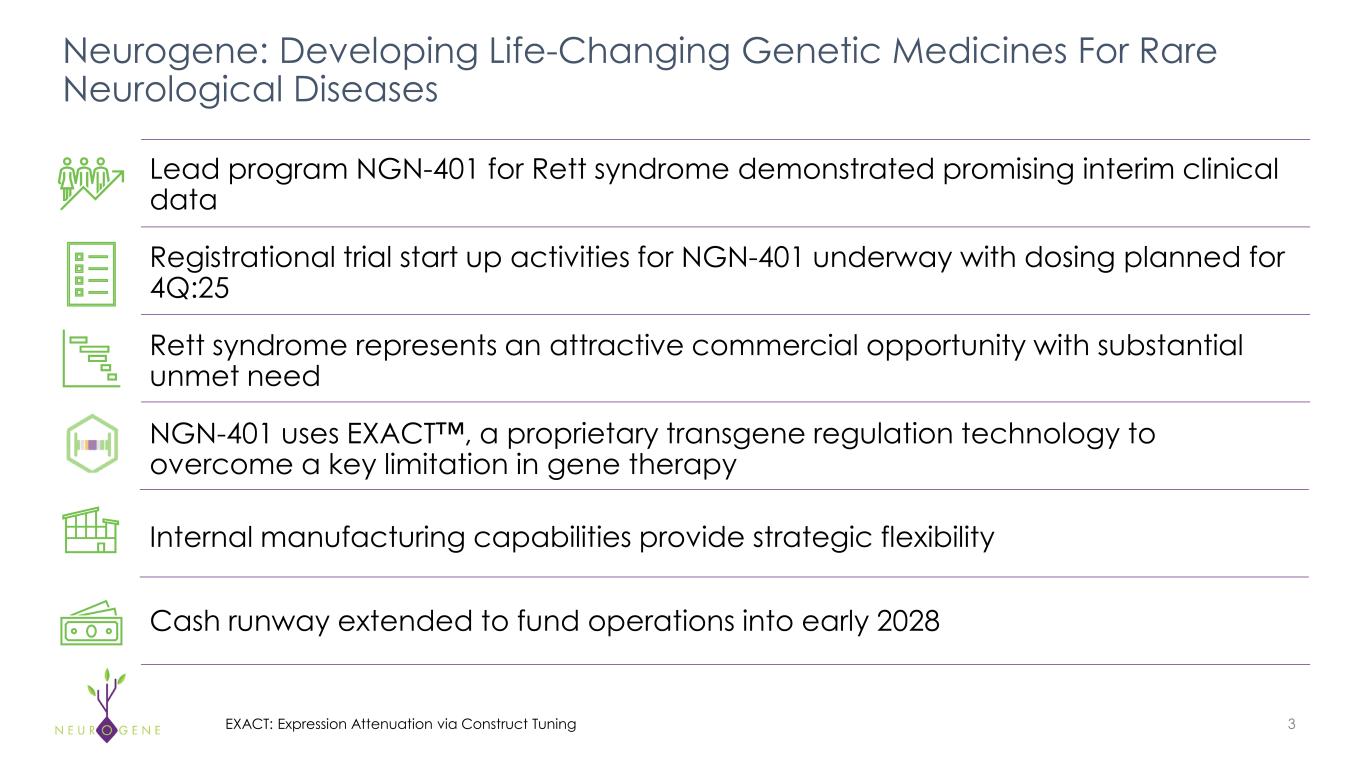
Neurogene: Developing Life-Changing Genetic Medicines For Rare Neurological Diseases 3EXACT: Expression Attenuation via Construct Tuning Lead program NGN-401 for Rett syndrome demonstrated promising interim clinical data Registrational trial start up activities for NGN-401 underway with dosing planned for 4Q:25 Rett syndrome represents an attractive commercial opportunity with substantial unmet need NGN-401 uses EXACT , a proprietary transgene regulation technology to overcome a key limitation in gene therapy Internal manufacturing capabilities provide strategic flexibility Cash runway extended to fund operations into early 2028


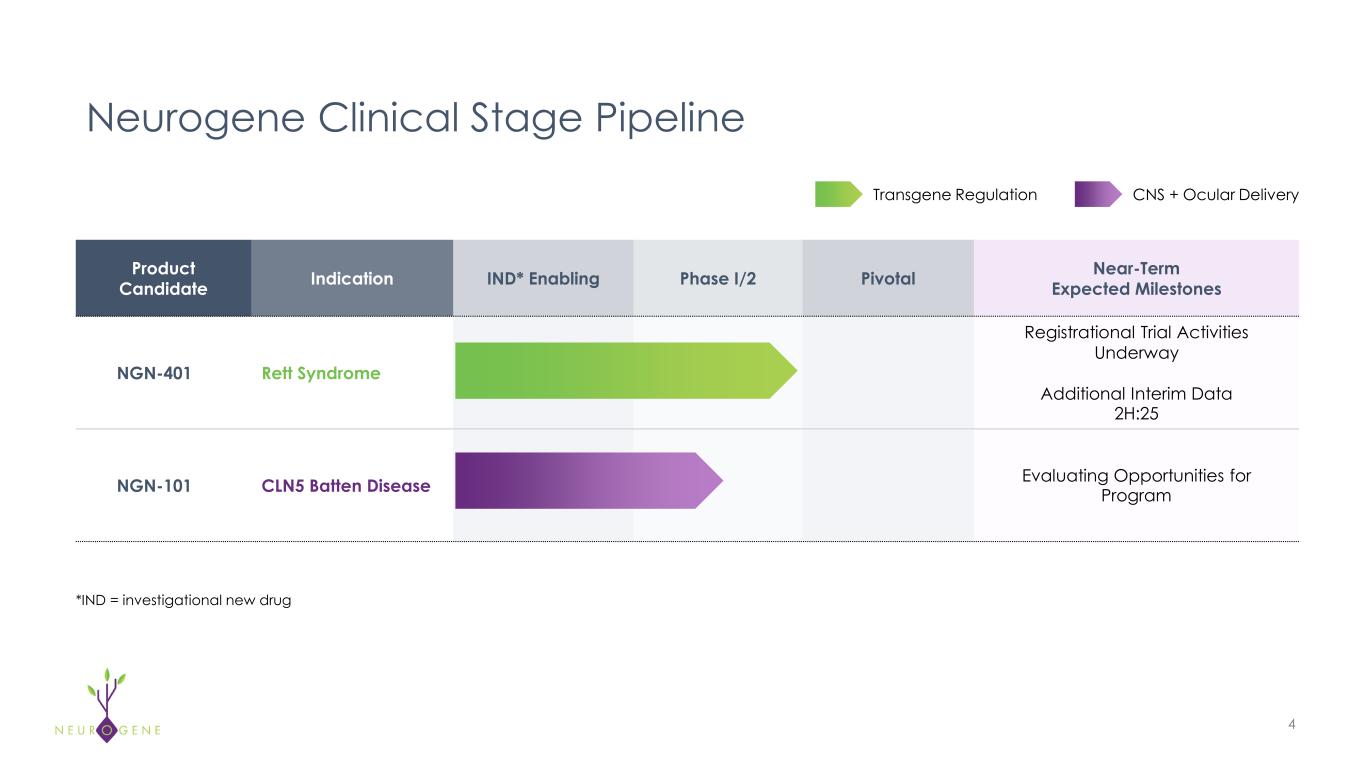
Product Candidate Indication IND* Enabling Phase I/2 Pivotal Near-Term Expected Milestones NGN-401 Rett Syndrome Registrational Trial Activities Underway Additional Interim Data 2H:25 NGN-101 CLN5 Batten Disease Evaluating Opportunities for Program Neurogene Clinical Stage Pipeline 4 *IND = investigational new drug Transgene Regulation CNS + Ocular Delivery


Wholly Owned and Fully Integrated In-House AAV Manufacturing 5 GMP Manufacturing Toxicology Batch Manufacturing Process Development Quality Assurance Quality Control Analytical Development • Flexibility to manufacture AAV product at low cost • Own product quality and development timelines • Process development expertise supports both HEK293 and Sf9/rBV manufacturing platforms • Flexibility to rapidly adapt CMC execution to program needs 42,000 sq ft facility in Houston, with 6,000 sq ft of cleanrooms Current research and clinical-grade manufacturing capabilities are designed for commercial-grade product to avoid potential future comparability challenges


NGN-401 for Rett Syndrome Leveraging EXACT transgene regulation technology


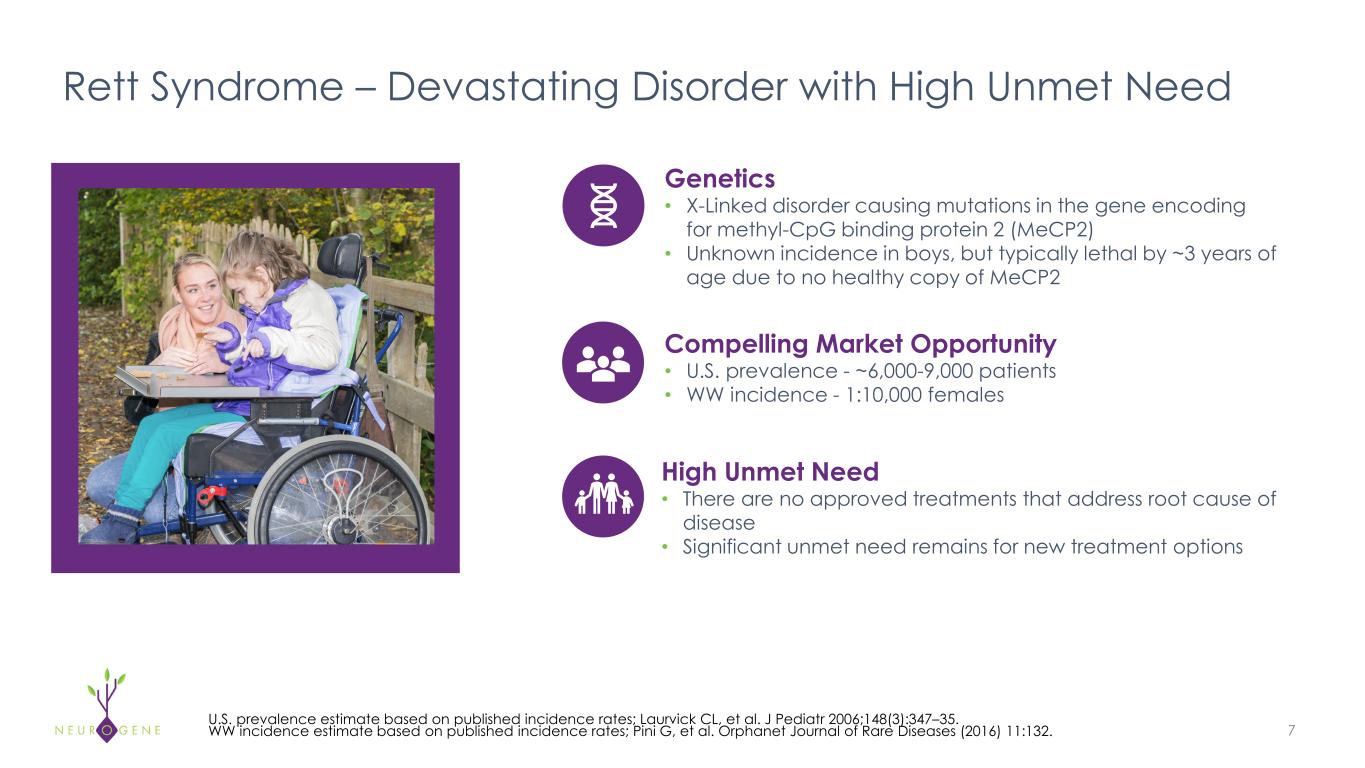
Rett Syndrome – Devastating Disorder with High Unmet Need 7 Genetics • X-Linked disorder causing mutations in the gene encoding for methyl-CpG binding protein 2 (MeCP2) • Unknown incidence in boys, but typically lethal by ~3 years of age due to no healthy copy of MeCP2 U.S. prevalence estimate based on published incidence rates; Laurvick CL, et al. J Pediatr 2006;148(3):347–35. WW incidence estimate based on published incidence rates; Pini G, et al. Orphanet Journal of Rare Diseases (2016) 11:132. High Unmet Need • There are no approved treatments that address root cause of disease • Significant unmet need remains for new treatment options Compelling Market Opportunity • U.S. prevalence - ~6,000-9,000 patients • WW incidence - 1:10,000 females


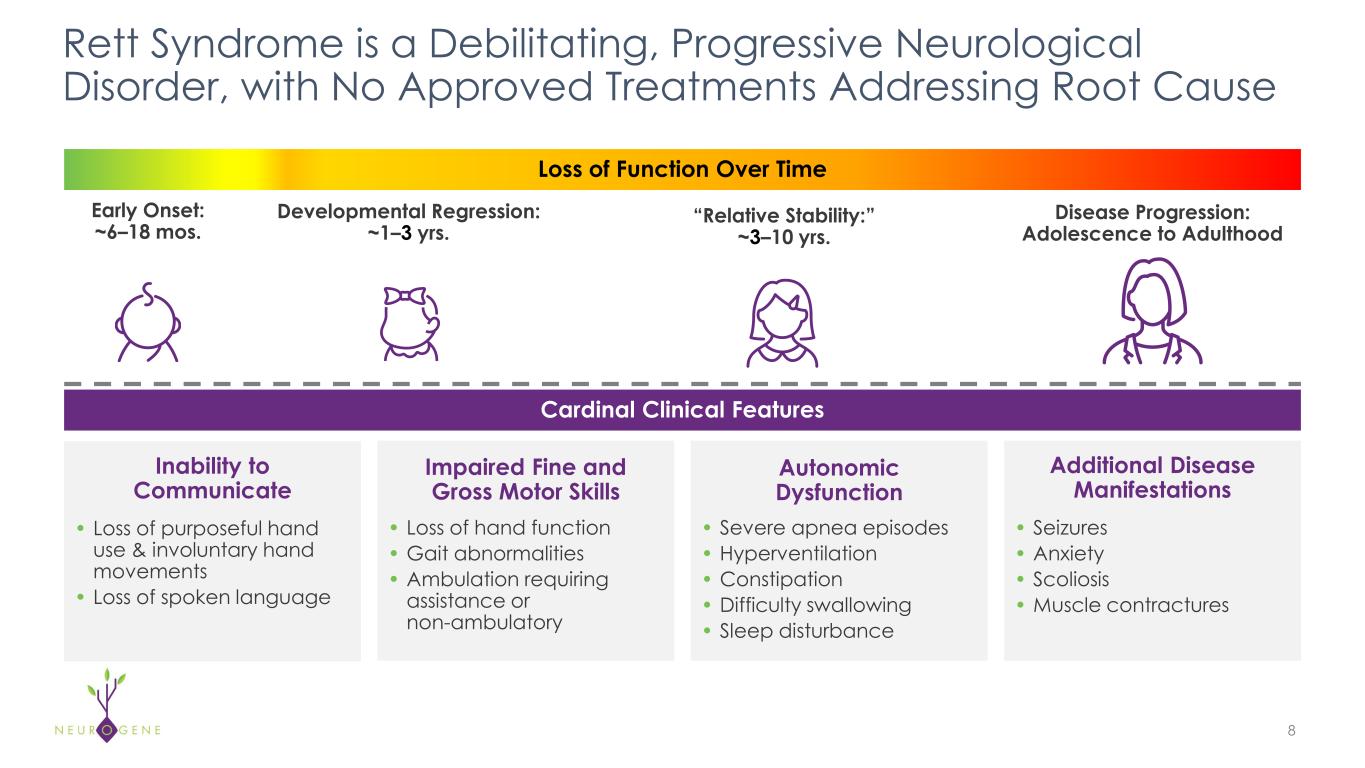
Rett Syndrome is a Debilitating, Progressive Neurological Disorder, with No Approved Treatments Addressing Root Cause 8 • Loss of purposeful hand use & involuntary hand movements • Loss of spoken language • Loss of hand function • Gait abnormalities • Ambulation requiring assistance or non-ambulatory • Severe apnea episodes • Hyperventilation • Constipation • Difficulty swallowing • Sleep disturbance • Seizures • Anxiety • Scoliosis • Muscle contractures Inability to Communicate Impaired Fine and Gross Motor Skills Autonomic Dysfunction Additional Disease Manifestations Loss of Function Over Time Early Onset: ~6–18 mos. Developmental Regression: ~1–3 yrs. “Relative Stability:” ~3–10 yrs. Disease Progression: Adolescence to Adulthood Cardinal Clinical Features


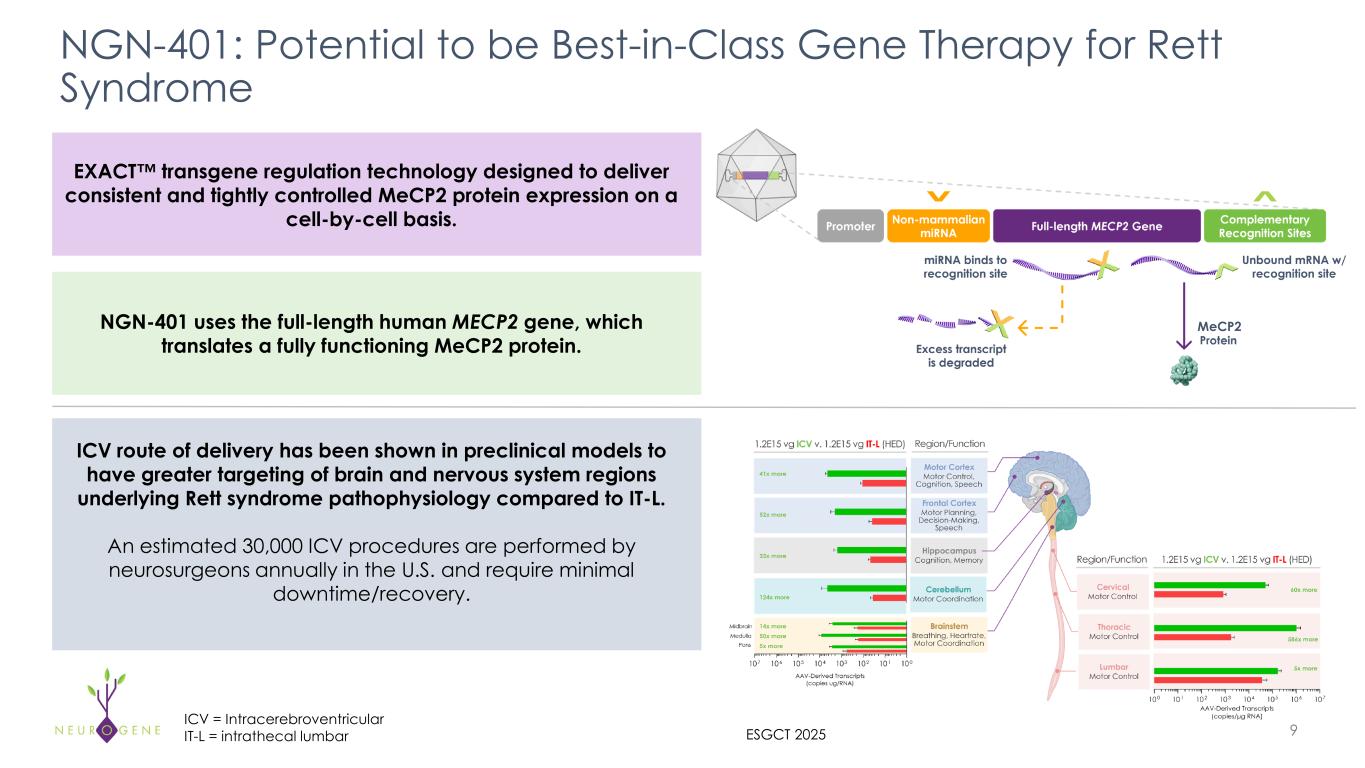
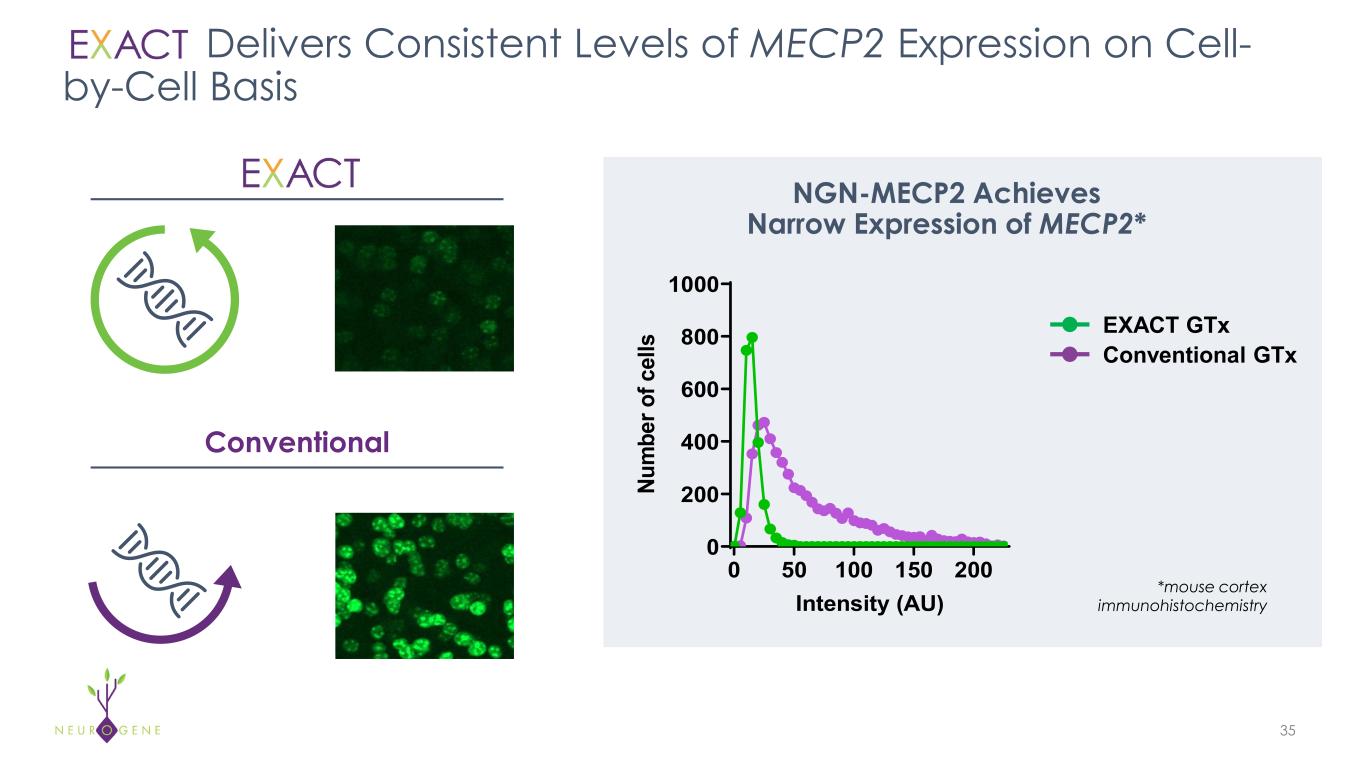
NGN-401: Potential to be Best-in-Class Gene Therapy for Rett Syndrome 9 ICV = Intracerebroventricular IT-L = intrathecal lumbar EXACT transgene regulation technology designed to deliver consistent and tightly controlled MeCP2 protein expression on a cell-by-cell basis. ICV route of delivery has been shown in preclinical models to have greater targeting of brain and nervous system regions underlying Rett syndrome pathophysiology compared to IT-L. An estimated 30,000 ICV procedures are performed by neurosurgeons annually in the U.S. and require minimal downtime/recovery. NGN-401 uses the full-length human MECP2 gene, which translates a fully functioning MeCP2 protein. MeCP2 ESGCT 2025


NGN-401 Embolden Registrational Trial


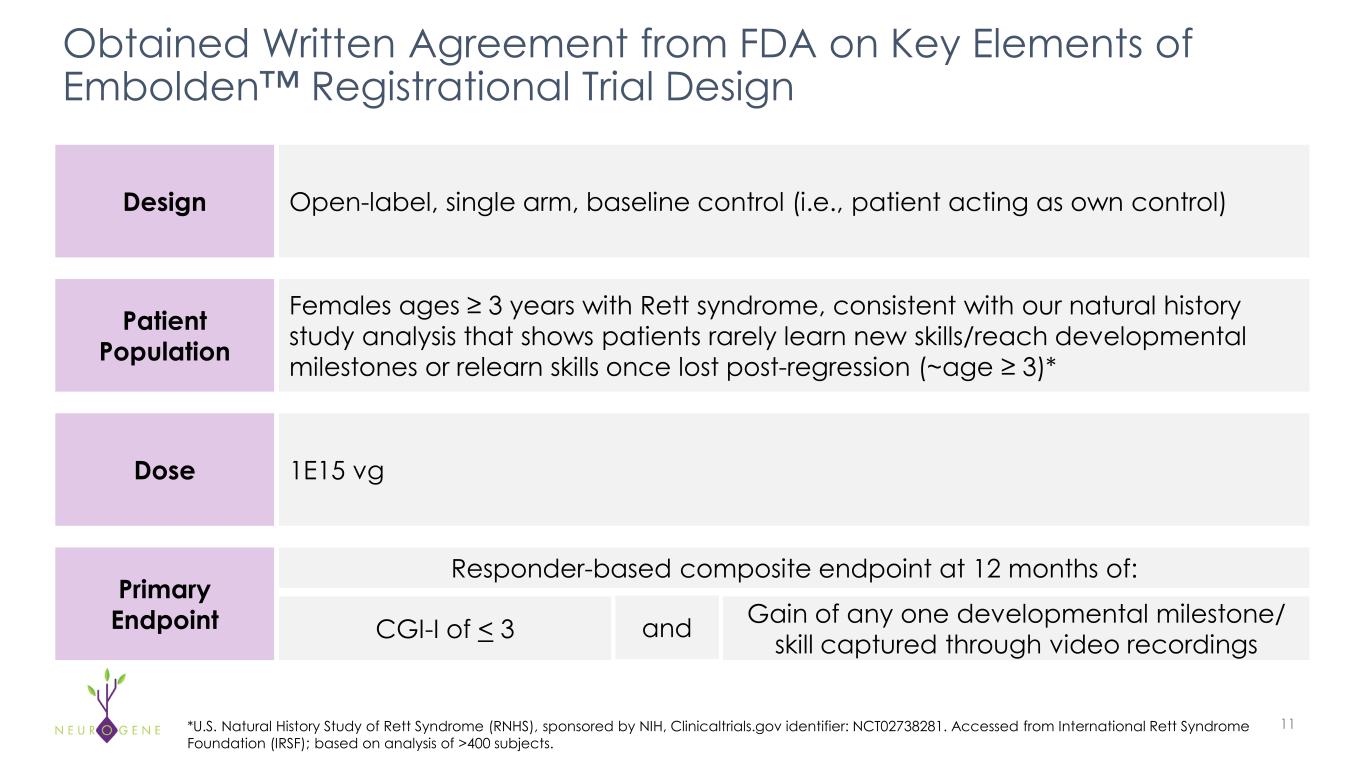
Obtained Written Agreement from FDA on Key Elements of Embolden Registrational Trial Design 11 Design Patient Population Dose Primary Endpoint Open-label, single arm, baseline control (i.e., patient acting as own control) Females ages ≥ 3 years with Rett syndrome, consistent with our natural history study analysis that shows patients rarely learn new skills/reach developmental milestones or relearn skills once lost post-regression (~age ≥ 3)* 1E15 vg Responder-based composite endpoint at 12 months of: CGI-I of < 3 and Gain of any one developmental milestone/ skill captured through video recordings *U.S. Natural History Study of Rett Syndrome (RNHS), sponsored by NIH, Clinicaltrials.gov identifier: NCT02738281. Accessed from International Rett Syndrome Foundation (IRSF); based on analysis of >400 subjects.


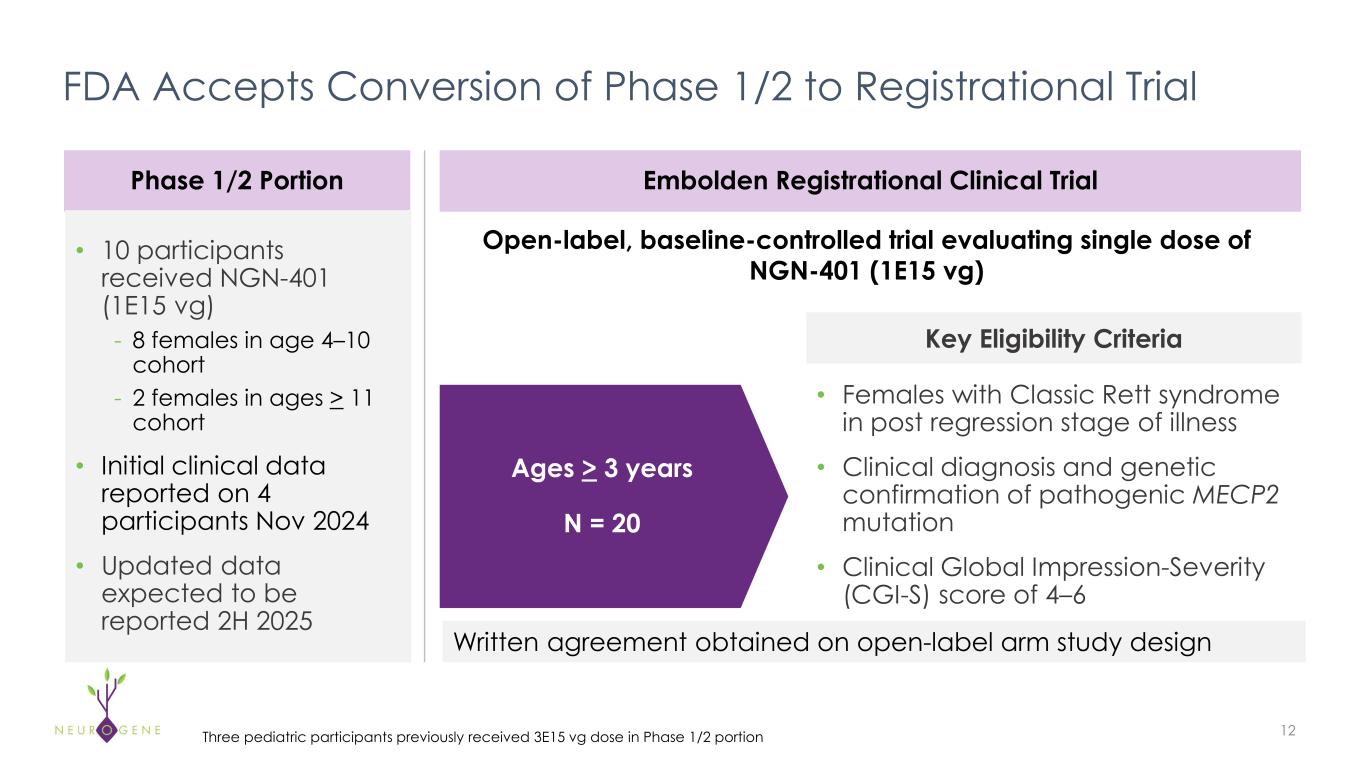
FDA Accepts Conversion of Phase 1/2 to Registrational Trial 12Three pediatric participants previously received 3E15 vg dose in Phase 1/2 portion Open-label, baseline-controlled trial evaluating single dose of NGN-401 (1E15 vg) Embolden Registrational Clinical Trial Ages > 3 years N = 20 Phase 1/2 Portion • Females with Classic Rett syndrome in post regression stage of illness • Clinical diagnosis and genetic confirmation of pathogenic MECP2 mutation • Clinical Global Impression-Severity (CGI-S) score of 4–6 Key Eligibility Criteria Written agreement obtained on open-label arm study design • 10 participants received NGN-401 (1E15 vg) - 8 females in age 4–10 cohort - 2 females in ages > 11 cohort • Initial clinical data reported on 4 participants Nov 2024 • Updated data expected to be reported 2H 2025


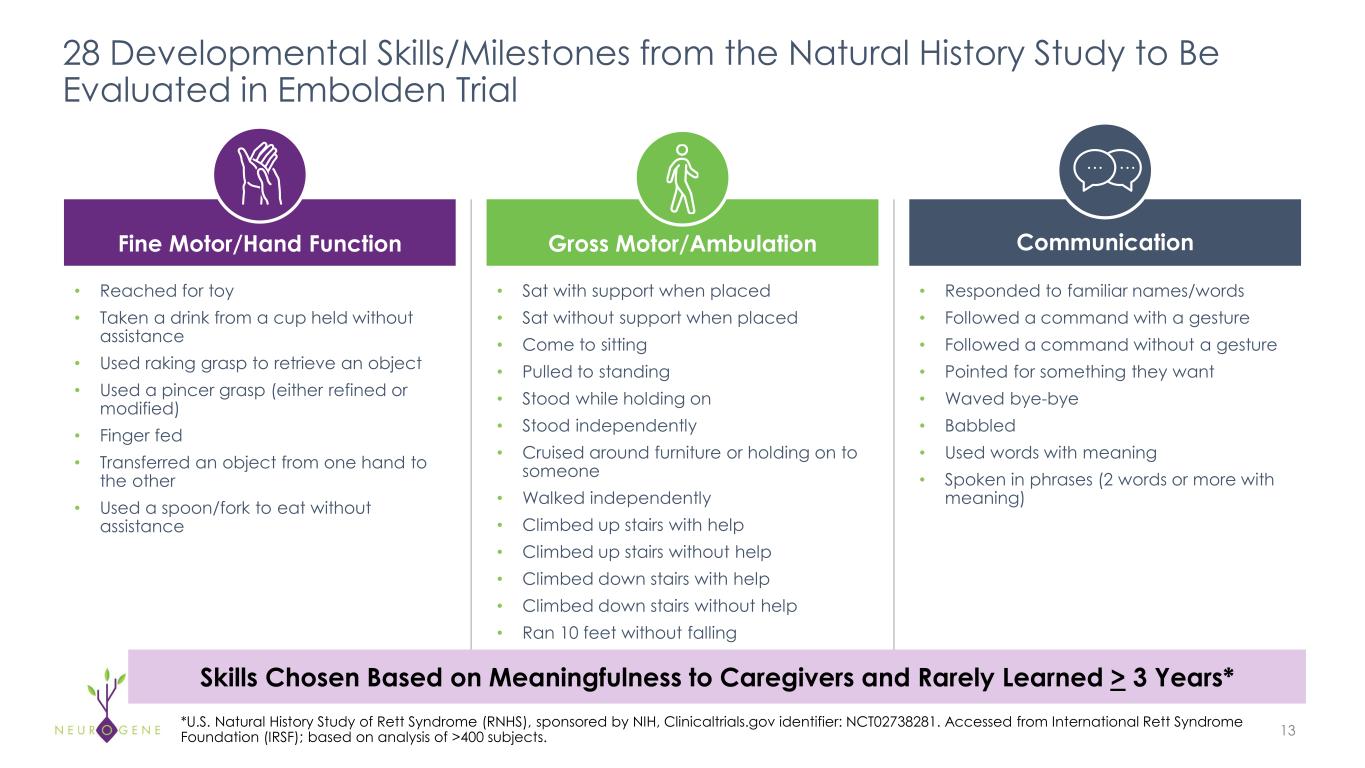
28 Developmental Skills/Milestones from the Natural History Study to Be Evaluated in Embolden Trial 13 Fine Motor/Hand Function • Reached for toy • Taken a drink from a cup held without assistance • Used raking grasp to retrieve an object • Used a pincer grasp (either refined or modified) • Finger fed • Transferred an object from one hand to the other • Used a spoon/fork to eat without assistance • Sat with support when placed • Sat without support when placed • Come to sitting • Pulled to standing • Stood while holding on • Stood independently • Cruised around furniture or holding on to someone • Walked independently • Climbed up stairs with help • Climbed up stairs without help • Climbed down stairs with help • Climbed down stairs without help • Ran 10 feet without falling • Responded to familiar names/words • Followed a command with a gesture • Followed a command without a gesture • Pointed for something they want • Waved bye-bye • Babbled • Used words with meaning • Spoken in phrases (2 words or more with meaning) Skills Chosen Based on Meaningfulness to Caregivers and Rarely Learned > 3 Years* *U.S. Natural History Study of Rett Syndrome (RNHS), sponsored by NIH, Clinicaltrials.gov identifier: NCT02738281. Accessed from International Rett Syndrome Foundation (IRSF); based on analysis of >400 subjects. Gross Motor/Ambulation Communication


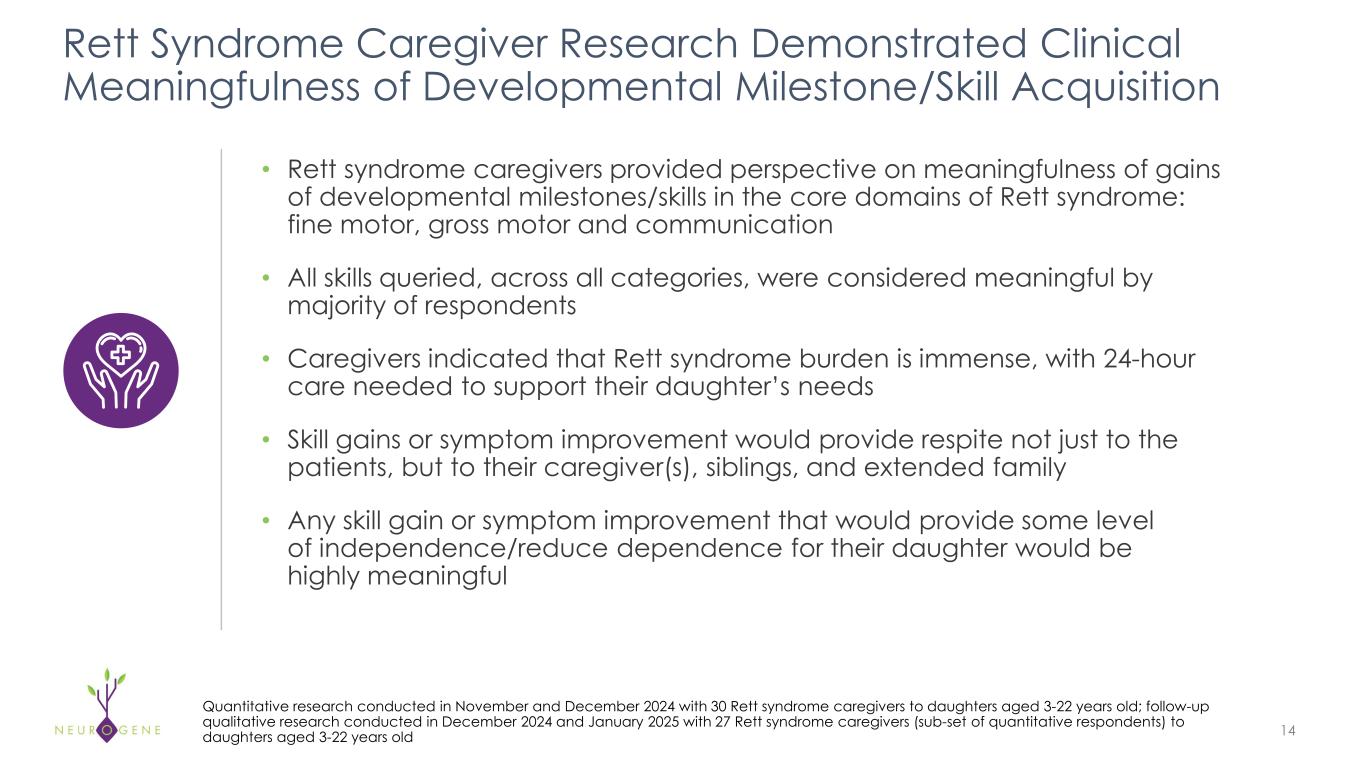
• Rett syndrome caregivers provided perspective on meaningfulness of gains of developmental milestones/skills in the core domains of Rett syndrome: fine motor, gross motor and communication • All skills queried, across all categories, were considered meaningful by majority of respondents • Caregivers indicated that Rett syndrome burden is immense, with 24-hour care needed to support their daughter’s needs • Skill gains or symptom improvement would provide respite not just to the patients, but to their caregiver(s), siblings, and extended family • Any skill gain or symptom improvement that would provide some level of independence/reduce dependence for their daughter would be highly meaningful 14 Quantitative research conducted in November and December 2024 with 30 Rett syndrome caregivers to daughters aged 3-22 years old; follow-up qualitative research conducted in December 2024 and January 2025 with 27 Rett syndrome caregivers (sub-set of quantitative respondents) to daughters aged 3-22 years old Rett Syndrome Caregiver Research Demonstrated Clinical Meaningfulness of Developmental Milestone/Skill Acquisition


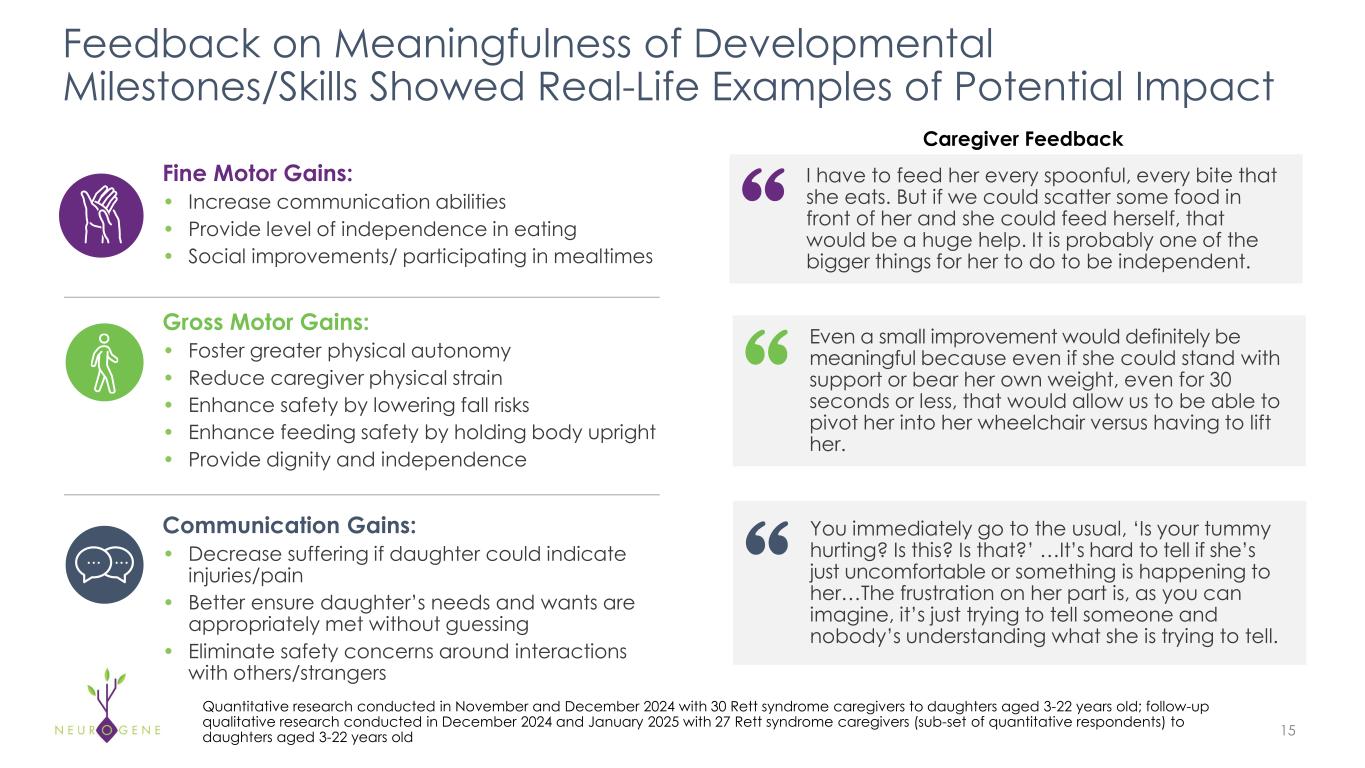
Feedback on Meaningfulness of Developmental Milestones/Skills Showed Real-Life Examples of Potential Impact 15 Even a small improvement would definitely be meaningful because even if she could stand with support or bear her own weight, even for 30 seconds or less, that would allow us to be able to pivot her into her wheelchair versus having to lift her. Fine Motor Gains: • Increase communication abilities • Provide level of independence in eating • Social improvements/ participating in mealtimes Gross Motor Gains: • Foster greater physical autonomy • Reduce caregiver physical strain • Enhance safety by lowering fall risks • Enhance feeding safety by holding body upright • Provide dignity and independence Communication Gains: • Decrease suffering if daughter could indicate injuries/pain • Better ensure daughter’s needs and wants are appropriately met without guessing • Eliminate safety concerns around interactions with others/strangers You immediately go to the usual, ‘Is your tummy hurting? Is this? Is that?’ …It’s hard to tell if she’s just uncomfortable or something is happening to her…The frustration on her part is, as you can imagine, it’s just trying to tell someone and nobody’s understanding what she is trying to tell. I have to feed her every spoonful, every bite that she eats. But if we could scatter some food in front of her and she could feed herself, that would be a huge help. It is probably one of the bigger things for her to do to be independent. Quantitative research conducted in November and December 2024 with 30 Rett syndrome caregivers to daughters aged 3-22 years old; follow-up qualitative research conducted in December 2024 and January 2025 with 27 Rett syndrome caregivers (sub-set of quantitative respondents) to daughters aged 3-22 years old Caregiver Feedback


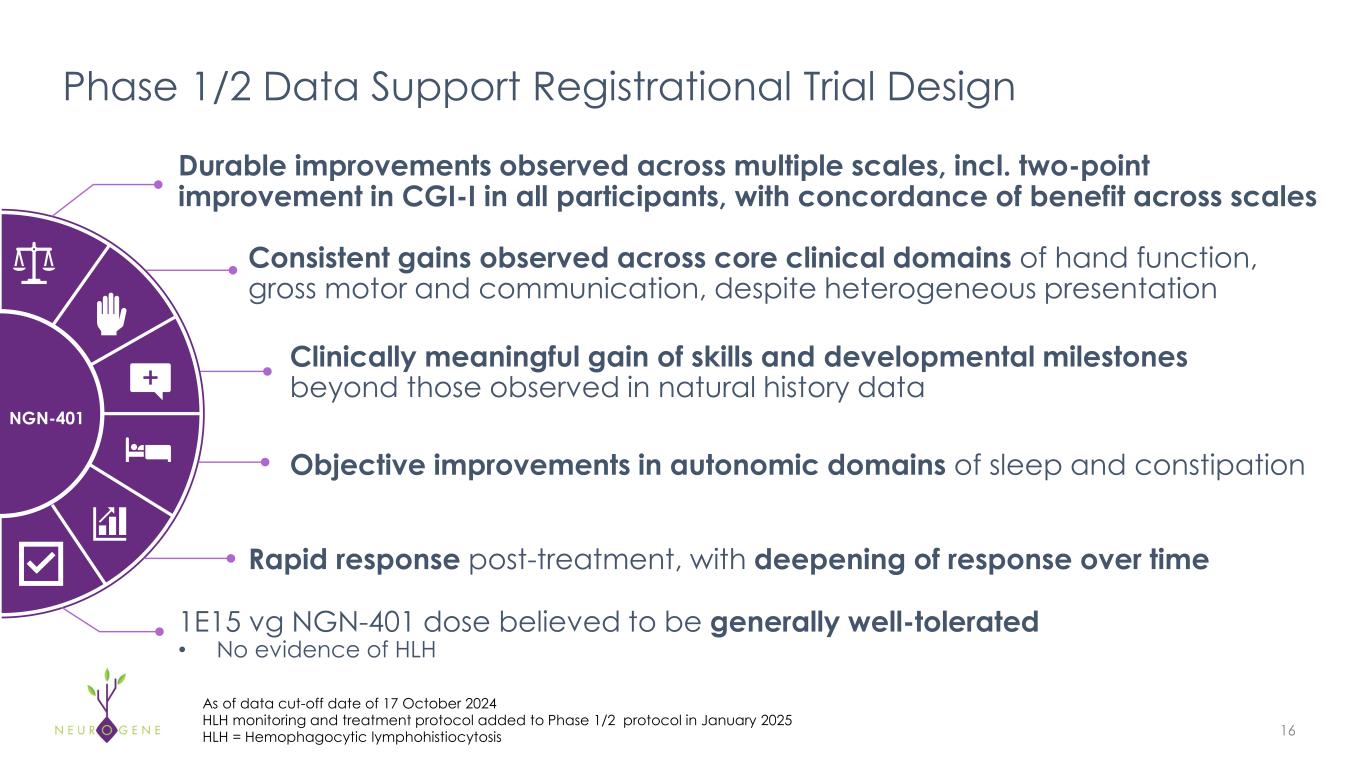
Phase 1/2 Data Support Registrational Trial Design 16 As of data cut-off date of 17 October 2024 HLH monitoring and treatment protocol added to Phase 1/2 protocol in January 2025 HLH = Hemophagocytic lymphohistiocytosis NGN-401 Durable improvements observed across multiple scales, incl. two-point improvement in CGI-I in all participants, with concordance of benefit across scales Consistent gains observed across core clinical domains of hand function, gross motor and communication, despite heterogeneous presentation Objective improvements in autonomic domains of sleep and constipation Clinically meaningful gain of skills and developmental milestones beyond those observed in natural history data Rapid response post-treatment, with deepening of response over time 1E15 vg NGN-401 dose believed to be generally well-tolerated • No evidence of HLH


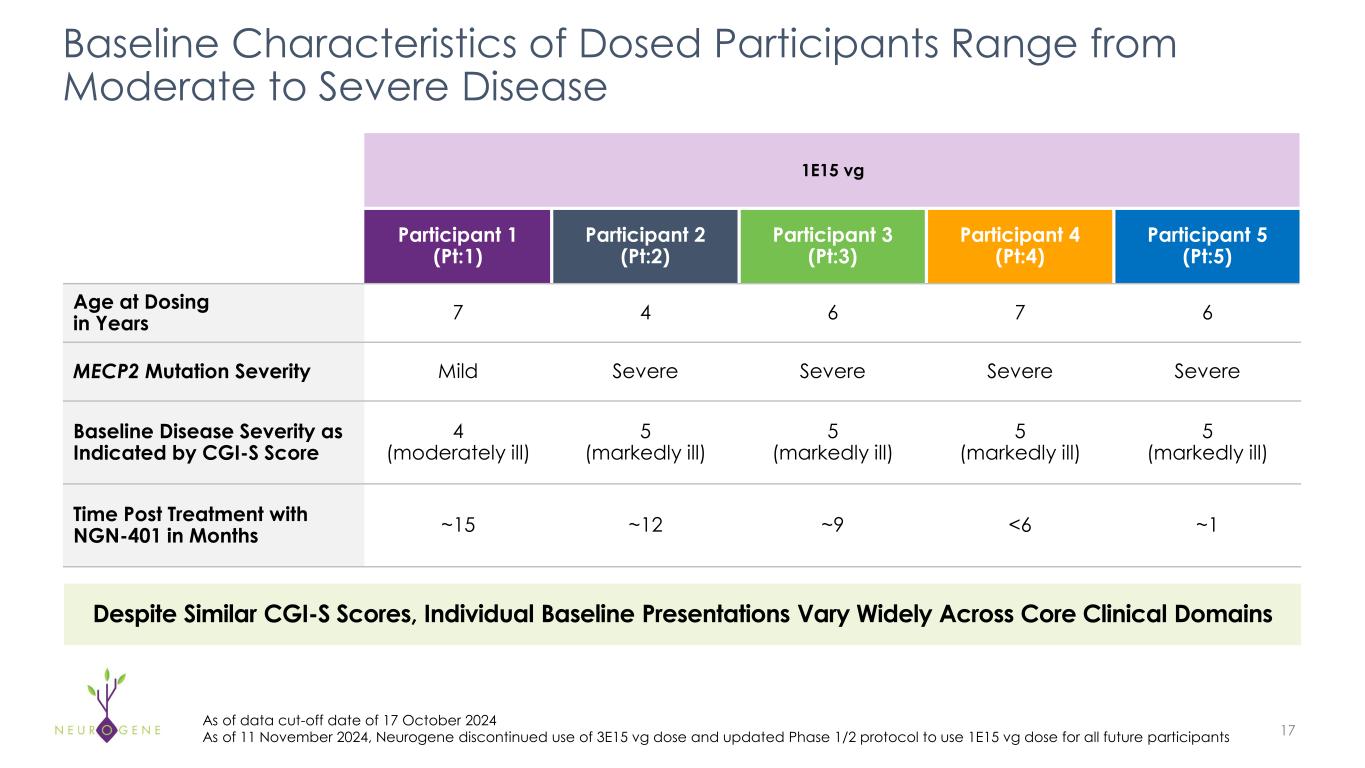
Baseline Characteristics of Dosed Participants Range from Moderate to Severe Disease 17 As of data cut-off date of 17 October 2024 As of 11 November 2024, Neurogene discontinued use of 3E15 vg dose and updated Phase 1/2 protocol to use 1E15 vg dose for all future participants 1E15 vg Participant 1 (Pt:1) Participant 2 (Pt:2) Participant 3 (Pt:3) Participant 4 (Pt:4) Participant 5 (Pt:5) Age at Dosing in Years 7 4 6 7 6 MECP2 Mutation Severity Mild Severe Severe Severe Severe Baseline Disease Severity as Indicated by CGI-S Score 4 (moderately ill) 5 (markedly ill) 5 (markedly ill) 5 (markedly ill) 5 (markedly ill) Time Post Treatment with NGN-401 in Months ~15 ~12 ~9 <6 ~1 Despite Similar CGI-S Scores, Individual Baseline Presentations Vary Widely Across Core Clinical Domains


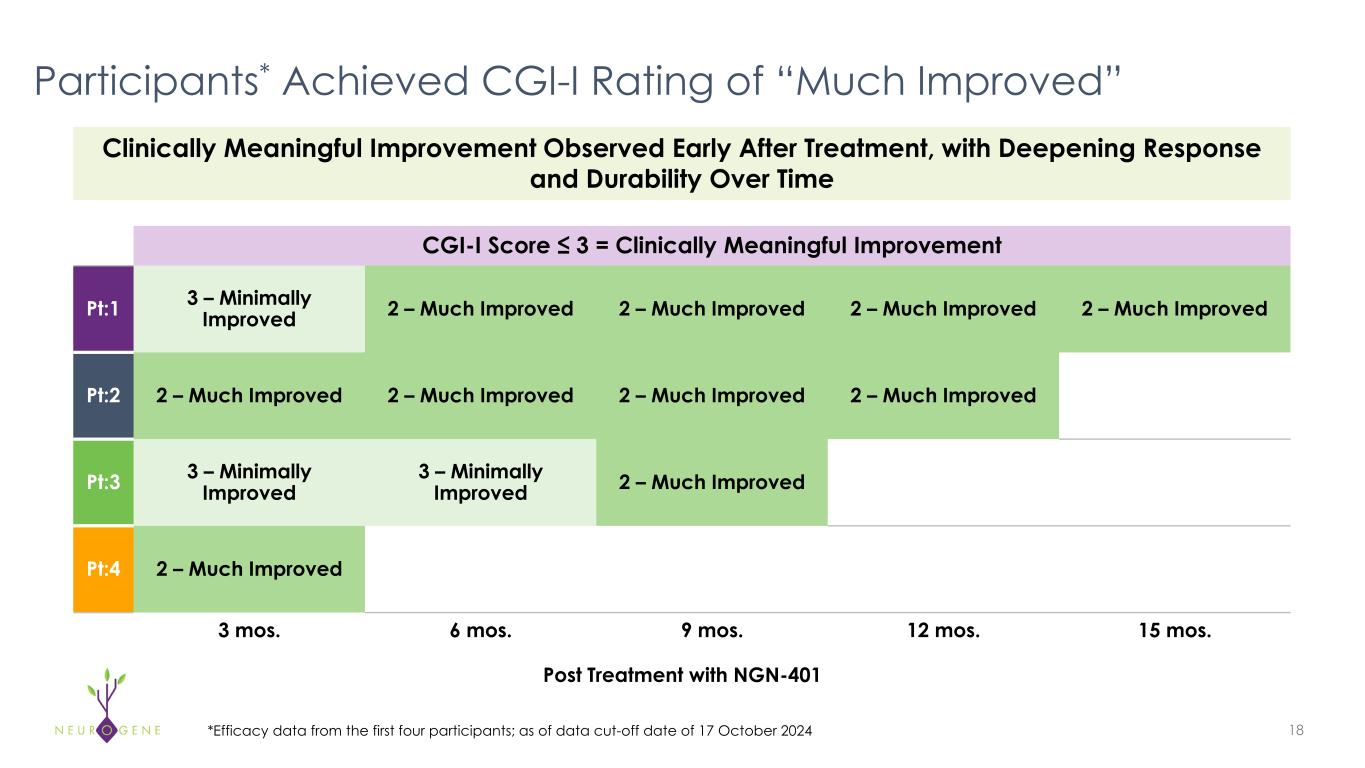
Participants* Achieved CGI-I Rating of “Much Improved” CGI-I Score ≤ 3 = Clinically Meaningful Improvement Pt:1 3 – Minimally Improved 2 – Much Improved 2 – Much Improved 2 – Much Improved 2 – Much Improved Pt:2 2 – Much Improved 2 – Much Improved 2 – Much Improved 2 – Much Improved Pt:3 3 – Minimally Improved 3 – Minimally Improved 2 – Much Improved Pt:4 2 – Much Improved 3 mos. 6 mos. 9 mos. 12 mos. 15 mos. 18 Post Treatment with NGN-401 *Efficacy data from the first four participants; as of data cut-off date of 17 October 2024 Clinically Meaningful Improvement Observed Early After Treatment, with Deepening Response and Durability Over Time


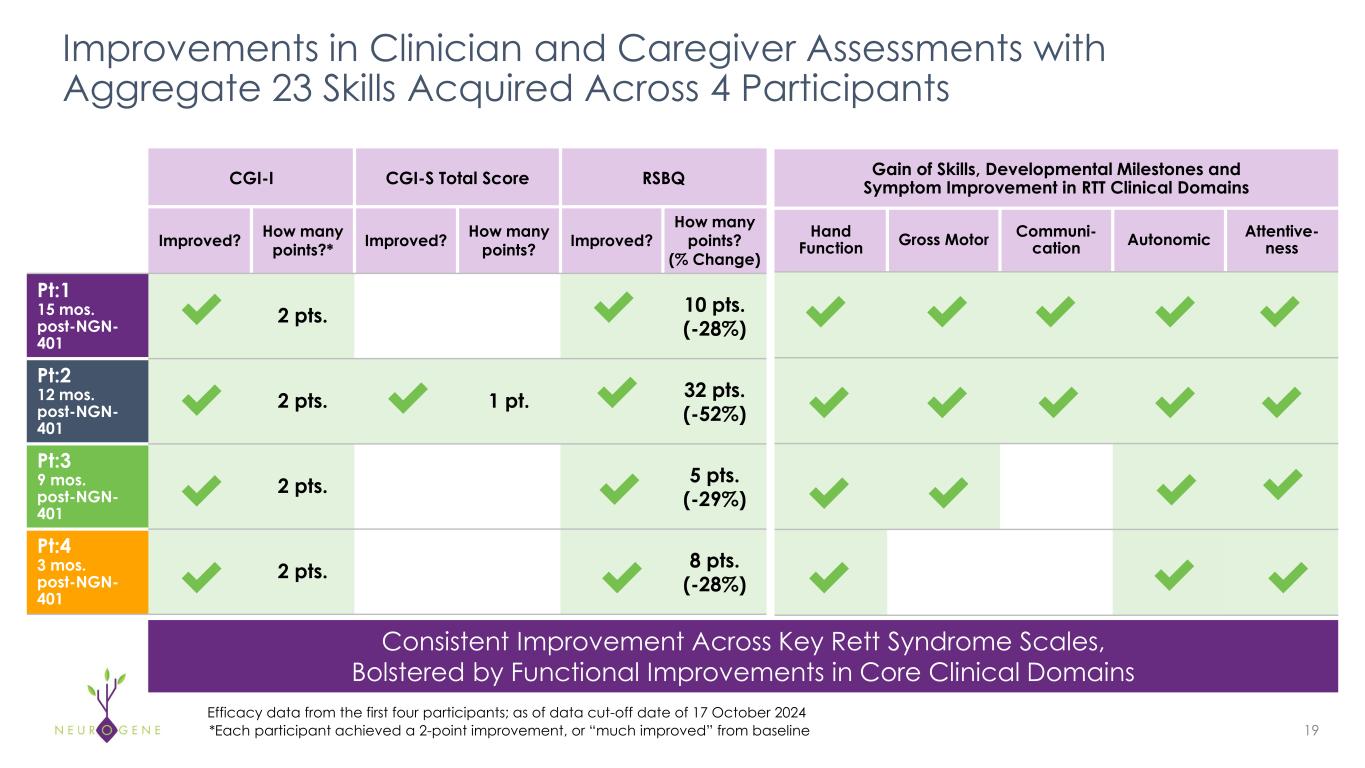
Improvements in Clinician and Caregiver Assessments with Aggregate 23 Skills Acquired Across 4 Participants 19*Each participant achieved a 2-point improvement, or “much improved” from baseline CGI-I CGI-S Total Score RSBQ Improved? How many points?* Improved? How many points? Improved? How many points? (% Change) Pt:1 15 mos. post-NGN- 401 2 pts. 10 pts. (-28%) Pt:2 12 mos. post-NGN- 401 2 pts. 1 pt. 32 pts. (-52%) Pt:3 9 mos. post-NGN- 401 2 pts. 5 pts. (-29%) Pt:4 3 mos. post-NGN- 401 2 pts. 8 pts. (-28%) Gain of Skills, Developmental Milestones and Symptom Improvement in RTT Clinical Domains Hand Function Gross Motor Communi- cation Autonomic Attentive- ness Consistent Improvement Across Key Rett Syndrome Scales, Bolstered by Functional Improvements in Core Clinical Domains Efficacy data from the first four participants; as of data cut-off date of 17 October 2024


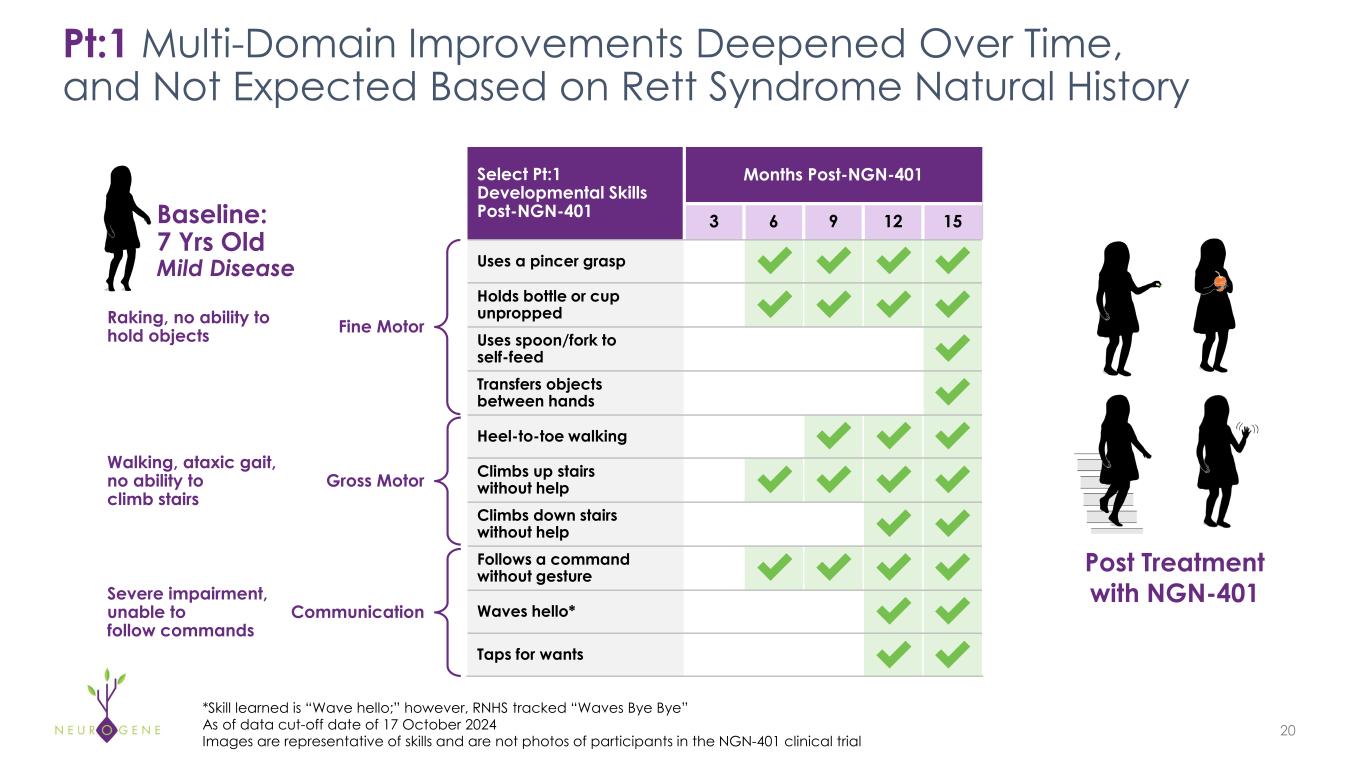
Pt:1 Multi-Domain Improvements Deepened Over Time, and Not Expected Based on Rett Syndrome Natural History 20 *Skill learned is “Wave hello;” however, RNHS tracked “Waves Bye Bye” As of data cut-off date of 17 October 2024 Images are representative of skills and are not photos of participants in the NGN-401 clinical trial Select Pt:1 Developmental Skills Post-NGN-401 Months Post-NGN-401 3 6 9 12 15 Uses a pincer grasp Holds bottle or cup unpropped Uses spoon/fork to self-feed Transfers objects between hands Heel-to-toe walking Climbs up stairs without help Climbs down stairs without help Follows a command without gesture Waves hello* Taps for wants Fine Motor Gross Motor Communication Baseline: 7 Yrs Old Mild Disease Walking, ataxic gait, no ability to climb stairs Raking, no ability to hold objects Severe impairment, unable to follow commands Post Treatment with NGN-401


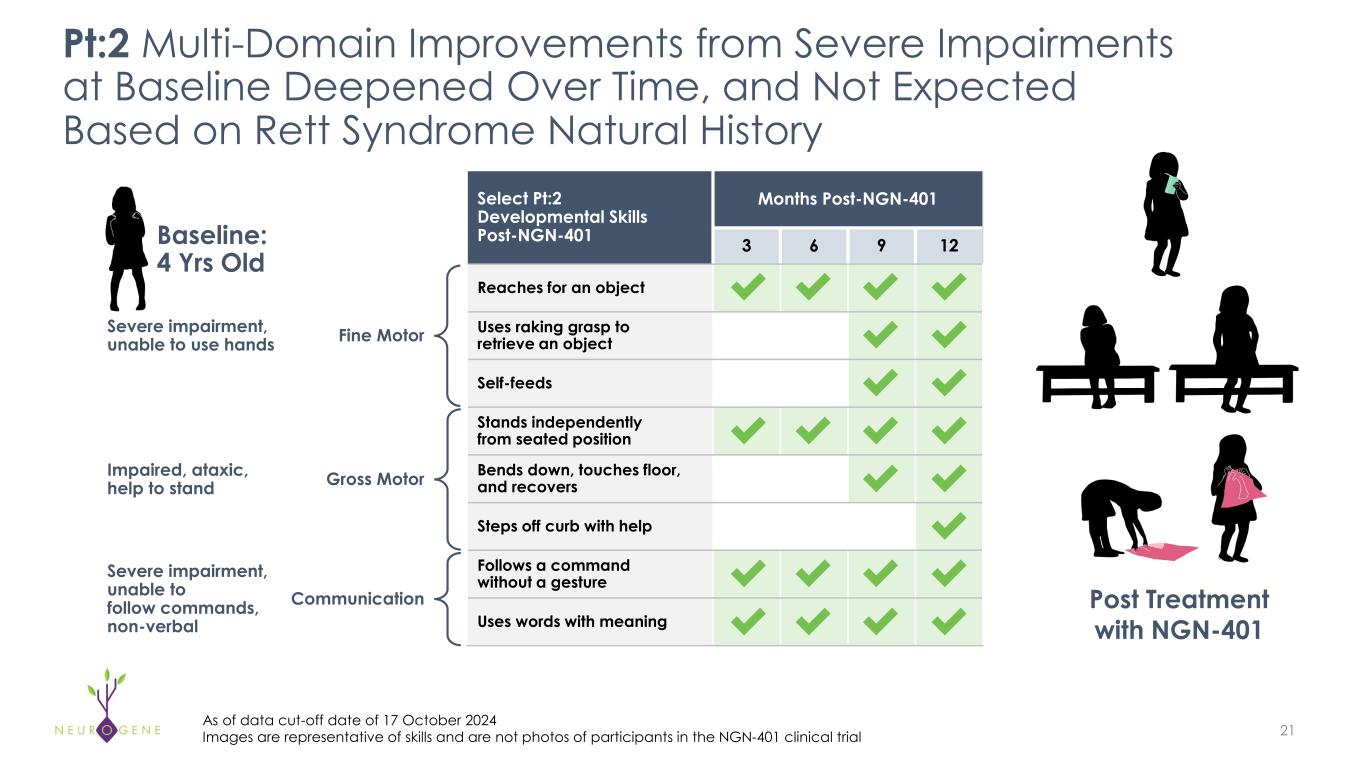
Pt:2 Multi-Domain Improvements from Severe Impairments at Baseline Deepened Over Time, and Not Expected 21 As of data cut-off date of 17 October 2024 Images are representative of skills and are not photos of participants in the NGN-401 clinical trial Select Pt:2 Developmental Skills Post-NGN-401 Months Post-NGN-401 3 6 9 12 Reaches for an object Uses raking grasp to retrieve an object Self-feeds Stands independently from seated position Bends down, touches floor, and recovers Steps off curb with help Follows a command without a gesture Uses words with meaning Fine Motor Gross Motor Communication Baseline: 4 Yrs Old Impaired, ataxic, help to stand Severe impairment, unable to use hands Severe impairment, unable to follow commands, non-verbal Based on Rett Syndrome Natural History Post Treatment with NGN-401


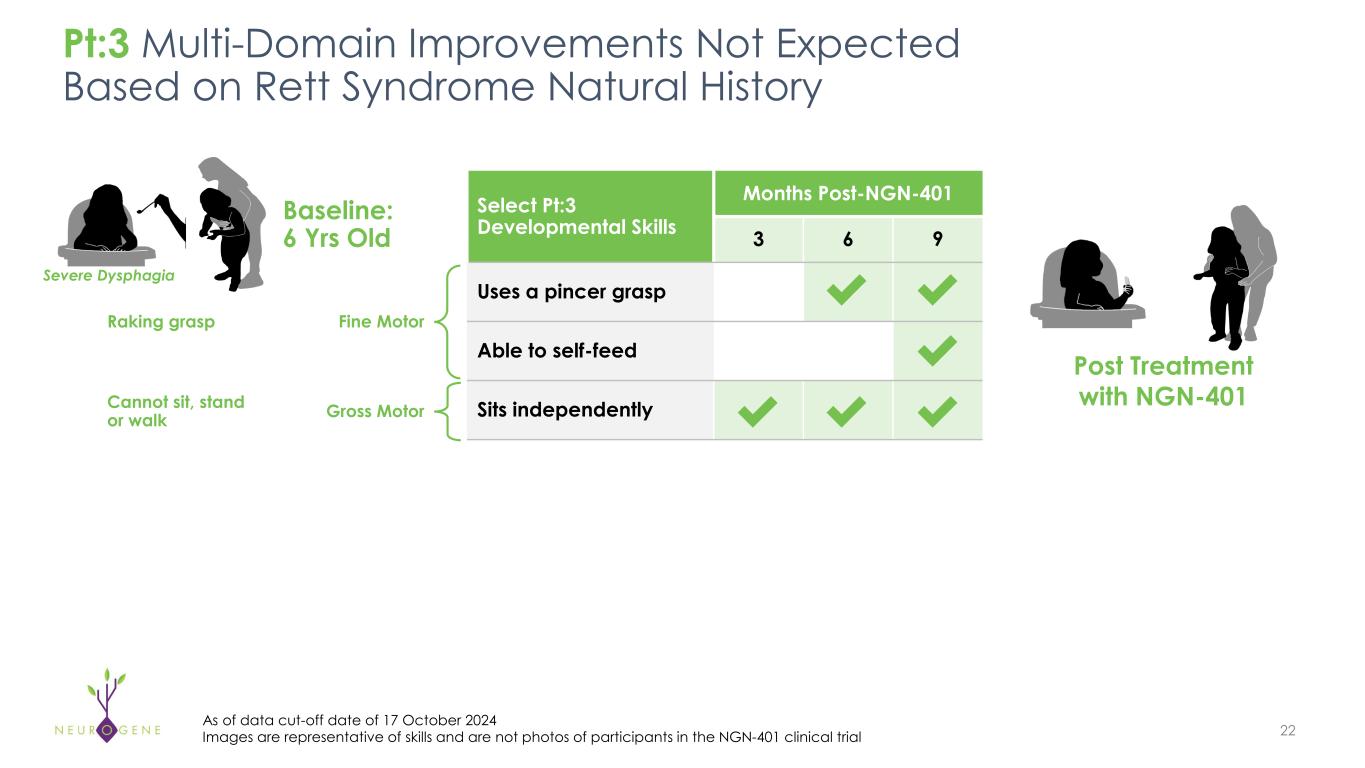
Fine Motor Gross Motor Pt:3 Multi-Domain Improvements Not Expected Based on Rett Syndrome Natural History 22 As of data cut-off date of 17 October 2024 Images are representative of skills and are not photos of participants in the NGN-401 clinical trial Select Pt:3 Developmental Skills Months Post-NGN-401 3 6 9 Uses a pincer grasp Able to self-feed Sits independently Baseline: 6 Yrs Old Cannot sit, stand or walk Raking grasp Post Treatment with NGN-401 Severe Dysphagia


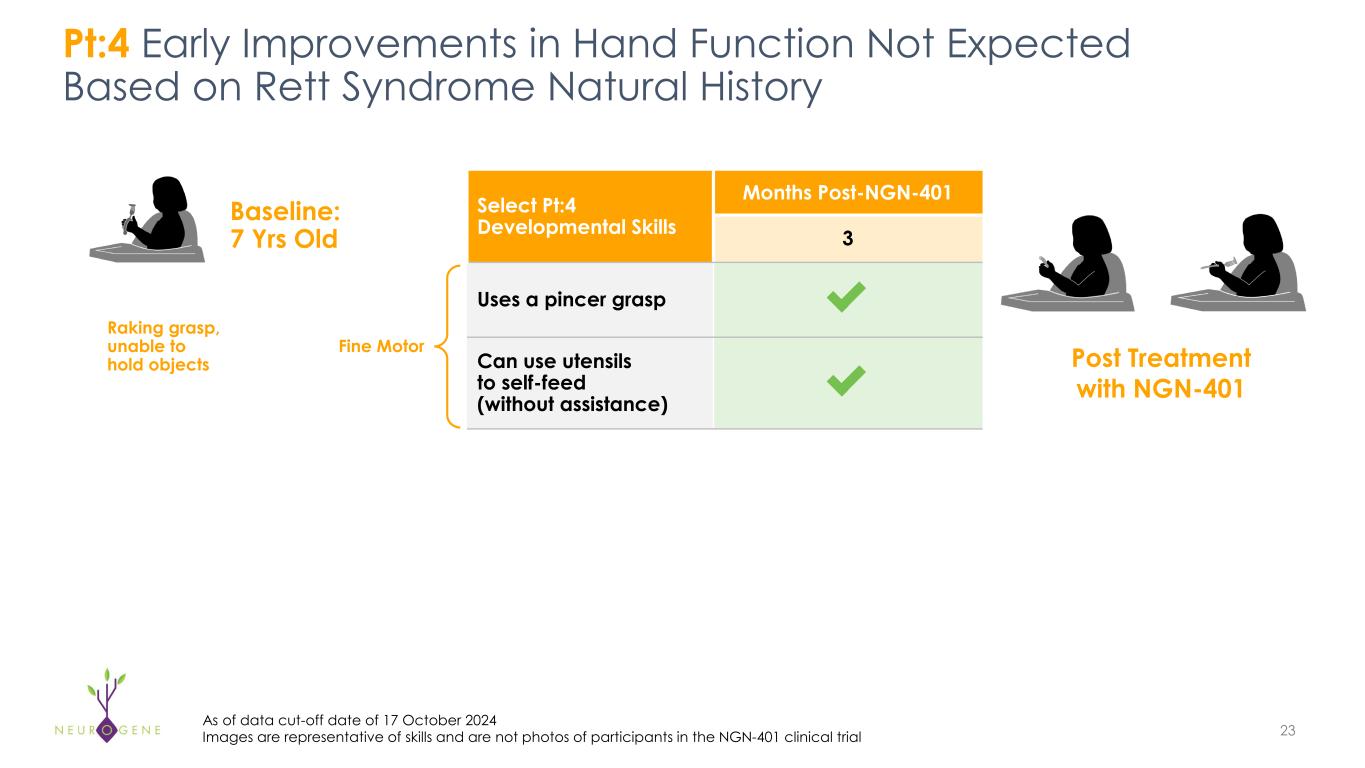
Pt:4 Early Improvements in Hand Function Not Expected Based on Rett Syndrome Natural History 23 Fine Motor Baseline: 7 Yrs Old Raking grasp, unable to hold objects Select Pt:4 Developmental Skills Months Post-NGN-401 3 Uses a pincer grasp Can use utensils to self-feed (without assistance) Post Treatment with NGN-401 As of data cut-off date of 17 October 2024 Images are representative of skills and are not photos of participants in the NGN-401 clinical trial


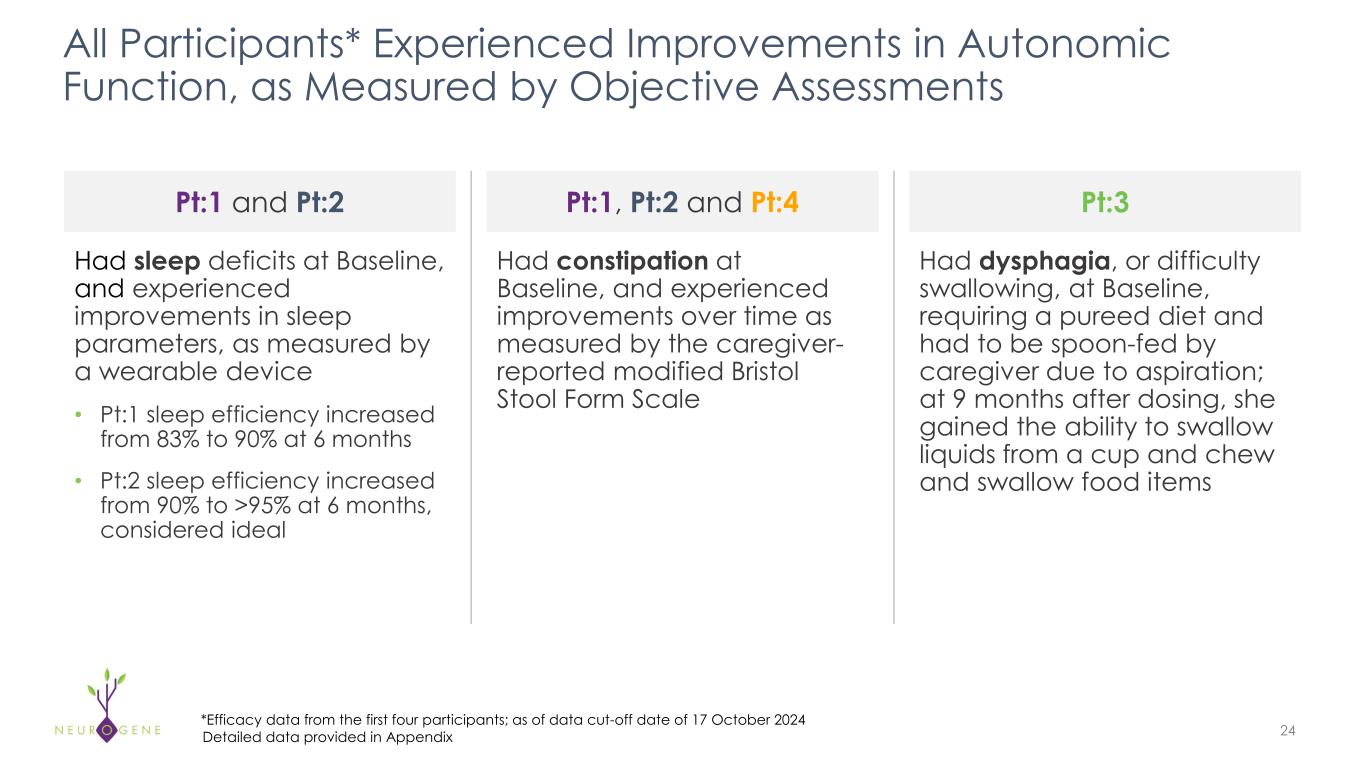
All Participants* Experienced Improvements in Autonomic Function, as Measured by Objective Assessments 24Detailed data provided in Appendix Pt:1 and Pt:2 Pt:1, Pt:2 and Pt:4 Pt:3 Had sleep deficits at Baseline, and experienced improvements in sleep parameters, as measured by a wearable device • Pt:1 sleep efficiency increased from 83% to 90% at 6 months • Pt:2 sleep efficiency increased from 90% to >95% at 6 months, considered ideal Had constipation at Baseline, and experienced improvements over time as measured by the caregiver- reported modified Bristol Stool Form Scale Had dysphagia, or difficulty swallowing, at Baseline, requiring a pureed diet and had to be spoon-fed by caregiver due to aspiration; at 9 months after dosing, she gained the ability to swallow liquids from a cup and chew and swallow food items *Efficacy data from the first four participants; as of data cut-off date of 17 October 2024


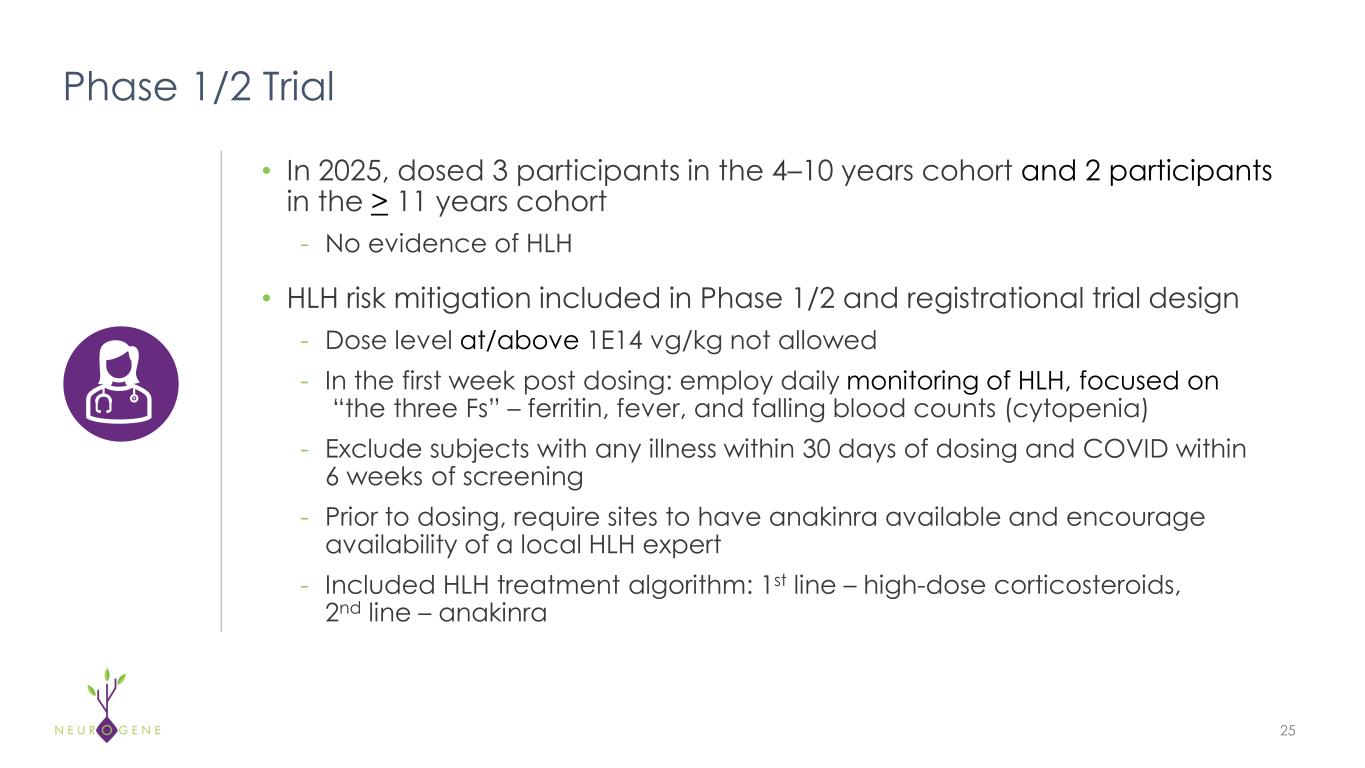
• In 2025, dosed 3 participants in the 4–10 years cohort and 2 participants in the > 11 years cohort - No evidence of HLH • HLH risk mitigation included in Phase 1/2 and registrational trial design - Dose level at/above 1E14 vg/kg not allowed - In the first week post dosing: employ daily monitoring of HLH, focused on “the three Fs” – ferritin, fever, and falling blood counts (cytopenia) - Exclude subjects with any illness within 30 days of dosing and COVID within 6 weeks of screening - Prior to dosing, require sites to have anakinra available and encourage availability of a local HLH expert - Included HLH treatment algorithm: 1st line – high-dose corticosteroids, 2nd line – anakinra 25 Phase 1/2 Trial


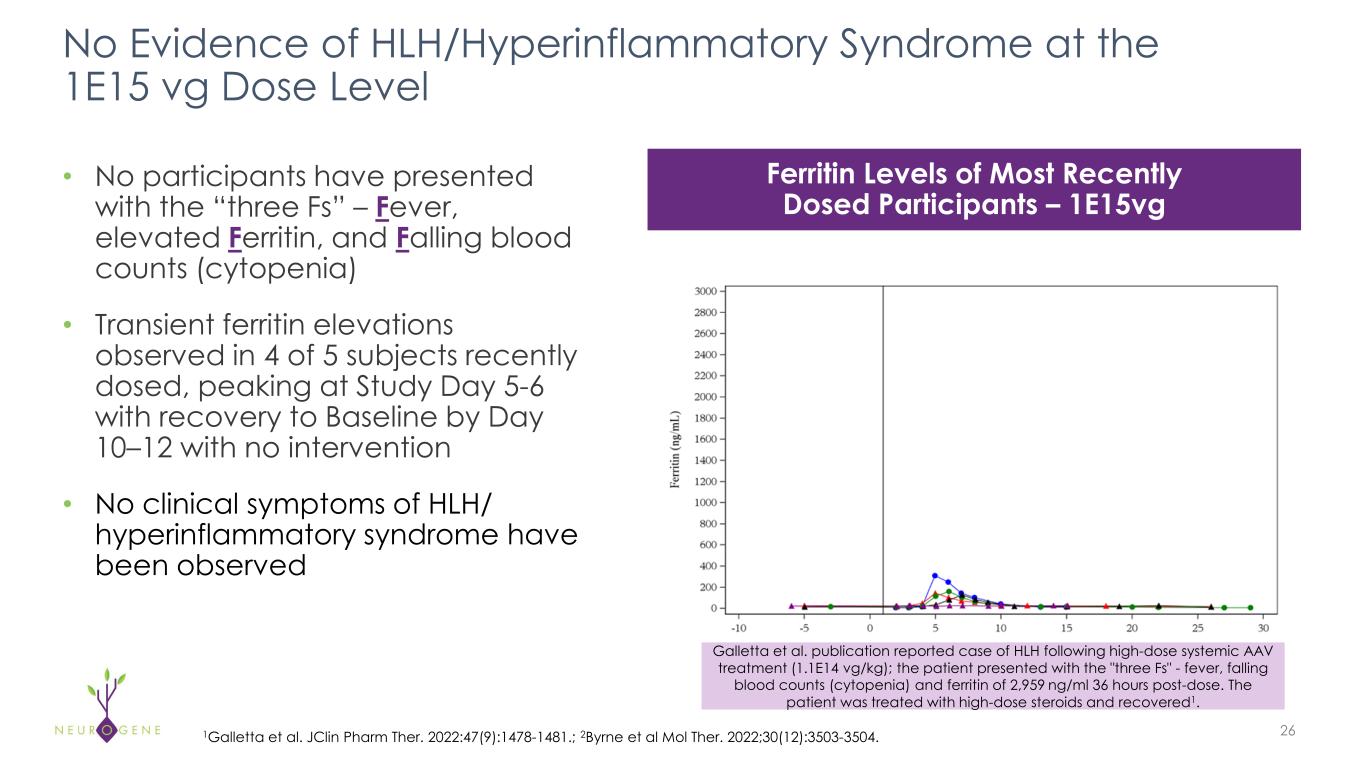
• No participants have presented with the “three Fs” – Fever, elevated Ferritin, and Falling blood counts (cytopenia) • Transient ferritin elevations observed in 4 of 5 subjects recently dosed, peaking at Study Day 5-6 with recovery to Baseline by Day 10–12 with no intervention • No clinical symptoms of HLH/ hyperinflammatory syndrome have been observed 261Galletta et al. JClin Pharm Ther. 2022:47(9):1478-1481.; 2Byrne et al Mol Ther. 2022;30(12):3503-3504. No Evidence of HLH/Hyperinflammatory Syndrome at the 1E15 vg Dose Level Ferritin Levels of Most Recently Dosed Participants – 1E15vg Galletta et al. publication reported case of HLH following high-dose systemic AAV treatment (1.1E14 vg/kg); the patient presented with the "three Fs" - fever, falling blood counts (cytopenia) and ferritin of 2,959 ng/ml 36 hours post-dose. The patient was treated with high-dose steroids and recovered1.


Key Anticipated Milestone Events


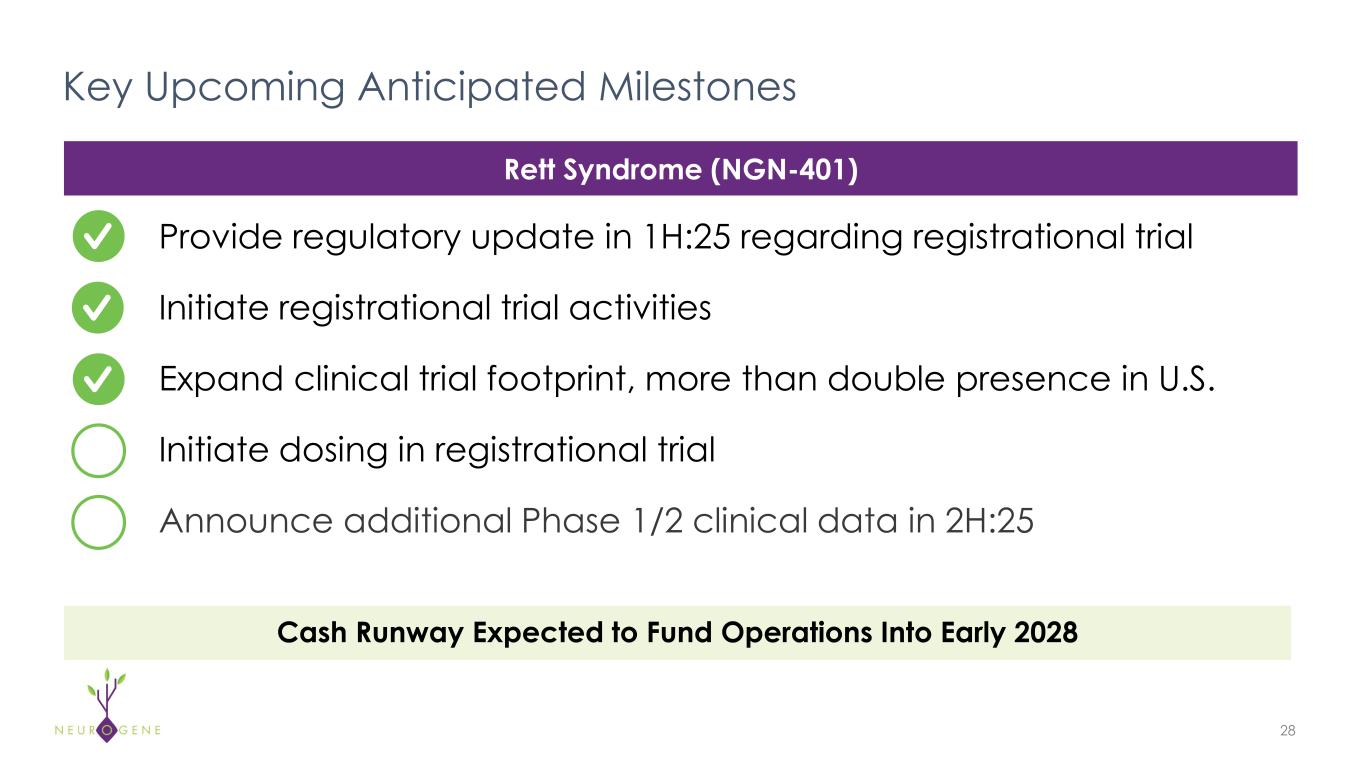
Key Upcoming Anticipated Milestones 28 Provide regulatory update in 1H:25 regarding registrational trial Initiate registrational trial activities Expand clinical trial footprint, more than double presence in U.S. Initiate dosing in registrational trial Announce additional Phase 1/2 clinical data in 2H:25 Cash Runway Expected to Fund Operations Into Early 2028 Rett Syndrome (NGN-401)


Appendix


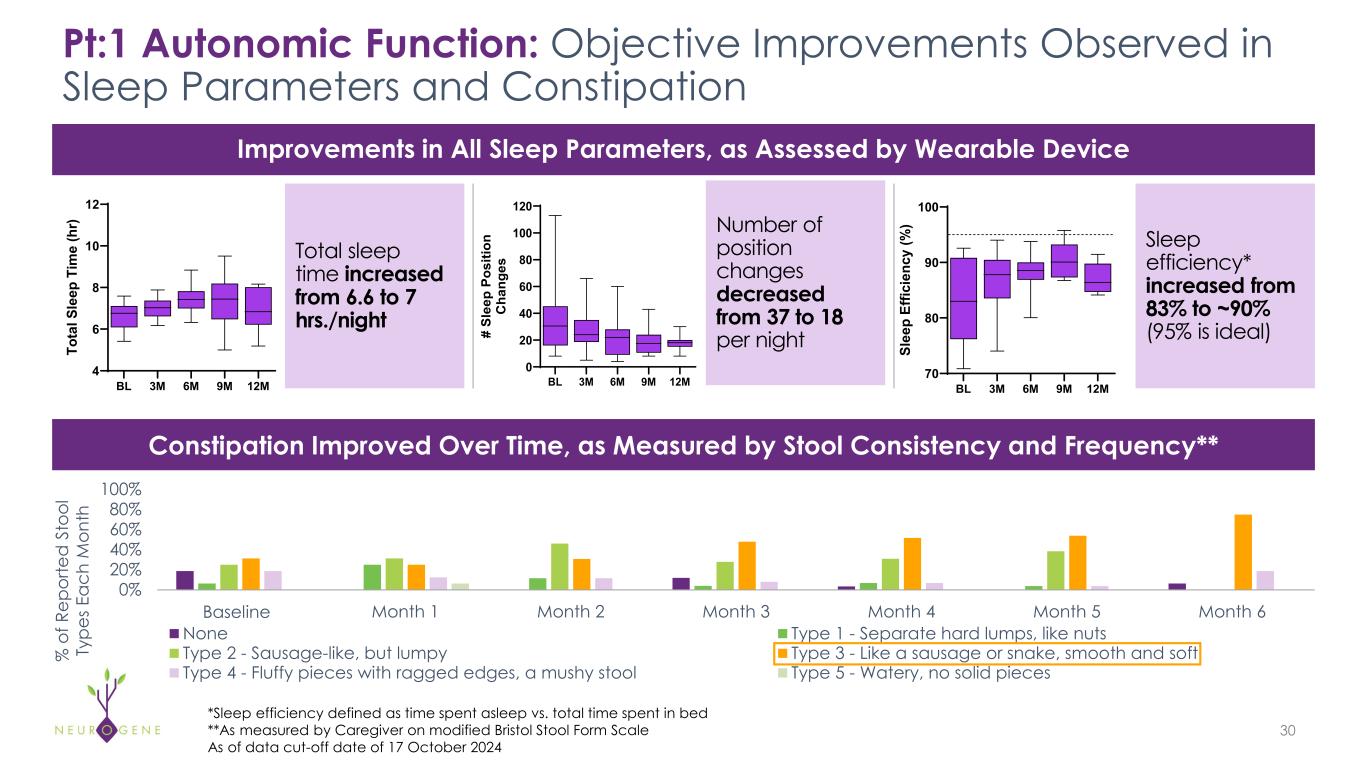
Pt:1 Autonomic Function: Objective Improvements Observed in Sleep Parameters and Constipation 30 Total sleep time increased from 6.6 to 7 hrs./night Number of position changes decreased from 37 to 18 per night Sleep efficiency* increased from 83% to ~90% (95% is ideal) Improvements in All Sleep Parameters, as Assessed by Wearable Device Constipation Improved Over Time, as Measured by Stool Consistency and Frequency** % o f R ep or te d S to ol Ty pe s E ac h M on th 0% 20% 40% 60% 80% 100% Month 0 Month 1 Month 2 Month 3 Month 4 Month 5 Month 6 None Type 1 - Separate hard lumps, like nuts Type 2 - Sausage-like, but lumpy Type 3 - Like a sausage or snake, smooth and soft Type 4 - Fluffy pieces with ragged edges, a mushy stool Type 5 - Watery, no solid pieces Baseline BL 3M 6M 9M 12M 4 6 8 10 12 To ta l S le ep T im e (h r) BL 3M 6M 9M 12M 0 20 40 60 80 100 120 # Sl ee p Po si tio n C ha ng es BL 3M 6M 9M 12M 70 80 90 100 Sl ee p Ef fic ie nc y (% ) *Sleep efficiency defined as time spent asleep vs. total time spent in bed **As measured by Caregiver on modified Bristol Stool Form Scale As of data cut-off date of 17 October 2024


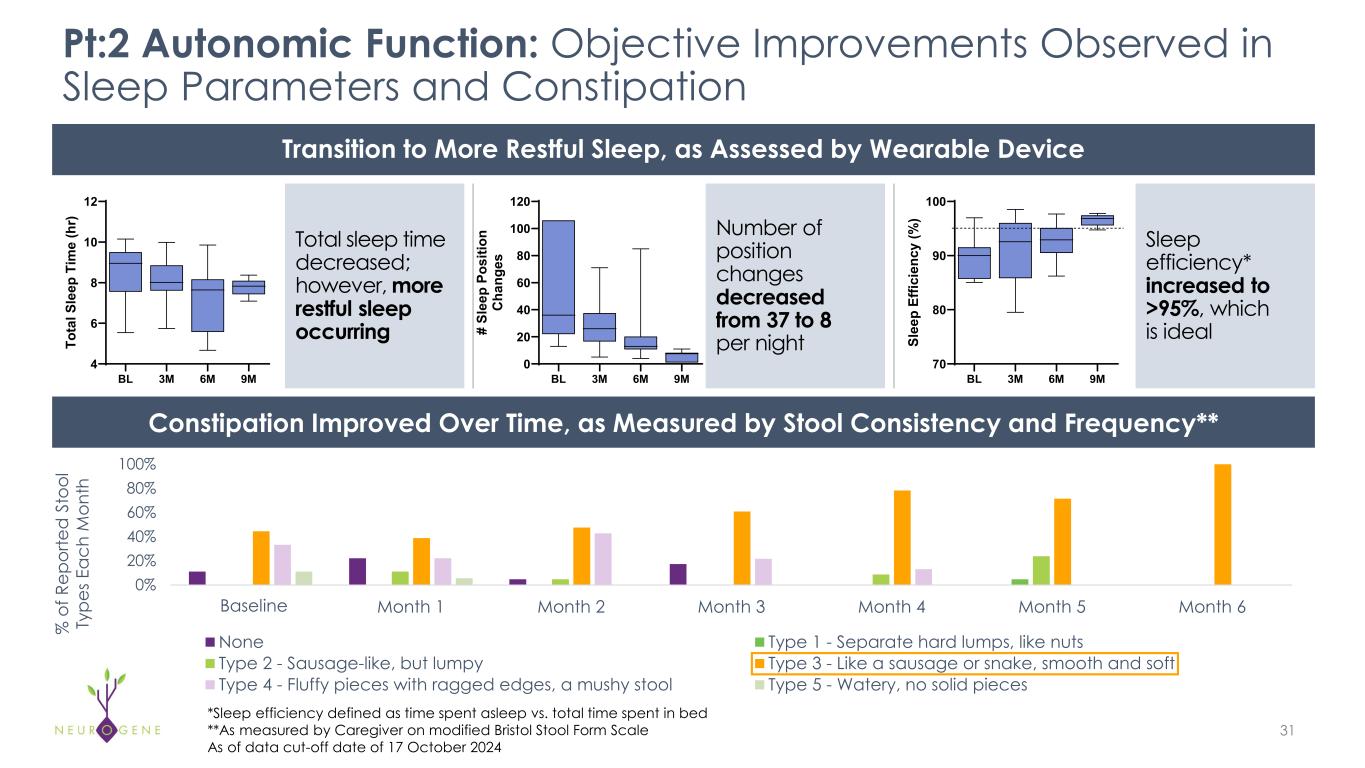
0% 20% 40% 60% 80% 100% Month 0 Month 1 Month 2 Month 3 Month 4 Month 5 Month 6 None Type 1 - Separate hard lumps, like nuts Type 2 - Sausage-like, but lumpy Type 3 - Like a sausage or snake, smooth and soft Type 4 - Fluffy pieces with ragged edges, a mushy stool Type 5 - Watery, no solid pieces Pt:2 Autonomic Function: Objective Improvements Observed in Sleep Parameters and Constipation 31 Transition to More Restful Sleep, as Assessed by Wearable Device Constipation Improved Over Time, as Measured by Stool Consistency and Frequency** Total sleep time decreased; however, more restful sleep occurring Number of position changes decreased from 37 to 8 per night Sleep efficiency* increased to >95%, which is ideal % o f R ep or te d S to ol Ty pe s E ac h M on th BL 3M 6M 9M 4 6 8 10 12 To ta l S le ep T im e (h r) BL 3M 6M 9M 0 20 40 60 80 100 120 # Sl ee p Po si tio n C ha ng es BL 3M 6M 9M 70 80 90 100 Sl ee p Ef fic ie nc y (% ) Baseline *Sleep efficiency defined as time spent asleep vs. total time spent in bed **As measured by Caregiver on modified Bristol Stool Form Scale As of data cut-off date of 17 October 2024


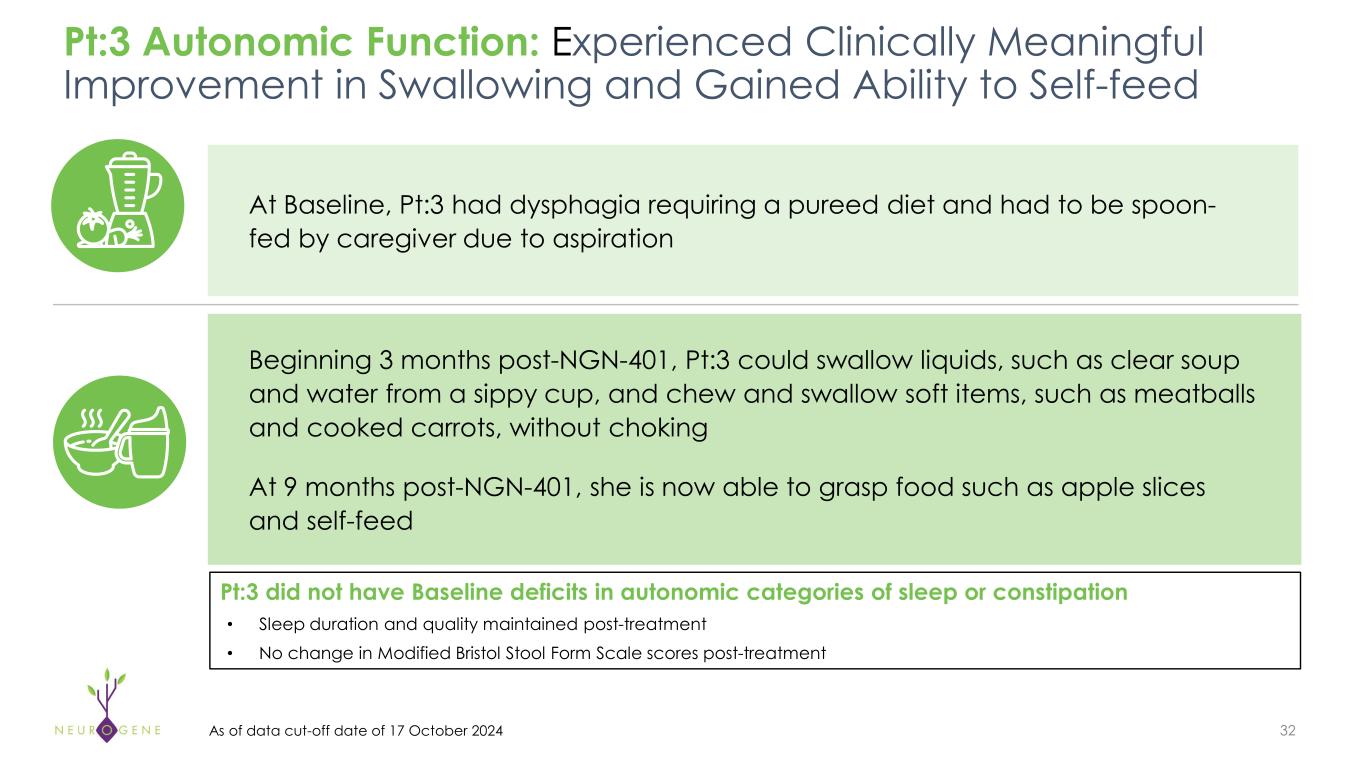
Beginning 3 months post-NGN-401, Pt:3 could swallow liquids, such as clear soup and water from a sippy cup, and chew and swallow soft items, such as meatballs and cooked carrots, without choking At 9 months post-NGN-401, she is now able to grasp food such as apple slices and self-feed At Baseline, Pt:3 had dysphagia requiring a pureed diet and had to be spoon- fed by caregiver due to aspiration Pt:3 Autonomic Function: Experienced Clinically Meaningful Improvement in Swallowing and Gained Ability to Self-feed 32 Pt:3 did not have Baseline deficits in autonomic categories of sleep or constipation • Sleep duration and quality maintained post-treatment • No change in Modified Bristol Stool Form Scale scores post-treatment As of data cut-off date of 17 October 2024


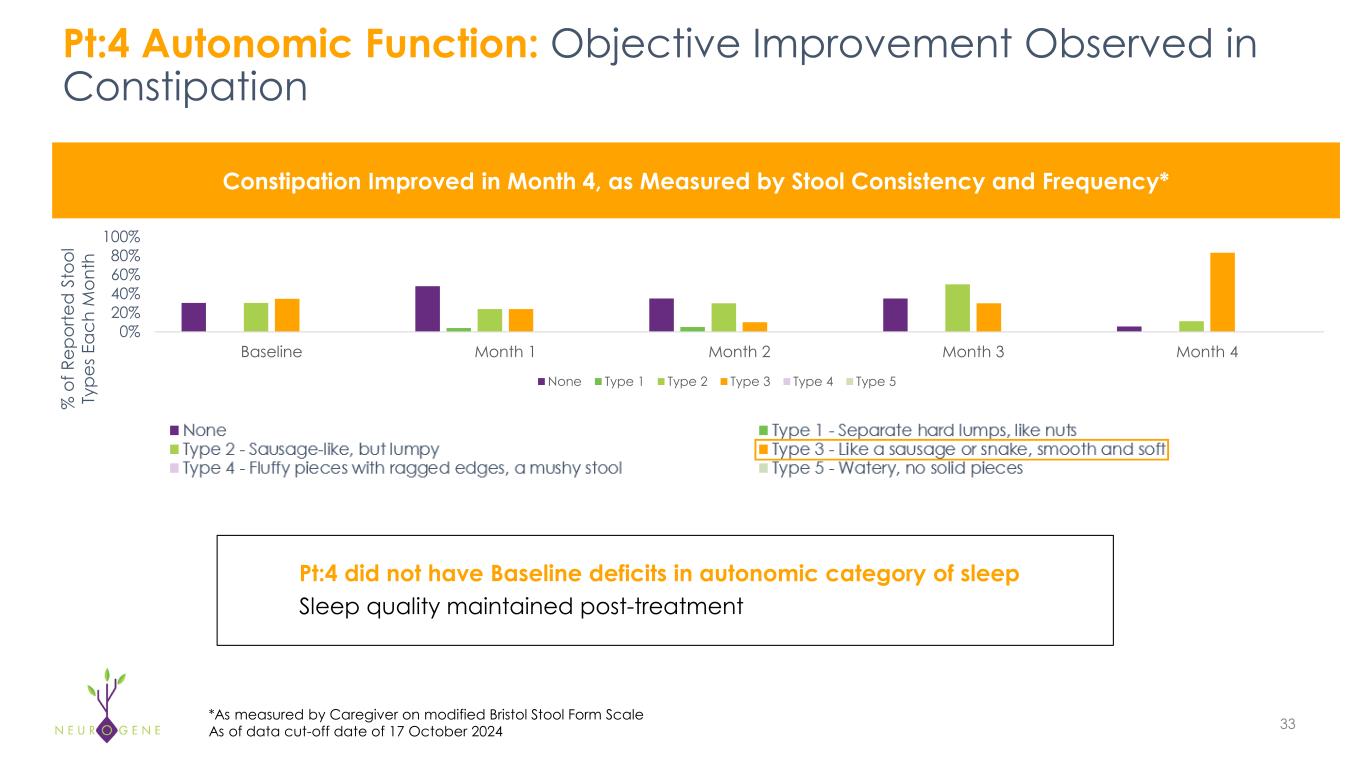
Pt:4 did not have Baseline deficits in autonomic category of sleep Sleep quality maintained post-treatment Pt:4 Autonomic Function: Objective Improvement Observed in Constipation 33 Constipation Improved in Month 4, as Measured by Stool Consistency and Frequency* *As measured by Caregiver on modified Bristol Stool Form Scale 0% 20% 40% 60% 80% 100% Baseline Month 1 Month 2 Month 3 Month 4 None Type 1 Type 2 Type 3 Type 4 Type 5 % o f R ep or te d S to ol Ty pe s E ac h M on th As of data cut-off date of 17 October 2024


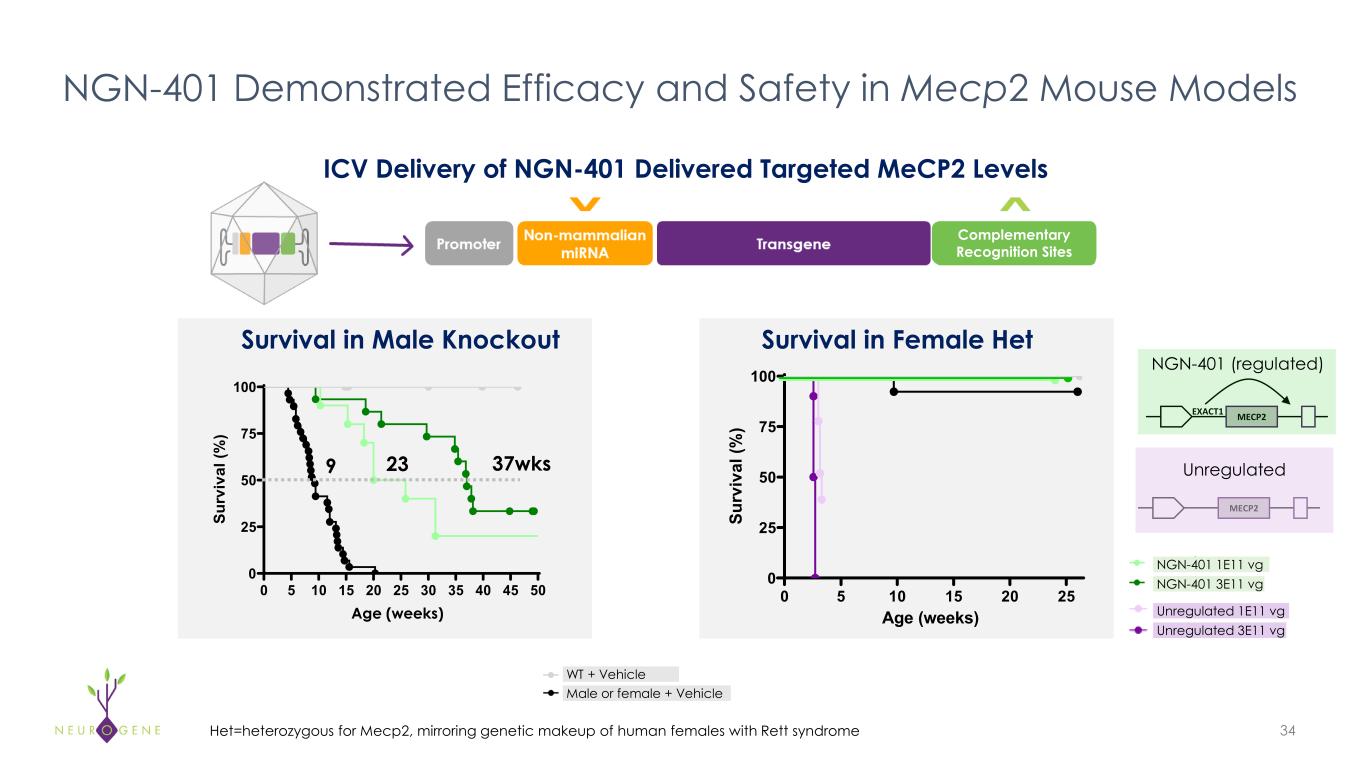
NGN-401 Demonstrated Efficacy and Safety in Mecp2 Mouse Models 34 Survival in Male Knockout 0 5 10 15 20 25 30 35 40 45 50 0 25 50 75 100 Su rv iv al (% ) 9 23 37wks Age (weeks) 0 5 10 15 20 25 0 25 50 75 100 Age (weeks) Su rv iv al (% ) Survival in Female Het NGN-401 1E11 vg NGN-401 3E11 vg MECP2EXACT1 NGN-401 (regulated) MECP2 Unregulated Unregulated 1E11 vg Unregulated 3E11 vg WT + Vehicle Male or female + Vehicle Het=heterozygous for Mecp2, mirroring genetic makeup of human females with Rett syndrome ICV Delivery of NGN-401 Delivered Targeted MeCP2 Levels Complementary Recognition Sites


Delivers Consistent Levels of MECP2 Expression on Cell- by-Cell Basis 35 Conventional NGN-MECP2 Achieves Narrow Expression of MECP2* 0 50 100 150 200 0 200 400 600 800 1000 Intensity (AU) Nu m be r o f c el ls Unregulated Regulated EXACT GTx Conventional GTx *mouse cortex immunohistochemistry