 エドガーで原本を確認する
Mar UNITED STATES
SECURITIES AND EXCHANGE COMMISSION
Washington, D.C. 20549
__________________
FORM 40-F
__________________
| ☐ | Registration Statement pursuant to Section 12 of the Securities Exchange Act of 1934 |
or
| ☒ | Annual Report pursuant to Section 13(a) or 15(d) of the Securities Exchange Act of 1934 |
For the fiscal year ended December 31, 2025
Commission File Number: 001-40786
__________________
SIGMA LITHIUM CORPORATION
(Exact name of Registrant as specified in its charter)
__________________
| Canada | 1000 | Not Applicable | ||
| (Province or other jurisdiction of incorporation or organization) |
(Primary Standard Industrial Classification Code Number) |
(I.R.S. Employer Identification Number) |
181, Bay Street, Suite 4400, Toronto, Ontario
M5J 2T3, Canada
Tel: +55 11-2985-0089
(Address and telephone number of Registrant’s principal executive offices)
C T Corporation System
28 Liberty Street
New York, New York 10005
Telephone: (212) 894-8940
(Name, address (including zip code) and telephone number (including area code) of agent for
service in the United States)
Securities registered or to be registered pursuant to Section 12(b) of the Act:
|
Title of each class |
Trading Symbol(s) |
Name of each exchange on which registered |
| Common Shares, no par value | SGML | The Nasdaq Capital Market |
Securities registered or to be registered pursuant to Section 12(g) of the Act: None
Securities for which there is a reporting obligation pursuant to Section 15(d) of the Act: None
For annual reports, indicate by check mark the information filed with this Form:
| ☒ Annual Information Form | ☒ Audited Annual Financial Statements |
Indicate the number of outstanding shares of each of the issuer’s classes of capital or common stock as of the close of the period covered by the annual report:
111,402,979 Common Shares outstanding as of December 31, 2025
Indicate by check mark whether the Registrant (1) has filed all reports required to be filed by Section 13 or 15(d) of the Exchange Act during the preceding 12 months (or for such shorter period that the Registrant was required to file such reports) and (2) has been subject to such filing requirements for the past 90 days.
Yes ☒ No ☐
Indicate by check mark whether the Registrant has submitted electronically every Interactive Data File required to be submitted pursuant to Rule 405 of Regulation S-T (§232.405 of this chapter) during the preceding 12 months (or for such shorter period that the Registrant was required to submit such files).
Yes ☒ No ☐
Indicate by check mark whether the Registrant is an emerging growth company as defined in Rule 12b-2 of the Exchange Act.
Emerging growth company ☒
If an emerging growth company that prepares its financial statements in accordance with U.S. GAAP, indicate by check mark if the Registrant has elected not to use the extended transition period for complying with any new or revised financial accounting standards† provided pursuant to Section 13(a) of the Exchange Act. ☐
†The term “new or revised financial accounting standard” refers to any update issued by the Financial Accounting Standards Board to its Accounting Standards Codification after April 5, 2012.
Indicate by check mark whether the Registrant has filed a report on and attestation to its management’s assessment of the effectiveness of its internal control over financial reporting under Section 404(b) of the Sarbanes-Oxley Act (15 U.S.C. 7262(b)) by the registered public accounting firm that prepared or issued its audit report. ☒
If securities are registered pursuant to Section 12(b) of the Act, indicate by check mark whether the financial statements of the Registrant included in the filing reflect the correction of an error to previously issued financial statements. ☐
Indicate by check mark whether any of those error corrections are restatements that required a recovery analysis of incentive-based compensation received by any of the Registrant’s executive officers during the relevant recovery period pursuant to §240.10D-1(b). ☐
INTERNAL CONTROL OVER FINANCIAL REPORTING AND DISCLOSURE CONTROLS AND PROCEDURES
The Internal Control over Financial Reporting is filed in Exhibit 99.2 hereto which contains the link to the Management’s Discussion and Analysis for the year ended December 31, 2025, incorporated herein by reference.
MANAGEMENT’S REPORT ON INTERNAL CONTROL OVER FINANCIAL REPORTING AND DISCLOSURE CONTROLS AND PROCEDURES
The Internal Control over Financial Reporting is filed in Exhibit 99.2 hereto which contains the link to the Management’s Discussion and Analysis for the year ended December 31, 2025, incorporated herein by reference.
AUDIT COMMITTEE FINANCIAL EXPERT
The Company’s Board of Directors has determined that it has at least one audit committee financial expert serving on its Audit Committee. The Board has determined that Junaid Jafar is an audit committee financial expert and is independent, as that term is defined by the Exchange Act and the Nasdaq corporate governance standards applicable to the Company.
The Audit Committee has indicated that the designation of a person as an audit committee financial expert does not make such person an “expert” for any purpose, impose on such person any duties, obligations or liability that are greater than those imposed on such person as a member of the Audit Committee and the Board in the absence of such designation and does not affect the duties, obligations or liability of any other member of the Audit Committee or Board.
CODE OF ETHICS
The Board has adopted a written code of business conduct and ethics (the “Code”), which applies to the Board and all officers and employees of the Company, including the Company’s principal executive officer, principal financial officer and principal accounting officer or controller. There were no waivers granted in respect of the Code during the fiscal year ended December 31, 2025. The Code is posted on the Company’s website at www.sigmalithiumresources.com. If there is an amendment to the Code, or if a waiver of the Code is granted to any of Company’s principal executive officers, principal financial officer, principal accounting officer or controller, the Company intends to disclose any such amendment or waiver by posting such information on the Company’s website. Unless and to the extent specifically referred to herein, the information on the Company’s website shall not be deemed to be incorporated by reference in this Annual Report.
PRINCIPAL ACCOUNTANT FEES AND SERVICES
Grant Thornton Auditores Independentes Ltda., São Paulo, Brazil, Audit Firm ID: 5270, acted as the Company’s independent registered public accounting firm for the fiscal year ended December 31, 2025 and 2024. See page 75 of the Company’s Annual Information Form, which is attached hereto as Exhibit 99.1, for the total amount billed to the Company by Grant Thornton Auditores Independentes Ltda. for services performed in the last two fiscal years by category of service (for audit fees, audit-related fees, tax fees and all other fees).
AUDIT COMMITTEE PRE-APPROVAL POLICIES AND PROCEDURES
See page 75 of the Company’s Annual Information Form, which is attached hereto as Exhibit 99.1. No audit-related fees, tax fees or other non-audit fees were approved by the Audit Committee pursuant to paragraph (c)(7)(i)(C) of Rule 2-01 of Regulation S-X.
OFF-BALANCE SHEET ARRANGEMENTS
The information included in “Financial risk factors—Market Risk” attached hereto as Exhibit 99.2 which contains the link to the Management’s Discussion and Analysis for the year ended December 31, 2025, incorporated herein by reference.
IDENTIFICATION OF THE AUDIT COMMITTEE
The Board has a separately designated standing Audit Committee established in accordance with section 3(a)(58)(A) of the Exchange Act and satisfies the requirements of Exchange Act Rule 10A-3. The Company’s Audit Committee is comprised of Junaid Jafar, Alexandre Rodrigues Cabral and Kátia Abreu, all of whom, in the opinion of the Company’s Board of Directors, are independent (as determined under Rule 10A-3 of the Exchange Act and the Nasdaq Rules) and all of whom are financially literate.
CORPORATE GOVERNANCE PRACTICES
There are certain differences between the corporate governance practices applicable to the Company and those applicable to U.S. companies under the Nasdaq Corporate Governance Requirements. A summary of the significant differences can be found on the Company’s website at www.sigmalithiumresources.com. Information contained in or otherwise accessible through the Company’s website does not form part of this Annual Report and is not incorporated into this Annual Report by reference.
MINE SAFETY DISCLOSURE
Pursuant to Section 1503(a) of the Dodd-Frank Act, issuers that are operators, or that have a subsidiary that is an operator, of a coal or other mine in the United States are required to disclose specified information about mine health and safety in their periodic reports. These reporting requirements are based on the safety and health requirements applicable to mines under the Federal Mine Safety and Health Act of 1977 (the “Mine Act”) which is administered by the U.S. Department of Labor’s Mine Safety and Health Administration (“MSHA”). During the fiscal year ended December 31, 2025, the Company and its subsidiaries were not subject to regulation by MSHA under the Mine Act and thus no disclosure is required under Section 1503(a) of the Dodd-Frank Act.
DIFFERENCES IN UNITED STATES AND CANADIAN REPORTING PRACTICES
The Company is permitted, under a multijurisdictional disclosure system adopted by the United States, to prepare this report in accordance with Canadian disclosure requirements, which are different from those of the United States. The Company prepares its financial statements, which are filed with this Annual Report in accordance with International Financial Reporting Standards as issued by the International Accounting Standards Board, and the audit is subject to Canadian auditing and auditor independence standards.
Disclosure regarding the Company’s mineral properties, including with respect to mineral reserve and mineral resource estimates included in this Annual Report, was prepared in accordance with NI 43-101. NI 43-101 is a rule developed by the Canadian Securities Administrators that establishes standards for all public disclosure an issuer makes of scientific and technical information concerning mineral projects. NI 43-101 differs significantly from the disclosure requirements of the SEC generally applicable to U.S. companies. Accordingly, information contained in this Annual Report is not comparable to similar information made public by U.S. companies reporting pursuant to SEC disclosure requirements.
INCORPORATED DOCUMENTS
Annual Information Form
The Company’s AIF is filed as Exhibit 99.1 to this Annual Report.
Management’s Discussion and Analysis
The Company’s management’s discussion and analysis (“MD&A”) is filed as Exhibit 99.2 to this Annual Report.
Audited Annual Financial Statements
The Company’s consolidated financial statements and auditor’s reports thereon are filed as Exhibit 99.3 to this Annual Report.
UNDERTAKING AND CONSENT TO SERVICE OF PROCESS
A. Undertaking
The Company undertakes to make available, in person or by telephone, representatives to respond to inquiries made by the Commission staff, and to furnish promptly, when requested to do so by the Commission staff, information relating to: the securities in relation to which the obligation to file an annual report on Form 40-F arises; or transactions in said securities.
B. Consent to Service of Process
The Company has filed an Appointment of Agent for Service of Process and Undertaking on Form F-X with respect to the class of securities in relation to which the obligation to file this Annual Report arises.
EXHIBIT INDEX
SIGNATURE
Pursuant to the requirements of the Exchange Act, Sigma Lithium Corporation certifies that it meets all of the requirements for filing on Form 40-F and has duly caused this annual report to be signed on its behalf by the undersigned, thereto duly authorized.
Dated: March 30, 2026
| SIGMA LITHIUM CORPORATION | |||
| By: | /s/ | ||
| Name: | Ana Cristina Cabral | ||
| Title: | Chief Executive Officer | ||
SIGMA LITHIUM CORPORATION
CLAWBACK POLICY
The Board of Directors (“Board”) of Sigma Lithium Corporation (the “Company”) has adopted this Policy in accordance with Nasdaq listing requirements.
A. Application of Policy
This Policy applies in the event of any restatement (“Restatement”) of the Company’s financial results due to its material non-compliance with financial reporting requirements under the securities laws.1 This Policy does not apply to restatements that are not caused by non-compliance with financial reporting requirements, such as, but not limited to, a retrospective: (1) application of a change in accounting principles; (2) revision to reportable segment information due to a change in the structure of the Company’s internal organization; (3) reclassification due to a discontinued operation; (4) application of a change in reporting entity, such as from a reorganization of entities under common control; (5) adjustment to provision amounts in connection with a prior business combination; and (6) revision for stock splits, reverse stock splits, dividends or other changes in capital structure (collectively the “Restatement Exclusions”).
B. Executive Officers Subject to the Policy
The “executive officers” of the Company are covered by this Policy. This includes the Company’s current or former Chief Executive Officer, Chief Financial Officer, any Vice-President of the Company in charge of a principal business unit, division or function, and any other current or former officer or person who performs a significant policy-making function for the Company, including executive officers of Company subsidiaries (the “Executive Officers”). All of these Executive Officers are subject to this Policy, even if an Executive Officer had no responsibility for the financial statement errors which required restatement.
C. Compensation Subject to the Policy
This Policy applies to any incentive-based compensation received by an Executive Officer during the period (the “Clawback Period”) consisting of any of the three fiscal completed years immediately preceding:
| · | the date that the Company’s Board (or Audit Committee) concludes, or reasonably should have concluded, that the Company is required to prepare a Restatement, or |
| 1 | Please note that this includes both big “R” restatement (to correct a material error to previously issued financial statements) and little “r” restatements (to correct errors that are not material to previously issued financial statements but would result in a material misstatement if (a) the errors were left uncorrected in the current report or (b) the error correction was recognized in the current period). |
|
|
| · | the date that a court, regulator, or other legally authorized body directs the Company to prepare a Restatement. |
This Policy covers all incentive-based compensation (including any cash or equity compensation) that is granted, earned or vested based wholly or in part upon the attainment of any “financial reporting measure”. Financial reporting measures are those that are determined and presented in accordance with the accounting principles used in preparing the Company’s financial statements and any measures derived wholly or in part from such financial information (including non-GAAP measures, stock price and total shareholder return). Incentive-based compensation is deemed “received” in the fiscal period during which the applicable financial reporting measure (as specified in the terms of the award) is attained, even if the payment or grant occurs after the end of that fiscal period.
Incentive-based compensation does not include base annual salary, compensation which is awarded based solely on service to the Company (e.g. a time-vested award, including time-vesting stock options or restricted share units), nor does it include compensation which is awarded based on subjective standards, strategic measures (e.g. completion of a merger) or operational measures (e.g. attainment of a certain market share).
D. Amount Required to be Repaid Pursuant to this Policy
The amount of incentive-based compensation that must be repaid (subject to the few limitations discussed below) is the amount of incentive-based compensation received by the Executive Officer that exceeds the amount of incentive-based compensation that otherwise would have been received had it been determined based on the Restatement (the “Recoverable Amount”). Applying this definition, after a Restatement, the Company will recalculate the applicable financial reporting measure and the Recoverable Amount in accordance with SEC and exchange rules. The Company will determine whether, based on that financial reporting measure as calculated relying on the original financial statements, an Executive Officer received a greater amount of incentive-based compensation than would have been received applying the recalculated financial measure. Where incentive-based compensation is based only in part on the achievement of a financial reporting measure performance goal, the Company will determine the portion of the original incentive-based compensation based on or derived from the financial reporting measure which was restated and will recalculate the affected portion based on the financial reporting measure as restated to determine the difference between the greater amount based on the original financial statements and the lesser amount that would have been received based on the Restatement. The Recoverable Amounts will be calculated on a pre-tax basis to ensure that the Company recovers the full amount of incentive-based compensation that was erroneously awarded.
In no event shall the Company be required to award Executive Officers an additional payment if the restated or accurate financial results would have resulted in a higher incentive compensation payment.
|
|
If equity compensation is recoverable due to being granted to the Executive Officer (when the accounting results were the reason the equity compensation was granted) or vested by the Executive Officer (when the accounting results were the reason the equity compensation was vested), in each case in the Clawback Period, the Company will recover the excess portion of the equity award that would not have been granted or vested based on the Restatement, as follows:
| · | if the equity award is still outstanding, the Executive Officer will forfeit the excess portion of the award; |
| · | if the equity award has been exercised or settled into shares (the “Underlying Shares”), and the Executive Officer still holds the Underlying Shares, the Company will recover the number of Underlying Shares relating to the excess portion of the award (less any exercise price paid for the Underlying Shares); and |
| · | if the Underlying Shares have been sold by the Executive Officer, the Company will recover the proceeds received by the Executive Officer from the sale of the Underlying Shares relating to the excess portion of the award (less any exercise price paid for the Underlying Shares). |
The Board will take such action as it deems appropriate, in its sole and absolute discretion, reasonably promptly to recover the Recoverable Amount, unless all of the independent directors of the Board determine that it would be impracticable to recover such amount because (1) the direct costs of enforcing recovery would exceed the Recoverable Amount,2 or (2) recovery would likely cause an otherwise tax-qualified retirement plan, under which benefits are broadly available to employees of the Company, to fail to meet the requirements of 26 U.S.C. 401(a)(13) or 26 U.S.C. 411(a) and regulations thereunder3, or (3) if the recovery of the incentive-based compensation would violate the home-country laws of the Company.
E. Additional Clawback Required by Section 304 of the Sarbanes-Oxley Act of 2002
In addition to the provisions described above, if the Company is required to prepare an accounting restatement due to the material noncompliance of the Company, as a result of misconduct, with any financial reporting requirement under the securities laws, then, in accordance with Section 304 of the Sarbanes-Oxley Act of 2002, the Chief Executive Officer and Chief Financial Officer (at the time the financial document embodying such financial reporting requirement was originally issued) shall reimburse the Company for:
| · | any bonus or other incentive-based or equity-based compensation received from the Company during the 12-month period following the first public issuance or filing with the Commission (whichever first occurs) of such financial document; and |
| 2 | To reach this determination, the Company must have first made a reasonable and documented attempt at recovery. |
| 3 | To reach this determination, the Company must obtain an opinion of counsel. |
|
|
| · | any profits realized from the sale of securities of the Company during that 12-month period. |
F. Crediting of Recovery Amounts
To the extent that subsections A, B, C and D of this policy (the “Rule 10D-1 Clawback Requirements”) would provide for recovery of incentive-based compensation recoverable by the Company pursuant to Section 304 of the Sarbanes-Oxley Act, in accordance with subsection E of this policy (the “Sarbanes-Oxley Clawback Requirements”), and/or any other recovery obligations (including pursuant to employment agreements, or plan awards), the amount such Executive Officer has already reimbursed the Company shall be credited to the required recovery under the Rule 10D-1 Clawback Requirements. Recovery pursuant to the Rule 10D-1 Clawback Requirements does not preclude recovery under the Sarbanes-Oxley Clawback Requirements, to the extent any applicable amounts have not been reimbursed to the Company.
G. General Provisions
This Policy may be amended by the Board from time to time. Changes to this Policy will be communicated to all persons to whom this Policy applies.
The Company will not indemnify or provide insurance to cover any repayment of incentive-based compensation in accordance with this Policy.
The provisions of this Policy apply to the fullest extent of the law; provided however, to the extent that any provisions of this Policy are found to be unenforceable or invalid under any applicable law, such provision will be applied to the maximum extent permitted, and shall automatically be deemed amended in a manner consistent with its objectives to the extent necessary to conform to any limitations required under applicable law.
This Policy is in addition to (and not in lieu of) any right of repayment, forfeiture or right of offset against any Executive Officer that is required pursuant to any other statutory repayment requirement (regardless of whether implemented at any time prior to or following the adoption of this Policy). Nothing in this Policy in any way detracts from or limits any obligation that those subject to it have in law or pursuant to a management, employment, consulting or other agreement with the Company or any of its subsidiaries.
All determinations and decisions made by the Board (or any committee thereof) pursuant to the provisions of this Policy shall be final, conclusive and binding on the Company, its subsidiaries and the persons to whom this Policy applies. Executive Officers (as defined above) are required to acknowledge that they have read this Policy annually. If you have questions about the interpretation of this Policy, please contact the Chief Legal Officer of the Company.
|
|
| |
Definitions
For a description of defined terms and other reference information used in this Annual Information Form (this “AIF”), please refer to Schedule “B”.
CIM Definition Standards
The disclosure included in this AIF uses mineral resource and mineral reserve classification terms that comply with reporting standards in Canada. All mineral resource and mineral reserve estimates are made in accordance with the CIM Definition Standards and National Instrument 43-101 (“NI 43-101”), which is a set of rules developed by the Canadian Securities Administrators that establishes standards for all public disclosure an issuer makes of scientific and technical information concerning mineral projects and operations. The following definitions are reproduced from the CIM Definition Standards:
A “mineral resource” is a concentration or occurrence of solid material of economic interest in or on the Earth’s crust in such form, grade or quality and quantity that there are reasonable prospects for eventual economic extraction. The location, quantity, grade or quality, continuity and other geological characteristics of a mineral resource are known, estimated or interpreted from specific geological evidence and knowledge, including sampling. Mineral resources are sub-divided, in order of increasing geological confidence, into inferred, indicated and measured categories, which are defined as follows:
| · | An “inferred mineral resource” is that part of a mineral resource for which quantity, grade or quality are estimated on the basis of limited geological evidence and sampling. Geological evidence is sufficient to imply but not verify geological and grade or quality continuity. An inferred mineral resource has a lower level of confidence than that applying to an indicated mineral resource and must not be converted to a mineral reserve. It is reasonably expected that the majority of inferred mineral resources could be upgraded to indicated mineral resources with continued exploration. |
| · | An “indicated mineral resource” is that part of a mineral resource for which quantity, grade or quality, densities, shape and physical characteristics are estimated with sufficient confidence to allow the application of modifying factors (as defined below) in sufficient detail to support mine planning and evaluation of the economic viability of the deposit. Geological evidence is derived from adequately detailed and reliable exploration, sampling and testing and is sufficient to assume geological and grade or quality continuity between points of observation. An indicated mineral resource has a lower level of confidence than that applying to a measured mineral resource and may only be converted to a probable mineral reserve. |
| · | A “measured mineral resource” is that part of a mineral resource for which quantity, grade or quality, densities, shape, and physical characteristics are estimated with confidence sufficient to allow the application of modifying factors to support detailed mine planning and final evaluation of the economic viability of the deposit. Geological evidence is derived from detailed and reliable exploration, sampling and testing, and is sufficient to confirm geological and grade or quality continuity between points of observation. A measured mineral resource has a higher level of confidence than that applying to either an indicated mineral resource or an inferred mineral resource. It may be converted to a proven mineral reserve or to a probable mineral reserve. |
“Modifying factors” are considerations used to convert mineral resources to mineral reserves. These include, but are not restricted to, mining, processing, metallurgical, infrastructure, economic, marketing, legal, environmental, social and governmental factors.
A “mineral reserve” is the economically mineable part of a measured and/or indicated mineral resource. It includes diluting materials and allowances for losses which may occur when the material is mined or extracted and is defined by studies at pre-feasibility or feasibility level as appropriate that include application of modifying factors. Such studies demonstrate that, at the time of reporting, extraction could reasonably be justified. Mineral reserves are sub-divided, in order of increasing geological confidence, into probable and proven categories, which are defined as follows:
| |
| · | A “probable mineral reserve” is the economically mineable part of an indicated, and in some circumstances, a measured mineral resource. The confidence in the modifying factors applying to a probable mineral reserve is lower than that applying to a proven mineral reserve. |
| · | A “proven mineral reserve” is the economically mineable part of a measured mineral resource. A proven mineral reserve implies a high degree of confidence in the modifying factors. |
CAUTIONARY NOTE REGARDING FORWARD LOOKING INFORMATION
Certain information and statements in the MD&A included herein and in this AIF may constitute “forward-looking information” within the meaning of Canadian securities legislation and “forward-looking statements” within the meaning of U.S. securities legislation (collectively, “Forward-Looking Information”), which involve known and unknown risks, uncertainties, and other factors which may cause the actual results, performance or achievements of the Company, or industry results, to be materially different from any future results, performance or achievements expressed or implied by such Forward-Looking Information. All statements, other than statements of historical fact, may be Forward-Looking Information, including, but not limited to, mineral resource or mineral reserve estimates (which reflect a prediction of the mineralization that would be realized by development). When used in this AIF, such statements generally use words such as “may”, “would”, “could”, “will”, “intend”, “expect”, “believe”, “plan”, “anticipate”, “estimate” and other similar terminology. These statements reflect management’s current expectations regarding future events and operating performance and speak only as of the date of this AIF. Forward Looking Information involves significant risks and uncertainties, should not be read as guarantees of future performance or results, and does not necessarily provide accurate indications of whether or not such results will be achieved. A number of factors could cause actual results to differ materially from the results discussed in the Forward Looking Information, which is based upon what management believes are reasonable assumptions, and there can be no assurance that actual results will be consistent with the Forward Looking Information.
In particular (but without limitation), this AIF contains Forward Looking Information with respect to the following matters: statements regarding anticipated decision making with respect to the Company; capital expenditure programs; estimates of mineral resources and mineral reserves; development of mineral resources and mineral reserves; government regulation of mining operations and treatment under governmental and taxation regimes; the future price of commodities, including lithium; the realization of mineral resource and mineral reserve estimates, including whether mineral resources will ever be developed into mineral reserves; the timing and amount of future production; currency exchange and interest rates; expected outcome and timing of environmental surveys and permit applications and other environmental matters; potential positive or negative implications of change in government; the Company’s ability to raise capital and obtain project financing; expected expenditures to be made by the Company on its properties; successful operations and the timing, cost, quantity, capacity and quality of production; capital costs, operating costs and sustaining capital requirements, including the cost of construction of the processing plant; and competitive conditions and the ongoing uncertainties and effects in respect of the military and global conflicts.
Forward-Looking Information does not take into account the effect of transactions or other items announced or occurring after the statements are made. Forward-Looking Information is based upon a number of expectations and assumptions and is subject to several risks and uncertainties, many of which are beyond the Company’s control, that could cause actual results to differ materially from those disclosed in or implied by such Forward-Looking Information. With respect to the Forward-Looking Information, the Company has made assumptions regarding, among other things:
| · | General economic and political conditions (including but not limited to the impact of the continuance or escalation of the military conflict between Russia and Ukraine, the military conflict in Middle East, and other military and global conflicts, and the multinational economic sanctions in relation to such conflicts). |
| |
| · | Stable and supportive legislative, regulatory and community environment in the jurisdictions where the Company operates. |
| · | Stability and inflation of the Brazilian Real, including any foreign exchange or capital controls which may be enacted in respect thereof, and the effect of current or any additional regulations on the Company’s operations. |
| · | Demand for lithium, including that such demand is supported by growth in the EV market. |
| · | Estimates of, and changes to, the market prices for lithium. |
| · | The impact of increasing competition in the lithium business and the Company’s competitive position in the industry. |
| · | The Company’s market position and financial and operating performance. |
| · | The Company’s estimates of mineral resources and mineral reserves, including whether mineral resources will ever be developed into mineral reserves. |
| · | Anticipated timing and results of exploration, development and construction activities. |
| · | Reliability of technical data. |
| · | The Company’s ability to maintain full capacity commercial production, including that the Company will not experience any materials or equipment shortages, any labor or service provider outages or delays or any technical issues. |
| · | The Company’s ability to obtain financing on satisfactory terms to develop its projects, if required. |
| · | The Company’s ability to obtain and maintain mining, exploration, environmental and other permits, authorizations and approvals. |
| · | The timing and outcome of regulatory and permitting matters. |
| · | The exploration, development, construction and operational costs. |
| · | The accuracy of budget, construction and operations estimates for the Company. |
| · | Successful negotiation of definitive commercial agreements. |
| · | The Company’s ability to operate in a safe and effective manner. |
Although management believes that the assumptions and expectations reflected in such Forward-Looking Information are reasonable, there can be no assurance that these assumptions and expectations will prove to be correct. Since Forward-Looking Information inherently involves risks and uncertainties, undue reliance should not be placed on such information.
In addition, Forward Looking Information with respect to the potential outlook and future financial results contained in this AIF is based on assumptions noted above and about future events, including economic conditions and proposed courses of action, based on management's assessment of the relevant information available as at the date of such information. Readers are cautioned that any such information should not be used for purposes other than for which it is disclosed.
The Company’s actual results could differ materially from those anticipated in any Forward-Looking Information as a result of various known and unknown risk factors, including (but not limited to) the risk factors referred to under the heading “Risk Factors” in this AIF. Such risks relate to, but are not limited to, the following:
| · | The Company’s mineral resource and mineral reserve estimates are estimates only and no assurance can be given that any particular level of recovery of minerals will in fact be realized or that identified mineral resources or mineral reserves will ever qualify as a commercially mineable (or viable) deposit. |
| · | The Company’s future production estimates are based on existing mine plans and other assumptions which change from time to time. No assurance can be given that such estimates will be achieved. |
| · | The Company’s capital and operating cost estimates may vary from actual costs and revenues for reasons outside of the Company’s control. |
| · | The Company's operations are subject to the high degree of risk normally incidental to the exploration for, and the development and operation of, mineral properties. |
| |
| · | Insurance may not be available to insure against all such risks, or the costs of such insurance may be uneconomic. Losses from uninsured and underinsured losses have the potential to materially affect the Company’s financial position and prospects. |
| · | The Company is subject to risks associated with securing title, property interests and exploration and exploitation rights. |
| · | The Company is subject to strong competition in Brazil and in the global mining industry. |
| · | There can be no assurance that market prices for lithium will remain at current levels or that such prices will improve. |
| · | The market for EVs and other large format batteries remains an emerging technology in several markets. No assurances can be given for the rate at which this market will develop, if at all, which could affect the success of the Company and its ability to expand lithium operations. |
| · | Changes in technology or other developments could result in preferences for substitute products. |
| · | The imbalance in the lithium market due to an excess of supply from new or existing competitors could adversely affect prices. |
| · | The Company’s financial condition, operations and results of operations are subject to political, economic, social, regulatory and geographic risks of doing business in Brazil. |
| · | Inflation in Brazil, along with Brazilian governmental measures to combat inflation, may have a significant negative effect on the Brazilian economy and, as a result, on the Company’s financial condition and results of operations. |
| · | Violations of anti-corruption, anti-bribery, anti-money laundering and economic sanctions laws and regulations could materially adversely affect the Company’s business, reputation, results of operations and financial condition. |
| · | Corruption and fraud in Brazil relating to ownership of real estate could materially adversely affect the Company’s business, reputation, results of operations and financial condition. |
| · | The Company is subject to regulatory frameworks applicable to the Brazilian mining industry which could be subject to further change, as well as government approval and permitting requirements, which may result in limitations on the Company’s business and activities. |
| · | The Company is subject to currency fluctuation risks. |
| · | The Company is subject to interest rates fluctuation. |
| · | The Company may face challenges in accessing global capital markets. |
| · | The Company is exposed to risks associated with doing business with counterparties, which may impact the Company’s operations and financial condition. |
| · | The Company may not be able to secure the supply of key raw material. |
| · | The Company may not be able to meet the quality requirements of its customers. |
| · | Any limitation on the transfer of cash or other assets between the Company and the Company’s subsidiaries, or among such entities, could restrict the Company’s ability to fund its operations efficiently or the ability of its subsidiaries to distribute cash otherwise available for distributions. |
| · | The Company is subject to risks associated with its reliance on consultants and others for mineral exploration and exploitation expertise. |
| · | Operating cash flow may be insufficient for future needs. |
| · | The Company may be unable to achieve cash flow from operating activities sufficient to permit it to pay the principal, premium, if any, and interest on the Company’s indebtedness, or maintain its debt covenants. |
| · | The Company may not be able to obtain sufficient financing in the future on acceptable terms, which could have a material adverse effect on the Company’s business, results of operations and financial condition. In order to obtain additional financing, the Company may conduct additional (and possibly dilutive) equity offerings or debt issuances in the future. |
| · | From time to time, the Company may become involved in litigation, which may have a material adverse effect on its business, financial condition and prospects. |
| |
| · | Failure to retain key officers, consultants and employees or to attract and retain additional key individuals with necessary skills could have a materially adverse impact upon the Company’s success. |
| · | The Company’s business depends on strong labor and employment relations. |
| · | Failure in the infrastructure that the Company relies upon could have an adverse effect on its operations. |
| · | The Company’s operations are subject to numerous environmental laws and regulations and expose the Company to environmental compliance risks, which may result in significant costs and have the potential to reduce the profitability of operations. |
| · | Physical climate change events and the trend toward more stringent regulations aimed at reducing the effects of climate change could have an adverse effect on the Company’s business and operations. |
| · | The Company may become subject to government orders, investigations, inquiries or other proceedings (including civil claims) relating to securities, labor, environmental and health and safety matters, which could result in consequences material to its business and operations. |
| · | The Company’s operations and the development of Sigma Lithium’s properties may be adversely affected if it is unable to maintain positive community relations. |
| · | Actions taken by foreign governments regarding critical minerals may affect the Company’s business. |
| · | The Company’s operations may be adversely affected if its licenses and permits are challenged, revoked, amended, not issued or not renewed. |
| · | The Company may be subject to sudden tax changes, which can have a material adverse effect on profitability. |
| · | The Company has not declared or paid dividends in the past and may not declare or pay dividends in the future. |
| · | The market price for the Company’s Common Shares may be volatile and subject to wide fluctuations in response to numerous factors beyond its control, and the Company may be subject to securities litigation as a result. |
| · | If securities analysts, industry analysts or activist short sellers publish research or other reports about the Company’s business, prospects or value, which questions or downgrades the value of the Company, the price of the Common Shares could decline. |
| · | The Company will have broad discretion over the use of the net proceeds from offerings of its securities. |
| · | There is no guarantee that the Common Shares will earn any positive return in the short term or long term. |
| · | The Company has increased costs as a result of being a public company both in Canada listed on the TSXV and in the United States listed on the Nasdaq, and its management is required to devote further substantial time to United States public company compliance efforts. |
| · | If the Company does not implement and maintain adequate and appropriate internal controls over financial reporting as outlined in accordance with NI 52109 or the Rules and Regulations of the SEC, inappropriately designed or ineffective controls could result in inaccurate financial reporting. |
| · | As a foreign private issuer, the Company is subject to different U.S. securities laws and rules than a domestic U.S. issuer, which may limit the information publicly available to its shareholders. |
| · | The Company may be a Passive Foreign Investment Company, which may result in adverse U.S. federal income tax consequences for U.S. holders of Common Shares. |
| · | The current military conflict in Ukraine and the Middle East and the economic or other sanctions imposed in response to such military conflicts and other global conflicts may impact global markets in such a manner as to have a material adverse effect on the Company’s business, operations, financial condition and stock price. |
| · | Certain directors and officers of the Company are, or may become, associated with other natural resource companies which may give rise to conflicts of interest. |
| · | The Company has a major shareholder which owns 42.77% of the outstanding Common Shares and, as such, for as long as such shareholder directly or indirectly maintains a significant interest in the Company, it may be in a position to affect the Company’s governance, operations and the market price of the Common Shares. |
| |
| · | As the Company is a Canadian corporation but many of its directors and officers are not citizens or residents of Canada or the U.S., it may be difficult or impossible for an investor to enforce judgements against the Company and its directors and officers outside of Canada and the U.S. which may have been obtained in Canadian or U.S. courts or initiate court action outside Canada or the U.S. against the Company and its directors and officers in respect of an alleged breach of securities laws or otherwise. Similarly, it may be difficult for U.S. shareholders to effect service on the Company to realize on judgments obtained in the United States. |
| · | The Company is governed by the Ontario Business Corporations Act and by the securities laws of the province of Ontario, which in some cases have a different effect on shareholders than U.S. corporate laws and U.S. securities laws. |
| · | The Company is subject to risks associated with its information technology systems and cyber-security. |
Readers are cautioned that the foregoing lists of assumptions and risks is not exhaustive. The Forward-Looking Information contained in this AIF is expressly qualified by these cautionary statements. All Forward Looking Information in this AIF speaks as of the date of this AIF. The Company does not undertake any obligation to update or revise any Forward-Looking Information, whether as a result of new information, future events or otherwise, except as required by applicable securities law. Additional information about these assumptions, risks and uncertainties is contained in the Company’s filings with securities regulators, including the Company’s most recent annual MD&A, which are available on SEDAR+ at www.sedarplus.ca and on EDGAR at www.sec.gov.
CAUTIONARY NOTE REGARDING MINERAL RESOURCE AND MINERAL RESERVE ESTIMATES
Technical disclosure included in this AIF regarding the Company’s properties, and in the documents incorporated herein by reference, has not been prepared in accordance with the requirements of U.S. securities laws. Without limiting the foregoing, such technical disclosure uses terms that comply with reporting standards in Canada and estimates are made in accordance with NI 43-101. Unless otherwise indicated, all mineral reserve and mineral resource estimates contained in the technical disclosure have been prepared in accordance with NI 43-101 and the CIM Definition Standards.
NI 43-101 is a rule developed by the Canadian Securities Administrators that establishes standards for all public disclosure an issuer makes of scientific and technical information concerning mineral projects. NI 43-101 differs significantly from the disclosure requirements of the SEC generally applicable to U.S. companies. Accordingly, information contained in this AIF is not comparable to similar information made public by U.S. companies reporting pursuant to SEC disclosure requirements.
Currency and Functional Currency
The Company's functional currency is the currency of the primary economic environment in which it operates and that best reflects its business and operations. The Company’s operations are held by the Brazilian subsidiary, Sigma Mineração S.A., which provides the entirety of the inflows and outflows of the Company, including any dividends to be remitted. The Parent Company in Canada is a pure holding company with no operations and depends on the Brazilian subsidiary to provide its cash flow. The prices of the lithium commodity are globally referenced in U.S. dollars to provide reference for market players located in different countries and different currencies. Consequently, the Company’s revenues are translated into the Brazilian Real, which is the currency that most of the costs for supplying products or services are incurred and which the costs are normally expressed and settled. Accordingly, the Company’s functional currency is the Brazilian Real ("R$").
| |
This AIF contains references to United States dollars, Canadian dollars and Brazilian Reais. All dollar amounts referenced, unless otherwise indicated, are expressed in United States dollars, referred to herein as “US$”. Canadian dollars are referred to herein as “CAD”. Brazilian Reais are referred to herein as “R$”.
The following table sets forth the high and low, average and period-end exchange rates for one US dollar expressed in Canadian dollars and Brazilian Reais for each period indicated, based upon the daily exchange rates provided by Central Bank of Brazil (“Banco Central do Brasil”) and Bank of Canada:
| 2025 | 2024 | |
| High | CAD1.46/R$6.21 | CAD1.44/R$6.20 |
| Low | CAD1.36/R$5.27 | CAD1.33/R$4.85 |
| Rate as of December 31 | CAD1.37/R$5.50 | CAD1.44/R$6.19 |
| Average rate for period (full year) | CAD1.40/R$5.59 | CAD1.37/R$5.39 |
Presentation currency of the financial statements
On January 1, 2025, the Company elected to change its presentation currency from Canadian Dollars (“CAD”) to United States Dollars (“US$”). This change was made to better reflect the Company’s business operations and to enhance the comparability of its financial results with those of other publicly traded companies in the mining industry. The change in presentation currency has been applied retrospectively, and comparative financial information has been restated as though US$ had always been the Company’s presentation currency, in accordance with IAS 21 and IAS 8 - Accounting Policies, Changes in Accounting Estimates and Errors.
For reporting periods prior to January 1, 2025, the statements of financial position have been translated from the functional currency (R$) to the new presentation currency (US$) using the exchange rates prevailing at each respective reporting date. Equity items, however, have been translated using historical accumulated rates dating back to the Company’s incorporation in 2018. The statements of income / (loss) and comprehensive income / (loss) were translated at average exchange rates for each reporting period, or at the rate prevailing on the date of the transaction. Exchange differences arising from the translation of 2024 financial information from R$ (functional currency) to US$ (presentation currency) have been recognized in other comprehensive income / (loss) and accumulated in a separate component of equity.
In compliance with IFRS Accounting Standards, the Company also presented a third statement of financial position as of January 1, 2024. Equity balances were restated using historical average exchange rates, except for significant transactions, which were translated using the actual historical rates. Any resulting differences were recorded as adjustments to the foreign currency translation reserve.
Third Party Information
This AIF includes market, industry and economic data and projections obtained from various publicly available sources and other sources believed by the Company to be true. Although the Company believes these to be reliable, it has not independently verified the information from third party sources, or analyzed or verified the underlying reports relied upon or referred to by the third parties or ascertained the underlying economic and other assumptions relied upon by the third parties. The Company believes that the market, industry and economic data and projections are accurate and that the estimates and assumptions are reasonable, but there can be no assurance as to their accuracy or completeness. The accuracy and completeness of the market, industry and economic data and projections in this AIF are not guaranteed and the Company does not make any representation as to the accuracy or completeness of such information.
Non-GAAP Measures
This AIF and the 2025 Technical Report incorporated by reference herein contain certain non-GAAP measures. The non-GAAP measures do not have any standardized meaning within IFRS Accounting Standards, and therefore may not be comparable to similar measures presented by other companies. These measures provide information that is customary in the mining industry and that is useful in evaluating Sigma Lithium’s business.
| |
This data should not be considered as a substitute for measures of performance prepared in accordance with IFRS Accounting Standards.
Qualified Person
Mr. Marc-Antoine Laporte, P.Geo, William van Breugel, P. Eng., Johnny Canosa, P. Eng., and Joseph Keane, P. Eng., are the “qualified persons” under NI 43-101, who reviewed and approved the technical information disclosed in this AIF and the documents incorporated by reference herein.
Date of Information
Except as otherwise indicated, all information disclosed in this AIF is as of March 30, 2026.
Name, Address and Incorporation
Sigma Lithium Corporation (the “Company”, “Sigma Lithium” or “Sigma”) is domiciled in Canada and was incorporated under the Canada Business Corporations Act (“CBCA”) on June 8, 2011 originally under the name Margaux Red Capital Inc. The current business of Sigma Lithium was acquired through a reverse take-over transaction on April 30, 2018 pursuant to which the Company acquired Sigma Lithium Holdings Inc. (“Sigma Holdings”) which held the Grota do Cirilo Project, located in the state of Minas Gerais in Brazil (the “Project”), which was since developed into an industrial mining complex (“Mining Operations”), through a Brazilian wholly-owned subsidiary, Sigma Mineração S.A. (“Sigma Brazil”). On completion of the reverse take-over transaction, the Company implemented a share consolidation and changed its name to “Sigma Lithium Resources Corporation”. On July 5, 2021, the Company changed its name to “Sigma Lithium Corporation”. On October 15, 2024 the Company received a Certificate of Continuance under the Business Corporations Act (Ontario) (“OBCA”), officially completing its transition from the CBCA. The Company is now governed by the OBCA.
The registered office of the Company is at 181, Bay Street, Suite 4400, Toronto, Ontario, M5J 2T3, Canada. The Company’s web site is https://sigmalithiumcorp.com/.
Intercorporate Relationships
The corporate structure of the Company and its subsidiaries (each of which is wholly owned), and their relative jurisdictions of incorporation are set out in the following chart:
| |

GENERAL DEVELOPMENT OF THE BUSINESS
Overview
Sigma Lithium (NASDAQ: SGML, TSXV: SGML, BVMF: S2GM34) is the largest producer of lithium oxide concentrate in the Americas and dedicated to industrializing socially and environmentally sustainable lithium materials to supply global producers of batteries for energy security.
The Company operates one of the world’s largest lithium production sites at its Grota do Cirilo operation in Brazil. Sigma Lithium is at the forefront of environmental and social sustainability in the electric battery materials supply chain. The Company’s Greentech Industrial Plant combines dry stacking, the reuse of 100% of water, zero use of toxic chemicals and the use of 100% renewable electricity. For more than two years Sigma Lithium has not experienced an accident with lost time.
Sigma Lithium currently has a nameplate capacity to produce 270,000 tonnes of lithium oxide concentrate on an annualized basis (approximately 38,000–40,000 tonnes of LCE) at its Xuxa mine (“Mine 1”) and state-of-the-art Greentech Industrial Plant. The Company has initiated investing in a Phase 2 expansion that is planned to close to double production capacity.
For further information on the business of the Company, please refer to “Description of the Business”.
| |
Three Year History
The following is a summary of the key developments that have generally influenced the development of the Company’s business and projects over the last three fiscal years (and its current fiscal year to date).
2026 and Next Steps
In 2026, the focus of the Company will be on executing its Phase 2 expansion, including increasing the capacity of Mine 1 and building the Phase 2 Industrial Greentech Plant.
2025
In 2025, Sigma Lithium operated its Phase 1 mining operations throughout the year, with the exception of a pause for a restructuring in the fourth quarter, and its Phase 1 Industrial Greentech Plant. Lithium oxide concentrate production totaled 183,700 tonnes and net sales revenue was US$110.0 million. The Company advanced its planned Phase 2 expansion throughout the year, with focus on Mine 1 preparation.
On December 1, 2025, Sigma Lithium participated in high-level policy, climate, and industry discussions at COP30 in Belém, Brazil. Senior executives, including Co-Chair and CEO Ana Cabral, VP of Sustainability Lígia Pinto, and VP of Business Development and International Affairs Daniel Abdo, engaged across multiple official panels, ministerial dialogues, and academic forums, reinforcing Brazil's potential to lead the global sustainable lithium market and positioning Sigma Lithium as an international benchmark for responsible mineral supply chains ahead of Brazil's COP30 presidency.
On October 17, 2025, Sigma Lithium announced that its US-listed shares (NASDAQ: SGML) had been added to the Morgan Stanley National Security Stock Index, a thematic equity index tracking publicly listed companies whose operations, products, or technologies contribute to national security, supply chain resilience, and strategic infrastructure. The inclusion reflects Sigma Lithium's recognized role as a critical supplier of battery materials within global supply chains, alongside other leading producers of strategic materials.
On October 6, 2025, as part of the implementation of the management’s business plan, the Company announced a restructuring of its mining operations to increase capacity and improve efficiency by bringing mining operations in-house instead of using a mining contractor and using larger equipment, such as trucks and excavators. With the upgrade, management anticipates being able to markedly improve the Company’s operating margins. The increase in capacity was required for debottlenecking so that Sigma Lithium’s Mine 1 would be able to deliver a greater volume of ore and at a more constant pace to optimize recoveries at the Company’s Greentech Industrial Plant, which had undergone substantial improvements. These improvements, over time, had substantially increased the plant’s processing capacity, from 240,000 tonnes per year to 300,000 tonnes per year. Another reason for the restructuring was to prepare Mine 1 for the planned Phase 2 capacity expansion. Sigma Lithium plans to use the ore from Mine 1 to continue to feed both the existing Greentech Industrial Plant and the planned Greentech Industrial Plant 2 during ramp-up. To implement mine operations restructuring, Sigma Lithium’s Mine 1 underwent a demobilization started at the beginning of October 2025 and a remobilization that began at the end of January 2026. During the time the mine was demobilized, the Company’s Greentech Industrial Plant 1 continued to operate, reprocessing tailings.
On August 8, 2025, Felipe Peres was appointed Chief Financial Officer of the Company, consolidating the entire finance team under his leadership. Mr. Peres joined the Company in 2020 and previously served as CFO from 2020 to 2023, leading Sigma Lithium's Nasdaq listing in 2021. He subsequently served as deputy to the CEO on the Sigma Brazil site, overseeing contracts, procurement, cost controls, and capital investments for the Industrial Greentech Plant expansion. Mr. Peres has over 30 years of executive experience in large multinational natural resource companies, including prior roles at Vale International, Shell, and CSN.
Also on August 8, 2025, Sigma Lithium announced the results of its annual general meeting of shareholders held on June 30, 2025. All five director nominees were elected with an average of 93% of votes cast, to hold office until the next annual meeting of shareholders on June 30, 2026.
On March 13, 2025, the Company appointed Junaid Jafar as a new independent member of the Board of Directors. Mr. Jafar holds the role of Chief Investment Officer at Al Muhaidib Investment Office, the family office of Al Muhaidib Group, one of the largest private conglomerates in the Middle East, headquartered in Dammam, Saudi Arabia. Mr. Jafar has nearly 30 years of investment management experience across private equity, private credit, infrastructure, and venture capital, having previously worked at J.P. Morgan, Fitch Ratings, and Janus Henderson, among others. He joined the Board in place of Mr. Bechara Azar, who stepped down for personal reasons.
| |
On January 1, 2025, the Company elected to change its presentation currency from Canadian dollars to United States dollars, effective for all financial reporting from that date, to better reflect its business operations and enhance comparability with other publicly traded mining companies. The change was applied retrospectively in accordance with IAS 21 and IAS 8.
2024
In 2024, Sigma Lithium continued to operate its Phase 1 Mine and Phase 1 Industrial Greentech Plant. During this year, total lithium concentrate production totaled 240,800 tonnes.
The Company also advanced with its Phase 2 expansion with the final investment decision made on March 22, 2024. Phase 2 is to increase production capacity by 250,000 tonnes per year of spodumene concentrate from Sigma Lithium's Grota do Cirilo Project operations. Once operational, the new production line is expected to increase Sigma Lithium's total nameplate capacity to 520,000 tonnes.
On December 21, 2024, the Company received a Triple Environmental License (Licença Operacional (LO), Licença Prévia (LP), and Licença de Instalação (LI)) for its Phase 2 mine (“Mine 2”), also known as Barreiro mine. Barreiro is the second mine site within the Grota do Cirilo Project, planned for sequential integration into Sigma Lithium’s Mining Operations in the coming years.
On September 24, 2024, the Company hosted its Investor Day at Nasdaq, marking its first full year of production and the record-setting ramp up of its Phase 1 Industrial Greentech Plant. The Company outlined its capital-efficient plans to increase its industrial capacity. Following adjustments to the current flowsheet of the Phase 1 Industrial Greentech Plant, the growth plans now include two additional production lines, each with a capacity of approximately 40,000 tonnes of LCE. These growth projects will follow nearly identical processing flowsheets as the existing plant and will leverage its established infrastructure.
On September 16, 2024, Rogério Marchini Santos was promoted to the role of CFO. Mr. Marchini joined Sigma Lithium with a deep experience of more than 24 years in finance. He was the CFO of Origo, a private equity portfolio company of TPG International in the energy transition space, leading a 40-person team through business transformation from start-up to final monetization. Mr. Marchini also served as Director of Finance at Embraer (one of the top global aircraft manufacturers), where he worked for 13 years.
On May 8, 2024, Sigma Lithium announced an increase of its proven and probable mining reserves at the Company’s Mining Operations of 40%, equivalent to 22.2 million tonnes. Sigma Lithium increased its consolidated proven and probable reserve balance to 77.0 million tonnes at 1.40% lithium oxide (Li2O) from 54.8 million tonnes at 1.44% previously. The increase resulted in a lengthening of the duration of the Company’s Mining Operations to an estimated 25 years at two lines of processing capacity totaling 520,000 tonnes per annum.
On February 12, 2024, the Company received a Letter of Intent from the Brazilian Development Bank (“BNDES”) to fund construction of its Phase 2 expansion. The Letter of Intent was followed by a binding commitment letter from the BNDES received on August 27, 2024 with the final approval for a R$486.8 million development loan, which represents almost 99% of the R$492 million capex budget submitted to the BNDES (the “Development Loan”). The Development Loan provides the Company with a 16-year repayment period at the low interest rate of 7.45% per year. The closing of the Development Loan remains subject to the Company's submission of satisfactory letters of credit ("Carta de Fiança Bancária") issued by a Brazilian banking institution accredited by the BNDES, as well as the customary closing conditions for a development loan of this nature, including the Company's constant adherence to the operating policies of the BNDES.
On January 31, 2024, Sigma Lithium published its updated resource estimate following its 2023 drill campaign. The aggregate measured, indicated and inferred estimate increased to 108.9 million tonnes at an average grading of 1.40% lithium oxide. This was an increase of 27% over the prior estimate of 85.6 million tonnes and a slight decrease in the average grading of lithium oxide at 1.43%. The majority of the revisions were made to the Phase 3 (Nezinho do Chicão) and Phase 4 (Murial) deposits, but the Company also announced a maiden resource estimate of 2.1 million tonnes inferred for its Phase 5, Elvira, prospect.
| |
On January 31, 2024, Sigma Lithium was awarded a concurrent LP, LI, LO environmental license to install and operate ("Full Environmental License") the Phase 2 Industrial Greentech Plant by the State of Minas Gerais. The Full Environmental License allows the Company to further expand its industrial beneficiation and processing capacity of lithium minerals to up to a total of 3.7 million tonnes per year.
2023
In 2023, Sigma Lithium successfully commissioned and began commercial operations at its Phase 1 Industrial Greentech Plant and mine. During the year, total lithium concentrate production exceeded 105,000 tonnes, with operations sustaining annualized nameplate capacity utilization rates of 270,000 tonnes for the month of December.
The Company also advanced its plans to triple its lithium oxide concentrate production capacity. This included completing engineering to FEL-3 stage precision of its Phase 2 and 3 Industrial Greentech Plants. Said plants are to source feedstock ore from the Barreiro and Nezinho do Chicão deposits, which were investigated in the preliminary feasibility study (“Phase 2 & Phase 3 PFS”) included in the Restated Technical Report filed on June 12, 2023.
Congruent with Sigma Lithium’s efforts to expand its production footprint, were initiatives to build upon the Company’s existing resource estimate. In 2023, Sigma Lithium completed a 30,000-meter drill campaign, which resulted in an increase to its overall, pit constrained, measured, indicated and inferred resource estimate, as published on January 31, 2024.
In November 2023, the Company actively participated in COP-28, where multiple members of the senior management team hosted workshops on “Impact Investing in Mining.” Sigma Lithium’s CEO and Co-Chairperson Ana Cabral was featured as a keynote speaker.
On October 6, 2023, Sigma Lithium announced the promotion of Reinaldo Brandão, Keith Prentice and Iran Zan to the positions of Co-General Managers of Mining, Processing and Geology, respectively. The leaders were promoted following the successful commissioning and ramp of the Company’s Phase 1 Industrial Greentech Plant and the departure of the Company’s COO, Brian Talbott, for health reasons.
In September 2023, Sigma Lithium was a participant in the “Combining Environmental and Social Agendas” panel at the Brazil Climate Summit at Columbia Business School.
On August 11, 2023, Caio Araujo was appointed as Chief Financial Officer of Sigma Lithium following the tenure of interim CFO Rodrigo Menck. Mr. Araujo joined Sigma Lithium in June 2023 with 33 years of experience in finance and controlling, having started his career at PWC. Previously, he was CFO at a portfolio company of BTG. Mr. Araujo most recently headed the finance department at CSN, one of the first Brazilian metals and mining companies to register an ADR level on the NYSE, where he implemented the SEC reporting/SOX compliance.
On June 12, 2023, the Company’s Restated Technical Report was filed on SEDAR+ and EDGAR, including all of the study results and resource and reserve estimates that were included in the Updated Technical Report with updated information on the licensing and regulatory approval status of the Grota do Cirilo Project and the Murial drilling programs. The Restated Technical Report was prepared by independent mining consultancies, with the professional services firms Primero Group Ltd (“Primero”), SGS Canada Inc. (“SGS”), and GE21 Consultoria Mineral (“GE21”). Please refer to “Description of the Business – Current Status of the Project”.
On April 17, 2023, the Company announced that it had initiated production of spodumene concentrate at its Mining Operations. Production followed the successful commissioning of the Industrial Greentech Plant 1’s dense media separation line, after having completed construction and commissioning of the crushing circuit earlier in the year.
| |
Overview
Sigma Lithium is the largest producer of mineral lithium oxide concentrate in the Americas and is dedicated to industrializing socially and environmentally sustainable lithium materials to supply global producers of batteries for energy security. The Company operates one of the world’s largest lithium production sites at its Grota do Cirilo operation in Brazil. Sigma Lithium is at the forefront of environmental and social sustainability in the electric battery materials supply chain. The Company’s Industrial Greentech Plant 1 combines dry stacking, the reuse of 100% of water, zero use of toxic chemicals, and the use of 100% renewable electricity. For more than two years Sigma Lithium has not experienced an accident with lost time. Sigma Lithium currently has a nameplate capacity to produce 270,000 tonnes of lithium oxide concentrate on an annualized basis (approximately 38,000–40,000 tonnes of LCE) at its mine and state-of-the-art Industrial Greentech Plant. The Company has initiated a Phase 2 expansion that is planned to close to double production capacity.
Distribution
The Company sells its products to a diversified and solid base of international customers across key lithium markets. Sigma Lithium’s commercial team maintains a continuous engagement with this global customer base, supporting long-term commercial relationships and ensuring alignment with evolving market dynamics and customer needs. Representatives of the Company participate in major industry conferences and events, which provide important opportunities to strengthen relationships with existing customers, engage with potential new customers, and monitor developments in the lithium and battery materials markets. Products are exported through an efficient logistics structure and transported by sea freight via international shipping routes to delivery locations designated by customers.
Sales revenues
The revenues for each category of products for the two most complete financial years are presented in the following table.
| Net Sales Revenue (US$’000) | 12/31/2025 | 12/31/2024 (1) | ||
| Gross sales revenue – lithium concentrate | 96,101 | 193,229 | ||
| Provisional price adjustment | 4,167 | (46,839) | ||
| Shipping services | 9,744 | 4,962 | ||
| Total net sales revenue | 110,012 | 151,352 |
| (1) | On January 1, 2025, the Company began to present its financial statements in United States dollars. |
Gross sales revenue from lithium concentrate totaled $96.1 million for the year ended December 31, 2025, compared to $193.2 million in the prior year. The decrease reflects lower sales volumes (150.5 kt versus 236.9 kt) that resulted from the abovementioned restructuring of mining operations, combined with a decline in the average realized price to approximately $661 per tonne, compared to $850 per tonne in the same period of 2024.
Additionally, provisional price adjustments were a positive $4.2 million, compared to a negative $46.8 million for the year ended December 31, 2024, resulting in a smaller adverse impact on revenue relative to the prior period.
Shipping services revenue totaled $9.7 million, compared to $5.0 million in the prior year period.
Lithium Properties
The Company’s Lithium Properties are located in the municipalities of Araçuaí and Itinga in the northeastern part of the state of Minas Gerais, Brazil, approximately 25 km east of the town of Araçuaí́ and 600 km northeast of Belo Horizonte, the state capital, and about 700 km from the Port of Vitoria, from where the Company ships to global markets.
Sigma Lithium owns 100% of the Company’s operating assets indirectly through its wholly owned subsidiary, Sigma Brazil, including the Lithium Properties. The leasehold area is comprised of 29 mineral rights (which include mining concessions, applications for mining concessions, exploration authorizations, applications for mineral exploration authorizations) spread over 185 km2, located within the broader 19,000-hectare land package held by Sigma Brazil (“Lithium Properties”).
Sigma Lithium’s mining concessions comprise four properties: Grota do Cirilo (the area where Phase 1, 2 and 3 are located), and the Sao Jose, Genipapo and Santa Clara properties.
| |
Operations
Sigma Lithium’s Mining Operations are vertically integrated, with the Company’s mine supplying spodumene bearing material to its lithium production and processing plant (the “Industrial Greentech Plant”, “Industrial Greentech Plant 1” or “Plant 1”). The Industrial Greentech Plant is designed and operated to produce a high purity lithium oxide concentrate in an environmentally friendly way through a fully automated and digital dense medium separation (“DMS”) technology process, engineered to the specifications of the Company’s customers in the rapidly expanding lithium-ion battery supply chain for electric vehicles (“EVs”) and battery energy storage systems (“BESS”).
Sigma Lithium is taking a phased approach to a planned expansion of its operations. Phase 1 production at its Mine 1 and Industrial Greentech Plant 1 commenced in April 2023. At a production capacity of 270,000 tonnes per annum of 5% lithium oxide concentrate, Phase 1 has positioned the Company as a globally relevant, Tier-1 lithium oxide concentrate producer. Sigma Lithium issued a Final Investment Decision (“FID”) on its Phase 2 on March 22, 2024. Phase 2 would take consolidated capacity to 520,000 tonnes per annum of 5% lithium oxide concentrate. The existing infrastructure built with the Phase 1 mine and Industrial Greentech Plant is expected to support two additional production lines, with each of the two planned phases of expansion designed to follow a similar flowsheet as demonstrated in Phase 1.
The Sigma Lithium Industrial Greentech Plant also produces tailings that consist of a low-grade, high-purity, zero-chemical, hyperfine by-product (“Green By-Products”) with approximately 1.0% lithium oxide (“Li2O”) content. Provided lithium market conditions are favorable, these Green By-Products can be sold either as high purity lithium fines or as an input for different industries. In addition, from time to time, the Company may commercialize intermediate lithium oxide concentrate products with lithium oxide content between 1% and 5%. The sales strengthen Sigma Lithium’s ESG-centric approach, as they result in a “zero tailings” environmental sustainability strategy, minimizing the environmental footprint of tailings storage with a positive ecosystem impact, while also generating an additional revenue stream for the Company.
Since its inception in 2012, Sigma Lithium’s mission has emphasized environmental, social, and governance (“ESG”) practices to support sustainable development. The Company is actively engaged in social programs that promote sustainable development and inclusion.
Sigma Lithium is committed to leading the way in socially and environmentally sustainable lithium. The Company’s approach to sustainability reflects not only the Company´s regulatory obligations, but also the evolving expectations of the Sigma Lithium’s stakeholders, including customers, investors, local communities, employees, and public institutions.
| |
Figure 1: Overhead view of Phase 1 Industrial Greentech Plant, with DMS circuit in foreground and crushing circuit in the background

Mining Operations Update
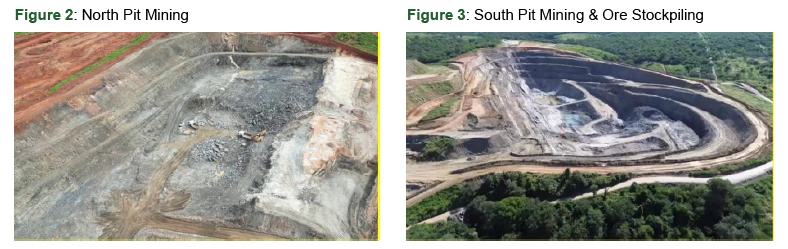
As of the date of this AIF, the Company reports the following highlights and advancements in its mining activities:
| § | In 2025, a decision was taken to restructure mining operations to increase capacity and improve efficiency by moving to using larger equipment, such as trucks and excavators, and bringing mining operations in-house instead of using a mining contractor. |
| |
| § | The restructuring required a pause in mining operations. In the three months ending December 31, 2025, no Run of Mine (“ROM”) ore was delivered to the Greentech Industrial Plant. Mine operations underwent a demobilization started at the beginning of October 2025 and a remobilization begun at the end of January 2026. |
| § | The multi-pit and phase mine plan continued to evolve, confirming strong synergies between Phases 1, 2, and 3. |

Greentech Industrial Plant Update
During the twelve months ended December 31, 2025 and to the date of this AIF, Sigma Lithium’s Greentech Industrial Plant 1 continued to operate. During the pause in mine operations from the start of October 2025 to the end of January 2026, Plant 1 operated reprocessing tailings, which were upgraded from an approximate 1% lithium oxide content to products with higher lithium content.
Phase 2 Development Progress
During the twelve months ended December 31, 2025, Sigma Lithium’s focus remained on mine development, aiming to enable Mine 1 to feed both Phase 1 and Phase 2 Greentech Industrial Plants during the ramp-up of Phase 2 operations.
The Phase 2 expansion remains a transformative opportunity for the Company, with expected additional production capacity of 250,000 tonnes per annum of 5% lithium oxide concentrate. Together with Phase 1, this would bring the total annual production capacity at Grota do Cirilo to 520,000 tonnes of 5% lithium oxide concentrate.
The Company continues to leverage the synergies and learnings from Phase 1 to enhance the efficiency and sustainability of Phase 2 implementation.
| |
Table 2: Uses of Cash Analysis for Phase 2 Construction
| Capex (000 US$) | Phase 1 (actual) | Phase 2 (budget) |
| Mine | 7,337 | - |
| Industrial site construction | 16,600 | 16,454 |
| Industrial plant | 64,357 | 62,128 |
| Environmental | 11,775 | 10,961 |
| R&D engineering design | 17,222 | 5,029 |
| Construction management | 9,028 | 6,398 |
| (=) Construction capex (*) | 126,319 | 100,970 |
| Construction addition | - | 6,536 |
| (=) Total construction capex | 126,319 | 107,506 |
| Others | 5,584 | (149) |
| (=) Total capex | 131,903 | 107,357 |
Licensing Updates
On December 21, 2024, Sigma Lithium obtained the Preliminary License, the Installation License, and the Operating License (“LP", “LI” and “LO”, respectively) for its Phase 2 – Barreiro mine. Once again, the approval was unanimous by the State Environmental Policy Council (“COPAM”), the board responsible for voting and awarding environmental licenses in the State of Minas Gerais, including the votes of non-governmental organizations representatives. This milestone enables Sigma Lithium to expand its mineral lithium production capacity to up to 5.5 million tonnes per year.
On January 31, 2024, Sigma Lithium was awarded its LP, LI and LO to install and operate its second Industrial Greentech Plant by the State of Minas Gerais. The Company, once again, received unanimous approval from all members of the COPAM, including the vote of the board members representing the NGOs. The obtainment of the LP, LI and LO for Sigma Lithium’s second Industrial Greentech Plant allows the Company to further expand its industrial beneficiation and processing capacity of lithium minerals to up to a total of 3.7 million tonnes per year.
Health & Safety
In the twelve months to December 31, 2025, the Company recorded a total injury frequency rate (TRIFR - or number of injuries, excluding fatalities, requiring medical treatment per million hours worked) of 1.60. As of December 31, 2025, Sigma Lithium completed 879 consecutive days without a Lost Time Injury (LTI).
Environmental Programs
Sigma Lithium’s production process is designed to maximize sustainability and minimize environmental impacts, with zero tailings waste, zero use of hazardous chemicals, 100% water recycling and the use of 100% renewable electricity. The Company runs several environmental programs. Sigma Lithium’s Environmental Impact Reports (“RIMA” and “EIA”) and Environmental Control Plan (“Plano de Controle Ambiental”) are available on the Company’s website.
Key Environmental Programs:
Land use and biodiversity management
| § | Conservation of Permanent Preservation Areas (APP) and Legal Reserves |
| |
| § | Flora and Fauna Rescue Program |
| § | Degraded Area Recovery Program |
Control of pollution and waste
| § | Water Quality Monitoring |
| § | Air Quality Preservation |
| § | Noise and Vibration Control |
Social Programs
Sigma Lithium runs several community outreach programs. These programs include holding monthly meetings with local communities and other structured initiatives.
The Company also runs several voluntary social programs, which are outlined below.
“Fundo Dona de Mim” Microcredit Program
The Fundo Dona de Mim microcredit program was launched in partnership with Brazil´s most prominent support organization for women, Grupo Mulheres do Brasil, with the aim of promoting female entrepreneurship in Sigma Lithium’s local communities. The program has benefited local women with small businesses in the areas of food, crafts, clothing and services.
Zero Drought Program
Under this program, Sigma Lithium has built small rainwater capture structures in the local municipalities of Araçuaí and Itinga, benefiting small-scale farmers. The reservoirs store water for the irrigation of crops during periods of drought.
Water for All Program
Sigma Lithium provides drinking water to households in the company’s local communities through a partnership with the municipalities of Araçuaí and Itinga. Sigma Lithium donated water tanks and funds water deliveries by truck from the local water utilities, COPANOR and COPASA, supplying the local communities on a regular basis.
Education that Transforms Program
Sigma Lithium has several initiatives dedicated to the education of children, adolescents and adults in the municipalities of Araçuaí and Itinga. The Company facilitated the renovation and expansion of three municipal public schools and has ongoing educational programs, including a course for post-basic education for adults, classes on environmental awareness and several initiatives in cultural and sports education through partnerships with the local groups Popular Center for Culture and Development (CPCD), the Bruta Flor Sociocultural Institute and the Escrava Feliciana Cultural Center.
Royalties
The Brazilian government levies a royalty on mineral production: Compensação Financeira pela Exploração de Recursos Minerais (“CFEM”). Lithium production is subject to a 2% CFEM royalty.
Sigma also pays a royalty to Miazga (as defined below) since Miazga owns the property where the Phase 1 north pit is located. This royalty is established by law and is calculated based on a percentage of the amount paid of CFEM by Sigma Lithium.
In addition, the business is also subject to a net smelter return royalty (“NSR Royalty”) owed to LRC LP I (a third-party) of 1% over the gross revenues of the Company from sales of minerals extracted, less taxes, returns, sales commissions, cost of insurance and freight.
| |
Surface Rights and Other Permitting
Certain surface rights in the Phase 1 area, the current primary focus of the Company’s activity, are held by Arqueana Empreendimentos e Participações S.A. (“Arqueana”), Miazga Participações S.A. (“Miazga”) and Tatooine Investimentos S.A. (“Tatooine”). The CEO of the Company, Ana Cabral, has indirect economic interests in Arqueana and Miazga. Tatooine is indirectly controlled by Marina Bernardini, an officer of Sigma Brazil. Arqueana, Miazga and Tatooine have an assignment of surface rights arrangement with Sigma Brazil to support its exploration and development activities within the Grota do Cirilo Project, as well as with third-party surface owners in Sigma Lithium’s area of operation.
Sigma Brazil has a mining easement with a total of 413.3 hectares (“Servidão Mineral”) and aims to cover areas including: waste and tailings piles, Phase 1 and Phase 2 Industrial Greentech Plants, all access roads (internal), electrical substation, installation of fueling station and support structures. The Servidão Mineral was published on June 29, 2020 in the Official Gazette of the Federal Government of Brazil. It contemplates the mining and processing activities of Phase 1 (ANM Process No. 824.692/1971).
The Company achieved an important milestone on February 9, 2026, regarding Phase 2 with the National Mining Agency (Agência Nacional de Mineração – “ANM”), which determined that the process was duly documented and forwarded it to the Ministry of Mines and Energy (“MME”) for the granting of the mining concession for spodumene, lithium ore, and petalite.
The Company holds an approved economic feasibility plan (“Plano de Aproveitamento Econômico – PAE”) for the Xuxa deposit, as approved by the ANM on May 3, 2022. The Barreiro, Lavra do Meio, Murial, and Maxixe areas are currently awaiting approval of the updated economic feasibility plan, which was submitted on November 16, 2023. All of these areas are located within the Grota do Cirilo property.
Specialized Skills and Knowledge
All aspects of the Company’s business require specialized skills and knowledge. Such skills and knowledge include the areas of geology, drilling, logistics planning and implementation of exploration programs as well as regulatory, finance and accounting. To date, the Company has been able to locate and retain such professionals from Brazil, Canada, Russia, South Africa, and other nations, and believes it will be able to continue to do so. The Company relies upon its management, employees and various consultants for such expertise.
Mineral Price and Economic Cycles
The mining business is subject to mineral price cycles. The marketability of minerals and mineral concentrates is also affected by worldwide economic cycles. Lithium markets are affected by demand for lithium batteries and global economic conditions. Fluctuations in supply and demand in various regions throughout the world are common.
Economic Dependence
The Company’s business is dependent on the exploration, development and operation of Lithium Properties and the global lithium and electric vehicles markets. The Company does not expect to be dependent on any sole contract to sell the Company’s products or to purchase the Company’s requirements for goods, services or raw materials.
Bankruptcy and Similar Procedures
There are no bankruptcies, receivership or similar proceedings against the Company, nor is the Company aware of any such pending or threatened proceedings. The Company has not commenced any bankruptcy, receivership or similar proceedings during the Company’s history.
Reorganizations
There have been no corporate reorganizations of the Company within the three most recently completed fiscal years.
| |
Foreign Operations
The operations expose the Company to various degrees of political, economic and other risks and uncertainties. See “Emerging Market Disclosure” and “Risk Factors” below.
Employees
As of December 31, 2025, the Company had 560 employees working at various locations. During construction periods, the Company’s workforce can reach more than 1,000 people.
Environmental Protection
The current and future operations of the Company, including exploration and development activities, are subject to extensive laws and regulations governing environmental protection, employee health and safety, exploration, development, tenure, production, taxes, labor standards, occupational health, waste disposal, protection and remediation of environment, reclamation, mine safety, toxic substances and other matters. The Company and its subsidiaries are complying with all material aspects of the applicable legislation.
Social and Environmental Policies
The Company aims to minimize the impact of its operations on both local communities and the environment. The Company is committed to developing the business in a responsible and sustainable manner. The Company takes its responsibilities seriously to protect the environment, to conduct business based on high ethical standards (including a commitment to not engaging in business with any person or entity subject to multinational sanction) and to make a positive difference in the communities in which it operates.
In 2025, the Company established operational guidelines for health, safety, environment, and communities, based on the standards of ICMM - International Council on Mining and Metals, and international best practices. The document now supports Sigma Lithium’s activities in the areas of environment and communities.
The Company is subject to numerous risk factors at any given time which could materially adversely impact upon its business, financial condition, results of operations, cash flows, ability to obtain financing and prospects and, as a result, the trading price of the Common Shares. The following are risk factors that the Company’s management believes are most important. The below described risks are not an exhaustive description of all risks. See also “Cautionary Note Regarding Forward Looking Information” above.
Risks Related to Our Business
The Company’s mineral resource and mineral reserve estimates are estimates only and no assurance can be given that any particular level of recovery of minerals will in fact be realized or that identified mineral resources or mineral reserves will ever qualify as a commercially mineable (or viable) deposit.
The operations of mining properties or mining companies are largely based on geologic, metallurgic, engineering, title, environmental, economic, and financial assessments, which involve uncertainty. Such assessments may differ materially from actual results, which may result in a material adverse effect on the Company’s business, financial condition, results of operations, cash flows or prospects. These assessments include a series of assumptions regarding such factors as the mineralized material body geometries, grades, recoverability, regulatory and environmental restrictions, future prices of lithium and operating costs, future capital expenditures and royalties and government levies which will be imposed over the producing life of the Mineral Reserves.
The Company’s Mineral Resource and Mineral Reserve estimates are estimates only. There are numerous uncertainties inherent in estimating quantities of Mineral Resources and Mineral Reserves and estimates in projecting potential future rates of mineral production, including factors subject to change and beyond the Company’s control. Mineral Reserves and Mineral Resources estimates are based on limited samples and interpretations, which may not be representative of actual Mineral Reserves and Mineral Resources. No assurance can be given that any particular level of recovery of minerals will in fact be realized or that identified mineral resources or mineral reserves will ever be mined or processed profitably. In addition, the grade of mineralization which may ultimately be mined may differ from that indicated by drilling results and such differences could be material. By their nature, mineral resource and mineral reserve estimates are imprecise and depend, to a certain extent, on analyses of drilling results and statistical inferences that may ultimately prove to be inaccurate. These estimated Mineral Resources and Mineral Reserves should not be interpreted as assurances of profitability of operations. Investors are cautioned not to place undue reliance on these estimates.
| |
Mineral Resources are not Mineral Reserves and have a greater degree of uncertainty as to their feasibility and prospects for economic extraction. Mineral Resources that are not Mineral Reserves do not have demonstrated economic viability. Mineral Resources that are in the Inferred category are even more risky. An Inferred Mineral Resource is that part of a Mineral Resource for which quantity and grade or quality are estimated on the basis of limited geological evidence and sampling. Geological evidence is sufficient to imply but not verify geological and grade or quality continuity. An Inferred Mineral Resource has a lower level of confidence than that applying to any other category of Mineral Resource. It is reasonably expected that the majority of Inferred Mineral Resources could be upgraded to Indicated Mineral Resources with continued exploration. However, the estimate of Inferred Mineral Resources may be materially affected by environmental, permitting, legal, title, taxation, socio-political, marketing, or other relevant issues.
The Company’s future production estimates are based on existing mine plans and other assumptions which change from time to time. No assurance can be given that such estimates will be achieved.
The Company has prepared estimates and projections of future production. Any such information is forward-looking and no assurance can be given that such estimates will be achieved. These estimates are based on existing mine operations, its plans and other assumptions which change from time to time. The Company’s actual production may vary from estimates for a variety of reasons, including: actual mineralized material mined varying from estimates of grade, tonnage, dilution and metallurgical and other characteristics; revisions to mine plans; unusual or unexpected deposit formations; risks and hazards associated with mining; natural phenomena, such as inclement weather conditions, water availability, floods, and seismic activity; and unexpected labor shortages, strikes, local community opposition or blockades. The economic analysis is based in part on achieving at least the contemplated minimum operating and production levels and may be subject to change.
The Company’s capital and operating cost estimates may vary from actual costs and revenues for reasons outside of the Company’s control.
Capital costs, operating costs, production and economic returns and other estimates may differ significantly from those anticipated by current estimates, and there can be no assurance that the actual capital, operating and other costs will not be higher than currently anticipated. Actual costs and revenues may vary from estimates for a variety of reasons, including (among others): lack of availability of resources or necessary equipment; unexpected construction or operating problems; lower realized lithium prices; revisions to construction plans; risks and hazards associated with mineral production; natural phenomena; floods; unexpected labor shortages or strikes; general inflationary pressures; and interest and currency exchange rates.
Additionally, during times of increased demand for metals and minerals, price increases may encourage expanded mining exploration, development, and construction activities. These increased activities may result in escalating demand for and cost of contract exploration, development and construction services and equipment. Increased demand for and cost of services and equipment could cause exploration, development and construction costs to increase materially, resulting in delays if services or equipment cannot be obtained in a timely manner due to inadequate availability, and increased potential for scheduling difficulties and cost increases due to the need to coordinate the availability of services or equipment, any of which could materially increase project exploration, development or construction costs, result in project delays, or increase operating costs, for the Company.
| |
The Company’s operations are subject to the high degree of risk normally incidental to the exploration for, and the development and operation of, mineral properties.
The Company’s operations are subject to all the risks normally incidental to the exploration of, and the development and operation of, mineral properties. Mineral exploration and exploitation involve a high degree of risk. Operations can be affected by such factors as permitting regulations and requirements, weather, environmental factors, unforeseen technical difficulties, unusual or unexpected geological formations, work interruptions, fires, power outages, shutdowns due to equipment breakdown or failure, unexpected maintenance and replacement expenditures, human error, labor disputes, flooding, explosions, releases of hazardous materials, tailings impoundment failures, cave-ins, landslides, earthquakes and the inability to obtain or properly maintain adequate machinery, equipment or labor. Tailings dam failures involving other mining companies in Brazil, and the resultant loss of life and damage, have resulted in (and could in the future result in further) increased requirements, delays in licensing and other material consequences to all mining companies, even if the circumstances of the operations or the Company’s development and operational methodologies are significantly different then such other companies and projects. The Company expects to rely on third-party owned infrastructure to develop and operate its projects, such as power, utility, and transportation infrastructure. Any failure of this infrastructure without adequate replacement or alternatives may have a material impact on the Company.
Insurance may not be available to insure against all such risks, or the costs of such insurance may be uneconomic. Losses from uninsured and underinsured losses have the potential to materially affect the Company’s financial position and prospects.
During exploration, development and production of mineral properties, certain risks (in particular, risks related to operational and environmental incidents) may occur. Insurance may not be available to insure against all such risks, or the costs of such insurance may be uneconomic. The Company may also elect not to obtain insurance for other reasons. Should such liabilities arise, they could reduce or eliminate any future profitability and result in increasing costs and a decline in the value of the Company. The Company maintains liability insurance in accordance with industry standards, however, the nature of these types of risks is such that liabilities could exceed policy limits and the Company could incur significant costs that could have a material adverse effect on its business, results of operations and financial condition. Losses from uninsured and underinsured liabilities have the potential to materially affect the Company’s financial position and prospects.
The Company is subject to risks associated with securing title, property interests and exploration and exploitation rights.
There can be no assurance the Company’s property mineral tenure interests will be maintained, or that any required future title interests will ultimately be secured. No assurance can be given that applicable governments will not revoke or significantly alter the conditions of the applicable exploration and mining authorizations nor that such exploration and mining authorizations will not be challenged or impugned by third parties. The Company’s property interests may also be subject to prior unregistered agreements or transfers or other land claims, and title may be affected by undetected defects and adverse laws and regulations.
The Company cannot guarantee that title to its properties or mineral rights will not be challenged. A successful challenge on a mineral right or to the precise area and location of the Company’s mineral claims could result in the Company being unable to develop and operate its mineral properties or being unable to enforce its rights with respect to its mineral properties.
The Company is subject to strong competition in Brazil and in the global mining industry.
The mining industry is competitive in all its phases and requires significant capital, as well as technical and operational resources. Competition is also intense for mining equipment, supplies and qualified service providers, particularly in Brazil where mining personnel are in high demand and short supply. If qualified expertise cannot be sourced and at cost effective rates within Brazil, the Company may need to procure those services outside of Brazil, which could result in additional delays and higher costs to obtain work permits. The Company faces strong competition from other mining companies, some with greater financial resources, operational experience and technical capabilities. As a result of this competition, the Company may be unable to maintain or acquire financing, personnel, technical resources or attractive mining properties on terms it considers acceptable.
| |
There can be no assurance that market prices for lithium will remain at current levels or that such prices will improve.
Lithium chemicals and spodumene concentrate are globally traded commodities and accordingly, are subject to numerous market forces, including changes in product supply and demand. The addition of new supply due to either competitor investments or the Company’s own capacity could drive market prices for these commodities lower. Softening in the global demand for lithium would have similar implications. Additionally, the pricing characteristics of alternative sources of energy, competitor disruptions and government policy could all have impacts on the market price of lithium and thus the Company’s earnings profile. Prices have proven to be volatile for lithium products and could remain so for the foreseeable future. There can be no assurance that market prices will remain at current levels or that such prices will improve. As such, the Company’s revenues and earnings are subject to change.
The market for EVs and other large format batteries remains an emerging technology in several markets. No assurances can be given for the rate at which this market will develop, which could affect the success of the Company and its ability to expand lithium operations.
The success of the Company and its ability to grow its lithium operations is largely dependent on the adoption of lithium-ion batteries for EV and other large format batteries. The market for EV and other large format batteries has grown considerably but continues to have limited market share in a number of geographies. No assurance can be given that it will develop further (or at what rate this market will develop, if at all). To the extent that such markets do not develop in the manner or according to the timeline contemplated by the Company, the long-term growth in the market for lithium products will be adversely affected, which would inhibit the Company’s ability to expand.
Changes in technology or other developments could result in preferences for substitute products.
Lithium and its derivatives are preferred raw materials for certain industrial applications, such as rechargeable batteries. Many materials and technologies are being researched and developed with the goal of making batteries lighter, more efficient, faster charging and less expensive. Some of these technologies could be successful and could adversely affect demand for lithium batteries in personal electronics, electric and hybrid vehicles and other applications. The Company cannot predict which new technologies may ultimately prove to be commercially viable and on what time horizon. In addition, alternatives to such products may become more economically attractive as global commodity prices shift. Any of these events could adversely affect demand for and market prices of lithium, thereby resulting in a material adverse effect on the economic feasibility of extracting any mineralization the Company discovers and reducing or eliminating any reserves it identifies.
The imbalance in the lithium market due to an excess of supply from new or existing competitors could adversely affect prices.
In recent years, the supply of lithium products has increased as both new and existing competitors have expanded production, which has pressured prices. Further increases in production could intensify this imbalance and negatively impact prices. There is limited information regarding the status of new lithium production capacity expansions by current and potential competitors, which makes it difficult for the Company to accurately project the capacities of potential new entrants and the timelines for their operations. If these projects are completed in the short term, they could impact market lithium prices, leading to a material adverse effect on the Company’s earnings, reserve balances, or the economic viability of its ongoing growth initiatives.
| |
Risks Related to Brazil
The Company’s financial condition, operations and results of operations are subject to political, economic, social, regulatory and geographic risks of doing business in Brazil.
Investments in emerging markets like Brazil generally pose a greater degree of risk than investments in more mature market economies because the economies in the developing world are more susceptible to destabilization resulting from domestic and international developments and exposes the Company to heightened risks related to prevailing and changing political and socioeconomic conditions. Changes in mining, investment or other applicable policies or shifts in political attitude in Brazil may adversely affect the Company’s operations or profitability and may affect the Company’s ability to fund its ongoing expenditures. Regardless of the economic viability of the Company’s properties, such political changes, which are beyond the Company’s control, could have a substantive impact and prevent or restrict (or adversely impact the financial results of) mining of some or all of any deposits of the Company.
The Brazilian economy has been characterized by frequent, and occasionally material, intervention by the Brazilian federal government, which has often modified monetary, credit and other policies intending to influence Brazil’s economy. The Brazilian government’s actions to control inflation and effect other policy changes have involved wage and price controls, changes in existing, or the implementation of new, taxes and fluctuations of base interest rates. Actions taken by the Brazilian federal government concerning the economy may have important effects on Brazilian companies or companies with Brazilian assets and on market conditions and the competitiveness of Brazilian products abroad. In addition, actions taken by the Brazilian state and local governments with respect to labor and other laws affecting operations may have an effect on the Company.
The Company’s financial condition and results of operations may also be materially adversely affected by any of the following, and the Brazilian federal government’s actions, or failure to act, in response to them:
| § | currency depreciations and other exchange rate movements. |
| § | monetary policies. |
| § | inflation rate fluctuations. |
| § | economic, political, and social instability. |
| § | environmental regulation. |
| § | energy shortages or changes in energy prices. |
| § | interest rates. |
| § | disasters at third party mineral projects. |
| § | corruption or political scandal. |
| § | exchange rate controls and restrictions on remittances abroad. |
| § | liquidity of the domestic capital and lending markets. |
| § | tax policy, including international tax treaties. |
| § | other political, diplomatic, social, and economic policies or developments in or affecting Brazil. |
Uncertainty over whether the Brazilian federal government will implement changes in policy or regulation affecting these or other factors in the future may contribute to economic uncertainty in Brazil and to heightened volatility in the market value of securities issued by Brazilian companies or companies with Brazilian assets.
The Brazilian government has frequently implemented changes to tax laws, tax treaties and other regulations, including modifications to tax rates. Any such changes, as well as changes in the interpretation of such tax laws and regulations, may result in increases in the Company’s overall tax burden, which would negatively affect its profitability. However, the Company notes that it does not believe that there is any intention to change the current policies and regulations in this sense.
Political instability or changes in government policy (which may be arbitrary) may result in changes to laws affecting the ownership of assets, mining activities, taxation, rates of exchange, environmental regulations and labor relations. This may affect both the Company’s ability to undertake exploration and development activities in respect of present and future properties in the manner currently contemplated, as well as its ability to continue to explore, develop and operate those properties in which it has an interest or in respect of which it has obtained exploration and development rights to date. The possibility that a future government may adopt substantially different policies cannot be ruled out.
| |
Brazil’s long-term foreign and local currency debt is rated sub-investment grade. Brazil’s ratings or outlooks may be downgraded or placed on watch by the various rating agencies in the future. Downgrades of Brazil’s sovereign credit ratings could limit access to funding and/or raise the cost of funding for the Company. Downgrades of Brazil’s sovereign credit ratings could also heighten investors’ perception of the risk of having operations in Brazil.
These and other future developments in the Brazilian economy and governmental policies may materially adversely affect the Company.
Inflation in Brazil, along with Brazilian governmental measures to combat inflation, may have a significant negative effect on the Brazilian economy and, as a result, on the Company’s financial condition and results of operations.
High levels of inflation may adversely affect the economies and financial markets of Brazil, and the ability of its government to create conditions that stimulate or maintain economic growth. Moreover, the governmental measures to curb inflation and speculation about possible future governmental measures have contributed to the negative economic impact of inflation in Brazil and have created general economic uncertainty. As part of these measures, the Brazilian government has at times maintained a restrictive monetary policy and high interest-rates that have limited the availability of credit and economic growth. Brazil may experience high levels of inflation in the future. Inflationary pressures may weaken investor confidence in Brazil and lead to further government intervention in the economy, including interest rate increases, restrictions on tariff adjustments to offset inflation, intervention in foreign exchange markets and actions to adjust or fix currency values, which may trigger or exacerbate increases in inflation, and consequently, have an adverse impact on the Company. In an inflationary environment, the value of uncollected accounts receivable, as well as unpaid accounts payable, declines rapidly. If Brazil experiences high levels of inflation in the future and price controls are imposed, this could adversely affect the Company’s results of operations or financial conditions.
Violations of anti-corruption, anti-bribery, anti-money laundering and economic sanctions laws and regulations could materially adversely affect the Company’s business, reputation, results of operations and financial condition.
Brazilian markets have historically experienced heightened volatility due to the uncertainties generated by corruption and bribery allegations and investigations of certain senior politicians, including congressmen and officers and directors of some of the major state-owned and private companies in Brazil. In addition, certain media posts and reports of corruption, or allegations of corruption, in Brazil may have an adverse effect on the public perception and reputation of Brazilian companies and may adversely affect the trading price of the Common Shares. The Company’s value and share price could also be adversely affected by illegal activities by others, corruption or by claims, even if groundless, implicating the Company in illegal activities.
The Company is subject to anti-corruption, anti-bribery and anti-money laundering laws and regulations in various jurisdictions, including Canada, U.S., and Brazil. In addition, it is subject to economic sanctions regulations that restrict dealings with certain sanctioned countries, individuals, and entities. There can be no assurances that the internal policies of the Company will be sufficient to prevent or detect all inappropriate practices, fraud or violations of such laws, regulations and requirements by its employees, directors, officers, partners, agents and service providers or that any such persons will not take actions in violation of its policies and procedures. Any violations of anti-bribery and anti-corruption laws or sanctions regulations could have a material adverse effect on the Company’s business, reputation, results of operations and financial condition.
The Company has not purchased any “political risk” insurance coverage and currently has no plans to do so.
Corruption and fraud in Brazil relating to ownership of real estate could materially adversely affect the Company’s business, reputation, results of operations and financial condition.
Under Brazilian law, real property ownership is normally transferred by means of a transfer deed and subsequently registered at the appropriate real estate registry office under the corresponding real property record. There are uncertainties, corruption and fraud relating to title ownership of real estate in Brazil, mostly in rural areas. In certain cases, a real estate registry office may register deeds with errors, including duplicate and/or fraudulent entries, and, therefore, deed challenges frequently occur, leading to judicial actions. Property disputes over title ownership are frequent in Brazil, and, as a result, there is a risk that errors, fraud, or challenges could adversely affect the Company’s ability to operate, although ownership of mineral rights are separate from ownership of land.
| |
The Company is subject to regulatory frameworks applicable to the Brazilian mining industry which could be subject to further change, as well as government approval and permitting requirements, which may result in limitations on the Company’s business and activities.
Government approvals and permits are required in connection with the Company’s activities. Any instances where such approvals are required and have not been obtained, the Company may be restricted or prohibited from proceeding with planned exploration, development, or operational activities. Failure to comply with applicable laws, regulations and permitting requirements may result in enforcement actions thereunder, including orders issued by regulatory or judicial authorities causing development or operations to cease or be curtailed, and may include corrective measures requiring capital expenditures, installation of additional equipment, or other remedial actions. Parties engaged in mining operations may be required to compensate those suffering loss or damage by reason of the mining activities and may be liable for civil or criminal fines or penalties imposed for violations of applicable laws or regulations. Amendments to current laws, regulations and permitting requirements, or a more stringent application of existing laws, could have a material adverse impact on the Company and cause increases in capital expenditures or production costs, reductions in the levels of production at producing properties or require abandonment or delays in development.
In Brazil, the ANM regulates the conduct of exploration, development, and mining operations. The ANM requires: (i) certain fee payments for exploration authorizations (known as the Annual Fee per Hectare), (ii) certain royalty payments to be made to the federal government for the mining concessions (known as Financial Compensation for the Exploitation of Mineral Resources - “CFEM”) and (ii) royalty payments to be made to the landowner if the surface rights are not held by the holder of the mineral rights. There is also a monthly inspection fee related to the transfer and commercialization of certain minerals in some Brazilian states. Royalties, taxes and fees related to the exploration authorizations and mining concessions may change or increase substantially in the future.
In Brazil, failure to demonstrate the existence of technical and economically viable mineral deposits covered by an exploration authorization for a period of at least one year may lead to the authorization being required to be returned to the federal government. The federal government may then grant the exploration authorization to other parties that may conduct other mineral prospecting activities at said area. In addition, mining concessions and exploration authorizations may not be granted due to changes in laws and regulations governing mineral rights. Accordingly, retrocession requirements, loss of mineral rights, or the inability to renew concessions, authorizations, permits and licenses may materially adversely affect the Company.
Tailings dam failures involving other mining companies in Brazil, and the resultant loss of life and damage, have resulted in (and could in the future result in further) increased requirements, delays in licensing and other material consequences to all mining companies, even if the circumstances of the operations or the Company’s development and operational methodologies are significantly different then such other companies and projects.
The regulatory framework applicable to the Brazilian mining industry could be subject to further change, which may result in limitations on the Company’s business and activities, including in connection with some existing mineral rights, and an increase in expenses, particularly mining royalties, taxes and fees.
The Company’s operations are also subject to Brazilian regulations pertaining to the use and development of mineral properties and the acquisition or use of rural properties by foreign investors or Brazilian companies under foreign control, and various other Brazilian regulatory frameworks.
Risks Related to Financial Markets
The Company is subject to currency fluctuation risks.
Business is transacted by the Company primarily in Brazilian, U.S. and Canadian currencies. The majority of operating costs are denominated in the Brazilian currency. Certain costs associated with imported equipment and international supplies and consultants and sales prices for product are denominated in U.S. dollars. Fluctuations in exchange rates may have a significant effect on the cash flows of the Company. Future changes in exchange rates could materially affect the Company’s results in either a positive or negative direction. The Company has not hedged its exposure to any exchange rate fluctuations applicable to its business and is therefore exposed to currency fluctuation risks.
| |
Currently, the Brazilian Real is permitted to float against the US Dollar and allows the purchase and sale of foreign currency and the international transfer of Reais. There can be no assurance that the Brazilian Central Bank or the Brazilian government will continue to permit the Real to float freely and not intervene in the exchange rate market through the return of a currency band system or otherwise.
The Company is subject to interest rates fluctuation.
The Company’s business may be adversely affected by fluctuations in interest rates. A significant portion of the capital structure may be subject to variable interest rates, and changes in these rates could increase the borrowing costs of the Company, potentially reducing profitability. Higher interest rates may also make it more expensive to obtain additional financing or refinance existing debt, which could limit the Company’s ability to fund growth initiatives or meet other capital needs. There can be no assurance that the Company will be able to manage or mitigate the impact of interest rate fluctuations, and any significant increase in interest rates could adversely affect the Company’s financial condition, results of operations, and cash flow.
The Company may face challenges in accessing global capital markets.
The Company expects to rely on cash generated from operations and external financing to fund the capital expenditure required to finance its capacity expansion projects. The expansion of the Company’s business may require significant amounts of capital. While the Company believes that the cash from operations, together with borrowing availability and other potential financing strategies, will be sufficient to meet these needs in the foreseeable future, the Company may face challenges due to the young nature of the business and the volatility of lithium prices, which may directly impact the Company’s ability to generate consistent cash flow.
If additional external financing is needed, the Company’s access to global capital markets and the pricing of such capital will depend on its ability to maintain strong credit metrics and the overall condition of the capital markets. Given the volatile nature of lithium prices, the Company’s ability to demonstrate stable financial performance may be affected, which could hinder its ability to secure favorable financing terms. There can be no assurances that the Company would be able to obtain equity or debt financing on terms deemed acceptable, and the cost of such financing could increase, resulting in higher expenses and reduced profitability.
Additionally, the operations of the Company require the issuance of financial assurances, such as insurance and bank guarantee instruments, to secure statutory, financial, environmental, and commercial obligations. The Company’s ability to provide such assurances may be subject to factors beyond its control, including external financial and credit market assessments, as well as its financial condition. If the Company is unable to generate sufficient cash flow or raise adequate external financing on acceptable terms, including due to significant disruptions in the global capital markets, the Company may be forced to restrict its growth, which could adversely affect its business, results of operation and financial position.
Risks Related to our Operations
The Company is exposed to risks associated with doing business with counterparties, which may impact the Company’s operations and financial condition.
The Company is exposed to various counterparty risks including, but not limited to: (i) financial institutions that hold the Company’s cash and short-term investments; (ii) companies that are expected to have payables to the Company; (iii) third party contractors engaged for future development; (iv) the Company’s insurance providers; (v) the Company’s lenders; and (vi) offtakers. The risks associated with doing business with several counterparties, including any defaults or other breaches of any agreements entered into by the Company with such counterparties, may impact the Company’s operations and financial condition.
The Company may not be able to secure the supply of key raw material.
The raw materials required for the Company’s operations are primarily sourced through normal supply and business contracting channels mainly in Brazil. However, increased demand from other mineral exploration, development and operating companies, inflationary pressures, or disruptions to supply chains caused by such events as pandemics or other global occurrences may make it more difficult to procure certain raw materials.
| |
The Company may not be able to meet the quality requirements of its customers.
The Company’s ability to maintain and enhance its customer relationships and market position depends on consistently meeting the quality expectations and regulatory requirements of its customers. Failure to meet these standards, whether due to manufacturing defects, supply chain disruptions, human error, or non-compliance with industry regulations, could result in recalls, loss of key customers, reputational damage, and potential legal or financial consequences.
Any inability to adapt to the ongoing demands of its customers or to promptly address quality concerns may affect the Company’s ability to secure new contracts, retain existing customers, and maintain competitive advantage. Furthermore, customer-imposed penalties or warranty claims related to quality issues could have a material adverse effect on the Company’s financial performance.
Any limitation on the transfer of cash or other assets between the Company and the Company’s subsidiaries, or among such entities, could restrict the Company’s ability to fund its operations efficiently or to the ability of its subsidiaries to distribute up cash otherwise available for distributions.
The Company conducts operations through subsidiaries, including a foreign subsidiary located in Brazil. Accordingly, any limitation on the transfer of cash or other assets between the parent corporation and such entities, or among such entities, could restrict the Company’s ability to fund its operations efficiently. Any such limitations, or the perception that such limitations may exist now or in the future, could have an adverse impact on the Company’s valuation and stock price.
The Company is subject to risks associated with its reliance on consultants and others for mineral exploration and exploitation expertise.
The Company has relied on, and is expected to continue to rely on, consultants and others for mineral exploration and exploitation expertise. If the work conducted by those consultants is ultimately found to be incorrect or inadequate in any material respect, the Company may experience delays or increased costs in developing its properties.
Operating cash flow may be insufficient for future needs.
The exploration, development, construction, and operation of the Company’s mineral properties will require the commitment of substantial financial resources that may not be available. The amount and timing of expenditures will depend on a number of factors, including the progress of ongoing exploration, development and construction activities, success of the Company’s ongoing operations, the results of consultants’ analyses and recommendations, the rate at which operating losses are incurred, the execution of any joint venture agreements with strategic partners and the acquisition of additional property interests, some of which are beyond the Company’s control. The Company’s business strategies may not be successful, and it may not be profitable in any future period.
To the extent that the Company has negative operating cash flow in future periods, the Company may need to allocate a portion of its cash reserves to fund such negative operating cash flow. The Company may also be required to raise additional funds through the issuance of equity or debt securities. There can be no assurance that additional capital or other types of financing will be available when needed or that these financings will be on terms favorable to the Company.
The Company may be unable to achieve cash flow from operating activities sufficient to permit it to pay the principal, premium, if any, and interest on the Company’s indebtedness, or maintain its debt covenants.
The Company’s ability to make scheduled payments on or refinance its debt obligations, including the Pre-Export Financing Agreement with Synergy, depends on its financial condition and operating performance, which are subject to prevailing economic and competitive conditions and to certain financial, business, legislative, regulatory and other factors beyond the Company’s control, including the market prices of lithium. The Company may be unable to achieve cash flow from operating activities sufficient to permit it to pay the principal, premium, if any, and interest on the Company’s indebtedness, or maintain its debt covenants. If the Company’s cash flows and capital resources are insufficient to fund its debt service obligations, or there is a contravention of its debt covenants, the Company could face substantial liquidity problems and could be forced to reduce or delay investments and capital expenditures or to dispose of material assets or operations, seek additional debt or equity capital or restructure or refinance its indebtedness. The Company may not be able to affect any such alternative measures, if necessary, on commercially reasonable terms or at all and, even if successful, those alternative actions may not allow it to meet its scheduled debt service obligations. The Company’s inability to generate sufficient cash flows to satisfy its debt obligations, or to refinance its indebtedness on commercially reasonable terms or at all, would materially and adversely affect its financial position and results of operations and its ability to satisfy its obligations.
| |
A substantial portion of the Company’s assets (including the Company’s interests over operating assets) are subject to security granted under the Pre-Export Financing Agreement with Synergy. Unremedied failure of Sigma Brazil to comply with its obligations under the Pre-Export Financing Agreement with Synergy could lead to the foreclosure and loss of such assets.
To remediate this risk, the Company generated positive cash flow in 2025, showing a strong recovery from 2024, despite general lithium market weakness during the year. In addition, for 2026, the Company plans a net cash flow of $29Mln, after payment of the Pre-Export Financing Agreement with Synergy mentioned above.
The Company may not be able to obtain sufficient financing in the future on acceptable terms, which could have a material adverse effect on the Company’s business, results of operations and financial condition. In order to obtain additional financing, the Company may conduct additional (and possibly dilutive) equity offerings or debt issuances in the future.
There is no assurance that the Company will be able to obtain sufficient financing in the future on terms acceptable to meet the Company’s capital requirements, if necessary. The ability of the Company to arrange additional financing in the future will depend, in part, on prevailing capital market conditions as well as the business performance of the Company. Failure to obtain additional financing on a timely basis may cause the Company to postpone, abandon, reduce or terminate its operations and could have a material adverse effect on the Company’s business, results of operations and financial condition. A potential source of future financing is the sale of additional Common Shares, which would mean that each existing shareholder would own a smaller percentage of the outstanding Common Shares. In addition, the Company may issue or grant convertible securities (such as RSUs, warrants or stock options) in the future pursuant to which additional Common Shares may be issued. The exercise of such securities would result in dilution of equity ownership to the Company’s existing shareholders.
The Company has entered into the Pre-Export Financing Agreement with Synergy and may rely on future debt financing and assume debt obligations that require it to make substantial interest and principal payments and which may be secured against the Company’s assets. Failure to meet debt obligations as they become due may result in loss of the Company’s assets. The Company may also sell additional royalties, which would mean that the Company’s share of returns from operations would decrease.
The disbursement of the loan from BNDES is subject to the satisfaction of certain closing conditions. There is no assurance that these conditions will be met or that the loan will be disbursed as expected. If the required conditions are not fulfilled or delays occur in the approval process, the Company may be unable to secure the necessary funding for the continuation of the Phase 2 construction. This could delay the Company’s planned expansion timeline, increase costs, disrupt planned expansion and development efforts, and adversely impact the Company’s financial position and future operations. Failure to obtain the loan as anticipated could materially affect the Company’s ability to complete Phase 2, leading to potential financial and operational challenges.
From time to time, the Company may become involved in litigation, which may have a material adverse effect on its business, financial condition, and prospects.
Due to the nature of the Company’s business and status as a publicly traded entity, it may be subject to a variety of regulatory investigations, claims, lawsuits and other proceedings in the ordinary course of its business. The results of these legal proceedings cannot be predicted with certainty due to the uncertainty inherent in litigation, including the effects of discovery of new evidence or advancement of new legal theories, the difficulty of predicting decisions of judges and juries and the possibility that decisions may be reversed on appeal. Defense and settlement costs of legal claims can be substantial, even with respect to claims that have no merit.
| |
Litigation may be costly and time-consuming and can divert the attention of management and key personnel from business operations. If the Company is unsuccessful in its defense of claims or unable to settle claims in a manner satisfactory to it, it may be faced with significant monetary damages or injunctive relief against it that could have a material adverse effect on its business and financial condition. To the extent the Company is involved in any active litigation, the outcome of such matters may not be currently determinable nor is it possible to accurately predict the outcome or quantum of any such proceedings at this time.
Failure to retain key officers, consultants, and employees or to attract, and retain additional key individuals with necessary skills could have a materially adverse impact upon the Company’s success.
The success of the Company will be largely dependent upon the performance of its key officers, consultants, and employees. Failure to retain key individuals or to attract and retain additional key individuals with necessary skills could have a materially adverse impact upon the Company’s success. The Company has insurance policy in place to cover directors, officers or key employees and regularly monitors the adequacy of such policy.
The Company’s business depends on strong labor and employment relations.
The Company’s production relies on the efforts of its employees and on fostering good relationships with them. These relations may be influenced by changes in labor relations introduced by, among others, employee groups, unions, and the relevant governmental authorities in the jurisdictions where the Company operates. Adverse changes in such legislation or in the relationship between the Company, its employees, the employees’ union, and the relevant governmental authorities, could have a material adverse impact on its business, results of operations, and financial condition.
Failure in the infrastructure that the Company relies upon could have an adverse effect on its operations.
Mining, processing, development, and exploration activities depend, to one degree or another, on adequate infrastructure whether owned or maintained by the Company, the applicable government or state, or third parties. Reliable transportation routes, ports, power sources, pipelines, ore and waste hoisting equipment, water storage structures, waste impoundments, water supply, and other critical infrastructure are important for the Company’s operations. Unusual or infrequent weather phenomena, sabotage, catastrophic failure, corrosion, or interference from government or other entity in the operation, maintenance or provision of such infrastructure could adversely affect the Company’s business and results of operations. In addition, Company-controlled infrastructure requires periodic preventative maintenance and, if necessary, replacement to mitigate the risk of failure. Despite inspection programs and maintenance planning, unanticipated infrastructure failures may occur from time to time. The Company addresses these issues and reports them, where necessary, in accordance with local regulatory requirements and laws. Any such future infrastructure failure could have an adverse effect on the Company’s operations.
Regulatory and Governmental Risks
The Company’s operations are subject to numerous environmental laws and regulations and expose the Company to environmental compliance risks, which may result in significant costs and have the potential to reduce the profitability of operations.
All phases of operations are subject to numerous environmental laws and regulations in Brazil on the federal, state and municipal levels, including laws and regulations relating to specially protected areas, air emissions, wastewater discharge and the use, manufacture, handling, transportation, storage, disposal, remediation of waste and hazardous substances. Environmental hazards may exist which are unknown to the Company at present which may have been caused by previous owners or operators of its assets. In the event of an accident or exposure to hazardous materials, environmental damage may occur and trigger the obligation to remediate the environmental conditions, which may result in significant costs. The victim of such damages or whoever the law so authorizes (such as public attorneys’ office, foundations, state agencies, state-owned companies and associations engaged in environmental protection) is not compelled to sue all polluting agents in the same proceeding, but rather the aggrieved party may choose to sue only one of the polluting agents to redress damages.
| |
Environmental liability may be litigated in civil, administrative, and criminal courts, with the application of administrative, civil and criminal sanctions, in addition to the obligation to redress the damages caused. The lack of a conviction or a finding of liability in one proceeding does not necessarily preclude the finding of liability in other proceedings. Accordingly, in respect of environmental compliance matters, there could be unexpected interruptions to operations, fines, or penalties as well as third-party claims for property damage or personal injury or remedial or other costs, which may have a material adverse effect on the Company’s operations. Municipal, state, and federal governments may revise and impose stricter environmental regulations in the future. There can be no assurance that environmental regulation will not adversely affect development or operations, with increased fines and penalties for non-compliance, more stringent environmental assessments of proposed projects and a heightened degree of responsibility for companies and their officers, directors, and employees. The cost of compliance with changes in government regulations has the potential to reduce the profitability of operations.
Physical climate change events and the trend toward more stringent regulations aimed at reducing the effects of climate change could have an adverse effect on the Company’s business and operations.
Climate change is increasingly perceived as a broad societal and community concern. Stakeholders may increase demands for emissions reductions and call upon mining companies to better manage their consumption of climate-relevant resources. Physical climate change events, and the trend toward more stringent regulations aimed at reducing the effects of climate change, could impact the Company’s decisions to pursue future opportunities, or maintain existing operations, which could have an adverse effect on its business and operations. The Company can provide no assurance that efforts to mitigate the risks of climate changes will be effective and that the physical risks of climate change will not have an adverse effect on its operations and profitability.
The Company may become subject to government orders, investigations, inquiries or other proceedings (including civil claims) relating to health and safety matters, which could result in consequences material to its business and operations.
The mineral exploration, development and production business carries inherent risk of liability related to worker and surrounding population health and safety, including the risk of government-imposed orders to remedy unsafe conditions, potential penalties for contravention of health and safety laws, licenses, permits and other approvals, and potential civil liability. Compliance with health and safety laws (and any future changes) and the requirements of licenses, permits and other approvals remain material to the Company’s business, and will continue to remain material at all stages of development. The Company may become subject to government orders, investigations, inquiries or other proceedings (including civil claims) relating to health and safety matters. Mining, like many other extractive natural resource industries, is subject to potential risks and liabilities due to accidents that could result in serious injury or death. The impact of such accidents could affect the profitability of the operations, potentially result in fines, penalties or other prosecutions, cause an interruption to operations, lead to a loss of licenses, affect the reputation of the Company and its ability to obtain further licenses, damage community relations and reduce the perceived appeal of the Company as an employer. The occurrence of any of these events or any changes, additions to or more rigorous enforcement of health and safety laws, licenses, permits or other approvals could have a significant impact on development or operations and result in additional material expenditures. As a consequence, no assurances can be given that additional workers’ health and safety issues relating to presently known or unknown matters will not require unanticipated expenditures, or result in fines, penalties or other consequences (including changes to operations) material to its business and operations.
The Company’s operations and the development of Sigma Lithium’s properties may be adversely affected if it is unable to maintain positive community relations.
The Company’s relationships with host communities are critical to ensure the success of its existing operations and the construction and development of new operations. There is an increasing level of public concern relating to the perceived effects of mining activities on the environment and on host communities due to events that happened with other companies in the recent past. The evolving expectations related to human rights, indigenous rights, and environmental protection may result in opposition to the Company’s current and future operations. Such opposition may be directed through legal or administrative proceedings or expressed in public opposition such as protests, roadblocks, or other forms of expression against the Company’s activities, and may have a negative impact on the Company’s reputation and operations.
| |
Opposition by any of the aforementioned groups to the Company’s operations may require modification of, or preclude the operation or development of, the Company’s projects or may require the Company to enter into agreements with such groups or local governments with respect to the Company’s projects, in some cases causing increased cost and considerable delays to the advancement of the Company’s projects. Further, publicity adverse to the Company, its operations or extractive industries generally could have an adverse effect on the Company and may impact relationships with the communities in which the Company operates and other stakeholders. There can be no assurance that its efforts to operate in a socially responsible manner will mitigate this potential risk.
The Company’s business may also be impacted by relations with various community stakeholders, and the Company’s ability to develop related mining assets may still be affected by unforeseen outcomes from such community relations.
Actions taken by foreign governments regarding critical minerals may affect the Company’s business.
As a result of increased concerns around global supply chains, the lithium industry has become subject to increasing political involvement. This reflects the critical role of lithium as an input in the development of batteries for the burgeoning transition to electric vehicles in the automotive industry, combined with worldwide supply constraints for lithium production and geopolitical tensions between countries such as the United States and Canada on the one hand and China on the other, arising from the dominant role of China in the production of inputs for the battery industry. The resulting political involvement appears to be evolving into a form of industrial policy by several governments, including those of Canada and the U.S., in which they employ steps to encourage the development of domestic supply such as tax incentives and low-interest loans to domestic and other companies, as well as undertake steps to discourage the involvement of companies from certain countries, including the expansion of legal oversight and an expansion of the scope of discretionary authority under laws and regulations to impose restrictions on ownership, influence and investment. These factors are of relevance to the Company in Canada with its regulation under the OBCA and stock exchange listing on the TSXV, and in the U.S. through its stock exchange listing on the NASDAQ. The Company is also connected to Canada by way of its board composition. This evolving industrial policy is resulting in benefits to the Company as a result of its connection to Canada and the U.S., including the prospect of tax incentives. However, the Company may also have to manage the more restrictive aspects of this increased government involvement, including the New Investment Canada Act (“ICA”) Policy, which may result in limitations on the extent to which the Company will be able to undertake business operations with certain parties and limitations on ownership and influence of certain parties in its business. Most recently, the Government of Canada has made certain divestiture orders relating foreign investments, both within and outside of Canada, by State owned enterprises in Canadian lithium companies. The Company had and intends to continue to fully comply with legislation and policies in all jurisdictions where it operates. At this time, the Company does not believe that any of these steps will result in a substantive adverse change to its business or operations, but does expect that over time they may potentially constrain its ability to undertake business opportunities with actors from certain countries.
The Company’s operations may be adversely affected if its licenses and permits are challenged, revoked, amended, not issued or not renewed.
The development projects and operations of the Company require licenses and permits from various governmental authorities. However, such licenses and permits are subject to challenge and change in various circumstances. Applicable governmental authorities may revoke or refuse to issue, amend or renew necessary permits. The loss of such permits, the requirements of such permits, third-party challenges to such permits, delays in the permitting process or the inability to obtain such permits may hinder or delay the Company’s ability to operate and could have a material effect on the Company’s financial performance and results of operations. The Company is focused on a proactive approach and early request for such licenses and permits, but there can be no guarantee that the Company will be able to obtain or maintain or comply with all necessary licenses and permits that may be required to explore and develop its projects, commence construction of or operation of mining facilities, or to maintain continued operations that economically justify the cost. The Company endeavors to be in compliance with these licenses and permits, and the underlying laws and regulations, at all times.
| |
The Company may be subject to sudden tax changes, which can have a material adverse effect on profitability.
The Company may be subject to sudden tax changes, which can have a material adverse effect on profitability. The introduction of new tax laws, regulations or rules, or changes to, or differing interpretation of, or application of, existing tax laws, regulations or rules in Canada, the United States, Brazil, or any of the countries in which the Company’s operations or business is or will be located, could result in an increase in taxes, or other governmental charges, duties or impositions, ceasing of the Company's current tax incentives and deductions, an unreasonable delay in the refund of certain taxes owing to the Company or the application of unfavorable currency controls on the repatriation of profits. No assurance can be given that new tax or foreign exchange laws, rules or regulations will not be enacted or that existing such laws, rules or regulations will not be changed, interpreted or applied in a manner that could result in the Company’s profits being subject to additional taxation, result in the Company not recovering certain taxes on a timely basis, be refunded at reasonably equivalent value as at the time paid, or restricting the manner in and efficiency with which the Company manages its cash balances, or at all, or that could otherwise have a material adverse effect on the Company.
Risks Related to Share Ownership
The Company has not declared or paid dividends in the past and may not declare or pay dividends in the future.
The Company has not paid dividends since incorporation and does not intend to declare or pay any cash dividends in the foreseeable future. The Company anticipates that it will retain future earnings and other cash resources for the future operation and development of its business. Payment of any future dividends is solely at the discretion of the Board, which will take into account many factors, including the Company’s operating results, financial condition and anticipated cash needs.
The market price for the Common Shares may be volatile and subject to wide fluctuations in response to numerous factors beyond its control and the Company may be subject to securities litigation as a result.
The market price of publicly traded shares, especially of a resource issuer such as the Company, is affected by many variables outside of the Company’s control and are not necessarily related to exploration or operational successes or failures of the Company. Factors such as general market conditions for resource issuers, the strength of the economy generally, the availability and attractiveness of alternative investments, and analysts’ recommendations may all contribute to volatility in the price of the Common Shares, which are not necessarily related to the operating performance, underlying asset values or prospects of the Company. Investors could suffer significant losses if the Common Shares are depressed or illiquid when an investor seeks liquidity. Securities class action litigation has often been brought against companies following periods of volatility in the market price of their securities. The Company may be the target of similar litigation in the future. Securities litigation could result in substantial costs and damages and divert management’s attention and resources.
In recent years, publicly traded companies have been increasingly subject to demands from activist shareholders advocating for changes to corporate governance practices, such as executive compensation practices, social issues, or for certain corporate actions or reorganizations. There can be no assurances that activist shareholders will not publicly advocate for the Company to make certain corporate governance changes or engage in certain corporate actions. Responding to challenges from activist shareholders, such as proxy contests, media campaigns or other activities, could be costly and time consuming and could have an adverse effect on the Company reputation and divert the attention and resources of the Company management and the Board, which could have an adverse effect on the Company’s business and results of operations. Even if the Company does undertake such corporate governance changes or corporate actions, activist shareholders may continue to promote or attempt to effect further changes and may attempt to acquire control of the Company to implement such changes. If shareholder activists seeking to increase short-term shareholder value are elected to the Board, this could adversely affect the Company’s business and future operations. Additionally, shareholder activism could create uncertainty about the Company’s future strategic direction, resulting in loss of future business opportunities, which could adversely affect the Company’s business, future operations, profitability, and ability to attract and retain qualified personnel.
| |
If securities analysts, industry analysts or activist short sellers publish research or other reports about the Company’s business, prospects or value, which questions or downgrades the value of the Company, the price of the Common Shares could decline.
The trading market for the Company’s Common Shares depends, in part, on the research and reports that securities or industry analysts publish about the Company or its business. The Company does not have any control over these reports. If one or more of the analysts who cover the Company downgrade its stock or publish inaccurate or unfavorable research about its business, the price of the Company’s Common Shares could decline. In addition, if the Company’s results of operations fail to meet the forecast of analysts, the price of its Common Shares could decline. If one or more of these analysts cease coverage of the Company or fail to publish reports on the Company regularly, demand for Common Shares could decrease, which might cause the price and trading volume of Common Shares to decline. In addition, activist short sellers may publish misleading “short reports”, which may also negatively impact the price of the Common Shares and may influence negative disclosure in social media or other online platforms.
The Company will have broad discretion over the use of the net proceeds from offerings of securities.
While information regarding the use of proceeds from the sale of Common Shares or other securities will be described in the applicable prospectus supplement, the Company will have broad discretion over the use of the net proceeds from offerings of its securities. Because of the number and variability of factors that will determine the use of such proceeds, the Company’s ultimate use might vary substantially from its planned use. Purchasers may not agree with how the Company allocates or spends the proceeds from an offering of its securities. The Company may pursue acquisitions, collaborations or other opportunities that do not result in an increase in the market value of the Common Shares, and that may increase losses.
There is no guarantee that the Common Shares will earn any positive return in the short term or long term.
A holding of Common Shares is speculative and involves a high degree of risk and should be undertaken only by holders whose financial resources are sufficient to enable them to assume such risks and who have no need for immediate liquidity in their investment. A holding of Common Shares is appropriate only for holders who have the capacity to absorb a loss of some or all of their holdings.
The Company has increased costs as a result of being a public company both in Canada listed on the TSXV and in the United States listed on the Nasdaq, requiring its management to devote substantial time to United States public company compliance efforts.
As a public company in the United States, the Company incurs additional legal, accounting, securities, reporting and other expenses. The additional demands associated with being a U.S. public company may disrupt regular operations of the Company’s business by diverting the attention of some of its senior management team away from revenue-producing activities to additional management and administrative oversight, adversely affecting the Company’s ability to attract and complete business opportunities and increasing the difficulty in both retaining professionals and managing and growing its business. Any of these effects could harm the Company’s business, results of operations and financial condition.
If the Company’s efforts to comply with new United States laws, regulations and standards differ from the activities intended by regulatory or governing bodies, such regulatory bodies or third parties may initiate legal proceedings against the Company and its business may be adversely affected. As a public company in the United States, it is more expensive for the Company to obtain director and officer liability insurance, and it will be required to accept reduced coverage or incur substantially higher costs to continue its coverage. These factors could also make it more difficult for the Company to attract and retain qualified directors.
In addition to the Canadian securities laws requirements to which the Company has already been subject, U.S. Sarbanes-Oxley Act 2002, as amended (the “U.S. Sarbanes-Oxley Act”) requires that the Company maintain effective disclosure controls and procedures and internal control over financial reporting. Pursuant to Section 404 of the U.S. Sarbanes-Oxley Act (“Section 404”), the Company is required to furnish a report by its management on its internal control over financial reporting (“ICFR”), which must be accompanied by an attestation report on ICFR issued by the Company’s independent registered public accounting firm.
| |
In previous reporting periods, management of the Company has reported material weaknesses in the Company’s internal controls. Further, as noted in the Company’s annual MD&A, material weaknesses in its internal control over financial reporting were determined to exist as of December 31, 2025. The Company’s management, including its chief executive officer and chief financial officer, concluded that the Company’s internal control over financial reporting was not effective as of December 31, 2025 due to the presence of these material weaknesses. Although the Company is actively taking steps to remediate these weaknesses, there remains a risk that these material weaknesses create a reasonable possibility that a material misstatement of the Company’s annual or interim financial statements will not be prevented or detected on a timely basis. Please refer to the Company’s annual MD&A for the year ended December 31, 2025 for a more detailed discussion on this matter.
In the event that the Company is not able to remediate the material weaknesses or is otherwise not able to demonstrate compliance with the Sarbanes-Oxley Act, that its internal control over financial reporting is perceived as inadequate, or that it is unable to produce timely or accurate financial statements, the Company could be subjected to litigation or investigations requiring management resources and payment of legal and other expenses and investors may lose confidence in the Company’s operating results and the price of its Common Shares may decline. In addition, if the Company is unable to continue to meet these requirements, it may not be able to remain listed on the Nasdaq.
If the Company does not maintain adequate and appropriate internal controls over financial reporting as outlined in accordance with NI 52-109 or the Rules and Regulations of the SEC, inappropriately designed or ineffective controls could result in inaccurate financial reporting.
Internal controls over financial reporting are procedures designed to provide reasonable assurance that transactions are properly authorized, recorded and reported and assets are safeguarded against unauthorized or improper use. A control system, no matter how well designed and operated, can provide only reasonable, and not absolute, assurance with respect to the reliability of financial reporting and financial statement preparation. Management of the Company has identified material weaknesses in Company’s internal controls over the last 5 reporting periods. Although the Company is actively taking steps to remediate these weaknesses, there remains a risk that these material weaknesses create a reasonable possibility that a material misstatement of the Company’s annual or interim financial statements will not be prevented or detected on a timely basis. Please refer to the Company’s annual MD&A for the year ended December 31, 2025 for a more detailed discussion on this matter.
As a foreign private issuer, the Company is subject to different U.S. securities laws and rules than a domestic U.S. issuer, which may limit the information publicly available to its shareholders.
The Company is a “foreign private issuer” as such term is defined in Rule 405 under the U.S. Securities Act of 1933, as amended, and is permitted, under a multijurisdictional disclosure system adopted by the United States and Canada, to prepare its disclosure documents filed under the U.S. Securities Exchange Act of 1934, as amended (the “Exchange Act”) in accordance with Canadian disclosure requirements. Under the Exchange Act, the Company is subject to reporting obligations that, in certain respects, are less detailed and less frequent than those of U.S. domestic reporting companies. As a result, the Company will not file the same reports that a U.S. domestic issuer would file with the SEC, although it will be required to file or furnish to the SEC the continuous disclosure documents that it is required to file in Canada under Canadian securities laws. In addition, the Company’s officers, directors, and principal shareholders are exempt from the reporting and “short swing” profit recovery provisions of Section 16 of the Exchange Act. Therefore, the Company’s shareholders may not know on a timely basis when its officers, directors and principal shareholders purchase or sell Common Shares, as the reporting deadlines under the corresponding Canadian insider reporting requirements are longer.
As a foreign private issuer, the Company is exempt from the rules and regulations under the Exchange Act related to the furnishing and content of proxy statements. The Company is also exempt from Regulation FD, which prohibits issuers from making selective disclosures of material non-public information. While the Company expects to comply with the corresponding requirements relating to proxy statements and disclosure of material non-public information under Canadian securities laws, these requirements differ from those under the Exchange Act and Regulation FD and shareholders should not expect to receive in every case the same information at the same time as such information is provided by U.S. domestic companies.
| |
In addition, as a foreign private issuer, the Company has the option to follow certain Canadian corporate governance practices, except to the extent that such laws would be contrary to U.S. securities laws, and provided that the Company discloses the requirements the Company is not following and describe the Canadian practices it follows instead. As a result, the Company’s shareholders may not have the same protections afforded to shareholders of U.S. domestic companies that are subject to all U.S. corporate governance requirements. If the Company ceases to qualify as a foreign private issuer, it will be subject to the same reporting requirements and corporate governance requirements as a U.S. domestic issuer which may increase its costs of being a public company in the United States.
The Company may be a Passive Foreign Investment Company, which may result in adverse U.S. federal income tax consequences for U.S. holders of Common Shares.
Generally, if for any taxable year 75% or more of the Company’s gross income is passive income, or at least 50% of the average quarterly value of the Company’s assets are held for the production of, or produce, passive income, the Company would be characterized as a passive foreign investment company (“PFIC”) for U.S. federal income tax purposes. Based on the current profile of the Company’s gross income, gross assets, the nature of its business, and its anticipated market capitalization, the Company believes that it was likely a PFIC for the 2025 taxable year. While it has not made a determination of expected PFIC status for the current taxable year, there is a risk that it may be a PFIC in the current taxable year and in the foreseeable future. Because PFIC status is determined on an annual basis and generally cannot be determined until the end of the taxable year, there can be no assurance that the Company will not be a PFIC for the current or future taxable years. If the Company is characterized as a PFIC, the Company’s shareholders who are U.S. holders may suffer adverse tax consequences, including the treatment of gains realized on the sale of the Common Shares as ordinary income, rather than as capital gain.
General Risks
The current military conflict in Ukraine and the Middle East and the economic or other sanctions imposed in response to such military conflicts and other global conflicts may impact global markets in such a manner as to have a material adverse effect on the Company’s business, operations, financial condition, and stock price.
The military conflict in Ukraine and in the Middle East, and other global conflicts, could lead to heightened volatility in the global markets, increased inflation, and turbulence in commodities markets. In response to Russian military actions in Ukraine, several countries (including Canada, the United States and certain allies) have imposed economic sanctions and export control measures, and may impose additional sanctions or export control measures in the future, which have and could in the future result in, among other things, severe or complete restrictions on exports and other commerce and business dealings involving Russia, certain regions of Ukraine, and/or particular entities and individuals. While the Company does not have any direct exposure or connection to Russia or Ukraine, as the military conflict is a rapidly developing situation, it is uncertain as to how such events, events in the Middle East, and other global conflicts, and any related economic sanctions could impact the global economy and commodities markets. Any negative developments in respect thereof could have a material adverse effect on the Company’s business, operations, or financial condition.
Certain directors and officers of the Company are, or may become, associated with other natural resource companies which may give rise to conflicts of interest.
Certain directors and officers of the Company are, or may become, associated with other natural resource companies which may give rise to conflicts of interest. In accordance with the Ontario Business Corporations Act, directors who have a material interest in any person who is a party to a material contract or transaction, or a proposed material contract or transaction, with the Company are required, subject to certain exceptions, to disclose
that interest and generally abstain from voting on any resolution to approve the contract or transaction. Additionally, the CEO and certain directors are actively involved with A10 Fund, a significant shareholder of the Company, which may give rise to conflicts of interest. Any perceived or actual conflicts of interest may result in adverse consequences for the Company and the value of its securities.
| |
The Company has a major shareholder which owns 42.77% of the outstanding Common Shares and, as such, for as long as such shareholder directly or indirectly maintains a significant interest in the Company, it may be in a position to affect the Company’s governance, operations and the market price of the Common Shares.
To the Company’s knowledge, A10 Fund holds approximately 42.77% of the outstanding Common Shares (As of December 31, 2025). For as long as it directly or indirectly maintains a significant interest in the Company, A10 Fund may be in a position to affect the Company’s governance and operations. As a result of its shareholdings, the A10 Fund has the ability, among other things, to approve significant corporate transactions and delay or prevent a change of control of the Company that could otherwise be beneficial to minority shareholders. The A10 Fund generally will have the ability to control the outcome of any matter submitted for the vote or consent of the Company’s shareholders. In some cases, the interests of the A10 Fund may not be the same as those of the other minority shareholders, and conflicts of interest may arise from time to time that may be resolved in a manner detrimental to the Company or minority shareholders. The effect of this influence may be to limit the price that investors are willing to pay for Common Shares.
In addition, the potential that the A10 Fund may sell Common Shares in the public market or in private transactions, as well as any actual sales of Common Shares in the public market or in private transactions, could adversely affect the market price of the Common Shares.
As the Company is a Canadian corporation but many of its directors and officers are not citizens or residents of Canada or the U.S., it may be difficult or impossible for an investor to enforce judgements against the Company and its directors and officers outside of Canada and the U.S. which may have been obtained in Canadian or U.S. courts or initiate court action outside Canada or the U.S. against the Company and its directors and officers in respect of an alleged breach of securities laws or otherwise. Similarly, it may be difficult for U.S. shareholders to effect service on the Company to realize on judgments obtained in the United States.
The Company was incorporated under the laws of Canada, and is continued in accordance with the laws of Ontario, but a majority of its directors and officers are not citizens or residents of Canada. In addition, a substantial part of the Company’s assets is located outside Canada. As a result, it may be difficult or impossible for an investor to (i) enforce judgments against the Company and its directors and officers outside of Canada which may have been obtained in Canadian courts or (ii) initiate court action outside Canada against the Company and its directors and officers in respect of an alleged breach of securities laws or otherwise.
The majority of the Company’s assets and all or a substantial portion of the assets of its directors and officers may be located outside the United States. Consequently, it may be difficult for investors who reside in the United States to effect service of process in the United States upon the Company or upon such persons who are not residents of the United States, or to realize upon judgments of courts of the United States predicated upon the civil liability provisions of the U.S. federal securities laws. A judgment of a U.S. court predicated solely upon such civil liabilities may be enforceable in Canada by a Canadian court if the U.S. court in which the judgment was obtained had jurisdiction, as determined by the Canadian court, in the matter. Investors should not assume that Canadian courts: (i) would enforce judgments of U.S. courts obtained in actions against the Company or such persons predicated upon the civil liability provisions of the U.S. federal securities laws or the securities or blue sky laws of any state within the United States, or (ii) would enforce, in original actions, liabilities against the Company or such persons predicated upon the U.S. federal securities laws or any such state securities or blue sky laws.
In addition, in the event of a dispute involving the foreign operations of the Company, the Company may be subject to the exclusive jurisdiction of foreign courts. The Company's ability to enforce its rights in Canada or locally of judgments from foreign courts could have an adverse effect on its future cash flows, earnings, results of operations and financial condition.
| |
The Company is governed by the Ontario Business Corporations Act and by the securities laws of the province of Ontario, which in some cases have a different effect on shareholders than the U.S. corporate laws and U.S. securities laws.
The Company is governed by the Ontario Business Corporations Act and other relevant laws, which may affect the rights of shareholders differently than those of a company governed by the laws of a U.S. jurisdiction, and may, together with the Company’s constating documents, have the effect of delaying, deferring or discouraging another party from acquiring control of the Company by means of a tender offer, a proxy contest or otherwise, or may affect the price an acquiring party would be willing to offer in such an instance. For example, the material differences between the OBCA and the Delaware General Corporation Law (the “DGCL”), the applicable statutory regime for many U.S. companies, that may have the greatest such effect include, but are not limited to, the following: (i) for material corporate transactions that require a special resolution (such as mergers and amalgamations, other extraordinary corporate transactions or amendments to the Company’s articles) the OBCA generally requires a two-thirds majority vote by shareholders, whereas the DGCL generally requires only a majority vote; and (ii) under the OBCA, holders of 5% or more of the Company’s Common Shares that carry the right to vote at a meeting of shareholders can requisition a special meeting of shareholders, whereas such right does not exist under the DGCL.
The Company is subject to risks associated with its information technology systems and cyber-security.
Threats to information technology systems associated with cyber-security risks and cyber incidents or attacks continue to grow. It is possible that the business, financial and other systems of the Company or other companies with which it does business could be compromised, which might not be noticed for some period of time. Risks associated with these threats include, among other things, loss of intellectual property, disruption of business operations and safety procedures, loss or damage to worksite data delivery systems, and increased costs to prevent, respond to or mitigate cyber-security events.
SUMMARY OF THE 2025 TECHNICAL REPORT
Set out below and up to, but excluding the Emerging Market Disclosure, is an extract from the 2025 Technical Report dated March 31, 2025, with an effective date of January 15, 2025, prepared by Marc-Antoine Laporte, P.Geo, William van Breugel, P. Eng., Johnny Canosa, P. Eng., and Joseph Keane, P. Eng. (the “TR Qualified Persons”). Reference should be made to the full text of the 2025 Technical Report, which is the current technical report on Sigma Lithium’s operations, is available on the Company’s website at https://sigmalithiumcorp.com/ or at the Company’s profile on SEDAR+ at www.sedarplus.ca and on EDGAR at www.sec.gov and is incorporated by reference into this AIF.
All statements in the summary below are as of the effective date of the 2025 Technical Report.
Property Description and Location
The Project is in northeastern Minas Gerais State, in the municipalities of Araçuaí and Itinga, approximately 25 km east of the town of Araçuaí and 600 km northeast of Belo Horizonte.
The Project is comprised of four properties held by SMSA and is divided into the Northern Complex (the Grota do Cirilo, Genipapo and Santa Clara properties) and the Southern Complex (the São José property).
The Project consists of 29 mineral rights, which include mining concessions, applications for mining concessions, exploration permits and applications for mineral explorations authorizations, spread over 185 km2, and includes nine past producing lithium mines and 11 first-priority exploration targets. Granted mining concessions are in good standing with the Brazilian authorities.
To support Sigma’s exploration and development activities within the Grota do Cirilo property, SMSA has entered into surface lease agreements with three related party companies: Arqueana, Miazga and Tatooine, as well as with third-party surface owners in the Project area. There are no conditions limiting the access to the land by SMSA. SMSA has a mining easement (Servidão Mineral) with a total of 413.3 hectares and aims to cover the areas of waste and tailings piles, production plant, all access roads (internal), electrical substation, installation of fueling station and support structures. The Servidão Mineral was published in the Official Gazette of the Federal Government. It contemplates the mining and processing activities of the Xuxa deposit and processing plant (ANM Process No. 824.692/1971).
| |
The Brazilian Government levies a Compensação Financeira pela Exploração de Recursos Minerais (CFEM) royalty of 2% on mineral production. The Project is also subject to a third-party net smelter return (NSR) royalty of 1%.
To the extent known to the QPs, there are no other significant factors and risks that may affect access, title, or the right or ability to perform work on the Project that have not been discussed in this Report.
Accessibility, Climate, Local Resources, Infrastructure and Physiography
The Project is easily accessible from federal Highway BR-367, which runs through the northern part of the Project. Within the Project area, accessibility is provided by municipal roads. A municipal airport services the town of Araçuaí for private flights. The closest major domestic airports are located at the municipality of Vitória da Conquista, 273 km east of the Project and at the municipality of Montes Claros, 329 km west of the Project.
The project area has a Central Brazil Tropical climate, ranging from semi-arid to semi-humid, with more significant rainfall during the summer months and average temperatures consistently above 20°C throughout the year. Mining operations and exploration are usually conducted year-round, but can be interrupted by short-term rainfall events.
Mining operations have been previously conducted in the Project area. Existing infrastructure includes power supply and substation, an extensive office block equipped with internet and telephones, dining hall and kitchen, workshop, on-site laboratory and sample storage building, warehouse and a large store, a fuel storage facility with pumping equipment, and a water pumping facility from the Jequitinhonha River with its reservoir. The main 138 kV transmission line from the Irape hydro power station runs through the northern part of the Project area. The towns of Araçuaí and Itinga can supply certain services. Other services may be sourced from Belo Horizonte or São Paulo.
The project is located within the Jequitinhonha Depression, a geomorphological unit shaped predominantly by the erosive activity of the Jequitinhonha River and its tributaries. These watercourses have incised through the schists of the Salinas Formation and other surrounding rock types, resulting in a landscape evolution characterized by a flattened relief with gently sloping, convex hillsides, broad, rounded hilltops, and fluvial plains composed of sandy and clayey sediments derived from the erosion of upstream source areas.
History
Exploration and mining activities prior to Sigma’s project interest were conducted by Companhia Estanìfera do Brazil (CEBRAS), Arqueana Minérios e Metais (Arqueana), Tanex Resources plc (Tanex; a subsidiary of Sons of Gwalia Ltd (Sons of Gwalia)), and RI-X Mineração S.A. (RI-X). CEBRAS produced a tin/tantalite concentrate from open pit mines from 1957 to the 1980s. Arqueana operated small open pit mines from the 1980s to the 2000s, exploiting pegmatite and alluvial gravel material for tin and tantalite. Tanex Resources obtained a project interest from Arqueana, and undertook channel sampling, air-track, and reverse circulation (RC) drilling. The Project was subsequently returned to Arqueana. In 2012, RI-X obtained a controlling interest in Arqueana, and formed a new subsidiary company to Arqueana called Araçuaí Mineração whose name was later changed to SMSA. SMSA completed mapping, data compilation, a ground magnetic survey, channel sampling, and HQ core drilling. A heavy mineral separation (HMS) pilot plant was built during 2014–2015. Lithium-specific mining activities were conducted over at least five deposits in the Northern Complex, and four deposits in the Southern Complex.
| |
In 2017 Sigma purchased a dense media separation (DMS) unit to produce a 5.5% Li2O lithium oxide concentrate.
Sigma has completed ground reconnaissance, satellite image interpretation, geological mapping, channel and chip sampling, trenching, core drilling, Mineral Resource and Mineral Reserve estimation, and a feasibility study. Sigma initially focused on a geological assessment of available field data to prioritize the 200 known pegmatites that occur on the various properties for future evaluation. A ranking table that highlighted pegmatite volume, mineralogy and Li2O and Ta2O5 grade was established. Within the more prospective areas, Sigma concentrated its activities on detailed geological and mineralogical mapping of historically mined pegmatites, in particular, on the larger pegmatites.
Sigma began mining in the Xuxa open pit in April 2023 and, as of December 2024, Sigma’s production volume totaled 342.7kt of lithium oxide concentrate. At the end of 2024, Sigma began procurement for the commencement of Phase 2 construction.
Geological Setting and Mineralization
The pegmatites in the Project area are classified as lithium–cesium–tantalum or LCT types. The Project area lies in the Eastern Brazilian Pegmatite Province (EBP) that encompasses a very large region of about 150,000 km2, stretching from the state of Bahia to Rio de Janeiro state.
The pegmatite swarm is associated with the Neoproterozoic Araçuaí orogeny and has been divided into two main types: anatectic (directly formed from the partial melting of the country rock) or residual pegmatite (fluid rich silicate melts resulting from the fractional crystallization of a parent magma). The pegmatites in the Project area are interpreted to be residual pegmatites and are further classified as LCT types.
Pegmatite bodies are typically hosted in a grey biotite–quartz schist and form bodies that are generally concordant with the schist foliation but can also cross-cut foliation. The dikes are sub-horizontal to shallow-dipping sheeted tabular bodies, typically ranging in thickness from a few metres up to 40 m or more, and display a discontinuous, thin, fine-grained chilled margin. Typical pegmatite mineralogy consists of microcline, quartz, spodumene, albite and muscovite. Spodumene typically comprises about 28–30% of the dike, microcline and albite around 30–35%, and white micas about 5–7%. Locally, feldspar and spodumenes crystals can reach as much as 10–20 cm in length. Tantalite, columbite and cassiterite can occur in association with albite and quartz. The primary lithium-bearing minerals are spodumene and petalite. Spodumene can theoretically contain as much as 3.73% Li, equivalent to 8.03% Li2O, whereas petalite, can contain as much as 2.09% lithium, equivalent to 4.50% Li2O.
Features of the pegmatites where mineral resources have been estimated include:
| · | Xuxa: |
foliation concordant, strikes northwest–southeast, dips to the southeast at 40º to 45º, and is not zoned. The strike length is 1,700 m, averages 12–13 m in thickness and has been drill tested to 259 m in depth. Xuxa remains open to the west, east, and at depth.
| · | Barreiro: |
foliation discordant, strikes northeast–southwest, dips to the southeast at 30º to 35º, and is slightly zoned with a distinct spodumene zone as well as an albite zone. The pegmatite is about 600 m long (strike), 30–35 m wide, and 800 m along the dip direction. Barreiro remains open to the northeast and at depth.
| · | Murial: |
foliation discordant, strikes north–south, and has a variable westerly dip, ranging from 25º to 75º. The strike length is about 750 m, with a thickness of 15–20 m, and the down-dip dimension is 200 m. The pegmatite is zoned with a spodumene-rich intermediate zone and a central zone that contains both spodumene and petalite. The southern section of the pegmatite has lower lithium tenors than the norther portion of the dike. Murial remains open to the west, east, and at depth.
| |
| · | Lavra do Meio: |
foliation concordant, strikes north–south, dips 75º–80º to the east. The strike length is 300 m with an average thickness of 12–15 m and a down-dip distance of 250 m. The pegmatite is zoned and contains both spodumene and petalite and remains open at depth.
| · | Nezinho do Chicão: |
The pegmatite body strikes nearly north-south (020º) and dips at 40-75º to the southeast. The dike is about 1,600 m long, 200 m down-dip and 20-30 m thick. It remains open to the north, south and at depth. The NDC pegmatite is a high-grade mix of spodumene and petalite with a variable ratio depending on the thickness of the zone.
Exploration
The development of the Project started in the second quarter of 2012, focusing on a geological assessment of available field data to prioritize the 200 known pegmatites that occur on the various properties for future evaluation. A ranking table that highlighted pegmatite volume, mineralogy and Li2O and Ta2O5 grade was established.
Within the more prospective areas, Sigma concentrated its activities on detailed geological and mineralogical mapping of historically mined pegmatites, in particular, on the larger pegmatites, Xuxa and Barreiro. These dikes were channel sampled and subsequently assessed for their lithium, tantalum and cassiterite potential. This work was followed by bulk sampling, drilling and metallurgical test work. In the southern complex area, Sigma geologists have visited sites of historical workings, and undertaken reconnaissance mapping and sampling activities. The Lavra Grande, Samambaia, Ananias, Lavra do Ramom and Lavra Antiga pegmatites were mined for spodumene and heavy minerals, and in some cases gem-quality crystals were targeted. These pegmatites are considered to warrant additional work.
Drilling
Drilling completed by Sigma as of the 18th January 2024 across the Project area consists of 647 core holes totalling 131,982 m. To date, this drilling has concentrated on the Grota do Cirilo pegmatites. Drilling was completed using HQ core size (63.5 mm core diameter) in order to recover enough material for metallurgical testing. Drill spacing is variable by pegmatite, but typically was at 50 m with wider spacing at the edges of the drill pattern. Drill orientations were tailored as practicable to the strike and dip of the individual pegmatites. The drill hole intercepts range in thickness from approximately 85–95% of true width to near true width of the mineralization.
All core was photographed. Drill hole collars were picked up in the field using a Real Time Kinematic (RTK) global positioning system (GPS) instrument with an average accuracy of 0.01 cm. All drill holes were down-hole surveyed by Sigma personnel using the Reflex EZ-Track and Reflex Gyro instruments. Calibrations of tools were completed every year since 2017.
Sampling intervals were determined by the geologist, marked and tagged based on lithology and mineralization observations. The typical sampling length was 1 m but varied according to lithological contacts between the mineralized pegmatite and the host rock. In general, 1-2 m host rock samples were collected from each side that contacts the pegmatite.
Sigma conducted HQ drilling programs in 2014, 2017, 2018, 2020, 2021, 2022 and 2023 on selected pegmatite targets. The drill programs have used industry-standard protocols that include core logging, core photography, core recovery measurements, and collar and downhole survey measurements.
| |
There are no drilling, sampling or recovery factors that could materially impact the accuracy and reliability of the results in any of the drill campaigns.
Drill results from Grota do Cirilo property support the Mineral Resource and Mineral Reserve (MRMR) estimates.
Sample Preparation, Analyses and Security
The protocols used by SMSA for core handling, logging and sampling are considered to represent acceptable industry standards.
SMSA use commercial laboratories for their sample analysis. The laboratories used are ISO/IEC 17025 accredited and all laboratories used are independent of SMSA.
SMSA has a robust quality assurance quality control (QAQC) program utilising standards, blanks, coarse duplicates, pulp duplicates and check assays. The QAQC program has been reviewed by SGS and found to be acceptable by industry standards.
Overall, the QP is confident that the system is appropriate for the collection of data suitable for a Mineral Resource estimate and can support Mineral Reserve estimates and mine planning.
Data Verification
SGS conducted site visits in 2017, 2018, 2021, 2022, 2023 and 2024, During those visits, the QP reviewed the exploration methods used by SMSA, the field conditions, the position of the drill hole collars, the core storage and logging facilities and the different exploration targets.
SGS has validated the drillhole database, the QAQC program and core sampling control and chain of custody. SGS is of the opinion that these databases and systems are acceptable by industry standards.
In 2017 SGS conducted a witness sampling campaign to validate the assays within the drillhole database. The results showed the difference in grade between the original samples and the witness samples was not statistically significant.
Following the data verification process and QA/QC review, the QP is of the opinion that the sample preparation, analysis and QA/QC protocol used by SMSA for the Project follow generally accepted industry standards and that the Project data is of a sufficient quality.
Mineral Processing and Metallurgical Testing
Xuxa
Drill core samples from the Xuxa deposit were processed at the SGS Lakefield facility in 2018 and 2022, samples from the Barreiro deposit were tested between November 2020 and May 2021, and samples from the Nezinho do Chicão deposit in 2022. Work conducted on the Xuxa deposit samples included comminution, heavy liquid separation (HLS), REFLUX™ classifier, dense media separation (DMS) and magnetic separation. The Barreiro deposit test work program included sample characterization, grindability testing, HLS and DMS metallurgical test work. The Nezinho do Chicão deposit test work program included sample characterization, mineralogical analyses, HLS, DMS, and magnetic separation.
Drill core samples were selected and combined into six variability (Var) samples for a test work program comprising of mineralogical analyses, grindability, HLS, REFLUX™ classifier, DMS, and magnetic separation testing. Flowsheets for lithium beneficiation were developed in conjunction with the test work. The goal was to produce lithium oxide concentrate grading a minimum 6% Li2O and maximum 1% Fe2O3 while maximizing lithium recovery.
| |
Four HLS tests, at four crush sizes (15.9 mm, 12.5 mm, 9.5 mm, and 6.3 mm) were carried out on each of the six variability samples to evaluate the recovery. The 9.5 mm crush size was selected as the optimum crush size for DMS test work, as it resulted in the highest lithium recovery with minimal fines generation.
The DMS variability samples were each crushed to -9.5 mm and screened into four size fractions: coarse (-9.5 mm/+6.3 mm), fines (-6.3 mm/+1.7 mm), ultrafines (-1.7 mm/+0.5 mm) and hypofines (-0.5 mm). The coarse, fines and ultrafines fractions of each variability sample were processed separately for lithium beneficiation. The REFLUX™ classifier (RC) test work was carried out with a RC-100 unit for mica rejection from the fines and ultrafines fractions only. This test work was conducted at FLSmidth’s Minerals Testing and Research Center in Utah, USA.
The coarse, fines and ultrafines RC underflow streams of each variability sample were processed separately through DMS. The DMS concentrate from each fraction underwent dry magnetic separation at 10,000 gauss.
The DMS test work flowsheet for the coarse and fines fractions included two passes through the DMS; the first at a lower specific gravity (SG) cut-point (~2.65) to reject silicate gangue and the second pass at a higher SG cut-point (ca. ~2.90) to generate lithium oxide concentrate. The coarse DMS middlings were re-crushed to -3.3 mm and a two stage HLS test was conducted. The ultrafines DMS test work flowsheet included both a single pass and a double pass DMS circuit at a high SG cut-point (~2.90) to generate lithium oxide concentrate.
The DMS test results demonstrated the ability to produce lithium oxide concentrate with >6% Li2O in most of the tests. Based on the test work results, a lithium recovery of 60.4% was selected for plant design.
Barreiro
Four variability and one composite sample were tested for Barreiro, with the goals of the program to provide preliminary process information on the metallurgical performance of mineralized material from the Barreiro deposit. The test work program was developed based on the flowsheet developed for the Xuxa deposit. The aim of the test work program was to produce chemical grade lithium oxide concentrate (>6% Li2O) with low iron content (<1% Fe2O3), while maximizing lithium recovery.
Two sets of HLS tests were undertaken. The first set was conducted using the Composite to test optimal crush size (i.e., top size of 15.9 mm, 12.5 mm, 10.0 mm, and 6.3 mm). HLS tests were then performed on each variability sample at the optimum crush size. The fine fraction (i.e., -0.5 mm) was screened out from each sub-sample and the oversize fraction was submitted for HLS testing. A crush size of -10 mm was determined to be optimal and variability HLS testing was undertaken at this crush size. Interpolated stage recoveries (6% Li2O concentrate) for the four variability samples ranged from 56.0% to 77.3%.
In all four variability samples, HLS tests produced >6% Li2O lithium oxide concentrate with low iron content (<1.0% Fe2O3).
Pilot-scale DMS test work was operated on the composite sample. Dry magnetic separation was undertaken on the DMS feed. DMS test work results showed combined lithium oxide concentrate grade of 6.11% Li2O and stage recovery of 59.5% for a global recovery of 50.9%.
Nezinho do Chicão
Three variability samples and one composite sample were tested for Nezinho do Chicão (NDC), with the goal of the program to provide process information on the metallurgical performance of mineralized material from the NDC deposit. The test work program was developed based on the flowsheet developed for the Barreiro deposit. The aim of the test work program was to produce chemical grade lithium oxide concentrate (>5.5% Li2O) with low iron content (<1% Fe2O3), while maximizing lithium recovery.
| |
HLS tests were undertaken across four different crush sizes (i.e., top size of 15.9 mm, 12.5 mm, 9.5 mm, and 6.3 mm) to determine the optimum crush size, for each ore (high grade, medium grade and low grade). The fine fraction (i.e., -0.5 mm) was screened out from each sub-sample and the oversize fraction was submitted for HLS testing. A crush size of -9.5mm was determined to be optimal and variability HLS testing was undertaken at this crush size. Interpolated stage recoveries (5.5% Li2O concentrate) for the three variability samples ranged from 58.7% to 61.4%, and the master composite a nominal 57.8%, for the 9.5mm crushed process step 1.54% Li2O head grade.
Pilot-scale DMS test work was operated on the composite sample. Dry magnetic separation was undertaken on the DMS feed. DMS test work results showed combined lithium oxide concentrate grade with petalite 5.50% Li2O and stage recovery of 58.7% for a global recovery of 50.6%.
Lavra do Meio, Maxixe and Tamboril Test Work
Four combined variability samples were tested for Lavra do Meio, Maxixe and Tamboril, with the goal of the program to provide process information on the metallurgical performance of mineralized material from the deposits. The test work program was developed based on the flowsheet developed for the NDC deposit. The aim of the test work program was to produce chemical grade lithium oxide concentrate (>5.5% Li2O) with low iron content (<1% Fe2O3), while maximizing lithium recovery.
HLS tests were undertaken across four different crush sizes, namely 9.5mm to 6.35mm, 6.35mm to 4.00mm, 4.00mm to 1.7mm and 1.7mm to 0.5mm to determine the optimum crush size, for each sample (high grade, medium grade, low grade and high schist).
The material from Lavra do Meio, Maxixe and Tamboril displayed a high content of petalite, between 40.3% in the medium grade sample to 59% in the low grade sample. The DMS test work showed an overall average concentrate of 5.2% spodumene at a recovery of 33.9% and an average petalite concentrate of 2.87% with a recovery of 15.5%, for a total average recovery of 49.4% Li2O.
The concentrate had a high Fe2O3 content, which was determined to be the result of biotite from the schist reporting to the lithium oxide concentrate.
Murial Test Work
Four combined variability samples were tested for Murial, namely a high grade, medium grade, low grade and high schist sample. The aim of the test work was to produce chemical grade lithium oxide concentrate (>5.5% Li2O) with low iron content (<1% Fe2O3), while maximizing lithium recovery.
HLS tests were undertaken across four different crush sizes, namely 9.5mm to 6.35mm, 6.35mm to 4.00mm, 4.00mm to 1.7mm and 1.7mm to 0.5mm to determine the optimum crush size, for each sample.
The Murial samples displayed a negligible petalite content and the DMS test work produced a Li2O concentrate of 5.3% with an average recovery of 49.2% Li2O. The iron content was within acceptable limits below 1% Fe2O3.
Mineral Resource Estimates
Mineral Resources for the Grota do Cirilo project were estimated using a computerised resource block model. Three-dimensional wireframe solids of the mineralisation were defined using drill hole Li2O analytical data.
Data were composited to 1 m composite lengths, based on the north–south width of the block size defined for the resource block model. Compositing starts at the schist-pegmatite contact. No capping was applied on the analytical composite data. The Xuxa model used a 5 m x 3 m x 5 m block size and while the Barreiro, Murial, Lavra do Meio, Nezinho do Chicão, Maxixe, Tamboril and Elvira models used a 5 m x 5 m x 5 m block. Average densities were applied to blocks, which varied by pegmatite, from 2.65 t/m3 at Lavra do Meio to 2.71 t/m3 at Barreiro.
| |
Variography was undertaken for Xuxa, Barreiro, NDC and Murial models and the projection and Z-axis rescaling were done according to the mineralization orientation.
The grade interpolation for the Xuxa, Barreiro, NDC and Murial resource block models were completed using ordinary kriging (OK). The Lavra do Meio, Maxixe, Tamboril and Elvira models were estimated using an inverse distance weighting to the second power (ID2) methodology. The interpolation process was conducted using three successive passes with more inclusive search conditions from the first pass to the next until most blocks were interpolated.
For the 2025 MRE the resources for NDC, Tamboril, Maxixe and LDM are presented in a single table, as they are constrained in a single pit for the purposes of estimating reasonable prospects for eventual economic extraction.
The estimates and models were validated by statistically comparing block model grades to the assay and composite grades, and by comparing block values to the composite values located inside the interpolated blocks. The estimates were considered reasonable.
Mineral Resources are classified into Measured, Indicated and Inferred categories. The Mineral Resource classification is based on the density of analytical information, the grade variability and spatial continuity of mineralization.
Conceptual economic parameters were used to assess the reasonable prospects of eventual economic extraction. A series of economic parameters were estimated to represent the production cost and economic prospectivity of an open pit and underground mining operation in Brazil and came either from SGS Canada or SMSA. These parameters are believed to be sufficient to include all block models in future open pit and underground mine planning.
The combined mineral resource estimate for the Grota do Cirilo project is reported in Table 1 1, while the individual MREs for the different pegmatites are reported in Table 1-2 to Table 1-6 using a 0.3% Li2O cut-off for open pit and a 1.0% Li2O cutoff for underground. The Mineral Resource estimates are constrained by the topography and are based on the conceptual economic parameters. All Mineral Resource Estimates have an effective date of the 15th January 2025. The QP for the estimates is Mr. Marc-Antoine Laporte, P.Geo., an SGS employee.
Table 0-1: Grota do Cirilo Complete Mineral Resource Estimate 15th January 2025
| Cut-off Grade Li2O (%) |
Category |
Tonnage (Mt) |
Average Grade Li2O (%) |
LCE (Kt) |
| 0.3 (Pit) 1.0 (UG) | Measured | 45.8 | 1.39 | 1,575 |
| 0.3 (Pit) 1.0 (UG) | Indicated | 47.4 | 1.40 | 1,643 |
| Measured + Indicated | 93.2 | 1.40 | 3,222 | |
| 0.3 (Pit) 1.0 (UG) | Inferred | 13.7 | 1.36 | 459 |
Notes to accompany Mineral Resource tables:
| 1. | Mineral Resources have an effective date of the 15th January, 2025 and have been classified using the 2014 CIM Definition Standards. The Qualified Person for the estimate is Mr. Marc-Antoine Laporte, P.Geo., an SGS employee. |
| |
| 2. | All Resources are presented undiluted and in situ, constrained by continuous 3D wireframe models, and are considered to have reasonable prospects for eventual economic extraction. |
| 3. | Mineral Resources are reported assuming open pit mining methods, and the following assumptions: lithium concentrate (6% Li2O) price of US$800/t, mining costs of US$2.2/t for mineralization and waste, crushing and processing costs of US$10.7/t, general and administrative (G&A) costs of US$4/t, concentrate recovery of 60%, 2% royalty payment, pit slope angles of 55º, and an overall cut-off grade of 0.3% Li2O. |
| 4. | Tonnages and grades have been rounded in accordance with reporting guidelines. Totals may not sum due to rounding. |
| 5. | Mineral resources which are not mineral reserves do not have demonstrated economic viability. An Inferred Mineral Resource has a lower level of confidence than that applying to a Measured and Indicated Mineral Resource and must not be converted to a Mineral Reserve. It is reasonably expected that the majority of Inferred Mineral Resources could be upgraded to Indicated Mineral Resources with continued exploration. |
| 6. | The results from the pit optimization are used solely for the purpose of testing the “reasonable prospects for economic extraction” by an open pit and do not represent an attempt to estimate mineral reserves. The results are used as a guide to assist in the preparation of a Mineral Resource statement and to select an appropriate resource reporting cut-off grade. |
| 7. | The estimate of Mineral Resources may be materially affected by environmental, permitting, legal, title, taxation, socio-political, marketing, or other relevant issues. |
Table 0-2: NDC Deposit Mineral Resource Estimate
| CUT-OFF GRADE LI2O (%) |
CATEGORY |
TONNES (MT) | AVERAGE GRADE LI2O (%) | CONTAINED LCE (KT) |
| 0.3 | Measured | 5.4 | 1.35 | 180 |
| 0.3 | Indicated | 32.9 | 1.42 | 1,155 |
| 0.3 | Measured + Indicated | 38.3 | 1.41 | 1,335 |
| 0.3 | Inferred | 2.4 | 1.16 | 69 |
Table 0-3: Murial Deposit Mineral Resource Estimate
| CUT-OFF GRADE LI2O (%) |
METHOD |
CATEGORY |
TONNAGE (MT) |
AVERAGE GRADE LI2O (%) |
LCE (KT) |
| 0.3 | Open Pit | Measured | 10.7 | 1.26 | 333 |
| 0.3 | Open Pit | Indicated | 1.6 | 1.06 | 42 |
| 1.0 | UG | Measured | 1.8 | 1.51 | 67 |
| 1.0 | UG | Indicated | 0.5 | 1.50 | 19 |
| Measured + Indicated | 14.6 | 1.28 | 466 | ||
| 0.3 | Open Pit | Inferred | 1.5 | 1.31 | 49 |
| 1.0 | UG | Inferred | 0.6 | 1.45 | 22 |
| Inferred | 2.1 | 1.35 | 71 |
| |
Table 0-4: Xuxa Deposit Mineral Resource Estimate
| CUT-OFF GRADE LI2O (%) |
METHOD |
CATEGORY |
TONNAGE (MT) |
AVERAGE GRADE LI2O (%) |
LCE (KT) |
| 0.3 | Open Pit | Measured | 8.2 | 1.59 | 322 |
| 0.3 | Open Pit | Indicated | 3.8 | 1.55 | 146 |
| 1.0 | UG | Measured | 0.2 | 1.35 | 7 |
| 1.0 | UG | Indicated | 2.5 | 1.41 | 87 |
| Measured + Indicated | 14.7 | 1.55 | 562 | ||
| 0.3 | Open Pit | Inferred | 1.5 | 1.63 | 60 |
| 1.0 | UG | Inferred | 1.8 | 1.57 | 70 |
| Inferred | 3.3 | 1.60 | 130 |
Table 0-5: Barreiro Deposit Mineral Resource Estimate
| CUT-OFF GRADE LI2O (%) |
CATEGORY |
TONNAGE (T) |
AVERAGE GRADE LI2O (%) |
LCE (KT) |
| 0.3 | Measured | 19.5 | 1.38 | 665 |
| 0.3 | Indicated | 6.1 | 1.29 | 195 |
| 0.3 | Measured + Indicated | 25.6 | 1.36 | 861 |
| 0.3 | Inferred | 3.8 | 1.38 | 130 |
Table 0-6: Elvira Deposit Mineral Resource Estimate
|
CUT-OFF GRADE LI2O (%) |
CATEGORY |
TONNAGE (MT) |
AVERAGE GRADE LI2O (%) |
LCE (KT) |
| 0.3 | Measured | - | - | - |
| 0.3 | Indicated | - | - | - |
| 0.3 | Measured + Indicated | - | - | - |
| 0.3 | Inferred | 2.1 | 1.16 | 60.2 |
| |
Factors that can affect Grota do Cirilo Mineral Resource estimates include but are not limited to:
| · | Changes to the modelling method or approach. |
| · | Changes to geotechnical assumptions, in particular, the pit slope angles. |
| · | Changes to any of the social, political, economic, permitting, and environmental assumptions considered when evaluating reasonable prospects for eventual economic extraction. |
| · | Mineral Resource estimates can also be affected by the market value of lithium and lithium compounds. |
Mineral Reserve Estimates
The combined mineral reserve estimate for the Grota do Cirilo project is reported in Table 1-7, while the individual reserves for the different pegmatites are reported in Table 1-8 to Table 1-12.
Table 0-7: Sigma Consolidated Mineral Reserves Grota do Cirilo Project
| Sigma Consolidated Mineral Reserve | |||
| Classification | Tonnage (Mt) | Li2O(%) | LCE(Kt) |
| Proven | 39.9 | 1.33 | 1,314 |
| Probable | 36.4 | 1.28 | 1,157 |
| Total | 76.4 | 1.29 | 2,434 |
Notes to accompany Mineral Resource table
| 1. | Mineral Reserves were estimated using Geovia Whittle 4.3 software and following the economic parameters listed below: |
| 2. | Sale price for Lithium concentrate at 5.5% Li2O = US$1,150/t concentrate FOB mine gate. |
| 3. | Exchange rate US$1.00 = R$5.00. |
| 4. | Mining costs: US$2.20/t/US$50 mined. |
| 5. | Processing costs: US$10.70/t ore milled. |
| 6. | G&A: US$4.00/t ROM (run of mine). |
| 7. | Mineral Reserves are the economic portion of the Measured and Indicated Mineral Resources. |
| 8. | 97% Mine Recovery |
| 9. | Final slope angles based on geotechnical considerations presented in Section 16. |
| 10. | Strip ratios based on individual mining parameters |
| 11. | The Qualified Person for the estimate is William van Breugel, P.Eng., an SGS associate |
Table 0-8: Xuxa Mineral Reserves
| Sigma Xuxa Mineral Reserves | ||||
| Classification | Method | Tonnage (Mt) | Li2O(%) | LCE(Kt) |
| Proven | Open Pit | 7.9 | 1.55 | 303 |
| Proven | UG | 1.3 | 1.15 | 37 |
| Probable | Open Pit | 3.2 | 1.55 | 123 |
| Total | 12.4 | 1.51 | 462 | |
Table 0-9: Barreiro Mineral Reserves
| Sigma Barreiro Mineral Reserves | |||
| Classification | Tonnage (Mt) | Li2O(%) | LCE(Kt) |
| Proven | 16.9 | 1.38 | 577 |
| Probable | 4.8 | 1.29 | 153 |
| Total | 21.8 | 1.36 | 730 |
| |
Table 0-10: NDC-LDM Mineral Reserves
| Sigma NDC-LDM Reserves | |||
| Classification | Tonnage (Mt) | Li2O(%) | LCE(Kt)* |
| Proven | 4.8 | 1.29 | 153 |
| Probable | 27.1 | 1.27 | 851 |
| Total | 31.9 | 1.27 | 1,002 |
Table 0-11: Murial Mineral Reserves
| Sigma Murial Reserves | |||
| Classification | Tonnage (Mt) | Li2O(%) | LCE(Kt)* |
| Proven | 9.0 | 1.10 | 245 |
| Probable | 1.2 | 0.87 | 26 |
| Total | 10.2 | 1.07 | 270 |
Mining Operations
Xuxa
Xuxa is an operating mine and commenced production in April 2023. It is currently operating as an open pit mine, with a mine life of eight years, with an underground component adding a further six years to the mine life.
Barreiro
The mine layout and operation are based on the following criteria:
| · | A single open pit on the Barreiro pegmatite |
| · | Low height mineralized material benches to reduce mine dilution and maximize mine recovery |
| · | Pre-splitting of the mineralized material to reduce mine dilution |
| · | Elevated inter-ramp angles for the waste to reduce strip ratio The basis for the scheduling includes: |
| · | Pit wall pre-stripping the pit to liberate mineralized material |
| · | Pit push-backs in years 4 to 6 to expand and allow deepening of the pit |
| · | Mining at a rate of 1.80 Mtpa |
| |
| · | The planned open pit mine life is 12 years |
| · | The mining fleet is based on road trucks operated by a mining contractor. |
Nezinho do Chicão – Lavra do Meio
The mine layout and operation are based on the following criteria:
| · | One large pit encompassing the north and south NDC pegmatite bodies and the LDM pegmatite |
| · | Low height mineralized material benches to reduce mine dilution and maximize mine recovery |
| · | Pit wall pre-splitting of the mineralized material to reduce mine dilution |
| · | Elevated inter-ramp angles for the waste to reduce strip ratio The basis for the scheduling includes: |
| · | Mining at a rate of 1.80 Mtpa |
| · | The planned open pit mine life is 16 years |
| · | The mining fleet is based on road trucks operated by a mining contractor. |
Murial
The mine layout and operation are based on the following criteria:
| · | A single open pit on the Murial pegmatites |
| · | Low height mineralized material benches to reduce mine dilution and maximize mine recovery |
| · | Pre-splitting of the mineralized material to reduce mine dilution |
| · | Elevated inter-ramp angles for the waste to reduce strip ratio The basis for the scheduling includes: |
| · | Pit wall pre-stripping the pit to liberate mineralized material |
| · | Mining at a rate of 1.80 Mtpa |
| · | The planned open pit mine life is 6 years |
| · | The mining fleet is based on road trucks operated by a mining contractor. |
| |
Recovery Methods
Processing Plant Description
The Xuxa concentrator is situated approximately 1.5 km northeast of the Xuxa open-pits. The lithium oxide concentrate is produced by Dense Medium Separation (DMS). The DMS plant is designed based on Xuxa design parameters and will produce a lithium oxide concentrate with a target grade of 5.3% Li2O. The Xuxa plant throughput capacity is based on 1.8 Mtpa (dry) of ore fed to the crushing circuit.
A second DMS concentrator will be constructed to process the Barreiro ore (Phase 2). This plant will produce a lithium oxide concentrate with a target grade of 5.3% Li2O from an average ore grade of 1.36% Li2O (diluted). The Barreiro plant throughput capacity is based on 1.85 Mtpa (dry) of ore fed to the crushing circuit.
Phase 3 involves the construction of a third DMS concentrator. The standalone NDC plant would be a duplicate of the Barreiro design, with a plant capacity based on 1.85 Mtpa (dry) of ore fed to the crushing circuit and an average ore grade of 1.45% Li2O (diluted). The combined plant throughput capacity is 3.9 Mtpa (dry) of ore fed to a dedicated crushing circuit from both the Barreiro and NDC ore bodies. The plant is designed to produce a combined spodumene and petalite concentrate of 5.3% Li2O.
Design Criteria and Utilities Requirements
The power consumption of the processing plant is 2.5 MW.
The raw water consumption is approximately 38 m³/hr, with an additional make-up raw water requirement to process water as needed.
The process water is recycled within the plant using a thickener, where all fines slurry streams are directed and recovered. This water is pumped to the process water tank and recycled to the circuits as needed.
Consumables will include reagents and operational consumables for the crushing circuit and the DMS plant.
Reagents will include ferrosilicon with a consumption rate of 280 g/t primary DMS feed and 960 g/t ultrafines DMS feed. and flocculant (Magnafloc 10 or equivalent) at a consumption rate of 30 g/t and coagulant 800 g/t, DMS feed.
In the crushing circuit, consumables will include liners for all the crushers and the screen panels. In the DMS plant, maintenance items will be necessary for cyclones, pumps, screens and belt filters.
Project Infrastructure
Buildings, Roads, Fuel Storage, Power Supply and Water Supply
The Phase 1 plant site and Xuxa mine pits, located approximately 4 km from the main highway, are accessible via an existing municipal road off Highway BR367. This road has been widened to a width of 8 m. The municipal authorities have built a new road to bypass the plant, providing access to local communities.
To access the NDC-LDM & Murial Deposits, the same road access to Barreiro will be used with an approximate distance of 10 km from the processing plant at Xuxa. A 7.8 km long bypass road will be built at the Murial and LDC-LDM proposed waste dump to allow access to local communities/property owners.
The plant and mine services areas have administrative buildings such as offices, changeroom, cafeteria, concierge, clinic, fire emergency services and operation support facilities such as workshops and warehouses.
Fuel is delivered to the site under a contracted supply arrangement. The diesel is stored in an overhead tank with a capacity of 15m³, situated within a concrete containment bunded area.
CEMIG, a state power company, supplies power. The power is supplied from an existing 138 kV overhead transmission line. This line supplies a new CEMIG substation (intersection substation), which serves as the main source of power for the adjacent Sigma substation.
| |
Sigma has been granted an allocation of 150 m³/hr for all months of the year by the Agencia Nacional das Águas (ANA) for a period of 10 years. The water is drawn from the Jequitinhonha River by two floating pumps, one in operation and one on standby, to the water treatment plant.
Waste Rock and Tailings Disposal and Stockpiles
At Xuxa, waste rock is stored in five waste piles in the vicinity of the Xuxa pits. Geotechnical studies determined an optimal bench height of 20 m, with a face angle of 38°. The access ramps are 12 m wide, with a maximum gradient of 10%.
Table 1-12 shows the capacities of the Xuxa waste piles.
Table 1 12 – Xuxa Waste Pile Storage
| Designed Pile | Volume (Mm³) | Area (ha) |
| Pile 1 | 4.4 | 16.85 |
| Pile 2 | 8.5 | 23.03 |
| Pile 3 | 1.8 | 8.99 |
| Pile 4 | 25.5 | 50.62 |
| Pile 5 | 1.3 | 8.4 |
| TOTAL | 41.5 | 107.89 |
The Barreiro waste will be stored in a single waste pile close to the Barreiro pit. The waste pile parameters are the same as the Xuxa parameters – a 20 m bench height, 38° face angle, 12 m access ramp and a maximum gradient of 10%.
Table 1-13 show the capacity of the Barreiro waste pile.
Table 1 13: Barreiro Waste Pile Storage
| Waste Pile | Value |
| Volume (Mm3) | 110.9 |
| Area (ha) | 122.7 |
| Maximum height (m) | 220 |
The NDC waste will be stored in a single waste stockpile adjacent to the NDC pit. The waste pile parameters are the same as those for Xuxa and Barreiro, namely a 20 m bench height, 38° face angle, 12 m access ramp and a maximum gradient of 10%.
Table 1-14 show the capacity of the NDC-LDM & Murial waste pile.
| |
Table 1 14: NDC-LDM & Murial Waste Pile Capacity and Surface Area
| Waste Pile | Value |
| Volume (Mm3) | |
| NDC-LDM | 243.3 |
| Murial | 170 |
| Total | 413.3 |
| Area (ha) | |
| NDC-LDM | 194.87 |
| Murial | 136.9 |
| Maximum height (m) | 225 |
The tailings stockpile will be fed by a radial stacker from the process plant. The tailings will then be loaded into mine trucks by front end loaders and transported to a tailings pile for storage.
Control Systems and Communication
A process control system (PCS) including a main plant supervisory control and data acquisition (SCADA) system has been installed for monitoring and control purposes.
The telecommunications network consists of the telecommunications network and internet services, local area network (LAN), Wi-Fi access points, access control systems, and CCTV surveillance system.
Market Studies and Contracts
The key information contained in the market study regarding lithium demand, supply and price forecasts are summarized from a variety of sources, including recently published industry studies and Benchmark Mineral Intelligence forecasts (2024).
Demand and Consumption
Driven by structural changes in the automotive industry, particularly the growing transition to electric vehicles (EVs), the demand for lithium has surged dramatically over the past decade. The primary factors driving this demand growth beyond 2024 will be continued expansion of electric vehicle production and rise of battery storage systems.
According to Benchmark Mineral Intelligence, global lithium demand is projected to reach 2.6 million tonnes of lithium carbonate equivalent (Mt LCE) by 2030, marking a substantial increase of approximately 1.6 Mt from 2024 levels. By 2040, global lithium demand is expected to reach 5.3 Mt. This growth is primarily driven by battery demand for electric vehicles and other energy storage solutions. In 2024, batteries were expected to account for about 86% of total lithium demand, and this share is forecast to rise to over 94% by 2035, as demand from other industrial sectors declines.
Benchmark Mineral Intelligence forecasts that global electric vehicle (EV) penetration will grow from 12.6% in 2024 to 75% by 2040, driven by a combination of pure electric, hybrid, and plug-in hybrid vehicles. Whereas lithium-ion battery demand from stationary storage applications is forecast to accelerate with an average 12% CAGR from 2025-2030.
| |
Supply
Currently, lithium supply is dominated by Australia, South America, and China, with the majority of lithium materials being sourced from hard rock deposits in Australia, China, and Brazil, and brine deposits in Chile, Argentina, and China. Most lithium sourced from hard rock deposits undergoes chemical conversion in China, while brine conversion is predominantly carried out in South America. While 81% of global supply came from Australia, China, and Chile in 2023, Benchmark Mineral Intelligence projects their combined share will drop to 46%, signaling a trend towards increasing geographical diversification of lithium supply.
In the long term, Benchmark Mineral Intelligence has revised its mining forecasts to 2.4 Mt LCE by 2030, with supply growth expected to remain relatively flat through 2040. This forecast includes expansions from existing mines as well as new entrants developing pre-production projects.
Price Forecast
Lithium prices have pulled back from recent highs in the market, as discussed above. Short term pricing (2025 to 2030) indicates a measured rise in prices from 2024 lows, up to a peak of $36,000 per tonne in 2030, then pulling back to a long-term average of $29,000 for 2034 and beyond.
Long term tight market supply combined with rapidly improving demand for lithium chemicals is expected to put continued strong upward pressure on prices.
Contracts
Operational Contracts
SMSA maintains an ongoing agreement with Fagundes Construção e Mineração S.A. to provide mining services during SMSA’s operational phase, including the supply of all necessary equipment for these services. Additionally, SMSA has an agreement with IBQ Indústrias Químicas S.A. for the supply and handling of explosives used in SMSA's mining operations.
SMSA has active agreements with G7 Log Transportes Ltda. and D’Granel Transportes e Comércio Ltda. for the transportation of goods to the ports and with Multilift Logística Ltda. for storage and port handling services.
SMSA has an ongoing agreement that regulates the connection of the facilities of SMSA’s consumption unit to the distribution system operated by Companhia Energética de Minas Gerais (“CEMIG”) and the use of this distribution system by the Company at the contracted voltage of 138kV.
Construction Contracts
At the end of 2024, SMSA began procurement for the commencement of Phase 2 construction.
As of February 2025, SMSA has already signed a Technical and Engineering Services Agreement with DRA Chile SpA. for the preparation of the early earthworks project and the parties are currently negotiating the terms and conditions of an EPCM Agreement for the processing plant expansion as part or Phase 2.
SMSA has also signed a letter of intent with the engineering firm FX Minas Construções e Empreendimentos Ltda. for the development and execution of the earthworks project to be prepared by DRA for Phase 2.
In December 2024, SMSA’s Procurement Team initiated negotiations to purchase long-lead items necessary for the Phase 2 Project. These agreements are currently in the final stages of closing.
Environmental Studies, Permitting and Social or Community Impact
Applicable Legal Requirements for Project Environmental Permitting
CONAMA Resolution N° 237 (1997) defines environmental licensing as an administrative procedure by which the competent environmental agency permits the locating, installation, expansion and operation of enterprises and activities that use environmental resources in a manner considered to be effectively or potentially polluting.
| |
The licensing process in Minas Gerais has been developed in accordance with COPAM Regulatory Deliberation N° 217, dated December 6, 2017, and establishes classification criteria based on scale and polluting potential, as well as the locational criteria used to define the modalities of environmental licensing of ventures and activities that use environmental resources in the state of Minas Gerais.
In compliance with CONAMA Resolution 09/90, the environmental licensing of mining projects is always subject to an Environmental Impact Study (EIS), followed by an Environmental Impact Report (EIR), which supports the technical and environmental feasibility stage of the project and the granting of a Preliminary Licence (LP), a concurrent Preliminary and Installation License (LP + LI), and/or a concurrent Preliminary, Installation and Operational License (LP + LI + LO).
Permitting
COPAM granted an Operation License (LO) to SMSA for commercial production and sale in March 2023 for the Xuxa’s Pit #1 (North Pit) and in April 2023 for the Xuxa’s Pit #2 (South Pit).
On January 31, 2024, Conselho Estadual de Política Ambiental (COPAM) granted Sigma a permit to increase the processing plant’s production.
On December 21, 2024, CMI granted the environmental license for the Barreiro mine and waste piles.
SMSA holds approved economic mining plans (Plano de Aproveitamento Econômico or PAE) over the Xuxa, Barreiro, Lavra do Meio, Murial, Maxixe and Nezinho do Chicão deposits within the Grota do Cirilo project.
SMSA has been granted a permit for 150 m³/hr of water from the Jequitinhonha River for all months of the year by the Agencia Nacional das Águas (ANA) for a period of 10 years, which is expected to be sufficient for the life-of mine (LOM) requirements for mining and product processing from Xuxa.
SMSA is the owner of the mining rights registered under DNPM Nº 824.692/1971, and the holder of Mining Concession Ordinance Nº 1.366, published on October 19, 1984. In 2018 a PAE was registered with the National Mining Agency (ANM), which was approved on November 16, 2018.
Land Access
Sigma entered into right-of-way agreements with Miazga and third-party surface rights owners of the Project, to carry out mining activities on its properties. These farms include Legal Reserves (LR) which are preserved and registered in the Sistema Nacional de Cadastro Ambiental Rural (SICAR), in accordance with Law Nº 12.651, dated May 25, 2012.
SMSA has a mining easement (Servidão Mineral) with a total of 413.3 hectares and aims to cover the areas of waste and tailings piles, production plant, all access roads (internal), electrical substation, installation of fueling station and support structures. The Servidão Mineral was published in the Official Gazette of the Federal Government. It contemplates the mining and processing activities of the Xuxa deposit (ANM Process No. 824.692/1971).
Social License Considerations
Sigma understands and accepts the importance of proactive community relations as an overriding principle in its day-to-day operations as well as future development planning. The company therefore structures its community relations activities to consider the concerns of the local people and endeavors to communicate and demonstrate its commitment in terms that can be best appreciated and understood to maintain the social license to operate.
The Jequitinhonha valley is considered one of the poorest region in Minas Gerais which is plighted by poverty and is in the lowest quartile the Human Development Index (HDI). Sigma is one of the largest investors and operators in the area and the project will be transformational to the local communities. The largest direct economic benefit is that Sigma is subject to a 2% CFEM which is divided between the Federal Government, State Government and Local Government. Secondly a portion of the taxes on local procurement of goods and services is shared with the Local Government. These incomes from the royalty and tax are a most important source of funding for local Government and Sigma is the largest direct contributor in the region. Sigma is the largest employer in the region with 1,550 direct jobs and approximately 20,000 indirect jobs created.
| |
Farming in the area is small-scale subsistence type as the area is semi-arid. Sigma operation causes minimal impact on the neighbouring farms of Grota do Cirilo properties. Sigma and contractor workforce lives in the cities of Araçuaí and Itinga and strict environmental management plans are in place to minimize the environmental footprint of the project. An example is 90% of the process water is re-circulated and there is zero run-off water from the site except during the wet season, when run-off water is discharged in an overflow channel. The process uses dry stacking technology, and no slimes dam was built. Regular environmental monitoring is conducted, and results are shared with the local communities.
Sigma has targeted and continues with consultations/engagements with numerous stakeholders in support of project development of the Project and has hosted visits from representatives of government departments and local institutions.
Rehabilitation, Closure Planning and Post-Closure Monitoring
The closure plan for the Grota do Cirilo property encompasses the following: dismantling of building and infrastructure, removal of heavy mobile and surface equipment, restoration by reconstituting vegetal cover of the soil and the establishment of the native vegetation, grading and capping with vegetation suppression layer and revegetation of the waste rock and overburden stockpiles, removal of suppressed vegetation along with slope cover and surface drainage for water management, fencing of site, environmental liability assessment studies where there may have been spillages and soil and water contamination and safe disposal, revegetation of the open pit berm areas and fencing around the open pits.
In the post-closure phase, a socioenvironmental and geotechnical monitoring program will be carried out, to support ecosystem restoration or preparation for the proposed future use.
The monitoring program will collect soil and diversity of species on an annual basis, continuing for a five-year period after mine closure.
NDC Environmental Work to Date
The environmental licensing process for NDC began in December 2022 and was filed on August 10, 2023, with the presentation of technical studies for the production of 1,700,000 t/year for open pit mining and 182.2 ha for waste piles.
Capital and Operating Costs
Basis of Estimate
The capital and operating cost estimates for the expansion of the Grota do Cirilo Project, Phases 2 and 3, have been developed based on industry benchmarks, supplier quotations, and internal engineering studies.
Contingencies have been applied according to the level of definition of each scope item and risk profile. All costs are expressed in US dollars and reflect Q1 2025 pricing
Capital Cost Summary
Capital cost estimates have been prepared in detail for Phase 2 and Phase 3, supported by vendor quotes and internal engineering. These cost estimates have been informed by the actual capital and operating expenditures incurred during the construction and commissioning of Phase 1.
| |
The breakdown provided below includes key functional areas:
Table 1-1512: Phase 1, 2 & 3 Capex
| Capex | Phase 1 | Phase 2 | Phase 3 |
| US$ 000's | US$ 000's | US$ 000's | |
| Automation/Digitalization | 1,571.4 | 1,509.1 | 1,509.1 |
| Contingency | - | 4,581.6 | 4,581.6 |
| Crushing system - Primary/Secondary/ Scalping | 18,669.7 | 19,095.2 | 19,095.2 |
| DMS System | 29,769.9 | 28,323.9 | 28,323.9 |
| DMS System / Recrushing | - | - | - |
| Infrastructure | 16,600.0 | 15,780.9 | 15,780.9 |
| Management | 32,545.7 | 20,981.0 | 20,981.0 |
| Mine general | 5,259.3 | - | - |
| Mine infrastructure general | 2,078.0 | - | - |
| Opex & ESG During Construction | - | - | - |
| Sewage & Water Treatment | 3,615.4 | 1,644.7 | 1,644.7 |
| Substation System | 8,051.4 | 911.8 | 911.8 |
| Tailings Dry Stacking | 4,900.7 | 5,438.9 | 5,438.9 |
| Water Recycling | 3,259.2 | 2,968.6 | 2,968.6 |
| Total | 126,320.7 | 101,235.8 | 101,235.8 |
Economic Analysis
Economic Assumptions
Three levels of economic analyses were undertaken for the Project, contemplating the mining of the Mineral Reserves of:
| · | the Xuxa deposit (Phase 1) |
| · | the Barreiro deposit (Phase 2) |
| · | the NDC deposit (Phase 3) |
The economic analyses contemplate the production of lithium oxide concentrate (SC) at grades of 5.3% Li2O, in line with the current lithium market conditions.
The economic analyses were undertaken on a 100% equity basis and were developed using the discounted cash flow method based on the data and assumptions detailed in this report for revenue, capital expenditure (Capex) and operating cost (OPEX) estimates. An exchange rate of 5.60 BRL per US$ was used to convert particular components of the cost estimates into US$. No provisions were made for the effects of inflation and the base currency was considered on a constant 2025 US$ basis. Exploration costs are deemed outside of the Project and any additional Project study costs have not been included in the analyses.
The base case scenario after-tax net present value (NPV) results are detailed in Table 1-16 below. The discount rate assumed for the after-tax NPVs is 8%.
| |
Table 1-16 – Base Case After-Tax NPVs
| MODELLED CASE | UNIT | @ 5.3% LI2O SC |
| Phase 1 | US$ M | $1,389 |
| Phase 2 | US$ M | $1,885 |
| Phase 3 | US$ M | $2,456 |
| Phase 1, 2 & 3 | US$ M | $5,730 |
A sensitivity analysis reveals that the Project’s viability will not be significantly vulnerable to variations in capital expenditures, within the margins of error associated with the estimates for Phase 1, Phase 2 and Phase 3, respectively. In contrast, the Project’s economic returns remain most sensitive to changes in spodumene prices, feedstock grades and recovery rates.
Phase 1, Phase 2 and Phase 3 were evaluated on a pre- and after-tax basis. It must be noted that there are many potential complex factors that affect the taxation of a mining project. The taxes, depletion, and depreciation calculations in the economic analyses are simplified and only intended to give a general indication of the potential tax implications at the project level.
Sudene is a government agency tasked with stimulating economic development in specific geographies of Brazil. The project is installed in a Sudene-covered geographic area, where a tax incentive granted to the project indicates a 75% reduction of income tax for 10 years, after achieving at least 20% of its production capacity. The considered Brazilian income tax rate is 15.25%, which represents the Sudene tax benefit applied to the Brazilian maximum corporate tax of 34% on taxable income (25% income tax plus 9% social contribution). For Phase 2 & 3, the Sudene tax incentive is expected to be renewed after the 10th anniversary of achieving at least 20% of their production capacities.
The Project is expected to be exempt from all importation taxes for products where there is no similar item produced in Brazil (Ex-Tarifário). Assembled equipment where some but not all individual components are produced in Brazil can be considered exempt from import taxes under these terms.
The Project royalties will include:
| · | A 2.0% CFEM royalty on mining operations, paid to the Brazilian Government. The CFEM royalty amount is split between the Federal Government of Brazil (12%), State Government of Minas Gerais (23%), and Municipal Government of Araçuaí (65%). |
| · | A 1.0% NSR royalty with permissible deductions from gross spodumene revenue including the CFEM royalty, any commercial discounts, transportation costs and taxes, paid to a third-party. |
Phase 1 Economic Analysis
The Phase 1 economic analysis is based on an twelve-year operation sourcing feedstock ore from the Xuxa deposit’s Mineral Reserve of 12.3 Mt grading at 1.52% Li2O. Phase 1 is expected to generate run-rate production of 270 ktpa of lithium concentrate, delivering an average US$220 million of annual free cash flow, at a 5.3% Li2O SC grade.
The base case scenario results are detailed in Table 1-17 below.
| |
Table 1-17: Phase 1 Base Case Scenario Results
| ITEM | UNIT | @ 5.3% LI2O SC |
| After-Tax NPV @ 8% | US$ M | $1,389 |
The key technical assumptions used in the base case are highlighted below in Table 1-18.
Table 1-18: Key Phase 1 Technical Assumptions
| ITEM | UNIT | @ 5.3% LI2O SC |
| Total Ore Processed (ROM) | Mt | 12.3 |
| Annual ROM Ore Processed | Mt | 1.1 |
| Average Run-Rate SC Production | Ktpa | 298.5 |
| Run-Rate LCE Production | Ktpa | 39.1 |
| Average Strip Ratio | Ratio | 14.4 |
| Average Li2O Grade | % | 1.52% |
| DMS Cyclone Recovery | % | 70.0% |
| Lithium Oxide Concentrate Grade | % Li2O | 5.3% |
| Operating Life | Years | 12 Years |
| Cash Cost at Plant Gate (C1) | US$/t SC | 318.0 |
| Transportation Costs (CIF China) | US$/t SC | 90.0 |
| Cash Cost at Asia Port CIF (C3) & Royalties | US$/t SC | 443.3 |
| All in Sustaining Cost | US$/t SC | 525.0 |
| Mine Costs | US$/t Material Mined | 2.2 |
| Plant Costs | US$/t ROM | 21.1 |
| G&A Costs | US$/t ROM | 22.94 |
Note 1: tonnage based on direct conversion to LCE excluding conversion rate
Note 2: Values in this table may not match other values in this report due to rounding of averages
Tables above illustrate the after-tax cash flow and cumulative cash flow profiles of Phase 1 under the base case scenario. The intersection of the after-tax cumulative cash flow with the horizontal zero line represents the payback period of the Capex to production.
As highlighted, the total gross revenue derived from the sale of lithium oxide concentrate is estimated at US$3.7 billion, an average revenue of US$1,607/t 5.3% SC with total operating costs (including royalty payments and commercial discounts) of US$0.9 billion at an average cost of US$410/t 5.3% SC. The resulting after-tax earnings margin (gross revenue less realization, operating costs and taxes) was estimated at US$2.2 billion.
Phase 2 Economic Analysis
The Phase 2 economic analysis is based on a twelve-year operation sourcing feedstock ore from the Barreiro deposit’s Mineral Reserve of 24.7 Mt grading at 1.36% Li2O. Phase 2 is expected to generate run-rate production of 270 ktpa of lithium concentrate, delivering an average US$290 million of annual free cash flow, at a 5.3% Li2O SC grade.
| |
The base case scenario results are detailed in Table 1-19 below.
Table 1-19: Phase 2 Base Case Scenario Results
| ITEM | UNIT | @ 5.3% LI2O SC |
| After-Tax NPV @ 8% | US$ M | $1,885 |
| After-Tax IRR @ 8% | % | 154% |
The key technical assumptions used in the base case are highlighted below in Table 1-20.
Table 1 20: Key Phase 2 Technical Assumptions
| ITEM | UNIT | @ 5.3% LI2O SC |
| Total Ore Processed (ROM) | Mt | 21.8 |
| Annual ROM Ore Processed | Mt | 1.8 |
| Average Run-Rate SC Production | Ktpa | 297.6 |
| Run-Rate LCE Production | Ktpa | 39.0 |
| Average Strip Ratio | Ratio | 9.4 |
| Average Li2O Grade | % | 1.36% |
| DMS Cyclone Recovery | % | 70.0% |
| Lithium Oxide Concentrate Grade | % Li2O | 5.3% |
| Operating Life | Years | 12 Years |
| Cash Cost at Plant Gate (C1) | US$/t SC | 318.0 |
| Transportation Costs (CIF China) | US$/t SC | 90.0 |
| Cash Cost at Asia Port CIF (C3) & Royalties | US$/t SC | 446.7 |
| All in Sustaining Cost | US$/t SC | 515.8 |
| Mine Costs | US$/t Material Mined | 3.2 |
| Plant Costs | US$/t ROM | 18.7 |
| G&A Costs | US$/t ROM | 22.5 |
Note: tonnage based on direct conversion to LCE excluding conversion rate.
Tables above illustrate the after-tax cash flow and cumulative cash flow profiles of Phase 2 under the base case scenario. The intersection of the after-tax cumulative cash flow with the horizontal zero line represents the payback period of the Capex to production.
As highlighted, the total gross revenue derived from the sale of lithium oxide concentrate is estimated at US$6.1 billion, an average revenue of US$1,713/t 5.3% SC with total operating costs (including royalty payments and commercial discounts) of US$1.8 billion at an average cost of US$497/t 5.3% SC. The resulting after-tax earnings margin (gross revenue less realization, operating costs and taxes) was estimated at US$3.4 billion.
This robust cash flow profile compares to an estimated Capex of US$101.2 million (as of March 2025) which includes the DMS plant, non-process infrastructure, and owner’s cost. The estimated sustaining and mine closure costs are approximately US$10 million.
| |
Phase 3 Economic Analysis
The Phase 3 economic analysis is based on a twelve-year operation sourcing feedstock ore from the NDC deposit’s Mineral Reserve of 42.2 Mt grading at 1.26% Li2O. Phase 3 is expected to generate run-rate production of 270 ktpa of lithium concentrate, delivering an average US$290 million of annual free cash flow, at a 5.3% Li2O SC grade.
The base case scenario results are detailed in Table 1-21 below.
Table 1-21: Phase 3 Base Case Scenario Results
| ITEM | UNIT | @ 5.3% LI2O SC |
| After-Tax NPV @ 8% | US$ M | $2,456 |
| After-Tax IRR @ 8% | % | 160% |
The key technical assumptions used in the base case are highlighted below in Table 1-22.
Table 1-0: Key Phase 3 Technical Assumptions
| ITEM | UNIT | @ 5.3% LI2O SC |
| Total Ore Processed (ROM) | Mt | 42.2 |
| Annual ROM Ore Processed | Mt | 2.0 |
| Average Run-Rate SC Production | Ktpa | 324.0 |
| Run-Rate LCE Production | Ktpa | 42.5 |
| Average Strip Ratio | Ratio | 16.4 |
| Average Li2O Grade | % | 1.26% |
| DMS Cyclone Recovery | % | 70.0% |
| Lithium Oxide Concentrate Grade | % Li2O | 5.3% |
| Operating Life | Years | 21 Years |
| Cash Cost at Plant Gate (C1) | US$/t SC | 318.0 |
| Transportation Costs (CIF China) | US$/t SC | 90.0 |
| Cash Cost at Asia Port CIF (C3) & Royalties | US$/t SC | 446.7 |
| All in Sustaining Cost | US$/t SC | 541.9 |
| Mine Costs | US$/t Material Mined | 2.0 |
| Plant Costs | US$/t ROM | 18.5 |
| ITEM | UNIT | @ 5.3% LI2O SC |
| G&A Costs | US$/t ROM | 29.3 |
Note 1: tonnage based on direct conversion to LCE excluding conversion rate
Tables above illustrate the after-tax cash flow and cumulative cash flow profiles of Phase 3 under the base case scenario. The intersection of the after-tax cumulative cash flow with the horizontal zero line represents the payback period of the Capex to production.
As highlighted, the total gross revenue derived from the sale of lithium oxide concentrate is estimated at US$11.6 billion, an average revenue of US$1,701/t 5.3% SC with total operating costs (including royalty payments and commercial discounts) of US$3.0 billion at an average cost of US$437/t 5.3% SC. The resulting after-tax earnings margin (gross revenue less realization, operating costs and taxes) was estimated at US$7.0 billion.
| |
This robust cash flow profile compares to an estimated Capex of US$101.2 million (as of March 2025) which includes the DMS plant, non-process infrastructure, and owner’s cost. The estimated sustaining and mine closure costs are approximately US$10 million.
Phase 1, 2 & 3 Economic Analysis
The Phase 1, 2 & 3 economic analysis is based on a 22-year operation sourcing feedstock ore from the Xuxa deposit’s Mineral Reserve of 12.3 Mt grading at 1.52% Li2O, Barreiro deposit’s Mineral Reserve of 21.7 Mt grading at 1.36% Li2O and the NDC deposit’s Mineral Reserve of 42.2 Mt grading at 1.26% Li2O. Phase 1, 2 & 3 is expected to generate run-rate production of up to 766 ktpa of lithium concentrate, delivering US$600 million of annual free cash flow, at a 5.3% SC grade.
The base case scenario results are detailed in Table 1-23 below.
Table 1-23: Phase 1, 2 & 3 Base Case Scenario Results
| ITEM | UNIT | @ 5.3% LI2O SC |
| After-Tax NPV @ 8% | US$ M | $5,731 |
The key technical assumptions used in the base case are highlighted below in Table 1-24.
Table 1-24: Key Phase 1, 2 & 3 Technical Assumptions
| ITEM | UNIT | @ 5.3% LI2O SC |
| Total Ore Processed (ROM) | Mt | 76.1 |
| Annual ROM Ore Processed | Mt | 3.3 |
| Run-Rate SC Production | ktpa | 895.3 |
| Run-Rate LCE Production (Note 1) | ktpa | 117.3 |
| Phase 1 Strip Ratio | t | 14.4 |
| Phase 2 Strip Ratio | ratio | 9.4 |
| Phase 3 Strip Ratio | ratio | 16.4 |
| Phase 1 Average Li2O Grade | % | 1.52% |
| Phase 2 Average Li2O Grade | % | 1.36% |
| Phase 3 Average Li2O Grade | % | 1.26% |
| ITEM | UNIT | @ 5.3% LI2O SC |
| Plant 1 Yield | % | 17.5% |
| Plant 2 Yield | % | 17.5% |
| Plant 3 Yield | % | 17.5% |
| Lithium Oxide Concentrate Grade | % Li2O | 5.3% |
| Operating Life | years | 23 |
| Cash Cost at Plant Gate (C1) | US$/t SC | 318.0 |
| Transportation Costs (CIF China) | US$/t SC | 90.0 |
| Cash Cost at Asia Port CIF (C3) & Royalties | US$/t SC | 443.3 |
| All in Sustaining Cost | US$/t SC | 525.0 |
| Mine Costs | US$/t SC | 204.0 |
| Processing Costs | US$/t ROM | 19.3 |
| G&A Costs | US$/t ROM | 22.0 |
Note 1: tonnage based on direct conversion to LCE excluding conversion rate
| |
Tables above illustrate the after-tax cash flow and cumulative cash flow profile of Phase 1, 2 & 3 under the base case scenario. The intersection of the after-tax cumulative cash flow with the horizontal zero line represents the payback period of the Capex to production.
As highlighted, the total gross revenue derived from the sale of lithium oxide concentrate is estimated at US$21.3 billion, an average revenue of US$1,688/t 5.3% SC with total operating costs (including royalty payments and commercial discounts) of US$5.5 billion at an average cost of US$434/t 5.3% SC. The resulting after-tax earnings margin (gross revenue less realization, operating costs and taxes) was estimated at US$12.8 billion.
Interpretation and Conclusions
Mineral Resources are reported for eight pegmatite bodies, Xuxa, Barreiro, Murial, Lavra do Meio, Nezinho do Chicão, Maxixe, Tamboril and Elvira. Mineral Reserves are reported for the Xuxa, Barreiro, NDC-LDM and Murial deposits.
Risk Assessment
Risk assessment sessions were conducted individually and collectively by all parties.
Most aspects of the project are well defined. The risks are grouped by licensing, cost (CAPEX and OPEX), schedule, operations, markets, and social/environmental categories. One of the most significant risks identified for the Project is related to lithium markets.
The following risks are highlighted for the project:
| · | Lithium market sale price and demand (commercial trends) |
| · | Fluctuations in the exchange rate and inflation |
| · | Labour strikes at the Port and at site (construction and operation) |
| · | Tax exemptions and import not confirmed |
| · | Increased demands from the local community once in operation |
| · | The production rate and size of the pit may impose challenges for operations |
Opportunities
The following opportunities are identified for the Grota do Cirilo Project:
| · | Sales of hypofines as DSO |
| · | Recovery of Li2O from petalite |
| · | Sale of plant rejects to the ceramics industry |
| · | Potential upgrading of some or all of the Inferred Mineral Resources to higher-confidence categories and eventually conversion to Mineral Reserves |
| |
| · | Potential for future underground mining at both Phase 1 and Phase 2 projects. |
| · | Exchange rate may work in the Project’s favour. |
Recommendations
The following summarizes the recommendations from this report.
Geology and Resources
The QPs recommend that additional exploration drilling be conducted to the west and northwest of Barreiro to potentially increase resources. The overall cost for the drill program is estimated to be US$3M.
It is recommended that a geotechnical study of the Murial deposit be undertaken to provide more detailed information for the Murial mineral reserve and mine design.
END OF 2025 TECHNICAL REPORT SUMMARY
Sigma Lithium’s operations are located in Brazil, an emerging market, and the Company’s interest in its assets is held indirectly through Sigma Brazil, a Brazilian corporation. Operating in an emerging market exposes the Company to risks and uncertainties that do not exist, or are significantly less likely to occur, in jurisdictions such as the United States or Canada. In order to manage and mitigate these risks, the Company is designing a system of corporate governance for itself and its subsidiaries that include internal controls over financial reporting and disclosure controls. These systems are coordinated by the Company’s senior management and overseen by the Board in order to monitor the Company’s operating subsidiaries. See “Risk Factors” below. Up to this point however, the internal controls over financial reporting remain ineffective.
BOARD AND MANAGEMENT EXPERIENCE AND OVERSIGHT
Key members of the Company’s management team have experience running business operations in emerging markets, including Brazil. Ana Cabral, Co-Chair and the Chief Executive Officer of the Company, is a Brazilian national and has substantial business operating experience in Brazil. Vicente Lobo, Co-Chair of the Company’s Technical Committee, is a Brazilian national and has held executive roles at major Brazilian and international natural resources companies and has served as the Secretary of Geology, Mining and Mineral Transformation at Brazil’s Ministry of Mines and Energy. Maria José Salum, member of the ESG Committee, is a Brazilian national and a prominent environmental & social responsibility professional who has held a number of roles such as Director of Sustainable Development in Mining at the Ministry of Mines and Energy and Senior Representative for the Ministry at the National Council for the Environment (CONAMA), in addition to being the first woman to receive the professor title in the School of Engineering of the Federal University of Minas Gerais. Kátia Abreu, a Board member, has significant geopolitical experience, and holds several board and advisory positions to companies listed in the United States and Canada, in addition to being a senior board advisor to the Brazilian Mining Institute (IBRAM). The Board, through its corporate governance practices, regularly receives management reports in connection with the Company’s operations in Brazil. Through these updates, assessments and reports, the Board gains familiarity with the operations, laws and risks associated with operations in Brazil. Several members of the Board (a) are familiar with the laws, business culture and standard practices of Brazil; (b) have Portuguese language proficiency; (c) are experienced in working in Brazil and in dealing with Brazilian government authorities; and (d) have experience and knowledge of the local banking systems and treasury requirements of Brazil.
The Company maintains open communication with its operations in Brazil through management team members who are fluent in Portuguese and are proficient in English, removing language barriers between management and the Board. The primary language used in Board meetings is English and material documents relating to the Company's operations that are provided to the Board are in English. Material documents relating to the Company's material operations in Brazil are either in English or, where in Portuguese, are translated into or summarized in English. Apart from one board member, all others are fluent in Portuguese.
| |
CONTROLS RELATING TO CORPORATE STRUCTURE RISK
The Company has implemented a system of corporate governance, internal controls over financial reporting and disclosure controls and procedures that apply to the Company and its subsidiaries. These systems are overseen by the Board and implemented by the Company’s senior management. The relevant features of these systems include:
| § | The Company’s Control Over Subsidiaries. The Company’s corporate structure has been designed to ensure that the Company has direct oversight over the operations of its subsidiaries, including that senior management of its subsidiaries includes individuals that are senior management of the Company (and members of the Board), and such individuals are also the directors of the subsidiaries. In addition, Ms. Ana Cabral, CEO of the Company, is also the CEO of Sigma Brazil. The Company reviews its subsidiaries’ financial reporting as part of preparing its consolidated financial reporting. The Company has adopted a simple structure for its Brazilian business operations, with the Company wholly owning Sigma Holdings, and Sigma Holdings in turn wholly owning Sigma Brazil. |
| § | Signing Officers for Foreign Subsidiary Bank Accounts. The establishment of any new banking relationships and/or new bank accounts requires approval from the Company. Monetary authorization limits are established by the Company and put in place with the respective banking institutions. Signatories and authorization limits for bank accounts are reviewed and revised as necessary, with changes being communicated to the appropriate banking institutions. Each payment requires approval from two authorized signatories. |
| § | Strategic Direction. The Board is responsible for the overall stewardship of the Company and, as such, supervises the management of the business and affairs of the Company. More specifically, the Board is responsible for reviewing the strategic business plans and corporate objectives, and approving acquisitions, dispositions, investments, capital expenditures and other transactions and matters that are material to the Company, including those of its subsidiaries. |
| § | Internal Control Over Financial Reporting. The Company prepares its consolidated financial statements, on a quarterly basis (in accordance with IAS 34 - Interim Financial Reporting) and annual basis, using IFRS Accounting Standards as issued by the International Accounting Standards Board. The Company implements internal controls over the preparation of its financial statements and other financial disclosures (including its MD&A) to provide reasonable assurance that its financial reporting is reliable, that the quarterly and annual financial statements are being prepared in accordance with IFRS Accounting Standards and that other financial disclosures (including its MD&A) are being prepared in accordance with relevant securities legislation. As of December 31, 2025 however, the internal controls over financial reporting remain ineffective. All quarterly and annual consolidated financial statements are approved by the Board of Directors before being disclosed. |
| § | Disclosure Controls and Procedures. The Company has a disclosure policy that establishes the protocol for the preparation, review and dissemination of information about the Company. This policy requires, as a rule, the input from key members of management based in Brazil. |
| § | CEO and CFO Certifications. In order for the Company’s Chief Executive Officer and Chief Financial Officer to be in a position to attest to the matters addressed in the quarterly and annual certifications required by Canadian securities laws and for the Company’s management to be in a position to furnish the report on the Company’s internal control over financial reporting required by the U.S. Sarbanes-Oxley Act (as defined below), the Company has developed internal procedures and responsibilities throughout the organization for its regular periodic and special situation reporting in order to provide assurances that information that may constitute material information will reach the appropriate individuals who review public documents, and that statements relating to the Company and its subsidiaries containing material information is prepared with input from the responsible officers and employees and is available for review by the Chief Executive Officer and Chief Financial Officer in a timely manner. In 2025 and in previous reporting periods, management of the Company has reported material weaknesses in the Company’s internal controls. During 2025, the internal controls of the Company were further developed, but remained ineffective. Please refer to the Company’s annual MD&A for the year ended December 31, 2025 and “Risk Factors” for a more detailed discussion on this matter. |
| |
Differences in banking systems and controls between Canada and Brazil are addressed by having stringent controls over cash kept in the jurisdiction, especially with respect to access to cash, cash disbursements, appropriate authorization levels, performing and reviewing bank reconciliations on at least a monthly basis and the segregation of duties. In executing certain normal course monetary transactions, funds are transferred between the Company and its subsidiaries by way of wire transfer. These transactions would typically include the payment of applicable fees for services; reimbursement of costs incurred by the Company on behalf of the subsidiaries; advances in the form of intercompany loans or equity contributions to subsidiaries; repayment of interest and/or principal on intercompany loans; and the return of capital or payment of dividends from subsidiaries. Capital structure and funding arrangements are established between the Company and the subsidiaries, and intercompany loan agreements are established with defined terms and conditions. Where regulatory conditions exist in the form of exchange controls, all necessary approvals are obtained in advance of the proposed transactions.
We believe that cultural differences and practices between Canada and Brazil are addressed by employing competent staff and consultants who are familiar with the applicable laws, business culture and standard practices, have local language proficiency, are experienced in working in that jurisdiction and in dealing with the relevant government authorities and have experience and knowledge of the local banking systems and treasury requirements.
RECORDS MANAGEMENT OF THE COMPANY’S SUBSIDIARIES
The original minute books and corporate records of the Company and each of its subsidiaries are kept in electronic format. Records may be accessible during business hours at the registered address of each company. The management and the Board have complete access to these records.
DESCRIPTION OF CAPITAL STRUCTURE
The Company is authorized to issue an unlimited number of Common Shares without par value of which, on December 31, 2025, 111,402,979 Common Shares were issued and outstanding. All rights and restrictions in respect of Common Shares are set out in the Company’s articles and the OBCA and its regulations. The Common Shares have no pre-emptive, redemption, purchase or conversion rights. Neither the OBCA nor the constating documents of the Company impose restrictions on the transfer of Common Shares on the register of the Company, provided that the Company receives the certificate(s) representing the Common Shares to be transferred together with a duly endorsed instrument of transfer and payment of any fees and taxes which may be prescribed by the Board from time to time. There are no sinking fund provisions in relation to the Common Shares and they are not liable to further calls or assessment by the Company. The OBCA and the Company’s articles provides that the rights and restrictions attached to any class of shares may not be modified, amended or varied unless consented to by special resolution passed by not less than two-thirds of the votes cast in person or by proxy by holders of shares of that class.
The Common Shares entitle the holders to: (i) notice of and to attend any meetings of shareholders and one vote per Common Share at any meeting of shareholders; (ii) dividends, if as and when declared by the Board; and (iii) upon liquidation, dissolution or winding up of the Company, on a pro rata basis, the net assets of the Company after payment of debts and other liabilities.
| |
The Company has no fixed dividend policy and the Company has not declared any dividends on its Common Shares since its incorporation. The Company anticipates that all available funds will be used to undertake exploration and development programs on its mineral properties as well as for the acquisition of additional mineral properties. The payment of dividends in the future will depend, among other things, upon the Company’s earnings, capital requirements and operating and financial condition. Generally, dividends can only be paid if a corporation has retained earnings. There can be no assurance that the Company will generate sufficient earnings to allow it to pay dividends.
Market
The Common Shares are traded on the TSXV and the Nasdaq under the symbol “SGML”. On March 25, 2026, the closing price of the Common Shares on the TSXV was CAD14.47 and on the Nasdaq was US$10.48 .
Trading Prices and Volumes
The table below sets forth the high and low market prices and the volume of the Common Shares traded on the TSXV during the financial year ended December 31, 2025.
| Month | High (CAD) | Low (CAD) | Volume |
| January 2025 | 19.00 | 15.20 | 151,900 |
| February 2025 | 17.39 | 14.71 | 178,990 |
| March 2025 | 17.61 | 14.90 | 101,640 |
| April 2025 | 15.33 | 9.37 | 303,820 |
| May 2025 | 11.69 | 6.40 | 799,470 |
| June 2025 | 8.10 | 5.85 | 1,020,840 |
| July 2025 | 10.33 | 5.98 | 1,765,580 |
| August 2025 | 10.20 | 6.78 | 1,813,740 |
| September 2025 | 10.25 | 7.42 | 2,431,550 |
| October 2025 | 11.15 | 7.60 | 3,653,140 |
| November 2025 | 16.40 | 6.51 | 4,228,420 |
| December 2025 | 19.75 | 12.98 | 1,622,200 |
| |
The table below sets forth the high and low market prices and the volume of the Common Shares traded on the Nasdaq during the financial year ended December 31, 2025.
| Month | High (US$) | Low (US$) | Volume |
| January 2025 | 13.40 | 10.57 | 10,481,500 |
| February 2025 | 12.19 | 10.07 | 9,119,920 |
| March 2025 | 12.34 | 10.28 | 12,151,880 |
| April 2025 | 10.48 | 6.76 | 21,004,920 |
| May 2025 | 8.40 | 4.65 | 32,004,650 |
| June 2025 | 5.93 | 4.25 | 34,713,190 |
| July 2025 | 7.57 | 4.25 | 59,580,000 |
| August 2025 | 7.39 | 4.86 | 69,870,000 |
| September 2025 | 7.37 | 5.35 | 52,170,000 |
| October 2025 | 7.99 | 5.41 | 112,820,000 |
| November 2025 | 11.72 | 4.61 | 198,130,000 |
| December 2025 | 14.63 | 9.37 | 92,040,000 |
PRIOR SALES
The Company did not issue any unlisted securities during the financial year ended December 31, 2025, other than a total of 135,700 RSUs which, upon vesting in accordance with their terms, entitle the holders thereof to acquire one Common Share for each RSU held, subject to adjustment in certain circumstances.
Name and Occupation
The name, province or state of residence, position with and principal occupation within the five preceding years for each of the directors and executive officers of the Company as at the date hereof are set out in the following table:
| Ana Cristina Cabral | Position(s) Held at the Company |
| Director since: June 2018 | Co-Chair of Board of Directors, Chief Executive Officer, a member of the ESG Committee and the Technical Committee. |
| Principal Occupation for the Past Five Years | |
| Former Managing Partner at A10 Investimentos | |
| Biography | |
| Ms. Cabral has over 20 years of experience as a senior banker at global investment banks in New York, London and São Paulo. Mrs. Cabral is a former Head of Lat. Am. Capital Markets at Goldman Sachs in New York and a former Managing Director at the firs. Cabral has been involved in a large number of transactions over her career, totaling more than US$100 billion, five of which won the prestigious IFR “Deal of the Year” award, including the privatization of Vale in 1996 and the acquisition of Inco by Vale in 2006. Mrs. Cabral has an MBA degree from Columbia Business School and a Master in Finance degree from London Business School. Mrs. Cabral serves on the Advisory Board of Columbia University Global Centers and is a CCEC board member of The American School of São Paulo. | |
| Common Shares Held | |
| 2,240,594 | |
| RSUs Granted | |
| Nil |
Note:
(1) Ms. Cabral is a quota holder in A10 Fund. A10 Investimentos, which is the portfolio manager of A10 Fund, has the sole and independent voting decision regarding the holdings of the A10 Fund.
| |
|
Marcelo Paiva Director Since: January 2019 |
Position(s) Held at the Company |
| Co-Chair of the Board of Directors, Chair of the People & Governance Committee, and a member of the Technical Committee. | |
| Principal Occupation for the Past Five Years | |
| Managing Partner at A10 Investimentos. | |
| Biography | |
| Mr. Paiva is the Managing Partner and Co-Founder of A10 Investimentos. He is the portfolio manager of A10 Fund, the Company’s largest shareholder. Mr. Paiva has over 20 years of experience in asset management and investment banking in New York, London and São Paulo. Prior to A10 Investimentos, Mr. Paiva was a Portfolio Manager at the Mittal Family Office in São Paulo. Previously, he was a Vice-President at the U.K. asset manager Millennium Global in London, which, at the time, had over US$15 billion in assets under management and was one of the largest hedge funds in Europe. Mr. Paiva also held investment banking positions at Credit Suisse in London and UBS in New York. He has a Master in Business Administration from INSEAD in France and is a CFA Charterholder. | |
| Common Shares Held | |
| 1,858,110 | |
| RSUs Granted | |
| Nil |
|
Alexandre Rodrigues Cabral Director Since: July 2023 |
Position(s) Held at the Company |
| Director, Chair of the ESG Committee and Co-Chair of the Technical Committee, and a member of the Audit, Finance and Risk Committee. | |
| Principal Occupation for the Past Five Years | |
| Member of the Board of the Université de Sherbrooke, and professor of Environmental Management and Sustainability, Environmental Geotechnics and Soil Mechanics. | |
| Biography | |
| Alexandre Rodrigues Cabral is an academic focused on the reduction of greenhouse gas emissions. Mr. Rodrigues is a member of the Board of the Université de Sherbrooke, and for the last 27 years he has been teaching Environmental Management and Sustainability, Environmental Geotechnics and Soil Mechanics. He has vast and unique experience in geotechnical issues, such as the beneficial use of industrial residues as a substitute for natural soils. Mr. Rodrigues led successful pioneering projects in the proper use of industrial by-products. Mr. Rodrigues was vice-president of the Canadian Geotechnical Society in the 2000s and is presently a member of the Scientific Advisory Panel of the International Waste Working Group (IWWG). Mr. Rodrigues has worked as a consultant for several companies in Canada, Europe and South America. Previously, he worked for Serrener Consultation, D&G Enviro-Group and Enge-Rio. From 2002 to 2015, Mr. Rodrigues also supervised a humanitarian group in Peru, Haiti, Burkina Faso and Malawi. Mr. Rodrigues holds a B.Eng. from PUC-Rio, Brazil; a M.Sc. (Mineral Engineering) from École Polytechnique de Montréal and a Ph.D. (Civil Eng. & Applied Mechanics) from McGill University. | |
| Common Shares Held | |
| 63,241 | |
| RSUs Granted | |
| Nil |
| |
|
Junaid Jafar Director Since: March 2025 |
Position(s) Held at the Company |
| Director, Chair of the Audit, Finance and Risk Committee, and a member of the People & Governance Committee. | |
| Principal Occupation for the Past Five Years | |
| Chief Investment Officer at Al Muhaidib Investment Office | |
| Biography | |
| Mr. Jafar has the prominent role of Chief Investment Officer at Al Muhaidib Investment Office, which is the family office of Al Muhaidib Group, one of the largest private conglomerates in the Middle East (the “Conglomerate”) headquartered in Dammam, Saudi Arabia. Mr. Jafar oversees capital allocation across private and public markets and manages a portfolio of leading global private equity, private credit, infrastructure and venture capital managers. Mr. Jafar has extensive board experience in both large industrial companies, as well as venture capital, and professional expertise that spans direct investments across private equity, private credit globally and throughout the Middle East. With nearly 30 years in investment management, he has previously worked at J.P. Morgan, Fitch Ratings and Janus Henderson in London, as well as at Emerging Markets Partnership and Tadhamon Capital in Bahrain. He is a Fellow of the Institute of Chartered Accountants England & Wales (ICAEW) and holds a bachelor’s degree in economics and political science from Middlebury College in Vermont, USA. | |
| Common Shares Held | |
| 31,458 | |
| RSUs Granted | |
| Nil |
|
Kátia Abreu Director Since: January 2026 |
Position(s) Held at the Company |
| Director, member of the Audit, Finance and Risk Committee, and of the People & Governance Committee. | |
| Principal Occupation for the Past Five Years | |
| CEO of BRZ Consulting and former Federal Senator of Brazil | |
| Biography | |
|
Ms. Abreu was President of the Confederation of Agriculture and Livestock of Brazil (CNA) for 5 years, representing over one million agricultural producers nationwide. Ms. Abreu served as Senator in Brazil’s Federal Congress for multiple terms, winning several landslide elections from 2007 to 2022, representing her home state of Tocantins, one of Brazil’s largest agricultural producers. While in the Senate, Ms. Abreu chaired the Foreign Relations and Defense Committee, where she gained significant geopolitical experience. Later she became a member of the Economic Affairs Committee. Ms. Abreu also served as Brazil’s Minister of Agriculture, acquiring significant experience in Brazilian public policies for natural resources. Ms. Abreu currently holds several board and advisory positions for companies listed in the United States and in Canada. She is also a senior board advisor to the Brazilian Mining Institute (IBRAM). One of her board positions includes NYSE listed JBS Inc., one of the world’s largest food companies, where she represents BNDESPar, the investment arm of BNDES, the Brazilian National Bank for Economic and Social Development. |
|
| Common Shares Held | |
| Nil | |
| RSUs Granted | |
| Nil |
Note: On January 13, 2026, Mr. Eugênio de Zagottis resigned from the Board and Ms. Kátia Abreu was subsequently appointed as a director.
| |
|
Felipe Resende Peres Officer Since: August 2025 |
Position(s) Held at the Company |
| Chief Financial Officer | |
| Principal Occupation for the Past Five Years | |
| Senior Advisor to the finance team of Sigma Lithium Corporation | |
| Biography | |
| Mr. Peres has over 30 years of experience as an executive of large dual-reporting multinational companies in natural resource sectors, where he had global responsibilities. Prior to Sigma Lithium, he worked at Vale International, the international arm of Vale, based in Switzerland and Canada, as a member of various teams, including Global Treasury, Corporate Finance Reporting and Consolidation IFRS. Prior to Vale, Felipe worked for Shell, a Holland-based energy company and for CSN, a Brazilian integrated steel and iron ore mining producer. At Vale, he reported to Marcus Severini, who has been a Sigma Lithium Senior Advisor and is a former member of the Fiscal Board of Directors at Vale. | |
| Common Shares Held | |
| Nil | |
| RSUs Granted | |
| 160,000 |
Note: On August 8, 2025, Mr. Rogério Marchini left his position as Chief Financial Officer, and Mr. Felipe Resende Peres was subsequently appointed as the Chief Financial Officer.
Directors are elected at each annual general meeting of Sigma’s shareholders and serve as such until the next annual meeting of shareholders or until their successors are elected or appointed.
Committees of the Board
| Audit, Finance and Risk Committee |
Junaid Jafar, Chair Alexandre Rodrigues Cabral Kátia Abreu |
|
| People & Governance Committee |
Marcelo Paiva, Chair Junaid Jafar |
|
| Kátia Abreu | ||
| Technical Committee |
Alexandre Rodrigues Cabral, Co-Chair Vicente Lobo, Co-Chair Ana Cristina Cabral Marcelo Paiva |
|
| ESG Committee |
Alexandre Rodrigues Cabral, Chair Maria José Gazzi Salum, Senior Advisor Ana Cristina Cabral |
|
| |
Information concerning the Audit, Finance and Risk Committee is provided under “Audit, Finance and Risk Committee Information” below.
Shareholdings of Directors and Officers
On December 31, 2025, the directors and executive officers of the Company, as a group, beneficially owned, directly or indirectly, or exercised control or direction over an aggregate of 51,838,371 Common Shares, representing approximately 46.53% of the issued and outstanding Common Shares (on a non-diluted basis).
Cease Trade Orders, Bankruptcies, Penalties or Sanctions
No director or executive officer of the Company is, as at the date of this AIF, or was, within ten years before the date of this AIF, a director, chief executive officer or chief financial officer of any company (including the Company), that (a) was subject to a cease trade or similar order or an order that denied the relevant company access to any exemption under the securities legislation, for a period of more than 30 consecutive days, or (b) was subject to an order that was issued after the director or executive officer ceased to be a director, chief executive officer or chief financial officer and which resulted from an event that occurred while that person was acting in the capacity as director, chief executive officer or chief financial officer.
No director or executive officer of the Company, or a shareholder holding a sufficient number of securities of the Company to affect materially the control of the Company (a) is, as at the date of this AIF, or has been within the 10 years before the date of this AIF, a director or executive officer of any company (including the Company) that, while that person was acting in that capacity, or within a year of that person ceasing to act in that capacity, became bankrupt, made a proposal under any legislation relating to bankruptcy or insolvency or was subject to or instituted any proceedings, arrangement or compromise with creditors or had a receiver, receiver manager or trustee appointed to hold its assets, or (b) has, within the 10 years before the date of this AIF, become bankrupt, made a proposal under any legislation relating to bankruptcy or insolvency, or become subject to or instituted any proceedings, arrangement or compromise with creditors, or had a receiver, receiver manager or trustee appointed to hold the assets of the director, executive officer or shareholder.
No director, or executive officer of the Company, or a shareholder holding a sufficient number of securities of the Company to affect materially the control of the Company, has been subject to (a) any penalties or sanctions imposed by a court relating to securities legislation or by a securities regulatory authority or has entered into a settlement agreement with a securities regulatory authority; or (b) any other penalties or sanctions imposed by a court or regulatory body that would likely be considered important to a reasonable investor in making an investment decision.
| |
Conflicts of Interest
To the best of the Company’s knowledge, except as otherwise noted herein and in the Company’s public disclosure documents, there are no existing or potential conflicts of interest among the Company, its directors, officers, or other members of management of the Company except that: (i) certain of the directors, officers and other members of management serve as directors, officers and members of management of other public companies and therefore it is possible that a conflict may arise between their duties as a director, officer or member of management of such other companies and their duties as a director, officer or member of management of the Company; and (ii) certain officers and directors are actively involved with A10 Fund, being a significant shareholder of the Company, which may rise to conflicts of interest. See above disclosure under the heading “Risk Factors” herein.
The directors and officers of the Company are aware of the existence of laws governing accountability of directors and officers for corporate opportunity and requiring disclosure by directors of conflicts of interest. The Company relies upon its directors and officers to disclose any such conflicts or other aspects of accountability in accordance with the OBCA.
The Company has adopted a Code of Business Conduct and Ethics that applies to all directors, officers, employees and consultants of the Company and its subsidiaries. A copy of the Company’s Code of Business Conduct and Ethics may be found on the Company’s website at https://sigmalithiumcorp.com/ and on the Company’s profile on SEDAR+ at www.sedarplus.ca.
Promoters
As at the date of this AIF, no person or company has acted as a promoter of the Company.
AUDIT, FINANCE AND RISK COMMITTEE INFORMATION
Audit, Finance and Risk Committee Charter
The Company must, pursuant to NI 52-110, have a written charter which sets out the duties and responsibilities of its Audit, Finance and Risk Committee (“Audit Committee”). The terms of reference of the Audit Committee are substantially reproduced at Schedule “A” hereto.
Composition of the Audit Committee
As of the date hereof, the Audit Committee is comprised of:
| Name of Director | Independent (Yes/No) |
| Junaid Jafar | YES |
| Alexandre Rodrigues Cabral | YES |
| Kátia Abreu | YES |
Notes:
(1) Pursuant to Section 6.1.1. of NI 52-110, independence for the purposes of the Audit Committee means the director is not an executive officer, employee or control person of the Company or an affiliate of the Company and has no other material relationship (as defined in Schedule “B”) with the Company.
Relevant Education and Experience
Collectively, the members of the Audit Committee have the education and experience to fulfill the responsibilities outlined in the Audit Committee Charter.
Mr. Jafar has professional expertise which spans both direct and fund investments across public and private markets. He is a Fellow of the Institute of Chartered Accountants England & Wales (ICAEW) and holds a Bachelor’s degree in Economics and Political Science from Middlebury College in Vermont, USA.
| |
Mr. Rodrigues Cabral has worked as a consultant for several companies in Canada, Europe and South America, with over 27 years of experience with academic and corporate settings.
Ms. Abreu has a vast geopolitical experience and holds several board and advisory positions in companies across the United States and Canada, including a position as the representative of BNDESPar, the investment arm of BNDES, the Brazilian National Bank for Economic and Social Development.
Each member of the Audit Committee has:
| (a) | an understanding of the accounting principles used by the Company to prepare its financial statements; |
| (b) | the ability to assess the general application of those principles in connection with the estimates, accruals and reserves; |
| (c) | experience in preparing, auditing, analyzing or evaluating financial statements that present a breadth and level of complexity of accounting issues that are generally comparable to the breadth and complexity of issues that can reasonably be expected to be raised by the issuer’s financial statements, or experience actively supervising individuals engaged in such activities; and |
| (d) | an understanding of internal controls and procedures for financial reporting. |
Audit Committee Oversight
Since the commencement of the Company’s most recently completed financial year, the Audit Committee has not made any recommendations to nominate or compensate an external auditor which were not adopted by the Board.
Reliance on Certain Exemptions
At no time since the commencement of the Company’s most recently completed financial year has it relied on an exemption from NI 52-110, in whole or in part, granted under Part 8 of NI 52 110 (securities regulatory authority exemption).
Pre-Approval Policies and Procedures
The Audit Committee is authorized by the Board to review the performance of the Company’s external auditors, and approve in advance the provision of services other than audit services and to consider the independence of the external auditors, including reviewing the range of services provided in the context of all consulting services bought by the Company. The Audit Committee is authorized to approve any non-audit services or additional work, which the Chairman of the Audit Committee deems as necessary.
Audit Fees
The fees for our external audit services for the last two fiscal years are as follows:
| Financial Year | Audit Fees | Audit-related Fees | Tax Fees | All Other Fees |
| 2025 | $662,950 | $- | $- | $- |
| 2024 | $651,880 | $- | $- | $- |
LEGAL PROCEEDINGS AND REGULATORY ACTIONS
The Company is not a party to, nor are any of the Company’s properties subject to, any pending legal proceedings or regulatory actions the outcome of which would have a material adverse effect on the Company.
| |
Management of the Company is not aware of any material legal proceedings or regulatory actions in which the Company may be a party which are contemplated by governmental authorities or otherwise.
INTEREST OF MANAGEMENT AND OTHERS IN MATERIAL TRANSACTIONS
Other than as disclosed under the heading “Transactions with Related Parties” in the Company’s MD&A for the three and twelve months ended December 31, 2025, which can be found on SEDAR+ at www.sedarplus.ca, no director or executive officer of the Company, or person or company that beneficially owns, or controls or directs, directly or indirectly, more than 10% of any class or series of the Company's outstanding voting securities, or associate or affiliate of those persons or companies, has any material interest, direct or indirect, in any transaction within the Company’s three most recently completed financial years, or during the current financial year that has materially affected or is reasonably expected to materially affect the Company.
The Company’s registrar and transfer agent of the Common Shares is Computershare Investor Services Inc. located at 320 Bay Street, 14th Floor, Toronto, ON M5H 4A6, Canada.
Other than contracts entered into in the ordinary course of business, and except as noted below (the material terms of which are further described herein), the Company has not entered into any material contracts within the most recently completed financial year or previous to the most recently completed financial year, and until the date of this report, that are still in effect, other than:
| (1) | Pre-Export Financing Agreement with Synergy for a total amount of US$100 million dated December 3, 2022; and |
| (2) | Financing agreement for a total amount of R$486.8 million with the Brazilian Bank of Development for the Phase 2 financing. |
The TR Qualified Persons who have reviewed and approved the 2025 Technical Report, dated March 31, 2025, with an effective date of January 15, 2025, are as follows:
| · | Marc-Antoine Laporte, P. Geo. |
| · | William van Breugel, P.Eng. |
| · | Johnny Canosa, P. Eng. |
| · | Joseph Keane, P. Eng. |
As at the date of this AIF, each of the TR Qualified Persons does not hold any of the outstanding securities of the Company or of any of the Company’s associates or affiliates.
None of the aforementioned persons are currently expected to be elected, appointed or employed as a director, officer or employee of the Company or of any of the Company’s associates or affiliates.
Grant Thornton Auditores Independentes Ltda. (“Grant Thornton”), independent registered public accounting firm, prepared a report to the shareholders and to the Board on the consolidated statement of financial position of the Company as of December 31, 2025, the related consolidated statements of loss, comprehensive loss, changes in shareholders' equity and cash flows for the year then ended and the related notes and on the effectiveness of internal control over financial reporting as of December 31, 2025. Grant Thornton has advised that they are independent with respect to the Company within the meaning of the relevant rules and related interpretations prescribed by the relevant professional bodies in Canada and any applicable legislation or regulations, and also that they are independent accountants with respect to the Company under all relevant United States professional and regulatory standards.
| |
Additional information including corporate governance policies of the Company, directors’ and officers’ remuneration and indebtedness, principal holders of the Company’s securities and options to purchase Common Shares, and securities authorized for issuance under equity compensation plans is contained in the management proxy circular dated June 2nd, 2025 for the annual and special meeting of the Company held on June 30, 2025, which is available on SEDAR+. Additional financial information is contained in the Company’s comparative financial statements and MD&A as at and for the years ended December 31, 2025 and 2024, which are available on SEDAR+ and on EDGAR.
| |
SCHEDULE “A”
AUDIT, FINANCE AND RISK COMMITTEE CHARTER
February 12, 2025
| |
| |
Review Related Party Transactions: Oversee related party transactions for potential conflicts of interest.
Review Charter: Regularly review and update this Charter and ensure its adequacy.
Approved by the Audit, Finance and Risk Committee on February 12, 2025.
| |
SCHEDULE “B” DEFINITIONS
The following is a glossary of certain defined terms used in this AIF. Where the context requires, (i) words importing the singular include the plural and vice versa and (ii) words importing any gender include all genders.
| “2025 Technical Report” | means the technical report titled Technical Report on the Grota do Cirilo Lithium Project, Aracuai and Itinga Regions, Minas Gerais, Brazil, dated January 15, 2025, with an effective date of January 15, 2025. |
| “A10 Fund” | means A10 Investimentos Fundo de Investimento de Ações – Investimento no Exterior. |
| “A10 Investimentos” | Means A10 Investimentos Ltda. |
| “Board” | means the board of directors of the Company. |
| “CAPEX” | means the capital expenditure defined in the 2025 Technical Report. |
| “CBCA” | means the Canada Business Corporations Act. |
| “CIM Definition Standards” | means the Canadian Institute of Mining, Metallurgy and Petroleum (CIM) Definition Standards for Mineral Resources and Mineral Reserves. |
| “cm” | means centimeters. |
| “Common Shares” | means common shares in the capital of the Company. |
| “Company” or “Sigma” | means Sigma Lithium Corporation (formerly named Sigma Lithium Resources Corporation) and, as the context requires, its subsidiaries. |
| “DMS” | means dense medium separation. |
| “EDGAR” | means the Electronic Data Gathering, Analysis, and Retrieval developed for the United States Securities Administrators (www.edgar.com). |
| “GAAP” | means Generally Accepted Accounting Principles. |
| “Industrial Greentech Plant” | means the industrial production plants of the Sigma Lithium. |
| “Green Lithium” | means the 5.1% to 6.0% high grade lithium concentrate produced at the Grota do Cirilo Project. |
| “Green By-Products” | means the low-grade, high-purity, zero-chemical, hypofine by-product with approximately 1.3% lithium oxide concentrate, produced at the Grota do Cirilo Project. |
| “Grota do Cirilo Project” | means the area where Phases 1, 2, 3 and 4 are located. |
| “kg” | means kilograms. |
| “km” | means kilometers. |
| “km2” | means square kilometers. |
| “Kv” | means kilovolts. |
| “Kt” | means kilotonnes. |
| “LCE” |
means lithium carbonate equivalent. Lithium is converted to lithium carbonate (Li2CO3) by multiplying lithium metal mass by 5.323. |
| “Li2O” | means 1.3% lithium oxide. |
| “m” | means meters. |
| “m3” | means cubic meters. |
| “Mt” | means megatonne. |
| “MD&A” | means management discussion and analysis. |
| “mm” | means millimeters. |
| “mg/L” | means milligrams per liter. |
| “Mine 1” | means the Xuxa deposit located in Sigma Lithium’s operations. |
| “NI 43-101” | means National Instrument 43-101 Standards of Disclosure for Mineral Projects of the Canadian Securities Administrators. |
| “NI 52-110” | means National Instrument 52-110 Audit Committees of the Canadian Securities Administrators. |
| |
| “OBCA” | means the Ontario Business Corporations Act. |
| PFS | means preliminary feasibility study. |
| “Phase 1” | means the Xuxa deposit located in Sigma Lithium’s operations. |
| “Phase 1 Industrial Greentech Plant” |
means the first commercial production plant connected to Phase 1. |
| “Phase 2” | means the Barreiro deposit. |
| “Phase 2 Industrial Greentech Plant” |
means the second commercial production plant, connected to Phase 2. |
| “Phase 3” | means the Nezinho do Chicão deposit located in Sigma Lithium’s properties. |
| “Phase 2 & 3” | means the combination of Phase 2 and Phase 3 located in Sigma Lithium’s properties. |
| “Phase 4” | means the Murial deposit located in Sigma Lithium’s properties. |
| “Phase 5” | means the Elvira deposit located in Sigma Lithium’s properties. |
| “ppm” | means parts per million. |
| “Qualified Person” | means a qualified person for purposes of NI 43-101. |
| “Restated Technical Report” |
means the technical report titled “Grota do Cirilo Lithium Project, Araçuaí and Itinga Regions, Minas Gerais, Brazil, NI 43-101 Amended & Restated Technical Report” dated June 12, 2023, with an effective date of October 31, 2022. |
| “SEC” | means the U.S. Securities and Exchange Commission. |
| “SEDAR+” |
means the System for Electronic Document Analysis and Retrieval developed for the Canadian Securities Administrators (www.sedarplus.ca). |
| “t” | means metric tonnes. |
| “TSXV” | means the TSX Venture Exchange. |
| “Updated Technical Report” |
means the technical report titled “Grota do Cirilo Lithium Project, Araçuaí and Itinga Regions, Minas Gerais, Brazil, NI 43-101 Updated Technical Report” dated March 19, 2024, with an effective date of January 18, 2024. |
| “Var” | means variability. |
Certain Other Definitions
| “material relationship” | A “material relationship” is a relationship that could, in the view of the issuer’s board of directors, be reasonably expected to interfere with the exercise of a member’s independent judgment. The following individuals are considered to have a material relationship with the issuer: |
| A. | an individual who is, or has been within the last three years, an employee or executive officer of the issuer; |
| B. | an individual whose immediate family member is, or has been within the last three years, an executive officer of the issuer; |
| C. | an individual who: (i) is a partner of a firm that is the issuer’s internal or external auditor, (ii) is an employee of that firm, or (iii) was within the last three years a partner or employee of that firm and personally worked on the issuer’s audit within that time; |
| D. | an individual whose spouse, minor child or stepchild, or child or stepchild who shares a home with the individual: (i) is a partner of a firm that is the issuer’s internal or external auditor; | |
| (ii) is an employee of that firm and participates in its audit, assurance or tax compliance (but not tax planning) practice, or (iii) was within the last three years a partner or employee of that firm and personally worked on the issuer’s audit within that time; |
| E. | an individual who, or whose immediate family member, is or has been within the last three years, an executive officer of an entity if any of the issuer’s current executive officers serves or served at that same time on the entity’s compensation committee; and |
| F. | an individual who received, or whose immediate family member who is employed as an executive officer of the issuer received, more than $75,000 in direct compensation from the issuer during any 12-month period within the last three years. |
| |
| An individual will not be considered to have a material relationship with the issuer solely because (a) he or she had a relationship identified above if that relationship ended before March 30, 2004; or (b) he or she had a relationship identified above by virtue of such relationship being with a subsidiary entity or a parent of that issuer, if that relationship ended before June 30, 2005. | |
| An individual will not be considered to have a material relationship with the issuer solely because the individual or his or her immediate family member (a) has previously acted as an interim chief executive officer of the issuer, or (b) acts, or has previously acted, as a chair or vice-chair of the board of directors or of any board committee of the issuer on a part-time basis. | |
| For the purposes of “C” and “D” above, a partner does not include a fixed income partner whose interest in the firm that is the internal or external auditor is limited to the receipt of fixed amounts of compensation (including deferred compensation) for prior service with that firm if the compensation is not contingent in any way on continued service. | |
| For the purposes of “F” above, direct compensation does not include: (a) remuneration for acting as a member of the board of directors or of any board committee of the issuer, and (b) the receipt of fixed amounts of compensation under a retirement plan (including deferred compensation) for prior service with the issuer if the compensation is not contingent in any way on continued service. | |
| Despite any determination made whether an individual has a material relationship with an issuer, an individual who (a) accepts directly or indirectly, any consulting, advisory or other compensatory fee from the issuer or any subsidiary entity of the issuer, other than as remuneration for acting in his or her capacity as a member of the board of directors or any board committee, or as a part-time chair or vice-chair of the board or any board committee; or (b) is an affiliated entity of the issuer or any of its subsidiary entities, is considered to have a material relationship with the issuer. The indirect acceptance by an individual of any such consulting, advisory or other compensatory fee includes acceptance of a fee by (a) an individual’s spouse, minor child or stepchild, or a child or stepchild who shares the individual’s home; or (b) an entity in which such individual is a partner, member, an officer such as a managing director occupying a comparable position or executive officer, or occupies a similar position (except limited partners, non-managing members and those occupying similar positions who, in each case, have no active role in providing services to the entity) and which provides accounting, consulting, legal, investment banking or financial advisory services to the issuer or any subsidiary entity of the issuer. Compensatory fees do not include the receipt of fixed amounts of compensation under a retirement plan (including deferred compensation) for prior service with the issuer if the compensation is not contingent in any way on continued service. | |
| “company” | any corporation, incorporated association, incorporated syndicate or other incorporated organization. |
| “control” | the direct or indirect power to direct or cause the direction of the management and policies of a person or company, whether through ownership of voting securities or otherwise. |
| “executive officer” | of an entity – means an individual who is (a) a chair of the entity; (b) a vice-chair of the entity; (c) the president of the entity; (d) a vice-president of the entity in charge of a principal business unit, division or function including sales, finance or production; (e) an officer of the entity or any of its subsidiary entities who performs a policy-making function in respect of the entity; or (f) any other individual who performs a policy-making function in respect of the entity. |
| “issuer” | includes a subsidiary entity of the issuer and a parent of the issuer. |
| “person” | an individual, partnership, unincorporated association, unincorporated syndicate, unincorporated organization, trust, trustee, executor, administrator, or other legal representative. |
| “subsidiary entity” | a person or company is considered to be a subsidiary entity of another person or company if (a) it is controlled by (i) that other, or (ii) that other and one or more persons or companies each of which is controlled by that other, or (iii) two or more persons or companies, each of which is controlled by that other; or (b) it is a subsidiary entity of a person or company that is the other's subsidiary entity. |
| |
|
SIGMA LITHIUM CORPORATION MANAGEMENT’S DISCUSSION AND ANALYSIS FOR THE THREE AND TWELVE-MONTH PERIOD ENDED DECEMBER 31, 2025 (Expressed in thousands of United States dollars, except per share amounts or unless stated otherwise) |
 |
INTRODUCTION & BACKGROUND
This management’s discussion and analysis dated as of March 30, 2026 (this “MD&A”) of the financial condition and results of operations of Sigma Lithium Corporation (“Sigma”, “Sigma Lithium” or the “Company”) constitutes management’s review of the key factors that affected the Company’s financial and operating performance for the twelve-months ended December 31, 2025. Unless inconsistent with the context, references in this MD&A to “Sigma”, “Sigma Lithium” or the “Company” are references to Sigma Lithium Corporation and its subsidiaries.
This MD&A should be read in conjunction with the audited annual financial statements of the Company for the years ended December 31, 2025 and 2024 together with the notes thereto. Results are reported in United States dollars, unless otherwise noted.
The Company’s financial statements and the financial information contained in this MD&A were prepared in accordance with IFRS Accounting Standards (“IFRS Accounting Standards”) as issued by the International Accounting Standards Board (“IASB”) and the IFRS Interpretations Committee (“IFRIC”).
The Company’s office address is 181, Bay Street, Suite 4400, Toronto, Ontario, M5J 2T3, Canada. The Company’s common shares (“Common Shares”) trade under the symbol “SGML” in the United States on Nasdaq and in Canada on the TSX Venture Exchange (“TSXV”). Additionally, Brazilian Depositary Receipts (“BDRs”) trade under the symbol “S2GM34” in Brazil on the B3 exchange.
Further information about the Company and its operations, including the financial statements referred to above and the Company’s annual information form, is available on the Company’s website at www.sigmalithiumcorp.com, at www.sedarplus.ca (SEDAR) and at www.sec.gov (EDGAR).
The information herein should be read in conjunction with the technical report titled “Grota do Cirilo Lithium Project Araçuaí and Itinga Regions, Minas Gerais, Brazil, dated March 31, 2025, with an effective date of January 15, 2025, (the “Technical Report”), for resource and reserve estimates. The Technical Report is compliant with the National Instrument 43-101 – Standards of Disclosure for Mineral Projects (NI 43-101).
The Technical Report includes information about the Company’s wholly-owned Grota do Cirilo lithium operations (the “Operations”) in Brazil, such as: (i) the mineral reserve and resource estimates for the Xuxa deposit (“Phase 1”), the Barreiro deposit (“Phase 2”) and the Nezinho do Chicão deposit (“Phase 3” and together with Phase 2, "Phase 2 & 3”); (ii) the results of the updated feasibility study on Phase 1 (the “Phase 1 FS”); and (iii) the results of the preliminary feasibility study on Phase 2 and 3 (the “Phase 2 and 3 PFS”).
On January 1, 2025, the Company elected to change its presentation currency from Canadian dollars (“CAD”) to United States dollars (“US$”). This change was made to better reflect the Company’s business operations and to enhance the comparability of its financial results with those of other publicly traded companies in the mining industry. The change in presentation currency has been applied retrospectively, and comparative financial information has been restated, such as US$ has always been the Company’s presentation currency, in accordance with IAS 21 and IAS 8 - Accounting Policies, Changes in Accounting Estimates and Errors.
The figures in this MD&A presented in United States dollars are referred herein as “$”, “US$” or “USD” and the figures presented in Brazilian Reais are denoted as "R$".
Readers should refer to, and carefully consider, the sections below titled “Financial Risk Factors”, “Cautionary Note Regarding Forward-Looking Information” and “Cautionary Note Regarding Mineral Reserve and Mineral Resource Estimates”.
OUR BUSINESS
Sigma Lithium is a commercial producer of high purity, environmentally sustainable, lithium oxide concentrate. The Company’s existing operations represent one of the largest hard rock lithium mining and beneficiation complexes in the world. Sigma Lithium´s operations are located in the municipalities of Araçuaí and Itinga in the northeastern part of the state of Minas Gerais, Brazil. The Company owns 100% of assets indirectly through its wholly-owned subsidiary Sigma Mineração S.A. (“Sigma Brazil”), which include operating assets and a leasehold area comprised of 29 mineral rights (which include mining concessions, applications for mining concessions, exploration authorizations and applications for mineral exploration authorizations) spread over 185 km2, located within a broader 19,000-hectare land package held by Sigma Brazil (containing the Grota do Cirilo, Sao José, Genipapo and Santa Clara properties).
|
|
SIGMA LITHIUM CORPORATION MANAGEMENT’S DISCUSSION AND ANALYSIS FOR THE THREE AND TWELVE-MONTH PERIOD ENDED DECEMBER 31, 2025 (Expressed in thousands of United States dollars, except per share amounts or unless stated otherwise) |
|
Sigma Lithium’s operations are vertically integrated, with the Company’s mine supplying spodumene bearing material to its lithium production and processing plant (the “Greentech Plant”). The Greentech Plant is designed and operated to produce a high purity lithium oxide concentrate (“Green Lithium”) in an environmentally friendly way through a fully automated and digital dense medium separation (“DMS”) technology process, engineered to the specifications of the Company’s customers in the rapidly expanding lithium-ion battery supply chain for electric vehicles (“EVs”) and energy storage systems.
Sigma Lithium is taking a phased approach to a planned expansion of its operations. Phase 1 production at its mine and Greentech Plant commenced in April 2023. At a production capacity of 270,000 tonnes per annum of 5% lithium oxide concentrate, Phase 1 has positioned the Company as a globally relevant, Tier-1 lithium oxide concentrate producer. Sigma Lithium issued a Final Investment Decision (“FID”) on its Phase 2 project on April 1, 2024. Phase 2 would take consolidated capacity to 520,000 tonnes per annum of 5% lithium oxide concentrate. The existing infrastructure built with the Phase 1 mine and Greentech Plant is expected to support two additional production lines, with each of the two planned phases of expansion designed to follow a similar flowsheet as demonstrated in Phase 1.
The Sigma Lithium Greentech Plant also produces tailings that consist of a low-grade, high-purity, zero-chemical, hyperfine by-product (“Green By-Products”) with approximately 1.0% lithium oxide (“Li2O”) content. Provided lithium market conditions are favorable, these Green By-Products can be sold either as high purity lithium fines or as an input for different industries. In addition, from time to time, the Company may commercialize intermediate lithium oxide concentrate products with lithium oxide content between 1% and 5%. The sales strengthen Sigma’s ESG-centric approach, as they result in a “zero tailings” environmental sustainability strategy, minimizing the environmental footprint of tailings storage with a positive ecosystem impact, while also generating an additional revenue stream for the Company.
Since its inception in 2012, the Sigma Lithium’s mission has emphasized environmental, social, and governance (“ESG”) practices to support sustainable development. The Company is actively engaged in social programs that promote sustainable development and inclusion.
FINANCIAL HIGHLIGHTS
For the three-month period ended on December 31, 2025, the Company notes the following financial highlights:
| § | Net sales revenue of $16.9 million, primarily from final price adjustments of products sold during 2025. |
| § | Reduction in short term export prepayment trade finance lines of 35%. |
OPERATIONAL HIGHLIGHTS
Table 1: Summary of Key Phase 1 Operating Metrics (for the three-month period ended in):
| Key Operating Metrics | Unit | Dec 25 | Sep 25 | Jun 25 | Mar 25 | Dec 24 | Sep 24 | Jun 24 | Mar 24 |
| Production | |||||||||
| Lithium oxide concentrate production | (kt)(1) | 3.0 | 44.0 | 68.4 | 68.3 | 77.0 | 60.2 | 49.4 | 54.2 |
| Sales | |||||||||
| Lithium oxide concentrate | (kt)(1) | 0.0 | 48.6 | 40.3 | 61.6 | 73.9 | 57.5 | 52.6 | 52.9 |
| Grade of lithium oxide concentrate shipped | (%) | N.A. | 5.2% | 5.2% | 5.0% | 5.2% | 5.2% | 5.5% | 5.4% |
| Net sales revenue (2) | ($ million) | 16.9 | 28.5 | 16.9 | 47.7 | 47.3 | 20.9 | 45.9 | 37.2 |
|
(1) kt (thousands of tons) (2) In the three months ending December 31, 2025, net sales revenue comprised of positive final adjustments on provisionally prices sales and shipping service revenue. |
|||||||||
|
|
SIGMA LITHIUM CORPORATION MANAGEMENT’S DISCUSSION AND ANALYSIS FOR THE THREE AND TWELVE-MONTH PERIOD ENDED DECEMBER 31, 2025 (Expressed in thousands of United States dollars, except per share amounts or unless stated otherwise) |
|
Mining Operations Update
As of the date of this MD&A, the Company reports the following highlights and advancements in its mining activities:
| § | In 2025, a decision was taken to restructure mining operations to increase capacity and improve efficiency by moving to using larger equipment, such as trucks and excavators, and bringing mining operations in-house instead of using a mining contractor. |
| § | In view of the above, the medium and long-term mine plans are being reviewed. |
| § | The restructuring required a pause in mining operations. In the three months ending December 31, 2025, no Run of Mine (“ROM”) ore was delivered to the Greentech Industrial Plant. Mine operations underwent a demobilization started at the beginning of October 2025 and a remobilization begun at the end of January 2026. |
| § | The multi-pit and phase mine plan continued to evolve, confirming strong synergies between Phases 1, 2, and 3, as outlined in the FY2024 MD&A. |
Greentech Industrial Plant Update
During the three months ended December 31, 2025, Sigma Lithium’s Greentech Industrial Plant operated reprocessing tailings, which were upgraded from an approximate 1% lithium oxide content to products with higher lithium content. Production of lithium oxide intermediate products totaled 3,000 tonnes.
Phase 2 Development Progress
During the three months ended December 31, 2025, Sigma Lithium’s focus remained on mine development, aiming to allow the existing pit to feed both Phase 1 and Phase 2 Greentech Processing Plants for a period of 6 months starting from the beginning of the ramp-up of Phase 2 operations.
The Phase 2 expansion remains a transformative opportunity for the Company, with expected additional production capacity of 250,000 tonnes per annum of 5% lithium oxide concentrate. Together with Phase 1, this would bring the total annual production capacity at Grota do Cirilo to 520,000 tonnes of 5% lithium oxide concentrate.
The Company continues to leverage the synergies and learnings from Phase 1 to enhance the efficiency and sustainability of Phase 2 implementation. The aim is for long lead items to be ordered in the second quarter of 2026 and construction to commence in the second half of 2026.
Table 2: Uses of Cash Analysis for Phase 2 Construction
| Capex (000 USD) | Phase 1 (actual) | Phase 2 (budget) |
| Mine | 7,337 | - |
| Industrial site construction | 16,600 | 16,454 |
| Industrial plant | 64,357 | 62,128 |
| Environmental | 11,775 | 10,961 |
| R&D engineering design | 17,222 | 5,029 |
| Construction management | 9,028 | 6,398 |
| (=) Construction capex (*) | 126,319 | 100,970 |
| Construction addition | - | 6,536 |
| (=) Total construction capex | 126,319 | 107,506 |
| Others | 5,584 | (149) |
| (=) Total capex | 131,903 | 107,357 |
Licensing Updates
On December 21, 2024, Sigma Lithium obtained the Preliminary License, the Installation License, and the Operating License (“LP", “LI” and “LO”, respectively) for its Phase 2 – Barreiro mine. Once again, the approval was unanimous by the State Environmental Policy Council (“COPAM”), the board responsible for voting and awarding environmental licenses in the State of Minas Gerais, including the votes of non-governmental organizations representatives. This milestone enables Sigma Lithium to expand its mineral lithium production capacity to up to 5.5 million tonnes per year.
|
|
SIGMA LITHIUM CORPORATION MANAGEMENT’S DISCUSSION AND ANALYSIS FOR THE THREE AND TWELVE-MONTH PERIOD ENDED DECEMBER 31, 2025 (Expressed in thousands of United States dollars, except per share amounts or unless stated otherwise) |
|
On January 31, 2024, Sigma Lithium was awarded its LP, LI and LO to install and operate its second Greentech Plant by the State of Minas Gerais. The Company, once again, received unanimous approval from all members of the COPAM, including the vote of the board members representing the NGOs. The obtainment of the LP, LI and LO for its second Greentech Plant allows the Company to further expand its industrial beneficiation and processing capacity of lithium minerals to up to a total of 3.7 million tonnes per year.
ESG & SUSTAINABILITY HIGHLIGHTS
Sigma Lithium is committed to leading the way in socially and environmentally sustainable lithium. The Company’s approach to sustainability reflects not only the Company´s regulatory obligations, but also the evolving expectations of the Sigma Lithium’s stakeholders, including customers, investors, local communities, employees, and public institutions.
Health & Safety
In the twelve months to December 31, 2025, the Company recorded a total injury frequency rate (TRIFR - or number of injuries, excluding fatalities, requiring medical treatment per million hours worked) of 1.60. As of December 31, 2025, Sigma Lithium completed 879 consecutive days without a Lost Time Injury (LTI).
Environmental Programs
Sigma Lithium’s production process is designed to maximize sustainability and minimize environmental impacts, with zero tailings waste, zero use of hazardous chemicals, 100% water recycling and the use of 100% renewable electricity. The Company runs several environmental programs. Sigma Lithium’s Environmental Impact Reports (“RIMA” and “EIA”) and Environmental Control Plan (“Plano de Controle Ambiental”) are available on the Company’s website.
Key Environmental Programs:
Land use and biodiversity management
| § | Conservation of Permanent Preservation Areas (APP) and Legal Reserves |
| § | Flora and Fauna Rescue Program |
| § | Degraded Area Recovery Program |
Control of pollution and waste
| § | Water Quality Monitoring |
| § | Air Quality Preservation |
| § | Noise and Vibration Control |
Social Programs
Sigma Lithium runs several community outreach programs. These programs include holding monthly meetings with local communities and other structured initiatives.
The Company also runs several voluntary social programs, which are outlined below.
“Fundo Dona de Mim” Microcredit Program
The Fundo Dona de Mim microcredit program was launched in partnership with Brazil´s most prominent support organization for women, Grupo Mulheres do Brasil, with the aim of promoting female entrepreneurship in Sigma Lithium’s local communities. The program has benefited local women with small businesses in the areas of food, crafts, clothing and services.
|
|
SIGMA LITHIUM CORPORATION MANAGEMENT’S DISCUSSION AND ANALYSIS FOR THE THREE AND TWELVE-MONTH PERIOD ENDED DECEMBER 31, 2025 (Expressed in thousands of United States dollars, except per share amounts or unless stated otherwise) |
|
Zero Drought Program
Under this program, Sigma Lithium has built small rainwater capture structures in the local municipalities of Araçuaí and Itinga, benefiting small-scale farmers. The reservoirs store water for the irrigation of crops during periods of drought.
Water for All Program
Sigma Lithium provides drinking water to households in the company’s local communities through a partnership with the municipalities of Araçuaí and Itinga. Sigma Lithium donated water tanks and funds water deliveries by truck from the local water utilities, COPANOR and COPASA, supplying the local communities on a regular basis.
Education that Transforms Program
Sigma Lithium has several initiatives dedicated to the education of children, adolescents and adults in the municipalities of Araçuaí and Itinga. The Company facilitated the renovation and expansion of three municipal public schools and has ongoing educational programs, including a course for post-basic education for adults, classes on environmental awareness and several initiatives in cultural and sports education through partnerships with the local groups Popular Center for Culture and Development (CPCD), the Bruta Flor Sociocultural Institute and the Escrava Feliciana Cultural Center.
Corporate Governance
| § | On January 13, 2026, Mr. Eugenio de Zagottis stepped down from his position on the Board for personal reasons and, on the same date, Ms. Katia Abreu joined the Board. |
| § | The current composition of the Company’s internal committees is as follows: |
| - | Audit, Finance and Risk Committee (formerly named Audit Committee): comprised of Junaid Jafar (Chair), Alexandre Rodrigues Cabral and Katia Abreu, so as to be comprised entirely of Independent Directors. |
| - | People & Governance Committee (formerly named Corporate Governance, Nomination and Compensation Committee): comprised of Marcelo Paiva (Chair), Katia Abreu and Junaid Jafar. |
| - | ESG Committee: comprised of Alexandre Rodrigues Cabral (Chair), Ana Cristina Cabral, and Maria José Gazzi Salum. |
| - | Technical Committee: comprised of Alexandre Rodrigues Cabral (Co-Chair), Vicente Lobo (Co-Chair), Ana Cristina Cabral and Marcelo Paiva. |
SELECTED FINANCIAL INFORMATION
| Quarterly Information | 2025 | 20241 | ||||||
| (in $ millions) | Dec 25 | Sep 25 | Jun 25 | Mar 25 | Dec 24 | Sep 24 | Jun 24 | Mar 24 |
| Cash and cash equivalents | 6.2 | 6.1 | 15.1 | 31.1 | 45.9 | 65.6 | 75.3 | 108.2 |
| Total assets | 293.7 | 342.8 | 336.2 | 348.3 | 327.1 | 368.9 | 414.1 | 429.6 |
| Property, plant & equipment | 161.4 | 171.4 | 161.6 | 152.5 | 141.0 | 166.5 | 163.1 | 175.0 |
| Loans and export prepayment | 140.5 | 161.9 | 167.0 | 168.7 | 173.6 | 181.2 | 219.5 | 201.5 |
| Net sales revenue | 16.9 | 28.5 | 16.9 | 47.7 | 47.3 | 20.9 | 45.9 | 37.2 |
| Cost of goods sold | (3.4) | (30.1) | (23.5) | (34.2) | (32.0) | (29.2) | (29.8) | (28.6) |
| Expenses | (27.1) | (10.1) | (12.2) | (3.8) | (36.8) | (15.7) | (29.1) | (16.1) |
| Income tax and social contribution | (10.9) | 0.1 | - | (5.0) | 13.0 | (1.1) | 2.2 | 0.5 |
| Net (loss) / income for the period | (24.5) | (11.6) | (18.8) | 4.7 | (8.5) | (25.1) | (10.8) | (7.0) |
(1) On January 1, 2025, the Company started to present its financial statements in United States dollars as mentioned in “Introduction & Background” section.
Q4 2025 Net loss of $24.5 million for the three-month period ended December 31, 2025, derived from net revenues of $16.9 million ($14.4 million in final adjustments on previously provisionally priced sales and $2.5 million in shipping service revenues), offset by $3.4 million in cost of goods sold, $27.1 million in expenses and $10.9 million in income tax and social contribution.
|
|
SIGMA LITHIUM CORPORATION MANAGEMENT’S DISCUSSION AND ANALYSIS FOR THE THREE AND TWELVE-MONTH PERIOD ENDED DECEMBER 31, 2025 (Expressed in thousands of United States dollars, except per share amounts or unless stated otherwise) |
|
Q3 2025 Net loss of $11.6 million for the three-month period ended September 30, 2025, derived from $30.4 million in gross sales revenue and $1.0 million in shipping services, offset by $2.9 million in provisional pricing adjustment, and $30.1 million in cost of goods sold and distribution costs.
Q2 2025 Net loss of $18.8 million for the three-month period ended June 30, 2025, derived from $21.1 million in gross sales revenue and $1.2 million in shipping services, offset by $5.4 million in provisional pricing adjustment, and $23.5 million in cost of goods sold and distribution costs.
Q1 2025 Net income of $4.7 million during the three-month period ended March 31, 2025, consisted of a gross profit of $13.5 million, obtained from $47.7 million in net sales revenue and $34.2 million in cost of goods sold and distribution costs.
Q4 2024 Net loss of $8.5 million during the three-month period ended December 31, 2024, consisted of a gross profit of $15.3 million, obtained from $47.3 million in net sales revenue and $32.1 million in cost of goods sold and distribution costs.
Q3 2024 Net loss of $25.1 million during the three-month period ended September 30, 2024, consisted of net sales revenue $20.9 million as a result of provisional price adjustment due to the decrease in average prices realized during the period and $29.2 million in cost of goods sold and distribution costs.
Q2 2024 Net loss of $10.8 million during the three-month period ended June 30, 2024, consisted of a gross profit of $16.2 million, obtained from $45.9 million in net sales revenue and $29.8 million in cost of goods sold and distribution costs.
Q1 2024 Net loss of $7.0 million during the three-month period ended March 31, 2024, consisted of a gross profit of $8.6 million, obtained from $37.2 million in net sales revenue and $28.6 million in cost of goods sold and distribution costs.
Selected consolidated financial information is as follows:
Results of Operations
Three-Month Period Ended December 31, 2025 compared to Three-Month Period Ended December 31, 2024
The following table shows selected financial information for the three-month period ended December 31, 2025, and 2024:
| For the three months ended | ||||
| (in $ 000s) | Dec 25 | Dec 24(1) | Change | % |
| Net sales revenue | 16,902 | 47,336 | (30,434) | (64.3%) |
| Cost of goods sold | (3,395) | (32,078) | 28,683 | (89.4%) |
| Sales expenses | (268) | (1,167) | 899 | (77.0%) |
| General and administrative expenses | (3,718) | (4,200) | 482 | (11.5%) |
| Other operating expenses, net | (11,042) | (2,067) | (8,975) | 434.2% |
| Stock-based compensation | (108) | (2,525) | 2,417 | (95.7%) |
| Financial expenses, net | (11,944) | (26,840) | 14,896 | (55.5%) |
| Income tax and social contribution | (10,906) | 12,999 | (23,905) | (183.9%) |
| Net loss for the period | (24,479) | (8,542) | (15,937) | |
(1) On January 1, 2025, the Company started to present its financial statements in United States dollars as mentioned in “Introduction & Background” section.
The net loss for the three-month period ended December 31, 2025, compared to the three-month period ended December 31, 2024, is primarily attributable to:
|
|
SIGMA LITHIUM CORPORATION MANAGEMENT’S DISCUSSION AND ANALYSIS FOR THE THREE AND TWELVE-MONTH PERIOD ENDED DECEMBER 31, 2025 (Expressed in thousands of United States dollars, except per share amounts or unless stated otherwise) |
|
Net sales revenue
| For the three months ended | |||
| (in $ 000s) | Dec 25 | Dec 24(1) | Change |
| Gross sales revenue – lithium oxide concentrate (2) | - | 55,359 | (55,359) |
| Shipping services | 2,486 | 2,386 | 100 |
| Provisional price adjustments | 14,416 | (10,409) | 24,825 |
| Net sales revenue | 16,902 | 47,336 | (30,434) |
(1) On January 1, 2025, the Company started to present its financial statements in United States dollars as mentioned in “Introduction & Background” section.
(2) Gross sales revenue is reported on an FOB basis.
| § | For the three months ended December 31, 2025, Sigma Lithium reported net revenues of $16.9 million due to positive product final price adjustments shipping service revenues. The Company made no sales of lithium oxide concentrate due to a lack of product availability, which resulted from the pause in mine operations during a restructuring, as described above. |
Expenses by category
The following table summarizes the Company’s expenses by category for the three-month periods ended December 31, 2025, and 2024.
| (a) | Cost of goods sold |
| For the three months ended | |||
| (in $ 000s) | Dec 25 | Dec 24(1) | Change |
| Direct Industrial processing and mine cost | - | (17,925) | 17,925 |
| Transportation | (2,869) | (5,515) | 2,646 |
| Royalties (2) | (526) | (2,224) | 1,698 |
| Other | - | (1,993) | 1,993 |
| Depletion / Depreciation | - | (4,421) | 4,421 |
| Cost of goods sold total | (3,395) | (32,078) | 28,683 |
(1) On January 1, 2025, the Company started to present its financial statements in United States dollars as mentioned in “Introduction & Background” section.
(2) Applicable Royalties:
i.) 2.0% ‘Compensação Financeira pela Exploração de Recursos Minerais’ (CFEM), a royalty on mineral production levied by the Brazilian government, payable on the price of minerals extracted from the Lithium Properties.
ii.) A royalty (currently held by LRC LP I, an unrelated party) of 1% of Net Revenues from sales of minerals extracted from the Lithium Properties.
iii.) Brazilian law requires paying landowner’s royalties equal to 50% of the Financial Compensation for the Exploration of Mineral Resources (CFEM).
| (b) | Sales, general and administrative expenses |
| For the three months ended | |||
| (in $ 000s) | Dec 25 | Dec 24(1) | Change |
| Salaries and benefits | (2,321) | (2,305) | (16) |
| Legal | (619) | (686) | 67 |
| Public company expenses | (680) | (802) | 122 |
| Other | (342) | (1,559) | 1,217 |
| Depletion / Depreciation | (24) | (15) | (9) |
| Sales, general and administrative expenses total | (3,986) | (5,367) | 1,381 |
(1) On January 1, 2025, the Company started to present its financial statements in United States dollars as mentioned in “Introduction & Background” section.
| § | For the three months ended December 31, 2025, the Company reported cost of goods sold of $3.4 million attributable primarily to transportation expenses related to previously sold products and royalties, which are revenue-linked. |
General and administrative expenses were $4.0 million compared to $5.4 million in the same period of 2024. The decline was due to a sharp reduction in services expenditures and by gains in corporate efficiency.
|
|
SIGMA LITHIUM CORPORATION MANAGEMENT’S DISCUSSION AND ANALYSIS FOR THE THREE AND TWELVE-MONTH PERIOD ENDED DECEMBER 31, 2025 (Expressed in thousands of United States dollars, except per share amounts or unless stated otherwise) |
|
Other operating expenses, net
| For the three months ended | |||
| (in $ 000s) | Dec 25 | Dec 24(1) | Change |
| Idle capacity - industrial plant | (6,060) | - | (6,060) |
| Depreciation | (1,952) | - | (1,952) |
| Accrual for contingencies | (1,510) | (58) | (1,452) |
| Environmental and social expenses | (651) | (388) | (263) |
| Others | (869) | (1,621) | 752 |
| Other operating expenses, net | (11,042) | (2,067) | (8,975) |
(1) On January 1, 2025, the Company started to present its financial statements in United States dollars as mentioned in “Introduction & Background” section.
| § | For the three-month period ended December 31, 2025, net other operating expenses totaled $11.0 million compared to $2.1 million in the same period of 2024, representing an increase of $9.0 million. |
| § | The increase was primarily attributable to the recognition of $8.0 million in expenses related to operational idle capacity and related depreciation at the Company’s industrial plant, which operated below full capacity due to the abovementioned pause in mining operations. |
Stock-based compensation
| § | For the three-month period ended December 31, 2025, stock-based compensation expenses declined to $0.1 million from $2.5 million in the same period in 2024, primarily due to lower grants made during the period and the transfer of stock-based compensation costs for certain operational employees to operating costs. |
Financial expenses, net
| For the three months ended | |||
| (in $ 000s) | Dec 25 | Dec 24(1) | Change |
| Financial income | (12) | 1,172 | (1,184) |
| Financial expenses | |||
| Interest accrued on loans and export prepayment | (5,503) | (5,172) | (331) |
| Contractual penalty fee | (729) | (4,898) | 4,169 |
| Other expenses | (948) | (2,804) | 1,856 |
| Total financial expenses | (7,180) | (12,874) | 5,694 |
| Foreign exchange variation on net assets | (4,752) | (15,138) | 10,386 |
| Financial (expenses) income, net | (11,944) | (26,840) | 14,896 |
(1) On January 1, 2025, the Company started to present its financial statements in United States dollars, as mentioned in “Introduction & Background” section.
| § | For the three-month period ended December 31, 2025, net financial expenses totaled $11.9 million compared to $26.8 million in the same period of 2024, representing a favorable variance of $14.9 million. |
| § | The improvement was primarily attributable to a substantial decline in foreign exchange losses on net assets at $4.7 million compared with $15.1 million in the prior-year period, reflecting the appreciation of the Brazilian Reais against the U.S. dollar; and the lower contractual penalties recognized in the same period of 2024. |
| § | Financial income decreased to $0.01 million, compared to a gain of $1.2 million in the prior year due to the impact of certain taxes applied to financial income. |
Income tax and social contribution
For the three-month period ended December 31, 2025, income tax and social contribution increased by $23.9 million to an expense of $10.9 million compared to an income of $13.0 million for the same period in 2024 primarily due to a lower rate applicable to deferred taxes on unrealized foreign exchange gains and a reversal in deferred tax assets related to tax loss carryforwards.
|
|
SIGMA LITHIUM CORPORATION MANAGEMENT’S DISCUSSION AND ANALYSIS FOR THE THREE AND TWELVE-MONTH PERIOD ENDED DECEMBER 31, 2025 (Expressed in thousands of United States dollars, except per share amounts or unless stated otherwise) |
|
Year Ended December 31, 2025 compared to Year Ended December 31, 2024
The following table shows selected financial information for the year ended December 31, 2025, and 2024:
| Results of Operations | For the twelve months ended | |||
| (in $ 000s) | Dec 25 | Dec 24(1) | Change | % |
| Net sales revenue | 110,012 | 151,352 | (41,340) | (27.3%) |
| Cost of goods sold | (91,590) | (119,718) | 28,128 | (23.5%) |
| Sales expenses | (845) | (2,796) | 1,951 | (69.8%) |
| General and administrative expenses | (17,337) | (18,418) | 1,081 | (5.9%) |
| Other operating expenses, net | (22,462) | (7,398) | (15,064) | 203.6% |
| Stock-based compensation | (1,840) | (8,102) | 6,262 | (77.3%) |
| Financial expenses, net | (10,320) | (60,951) | 50,631 | (83.1%) |
| Income tax and social contribution | (15,803) | 14,635 | (30,438) | (208.0%) |
| Net loss for the period | (50,185) | (51,396) | 1,211 | |
(1) On January 1, 2025, the Company started to present its financial statements in United States dollars as mentioned in “Introduction & Background” section.
The net loss for the year ended December 31, 2025, compared to the year ended December 31, 2024, is primarily attributable to:
Net sales revenue
| For the twelve months ended | |||
| (in $ 000s) | Dec 25 | Dec 24(1) | Change |
| Gross sales revenue – lithium oxide concentrate (2) | 96,101 | 193,229 | (97,128) |
| Shipping services | 9,744 | 4,962 | 4,782 |
| Provisional price adjustment | 4,167 | (46,839) | 51,006 |
| Net sales revenue | 110,012 | 151,352 | (41,340) |
(1) On January 1, 2025, the Company started to present its financial statements in United States dollars as mentioned in “Introduction & Background” section.
(2) Gross sales revenue is reported on an FOB basis. On a CIF basis, gross sales revenue amounted to $105,845 for the twelve-month period ended December 31, 2025.
| § | For the twelve-month period ended December 31, 2025, gross sales revenue from lithium oxide concentrate totaled $96.1 million versus $193.2 million in the prior year. The decrease reflects a reduction in sales volumes (150.5 kt versus 236.9 kt) due to the abovementioned pause in mining operations for a restructuring from the beginning of September 2025 to the end of December 2025, which resulted in lower availability of product for sale. Gross sales revenue was also negatively impacted by a decline in average realized price to approximately $661 per tonne from $850 per tonne in the same period of 2024 due to lithium market weakness. |
| § | Provisional price adjustments contributed a positive $4.2 million compared to a negative $46.8 million in the twelve-month period ended December 31, 2024, resulting from a recovery in lithium prices towards the end of 2025, which enabled the closing of provisionally priced contracts with net positive rather than net negative adjustments. |
| § | Shipping services revenue was $9.7 million compared to $5.0 million in the prior-year period. The main reason for this increase was a change in the terms of sales for certain contracts so that Sigma Lithium assumed a greater share of shipping service expenses, which were later reimbursed. |
| § | Net sales revenue was $110.0 million compared to $151.4 million in the same period of 2024, representing a decrease of $41.3 million. |
Expenses by category
The following table summarizes the Company’s expenses by category for the twelve-month period ended December 31, 2025, and 2024.
|
|
SIGMA LITHIUM CORPORATION MANAGEMENT’S DISCUSSION AND ANALYSIS FOR THE THREE AND TWELVE-MONTH PERIOD ENDED DECEMBER 31, 2025 (Expressed in thousands of United States dollars, except per share amounts or unless stated otherwise) |
|
| (a) | Cost of goods sold |
| For the twelve months ended | |||
| (in $ 000s) | Dec 25 | Dec 24(1) | Change |
| Direct Industrial processing and mine cost | (55,428) | (75,026) | 19,598 |
| Transportation | (17,756) | (16,923) | (833) |
| Royalties(2) | (3,692) | (5,313) | 1,621 |
| Other | (6,430) | (8,775) | 2,345 |
| Depletion / Depreciation | (8,284) | (13,681) | 5,397 |
| Cost of goods sold total | (91,590) | (119,718) | 28,128 |
(1) On January 1, 2025, the Company started to present its financial statements in United States dollars as mentioned in “Introduction & Background” section.
(2) Applicable Royalties:
i.) 2.0% ‘Compensação Financeira pela Exploração de Recursos Minerais’ (CFEM), a royalty on mineral production levied by the Brazilian government, payable on the price of minerals extracted from the Lithium Properties.
ii.) A royalty (currently held by LRC LP I, an unrelated party) of 1% of Net Revenues from sales of minerals extracted from the Lithium Properties.
iii.) Brazilian law requires paying landowner’s royalties equal to 50% of the Financial Compensation for the Exploration of Mineral Resources (CFEM).
| (b) | Sales, general and administrative expenses |
| For the twelve months ended | |||
| (in $ 000s) | Dec 25 | Dec 24(1) | Change |
| Salaries and benefits | (9,496) | (9,701) | 205 |
| Legal | (4,270) | (3,023) | (1,247) |
| Public company expenses | (2,813) | (4,093) | 1,280 |
| Other | (1,507) | (4,317) | 2,810 |
| Depletion / Depreciation | (96) | (80) | (16) |
| Sales, general and administrative expenses, total | (18,182) | (21,214) | 3,032 |
(1) On January 1, 2025, the Company started to present its financial statements in United States dollars as mentioned in “Introduction & Background” section.
| § | For the twelve-month period ended December 31, 2025, cost of goods sold totaled $91.6 million compared to $119.7 million in the same period of 2024, primarily due to a reduction in sales volume (150.5 kt versus 236.9 kt), due to the abovementioned pause in mining operations. |
| § | General and administrative expenses were $18.2 million compared to $21.2 million in the same period of 2024, reflecting a reduction in public company and other expenses. |
Other operating expenses, net
| For the twelve months ended | |||
| (in $ 000s) | Dec 25 | Dec 24(1) | Change |
| Provision for expected inventory losses | (7,945) | - | (7,945) |
| Idle capacity - industrial plant | (6,060) | - | (6,060) |
| Environmental and social expenses | (2,635) | (2,540) | (95) |
| Depreciation | (1,975) | - | (1,975) |
| Accrual for contingencies | (1,607) | (1,949) | 342 |
| Taxes and fees | (666) | (984) | 318 |
| Others | (1,574) | (1,925) | 351 |
| Other operating income (expenses), total | (22,462) | (7,398) | (15,064) |
(1) On January 1, 2025, the Company started to present its financial statements in United States dollars as mentioned in “Introduction & Background” section.
| § | For the twelve-month period ended December 31, 2025, other operating expenses were $22.5 million compared to $7.4 million in the same period of 2024, representing an increase of $15.0 million. |
| § | The increase was primarily attributable to the recognition of a $7.9 million provision for expected inventory losses following a review of the recoverability of inventories and a $8.0 million expense related to operational idle capacity and related depreciation at the Company’s industrial plant, which operated below full capacity due to the abovementioned pause in mining operations. |
Stock-based compensation
| § | For the twelve-month period ended December 31, 2025, stock-based compensation expenses decreased to $1.8 million compared to $8.1 million for the same period in 2024 primarily due to lower grants made during the period and the transfer of stock-based compensation costs for certain operational employees to operating costs. |
|
|
SIGMA LITHIUM CORPORATION MANAGEMENT’S DISCUSSION AND ANALYSIS FOR THE THREE AND TWELVE-MONTH PERIOD ENDED DECEMBER 31, 2025 (Expressed in thousands of United States dollars, except per share amounts or unless stated otherwise) |
|
Financial expenses, net
| For the twelve months ended | |||
| (in $ 000s) | Dec 25 | Dec 24(1) | Change |
| Financial income | 2,226 | 3,883 | (1,657) |
| Financial expenses | |||
| Interest accrued on loans and export prepayment | (20,204) | (20,954) | 750 |
| Contractual penalty fee | (987) | (4,898) | 3,911 |
| Other expenses | (5,007) | (6,374) | 1,169 |
| Total financial expenses | (26,198) | (32,028) | 5,830 |
| Foreign exchange variation on net assets | 13,652 | (32,806) | 46,458 |
| Financial expenses, net | (10,320) | (60,951) | 50,631 |
(1) On January 1, 2025, the Company started to present its financial statements in United States dollars as mentioned in “Introduction & Background” section.
| § | For the twelve-month period ended December 31, 2025, net financial expense totaled $10.3 million compared to $60.9 million in the same period of 2024, representing a favorable variance of $50.6 million. |
| § | The improvement was primarily attributable to foreign exchange variation on net assets, which resulted in a gain of $13.7 million compared to a loss of $32.8 million in the prior-year period, reflecting the appreciation of the Brazilian real against the U.S. dollar; and the lower contractual penalties recognized in the same period of 2024. |
| § | Financial income decreased to $2.2 million from $3.9 million primarily driven by lower short-term investments. |
Income tax and social contribution
For the twelve-month period ended December 31, 2025, income tax and social contribution increased by $30.4 million to an expense of $15.8 million compared to an income of $14.6 million for the same period in 2024 primarily due to a lower rate applicable to deferred taxes on unrealized foreign exchange gains and a reversal in deferred tax assets related to tax loss carryforwards.
Non-GAAP Measure
Adjusted earnings before interest, taxes, depreciation and amortization (“Adjusted EBITDA”)
EBITDA is a non-GAAP measure, which is calculated using the net loss for the period and excluding the amounts charged as (i) depreciation and depletion, (ii) financial expenses and (iii) income taxes.
Adjusted EBITDA is meaningful for the stakeholders, since the Company can demonstrate the effective EBITDA, considering the stock-based compensation impact on net loss. Since this item is non-cash, the reconciliation below is necessary and relevant for understanding the Company´s EBITDA measurement, as shown below:
| For the three months ended | For the twelve months ended | |||
| Dec 25 | Dec 24(2) | Dec 25 | Dec 24(2) | |
| Net loss for the period | (24,479) | (8,542) | (50,185) | (51,396) |
| (+) Depreciation and depletion | 1,976 | 4,436 | 10,355 | 13,761 |
| (+) Financial expenses, net | 11,945 | 26,839 | 10,320 | 60,951 |
| (+) Income taxes | 10,906 | (12,999) | 15,803 | (14,635) |
| EBITDA | 348 | 9,734 | (13,707) | 8,681 |
| (+) Stock-based compensation | (195) | 2,525 | 2,014 | 8,102 |
| Adjusted EBITDA | 153 | 12,259 | (11,693) | 16,783 |
| Net loss for the period (%)(1) | (144.8%) | (18.0%) | (45.6%) | (34.0%) |
| EBITDA (%)(1) | 2.1% | 20.6% | (12.5%) | 5.7% |
| Adjusted EBITDA (%)(1) | 0.9% | 25.9% | (10.6%) | 11.1% |
(1) Adjusted EBITDA over net revenue of $16,902 for the three-month period ended December 31, 2025, $47,336 for the same period in 2024, $110,012 for the twelve-month period ended December 31, 2025 and $151,352 for the same period in 2024;
(2) On January 1, 2025, the Company started to present its financial statements in United States dollars as mentioned in “Introduction & Background” section.
|
|
SIGMA LITHIUM CORPORATION MANAGEMENT’S DISCUSSION AND ANALYSIS FOR THE THREE AND TWELVE-MONTH PERIOD ENDED DECEMBER 31, 2025 (Expressed in thousands of United States dollars, except per share amounts or unless stated otherwise) |
|
Liquidity and Capital Resources
| Cash Flow Highlights | For the three months ended | For the twelve months ended | ||
| (in $000s) | Dec 25 | Dec 24(1) | Dec 25 | Dec 24(1) |
| Cash provided by (used in) operating activities | 9,011 | (8,501) | 2,445 | (18,298) |
| Cash used in investing activities | (3,604) | (4,365) | (11,965) | (23,601) |
| Cash provided by (used in) financing activities | (5,122) | (760) | (33,310) | 53,656 |
| Effect of foreign exchange on cash | (179) | (6,050) | 3,126 | (14,423) |
| Change in cash and cash equivalents | 106 | (19,676) | (39,704) | (2,666) |
| Cash & cash equivalents – beginning of period | 6,108 | 65,594 | 45,918 | 48,584 |
| Cash & cash equivalents – end of period | 6,214 | 45,918 | 6,214 | 45,918 |
(1) On January 1, 2025, the Company started to present its financial statements in United States dollars as mentioned in “Introduction & Background” section.
Liquidity Outlook
| Cash provided by operating activities | For the three months ended | For the twelve months ended | ||
| (in $000s) | Dec 25 | Dec 24(1) | Dec 25 | Dec 24(1) |
| Cash received from customers | 35,198 | 44,039 | 120,204 | 140,536 |
| Cash used in operating costs | (9,985) | (39,639) | (98,627) | (127,289) |
| Cash used in payment of interest | (16,202) | (12,901) | (19,132) | (31,545) |
| Cash provided by operating activities | 9,011 | (8,501) | 2,445 | (18,298) |
(1) On January 1, 2025, the Company started to present its financial statements in United States dollars as mentioned in “Introduction & Background” section.
As of December 31, 2025, the Company’s cash and cash equivalents totaled $6.2 million, representing an 86.5% decrease from $45.9 million as of December 31, 2024, primarily driven by the deleveraging of trade finance lines.
Short-term export prepayment trade finance was reduced by $36.0 million to $24.1 million as of December 31, 2025. The total amount of short and long-term debt was $140.5 million as of December 31, 2025.
Operating Activities
For the twelve-month period ended December 31, 2025, cash provided by operating activities was $2.4 million compared to cash used in operating activities of $18.3 million for the same period in 2024, the decrease is mainly due to:
| § | Net loss declined to $50.2 million from $51.4 million for the same period in 2024; |
| § | A positive impact of trade accounts receivable at $11.9 million compared with $4.2 million in the same period in 2024; |
| § | Inventories increased to $7.7 million from $6.4 million in the same period in 2024, primarily due to the reduction in sales volumes recorded in the last quarter of 2025; |
| § | Advance to suppliers decreased to $7.6 million compared with an increase of $6.5 million in the same period in 2024, mainly due to the receipt of services and materials paid in advance; |
| § | Suppliers increased by $7.1 million compared with a decline of $3.7 million in the same period in 2024, due to $4.3 million in exchange rate variation from the appreciation of the Brazilian Real against the US Dollar the purchase of materials, equipment, and services in the normal course of business; and |
| § | Lower interest payments on loans and leases totaling $19.1 million (comprising $6.4 million related to export prepayment trade finance, $11.2 million to long-term export prepayment agreements and $1.5 million related to financing agreements with BDMG) compared to $31.5 million in the same period of 2024 (comprising $6.2 million related to export prepayment agreements, $0.8 million to BDMG financing agreements, and $24.5 million to long-term export prepayment agreements). |
|
|
SIGMA LITHIUM CORPORATION MANAGEMENT’S DISCUSSION AND ANALYSIS FOR THE THREE AND TWELVE-MONTH PERIOD ENDED DECEMBER 31, 2025 (Expressed in thousands of United States dollars, except per share amounts or unless stated otherwise) |
|
Investing Activities
For the twelve-month period ended December 31, 2025, the cash used in investing activities was $12.0 million compared to $23.6 million in the same period of 2024, a decrease primarily due to $9.0 million in lower additions to geological expenditures and property, plant and equipment, and $2.6 million in advances for land acquisition.
Financing Activities
For the twelve-month period ended December 31, 2025, cash used in financing activities was $33.3 million compared to cash provided by financing activities of $53.7 million in the same period of 2024, primarily due to a decline in export prepayment trade finance lines of credit raised of $120.1 million, partially offset by a fall in the amortization of export prepayment trade finance lines of $27.8 million.
Operations and liquidity
These financial statements have been prepared on a going concern basis in accordance with IFRS Accounting Standards. The going concern basis of presentation assumes that the Company will continue its operations for the foreseeable future and will be able to realize its assets and discharge its liabilities and commitments in the normal course of business.
As of December 31, 2025, the Company reported negative working capital of $151,222, and a net loss of $50,185 for the year. These conditions may cast significant doubt on the Company’s ability to continue as a going concern as of that date.
However, based on the Company´s recent operating performance and cash flow generation, management is comfortable with the Company´s ability to continue operating as a going concern as a result of management expectation regarding the realization of the Company´s future cashflows, current strong lithium market conditions, as well as the actions currently being undertaken to successfully execute its business plan, including increasing revenues while managing operating expenses.
During the fourth quarter of 2025 the Company generated operational cashflow of $9.0 million (net of $16.2 million of interest paid).
On October 6, 2025, as part of the implementation of the management’s business plan, the Company announced a restructuring of its mining operations to increase capacity and improve efficiency by bringing mining operations in-house instead of using a mining contractor and using larger equipment, such as trucks and excavators. With the upgrade, management anticipates being able to markedly improve the Company’s operating margins. During the time the mine was demobilized, the Company’s Greentech Industrial Plant continued to operate, reprocessing tailings.
In December 2025, the Company signed an offtake agreement for 70,500 tonnes of high grade lithium oxide concentrate to be supplied during 2026. This agreement provides a working capital revolver of $96 million to be disbursed in fixed monthly installments of $8.0 million. During March 2026, the Company recognized net revenues of $5.8 million in connection with the first delivery of high grade lithium oxide concentrate under this agreement.
Additionally, during the first quarter of 2026 the Company signed agreements to sell 650,000 tonnes of high purity lithium fines which will result in cash generation of approximately $44.6 million, which $37.6 million was already invoiced.
The agreements were as follows:
| § | On January 23rd 2026, the Company sold an additional 100,000 tonnes of high purity lithium fines for $140/t, generating net revenue of $12.9 million. |
| § | On February 12th 2026, the Company sold 150,000 tonnes of high purity lithium fines stored at the plant for $140/t, generating net revenue of $6.7 million. |
| § | On March 20th 2026, the Company concluded its first ex-works sale of 400,000 tonnes of high purity lithium fines stored at the plant for $50/t, generating a net revenue of $18.0 million. |
|
|
SIGMA LITHIUM CORPORATION MANAGEMENT’S DISCUSSION AND ANALYSIS FOR THE THREE AND TWELVE-MONTH PERIOD ENDED DECEMBER 31, 2025 (Expressed in thousands of United States dollars, except per share amounts or unless stated otherwise) |
|
In March 2026, Sigma Lithium signed a three-year long-term offtake agreement for 40,000 tonnes per year of high-grade lithium oxide concentrate to be supplied over a three-year period, totaling 120,000 tonnes, which includes an advance payment of $50 million payable by the end of June 2026.
CURRENT SHARE DATA
Issued and outstanding securities of the Company as at the date of this MD&A were as follows:
| Common shares issued and outstanding | 111,402,979 |
| RSUs | 985,985 |
| Stock options | 128,125 |
| Fully diluted number of common shares | 112,517,089 |
RELATED PARTY TRANSACTIONS
The Company’s related parties include:
| Related Party | Nature of relationship |
| A10 Group |
Comprises entities that paid certain expenses on behalf of Sigma Lithium and were subsequently reimbursed during the period ended December 31, 2025:
(a) A10 Investimentos Ltda: asset management firm indirectly controlled by Marcelo Paiva, a director of Sigma Lithium, who is the investment manager of the A10 Investimentos Fundo de Investimento Financeiro em Ações (“A10 Fund”), which is the major shareholder of the Company; and
(b) A10 Serviços Especializados de Avaliação de Empresas Ltda. (“A10 Advisory”): administrative services firm controlled by Marcelo Paiva, a director of Sigma Lithium. The CEO, Ana Cristina Cabral has a minority interest. |
|
Other A10 Group Companies
|
Comprise entities that did not have any transactions with Sigma Lithium during the period ended December 31, 2025: (a) A10 Partners Participações Ltda.; (b) A10 Finanças e Capital Ltda.; and (c) A10 Invest Ltda. |
| Miazga | Miazga Participações S.A is a land administration company in which Ana Cristina Cabral, the CEO of the Company has an indirect economic interest. |
| Arqueana | Arqueana Empreendimentos e Participações S.A. is a land administration company in which Ana Cristina Cabral, the CEO of the Company has an indirect economic interest. |
| Tatooine | Tatooine Investimentos S.A. is a land administration company in which an officer of Miazga and of Sigma Brazil, Marina Bernardini, has an indirect economic interest and is an officer. |
| Instituto Lítio Verde (“ILV”) | Instituto Lítio Verde is a non-profit entity whose directors are Lígia Pinto, Sigma Lithium’s VP of Institutional and Governmental Relations and Communication, and Marina Bernardini, an officer of Miazga and Sigma Brazil. |
| Key management personnel | Includes the directors of the Company, executive management team and senior management at Sigma Brazil. |
Transactions with related parties
Reimbursement of company expenses paid by A10 Group: Certain expenses attributable solely to Sigma Lithium were paid by the A10 Group on Sigma Lithium’s behalf and later reimbursed by the Company to A10 Group at cost, with no profit element. Such expenses were limited to: (i) the cost of four administrative personnel 100% allocated to Sigma Lithium; and (ii) health insurance expenses of individuals formerly employed by A10 Group and now employed exclusively by Sigma Lithium, which continue to be paid by A10 Group. For the avoidance of doubt, these amounts represent a pass-through reimbursement of Sigma Lithium's own expenses and do not constitute revenue, income, or any form of compensation to A10 Group. Marcelo Paiva does not receive any compensation or benefits as part of such Expense Reimbursements.
|
|
SIGMA LITHIUM CORPORATION MANAGEMENT’S DISCUSSION AND ANALYSIS FOR THE THREE AND TWELVE-MONTH PERIOD ENDED DECEMBER 31, 2025 (Expressed in thousands of United States dollars, except per share amounts or unless stated otherwise) |
|
Leasing Agreements: The Company has right-of-way lease agreements with Miazga and Arqueana relating to access to the industrial plant.
Royalties: Pursuant to Brazilian legislation, royalties are payable to landowners whose properties are subject to mineral exploration activities. The valuation of the amount must be equivalent to 50% of the value paid as Financial Compensation for the Exploration of Mineral Resources (CFEM). As of December 31, 2025, the Company recognized an amount of $1,325 ($671 as of December 31, 2024) to be paid to Miazga.
Accounts receivable (Tatooine): On April 20, 2023, Sigma Brazil entered into a facility agreement with Tatooine, to fund Tatooine’s purchase of multiple properties located in areas of interest of the Company. The facility agreement provides for the loan of an amount up to $12,000. On November 14, 2024, the Company entered into a contractual amendment with an increase in the loan limit to $15,000, bearing 15% p.a. interest rate. The facility agreement is to be made available upon utilization requests made by Tatooine to Sigma Brazil, specifying the amount to be utilized by Tatooine for the acquisition of each property and its corresponding expected costs and expenses. The loan granted by Sigma Brazil to Tatooine under the Facility Agreement totaled $18,542 as of December 31, 2025 ($12,953 as of December 31, 2024), of which $13,834 ($12,795 as of December 2024) represents loan disbursements and $5,304 ($2,566 as of December 2024) corresponds to capitalized interest. During the year ended December 31, 2025, Tatooine requested $1,080 to acquire properties located over the Company’s mining rights.
Intercompany loan agreement (Tatooine): During the year of 2025 Sigma entered into intercompany loan with Tatooine, bearing 12% a.a. interest rate, which is expected to be settled in 2Q26. As of December 31, 2025, the balance corresponding to $5,653 (Nil as of December 2024).
Instituto Lítio Verde (“ILV”): Sigma Brazil and ILV are parties in the development of a major lithium mining project with a high degree of positive impact in the communities surrounding the Company’s operations at the Vale do Jequitinhonha. ILV’s purpose is to promote the well-being and the development of those communities.
| Description | Dec 25 |
Twelve Months Ended, Dec 25 |
Dec 24 |
Twelve Months Ended, Dec 24 |
|||||
| Pre-payments / Receivable | Accounts payable / Debt | (Expenses) / Income | Pre-payments / Receivable | Accounts payable / Debt | (Expenses) / Income | ||||
| A10 Group | |||||||||
| Expense Reimbursement | - | - | (444) | - | - | (251) | |||
| Miazga | |||||||||
| Lease agreements | - | 606 | (250) | - | 5 | (10) | |||
| Royalties | 1,325 | (823) | - | 671 | - | ||||
| Arqueana | |||||||||
| Lease agreements | - | 1,381 | (301) | - | 123 | (16) | |||
| Tatooine | |||||||||
| Suppliers | - | 155 | - | - | - | - | |||
| Loan to related party - Asset | 18,542 | - | 2,738 | 12,953 | - | 2,092 | |||
| Loan to related party - Liability | - | 5,653 | (11) | ||||||
| Instituto Lítio Verde | |||||||||
| Accounts payable | - | 1,453 | (963) | - | 563 | (969) | |||
| Total | 18,542 | 10,573 | (54) | 12,953 | 1,362 | 846 | |||
(1) On January 1, 2025, the Company started to present its financial statements in United States dollars as mentioned in “Introduction & Background” section.
|
|
SIGMA LITHIUM CORPORATION MANAGEMENT’S DISCUSSION AND ANALYSIS FOR THE THREE AND TWELVE-MONTH PERIOD ENDED DECEMBER 31, 2025 (Expressed in thousands of United States dollars, except per share amounts or unless stated otherwise) |
|
Key management personnel
| Three months ended | ||
| Dec 25 | Dec 24(1) | |
| Stock-based compensation, included in operating expenses | 1,386 | 2,187 |
| Salaries, benefits and director's fees, included in general and administrative expenses | 821 | 1,045 |
| Total | 2,207 | 3,232 |
(1) On January 1, 2025, the Company started to present its financial statements in United States dollars as mentioned in “Introduction & Background” section.
Key management includes the directors of the Company, the executive management team and senior management at Sigma Lithium.
FINANCIAL RISK FACTORS
The Company is exposed to a variety of financial risks such as credit risk, liquidity risk and market risk, including interest rate risk, foreign currency risk and price risk.
The fair values of cash and cash equivalents, accounts payable, export prepayment trade finance and credits from related parties approximate their carrying amounts due to the short-term maturity of these financial instruments.
Credit Risk
The credit risk management policy aims to minimize the possibility of not receiving sales made and amounts invested, deposited or guaranteed by financial institutions and counterparties, through analysis, granting and management of credits, using quantitative and qualitative parameters.
The Company manages its credit risk by receiving in advance a substantial portion of its sales or by being guaranteed by letters of credit.
Credit granted to financial institutions is used to accept guarantees and invest cash surpluses.
Liquidity Risk
Liquidity risk is the risk that the Company will not be able to meet its financial obligations as they fall due. The Company’s approach to managing liquidity is to ensure it will have sufficient liquidity to meet liabilities when due.
The Company’s management of cash is focused on funding ongoing capital needs for operating the Greentech Plant, developing the Company’s growth opportunities (including Phase 2) and for general corporate expenditures, Management intends to use cash generated by its operating activities to meet its obligations.
The Company continuously monitors its cash outflows and seeks opportunities to minimize all costs, to the extent possible, as well as its general and administrative expenses.
The following table shows the contractual maturities of financial liabilities, including interest:
| Contractual obligations | Up to 1 year | 1-3 years | 4-5 years | More than 5 years | Total |
| (in $000s) | |||||
| Suppliers (1) | 49,524 | - | - | - | 49,524 |
| Loans and export prepayment | 140,527 | 8,761 | 6,667 | 389 | 156,344 |
| Lease liabilities | 1,288 | 877 | 781 | 734 | 3,680 |
(1) Suppliers of $49,524 includes $25,678 in amounts being disputed by the Company regarding services that were either not provided at all or not provided in accordance with contractual terms. These liabilities were initially assessed as possible and with an expected cash outflow beyond 12 months but were recorded under suppliers to ensure compliance with the IFRS Accounting Standards. They are subject to reassessment by legal counsel and could potentially be either excluded or classified as long term contingent liabilities.
|
|
SIGMA LITHIUM CORPORATION MANAGEMENT’S DISCUSSION AND ANALYSIS FOR THE THREE AND TWELVE-MONTH PERIOD ENDED DECEMBER 31, 2025 (Expressed in thousands of United States dollars, except per share amounts or unless stated otherwise) |
|
Market Risk
Provisional pricing adjustments – The Company’s products may be provisionally priced at the date revenue is recognized and a provisional invoice issued. Provisionally priced receivables are subsequently measured at fair value through profit and loss under IFRS 9 “Financial Instruments”. The final selling price for provisionally priced products is based on market prices at the closing of each contract. The difference in the value between the provisional invoice price and the final invoice price is included in sales revenue.
As of December 31, 2025, the Company did not have outstanding receivables with exposure to market price fluctuations.
Interest Rate Risk
This risk can arise from short and long-term financial investments, financing and export prepayment, which may be linked to fixed and floating interest rates, such as rates based on the CDI, SELIC and SOFR, exposing these financial liabilities to interest rate fluctuations, as shown in the sensitivity analysis framework below.
The Company considered the scenario most probable and scenarios 1 and 2 of changes in interest rates volatility.
The interest rates used in the sensitivity analysis in their respective scenarios are shown below together with
the effects on the profit and loss balances for the year ended December 31, 2025:
| Notional | Probable scenario (1) | Scenario 1 | Scenario 2 | ||
| Liabilities | |||||
| Rate | 15.00% p.a. | 12.25% p.a. | 13.48% p.a. | 14.70% p.a. | |
| BDMG | Selic (+10% and +20%) | 16,611 | 457 | 7 | 0.1 |
| Rate | 4.12% p.a. | 4.12% p.a. | 4.22% p.a. | 4.33% p.a. | |
| Export prepayment agreement | SOFR (+2.5% and +5.0%) | 100,000 | (121) | (228) | (335) |
(1) Sensitivity analysis of the scenario probable was measured using as reference the rates on October 20, 2025.
During 2025, the Company entered into a swap operation with the objective of exchanging the interest exposure of an advance on foreign exchange contract calculated in US$, which is originally calculated on the notional amount in US$, to DI plus an interest rate calculated on the notional amount in R$. This operation was settled on November 21, 2025, in the amount of $2.4 million.
Foreign Currency Risk
The exposure arises from the existence of assets and liabilities generated in US Dollar, since the Company's functional currency is the Brazilian Real. The consolidated exposure as of December 31, 2025 was as follows:
| Description | Dec 25 |
| Canadian dollar | |
| Cash and cash equivalents | 7 |
| Tax recoverable | 784 |
| Suppliers | (6,331) |
| Other current liabilities | (17) |
| Total | (5,557) |
| United States dollar | |
| Cash and cash equivalents | 4,840 |
| Trade accounts receivable | 1,392 |
| Cash held as collateral | 11,253 |
| Suppliers | (131) |
| Prepayment from customer | (5,062) |
| Interest on export prepayment agreement | (956) |
| Export prepayment agreement | (123,800) |
| Total | (112,464) |
|
|
SIGMA LITHIUM CORPORATION MANAGEMENT’S DISCUSSION AND ANALYSIS FOR THE THREE AND TWELVE-MONTH PERIOD ENDED DECEMBER 31, 2025 (Expressed in thousands of United States dollars, except per share amounts or unless stated otherwise) |
|
We present below the sensitivity analysis for foreign exchange risks. The Company considered a probable scenario (1) and scenarios 1 and 2 as 10%, and 20%, respectively, of deterioration for the volatility of the currency, using as reference the exchange rate on December 31, 2025.
The currencies used in the sensitivity analysis and its scenarios are shown below:
| Dec 25 | ||||
| Currency | Exchange rate | Probable scenario (1) | Scenario 1 (+/-10%) | Scenario 2 (+/-20%) |
| CAD (+) | 4.0219 | 3.7686 | 4.1455 | 4.5223 |
| CAD (-) | 4.0219 | 3.7686 | 3.3917 | 3.0149 |
| USD (+) | 5.5024 | 5.1682 | 5.6850 | 6.2018 |
| USD (-) | 5.5024 | 5.1682 | 4.6514 | 4.1346 |
The effects on profit and loss, considering the probable scenario and scenarios 1 and 2 are shown below:
| Dec 25 | ||||
| Notional | Probable scenario (1) | Scenario 1 | Scenario 2 | |
| Canadian dollar-denominated(+) | (5,557) | 374 | (166) | (615) |
| Canadian dollar-denominated(-) | (5,557) | 374 | 1,032 | 1,856 |
| U.S. dollar-denominated(+) | (112,464) | 7,272 | (3,613) | (12,684) |
| U.S. dollar-denominated(-) | (112,464) | 7,272 | 20,576 | 37,207 |
(1) Sensitivity analysis of the probable scenario was measured using as reference the exchange rate, published by the Central Bank of Brazil on February 24, 2026.
Changes in Directors and Management
Except for the changes to the Board noted in the Corporate Governance Updates section, there were no other changes in directors or management during the three-month period ended December 31, 2025.
Litigation Updates
On March 18, 2024, the Company received an Initiation Letter of Arbitration by LG Group subsidiary, LG Energy Solution, Ltd. (“LG-ES”) from the International Centre for Dispute Resolution of the American Arbitration Association. LG-ES is alleging that Sigma Lithium is in breach of certain provisions in connection with the term-sheet dated October 5, 2021, relating to offtake arrangements for the purchase of lithium oxide concentrate from the Company. The Term-Sheet was subject to, amongst other things, completion of the negotiation of definitive written agreements between the parties. The Company believes the claims are without merit. The legal counsel of the Company has formally attributed the probability of LG prevailing in this arbitration as possible. The amount involved is currently undetermined.
On October 31, 2025, Fagundes Construção e Mineração S.A., a former mining contractor, initiated an arbitration against Sigma Mineração S.A. The discussion is related to the performance of the parties under the services agreement. The Company believes the claims are without merit. The Company is preparing its defense and counterclaim with the support of its legal counsel. The probability of loss is possible.
As of December 31, 2025, the Company is involved in civil and labor lawsuits totaling $21,769 for which the likelihood of loss has been assessed as possible by our external legal advisors, and $3,570 for cases assessed as probable losses, for which accounting provisions have been recognized.
DISCLOSURE, CONTROLS & PROCEDURES
The CEO and CFO of the Company are responsible for establishing and maintaining disclosure controls and procedures (“DC&P”) for the Company as defined under National Instrument 52-109 (NI 52-109) issued by the Canadian Securities Administrators and in Rule 13a-15d - 15(e) under the U.S. Securities Exchange Act of 1934, as amended (the “Exchange Act”). The DC&P is to provide reasonable assurance that information required to be disclosed by the Company in its annual filings, interim filings or other reports filed or submitted by it under securities legislation is recorded, processed, summarized and reported within the time periods specified in the securities legislation and include controls and procedures designed to ensure that information required to be disclosed by an issuer in its annual filings, interim filings or other reports filed or submitted under securities legislation is accumulated and communicated to the Company’s management, including its certifying officers, as appropriate to allow timely decisions regarding required disclosure. The CEO and CFO of the Company concluded that, as a result of the material weaknesses in internal control over financial reporting as described below, our disclosure controls and procedures were not effective as of December 31, 2025.
|
|
SIGMA LITHIUM CORPORATION MANAGEMENT’S DISCUSSION AND ANALYSIS FOR THE THREE AND TWELVE-MONTH PERIOD ENDED DECEMBER 31, 2025 (Expressed in thousands of United States dollars, except per share amounts or unless stated otherwise) |
|
Considering the material weaknesses described below, management performed an additional analysis and other procedures to ensure that our consolidated financial statements were prepared in accordance with IFRS Accounting Standards as issued by the International Accounting Standards Board. Accordingly, management believes that the consolidated financial statements included in this Annual Report on Form 40-F fairly present, in all material respects, our financial position, results of operations, and cash flows as of and for the periods presented, in accordance with IFRS Accounting Standards.
INTERNAL CONTROL OVER FINANCIAL REPORTING
Management is responsible for establishing and maintaining adequate internal control over financial reporting, as such term is defined in NI 52-109 and Rule 13a-, 15d - 15(f) of the Exchange Act. Under the supervision and with the participation of Management, including our Chief Executive Officer and Chief Financial Officer, we conducted an evaluation of the effectiveness of our internal control over financial reporting based upon criteria established in Internal Control – Integrated Framework (2013) by the Committee of Sponsoring Organizations of the Treadway Commission. Based on that evaluation, Management concluded that our internal control over financial reporting was not effective as of December 31, 2025 due to the material weaknesses described below.
A material weakness is a deficiency, or a combination of deficiencies in internal control over financial reporting, such that there is a reasonable possibility that a material misstatement of the Company’s annual or interim financial statements will not be prevented or detected on a timely basis.
Management has identified the following material weaknesses:
| § | An ineffective control environment resulting from an insufficient number of trained personnel with the appropriate skills and knowledge, including an appropriate assigned level of authority, responsibility and accountability related to the design, implementation and operating effectiveness of financial reporting, as well as insufficient board oversight over the development and performance of internal controls |
| § | An ineffective risk assessment process for identifying all relevant risks of material misstatement and for evaluating changes that could impact internal control over financial reporting, as well as the implications of such risks on the achievement of objectives, including those related to financial reporting; |
| § | An ineffective internal and external information and communication process to ensure the relevance, timeliness and quality of information used in control activities, including the communication of the Company’s whistleblower policy and the preparation and selection of appropriate methods for communicating external information; |
| § | An ineffective monitoring process to ensure controls are periodically evaluated, results of testing are communicated to senior management and the board of directors and the control deficiencies are tracked for remediation on a timely basis; and |
| § | Ineffective control activities due to the (i) failure to deploy general control activities over information technology (ii) failure to document policies and procedures and (iii) failure to document control activities to mitigate risks. |
The control deficiencies resulted in immaterial misstatements to the consolidated financial statements. Furthermore, the control deficiencies described above created a reasonable possibility that a material misstatement to the consolidated financial statements would not be prevented or detected on a timely basis. Therefore we concluded that the deficiencies represent material weaknesses in the Company’s internal control over financial reporting and our internal control over financial reporting was not effective as of December 31, 2025.
|
|
SIGMA LITHIUM CORPORATION MANAGEMENT’S DISCUSSION AND ANALYSIS FOR THE THREE AND TWELVE-MONTH PERIOD ENDED DECEMBER 31, 2025 (Expressed in thousands of United States dollars, except per share amounts or unless stated otherwise) |
|
The Company engaged Grant Thornton Auditores Independentes Ltda. (“Grant Thornton”) to perform an “integrated audit” which encompassed an opinion on the Company’s annual consolidated financial statements as of and for the year ended December 31, 2025, as well as an opinion on the effectiveness of the Company’s Internal Control over Financial Reporting (“ICFR”) as of December 31, 2025. Grant Thornton, the Company’s independent registered public accounting firm, audited the Company's consolidated financial statements and issued an adverse opinion on the effectiveness of ICFR. Grant Thornton‘s attestation report on the Company’s ICFR was incorporated by reference into the Company’s annual report on Form 40-F under the Exchange Act for the year ended December 31, 2025.
MANAGEMENT’S REMEDIATION PLAN
The Company continues its efforts to address the material weaknesses mentioned above. These remediation efforts are ongoing, and the Company intends to sustain its initiatives aimed at enhancing the internal control environment, a task that will demand significant efforts throughout 2026.
The Company is conducting a comprehensive review of our internal control procedures and has been actively pursuing steps to address and remediate the identified material weaknesses. The Company:
| (i) | will seek external consultants to assist Management in assessing its internal control over financial reporting, mapping all existing control deficiencies, defining remediation plans and formed a team responsible for redesigning processes and developing process automation, including those related to accounting and reporting; |
| (ii) | strengthened the accounting and reporting team by hiring more experienced people, which resulted in the replacement of key personnel as well as reducing reliance on third parties engaged in the accounting, tax and reporting activities; |
| (iii) | implemented new procedures to enhance accuracy in the interim and annual filings. This includes developing a detailed financial statement closing schedule to oversee preparation, completion, and quality control. Additionally, we introduced the Disclosure and Content Guide, a comprehensive checklist ensuring compliance with all financial reporting requirements. Although it is not documented as a control, senior management now conducts additional layers of review to ensure the accuracy of the filings; and |
| (iv) | took steps to improve information technology (IT) controls and infrastructure. These efforts include addressing IT general control (ITGC) activities, establishing relevant policies and procedures, and engaging external SAP developers to implement IT system improvements and address gaps in the IT structure. Additionally, measures that have been implemented in 2024 involved collaborating with SAP developers to map existing gaps, enhance ITGC, and establish policies and procedures for the IT organization structure. This included the development of a Data Security Policy and an Access Control Policy. |
Further steps to remediate the material weaknesses described above that the Company is pursuing include the following:
| a. | Control environment: We are committed to continuously identifying, training, and retaining personnel with the necessary skills and experience in designing, operating, and documenting internal controls over financial reporting. Additionally, we plan to expand our finance staff to enhance the segregation of duties and responsibilities. |
| b. | Risk assessment: The Company is redesigning all financial reporting that will enhance risk assessment process, document the process understanding, creating flowcharts, identifying process risk point and controls to address it. |
| c. | Information and communication: The Company is redesigning its whistleblower channel to make it user friendly and stimulate the usage thereof as a tool for important external and internal communication. We will continue enhancing data reliability and internal controls, harmonizing our IT controls, and addressing current system limitations. |
|
|
SIGMA LITHIUM CORPORATION MANAGEMENT’S DISCUSSION AND ANALYSIS FOR THE THREE AND TWELVE-MONTH PERIOD ENDED DECEMBER 31, 2025 (Expressed in thousands of United States dollars, except per share amounts or unless stated otherwise) |
|
| d. | Monitoring activities: The financial and accounting team will work with external specialists to bring in expertise and expedite the remediation of control deficiencies at the process level during 2026 with a focus on the controls matrix for processes underlying all significant accounts and disclosures. The external specialists with expertise in internal controls implementation are assisting with the development and documentation of the following workstreams related to the internal controls over financial reporting needed to be in compliance with SOX (“Sarbanes-Oxley Act”) : (i) prepare and review the risks and controls matrix; (ii) establish a Project Management Office to manage the control deficiencies and remediation; (iii) develop and document structured policies and procedures; (iv) test the design, implementation and operating effectiveness of the internal controls after remediation to support the CEO and CFO certifications; and (v) support training content development and conducting training sessions across the Company. |
| e. | Control activities: We will continue to refine our control activities to mitigate risks and ensure the achievement of objectives, designing and implementing controls activities and IT general controls over all the processes in order to address the process risk point. |
We are confident that our remediation plan will adequately address the identified material weaknesses and bolster our internal control over financial reporting. Management will continue to review and make necessary changes to the overall design and operation of the Company’s internal control environment, as well as the policies and procedures to improve the overall effectiveness of internal control over financial reporting. The material weaknesses will not be considered remediated until the applicable controls operate for a sufficient period of time and management concludes, through testing, that these controls are operating effectively. The Company has taken steps toward remediation during the 2025 fiscal year and is working towards having its internal controls environment free of material weaknesses by the end of fiscal year 2026.
CHANGES IN INTERNAL CONTROL OVER FINANCIAL REPORTING AND REMEDIATION
As described above under Remediation Efforts to Address the “Material Weaknesses”, we are taking actions to remediate the material weaknesses in our internal control over financial reporting. Some changes were implemented in our internal control over financial reporting (as defined in Rules 13a-15(f) and 15d-15(f) under the Exchange Act) occurred during the year ended December 31, 2025 that has materially affected, or is reasonably likely to materially affect, our internal control over financial reporting.
CRITICAL ACCOUNTING ESTIMATES
In preparing these consolidated financial statements, management has made judgments and estimates about the future that affect the application of the Company’s accounting policies and the reported amounts of assets, liabilities, income and expenses. Actual results may differ from these estimates.
Judgments
Judgments have been made in applying accounting policies that have significant effects on the amounts recognized in the financial statements when preparing these financial statements. The judgment considered in these financial statements is the classification as a current liability of the long-term export prepayment agreement repayable by December 2026 since the amortization of principal is dependent upon the sum of net cash from operating and investing activities.
Estimates
Estimates and underlying assumptions are reviewed on an ongoing basis and are consistent with the Company’s risk management and commitments where appropriate. Revisions to estimates are recognized prospectively.
The areas that require management to make significant judgments, estimates and assumptions in determining carrying amounts are as follows:
Provisional pricing adjustments: The Company’s products may be provisionally priced at the date revenue is recognized and a provisional invoice issued. Provisionally priced receivables are subsequently measured at fair value through profit and loss under IFRS 9 “Financial Instruments”. The final selling price for provisionally priced products is based on market prices at the closing of each contract. The difference in the value between the provisional invoice price and the final invoice price is included in sales revenue.
|
|
SIGMA LITHIUM CORPORATION MANAGEMENT’S DISCUSSION AND ANALYSIS FOR THE THREE AND TWELVE-MONTH PERIOD ENDED DECEMBER 31, 2025 (Expressed in thousands of United States dollars, except per share amounts or unless stated otherwise) |
|
Mineral reserves and mineral resources: Proven and probable mineral reserves of the Company are those measured and indicated mineral resources demonstrated by at least a preliminary feasibility study and commercial viability. The Company estimates its proven and probable mineral reserves and measured, indicated, and inferred mineral resources based on the work done and compiled by qualified persons. The estimation of future cash flows related to proven and probable mineral reserves is based upon factors such as estimates of commodity prices, foreign exchange rates, future capital requirements and production costs along with geological assumptions and judgments made in estimating the size and grade of the mineral ore body. Changes in the proven and probable mineral reserves or measured, indicated and inferred mineral resources estimates may impact on the carrying amount of the property, plant and equipment, asset retirement obligations, recognition of deferred tax amounts and depreciation and depletion.
Impairment of non-financial assets: Significant judgments, estimates and assumptions are required to determine whether an impairment trigger event has occurred and to prepare the Company’s cash flows. Management uses the budgets approved as a starting point, and key assumptions are included, but not limited to: (i) mineral reserves and mineral resources measured by internal experts; (ii) costs and investments based on the best estimate of projects; (iii) sale prices consistent with projections available in reports published by industry, considering the market price when appropriate; (iv) the useful life of the Company’s cash-generating unit; and (v) discount rates that reflect specific risks relating to the relevant assets in the cash-generating unit. These assumptions are susceptible to risks and uncertainties and may change the Company’s projection and, therefore, may affect the recoverable value of assets.
Recoverability of deferred tax assets: Preparation of the consolidated financial statements requires an estimate of income taxes in each of the jurisdictions in which the Company operates. The process involves an estimate of the Company’s current tax exposure and an assessment of temporary differences. These differences result in deferred tax assets that are included in the Company’s consolidated statements of financial position. An assessment is also made to determine the likelihood that the Company’s future tax assets will be recovered from future taxable income. Judgement is required to continually assess changes in tax interpretations, regulations and legislation, and make estimates about future taxable profits, to ensure deferred tax assets are recoverable.
Asset retirement obligations: The Company assesses its provision for asset retirement obligations on an annual basis or when new material information becomes available. Mining and exploration activities are subject to various laws and regulations governing the protection of the environment. In general, these laws and regulations are continually changing, and the Company has made, and intends to make in the future, expenditures to comply with such laws and regulations. Accounting for restoration, rehabilitation, and environmental remediation obligations requires management to make estimates of the future costs the Company will incur to complete the restoration, rehabilitation, and environmental remediation work required to comply with existing laws and regulations at each mining operation. Actual costs incurred may differ from those amounts estimated. Additionally, future changes to environmental laws and regulations could increase the extent of restoration, rehabilitation, and environmental remediation work required to be performed by the Company. Increase in future costs could materially impact the amounts charged to operations for restoration, rehabilitation, and environmental remediation. The provision represents management’s best estimate of the present value of the future restoration, rehabilitation, and environmental remediation obligation. The actual future expenditures may differ from the amounts currently provided.
NEW ACCOUNTING STANDARDS AND INTERPRETATIONS
Effective as from January 1, 2025
| § | Lack of Exchangeability Amendments to IAS 21 |
The amendments establish that when one currency is not exchangeable for another on the measurement date, the spot exchange rate must be estimated. In addition, they provide guidance on how to assess interchangeability between currencies and how to determine the spot exchange rate when interchangeability is absent. When the spot exchange rate is estimated because a currency is not exchangeable for another currency, information must be disclosed to allow the understanding of how the currency not exchangeable for another currency affects, or is expected to affect, the statements of income, the statement of financial position and the statements of cash flows.
|
|
SIGMA LITHIUM CORPORATION MANAGEMENT’S DISCUSSION AND ANALYSIS FOR THE THREE AND TWELVE-MONTH PERIOD ENDED DECEMBER 31, 2025 (Expressed in thousands of United States dollars, except per share amounts or unless stated otherwise) |
|
The Company assessed this standard and concluded that it did not have a material impact on the financial statements.
Standards issued but not yet effective in 2025
| § | Presentation and Disclosure in Financial Statements – IFRS 18 |
The International Accounting Standards Board (IASB) has issued new requirements for the presentation and disclosure of information in general purpose financial statements to ensure they provide relevant and faithful representations of an entity's assets, liabilities, equity, income, and expenses. The objective is to offer financial information that helps users assess the prospects for future net cash inflows and evaluate management’s stewardship of the entity’s economic resources.
These financial statements comply with IFRS Accounting Standards, adhering to both general and specific requirements for presenting information in the statement of financial performance, the statement of financial position, and the statement of changes in equity. The requirements include aggregation and disaggregation of information to ensure clarity, a comprehensive statement of profit or loss, and the presentation of totals and subtotals for key financial metrics. This standard, issued in April 2024, is effective for annual periods beginning on or after January 1, 2027, and the Company is assessing the impacts arising from this standard on the presentation and disclosures in the financial statements
| § | IFRS 9 – Financial Instruments and IFRS 7 – Financial Instruments: Disclosures |
The amendments to IFRS 9 – Financial Instruments and IFRS 7 – Financial Instruments: Disclosures aim to enhance the clarity of classification, measurement, and disclosure of financial instruments. The updates consist of:
| - | Classification of Financial Instruments: The new guidelines focus on the contractual characteristics of financial instruments, particularly those related to Environmental, Social, and Governance (ESG) factors, which influence their measurement, either at amortized cost or fair value. |
| - | Provision for Expected Losses: IFRS 9 now adopts a model based on expected losses, replacing the previous model that depended on losses incurred. This shift reflects a more proactive approach to risk management. |
| - | Electronic Settlement of Liabilities: The amendments clarify the recognition of financial assets and liabilities when settled through electronic payment systems. A new accounting policy will also allow for early recognition of financial liabilities under specific conditions. |
| - | Disclosure Transparency: More detailed disclosures will be required, particularly for financial instruments with contingent features related to sustainability goals. This aims to increase transparency and allow investors to better understand Company’s investments. |
These amendments will be effective from January 1, 2026, and the Company is assessing the impacts arising from this standard on the presentation and disclosures in the financial statement
OFF-BALANCE SHEET ARRANGEMENTS
As of the date of this MD&A, the Company does not have any off-balance sheet arrangements that have, or are reasonably likely to have, a current or future effect on the financial performance or financial condition of the Company, including, and without limitation, such considerations as liquidity and capital resources.
|
|
SIGMA LITHIUM CORPORATION MANAGEMENT’S DISCUSSION AND ANALYSIS FOR THE THREE AND TWELVE-MONTH PERIOD ENDED DECEMBER 31, 2025 (Expressed in thousands of United States dollars, except per share amounts or unless stated otherwise) |
|
CAPITAL MANAGEMENT
The Company’s objective in managing its capital is to ensure that the Company is able to safeguard its ability to continue as a going concern, continue its operations, and has sufficient capital to be able to meet its strategic objectives, including the continued exploration and development of its existing mineral projects and the identification of additional projects. The Company’s primary source of capital is derived from equity issuances. As of December 31, 2025, capital consisted of equity attributable to common shareholders of $56,630 ($92,340 as of December 31, 2024). The Company has no externally imposed capital requirements and manages its capital structure in accordance with its strategic objectives and changes in economic conditions. In order to maintain or adjust its capital structure, the Company may issue new shares in the form of private placements and/or secondary public offerings. There has been no change in the Company’s approach to capital management since the year ended December 31, 2025.
QUALIFIED PERSON
Please refer to the Company’s National Instrument 43-101 technical report titled “Grota do Cirilo Lithium Project Araçuaí and Itinga Regions, Minas Gerais, Brazil” issued March 31, 2025, which was prepared for Sigma Lithium by Marc-Antoine Laporte, P.Geo, SGS Canada Inc., William van Breugel, P.Eng, SGS Canada Inc., Johnny Canosa, P.Eng, SGS Canada Inc., and Joseph Keane, P. Eng., SGS North America Inc. (the “Technical Report”). The Technical Report is filed on SEDAR+ and is also available on the Company’s website.
The independent qualified person (QP) for the Technical Report’s mineral resource estimates is Marc-Antoine Laporte P.Geo., M.Sc., of SGS Group in Quebec, Canada. Mr. Laporte is a Qualified Person as defined by Canadian National Instrument 43-101.
The qualified person (QP) for the technical information contained herein is Mr. Alexandre Rodrigues Cabral, P. Eng., member of the Ordre des Ingenieurs du Quebec (OIQ, membership number 105796), who is considered, by virtue of his education, experience and professional association, a Qualified Person under the terms of NI 43-101. Mr. Cabral is not considered an independent QP under NI 43-101 as he is a Sigma Lithium Director and Chair of the Company’s Technical Committee.
CAUTIONARY NOTE REGARDING FORWARD-LOOKING INFORMATION
Certain information and statements in this MD&A may constitute “forward-looking information” within the meaning of Canadian securities legislation and “forward-looking statements” within the meaning of U.S. securities legislation (collectively, “Forward-Looking Information”), which involve known and unknown risks, uncertainties, and other factors which may cause the actual results, performance or achievements of the Company, or industry results, to be materially different from any future results, performance or achievements expressed or implied by such Forward-Looking Information. All statements, other than statements of historical fact, may be Forward-Looking Information, including, but not limited to, mineral resource or mineral reserve estimates (which reflect a prediction of the mineralization that would be realized by development). When used in this MD&A, such statements generally use words such as “may”, “would”, “could”, “will”, “intend”, “expect”, “believe”, “plan”, “anticipate”, “estimate” and other similar terminology. These statements reflect management’s current expectations regarding future events and operating performance and speak only as of the date of this MD&A. Forward-Looking Information involves significant risks and uncertainties, should not be read as guarantees of future performance or results, and does not necessarily provide accurate indications of whether or not such results will be achieved. A number of factors could cause actual results to differ materially from the results discussed in the Forward-Looking Information, which is based upon what management believes are reasonable assumptions, and there can be no assurance that actual results will be consistent with the Forward-Looking Information.
In particular (but without limitation), this MD&A contains Forward Looking Information with respect to the following matters: statements regarding anticipated decision making with respect to the Company; capital expenditure programs; estimates of mineral resources and mineral reserves; development of mineral resources and mineral reserves; government regulation of mining operations and treatment under governmental and taxation regimes; the future price of commodities, including lithium; the realization of mineral resource and mineral reserve estimates, including whether mineral resources will ever be developed into mineral reserves; the timing and amount of future production; currency exchange and interest rates; expected outcome and timing of environmental surveys and permit applications and other environmental matters; potential positive or negative implications of change in government; the Company’s ability to raise capital and obtain project financing; expected expenditures to be made by the Company on its properties; successful operations and the timing, cost, quantity, capacity and quality of production; capital costs, operating costs and sustaining capital requirements, including the cost of construction of the processing plant; and competitive conditions and the ongoing uncertainties and effects in respect of the military and global conflicts.
|
|
SIGMA LITHIUM CORPORATION MANAGEMENT’S DISCUSSION AND ANALYSIS FOR THE THREE AND TWELVE-MONTH PERIOD ENDED DECEMBER 31, 2025 (Expressed in thousands of United States dollars, except per share amounts or unless stated otherwise) |
|
Forward-Looking Information does not take into account the effect of transactions or other items announced or occurring after the statements are made. Forward-Looking Information is based upon a number of expectations and assumptions and is subject to several risks and uncertainties, many of which are beyond the Company’s control, that could cause actual results to differ materially from those disclosed in or implied by such Forward-Looking Information. With respect to the Forward-Looking Information, the Company has made assumptions regarding, among other things:
| § | General economic and political conditions (including but not limited to the impact of the continuance or escalation of the military conflict between Russia and Ukraine, the military conflict in Middle East, and other military and global conflicts, and the multinational economic sanctions in relation to such conflicts); |
| § | Stable and supportive legislative, regulatory and community environment in the jurisdictions where the Company operates; |
| § | Stability and inflation of the Brazilian Real, including any foreign exchange or capital controls which may be enacted in respect thereof, and the effect of current or any additional regulations on the Company’s operations; |
| § | Demand for lithium, including that such demand is supported by growth in the EV market; |
| § | Estimates of, and changes to, the market prices for lithium; |
| § | The impact of increasing competition in the lithium business and the Company’s competitive position in the industry; |
| § | The Company’s market position and financial and operating performance; |
| § | The Company’s estimates of mineral resources and mineral reserves, including whether mineral resources will ever be developed into mineral reserves; |
| § | Anticipated timing and results of exploration, development and construction activities; |
| § | Reliability of technical data; |
| § | The Company’s ability to maintain full capacity commercial production, including that the Company will not experience any materials or equipment shortages, any labor or service provider outages or delays or any technical issues; |
| § | The Company’s ability to obtain financing on satisfactory terms to develop its projects, if required; |
| § | The Company’s ability to obtain and maintain mining, exploration, environmental and other permits, authorizations and approvals; |
| § | The timing and outcome of regulatory and permitting matters; |
| § | The exploration, development, construction and operational costs; |
| § | The accuracy of budget, construction and operations estimates for the Company; |
| § | Successful negotiation of definitive commercial agreements; and |
| § | The Company’s ability to operate in a safe and effective manner. |
Although management believes that the assumptions and expectations reflected in such Forward-Looking Information are reasonable, there can be no assurance that these assumptions and expectations will prove to be correct. Since Forward-Looking Information inherently involves risks and uncertainties, undue reliance should not be placed on such information.
|
|
SIGMA LITHIUM CORPORATION MANAGEMENT’S DISCUSSION AND ANALYSIS FOR THE THREE AND TWELVE-MONTH PERIOD ENDED DECEMBER 31, 2025 (Expressed in thousands of United States dollars, except per share amounts or unless stated otherwise) |
|
In addition, Forward Looking Information with respect to the potential outlook and future financial results contained in this MD&A is based on assumptions noted above and about future events, including economic conditions and proposed courses of action, based on management's assessment of the relevant information available as at the date of such information. Readers are cautioned that any such information should not be used for purposes other than for which it is disclosed.
The Company’s actual results could differ materially from those anticipated in any Forward-Looking Information as a result of various known and unknown risk factors, including (but not limited to) the risk factors referred to under the heading “Financial Risk Factors” in this MD&A. Such risks relate to, but are not limited to, the following:
| § | There can be no assurance that market prices for lithium will remain at current levels or that such prices will improve; |
| § | The market for EVs and other large format batteries remains an emerging technology in several markets. No assurances can be given for the rate at which this market will develop, if at all, which could affect the success of the Company and its ability to expand lithium operations; |
| § | Changes in technology or other developments could result in preferences for substitute products; |
| § | The imbalance in the lithium market due to an excess of supply from new or existing competitors could adversely affect prices; |
| § | The Company’s financial condition, operations and results of operations are subject to political, economic, social, regulatory and geographic risks of doing business in Brazil; |
| § | Inflation in Brazil, along with Brazilian governmental measures to combat inflation, may have a significant negative effect on the Brazilian economy and, as a result, on the Company’s financial condition and results of operations; |
| § | Violations of anti-corruption, anti-bribery, anti-money laundering and economic sanctions laws and regulations could materially adversely affect the Company’s business, reputation, results of operations and financial condition; |
| § | Corruption and fraud in Brazil relating to ownership of real estate could materially adversely affect the Company’s business, reputation, results of operations and financial condition; |
| § | The Company is subject to regulatory frameworks applicable to the Brazilian mining industry which could be subject to further change, as well as government approval and permitting requirements, which may result in limitations on the Company’s business and activities; |
| § | The Company’s operations are subject to numerous environmental laws and regulations and expose the Company to environmental compliance risks, which may result in significant costs and have the potential to reduce the profitability of operations; |
| § | Physical climate change events and the trend toward more stringent regulations aimed at reducing the effects of climate change could have an adverse effect on the Company’s business and operations; |
| § | The Company’s future production estimates are based on existing mine plans and other assumptions which change from time to time. No assurance can be given that such estimates will be achieved; |
| § | The Company’s capital and operating cost estimates may vary from actual costs and revenues for reasons outside of the Company’s control; |
| § | Insurance may not be available to insure against all such risks, or the costs of such insurance may be uneconomic. Losses from uninsured and underinsured losses have the potential to materially affect the Company’s financial position and prospects; |
|
|
SIGMA LITHIUM CORPORATION MANAGEMENT’S DISCUSSION AND ANALYSIS FOR THE THREE AND TWELVE-MONTH PERIOD ENDED DECEMBER 31, 2025 (Expressed in thousands of United States dollars, except per share amounts or unless stated otherwise) |
|
| § | The Company is subject to risks associated with securing title, property interests and exploration and exploitation rights; |
| § | The Company is subject to strong competition in Brazil and in the global mining industry; |
| § | The Company may become subject to government orders, investigations, inquiries or other proceedings (including civil claims) relating to securities, labor, environmental and health and safety matters, which could result in consequences material to its business and operations; |
| § | The Company’s mineral resource and mineral reserve estimates are estimates only and no assurance can be given that any particular level of recovery of minerals will in fact be realized or that identified mineral resources, or mineral reserves will ever qualify as a commercially mineable (or viable) deposit; |
| § | The Company’s operations and the development of its projects may be adversely affected if it is unable to maintain positive community relations; |
| § | The Company is exposed to risks associated with doing business with counterparties, which may impact the Company’s operations and financial condition; |
| § | The Company may not be able to secure the supply of key raw material; |
| § | The Company may not be able to meet the quality requirements of its customers; |
| § | Any limitation on the transfer of cash or other assets between the Company and the Company’s subsidiaries, or among such entities, could restrict the Company’s ability to fund its operations efficiently or the ability of its subsidiaries to distribute cash otherwise available for distributions; |
| § | The Company is subject to risks associated with its reliance on consultants and others for mineral exploration and exploitation expertise; |
| § | The Company's operations are subject to the high degree of risk normally incidental to the exploration for, and the development and operation of, mineral properties; |
| § | From time to time, the Company may become involved in litigation, which may have a material adverse effect on its business, financial condition and prospects; |
| § | The current military conflict in Ukraine and the Middle East and the economic or other sanctions imposed in response to such military conflicts and other global conflicts may impact global markets in such a manner as to have a material adverse effect on the Company’s business, operations, financial condition and stock price; |
| § | Operating cash flow may be insufficient for future needs; |
| § | The Company may not be able to obtain sufficient financing in the future on acceptable terms, which could have a material adverse effect on the Company’s business, results of operations and financial condition. In order to obtain additional financing, the Company may conduct additional (and possibly dilutive) equity offerings or debt issuances in the future; |
| § | Actions taken by foreign governments regarding critical minerals may affect the Company’s business; |
| § | The Company’s operations may be adversely affected if its licenses and permits are challenged, revoked, amended, not issued or not renewed; |
| § | The Company may be subject to sudden tax changes, which can have a material adverse effect on profitability; |
| § | The Company may be unable to achieve cash flow from operating activities sufficient to permit it to pay the principal, premium, if any, and interest on the Company’s indebtedness, or maintain its debt covenants; |
| § | The Company has not declared or paid dividends in the past and may not declare or pay dividends in the future; |
|
|
SIGMA LITHIUM CORPORATION MANAGEMENT’S DISCUSSION AND ANALYSIS FOR THE THREE AND TWELVE-MONTH PERIOD ENDED DECEMBER 31, 2025 (Expressed in thousands of United States dollars, except per share amounts or unless stated otherwise) |
|
| § | The Company has increased costs as a result of being a public company both in Canada listed on the TSXV and in the United States listed on the Nasdaq, and its management is required to devote further substantial time to United States public company compliance efforts; |
| § | If the Company does not implement and maintain adequate and appropriate internal controls over financial reporting as outlined in accordance with NI 52-109 or the Rules and Regulations of the SEC. Accordingly, inappropriately designed or ineffective controls could result in inaccurate financial reporting; |
| § | As a foreign private issuer, the Company is subject to different U.S. securities laws and rules than a domestic U.S. issuer, which may limit the information publicly available to its shareholders; |
| § | Failure to retain key officers, consultants and employees or to attract and retain additional key individuals with necessary skills could have a materially adverse impact upon the Company’s success; |
| § | The Company’s business depends on strong labor and employment relations; |
| § | The Company is subject to currency fluctuation risks; |
| § | The Company is subject to interest rates fluctuation; |
| § | The Company may face challenges in accessing global capital markets; |
| § | Failure in the infrastructure that the Company relies upon could have an adverse effect on its operations; |
| § | Certain directors and officers of the Company are, or may become, associated with other natural resource companies which may give rise to conflicts of interest; |
| § | The market price for the Company’s shares may be volatile and subject to wide fluctuations in response to numerous factors beyond its control, and the Company may be subject to securities litigation as a result; |
| § | If securities analysts, industry analysts or activist short sellers publish research or other reports about the Company’s business, prospects or value, which questions or downgrades the value of the Company, the price of the Common Shares could decline; |
| § | The Company will have broad discretion over the use of the net proceeds from offerings of its securities; |
| § | There is no guarantee that the Common Shares will earn any positive return in the short term or long term; |
| § | The Company has a major shareholder which owns 42.77% of the outstanding Common Shares and, as such, for as long as such shareholder directly or indirectly maintains a significant interest in the Company, it may be in a position to affect the Company’s governance, operations and the market price of the Common Shares; |
| § | As the Company is a Canadian corporation but many of its directors and officers are not citizens or residents of Canada or the U.S., it may be difficult or impossible for an investor to enforce judgements against the Company and its directors and officers outside of Canada and the U.S. which may have been obtained in Canadian or U.S. courts or initiate court action outside Canada or the U.S. against the Company and its directors and officers in respect of an alleged breach of securities laws or otherwise. Similarly, it may be difficult for U.S. shareholders to effect service on the Company to realize on judgements obtained in the United States; |
| § | The Company is governed by the Ontario Business Corporations Act and by the securities laws of the province of Ontario, which in some cases have a different effect on shareholders than U.S. corporate laws and U.S. securities laws; |
| § | The Company is subject to risks associated with its information technology systems and cyber-security; and |
| § | The Company may be a Passive Foreign Investment Company, which may result in adverse U.S. federal income tax consequences for U.S. holders of Common Shares. |
|
|
SIGMA LITHIUM CORPORATION MANAGEMENT’S DISCUSSION AND ANALYSIS FOR THE THREE AND TWELVE-MONTH PERIOD ENDED DECEMBER 31, 2025 (Expressed in thousands of United States dollars, except per share amounts or unless stated otherwise) |
|
Readers are cautioned that the foregoing lists of assumptions and risks are not exhaustive. The Forward-Looking Information contained in this MD&A is expressly qualified by these cautionary statements. All Forward-Looking Information in this MD&A speaks as of the date of this MD&A. The Company does not undertake any obligation to update or revise any Forward-Looking Information, whether as a result of new information, future events, or otherwise, except as required by applicable securities law. Additional information about these assumptions, risks, and uncertainties is contained in the Company’s filings with securities regulators, including this MD&A and the Annual Information Form, which are available on SEDAR+ at www.sedarplus.ca.
CAUTIONARY NOTE REGARDING MINERAL RESERVE & MINERAL RESOURCE ESTIMATE
Technical disclosure regarding the Company’s properties included in this document has not been prepared in accordance with the requirements of U.S. securities laws. Without limiting the foregoing, such technical disclosure uses terms that comply with reporting standards in Canada and estimates are made in accordance with NI 43-101. Unless otherwise indicated, all mineral reserve and mineral resource estimates contained in the technical disclosure have been prepared in accordance with NI 43-101 and the CIM Definition Standards.
NI 43-101 is a rule developed by the Canadian Securities Administrators that establishes standards for all public disclosure an issuer makes of scientific and technical information concerning mineral projects. NI 43-101 differs significantly from the disclosure requirements of the SEC generally applicable to U.S. companies. Accordingly, information contained in this MD&A is not comparable to similar information made public by U.S. companies reporting pursuant to SEC disclosure requirements.
|
EXHIBIT 99.3
For the fiscal year ended December 31, 2025
SIGMA LITHIUM CORPORATION
CONSOLIDATED FINANCIAL
STATEMENTS FOR THE YEARS ENDED DECEMBER 31, 2025 AND 2024
(EXPRESSED IN THOUSANDS OF UNITED STATES DOLLARS)
MANAGEMENT'S RESPONSIBILITY FOR FINANCIAL REPORTING
The accompanying consolidated financial statements of Sigma Lithium Corporation (the "Company") are the management’s responsibility and have been approved by the Company's Board of Directors (the "Board").
The consolidated financial statements have been prepared by management on a going concern basis in accordance with IFRS Accounting Standards as issued by the International Accounting Standards Board. When alternative accounting methods exist, management has chosen those it deems most appropriate in the circumstances. Financial statements are not exact, as they include certain amounts based on estimates and judgments. Management has determined such amounts on a reasonable basis to ensure that the financial statements are presented fairly in all material respects.
The Board is responsible for ensuring that management fulfills its responsibilities for financial reporting and is ultimately responsible for reviewing and approving the financial statements. The Board carries out this responsibility mainly through its Audit, Finance and Risk Committee.
The Audit, Finance and Risk Committee has been appointed by the Board, and all its members are independent directors. The Audit, Finance and Risk Committee meets at least four times a year with management and external auditors to discuss internal controls over the financial reporting process, auditing matters, and financial reporting issues to satisfy itself that each party is properly discharging its responsibilities. It also reviews the quarterly and annual reports, the consolidated financial statements, and the external auditor’s reports. The Audit, Finance and Risk Committee reports its findings to the Board for consideration when approving the consolidated financial statements for issuance to the shareholders. The Audit, Finance and Risk Committee also considers, for review by the Board and approval by the shareholders, the engagement or reappointment of the external auditors.
"Ana Cristina Cabral"
Chief Executive Officer and Co-Chairperson
"Felipe Resende Peres"
Chief Financial Officer
| - |

Report of Independent Registered Public Accounting Firm
|
Grant Thornton Auditores Av. José de Souza Campos, 507 - 5o andar Cambuí - Campinas (SP) Brasil T +55 19 2042-1036 www.grantthornton.com.br |
Board of Directors and Shareholders
Sigma Lithium Corporation
Opinion on the financial statements
We have audited the accompanying consolidated statements of financial position of Sigma Lithium Corporation and its subsidiaries (the “Company”) as of December 31, 2025 and 2024, the related consolidated statements of loss, comprehensive loss, changes in shareholders’ equity and cash flows for each of the two years in the period ended December 31, 2025 and the related notes (collectively referred to as the “consolidated financial statements”). In our opinion, the consolidated financial statements present fairly, in all material respects, the financial position of the Company as of December 31, 2025 and 2024, and the results of its operations and its cash flows for each of the two years in the period ended December 31, 2025, in conformity with IFRS Accounting Standards as issued by the International Accounting Standards Board.
We also have audited, in accordance with the standards of the Public Company Accounting Oversight Board (United States) (“PCAOB”), the Company’s internal control over financial reporting as of December 31, 2025, based on criteria established in the 2013 Internal Control – Integrated Framework issued by the Committee of Sponsoring Organizations of the Treadway Commission (“COSO"), and our report dated March 30, 2026 expressed an adverse opinion.
Basis for opinion
These consolidated financial statements are the responsibility of the Company’s management. Our responsibility is to express an opinion on the Company’s consolidated financial statements based on our audits. We are a public accounting firm registered with the PCAOB and are required to be independent with respect to the Company in accordance with the U.S. federal securities laws and the applicable rules and regulations of the Securities and Exchange Commission and the PCAOB.
We conducted our audits in accordance with the standards of the PCAOB. Those standards require that we plan and perform the audit to obtain reasonable assurance about whether the financial statements are free of material misstatement, whether due to error or fraud. Our audits included performing procedures to assess the risks of material misstatement of the financial statements, whether due to error or fraud, and performing procedures that respond to those risks. Such procedures included examining, on a test basis, evidence regarding the amounts and disclosures in the financial statements. Our audits also included evaluating the accounting principles used and significant estimates made by management, as well as evaluating the overall presentation of the financial statements. We believe that our audits provide a reasonable basis for our opinion.
Critical Audit Matter
The critical audit matter communicated below is a matter arising from the current period audit of the financial statements that was communicated or required to be communicated to the audit committee and that: (1) relates to accounts or disclosures that are material to the financial statements and (2) involved our especially challenging, subjective, or complex judgments. The communication of critical audit matters does not alter in any way our opinion on the financial statements, taken as a whole, and we are not, by communicating the critical audit matter below, providing a separate opinion on the critical audit matter or on the accounts or disclosures to which it relates.
| - |
Assessment of the Company´s future cash flows
As described further in Note 1 to the consolidated financial statements, as of December 31, 2025, the Company reported negative working capital of $151.2 million, with an aggregate of $141.4 million outstanding indebtedness, of which $100.6 million is funded by an export prepayment agreement that is scheduled to mature on December 13, 2026. As of December 31, 2025, the Company also reported a net loss of $50.2 million for the year then ended.
The Company believes that it will be able to adequately fund its operations and meet its ongoing cash flow requirements for at least twelve months from the end of the reporting period. That will be mainly dependent upon its ability to attain profitable operations, based upon the execution of its business plan. This plan includes increasing revenues while controlling operating expenses and generating positive operational cash flows. We identified the assessment of the Company’s future cash flows as a critical audit matter.
The principal consideration for our determination that the assessment of the Company’s future cash flows is a critical audit matter is the uncertainty associated with the future outcome of events and circumstances underlying significant assumptions. There was significant auditor judgment involved in assessing management’s cash flow forecast under various scenarios, specifically forecasted sales and operating margins.
Our audit procedures related to the assessment of the Company’s future cash flows included the following, among others:
| · | We assessed the accuracy and completeness of the conditions and events that may cast significant doubt about the Company's ability to continue as a going concern. |
| · | We obtained the cash flow forecast used by the Company in its going concern analysis and: |
| o | evaluated the reasonableness of the significant inputs and assumptions made in the preparation of the forecast, relative to the Company's recent operating performance, public available market data, and other evidence in our audit. |
| o | performed sensitivity analysis over the significant assumptions. |
/s/ Grant Thornton Auditores Independentes Ltda.
We have served as the Company’s auditor since 2024.
Campinas, Brazil
March 30, 2026.
| - |
Report of Independent Registered Public Accounting Firm
|
Grant Thornton Auditores Av. José de Souza Campos, 507 - 5o andar Cambuí - Campinas (SP) Brasil T +55 19 2042-1036 www.grantthornton.com.br |
Board of Directors and Shareholders
Sigma Lithium Corporation
Opinion on internal control over financial reporting
We have audited the internal control over financial reporting of Sigma Lithium Corporation and subsidiaries (the “Company”) as of December 31, 2025, based on criteria established in the 2013 Internal Control – Integrated Framework issued by the Committee of Sponsoring Organizations of the Treadway Commission (“COSO”). In our opinion, because of the effect of the material weaknesses, described below, on the achievement of the objectives of the control criteria, the Company has not maintained effective internal control over financial reporting as of December 31, 2025, based on criteria established in the 2013 Internal Control – Integrated Framework issued by COSO.
A material weakness is a deficiency, or a combination of control deficiencies, in internal control over financial reporting, such that there is a reasonable possibility that a material misstatement of the company’s annual or interim financial statements will not be prevented or detected on a timely basis. The following material weaknesses have been identified and included in management’s assessment.
· An ineffective control environment resulting from an insufficient number of trained personnel with the appropriate skills and knowledge, including an appropriate assigned level of authority, responsibility and accountability related to the design, implementation and operating effectiveness of financial reporting, as well as insufficient board oversight over the development and performance of internal controls;
· An ineffective risk assessment process necessary to identify all relevant risks of material misstatement, including fraud risks, and to evaluate changes that could impact internal control over financial reporting, as well as the implications of relevant risks on the achievement of objectives, including financial reporting objectives;
· An ineffective internal and external information and communication process to ensure the relevance, timeliness and quality of information used in control activities, including the communication of the Company’s whistleblower policy and the preparation and selection of appropriate methods for communicating external information;
· An ineffective monitoring process to ensure controls are periodically evaluated, results of testing are communicated to senior management and the board of directors and the control deficiencies are tracked for remediation on a timely basis; and
· Ineffective control activities due to the (i) failure to deploy general control activities over information technology (ii) failure to document policies and procedures and (iii) failure to document control activities to mitigate risks.
We also have audited, in accordance with the standards of the Public Company Accounting Oversight Board (United States) (“PCAOB”), the consolidated financial statements of the Company as of and for the year ended December 31, 2025. The material weakness identified above was considered in determining the nature, timing, and extent of audit tests applied in our audit of the 2025 consolidated financial statements, and this report does not affect our report dated March 30, 2026 which expressed an unqualified opinion on those financial statements.
| - |
Basis for opinion
The Company’s management is responsible for maintaining effective internal control over financial reporting and for its assessment of the effectiveness of internal control over financial reporting, included in the accompanying “Internal Control over Financial Reporting” in Management`s Discussion and Analysis. Our responsibility is to express an opinion on the Company’s internal control over financial reporting based on our audit. We are a public accounting firm registered with the PCAOB and are required to be independent with respect to the Company in accordance with the U.S. federal securities laws and the applicable rules and regulations of the Securities and Exchange Commission and the PCAOB.
We conducted our audit in accordance with the standards of the PCAOB. Those standards require that we plan and perform the audit to obtain reasonable assurance about whether effective internal control over financial reporting was maintained in all material respects. Our audit included obtaining an understanding of internal control over financial reporting, assessing the risk that a material weakness exists, testing and evaluating the design and operating effectiveness of internal control based on the assessed risk and performing such other procedures as we considered necessary in the circumstances. We believe that our audit provides a reasonable basis for our opinion.
Definition and limitations of internal control over financial reporting
A company’s internal control over financial reporting is a process designed to provide reasonable assurance regarding the reliability of financial reporting and the preparation of financial statements for external purposes in accordance with generally accepted accounting principles. A company’s internal control over financial reporting includes those policies and procedures that (1) pertain to the maintenance of records that, in reasonable detail, accurately and fairly reflect the transactions and dispositions of the assets of the company; (2) provide reasonable assurance that transactions are recorded as necessary to permit preparation of financial statements in accordance with generally accepted accounting principles, and that receipts and expenditures of the company are being made only in accordance with authorizations of management and directors of the company; and (3) provide reasonable assurance regarding prevention or timely detection of unauthorized acquisition, use, or disposition of the company’s assets that could have a material effect on the financial statements.
Because of its inherent limitations, internal control over financial reporting may not prevent or detect misstatements. Also, projections of any evaluation of effectiveness to future periods are subject to the risk that controls may become inadequate because of changes in conditions, or that the degree of compliance with the policies or procedures may deteriorate.
/s/ Grant Thornton Auditores Independentes Ltda.
Campinas, Brazil
March 30, 2026
| - |
|
Sigma Lithium Corporation
Consolidated Statements of Financial Position As of December 31, 2025, December 31, 2024 and January 1, 2024 (Expressed in thousands of United States dollars) |
| Notes | 12/31/2025 | 12/31/2024 | 1/1/2024(1) | |||||||||||||
| ASSETS | ||||||||||||||||
| Current assets | ||||||||||||||||
| Cash and cash equivalents | 5 | 6,214 | 45,918 | 48,584 | ||||||||||||
| Trade accounts receivable | 6 | 1,392 | 11,584 | 22,400 | ||||||||||||
| Inventories | 7 | 20,698 | 16,140 | 14,667 | ||||||||||||
| Advance to suppliers | 8 | 3,400 | 9,727 | 5,327 | ||||||||||||
| Cash held as collateral | 10 | 11,253 | — | — | ||||||||||||
| Accounts receivable from related parties | 13 | — | — | 10 | ||||||||||||
| Prepaid expenses and other assets | 608 | 3,034 | 3,304 | |||||||||||||
| Recoverable VAT and other taxes | 9 | 5,684 | 6,368 | 13,339 | ||||||||||||
| Total current assets | 49,249 | 92,771 | 107,631 | |||||||||||||
| Non-current assets | ||||||||||||||||
| Judicial deposits | 30 | 865 | — | 49 | ||||||||||||
| Loan and accounts receivable from related parties | 13 | 18,542 | 12,953 | 9,928 | ||||||||||||
| Recoverable VAT and other taxes | 9 | 2,658 | 1,312 | — | ||||||||||||
| Deferred income tax and social contribution | 19 | 6,168 | 19,230 | 1,561 | ||||||||||||
| Cash held as collateral | 10 | 26 | 12,686 | 11,519 | ||||||||||||
| Property, plant and equipment | 11 | 161,366 | 141,025 | 180,856 | ||||||||||||
| Deferred exploration and evaluation expenditure | 12 | 54,874 | 47,141 | 56,016 | ||||||||||||
| Total non-current assets | 244,499 | 234,347 | 259,929 | |||||||||||||
| Total assets | 293,748 | 327,118 | 367,560 | |||||||||||||
| LIABILITIES AND SHAREHOLDERS' EQUITY | ||||||||||||||||
| Current liabilities | ||||||||||||||||
| Suppliers | 14 | 49,524 | 32,627 | 53,675 | ||||||||||||
| Loans and export prepayment | 15 | 127,334 | 61,596 | 21,807 | ||||||||||||
| Lease liability | 16 | 1,214 | 1,753 | 1,609 | ||||||||||||
| Prepayment from customer | 17 | 5,062 | 1,514 | 1,625 | ||||||||||||
| Taxes payable | 18 | 7,257 | 3,923 | 10,234 | ||||||||||||
| Payroll and related charges | 2,288 | 1,959 | 1,907 | |||||||||||||
| Legal contingencies | 30 | — | 155 | — | ||||||||||||
| Accounts payable to related parties | 13 | 3,050 | 1,240 | — | ||||||||||||
| Other liabilities | 4,742 | 4,004 | 1,459 | |||||||||||||
| Total current liabilities | 200,471 | 108,771 | 92,316 | |||||||||||||
| Non-current liabilities | ||||||||||||||||
| Loans and export prepayment | 15 | 13,199 | 112,003 | 107,121 | ||||||||||||
| Lease liability | 16 | 1,587 | 1,435 | 2,712 | ||||||||||||
| Taxes payable | 18 | 3,713 | 3,174 | 104 | ||||||||||||
| Legal contingencies | 30 | 5,420 | 3,271 | — | ||||||||||||
| Long term provisions | 3,197 | 3,221 | 764 | |||||||||||||
| Accounts payable to related parties | 13 | 5,653 | — | — | ||||||||||||
| Asset retirement obligations | 20 | 3,878 | 2,903 | 2,893 | ||||||||||||
| Total non-current liabilities | 36,647 | 126,007 | 113,594 | |||||||||||||
| Shareholders' equity | ||||||||||||||||
| Share capital | 22 | 328,620 | 326,832 | 291,215 | ||||||||||||
| Stock-based compensation reserve | 19,167 | 18,485 | 44,488 | |||||||||||||
| Tax incentive reserve | 22.d | 2,671 | 2,500 | — | ||||||||||||
| Accumulated other comprehensive income (loss) | (16,661 | ) | (28,495 | ) | 1,533 | |||||||||||
| Accumulated losses | (277,167 | ) | (226,982 | ) | (175,586 | ) | ||||||||||
| Total shareholders' equity | 56,630 | 92,340 | 161,650 | |||||||||||||
| Total liabilities and shareholders' equity | 293,748 | 327,118 | 367,560 |
| (1) | Effective January 1, 2024, the Company changed its presentation currency from Canadian dollars to United States dollars. Refer to Note 2.4 “Presentation currency of the financial statements” for further details. |
The accompanying notes are an integral part of the consolidated financial statements
| - |
|
Sigma Lithium Corporation
Consolidated Statements of Loss For the Years Ended December 31 2025 and 2024 (Expressed in thousands of United States dollars, except for number of shares and per share amounts) |
| Notes | 12/31/2025 | 12/31/2024 | ||||||||||
| Net sales revenue | 24 | 110,012 | 151,352 | |||||||||
| Cost of goods sold | 25.a | (91,590 | ) | (119,718 | ) | |||||||
| Gross profit | 18,422 | 31,634 | ||||||||||
| Sales expenses | 25.b | (845 | ) | (2,796 | ) | |||||||
| General and administrative expenses | 25.b | (17,337 | ) | (18,418 | ) | |||||||
| Other operating expenses, net | 26 | (22,462 | ) | (7,398 | ) | |||||||
| Stock-based compensation | 28.c | (1,840 | ) | (8,102 | ) | |||||||
| Operating expenses | (42,484 | ) | (36,714 | ) | ||||||||
| Operating loss before financial results and income taxes | (24,062 | ) | (5,080 | ) | ||||||||
| Financial expenses, net | 27 | (10,320 | ) | (60,951 | ) | |||||||
| Loss before income tax and social contribution | (34,382 | ) | (66,031 | ) | ||||||||
| Income tax and social contribution – current | 19 | (328 | ) | (5,503 | ) | |||||||
| Income tax and social contribution – deferred | 19 | (15,475 | ) | 20,138 | ||||||||
| Net loss for the year | (50,185 | ) | (51,396 | ) | ||||||||
| Basic and diluted net loss per common share | 23 | (0.45 | ) | (0.46 | ) | |||||||
| Weighted average number of common shares outstanding - basic and diluted | 23 | 111,313,183 | 110,751,538 | |||||||||
The accompanying notes are an integral part of the consolidated financial statements
| - |
|
Sigma Lithium Corporation
Consolidated Statements of Comprehensive Income (Loss) For the Years Ended December 31 2025 and 2024 (Expressed in thousands of United States dollars) |
| 12/31/2025 | 12/31/2024 | |||||||
| Net loss for the year | (50,185 | ) | (51,396 | ) | ||||
| Items that are or may be reclassified subsequently to income or loss: | ||||||||
| Foreign currency translation adjustment of subsidiary | 11,834 | (30,028 | ) | |||||
| Other comprehensive loss for the year | (38,351 | ) | (81,424 | ) | ||||
The accompanying notes are an integral part of the consolidated financial statements
| - |
|
Sigma Lithium Corporation
Consolidated Statements of Cash Flows For the Years ended December 31, 2025, and 2024 (Expressed in thousands of United States dollars) |
| Notes | 12/31/2025 | 12/31/2024 | ||||||||||
| Operating activities | ||||||||||||
| Net loss for the year | (50,185 | ) | (51,396 | ) | ||||||||
| Adjustments for: | ||||||||||||
| Foreign exchange (gain) loss, net | (17,903 | ) | 40,407 | |||||||||
| Interest in loans with related parties | 13 | (2,727 | ) | (2,092 | ) | |||||||
| Accretion of present value of assets retirement obligation | 20 | 239 | 156 | |||||||||
| Amortization of transaction costs | 15 | 725 | 745 | |||||||||
| Provision for contingencies | 30 | 1,607 | 1,949 | |||||||||
| Social programs provision | 949 | 255 | ||||||||||
| Stock-based compensation | 28.c | 2,014 | 8,102 | |||||||||
| Provision for expected inventory losses | 7 | 7,945 | — | |||||||||
| Depreciation and depletion | 25 / 26 | 10,355 | 13,761 | |||||||||
| Income tax and social contribution - current and deferred | 19 | 15,803 | (14,635 | ) | ||||||||
| Interest in loans and leases | 15 / 16 | 20,608 | 21,323 | |||||||||
| Other | 2,759 | 3,672 | ||||||||||
| (Increase) decrease in operating assets | ||||||||||||
| Trade accounts receivable | 11,952 | 4,230 | ||||||||||
| Inventories | (7,728 | ) | (6,396 | ) | ||||||||
| Advance to suppliers | 7,654 | (6,467 | ) | |||||||||
| Prepaid expenses and other assets | 2,720 | (231 | ) | |||||||||
| Recoverable VAT and other taxes, net | 7 | (9,604 | ) | (10,762 | ) | |||||||
| Cash held as collateral | 1,403 | (171 | ) | |||||||||
| Other assets | (849 | ) | 46 | |||||||||
| Increase (decrease) in operating liabilities | ||||||||||||
| Suppliers | 14 | 7,105 | (3,669 | ) | ||||||||
| Prepayment from customer | 17 | 3,450 | 68 | |||||||||
| Taxes payables | 12,899 | 9,921 | ||||||||||
| Payroll and related charges | 25 | 1,139 | ||||||||||
| Other liabilities | 361 | 3,292 | ||||||||||
| Interest payment on loans and leases | 15 | (19,132 | ) | (31,545 | ) | |||||||
| Net cash provided by (used in) operating activities | 2,445 | (18,298 | ) | |||||||||
| Investing activities | ||||||||||||
| Purchase of property, plant and equipment | 11 | (9,890 | ) | (16,748 | ) | |||||||
| Addition to exploration and evaluation assets | 12 | (995 | ) | (3,146 | ) | |||||||
| Loans to related parties for surface rights acquisition | 13 | (1,080 | ) | (3,707 | ) | |||||||
| Net cash used in investing activities | (11,965 | ) | (23,601 | ) | ||||||||
| Financing activities | ||||||||||||
| Repayment of loan | 15 | (94,390 | ) | (122,161 | ) | |||||||
| Proceeds from loans | 15 | 57,745 | 178,383 | |||||||||
| Intercompany loan agreement – related parties | 13 | 5,653 | — | |||||||||
| Transactions costs | 15 | — | (174 | ) | ||||||||
| Payment of lease liabilities | 16 | (2,318 | ) | (2,392 | ) | |||||||
| Net cash provided by (used in) financing activities | (33,310 | ) | 53,656 | |||||||||
| Effect of foreign exchange gain (loss) on cash equivalents | 3,126 | (14,423 | ) | |||||||||
| Decrease in cash and cash equivalents in the year | (39,704 | ) | (2,666 | ) | ||||||||
| Cash and cash equivalents, beginning of year | 45,918 | 48,584 | ||||||||||
| Cash and cash equivalents, end of year | 6,214 | 45,918 | ||||||||||
| Decrease in cash and cash equivalents in the year | (39,704 | ) | (2,666 | ) | ||||||||
The accompanying notes are an integral part of the consolidated financial statements
| - |
|
Sigma Lithium Corporation
Consolidated Statements of Changes in Shareholders' Equity For the Years Ended December 31, 2025, and 2024 (Expressed in thousands of United States dollars, except the number of shares) |
| Note | Number of common shares | Share capital | Stock-based reserve | Earning reserves |
Accumulated comprehensive income (loss) | Accumulated losses | Total | |||||||||||||||||||||||||
| Balance as of January 01, 2024 (1) | 110,059,471 | 291,215 | 44,488 | — | 1,533 | (175,586 | ) | 161,650 | ||||||||||||||||||||||||
| Exercise of RSUs | 22c & 28a | 1,207,808 | 35,617 | (35,617 | ) | — | — | — | — | |||||||||||||||||||||||
| Stock-based compensation | 28.b | — | — | 9,614 | — | — | — | 9,614 | ||||||||||||||||||||||||
| Tax incentive reserve | — | — | — | 2,500 | — | — | 2,500 | |||||||||||||||||||||||||
| Net loss for the year | — | — | — | — | — | (51,396 | ) | (51,396 | ) | |||||||||||||||||||||||
| Other comprehensive income for the year | — | — | — | — | (30,028 | ) | — | (30,028 | ) | |||||||||||||||||||||||
| Balance as of December 31, 2024 | 111,267,279 | 326,832 | 18,485 | 2,500 | (28,495 | ) | (226,982 | ) | 92,340 | |||||||||||||||||||||||
| Exercise of RSUs | 22c & 28a | 135,700 | 1,788 | (1,788 | ) | — | — | — | — | |||||||||||||||||||||||
| Stock-based compensation | 28.b | — | — | 2,470 | — | — | — | 2,470 | ||||||||||||||||||||||||
| Tax incentive reserve | — | — | — | 171 | — | — | 171 | |||||||||||||||||||||||||
| Net loss for the year | — | — | — | — | — | (50,185 | ) | (50,185 | ) | |||||||||||||||||||||||
| Other comprehensive income for the year | — | — | — | — | 11,834 | 11,834 | ||||||||||||||||||||||||||
| Balance as of December 31, 2025 | 111,402,979 | 328,620 | 19,167 | 2,671 | (16,661 | ) | (277,167 | ) | 56,630 | |||||||||||||||||||||||
| 1) | Effective January 1, 2024, the Company changed its presentation currency from Canadian dollars to United States dollars. Refer to Note 2.4 “Presentation currency of the financial statements” for further details. |
The accompanying notes are an integral part of the consolidated financial statements
| - |
|
Sigma Lithium Corporation Notes to the Consolidated Financial Statements For the Years Ended December 31, 2025, and 2024 (Expressed in thousands of United States dollars, unless otherwise stated) |
| 1. | Corporate information |
Sigma Lithium Corporation (the “Company” or “Sigma Lithium” or “Sigma”), together with its direct and indirect subsidiaries, is a commercial producer of lithium concentrate.
These consolidated financial statements include the Company’s wholly owned subsidiary Sigma Lithium Holdings Inc. (“Sigma Holdings”), which is domiciled in Canada and incorporated under the Business Corporations Act (British Columbia), and its indirect wholly-owned subsidiaries incorporated in Brazil, Sigma Mineração S.A. (“Sigma Brazil”) and Sigma Industrial de Lítio S.A (“Sigma Industrial”).
Sigma Brazil holds a 100% interest in four mineral properties: Grota do Cirilo, São José, Santa Clara, and Genipapo, located in the municipalities of Araçuaí and Itinga, in the Vale do Jequitinhonha region (referred to hereinafter as “Jequitinhonha Valley”) in the State of Minas Gerais, Brazil (together, the “Lithium Properties”), where our operating assets are located.
The Company’s common shares commenced trading on the TSX Venture Exchange (the “TSXV”) on May 9, 2018, under the symbol “SGML” (formerly “SGMA”) and on September 13, 2021 on Nasdaq Capital Market (“Nasdaq”), the symbol was unified to “SGML”. On July 24, 2023, Sigma Lithium began trading its unsponsored Brazilian Depositary Receipts (“BDR’s”) on B3, the Brazilian Stock Exchange. Unsponsored BDRs are issued by depository institutions without the participation of the foreign companies that issued the backing securities, being classified only as Level I Unsponsored BDRs.
| 1.1 | Operations and liquidity |
These financial statements have been prepared on a going concern basis in accordance with IFRS Accounting Standards. The going concern basis of presentation assumes that the Company will continue its operations for the foreseeable future and will be able to realize its assets and discharge its liabilities and commitments in the normal course of business.
As of December 31, 2025, the Company reported negative working capital of $151,222, and a net loss of $50,185 for the year. These conditions may cast significant doubt on the Company’s ability to continue as a going concern as of that date.
However, based on the Company´s recent operating performance and cash flow generation, management is comfortable with the Company´s ability to continue operating as a going concern as a result of management expectation regarding the realization of the Company´s future cashflows, current strong lithium market conditions, as well as the actions currently being undertaken to successfully execute its business plan, including increasing revenues while managing operating expenses.
During the fourth quarter of 2025 the Company generated operational cashflow of $9.0 million (net of $16.2 million of interest paid).
On October 6, 2025, as part of the implementation of the management’s business plan, the Company announced a restructuring of its mining operations to increase capacity and improve efficiency by bringing mining operations in-house instead of using a mining contractor and using larger equipment, such as trucks and excavators. With the upgrade, management anticipates being able to markedly improve the Company’s operating margins. During the time the mine was demobilized, the Company’s Greentech Industrial Plant continued to operate, reprocessing tailings.
In December 2025, the Company signed an offtake agreement for 70,500 tonnes of high grade lithium oxide concentrate to be supplied during 2026. This agreement provides a working capital revolver of $96 million to be disbursed in fixed monthly installments of $8.0 million. During March 2026, the Company recognized net revenues of $5.8 million in connection with the first delivery of high grade lithium oxide concentrate under this agreement.
| - |
|
Sigma Lithium Corporation Notes to the Consolidated Financial Statements For the Years Ended December 31, 2025, and 2024 (Expressed in thousands of United States dollars, unless otherwise stated) |
Additionally, during the first quarter of 2026 the Company signed agreements to sell 650,000 tonnes of high purity lithium fines which will result in cash generation of approximately $44.6 million, which $37.6 million was already invoiced.
The agreements were as follows:
| § | On January 23rd 2026, the Company sold an additional 100,000 tonnes of high purity lithium fines for $140/t, generating net revenue of $12.9 million. |
| § | On February 12th 2026, the Company sold 150,000 tonnes of high purity lithium fines stored at the plant for $140/t, generating net revenue of $6.7 million. |
| § | On March 20th 2026, the Company concluded its first ex-works sale of 400,000 tonnes of high purity lithium fines stored at the plant for $50/t, generating a net revenue of $18.0 million. |
In March 2026, Sigma Lithium signed a three-year long-term offtake agreement for 40,000 tonnes per year of high-grade lithium oxide concentrate to be supplied over a three-year period, totaling 120,000 tonnes, which includes an advance payment of $50 million payable by the end of June 2026.
| 2. | Basis of preparation |
The Company prepares its consolidated financial statements in accordance with IFRS Accounting Standards (“IFRS Accounting Standards”) as issued by the International Accounting Standards Board (“IASB”) and the IFRS Interpretations Committee (“IFRIC”).
These consolidated financial statements have been prepared under the historical cost method, except for certain financial instruments measured at fair value.
Significant accounting judgments and estimates used by management in the preparation of consolidated financial statements are presented in Note 3.
All the amounts presented in United States Dollars (“US$”) have been translated from the Company's functional currency and may contain immaterial rounding.
As of December 31, 2025 the main exchange rates used by the Company to convert the financial information with a currency different from functional currency were US$1.00 was equivalent to R$5.5024 (R$6.1923 on December 31, 2024) and CAD$1.00 was equivalent to R$4.0187 (R$4.3047 on December 31, 2024), according to the rates obtained from Central Bank of Brazil website.
The consolidated financial statements were approved by the Board of Directors on March 30, 2026.
| 2.1. | Subsidiaries |
Subsidiaries are entities controlled by the Company. The Company controls an entity when it is exposed to, or has rights to, variable returns from its involvement with the entity and has the ability to affect those returns through its power over the entity. The consolidated financial statements of subsidiaries are included in the consolidated financial statements from the date on which control commences until the date on which control ceases.
| 2.2. | Transactions eliminated on consolidation |
Intra-group balances and transactions, and any unrealized income and expenses arising from intra-group transactions, are eliminated.
| - |
|
Sigma Lithium Corporation Notes to the Consolidated Financial Statements For the Years Ended December 31, 2025, and 2024 (Expressed in thousands of United States dollars, unless otherwise stated) |
| 2.3. | Functional currency |
The Company's functional currency is the currency of the primary economic environment in which it operates and that best reflects its business and operations. The Company’s operations are held by the Brazilian subsidiary, Sigma Mineração S.A., which provides the entirety of the inflows and outflows of the Company, including any dividends to be remitted. The Parent Company in Canada is a pure holding company with no operations and depends on the Brazilian subsidiary to provide its cash flow. The prices of the lithium commodity are globally referenced in U.S. dollars to provide reference for market players located in different countries and different currencies. Consequently, the Company’s revenues are translated into the Brazilian Real, which is the currency that most of the costs for supplying products or services are incurred and which the costs are normally expressed and settled. Accordingly, the Company’s functional currency is the Brazilian Real ("R$").
| 2.4. | Presentation currency of the financial statements |
On January 1, 2025, the Company elected to change its presentation currency from Canadian Dollars (“CAD”) to United States Dollars (“US$”). This change was made to better reflect the Company’s business operations and to enhance the comparability of its financial results with those of other publicly traded companies in the mining industry. The change in presentation currency has been applied retrospectively, and comparative financial information has been restated as though US$ had always been the Company’s presentation currency, in accordance with IAS 21 and IAS 8 - Accounting Policies, Changes in Accounting Estimates and Errors.
For reporting periods prior to January 1, 2025, the statements of financial position have been translated from the functional currency (R$) to the new presentation currency (US$) using the exchange rates prevailing at each respective reporting date. Equity items, however, have been translated using historical accumulated rates dating back to the Company’s incorporation in 2018. The statements of income / (loss) and comprehensive income / (loss) were translated at average exchange rates for each reporting period, or at the rate prevailing on the date of the transaction. Exchange differences arising from the translation of 2024 financial information from R$ (functional currency) to US$ (presentation currency) have been recognized in other comprehensive income / (loss) and accumulated in a separate component of equity.
In compliance with IFRS Accounting Standards, the Company also presented a third statement of financial position as of January 1, 2024. Equity balances were restated using historical average exchange rates, except for significant transactions, which were translated using the actual historical rates. Any resulting differences were recorded as adjustments to the foreign currency translation reserve.
| 2.5. | Material accounting policies |
As for recognition and measurement basis applied in the preparation of the financial statements, the material accounting practices are presented in each of the notes to which they relate.
| 3. | Use of judgments and estimates |
In preparing these consolidated financial statements, management has made judgments and estimates about the future that affect the application of the Company’s accounting policies and the reported amounts of assets, liabilities, income and expenses. Actual results may differ from these estimates.
Judgments
Judgments have been made in applying accounting policies that have significant effects on the amounts recognized in the financial statements when preparing these financial statements. The judgment considered in these financial statements is the classification as a current liability of the long-term export prepayment agreement repayable by December 2026 since the amortization of principal is dependent upon the sum of net cash from operating and investing activities.
| - |
|
Sigma Lithium Corporation Notes to the Consolidated Financial Statements For the Years Ended December 31, 2025, and 2024 (Expressed in thousands of United States dollars, unless otherwise stated) |
Estimates
Estimates and underlying assumptions are reviewed on an ongoing basis and are consistent with the Company’s risk management and commitments where appropriate. Revisions to estimates are recognized prospectively.
The areas that require management to make significant judgments, estimates and assumptions in determining carrying amounts are as follows:
Note 6 and 24 – Provisional pricing adjustments: The Company’s products may be provisionally priced at the date revenue is recognized and a provisional invoice issued. Provisionally priced receivables are subsequently measured at fair value through profit and loss under IFRS 9 “Financial Instruments”. The final selling price for provisionally priced products is based on market prices at the closing of each contract. The difference in the value between the provisional invoice price and the final invoice price is included in sales revenue.
Note 11 - Mineral reserves and mineral resources: Proven and probable mineral reserves of the Company are those measured and indicated mineral resources demonstrated by at least a preliminary feasibility study and commercial viability. The Company estimates its proven and probable mineral reserves and measured, indicated, and inferred mineral resources based on the work done and compiled by qualified persons. The estimation of future cash flows related to proven and probable mineral reserves is based upon factors such as estimates of commodity prices, foreign exchange rates, future capital requirements and production costs along with geological assumptions and judgments made in estimating the size and grade of the mineral ore body. Changes in the proven and probable mineral reserves or measured, indicated and inferred mineral resources estimates may impact on the carrying amount of the property, plant and equipment, asset retirement obligations, recognition of deferred tax amounts and depreciation and depletion.
Note 11 – Impairment of non-financial assets: Significant judgments, estimates and assumptions are required to determine whether an impairment trigger event has occurred and to prepare the Company’s cash flows. Management uses the budgets approved as a starting point, and key assumptions are included, but not limited to: (i) mineral reserves and mineral resources measured by internal experts; (ii) costs and investments based on the best estimate of projects; (iii) sale prices consistent with projections available in reports published by industry, considering the market price when appropriate; (iv) the useful life of the Company’s cash-generating unit; and (v) discount rates that reflect specific risks relating to the relevant assets in the cash-generating unit. These assumptions are susceptible to risks and uncertainties and may change the Company’s projection and, therefore, may affect the recoverable value of assets.
Note 19 – Recoverability of deferred tax assets: Preparation of the consolidated financial statements requires an estimate of income taxes in each of the jurisdictions in which the Company operates. The process involves an estimate of the Company’s current tax exposure and an assessment of temporary differences. These differences result in deferred tax assets that are included in the Company’s consolidated statements of financial position. An assessment is also made to determine the likelihood that the Company’s future tax assets will be recovered from future taxable income. Judgement is required to continually assess changes in tax interpretations, regulations and legislation, and make estimates about future taxable profits, to ensure deferred tax assets are recoverable.
Note 20 - Asset retirement obligations: The Company assesses its provision for asset retirement obligations on an annual basis or when new material information becomes available. Mining and exploration activities are subject to various laws and regulations governing the protection of the environment. In general, these laws and regulations are continually changing, and the Company has made, and intends to make in the future, expenditures to comply with such laws and regulations. Accounting for restoration, rehabilitation, and environmental remediation obligations requires management to make estimates of the future costs the Company will incur to complete the restoration, rehabilitation, and environmental remediation work required to comply with existing laws and regulations at each mining operation. Actual costs incurred may differ from those amounts estimated. Additionally, future changes to environmental laws and regulations could increase the extent of restoration, rehabilitation, and environmental remediation work required to be performed by the Company. Increase in future costs could materially impact the amounts charged to operations for restoration, rehabilitation, and environmental remediation. The provision represents management’s best estimate of the present value of the future restoration, rehabilitation, and environmental remediation obligation. The actual future expenditures may differ from the amounts currently provided.
| - |
|
Sigma Lithium Corporation Notes to the Consolidated Financial Statements For the Years Ended December 31, 2025, and 2024 (Expressed in thousands of United States dollars, unless otherwise stated) |
| 4. | New accounting standards and interpretations |
| 4.1. | Effective as from January 1, 2025 |
| · | Lack of Exchangeability Amendments to IAS 21 |
The amendments establish that when one currency is not exchangeable for another on the measurement date, the spot exchange rate must be estimated. In addition, they provide guidance on how to assess interchangeability between currencies and how to determine the spot exchange rate when interchangeability is absent. When the spot exchange rate is estimated because a currency is not exchangeable for another currency, information must be disclosed to allow the understanding of how the currency not exchangeable for another currency affects, or is expected to affect, the statements of income, the statement of financial position and the statements of cash flows.
The Company assessed this standard and concluded that it did not have a material impact on the financial statements.
| 4.2. | Standards issued but not yet effective in 2025 |
| · | Presentation and Disclosure in Financial Statements – IFRS 18 |
The International Accounting Standards Board (IASB) has issued new requirements for the presentation and disclosure of information in general purpose financial statements to ensure they provide relevant and faithful representations of an entity's assets, liabilities, equity, income, and expenses. The objective is to offer financial information that helps users assess the prospects for future net cash inflows and evaluate management’s stewardship of the entity’s economic resources.
These financial statements comply with IFRS Accounting Standards, adhering to both general and specific requirements for presenting information in the statement of financial performance, the statement of financial position, and the statement of changes in equity. The requirements include aggregation and disaggregation of information to ensure clarity, a comprehensive statement of profit or loss, and the presentation of totals and subtotals for key financial metrics. This standard, issued in April 2024, is effective for annual periods beginning on or after January 1, 2027 and the Company is assessing the impacts arising from this standard on the presentation and disclosures in the financial statements
| · | IFRS 9 – Financial Instruments and IFRS 7 – Financial Instruments: Disclosures |
The amendments to IFRS 9 – Financial Instruments and IFRS 7 – Financial Instruments: Disclosures aim to enhance the clarity of classification, measurement, and disclosure of financial instruments. The updates consist of:
| ü | Classification of Financial Instruments: The new guidelines focus on the contractual characteristics of financial instruments, particularly those related to Environmental, Social, and Governance (ESG) factors, which influence their measurement, either at amortized cost or fair value. |
| ü | Provision for Expected Losses: IFRS 9 now adopts a model based on expected losses, replacing the previous model that depended on losses incurred. This shift reflects a more proactive approach to risk management. |
| ü | Electronic Settlement of Liabilities: The amendments clarify the recognition of financial assets and liabilities when settled through electronic payment systems. A new accounting policy will also allow for early recognition of financial liabilities under specific conditions. |
| - |
|
Sigma Lithium Corporation Notes to the Consolidated Financial Statements For the Years Ended December 31, 2025, and 2024 (Expressed in thousands of United States dollars, unless otherwise stated) |
| ü | Disclosure Transparency: More detailed disclosures will be required, particularly for financial instruments with contingent features related to sustainability goals. This aims to increase transparency and allow investors to better understand company investments. |
These amendments will be effective from January 1, 2026, and the Company is assessing the impacts arising from this standard on the presentation and disclosures in the financial statements.
| 5. | Cash and cash equivalents |
Cash and cash equivalents include the following:
| Schedule of cash and cash equivalents | ||||||||
| 12/31/2025 | 12/31/2024 | |||||||
| Cash | 6,214 | 24,860 | ||||||
| Short-term investments | — | 21,058 | ||||||
| Cash and cash equivalents | 6,214 | 45,918 | ||||||
As of December 31, 2024, the Company held short-term investments denominated in United States Dollars with an approximate yield of 3.76% p.a. and fixed income investments denominated in Brazilian Reals with immediate liquidity yielding 98.2% p.a. of the yield of Brazilian interbank deposit certificates (“CDIs”). As of December 31, 2025, the Company had terminated its financial investment position.
Accounting policy
Cash and cash equivalents in the consolidated statement of financial position comprise cash in banks and on hand, and short-term deposits with an original maturity of three months or less, which are readily convertible into a known amount of cash. Transactions in currencies other than the functional currency are translated at the dates prevailing on each date the transactions occur, and the cash balances are translated at the exchange rates prevailing at the end of the reporting period.
| 6. | Trade accounts receivable |
| Schedule of trade accounts receivable | ||||||||
| 12/31/2025 | 12/31/2024 | |||||||
| Accounts receivable from customers | 1,392 | 18,013 | ||||||
| Provisional price adjustment | — | (6,429 | ) | |||||
| Trade accounts receivable | 1,392 | 11,584 | ||||||
The Company's trade accounts receivable include sales where the final selling price is established after initial revenue recognition and product delivery.
The trade accounts receivable may therefore be subject to significant market price fluctuations until the final selling price is settled. The Company refers to the futures market for lithium to estimate the prices for the close of the quotational periods of the contracts. As a result, accounts receivable as of December 31, 2025, have been estimated and adjusted based on relevant forward market prices (see Note 24). Any fluctuations in the value of these receivables are reflected in the Company's sales revenue.
Accounting policy
Trade receivables are amounts due from customers for goods sold in the ordinary course of business. Trade receivables are recognized initially at the amount of consideration that is unconditional, unless they contain significant financing components, when they are recognized at fair value.
Trade receivables include provisionally priced invoices. The related revenue is initially based on forward market selling prices for the quotational periods stipulated in the contracts with changes between the provisional and final prices recorded in revenues. For contracts with variable pricing dependent on the mineral content of the product delivered, the Company estimates the amount of consideration to which it will be entitled in exchange for transferring the products.
| - |
|
Sigma Lithium Corporation Notes to the Consolidated Financial Statements For the Years Ended December 31, 2025, and 2024 (Expressed in thousands of United States dollars, unless otherwise stated) |
Final invoices are typically issued after the product has been received and analyzed (with customer approval of quantities, moisture, and mineral content). Accounts receivable is then remeasured in accordance with each contract.
The fair value of the sale price adjustment is reassessed at the end of each reporting period, based on all variable pricing elements.
The Company periodically measures expected credit losses. The Company considers the history and financial conditions of its customers. The Company did not recognize any credit losses in these consolidated financial statements.
| 7. | Inventories |
| Schedule of inventories | ||||||||
| 12/31/2025 | 12/31/2024 | |||||||
| Lithium oxide concentrate | 13,898 | 2,653 | ||||||
| High purity lithium fines | 7,690 | 6,499 | ||||||
| Provision for expected inventory losses (1) | (7,945 | ) | — | |||||
| Total finished goods | 13,643 | 9,152 | ||||||
| Consumable | 607 | 391 | ||||||
| 14,250 | 9,543 | |||||||
| Spare parts | 6,448 | 6,597 | ||||||
| Total | 20,698 | 16,140 | ||||||
| (1) | For the year ended December 31, 2025, the Company conducted a review of the recoverability of its inventories. As a result, a provision for expected inventory losses on Lithium oxide concentrate, totaling $7,945, was recognized and recorded under other operating expenses in the income statement for the period. The Company will continue to monitor the factors that may affect the net realizable value of its inventories and will adjust the provision as necessary. |
Spare parts refer to components and equipment used in the short-term maintenance of machinery and equipment. As of December 31, 2025, the Company has not identified any need to recognize losses on slow-moving inventory.
Accounting policy
Inventory is recorded at the lower of cost or net realizable value. The cost is determined using the weighted average cost method for the purchase of materials. The cost of finished goods and work in progress comprises consumable materials, labor and other direct costs (based on normal production capacity). The net realizable value is the estimated selling price in the ordinary course of business, minus the estimated costs of completion and the estimated costs necessary to realize the sales.
| - |
|
Sigma Lithium Corporation Notes to the Consolidated Financial Statements For the Years Ended December 31, 2025, and 2024 (Expressed in thousands of United States dollars, unless otherwise stated) |
| 8. | Advance to suppliers |
On December 31, 2025, the Company had outstanding balances for advances with domestic and foreign suppliers in the amount of $3,400 ($9,727 on December 31, 2024), for the acquisition of operating consumables.
| 9. | Recoverable VAT and other taxes |
| Schedule of recoverable other taxes | ||||||||
| 12/31/2025 | 12/31/2024 | |||||||
| ICMS (State VAT) | 2,658 | 1,312 | ||||||
| Federal tax credits (PIS / COFINS) | 4,036 | 5,224 | ||||||
| Other recoverable taxes (1) | 1,648 | 1,144 | ||||||
| Receivables from taxes other than income tax | 8,342 | 7,680 | ||||||
| Current | 5,684 | 6,368 | ||||||
| Non-Current | 2,658 | 1,312 | ||||||
| (1) | Income tax withheld on financial investments |
The Company expects recovering the recoverable ICMS (state VAT) in about two years and the recoverable federal taxes within the next 24 months, based on analyses and budget projections approved by management.
| 10. | Cash held as collateral |
As of December 31, 2025, the Company had advanced $11,253 ($12,686 as of December 31, 2024) as collateral related to an obligation to make interest payments under an export prepayment agreement (Note 15). The amounts were determined based on the interest paid on export prepayment loans under the agreement over the previous twelve months, as established in the agreement. The settlement of the collateral will occur at the maturity of the agreement together with its final settlement.
Additionally, the Company paid $26 as a guaranteed deposit under lease agreements entered into during the period.
| - |
|
Sigma Lithium Corporation Notes to the Consolidated Financial Statements For the Years Ended December 31, 2025, and 2024 (Expressed in thousands of United States dollars, unless otherwise stated) |
| 11. | Property, plant and equipment |
| Schedule of property, plant and equipment | ||||||||||||||||||||||||||||
| Assets Under Construction | Buildings | Machinery and equipment |
Right-of-use assets | Mining rights | Other assets | Total | ||||||||||||||||||||||
| Cost | — | 57,540 | 95,679 | 5,702 | 29,810 | 717 | 189,448 | |||||||||||||||||||||
| Accumulated depreciation and depletion | — | (1,700 | ) | (2,973 | ) | (1,498 | ) | (2,327 | ) | (94 | ) | (8,592 | ) | |||||||||||||||
| Balance as of January 1, 2024 (1) | — | 55,840 | 92,706 | 4,204 | 27,483 | 623 | 180,856 | |||||||||||||||||||||
| Additions | 3,857 | 66 | 2,015 | 2,232 | 6,528 | 57 | 14,755 | |||||||||||||||||||||
| Disposal | — | — | (701 | ) | (583 | ) | — | (1 | ) | (1,285 | ) | |||||||||||||||||
| Transfers | (1,134 | ) | — | 851 | — | 283 | — | — | ||||||||||||||||||||
| Depreciation and depletion | — | (2,331 | ) | (4,956 | ) | (2,043 | ) | (3,974 | ) | (103 | ) | (13,407 | ) | |||||||||||||||
| Foreign currency translation adjustment of subsidiaries | (446 | ) | (11,854 | ) | (20,393 | ) | (754 | ) | (6,313 | ) | (134 | ) | (39,894 | ) | ||||||||||||||
| Balance as of December 31, 2024 | 2,277 | 41,721 | 69,522 | 3,056 | 24,007 | 442 | 141,025 | |||||||||||||||||||||
| Cost | 2,277 | 45,039 | 76,285 | 6,082 | 29,306 | 606 | 159,595 | |||||||||||||||||||||
| Accumulated depreciation and depletion | — | (3,318 | ) | (6,763 | ) | (3,026 | ) | (5,299 | ) | (164 | ) | (18,570 | ) | |||||||||||||||
| Balance as of December 31, 2024 | 2,277 | 41,721 | 69,522 | 3,056 | 24,007 | 442 | 141,025 | |||||||||||||||||||||
| Additions | 5,068 | 1,983 | 5,794 | 2,673 | 2,929 | 9 | 18,456 | |||||||||||||||||||||
| Depreciation and depletion | — | (2,257 | ) | (5,330 | ) | (1,970 | ) | (2,455 | ) | (120 | ) | (12,132 | ) | |||||||||||||||
| Disposal | — | — | (2,252 | ) | (1,532 | ) | — | — | (3,784 | ) | ||||||||||||||||||
| Foreign currency translation adjustment of subsidiaries | 458 | 5,149 | 8,790 | 473 | 2,877 | 54 | 17,801 | |||||||||||||||||||||
| Balance as of December 31, 2025 | 7,803 | 46,596 | 76,524 | 2,700 | 27,358 | 385 | 161,366 | |||||||||||||||||||||
| Cost | 7,803 | 52,612 | 89,305 | 4,864 | 35,861 | 691 | 191,136 | |||||||||||||||||||||
| Accumulated depreciation and depletion | — | (6,016 | ) | (12,781 | ) | (2,164 | ) | (8,503 | ) | (306 | ) | (29,770 | ) | |||||||||||||||
| Balance as of December 31, 2025 | 7,803 | 46,596 | 76,524 | 2,700 | 27,358 | 385 | 161,366 | |||||||||||||||||||||
| 1) | Effective January 1, 2024, the Company changed its presentation currency from Canadian dollars to United States dollars. Refer to Note 2.4 “Presentation currency of the financial statements” for further details. |
| - |
|
Sigma Lithium Corporation Notes to the Consolidated Financial Statements For the Years Ended December 31, 2025, and 2024 (Expressed in thousands of United States dollars, unless otherwise stated) |
| a) | The average estimated useful lives are as follows (in years): |
| Schedule of estimated useful lives | ||||||||
| Description | 12/31/2025 | 12/31/2024 | ||||||
| Buildings | 26 | 26 | ||||||
| Machinery and equipment | 19 | 20 | ||||||
| Right of use assets | 3 | 3 | ||||||
| Mining rights | 8 | 8 | ||||||
| Other assets | 6 | 5 | ||||||
| b) | Right-of-use assets |
Right-of-use assets include land, machinery, and equipment provided exclusively for the Company’s use on-site. The Company considers as right-of-use those contracts longer than 12 months in which assets have individual amounts greater than $5.
| c) | Depreciation and depletion |
The allocation of depreciation costs incurred as of December 31, 2025 and 2024, is shown below:
| Schedule of allocation of depreciation costs | ||||||||
| Reconciliation of depreciation and depletion for the year | 12/31/2025 | 12/31/2024 | ||||||
| Operating expenses | 11,933 | 13,367 | ||||||
| Deferred exploration and evaluation expenditure | 199 | 40 | ||||||
| Depreciation accumulated for the year | 12,132 | 13,407 | ||||||
| d) | Impairment of non-financial assets |
Annually, the Company assesses the recoverability of assets that present impairment indicators using the value in use concept (FVLCD) through a discounted cash flow model. During the year ended December 31, 2025, triggering events were identified and a recoverability test was performed on Property, plant and equipment, with no impairment losses recognized.
Accounting policy
Property, plant and equipment
The property, plant and equipment are recorded at acquisition, formation or construction cost less accumulated depreciation or depletion and impairment. Depreciation is calculated using the straight-line method based on the remaining useful life of the assets, whichever is the shorter. Mining rights are calculated based on the volume of ore extracted.
An item of equipment is derecognized upon disposal or when no future economic benefits are expected to arise from the continued use of the asset. Any gain or loss arising from asset disposal, determined as the difference between the net disposal proceeds and the carrying amount of the asset, is recognized in the consolidated statements of loss and other comprehensive loss.
Where an item of equipment consists of major components with different useful lives, the components are accounted for as separate items of equipment. Expenditures incurred to replace a component of an item of equipment that is accounted for separately, including major inspection and overhaul expenditures, are capitalized.
Non-financial assets are reviewed for impairment whenever triggering events or changes in circumstances indicate that the carrying amount might not be recoverable. An impairment loss is recognized for the amount by which the asset´s carrying amount exceeds its recoverable amount. For the purposes of assessing impairment, assets are grouped at the lowest levels for which there are separately identifiable cash flows (CGU).
Assets under construction
Assets under construction are capitalized as work-in-progress until the asset is available for use. The cost of work-in-progress includes costs transferred from deferred exploration and evaluation expenditure and any costs directly attributable to bringing the asset into working conditions for its intended use. Directly attributable costs are capitalized until the asset is in a location and condition necessary for operation as intended by management. These costs include: the purchase price, installation costs, site preparation costs, research and development costs, freight charges, transportation insurance costs, duties, testing and preparation charges, borrowing costs, and estimated costs of dismantling and removing the item and restoring the site on which it is located.
| - |
|
Sigma Lithium Corporation Notes to the Consolidated Financial Statements For the Years Ended December 31, 2025, and 2024 (Expressed in thousands of United States dollars, unless otherwise stated) |
Costs incurred on mineral properties in the development stage are included in the carrying amount of the development project in assets under construction. Development stage expenditures are costs incurred to obtain access to proven and probable mineral reserves or mineral resources and provide facilities extracting, treating, gathering, transporting, and storing the minerals. All expenditures incurred during the development stage until the asset is ready for its intended use are capitalized.
Assets under construction are not depreciated. When an asset becomes available for use, its costs are transferred from assets under construction into the appropriate asset classification such as mining rights, buildings, machinery, fixture, and plant. Depreciation commences once the asset is complete and available for use.
| 12. | Deferred exploration and evaluation expenditure |
A summary of exploration costs is set out below:
| Schedule of exploration costs | ||||||||
| 12/31/2025 | 12/31/2024 | |||||||
| Opening balance | 47,141 | 56,016 | ||||||
| Exploration and feasibility investments | 1,194 | 3,186 | ||||||
| Share based compensation of exploration and feasibility personnel | 530 | 1,267 | ||||||
| Additions | 1,724 | 4,453 | ||||||
| Disposal | — | (342 | ) | |||||
| Asset retirement cost | 67 | (100 | ) | |||||
| Foreign currency translation adjustment of subsidiaries | 5,942 | (12,886 | ) | |||||
| Closing balance | 54,874 | 47,141 | ||||||
Accounting policy
The Company capitalizes all costs relating to the acquisition and exploration of mining rights. Such costs include, among others, geological, geophysical studies, exploration drilling and sampling, feasibility studies and technical reports. The carrying value of the Company’s deferred exploration and evaluation expenditure is assessed for impairment when indicators of such impairment exist. Indicators may include the loss of the right to explore in the area; the Company decided not to continue exploring or incurring substantial additional expenditure on the project; or it determined that the carrying amount of the project is unlikely to be recovered by its development or sale. If any indication of impairment exists, an estimate of the asset’s recoverable amount is calculated to determine the extent of the impairment loss, if any.
Deferred exploration and evaluation expenses represent mineral rights developed by the Company, which have not been confirmed as technically and commercially viable through technical reports. When confirmed, deferred exploration and evaluation expenses will be transferred to each operating asset they pertain to in accordance with their nature and an impairment test will be completed.
The Company capitalizes the depreciation of lease contracts on certain properties in order to explore and evaluate the mineral properties as part of the exploration and evaluation expenditures.
| 13. | Related parties’ transactions |
A summary of related parties is set out below:
| Related Party | Nature of relationship |
| A10 Group |
Comprises entities that paid certain expenses on behalf of Sigma Lithium and were subsequently reimbursed during the period ended December 31, 2025:
(a) A10 Investimentos Ltda: asset management firm indirectly controlled by Marcelo Paiva, a director of Sigma Lithium, who is the investment manager of the A10 Investimentos Fundo de Investimento Financeiro em Ações (“A10 Fund”), which is the major shareholder of the Company; and
(b) A10 Serviços Especializados de Avaliação de Empresas Ltda. (“A10 Advisory”): administrative services firm controlled by Marcelo Paiva, a director of Sigma Lithium. The CEO, Ana Cristina Cabral has a minority interest. |
|
Other A10 Group Companies
|
Comprise entities that did not have any transactions with Sigma Lithium during the period ended December 31, 2025: (a) A10 Partners Participações Ltda.; (b) A10 Finanças e Capital Ltda.; and (c) A10 Invest Ltda. |
| Miazga | Miazga Participações S.A is a land administration company in which Ana Cristina Cabral, the CEO of the Company has an indirect economic interest. |
| Arqueana | Arqueana Empreendimentos e Participações S.A. is a land administration company in which Ana Cristina Cabral, the CEO of the Company has an indirect economic interest. |
| Tatooine | Tatooine Investimentos S.A. is a land administration company in which an officer of Miazga and of Sigma Brazil, Marina Bernardini, has an indirect economic interest and is an officer. |
| Instituto Lítio Verde (“ILV”) | Instituto Lítio Verde is a non-profit entity whose directors are Lígia Pinto, Sigma Lithium’s VP of Institutional and Governmental Relations and Communication, and Marina Bernardini, an officer of Miazga and Sigma Brazil. |
| Key management personnel | Includes the directors of the Company, executive management team and senior management at Sigma Brazil. |
| - |
|
Sigma Lithium Corporation Notes to the Consolidated Financial Statements For the Years Ended December 31, 2025, and 2024 (Expressed in thousands of United States dollars, unless otherwise stated) |
| a) | Transactions with related parties |
Reimbursement of company expenses paid by A10 Group: Certain expenses attributable solely to Sigma Lithium were paid by the A10 Group on Sigma Lithium’s behalf and later reimbursed by the Company to A10 Group at cost, with no profit element. Such expenses were limited to: (i) the cost of four administrative personnel 100% allocated to Sigma Lithium; and (ii) health insurance expenses of individuals formerly employed by A10 Group and now employed exclusively by Sigma Lithium, which continue to be paid by A10 Group. For the avoidance of doubt, these amounts represent a pass-through reimbursement of Sigma Lithium's own expenses and do not constitute revenue, income, or any form of compensation to A10 Group. Marcelo Paiva does not receive any compensation or benefits as part of such Expense Reimbursements.
Leasing Agreements: The Company has right-of-way lease agreements with Miazga and Arqueana relating to access to the industrial plant (See note 16).
Royalties: Pursuant to Brazilian legislation, royalties are payable to landowners whose properties are subject to mineral exploration activities. The valuation of the amount must be equivalent to 50% of the value paid as Financial Compensation for the Exploration of Mineral Resources (CFEM). As of December 31, 2025, the Company recognized an amount of $1,325 ($671 as of December 31, 2024) to be paid to Miazga.
Accounts receivable (Tatooine): On April 20, 2023, Sigma Brazil entered into a facility agreement with Tatooine, to fund Tatooine’s purchase of multiple properties located in areas of interest of the Company. The facility agreement provides for the loan of an amount up to $12,000. On November 14, 2024, the Company entered into a contractual amendment with an increase in the loan limit to $15,000, bearing 15% p.a. interest rate. The facility agreement is to be made available upon utilization requests made by Tatooine to Sigma Brazil, specifying the amount to be utilized by Tatooine for the acquisition of each property and its corresponding expected costs and expenses. The loan granted by Sigma Brazil to Tatooine under the Facility Agreement totaled $18,542 as of December 31, 2025 ($12,953 as of December 31, 2024), of which $13,834 ($12,795 as of December 2024) represents loan disbursements and $5,304 ($2,566 as of December 2024) corresponds to capitalized interest. During the year ended December 31, 2025, Tatooine requested $1,080 to acquire properties located over the Company’s mining rights.
Intercompany loan agreement (Tatooine): During the year of 2025 Sigma entered into intercompany loan with Tatooine, bearing 12% a.a. interest rate, which is expected to be settled in 2Q26. As of December 31, 2025, the balance corresponded to $5,653.
| - |
|
Sigma Lithium Corporation Notes to the Consolidated Financial Statements For the Years Ended December 31, 2025, and 2024 (Expressed in thousands of United States dollars, unless otherwise stated) |
Instituto Lítio Verde (“ILV”): Sigma Brazil and ILV are parties in the development of a major lithium mining project with a high degree of positive impact in the communities surrounding the Company’s operations at the Vale do Jequitinhonha. ILV’s purpose is to promote the well-being and the development of those communities.
Transactions with related parties
| Schedule of transactions with related parties | ||||||||||||||||||||||||
| 12/31/2025 | 12/31/2024 | |||||||||||||||||||||||
| Description | Pre-payments / Receivable | Accounts payable / Debt | (Expenses) / Income | Pre-payments / Receivable | Accounts payable / Debt | (Expenses) / Income | ||||||||||||||||||
| A10 Group | ||||||||||||||||||||||||
| Expense Reimbursement | — | — | (444 | ) | — | — | (251 | ) | ||||||||||||||||
| Miazga | ||||||||||||||||||||||||
| Lease agreements | — | 606 | (250 | ) | — | 5 | (10 | ) | ||||||||||||||||
| Royalties | — | 1,325 | (823 | ) | — | 671 | ||||||||||||||||||
| Arqueana | ||||||||||||||||||||||||
| Lease agreements | — | 1,381 | (301 | ) | — | 123 | (16 | ) | ||||||||||||||||
| Tatooine | ||||||||||||||||||||||||
| Accounts payable | — | 155 | — | — | — | — | ||||||||||||||||||
| Loans agreement | — | 5,653 | (11 | ) | — | — | — | |||||||||||||||||
| Accounts receivable | 18,542 | — | 2,738 | 12,953 | — | 2,092 | ||||||||||||||||||
| Instituto Lítio verde | ||||||||||||||||||||||||
| Accounts payable | — | 1,453 | (963 | ) | — | 563 | (969 | ) | ||||||||||||||||
| Total | 18,542 | 10,573 | (54 | ) | 12,953 | 1,362 | 846 | |||||||||||||||||
| b) | Key management personnel |
The compensation paid or payable to key management for employee services is shown below:
| Schedule of compensation payable | ||||||||
| 12/31/2025 | 12/31/2024 | |||||||
| Stock-based compensation, included in operating expenses | 1,386 | 2,187 | ||||||
| Salaries, benefits and director's fees, included in general and administrative expenses | 821 | 1,045 | ||||||
| 2,207 | 3,232 | |||||||
Key management includes the directors of the Company, the executive management team and senior management at Sigma Brazil.
Accounting policy
Related party transactions
The related party transactions are in the normal course of business and on an arm’s length basis. All the related party transactions have been reviewed and approved by the independent directors of the Company.
| 14. | Suppliers |
| Schedule of suppliers | ||||||||
| 12/31/2025 | 12/31/2024 | |||||||
| Brazilian-based suppliers (1) /(2) | 44,766 | 26,190 | ||||||
| Non-Brazilian-based suppliers | 4,758 | 6,437 | ||||||
| Total suppliers (3) | 49,524 | 32,627 | ||||||
| (1) | Out of the amount recognized in suppliers as of December 31, 2025, $25,678 ($5,631 as of December 31, 2024) was related to ongoing arbitration to which Sigma Brazil is a party. |
| 2) | The Company restructured mining operations to increase efficiency, which involved a change of some suppliers and the outstanding balance as of December 31, 2025 is partly the result of a mine demobilization made at the start of the restructuring.; |
| (3) | As of December 31, 2024, the Company reclassified to suppliers the amount of $9,071, which was previously recognized as accounts payable. |
As of December 31, 2025, total suppliers included $25,678($5,631 as of December 31, 2024) in amounts that were being disputed by the Company regarding services that were either not provided at all or not provided in accordance with contractual terms. These liabilities are under dispute and were initially assessed as possible, with an expected cash outflow beyond 12 months. However, to ensure compliance with the IFRS Accounting Standards, the Company maintained the balances recording under suppliers until the new reassessment by legal counsel is concluded or updated.
| - |
|
Sigma Lithium Corporation Notes to the Consolidated Financial Statements For the Years Ended December 31, 2025, and 2024 (Expressed in thousands of United States dollars, unless otherwise stated) |
Accounting policy
Suppliers
These amounts represent outstanding liabilities for goods and services provided to the Company prior to year-end. Trade and other payables are presented as current liabilities unless payment is not due within 12 months after the reporting year. They are recognized initially at their fair value and subsequently measured at amortized cost using the effective interest method.
| 15. | Loans and export prepayment |
| Schedule of loans and export prepayment | ||||||||||||||||
| Current liabilities | Non-current liabilities | |||||||||||||||
| 12/31/2025 | 12/31/2024 | 12/31/2025 | 12/31/2024 | |||||||||||||
| Loans and export prepayment agreements | ||||||||||||||||
| U.S dollar denominated | ||||||||||||||||
| Export prepayment trade finance | 24,140 | 60,125 | — | — | ||||||||||||
| Export prepayment agreement - Synergy | 100,617 | 624 | — | 100,000 | ||||||||||||
| 124,757 | 60,749 | — | 100,000 | |||||||||||||
| Reais denominated | ||||||||||||||||
| Finame – BDMG | 3,289 | 847 | 13,322 | 13,398 | ||||||||||||
| Total loans and export prepayment | 128,046 | 61,596 | 13,322 | 113,398 | ||||||||||||
| Transactions costs | (712 | ) | — | (123 | ) | (1,395 | ) | |||||||||
| Total loans and export prepayment + Transactions costs | 127,334 | 61,596 | 13,199 | 112,003 | ||||||||||||
The balances of loans and export prepayments are recognized at the amortized cost and are detailed as follows:
As of December 31, 2025, the principal amount of short-term and long-term loans and export prepayments of the Company by maturity year, adjusted for interest and exchange variation, before transaction costs, are as follows:
| Schedule of maturity | ||||||||||||
| In US$ | Reais denominated | U.S dollar denominated | Total | |||||||||
| 2026 | 3,289 | 124,757 | 128,046 | |||||||||
| 2027 | 3,478 | — | 3,478 | |||||||||
| 2028 | 3,478 | — | 3,478 | |||||||||
| 2029 | 3,414 | — | 3,414 | |||||||||
| 2030 | 2,578 | — | 2,578 | |||||||||
| After 2030 | 374 | — | 374 | |||||||||
| 16,611 | 124,757 | 141,368 | ||||||||||
The table below shows the changes in the Company’s loans and export prepayments during the years:
| Schedule of loans and export prepayments | ||||||||
| 12/31/2025 | 12/31/2024 | |||||||
| Opening balances | 173,599 | 128,928 | ||||||
| Additions | 57,745 | 178,383 | ||||||
| Interest expense (1) | 20,204 | 20,954 | ||||||
| Payment of interest (2) | (19,132 | ) | (31,545 | ) | ||||
| Principal amortization (3) | (94,390 | ) | (122,161 | ) | ||||
| Foreign exchange (4) | (18,715 | ) | 42,387 | |||||
| Transaction costs additions | — | (174 | ) | |||||
| Transaction costs amortization | 725 | 745 | ||||||
| Others | — | 1,001 | ||||||
| Foreign currency translation adjustment of subsidiary | 20,497 | (44,919 | ) | |||||
| Loans and export prepayment agreements | 140,533 | 173,599 | ||||||
| (1) | Interest expenses incurred in the year ended December 31, 2025 and the year ended December 31, 2024 - see note 27. |
| (2) | Interest payments made during the year ended December 31, 2025, totaled $19,132 including: (i) $6,435 for export prepayment agreements; (ii) $11,197 for the long-term export prepayment agreements and (iii) $1,500 for financing agreements with BDMG; |
| (3) | Refers to repayment of principal of $93,693 related to the export prepayment trade finance and $697 related to the financing agreement with BDMG; |
| (4) | The Brazilian real appreciated by 11.1% against the U.S. dollar in the 2025. This variation primarily affects provisions and does not significantly impact cash flow. |
| - |
|
Sigma Lithium Corporation Notes to the Consolidated Financial Statements For the Years Ended December 31, 2025, and 2024 (Expressed in thousands of United States dollars, unless otherwise stated) |
Export Prepayment Trade Finance
During the year ended December 31, 2024, the Company entered into export prepayment agreements with financial institutions for a total of $171,778 with maturities ranging from 90 to 360 days and bearing interest rates of between 9.0% p.a. and 11.8% p.a. Additionally, the Company repaid $121,742 in export prepayment agreements that matured during the year.
For the year ended December 31, 2025, the Company entered into export prepayment agreements with financial institutions totaling $57,745 with maturities ranging from 30 to 180 days and bearing interest rates ranging from 9.0% p.a. to 10.7% p.a. Additionally, the Company repaid $93,693 in export prepayment agreements that matured during the year.
Export Prepayment Agreement – Synergy
On December 13, 2022, the Company, through Sigma Brazil, entered into an export prepayment agreement in the amount of $100,000, with annual interest payments based on the 12-month Bloomberg short-term bank yield index (“BSBY”) plus 6.95% per annum and maturing on December 13, 2026. On December 13, 2022, Sigma Brazil drew down $60,000. The balance of $40,000 was disbursed in two subsequent drawdowns of $20,000 each, on February 28, 2023, and on March 16, 2023.
The Company paid at the inception of the agreement $11,253 (Note 10) as collateral, based on an amount equal to twelve months of interest accrual for the first interest period, and an upfront fee of $2,964. Under the terms of the agreement, principal repayments are due 48 days after the end of the Company’s first and third quarters ending March 31 and September 30, respectively, each year, being the first measurement date, the third quarter ended September 30, 2023. Repayments are determined based on an amount equivalent to 50% of the Company’s net cash generated from operating activities plus 50% of the net cash generated from investing activities for the prior six-month period ending March 31 and September 30.
The loan contains an embedded prepayment feature, whereby the Company must pay an early prepayment premium of 4% during the first year of the loan, reducing proportionately from 4% to 1% after the first anniversary, finishing at 1% at the end of the fourth year. The fair value of this embedded derivative has been estimated and does not differ significantly from the nominal amount and, accordingly, no adjustments were made, since it is closely related to the primary indexation of the loan.
The loan is guaranteed by the Company's assets, rights, licenses, receivables, contracts (with flexibility to enter/terminate/amend offtake agreements) and a pledge of 100% of Sigma Lithium Holdings Inc’s share interest in Sigma Brazil. Security will rank first in respect to all existing and future indebtedness of the Company, except in relation to permitted indebtedness of up to $100,000 and R$100,000.
As of November 15, 2024, the Bloomberg Short-Term Bank Yield Index (BSBY) was discontinued. In response to this change, the Company transitioned to using the 12-month Secured Overnight Financing Rate (SOFR) as the benchmark rate. For interest payments after December 2024, the applicable rate applied is SOFR + 6.95%.
For the year ended December 31, 2025, the Company recognized interest expense on this contract in the amount of $11,239 ($12,623 as of December 31, 2024).
Banco de Desenvolvimento de Minas Gerais - BDMG
During 2023, the Company entered into two financing agreements with the Banco de Desenvolvimento de Minas Gerais (BDMG), in the amounts of $3,852 and $9,449. The applicable interest rates are based on SELIC plus 3.75% per annum and SELIC plus 3.88% per annum, respectively.
The agreements provide for quarterly interest payments, a 24-month grace period for principal amortization, and repayment of principal in 60 monthly installments. The first agreement began principal amortization in December 2024 and the second in December 2025.
Additionally, on May 9, 2024, the Company entered into another financing agreement with BDMG for $6,605. Like the previous agreement, this financing involves quarterly interest payments and a 24-month grace period for principal amortization. Principal repayment was scheduled for over 60 monthly installments, with the first installment due on May 30, 2026. The interest on this loan is SELIC+3.93% per annum.
| - |
|
Sigma Lithium Corporation Notes to the Consolidated Financial Statements For the Years Ended December 31, 2025, and 2024 (Expressed in thousands of United States dollars, unless otherwise stated) |
For the year ended December 31, 2025, the Company recognized an interest expense on this contract in the amount of $2,780 ($1,874 as of December 31, 2024).
Banco Nacional de Desenvolvimento Econômico e Social - BNDES
On October 10, 2024, Sigma Lithium signed a final agreement securing a R$486,800 development loan from the National Brazilian Bank for Economic and Social Development (“BNDES”) to fund the construction of a second Greentech Industrial Plant for producing lithium oxide concentrate at Vale do Jequitinhonha in Brazil. The Company is required to provide a letter of credit (“bank guarantee”) issued by a BNDES-registered financial institution in advance of first drawdown. As of December 31, 2025 the Company has not recorded any drawdowns from the BNDES.
As of December 31, 2025 the Company is in compliance with all debt covenants.
Accounting policy
Loans and export prepayment
Borrowings are initially recognized at fair value, net of transaction costs incurred. Borrowings are subsequently measured at amortized cost. Any difference between the proceeds (net of transaction costs) and the redemption amount is recognized in profit or loss over the period of the borrowings using the effective interest method. Fees paid for the establishment of loan facilities are recognized as loan transaction costs of the facility amount drawn down.
Borrowings are derecognized from the statement of financial position when the obligation specified in the contract is discharged, cancelled or expired. The difference between the carrying amount of a financial liability that has been extinguished or transferred to another party and the consideration paid, including any noncash assets transferred or liabilities assumed, is recognized in profit or loss as other income or finance costs.
Borrowings are classified as current liabilities unless the Company has an unconditional right to defer settlement of the liability for at least 12 months after the reporting period.
The Company also analyses whether there are embedded derivatives in its sales and purchase contracts, as well as in its loan agreements. Changes in the fair value of any of these derivative instruments are recognized immediately in the statement of loss, unless they are closely related to the primary indexation of the contracts and agreements.
| 16. | Lease liability |
The lease liabilities are primarily related to the land leases owned by Miazga Participações S.A. (“Miazga”) and Arqueana, a related party (note 13), while the remaining lease contracts relate to land, apartments and houses, commercial spaces, operational equipment, and vehicle leases with third parties.
The lease agreements have terms between 1 year to 12 years and the liability was measured at the present value of the lease payments discounted using interest rates, with a weighted average rate of 10.72% (9.69% on December 2024) which was determined to be the Company’s incremental borrowing rate.
The changes in lease liabilities are shown in the following table:
| Schedule of lease liabilities | ||||||||
| 12/31/2025 | 12/31/2024 | |||||||
| Opening balances | 3,188 | 4,321 | ||||||
| Additions | 319 | — | ||||||
| Remeasurement | 2,354 | 2,232 | ||||||
| Interest expense | 404 | 369 | ||||||
| Disposal | (1,640 | ) | (496 | ) | ||||
| Payments | (2,318 | ) | (2,392 | ) | ||||
| Others | — | (47 | ) | |||||
| Foreign currency translation adjustment of subsidiary | 494 | (799 | ) | |||||
| Lease Liability total | 2,801 | 3,188 | ||||||
| Current | 1,214 | 1,753 | ||||||
| Non-Current | 1,587 | 1,435 | ||||||
| - |
|
Sigma Lithium Corporation Notes to the Consolidated Financial Statements For the Years Ended December 31, 2025, and 2024 (Expressed in thousands of United States dollars, unless otherwise stated) |
Maturity analysis - contractual discounted cash flows
| Schedule of maturity of lease liabilities | ||||
| As at December 31, 2025 | ||||
| Less than one year | 1,214 | |||
| Year 2 | 408 | |||
| Year 3 | 297 | |||
| Year 4 | 265 | |||
| Year 5 | 236 | |||
| More than 5 years | 381 | |||
| Total contractual discounted cash flows | 2,801 | |||
Accounting policy
At inception of a contract, the Company assesses whether a contract is, or contains, a lease by determining whether the contract conveys the right to control the use of an identified asset for a period of time in exchange for consideration, except for:
| · | Leases of low value assets; |
| · | Leases with a duration of twelve months or less; and |
| · | Leases to explore for minerals, oil, natural gas, or similar non-regenerative resources. |
A right-of-use "ROU" asset and lease liability is recognized at the lease commencement date.
The ROU asset is initially measured at cost, which comprises the initial amount of the lease liability adjusted for any lease payments made at or before the commencement date, plus any initial direct costs incurred, less any lease incentives received. The ROU asset is subsequently depreciated using the straight-line method from the commencement date to the end of the lease term, including periods covered by an option to extend the lease if the Company is reasonably certain to exercise that option. In addition, the ROU asset is periodically reduced by impairment losses, if any, and adjusted for certain remeasurements of the lease liability. The Company presents ROU assets within property, plant and equipment.
The lease liability is initially measured at the present value of the lease payments that are not paid at the commencement date. The lease payments are discounted using the implicit interest rate in the lease. Variable lease payments that do not depend on an index or rate are not included in the measurement of the lease liability. If the interest rate cannot be readily determined, the Company’s incremental interest rate of borrowing is used. The lease liability is subsequently measured at amortized cost using the effective interest method whereby the balance is increased by interest expense and decreased by lease payments. It is remeasured when there is a change in future lease payments arising from a change in an index or rate, if there is a change in the Company’s estimate of the amount expected to be payable under a residual value guarantee, or if the Company changes its assessment of whether it will exercise a purchase, extension or termination option.
| 17. | Prepayment from customer |
As of December 31, 2025, the Company received $5,062 in customer advances related to export contracts for the future delivery of products. These amounts are recorded as contract liabilities until the goods are delivered, at which time the related revenue is recognized in profit or loss, as applicable. As of December 31, 2024, the outstanding balance was $1,514, refers to payments made in excess due to the provisional pricing applied at the time of invoicing, which were settled during 2025.
Accounting policy
Prepayment from customers consists of amounts received in advance when purchasing the products. Advances received are recorded as a liability, represented by the contractual obligation to deliver the products.
| - |
|
Sigma Lithium Corporation Notes to the Consolidated Financial Statements For the Years Ended December 31, 2025, and 2024 (Expressed in thousands of United States dollars, unless otherwise stated) |
| 18. | Taxes payable |
| Schedule of taxes payable | ||||||||
| 12/31/2025 | 12/31/2024 | |||||||
| Municipal taxes | 1,089 | 422 | ||||||
| State taxes | 2,330 | 297 | ||||||
| Federal taxes | 7,551 | 6,378 | ||||||
| Current tax liabilities | 10,970 | 7,097 | ||||||
| Current | 7,257 | 3,923 | ||||||
| Non-Current | 3,713 | 3,174 | ||||||
On October 4, 2024, the Northeast Development Authority – “SUDENE” approved for Sigma Brazil the tax benefit of a 75% reduction in income tax, also known as Profit from Exploration, and issued the Constitutive Report. This tax benefit allows the Company to reduce its current tax payments by approximately 75%, starting in 2024 and for ten years. The amount saved must be transferred to a reserve account for tax incentives within the equity accounts and cannot be distributed to the shareholders. For the year ended December 31, 2025, the Company recognized a reserve for tax incentives in the amount of $171 ($2,500 as of December 31, 2024) - see note 22.d.
Accounting policy
Tax payable
These amounts represent the group's obligations to the Federal, State and Municipal Governments relating to taxes, fees and contributions. They are presented as current liabilities and non-current liabilities, and they are initially recognized at fair value and subsequently measured at amortized cost using the effective interest rate method.
| 19. | Income tax and social contribution |
| a) | Income tax and social contribution recognized in profit or loss |
The income tax and social contribution recognized in profit or loss for the year is as follows:
| Schedule of income tax and social contribution | ||||||||
| 12/31/2025 | 12/31/2024 | |||||||
| Current | (328 | ) | (5,503 | ) | ||||
| Deferred | (15,475 | ) | 20,138 | |||||
| Tax expense (income) | (15,803 | ) | 14,635 | |||||
The reconciliation of Company income tax and social contribution expenses and the result from applying the effective rate to profit before income tax and social contribution is shown below. The Company operates in the following tax jurisdictions: Brazil, where the corporate tax rate is 34% and Canada, where the federal corporate tax rate is 15% with varying provincial tax rates, such as British Columbia’s 12% tax rate, which totals 27% income tax rate applicable to Sigma in Canada:
| Schedule of effective income tax rate reconciliation | ||||||||
| 12/31/2025 | 12/31/2024 | |||||||
| Loss before income tax and social contribution | (34,382 | ) | (66,031 | ) | ||||
| Statutory tax rate | 27 | % | 27 | % | ||||
| Tax credit at statutory rate | 9,283 | 17,828 | ||||||
| Reconciling items | ||||||||
| Impact of foreign income tax rate differential | 1,727 | 3,312 | ||||||
| Exclusion of Canadian tax credits | (2,658 | ) | (5,053 | ) | ||||
| Unrecognized tax loss carryforwards | (24,155 | ) | (1,452 | ) | ||||
| Current and deferred income tax and social contribution | (15,803 | ) | 14,635 | |||||
| Effective tax rate | (46.0 | %) | 22.2 | % | ||||
| - |
|
Sigma Lithium Corporation Notes to the Consolidated Financial Statements For the Years Ended December 31, 2025, and 2024 (Expressed in thousands of United States dollars, unless otherwise stated) |
The amount of $14,030 as of December 31, 2025 ($12,548 as of December 31, 2024) of tax loss carryforward generated in Canada by the Company has not been recognized since we do not expect to have taxable income to offset it. This tax loss carryforward expires between 2039 and 2044.
| b) | Deferred income tax and social contribution: |
Deferred income tax and social contribution are calculated on tax loss carryforwards and the temporary differences between the tax bases of assets and liabilities and their carrying amounts.
| Schedule of deferred income tax and social contribution | ||||||||||||||||
| 12/31/2024 | Income | Equity | 12/31/2025 | |||||||||||||
| Temporary differences: | ||||||||||||||||
| Pre-operational expenses | 2,490 | (729 | ) | — | 1,761 | |||||||||||
| Tax loss carry forward (1) | 8,165 | (8,530 | ) | 365 | — | |||||||||||
| Unrealized foreign currency fluctuation | 8,364 | (6,219 | ) | — | 2,145 | |||||||||||
| Leasing | (14 | ) | (26 | ) | — | (40 | ) | |||||||||
| Taxes installments program | 1,365 | 384 | — | 1,749 | ||||||||||||
| Commission provision | 435 | (382 | ) | — | 53 | |||||||||||
| Reversal of present value adjustment (ARO) | — | 82 | — | 82 | ||||||||||||
| Financial result – Swap transactions | 168 | (2 | ) | — | 166 | |||||||||||
| Others | — | (53 | ) | — | (53 | ) | ||||||||||
| Foreign currency translation adjustment of subsidiaries | (1,743 | ) | — | 2,048 | 305 | |||||||||||
| Total deferred tax assets | 19,230 | (15,475 | ) | 2,413 | 6,168 | |||||||||||
| (1) | As of December 31, 2025, the Company fully reversed the deferred tax asset related to tax loss carryforwards and the negative basis of social contribution generated in Brazil, totaling $8,165 as of December 31, 2024, as management does not expect to generate sufficient taxable income to utilize that amount. This reversal was recognized solely for accounting purposes, since tax loss carryforwards in Brazil do not expire for tax purposes. |
The Company expects to realize the deferred tax assets within two years.
Accounting Policy
Current income tax and social contribution are calculated based on the tax laws enacted by the end of the reporting period, including in the countries where the Group entities operate and generate taxable income. Management periodically assesses the positions taken in the tax calculations with respect to situations where applicable tax regulations are open to interpretation. The Company recognizes provisions where appropriate, based on the estimated payments to tax authorities. The income tax and social contribution expense comprises current and deferred taxes. Current and deferred taxes are recognized in profit or loss unless they are related to items recognized directly in shareholders’ equity.
Current tax expense is the expected payment of taxable income for the year, using the nominal rate approved or substantially approved on the balance sheet date, and any adjustment of taxes payable related to previous years. Current income tax and social contribution are presented net as liabilities when there are amounts payable, or in assets when the amounts paid in advance exceed the total due on the date of the report.
Deferred tax is recognized in relation to temporary differences between the tax bases of assets and liabilities and their book values in the financial statements. Deferred tax is not recognized when it is probable that it will not revert in a foreseeable future in accordance with IAS 12 – Taxes on Profit. The amount of the deferred tax determined is based on the expectation of realization or settlement of the temporary difference and uses the nominal rate approved or substantially approved.
Deferred income tax assets and liabilities are presented net in the balance sheet whenever there is a legal right and the intention to offset them upon the calculation of current taxes, usually related to the same legal entity and the same taxation authority.
| - |
|
Sigma Lithium Corporation Notes to the Consolidated Financial Statements For the Years Ended December 31, 2025, and 2024 (Expressed in thousands of United States dollars, unless otherwise stated) |
Deferred income tax and social contribution assets are recognized on recoverable balances of tax loss carryforward and social contribution negative basis, tax credits and deductible temporary differences. Such assets are reviewed at each year-end date and will be reduced to the extent that their realization is less likely to occur.
| 20. | Asset retirement obligations (“ARO”) |
The balance of provisions for assets retirement obligations is as follows:
| Schedule of provisions for assets retirement obligations | ||||||||
| 12/31/2025 | 12/31/2024 | |||||||
| Xuxa Mine (1) | 2,924 | 2,169 | ||||||
| Barreiro Mine (2) | 954 | 734 | ||||||
| Total | 3,878 | 2,903 | ||||||
| 1 | - Related to Phase I classified within property, plant and equipment. |
| 2 | - Related to Phase II classified within Deferred exploration and evaluation expenditure. |
In December 2025 the Company updated the previous appraisal, which resulted in an increase of the provision by $372, mainly due to:
| · | review of the affected area; |
| · | cash outflow estimate update; and |
| · | updating the discount rate to 7.04% from 7.42% used in December 2024. |
The changes in asset retirement obligations are shown in the following table:
| Schedule of changes in asset retirement obligations | ||||||||
| 12/31/2025 | 12/31/2024 | |||||||
| Opening balances | 2,903 | 2,893 | ||||||
| Accretion of asset retirement obligation | 239 | 156 | ||||||
| Addition of fixed assets | 305 | 614 | ||||||
| Addition (reversal) of exploration assets | 67 | (100 | ) | |||||
| Foreign currency translation adjustment of subsidiary | 364 | (660 | ) | |||||
| Asset retirement obligation total | 3,878 | 2,903 | ||||||
Accounting Policy
Asset retirement obligations
Mining processing activities normally give rise to legal or constructive obligations for environmental rehabilitation and the decommissioning of facilities. These activities can include, among others, removal or treatment of waste materials and land rehabilitation, according to environmental regulations. The extent of costs associated with the retirement of assets are based on the requirements of authorities and environmental policies.
The provision reflects the risks and probability of future cash flows required to settle the obligation. The expected rehabilitation costs are estimated based on the cost of external contractors performing the work. This provision is updated each reporting period for changes to expected cash flows and for the effect of changes in the discount rate, and the change in estimate is added or deducted from the related asset and depreciated over the expected economic life of the operation to which it relates. The unwinding of the discount, referred to as accretion expense, is included in finance costs and results in an increase in the amount of the provision.
When provisions for closure and rehabilitation are initially recognized, the corresponding cost is capitalized as an asset, representing part of the cost of the future economic benefits of the operation. The capitalized cost of closure and rehabilitation activities is recognized in property, plant and equipment and depreciated over the expected economic life of the operation to which it relates.
| 21. | Financial instruments |
| a) | Identification and measurement of financial instruments |
The Company enters into transactions involving various financial instruments, mainly cash and cash equivalents, including short-term investments, accounts receivable, accounts payable to suppliers and related parties, and loans and export prepayment, which may contain embedded derivatives.
| - |
|
Sigma Lithium Corporation Notes to the Consolidated Financial Statements For the Years Ended December 31, 2025, and 2024 (Expressed in thousands of United States dollars, unless otherwise stated) |
The amounts recorded in current assets and current liabilities have immediate liquidity or short-term maturity. Considering the maturities and features of such instruments, their carrying amounts approximate their fair values.
| · | Classification of financial instruments |
| Schedule of classification of financial instruments | ||||||||||||||||||||
| 12/31/2025 | 12/31/2024 | |||||||||||||||||||
| Description | Note | Measured at amortized cost | Fair value through profit and loss (1) | Measured at amortized cost | Fair value through profit and loss (1) | |||||||||||||||
| Assets | ||||||||||||||||||||
| Current | ||||||||||||||||||||
| Cash and cash equivalents | 5 | 6,214 | — | 45,918 | — | |||||||||||||||
| Trade accounts receivable | 6 | — | 1,392 | — | 11,584 | |||||||||||||||
| Cash held as collateral | 10 | 11,253 | — | — | ||||||||||||||||
| Non-current | ||||||||||||||||||||
| Loan and accounts receivable from related parties | 13 | 18,542 | — | 12,953 | — | |||||||||||||||
| Cash held as collateral | 10 | — | 12,686 | — | ||||||||||||||||
| 36,009 | 1,392 | 71,557 | 11,584 | |||||||||||||||||
| Liabilities | ||||||||||||||||||||
| Current | ||||||||||||||||||||
| Loans and export prepayment | 15 | 127,334 | — | 61,596 | — | |||||||||||||||
| Suppliers | 14 | 49,524 | — | 32,627 | — | |||||||||||||||
| Prepayment from customer | 17 | — | — | — | 1,514 | |||||||||||||||
| Accounts payable related parties | 3,050 | — | 1,240 | — | ||||||||||||||||
| Non-current | ||||||||||||||||||||
| Loans and export prepayment | 15 | 13,199 | — | 112,003 | — | |||||||||||||||
| Accounts payable related parties | 5,653 | — | — | — | ||||||||||||||||
| 198,760 | — | 207,466 | 1,514 | |||||||||||||||||
| (1) | The Company measures certain financial assets and liabilities using Level 2 inputs, which are observable but not quoted in active markets. |
| b) | Financial risk management: |
The Company uses risk management strategies in which the nature and general position of financial risks are regularly monitored and managed to assess results and the financial impact on cash flow.
The Company is exposed to exchange rates, interest rates, market price, credit risk and liquidity risks.
| · | Foreign Exchange rate risk |
The exposure arises from the existence of assets and liabilities generated in U.S and Canadian dollars, since the Company's functional currency is the Brazilian Real.
The consolidated exposure as of December 31, 2025 is as follows:
| Schedule of foreign Exchange rate risk | ||||
| Description | 12/31/2025 | |||
| Canadian dollars | ||||
| Cash and cash equivalents | 7 | |||
| Tax recoverable | 784 | |||
| Suppliers | (6,331 | ) | ||
| Other current liabilities | (17 | ) | ||
| (5,557 | ) | |||
| United States dollar | ||||
| Cash and cash equivalents | 4,840 | |||
| Trade accounts receivable | 1,392 | |||
| Cash held as collateral | 11,253 | |||
| Suppliers | (131 | ) | ||
| Prepayment from customer | (5,062 | ) | ||
| Interest on export prepayment agreement | (956 | ) | ||
| Export prepayment agreement | (123,800 | ) | ||
| (112,464 | ) | |||
| - |
|
Sigma Lithium Corporation Notes to the Consolidated Financial Statements For the Years Ended December 31, 2025, and 2024 (Expressed in thousands of United States dollars, unless otherwise stated) |
| · | Sensitivity analysis |
We present below the sensitivity analysis for foreign exchange risks. The Company considered probable scenario(1), scenarios 1 and 2 as 10%, and 20%, respectively, of deterioration for volatility of the currency, using as reference the exchange rate on December 31, 2025.
The currencies used in the sensitivity analysis and its scenarios are shown below:
| Schedule of sensitivity analysis | ||||||||||||||||
| 12/31/2025 | ||||||||||||||||
| Currency | Exchange rate | Probable scenario (1) | Scenario 1 (+/-10%) |
Scenario 2 (+/-20%) |
||||||||||||
| CAD (+) | 4.0219 | 3.7686 | 4.1455 | 4.5223 | ||||||||||||
| CAD (-) | 4.0219 | 3.7686 | 3.3917 | 3.0149 | ||||||||||||
| USD (+) | 5.5024 | 5.1682 | 5.6850 | 6.2018 | ||||||||||||
| USD (-) | 5.5024 | 5.1682 | 4.6514 | 4.1346 | ||||||||||||
The effects on profit and loss, considering scenarios 1 and 2, are shown below:
| Schedule of effects on profit and loss | ||||||||||||||||
| 12/31/2025 | ||||||||||||||||
| Notional | Probable scenario (1) | Scenario 1 | Scenario 2 | |||||||||||||
| Canadian dollar-denominated (+) | (5,557 | ) | 374 | (166 | ) | (615 | ) | |||||||||
| Canadian dollar-denominated (-) | (5,557 | ) | 374 | 1,032 | 1,856 | |||||||||||
| U.S dollar-denominated (+) | (112,464 | ) | 7,272 | (3,613 | ) | (12,684 | ) | |||||||||
| U.S dollar-denominated (-) | (112,464 | ) | 7,272 | 20,576 | 37,207 | |||||||||||
| (1) | Sensitivity analysis of the scenario probable was measured using as reference the exchange rate, published by the Central Bank of Brazil, on February 24, 2026. |
| · | Interest rate risk |
This risk arises from short and long-term financial investments, financing and export prepayment linked to fixed and floating interest rates of the CDI, SELIC and SOFR, exposing these financial assets and liabilities to interest rate fluctuations as shown in the sensitivity analysis framework.
| · | Sensitivity analysis of interest rate variations |
The Company considered the probable scenario and scenarios 1 and 2 of changes in interest rates volatility as of December 31, 2025.
The interest rates used in the sensitivity analysis in their respective scenarios are shown below together with the effects on the profit and loss balances for the year ended December 31, 2025:
| Schedule of sensitivity analysis of interest rate variations | ||||||||||||||||||
| Notional | Probable scenario (1) | Scenario 1 | Scenario 2 | |||||||||||||||
| Liabilities | ||||||||||||||||||
| Rate | 15.00 | % | 12.25 | % | 13.48 | % | 14.70 | % | ||||||||||
| BDMG | SELIC (+10% and +20%) | 16,611 | 457 | 7 | 0 | |||||||||||||
| Rate | 4.15 | % | 4.27 | % | 4.38 | % | 4.48 | % | ||||||||||
| Export prepayment agreement | SOFR (+2.5% and +5.0%) | 100,000 | (121 | ) | (228 | ) | (335 | ) | ||||||||||
| (1) | Sensitivity analysis of the probable scenario was measured using as reference the rates on February 23, 2026. |
During 2025, the Company entered into a swap operation with the objective of exchanging the interest exposure of an advance on foreign exchange contract calculated in US$, which is originally calculated on the notional amount in US$, to Brazilian interbank deposit rate (“DI”) plus an interest rate calculated on the notional amount in R$. This operation was settled on November 21, 2025, in the amount of $2,355.
| - |
|
Sigma Lithium Corporation Notes to the Consolidated Financial Statements For the Years Ended December 31, 2025, and 2024 (Expressed in thousands of United States dollars, unless otherwise stated) |
| · | Market price risk |
Provisional pricing adjustments – The Company’s products may be provisionally priced at the date revenue is recognized and a provisional invoice issued. Provisionally priced receivables are subsequently measured at fair value through profit and loss under IFRS 9 “Financial Instruments”. The final selling price for all provisionally priced products is based on forward market price based on the contract terms stipulated. The change in value of the provisionally priced receivable is based on relevant forward market prices. For contracts with variable pricing dependent on the content of minerals in the product delivered, the Company estimates the amount of consideration to which it will be entitled in exchange for transferring the products. The fair value of the final sale price adjustment is reassessed at each reporting date, based on all variable pricing elements and any changes are recognized as operational revenue in the statement of loss.
As of December 31, 2025, the Company did not have outstanding receivables with exposure to market price fluctuations.
| · | Credit risk |
The credit risk management policy aims to minimize the possibility of not receiving sales made and amounts invested, deposited or guaranteed by financial institutions and counterparties, through analysis, granting and management of credits, using quantitative and qualitative parameters.
The Company manages its credit risk by receiving in advance a substantial portion of its sales or by being guaranteed by letters of credit.
Credit granted to financial institutions is used to accept guarantees and invest cash surpluses.
| · | Liquidity risk |
Liquidity risk is the risk that the Company will not be able to meet its financial obligations as they fall due. The Company’s approach to managing liquidity is to ensure it will have sufficient liquidity to meet liabilities when due.
The Company’s management of cash is focused on funding ongoing capital needs for operating the Greentech Plant, developing the Company’s growth opportunities (including Phase 2) and for general corporate expenditures, Management intends to use cash generated by its operating activities to meet its obligations.
The Company continuously monitors its cash outflows and seeks opportunities to minimize all costs, to the extent possible, as well as its general and administrative expenses.
The following table shows the contractual maturities of financial liabilities, including accrued interest.
| Schedule of contractual maturities of financial liabilities | ||||||||||||||||||||
| Contractual obligations | Up to 1 year | 1-3 years | 4-5 years | More than 5 years | Total | |||||||||||||||
| Suppliers | 49,524 | — | — | — | 49,524 | |||||||||||||||
| Loans and export prepayment | 128,047 | 6,956 | 5,992 | 373 | 141,368 | |||||||||||||||
| Lease liabilities | 1,214 | 705 | 501 | 381 | 2,801 | |||||||||||||||
| c) | Capital Management |
The Company’s objective in managing its capital is to ensure that the Company is able to safeguard its ability to continue as a going concern, continue its operations, and has sufficient capital to be able to meet its strategic objectives, including the continued exploration and development of its existing mineral projects and the identification of additional projects. The Company’s primary source of capital is derived from equity issuances. As of December 31, 2025, capital consisted of equity attributable to common shareholders of $56,630 ($92,340 as of December 31, 2024). The Company has no externally imposed capital requirements and manages its capital structure in accordance with its strategic objectives and changes in economic conditions. In order to maintain or adjust its capital structure, the Company may issue new shares in the form of private placements and/or secondary public offerings. There has been no change in the Company’s approach to capital management since the year ended December 31, 2025.
| - |
|
Sigma Lithium Corporation Notes to the Consolidated Financial Statements For the Years Ended December 31, 2025, and 2024 (Expressed in thousands of United States dollars, unless otherwise stated) |
| d) | Fair values of assets and liabilities as compared to their carrying amounts. |
Financial assets and liabilities at fair value through profit or loss are recognized in current and non-current assets and liabilities, while any gains and losses are recognized as financial income or financial costs, respectively.
The amounts are recognized in these financial statements at their carrying amounts, which are substantially similar to those that would be obtained if they were traded in the market. The fair values of other long-term assets and liabilities do not differ significantly from their carrying amounts, including the export prepayment agreement and BDMG loan, since both are based on floating interest rates such as SOFR and SELIC, respectively. Given the very specific condition of the export prepayment loan, the Company was not able to quantify an equivalent loan with similar condition for the same borrower that could be considered to measure the fair value for this facility.
Accounting Policy
Recognition
The Company recognizes a financial asset or financial liability on the consolidated statement of financial position when it becomes party to the contractual provisions of the financial instrument. Financial assets are initially measured at fair value and are derecognized either when the Company has transferred substantially all the risks and rewards of ownership of the financial asset, or when cash flows expire. Financial liabilities are initially measured at fair value and are derecognized when the obligation specified in the contract is discharged, cancelled or expired.
A write-off of a financial asset (or a portion thereof) constitutes a derecognition event. Write-offs occur when the Company has no reasonable expectations of recovering the contractual cash flows of a financial asset.
Classification and Measurement
The Company determines the classification of its financial instruments at initial recognition. Financial assets and financial liabilities are classified according to the following measurement categories:
| • | those to be measured subsequently at fair value, either through profit or loss (“FVTPL”) or through other comprehensive loss (“FVTOCI”); and, |
| • | those to be measured subsequently at amortized cost. |
The classification and measurement of financial assets after initial recognition at fair value depends on the business model for managing the financial asset and the contractual terms of the cash flows. Financial assets that are held within a business model whose objective is to collect the contractual cash flows, and that have contractual cash flows that are solely payments of principal and interest on the principal outstanding, are generally measured at amortized cost at each subsequent reporting period. All other financial assets are measured at their fair values at each subsequent reporting period, with any changes recorded through profit or loss or through other comprehensive income (which designation is made as an irrevocable election at the time of recognition).
After initial recognition at fair value, financial liabilities are classified and measured at either:
| (a) | amortized cost. |
| (b) | FVTPL, if the Company has made an irrevocable election at the time of recognition, or when required or, |
| (c) | FVTOCI, when the change in fair value is attributable to changes in the Company’s credit risk. |
Transaction costs that are directly attributable to the acquisition or issuance of a financial asset or financial liability classified as amortized cost are included in the fair value of the instrument on initial recognition.
Transaction costs for financial assets and financial liabilities classified as fair value through profit or loss are expensed in profit or loss.
| - |
|
Sigma Lithium Corporation Notes to the Consolidated Financial Statements For the Years Ended December 31, 2025, and 2024 (Expressed in thousands of United States dollars, unless otherwise stated) |
The Company’s financial assets consist of cash and cash equivalents, loans and accounts receivable from related parties, which are classified as amortized cost, and trade accounts receivable which are measured at fair value through profit and loss. The Company’s financial liabilities consist of suppliers, accounts payable and loan, prepayment from customer and export prepayment agreements, which are classified and subsequently measured at amortized cost using the effective interest method.
All financial instruments recognized at fair value in the consolidated statement of financial position are classified into one of three levels in the fair value hierarchy as follows:
Level 1 – Valuation based on quoted prices (unadjusted) observed in active markets for identical assets or liabilities.
Level 2 – Valuation techniques based on inputs that are quoted prices of similar instruments in active markets; quoted prices for identical or similar instruments in markets that are not active; inputs other than quoted prices used in a valuation model that are observable for that instrument; and inputs that are derived from or corroborated by observable market data by correlation or other means.
Level 3 – Valuation techniques with significant unobservable market inputs.
Impairment
The Company assesses all information available, including on a forward-looking basis, the expected credit losses associated with any financial assets carried at amortized cost. The impairment methodology applied depends on whether there has been a significant increase in credit risk. To assess whether there is a significant increase in credit risk, the Company compares the risk of a default occurring on the asset as at the reporting date with the risk of default as at the date of initial recognition based on all information available, and reasonable and supportive forward-looking information.
| 22. | Share capital |
| a) | Ownership structure |
On December 31, 2025 and 2024 the Company had 111,402,979 and 111,267,279 common shares, respectively. On December 31, 2025, based on information available to the Company and to the best of the Company’s knowledge, the Company´s largest shareholder, and the only shareholder with over 10% of common shares, was A10 Investimentos Fundo de Investimento Financeiro em Ações (“A10 Fund”), with 42.77% of the common shares.
| b) | Authorized share capital |
The authorized share capital consists of an unlimited number of common shares. The common shares do not have a par value. All issued shares are fully paid.
| c) | Common shares issued by the Company for the year ended December 31, 2025, and 2024: |
| Schedule of common shares issued | ||||||||
| Number of common shares | Amount ($) | |||||||
| Balance, January 1, 2024 (1) | 110,059,471 | 291,215 | ||||||
| Exercise of RSUs | 1,207,808 | 35,617 | ||||||
| Balance, December 31, 2024 | 111,267,279 | 326,832 | ||||||
| Balance, January 1, 2025 | 111,267,279 | 326,832 | ||||||
| Exercise of RSUs | 135,700 | 1,788 | ||||||
| Balance, December 31, 2025 | 111,402,979 | 328,620 | ||||||
| 1) | Effective January 1, 2024, the Company changed its presentation currency from Canadian dollars to United States dollars. Refer to Note 2.4 “Presentation currency of the financial statements” for further details. |
| - |
|
Sigma Lithium Corporation Notes to the Consolidated Financial Statements For the Years Ended December 31, 2025, and 2024 (Expressed in thousands of United States dollars, unless otherwise stated) |
| d) | Reserve for tax incentives |
On October 4, 2024, the Northeast Development Authority – “SUDENE” approved Sigma Brazil for the tax benefit of a 75% reduction in income tax (a federal tax), also known as Profit from Exploration, and issued the Constitutive Report. This tax benefit allows the Company to reduce its current income tax expenses by approximately 75%, starting in 2024, for ten years. The tax incentive received by Sigma can be granted to new ventures located in the SUDENE, Espírito Santo, and cities in northern Minas Gerais (such as Araçuaí and Itinga) and applies to projects for implementation, modernization, expansion, or diversification of these companies. The amount saved cannot be distributed to the shareholders and must be added to a reserve account for tax incentives within the equity accounts. For the year ended December 31, 2025, the Company recognized a reserve for tax incentives in the amount of $171, totaling $2,671 ($2,500 as of December 31, 2024).
| 23. | Loss per share |
| Schedule of loss per share | ||||||||
| 12/31/2025 | 12/31/2024 | |||||||
| Net loss for the year | (50,185 | ) | (51,396 | ) | ||||
| Weighted average number of common shares | 111,313,183 | 110,751,538 | ||||||
| Basic and diluted net loss per common shares | (0.45 | ) | (0.46 | ) | ||||
As the Company presents a loss for the year ended December 31, 2025, and 2024, the potential common shares are antidilutive in the case of a decrease in loss per share. For this reason, the basic and diluted loss per share are equal for the year presented.
| 24. | Sales revenue |
Net revenues presented in the income statement are comprised as follows:
| Schedule of net revenues | ||||||||
| 12/31/2025 | 12/31/2024 | |||||||
| Gross sales revenue – lithium concentrate | 96,101 | 193,229 | ||||||
| Shipping services | 9,744 | 4,962 | ||||||
| Total sales revenue | 105,845 | 198,191 | ||||||
| Provisional price adjustment | 4,167 | (46,839 | ) | |||||
| Total net sales revenue | 110,012 | 151,352 | ||||||
| (1) | For the year ended December 31, 2025, the amount includes: $14,013 of final price adjustment less $9,846 which includes interest on the pre-payment. |
Accounting Policy
Sales revenue
The Company primarily generates revenue from the sales of lithium oxide concentrate to customers and recognizes its revenues once all the following conditions are satisfied:
| · | Identification of the contract for sale of goods or provision of services. |
| · | Identification of the performance obligations. |
| · | Determination of the contract value. |
| · | Determination of the value allocated to each performance obligation included int the contract; and |
| · | At the time performance obligation is completed. |
The Company recognizes revenues from export sales when control of the product is transferred to customers, which occurs when the product is either loaded on the vessel or delivered in a customs warehouse under control of the clients. Operating revenue from the sale of goods in the regular course of business is measured at the fair value of the consideration the Company expects to receive in exchange for the delivery of the goods or services promised to the customers, using a provisional price at the time control is transferred. Accordingly, the Company’s sales are subject to provisional pricing adjustments and sales of goods revenues are estimated based on prices for lithium expected until the agreed upon settlement date, after the customer receives.
Shipment contracts are established with provisional terms and are subject to adjustments based on the prevailing spot market metal prices on a specific future date, which is established as of the date the concentrate is delivered to the customer. The final prices are generally determined based on the prevailing spot market metal prices on a specific future date, which is established as of the date the lithium is delivered to the customer. Upon transfer of control, the Company measures revenue under these contracts based on forward prices at the time of delivery and the most recent determination of the quantity of the graded lithium. This reflects the best estimate of the transaction price expected to be received at final settlement.
| - |
|
Sigma Lithium Corporation Notes to the Consolidated Financial Statements For the Years Ended December 31, 2025, and 2024 (Expressed in thousands of United States dollars, unless otherwise stated) |
Where the Company sells on ‘C’ terms (e.g., Cost, Insurance and Freight or CIF and Cost and Freight or CFR), the Company is responsible (acts as principal) for providing shipping services and, in some instances, insurance after the date at which control of goods passes to the customer at the loading point. The Company therefore has separate performance obligations for freight services that are provided solely to facilitate sales of its products. The Company recognizes the shipping revenue over time as the shipping service is provided. The shipping revenue is not subject to market price fluctuation.
| 25. | Expenses by category |
The following table summarizes the Company’s expenses by category for the year ended December 31, 2025, and 2024.
| a) | Cost of goods sold |
| Schedule of cost of goods sold | ||||||||
| 12/31/2025 | 12/31/2024 | |||||||
| Direct Industrial processing and mine cost | (55,428 | ) | (75,026 | ) | ||||
| Transportation | (17,756 | ) | (16,923 | ) | ||||
| Royalties (1) | (3,692 | ) | (5,313 | ) | ||||
| Other (2) | (6,430 | ) | (8,775 | ) | ||||
| Depletion / Depreciation | (8,284 | ) | (13,681 | ) | ||||
| Total cost of goods sold | (91,590 | ) | (119,718 | ) | ||||
| (1) | Applicable Royalties: |
| i.) | 2.0% ‘Compensação Financeira pela Exploração de Recursos Minerais’ (CFEM), a royalty on mineral production levied by the Brazilian government, payable on the price of minerals extracted from the Lithium Properties. |
| ii.) | A royalty (currently held by LRC LP I, an unrelated party) of 1% of Net Revenues from sales of minerals extracted from the Lithium Properties. |
| iii.) | Brazilian law requires paying landowner’s royalties equal to 50% of the Financial Compensation for the Exploration of Mineral Resources (CFEM). |
| (2) | Starting in 2025, the Company began allocating stock-based compensation for certain operational personnel directly to operating costs, totaling $174, in alignment with revised internal cost attribution practices. |
| b) | Sales, general and administrative expenses |
| Schedule of sales, general and administrative expenses | ||||||||
| 12/31/2025 | 12/31/2024 | |||||||
| Salaries and benefits | (9,496 | ) | (9,701 | ) | ||||
| Legal | (4,270 | ) | (3,023 | ) | ||||
| Public company expenses | (2,813 | ) | (4,093 | ) | ||||
| Other | (1,507 | ) | (4,317 | ) | ||||
| Depletion / Depreciation | (96 | ) | (80 | ) | ||||
| Total sales, general and administrative expenses | (18,182 | ) | (21,214 | ) | ||||
| - |
|
Sigma Lithium Corporation Notes to the Consolidated Financial Statements For the Years Ended December 31, 2025, and 2024 (Expressed in thousands of United States dollars, unless otherwise stated) |
| 26. | Other operating expenses, net |
| Schedule of other operating expenses net | ||||||||
| 12/31/2025 | 12/31/2024 | |||||||
| Provision inventory losses (note 7) | (7,945 | ) | — | |||||
| Idle capacity - industrial plant(1) | (6,060 | ) | — | |||||
| Environmental and social expenses | (2,635 | ) | (2,540 | ) | ||||
| Accrual for contingencies | (1,607 | ) | (1,949 | ) | ||||
| Taxes and fees | (666 | ) | (984 | ) | ||||
| Depreciation | (1,975 | ) | — | |||||
| Others | (1,574 | ) | (1,925 | ) | ||||
| Other operating expenses, net total | (22,462 | ) | (7,398 | ) | ||||
| (1) | During the fourth quarter of 2025, the Company implemented restructuring of its mine operations to enhance operational efficiency, which involved a temporary halt in mine operations, this amount includes $1,777 in Depletion/Depreciation of assets. |
| 27. | Financial expenses |
| Schedule of financial expenses | ||||||||
| 12/31/2025 | 12/31/2024 | |||||||
| Financial income | 2,226 | 3,883 | ||||||
| Financial expenses | ||||||||
| Interest accrued on loans and export prepayment expenses (1) | (20,204 | ) | (20,954 | ) | ||||
| Contractual penalty fee | (987 | ) | (4,898 | ) | ||||
| Foreign exchange on tax/fees | (2,104 | ) | (3,869 | ) | ||||
| Interest and late payment penalties on taxes | (1,830 | ) | (1,229 | ) | ||||
| Accretion of leases and asset retirement obligation | (643 | ) | (525 | ) | ||||
| Other expenses | (430 | ) | (553 | ) | ||||
| Financial expenses | (26,198 | ) | (32,028 | ) | ||||
| Foreign exchange variation on net assets (2) | 13,652 | (32,806 | ) | |||||
| Financial expenses, net total | (10,320 | ) | (60,951 | ) | ||||
| (1) | In the year ended December 31, 2025 interest accrued on loans and export prepayment expenses comprised $6,185 related to export prepayment agreements, $2,780 to financing agreements with BDMG and $11,239 to long-term export prepayment – Synergy. |
| (2) | The Brazilian Real appreciated by 11.1% against the US Dollar in the year ended December 31, 2025. This variation is non-cash and primarily affects provisions and accruals. |
Accounting Policy
Financial income is represented by gains on changes in the value of financial assets and liabilities measured at fair value through profit or loss, as well as interest income obtained through the effective interest method.
Interest income is recognized in profit or loss using the effective interest method.
Financial expenses basically include interest expenses on loans and changes in the value of financial assets and liabilities measured at fair value through profit or loss. Borrowing costs that are directly attributable to the acquisition, construction or production of a qualifying asset are capitalized along with the investment.
| 28. | Stock-based compensation |
| (a) | Restricted share units (RSU) |
The Company’s Board has adopted an Equity Incentive Plan. The Equity Incentive Plan received majority shareholder approval, in accordance with the policies of the TSXV, at the annual and special meetings of the Company’s shareholders held on June 28, 2019, and was last amended by a majority of votes in a shareholders’ meeting held on June 30, 2023. The Equity Incentive Plan is available to (i) the directors of the Company, (ii) the officers and employees of the Company and its subsidiaries and (iii) designated service providers who spend a significant amount of time and attention on the affairs and business of the Company or a subsidiary thereof (each, a “Participant”), all as selected by the Company’s Board or a committee appointed by the Company’s Board to administer the Equity Incentive Plan (the “Plan Administrators”).
Under the approved Equity Incentive Plan, a total of 18,120,878 RSUs and/or Options could be granted and converted into shares, out of which 15,223,546 equity units have already been granted or issued. A total of 2,897,332 equity units remain available for new grants. The exercise of RSUs is typically either milestones-driven or has calendar-weighted vesting schedules.
The accounting of RSUs granted to awardees is undertaken in accordance with the status of the grant, as follows:
| - |
|
Sigma Lithium Corporation Notes to the Consolidated Financial Statements For the Years Ended December 31, 2025, and 2024 (Expressed in thousands of United States dollars, unless otherwise stated) |
a) Upon Board approval of the awardees grants: the Company commences accrual of unvested RSUs expenses throughout the vesting period. RSU expenses are calculated based on the stock price on the date of the Board approval.
b) Upon vesting of RSUs: end of accrual period. Once the awardees exercise the RSUs, shares are issued to the awardees.
There are no unvested RSUs eligible for Monte Carlo valuation based on company policies.
| Schedule of unvested RSUs | ||||
| Number of RSUs | ||||
| Balance, January 1, 2024 | 1,363,660 | |||
| Exercised (1) | (1,207,808 | ) | ||
| Forfeited (2) | (207,000 | ) | ||
| Granted (3) | 435,000 | |||
| Balance, December 31, 2024 | 383,852 | |||
| Exercised (4) | (135,700 | ) | ||
| Granted (5) | 34,000 | |||
| Forfeited (6) | (315,834 | ) | ||
| Other (7)/ (8) | 1,021,667 | |||
| Balance, December 31, 2025 | 987,985 | |||
(1) Out of the total amount of RSUs exercised in the year ended December 31,2024, 430,925 RSUs are related to packages granted to former directors related to their 2022/2023 year mandate, and 136,500 RSUS are related to packages granted to former and current directors related to their 2023/2024 year mandate.
(2) The amount includes 75,000 RSUs granted to former and current directors, related to the conclusion of a “Change in Control” (as defined in the Equity Incentive Plan) during their 2023/2024 year mandate, which did not happen. The remaining amount relates to packages granted to employees that have left the Company before the packages vested.
(3) The amount includes 162,000 RSUs granted to members of the Board, related to their 2023/2024-year and 2024/2025-year mandates. The remainder pertains to new retention packages awarded to employees and consultants of the Company.
(4) Out of the total amount of RSUs exercised in the year ended December 31, 2025, 70,000 RSUs are related to packages granted to current directors related to their 2024/2025 year mandate.
(5) The amount relates to 34,000 RSUs granted to a member of the Board, related to their 2024/2025-year mandate.
(6) The amount includes 15,000 RSUs previously granted to a former director, for their 2024/2025-year mandate, which was forfeited since the director resigned his position in the Board. The amount also includes 60,000 RSUs granted to current and former directors, related to the conclusion of a “Change in Control” (as defined in the Equity Incentive Plan) during their 2024/2025-year mandate, which did not happen. The remaining amount relates to packages granted to employees or consultants that have left the Company before the packages vested.
(7) This amount represents 21,667 RSUs previously forfeited on an outdated proportional basis, which now has been updated to reflect the terms of the Equity Incentive Plan, these events did not have any accounting impact in 2025.
(8) Out of the total amount of RSUs granted, 1,000,000 RSUs, related to the Net Zero Plan, were previously removed from the balance in 2023, and are now reincluded. These events did not have any accounting impact in 2025.
| (b) | Stock options |
On April 12, 2022, the Company entered into an investor relations agreement with a service provider, in which a total of 100,000 stock options were granted. The Board approved on April 22, 2024, the grant of stock options at a price of $14.31, equivalent to the fair value per share on April 11, 2022.
| - |
|
Sigma Lithium Corporation Notes to the Consolidated Financial Statements For the Years Ended December 31, 2025, and 2024 (Expressed in thousands of United States dollars, unless otherwise stated) |
The Company has used a Black-Scholes valuation methodology to determine the fair value of the stock options throughout the period, with the following assumptions:
| Schedule of fair value of the stock options assumptions | ||||
| 4/22/2024 | ||||
| Risk-free rate | 3.82 | % | ||
| Expected equity volatility | 66.34 | % | ||
| Average share price | 27.27 | |||
| Expected dividend rate | — | |||
Given that the exercise expiry date of the stock options was on April 25, 2025, and the service provider did not exercise any stock options, the stock options expired and were no longer outstanding, as of December 31, 2025.
| Schedule of stock options expired | ||||||||||
|
Previous Exercise Expiry date |
Weighted average remaining exercisable life (years) | Number of options | Grant date (exercisable) fair value | |||||||
| April 25, 2025 | N/A – stock options expired | 100,000 | $ | 17.47 | ||||||
The Company has provisioned 128,125 stock options, which are subject of an ongoing confidential arbitration, which are included in legal contingencies (Note 30).
| (c) | Measurement of stock-based compensation |
The total stock-based compensation is a non-cash item in the year. It is accounted in the Consolidated Statements of Loss as per the accounts below (non-cash item). It is also accounted in the shareholder´s equity as a provision. Upon vesting of RSUs the provision is transferred to the Company´s share capital.
| Schedule of statements of share capital | ||||||||
| 12/31/2025 | 12/31/2024 | |||||||
| Stock-based compensation expense | 1,840 | 8,102 | ||||||
| Cost of goods sold | 174 | — | ||||||
| Property, plant and equipment | (74 | ) | — | |||||
| Deferred exploration and evaluation expenditure | 530 | 1,267 | ||||||
| Others | — | 245 | ||||||
| 2,470 | 9,614 | |||||||
Accounting Policy
Under the Company's equity incentive plan (the “Equity Incentive Plan”), selected participants are granted stock options (“Options”) and/or restricted share units (“RSUs”).
Each RSU represents the right to receive one common share upon completion of any applicable restricted period (vesting). RSUs are measured at fair value on the grant date. Such equity-settled share-based payment transactions are not remeasured after the grant date’s fair value has been determined. The RSU compensation expense is recognized on a straight-line basis over the vesting period using a graded amortization schedule, with a corresponding charge to share-based payment reserve capitalized as part of the cost of property, plant and equipment or deferred exploration and evaluation expenditure for those who are working directly on the project.
Compensation expense for RSUs incorporates an estimate for expected forfeiture rates based on historical forfeitures.
The fair value of share-based payments related to Options is measured at grant date and recognized over the period during which the options vest, at each financial position reporting date, the amount recognized as an expense is adjusted to reflect the actual number of shares issuable in respect of options that are expected to vest.
In situations where equity instruments are issued to non-employees and some or all of the goods or services received by the entity as consideration are identified but cannot be reliably measured, they are measured at the fair value of the share-based payment. Otherwise, share-based payments are measured at the fair value of the goods and services received.
| - |
|
Sigma Lithium Corporation Notes to the Consolidated Financial Statements For the Years Ended December 31, 2025, and 2024 (Expressed in thousands of United States dollars, unless otherwise stated) |
| 29. | Commitments |
On December 31, 2025, the Company was a party to operating purchase contracts, measured at nominal value in accordance with the contracts:
| Schedule of nominal value in contracts | ||||||||||||||||
| Nature of supplier | 1 year | 2 - 3 years | 4 - 5 years | Total | ||||||||||||
| Carbon credits | 767 | 1,214 | — | 1,981 | ||||||||||||
| Energy acquisition | 38 | 64 | 52 | 154 | ||||||||||||
| 30. | Legal contingencies |
The Company is subject to certain claims, classified by legal advisors as probable losses, detailed below:
| Schedule of legal advisors | ||||||||||||||||
| 12/31/2025 | 12/31/2024 | |||||||||||||||
| Nature | Current | Non-current | Current | Non-current | ||||||||||||
| Civil | — | 3,717 | 155 | 1,742 | ||||||||||||
| Labor | — | 1,703 | — | 1,529 | ||||||||||||
| Total | — | 5,420 | 155 | 3,271 | ||||||||||||
As of December 31, 2025, the Company, under court order, held judicial deposits to guarantee certain civil lawsuits in the amount of $865.
The changes in legal claim contingency are shown in the following table:
| Schedule of changes in legal claim contingency | ||||||||||||||||||||||||||||
| Nature | 12/31/2024 | Accrued Charges | Net utilization of reversal | (-) Suppliers | Exchange Variation |
Foreign currency translation adjustment of subsidiary | 12/31/2025 | |||||||||||||||||||||
| Civil (1) | 1,897 | 1,536 | (25 | ) | 258 | (181 | ) | 232 | 3,717 | |||||||||||||||||||
| Labor | 1,529 | 96 | — | — | (106 | ) | 184 | 1,703 | ||||||||||||||||||||
| Total | 3,426 | 1,632 | (25 | ) | 258 | (287 | ) | 416 | 5,420 | |||||||||||||||||||
| (1) | Sigma is a party to certain lawsuits and arbitrations, and a portion of the amount involved is recognized in the Company's statement. |
Additionally, the Company is a party to other proceedings classified by legal advisors as possible losses, therefore representing present obligations where cash outflow is not probable. Thus, no provision was made for any liabilities in these consolidated financial statements. The amounts are detailed below:
| Schedule of provision liabilities | ||||||||
| Nature | 12/31/2025 | 12/31/2024 | ||||||
| Civel (1) | 19,125 | 6,139 | ||||||
| Regulatory | 149 | 128 | ||||||
| Labor | 2,495 | 487 | ||||||
| Possible loss, net | 21,769 | 6,754 | ||||||
On March 18, 2024, the Company received an Initiation Letter of Arbitration by LG Group subsidiary, LG Energy Solution, Ltd. (“LG-ES“) from the International Centre for Dispute Resolution of the American Arbitration Association. LG-ES is alleging that Sigma Lithium is in breach of certain provisions in connection with the Term-Sheet dated October 5, 2021, relating to offtake arrangements for the purchase of lithium oxide from the Company. The Term-Sheet was subject to, amongst other things, completion of the negotiation of definitive written agreements between the parties. The Company believes the claims are without merit. The legal counsel of the Company has formally attributed the probability of LG prevailing in this arbitration as possible. The amount involved is currently undetermined.
On October 31, 2025, Fagundes Construção e Mineração S.A., a former mining contractor, initiated an arbitration against Sigma Mineração S.A. The discussion is related to the performance of the parties under the services agreement. The Company believes the claims are without merit. The Company is preparing its defense and counterclaim with the support of its legal counsel. The probability of loss is possible.
| - |
|
Sigma Lithium Corporation Notes to the Consolidated Financial Statements For the Years Ended December 31, 2025, and 2024 (Expressed in thousands of United States dollars, unless otherwise stated) |
| 31. | Segment |
The Company’s geographical analysis of sales revenue from contracts with customers is as follows:
| Schedule of geographical analysis of sales revenue | ||||||||
| 12/31/25 | 12/31/24 | |||||||
| Switzerland | 54,594 | 78,775 | ||||||
| United Arab Emirates | 49,979 | 62,632 | ||||||
| Singapore | 1,272 | 32,177 | ||||||
| Republic of Korea | — | 24,607 | ||||||
| 105,845 | 198,191 | |||||||
Accounting Policy
The Company assessed its management reporting structure and the manner in which operating information is reviewed by senior management, in accordance with the requirements of IFRS 8 – Operating Segments. Based on this assessment, the Company concluded that its operations are organized and managed on an integrated basis, resulting in the identification of a single reportable operating segment.
For disclosure purposes under IFRS Accounting Standards, the Company presents the geographical breakdown of revenues based on the customers’ domicile, reflecting the nature and economic origin of its revenue streams. This disclosure does not represent the identification of additional operating segments, but rather constitutes supplementary information required by the applicable accounting standards.
| 32. | Additional information on the cash flow statement |
Non-cash effects are presented below:
| Schedule of non-cash effects | ||||||||
| 12/31/2025 | 12/31/2024 | |||||||
| Addition to property, plant, and equipment in exchange for: | ||||||||
| Lease | 2,673 | 2,213 | ||||||
| Suppliers | 5,662 | — | ||||||
| Stock-based compensation | (74 | ) | — | |||||
| Related parties | — | 163 | ||||||
| Asset retirement obligation - ARO | 305 | 614 | ||||||
| 8,566 | 2,990 | |||||||
| Addition to exploration and evaluation assets in exchange for: | ||||||||
| Stock-based compensation | 530 | 1,267 | ||||||
| Asset retirement obligation - ARO | 67 | (100 | ) | |||||
| Depreciation and depletion of assets | 199 | 40 | ||||||
| 796 | 1,207 | |||||||
| Non-cash effects | 9,362 | 4,197 | ||||||
| 33. | Subsequent Events |
During the first quarter of 2026, the Company entered into contracts for the export of high purity lithium fines and high-grade lithium oxide concentrate products, as detailed below.
| § | On January 23rd 2026, the Company sold an additional 100,000 tonnes of high purity lithium fines for $140/t, generating net revenue of $12.9 million. |
| § | On February 12th 2026, the Company sold 150,000 tonnes of high purity lithium fines stored at the plant for $140/t, generating net revenue of $6.7 million. |
| § | On March 20th 2026, the Company concluded its first ex-works sale of 400,000 tonnes of high purity lithium fines stored at the plant for $50/t, generating a net revenue of $18.0 million. |
| § | In March 2026, the Company signed agreements to sell 40,000 tonnes of high-grade lithium oxide concentrate to be supplied over a three-year period, totaling 120,000 tonnes, which includes an advance payment of $50.0 million payable by the end of June 2026. |
* * *
| - |
EXHIBIT 99.4
CERTIFICATION REQUIRED BY RULE 13a-14(a) OR RULE 15d-14(a),
PURSUANT TO SECTION 302
OF THE SARBANES-OXLEY ACT OF 2002
I, Ana Cristina Cabral, certify that:
I have reviewed this annual report on Form 40-F of Sigma Lithium Corporation.
Based on my knowledge, this report does not contain any untrue statement of a material fact or omit to state a material fact necessary to make the statements made, in light of the circumstances under which such statements were made, not misleading with respect to the period covered by this report;
Based on my knowledge, the financial statements, and other financial information included in this report, fairly present in all material respects the financial condition, results of operations and cash flows of the issuer as of, and for, the periods presented in this report;
The issuer’s other certifying officer(s) and I are responsible for establishing and maintaining disclosure controls and procedures (as defined in Exchange Act Rules 13a-15(e) and 15d-15(e)) and internal control over financial reporting (as defined in Exchange Act Rules 13a-15(f) and 15d-15(f)) for the issuer and have:
| • | Designed such disclosure controls and procedures, or caused such disclosure controls and procedures to be designed under our supervision, to ensure that material information relating to the issuer, including its consolidated subsidiaries, is made known to us by others within those entities, particularly during the period in which this report is being prepared; |
| • | Designed such internal control over financial reporting, or caused such internal control over financial reporting to be designed under our supervision, to provide reasonable assurance regarding the reliability of financial reporting and the preparation of financial statements for external purposes in accordance with generally accepted accounting principles; |
| • | Evaluated the effectiveness of the issuer’s disclosure controls and procedures and presented in this report our conclusions about the effectiveness of the disclosure controls and procedures, as of the end of the period covered by this report based on such evaluation; and |
| • | Disclosed in this report any change in the issuer’s internal control over financial reporting that occurred during the period covered by the annual report that has materially affected, or is reasonably likely to materially affect, the issuer’s internal control over financial reporting; and |
The issuer’s other certifying officer(s) and I have disclosed, based on our most recent evaluation of internal control over financial reporting, to the issuer’s auditors and the audit committee of the issuer’s board of directors (or persons performing the equivalent functions):
| • | All significant deficiencies and material weaknesses in the design or operation of internal control over financial reporting which are reasonably likely to adversely affect the issuer’s ability to record, process, summarize and report financial information; and |
| • | Any fraud, whether or not material, that involves management or other employees who have a significant role in the issuer’s internal control over financial reporting. |
Date: March 30, 2026
|
/ /s/ “Ana Cristina Cabral” |
|
Signature |
|
Chief Executive Officer |
|
Title |
EXHIBIT 99.5
CERTIFICATION REQUIRED BY RULE 13a-14(a) OR RULE 15d-14(a),
PURSUANT TO SECTION 302
OF THE SARBANES-OXLEY ACT OF 2002
I, Felipe Resende Peres, certify that:
I have reviewed this annual report on Form 40-F of Sigma Lithium Corporation.
Based on my knowledge, this report does not contain any untrue statement of a material fact or omit to state a material fact necessary to make the statements made, in light of the circumstances under which such statements were made, not misleading with respect to the period covered by this report;
Based on my knowledge, the financial statements, and other financial information included in this report, fairly present in all material respects the financial condition, results of operations and cash flows of the issuer as of, and for, the periods presented in this report;
The issuer’s other certifying officer(s) and I are responsible for establishing and maintaining disclosure controls and procedures (as defined in Exchange Act Rules 13a-15(e) and 15d-15(e)) and internal control over financial reporting (as defined in Exchange Act Rules 13a-15(f) and 15d-15(f)) for the issuer and have:
| • | Designed such disclosure controls and procedures, or caused such disclosure controls and procedures to be designed under our supervision, to ensure that material information relating to the issuer, including its consolidated subsidiaries, is made known to us by others within those entities, particularly during the period in which this report is being prepared; |
| • | Designed such internal control over financial reporting, or caused such internal control over financial reporting to be designed under our supervision, to provide reasonable assurance regarding the reliability of financial reporting and the preparation of financial statements for external purposes in accordance with generally accepted accounting principles; |
| • | Evaluated the effectiveness of the issuer’s disclosure controls and procedures and presented in this report our conclusions about the effectiveness of the disclosure controls and procedures, as of the end of the period covered by this report based on such evaluation; and |
| • | Disclosed in this report any change in the issuer’s internal control over financial reporting that occurred during the period covered by the annual report that has materially affected, or is reasonably likely to materially affect, the issuer’s internal control over financial reporting; and |
The issuer’s other certifying officer(s) and I have disclosed, based on our most recent evaluation of internal control over financial reporting, to the issuer’s auditors and the audit committee of the issuer’s board of directors (or persons performing the equivalent functions):
| • | All significant deficiencies and material weaknesses in the design or operation of internal control over financial reporting which are reasonably likely to adversely affect the issuer’s ability to record, process, summarize and report financial information; and |
| • | Any fraud, whether or not material, that involves management or other employees who have a significant role in the issuer’s internal control over financial reporting. |
Date: March 30, 2026
| /s/ “Felipe Resende Peres” |
|
Signature |
|
Chief Financial Officer |
|
Title |
EXHIBIT 99.6
CERTIFICATION PURSUANT TO 18 U.S.C. SECTION 1350,
AS ENACTED PURSUANT TO
SECTION 906 OF THE U.S. SARBANES-OXLEY ACT OF 2002
Sigma Lithium Corporation. (the “Company”) is filing with the U.S. Securities and Exchange Commission on the date hereof, its annual report on Form 40-F for the fiscal year ended December 31, 2025 (the “Report”).
I, Ana Cristina Cabral, Chief Executive Officer of the Company, certify, pursuant to 18 U.S.C. section 1350, as enacted pursuant to section 906 of the U.S. Sarbanes-Oxley Act of 2002, that:
(i) the Report fully complies with the requirements of section 13(a) or 15(d) of the U.S. Securities Exchange Act of 1934; and
(ii) the information contained in the Report fairly presents, in all material respects, the financial condition and results of operations of the Company.
|
/s/ “Ana Cristina Cabral” |
|
|
Name: |
Ana Cristina Cabral |
|
Title: |
Chief Executive Officer |
Date: March 30, 2026
EXHIBIT 99.7
CERTIFICATION PURSUANT TO 18 U.S.C. SECTION 1350,
AS ENACTED PURSUANT TO
SECTION 906 OF THE U.S. SARBANES-OXLEY ACT OF 2002
Sigma Lithium Corporation. (the “Company”) is filing with the U.S. Securities and Exchange Commission on the date hereof, its annual report on Form 40-F for the fiscal year ended December 31, 2025 (the “Report”).
I, Felipe Resende Peres, Chief Financial Officer of the Company, certify, pursuant to 18 U.S.C. section 1350, as enacted pursuant to section 906 of the U.S. Sarbanes-Oxley Act of 2002, that:
(i) the Report fully complies with the requirements of section 13(a) or 15(d) of the U.S. Securities Exchange Act of 1934; and
(ii) the information contained in the Report fairly presents, in all material respects, the financial condition and results of operations of the Company.
|
/ /s/ “Felipe Resende Peres” |
|
|
Name: |
Felipe Resende Peres |
|
Title: |
Chief Financial Officer |
Date: March 30, 2026
Exhibit 99.8
Consent of Independent Registered Public Accounting Firm
The Board of Directors
Sigma Lithium Corporation
We have issued our reports dated March 30, 2026, with respect to the consolidated financial statements and the effectiveness of internal control over financial reporting, all included in the Annual Report of Sigma Lithium Corporation on Form 40-F for the year ended December 31, 2025. We consent to the inclusion of the aforementioned reports in the Annual Report of Sigma Lithium Corporation on Form 40-F and to the use of our name as it appears under the caption “Interest of Experts”, which appears in the Annual Information Form, included as Exhibit 99.1.
/s/ Grant Thornton Auditores Independentes Ltda.
Campinas, Brazil
March 30, 2026
Exhibit 99.9
CONSENT OF QUALIFIED PERSON
The undersigned hereby consents to the use of the undersigned’s name and information derived from the Technical Report titled “Technical Report on the Grota do Cirilo Lithium Project, Aracuai and Itinga Regions, Minas Gerais, Brazil” with an effective date of January 15, 2025, which is included in, or incorporated by reference into, the Annual Report on Form 40-F, and any amendments and exhibits thereto, of Sigma Lithium Corporation for the year ended December 31, 2025.
| /s/ Marc-Antoine Laporte |
| Marc-Antoine Laporte, P.Geo., M.Sc. |
| March 30, 2026. |
Exhibit 99.10
CONSENT OF QUALIFIED PERSON
The undersigned hereby consents to the use of the undersigned’s name and information derived from the Technical Report titled “Technical Report on the Grota do Cirilo Lithium Project, Aracuai and Itinga Regions, Minas Gerais, Brazil” with an effective date of January 15, 2025, which is included in, or incorporated by reference into, the Annual Report on Form 40-F, and any amendments and exhibits thereto, of Sigma Lithium Corporation for the year ended December 31, 2025.
| /s/ William van Breugel |
| William van Breugel, P. Eng. |
| March 30, 2026. |
Exhibit 99.11
CONSENT OF QUALIFIED PERSON
The undersigned hereby consents to the use of the undersigned’s name and information derived from the Technical Report titled “Technical Report on the Grota do Cirilo Lithium Project, Aracuai and Itinga Regions, Minas Gerais, Brazil” with an effective date of January 15, 2025, which is included in, or incorporated by reference into, the Annual Report on Form 40-F, and any amendments and exhibits thereto, of Sigma Lithium Corporation for the year ended December 31, 2025.
| /s/ Johnny Canosa |
| Johnny Canosa, P. Eng. |
| March 30, 2026. |
Exhibit 99.12
CONSENT OF QUALIFIED PERSON
The undersigned hereby consents to the use of the undersigned’s name and information derived from the Technical Report titled “Technical Report on the Grota do Cirilo Lithium Project, Aracuai and Itinga Regions, Minas Gerais, Brazil” with an effective date of January 15, 2025, which is included in, or incorporated by reference into, the Annual Report on Form 40-F, and any amendments and exhibits thereto, of Sigma Lithium Corporation for the year ended December 31, 2025.
| /s/ Joseph Keane |
| Joseph Keane, P. Eng. |
| March 30, 2026. |
 |
|