 エドガーで原本を確認する
UNITED
STATES
SECURITIES AND EXCHANGE COMMISSION
Washington, D.C. 20549
FORM 20-F
(Mark One)
☐
REGISTRATION STATEMENT PURSUANT TO SECTION 12(b) OR 12(g)
OF THE SECURITIES EXCHANGE ACT OF 1934
OR
☒
ANNUAL REPORT PURSUANT TO SECTION 13 OR 15(d)
OF THE SECURITIES EXCHANGE ACT OF 1934
For the fiscal year ended December 31, 2025
OR
☐
TRANSITION REPORT PURSUANT TO SECTION 13 OR 15(d)
OF THE SECURITIES EXCHANGE ACT OF 1934
OR
☐
SHELL COMPANY REPORT PURSUANT TO SECTION 13 OR 15(d)
OF THE SECURITIES EXCHANGE ACT OF 1934
Date of event requiring this shell company report__________
Commission File Number: 001-42727
Hotel101
Global Holdings Corp.
(Exact name of Registrant as specified in its charter)
Cayman
Islands
(Jurisdiction of incorporation or organization)
20
Cecil Street #04-03
Plus Building
Singapore 049705
(Address of principal executive offices)
Marriana
Henares Yulo
Hotel101 Global Holdings Corp.
20 Cecil Street #04-03
Plus Building
Singapore 049705
+65 6513 8565
(Name, Telephone, Email and/or Facsimile number and Address of Company Contact Person)
Securities registered or to be registered pursuant to Section 12(b) of the Act:
| Title of each class | Trading Symbol(s) | Name of each exchange on which registered |
||
|
Ordinary Shares, par value $0.0001 per share | HBNB | The Nasdaq Stock Market LLC |
Securities registered or to be registered pursuant to Section 12(g) of the Act:
None
(Title of Class)
Securities for which there is a reporting obligation pursuant to Section 15(d) of the Act:
None
(Title of Class)
Indicate the number of outstanding shares of each of the issuer’s classes of capital or common stock as of the close of the period covered by the annual company report: 234,032,386 ordinary shares as of December 31, 2025.
Indicate by check mark if the registrant is a well-known seasoned issuer, as defined in Rule 405 of the Securities Act. Yes ☐ No ☒
If this report is an annual or transition report, indicate by check mark if the registrant is not required to file reports pursuant to Section 13 or 15(d) of the Securities Exchange Act of 1934. Yes ☐ No ☒
Indicate by check mark whether the registrant (1) has filed all reports required to be filed by Section 13 or 15(d) of the Securities Exchange Act of 1934 during the preceding 12 months (or for such shorter period that the registrant was required to file such reports), and (2) has been subject to such filing requirements for the past 90 days. Yes ☒ No ☐
Indicate by check mark whether the registrant has submitted electronically every Interactive Data File required to be submitted pursuant to Rule 405 of Regulation S-T (§232.405 of this chapter) during the preceding 12 months (or for such shorter period that the registrant was required to submit such files). Yes ☒ No ☐
Indicate by check mark whether the registrant is a large accelerated filer, an accelerated filer, a non-accelerated filer, or an emerging growth company. See definition of “large accelerated filer,” “accelerated filer,” and “emerging growth company” in Rule 12b-2 of the Exchange Act.
| Large accelerated filer | ☐ | Accelerated filer | ☐ | Non accelerated filer | ☒ |
| Emerging growth company | ☒ |
If an emerging growth company that prepares its financial statements in accordance with U.S. GAAP, indicate by check mark if the registrant has elected not to use the extended transition period for complying with any new or revised financial accounting standards† provided pursuant to Section 13(a) of the Exchange Act. ☐
† The term “new or revised financial accounting standard” refers to any update issued by the Financial Accounting Standards Board to its Accounting Standards Codification after April 5, 2012.
Indicate by check mark whether the registrant has filed a report on and attestation to its management’s assessment of the effectiveness of its internal control over financial reporting under Section 404(b) of the Sarbanes-Oxley Act (15 U.S.C. 7262(b)) by the registered public accounting firm that prepared or issued its audit report. ☐
If securities are registered pursuant to Section 12(b) of the Act, indicate by check mark whether the financial statements of the registrant included in the filing reflect the correction of an error to previously issued financial statements. ☐
Indicate by check mark whether any of those error corrections are restatements that required a recovery analysis of incentive-based compensation received by any of the registrant’s executive officers during the relevant recovery period pursuant to §240.10D-1(b). ☐
Indicate by check mark which basis of accounting the registrant has used to prepare the financial statements included in this filing:
| U.S. GAAP ☐ | International Financial Reporting Standards as issued by the International Accounting Standards Board ☒ | Other ☐ |
If “Other” has been checked in response to the previous question, indicate by check mark which financial statement item the registrant has elected to follow: Item 17 ☐ Item 18 ☐
If this is an annual report, indicate by check mark whether the registrant is a shell company (as defined in Rule 12b-2 of the Exchange Act). Yes ☐ No ☒ Unless otherwise indicated or unless the context otherwise requires in this annual report on Form 20-F (“Annual Report”):
Table of Contents
CONVENTIONS AND FREQUENTLY USED TERMS
“ACRA” means the Singapore Accounting and Corporate Regulatory Authority.
“Business Combination” means the Company Amalgamation together with the SPAC Merger and other transactions as contemplated by the Merger Agreement.
“CASBEE” means Comprehensive Assessment System for Built Environment Efficiency, which is a Japanese framework for evaluating the environmental performance of buildings and built environments.
“Cayman Companies Act” means the Companies Act (As Revised) of the Cayman Islands.
“CBIZ CPAs” means CBIZ CPAs P.C., an independent registered public accounting firm.
“Closing” means the consummation of the Business Combination, which occurred on June 30, 2025.
“Code” means the U.S. Internal Revenue Code of 1986, as amended.
“Company” means HBNB.
“Company Amalgamation” means the amalgamation between Hotel101 Global and Merger Sub 1, with Hotel101 Global being the surviving entity and a direct wholly-owned subsidiary of HBNB.
“Continental” means Continental Stock Transfer & Trust Company, LLC, being HBNB’s transfer agent.
“DDPC” means DDPC Worldwide Pte. Ltd., a private company limited by shares incorporated under the laws of Singapore and a wholly-owned subsidiary of DoubleDragon.
“development margin” means the development gross profit divided by total real estate sales. Development gross profit is calculated as real estate sales less cost of real estate sales (see “Item 4.B. The HBNB Group—Competitive Strengths—Business Strategies—Partner with other real estate developers” for detailed definition).
“DoubleDragon” means DoubleDragon Corporation, a company incorporated under the laws of the Philippines and listed on the Philippine Stock Exchange, Inc.
“Dr. Tan Caktiong” means Tony Tan Caktiong.
“Exchange Act” means the U.S. Securities Exchange Act of 1934, as amended.
“Group” means Hotel101 Global Holdings Corp. and its subsidiaries.
“HBNB” means Hotel101 Global Holdings Corp., an exempted company with limited liability incorporated under the laws of the Cayman Islands, or, as the context requires, Hotel101 Global Holdings Corp. and its subsidiaries.
“HBNB Group” means Hotel101 Global Holdings Corp. and its subsidiaries.
“HBNB Ordinary Shares” means the ordinary shares, with par value of $0.0001 each, of HBNB.
“HOA” means Hotel of Asia, Inc., a company with limited liability incorporated under the laws of the Philippines, or, as the context requires, Hotel of Asia, Inc. and its subsidiaries. HOA is HBNB’s associate. HBNB’s 40% interest in HOA is accounted for using the equity method and HOA is not consolidated in HBNB’s financial statements.
“Hotel101” means the Hotel101-branded operations of HBNB and HBNB’s associate, HOA. HBNB’s 40% interest in HOA is accounted for using the equity method and HOA is not consolidated in HBNB’s financial statements.
“Hotel101 App” means HBNB’s global application, which is available on iOS and Android.
“Hotel101 Global” means Hotel101 Global Pte. Ltd., a private company limited by shares incorporated under the laws of Singapore and a wholly-owned subsidiary of HBNB.
“Hotel101 Worldwide” means Hotel101 Worldwide Private Limited, a private company limited by shares incorporated under the laws of Singapore.
“IFRS” means the International Financial Reporting Standards.
“IRS” means U.S. Internal Revenue Service.
“JOBS Act” means the U.S. Jumpstart Our Business Startups Act of 2012, as amended.
“JVSPAC” means JVSPAC Acquisition Corp., a British Virgin Islands business company and a wholly-owned subsidiary of HBNB.
“LEED” means Leadership in Energy and Environmental Design.
“Merger Agreement” means the agreement and plan of merger agreement, dated as of April 8, 2024, by and among HBNB, Hotel101 Global, DoubleDragon, DDPC, Hotel101 Worldwide, HOA, Merger Sub 1, Merger Sub 2 and JVSPAC, as amended by the first amendment to the agreement and plan of merger agreement, dated as of September 3, 2024.
“Merger Sub 1” means HGHC 4 Pte. Ltd.
“Merger Sub 2” means HGHC 3 Corp.
“Mr. Sia” means Edgar J. Sia II.
“Nasdaq” means The Nasdaq Stock Market LLC.
“Nasdaq Listing Rules” means the Listing Rules adopted by Nasdaq, as the same may be amended from time to time.
“PFIC” means passive foreign investment company.
“Philippines” means the Republic of the Philippines.
“RSU” means restricted share units.
“Sarbanes-Oxley Act” means the Sarbanes-Oxley Act of 2002.
“SEC” or “Securities and Exchange Commission” means the U.S. Securities and Exchange Commission.
“Second Amended HBNB Articles” means HBNB’s second amended and restated memorandum and articles of association adopted by way of a special resolution passed on April 22, 2026.
“Securities Act” means the U.S. Securities Act of 1933, as amended.
“Singapore” means the Republic of Singapore.
“SPAC Merger” means the merger of Merger Sub 2 with and into JVSPAC, with JVSPAC surviving the merger as a wholly-owned subsidiary of HBNB.
“Unit Owners” means owners of pre-sold condotel units in the hospitality projects of HBNB and HBNB’s associate, HOA. Unit Owners include a wide range of real estate purchasers that may purchase one or multiple condotel units in Hotel101’s hospitality projects.
“Unit Owners’ Yield” means the total of the unit owner’s share in room revenue in a given period, typically a calendar year, divided by the original unit selling price.
“U.S.” or “United States” means the United States of America, its territories and its possessions.
“U.S. GAAP” means United States generally accepted accounting principles.
This Annual Report contains translations of certain amounts into U.S. dollars at specified rates solely for the convenience of the reader. These translations should not be construed as representations that the Euro amounts and Japanese yen amounts, as the case may be, represent such U.S. dollar amounts or could be, or could have been, converted into U.S. dollars at the rates indicated or at all. Unless otherwise indicated, all translations from Euro to U.S. dollars have been made at a rate of €1.1736 = $1.00 and all translations from Japanese yen amounts to U.S. dollars have been made at a rate of ¥156.8000 = $1.00, being the noon buying rates on December 31, 2025 as set forth in the H.10 statistical release of the U.S. Federal Reserve Board dated January 5, 2026.
References to “U.S. Dollars,” “USD,” “US$” and “$” in this Annual Report are to United States dollars, the legal currency of the United States. References to “JPY,” “Yen” and “¥” in this Annual Report are to Japanese yen, the legal currency of Japan. References to “SGD” and “S$” in this Annual Report are to Singaporean dollars, the legal currency of the Republic of Singapore. References to “EUR,” “Euro” and “€” in this Annual Report are to the currency of the member states participating in the European Monetary Union. References to “A$” in this Annual Report are to Australian dollars, the lawful currency of the Commonwealth of Australia. Certain amounts may not sum due to rounding. Certain monetary amounts, percentages and other figures included in this Annual Report have been subject to rounding adjustments. Accordingly, figures shown as totals in certain tables may not be the arithmetic aggregation of the figures that precede them, and figures expressed as percentages in the text may not total 100% or, as applicable, when aggregated may not be the arithmetic aggregation of the percentages that precede them.
CAUTIONARY NOTE REGARDING FORWARD LOOKING STATEMENTS
This Annual Report includes certain “forward-looking statements” within the meaning of securities laws of certain jurisdictions, including Section 27A of the Securities Act of 1933, as amended (the “Securities Act”), Section 21E of the Securities Exchange Act of 1934, as amended (the “Exchange Act”) and the U.S. Private Securities Litigation Reform Act of 1995. All statements other than statements of historical facts contained in this Annual Report, including statements regarding the HBNB Group’s future financial position, business strategy, plans and objectives of management for future operations, are forward-looking statements. In some cases, you can identify forward-looking statements by terminology such as “believe,” “may,” “estimate,” “continue,” “anticipate,” “intend,” “should,” “plan,” “expect,” “predict,” “potential” or the negative of these terms or other similar expressions. Forward-looking statements include, without limitation, HBNB’s expectations concerning the outlook for the HBNB Group’s business, productivity, plans and goals for future operational improvements and capital investments, operational performance, future market conditions or economic performance and developments in the capital and credit markets and expected future financial performance, as well as any information concerning possible or assumed future results of operations of the HBNB Group as set forth in the sections of this Annual Report. These forward-looking statements are based on the beliefs and assumptions of the management of HBNB. Although HBNB believes that such plans, intentions and expectations reflected in or suggested by these forward-looking statements are reasonable, HBNB cannot assure you that such plans, intentions or expectations will be achieved or realized.
Forward-looking statements involve a number of risks, uncertainties and assumptions, and actual results or events may differ materially from those projected or implied in those statements. Important factors that could cause such differences include, but are not limited to:
| ● | maintaining the listing of HBNB Ordinary Shares on Nasdaq; | |
| ● | implementing current plans and operations; | |
| ● | the HBNB Group may not be able to successfully manage, execute and implement its growth or expansion strategies; | |
| ● | disagreements or disputes with the HBNB Group’s joint venture partners, including Unit Owners, or the failure of such joint venture partners to perform their obligations could adversely affect the HBNB Group; | |
| ● | the HBNB Group is exposed to risks associated with offering deferred payment schemes, including the risk of customer default; | |
| ● | competition for the acquisition of land for new projects and risks relating to the management of its land bank may adversely affect the HBNB Group’s business; | |
| ● | the hospitality industry is highly competitive and failure to effectively compete could limit the HBNB Group’s ability to maintain or increase market share and profitability; | |
| ● | the HBNB Group is vulnerable to decline or disruption in the travel and hospitality industries or economic downturn; | |
| ● | the cash ratio of HBNB is less than 1.0, which exposes HBNB to liquidity risk; | |
| ● | the HBNB Group faces project cost and completion risks, including generating sufficient cash flow from presales and other funding sources to support its operations and plans, substantial sales cancellations, and reputational risk and damage to the Hotel101 brand if projects or hotels do not meet customers’ requirements; | |
| ● | HBNB has multiple related-party transactions with affiliated companies; |
| ● | rights and titles over land owned by the subsidiaries of HBNB may be contested by third parties and certain short-term leases may not be renewed; |
| ● | the HBNB Group relies on a third-party contractor for the HBNB Group’s websites and its global application (the “Hotel101 App”); |
| ● | insurance may not cover all damage or other potential losses; |
| ● | real estate development and marketing activities and hotel operation and management activities are subject to a wide variety of laws and regulations; |
| ● | the HBNB Group may be subject to regulatory inquiries, investigations, litigation, and other disputes, including potential construction defects and other building-related claims; and |
| ● | other factors discussed under the section titled “Item 3. Key Information—D. Risk Factors” in this Annual Report. |
The foregoing list of factors is not exhaustive. Should one or more of these risks or uncertainties materialize, or should any of HBNB’s assumptions prove incorrect, actual results may vary in material respects from those projected in these forward-looking statements. HBNB cautions you against placing undue reliance on forward-looking statements, which reflect current beliefs and are based on information currently available as of the date a forward-looking statement is made. Forward-looking statements set forth herein speak only as of the date of this Annual Report. HBNB does not undertake any obligation to revise forward-looking statements to reflect future events, changes in circumstances or changes in beliefs. In the event that any forward-looking statement is updated, no inference should be made that HBNB will make additional updates with respect to that statement, related matters or any other forward-looking statements.
Market and industry data incorporated by reference in this Report is based on the good faith estimates of HBNB’s management, which in turn are based upon HBNB’s management’s review of internal surveys, independent industry surveys and publications and other third-party research and publicly available information. These data involve a number of assumptions and limitations, and you are cautioned not to give undue weight to such estimates. While HBNB is not aware of any misstatements regarding the industry data presented herein, its estimates involve risks and uncertainties and are subject to change based on various factors, including those discussed in this Annual Report under the sections titled “Item 3. Key Information—D. Risk Factors” and “Item 5. Operating and Financial Review and Prospects—HBNB’s Management’s Discussion and Analysis of Financial Condition and Results of Operations.”
CAUTIONARY STATEMENT REGARDING THE USE OF NON-IFRS MEASURES
This Annual Report contains references to real estate development margin, EBITDA and EBITDA margin which are not generally accepted accounting measures under IFRS and therefore may differ from definitions of real estate development margin, EBITDA and EBITDA margin used by other entities. HBNB believes that real estate development margin, EBITDA and EBITDA margin are useful supplemental measures that may assist investors in understanding and evaluating our operating performance in the same manner as it helps our management. None of real estate development margin, EBITDA and EBITDA margin should be considered as the sole measure of HBNB’s performance and should not be considered in isolation from, or as a substitute for, analysis of HBNB’s financial statements prepared in accordance with IFRS.
A reconciliation of each of real estate development margin, EBITDA and EBITDA margin to their most directly comparable IFRS financial measures is presented in Item 5.A “Operating and Financial Review and Prospects.”
PART I
Item 1. Identity of Directors, Senior Management and Advisers
Not applicable.
Item 2. Offer Statistics and Expected Timetable
Not applicable.
Item 3. Key Information
A. [Reserved]
B. Capitalization and Indebtedness
Not applicable.
C. Reasons for the Offer and Use of Proceeds
Not applicable.
D. Risk Factors
Summary of Risk Factors
The following summarizes certain principal factors that make an investment in HBNB speculative or risky, which are more fully described under “Item 3. Key Information—D. Risk Factors.” This summary should not be relied upon as an exhaustive summary of the material risks facing the HBNB Group’s business. Additional risks not presently known to HBNB or that HBNB currently deems immaterial may also impair the HBNB Group’s business, financial condition and results of operations.
Risks Related to the Business and Operations of the HBNB Group
| ● | The HBNB Group may not be able to successfully manage, execute and implement its growth or expansion strategies. |
| ● | Disagreements or disputes with the HBNB Group’s joint venture partners, including Unit Owners, or the failure of such joint venture partners to perform their obligations could adversely affect the HBNB Group. |
| ● | The HBNB Group is exposed to risks associated with offering deferred payment schemes, including the risk of customer default. |
| ● | Competition for the acquisition of land for new projects and risks relating to land bank management may adversely affect the HBNB Group’s business. |
| ● | The hospitality industry is highly competitive and failure to effectively compete could limit the HBNB Group’s ability to maintain or increase market share and profitability. |
| ● | The HBNB Group is vulnerable to decline or disruption in the travel and hospitality industries or economic downturn. |
| ● | HBNB’s cash ratio is less than 1.0, which exposes HBNB to liquidity risk. |
| ● | The HBNB Group faces project cost and completion risks, including generating sufficient cash flow from presales and other funding sources to support its operations and plans, substantial sales cancellations, and reputational risk and damage to the Hotel101 brand if projects or hotels do not meet customers’ requirements. |
| ● | HBNB has multiple related-party transactions with affiliated companies. |
| ● | Titles over land owned by the subsidiaries of HBNB may be contested by third parties. |
| ● | The HBNB Group relies on a third-party contractor for the HBNB Group’s websites and its global application (the “Hotel101 App”). |
| ● | Insurance may not cover all damage or other potential losses. |
| ● | Real estate development and marketing activities and hotel operation and management activities are subject to a wide variety of laws and regulations. |
| ● | The HBNB Group’s global expansion plans may expose the HBNB Group to certain risks with respect to the HBNB Group’s contractual counterparties, including risks related to sanctions. |
| ● | The HBNB Group may be subject to regulatory inquiries, investigations, litigation, and other disputes, including potential construction defects and other building-related claims. |
Risks Related to the HBNB Ordinary Shares
| ● | The market price and trading volume of the HBNB Ordinary Shares may be volatile and could decline significantly. |
| ● | Failure to meet Nasdaq’s continued listing requirements could result in a delisting of HBNB’s securities. |
| ● | If HBNB is characterized as a passive foreign investment company for U.S. federal income tax purposes, its U.S. shareholders may suffer adverse tax consequences. |
| ● | HBNB is an “emerging growth company,” as defined under the federal securities laws, and HBNB cannot be certain if the reduced disclosure requirements applicable to emerging growth companies will make the HBNB Ordinary Shares less attractive to investors. |
| ● | HBNB is a “foreign private issuer” and a “controlled company” within the meaning of the Nasdaq corporate governance rules. As a “controlled company,” HBNB relies on exemptions from the requirements (i) that a majority of the board of directors must be independent directors; (ii) for an annual performance evaluation of the nominating, corporate governance and compensation committees; and (iii) to establish a nominating and corporate governance committee and a compensation committee, each composed entirely of independent directors with a written charter addressing the committee’s purpose and responsibilities. Shareholders of HBNB will not have the same protections afforded to shareholders of companies subject to all Nasdaq corporate governance requirements. In addition, the interests of certain significant shareholders of HBNB may not be the same as those of other shareholders. |
| ● | HBNB is incorporated under Cayman Islands law, and investors may face difficulties protecting their rights in the U.S. and under U.S. law. |
| ● | HBNB has identified material weaknesses in its internal control over financial reporting. If HBNB is unable to remedy its material weaknesses or fails to establish and maintain effective internal controls, HBNB may be unable to produce timely and accurate financial statements, and may conclude that its internal control over financial reporting is not effective, which could adversely impact investors’ confidence and HBNB’s share price. |
Risks Related to the Business and Operations of the HBNB Group
The HBNB Group may not be able to successfully manage, execute and implement its growth or expansion strategies.
On June 30, 2022, DDPC and Hotel101 Worldwide entered into a real estate sales contract with a seller for the acquisition of a parcel of land of approximately 9,000 sq.m. in Hokkaido Prefecture, Japan. The real estate sales contract was subsequently assigned by DDPC and Hotel101 Worldwide to TMK Hotel101 Niseko on September 2, 2022. The purchase price under the real estate sales contract was paid on September 30, 2022. The HBNB Group expects to develop the first international Hotel101-branded development, named Hotel101-Niseko, on such acquired land. On October 31, 2023, Hotel101 Global, through Hotel101 Madrid, S.L.U., fully paid for the acquisition of the 6,593 sq.m. parcel of land in Madrid, Spain and received all the pertinent executed land purchase documents in relation thereto. The HBNB Group developed the first Hotel101-branded development in Europe, named Hotel101-Madrid, on such acquired land. Hotel101-Madrid commenced operations and officially opened in March 2026. On September 27, 2023, Hotel101 Global, through Hotel101 Los Angeles LLC, entered into a Standard Offer, Agreement and Escrow Instructions for Purchase of Real Estate (as amended, the “Los Angeles Property Acquisition Agreement”) for the acquisition of a 3,647 sq.m. lot of land in the Westlake North District of Los Angeles, California, U.S. (the “Los Angeles Property”), which was amended on November 13, 2023, November 21, 2023 and November 12, 2024. On December 4, 2024, Hotel101 Los Angeles LLC fully paid for and acquired the Los Angeles Property pursuant to the Los Angeles Property Acquisition Agreement. The HBNB Group expects to develop the third international Hotel101-branded development, named Hotel101-Los Angeles, on such acquired land. In November 2025, HBNB announced a joint venture with definitive binding agreements signed for the development of Hotel101-Milan, expected to have 429 rooms, in San Donato Milanese, Milan, Italy. On January 20, 2026, HBNB announced the signing of definitive binding agreements for the development of Hotel101-Melbourne, expected to have 766 rooms, in Melbourne, Victoria, Australia. For further details, see “Item 4. Information on the Company—B. Business Overview—The HBNB Group—Hotels—Hotels Under Construction,” “Item 4. Information on the Company—B. Business Overview—The HBNB Group—Hotels—Hotels Under Planning and Development” and “Item 4. Information on the Company—B. Business Overview—The HBNB Group—Hotels—Sites with Definitive Agreements.” The location, expected number of rooms and expected commencement of operations of all of the HBNB Group’s hotels under construction and in the planning and development stage and all sites with definitive agreements are based on the estimation of HBNB as of December 31, 2025 and are subject to change.
In addition, completion of any binding agreements signed in relation to the HBNB Group’s sites with definitive agreements is subject to the satisfaction of the conditions precedent set out in the relevant definitive agreements. There can be no assurance that these conditions will be satisfied in a timely manner, or at all. The development of any such sites is also subject to obtaining customary regulatory approvals from the relevant national, regional, municipal, federal, state and local authorities, among others. Such approvals may be delayed, conditioned, or denied, and any failure to obtain, or delays in obtaining, required approvals could materially and adversely affect the timing, costs or feasibility of these projects, and could have a material adverse effect on the HBNB Group’s business, financial condition, results of operations and prospects.
While HBNB believes that the HBNB Group has the ability and resources to create a market-leading business model by leveraging DoubleDragon’s end-to-end capabilities as a real estate developer and owner, encompassing site identification, master planning, development, marketing, leasing, business events and client relationship management, there can be no assurance that, in the course of implementing the growth strategy for the Hotel101 business, the HBNB Group will not experience capital constraints, delays in obtaining relevant licenses and permits, construction delays, operational difficulties at new operational locations or difficulties in operating existing businesses and training personnel to manage and operate the expanded business.
The HBNB Group also has a limited track record of developing real estate and hotels globally, and may face unexpected costs, unique challenges and difficulties in jurisdictions such as Japan, the U.S., Italy and Australia, as well as the jurisdictions of additional Hotel101 sites. There can be no assurance that the HBNB Group’s global ventures will be successful. Although the HBNB Group aims to develop its global hospitality projects where Filipinos have historically visited to leverage its brand equity, there may be fewer than expected local and international tourist arrivals in these jurisdictions. Furthermore, the successful implementation of the HBNB Group’s growth and expansion strategies may increase the operating complexity of the HBNB Group’s business, the responsibilities of the HBNB Group’s management and the demands placed on the HBNB Group’s employees and systems. The ability of the HBNB Group to achieve future growth will depend on its ability to continue to identify and acquire land sites and to complete its projects successfully and on schedule. The ability of the HBNB Group to identify and acquire suitable land sites is dependent on a variety of factors which the HBNB Group cannot control, including the land policies of the governments in the jurisdictions where it operates, the overall economic conditions, the availability of capital and competition for such land. There can be no assurance that the HBNB Group’s market assessments will turn out to be accurate, that the projects that the HBNB Group develops will meet its projections in terms of profitability or rental yield or that the successful operation of the HBNB Group’s business will continue.
The HBNB Group may also experience delays resulting from independent contractors who are not able to complete projects on time due to various factors, including a lack of available manpower. See “Item 3. Key Information—D. Risk Factors—Risks Related to the Business and Operations of the HBNB Group—Independent contractors, partners or other third parties may not always be available, and once hired by the HBNB Group, may not be able to meet the HBNB Group’s quality standards or to complete projects on time and within budget.” Any inability or failure to adapt effectively to growth or to become a predominantly recurring income company, including constraints on management and logistics, could result in losses or development costs that are not recovered as quickly as anticipated, if at all. Further, there is no assurance that the HBNB Group will be able to generate enough cash flows to service, or otherwise not default on, any of its existing loan payables or any of its future debt obligations. Any such default may trigger cross defaults and/or subject the HBNB Group to litigation and other proceedings filed by its lenders. These could have a material adverse effect on the reputation and on the business, financial condition, and results of operations of the HBNB Group.
The expansion of the business of the HBNB Group will also require the HBNB Group to manage additional relationships with third parties such as potential purchasers, suppliers and contractors, including local contractors at each of the HBNB Group’s international hospitality projects. For example, the HBNB Group may have insufficient experience in dealing with topics associated with its global hospitality projects, such as applicable laws relating to the environment as well as different construction, operational and marketing requirements in each jurisdiction where it develops additional Hotel101 projects. There can be no assurance that the HBNB Group will be able to successfully implement its growth and expansion plans with respect to its Hotel101 brand globally. There can also be no assurance that there will be a market for the hospitality projects of the HBNB Group in the geographies into which the HBNB Group has expansion plans or intends to expand. As a result, the decision of the HBNB Group to pursue such expansion plans could have a material adverse effect on the Hotel101 brand and reputation and business of the HBNB Group. See “Item 4. Information on the Company—B. Business Overview—The HBNB Group—Business Strategies” for more information.
Disagreements or disputes with the HBNB Group’s joint venture partners, including Unit Owners, or the failure of such joint venture partners to perform their obligations could adversely affect the HBNB Group.
Several subsidiaries of HBNB have entered into joint venture agreements with unaffiliated third parties and several of the HBNB Group’s hotels are under or are expected to enter into joint venture arrangements with landowners, Unit Owners or other entities. Joint venture arrangements involve inherent risks, including the risk that disagreements or disputes may arise between the HBNB Group and its current or future joint venture partners, which may result in delays in the development or operation of a project and, in certain cases, the termination of the joint venture arrangement.
In addition, the HBNB Group or its joint venture partners may seek to amend the terms of the relevant joint venture agreements over time in order, among other things, to adjust the respective roles of the HBNB Group and its joint venture partners as circumstances change. The interests of the HBNB Group and its joint venture partners, including Unit Owners, may not always be aligned including, for example, where a joint venture partner is significantly larger than the HBNB Group or where such partner or its affiliates operate or invest in competing businesses or properties. These circumstances may give rise to conflicts or disagreements on matters that the HBNB Group may not be able to resolve on favorable terms, or at all, which could adversely affect the relevant joint venture arrangement or project.
A joint venture partner, including a Unit Owner, may also fail to perform its obligations under the applicable joint venture or related agreements. Disagreements or disputes between any member of the HBNB Group and its joint venture partners may arise after significant capital investments have already been made in a project, which could result in the loss of some or all of the HBNB Group’s investment in such project. The HBNB Group’s reliance on its joint venture arrangements could therefore have a material adverse effect on its business, financial condition and results of operations.
The HBNB Group is exposed to risks associated with offering deferred payment schemes, including the risk of customer default.
The HBNB Group provides deferred payment schemes to purchasers of units in its Hotel101 projects, typically during the construction period. As a result, and particularly during periods of rising unemployment or declining overseas remittances to the Philippines, the HBNB Group faces greater customer default risk, which would require the HBNB Group to incur expenses relating to sales cancellations and delinquent accounts, disrupt cash inflows, hold additional inventory on its balance sheet and reduce its finance income. As of December 31, 2025, the HBNB Group had two ongoing projects under construction, namely Hotel101-Niseko and Hotel101-Madrid, for presale.
Deferred payment schemes are typically offered during the construction period and buyers are given a grace period and appropriate notices to update their payments in accordance with the law. The inability of the HBNB Group to collect the lump sum balance of the sales contract upon turnover, or any payment when it falls due, could have a material adverse effect on the business, financial condition, and results of operations of the HBNB Group.
Since its inception, the HBNB Group has relied on cash advances from its affiliate (DDPC), its ultimate holding company (DoubleDragon) and its other related parties to finance its expansion. HBNB aims to fund all other projects under planning and development stage with cash generated from the sale proceeds of its current projects under construction or future fundraising activities, including through the HBNB Group’s access to the public capital markets. However, to the extent a shortfall arises due to defaults on these deferred payment schemes and external funding is unavailable, the HBNB Group expects to continue to receive cash advances and borrow funds from related parties in the future, subject to the willingness and ability of such related parties to lend such funds and/or provide such cash advances. Any unwillingness or inability of the HBNB Group’s related parties to lend such funds and/or provide such cash advances may result in construction delays for its Hotel101 projects, which may in turn have a material adverse effect on the business, financial condition, and results of operations of the HBNB Group.
Competition for the acquisition of land for new projects and risks relating to land bank management, including fluctuations in demand and prices, may adversely affect the HBNB Group’s business.
The HBNB Group’s future growth and development is dependent on its ability to acquire additional tracts of land suitable for its future hospitality projects. The HBNB Group will need to identify land globally to develop its global hospitality projects.
When the HBNB Group attempts to locate sites for development, it may experience difficulty locating parcels of land of suitable size in locations and at prices acceptable to the HBNB Group, particularly parcels of land located in urban areas globally. Furthermore, land acquired by the HBNB Group may have pre-existing tenants or obligations that prevent immediate commencement of new developments. In the event the HBNB Group is unable to acquire suitable land at prices and in locations that are attractive to the HBNB Group, or at all, its growth prospects could be limited, and its business and results of operations could be adversely affected.
The hospitality industry is highly competitive, and any inability to effectively compete could limit the HBNB Group’s ability to maintain or increase its market share and profitability.
The HBNB Group has several hospitality projects under various stages of construction and planning and development globally. The HBNB Group has also signed definitive binding agreements for certain of its projects. The HBNB Group expects to be subject to significant competition in the hotel development markets of additional Hotel101 sites. Ongoing completion of new hotels and renovations of older competing hotels are increasing the number of hotel rooms available in the markets in which the HBNB Group operates. In addition, competition from non-traditional hospitality providers, such as Airbnb, presents an additional form of competition for hotel operators in the markets in which the HBNB Group operates and markets of additional Hotel101 sites. This increased competition could lead to a decrease in room rates and overall revenue, adversely affecting the HBNB Group’s business, financial condition and results of operations.
The hospitality industry is characterized by rapidly changing technology, evolving industry standards, consolidation, frequent new offering announcements, introductions and enhancements and changing consumer demands and preferences. The HBNB Group’s future success will depend on its ability to adapt to evolving industry standards and guest preferences and to continually innovate and improve the performance, features and reliability of the Hotel101 platform and services in response to competitive offerings and guests’ evolving demands. As a result, the HBNB Group may be required to spend significant resources maintaining, developing and enhancing its technologies and the Hotel101 platform; however, such efforts may be more costly than expected and may not be successful. For example, inadequate investments in new technologies by the HBNB Group could materially adversely affect its business, results of operations and financial condition. Furthermore, technological innovation often results in unintended consequences such as bugs, vulnerabilities and other system failures. Any such bug, vulnerability or failure, especially in connection with a significant technical implementation or change, could result in lost business, harm to the Hotel101 brand or the HBNB Group’s reputation, consumer complaints and other adverse consequences, any of which could materially adversely affect the HBNB Group’s business, results of operations and financial condition.
Many of the HBNB Group’s current and potential competitors enjoy substantial competitive advantages over the HBNB Group, such as greater name and brand recognition, longer operating histories, larger marketing budgets, loyalty programs and substantially greater financial and technical resources. In addition, the HBNB Group’s current or potential competitors may have access to larger user bases and inventory for accommodations and may provide multiple travel products, including flights. As a result, the HBNB Group’s competitors may be able to provide consumers with more comprehensive product offerings and respond more quickly and effectively than the HBNB Group to new or changing opportunities, technologies, standards or guest requirements or preferences. The global travel industry has experienced significant consolidation, and HBNB expects this trend may continue as companies attempt to strengthen or hold their market positions in a highly competitive industry. Consolidation amongst the HBNB Group’s competitors will result in increased scale, enhanced capacity, abilities and resources and lower cost structures. In addition, emerging start-ups may innovate and develop new products or services faster than the HBNB Group and may foresee consumer need for new offerings or technologies before the HBNB Group.
Some of the HBNB Group’s competitors or potential competitors have more established or varied relationships with consumers than the HBNB Group and they may use these advantages in ways that could affect the HBNB Group’s competitive position, including by entering the travel and accommodations businesses. For example, certain competitors or potential competitors are creating “super-apps” where consumers are able to access multiple online services without leaving one company’s app. This trend is particularly felt in markets where e-commerce transactions are conducted primarily through apps on mobile devices. If any of these platforms are successful in offering services similar to the HBNB Group’s services to consumers, the HBNB Group’s customer acquisition efforts could be less effective and the HBNB Group’s customer acquisition costs, including its brand and performance marketing expenses, could increase, which could materially adversely affect the HBNB Group’s business, results of operations, and financial condition. The HBNB Group also faces increasing competition from search engines, including Google. The manner in which Google presents travel search results (including practices concerning search rankings), its promotion of its own travel meta-search services, such as Google Travel and Google Vacation Rental Ads, and similar actions from other search engines could decrease the HBNB Group’s search traffic, increase traffic acquisition costs and/or disintermediate the Hotel101 platform. These platforms may also offer their own comprehensive travel planning and booking tools or refer leads directly to suppliers, other favored partners or themselves, which could also disintermediate the Hotel101 platform. In addition, if Google or Apple uses their own mobile operating systems or app distribution channels to favor their own or other preferred travel service offerings or impose policies that effectively disallow the HBNB Group to continue its full product offerings in those channels, the HBNB Group’s ability to engage with guests who access the Hotel101 platform via mobile apps or search may be materially and adversely affected.
Any decline or disruption in the travel and hospitality industries or any economic downturn could materially and adversely affect the HBNB Group’s business, results of operations and financial condition.
The financial performance of the HBNB Group is dependent on the strength of the travel and hospitality industries. Events beyond the HBNB Group’s control, including unusual or extreme weather or natural disasters, such as earthquakes, hurricanes, fires, tsunamis, floods, severe weather, droughts and volcanic eruptions, and travel-related health concerns, including pandemics and epidemics such as COVID-19, Ebola, Zika and Middle East Respiratory Syndrome, restrictions related to travel, trade or immigration policies, geopolitical tensions and pressures, wars, including the ongoing Russia-Ukraine conflict, the conflict in the Israel-Gaza region and the conflict between the United States and Iran, as well as hostilities in and around Iran and retaliatory missile strikes impacting multiple nations in the Middle East, terrorist attacks, sources of political uncertainty, protests, foreign policy changes, regional hostilities, imposition of taxes or surcharges by regulatory authorities, changes in regulations, policies or conditions related to sustainability, including climate change, work stoppages, labor unrest or travel-related accidents, can disrupt travel globally or otherwise result in declines in travel demand, including as a result of higher airfare due to increasing fuel prices. As these events and concerns, as well as the full impact of their effects, are largely unpredictable, they may dramatically and suddenly affect travel behavior by consumers and therefore demand for the Hotel101 platform and the services of the HBNB Group, which would materially and adversely affect the HBNB Group’s business, results of operations and financial condition. Events such as sudden outbreaks, escalations or expansions or prolonged periods of wars or regional instability may give rise to safety concerns, closure of airspace and flight disruptions and lead to a large number of localized cancellations, which in turn would negatively impact the HBNB Group’s business and its relationships with Unit Owners and guests. In addition, increasing awareness around the impact of air travel on climate change and the impact of over-tourism may adversely impact the travel and hospitality industries and demand for the Hotel101 platform and the services of the HBNB Group.
The HBNB Group’s financial performance is also subject to global political and economic conditions and their impact on levels of discretionary consumer spending. Factors that have an impact on discretionary consumer spending include general political and economic conditions, worldwide or regional recession, unemployment, consumer debt, reductions in net worth, fluctuations in exchange rates, residential real estate and mortgage markets, taxation, volatility in energy and commodity prices, including a result of conflicts in the Middle East that disrupt or threaten the use of key transit routes such as the Strait of Hormuz, inflation, interest rates, consumer confidence, tariffs and other macroeconomic factors. Consumer preferences tend to shift to lower-cost alternatives during recessions and other periods during which disposable income is adversely affected, which may lead to a decline in the bookings and prices for stays on the Hotel101 platform and an increase in cancellations. Travel demand, including leisure travel, is influenced by discretionary consumer spending levels. Historical downturns in worldwide and regional economic conditions have led to a general decrease in leisure travel and travel spending and similar downturns in the future may materially and adversely impact demand for the Hotel101 platform and services. Such a shift in consumer behavior would materially and adversely affect the HBNB Group’s business, results of operations and financial condition.
HBNB’s cash ratio is less than 1.0, which exposes HBNB to liquidity risk.
HBNB recorded current liabilities of $126,800,431 as of December 31, 2025. The current liabilities were primarily attributable to amounts due to holding companies and related parties, which amounted to $109,345,726 as of December 31, 2025. HBNB recorded cash and cash equivalents of $14,670,545 as of December 31, 2025. As of December 31, 2025, HBNB’s cash ratio (i.e., cash and cash equivalents divided by current liabilities) was 0.12x and the ratio of HBNB’s cash and cash equivalents to amounts due to holding companies and related parties amounted to 0.13x. The depressed level of HBNB’s cash ratio and its ratio of cash and cash equivalents to amounts due to the holding companies and related parties exposes HBNB to liquidity risk. Payment of HBNB’s accounts payable and other liabilities as when they become due and implementation of HBNB’s capital expenditure plans primarily depend on HBNB’s ability to maintain adequate cash generated from operating activities and adequate external financing. In addition, if the HBNB Group encounters any future liquidity issues, the HBNB Group may curtail or defer its business expansion plans based on the availability of sufficient funds. In addition, the rising interest rate environment globally and global economic uncertainty may make it more challenging for all companies globally, including the HBNB Group, to refinance existing debt obligations in the future, or obtain additional financing, whether at acceptable interest rates or at all, to address any potential and future funding requirements.
The HBNB Group expects to derive substantially all of its revenue from a single product.
The HBNB Group sells individual condotel units in its hospitality projects, its uniform signature Hotel101 “happy room” hotel units, prior to construction completion and opening of the relevant hospitality project. The Unit Owners receive individual condominium titles and are able to receive income share from the relevant hotel’s revenues. The HBNB Group manages the relevant hotel upon commencement of operations and shares a portion of the gross revenue with the Unit Owners in accordance with the respective management agreements. This business model allows the HBNB Group to generate revenue and income twice from each project, first from the pre-selling of the signature Hotel101 “happy room” hotel units and second from the long-term recurring revenue from hotel operations after the project’s completion. As such, the continued growth in market demand for and market acceptance of the Hotel101 “happy room” hotel unit is critical to the HBNB Group’s growth and success. Demand for the Hotel101 “happy room” hotel unit is affected by a number of factors, many of which are beyond the HBNB Group’s control, such as evolving guest expectations, preferences and loyalty, new offerings and initiatives from the HBNB Group’s competitors, price changes by the HBNB Group, price and product changes by the HBNB Group’s competitors, technological changes and developments within the markets in which the HBNB Group has operations or intends to have operations, growth, contraction and rapid evolution of the markets in which the HBNB Group has operations or intends to have operations, changes in residency by investment schemes and policies within the markets in which the HBNB Group has operations or intends to have operations, Unit Owner returns and rooms growth and general economic conditions and trends. Changes in preferences of hotel guests may have a disproportionately greater impact on the HBNB Group than competitors who offer multiple products. If demand for the Hotel101 “happy room” hotel unit declines for any reason, the HBNB Group’s business, results of operations and financial condition could be materially adversely affected.
There is no assurance that the HBNB Group’s cash flows from pre-sales and other funding sources will be sufficient to cover all project development costs and the HBNB Group’s ability to obtain additional financing may be adversely affected by deposit requirements, credit supply control and disruptions of capital markets. The inability of the HBNB Group’s customers and contractors to obtain financing for their purchases may also adversely affect the HBNB Group.
The HBNB Group’s business is capital intensive. Although land costs vary by project size, location and infrastructure status, HBNB expects the HBNB Group to have significant funding needs to complete its planned and future projects and to grow its business. The majority of the HBNB Group’s initial cash requirements for hotel development arise out of land acquisition and construction fees. The HBNB Group’s cash flow used to fund its hotel development projects and carry out its day-to-day activities is derived from several sources, including a combination of cash flows from pre-sales in accordance with applicable laws and regulations, cash advances from DoubleDragon Corporation, dividends from its subsidiaries and bank borrowings. Any prolonged decline in the performance of HBNB’s subsidiaries, including Hotel101 Global, may negatively impact their ability to pay dividends to HBNB and any prolonged decline in the performance of HOA, which is 40%-owned by HBNB through its wholly-owned subsidiary, Hotel101 Global, and is accounted for using the equity method, may negatively impact Hotel101 Global’s ability to pay dividends to HBNB. The performance of HBNB’s subsidiaries may be affected by a variety of factors, including adverse weather and natural conditions. In addition, instruments governing debt incurred by any of HBNB’s subsidiaries presently or in the future may restrict such subsidiary’s ability to pay dividends or make other distributions to HBNB. These factors may negatively impact the HBNB Group’s liquidity position, ability to fund business operations and financial results. There is no assurance that the HBNB Group will be able to adequately cover its project costs in the future.
The HBNB Group may need to obtain additional capital and secure external financing in the future. Future changes in laws, regulations or government policies that may restrict or limit the HBNB Group’s ability to sell its projects on a pre-sale basis and finance its projects through cash flows from those pre-sales may require the HBNB Group to finance substantial portions of its projects through other sources, such as bank loans. The HBNB Group’s ability to obtain adequate financing for land acquisition and property development on terms which will allow it to achieve an acceptable return is dependent on a number of factors that are beyond its control, such as general economic conditions, credit availability from financial institutions, market disruption risks, monetary policies in the regions in which it has operations or intends to have operations and regulations relating to the real estate and hospitality sectors in the jurisdictions in which it has operations or intends to have operations. Changes in interest rates may affect the HBNB Group’s financing costs. There can be no assurance that financing will be made available on a timely basis or commercially reasonable terms acceptable to the HBNB Group, or at all, or that any additional financing will not be dilutive to HBNB’s shareholders. Disruptions, volatility or uncertainty of the credit markets or capital markets could limit the HBNB Group’s ability to borrow funds or raise financing. The HBNB Group will incur interest expense on any indebtedness that it incurs, and any indebtedness that it incurs may reduce its financial flexibility.
The inability of third parties, such as potential purchasers of condotels in the HBNB Group’s hospitality projects, contractors or subcontractors, to obtain financing may also adversely affect the HBNB Group. Many potential purchasers of condotels in the HBNB Group’s hospitality projects rely on mortgage financing and other bank loans to finance their initial and instalment payments. Construction contractors and subcontractors may also rely on loans or letters of credit to partially finance their operations. The HBNB Group’s business may be adversely affected by a decrease in consumer or commercial lending in the regions in which it has operations or intends to have operations, including due to factors beyond its control. For example, an increase in lending interest rates may adversely impact consumer demand for the HBNB Group’s projects and changes in laws, regulations or bank lending policies that restrict access to mortgages may result in fewer customers being able to meet the HBNB Group’s instalment payment requirements or pre-pay larger portions of the purchase price for its projects. In addition, governments and commercial banks may increase down-payment requirements, impose other conditions or otherwise change the regulatory framework in a manner that would make mortgage financing unavailable or unattractive or less available or less attractive to potential property purchasers. These types of events may adversely affect the HBNB Group’s cash flows, business, financial condition and results of operations.
The HBNB Group faces risks relating to project cost and completion, including its ability to generate sufficient cash flow to support its operations. Furthermore, the real estate industry in the jurisdictions where the HBNB Group has operations, has expansion plans or intends to expand into is capital intensive, and the HBNB Group may be unable to readily raise necessary amounts of funding to acquire new land or complete existing projects.
Construction of property projects may take a year or longer before generating positive net cash flow through sale or management fees. As a result, the HBNB Group’s cash flows and results of operations may be significantly affected by its project development schedules and any changes to those schedules. Any delay in the HBNB Group’s project development schedules, or any inability of any of its projects to generate its expected level of cash flows, may adversely affect its business, financial condition and results of operations.
Several of the HBNB Group’s projects are currently under construction and the HBNB Group has relied on cash advances from DoubleDragon, its ultimate parent company, to finance its expansion for the past three fiscal years. See also “Item 3. Key Information—D. Risk Factors—Risks Related to the Business and Operations of the HBNB Group–– Each member of the HBNB Group has multiple related-party transactions with affiliated companies.” For the year ended December 31, 2025, the HBNB Group’s net cash used in operating activities amounted to $42,242,451 while its net cash provided by financing activities amounted to $42,688,983. Any delay in the HBNB Group’s project development schedules or any inability of the HBNB Group’s projects to generate the expected level of cash flows may adversely affect the HBNB Group’s business, financial condition and results of operations.
Other factors that may adversely affect the time and the costs involved in completing the development and construction of the HBNB Group’s respective projects include:
| ● | construction risks, including delays in construction and cost overruns, whether from variation to original design plans or any other reason, infrastructure failures or latent design flaws; |
| ● | natural catastrophes and adverse weather conditions. For example, construction works are unable to proceed as scheduled at the site of Hotel101-Niseko during periods of snowfall; |
| ● | the outbreak, or threatened outbreak, of any severe communicable disease or the resurgence of any pandemics or epidemics; |
| ● | changes in market conditions, economic downturns, unemployment rate and decreases in business and consumer sentiment in general; |
| ● | delays in obtaining necessary zoning, land use, building, development and other required government licenses, approvals and permits; |
| ● | changes in city zoning and plot ratios; |
| ● | shortages of contractors and skilled labor, whether as a result of delays in completing prior projects or otherwise; |
| ● | changes in laws or in government priorities; |
| ● | timing of commencement of the projects; |
| ● | relocation of existing residents and/or demolition of existing constructions; |
| ● | shortages of or increases in the cost of construction and building materials and equipment as a result of rising commodity prices, inflation, supply chain disruptions or otherwise; |
| ● | geopolitical pressures, tensions or conflicts; |
| ● | labor disputes with contractors and subcontractors, work stoppages or strikes; |
| ● | construction accidents; |
| ● | errors in judgement on the selection and acquisition criteria for potential sites; |
| ● | disputes with consultants or contractors over the quality of work and general performance, the need to take any remedial action so as to ensure the HBNB Group’s projects are delivered to specification and consultants or contractors experiencing financial or other difficulties causing delay in performance of their work in relation to the HBNB Group’s projects; |
| ● | financial difficulties by counterparties to a construction or construction-related contract; |
| ● | unforeseen engineering, environmental or geological problems; |
| ● | defective materials or building methods; |
| ● | quality control issues; and |
| ● | uncertainties as to market demand or loss of market demand by potential purchasers of condotel units in the HBNB Group’s hospitality projects after construction work has begun, whether resulting from a global or local economic downturn, a change in the surrounding environment of the project, including the location or operation of transportation hubs or attractiveness as a tourist destination, or otherwise. |
Any of these factors could result in project delays and cost overruns, which may harm the HBNB Group’s reputation as a hotel developer or lead to cost overruns or loss of or delay in recognizing revenues and lower margins. Sales and resulting profits from a particular development may not be recognized in the originally expected year, which in turn would adversely affect the HBNB Group’s results of operations for that year. Any failure by the HBNB Group to complete construction of a project to its planned specifications or schedule may result in contractual liabilities to purchasers and lower returns. If a pre-sold project is not completed on time, the HBNB Group’s standard contract terms provide for (i) in the event of a force majeure event, an automatic extension of the relevant completion deadline by an additional 12 months; or (ii) purchaser of the pre-sold units having the right to terminate the pre-sale agreements and seek refund of all prior payments without interest. There can be no assurance that the HBNB Group will not experience any significant delays in completion or delivery of its projects in the future or that it will not be subject to any liabilities for any such delays, which may materially adversely affect its business, financial condition and results of operations.
The HBNB Group’s operations require the HBNB Group to interact with regulatory bodies regarding matters such as land clearance, project approvals and other construction matters. The HBNB Group may need to allocate additional resources and management time to its interactions with regulatory bodies. If a disagreement with a regulatory body arises in the future, the development of the relevant HBNB Group project(s) may be delayed during resolution of the issue. Any project delays may materially adversely affect the HBNB Group’s business, financial condition and results of operations.
Furthermore, the hotel development industry in the jurisdictions in which the HBNB Group has expanded into or intends to expand into is capital intensive, and market players are required to incur significant expenditures to acquire land for development, complete existing projects and commence construction on new developments. For the year ended December 31, 2025, the HBNB Group incurred capital expenditures of $66,913,560.
Historically, the HBNB Group has funded a significant portion of its capital expenditure requirements as well as steady growth from intercompany loans or advances from DoubleDragon. There can be no assurance that, in order to complete its planned projects or satisfy its other liquidity and capital resources requirements, the HBNB Group will be able to obtain sufficient funds from related party transactions or external sources of financing at acceptable rates to fund its capital expenditure requirements or at all. Failure to obtain the requisite funds may delay or prevent the acquisition of land, completion of existing projects or commencement of new projects and materially and adversely affect the HBNB Group’s business, financial condition and results of operations.
Each member of the HBNB Group has multiple related-party transactions with affiliated companies.
The companies controlled by DoubleDragon have multiple commercial transactions with the HBNB Group, which primarily consist of advances and reimbursements of expenses. See the section titled “Item 7. Major Shareholders and Related Party Transactions” and the notes to HBNB’s audited consolidated financial statements for further details. HBNB expects that the HBNB Group will continue to enter into transactions with companies directly or indirectly controlled by or associated with DoubleDragon. These transactions may involve potential conflicts of interest, which could be detrimental to HBNB and/or its stakeholders. Conflicts of interest may also arise between the HBNB Group, on the one hand, and DoubleDragon, on the other hand, in a number of other areas relating to their respective businesses, including:
| ● | business combinations involving HBNB and/or any of its subsidiaries; |
| ● | plans to develop the business of HBNB and/or its subsidiaries; and |
| ● | business opportunities that may be attractive to DoubleDragon, on the one hand, and the HBNB Group, on the other hand. |
There can be no assurance that the related-party transactions of the HBNB Group will not have a material adverse effect on the business or results of operations of the HBNB Group.
In addition, the HBNB Group has received cash advances and borrowed funds from related parties on favorable terms and HBNB expects the HBNB Group to continue to do so in the future, subject to the willingness and ability of its related parties to lend such funds and/or provide such cash advances. If the HBNB Group instead obtains a greater portion of its financing from unrelated third parties in the future, its costs of borrowing may increase. There can be no assurance that the HBNB Group’s arrangements with its related parties will continue on their historical or current terms, particularly if the interests of the HBNB Group diverge from those of its related parties in the future. If any such arrangements were to be terminated or modified in an unfavorable manner, there is no assurance that the HBNB Group would be able to find replacement liquidity in a timely manner or at all or that it would be able to enter into contracts on as favorable terms as those previously entered into with its related parties, which could materially and adversely affect its business, financial condition and results of operations.
Certain of HBNB’s executive officers or directors also hold roles at HBNB’s affiliates, namely DoubleDragon and MerryMart Consumer Corp., and there is no requirement for such individuals to dedicate all of their time and effort to HBNB, which could materially and adversely affect the HBNB Group’s business, financial condition and results of operations.
Titles over land owned by the subsidiaries of HBNB may be contested by third parties.
HBNB, through its subsidiaries, owns land in Hokkaido Prefecture, Japan, in Madrid, Spain and in California, U.S. in connection with its hospitality projects. The title over such land may be contested by third parties.
While the HBNB Group conducts due diligence on land it intends to acquire and land owned by its joint venture partners, to the extent that it underestimates or fails to identify relevant risks and liabilities, including title or other defects, irregularities or imperfections, non-compliance with applicable laws, regulations, restrictions on use and other similar encumbrances or any other issues affecting the land, it may be subject to legal claims and disputes, need to take remedial and rectification action and/or potentially lose its rights to the affected land, any of which could cause significant disruption to its hospitality operations on such land. In addition, the value of any such land may also be adversely impacted. Any of the foregoing circumstances could have a material adverse effect on the HBNB Group’s business, financial condition and results of operations, as well as on its business reputation and the reputation of Hotel101 brand.
Disruptions in the financial markets could adversely affect the HBNB Group’s ability to raise additional financing, including equity financing.
Any disruptions in the global financial markets and resulting liquidity contractions in the global and regional credit markets may make it difficult and costly for companies to raise additional financing, including equity financing. In the event of such conditions, it may be difficult for the HBNB Group to obtain additional financing on acceptable terms or at all, which may prevent the HBNB Group from completing its existing projects and future development projects and have an adverse effect on the HBNB Group’s results of operations and business plans. If, due to general economic conditions, the HBNB Group is unable to obtain sufficient funding to complete its projects in a manner acceptable to the HBNB Group, or if management decides to abandon certain projects, all or a portion of the HBNB Group’s investments to date on its existing projects could be lost, which could have a material adverse effect on the HBNB Group’s business, financial condition and results of operations.
The HBNB Group has one operational hotel and the rest of the HBNB Group’s projects are under construction or planning and development. The HBNB Group has also signed definitive binding agreements for certain of its projects. The HBNB Group has relied on cash advances and intercompany loans from DoubleDragon to finance its operations for the past three fiscal years. Any inability of the HBNB Group to procure short-term or long-term financing, whether from related parties or external sources, to fund its operations or the development of its projects, or any delay in its project schedules or any failure of its projects to generate expected cash flows may adversely affect the HBNB Group’s financial condition and results of operations, including its ability to repay or refinance its existing indebtedness. See “Item 3. Key Information—D. Risk Factors—Risks Related to the Business and Operations of the HBNB Group—The HBNB Group faces risks relating to project cost and completion, including its ability to generate sufficient cash flow to support its operations. Furthermore, the real estate industry in the jurisdictions where the HBNB Group has expansion plans or intends to expand into is capital intensive, and the HBNB Group may be unable to readily raise necessary amounts of funding to acquire new land or complete existing projects.”
The incurrence of additional debt to finance the HBNB Group’s planned development projects could also impair the HBNB Group’s business, financial condition and results of operations. The HBNB Group may need to incur additional debt to finance its expansion projects and future development projects. This indebtedness could have important consequences for the HBNB Group. For example, it could:
| ● | make it more difficult for the HBNB Group to satisfy its debt obligations as they become due; |
| ● | increase the HBNB Group’s vulnerability to general adverse economic and industry conditions; |
| ● | impair the HBNB Group’s ability to obtain additional financing in the future for working capital needs, capital expenditures, development projects, acquisitions or general corporate purposes; |
| ● | require the HBNB Group to dedicate a significant portion of its cash flow from operations to the payment of principal and interest on its debt, which would reduce the funds available for the HBNB Group’s working capital needs, capital expenditures or dividend payments; |
| ● | limit the HBNB Group’s flexibility in planning for, or reacting to, changes in the business, the jurisdictions and the industry in which it operates; |
| ● | require the HBNB Group to comply with financial and other covenants that could impose significant restrictions on the HBNB Group’s existing and future business and operations; |
| ● | place the HBNB Group at a competitive disadvantage compared to its competitors that have less debt; and |
| ● | subject the HBNB Group to higher interest expense in the event of increases in interest rates. |
Any of the above could have a material adverse effect on the HBNB Group’s business, financial condition and results of operations.
Environmental laws applicable to the HBNB Group’s projects and hotels and enforcement by regulators of environmental regulations and policies could have a material adverse effect on its business, financial condition and results of operations.
The HBNB Group is subject to various environmental laws and regulations relating to the protection of the environment, health and human safety in jurisdictions globally in which it has operations and hospitality projects under development, such as Spain, Japan and the U.S., as well as the jurisdictions of its sites with definitive agreements and additional Hotel101 sites. These include laws and regulations governing air emissions, water and wastewater discharges, odor emissions, and the management and disposal of, and exposure to, hazardous materials. For example, generally, operators of hotels in Spain are required to obtain applicable environmental permits and authorizations and comply with waste management, wastewater discharge and energy efficiency requirements under applicable national and regional law. There can be no assurance that current or future environmental laws and regulations applicable to the HBNB Group will not increase the costs of conducting its business above currently projected levels or require future capital expenditures. In addition, if a violation of an applicable environmental permit or authorization occurs in relation to the HBNB Group’s hotel in Spain, any of its future hotels that become operational or any of its projects under development or if environmental hazards on land where the HBNB Group’s hotel or projects are located cause damage or injury to buyers or any third party, the HBNB Group may be required to pay a fine, to incur costs in order to cure the violation and/or to compensate its buyers and any affected third parties.
The HBNB Group cannot predict what environmental legislation or regulations will be amended or enacted in the future, how existing or future laws or regulations will be enforced, administered or interpreted, or the amount of future expenditures that may be required to comply with these environmental laws or regulations or to respond to environmental claims.
The introduction or inconsistent application of, or changes in, laws and regulations applicable to the HBNB Group’s business could have a material adverse effect on its business, financial condition and results of operations.
The HBNB Group’s reputation and the Hotel101 brand will be adversely affected if projects are not completed on time or if projects or hotels do not meet customers’ requirements and may be adversely affected by other factors over which the HBNB Group has no control.
If any of the HBNB Group’s projects experience construction or infrastructure failures, design flaws, significant project delays, or quality control issues, this could have a negative effect on its reputation and the Hotel101 brand and make it more difficult to attract potential purchasers of condotels in its hospitality projects and new potential guests to its new and existing projects and hotels. Any of the HBNB Group’s hotel or projects may also be subject to random acts of terrorism, violence or other mishaps involving its guests or third parties which may adversely affect its reputation and the Hotel101 brand. Any negative effect on the HBNB Group’s reputation or the Hotel101 brand could also affect its ability to pre-sell condotels in its hospitality projects under development or its ability to retain existing and attract potential guests to its operational hotel. This would impair the HBNB Group’s ability to reduce its inventory and working capital requirements, which in turn may affect its cash flows and expected profitability and adversely affect its ability to raise external financing. There can be no assurance that such events will not occur in a manner that would adversely affect the HBNB Group’s business, financial condition and results of operations.
The HBNB Group relies on a third-party contractor for the HBNB Group’s websites and the Hotel101 App.
The HBNB Group outsources the development, operation, update and maintenance of its websites and the Hotel101 App to a third-party contractor, whose ability to continue to provide services is subject to technical and operational uncertainties that are beyond the HBNB Group’s control. If the HBNB Group experiences problems with such third-party contractor, there could be disruption to the operation of the HBNB Group’s websites and the Hotel101 App, which may affect the HBNB Group’s ability to engage with guests and Unit Owners who access the Hotel101 platform via the HBNB Group’s websites and the Hotel101 App. Upon expiration or termination of the HBNB Group’s agreement with such third-party contractor, the HBNB Group may not be able to replace the services and/or technology provided to it in a timely manner or on terms and conditions, including service levels and cost, that are favorable to the HBNB Group and a transition from one contractor to another contractor may subject the HBNB Group to operational delays and inefficiencies. The HBNB Group’s reliance on such third-party contractor may affect its ability to develop, operate, update and maintain the Hotel101 website and the Hotel101 App, which may adversely impact its competitive position and results of operations.
Independent contractors, partners or other third parties may not always be available, and once hired by the HBNB Group, may not be able to meet the HBNB Group’s quality standards or to complete projects on time and within budget.
The HBNB Group relies on independent contractors to provide various services, including land clearing, infrastructure development and various construction projects including building and property fit-out. There can be no assurance that the HBNB Group will be able to find or engage a suitable independent contractor for any particular project or find a suitable contractor that is willing to undertake a particular project within its budget and schedule (including as a result of a lack of manpower due to a shortage of available and qualified workers), which could result in cost increases or project delays.
Furthermore, there can be no assurance that the services rendered by any of the HBNB Group’s independent contractors will always be satisfactory or match the HBNB Group’s requirements for quality and timing. The HBNB Group’s business may be adversely affected if any of its independent contractors or partners (i) terminates or suspends its agreement or arrangement with the HBNB Group; (ii) causes delays; (iii) fails to meet its contractual obligations; (iv) fails to maintain adequate control over outsourced services or delegates services to unauthorized third parties; or (v) compromises the HBNB Group’s data security or confidential information due to inadequate cybersecurity measures. Contractors may also experience financial or other difficulties or become insolvent, and shortages or increases in the price of construction materials or labor may occur, any of which could delay the completion or increase the cost of certain development projects, and the HBNB Group may incur additional costs as a result. Any of these factors could have a material adverse effect on the HBNB Group’s business, financial condition and results of operations.
Purchasers of condotels and other third parties may assert construction defects and other building-related claims against the HBNB Group.
As a hotel developer and operator, the HBNB Group is exposed to the risk of litigation or claims by purchasers of condotels in its hospitality projects, visitors, contractors and workers of its projects and hotel customers. The HBNB Group may be held responsible for hidden (i.e., latent or non-observable) defects in its projects. Claims against the HBNB Group may arise for a variety of other reasons, including by purchasers for breaches of warranties under their sales agreements, by visitors for accidents or injuries that they may suffer while on the premises of the HBNB Group, by contractors or workers for accidents or injuries which may result in the course of conducting routine cleaning and other services or renovation works at the premises of the HBNB Group or by its hotel customers. Disputes may also arise in connection with construction or other contracts or agreements entered into with contractors, purchasers of condotels in the HBNB Group’s hospitality projects, hotel customers or other third parties.
For example, in Spain, the HBNB Group is required to obtain “Seguro Decenal,” a mandatory 10-year structural warranty insurance policy that is designed to protect buyers of the HBNB Group’s hotel units against construction defects. The insurance policy covers issues with the building’s foundations, structures, and other core elements that affect the property’s stability and habitability.
There can be no assurance that the HBNB Group will not be held liable for damages, the cost of repairs and/or the expense of litigation surrounding possible claims or that claims will not arise out of uninsurable events, such as landslides or earthquakes, or circumstances not covered by its insurance and not subject to effective indemnification agreements with its contractors. Neither can there be any assurance that the contractors hired by the HBNB Group will be able to either correct any such defects or indemnify the HBNB Group for costs incurred by the HBNB Group to correct such defects. Any substantial number of claims arising from structural or construction defects may have a material adverse effect on the Hotel101 brand and on the HBNB Group’s business, financial condition and results of operations.
Damage to, or other potential losses involving, the HBNB Group’s assets may not be covered by insurance.
While the HBNB Group requires its construction contractors to have appropriate construction insurance and obtains property insurance upon completion of each project, design, construction or other latent property or equipment defects or deficiencies may require additional capital expenditure, special repair or maintenance expenses or the payment of damages or other obligations to third parties that may not be covered by insurance. Furthermore, certain types of losses, such as terrorist acts, the outbreak of infectious disease or any resulting losses, may be uninsurable or the required insurance premiums may be too expensive to justify obtaining insurance. In addition, in the event of a substantial loss, the insurance carried by the HBNB Group may be insufficient to cover the full market value or replacement cost of the lost investment or could result in certain losses being uninsured. Accordingly, the HBNB Group could lose some or all of its invested capital in a property, as well as the anticipated future revenue from that property, while remaining obligated for guarantees, debt or other financial obligations related to such property.
Moreover, the scope of insurance coverage that the HBNB Group can obtain at reasonable rates may be limited and such insurance is subject to periodic renewals and negotiations. There is no assurance that adequate insurance coverage will be available on commercially reasonable terms or at all in the future. Any material increase in insurance rates, decrease in available coverage or any failure to maintain adequate insurance in the future could adversely affect the HBNB Group’s business, financial condition and results of operations.
If the HBNB Group is not successful in protecting the Hotel101 brand image, its intellectual property or its data, the HBNB Group’s business, results of operations and financial condition could be materially adversely affected.
The HBNB Group’s intellectual property assets and rights are essential to its business and maintaining the reputation of its brand names, including the Hotel101 brand and Hotel101 trademarks is critical to its success. The HBNB Group relies on the strength of these brand names and trademarks to, among other things, attract purchasers and hotel customers, attract third party partners and maintain and improve its standing in the communities in which it has operations or intends to expand into. Substantial erosion in the value of these brand names and trademarks due to construction delays or defects, customer complaints, adverse publicity, legal action or other factors may have an adverse effect on the HBNB Group’s business, financial condition and results of operations. HOA, an affiliate of the HBNB Group, is the owner of certain trademarks used by the HBNB Group, including the Hotel101 logo, which has been registered as a trademark in the Philippines and was subsequently registered as an international trademark; however, there can be no assurance that any steps that have been taken to secure these trademarks or other intellectual property will be sufficient or that third parties will not infringe or challenge such rights. If the HBNB Group’s protection of its intellectual property rights and data or HOA’s protection of intellectual property rights used by the HBNB Group in the conduct of its business is inadequate to prevent unauthorized use or misappropriation by third parties, the value of the HBNB Group’s brands, including the Hotel101 brand, and other intangible assets may be diminished. Even if the HBNB Group or HOA detects violations, misappropriations or infringements and enforces its rights, enforcement efforts (including litigation) may be time-consuming and expensive, require management’s attention and result in an outcome that is unfavorable to the HBNB Group. If the HBNB Group fails to protect its intellectual property and data or HOA fails to protect intellectual property used by the HBNB Group in the conduct of its business in a cost-effective and meaningful manner, the HBNB Group’s competitive standing could be adversely impacted; its Unit Owners, guests, other consumers, and corporate and community partners could devalue the content of the Hotel101 platform; and its brand image, including the Hotel101 brand, and its reputation, business, financial conditions and result of operations may be adversely affected.
The HBNB Group relies on its hotel guests to provide trustworthy reviews and ratings that potential guests may rely upon to help decide whether to book a particular listing and that the HBNB Group may use to enforce quality standards. Potential guests may be less likely to rely on reviews and ratings if they believe that the HBNB Group’s review system does not generate trustworthy reviews and ratings. If the HBNB Group’s guests do not provide reliable reviews and ratings, potential guests may disregard those reviews and ratings, which could damage the HBNB Group’s brands, including the Hotel101 brand, and reputation, and could materially adversely affect the HBNB Group’s business, results of operations and financial condition.
The HBNB Group’s business and operations are dependent upon key executives.
The HBNB Group’s key executives and members of management have greatly contributed to its success with their experience, knowledge, business relationships and expertise. Furthermore, the HBNB Group’s senior management team has a proven track record in developing, investing in, managing and enhancing commercial real estate. The HBNB Group’s senior management team possesses, in the aggregate, decades of experience in the Philippine real estate and commercial sectors, covering the entire value chain of the business, including asset development and enhancement, asset management and commercial operations. If the HBNB Group is unable to fill any vacant key executive or management positions with qualified candidates, the HBNB Group’s business, operating efficiency and financial performance may be adversely affected.
Any deterioration in the HBNB Group’s relations with employees, contractors and other third-party agents and business partners could materially and adversely affect the HBNB Group’s operations.
The HBNB Group’s success depends on its ability and the ability of its business partners, contractors and third-party agents, including sales, marketing and brokerage agents, to maintain productive workforces. Any strikes, work stoppages, work slowdowns, grievances, complaints or claims of unfair practices or other deterioration in any of the HBNB Group’s or its business partners’, contractors’ or agents’ employee relations, which is beyond its control, could have a material and adverse effect on its financial condition and results of operations. Furthermore, in addition to complying with the minimum compensation standards mandated by law, the HBNB Group has historically made supplemental benefits, such as health insurance, car plans and bonuses, available to qualified personnel.
The HBNB Group is subject to a variety of national and local laws and regulations, including those relating to labor. Any actions that may be taken by labor unions or federations having the HBNB Group’s employees as members could adversely affect its operations and/or costs. Any changes in labor laws and regulations could result in the HBNB Group incurring substantial additional costs to comply with increased minimum wage and other labor laws. The occurrence of any of these events could be disruptive to the HBNB Group’s operations and materially and adversely affect the HBNB Group’s business, financial condition and results of operations.
There can be no assurance that the HBNB Group will not suffer from substantial sales cancellations.
The HBNB Group sells individual condotel units in its hospitality projects prior to construction completion and opening of the relevant hospitality project. There can be no assurance that the HBNB Group will not experience a material number of cancellations in the future, particularly during slowdowns or downturns in the global economy. In the event the HBNB Group does experience a material number of cancellations, the HBNB Group may not have enough funds on hand to pay the necessary cash refunds to buyers or may have to incur indebtedness in order to pay such cash refunds. The HBNB Group may also experience losses relating to such cancellations. In addition, there can be no assurance that the HBNB Group would be able to re-sell the same property or re-sell it at an acceptable price. Any of the foregoing events would have a material adverse effect on the HBNB Group’s business, financial condition and results of operations.
While HBNB is not aware of applicable laws that provide statutory buyer protections in connection with instalment sales of residential real estate in respect of the HBNB Group’s hotel projects under development as of the date of this Annual Report, there can be no assurance that the jurisdictions in which the HBNB Group has operations or intends to have operations do not have or will not introduce similar laws, rules, regulations and/or policies. If the jurisdictions in which the HBNB Group has operations or intends to have operations has or introduces laws, rules, regulations and/or policies that have the effect of providing statutory buyer protections in connection with instalment sales of residential real estate in respect of its hotel projects, the HBNB Group’s business, results of operations, and financial condition could be materially and adversely affected. In addition, general consumer protection laws are applicable to the HBNB Group’s operations, which may also materially and adversely affect the HBNB Group’s business, results of operations, and financial condition.
Furthermore, in the event the HBNB Group experiences a material number of sales cancellations, its historical revenues would have been overstated because such historical revenue would not have accurately reflected subsequent customer defaults or sales cancellations. There is no assurance that the HBNB Group will not incur losses and there is no assurance that the HBNB Group’s historical income statements will be accurate indicators of its future revenue or profits.
Because the HBNB Group recognizes revenue upon check-in and not at booking, upticks or downturns in bookings are not immediately reflected in the HBNB Group’s results of operations.
The HBNB Group experiences, with respect to its operational hotel, Hotel101-Madrid, and expects to experience, with respect to its future operational hotels, a difference in timing between when a booking is made and when revenue is recognized, which occurs upon check-in. The effect of significant downturns in bookings in a particular period may not be fully reflected in the HBNB Group’s results of operations until future periods because of this timing in revenue recognition.
If the HBNB Group fails to provide high-quality stays, the HBNB Group’s businesses, results of operations and financial condition would be materially adversely affected.
The HBNB Group’s business depends on engaging in practices that encourage guests to book listings on the Hotel101 platform, including increasing the available number of nights for booking, responding timely to guest inquiries, offering a variety of desirable and differentiated listings at competitive prices that meet guest expectations and offering exceptional hospitality, services and experiences to guests. If the HBNB Group does not establish or maintain a sufficient number of listings and availability for listings on the Hotel101 platform and the occupancy rate declines for a particular period or the room rate charged by the HBNB Group declines, its revenues would decline and its business, results of operations and financial condition would be materially adversely affected.
If the HBNB Group is not able to effectively deploy professional tools, application programming interfaces and payment processes, work with third-party channel managers and develop effective sales and account management teams to attract prospective guests to the Hotel101 platform and generate bookings from a large number of guests, their respective businesses, results of operations and financial condition would be materially adversely affected.
If the HBNB Group fails to retain existing guests or attract new guests, the HBNB Group’s business, results of operations and financial condition would be materially and adversely affected.
The HBNB Group’s success depends on existing guests continuing to book and attracting new guests to book its available rooms. The HBNB Group’s ability to attract and retain guests could be materially and adversely affected by a number of factors, including:
| ● | events beyond the HBNB Group’s control, such as the COVID-19 pandemic, other pandemics and health concerns, increased or continuing restrictions on travel, immigration, trade disputes, escalations in security situations, closure of airspaces, economic downturns, and the impact of climate change on travel, including fires, floods, severe weather and other natural disasters, and the impact of climate change on seasonal destinations; |
| ● | increased competition and use of the HBNB Group’s respective competitors’ platforms and services; |
| ● | the HBNB Group failing to provide an adequate supply of stays at competitive prices; |
| ● | the HBNB Group’s failure to provide offerings or features that guests value; |
| ● | declines or inefficiencies in the HBNB Group’s marketing efforts; |
| ● | negative associations with, or reduced awareness of, the Hotel101 brand; and |
| ● | macroeconomic and other conditions outside of the HBNB Group’s control affecting travel and hospitality industries generally. |
In addition, if the Hotel101 platform is difficult to navigate, guests have an unsatisfactory sign-up, search, booking or payment experience on the Hotel101 platform, the listings and other content provided on the Hotel101 platform is not displayed effectively to guests, the HBNB Group is not effective in engaging guests or fails to provide an experience in a manner that meets rapidly changing demand, the HBNB Group could fail to convert first-time guests and fail to engage with existing guests, which would materially adversely affect the HBNB Group’s business, results of operations and financial condition.
The HBNB Group’s real estate development and marketing activities are subject to a wide variety of laws and regulations.
The HBNB Group has an operational hotel in Spain and hospitality projects under development in Japan, the U.S., Italy and Australia and aims to establish a global footprint in 100 countries over the long term, with an initial 25 identified priority countries for the medium term. There are laws and regulations in each of these jurisdictions at the national and local level that relate to or affect the HBNB Group’s business, including many that are typically applicable to real estate development activities, such as laws relating to zoning, entitlement, permitting, land use restrictions, environmental regulation, title transfers, title insurance, taxation and eminent domain. Failure to comply with the laws could result in legal liability or result in substantial costs related to environmental or other remediation.
Furthermore, the HBNB Group’s marketing and sale of Hotel101 units is subject to regulation in most of the jurisdictions where it conducts marketing activities, including under anti-fraud laws, telemarketing laws, securities laws (including the Securities Act), consumer privacy laws, consumer protection laws and consumer credit laws. Many jurisdictions where the HBNB Group conducts business have generally enacted extensive regulations relating to direct marketing and telemarketing. While the HBNB Group has taken steps designed to achieve compliance with applicable regulations, these steps are expected to continue to increase its marketing costs and may not prevent failures in compliance. Additionally, adoption of new laws regulating marketing and solicitation, and changes to existing laws, could adversely affect current or planned marketing activities and cause the HBNB Group to change its marketing strategy. If this occurs, the HBNB Group may not be able to develop adequate alternative marketing strategies, which could affect the amount and timing of its unit sales. The HBNB Group cannot predict the impact that these legislative initiatives or any other legislative measures that may be proposed or enacted in the future may have on its marketing strategies and results.
In addition, the HBNB Group may be required to incur significant costs to resolve complaints against it by consumers or enter into consents with regulators regarding its activities, including requiring the refund of all or a portion of the purchase price paid by customers for their Hotel101 units. If the HBNB Group is found to have not complied with applicable laws and regulations, such violations may have adverse implications on the HBNB Group, including rendering its Hotel101 unit sales contracts void or voidable, negative publicity, negatively affect its business reputation and the reputation of the Hotel101 brand, potential litigation and regulatory fines or other sanctions. The expense, negative publicity and potential sanctions associated with any failure to comply with applicable laws or regulations could have a material adverse effect on the HBNB Group’s business, results of operations or financial position.
The HBNB Group’s hotel operation and management activities are subject to a wide variety of laws and regulations.
The HBNB Group aims to establish a global footprint in 100 countries over the long term, with an initial 25 identified priority countries for the medium term, and to increase its rooms under management to become one of the top hotel brands globally in the long term. The HBNB Group has one operational hotel in Spain and hospitality projects under development in Japan, the U.S., Italy and Australia. The laws and regulations of each jurisdiction in which the HBNB Group operates or intends to establish operations in or expand into are distinct and may result in inconsistent or ambiguous interpretations among local, regional or national laws or regulations applicable to its business. Compliance with laws and regulations of different jurisdictions imposing varying standards and requirements is burdensome, imposes added cost and increases potential liability to the HBNB Group’s business, and may make it difficult to realize business efficiencies and economies of scale. For example, the HBNB Group is required to comply with requirements of jurisdictions and cities that have disparate requirements around tax collection, tax reporting, urban planning-related restrictions on use and purpose of hotel units in its hospitality projects and other regulations, each of which would require it to dedicate significant resources to meet these legal requirements and for it to fulfill any obligations it may have. The requirement to comply with the large number of disparate requirements can lead to compliance gaps if the HBNB Group’s internal resources cannot keep up with the pace of regulatory change and new requirements imposed on its platform, or if its platform does not work as intended or has errors or bugs.
It may be difficult or impossible for the HBNB Group to investigate or evaluate laws or regulations in all cities, countries, and regions in which it may establish hospitality operations. The application of existing laws and regulations to the HBNB Group’s business and platform are subject to change, as governments or government agencies seek to apply legacy systems of laws or adopt new laws to new online business models in the travel and accommodations industries, including the HBNB Group’s. Uncertain and unclear application of such laws and regulations to the HBNB Group’s platform could reduce supply and demand for Hotel101 hotel units and the HBNB Group’s platform and services, increase the costs of compliance with such laws and regulations, and increase the threat of litigation or enforcement actions related to its platform, all of which would materially adversely affect its business, results of operations and financial condition.
In addition to the laws that apply to the HBNB Group, there are also laws that apply to the Unit Owners and/or hotel guests. While the HBNB Group requires Unit Owners and guests to comply with their own independent legal obligations under the sales and purchase agreements, hotel management agreements, management by-laws and similar agreements entered into or consented to, as the case may be, and the HBNB Group’s terms of service, the HBNB Group has limited means of enforcing or ensuring the compliance of Unit Owners and guests with all applicable legal requirements. Governments may try to hold the HBNB Group responsible for laws that apply to Unit Owners and/or hotel guests. Whether applicable to the HBNB Group, Unit Owners and/or hotel guests, the related consequences arising out of such laws and regulations, including penalties for violations of and costs to maintain compliance with such laws and regulations, may have a material adverse effect on the Hotel101 brand and the HBNB Group’s reputation, business, results of operations and financial condition.
In addition to the aforementioned laws and regulations, the HBNB Group is subject to laws and regulations governing its business practices, the Internet, e-commerce and electronic devices, including those relating to taxation, privacy, data protection, pricing, content, advertising, discrimination, consumer protection, protection of minors, copyright, distribution, messaging, mobile communications, electronic device certification, electronic waste, electronic contracts, communications, Internet access, competition and unfair commercial practices. The HBNB Group is also subject to laws and regulations governing the provision of online payment services, the design and operation of its platform, and the operations, characteristics and quality of its platform and services.
The HBNB Group is also subject to laws regulating employment, employee working conditions, including wage and hour laws, employment dispute and employee bargaining processes, collective and representative actions and other employment compliance requirements.
There is increased governmental interest in regulating technology companies in areas such as privacy, tax, data localization and data access, algorithm-based discrimination and competition. In addition, climate change and greater emphasis on sustainability could lead to regulatory efforts to address the carbon impact of housing and travel. As a result, governments may enact new laws and regulations and/or view matters or interpret laws and regulations differently than they have in the past, and in a manner that could materially adversely affect the HBNB Group’s business, results of operations and financial condition.
Any new or existing laws and regulations applicable to existing or future business areas, including amendments to or repeal of existing laws and regulations, or new interpretations, applications or enforcement of existing laws and regulations, could expose the HBNB Group to substantial liability, including significant expenses necessary to comply with such laws and regulations, and materially adversely impact bookings on their respective platforms, thereby materially adversely affecting their respective businesses, results of operations and financial condition.
The HBNB Group’s global expansion plans may expose the HBNB Group to certain risks with respect to the HBNB Group’s contractual counterparties, including risks related to sanctions imposed by the United States, the European Union, the United Kingdom and other countries.
The HBNB Group conducts customary “know-your-customer” and onboarding procedures for its counterparties in accordance with its internal policies. However, the HBNB Group may receive incorrect, inaccurate or misleading information during these procedures. If, notwithstanding such “know-your-customer” and onboarding procedures, the HBNB Group transacts with a person or entity that is, or may subsequently become, subject to sanctions imposed by the U.S., the European Union, the United Kingdom or other relevant jurisdictions, the Hotel101 brand and the HBNB Group’s reputation, business, results of operations and financial condition may be materially and adversely affected.
As previously reported on a Form 6-K furnished to the SEC on August 20, 2025, HBNB, through its subsidiary Hotel101 Global, entered into framework agreements with each of Canopy Sands Development Co., Ltd. (“CSD”) and Bay of Lights Resorts Development Co., Ltd. (“BLRD”) on August 20, 2025 in relation to the development of two Hotel101 projects in Cambodia. HBNB became aware that, on October 14, 2025, the U.S. Department of Justice unsealed an indictment charging Cambodian national Chen Zhi, the founder and chairman of Prince Holding Group, a multinational business conglomerate based in Cambodia, with wire fraud conspiracy and money laundering conspiracy for directing Prince Holding Group’s operation of forced-labor scam compounds across Cambodia. On the same date, the U.S. Department of the Treasury designated Prince Holding Group as a transnational criminal organization and announced sanctions against Chen Zhi and multiple associated individuals and entities, including CSD, and such individuals and entities were added to the U.S. Department of the Treasury’s Office of Foreign Assets Control’s (“OFAC”) Specially Designated Nationals List. OFAC also issued General License No. 1 Authorizing the Wind Down of Transactions Involving Certain Persons Blocked on October 14, 2025, which authorized through 12:01 a.m. eastern standard time, November 13, 2025, all transactions ordinarily incident and necessary to the wind down of any transaction involving one or more of the following blocked entities: (1) Prince Holding Group; (2) Prince Bank Plc.; (3) Prince Huan Yu Real Estate Cambodia Group Co., Ltd; or (4) any entity in which one or more of the above persons own, directly or indirectly, individually or in the aggregate, a 50 percent or greater interest. Following consultation with legal counsel, on November 13, 2025, Hotel101 Global issued a notice of lapse and non-proceeding to each of CSD and BLRD with respect to the relevant framework agreement and have ceased to conduct any dealings with the respective group.
Existing sanctions and new or expanded future sanctions may negatively impact the revenue and profitability of the HBNB Group, have impeded or could further impede its ability to effectively execute expansion and growth plans and could impede its ability to raise funding from international financial institutions or the international capital markets. Any failure to successfully comply with applicable sanctions may expose the HBNB Group to negative legal and business consequences, including penalties, government investigations and reputational harm.
The HBNB Group may be subject to regulatory inquiries, investigations, litigation, and other disputes, which could materially adversely affect its business, results of operations and financial condition.
The HBNB Group may, from time to time, be involved in various legal and regulatory claims, litigation or pre-litigation disputes, investigations and proceedings arising in the normal course of business, including with various parties involved in the construction and operation of its properties such as agents, contractors, suppliers or construction workers or as the target of property damage or personal liability claims. Regardless of the outcome, these disputes may lead to legal or other proceedings and may result in substantial costs, delays in the HBNB Group’s development schedule and the diversion of resources and management’s attention. The HBNB Group may also have disagreements with regulatory bodies in the course of its operations, which may subject it to administrative proceedings and unfavorable decisions that result in penalties or delay the development of its projects. For example, the HBNB Group has obtained authorization from the State Aviation Safety Agency of Spain regarding aeronautical easements for the expansions and the operations near the Adolfo Suárez Madrid-Barajas Airport. Such authorization is subject to strict compliance with operational conditions and reporting requirements. Any failure to comply with these conditions could result in immediate revocation of the HBNB Group’s authorization and trigger liability under Spain’s Air Safety Law (Law 21/2003), potentially subjecting the HBNB Group to disciplinary proceedings and penalties. In addition, certain jurisdictions may view the HBNB Group’s business model and its arrangement with Unit Owners as collective investment schemes, resulting in the HBNB Group dedicating additional resources to comply with relevant laws and regulations, including addressing regulatory inquiries. In such cases, the HBNB Group’s business, financial condition and results of operations may be materially and adversely affected. The number and significance of these claims, disputes, investigations and proceedings may increase as the HBNB Group grows larger, the number of bookings on its platforms increases, brand awareness increases and the scope and complexity of its business expands.
In addition, in the ordinary course of business, disputes may arise if any member of the HBNB Group is alleged to have infringed third parties’ intellectual property or in which any member of the HBNB Group agrees to provide indemnification to third parties with respect to certain matters, or where the HBNB Group makes other contractual commitments to third parties. HBNB also has indemnification agreements with certain of its directors, executive officers, and certain other employees that require HBNB, among other things, to indemnify them against certain liabilities that may arise by reason of their status or service as directors or officers. The HBNB Group may be subject to litigation stemming from the aforementioned obligations.
Adverse results in any regulatory inquiry, litigation, legal proceedings or claims may include awards of potentially significant monetary damages, including statutory damages for certain causes of action in certain jurisdictions, penalties, fines, injunctive relief, royalty or licensing agreements or orders preventing the HBNB Group from offering certain services. Moreover, many regulatory inquiries, litigation, legal proceedings or claims are resolved by settlements that can include both monetary and nonmonetary components. Adverse results or settlements may result in changes in the HBNB Group’s business practices in significant ways, increased operating and compliance costs and a loss of revenue. In addition, litigation or pre-litigation claims against the HBNB Group, whether or not meritorious, may be time consuming, require substantial expense and result in the diversion of significant operational resources. The HBNB Group uses various software platforms that in some instances have limited functionality which may impede its ability to fully retrieve records in the context of a governmental inquiry or litigation. In addition, the HBNB Group’s insurance may not cover all potential claims to which it is exposed and may not be adequate to indemnify the HBNB Group for all liability that may be imposed. As the HBNB Group continues to grow, regulatory inquiries, litigation, legal proceedings and other claims may consume significant company resources and adverse results in future matters could materially adversely affect its business, results of operations and financial condition.
If the HBNB Group is unable to manage the risks presented by the Hotel101 business model globally, the HBNB Group’s business, results of operations and financial condition would be materially adversely affected.
The HBNB Group aims to establish a global footprint in 100 countries over the long term, with an initial 25 identified priority countries for the medium term, and to increase Hotel101 rooms under management to become one of the top hotel brands globally in the long term. As of the date of this Annual Report, the HBNB Group has one operational hotel in Spain (Hotel101-Madrid), two hospitality projects under construction and planning and development globally, and two sites with signed definitive agreements globally. The HBNB Group expects to continue to make investments to expand its global operations. Managing a global organization is difficult, time consuming, and expensive, and requires significant management attention and careful prioritization, and any global expansion efforts that the HBNB Group may undertake may not be successful. In addition, conducting global operations subjects the HBNB Group to risks including:
| ● | operational and compliance challenges caused by distance, language and cultural differences; |
| ● | the cost and resources required to localize the HBNB Group’s platform and services, which often requires the translation of the HBNB Group’s platform into foreign languages and adaptation for local practices and regulatory requirements; |
| ● | unexpected, more restrictive, differing and conflicting laws and regulations, including those laws governing tourism, taxes, licensing, payments processing, messaging, marketing activities, registration and/or verification of guests, ownership of intellectual property, content, data collection and privacy, security, data localization, data transfer and government access to personal information and other activities important to the HBNB Group’s business; |
| ● | uncertainties regarding the interpretation of national and local laws and regulations, uncertainty in the enforceability of legal rights and uneven application of laws and regulations to businesses; |
| ● | competition with companies that understand local markets better than the HBNB Group does, or that have a local presence and pre-existing relationships with potential guests in those markets; |
| ● | uncertain resolutions of litigation or regulatory inquiries; |
| ● | variations in payment forms for Unit Owners and guests, increased operational complexity concerning payments and inability to offer local payment forms such as cash or country-specific digital forms of payment; |
| ● | lack of familiarity and the burden of complying with a wide variety of laws, legal standards and regulatory requirements, which are complex, sometimes inconsistent and subject to unexpected changes; |
| ● | potentially adverse tax consequences, including resulting from the complexities of foreign corporate income tax systems, value added tax (“VAT”) regimes, tax withholding rules, hotel taxes and other indirect taxes, tax collection or remittance obligations, and restrictions on the repatriation of earnings; |
| ● | difficulties in managing and staffing international operations, including due to differences in legal, regulatory and collective bargaining processes; |
| ● | fluctuations in currency exchange rates; |
| ● | regulations governing the control of local currencies and impacting the ability to collect and remit funds to Unit Owners in those currencies; |
| ● | oversight by foreign government agencies whose approach to privacy or human rights may be inconsistent with that taken in other countries; |
| ● | increased financial accounting and reporting burdens, and complexities and difficulties in implementing and maintaining adequate internal controls in an international operating environment; |
| ● | political, social and economic instability abroad, terrorist attacks and security concerns in general; |
| ● | operating in countries that are more prone to crime or have lower safety standards; |
| ● | operating in countries that have higher risk of corruption; and |
| ● | reduced or varied protection for the HBNB Group’s intellectual property rights in some countries. |
Increased operating expenses, decreased revenue, negative publicity, negative reactions from the HBNB Group’s guests and other stakeholders or other adverse impacts from any of the above factors or other risks related to the HBNB Group’s global operations could materially adversely affect its brand, reputation, business, results of operations and financial condition.
If the HBNB Group fails to comply with applicable laws relating to privacy and data protection, the HBNB Group may face potentially significant liability, negative publicity and increased regulatory scrutiny, which could materially and adversely affect its business, results of operations and financial condition.
Privacy and data protection laws, rules and regulations are complex, and their interpretation is rapidly evolving, making implementation and enforcement, and thus compliance requirements, ambiguous, uncertain and potentially inconsistent. Compliance with such laws may require changes to the HBNB Group’s data collection, use, transfer, disclosure, processing and other related business practices and may thereby increase compliance costs or have other material and adverse effects on its business. As part of purchaser and guest registration and business processes, the HBNB Group collects and uses personal data, such as names, dates of birth, email addresses, phone numbers and identity verification information (for example, government-issued identification or passport), as well as credit card or other financial information provided by purchasers and guests. The laws of many jurisdictions require businesses that maintain such personal data to implement reasonable measures to keep such information secure and otherwise restrict the ways in which such information can be collected and used.
HBNB is incorporated under the laws of the Cayman Islands and has one operational Hotel101-branded hotel in Spain, Hotel101-Madrid. Certain subsidiaries of HBNB are incorporated in Singapore, the British Virgin Islands, Delaware, Luxembourg, Japan, Spain, Hong Kong and Mexico. In addition, the HBNB Group has (i) hospitality projects under development in Japan and the U.S., (ii) executed definitive agreements for sites in Italy and Australia and (iii) marketing offices in Singapore, the Philippines, Madrid (Spain), Dubai (UAE), Hong Kong, Taipei (Taiwan) and Mexico City (Mexico) and one marketing facility in Niseko (Japan). Accordingly, HBNB and its subsidiaries is or will be subject to the applicable privacy and data protection laws, rules and regulations of such jurisdictions, including the Cayman Islands Data Protection Act (as revised), Act on the Protection of Personal Information (Act No. 57 of 2003) of Japan, the EU General Data Protection Regulation (“GDPR”), Organic Law 3/2018, of 5 December, on the Protection of Personal Data and the Guarantee of Digital Rights of Spain, Legislative Decree No. 196/2003 as amended by Legislative Decree No. 101/2018 on the Protection of Personal Data of Italy, Law of 1 August 2018 on the Organization of the National Commission for Data Protection and the General Data Protection Framework of Luxembourg, Virgin Islands Data Protection Act, 2019 of the British Virgin Islands, Personal Data Protection Act 2012 of Singapore, Privacy Act 1988 (Cth) of Australia as amended by the Privacy and Other Legislation Amendment Act 2024, Personal Data (Privacy) Ordinance (Cap. 486 of the Laws of Hong Kong), Personal Data Protection Act of the Republic of China (Taiwan), Federal Law on the Protection of Personal Data Held by Private Parties (Ley Federal de Protección de Datos Personales en Posesión de los Particulares) of Mexico (2025), Republic Act No. 10173 (Data Privacy Act of 2012) of the Philippines, Federal Decree-Law No. 45 of 2021 on the Protection of Personal Data of the United Arab Emirates, and United States federal law, such as the Gramm-Leach-Bliley Act of 1999 and its implementing regulations, and state level data privacy laws and regulations, such as the California Consumer Privacy Act.
Such privacy and data protection laws, rules and regulations have resulted and will continue to result in significantly greater compliance burdens and costs for companies to which such laws apply. For example, the GDPR regulates collection, control, processing, sharing, disclosure and other use of data that can directly or indirectly identify a living individual (i.e., personal data), and imposes stringent data protection requirements with significant penalties, and the risk of civil litigation, for noncompliance.
Failure to comply with the GDPR may result in substantial fines and may also lead to civil litigation, with the risks of damages or injunctive relief, or regulatory orders adversely impacting on the ways in which the infringing business can use personal data. Many large geographies, including a number of which the HBNB Group intends to expand into, have passed or are in the process of passing comparable or other robust data privacy legislation or regulation, which may require the HBNB Group to modify its data processing practices and policies and to incur substantial costs and potential liability to comply with such legislation or regulation.
Additionally, the HBNB Group is subject to applicable laws, rules and regulations regarding cross-border transfers of personal data, including laws relating to transfer of personal data outside the European Economic Area (“EEA”). Recent legal developments in Europe have created complexity and uncertainty regarding transfers of personal data from the EEA to the United States and other jurisdictions. These recent developments may require the HBNB Group to review and amend the legal mechanisms by which it makes and/or receives personal data transfers to the United States and other jurisdictions. As data protection regulators issue further guidance on personal data export mechanisms, including circumstances where the standard contractual clauses cannot be used, and/or start taking enforcement action, the HBNB Group could suffer additional costs, complaints and/or regulatory investigations or fines, and/or if the HBNB Group is otherwise unable to transfer personal data between and among countries and regions in which the HBNB Group operates, it could affect the manner in which the HBNB Group provides its services, the geographical location or segregation of its relevant systems and operations, and could adversely affect its financial results.
Various other governments and consumer agencies around the world have also called for new regulation and changes in industry practices and many have enacted different and often contradictory requirements for protecting personal information collected and maintained electronically. Compliance with numerous and contradictory requirements of different jurisdictions is particularly difficult and costly for a property technology business such as the HBNB Group, which collects personal information from purchasers, guests and other individuals in multiple jurisdictions. If any jurisdiction in which the HBNB Group operates adopts news laws or changes its interpretation of its laws, rules or regulations relating to data residency or localization such that the HBNB Group is unable to comply in a timely manner or at all, the HBNB Group could risk losing its rights to operate in such jurisdictions. Many applicable privacy and data protection regulations expose the HBNB Group to the possibility of material penalties, significant legal liability, changes in how the HBNB Group operates or offers its products and interruptions or cessation of the HBNB Group’s ability to operate in key geographies, any of which could materially adversely affect the HBNB Group’s business, results of operations and financial condition.
When the HBNB Group is required to disclose personal data pursuant to demands from government agencies, including tax authorities, state and city regulators, law enforcement agencies and intelligence agencies, Unit Owners, guests and privacy regulators could perceive such disclosure as a failure by the HBNB Group to comply with privacy and data protection policies, notices and laws, which could result in proceedings or actions against the HBNB Group in the same or other jurisdictions. Conversely, if the HBNB Group does not provide the requested information to government agencies due to a disagreement on the interpretation of the law, the HBNB Group may face enforcement action from such government, engage in litigation, face increased regulatory scrutiny and experience an adverse impact on its relationship with governments or its ability to offer its products and services within certain jurisdictions. Any of the foregoing could materially and adversely affect the HBNB Group’s brands, including the Hotel101 brand, and the HBNB Group’s reputation, business, results of operations and financial condition.
The HBNB Group’s business may also increasingly rely on artificial intelligence and automated decision making to improve its services and tailor its interactions with its customers. Usage of these methods has come under increased regulatory scrutiny in recent years. New laws, guidance and/or decisions in this area may require the HBNB Group to make changes to its operations that may decrease its operational efficiency, result in an increase to operating costs and/or hinder its ability to improve its services.
Any failure or perceived failure by the HBNB Group to comply with privacy and data protection policies, notices, laws, rules and regulations could result in proceedings or actions against the HBNB Group by individuals, consumer rights groups, government agencies or others. The HBNB Group could incur significant costs in investigating and defending such claims and, if found liable, pay significant damages or fines or be required to make changes to its business. Furthermore, such proceedings and any subsequent adverse outcomes may subject the HBNB Group to significant negative publicity and an erosion of trust. If any of these events were to occur, the HBNB Group’s business, results of operations and financial condition could be materially and adversely affected.
If the HBNB Group fails to prevent data security breaches, there may be damage to its brands, including the Hotel101 brand, and reputation, material financial penalties and legal liability, along with a decline in use of its platform, which would materially and adversely affect its business, results of operations and financial condition.
The HBNB Group uses many types of technology to operate its platform, including mobile apps such as the Hotel101 App, available on both iOS and Android platforms, and third-party payment processing providers, and collaborates with third parties who may need to process Unit Owner or guest data or have access to its infrastructure. As a result, there are risks of security breaches both on and off each of these systems. The evolution of technology systems introduces ever more complex security risks that are difficult to predict and defend against. An increasing number of companies, including those with significant online operations, have recently disclosed breaches of their security, some of which involved sophisticated tactics and techniques allegedly attributable to criminal enterprises or nation-state actors. The techniques used by bad actors to obtain unauthorized access, disable or degrade service or sabotage systems change frequently and often are unknown until launched against a target. As such, the HBNB Group may be unable to anticipate these tactics and techniques or to implement adequate preventative measures.
Furthermore, with a growing geographically disparate employee base, the HBNB Group is not immune from the possibility of a malicious insider compromising its information systems and infrastructure. Companies in the hospitality industry have dealt with incidents involving such insiders exfiltrating the personal data of customers, stealing corporate trade secrets and key financial metrics and illegally diverting funds. No series of measures can fully safeguard against a sufficiently determined and skilled insider threat.
In addition, bad actors may target any of the HBNB Group’s Unit Owners and guests directly with attempts to breach the security of their email accounts or management systems, such as through phishing attacks where a third party attempts to infiltrate the HBNB Group’s systems or acquire information by posing as a legitimate inquiry or electronic communication, which are fraudulent identity theft schemes designed to appear as legitimate emails from the HBNB Group or from the HBNB Group’s guests, partners or vendors. Bad actors may also employ other schemes aimed at defrauding the HBNB Group’s Unit Owners or guests in ways that the HBNB Group may not anticipate or be able to adequately guard against. Even if phishing and spamming attacks and other fraud schemes are not carried out through the HBNB Group’s systems, victims may nevertheless seek recovery from the HBNB Group. Though it is difficult to determine what, if any, harm may directly result from any specific scheme or attack, any failure to maintain performance, reliability, security and availability of the HBNB Group’s offerings, services and technical infrastructure to the satisfaction of the HBNB Group’s Unit Owners and guests may harm the HBNB Group’s ability to retain existing guests and its reputation and ability to attract new potential purchasers of condotels in the HBNB Group’s hospitality projects. The ability of fraudsters to directly target the HBNB Group’s Unit Owners and guests with fraudulent communications, or cause an account takeover, exposes the HBNB Group to significant financial fraud risk, including costly litigation, which is difficult to fully mitigate.
If there is a breach of the HBNB Group’s computer systems and the HBNB Group knows or suspects that certain personal data has been exfiltrated, accessed or used inappropriately, the HBNB Group may be obligated to inform the Unit Owner or guest whose data was stolen, accessed or used and may be subject to significant fines, penalties and/or damages. The HBNB Group’s information technology infrastructure may be vulnerable to computer viruses or physical or electronic intrusions that its security measures may not detect. Any circumvention of the HBNB Group’s security measures could result in the misappropriation of confidential or proprietary information, interrupt the HBNB Group’s operations, result in financial loss, damage the HBNB Group’s computers or those of the HBNB Group’s Unit Owners and/or guests or otherwise cause damage to the HBNB Group’s reputation and business. Furthermore, the ability to bypass the HBNB Group’s information security controls could degrade the HBNB Group’s trust and safety programs, which could expose individuals to a risk of physical harm or violence.
The HBNB Group relies on third-party service providers, including marketing and sales agents and financial institutions, to process the HBNB Group’s data and that of purchasers and guests, including payment information, and any failure by such third parties to prevent or mitigate security breaches or improper access to, or disclosure of, such information could have adverse consequences for the HBNB Group, similar to an incident directly on the HBNB Group’s systems.
The HBNB Group may be required to expend significant resources to protect against security-related incidents and address problems caused by such incidents. Even if more resources were expended, regulators and complainants may not deem the HBNB Group’s efforts sufficient and, regardless of the expenditure, the risk of security-related incidents cannot be fully mitigated. Any actual or alleged security breaches or alleged violations of federal, state or foreign laws or regulations relating to privacy and data security could result in mandated user notifications, litigation, government investigations, significant fines and expenditures; divert management’s attention from operations; deter people from using the HBNB Group’s platform; damage the HBNB Group’s brand, including the Hotel101 brand, and reputation; force the HBNB Group to cease operations for some length of time; and materially and adversely affect the HBNB Group’s business, results of operations and financial condition. Defending against claims or litigation based on any security breach or incident, regardless of their merit, will be costly and may cause reputation harm. The successful assertion of one or more large claims against the HBNB Group that exceed available insurance coverage, denial of coverage as to any specific claim or any change or cessation in the HBNB Group’s insurance policies and coverages, including premium increases or the imposition of large deductible requirements, could have a material adverse effect on the HBNB Group’s business, results of operations and financial condition.
The HBNB Group relies on third-party payment service providers to process payments made by guests and payments made to Unit Owners on its platforms. If these third-party payment service providers become unavailable or the HBNB Group is subject to increased fees, the HBNB Group’s business, results of operations and financial condition could be materially and adversely affected.
The HBNB Group relies on several third-party payment service providers, including payment card networks, banks, payment processors and payment gateways, to link it to payment card and bank clearing networks to process payments made by guests and to remit payments to Unit Owners on its platforms. If these companies become unwilling or unable to provide these services to the HBNB Group on acceptable terms or at all, the HBNB Group’s business may be disrupted, the HBNB Group would need to find an alternate payment service provider and the HBNB Group may not be able to secure similar terms or replace such payment service provider in an acceptable time frame. If the HBNB Group is forced to migrate to other third-party payment service providers for any reason, the transition would require significant time and management resources, and may not be as effective, efficient or well-received by Unit Owners and/or guests. Any of the foregoing could cause the HBNB Group to incur significant losses, which could materially and adversely affect the HBNB Group’s business, results of operations and financial condition.
In addition, the software and services provided by the HBNB Group’s third-party payment service providers may fail to meet the HBNB Group’s expectations, contain errors or vulnerabilities, be compromised or experience outages. Any of these risks could cause the HBNB Group to lose its ability to accept online payments or other payment transactions or make timely payments to Unit Owners on its platform, which could make the HBNB Group’s platform less convenient and desirable to users and adversely affect the HBNB Group’s ability to attract Unit Owners and attract and retain guests.
If the HBNB Group fails to invest adequate resources into the payment processing infrastructure on the HBNB Group’s platform or if the HBNB Group’s investment efforts are unsuccessful or unreliable, the HBNB Group’s payments activities may not function properly or keep pace with competitive offerings, which could adversely impact their usage. Further, the HBNB Group’s ability to expand its payments activities into additional countries is dependent upon the third-party providers the HBNB Group uses to support these activities. As the HBNB Group expands the availability of its payments activities to additional geographies or offers new payment methods to its Unit Owners and guests in the future, it may become subject to additional regulations and compliance requirements and exposed to heightened fraud risk, which could lead to an increase in its operating expenses.
For certain payment methods, including credit and debit cards, the HBNB Group pays interchange and other fees, and such fees result in significant costs. Payment card network costs have increased and may continue to increase in the future. The interchange fees and assessments that payment card networks charge for each transaction that accesses their networks may also increase, and payment card networks may impose special fees or assessments on any such transaction. The HBNB Group’s payment card processors have the right to pass any increases in interchange fees and assessments on to the HBNB Group. Credit card transactions result in higher fees to the HBNB Group than transactions made through debit cards. Any material increase in interchange fees in the geographies where the HBNB Group operates, including as a result of changes in interchange fee limitations imposed by law in some geographies, or other network fees or assessments, or a shift from payment with debit cards to credit cards could increase the HBNB Group’s operating costs and materially and adversely affect the HBNB Group’s business, results of operations and financial condition.
HBNB is exposed to the risk of a VAT tax inspection related to input VAT claims, which may materially and adversely affect its financials and result in operational challenges.
HBNB is exposed to the risk of a tax inspection concerning input VAT. As of December 31, 2025, input VAT and other taxes of the HBNB Group amounted to $57,983.This amount primarily relates to the acquisition of land, construction and associated expenses net of any applications to output VAT. There is a possibility of a tax audit or inspection by relevant tax authorities, particularly when HBNB initiates the process of offsetting or requesting a refund for the input VAT. Any such inspection may result in delays, additional administrative costs, or challenges in substantiating the input VAT claim. Any failure to provide adequate supporting documents, such as invoices, contracts, receipts, or other relevant records, may lead to the rejection of the input VAT claim by the tax authorities. Furthermore, if certain documents are unavailable or deemed non-compliant, HBNB may be required to forgo the input VAT claim for those specific transactions.
Consequently, a tax inspection could lead to adverse findings, impose additional liabilities on HBNB, and have a material adverse effect on the HBNB Group’s financial condition, results of operations or cash flows.
Risks Related to the HBNB Ordinary Shares
A market for HBNB’s securities may not develop or be sustained.
The price of the HBNB Ordinary Shares may fluctuate significantly due to general market and economic conditions, HBNB’s general business condition and the release of HBNB’s financial reports. While there is currently an active trading market for the HBNB Ordinary Shares, it may not be sustained. Additionally, if HBNB’s securities become delisted from Nasdaq and are quoted on the OTC Bulletin Board (an inter-dealer automated quotation system for equity securities that is not a national securities exchange), the liquidity and price of HBNB’s securities may be more limited than if HBNB was quoted or listed on Nasdaq or another national securities exchange. You may be unable to sell your securities unless a market can be established or sustained.
HBNB has identified material weaknesses in its internal control over financial reporting. If HBNB is unable to remedy its material weaknesses, or if HBNB fails to establish and maintain effective internal controls, HBNB may be unable to produce timely and accurate financial statements, and HBNB may conclude that its internal control over financial reporting is not effective, which could adversely impact investors’ confidence and HBNB’s share price.
The Sarbanes-Oxley Act requires, among other things, that HBNB maintain effective disclosure controls and procedures and internal control over financial reporting. HBNB is continuing to develop and refine its disclosure controls, internal control over financial reporting and other procedures that are designed to ensure that information required to be disclosed by it in the reports that it will file with the SEC is recorded, processed, summarized and reported within the time periods specified in SEC rules and forms, and that information required to be disclosed in reports under the Exchange Act is accumulated and communicated to HBNB’s principal executive and financial officers.
HBNB’s current controls and any new controls that it develops may become inadequate because of changes in conditions in its business. Further, weaknesses in HBNB’s internal controls may be discovered in the future. Any failure to develop or maintain effective controls, or any difficulties encountered in their implementation or improvement, could adversely affect HBNB’s operating results or cause it to fail to meet its reporting obligations and may result in a restatement of HBNB’s financial statements for prior periods. Any failure to implement and maintain effective internal controls also could adversely affect the results of periodic management evaluations. Since HBNB is an “emerging growth company,” as defined in the Securities Act, as modified by the JOBS Act, it may take advantage of certain exemptions from various reporting requirements that are applicable to other public companies that are not emerging growth companies including, but not limited to, not being required to comply with the auditor attestation requirements of Section 404 of the Sarbanes-Oxley Act. Ineffective disclosure controls and procedures and internal control over financial reporting could also cause investors to lose confidence in HBNB’s reported financial and other information.
HBNB’s material weakness relates to (1) improper use of exchange rate in translating reporting currency to functional currency; (2) improper cutoff of vendor payables; (3) improper capitalization of development costs; (4) lack of evidence of review for certain key controls (financial statements review, review of leases and bank reconciliation review); and (5) lack of expertise in accounting for complex financial transactions such as the business combination and reverse recapitalization.
In order to maintain and improve the effectiveness of its disclosure controls and procedures and internal control over financial reporting, HBNB has expended and anticipates that it will continue to expend significant resources, including accounting-related costs, and provide significant management oversight. Any failure to maintain the adequacy of its internal controls, or consequent inability to produce accurate financial statements on a timely basis, could increase HBNB’s operating costs and could materially and adversely affect its ability to operate its business. In the event that HBNB’s internal controls are perceived as inadequate or that it is unable to produce timely or accurate financial statements, investors may lose confidence in HBNB’s operating results and the stock price of HBNB may decline. In addition, if HBNB is unable to continue to meet these requirements, it may not be able to maintain listing on Nasdaq.
HBNB’s independent registered public accounting firm is not required to formally attest to the effectiveness of its internal control over financial reporting until after HBNB is no longer an emerging growth company. At such time, HBNB’s independent registered public accounting firm may issue a report that is adverse in the event it is not satisfied with the level at which HBNB’s controls are documented, designed or operating. Any failure to maintain effective disclosure controls and internal control over financial reporting could have a material and adverse effect on HBNB’s business and operating results.
HBNB’s financial statements as of December 31, 2025 included a liquidity footnote.
HBNB sustained losses in 2025 which resulted in accumulated losses of $35,589,078 as of December 31, 2025. The losses were mainly due to the high start-up costs for HBNB as HBNB continues to expand globally and the loss from the Business Combination. As of December 31, 2025, HBNB’s cash and cash equivalents amounted to $14,670,545. These factors raise significant doubt about HBNB’s ability to continue as a going concern for at least twelve months from the end of the reporting period. The significant doubt is alleviated, however, as the ultimate holding company has undertaken to provide the necessary financial support to enable HBNB to continue its operations as a going concern and to meet its liabilities as and when they fall due. The ultimate holding company also pledged not to enforce its right to collect from HBNB any advances made and working capital loans extended until such time that HBNB has the ability to repay them. The consolidated financial statements of HBNB have been prepared on a going concern basis.
The market price and trading volume of the HBNB Ordinary Shares may be volatile and could decline significantly in the future.
The stock markets, including Nasdaq on which the HBNB Ordinary Shares are listed, have from time to time experienced significant price and volume fluctuations. Even if an active, liquid and orderly trading market is sustained for the HBNB Ordinary Shares, the market price of the HBNB Ordinary Shares may be volatile and could decline significantly. In addition, the trading volume in the HBNB Ordinary Shares may fluctuate and cause significant price variations to occur. If the market price of the HBNB Ordinary Shares declines significantly, you may be unable to resell HBNB Ordinary Shares at or above the market price of the HBNB Ordinary Shares as of the date that they were acquired. HBNB cannot assure you that the market price of the HBNB Ordinary Shares will not fluctuate widely or decline significantly in the future in response to a number of factors, including, among others, the following:
| ● | the realization of any of the risk factors presented in this Annual Report; |
| ● | actual or anticipated differences in HBNB’s estimates, or in the estimates of analysts, for HBNB’s revenues, earnings, results of operations, level of indebtedness, liquidity or financial condition; |
| ● | additions and departures of key personnel; |
| ● | failure to comply with the requirements of Nasdaq; |
| ● | failure to comply with the Sarbanes-Oxley Act or other laws or regulations; |
| ● | future issuances, sales, resales or repurchases or anticipated issuances, sales, resales or repurchases, of HBNB’s securities including due to the expiration of contractual lock-up agreements; |
| ● | changes in HBNB’s capital structure, such as future issuances of securities or the incurrence of debt; |
| ● | changes in the industries in which HBNB operates; |
| ● | announcements of new investments, acquisitions, strategic partnerships or joint ventures by HBNB or HBNB’s competitors; |
| ● | announcements of new expansions by HBNB or HBNB’s competitors; |
| ● | changes in laws and regulations affecting HBNB’s business; |
| ● | variations in HBNB’s operating performance and the performance of its competitors in general; |
| ● | actual or anticipated fluctuations in HBNB’s operating results; |
| ● | publication of research reports by securities analysts about HBNB or its competitors or its industry; |
| ● | the public’s reaction to HBNB’s press releases, posts on social media, its other public announcements and its filings with the SEC; |
| ● | actions by holders in respect of any of their HBNB Ordinary Shares; |
| ● | the performance and market valuations of other similar companies; |
| ● | failure of securities analysts to initiate or maintain coverage of HBNB, changes in financial estimates by any securities analysts who follow HBNB or HBNB’s failure to meet these estimates or the expectations of investors; |
| ● | new laws, regulations, subsidies or credits or new interpretations of existing laws applicable to HBNB; |
| ● | commencement of, or involvement in, litigation or regulatory investigations involving HBNB; |
| ● | broad disruptions in the financial markets, including sudden disruptions in the credit markets; |
| ● | speculation in the press or investment community; |
| ● | adverse publicity about the HBNB Group, the HBNB Group’s products or industry; |
| ● | actual, potential or perceived control, accounting or reporting problems; |
| ● | changes in accounting principles, policies and guidelines; |
| ● | the volume of HBNB Ordinary Shares available for public sale; and |
| ● | general economic and political conditions and other events or factors, including those resulting from infectious diseases, health epidemics and pandemics (including any resurgence of the COVID-19 pandemic), recessions, volatility in the markets, interest rates, local and national elections, fuel prices, international currency fluctuations, corruption, political instability, acts of war or terrorism, natural disasters or responses to any of these conditions and events. |
Any of these factors may result in large and sudden changes in the volume and price at which the HBNB Ordinary Shares trade. The sale of a significant number of the HBNB Ordinary Shares or other equity securities in the public market, or the perception that such sales may occur, could materially and adversely affect the market price of the HBNB Ordinary Shares. Moreover, the price of the HBNB Ordinary Shares can vary due to general economic conditions and forecasts, the HBNB Group’s general business condition and the release of the HBNB Group’s financial reports. These factors could also materially impair the HBNB Group’s ability to raise capital through equity offerings in the future.
Furthermore, on Closing of the Business Combination, HBNB issued an aggregate of 34,500,000 HBNB Ordinary Shares (the “Key Executive Shares”) to certain key executives and other employees of HBNB and/or its affiliates (the “Key Executives”). In addition, on October 24, 2025, HBNB adopted the 2025 Equity Incentive Plan (the “2025 EIP”), under which HBNB may grant employees of HBNB and its subsidiaries, directors of HBNB and consultants engaged by HBNB or any of its subsidiaries (collectively, “Service Providers”) equity awards. Sales of HBNB Ordinary Shares by the Key Executives after the vesting of Key Executive Shares or end of applicable lock-up periods or by Service Providers granted equity awards under the 2025 EIP, as the case may be, could also cause the price of the HBNB Ordinary Shares to fall. An aggregate of 23,403,239 HBNB Ordinary Shares have been reserved for issuance under the 2025 EIP. For further details, see the section titled “Item 6. Directors, Senior Management and Employees—B. Compensation—2025 Equity Incentive Plan.”
In the past, securities class-action litigation has often been instituted against companies following periods of volatility in the market price of their shares. This type of litigation could result in substantial costs and divert HBNB’s management’s attention and resources, which could have a material adverse effect on HBNB. Any such litigation, whether or not successful, could harm HBNB’s reputation and restrict HBNB’s ability to raise capital in the future. In addition, if a claim is successfully made against HBNB, HBNB may be required to pay significant damages, which could have a material adverse effect on the HBNB Group’s business, financial condition, results of operations, cash flows and prospects.
Market volatility could impact the stock price and trading volume of the HBNB Ordinary Shares.
The trading market for the HBNB Ordinary Shares could be impacted by market volatility. While HBNB does not believe that it is more likely to be affected by market volatility than other public companies, recent stock run-ups, divergences in valuation ratios relative to those seen during traditional markets, high short interest or short squeezes, and strong and atypical retail investor interest in the markets may impact the demand for the HBNB Ordinary Shares.
A possible “short squeeze” due to a sudden increase in demand of HBNB Ordinary Shares that largely exceeds supply may lead to price volatility in the HBNB Ordinary Shares. Investors may purchase HBNB Ordinary Shares to hedge existing exposure or to speculate on the price of the HBNB Ordinary Shares. Speculation on the price of HBNB Ordinary Shares may involve both long and short exposures. To the extent aggregate short exposure exceeds the number of HBNB Ordinary Shares available for purchase, investors with short exposure may have to pay a premium to repurchase HBNB Ordinary Shares for delivery to lenders. Those repurchases may in turn, dramatically increase the price of the HBNB Ordinary Shares. This is often referred to as a “short squeeze.” A short squeeze could lead to volatile price movements in the HBNB Ordinary Shares that are not directly correlated to the operating performance of HBNB.
HBNB may issue additional HBNB Ordinary Shares or other equity or convertible debt securities without approval of the public holders of HBNB Ordinary Shares, which would dilute existing ownership interests and may depress the market price of HBNB Ordinary Shares.
HBNB will continue to require significant capital investment to support its business, and HBNB may issue additional HBNB Ordinary Shares or other equity or convertible debt securities of equal or senior rank in the future without approval of the holders of the HBNB Ordinary Shares in certain circumstances.
Furthermore, HBNB has adopted the 2025 EIP, under which HBNB may grant of a broad range of equity awards, including stock options, share appreciation rights, restricted share awards, restricted share units and other share-based awards, to eligible Service Providers in order to attract, retain and incentivize such individuals. The holders of the HBNB Ordinary Shares will experience additional dilution when any such equity awards and purchase rights become vested and settled or exercised, as applicable, for the HBNB Ordinary Shares. For further details, see the section titled “Item 6. Directors, Senior Management and Employees—B. Compensation—2025 Equity Incentive Plan.” Sales of HBNB Ordinary Shares by holders after the vesting of awards or holders of options who have exercised their options under any incentive plan that HBNB may in the future implement could also cause the price of the HBNB Ordinary Shares to fall.
HBNB’s issuance of additional HBNB Ordinary Shares or convertible debt securities of equal or senior rank would have the following effects: (i) the proportional ownership of HBNB’s existing shareholders in HBNB may decrease; (ii) the amount of cash available per HBNB Ordinary Share, including for payment of dividends in the future, may decrease; (iii) the relative voting power of each previously outstanding HBNB Ordinary Share may be diminished; and (iv) the market price of HBNB Ordinary Shares may decline.
If securities or industry analysts do not publish or cease publishing research or reports about HBNB, its business or its market, or if they change their recommendations regarding the HBNB Ordinary Shares adversely, then the price and trading volume of the HBNB Ordinary Shares could decline.
The trading market for the HBNB Ordinary Shares is influenced by the research and reports that industry or financial analysts publish about its business. HBNB does not control these analysts, or the content and opinions included in their reports. As a new public company, HBNB may be slow to attract research coverage and the analysts who publish information about the HBNB Ordinary Shares will have relatively little experience with HBNB, which could affect their ability to accurately forecast HBNB’s results and make it more likely that HBNB fails to meet their estimates. HBNB may be unable to sustain coverage by well-regarded securities and industry analysts. If either none or only a limited number of securities or industry analysts maintain coverage of HBNB, or if these securities or industry analysts are not widely respected within the general investment community, the demand for HBNB Ordinary Shares could decrease, which might cause its price and trading volume to decline significantly. In the event HBNB obtains industry or financial analyst coverage, if any of the analysts who cover HBNB issues an inaccurate or unfavorable opinion regarding it, HBNB’s share price would likely decline. In addition, the share prices of many companies in the property industry have declined significantly after those companies have failed to meet, or significantly exceed, the financial guidance publicly announced by the companies or the expectations of analysts. If HBNB’s financial results fail to meet, or significantly exceed, its announced guidance or the expectations of analysts or public investors, analysts could downgrade the HBNB Ordinary Shares or publish unfavorable research about it. If one or more of these analysts cease coverage of HBNB or fail to publish reports on it regularly, HBNB’s visibility in the financial markets could decrease, which in turn could cause its share price or trading volume to decline.
HBNB’s failure to meet the continued listing requirements of Nasdaq could result in a delisting of its securities.
As of the date of this Annual Report, the HBNB Ordinary Shares are listed and traded on the Capital Market tier of Nasdaq. HBNB is required to meet certain continued listing requirements for the HBNB Ordinary Shares to remain listed. If HBNB fails to satisfy the continued listing requirements of Nasdaq, including the corporate governance requirements, the minimum number of public holders requirement, the minimum market value of publicly held shares requirement and the minimum closing bid price requirement, Nasdaq may take steps to delist its securities. Such a delisting would likely have a negative effect on the price of the securities and would impair your ability to sell or purchase the securities when you wish to do so.
In October 2025, HBNB established its 2025 EIP without prior shareholder approval required under Nasdaq Listing Rule 5635(c) because such shareholder approval is not required under the Company’s home country law, which is Cayman Islands law. In March 2026, HBNB provided notification to Nasdaq under Nasdaq Listing Rule 5625 together with a written statement from HBNB’s independent Cayman Islands counsel certifying that under Cayman Islands law, shareholder approval was not required for the establishment or adoption of the 2025 EIP and HBNB’s reliance on Cayman Islands home country practice in lieu of Nasdaq Listing Rule 5635(c) is not prohibited under Cayman Islands law promptly after HBNB became aware that it had not provided such certification to Nasdaq as required under Nasdaq Listing Rule 5615(a)(3). As of the date of this Annual Report, HBNB has not received any further correspondence from Nasdaq.
If the HBNB Ordinary Shares are delisted from trading on Nasdaq, HBNB and HBNB’s shareholders could face significant material adverse consequences, including:
| ● | a limited availability of market quotations for the HBNB Ordinary Shares; |
| ● | reduced liquidity for HBNB Ordinary Shares; |
| ● | a determination that the HBNB Ordinary Shares are a “penny stock,” which will require brokers trading in such securities to adhere to more stringent rules and possibly result in a reduced level of trading activity in the secondary trading market for HBNB Ordinary Shares; |
| ● | a limited amount of news and analyst coverage for HBNB; |
| ● | a decreased ability to issue additional securities or obtain additional financing in the future; and |
| ● | HBNB Ordinary Shares would not be “covered securities” under the National Securities Markets Improvement Act of 1996, which is a federal statute that prevents or pre-empts the states from regulating the sale of certain securities, including securities listed on Nasdaq, in which case HBNB Ordinary Shares would be subject to regulation in each state where HBNB offers and sells HBNB Ordinary Shares. |
In the event of a delisting, HBNB can provide no assurance that any action taken by it to restore compliance with listing requirements would allow its securities to become listed again, stabilize the market price or improve the liquidity of its securities, prevent its securities from dropping below the Nasdaq minimum bid price requirement or prevent future non-compliance with Nasdaq’s continued listing requirements. Additionally, if HBNB’s securities are delisted from Nasdaq for any reason, and are quoted on the OTC Bulletin Board, an inter-dealer automated quotation system for equity securities that is not a national securities exchange, the liquidity and price of HBNB’s securities may be more limited than if it were quoted or listed on Nasdaq or another national securities exchange. You may be unable to sell your securities unless a market can be established or sustained.
The requirements of being a public company may strain HBNB’s resources, divert HBNB management’s attention and affect HBNB’s ability to attract and retain qualified board members.
HBNB is subject to the reporting requirements of the Exchange Act, the Sarbanes-Oxley Act, the Dodd-Frank Act, Nasdaq listing requirements and other applicable securities rules and regulations. As such, HBNB is required to incur significant legal, accounting and other expenses. These expenses may increase even more if HBNB no longer qualifies as an “emerging growth company,” as defined in Section 2(a) of the Securities Act. The Exchange Act requires, among other things, that HBNB file annual and current reports with respect to its business and operating results. The Sarbanes-Oxley Act requires, among other things, that HBNB maintains effective disclosure controls and procedures and internal control over financial reporting. HBNB may need to hire more employees post-Business Combination or engage outside consultants to comply with these requirements, which will increase its post-Business Combination costs and expenses.
Changing laws, regulations and standards relating to corporate governance and public disclosure are creating uncertainty for public companies, increasing legal and financial compliance costs and making some activities more time-consuming. These laws, regulations and standards are subject to varying interpretations, in many cases due to their lack of specificity, and, as a result, their application in practice may evolve over time as new guidance is provided by regulatory and governing bodies. This could result in continuing uncertainty regarding compliance matters and higher costs necessitated by ongoing revisions to disclosure and governance practices. HBNB expects these laws and regulations to increase its legal and financial compliance costs after the Business Combination and to render some activities more time-consuming and costly, although HBNB is currently unable to estimate these costs with any degree of certainty.
Many members of HBNB’s management team have limited experience managing a publicly traded company in the U.S., interacting with public company investors and complying with the increasingly complex laws pertaining to public companies in the U.S. HBNB’s management team may not successfully or efficiently manage the transition to being a public company in the U.S. subject to significant regulatory oversight and reporting obligations under the federal securities laws and regulations and the continuous scrutiny of securities analysts and investors. The need to establish the corporate infrastructure demanded of a public company in the U.S. may divert management’s attention from implementing HBNB’s growth strategy, which could prevent HBNB from improving its business, financial condition and results of operations. Furthermore, HBNB expects these rules and regulations to make it more difficult and more expensive for HBNB to obtain director and officer liability insurance, and consequently HBNB may be required to incur substantial costs to maintain the same or similar coverage. These additional obligations could have a material adverse effect on HBNB’s business, financial condition, results of operations and prospects. These factors could also make it more difficult for HBNB to attract and retain qualified members of its board of directors, particularly to serve on HBNB’s audit committee, and to attract and retain qualified executive officers.
As a result of disclosure of information in this Annual Report and in filings required of a public company in the U.S., HBNB’s business and financial condition will become more visible, which HBNB believes may result in threatened or actual litigation, including by competitors and other third parties. If such claims are successful, HBNB’s business and operating results could be adversely affected, and, even if the claims do not result in litigation or are resolved in HBNB’s favor, these claims, and the time and resources necessary to resolve them, could cause an adverse effect on its business, financial condition, results of operations, prospects and reputation.
Changes in tax laws or exposure to additional income tax liabilities could affect HBNB’s future profitability and reduce net returns to HBNB’s shareholders.
HBNB’s tax treatment is subject to changes in tax laws, regulations, and treaties, or the interpretation thereof, tax policy initiatives and reforms under consideration, and the practices of tax authorities in jurisdictions in which HBNB operates. The income and other tax rules in the jurisdictions in which HBNB operates are constantly under review by taxing authorities and other governmental bodies. Changes to tax laws (which changes may have retroactive application) could adversely affect HBNB or its shareholders. HBNB is unable to predict what tax proposals may be proposed or enacted in the future or what effect such changes would have on HBNB’s business, but such changes, to tax legislation, regulations, policies or practices, could affect HBNB’s financial position and overall or effective tax rates in the future in countries where HBNB has operations and where HBNB is organized or resident for tax purposes, and increase the complexity, burden and cost of tax compliance. Investors are urged to consult with their legal and tax advisers regarding the implication of potential changes in tax laws on an investment in HBNB Ordinary Shares.
If HBNB is characterized as a passive foreign investment company for U.S. federal income tax purposes, its U.S. shareholders may suffer adverse tax consequences.
If HBNB or any of its subsidiaries is a passive foreign investment company (“PFIC”), for U.S. federal income tax purposes for any taxable year, or portion thereof, that is included in the holding period of a U.S. Holder of the HBNB securities, such U.S. Holder may be subject to certain adverse U.S. federal income tax consequences and may be subject to additional reporting requirements. There is no assurance that HBNB or its subsidiaries will not be currently PFICs for U.S. federal income tax purposes for the taxable year of the Business Combination or for foreseeable future taxable years. If HBNB determines it is a PFIC for any taxable year, upon written request, HBNB will use commercially reasonable efforts to provide to a U.S. Holder such information as the IRS may require, including a PFIC annual information statement, in order to enable the U.S. Holder to make and maintain a “qualified electing fund” election.
HBNB is an “emerging growth company,” as defined under the federal securities laws, and HBNB cannot be certain if the reduced disclosure requirements applicable to emerging growth companies will make the HBNB Ordinary Shares less attractive to investors.
HBNB is an “emerging growth company,” as defined in the Securities Act, and HBNB avails of certain exemptions from various reporting requirements that are applicable to other public companies that are not emerging growth companies, including, among other things, not being required to comply with the auditor attestation requirements of Section 404(b) of the Sarbanes-Oxley Act, and reduced disclosure obligations regarding executive compensation and exemptions from the requirements of holding a nonbinding shareholder advisory vote on executive compensation and shareholder approval of any golden parachute payments not previously approved. As a result, holders of HBNB Ordinary Shares may not have access to certain information that they may deem important.
HBNB will remain an emerging growth company until the earlier of (i) December 31, 2030 or (ii) the last day of the fiscal year (a) in which HBNB has total annual gross revenues of at least $1.235 billion or (b) in which HBNB is deemed to be a large accelerated filer, which means the market value of HBNB’s shares that is held by non-affiliates exceeds $700 million as of the last business day of HBNB’s prior second fiscal quarter, and (ii) the date on which HBNB issued more than $1.0 billion in non-convertible debt during the prior three-year period.
HBNB cannot predict if investors will find HBNB Ordinary Shares less attractive because it relies on these exemptions. If some investors find HBNB Ordinary Shares less attractive as a result, there may be a less active trading market for HBNB Ordinary Shares and the price of HBNB Ordinary Shares may be more volatile. Further, there is no guarantee that the exemptions available to HBNB under the JOBS Act will result in significant savings. To the extent that HBNB chooses not to use exemptions from various reporting requirements under the JOBS Act, it will incur additional compliance costs, which may impact HBNB’s financial condition.
HBNB is a “foreign private issuer” and a “controlled company” within the meaning of the Nasdaq corporate governance rules and as a result qualifies for, and intends to rely on, exemptions from certain corporate governance requirements that provide protection to shareholders of other companies. In addition, the interests of certain significant shareholders of HBNB may not be the same as those of other shareholders.
Under the Nasdaq corporate governance rules, a foreign private issuer may elect to follow the practice of its home country in lieu of certain Nasdaq corporate governance requirements. In addition, a company of which more than 50% of the voting power is held by another person or group of persons acting together is a “controlled company” and is exempt from complying with certain Nasdaq corporate governance requirements.
Out of the aggregate 234,032,386 HBNB Ordinary Shares issued and outstanding as of December 31, 2025, (i) DDPC, Hotel101 Worldwide and DoubleDragon hold an aggregate of 195,510,000 HBNB Ordinary Shares; and (ii) the Key Executives (of HBNB and DoubleDragon), including Mr. Sia and Dr. Tan Caktiong, hold an aggregate of 34,380,000 HBNB Ordinary Shares. DoubleDragon is controlled by Mr. Sia and Dr. Tan Caktiong while DDPC and Hotel101 Worldwide are subsidiaries of, and are controlled by, DoubleDragon. Therefore, Mr. Sia beneficially owns 215,059,984 HBNB Ordinary Shares, constituting 91.8% of the aggregate outstanding HBNB Ordinary Shares, and 91.8% of the voting power of the HBNB Ordinary Shares voting together as a single class. Likewise, Dr. Tan Caktiong beneficially owns 198,960,004 HBNB Ordinary Shares, constituting 85.0% of the aggregate outstanding HBNB Ordinary Shares, and 85.0% of the voting power of the HBNB Ordinary Shares voting together as a single class. As such, HBNB qualifies as a “controlled company” within the meaning of the Nasdaq corporate governance rules and is exempt from complying with certain Nasdaq corporate governance requirements, including an exemption from the requirements (i) that a majority of the board of directors must be independent directors; (ii) for an annual performance evaluation of the nominating, corporate governance and compensation committees; and (iii) to establish a nominating and corporate governance committee and a compensation committee, each composed entirely of independent directors with a written charter addressing the committee’s purpose and responsibilities. HBNB intends to rely on such “controlled company” exemptions and may continue to rely on all or some of these “controlled company” exemptions for as long as HBNB remains a “controlled company.”
In addition, as a foreign private issuer, HBNB may elect to follow the practice of the Cayman Islands in lieu of certain Nasdaq corporate governance requirements, including, without limitation, (i) to adopt a formal written audit committee charter that specifies the matters set out in Listing Rule 5605(c)(1) of the Nasdaq Listing Rules, (ii) for independent directors to have regularly scheduled meetings at which only independent directors are present, (iii) for the company’s by-laws to provide for a quorum of at least 33 1/3 percent of the outstanding shares of the company’s common voting stock, (iv) to adopt a code of conduct applicable to all directors, officers and employees, which shall be publicly available, (v) to hold annual shareholder meetings, (vi) to solicit proxies and provide proxy statements for all meetings of shareholders and shall provide copies of such proxy solicitation to Nasdaq, (vii) to obtain shareholder approval prior to certain issuances of securities, including in connection with the acquisition of the stock or assets of another company, equity compensation arrangements and certain non-public issuances and (viii) to distribute annual and interim financial reports to shareholders, and (ix) to comply with Nasdaq voting rights protections applicable to domestic issuers. For further details, see “Item 16G. Corporate Governance.” HBNB intends to elect to follow the practice of the Cayman Islands for all of these requirements for as long as HBNB remains a “foreign private issuer.” Accordingly, shareholders of HBNB will not have the same protections afforded to shareholders of companies that are subject to all to the Nasdaq corporate governance requirements.
In addition, if the interests of DoubleDragon, Mr. Sia and Dr. Tan Caktiong conflict with the interests of other shareholders of HBNB, there can be no assurance that DoubleDragon, Mr. Sia and Dr. Tan Caktiong will not cause HBNB to take action in a manner which might differ from the interests of other shareholders.
HBNB is a foreign private issuer and, as a result, it is not subject to U.S. proxy rules but will be subject to Exchange Act reporting obligations that, to some extent, are more lenient and less frequent than those of a U.S. issuer.
HBNB reports under the Exchange Act as a non-U.S. company with foreign private issuer status. Because HBNB qualifies as a foreign private issuer under the Exchange Act and is exempt from certain provisions of the Exchange Act that are applicable to U.S. public companies, including: (i) the sections of the Exchange Act regulating the solicitation of proxies, consents or authorizations in respect of a security registered under the Exchange Act, (ii) the sections of the Exchange Act imposing liability for insiders who profit from trades made in a short period of time and (iii) the rules under the Exchange Act requiring the filing with the SEC of quarterly reports on Form 10-Q containing unaudited financial and other specified information, or current reports on Form 8-K, upon the occurrence of specified significant events. In addition, foreign private issuers will be required to file their annual report on Form 20-F by 120 days after the end of each fiscal year, while U.S. domestic issuers that are accelerated filers are required to file their annual report on Form 10-K within 75 days after the end of each fiscal year. Foreign private issuers are also exempt from the Regulation Fair Disclosure, aimed at preventing issuers from making selective disclosures of material information. As a result of the above, even though HBNB intends to make interim reports available to HBNB’s shareholders, copies of which HBNB is required to furnish to the SEC on a Form 6-K, and even though HBNB is required to furnish to the SEC reports on Form 6-K whatever information HBNB has made or is required to make public pursuant to Cayman Islands law or distribute to HBNB’s shareholders and that is material to HBNB, the information HBNB is required to file with or furnish to the SEC will be less extensive and less timely compared to that required to be filed with the SEC by United States domestic issuers and, as a result, you may not have the same protections afforded to shareholders of companies that are United States domestic issuers.
HBNB may lose its foreign private issuer status in the future, which could result in significant additional costs and expenses.
As discussed above, HBNB is a foreign private issuer, and therefore HBNB is not required to comply with all of the periodic disclosure and current reporting requirements of the Exchange Act. The determination of foreign private issuer status is made annually on the last business day of an issuer’s most recently completed second fiscal quarter, and, accordingly, the next determination will be made with respect to HBNB on June 30, 2026. In the future, HBNB would lose its foreign private issuer status if (1) more than 50% of its outstanding voting securities are owned by U.S. residents and (2) a majority of its directors or executive officers are U.S. citizens or residents, or if HBNB fails to meet additional requirements necessary to avoid loss of foreign private issuer status. If HBNB loses its foreign private issuer status, HBNB will be required to file with the SEC, as frequently or as promptly as U.S. domestic issuers, periodic reports and registration statements on U.S. domestic issuer forms, which are more detailed and extensive than the forms available to a foreign private issuer. HBNB will also have to mandatorily comply with U.S. federal proxy requirements, and its officers, directors and principal shareholders will become subject to the short-swing profit disclosure and recovery provisions of Section 16 of the Exchange Act. In addition, HBNB will lose its ability to rely upon exemptions from certain corporate governance requirements under the listing rules of the Nasdaq. As a U.S. listed public company that is not a foreign private issuer, HBNB would incur significant additional legal, accounting and other expenses that HBNB will not incur as a foreign private issuer, which could have a material adverse effect on HBNB’s results of operations.
As an exempted company incorporated in the Cayman Islands, HBNB is permitted to adopt certain home country practices in relation to corporate governance matters that differ significantly from Nasdaq corporate governance listing standards; these practices may afford less protection to holders of HBNB Ordinary Shares than they would enjoy if HBNB complied fully with Nasdaq corporate governance listing standards.
HBNB is an exempted company incorporated in the Cayman Islands and is listed on Nasdaq. Nasdaq market rules permit a foreign private issuer like HBNB to follow the corporate governance practices of its home country. Certain corporate governance practices in the Cayman Islands, which is HBNB’s home country, may differ significantly from Nasdaq corporate governance listing standards applicable to domestic U.S. companies.
Among other things, HBNB is not required to have: (i) a majority of the board of directors consist of independent directors; (ii) a compensation committee consisting of independent directors; (iii) a nominating committee consisting of independent directors; or (iv) regularly scheduled executive sessions with only independent directors each year.
To the extent HBNB chooses to follow home country practice with respect to corporate governance matters, you may not be provided with the benefits of certain corporate governance requirements of Nasdaq applicable to U.S. domestic public companies. See the section entitled “Item 16G. Corporate Governance.”
You may face difficulties in protecting your interests, and your ability to protect your rights through U.S. courts may be limited, because HBNB is incorporated under the law of the Cayman Islands, HBNB conducts a substantial portion of its operations outside of the United States and a majority of its directors and executive officers reside outside of the United States.
HBNB is an exempted company limited by shares incorporated under the laws of the Cayman Islands and conducts a substantial portion of its operations through Hotel101 Global outside the United States. A substantial portion of HBNB’s assets is located outside of the United States. A majority of HBNB’s officers and directors reside outside the United States and a substantial portion of the assets of those persons are located outside of the United States. As a result, it could be difficult or impossible for you to bring an action against HBNB or against these individuals outside of the United States in the event that you believe that your rights have been infringed upon under the applicable securities laws or otherwise. Even if you are successful in bringing an action of this kind, the laws of the Cayman Islands and of the jurisdictions that comprise the Southeast Asian region may render you unable to enforce a judgment against HBNB’s assets or the assets of HBNB’s directors and officers.
In addition, HBNB’s corporate affairs are governed by the Second Amended HBNB Articles, the Cayman Companies Act and the common law of the Cayman Islands. The common law of the Cayman Islands is derived in part from comparatively limited judicial precedent in the Cayman Islands as well as from the common law of England, the decisions of whose courts are of persuasive authority, but are not binding, on a court in the Cayman Islands. The rights of HBNB’s ordinary shareholders and the fiduciary duties of HBNB’s directors under Cayman Islands law may not be as clearly established as they would be under statutes or judicial precedent in some jurisdictions in the United States. In particular, the Cayman Islands has a different body of securities laws than the United States. Some U.S. states, such as Delaware, may have more fully developed and judicially interpreted bodies of corporate law than the Cayman Islands.
Shareholders of Cayman Islands exempted companies like HBNB have no general rights under Cayman Islands law to inspect corporate records or to obtain copies of lists of shareholders of these companies. HBNB’s directors have discretion under the Second Amended HBNB Articles to determine whether or not, and under what conditions, HBNB’s corporate records may be inspected by its shareholders, but HBNB is not obliged to make them available to the shareholders. This may make it more difficult for you to obtain the information needed to establish any facts necessary for a shareholder to motion or to solicit proxies from other shareholders in connection with a proxy contest.
Certain corporate governance practices in the Cayman Islands, which is HBNB’s home country, differ significantly from requirements for companies incorporated in other jurisdictions such as the United States. To the extent HBNB chooses to follow home country practice with respect to corporate governance matters, its shareholders may be afforded less protection than they otherwise would under rules and regulations applicable to U.S. domestic issuers. See the section entitled “Item 16G. Corporate Governance.”
As a result of all of the above, HBNB’s shareholders may have more difficulty in protecting their interests in the face of actions taken by management, members of the board of directors or controlling shareholders than they would as public shareholders of a company incorporated in the United States.
Item 4. Information on the Company
A. History and Development of the Company
General
The Company’s legal and commercial name is “Hotel101 Global Holdings Corp.” and is commonly known as “HBNB” or “Hotel101.” HBNB is an exempted company with limited liability incorporated under the laws of the Cayman Islands on March 13, 2024. HBNB was incorporated for the purpose of effectuating the Business Combination.
Recent Developments
Share Capital Redesignation, Creation of Preferred Shares and Adoption of Amended Articles
On April 22, 2026, HBNB held an extraordinary general meeting of shareholders (the “2026 EGM”), through which its shareholders passed resolutions approving the following, among others (the “Corporate Actions”):
(1) as an ordinary resolution, the redesignation of HBNB’s authorized share capital, such that the authorized share capital of HBNB be changed from $50,000 divided into 500,000,000 Class A ordinary shares of par value $0.0001 each (the “Class A Ordinary Shares”) to $50,000 divided into 500,000,000 ordinary shares of par value $0.0001 each, and (i) all the currently issued and outstanding Class A Ordinary Shares held by the shareholders of the Company will be redesignated as issued and outstanding HBNB Ordinary Shares with the same rights of Class A Ordinary Shares and (ii) all the remaining authorized but unissued Class A Ordinary Shares of the Company will be redesignated as authorized but unissued HBNB Ordinary Shares with the same rights of Class A Ordinary Shares (the “Share Redesignation”);
(2) as an ordinary resolution, the increase of HBNB’s authorized share capital from $50,000 divided into 500,000,000 HBNB Ordinary Shares of par value $0.0001 each to $100,050,000 divided into: (i) 500,000,000 HBNB Ordinary Shares of par value $0.0001 each and (ii) 100,000,000 preferred shares of par value $1.00 each (the “Preferred Shares”), with the Preferred Shares constituting a separate class of shares, the rights, preferences, privileges and restrictions of which shall be determined by the board of directors of HBNB in accordance with the Second Amended HBNB Articles;
(3) as an ordinary resolution, the delegation of authority to the board of directors of HBNB, in its sole and absolute discretion, to issue one or more classes or series of Preferred Shares and to fix the designations, powers, preferences and relative, participating, optional and other rights, if any, and the qualifications, limitations and restrictions thereof, if any, including, without limitation, the number of shares constituting each such class or series, dividend rights, conversion rights, redemption privileges, voting powers, full or limited or no voting powers, and liquidation preferences, and to increase or decrease the size of any such class or series (but not below the number of shares of any class or series of Preferred Shares then outstanding); and
(4) as a special resolution, adoption of the Second Amended HBNB Articles to reflect, among other matters: (i) the change in the authorized share capital; (ii) the authority of the board of directors of HBNB, without further approval of the shareholders, to issue one or more classes or series of Preferred Shares and to fix the designations, powers, preferences and relative, participating, optional and other rights, if any, and the qualifications, limitations and restrictions thereof, if any, including, without limitation, the number of shares constituting each such class or series, dividend rights, conversion rights, redemption privileges, voting powers, full or limited or no voting powers, and liquidation preferences, and to increase or decrease the size of any such class or series (but not below the number of shares of any class or series of Preferred Shares then outstanding); (iii) the general rights, preferences, privileges and restrictions attaching to the Preferred Shares; (iv) the removal of the annual general meeting requirement and, accordingly, the duty of HBNB to report its financials to the shareholders at the annual general meeting; (v) the removal of shareholders’ power to determine the maximum number of directors and inclusion of the right (if any) of holders of Preferred Shares to elect additional directors under specified circumstances; (vi) subject to the Nasdaq Listing Rules, the removal of the compulsory requirement to appoint an auditor for HBNB and (vii) the ability of HBNB to give notice to the shareholders by publishing it on HBNB’s website.
The Share Redesignation, the Second Amended HBNB Articles and the increase in authorised share capital by the creation of Preferred Shares took effect from close of the 2026 EGM.
Hotel101-Madrid
On March 10, 2026, HBNB officially opened Hotel101-Madrid, its first hotel project in Europe. The 680-room property, located in the Valdebebas district of Madrid near Adolfo Suárez Madrid-Barajas International Airport, the Ciudad Real Madrid training complex and the new Formula 1 Madrid Grand Prix circuit, commenced operations and began accepting bookings through the Hotel101 App and third-party booking platforms. Hotel101-Madrid is one of the five largest hotels in Spain by room count and features Hotel101’s standardized “HappyRoom” units and amenities, including swimming pools, function rooms, a business center, a gym and on-site dining. The opening marks a significant milestone in HBNB’s international expansion strategy and the hotel is expected to contribute recurring operating revenues going forward. For further details, see the section titled “Item 4. Information on the Company—B. Business Overview—The HBNB Group—Hotels—Hotel101—Hotels Under Construction.”
Hotel101-Melbourne
On January 20, 2026, HBNB announced the signing of definitive binding agreements for the development of Hotel101-Melbourne, expected to have approximately 766 rooms, at 540 Flinders Lane, Melbourne, Victoria, Australia, located in the heart of Melbourne’s Central Business District along the iconic Flinders Lane, a prime area renowned for its laneways, street art, boutique shopping, world-class dining and proximity to major attractions such as Federation Square, Flinders Street Station, the Yarra River and Southbank entertainment precinct. Hotel101-Melbourne is expected to generate approximately A$323.6 million in sales revenue once fully sold and is expected to be completed by 2029, forming part of HBNB’s global expansion strategy. The development of Hotel101-Melbourne is subject to customary federal, state and local regulatory approvals. For further details, see the section titled “Item 4. Information on the Company—B. Business Overview—The HBNB Group—Hotels—Hotel101—Sites with Definitive Agreements.”
History
The key milestones of the HBNB Group are set out below:
| ● | On July 28, 2022, Hotel101 Global was incorporated and registered in Singapore primarily to operate as a real estate developer, including the acquisition, investment and development of real estate properties and ventures and engaging in real estate activities on a fee or commission basis. Hotel101 Global holds all international investments of Hotel101 outside the Philippines. |
| ● | On June 30, 2022, Hotel101 Global acquired the site for its first international Hotel101 development, named Hotel101-Niseko, in Hokkaido Prefecture, Japan. |
| ● | On April 27, 2023, Hotel101 Global acquired the site for its second international Hotel101 development, named Hotel101-Madrid, in Madrid, Spain. On January 23, 2024, Formula 1 announced that the Spanish Grand Prix will be held in Madrid from 2026 to 2035, following an agreement with IFEMA MADRID to build a 5.47-kilometer circuit around IFEMA Exhibition Centre, and also revealed a map of the circuit, a portion of which will be in close proximity to Hotel101-Madrid. |
| ● | In the second half of 2023, Hotel101 Global secured the site for its third international Hotel101 development, named Hotel101-Los Angeles, in Los Angeles, California, U.S. See “— Hotels — Hotel101 — Hotels Under Planning and Development — Hotel101 — Hotel101-Los Angeles” for further details. |
| ● | On March 13, 2024, HBNB was incorporated as a Cayman Islands company, formed for the purpose of making acquisitions and investments, with the objective of acting as the publicly traded holding company for its investee entities. |
| ● | On March 13, 2024, Hotel101-Madrid progressed with two milestone activities on the same day as it conducted its groundbreaking ceremony and signed a construction contract with Ferrovial Construction, one of the largest construction companies in Spain. |
| ● | On March 14, 2024, Hotel101-Madrid opened a marketing office in Calle de Lagasca, Barrio Salamanca, Madrid, Spain to launch pre-sales of units in Hotel101-Madrid to the European market. |
| ● | On April 8, 2024, HBNB and Hotel101 Global signed a definitive merger agreement with JVSPAC, among others, which was subsequently amended pursuant to the first amendment to the agreement and plan of merger agreement dated as of September 3, 2024. |
| ● | On April 19, 2024, Hotel101 Global, in partnership with its engineering firms, Kamita Sekkei and Technocrew, and its contractor, Iwata Chizaki Inc., signed a commitment to create an environmentally forward Hotel101-Niseko that not only meets eco-efficient operational standards but also sets a benchmark for sustainability in the region. The structure of Hotel101-Niseko is designed to promote sustainability through green-inspired architecture and the use of technology that supports efficient and eco-friendly operations. |
| ● | On August 9, 2024, Hotel101-Niseko became the first hotel project in Niseko, Hokkaido Prefecture, Japan to secure a Comprehensive Assessment System for Built Environment Efficiency (“CASBEE”) certification, which is a Japanese framework for evaluating the environmental performance of buildings and built environments. CASBEE-certified projects are projects that have met specific standards on sustainability and efficiency. Through Hotel101-Niseko, Hotel101 Global aims to provide an eco-friendly hospitality experience that aligns with the environmental values of guests and meets the rigorous sustainability standards set by the local community. |
| ● | On September 18, 2024, Hotel101 Global, through Hotel101 Sales Pte. Ltd., Dubai Branch, entered into a lease agreement for the marketing showroom located at shop G04 in Bay Square-09 in Bay Square, Business Bay, Dubai. See “— Marketing and Sales — Pre-Sales” and “— Properties — Other Properties” for further details. |
| ● | On October 16, 2024, Hotel101 Marketing HK Limited entered into a lease agreement for the marketing showroom located at shop B on the ground floor of Lucky Building, No. 39 Wellington Street, Central, Hong Kong. See “— Marketing and Sales — Pre-Sales” and “— Properties — Other Properties” for further details. |
| ● | On November 12, 2024, Hotel101 Los Angeles LLC entered into the Third Amendment to the Standard Offer, Agreement and Escrow Instructions for Purchase of Real Estate in relation to the land on which Hotel101 Global expects to develop its third international Hotel101-branded development, named Hotel101-Los Angeles. On December 4, 2024, Hotel101 Los Angeles LLC paid for and fully acquired such land. See “— Hotels — Hotel101 — Hotels Under Planning and Development — Hotel101 — Hotel101-Los Angeles” for further details. |
| ● | On December 1, 2024, Hotel101 Global, through Hotel101 Marketing Pte. Ltd. (formerly known as Hotel101 Sales Pte. Ltd.), entered into a lease agreement for the marketing showroom located on the first floor of No. 520-3, Section 4, Ren’ai Road, Xinyi District, Taipei City, Taiwan. See “— Marketing and Sales — Pre-Sales” and “— Properties — Other Properties” for further details. |
| ● | In December 2024, Hotel101-Madrid received Leadership in Energy and Environmental Design (“LEED”) pre-certification. |
| ● | On December 30, 2024, DDPC transferred the ownership of the 205.97 sq.m. corporate office space located at #04-03 and #04-04 Plus Building, 20 Cecil Street, Singapore 049705 to Hotel101 Global pursuant to the terms of the Merger Agreement (the “Property Transfer”). |
| ● | On January 21, 2025, DoubleDragon transferred 216,000 common shares of HOA, representing 40% of the share capital of HOA, to Hotel101 Global pursuant to the terms of the Merger Agreement (the “Share Transfer,” and together with the Property Transfer, the “Restructuring”). |
| ● | On March 10, 2025, Hotel101 Sales Pte. Ltd. changed its name to Hotel101 Marketing Pte. Ltd. to better reflect its primary function of marketing Hotel101-branded properties globally. The change was effected pursuant to a lodgment with the ACRA, and the updated Certificate of Incorporation was issued on the same date. There were no changes to the entity’s corporate structure, registration number, or operations as a result of this name change. |
| ● | On April 11, 2025, Hotel101-Madrid conducted its topping off ceremony. |
| ● | On May 28, 2025, Hotel101 Global signed an agreement with a member of Saudi Arabia’s Horizon Group to, subject to additional contract, establish a joint venture for the development of up to 10 Hotel101 projects in the Kingdom of Saudi Arabia. |
| ● | On June 6, 2025, Hotel101 Global entered into a 10-year partnership agreement with an affiliate of MATCH Hospitality AG, the official hospitality provider for the Formula 1 Spanish Grand Prix, to become an “Official Hotel” partner for the Formula 1 Spanish Grand Prix. The agreement would allow Hotel101-Madrid, once completed, to provide accommodation for attendees of the 2026 Formula 1 Spanish Grand Prix and beyond. |
| ● | On June 30, 2025, HBNB consummated the Business Combination. For further details, see “HBNB’s Management’s Discussion and Analysis of Financial Condition and Results of Operations — Recent Developments — Business Combination.” |
| ● | On July 1, 2025, the HBNB Ordinary Shares commenced trading on the Capital Market tier of Nasdaq, under the ticker symbol “HBNB.” |
| ● | On November 28, 2025, HBNB announced a joint venture with definitive binding agreements signed for the development of Hotel101-Milan, expected to have approximately 429 rooms, in San Donato Milanese, Milan, Italy. |
| ● | On December 5, 2025, Hotel101-Niseko conducted its topping off ceremony. |
Principal Capital Expenditures and Divestitures
A description of HBNB Group’s capital expenditures for the years ended December 31, 2023, 2024 and 2025, including current capital expenditures, distribution of such capital expenditures geographically and the methods of financing, is included in “Item 5. Operating and Financial Review and Prospects—HBNB’s Management’s Discussion and Analysis of Financial Condition and Results of Operations—Capital Expenditures.”
There were no principal divestitures (including interests in other companies) by the HBNB Group for the years ended December 31, 2023, 2024 and 2025.
Public Takeover Offers
HBNB is not aware of any indication of public takeover offers by third parties in respect of the HBNB Ordinary Shares during the years ended December 31, 2024 and 2025.
HBNB has not made any public takeover offers in respect of another company’s shares during the years ended December 31, 2024 and 2025.
Corporate Information
HBNB’s registered office is located at Suite 210, 2nd Floor, Windward III, Regatta Office Park, PO Box 500, Grand Cayman KY1-1106, Cayman Islands. HBNB’s principal executive office is located at 20 Cecil Street #04-03, Plus Building Singapore 049705 and its telephone number is +65 6513 8565.
HBNB is subject to certain of the informational filing requirements of the Exchange Act. Since HBNB is a “foreign private issuer”, it is exempt from the rules and regulations under the Exchange Act prescribing the furnishing and content of proxy statements, and the officers, directors and principal shareholders of HBNB are exempt from the reporting and “short-swing” profit recovery provisions contained in Section 16 of the Exchange Act with respect to their purchase and sale of HBNB Ordinary Shares. In addition, HBNB is not required to file reports and financial statements with the SEC as frequently or as promptly as U.S. public companies whose securities are registered under the Exchange Act. However, HBNB is required to file with the SEC an Annual Report on Form 20-F containing financial statements audited by an independent accounting firm. The SEC maintains a website at http://www.sec.gov that contains reports, proxy and information statements, and other information regarding issuers that file electronically with the SEC.
HBNB’s website address is https://hotel101global.com/. The information contained on, or accessible through, the website does not form part of, and is not incorporated by reference into, this Annual Report.
B. Business Overview
References in this Item 4.B. to “HBNB” refer to HBNB and its subsidiaries.
HBNB is an asset-light, prop-tech hospitality platform business designed for rapid global growth. Hotel101 generates revenue twice, first in the form of upfront revenue from the sale of its standardized hotel units to global real estate unit buyers and second in the form of recurring revenues from long-term contracts for the day-to-day management and operation of these hotel units enrolled on the Hotel101 platform. HBNB believes the Hotel101 asset-light business model is unique and will allow it to efficiently redeploy capital from real estate unit sales in existing developments to new hotel expansion projects, and is designed to deliver a significant multi-year global growth plan targeting openings in 25 priority countries in the medium term. Hotel101 aims to establish a global footprint in 100 countries over the long term.
Hotel101 aims to disrupt the global hospitality sector by pairing its asset-light prop-tech business model with its signature globally standardized “one room” concept, a combination HBNB considers both pioneering and unique. Because it pre-sells the real estate units and therefore, generally does not own the underlying asset, Hotel101 earns revenue from inventory owned by third parties — similar to certain other prop-tech hospitality platforms. With its globally standardized “one room” concept, Hotel101’s current inventory is solely comprised of uniform hotel units that are efficient to build, maintain and service.
This purpose-built portfolio of standardized rooms is designed to deliver a consistent, high-value, branded hospitality experience globally and to allow Hotel101 to efficiently manage and scale its business. Its hotel units are crafted to provide simplicity and value for hotel guests — who can access identical, standardized rooms no matter where they are in the world — and is designed to contribute to rapid growth across a broad base of global real estate unit buyers.
Hotel101 intends to bring the benefits of standardization, hyper-efficiency and global brand identity enjoyed by the value-oriented businesses across industries — like budget air travel and quick-service restaurants — to create a new, scalable, profitable, high-growth model for the global hospitality industry.
Due to the size of each purpose-built hotel and the economies of scale that can be achieved through standardization, Hotel101 is able to offer facilities such as a pool, a gym and all-day dining.
As of December 31, 2025, HBNB had commenced development of its first three projects in Japan (Niseko), Spain (Madrid) and the U.S. (Los Angeles), representing the global expansion of the Hotel101 business model outside of the Philippines by DoubleDragon, its majority shareholder. On March 10, 2026, HBNB officially opened Hotel101-Madrid, its first hotel project in Europe, marking a significant milestone in HBNB’s expansion strategy.
HBNB has also entered into definitive binding joint-venture agreements for certain of its projects, including Hotel101-Milan and Hotel101-Melbourne announced in November 2025 and January 2026, respectively. Completion of these agreements and development of the projects are subject to the satisfaction of conditions precedent and the receipt of customary regulatory approvals from relevant authorities.
On January 21, 2025, DoubleDragon transferred 216,000 common shares of HOA, representing 40% of the share capital of HOA, to Hotel101 Global as part of the Restructuring.
COMPETITIVE STRENGTHS
HBNB believes its competitive strengths include the following:
Pioneering business model with stable and recurring revenue streams.
HBNB believes that its asset-light, prop-tech “condotel” business model is unique, offering global real estate unit buyers direct ownership of a Hotel101 room, similar to a condominium. The hotel units are pre-sold starting from each hotel’s construction phase, allowing HBNB to quickly redeploy its capital to new projects. Upon purchase, each owner is given the opportunity to enroll their hotel units on the Hotel101 platform (the owners of such enrolled hotel units, “Unit Owners”) in long-term management contracts. Enrollment means that, in exchange for a share of gross room revenues going to Hotel101, the hotel units are professionally managed by Hotel101 and Unit Owners are freed from the hassle of actively managing their individual hotel units. The remaining share of hotel room revenues, on a per hotel and monthly basis, is distributed to all Unit Owners in proportion to their number of enrolled units at that hotel. In addition, Unit Owners receive ten nights of free stays in Hotel101 hotels (“Free Nights”) per year per unit enrolled, of which five Free Nights may be used at any Hotel101 hotel globally and the remaining five Free Nights must be used at the hotel of the enrolled unit.
HBNB believes that the hotel industry presently has two extremes. On the one end, there are traditional branded hotels, which are professionally managed and provide reasonable predictability in terms of service offerings and consistency but require significant capital to establish. On the other end, there are unbranded accommodations, which require less investment but may face challenges in maintaining consistent service levels and operational efficiency without professional management. These unbranded accommodations, lacking the standardization of branded hotel chains, contribute to a fragmented hospitality marketplace, potentially making it difficult for consumers to compare options and predict the quality of their experience.
HBNB believes its business model is unique and combines the best of both models. Its globally standardized, signature “one room” hotel unit is designed to provide the consistency and predictability offered by traditional branded hotels, while its “condotel” business model offers prospective unit buyers the opportunity to participate in the hotel industry, allowing potential unit buyers to have significantly lower upfront capital required when compared to traditional branded hotels since most international budget hotel chains are not sold as individual unit investments.
Similar to certain other prop-tech hospitality platforms, HBNB earns revenue from third parties’ assets. However, unlike hospitality marketplaces that aggregate unbranded accommodations, HBNB believes its uniform inventory of hotel units allows it to scale its operations while delivering a consistent, high-value, branded hospitality experience globally, forming the basis of stable and recurring revenues for HBNB and Unit Owners alike.
In addition, HBNB’s business model allows it to generate revenue through pre-sales of units from each hotel’s construction phase onwards, allowing HBNB to efficiently and rapidly redeploy capital to new projects.
Signature globally standardized “one room” concept providing consistency to guests and development and operational efficiencies to Unit Owners.
HBNB believes Hotel101’s signature “happy room” unit, a globally standardized “one room” concept, contains broad appeal through its consistency. Guests are able to know almost exactly what to expect, regardless of a hotel’s location. HBNB believes this consistency and predictability lead to higher guest satisfaction and greater guest confidence, which in turn encourage repeat visitors. Management will monitor the occupancy rates of all operating hotels individually to assess room utilization rates and assess the level of demand and overall performance of the respective hotels when HBNB’s hotels become operational.
Hotel101’s “one room” concept is also designed to maximize developmental, operational and cost efficiencies, allowing for positive pricing implications. During development, the concept is designed to simplify the development process and enable procurement and installation efficiencies for furnishings, fixtures and equipment in a large-scale hotel setting. During operations, the concept is designed to allow Hotel101 to optimize operating costs through streamlined maintenance, housekeeping and inventory management. These can potentially lower development and operation costs which can provide Hotel101 with the ability to offer competitive pricing for its room rates, to create value for guests and encouraging customer loyalty. Hotel operating margin is a key performance metric that management will use to evaluate the operational efficiency and profitability of each hotel when HBNB’s hotels become operational.
Guest amenities superior to the hotel industry’s value segment.
Hotel101 hotels are designed to have an average of 500 hotel room units. HBNB believes five-star hotel chains traditionally operate at a similar scale to Hotel101’s target hotel size, while hotels in the value segment typically operate on a smaller scale of approximately 100 hotel room units. By operating at around five times the size of other value segment branded hotel chains, HBNB is an outlier and expects to gain a competitive advantage through its scale since replication would require its value-segment hotel chain competitors to construct new hotels, which is time consuming and capital intensive.
The economies of scale from standardization and the scale of each purpose-built hotel allows Hotel101 to offer its guests amenities and facilities which HBNB believes are more extensive than the typical offering in the value segment of the hotel industry. Hotel101’s guest facilities typically include in-room kitchenettes, pools, gyms, business centers, all-day dining options, function rooms, 24/7 front desks, and children’s play areas, which HBNB believes other mid-tier hotel brands are traditionally unable to economically provide.
Global marketing distribution platform.
HBNB has access to an established global marketing distribution platform, through Hotel101 Global and HBNB’s associate, HOA, with seven operational international marketing offices, one marketing facility in Niseko, Japan and a network of 129 partner agencies across key markets, including China, United Arab Emirates, Germany, Hong Kong, Indonesia, Italy, Japan, Macau, Malaysia, Mexico, New Zealand, Philippines, Singapore, Spain, Taiwan and Thailand as of December 31, 2025. HBNB believes this expansive presence enables Hotel101 to reach a broad and diverse base of potential Unit Owners.
HBNB aims to further scale up Hotel101’s global marketing footprint across all continents while significantly increasing its direct marketing force. HBNB believes that by strengthening its distribution network in these strategic locations, Hotel101 is positioned to drive international growth and adapt to regional market dynamics.
Experienced and capable leadership with strong shareholder support.
HBNB’s founders, Mr. Sia and Dr. Tan Caktiong, are seasoned entrepreneurs with proven track records in launching, scaling and maintaining successful public and private businesses, including in commercial real estate. Mr. Sia’s experience includes founding and expanding the Mang Inasal chain, which remains one of the fastest growing fast-food brands in the Philippines. Mr. Sia also owns and controls a majority stake in the Philippine consumer company, MerryMart Consumer Corp., which was listed on the Philippine Stock Exchange in 2020. In addition, Mr. Sia operates other brands, including MerryMart Grocery, MerryMart Market, MerryMart Express, MM Wholesale, M Supplies, and MBox. Likewise, co-founder Dr. Tan Caktiong is the founder of Jollibee Foods Corporation (“JFC”) which is listed on the Philippine Stock Exchange (the “PSE”) with a market capitalization of over $3.4 billion as of December 29, 2025. JFC is one of the largest quick service restaurant companies in the Philippines with an established global footprint with international business outside of the Philippines accounting for over 40% of sales. Within its portfolio, JFC also operates a variety of locations from leading global brands, including Chowking, Greenwich, Red Ribbon, Yong He King, Hong Zhuang Yuan, Mang Inasal, Highlands Coffee, Smashburger, The Coffee Bean & Tea Leaf, Milksha, Tim Ho Wan, Tortazo, Burger King, Panda Express, Yoshinoya and Common Man Coffee Roasters.
Mr. Sia and Dr. Tan Caktiong are the major shareholders of DoubleDragon, a PSE-listed Philippine real estate developer and the majority shareholder of HBNB, as well as the major shareholders of DragonFi, a web and mobile trading platform in the Philippines.
HBNB’s senior management team has a proven track record in developing, investing in, managing, and enhancing commercial real estate projects. The team covers the entire value chain of the hospitality business, including greenfield hotel development, pre-sales activities, and the operation and management of hotels.
Furthermore, HBNB enjoys the strong support of DoubleDragon, its majority shareholder. HBNB has received cash advances and intercompany loans from DoubleDragon to finance its operations in the past and expects to continue to benefit from DoubleDragon’s support in the future. As of December 31, 2025, HBNB had no indebtedness to third parties.
BUSINESS STRATEGIES
HBNB’s key strategies include the following:
Leverage asset-light model to scale exponentially through global expansion.
Due to the lack of standardization in hotel rooms across existing global hotel chains, HBNB believes there is an opportunity to disrupt the global hotel industry and, in particular, the value segment of the industry.
HBNB believes that its business model is pioneering and unique, and intends to leverage its asset-light business model and “one room” concept to scale its Hotel101 operations exponentially. HBNB intends to continue to develop purpose-built hotels at scale, offering guests amenities and facilities superior to hotels in the value segment and facilitating a consistent and predictable guest experience through standardization efficiencies, and to invest in innovation to offer guests a seamless, streamlined and personalized guest experience.
HBNB’s long-term vision is to significantly increase Hotel101 rooms under management to become one of the top hotel brands globally. HBNB has identified 25 priority countries for its medium-term expansion, with a long-term goal of establishing Hotel101’s global footprint in 100 countries. To execute on its vision, HBNB, through Hotel101 Global, has opened and intends to continue opening marketing offices and facilities in strategic countries where it has existing Hotel101 projects or intends to have Hotel101 projects at some point in the future. As of December 31, 2025, HBNB had operational marketing offices in Singapore, the Philippines, Madrid (Spain) and Hong Kong, one operational marketing facility in Niseko (Japan) and executed leases for marketing offices in Dubai (UAE), Taipei (Taiwan) and Mexico City (Mexico). The offices will act as Hotel101 distribution channels in these strategic markets and serve as venues for not only marketing events but also the orientation and onboarding of Hotel101’s agents. The marketing offices and facility are also a venue to introduce Hotel101’s business model to potential joint venture partners and franchisees, potentially contributing to the Hotel101 brand equity. Likewise, HBNB’s associate, HOA, also operates similar offices in the Philippines where marketing for HBNB’s projects also occurs.
Provide competitive returns to Unit Owners to establish a diversified and satisfied buyer population.
HBNB intends to continue to attract prospective Unit Owners through the Hotel101 value proposition of owning a professionally-managed property with recurring monthly income that is designed to offer competitive yields to prevailing alternatives. Owning a professionally-managed Hotel101 hotel unit with a freehold title, which can be re-sold or inherited, offers Unit Owners the opportunity to geographically diversify their investment property portfolio while benefiting from potential asset appreciation and passive recurring monthly income. As a result, HBNB believes that Hotel101 presents an alternative to titled property that may appeal to a wide variety of prospective unit buyers, including individuals interested in investing in the hospitality industry or owning investment property.
The original Unit Owners of Hotel101-Manila,1 the prototype of the Hotel101 concept, received a Unit Owners’ Yield of 7.59%, 7.65% and 6.93% for the years ended December 31, 2023, 2024 and 2025, respectively, based on the original unit selling price of ₱2.98 million per unit. The average Hotel101-Manila Unit Owners’ Yield, for Unit Owners of Hotel101-Manila who purchased their respective units at the original selling price of ₱2.98 million per unit, for 2017 to 2024 was 7.09% per annum. As there were several price increases effected for Hotel101-Manila units, and varying discounts based on payment schemes, Unit Owners’ Yield would also vary for buyers who have purchased post the original selling price of ₱2.98 million per unit. These Unit Owners’ Yields are calculated based on each unit’s revenue share for the corresponding period divided by such unit’s original purchase price. The Unit Owners’ share in total room revenue is 30%, which is distributed equally amongst all the Unit Owners. The Unit Owner’s Yield differs per Hotel101 development, and is determined by, amongst other factors, selling price per unit, average daily rate for hotel stays and occupancy rate of the hotel. As HBNB considers Hotel101-Manila to be a mature project given its operating history since 2016 and its weathering of the COVID-19 global pandemic, which had a significant impact on the global hospitality industry, management believes Hotel101-Manila stands as a credible proof of concept for the Hotel101 business model, which HBNB has continued to replicate through its new Hotel101 developments. HBNB believes that the attractive return received by these early investors in the first Hotel101 project ever launched demonstrates the sustainability of the Hotel101 business model over an extended period of time as well as the ability of the business model to deliver consistent returns to Unit Owners. Considering the passive nature of the unit ownership and the potential for long-term asset appreciation, HBNB believes such Unit Owners’ Yields make Hotel101-Manila unit ownership an attractive proposition for these Unit Owners when compared against prevailing alternatives such as purchasing and personally managing a residential unit. The Unit Owners’ Yield for Unit Owners of Hotel101-Fort who purchased their respective units at the original selling price of ₱4.26 million per unit was 4.29% for the year ended December 31, 2024, which is the first full year of operations of the recently-opened Hotel101-Fort, and 4.29% for the year ended December 31, 2025.2 Similarly, for the years ended December 31, 2024 and 2025, the Unit Owners’ Yield for Unit Owners of Injap Tower who purchased their respective units at the original selling price of ₱2.2 million per unit was 5.70% and 5.29%, respectively.2 However, management would like to emphasize that each Hotel101 development is unique. Therefore, the historical Unit Owners’ Yields for Hotel101-Manila and Hotel101-Fort, whether on a per annum basis or over time, should not be taken as indications of the future financial performance of HBNB’s properties that are currently under development.
| 1 | Hotel101-Manila is operated by HBNB’s associate, HOA. HBNB’s 40% interest in HOA is accounted for using the equity method and HOA is not consolidated in HBNB’s financial statements. |
| 2 | Injap Tower and Hotel101-Fort are operated by HBNB’s associate, HOA. HBNB’s 40% interest in HOA is accounted for using the equity method and HOA is not consolidated in HBNB’s financial statements. |
Furthermore, Hotel101’s unit owner ecosystem has the potential to develop into a global network of educated and satisfied buyers. HBNB believes this group has the potential to grow into a global network as HBNB expands globally, and would serve as a natural unit buyer base for Hotel101’s future hotels.
Continuously leverage and improve technology to deliver a unified global hotel management experience.
Driven by its culture of proactive problem-solving and innovation, HBNB intends to continuously improve its technology to further optimize operational efficiency and improve guest experience to adapt to ever-changing demands in the hotel industry and facilitate its expansion plans.
As part of its holistic technology-enabled approach to global hotel management, HBNB, through Hotel101 Global, developed the Hotel101 App, which is available on iOS and Android. As of March 23, 2026, the Hotel101 App had over 1,180,310 registered users. The Hotel101 App currently facilitates hotel reservations, guest services and guest satisfaction feedback via its five-point ‘stay score’ feedback system and offers promotions such as vouchers and loyalty programs, allowing Hotel101 to streamline hotel operations and enhance guest experience across its portfolio. For further details, see “Item 4. Information on the Company—B. Business Overview—The HBNB Group—Operations—Hotel101—Hotel101 App.”
Going forward, HBNB intends to expand its technology enablement and the Hotel101 App to serve as its operational backbone, linking Unit Owners, hotel guests and operations teams at each hotel in a seamless ecosystem that supports both daily management and strategic initiatives. HBNB believes the Hotel101 App has the potential to consolidate the management of thousands of Hotel101 hotel units globally, providing an efficient and scalable system that integrates guest services and property management through a single application. In addition, the Hotel101 App is envisioned to interact seamlessly with other critical systems within the Hotel101 ecosystem, including finance, workforce and property and building management, through continuously optimizing processes and improving responsiveness to both guest needs and operational demands. To efficiently manage the properties, HBNB intends to enhance the functionality of the Hotel101 App to also support real-time monitoring of room conditions and maintenance needs.
The Hotel101 App roadmap also includes customer relationship management functionality to enhance guest satisfaction. Additional upcoming features, such as in-app two-way communication, are expected to enhance response to guests needs. In addition, the Hotel101 technology platform is expected to allow guests and operations teams to adjust settings to maximize energy efficiency, aligning with HBNB’s and Hotel101 Global’s sustainability goals of energy conservation and management.
As of the date of this Annual Report, the near-term app technology roadmap includes key features such as keyless entry (to ensure smooth hotel check-ins) and in-app controls to allow guests to adjust room ambiance (including lights and temperatures) and utilize hotel services directly via their smartphones. Contactless check-in and check-out processes are expected to significantly reduce wait times, increasing guest convenience.
Partner with other real estate developers.
In addition to direct developments, HBNB intends to also expand through joint venture partnerships and franchise arrangements. HBNB believes that to attract quality partners, a real estate developer must earn development margins that are comparable to or exceed mid-scale developers in the country or city of its projects. HBNB earns some or all of this margin in the case of joint venture partnerships and direct developments, while a franchisee would earn most of the development margin in the case of a franchise arrangement. HBNB believes that it can attract development partners which could lead to rapid growth of new hotel developments given the reduced capital requirements.
OPERATIONS
As of December 31, 2025, HBNB’s operations included an aggregate of 1,589 hotel rooms under various stages of construction and planning and development comprising of (i) two hotels under construction, Hotel101-Niseko and Hotel101-Madrid, which are expected to have an aggregate of 1,162 hotel rooms, and (ii) one hotel under planning and development, Hotel101-Los Angeles, which is expected to have 427 hotel rooms. On March 10, 2026, HBNB officially opened Hotel101-Madrid, its first hotel project in Europe, marking a significant milestone in HBNB’s international expansion strategy.
HBNB has also signed definitive binding agreements for certain of its projects. In November 2025, HBNB announced a joint venture with definitive binding agreements signed for the development of Hotel101-Milan. In January 2026, HBNB announced a joint venture with definitive binding agreements signed for the development of Hotel101-Melbourne. Hotel101-Milan and Hotel101-Melbourne are expected to have an aggregate of 1,195 rooms. Completion of these definitive binding agreements is subject to the satisfaction of the conditions precedent set out therein, and the development of Hotel101-Milan and Hotel101-Melbourne is also subject to obtaining customary regulatory approvals from the relevant national, regional, municipal, federal, state and local authorities.
Below is a simplified map of Hotel101 hotels under various stages of construction, planning and development, certain sites with executed definitive agreements and HBNB’s Hotel101 marketing offices and one marketing facility in Niseko, Japan as of the date of this Annual Report.

HOTEL101
The asset light Hotel101 concept is designed to allow HBNB to generate revenue and income twice from one project, first from the pre-selling of the condotel units and second from the long term-recurring revenue from hotel management operations after the project’s completion. HBNB aims to create one standard hotel product, which is consistent and dependable, in all of HBNB’s Hotel101 hotels globally. Hotel101’s signature standardized 21 sq.m. hotel unit, named the “happy room,” is functionally designed and purpose-built to deliver all essential functions of a hotel room.
Hotel101’s signature “Happy Room”

 |
 |
The operations under the Hotel101 concept include:
| (i) | Greenfield hotel development — This involves the greenfield development of Hotel101 hotels with uniform units, which generally involves: (a) land acquisition, including site identification, market analysis, feasibility study, and acquiring land; and (b) project construction and development, including engaging general contractors on a turn-key basis to provide construction, building and property fit-out services and landscaping for each project in accordance with HBNB’s standards and specifications for its Hotel101 projects. |
The greenfield hotel developments are funded by HBNB. While pre-selling activities (see “Pre-sales” below) are conducted to partially aid in the financing of these developments, the hotel developments’ construction progress is not reliant on the timing of receipt of pre-selling proceeds. Although it is advantageous when the pre-selling proceeds exceed the construction cost, HBNB is primarily funded from shareholder advances from DoubleDragon as and when needed.
HBNB has three Hotel101 hotels globally under various stages of construction and planning and development, which include:
| ● | Hotel101-Niseko; |
| ● | Hotel101-Madrid; and |
| ● | Hotel101-Los Angeles. |
HBNB has also signed definitive binding agreements for certain of its projects. In November 2025, HBNB announced a joint venture with definitive binding agreements signed for the development of Hotel101-Milan. In January 2026, HBNB announced a joint venture with definitive binding agreements signed for the development of Hotel101-Melbourne. Hotel101-Milan and Hotel101-Melbourne are expected to have an aggregate of 1,195 rooms. Completion of these definitive binding agreements is subject to the satisfaction of the conditions precedent set out therein, and the development of Hotel101-Milan and Hotel101-Melbourne is also subject to obtaining customary regulatory approvals from the relevant national, regional, municipal, federal, state and local authorities.
| (ii) | Pre-sales — This involves the pre-sale of individual units in each Hotel101 hotel to Unit Owners, commencing from around the hotel’s construction phase. Since the inception of Hotel101 Global to December 31, 2025, HBNB has contracted 477 units with an equivalent value of approximately $99.7 million. |
As of December 31, 2025, HBNB has sold the following Hotel101 units for its hotels under construction:
| Hotel | Number of Units Sold |
Total Number of Units | % of Sold Units as of December 31, 2025 |
|||||||||
| Hotel101-Niseko | 63 | 482 | 13.07 | % | ||||||||
| Hotel101-Madrid | 414 | 680 | 60.88 | % | ||||||||
As part of HBNB’s marketing and sales strategy, HBNB offers several payment options to prospective Unit Owners. These include full payment upfront as well as various deferred payment schemes. As an incentive, HBNB offers prospective buyers a discount for full upfront payment or deferred payment schemes without a lump sum payment at the end.
As of December 31, 2025, HBNB buyers have opted for the following payment schemes:
| Payment Scheme Options: | Discount | Number of buyers |
% of total | |||||||||
| 1. Full payment within 30 days of signing contract | 7.00 | % | 263 | 55.37 | % | |||||||
| 2. Equal payment over 24 months | 3.00 | % | 58 | 12.21 | % | |||||||
| 3. Other deferred payment schemes (involving varying lump sum payments between 50% – 70% on the last month) with remaining balance generally over 24 – 120 months(1) | Nil | 154 | 32.42 | % | ||||||||
| TOTAL(2) | 475 | 100.00 | % | |||||||||
| Notes: |
| (1) | The maximum payment period for non-employees is 96 months, while the maximum payment period for employees is 120 months. |
| (2) | Excludes two free units granted to two Hotel101-Madrid sales personnel under the rules of a limited-duration sales contest, pursuant to which one unit was awarded to each salesperson upon achievement of specified sales targets. The two units are assumed to have a purchase price of $0. |
Management may from time to time create promotional payment schemes with extended payment terms beyond 36 months. However, regardless of the chosen payment scheme and tenor of the deferred payments, HBNB does not charge interest or premiums to its buyers.
HBNB leases marketing offices and showrooms in Singapore, the Philippines, Madrid (Spain), Dubai (UAE), Hong Kong, Taipei (Taiwan) and Mexico City (Mexico). See “— Marketing and Sales — Pre-sales” and “Item 4. Information on the Company—D. Property, Plants and Equipment—The HBNB Group” for further details.
| (iii) | Hotel operation and management — HBNB’s global Hotel101 hotels will be managed by wholly-owned subsidiaries of Hotel101 Global (each, a “Hotel Operator”). For example, Hotel101-Niseko will be managed by Hotel101 Japan Management KK, a Japanese corporation, while Hotel101-Madrid will be managed by Hotel101 Spain Management, S.L.U., a Spanish limited liability company. Both companies are wholly-owned subsidiaries of Hotel101 Global. |
The Unit Owners receive individual condominium titles (or equivalent property deeds) and enter into long-term agreements for the operation and management of their hotel unit(s) (the “Management Agreements”) with the relevant Hotel Operator, under which they enroll their hotel units to the Hotel Operator for inclusion in the relevant hotel’s unified operations. These agreements establish a unified management structure, under which each Hotel Operator retains exclusive control over all hotel operations, including marketing, reservations, maintenance, staffing, guest services, and ongoing improvements.
In exchange, the Hotel Operator bears all hotel operating costs and receives 70% of the monthly Net Sales, while Unit Owners collectively receive 30% of the monthly Net Sales. “Net Sales” typically refers to gross hotel room revenue of the relevant hotel after deducting applicable taxes and statutory charges, which may include VAT, occupancy or tourism taxes and other government levies, depending on the jurisdiction. The specific composition of deductions may vary slightly to comply with local laws and practices. The Unit Owner’s share is distributed equally each month across all units of the relevant hotel, regardless of actual occupancy of each unit, since all units sold and enrolled under the Management Agreements are generally uniform in size and features.
The Hotel Operator’s 70% share of Net Sales covers all operating expenses, including utilities, maintenance, insurance, staff salaries, repairs, renovations and capital expenditures. This amount also represents the Hotel Operator’s compensation for its management services, and no additional fees are charged to Unit Owners for the duration of the Management Agreements.
The Hotel Operator remits monthly payments to Unit Owners typically by the 16th of each month and is authorized to deduct real property tax and applicable withholding tax from each Unit Owner’s share. Annual financial statements are also furnished to Unit Owners upon request for transparency and reconciliation.
The Management Agreements typically run for 25 to 50 years and are renewable at the relevant Hotel Operator’s sole discretion for an additional 25 to 50 years. Unit Owners may not interfere with hotel operations or lease their units independently. This arrangement allows Unit Owners to passively earn income while benefiting from Hotel101’s brand recognition, professional management and operational expertise. The specific terms of the Management Agreements are generally uniform for the same Hotel101 project but vary across jurisdictions to ensure compliance with local regulations and market conditions.
| (iv) | Hotel101 App — Available on iOS and Android, the Hotel101 App currently facilitates hotel reservations, guest services and guest satisfaction feedback via its five-point ‘stay score’ feedback system and offers promotions such as vouchers and loyalty programs, allowing Hotel101 to streamline hotel operations and enhance guest experience across its portfolio. Going forward, HBNB intends to develop the Hotel101 App to serve as its operational backbone, linking Unit Owners, hotel guests and operations teams at each hotel in a seamless ecosystem that supports both daily management and strategic initiatives. HBNB believes the Hotel101 App has the potential to consolidate the management of thousands of Hotel101 hotel units globally, providing an efficient and scalable system that integrates guest services and property management through a single application. The Hotel101 App roadmap also includes customer relationship management functionality to enhance guest satisfaction. HBNB outsources the development, operation, update and maintenance of the Hotel101 App to a third-party contractor. See “Item 3. Key Information—D. Risk Factors—Risks Related to the Business and Operations of the HBNB Group—The HBNB Group relies on a third-party contractor for the HBNB Group’s websites and the Hotel101 App.” |
Hotel101 App — Contactless Check-in Hotel101 App — My Stay Feature with Mobile Key and Room Requests


Hotel101 App — Feedback Feature Post Check-out Hotel101 App — Unit Owner Free Stay Vouchers


HOTELS
Hotel101
The “Hotel101” brand was created primarily to be an alternative accommodation, with services and facilities that address the needs of a fast-paced leisure and business environment. Following the track record of Hotel101’s prototype “one room” Hotel101-Manila,3 with over seven years of operation in the Philippines, Hotel101 has been positioned into an asset-light, prop-tech hospitality business platform with plans to disrupt the global hospitality industry by combining its self-funding business model with its signature globally standardized “one room” concept. Because HBNB pre-sells the units and generally does not own the underlying asset, HBNB can earn revenue from inventory owned by third parties. Through its purpose-built portfolio of standardized rooms, HBNB strives to deliver a consistent, high-value, branded hospitality experience and efficiently manage and scale its businesses. HBNB has commenced the global expansion of the Hotel101 operations with its first operational Hotel101 project in Madrid, Spain, two Hotel101 projects under construction and planning and development in Niseko, Japan and Los Angeles, United States, and two sites with signed definitive agreements in Milan, Italy and Melbourne, Victoria, Australia.
| 3 | Hotel101-Manila is operated by HBNB’s associate, HOA. HBNB’s 40% interest in HOA is accounted for using the equity method and HOA is not consolidated in HBNB’s financial statements. |
HBNB aims to establish a global footprint in 100 countries over the long term, with an initial 25 identified priority countries for the medium term, and to increase Hotel101 rooms under management to become one of the top hotel brands globally in the long term.
Future Hotel Developments
Below is a list of hotels for future development of HBNB as of December 31, 2025.
| Project | Expected Number of Rooms |
Status as of December 31, 2025 | Expected Commercial Operations Date/ Completion Date |
|||||
| Hotel101-Niseko | 482 | Under construction – construction was 48.69% complete | December 2026 | |||||
| Hotel101-Madrid(1) | 680 | Under construction – construction was 96.88% complete | March 2026 | |||||
| Hotel101-Los Angeles | 427 | Under planning and development | — | |||||
| Hotel101-Milan(2) | 429 | Site with definitive agreement | — | |||||
| Total (as of December 31, 2025) | 2,018 | |||||||
| Post-December 31, 2025 Development(3) | ||||||||
| Hotel101-Melbourne(4) | 766 | Site with definitive agreement | — | |||||
| Total (as of the date of this Annual Report) | 2,784 | |||||||
| Notes: |
| (1) | Hotel101-Madrid commenced operations and opened to the public on March 10, 2026. |
| (2) | On November 28, 2025, HBNB announced the signing of definitive binding agreements for the development of Hotel101-Milan, in San Donato Milanese, Milan, Italy, which is expected to have 429 rooms. Completion of the definitive binding agreements are subject to the satisfaction of the conditions precedent set forth in the definitive documents and the development of Hotel101-Milan is subject to customary national, regional and municipal regulatory approvals. |
| (3) | The information set out under “Post-December 31, 2025 Development” reflects developments occurring after December 31, 2025 and up to the date of this Annual Report. |
| (4) | On January 20, 2026, HBNB announced the signing of definitive binding agreements for the development of Hotel101-Melbourne, expected to have approximately 766 rooms, in Melbourne, Victoria, Australia. Completion of the definitive binding agreements are subject to the satisfaction of the conditions precedent set forth in the definitive documents and the development of Hotel101-Melbourne is subject to customary federal, state and local regulatory approvals. |
Hotels Under Construction
The table below provides the breakdown of the expected number of rooms for HBNB’s projects under construction as of December 31, 2025.
| Project | Number of Rooms |
|||
| Hotel101-Niseko | 482 | |||
| Hotel101-Madrid* | 680 | |||
| Total | 1,162 | |||
| Note: |
| * | Hotel101-Madrid commenced operations and opened to the public on March 10, 2026. |
Hotel101-Niseko

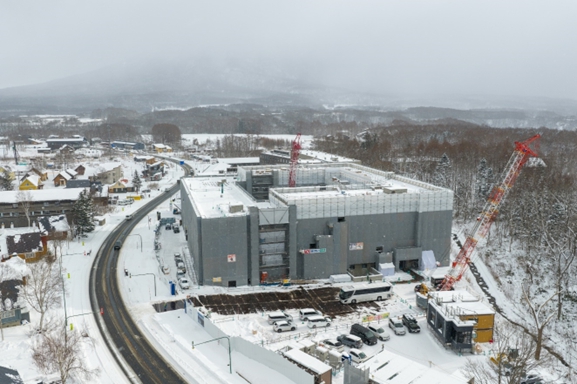
On June 30, 2022, DDPC and Hotel101 Worldwide entered into a real estate sales contract with a seller for the acquisition of a parcel of land of approximately 9,000 sq.m. in Hokkaido Prefecture, Japan. The real estate sales contract was subsequently assigned by DDPC and Hotel101 Worldwide to TMK Hotel101 Niseko on September 2, 2022. The purchase price under the real estate sales contract was paid on September 30, 2022.
HBNB expects to develop its first international Hotel101 development, named Hotel101-Niseko on such acquired land. In August 2023, Hotel101 Global signed a construction agreement with Iwata Chizaki Inc., a major Japanese contractor that constructed Chitose International Airport in Sapporo, Hokkaido Prefecture, Japan, and is in the process of obtaining new building permits for the new development layout to maximize space usage. Hotel101-Niseko is expected to have 482 rooms, and is expected to generate pre-selling sales revenue as a hybrid condotel project as well as long term recurring revenue from the hotel operation. Hotel101-Niseko is currently under construction and is expected to be completed by December 2026. As of December 31, 2025, construction of Hotel101-Niseko was 48.69% completed. On December 5, 2025, Hotel101-Niseko conducted its topping off ceremony.

On April 19, 2024, HBNB, in partnership with its engineering firms, Kamita Sekkei and Technocrew, and its contractor, Iwata Chizaki Inc., signed a commitment to create an environmentally forward Hotel101-Niseko that not only meets eco-efficient operational standards but also sets a benchmark for sustainability in the region. The structure of Hotel101-Niseko is designed to promote sustainability through green-inspired architecture and the use of technology that supports efficient and eco-friendly operations. On August 9, 2024, Hotel101-Niseko became the first hotel project in Niseko, Hokkaido Prefecture, Japan to secure a Comprehensive Assessment System for Built Environment Efficiency (“CASBEE”) certification, which is a Japanese framework for evaluating the environmental performance of buildings and built environments. CASBEE-certified projects are projects that have met specific standards on sustainability and efficiency. Through Hotel101-Niseko, HBNB aims to provide an eco-friendly hospitality experience that aligns with the environmental values of guests and meets the rigorous sustainability standards set by the local community.
Hotel101-Niseko is located in Hokkaido Prefecture, Japan, and aims to target domestic travelers in Japan and foreign tourists from other countries, including, in particular, Filipino travelers who visit Hokkaido.
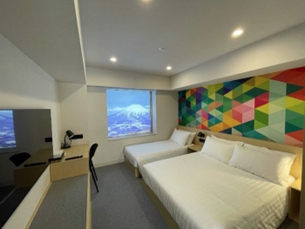
An imagined “Happy Room” in Hotel101-Niseko
Hotel101-Madrid
 |
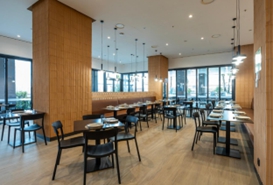 |
|
 |
 |

|
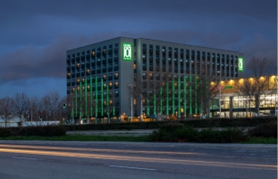 |
On October 31, 2023, Hotel101 Global, through Hotel101 Madrid, S.L.U., fully paid for the acquisition of the 6,593 sq.m. parcel of prime land in Madrid, Spain and received all the pertinent executed land purchase documents in relation thereto. HBNB expects to develop its second international Hotel101-branded development, named Hotel101-Madrid, on such acquired land, which is expected to have approximately 680 rooms. Hotel101-Madrid is expected to generate pre-selling sales revenue as a hybrid condotel project as well as long term recurring revenue from the hotel operation, and seeks to benefit from the potential for real estate investment in Madrid.
On March 13, 2024, Hotel101-Madrid progressed with two milestone activities on the same day as it conducted its groundbreaking ceremony and signed a construction contract with Ferrovial Construction, one of the largest construction companies in Spain. As of December 31, 2025, construction of Hotel101-Madrid was 96.88% completed. On April 11, 2025, Hotel101-Madrid conducted its topping off ceremony. Hotel101-Madrid officially commenced operations and opened to the public on March 10, 2026. Hotel101-Madrid is one of the largest hotels in Spain in terms of room count. In December 2024, Hotel101-Madrid received LEED pre-certification.
Hotel101-Madrid is located along Avenida Fuerzas Armadas, Valdebebas, Madrid, Spain, which is surrounded by major landmark buildings. Hotel101-Madrid is within walking distance to the Valdebebas Train Station, the IFEMA convention complex, one of the largest and busiest international trade exhibition hall in Madrid, and the Real Madrid sports center. It is within close vicinity to the new Madrid Barajas International Airport, and is expected to overlook a section of the track of the new Madrid Formula 1 circuit. Hotel101-Madrid targets domestic travelers in Spain, attendees, organizers and support staff of conferences, trade shows, exhibitions and other events held at the IFEMA convention complex and foreign tourists from other countries, including, in particular, Filipino travelers who visit Madrid.
On June 6, 2025, HBNB, through Hotel101 Global, entered into a 10-year partnership agreement with an affiliate of MATCH Hospitality AG, the official hospitality provider for the Formula 1 Spanish Grand Prix, to become an “Official Hotel” partner for the Formula 1 Spanish Grand Prix. The agreement would allow Hotel101-Madrid, once completed, to provide accommodation for attendees of the 2026 Formula 1 Spanish Grand Prix and beyond. On September 10, 2025, the GRI Institute awarded Hotel101-Madrid first place in the ‘Real Estate Destination of the Year’ category at the GRI Awards Real Estate – Europe 2025.
Hotels Under Planning and Development
As of December 31, 2025, HBNB had one hotel under the planning and development stage, namely Hotel101-Los Angeles.
Hotel101-Los Angeles
On September 27, 2023, Hotel101 Global, through Hotel101 Los Angeles LLC, entered into a Standard Offer, Agreement and Escrow Instructions for Purchase of Real Estate (the “Original Agreement”) for the acquisition of a 3,647 sq.m. lot of land in the Westlake North District of Los Angeles, California, U.S. (the “Los Angeles Property”), which was amended on November 13, 2023 (the “First Amendment Agreement”), November 21, 2023 (the “Second Amendment Agreement”) and November 12, 2024 (the “Third Amendment Agreement,” and together with the Original Agreement, the First Amendment Agreement and the Second Amendment Agreement, the “Los Angeles Property Acquisition Agreement”). On December 4, 2024, Hotel101 Los Angeles LLC fully paid for and acquired the Los Angeles Property pursuant to the Los Angeles Property Acquisition Agreement. HBNB expects to develop its third international Hotel101-branded development, named Hotel101-Los Angeles, on such land. Hotel101-Los Angeles is expected to have 427 rooms, subject to entitlement and zoning approval, and is expected to generate pre-selling sales revenue as a hybrid condotel project.
The site for Hotel101-Los Angeles is located in the Westlake North District of Los Angeles, which is a five-minute drive from downtown Los Angeles and a 20 minute-drive from the Los Angeles International Airport. Hotel101-Los Angeles is expected to target domestic travelers in the United States and foreign tourists from other countries, including, in particular, Filipino travelers who visit Los Angeles.
Sites with Definitive Agreements
On November 28, 2025 and January 20, 2026, HBNB announced the signing of definitive binding agreements for the development of Hotel101-Milan and Hotel101-Melbourne, respectively.
Hotel101-Milan
On November 28, 2025, HBNB announced a joint venture with definitive binding agreements signed for the development of HBNB’s fourth international Hotel101-branded hotel and second Hotel101-branded hotel in Europe, named Hotel101-Milan, in San Donato Milanese, Milan, Italy. Hotel101-Milan is expected to have approximately 429 rooms. Hotel101-Milan is expected to be developed on a 1.4-hectare site in the vibrant community of San Donato Milanese, home to ENI’s headquarters and located approximately 8.4 kilometers southeast of the Duomo di Milano and about a seven-minute drive from the Milan Linate Airport. HBNB believes the site offers high visibility along the Autostrada del Sole (A1), the longest motorway in Italy that links Milan to other major Italian cities such as Bologna, Florence, Rome and Naples, and positions Hotel101-Milan as an ideal gateway for leisure and business travelers seeking seamless access to Milan’s cultural and commercial hubs, complementing the existing hotel offerings in the area.
Hotel101-Milan is expected to offer modern rooms, 24/7 reception, all day dining, a 25-meter lapping pool, a full-size gym, a business center, function rooms, a children’s playground and pool, ample parking, luggage storage and other amenities and become one of the top three largest hotels in the metropolitan city of Milan, Italy in terms of room count. Hotel101-Milan is also designed to align with HBNB’s commitment to sustainable urban hospitality, incorporating energy-efficient designs, solar panels and community-integrated amenities.
Hotel101-Milan is expected to generate approximately EUR85.8 million in sales revenues once fully sold, based on an expected sale price of EUR 200,000. Hotel101-Milan is expected to be completed by 2028 and is expected to contribute to Milan’s economic growth through job creation, foreign investment and increased tourism, while attracting both local and foreign buyers under the Hotel101 unit ownership model.
Completion of the definitive binding agreements are subject to the satisfaction of the conditions precedent set forth in the definitive documents and the development of Hotel101-Milan is subject to customary national, regional and municipal regulatory approvals.
Hotel101-Melbourne
On January 20, 2026, HBNB announced the signing of definitive binding agreements for the development of its fifth international Hotel101-branded hotel, named Hotel101-Melbourne, in Melbourne, Victoria, Australia. Hotel101-Melbourne is expected to have approximately 766 rooms and to be developed at 540 Flinders Lane, Melbourne, Victoria, Australia, located in the heart of Melbourne’s Central Business District, in close proximity to Flinders Street and Southern Cross Train Stations and within walking distance to Southbank Entertainment Precinct and free tram zones. HBNB believes this location provides connectivity to key landmarks including Federation Square, the Arts Centre and the Melbourne Cricket Ground and is ideally situated to capitalize on Melbourne’s thriving tourism driven by year-round world-class annual events, including the Australian Open tennis tournament, the Formula 1 Australian Grand Prix, the Melbourne International Comedy Festival and the Melbourne Cup Carnival. This strategic site positions the property as an ideal hub for leisure and business travelers seeking seamless access to Melbourne’s cultural, commercial and sporting hubs and is expected to complement the existing hotel offerings in Melbourne’s Central Business District.
Hotel101-Melbourne is expected to generate approximately A$323.6 million in sales revenue once fully sold and is expected to be completed by 2029, forming part of Hotel101 Global’s global expansion strategy.
Hotel101-Melbourne is expected to offer 4-star amenities at affordable prices, including ample meeting spaces and a conference center tailored for business events. Guests are expected to be able to enjoy modern rooms, 24/7 reception, all day dining, swimming pool, full-size gym, business center, children’s pool, rooftop bar, ample parking, luggage storage and other amenities.
Completion of the definitive binding agreements are subject to the satisfaction of the conditions precedent set forth in the definitive documents and the development of Hotel101-Melbourne is subject to customary federal, state and local regulatory approvals.
MARKETING AND SALES
Pre-sales
HBNB is continuing to establish marketing offices and facilities globally in preparation for the pre-selling activities of its next Hotel101 projects in Niseko, Japan, and Madrid, Spain.
HBNB has opened and intends to continue opening marketing offices and facilities in strategic jurisdictions where it has existing Hotel101 projects or intends to have Hotel101 projects at some point in the future. As of December 31, 2025, HBNB had operational marketing offices in Singapore, the Philippines, Madrid (Spain), Hong Kong, Dubai (UAE), Taipei (Taiwan) and Mexico City (Mexico) and one operational marketing facility in Niseko (Japan).
 |
 |

|
 |
|
 |
 |
HBNB also engages third-party brokers and marketing agents to promote, market and facilitate the sale of Hotel101 units. For example, H2 Christie’s International Real Estate has been appointed as the sole principal sales and marketing agency, with the ability to appoint sub-agents, for Hotel101-Niseko while multiple agents, including BAFRE Gestión y Servicios Inmobiliarios, S.L., have been appointed as non-exclusive agents for Hotel101-Madrid. In addition, individual brokers and marketing agents are appointed through Hotel101’s broker accreditation program for licensed agents and brokers, marketing partner agreements and other similar programs. These third-party brokers and marketing agents receive a sales commission for each completed sale of a hotel unit.
The marketing offices and facility of HBNB serve as venues for not only marketing events but also the orientation and onboarding of its agents. The marketing offices and facility can also serve as a venue to introduce Hotel101’s business model to potential joint venture partners and franchisees, potentially contributing to the Hotel101 brand equity.
Based on HBNB’s experience, the condotel or apartment-hotel set up is common and freely permitted in many jurisdictions. A Unit Owner’s investment is limited to their purchase of real estate, with the resulting title of their specific condo unit being delivered under their name — hence distinguishing HBNB’s business model from intangible time shares. HBNB does not collect any amounts for investment by HBNB in security instruments on behalf of the Unit Owners. Rather, their decision to enroll in the HBNB platform is akin to purchasing a traditional apartment unit and having a management group manage the leasing for short or long-term stays. Nevertheless, HBNB recognizes the offer and sale of Hotel101 units may raise securities law considerations in certain jurisdictions, including the United States, due to its qualification as an investment contract, and such jurisdictions may require HBNB to implement additional compliance procedures. As a result, HBNB typically seeks advice from legal counsel prior to entering a new jurisdiction. With respect to the United States, HBNB intends to rely on the safe harbor from registration under Rule 506(c) under the Securities Act, which permits general solicitation and advertising while restricting sales to accredited investors. HBNB intends to implement a robust accredited investor verification process, including potential third-party attestation and document review, to confirm investor eligibility. Additionally, HBNB intends to carefully review all marketing materials to avoid any misleading investment representations and ensure compliance with relevant laws. To facilitate compliance, HBNB intends to engage SEC-registered broker-dealers for securities-related transactions where required and work with licensed real estate professionals for the sale of Hotel101 units intended for residential use. HBNB is prepared to make all corresponding regulatory filings, including Form D with the SEC and any applicable state-level notice filings, to maintain full compliance. HBNB intends to rely on similar exemptions in other jurisdictions where it operates.
Hotel Operations
The marketing strategies and promotion activities of HBNB are aimed at increasing awareness and engagement with its operational hotel, driving increased traffic to the Hotel101 hotel website and Hotel101 App as well as its sales platforms across various channels, broadening guest engagement and raising the aided and non-aided awareness of Hotel101. HBNB may adapt its marketing strategies and promotion activities to attract new guests and increase its repeat guests and can leverage different marketing channels depending on its target audience.
HBNB’s marketing strategy include the following initiatives:
| Strategy | Media | Description | ||||
| Social media integration | ● | TripAdvisor | ● | Accommodation bookable direct from selected online portals such as TripAdvisor, one of the world’s largest online traveller communities. | ||
| ● | ● | Dedicated Facebook, Instagram, X and LinkedIn pages and accounts. | ||||
| ● | X | |||||
| ● | ||||||
| ● | ||||||
| ● | Tiktok | |||||
| Booking channel marketing | ● | Online travel agencies (“OTAs”) | ● | Accommodation pricing is searchable on Google and other booking channels, including Agoda, Booking.com, Trip.com, and Expedia. | ||
| ● | Search engines | ● | Drive brand, competitor and generic keyword search to boost traffic to own channel. | |||
| ● | Launch in-house campaigns to increase direct web/app booking. | |||||
| ● | Cooperation with OTAs in co-organizing flash discounts and promotions to boost visibility and reach through search engine marketing and campaign promotions reaching international markets. | |||||
| Direct website and app development and management | ● | Individual hotel desktop and mobile sites | ● | Information portals and platforms that provide hotel reservation services and promotional programs, including vouchers, points and loyalty perks programs. | ||
| ● | Hotel101 App | |||||
| Celebrity engagement | ● | Social media such as Instagram | ● | To sponsor various celebrity and influencer visits to Hotel101 hotels for events or purposes such as beauty pageants, sports events, and trade conferences. Targeted celebrities are Filipino, which align with Hotel101’s target guest demographic. | ||
Booking Channels
HBNB offers its hotel rooms directly through its hotel websites, the Hotel101 App (for Hotel101 hotel bookings), to corporate accounts, to traditional travel agents (“TTAs”), to tour operators on a wholesale basis, or to individuals. In addition, indirect hotel booking channels, such as OTA platforms and other intermediaries, are also key customer acquisition channels.
OTAs
HBNB typically receives individual bookings from international markets through OTAs, primarily Expedia, Booking.com, Agoda and Trip. These OTAs may offer a wider customer reach and effective loyalty programs, potentially allowing HBNB to benefit from the growing use of OTAs.
OTAs typically encourage collaborative promotions to boost visibility and reach through search engine marketing and campaign promotions to international markets. OTAs also tend to issue email or mobile notifications to remind customers to complete their booking or revisit their previous searches. These initiatives enable OTAs, and by extension, HBNB, to market its hotel offerings automatically under prescribed algorithms.
TTAs
TTAs are offline travel agents typically with physical retail operations. HBNB does not allocate or wholesale its hotel rooms to TTAs. Each booking through TTAs is a back-to-back order from the end-guest. The growing prevalence of OTAs in recent years has diminished the importance of TTAs, especially among the younger generation of travelers.
Direct Booking Channels
HBNB believes its direct booking channels are less susceptible to changing landscape in the tourism market as there are no outgoing commission on such bookings. HBNB also “owns” the relationships with guests that book through its direct booking platforms and such direct guest access enables HBNB to proactively respond to their needs. HBNB’s direct booking channels include the following:
| ● | Websites — This channel consists of bookings made on HBNB’s desktop or mobile websites, including its Hotel101 website. |
| ● | Hotel direct — This channel consists of bookings made directly with HBNB’s hotels, including bookings from governmental agencies, corporations (such as infrastructure contractors) individuals. HBNB also receives reservations for attendees of beauty pageants, concerts, meetings, incentives, conferences, and exhibitions and banquets, through this channel. HBNB also enters into sales agreements with certain corporate customers under which HBNB offers static pricing based on seasonality. |
| ● | Hotel101 App — This channel consists of bookings made through HBNB’s proprietary Hotel101 App. The Hotel101 App adopts dynamic pricing on its room rates similar to airline tickets where its room price moves up and down depending on the real time supply and demand on the chosen date of booking. |
Bookings made through HBNB’s direct booking channels are paid prior to or upon check-out. Certain corporate customers are generally given a credit term of 30 to 60 days.
Hotel Guest Satisfaction
HBNB relies on online reviews to constantly improve its offering and services through addressing constructive guest feedback from reviews posted on online platforms, such as TripAdvisor, Facebook, Agoda, Booking.com, Trip.com, and Google reviews. HBNB also has established a complaint handling system with a dedicated customer service department to address guest concerns. Customer reviews and complaints are reported to management on a regular basis and used for staff training to avoid similar incidents in the future. HBNB also monitors the quality of its facilities and services in its hotels on a regular basis to ensure timely maintenance.
HBNB intends to establish similar guest satisfaction information systems and guest experience management processes for its hotels that become operational in the future.
COMPETITION
The hotels of HBNB are designed to cater to the mid-level value-oriented market and compete with other three-star hotels and alternative sources of accommodation, such as short-term lets of private property, within the areas where HBNB has current operations, such as Valdebebas (Madrid, Spain), and planned operations, such as, Hirafu (Niseko, Japan); Westlake North District of Los Angeles (California, United States); San Donato Milanese (Milan, Italy); Melbourne (Victoria, Australia); and other future Hotel101 sites.
The Hotel101 concept is also positioned as an alternative real estate investment to traditional rental properties. The Hotel101 concept, while similar to existing short-term apartment rental websites and application platforms in the sense that its inventory is owned by third-party Unit Owners, is distinct in the sense that Hotel101 offers uniform predictability of offering and consistency of quality.
SUPPLIERS
HBNB has a broad base of contractors, third-party brokers and marketing agents, suppliers and providers of materials and services and is not dependent on any one contractor, supplier or provider for its construction and development activities, pre-selling activities and hotel operations, as the case may be. HBNB believes that the materials and services required for its activities and operations can be easily sourced in the market, and therefore it is not, nor does it expect to be, dependent upon one or a limited number of contractors for construction and development activities, third-party brokers and marketing agents for its pre-selling activities or suppliers or providers for its essential raw materials or any other items. HBNB has adopted a policy on the accreditation and selection of suppliers and contractors through bidding.
The principal raw materials of HBNB for its construction and development activities are steel and cement. Contracts between HBNB and its contractors or suppliers contain warranties for quality and requirements for timely completion. In the event of delay or poor quality of work, the contractor or supplier may be liable to pay HBNB a penalty. HBNB has not had any material disputes with any of its contractors or suppliers. HBNB generally uses a standard form fixed-price turnkey contract for both its general and specialty construction contractors.
While HBNB, through Hotel101 Global, entered into a partnership agreement with Emma — The Sleep Company (“Emma Sleep”) in May 2023 for Emma Sleep to be the official mattress provider to all upcoming Hotel101 projects globally, HBNB believes that mattresses can be easily sourced in the market and does not expect that its hotel operations will be dependent on Emma Sleep. When practical, HBNB intends to outsource certain manpower for its hotels, such as housekeeping, janitorial, maintenance, and security services, to reputable third-party service providers on an annual contractual basis. These contracts would allow HBNB to terminate at any time, such as if the contractor fails to perform at an acceptable level.
CUSTOMERS
The customers of HBNB include (1) Unit Owners that purchase individual units in Hotel101 hotels and enter into long-term hotel management agreements with HBNB and (2) individuals, corporations and governmental agencies that purchase stays in Hotel101-Madrid and any future Hotel101 hotels of HBNB that become operational. HBNB’s customers for Hotel101-Madrid include domestic travelers in Spain and foreign tourists from other countries, including Filipino travelers familiar with the Hotel101 experience. HBNB expects its customers for Hotel101 hotels that become operational in the future will include domestic travelers in the country in which the Hotel101 hotel is located and foreign tourists from other countries, including Filipino travelers familiar with the Hotel101 experience.
EMPLOYEES
As of December 31, 2025, HBNB had a total of 60 full-time employees broken down by geography as follows:
| Singapore | 26 | |||
| Spain | 14 | |||
| Dubai | 4 | |||
| Hong Kong | 6 | |||
| Taiwan | 4 | |||
| Japan | 2 | |||
| Mexico | 1 | |||
| Philippines | 3 | |||
| Total | 60 |
As of December 31, 2025, HBNB had also engaged two contractors, one in the United States and one in the People’s Republic of China.
INTELLECTUAL PROPERTY
As of December 31, 2025, the following trademark is registered with the World Intellectual Property Organization by HOA, an affiliate of HBNB:
| Trademark | Registrant | Issuing Entity | Registration Date | Expiration Date | ||||
 |
HOA | World Intellectual Property Organization | February 26, 2018 | February 26, 2028 |
HBNB uses the Hotel101 trademark with the permission of HOA, its affiliate, on a royalty-free basis. As of the date of this Annual Report, there is no formal written trademark license agreement between HOA and HBNB governing the use of the Hotel101 trademark. HBNB’s use of the trademark is permitted by HOA by virtue of the affiliate relationship between the two entities, and HBNB does not pay any royalty or license fee to HOA in connection with such use.
HBNB owns the following domain names, among others: https://hotel101.com; https://hotel101global.com; and https://www.hotel101.com.ph.
HBNB believes that its operations are not materially dependent on any copyright, patent, trademark, license, franchise, concession or royalty agreement.
SEASONALITY
Due to its limited track record, HBNB has not experienced seasonality to date. Going forward, HBNB may experience seasonality in both revenue and costs, driven by travel patterns, holiday and local demand cycles. These seasonality events may cause higher or lower occupancy rates and average daily rates. Certain costs may also fluctuate as it moves with occupancy rates such as housekeeping, utilities, and guest amenities. Year end compensation, incentives or bonuses, whether required by law in certain jurisdictions, may also impact expenses.
HEALTH, SAFETY AND ENVIRONMENT
HBNB regards occupational health and safety as one of its most important corporate and social responsibilities. HBNB is subject to health, safety and environmental laws and regulations in the jurisdictions in which it operates, which generally require government permits and approvals at various project milestones and during hotel operations. HBNB maintains various environmental protection systems and conducts regular health and safety training, including quarterly evacuation drills at each hotel. For the years ended December 31, 2024 and 2025, HBNB had no incidents relating to deaths, nor serious injuries involving permanent or probationary employees.
HBNB is committed to sustainable development, which it regards as a core aspect of the Hotel101 brand. By integrating sustainable practices into both its construction and day-to-day operations, HBNB aims to protect the environment, appeal to eco-conscious guests, and reduce operational costs. Hotel101-Niseko was the first hotel project in Niseko, Hokkaido Prefecture, Japan to receive CASBEE certification, and Hotel101-Madrid has received LEED pre-certification, reflecting HBNB’s commitment to embedding sustainability standards across its properties.
CORPORATE SOCIAL RESPONSIBILITY
Environmental Sustainability
HBNB integrates sustainability into the planning and development of its hotel property developments and intends to integrate sustainability into the operation of its future hotels.
HBNB applies sustainability criteria aligned with the World Travel and Tourism Council’s Hotel Sustainability Basics and the ASEAN Green Tourism Standard to guide consistent practices across its portfolio.
As HBNB expands globally, these principles are applied to new projects. In December 2024, Hotel101-Madrid received LEED pre-certification. Hotel101-Madrid is designed to meet LEED certification standards, with a focus on energy efficiency, water conservation, sustainable materials and access to public and low-impact transport. Planned measures include rooftop solar panels, smart energy management technologies, water-efficient fixtures, waste segregation programs and reduced use of single-use plastics. On August 9, 2024, Hotel101-Niseko became the first hotel project in Niseko, Hokkaido Prefecture, Japan to secure a CASBEE certification, supporting building performance and operational efficiency. CASBEE is a Japanese framework for evaluating the environmental performance of buildings and built environments and CASBEE-certified projects are projects that have met specific standards on sustainability and efficiency.
Hotel101 continues to pursue green certifications for new projects to meet recognized environmental performance standards.
Social Impact
HBNB supports community well-being through purpose-built Hotel101 properties. As Hotel101 hotels are developed specifically for hospitality use, with hotel units offered for pre-sale, HBNB believes this model does not reduce residential housing supply.
HBNB engages in community and environmental initiatives. As HBNB expands globally, HBNB plans to prioritize local hiring and work with local service providers.
Industry Contribution
HBNB aims to contribute to the hospitality industry through operational efficiency, affordability and responsible development. Hotel101 properties are designed to provide consistent accommodations while integrating sustainability considerations from planning through operations.
Across new markets, Hotel101 focuses on efficient building systems, proximity to existing transport infrastructure and ongoing monitoring of energy, water, waste and emissions.
INSURANCE
HBNB obtains and maintains appropriate insurance coverage on its properties, assets and operations in such amounts and covering such risks as HBNB believes are usually carried by companies engaged in similar businesses and using similar properties in the same geographical areas as those in which HBNB operates. HBNB maintains insurance policies covering all risk of sudden, accidental and unforeseen, direct and physical loss, destruction of or damage to the property including but not limited to the following: comprehensive general liability; personal accident insurance for directors and officers; fire and lightning; bush fire and spontaneous combustion; windstorm, storm, typhoon, flood, tidal wave and tsunami; water damage caused by overflowing or bursting of water tanks, pipes or other apparatus and sprinkler leakage; explosion, falling aircraft, impact by road vehicles and smoke; earthquake shock and earthquake fire; volcanic eruption; subsidence, collapse and landslide; riot and strike and malicious acts; electrical injury; robbery and burglary; mechanical or electrical derangement failure or breakdown or boiler explosion; extra expense/standard charges; and third-party bodily injury and property damage, and business interruption resulting therefrom.
C. Organizational Structure
The following chart depicts a simplified organizational chart of the main subsidiaries, branches, representative offices and associates of HBNB as of the date of this Annual Report.
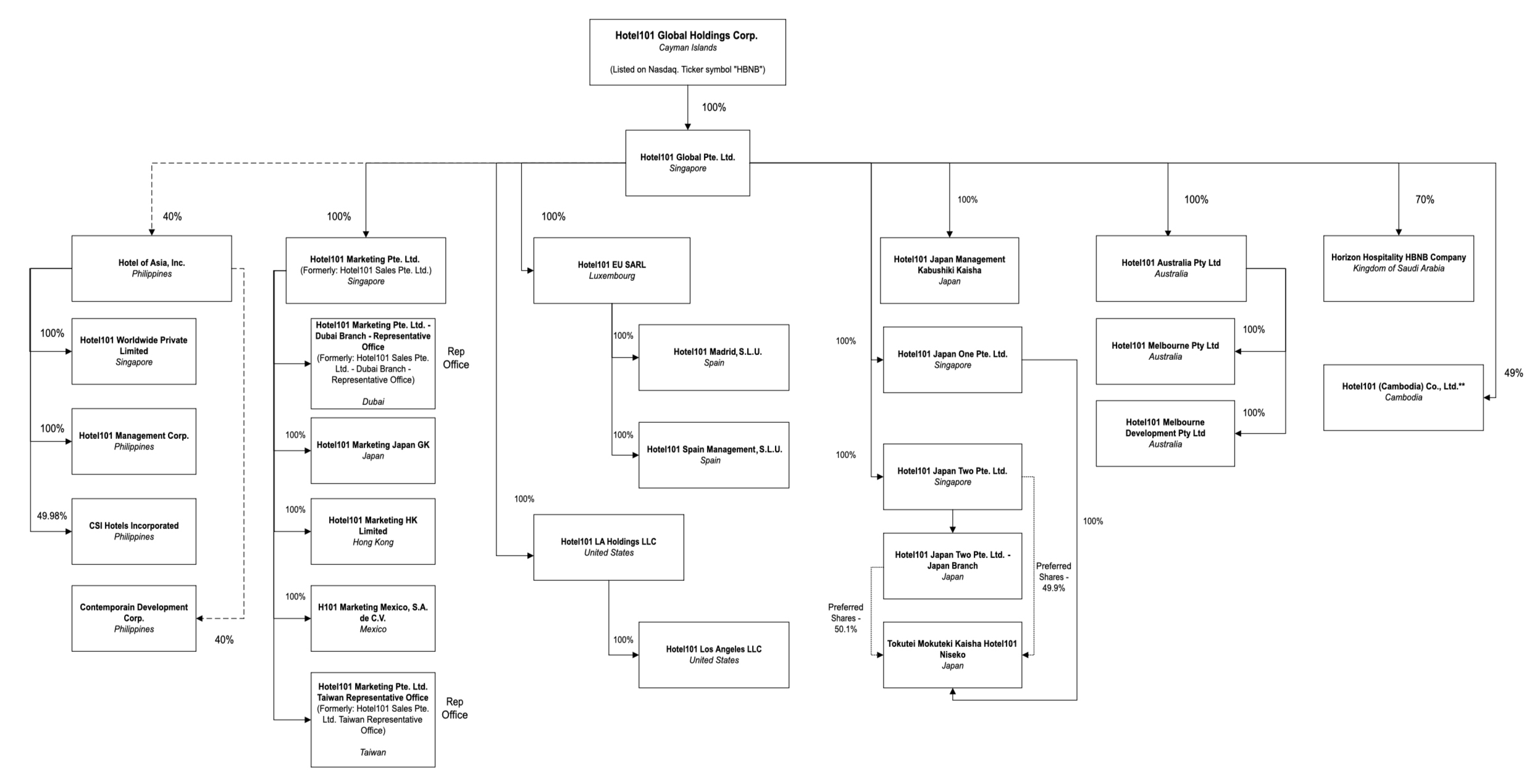
| Note: |
| ** | 51% of Hotel101 (Cambodia) Co., Ltd. is held by a Cambodian nominee vehicle on behalf of Hotel101 Global. Hotel101 Global holds 100% of the voting rights of, and is entitled to 100% of the economic interest in, Hotel101 (Cambodia) Co., Ltd. |
D. Property, Plants and Equipment
The investment properties of HBNB are stated at fair value, which has been determined based on valuations performed by an accredited independent appraiser. The fair values of the investment properties were arrived at using the market data approach for land and cost or income approach for buildings.
Hotels
The locations, descriptions and certain other information regarding the projects of HBNB under construction and planning and development as of December 31, 2025 are shown below:
| Project | Address | Effective Ownership Interests | Status as of December 31, 2025 |
|||
| Hotel101-Niseko | Niseko, Hokkaido Prefecture, Japan | Land — 100% owned by HBNB through TMK Hotel101 Niseko | Under construction — construction was 48.69% complete | |||
| Hotel101-Madrid(1) | Madrid, Spain | Land — 100% owned by HBNB through Hotel101 Madrid, S.L.U. | Under construction — construction was 96.88% complete | |||
| Hotel101-Los Angeles | Los Angeles, U.S. | Land — 100% owned by HBNB through Hotel101 Los Angeles LLC | Planning and development |
|
Note: |
| (1) | Hotel101-Madrid commenced operations and opened to the public on March 10, 2026. |
HBNB has also signed definitive binding agreements for certain of its projects. In November 2025, HBNB announced a joint venture with definitive binding agreements signed for the development of Hotel101-Milan. In January 2026, HBNB announced a joint venture with definitive binding agreements signed for the development of Hotel101-Melbourne. Completion of these definitive binding agreements is subject to the satisfaction of the conditions precedent set out therein, and the development of Hotel101-Milan and Hotel101-Melbourne is also subject to obtaining customary regulatory approvals from the relevant national, regional, municipal, federal, state and local authorities.
Other Properties
HBNB, through Hotel101 Global, owns a 205.97 sq.m. corporate office space located at #04-03 and #04-04 Plus Building, 20 Cecil Street, Singapore 049705.
HBNB also leased office spaces, including the following as of December 31, 2025:
| 1. | the marketing office with a contracted area of 52.95 sq.m. located at #01-05 Plus Building, 20 Cecil Street, Singapore is leased by Hotel101 Global for a period of three years from July 1, 2023 to June 30, 2026; |
| 2. | the marketing office with a contracted area of 169.64 sq.m. located at Ground Floor, Tower 4, DoubleDragon Plaza, DD Meridian Park, Philippines is leased by Hotel101 Global from DDMP REIT, Inc., an affiliate, for a period of five years from September 2, 2023 to September 1, 2028; |
| 3. | the marketing office with a contracted area of 120 sq.m. located at Lagascas Street, 28, Local B1, Madrid, Spain is leased by Hotel101 Madrid, S.L.U. for a period of two years from February 15, 2024 to March 15, 2026. In March 2026, HBNB’s marketing office moved to Hotel101-Madrid; |
| 4. | the marketing office located at shop G04 in Bay Square-09 in Bay Square, Business Bay, Dubai is leased by Hotel101 Sales Pte. Ltd., Dubai Branch for the period from September 18, 2024 to November 17, 2026; |
| 5. | the marketing office located at shop B on the ground floor of Lucky Building, No. 39 Wellington Street, Central, Hong Kong is leased by Hotel101 Marketing HK Limited for a period of three years from October 16, 2024 to October 15, 2027; |
| 6. | the marketing office located on the first floor of No. 520-3, Section 4, Ren’ai Road, Xinyi District, Taipei City, Taiwan is leased by Hotel101 Marketing Pte. Ltd. (formerly known as Hotel101 Sales Pte. Ltd.) for a period of three years from December 1, 2024 to December 14, 2027; |
| 7. | the marketing office located at Campos Eliseos, Avenue number 295, Polanco IV Section neighborhood, Miguel Hidalgo Municipality, Mexico is leased by H101 Marketing Mexico S.A. DE C.V. for a period of five years from June 15, 2025 to June 14, 2030; and |
| 8. | the corporate office space with a contracted area of 1,292 square feet located at #04-01/10 Plus Building, 20 Cecil Street, Singapore is leased by Hotel101 Global for a period of three years from September 1, 2025 to August 31, 2028. |
In March 2026, HBNB, through its subsidiary Hotel101 Marketing Japan GK, has also leased a marketing office with a contracted area of 112.62 sq.m. located at 1F and 2F, 2-15 1-chome, Tachibana Hibiya Building, Yurakucho, Chiyoda Ward, Tokyo, Japan for a period of five years from March 1, 2026 to February 28, 2031.
The terms of the lease are for periods ranging from two to five years, generally renewable for the same period under the same terms and conditions. The rent under certain leases increases incrementally each year.
Further information regarding HBNB’s property, plants and equipment are included under the headings “Item 4. Information on the Company—B. Business Overview—The HBNB Group” and “Item 5. Operating and Financial Review and Prospects—HBNB’s Management’s Discussion and Analysis of Financial Condition and Results of Operations.”
Item 4A. Unresolved Staff Comments
None / Not applicable.
Item 5. Operating and Financial Review and Prospects
The following discussion and analysis should be read in conjunction with the selected financial and operating data, the audited consolidated financial statements and related notes of HBNB as of December 31, 2025 and 2024 and for the years ended December 31, 2025, 2024 and 2023 (“HBNB’s audited consolidated financial statements”) included elsewhere in this Annual Report. These financial statements have been prepared in accordance with IFRS, which differs in certain respects from U.S. GAAP.
Unless otherwise indicated, in this section, the information as of December 31, 2025 and 2024 and for the years ended December 31, 2025, 2024 and 2023 are derived from HBNB’s audited consolidated financial statements and the notes thereto included elsewhere in this Annual Report.
The discussion below contains forward-looking statements and reflects the current view of HBNB and its subsidiaries and associates with respect to future events and financial performance. Actual results may differ materially from those anticipated in these forward-looking statements as a result of certain factors such as those set forth under “Item 3. Key Information—D. Risk Factors” and elsewhere in this Annual Report.
Prior to the Business Combination, HBNB did not own any material assets and did not conduct any material business operations. Following the consummation of the Business Combination on June 30, 2025, the business of HBNB is conducted through Hotel101 Global and its subsidiaries. Unless the context otherwise requires, all references in this section to “HBNB,” “we,” “us,” or “our” refer to Hotel101 Global Pte. Ltd. and its subsidiaries prior to the consummation of the Business Combination and to Hotel101 Global Holdings Corp. and its subsidiaries following the consummation of the Business Combination.
A. Operating Results
OVERVIEW
HBNB is an exempted company with limited liability incorporated under the laws of the Cayman Islands on March 13, 2024 for the purposes of effecting the Business Combination. Hotel101 Global was incorporated in Singapore on July 28, 2022. Following the consummation of the Business Combination on June 30, 2025, the business of HBNB is conducted through Hotel101 Global and its subsidiaries. As of December 31, 2025, HBNB had two hotels under construction, namely Hotel101-Niseko and Hotel101-Madrid, and one hotel under planning and development, namely Hotel101-Los Angeles. Hotel101-Madrid commenced operations and opened to the public on March 10, 2026. HBNB has also executed definitive agreements for sites in Italy and Australia.
On January 21, 2025, pursuant to the Merger Agreement, Hotel101 Global acquired a 40% interest in HOA. Following the consummation of the Business Combination, Hotel101 Global became a direct, wholly-owned subsidiary of HBNB. HBNB’s 40% interest in HOA through Hotel101 Global is accounted for using the equity method and HOA is not consolidated in HBNB’s financial statements.
FACTORS AFFECTING RESULTS OF OPERATIONS
HBNB’s results of operations are affected by a variety of factors. Set out below is a discussion of the most significant factors that have affected HBNB’s results since its inception and which HBNB expects to affect HBNB’s financial results in the future. Factors other than those set out below could also have a significant impact on HBNB’s results of operations and financial condition in the future. See “Item 3. Key Information—D. Risk Factors.”
HBNB has a limited track record of developing real estate or hotels internationally, with its first operational hotel, Hotel101-Madrid, only recently commencing operations in March 2026. HBNB aims to develop its international hospitality projects where Filipinos have historically visited to leverage its brand equity. As of December 31, 2025, HBNB had two hotels under construction, namely Hotel101-Niseko and Hotel101-Madrid, and one hotel under planning and development, namely Hotel101-Los Angeles. HBNB has also signed definitive binding agreements for certain of its projects. In November 2025, HBNB announced a joint venture with definitive binding agreements signed for the development of Hotel101-Milan. In January 2026, HBNB announced a joint venture with definitive binding agreements signed for the development of Hotel101-Melbourne. Completion of these definitive binding agreements is subject to the satisfaction of the conditions precedent set out therein, and the development of Hotel101-Milan and Hotel101-Melbourne is also subject to obtaining customary regulatory approvals from the relevant national, regional, municipal, federal, state and local authorities. HBNB has one operational hotel as of the date of this Annual Report.
Global expansion plans
HBNB aims to be present in 25 countries and to increase its portfolio of uniform Hotel101 rooms in the medium term, which it expects to achieve primarily through joint ventures with developers abroad in other countries, or through licensing or franchising arrangements. HBNB aims to establish a global footprint in 100 countries over the long term.
HBNB’s ability to execute its global expansion plans and achieve future growth will depend on its ability to continue to identify and acquire land sites and to complete its projects successfully and on schedule, which is dependent on a variety of factors outside of HBNB’s control, including the land policies of the governments in the jurisdictions where it operates, the overall economic conditions, the availability of capital, license and permit requirements, construction challenges, and competition for such land. HBNB may also experience delays resulting from independent contractors who are not able to complete projects on time due to various factors, including a lack of available manpower. The expansion of HBNB’s businesses will also require HBNB to manage additional relationships with third parties such as potential purchasers, suppliers, and contractors, including international contractors for its international hospitality projects. For example, HBNB may have insufficient experience in dealing with matters associated with its international hospitality projects, such as applicable laws relating to the environment as well as different construction, operational and marketing requirements.
Access and costs to funding
As of December 31, 2025, HBNB’s ongoing projects under construction included Hotel101-Niseko and Hotel101-Madrid. As of December 31, 2025, the estimated cost to complete these projects, net of cash and cash equivalents, amounts to $26,408,998. Construction of hospitality projects is capital intensive and may take as long as a year or longer before generating positive net cash flow through sale or management fees.
Since its inception, HBNB has mainly relied on cash advances from its immediate holding company, DDPC, its ultimate holding company, DoubleDragon, and other related parties to finance its expansion. These advances are provided on an as or when needed basis and are due and demandable upon request. As of December 31, 2025, HBNB’s amount due to DDPC, amount due to DoubleDragon and amounts due to related parties were $24,412,418, $81,151,493 and $3,781,815, respectively. For the year ended December 31, 2025, HBNB’s net cash used in operating activities was $42,242,451.
HBNB anticipates funding all other projects under planning and development stage with cash generated from the sale proceeds of its current projects under construction or future fundraising activities, including through its access to the public capital markets. However, to the extent external funding is unavailable, HBNB expects to continue to receive cash advances and borrow funds from related parties in the future, subject to the willingness and ability of HBNB’s related parties to lend such funds and/or provide such cash advances.
Demand for ownership of HBNB’s hotel units
HBNB sells individual condotel units in its hospitality projects, its uniform signature Hotel101 “happy room” unit, prior to construction completion and opening of the relevant hospitality project. The Unit Owners receive individual condominium titles and will be able to receive income share from the hotel’s revenues once it commences operation. HBNB will manage the hotel once it becomes operational and will share a portion of the gross revenue with the Unit Owners in accordance with the respective management agreements. This business model allows HBNB to generate revenue and income twice from one project, first from the pre-selling of the signature Hotel101 “happy room” unit and second from the long term-recurring revenue from hotel operations after the project’s completion. As such, the continued growth in market demand for and market acceptance of the Hotel101 “happy room” unit is critical to HBNB’s growth and success.
Competition
HBNB faces significant competition in the locations in which it has operations and projects under construction, development and planned joint ventures, including Madrid, Spain, Niseko, Japan, Los Angeles, United States, Milan, Italy and Melbourne, Victoria, Australia, and expects to face significant competition in the hotel development markets of additional Hotel101 sites. In particular, HBNB aims to be present in 25 countries and to increase its portfolio of uniform Hotel101 rooms in the medium term and to establish a global footprint in 100 countries over the long term. As a result, HBNB competes with other developers in locating and acquiring, or entering into joint venture partnerships and franchise arrangements to develop, parcels of prime commercial property of suitable size in locations in which it intends to expand into and at attractive prices to HBNB and on terms that can yield reasonable returns. HBNB expects that competition among developers for land reserves that are suitable for development (whether through acquisitions, joint venture partnerships or franchise arrangements) will intensify and that land acquisition costs will increase as a result. Furthermore, HBNB competes with other 3-star hotels operating within the areas where HBNB has projects under construction and intends to expand into, and hospitality marketplaces that aggregate unbranded accommodations.
Laws and regulations affecting the real estate and hospitality industries in each country where HBNB operates
HBNB’s operations and growth strategy may be affected by changes in laws and regulations generally affecting the real estate and hospitality industries in the areas where HBNB has projects under construction and intends to expand into. To develop its hospitality projects, HBNB is required to obtain various permits and licenses, including environmental certificates, business permits, work-permits, construction permits, and other permits and licenses from various local governments and agencies. Furthermore, HBNB aims to be present in 25 countries and to increase its portfolio of uniform Hotel101 rooms in the medium term and to establish a global footprint in 100 countries over the long term, which would increase HBNB’s compliance burden due to differences across jurisdictions in the legal regimes governing the real estate and hospitality industries.
Business Combination
On June 30, 2025, HBNB consummated the previously announced Business Combination and SPAC Merger pursuant to the Agreement and Plan of Merger, dated April 8, 2024 (and as amended on September 3, 2024). See Note 4 “Business combination and reverse recapitalization” in the Notes to HBNB’s audited consolidated financial statements.
The Business Combination was accounted for as a capital reorganization in accordance with IFRS 2, Share-based Payments (“IFRS 2”). Under this method of accounting, JVSPAC is treated as the “acquired” company for financial reporting purposes and Hotel101 Global as the accounting “acquirer.” As such, Hotel101 Global is deemed the accounting predecessor of the combined business, and HBNB, as the parent company of the combined business, is the successor SEC registrant, meaning that Hotel101 Global’s financial statements for previous periods will be disclosed in the registrant’s periodic reports filed with the SEC.
The consolidated financial statements of the merged company will represent a continuation of the financial statements of Hotel101 Global. The historical financial statements also include HBNB since its inception as this entity was under common control in the historical period. The principles and guidance on the preparation and presentation of the consolidated financial statements will be applied as follows:
| ● | the assets and liabilities of Hotel101 Global and HBNB recognized and measured in the consolidated financial statements at their carrying amounts immediately prior to the Capital Reorganization; |
| ● | the net investment of Hotel101 Global and HBNB are recognized in the consolidated financial statements at amounts immediately prior to the Capital Reorganization. Common shares and capital surplus have been adjusted retroactively to reflect the legal capital of Hotel101 Global; and |
| ● | the comparative information presented in the consolidated financial statements are that of Hotel101 Global and HBNB. |
In addition, the Merger Agreement provided that in the event that HBNB’s reported consolidated revenue for fiscal year 2025, as set forth in its annual audited consolidated financial statements filed on Form 20-F, is at least $113.25 million, then HBNB, at its option, may issue in the aggregate up to an additional 500,000 ordinary shares (the “Earnout Shares”) as a bonus to the directors, executives, managers, advisors and employees of HBNB, its subsidiaries and/or parent companies, as determined at the relevant time. As HBNB’s consolidated revenue for fiscal year 2025 was $75.9 million, no Earnout Shares will be issued by HBNB.
Recent Events
| ● | On November 28, 2025, HBNB announced a joint venture with definitive binding agreements signed for the development of Hotel101-Milan. |
| ● | On January 19, 2026, the Group incorporated Horizon Hospitality HBNB Company in Saudi Arabia as a subsidiary of Hotel101 Global for its planned hotel development in Saudi Arabia. |
| ● | In January 2026, HBNB announced a joint venture with definitive binding agreements signed for the development of Hotel101-Melbourne. |
| ● | On March 10, 2026, Hotel101-Madrid started operations. |
DESCRIPTION OF CONSOLIDATED STATEMENTS OF COMPREHENSIVE LOSS LINE ITEMS
The following table sets forth details for HBNB’s consolidated statements of comprehensive loss line items for the years ended December 31, 2025, 2024 and 2023:
| For the year ended December 31, | ||||||||||||
| 2025 | 2024* | 2023* | ||||||||||
| ($) | ||||||||||||
| Rental income | 374,573 | 29,624 | 1,426 | |||||||||
| Real estate sales | 75,210,378 | 5,908,234 | — | |||||||||
| Other Income | 281,139 | — | — | |||||||||
| Total revenue | 75,866,090 | 5,937,858 | 1,426 | |||||||||
| Cost of real estate sales | (43,416,945 | ) | (3,364,444 | ) | — | |||||||
| Gross margin | 32,449,145 | 2,573,414 | 1,426 | |||||||||
| Operating expenses | (15,468,713 | ) | (7,458,773 | ) | (2,071,644 | ) | ||||||
| Stock compensation expense | (15,550,314 | ) | — | — | ||||||||
| Results from operating activities | 1,430,118 | (4,885,359 | ) | (2,070,218 | ) | |||||||
| Equity in net income of an associate | 300,639 | — | — | |||||||||
| Listing fee | (13,755,620 | ) | — | — | ||||||||
| Finance income | 38,665 | 27,084 | 11,713 | |||||||||
| Finance costs | (7,282,159 | ) | (1,639,174 | ) | (174,184 | ) | ||||||
| Net finance costs | (20,698,475 | ) | (1,612,090 | ) | (162,471 | ) | ||||||
| Loss before income tax | (19,268,357 | ) | (6,497,449 | ) | (2,232,689 | ) | ||||||
| Income tax benefit (expense) | (7,444,936 | ) | — | 28,027 | ||||||||
| Loss for the period | (26,713,293 | ) | (6,497,449 | ) | (2,204,662 | ) | ||||||
| Other comprehensive loss for the period: | ||||||||||||
| Item that is or may be reclassified subsequently to profit or loss: | ||||||||||||
| Exchange differences on translation of foreign operations | (138,963 | ) | (1,159,811 | ) | 687,401 | |||||||
| Total comprehensive loss for the period | (26,852,256 | ) | (7,657,260 | ) | (1,517,261 | ) | ||||||
| * | Prior year comparatives have been reclassified to reflect the impact of the reverse recapitalization. See Note 4, “Business combination and reverse recapitalization,” of HBNB’s audited consolidated financial statements for details. |
Rental income
HBNB’s rental income comprises rent from leases that have been assigned to HBNB in relation to an existing structure on the lot of land on which Hotel101-Los Angeles is expected to be developed and rent from Hotel101-Niseko’s land used for parking purposes while the Hotel101-Niseko project is under construction. HBNB intends to retain the leases in the short-term as the primary purpose of such lot of land is for the construction and development of Hotel101 projects.
Real estate sales
HBNB’s real estate sales comprise revenues from the sale of development properties under the pre-completion stage, which are recognized over time during the construction period (or percentage of completion) since, based on the terms and conditions of its contracts with buyers, HBNB’s performance does not create an asset with an alternative use and HBNB has an enforceable right to payment for performance completed to date.
Other income
HBNB’s other income consists of income other than those generated from its ordinary course of business, such as transfer fees, processing fees and closing fees charged to buyers in relation to the transfer of titles and incidental services provided by HBNB to the buyers.
Cost of real estate sales
HBNB’s cost of real estate sales consists of construction and development costs, land and land development costs and cost to obtain contract, which represents commission payments to brokers and agents for the sale of Hotel101 units less any amount previously amortized as cost. Cost is recognized based on the percentage of completion and the budgeted cost of the projects.
Operating expenses
HBNB’s operating expenses comprise professional and contracted fees, other administrative expenses, travel expenses, employee benefits expense, which includes salaries, bonus and other employee benefits, selling and marketing expenses, depreciation and amortization and utilities and office expenses.
Stock compensation expense
Stock compensation expense relates to the Key Executive Shares of the Company issued as part of the Business Combination. Key Executive Shares are measured at the fair market value of the underlying shares at the grant date and the expense is recognized over the requisite service period.
Finance income
HBNB’s finance income comprises interest income from cash in bank.
Finance costs
HBNB’s finance costs comprise interest expense on amount due to DDPC that are recognized in profit or loss. Interest expense is recognized using the effective interest method. Interest expense on HBNB’s lease liabilities is based on an incremental borrowing rate. HBNB also recognizes interest expense from the Hotel101 unit sales contracts where payment is made upfront due to the mismatch between the timing of payments from the buyer and the fact that the relevant HBNB project remains under construction.
Equity in net income of an associate
HBNB’s equity in net income of an associate represents its share in net income of HOA, the developer and operator of Hotel101-branded properties in the Philippines. Hotel101 Global acquired its investment of a 40% stake in HOA in January 2025.
Listing fee
HBNB’s listing fee relates to a one-time expense in connection with the Business Combination and represents the excess fair value of the equity interests deemed to have been issued to JVSPAC shareholders as consideration over the fair value of JVSPAC’s identifiable net assets as of closing of the Business Combination.
RESULTS OF OPERATIONS
For the year ended December 31, 2025 compared to the year ended December 31, 2024
Rental income
HBNB’s rental income increased by $344,949, or 1,164%, to $374,573 for the year ended December 31, 2025, compared to $29,624 for the year ended December 31, 2024, due to rent from leases that have been assigned to Hotel101 Global in relation to an existing structure on the lot of land on which Hotel101-Los Angeles is expected to be developed. Hotel101 Global intends to retain such leases in the short-term as the primary purpose of such lot of land is for the construction and development of Hotel101-Los Angeles. HBNB acquired the Hotel101-Los Angeles lot in December 2024 and only recognized one month of rental income for 2024.
Real estate sales
HBNB’s real estate sales increased by $69,302,144, or 1,173%, to $75,210,378 for the year ended December 31, 2025, compared to $5,908,234 for the year ended December 31, 2024, due to the recognition of revenue for Hotel101-Madrid and Hotel101-Niseko based on percentage of completion of the projects. As of December 31, 2025, Hotel101-Madrid was substantially completed and Hotel101-Niseko had already topped off and progressed to interior finishing works.
Other income
HBNB recorded other income of $281,139 for the year ended December 31, 2025, compared to nil for the year ended December 31, 2024, due to transfer, processing, and closing fees earned for Hotel101-Madrid.
Cost of real estate sales
HBNB’s cost of real estate sales increased by $40,052,501, or 1,190%, to $43,416,945 for the year ended December 31, 2025, compared to $3,364,444 for the year ended December 31, 2024, due to the recognition of cost for Hotel101-Madrid and Hotel101-Niseko in line with the revenue recognized for these projects. Costs include cost to obtain contract which represents the commissions paid to brokers in relation to the sale of the units.
Operating expenses
HBNB’s operating expenses increased by $8,009,940, or 107%, to $15,468,713 for the year ended December 31, 2025, compared to $7,458,773 for the year ended December 31, 2024, primarily due to increases in employee salaries and benefits, selling and marketing expenses, travel expenses and other administrative expenses.
Stock compensation expense
HBNB recorded stock compensation expense of $15,550,314 for the year ended December 31, 2025, compared to nil for the year ended December 31, 2024. This expense relates to the Key Executive Shares issued on June 30, 2025 in connection with the Business Combination. Stock compensation expense is based on the fair value of the underlying stock at grant date, June 30, 2025, recognized over the requisite vesting period.
Equity in net income of an associate
HBNB recorded equity in net income of an associate of $300,639 for the year ended December 31, 2025, compared to nil for the year ended December 31, 2024. Equity in net income of an associate represents HBNB’s share in net income of HOA, the developer and operator of Hotel101-branded properties in the Philippines. HBNB acquired its investment of a 40% stake in HOA in January 2025.
Listing fee
HBNB recorded listing fee of $13,755,620 for the year ended December 31, 2025, compared to nil for the year ended December 31, 2024. The listing fee relates to a one-time expense on June 30, 2025 in connection with the Business Combination and represents the excess fair value of the equity interests deemed to have been issued to JVSPAC shareholders as consideration over the fair value of JVSPAC’s identifiable net assets as of closing of the Business Combination.
Finance income
HBNB’s finance income increased by $11,581, or 43%, to $38,665 for the year ended December 31, 2025, compared to $27,084 for the year ended December 31, 2024, primarily due to increases in income from cash in bank accounts.
Finance costs
HBNB’s finance costs increased by $5,642,985, or 344%, to $7,282,159 for the year ended December 31, 2025, compared to $1,639,174 for the year ended December 31, 2024, primarily due to the interest expense from advances granted by the immediate holding company and ultimate holding company bearing fixed interest per annum, interest expense from HBNB’s lease liabilities and interest expense from Hotel101 unit sales contracts related to the significant financing component.
Loss before income tax
HBNB’s loss before income tax increased by $12,770,908, or 197%, to $19,268,357 for the year ended December 31, 2025, compared to $6,497,449 for the year ended December 31, 2024.
Income tax expense
HBNB’s income tax expense increased to $7,444,936 for the year ended December 31, 2025, compared to nil for the year ended December 31, 2024. Income tax expense comprises current income tax expense of subsidiaries and deferred tax expense for Hotel101-Madrid.
Loss for the period
As a result of the foregoing, HBNB’s loss for the period increased by $20,215,844, or 311%, to $26,713,293 for the year ended December 31, 2025, compared to $6,497,449 for the year ended December 31, 2024.
For the year ended December 31, 2024 compared to the year ended December 31, 2023
Rental income
HBNB’s rental income increased by $28,198, or 1,977%, to $29,624 for the year ended December 31, 2024 compared to $1,426 for the year ended December 31, 2023, due to rent from leases that have been assigned to HBNB in relation to an existing structure on the lot of land on which Hotel101-Los Angeles is expected to be developed, which HBNB acquired and fully paid for in December 2024. HBNB intends to retain such leases in the short-term as the primary purpose of such lot of land is for the construction and development of Hotel101-Los Angeles.
Real estate sales
HBNB recorded real estate sales of $5,908,234 for the year ended December 31, 2024 compared to nil for the year ended December 31, 2023, due to the recognition of revenue for Hotel101-Madrid and Hotel101-Niseko based on percentage of completion of the projects. In 2024, Hotel101 Global executed the Hotel101 unit sales contracts with buyers and met the criteria for revenue to be recognized.
Cost of real estate sales
HBNB recorded cost of real estate sales of $3,364,444 for the year ended December 31, 2024 compared to nil for the year ended December 31, 2023, due to the recognition of cost for Hotel101-Madrid and Hotel101-Niseko in line with the revenue recognized for these projects. Costs include cost to obtain contract which represents the commissions paid to brokers in relation to the sale of the units.
Operating expenses
HBNB’s operating expenses increased by $5,387,129, or 260%, to $7,458,773 for the year ended December 31, 2024, compared to $2,071,644 for the year ended December 31, 2023, primarily due to increases in professional and contracted services, including costs related to the listing of HBNB Ordinary Shares on Nasdaq, employee salaries and benefits, selling and marketing expenses and depreciation.
Finance income
HBNB’s finance income increased by $15,371, or 131%, to $27,084 for the year ended December 31, 2024, compared to $11,713 for the year ended December 31, 2023, primarily due to an increase in interest income from banks as a result of HBNB’s higher cash position from the collections from buyers of units in Hotel101-Madrid and Hotel101-Niseko.
Finance costs
HBNB’s finance costs increased by $1,464,990, or 841%, to $1,639,174 for the year ended December 31, 2024, compared to $174,184 for the year ended December 31, 2023, primarily due to the interest expense from advances granted by DDPC, HBNB’s immediate holding company, interest expense from HBNB’s lease liabilities and interest expense from Hotel101 unit sales contracts where payment is made upfront.
Loss before income tax
HBNB’s loss before income tax increased by $4,264,760, or 191%, to $6,497,449 for the year ended December 31, 2024, compared to $2,232,689 for the year ended December 31, 2023.
Income tax benefit
HBNB did not record any income tax expense for the year ended December 31, 2024, compared with a $28,027 income tax benefit for the year ended December 31, 2023, primarily due to the non-recognition of deferred tax assets for the taxable losses of the Group in 2024.
Loss for the period
As a result of the foregoing, HBNB’s loss for the period increased by $4,292,787, or 195%, to $6,497,449 for the year ended December 31, 2024, compared to $2,204,662 for the year ended December 31, 2023.
DESCRIPTION OF CONSOLIDATED STATEMENTS OF FINANCIAL POSITION LINE ITEMS
The following table sets forth selected information from HBNB’s consolidated statements of financial position as of December 31, 2025 and 2024:
| As of December 31, |
||||||||
| 2025 | 2024* | |||||||
| ($) | ||||||||
| Assets | ||||||||
| Non-current Assets | ||||||||
| Other assets | 251,725 | 188,736 | ||||||
| Property and equipment, including right-of-use assets of $1.17 million as of December 31, 2025 and $1.07 million as of December 31, 2024 | 7,576,802 | 6,821,049 | ||||||
| Deferred tax assets | 302,978 | 37,844 | ||||||
| Investment in associate | 15,796,421 | — | ||||||
| Total Non-current Assets | 23,927,926 | 7,047,629 | ||||||
| Current Assets | ||||||||
| Development properties | 86,921,711 | 61,544,287 | ||||||
| Receivables, including amounts due from holding companies and related parties of $0.39 million and $0.11 million as of December 31, 2025 and December 31, 2024, respectively | 22,243,647 | 532,268 | ||||||
| Prepayments and other assets | 4,538,023 | 2,507,057 | ||||||
| Cash and cash equivalents | 14,670,545 | 15,043,201 | ||||||
| Total Current Assets | 128,373,926 | 79,626,813 | ||||||
| Total Assets | 152,301,852 | 86,674,442 | ||||||
| Equity | ||||||||
| Share capital | 23,403 | 16,456 | ||||||
| Accumulated losses | (35,589,078 | ) | (8,875,785 | ) | ||||
| Additional paid-in capital | 52,981,832 | 10,399,063 | ||||||
| Foreign currency translation reserve | (304,421 | ) | (165,458 | ) | ||||
| Total Equity | 17,111,736 | 1,374,276 | ||||||
| Non-current Liabilities | ||||||||
| Deferred tax liabilities | 7,658,381 | — | ||||||
| Lease liabilities | 731,304 | 683,572 | ||||||
| Total Non-current Liabilities | 8,389,685 | 683,572 | ||||||
| Current Liabilities | ||||||||
| Lease liabilities | 514,018 | 415,466 | ||||||
| Payables, including amounts due to holding companies and related parties of $109.34 million in 2025 and $59.71 million in 2024 | 126,286,413 | 84,201,128 | ||||||
| Total Current Liabilities | 126,800,431 | 84,616,594 | ||||||
| Total Liabilities | 135,190,116 | 85,300,166 | ||||||
| Total Liabilities and Equity | 152,301,852 | 86,674,442 | ||||||
| * | Prior year comparatives have been reclassified to reflect the impact of the reverse recapitalization. See Note 4, “Business combination and reverse recapitalization,” of HBNB’s audited consolidated financial statements for details. |
Other assets
HBNB’s other assets comprise long-term deposits related to construction and leases.
Property and equipment
HBNB’s property and equipment comprises right-of-use assets, leasehold improvements, office equipment and building.
Deferred tax assets and liabilities
HBNB’s deferred tax assets and liabilities mainly represent deferred tax components related to lease liabilities and right-of-use assets, cost of sales and real estate sales recognized based on percentage of completion, and tax losses recognized in profit or loss. Deferred tax assets are recognized for unused tax losses, unused tax credits and deductible temporary differences to the extent that it is probable that future taxable profits will be available against which they can be used. Deferred tax assets and liabilities are reviewed at each reporting date and are reduced to the extent that it is no longer probable that the related tax benefit will be realized or the related tax expense will be incurred; such reductions are reversed when the probability of future results change.
Development properties
HBNB’s development properties are properties that are acquired and developed or constructed for sale in the ordinary course of business, rather than to be held for rental or capital appreciation, and represent the cost of land, construction and development of condominium hotel units for Hotel101-Niseko and Hotel101-Madrid, and the land related acquisition costs for the lot of land on which Hotel101-Los Angeles is expected to be developed.
Receivables
HBNB’s receivables comprise installment contracts receivable, amount due from related parties, amount due from DDPC and other receivables. Installment contracts receivable pertains to receivables from the sale of development properties, collectible in monthly installments over a period of one to three years or until the project is completed. The amount due from related parties pertains to receivables from HOA for the collections made by HBNB for bookings of HOA projects using HBNB’s application, which are non-trade, unsecured, non-interest bearing and repayable on demand. The amount due from DDPC pertains to reimbursables paid by HBNB, which are non-trade, unsecured, non-interest bearing and repayable on demand. Other receivables mainly pertain to the receivable from tax authorities for stamp duty refund and receivable from the property manager managing the existing structure on the lot of land where Hotel101-Los Angeles is expected to be developed.
Prepayments and other assets
HBNB’s prepayments and other assets comprise input VAT and other taxes, prepayments, advances to suppliers, costs to obtain contract — net, refundable deposits and other deposits. Input VAT represents accumulated input taxes from purchases of goods and services for business operations and purchases of materials and services for the building and leasehold construction which can be applied against future output value-added tax. Prepayments include prepaid real property taxes, rent, insurance and other prepaid expenses. Advances to suppliers pertain to payments to suppliers for services not yet delivered. Cost to obtain contract — net represents commission payments to brokers and agents for the sale of Hotel101 unit less any amount recognized as cost.
Cash and cash equivalents
HBNB’s cash and cash equivalents comprise of cash at bank, which are used by HBNB and its subsidiaries in the management of its short-term commitments.
Lease liabilities
HBNB’s lease liabilities are denominated in various currencies and have an incremental borrowing rate of between 7.00% to 8.50%. These lease liabilities have varying maturities between 2026 to 2029.
Payables
HBNB’s payables comprise trade payables, deposits, amount due to ultimate holding company, amount due to immediate holding company, amount due to related parties and accrued expenses.
Deposits represent payments to HBNB by prospective buyers of the Hotel101-Niseko and Hotel101-Madrid projects which are to be applied against the contracts receivable upon recognition of revenue.
HBNB’s amount due to ultimate holding company includes advances by DoubleDragon for working capital requirements of HBNB and expenses paid by DoubleDragon on behalf of HBNB. HBNB’s amount due to ultimate holding company is non-trade, unsecured, and repayable on demand and bears fixed interest per annum.
HBNB’s amount due to immediate holding company includes advances by DDPC for working capital requirements of HBNB and expenses paid by DDPC on behalf of HBNB. HBNB’s amount due to immediate holding company is non-trade, unsecured, repayable on demand and bears fixed interest per annum.
HBNB’s amounts due to related parties pertain to advances made by related parties and reimbursables initially paid by related parties. These amounts are non-trade, interest-free, unsecured and repayable on demand.
HBNB’s other payables represent amount due to third party suppliers including trade payables, non-trade payables, accrued expenses and taxes payable.
As of December 31, 2025 compared to December 31, 2024
Assets
HBNB’s total assets were $152,301,852 as of December 31, 2025, an increase of $65,627,410, or 76%, from total assets of $86,674,442 as of December 31, 2024.
Other assets
HBNB’s other assets were $251,725 as of December 31, 2025, an increase of $62,989, or 33%, from other assets of $188,736 as of December 31, 2024, due to the payment of long-term deposits related construction and leases.
Property and equipment
HBNB’s property and equipment was $7,576,802 as of December 31, 2025, an increase of $755,753, or 11%, from property and equipment of $6,821,049 as of December 31, 2024, due to additions in 2025 for right-of-use assets for new leases, additional leasehold improvements and office equipment, offset by depreciation for the year.
Deferred tax assets
HBNB’s deferred tax assets were $302,978 as of December 31, 2025, an increase of $265,134, or 701%, from deferred tax assets of $37,844 as of December 31, 2024, mainly due to the deferred tax component of cost of sales recognized based on percentage of completion and lease liabilities.
Investment in associate
HBNB recorded investment in associate of $15,796,421 as of December 31, 2025, compared to nil as of December 31, 2024, due to its 40% investment in HOA acquired in January 2025 less its share in the net income of HOA for 2025.
Development properties
HBNB’s development properties were $86,921,711 as of December 31, 2025, an increase of $25,377,424, or 41%, from development properties of $61,544,287 as of December 31, 2024, primarily due to the increase in construction in progress for Hotel101-Niseko and Hotel101-Madrid, which were offset by the cost of real estate sales recognized in 2025.
Receivables
HBNB’s receivables were $22,243,647 as of December 31, 2025, an increase of $21,711,379, or 4,079%, from receivables of $532,268 as of December 31, 2024, primarily due to increase in installment contracts receivable from Hotel101 unit sales contracts and amounts due from related parties. The increase in installment contracts receivable was due to the substantial completion of Hotel101-Madrid in 2025.
Prepayments and other assets
HBNB’s prepayments and other assets were $4,538,023 as of December 31, 2025, an increase of $2,030,966, or 81%, from prepayments and other assets of $2,507,057 as of December 31, 2024, primarily due to the increase in advances to suppliers and prepaid expenses.
Cash and cash equivalents
HBNB’s cash and cash equivalents were $14,670,545 as of December 31, 2025, a decrease of $372,656, or 2%, from cash and cash equivalents of $15,043,201 as of December 31, 2024, primarily due to payments for the construction of Hotel101 projects offset by advances from parent companies and collections from sales of Hotel101 projects.
Liabilities
HBNB’s total liabilities were $135,190,116 as of December 31, 2025, an increase of $49,889,950, or 58%, from total liabilities of $85,300,166.
Deferred tax liabilities
HBNB recorded deferred tax liabilities of $7,658,381 as of December 31, 2025, compared to nil as of December 31, 2024. The deferred tax liabilities were mainly due to the deferred tax component of real estate sales recognized based on percentage of completion and right-of-use assets.
Lease liabilities
HBNB’s lease liabilities — non-current portion were $731,304 as of December 31, 2025, an increase of $47,732, or 7%, from lease liabilities — non-current portion of $683,572 as of December 31, 2024, primarily due to reclassification to current lease liabilities offset by additional lease liabilities from new leases. HBNB’s lease liabilities — current portion were $514,018 as of December 31, 2025, an increase of $98,552, or 24%, from lease liabilities — current portion of $415,466 as of December 31, 2024, primarily due to the additional lease liabilities and higher current rental payables from the escalation in rental rates under certain lease agreements.
Payables
HBNB’s payables were $126,286,413 as of December 31, 2025, an increase of $42,085,285, or 50%, from payables of $84,201,128 as of December 31, 2024, primarily due to the additional advances from holding companies and related parties and increase in trade payables.
HBNB’s deposits were $3,854,630 as of December 31, 2025, a decrease of $18,688,808, or 83%, from deposits of $22,543,438 as of December 31, 2024, primarily due to the application of deposits to receivables as a result of increase in construction completion of Hotel101-Madrid and Hotel101-Niseko.
HBNB’s amount due to ultimate holding company was $81,151,493 as of December 31, 2025, an increase of $45,510,604, or 128%, from amount due to ultimate holding company of $35,640,889 as of December 31, 2024, primarily due to additional advances from DoubleDragon and unpaid interest to DoubleDragon.
HBNB’s trade payables was $9,696,361 as of December 31, 2025, an increase of $8,073,379, or 497%, from trade payables of $1,622,982 as of December 31, 2024, primarily due to higher payables for Hotel101-Madrid and Hotel101-Niseko mainly related to construction.
Key Performance Measures
We review several key performance measures, discussed below, to evaluate our business and results, measure performance, identify trends, formulate plans, and make strategic decisions. We believe that the presentation of such metrics is useful to management and counterparties and is also useful to investors in understanding and evaluating our operating performance in the same manner as it helps our management.
| ● | “Real estate development margin” is a non-IFRS financial measure defined as the real development gross profit divided by total real estate sales. Real estate development gross profit is calculated as real estate sales less cost of real estate sales. |
| ● | “EBITDA” is a non-IFRS financial measure defined as net loss for the period adjusted for the following: |
| o | provision for income taxes |
| o | finance income |
| o | finance costs |
| o | depreciation and amortization; |
| o | non-cash stock compensation expense; and |
| o | one-time listing fee expense. |
| ● | “EBITDA Margin” is a non-IFRS financial measure and is calculated as EBITDA divided by total revenue. |
These non-IFRS financial measures are presented for supplemental informational purposes only and should not be considered a substitute for financial information presented in accordance with IFRS or as an indicator of our performance. These non-IFRS financial measures may not be comparable with similarly titled measures presented by other companies and other companies may calculate similarly titled measures differently, limiting the usefulness of such non-IFRS financial measures when analyzing our data comparatively. Accordingly, non-IFRS financial measures have limitations as analytical tools. In addition, these non-IFRS financial measures do not have any standardized meaning under IFRS or method of calculation and should not be considered in isolation or as substitutes for analysis of financial measures prepared in accordance with IFRS, such as profit/(loss) for the period.
A reconciliation is provided for each non-IFRS financial measure to the most directly comparable financial measure stated in accordance with IFRS. Investors are encouraged to review the related IFRS financial measures and the reconciliations of these non-IFRS financial measures to their most directly comparable IFRS financial measures.
We are not aware of any uniform standards for calculating these key metrics, which may hinder comparability with other companies that may calculate similarly titled metrics in a different way.
| For the year ended December 31, | ||||||||||||
| 2025 | 2024 | 2023 | ||||||||||
| Real estate development margin (%)(1) | 42.3 | % | 43.1 | % | - | % | ||||||
| EBITDA ($)(2) | $ | 18,054,437 | $ | (4,301,132 | ) | $ | (1,901,434 | ) | ||||
| EBITDA Margin (%)(3) | 23.8 | % | (72.4 | )% | (133,340.4 | )% | ||||||
| Number of Hotel101 rooms sold (rooms) | 477 | 265 | 28 | |||||||||
| Notes: |
| (1) | The following is the reconciliation of real estate sales to real estate development margin: |
| For the year ended December 31, | ||||||||||||
| 2025 | 2024 | 2023 | ||||||||||
| ($) | ||||||||||||
| Real estate sales | $ | 75,210,378 | $ | 5,908,234 | $ | - | ||||||
| Cost of real estate sales | $ | 43,416,945 | $ | 3,364,444 | $ | - | ||||||
| Gross development margin | $ | 31,793,433 | $ | 2,543,790 | $ | - | ||||||
| Gross development margin divided by real estate sales | 42.3 | % | 43.1 | % | - | % | ||||||
| (2) | The following is a reconciliation of loss for the period to EBITDA: |
| For the year ended December 31, | |||||||||
| 2025 | 2024 | 2023 | |||||||
| ($) | |||||||||
| Loss for the period: | (26,713,293 | ) | (6,497,449 | ) | (2,204,662 | ) | |||
| Adjusted to exclude the following: | |||||||||
| Income taxes | 7,444,936 | - | (28,027 | ) | |||||
| Finance costs | 7,282,159 | 1,639,174 | 174,184 | ||||||
| Finance income | (38,665 | ) | (27,084 | ) | (11,713 | ) | |||
| Depreciation and amortization | 773,366 | 584,227 | 168,784 | ||||||
| Non-cash stock compensation expense | 15,550,314 | - | - | ||||||
| One-time listing fee expense | 13,755,620 | - | - | ||||||
| EBITDA | 18,054,437 | (4,301,132 | ) | (1,901,434 | ) | ||||
| (3) | EBITDA margin is calculated as EBITDA divided by total revenue. |
B. Liquidity and Capital Resources.
HBNB’s principal sources of liquidity used to finance its capital requirements have been, and will continue to be, cash advances from its immediate holding company, DDPC, its ultimate holding company, DoubleDragon, and other related parties. HBNB’s liquidity has been and will continue to be influenced by a variety of factors, including: HBNB’s ability to generate cash flow from its operating activities, the willingness and ability of HBNB’s related parties to lend and/or advance funds to HBNB, changes in exchange rates which will impact HBNB’s generation of cash flows from operating activities, and HBNB’s capital expenditure requirements, as well as other factors discussed under “Item 3. Key Information—D. Risk Factors” and “Item 5. Operating and Financial Review and Prospects—HBNB’s Management’s Discussion and Analysis of Financial Condition and Results of Operations—Factors Affecting Results of Operations” above.
Going concern
HBNB sustained losses in 2025 and 2024 which resulted in accumulated losses of $35,589,078 and $8,875,785 as of December 31, 2025 and December 31, 2024, respectively. The losses were mainly due to the high start-up costs for the Group as the Group continues to expand globally and the loss from Business Combination. These factors raise significant doubt about HBNB’s ability to continue as a going concern for at least twelve months from the end of the reporting period. The significant doubt is alleviated, however, as the ultimate holding company has undertaken to provide the necessary financial support to enable HBNB to continue its operations as a going concern and to meet its liabilities as and when they fall due. The ultimate holding company also pledged not to enforce its right to collect from HBNB any advances made and working capital loans extended until such time that HBNB has the ability to repay them. The consolidated financial statements of the Group have been prepared on a going concern basis.
Cash Flows
The following table sets forth selected information from HBNB’s audited consolidated statements of cash flows for the years ended December 31, 2025, 2024 and 2023:
| For the year ended December 31 | ||||||||||||
| 2025 | 2024 | 2023 | ||||||||||
| ($) | ||||||||||||
| Net cash used in operating activities | (42,242,451 | ) | (7,304,703 | ) | (34,135,844 | ) | ||||||
| Net cash used in investing activities | (986,008 | ) | (420,182 | ) | (480,375 | ) | ||||||
| Net cash provided by financing activities | 42,688,983 | 21,466,797 | 33,511,327 | |||||||||
| Net changes in cash and cash equivalents | (539,476 | ) | 13,741,912 | (1,104,892 | ) | |||||||
| Cash at beginning of the period | 15,043,201 | 2,536,211 | 2,954,287 | |||||||||
| Effect of exchange rate fluctuations on cash held | 166,820 | (1,234,922 | ) | 686,816 | ||||||||
| Cash at end of the period | 14,670,545 | 15,043,201 | 2,536,211 | |||||||||
Cash flow used in operating activities
HBNB’s cash flows used in operating activities reflects the expenses related to its operations, primarily acquisition, investment and development of real estate properties and ventures for the development of Hotel101 projects, as adjusted by non-cash items such as the depreciation expense, stock compensation expense, listing fee, share in net income of an associate and finance costs. HBNB’s cash flows used in operating activities were also affected by working capital changes such as changes in receivables, development properties, prepayments and other assets and payables.
HBNB’s net cash used in operating activities increased by $34,937,748, or 478%, to $42,242,451 for the year ended December 31, 2025 compared to $7,304,703 for the year ended December 31, 2024, primarily due to the increase in payables mainly from trade payables of Hotel101-Madrid and Hotel101-Niseko and payments for the construction of Hotel101-Madrid and Hotel101-Niseko and increase in receivables mainly from the installment contracts receivable of Hotel101-Madrid.
HBNB’s net cash used in operating activities decreased by $26,831,141, or 79%, to $7,304,703 for the year ended December 31, 2024 compared to $34,135,844 for the year ended December 31, 2023, primarily due to the increase in payables mainly from contract liabilities because of collections from buyers of Hotel101-Madrid and Hotel101-Niseko, partially offset by payments for Hotel101-Los Angeles lot and payments for the construction of Hotel101-Madrid and Hotel101-Niseko.
HBNB’s net cash used in operating activities was $34,135,844 for the year ended December 31, 2023, primarily due to payments for development properties for the payment of Hotel101-Madrid lot acquisition and payments for the construction of Hotel101-Madrid and Hotel101-Niseko offset by increase in payables mainly from contract liabilities because of collections from buyers of Hotel101-Madrid and Hotel101-Niseko.
Cash flow used in investing activities
HBNB’s cash flows used in investing activities reflects the increase in other noncurrent assets and purchase of property and equipment mainly for its head office and marketing offices.
HBNB’s net cash used in investing activities increased by $565,826, or 135%, to $986,008 for the year ended December 31, 2025 compared to $420,182 for the year ended December 31, 2024, primarily due to the increase in additions to property and equipment.
HBNB’s net cash used in investing activities decreased by $60,193, or 13%, to $420,182 for the year ended December 31, 2024 compared to $480,375 for the year ended December 31, 2023, primarily due the decrease in additions to property and equipment.
HBNB’s net cash used in investing activities was $480,375 for the year ended December 31, 2023, primarily due to additions to property and equipment.
Cash flow provided by financing activities
HBNB’s cash flows provided by financing activities reflects the (payment) advances from ultimate holding company — net, advances from immediate holding company — net, advances from related parties, payment of lease liabilities, cash flows from the Business Combination, cancellation of shares and interest paid on leases.
HBNB’s net cash provided by financing activities increased by $21,222,186, or 99%, to $42,688,983 for the year ended December 31, 2025 compared to $21,466,797 for the year ended December 31, 2024, primarily due to additional advances from the ultimate holding company and related parties and proceeds from the Key Executive Shares issued in relation to the Business Combination.
HBNB’s net cash provided by financing activities decreased by $12,044,530, or 36%, to $21,466,797 for the year ended December 31, 2024 compared to $33,511,327 for the year ended December 31, 2023, primarily due to payments to related parties offset by additional advances from the parent company.
HBNB’s net cash provided by financing activities was $33,511,327 for the year ended December 31, 2023, primarily due to additional advances from the immediate parent company and related parties offset by payment of advances from ultimate holding company.
Capital Commitments
Aside from the items described in “— Capital Expenditures” below, HBNB has no other material capital commitments.
Capital Expenditures
HBNB’s capital expenditures for the years ended December 31, 2025, 2024 and 2023 was $66,913,560, $35,432,349 and $29,577,293, respectively. The table below sets forth the primary capital expenditures of HBNB for the years ended December 31, 2025, 2024 and 2023:
| For the year ended
December 31, |
||||||||||||
| 2025 | 2024 | 2023 | ||||||||||
| $ | ||||||||||||
| Land | 160,962 | 15,071,438 | 25,042,314 | |||||||||
| Development properties, Construction-in-progress | 65,829,579 | 14,937,907 | 4,054,604 | |||||||||
| Leasehold improvements | 532,828 | 153,809 | 470,718 | |||||||||
| Equipment and showrooms | 390,191 | 77,637 | 9,657 | |||||||||
| Building | — | 5,191,558 | — | |||||||||
| Total capital expenditures | 66,913,560 | 35,432,349 | 29,577,293 | |||||||||
Off-balance Sheet Arrangements
As of December 31, 2025, HBNB did not have any material off-balance sheet transactions, arrangements or obligations. As of December 31, 2025, HBNB did not have any unconsolidated subsidiaries.
D. Research and Development, Patents and Licenses, etc.
See the information set forth in the sections titled “Item 4. Information on the Company—B. Business Overview—The HBNB Group—Operations—Hotel101—(iv) Hotel101 App” and “Item 4. Information on the Company—B. Business Overview—The HBNB Group—Intellectual Property.”
E. Trend Information.
A discussion of the most recent trends in HBNB’s products, sales and expenses since December 31, 2023 is set out in the section titled “Item 5. Operating and Financial Review and Prospects—HBNB’s Management’s Discussion and Analysis of Financial Condition and Results of Operations—A. Operating Results.” In addition, a discussion of trends, uncertainties, demands, commitments or events that HBNB is aware of and believes are reasonably likely to have a material effect on HBNB’s net sales or revenues, income from continuing operations, profitability, liquidity or capital resources, or that would cause the disclosed financial information to be not necessarily indicative of future results of operations or financial conditions is set out in the sections titled “Item 3. Key Information,” “Item 4. Information on the Company,” “Item 5. Operating and Financial Review and Prospects,” and “Item 11. Quantitative and Qualitative Disclosures About Market Risk.”
F. Critical Accounting Estimates
HBNB’s audited consolidated financial statements are prepared and presented in accordance with IFRS as issued by the International Accounting Standards Board. For a discussion of the estimates and assumptions used by HBNB in the preparation of its consolidated financial statements, see Notes 2 and 3 to HBNB’s audited consolidated financial statements included elsewhere in this Annual Report.
Significant areas where estimates are made include impairment assessment of development properties and financial instruments, valuation of financial instruments, economic lives of leased assets, valuation allowances for deferred tax assets, depreciable lives of property and equipment, expected credit losses and measurement of share-based compensation.
Impairment of development properties
HBNB impairs the costs of development properties to net realizable value whenever net realizable value becomes lower than cost due to damage, physical deterioration, obsolescence, changes in price levels or other causes. Estimates of net realizable value are based on the most reliable evidence available at the time the estimates are made of the amount the development properties are expected to be realized. These estimates take into consideration fluctuations of price or cost directly relating to events occurring after the reporting date to the extent that such events confirm conditions existing at the reporting date.
No impairment was recognized on the Hotel101’s development properties as of December 31, 2025 and 2024.
Real estate sales
HBNB’s real estate sales comprise revenues from the sale of development properties under the pre-completion stage, which are recognized over time during the construction period (or percentage of completion) since, based on the terms and conditions of its contracts with buyers, Hotel101’s performance does not create an asset with an alternative use and HBNB has an enforceable right to payment for performance completed to date.
Item 6. Directors, Senior Management and Employees
A. Directors and Senior Management
The following table provides information about the directors and executive officers of HBNB as of the date of this Annual Report.
| Name | Age | Position(s) | ||
| Marriana Henares Yulo | 42 | Director and Chief Executive Officer | ||
| Rodolfo Ma. Allena Ponferrada | 49 | Executive Chairman and Director | ||
| Jacy Ryan Tan Chua | 41 | Director and Chief Financial Officer | ||
| Earl Ericson King Tanmantiong | 37 | Director and Chief Technology Officer | ||
| Gary Emerson Po Cheng | 61 | Independent Director | ||
| Rene De Jesus Buenaventura | 71 | Independent Director | ||
| Victoria R. Tamayao | 66 | Independent Director | ||
| Catherine Ying Sau Chan | 47 | Chief Development Officer |
Marriana Henares YULO has served as Director of HBNB since 2024 and Chief Executive Officer of HBNB since March 3, 2025. In addition, Ms. Yulo has served as Director and Chief Executive Officer of Hotel101 Global from 2022 to present, Chief Investment Officer of DoubleDragon Corporation, a company listed on the Philippine Stock Exchange and the indirect parent company of HBNB, from 2015 to present and Director and Chief Financial Officer of MerryMart Consumer Corp., a company listed on the Philippine Stock Exchange and an affiliate of HBNB, from 2009 to present. Ms. Yulo has also served as Chairman and Director of Mbox Smart Lockers Corp., an affiliate of HBNB, from 2021 to present, Director of M Supplies Corp., an affiliate of HBNB, from 2009 to present, Director of Carlos Drugs-Lucena Inc., an affiliate of HBNB, from 2002 to present, Director of Z.C. Ramthel Corporation, an affiliate of HBNB, from 2009 to present, Chief Financial Officer of Beedragon Global Corp., an affiliate of HBNB, from 2021 to present, Director and Treasurer of Mevorechet Corporation from 2012 to present, Director of CanopyProperties, Inc. from 2020 to present and Director and Chief Financial Officer of Young Focus for Education and Development Foundation, a non-profit organization, from 2018 to present. Ms. Yulo holds a bachelor of science in business administration from Palawan State University and a masters in business administration from University of St. La Salle.
Rodolfo Ma. Allena PONFERRADA has served as Executive Chairman and Director of HBNB since March 3, 2025. Atty. Ponferrada also has served as Director of PXP Energy Corporation, a company listed on the Philippine Stock Exchange, from 2024 to present and Managing Partner of Ponferrada & San Juan Law Office. Prior to joining HBNB, Atty. Ponferrada served as President of Alphaland Corporation from 2022 to 2025, and as President of Atok-Big Wedge Co., Inc., a company listed on the Philippine Stock Exchange, from 2023 to 2024. Atty. Ponferrada holds a bachelor of science in management, magna cum laude, from Ateneo de Manila University and a bachelor of laws, cum laude, from the University of the Philippines where he was class valedictorian in 2001. He is a member of the Philippine bar and is licensed to practice law.
Jacy Ryan Tan CHUA has served as Director and Chief Financial Officer of HBNB since March 3, 2025. In addition, Mr. Chua has served as Chief Financial Officer of Hotel101 Global from 2024 to present. Prior to joining Hotel101 Global, Mr. Chua served as Chief Financial Officer of Trimark Group Holdings, Inc. from 2023 to 2024, President and Chief Operating Officer of CherryMobile Communications, Inc. from 2021 to 2022, Chief Financial Officer of Cosmic Technologies, Inc. from 2016 to 2020 and Director of UBS Investments Philippines, Inc. and Associate Director of UBS AG Singapore from 2009 to 2016. Mr. Chua holds a bachelor of science in business administration from Boston University.
Earl Ericson King TANMANTIONG has served as Director and Chief Technology Officer of HBNB since March 3, 2025. In addition, Mr. Tanmantiong has served as Chief Technology Officer of Hotel101 Global since 2024. Prior to joining Hotel101 Global, Mr. Tanmantiong served as Founder and President of Earl Hotel Revenue Management Corp., a revenue management service provider for hotel chains in the Philippines. Mr. Tanmantiong holds a bachelor of science in hotel administration, cum laude, from Cornell University. Mr. Tanmantiong is the nephew of Dr. Tan Caktiong.
Gary Emerson Po CHENG has served as Independent Director of HBNB since March 3, 2025. Since 2008, Mr. Cheng has served as Managing Director at Fortman Cline Capital Markets Limited, a boutique investment bank he co-founded. Mr. Cheng also has served as Independent Director of DoubleDragon Corporation, a company listed on the Philippine Stock Exchange and the indirect parent company of HBNB, from 2014 to present and Independent Director of MerryMart Consumer Corp., a company listed on the Philippine Stock Exchange and an affiliate of HBNB, from 2020 to present. He previously served as President and CEO of Amalgamated Investment Bancorporation from 2003 to 2008 and Vice President of J.P. Morgan from 1993 to 2001. Mr. Cheng holds a bachelor of arts in philosophy and a bachelor of science in business management from Be La Salle University and a doctor of philosophy in philosophy from University of Leeds.
Rene De Jesus BUENAVENTURA has served as Independent Director of HBNB since March 3, 2025. Mr. Buenaventura also has served as President of Gramercy Holdings Inc. from 2006 to present, President of Canyon Crest Holdings Inc. from 2006 to present, President of Cliveden Management Corp. from 2007 to present, President of Pin-An Holdings, Inc. from 2007 to present, President of Hengrave Holdings Corporation from 2013 to present, Vice Chairman of Equicom Manila Holdings, inc. from 2006 to present, Vice Chairman of ALGO Leasing and Finance, Inc. from 2008 to present, Vice Chairman of Equicom Savings Bank from 2008 to present, Director of Equitable Foundation Inc. from 2002 to present, Director of Equicom Inc. from 2007 to present, Director of Equicom Property Holdings Corp. from 2007 to present, Director of Maxicare Healthcare Corporation from 2007 to present, Director of SteelAsia Manufacturing Corporation from 2016 to present, Director of SteelAsia Development Corporation and Management Corp. from 2016 to present, Director of Candelaria Steel from 2016 to present, Director of Consumer CreditScore Philippines, Inc. from 2016 to present, Independent Director of UBS Investments Philippines, Inc. from 2010 to present, Independent Director of Lorenzo Shipping Corporation, a company listed on the Philippine Stock Exchange, from 2017 to present, Independent Director of GT Capital Holdings, Inc., a company listed on the Philippine Stock Exchange, from 2018 to present, Independent Director of Maxicare Life Insurance Corporation from 2022 to present and Trustee of GO Kim Pah Foundation, Inc. from 2006 to present. In addition, Mr. Buenaventura has served as Independent Director of DDMP REIT, Inc., a company listed on the Philippine Stock Exchange and an affiliate of HBNB, from 2020 to present, Independent Director of DDMP REIT Property Managers, Inc., an affiliate of HBNB, from 2020 to present and Independent Director of DDMP REIT Fund Managers, Inc., affiliate of HBNB, from 2020 to present. Mr. Buenaventura holds a bachelor of arts in behavioral science, summa cum laude, a bachelor of science in accounting, summa cum laude, and a masters in business administration from De La Salle University. Mr. Buenaventura is a Certified Public Accountant.
Victoria R. TAMAYAO has served as Independent Director of HBNB since March 3, 2025. Atty. Tamayao also currently serves as the senior partner and managing partner of Tamayao & Affiliates, Attorneys-at-Law, a law firm she co-founded in 2006. Since 2020, Atty. Tamayao has served as an Independent Director of MerryMart Consumer Corp., a company listed on the Philippine Stock Exchange and an affiliate of HBNB, from 2020 to present. Atty. Tamayao has also served as Chairman, President and Director of Glory Facilities and Development, Inc. from 2019 to present, Director of Glory Philippines, Inc. from 1994 to present, Director of Cognizant Technology Solutions Philippines, Inc. from 2008 to present and Director and Treasurer of Victoria Regina Holdings, Inc. from 2001 to present. Atty. Tamayao previously served as Director of MediCall Philippines, Inc. from 2012 to 2024. Atty. Tamayao holds a bachelor of laws and bachelor of science in business economics, cum laude, from the University of the Philippines, Diliman. She is a member of the Philippine bar and is licensed to practice law.
Catherine Ying Sau CHAN has served as Chief Development Officer of HBNB since March 3, 2025. In addition, Ms. Chan has served as Chief Development Officer of Hotel101 Global since 2023. Prior to joining Hotel101 Global, Ms. Chan served as Vice President — Head of Branded Residences (Asia Pacific) and Global Brand Advisory Lead at Accor from 2019 to 2023 and Chief Representative and Head of Business Development at Berkeley Group from 2017 to 2019. Ms. Chan holds an MBA from IE University, a master’s degree in counseling from Monash University and a bachelor of science in industrial management and a bachelor of arts in psychology, with high honors, from Carnegie Mellon University.
B. Compensation.
HBNB’s Independent Directors are entitled to the following compensation:
| ● | on an annual basis, a grant of restricted stock units representing shares with a then-market value of $50,000, which shall vest in full on the first anniversary of such grant; |
| ● | annual fee of $50,000, payable on a quarterly basis; |
| ● | to the extent applicable, annual fee of $10,000 to serve as chair of the audit committee or $3,750 to serve as a non-chair member of the audit committee; and |
| ● | to the extent applicable, annual fee of $7,500 to serve as chair of any board committee other than the audit committee or $2,500 to serve as a non-chair member of any board committee other than the audit committee. |
Aggregate Compensation of Executive Officers and Directors
The aggregate compensation paid to HBNB’s key management and directors as a group for the years ended December 31, 2023, 2024 and 2025 was $28,299, $590,521 and $3,252,572, respectively.
2025 Equity Incentive Plan
On October 24, 2025, HBNB’s board of directors approved the 2025 EIP, under which HBNB may grant equity or other share or cash-based awards to employees of HBNB and its subsidiaries, directors of HBNB and consultants engaged by HBNB or any of its subsidiaries (collectively, “Service Providers”) in order to attract, retain and motivate such persons who make (or are expected to make) important contributions to HBNB by providing these individuals with equity ownership opportunities.
Plan Administration. The 2025 EIP is administered by HBNB’s board of directors or a committee designated by HBNB’s board of directors, whose powers or authority under the 2025 EIP may be delegated, to the extent permitted by applicable law and stock exchange rules, to one or more officers of HBNB in accordance with the 2025 EIP (the “Plan Administrator”). The Plan Administrator has the authority to make all determinations and interpretations under the 2025 EIP and set terms and conditions of all awards granted thereunder, subject to the terms of the 2025 EIP and applicable law and stock exchange rules.
Limitation on Awards and Shares Available. Up to 23,403,239 HBNB Ordinary Shares have initially been approved for issuance under the 2025 EIP. The shares that HBNB issues or delivers under the 2025 EIP may consist of authorized but unissued shares, shares purchased on the open market or treasury shares. If all or any part of an award expires, lapses or is terminated, converted into an award in respect of shares of another entity in connection with a spin-off or other similar event, exchanged or settled for cash, surrendered, repurchased, cancelled without having been fully exercised or forfeited, in any case, in a manner that results in HBNB acquiring shares covered by the award at a price not greater than the price paid by the participant for such shares or not issuing any shares covered by the award, any shares subject to such award may be used again for new grants under the 2025 EIP. However, shares withheld or tendered in payment of the exercise price of an option, shares withheld or tendered to satisfy tax withholding obligations for awards other than full value awards, shares subject to a share appreciation right that are not issued in connection with the share settlement of the share appreciation right upon exercise, and shares purchased on the open market with cash proceeds from option exercises will not be used again for new grants under the 2025 EIP.
Types of Awards. Under the 2025 EIP, the Plan Administrator may grant option awards, shares appreciation rights award, restricted share awards, restricted share unit awards, performance bonus awards, performance share unit awards, dividend equivalents awards or other share or cash-based awards.
Award Agreements. All awards under the 2025 EIP will be set forth in award agreements, which will detail the terms and conditions of awards, including the exercise price, grant price, purchase price, any performance criteria, any restrictions or limitations on the award, any schedule for vesting, lapse of forfeiture restrictions or restrictions on the exercisability of an award, as determined by the Plan Administrator, subject to the limitations in the 2025 EIP.
Eligibility. Employees of HBNB and its subsidiaries, directors of HBNB and consultants engaged by HBNB or any of its subsidiaries are eligible to receive awards under the 2025 EIP, as determined from time to time by the Plan Administrator.
Duration of Options and Share Appreciation Rights. All options and share appreciation rights granted under the 2025 EIP will generally expire on the 10th anniversary of the date of grant to participants of such options, subject to earlier expiration. Unless otherwise determined by the Plan Administrator or as specified in the award agreement, (a) no portion of an option or share appreciation right which is unexercisable at a participant’s termination of service shall thereafter become exercisable and (b) the portion of an option or share appreciation right that is unexercisable at a participant’s termination of service shall automatically expire on the date of such termination of service.
Transferability. Unless otherwise approved by the Plan Administrator in accordance with the 2025 EIP, including any conditions for transfer to permitted transferees and compliance with applicable law, no award may be sold, assigned, transferred, pledged or otherwise encumbered, either voluntarily or by operation of law, except by will or the laws of descent and distribution, unless and until such award has been exercised or the shares underlying such award have been issued, and all restrictions applicable to such shares have lapsed. During the life of a participant, awards will be exercisable only by the participant. After the death of a participant, any exercisable portion of an award may, prior to the time when such portion becomes unexercisable under the plan or the applicable award agreement, be exercised by the participant’s personal representative or by any person empowered to do so under the deceased participant’s will or under the then-applicable law of descent and distribution.
Termination of Service. HBNB, in its sole discretion, shall determine the effect of all matters and questions relating to any termination of service, including, without limitation, whether a termination of service has occurred, whether a termination of service resulted from a discharge for cause and all questions of whether particular leaves of absence constitute a termination of service.
Clawback. All awards under the 2025 EIP, including any proceeds, gains, or other economic benefits received upon grant or exercise of any award or the receipt or resale of shares underlying the award, are subject to recoupment by HBNB to the extent required by applicable law or any policy of HBNB on reimbursement of incentive compensation, whether or not such policy was in place at the time of the grant.
As of the date of this Annual Report, an aggregate of 18,429 HBNB Ordinary Shares have been granted to certain directors and executive officers of HBNB, which include the following:
On January 30, 2026, an aggregate of 18,429 HBNB Ordinary Shares underlying restricted share units (“RSUs”) were granted to the following non-executive directors of HBNB pursuant to the Company’s 2025 EIP and non-executive director compensation policy:
| Name | Title | RSUs Granted | Vesting Date | |||||
| Gary Emerson Po Cheng | Independent Director | 6,143 | January 30, 2027 | |||||
| Rene De Jesus Buenaventura | Independent Director | 6,143 | January 30, 2027 | |||||
| Victoria Ramos Tamayao | Independent Director | 6,143 | January 30, 2027 | |||||
Each RSU represents the right to receive one HBNB Ordinary Share upon vesting. The RSUs vest 100% on the first anniversary of the grant date (January 30, 2027), subject to the grantee’s continued service as a non-executive director through such date. No exercise price or purchase price is payable in connection with the RSUs.
The foregoing description of the 2025 EIP does not purport to be complete and is qualified in its entirety by the full text of the 2025 Equity Incentive Plan attached as Exhibit 4.11 to this Annual Report and is incorporated by reference herein.
Key Executive Shares
On June 30, 2025, HBNB entered into restricted share subscription agreements (each, a “Restricted Share Subscription Agreement”) with certain key executives and/or employees of HBNB and/or its affiliates (the “Restricted KES Subscribers”) with respect to an aggregate of 34,170,000 Key Executive Shares (“Restricted KES”). On June 30, 2025, HBNB issued the Restricted KES to the relevant Restricted KES Subscribers at $0.0642 per share. The Restricted KES will vest according to the following schedule (the “Vesting Schedule”) from June 30, 2025.
| Number of Months from June 30, 2025 | Percentage of Restricted KES |
|||
| 18 | 5.00 | % | ||
| 30 | 10.00 | % | ||
| 42 | 15.00 | % | ||
| 54 | 20.00 | % | ||
| 66 | 50.00 | % | ||
In case of resignation or termination of a Restricted KES Subscriber from his or her role with HBNB and/or its affiliates while any of such Restricted KES Subscriber’s Restricted KES remain unvested, such Restricted KES Subscriber’s unvested Restricted KES shall be returned to HBNB through a buyback. Such Restricted KES Subscriber shall have zero net benefit in case the buyback results in any gains and HBNB shall be entitled to receive all benefits and gains of such buyback.
During the year ended December 31, 2025, HBNB completed the buyback of 120,000 Key Executive Shares from two Restricted KES Subscribers who ceased to hold their roles with HBNB.
On June 30, 2025, HBNB entered into share subscription agreements (each, a “Share Subscription Agreement”) with certain consultants and/or employees of HBNB and/or its affiliates (the “KES Subscribers” and together with the Restricted KES Subscribers, the “Key Executives”) with respect to an aggregate of 330,000 Key Executive Shares (“Subscribed KES”). On June 30, 2025, HBNB issued the Subscribed KES to the relevant KES Subscribers at $0.0642 per share. On July 2, 2025, HBNB entered into an amendment to each Share Subscription Agreement (each, an “Amendment”) with each KES Subscriber pursuant to which all but 100 of each KES Subscriber’s Subscribed KES (the “Locked-up KES”) are subject to the following lock-up period schedule (each, a “KES Lock-up Period” and such Locked-up KES subject to a Lock-up Period, “Locked-up Shares”):
| Lock-up Period | ||||
| Start | End | Locked-up Shares | ||
| July 2, 2025 | Date that is 18 months after June 30, 2025 | 100.00% of Locked-up KES | ||
| July 2, 2025 | Date that is 30 months after June 30, 2025 | 95.00% of Locked-up KES | ||
| July 2, 2025 | Date that is 42 months after June 30, 2025 | 85.00% of Locked-up KES | ||
| July 2, 2025 | Date that is 54 months after June 30, 2025 | 70.00% of Locked-up KES | ||
| July 2, 2025 | Date that is 66 months after June 30, 2025 | 50.00% of Locked-up KES | ||
In case of resignation or termination of a KES Subscriber from his or her role with HBNB and/or its affiliates while any of such KES Subscriber’s Locked-up KES remain subject to a KES Lock-up Period, such KES Subscriber’s Locked-up Shares shall be returned to HBNB through a buyback. Such KES Subscriber shall have zero net benefit in case the buyback results in any gains and HBNB shall be entitled to receive all benefits and gains of such buyback.
The foregoing description of the Restricted Share Subscription Agreement does not purport to be complete and is qualified in its entirety by the full text of the Form of Restricted Share Subscription Agreement attached as Exhibit 4.8 to this Annual Report and is incorporated by reference herein. The foregoing descriptions of the Share Subscription Agreement and the Amendment do not purport to be complete and is qualified in their entirety by the full text of the Form of Share Subscription Agreement and the Form of Amendment attached as Exhibit 4.9 and Exhibit 4.10, respectively, to this Annual Report and are incorporated by reference herein.
C. Board Practices.
Board of Directors
HBNB’s board of directors consist of seven directors. The rules of the Nasdaq Stock Market generally require that a majority of an issuer’s board of directors must consist of independent directors. However, the rules of the Nasdaq Stock Market permit foreign private issuers such as HBNB to follow “home country practice” in certain corporate governance matters. In addition, HBNB will be a “controlled company” under Nasdaq corporate governance rules since more than 50% of the voting power for the election of HBNB’s directors will be held, directly or indirectly, by DoubleDragon. HBNB intends to rely on both the “home country practice” exception and the “controlled company” exemption and will not have a majority of independent directors serving on its board of directors.
The directors may from time to time at their discretion exercise all the powers of HBNB to raise or borrow money and to mortgage or charge its undertaking, property and assets (present and future) and uncalled capital or any part thereof, to issue debentures, debenture stock, bonds and other securities, whether outright or as collateral security for any debt, liability or obligation of our company or of any third party. Subject to the rules of Nasdaq Stock Market and disqualification by the chairman of the relevant board meeting, a director may vote in respect of any contract or transaction or proposed contract or transaction notwithstanding that he or she may be interested therein and if he or she does so his or her vote shall be counted and he or she may be counted in the quorum at any meeting of the directors at which any such contract or transaction or proposed contract or transaction shall come before the meeting for consideration. A director who is in any way, whether directly or indirectly, interested in a contract or transaction or proposed contract or transaction with HBNB is required to declare the nature of his or her interest at a meeting of HBNB’s directors if his or her interest in such contract or transaction or proposed contract or transaction is material. A general notice given to the directors by any director to the effect that he or she is a member of any specified company or firm and is to be regarded as interested in any contract or transaction which may thereafter be made with that company or firm shall be deemed a sufficient declaration of interest in regard to any contract so made or transaction so consummated. None of HBNB’s directors has a service contract with HBNB that provides for benefits upon termination of service.
Committees of the Board of Directors
HBNB’s board of directors has established an audit committee.
Audit Committee. HBNB’s audit committee consist of Gary Emerson Po Cheng, Rene De Jesus Buenaventura and Victoria R. Tamayao, and is chaired by Gary Emerson Po Cheng. Gary Emerson Po Cheng, Rene De Jesus Buenaventura and Victoria R. Tamayao satisfy the “independence” requirements of Rule 5605(c)(2) of the Listing Rules of the Nasdaq and meet the independence standards under Rule 10A-3 under the Securities Exchange Act of 1934, as amended. HBNB has determined that Rene De Jesus Buenaventura qualifies as an “audit committee financial expert.” The audit committee will oversee HBNB’s accounting and financial reporting processes and the audits of the financial statements of HBNB.
HBNB has adopted an audit committee charter, which details the purpose and principal functions of the audit committee, including:
| ● | selecting the independent registered public accounting firm and pre-approving all auditing and non-auditing services permitted to be performed by the independent registered public accounting firm; |
| ● | reviewing with the independent registered public accounting firm any audit problems or difficulties and management’s response; |
| ● | reviewing and approving all proposed related party transactions, as defined in Item 404 of Regulation S-K under the Securities Act; |
| ● | discussing the annual audited financial statements with management and the independent registered public accounting firm; |
| ● | reviewing major issues as to the adequacy of HBNB’s internal controls and any special audit steps adopted in light of material control deficiencies; |
| ● | annually reviewing and reassessing the adequacy of HBNB’s audit committee charter; |
| ● | meeting periodically with management, its internal auditors and the independent registered public accounting firm; and |
| ● | reporting regularly to the board of directors. |
Potential Conflicts of Interest
HBNB is not aware of any arrangement or understanding with major HBNB shareholders, customers, suppliers or others pursuant to which any of the executive officers or directors was selected as executive officer or director. Nevertheless, certain members of HBNB’s executive officers or directors also hold roles at HBNB’s affiliates, namely DoubleDragon and MerryMart Consumer Corp., and there is no requirement for such individuals to dedicate all of their time and effort to HBNB.
In addition, HBNB is a “controlled company” under Nasdaq corporate governance rules since more than 50% of the voting power for the election of HBNB’s directors are held by DoubleDragon, either directly or through DDPC and Hotel101 Worldwide. As a result, DoubleDragon is able to influence the selection of executive officers and directors at HBNB.
D. Employees
Information pertaining to HBNB’s employees is set forth in this Annual Report under the section titled “Item 4. Information on the Company—B. Business Overview—The HBNB Group—Employees.”
E. Share Ownership
Ownership of HBNB’s shares by its directors and executive officers is set forth in Item 7.A of this Annual Report.
F. Disclosure of a registrant’s action to recover erroneously awarded compensation.
None / Not applicable.
Item 7. Major Shareholders and Related Party Transactions
A. Major Shareholders
The following table sets forth information regarding the beneficial ownership of HBNB Ordinary Shares as of the date of this Annual Report by:
| ● | each person known by HBNB to be the beneficial owner of more than 5% of outstanding HBNB Ordinary Shares; |
| ● | each of HBNB’s directors and executive officers; and |
| ● | all of HBNB’s directors and executive officers as a group. |
Beneficial ownership is determined according to the rules of the SEC, which generally provide that a person has beneficial ownership of a security if that person possesses sole or shared voting or investment power over that security. A person is also deemed to be a beneficial owner of securities if that person has a right to acquire within 60 days, including, without limitation, through the exercise of any option, warrant or other right or the conversion of any other security. Such securities, however, are deemed to be outstanding only for the purpose of computing the percentage beneficial ownership of that person but are not deemed to be outstanding for the purpose of computing the percentage beneficial ownership of any other person. Under these rules, more than one person may be deemed to be a beneficial owner of the same securities.
The calculations in the table below are based on 234,032,386 HBNB Ordinary Shares issued and outstanding as of December 31, 2025.
Unless otherwise indicated, HBNB believes that all persons named in the table below have sole voting and investment power with respect to all shares of voting shares beneficially owned by them. To HBNB’s knowledge, no HBNB Ordinary Shares beneficially owned by any executive officer, director or director nominee have been pledged as security.
Unless otherwise indicated, the address of each person named below is 20 Cecil Street #04-03, Plus Building, Singapore 049705.
| Number of HBNB Ordinary Shares |
% of HBNB Ordinary Shares |
|||||||
| Greater than Five Percent Holders | ||||||||
| DDPC(1) | 137,456,660 | 58.7 | % | |||||
| DoubleDragon(1) | 195,510,000 | 83.5 | % | |||||
| Hotel101 Worldwide(1) | 27,107,777 | 11.6 | % | |||||
| Edgar J. Sia II(1)(2) | 215,059,984 | 91.9 | % | |||||
| Tony Tan Caktiong(1)(2) | 198,960,004 | 85.0 | % | |||||
| Directors and Executive Officers | ||||||||
| Marriana Henares Yulo | 3,450,004 | 1.5 | % | |||||
| Rodolfo Ma. Allena Ponferrada | 120,000 | * | ||||||
| Jacy Ryan Tan Chua | 100,000 | * | ||||||
| Earl Ericson King Tanmantiong | 100,000 | * | ||||||
| Gary Emerson Po Cheng | — | — | ||||||
| Rene De Jesus Buenaventura | — | — | ||||||
| Victoria R. Tamayao | — | — | ||||||
| Catherine Ying Sau Chan | 100,000 | * | ||||||
| All directors and executive officers of HBNB as a group (8 individuals) | 3,870,004 | 1.7 | % | |||||
| Notes: |
| * | Represents beneficial ownership of less than 1%. |
| (1) | DDPC and Hotel101 Worldwide are subsidiaries of, and are controlled by, DoubleDragon. The address of the principal business offices of DoubleDragon, DDPC and Hotel101 Worldwide is DD Meridian Park, EDSA Extension Boulevard cor. Macapagal Avenue, Bay Area, Pasay City, Metro Manila, Philippines 1302. |
| (2) | Includes shares held in the name of DoubleDragon, DDPC and Hotel101 Worldwide, whose beneficial ownership are attributable to Edgar J. Sia II and Tony Tan Caktiong as DoubleDragon is controlled by Edgar J. Sia II and Tony Tan Caktiong. The address of the principal business offices of Edgar J. Sia II and Tony Tan Caktiong is DD Meridian Park, EDSA Extension Boulevard cor. Macapagal Avenue, Bay Area, Pasay City, Metro Manila, Philippines 1302. |
As of the date of this Annual Report, HBNB has one class of ordinary shares, and each holder of HBNB Ordinary Shares is entitled to one vote per share. HBNB’s major shareholders do not have different voting rights from other shareholders.
As of December 31, 2025, DoubleDragon beneficially owns 83.5% of the total outstanding HBNB Ordinary Shares and is HBNB’s controlling shareholder. As of the date of this Annual Report, HBNB is not aware of any arrangements which may at a subsequent date result in a change in control of HBNB.
Based on a review of the information provided by HBNB’s transfer agent, as of December 31, 2025, a total of 1,804,886 HBNB Ordinary Shares, representing approximately 0.77% of the total outstanding HBNB Ordinary Shares, were held by one record holder with a registered address in the United States. These numbers are not representative of the number of beneficial holders of HBNB Ordinary Shares nor is it representative of where such beneficial holders reside since many of these HBNB Ordinary Shares were held of record by brokers or other nominees.
B. Related Party Transactions
HBNB’s Related Person Transactions
Key Executive Shares
On June 30, 2025, HBNB entered into restricted share subscription agreements with the Restricted KES Subscribers with respect to an aggregate of 34,170,000 Restricted KES. On June 30, 2025, HBNB issued the Restricted KES to the relevant Restricted KES Subscribers at $0.0642 per share. The Restricted KES will vest according to Vesting Schedule from June 30, 2025. In case of resignation or termination of a Restricted KES Subscriber from his or her role with HBNB and/or its affiliates while any of such Restricted KES Subscriber’s Restricted KES remain unvested, such Restricted KES Subscriber’s unvested Restricted KES shall be returned to HBNB through a buyback. Such Restricted KES Subscriber shall have zero net benefit in case the buyback results in any gains and HBNB shall be entitled to receive all benefits and gains of such buyback.
On June 30, 2025, HBNB entered into Share Subscription Agreements with the KES Subscribers with respect to the Subscribed KES. On June 30, 2025, HBNB issued the Subscribed KES to the relevant KES Subscribers at $0.0642 per share. On July 2, 2025, HBNB entered into an Amendment with each KES Subscriber pursuant to which the Locked-up KES are subject to a KES Lock-up Period. In case of resignation or termination of a KES Subscriber from his or her role with HBNB and/or its affiliates while any of such KES Subscriber’s Locked-up KES remain subject to a KES Lock-up Period, such KES Subscriber’s Lock-up Shares shall be returned to HBNB through a buyback. Such KES Subscriber shall have zero net benefit in case the buyback results in any gains and HBNB shall be entitled to receive all benefits and gains of such buyback.
For further details, see the section titled “Item 6. Directors, Senior Management and Employees—B. Compensation—Key Executive Shares” and Note 10 to HBNB’s audited condensed consolidated financial statements included elsewhere in this Annual Report.
Key Management Personnel Compensation
The key management personnel of HBNB and its subsidiaries are those persons having the authority and responsibility for planning, directing and controlling the activities of HBNB and its subsidiaries. The directors of HBNB are considered as key management personnel of HBNB. Certain directors are not paid directly by HBNB but receive remuneration from DoubleDragon, HBNB’s ultimate holding company, in respect of their services to DoubleDragon and its subsidiaries, which includes HBNB. No apportionment has been made as the services provided by these directors to HBNB are incidental to their responsibilities to DoubleDragon and its subsidiaries. The key management personnel compensation for the years ended December 31, 2023, 2024 and 2025 for HBNB comprised short-term employee benefits amounting to $128,509, $612,026 and $3,271,589, respectively.
2025 Equity Incentive Plan
Information pertaining to HBNB’s 2025 EIP is set forth in this Annual Report under the section titled “Item 6. Directors, Senior Management and Employees—B. Compensation—2025 Equity Incentive Plan.”
Working Capital
HBNB has non-trade and unsecured payables due to DoubleDragon, DDPC (its immediate holding company) and other related parties for purposes of additional working capital.
Advances for the working capital requirements from the immediate holding company amounting to $22.22 million as of December 31, 2025 and 2024 bears a fixed interest of 8.0%. Advances for the working capital requirements from the ultimate holding company amounting to $76.63 million and $34.90 million as of December 31, 2025 and 2024, respectively, bears a fixed interest of 8.0%.
Amounts due to related parties includes payable to HOA for the collections made by Hotel101 Global for bookings of HOA projects using HBNB’s Hotel101 application, advances made by related parties and reimbursables initially paid by related parties amounting to $3.78 million and $1.43 million as of December 31, 2025 and 2024, respectively. These are non-trade, unsecured, non-interest bearing and repayable on demand.
Reimbursement Arrangement
HBNB and DoubleDragon have a reimbursement arrangement under which various operating expenses advanced by HBNB are reimbursable from DoubleDragon. These reimbursables are non-trade, unsecured, non-interest bearing and repayable on demand.
Expenses paid by the ultimate holding company on behalf of the Group amounted to $4.52 million and $737,641 as of December 31, 2025 and 2024, respectively. Expenses paid by the immediate holding company on behalf of the Group amounted to $61,260 as of December 31, 2025 and 2024.
Sale of Hotel101 Units
In 2024 and 2025, HBNB sold Hotel101 units to DoubleDragon’s related parties. The transactions are subject to the same terms and conditions as sales to third parties. As of December 31, 2025 and 2024, total instalment contracts receivable from related parties amounted to $5,190,437 and nil, respectively.
Property Transfer
As part of the Restructuring, on December 30, 2024, DDPC transferred to Hotel101 Global leasehold right over certain real estate-related properties free and clear of any encumbrances in exchange for the issuance of ordinary shares in the capital of Hotel101 Global to DDPC.
Share Transfer
As part of the Restructuring, on January 21, 2025, DoubleDragon transferred 216,000 common shares of HOA, representing 40% of the share capital of HOA, to Hotel101 Global in exchange for 1,987,239 shares in the capital of Hotel101 Global pursuant to a share purchase agreement.
C. Interests of Experts and Counsel
Not applicable.
Item 8. Financial Information
A. Consolidated Statements and Other Financial Information
Financial Statements
Consolidated financial statements have been filed as part of this Annual Report. See Item 18 “Financial Statements.”
Legal Proceedings
Neither HBNB nor its subsidiaries are involved in, or the subject of, any legal or arbitration proceedings which, if determined adversely to HBNB or the relevant subsidiary’s interests, would have a material effect on the business or financial position of HBNB.
Neither HBNB nor its subsidiaries are involved in any bankruptcy, receivership or similar proceedings or any governmental proceedings. HBNB is not aware of any contemplated governmental proceedings.
Dividend Policy
Since HBNB’s incorporation, HBNB has not declared or paid any dividends on the HBNB Ordinary Shares. Any determination to pay dividends in the future will be at the discretion of HBNB’s board of directors and subject to the Second Amended HBNB Articles and the Cayman Companies Act. If HBNB’s board of directors decides to declare and pay dividends, the timing, form, frequency and amount of future dividends, if any, will depend upon the future results of operations and cash flow, capital requirements and surplus, the amount of distributions, if any, received by HBNB from subsidiaries, general financial conditions, contractual restrictions and other factors deemed relevant by HBNB’s board of directors. It is expected that HBNB will retain most, if not all, of its available funds and any future earnings to fund the development and growth of its business. As a result, it is not expected that HBNB will pay any cash dividends in the foreseeable future.
B. Significant Changes
A discussion of significant changes since December 31, 2025 is provided under Item 4 of this Annual Report.
Item 9. The Offer and Listing
A. Offer and Listing Details
The HBNB Ordinary Shares are listed on Nasdaq under the ticker symbol “HBNB.” Holders of HBNB Ordinary Shares should obtain current market quotations for their securities. There can be no assurance that the HBNB Ordinary Shares will remain listed on Nasdaq. If HBNB fails to comply with the Nasdaq listing requirements, the HBNB Ordinary Shares could be delisted from Nasdaq. A delisting of the HBNB Ordinary Shares will likely affect the liquidity of the HBNB Ordinary Shares and could inhibit or restrict the ability of HBNB to raise additional financing.
B. Plan of Distribution
Not applicable.
C. Markets
The HBNB Ordinary Shares are listed on Nasdaq under the ticker symbol “HBNB.”
D. Selling Shareholders
Not applicable.
E. Dilution
Not applicable.
F. Expenses of the Issue
Not applicable.
Item 10. Additional Information
A. Share Capital
Not applicable.
B. Memorandum and Articles of Association
Objects and Purpose
HBNB is an exempted company with limited liability incorporated under the laws of the Cayman Islands. The Second Amended HBNB Articles provide that HBNB has full power and authority to carry out any object that is not prohibited by any law of the Cayman Islands.
Directors
Directors’ interests
Subject to the Cayman Companies Act and to the Second Amended HBNB Articles, no director or intended director shall be disqualified by his office from contracting with HBNB either as vendor, purchaser or otherwise nor shall any such contract or any contract or arrangement entered into by or on behalf of HBNB with any person, company or partnership of or in which any director shall be a member or otherwise interested be capable on that account of being avoided, nor shall any director so contracting or being any member or so interested be liable to account to HBNB for any profit so realized by any such contract or arrangement by reason only of such director holding that office or the fiduciary relationship thereby established, provided that such director shall, if his interest in such contract or arrangement is material, declare the nature of his interest at the earliest meeting of the board of directors of HBNB at which it is practicable for him to do so, either specifically or by way of a general notice stating that, by reason of the facts specified in the notice, he is to be regarded as interested in any contracts of a specified description which may subsequently be made by HBNB.
Directors’ powers to vote on compensation
Any director may continue to be or become a director or other officer or member of any other company in which HBNB may be interested and (unless otherwise agreed between HBNB and the director) no such director shall be liable to account to HBNB or the shareholders for any remuneration or other benefits received by him as a director or other officer or member of any such other company. The directors may exercise the voting powers conferred by the shares in any other company held or owned by HBNB, or exercisable by them as directors of such other company in such manner in all respects as they think fit (including the exercise thereof in favor of any resolution appointing themselves or any of them as directors or other officers of such company) and any director may vote in favor of the exercise of such voting rights in the manner aforesaid notwithstanding that he may be, or is about to be, appointed a director or other officer of such a company, and that as such he is or may become interested in the exercise of such voting rights in the manner aforesaid.
Borrowing powers of Directors
The board of directors of HBNB may from time to time at its discretion exercise all the powers of HBNB to raise or borrow or to secure the payment of any sum or sums of money for the purposes of HBNB and to mortgage or charge its undertaking, property and uncalled capital or any part thereof.
Board vacancies and newly created directorships
The board of directors of HBNB may, by the affirmative vote of a simple majority of the directors present and voting at a board meeting, appoint any person as a director, to fill a casual vacancy on the board or as an addition to the existing board.
A director shall be vacated, if the director:
(a) if he becomes bankrupt or has a receiving order made against him or suspends payment or compounds with his creditors generally; or
(b) if he dies or becomes of unsound mind as determined pursuant to an order made by any competent court or official on the grounds that he is or may be suffering from mental disorder or is otherwise incapable of managing his affairs and the board of directors of HBNB resolves that his office be vacated; or
(c) if he absents himself from the meetings of the board of directors of HBNB during a continuous period of six months, without special leave of absence from the board of directors of HBNB, and his alternate director (if any) shall not during such period have attended in his stead, and the board of directors of HBNB resolves that his office be vacated; or
(d) if he becomes prohibited by any applicable law or designated stock exchange rules from acting as a director, or he ceases to be a director by virtue of any provision of any applicable law or designated stock exchange rules or is removed from office pursuant to the Second Amended HBNB Articles; or
(e) if by notice in writing delivered to HBNB at its registered office in the Cayman Islands or at the head office or tendered at a meeting of the board of directors of HBNB he resigns his office; or
(f) if he shall be removed from office by an ordinary resolution of HBNB under the Second Amended HBNB Articles; or
(g) if he shall be removed from the office by notice in writing served on him signed by not less than ¾ in number (or if that is not a round number, the nearest lower round number) of the directors (including himself) then in office.
The foregoing description of the Second Amended HBNB Articles does not purport to be complete and is qualified in its entirety by the full text of the Second Amended HBNB Articles incorporated by reference as Exhibit 1.1 to this Annual Report and is incorporated by reference herein. See also Exhibit 2.2 to this Annual Report.
C. Material Contracts
For the two years immediately preceding the date of this Annual Report, HBNB has not entered into any material contracts other than in the ordinary course of business and other than described below and in this Annual Report under the sections titled “Item 4. Information on the Company—B. Business Overview—The HBNB Group,” “Item 3. Key Information—D. Risk Factors—Risks Related to the Business and Operations of the HBNB Group” and “Item 7. Major Shareholders and Related Party Transactions—HBNB’s Related Person Transactions,” or filed or incorporated by reference as exhibits to this Annual Report or otherwise described or referenced in this Annual Report.
D. Exchange Controls
The Cayman Islands currently has no exchange control regulations or currency restrictions.
E. Taxation
The following is a discussion of certain material U.S. federal income tax considerations for owning and disposing of HBNB Ordinary Shares.
U.S. Federal Income Tax Considerations
This section describes certain material U.S. federal income tax considerations for owning and disposing of HBNB Ordinary Shares. This discussion applies only to HBNB Ordinary Shares held as capital assets for U.S. federal income tax purposes (generally, property held for investment) and does not discuss all aspects of U.S. federal income taxation that might be relevant to holders in light of their particular circumstances or status, including alternative minimum tax and Medicare contribution tax consequences, or holders who are subject to special rules, including:
| ● | brokers, dealers and other investors that do not own their HBNB Ordinary Shares as capital assets; |
| ● | traders in securities that elect to use a mark-to-market method of accounting for their securities holdings; |
| ● | tax-exempt organizations, qualified retirement plans, individual retirement accounts or other tax-deferred accounts; |
| ● | real estate investment trusts and regulated investment companies; |
| ● | banks or other financial institutions, underwriters, insurance companies, real estate investment trusts or regulated investment companies; |
| ● | U.S. expatriates or former long-term residents of the United States; |
| ● | persons that own (directly, indirectly, or by attribution) 5% or more (by vote or value) of the HBNB Ordinary Shares; |
| ● | subchapter S corporations, partnerships or other pass-through entities for U.S. federal income tax purposes, or beneficial owners of partnerships or other pass-through entities; |
| ● | persons holding HBNB Ordinary Shares as part of a straddle, hedging or conversion transaction, constructive sale, or other arrangement involving more than one position; |
| ● | persons required to accelerate the recognition of any item of gross income with respect to HBNB Ordinary Shares as a result of such income being recognized on an applicable financial statement; |
| ● | persons whose functional currency for U. S. federal income tax purposes is not the U.S. dollar; |
| ● | persons that received HBNB Ordinary Shares through the issuance of restricted stock under an incentive plan or through a tax-qualified retirement plan or otherwise as compensation for services; or |
| ● | controlled foreign corporations or passive foreign investment companies or foreign corporations with respect to which there are one or more United States shareholders within the meaning of Treasury Regulations Section 1.367(b)-3(b)(1)(ii). |
If an entity or arrangement that is classified as a partnership for U.S. federal income tax purposes holds our common stock, the U.S. federal income tax treatment of a partner in the partnership will generally depend on the status of the partner, the activities of the partnership and certain determinations made at the partner level. Partnerships holding our common stock and the partners in such partnerships are urged to consult their tax advisors about the particular U.S. federal income tax consequences to them of holding and disposing of our common stock.
This discussion is based on the Code, its legislative history, existing and proposed Treasury regulations promulgated under the Code (the “Treasury Regulations”), published rulings by the IRS and court decisions, all as of the date hereof. These laws are subject to change, possibly on a retroactive basis. This discussion is necessarily general and does not address all aspects of U.S. federal income taxation, including the effect of the U.S. federal alternative minimum tax, or U.S. federal estate and gift tax, or any state, local or non-U.S. tax laws to a holder of HBNB Ordinary Shares. There is no assurance that the IRS will not take positions that are different from those discussed below, or that any such different positions would not be sustained by a court.
ALL HOLDERS OF HBNB SECURITIES SHOULD CONSULT WITH THEIR TAX ADVISORS REGARDING THE TAX CONSEQUENCES OF AND CONSIDERATIONS RELATING TO THE OWNERSHIP AND DISPOSITION OF HBNB ORDINARY SHARES, INCLUDING THE EFFECTS OF U.S. FEDERAL, STATE, AND LOCAL AND NON-U.S. TAX LAWS UNDER THEIR PARTICULAR CIRCUMSTANCES.
For purposes of this discussion, a “U.S. Holder” means a beneficial owner of HBNB Ordinary Shares that is, for U.S. federal income tax purposes:
| ● | an individual who is a citizen or resident of the United States; |
| ● | a corporation (or other entity taxable as a corporation for U.S. federal income tax purposes) created or organized in or under the laws of the United States, any state thereof or the District of Columbia; |
| ● | an estate whose income is subject to U.S. federal income tax regardless of its source; or |
| ● | a trust if (1) a U.S. court can exercise primary supervision over the trust’s administration and one or more U.S. persons are authorized to control all substantial decisions of the trust; or (2) the trust has a valid election in effect under applicable Treasury Regulations to be treated as a U.S. person. |
U.S. Holders
Certain U.S. Federal Income Tax Considerations of Ownership and Disposition of HBNB Ordinary Shares
Distributions on HBNB Ordinary Shares
This section is subject to the discussion below under “— Passive Foreign Investment Company Rules.”
If HBNB makes a distribution of cash or other property to a U.S. Holder of HBNB Ordinary Shares, such distributions will generally be treated as a dividend for U.S. federal income tax purposes to the extent the distribution is paid out of HBNB’s current or accumulated earnings and profits (as determined under U.S. federal income tax principles). Such dividends will be taxable to a corporate U.S. holder at regular rates and will not be eligible for the dividends-received deduction generally allowed to domestic corporations in respect of dividends received from other domestic corporations.
Distributions in excess of such earnings and profits will generally be applied against and reduce the U.S. Holder’s basis in its HBNB Ordinary Shares (but not below zero) and, to the extent in excess of such basis, will be treated as gain from the sale or exchange of such HBNB Ordinary Shares. Because HBNB does not expect to determine its earnings and profits on the basis of U.S. federal income tax principles, any distribution paid by HBNB will generally be reported as a dividend.
With respect to non-corporate U.S. Holders, dividends will generally be taxed at preferential long-term capital gains rates only if (i) HBNB Ordinary Shares are readily tradable on an established securities market in the U.S. (such as the Nasdaq) or (ii) HBNB is eligible for the benefits of an applicable income tax treaty, in each case provided that HBNB is not treated as a PFIC in the taxable year in which the dividend was paid or in any previous year and certain other requirements are met. U.S. Holders should consult their tax advisors regarding the availability of the lower rate for any dividends paid with respect to HBNB Ordinary Shares.
Sale, Exchange, Redemption or Other Taxable Disposition of HBNB Ordinary Shares
This section is subject to the discussion below under “— Passive Foreign Investment Company Rules.”
Upon a sale or other taxable disposition of HBNB Ordinary Shares, a U.S. Holder will generally recognize capital gain or loss. The amount of gain or loss recognized will generally be equal to the difference between (i) the sum of the amount of cash and the fair market value of any property received in such disposition and (ii) the U.S. Holder’s adjusted tax basis in such shares.
Under tax law currently in effect, long-term capital gains recognized by non-corporate U.S. Holders are generally subject to U.S. federal income tax at a reduced rate of tax. Capital gain or loss will constitute long-term capital gain or loss if the U.S. Holder’s holding period for the ordinary shares exceeds one year. The deductibility of capital losses is subject to various limitations.
Passive Foreign Investment Company Rules
Generally. The treatment of U.S. Holders of the HBNB Ordinary Shares could be materially different from that described above if HBNB is treated as a passive foreign investment company, or PFIC, for U.S. federal income tax purposes. A PFIC is any foreign corporation with respect to which either: (i) 75% or more of the gross income for a taxable year constitutes passive income for purposes of the PFIC rules, or (ii) 50% or more of such foreign corporation’s assets in any taxable year (generally based on the quarterly average of the value of its assets during such year) is attributable to assets, including cash, that produce passive income or are held for the production of passive income. Passive income generally includes dividends, interest, certain royalties and rents, annuities, net gains from the sale or exchange of property producing such income and net foreign currency gains. The determination of whether a foreign corporation is a PFIC is based upon the composition of such foreign corporation’s income and assets (including, among others, its proportionate share of the income and assets of any other corporation in which it owns, directly or indirectly, 25% (by value) of the stock), and the nature of such foreign corporation’s activities. A separate determination must be made after the close of each taxable year as to whether a foreign corporation was a PFIC for that year. Once a foreign corporation qualifies as a PFIC it is, with respect to a shareholder during the time it qualifies as a PFIC, and subject to certain exceptions, always treated as a PFIC with respect to such shareholder, regardless of whether it satisfied either of the qualification tests in subsequent years.
HBNB has not made a determination as to whether it currently is, or in the future may become, a PFIC, but there is a possibility that it may be classified as a PFIC for its current taxable year or in the future. The tests for determining PFIC status are applied annually after the close of the taxable year, and it is difficult to predict accurately future income and assets relevant to this determination. The fair market value of the assets of HBNB is expected to depend, in part, upon (a) the market value of the HBNB Ordinary Shares, and (b) the composition of the assets and income of HBNB. Further, because HBNB may value its goodwill based on the market value of the HBNB Ordinary Shares, a decrease in the market value of the HBNB Ordinary Shares and/or an increase in cash or other passive assets would increase the relative percentage of its passive assets. Moreover, HBNB may be classified as a PFIC as a result of interest income that HBNB earns on its deposits, which generally will be treated as passive income. The application of the PFIC rules is subject to uncertainty in several respects and, therefore, no assurances can be provided that the IRS will not assert that HBNB is a PFIC for the taxable year that includes the date of the Business Combination or in a future year.
If HBNB is or becomes a PFIC during any year (or portion thereof) in which a U.S. Holder holds HBNB Ordinary Shares, there are three separate taxation regimes that could apply to such U.S. Holder under the PFIC rules, which are the (i) excess distribution regime (which is the default regime), (ii) qualified electing fund (“QEF”) regime, and (iii) mark-to-market regime. A U.S. Holder who holds (actually or constructively) stock in a foreign corporation during any year in which such corporation qualifies as a PFIC is subject to U.S. federal income taxation under one of these three regimes. The effect of the PFIC rules on a U.S. Holder will depend upon which of these regimes applies to such U.S. Holder. However, dividends paid by a PFIC are generally not eligible for the lower rates of taxation applicable to qualified dividend income (“QDI”) under any of the foregoing regimes.
Excess Distribution Regime. If you do not make a QEF election or a mark-to-market election, as described below, you will be subject to the default “excess distribution regime” under the PFIC rules with respect to (i) any gain realized on a sale or other disposition (including a pledge) of your HBNB Ordinary Shares, and (ii) any “excess distribution” you receive on your HBNB Ordinary Shares (generally, any distributions in excess of 125% of the average of the annual distributions on HBNB Ordinary Shares during the preceding three years or your holding period, whichever is shorter). Generally, under this excess distribution regime:
| ● | the gain or excess distribution will be allocated ratably over the period during which you held your HBNB Ordinary Shares; |
| ● | the amount allocated to the current taxable year will be treated as ordinary income; and |
| ● | the amount allocated to prior taxable years will be subject to the highest tax rate in effect for that taxable year and the interest charge generally applicable to underpayments of tax will be imposed on the resulting tax attributable to each such year. |
The tax liability for amounts allocated to years prior to the year of disposition or excess distribution will be payable generally without regard to offsets from deductions, losses and expenses. In addition, gains (but not losses) realized on the sale of your HBNB Ordinary Shares cannot be treated as capital gains, even if you hold the shares as capital assets. Further, no portion of any distribution will be treated as QDI.
QEF Regime. A QEF election is effective for the taxable year for which the election is made and all subsequent taxable years and may not be revoked without the consent of the IRS. If a U.S. Holder makes a timely QEF election with respect to its direct or indirect interest in a PFIC, the U.S. Holder will be required to include in income each year a portion of the ordinary earnings and net capital gains of the PFIC as QEF income inclusions, even if such amount is not distributed to the U.S. Holder. Thus, the U.S. Holder may be required to report taxable income as a result of QEF income inclusions without corresponding receipts of cash. HBNB shareholders that are U.S. Holders subject to U.S. federal income tax should not expect that they will receive cash distributions from HBNB sufficient to cover their respective U.S. tax liability with respect to such QEF income inclusions.
The timely QEF election also allows the electing U.S. Holder to: (i) generally treat any gain recognized on the disposition of its shares of the PFIC as capital gain; (ii) treat its share of the PFIC’s net capital gain, if any, as long-term capital gain instead of ordinary income; and (iii) either avoid interest charges resulting from PFIC status altogether, or make an annual election, subject to certain limitations, to defer payment of current taxes on its share of PFIC’s annual realized net capital gain and ordinary earnings subject, however, to an interest charge on the deferred tax computed by using the statutory rate of interest applicable to an extension of time for payment of tax. In addition, net losses (if any) of a PFIC will not pass through to our shareholders and may not be carried back or forward in computing such PFIC’s ordinary earnings and net capital gain in other taxable years. Consequently, a U.S. Holder may over time be taxed on amounts that as an economic matter exceed our net profits.
A U.S. Holder’s tax basis in HBNB Ordinary Shares will be increased to reflect QEF income inclusions and will be decreased to reflect distributions of amounts previously included in income as QEF income inclusions. No portion of the QEF income inclusions attributable to ordinary income will be treated as QDI. Amounts included as QEF income inclusions with respect to direct and indirect investments generally will not be taxed again when distributed. You should consult your tax advisors as to the manner in which QEF income inclusions affect your allocable share of HBNB’s income and your basis in your HBNB Ordinary Shares.
In order to comply with the requirements of a QEF election, a U.S. Holder must receive certain information from HBNB. If HBNB determines it or any of its subsidiaries is a PFIC for any taxable year, upon written request, HBNB will use commercially reasonable efforts to provide to a U.S. Holder such information as the IRS may require, including a PFIC annual information statement, in order to enable the U.S. Holder to make and maintain a QEF election. In addition, if HBNB holds an interest in a lower-tier PFIC (including, without limitation, in any PFIC subsidiaries), U.S. Holders will generally be subject to the PFIC rules described above with respect to any such lower-tier PFICs. There can be no assurance that a portfolio company or subsidiary in which HBNB holds an interest will not qualify as a PFIC, or that a PFIC in which HBNB holds an interest will provide the information necessary for a QEF election to be made by a U.S. Holder (in particular if HBNB does not control that PFIC).
Mark-to-Market Regime. Alternatively, a U.S. Holder may make an election to mark marketable shares in a PFIC to market on an annual basis. PFIC shares generally are marketable if: (i) they are “regularly traded” on a national securities exchange that is registered with the SEC or on the national market system established under Section 11A of the Exchange Act; or (ii) they are “regularly traded” on any exchange or market that the Treasury Department determines to have rules sufficient to ensure that the market price accurately represents the fair market value of the stock. It is expected that HBNB Ordinary Shares, which are expected to be listed on Nasdaq, will qualify as marketable shares for purposes of the PFIC rules, but there can be no assurance that HBNB Ordinary Shares will be “regularly traded” for purposes of these rules. Pursuant to such an election, you would include in each year as ordinary income the excess, if any, of the fair market value of such stock over its adjusted basis at the end of the taxable year. You may treat as ordinary loss any excess of the adjusted basis of the stock over its fair market value at the end of the year, but only to the extent of the net amount previously included in income as a result of the election in prior years. A U.S. Holder’s adjusted tax basis in the PFIC shares will be increased to reflect any amounts included in income, and decreased to reflect any amounts deducted, as a result of a mark-to-market election. Any gain recognized on a disposition of HBNB Ordinary Shares will be treated as ordinary income and any loss will be treated as ordinary loss (but only to the extent of the net amount of income previously included as a result of a mark-to-market election). A mark-to-market election only applies for the taxable year in which the election was made, and for each subsequent taxable year, unless the PFIC shares ceased to be marketable or the IRS consents to the revocation of the election. U.S. Holders should also be aware that the Code and the Treasury Regulations do not allow a mark-to-market election with respect to stock of lower-tier PFICs that is non-marketable. There is also no provision in the Code, Treasury Regulations or other published authority that specifically provides that a mark-to-market election with respect to the stock of a publicly-traded holding company (such as HBNB) effectively exempts stock of any lower-tier PFICs from the negative tax consequences arising from the general PFIC rules. We advise you to consult your own tax advisor to determine whether the mark-to-market tax election is available to you and the consequences resulting from such election.
PFIC Reporting Requirements. A U.S. Holder of HBNB Ordinary Shares will be required to file an annual report on IRS Form 8621 containing such information with respect to its interest in a PFIC as the IRS may require. Failure to file IRS Form 8621 for each applicable taxable year may result in substantial penalties and result in the U.S. Holder’s taxable years being open to audit by the IRS until the form is properly filed.
Non-U.S. Holders
This section applies to you if you are a Non-U.S. Holder. For purposes of this discussion, the term “Non-U.S. Holder” means a beneficial owner of HBNB Ordinary Shares that is neither a U.S. Holder nor a partnership (or an entity or arrangement treated as a partnership) for U.S. federal income tax purposes, including:
| ● | a nonresident alien individual, other than certain former citizens and residents of the United States; |
| ● | a foreign corporation; or |
| ● | a foreign estate or trust; |
but generally does not include an individual who is present in the United States for 183 days or more in the taxable year of disposition. A holder who is such an individual should consult his or her tax advisor regarding the U.S. federal income tax consequences of the sale or other disposition of HBNB Ordinary Shares.
Certain U.S. Federal Income Tax Consequences of Ownership and Disposition of HBNB Ordinary Shares
A Non-U.S. Holder of HBNB Ordinary Shares will not be subject to U.S. federal income tax or, subject to the discussion below under “— Information Reporting and Backup Withholding,” U.S. federal withholding tax on any dividends received on HBNB Ordinary Shares or any gain recognized on a sale or other disposition of HBNB Ordinary Shares (including any distribution to the extent it exceeds the adjusted basis in the Non-U.S. Holder’s HBNB Ordinary Shares) unless the dividend or gain is effectively connected with the Non-U.S. Holder’s conduct of a trade or business in the United States (or, under certain income tax treaties, is attributable to a United States permanent establishment or fixed base maintained by the Non-U.S. Holder). In addition, special rules may apply to a Non-U.S. Holder who is an individual present in the United States for 183 days or more during the taxable year of the sale or disposition, and if certain other requirements are met. Such holders should consult their own tax advisors regarding the U.S. federal income tax consequences of the sale or disposition of HBNB Ordinary Shares.
Dividends and gains that are effectively connected with a Non-U.S. Holder’s conduct of a trade or business in the United States (or, under certain income tax treaties, that are attributable to a United States permanent establishment or fixed base maintained by the Non-U.S. Holder) generally will be subject to U.S. federal income tax at the same regular U.S. federal income tax rates applicable to a comparable U.S. Holder. A Non-U.S. Holder that is a corporation may also be subject to a branch profits tax at a rate of 30% (or such lower rate provided by an applicable tax treaty) on its effectively connected earnings and profits for the taxable year, as adjusted for certain items.
Information Reporting and Backup Withholding
In general, information reporting requirements will apply to dividends received by U.S. Holders with respect to their HBNB Ordinary Shares (including constructive dividends), and the proceeds received on the disposition of HBNB Ordinary Shares effected within the United States (and, in certain cases, outside the United States), in each case, other than U.S. Holders that are exempt recipients (such as corporations). Backup withholding (currently at a rate of 24%) may apply to such amounts if the U.S. Holder fails to provide an accurate taxpayer identification number (generally on an IRS Form W-9 provided to the paying agent or the U.S. Holder’s broker) or is otherwise subject to backup withholding.
Certain U.S. Holders holding specified foreign financial assets with an aggregate value in excess of the applicable dollar threshold are required to report information to the IRS relating to HBNB Ordinary Shares, subject to certain exceptions (including an exception for HBNB Ordinary Shares held in accounts maintained by U.S. financial institutions), by attaching a complete IRS Form 8938, Statement of Specified Foreign Financial Assets, to their tax return, for each year in which they hold HBNB Ordinary Shares. In addition to these requirements, U.S. Holders may be required to annually file FinCEN Report 114 (Report of Foreign Bank and Financial Accounts) with the U.S. Department of Treasury. U.S. Holders should consult with their own tax advisors regarding information reporting requirements relating to their ownership of HBNB Ordinary Shares.
Dividends paid with respect to HBNB Ordinary Shares (including constructive dividends) and proceeds from the sale or other disposition of HBNB Ordinary Shares received in the United States by a Non-U.S. Holder through certain U.S.-related financial intermediaries may be subject to information reporting and backup withholding unless such Non-U.S. Holder provides to the applicable withholding agent the required certification as to its non-U.S. status, such as by providing a valid IRS Form W-8BEN, IRS Form W-8BEN-E or IRS Form W-ECI, or otherwise establishes an exemption, and otherwise complies with the applicable requirements of the backup withholding rules.
Backup withholding is not an additional tax. Any amounts withheld under the backup withholding rules may be allowed as a refund or credit against a holder’s U.S. federal income tax liability, if any, provided the required information is timely furnished to the IRS.
Cayman Islands Tax Considerations
The following summary contains a description of certain Cayman Islands income tax consequences of the acquisition, ownership and disposition of ordinary shares, but it does not purport to be a comprehensive description of all the tax considerations that may be relevant to a decision to purchase ordinary shares. The summary is based upon the tax laws of Cayman Islands and regulations thereunder as of the date hereof, which are subject to change.
Prospective investors should consult their professional advisers on the possible tax consequences of buying, holding or selling any shares under the laws of their country of citizenship, residence or domicile.
The following is a discussion on certain Cayman Islands income tax consequences of an investment in the HBNB Ordinary Shares. The discussion is a general summary of present law, which is subject to prospective and retroactive change. It is not intended as tax advice, does not consider any investor’s particular circumstances, and does not consider tax consequences other than those arising under Cayman Islands law.
Under Existing Cayman Islands Laws:
The Cayman Islands currently levy no taxes on individuals or corporations based upon profits, income, gains or appreciations and there is no taxation in the nature of inheritance tax or estate duty. There are no other taxes likely to be material to HBNB levied by the Government of the Cayman Islands save certain stamp duties which may be applicable, from time to time, on certain instruments executed in or brought within the jurisdiction of the Cayman Islands.
No stamp duty is payable in respect of the issue of HBNB securities or on an instrument of transfer in respect of a HBNB security (except those which hold interests in land in the Cayman Islands). There are no exchange control regulations or currency restrictions in the Cayman Islands.
Payments of dividends and capital in respect of HBNB Ordinary Shares will not be subject to taxation in the Cayman Islands and no withholding will be required on the payment of a dividend or capital to any holder of HBNB Ordinary Shares, as the case may be, nor will gains derived from the disposal of HBNB Ordinary Shares be subject to Cayman Islands income or corporation tax.
HBNB has obtained an undertaking from the Governor in Cabinet of the Cayman Islands in the following form:
The Tax Concessions Law
Undertaking as to Tax Concessions
In accordance with the Tax Concessions Law, the following undertaking is hereby given to:
HOTEL101 GLOBAL HOLDINGS CORP. “the Company”
| (a) | That no law which is hereafter enacted in the Cayman Islands imposing any tax to be levied on profits, income, gains or appreciations shall apply to the Company or its operations; and |
| (b) | in addition, that no tax to be levied on profits, income, gains or appreciations or which is in the nature of estate duty or inheritance tax shall be payable: |
| (i) | on or in respect of the shares, debentures or other obligations of the Company; or |
| (ii) | by way of the withholding in whole or in part of any relevant payment as defined in the Tax Concessions Law. |
These concessions shall be for a period of THIRTY years from the 25th of March 2024.
F. Dividends and Paying Agents
Not applicable.
G. Statement by Experts
Not applicable.
H. Documents on Display
HBNB is subject to certain of the informational filing requirements of the Exchange Act. Since HBNB is a “foreign private issuer” under the Exchange Act, HBNB is exempt from the rules and regulations under the Exchange Act prescribing the furnishing and content of proxy statements, and the officers, directors and principal shareholders of HBNB are exempt from the reporting and “short-swing” profit recovery provisions contained in Section 16 of the Exchange Act with respect to their purchase and sale of HBNB’s ordinary shares. In addition, HBNB is not required to file reports and financial statements with the SEC as frequently or as promptly as U.S. public companies whose securities are registered under the Exchange Act. However, HBNB is required to file with the SEC an Annual Report on Form 20-F containing financial statements audited by an independent accounting firm. The SEC maintains a website at http://www.sec.gov that contains reports and other information that HBNB files with or furnishes electronically with the SEC. You may read and copy any report or document that HBNB files, including the exhibits, at the SEC’s public reference room located at 100 F Street, N.E., Washington, D.C. 20549. Please call the SEC at 1-800-SEC-0330 for further information on the public reference room.
The HBNB Ordinary Shares are quoted on Nasdaq. Information about HBNB is also available on HBNB’s website at https://hotel101global.com/. The information contained on, or accessible through, the website does not form part of, and is not incorporated by reference into, this Annual Report and you should not rely on any such information in making your decision whether to purchase HBNB Ordinary Shares.
I. Subsidiary Information
Not applicable.
J. Annual Report to Security Holders
Not applicable.
Item 11. Quantitative and Qualitative Disclosures About Market Risk
Credit Risk
Credit risk represents the risk of financial loss HBNB would incur if a customer or counterparty to a financial instrument fails to meet its contractual obligation and arises principally from the HBNB’s receivable from buyers of Hotel101 units and receivables from other related parties. HBNB has a credit policy in place and the exposure to credit risk is monitored on an ongoing basis. As of December 31, 2025, there is no significant concentration of credit risk for HBNB.
Impairment on HBNB’s receivable from related parties has been measured on a 12-month expected loss basis, which reflect the low credit risk of the exposures. The amount of the allowances on these balances is insignificant. The carrying amounts of financial assets in the statements of financial position represent HBNB’s maximum exposures to credit risk.
Please refer to Note 21(ii) HBNB’s audited consolidated financial statements included elsewhere in this Annual Report for more information on HBNB’s analysis and assessment of expected credit losses.
Liquidity Risk
Liquidity risk refers to the risk that HBNB will not be able to meet its financial obligations as they fall due. HBNB manages liquidity risk by matching its payment and receipts cycle.
Market Risk
Market risk is the risk that changes in market prices, such as interest rates and foreign exchange rates will affect HBNB’s income or the value of its holdings of financial instruments. The objective of HBNB’s market risk management is to manage and control market risk exposures within acceptable parameters, while optimizing the return.
Interest Rate Risk
Interest rate risk is the risk that the fair value or future cashflow of our financial instruments will fluctuate because of changes in market interest rates. HBNB is not exposed to interest rate risk in respect of amount due to DDPC as it bears fixed interest rates.
Foreign currency risk
HBNB is exposed to foreign currency risk on transactions that are denominated in currencies other than the respective functional currencies of the HBNB Group’s entities. Additionally, HBNB is exposed to currency translation risk arising from net assets of subsidiaries operating in Japan, Spain and Luxembourg, which are denominated in their respective domestic currencies, which are also their functional currencies.
Please refer to Note 21(iv) of HBNB’s audited consolidated financial statements included elsewhere in this Annual Report for more information on HBNB’s exposure to foreign currency risk.
Item 12. Description of Securities Other than Equity Securities
A. Debt Securities
Not applicable.
B. Warrants and Rights
Not applicable.
C. Other Securities.
Not applicable.
D. American Depositary Shares
Not Applicable.
PART II
Item 13. Defaults, Dividend Arrearages and Delinquencies
None.
Item 14. Material Modifications to the Rights of Security Holders and Use of Proceeds
A. ‒ D. Material Modifications to the Rights of Security Holders
A description of the rights of holders of HBNB Ordinary Shares is set forth in Item 10 of this Annual Report and Exhibit 2.2 to this Annual Report, which are incorporated herein by reference.
E. Use of Proceeds
Not applicable.
Item 15. Controls and Procedures
A. Disclosure Controls and Procedures
HBNB’s management, with the participation of its Chief Executive Officer and its Chief Financial Officer, has performed an evaluation of the effectiveness of HBNB’s disclosure controls and procedures (as defined in Rule 13a-15(e) under the Exchange Act) as of the end of the period covered by this Annual Report, as required by Rule 13a-15(b) under the Exchange Act.
Based upon that evaluation, HBNB’s management has concluded that, as of December 31, 2025, HBNB’s disclosure controls and procedures were not effective in ensuring that the information required to be disclosed by HBNB in the reports that it files or submits under the Exchange Act is recorded, processed, summarized and reported, within the time periods specified in the SEC’s rules and forms, and that the information required to be disclosed by HBNB in the reports that it files or submits under the Exchange Act is accumulated and communicated to our management, including its Chief Executive Officer and its Chief Financial Officer, as appropriate, to allow timely decisions regarding required disclosure.
B. Management’s Annual Report on Internal Control over Financial Reporting
This Annual Report does not include a report of management’s assessment regarding internal control over financial reporting due to a transition period established by rules of the Securities and Exchange Commission for newly public companies.
B. Attestation Report of Registered Public Accounting Firm
This Annual Report does not include an attestation report of HBNB’s registered public accounting firm due to a transition period established by rules of the Securities and Exchange Commission for newly public companies.
C. Changes in Internal Control over Financial Reporting
Except as discussed above, there was no change in HBNB’s internal control over financial reporting that occurred during the year ended December 31, 2025, that has materially affected, or is reasonably likely to materially affect, HBNB’s internal control over financial reporting.
Item 16. [Reserved]
Item 16A. Audit Committee Financial Expert
HBNB’s Audit Committee consists of Gary Emerson Po Cheng, Rene De Jesus Buenaventura and Victoria R. Tamayao. HBNB’s Board of Directors has determined that Rene De Jesus Buenaventura qualifies as an “audit committee financial expert” as such term is defined in the instruction to paragraph (a) of Item 16A of Form 20-F, is an “independent director” within the meaning of the Nasdaq Listing Rules and meets the criteria for independence set forth in Rule 10A-3(b)(1) of the Exchange Act.
Item 16B. Code of Ethics
The Company has adopted home country practice as permitted by the Nasdaq Listing Rules and is therefore not required to adopt a code of ethics.
Item 16C. Principal Accountant Fees and Services
The following table sets forth the aggregate audit and audit-related fees, tax fees and all other fees billed or accrued for professional services rendered by HBNB’s principal external auditors, CBIZ CPAs P.C. (“CBIZ CPAs”), CBIZ CPAs acquired the attest business of Marcum LLP on November 1, 2024, for the years ended December 31, 2025 and 2024.
| For the year ended December 31, |
||||||||
| 2025 | 2024 | |||||||
| $ | $ | |||||||
| Audit Fees(1) | 630,105 | 383,356 | ||||||
| Tax Fees(2) | 0 | 0 | ||||||
| All Other Fees(3) | 0 | 0 | ||||||
| Total | 630,105 | 383,356 | ||||||
| Notes: |
| (1) | “Audit Fees” consist of the aggregate fees billed for professional services rendered by HBNB’s independent registered public accounting firm for the audit of HBNB’s annual financial statements, assurance and related services reasonably related to the performance of the audit or review of HBNB’s financial statements, and other audit services provided by HBNB’s independent registered public accounting firm in connection with regulatory filings to the SEC. |
| (2) | “Tax Fees” consist of the aggregate fees billed for professional services rendered by HBNB’s independent registered public accounting firm for tax compliance, tax advice and tax planning. |
| (3) | “All Other Fees” consist of the aggregate fees billed for transaction and other advisory services provided by HBNB’s independent registered public accounting firm. |
Pre-approval Policies and Procedures of the Audit Committee
Under applicable SEC rules, HBNB’s Audit Committee must pre-approve audit services, audit-related services, tax services and other services to be provided by HBNB’s independent registered public accounting firm to ensure that the independence of the principal accountant under such rules is not impaired as a result of the provision of any of such services, unless the engagement is entered into pursuant to appropriate pre-approval policies established by HBNB’s Audit Committee or if such service falls within available exceptions under applicable SEC rules.
Item 16D. Exemptions from the Listing Standards for Audit Committees
Not applicable.
Item 16E. Purchases of Equity Securities by the Issuer and Affiliated Purchasers
The following table sets forth information with respect to purchases made by or on behalf of HBNB or any ‘affiliated purchasers’ (as that term is defined in Rule 10b-18(a)(3) under the Exchange Act) of HBNB Ordinary Shares for the period from the registration of HBNB Ordinary Shares pursuant to Section 12 of the Exchange Act to December 31, 2025.
| Period | Total number of HBNB Ordinary Shares purchased | Average price paid per share ($) |
Total number of HBNB Ordinary Shares purchased as part of publicly announced plans or programs | Maximum number of HBNB Ordinary Shares that may yet be purchased under the plans or programs | ||||||||||||
| June 30, 2025 | ‒ | ‒ | ‒ | ‒ | ||||||||||||
| July 2025 | ‒ | ‒ | ‒ | ‒ | ||||||||||||
| August 2025 | 20,000 | (1) | 0.0642 | ‒ | ‒ | |||||||||||
| September 2025 | 100,000 | (1) | 0.0642 | ‒ | ‒ | |||||||||||
| October 2025 | ‒ | ‒ | ‒ | ‒ | ||||||||||||
| November 2025 | ‒ | ‒ | ‒ | ‒ | ||||||||||||
| December 2025 | ‒ | ‒ | ‒ | ‒ | ||||||||||||
| Total | 120,000 | 0.0642 | ||||||||||||||
| Note: |
| (1) | HBNB previously disclosed in its Shell Company Report on Form 20-F filed with the SEC on July 7, 2025 that HBNB entered into restricted share subscription agreements with certain key executives and/or employees of HBNB and/or its affiliates (the “Restricted KES Subscribers”) on June 30, 2025 with respect to an aggregate of 34,170,000 HBNB Ordinary Shares (“Restricted KES”). In case of resignation or termination of a Restricted KES Subscriber from his or her role with HBNB and/or its affiliates while any of such Restricted KES Subscriber’s Restricted KES remain unvested, such Restricted KES Subscriber’s unvested Restricted KES shall be returned to HBNB through a buyback. Such Restricted KES Subscriber shall have zero net benefit in case the buyback results in any gains and HBNB shall be entitled to receive all benefits and gains of such buyback. The foregoing description of the restricted share subscription agreements does not purport to be complete and is qualified in its entirety by the full text of the Form of Restricted Share Subscription Agreement incorporated by reference as Exhibit 4.8 to this Annual Report and is incorporated by reference herein. Following the resignation of certain Restricted KES Subscribers in August and September 2025, HBNB repurchased from such Restricted KES Subscribers all of their unvested Restricted KES, which consisted of an aggregate of 120,000 HBNB Ordinary Shares, at a cost of $0.0642. HBNB cancelled such repurchased HBNB Ordinary Shares on the same date that they were repurchased. |
Item 16F. Change in Registrant’s Certifying Accountant
The disclosure called for by paragraph (a) of this Item 16F was previously reported, as that term is defined in Rule 12b-2 under the Exchange Act, in “Item 16F. Change in Registrant’s Certifying Accountant” of HBNB’s Shell Company Report on Form 20-F filed with the SEC on July 7, 2025.
Item 16G. Corporate Governance
The Nasdaq Listing Rules permit a foreign private issuer to follow its home country practice in lieu of certain Nasdaq corporate governance requirements. In addition, a company of which more than 50% of the voting power is held by another person or group of persons acting together is a “controlled company” under the Nasdaq Listing Rules and is exempt from complying with certain Nasdaq corporate governance requirements.
Controlled Company Status
HBNB is a “controlled company” under the Nasdaq Listing Rules as more than 50% of the voting power is held by DoubleDragon Corporation (see Item 7.A. of this Annual Report above). Accordingly, HBNB is exempt from complying with the following Nasdaq corporate governance requirements:
| ● | The requirement under Listing Rule 5605(b)(1) that a company’s board of directors is to be comprised of a majority of independent directors. HBNB follows Cayman Islands practices which do not require a majority independent board. HBNB’s Board of Directors consists of seven members, including three independent directors. |
| ● | The requirement under Listing Rule 5605(d) that a company must have a compensation committee composed entirely of independent directors with a written charter addressing the committee’s purpose and responsibilities that is reviewed and re-assessed annually. HBNB does not have a compensation committee. |
| ● | The requirement under Listing Rule 5605(e) that director nominees are to be selected or recommended for selection by the board in a vote in which only independent directors participate or a nominations committee comprised solely of independent directors, and that a company must have a formal written charter or board resolution, as applicable, addressing the nominations process and such related matters as may be required under the federal securities laws. HBNB follows Cayman Islands practices which do not require it to have independent director oversight of director nominations or a formal written charter or board resolution addressing the director nominations process. |
HBNB relies on such “controlled company” exemptions and intends to continue to rely on all or some of these “controlled company” exemptions for as long as HBNB remains a “controlled company.”
Foreign Private Issuer Status
As an exempted company limited by shares incorporated under the laws of the Cayman Islands, HBNB is a “foreign private issuer” under the Exchange Act and the Nasdaq Listing Rules. Pursuant to Listing Rule 5615(a)(3), HBNB has elected to follow the practice of the Cayman Islands in lieu of compliance with certain requirements of the Rule 5600 Series of the Nasdaq Listing Rules, including the following Nasdaq corporate governance requirements:
| ● | The requirement under Listing Rule 5605(b)(2) that independent directors must have regularly scheduled meetings at which only independent directors are present. HBNB has elected to follow the practices of its home country, the Cayman Islands, in lieu of compliance with this requirement, as Cayman Islands law does not require independent directors to meet regularly in executive sessions separate from meetings of the full board of directors. |
| ● | The requirement under Listing Rule 5605(c)(1) that each issuer of a security listed on Nasdaq must certify that it has adopted a formal written audit committee charter that specifies the matters set out in Listing Rule 5605(c)(1) of the Nasdaq Listing Rules. While HBNB has an Audit Committee Charter, HBNB has elected to follow the practices of its home country, the Cayman Islands, in lieu of compliance with this requirement, as Cayman Islands law does not require it to have an audit committee charter that addresses the matters set out in Listing Rule 5605(c)(1) of the Nasdaq Listing Rule. |
| ● | The requirement under Listing Rule 5610 that each company shall adopt a code of conduct applicable to all directors, officers and employees, which shall be publicly available, that such code must provide for an enforcement mechanism, that any waivers of the code for directors or executive officers must be approved by the board of directors and that companies shall publicly disclose any such waivers in accordance with Listing Rule 5610. HBNB has elected to follow the practices of its home country, the Cayman Islands, in lieu of compliance with this requirement, as Cayman Islands law does not require it to have a code of conduct. |
| ● | The requirement under Listing Rule 5620(a) that each company listing common stock or voting preferred stock, and their equivalents, shall hold an annual meeting of shareholders no later than one year after the end of the company’s fiscal year-end. HBNB has elected to follow the practices of its home country, the Cayman Islands, in lieu of compliance with this requirement, as Cayman Islands law does not require it to hold an annual meeting of shareholders. |
| ● | The requirement under Listing Rule 5620(b) that each company that is not a limited partnership shall solicit proxies and provide proxy statements for all meetings of shareholders and shall provide copies of such proxy solicitation to Nasdaq. HBNB has elected to follow the practices of its home country, the Cayman Islands, in lieu of compliance with this requirement, as Cayman Islands law does not require the solicitation of proxies, the provision of proxy statements for all meetings of shareholders or the provision of copies of such proxy solicitation to Nasdaq. |
| ● | The requirement under Listing Rule 5620(c) that a quorum specified in a company’s by-laws for any meeting of the holders of common stock must consist of at least 33 1/3% of the outstanding shares of a company’s common voting stock. HBNB has elected to follow the practices of its home country, the Cayman Islands, and under the Second Amended HBNB Articles, the quorum at any general meeting shall be two shareholders entitled to vote and present in person (or, in the case of a shareholder being a corporation, by its duly authorized representative) or by proxy representing not less than one-third (1/3) in nominal value of the total issued voting shares in HBNB throughout the meeting. |
| ● | The requirement under Listing Rule 5635(a) that a company shall obtain shareholder approval prior to an issuance of securities in connection with the acquisition of the stock or assets of another company. HBNB has elected to follow the practices of its home country, the Cayman Islands, in lieu of compliance with this requirement, as Cayman Islands law does not require it to obtain shareholder approval in such circumstances. |
| ● | The requirement under Listing Rule 5635(c) that a company shall obtain shareholder approval prior to an issuance of securities when a stock option or purchase plan is to be established or materially amended or other equity compensation arrangement made or materially amended, pursuant to which stock may be acquired by officers, directors, employees, or consultants. HBNB has elected to follow the practices of its home country, the Cayman Islands, in lieu of compliance with this requirement, as Cayman Islands law does not require it to obtain shareholder approval for any issuances of securities in relation to the establishment or amendment of a stock option or purchase plan or any other equity compensation arrangements. |
| ● | The requirement under Listing Rule 5635(d) that a company shall obtain shareholder approval prior to an issuance of securities, other than in a public offering, equal to 20% or more of the voting power outstanding at a price less than the lower of: (i) the Nasdaq Official Closing Price (as reflected on Nasdaq.com) immediately preceding the signing of the binding agreement; or (ii) the average Nasdaq Official Closing Price of the common stock (as reflected on Nasdaq.com) for the five trading days immediately preceding the signing of the binding agreement. HBNB has elected to follow the practices of its home country, the Cayman Islands, in lieu of compliance with this requirement, as Cayman Islands law does not require it to obtain shareholder approval for such issuances of securities. |
| ● | The requirement under Listing Rule 5250(d) that, among others, each company (including a limited partnership) shall make available to shareholders an annual report containing audited financial statements of the company and its subsidiaries (which, for example, may be on Form 10-K, 20-F, 40-F or N-CSR) within a reasonable period of time following the filing of the annual report with the SEC; Nasdaq companies that distribute interim reports to shareholders should distribute such reports to both registered and beneficial shareholders; each company that is not a limited partnership and is subject to Rule 13a-13 under the Exchange Act shall make available copies of quarterly reports including statements of operating results to shareholders either prior to or as soon as practicable following the company’s filing of its Form 10-Q with the SEC; each company that is not a limited partnership and is not subject to Rule 13a-13 under the Securities Exchange Act of 1934 and that is required to file with the SEC, or other regulatory authority, interim reports relating primarily to operations and financial position, shall make available to shareholders reports which reflect the information contained in those interim reports. |
HBNB follows the practice of the Cayman Islands for all of the above requirements and intends to elect to follow the practice of the Cayman Islands for all of these requirements for as long as HBNB remains a “foreign private issuer” and may in the future elect to follow the practice of the Cayman Islands with regard to other matters.
In addition, Listing Rule 5640 provides that voting rights of existing shareholders of publicly traded common stock registered under Section 12 of the Exchange Act cannot be disparately reduced or restricted through any corporate action or issuance. However, Nasdaq Interpretive Material 5640 Voting Rights Policy provides that Nasdaq will accept any action or issuance relating to the voting rights structure of a non-U.S. company that is in compliance with Nasdaq’s requirements for domestic companies or not prohibited by the company’s home country law. HBNB has elected to follow the practices of its home country, the Cayman Islands, in lieu of compliance with Listing Rule 5640, as Cayman Islands law does not prohibit any corporate action or issuance that disparately reduces or restricts the voting rights of existing shareholders of publicly traded common stock registered under Section 12 of the Exchange Act. As a result of such election, HBNB completed the re-designation of HBNB’s shares in the share capital of HBNB and the increase of the authorized share capital by creating preferred shares by way of special resolution of shareholders on April 22, 2026. For further details, see “Item 4. Information on the Company—Recent Developments.”
See “Item 3. Key Information—D. Risk Factors—Risks Related to the HBNB Ordinary Shares—HBNB is a “foreign private issuer” and a “controlled company” within the meaning of the Nasdaq corporate governance rules and as a result qualifies for, and intends to rely on, exemptions from certain corporate governance requirements that provide protection to shareholders of other companies. In addition, the interests of certain significant shareholders of HBNB may not be the same as those of other shareholders.”
Item 16H. Mine Safety Disclosure
Not applicable.
Item 16I. Disclosure Regarding Foreign Jurisdictions that Prevent Inspections
Not applicable.
Item 16J. Insider Trading Policies
HBNB has adopted an insider trading policy setting forth procedures governing the purchase, sale, and/or other dispositions of HBNB Ordinary Shares by HBNB’s directors, officers and employees that are reasonably designed to promote compliance with insider trading laws, rules and regulations, and listing standards applicable to HBNB. HBNB’s insider trading policy is attached as Exhibit 11.1 to this Annual Report.
Item 16K. Cybersecurity
Risk Management and Strategy
HBNB has implemented various processes to assess, identify, and manage material risks from cybersecurity threats. These processes are integrated into the Company’s overall risk management framework and are overseen by senior management, which receives regular updates on the Company’s cybersecurity posture.
As of the date of this Annual Report, HBNB has not identified any cybersecurity risks arising from known cybersecurity threats, including with respect to any prior cybersecurity incidents, that have materially affected or are reasonably likely to materially affect HBNB, including its operations, business strategy, results of operations or financial condition. HBNB is subject to risks from cybersecurity threats that, if realized, are reasonably likely to materially affect its operations, business strategy, results of operations or financial condition. See “Item 3. Key Information—D. Risk Factors—Risks Related to the Business and Operations of the HBNB Group—If the HBNB Group fails to comply with applicable laws relating to privacy and data protection, the HBNB Group may face potentially significant liability, negative publicity and increased regulatory scrutiny, which could materially and adversely affect its business, results of operations and financial condition.”
Governance
The Board of Directors of HBNB oversees risks from cybersecurity threats, with primary responsibility delegated to the Company’s Chief Technology Officer, Earl Tanmantiong, who serves as the Board-level principal responsible for cybersecurity matters. The Chief Technology Officer is responsible for assessing and managing material cybersecurity risks, and regularly updates the Board on the Company’s cybersecurity posture, threat landscape, and incident management readiness. Significant cybersecurity incidents are escalated to the Board in accordance with the Company’s incident response protocols.
PART III
Item 17. Financial Statements
See Item 18.
Item 18. Financial Statements
The audited consolidated financial statements of HBNB as of December 31, 2025, 2024 and 2023.
Item 19. Exhibits
HBNB has filed the following documents as exhibits to this Annual Report:
| * | Filed herewith. |
| ** | Furnished herewith. |
| † | Schedules and exhibits to this Exhibit omitted pursuant to Regulation S-K Item 601(b)(2). The Registrant agrees to furnish supplementally a copy of any omitted schedule or exhibit to the SEC upon request. |
| †† | Indicates a management contract or compensatory plan. |
| # | Certain schedules and annexures have been omitted pursuant to Regulation S-K Item 601(a)(5). The Registrant agrees to furnish supplementally a copy of any omitted schedule or exhibit to the SEC upon request. |
SIGNATURES
The registrant hereby certifies that it meets all of the requirements for filing on Form 20-F and that it has duly caused and authorized the undersigned to sign this Annual Report on its behalf.
| HOTEL101 GLOBAL HOLDINGS CORP. | ||
| By: | /s/ Marriana Henares Yulo | |
| Name: | Marriana Henares Yulo | |
| Title: | Director | |
| By: | /s/ Rodolfo Ma. Allena Ponferrada | |
| Name: | Rodolfo Ma. Allena Ponferrada | |
| Title: | Director | |
| Date: | April 30, 2026 | |
[Signature Page to Form 20-F]
Hotel101 Global Holdings Corp. and its Subsidiaries
CONTENTS
F-
Report of Independent Registered Public Accounting Firm
To the Stockholders and Board of Directors of
Hotel101 Global Holdings Corp.
Opinion on the Financial Statements
We have audited the consolidated statement of financial position of Hotel101 Global Holdings Corp. (the "Company") as of December 31, 2025, the related consolidated statements of comprehensive loss, changes in equity and cash flows for the year ended December 31, 2025, and the related notes (collectively referred to as the " financial statements"). In our opinion, based on our audit, the financial statements present fairly, in all material respects, the financial position of the Company as of December 31, 2025, and the results of its operations and its cash flows for the year ended December 31, 2025, in conformity with the International Financial Reporting Standards (IFRS) as issued by the International Accounting Standards Board (IASB).
We also have audited the adjustments to the 2024 financial statements for the recapitalization relating to the reverse merger described in Note 4. In our opinion, such adjustments are appropriate and have been properly applied. We were not engaged to audit, review, or apply any procedures to the 2024 financial statements of the Company other than with respect to the adjustments for the recapitalization relating to the reverse merger and, accordingly, we do not express an opinion or any other form of assurance on the 2024 financial statements taken as a whole.
Basis for Opinion
These financial statements are the responsibility of the Company’s management. Our responsibility is to express an opinion on the Company’s financial statements based on our audit. We are a public accounting firm registered with the Public Company Accounting Oversight Board (United States) ("PCAOB") and are required to be independent with respect to the Company in accordance with the U.S. federal securities laws and the applicable rules and regulations of the Securities and Exchange Commission and the PCAOB.
We conducted our audit in accordance with the standards of the PCAOB. Those standards require that we plan and perform the audit to obtain reasonable assurance about whether the financial statements are free of material misstatement, whether due to error or fraud. The Company is not required to have, nor were we engaged to perform, an audit of its internal control over financial reporting. As part of our audit we are required to obtain an understanding of internal control over financial reporting but not for the purpose of expressing an opinion on the effectiveness of the Company’s internal control over financial reporting. Accordingly, we express no such opinion.
Our audit included performing procedures to assess the risks of material misstatement of the financial statements, whether due to error or fraud, and performing procedures that respond to those risks. Such procedures included examining, on a test basis, evidence regarding the amounts and disclosures in the financial statements. Our audit also included evaluating the accounting principles used and significant estimates made by management, as well as evaluating the overall presentation of the financial statements. We believe that our audit provides a reasonable basis for our opinion.
/s/ CBIZ CPAs P.C.
CBIZ CPAs P.C.
We have served as the Company’s auditor since 2024 (such date takes into account the acquisition of certain assets of Marcum LLP by CBIZ CPAs P.C. effective November 1, 2024).
New York, NY
April 30, 2026
PCAOB ID Number 199
F-
Report of Independent Registered Public Accounting Firm
To the Stockholders and Board of Directors of
Hotel101 Global Holdings Corp.
Opinion on the Financial Statements
We have audited, before the adjustments for the recapitalization relating to the reverse merger described in Note 4, the accompanying consolidated statement of financial position of Hotel101 Global Holdings Corp. (the “Company”) as of December 31, 2024, the related consolidated statements of comprehensive loss, changes in deficit and cash flows for the period from March 13, 2024 (date of inception) to December 31, 2024, and the related notes (collectively referred to as the “financial statements”). In our opinion, based on our audit, the financial statements present fairly, in all material respects, the financial position of the Company as of December 31, 2024, and the results of its operations and its cash flows for the period from March 13, 2024 (date of inception) to December 31, 2024, in conformity with the International Financial Reporting Standards (IFRS) as issued by the International Accounting Standards Board (IASB).
We were not engaged to audit, review, or apply any procedures to the adjustments for the recapitalization related to the reverse merger described in Note 4 and, accordingly, we do not express an opinion or any other form of assurance about whether such adjustments are appropriate and have been properly applied. Those adjustments were audited by other auditors.
Basis for Opinion
These financial statements are the responsibility of the Company's management. Our responsibility is to express an opinion on the Company's financial statements based on our audit. We are a public accounting firm registered with the Public Company Accounting Oversight Board (United States) ("PCAOB") and are required to be independent with respect to the Company in accordance with the U.S. federal securities laws and the applicable rules and regulations of the Securities and Exchange Commission and the PCAOB.
We conducted our audit in accordance with the standards of the PCAOB. Those standards require that we plan and perform the audit to obtain reasonable assurance about whether the financial statements are free of material misstatement, whether due to error or fraud. The Company is not required to have, nor were we engaged to perform, an audit of its internal control over financial reporting. As part of our audit we are required to obtain an understanding of internal control over financial reporting but not for the purpose of expressing an opinion on the effectiveness of the Company's internal control over financial reporting. Accordingly, we express no such opinion.
Our audit included performing procedures to assess the risks of material misstatement of the financial statements, whether due to error or fraud, and performing procedures that respond to those risks. Such procedures included examining, on a test basis, evidence regarding the amounts and disclosures in the financial statements. Our audit also included evaluating the accounting principles used and significant estimates made by management, as well as evaluating the overall presentation of the financial statements. We believe that our audit provides a reasonable basis for our opinion.
/s/ Marcum LLP
Marcum LLP
We have served as the Company’s auditor from January 14, 2025 to June 11, 2025.
New York, NY
January 31, 2025
PCAOB ID Number 688
F-
Report of Independent Registered Public Accounting Firm
To the Stockholders and Board of Directors of
Hotel101 Global Pte. Ltd.
Opinion on the Financial Statements
We have audited, before the adjustments for the recapitalization relating to the reverse merger described in Note 4, the accompanying consolidated statement of financial position of Hotel101 Global Pte. Ltd. (the “Company”) as of December 31, 2024, the related consolidated statements of comprehensive loss, changes in equity and cash flows for the years ended December 31, 2024 and 2023, and the related notes (collectively referred to as the “financial statements”). In our opinion, based on our audits, the financial statements present fairly, in all material respects, the financial position of the Company as of December 31, 2024, and the results of its operations and its cash flows for the years ended December 31, 2024 and 2023, in conformity with the International Financial Reporting Standards (IFRS) as issued by the International Accounting Standards Board (IASB).
We were not engaged to audit, review, or apply any procedures to the adjustments for the recapitalization related to the reverse merger described in Note 4 and, accordingly, we do not express an opinion or any other form of assurance about whether such adjustments are appropriate and have been properly applied. Those adjustments were audited by other auditors.
Basis for Opinion
These financial statements are the responsibility of the Company's management. Our responsibility is to express an opinion on the Company's financial statements based on our audits. We are a public accounting firm registered with the Public Company Accounting Oversight Board (United States) ("PCAOB") and are required to be independent with respect to the Company in accordance with the U.S. federal securities laws and the applicable rules and regulations of the Securities and Exchange Commission and the PCAOB.
We conducted our audits in accordance with the standards of the PCAOB. Those standards require that we plan and perform the audit to obtain reasonable assurance about whether the financial statements are free of material misstatement, whether due to error or fraud. The Company is not required to have, nor were we engaged to perform, an audit of its internal control over financial reporting. As part of our audits we are required to obtain an understanding of internal control over financial reporting but not for the purpose of expressing an opinion on the effectiveness of the Company's internal control over financial reporting. Accordingly, we express no such opinion.
Our audits included performing procedures to assess the risks of material misstatement of the financial statements, whether due to error or fraud, and performing procedures that respond to those risks. Such procedures included examining, on a test basis, evidence regarding the amounts and disclosures in the financial statements. Our audits also included evaluating the accounting principles used and significant estimates made by management, as well as evaluating the overall presentation of the financial statements. We believe that our audits provide a reasonable basis for our opinion.
/s/ Marcum LLP
Marcum LLP
We have served as the Company’s auditor from 2024 to June 11, 2025.
New York, NY
May 9, 2025
PCAOB ID Number 688
F-
Hotel101
Global Holdings Corp. and its Subsidiaries
Consolidated statements of financial position
As at December 31, 2025 and December 31, 2024
| Note | December
31, 2025 |
December
31, 2024* |
||||||||
| Assets | ||||||||||
| Non-current assets | ||||||||||
| Property and equipment, including right-of-use assets of US$1.17 million and US$1.07 million at December 31, 2025 and December 31, 2024, respectively | 5 | US$ | 7,576,802 | US$ | 6,821,049 | |||||
| Investment in associate | 6 | 15,796,421 | - | |||||||
| Deferred tax assets | 16 | 302,978 | 37,844 | |||||||
| Other assets | 251,725 | 188,736 | ||||||||
| 23,927,926 | 7,047,629 | |||||||||
| Current assets | ||||||||||
| Development properties | 7 | 86,921,711 | 61,544,287 | |||||||
| Receivables, including amounts due from holding companies and related parties of US$0.39 million and US$0.11 million at December 31, 2025 and December 31, 2024, respectively | 8 | 22,243,647 | 532,268 | |||||||
| Prepayments and other assets | 9 | 4,538,023 | 2,507,057 | |||||||
| Cash and cash equivalents | 14,670,545 | 15,043,201 | ||||||||
| 128,373,926 | 79,626,813 | |||||||||
| Total assets | US$ | 152,301,852 | US$ | 86,674,442 | ||||||
| Equity | ||||||||||
| Share capital | 10 | US$ | 23,403 | US$ | 16,456 | |||||
| Accumulated losses | (35,589,078 | ) | (8,875,785 | ) | ||||||
| Additional paid-in capital | 52,981,832 | 10,399,063 | ||||||||
| Foreign currency translation reserve | 11 | (304,421 | ) | (165,458 | ) | |||||
| Total equity | 17,111,736 | 1,374,276 | ||||||||
| Non-current liabilities | ||||||||||
| Lease liabilities | 12 | 731,304 | 683,572 | |||||||
| Deferred tax liability | 16 | 7,658,381 | - | |||||||
| 8,389,685 | 683,572 | |||||||||
| Current liabilities | ||||||||||
| Lease liabilities - current | 12 | 514,018 | 415,466 | |||||||
| Payables, including amount due to holding companies and related parties of US$109.34 million and US$59.71 million at December 31, 2025 and December 31, 2024, respectively | 13 | 126,286,413 | 84,201,128 | |||||||
| 126,800,431 | 84,616,594 | |||||||||
| Total liabilities | 135,190,116 | 85,300,166 | ||||||||
| Total equity and liabilities | US$ | 152,301,852 | US$ | 86,674,442 | ||||||
| * | Prior year comparatives have been reclassified to reflect the impact of the reverse recapitalization. See Note 4, “Business combination and reverse recapitalization,” for details. |
The accompanying notes form an integral part of these consolidated financial statements.
F-
Hotel101
Global Holdings Corp. and its Subsidiaries
Consolidated statements of comprehensive loss
For the years ended December 31, 2025, 2024 and 2023
| For the Year ended December 31, | ||||||||||||||
| Note | 2025 | 2024* | 2023* | |||||||||||
| Rental income | US$ | 374,573 | US$ | 29,624 | US$ | 1,426 | ||||||||
| Real estate sales | 14 | 75,210,378 | 5,908,234 | |||||||||||
| Other income | 281,139 | |||||||||||||
| Total revenue | 75,866,090 | 5,937,858 | 1,426 | |||||||||||
| Cost of real estate sales | 7,14 | (43,416,945 | ) | (3,364,444 | ) | |||||||||
| Gross margin | 32,449,145 | 2,573,414 | 1,426 | |||||||||||
| Operating expenses | 15 | (15,468,713 | ) | (7,458,773 | ) | (2,071,644 | ) | |||||||
| Stock compensation expense | 10 | (15,550,314 | ) | |||||||||||
| Results from operating activities | 1,430,118 | (4,885,359 | ) | (2,070,218 | ) | |||||||||
| Finance income | 38,665 | 27,084 | 11,713 | |||||||||||
| Finance costs | 12,13,14 | (7,282,159 | ) | (1,639,174 | ) | (174,184 | ) | |||||||
| Equity in net income of an associate | 6 | 300,639 | ||||||||||||
| Listing fee | 1,4,10 | (13,755,620 | ) | |||||||||||
| Net finance costs | (20,698,475 | ) | (1,612,090 | ) | (162,471 | ) | ||||||||
| Loss before income tax | (19,268,357 | ) | (6,497,449 | ) | (2,232,689 | ) | ||||||||
| Income tax expense | 16 | (7,444,936 | ) | 28,027 | ||||||||||
| Loss for the year | (26,713,293 | ) | (6,497,449 | ) | (2,204,662 | ) | ||||||||
| Other comprehensive loss for the year: | ||||||||||||||
| Item that is or may be reclassified subsequently to profit or loss: | ||||||||||||||
| Exchange differences on translation of foreign operations | 11 | (138,963 | ) | (1,159,811 | ) | 687,401 | ||||||||
| Total comprehensive loss for the year | US$ | (26,852,256 | ) | US$ | (7,657,260 | ) | US$ | (1,517,261 | ) | |||||
| * | Prior year comparatives have been reclassified to reflect the impact of the reverse recapitalization. See Note 4, “Business combination and reverse recapitalization,” for details. |
The accompanying notes form an integral part of these consolidated financial statements.
F-
Hotel101
Global Holdings Corp. and its Subsidiaries
Consolidated statement of changes in equity
For the years ended December 31, 2025, 2024 and 2023
| Share Capital | Additional paid in Capital | Accumulated Losses | Foreign currency translation reserve | Total Equity | ||||||||||||||||
| At January 1, 2023 | US$ | 5,223,960 | US$ | - | US$ | (173,674 | ) | US$ | 306,952 | US$ | 5,357,238 | |||||||||
| Retroactive application of business combination (Note 4)* | (5,215,828 | ) | 5,215,828 | |||||||||||||||||
| At January 1, 2023, recasted | 8,132 | 5,215,828 | (173,674 | ) | 306,952 | 5,357,238 | ||||||||||||||
| Total comprehensive loss for 2023 | (2,204,662 | ) | 687,401 | (1,517,261 | ) | |||||||||||||||
| At December 31, 2023, recasted | 8,132 | 5,215,828 | (2,378,336 | ) | 994,353 | 3,839,977 | ||||||||||||||
| Total comprehensive loss for 2024 | (6,497,449 | ) | (1,159,811 | ) | (7,657,260 | ) | ||||||||||||||
| Retroactive application of business combination (Note 4)* | 8,324 | 5,183,235 | 5,191,559 | |||||||||||||||||
| At December 31, 2024, recasted | 16,456 | 10,399,063 | (8,875,785 | ) | (165,458 | ) | 1,374,276 | |||||||||||||
| Issuance of shares related to the business combination (Note 4,10) | 3,865 | 17,289,364 | 17,293,229 | |||||||||||||||||
| Cost of issuance | (5,741,905 | ) | (5,741,905 | ) | ||||||||||||||||
| Investment in HOA | 3,094 | 15,492,688 | 15,495,782 | |||||||||||||||||
| Cancellation of shares | (12 | ) | (7,692 | ) | (7,704 | ) | ||||||||||||||
| Stock compensation expense (Note 10) | 15,550,314 | 15,550,314 | ||||||||||||||||||
| Total comprehensive loss for 2025 | (26,713,293 | ) | (138,963 | ) | (26,852,256 | ) | ||||||||||||||
| At December 31, 2025 (Note 4,10) | US$ | 23,403 | US$ | 52,981,832 | US$ | (35,589,078 | ) | US$ | (304,421 | ) | US$ | 17,111,736 | ||||||||
| * | Prior year comparatives have been reclassified to reflect the impact of the reverse recapitalization. See Note 4, “Business combination and reverse recapitalization,” for details. |
The accompanying notes form an integral part of these consolidated financial statements.
F-
Hotel101
Global Holdings Corp. and its Subsidiaries
Consolidated statement of cash flows
For the years ended December 31, 2025, 2024 and 2023
| For the Years ended December 31, | ||||||||||||||
| Note | 2025 | 2024* | 2023* | |||||||||||
| CASH FLOWS FROM OPERATING ACTIVITIES | ||||||||||||||
| Loss before tax for the year | US$ | (19,268,357 | ) | US$ | (6,497,449 | ) | US$ | (2,232,689 | ) | |||||
| Adjustments to reconcile net loss to net cash: | ||||||||||||||
| Depreciation and amortization expense | 5, 17 | 773,366 | 584,227 | 168,784 | ||||||||||
| Stock compensation expense | 10 | 15,550,314 | ||||||||||||
| Equity in net income of an associate | 6 | (300,639 | ) | |||||||||||
| Listing fee | 4 | 13,755,620 | ||||||||||||
| Finance costs | 12,13,14 | 7,282,159 | 1,639,174 | 174,184 | ||||||||||
| Changes in operating assets and liabilities: | ||||||||||||||
| Accounts payable and other current liabilities | 13 | (11,323,810 | ) | 20,786,156 | 2,444,010 | |||||||||
| Development properties | 7 | (25,377,424 | ) | (26,476,497 | ) | (29,096,918 | ) | |||||||
| Prepayments and other assets | 9 | (1,931,419 | ) | 3,083,052 | (5,591,419 | ) | ||||||||
| Receivables | 8 | (21,402,261 | ) | (423,366 | ) | (1,796 | ) | |||||||
| CASH USED IN OPERATING ACTIVITIES | (42,242,451 | ) | (7,304,703 | ) | (34,135,844 | ) | ||||||||
| CASH FLOWS FROM INVESTING ACTIVITIES | ||||||||||||||
| Increase in other non-current assets | (62,989 | ) | (188,736 | ) | ||||||||||
| Acquisition of property and equipment | 5 | (923,019 | ) | (231,446 | ) | (480,375 | ) | |||||||
| CASH USED IN INVESTING ACTIVITIES | (986,008 | ) | (420,182 | ) | (480,375 | ) | ||||||||
| CASH FLOWS FROM FINANCING ACTIVITIES | ||||||||||||||
| Net cash received with the reverse recapitalization | 4 | 788,886 | ||||||||||||
| Proceeds from key executive shares | 4 | 2,214,900 | ||||||||||||
| Payment of issuance costs | (3,557,905 | ) | ||||||||||||
| Cancellation of shares | (1,284 | ) | ||||||||||||
| Payment of lease liabilities | 17 | (550,934 | ) | (617,763 | ) | (117,579 | ) | |||||||
| Advances from ultimate holding company | 13 | 41,510,504 | 33,155,965 | (1,041,071 | ) | |||||||||
| Advances from immediate holding company – net | 8,13 | 210,124 | (11,993,357 | ) | 34,165,672 | |||||||||
| Advances from related parties - net | 8,13 | 2,074,692 | 921,952 | 504,305 | ||||||||||
| CASH PROVIDED BY FINANCING ACTIVITIES | 42,688,983 | 21,466,797 | 33,511,327 | |||||||||||
| Net changes in cash and cash equivalents | (539,476 | ) | 13,741,912 | (1,104,892 | ) | |||||||||
| Cash, beginning of year | 15,043,201 | 2,536,211 | 2,954,287 | |||||||||||
| Effect of translation changes on cash | 166,820 | (1,234,922 | ) | 686,816 | ||||||||||
| Cash, end of year | US$ | 14,670,545 | US$ | 15,043,201 | US$ | 2,536,211 | ||||||||
| * | Prior year comparatives have been reclassified to reflect the impact of the reverse recapitalization. See Note 4, “Business combination and reverse recapitalization,” for details. |
The accompanying notes form an integral part of these consolidated financial statements.
F-
Hotel101
Global Holdings Corp. and its Subsidiaries
Notes to the consolidated financial statements
| 1. | Domicile and activities |
The Company’s legal and commercial name is Hotel101 Global Holdings Corp. (“the Company”) and is commonly known as “HBNB” or “Hotel101”. HBNB is an exempted company with limited liability incorporated under the laws of the Cayman Islands on March 13, 2024. HBNB was incorporated for the purpose of effectuating the Business Combination and is a holding company. HBNB’s registered office is located at 71 Fort Street, PO Box 500, George Town, Grand Cayman, KY1-1106, Cayman Islands. HBNB’s principal executive office is located at 20 Cecil Street #04-03, Plus Building Singapore 049705.
The principal activity of the Company is the acquisition, investment and development of real estate properties and ventures.
The principal activities of the subsidiaries are disclosed in Note 3.1(i).
On April 8, 2024, HBNB signed an Agreement and Plan of Merger with JVSPAC Acquisition Corp. (“JVSPAC”) and the Company’s related parties. On June 30, 2025, HBNB, a wholly-owned subsidiary of DoubleDragon Corporation (“DD”), consummated the business combination pursuant to the agreement and plan of merger, dated as of April 8, 2024 (and as amended on September 3, 2024, the “Merger Agreement”), by and among HBNB, Hotel of Asia, Inc., a company with limited liability incorporated under the laws of the Philippines (“HOA”), DD, a company incorporated under the laws of the Philippines and listed on the Philippine Stock Exchange, Inc., DDPC Worldwide Pte. Ltd. (“DDPCW), a private company limited by shares incorporated under the laws of Singapore and a wholly-owned subsidiary of DD, Hotel101 Worldwide Private Limited, a private company limited by shares incorporated under the laws of Singapore (“Hotel101 Worldwide,” and together with DDPC and DD, the “Principal Shareholders”), Hotel101 Global Pte. Ltd., a private company limited by shares incorporated under the laws of Singapore (“Hotel101 Global”), HGHC 4 Pte. Ltd., a private company limited by shares incorporated under the laws of Singapore and a wholly-owned subsidiary of HBNB (“Merger Sub 1”), HGHC 3 Corp., a British Virgin Islands business company and a wholly-owned subsidiary of HBNB (“Merger Sub 2”) and JVSPAC Acquisition Corp., a British Virgin Islands business company.
The Business Combination was consummated on June 30, 2025 (the “Closing”). The transaction was unanimously approved by JVSPAC’s board of directors and was approved at the extraordinary general meeting of JVSPAC’s shareholders held on June 24, 2025.
Prior to the Company Amalgamation and SPAC Merger (each as defined below) and pursuant to the terms of the Merger Agreement, DoubleDragon, DDPC and Hotel101 Global engaged in the following restructuring (the “Restructuring”):
| ● | On December 30, 2024, DDPC transferred to Hotel101 Global leasehold right over certain real estate-related properties free and clear of any encumbrances in exchange for the issuance of ordinary shares in the capital of Hotel101 Global to DDPC. |
| ● | On January 21, 2025, DoubleDragon transferred 216,000 common shares of HOA, representing 40% of the share capital of HOA to Hotel101 Global in exchange for 1,987,239 Hotel101 Global shares pursuant to a Share Purchase Agreement. |
Pursuant to the Merger Agreement, among other things, the following transactions occurred as part of Closing and after the Restructuring:
| a) | Hotel101 Global and Merger Sub 1 amalgamated, with Hotel101 Global being the surviving entity and a direct wholly-owned subsidiary of HBNB (“Company Amalgamation”), |
F-
| b) | Merger Sub 2 merged with and into JVSPAC, with JVSPAC being the surviving entity and becoming a wholly-owned subsidiary of HBNB (the “SPAC Merger,” and together with the Amalgamation and the other transactions contemplated by the Merger Agreement, the “Business Combination”) |
| c) | Pursuant to the terms of the Merger Agreement, the aggregate consideration of US$2,300,000,000, was paid in the form of 230,000,000 newly issued ordinary shares of HBNB at a price of US$10.00 per share consisting of (i) 195,500,000 HBNB Ordinary Shares paid to DDPC, Hotel101 Worldwide and DoubleDragon and (ii) 34,500,000 HBNB Ordinary Shares issued to certain key executives and other employees (“Key Executives”) of HBNB and DoubleDragon (the “Key Executive Shares”). The Key Executive Shares shall be subject to a vesting period starting on the 18th month up to the 66th month from the closing. If any Key Executive resigns or is terminated from their role with HBNB or DoubleDragon, as the case may be, while any of their Key Executive Shares remain under lock-up, all such shares under lock-up will revert to HBNB through a buyback arrangement. HBNB shall be the sole beneficiary in case of any gains arising from these buyback transactions, and the departing Key Executive shall not be entitled to any benefit whatsoever. |
| d) | HBNB issued 600,000 HBNB Ordinary Shares to Merdeka, HBNB’s financial advisor for the Business Combination. |
| e) | Immediately prior to the effective time of the SPAC Merger (but immediately subsequent to the effective time of the Company Amalgamation), each JVSPAC Right outstanding was cancelled and cease to exist, with every four JVSPAC Rights converting into one JVSPAC Class A Ordinary Share, with fractional shares either be rounded up or otherwise addressed in accordance with the applicable laws. Each issued and outstanding class A ordinary share, with no par value, of JVSPAC and each issued and outstanding class B ordinary share, with no par value, of JVSPAC (other than treasury shares, validly redeemed shares or dissenting shares) were converted into one ordinary share of HBNB. |
| f) | If HBNB’s reported consolidated revenue for fiscal year 2025, as set forth in its annual audited consolidated financial statements, is at least US$113.25 million, then HBNB, at its option, may issue in the aggregate up to an additional 500,000 ordinary shares (the “Earnout Shares”) as a bonus to the directors, executives, managers, advisors and employees of HBNB, its subsidiaries and/or parent companies, as determined at the relevant time. Fifty percent (50%) of the Earnout Shares will not be subject to any lock-up arrangement, and the remaining fifty percent (50%) of the Earnout Shares shall be subject to a lock-up period of six months from the date of issuance. For the year ended December 31, 2025, the consolidated revenue of HBNB is below US$113.25 million and no additional shares have been issued (Note 10). |
As a result of the Business Combination, Hotel101 Global and JVSPAC have become wholly-owned subsidiaries of HBNB as of June 30, 2025. The consolidated financial statements as at December 31, 2025 and for the year ended December 31, 2025 comprise of the Company and its subsidiaries (together referred to as the “Group” and individually as “Group entities”).
On July 1, 2025, HBNB’s ordinary shares (“HBNB Ordinary Shares”) commenced trading on the Nasdaq Capital Market (“Nasdaq”), under the ticker symbol “HBNB.”
The directors consider DD, incorporated in the Philippines and registered with the Philippines Securities and Exchange Commission, to be the ultimate holding company.
| 2. | Basis of preparation |
| 2.1. | Statement of compliance |
The consolidated financial statements have been prepared in accordance with International Financial Reporting Standards (“IFRS”) as issued by the International Accounting Standards Board (“IASB”), applying the basis of accounting below and include the accounts of the Corporation and its subsidiaries. The comparative information presented in the financial statements are that of Hotel101 Global and HBNB (Note 4).
F-
| 2.2. | Going Concern |
The Group started operations in 2022. The Group sustained losses in 2025 and 2024 which resulted in accumulated losses of US$35,589,078 and US$8,875,785 as at December 31, 2025 and December 31, 2024, respectively. The losses were mainly due to the high start-up costs for the Group as the Group continues to expand globally and the loss from business combination. As of December 31, 2025, the Group’s cash and cash equivalents amounted to US$14,670,545. These factors raise significant doubt about the Group’s ability to continue as a going concern for at least twelve months from the end of the reporting period. The significant doubt is alleviated, however, as the ultimate holding company has undertaken to provide the necessary financial support to enable the Group to continue its operations as a going concern and to meet its liabilities as and when they fall due. The ultimate holding company also pledged not to enforce its right to collect from the Group any advances made and working capital loans extended until such time that the Group has the ability to repay them. The consolidated financial statements of the Group have been prepared on a going concern basis.
| 2.3. | Basis of measurement |
The consolidated financial statements have been prepared on the historical cost basis except as otherwise described in the notes below.
| 2.4. | Functional and presentation currency |
The consolidated financial statements are presented in United States dollars, which is the Group’s functional currency. All financial and information are presented in United States dollars (‘US$’), unless otherwise stated.
| 2.5. | Use of estimates and judgements |
The preparation of the consolidated financial statements in conformity with IFRS requires management to make judgements, estimates and assumptions about the future that affect the application of accounting policies and the reported amounts of assets, liabilities, income and expenses.
Actual results may differ from these estimates. Estimates and underlying assumptions are reviewed on an ongoing basis and are consistent with the Group’s risk management. These estimates and assumptions may change in future periods and will be recognized in the consolidated financial statements prospectively.
| 3. | Material accounting policy information |
The accounting policies set out below have been applied consistently to period presented in these consolidated financial statements.
| 3.1. | Basis of consolidation |
| (i) | Subsidiaries |
Subsidiaries are entities controlled by the Group. The Group controls an entity when it is exposed to, or has rights to, variable returns from its involvement with the entity and has the ability to affect those returns through its power over the entity. The financial statements of subsidiaries are included in the consolidated financial statements from the date that control commences until the date that control ceases.
F-
Details are as follows:
| Name of subsidiary | Principal activities | Country of incorporation/ Principal place of business | Ownership interest December 31, 2025 | Ownership interest December 31, 2024 | ||||||||
| % | % | |||||||||||
| HGHC 1 Corp. | Holding Company | Cayman Islands | 100 | % | 100 | % | ||||||
| HGHC 2 Corp. | Holding Company | Cayman Islands | 100 | % | 100 | % | ||||||
| JVSPAC Acquisition Corp. | Holding Company | The British Virgin Islands | 100 | % | ||||||||
| Hotel101 Global Pte. Ltd. | Holding Company | Singapore | 100 | % | ||||||||
| Held by Hotel101 Global and subsidiaries | ||||||||||||
| Hotel101 Japan One Pte. Ltd. | Holding Company | Singapore | 100 | % | ||||||||
| Hotel101 Japan Two Pte. Ltd. | Holding Company | Singapore | 100 | % | ||||||||
| Hotel101 Marketing Pte. Ltd. | Marketing Company | Singapore | 100 | % | ||||||||
| Hotel101 Marketing HK Limited | Marketing Company | Hong Kong | 100 | % | ||||||||
| Hotel101 Marketing Japan GK | Marketing Company | Japan | 100 | % | ||||||||
| H101 Marketing Mexico, S.A. de C.V. | Marketing Company | Mexico | 100 | % | ||||||||
| Hotel101 EU SARL | Holding Company | Luxembourg | 100 | % | ||||||||
| Hotel101 Madrid, S.L.U. | Hotel Developer | Spain | 100 | % | ||||||||
| Hotel101 Spain Management, S.L.U. | Hotel Management | Spain | 100 | % | ||||||||
| Hotel101 LA Holdings LLC | Holding Company | USA | 100 | % | ||||||||
| Hotel101 Los Angeles LLC | Hotel Developer | USA | 100 | % | ||||||||
| Hotel101 Japan Management Kabushiki Kaisha | Hotel Management | Japan | 100 | % | ||||||||
| Hotel101 Japan Two Pte. Ltd. - Japan Branch | Holding Company | Japan | 100 | % | ||||||||
| Tokutei Mokuteki Kaisha Hotel101 Niseko | Hotel Developer | Japan | 100 | % | ||||||||
| Hotel101 Marketing Pte. Ltd. - Dubai Branch - Rep. Office Niseko | Marketing Company | UAE | 100 | % | ||||||||
| Hotel101 Marketing Pte. Ltd. - Taiwan Branch - Rep. Office Niseko | Marketing Company | Taiwan | 100 | % | ||||||||
| Hotel101 (Cambodia) Co., Ltd. | Hotel Developer | Cambodia | 100 | % | ||||||||
| Hotel101 Australia Pty. Ltd. | Holding Company | Australia | 100 | % | ||||||||
| Hotel101 Melbourne Development Pty. Ltd. | Hotel Developer | Australia | 100 | % | ||||||||
| Hotel101 Melbourne Pty. Ltd. | Hotel Developer | Australia | 100 | % | ||||||||
On April 8, 2024, the Company signed an Agreement and Plan of Merger with JVSPAC and the Company’s related parties. On September 3, 2024, the Company signed an Amendment to Agreement and Plan of Merger to amend for DD to transfer 40% of the total issued share capital of HOA to Hotel101 Global in exchange for ordinary shares, refer to Note 1, 4 and 6. Effective June 30, 2025 the Business Combination was completed.
| (ii) | Loss of control |
When the Group loses control over a subsidiary, it derecognises the assets and liabilities of the subsidiary, and any related non-controlling interests and other components of equity. Any resulting gain or loss is recognized in profit or loss. Any interest retained in the former subsidiary is measured at fair value when control is lost.
| (iii) | Transactions eliminated on consolidation |
Intra-group balances and transactions, and any unrealized income and expenses arising from intra-group transactions, are eliminated in preparing the consolidated financial statements. unrealized gains arising from transactions with equity-accounted investees are eliminated against the investment to the extent of the Group’s interest in the investee. Unrealized losses are eliminated in the same way as unrealized gains, but only to the extent that there is no evidence of impairment.
F-
| 3.2. | Foreign currency |
| (i) | Foreign currency transactions |
Transactions in foreign currencies are translated to the respective functional currencies of Group entities at the exchange rates at the dates of the transactions. Monetary assets and liabilities denominated in foreign currencies at the reporting date are translated to the functional currency at the exchange rate at that date. The foreign currency gain or loss on monetary items is the difference between amortized cost in the functional currency at the beginning of the year, adjusted for effective interest and payments during the year, and the amortized cost in foreign currency translated at the exchange rate at the end of the year.
Non-monetary assets and liabilities denominated in foreign currencies that are measured at fair value are translated to the functional currency at the exchange rate at the date that the fair value was determined. Non-monetary items in foreign currencies that are measured in terms of historical cost are translated using the exchange rate at the date of the transaction. Foreign currency differences arising on translation are recognized in profit or loss.
(ii) Foreign operations
The assets and liabilities of foreign operations are translated to United States dollars at exchange rates at the reporting date. The income and expenses of foreign operations are translated to United States dollars at exchange rates at the dates of the transactions or average exchange rates during the year.
The foreign currency translation reserve comprises foreign currency differences arising from the translation of the financial statements of foreign operations whose functional currencies are different from the presentation currency of the Group for the financial period.
Foreign currency differences are recognized in other comprehensive income and presented in the foreign currency translation reserve in equity. However, if the foreign operation is a non-wholly-owned subsidiary, then the relevant proportionate share of the translation difference is allocated to the non-controlling interests. When a foreign operation is disposed of such that control or significant influence is lost, the cumulative amount in the foreign currency translation reserve related to that foreign operation is reclassified to profit or loss as part of the gain or loss on disposal. When the Group disposes of only part of its interest in a subsidiary that includes a foreign operation while retaining control, the relevant proportion of the cumulative amount is reattributed to non-controlling interests. When the Group disposes of only part of its investment in an associate that includes a foreign operation while retaining significant influence, the relevant proportion of the cumulative amount is reclassified to profit or loss.
When the settlement of a monetary item receivable from or payable to a foreign operation is neither planned nor likely to occur in the foreseeable future, foreign exchange gains and losses arising from such a monetary item that are considered to form part of a net investment in a foreign operation are recognized in other comprehensive income, and are presented in the foreign currency translation reserve in equity.
| 3.3. | Property and equipment |
| (i) | Recognition and measurement |
Items of property and equipment are stated at cost less accumulated depreciation and accumulated impairment losses.
Cost includes expenditure that is directly attributable to the acquisition of the asset.
Purchased software that is integral to the functionality of the related equipment is capitalized as part of that equipment.
F-
If significant parts of an item of property and equipment have different useful lives, they are accounted for as separate items (major components) of property and equipment.
The gain or loss on disposal of an item of property and equipment is recognized net in profit or loss.
| (ii) | Subsequent costs |
The cost of replacing a component of an item of property and equipment is recognized in the carrying amount of the item if it is probable that future economic benefits embodied within the component will flow to the Group, and its cost can be measured reliably. The carrying amount of the replaced component is derecognized.
The costs of the day-to-day servicing of property and equipment are recognized in profit or loss as incurred.
| (iii) | Depreciation |
Depreciation is based on the cost of an asset less its residual value. Significant components of individual assets are assessed and if a component has a useful life that is different from the remainder of that asset, that component is depreciated separately.
Depreciation is recognized as an expense in profit or loss on a straight-line basis over the estimated useful lives of each component of an item of property, plant and equipment. Leased assets are depreciated over the shorter of the lease term and their useful lives unless it is reasonably certain that the Group will obtain ownership by the end of the lease term.
The estimated useful lives for the current period are as follows:
| Leasehold improvements | shorter of useful life or lease term | |
| Office equipment | 5 years | |
| Office unit | 64 years |
Depreciation methods, useful lives and residual values are reviewed at the end of each reporting period and adjusted if appropriate.
| 3.4. | Investment in Associate |
An associate is an entity in which the Group has significant influence. Significant influence is the power to participate in the financial and operating policies of the investee but is not control or joint control over those policies. The Group’s investment in associates is accounted for using the equity method.
Under the equity method, the investment in associates is initially recognized at cost. The carrying amount of the investment is adjusted to recognize the changes in the Group’s share of net assets of the associate since the acquisition date.
The Group discontinues applying the equity method when their investments in investee companies are reduced to zero. Accordingly, additional losses are not recognized unless the Group has guaranteed certain obligations of the investee companies. When the investee companies subsequently report net income, the Group will resume applying the equity method but only after its share of that net income equals the share of net losses not recognized during the period the equity method was suspended.
F-
| 3.5. | Leases |
At inception of a contract, the Group assesses whether a contract is, or contains, a lease. A contract is, or contains, a lease if the contract conveys the right to control the use of an identified asset for a period of time in exchange for consideration.
As a lessee
At commencement or on modification of a contract that contains a lease component, the Group allocates the consideration in the contract to each lease component on the basis of its relative stand-alone prices. However, for the leases of property, the Group has elected not to separate non-lease components and account for the lease and non-lease components as a single lease component.
The Group recognizes a right-of-use asset and a lease liability at the lease commencement date. The right-of-use asset is initially measured at cost, which comprises the initial amount of the lease liability adjusted for any lease payments made at or before the commencement date, plus any initial direct costs incurred and an estimate of costs to dismantle and remove the underlying asset or to restore the underlying asset or the site on which it is located, less any lease incentives received.
The right-of-use asset is subsequently depreciated using the straight-line method from the commencement date to the end of the lease term, unless the lease transfers ownership of the underlying asset to the Group by the end of the lease term or the cost of the right-of-use asset reflects that the Group will exercise a purchase option. In that case, the right-of-use asset will be depreciated over the useful life of the underlying asset, which is determined on the same basis as those of property and equipment. In addition, the right-of-use asset is periodically reduced by impairment losses, if any, and adjusted for certain remeasurements of the lease liability.
The lease terms of right-of-use assets are as follows:
| Office premise | 3 to 5 years |
| Showroom | 2 to 5 years |
The right-of-use asset is subsequently stated at cost less accumulated depreciation and impairment losses.
The lease liability is initially measured at the present value of the lease payments that are not paid at the commencement date, discounted using the interest rate implicit in the lease or, if that rate cannot be readily determined, the lessee’s incremental borrowing rate. Generally, the Group uses the lessee’s incremental borrowing rate as the discount rate.
The Group determines the lessee’s incremental borrowing rate by obtaining interest rates from various external financing sources and makes certain adjustments to reflect the terms of the lease and type of the asset leased.
Lease payments included in the measurement of the lease liability comprise the following:
| ● | fixed payments, including in-substance fixed payments. |
| ● | variable lease payments that depend on an index or a rate, initially measured using the index or rate as at the commencement date; and |
| ● | the exercise price under a purchase option that the Group is reasonably certain to exercise, lease payments in an optional renewal period if the Group is reasonably certain to exercise an extension option, and penalties for early termination of a lease unless the Group is reasonably certain not to terminate early. |
The lease liability is measured at amortized cost using the effective interest method. It is remeasured when there is a change in the Group’s estimate of the amount expected to be payable under a residual value guarantee, if the Group changes its assessment of whether it will exercise a purchase, extension or termination option or if there is a revised in-substance fixed lease payment. When the lease liability is remeasured in this way, a corresponding adjustment is made to the carrying amount of the right-of-use asset, or is recorded in profit or loss if the carrying amount of the right-of-use asset has been reduced to zero.
F-
Where the basis for determining future lease payments changes as required by interest rate benchmark reform, the Group remeasures the lease liability by discounting the revised lease payments using the revised discount rate that reflects the change to an alternative benchmark interest rate.
The Group presents right-of-use assets in ‘property and equipment’ and lease liabilities in the statement of financial position.
Short-term leases and leases of low-value assets
The Group has elected not to recognize right-of-use assets and lease liabilities for leases of low-value assets and short-term leases. The Group recognizes the lease payments associated with these leases as an expense on a straight-line basis over the lease term.
| 3.6. | Financial instruments |
| i. | Recognition and initial measurement |
Non-derivative financial assets and financial liabilities
Trade receivables are initially recognized when they are originated. All other financial assets and financial liabilities are initially recognized when the Group becomes a party to the contractual provisions of the instrument.
A financial asset (unless it is a trade receivable without a significant financing component) or financial liability is initially measured at fair value plus or minus, for an item not at fair value through profit or loss (“FVTPL”), transaction costs that are directly attributable to its acquisition or issue. A trade receivable without a significant financing component is initially measured at the transaction price.
| ii. | Classification and subsequent measurement |
Non-derivative financial assets
On initial recognition, a financial asset is classified as measured at amortized cost.
Financial assets are not reclassified subsequent to their initial recognition unless the Group changes its business model for managing financial assets, in which case all affected financial assets are reclassified on the first day of the first reporting period following the change in the business model.
Financial assets at amortized cost
A financial asset is measured at amortized cost if it meets both of the following conditions and is not designated as at FVTPL:
| ● | it is held within a business model whose objective is to hold assets to collect contractual cash flows; and |
| ● | its contractual terms give rise on specified dates to cash flows that are solely payments of principal and interest on the principal amount outstanding. |
Financial assets: Business model assessment
The Group makes an assessment of the objective of the business model in which a financial asset is held at a portfolio level because this best reflects the way the business is managed, and information is provided to management.
F-
Transfers of financial assets to third parties in transactions that do not qualify for derecognition are not considered sales for this purpose, consistent with the Group’s continuing recognition of the assets.
The business model of the Group is as follows:
Held to collect
The Group holds financial assets which arise from its property development business and hotel operations. The objective of the business model for these financial instruments is to collect the amounts due from the Group’s receivables and to earn contractual interest income on the amounts collected.
Transfers of financial assets to third parties in transactions that do not qualify for derecognition are not considered sales for this purpose, consistent with the Group’s continuing recognition of the assets.
Non-derivative financial assets: Assessment whether contractual cash flows are solely payments of principal and interest
For the purposes of this assessment, ‘principal’ is defined as the fair value of the financial asset on initial recognition. ‘Interest’ is defined as consideration for the time value of money and for the credit risk associated with the principal amount outstanding during a particular period of time and for other basic lending risks and costs (e.g. liquidity risk and administrative costs), as well as a profit margin.
In assessing whether the contractual cash flows are solely payments of principal and interest, the Group considers the contractual terms of the instrument. This includes assessing whether the financial asset contains a contractual term that could change the timing or amount of contractual cash flows such that it would not meet this condition. In making this assessment, the Group considers:
| ● | contingent events that would change the amount or timing of cash flows; |
| ● | terms that may adjust the contractual coupon rate, including variable rate features; |
| ● | prepayment and extension features; and |
| ● | terms that limit the Group’s claim to cash flows from specified assets (e.g. non-recourse features). |
A prepayment feature is consistent with the solely payments of principal and interest criterion if the prepayment amount substantially represents unpaid amounts of principal and interest on the principal amount outstanding, which may include reasonable additional compensation for early termination of the contract. Additionally, for a financial asset acquired at a significant discount or premium to its contractual par amount, a feature that permits or requires prepayment at an amount that substantially represents the contractual par amount plus accrued (but unpaid) contractual interest (which may also include reasonable additional compensation for early termination) is treated as consistent with this criterion if the fair value of the prepayment feature is insignificant on initial recognition.
Non-derivative financial assets: Subsequent measurement and gains and losses
Financial assets at amortized cost
These assets are subsequently measured at amortized cost using the effective interest method. The amortized cost is reduced by impairment losses. Finance income, foreign exchange gains and losses and impairment are recognized in profit or loss. Any gain or loss on derecognition is recognized in profit or loss.
F-
Non-derivative financial liabilities: Classification, subsequent measurement and gains and losses
Financial liabilities are classified as measured at amortized cost. These financial liabilities are initially measured at fair value less directly attributable transaction costs. They are subsequently measured at amortized cost using the effective interest method. Interest expense and foreign exchange gains and losses are recognized in profit or loss.
| iii. | Derecognition |
Financial assets
The Group derecognizes a financial asset when:
| ● | the contractual rights to the cash flows from the financial asset expire; or |
Transferred assets are not derecognized when the Group enters into transactions whereby it transfers assets recognized in its statement of financial position, but retains either all or substantially all of the risks and rewards of the transferred assets.
Financial liabilities
The Group derecognises a financial liability when its contractual obligations are discharged, cancelled or expired. The Group also derecognises a financial liability when its terms are modified and the cash flows of the modified liability are substantially different, in which case a new financial liability based on the modified terms is recognized at fair value.
On derecognition of a financial liability, the difference between the carrying amount extinguished and the consideration paid (including any non-cash assets transferred or liabilities assumed) is recognized in profit or loss.
Interest rate benchmark reform
When the basis for determining the contractual cash flows of a financial asset or financial liability measured at amortized cost changed as a result of interest rate benchmark reform, the Group updates the effective interest rate of the financial asset or financial liability to reflect the change that is required by the reform. No immediate gain or loss is recognized.
A change in the basis for determining the contractual cash flows is required by interest rate benchmark reform if the following conditions are met:
| ● | the change is necessary as a direct consequence of the reform; and |
| ● | the new basis for determining the contractual cash flows is economically equivalent to the previous basis — i.e. the basis immediately before the change |
When changes were made to a financial asset or financial liability in addition to changes to the basis for determining the contractual cash flows required by interest rate benchmark reform, the Group first updates the effective interest rate of the financial asset or financial liability to reflect the change that is required by interest rate benchmark reform. After that, the Group applies the policies on accounting for modifications to the additional changes.
F-
| iv. | Offsetting |
Financial assets and financial liabilities are offset and the net amount presented in the statement of financial position when, and only when, the Group currently has a legally enforceable right to set off the amounts and it intends either to settle them on a net basis or to realize the asset and settle the liability simultaneously.
| v. | Cash and cash equivalents |
Cash and cash equivalents comprises of cash on hand and cash in bank used by the Group in the management of its commitments.
| vi. | Share capital |
Ordinary shares
Ordinary shares are classified as equity. Incremental costs directly attributable to the issue of ordinary shares are recognized as a deduction from equity, net of any tax effects. Income tax relating to transactions costs of an equity transaction is accounted for in accordance with IAS 12.
Stock Compensation expense
Stock compensation expense relates to key executive shares (KES) of the Company issued as part of the business combination. KES are measured at the fair market value of the underlying stock at the grant date and the expense is recognized over the requisite service period.
| 3.7. | Development properties |
Development properties are properties that are acquired and developed or constructed for sale in the ordinary course of business, rather than to be held for rental or capital appreciation.
Development properties are measured at the lower of cost and net realizable value. Cost includes acquisition costs, development expenditure and other costs directly attributable to the development activities.
Net realizable value is the estimated selling price in the ordinary course of business, less estimated costs of completion and estimated costs to make the sale. The write-down to net realizable value is presented as allowance for foreseeable losses, if any.
| 3.8. | Impairment |
| i. | Non-derivative financial assets |
The Group recognises loss allowances for expected credit loss (“ECLs”) on financial assets measured at amortized cost (“cash and cash equivalents” and “receivables”).
Loss allowances of the Group are measured on either of the following bases:
| ● | 12-month ECLs: these are ECLs that result from default events that are possible within the 12 months after the reporting date (or for a shorter period if the expected life of the instrument is less than 12 months); or |
| ● | Lifetime ECLs: these are ECLs that result from all possible default events over the expected life of a financial instrument. |
F-
Simplified approach
The Group applies the simplified approach to provide for ECLs for all trade receivables. The simplified approach requires the loss allowance to be measured at an amount equal to lifetime ECLs.
General approach
The Group applies the general approach to provide for ECLs on all other financial instruments. Under the general approach, the loss allowance is measured at an amount equal to 12-month ECLs at initial recognition.
At each reporting date, the Group assesses whether the credit risk of a financial instrument has increased significantly since initial recognition. When credit risk has increased significantly since initial recognition, loss allowance is measured at an amount equal to lifetime ECLs.
When determining whether the credit risk of a financial asset has increased significantly since initial recognition and when estimating ECLs, the Group considers reasonable and supportable information that is relevant and available without undue cost or effort. This includes both quantitative and qualitative information and analysis, based on the Group’s historical experience and informed credit assessment and includes forward-looking information.
If credit risk has not increased significantly since initial recognition or if the credit quality of the financial instruments improves such that there is no longer a significant increase in credit risk since initial recognition, loss allowance is measured at an amount equal to 12-month ECLs.
The Group considers a financial asset to be in default when the borrower is unlikely to pay its credit obligations to the Group in full, without recourse by the Group to actions such as realizing security (if any is held).
The maximum period considered when estimating ECLs is the maximum contractual period over which the Group is exposed to credit risk.
Measurement of ECLs
ECLs are probability-weighted estimates or credit losses. Credit losses are measured at the present value of all cash shortfalls (i.e. the difference between the cash flows due to the entity in accordance with the contract and the cash flows that the Group expects to receive). ECLs are discounted at the effective interest rate of the financial asset.
Credit-impaired financial assets
At each reporting date, the Group assesses whether financial assets carried at amortized cost are credit-impaired. A financial asset is ‘credit-impaired’ when one or more events that have a detrimental impact on the estimated future cash flows of the financial asset have occurred. Evidence that a financial asset is credit-impaired includes the following observable data:
| ● | significant financial difficulty of the borrower; |
| ● | a breach of contract such as a default; |
| ● | the restructuring of a loan or advance by the Group on terms that the Group would not consider otherwise; |
| ● | it is probable that the borrower will enter bankruptcy or other financial reorganization; or |
| ● | the disappearance of an active market for a security because of financial difficulties. |
F-
Presentation of allowance for ECLs in the statement of financial position
Loss allowances for financial assets measured at amortized cost are deducted from the gross carrying amount of these assets.
Write-off
The gross carrying amount of a financial asset is written off (either partially or in full) to the extent that there is no realistic prospect of recovery. This is generally the case when the Group determines that the debtor does not have assets or sources of income that could generate sufficient cash flows to repay the amounts subject to the write-off. However, financial assets that are written off could still be subject to enforcement activities in order to comply with the Group’s procedures for recovery of amounts due.
| ii. | Non-financial assets |
The carrying amounts of the Group’s non-financial assets are reviewed at each reporting date to determine whether there is any indication of impairment. If any such indication exists, then the asset’s recoverable amount is estimated. An impairment loss is recognized if the carrying amount of an asset or its related cash-generating unit (“CGU”) exceeds its estimated recoverable amount.
The recoverable amount of an asset or CGU is the greater of its value in use and its fair value less costs of disposal. In assessing value in use, the estimated future cash flows are discounted to their present value using a pre-tax discount rate that reflects current market assessments of the time value of money and the risks specific to the asset or CGU. For the purpose of impairment testing, assets that cannot be tested individually are grouped together into the smallest group of assets that generates cash inflows from continuing use that are largely independent of the cash inflows of other assets or CGUs.
Impairment losses are recognized in profit or loss. Impairment losses recognized in respect of CGUs are allocated to reduce the carrying amounts of the other assets in the CGU (group of CGUs) on a pro rata basis.
Impairment losses recognized in prior periods are assessed at each reporting date for any indications that the loss has decreased or no longer exists. An impairment loss is reversed if there has been a change in the estimates used to determine the recoverable amount. An impairment loss is reversed only to the extent that the asset’s carrying amount does not exceed the carrying amount that would have been determined, net of depreciation, if no impairment loss had been recognized.
| 3.9. | Employee benefits |
| i. | Defined contribution plans |
Obligations for contributions to defined contribution pension plans are recognized as an employee benefit expense in profit or loss in the periods during which services are rendered by employees.
| ii. | Short-term employee benefits |
Short-term employee benefit obligations are measured on an undiscounted basis and are expensed as the related service is provided. A liability is recognized for the amount expected to be paid under short-term cash bonus or profit-sharing plans if the Group has a present legal or constructive obligation to pay this amount as a result of past service provided by the employee, and the obligation can be estimated reliably.
| 3.10. | Provisions |
Provisions are determined by discounting the expected future cash flows at a pre-tax rate that reflects current market assessments of the time value of money and the risks specific to the liability. The unwinding of the discount is recognized as finance cost.
F-
| 3.11. | Revenue Recognition |
The Group recognizes revenue from contracts with customers when control of the goods or services are transferred to the customer at an amount that reflects the consideration to which the Group expects to be entitled in exchange for those goods or services. Revenues exclude value-added tax (“VAT”) and other fees collected on behalf of other parties.
The transfer of control can occur over time or at a point in time. Revenue is recognized at a point in time unless one of the following criteria is met, in which case it is recognized over time: (a) the customer simultaneously receives and consumes the benefits as the Group performs its obligations; (b) the Group’s performance creates or enhances an asset that the customer controls as the asset is created or enhanced; or (c) the Group’s performance does not create an asset with an alternative use to the Group and the Group has an enforceable right to payment for performance completed to date.
The Group assesses its revenue arrangements to determine if it is acting as principal or agent. The Group has generally concluded that it is the principal in its revenue arrangements.
Real Estate Sales
Revenue from the sale of these development properties under pre-completion stage are recognized over time during the construction period (or percentage of completion) since based on the terms and conditions of its contract with the buyers, the Group’s performance does not create an asset with an alternative use and the Group has an enforceable right to payment for performance completed to date.
In measuring the progress of its performance obligation over time, the Group uses the output method. The Group recognizes revenue on the basis of direct measurements of the value to customers of the goods or services transferred to date, relative to the remaining goods or services promised under the contract. Progress is measured using surveys of performance completed to date. This is based on the monthly project accomplishment report prepared by the third party contractor, reviewed by the construction manager, if there is any for the project, and approved by the Company which integrates the surveys of performance to date of the construction activities for both sub-contracted and those that are fulfilled by the developer itself.
Repossessed property arising from sales cancellation is recognized at its fair value less cost to repossess. Upon repossession, the difference between the carrying amount of the receivable to be derecognized and the fair value of the repossessed property less repossession cost will be recognized in profit or loss.
Rental Income
Rental income (net of any lease incentives) is recognized on a straight-line basis over the lease term. Contingent rentals, which include gross turnover rental, are recognized as income in the accounting period in which it is earned and the amount can be reliably measured.
Other Income
Other income consists of income other than those generated from its ordinary course of business such as other charges and processing fees to buyers incidental to the Company’s operations. This is recognized when earned.
F-
| 3.12. | Cost and Expense Recognition |
Costs and expenses are recognized when they are incurred and are reported in the consolidated financial statements in the periods to which they relate.
Cost Recognition of Real Estate Sales
The Group recognizes costs relating to satisfied performance obligations as these are incurred taking into consideration the contract fulfillment assets. These include costs of land, construction, and development costs, professional fees, permits and licenses. These costs are allocated to the saleable area, with the portion allocable to the sold area being recognized as costs of sales while the portion allocable to the unsold area being recognized as part of development properties.
Expenses are also recognized when a decrease in future economic benefit related to a decrease in an asset or an increase in a liability that can be measured reliably has arisen. Expenses are recognized on the basis of a direct association between costs incurred and the earning of specific items of income; on the basis of systematic and rational allocation procedures when economic benefits are expected to arise over several accounting periods and the association can only be broadly or indirectly determined; or immediately when an expenditure produces no future economic benefits or when, and to the extent that future economic benefits do not qualify, or cease to qualify, for recognition as an asset.
| 3.13. | Contract Balances |
Receivables
A receivable represents the Group’s right to an amount of consideration that is unconditional (i.e., only the passage of time is required before payment of the consideration is due).
Contract Assets
A contract asset is the right to consideration for performance completed to date that is conditional on an event other than the passage of time. The contract assets are transferred to trade receivables when the rights become unconditional.
Contract Liabilities
A contract liability is the obligation to transfer goods or services to a customer for which the Group has received consideration (or an amount of consideration is due) from the customer. If a customer pays consideration before the Group transfers goods or services to the customer, a contract liability is recognized when the payment is made or the payment is due (whichever is earlier). Contract liabilities are recognized as revenue when the Group performs under the contract.
Costs to Obtain Contract
The incremental costs of obtaining a contract with a customer are recognized as an asset if the Group expects to recover them. The Group has determined that commissions paid to brokers and marketing agents on the sale of pre-completed real estate units are recognized to other current assets when recovery is reasonably expected and are charged to expense in the period in which the related revenue is recognized as earned. Commission expense which did not qualify for capitalization is included in the “Selling and marketing expenses” account in the consolidated statements of comprehensive loss.
Costs incurred prior to obtaining contract with customer are not capitalized but are expensed as incurred.
Amortization, Derecognition and Impairment of Capitalized Costs to Obtain a Contract
The Group amortizes capitalized costs to obtain a contract over the expected construction period using percentage of completion following the pattern of real estate revenue recognition. The amortization is included within cost of real estate sales.
F-
At each reporting date, the Group determines whether the cost to obtain a contract may be impaired. The Group estimates impairment as the excess of the carrying amount of the assets over the remaining amount of consideration that the Group expects to receive less the costs that relate directly to providing services that have not been recognized as expenses under the relevant contract. In determining the estimated amount of consideration, the Group uses the same principles as it does to determine the contract transaction price, except that any constraints used to reduce the transaction price will be removed for the impairment test and the amount is adjusted to reflect the customer’s credit risk.
Significant Financing Components
For contracts where the period between the transfer of the promised goods or services to the customer and payment by the customer exceeds one year, the transaction price is adjusted for the time value money. The financing component is recognized within finance costs or finance income in the consolidated statements of comprehensive loss.
For contracts where the period between the transfer of the promised goods or services to the customer and payment by the customer is less than one year, the Company has elected to apply the practical expedient and does not adjust the promised amount of consideration for the effects of a significant financing component. No portion of the contract consideration is reclassified as finance income for payments in arrears or finance costs for payments in advance.
| 3.14. | Finance income and finance costs |
Finance income comprise of interest income from cash in bank is recognized as it accrues in profit or loss, using the effective interest method.
Finance costs comprise of interest expense on amount due to immediate holding company that are recognized in profit or loss. Interest expense is recognized using the effective interest method.
The ‘effective interest rate’ is the rate that exactly discounts estimated future cash payments or receipts through the expected life of the financial instrument to:
| ● | the gross carrying amount of the financial asset; or |
| ● | the amortized cost of the financial liability. |
In calculating interest income and expense, the effective interest rate is applied to the gross carrying amount of the asset (when the asset is not credit-impaired) or to the amortized cost of the liability. However, for financial assets that have become credit-impaired subsequent to initial recognition, interest income is calculated by applying the effective interest rate to the amortized cost of the financial asset. If the asset is no longer credit-impaired, then the calculation of interest income reverts to the gross basis.
| 3.15. | Tax |
Tax expense comprises current and deferred tax. Current tax and deferred tax are recognized in profit or loss except to the extent that it relates to a business combination, or items recognized directly in equity or in other comprehensive income.
The Group has determined that interest and penalties related to income taxes, including uncertain tax treatments, do not meet the definition of income taxes, and therefore accounted for them under IFRS(I) 1-37 Provision, Contingent Liabilities and Contingent Assets.
Current tax is the expected tax payable or receivable on the taxable income or loss for the year, using tax rates enacted or substantively enacted at the reporting date, and any adjustment to tax payable in respect of previous years. The amount of current tax payable or receivable is the best estimate of the tax amount expected to be paid or received that reflects uncertainty related to income taxes, if any.
Current tax assets and liabilities are offset only if certain criteria are met.
Deferred tax is recognized in respect of temporary differences between the carrying amounts of assets and liabilities for financial reporting purposes and the amounts used for taxation purposes.
F-
Deferred tax is not recognized for:
| ● | temporary differences related to investments in subsidiaries to the extent that the Group is able to control the timing of the reversal of the temporary difference and it is probable that they will not reverse in the foreseeable future; and |
| ● | taxable temporary differences arising on the initial recognition of goodwill. |
The measurement of deferred taxes reflects the tax consequences that would follow the manner in which the Group expects, at the reporting date, to recover or settle the carrying amount of its assets and liabilities.
Deferred tax assets and liabilities are offset only if certain criteria are met.
Deferred tax assets are recognized for unused tax losses, unused tax credits and deductible temporary differences to the extent that it is probable that future taxable profits will be available against which they can be used. Future taxable profits are determined based on the reversal of relevant taxable temporary differences. If the amount of taxable temporary differences is insufficient to recognise a deferred tax asset in full, then future taxable profits, adjusted for reversals of existing temporary differences, are considered, based on the business plans for individual subsidiaries in the Group. Deferred tax assets are reviewed at each reporting date and are reduced to the extent that it is no longer probable that the related tax benefit will be realised; such reductions are reversed when the probability of future taxable profits improves.
Unrecognized deferred tax assets are reassessed at each reporting date and recognized to the extent that it has become probable that future taxable profits will be available against which they can be used.
| 3.16. | Earnings per share |
The Group presents basic and diluted loss per share (“EPS”) data for its ordinary shares. Basic EPS is calculated by dividing the profit or loss attributable to ordinary shareholders of the Company by the weighted average number of ordinary shares outstanding during the year.
Diluted EPS is determined by adjusting the profit or loss attributable to ordinary shareholders of the Company and the weighted average number of ordinary shares outstanding, for the dilutive effect arising from the conversion of the non-redeemable convertible non-cumulative preference shares.
| 3.17. | New Accounting Standards and Interpretations Not Yet Adopted |
The standards and amendments issued by the IASB that will have mandatory application in 2026 or subsequent years are listed below.
IFRS 18 - Presentation and Disclosure in Financial Statements
In April 2024, the IASB issued IFRS 18 - Presentation and Disclosure in Financial Statements, primarily in response to investors’ concerns about comparability and transparency of entities’ performance reporting. IFRS 18 replaces IAS 1 - Presentation of Financial Statements, carrying forward many of the requirements in IAS 1 unchanged and complementing them with new requirements. In addition, some IAS 1 paragraphs have been moved to IAS 8 - Accounting Policies, Changes in Accounting Estimates and Errors and IFRS 7 - Financial Instruments: Disclosures. Furthermore, the IASB has made minor amendments to IAS 7 - Statement of Cash Flows and IAS 33 - Earnings Per Share.
IFRS 18 introduces new requirements to:
| - | present specified categories and defined subtotals in the statement of profit or loss; |
| - | provide disclosures on management-defined performance measures (MPMs) in the notes to the financial statements, and |
| - | improve aggregation and disaggregation. |
IFRS 18 is effective from January 1, 2027. The Group is evaluating the potential impact from the adoption of this standard and performing a detailed assessment to determine the appropriate classification of items to ensure that the operating profit subtotal will comply with the requirements of IFRS 18.
F-
IFRS 19 - Subsidiaries without Public Accountability: Disclosures
In May 2024, the IASB issued IFRS 19 — Subsidiaries without Public Accountability: Disclosures, which permits eligible subsidiaries to use IFRS Accounting Standards with reduced disclosures better suited to the needs of the users of their financial statements, as well as to keep only one set of accounting records to meet the needs of both their parent company and the users of their financial statements. In August 2025, the IASB issued amendments to IFRS 19 that will provide reduced disclosure requirements for new and amended IFRS Accounting Standards issued between February 2021 and May 2024 that were not considered when IFRS 19 was first issued.
The standard and amendments are effective on or after January 1, 2027 and earlier application is permitted. The Company is currently evaluating the impact of this standard on its financial statements.
Amendments to IFRS 9 - Financial Instruments and IFRS 7 - Financial Instruments: Disclosures
In May 2024, the IASB issued Amendments to the Classification and Measurement of Financial Instruments which amended IFRS 9 - Financial Instruments and IFRS 7 - Financial Instruments: Disclosures, with the aim of addressing diversity in practice by making the requirements more understandable and consistent. The amendments: (a) clarify the date of recognition and derecognition of certain financial assets and liabilities, with a new exception for certain financial liabilities settled through an electronic cash transfer system to be derecognized before the settlement date if certain criteria are met; (b) clarify and add further guidance for assessing whether a financial asset meets the solely payments of principal and interest (SPPI) criterion; (c) add new disclosures for certain instruments with contractual terms that can change cash flows (such as certain instruments with features linked to the achievement of environment, social and governance (ESG) targets), and (d) update the disclosures for equity instruments designated at fair value through other comprehensive income (FVOCI).
The amendments are effective on or after January 1, 2026 and earlier application is permitted. The Company is currently evaluating the amendments to determine its impact on the Company’s disclosures.
Annual Improvements to IFRS Accounting Standards - Volume 11
In July 2024, the IASB issued Annual Improvements to IFRS Accounting Standards - Volume 11 which contains amendments to five standards as result of IASB’s annual improvements project. IASB uses the annual improvements process to make necessary, but non-urgent, amendments to IFRS Accounting Standards that will not be included as part of another major project. The amended standards are: IFRS 1 - First-time Adoption of International Financial Reporting Standards, IFRS 7 - Financial Instruments: Disclosures and its accompanying Guidance on implementing IFRS 7; IFRS 9 - Financial Instruments; IFRS 10 - Consolidated Financial Statements, and IAS 7 — Statement of Cash Flows.
The amendments are effective on or after January 1, 2026 and earlier application is permitted. The Company is currently evaluating the improvements to determine its impact on the Company’s financial statements.
Amendments to IAS 21 - The Effects of Changes in Foreign Exchange Rates
In November 2025, the IASB issued Amendments for translation to a hyperinflationary presentation currency which amended IAS 21 - The Effects of Changes in Foreign Exchange Rates, to clarify how companies should translate financial statements from a non-hyperinflationary currency into a hyperinflationary one.
The amendments are effective on or after January 1, 2027 and earlier application is permitted. The Company is currently evaluating the amendments to determine its impact on the Company’s financial statements.
F-
| 4. | Business combination and reverse recapitalization |
The SPAC Merger was accounted for as a capital reorganization in accordance with IFRS 2 Share-based Payments (“IFRS 2”).
Under this method of accounting, JVSPAC is treated as the “acquired” company for financial reporting purposes and Hotel101
Global as the accounting “acquirer”. As such, Hotel101 Global is deemed the accounting predecessor of the combined business,
and HBNB, as the parent company of the combined business, is the successor SEC registrant, meaning that Hotel101 Global’s financial
statements for previous periods will be disclosed in the registrant’s periodic reports filed with the SEC from here forward. The
net assets of JVSPAC were stated at historical cost, with no goodwill or other intangible assets recorded. The SPAC Merger, which is
not within the scope of IFRS 3 Business Combinations (“IFRS 3”), since JVSPAC did not meet the definition of a “business”
pursuant to IFRS 3, was accounted for within the scope of IFRS 2. Any excess of fair value of the HBNB’s common shares issued over
the fair value of JVSPAC’s identifiable net assets acquired represents compensation for the service of a stock exchange listing
for its shares and is expensed as incurred.
The consolidated financial statements of the merged company will represent a continuation of the financial statements of Hotel101 Global. The historical financial statements also include HBNB since its inception in 2024 as this entity was under common control in the historical period. The principles and guidance on the preparation and presentation of the consolidated financial statements will be applied as follows:
| - | the assets and liabilities of Hotel101 Global and HBNB recognized and measured in the financial statements at their carrying amounts immediately prior to the Capital Reorganization; |
| - | the net investment of Hotel101 Global and HBNB are recognized in the financial statements at amounts immediately prior to the Capital Reorganization. Common shares and capital surplus have been adjusted retroactively to reflect the legal capital of Hotel101 Global; and |
| - | the comparative information presented in the financial statements are that of Hotel101 Global and HBNB. |
The following table summarizes the proceeds raised and issuance costs incurred related to the Business Combination on June 30, 2025:
| Cash and Cash-Trust Account, net of redemptions | US$ | 1,467,432 | ||
| Less: transaction costs and professional fees, paid directly from Trust Account | (678,546 | ) | ||
| Net proceeds received from Trust and Cash Account | US$ | 788,886 |
The following table summarizes the impact to the Statement of Equity related to the Business Combination on June 30, 2025:
| Number of shares | Amount (US$) | |||||||
| Shares issued to SPAC public investors (at US$3.64 / share) | 1,546,148 | US$ | 5,627,979 | |||||
| Shares issued to SPAC sponsor and Maxim (at US$3.64 / share) | 1,996,250 | 7,266,350 | ||||||
| Shares issued to Advisor (at US$3.64 / share) | 600,000 | 2,184,000 | ||||||
| Shares issued to key executives, employees and consultants (at US$3.64 / share) | 34,500,000 | 125,580,000 | ||||||
| Business Combination equity issued | 140,658,329 | |||||||
| Cost of issuance | (5,741,905 | ) | ||||||
| Business Combination equity issued, net of transaction costs | US$ | 134,916,424 | ||||||
F-
Listing expense
As discussed above, as the SPAC Merger was accounted for in accordance with IFRS 2, the difference in the fair value of the shares deemed to have been issued by the Company, and the fair value of the JVSPAC’s identifiable net assets represented a service received by the Company, and thus was recognized as an expense upon consummation of the SPAC Merger.
Upon Closing, the excess fair value of the equity interests deemed to have been issued to JVSPAC as consideration over the fair value of JVSPAC’s identifiable net assets was recognized as a listing expense in the amount of US$13.76 million in the consolidated income statement for the period ended December 31, 2025.
The following table displays the calculation of the listing expense recognized:
| Number of shares | Amount (US$) | |||||||
| Shares issued to SPAC public investors (at US$3.64 / share) | 1,546,148 | 5,627,979 | ||||||
| Shares issued to SPAC sponsor and Maxim (at US$3.64 / share) | 1,996,250 | 7,266,350 | ||||||
| Fair value of consideration | 12,894,329 | |||||||
| Fair value of JVSPAC Net Liabilities acquired | 861,291 | |||||||
| Excess of fair value of consolidation over JVSPAC’s net assets (IFRS 2 charge for listing service) | US$ | 13,755,620 | ||||||
Redemptions resulted in US$61,468,797 of trust cash being paid out to SPAC shareholders before closing. The remaining trust cash of US$1,467,432, less liabilities assumed of US$2,328,723, resulted in net liabilities of US$861,291 being acquired.
HBNB also issued 600,000 HBNB Ordinary Shares to its financial advisor as compensation for the services rendered by the financial advisor for the business combination.
Following the transaction, the Company had 234,152,398 ordinary shares outstanding, consisting of:
| Number of shares | ||||
| Shares issued to SPAC public investors | 1,546,148 | |||
| Shares issued to SPAC sponsor and Maxim | 1,996,250 | |||
| Shares issued to Advisor | 600,000 | |||
| Shares issued to executives, employees and consultants | 34,500,000 | |||
| Shares issued to former Hotel101 Global Shareholders | 195,500,000 | |||
| Initial shares of the Company | 10,000 | |||
| 234,152,398 | ||||
The number of shares issued by the Company to former Hotel101 Global shareholders was determined as follows:
| Legacy Shares | Shares after conversion ratio | |||||||
| Common Stock issued to former Hotel101 Global Shareholders | 12,558,533 | 195,500,000 | ||||||
F-
| 5. | Property and equipment |
| Right-of-use assets | Leasehold improvements | Office equipment | Building | Total | ||||||||||||||||
| Cost | ||||||||||||||||||||
| At December 31, 2023 | US$ | 1,380,761 | US$ | 470,718 | US$ | 9,657 | US$ | - | US$ | 1,861,136 | ||||||||||
| Additions in 2024 | 1,109,050 | 153,809 | 77,637 | 5,191,558 | 6,532,054 | |||||||||||||||
| Lease termination | (1,118,749 | ) | (1,118,749 | ) | ||||||||||||||||
| At December 31, 2024 | 1,371,062 | 624,527 | 87,294 | 5,191,558 | 7,274,441 | |||||||||||||||
| Additions in 2025 | 606,100 | 532,828 | 390,191 | 1,529,119 | ||||||||||||||||
| At December 31, 2025 | 1,977,162 | 1,157,355 | 477,485 | 5,191,558 | 8,803,560 | |||||||||||||||
| Accumulated depreciation | ||||||||||||||||||||
| At December 31, 2023 | 118,252 | 50,047 | 485 | 168,784 | ||||||||||||||||
| Additions in 2024 | 479,692 | 100,949 | 3,586 | 584,227 | ||||||||||||||||
| Lease termination | (299,619 | ) | (299,619 | ) | ||||||||||||||||
| At December 31, 2024 | 298,325 | 150,996 | 4,071 | 453,392 | ||||||||||||||||
| Depreciation for the year | 504,134 | 175,703 | 12,411 | 81,118 | 773,366 | |||||||||||||||
| At December 31, 2025 | 802,459 | 326,699 | 16,482 | 81,118 | 1,226,758 | |||||||||||||||
| Carrying amounts | ||||||||||||||||||||
| At December 31, 2024 | US$ | 1,072,737 | US$ | 473,531 | US$ | 83,223 | US$ | 5,191,558 | US$ | 6,821,049 | ||||||||||
| At December 31, 2025 | US$ | 1,174,703 | US$ | 830,656 | US$ | 461,003 | US$ | 5,110,440 | US$ | 7,576,802 | ||||||||||
On December 30, 2024, Hotel101 Global purchased its leased office premise at 20 Cecil St., Singapore from its immediate holding company for US$ 5,191,558. The contract of lease between DDPCW and Hotel101 Global was terminated and the carrying amount of the right-of-use asset was removed to reflect the lease termination. The gain recognized from the lease termination amounting to US$64,818 is included in the “Operating expenses” account in the consolidated statements of comprehensive loss netted under “Other administrative expenses” in Note 15.
| 6. | Investment in Associate |
On January 21, 2025, Hotel101 Global acquired 40% of the total issued share capital of HOA from DD, the ultimate parent company, in exchange for shares of Hotel101 Global (Note 1).
HOA is incorporated in the Philippines and is engaged in the hotel, hospitality and real estate related businesses.
The investment in HOA was initially measured at cost as of acquisition date and subsequently adjusted to recognize the Company’s share of HOA’s net income or loss, as well as any dividends received.
The carrying amount of the investment in HOA follows:
| Cost of the investment acquired | US$ | 15,495,782 | ||
| Share in net income of HOA from acquisition to December 31, 2025 | 300,639 | |||
| Balance at December 31, 2025 | US$ | 15,796,421 |
F-
Presented below is HOA’s summary of financial information:
| December 31, 2025 |
||||
| Percentage ownership interest | 40 | % | ||
| Current assets | US$ | 109,253,662 | ||
| Noncurrent assets | 45,611,874 | |||
| Current liabilities | 102,521,862 | |||
| Noncurrent liabilities | 22,266,795 | |||
| Net assets | US$ | 30,076,879 | ||
For
the year ended December 31, |
||||
| Total revenue | US$ | 38,046,229 | ||
| Net income | 1,711,548 | |||
| Other comprehensive income | 1,416,470 | |||
| 7. | Development properties |
| December 31, 2025 |
December 31, 2024 |
|||||||
| Development properties | US$ | 86,921,711 | US$ | 61,544,287 | ||||
| December 31, 2025 |
December 31, 2024 |
|||||||
| Hotel101-Madrid | US$ | 35,887,083 | US$ | 29,464,537 | ||||
| Hotel101-Niseko | 35,864,426 | 17,008,312 | ||||||
| Hotel101-Los Angeles | 15,170,202 | 15,071,438 | ||||||
| US$ | 86,921,711 | US$ | 61,544,287 | |||||
| December 31, 2025 |
December 31, 2024 |
|||||||
| Land and land development | US$ | 32,737,234 | US$ | 44,520,523 | ||||
| Construction in progress | 54,184,477 | 17,023,764 | ||||||
| US$ | 86,921,711 | US$ | 61,544,287 | |||||
Development properties represent cost of construction and development of condominium hotel units for Tokutei Mokuteki Kaisha Hotel101 Niseko and Hotel101 Madrid, S.L.U., and the land related acquisition costs for Hotel101-Los Angeles lot. Hotel101-Madrid has been completed in March 2026 and has started its hotel operations.
Development properties recognized as “Cost of real estate sales” amounted to US$43,416,945, US$3,364,444 and nil for the year ended December 31, 2025, 2024 and 2023, respectively (Note 14).
No write-down was recognized on the Group’s development properties in 2025, 2024 and 2023.
F-
| 8. | Receivables |
| December 31, 2025 | December 31, 2024 | |||||||
| Installment contracts receivable | US$ | 21,516,722 | US$ | 81,160 | ||||
| Rent receivable | 26,010 | |||||||
| Other receivables | 308,342 | 343,998 | ||||||
| Amount due from related parties | 280,809 | 330 | ||||||
| Amount due from immediate holding company (DDPCW) | 111,764 | 106,780 | ||||||
| US$ | 22,243,647 | US$ | 532,268 | |||||
Installment contracts receivable pertains to receivables from the sale of development properties. These receivables are collectible in monthly installments over a period of one (1) year to ten (10) years. Titles to development properties are not transferred to the buyers until full payment has been made.
The amount due from immediate holding company and related parties pertains to reimbursables paid by the Group. These are non-trade, unsecured, non-interest bearing and repayable on demand.
Other receivables mainly pertain to the receivable from tax authorities for stamp duty refund and receivable from the property manager of the Hotel101-Los Angeles lot.
Credit and market risks
Information about the Group’s exposures to credit and market risks are disclosed in Note 21.
| 9. | Prepayments and other assets |
| December 31, 2025 | December 31, 2024 | |||||||
| Input value-added tax and other taxes | US$ | 57,983 | US$ | 1,073,509 | ||||
| Prepayments | 2,478,146 | 72,583 | ||||||
| Advances to suppliers | 1,727,983 | 35,476 | ||||||
| Costs to obtain contract - net | 76,527 | 1,132,929 | ||||||
| Refundable deposits | 79,154 | 74,330 | ||||||
| Other deposits | 118,230 | 118,230 | ||||||
| US$ | 4,538,023 | US$ | 2,507,057 | |||||
Input value-added tax represents accumulated input taxes from purchases of goods and services for business operations and purchases of materials and services for the office units and leasehold construction which can be applied against future output value-added tax.
Prepayments include prepaid real property taxes, rent, insurance, payments in advance and other prepaid expenses are normally utilized within one (1) year.
Advances to suppliers pertain to payments to suppliers for services not yet delivered.
F-
Cost to obtain contract — net represents commission payments to brokers and agents for the sale of Hotel101 unit less any amount previously amortized as cost. Cost to obtain contract recognized as “Cost of real estate sales” amounted to US$2,803,828, US$211,987 and nil for the year ended December 31, 2025, 2024 and 2023, respectively (Note 14).
| 10. | Equity |
Share capital
On March 13, 2024, the incorporation date, the shareholder subscribed to 1 ordinary share of the Company at US$1 per share.
In 2025, the Company filed an amended and restated Memorandum of Association amending its authorized share capital to US$50,000 divided into 500,000,000 ordinary shares of par value US$0.0001 each, effectively splitting its initial capital to 10,000 ordinary shares.
The excess of the deemed costs of the shares issued by HBNB in exchange for the fair value of JVSPAC’s identifiable net assets at the date of the Business Combination resulted in a US$13.76 million loss from business combination. The fair value of shares issued was based on a market price of US$3.64 per share as of June 30, 2025, the closing date of the business combination.
The holders of ordinary shares are entitled to receive dividends as declared from time to time and are entitled to one vote per ordinary share at meetings of the Group. All shares rank equally with regard to the Group’s residual assets.
As of December 31, 2025, the Company has 234,032,386 ordinary shares outstanding.
Key Executive Shares
On June 30, 2025, HBNB entered into restricted share subscription agreements with certain key executives and/or employees of HBNB and/or its affiliates with respect to an aggregate of 34,170,000 Key Executive Shares.
On June 30, 2025, HBNB entered into share subscription agreements with certain consultants and/or employees of HBNB and/or its affiliates with respect to an aggregate of 330,000 Key Executive Shares (“Subscribed KES”). On July 2, 2025, HBNB entered into an amendment to each Share Subscription Agreement with each Share Subscriber pursuant to which all but 100 of each Share Subscriber’s Subscribed KES are subject to a lock-up period.
On June 30, 2025, HBNB entered into restricted share subscription agreements with certain key executives and/or employees of HBNB and/or its affiliates (the “Restricted KES Subscribers”) with respect to an aggregate of 34,170,000 Key Executive Shares (“Restricted KES”). On June 30, 2025, HBNB issued the Restricted KES to the relevant Restricted KES Subscribers at US$0.0642 per share, amounting to US$2,193,714 received by HBNB as proceeds from the issuance.
The Restricted KES will vest according to the following schedule (the “Vesting Schedule”) from June 30, 2025:
| Number of Months from June 30, 2025 | % of Restricted KES |
|||
| 18 Months | 5.00 | % | ||
| 30 Months | 10.00 | % | ||
| 42 Months | 15.00 | % | ||
| 54 Months | 20.00 | % | ||
| 66 Months | 50.00 | % | ||
F-
On June 30, 2025, HBNB entered into share subscription agreements (each, a “Share Subscription Agreement”) with certain consultants and/or employees of HBNB and/or its affiliates (the “KES Subscribers” and together with the Restricted KES Subscribers, the “Key Executives”) with respect to an aggregate of 330,000 Key Executive Shares (“Subscribed KES”). On June 30, 2025, HBNB issued the Subscribed KES to the relevant KES Subscribers at US$0.0642 per share amounting to US$21,186 received by HBNB as proceeds from the issuance. On July 2, 2025, HBNB entered into an amendment to each Share Subscription Agreement with each Share Subscriber pursuant to which all but 100 of each Share Subscriber’s Subscribed KES (the “Locked-up KES”) are subject to the following lock-up period schedule (each, a “Lock-up Period” and such Locked-up KES subject to a Lock-up Period, “Lock-up Shares”):
| Lock-up period | % of Lock-up Shares | |
| July 2, 2025 to 18 Months after June 30, 2025 | 100.00% of Locked-up KES | |
| July 2, 2025 to 30 Months after June 30, 2025 | 95.00% of Locked-up KES | |
| July 2, 2025 to 42 Months after June 30, 2025 | 85.00% of Locked-up KES | |
| July 2, 2025 to 54 Months after June 30, 2025 | 70.00% of Locked-up KES | |
| July 2, 2025 to 66 Months after June 30, 2025 | 50.00% of Locked-up KES |
The fair value of Key Executive Shares was based on the closing trading price of HBNB’s shares at the grant date, and compensation expenses will be recorded in the consolidated statements of operations over the vesting period of the Key Executive Shares. The grant date for the Key Executive shares is June 30, 2025 and the grant date fair value of the share is US$3.64 per underlying share based on closing price of HBNB share as of closing date.
In addition to the issued Key Executive Shares of the Company, if the Company reports a consolidated revenue for fiscal year 2025, as set forth in its annual audited consolidated financial statements of at least US$113.25 million, then HBNB, at its option, may issue in the aggregate up to an additional 500,000 ordinary shares as a bonus to the directors, executives, managers, advisors and employees of HBNB, its subsidiaries and/or parent companies, as determined at the relevant time (“Earnout Shares”). For the year ended December 31, 2025, the consolidated revenue of HBNB is below US$113.25 million and no additional shares have been issued.
In 2025, the Company cancelled 120,000 Restricted KES due to the resignation of Restricted KES Subscribers prior to the vesting of shares. As of December 31, 2025, there are 34,380,000 KES outstanding recorded in Share capital and Additional paid-in capital in the consolidated statements of financial position. Stock compensation expense amounted to US$15.55 million, and nil during 2025 and 2024, respectively, in the consolidated statements of comprehensive loss.
Equity Incentive Plans
On October 24, 2025, the Board of HBNB approved the 2025 Equity Incentive Plan (“2025 Incentive Plan”) of the Company to provide grants to acquire ordinary shares of the Company up to a maximum of 23,403,239 Ordinary Shares, which number may be adjusted pursuant to the Incentive Plan. As of December 31, 2025, no shares have been issued in relation to the Incentive Plan.
Capital management
The Group manages its capital to ensure that the Group is able to continue as a going concern and maintains an optimal capital structure so as to maximize shareholder value.
The capital structure of the Group comprises all components of equity as shown in the statement of financial position.
The Board of Directors regularly reviews the Group’s capital structure on a periodic basis and balances its overall capital structure through new share issuance and borrowings.
No significant changes were made in the objectives, policies or processes relating to the management of the Group’s capital structure during the period. The Group is not subject to externally imposed capital requirements.
F-
| 11. | Foreign currency translation reserve |
| December 31, 2025 |
December 31, 2024 |
|||||||
| Balance at beginning | US$ | (165,458 | ) | US$ | 994,353 | |||
| Exchange differences on translation of foreign operations for the year | (138,963 | ) | (1,159,811 | ) | ||||
| Foreign currency translation reserve | US$ | (304,421 | ) | US$ | (165,458 | ) | ||
The foreign currency translation reserve comprises foreign currency differences arising from the translation of the financial statements of foreign operations whose functional currencies are different from the presentation currency of the Group for the financial period.
| 12. | Lease liabilities |
| December 31, 2025 | December 31, 2024 | |||||||
| Non-current | ||||||||
| Lease liabilities | US$ | 731,304 | US$ | 683,572 | ||||
| Current | ||||||||
| Lease liabilities | US$ | 514,018 | US$ | 415,466 | ||||
Terms and debt repayment schedule
Terms and conditions of the lease liabilities are as follows:
| Incremental | December 31, 2025 | |||||||||||||
| Currency | borrowing rate |
Year of maturity |
Face value | Carrying amount |
||||||||||
| Lease liabilities | Various | 7% - 8.50% | 2026 - 2029 | US$ | 1,409,554 | US$ | 1,245,332 | |||||||
| Incremental | December 31, 2024 | |||||||||||||
| Currency | borrowing rate |
Year of maturity |
Face value | Carrying amount |
||||||||||
| Lease liabilities | Various | 5% - 7.66% | 2026 - 2029 | US$ | 1,234,546 | US$ | 1,099,038 | |||||||
Interest expense related to the lease liabilities is included in the “Finance costs” account in the consolidated statements of comprehensive loss which amounted to US$91,118, US$130,128 and US$31,570 for the year ended December 31, 2025, 2024 and 2023, respectively.
F-
| 13. | Payables |
| December 31, 2025 |
December 31, 2024 |
|||||||
| Trade payables | US$ | 9,696,361 | US$ | 1,622,982 | ||||
| Deposits | 3,854,630 | 22,543,438 | ||||||
| Output VAT payable | 2,573,487 | |||||||
| Income tax payable | 51,689 | |||||||
| Amount due to ultimate holding company (DD) | 81,151,493 | 35,640,889 | ||||||
| Amount due to immediate holding company (DDPCW) | 24,412,418 | 22,638,110 | ||||||
| Amounts due to related parties | 3,781,815 | 1,426,644 | ||||||
| Accrued expenses | 764,520 | 329,065 | ||||||
| US$ | 126,286,413 | US$ | 84,201,128 | |||||
Trade payables represent amount due to third party suppliers including trade payables arising from services provided by contractors and service providers. These are non-interest bearing and are normally settled within thirty (30) days.
Deposits represent payments to the Group by prospective buyers from Hotel101-Niseko and Hotel101-Madrid projects which are to be applied against the contracts receivable upon recognition of revenue.
Output VAT payable pertains to VAT and similar taxes payable in relation to the sales and collections received from buyers.
Amount due to related parties includes payable to HOA for the collections made by Hotel101 Global for bookings of HOA projects using HBNB’s Hotel101 application and advances made by related parties and reimbursables initially paid by related parties. These are non-trade, unsecured, non-interest bearing and repayable on demand.
Amounts due to immediate holding company are non-trade, unsecured and repayable on demand, this includes the following:
| ● | Advances for the working capital requirements of the Group amounting to US$22.22 million as of December 31, 2025 and 2024, which bears a fixed interest of 8.0%. Finance costs recognized amounted to US$1.56 million, US$218,400 and US$140,614 for the year ended December 31, 2025, 2024 and 2023, respectively. Unpaid finance costs amounted to US$2.13 million and US$359,014 as of December 31, 2025 and 2024, respectively. |
| ● | Expenses paid by the immediate holding company on behalf of the Group amounted to US$61,260 as of December 31, 2025 and 2024. |
Amounts due to ultimate holding company are non-trade, unsecured and repayable on demand, this includes the following:
| ● | Advances for the working capital requirements of the Group amounting to US$76.63 million and US$34.90 million as of December 31, 2025 and 2024, respectively, which bears a fixed interest of 8.0%. Finance costs recognized amounted to US$4.00 million, nil and nil for the year ended December 31, 2025, 2024 and 2023, respectively. Unpaid finance costs amounted to US$4.00 million and nil as of December 31, 2025 and 2024, respectively. |
| ● | Expenses paid by the ultimate holding company on behalf of the Group amounted to US$4.52 million and US$737,641 as of December 31, 2025 and 2024, respectively. |
F-
| 14. | Revenue from Contracts with Customers |
The Group derives revenue from the transfer of services over time. The Group’s source of revenue from contract with customer is from vertical real estate sales. All of the Group’s real estate sales from Hotel101 developments are from revenue from contracts with customers recognized over time.
The Group enters into contracts to sell with one identified performance obligation which is the sale of the Hotel101 unit together with the services to transfer the title to the buyer upon full payment of contract price. The amount of consideration indicated in the contract revenue is fixed and has no variable consideration. The Group offers several payment options to prospective customers. These include full payment upfront as well as various deferred payment schemes. The Group collects nonrefundable reservation fees from customers which is part of the contract price of the unit.
The customer is contractually obliged to make payments to the Group based on its agreed payment option. The Group and the customer do not have the unilateral right to terminate the agreement except in an event of default. If an event of default occurs, the sale can be cancelled and the customer shall be entitled to a refund of all amounts paid on the contract price less liquidated damages to cover for real estate broker’s commission, and taxes or expenses paid by the Group to the government or third parties in connection with revenue contract.
Total real estate revenue for the year ended December 31, 2025, 2024 and 2023 amounted to US$75,210,378, US$5,908,234 and nil, respectively. Real estate revenue is recognized using percentage of completion method as permitted by IFRS 15, based on the estimated completion of a physical proportion of the contract work. Gross profit from real estate revenues related to the development of properties amounted to US$31,793,433, US$2,543,790 and nil for the year ended December 31, 2025, 2024 and 2023, respectively.
Interest expense from the significant financing component is included in the “Finance costs” account in the consolidated statements of comprehensive loss amounted to US$1,631,741, US$1,290,646 and nil for the year ended December 31, 2025, 2024 and 2023, respectively.
Contract Balances
| December 31, 2025 |
December 31, 2024 |
|||||||
| Contract assets | US$ | 21,516,722 | US$ | 81,160 | ||||
| Cost to obtain contract | 76,527 | 1,132,929 | ||||||
| Contract liabilities | 2,906,700 | 21,186,012 | ||||||
Cost of Real Estate Sales
| For the year ended December 31, | ||||||||||||
| 2025 | 2024 | 2023 | ||||||||||
| Construction and development costs | US$ | 27,626,448 | US$ | 2,200,049 | US$ | - | ||||||
| Land and land development costs | 12,986,669 | 952,408 | ||||||||||
| Cost to obtain contract | 2,803,828 | 211,987 | ||||||||||
| US$ | 43,416,945 | US$ | 3,364,444 | |||||||||
| Real estate sales | US$ | 75,210,378 | US$ | 5,908,234 | US$ | - | ||||||
| Real estate development margin | 42.3 | % | 43.1 | % | ||||||||
F-
| 15. | Operating Expenses |
The following expense items have been included in arriving at loss before tax:
| For the year ended December 31, | ||||||||||||
| 2025 | 2024 | 2023 | ||||||||||
| Depreciation and amortization | US$ | 773,366 | US$ | 584,227 | US$ | 168,784 | ||||||
| Professional and contracted fees | 3,566,527 | 3,417,680 | 771,240 | |||||||||
| Travel expenses | 1,110,150 | 411,481 | 368,923 | |||||||||
| Employee benefits expense | 7,060,779 | 1,467,049 | 234,276 | |||||||||
| Taxes and permits | 248,301 | 176,293 | ||||||||||
| Utilities and office | 56,360 | 11,401 | ||||||||||
| Insurance | 227,706 | 29,248 | ||||||||||
| Selling and marketing expenses | 1,178,142 | 922,087 | 186,046 | |||||||||
| Other administrative expenses | 1,247,382 | 439,307 | 342,375 | |||||||||
| US$ | 15,468,713 | US$ | 7,458,773 | US$ | 2,071,644 | |||||||
| 16. | Income taxes |
The Group’s effective tax rate is a function of the mix of tax rates in the various jurisdictions in which we conduct business. HBNB is domiciled in the Cayman Islands. Under the current laws of the Cayman Islands, HBNB is not subject to tax in the Cayman Islands on income.
HBNB’s headquarter and majority of its operations is in Singapore, where it’s main operating subsidiary Hotel101 Global is domiciled. The corporate income tax rate in Singapore is 17%. The Group’s subsidiary in Japan is a real estate investment company that is allowed by law to deduct its dividend distributions to shareholders from its taxable income, provided it meets specific “tax qualifying” criteria, essentially allowing it to reduce the standard Japanese corporate income tax.
The breakdown of income tax expense (credit) is presented below.
| For the year ended December 31, | ||||||||||||
| 2025 | 2024 | 2023 | ||||||||||
| Current tax expense | US$ | 51,689 | US$ | - | US$ | 9,077 | ||||||
| Deferred tax expense | 7,393,247 | (37,104 | ) | |||||||||
| US$ | 7,444,936 | US$ | - | US$ | (28,027 | ) | ||||||
F-
A reconciliation between actual income tax expense and the theoretical income tax expense, calculated on the basis of the applicable corporate tax rate for each of the years ended December 31, 2025, 2024 and 2023 is provided below.
| For the year ended December 31, | ||||||||||||
| 2025 | 2024 | 2023 | ||||||||||
| Loss before income taxes | US$ | (19,268,357 | ) | US$ | (6,497,449 | ) | US$ | (2,232,689 | ) | |||
| Tax expense calculated at a statutory corporate income tax rate of 17% | (3,275,621 | ) | (1,104,566 | ) | (379,557 | ) | ||||||
| Tax effect on: | ||||||||||||
| Non-deductible expenses | 3,678,619 | 4,210 | 9,173 | |||||||||
| Income not subject to tax | (30,772 | ) | (4,604 | ) | (1,991 | ) | ||||||
| Effect of different tax rates in other countries | 2,629,500 | (145,097 | ) | (102,836 | ) | |||||||
| Unrecognized deferred tax asset | 4,839,573 | 1,250,057 | 447,184 | |||||||||
| Tax deductions and incentives | (302,003 | ) | ||||||||||
| Foreign exchange rate difference | (278,895 | ) | ||||||||||
| Adjustment relating to prior years | 184,535 | |||||||||||
| US$ | 7,444,936 | US$ | - | US$ | (28,027 | ) | ||||||
The breakdown of deferred tax assets and deferred tax liabilities at December 31, 2025 and 2024 including the movements in deferred income tax assets and liabilities during the year are summarized below.
| December 31, 2023 |
Recognized in consolidated statements of comprehensive loss |
December 31, 2024 |
Recognized in consolidated statements of comprehensive loss |
December 31, 2025 |
||||||||||||||||
| Deferred tax assets arising on: | ||||||||||||||||||||
| Lease liabilities | US$ | US$ | US$ | US$ | 261,034 | US$ | 261,034 | |||||||||||||
| Cost of sales from percentage of completion | 10,561,103 | 10,561,103 | ||||||||||||||||||
| Net operating loss carry over | 37,844 | 37,844 | 37,844 | |||||||||||||||||
| Nondeductible accruals | 4,100 | 4,100 | ||||||||||||||||||
| Deferred tax assets | 37,844 | 37,844 | 10,826,237 | 10,864,081 | ||||||||||||||||
| Offsetting of deferred tax assets | (10,561,103 | ) | ||||||||||||||||||
| Total deferred tax assets | 37,844 | 37,844 | 10,826,237 | 302,978 | ||||||||||||||||
| Deferred tax liabilities arising on: | ||||||||||||||||||||
| Right of use assets | (241,422 | ) | (241,422 | ) | ||||||||||||||||
| Revenue from percentage of completion | (17,978,062 | ) | (17,978,062 | ) | ||||||||||||||||
| Deferred tax liabilities | (18,219,484 | ) | (18,219,484 | ) | ||||||||||||||||
| Offsetting of deferred tax liabilities | 10,561,103 | |||||||||||||||||||
| Total deferred tax liabilities | (18,219,484 | ) | (7,658,381 | ) | ||||||||||||||||
| Net deferred tax assets (liabilities) | US$ | 37,844 | US$ | US$ | 37,844 | US$ | (7,393,247 | ) | US$ | (7,355,403 | ) | |||||||||
As of December 31, 2025, the Group’s operations have a net loss carryforward of approximately $5.62 million in different jurisdictions. These net operating losses can be carried forward from 10 years to indefinitely in subsequent taxable years.
| 17. | Leases |
Leases as lessee
The Group leases office premise from its immediate holding company and showroom spaces from a third parties. The leases run for periods ranging from 3 to 5 years, with options to renew after lease expiry dates.
F-
Information about leases for which the Group is a lessee is presented below.
Right-of-use assets
| Office premise | Showroom | Total | ||||||||||
| Group | ||||||||||||
| Balance at December 31, 2023 | US$ | 1,044,164 | US$ | 218,345 | US$ | 1,262,509 | ||||||
| Additions for the year | 1,109,050 | 1,109,050 | ||||||||||
| Depreciation charge for the year | (225,034 | ) | (254,658 | ) | (479,692 | ) | ||||||
| Lease termination | (819,130 | ) | (819,130 | ) | ||||||||
| Balance at December 31, 2024 | 1,072,737 | 1,072,737 | ||||||||||
| Additions for the year | 346,435 | 259,665 | 606,100 | |||||||||
| Depreciation charge for the year | (38,248 | ) | (465,886 | ) | (504,134 | ) | ||||||
| Balance at December 31, 2025 | US$ | 308,187 | US$ | 866,516 | US$ | 1,174,703 | ||||||
Amounts recognized in profit or loss
| For the year ended December 31, | ||||||||||||
| 2025 | 2024 | 2023 | ||||||||||
| Interest on lease liabilities | US$ | 91,118 | US$ | 130,128 | US$ | 33,571 | ||||||
Amounts recognized in statement of cash flows
| For the year ended December 31, | ||||||||||||
| 2025 | 2024 | 2023 | ||||||||||
| Total cash outflow for lease | US$ | (550,934 | ) | US$ | (617,763 | ) | (122,954 | ) | ||||
Leases as lessor
The Group’s Hotel101-Los Angeles lot has an existing structure with tenants at the time of acquisition, and the leases have been assigned to the Group. The Group plans to retain the leases in the short-term as the primary purpose of the Hotel101-Los Angeles lot is for the construction and development of the Hotel101-Los Angeles project. Rental income amounted to US$0.37 million, US$0.03 million and nil for the year ended December 31, 2025, 2024 and 2023, respectively.
| 18. | Loss per share |
| For the year ended December 31, | ||||||||||||
| 2025 | 2024 | 2023 | ||||||||||
| Loss attributable to the owners of the company | US$ | (26,713,293 | ) | US$ | (6,497,449 | ) | US$ | (2,204,662 | ) | |||
| Weighted average number of ordinary shares | 213,363,459 | 81,778,204 | 81,323,334 | |||||||||
| Basic and diluted loss per share | US$ | (0.13 | ) | US$ | (0.08 | ) | US$ | (0.03 | ) | |||
For the year ended December 31, 2025, 2024 and 2023, the Company has no potential dilutive debt or equity instruments.
F-
| 19. | Related parties |
Amounts due from immediate holding company and related parties were presented under Receivables (Note 8) for reimbursables paid the Company on behalf of the immediate holding company and related parties.
Amounts due to the ultimate holding company, immediate holding company and related parties were presented under Payables (Note 13) which represents intercompany loans and advances provided by related parties to the Group.
The Group sold Hotel101 units to DD’s related parties. The transactions are subject to the same terms and conditions as sales to third parties. Real estate sales and cost of real estate sales amounted to US$5,794,340, US$3,463,095, respectively, for the year ended December 31, 2025, and US$87,482 and US$50,895, respectively for the year ended December 31, 2024. As of December 31, 2025 and 2024, total installment contracts receivable from related parties amounted to US$5,190,437 and nil, respectively.
On December 30, 2024, the Group purchased its leased office premise at 20 Cecil St., Singapore from DDPCW for US$5,191,558 in exchange for 5,347,244 shares of the Company.
Key management personnel compensation
Key management personnel of the Group are those persons having the authority and responsibility for planning, directing and controlling the activities of the Group. The directors are considered as key management personnel of the Company.
| For the year ended December 31, | ||||||||||||
| 2025 | 2024 | 2023 | ||||||||||
| Directors compensation for the Group | US$ | 3,271,589 | US$ | 612,026 | US$ | 47,662 | ||||||
Compensation to directors of HBNB includes the following:
| - | US$1.24 million for salary and other short-term benefits (US0.59 million in 2024, US$28,299 in 2023) |
| - | US$1.70 million for stock compensation expense |
| - | US$ 221.50 thousand for directors’ insurance |
Certain directors are not paid directly by the Group but receive remuneration from the Group’s ultimate holding company, in respect of their services to the larger group which includes the Group. No apportionment has been made as the services provided by these directors to the Group are incidental to their responsibilities to the larger group.
Total stock compensation expense under the Key Executive Shares amounted to US$15.55 million, nil and nil for the years ended December 31, 2025, 2024 and 2023 (Note 10).
| 20. | Segment Reporting |
As of December 31, 2025, the Company has one reportable segment, that is property development.
Property development segment includes the acquisition and development of real estate properties and the sale of these real estate properties and units. Once the real estate properties are completed, the Group will manage these properties as Hotel101 hotels and will be under the hotel management segment of the Group.
As of December 31, 2025, there are no operating hotels under the Group. Hotel101-Madrid started its hotel operations in March 2026.
F-
Reportable segment is defined as components of an entity for which discrete financial information is available and is regularly reviewed by the Chief Operating Decision Maker (“CODM”) in making decisions regarding resource allocation and performance assessment. The Company’s CODM is its Chief Executive Officer. The CODM assesses financial performance and decides how to allocate resources based on consolidated net income.
| 21. | Financial instruments |
| (i) | Financial risk management |
Overview
The Group has exposure to the following risks from financial instruments:
| ● | credit risk |
| ● | liquidity risk |
| ● | market risk |
This note represents information about the Group’s exposure to each of the above risks, the Group’s objectives, policies and processes for measuring and managing risk.
Risk management framework
The Board of Directors has overall responsibility for the establishment and oversight of the Group’s risk management framework. Management is responsible for developing and monitoring the Group’s risk management policies. Management reports regularly to the Board of Directors on its activities.
The Group’s risk management policies are established to identify and analyse the risks faced by the Group, to set appropriate risk limits and controls, and to monitor risks and adherence to limits. Risk management policies and systems are reviewed regularly to reflect changes in market conditions and the Group’s activities. The Group, through its training and management standards and procedures, aims to develop a disciplined and constructive control environment in which all employees understand their roles and obligations.
| (ii) | Credit risk |
Credit risk is the risk of financial loss to the Group if a customer or counterparty to a financial instrument fails to meet its contractual obligation and arises principally from the Group’s receivable from other related parties.
Management has a credit policy in place and the exposure to credit risk is monitored on an ongoing basis.
At reporting date, there is no significant concentration of credit risk for the Group.
Amounts due from related parties and subsidiaries
Impairment on the Group’s receivable from related parties has been measured on the 12-month expected loss basis which reflect the low credit risk of the exposures. The amount of the allowances on these balances is insignificant.
The carrying amounts of financial assets in the statements of financial position represent the Group’s maximum exposures to credit risk.
| (iii) | Liquidity risk |
Liquidity risk refers to the risks that the Group will not able to meet its financial obligations as they fall due. The Group manages liquidity risk by matching its payment and receipts cycle.
F-
Exposure to liquidity risk
The following are the remaining contractual maturities of financial liabilities. The amounts are gross and undiscounted, and include contractual interest payments and exclude the impact of netting agreements:
| December 31, 2025 | ||||||||||||||||
| Non-derivative financial liabilities |
Carrying Amount |
Contractual cash flows |
Within 1 year |
After 1 year but within |
||||||||||||
| Payables | US$ | 126,286,413 | US$ | (126,286,413 | ) | US$ | (126,286,413 | ) | US$ | - | ||||||
| Lease liabilities | 1,245,322 | (1,409,554 | ) | (646,325 | ) | (763,229 | ) | |||||||||
| US$ | 127,531,735 | US$ | (127,695,967 | ) | US$ | (126,932,738 | ) | US$ | (763,229 | ) | ||||||
| December 31, 2024 | ||||||||||||||||
| Non-derivative financial liabilities |
Carrying amount |
Contractual cash flows |
Within 1 year |
After 1 year but within |
||||||||||||
| Payables | US$ | 84,201,128 | US$ | (84,419,528 | ) | US$ | (84,419,528 | ) | US$ | - | ||||||
| Lease liabilities | 1,099,038 | (1,243,546 | ) | (482,915 | ) | (760,631 | ) | |||||||||
| US$ | 85,300,166 | US$ | (85,663,074 | ) | US$ | (84,902,443 | ) | US$ | (760,631 | ) | ||||||
| (iv) | Market risk |
Market risk is the risk that changes in market prices, such as interest rates and foreign exchange rates will affect the Group’s income or the value of its holdings of financial instruments. The objective of market risk management is to manage and control market risk exposures within acceptable parameters, while optimising the return.
Interest rate risk
Interest rate risk is the risk that the fair value or future cashflow of the Group’s financial instruments will fluctuate because of changes in market interest rates. The Group is not exposed to interest rate risk in respect of amount due to immediate holding company as it bears fixed interest rates.
Foreign currency risk
The Group is exposed to foreign currency risk on transactions that are denominated in currencies other than the respective functional currencies of the Group’s entities. Additionally, the Group is exposed to currency translation risk arising from net assets of subsidiaries operating in other countries, which are denominated in their respective domestic currencies which is also their functional currencies.
Exposure to currency risk
Exchange differences arising on the settlement of monetary items or on reporting monetary items at rates different from those at which they were initially recorded during the period or in previous financial statements, are recognized in the consolidated statements of comprehensive loss. The Group monitors its principal exposure to foreign currency translation exchange risk, although the Group did not engage in any specific hedging activities in relation to translation exchange risk for the periods presented.
The Group’s exposure to foreign currencies for the year ended December 31, 2025 and 2024 amounted to US$2,363,318 and US$5,499,085, respectively. A hypothetical, immediate and adverse change of 10 percent in the exchange rates of the major foreign currencies with the US$, would result in a decrease of approximately US$236,332 and US$549,909 at December 31, 2025 and 2024, respectively.
| (v) | Accounting classifications and fair values |
The carrying amounts of financial assets and financial liabilities in the statement of financial position are as follows.
| Carrying amount | ||||||||||||
| Amortised cost | Other financial liabilities |
Total | ||||||||||
| December 31, 2025 | ||||||||||||
| Financial assets not measured at fair value | ||||||||||||
| Receivables | US$ | 22,243,647 | US$ | - | US$ | 22,243,647 | ||||||
| Cash and cash equivalents | 14,670,545 | 14,670,545 | ||||||||||
| Refundable deposits | 79,154 | 79,154 | ||||||||||
| US$ | 36,993,346 | US$ | - | US$ | 36,993,346 | |||||||
F-
| Carrying amount | ||||||||||||
| Amortised cost | Other financial liabilities |
Total | ||||||||||
| December 31, 2024 | ||||||||||||
| Financial assets not measured at fair value | ||||||||||||
| Receivables | US$ | 532,268 | US$ | - | US$ | 532,268 | ||||||
| Cash and cash equivalents | 15,043,201 | 15,043,201 | ||||||||||
| Refundable deposits | 74,330 | 74,330 | ||||||||||
| US$ | 15,649,799 | US$ | - | US$ | 15,649,799 | |||||||
Measurement of fair values
The carrying amounts of financial assets and financial liabilities with a maturity of less than one year (including receivables, cash and cash equivalents and payables) approximate their fair values due to their short period to maturity.
| 22. | Note to consolidated statement of cash flows |
The following transactions are the non-cash investing and financing activities of the Group for the year ended December 31, 2025:
| - | Acquisition of 40% common interest in HOA in exchange for Hotel101 Global shares resulting to a US$15,495,782 Investment in Associate (Note 6). |
| - | Issuance of common shares related to the business combination and SPAC merger on June 30, 2025 (Note 4), including shares issued service providers and part of the cost of issuance of amounting US$2,184,000. |
| - | Right-of-use assets obtained in exchange for new lease liabilities amounted to US$606,100 and US$1,109,050 for the year ended December 31, 2025 and 2024, respectively. |
| 23. | Subsequent events |
The Group’s management has evaluated subsequent events through the date the consolidated financial statements were issued.
On January 19, 2026, the Group incorporated Horizon Hospitality HBNB Company in Saudi Arabia as a subsidiary of Hotel101 Global for its planned hotel development in Saudi Arabia.
On January 20, 2026, HBNB signed a joint venture with definitive binding agreements for the development of Hotel101-Melbourne.
On January 30, 2026, HBNB granted 18,429 shares (“Restricted Share Units”, “RSU”) to non-employee directors in relation to the Company’s 2025 Incentive Plan. The RSUs will vest on the first anniversary from January 30, 2026, subject to the participant’s continued service as a non-employee director through such date.
On April 22, 2026, HBNB held an extraordinary general meeting of shareholders, through which its shareholders passed resolutions approving the following:
| 1) | the redesignation of HBNB’s authorized share capital; |
| 2) | the increase of HBNB’s authorized share capital from $50,000 divided into 500,000,000 HBNB Ordinary Shares of par value $0.0001 each to $100,050,000 divided into: |
| (i) | 500,000,000 HBNB Ordinary Shares of par value $0.0001 each, and |
| (ii) | 100,000,000 preferred shares of par value $1.00 each (the “Preferred Shares”) |
| 3) | the delegation of authority to the board of directors of HBNB, in its sole and absolute discretion, to issue one or more classes or series of Preferred Shares; and |
| 4) | adoption of the Second Amended HBNB Articles. |
Subsequent to December 31, 2025, the Group received advances from the ultimate holding company, immediate holding company and from related parties amounting to approximately US$ 16.35 million.
F-
Exhibit 2.2
DESCRIPTION OF THE REGISTRANT’S SECURITIES
REGISTERED PURSUANT TO SECTION 12 OF
THE SECURITIES EXCHANGE ACT OF 1934, AS AMENDED
As of December 31, 2025, Hotel101 Global Holdings Corp. (“HBNB” or the “Company”) had the following series of securities registered pursuant to Section 12(b) of the Exchange Act:
| Title of each class | Trading Symbol(s) | Name of each exchange on which registered | ||
| Ordinary Shares, par value $0.0001 per share | HBNB | The Nasdaq Stock Market LLC |
The following description of the HBNB Ordinary Shares and provisions of the Second Amended HBNB Articles is a summary of certain material attributes of the HBNB Ordinary Shares and specified provisions of the Second Amended HBNB Articles, which does not purport to be complete in every detail and is qualified in its entirety by reference to the Second Amended HBNB Articles. The following summary uses words and terms that are defined in the Second Amended HBNB Articles and in this Annual Report on Form 20-F. For more information regarding the provisions of the Second Amended HBNB Articles, reference is made to the Second Amended HBNB Articles, which has been filed as Exhibit 1.1 to this Annual Report.
Description of the HBNB Ordinary Shares (Items 9.A.3, 9.A.5, 9.A.6, 9.A.7, 10.B.3, 10.B.4, 10.B.6, 10.B.7, 10.B.8 and 10.B.10 of Form 20-F)
General. HBNB maintains a register of its shareholders. Every shareholder whose name is entered in such register may, without payment and upon written request, request a share certificate within two calendar months after allotment or lodgement of transfer. Certificates representing HBNB Ordinary Shares (if any) are issued in registered form.
Rights of Non-Resident or Foreign Shareholders. There are no limitations imposed by the Second Amended HBNB Articles on the rights of non-resident or foreign shareholders to hold or exercise voting rights on our shares. In addition, there are no provisions in the Second Amended HBNB Articles that require HBNB to disclose ownership above any particular ownership threshold.
Dividends. The holders of HBNB Ordinary Shares are entitled to such dividends as may be declared by HBNB’s board of directors subject to the Second Amended HBNB Articles and the Cayman Companies Act. In addition, HBNB’s shareholders may declare dividends by ordinary resolution, but no dividend may exceed the amount recommended by HBNB’s directors. The Second Amended HBNB Articles provide that the board of directors may, before recommending or declaring any dividend, set aside out of the profits of the Company as they think proper as a reserve or reserves which shall, in the absolute discretion of the directors, be applicable for meeting claims on or liabilities of the Company or contingencies or for equalizing dividends or for any other purpose to which those funds may be properly applied. Under the laws of the Cayman Islands, HBNB may pay a dividend out of either profit, retained earnings or the credit standing in HBNB’s share premium account, provided that in no circumstances may a dividend be paid if this would result in HBNB being unable to pay its debts as they fall due in the ordinary course of business immediately following the date on which the distribution or dividend is paid.
Voting Rights. Subject to any special rights, restrictions or privileges as to voting for the time being attached to any class or classes of shares at any general meeting: (a) on a poll every member present in person or by proxy or, in the case of a member being a corporation, by its duly authorized representative shall have one vote for every share which is fully paid or credited as fully paid registered in his name in the register of members of HBNB but so that no amount paid up or credited as paid up on a share in advance of calls or instalments is treated for this purpose as paid up on the share; and (b) on a show of hands every member who is present in person (or, in the case of a member being a corporation, by its duly authorized representative) or by proxy shall have one vote. Where more than one proxy is appointed by a member which is a Clearing House (as defined in the Second Amended HBNB Articles) (or its nominee(s)) or a central depository house (or its nominee(s)), each such proxy shall have one vote on a show of hands and on a poll, each such proxy is under no obligation to cast all his votes in the same way.
An ordinary resolution to be passed at a meeting by the shareholders requires the affirmative vote of a simple majority of the votes of the ordinary shares which are cast by those HBNB shareholders who are entitled to do so attend and vote at the meeting, while a special resolution requires the affirmative vote of no less than two-thirds of the votes of ordinary shares which cast by those HBNB shareholders who are entitled to do so attend and vote at the meeting. Under the Cayman Companies Act, a special resolution will be required in order for HBNB to effect certain important matters as stipulated in the Cayman Companies Act, such as a change of name or making changes to the Second Amended HBNB Articles. Holders of the HBNB Ordinary Shares may, among other things, divide or combine their shares by ordinary resolution.
General Meetings of Shareholders. As a Cayman Islands exempted company, HBNB is not obliged by the Cayman Companies Act to call shareholders’ annual general meetings. The Second Amended HBNB Articles provide that the directors of HBNB may, whenever they think fit, convene a general meeting of the Company.
Every general meeting of HBNB shall be called by at least ten (10) clear days’ notice in writing. The notice shall be exclusive of the day on which it is served or deemed to be served and of the day for which it is given, and shall specify the place, the day, the hour and the agenda of the meeting and particulars of the resolutions to be considered at that meeting and the general nature of that business, and shall be given, in manner hereinafter mentioned or in such other manner, if any, as may be prescribed by HBNB in general meeting, to such persons as are, under the Second Amended HBNB Articles, entitled to receive such notices from HBNB, provided that a meeting of HBNB shall notwithstanding that it is called by shorter notice than that specified in the Amended HBNB Article be deemed to have been duly called if it is so agreed by all the shareholders entitled to attend and vote thereat.
For all purposes the quorum for a general meeting shall be two (2) shareholders entitled to vote and present in person (or, in the case of a shareholder being a corporation, by its duly authorized representative) or by proxy representing not less than one-third (1/3) in nominal value of the total issued voting shares in HBNB throughout the meeting. No business other than the appointment of a chairman of a meeting shall be transacted at any general meeting unless the requisite quorum shall be present at the time when the meeting proceeds to business and continues to be present until the conclusion of the meeting.
The Cayman Companies Act provides HBNB shareholders with only limited rights to requisition a general meeting, and does not provide shareholders with any right to put any proposal before a general meeting. However, these rights may be provided in a company’s articles of association. The Second Amended HBNB Articles provide that general meetings shall also be convened on the requisition of one (1) or more shareholders holding, at the date of deposit of the requisition, not less than one tenth of the paid up capital of the Company having the right of voting at general meetings. Such requisition shall be made in writing to the HBNB’s board of directors or the secretary for the purpose of requiring a general meeting to be called by the HBNB’s board of directors for the transaction of any business specified in such requisition. However, the Second Amended HBNB Articles do not provide HBNB shareholders with any right to put any proposals before general meetings not called by such shareholders.
Amendments. Subject to the Cayman Companies Act, HBNB may at any time and from time to time by special resolutions (as defined by the Cayman Companies Act) alter or amend the Second Amended HBNB Articles in whole or in part.
Transfer of HBNB Ordinary Shares. Subject to the restrictions set out below and certain lock-up arrangements described under the section titled “HBNB Ordinary Shares Eligible for Future Sale” in this Annual Report on Form 20-F, any of HBNB shareholders may transfer all or any of his or her ordinary shares by an instrument of transfer in the usual or common form or any other form approved by HBNB’s board of directors.
HBNB’s board of directors may, in its absolute discretion, decline to register any transfer of any ordinary share which is not fully paid up to a person of whom it does not approve or any share issued under any share option scheme upon which a restriction on transfer imposed thereby still subsists, and it may also refuse to register a transfer of any share (whether fully paid up or not) to more than four (4) joint holders or a transfer of any shares (not being a fully paid up Share) on which HBNB has a lien.. HBNB’s board of directors may also decline to register any transfer of any ordinary share unless:
| ● | the instrument of transfer is lodged with HBNB, accompanied by the certificate for the ordinary shares to which it relates and such other evidence as HBNB’s board of directors may reasonably require to show the right of the transferor to make the transfer; |
| ● | the instrument of transfer is in respect of only one class of ordinary shares; |
| ● | the instrument of transfer is properly stamped, if required; |
| ● | in the case of a transfer to joint holders, the number of joint holders to whom the ordinary share is to be transferred does not exceed four; and |
| ● | a fee of such maximum sum as Nasdaq may determine to be payable or such lesser sum as HBNB’s board of directors may from time to time require is paid to HBNB in respect thereof. |
-
If HBNB’s board of directors refuse to register a transfer they shall, within two calendar months after the date on which the instrument of transfer was lodged, send to each of the transferor and the transferee notice of such refusal.
The registration of transfers may, after compliance with any notice required of Nasdaq, be suspended and the register closed at such times and for such periods as HBNB’s board of directors may from time to time determine, provided, however, that the registration of transfers shall not be suspended nor the register closed for more than 30 days in any year.
Liquidation. If HBNB shall be wound up, the surplus assets remaining after payment to all creditors shall be divided among the shareholders of HBNB in proportion to the capital paid up on the HBNB shares held by them respectively, and if such surplus assets shall be insufficient to repay the whole of the paid up capital, they shall be distributed, subject to the rights of any HBNB shares which may be issued on special terms and conditions, so that, as nearly as may be, the losses shall be borne by the shareholders of HBNB in proportion to the capital paid on the HBNB shares held by them respectively.
Appraisal Right. Under Cayman Islands law, a merger of two or more constituent companies requires a plan of merger or consolidation to be approved by the directors of each constituent company and authorization by (a) a special resolution of the members of each constituent company and (b) such other resolution, if any, as may be specified in such constituent company’s articles of association. Save in certain circumstances, a dissenting shareholder of a Cayman Islands constituent company is entitled to payment of the fair value of his shares upon dissenting to a merger or consolidation. The exercise of appraisal rights will preclude the exercise of any other rights save for the right to seek relief on the grounds that the merger or consolidation is void or unlawful. In addition, there are statutory provisions that facilitate the reconstruction and amalgamation of companies, subject to satisfaction of certain requirements under Cayman Islands law; and if an arrangement and reconstruction is approved, the dissenting shareholder would have no rights.
Calls on Shares and Forfeiture of Shares. HBNB’s board of directors may from time to time make calls upon shareholders for any amounts unpaid on their shares in a notice served to such shareholders at least 14 days prior to the specified time and place of payment. The shares that have been called upon and remain unpaid are subject to forfeiture.
Redemption, Repurchase and Surrender of Shares. HBNB may issue shares on terms that such shares are subject to redemption, at HBNB’s option or at the option of the holders of these shares, on such terms and in such manner as may be determined by HBNB’s board of directors and HBNB may also repurchase any of HBNB shares on such terms and in such manner as have been approved by HBNB’s board of directors or by an ordinary resolution of HBNB’s shareholders. Under the Cayman Companies Act, the redemption or repurchase of any share may be paid out of HBNB’s profits or out of the proceeds of a fresh issue of shares made for the purpose of such redemption or repurchase, or out of capital (including share premium account and capital redemption reserve) if HBNB can, immediately following such payment, pay its debts as they fall due in the ordinary course of business. In addition, HBNB may accept the surrender of any fully paid share for no consideration.
Variations of Rights of HBNB Ordinary Shares. If at any time HBNB’s share capital is divided into different classes of shares, the rights attached to any class of shares (unless otherwise provided by the terms of issue of the shares of that class), whether or not HBNB is being wound-up, may be varied with the sanction of a special resolution passed at a separate meeting of the holders of the shares of the class. The special rights conferred upon the holders of any shares or class of shares shall not, unless otherwise expressly provided in the rights attaching to the terms of issue of such shares be deemed to be altered by the creation or issue of further shares ranking pari passu therewith.
Issuance of Additional Shares. The Second Amended HBNB Articles authorizes HBNB’s board of directors to issue additional ordinary shares from time to time as HBNB’s board of directors shall determine, to the extent of available authorized but unissued shares.
The Second Amended HBNB Articles also authorizes HBNB’s board of directors to issue one or more classes or series of preferred shares and to fix the designations, powers, preferences and relative, participating, optional and other rights, if any, and the qualifications, limitations and restrictions thereof, if any, including, without limitation, the number of shares constituting each such class or series, dividend rights, conversion rights, redemption privileges, voting powers, full or limited or no voting powers, and liquidation preferences, and to increase or decrease the size of any such class or series (but not below the number of shares of any class or series of preferred shares then outstanding).HBNB’s board of directors may issue preferred shares without action by HBNB shareholders to the extent authorized but unissued. Issuance of these shares may dilute the voting power of holders of ordinary shares.
-
Inspection of Books and Records. No shareholder (not being a director) or other person shall have any right of inspecting any account or book or document of HBNB except as conferred by the Cayman Companies Act or ordered by a court of competent jurisdiction or authorized by the board of directors of HBNB or HBNB in general meeting.
Right to Information. No shareholder of HBNB (not being a director) shall be entitled to require discovery of or any information respecting any detail of HBNB’s trading or any matter which is or may be in the nature of a trade secret, mystery of trade or secret process which may relate to the conduct of the business of HBNB which in the opinion of the board of directors of HBNB will be inexpedient in the interests of the shareholders of HBNB to communicate to the public.
Anti-Takeover Provisions. Some provisions of Amended HBNB Articles may discourage, delay or prevent a change of control of HBNB or management that shareholders may consider favorable, including provisions that:
| ● | authorize HBNB’s board of directors to issue preferred shares in one or more series and to designate the price, rights, preferences, privileges and restrictions of such preferred shares without any further vote or action by HBNB’s shareholders; and |
| ● | limit the ability of shareholders to requisition and convene general meetings of shareholders. |
However, under Cayman Islands law, HBNB directors may only exercise the rights and powers granted to them under Amended HBNB Articles for a proper purpose and for what they believe in good faith to be in the best interests of HBNB.
Exempted Company. HBNB is an exempted company with limited liability under the Cayman Companies Act. The Cayman Companies Act distinguishes between ordinary resident companies and exempted companies. Any company that is registered in the Cayman Islands but conducts business mainly outside of the Cayman Islands may apply to be registered as an exempted company. The requirements for an exempted company are essentially the same as for an ordinary company except that an exempted company:
| ● | does not have to file an annual return of its shareholders with the Registrar of Companies of the Cayman Islands; |
| ● | is not required to open its register of members for inspection; |
| ● | does not have to hold an annual general meeting; |
| ● | may issue negotiable or bearer shares or shares with no par value; |
| ● | may obtain an undertaking against the imposition of any future taxation (such undertakings are usually given for 20 years in the first instance); |
| ● | may register by way of continuation in another jurisdiction and be deregistered in the Cayman Islands; |
| ● | may register as a limited duration company; and may register as a segregated portfolio company. |
“Limited liability” means that the liability of each shareholder is limited to the amount unpaid by the shareholder on the shares of the company (except in exceptional circumstances, such as involving fraud, the establishment of an agency relationship or an illegal or improper purpose or other circumstances in which a court may be prepared to pierce or lift the corporate veil).
Comparison of Cayman Islands Law and Delaware Corporate Law (Item 10.B.9 of Form 20-F)
HBNB Shareholders should be aware that the Cayman Companies Act, which applies to HBNB, differs in certain material respects from the General Corporation Law of the State of Delaware (“DGCL”) which is applicable to Delaware corporations. In order to highlight these differences, set forth below is a summary of certain significant provisions of the Cayman Companies Act (including modifications adopted pursuant to the Second Amended HBNB Articles) and the common law of the Cayman Islands applicable to HBNB that differ in certain material respects from provisions of the DGCL and Delaware common law applicable to Delaware corporations. Because the following statements are summaries, they do not address all aspects of Cayman Islands law that may be relevant to HBNB and its shareholders or all aspects of Delaware law that may differ from Cayman Islands law.
-
Duties of Directors
Under Cayman Islands law, all of HBNB’s directors owe three types of duties to HBNB: (i) statutory duties, (ii) fiduciary duties, and (iii) common law duties. The Cayman Companies Act imposes a number of statutory duties on a director. A Cayman Islands director’s fiduciary duties are not codified; however, the courts of the Cayman Islands have held that a director owes the following fiduciary duties: (a) a duty to act in what the director bona fide considers to be in the best interests of the company, (b) a duty to exercise his or her powers for the purposes for which they were conferred, (c) a duty to avoid fettering his or her discretion in the future, and (d) a duty to avoid conflicts of interest and of duty. The common law duties owed by a director are those to act with skill, care and diligence that may reasonably be expected of a person carrying out the same functions as are carried out by that director in relation to the company and, also, to act with the skill, care and diligence in keeping with a standard of care commensurate with any particular skill they have which enables them to meet a higher standard than a director without those skills. In fulfilling their duty of care to us, our directors must ensure compliance with our articles of association to be amended and effective on or before the completion of this offering. HBNB has the right to seek damages if a duty owed by any of its directors is breached.
The functions and powers of our board of directors include, among others:
| ● | appointing officers and determining the term of office of the officers; |
| ● | exercising the borrowing powers of the company and mortgaging the property of the company; and |
| ● | maintaining or registering a register of mortgages, charges, or other encumbrances of the company. |
Under Delaware law, the business and affairs of a corporation are managed by or under the direction of its board of directors. In carrying out their managerial role, directors are charged with the fiduciary duties of care and loyalty to the corporation and its stockholders. The duty of care requires that directors act in an informed and deliberative manner and inform themselves, prior to making a business decision, of all material information reasonably available to them. The duty of care also requires that directors exercise a duty of oversight, which requires directors to attempt in good faith to assure that the corporation implements adequate reporting and information systems and controls. The duty of loyalty requires that directors act in good faith and in the best interests of the corporation and its stockholders, without self-interest and without being influenced by any conflicting interests.
Delaware law provides that, in most instances, a party challenging the propriety of a decision of a board of directors bears the burden of rebutting the presumption, afforded to directors by the “business judgment rule,” that, in making a business decision, directors acted on an informed basis, in good faith and in the honest belief that the action taken was in the best interests of the corporation and its stockholders. Unless the presumption is rebutted, a board of directors’ decision will be upheld unless the directors were grossly negligent in connection with reaching such decision or if the matter approved by the board of directors constitutes a waste of corporate assets. If the presumption is not rebutted, the business judgment rule attaches in most instances to protect the directors and their decisions, and their business judgments will not be second guessed. Where, however, the presumption is rebutted, the directors bear the burden of demonstrating the entire fairness of the relevant transaction. Notwithstanding the foregoing, Delaware courts subject directors’ conduct to enhanced scrutiny in certain situations, including in connection with self-interested or related party transactions, when the board of directors takes certain defensive actions and in connection with a sale of control of the corporation.
Interested Directors
Under Cayman Islands law, interested director transactions are governed by the terms of a company’s memorandum and articles of association. Under Delaware law, a transaction in which a director has a direct or indirect financial or other interest is not void or voidable if (1) the material facts as to such interested director’s relationship or interest in such transaction are disclosed or are known to the board of directors (or the board committee acting upon such transaction) and the board of directors (or such committee) in good faith authorizes the transaction by the affirmative vote of a majority of disinterested directors serving on the board of directors (or such board committee, if applicable), (2) the transaction is approved by an informed, uncoerced vote of the disinterested stockholders or (3) the transaction is fair as to the corporation and its stockholders.
Voting Rights and Quorum Requirements
Under Cayman Islands law and the Second Amended HBNB Articles, any action required or permitted to be taken by the shareholders must be taken at a duly called and quorate general meeting of the shareholders entitled to vote on such action, or in lieu of a general meeting, be effected by a resolution in writing. On a poll, each shareholder is entitled to one (1) vote for each share held by such shareholder on all matters that require a shareholder’s vote.
-
A quorum required for a meeting of shareholders consists of one or more shareholders present and holding at least one-third majority of the number of paid up shares of the company present in person or by proxy. Shareholders may be present in person or by proxy or, if the shareholder is a legal entity, by its duly authorized representative. shareholders’ meetings may be convened by the board of directors on its own initiative or upon a written requisition by any one or more shareholder(s) entitled to attend and vote at general shareholders’ meetings of the company holding not less than 10% of the number of the company’s paid up shares deposited at the registered office of the company.
An ordinary resolution to be passed at a meeting by the shareholders requires, where a poll is taken, the affirmative vote of a simple majority of the votes attaching to the ordinary shares cast at a meeting, while a special resolution requires, where a poll is taken, the affirmative vote of not less than two-thirds of the votes attaching to the shares cast at a meeting of which notice specifying the intention to propose the resolution as a special resolution has been duly given.
Under the DGCL, unless otherwise provided in a corporation’s certificate of incorporation, each stockholder is entitled to one vote for each share of stock held by the stockholder. The DGCL provides that, unless otherwise provided in a corporation’s certificate of incorporation or bylaws, a majority of the shares entitled to vote, present in person or represented by proxy, constitutes a quorum at a meeting of stockholders (but in no event may the certificate of incorporate provide for a quorum of less than one-third of the shares entitled to vote at such meeting). In matters other than the election of directors, subject to certain exceptions (including mergers and amendments to the certificate of incorporation), the affirmative vote of a majority of shares present in person or represented by proxy and entitled to vote at a stockholders’ meeting at which a quorum is present is required for stockholder approval of any action, unless a higher percentage is required by the corporation’s certificate of incorporation. Stockholders may also approve any matter that may be taken by them at an annual or special meeting by written consent in lieu of a meeting, unless the certificate of incorporation denies stockholders the right to act by consent. Approval of any matter by consent of stockholders requires delivery of written or electronic consents executed by holders of shares of outstanding stock having not less than the minimum votes as would be required to approve such matter at a meeting at which all shares are present and voted. In addition, the affirmative vote of a plurality of shares entitled to vote at a meeting in which quorum is present is required for the election of directors, and the affirmative vote of a majority of all outstanding shares entitled to vote is required to approve certain matters (such as mergers and amendments to the certificate of incorporation).
Dividend Rights
Under Cayman Islands law, a Cayman Islands exempted company may pay a dividend on its shares out of its profit and/or its share premium account, provided that no dividend may be paid to the company’s shareholders out of our share premium account unless, immediately following the date on which the dividend is proposed to be paid, the company shall be able to pay its debts as they fall due in the ordinary course of business. Under the DGCL, subject to any restrictions contained in the corporation’s certificate of incorporation, a corporation may pay dividends out of surplus or, if there is no surplus, out of net profits for the fiscal year in which the dividend is declared or for the preceding fiscal year. The DGCL also provides that dividends may not be paid out of net profits if, after the payment of such dividend, the total capital of the corporation is less than the aggregate capital represented by the outstanding shares of all classes of stock having a preference upon the distribution of assets.
Shareholder Approval of Amalgamations and Mergers
The Cayman Companies Act permits mergers and consolidations between Cayman Islands companies and between Cayman Islands companies and non-Cayman Islands companies. For these purposes, (a) “merger” means the merging of two or more constituent companies and the vesting of their undertaking, property and liabilities in one of such companies as the surviving company and (b) a “consolidation” means the combination of two or more constituent companies into a consolidated company and the vesting of the undertaking, property and liabilities of such companies in the consolidated company. In order to effect such a merger or consolidation, the directors of each constituent company must approve a written plan of merger or consolidation, which must then be authorized by (a) a special resolution of the shareholders of each constituent company, and (b) such other authorization, if any, as may be specified in such constituent company’s articles of association. The written plan of merger or consolidation must be filed with the Registrar of Companies of the Cayman Islands together with, among other documents, a declaration as to the solvency of the consolidated or surviving company, a declaration of the assets and liabilities of each constituent company and an undertaking that a copy of the certificate of merger or consolidation will be given to the shareholders and creditors of each constituent company and that notification of the merger or consolidation will be published in the Cayman Islands Gazette. Court approval is not required for a merger or consolidation which is effected in compliance with these statutory procedures.
-
A merger between a Cayman parent company and its Cayman subsidiary or subsidiaries does not require authorization by a resolution of shareholders if a copy of the plan of merger is given to every shareholder of each subsidiary company to be merged unless that shareholder agrees otherwise. For this purpose, a subsidiary is a company of which at least 90% of the issued shares entitled to vote are owned by the parent company.
The consent of each holder of a fixed or floating security interest of a constituent company is required unless this requirement is waived by the Grand Court of the Cayman Islands upon application of the constituent company that has issued the security.
Except in certain limited circumstances, a shareholder of a Cayman Islands constituent company is entitled to payment of the fair value of his or her shares (which, if not agreed between the parties, will be determined by the Cayman Islands court) upon dissenting from a merger or consolidation, provided the dissenting shareholder complies strictly with the procedures set out in the Cayman Companies Act. The exercise of such dissenter rights will preclude the exercise by the dissenting shareholder of any other rights to which he or she might otherwise be entitled by virtue of holding shares, except to be paid the fair value of that person’s shares, to participate in all proceedings until such dissenter’s determination of fair value is reached, and the right to obtain relief on the grounds that the merger or consolidation is void or unlawful.
Separate from the statutory provisions relating to mergers and consolidations, the Cayman Companies Act also contains statutory provisions that facilitate the reconstruction and amalgamation of companies by way of schemes of arrangement. Any such arrangement must be approved by (a) a majority in number of the creditors or each class of creditors, as the case may be, with whom the arrangement is to be made and who must, in addition, represent seventy-five percent in value of the creditors or each such class of creditors, as the case may be, that are present and voting either in person or by proxy at a meeting convened for that purpose, or (b) seventy-five percent in value of the shareholders or each class of shareholders, as the case may be, with whom the arrangement is to be made that are present and voting either in person or by proxy at a meeting convened for that purpose, as applicable. The convening of the meetings and subsequently the arrangement must be sanctioned by the Grand Court of the Cayman Islands. While a dissenting shareholder has the right to express to the court the view that the transaction ought not to be approved, the court can be expected to approve the arrangement if it determines that:
| ● | the court’s directions and the statutory provisions as to the required majority vote have been met; |
| ● | the shareholders have been fairly represented at the meeting in question and the statutory majority are acting bona fide without coercion of the minority to promote interests adverse to those of the class; |
| ● | the arrangement is such that may be reasonably approved by an intelligent and honest man of that class acting in respect of his interest; and |
| ● | the arrangement is not one that would more properly be sanctioned under some other provision of the Cayman Companies Act. |
Under the DGCL, with certain exceptions, a merger, consolidation or sale of all or substantially all the assets of a corporation must be approved by the board of directors and a majority of the issued and outstanding shares entitled to vote thereon. Under the DGCL, a dissenting stockholder of a corporation may, under certain circumstances and subject to certain conditions, be entitled to appraisal rights in connection with a merger or consolidation, pursuant to which such stockholder will have the right to receive an amount in cash equal to the fair value of the shares held by such stockholder (as determined by a court) in lieu of the consideration such stockholder would otherwise receive in the transaction.
Compulsory Acquisition of Shares Held by Minority Holders
The Cayman Companies Act contains a statutory power of compulsory acquisition which may facilitate the “squeeze out” of dissentient minority shareholders upon a tender offer. When a tender offer is made and accepted by holders of 90% in value of the shares affected within four months, the offeror may, within a two-month period commencing on the expiration of such four-month period, require the holders of the remaining shares to transfer such shares to the offeror on the terms of the offer. An objection can be made to the Grand Court of the Cayman Islands.
If an arrangement and reconstruction by way of scheme of arrangement is thus approved and sanctioned in accordance with the foregoing procedures, a dissenting shareholder would have no rights comparable to appraisal rights.
The DGCL provides that a parent corporation, by resolution of its board of directors and without any stockholder vote, may merge with or into any subsidiary if the parent corporation owns at least 90% of the outstanding shares of each class of the subsidiary’s capital stock. In connection with such a merger, dissenting stockholders of the subsidiary are entitled to appraisal rights under certain circumstances and subject to certain conditions.
-
Shareholders’ Suits
In principle, HBNB will normally be the proper plaintiff to sue for a wrong done to HBNB as a company, and as a general rule a derivative action may not be brought by a minority shareholder. However, based on English authorities, which would in all likelihood be of persuasive authority in the Cayman Islands, the Cayman Islands court can be expected to apply and follow the common law principles (namely the rule in Foss v. Harbottle and the exceptions thereto) which permit a minority shareholder to commence a class action against, or derivative actions in the name of, a company to challenge the following:
| ● | a company acts or proposes to act illegally or ultra vires and is therefore incapable of ratification by the shareholder; |
| ● | an irregularity in the passing of a resolution which requires a qualified majority; |
| ● | an act purporting to abridge or abolish the individual rights of a member; and |
| ● | an act which constitutes a fraud on the minority where the wrongdoers are themselves in control of the company. |
In the case of a company (not being a bank) having its share capital divided into shares, the Grand Court of the Cayman Islands may, on the application of members holding not less than one fifth of the shares of the company in issue, appoint an inspector to examine the affairs of the company and to report thereon in such manner as the Grand Court shall direct.
Class actions and derivative actions generally are available to stockholders under Delaware law for, among other things, breach of fiduciary duty. In the event directors are found to have breached such duties, however, they are generally entitled to protection under the exculpation clauses or indemnification provisions described below.
Exculpation and Indemnification of Directors and Officers
Cayman Islands law does not limit the extent to which a company’s articles of association may provide for indemnification of officers and directors, except to the extent any such provision may be held by the Cayman Islands courts to be contrary to public policy, such as to provide indemnification against civil fraud or the consequences of committing a crime. The Second Amended HBNB Articles permit indemnification of our directors and officers for costs, losses, damages and expenses incurred in their capacities as such unless such losses or damages arise from actual fraud or willful default or as otherwise required by law.
Under the DGCL, a corporation may include in its certificate of incorporation a provision that eliminates or limits the liability of directors and certain senior officers to the corporation and its stockholders for monetary damages for certain breaches of fiduciary duty. Such liability, however, cannot be eliminated or limited for: (1) breaches of the duty of loyalty; (2) acts or omissions not in good faith or that involve intentional misconduct or a knowing violation of law; (3) solely with respect to directors, payment of unlawful dividends or expenditure of funds for unlawful stock purchases or redemptions; (4) solely with respect to senior officers, actions brought by or in the name of the corporation; or (5) transactions from which such person derived an improper personal benefit.
Under the DGCL, a corporation may indemnify directors and officers of the corporation against expenses (including attorneys’ fees), judgments, fines and amounts paid in settlement actually and reasonably incurred in connection with any civil, criminal, administrative or investigative action, suit or proceeding by reason of such position, or from serving at the request of the corporation as a director, officer or other position with another entity, if (1) such director or officer acted in good faith and in a manner reasonably believed to be in or not opposed to the best interests of the corporation and (2) with respect to any criminal action or proceeding, such director or officer had no reasonable cause to believe his or her conduct was unlawful, except that, in any action brought by or in the right of the corporation, such indemnification may be made only for expenses (but not for judgments or amounts paid in settlement) and may not be made at all (even for expenses) if the officer, director or other person is adjudged liable to the corporation (unless otherwise determined by the court). In addition, under Delaware law, to the extent that a director or officer of a corporation has been successful on the merits or otherwise in defense of any proceeding referred to above, he or she must be indemnified against expenses (including attorneys’ fees) actually and reasonably incurred by that party.
Access to Books and Records
Holders of HBNB’s shares will have no general right under the Cayman Companies Act to inspect or obtain copies of register of members or corporate records.
The DGCL permits any stockholder (including beneficial holders of shares), upon written demand, to inspect and obtain copies of a corporation’s stockholder list and other books and records for any proper purpose reasonably related to such person’s interest as a stockholder.
-
Shareholders’ Meetings; Business to be Conducted
As a Cayman Islands exempted company, HBNB is not obligated by the Cayman Companies Act to call shareholders’ annual general meetings; accordingly, HBNB may, but shall not be obliged to, in each year hold a general meeting as an annual general meeting. Any annual general meeting held shall be held at such time and place as may be determined by HBNB’s board of directors. All general meetings other than annual general meetings shall be called extraordinary general meetings.
The directors may convene general meetings whenever they think fit. General meetings shall also be convened on the written requisition of one or more of the shareholders entitled to attend and vote at the general meetings who (together) hold at least ten percent of the rights to vote at such general meeting in accordance with the notice provisions in the articles, specifying the purpose of the meeting and signed by each of the shareholders making the requisition. If the directors do not convene such meeting for a date not later than 21 clear days’ after the date of receipt of the written requisition, those shareholders who requested the meeting may convene the general meeting themselves within two months after the end of such period of 21 clear days in which case reasonable expenses incurred by them as a result of the directors failing to convene a meeting shall be reimbursed by HBNB.
The DGCL provides that an annual meeting of stockholders must be held for the election of directors and any other proper business may be transacted at the annual meeting. Shareholders may submit proposals for business to be conducted at the annual meeting, subject to compliance with any advance notice provisions included in the corporation’s bylaws. A special meeting of stockholders may be called by the board of directors or any other person authorized to call a special meeting pursuant to a provision in the certificate of incorporation or bylaws. Unless so authorized to call a special meeting pursuant to a provision in the certificate of incorporation or bylaws, stockholders do not have the power to call special meetings.
Amendment of Memorandum and Articles of Association
Under the Cayman Companies Act, the memorandum and articles of association may be altered or amended by a special resolution of shareholders.
Under the DGCL, amendments to a corporation’s certificate of incorporation must be adopted by a resolution of the board of directors setting forth the amendment, declaring its advisability and, subject to limited exceptions for amendments not requiring stockholder approval, the board of directors then must call a special meeting of the stockholders entitled to vote on such amendment or direct that the proposed amendment be considered at the next annual meeting of stockholders, unless the stockholders adopt such amendment by written consent (unless the certificate of incorporation denies stockholders the power to act by consent). The DGCL generally requires that, unless a higher percentage is provided for in the certificate of incorporation, a majority of the outstanding shares of stock entitled to vote on such amendment, voting together as a single class, is required to approve most amendments to the certificate of incorporation. A lower voting standard applies to certain amendments to a corporation’s certificate of incorporation (i.e., an amendment to effect certain reverse stock splits of a class of stock, and amendments to increase or decrease the number of authorized shares of a class of stock). In such circumstances, approval of the amendment requires that the number of votes cast in favor of such amendment exceed the number of votes cast against it, unless otherwise expressly required by the certificate of incorporation.
In addition, unless otherwise provided in the original certificate of incorporation (or an amendment thereto approved by holders of the applicable class of stock or before any shares of such class were issued), a separate class vote of holders of outstanding shares of any class of stock (or any series of a class of stock) also is required (in addition to the vote described above), whether or not such holders are entitled to vote thereon by the certificate of incorporation, if (1) with respect to a separate class vote, the proposed amendment would increase or decrease the number of authorized shares or par value of such class of stock, or (2) with respect to a separate class vote (or series vote) alter the powers, preferences or special rights of such class of stock (or such series of a class of stock) so as to adversely affect them, that was authorized by the affirmative vote of the holders of a majority of such class or classes of stock.
Stockholders have the power to amend, adopt or repeal bylaws of a corporation under the DGCL, if approved by holders of a majority of shares entitled to vote thereon, present in person and voting at a meeting of stockholders at which a quorum is present, unless the certificate of incorporation requires a higher percentage. Stockholders may also act by written consent to amend, adopt or repeal bylaws, unless the certificate of incorporation denies stockholders the power to act by written consent. In addition, the board a corporation has the power to adopt, amend and repeal the corporation’s bylaws, but only if such right is expressly provided in the certificate of incorporation.
-
Exhibit 4.12
EXECUTION VERSION
LOCK-UP AGREEMENT
THIS LOCK-UP AGREEMENT (this “Agreement”) is dated as of June 30, 2025, by and between the undersigned (the “Holder”), and Hotel101 Global Holdings Corp., an exempted company with limited liability incorporated under the laws of the Cayman Islands (“HBNB”), and for the limited purposes set forth herein, Winky Investments Ltd., a British Virgin Islands business company (“Sponsor”). Capitalized terms used and not otherwise defined herein shall have the meanings given such terms in the Merger Agreement (as defined below).
BACKGROUND
A. JVSPAC Acquisition Corp., a British Virgin Islands business company (“JVSPAC”), Hotel101 Global Pte. Ltd., a private company limited by shares incorporated under the laws of Singapore (“Hotel101 Global”), Hotel of Asia, Inc., a company with limited liability incorporated under the laws of the Philippines (“HOA”), DoubleDragon Corporation, a company incorporated under the laws of the Philippines and listed on the Philippine Stock Exchange, Inc. (“DoubleDragon”), DDPC Worldwide Pte. Ltd., a private company limited by shares incorporated under the laws of Singapore and a wholly-owned subsidiary of DoubleDragon (“DDPC”), Hotel101 Worldwide Private Limited, a private company limited by shares incorporated under the laws of Singapore (“Hotel101 Worldwide,” and together with DDPC, and DoubleDragon, the “Principal Shareholders”), HBNB, an exempted company with limited liability incorporated under the laws of the Cayman Islands and a wholly-owned subsidiary of DoubleDragon, HGHC 4 Pte. Ltd., a private company limited by shares incorporated under the laws of Singapore and a wholly-owned subsidiary of HBNB (“Merger Sub 1”), and HGHC 3 Corp., a British Virgin Islands business company and a wholly-owned subsidiary of HBNB (“Merger Sub 2”) entered into an Agreement and Plan of Merger dated as of April 8, 2024 (and as amended on September 3, 2024, and as it may be amended, supplemented or otherwise modified from time to time, the “Merger Agreement”).
B. Pursuant to the Merger Agreement, prior to the Company Amalgamation and SPAC Merger and pursuant to the terms of the Merger Agreement, DoubleDragon, DDPC and Hotel101 Global will be engaged in the following restructuring (the “Restructuring”): DoubleDragon transferred 216,000 common shares of HOA, representing 40% of the share capital of HOA, to Hotel101 Global (the “Share Transfer”) in exchange for 1,987,239 Hotel101 Global shares (the “Transfer Payment Shares”) pursuant to a Share Purchase Agreement. As consideration for the Share Transfer, Hotel101 Global shall issue to DoubleDragon the Transfer Payment Shares by no later than the closing date of the Merger Agreement (the “Closing Date”). DDPC transferred to Hotel101 Global leasehold right over certain real estate-related properties free and clear of any encumbrances in exchange for the issuance of ordinary shares in the capital of Hotel101 Global to DDPC.
C. Upon the terms and subject to the conditions of the Merger Agreement, and in accordance with applicable laws, as part of the transactions contemplated by the Merger Agreement and the Additional Agreements (the “Transactions”), after the Restructuring, (a) Hotel101 Global and Merger Sub 1 will amalgamate, with Hotel101 Global being the surviving entity and becoming a wholly-owned subsidiary of HBNB (“Company Amalgamation”), and (b) Merger Sub 2 will merge with and into JVSPAC, with JVSPAC being the surviving entity and becoming a wholly-owned subsidiary of HBNB (the “SPAC Merger”). The Company Amalgamation is subject to, among other things, approval by the respective shareholders and secured creditors of Hotel101 Global and Merger Sub 1.
D. The Holder, as set forth in Annex A hereto, is the record and/or beneficial owner of shares of Hotel101 Global, which will be exchanged for HBNB Class A Ordinary Shares pursuant to the Merger Agreement.
E. As a condition of, and as a material inducement for JVSPAC, Sponsor and HBNB to enter into and consummate the Transactions, the Holder has agreed to execute and deliver this Agreement.
NOW, THEREFORE, for and in consideration of the mutual covenants and agreements set forth herein, and other good and valuable consideration, the receipt and sufficiency of which is hereby acknowledged, the parties, intending to be legally bound, agree as follows:
AGREEMENT
1. Lock-Up.
(a) During the Lock-up Period (as defined below), the Holder irrevocably agrees that it, he or she will not offer, sell, contract to sell, pledge or otherwise dispose of, directly or indirectly, any of the Lock-up Shares (as defined below), enter into a transaction that would have the same effect, or enter into any swap, hedge or other arrangement that transfers, in whole or in part, any of the economic consequences of ownership of such Lock-up Shares, whether any of these transactions are to be settled by delivery of any such Lock-up Shares, in cash or otherwise, publicly disclose the intention to make any offer, sale, pledge or disposition, or to enter into any transaction, swap, hedge or other arrangement, or engage in any Short Sales (as defined below) with respect to any security of HBNB.
(b) In furtherance of the foregoing, HBNB will (i) place an irrevocable stop order on all Lock-up Shares, including those which may be covered by a registration statement, and (ii) notify HBNB’s transfer agent in writing of the stop order and the restrictions on such Lock-up Shares under this Agreement and direct HBNB’s transfer agent not to process any attempts by the Holder to resell or transfer any Lock-up Shares, except in compliance with this Agreement.
(c) For purposes of this Agreement:
(i) “Lock-up Period” means the period commencing on the Closing Date and ending on the date that is 12 months thereafter.
(ii) “Lock-up Shares” means any ordinary shares of HBNB, any ordinary shares received or issuable upon settlement of restricted share units or the exercise of options to purchase any ordinary shares of HBNB, or any securities convertible into or exercisable or exchangeable for any ordinary shares of HBNB, in each case, directly or indirectly held by, or beneficially owned by, the Holder immediately after the Closing.
(iii) “Short Sales” include, without limitation, all “short sales” as defined in Rule 200 promulgated under Regulation SHO under the Securities Exchange Act of 1934, as amended (the “Exchange Act”), and all types of direct and indirect stock pledges, forward sale contracts, options, puts, calls, swaps and similar arrangements (including on a total return basis), and sales and other transactions through non-US broker dealers or foreign regulated brokers.
The restrictions set forth herein shall not apply to: (1) in the case of a corporation, limited liability company, partnership, trust or other entity, transfers or distributions to the Holder’s current general or limited partners, managers or members, stockholders, other equityholders or direct or indirect affiliates (within the meaning of Rule 405 under the Securities Act of 1933, as amended); (2) transfers by bona fide gift to a charity or to member of the Holder’s immediate family (for purposes of this Agreement, “immediate family” shall mean with respect to any natural person, any of the following: the spouse, the siblings, and the direct descendants and ascendants (including adopted and step children and parents), in each case, of such person) or to a trust, the beneficiary of which is the Holder or a member of the Holder’s immediate family; (3) by virtue of applicable laws of descent and distribution upon death of the Holder; or (4) pursuant to a qualified domestic relations order or in connection with a divorce settlement, provided that in each case (i) such transferee, distributee or devisee shall agree to be bound in writing by the terms of this Agreement prior to such transfer or disposition; (ii) such transfer or disposition shall not involve a disposition for value; (iii) any required public report or filing (including filings under the Exchange Act) shall disclose the nature of such transfer or disposition and that the Lock-Up Shares remain subject to the lock-up restrictions herein; and (iv) there shall be no voluntary public disclosure or other announcement of such transfer or disposition.
2. Representations and Warranties. Each of the parties hereto, by their respective execution and delivery of this Agreement, hereby represents and warrants to the other parties to this Agreement that (a) such party has the full right, capacity and authority to enter into, deliver and perform its respective obligations under this Agreement, (b) this Agreement has been duly executed and delivered by such party and is the binding and enforceable obligation of such party, enforceable against such party in accordance with the terms of this Agreement, and (c) the execution, delivery and performance of such party’s obligations under this Agreement will not conflict with or breach the terms of any other agreement, contract, commitment or understanding to which such party is a party or to which the assets or securities of such party are bound.
3. Beneficial Ownership. The Holder hereby represents and warrants that, immediately prior to the Closing, it does not beneficially own, directly or through its nominees (as determined in accordance with Section 13(d) of the Exchange Act, and the rules and regulations promulgated thereunder), any shares of capital stock of JVSPAC or HBNB, or any economic interest in or derivative of such stock, other than those shares of HBNB specified on the signature page hereto.
4. No Additional Fees/Payment. Other than the consideration specifically referenced herein, the parties hereto agree that no fee, payment or additional consideration in any form has been or will be paid to the Holder in connection with this Agreement.
5. Effectiveness. This Agreement shall be effective and binding upon the Holder upon the Holder’s execution and delivery of this Agreement. Notwithstanding anything to the contrary contained herein, in the event that the Merger Agreement is terminated, this Agreement and all rights and obligations of the parties hereunder shall automatically terminate and be of no further force or effect.
6. Entire Agreement; Amendment. This Agreement, the Merger Agreement, the Additional Agreements and the other agreements contemplated hereby and thereby, constitute the entire agreement among the parties with respect to the subject matter hereof and thereof and supersede all prior agreements and undertakings, both written and oral, among the parties, or any of them, with respect to the subject matter hereof. Any provisions of this Agreement may not be amended, and any right hereof may not be waived, except by an instrument in writing which refers to this Agreement and is signed by each of the parties hereto in the case of an amendment or modification, or by the party granting the waiver, and the Sponsor, in the case of a waiver.
7. Notices. Any notices required or permitted to be sent hereunder shall be sent in writing, addressed as specified below, and shall be deemed given: (a) if by hand or recognized courier service, by 5:00PM on a business day, addressee’s day and time, on the date of delivery, and otherwise on the first business day after such delivery; (b) if by email, on the date that transmission is confirmed electronically, if by 5:00PM on a business day, addressee’s day and time, and otherwise on the first business day after the date of such confirmation; or (c) five days (seven days for overseas mailing) after mailing by certified or registered mail, return receipt requested. Notices shall be addressed to the respective parties as follows, or to such other address as a party shall specify to the others in accordance with these notice provisions:
(a) If to HBNB, to:
Hotel101 Global Holdings Corp.
20 Cecil Street #04-03
PLUS Building
Singapore 049705
Attn: Marriana H. Yulo
Email: mhy@hotel101global.com
with a copy to (which shall not constitute notice):
Milbank (Hong Kong) LLP
30/F Alexandra House
18 Chater Road
Central
Hong Kong
Attn: James Grandolfo
Email: jgrandolfo@milbank.com
(b) If to Sponsor, to the address below:
G/F Hang Tak Building
1 Electric Street
Wan Chai
Hong Kong
Attn: Albert Wong
Email: albert.wong@jvspac.com
with a copy to (which shall not constitute notice):
Loeb & Loeb LLP
345 Park Avenue
New York, NY 10154
U.S.A.
Attn: Giovanni Caruso
Email: gcaruso@loeb.com
(c) If to the Holder, to the address set forth on the Holder’s signature page hereto, or to such other address as any party may have furnished to the others in writing in accordance herewith.
8. Headings. The headings contained in this Agreement are for convenience of reference only and shall not control or affect the meaning or construction of any of the provisions of this Agreement.
9 Counterparts. This Agreement may be executed and delivered (including by e-mail of PDF or scanned versions or facsimile transmission) in one or more counterparts, and by the different parties hereto in separate counterparts, each of which when executed shall be deemed to be an original but all of which taken together shall constitute one and the same agreement.
10. Successors and Assigns. This Agreement and the terms, covenants, provisions and conditions hereof shall be binding upon, and shall inure to the benefit of, the respective heirs, successors and assigns of the parties hereto.
11. Severability. If any provision of this Agreement is held to be invalid or unenforceable for any reason, such provision will be conformed to prevailing law rather than voided, if possible, in order to achieve the intent of the parties and, in any event, the remaining provisions of this Agreement shall remain in full force and effect and shall be binding upon the parties hereto.
12. Further Assurances. Each party shall do and perform, or cause to be done and performed, all such further acts and things, and shall execute and deliver all such other agreements, certificates, instruments and documents, as any other party may reasonably request in order to carry out the intent and accomplish the purposes of this Agreement and the consummation of the transactions contemplated hereby.
13. No Strict Construction. The language used in this Agreement will be deemed to be the language chosen by the parties to express their mutual intent, and no rules of strict construction will be applied against any party.
14. Jurisdiction. Any Action based upon, arising out of or related to this Agreement may be brought in federal and state courts located in the City of New York, Borough of Manhattan, and each of the parties irrevocably submits to the exclusive jurisdiction of each such court in any such Action, waives any objection it may now or hereafter have to personal jurisdiction, venue or to convenience of forum, agrees that all claims in respect of the Action shall be heard and determined only in any such court, and agrees not to bring any Action arising out of or relating to this Agreement in any other court. Nothing herein contained shall be deemed to affect the right of any party to serve process in any manner permitted by law or to commence legal proceedings or otherwise proceed against any other party in any other jurisdiction, in each case, to enforce judgments obtained in any Action brought pursuant to this Section 14.
15. Waive of Jury Trial
(i) TO THE MAXIMUM EXTENT PERMITTED BY LAW, THE PARTIES TO THIS AGREEMENT HEREBY KNOWINGLY, VOLUNTARILY AND IRREVOCABLY WAIVE ANY RIGHT SUCH PARTY MAY HAVE TO TRIAL BY JURY IN ANY ACTION OF ANY KIND OR NATURE, IN ANY COURT IN WHICH AN ACTION MAY BE COMMENCED, ARISING OUT OF OR IN CONNECTION WITH THIS AGREEMENT, OR BY REASON OF ANY OTHER CAUSE OR DISPUTE WHATSOEVER BETWEEN OR AMONG ANY OF THE PARTIES TO THIS AGREEMENT OF ANY KIND OR NATURE.
(b) Each of the parties to this Agreement acknowledge that each has been represented in connection with the signing of this waiver by independent legal counsel selected by the respective party and that such party has discussed the legal consequences and import of this waiver with legal counsel. Each of the parties to this Agreement further acknowledge that each has read and understands the meaning of this waiver and grants this waiver knowingly, voluntarily, without duress and only after consideration of the consequences of this waiver with legal counsel.
17. Governing Law. The terms and provisions of this Agreement shall be construed in accordance with the laws of the State of New York, without giving effect to the conflict of laws principles thereof.
18. Controlling Agreement. To the extent the terms of this Agreement (as amended, supplemented, restated or otherwise modified from time to time) directly conflict with a provision in the Merger Agreement, the terms of this Agreement shall control.
IN WITNESS WHEREOF, the parties hereto have caused this Agreement to be duly executed by their respective authorized signatories as of the date first indicated above.
| “HBNB” | |||
| Hotel101 Global Holdings Corp. | |||
| By: | /s/ Marriana Henares Yulo | ||
| Name: | Marriana Henares YULO | ||
| Title: | Director and Chief Executive Officer | ||
| By: | /s/ Rodolfo Ma. Allena Ponferrada | ||
| Name: | Rodolfo Ma. Allena Ponferrada | ||
| Title: | Director and Executive Chairman | ||
| “SPONSOR”/“HOLDER” | |||
| Winky Investments Limited | |||
| By: | /s/ Albert Wong | ||
| Name: | Albert Wong | ||
| Title: | Director | ||
[Signature Page to Lock-Up Agreement]
IN WITNESS WHEREOF, the parties hereto have caused this Agreement to be duly executed by their respective authorized signatories as of the date first indicated above.
| HOLDER | |||
| DDPC Worldwide Pte. Ltd. | |||
| By: | /s/ Marriana Henares Yulo | ||
| Name: | Marriana Henares Yulo | ||
| Title: | Director | ||
| Address: |
1 Marina Boulevard #28-00, One Marina Boulevard, Singapore 018989 |
|
| Attn: | Marriana Henares Yulo | |
| Email: | mhy@hotel101global.com |
|
NUMBER AND TYPE OF SHARES OF HBNB HELD BY THE HOLDER IMMEDIATELY AF-TER THE CLOSING:
137,456,660 Class A Ordinary Shares |
[Signature Page to Lock-Up Agreement]
Annex A
“Holder”
DDPC Worldwide Pte. Ltd.
Exhibit 4.13
EXECUTION VERSION
LOCK-UP AGREEMENT
THIS LOCK-UP AGREEMENT (this “Agreement”) is dated as of June 30, 2025, by and between the undersigned (the “Holder”), and Hotel101 Global Holdings Corp., an exempted company with limited liability incorporated under the laws of the Cayman Islands (“HBNB”), and for the limited purposes set forth herein, Winky Investments Ltd., a British Virgin Islands business company (“Sponsor”). Capitalized terms used and not otherwise defined herein shall have the meanings given such terms in the Merger Agreement (as defined below).
BACKGROUND
A. JVSPAC Acquisition Corp., a British Virgin Islands business company (“JVSPAC”), Hotel101 Global Pte. Ltd., a private company limited by shares incorporated under the laws of Singapore (“Hotel101 Global”), Hotel of Asia, Inc., a company with limited liability incorporated under the laws of the Philippines (“HOA”), DoubleDragon Corporation, a company incorporated under the laws of the Philippines and listed on the Philippine Stock Exchange, Inc. (“DoubleDragon”), DDPC Worldwide Pte. Ltd., a private company limited by shares incorporated under the laws of Singapore and a wholly-owned subsidiary of DoubleDragon (“DDPC”), Hotel101 Worldwide Private Limited, a private company limited by shares incorporated under the laws of Singapore (“Hotel101 Worldwide,” and together with DDPC, and DoubleDragon, the “Principal Shareholders”), HBNB, an exempted company with limited liability incorporated under the laws of the Cayman Islands and a wholly-owned subsidiary of DoubleDragon, HGHC 4 Pte. Ltd., a private company limited by shares incorporated under the laws of Singapore and a wholly-owned subsidiary of HBNB (“Merger Sub 1”), and HGHC 3 Corp., a British Virgin Islands business company and a wholly-owned subsidiary of HBNB (“Merger Sub 2”) entered into an Agreement and Plan of Merger dated as of April 8, 2024 (and as amended on September 3, 2024, and as it may be amended, supplemented or otherwise modified from time to time, the “Merger Agreement”).
B. Pursuant to the Merger Agreement, prior to the Company Amalgamation and SPAC Merger and pursuant to the terms of the Merger Agreement, DoubleDragon, DDPC and Hotel101 Global will be engaged in the following restructuring (the “Restructuring”): DoubleDragon transferred 216,000 common shares of HOA, representing 40% of the share capital of HOA, to Hotel101 Global (the “Share Transfer”) in exchange for 1,987,239 Hotel101 Global shares (the “Transfer Payment Shares”) pursuant to a Share Purchase Agreement. As consideration for the Share Transfer, Hotel101 Global shall issue to DoubleDragon the Transfer Payment Shares by no later than the closing date of the Merger Agreement (the “Closing Date”). DDPC transferred to Hotel101 Global leasehold right over certain real estate-related properties free and clear of any encumbrances in exchange for the issuance of ordinary shares in the capital of Hotel101 Global to DDPC.
C. Upon the terms and subject to the conditions of the Merger Agreement, and in accordance with applicable laws, as part of the transactions contemplated by the Merger Agreement and the Additional Agreements (the “Transactions”), after the Restructuring, (a) Hotel101 Global and Merger Sub 1 will amalgamate, with Hotel101 Global being the surviving entity and becoming a wholly-owned subsidiary of HBNB (“Company Amalgamation”), and (b) Merger Sub 2 will merge with and into JVSPAC, with JVSPAC being the surviving entity and becoming a wholly-owned subsidiary of HBNB (the “SPAC Merger”). The Company Amalgamation is subject to, among other things, approval by the respective shareholders and secured creditors of Hotel101 Global and Merger Sub 1.
D. The Holder, as set forth in Annex A hereto, is the record and/or beneficial owner of shares of Hotel101 Global, which will be exchanged for HBNB Class A Ordinary Shares pursuant to the Merger Agreement.
E. As a condition of, and as a material inducement for JVSPAC, Sponsor and HBNB to enter into and consummate the Transactions, the Holder has agreed to execute and deliver this Agreement.
NOW, THEREFORE, for and in consideration of the mutual covenants and agreements set forth herein, and other good and valuable consideration, the receipt and sufficiency of which is hereby acknowledged, the parties, intending to be legally bound, agree as follows:
AGREEMENT
1. Lock-Up.
(a) During the Lock-up Period (as defined below), the Holder irrevocably agrees that it, he or she will not offer, sell, contract to sell, pledge or otherwise dispose of, directly or indirectly, any of the Lock-up Shares (as defined below), enter into a transaction that would have the same effect, or enter into any swap, hedge or other arrangement that transfers, in whole or in part, any of the economic consequences of ownership of such Lock-up Shares, whether any of these transactions are to be settled by delivery of any such Lock-up Shares, in cash or otherwise, publicly disclose the intention to make any offer, sale, pledge or disposition, or to enter into any transaction, swap, hedge or other arrangement, or engage in any Short Sales (as defined below) with respect to any security of HBNB.
(b) In furtherance of the foregoing, HBNB will (i) place an irrevocable stop order on all Lock-up Shares, including those which may be covered by a registration statement, and (ii) notify HBNB’s transfer agent in writing of the stop order and the restrictions on such Lock-up Shares under this Agreement and direct HBNB’s transfer agent not to process any attempts by the Holder to resell or transfer any Lock-up Shares, except in compliance with this Agreement.
(c) For purposes of this Agreement:
(i) “Lock-up Period” means the period commencing on the Closing Date and ending on the date that is 12 months thereafter.
(ii) “Lock-up Shares” means any ordinary shares of HBNB, any ordinary shares received or issuable upon settlement of restricted share units or the exercise of options to purchase any ordinary shares of HBNB, or any securities convertible into or exercisable or exchangeable for any ordinary shares of HBNB, in each case, directly or indirectly held by, or beneficially owned by, the Holder immediately after the Closing.
(iii) “Short Sales” include, without limitation, all “short sales” as defined in Rule 200 promulgated under Regulation SHO under the Securities Exchange Act of 1934, as amended (the “Exchange Act”), and all types of direct and indirect stock pledges, forward sale contracts, options, puts, calls, swaps and similar arrangements (including on a total return basis), and sales and other transactions through non-US broker dealers or foreign regulated brokers.
The restrictions set forth herein shall not apply to: (1) in the case of a corporation, limited liability company, partnership, trust or other entity, transfers or distributions to the Holder’s current general or limited partners, managers or members, stockholders, other equityholders or direct or indirect affiliates (within the meaning of Rule 405 under the Securities Act of 1933, as amended); (2) transfers by bona fide gift to a charity or to member of the Holder’s immediate family (for purposes of this Agreement, “immediate family” shall mean with respect to any natural person, any of the following: the spouse, the siblings, and the direct descendants and ascendants (including adopted and step children and parents), in each case, of such person) or to a trust, the beneficiary of which is the Holder or a member of the Holder’s immediate family; (3) by virtue of applicable laws of descent and distribution upon death of the Holder; or (4) pursuant to a qualified domestic relations order or in connection with a divorce settlement, provided that in each case (i) such transferee, distributee or devisee shall agree to be bound in writing by the terms of this Agreement prior to such transfer or disposition; (ii) such transfer or disposition shall not involve a disposition for value; (iii) any required public report or filing (including filings under the Exchange Act) shall disclose the nature of such transfer or disposition and that the Lock-Up Shares remain subject to the lock-up restrictions herein; and (iv) there shall be no voluntary public disclosure or other announcement of such transfer or disposition.
2. Representations and Warranties. Each of the parties hereto, by their respective execution and delivery of this Agreement, hereby represents and warrants to the other parties to this Agreement that (a) such party has the full right, capacity and authority to enter into, deliver and perform its respective obligations under this Agreement, (b) this Agreement has been duly executed and delivered by such party and is the binding and enforceable obligation of such party, enforceable against such party in accordance with the terms of this Agreement, and (c) the execution, delivery and performance of such party’s obligations under this Agreement will not conflict with or breach the terms of any other agreement, contract, commitment or understanding to which such party is a party or to which the assets or securities of such party are bound.
3. Beneficial Ownership. The Holder hereby represents and warrants that, immediately prior to the Closing, it does not beneficially own, directly or through its nominees (as determined in accordance with Section 13(d) of the Exchange Act, and the rules and regulations promulgated thereunder), any shares of capital stock of JVSPAC or HBNB, or any economic interest in or derivative of such stock, other than those shares of HBNB specified on the signature page hereto.
4.No Additional Fees/Payment. Other than the consideration specifically referenced herein, the parties hereto agree that no fee, payment or additional consideration in any form has been or will be paid to the Holder in connection with this Agreement.
5. Effectiveness. This Agreement shall be effective and binding upon the Holder upon the Holder’s execution and delivery of this Agreement. Notwithstanding anything to the contrary contained herein, in the event that the Merger Agreement is terminated, this Agreement and all rights and obligations of the parties hereunder shall automatically terminate and be of no further force or effect.
6. Entire Agreement; Amendment. This Agreement, the Merger Agreement, the Additional Agreements and the other agreements contemplated hereby and thereby, constitute the entire agreement among the parties with respect to the subject matter hereof and thereof and supersede all prior agreements and undertakings, both written and oral, among the parties, or any of them, with respect to the subject matter hereof. Any provisions of this Agreement may not be amended, and any right hereof may not be waived, except by an instrument in writing which refers to this Agreement and is signed by each of the parties hereto in the case of an amendment or modification, or by the party granting the waiver, and the Sponsor, in the case of a waiver.
7. Notices. Any notices required or permitted to be sent hereunder shall be sent in writing, addressed as specified below, and shall be deemed given: (a) if by hand or recognized courier service, by 5:00PM on a business day, addressee’s day and time, on the date of delivery, and otherwise on the first business day after such delivery; (b) if by email, on the date that transmission is confirmed electronically, if by 5:00PM on a business day, addressee’s day and time, and otherwise on the first business day after the date of such confirmation; or (c) five days (seven days for overseas mailing) after mailing by certified or registered mail, return receipt requested. Notices shall be addressed to the respective parties as follows, or to such other address as a party shall specify to the others in accordance with these notice provisions:
(a) If to HBNB, to:
Hotel101 Global Holdings Corp.
20 Cecil Street #04-03
PLUS Building
Singapore 049705
Attn: Marriana H. Yulo
Email: mhy@hotel101global.com
with a copy to (which shall not constitute notice):
Milbank (Hong Kong) LLP
30/F Alexandra House
18 Chater Road
Central
Hong Kong
Attn: James Grandolfo
Email: jgrandolfo@milbank.com
(b) If to Sponsor, to the address below:
G/F Hang Tak Building
1 Electric Street
Wan Chai
Hong Kong
Attn: Albert Wong
Email: albert.wong@jvspac.com
with a copy to (which shall not constitute notice):
Loeb & Loeb LLP
345 Park Avenue
New York, NY 10154
U.S.A.
Attn: Giovanni Caruso
Email: gcaruso@loeb.com
(c) If to the Holder, to the address set forth on the Holder’s signature page hereto,or to such other address as any party may have furnished to the others in writing in accordance herewith.
8. Headings. The headings contained in this Agreement are for convenience of reference only and shall not control or affect the meaning or construction of any of the provisions of this Agreement.
9. Counterparts. This Agreement may be executed and delivered (including by e-mail of PDF or scanned versions or facsimile transmission) in one or more counterparts, and by the different parties hereto in separate counterparts, each of which when executed shall be deemed to be an original but all of which taken together shall constitute one and the same agreement.
10. Successors and Assigns. This Agreement and the terms, covenants, provisions and conditions hereof shall be binding upon, and shall inure to the benefit of, the respective heirs, successors and assigns of the parties hereto.
11. Severability. If any provision of this Agreement is held to be invalid or unenforceable for any reason, such provision will be conformed to prevailing law rather than voided, if possible, in order to achieve the intent of the parties and, in any event, the remaining provisions of this Agreement shall remain in full force and effect and shall be binding upon the parties hereto.
12. Further Assurances. Each party shall do and perform, or cause to be done and performed, all such further acts and things, and shall execute and deliver all such other agreements, certificates, instruments and documents, as any other party may reasonably request in order to carry out the intent and accomplish the purposes of this Agreement and the consummation of the transactions contemplated hereby.
13. No Strict Construction. The language used in this Agreement will be deemed to be the language chosen by the parties to express their mutual intent, and no rules of strict construction will be applied against any party.
14. Jurisdiction. Any Action based upon, arising out of or related to this Agreement may be brought in federal and state courts located in the City of New York, Borough of Manhattan, and each of the parties irrevocably submits to the exclusive jurisdiction of each such court in any such Action, waives any objection it may now or hereafter have to personal jurisdiction, venue or to convenience of forum, agrees that all claims in respect of the Action shall be heard and determined only in any such court, and agrees not to bring any Action arising out of or relating to this Agreement in any other court. Nothing herein contained shall be deemed to affect the right of any party to serve process in any manner permitted by law or to commence legal proceedings or otherwise proceed against any other party in any other jurisdiction, in each case, to enforce judgments obtained in any Action brought pursuant to this Section 14.
15. Waive of Jury Trial.
(i) TO THE MAXIMUM EXTENT PERMITTED BY LAW, THE PARTIES TO THIS AGREEMENT HEREBY KNOWINGLY, VOLUNTARILY AND IRREVOCABLY WAIVE ANY RIGHT SUCH PARTY MAY HAVE TO TRIAL BY JURY IN ANY ACTION OF ANY KIND OR NATURE, IN ANY COURT IN WHICH AN ACTION MAY BE COMMENCED, ARISING OUT OF OR IN CONNECTION WITH THIS AGREEMENT, OR BY REASON OF ANY OTHER CAUSE OR DISPUTE WHATSOEVER BETWEEN OR AMONG ANY OF THE PARTIES TO THIS AGREEMENT OF ANY KIND OR NATURE.
(b) Each of the parties to this Agreement acknowledge that each has been represented in connection with the signing of this waiver by independent legal counsel selected by the respective party and that such party has discussed the legal consequences and import of this waiver with legal counsel. Each of the parties to this Agreement further acknowledge that each has read and understands the meaning of this waiver and grants this waiver knowingly, voluntarily, without duress and only after consideration of the consequences of this waiver with legal counsel.
17. Governing Law. The terms and provisions of this Agreement shall be construed in accordance with the laws of the State of New York, without giving effect to the conflict of laws principles thereof.
18. Controlling Agreement. To the extent the terms of this Agreement (as amended, supplemented, restated or otherwise modified from time to time) directly conflict with a provision in the Merger Agreement, the terms of this Agreement shall control.
IN WITNESS WHEREOF, the parties hereto have caused this Agreement to be duly executed by their respective authorized signatories as of the date first indicated above.
| “HBNB” | |||
| Hotel101 Global Holdings Corp. | |||
| By: | /s/ Marriana Henares Yulo | ||
| Name: | Marriana Henares YULO | ||
| Title: | Director and Chief Executive Officer | ||
| By: | /s/ Rodolfo Ma. Allena Ponferrada | ||
| Name: | Rodolfo Ma. Allena Ponferrada | ||
| Title: | Director and Executive Chairman | ||
| “SPONSOR”/“HOLDER” | |||
| Winky Investments Limited | |||
| By: | /s/ Albert Wong | ||
| Name: | Albert Wong | ||
| Title: | Director | ||
[Signature Page to Lock-Up Agreement]
IN WITNESS WHEREOF, the parties hereto have caused this Agreement to be duly executed by their respective authorized signatories as of the date first indicated above.
| HOLDER | |||
| DoubleDragon Corporation | |||
| By: | /s/ Ferdinand J. Sia | ||
| Name: | Ferdinand J. Sia | ||
| Title: | Director | ||
| Address: |
10th Floor, Tower 1 DoubleDragon Plaza, DD Meridian Park, Corner Macapagal Avenue & EDSA Extension, Bay Area, Pasay City, Philippines 1302 |
|
| Attn: | Ferdinand J. Sia | |
| Email: | fjs@doubledragon.com.ph |
|
NUMBER AND TYPE OF SHARES OF HBNB HELD BY THE HOLDER IMMEDIATELY AF-TER THE CLOSING:
30,935,563 Class A Ordinary Shares |
[Signature Page to Lock-Up Agreement]
Annex A
“Holder”
DoubleDragon Corporation
Exhibit 4.14
EXECUTION VERSION
LOCK-UP AGREEMENT
THIS LOCK-UP AGREEMENT (this “Agreement”) is dated as of June 30, 2025, by and between the undersigned (the “Holder”), and Hotel101 Global Holdings Corp., an exempted company with limited liability incorporated under the laws of the Cayman Islands (“HBNB”), and for the limited purposes set forth herein, Winky Investments Ltd., a British Virgin Islands business company (“Sponsor”). Capitalized terms used and not otherwise defined herein shall have the meanings given such terms in the Merger Agreement (as defined below).
BACKGROUND
A. JVSPAC Acquisition Corp., a British Virgin Islands business company (“JVSPAC”), Hotel101 Global Pte. Ltd., a private company limited by shares incorporated under the laws of Singapore (“Hotel101 Global”), Hotel of Asia, Inc., a company with limited liability incorporated under the laws of the Philippines (“HOA”), DoubleDragon Corporation, a company incorporated under the laws of the Philippines and listed on the Philippine Stock Exchange, Inc. (“DoubleDragon”), DDPC Worldwide Pte. Ltd., a private company limited by shares incorporated under the laws of Singapore and a wholly-owned subsidiary of DoubleDragon (“DDPC”), Hotel101 Worldwide Private Limited, a private company limited by shares incorporated under the laws of Singapore (“Hotel101 Worldwide,” and together with DDPC, and DoubleDragon, the “Principal Shareholders”), HBNB, an exempted company with limited liability incorporated under the laws of the Cayman Islands and a wholly-owned subsidiary of DoubleDragon, HGHC 4 Pte. Ltd., a private company limited by shares incorporated under the laws of Singapore and a wholly-owned subsidiary of HBNB (“Merger Sub 1”), and HGHC 3 Corp., a British Virgin Islands business company and a wholly-owned subsidiary of HBNB (“Merger Sub 2”) entered into an Agreement and Plan of Merger dated as of April 8, 2024 (and as amended on September 3, 2024, and as it may be amended, supplemented or otherwise modified from time to time, the “Merger Agreement”).
B. Pursuant to the Merger Agreement, prior to the Company Amalgamation and SPAC Merger and pursuant to the terms of the Merger Agreement, DoubleDragon, DDPC and Hotel101 Global will be engaged in the following restructuring (the “Restructuring”): DoubleDragon transferred 216,000 common shares of HOA, representing 40% of the share capital of HOA, to Hotel101 Global (the “Share Transfer”) in exchange for 1,987,239 Hotel101 Global shares (the “Transfer Payment Shares”) pursuant to a Share Purchase Agreement. As consideration for the Share Transfer, Hotel101 Global shall issue to DoubleDragon the Transfer Payment Shares by no later than the closing date of the Merger Agreement (the “Closing Date”). DDPC transferred to Hotel101 Global leasehold right over certain real estate-related properties free and clear of any encumbrances in exchange for the issuance of ordinary shares in the capital of Hotel101 Global to DDPC.
C. Upon the terms and subject to the conditions of the Merger Agreement, and in accordance with applicable laws, as part of the transactions contemplated by the Merger Agreement and the Additional Agreements (the “Transactions”), after the Restructuring, (a) Hotel101 Global and Merger Sub 1 will amalgamate, with Hotel101 Global being the surviving entity and becoming a wholly-owned subsidiary of HBNB (“Company Amalgamation”), and (b) Merger Sub 2 will merge with and into JVSPAC, with JVSPAC being the surviving entity and becoming a wholly-owned subsidiary of HBNB (the “SPAC Merger”). The Company Amalgamation is subject to, among other things, approval by the respective shareholders and secured creditors of Hotel101 Global and Merger Sub 1.
D. The Holder, as set forth in Annex A hereto, is the record and/or beneficial owner of shares of Hotel101 Global, which will be exchanged for HBNB Class A Ordinary Shares pursuant to the Merger Agreement.
E. As a condition of, and as a material inducement for JVSPAC, Sponsor and HBNB to enter into and consummate the Transactions, the Holder has agreed to execute and deliver this Agreement.
NOW, THEREFORE, for and in consideration of the mutual covenants and agreements set forth herein, and other good and valuable consideration, the receipt and sufficiency of which is hereby acknowledged, the parties, intending to be legally bound, agree as follows:
AGREEMENT
1. Lock-Up.
(a) During the Lock-up Period (as defined below), the Holder irrevocably agrees that it, he or she will not offer, sell, contract to sell, pledge or otherwise dispose of, directly or indirectly, any of the Lock-up Shares (as defined below), enter into a transaction that would have the same effect, or enter into any swap, hedge or other arrangement that transfers, in whole or in part, any of the economic consequences of ownership of such Lock-up Shares, whether any of these transactions are to be settled by delivery of any such Lock-up Shares, in cash or otherwise, publicly disclose the intention to make any offer, sale, pledge or disposition, or to enter into any transaction, swap, hedge or other arrangement, or engage in any Short Sales (as defined below) with respect to any security of HBNB.
(b) In furtherance of the foregoing, HBNB will (i) place an irrevocable stop order on all Lock-up Shares, including those which may be covered by a registration statement, and (ii) notify HBNB’s transfer agent in writing of the stop order and the restrictions on such Lock-up Shares under this Agreement and direct HBNB’s transfer agent not to process any attempts by the Holder to resell or transfer any Lock-up Shares, except in compliance with this Agreement.
(c) For purposes of this Agreement:
(i) “Lock-up Period” means the period commencing on the Closing Date and ending on the date that is 12 months thereafter.
(ii) “Lock-up Shares” means any ordinary shares of HBNB, any ordinary shares received or issuable upon settlement of restricted share units or the exercise of options to purchase any ordinary shares of HBNB, or any securities convertible into or exercisable or exchangeable for any ordinary shares of HBNB, in each case, directly or indirectly held by, or beneficially owned by, the Holder immediately after the Closing.
(iii) “Short Sales” include, without limitation, all “short sales” as defined in Rule 200 promulgated under Regulation SHO under the Securities Exchange Act of 1934, as amended (the “Exchange Act”), and all types of direct and indirect stock pledges, forward sale contracts, options, puts, calls, swaps and similar arrangements (including on a total return basis), and sales and other transactions through non-US broker dealers or foreign regulated brokers.
The restrictions set forth herein shall not apply to: (1) in the case of a corporation, limited liability company, partnership, trust or other entity, transfers or distributions to the Holder’s current general or limited partners, managers or members, stockholders, other equityholders or direct or indirect affiliates (within the meaning of Rule 405 under the Securities Act of 1933, as amended); (2) transfers by bona fide gift to a charity or to member of the Holder’s immediate family (for purposes of this Agreement, “immediate family” shall mean with respect to any natural person, any of the following: the spouse, the siblings, and the direct descendants and ascendants (including adopted and step children and parents), in each case, of such person) or to a trust, the beneficiary of which is the Holder or a member of the Holder’s immediate family; (3) by virtue of applicable laws of descent and distribution upon death of the Holder; or (4) pursuant to a qualified domestic relations order or in connection with a divorce settlement, provided that in each case (i) such transferee, distributee or devisee shall agree to be bound in writing by the terms of this Agreement prior to such transfer or disposition; (ii) such transfer or disposition shall not involve a disposition for value; (iii) any required public report or filing (including filings under the Exchange Act) shall disclose the nature of such transfer or disposition and that the Lock-Up Shares remain subject to the lock-up restrictions herein; and (iv) there shall be no voluntary public disclosure or other announcement of such transfer or disposition.
2. Representations and Warranties. Each of the parties hereto, by their respective execution and delivery of this Agreement, hereby represents and warrants to the other parties to this Agreement that (a) such party has the full right, capacity and authority to enter into, deliver and perform its respective obligations under this Agreement, (b) this Agreement has been duly executed and delivered by such party and is the binding and enforceable obligation of such party, enforceable against such party in accordance with the terms of this Agreement, and (c) the execution, delivery and performance of such party’s obligations under this Agreement will not conflict with or breach the terms of any other agreement, contract, commitment or understanding to which such party is a party or to which the assets or securities of such party are bound.
3. Beneficial Ownership. The Holder hereby represents and warrants that, immediately prior to the Closing, it does not beneficially own, directly or through its nominees (as determined in accordance with Section 13(d) of the Exchange Act, and the rules and regulations promulgated thereunder), any shares of capital stock of JVSPAC or HBNB, or any economic interest in or derivative of such stock, other than those shares of HBNB specified on the signature page hereto.
4. No Additional Fees/Payment. Other than the consideration specifically referenced herein, the parties hereto agree that no fee, payment or additional consideration in any form has been or will be paid to the Holder in connection with this Agreement.
5. Effectiveness. This Agreement shall be effective and binding upon the Holder upon the Holder’s execution and delivery of this Agreement. Notwithstanding anything to the contrary contained herein, in the event that the Merger Agreement is terminated, this Agreement and all rights and obligations of the parties hereunder shall automatically terminate and be of no further force or effect.
6. Entire Agreement; Amendment. This Agreement, the Merger Agreement, the Additional Agreements and the other agreements contemplated hereby and thereby, constitute the entire agreement among the parties with respect to the subject matter hereof and thereof and supersede all prior agreements and undertakings, both written and oral, among the parties, or any of them, with respect to the subject matter hereof. Any provisions of this Agreement may not be amended, and any right hereof may not be waived, except by an instrument in writing which refers to this Agreement and is signed by each of the parties hereto in the case of an amendment or modification, or by the party granting the waiver, and the Sponsor, in the case of a waiver.
7. Notices. Any notices required or permitted to be sent hereunder shall be sent in writing, addressed as specified below, and shall be deemed given: (a) if by hand or recognized courier service, by 5:00PM on a business day, addressee’s day and time, on the date of delivery, and otherwise on the first business day after such delivery; (b) if by email, on the date that transmission is confirmed electronically, if by 5:00PM on a business day, addressee’s day and time, and otherwise on the first business day after the date of such confirmation; or (c) five days (seven days for overseas mailing) after mailing by certified or registered mail, return receipt requested. Notices shall be addressed to the respective parties as follows, or to such other address as a party shall specify to the others in accordance with these notice provisions:
(a) If to HBNB, to:
Hotel101 Global Holdings Corp.
20 Cecil Street #04-03
PLUS Building
Singapore 049705
Attn: Marriana H. Yulo
Email: mhy@hotel101global.com
with a copy to (which shall not constitute notice):
Milbank (Hong Kong) LLP
30/F Alexandra House
18 Chater Road
Central
Hong Kong
Attn: James Grandolfo
Email: jgrandolfo@milbank.com
(b) If to Sponsor, to the address below:
G/F Hang Tak Building
1 Electric Street
Wan Chai
Hong Kong
Attn: Albert Wong
Email: albert.wong@jvspac.com
with a copy to (which shall not constitute notice):
Loeb & Loeb LLP
345 Park Avenue
New York, NY 10154
U.S.A.
Attn: Giovanni Caruso
Email: gcaruso@loeb.com
(c) If to the Holder, to the address set forth on the Holder’s signature page hereto, or to such other address as any party may have furnished to the others in writing in accordance herewith.
8. Headings. The headings contained in this Agreement are for convenience of reference only and shall not control or affect the meaning or construction of any of the provisions of this Agreement.
9. Counterparts. This Agreement may be executed and delivered (including by e-mail of PDF or scanned versions or facsimile transmission) in one or more counterparts, and by the different parties hereto in separate counterparts, each of which when executed shall be deemed to be an original but all of which taken together shall constitute one and the same agreement.
10. Successors and Assigns. This Agreement and the terms, covenants, provisions and conditions hereof shall be binding upon, and shall inure to the benefit of, the respective heirs, successors and assigns of the parties hereto.
11.Severability. If any provision of this Agreement is held to be invalid or unenforceable for any reason, such provision will be conformed to prevailing law rather than voided, if possible, in order to achieve the intent of the parties and, in any event, the remaining provisions of this Agreement shall remain in full force and effect and shall be binding upon the parties hereto.
12. Further Assurances. Each party shall do and perform, or cause to be done and performed, all such further acts and things, and shall execute and deliver all such other agreements, certificates, instruments and documents, as any other party may reasonably request in order to carry out the intent and accomplish the purposes of this Agreement and the consummation of the transactions contemplated hereby.
13. No Strict Construction. The language used in this Agreement will be deemed to be the language chosen by the parties to express their mutual intent, and no rules of strict construction will be applied against any party.
14. Jurisdiction. Any Action based upon, arising out of or related to this Agreement may be brought in federal and state courts located in the City of New York, Borough of Manhattan, and each of the parties irrevocably submits to the exclusive jurisdiction of each such court in any such Action, waives any objection it may now or hereafter have to personal jurisdiction, venue or to convenience of forum, agrees that all claims in respect of the Action shall be heard and determined only in any such court, and agrees not to bring any Action arising out of or relating to this Agreement in any other court. Nothing herein contained shall be deemed to affect the right of any party to serve process in any manner permitted by law or to commence legal proceedings or otherwise proceed against any other party in any other jurisdiction, in each case, to enforce judgments obtained in any Action brought pursuant to this Section 14.
15. Waive of Jury Trial
(i) TO THE MAXIMUM EXTENT PERMITTED BY LAW, THE PARTIES TO THIS AGREEMENT HEREBY KNOWINGLY, VOLUNTARILY AND IRREVOCABLY WAIVE ANY RIGHT SUCH PARTY MAY HAVE TO TRIAL BY JURY IN ANY ACTION OF ANY KIND OR NATURE, IN ANY COURT IN WHICH AN ACTION MAY BE COMMENCED, ARISING OUT OF OR IN CONNECTION WITH THIS AGREEMENT, OR BY REASON OF ANY OTHER CAUSE OR DISPUTE WHATSOEVER BETWEEN OR AMONG ANY OF THE PARTIES TO THIS AGREEMENT OF ANY KIND OR NATURE.
(b) Each of the parties to this Agreement acknowledge that each has been represented in connection with the signing of this waiver by independent legal counsel selected by the respective party and that such party has discussed the legal consequences and import of this waiver with legal counsel. Each of the parties to this Agreement further acknowledge that each has read and understands the meaning of this waiver and grants this waiver knowingly, voluntarily, without duress and only after consideration of the consequences of this waiver with legal counsel.
17. Governing Law. The terms and provisions of this Agreement shall be construed in accordance with the laws of the State of New York, without giving effect to the conflict of laws principles thereof.
18. Controlling Agreement. To the extent the terms of this Agreement (as amended, supplemented, restated or otherwise modified from time to time) directly conflict with a provision in the Merger Agreement, the terms of this Agreement shall control.
IN WITNESS WHEREOF, the parties hereto have caused this Agreement to be duly executed by their respective authorized signatories as of the date first indicated above.
| “HBNB” | |||
| Hotel101 Global Holdings Corp. | |||
| By: | /s/ Marriana Henares Yulo | ||
| Name: | Marriana Henares YULO | ||
| Title: | Director and Chief Executive Officer | ||
| By: | /s/ Rodolfo Ma. Allena Ponferrada | ||
| Name: | Rodolfo Ma. Allena Ponferrada | ||
| Title: | Director and Executive Chairman | ||
| “SPONSOR”/“HOLDER” | |||
| Winky Investments Limited | |||
| By: | /s/ Albert Wong | ||
| Name: | Albert Wong | ||
| Title: | Director | ||
[Signature Page to Lock-Up Agreement]
IN WITNESS WHEREOF, the parties hereto have caused this Agreement to be duly executed by their respective authorized signatories as of the date first indicated above.
| HOLDER | |||
| Hotel101 Worldwide Private Limited | |||
| By: | /s/ Marriana Henares Yulo | ||
| Name: | Marriana Henares Yulo | ||
| Title: | Director | ||
| Address: | 20 Cecil Street, #04-03, | |
| PLUS building, | ||
| Singapore 049705 | ||
| Attn: | Marriana Henares Yulo | |
| Email: | mhy@hotel101global.com | |
| NUMBER AND TYPE OF SHARES OF HBNB HELD BY THE HOLDER IMMEDIATELY AF-TER THE CLOSING: | ||
| 27,107,777 Class A Ordinary Shares | ||
[Signature Page to Lock-Up Agreement]
Annex A
“Holder”
Hotel101 Worldwide Private Limited
Exhibit 4.15
EXECUTION VERSION
LOCK-UP AGREEMENT
THIS LOCK-UP AGREEMENT (this “Agreement”) is dated as of June 30, 2025, by and between Winky Investments Ltd., a British Virgin Islands business company (the “Sponsor” or the “Holder”), and Hotel101 Global Holdings Corp., an exempted company with limited liability incorporated under the laws of the Cayman Islands (“HBNB”). Capitalized terms used and not otherwise defined herein shall have the meanings given such terms in the Merger Agreement (as defined below).
BACKGROUND
A. JVSPAC Acquisition Corp., a British Virgin Islands business company (“JVSPAC”), Hotel101 Global Pte. Ltd., a private company limited by shares incorporated under the laws of Singapore (“Hotel101 Global”), Hotel of Asia, Inc., a company with limited liability incorporated under the laws of the Philippines (“HOA”), DoubleDragon Corporation, a company incorporated under the laws of the Philippines and listed on the Philippine Stock Exchange, Inc. (“DoubleDragon”), DDPC Worldwide Pte. Ltd., a private company limited by shares incorporated under the laws of Singapore and a wholly-owned subsidiary of DoubleDragon (“DDPC”), Hotel101 Worldwide Private Limited, a private company limited by shares incorporated under the laws of Singapore (“Hotel101 Worldwide,” and together with DDPC, and DoubleDragon, the “Principal Shareholders”), HBNB, an exempted company with limited liability incorporated under the laws of the Cayman Islands and a wholly-owned subsidiary of DoubleDragon, HGHC 4 Pte. Ltd., a private company limited by shares incorporated under the laws of Singapore and a wholly-owned subsidiary of HBNB (“Merger Sub 1”), and HGHC 3 Corp., a British Virgin Islands business company and a wholly-owned subsidiary of HBNB (“Merger Sub 2”) entered into an Agreement and Plan of Merger dated as of April 8, 2024 (and as amended on September 3, 2024, and as it may be amended, supplemented or otherwise modified from time to time, the “Merger Agreement”).
B. Pursuant to the Merger Agreement, prior to the Company Amalgamation and SPAC Merger and pursuant to the terms of the Merger Agreement, DoubleDragon, DDPC and Hotel101 Global will be engaged in the following restructuring (the “Restructuring”): DoubleDragon transferred 216,000 common shares of HOA, representing 40% of the share capital of HOA, to Hotel101 Global (the “Share Transfer”) in exchange for 1,987,239 Hotel101 Global shares (the “Transfer Payment Shares”) pursuant to a Share Purchase Agreement. As consideration for the Share Transfer, Hotel101 Global shall issue to DoubleDragon the Transfer Payment Shares by no later than the closing date of the Merger Agreement (the “Closing Date”). DDPC transferred to Hotel101 Global leasehold right over certain real estate-related properties free and clear of any encumbrances in exchange for the issuance of ordinary shares in the capital of Hotel101 Global to DDPC.
C. Upon the terms and subject to the conditions of the Merger Agreement, and in accordance with applicable laws, as part of the transactions contemplated by the Merger Agreement and the Additional Agreements (the “Transactions”), after the Restructuring, (a) Hotel101 Global and Merger Sub 1 will amalgamate, with Hotel101 Global being the surviving entity and becoming a wholly-owned subsidiary of HBNB (“Company Amalgamation”), and (b) Merger Sub 2 will merge with and into JVSPAC, with JVSPAC being the surviving entity and becoming a wholly-owned subsidiary of HBNB (the “SPAC Merger”). The Company Amalgamation is subject to, among other things, approval by the respective shareholders and secured creditors of Hotel101 Global and Merger Sub 1.
D. The Holder, as set forth in Annex A hereto, is the record and/or beneficial owner of shares of Hotel101 Global, which will be exchanged for HBNB Class A Ordinary Shares pursuant to the Merger Agreement.
E. As a condition of, and as a material inducement for JVSPAC, Sponsor and HBNB to enter into and consummate the Transactions, the Holder has agreed to execute and deliver this Agreement.
NOW, THEREFORE, for and in consideration of the mutual covenants and agreements set forth herein, and other good and valuable consideration, the receipt and sufficiency of which is hereby acknowledged, the parties, intending to be legally bound, agree as follows:
AGREEMENT
1. Lock-Up.
(a) During the Lock-up Period (as defined below), the Holder irrevocably agrees that it, he or she will not offer, sell, contract to sell, pledge or otherwise dispose of, directly or indirectly, any of the Lock-up Shares (as defined below), enter into a transaction that would have the same effect, or enter into any swap, hedge or other arrangement that transfers, in whole or in part, any of the economic consequences of ownership of such Lock-up Shares, whether any of these transactions are to be settled by delivery of any such Lock-up Shares, in cash or otherwise, publicly disclose the intention to make any offer, sale, pledge or disposition, or to enter into any transaction, swap, hedge or other arrangement, or engage in any Short Sales (as defined below) with respect to any security of HBNB.
(b) In furtherance of the foregoing, HBNB will (i) place an irrevocable stop order on all Lock-up Shares, including those which may be covered by a registration statement, and (ii) notify HBNB’s transfer agent in writing of the stop order and the restrictions on such Lock-up Shares under this Agreement and direct HBNB’s transfer agent not to process any attempts by the Holder to resell or transfer any Lock-up Shares, except in compliance with this Agreement.
(c) For purposes of this Agreement:
(i) “Lock-up Period” means the period commencing on the Closing Date and ending on the date that is 12 months thereafter.
(ii) “Lock-up Shares” means any ordinary shares of HBNB, any ordinary shares received or issuable upon settlement of restricted share units or the exercise of options to purchase any ordinary shares of HBNB, or any securities convertible into or exercisable or exchangeable for any ordinary shares of HBNB, in each case, directly or indirectly held by, or beneficially owned by, the Holder immediately after the Closing.
(iii) “Short Sales” include, without limitation, all “short sales” as defined in Rule 200 promulgated under Regulation SHO under the Securities Exchange Act of 1934, as amended (the “Exchange Act”), and all types of direct and indirect stock pledges, forward sale contracts, options, puts, calls, swaps and similar arrangements (including on a total return basis), and sales and other transactions through non-US broker dealers or foreign regulated brokers.
(d) The restrictions set forth herein shall not apply to: (1) in the case of a corporation, limited liability company, partnership, trust or other entity, transfers or distributions to the Holder’s current general or limited partners, managers or members, stockholders, other equityholders or direct or indirect affiliates (within the meaning of Rule 405 under the Securities Act of 1933, as amended); (2) transfers by bona fide gift to a charity or to member of the Holder’s immediate family (for purposes of this Agreement, “immediate family” shall mean with respect to any natural person, any of the following: the spouse, the siblings, and the direct descendants and ascendants (including adopted and step children and parents), in each case, of such person) or to a trust, the beneficiary of which is the Holder or a member of the Holder’s immediate family; (3) by virtue of applicable laws of descent and distribution upon death of the Holder; or (4) pursuant to a qualified domestic relations order or in connection with a divorce settlement, provided that in each case (i) such transferee, distributee or devisee shall agree to be bound in writing by the terms of this Agreement prior to such transfer or disposition; (ii) such transfer or disposition shall not involve a disposition for value; (iii) any required public report or filing (including filings under the Exchange Act) shall disclose the nature of such transfer or disposition and that the Lock-Up Shares remain subject to the lock-up restrictions herein; and (iv) there shall be no voluntary public disclosure or other announcement of such transfer or disposition.
(e) Notwithstanding the pendency of the Lock-up Period, the Sponsor may sell up to a maximum of 5% of the Lock-up Shares (“Monthly Maximum Sale Shares”) for every month after the expiry of the first six months of the Lock-up Period (the “Leak-out Period”); provided that, if the Sponsor sells less than the Monthly Maximum Sale Shares in one or more months during the Leak-out Period, the Sponsor may accumulate and sell any of the unsold Monthly Maximum Sale Shares in subsequent months in addition to the Monthly Maximum Sale Shares in a particular month. For avoidance of doubt and by illustrative example only, if there are 5,000 Monthly Maximum Sale Shares (based on an assumed 100,000 Lock-up Shares), and Sponsor has sold only 3,000 shares in the first month of the Leak-out Period and 4,000 shares in the second month of the Leak-out Period, Sponsor may sell up to an additional 3,000 shares during the remaining months of the Leak-out Period, allowing it to sell up to 8,000 shares in a future month during the Leak-out Period.
(f) Notwithstanding anything to the contrary in paragraph (e) above, the Sponsor is specifically authorized to sell during the Leak-out Period:
1. Up to a maximum of 50% (including any shares sold under any of the provided exceptions herein) of the Lock-up Shares if the closing price (subject to the usual adjustments for stock splits, etc) of the ordinary shares of HBNB exceeds $12.50 per share for any 20 trading days out of 30 trading days during the Leak-out Period; and
2. All Lock-up Shares if the closing price (subject to usual adjustments for stock splits, etc) of the ordinary shares of HBNB exceeds $15 per share for any 20 trading days out of 30 trading days during the Leak-out Period.
For the avoidance of doubt, there is an absolute lock-up without exceptions (other than those mentioned in paragraph (d) above, which are subject to the requirement, among others, that such transferee, distributee or devisee shall agree to be bound in writing by the terms of this Agreement prior to such transfer or disposition) during the first six months of the Lock-up Period.
2. Representations and Warranties. Each of the parties hereto, by their respective execution and delivery of this Agreement, hereby represents and warrants to the other parties to this Agreement that (a) such party has the full right, capacity and authority to enter into, deliver and perform its respective obligations under this Agreement, (b) this Agreement has been duly executed and delivered by such party and is the binding and enforceable obligation of such party, enforceable against such party in accordance with the terms of this Agreement, and (c) the execution, delivery and performance of such party’s obligations under this Agreement will not conflict with or breach the terms of any other agreement, contract, commitment or understanding to which such party is a party or to which the assets or securities of such party are bound.
3. Beneficial Ownership. The Holder hereby represents and warrants that, immediately prior to the Closing, it does not beneficially own, directly or through its nominees (as determined in accordance with Section 13(d) of the Exchange Act, and the rules and regulations promulgated thereunder), any shares of capital stock of JVSPAC or HBNB, or any economic interest in or derivative of such stock, other than those shares of HBNB specified on the signature page hereto.
4. No Additional Fees/Payment. Other than the consideration specifically referenced herein, the parties hereto agree that no fee, payment or additional consideration in any form has been or will be paid to the Holder in connection with this Agreement.
5. Effectiveness. This Agreement shall be effective and binding upon the Holder upon the Holder’s execution and delivery of this Agreement. Notwithstanding anything to the contrary contained herein, in the event that the Merger Agreement is terminated, this Agreement and all rights and obligations of the parties hereunder shall automatically terminate and be of no further force or effect.
6. Entire Agreement; Amendment. This Agreement, the Merger Agreement, the Additional Agreements and the other agreements contemplated hereby and thereby, constitute the entire agreement among the parties with respect to the subject matter hereof and thereof and supersede all prior agreements and undertakings, both written and oral, among the parties, or any of them, with respect to the subject matter hereof. Any provisions of this Agreement may not be amended, and any right hereof may not be waived, except by an instrument in writing which refers to this Agreement and is signed by each of the parties hereto in the case of an amendment or modification, or by the party granting the waiver, and the Sponsor, in the case of a waiver.
7. Notices. Any notices required or permitted to be sent hereunder shall be sent in writing, addressed as specified below, and shall be deemed given: (a) if by hand or recognized courier service, by 5:00PM on a business day, addressee’s day and time, on the date of delivery, and otherwise on the first business day after such delivery; (b) if by email, on the date that transmission is confirmed electronically, if by 5:00PM on a business day, addressee’s day and time, and otherwise on the first business day after the date of such confirmation; or (c) five days (seven days for overseas mailing) after mailing by certified or registered mail, return receipt requested. Notices shall be addressed to the respective parties as follows, or to such other address as a party shall specify to the others in accordance with these notice provisions:
(a) If to HBNB, to:
Hotel101 Global Holdings Corp.
20 Cecil Street #04-03
PLUS Building
Singapore 049705
Attn: Marriana H. Yulo
Email: mhy@hotel101global.com
with a copy to (which shall not constitute notice):
Milbank (Hong Kong) LLP
30/F Alexandra House
18 Chater Road
Central
Hong Kong
Attn: James Grandolfo
Email: jgrandolfo@milbank.com
(b) If to Sponsor and Holder, to the address below:
G/F Hang Tak Building
1 Electric Street
Wan Chai
Hong Kong
Attn: Albert Wong
Email: albert.wong@jvspac.com
with a copy to (which shall not constitute notice):
Loeb & Loeb LLP
345 Park Avenue
New York, NY 10154
U.S.A.
Attn: Giovanni Caruso
Email: gcaruso@loeb.com
or to such other address as any party may have furnished to the others in writing in accordance herewith.
8. Headings. The headings contained in this Agreement are for convenience of reference only and shall not control or affect the meaning or construction of any of the provisions of this Agreement.
9. Counterparts. This Agreement may be executed and delivered (including by e-mail of PDF or scanned versions or facsimile transmission) in one or more counterparts, and by the different parties hereto in separate counterparts, each of which when executed shall be deemed to be an original but all of which taken together shall constitute one and the same agreement.
10. Successors and Assigns. This Agreement and the terms, covenants, provisions and conditions hereof shall be binding upon, and shall inure to the benefit of, the respective heirs, successors and assigns of the parties hereto.
11. Severability. If any provision of this Agreement is held to be invalid or unenforceable for any reason, such provision will be conformed to prevailing law rather than voided, if possible, in order to achieve the intent of the parties and, in any event, the remaining provisions of this Agreement shall remain in full force and effect and shall be binding upon the parties hereto.
12. Further Assurances. Each party shall do and perform, or cause to be done and performed, all such further acts and things, and shall execute and deliver all such other agreements, certificates, instruments and documents, as any other party may reasonably request in order to carry out the intent and accomplish the purposes of this Agreement and the consummation of the transactions contemplated hereby.
13. No Strict Construction. The language used in this Agreement will be deemed to be the language chosen by the parties to express their mutual intent, and no rules of strict construction will be applied against any party.
14. Jurisdiction. Any Action based upon, arising out of or related to this Agreement may be brought in federal and state courts located in the City of New York, Borough of Manhattan, and each of the parties irrevocably submits to the exclusive jurisdiction of each such court in any such Action, waives any objection it may now or hereafter have to personal jurisdiction, venue or to convenience of forum, agrees that all claims in respect of the Action shall be heard and determined only in any such court, and agrees not to bring any Action arising out of or relating to this Agreement in any other court. Nothing herein contained shall be deemed to affect the right of any party to serve process in any manner permitted by law or to commence legal proceedings or otherwise proceed against any other party in any other jurisdiction, in each case, to enforce judgments obtained in any Action brought pursuant to this Section 14.
15. Waive of Jury Trial.
(i) TO THE MAXIMUM EXTENT PERMITTED BY LAW, THE PARTIES TO THIS AGREEMENT HEREBY KNOWINGLY, VOLUNTARILY AND IRREVOCABLY WAIVE ANY RIGHT SUCH PARTY MAY HAVE TO TRIAL BY JURY IN ANY ACTION OF ANY KIND OR NATURE, IN ANY COURT IN WHICH AN ACTION MAY BE COMMENCED, ARISING OUT OF OR IN CONNECTION WITH THIS AGREEMENT, OR BY REASON OF ANY OTHER CAUSE OR DISPUTE WHATSOEVER BETWEEN OR AMONG ANY OF THE PARTIES TO THIS AGREEMENT OF ANY KIND OR NATURE.
(b) Each of the parties to this Agreement acknowledge that each has been represented in connection with the signing of this waiver by independent legal counsel selected by the respective party and that such party has discussed the legal consequences and import of this waiver with legal counsel. Each of the parties to this Agreement further acknowledge that each has read and understands the meaning of this waiver and grants this waiver knowingly, voluntarily, without duress and only after consideration of the consequences of this waiver with legal counsel.
16. Governing Law. The terms and provisions of this Agreement shall be construed in accordance with the laws of the State of New York, without giving effect to the conflict of laws principles thereof.
17. Controlling Agreement. To the extent the terms of this Agreement (as amended, supplemented, restated or otherwise modified from time to time) directly conflict with a provision in the Merger Agreement, the terms of this Agreement shall control.
[Signature Page Follows]
EXECUTION VERSION
IN WITNESS WHEREOF, the parties hereto have caused this Agreement to be duly executed by their respective authorized signatories as of the date first indicated above.
| “HBNB” | |||
| Hotel101 Global Holdings Corp. | |||
| By: | /s/ Marriana Henares Yulo | ||
| Name: | Marriana Henares Yulo | ||
| Title: | Director and Chief Executive Officer | ||
| By: | /s/ Rodolfo Ma. Allena Ponferrada | ||
| Name: | Rodolfo Ma. Allena Ponferrada | ||
| Title: | Director and Executive Chairman | ||
| “SPONSOR”/“HOLDER” Winky Investments Limited |
|||
| By: | /s/ Albert Wong | ||
| Name: | Albert Wong | ||
| Title: | Director | ||
[Signature Page to Lock-Up Agreement]
Annex A
“Holder”
Winky Investments Ltd.
Exhibit 4.27
Investment Structure Term Sheet for Hotel101 in the Kingdom of Saudi Arabia
This Investment Structure Term Sheet for Hotel101 in the Kingdom of Saudi Arabia (hereinafter referred to as the “Term Sheet”), is made on 1/12/1446H (corresponding to 28/05/2025G) (the “Effective Date”), by and between:
| 1. | Hotel101 Global Pte. Ltd, private company limited by shares incorporated under the laws and regulation of Singapore, holding commercial registration number 202226411M dated 28 July 2022, having its registered address at: 20 Cecil Street, #04-03, PLUS Building, Singapore 049705 represented in this Term Sheet by Ms. Marriana Yulo in her capacity as CEO. |
(hereinafter referred to as “Hotel101 Global”)
and
Horizon Business Solutions LLC, incorporated under the laws and regulation of Saudi Arabia, holding commercial registration number 4030543104 dated 01/30/2024, having its registered address at: 72G7, Juwayrih bint Al-Harith, 2770, Jeddah represented in this Term Sheet by Mr. Abdulrahman Sharbatly in his capacity as CEO.
(hereinafter referred to as “Horizon”)
(hereinafter Hotel101 Global and Horizon shall be referred to collectively as “Parties” or individually as a “Party”).
PREAMBLES
| A. | WHEREAS, this Term Sheet summarizes the principal terms as agreed between the Parties for the proposed investment structure for one or more Hotel101 projects in the Kingdom of Saudi Arabia (the “Kingdom”) (the “Investment Structure”). The Investment Structure is intended to be formed between the Parties pursuant to Definitive Agreements (as defined below), which shall be separately and independently negotiated and agreed by the Parties to be executed following mutual agreement on the project scope and Investment Structure. The final terms shall be subject to negotiation and the completion of satisfactory documentation, including the execution of the Definitive Agreements. The Parties agree that the Shareholders’ Agreement (as part of the Definitive Agreements) shall, in good faith, reflect the intentions and key commercial terms outlined herein. |
| B. | WHEREAS, the Parties agree that this document sets out the principal terms and conditions, upon which the Parties are willing to enter into, provided that the Parties shall agree to sign a detailed and legally binding Shareholders Agreement in connection with the Investment Structure. |

-
| C. | NOW THEREAFTER, the Parties agree on the following binding terms and conditions as stipulated below: |
| # | CLAUSE | DESCRIPTION | |
| 1. | Intention | 1. | the Parties intend to work together in good faith to identify and secure suitable sites, either through joint ventures with landowners or direct purchase for the development of Hotel101-branded properties and sale of Hotel101 units in the Kingdom of Saudi Arabia (the “Projects”). |
| 2. | The Parties have expressed interest in participating in a joint venture for the development and marketing of the Projects (the “JV”). | ||
| 3. | The Parties intend to create a main Joint Venture Company (“JV Company”), such JV Company may incorporate Special Purpose Vehicle (“SPV(s)”) subsidiaries. | ||
| 4. | The Parties intend to pursue the development of at least five (5) Hotel101 Projects in the Kingdom over a five (5)-year period, subject to feasibility and mutually agreed terms for each Project. | ||
| 5. | The Parties acknowledge Hotel101 Global’s long-term vision to develop up to ten (10) Hotel101-branded properties across the Kingdom, with a cumulative room count exceeding five thousand (5,000) rooms. | ||
| 2. | Joint Venture Company | 1. | The JV Company will be registered and incorporated under the laws of the Kingdom, such JV Company will be an entity that fits the objectives of this Term Sheet and shall be upon mutual agreement of the Parties. |
| 2. | The total share capital of the JV Company will be agreed based on the specific funding requirements required by the business plan and will be funded through the share capital (the “Share Capital”). | ||
| 3. | Each of the Parties will fund its pro rata portion of the Share Capital in accordance with the percentages set out below. The Share Capital will be determined and set forth in the Definitive Agreements, and will be distributed amongst the Parties as follows: | ||
| # | Party | Percentage | ||||
| 1 | Hotel101 Global | 70% | ||||
| 2 | Horizon Business Solutions | 30% | ||||
| Total | 100% | |||||
| 4. | Both Parties shall make capital contributions as and when needed, as mutually agreed. | |||||
-
| 1. | The SPVs shall be established in the Kingdom of Saudi Arabia for the purpose of owning and developing the Projects. | ||
| 2. | Each SPV shall be held solely (100%) by the JV Company. Notwithstanding the aforementioned, the Parties may agree mutually (on a case by case basis) that a specific SPV may have a different shareholding structure. | ||
| 3. | A separate entity (“operations company” or “OPCO”) shall be set up by the Parties to manage the operations of Hotel101 projects in Saudi. The OPCO shall earn the recurring revenue share in accordance with Hotel Management Agreement with owners of each Hotel101 unit. | ||
| 5. | Each of the Parties will fund its pro rata portion of the Share Capital in accordance with the percentages set out below. The Share Capital will be determined and set forth in the Definitive Agreements, and will be distributed amongst the Parties as follows: |
| SPV and Operations | # | Party | Percentage | |||
| 3. | Company Structure | 3 | Hotel101 Global | 80% | ||
| 4 | Horizon Business Solutions | 20% | ||||
| Total | 100% | |||||
| The initial Share Capital of the OPCO shall be USD 1,000,000. | ||
| The OPCO will have the requisite shareholder agreement(s) which will include among others a lock-up covering the shareholders for a period of ten (10) years from the start of commercial operations. After the lock-up period, there shall be a put and call option on the equity of Horizon in the OPCO. Hotel101 Global shall have a call option. Horizon shall have a put option. In both cases, the option price shall be the higher of (a) Horizon’s total cash investment amount in the OPCO or (b) an amount equal to 6x EBITDA of the OPCO based on the latest audited financial statements of the OPCO to be paid either in cash or with Hotel101 Global’s NASDAQ-listed shares (if applicable) solely at the option of Hotel101 Global. | ||
| 1. | The Parties shall undertake good faith efforts to complete the negotiations of and to finalize the definitive agreement set forth below and any other agreement required to achieve the objectives set out in the agreed between the Parties pursuant to and in line with the terms set out in this Term Sheet (the “Definitive Agreement(s)”): | |||
| 1.1 | The Shareholders’ Agreement of the JV Company (“SHA”) to be entered into by and between the Parties to govern the establishment of the JV Company, process and relationship between the shareholders. | |||
| 4. | Definitive Agreements | 1.2 | The Project-Level Agreement (or any contractual arrangement) entered between the JV Company and the SPV to govern the contractual relationship. | |
| 1.3 | The Articles of Association or Bylaws, in relationship to the incorporation as approved by the Ministry of Commerce (“MoC”). | |||
| 2. | The Parties intend to execute the SHA and complete the incorporation of the JV Company within ninety (90) days from the signing of this Term Sheet. | |||
| 3. | The Parties may also mutually agree to adjust the corporate structure if needed for tax, regulatory, or project-specific considerations. | |||
-
| 5. | Condition Precedent1 | 1. | Prior to the incorporation of the of the JV Company, the Parties shall seek the approval of the Ministry of Investment (“MISA”) and issue the required MISA license. | |
| 1. | The SHA shall contain: | |||
| 1.1 | standard representation and warranties as to each Party’s capacity and authority to enter into the agreements, | |||
| 1.2 | affirmation that the entry into the agreements does not violate any pre-existing agreement or undertaking, and | |||
| 6. | Representation and Warranties | 1.3 | the covenant to provide the resources to carry out or provide the subject matter of the scope of the relevant agreement, and | |
| 1.4 | mechanisms for the mutual decision whether or not to pursue a specific project, it being clarified that neither Party shall be obligated to agree and/or consent to a specific project being brought to the SHA. | |||
| 2. |
Notwithstanding the above, each Party hereby represents and warrants as follows: (i) it has the authority to execute and deliver this Term Sheet, to perform hereunder and to consummate the transactions contemplated hereby without the necessity of any act or consent of other person whatsoever, (ii) there is no conflict of interest, legal, commercial, contractual or any other restriction, which precludes or might preclude it from entering into this Term Sheet or from fully performing the obligations pursuant to this Term Sheet, and (iii) the execution or the delivery of this Term Sheet is not prohibited by, or violates any provision of, and will not result in a breach of, any law, rule, regulation, agreement or document applicable to it. |
|||
| 7. | Exclusivity and Non-Compete | 1. | The Parties hereby agree that for a period of two (2) years from the Effective Date, the discussions and negotiations associated with this Term Sheet shall be exclusive (the “Exclusivity Period”). During the Exclusivity Period, both Parties shall exclusively work together on identifying suitable sites for development and jointly define the investment structure for Hotel101 projects in the Kingdom of Saudi Arabia. | |
| 2. | The Exclusivity Period shall be automatically extended for an additional two (2) years, provided that at least one (1) additional Hotel101 project is commenced during the initial Exclusivity Period and project terms are mutually agreed by the Parties. | |||
| 8. | Obligations and Responsibility of the Parties | 1. | The Parties hereby agree to the following obligations and responsibilities: | |
| 1.1 | Hotel101 Global shall lead the planning, design direction, procurement, branding, and operational setup of the Projects, and shall exclusively manage hotel operations after opening. | |||
| 1.2 | Horizon Business Solutions shall support in obtaining local permits, regulatory approvals, and liaising with relevant government agencies, as well as marketing the Projects locally. | |||
| 1.3 | The selection of contractors, consultants, and project managers shall be mutually agreed upon. | |||
-
| 9. | Press Release | 1. | The Parties shall jointly issue a press release announcing the partnership for Hotel101 in the Kingdom of Saudi Arabia upon the signing of this Term Sheet. |
| 2. | The content of the press release shall be mutually approved and coordinated by both Parties. | ||
| 10. | Regulatory Approvals and Permits | 1. | The Parties shall cooperate in securing all required licenses, permits, and approvals necessary for the Projects. |
| 2. | The Parties shall cooperate to ensure the timely completion of all permitting requirements. | ||
| 11. | Corporate and Tax Structuring | The Parties shall jointly assess appropriate corporate and tax structuring options for the Projects. in the Kingdom of Saudi Arabia. | |
| 12. | Incentives and Deliverables | 1. | The Parties shall cooperate to explore and secure applicable financial or regulatory incentives under the Kingdom of Saudi Arabia national or regional programs. |
| 2. | The Parties shall cooperate to explore and secure applicable local financing for the Projects. | ||
| 1. | This Term Sheet shall remain effective for the duration of the Exclusivity Period described in Clause 7, unless earlier terminated by either Party through written notice in any of the following cases: | |||
| 13. | Term and Termination | 1.1 | The SHA is not executed and the JV Company is not incorporated within ninety (90) days from the signing of this Term Sheet (unless such period has been extended in writing by both Parties); or | |
| 1.2 | The other Party commits a material breach of this Term Sheet or ceases to engage in good faith discussions. | |||
| 2. | The period specified in sub-clause 1.1 may be extended by mutual written agreement of the Parties. | |||
| 14. | Legally Binding Nature | This Term Sheet is intended to be legally binding upon execution by both Parties and shall govern the rights and obligations of the Parties during the interim period prior to the execution of the Definitive Agreements and the establishment of the JV Company. |
-
| 15. | Confidentiality | 1. | Any information supplied or communicated by one Party to another Party (such receiving Party, hereinafter referred to as the “Recipient Party”) in connection with the JV Company or the business to be conducted, including all financial, commercial, technical, or sales data (including future plans and targets) (herein after referred to as “Confidential Information”) shall be regarded as confidential and shall not, without the prior written approval of the disclosing Party, be published or disclosed, or made use of except to the extent necessary for the purpose of evaluating the Investment Structure and incorporating the JV Company. |
| 2. | Without prejudice to the foregoing, the Recipient Party may only release information to a third party (hereinafter referred to the “Authorized Recipient”) only to the extent necessary for the performance by that Party of its obligations in connection with the JV Company (including its auditors, consultants, legal advisors) or as a result of compliance to any laws or regulations to which a Party may be subject to. The actions or negligence of the Authorized Recipient will be deemed the actions of the Recipient Party with respect to the Confidential Information, and any unauthorized use or disclosure of the Confidential Information will constitute a material breach of this provision. | ||
| 16. | Cost | Each of the Parties shall bear its own legal, accountancy, and other costs, charges, and expenses in connection with the preparation, negotiation, execution, and performance of this Term Sheet and the Definitive Agreements. | |
| 17. | Ownership of Intellectual Property | 1. | Each Party shall remain the sole owner of its intellectual property. |
| 2. | The Definitive Agreements shall further define the obligations of the Parties for the protection and management of such rights. | ||
| 18. | Force Majeure | Neither Party bears responsibility due to delays or failure to fulfil any conditions or provisions under this Term Sheet due to hacked content, platform disruption of service, an act of God, war, pandemic, natural disaster, civil disturbance, or any statute, regulation, court order, or any other circumstances beyond the reasonable control of the affected Party. The Party facing the force majeure event must inform the other Party of the force majeure event and notify the other Party of a period not to exceed thirty (30) days from the date of the occurrence of the force majeure event, and each Party shall make reasonable efforts to minimize the effects of the force majeure event. | |
| 19. | Compliance | The Parties hereby agree to comply with the Companies Law issued by Royal Decree No. (M/132) dated 01/12/1443H and its implementing regulations issued by Ministerial Decree No. (284) dated 23/06/1444H, this Term Sheet, the Definitive Agreements and any other agreement referred to in the Term Sheet. | |
-
| 20. | Interpretation, Applicable Law and Dispute Resolution | 1. | This Term Sheet and the Definitive Agreements will be interpreted under and governed by the laws and regulations of the Kingdom of Saudi Arabia (or such other law as the parties may mutually agree) without regard to principles of conflict of laws and shall be interpreted as if drafted and proposed equally by all Parties. |
| 2. | In the event of any dispute with regards to this Term Sheet, both Parties will endeavor to resolve their indifferences amicably to the best of their ability. If both Parties are not able to reach a solution amicably within ten (10) days. | ||
| 21. | Governing Law | 1. | An internal dispute resolution mechanism shall be built into the Definitive Agreements to address deadlock or other disagreements among the Board members or shareholders. |
| 2. | Any dispute which cannot be resolved through the internal dispute mechanism or otherwise arising out of or in connection with this Term Sheet or any of the Definitive Agreements, including any queries regarding the interpretation, scope, existence, validity, or termination thereof, shall be settled by final and binding arbitration pursuant to the rules of the Singapore International Arbitration Commission (SIAC). | ||
| 3. | The number of arbitrators shall be three (3) arbitrators, in which each party will appoint one (1) arbitrator and the third arbitrator to be appointed by the arbitrators appointed by the Parties. | ||
| 4. | The language of the arbitration shall be the English language. The seat, or legal place, of arbitration shall be Singapore. | ||
-
Signatures
IN WITNESS, WHEREOF, the Parties have executed this Term Sheet as of the date first stated above
| HOTEL101 GLOBAL PTE. LTD. | |
| /s/ Marriana H. Yulo | |
| Marriana H. Yulo | |
| CEO | |
| HORIZON BUSINESS SOLUTIONS | |
| /s/ Abdulrahman Sharbatly | |
| Abdulrahman Sharbatly | |
| CEO |

-
Exhibit 4.28
Formula 1 Spanish Grand Prix
SPECIAL HOTEL AGREEMENT
Byrom plc,
Trading as MATCH Accommodation,
SEAMOS House, Brooks Drive,
Cheadle Royal Business Park,
Cheadle, Cheshire,
SK8 3SA
on the one hand
(the “Client”)
And
HOTEL101 SPAIN MANAGEMENT SLU
Calle 41, 4º
28001
Madrid, Spain
on the other hand
(the “Hotel Authority”)
have entered into this Agreement
regarding the use of hotel facilities on the occasion of
Formula 1 Spanish Grand Prix
2026 to 2035 editions
Initialled by: CDA / EB/ VT
TABLE OF CONTENTS
| 1. | INTRODUCTION | 1 | |
| 1.1. | The Event | 1 | |
| 1.2. | Byrom plc / MATCH Accommodation | 1 | |
| 1.3. | HOTEL101 SPAIN MANAGEMENT SLU | 1 | |
| 1.4. | Accommodation for the Event | 1 | |
| 2. | CONDITIONS PRECEDENT/DEADLINE DATE | 1 | |
| 2.1 | Conditions Precedent | 1 | |
| 2.2 | Deadline Date | 2 | |
| 3. | RESERVATION OF ROOMS | 2 | |
| 3.1. | Reserved Room Inventory | 2 | |
| 3.2. | Reservation Period & Total Room Nights Held | 3 | |
| 4. | ROOM RATES, SALES STATUS AND ATTRITION | 3 | |
| 4.1. | Client’s Room Rates | 3 | |
| 4.2. | Status of Event Room Nights | 4 | |
| 4.3. | Attrition Schedule | 4 | |
| 4.4. | Cancellation Penalties | 5 | |
| 4.5. | Late Arrival Guarantee / No-Shows | 5 | |
| 5. | OTHER HOTEL SPACE AND SERVICES | 5 | |
| 5.1. | Right of use and/or commercialisation | 5 | |
| 5.2. | Other Public Space | 6 | |
| 5.3. | Hotel Services | 6 | |
| 6. | PAYMENT | 6 | |
| 6.1. | Advance Payment to Hotel Authority | 6 | |
| 6.2. | Final Balance Payment | 6 | |
| 6.3. | Incidental Charges | 6 | |
| 7. | NON-PROVISION OF ROOMS AND SERVICE ISSUES | 7 | |
| 7.1 | Non-provision of rooms | 7 | |
| 7.2 | Service Issues | 7 | |
| 8. | PROFIT SHARE | 7 | |
| 8.1 | Profit Sharing Agreement | 7 | |
| 8.2 | Payment of Profit Share | 8 | |
| 9. | INTELLECTUAL PROPERTY | 8 | |
| 10. | ASSIGNMENT, TRANSFER AND ASSUMPTION | 8 | |
| 11. | TERM AND TERMINATION | 9 | |
| 12. | MISCELLANEOUS | 9 | |
| 10.1. | Authority | 9 | |
| 10.2. | Force Majeure | 10 | |
| 10.3. | Confidentiality | 10 | |
| 10.4. | Severability and Enforceability of Provisions | 10 | |
| 10.5. | Governing Law | 10 | |
| 10.6. | Dispute Resolution | 11 | |
| 10.7. | Notices | 11 |
Initialled by: CDA / EB/ VT
SPECIAL HOTEL AGREEMENT
1. INTRODUCTION
1.1. The Event
Federation Internationale de l’Automobile (“FIA”) is the governing body of Formula 1 and is responsible for the organization and governance of Formula 1. In 2024, FIA announced that the Formula 1 Spanish Grand Prix (the “Event”) would be held in Madrid from 2026 to 2035 following an agreement reached between FIA and IFEMA Madrid (“IFEMA”).
1.2. Byrom plc /MATCH Accommodation
Byrom plc, a company incorporated under the laws of England and Wales, doing business as MATCH Accommodation (the “Client”), is the legal entity entering into this Agreement. MATCH Accommodation is a trading name used by Byrom plc in connection with its operations in the international sports accommodation sector.
Throughout the last two decades, the Client has also partnered with MATCH Hospitality AG, a global leader in official sports hospitality services. MATCH Hospitality AG has been appointed by IFEMA as the exclusive provider of Hospitality, the official provider of Accommodation and Ticket plus Accommodation products for the Event and in turn, has appointed the Client to operate and manage the Accommodation programme for the Event.
1.3. HOTEL101 SPAIN MANAGEMENT SLU
HOTEL101 SPAIN MANAGEMENT SLU (the “Hotel Authority”) is the operator of HOTEL101 MADRID (the “Hotel”) which is currently under construction at the site of Av. De Las Fuerzas Armadas, 328, Hortaleza, 28055 Madrid. The Hotel is anticipated to be fully operational and holding all applicable licenses by 31st March 2026 (the “Deadline Date”).
1.4. Accommodation for the Event
(i) The Client will be operating a programme to provide accommodation in Madrid for Accommodation User Groups prior to, and during the Event.
(ii) The Hotel Authority wishes to make available Event Rooms and other Hotel facilities to the Client as set out in this Hotel Agreement for each edition from 2026 to 2035 inclusive. Through conclusion of this Hotel Agreement, the Hotel will be designated as an Official Hotel within the Client’s programme.
2. CONDITIONS PRECEDENT / DEADLINE DATE
2.1 Conditions Precedent
This entire Hotel Agreement is cumulatively subject to:
| a) | the Hotel being operationally ready to receive guests in all Event Rooms appearing in Schedule 3 (subject to the terms and conditions defined hereafter in this Hotel Agreement); and |
| b) | all Hotel Spaces and Facilities being fully constructed and operationally ready for use; and |
| c) | the Hotel Authority having obtained all consents, approvals, licenses, permits, certificates and/or authorisations necessary in order to commence full, and complete Hotel operations in compliance with local, regional and national laws and regulations; and |
| d) | the Hotel shall meet or exceed the operational and guest service standards generally associated with a minimum three-star international hotel and shall comply with H101’s internal global brand standards for guest rooms and service delivery; and |
| e) | the Client confirming in writing to the Hotel Authority that the matters above have been fulfilled to its satisfaction. |
Collectively referred to as the “Conditions Precedent”.
Until such written confirmation is issued by the Client, all provisions of this Agreement shall remain conditional and no obligations, liabilities, penalties, or enforceable rights shall accrue to either Party.
Initialled by: CDA / EB/ VT
Page
2.2 Deadline Date
Should the Conditions Precedent not be satisfied by 31st March 2026 (the “Deadline Date”), the Client shall be entitled to:
| a) | terminate this Hotel Agreement with immediate effect in which case the Hotel Authority hereby waives all its right of recourse against the Client in law or otherwise for such termination; or |
| b) | agree, in its complete discretion, to an extension or extensions of the Deadline Date in which case the Hotel Agreement shall remain conditional upon the fulfilment of the Conditions Precedent by such extended Deadline Date. |
Should the Client agree to an extension of the Deadline Date, then the Client shall also be entitled to extend all other dates set out in this Hotel Agreement under sections 3 to 6 inclusive.
All the provisions set out hereunder are subject to the Hotel Authority satisfying the Conditions Precedent outlined above to the Client’s approval and satisfaction.
Further, the Hotel Authority agrees herewith to provide the Client with quarterly written status update reports regarding the progress of construction up to 31st December 2025, from which point the status update reports shall be provided on the 15th of each month through to the Client’s confirmation that the Conditions Precedent have been met.
In case of failure of the Hotel Authority to provide the Client with the aforementioned written status update report, the Client has the right to immediately terminate this Hotel Agreement after a thirty (30) days of notice period given in writing to the Hotel Authority to provide the Client with the requested written status update report.
3. RESERVATION OF ROOMS
3.1. Reserved Room Inventory
(i) Subject to the terms and conditions of this Hotel Agreement, the Hotel Authority shall reserve a minimum of eighty percent (80%) of the Hotel’s Inventory of bedrooms (the “Event Rooms”) as set out in Schedule 3(i) to 3(x) during the Reservation Period for the exclusive use of the Client or any other third party to which the Client assigns or transfers any rights under this Hotel Agreement.
(ii) The Hotel Authority shall not change the number of Event Rooms reserved for the Client, save to the extent that the circumstances outlined in Clauses 3.1.(iii) and 3.1.(iv) below arise.
(iii) In the event that, at any time after the execution of this Hotel Agreement, the Hotel Authority plans to reorganise the Hotel Inventory, it shall provide detailed written notice to the Client prior to any actual works commencing and when doing so, shall provide an updated floor plan and detailed schedule of works. If, due to the enlargement, restructure or refurbishment of the Hotel’s inventory of guest rooms, the names, sizes, configurations or types of Event Rooms change, the Client shall be entitled to adjust the distribution of Event Rooms. Such entitlement shall be exercised by written notification from the Client within one (1) month from receipt of notice of planned works.
(iv) Should the Client require rooms for the Accommodation User Groups for an Event additional to those specified in each respective Schedule 3 (the “Additional Event Rooms”), the Client shall submit a written request to the Hotel. Should the Hotel agree to provide such Additional Event Rooms, they shall be provided for the same per room type, per night rates stated within the respective Schedule 3 and in accordance with the same terms and conditions set forth elsewhere in this Agreement. For the avoidance of doubt, both the Client and the Hotel Authority agree that such change to the inventory shall be confirmed via email and that there will be no requirement for additional addendum or similar contractual documentation.
(v) The Client acknowledges that the maximum occupancy of the Event Rooms is two (2) people and that the Event Rooms are typically set up to receive up to two (2) people sharing one (1) double bed. Should the Client wish to make the Event Rooms available to two (2) people who require two (2) beds, the Client shall indicate such rooms as 1 Bed plus 1 Sofa Bed for two (2) persons in its reporting of allocations to the Hotel Authority.
The use of the sofa bed shall be subject to the limitations and conditions set by the Hotel’s operating license and local regulatory approval. The Hotel Authority does not guarantee that sofa beds may be made available in all rooms unless and until such approval is confirmed.
Initialled by: CDA / EB/ VT
Page
3.2. Reservation Period & Total Room Nights Held
(i) The Hotel Authority shall reserve the Event Rooms for the nights indicated within each respective Schedule 3 for the exclusive use of the Client or any other third party to which the Client assigns or transfers any rights under this Hotel Agreement. As the dates for the 2026 edition of the Event are yet to be formally announced, the reservation period in Schedule 3(i) is provisionally set to 31st August 2026 through 15th September 2026 inclusive. The provisional reservation periods for future editions of the Event will be set as outlined in the respective Schedule 3s.
(ii) The Client shall reduce the Reservation Period of each Event within five (5) working days of formal, public announcement by the Governing Body of the respective Event Dates. For the 2026 edition of the Event, it is anticipated, but not guaranteed by the Client, that this will be no later than 1st June 2025 and, subject to confirmation that the main race will take place on a Sunday, it is anticipated that the Reduced Reservation Period shall be for a period of five (5) nights starting on the Wednesday prior to the race day.
For each annual Event the Client shall provide written notification of the Reduced Reservation Period to the Hotel Authority and in doing so, shall release all Event Rooms held outside of the Reduced Reservation Period. The notice of release shall also confirm the Total Room Nights Held (the “TRNH”) being the number of Event Rooms Held multiplied by the number of nights for which they are held.
4. ROOM RATES, SALES STATUS AND ATTRITION
4.1. Client’s Room Rates
In consideration for the use of an Event Room, which has been reserved pursuant to Clause 3.1. above and not released by the Client to the Hotel Authority pursuant to Clause 4.3. below, the Client shall pay to the Hotel Authority the Net Payable Rate applicable to such Event Room Night stated within the respective Schedule 3.
| (i) | For the avoidance of doubt, the Net Payable Rate shall be: |
| a) | In Euros. |
| b) | Per room type and occupancy (single, double or otherwise). |
| c) | Non commissionable. |
| d) | Quoted inclusive of Breakfast and Wi-Fi internet access unless expressly stated otherwise in the respective Schedule 3. |
| e) | Inclusive of all applicable taxes, levies and service charges. |
| f) | Set as: |
| - | 2026 edition: |
The Parties shall agree in good faith on a reasonable Net Payable Rate, with the expectation that this shall not exceed the lowest public rate published for the period from 1st June to 30th September 2026.
| - | 2027 editions onwards: |
The Client and the Hotel Authority shall agree the Net Payable Rate in good faith no later than six (6) months prior to the relevant Event, and the applicable Schedule 3 shall be updated accordingly.
If no agreement is reached, either Party shall have the right to terminate the Agreement solely for that Event, without penalty.
| - | Retrospective Adjustment: |
If the Hotel publishes a lower public rate than the agreed Net Payable Rate, a retrospective adjustment shall be made, and the difference reflected in the Profit Share statement under Clause 8.
| (ii) | If the tax rates prevailing at the time of provision differ from the tax rates included in the Net Payable Rates, then the Net Payable Rate shall be adjusted accordingly. To ensure that the increase or decrease of tax rates has a neutral effect on the Hotel Authority, the Hotel Authority shall provide the Client with a calculation showing the adjustment. |
| (iii) | The Client shall keep the Hotel Authority informed of the rates which it then publishes for sale of the Event Rooms (the “Selling Rate”). The Hotel Authority shall not offer room rates to the public or third-party distributors for the Event Period that are lower than the Client’s published Selling Rate, unless expressly approved in writing by MATCH. |
Initialled by: CDA / EB/ VT
Page
4.2. Status of Event Room Nights
(i) Reservation System
The Client will use its bespoke computerised system for the management and the operation of Accommodation in connection with the Event. Such computerised management system will include the provision of reports to the Hotel Authority showing room allocations and may include a voucher system established by the Client for the allocation of rooms to individual guests. Vouchers will confirm the room category, bed type configuration and period of stay which has been reserved for the holder of the voucher.
Such computerised system shall be managed and operated by the Client only and at no cost to the Hotel. However, the Hotel Authority may be required to access the internet (to access, via an extranet provided by the Client, any reports and voucher information which the Client may choose to upload instead of sending by email) and ensure that reports sent by the Client can be received by email.
(ii) Room Night Status
The Client will make the Event Room Nights for sale through its dedicated account management team, allowing for offline options to be issued and rejected or confirmed by corporate Accommodation User Groups and through its sales website allowing for web sales to individuals and small groups.
Event Room nights may hold any one of the following statuses within the Client’s systems:
| - | Held: relating to any Event Room Night held within the committed inventory and not released or removed pursuant to Clause 4.3 below. |
| - | Allocated: relating to any Event Room Night which is Held and has been placed on option for a specific Accommodation User Group or individual guests. |
| - | Sold: relating to any Event Room Night which is Held and has been placed on a reservation which has been confirmed by a specific Accommodation User Group or individual guest. |
| - | Reserved: relating to any Event Room Night which is either Allocated or Sold. |
| - | Available: relating to any Event Room Night which is neither Allocated nor Sold. |
(iii) Reserved Room Nights
Between 15th September of the year preceding the Event and 15th August of the year of the Event, the Hotel Authority may, upon request but not more frequently than once a month, obtain from the Client monthly written notices of the status of Reserved Room Nights, being the number of Event Room Nights for which either confirmed reservations have been received by the Client or which are being held under option by the Client for Accommodation User Groups/guests.
4.3. Attrition Schedule
Any Event Room Night reserved by the Hotel Authority for the Client pursuant to Clause 3.1 above may be released by the Client according to the attrition schedule set out below in this Clause 4.3.
(i) On or before 15th January of the year of the Event, or in the case of the 2026 Event, the later of 15th January 2026 or four (4) weeks after the Deadline Date, the Client may release without penalty or other charge payable, any or all Event Room Nights;
(ii) The Client may release without penalty or other charge payable, up to twenty percent (20%) of the TRNH provided that notice of such release is issued to the Hotel Authority by the Client on or before 15th May of the year of the Event. In any instance where the Client releases more than twenty percent (20%) of the TRNH, the Client shall pay a penalty of forty percent (40%) of the Net Payable Rate for each Event Room Night released in excess of the penalty free allowance in accordance with the provisions set forth in Clause 4.4; All cancellation penalty amounts payable to the Hotel Authority by the Client pursuant to Clause 4.3 shall be based upon single occupancy and be exclusive of any taxes save to the extent that the Hotel Authority is obliged to pay taxes to the relevant authorities for these penalty amounts.
Initialled by: CDA / EB/ VT
Page
4.4. Cancellation Penalties
Any penalties payable by the Client shall be reconciled and settled post event in accordance with Clause 6.2 below and only in respect of Event Rooms Nights made available to the Client in full compliance with this Agreement and save to the extent that the Hotel Authority is able to resell the released Event Room Nights. By virtue of the payment of a cancellation penalty, the Client shall be entirely relieved from any further payment obligation in respect of the relevant Event Room Night as resulting from Clause 4.1.
4.5. Late Arrival Guarantee / No-Shows
(i) The Hotel Authority shall guarantee any Event Room Nights which remain as Held by the Client in case of late arrivals and shall not release any unoccupied Event Room Nights unless instructed in writing by the Client.
(ii) The Client shall pay the corresponding Net Payable Rate for any Event Room Night not previously released by the Client pursuant to Clause 4.3 above and made available to Client by the Hotel Authority in full compliance with this Hotel Agreement, regardless of whether the Event Room Night is used or not used by any guest (no-shows). If requested by the Client, the Hotel Authority shall provide written confirmation of any no-shows each morning or within the reconciliation process.
5. OTHER HOTEL SPACE AND SERVICES
5.1. Right of use and/or commercialisation
The Hotel Authority grants to the Client, the right of use and/or commercialisation of the following Hotel space and facilities:
| a) | a minimum of 80% of Hotel parking spaces during the Reservation Period |
| b) | exclusive, private use of a designated area within the Hotel’s poolside gardens |
| c) | exclusive, private use of the poolside bar area, it’s seating/standing area and associated terraces |
| d) | full use of the Hotel’s swimming pool. Use by the Hotel’s own, direct guests shall be restricted to limited use by the Hotel in a manner which preserves the Client’s guests experience and the Client’s commercialisation of the pool area, this may include a time restriction issued to the hotel’s own guest which shall be mutually agreed in good faith. By way of example, it may be agreed that hotel’s own guest access is limited to 06:00-09:00. |
| e) | use of a minimum of 80% of the rooftop area/viewing deck, subject to the facility being constructed. The Parties acknowledge that this area is still in the planning stage, and may not ultimately be built or available for use. If constructed, the Parties shall mutually agree on a reasonable access protocol and activation plan prior to the Event. |
| f) | other common areas as mutually agreed |
The Client, or MATCH Hospitality AG (as referenced in Clause 1.2) shall have the right of use and operation of the above areas for the entirety of the Reservation Period.
If the Client chooses to activate entertainment programmes or operate any functions, or events in such areas, the Client shall be entitled to set-up access from 3 days prior to the start of the Reservation Period and break-down access for up to 3 days after the Reservation Period subject to the Hotel Authority providing uninterrupted access, without charge and in a condition suitable for safe and effective use. The Client shall be responsible for the production costs of any such entertainment programmes, functions or events.
The Client is free to commercialise the right of use of any of the above areas.
The Hotel Authority shall not operate or permit any third party to operate any entertainment programmes, functions or events during the Reservation Period, save to the extent that the Client has provided explicit written consent for such operation.
Furthermore, the Hotel Authority shall be responsible for a) protecting the Client’s exclusivity rights of use in the selected areas, and b) for those areas which the Client does not have full exclusivity, limiting non Client guests access to ensure that any access does not interfere with the Client’s programme or events, and is managed in a way that ensures the comfort, safety and exclusivity expected by the Client. In this respect, the Client and Hotel Authority shall, prior to the Event mutually agree an access protocol to be adhered to.
Initialled by: CDA / EB/ VT
Page
5.2. Other Public Space
If the Client (and/or any guest of the Accommodation User Groups) wishes to use other public spaces within the Hotel, the Hotel Authority shall provide to the Client (and/or any guest of the Accommodation User Groups) such public spaces together with the furnishings, accessories and services that are customarily available at to the Hotel guests with no additional charge levied. All other services associated with the use of such public spaces shall be charged at rates not to exceed the rates customarily applied to the same services in September of the year preceding the Event, plus a reasonable allowance for inflation.
5.3. Hotel Services
The Hotel shall provide to the Client (and/or any guest of the Accommodation User Groups) sufficient cleaning, linen, trash removal, extermination, and other regularly furnished services in accordance with customary standards for top quality hotels. The Hotel shall make available its customary telephone, internet services, food and beverage, laundry and dry-cleaning services to hotel guests at customary rates during the Reservation Period. Furthermore, the Hotel hereby agrees that it shall not apply any charges to the Client (and/or any guest of the Accommodation User Groups) for the use of any hotel facilities or services that are customarily available free of charge to hotel guests, including but not limited to gym, spa and pool (indoor and outdoor) access save to the extent that the provisions of Clause 4.1 above are maintained.
6. PAYMENT FOR EVENT ROOMS
6.1. Advance Payment to Hotel Authority
(i) On or before 15th February of the year of the Event or in the case of the 2026 Event, the later of 15th February 2026 or eight (8) weeks after the Deadline Date, the Client shall make a direct payment equal to forty percent (40%) of the Net Payable Contract Value of Event Room Nights Held following any releases made in accordance with Clause 4.3(i) above) (the “First Payment”);
(ii) On or before 15th June of the year of the Event, the Client shall make a direct payment, which together with the First Payment shall amount to a value equal to eighty percent (80%) of the Net Payable Contract Value of Event Room Nights Held as of 15th May of the year of the Event (i.e. following any releases made in accordance with Clauses 4.3(i) and 4.3(ii) above) (the “Second Payment”);
6.2. Final Balance Payment to Hotel Authority
The Hotel Authority agrees to issue an invoice in accordance with the Client’s instructions at the end of the Reservation Period for each edition of the Event. Such invoice shall cover the total value of Event Rooms Held following any releases made in accordance with Clause 4.3 above plus any Cancellation Penalties due in accordance with Clause 4.3 above to establish the Total Value Payable. Further, it shall reflect Advance Payments received by the Hotel Authority and indicate the remaining balance payable (the “Final Balance Payment”) relating specifically to the Event Rooms.
The Client agrees to make Final Balance Payment within thirty (30) days following receipt of the final, agreed tax invoice and signature of a full and final settlement letter subject to the resolution of any claims referenced in Clause 7 below.
6.3. Incidental Charges
All guests shall be responsible for their own incidental and other charges whatsoever and the Client shall not be responsible for the payment of any incidental charges or any charges whatsoever other than those covered by the payments made pursuant to Clauses 6.1 and 6.2 above, unless otherwise agreed between the parties in writing.
Initialled by: CDA / EB/ VT
Page
7. NON-PROVISION OF ROOMS AND SERVICE ISSUES
7.1. Non-provision of rooms
(i) The parties agree and acknowledge that actual damages sustained by the Client or any members or guests of the Accommodation User Groups as a result of the Hotel Authority’s failure to meet its obligations to provide the specific Event Room Nights will be difficult to calculate. Therefore, in case of such failure, in addition to any other legal remedies (such as claims for non-performance) that the Client or any members or guests of the Accommodation User Groups may have, the Hotel Authority shall:
| a) | provide the members or guests of the Accommodation User Groups affected by such failure by the Hotel Authority, free of charge, with an equivalent, comparable or higher standard room, during the same period of time, in the same hotel or, if not possible, another hotel of similar or better standard located within no more than fifteen (15) minutes driving distance from the Hotel and transportation services from the Hotel to such other alternative hotel; and |
| b) | be liable to the Client for liquidated damages equivalent to two (2) times the applicable Net Payable Rate for such Event Room Night. |
For the avoidance of doubt, the Client and the Hotel Authority acknowledge that this Clause 7.1 shall only be applicable after the Deadline Date has been met and the Client has confirmed in writing to the Hotel Authority that Conditions Precedent have been fulfilled to its satisfaction as set forth in Clause 2 above.
(ii) In case of a failure as described in this Clause 7.1, the Hotel Authority agrees that such penalty shall be applied as a credit to the final balance payable by the Client or in the event that the penalty payable to the Client exceeds the balance due to the Hotel Authority, that the Hotel Authority shall make a payment to the Client within 21 days of the written request by the Client.
7.2. Service Issues
(i) In the event that a member of the Accommodation User Groups or guest/end-user of the Event Rooms raises a complaint regarding the Hotel’s provision of services and accommodation, the Hotel shall take all necessary and reasonable steps to address and resolve the complaint directly with the guest/end-user. The Hotel shall do so at its own cost and without imposing any liability, financial or otherwise, on the Client.
(ii) In the event that during such reconciliation process the Client receives a credit card chargeback notice or a customer of the Client serves written notice of any grievance relating to the provision of the Event Room Nights by the Hotel Authority, the Hotel Authority acknowledges that this shall not be the liability of the Client and shall fully reimburse the Client for any amounts charged back, including any administrative or legal costs incurred in connection with such chargeback. Any such reimbursement shall be without prejudice to any other legal remedies the Client may have, including those identified in this Clause 7.
8. PROFIT SHARE
8.1 Profit Sharing Agreement
The Client will commercialise the Event Rooms and the Hotel Spaces and Facilities referenced in Clause 5 above for amounts it determines appropriate throughout the duration of its programme(s) for the Event.
The Revenue generated from said commercialisation, less the Cost of Sale (the “Gross Profit”) shall then be shared on a ratio of sixty percent (60%) to the Client and forty percent (40%) to the Hotel Authority.
This will apply to the commercialisation of Event Rooms and Hotel Spaces and Facilities as illustrated below:
Event Rooms
If the Net Payable Rate for a single Event Room Night is 150 and the Client sells at a rate of 300, the Gross Profit is 300 minus 150 which equals 150. The Client shall retain 90 and shall pay the Hotel Authority 60.
Hotel Spaces & Facilities
If in its commercialisation of the Hotel Spaces and Facilities, the Client operates a programme, function or event with a per head operating cost of 200 and generates a per head sales revenue of 500, the Gross Profit is 500 minus 200 which equals 300. The Client shall retain 180 and shall pay the Hotel Authority 120.
The Client shall retain full discretion in determining the commercial strategy and pricing of all Event Rooms and Hotel Space provided that the Hotel Authority shall be entitled to review summary calculations supporting the Profit Share.
Initialled by: CDA / EB/ VT
Page
8.2 Payment of Profit Share
Within thirty days of the end of the Reservation Period, the Client shall provide the Hotel Authority with a comprehensive statement showing:
| a) | the total Net Payable Contract Value of Event Rooms Retained |
| b) | the total Value of Revenue generated from the sale of the Event Rooms |
| c) | the total cost of operation of the Client’s programmes, functions and events held in the Hotel Space and facilities |
| d) | the total Value of Revenue generated from the sale of the Client’s programmes, functions and events held in the Hotel Space and facilities |
| e) | The Gross profit, and the applicable share values The Hotel Authority shall then issue a full, VAT invoice to the Client for the value of the Profit Share due to the Hotel Authority. The Client agrees to make payment within thirty (30) days of receipt of a correct and valid invoice. |
9. INTELLECTUAL PROPERTY
9.1. The Hotel Authority acknowledges and agrees that it does not, by virtue of this Hotel Agreement, obtain, or become entitled to claim, any right, title or interest in or to any intellectual property rights or other property rights held by, or related to, the Client and/or the Event In this regard, the Hotel Authority shall not, in the absence of the Client’s express prior written approval to that effect, adopt, develop, create, register or use (nor grant, or purport to grant, any third party the right or license to adopt, develop, create, register or use) any symbol, logo, emblem, trademark, copyright or other intellectual property rights or property rights of any nature held by, or related to, the Client and/or the Event.
9.2. Without limiting Clause 9.1 above, the Hotel Authority shall not, in particular, adopt, develop, create, register or use any name, logo, trademark, indicia, brand name, symbol, service mark or other mark (whether registered or unregistered) or designation which may be inferred as identifying with, or relating to, the Client and/or the Event.
10. ASSIGNMENT, TRANSFER AND ASSUMPTION
10.1. The Hotel Authority shall not have the right to assign or transfer this Hotel Agreement without the prior written approval of the Client.
10.2. The Client shall be free to assign, novate or transfer this Hotel Agreement, or parts of it, together with all respective rights and obligations hereunder respectively, to any third party or entity nominated by the Client.
10.3. The Hotel Authority agrees and acknowledges that the Client, or any third party to which it has assigned or transferred any rights or obligations under this Hotel Agreement, or any party that has assumed such rights and obligations, shall have the right, subject to the terms and conditions of this Hotel Agreement, to use, or to make available the Event Rooms (for any consideration determined by the Client) to any members or guests of the Accommodation User Groups or any other third parties, as directed by the Client or its nominated assignee.
10.4. The parties shall enter into any agreement and further document legally required to effect such assignment, transfer or assumption of rights and obligations in accordance with the provisions set forth in this Agreement.
Initialled by: CDA / EB/ VT
Page
11. TERM AND TERMINATION
11.1. The term of this Hotel Agreement commences upon its execution and expires 31st October 2035, unless previously terminated pursuant to its terms.
11.2. This Hotel Agreement shall terminate automatically and with immediate effect:
| (i) | In the event that the Event is cancelled by FIA or IFEMA, or the Event is held behind closed doors in any given contract year, the obligations and rights of the Parties under this Agreement shall be suspended solely for that contract year in respect of the affected Event. In such a case, the Hotel Authority shall have no further claims against the Client for that year, and the Hotel Authority shall return to the Client any material, payments, or other items received (if any) related to the cancelled or modified Event. For the avoidance of doubt, this Agreement shall otherwise remain in full force and effect for all other contract years unless terminated in accordance with its terms, or |
| (ii) | upon the commencement or opening of any formal proceedings undertaken for the express purposes of the liquidation, winding-up, dissolution and/or removal from the corporate register of either party. |
11.3. Either party may terminate this Hotel Agreement by written notice if the other party:
| (i) | fails to observe or perform any of its obligations under this Hotel Agreement and does not remedy such failure within thirty (30) days after being requested to do so by written notice. If the Client requests the Hotel Authority to do so within thirty (30) days before the commencement of, or during, the Event, such remedy period for the Hotel Authority shall be reduced to three (3) days; or |
| (ii) | becomes unable to pay its debts as they fall due, enters into any arrangement or composition with its creditors or any of them, and/or has a receiver or administrator appointed over all or part of its property or assets. |
11.4. The expiration or early termination of obligations under this Hotel Agreement for a specific contract year shall be without prejudice to any existing rights or claims the terminating party may have against the other. Such termination shall not affect the validity of this Hotel Agreement for future contract years unless expressly stated. Termination shall not relieve either party from reimbursement of expenses or compensation for damages suffered by the terminating party. Upon such termination, all rights granted to the Hotel Authority for that contract year shall automatically revert to the Client at no cost and without further formalities. The Hotel Authority shall have no further claims against the Client for that contract year apart from any valid claims based on the Client’s contractual liability under this Hotel Agreement. The Hotel Authority shall return to the Client any material, payments, or other items received (if any) related to the terminated contract year.
11.5. For the avoidance of doubt, termination under this clause 11 shall not affect the validity of this Hotel Agreement for future contract years, unless otherwise expressly stated.
11.6. For the avoidance of doubt, Clauses 9., 12.2. and 12.3. shall survive expiry or earlier termination of this Hotel Agreement.
12. MISCELLANEOUS
12.1. Authority
| (i) | The Hotel Authority hereby represents and warrants to the Client that a) the Hotel Authority has the authority to enter into this Hotel Agreement, and b) the Hotel Authority has obtained all consents, approvals and/or authorizations necessary to make this Hotel Agreement binding upon the Hotel, the Hotel Authority, the Hotel’s management and all other persons or entities which may have any interest in the Hotel, its management and/or premises and upon any and all successors, purchasers or transferees which may obtain any interest in the Hotel, its management and/or premises during the term of this Hotel Agreement. |
Initialled by: CDA / EB/ VT
Page
| (ii) | The Hotel Authority hereby covenants that it shall ensure that the Hotel’s management and all other persons or entities which have an interest in the Hotel, its management and/or premises and upon any and all successors, purchasers or transferees which may obtain any interest in the Hotel, its management and/or premises shall act in accordance with this Hotel Agreement. |
| (iii) | At the Client’s request, the Hotel Authority shall use its best efforts to obtain a written non-interference agreement from any person or entity, which may have any ownership, mortgage or debt-related interest in the Hotel. This non-interference agreement shall provide that any successor-in-title by foreclosure or other conveyance will be bound by this Hotel Agreement. |
12.2. Force Majeure
The performance of this Hotel Agreement by either party is subject to acts of God, war, government regulations, disaster, strikes, civil disorders, acts of terrorism, pandemic, curtailment of transportation facilities, the postponement or cancellation of the Event or other emergencies beyond the affected party’s control making it illegal or impossible to provide or take up the Event Rooms for the purpose of accommodating people to attend the Event. In the event that performance of this Hotel Agreement is not possible by reasons of such force majeure (as referred to in this Clause 12.2.) and other circumstances referred to in this Clause 12.2., neither party shall be deemed to be in breach of the terms of this Hotel Agreement and this Hotel Agreement shall be deemed to be terminated so that: (i) all affected Event Room Nights shall be deemed cancelled and no release penalties shall be applied; and (ii) any and all payments received by the Hotel, if any, shall be refunded to the Client.
12.3. Confidentiality
The contents of, and any information disclosed pursuant to, this Hotel Agreement are confidential. The parties will do all things necessary to preserve their confidentiality, except to the extent that:
| (i) | disclosure is required by relevant laws or court orders; |
| (ii) | disclosure is, in the reasonable opinion of the Client, or its professional advisers, desirable in connection with any court or tribunal action involving the Client; |
| (iii) | the contents are, or the information is, in the public domain (other than by reason of a breach of this Clause 12.3.); |
| (iv) | disclosure is necessary within the Hotel Authority or the Client as part of their ordinary reporting or review procedure; or |
| (v) | disclosure is made to the Client’s or Hotel Authority’s professional advisers or auditors who have a legitimate need to know such contents or information and who agree to be bound by the provisions of this Clause 12.3. |
| (vi) | the parties mutually agree to a ceremonial signing and/or making a public announcement and/or issuing a press release, the contents of which shall be subject to prior written approval by both parties. |
12.4. Severability and Enforceability of Provisions
In the event of any one or more provisions of this Hotel Agreement being held, for any reason, to be unenforceable in any respect under the laws of any country, state or organisation:
| (i) | the validity of the remainder of this Hotel Agreement will not be affected and this Hotel Agreement will remain in full force and effect in so far as the primary purpose of this Hotel Agreement is not frustrated; |
| (ii) | this Hotel Agreement is to be construed as if such provisions had not been contained in this Hotel Agreement; and |
| (iii) | the parties will negotiate in good faith to replace any such provisions by such enforceable provision as has effect nearest to that of the provision being replaced. |
12.5. Governing Law
This Hotel Agreement is to be governed by, and interpreted in accordance with, the laws of the England.
Initialled by: CDA / EB/ VT
Page
12.6. Disputes Resolution
All disputes in connection with this Hotel Agreement, including disputes as to its conclusion, binding effect, amendment and termination, are to be promptly settled between the parties by negotiation. If no solution can be reached, any such dispute shall, to the exclusion of any court or other forum, be exclusively resolved by an arbitral tribunal. The seat of the arbitration shall be in England and the language of the proceedings shall be English.
12.7. Notices
All notices, demands, requests or other communications relating to this Hotel Agreement shall be in writing, in English and shall be transmitted by hand delivery or e-mail addressed as follows:
| Hotel Authority: | Client: | |
| FAO: Marriana Yulo | FAO: Victoria Twiggs | |
| E-mail: myh@doubledragon.com.ph | Email: contract.management@match-accommodation.com |
Initialled by: CDA / EB/ VT
Page
IN WITNESS WHEREOF, the parties have executed this Hotel Agreement as of the day and the year first written below.
| HOTEL AUTHORITY: | CLIENT: | |||
| By: | /s/ Marriana Yulo | By: | /s/ Enrique Byrom | |
| Name: | Marriana Yulo | Name: | Enrique Byrom | |
| Title: | Hotel101 Global CEO | Title: | Byrom plc CEO | |
| Date: | 6 June 2025 | Date: | 6 June 2025 | |
| By: | /s/ Rodolfo Ma Ponferrada | By: | /s/ Victoria Twiggs | |
| Name: | Rodolfo Ma Ponferrada | Name: | Victoria Twiggs | |
| Title: | Hotel101 Global Executive Chairman | Title: | Byrom plc Global Accommodation Lead | |
| Date: | 6 June 2025 | Date: | 6 June 2025 | |
Initialled by: CDA / EB/ VT
Page
SCHEDULE 1
Glossary of Terms
“Accommodation” means the provision to the Client and Accommodation User Groups of hotel rooms, offices, conference rooms, meeting rooms, spaces, and other facilities in connection with the Event by a hotel or other provider.
“Accommodation User Groups” means the groups which use the Event Rooms, including, Commercial Affiliates, Media Representatives, the Hospitality Rights Holder, Hospitality Agents and the general public.
“Additional Event Rooms” means room nights requested by the Client in addition to those set forth within each respective Schedule 3, as set out in Clause 3.1.(iv).
“Available” refers to a status categorisation of Event Room Nights which are neither Allocated nor Sold as described in Clause 4.2.
“Allocated” refers to a status categorisation of Event Room Nights which are Held and have been placed on option for a specific Accommodation User Group or individual guests as described in Clause 4.2.
“Client” means “MATCH Accommodation as named on page 1 of this Hotel Agreement or any other entity to which the full rights and obligations of this Hotel Agreement have been assigned by the Client.
“Country” means the country in which the Hotel is located.
“Deadline Date” is the date by which all Conditions Precedent must be met as described in Clause 2.2.
“Event” means each edition of the F1 Spanish Grand Prix as indicated on the front page of this Hotel Agreement.
“Event Rooms” means such hotel rooms as indicated in each respective Schedule 3.
“Event Room Night” means any single night of an Event Room.
“FIA” refers to Federation Internationale de l’Automobile, the governing body of Formula 1.
“Full and Final Settlement Letter” is a document sent to the Hotel Authority by the Client outlining the agreed, reconciled values payable in respect of this Hotel Agreement.
“Held” refers to a status categorisation of Event Room Nights which are held within the committed inventory and not released or removed pursuant to Clause 4.3 and as described Clause 4.2.
“Hotel” means the property in relation to which the Hotel Authority will perform its obligations under this Hotel Agreement as described in Schedule 2 of this Hotel Agreement.
“Hotel Agreement” refers to this entire Agreement including any accompanying schedules and mutually concluded Addenda.
“Hotel Authority” means the owner and/or operator of the Hotel as indicated in this Hotel Agreement.
“IFEMA” is a consortium formed by the Community of Madrid, the Madrid City Council, the Chamber of Commerce and Industry and the Montemadrid Foundation which has been designated as the organiser of the F1 Spanish Grand Prix from 2026 onwards.
“Net Payable Contract Value” means the total value of Event Room Nights Held at the date on which it has been calculated by the Client.
“Net Payable Rate” means the night-by-night rate for each Event Room that the Hotel will receive from the Client as confirmed by the Client in accordance with the process described in Clause 4.1.
“Reserved” refers to a status categorisation of Event Room Nights which are either Allocated or Sold as described in Clause 4.2.
“Reservation Period” means the dates over which Event Rooms are provisionally held as stated within each respective Schedule 3.
“Reduced Reservation Period” means the dates over which Event Rooms are Held following confirmation of the Event dates as referenced in Clause 3.2.
“Sold” refers to a status categorisation of Event Room Nights which are Held and have been placed on a reservation which has been confirmed by a specific Accommodation User Group or individual guest as described in Clause 4.2.
“Total Room Nights Held” or “TRNH” means the number of Event Rooms multiplied by the number of nights on which they are held as communicated to the Hotel Authority in accordance with Clause 4.2 Registered with the Commercial Registry of Madrid under:
Initialled by: CDA / EB/ VT
Page
SCHEDULE 2
Hotel Information
Formal Company Name: HOTEL101 SPAIN MANAGEMENT, S.L.U. (B44626695)
Formal Company Address: Calle Serrano 41, 4th Floor, 28001 Madrid, Spain
Company Registration Number/Registry Details:
| ● | Book (Tomo): 44,678 |
| ● | Sheet (Hoja): M-786,861 |
| ● | Page (Folio): 40 |
| ● | NIF (Spanish Tax ID): B-44626695 |
Common Hotel Name: Hotel101 MADRID
Hotel Address: Av. De Las Fuerzas Armadas, 328, Hortaleza, 28055 Madrid, Spain
Official Hotel Grading: To be confirmed
Financial Details:
Name of bank:
BANCO SANTANDER S.A.
Bank Address:
SWIFT code - BSCHESMM,
Address: Paseo de Pereda 9-12, 39004 Santander, Spain.
Beneficiary/Account Name:
HOTEL101 SPAIN MANAGEMENT S.L.U.
Beneficiary/Account Number:
IBAN: ES6500496099872710017241
Initialled by: CDA / EB/ VT
Page
Exhibit 4.29
S.V. A.T. F.C. C.C.
Hotel101 EU SARL
6, Rue Eugène Ruppert,
L-2453 - Luxembourg
Email: mhy@hotel101global.com
November 28, 2025
RE: Acquisition of 100% of the corporate capital of ALNITAK S.R.L.
Dear Sirs,
We have received your proposal dated 28 November 2025, the contents of which are transcribed below. By signing this letter, we are pleased to confirm our agreement to your proposal.
***
Lhuxor S.r.l.
Via della Camilluccia 285,
00135 - Rome
via pec to: lhuxorsrl@legalmail.it
Sofia Real Estate S.r.l.
Lungotevere dei Mellini 44,
00193 - Rome
via pec to: sofiare@pec.it
Caterina Casale
Via Pietro Antonio Micheli 90,
00197 - Rome
Via pec to: caterina.casale@pec-legal.it
Filippo Casale
Via Santissima Annunziata 15,
40136 - Bologna
Via pec to: filippo.casale@legalmail.it
/s/ Marriana H Yulo /s/ Emilie Guirimand
| S.V. A.T. F.C. C.C. |
Luxembourg, November 28, 2025
RE: Acquisition of 100% of the corporate capital of ALNITAK S.R.L.
Dear Sirs,
following our previous discussions, please find enclosed our proposal of
***
SALE AND PURCHASE AGREEMENT
by and between
| (1) | Hotel101 EU SARL, a private limited liability company (société à responsabilité limitée) incorporated under the laws of the Grand Duchy of Luxembourg, having its registered office at 6, Rue Eugène Ruppert, L-2453 Luxembourg, Grand Duchy of Luxembourg, registration number with the Companies' Register of Luxembourg no. B278410, hereby represented by Marriana Yulo and Emilie Anne Guirimand, as joint signatories, acting in their capacity as Directors by virtue of the powers granted to them by the bylaws (hereinafter “Purchaser”) |
and
| (2) | Lhuxor S.r.l. a company with registered office in Via della Camilluccia 285, Rome, share capital Euro 1,200,000.00, fully paid up, registration number in the Register of Companies of Rome, tax code and VAT no. 11001441002, represented by Antonio Tortora, in his capacity as sole administrator duly authorized to represent the company (hereinafter, “Lhuxor”) |
| (3) | Sofia Real Estate S.r.l. a company with registered office in Lungotevere dei Mellini 44, Rome, share capital Euro 10,000.00, fully paid up, registration number in the Register of Companies of Rome, tax code and VAT no. 08696871006, represented by Stefania Vitiello, in her capacity as sole administrator, duly authorized to represent the company (hereinafter, “Sofia Real Estate”) |
| (4) | Caterina Casale born in Bologna on September 27, 1992, domiciled in Via Pietro Antonio Micheli 90, Rome, fiscal code CSLCRN92P67A944D |
| (5) | Filippo Casale born in Bologna on April 28, 1988, domiciled in Via Santissima Annunziata 15, Bologna, fiscal code CSLFPP88D28A944J |
(all the above, collectively, the “Sellers”)
and
| (6) | ALNITAK S.R.L. with registered office in via della Camilluccia no. 285, Rome, share capital of Euro 1,000,000.00, entirely subscribed and paid-in, registered with the Companies’ Register of Rome under tax code and VAT number 15506301009, REA RM-1595609, represented by Antonio Tortora, in his capacity as sole administrator, duly authorized to represent the company, which, by signing this Agreement, assumes only the undertakings referred to the Target pursuant to this Agreement, provided, however, that the Sellers shall be jointly and severally liable for the performance of all the obligations of Target pursuant to this Agreement (hereinafter “Alnitak” or the “Target”, and with the Purchaser and the Sellers, collectively, “Parties” and each a “Party”). |
/s/ Marriana H Yulo /s/ Emilie Guirimand
| S.V. A.T. F.C. C.C. |
WHEREAS
| A. | Alnitak is an Italian limited liability company engaged, inter alia, in the real estate and construction business, with a corporate capital of Euro 1,000,000.00 currently owned by (1) Lhuxor for a quota equal to 71.71% of the corporate capital, (2) Sofia Real Estate for a quota equal to 27.65% of the corporate capital, (3) Sagen for a quota equal to 0.29% (4) Caterina Casale for a quota equal to 0.15% of the corporate capital, (5) Filippo Casale for a quota equal to 0.15% of the corporate capital, (6) Stefano Calò for a quota equal to 0.05% of the corporate capital, free and clear of any Lien (as defined below), it being understood that Lhuxor undertakes to purchase, at the First Closing, the quotas respectively owned by Sagen and Stefano Calò prior to the First Closing Date with the effect that on the First Closing Date, Lhuxor will own a quota equal to 72,05% of Alnitak’s corporate capital (all the quotas owned by the Sellers, the “Target Quotas”). |
| B. | Alnitak owns a land with a total cadastral area of 14,060 sqm located in the Municipality of San Donato Milanese (Milan), cadastrally identified as follows: |
…sheet 10, parcel 155, arable land, 0.02.85 a, class U, cadastral income Euro 1.84, agricultural income Euro 1.47;
…sheet 10, parcel 156, arable land, 0.21.27 a, class U, cadastral income Euro 13.73, agricultural income Euro 10.99;
…sheet 10, parcel 157, arable land, 0.01.47 a, class U, cadastral income Euro 0.95, agricultural income Euro 0.76;
…sheet 10, parcel 158, arable land, 0.00.85 ca, class U, cadastral income Euro 0.55, agricultural income Euro 0.44;
…sheet 10, parcel 159, arable land, 0.10.53 a, class U, cadastral income Euro 6.80, agricultural income Euro 5.44;
…sheet 10, parcel 160, arable land, 0.03.15 a, class U, cadastral income Euro 2.03, agricultural income Euro 1.63;
…sheet 10, parcel 161, arable land, 0.00.33 ca, class U, cadastral income Euro 0.21, agricultural income Euro 0.17;
…sheet 10, parcel 162, arable land, 0.01.60 a, class U, cadastral income Euro 1.03, agricultural income Euro 0.83;
…sheet 10, parcel 163, arable land, 0.49.10 a, class U, cadastral income Euro 31.70, agricultural income Euro 25.36;
…sheet 10, parcel 164, arable land, 0.00.43 ca, class U, cadastral income Euro 0.28, agricultural income Euro 0.22.
…sheet 10, parcel 165, arable land, 0.00.36 ca, class U, cadastral income Euro 0.23, agricultural income Euro 0.19;
…sheet 10, parcel 166, arable land, 0.03.25 a, class U, cadastral income Euro 2.10, agricultural income Euro 1.68;
/s/ Marriana H Yulo /s/ Emilie Guirimand
| S.V. A.T. F.C. C.C. |
…sheet 10, parcel 167, arable land, 0.00.36 ca, class U, cadastral income Euro 0.23, agricultural income Euro 0.19;
…sheet 10, parcel 168, arable land, 0.10.59 a, class U, cadastral income Euro 6.84, agricultural income Euro 5.47;
…sheet 10, parcel 169, arable land, 0.06.76 a, class U, cadastral income Euro 4.36, agricultural income Euro 3.49;
…sheet 10, parcel 170, arable land, 0.27.70 a, class U, cadastral income Euro 17.88, agricultural income Euro 14.31;
all as better depicted in the plan (estratto di mappa) attached hereto under Annex B (hereinafter the “Land”) which the Purchaser intends to develop into an Hotel101-branded hotel structure providing centralized management of rooms, to be individually sold on a fractional basis and owned by third-party purchasers, with approximately 429 Rooms and approximately 11,000 sqm of Gross Floor Area (“GFA”) (hereinafter the “Hotel”).
| C. | On April 24, 2023, the Target signed with Studio FZ S.r.l. (“Studio FZ”), with registered office at Corso G. Matteotti 11, 20121 Milan, VAT no. 11026660966, a consultancy agreement, amended as of March 4, 2024, for the drafting of the preliminary project relating to the development on the Land of an hotel (the “Original Project”) and drafted a proposal of implementation plan (piano attuativo) for the variation of the zoning regulations applicable to the Land, to the effect that the Original Project could be approved by the local Authorities which so far has been filed with the competent Authorities in order to start the administrative procedure aimed at the relevant approval (the “Proposal of Implementation Plan”) ; |
| D. | In the context of the Transaction, as better identified below, the Purchaser intends to pursue on the Land a new project based on the Hotel 101 hotel brand, attached hereto as Annex C (hereinafter the “New Project”) which requires the Sellers to file with the competent Authorities an amendment to the Proposal of Implementation Plan (or, as the case may be, a new Implementation Plan), according to the draft attached hereto as Annex D (the “Draft Amended Proposal of Implementation Plan”). |
| E. | On July 9, 2025, the Target approved its statutory financial statements as of December 31, 2024, (the “2024 Financial Statements”) attached hereo as Annex E; |
| F. | On September 11, 2025, the Purchaser, Lhuxor and Sofia Real Estate entered into a non- binding term sheet (hereinafter the “TS”) setting out the main terms and conditions under which the Parties intended to pursue a transaction concerning the acquisition by the Purchaser of the entire corporate capital of Alnitak, provided that Alnitak qualifies as a single- asset entity with no outstanding liabilities and subject to a satisfactory due diligence outcome (the “Transaction”). |
| G. | In the context of the Transaction, the Purchaser, through its agents and delegates, had access to the Virtual Data Room (as defined below) and has carried out the Due Diligence (as defined below). |
| H. | In accordance with the terms and subject to the conditions set forth in this Agreement, the Parties intend to carry out the envisaged Transaction as follows. |
NOW, THEREFORE, IT IS AGREED AS FOLLOWS
/s/ Marriana H Yulo /s/ Emilie Guirimand
| S.V. A.T. F.C. C.C. |
| 1. | RECITALS, ANNEXES AND INTERPRETATION |
| 1.1 | The recitals and Annexes hereto enclosed (respectively, the “Recitals” and the “Annexes”) constitute an essential part of this Agreement. |
| 1.2 | Any reference to a “Section”, a “Recital” or a “Annex” is a reference to a section, recital or an annex to this Agreement. |
| 1.3 | Any reference to a law or a regulation, save as otherwise expressly specified herein, is intended to include any relevant amendment, supplement or replacement, as in force from time to time. |
| 2. | DEFINITIONS |
Capitalized terms used under this Agreement shall have the meaning specified below. It is agreed between the Parties that the following terms will be used in the singular or the plural depending on the context:
“2024 Financial Statements” has the meaning set forth in Recital E.
“Accounting Principles”: means the provisions set forth under articles 2423 et seq of the Italian Civil Code with reference to annual statutory accounts as well as the accounting principles revised or issued by the “Organismo Italiano di Contabilità” (O.I.C.).
“Agreement”: means this agreement.
“Alnitak”: has the meaning specified in the headings.
“Annexes”: has the meaning set forth under Section 1.1.
“Authority”: means any public administration, body, agency, or legislative, governmental, national, regional, or local authority, antitrust authority or other authority, judicial or arbitral body, including civil, criminal, tax or administrative courts or other judicial bodies, whether Italian or foreign, including the Municipality of San Donato Milanese, the Lombardy Region, the Ministry of Culture, and the Fire Department of the Municipality of San Donato Milanese.
“Authorizations”: all authorizations (including the Building Permits), opinions, clearances, licenses, approvals, resolutions, notices (including the Fit for Use Certificate (certificato di agibilità) and fire prevention certification (SCIA Prevenzione Incendi)), consents, self- certifications, certified notifications, registrations, certificates, and communications issued by any Authority in connection with the Land and the Construction Works, as required by the Applicable Law.
“Building Permits”: means the building permit (permesso di costruire) or the certified notice of commencement of works in lieu of a building permit pursuant to Article 23 of the Presidential Decree no. 380/2001 (SCIA alternativa al permesso di costruire) for the development of the Hotel, to be respectively issued by, or filed with, the competent Authorities in accordance with the New Project (as well as all documents that were filed with the relevant Authority in support of the application), further to the application of the Target, it being provided that the choice on whether to proceed with the application for a building permit rather than the filing of certified notice of commencement of works in lieu of a building permit shall be agreed by the Parties based on actual circumstances.
“Business Day”: means a day (other than Saturday and Sunday) on which banks are open for business in Milan, Rome and London and which is also a Target Business Day.
/s/ Marriana H Yulo /s/ Emilie Guirimand
| S.V. A.T. F.C. C.C. |
“CCII”: has the meaning specified in the “Insolvency Proceedings” definition.
“Closing Dates”: has the meaning specified in Section 14.1.
“Closing Outstanding Indebtedness”: has the meaning specified in Section 4.5.
“Condition Precedent to the First Closing” has the meaning set forth in Section 5.1.
“Condition Precedent to the Second Closing” has the meaning set forth in Section 9.1.
“Confidential Information”: has the meaning specified in Section 19.1.
“Construction Works”: means all works, including site setup works and Urbanization Works to be carried out in order to complete the construction of the Hotel in accordance with the New Project approved by the Purchaser at a stage being suitable to obtain the Fit for Use Certificate.
“CP to First Closing Term”: has the meaning specified in Section 5.1.
“CP to Second Closing Term”: has the meaning specified in Section 9.1.
“DD Electronic Support" means the DVD, USB stick or other electronic-computer support prepared by the Sellers, being the external Virtual Data Room provider, containing the Due Diligence Documentation up to and including November 28, 2025.
“Draft Amended Proposal of Implementation Plan” has the meaning specified in Recital D.
“Due Diligence”: means the due diligence carried out by the Purchaser, through its agents and delegates, in the period comprised between October 1, 2025 and November 28, 2025, through access to the Virtual Data Room, together with any update and other information in writing provided by the Seller, through its agents and delegates, also through the Q&As process.
“Due Diligence Documentation”: means the documentation and information in writing made available by the Seller, through its agents and delegates, in the context of the Due Diligence and uploaded in the Virtual Data Room (including replies to Q&A process) as set out in the DD Electronic Support.
“Encumbrance”: means any mortgage, lien, adverse registration, security interest, pledge, pre-emption right, right of first refusal, privilege, seizure, enforcement, sequestration, and any other third party right.
“ENI”: has the meaning set forth in Section 12.16.
“Environment”: means all or any of the following media: air (including air within buildings or other natural or man-made structures whether above or below ground), water (including surface waters, underground waters, groundwater, coastal and inland waters and water within any natural or man-made structures), land (including soil and riverbeds under any water, surface land and sub-surface land), flora, fauna and man.
“Environmental Investigation”: has the meaning set forth in Section 3.3.
“Environmental Law”: means any and all laws including all statutes, secondary and subordinate legislation, by-laws, regulations, directives, rules, codes of practice, circulars, guidance and the like, company environmental plans, codes of conduct, common law, notices, judgments, orders, decisions and interpretations of any laws by any regulatory Authority, international and EU treaties and regulations, concerning the protection of the Environment or human health and welfare or conditions in, or in the vicinity of, the workplace or the generation, transportation, storage, treatment, disposal or presence of any Hazardous Material.
/s/ Marriana H Yulo /s/ Emilie Guirimand
| S.V. A.T. F.C. C.C. |
“Environmental Consultant”: has the meaning set forth in Section 3.3. (ii)
“Environmental Prejudicial Effect”: has the meaning set forth in Section 3.3.
“Escrow Account”: has the meaning set forth in Section 4.2.
“Escrow Agent”: has the meaning set forth in Section 4.2.
“Escrow Agreement”: has the meaning set forth in Section 4.2.
“Expert”: means the third party expert appointed by the Parties or, should the Parties fail to reach an agreement within 15 days from the request of appointment of any Party to the other Parties, by the Chairman of the Milan Bar Association (Presidente del Consiglio dell’Ordine degli Avvocati di Milano).
“First Closing Condition Subsequent”: has the meaning set forth in Section 7.1.
“First Closing Date”: has the meaning set forth in Section 6.1.
“First Deed of Sale”: has the meaning set forth in Section 5.1.
“First Tranche”: has the meaning set forth in Section 4.2.
“Fit for Use Certificate”: means the certificate of occupancy referred to in Article 24 et seq. of Presidential Decree No. 380/2001.
“Fixed Amount”: has the meaning set forth in Section 4.3.
“Gross Floor Area”: means the Superficie Lorda within the meaning and in accordance with the relevant definition set out by annex B (Uniform Technical Definitions - Definizioni Tecniche Uniformi) to Resolution (D.G.R.) no. XI/695 dated October 24, 2018 adopted by the Executive Committee of Regione Lombardia.
“Gross Revenues” means the total revenues arising out of the sale to third-party purchasers of the Rooms by the Purchaser, net of direct selling expenses, transfer taxes, brokerage fees and costs, and any other direct cost borne by the Purchaser directly associated with the sale of the Rooms.
“Hazardous Material”: means any natural or artificial substance or thing (whether in the form of a solid, liquid, gas, vapour or any other form), which is:
| (i) | capable (alone or in combination) of causing harm to man or any other living organism, or capable of damaging the Environment or public health or welfare, including but not limited to controlled, special, hazardous, polluting, toxic or dangerous substances and/or waste and/or radiation, electricity or heat, to the extent that such substance(s) exceed(s) the limits of tolerance allowed by applicable regulations provided for buildings with the uses destinations (destinazioni d’uso) allowed in the Land; and |
| (ii) | regulated by or under Environmental Law. |
“Hotel”: has the meaning set forth in Recital B.
/s/ Marriana H Yulo /s/ Emilie Guirimand
| S.V. A.T. F.C. C.C. |
“Implementation Plan”: means the detailed zoning implementation plan (piano attuativo) to be prepared and filed by the Sellers – upon previous approval of the Purchaser - finally approved (adottato e approvato) by the Municipality of San Donato Milanese, aimed at amending the PGT (Piano di Governo del Territorio – Territorial Government Plan) in force to the effect that the Building Permits will be legitimately issued and the New Project can be completed, it being provided that it shall include, inter alia, all relevant urban planning provisions, building parameters, infrastructural requirements, and any other measures required by applicable laws and regulations for the realization of the New Project, and shall be duly approved and published in the BURL (Bollettino Ufficiale della Regione Lombardia - Lombardy Official Regional Bulletin) in accordance with applicable urban planning procedures, it being understood that the Implementation Plan and relevant zoning agreement shall provide:
| 1. | for the possibility of developing on the Area an hotel substantially compliant with the New Project, |
| 2. | for no additional urbanization charges and/or additional and/or extraordinary contributions with respect to the maximum capped amount of Euro 8.700.000,00 (eight million seven hundred thousand/00) (the “Urbanization Cap”), it being understood that any excess with respect to the Urbanization Cap shall be charged, as to 75%, on the Purchaser and, as to 25%, on the Sellers, who both shall either pay their shares of the excess into the Target as non refundable equity contribution to the Target, provided however that in the case that the actual total urbanization charges and/or additional and/or extraordinary contributions (to be determined prior to First Closing) exceeds Euro 10.000.000 (ten million/00) the Parties shall convene to agree on the allocation of such excess charges and costs with the understanding that if no such agreement is reached within 15 days from the date on which either Party invites the other Party to discuss the matter, each Party shall have the right to withdraw from this Agreement and neither Party shall have any action, right or claim vis a vis the other Party in connection with the termination of this Agreement. |
| 3. | for no additional primary and/or secondary urbanization works, territorial endowments, so-called urban planning standards (standard urbanistici), including qualitative ones (standard qualitativi), compensative measures (opere di compensazione e/o mitigazione ambientale) as well as any additional public and/or public interest works in addition with respect to the provisions of the Draft Amended Proposal of Implementation Plan, the cost of which would cause the Urbanization Cap to be exceeded, with the understanding that, in this latter case, any such excess shall be the responsibility of the Sellers and point 2 above will apply, |
| 4. | that the developer of the Area shall be admitted to comply with the payment of the applicable urbanization charges by offsetting such charges with the construction costs of the urbanization works that the developer shall carry out (realizzazione a scomputo) to the maximum extent achievable through the best effort of the Sellers. |
“Indemnified Party” means the Party which suffered or incurred in a Liability as a result of the breach of the Sellers’ Representations and Warranties or the Purchaser’s Representations and Warranties, as the case may be, and who is entitled to receive an indemnification from the Indemnifying Party.
“Indemnifying Party” means the Party which caused the other Party to suffer or incur in a Liability as a result of the breach of the Sellers’ Representations and Warranties or the Purchaser’s Representations and Warranties, as the case may be, and who is obliged to indemnify the Indemnified Party.
“Indemnity Request”: has the meaning specified under Section 16.3.
/s/ Marriana H Yulo /s/ Emilie Guirimand
| S.V. A.T. F.C. C.C. |
“Insolvency Proceedings”: means any applicable insolvency, bankruptcy, receivership, liquidation, winding up (including any “liquidazione volontaria”) compulsory reorganization, supervised administration or composition proceeding or debt restructuring agreement or similar arrangement or proceeding, including, but not limited to, in the case of the Republic of Italy, liquidazione volontaria, liquidazione giudiziale and other crisis and insolvency regulation tools set out under the Legislative Decree 12 January 2019, n. 14 as amended and/or supplemented from time to time (the “CCII”); composizione negoziata per la soluzione della crisi d’impresa and concordato semplificato per la liquidazione del patrimonio provided under the CCII; the procedures for the settlement of over-indebtedness crisis (crisi da sovraindebitamento) provided under the CCII; the petition or execution of one or more alerts for the early appearance of the crisis by the eligible parties; liquidazione coatta amministrativa, amministrazione straordinaria pursuant to Legislative Decree no. 270 of 8 July 1999; amministrazione straordinaria delle grandi imprese in stato di insolvenza pursuant to Decree Law no. 347 of 23 December 2003, converted by Law no. 18 February 2004 no. 39; where applicable, the procedures provided under any legislation previously in force (including, by way of example,any proceeding provided for under Italian Royal Decree n. 267 of 16 March 1942, as amended and/or supplemented from time to time), any proceedings governed by Title IV of the Italian Banking Act and/or by Legislative Decree No. 180/2015, and any insolvency or reorganisation proceedings provided for by a foreign law, to the extent applicable.
“Interim Period”: has the meaning specified in Section 8.
“Land”: has the meaning specified under Recital B.
“Liability”: means any liability of any nature whatsoever borne, suffered or incurred by a person, including the actual direct damages contemplated under applicable law caused by a given event (danno emergente), with the express exclusion of any potential (i.e., still not become actual) damages, indirect damages, loss of profit (lucro cessante), loss of revenue, loss of contract or possible business.
“Lhuxor”: has the meaning specified in the headings.
“Material Adverse Event”: means any event or circumstance, or a sequence of facts, events, and circumstances, of any nature and kind, which, individually or collectively, may cause Damage (including transaction costs) or a decrease in the value of the Land and/or the Target Quotas, amounting to a total equal to or exceeding 10% of the Minimum Purchase Price.
“Minimum Purchase Price”: has the meaning set forth in Section 4.1.
“New By-Laws of the Target”: means the by-laws that the Target shall adopt upon resolution of the quotaholders’ meeting on the First Closing Date, in form and substance of Annex 6.2.
“New Project”: has the meaning set forth in Recital D.
“Notice of Opposition”: has the meaning specified in Section 16.4.
“Notary”: shall be the Italian notary public appointed by the Purchaser.
“Original Project”: has the meaning set forth in Recital D.
“Party” and “Parties”: has the meaning specified in the headings.
“Permitted Encumbrances”: means (1) the power line easement pursuant to the administrative public deed dated August 5, 1997, file no. 2,426, recorded in Milan 2 on October 29, 1997 under no. 58475 against the company “SPA SNAM SOCIETÀ NAZIONALE METANODOTTI,” in favour of Italian State Railways; (2) the unilateral building obligation deed (atto unilaterale d’obbligo edilizio) with the Municipality of San Donato Milanese, pursuant to the deed dated March 9, 2017 before Notary Giovanni Averoldi of Milan, rep. no. 158378/66634, duly registered, registered in Milan 2 on March 23, 2017 under nos. 21888, whereby the previous owner; (3) the airport easement (servitù aeroportuale) of Milan Linate Airport pursuant to Law of 4 February 1963, No. 58 relating to height restrictions and limitations concerning obstacles to air navigation and potential hazards to it, as approved by ENAC through Decision No. 005/IOP/MV/ of September 15, 2011, pursuant to Article 707, paragraph 3 of the Italian Navigation Code; and (4) the Third-Party Mortgage.
/s/ Marriana H Yulo /s/ Emilie Guirimand
| S.V. A.T. F.C. C.C. |
“Pledge”: has the meaning set forth in Section 11.1.
“Pledge Agreement”: has the meaning set forth in Section 11.1.
“Proposal of Implementation Plan” has the meaning specified in Recital C.
“Purchase Price”: has the meaning specified under Section 4.1.
“Purchaser”: has the meaning specified in the headings.
“Purchaser’s Representations and Warranties”: has the meaning specified under Section 15.1.
“Recital”: has the meaning specified under Section 1.2.
“Reference Financial Statements” means the financial statements of the Target as at October 31, 2025, prepared in accordance with the Accounting Principles, attached hereto as Annex 14.5 (xi).
“Remaining Quotas”: has the meaning specified under Section 6.2(iv).
“Remedial Action” means any works or action:
| (i) | limiting, mitigating, remediating, preventing, removing or containing the presence or effect of any Hazardous Material in or on the Environment; and/or |
| (ii) | any investigations, sampling, testing or monitoring in connection with (i). |
“Room” means the standard Purchaser’s hotel rooms as described in the New Project.
“Sagen”: has the meaning specified in the headings.
“Second Closing Date”: has the meaning specified under Section 10.1.
“Second Deed of Sale”: has the meaning set forth under Section 9.1.
“Second Tranche”: has the meaning set forth under Section 4.3.
“Section”: has the meaning set forth under Section 1.1.
“Sellers”: has the meaning specified in the headings.
“Sellers’ Representation and Warranties”: has the meaning specified under Section 14.1.
“Settlement Notice”: has the meaning specified in Section 4.7(a).
“Settlement Rooms”: has the meaning specified in Section 4.6.
“Studio FZ”: as the meaning specified in Recital C.
“Target”: has the meaning specified in the headings.
“Target Quotas”: has the meaning set forth in Recital A.
/s/ Marriana H Yulo /s/ Emilie Guirimand
| S.V. A.T. F.C. C.C. |
“Tax” or “Taxes”: means all national or local taxes, duties, custom and excise and social security contributions or any other similar public charge (regardless of whether payable or to be withheld, whether owed as taxpayer or as a person liable for a third party debt), including but not limited to personal income taxes, corporate income taxes, surcharges, trade income taxes, VAT (Value Added Tax), IMU (Municipal Property Tax), IRAP (Regional Tax on Productive Activities), TASI (Tax for Indivisible Municipal Services), IRES (Corporate Income Tax), indirect taxes relating to the Land, withholding, sales taxes, capital gains taxes, capital taxes, property taxes, real estate transfer taxes, any other kind of transfer tax, registration tax, mortgage and cadastral taxes, stamp duties, import and export duties and interests, any other kind of withholding taxes or any other kind of public imposition including any additional charge connected to the relevant public imposition (including but not limited to interests and any kind of penalties or additions and any other ancillary payments imposed by any Authority thereto).
“Third-Party Mortgage” means the first degree mortgage which the Sellers may establish, during the Interim Period, over the Land with the consent of the Target as third-party mortgagor, securing a loan of maximum Euro 3.500.000,00 (three million five hundred thousand) to be granted to both Lhuxor and Sofia RE by, alternatively, ICCREA Banca S.p.A. or Cherry Bank S.p.A..
"Town Planning Agreement" means the urban planning agreement (Convenzione Urbanistica e\o Edilizia) that the Target shall enter into with the Municipality of San Donato Milanese prior to the First Closing, in connection with the Construction Works and the Urbanization Works, in order to carry out the New Project.
“Transaction”: has the meaning set forth in Recital E.
“TS”: has the meaning set forth in Recital E.
“Urbanization Cap”: has the meaning set forth in the definition of Implementation Plan.
“Urbanization Costs”: means the urbanization charges, the contribution to construction costs, the contribution to waste disposal costs, the extraordinary urbanization charges, and any other charge, tax or cost, the payment of which is required in connection with, or as a condition for, the issuance, validity or effectiveness of the Building Permits pursuant to the laws and resolutions of the Municipality of San Donato Milanese and/or the provisions of the Town Planning Agreement, as may be subsequently amended, increased or recalculated in accordance with the laws, regulations and resolutions of the competent Authorities.
“Urbanization Works”: means the works for the construction of public infrastructures to be carried out in connection with the implementation of the New Project, pursuant to the Town Planning Agreement.
“Variable Payment”: has the meaning set forth in Section 4.4.1.
“Virtual Data Room”: means the virtual data room with remote access as organized by the Sellers containing the Due Diligence Documentation.
List of Annexes:
| Annex B | Cadastral Plan | |
| Annex C | New Project | |
| Annex D | Draft Amended Proposal of Implementation Plan | |
| Annex E | 2024 Financial Statements | |
| Annex 4.2 | Escrow Agreement | |
| Annex 6.2 | New By-Laws of the Target | |
| Annex 11.1 | Pledge Agreement | |
| Annex 14.5 (xi) | Reference Financial Statements |
/s/ Marriana H Yulo /s/ Emilie Guirimand
| S.V. A.T. F.C. C.C. |
| 3. | SALE AND PURCHASE OF THE TARGET QUOTAS |
| 3.1 | With the execution of this Agreement: |
| (A) | The Sellers undertake to (i) sell to the Purchaser 100% (one hundred percent) of the Target Quotas, free and clear of any Encumbrance, together with all rights attaching thereto and (ii) comply with all the Sellers’ obligations and undertakings pursuant to this Agreement; and |
| (B) | the Purchaser undertakes, under the terms and conditions set forth herein to: (i) purchase the Target Quotas, subject to the issuance and effectiveness of the Building Permits in accordance with the New Project and applicable laws and regulations, and (ii) comply with all the Purchaser’s obligations and undertakings pursuant to this Agreement. |
| 3.2 | In particular, the Parties acknowledge that it is in the Purchaser’s interest to acquire the entire Target Quotas through the execution of two separate definitive sale and purchase agreements, whereby (i) at the First Closing, 50% of the corporate capital of the Target shall be transferred to the Purchaser, and (ii) at the Second Closing, the Remaining Quotas shall be transferred to the Purchaser, as further detailed below and agree that the Transaction shall not be deemed completed until the sale to the Purchaser of 100% of the corporate capital of the Target shall have been perfected in accordance with the terms and conditions of this Agreement. |
To this effect, each Party undertakes (i) to provide its fullest mutual cooperation, performing any act and executing and exchanging any declaration, document, information, data, application, request, or deed - public or private - necessary or appropriate to complete the Transaction; (ii) to adopt, or cause to be adopted, any corporate resolution as may be necessary or appropriate to complete the Transaction; and (iii) to privilege, insofar as possible, the substantive over the merely formal aspects of this Transaction, always acting in good faith and with due regard for the fair balance of the Parties’ respective interests.
| 3.3 | The Parties agree that the Land requires further investigation as to the absence in the soil and subsoil of any Hazardous Material that may entail the obligation to carry out any Remedial Actions of the Target arising from the implementation of the New Project or other prescriptions and obligations in connection thereto, according to Environmental Law. In this connection, the Parties agree to proceed as follows: |
| (i) | As soon as practically feasible after the date hereof, the Sellers shall cause the Target to appoint a qualified engineering company or other consultant qualified to carry out an environmental technical due diligence (the “Environmental Consultant”) to investigate whether the Land is currently in violation of the Environmental Laws or whether there is any Hazardous Material in the Land the presence of which may lead to the obligation of start a Remedial Action (the “Environmental Investigation”). |
/s/ Marriana H Yulo /s/ Emilie Guirimand
| S.V. A.T. F.C. C.C. |
| (ii) | The Environmental Consultant shall be approved also by the Purchaser before the Target enters into any binding agreement with the Environmental Consultant regarding the Environmental Investigation, which approval shall not be unreasonably denied or delayed. Upon such appointment being perfected, the Environmental Consultant shall carry out a phase 1 investigation in order to make a first determination as to the necessity to proceed with further investigations in order to determine whether the implementation of the New Project and the subsequent operation of the hotel on the Land may generate an Environmental Prejudicial Effect. Such determination, either positive or negative, shall be included in a written report of the Environmental Consultant which shall be delivered to the Target, the Sellers and the Purchaser. |
| (iii) | In case of negative determination, meaning that no preliminary environmental investigation with the involvement of the competent Authorities is required according to the Environmental Consultant, the Parties shall proceed with the Transaction in accordance with the terms thereto. |
| (iv) | In case of positive determination instead, the Environmental Consultant shall also indicate in its written report, what will presumably be the Remedial Actions that may be required and an estimate of the costs and timing associated with such Remedial Actions and the following shall apply: |
| (a) | If (x) the Remedial Actions pointed out by the Environmental Consultant imply costs in excess of Euro 2.000.000,00 or an extension of the construction time of the New Project in excess of 18 months, or (y) regardless of such additional costs and time, the implementation of the New Project will require changes to it which will materially adversely affect the New Project, the Parties shall discuss for no more than 30 days whether they intend to proceed with the Transaction or not. If the outcome of such discussions is not satisfactory for the Purchaser, the latter may, within the following 7 days withdraw from the Transaction and shall so notify in writing the Sellers. In this case, this Agreement shall terminate with immediate effect and none of the Parties shall have any claim, right or action against the other Party for indemnification, damages or otherwise. |
| (b) | If none of the conditions set forth in points (a) (x) and (y) above shall apply, the Parties shall proceed with the Transaction in accordance with the terms and conditions of this Agreement. |
| (v) | In the case that the Environmental Consultant indicates in its report that a preliminary environmental investigation (indagini ambientali preliminari) is necessary in order to determine whether a Remedial Action will be required to implement the New Project and the Parties have decided to proceed with the Transaction in accordance with preceding point (iv)(b) above, the Sellers shall cause the Target to instruct the Environmental Consultant to proceed with such additional investigation and shall consistenly start the relevant administrative proceeding before the competent Authorities in accordance with Environmental Laws. |
/s/ Marriana H Yulo /s/ Emilie Guirimand
| S.V. A.T. F.C. C.C. |
| (vi) | If the preliminary environmental investigation (indagini ambientali preliminari) does not detect the presence of Hazardous Material in the soil and/or subsoil of the Land and, as a result, determines that no Remedial Action is required, the Parties shall proceed with the Transaction as provided for in this Agreement. If, instead, the preliminary environmental investigation (indagini ambientali preliminari) detects the presence of Hazardous Material in the soil and/or subsoil of the Land and, as a result, determines that a Remedial Action is required then the Parties shall cause the Target to start the administrative procedure aimed at starting the Remedial Actions. |
| 3.4 | The Parties agree that the Purchaser shall bear all reasonable documented costs and expenses arising out of, deriving from and/or connected with, the Environmental Investigation, the preliminary environmental investigation and any consequential Remedial Action (if any), up to an amount of Euro 800.000,00 (the “Remedial Actions Cap”), it being understood that any excess with respect to the Remedial Actions Cap shall be charged, as to 75%, on the Purchaser and, as to 25%, on the Sellers up to the amount of Euro 1.500.000,00 (one million five hundred thousand/00) and as to 50% each, from Euro 1.500.000,00 (one million five hundred thousand/00) up to an amount of Euro 2.000.000,00 (two million/00), provided that the Parties shall either pay their shares of the excess into the Target as non refundable equity contribution to the Target. |
| 4. | DETERMINATION AND PAYMENT OF THE PURCHASE PRICE |
Purchase Price
| 4.1 | The base purchase price of the Target Quotas (the “Purchase Price”) shall be equal to 25% (twenty-five percent) of the Gross Revenues, provided, however, that the Purchase Price, except as expressly otherwise provided in this Agreement, shall be no less than Euro 18,450,000.00 (eighteen-million-four -hundred-fifty-thousand/00) (the “Minimum Purchase Price”). |
Payment of the Purchase Price
| 4.2 | Payments at the First Closing |
Subject to satisfaction of the Conditions Precedent to the First Closing, on the First Closing Date, the Purchaser shall pay (or cause to be paid) to the Sellers Euro 3,875,000.00 (three- million-eight-hundred-seventy-five-thousand/00) (the “First Tranche”) to the Sellers’ bank accounts and in the amounts specified as follows:
Lhuxor S.r.l. IBAN IT10 S 03069 03219 1000 0001 8846, Euro 2.791.937,50 (two million seven hundred ninety-one thousand nine hundred thirty- seven/50)
Sofia Real Estate S.r.l. IBAN IT67 Q 05034 03223 0000 0000 7219, Euro 1.071.437,50 (one million seventy-one thousand four hundred thirty-seven/50)
Caterina Casale IBAN IT61 Y 03015 03200 0000 0357 1470, Euro 5.812,50 (five thousand eight hundred twelve/50)
/s/ Marriana H Yulo /s/ Emilie Guirimand
| S.V. A.T. F.C. C.C. |
Filippo Casale IBAN IT46 N 03069 05077 1000 0001 3208, Euro 5.812,50 (five thousand eight hundred twelve/50)
it being understood that, should the Condition Precedent under Section 5.1(3) be satisfied before the Condition Precedent under Section 5.1(2) (i.e., for the sake of clarity, only in the event that on the date on which the Town Planning Agreement is executed between the Target and the Municipality of San Donato Milanese, the 120 (one hundred twenty) calendar days’ term from the publication of the Implementation Plan on the Lombardy Regional Official Bulletin (BURL) has not expired yet and no proceedings aimed at challenging, annulling or revoking (impugnazione, annullamento o revoca) the Implementation Plan have been formally initiated or completed, the Purchaser shall pay, within 30 (thirty) calendar days from the date on which the Condition Precedent under Section 5.1(3) has occurred, the First Tranche into a dedicated escrow account of the Notary (acting as “Escrow Agent”), pursuant to Law 4 August 2017 n. 124 as indicated by the same Notary(the “Escrow Account”) in accordance with an escrow agreement to be entered into among the Purchaser, the Sellers and the Escrow Agent substantially in the form attached hereto as Annex 4.2 (the “Escrow Agreement”) to be released (i) in favor of the Sellers and in the amounts set forth in Paragraph (i) on the First Closing Date; or (ii) in favor of the Purchaser, in all cases of termination for any cause of this Agreement. For the purposes of this Section 4.2 and Section 5.1. (2) below, the term “formally initiated” shall indicate (i) the notification to the Target of (i) the filing with a court or an administrative Authority of a challenge (ricorso giurisdizionale o amministrativo) to the validity and/or enforceability in all or in part of the Implementation Plan or any procedure related thereto or (ii) a notice of opening of a procedure by the applicable Authority aimed at revoking, annulling or voiding of validity or effectiveness all or part of the Implementation Plan or any administrative procedure related thereto
| 4.3 | Payments at the Second Closing |
Within 30 (thirty) calendar days of the release or the declaration of effectiveness of the Building Permits, a further amount of Euro 3,875,000.00 (three-million-eight-hundred- seventy-five-thousand/00) (the “Second Tranche” and together with the First Tranche, the “Fixed Amount”) shall be credited by the Purchaser into the Escrow Account, pursuant to the Escrow Agreement, provided that the Escrow Agreement shall confer the Escrow Agent an irrevocable mandate, pursuant to, and to the effect of, Article 1723, paragraph 2, of the Italian Civil Code, to release and pay the Second Tranche: (i) on the Second Closing Date to the Sellers’ bank accounts and in the amounts specified as follows:
Lhuxor S.r.l. IBAN IT10 S 03069 03219 1000 0001 8846, Euro 2.791.937,50 (two million seven hundred ninety-one thousand nine hundred thirty- seven/50)
Sofia Real Estate S.r.l. IBAN IT67 Q 05034 03223 0000 0000 7219, Euro 1.071.437,50 (one million seventy-one thousand four hundred thirty-seven/50)
Caterina Casale IBAN IT61 Y 03015 03200 0000 0357 1470, Euro 5.812,50 (five thousand eight hundred twelve/50)
Filippo Casale IBAN IT46 N 03069 05077 1000 0001 3208, Euro 5.812,50 (five thousand eight hundred twelve/50)
or (ii) to the Purchaser, in all cases of termination for any cause of this Agreement.
Subject to satisfaction of the Conditions Precedent to the Second Closing, on the Second Closing Date, the Purchaser shall cause the Escrow Agent to pay the Second Tranche to the Sellers.
/s/ Marriana H Yulo /s/ Emilie Guirimand
| S.V. A.T. F.C. C.C. |
| 4.4 | Variable Payment |
| 4.4.1. | Any balance of the Purchase Price remaining further to the payment of the Fixed Amount (the “Variable Payment”), shall be directly paid to the Sellers, with the same proportions applied for the payment of the First Tranche and the Second Tranche pursuant to, respectively, Section 4.2 and Section 4.3, at their respective bank accounts, on a quarterly basis, once - and only to the extent that – the 25% of the Gross Revenues arising from the sale of the Rooms and cashed by the Target, have exceeded the Fixed Amount already paid. |
For the purposes of the distribution to the Sellers of the Variable Payment, the Purchaser shall cause the Target to provide the Sellers with a quarterly report summarizing Room sales, gross proceeds, applicable deductions, and the running calculation of any outstanding difference between the Gross Revenues cashed by the Target and the Fixed Amount.
In the event the Purchaser fails to make any Variable Payment when due, a 60 (sixty)-day cure period shall apply from the date of written notice from the Sellers. If the default is not remedied within the cure period, the Sellers shall be entitled to enforce any agreed security in accordance with this Agreement and applicable laws.
| 4.5 | Indebtedness Adjustment |
The Sellers shall be entitled, until the First Closing, to cause the Target to incur debt with the same Sellers by means of interest-free shareholders’ loans strictly limited to the amounts necessary to finance the expenditures required to achieve execution of the Town Planning Agreement. Unless the indebtedness incurred by the Target in this connection is fully redeemed prior to or on the First Closing Date, the Purchaser shall have the right, at its election, to: (A) purchase from the Sellers the receivables arising out of the shareholders’ loans outstanding as at the First Closing Date (the “Closing Outstanding Indebtedness”) for a price equal to the nominal value of such receivables or (B) after becoming a quotaholder of the Target, fund the Target by means of capital contributions or non-refundable payments (versamenti in conto capitlae o versamenti a fondo perduto) as necessary to enable the Target to repay the Outstanding Indebtedness and the Parties shall cause the Target to repay to the Sellers the Closing Outstanding Indebtedness. In both cases under (A) and (B) above, the Purchaser shall deduct any payment made in accordance thereto from the overall Purchase Price payable to the Sellers.
Final settlement of the Variable Payments
| 4.6 | Should, for any reason, the Purchaser fail to cause the Target to complete the sale of all the Rooms within 36 (thirty-six) months from the filing with the competent authorities of the notice of commencement of works (comunicazione di inizio lavori) related to the Construction Works pursuant to the New Project which the Purchaser undertakes to file with the competent Authorities by and no later than 60 calendar days from the receipt of the notice of issuance or effectiveness, as the case may be, of the Building Permits, the Purchaser shall cause the Target to transfer to the Sellers, as settlement in kind (datio in solutum), 25% (twenty-five percent) of the number of unsold Rooms (the “Settlement Rooms”) in full settlement of any balance due by the Purchaser on account of the Purchase Price. |
/s/ Marriana H Yulo /s/ Emilie Guirimand
| S.V. A.T. F.C. C.C. |
| 4.7 | In the event referred to in Section 4.6. the Parties agree to implement the following settlement mechanics: |
| (a) | within 30 (thirty) calendar days from the expiry of the 36-month period, the Purchaser shall deliver to the Sellers a written notice (the “Settlement Notice”) specifying the total number and identification details of the unsold Rooms; |
| (b) | simultaneously with or promptly following delivery of the Settlement Notice, the Parties shall determine the number of Settlement Rooms corresponding to 25% (twenty-five percent) of the unsold Rooms, rounding down or rounding up to the nearest whole unit if necessary; |
| (c) | the Purchaser shall procure that the Settlement Rooms are free and clear of any Encumbrances and third-party rights; |
| (d) | the transfer of the Settlement Rooms shall take place by way of notarial deed executed before the Notary, with the related costs and expenses to be borne by the Purchaser (or the Target), within 60 (sixty) calendar days from the Settlement Notice; and |
| (e) | the valid and effective completion of the execution of the notarial deed of transfer of the Settlement Rooms shall fully and finally discharge the Purchaser from its corresponding obligation under this Section 4 and it shall have no obligation to pay any additional consideration for the Purchase Price. |
| 5. | CONDITIONS PRECEDENT TO THE FIRST CLOSING |
| 5.1 | The Purchaser’s obligation to execute the notarial sale and purchase agreement for the transfer of 50% of the Target Quotas (the “First Deed of Sale”) shall be subject to the occurrence, at or prior to the First Closing Date and in any case within October 31, 2026 (the “CP to First Closing Term”), of the following conditions precedent (each, a “Condition Precedent to the First Closing”), pursuant to and for the purposes of Article 1353 of the Italian Civil Code: |
| (1) | the receipt by the Target of written notice from the office of the Italian Revenue Agency having jurisdiction over the matter, confirming that each single Room may legitimately be registered separately and independently, according to applicable cadastral regulations, in the cadastral records, in response to a specific query (interpello) drafted by the Purchaser, and shared with the Sellers, which shall be submitted by the Target in accordance with art. 11 of Law July 27 2000 n. 212; |
| (2) | the expiry of the 120 (one hundred twenty) calendar days’ term from the date of publication in the Lombardy Official Regional Bulletin (BURL) of the Implementation Plan (piano attuativo) relating to the New Project, provided that at such date no proceedings aimed at challenging, annulling or revoking (impugnazione, annullamento o revoca) the Implementation Plan have been formally initiated or completed. |
| (3) | the execution between the Target and the Municipality of San Donato Milanese of the Town Planning Agreement; |
| (4) | the termination of any and all agreements of any kind concerning the Land, with total, irrevocable and unconditional waivers of any claims, rights or actions; |
/s/ Marriana H Yulo /s/ Emilie Guirimand
| S.V. A.T. F.C. C.C. |
| (5) | no Material Adverse Event having occurred on or prior to the First Closing Date. |
| (6) | no breach to any of the Sellers’ Representations and Warranties under Sections 14.4, 14.5(i), 14.5(ii), 14.5(iv), 14.5(v), 14.5(vi), 14.5(vii), 14.5(viii), 14.5(xiii), 14.6(i), 14.6(ii), 14.6(iii), 14.6(iv) and 14.6(vi) having occurred it being provided that the Seller’s Representation and Warranty under Section 14.5(viii) shall be deemed as satisfied also in the event that the Sellers will procure the Target to settle and discharge, within the CP to First Closing Term, any Tax claim arisen vis-à-vis any competent Authority. |
| (7) | any and all obligations and all Authorizations arising from the compliance to Environmental Laws in connection with the outcome of the Environmental Investigation, the preliminary envirommental investigation (indagini ambientali preliminari) and any Remedial Action consequential thereto (if any) shall have been fully discharged and obtained respectively; |
| (8) | Lhuxor shall have purchased the quotas owned by Sagen and Stefano Calò so that the quotaholders of the Target shall be only the Sellers. |
| 5.2 | The Conditions Precedent to the First Closing Date are established for the sole benefit of the Purchaser, which shall therefore have the right, in its sole discretion, to waive any or all of the Conditions Precedent to the First Closing. |
| 5.3 | Should any of the Conditions Precedent to the First Closing not have been satisfied (or waived at the sole discretion of the Purchaser) prior to the First Closing Date, this Agreement shall automatically and definitively terminate, and the Parties shall have no claim or entitlement against the other Party(ies) in connection with such termination, provided, however, that the Sellers shall have the option to postpone the CP to First Closing Term (and, consequently, the First Closing Date) for no more than 6 (six) months and the Purchaser shall have the option to postpone the CP to First Closing Term (and, consequently, the First Closing Date) one or more times but for no more than 9 (nine) months in total (in addition to the term possibly postponed by the Sellers), it being understood that, in case the CP to First Closing Term expires while the term under Section 5.1(2) is running, the CP to First Closing Term shall be deemed as automatically postponed to the end of the term under Section 5.1(2). |
| 5.4 | Notwithstanding the foregoing, if any Condition Precedent to the First Closing has not been satisfied due to the negligent or willful conduct of one of the Parties, such Party shall be liable for any Liabilities incurred or suffered by the other Parties as a result of such negligent or willful conduct, in accordance with applicable law. |
| 6. | FIRST CLOSING ACTIONS |
| 6.1 | On the date and time to be notified to the Sellers by the Purchaser with no less than 3 (three) Business Days’ prior notice and falling on a Business Day not later than 10 (ten) Business Days from the verification of the latest among the Conditions Precedent to the First Closing (or the waiver by the Purchaser to the latest Condition Precedent to the First Closing still not verified on the CP to First Closing Term), the Parties shall meet and proceed to the First Closing in accordance with this Section (the “First Closing Date”) subject to the Conditions Precedent to the First Closing having been totally and unconditionally fulfilled and/or waived by the Purchaser. |
/s/ Marriana H Yulo /s/ Emilie Guirimand
| S.V. A.T. F.C. C.C. |
| 6.2 | At the First Closing, |
| a) | the Sellers shall: |
| (i) | confirm in writing to the Purchaser that the Conditions Precedent to the First Closing have been fully satisfied in accordance with the provisions of this Agreement; |
| (ii) | deliver a copy of the resignation letter signed by the sole administrator of the Target whereby such sole administrator declares not to have any claim and/or right towards the Target in respect of compensation, reimbursement of expenses or any other reason; |
| (iii) | cause the Third-Party Mortgage to be definitively and unconditionally released by means of a notarial deed executed by the relevant creditors of the Sellers; |
| (iv) | grant and deliver to the Purchaser (or any person designated in writing by the Purchaser) an irrevocable power of attorney to transfer to the Purchaser (or its designee) all the quotas representing the remaining 50% of the corporate capital of the Target (the “Remaining Quotas”), upon satisfaction (or waiver by the Purchaser) of the Conditions Precedent to the Second Closing and subject to payment of the Second Tranche; |
| (v) | deliver a twenty-year notarial report issued by the Notary or by another notary chosen by the Purchaser, with reference date being not earlier than 5 (five) Business Days preceding the First Closing Date, evidencing the full and exclusive ownership of the Land, free and clear of Encumbrances except for the Permitted Encumbrances; |
| (vi) | deliver the original of the Urban Planning Certificate (Certificato di Destinazione Urbanistica) duly updated with respect to the Land (i.e. dated back no more than 12 (twelve) months of the First Closing Date, provided that it shall be, in any case, issued after the approval of the Implementation Plan); |
| (vii) | deliver, jointly with the Target, all documentation in its possession, in original and/or copy, relating to the Land, including all building, planning, cadastral and plant documentation; and |
| (viii) | deliver the calculation, issued by the relevant creditors, of the amount required for the full settlement and release of any debts incurred or to be incurred by the Target in connection with, or for the purposes of, the performance of the obligations assumed pursuant to the Town Planning Agreement. |
| b) | The Purchaser shall: |
| (i) | pay to the Sellers the First Tranche pursuant to Section 4.2 above, unless, according to same Section 4.2, the First Tranche has been credited on the Escrow Account; |
| (ii) | pay, or cause to be paid, the Taxes as well as any notarial fees, costs and expenses due in connection with the transfer of the Target Quotas; |
/s/ Marriana H Yulo /s/ Emilie Guirimand
| S.V. A.T. F.C. C.C. |
| (iii) | grant and deliver to the Sellers (or any person jointly designated in writing by the Sellers) an irrevocable power of attorney to transfer to the Sellers all the quotas representing the 50% of the corporate capital of the Target transferred at the First Closing Date, should the Condition Subsequent to the First Closing under Section 7 hereof verify or should the Conditions Precedent to the Second Closing under Section 9 hereof fail to verify, subject to the return to the Purchaser of the First Tranche; |
| (iv) | grant and deliver to the resigned sole administrator a duly signed letter of discharge from liability and undertaking not to promote nor favourably vote any resolutions concerning any liability actions, in favor of the resigned sole administrator for any and all liabilities arising from, or connected with, the performance of his office until the First Closing Date (with particular reference to any acts instrumental to, or however aimed at, the approval of the Implementation Plan and any acts consequential thereof), except for acts committed with willful misconduct or gross negligence; |
| c) | The Parties shall: |
| (i) | execute the First Deed of Sale before the Notary; |
| (ii) | sign any further deeds and/or documents and carry out any further actions required for the completion of the Transaction; |
| (iii) | should, according to same Section 4.2, the First Tranche have been credited on the Escrow Account, cause the Escrow Agent to release and pay the corresponding amount of the First Tranche held in the Escrow Account in accordance with the Escrow Agreement and this Agreement; |
| (iv) | cause the Target (the Purchaser, in case, also by way of a delegation received by the Sellers as to 50% of the Target Quotas) to hold a quotaholders’ meeting voting favorably on the following resolutions: (a) the full acceptance of the resignation of the sole administrator; (b) the appointment of a new management body consisting of a board of directors made up of no. 4 (four) members, 2 (two) of them jointly designated by the Sellers and 2 (two) of them designated by the Purchaser; (c) the waiver to any liability action as well as the release and final discharge from liability in favor of the resigned sole administrator for any and all liabilities arising from, or connected with, the performance of his office until the First Closing Date (with particular reference to any acts instrumental to, or however aimed at, the approval of the Implementation Plan and any acts consequential thereof), except for acts committed with willful misconduct or gross negligence; (d) the approval of the New By-Laws of the Target and perfect as soon as practicable such resolutions in the appropriate register of enterprises office (registro delle imprese); (c) the issuance in favor or one of the directors appointed by the Sellers of the delegated powers to act on behalf of the Target for the implementation of the New Project to be agreed upon by the Parties . |
/s/ Marriana H Yulo /s/ Emilie Guirimand
| S.V. A.T. F.C. C.C. |
| 6.3 | It is agreed that all actions and transactions constituting the First Closing shall be regarded: |
| (i) | as one and a single transaction, so that at the option of the Party having an interest in the carrying out of any specific action or transaction, no action or transaction shall be deemed to have taken place if and until all other actions and transactions to be carried out at the First Closing Date shall have taken place as provided for in this Agreement, and |
| (ii) | as mere performance of the obligations undertaken by the Parties pursuant to this Agreement and, therefore, shall not cause or imply any novation (novazione) or amendment to this Agreement, whose provisions shall (i) prevail in case of conflicts with any other provisions set forth in any other documents prepared, executed or delivered at First Closing; (ii) survive and remain fully enforceable after the First Closing insofar as applicable after the date thereof. |
| 7. | CONDITION SUBSEQUENT TO THE FIRST CLOSING |
| 7.1 | The First Deed of Sale, and this Agreement, shall be subject to the condition subsequent (condizione risolutiva) pursuant to Section 1353 of the Italian Civil Code that the Building Permits shall not have been issued by 12 months from the date of execution of the Town Planning Agreement (the “First Closing Condition Subsequent”). |
| 7.2 | The Sellers shall have the option to extend the term for the occurrence of the First Closing Condition Subsequent of a further term of maximum 6 (six) months in case upon the expiration of the term of occurrence of the First Closing Condition Subsequent the administrative procedure required for the issuance of the Building Permits is in place and will be reasonably completed within the expiry of such extended term. The Purchaser shall have the option to postpone the term of the occurrence of the First Closing Condition Subsequent for a further term of 6 (six) months (in addition to the term possibly postponed by the Sellers). |
| 7.3 | Upon occurrence of the First Closing Condition Subsequent this Agreement shall lose any effect retroactively as of the date hereof and the Parties shall cooperate to unwind the effects of this Agreement for the period between the date hereof and the date in which the First Closing Condition Subsequent occurred. To this effect, the Parties shall proceed as follows. |
Upon notice of either Party to the other Party to be sent to such other Party with an advance notice period of no less than 5 (five) Business Days, the Parties shall convene before the Notary and execute a deed of recognition of the occurrence of First Condition Subsequent and operate to the effect that:
| a. | the Target Quotas transferred to the Purchaser at the First Closing shall be retransferred to the Sellers; |
| b. | any amounts already paid by the Purchaser under this Agreement and/or the First Deed of Sale shall be returned to the Purchaser; |
| c. | none of the Parties shall have any claim or entitlement against the other Party(ies) in connection with the termination of this Agreement, unless the Condition Subsequent to First Closing has occurred due to the negligent or willful conduct of one of the Parties, in which case such Party shall be liable for any Liabilities incurred or suffered by the other Parties as a result of such negligent or willful conduct, in accordance with applicable law. |
/s/ Marriana H Yulo /s/ Emilie Guirimand
| S.V. A.T. F.C. C.C. |
| 8. | INTERIM PERIOD |
| (A) | From the date hereof until the earlier of (i) the First Closing or (ii) the termination of this Agreement in accordance with its terms (the “Interim Period”): |
| (a) | each Party – including the Target - undertakes not to, directly or indirectly, (A) transfer, assign, encumber, pledge, grant any option over, or otherwise dispose of any right, title or interest in the Quotas and the assets of the Target with the exception of the establishment of the Third-Party Mortgage which the Sellers shall procure to be cancelled at the First Closing Date; (B) enter into any agreement or arrangement relating to any of the foregoing, except as expressly provided for in this Agreement; |
| (b) | with the exception of the establishment of the Third-Party Mortgage, the Target shall not – and the Sellers shall cause the Target not to – enter into any transaction or incur any liability except in the ordinary course of business or as expressly authorized by this Agreement or required by the performance of the obligations of the Sellers or the Target pursuant to this Agreement. |
| 9. | CONDITIONS PRECEDENT TO THE SECOND CLOSING |
| 9.1 | The Purchaser’s obligation to execute the notarial sale and purchase agreement by means of which the Sellers shall transfer, and the Purchaser shall purchase, the Remaining Quotas (the “Second Deed of Sale”) shall be subject to the occurrence, at or prior to the Second Closing Date and in any case within October 31, 2027 (the “CP to Second Closing Term”), of the following conditions precedent (each, a “Condition Precedent to the Second Closing), pursuant to and for the purposes of Article 1353 of the Italian Civil Code: |
| (1) | no breach to any of the Sellers’ Representations and Warranties under Sections 14.4, 14.5(vi) and 14.5(vii) and 14.6 (iv) having occurred; |
| (2) | the expiration of the 120th (one-hundred-twentieth) calendar day from the notice of issuance (or effectiveness, as the case may be) of the Building Permits, without the filing or notification of any claim, appeal, opposition, suspension or other legal challenge that could affect the validity, enforceability or effectiveness of the Building Permits; |
| (3) | any and all agreements of any kind concerning the Land having been terminated, with total, irrevocable and unconditional waivers of any claims, rights or actions; |
| (4) | no Material Adverse Event having occurred on or prior to the Second Closing Date; |
| 9.2 | The Conditions Precedent to the Second Closing are established for the sole benefit of the Purchaser, which shall therefore have the right, in its sole discretion, to waive any or all of the Conditions Precedent to the Second Closing. |
| 9.3 | Should any of the Conditions Precedent to the Second Closing not having been satisfied (or waived at the sole discretion of the Purchaser) prior to the Second Closing Date, this Agreement shall automatically and definitively terminate, and the Parties shall have no claim or entitlement against the other Party(ies) in connection with such termination, provided, however, that the Purchaser shall have the option to postpone the CP to Second Closing Term (and, consequently, the Second Closing Date) one or more times but for no more than 9 (nine) months in total, it being understood that, in case the CP to Second Closing Term expires while the term under Section 9.1(2) is running, the CP to Second Closing Term shall be deemed as automatically postponed at the end of the term under Section 9.1(2). |
/s/ Marriana H Yulo /s/ Emilie Guirimand
| S.V. A.T. F.C. C.C. |
| 9.4 | Notwithstanding the foregoing, if any Condition Precedent to the Second Closing has not been satisfied due to the negligent or willful conduct of one of the Parties, such Party shall be liable for any Liabilities incurred or suffered by the other Parties as a result of such negligent or willful conduct, in accordance with applicable law. |
| 10. | SECOND CLOSING ACTIONS |
| 10.1 | On the date and time to be notified to the Sellers by the Purchaser with no less than 3 (three) Business Days’ prior notice and falling on a Business Day not later than 10 (ten) Business Days from the verification of the latest among the Conditions Precedent to the Second Closing (or the waiver by the Purchaser to the Condition Precedent to the Second Closing still not verified on the CP to Second Closing Term), the Parties shall meet and proceed to the Second Closing in accordance with this Section (the “Second Closing Date”) subject to the Conditions Precedent to the First Closing having been totally and unconditionally fulfilled and/or waived by the Purchaser. |
| 10.2 | At the Second Closing |
| a) | the Sellers shall: |
| (i) | confirm in writing to the Purchaser that the Conditions Precedent to the Second Closing have been fully satisfied in accordance with the provisions of this Agreement; |
| (ii) | deliver a copy of the resignation letters signed by all the directors of the Target designated by the Sellers whereby such directors declare not to have any claim and/or right towards the Target in respect of compensation, reimbursement of expenses or any other reason; |
| (iii) | enter at their care and expense into a notarial deed of termination and release of the Pledge on the Target Quotas, with full discharge of the Purchaser and the Target Quotas from any Encumbrance, cost and obligation in connection thereto, instructing the Notary to execute the deed of cancellation and release of the Pledge and proceed with all formalities and registrations required in order to perfect the cancellation of the Pledge on the Target Quotas; |
| b) | The Purchaser shall: |
| (i) | pay, or cause to be paid, the Taxes as well as any notarial fees, costs and expenses due in connection with the transfer of the Target Quotas; |
| (ii) | cause the Target to hold a quotaholders’ meeting voting favorably on the following resolutions: (a) the full acceptance of the resignation of the directors designated by the Sellers; (b) the appointment of a new management body composed by the director or directors designated by the Purchaser; (c) the waiver of any liability action as well as the release and final discharge from liability in favor of the resigned directors for any and all liabilities arising from, or connected with, the performance of his office until the Second Closing Date (with particular reference to any acts instrumental to, or however aimed at, the obtainment of the Building Permits and any acts consequential thereof), except for acts committed with willful misconduct or gross negligence; |
/s/ Marriana H Yulo /s/ Emilie Guirimand
| S.V. A.T. F.C. C.C. |
| (iii) | grant and deliver to the Sellers a duly signed letter of discharge from liability and undertaking not to promote nor favourably vote any resolutions concerning any liability actions, in favor of the resigned directors for any and all liabilities arising from, or connected with, the performance of his office until the Second Closing Date (with particular reference to any acts instrumental to, or however aimed at, the obtainment of the Building Permits and any acts consequential thereof), except for acts committed with willful misconduct or gross negligence. |
| c) | The Parties shall: |
| (i) | execute the Second Deed of Sale before the Notary; |
| (ii) | cause the Escrow Agent to release and pay the corresponding amount of the Second Tranche held in the Escrow Account in accordance with the Escrow Agreement and this Agreement; |
| (iii) | sign any further deeds and/or documents and carry out any further actions required for the completion of the Transaction; and |
| (iv) | execute the Pledge Agreement in accordance with Section 11, carrying out in good faith any and all formalities to ensure that the Pledge is validly and effectively established over Target Quotas representing 50% of the corporate capital of the Target. |
| 10.3 | It is agreed that all actions and transactions constituting the Second Closing shall be regarded: |
| (i) | as one and a single transaction, also with respect to the First Closing, so that at the option of the Party having an interest in the carrying out of any specific action or transaction, no action or transaction shall be deemed to have taken place if and until all other actions and transactions to be carried out at the Second Closing Date shall have taken place as provided for in this Agreement, and |
| (ii) | as mere performance of the obligations undertaken by the Parties pursuant to this Agreement and, therefore, shall not cause or imply any novation (“novazione”) or amendment to this Agreement, whose provisions shall (i) prevail in case of conflicts with any other provisions set forth in any other documents prepared, executed or delivered at Second Closing; (ii) survive and remain fully enforceable after the Second Closing insofar as applicable after the date thereof. |
/s/ Marriana H Yulo /s/ Emilie Guirimand
| S.V. A.T. F.C. C.C. |
| 11. | PLEDGE ON THE TARGET QUOTAS |
| 11.1 | The Parties agree that, in order to secure the Purchaser’s obligation to pay the Variable Payment or transfer the Settlement Rooms, as the case may be, pursuant to this Agreement, at the Second Closing, Target Quotas comprehensively representing 50% of the corporate capital of the Target shall be pledged in favor of the Sellers (the “Pledge”), in accordance with applicable Italian law and the terms attached hereto as Annex 11.1 (the “Pledge Agreement”). |
| 11.2 | The Pledge shall expressly not convey or imply any control rights, voting rights, governance rights or decision-making power over the Target to the Sellers prior to its enforcement. |
| 11.3 | The enforcement of the Pledge shall be conditional upon a determination by the Expert, that the Purchaser is in default of its obligation to (i) pay the Variable Payment and/or (ii) transfer the Settlement Rooms pursuant to Section 4.6. |
| 11.4 | In the event of enforcement, the Pledge shall be enforced strictly in accordance with applicable Italian law, through judicial sale or other legally permitted enforcement mechanisms. |
| 11.5 | The Purchaser shall undertake, for the duration of the Pledge, negative covenants prohibiting it from carrying out any act, transaction or arrangement which could imply or result in a depletion, impairment or diversion of the Target’s assets, it being understood and agreed that such covenants shall not restrict, nor be interpreted to restrict, the Purchaser’s right to market, sell and transfer each Room in the ordinary course of business. |
| 11.6 | The Parties expressly acknowledge and agree that the perfection of the Pledge will be without prejudice to the Purchaser’s rights and obligations under this Agreement and shall not be construed as an admission or implication of any existing or anticipated breach thereof by the Purchaser. |
| 11.7 | The Pledge shall be subject to, and governed by, all applicable legal, tax and regulatory requirements under Italian law, including, without limitation, the formalities required for the perfection and registration of pledges over quotas of Italian limited liability companies (società a responsabilità limitata), and shall be structured in a manner ensuring full enforceability vis-à-vis the Target, its quotaholders and third parties. |
| 11.8 | Any amendment, waiver, release or termination of the Pledge shall require the prior written consent of both the Sellers and the Purchaser and shall be documented by notarial deed in compliance with applicable law. |
| 12. | PROJECT AND DEVELOPMENT |
New Project
| 12.1 | The Parties acknowledge and agree that the target key count for the New Project shall be approximately 429 (four hundred twenty-nine) Rooms, subject to receipt of all required regulatory approvals and authorizations. The GFA of the Hotel is intended to be approximately 11,000 square meters, it being understood that such figure may be adjusted as reasonably required to reflect applicable zoning regulations, technical requirements, and competent authority determinations. |
/s/ Marriana H Yulo /s/ Emilie Guirimand
| S.V. A.T. F.C. C.C. |
| 12.2 | The Parties shall cooperate in good faith with a view to: |
| (i) | maximizing the buildable area of the New Project within the permitted gross floor area and height restrictions established by applicable regulations and planning instruments; |
| (ii) | optimizing the total number of Rooms, including, where legally and technically feasible, the potential development of an additional 11th (eleventh) floor, subject to applicable planning, zoning and building regulations and any required regulatory approvals, including the Town Planning Agreement and in compliance with the Building Permits; and |
| (iii) | ensuring that the New Project design and execution are in full compliance with all applicable Italian zoning, accessibility, and design regulations, including building codes, urban planning requirements, and relevant technical standards, including the Town Planning Agreement and in compliance with the Building Permits. |
| 12.3 | Any amendments or adjustments to the New Project parameters, including the target key count or GFA, shall be implemented in accordance with Applicable Law, subject to the prior consultation and good faith agreement of the Parties, and with the aim of maintaining the economic and functional objectives of the New Project. |
Development of the New Project
| 12.4 | The Parties acknowledge and agree that the Purchaser shall have full discretion to select the general contractor responsible for the construction of the New Project, whether through a competitive tender or such other procedure as it may, in its sole discretion, deem appropriate. |
| 12.5 | The Purchaser shall lead the construction and development of the New Project, including the overall coordination of project planning, execution, and delivery. |
| 12.6 | The Sellers acknowledge that the Purchaser has requested amendments to the Original Project in order to meet the Purchaser’s technical, functional, and brand standards, as well as the requested project variations. The Sellers hereby undertake to diligently take into account and implement such amendments in accordance with applicable law and administrative procedures. |
| 12.7 | The Purchaser shall be responsible for all procurement, budgeting, and project execution activities, and shall have the right to engage qualified contractors directly, in accordance with applicable law and good industry practice. |
| 12.8 | The Purchaser may undertake the New Project independently or, at its discretion, in partnership with third-party investors or strategic partners in compliance with this Agreement. |
| 12.9 | All accrued costs and expenses arising out of, or connected with, the Building Permits and the Authorizations relating to the New Project shall be fully borne: |
(A) as to such costs and expenses accrued from today’s date up to the date of execution of the Town Planning Agreement, by the Sellers; and
(B) as to such costs and expenses accrued from the date of execution of the Town Planning Agreement onwards, by the Purchaser.
/s/ Marriana H Yulo /s/ Emilie Guirimand
| S.V. A.T. F.C. C.C. |
| 12.10 | The Purchaser shall fund, at its own care and expenses, all Urbanization Costs upon issuance (or effectiveness, as the case may be) of the Building Permits. The Sellers shall exert their best efforts (without any result-based obligation (senza obbligazione di risultato)) to negotiate, in the context of the Town Planning Agreement, the maximum feasible amount of in-kind contributions (e.g., infrastructure works) with the competent Authorities, to be offset, to the maximum extent permitted by law, with the construction costs of the urbanization works that the developer shall carry out (realizzazione a scomputo) with the objective of reducing the upfront cash component payable by the Purchaser. |
| 12.11 | The New Project shall be funded through the Target or such other special purpose vehicle (SPV) as may be determined by the Purchaser, by means of a combination of equity contributions, and shareholders’ loans, it being expressly understood that all shareholders’ loans shall be subordinated to third-party creditor claims in the event of foreclosure or liquidation. |
| 12.12 | The Sellers shall actively assist the Purchaser in securing and procuring all Authorizations, required under Applicable Law to enable the development of the New Project to the target number of Rooms and the subsequent operation thereof. Such assistance shall include, without limitation, supporting the Purchaser in all interactions with the competent municipal, regional, and national Authorities and in the preparation, submission, and follow- up of all required documentation. |
Marketing
| 12.13 | The Sellers shall provide local support to the Purchaser, as reasonably requested, in order to facilitate the effective marketing and sale of the Rooms. |
| 12.14 | The scope, intensity, and timing of the Sellers’ support activities shall be determined from time to time on a mutually agreed basis between the Purchaser and the Sellers, in good faith and in a manner that avoids unnecessary duplication of efforts or conflicting initiatives. |
Incentives
| 12.15 | The Sellers shall, on a best-efforts basis and without assuming any obligation to achieve specific results, reasonably assist the Purchaser in identifying and securing applicable tax, regulatory, and financial incentives available under Italian national or regional programs. Such incentives may include, inter alia: |
| (i) | benefits associated with urban regeneration initiatives; |
| (ii) | energy-efficiency and sustainability incentives; |
| (iii) | employment-related grants and local hiring support measures; and |
| (iv) | streamlined permitting procedures applicable to strategic development projects. |
| 12.16 | The Purchaser acknowledges that the Sellers shall use their best endeavors to seek and procure an incentive from ENI Plenitude S.p.A. SB (“ENI”). Such incentive is expected to be structured through a power purchase agreement to be entered into between the Target and ENI, under which: |
(i) ENI shall bear all project and construction costs relating to the plants and equipment serving the Hotel, so that the same will qualify as a LEED Platinum building capable of autonomously producing all required energy; (ii) ENI shall be responsible for all ordinary and extraordinary maintenance of the constructed plants and equipment for a period of 20 (twenty) years;
/s/ Marriana H Yulo /s/ Emilie Guirimand
| S.V. A.T. F.C. C.C. |
(iii) the Target shall pay ENI an annual fee to reimburse ENI’s investment.
| 12.17 | The Purchaser shall have no obligations whatsoever under any agreement entered into between ENI and the Sellers. The Purchaser shall only be bound towards ENI upon the execution of a separate agreement with terms and conditions satisfactory to the Purchaser, in its sole discretion. |
| 12.18 | Under no circumstances shall the Sellers have any obligation or liability towards the Purchaser to procure or secure any incentive or similar benefit from ENI or any other Italian or international energy provider. |
| 12.19 | The Parties further agree to explore, without commitment, the possible transformation of the Target into an Italian SICAF managed by Namira SGR S.p.A., subject to the outcome of appropriate legal and tax due diligence. |
| 13. | TRANSFER TAXES AND EXPENSES |
| 13.1 | The stamp duties, the registration tax due on this Agreement and the transactions contemplated hereby, the costs of filings and other formalities required to perfect the transfer of the Target Quotas and the notarial costs and fees will be borne exclusively by the Purchaser. |
| 13.2 | Except as otherwise provided in this Agreement, all other costs and expenses incurred in connection with this Agreement and the transactions contemplated hereby (including each Party’s advisors’ fees) shall be paid by the Party incurring such costs or expenses. |
| 14. | SELLERS’ REPRESENTATIONS AND WARRANTIES |
| 14.1 | The Sellers give to the Purchaser the representations and warranties set out below (the “Sellers’ Representations and Warranties” only with reference to the First Closing Date and, with exclusive reference to the Sellers’ Representations and Warranties under Sections 14.4, 14.5(vi) and 14.5(vii), with reference to both the First Closing Date and Second Closing Date (collectively, the “Closing Dates”). |
| 14.2 | The Sellers’ Representations and Warranties are and shall be as of the First Closing Date and, with exclusive reference to the Sellers’ Representations and Warranties under Sections 14.4, 14.5(vi) and 14.5(vii), the Second Closing Date, true, accurate and complete, and there are no other circumstances relating to the Sellers, the Target and the Land that have not been disclosed and that could give rise to adverse consequences for the Purchaser in connection with the Transaction. |
| 14.3 | The Sellers have provided a true and accurate representation of the Target and the Land and have not failed to disclose to the Purchaser any deeds, facts, documents or circumstances that could render any of the Sellers’ Representations and Warranties contained in this Agreement untrue, inaccurate, incomplete or incorrect and/or that, if known, could reasonably have affected the Purchaser’s decision to enter into this Agreement or to do so on different terms and conditions. |
/s/ Marriana H Yulo /s/ Emilie Guirimand
| S.V. A.T. F.C. C.C. |
| 14.4 | Sellers’ Representations and Warranties relating to the Sellers. |
| (i) | Duly Incorporation and existence. Lhuxor, Sofia and Sagen are companies duly organized and validly existing under the laws of Italy and have full power and authority to conduct their business as presently conducted. |
| (ii) | Power and authority. The Sellers have full power and authority to enter into and perform this Agreement, which gives rise to valid and enforceable obligations for the Sellers under applicable law. |
| (iii) | Authorizations and approvals. The Sellers have performed all the activities and have obtained all approvals, authorizations and licenses required (i) to execute and perform this Agreement; and (ii) in order to ensure that all the obligations assumed in this Agreement are legal, valid and binding on it. |
| (iv) | No breaches. The execution and the performance of this Agreement by the Sellers do not contravene or result in breach of: (i) its deed of incorporation and By-laws, if applicable; (ii) any laws and regulation applicable to it; (iii) any binding agreement, contract or deed entered into by it; and (iv) any order, judgment, injunction or decree binding on or affecting its assets. |
| (v) | No litigation. No litigation, arbitration or administrative proceedings of or before any court, tribunal, government body or competent Authority have been commenced or is pending or threatened in writing against the Sellers or any of its assets or revenues which may have a material adverse effect on the Sellers in respect of the sale of the Target Quotas and the fulfilment of the obligations undertaken by it pursuant to this Agreement. |
| (vi) | No Insolvency Proceedings. The Sellers are not subject to any Insolvency Proceedings. |
| 14.5 | Sellers’ Representations and Warranties relating to the Target and the Target Quotas. |
| (i) | The Target has been duly and validly incorporated and is in existence and good standing under the Laws of Italy. |
| (ii) | The Target has not been and is not the subject to any Insolvency Proceedings or any proceedings intended to prevent or deal with distressed companies (or any similar proceedings) and there are no circumstances known to the Sellers which could trigger any Insolvency Proceeding in respect of the Target. |
| (iii) | The registers, books and other company documents required by applicable law have been and are kept duly, timely and properly by the Target. |
| (iv) | The capital of the Target is equal to Euro 1,000,000.00. The Target Quotas were validly issued and fully paid-in and have not been redeemed, not even in part. No other securities confer rights to any participation in each of the Targets’ capital. The Target Quotas represent 100% of the issued and outstanding capital and voting rights of the Target. |
/s/ Marriana H Yulo /s/ Emilie Guirimand
| S.V. A.T. F.C. C.C. |
| (v) | The Target is not in the situations provided by article 2482-bis and article 2482-ter of the Italian Civil Code. |
| (vi) | There are no options, other agreements or commitments by virtue of which the Sellers are obliged or might be obliged to create third party rights over the Target Quotas. |
| (vii) | The Sellers have full and marketable title to the Target Quotas free and clear of any Encumbrance. |
| (viii) | The Target: (a) has always acted in full compliance with the applicable law with respect to Taxes, including Synthetic Reliability Indices regulations; (b) has duly and timely, within the deadlines and in the manner prescribed by applicable law (i) made and filed the tax returns which are required to be filed or made with respect to Taxes pursuant to the applicable law, (ii) computed its recoverable input VAT and output VAT in compliance with the applicable laws and regulations, (iii) given the reports and notices and supplied all other information and documents required to be supplied by the applicable law to the relevant tax authorities, (iv) duly and timely maintained all books, accounts, records and documents required to be maintained by applicable laws for Tax purposes, (v) complied with any other obligation set forth by the applicable law and regulations required to be complied with for Tax purposes, (vi) fully and timely paid or, to the extent allowed by applicable laws, adequately reserved for, the Taxes due and, (vii) complied with the obligations concerning the requested Tax refunds and other Tax incentives or Tax grants. |
| (ix) | The tax returns and the abovementioned registrations, notices, requests, applications, documents and payments are true, complete and accurate in all material respects, were made on the proper basis and within the required deadlines and reflect accurately the liabilities (or credits) for Taxes of any kind due by the Target for the fiscal years which are still subject to assessment by the competent tax authorities. |
| (x) | The Target has no employees and there are no further persons who, on grounds of contracts with the Target, may validly claim the existence of an employment relationship with the Target. |
| (xi) | The 2024 Financial Statements and the financial statements of the Target as at October 31, 2025, prepared in accordance with the Accounting Principles, attached hereto as Annex 14.5(xi) (the “Reference Financial Statements”) reflect in all material respects the assets, liabilities, profits, losses and financial position of the Target as at their respective reference date consistently and in accordance with the Accounting Principles and, between the reference date of the Reference Financial Statements and the First Closing Date, no event has occurred (nor will occur) and no circumstance has arisen (nor will arise) that would materially alter the economic, assets or financial condition of the Target as reflected in the Reference Financial Statements, except for those changes arising from transactions carried out in the ordinary course of business in the period following the reference date of the Reference Financial Statements and in accordance with past practice of the Target and/or for those changes arising out of provisions set out by this Agreement. |
| (xii) | The Target is not involved in any legal proceedings (including civil, criminal or administrative as well as any non-contentious matters), nor in any arbitration proceedings, whether as claimant or defendant (including counter claims) nor any such litigation has been threatened in writing, also in relation to the Land. |
| (xiii) | Neither the Sellers, if applicable, nor the Target nor, to the knowledge of each of them, any director, officer, agent or employee of the Target (in the exercise of his/her function as director, officer, agent or employee of the Target) has made, directly or indirectly in favor of or for the use of any official, directors, officers or employees of any Authority, any political party or candidate for any position in any Authority, any payments, loans, gifts or promises which would infringe the applicable anti-bribery, anti-corruption or anti-money laundering Law or regulations or standard in any applicable jurisdiction. |
/s/ Marriana H Yulo /s/ Emilie Guirimand
| S.V. A.T. F.C. C.C. |
| 14.6 | Sellers’ Representations and Warranties relating to the Land |
| (i) | The Target has full, exclusive and undisputed ownership of the Land by virtue of deeds of transfer, that have been duly and timely registered in the Real Estate Registries (conservatoria) pursuant to applicable laws. The recordings of the Land’s ownership titles abide by the principle of continuity of registration (continuità delle trascrizioni) of the transfers of title for the purposes of Italian property laws. There are no circumstances that would cause such titles to be invalid, void, ineffective, or to be annulled or terminated. Said titles do not require any deed of confirmation, validation and/or rectification and there are no circumstances that may result in the foregoing. There are no rights of third parties, arising from inheritance or donation, that may give raise to any action, claim or challenge against the Target in its capacity as owner of the Land. |
| (ii) | The Land is currently - and shall be, as of the First Closing Date - duly and properly registered and titled in the name of the Target with the Land Registry (Catasto) maintained by the applicable agency of the Land Registry. |
| (iii) | Except for the Permitted Encumbrances the Land is free and clear of any Encumbrance. |
| (iv) | The Land has never been crossed by fire and there are no constraints deriving from art. 10 of Law no. 353 of 21 November 2000. |
| (v) | After the purchase of the Land the Target has not carried out any work, action or transformation affecting the Land. |
| (vi) | The Land has not been and is not subject to any cultural or environmental restrictions or constraints, nor to any prescriptions or limitations pursuant to Legislative Decree No. 42/2004 and/or Law No. 1497/1939, Law No. 431/1985, Law No. 1089/1939 and/or Law No. 364/1909. Furthermore, none of the previous transfers of the Land is affected by any invalidity arising from a violation of any of the aforementioned laws. |
| (vii) | No proceedings have been initiated for the purpose of imposing a cultural heritage restriction (vincolo di interesse culturale) on the Land. There are no environmental, landscape, cultural or archaeological restrictions or limitations under the Applicable Law that may affect the issuance of the Building Permits or the development of the New Project. |
| (viii) | The Land is freely transferable and there are no rights, including pre-emption rights, options, contractual agreements or claims of third parties in relation to it that would compromise or limit its free enjoyment and/or use, with the exception of the Permitted Encumbrances. Any factual or legal circumstances do not exist in relation to the transactions provided under this Agreement which may constitute the recognition of third-party rights in relation to any pre-emption right. |
/s/ Marriana H Yulo /s/ Emilie Guirimand
| S.V. A.T. F.C. C.C. |
| (ix) | With the exception of the Permitted Encumbrances, the Land is not subject to any administrative measure or procedure (including expropriation or occupation proceedings and measures) that may have the effect of prejudicing, in whole or in part, the full and exclusive ownership title or peaceful access, enjoyment, use and - subject to approval of the Implementation Plan, execution of the Town Planning Agreement and obtainment of the Building Permits - development of the Land or part thereof and there are no circumstances that may give rise to the above. |
| (x) | The Target has no legal obligation to purchase any other real property. |
| (xi) | The Land is not covered by any insurance policies. |
| (xii) | The Land is not included in any consortium, condominium, supercondominium or similar entity. |
| (xiii) | The Sellers within the time and in the manner prescribed by the law have (x) filed all Tax returns and notices of a fiscal nature, (y) paid all Taxes due from time to time in relation to, the Land, including, for the avoidance of doubt, those taxes relating to the Land and/or to any related contract, whose non-payment, late, incorrect or insufficient payment could result in a special lien (privilegio speciale) being established or created on the Land in favor of any authorities; and (z) complied in all material respect with all and every Tax obligations relating to the Land. The Sellers shall be responsible for any Taxes mentioned sub (y) matured for any period of time up to and including the First Closing Date. |
| (xiv) | No tax litigations, proceedings, or claims of any kind (whether civil, criminal, or administrative in nature) are pending against the Target relating to the Land nor have the Target received any notice with respect to any such litigation, proceeding or claim. No tax audit and assessment notices or tax audit reports have been issued or threatened in writing in relation to the Land, nor are any tax inspections, investigations, assessments, or requests for information from any Italian or foreign tax or administrative Authority pending or outstanding. There is no tax constraint on the Land nor on the Sellers’ activity in relation to the same one. |
| (xv) | With reference to the cadastral value and/or income of the Land, no revision or assessment measure has been notified or communicated by the competent administration, nor are there any facts, omissions or circumstances that may give rise to a challenge by any Authority with respect to the cadastral classification and the relative cadastral value and/or income of the Land, it being understood in any event that, if, after the First Closing Date, any Authority notifies to the Target assessments, revisions, adjustments or, in any case, modification of the cadastral income of the Land that do not depend on variations in the Land or on regulatory changes occurring after the First Closing Date, any burden deriving from the increase in Taxes applicable in relation to the Land shall remain the exclusive responsibility of the Sellers and shall be borne by the latter exclusively. |
| 15. | REPRESENTATIONS AND WARRANTIES OF THE PURCHASER |
| 15.1 | The Purchaser gives to the Sellers only the representations and warranties set out below (the “Purchaser’s Representations and Warranties”), with reference to each of the Closing Dates, which, as of each of the Closing Dates shall be true, accurate and complete. |
/s/ Marriana H Yulo /s/ Emilie Guirimand
| S.V. A.T. F.C. C.C. |
| 15.2 | Duly Incorporation and existence. The Purchaser is a company duly organized and validly existing under the laws of Singapore free and has full power and authority to conduct its business as presently conducted to own its assets and properties as presently owned. |
| 15.3 | Power and authority. The Purchaser has full power and authority to enter into and perform this Agreement, which gives rise to valid and enforceable obligations for the Purchaser under applicable law. |
| 15.4 | Authorizations and approvals. The Purchaser has performed all the activities and has obtained all approvals, authorizations, licenses required (i) in order to execute and perform this Agreement; and (ii) in order to ensure that all the obligations assumed in this Agreement are legal, valid and binding on it. |
| 15.5 | No breaches. The execution and performance of this Agreement by the Purchaser do not contravene or result in breach of: (i) its deed of incorporation and by-laws; (ii) any laws and regulation applicable to it; (iii) any binding agreement, contract or deed entered into by it; and (iv) any order, judgement, injunction or decree binding on or affecting its assets. |
| 15.6 | No litigation. No litigation, arbitration or administrative proceedings of or before any court, tribunal, government body or competent authority have been commenced or is pending or threatened against the Purchaser or any of its assets or revenues which may have a material adverse effect on the Purchaser in respect of the purchase of the Target Quotas and the fulfilment of the obligations undertaken by it pursuant to this Agreement. |
| 15.7 | No Insolvency Proceeding. The Purchaser has not been and is not subject to any Insolvency Proceedings. |
| 15.8 | Capability for the performance of the obligations. The Purchaser has the funds necessary to pay the Purchase Price and is capable of performing all the obligations assumed by it hereunder. |
| 16. | INDEMNIFICATION OBLIGATIONS |
| 16.1 | Indemnity. The Sellers shall jointly and severally indemnify, defend and hold the Purchaser harmless and reimburse the Purchaser, as a separate and independent obligation, for, from and against and in respect of any Liabilities, resulting from, arising out of or relating to any breach or non-fulfilment of any covenants, obligations and/or other agreements or undertaking of the Sellers provided for or arising in connection with this Agreement and its Annexes - or any of the Sellers’ Representations and Warranties under this Agreement being untrue, misleading, incomplete or breached. In this connection, the Parties agree that in no event is any fact or information acquired by the Purchaser as an effect of the Due Diligence intended to or shall have the effect to exclude, limit or overrule any of the Sellers’ Representations and Warranties or any other liability assumed by the Sellers. |
| 16.2 | Limitations and exclusions |
| (i) | Notwithstanding the provisions of Section 14.1, the Sellers shall not be liable pursuant to this Section 16 to the extent that any Indemnity Requests arise out of, or the amount of any Indemnity Requests is increased as a consequence of: (A) the approval, enactment, abrogation or amendment of laws and/or measures by any competent Authority occurred after the First Closing Date; (B) changes in the Accounting Principles adopted, or changes in the accounting practices of the Target, or changes in the insurance coverage of the Target, to the extent that such changes have occurred or been implemented after the First Closing Date; (C) circumstances or situations expressly stated or referred to in this Agreement or in the Annexes hereto. |
/s/ Marriana H Yulo /s/ Emilie Guirimand
| S.V. A.T. F.C. C.C. |
| (ii) | Without prejudice to the Purchaser’s right to deliver an Indemnity Request in order to comply with the time limit set forth in subsequent Section 16.3 in respect of potential Liabilities, the Sellers shall not be liable pursuant to this Section 16 except to the extent that such Liabilities have become actual and effective and have been effectively paid by the Target or the Purchaser or have become the subject of an enforceable order issued by any Authority, even if not final. |
| (iii) | Without prejudice to the provisions under Section 16.1: |
| (A) | the Sellers shall not be liable under this Section with respect to any Liability the amount of which is equal to, or lower than, Euro 20,000.00 (twenty thousand/00) (“De Minimis”), except where such amount is exceeded as a result of multiple Liabilities of the same kind, even if each of an amount below the De Minimis, arising out of the same event or circumstance, which shall be treated — for De Minimis purposes — as a single Liability; |
| (B) | the Sellers shall not be liable under this Section until the overall amount of the Liabilities (with the exclusion of Liabilities of an amount not exceeding the De Minimis) exceeds Euro 90,000.00 (ninety thousand/00), it being understood that, upon the Liability exceeding such threshold, the indemnification will be due for the exceeding part only; |
| (C) | the liability of the Sellers in relation to Liabilities borne or suffered by the Purchaser or the Target shall not exceed, in any case, the Fixed Amount. |
it being understood that no limitations under this Section 16.2(iii) shall apply with respect to Liabilities: (i) suffered by the Purchaser and/or the Target as a consequence of wilful misconduct or gross negligence of the Sellers; and/or (ii) which would have not occurred if the representation and warranties under Sections 14.4, 14.5(i), 14.5(ii), 14.5(iv), 14.5(v), 14.5(vi), 14.5(vii), 14.5(xiii), 14.6(i), 14.6(ii), 14.6(iii) and 14.6(vi) (with exclusive reference to the invalidity of the previous transfers) would have been true and correct, it being understood that, in the case under (ii), the aggregate amount of indemnification payable by the Sellers shall in no event exceed an amount equal to the Fixed Amount.
| (iv) | The Parties acknowledge and agree that: |
| (A) | the Sellers’ Representations and Warranties and the relevant indemnification obligations under this Section 16 are atypical and independent obligations vis-à-vis the obligations provided for by law or arising from this Agreement and, therefore, are collectively deemed to be an autonomous warranty and indemnification agreement whose consideration is represented by the Purchase Price and the other obligations assumed by the Purchaser; |
| (B) | also in accordance with preceding sub-Section (A), any right, action and claim of the Purchaser deriving from, or connected with, this Agreement as a result of any of the Sellers’ Representations and Warranties being untrue, incorrect or inaccurate shall not be subject to the limitations, forfeiture and prescriptions terms and restrictions provided for by article 1495 of the Italian civil code; and |
| (C) | the terms for the submission of any Indemnity Request agreed upon by the Parties are the only deemed as effective and agreed by the Parties, it being therefore excluded the application of any other limitation terms. |
/s/ Marriana H Yulo /s/ Emilie Guirimand
| S.V. A.T. F.C. C.C. |
| (v) | Any payment carried out by the Sellers according to this Section 16 shall be considered as reduction of the Purchase Price. |
| (vi) | The Parties expressly agree and covenant that the Sellers assume the indemnification obligations of Liabilities up to the expiration of the following mandatory terms: |
| (A) | as to the Liabilities arising out of the breach of the Sellers’ Representations and Warranties under Sections 14.4, 14.5(i), 14.5(ii), 14.5(iv), 14.5(v), 14.5(vi), 14.5(vii), 14.6(i), 14.6(ii), 14.6(iii), 14.6(vi) (with exclusive reference to the invalidity of the previous transfers) and 14.6(viii), up to the expiration of the applicable statute of limitation according to law; |
| (B) | as to the Liabilities arising out of the breach of the Sellers’ Representations and Warranties under Sections 14.5(viii), 14.5(ix) and 14.6(xiv) up to the expiration of the statute of limitation provided for by law applicable to the competent Authorities for the notification of tax measures against the Target; |
| (C) | as to the Liabilities arising out of the breach of the Sellers’ Representations and Warranties under Section 14.5(x) up to the expiration of the statute of limitation provided for by law applicable to employees, staff, former employees and former staff to bring any claim against the Target; |
| (D) | as to the Liabilities arising out of the breach of the Sellers’ Representations and Warranties under Section 14 other than those contemplated under preceding sub- Sections (A), (B) and (C) up to the expiration of the 18th (eighteenth) month subsequent to the First Closing Date |
(the “Warranty Period”).
| (vii) | Without prejudice to the provisions of subsequent Section 16.2(ix), once the Warranty Period applicable to each category of Liabilities as set out under preceding Section 16.2(vii) has expired, the Sellers’ Representations and Warranties shall become ineffective and no indemnification shall be due any longer by the Sellers in relation to Indemnity Requests served by the Purchaser after the expiration of the Warranty Period. |
| (viii) | Notwithstanding the provisions of Setion 16.2(viii), the Parties covenant that the indemnification obligations under this Section shall remain valid and effective even after the expiration of the Warranty Period, provided that the Purchaser has served the Indemnity Request set forth by Section 16.3 below prior to the expiration of the Warranty Period, regardless of the Liabilities being still potential as of such date, for as long as the amount claimed in the Indemnity Request will be finally due and paid. |
/s/ Marriana H Yulo /s/ Emilie Guirimand
| S.V. A.T. F.C. C.C. |
| (ix) | The indemnification obligations provided for by this Section 16 will be proportionally reduced of: |
| (A) | the full amount of any indemnification and/or payment awarded to the Purchaser and/or the Target from insurance companies or third parties (as insurance indemnification or under any other title, even contractual, as compensation for damages or under subrogation) in relation to events referring to the relevant Liabilities for which the Purchaser submitted an Indemnity Request, provided that any such indemnifications or payments shall be calculated, for the purpose of reducing the indemnification obligations of the Sellers under this Section 16, net of any costs, Taxes and expenses borne by the Purchaser and/or the Target to obtain any such indemnifications or payments; |
| (B) | the full amount of any Tax benefits actually realized, within the first financial year subsequent to the receipt of the indemnified amount by the Purchaser and/or the Target in relation to the relevant Liability, net of the Tax cost determined by the indemnified amount (i.e., net of the effects of the taxation, if any, of the indemnified amount); |
| (x) | The indemnification obligations provided for by this Section 16 shall be applied without duplications, it being understood that the Sellers shall not indemnify multiple times the same Liability (in case the same act, event or circumstance has already been indemnified as a result of the breach of another Sellers’ Representations and Warranties). |
| (xi) | The Parties hereby acknowledge and expressly agree that, after the First Closing Date, the indemnification obligations undertaken by the Sellers under this Section 16 shall replace and supersede any other right or remedy available to the Purchaser under law in connection with any Liabilities, and therefore constitute the sole and exclusive remedy available to the Purchaser in respect of any Liabilities suffered or incurred, on any ground whatsoever, by the Purchaser or by the Target, which the Purchaser or the Target would not have suffered or incurred had each of the Sellers’ Representations and Warranties been true and correct. Accordingly, the Purchaser hereby unconditionally and irrevocably waives any and all other rights, remedies, actions, powers or entitlements pursuant to law in the event of a breach of one or more of the Sellers’ Representations and Warranties. |
| 16.3 | Indemnity Request. Within 30 (thirty) Business Days from the relevant discovery by the Indemnified Party as set out under Section 16.1, under penalty of forfeiture (a pena di decadenza), the Indemnified Party shall send a notice of breach with an indemnity request (“Indemnity Request”) to the Indemnifiying Party with: |
| (i) | a detailed description of the reasons for which it is asserted such violation; |
| (ii) | the requested amount , if and to the extent it can be calculated, of the Liabilities and the manner in which such requested amount has been calculated together with any documentation proving such claim, |
/s/ Marriana H Yulo /s/ Emilie Guirimand
| S.V. A.T. F.C. C.C. |
| 16.4 | Procedure - Challenge: |
| (a) | Acceptance/Notice of Opposition: following the receipt by the Indemnifying Party of an Indemnity Request served by the Indemnified Party as set out above: |
| (i) | the Indemnifying Party may expressly accept it at any given time within 30 (thirty) days from its receipt; in such case, the Indemnifiying Party shall pay the relevant requested amount within the following 20 (twenty) Business Days, by crediting it on the bank account indicated by the Indemnified Party; or |
| (ii) | the Indemnifiying Party may challenge it at any given time within 30 (thirty) days from its receipt by sending a written notice to the Indemnified Party (the “Notice of Opposition”), provided that should the Indemnifiying Party fail to serve such Notice of Opposition within such period, the relevant Indemnity Request shall be deemed accepted by the Indemnifiying Party. |
If an Indemnity Request has been expressly rejected by the Indemnifiying Party through the service of a Notice of Opposition on the Indemnified Party, paragraphs (b) and (c) below apply.
| (b) | Amicable settlement: the Parties shall promptly commence discussions and use their best efforts to reach an amicable settlement in good faith on the basis of the documents and evidence available to them within 30 (thirty) days from the date of receipt of the Indemnity Request by the Indemnifiying Party. |
| (c) | Judicial Determination: the Parties hereby expressly acknowledge and agree that, in the event they fail to reach an amicable settlement in accordance with paragraph (b) above, the relevant dispute shall be submitted to an arbitration proceeding pursuant to Section 22.2. |
| 17. | DELIVERY OF ELECTRONIC SUPPORT |
| 17.1 | The Parties acknowledge and agree that 3 (three) copies (not editable) of the DD Electronic Support containing the folders uploaded in the Virtual Data Room have been prepared, and one copy of the DD Electronic Support will be exchanged between the Sellers, the Purchaser and the Notary at the First Closing Date. |
| 17.2 | With reference to the foregoing, the Parties agree that in the event of any dispute between them with respect to the contents of the Virtual Data Room and the DD Electronic Supports, the contents of the DD Electronic Support filed with the Notary shall prevail for the purposes of the provisions of this Agreement. |
| 18. | UNDERTAKINGS OF THE PURCHASER |
| 18.1 | The Purchaser agrees to indemnify and hold the Sellers harmless for any and all Liabilities and/or costs, duly documented, that the Sellers may suffer resulting from, arising out of or relating to any breach or non-fulfilment of any covenants, obligations and/or other agreements or undertaking of the Purchaser provided for or arising in connection with this Agreement and its Annexes - or any of the Purchaser’s Representations and Warranties under this Agreement being untrue, misleading, incomplete or breached. Such indemnification shall be subject to the same limitations and exclusions as those applicable to the Sellers under this Agreement, mutatis mutandis. |
/s/ Marriana H Yulo /s/ Emilie Guirimand
| S.V. A.T. F.C. C.C. |
| 19. | CONFIDENTIALITY |
| 19.1 | The Parties undertake to keep confidential - and to ensure that their employees, agents and consultants shall keep confidential - all information of which they become aware, for any reason whatsoever, during the negotiation phase or which comes to their knowledge during the execution of this Agreement, treating such information as confidential (the “Confidential Information”). |
| 19.2 | The Parties, in partial derogation from the provisions of Section 19.1 above, agree that each Party may provide any and all information, including Confidential Information to its affiliates and officers, employees, agents, consultants, professional advisers, auditors, financing sources and limited partners of it or its affiliates, it being however understood that the Purchaser, in compliance with Article 1381 of the Italian Civil Code, undertakes to ensure that they respect the confidentiality obligations set forth in Section 19.1 above. |
| 19.3 | The provisions of Section 19.1 above shall not apply to information, data or knowledge that is already in the public domain or is required to be disclosed by law or by any administrative, judicial, arbitral, supervisory or stock exchange authority or has become of public domain (other than as a result of conduct attributable to the Party intending to disclose or divulge it) or has been independently acquired (without breach of any confidentiality obligation by the Party intending to disclose or divulge it, by the disclosing or distributing Party or its supplier) or necessary to assert claims (or raise defences) under this Agreement. Disclosure to its own auditors and professionals bound by professional secrecy is likewise permitted. |
| 19.4 | It is understood that, save as otherwise required by law or regulation, the text of any press release issued to the general public concerning this Agreement and the provisions hereof shall be agreed in advance between the Parties. |
| 20. | NOTICES |
All notices, requests or other communications to be made hereunder shall be made in writing and shall be effective and valid if executed by recorded delivery letter, PEC to the extent that they are addressed to the following persons:
With respect to the Purchaser:
Hotel101 EU SARL
6, Rue Eugène Ruppert,
L-2453 - Luxembourg
Email: mhy@hotel101global.com
With respect to the Sellers:
Lhuxor S.r.l.
Via della Camilluccia 285,
00135 - Rome
via pec to: lhuxorsrl@legalmail.it
Sofia Real Estate S.r.l.
Lungotevere dei Mellini 44,
00193 - Rome
via pec to: sofiare@pec.it
/s/ Marriana H Yulo /s/ Emilie Guirimand
| S.V. A.T. F.C. C.C. |
Caterina Casale
Via Pietro Antonio Micheli 90,
00197 - Rome
Via pec to: caterina.casale@pec-legal.it
Filippo Casale
Via Santissima Annunziata 15,
40136 - Bologna
Via pec to: filippo.casale@legalmail.it
or at any other different address that each of the Parties wish to communicate to the other one pursuant to the provisions above, it being understood that the Parties shall fix their domicile, in connection to this Agreement and any other amendments or related lawsuit, in the addresses above mentioned or in the other ones communicate afterwards.
| 21. | MISCELLANEOUS |
| 21.1 | No modification or waiver shall become effective unless it is executed in writing and signed by each of the Parties to this Agreement (or by any person mandated to this purpose by the Parties). |
| 21.2 | Without prejudice to any provision of this Agreement, if one or more of the provisions of this Agreement is or becomes unlawful, invalid or unenforceable in any respect, in any jurisdiction or with respect to any Party, such unlawfulness, invalidity, or non-enforceability shall not, to the fullest extent permitted by any applicable law, render the remaining provisions of this Agreement unlawful, invalid or unenforceable. To the extent possible, and to the fullest extent permitted by any applicable law, the provisions found to be unlawful, invalid or unenforceable shall be interpreted or replaced in a manner so as to express as closely as possible the intent of the Parties. |
| 21.3 | A failure or delay of any Party in exercising any right or claim in respect of this Agreement or under any applicable law, shall not in any case jeopardise each of the Parties’ rights to the full and correct performance of the obligations assumed under this Agreement. |
| 21.4 | This Agreement and any rights and/or obligations deriving from this Agreement may be assigned and/or transferred by a Party solely subject to the prior written consent of the other Party. |
| 21.5 | The Parties agree that pursuant to Article 1401 of the Italian Civil Code, the Purchaser undersigns this Agreement on its own behalf or on behalf of a designee, provided that such designee is a company of the same group of the Purchaser or is controlled by the Purchaser. In case of designation of a designee by the Purchaser, the latter shall disclose to the Seller, at least 10 Business Days before the effective date of designation, name and details of the designee and reasonable evidence that the designee is ultimately controlled by Hotel101 or is a fund invested by the Purchaser or by a company controlled by Hotel101. Should the Purchaser fail to disclose in advance to the Seller the details of the designee and provide reasonable evidence thereof that the designee is ultimately controlled by Hotel101, the designation shall be deemed as ineffective towards the Sellers. |
/s/ Marriana H Yulo /s/ Emilie Guirimand
| S.V. A.T. F.C. C.C. |
| 21.6 | The Purchaser represents to the Sellers to be controlled by Hotel Global Pte. Ltd., with registered office in Singapore (Singapore), 20 Cecil Street, #04-03 PLUS Building (“Hotel101”) and undertakes to procure, also pursuant to Article 1381 of the Italian Civil Code that Hotel101 will remain the controlling company of the Purchaser as well as of the designee of the Purchaser under preceding Section 21.5 (if any) until the Variable Payment or the transfer of the Settlement Rooms (as the case may be) has been fully completed. |
| 21.7 | For the purposes of Sections 21.5 and 21.6, the terms “control”, “controlling”, “controlled” and similar shall have the meaning set forth in Article 2359 of the Italian Civil Code. |
| 22. | GOVERNING LAW AND JURISDICTION |
| 22.1 | This Agreement is governed by, and shall be construed and interpreted in accordance with, Italian law. |
| 22.2 | All disputes - included those of non contractual nature - arising out of, related or connected to this agreement shall be settled by arbitration under the Rules of the Milan Chamber of Arbitration (the Rules), by three arbitrators, appointed in accordance with the Rules (art. 15, par. 4), which are deemed to be incorporated by reference into this clause. The seat of the arbitration shall be in Milan. The language of arbitration shall be Italian. The Parties hereby vest the arbitrators with the authority to order provisional measures, pursuant to Article 818 of the Italian Code of Civil Procedure and the Rules, before the award is issued. The Arbitral Tribunal shall decide the dispute in accordance with the applicable law. The award issued by the Arbitral Tribunal shall be binding and final upon the parties. |
# # #
If you are in agreement with the terms and conditions above, please return copy of this letter executed in sign of full and unconditional acceptance.
Yours faithfully,
| /s/ Marriana H Yulo | |
| /s/ Emilie Guirimand | |
| Hotel101 EU SARL |
# # #
For acceptance.
| Lhuxor S.r.l. | |
| /s/ Antonio Tortora | |
| Antonio Tortora | |
| Sofia Real Estate S.r.l. | |
| /s/ Stefania Vitiello | |
| Stefania Vitiello | |
| Caterina Casale | |
| /s/ Caterina Casale | |
| Caterina Casale | |
| Filippo Casale | |
| /s/ Filippo Casale | |
| Filippo Casale |
Exhibit 4.30

Execution Version
Contract of Sale of Real Estate
Property: 539-545 Flinders Lane, Melbourne, Victoria
TP International Pty Ltd as trustee for the TP Hotel (Flinders) Trust
and
Hotel101 Melbourne Pty Ltd
 |
 |
| Contract of sale of land | © Copyright August 2019 |
| IMPORTANT NOTICE TO PURCHASERS – COOLING-OFF | |
|
Cooling-off period (Section 31 of the Sale of Land Act 1962)
You may end this contract within 3 clear business days of the day that you sign the contract if none of the exceptions listed below applies to you.
You must either give the vendor or the vendor’s agent written notice that you are ending the contract or leave the notice at the address of the vendor or the vendor’s agent to end this contract within this time in accordance with this cooling-off provision.
You are entitled to a refund of all the money you paid EXCEPT for $100 or 0.2% of the purchase price (whichever is more) if you end the contract in this way. |
EXCEPTIONS: the 3-day cooling-off period does not apply if:
● you bought the property at a publicly advertised auction or on the day on which the auction was held; or
● you bought the land within 3 clear business days before a publicly advertised auction was to be held; or
● you bought the land within 3 clear business days after a publicly advertised auction was held; or
● the property is used primarily for industrial or commercial purposes; or
● the property is more than 20 hectares in size and is used primarily for farming; or
● you and the vendor previously signed a contract for the sale of the same land in substantially the same terms; or
● you are an estate agent or a corporate body.
|
| NOTICE TO PURCHASERS OF PROPERTY OFF-THE-PLAN |
|
Off-the-plan sales (Section 9AA(1A) of the Sale of Land Act 1962)
You may negotiate with the vendor about the amount of the deposit moneys payable under the contract of sale, up to 10 per cent of the purchase price.
A substantial period of time may elapse between the day on which you sign the contract of sale and the day on which you become the registered proprietor of the lot.
The value of the lot may change between the day on which you sign the contract of sale of that lot and the day on which you become the registered proprietor.
|
Approval
This contract is approved as a standard form of contract under section 53A of the Estate Agents Act 1980 by the Law Institute of Victoria Limited. The Law Institute of Victoria Limited is authorised to approve this form under the Legal Profession Uniform Law Application Act 2014.
Copyright
This document is published by the Law Institute of Victoria Limited and the Real Estate Institute of Victoria Ltd and is copyright. It may only be reproduced in accordance with an agreement with the Law Institute of Victoria Limited and the Real Estate Institute of Victoria Ltd for each specific transaction that is authorised. Any person who has purchased a paper copy of this document may only copy it for the purpose of documenting a specific transaction for the sale of a particular property.
Disclaimer
This document is a precedent intended for users with the knowledge, skill and qualifications required to use the precedent to create a document suitable for the transaction.
Like all precedent documents it does not attempt and cannot attempt to include all relevant issues or include all aspects of law or changes to the law. Users should check for any updates including changes in the law and ensure that their particular facts and circumstances are appropriately incorporated into the document to achieve the intended use.
To the maximum extent permitted by law, the Law Institute of Victoria Limited and the Real Estate Institute of Victoria Ltd and their respective contractors and agents are not liable in any way for any loss or damage (including special, indirect or consequential loss and including loss of business profits), arising out of or in connection with this document or its use.
 |
 |
|
WARNING TO ESTATE AGENTS DO NOT USE THIS CONTRACT FOR SALES OF ‘OFF THE PLAN’ PROPERTIES UNLESS IT HAS BEEN PREPARED BY A LEGAL PRACTITIONER |
© Copyright August 2019 |
Contract of sale of land
The vendor agrees to sell and the purchaser agrees to buy the property, being the land and the goods, for the price and on the terms set out in this contract.
The terms of this contract are contained in the –
| ● | particulars of sale; and |
| ● | special conditions, if any; and |
| ● | general conditions (which are in standard form: see general condition 6.1) |
in that order of priority.
SIGNING OF THIS CONTRACT
warning: this is a legally binding contract. you should read this contract before signing it.
Purchasers should ensure that they have received a section 32 statement from the vendor before signing this contract. In this contract, “section 32 statement” means the statement required to be given by a vendor under section 32 of the Sale of Land Act 1962.
The authority of a person signing –
| ● | under power of attorney; or |
| ● | as director of a corporation; or |
| ● | as agent authorised in writing by one of the parties – |
must be noted beneath the signature.
Any person whose signature is secured by an estate agent acknowledges being given by the agent at the time of signing a copy of the terms of this contract.
SIGNED BY THE PURCHASER: Refer to signing page
on / /20
Print name(s) of person(s) signing:
State nature of authority, if applicable:
SIGNED BY THE VENDOR: Refer to signing page
The DAY OF SALE is the date by which both parties have signed this contract.
Signing Page
| Executed by the Vendor as an agreement on: | 20/01/2026 |
| Executed by TP International Pty Ltd (ACN 612 712 384) as trustee for the TP Hotel (Flinders) Trust (ABN 76 924 192 249) in accordance with Section 127 of the Corporations Act 2001 | ||
| /s/ Gareth Tze Xiang Lim | /s/ Ah Mee Wong | |
| Signature of director |
Signature of director/company secretary (Please delete as applicable) |
|
| Gareth Tze Xiang Lim | Ah Mee Wong | |
| Name of director (print) | Name of director/company secretary (print) |
| Executed by the Purchaser as an agreement on: | 19/01/2026 |
|
Executed by
Executed by Hotel101 Melbourne Pty Ltd ACN 693 942 933 in accordance with Section 127 of the Corporations Act 2001 |
||
| MATHEW SHANE ZAUNER | /s/ MATHEW SHANE ZAUNER | |
| Full name of signatory | Signature of sole director of the company which does not have a company secretary |
Table of Contents
| Particulars of sale | 1 | |
| General conditions | 4 | |
| 1. | ELECTRONIC SIGNATURE | 4 |
| 2. | LIABILITY OF SIGNATORY | 4 |
| 3. | GUARANTEE | 4 |
| 4. | NOMINEE | 4 |
| 5. | ENCUMBRANCES | 5 |
| 6. | VENDOR WARRANTIES | 5 |
| 7. | IDENTITY OF THE LAND | 6 |
| 8. | SERVICES | 6 |
| 9. | CONSENTS | 6 |
| 10. | TRANSFER & DUTY | 6 |
| 11. | RELEASE OF SECURITY INTEREST | 6 |
| 12. | BUILDER WARRANTY INSURANCE | 8 |
| 13. | GENERAL LAW LAND | 8 |
| 14. | DEPOSIT | 9 |
| 15. | DEPOSIT BOND | 10 |
| 16. | BANK GUARANTEE | 11 |
| 17. | SETTLEMENT | 11 |
| 18. | ELECTRONIC SETTLEMENT | 12 |
| 19. | GST | 13 |
| 20. | LOAN | 14 |
| 21. | BUILDING REPORT | 14 |
| 22. | PEST REPORT | 15 |
| 23. | ADJUSTMENTS | 15 |
| 24. | FOREIGN RESIDENT CAPITAL GAINS WITHHOLDING | 15 |
| 25. | GST WITHHOLDING | 16 |
| 26. | TIME & CO OPERATION | 18 |
| 27. | SERVICE | 19 |
| 28. | NOTICES | 19 |
| 29. | INSPECTION | 19 |
| 30. | TERMS CONTRACT | 20 |
| 31. | LOSS OR DAMAGE BEFORE SETTLEMENT | 20 |
| 32. | BREACH | 21 |
| 33. | INTEREST | 21 |
| 34. | DEFAULT NOTICE | 21 |
| 35. | DEFAULT NOT REMEDIED | 21 |
| Special Conditions | 23 | |
| Annexure A Vendor’s Statement | 58 | |
| Annexure B Not Used | 59 | |
| Annexure C Going Concern Deed | 60 | |
| Annexure D Index of Due Diligence Materials and RFI Responses | 63 | |
| Annexure E Vendor Warranties | 66 | |
Particulars of sale
Vendor’s estate agent
Name: CBRE
Address: Level 34, 8 Exhibition Street, Melbourne, Victoria 3000
Email: david.minty@cbre.com.au
Tel: 0422 564 199 Ref: David Minty
Vendor
Name: TP International Pty Ltd as trustee for the TP Hotel (Flinders) Trust
Address: 40 Bramley Crescent, Wheelers Hill VIC 3150
ACN/ABN: ACN 612 712 384 / ABN 76 924 192 249
Vendor’s legal practitioner or conveyancer
Name: HWLE Lawyers
Address: Level 8, 447 Collins Street, Melbourne VIC 3000
Email: mpowell@hwle.com.au and cclifton@hwle.com.au
Tel: (03) 8644 3642 Mob: Fax: 1300 365 323 Ref: MP:CC:1080068
Purchaser’s estate agent
Name: Not applicable
Address:
Email:
Tel: Mob: Fax: Ref:
Purchaser
Name: Hotel101 Melbourne Pty Ltd
Address: 5 Attadale Court, Elanora, QLD 4221
ACN: 693 942 933
Purchaser’s legal practitioner or conveyancer
Name: Clayton Utz
Address: Level 18, 333 Collins Street, Melbourne VIC 3000 Australia
Email: hseetoh@claytonutz.com and jmartin@claytonutz.com
Tel: (03) 9286 6000 | Ref: 19313/22647/81048779
Land (general conditions 7 and 13)
The land is described in the table below –
| Certificate of Title reference | being lots | on plan | |
| Volume 11654 | Folio 032 | 1 and 2 | Title Plan 161650U |
The land includes all improvements and fixtures present on that land as at the Day of Sale and which are owned by the Vendor and remain on that land at Settlement.
Property address
The address of the land is: 539-545 Flinders Lane, Melbourne, Victoria, 3000
Goods sold with the land (general condition 6.3(f)) (list or attach schedule)
All fixtures and fittings present on the Land as at the Day of Sale and which are owned by the Vendor and remain on the Land at Settlement
Payment
| Price | $30,000,000 |
| Deposit | $3,000,000 payable on or before the Deposit Payment Date |
| Balance | $27,000,000 payable in accordance with Special Condition 34. |
GST
See Special Condition 26.
Settlement (general conditions 17 & 26.2)
is, subject to Special Condition 13, due on the date that is 36 months after the Deposit Payment Date (or such earlier date in accordance with Special Condition 9.2)
Lease (general condition 5.1)
| ☒ | At settlement the purchaser is entitled to vacant possession of the property unless the box is checked, in which case the property is sold subject to: |
Development Lease between (together with another party) the Vendor (as lessor) and Hotel101 Melbourne Development Pty Ltd ACN 693 939 632 (as lessee) in respect of the Property and entered into on or around the Day of Sale.
Encumbrances
The Property is sold subject to the following encumbrances:
| (a) | registered and unregistered restrictions, easements, and covenants (but not including any caveat, mortgage, charge, lien or other security interest) which in all cases exist as at the Day of Sale and are fairly disclosed in the Due Diligence Materials, the Vendor’s Statement and this Contract; |
| (b) | interests referred to in General Condition 5; |
| (c) | encumbrances created by section 98 of the Transfer of Land Act 1958 (Vic) and section 24 the Subdivision Act 1988 (Vic); |
| (d) | the matters referred to in section 42(2) of the Transfer of Land Act 1958 (Vic); |
| (e) | unregistered easements in relation to pipes, connections or structures of service supply authorities or others which may not have been disclosed to the Vendor and which may not be apparent from inspection of the Property; and |
| (f) | any encumbrances shown or entered on Plan of Subdivision TP161650U, |
(together the “Encumbrances”).
General conditions
Contract signing
| 1. | ELECTRONIC SIGNATURE |
| 1.1 | In this general condition “electronic signature” means a digital signature or a visual representation of a person’s handwritten signature or mark which is placed on a physical or electronic copy of this contract by electronic or mechanical means, and “electronically signed” has a corresponding meaning. |
| 1.2 | The parties consent to this contract being signed by or on behalf of a party by an electronic signature. |
| 1.3 | Where this contract is electronically signed by or on behalf of a party, the party warrants and agrees that the electronic signature has been used to identify the person signing and to indicate that the party intends to be bound by the electronic signature. |
| 1.4 | This contract may be electronically signed in any number of counterparts which together will constitute the one document. |
| 1.5 | Each party consents to the exchange of counterparts of this contract by delivery by email or such other electronic means as may be agreed in writing. |
| 1.6 | Each party must upon request promptly deliver a physical counterpart of this contract with the handwritten signature or signatures of the party and all written evidence of the authority of a person signing on their behalf, but a failure to comply with the request does not affect the validity of this contract. |
| 2. | LIABILITY OF SIGNATORY |
Any signatory for a proprietary limited company purchaser is personally liable for the due performance of the purchaser’s obligations as if the signatory were the purchaser in the case of a default by a proprietary limited company purchaser.
| 3. | GUARANTEE |
The vendor may require one or more directors of the purchaser to guarantee the purchaser’s performance of this contract if the purchaser is a proprietary limited company.
| 4. | NOMINEE |
The purchaser may no later than 14 days before the due date for settlement nominate a substitute or additional person to take a transfer of the land, but the named purchaser remains personally liable for the due performance of all the purchaser’s obligations under this contract.
Title
| 5. | ENCUMBRANCES |
| 5.1 | The purchaser buys the property subject to: |
| (a) | any encumbrance shown in the section 32 statement other than mortgages or caveats; and |
| (b) | any reservations, exceptions and conditions in the crown grant; and |
| (c) | any lease or tenancy referred to in the particulars of sale. |
| 5.2 | The purchaser indemnifies the vendor against all obligations under any lease or tenancy that are to be performed by the landlord after settlement. |
| 6. | VENDOR WARRANTIES |
| 6.1 | The vendor warrants that these general conditions 1 to 35 are identical to the general conditions 1 to 35 in the form of contract of sale of land published by the Law Institute of Victoria Limited and the Real Estate Institute of Victoria Ltd in the month and year set out at the foot of this page. |
| 6.2 | The warranties in general conditions 6.3 and 6.4 replace the purchaser’s right to make requisitions and inquiries. |
| 6.3 | The vendor warrants that the vendor: |
| (a) | has, or by the due date for settlement will have, the right to sell the land; and |
| (b) | is under no legal disability; and |
| (c) | is in possession of the land, either personally or through a tenant; and |
| (d) | has not previously sold or granted any option to purchase, agreed to a lease or granted a pre-emptive right which is current over the land and which gives another party rights which have priority over the interest of the purchaser; and |
| (e) | will at settlement be the holder of an unencumbered estate in fee simple in the land; and |
| (f) | will at settlement be the unencumbered owner of any improvements, fixtures, fittings and goods sold with the land. |
| 6.4 | The vendor further warrants that the vendor has no knowledge of any of the following: |
| (a) | public rights of way over the land; |
| (b) | easements over the land; |
| (c) | lease or other possessory agreement affecting the land; |
| (d) | notice or order directly and currently affecting the land which will not be dealt with at settlement, other than the usual rate notices and any land tax notices; |
| (e) | legal proceedings which would render the sale of the land void or voidable or capable of being set aside. |
| 6.5 | The warranties in general conditions 6.3 and 6.4 are subject to any contrary provisions in this contract and disclosures in the section 32 statement. |
| 6.6 | If sections 137B and 137C of the Building Act 1993 apply to this contract, the vendor warrants that: |
| (a) | all domestic building work carried out in relation to the construction by or on behalf of the vendor of the home was carried out in a proper and workmanlike manner; and |
| (b) | all materials used in that domestic building work were good and suitable for the purpose for which they were used and that, unless otherwise stated in the contract, those materials were new; and |
| (c) | domestic building work was carried out in accordance with all laws and legal requirements, including, without limiting the generality of this warranty, the Building Act 1993 and regulations made under the Building Act 1993. |
| 6.7 | Words and phrases used in general condition 6.6 which are defined in the Building Act 1993 have the same meaning in general condition 6.6. |
| 7. | IDENTITY OF THE LAND |
| 7.1 | An omission or mistake in the description of the property or any deficiency in the area, description or measurements of the land does not invalidate the sale. |
| 7.2 | The purchaser may not: |
| (a) | make any objection or claim for compensation for any alleged misdescription of the property or any deficiency in its area or measurements; or |
| (b) | require the vendor to amend title or pay any cost of amending title. |
| 8. | SERVICES |
| 8.1 | The vendor does not represent that the services are adequate for the purchaser’s proposed use of the property and the vendor advises the purchaser to make appropriate inquiries. The condition of the services may change between the day of sale and settlement and the vendor does not promise that the services will be in the same condition at settlement as they were on the day of sale. |
| 8.2 | The purchaser is responsible for the connection of all services to the property after settlement and the payment of any associated cost. |
| 9. | CONSENTS |
The vendor must obtain any necessary consent or licence required for the vendor to sell the property. The contract will be at an end and all money paid must be refunded if any necessary consent or licence is not obtained by settlement.
| 10. | TRANSFER & DUTY |
| 10.1 | The purchaser must prepare and deliver to the vendor at least 7 days before the due date for settlement any paper transfer of land document which is necessary for this transaction. The delivery of the transfer of land document is not acceptance of title. |
| 10.2 | The vendor must promptly initiate the Duties on Line or other form required by the State Revenue Office in respect of this transaction, and both parties must co-operate to complete it as soon as practicable. |
| 11. | RELEASE OF SECURITY INTEREST |
| 11.1 | This general condition applies if any part of the property is subject to a security interest to which the Personal Property Securities Act 2009 (Cth) applies. |
| 11.2 | For the purposes of enabling the purchaser to search the Personal Property Securities Register for any security interests affecting any personal property for which the purchaser may be entitled to a release, statement, approval or correction in accordance with general condition 11.4, the purchaser may request the vendor to provide the vendor’s date of birth to the purchaser. The vendor must comply with a request made by the purchaser under this condition if the purchaser makes the request at least 21 days before the due date for settlement. |
| 11.3 | If the purchaser is given the details of the vendor’s date of birth under general condition 11.2, the purchaser must |
| (a) | only use the vendor’s date of birth for the purposes specified in general condition 11.2; and |
| (b) | keep the date of birth of the vendor secure and confidential. |
| 11.4 | The vendor must ensure that at or before settlement, the purchaser receives— |
| (a) | a release from the secured party releasing the property from the security interest; or |
| (b) | a statement in writing in accordance with section 275(1)(b) of the Personal Property Securities Act 2009 (Cth) setting out that the amount or obligation that is secured is nil at settlement; or |
| (c) | a written approval or correction in accordance with section 275(1)(c) of the Personal Property Securities Act 2009 (Cth) indicating that, on settlement, the personal property included in the contract is not or will not be property in which the security interest is granted. |
| 11.5 | Subject to general condition 11.6, the vendor is not obliged to ensure that the purchaser receives a release, statement, approval or correction in respect of personal property— |
| (a) | that— |
| (i) | the purchaser intends to use predominantly for personal, domestic or household purposes; and |
| (ii) | has a market value of not more than $5000 or, if a greater amount has been prescribed for the purposes of section 47(1) of the Personal Property Securities Act 2009 (Cth), not more than that prescribed amount; or |
| (b) | that is sold in the ordinary course of the vendor’s business of selling personal property of that kind. |
| 11.6 | The vendor is obliged to ensure that the purchaser receives a release, statement, approval or correction in respect of personal property described in general condition 11.5 if— |
| (a) | the personal property is of a kind that may or must be described by serial number in the Personal Property Securities Register; or |
| (b) | the purchaser has actual or constructive knowledge that the sale constitutes a breach of the security agreement that provides for the security interest. |
| 11.7 | A release for the purposes of general condition 11.4(a) must be in writing. |
| 11.8 | A release for the purposes of general condition 11.4(a) must be effective in releasing the goods from the security interest and be in a form which allows the purchaser to take title to the goods free of that security interest. |
| 11.9 | If the purchaser receives a release under general condition 11.4(a) the purchaser must provide the vendor with a copy of the release at or as soon as practicable after settlement. |
| 11.10 | In addition to ensuring that a release is received under general condition 11.4(a), the vendor must ensure that at or before settlement the purchaser receives a written undertaking from a secured party to register a financing change statement to reflect that release if the property being released includes goods of a kind that are described by serial number in the Personal Property Securities Register. |
| 11.11 | The purchaser must advise the vendor of any security interest that is registered on or before the day of sale on the Personal Property Securities Register, which the purchaser reasonably requires to be released, at least 21 days before the due date for settlement. |
| 11.12 | The vendor may delay settlement until 21 days after the purchaser advises the vendor of the security interests that the purchaser reasonably requires to be released if the purchaser does not provide an advice under general condition 11.11. |
| 11.13 | If settlement is delayed under general condition 11.12 the purchaser must pay the vendor— |
| (a) | interest from the due date for settlement until the date on which settlement occurs or 21 days after the vendor receives the advice, whichever is the earlier; and |
| (b) | any reasonable costs incurred by the vendor as a result of the delay— |
as though the purchaser was in default.
| 11.14 | The vendor is not required to ensure that the purchaser receives a release in respect of the land. This general condition 11.14 applies despite general condition 11.1. |
| 11.15 | Words and phrases which are defined in the Personal Property Securities Act 2009 (Cth) have the same meaning in general condition 11 unless the context requires otherwise. |
| 12. | BUILDER WARRANTY INSURANCE |
The vendor warrants that the vendor will provide at settlement details of any current builder warranty insurance in the vendor’s possession relating to the property if requested in writing to do so at least 21 days before settlement.
| 13. | GENERAL LAW LAND |
| 13.1 | The vendor must complete a conversion of title in accordance with section 14 of the Transfer of Land Act 1958 before settlement if the land is the subject of a provisional folio under section 223 of that Act. |
| 13.2 | The remaining provisions of this general condition 13 only apply if any part of the land is not under the operation of the Transfer of Land Act 1958. |
| 13.3 | The vendor is taken to be the holder of an unencumbered estate in fee simple in the land if there is an unbroken chain of title starting at least 30 years before the day of sale proving on the face of the documents the ownership of the entire legal and equitable estate without the aid of other evidence. |
| 13.4 | The purchaser is entitled to inspect the vendor’s chain of title on request at such place in Victoria as the vendor nominates. |
| 13.5 | The purchaser is taken to have accepted the vendor’s title if: |
| (a) | 21 days have elapsed since the day of sale; and |
| (b) | the purchaser has not reasonably objected to the title or reasonably required the vendor to remedy a defect in the title. |
| 13.6 | The contract will be at an end if: |
| (a) | the vendor gives the purchaser a notice that the vendor is unable or unwilling to satisfy the purchaser’s objection or requirement and that the contract will end if the objection or requirement is not withdrawn within 14 days of the giving of the notice; and |
| (b) | the objection or requirement is not withdrawn in that time. |
| 13.7 | If the contract ends in accordance with general condition 13.6, the deposit must be returned to the purchaser and neither party has a claim against the other in damages. |
| 13.8 | General condition 17.1 [settlement] should be read as if the reference to ‘registered proprietor’ is a reference to ‘owner’ in respect of that part of the land which is not under the operation of the Transfer of Land Act 1958. |
Money
| 14. | DEPOSIT |
| 14.1 | The purchaser must pay the deposit: |
| (a) | to the vendor’s licensed estate agent; or |
| (b) | if there is no estate agent, to the vendor’s legal practitioner or conveyancer; or |
| (c) | if the vendor directs, into a special purpose account in an authorised deposit-taking institution in Victoria specified by the vendor in the joint names of the purchaser and the vendor. |
| 14.2 | If the land sold is a lot on an unregistered plan of subdivision, the deposit: |
| (a) | must not exceed 10% of the price; and |
| (b) | must be paid to the vendor’s estate agent, legal practitioner or conveyancer and held by the estate agent, legal practitioner or conveyancer on trust for the purchaser until the registration of the plan of subdivision. |
| 14.3 | The deposit must be released to the vendor if: |
| (a) | the vendor provides particulars, to the satisfaction of the purchaser, that either- |
| (i) | there are no debts secured against the property; or |
| (ii) | if there are any debts, the total amount of those debts together with any amounts to be withheld in accordance with general conditions 24 and 25 does not exceed 80% of the sale price; and |
| (b) | at least 28 days have elapsed since the particulars were given to the purchaser under paragraph (a); and |
| (c) | all conditions of section 27 of the Sale of Land Act 1962 have been satisfied. |
| 14.4 | The stakeholder must pay the deposit and any interest to the party entitled when the deposit is released, the contract is settled, or the contract is ended. |
| 14.5 | The stakeholder may pay the deposit and any interest into court if it is reasonable to do so. |
| 14.6 | Where the purchaser is deemed by section 27(7) of the Sale of Land Act 1962 to have given the deposit release authorisation referred to in section 27(1), the purchaser is also deemed to have accepted title in the absence of any prior express objection to title. |
| 14.7 | Payment of the deposit may be made or tendered: |
| (a) | in cash up to $1,000 or 0.2% of the price, whichever is greater; or |
| (b) | by cheque drawn on an authorised deposit-taking institution; or |
| (c) | by electronic funds transfer to a recipient having the appropriate facilities for receipt. |
However, unless otherwise agreed:
| (d) | payment may not be made by credit card, debit card or any other financial transfer system that allows for any chargeback or funds reversal other than for fraud or mistaken payment, and |
| (e) | any financial transfer or similar fees or deductions from the funds transferred, other than any fees charged by the recipient’s authorised deposit-taking institution, must be paid by the remitter. |
| 14.8 | Payment by electronic funds transfer is made when cleared funds are received in the recipient’s bank account. |
| 14.9 | Before the funds are electronically transferred the intended recipient must be notified in writing and given sufficient particulars to readily identify the relevant transaction. |
| 14.10 | As soon as the funds have been electronically transferred the intended recipient must be provided with the relevant transaction number or reference details. |
| 14.11 | For the purpose of this general condition ‘authorised deposit-taking institution’ means a body corporate for which an authority under section 9(3) of the Banking Act 1959 (Cth) is in force. |
| 15. | DEPOSIT BOND |
| 15.1 | This general condition only applies if the applicable box in the particulars of sale is checked. |
| 15.2 | In this general condition “deposit bond” means an irrevocable undertaking to pay on demand an amount equal to the deposit or any unpaid part of the deposit. The issuer and the form of the deposit bond must be satisfactory to the vendor. The deposit bond must have an expiry date at least 45 days after the due date for settlement. |
| 15.3 | The purchaser may deliver a deposit bond to the vendor’s estate agent, legal practitioner or conveyancer within 7 days after the day of sale. |
| 15.4 | The purchaser may at least 45 days before a current deposit bond expires deliver a replacement deposit bond on the same terms and conditions. |
| 15.5 | Where a deposit bond is delivered, the purchaser must pay the deposit to the vendor’s legal practitioner or conveyancer on the first to occur of: |
| (a) | settlement; |
| (b) | the date that is 45 days before the deposit bond or any replacement deposit bond expires; |
| (c) | the date on which this contract ends in accordance with general condition 35.2 [default not remedied] following breach by the purchaser; and |
| (d) | the date on which the vendor ends this contract by accepting repudiation of it by the purchaser. |
| 15.6 | The vendor may claim on the deposit bond without prior notice if the purchaser defaults under this contract or repudiates this contract and the contract is ended. The amount paid by the issuer satisfies the obligations of the purchaser under general condition 15.5 to the extent of the payment. |
| 15.7 | Nothing in this general condition limits the rights of the vendor if the purchaser defaults under this contract or repudiates this contract, except as provided in general condition 15.6. |
| 15.8 | This general condition is subject to general condition 14.2 [deposit]. |
| 16. | BANK GUARANTEE |
| 16.1 | This general condition only applies if the applicable box in the particulars of sale is checked. |
| 16.2 | In this general condition: |
| (a) | “bank guarantee” means an unconditional and irrevocable guarantee or undertaking by a bank in a form satisfactory to the vendor to pay on demand any amount under this contract agreed in writing, and |
| (b) | “bank” means an authorised deposit-taking institution under the Banking Act 1959 (Cth). |
| 16.3 | The purchaser may deliver a bank guarantee to the vendor’s legal practitioner or conveyancer. |
| 16.4 | The purchaser must pay the amount secured by the bank guarantee to the vendor’s legal practitioner or conveyancer on the first to occur of: |
| (a) | settlement; |
| (b) | the date that is 45 days before the bank guarantee expires; |
| (c) | the date on which this contract ends in accordance with general condition 35.2 [default not remedied] following breach by the purchaser; and |
| (d) | the date on which the vendor ends this contract by accepting repudiation of it by the purchaser. |
| 16.5 | The vendor must return the bank guarantee document to the purchaser when the purchaser pays the amount secured by the bank guarantee in accordance with general condition 16.4. |
| 16.6 | The vendor may claim on the bank guarantee without prior notice if the purchaser defaults under this contract or repudiates this contract and the contract is ended. The amount paid by the bank satisfies the obligations of the purchaser under general condition 16.4 to the extent of the payment. |
| 16.7 | Nothing in this general condition limits the rights of the vendor if the purchaser defaults under this contract or repudiates this contract except as provided in general condition 16.6. |
| 16.8 | This general condition is subject to general condition 14.2 [deposit]. |
| 17. | SETTLEMENT |
| 17.1 | At settlement: |
| (a) | the purchaser must pay the balance; and |
| (b) | the vendor must: |
| (i) | do all things necessary to enable the purchaser to become the registered proprietor of the land; and |
| (ii) | give either vacant possession or receipt of rents and profits in accordance with the particulars of sale. |
| 17.2 | Settlement must be conducted between the hours of 10.00 am and 4.00 pm unless the parties agree otherwise. |
| 17.3 | The purchaser must pay all money other than the deposit in accordance with a written direction of the vendor or the vendor’s legal practitioner or conveyancer. |
| 18. | ELECTRONIC SETTLEMENT |
| 18.1 | Settlement and lodgement of the instruments necessary to record the purchaser as registered proprietor of the land will be conducted electronically in accordance with the Electronic Conveyancing National Law. This general condition 18 has priority over any other provision of this contract to the extent of any inconsistency. |
| 18.2 | A party must immediately give written notice if that party reasonably believes that settlement and lodgement can no longer be conducted electronically. General condition 18 ceases to apply from when such a notice is given. |
| 18.3 | Each party must: |
| (a) | be, or engage a representative who is, a subscriber for the purposes of the Electronic Conveyancing National Law, |
| (b) | ensure that all other persons for whom that party is responsible and who are associated with this transaction are, or engage, a subscriber for the purposes of the Electronic Conveyancing National Law, and |
| (c) | conduct the transaction in accordance with the Electronic Conveyancing National Law. |
| 18.4 | The vendor must open the electronic workspace (“workspace”) as soon as reasonably practicable and nominate a date and time for settlement. The inclusion of a specific date and time for settlement in a workspace is not of itself a promise to settle on that date or at that time. The workspace is an electronic address for the service of notices and for written communications for the purposes of any electronic transactions legislation. |
| 18.5 | This general condition 18.5 applies if there is more than one electronic lodgement network operator in respect of the transaction. In this general condition 18.5 “the transaction” means this sale and purchase and any associated transaction involving any of the same subscribers. |
To the extent that any interoperability rules governing the relationship between electronic lodgement network operators do not provide otherwise:
| (a) | the electronic lodgement network operator to conduct all the financial and lodgement aspects of the transaction after the workspace locks must be one which is willing and able to conduct such aspects of the transaction in accordance with the instructions of all the subscribers in the workspaces of all the electronic lodgement network operators after the workspace locks; |
| (b) | if two or more electronic lodgement network operators meet that description, one may be selected by purchaser’s incoming mortgagee having the highest priority but if there is no mortgagee of the purchaser, the vendor must make the selection. |
| 18.6 | Settlement occurs when the workspace records that: |
| (a) | there has been an exchange of funds or value between the exchange settlement account or accounts in the Reserve Bank of Australia of the relevant financial institutions or their financial settlement agents in accordance with the instructions of the parties; or |
| (b) | if there is no exchange of funds or value, the documents necessary to enable the purchaser to become registered proprietor of the land have been accepted for electronic lodgement. |
| 18.7 | The parties must do everything reasonably necessary to effect settlement: |
| (a) | electronically on the next business day, or |
| (b) | at the option of either party, otherwise than electronically as soon as possible – |
if, after the locking of the workspace at the nominated settlement time, settlement in accordance with general condition 18.6 has not occurred by 4.00 pm, or 6.00 pm if the nominated time for settlement is after 4.00 pm.
| 18.8 | Each party must do everything reasonably necessary to assist the other party to trace and identify the recipient of any missing or mistaken payment and to recover the missing or mistaken payment. |
| 18.9 | The vendor must before settlement: |
| (a) | deliver any keys, security devices and codes (“keys”) to the estate agent named in the contract, |
| (b) | direct the estate agent to give the keys to the purchaser or the purchaser’s nominee on notification of settlement by the vendor, the vendor’s subscriber or the electronic lodgement network operator; |
| (c) | deliver all other physical documents and items (other than the goods sold by the contract) to which the purchaser is entitled at settlement, and any keys if not delivered to the estate agent, to the vendor’s subscriber or, if there is no vendor’s subscriber, confirm in writing to the purchaser that the vendor holds those documents, items and keys at the vendor’s address set out in the contract, and |
give, or direct its subscriber to give, all those documents and items and any such keys to the purchaser or the purchaser’s nominee on notification by the electronic lodgement network operator of settlement.
| 19. | GST |
| 19.1 | The purchaser does not have to pay the vendor any amount in respect of GST in addition to the price if the particulars of sale specify that the price includes GST (if any). |
| 19.2 | The purchaser must pay to the vendor any GST payable by the vendor in respect of a taxable supply made under this contract in addition to the price if: |
| (a) | the particulars of sale specify that GST (if any) must be paid in addition to the price; or |
| (b) | GST is payable solely as a result of any action taken or intended to be taken by the purchaser after the day of sale, including a change of use; or |
| (c) | the particulars of sale specify that the supply made under this contract is of land on which a ‘farming business’ is carried on and the supply (or part of it) does not satisfy the requirements of section 38-480 of the GST Act; or |
| (d) | the particulars of sale specify that the supply made under this contract is of a going concern and the supply (or a part of it) does not satisfy the requirements of section 38-325 of the GST Act. |
| 19.3 | The purchaser is not obliged to pay any GST under this contract until a tax invoice has been given to the purchaser. |
| 19.4 | If the particulars of sale specify that the supply made under this contract is of land on which a ‘farming business’ is carried on: |
| (a) | the vendor warrants that the property is land on which a farming business has been carried on for the period of 5 years preceding the date of supply; and |
| (b) | the purchaser warrants that the purchaser intends that a farming business will be carried on after settlement on the property. |
| 19.5 | If the particulars of sale specify that the supply made under this contract is a ‘going concern’: |
| (a) | the parties agree that this contract is for the supply of a going concern; and |
| (b) | the purchaser warrants that the purchaser is, or prior to settlement will be, registered for GST; and |
| (c) | the vendor warrants that the vendor will carry on the going concern until the date of supply. |
| 19.6 | If the particulars of sale specify that the supply made under this contract is a ‘margin scheme’ supply, the parties agree that the margin scheme applies to this contract. |
| 19.7 | In this general condition: |
| (a) | ‘GST Act’ means A New Tax System (Goods and Services Tax) Act 1999 (Cth); and |
| (b) | ‘GST’ includes penalties and interest. |
| 20. | LOAN |
| 20.1 | If the particulars of sale specify that this contract is subject to a loan being approved, this contract is subject to the lender approving the loan on the security of the property by the approval date or any later date allowed by the vendor. |
| 20.2 | The purchaser may end the contract if the loan is not approved by the approval date, but only if the purchaser: |
| (a) | immediately applied for the loan; and |
| (b) | did everything reasonably required to obtain approval of the loan; and |
| (c) | serves written notice ending the contract, together with written evidence of rejection or non-approval of the loan, on the vendor within 2 clear business days after the approval date or any later date allowed by the vendor; and |
| (d) | is not in default under any other condition of this contract when the notice is given. |
| 20.3 | All money must be immediately refunded to the purchaser if the contract is ended. |
| 21. | BUILDING REPORT |
| 21.1 | This general condition only applies if the applicable box in the particulars of sale is checked. |
| 21.2 | The purchaser may end this contract within 14 days from the day of sale if the purchaser: |
| (a) | obtains a written report from a registered building practitioner or architect which discloses a current defect in a structure on the land and designates it as a major building defect; |
| (b) | gives the vendor a copy of the report and a written notice ending this contract; and |
| (c) | is not then in default. |
| 21.3 | All money paid must be immediately refunded to the purchaser if the contract ends in accordance with this general condition. |
| 21.4 | A notice under this general condition may be served on the vendor’s legal practitioner, conveyancer or estate agent even if the estate agent’s authority has formally expired at the time of service. |
| 21.5 | The registered building practitioner may inspect the property at any reasonable time for the purpose of preparing the report. |
| 22. | PEST REPORT |
| 22.1 | This general condition only applies if the applicable box in the particulars of sale is checked. |
| 22.2 | The purchaser may end this contract within 14 days from the day of sale if the purchaser: |
| (a) | obtains a written report from a pest control operator licensed under Victorian law which discloses a current pest infestation on the land and designates it as a major infestation affecting the structure of a building on the land; |
| (b) | gives the vendor a copy of the report and a written notice ending this contract; and |
| (c) | is not then in default. |
| 22.3 | All money paid must be immediately refunded to the purchaser if the contract ends in accordance with this general condition. |
| 22.4 | A notice under this general condition may be served on the vendor’s legal practitioner, conveyancer or estate agent even if the estate agent’s authority has formally expired at the time of service. |
| 22.5 | The pest control operator may inspect the property at any reasonable time for the purpose of preparing the report. |
| 23. | ADJUSTMENTS |
| 23.1 | All periodic outgoings payable by the vendor, and any rent and other income received in respect of the property must be apportioned between the parties on the settlement date and any adjustments paid and received as appropriate. |
| 23.2 | The periodic outgoings and rent and other income must be apportioned on the following basis: |
| (a) | the vendor is liable for the periodic outgoings and entitled to the rent and other income up to and including the day of settlement; and |
| (b) | the land is treated as the only land of which the vendor is owner (as defined in the Land Tax Act 2005); and |
| (c) | the vendor is taken to own the land as a resident Australian beneficial owner; and |
| (d) | any personal statutory benefit available to each party is disregarded in calculating apportionment. |
| 23.3 | The purchaser must provide copies of all certificates and other information used to calculate the adjustments under general condition 23, if requested by the vendor. |
| 24. | FOREIGN RESIDENT CAPITAL GAINS WITHHOLDING |
| 24.1 | Words defined or used in Subdivision 14-D of Schedule 1 to the Taxation Administration Act 1953 (Cth) have the same meaning in this general condition unless the context requires otherwise. |
| 24.2 | Every vendor under this contract is a foreign resident for the purposes of this general condition unless the vendor gives the purchaser a clearance certificate issued by the Commissioner under section 14-220 (1) of Schedule 1 to the Taxation Administration Act 1953 (Cth). The specified period in the clearance certificate must include the actual date of settlement. |
| 24.3 | The remaining provisions of this general condition 24 only apply if the purchaser is required to pay the Commissioner an amount in accordance with section 14-200(3) or section 14-235 of Schedule 1 to the Taxation Administration Act 1953 (Cth) (“the amount”) because one or more of the vendors is a foreign resident, the property has or will have a market value not less than the amount set out in section 14-215 of the legislation just after the transaction, and the transaction is not excluded under section 14-215(1) of the legislation. |
| 24.4 | The amount is to be deducted from the vendor’s entitlement to the contract consideration. The vendor must pay to the purchaser at settlement such part of the amount as is represented by non-monetary consideration. |
| 24.5 | The purchaser must: |
| (a) | engage a legal practitioner or conveyancer (“representative”) to conduct all the legal aspects of settlement, including the performance of the purchaser’s obligations under the legislation and this general condition; and |
| (b) | ensure that the representative does so. |
| 24.6 | The terms of the representative’s engagement are taken to include instructions to have regard to the vendor’s interests and instructions that the representative must: |
| (a) | pay, or ensure payment of, the amount to the Commissioner in the manner required by the Commissioner and as soon as reasonably and practicably possible, from moneys under the control or direction of the representative in accordance with this general condition if the sale of the property settles; |
| (b) | promptly provide the vendor with proof of payment; and |
| (c) | otherwise comply, or ensure compliance, with this general condition; |
despite:
| (d) | any contrary instructions, other than from both the purchaser and the vendor; and |
| (e) | any other provision in this contract to the contrary. |
| 24.7 | The representative is taken to have complied with the requirements of general condition 24.6 if: |
| (a) | the settlement is conducted through an electronic lodgement network; and |
| (b) | the amount is included in the settlement statement requiring payment to the Commissioner in respect of this transaction. |
| 24.8 | Any clearance certificate or document evidencing variation of the amount in accordance with section 14-235(2) of Schedule 1 to the Taxation Administration Act 1953 (Cth) must be given to the purchaser at least 5 business days before the due date for settlement. |
| 24.9 | The vendor must provide the purchaser with such information as the purchaser requires to comply with the purchaser’s obligation to pay the amount in accordance with section 14-200 of Schedule 1 to the Taxation Administration Act 1953 (Cth). The information must be provided within 5 business days of request by the purchaser. The vendor warrants that the information the vendor provides is true and correct. |
| 24.10 | The purchaser is responsible for any penalties or interest payable to the Commissioner on account of late payment of the amount. |
| 25. | GST WITHHOLDING |
| 25.1 | Words and expressions defined or used in Subdivision 14-E of Schedule 1 to the Taxation Administration Act 1953 (Cth) or in A New Tax System (Goods and Services Tax) Act 1999 (Cth) have the same meaning in this general condition unless the context requires otherwise. Words and expressions first used in this general condition and shown in italics and marked with an asterisk are defined or described in at least one of those Acts. |
| 25.2 | The purchaser must notify the vendor in writing of the name of the recipient of the *supply for the purposes of section 14-255 of Schedule 1 to the Taxation Administration Act 1953 (Cth) at least 21 days before the due date for settlement unless the recipient is the purchaser named in the contract. |
| 25.3 | The vendor must at least 14 days before the due date for settlement provide the purchaser and any person nominated by the purchaser under general condition 4 with a GST withholding notice in accordance with section 14-255 of Schedule 1 to the Taxation Administration Act 1953 (Cth), and must provide all information required by the purchaser or any person so nominated to confirm the accuracy of the notice. |
| 25.4 | The remaining provisions of this general condition 25 apply if the purchaser is or may be required to pay the Commissioner an *amount in accordance with section 14-250 of Schedule 1 to the Taxation Administration Act 1953 (Cth) because the property is *new residential premises or *potential residential land in either case falling within the parameters of that section, and also if the sale attracts the operation of section 14-255 of the legislation. Nothing in this general condition 25 is to be taken as relieving the vendor from compliance with section 14-255. |
| 25.5 | The amount is to be deducted from the vendor’s entitlement to the contract *consideration and is then taken to be paid to the vendor, whether or not the vendor provides the purchaser with a GST withholding notice in accordance with section 14-255 of Schedule 1 to the Taxation Administration Act 1953 (Cth). The vendor must pay to the purchaser at settlement such part of the amount as is represented by non-monetary consideration. |
| 25.6 | The purchaser must: |
| (a) | engage a legal practitioner or conveyancer (“representative”) to conduct all the legal aspects of settlement, including the performance of the purchaser’s obligations under the legislation and this general condition; and |
| (b) | ensure that the representative does so. |
| 25.7 | The terms of the representative’s engagement are taken to include instructions to have regard to the vendor’s interests relating to the payment of the amount to the Commissioner and instructions that the representative must: |
| (a) | pay, or ensure payment of, the amount to the Commissioner in the manner required by the Commissioner and as soon as reasonably and practicably possible, from moneys under the control or direction of the representative in accordance with this general condition on settlement of the sale of the property; |
| (b) | promptly provide the vendor with evidence of payment, including any notification or other document provided by the purchaser to the Commissioner relating to payment; and |
| (c) | otherwise comply, or ensure compliance, with this general condition; |
despite:
| (d) | any contrary instructions, other than from both the purchaser and the vendor; and |
| (e) | any other provision in this contract to the contrary. |
| 25.8 | The representative is taken to have complied with the requirements of general condition 25.7 if: |
| (a) | settlement is conducted through an electronic lodgement network; and |
| (b) | the amount is included in the settlement statement requiring payment to the Commissioner in respect of this transaction. |
| 25.9 | The purchaser may at settlement give the vendor a bank cheque for the amount in accordance with section 16-30 (3) of Schedule 1 to the Taxation Administration Act 1953 (Cth), but only if: |
| (a) | so agreed by the vendor in writing; and |
| (b) | the settlement is not conducted through an electronic lodgement network. |
However, if the purchaser gives the bank cheque in accordance with this general condition 25.9, the vendor must:
| (c) | immediately after settlement provide the bank cheque to the Commissioner to pay the amount in relation to the supply; and |
| (d) | give the purchaser a receipt for the bank cheque which identifies the transaction and includes particulars of the bank cheque, at the same time the purchaser gives the vendor the bank cheque. |
| 25.10 | A party must provide the other party with such information as the other party requires to: |
| (a) | decide if an amount is required to be paid or the quantum of it, or |
| (b) | comply with the purchaser’s obligation to pay the amount, |
in accordance with section 14-250 of Schedule 1 to the Taxation Administration Act 1953 (Cth). The information must be provided within 5 business days of a written request. The party providing the information warrants that it is true and correct.
| 25.11 | The vendor warrants that: |
| (a) | at settlement, the property is not new residential premises or potential residential land in either case falling within the parameters of section 14-250 of Schedule 1 to the Taxation Administration Act 1953 (Cth) if the vendor gives the purchaser a written notice under section 14-255 to the effect that the purchaser will not be required to make a payment under section 14-250 in respect of the supply, or fails to give a written notice as required by and within the time specified in section 14-255; and |
| (b) | the amount described in a written notice given by the vendor to the purchaser under section 14-255 of Schedule 1 to the Taxation Administration Act 1953 (Cth) is the correct amount required to be paid under section 14-250 of the legislation. |
| 25.12 | The purchaser is responsible for any penalties or interest payable to the Commissioner on account of non-payment or late payment of the amount, except to the extent that: |
| (a) | the penalties or interest arise from any failure on the part of the vendor, including breach of a warranty in general condition 25.11; or |
| (b) | the purchaser has a reasonable belief that the property is neither new residential premises nor potential residential land requiring the purchaser to pay an amount to the Commissioner in accordance with section 14-250 (1) of Schedule 1 to the Taxation Administration Act 1953 (Cth). |
The vendor is responsible for any penalties or interest payable to the Commissioner on account of non-payment or late payment of the amount if either exception applies.
Transactional
| 26. | TIME & CO OPERATION |
| 26.1 | Time is of the essence of this contract. |
| 26.2 | Time is extended until the next business day if the time for performing any action falls on a day which is not a business day. |
| 26.3 | Each party must do all things reasonably necessary to enable this contract to proceed to settlement, and must act in a prompt and efficient manner. |
| 26.4 | Any unfulfilled obligation will not merge on settlement. |
| 27. | SERVICE |
| 27.1 | Any document required to be served by or on any party may be served by or on the legal practitioner or conveyancer for that party. |
| 27.2 | A cooling off notice under section 31 of the Sale of Land Act 1962 or a notice under general condition 20 [loan approval], 21 [building report] or 22 [pest report] may be served on the vendor’s legal practitioner, conveyancer or estate agent even if the estate agent’s authority has formally expired at the time of service. |
| 27.3 | A document is sufficiently served: |
| (a) | personally, or |
| (b) | by pre-paid post, or |
| (c) | in any manner authorized by law or by the Supreme Court for service of documents, including any manner authorised for service on or by a legal practitioner, whether or not the person serving or receiving the document is a legal practitioner, or |
| (d) | by email. |
| 27.4 | Any document properly sent by: |
| (a) | express post is taken to have been served on the next business day after posting, unless proved otherwise; |
| (b) | priority post is taken to have been served on the fourth business day after posting, unless proved otherwise; |
| (c) | regular post is taken to have been served on the sixth business day after posting, unless proved otherwise; |
| (d) | email is taken to have been served at the time of receipt within the meaning of section 13A of the Electronic Transactions (Victoria) Act 2000. |
| 27.5 | In this contract ‘document’ includes ‘demand’ and ‘notice’, ‘serve’ includes ‘give’, and ‘served’ and ‘service’ have corresponding meanings. |
| 28. | NOTICES |
| 28.1 | The vendor is responsible for any notice, order, demand or levy imposing liability on the property that is issued or made before the day of sale, and does not relate to periodic outgoings. |
| 28.2 | The purchaser is responsible for any notice, order, demand or levy imposing liability on the property that is issued or made on or after the day of sale, and does not relate to periodic outgoings. |
| 28.3 | The purchaser may enter the property to comply with that responsibility where action is required before settlement. |
| 29. | INSPECTION |
The purchaser and/or another person authorised by the purchaser may inspect the property at any reasonable time during the 7 days preceding and including the settlement day.
| 30. | TERMS CONTRACT |
| 30.1 | If this is a ‘terms contract’ as defined in the Sale of Land Act 1962: |
| (a) | any mortgage affecting the land sold must be discharged as to that land before the purchaser becomes entitled to possession or to the receipt of rents and profits unless the vendor satisfies section 29M of the Sale of Land Act 1962; and |
| (b) | the deposit and all other money payable under the contract (other than any money payable in excess of the amount required to so discharge the mortgage) must be paid to a legal practitioner or conveyancer or a licensed estate agent to be applied in or towards discharging the mortgage. |
| 30.2 | While any money remains owing each of the following applies: |
| (a) | the purchaser must maintain full damage and destruction insurance of the property and public risk insurance noting all parties having an insurable interest with an insurer approved in writing by the vendor; |
| (b) | the purchaser must deliver copies of the signed insurance application forms, the policies and the insurance receipts to the vendor not less than 10 days before taking possession of the property or becoming entitled to receipt of the rents and profits; |
| (c) | the purchaser must deliver copies of any amendments to the policies and the insurance receipts on each amendment or renewal as evidence of the status of the policies from time to time; |
| (d) | the vendor may pay any renewal premiums or take out the insurance if the purchaser fails to meet these obligations; |
| (e) | insurance costs paid by the vendor under paragraph (d) must be refunded by the purchaser on demand without affecting the vendor’s other rights under this contract; |
| (f) | the purchaser must maintain and operate the property in good repair (fair wear and tear excepted) and keep the property safe, lawful, structurally sound, weatherproof and free from contaminations and dangerous substances; |
| (g) | the property must not be altered in any way without the written consent of the vendor which must not be unreasonably refused or delayed; |
| (h) | the purchaser must observe all obligations that affect owners or occupiers of land; |
| (i) | the vendor and/or other person authorised by the vendor may enter the property at any reasonable time to inspect it on giving 7 days written notice, but not more than twice in a year. |
| 31. | LOSS OR DAMAGE BEFORE SETTLEMENT |
| 31.1 | The vendor carries the risk of loss or damage to the property until settlement. |
| 31.2 | The vendor must deliver the property to the purchaser at settlement in the same condition it was in on the day of sale, except for fair wear and tear. |
| 31.3 | The purchaser must not delay settlement because one or more of the goods is not in the condition required by general condition 31.2, but may claim compensation from the vendor after settlement. |
| 31.4 | The purchaser may nominate an amount not exceeding $5,000 to be held by a stakeholder to be appointed by the parties if the property is not in the condition required by general condition 31.2 at settlement. |
| 31.5 | The nominated amount may be deducted from the amount due to the vendor at settlement and paid to the stakeholder, but only if the purchaser also pays an amount equal to the nominated amount to the stakeholder. |
| 31.6 | The stakeholder must pay the amounts referred to in general condition 31.5 in accordance with the determination of the dispute, including any order for payment of the costs of the resolution of the dispute. |
| 32. | BREACH |
A party who breaches this contract must pay to the other party on demand:
| (a) | compensation for any reasonably foreseeable loss to the other party resulting from the breach; and |
| (b) | any interest due under this contract as a result of the breach. |
Default
| 33. | INTEREST |
Interest at a rate of 2% per annum plus the rate for the time being fixed by section 2 of the Penalty Interest Rates Act 1983 is payable at settlement on any money owing under the contract during the period of default, without affecting any other rights of the offended party.
| 34. | DEFAULT NOTICE |
| 34.1 | A party is not entitled to exercise any rights arising from the other party’s default, other than the right to receive interest and the right to sue for money owing, until the other party is given and fails to comply with a written default notice. |
| 34.2 | The default notice must: |
| (a) | specify the particulars of the default; and |
| (b) | state that it is the offended party’s intention to exercise the rights arising from the default unless, within 14 days of the notice being given - |
| (i) | the default is remedied; and |
| (ii) | the reasonable costs incurred as a result of the default and any interest payable are paid. |
| 35. | DEFAULT NOT REMEDIED |
| 35.1 | All unpaid money under the contract becomes immediately payable to the vendor if the default has been made by the purchaser and is not remedied and the costs and interest are not paid. |
| 35.2 | The contract immediately ends if: |
| (a) | the default notice also states that unless the default is remedied and the reasonable costs and interest are paid, the contract will be ended in accordance with this general condition; and |
| (b) | the default is not remedied and the reasonable costs and interest are not paid by the end of the period of the default notice. |
| 35.3 | If the contract ends by a default notice given by the purchaser: |
| (a) | the purchaser must be repaid any money paid under the contract and be paid any interest and reasonable costs payable under the contract; and |
| (b) | all those amounts are a charge on the land until payment; and |
| (c) | the purchaser may also recover any loss otherwise recoverable. |
| 35.4 | If the contract ends by a default notice given by the vendor: |
| (a) | the deposit up to 10% of the price is forfeited to the vendor as the vendor’s absolute property, whether the deposit has been paid or not; and |
| (b) | the vendor is entitled to possession of the property; and |
| (c) | in addition to any other remedy, the vendor may within one year of the contract ending either: |
| (i) | retain the property and sue for damages for breach of contract; or |
| (ii) | resell the property in any manner and recover any deficiency in the price on the resale and any resulting expenses by way of liquidated damages; and |
| (d) | the vendor may retain any part of the price paid until the vendor’s damages have been determined and may apply that money towards those damages; and |
| (e) | any determination of the vendor’s damages must take into account the amount forfeited to the vendor. |
| 35.5 | The ending of the contract does not affect the rights of the offended party as a consequence of the default. |
Special Conditions
|
Instructions: It is recommended that when adding special conditions:
● each special condition is numbered; ● the parties initial each page containing special conditions; ● a line is drawn through any blank space remaining on the last page; and ● attach additional pages if there is not enough space. |
| 1. | Definitions and Interpretation |
| 1.1 | Definitions |
In this Contract, capitalised terms have the meaning given to them in the Particulars of Sale and, unless the context requires otherwise:
Acceptable FIRB Conditions means:
| (a) | conditions: |
| (i) | requiring the provision of the types of information set out under the heading ‘General’; or |
| (ii) | of the type set out under the heading ‘Provision of information’, |
in Part D of FIRB’s Guidance Note 12 ‘Tax Conditions’ (as last updated on 28 May 2025);
| (b) | conditions which: |
| (i) | require the Property to be developed; |
| (ii) | require continuous construction of the proposed development of the Property to commence within five (5) years of the Settlement Date; or |
| (iii) | restrict completion of the sale, transfer or disposal of any part of the Property prior to the development of the Property being completed; or |
| (c) | other conditions which are acceptable to the Purchaser (acting reasonably). |
Authority means any federal, state or local government, semi-government, municipal, statutory or other authority or body charged with the administration of the Law.
Building Law means the Building Act 1993 (Vic) and any regulations under that Act, the Building Code of Australia, any repealed laws under which any improvements on the Land were constructed and any other Laws or the requirements of any Authority in relation to any improvements on the Land or any alterations or additions to those improvements.
Business Day means a day other than a Saturday, Sunday or public holiday in Melbourne or Singapore.
Claim means any objection, requisition, set-off or claim for compensation or damages against the Vendor, delay in Settlement, reduction, withholding or delay in payment of the Price or rescission or termination of this Contract or any attempt to do so.
Commissioner means the Commissioner of Taxation.
Consultant Materials has the meaning given in Special Condition 30(b)(i).
Contaminant means the presence in, on, over or under land (including both surface and ground water and air) of a substance (whether solid, liquid, gas, odour, heat, sound, vibration or radiation) disease, bacteria, germ, virus or property of any substance, which:
| (a) | makes or may make the Property unsafe, dangerous to health, hazardous, unfit or harmful for habitation or occupation by any person or animal or cause damage to the Property or is such that it does not satisfy any Environmental Law or the contamination criteria or standards published, or adopted, by the relevant environmental Authority, as evidencing the need for a contamination assessment including but not limited to asbestos or legionnaires disease; or |
| (b) | is at a concentration above the concentration at which the substance is normally or naturally present in, on, over or under land (including both surface and ground water and air) in the same locality, being a presence that presents, or may present, a direct or indirect risk or harm to human health or the Environment. |
Contaminate and Contamination shall have a corresponding meaning.
Contract means this contract of sale of real estate and includes the annexures.
Corporations Act means the Corporations Act 2001 (Cth).
Day of Sale means the date on which this Contract is signed by both the Vendor and the Purchaser.
DDF means the online form called “Digital Duties Form” generated from the SRO website.
Deposit means the deposit described in the Particulars of Sale.
Deposit Interest means any interest earned on the Deposit less any relevant fees, taxes (including any amount required to be withheld under income tax legislation where a tax file number has not been advised) and charges.
Deposit Payment Date means the date that is 14 days after the Day of Sale.
Development Works means the “Development Works” for the purposes of (and as that term is defined in) the Lease.
Due Date means the date Settlement is due in the Particulars of Sale or such other date agreed by the parties in writing.
Due Diligence Materials means any documents or materials provided by or made available by the Vendor before the Day of Sale to the Purchaser in connection with the Property for due diligence purposes (including any replies by the Vendor to enquiries made by or on behalf of the Purchaser) made available at https://drive.google.com/drive/u/0/folders/1MsEaFIz_noWC9w2of9AQmN17XjF7dIyF, an index of which documents and materials (including replies by the Vendor) is contained at Annexure D.
Early Settlement Notice has the meaning given to it in Special Condition 9.2(b).
Electronic Conveyancing National Law means Electronic Conveyancing (Adoption of National Law) Act 2013 (VIC).
Encumbrances has the meaning given in the Particulars of Sale.
Environment means all components of the earth, including each and any combination of the constituents of:
| (a) | land, air and water, and any living organism in any of them; |
| (b) | the atmosphere; |
| (c) | any organic or inorganic matter; and |
| (d) | the structures, buildings and other human-made areas. |
Environmental Law means any Law or common law relating to the Environment, including any Law relating to land use, town planning, heritage, coastal protection, water catchments, pollution of air or waters, soil or Contamination, chemicals, waste, use of hazardous or dangerous goods or substances, building regulations, public and occupational health and safety, noxious trades, or any other aspect of protection of the Environment or person or property.
FATA means the Foreign Acquisitions and Takeovers Act 1975 (Cth).
FIRB means the Foreign Investment Review Board and includes the Treasurer or any other Minister of the Australian Government who administers the Government’s foreign investment policy under the provisions of the Foreign Acquisitions and Takeovers Act 1975 (Cth).
FIRB Approval means the earliest to occur of:
| (a) | FIRB giving a no objection notification under the FATA in respect of the transactions contemplated by this Contract (including the Purchaser obtaining the freehold interest in the Property under this Contract), either: |
| (i) | without conditions; or |
| (ii) | subject only to the Acceptable FIRB Conditions; or |
| (b) | the relevant periods specified in the FATA having elapsed such that FIRB is prohibited or ceases to be empowered under Part 3 (including section 77) of the FATA from making an order or decision in respect of the transactions contemplated by this Contract (including the Purchaser obtaining the freehold interest in the Property that is under this Contract) and the relevant transaction is not prohibited by section 82 of the FATA; or |
| (c) | the Purchaser determines (acting reasonably) that transactions contemplated by this Contract (including the Purchaser obtaining the freehold interest in the Property under this Contract) are not matters that require application or notification to FIRB or the Treasurer under FATA. |
FIRB Approval Date has the meaning given in Special Condition 13.3(a).
General Conditions means the general conditions forming part of this Contract.
Going Concern Deed means the deed required to be entered into between the Vendor and any nominee of the Purchaser under Special Condition 10.2, in the form contained in Annexure C.
GST Act means A New Tax System (Goods and Services Tax) Act 1999 (Cth).
GST Withholding Amount means the amount payable to the Commissioner and determined under section 14-250 of the Withholding Law.
Insolvency Event means:
| (a) | where the relevant party is a corporation: |
| (i) | an official manager, receiver, receiver and manager, administrator, liquidator, provisional liquidator or agent for a mortgagee is appointed to the relevant party or to any or all of its assets or undertakings; |
| (ii) | the relevant party enters into, or resolves to enter into, a scheme of arrangement or composition with, or assignment for the benefit of, all or any class of its creditors, or it proposes a reorganisation, moratorium or other administration involving any of them (except to reconstruct or amalgamate while solvent on terms approved by the other party); |
| (iii) | the relevant party resolves to wind itself up, or otherwise dissolve itself, or gives notice of intention to do so (except to reconstruct or amalgamate while solvent on terms approved by the other party); |
| (iv) | an application is made to a court for an order, or an order is made, that the relevant party be wound up or dissolved; |
| (v) | the relevant party is or states that it is insolvent; |
| (vi) | the relevant party becomes an insolvent under administration as defined in the Corporations Act or action is taken which could result in that event; |
| (vii) | the relevant party takes any step to obtain protection or is granted protection from its creditors, under any applicable legislation; |
| (viii) | the relevant party fails to comply with a statutory demand in accordance with section 459F(1) of the Corporations Act; |
| (ix) | execution is levied against the relevant party and is not satisfied within 30 days; or |
| (x) | anything which is analogous to or has a substantially similar effect to any of the events specified above occurs; or |
| (b) | where the relevant party is a natural person: |
| (i) | the relevant becomes bankrupt; |
| (ii) | an authority is signed under section 188 of the Bankruptcy Act 1966 (Cth); |
| (iii) | the relevant party makes an assignment for the benefit of its creditors, or enters into composition or arrangements with its creditors; |
| (iv) | the relevant party is unable to pay its debts when due; |
| (v) | the relevant party dies; or |
| (vi) | the relevant party becomes mentally ill. |
Instalment has the meaning given to that term in Special Condition 34.1(a).
Law includes any statute, rule, regulation, proclamation, ordinance or by-law (whether present or future).
Lease means the lease described in the Particulars of Sale.
Object means to make any Claim against the Vendor (before or after the date of actual Settlement), to seek to withhold all or part of the Price, raise any objection, requisition, rescind or terminate this Contract or seek to delay or avoid Settlement of this Contract.
Particulars of Sale means the particulars of sale attached to and forming part of this Contract.
Property means the Land, and all improvements and fixtures constructed on the Land as at Settlement and which are owned by the Vendor.
Sale of Land Act means the Sale of Land Act 1962 (Vic).
Services means all existing water, sewerage, drainage, gas, electricity, telephone or other installations, services and utilities at the Property.
Settlement means the date the Purchaser accepts title to the Property and pays the Price in full.
Settlement Date means the date when Settlement occurs.
SRO means the State Revenue Office of Victoria.
SRO Settlement Statement means the statement called “Settlement Statement” generated from the SRO website after completion of a DDF.
Statement has the meaning given to it in Special Condition 9.3(a)(ii).
Tenant means the party named as tenant or lessee under the Lease.
Tenancy Security means any bank guarantee, cash deposit, personal guarantee or other security given by or for the Tenant in connection with the Lease.
Treasurer has the same meaning as in FATA.
Vendor’s Statement means a statement made by the Vendor under section 32 of the Sale of Land Act, a copy of which is contained in Annexure A.
Vendor Warranty means any representation or warranty given by the Vendor under this Contract, including under General Condition 6, Special Conditions 19(b) and Annexure E.
Withholding Law means Schedule 1 to the Taxation Administration Act 1953 (Cth).
| 1.2 | Interpretation |
In the interpretation of this Contract, unless the context otherwise requires:
| (a) | the headings are inserted only as a matter of convenience and do not affect the interpretation of this Contract; |
| (b) | the singular includes the plural and vice versa and words of one gender include the other genders; |
| (c) | where two or more persons are named as a party to this Contract, the representations, warranties, covenants, obligations and rights given, entered into or conferred (as the case may be), bind them jointly and each of them severally; |
| (d) | a reference to any party to this Contract or any other document or arrangement includes that party’s successors, substitutes, permitted assigns, executors and administrators; |
| (e) | where a word or phrase is defined, its other grammatical forms have corresponding meanings; |
| (f) | “person” includes a natural person, corporation, body corporate, unincorporated association, firm or an authority or body (whether it be any government, semi-government, municipal, statutory or other authority or body); |
| (g) | a reference to any legislation or legislative provision includes any statutory modification or re-enactment of, or legislative provision substituted for, and any subordinate legislation issued under, the legislation or legislative provision; |
| (h) | a reference to any agreement or document is to that agreement or document (and where applicable, any of its provisions) as varied, amended, novated, supplemented or replaced from time to time; |
| (i) | a reference to “include” or “including” means includes, without limitation, or including, without limitation, respectively; |
| (j) | anything includes each part of it; |
| (k) | any reference to time in this Contract is a reference to time in Melbourne; |
| (l) | no rule of construction applies to the disadvantage of a party because that party was responsible for the preparation of this Contract or any part of it; and |
| (m) | a reference to “$” or “dollar” is to Australian currency. |
| 1.3 | Special Conditions prevail |
If there is any inconsistency between the General Conditions and these Special Conditions, then these Special Conditions will prevail to the extent of the inconsistency.
| 2. | Variations to General Conditions |
| 2.1 | Exclusions |
The following General Conditions are excluded from this Contract:
| (a) | General Condition 2; |
| (b) | General Condition 3; |
| (c) | General Condition 4; |
| (d) | General Conditions 6.1, 6.6 and 6.7. |
| (e) | General Condition 9; |
| (f) | General Condition 11; |
| (g) | General Condition 12; |
| (h) | General Condition 13; |
| (i) | General Condition 14.1; |
| (j) | General Condition 17.2; |
| (k) | General Condition 19; |
| (l) | General Condition 24; |
| (m) | General Condition 25; |
| (n) | General Condition 27; and |
| (o) | General Condition 31. |
| 2.2 | Variations |
The following amendments to the General Conditions are incorporated into this Contract:
| (a) | replace the words in General Condition 17.1(b)(i) with the following: |
“provide all title documents necessary to enable the purchaser to become the registered proprietor of the land; and”;
| (b) | insert the word “bank” before “cheque” in General Condition 14.7(b); |
| (c) | the words “a reputable Australian trading bank that is” are inserted after the word “means” in General Condition 14.11; |
| (d) | General condition 14.12 is added: |
| “14.12 | Where the purchaser is deemed by section 27(7) of the Sale of Land Act 1962 to have given the deposit release authorisation referred to in section 27(1), the purchaser is also deemed to have accepted title in the absence of any prior express objection to title.” |
| (e) | General Condition 17.1(a) is amended by inserting at the end “less the Instalment which has been paid pursuant to Special Condition 34”. |
| (f) | In General Condition 23: |
| (i) | in General Condition 23.1, the reference to “All periodic outgoings payable by the vendor, and any” are deleted and replaced with “Any”; and |
| (ii) | in General Condition 23.2: |
| (A) | in the opening paragraph, the words “periodic outgoings and” are deleted; and |
| (B) | in General Condition 23.2(a), the words “liable for the periodic outgoings and” are deleted; and |
| (C) | General Conditions 23.2(c) and 23.2(d) are deleted. |
| (g) | General Condition 34.2(b) is amended to replace the words “14 days” with “90 days”. |
| (h) | General Condition 35 is amended to add a new General Condition 35.6 as follows: |
“35.6 Where the purchaser is in default, remedies available to the vendor under this general condition 35 include but are not limited to all rights and remedies available to it under law and in equity and specific performance of the Contract.”
| 3. | Acknowledgements |
| 3.1 | Disclosure |
The Purchaser acknowledges that prior to the signing of this Contract or any other documents relating to this sale, the Purchaser received a Vendor’s Statement.
| 3.2 | Estate Agents Act 1980 (Vic) |
| (a) | The Purchaser acknowledges that it received a copy of this Contract at the time of execution of this Contract. |
| (b) | The Purchaser acknowledges that it has not received any promise from the Vendor’s Estate Agent (or any person acting on behalf of the Vendor’s Estate Agent) in relation to obtaining a loan for the purchase of the Property. |
| 4. | Identity of Land |
| 4.1 | Purchaser’s Admissions |
The Purchaser admits, agrees and accepts that:
| (a) | the Land is identical with that comprised in the title specified in the Particulars of Sale; |
| (b) | any boundary fence or wall is correctly located on the title boundary of the Land; and |
| (c) | all structures or improvements on the Land are contained wholly within the title boundaries and no structure or improvement of any adjoining property encroaches over or under the title boundaries to the Land. |
| 4.2 | No Claims |
The Purchaser may not make any Claim, nor require the Vendor to take or refrain from taking any action (including amending the title or contributing to any expense of amending the title), in respect of any matters referred to in this Special Condition 4.
| 5. | Condition of property |
| 5.1 | Purchaser’s Inspection |
The Purchaser acknowledges and agrees that:
| (a) | the Purchaser has purchased the Property solely as a result of the Purchaser’s own enquiries and inspection; |
| (b) | the Purchaser is satisfied in all respects as to the nature, quality and state of repair of the Property and the purposes for which the Property may be lawfully used and any restrictions or prohibitions on its development; |
| (c) | the Property is sold and accepted by the Purchaser subject to all faults and defects (whether latent or patent) and in its present state of repair, condition, dilapidation and infestation; and |
| (d) | the Vendor is under no liability or obligation to the Purchaser to carry out any repairs, alterations or improvements to the Property. |
| 5.2 | Improvements |
The Purchaser acknowledges and agrees that:
| (a) | any improvements on the Land may be subject to, or require compliance with, any Building Laws; and |
| (b) | any failure to comply with any Building Laws will not, and will not be deemed to, constitute a defect in the Vendor’s title. |
| 5.3 | Planning |
The Purchaser buys the Property subject to:
| (a) | any Laws affecting the Property; |
| (b) | any restriction or condition affecting or imposed on the Property or its use or development under any Law or requirement of any Authority (including any restriction imposed by any Authority and any restriction imposed under any planning permit, approval or agreement); and |
| (c) | the applicable planning scheme and any other relevant planning controls. |
| 5.4 | No Claims |
The Purchaser may not make any Claim, nor require the Vendor to take or refrain from taking any action, in relation to any matters referred to in this Special Condition 5.
| 6. | Services |
The Purchaser acknowledges that the Property is sold subject to the Services. To the extent permitted by Law, the Purchaser may not make any Claim, nor require the Vendor to take or refrain from taking any action, in relation to:
| (a) | the nature, location, availability or non-availability of any Services; | |
| (b) | any defects in any Services; | |
| (c) | there being or not being an easement or other right in respect of any Services; | |
| (d) | any Service being a joint service with any other land or building; | |
| (e) | any Service for any other land or building passing through or over the Property; | |
| (f) | any Service installed in, on or under the Property not having been approved by an Authority; or | |
| (g) | any sewer, vent, manhole or water or sewerage main or connection passing through, in or over the Property. |
| 7. | Environment |
| 7.1 | Acknowledgment |
The Purchaser acknowledges that it has inspected the Property and purchased the Property in its present condition and subject to any Contamination of the Property.
| 7.2 | Liability |
| (a) | As from Settlement: |
| (i) | the Purchaser acknowledges and agrees that the Purchaser assumes responsibility for any Contamination of or emanating from the Property; |
| (ii) | the Purchaser acknowledges that the Vendor makes no representations or warranties that the Property complies with any Environmental Law; |
| (iii) | to the full extent permitted by Law, the Purchaser may not make any Claim, and releases and discharges the Vendor and its officers, agents and employees from any obligation, duty, action, demand, liability, loss or damage and costs and expenses owed to or suffered by the Purchaser (or any person claiming through or on behalf of |
the Purchaser) arising (directly or indirectly) from or in connection with the presence of any Contamination of or emanating from the Property (including compliance with all Laws and the requirements of any Authority relating to the Contamination).
| (b) | The Purchaser indemnifies the Vendor in respect of any claim, cost, loss or liability suffered or incurred by the Vendor to the extent arising as a result of any Contamination of the Property caused or contributed to by the Purchaser. |
| 7.3 | Non Merger |
This Special Condition 7 does not merge on the transfer of the Land but will continue to have full force and effect.
| 8. | Deposit |
| 8.1 | Deposit Paid to Vendor’s Solicitor |
The Deposit payable by the Purchaser under this Contract must be paid to the Vendor’s Solicitor as stakeholder under the provisions of the Sale of Land Act.
| 8.2 | Investment of Deposit |
| (a) | The Vendor and the Purchaser authorise the Vendor’s Solicitor (but it is not obliged) to hold the Deposit in an interest bearing trust account or an interest bearing trust account term deposit with a bank nominated by the Vendor or the Vendor’s Solicitor. |
| (b) | Subject to Special Condition 8.2(c), any Deposit Interest will accrue for the benefit of the Vendor. |
| (c) | If the Purchaser lawfully rescinds, terminates or otherwise ends this Contract, the Purchaser is entitled to the Deposit Interest. |
| (d) | The Vendor and the Purchaser authorise and direct the Vendor’s Solicitor to pay the Deposit Interest to the party entitled to it at the Settlement Date or immediately following lawful rescission, termination or the ending of this Contract (whichever occurs first). |
| (e) | The Vendor and the Purchaser release the Vendor’s Solicitor from any claim concerning the investment of the Deposit, except in respect any gross negligence, fraud or misconduct. |
| (f) | The Purchaser must give the Purchaser’s tax file number to the Vendor’s solicitor for the purposes of investing the Deposit within 15 Business Days after the later of the Day of Sale and the date the Purchaser receives its tax file number. |
| 8.3 | Failure to pay Deposit or Instalment |
| (a) | If the Purchaser fails to pay the Deposit or the Instalment in accordance with this Contract, the Vendor may treat such failure as a breach of an essential term of this Contract, and elect to terminate this Contract: |
| (i) | in the case of a failure to pay the Deposit, immediately by giving a written notice to the Purchaser; or |
| (ii) | in the case of a failure to pay the Instalment, if: |
| (A) | the Vendor has given the Purchaser a default notice in accordance General Condition 34 (except that, despite Special Condition 2.2(f), the period referred to in the default notice for the purposes of General Condition 34.2(b) must be 5 Business Days); and |
| (B) | the Purchaser has not remedied that failure within the 5 Business Day period specified in the default notice. |
| (b) | If the Vendor terminates this Contract under Special Condition 8.3(a), then the following provisions will apply: |
| (i) | each party will be released from having to perform their respective obligations under this Contract arising to be performed as and from the termination date except to the extent that a particular obligation is expressed to survive the termination of this Contract or is otherwise capable of surviving such termination; |
| (ii) | the Vendor will be entitled to forfeit any Deposit paid by the Purchaser as at the termination date, and retain any Deposit Interest absolutely; and |
| (iii) | each party’s accrued rights for any breaches of this Contract by the other party before the relevant termination date will be preserved. |
| 9. | Transfer and Settlement |
| 9.1 | Delivery of Transfer |
If Settlement cannot be conducted electronically in accordance with the Electronic Conveyancing National Law, the Purchaser must deliver a paper instrument of transfer to the Vendor’s Solicitor not less than 5 Business Days before the date for the payment of the Balance (other than the Instalment) and if the instrument of transfer is not delivered by then:
| (a) | the Vendor is not obliged to complete this Contract until 5 Business Days from the date on which the instrument of transfer is received by the Vendor’s Solicitor; and |
| (b) | the Purchaser will be deemed to have made default on the obligation to pay the Balance (other than the Instalment) and the Vendor will be entitled to interest on the Balance (less the Instalment) in accordance with this Contract from the date for the payment of the Balance (other than the Instalment) until the date which is 5 Business Days from the date on which the instrument of transfer is received by the Vendor’s Solicitor. |
| 9.2 | Settlement |
| (a) | Settlement must take place before 5.30pm on the Settlement Date. If Settlement takes place after 5.30pm on the Settlement Date as a result of a default by the Purchaser, the Purchaser will be deemed to be in default of the obligation to pay the Balance (other than the Instalment) until the next Business Day on which Settlement actually occurs and the Vendor will be entitled to interest on the Balance (less the Instalment) in accordance with this Contract. |
| (b) | Subject to Special Conditions 9.2(c) and 9.2(d), if the condition specified in Special Condition 13.1 has been satisfied, the Purchaser may at any time before the date which is one month before the then current Due Date serve a written notice on the Vendor and the Vendor’s Solicitor bringing forward the Due Date to a date nominated by the Purchaser (Early Settlement Notice). If that Early Settlement Notice is served by the Purchaser in accordance with Special Conditions 9.2(b) and 9.2(c), then the Due Date for the purposes of this Contract will be taken to be the date nominated by the Purchaser in the Early Settlement Notice. |
| (c) | The revised Due Date specified in the Early Settlement Notice: |
| (i) | cannot be before the satisfaction of the condition specified in Special Condition 13.1; |
| (ii) | cannot be earlier than the date which is one month after the Purchaser serves the Early Settlement Notice; and |
| (iii) | cannot be later than the Due Date. |
| (d) | If as a result of the Purchaser serving an Early Settlement Notice in accordance with Special Conditions 9.2(b) and 9.2(c), the Due Date for Settlement is brought forward: |
| (i) | to a date that is before the date that the Instalment is payable; or |
| (ii) | at that time, the Instalment is outstanding, |
the Instalment must be paid by the Purchaser when the Early Settlement Notice is issued.
| 9.3 | Statement of Adjustments |
| (a) | The parties agree that: |
| (i) | each party must make all necessary adjustments required under General Condition 23; and |
| (ii) | not less than five Business Days before the Due Date, the Purchaser must deliver a draft statement of adjustments (Statement) to the Vendor’s Solicitor together with reasonable information supporting the proposed adjustments. |
| (b) | If the Purchaser requires any information to prepare the Statement that is solely in the power or possession of the Vendor (and not able to be obtained from any relevant Authority), then the Vendor must provide this information to the Purchaser within a reasonable time after receiving a written request by the Purchaser. |
| 10. | Nomination |
| 10.1 | Nomination |
The Purchaser may, no later than 14 days before the Due Date, nominate a substitute or additional transferee to take a transfer of the Land, provided that:
| (a) | the nominee does not require or has already obtained FIRB Approval; |
| (b) | the Purchaser remains personally liable for the due performance of all the Purchaser’s obligations under this Contract; and |
| (c) | Special Condition 10.2 has been satisfied. |
| 10.2 | Going Concern Deed |
| (a) | Without limiting Special Condition 10.1, the Purchaser must, at the same time that it notifies the Vendor of the proposed nomination of a substitute or additional transferee, procure the substitute or additional transferee (as the case may be) to deliver to the Vendor (or the Vendor’s Solicitor) the Going Concern Deed (in duplicate) duly completed and executed by the substitute or additional transferee (as the case may be). |
| (b) | The Vendor must execute the Going Concern Deed (in duplicate) provided under Special Condition 10.2(a) and deliver a fully executed copy of the Going Concern Deed to the Purchaser (or the Purchaser’s Solicitor) on or before the earlier of Settlement and the date that is 5 Business Days after the Vendor is provided with the Going Concern Deed (in duplicate) executed by the substitute or additional transferee. |
| 11. | Due Diligence Materials |
| 11.1 | Availability to Purchaser |
The Purchaser acknowledges that:
| (a) | copies of the Due Diligence Materials were made available to the Purchaser before the Purchaser signed this Contract; |
| (b) | it has had an opportunity to read and understand the Due Diligence Materials, and to satisfy itself in relation to all matters concerning or arising from the Due Diligence Materials before the Purchaser signed this Contract; |
| (c) | the information in the Due Diligence Materials was provided for information purposes; |
| (d) | it has had sufficient opportunity and has satisfied itself as to the correctness of the Due Diligence Materials by independent investigation; |
| (e) | the Due Diligence Materials contain documents in relation to a proposed development at the Property that the Vendor intended to (but will no longer) undertake, and that the precise development at the Property previously proposed to be undertaken by the Vendor differs from any proposed development to be undertaken by or on behalf of the Purchaser at the Property (and the Vendor is not privy to the exact details of the Purchaser’s proposed development); and |
| (f) | only in respect of those documents in the Due Diligence Materials that were not prepared by the Vendor: |
| (i) | neither the Vendor nor any of the Vendor’s representatives warrant the accuracy, reliability or completeness of those documents in the Due Diligence Materials or any of the contents of those documents in the Due Diligence Materials; and |
| (ii) | no responsibility is assumed by the Vendor or the Vendor’s representatives in respect of the contents of or omissions from those documents in the Due Diligence Materials. |
| 11.2 | No Warranties by Vendor |
The Vendor does not warrant the accuracy or completeness of the Due Diligence Materials.
| 11.3 | No Claims |
The Purchaser may not make any Claim, nor require the Vendor to take or refrain from taking any action, in relation to:
| (a) | any matter described in or ascertainable from any of the Due Diligence Materials or otherwise in connection with the Due Diligence Materials; or |
| (b) | the Vendor not having in its possession or being able to provide an original document which forms part of the Due Diligence Materials. |
| 12. | Not used |
| 13. | FIRB |
| 13.1 | FIRB condition |
Settlement of this Contract and any provision in this Contract relating to the transfer of (or the acquisition of an interest in) the Property is subject to, and conditional upon, the Purchaser obtaining FIRB Approval.
| 13.2 | Purchaser’s obligations |
The Purchaser must:
| (a) | take all reasonable steps to obtain FIRB Approval; |
| (b) | pursue FIRB Approval expeditiously and without unreasonable delay; |
| (c) | if requested by the Vendor (acting reasonably), keep the Vendor regularly informed as to the status of the Purchaser seeking FIRB Approval (but nothing requires the Purchaser to disclose any information which is confidential or commercially sensitive in nature); |
| (d) | within fourteen (14) days after the Day of Sale (time being of the essence) either: |
| (i) | give the Vendor written notice that the Purchaser has determined that paragraph (c) of the definition of “FIRB Approval” in Special Condition 1.1 applies (in which case Special Conditions 13.2(e) and 13.3do not apply)or |
| (ii) | submit an application to FIRB for FIRB Approval; and |
| (e) | within 2 Business Days after receiving: |
| (i) | FIRB Approval, give the Vendor written notice that FIRB Approval has been obtained together with confirmation as to whether paragraph (a) or (b) of the definition of “FIRB Approval” in Special Condition 1.1 applies; or |
| (ii) | a written no objection notification from FIRB to the transaction contemplated by this Contract but which is on conditions other than the Acceptable FIRB Conditions give the Vendor written notice to that effect and reasonable details of the conditions that are not Acceptable FIRB Conditions except those which are of a confidential or commercially sensitive nature; or |
| (iii) | written advice from FIRB that the transaction contemplated by this Contract has been or will be refused FIRB Approval, give the Vendor written notice of that advice. |
| 13.3 | Termination |
| (a) | If the Purchaser has not notified the Vendor under Special Condition 13.2(e)(i) that it has obtained FIRB Approval within 6 months after the Day of Sale (FIRB Approval Date) (time being of the essence), then at any time after the FIRB Approval Date until FIRB Approval has been obtained, either party may terminate this Contract by written notice to the other party. |
| (b) | If this Contract is terminated under Special Condition 13.3(a): |
| (i) | the Vendor will return the Deposit, the Instalment (to the extent paid), and Deposit Interest (if any) to the Purchaser within 10 Business Days after service of the termination notice under Special Condition 13.3(a); and |
| (ii) | neither party will have any further claim against the other under this Contract, except in respect of any antecedent breach. |
| 14. | ACCC Merger Clearance |
| 14.1 | Purchaser’s warranties |
The Purchaser warrants to the Vendor that:
| (a) | the acquisition of interests in land and associated assets contemplated by this Contract is not required to be notified to the Australian Competition and Consumer Commission (ACCC) under Part IVA of the Competition and Consumer Act 2010 (Cth) (CCA); and |
| (b) | it has undertaken its own investigations and satisfied itself that no such notification is required. |
| 14.2 | Purchaser’s acknowledgement and indemnity |
| (a) | The Purchaser acknowledges that the Vendor has entered into this Contract in reliance on the warranties given by the Purchaser in Special Condition 14.1. |
| (b) | The Purchaser will at all times indemnify and keep indemnified the Vendor from and against any Claims made against, or Loss incurred by, the Vendor to the extent such Claim arises out of, in connection with, or in respect of any breach by the Purchaser of the warranties given by the Purchaser under in Special Condition 14.1. |
| 14.3 | Continuing obligation |
The warranties and indemnity in this Special Condition are continuing obligations and survive the completion of this Contract.
| 15. | Risk and Sale Conditions |
| 15.1 | Risk |
| (a) | Subject to this Special Condition 15, the Purchaser acknowledges that the Property is sold ‘as is, where is’. |
| (b) | The Purchaser carries the risk of loss or damage to the Property from the Day of Sale until Settlement, except to the extent that loss or damage occurred as a result of any negligent act or omission, default, misconduct or repudiation of the Vendor or the Vendor’s employees, officers, agents, contractors and consultants. |
| (c) | The Vendor is not required to carry out any repair works, alterations or improvements to the Property from the Day of Sale, except to the extent required as a result of any negligent act or omission, default, misconduct or repudiation of the Vendor or the Vendor’s employees, officers, agents, contractors and consultants. |
| 15.2 | Lease Works |
The Purchaser acknowledges and agrees that:
| (a) | the Property is sold subject to the Lease; |
| (b) | the Tenant has the right to complete or undertake the Development Works under the terms of the Lease; |
| (c) | the Property may be altered by the Development Works, including: |
| (i) | partial or complete demolition of the buildings existing on the Land as at the Day of Sale; and |
| (ii) | construction of new improvements on the Land; |
| (d) | ownership of the Development Works is accounted for under the Lease; and |
| (e) | the Property will be delivered to the Purchaser at Settlement in whatever state of repair and condition it is in at Settlement. |
| 15.3 | No requisitions etc |
The Purchaser must not:
| (a) | make any claim, requisition, objection or, subject to this Special Condition 15; |
| (b) | ask the Vendor to take any action or incur any cost; or |
| (c) | delay Settlement, or rescind or terminate this Contract, |
because of:
| (d) | the state of repair and condition of the Property at Settlement; or |
| (e) | the Development Works or any alterations carried out by the Tenant; or |
| (f) | any loss or damage occurring to the Property between the Day of Sale and Settlement, except to the extent that loss or damage occurred as a result of any negligent act or omission, default, misconduct or repudiation of the Vendor or the Vendor’s employees, officers, agents, contractors and consultants. |
| 16. | Tenancies and Management of the Property |
| 16.1 | Property Sold Subject to Lease |
The Purchaser acknowledges that:
| (a) | the Property is sold subject to the Lease; |
| (b) | before it entered into this Contract, it inspected the Lease and satisfied itself in relation to all matters arising out of, or relating to, the Lease and the Tenant; and |
| (c) | it has not relied, in any way, upon any warranty or representation (whether express or implied) made by or given on behalf of or in connection with the Vendor, the Vendor’s Estate Agent or the Vendor’s Solicitor in relation to the Lease. |
| 16.2 | Assignment by Vendor |
From the Settlement Date, the Vendor assigns to the Purchaser the benefit of all of the Vendor’s rights and assignable covenants under or contained in the Lease to be performed or observed by the Tenant in favour of the Vendor or any predecessor in title whether or not those assignable covenants touch and concern or run with the Land.
| 16.3 | Exclusion from Sale |
The Purchaser acknowledges that the sale of the Property under this Contract does not include any chattels, plant, equipment, fixtures, fittings or other items expressed under the Lease to be owned by the Tenant or, except where expressly included in this sale, leased by the Tenant from third parties. The Purchaser relies on its own inspection of those items. The Purchaser takes title to the Property subject to the right of the Tenant to remove such items in accordance with the terms of the Lease or under any Law.
| 16.4 | No Claims |
The Purchaser may not make any Claim, nor require the Vendor to take or refrain from taking any action, because of any matter or thing arising out of or in respect of the Lease because:
| (a) | the Lease is not recorded in writing or the written record is lost; |
| (b) | the Lease is or may be void, unenforceable or illegal or may be avoided or terminated; |
| (c) | the Lease is not properly stamped; |
| (d) | the Vendor has not complied with, or has not done anything which is required under, the Retail Leases Act 2003 (Vic), or the Lease does not comply with the requirements of any such legislation; |
| (e) | the Vendor does not hold the originals or counterparts of the Lease; |
| (f) | the Tenant is or may be in breach of its obligations under the Lease at the Settlement Date; or |
| (g) | on or before the Settlement Date, the Tenant vacates the premises that it occupies under the Lease on expiry of the Lease, in repudiation of the Lease or due to the lawful termination of the Lease by the Tenant or by the Vendor with the Purchaser’s consent. |
| 16.5 | Parties’ Obligations before and after Settlement |
| (a) | Until Settlement, the Vendor must observe and perform and be bound by all the obligations of the Vendor (as landlord) under the Lease arising to be performed until Settlement. The Vendor must indemnify the Purchaser against any claim, liability, loss, damage, cost or expense of any kind incurred by the Purchaser (directly or indirectly) from or in connection with any breach by the Vendor of its obligations under this Special Condition 16.5(a). |
| (b) | From the Settlement Date, the Purchaser must observe and perform and be bound by all the obligations of the Vendor (as landlord) under the Lease arising to be performed after Settlement. |
| (c) | If it is an express requirement under the Lease, each of the Vendor and the Purchaser must (if requested by the Vendor) before the Settlement Date enter into a deed of covenant in favour of or with the Tenant (as may be required under the Lease). |
| (d) | From the Settlement Date, the Purchaser must indemnify the Vendor against any claim, liability, loss, damage, cost or expense of any kind incurred by the Vendor (directly or indirectly) from or in connection with any breach by the Purchaser of its obligations under the Lease. |
| 16.6 | Notices of Attornment |
| (a) | On the Settlement Date, the Vendor must give the Purchaser a notice of attornment addressed to the Tenant and signed by the Vendor or the Vendor’s Solicitor, which confirms the sale of the Property to the Purchaser and directs the Tenant to pay all future payments under the Lease to the Purchaser in accordance with its directions. |
| (b) | The Purchaser must serve the notices of attornment on the Tenant after the Settlement Date. |
| 16.7 | Tenancy Security |
| (a) | The Purchaser acknowledges that it has made all necessary enquiries about, and satisfied itself in all respects, in relation to the Tenancy Securities. |
| (b) | From the Settlement Date: |
| (i) | if assignment is not prohibited, the Vendor assigns to the Purchaser the benefit of any assignable Tenancy Security, which the Vendor holds in relation to the Lease; or |
| (ii) | if assignment is prohibited or not possible, for the 6 month period on and from Settlement, the Vendor: |
| (A) | holds its rights (if any) for the benefit of the Purchaser; and |
| (B) | must do whatever the Purchaser reasonably requires at the Purchaser’s expense to enable the Purchaser to enjoy that benefit. |
| (c) | The Purchaser must indemnify the Vendor against any claim, liability, loss, damage, cost or expense arising directly from and incurred by the Vendor in doing anything under Special Condition 35.5(b)(ii) . |
| (d) | If the Vendor holds any cash Tenancy Security, then the Vendor must allow that amount as an adjustment at Settlement. |
| (e) | Where a Tenant has provided a Tenancy Security by way of bank guarantee to the Vendor, then the Vendor agrees to hold the benefit of the Bank Guarantee on trust for the Purchaser for a period of 6 months following Settlement, subject to the following provisions: |
| (i) | the Vendor must provide to the Purchaser at Settlement custody of the relevant bank guarantee and a letter addressed to the financial institution that issued the bank guarantee confirming the sale of the Property to the Purchaser and to request the financial institution to provide a replacement bank guarantee in favour of the Purchaser in exchange for the Purchaser delivering the existing bank guarantee; |
| (ii) | during that six month period until a replacement bank guarantee is provided by the Tenant to the Purchaser, the Purchaser may give the Vendor a notice requesting the Vendor to call on the existing bank guarantee to compensate the Purchaser for any loss or costs suffered by it as a result of any default by the relevant Tenant under the Lease; |
| (iii) | if the Vendor receives such notice, the Vendor must do whatever the Purchaser reasonably requires at the Purchaser’s cost and expense to call upon, or demand payment under, the bank guarantee to the extent requested by the Purchaser in its notice, and provide the Purchaser with the relevant amount claimed; |
| (iv) | the Vendor may not otherwise waive, call upon or demand payment under the bank guarantee; and |
| (v) | the Purchaser must indemnify the Vendor against any claim, liability, loss, damage, cost or expense arising directly from and incurred by the Vendor in relation to the calling upon, or demanding payment under, a bank guarantee under Special Condition 35.5(e)(iii). |
| (f) | If the Tenant has provided a Tenancy Security by way of a personal guarantee, then the following provisions will apply: |
| (i) | the Vendor is not required to, and is under no liability to the Purchaser, to procure a replacement personal guarantee in favour of the Purchaser; and |
| (ii) | on the Settlement Date, the Vendor must hand to the Purchaser a notice in the form signed by the Vendor (or the Vendor’s Solicitor on behalf of the Vendor) addressed to each guarantor under each personal guarantee advising them of the change in ownership of the Property, and notifying the guarantor of the assignment to the Purchaser of the Vendor’s rights under the personal guarantee. |
| (g) | The Purchaser may not make any Claim because: |
| (i) | of anything in respect of the Tenancy Securities, including if a Tenancy Security is for an incorrect amount, unenforceable or does not comply with the requirements of the Lease; |
| (ii) | the Vendor has not received any Tenancy Security required under the Lease; or |
| (iii) | the Vendor is unable to procure a replacement bank guarantee from a Tenant before the Settlement Date. |
| 16.8 | Powers of Vendor |
Up to and including the Settlement Date, the Vendor (acting reasonably) may:
| (a) | lawfully enforce the Lease (but the Vendor is not obliged to do so); |
| (b) | deal with a Tenant as the Vendor reasonably thinks fit in accordance with the Lease; |
| (c) | do anything which the Vendor is obliged to do in respect of the Lease (including renewing the Lease); |
| (d) | lawfully exercise or enforce the Vendor’s right of termination or re-entry under the Lease; |
| (e) | agree to waive any of the Tenant’s obligations under the Lease; |
| (f) | agree or consent to an assignment, sub-tenancy or surrender of the Lease; or |
| (g) | agree to vary the Lease, |
and the Purchaser may not make any Claim in respect of those matters.
| 16.9 | Management of the Property |
On and from the Day of Sale until the earlier of Settlement and the date that this Contract ends for any reason, the Vendor must:
| (a) | obtain the Purchaser’s prior written consent (which is at the Purchaser’s absolute discretion) to: |
| (i) | negotiate or grant any lease, licence or other arrangement in connection with the use and occupation of the Property; |
| (ii) | take any step (including any application or action) in connection with any rezoning of the Property; |
| (iii) | make an application to an Authority for any permit or consent or having dealings with any Authority, whether in relation to redevelopment of the Property or for any other reason; or |
| (iv) | undertake any works in relation to the Property (other than to permit the Development Works to occur under the Lease); and |
| (b) | use the Property with reasonable care and manage the Property in a prudent and lawful manner (having regard to the Lease); |
| (c) | not do anything which will result in the Contamination of the Property; |
| (d) | not mortgage or give any security over the Property; |
| (e) | promptly and no later than 2 Business Days after receipt provide the Purchaser with: |
| (i) | all notices, orders and material correspondence from any Authorities (including routine notices such as rates notices); and |
| (ii) | any other information not publicly available which the Vendor becomes aware of and that the Vendor, acting reasonably, believes would materially affect the Purchaser or the ownership or value of the Property or the future development of the Property; and |
| (f) | maintain with a reputable insurer public liability insurance for an amount not less than $20,000,000 per occurrence. |
| 16.10 | Non-Merger |
This Special Condition 16 will not merge on the transfer of the Land, but will continue to have full force and effect.
| 17. | Confidentiality |
| 17.1 | Confidentiality |
The parties acknowledge that the terms of this Contract and all information exchanged between the parties under this Contract or under negotiations preceding this Contract are confidential. A party must not (without the prior written approval of the other party, not to be unreasonably withheld or delayed) disclose such information to any person unless the disclosure is to:
| (a) | the extent required by law or stock exchange rules (which includes the rules of the Australian Securities Exchange, the Singapore Stock Exchange, the Philippine Stock Exchange, the NASDAQ and/or the Bursa Malaysia Berhad); or |
| (b) | a party’s officers, employees, consultants, advisers, contractors, auditors or financiers as is necessary to enable the parties to perform their obligations under this Contract or to seek professional advice on the undertaking that those persons are made aware of the confidentiality obligations under this Special Condition 17; |
| (c) | if the information is, at the Day of Sale, lawfully in the possession of the recipient of the information through sources other than the party who supplied the information; |
| (d) | if strictly and necessarily required in connection with legal proceedings relating to this Contract; |
| (e) | if the information is generally and publicly available other than as a result of breach of confidence by the person receiving the information; or |
| (f) | in the case of a disclosure by the Purchaser, to: |
| (i) | any investor, related body corporate, affiliate, joint venture partner or capital partner of the Purchaser or the Tenant, provided the disclosure is on a confidential basis; |
| (ii) | any nominee or substitute or additional transferee; |
| (iii) | any relevant Authority; or |
| (iv) | to any relevant person if that disclosure is necessary in order for the Purchaser to exercise a right or comply with an obligation under this Contract. |
| 17.2 | Public Announcements |
Without limiting the circumstances when a party may disclose information under Special Condition 17.1(a) to Special Condition 17.1(f) (each inclusive), a party must not make any public announcement, press statement or press release concerning this Contract (other than disclosure to the extent required by law or to be made a stock exchange rules, including rules of the Australian Securities Exchange, the Singapore Stock Exchange, the Philippine Stock Exchange, the NASDAQ and/or the Bursa Malaysia Berhad)) without first providing the other party an opportunity to comment on the proposed public announcement, press statement or press release.
| 18. | Not used |
| 19. | Capacity |
| (a) | The Purchaser warrants to the Vendor as at the Day of Sale and as at Settlement that: |
| (i) | the Purchaser has full legal capacity and power to enter into, exercise its rights and observe its obligations under this Contract; |
| (ii) | the Purchaser has in full force and effect the authorisations necessary to enter into this Contract, exercise its rights and observe its obligations under this Contract and to allow this Contract to be enforced; |
| (iii) | the Purchaser’s obligations under this Contract are valid and binding and are enforceable against it in accordance with their terms; and |
| (iv) | this Contract does not contravene the Purchaser’s constituent documents (where the Purchaser is incorporated) or any of its obligations or undertakings by which it or any of its assets are bound. |
| (b) | The Vendor warrants to the Purchaser as at the Day of Sale and as at Settlement that: |
| (i) | the Vendor has full legal capacity and power to enter into, exercise its rights and observe its obligations under this Contract; |
| (ii) | the Vendor has in full force and effect the authorisations necessary to enter into this Contract, exercise its rights and observe its obligations under this Contract and to allow this Contract to be enforced; |
| (iii) | the Vendor’s obligations under this Contract are valid and binding and are enforceable against it in accordance with their terms; and |
| (iv) | this Contract does not contravene the Vendor’s constituent documents (where the Vendor is incorporated) or any of its obligations or undertakings by which it or any of its assets are bound. |
| 20. | Costs of Default |
| 20.1 | Interest on Default |
| (a) | If the Purchaser does not complete this Contract by the date that Settlement is due or the Purchaser defaults in payment of any amount due under this Contract then (without prejudice to any other rights, powers or remedies of the Vendor) the Purchaser must pay interest to the Vendor on the Settlement Date or earlier on demand: |
| (i) | calculated daily at a rate of 2% higher than the rate for the time being fixed under the Penalty Interest Rates Act 1983 (Vic); and |
| (ii) | on the amount overdue for the period of the default. |
| (b) | The Purchaser may not require the Vendor to settle this Contract unless interest payable under this Contract is paid to the Vendor. |
| (c) | This Special Condition 20 is an essential term of this Contract. |
| 20.2 | Payments on Default |
If the Vendor gives to the Purchaser a notice of default under this Contract, the default will not be remedied until the last to occur of the following:
| (a) | remedy by the Purchaser of the default, or if the default is incapable of remedy, compensation paid to the Vendor to the Vendor’s satisfaction; and |
| (b) | payment by the Purchaser to the Vendor of all expenses incurred by the Vendor as a result of the default including: |
| (i) | legal costs and disbursements (calculated on a solicitor and client basis) incurred in drawing and giving the notice and any advice; |
| (ii) | all additional costs incurred by the Vendor including bridging finance, relocation costs, interest, discount on bills and borrowing expenses; and |
| (iii) | the payment of interest in accordance with this Contract. |
| 21. | Insolvency |
| 21.1 | Insolvency Event |
If an Insolvency Event occurs in relation to either party before the Settlement Date, the other party may at any time after the Insolvency Events occurs terminate this Contract by written notice to the party the subject of the Insolvency Event.
| 21.2 | Consequences of Termination |
If a party terminates this Contract under Special Condition 21.1, in addition to any other damages or amounts which that party is entitled to claim from the other party, then:
| (a) | if the terminating party is the Vendor, the Vendor will be entitled to be paid the Deposit, the Instalment, and any Deposit Interest in the Vendor’s own right; and |
| (b) | if the terminating party is the Purchaser, the Deposit, the Instalment and any Deposit Interest must be paid to the Purchaser no later than 5 Business Days after the date of termination; and |
| (c) | neither party will have any further Claim against the other under this Contract, except in respect of any antecedent breach. |
| 22. | Stamp Duty |
| 22.1 | Stamp Duty |
The Purchaser must pay all stamp duty (including penalties and fines) payable in connection with this Contract and must indemnify the Vendor against any liability arising from any failure, delay or omission to make payment of that stamp duty or make proper disclosure to the State Revenue Office in respect of the assessment of the stamp duty.
| 22.2 | Not used |
| 22.3 | Non Merger |
This Special Condition 22 will not merge on the transfer of the Land but will continue to have full force and effect.
| 23. | Entire Contract |
| 23.1 | Acknowledgment |
The Purchaser acknowledges that (except as is provided in this Contract or the Vendor’s Statement):
| (a) | the Purchaser has not relied on any information, representation or warranty (express or implied) provided or made by or on behalf of the Vendor, the Vendor’s Estate Agent or the Vendor’s Solicitor, including in relation to: |
| (i) | any present use of the Property or any use to which the Property may be put or the fitness of the Property for any lawful purpose; |
| (ii) | compliance with any Laws affecting the Property or the compliance of any improvements on the Property with any Building Laws; |
| (iii) | any development or subdivision which may be undertaken on or in relation the Property; |
| (iv) | the existence or non-existence of any Contamination of the Property; |
| (v) | the amenity or neighbourhood in which the Property is located; or |
| (vi) | any financial return or income that may be derived from the Property; |
| (b) | no information, representation or warranty (express or implied) provided or made by the Vendor, the Vendor’s Estate Agent or the Vendor’s Solicitor was provided or made with the intention or knowledge that it would be relied upon by the Purchaser and no information, representation or warranty has in fact been relied upon; |
| (c) | the Purchaser relies entirely upon the Purchaser’s own inspection of and searches and enquiries in connection with the Property, including in relation to those matters referred in Special Condition 23.1(a); |
| (d) | to the extent permitted by law, the Vendor is not liable to the Purchaser as a result of or in connection with any information, representation or warranty having been provided or made by or on behalf of the Vendor, the Vendor’s Estate Agent or the Vendor’s Solicitor; and |
| (e) | the Purchaser may not make any Claim by reason of any matter, thing or liability arising from: |
| (i) | any actual or alleged representation or warranty by any person; |
| (ii) | any actual or alleged agreement or understanding not embodied in this Contract; and |
| (iii) | any actual or alleged agreement with an owner of an adjoining property, in relation to anything concerning the Property. |
| 23.2 | Entire Agreement |
This Contract contains the entire agreement between the parties and supersedes any other communications, negotiations, arrangements and agreements between the parties, whether oral or in writing, in connection with the subject matter of this Contract.
| 24. | Digital Duties Form and SRO Settlement Statement |
| 24.1 | Vendor’s obligations |
The Vendor must:
| (a) | complete, or procure the Vendor’s Solicitor to complete, those parts of the DDF which are to be completed by the Vendor in respect of the sale of the Property under this Contract (Vendor DDF); |
| (b) | send, or procure the Vendor’s Solicitor to send to the Purchaser’s Solicitor (or if none then the Purchaser), the completed Vendor DDF at least 40 Business Days prior to the Due Date; and |
| (c) | if the Purchaser has complied with Special Condition 24.2(a), sign or approve the DDF no later than 2 Business Days prior to the Due Date for Settlement, unless there is manifest error in which case the Vendor must notify the Purchaser of the error and request the Purchaser to amend it. |
| 24.2 | Purchaser’s obligations |
The Purchaser must:
| (a) | complete, or procure the Purchaser’s Solicitor to complete, those parts of the DDF which are to be completed by the Purchaser at least 20 Business Days prior to the Due Date; and |
| (b) | sign or approve the DDF at least 10 Business Days prior to the Due Date, unless there is manifest error in which case the Purchaser must promptly notify the Vendor of the error and request the Vendor to amend it. |
| 24.3 | No Objection |
Either party may not Object if the other party reasonably request amendments to the DDF at any time prior to Settlement.
| 24.4 | Settlement if an electronic conveyance |
| (a) | Special Condition 24.2 is a fundamental term of this Contract. |
| (b) | Each of the Vendor and the Purchaser acknowledges and agrees that unless and until each of the Vendor and the Purchaser has complied with Special Condition 24.2, Settlement will not be able to proceed. |
| 24.5 | General Condition 17.1 |
The Purchaser acknowledges and agrees that the DDF (other than the Vendor DDF) and the SRO Settlement Statement in respect of the sale of the Property under this Contract are not title documents for the purposes of General Condition 17.1(b)(i) (as that General Condition is amended by Special Condition 2.2(a)).
| 25. | General |
| 25.1 | Applicable Law |
This Contract is governed by and construed in accordance with the laws of the State of Victoria and the Commonwealth of Australia.
| 25.2 | Waiver |
A right may only be waived in writing, signed by the party giving the waiver. A waiver by a party of any breach or a failure to enforce or to insist upon the observance of a provision of this Contract will not be a waiver of any other or of any subsequent breach.
| 25.3 | Severance |
If any part of this Contract is invalid, unenforceable, illegal, void or voidable for any reason, this Contract will be construed and be binding on the parties as if the invalid, unenforceable, illegal, void or voidable part had been deleted from this Contract, or read down to the extent necessary to overcome the difficulty.
| 25.4 | Co-operation |
Each party must do anything (including execute any document) to give effect to this Contract and to the transactions contemplated by it, and must ensure that its employees and agents do anything (including execute any document) that the other party may reasonably require to give full effect to this Contract.
| 25.5 | Continuing Obligations |
The provisions of this Contract capable of having effect after the Settlement Date do not merge on transfer of the Land and continue to have full force and effect irrespective of whether this Contract expressly provides that this is the case.
| 25.6 | Indemnities |
If a party is required to indemnify another party under this Contract, that party must pay on demand the amount the other party is liable to pay by the time the other party is required to make payment.
| 25.7 | Amendment |
This Contract can only be amended, supplemented or replaced by another document signed by the parties.
| 25.8 | Notices |
| (a) | Any notice, consent, approval, request or demand in connection with or required to be given under this Contract must be served by a party on the other party or the other party’s solicitor by: |
| (i) | being delivered or mailed by pre-paid post to the other party’s or their solicitors address; or |
| (ii) | sent by email to the email address of the other party or their solicitor, |
as specified in this Contract or last notified to the sender, (and, if any such notice, consent, approval, request or demand is sent to a party, a copy must also be emailed to that party’s solicitor at the same time).
| (b) | A notice may be signed by a party or a party’s officer, legal representative or attorney. |
| (c) | A notice or document will be deemed to have been served on a party: |
| (i) | if delivered, on the date of delivery; |
| (ii) | if sent by pre-paid post, 2 Business Days after posting (if posted within Australia to an address in Australia) or 7 Business Days after posting (if posted to or from a place outside Australia); and |
| (iii) | sent by email: |
| (A) | when the sender receives an automated message confirming delivery; or |
| (B) | 8 hours after the time sent, as recorded on the device from which the sender sent the email, unless the sender receives an automated message that delivery failed, |
| (C) | whichever happens first, |
| (d) | If a notice or document is delivered or received by email on a day that is not a Business Day or after 5.00 pm on a Business Day, the notice will be deemed to have been delivered or received at 9.00 am on the next Business Day. |
| 25.9 | Counterparts |
This Contract may be signed in any number of counterparts and all such counterparts taken together will be deemed to constitute one and the same document.
| 25.10 | Attorneys and Authorised Representatives |
| (a) | Each person who executes this Contract on behalf of a party under a power of attorney declares that he or she is not aware of any fact or circumstance that might affect his or her authority to do so under that power of attorney. |
| (b) | Each person who executes this Contract on behalf of a party as that party’s authorised representative or agent declares that he or she has authority to do so. |
| 26. | Goods and Services Tax (GST) |
| 26.1 | Preliminary |
For the purpose of this Special Condition 26:
| (a) | words or expressions used in this clause that are defined in A New Tax System (Goods and Services Tax) Act 1999 (Cth) (‘GST Act’) have the same meaning given to them in that Act; |
| (b) | Enterprise means the Vendor’s enterprise of leasing; and |
| (c) | GST means GST as defined in the GST Act or any replacement or other relevant legislation and regulation and includes any interest or penalties charged in relation to the GST. |
| 26.2 | Supply of going concern |
| (a) | The parties agree that the sale of the Property under this Contract is the supply of a going concern for the purposes of subdivision 38-J of the GST Act and that that supply is ‘GST free’ for the purposes of the GST Act. |
| (b) | The Vendor warrants to the Purchaser that it will carry on the Enterprise until the earlier of the Settlement Date and the date this Contract ends for any reason. |
| (c) | The Purchaser warrants that it, or any nominated transferee as contemplated by Special Condition 10.1, will be registered or required to be registered for GST under Part 2.5 of the GST Act as at Settlement. |
| 26.3 | Taxable supply |
Notwithstanding anything else contained in this Contract, if it is ascertained or determined (by the Australian Taxation Office or otherwise) that any supply under this Contract is a taxable supply, the following provisions apply:
| (a) | the Price specified in this Contract excludes GST (GST Exclusive Purchase Price); |
| (b) | the consideration payable will be increased by an amount equal to the GST; |
| (c) | the GST shall be the GST payable on the supply calculated in accordance with the GST Act and on the GST Exclusive Purchase Price in relation to the supply; |
| (d) | the GST shall be added to the consideration payable under the other provisions of this Contract so as to form an additional part of the consideration for the supply, except that the GST is not required to be paid by the recipient until the supplier has given a valid tax invoice to the recipient. The GST Exclusive Purchase Price shall be deemed to be increased by an amount equal to the GST; |
| (e) | each party agrees to do all things, including providing valid tax invoices and other documentation that may be necessary or desirable to enable or assist the other party to claim any input tax credit, adjustment or refund in relation to any amount of GST paid or payable in respect of any supply made under or in connection with this Contract. |
| 26.4 | Margin scheme |
For the purposes of section 75-5 of the GST Act, the parties agree that, to the extent permitted by law, the margin scheme applies in working out the amount of GST payable on any taxable supply (if any) of the Property under this Contract.
| 26.5 | Reimbursement of expenses |
If a third party makes a taxable supply and this Contract requires a party to this Contract (the payer) to pay for, reimburse or contribute to (pay) any expense or liability incurred by the other party to that third party for that taxable supply, the amount the payer must pay will be the amount of the expense or liability plus the amount of any GST payable in respect thereof but reduced by the amount of any input tax credit to which the other party is entitled in respect of the expense or liability.
| 26.6 | Variation of GST |
If the GST payable in relation to a supply made under or in connection with this Contract varies from the additional amount paid by the recipient under Special Condition 26.3, then, unless the consideration for that supply is expressly stated to be inclusive of GST, the Payee will provide a corresponding refund or credit to, or will be entitled to receive the amount of that variation from, the recipient. Any payment, credit or refund under this Special Condition 26.6 is deemed to be a payment, credit or refund of the additional amount payable under Special Condition 26.3. Where there is an adjustment event, the supplier must issue an adjustment note to the recipient as soon as the supplier becomes aware of the adjustment event.
| 26.7 | No merger |
This Special Condition 26 survives termination (for whatever reason) of this contract.
| 27. | CGT Withholding Tax |
| 27.1 | Definitions and interpretation |
In this Special Condition 27:
| (a) | words defined or used in Subdivision 14-D of Schedule 1 in the Act have the same meaning in this Special Condition 27 unless the context otherwise requires; |
| (b) | a reference to a section of the Act is a reference to a section of Schedule 1 in the Act unless otherwise expressed; |
| (c) | Act means the Taxation Administration Act 1953 (Cth); |
| (d) | Clearance Certificate means a certificate issued by the Commissioner of Taxation in accordance with section 14-220 of the Act; |
| (e) | Commissioner means the Commissioner of Taxation; and |
| (f) | Withholding Amount means the amount payable to the Commissioner in accordance with section 14-200 of the Act or an amount varied under section 14-235 of the Act. |
| 27.2 | Application |
This Special Condition 27 only applies if:
| (a) | the Day of Sale is on or after 1 July 2016; and |
| (b) | the Purchaser is required to pay the Commissioner a Withholding Amount because of the application of section 14-200(1) of the Act. |
| 27.3 | Vendor’s status |
The Vendor is a foreign resident for the purposes of this Special Condition 27 unless the Vendor gives the Purchaser one or more Clearance Certificates before Settlement provided that the specified periods in the Clearance Certificates must collectively include the Day of Sale through to the date of Settlement (it being acknowledged by the Purchaser that each Clearance Certificate will only be for a period of up to 12 months and that the Vendor will need to apply for multiple Clearance Certificates for the purposes of this Special Condition).
| 27.4 | Vendor’s obligation |
The Vendor must provide the Purchaser with the following items:
| (a) | all necessary information that the Purchaser requires in order to comply with the Purchaser’s obligation to pay the Withholding Amount under section 14-200 of the Act. This information must be provided to the Purchaser within 5 Business Days after receiving a request from the Purchaser and in any event no later than 5 Business Days before Settlement. For this purpose, the Vendor warrants that the information the Vendor provides is true and correct; and |
| (b) | any Clearance Certificates or document evidencing a variation of the Withholding Amount in accordance with section 14-235(2) of the Act before Settlement. |
| 27.5 | Withholding amount |
| (a) | If the Vendor fails to provide to the Purchaser before Settlement one or more Clearance Certificates which comply with Special Condition 27.3, the Purchaser is irrevocably authorised to deduct the Withholding Amount from that part of the Balance payable at Settlement. |
| (b) | If that part of the Balance payable at Settlement is less than the Withholding Amount, the Vendor must pay the difference to the Purchaser at Settlement. |
| (c) | If the Purchaser withholds and pays to the Commissioner a Withholding Amount from the Price, the Purchaser is not required to pay an additional amount representing the Withholding Amount to the Vendor. |
| (d) | If the Vendor provides to the Purchaser before Settlement multiple Clearance Certificates and the periods covered by those Clearance Certificates collectively include the Day of Sale through to the date of Settlement, the Purchaser acknowledges and agrees that the Purchaser will not deduct any Withholding Amount from any part of the Price. |
| 27.6 | Purchaser’s obligations |
| (a) | The Purchaser must: |
| (i) | engage a Representative to conduct all the legal aspects of Settlement, including the performance of the Purchaser’s obligations in this Special Condition 27; |
| (ii) | accept the Clearance Certificate(s) or document evidencing a variation of the Withholding Amount in accordance with section 14-235(2) of the Act before Settlement that has been provided by the Vendor; |
| (iii) | as soon as reasonably practicable after Settlement, procure its Representative to: |
| (A) | pay, or ensure payment of, the Withholding Amount to the Commissioner (if required) in the manner required by the Commissioner and from the moneys under the control or direction of the Representative in accordance with this Special Condition 27; and |
| (B) | promptly provide the Vendor with proof of payment if such payment has been made; and | |
| despite: | ||
| (C) | any contrary instructions, other than from both the Purchaser and the Vendor in writing; and |
| (D) | any other provision in this Contract to the contrary. |
| 27.7 | Penalties |
The Purchaser is responsible for any penalties or interest payable to the Commissioner arising from the late payment of the Withholding Amount except to the extent caused by any breach by the Vendor or if the Vendor fails to pay the Purchaser the amount of any difference as required under Special Condition 27.5.
| 28. | GST Withholding Tax |
| 28.1 | Interpretation |
In this Special Condition 28, words or expressions that are defined or used in the Withholding Law have the same meaning given to them in the Withholding Law, unless the context suggests otherwise.
| 28.2 | Vendor’s Notice |
If the Property qualifies as residential premises or potential residential land (and the exceptions in section 14-255(2) of the Withholding Law do not apply), the Vendor will, before the due date for Settlement, provide a written notice to the Purchaser stating:
| (a) | whether the Purchaser will be required to make a payment under section 14-250 of the Withholding Law in relation to the supply of the Property; and |
| (b) | if the Purchaser is required to make a payment referred to in Special Condition 28.2(a): |
| (i) | the name and ABN of the Vendor; |
| (ii) | the GST Withholding Amount; |
| (iii) | when the GST Withholding Amount is required to be paid; |
| (iv) | where some or all of the consideration for the supply of the Property is not expressed as an amount of money - the GST inclusive market value of the non-monetary consideration; and |
| (v) | any other information required by law. |
| 28.3 | Withholding |
| (a) | This Special Condition 28.3 applies if the Purchaser is required to pay a GST Withholding Amount on the taxable supply of the Property under this Contract. |
| (b) | Except if Special Condition 28.3(c) applies, the Vendor irrevocably directs the Purchaser to draw a bank cheque for the GST Withholding Amount in favour of the Commissioner (GST Cheque) and: |
| (i) | the Purchaser must provide the GST Cheque to the Vendor on or before the date of Settlement; and |
| (ii) | on the date of Settlement, or within such further period as may be allowed by the Commissioner, the Vendor must give the GST Cheque to the Commissioner. |
| (c) | If Settlement is to be conducted through the system operated by Property Exchange Australia Ltd for settlement of conveyancing transactions, the Vendor and the Purchaser will be taken to have complied with Special Condition 28.2(b) if the electronic settlement schedule within the electronic workspace used for Settlement specifies payment of the GST Withholding Amount to the bank account nominated by the Commissioner. |
| 28.4 | No Effect on Other Terms |
Except as expressly set out in this Special Condition 28, the rights and obligations of the parties under this Contract are unaffected, including (without limitation) any agreement to apply the margin scheme on the supply of the Property.
| 28.5 | Other Information |
If the Property qualifies as potential residential land and:
| (a) | the Purchaser is registered (within the meaning of the GST Act); and |
| (b) | the Purchaser acquires the Property for a creditable purpose, |
then the Purchaser must give written evidence to the Vendor of these matters, no later than 10 Business Days before the Due Date for Settlement.
| 29. | Limitation of liability |
| 29.1 | Definitions |
For the purposes of this Special Condition 29:
| (a) | Assets includes the assets, property and rights real and personal of any nature whatsoever of the Trust; |
| (b) | Constitution means the constitution of the Trust; |
| (c) | Obligations means all obligations and liabilities of whatsoever kind, undertaken or incurred by, or devolving upon, the Trustee under or in respect of this document or any deed, agreement or other instrument collateral to this document or given or entered into pursuant to this document, whether express or implied by statute or other legal requirements or arising otherwise howsoever; |
| (d) | Trust means any trust which the Trustee is entering into this document on behalf of; and |
| (e) | Trustee means the trustee of the Trust or any replacement trustee of the Trust from time to time. |
| 29.2 | Application |
This Special Condition 29 applies if the Vendor has entered into this Contract as the trustee of the Trust.
| 29.3 | Vendor’s Limitation of Liability |
| (a) | The Purchaser agrees and acknowledges that the Trustee enters into this Contract and incurs the Obligations as the trustee of the Trust and in no other capacity. |
| (b) | Subject to the provisions of Special Condition 29.3(g), the Trustee will not be liable to pay or satisfy any Obligations except to the extent to which it is entitled to be indemnified out of the Assets. |
| (c) | The Purchaser may enforce its rights against the Trustee arising from any non-performance of the Obligations only to the extent of the Trustee’s indemnity as provided in Special Condition 29.3(b). |
| (d) | Subject to the provisions of Special Condition 29.3(g), if the Purchaser does not recover all money owing to it arising from the non-performance of the Obligations it may not seek to recover the shortfall by: |
| (i) | bringing proceedings against the Trustee in its personal capacity; or |
| (ii) | applying to have the Trustee wound up or proving in the winding up of the Trustee, |
| (e) | except out of the Assets of the Trust. |
| (f) | Subject to the provisions of Special Condition 29.3(g), the Purchaser waives its rights and releases the Trustee from any personal liability whatsoever, in respect of any loss or damage: |
| (i) | which it may suffer as a result of any: |
| (A) | breach by the Trustee of any of the Obligations; or |
| (B) | non-performance by the Trustee of the Obligations; and |
| (ii) | which cannot be paid or satisfied from the indemnity set out in Special Condition 29.3(b) in respect of any liability incurred by it. |
| (g) | Despite any other provision of this Special Condition 29, the Trustee will be personally liable to the extent, if any, to which its right of indemnity out of the Assets is reduced as a result of the negligence, fraud, breach of duty or breach of trust. |
| (h) | No attorney, agent or other person appointed in accordance with this document has authority to act on behalf of the Trustee in a way which exposes the Trustee to any personal liability and no act or omission of such a person will be considered fraud, negligence or breach of duty of the Trustee for the purposes of clause 29.3(g). |
| 29.4 | Trustee representations, warranties and undertakings |
The Vendor represents, warrants and covenants to the Purchaser that:
| (a) | the Vendor is the only trustee of the Trust and no action has been taken or to the best of its knowledge, is proposed to remove it as trustee of the Trust; |
| (b) | the Vendor is complying in all material respects with the terms of the Trust; |
| (c) | the Vendor has the power and authority under the terms of the trust deed creating the Trust to enter into and perform this Contract; |
| (d) | the entry into and performance of this Contract is for the benefit of the beneficiaries of the Trust; |
| (e) | it has a right to be fully indemnified out of the Assets of the Trust in respect of all of its Obligations and liabilities incurred by it under this Contract; |
| (f) | pending Settlement, the Vendor will not: |
| (i) | resign as trustee of the Trust or willingly permit any substitute or additional trustee to be appointed; |
| (ii) | do anything which effects or facilitates the termination of the Trust; |
| (iii) | willingly do anything which effects or facilitates the variation of the terms of the Trust; |
| (iv) | vest or distribute or advance any property or Assets of the Trust to any beneficiary or sell any of the property or Assets of the Trust except in the ordinary course; or |
| (v) | willingly do anything which effects or facilitates the resettlement of the Trust funds. |
| 30. | Planning Permit and Due Diligence Materials |
| (a) | The parties acknowledge and agree that the Property is being sold with the benefit of Planning Permit No. TP-2017-959 as extended by way of the letters issued by City of Melbourne dated 10 September 2021 and 10 April 2024 (Planning Permit). |
| (b) | The parties acknowledge and agree that: |
| (i) | the Due Diligence Materials contain without limitation: |
| (A) | drawings, plans and specifications; and |
| (B) | assessments, studies, management plans and reports, | |
| undertaken and prepared by various consultants (Consultant Materials); | ||
| (ii) | on and from the Day of Sale until the earlier of Settlement and the date this Contract ends for any reason, the Vendor permits, authorises and licences the use of the Due Diligence Materials by the Purchaser, the Tenant and their respective related bodies corporate, affiliates, joint venture partners, capital partners, employees, officers and agents; and |
| (iii) | from the Settlement Date: |
| (A) | if assignment is not prohibited, the Vendor assigns to the Purchaser all of the Vendor’s right, title and interest in the Due Diligence Materials; and |
| (B) | if assignment is prohibited or any consent or agreement from any consultant is required: |
| (1) | the Vendor must hold its rights to the Due Diligence Materials in favour of the Purchaser; and |
| (2) | for the 6 month period on and from Settlement, the Vendor must do whatever the Purchaser reasonably requires at the Purchaser’s expenses to enable the Purchaser to enjoy the benefit of those rights (including to obtain any consent or agreement of any relevant consultant to the assignment rights to the Purchaser, or reliance by the Purchaser on, any Due Diligence Materials prepared by any relevant consultant); |
| (3) | the Purchaser will pay the Vendor’s reasonable costs in complying with Special Condition 30(b)(iii)(B); |
| (iv) | neither the Vendor nor any of the Vendor’s representatives warrant: |
| (A) | the accuracy, reliability or completeness of the Consultant Materials; |
| (B) | the success of being able to procure the matters in Special Conditions 30(b)(ii) and 30(b)(iii) from any consultants and, at all times, this will be done by the Vendor on a best endeavour basis; and |
| (C) | that any consultant who prepared the Consultant Materials will agree to assignment of the Consultant Materials by the Vendor to the Purchaser, or reliance by the Purchaser on any Consultant Materials. |
| 31. | Not used |
| 32. | No charge or encumbrance and Purchaser dealings |
| (a) | Without limiting Special Condition 32(b), both the Purchaser and the Vendor agree and undertake that: |
| (i) | subject to Special Condition 32(a)(ii), each of them will not charge, encumber or otherwise grant (whether registered or unregistered) any mortgage, lien or other security interest over or in respect of the Property or Land between the Day of Sale and up to Settlement; and |
| (ii) | should the Purchaser seek financing prior to Settlement that requires the Purchaser’s financier to take or be granted any security interest over this Contract, the Purchaser may do so but must procure either an irrevocable guarantee and/or undertaking from DoubleDragon Corporation (SEC Registration No. CS200930354) in favour of the Vendor as security for the Purchaser’s obligations under this Contract or an undertaking from the Purchaser’s financier provided the financier is reputable, and in all circumstances the payment obligations must not extend beyond 7 Business Days. |
| (b) | The Vendor acknowledges and agrees that on and from the Day of Sale until the earlier of Settlement and the date this Contract ends for any reason: |
| (i) | the Purchaser (as vendor) may enter into contracts of sale with third parties (as purchasers) to sell any interest in the Property on such terms as the Purchaser determines at its discretion (which contracts of sale may be “off-the-plan” contracts of sale entered into prior to registration of a plan of subdivision), provided that: |
| (A) | such contracts must automatically terminate if this Contract is terminated prior to Settlement; |
| (B) | settlement of such sales must be strictly subject to and conditional on Settlement occurring under this Contract; and |
| (C) | in the period prior to Settlement, the third parties must be prohibited from lodging a caveat on the title to the Property or any encumbrances or security affecting the Property; and |
| (ii) | the Purchaser may without the Vendor’s consent undertake any activities in connection with the Purchaser’s proposed use and development of the Property, including: |
| (A) | undertaking any marketing and pre-sale activities for the contracts of sale referred to in Special Condition 32(b)(i); |
| (B) | undertaking activities in connection with: |
| (1) | preparing; |
| (2) | lodging; and |
| (3) | procuring certification of, a statement of compliance for, or registration of, a plan of subdivision in respect of the Property; and |
| (C) | applying for and obtaining any relevant approval from any relevant Authority. |
| (c) | Subject to Special Condition 35, the Purchaser unconditionally and irrevocably indemnifies and holds harmless the Vendor, and must keep the Vendor indemnified and held harmless, in respect of any: |
| (i) | claim made against the Vendor (including any cost, reputational damage, loss or liability suffered or incurred by the Vendor as a result of any such claim) by any third party who enters into any contract of sale with the Purchaser referred to Special Condition 32(b)(i); or |
| (ii) | cost, penalty or expense that may be suffered or incurred by the Vendor to the extent arising due to the Lessee’s breach of Special Condition 32(b)(ii)(B). |
| 33. | Vendor Warranties and Purchaser Rights |
| (a) | The Vendor represents and warrants to the Purchaser that despite any other Special Condition in this Contract, each of the Vendor Warranties in Annexure E is correct as at the date specified for that Vendor Warranty in Annexure E. |
| (b) | Any statement made or warranty given by the Vendor in this Contract on the basis of its knowledge, information, belief or awareness, is made or given on the basis that the Vendor has, in order to establish that the statement or warranty is accurate and not misleading or deceptive in any material respect (including by omission), made reasonable enquiries of the officers, managers and employees of the Vendor, any related entities, its solicitors and the manager for the Property, who could reasonably be expected to have information relevant to matters to which the statement or warranty relates. |
| (c) | The Vendor acknowledges that the Purchaser has relied upon the Vendor Warranties in entering into this Contract on the terms of this contract and in performing its obligations under and in accordance with this Contract. |
| (d) | Despite anything in this Contract or in the Lease, the parties acknowledge and agree that: |
| (i) | nothing in this Contract limits the Purchaser’s rights (including to make any Claim or Objection): |
| (A) | in respect of any breach by the Vendor of any Vendor Warranty or obligation of the Vendor or of any negligence, misconduct or fraud of the Vendor, or any breach of the Vendor’s obligation in respect to title delivery at Settlement; or |
| (B) | arising under the Sale of Land Act or otherwise at Law; and |
| (ii) | any claim by the Purchaser for a breach of a Vendor Warranty can only be made prior to the date that is 3 months after Settlement; and |
| (iii) | this Special Condition 33(d) prevails to the extent of any inconsistency with any other provision in this Contract or the Lease. |
| 34. | Payment of Balance |
| 34.1 | Timing of payment |
The Purchaser must pay the Balance as follows:
| (a) | $6,000,000 on or before the date which is 12 months after the Deposit Payment Date (Instalment); and |
| (b) | $21,000,000 at Settlement. |
| 34.2 | Treatment of Instalment |
| (a) | Without limiting any obligation of the Vendor to repay the Instalment, the Instalment will be immediately released to the Vendor upon payment by the Purchaser. |
| (b) | If this Contract is terminated due to the Purchaser’s default, the Instalment is forfeited by the Purchaser to the Vendor and will become the Vendor’s absolute property. |
| (c) | The Purchaser irrevocably and unconditionally acknowledges and agrees that: |
| (i) | if this Contract is terminated due to the Purchaser’s default, Special Condition 34.2(b) is reasonable in the circumstances as the Instalment represents a genuine pre-estimate of loss arising from the Purchaser’s default noting that at that juncture, the Vendor will have suffered the following loss: |
| (A) | legal and other associated costs of entering into this Contract; |
| (B) | legal and other associated costs of entering into the Lease; |
| (C) | loss of value of the Property between when this Contract is signed and when it is terminated; |
| (D) | loss of value of the Property as a result of any works undertaken by the Tenant under the Lease; |
| (E) | loss of opportunity to the Vendor from enhancing and monetising the value of the Property (not limited to developing the Property by the Vendor itself and/or selling part or the entire Property) by entering into this Contract; |
| (F) | time value of money to Settlement; and |
| (ii) | it must not Object in respect of the Instalment being forfeited if this Contract is terminated due to the Purchaser’s default. |
| (d) | If this Contract is terminated due to the Vendor’s default, the Instalment must be refunded to the Purchaser no later than 5 Business Days after the date this Contract is terminated. |
| 35. | No double recovery |
Despite anything in this Contract or the Lease, the parties agree that:
| (h) | the Purchaser is not liable to the Vendor for any claim to the extent that the Vendor recovers from the Tenant (or guarantor of the Tenant under the Lease) in respect of the cost, loss or damage suffered by the Lessor arising out of that claim, whether by way of contract, indemnity or otherwise; and |
| (i) | the Vendor will not be entitled to recover from the Purchaser, the Tenant (or guarantor of the Tenant under Lease) (whether by way of damages, payment, reimbursement, restitution, indemnity or otherwise) more than once for the same claim, cost, liability or loss of the Vendor. |
Annexure A Vendor’s Statement
Annexure B Not Used
Annexure C Going Concern Deed
Going Concern Deed
| Date: | |
| Day of Sale: | |
| Vendor: |
TP International Pty Ltd ACN 612 712 384 as trustee for the TP Hotel (Flinders) Trust ABN 76 924 192 249 |
| Named Purchaser: | |
|
Nominated Purchaser: (“the Nominee”) |
|
| Property: | 539-545 Flinders Lane, Melbourne, Victoria, 3000 |
RECITALS
| A. | By a Contract of Sale of Real Estate dated the Day of Sale (Contract), the Vendor agreed to sell, and the Named Purchaser agreed to purchase, the Property on the terms more particularly specified in the Contract. |
| B. | Under the Contract, the Vendor and the Purchaser agreed that the sale of the Property constituted the supply of a going concern for the purposes of subdivision 38-J of the GST Act (Going Concern Exemption). |
| C. | In accordance with the Contract, the Named Purchaser nominated the Nominee as the substitute or additional transferee of the Property by way of notice to the Vendor on #[insert]#. |
| D. | The Vendor and the Nominee wish to formally document their agreement for the Property to be sold by the Vendor to the Nominee subject to the Going Concern Exemption on the terms of this deed. |
| E. | This deed is supplementary to the Contract. |
INTERPRETATION
For the purposes of this deed:
| (a) | words or expressions used in this deed that are capitalised have the same meaning given to them in the Contract except as otherwise provided in this deed; |
| (b) | words or expressions used in this deed that are defined in the GST Act have the same meaning given to them in that Act; |
| (c) | the recitals form part of this deed; |
GST Act means A New Tax System (Goods and Services Tax) Act 1999 (Cth);
Enterprise means the Vendor’s enterprise of leasing the Property; and
GST means GST as defined in the GST Act or any replacement or other relevant legislation and regulation and includes any fines, interest or penalties charged in relation to the GST.
OPERATIVE PARTS
| 1. | The Vendor and the Nominee agree that the sale of the Property under the Contract is the supply of a going concern for the purposes of subdivision 38-J of the GST Act and that that supply is ‘GST free’ for the purposes of the GST Act. |
| 2. | The Vendor will supply to the Nominee all of the things that are necessary for the continued operation of the Enterprise (including the Lease) up to and including Settlement. |
| 3. | The Vendor and the Nominee each warrants that: |
| (a) | it is registered or required to be registered for GST under Part 2.5 of the GST Act; and |
| (b) | will continue to be so at all relevant times up to and including the Settlement Date. |
| 4. | The Nominee agrees to be bound by, and to comply with the Purchaser’s obligations under, the Contract, on and from the date of this deed. |
| 5. | The Vendor warrants to the Nominee that the Vendor will carry on the Enterprise until the earlier of the Settlement Date and the date that the Contract ends for any reason. |
| 6. | The Nominee agrees to pay the Vendor’s reasonable legal costs and expenses for the preparation, negotiation and execution of this deed in the sum of $350 plus GST upon receipt of a tax invoice. |
| 7. | The Landlord and Tenant agree that a party may electronically sign an electronic copy of this deed and by doing so will: |
| (a) | bind itself to this deed; and |
| (b) | satisfy any statutory or other requirements for this deed to be in writing and signed by that party. |
| 8. | An electronic copy of this deed executed by all parties will constitute an executed original counterpart and if that document is printed with the parties’ electronic signatures appearing that print-out will also constitute an executed original counterpart. |
| 9. | This deed may be signed by the parties in counterparts, and each counterpart taken together will constitute a single binding document. |
EXECUTION
Executed as a deed.
Vendor:
| Executed by TP International Pty Ltd (ACN 612 712 384) as trustee for the TP Hotel (Flinders) Trust (ABN 76 924 192 249) in accordance with Section 127 of the Corporations Act 2001 | ||
| Signature of director |
Signature of director/company secretary (Please delete as applicable) |
|
| Name of director (print) | Name of director/company secretary (print) |
Nominee:
#[insert execution block]#
Annexure D Index of Due Diligence Materials and RFI Responses
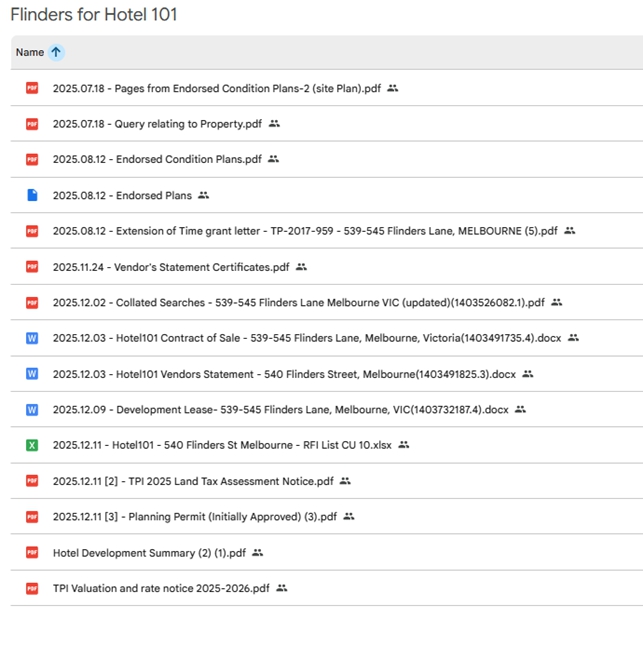
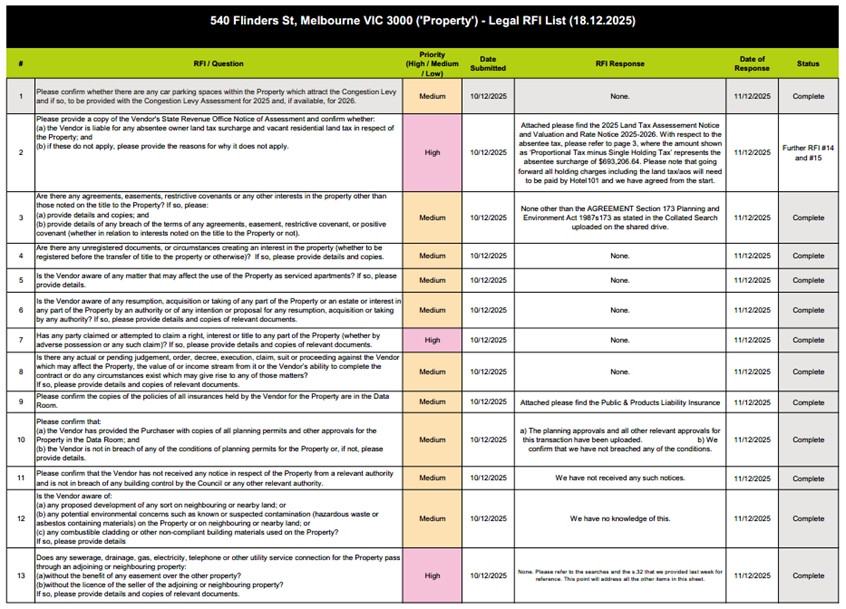
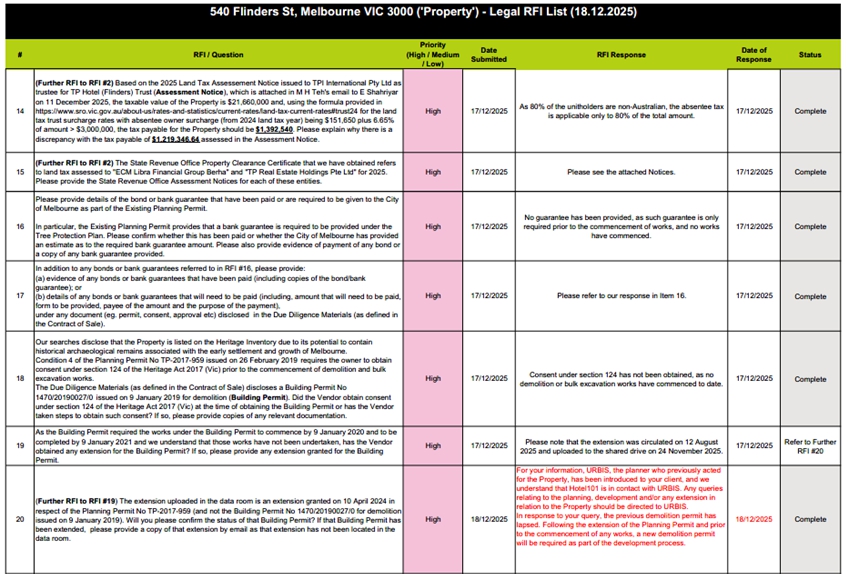
Annexure E Vendor Warranties
To be read together with Special Condition 11.1(e):
| No | Vendor Warranty | Date of Warranty |
| 1 | To the best of the knowledge and belief of the Vendor, the Vendor does not have any information or documents in its possession or control that are not in the Due Diligence Materials that would be material to a prudent purchaser of a property in the nature of the Property in making a decision to enter into a contract on the terms of this Contract. | The Day of Sale |
| 2 |
To the best of the Vendor’s knowledge and belief, the written answers given by or on behalf of the Vendor to questions asked by or on behalf of the Purchaser as part of the Purchaser’s due diligence investigations and contained in Annexure D in relation to the Property before the Day of Sale are true, complete and not misleading.
|
The Day of Sale |
Exhibit 4.31

Execution Version
Development Lease
Property: 539-545 Flinders Lane, Melbourne, Victoria
TP International Pty Ltd as trustee for the TP Hotel (Flinders) Trust
and
Hotel101 Melbourne Development Pty Ltd
and
Hotel101 Melbourne Pty Ltd
Table of Contents
| 1. | Definitions and interpretation clauses | 1 |
| 1.1 | Definitions | 1 | |
| 1.2 | Interpretation | 6 | |
| 1.3 | Parties and capacity | 7 | |
| 1.4 | Organisations | 7 | |
| 2. | Term and holding over | 7 |
| 2.1 | Land Contract | 7 | |
| 2.2 | Commencement Date | 8 | |
| 2.3 | Holding over | 8 | |
| 3. | Rent | 8 |
| 3.1 | Rent | 8 | |
| 3.2 | Payment method | 8 | |
| 4. | Operating Expenses | 8 |
| 4.1 | Payment by the Lessee of Operating Expenses | 8 | |
| 4.2 | Objection to and management of Operating Expenses | 9 | |
| 5. | Other Charges | 9 |
| 5.1 | Utility charges | 9 | |
| 5.2 | Specific charges | 9 | |
| 5.3 | Not used | 10 | |
| 5.4 | Expenses due to Lessee’s sole use | 10 | |
| 5.5 | Interest on overdue money | 10 | |
| 5.6 | Costs | 10 | |
| 5.7 | Duty | 10 | |
| 6. | Damage and destruction | 10 |
| 6.1 | No entitlement | 10 | |
| 7. | Use of the Premises | 11 |
| 7.1 | Permitted use | 11 | |
| 7.2 | No warranty | 11 | |
| 7.3 | Compliance with Laws | 11 | |
| 7.4 | Prohibitions on use | 12 | |
| 7.5 | Disposal of rubbish | 12 | |
| 7.6 | Security and emergency | 12 | |
| 7.7 | Signs | 13 | |
| 7.8 | Smoking | 13 | |
| 7.9 | Occupational health and safety | 13 | |
| 7.10 | Occupational health and safety audits | 14 | |
| 7.11 | Disclosure and reporting by Lessee | 14 | |
| 8. | Dealing with Premises | 15 |
| 8.1 | Dealings with the Premises | 15 | |
| 8.2 | Permitted dealings | 15 | |
| 8.3 | Change in Control | 16 |
| 9. | Development Works | 16 |
| 9.1 | Lessee liable to repair | 16 | |
| 9.2 | Lessor not liable to repair | 16 | |
| 9.3 | Development Works | 17 | |
| 9.4 | Lessor’s right to inspect and undertake works | 17 | |
| 9.5 | Services | 18 | |
| 9.6 | Alterations | 18 | |
| 9.7 | Building Warranties | 19 | |
| 9.8 | Essential Safety Measures | 19 | |
| 9.9 | Contamination caused by the Lessee | 19 | |
| 9.10 | Condition of Premises and Risk | 20 | |
| 9.11 | Side Deed | 20 | |
| 10. | Lessee’s Insurances and indemnities | 21 |
| 10.1 | Lessee’s insurances | 21 | |
| 10.2 | Lessee’s insurances | 21 | |
| 10.3 | Payment and production of insurance policies | 22 | |
| 10.4 | No alteration | 22 | |
| 10.5 | Insurer’s requirements | 22 | |
| 10.6 | Lessor may insure | 22 | |
| 10.7 | Not to void insurance | 22 | |
| 10.8 | Release | 22 | |
| 10.9 | Lessee’s Indemnities | 22 | |
| 11. | Lessor’s covenants and additional rights | 23 |
| 11.1 | Quiet enjoyment | 23 | |
| 11.2 | Not used | 23 | |
| 11.3 | Lessor’s right to enter | 23 | |
| 11.4 | Change of Lessor | 24 | |
| 12. | Default and termination | 24 |
| 12.1 | Essential terms | 24 | |
| 12.2 | Cure Period | 24 | |
| 12.3 | Extension to Cure Period | 25 | |
| 12.4 | Failure to remedy Default Event | 25 | |
| 12.5 | No prejudice | 26 | |
| 12.6 | Lessor’s right to sue | 26 | |
| 12.7 | No Waiver | 26 | |
| 12.8 | Inclusion of statutory provisions | 26 | |
| 12.9 | Tender after termination | 26 | |
| 12.10 | Mitigate of damages | 26 | |
| 12.11 | Step in on termination | 26 | |
| 12.12 | No double recovery | 27 | |
| 13. | Expiry or termination of term | 27 |
| 13.1 | Lessee to yield up if Lease terminated prior to expiry of Term | 27 | |
| 13.2 | Ownership of Development Works | 28 | |
| 13.3 | Lessee not to cause damage | 28 |
| 13.4 | Failure by Lessee to remove | 29 | |
| 13.5 | Rent to continue | 29 | |
| 13.6 | Indemnity | 29 | |
| 13.7 | Lessee to give Lessor keys | 29 | |
| 13.8 | Lessee to give Lessor documents | 29 | |
| 13.9 | Earlier breaches | 29 | |
| 14. | Guarantee and indemnity | 30 |
| 14.1 | Guarantee | 30 | |
| 14.2 | Indemnity | 30 | |
| 14.3 | Guarantee not discharged | 30 | |
| 14.4 | Payments | 31 | |
| 14.5 | Interest | 31 | |
| 14.6 | Costs | 31 | |
| 14.7 | Release of Guarantor | 31 | |
| 15. | Goods and service tax | 32 |
| 16. | Caveat | 32 |
| 17. | Notices | 32 |
| 18. | Confidentiality | 33 |
| 18.1 | Confidentiality | 33 | |
| 18.2 | Public Announcements | 33 | |
| 19. | Counterparts | 34 |
| 20. | Governing law, jurisdiction and service of process | 34 |
| 21. | Miscellaneous | 34 |
| 21.1 | Whole agreement | 34 | |
| 21.2 | Exercise of Rights | 34 | |
| 21.3 | Waiver and variation | 34 |
| 21.4 | Supervening legislation | 34 | |
| 21.5 | Approvals and consent | 35 | |
| 21.6 | Remedies cumulative | 35 | |
| 21.7 | Indemnities | 35 | |
| 21.8 | Further assurances | 35 | |
| 21.9 | Payments | 35 | |
| 21.10 | Antecedent breaches | 35 | |
| 21.11 | Antecedent obligations | 35 | |
| 21.12 | Severability | 35 | |
| 21.13 | No merger | 35 | |
| 21.14 | Statutory provisions excluded | 36 | |
| 21.15 | Electronic Execution | 36 | |
| 22. | Not used | 36 |
| 23. | Dispute Resolution | 36 |
| 23.1 | Application | 36 | |
| 23.2 | Legal proceedings conditional | 36 | |
| 23.3 | Dispute Notice | 36 | |
| 23.4 | Resolution by Parties | 36 | |
| 23.5 | Resolution by senior executives | 37 | |
| 23.6 | Mediation | 37 | |
| 23.7 | Instructions | 37 | |
| 23.8 | Assistance and conduct of mediation | 37 | |
| 23.9 | Costs | 37 | |
| 23.10 | Resolution of Dispute by Expert | 38 | |
| 23.11 | Who is an Expert? | 38 | |
| 23.12 | Expert’s qualifications and terms of appointment | 38 | |
| 23.13 | Expert determination process | 38 | |
| 23.14 | Expert not an arbitrator | 38 | |
| 23.15 | When Expert’s decision is final | 38 | |
| 23.16 | Expert must give reasons | 39 | |
| 23.17 | Parties to give effect to decision | 39 | |
| 23.18 | Urgent relief and continued performance | 39 | |
| 24. | Limitation of liability | 39 |
| 24.1 | Definitions | 39 | |
| 24.2 | Application | 39 | |
| 24.3 | Lessor’s Limitation of Liability | 40 | |
| 24.4 | Trustee representations and warranties | 40 | |
| 25. | Special Conditions | 41 |
| Reference Schedule | 42 |
| Signing page | 44 |
| Annexure A Concept plans for Development Works | 45 |
| Annexure B Rules for Expert Determination Process and Expert’s Code of Conduct | 46 |
Development Lease
| Date | |
| Parties |
TP International Pty Ltd ACN 612 712 384 as trustee for the TP Hotel (Flinders) Trust ABN 76 924 192 249
of 40 Bramley Crescent, Wheelers Hill VIC 3150 (Lessor) |
|
Hotel101 Melbourne Development Pty Ltd ACN 693 939 632
of 5 Attadale Court, Elanora, QLD 4221
(Lessee) |
|
|
Hotel101 Melbourne Pty Ltd ACN 693 942 933
of 5 Attadale Court, Elanora, QLD 4221
(Guarantor) |
|
| Recitals |
A. The Lessor is registered as proprietor of the Premises.
B. The Lessee wishes to lease the Premises from the Lessor and the Lessor wishes to grant a lease of the Premises to the Lessee.
C. The Guarantor guarantees that the Lessee will perform all its obligations under this Lease. |
| This deed witnesses that in consideration of, among other things, the mutual promises contained in this deed the parties agree as follows: | |
| 1. | Definitions and interpretation clauses |
| 1.1 | Definitions |
In this deed:
1985 Act has the meaning given in clause 7.9(a)(vi).
2004 Act has the meaning given in clause 7.9(a)(vi).
Applicable Cure Period means a reasonable period of time having regard to:
| (a) | the nature of the relevant Default Event the subject of a Default Event Notice; and |
| (b) | the steps required to remedy that Default Event, |
and which period must not be less than 90 days after receipt of a Default Event Notice, as may be extended under this Lease.
Authority means any:
| (a) | government or semi-government authority in any jurisdiction, whether federal, state, territorial or local; and |
| (b) | provider of public utility services, whether statutory or not; and |
| (c) | other authority, instrumentality or body having jurisdiction, rights, powers, duties or responsibilities under any Law over the Premises or any part of them or anything in relation to them. |
Building Contract has the meaning given in clause 9.11(b)(ii)(A).
Business Day means a day that is not a Saturday, Sunday or public holiday in Melbourne, Victoria or Singapore.
Claim means a claim, demand, remedy, suit, injury, damage, loss (excluding consequential loss), Cost, liability, action, proceeding or right of action.
Commencement Date means the date specified in Item 4.
Confidential Information means, in relation to a party, all copyright, registered and unregistered trade marks, logos, registered and unregistered designs, patents, trade secrets, ideas, concepts, know-how, knowledge and any other information, whether in writing or otherwise, relating to any of that party’s products, services, systems, affairs, businesses, strategies, customers or employees, whether owned by, licensed to, or otherwise in possession or control of that party, which are disclosed to the other party by that party or otherwise obtained by the other party, its employees, agents, or contractors under, in contemplation of or in connection with this lease, and includes the terms of this lease.
Contaminant means the presence in, on, over or under land (including both surface and ground water and air) of a substance (whether solid, liquid, gas, odour, heat, sound, vibration or radiation), disease, bacteria, germ, virus, or property of any substance, which:
| (a) | makes or may make the Property unsafe, dangerous to health, hazardous, unfit or harmful for habitation or occupation by any person or animal or cause damage to the Property or is such that it does not satisfy any Environmental Law or the contamination criteria or standards published, or adopted, by the relevant environmental Authority, as evidencing the need for a contamination assessment including but not limited to asbestos or legionnaires disease; or |
| (b) | is at a concentration above the concentration at which the substance is normally or naturally present in, on, over or under land (including both surface and ground water and air) in the same locality, being a presence that presents, or may present, a direct or indirect risk or harm to human health or the Environment. |
Contaminate and Contamination shall have a corresponding meaning.
Control has the meaning set out at s.50AA of the Corporations Act 2001.
Control of a corporation means the power to:
| (a) | direct the management or policies of the corporation; or |
| (b) | control the membership of the board of directors. |
Cost means the amount of cost, charge, expense, outgoing, payment or other expenditure of any nature incurred by or on behalf of a party.
Cure Plan means, in respect of a Default Event the subject of a Default Event Notice given by the Lessor to the Lessee under clause 12.1(b), a plan proposed by the Lessee to compensate or remedy that Default Event, including details of:
| (a) | the Applicable Cure Period for that Default Event; and |
| (b) | a work plan setting out the tasks to be undertaken to cure the relevant Default Event and the time for each task to be completed. |
Default Event has the meaning given in clause 12.1(b).
Default Event Notice has the meaning given in clause 12.1(b).
Default Rate means a rate that is 2% per annum higher than the rate fixed under section 2 of the Penalty Interest Rates Act 1983 from time to time.
Development Works means any works to be undertaken by the Lessee on the Premises and which:
| (a) | are to be undertaken in accordance with this Lease; |
| (b) | based on the plans and specifications as determined by the Lessee; |
| (c) | as at the date that this Lease is executed by the parties and without otherwise limiting any changes that the Lessee may make to those works, include those works generally contemplated by concept plans in Annexure A; and |
| (d) | include the demolition of the Existing Improvements and the construction of improvements, pilings, basements, structures, plant, equipment, fixtures, fittings and other alterations and items on the Premises. |
Dispute has the meaning given in clause 23.3.
Dispute Notice has the meaning given in clause 23.3.
Environment means all components of the Earth, including each and any combination of the constituents of:
| (a) | land, air and water and any living organism in any of them; |
| (b) | the atmosphere; |
| (c) | any organic or inorganic matter; and |
| (d) | structures, buildings and other human-made areas. |
Existing Improvements means all improvements, structures, fixtures, fittings, plant, equipment, machinery and Services on the Premises, in all cases existing as at the Commencement Date and owned by the Lessor.
Expert has the meaning given in clause 23.11.
Expert Determination Notice has the meaning given in clause 23.10.
GST means the goods and services tax imposed by the GST Law.
GST Amount means the amount arrived at by multiplying the payment, or the relevant part of a payment if only part of a payment is the consideration, for a Taxable Supply, by the appropriate rate of GST prescribed under the GST Law from time to time.
GST Law has the meaning given to that term in the A New Tax System (Goods and Services Tax) Act 1999 and includes any Australian Taxation Office public rulings.
Head Contractor has the meaning given in clause 9.11(a).
Insolvency Event means the happening of any of these events in relation to a party to this Lease (Defaulting Party):
| (a) | where the Defaulting Party is a body corporate: |
| (i) | the Defaulting Party is (or states that it is) an insolvent under administration or insolvent (each as defined in the Corporations Act 2001); |
| (ii) | the Defaulting Party becomes an externally-administered body corporate under the Corporations Act 2001; |
| (iii) | steps are taken by any person towards making the Defaulting Party an externally-administered body corporate (but not where the steps taken consist of making an application to a court and the application is withdrawn or dismissed within 30 days); |
| (iv) | a controller (as defined in section 9 of the Corporations Act 2001) is appointed to any of the property of the Defaulting Party or any steps are taken for the appointment of such a person (but not where the steps taken are reversed or abandoned within 14 days); |
| (v) | the Defaulting Party is taken to have failed to comply with a statutory demand within the meaning of section 459F of the Corporations Act 2001; or |
| (vi) | a resolution is passed for the reduction of capital of the Defaulting Party or notice of intention to propose such a resolution is given, without the prior written consent of the other party; |
| (b) | where the Defaulting Party is a natural person: |
| (i) | the Defaulting Party authorises a registered trustee or solicitor to call a meeting of his or her creditors or proposes or enters into a deed of assignment or deed of arrangement or a composition with any of his or her creditors; |
| (ii) | a person holding a security interest in assets of the Defaulting Party enters into possession of or takes control of any of those assets or takes any steps to enter into possession of or take control of any of those assets; or |
| (iii) | the Defaulting Party commits an act of bankruptcy; or |
an event happens analogous to an event specified in paragraphs (a)(i) to (b)(iii) above to which the law of another jurisdiction applies and the event has an effect in that jurisdiction similar to the effect which the event would have had if the law of Australia applied.
Item means an item in the Schedule 1.
Land Contract means the contract for sale of land in respect of the Premises between the Lessor (as vendor) and the Purchaser (as purchaser) dated on or about the date of this Lease.
Law means Commonwealth, State or local government legislation, including any requirement of any statute, rule, regulation, proclamation, order in council, ordinance or by-law, common law and principles of equity.
Lessee includes:
| (a) | in the case of a company, its successors and permitted assigns; and |
| (b) | in the case of a person, that person’s executors, administrators and permitted assigns; |
Lessee’s Agents means the Lessee’s employees, agents, consultants, invitees and contractors.
Lessee’s Property means any and all improvements, structures, plant, equipment, fixtures and fittings including all articles and items constructed, installed or brought onto the Premises and owned by, or leased or licensed to, the Lessee and in all cases brought onto the Premises by or on behalf of the Lessee, and including:
| (a) | improvements (including structures and buildings), structures, plant, equipment, fixtures and fittings brought onto the Premises as part of the Development Works by or on behalf of the Lessee prior to or after the commencement of the Term; and |
| (b) | goods of all kinds which are in or on the Premises during the Term that are made by, on behalf of or owned by, the Lessee. |
Lessee’s Share has the meaning given in clause 4.1(c).
Lessor includes:
| (a) | in the case of a company, its permitted successors, substitutes and assigns; and |
| (b) | in the case of a person, that person’s executors, administrators and permitted assigns. |
Lessor’s Agents means the Lessor’s employees, agents and contractors.
Lease means this lease as amended from time to time.
Mediation Notice has the meaning given in clause 23.6(a).
Meeting has the meaning given in clause 23.4.
Notice has the meaning given in clause 7.3(e).
Operating Expenses Year means each period of 12 months ending on 30 June in each year.
Operating Expenses means each of the following amounts incurred or payable by the Lessor in an Operating Expenses Year in respect of the Premises:
| (a) | rates, taxes, charges, assessments, levies, duties, impositions and fees payable to any Authority in connection with the Premises; |
| (b) | land taxes or taxes in the nature of a tax on land, as assessed (not to be calculated on a single ownership basis) in respect of the Premises; |
| (c) | any commercial and industrial property tax payable, and as defined, under the Commercial and Industrial Property Tax Reform Act 2024 (Vic) in respect of the Premises; |
| (d) | windfall gains tax assessed in respect of the Premises if the liability to pay that windfall gains tax was incurred as a result of any rezoning application made by or on behalf of the Lessee or the Purchaser; |
| (e) | Costs in connection with the Premises for: |
| (i) | the supply of any Services to the Premises; |
| (ii) | waste and general garbage removal (including any excess); and |
| (iii) | the provision, reticulation or discharge of water including excess water, sewerage and/or drainage and other waste (including water and sewerage usage charges and meter rents). |
| (f) | Costs incurred in providing lighting, fuel and power to the Premises and the Services, |
but does not include any amounts:
| (g) | payable by the Lessor in respect of: |
| (i) | any interest, fees, charges, costs or penalties incurred as a result of late payment by the Lessor; and |
| (ii) | any rates or charges which are in the nature of income tax; and |
| (h) | being income tax, capital gains tax and any GST payable by the Lessor or any amount included in an amount or on account of GST (to the extent that the Landlord is entitled to any input tax credit in relation to that GST or amount); and |
| (i) | otherwise paid or payable by the Lessee under this Lease or the Purchaser under the Land Contract, to the intent that the Lessor is not entitled to recover or be paid or reimbursed more than once in respect of the same amount. |
Premises means the land described in Item 3 and the Existing Improvements (until such time as the Existing Improvements are demolished and removed from the Property as part of the Development Works).
Permitted Use means the use stated in Item 10.
Purchaser means Hotel101 Melbourne Pty Ltd ACN 693 942 933.
Relevant Works has the meaning given in clause 9.7.
Rent means the rent stated in Item 8.
Rent Payment Date means:
| (a) | the Commencement Date; and |
| (b) | each anniversary of the Commencement Date during the Term. |
Requirement means any lawful and proper requirement, notice, order, direction, recommendation, consent, stipulation or similar notification received from or given by any Authority or under any Law, whether in writing or otherwise and regardless of to whom it is addressed or directed.
Retail Legislation means the Retail Leases Act 2003 (Vic).
Rules for Expert Determination Process and the Expert’s Code of Conduct means the document in Annexure B.
Side Deed has the meaning given in clause 9.11(a).
Senior Executives Meeting has the meaning given in clause 23.5.
Services means any services or systems provided to the Premises, including:
| (a) | water, power, waste disposal, sewerage, telecommunications, communication systems and public address systems, background music, security, air conditioning, ventilation, fire protection, washroom and toilet services; and |
| (b) | the wires, pipes, ducting and other means of providing those services or systems to the Premises. |
Term means the period specified in Item 6, commencing on the Commencement Date.
Termination Date means the date specified in Item 5.
| 1.2 | Interpretation |
In this Lease:
| (a) | Reference to: |
| (i) | one gender includes the others; |
| (ii) | the singular includes the plural and the plural includes the singular; |
| (iii) | a person includes a body corporate; |
| (iv) | a party includes the party’s executors, administrators, successors and permitted assigns; |
| (v) | a statute, regulation, code or other law or a provision of any of them includes: |
| (A) | any amendment or replacement of it; and |
| (B) | another regulation or other statutory instrument made under it, or made under it as amended or replaced; |
| (vi) | month or monthly means calendar month or calendar monthly; |
| (vii) | a right includes a remedy, right or power; |
| (viii) | clauses, schedules and annexures will be construed as references to clauses of and schedules and annexures to this Lease; |
| (ix) | an Item is to an item in the Reference Schedule; and |
| (x) | money is to Australian dollars, unless otherwise stated. |
| (b) | ‘Including’ and similar expressions are not words of limitation. |
| (c) | Where a word or expression is given a particular meaning, other parts of speech and grammatical forms of that word or expression have a corresponding meaning. |
| (d) | Headings and any table of contents or index are for convenience only and do not form part of this Lease or affect its interpretation. |
| (e) | A provision of this Lease must not be construed to the disadvantage of a party merely because that party was responsible for the preparation of the Lease or the inclusion of the provision in the Lease. |
| (f) | If an act must be done on a specified day which is not a Business Day, it must be done instead on the next Business Day. |
| (g) | Every obligation undertaken by a party to this Lease will be deemed to be and be construed as a covenant by that person. |
| 1.3 | Parties and capacity |
| (a) | If a party consists of more than 1 person, this Lease binds each of them separately and any 2 or more of them jointly. |
| (b) | An obligation, representation or warranty in favour of more than 1 person is for the benefit of them separately and jointly. |
| 1.4 | Organisations |
| (a) | Where: |
| (i) | there is a reference to an Authority; and |
| (ii) | the Authority is reconstituted, reconstructed, privatised, ceases to exist or is replaced or its powers or functions are transferred to another entity; |
the reference must be read as being to the reconstituted, reconstructed or privatised entity or an entity established or constituted in replacement of or which succeeds to the relevant powers and functions of or which serves substantially the same purposes or has substantially the same objects as the Authority.
| (b) | Reference to the president of an Authority will, in the absence of a president, be read as reference to the senior officer for the time being of the Authority or any other person fulfilling the duties of president. |
| 2. | Term and holding over |
| 2.1 | Land Contract |
| (a) | This Lease is interdependent with the Land Contract. |
| (b) | Without limiting the requirements in the Land Contract (including under general condition 34, as varied by special condition 2.2 of the Land Contract) and this Lease (including under clause 12) before a party can lawfully end the Land Contract or this Lease (as applicable): |
| (i) | a breach by the Lessor (as vendor) under the Land Contract will constitute a breach by the Lessor under this Lease; |
| (ii) | a breach by the Purchaser under the Land Contract will constitute a breach by the Lessee under this Lease; and |
| (iii) | this Lease will come to an immediate end if the Land Contract is lawfully terminated, rescinded or brought to an end, for any reason. |
| (c) | If settlement of the sale of the Premises by the Lessor (as vendor) to the Purchaser (as purchaser) or a nominee of the Purchaser under the Land Contract occurs, then the Lessor or the Lessee may at any time after settlement (if the Term of this Lease has not at that time expired) terminate this Lease (effective any time after settlement) by written notice to the other party. |
| 2.2 | Commencement Date |
| (a) | The Lease (other than clause 2.1 and this clause 2.2) is subject to and conditional on the condition in Special Condition 13.1 of the Land Contract being satisfied. |
| (b) | The Commencement Date will be the date on which the condition in clause 2.2(a) is met. |
| (c) | The parties authorise their respective solicitors to insert the Commencement Date in Item 4 when it is known. |
| (d) | The Lessor grants to the Lessee and the Lessee takes a lease of the Premises for the Term commencing on the Commencement Date and ending on the Termination Date on the terms of this Lease. The Lessor, the Lessee and, if applicable, the Guarantor, are bound by this Lease from and including the Commencement Date, even though a party’s solicitors may not have inserted the Commencement Date in Item 4. |
| 2.3 | Holding over |
If the Lessee continues to occupy the Premises after the Termination Date without objection by the Lessor (except under a lease arising from exercise of an option to renew):
| (a) | the Lessee will occupy the Premises as a monthly Lessee . and |
| (b) | despite the tenancy being otherwise month-to-month, the tenancy can be terminated at any time by either the Lessor or the Lessee giving no less than one month’s notice to the other, expiring on any date, |
and otherwise the tenancy will continue on the terms and conditions of this Lease, as they apply to the monthly tenancy.
| 3. | Rent |
| 3.1 | Rent |
| (a) | The Lessee must pay the Rent to the Lessor in advance on each Rent Payment Date during the Term. |
| (b) | The parties agree that the Rent is not subject to any review or adjustment during the Term. |
| 3.2 | Payment method |
All Rent, Operating Expenses and other amounts due under this Lease must be paid:
| (a) | by direct transfer to the bank account notified to the Lessee by the Lessor from time to time and in the absence of any such notification, to the place and in the manner reasonably directed by the Lessor from time to time; |
| (b) | without demand; and |
| (c) | without any deduction, counterclaim or right of set-off at all. |
| 4. | Operating Expenses |
| 4.1 | Payment by the Lessee of Operating Expenses |
| (a) | Without limiting clause 2.2(a), the Lessee is liable to pay the Lessee’s Share of Operating Expenses in accordance with this clause 4 referable to the period on and from the date of this Lease until the end of the Term. |
| (b) | The Lessee must, subject to clause 4.1(d) and referable to the period from the date of this Lease until the end of the Term, pay the Lessee’s Share of Operating Expenses: |
| (i) | if invoiced to the Lessor, to the Lessor within 14 days after written demand from the Lessor (which written demand must contain a tax invoice and evidence of the relevant Operating Expenses to be paid); and |
| (ii) | if invoiced to the Lessee, to the relevant Authority by the due date for payment, and the Lessee must provide evidence of payment to the Lessor as soon as reasonably practicable after payment. |
| (c) | The Lessee’s Share means 100%. |
| (d) | If necessary, the Operating Expenses will be apportioned on a pro-rata daily basis at the date of this Lease and at the end of the Term. |
| 4.2 | Objection to and management of Operating Expenses |
| (a) | If reasonably required by the Lessee (and at the Lessee’s reasonable Cost), the Lessor must: |
| (b) | promptly prepare, lodge and pursue: |
| (i) | an objection to any valuation issued by any Authority for the purposes of any Operating Expense, including if the Lessee (acting reasonably) considers any valuation to be excessive and requests the Lessor to object to it; and | |
| (ii) | any application for an exemption or concession from any Operating Expense if the Lessee (acting reasonably) considers that the Lessor is eligible for any such exemption or concession, |
but nothing in this clause requires the Lessor to commence legal proceedings;
| (c) | cooperate and consult with the Lessee as to any such objection or application for an exemption or concession; and |
| (d) | manage the Operating Expenses in good faith, prudently and efficiently and use its reasonable endeavours to minimise the Operating Expenses to the extent reasonably practicable. |
| (e) | Notwithstanding clause 4.2(a), clause 4.2(a) does not release the Lessee from its payment obligations under this Lease which are to be made on a timely basis. |
| 5. | Other Charges |
| 5.1 | Utility charges |
The Lessee will promptly:
| (a) | pay all utility and service charges for telephone, electricity, gas, water and other services consumed by the Lessee or the Lessee’s Agents on or in the Premises; and |
| (b) | install at the Lessee’s cost (including payment of any connection fees) any meters required by the Lessee to be installed after the Commencement Date. |
| 5.2 | Specific charges |
In addition to the Lessee’s obligations under this Lease, the Lessee must at its cost:
| (a) | keep the Premises free from pests to the extent required to comply with any Law or any Requirement of any relevant Authority; and |
| (b) | ensure that the Premises is kept secure at all times. |
| 5.3 | Not used |
| 5.4 | Expenses due to Lessee’s sole use |
The Lessee must pay all expenses incurred or payable by the Lessee or the Lessee’s Agents due solely to the Lessee’s use of the Premises.
| 5.5 | Interest on overdue money |
The Lessee must pay interest to the Lessor on any Operating Expenses or any other money payable by the Lessee to the Lessor under this Lease that is unpaid:
| (a) | at the Default Rate; and |
| (b) | from the date the relevant payment was due until but not including the date the relevant payment is made. |
| 5.6 | Costs |
| (a) | The Lessor must pay its own costs, charges and expenses in relation to the preparation, negotiation and completion of this Lease. |
| (b) | The Lessee must pay: |
| (i) | its own costs, charges and expenses in relation to the preparation, negotiation and completion of this Lease; |
| (ii) | the costs associated with the registration of this Lease and all documents ancillary to it including any stamping; |
| (iii) | the Lessor’s costs, charges and expenses of: |
| (A) | any consent required under this Lease whether consent is given or not, provided those costs, charges and expenses are reasonably and properly incurred; |
| (B) | any default by the Lessee in performing the Lessee’s covenants contained in this Lease; |
| (C) | the actual or contemplated enforcement of, or actual or contemplated exercise, preservation or consideration of any rights powers or remedies of the Lessor under this Lease in respect of any default by the Lessee. |
| 5.7 | Duty |
The Lessee is liable for and indemnifies the Lessor against all duty (including all fines, penalties and interest, except to the extent that any fine, penalty or interest is levied or charged due to the default of the Lessor) assessed, levied or payable on or in respect of this Lease.
| 6. | Damage and destruction |
| 6.1 | No entitlement |
The Lessee agrees that:
| (a) | the Lessee will not be entitled to: |
| (i) | any abatement of the Rent, Operating Expenses or any other money payable under this Lease; |
| (ii) | make any Claim against the Lessor; or |
| (iii) | terminate this Lease; and |
| (b) | the Lessor will have no liability to the Lessee, |
if the Existing Improvements or the Development Works are damaged or destroyed, except to the extent the damage or destruction was caused by the Lessor or the Lessor’s Agents (in which case the Lessee will be entitled to make a Claim against the Lessor)).
| 7. | Use of the Premises |
| 7.1 | Permitted use |
| (a) | The Lessee may use the Premises only for the purpose in Item 10. |
| (b) | The Lessee must not permit another person to use the Premises for anything except the purpose in Item 10. |
| 7.2 | No warranty |
| (a) | The Lessor gives no warranty as to the suitability of the Premises for any use. |
| (b) | The Lessee accepts this Lease subject to any prohibitions or restrictions on the use of the Premises under any Law. |
| 7.3 | Compliance with Laws |
| (a) | The Lessee, at the Lessee’s Cost, must comply with any Law and Requirement about the Lessee’s use or occupation of the Premises and the Existing Improvements and the Development Work. |
| (b) | Without prejudice to any of its other rights relating to non-compliance, if the Lessor has given the Lessee written notice requiring the Lessee to comply with a Law or Requirement under clause 7.3(a) and the Lessee has not complied with that Law or Requirement within the period for compliance specified by that Law or Requirement or, if no such period is specified, within a reasonable period after the date the Lessor’s written notice is given, the Lessor may comply with any Law or Requirement under clause 7.3(a) at the Lessee’s reasonable Cost. |
| (c) | Without limiting anything else in this clause 7.3, the Lessee is liable for and indemnifies the Lessor against all Claims suffered or incurred by the Lessor in relation to the Lessee’s failure to comply with this clause 7.3. |
| (d) | The Lessee must comply with the Lessor’s reasonable requirements in connection with the Premises but, for the avoidance of doubt (and without limiting any other obligation of the Lessee under this Lease), the Lessee must: |
| (i) | (acting reasonably) consult with, and have regard to any comments of, the Lessor in connection the plans and specifications for the Development Work; and |
| (ii) | provide the Lessor with copies of any plans and specifications for the Development Works prior to the Lessee submitting those plans and specifications to any relevant Authority for the purposes of obtaining any required planning permit for the Development Works, |
but otherwise, despite anything in this Lease, the Lessor’s consent or approval is not required in respect of the plans and specifications for the Development Work so long as the Lessee:
| (iii) | complies with all Laws and Requirements imposed by any Authority; and |
| (iv) | irrevocably and unconditionally indemnifies and holds harmless, and keeps the Vendor indemnified and held harmless, from and against any loss, liability, cost or claim to the extent arising from any failure by the Lessee to so comply with such Laws and Requirements. |
| (e) | If the Lessor or Lessee is issued with a notice properly and lawfully given by any relevant Authority in respect of any non-compliance with any Law or Requirements associated with the Premises the Existing Improvements or the Development Works (Notice): |
| (i) | the Lessor may serve a notice on the Lessee providing a copy of that Notice and, if required to comply with the Notice, requiring all Development Works to immediately cease. If the Lessor serves such a notice and it is required to comply with the Notice, the Lessee must immediately cease all Development Works; |
| (ii) | the Lessor may serve a notice on the Lessee providing a copy of that Notice requiring Lessee to comply with the requirements of the Notice. If the Lessor serves such a notice, the Lessee must do all things required to comply with the Notice; and |
| (iii) | the Lessee may only recommence the Development Works when permitted by the relevant Authority, including (if required by the relevant Authority) when the non-compliance referred to in the Notice has been rectified in accordance with the requirements of the relevant Authority. |
| 7.4 | Prohibitions on use |
The Lessee must not:
| (a) | allow the Premises to be used for any illegal, immoral, noxious, or offensive purpose; |
| (b) | allow the noise from the Premises generated as a result of undertaking the Permitted Use to exceed the level permitted under any relevant Law; |
| (c) | in undertaking the Permitted Use, breach any Laws relating to occupational health and safety; |
| (d) | use the Premises as a residence except to the extent that the Permitted Use authorises use of the Premises for residential purposes; |
| (e) | keep any animals or birds on or in the Premises; |
| (f) | hold or permit any auction, bankrupt or fire sale or public meeting on or in the Premises except to the extent that such activities fall within the Permitted Use; |
| (g) | use the Premises in a way which causes damage, nuisance or disturbance to: |
| (i) | the Lessor; or |
| (ii) | an occupier of an adjoining property; |
| (h) | store flammable, volatile or explosive substances (whether liquid, gas or solid) on the Premises other than to the extent reasonably required for the operation of the Lessee’s business or in a manner that is consistent with the Permitted Use; or |
| (i) | do anything which would result in the Retail Legislation applying to this Lease. |
| 7.5 | Disposal of rubbish |
The Lessee must:
| (a) | place all rubbish the Lessee creates in suitable containers; |
| (b) | arrange for the disposal of all rubbish and waste created by the Lessee which is not removed by local Authorities as part of the normal garbage removal service (including surplus office equipment or material); and |
| (c) | not place waste outside the Premises. |
| 7.6 | Security and emergency |
| (a) | The Lessee must keep the Premises safe and secure at all times. |
| (b) | The Lessee must give notice to the Lessor as soon as reasonably practicable after the Lessee becomes aware of any matter which may: |
| (i) | affect the safety or security of the Premises; or |
| (ii) | give rise to an emergency. |
| (c) | The provision of a notice under clause 7.6(b): |
| (i) | does not relieve the Lessee of any obligation under this Lease; or |
| (ii) | impose any duty or obligation on the Lessor. |
| (d) | The Lessee must: |
| (i) | prepare and implement emergency evacuation procedures and all training and education regarding evacuation procedures and appointment of wardens as required by Law or as reasonably directed by the Lessor; and |
| (ii) | ensure that each employee of the Lessee and every other person who occupies or is in the Premises, takes part in emergency evacuation procedures. |
| (e) | Without limiting clause 7.6(c), the Lessee: |
| (i) | must evacuate the Premises if the Lessor or its agent directs the Lessee to do so where they become aware of a matter that might endanger any persons in the Premises; |
| (ii) | will not have any Claim against the Lessor for any loss, Cost or expense or injury or damages for loss of profits arising out of or in connection with any evacuation or emergency procedures; and |
| (iii) | must not re-enter the Premises after an evacuation unless the Lessee is authorised to do so by the police or fire brigade or other relevant Authority. |
| 7.7 | Signs |
| (a) | Except to the extent authorised by the Permitted Use (subject to the Lessee’s compliance with all Laws or Requirements as applicable), the Lessee must not without the Lessor’s prior written consent (which will not be unreasonably withheld or delayed) paint or attach any signs, notices, advertisements, blinds or awnings to any part of the Premises. |
| (b) | If the painting, attachment or erection of any sign, notice or advertisement to the Premises (including those authorised by the Permitted Use) requires the consent of any relevant Authority, the Lessee must obtain the consent of any relevant Authority prior to commencing any works. |
| 7.8 | Smoking |
The Lessee must ensure there is no smoking on or in the Premises.
| 7.9 | Occupational health and safety |
| (a) | The Lessee acknowledges that: |
| (i) | the Lessor may be subject to a range of different potential obligations under occupational health and safety law to ensure that the Premises (or parts of it) are safe (including access to the and egress from any buildings on the Premises); and |
| (ii) | the Lessor could be exposed to prosecution or other claims if the Lessee does not itself take adequate measures to ensure the health and safety of any contractors or others undertaking work on or at the Premises (Third Party Work); and |
| (iii) | there are risks associated with carrying out Third Party Work; and |
| (iv) | during the Term, the Lessee will have control over Third Party Work; and |
| (v) | it will not always be reasonably practicable for the Lessor to ensure the safety of any persons engaged in Third Party Work; and |
| (vi) | for the purposes of the Occupational Health and Safety Act 2004 (Vic) (2004 Act) and the regulations made under the 2004 Act and the Occupational Health and Safety Act 1985 (Vic) (1985 Act), the Lessee is the occupier of the Premises and has control of the Premises. |
| (b) | The Lessee must: |
| (i) | ensure that the Lessee or the Lessee’s Agents have adequate systems in place to assess and safely control all hazards associated with Third Party Work (and, if applicable, the Lessee remains responsible for ensuring the Lessee’s Agents have such adequate systems in place); and |
| (ii) | ensure that where hazards associated with the Third Party Work cannot be eliminated, the Lessee does, or procures to be done, all things reasonable to ensure that the risks involved are adequately controlled and minimised; and |
| (iii) | ensure that the Lessee and all persons engaged by or on behalf of the Lessee are familiar with and comply at all times with any manuals, policies, procedures or rules formulated from time to time by the Lessor (acting reasonably) and notified in advance to the Lessee; and |
| (iv) | ensure that only qualified persons who are appropriately licensed are engaged by or on behalf of the Lessee to carry out Third Party Work; and |
| (v) | maintain familiarity with and ensure compliance with the requirements of the 2004 Act and the regulations made under the 2004 Act and the 1985 Act; and |
| (vi) | promptly comply with directions on safety issued by any relevant Authority or by the Lessor (acting reasonably); and |
| (vii) | notify the Lessor of any risks to the health and safety of persons using the Premises promptly after the Lessee becomes aware of those risks. |
| 7.10 | Occupational health and safety audits |
| (a) | Without limiting clause 7.9, the Lessee must at its cost undertake and complete all occupational health and safety inspections, tests and audits regarding the Premises that the Lessor reasonably requires at times and intervals reasonably nominated by the Lessor. |
| (b) | Without limiting clause 7.10(a), the Lessee must complete and deliver to the Lessor such forms and documents that relate to occupational health and safety and are required by Law, a Requirement or the Lessor. |
| (c) | The Lessor will conduct any inspection, test, audit or survey relating to occupational health and safety that a Law or Requirement mandates must be undertaken or completed by the owner of the Premises. The Lessee must provide all reasonable assistance to the Lessor to enable the Lessor to comply with such requirements. |
| (d) | The Lessee must reimburse the costs reasonably and properly incurred by the Lessor in complying with this clause 7.10 no later than 20 Business Days after the Lessor gives the Lessee a tax invoice for those costs (and evidence of the costs incurred). |
| 7.11 | Disclosure and reporting by Lessee |
| (a) | The Lessee acknowledges and agrees that the Lessor may be required to report information regarding the use of the Premises to Authorities and/or the Lessor’s insurers. The Lessee must do all things reasonably required by the Lessor to assist the Lessor in complying with such reporting obligations. |
| (b) | Without limiting the Lessee’s other obligations in this Lease, the Lessee must promptly after request from the Lessor provide to the Lessor such information as the Lessor reasonably requires regarding: |
| (i) | the Lessee’s use or occupation of the Premises, including the nature of any activity conducted on the Premises; |
| (ii) | the Development Work; |
| (iii) | the Lessee’s compliance with any relevant Law and/or Requirements that apply to the Development Work, including compliance with occupational health and safety requirements; |
| (iv) | compliance with the Lessee’s covenants and obligations in this Lease; |
| (v) | accidents, injury or death on the Premises; |
| (vi) | security of the Premises; |
| (vii) | what dangerous goods or substances are being stored and/or used on the Premises; |
| (viii) | any Contaminant on, in or under the Premises of which the Lessee is aware; and |
| (ix) | claims or potential claims on any insurance policy in relation to the Premises or the Lessee’s use or occupation of the Premises of which the Lessee is aware. |
| (c) | In addition to the Lessee’s other obligations under clause 7.10, the Lessee must promptly complete and return to the Lessor all questionnaires, forms and surveys provided by the Lessor or the Lessor’s insurer in relation to any matter referred to in clause 7.11(b). |
| 8. | Dealing with Premises |
| 8.1 | Dealings with the Premises |
| (a) | The Lessee must not assign, transfer, sublet, mortgage, charge, or otherwise part with possession or dispose of, the Lessee’s interest in this Lease or the Premises. |
| (b) | The Lessee must not use the Lease or any fixtures forming part of the Lessee’s Property as any form of security (but, for the avoidance of doubt, nothing in this clause prevents the Lessee from granting any security over any personal property (or items which are not fixed) which form part of the Development Works or Lessee’s Property provided such security is discharged on or before the expiration or sooner determination of this Lease ). Despite anything in this Lease, if settlement occurs under the Land Contract, then the parties agree that this clause 8.1 ceases to apply with effect on and from the date of settlement. |
| 8.2 | Permitted dealings |
| (a) | Despite anything in this Lease, the Lessor acknowledges and agrees that on and from the date of this Lease and during the Term: |
| (i) | the Purchaser (as vendor) may enter into contracts of sale with third parties (as purchasers) to sell any interest in the Premises on such terms as the Purchaser determines at its discretion (which contracts of sale may be “off-the-plan” contracts of sale entered into prior to registration of a plan of subdivision), provided that: de |
| (A) | such contracts must automatically terminate if the Land Contract is terminated prior to settlement occurring under the Land Contract; |
| (B) | settlement of such sales must be strictly subject to and conditional on settlement occurring under the Land Contract; and |
| (C) | in the period prior to settlement of the Land Contract, the third parties must be prohibited from lodging a caveat on the title to the Premises; and |
| (ii) | the Purchaser and the Lessee may without the Lessor’s consent undertake any activities in connection with their proposed use and development of the Property, including: |
| (A) | undertaking any marketing and pre-sale activities for the contracts of sale referred to in clause 8.2(a)(i); |
| (B) | undertaking any activities in connection with the Development Works; |
| (C) | undertaking activities in connection with: |
| (1) | preparing; |
| (2) | lodging; and |
| (3) | procuring certification of, a statement of compliance for, or registration of, a plan of subdivision in respect of the Property; and |
| (D) | applying for and obtaining any relevant approval from any relevant Authority. |
| (b) | Subject to clause 12.12, the Lessee unconditionally and irrevocably indemnifies and holds harmless the Lessor, and must keep the Lessor indemnified and held harmless, in respect of any: |
| (i) | claim made against the Lessor (including any cost, reputational damage, loss or liability suffered or incurred by the Lessor as a result of any such claim) by any third party who enters into any contract of sale with the Purchaser referred to clause 8.2(a)(i); or |
| (ii) | cost, penalty or expense that may be suffered or incurred by the Lessor to extent arising due to the Lessee’s breach of clause 8.2(a)(ii). |
| 8.3 | Change in Control |
Except if the Lessee or any holding company of the Lessee is listed on any recognised stock exchange (in which case this clause 8.2 does not apply), the Lesse must (except with the Lessor’s prior written consent, which must not be unreasonably withheld or delayed) not allow a change in Control of the Lessee as a result of changes in:
| (a) | the directors of the company; |
| (b) | membership of the company or its holding company; |
| (c) | beneficial ownership of the shares in the company or its holding company; |
| (d) | beneficial ownership of the business or assets of the company. |
| 9. | Development Works |
| 9.1 | Lessee liable to repair |
Until such time as any Existing Improvements are demolished and removed from the Premises as part of the Development Works, the Lessee must during the Term maintain and keep the Premises (including the Lessee’s Property, the Existing Improvements and the Services in or about the Premises) in a condition consistent with that at the Day of Sale, fair wear and tear excepted.
| 9.2 | Lessor not liable to repair |
The Lessee acknowledges that the Lessor is not responsible or liable for any maintenance, repair or replacement in respect of the Premises, the Existing Improvements, the Development Works, the Lessee’s Property or the Services except where such maintenance or repair is required as a result of the negligence or default of the Lessor or the Lessor’s Agents during the Term.
| 9.3 | Development Works |
| (a) | The Lessee intends to complete the Development Works. |
| (b) | The parties acknowledge that: |
| (i) | the Development Works will be completed at the sole cost of the Lessee; and |
| (ii) | the Lessor will make no contribution to the costs of the Development Works nor will the Lessor be required to make any reimbursement for costs incurred by the Lessee in completing the Development Works. |
| (c) | The Lessee must seek: |
| (i) | all required approvals, licenses, consents, planning permits, building permits, and regulatory approvals from any Authority required for the Development Works, at the Lessee’s sole cost; and |
| (ii) | not used. |
| (d) | The Lessor shall: |
| (i) | cooperate with and provide assistance as reasonably required by the Lessee (including signing any relevant application, form or consent) to secure all required approvals, licences, consents, planning permits, building permits, and regulatory approvals from any Authority required for the Development Works or any subdivision of the land comprising the Premises; and |
| (ii) | not prejudice or obstruct the Lessee in any way from, or object to the Lessee, securing all such required approvals, licences, consents, planning permits, building permits and regulatory approvals from any Authority required for the Development Works or any subdivision of the land comprising the Premises (and the Lessor must not assist, procure or encourage any other person to do so), |
and the Lessee must conduct its Development Works in compliance with all Laws and Requirements set by the Authorities.
| (e) | For the avoidance of doubt, without otherwise limiting clause 9.3(d), the Lessor will be under no obligation to provide assistance in relation to the registration of a plan of subdivision and no plan of subdivision may be lodged for registration until after settlement of the Land Contract. |
| (f) | Should this Lease be terminated prior to the end of the Term and prior to completion of the Development Works the Lessee indemnifies the Lessor in respect of any Claims, defects or subsequent works liability: |
| (i) | suffered by the Lessor; or |
| (ii) | properly imposed on the Lessor by any third party or Authority, |
in respect of the Development Works except to the extent caused by the Lessor’s or Lessor’s Agent’s breach or negligence.
| 9.4 | Lessor’s right to inspect and undertake works |
| (a) | Subject to clause 9.4(b) and clause 9.4(c), the Lessor and any persons authorised by the Lessor may enter the Premises and view its condition and the condition and status of the Development Works during business hours on a Business Day reasonably approved by the Lessee. |
| (b) | Subject to clause 9.4(c), the Lessor must: |
| (i) | give the Lessee reasonable prior written notice before entering and not less than 5 Business Days’ prior written notice; and |
| (ii) | only exercise its right of entry in the presence of a representative of the Lessee or a Lessee’s Agent. |
| (c) | The Lessor is not obliged to give notice in the case of an emergency. |
| (d) | The Lessor may enter the Premises and do any repairs or maintenance which is required by Law and which is the Lessee’s responsibility if the Lessee does not do so: |
| (i) | within a reasonable time after the Lessor gives the Lessee notice requiring that repair and maintenance to be done; and |
| (ii) | to the Lessor’s reasonable satisfaction. |
| (e) | The Lessor does such repairs or maintenance which is required by Law and which is the Lessee’s responsibility at the Lessee’s reasonable expense. The Lessee must reimburse to the Lessor the cost of the repairs or maintenance within 20 Business Days after demand by the Lessor (together with evidence of those reasonable expenses). |
| (f) | In exercising its powers under this clause 9.4, the Lessor must cause as little inconvenience to the Lessee’s use of the Premises as is reasonably practicable in the circumstances. |
| 9.5 | Services |
If any of the Services fail to function for any reason (other than as a result of the gross negligence, default, fraud, misconduct or repudiation by the Lessee or any Lessee’s Agent):
| (a) | the Lessee is not entitled to terminate this Lease because of the failure; and |
| (b) | the Lessee may not make any Claim against the Lessor. |
| 9.6 | Alterations |
| (a) | Before the Lessee makes any alterations or additions to the Premises (including any alterations or additions to the Services) forming part of the Development Works that requires the consent of any relevant Authority, the Lessee must: |
| (i) | obtain the consent (if necessary) of any relevant Authority; |
| (ii) | comply with the existing planning controls over the Premises, including but not limited to the requirements imposed under any agreement under s.173 of the Planning and Environment Act 1987 (Vic); and |
| (iii) | comply with clause 9.6(d) regarding insurance. |
| (b) | Not used |
| (c) | The Lessee must ensure that any works (including alterations and additions) undertaken by the Lessee or the Lessee’s Agents to the Premises are done: |
| (i) | in a proper and workmanlike manner; |
| (ii) | in accordance with all Laws and Requirements; and |
| (iii) | by contractors who are suitably qualified, competent and experienced in carrying out such works. |
| (d) | Before any works to the Premises are undertaken, the Lessee must at its cost procure and maintain insurance in respect of the works with an APRA-regulated insurer and deliver a copy of the relevant policy to the Lessor (with any confidential or commercially sensitive information redacted). Without limitation, such insurance must: |
| (i) | note the interest of the Lessor |
| (ii) | be for not less than the replacement value of the works of that type; and |
| (iii) | include a principal controlled contract works policy. |
| 9.7 | Building Warranties |
Without limiting clause 9.6, if the Lessee demolishes the Existing Improvements or as part of the Development Works alters, erects or installs any improvements (Relevant Works):
| (a) | the Lessee must procure warranties that a prudent owner would obtain in relation to the design and construction of the Relevant Works; and |
| (b) | the Lessee must procure any defects that appear in the Relevant Works within 12 months after completion of the Relevant Works that are notified by the Lessor to the Lessee are rectified to the Lessor’s reasonable satisfaction; and |
| (c) | if this Lease and / or the Land Contract are terminated as a result of any negligent act or omission, default, fraud, misconduct or repudiation by the Purchaser, Lessee or any Lessee’s Agent, then with effect the date that this Lease and the Land Contract are terminated the Lessee must assign to the Lessor upon demand the benefit of any warranties in relation to the design and construction of the Relevant Works. |
| 9.8 | Essential Safety Measures |
| (a) | The parties acknowledge that: |
| (i) | as at the date that this Lease is executed by each party to it, the Existing Improvements on the Premises are vacant and not occupied; and |
| (ii) | under this Lease, the Lessee may (and intends to) undertake the Development Works, including the demolition and removal of the Existing Improvements and construction of new improvements. |
| (b) | Having regard to clause 9.8(a), the parties agree that: |
| (i) | the Lessee must comply with any Law and any requirements of the Lessor or the Lessor’s insurer about essential safety measures in respect of the Premises, including fire safety or fire prevention for the Premises; |
| (ii) | without limiting clause 9.8(a), until the Existing Improvements are demolished, the Lessee must keep any essential safety measures (including any fire protection and safety equipment) within and exclusively servicing the Premises in such a condition so as to comply with any Law and any requirements of the Lessor (acting reasonably and having regard to clause 9.8(a)) or the Lessor’s insurer about fire safety or fire prevention for the Premises; |
| (iii) | if the Lessee fails to comply with clause 9.8(b)(i) or clause 9.8(b)(ii) within a reasonable period after the Lessor gives the Lessee written notice requiring compliance, then the Lessor may do what the Lessee should have done and the Lessee must pay the Lessor’s Cost of compliance which are reasonably and properly incurred; and |
| (iv) | if any Law requires the Lessor to carry out works or repairs in respect of essential safety measures, the Lessee must, despite any Law to the contrary, pay the costs reasonably and properly incurred by the Lessor in complying with the relevant Law. |
| 9.9 | Contamination caused by the Lessee |
| (a) | The Lessee is responsible for: |
| (i) | all Contamination of the Premises to the extent caused or contributed to by the Lessee or the Lessee’s Agents; and |
| (ii) | remediating all Contamination: |
| (A) | to the extent caused or contributed to by the Lessee or the Lessee’s Agents; |
| (B) | disturbed by the Lessee but only to the extent the Lessee or the Lessee’s Agents caused the relevant Contamination; and |
| (C) | which an Authority requires to be remediated in connection with or arising from any works undertaken by or on behalf of the Lessee (regardless of who caused the Contamination). |
| (b) | The Lessee must not do anything during the Term (including during any period of holding over or further term of the Lease) which will, may or does result in Contamination of the Premises or any adjoining land. |
| (c) | The Lessee must immediately notify the Lessor of any Contamination or environmental incidents or accidents on or affecting the Premises of which the Lessee has notice. |
| (d) | The Lessee unconditionally and irrevocably fully indemnifies and releases the Lessor from and against all liability at law, or any Claim made against the Lessor, in connection with or arising out of any Contamination: |
| (i) | to the extent caused or contributed to by the Lessee or the Lessee’s Agents; |
| (ii) | disturbed by the Lessee to the extent the Lessee or the Lessee’s Agents caused the relevant Contamination; or |
| (iii) | which an Authority requires to be remediated in connection with or arising from the Development Works undertaken by or on behalf of the Lessee but which the Lessee has not properly dealt with in accordance with Requirement of any relevant Authority, |
but despite anything in this clause, nothing in this clause releases, or requires the Lessee to indemnify, the Lessor in respect of any liability or Claim for Contamination caused or contributed to by the Lessor or the Lessor’s Agents.
| 9.10 | Condition of Premises and Risk |
| (a) | The Lessee acknowledges that the Premises is provided ‘as is, where is’. |
| (b) | The Lessee carries the risk of loss or damage to the Premises for the duration of the Term. |
| (c) | The Lessor is not required to carry out any repair works, alterations or improvements to the Premises on and from the date of this Lease. |
| (d) | The Lessee is responsible for any works, alterations or remediations required that arise from excavation, alteration or demolition of the Premises during the Development Works. |
| (e) | The Lessee will not have the right to terminate this Lease or make a Claim against the Lessor as a result of the condition of the Premises, the discovery of any Contamination, building structural defects or otherwise in respect of the Premises. |
| 9.11 | Side Deed |
| (a) | The Lessee must, if required by the Lessor, require its head contractor engaged by the Lessee to undertake the Development Works (Head Contractor) to enter a side deed for the benefit of the Lessor (Side Deed). |
| (b) | The Side Deed will: |
| (i) | bind the Lessor, the Lessee and the relevant Head Contractor; |
| (ii) | if this Lease and the Land Contract are terminated as a result of any negligent act or omission, default, fraud, misconduct or repudiation by the Lessee, any Lessee’s Agent or the Purchaser or in the event of an Insolvency Event in respect of the Lessee, allow the Lessor to: |
| (A) | exercise step-in rights such that the Lessor may exercise all or any of the rights and carry out all or any of the obligations of the Lessee under the relevant contract for the performance of the Development Works between the Lessee and the Head Contractor (Building Contract) including to continue the Development Works; and |
| (B) | by notice in writing require a novation to the Lessor of the Building Contract and any performance guarantees provided by the Head Contractor pursuant to the Building Contract; and |
| (iii) | prohibit the registering or lodging of any claim, liens, charges, or lodgement of any PPSA registrations over any fixtures forming part of the Premises or fixtures forming part of the Development Works (but, for the avoidance of doubt, the Side Deed need not contain any such prohibition in respect of any personal property (or items which are not fixed) and which form part of the Development Works); and |
| (iv) | be prepared by the Lessor (and the Lessee must procure the Head Contractor to execute the Side Deed within 14 days after the later of the date the Side Deed is in a form acceptable to all parties to it and the date of execution of the Building Contract by all parties to it): |
| (A) | with the Lessor’s actual costs properly and reasonably incurred in the preparation of the Side Deed being reimbursable by Lessee; and |
| (B) | on terms acceptable to the Lessor, the Lessee and the Head Contractor (each acting reasonably). |
| 10. | Lessee’s Insurances and indemnities |
| 10.1 | Lessee’s insurances |
The Lessee must procure and keep current during the Term:
| (a) | a public liability insurance policy for an amount in respect of any single event of not less than the amount $20,000,000; |
| (b) | insurance in respect of the Development Works to protect against damage and destruction; |
| (c) | a contractors all risks policy in respect of the Development Works (which may provide the coverage referred to in clause 10.1(b) above); |
| (d) | environmental liability coverage in respect of the Premises and the Development Works to the extent required under any Law or Requirement of any relevant Authority; |
| (e) | any insurances required by any Authority in respect of the Development Works; and |
| (f) | workers’ compensation insurance for any person employed by the Lessee as required by any Law relating to workers’ compensation. |
| 10.2 | Lessee’s insurances |
| (a) | The Lessee must ensure that all policies of insurance effected or required to be effected by the Lessee under this clause 10: |
| (i) | are taken out with an APRA-regulated insurer; and |
| (ii) | with the exception of workers’ compensation insurance (to which this clause 10.2(a)(ii) does not apply), are taken out in the name of the Lessee, cover the Lessor as a party to whom the benefit of the insurance cover extends and note the interest of any other person nominated by the Lessor who has an insurable interest in the Premises, including any mortgagee of the Premises. |
| (b) | The Lessee irrevocably agrees to do all things and execute all documents on terms acceptable to the Lessee (acting reasonably) necessary to discharge its obligations under this clause 10. |
| 10.3 | Payment and production of insurance policies |
| (a) | The Lessee must pay all premiums and other money payable in respect of its insurances when due. |
| (b) | If reasonably requested by the Lessor, the Lessee must provide certificates of currency of insurance in respect of the policies of insurance which the Lessee is required to effect under this clause 10. |
| 10.4 | No alteration |
The Lessee must not:
| (a) | cancel any policy of insurance required to be maintained under clause 10.1 without the prior written consent of the Lessor (not to be unreasonably withheld or delayed); or |
| (b) | with the exception of workers’ compensation insurance (to which this clause 10.4(b) does not apply), settle, compromise or release any claim in respect of the Development Works on or in respect of an insurance policy required under clause 10.1 without the prior written consent of the Lessor (not to be unreasonably withheld or delayed). |
| 10.5 | Insurer’s requirements |
The Lessee must at all times and at the Lessee’s cost comply with all requirements of the Lessee’s insurers.
| 10.6 | Lessor may insure |
| (a) | If the Lessee fails to take out and maintain the insurance policies required to be maintained by the Lessee under clause 10.1 within a reasonable time after a demand is made by the Lessor, then the Lessor may do so. |
| (b) | The Lessee must pay the Lessor’s Cost of taking out and maintaining any insurance policies taken out under clause 10.6(a). |
| 10.7 | Not to void insurance |
In respect of the insurances the Lessee is required to maintain under clause 10.1, the Lessee must not do or omit to do anything which may invalidate an insurance or make an insurance void or voidable.
| 10.8 | Release |
To the full extent permitted by Law, the Lessee releases the Lessor and the Lessor’s Agents from all Costs and Claims incurred in connection with:
| (a) | any property in the Premises; and |
| (b) | damage or injury to any person or property on the Premises, |
except to the extent that the Claim results from the act, omission, default or negligence of the Lessor or the Lessor’s Agents.
| 10.9 | Lessee’s Indemnities |
| (a) | Subject to clause 10.9(b), the Lessee is responsible for and indemnifies the Lessor against all Claims and Costs suffered or incurred by the Lessor to the extent that those Claims and Costs arise from: |
| (i) | any cause relating to: |
| (A) | the use and occupation of the Premises by the Lessee and the Lessee’s Agents otherwise than in accordance with this Lease; or |
| (B) | any damage to property or injury or death of any person that occurs either inside the Premises or (if the damage, injury or death was caused or contributed to by the Development Works) in the vicinity outside the Premises, |
except to the extent caused or contributed to by the act, omission, default or negligence of the Lessor or the Lessor’s Agents;
| (ii) | the Development Works being undertaken otherwise than in accordance with this Lease; |
| (iii) | the negligent or careless use or neglect of the Services and facilities in or of the Premises by the Lessee or the Lessee’s Agents; |
| (iv) | the overflow or leakage of water from any source including the Services except to the extent contributed to by the act, omission, default or negligence of default of the Lessor or the Lessor’s Agents; and |
| (v) | the Lessee’s breach of this Lease. |
| (b) | The parties agree that: |
| (i) | each party must take reasonable steps to mitigate any loss it suffers as a result of any breach by the other party; and |
| (ii) | despite anything in this Lease, each party is not liable to the other party, including under any indemnity, in respect of any consequential loss, indirect loss, loss of profit, loss of revenue, loss of opportunity or any other loss or damage that does not arise naturally and directly from the relevant breach by the other party, whether or not such loss or damage was foreseeable. |
| 11. | Lessor’s covenants and additional rights |
| 11.1 | Quiet enjoyment |
Subject to the Lessor’s rights under this Lease, the Lessee may use the Premises without interruption or disturbance from the Lessor or any person claiming by, through or under the Lessor other than where expressly stated otherwise in this Lease.
| 11.2 | Not used |
| 11.3 | Lessor’s right to enter |
| (a) | Subject to clause 11.3(b) and clause 11.3(c), the Lessor may enter the Premises to: |
| (i) | exercise its rights or meet its obligations under this Lease; |
| (ii) | comply with a Law; or |
| (iii) | ensure the passage of Services to, on or through the Premises, if required to comply with any Law. |
| (b) | Subject to clause 11.3(c), the Lessor must: |
| (i) | give the Lessee reasonable prior written notice (being not less than 5 Business Days) before entering; and |
| (ii) | only exercise its right of entry in the presence of a representative of the Lessee or a Lessee’s Agent. |
| (c) | The Lessor is not obliged to give notice in the case of an emergency. |
| (d) | In exercising its rights under this clause 11.3, the Lessor must cause as little inconvenience to the Lessee’s use of the Premises as is practicable in the circumstances. |
| 11.4 | Change of Lessor |
| (a) | If the Lessor sells or transfers the Premises to the Purchaser (or a nominee of the Purchaser) so that the Purchaser (or a nominee of the Purchaser) becomes the Lessor: |
| (i) | the Lessee releases the Lessor from its obligations under this Lease arising after the Lessor ceases to have an interest in the Premises except in relation to any default of the Lessor prior to the Lessor ceasing to have an interest in the Premises; and |
| (ii) | the Lessor releases the Lessee and the Guarantor from their respective obligations under this Lease arising after the Lessor ceases to have an interest in the Premises except in relation to any default of the Lessee or the Guarantor prior to the Lessor ceasing to have an interest in the Premises; and |
| (iii) | the Lessee must procure: |
| (A) | any reasonable changes required by the Purchaser to the insurances referred to in clause 10; and |
| (B) | the Lessee and the Guarantor must enter into those documents and assurances the Lessor or that other person reasonably requires to enable that other person to enforce the benefit of all obligations owed under this Lease in that other person’s name, |
otherwise, except in respect of the sale or transfer of the Premises to the Purchaser (or a nominee of the Purchaser) under the Land Contract, the Lessor must not during the Term sell, transfer, assign, encumber, licence or otherwise deal with its interest in the Premises (including by granting a concurrent lease) without the Lessee’s prior written consent (which consent must not be unreasonably withheld).
| (b) | An obligation owed by the Lessee or the Guarantor to the Lessor which is due for performance before the Lessor sells or transfers the Premises (including the payment of amounts owing for adjustment of Rent or Operating Expenses arising in respect of a period or date or because of an event or review date occurring before that event) remains owing to the person who is the Lessor at the time the Lessor sells or transfers the Premises and not its assignee, Lessee or Lessor and may be recovered by that person in that person’s own name. |
| 12. | Default and termination |
| 12.1 | Essential terms |
| (a) | Each obligation of the Lessee to pay money under this Lease and its obligations under clauses 7.1, 7.3, 7.9 to 7.11 (inclusive), 8, 9 and 10 are essential terms of this Lease. |
| (b) | If the Lessee breaches a term of this Lease (Default Event), the Lessor may give the Lessee a notice specifying that a Default Event has occurred (Default Event Notice). |
| 12.2 | Cure Period |
| (a) | If the Lessor gives the Lessee a Default Event Notice, the Lessee must, no later than 10 Business Days after receiving the Default Event Notice, provide the Lessor with a Cure Plan. |
| (b) | No later than 5 Business Days after receiving the Cure Plan, the Lessor must provide the Lessee with written notice as to whether or not the Cure Plan is acceptable to the Lessor (acting reasonably and in good faith) and, if it is not acceptable, reasonably detailed reasons for why not. |
| (c) | If the Lessor (acting reasonably and in good faith) gives the Lessee notice that the Cure Plan is not acceptable to the Lessor, the Lessee must amend the Cure Plan to address the comments of the Lessor. |
| (d) | The Lessee must cure a Default Event within the Applicable Cure Period in accordance with the Cure Plan approved by the Lessor. |
| (e) | The Lessee must comply with and implement the Cure Plan. The relevant Default Event will be remedied or compensated if the relevant Default Event is remedied or compensated in accordance with the Cure Plan. |
| 12.3 | Extension to Cure Period |
| (a) | If the Lessee requires an extension to the Applicable Cure Period in relation to a Default Event the subject of a Default Event Notice, the Lessee must as soon as reasonably practicable (but no later than the expiration of the then current Applicable Cure Period) give written notice to the Lessor: |
| (i) | requesting an extension to the Applicable Cure Period; and |
| (ii) | reasonable details to demonstrate that the Lessee has diligently pursued, and is continuing to diligent pursue, a cure, but that the relevant Default Event cannot with reasonable diligence be cured within the Applicable Cure Period. |
| (b) | No later than 5 Business Days after receiving a written notice from the Lessee under clause 12.3(a), the Lessor must (acting reasonably and in good faith) give the Lessee written as to whether or not the Lessor agrees to the extension of the Applicable Cure Period and, if an extension is not agreed, reasonably detailed reasons for why not. |
| 12.4 | Failure to remedy Default Event |
| (a) | If the Lessee fails to remedy a Default Event the subject of a Default Event Notice within the Applicable Cure Period, then the Lessor may: |
| (i) | enforce its rights available to the Lessor in respect of that Default Event; |
| (ii) | demand compensation from the Lessee to adequately redress the Default Event; |
| (iii) | issue reasonable requirements to the Lessee in relation to the Default Event, and the Lessee must comply with those reasonable requirements at the Lessee’s cost; and |
| (iv) | give the Lessee a written notice which: |
| (A) | specifies a Dispute in respect of the Default Event, in which case clause 23 will apply; and |
| (B) | indicates an intention that, if the Dispute in respect of the Default Event is not resolved in accordance with clause 23, the Lessor intends to terminate this Lease. |
| (b) | If (and only if): |
| (i) | the Lessee fails to remedy a Default Event the subject of a Default Event Notice within the Applicable Cure Period; and |
| (ii) | the Lessor gives the Lessee a written notice in accordance with clause 12.4(a)(iv); and |
| (iii) | the Dispute in respect of the Default Event is not resolved in accordance with clause 23, then the Lessor may give the Lessee written notice terminating this Lease and re-enter the Premises with effect from a date specified in that termination notice, but which date must be no less than 40 Business Days after the date the termination notice is given. |
| 12.5 | No prejudice |
The Lessor’s right to recover damages is not affected or limited by:
| (a) | the Lessee abandoning or vacating the Premises; |
| (b) | the Lessor re-entering or terminating this Lease in accordance with this Lease; |
| (c) | the Lessor accepting the Lessee’s repudiation; or |
| (d) | the conduct of the Lessor and Lessee constituting a surrender by operation of Law. |
| 12.6 | Lessor’s right to sue |
| (a) | Re-entry by the Lessor terminates this Lease. |
| (b) | Despite re-entry, the Lessor retains the right to sue the Lessee to recover unpaid money or for damages arising from the Lessee’s failure to perform and observe its obligations under this Lease. |
| 12.7 | No Waiver |
| (a) | A failure or delay by the Lessor to exercise its rights arising from a default by the Lessee is not a waiver of that default. |
| (b) | The demand or acceptance from the Lessee of any over due payment does not prevent the Lessor from exercising or enforcing its other rights under this Lease. |
| 12.8 | Inclusion of statutory provisions |
The covenants, powers and provisions if any implied in leases by virtue of any Law or Requirement (including those in section 144(1) of the Property Law Act 1958 and section 67 of the Transfer of Premises Act 1958 (Vic)) do not apply to this Lease.
| 12.9 | Tender after termination |
In the absence of any election by the Lessor, any money tendered by the Lessee after termination of this Lease and accepted by the Lessor will be applied:
| (a) | firstly, on account of any unpaid Rent and other money due under this Lease at the date of termination; and |
| (b) | secondly, on account of the party terminating this Lease’s Costs in relation to the termination. |
| 12.10 | Mitigate of damages |
A party must observe its obligation to mitigate its loss.
| 12.11 | Step in on termination |
If the Lessor lawfully terminates this Lease under clause 12.4(b), the Lessee must take all reasonable steps to novate, transfer or otherwise allow the Lessor to step into any approvals granted by any Authority in respect of the Premises or the Development Works, including but not limited to, the Lessee signing any consents necessary to allow the Lessor the benefit of any approvals granted.
| 12.12 | No double recovery |
Despite anything in this Lease or the Land Contract, the parties agree that:
| (a) | the Lessee is not liable to the Lessor for any Claim to the extent that the Lessor recovers from the Guarantor or the Purchaser in respect of the cost, loss or damage suffered by the Lessor arising out of that Claim, whether by way of contract, indemnity or otherwise; |
| (b) | the Lessor is not liable to the Lessee for any Claim to the extent that the Lessee recovers from the Vendor in respect of the cost, loss or damage suffered by the Lessee arising out of that Claim, whether by way of contract, indemnity or otherwise; |
| (c) | the Guarantor is not liable to the Lessor for any Claim to the extent that the Lessor recovers from the Lessee or the Purchaser under the Land Contract in respect of the cost, loss or damage suffered by the Lessor arising out of that Claim, whether by way of contract, indemnity or otherwise; |
| (d) | the Lessor will not be entitled to recover from the Lessee, the Guarantor or the Purchaser under the Land Contract (whether by way of damages, payment, reimbursement, restitution, indemnity or otherwise) more than once for the same claim, cost, liability or loss of the Lessor; and |
| (e) | the Lessee will not be entitled to recover from the Lessor or the Vendor under the Land Contract (whether by way of damages, payment, reimbursement, restitution, indemnity or otherwise) more than once for the same claim, cost, liability or loss of the Lessee. |
| 13. | Expiry or termination of term |
| 13.1 | Lessee to yield up if Lease terminated prior to expiry of Term |
| (a) | If this Lease is lawfully terminated prior to the expiration of the Term and prior to settlement under the Land Contract, then within a reasonable period of not less than 90 days after the date of termination and having regard to the works required to be undertaken, the Lessee must make good the Premises in accordance with this clause 13.1. |
| (b) | If, at the date of lawful termination of this Lease prior to the expiration of the Term and prior to settlement under the Land Contract, the Lessee has not yet commenced demolition works in respect of the Existing Improvements, the Lessee must: |
| (i) | deliver the Premises and the Existing Improvements to the Lessor in substantially the same repair, order and condition existing as at the date of this Lease, fair wear and tear and damage by insurable risks excepted; |
| (ii) | make safe any works associated with the Development Works including capping any power or water Services; |
| (iii) | leave the Premises in safe condition; and |
| (iv) | remove all of the Lessee’s Property (including any furniture, loose equipment, signs, plant, machinery, and other loose items) erected or brought by it onto the Premises such as advertisements affixed by the Lessee to the Premises. |
| (c) | If, at the date of termination of the lawful termination of this Lease prior to the expiration of the Term and prior to settlement under the Land Contract, the Lessee has commenced demolition works in respect of the Existing Improvements, the Lessee must: |
| (i) | complete the demolition works; |
| (ii) | remove all of the Lessee’s Property (including any furniture, loose equipment, signs, plant, machinery, and other loose items) erected or brought by it onto the Premises such as (but not limited to) construction equipment used in the demolition works and any scaffolding or associated construction materials; |
| (iii) | make safe any works associated with the Development Works including capping any power or water Services; and |
| (iv) | leave the Premises in a safe condition. |
| (d) | If, at the date of lawful termination of this Lease prior to the expiration of the Term and prior to settlement under the Land Contract, the Lessee has commenced construction of any new improvements or any other part of the Development Works: |
| (i) | the Lessee will leave all of the Development Works (including all improvements, pilings, basements, structures, plant, equipment, fixtures, fittings and other alterations and items forming part of the Development Works) in place and in a safe condition, and transfers its right, title and interest in those Development Works (including all improvements, pilings, basements, structures, plant, equipment, fixtures, fittings and other alterations and items forming part of the Development Works) to the Lessor free from encumbrances (except any items which are required to be vested in any relevant Authority) and if at any time the Property is damaged so as to render it unsafe or in a visual condition that does not comply with any Requirement of any relevant Authority, the Lessee must, at its own cost and using its own funds and/or any insurance proceeds received in connection with the Property, reinstate and make good the Property to such a condition so as to (as applicable) render the Property safe or compliant with the Requirement of the relevant Authority; and |
| (ii) | the Lessee must ensure that as at the date of lawful termination of this Lease, the Development Works (including all improvements, pilings, basements, structures, plant, equipment, fixtures, fittings and other alterations and items forming part of the Development Works) are free from all encumbrances. |
| (e) | If this Lease is lawfully terminated prior to expiration of the Term and prior to settlement under the Land Contract, the Lessee assigns its right, title and interest in all warranties and guarantees in respect of the Development Works and demolition of the Existing Improvements to the Lessor. |
| (f) | Nothing in this Lease, including that nothing in this clause 13, limits the Lessee’s or Purchaser’s rights against the Lessor in connection with any negligent act or omission, default, fraud, misconduct or repudiation by the Lessor or any Lessor’s Agent, including any right to bring a claim against the Lessor for specific performance. |
| 13.2 | Ownership of Development Works |
The Lessor and the Lessee agree that the Development Works (including all improvements, pilings, basements, structures, plant, equipment, fixtures, fittings and other alterations and items forming part of the Development Works) will, to the extent that any items of the Development Works constitute fixtures, will be owned by the Lessor from the time they become a fixture. For the avoidance of doubt, the Lessor and the Lessee agree that section 154A of the Property Law Act 1958 (Vic) does not apply.
| 13.3 | Lessee not to cause damage |
| (a) | The Lessee must not damage the Premises in the removal of any Lessee’s furniture, loose equipment, signs and advertisements under clause 13.1. |
| (b) | If the Lessee does so, it must repair any damage and leave the Premises in a safe condition. |
| (c) | If the Lessee fails to comply with clause 13.3(b), then without limiting any right of the Lessor, the Lessor may (but is not obliged to) repair the Premises and leave them in a safe condition, and recover the Costs of doing so from the Lessee on demand. |
| 13.4 | Failure by Lessee to remove |
If the Lessee fails to remove anything which it is required to remove under clause 13.1(b)(iv) within the period specified in clause 13.1(a), then without limiting any right of the Lessor, the Lessor may remove and store or destroy such items.
| 13.5 | Rent to continue |
If the Lessee is required to comply with clause 13.1 and fails to:
| (a) | vacate the Premises; and |
| (b) | yield up the Premises in the state of repairs as required by clause 13.1; or |
| (c) | remove anything which it is required to remove under clause 13.1(b)(iv), |
the Lessee must pay to the Lessor by way of liquidated damages on demand an amount calculated at the same rate as the Rent, the Operating Costs and any other monies payable by the Lessee to the Lessor under this lease from the date that this lease ends until the Lessee has complied with those obligations.
| 13.6 | Indemnity |
The Lessee indemnifies the Lessor in respect of:
| (a) | any failure by the Lessee to complete the removal of items specified in clause 13.1(b)(iv) within period specified in clause 13.1(a); |
| (b) | all claims which the Lessor may suffer or incur at the suit of any person (other than the Lessee) claiming an interest in the Lessee’s Property not required under clause 13.1(b)(iv) within period specified in clause 13.1(a); and |
| (c) | any damage, cost, expense, loss or liability suffered or incurred by the Lessor to the extent arising as a result of the Lessee’s failure to comply with its obligations under this clause 13. |
| 13.7 | Lessee to give Lessor keys |
If this Lease is lawfully terminated prior to the expiration of the Term the Lessee must give to the Lessor keys, access cards and similar devices for the Premises held by the Lessee, the Lessee’s Agents and any other person they have given them to.
| 13.8 | Lessee to give Lessor documents |
If this Lease is lawfully terminated prior to the expiration of the Term as a result of any negligent act or omission, default, fraud, misconduct or repudiation by the Lessee or any Lessee’s Agent, as soon as reasonably practicable after termination of this Lease, the Lessee must give the Lessor:
| (a) | all the plans and specifications; |
| (b) | all operating and services manuals; |
| (c) | all surveys; and |
| (d) | any other document, |
concerning the demolition of the Existing Improvements and the construction of the Development Works.
| 13.9 | Earlier breaches |
Termination of this Lease does not prejudice or affect any of the Lessor’s rights or remedies against the Lessee for an earlier default by the Lessee.
| 14. | Guarantee and indemnity |
| 14.1 | Guarantee |
| (a) | The Guarantor guarantees to the Lessor: |
| (i) | payment by the Lessee of the Rent, Operating Expenses and other money payable under this Lease; and |
| (ii) | performance and observance of each of the Lessee’s other obligations under this Lease. |
| (b) | The Guarantor’s guarantee is for the entire period that the Lessee: |
| (i) | occupies or is entitled to occupy the Premises as Lessee, including under a lease for a further term; and |
| (ii) | holds an equitable interest over the Premises under an agreement for lease or as a periodical Lessee. |
| (c) | This guarantee extends to any Claim by the Lessor arising from: |
| (i) | breach of this Lease; |
| (ii) | a repudiation of this Lease; |
| (iii) | the Lessor re-entering or terminating this Lease; |
| (iv) | the Lessor seeking to enforce this Lease or this guarantee; and |
| (v) | a disclaimer of this Lease by a liquidator. |
| 14.2 | Indemnity |
| (a) | As a separate undertaking, the Guarantor unconditionally and irrevocably indemnifies the Lessor against any liability or loss arising from, and any costs, charges or expenses incurred in connection with: |
| (i) | the Lessee’s breach of this Lease, including, but not limited to, a breach of the obligations to pay money; or |
| (ii) | the Lessee’s occupation of the Premises otherwise than in accordance with this Lease; or |
| (iii) | a liquidator disclaiming this Lease. |
It is not necessary for the Lessor to incur expense or make payment before enforcing this right of indemnity.
| (b) | The Guarantor acknowledges that it received and read a copy of this Lease before signing this guarantee and indemnity. |
| 14.3 | Guarantee not discharged |
The Lessor’s rights and the Guarantor’s liability under this guarantee and indemnity are not affected by anything which might otherwise affect them at Law or in equity including, but not limited to, one or more of the following:
| (a) | the granting of an indulgence, extension of time or concession by the Lessor to the Lessee or any Guarantor; |
| (b) | the Lessor’s: |
| (i) | failure to enforce a term of this Lease against the Lessee; |
| (ii) | waiver of any breaches; or |
| (iii) | waiver of any defaults by the Lessee under this Lease; |
| (c) | the total or partial release of liability of the Lessee by the Lessor; |
| (d) | the Lessor entering into any arrangement or compromise with the Lessee or any Guarantor or any other person; |
| (e) | the variation, extension or renewal of this Lease between the Lessor and the Lessee without the Guarantor’s consent; |
| (f) | the death, bankruptcy or winding up of either of the Lessee or the Guarantor; |
| (g) | this Lease or any obligation contained in this Lease being wholly or partially unenforceable for any reason; |
| (h) | the disclaimer of this Lease by a liquidator; and: |
| (i) | any Guarantor failing to execute this Lease; |
| (ii) | the unenforceability of this guarantee against any Guarantor; or |
| (iii) | the release of any Guarantor from liability under this guarantee by the Lessor. |
| 14.4 | Payments |
| (a) | The Guarantor’s liability is not discharged by any payment to the Lessor which is later avoided by Law. |
| (b) | If that happens, the Lessor, the Lessee and the Guarantor are restored to their respective rights as if the payment had not been made. |
| (c) | The Guarantor may only prove or Claim in any liquidation, composition, arrangement or assignment for the benefit of creditors after the Lessor has received all money payable to the Lessor by the Lessee in full. |
| (d) | The Guarantor holds any proof, Claim or dividend received by the Guarantor on trust for the Lessor. |
| 14.5 | Interest |
| (a) | The Guarantor agrees to pay interest on any amount payable under this guarantee and indemnity from when the amount becomes due for payment until it is paid in full. |
| (b) | Accumulated interest is payable at the end of each month. |
| (c) | The interest rate to be applied to each daily balance is at the Default Rate. |
| 14.6 | Costs |
The Guarantor agrees to pay or reimburse the Lessor on demand for:
| (a) | the Lessor’s costs, charges and expenses in making, enforcing and doing anything in connection with this guarantee and indemnity including, but not limited to, legal costs and expenses on a full indemnity basis; and |
| (b) | all stamp duties, fees, taxes and charges which are payable in connection with this guarantee and indemnity or a payment, receipt or other transaction contemplated by it. |
Money paid to the Lessor by the Guarantor must be applied first against payment of costs, charges and expenses under this clause 14.6 then against other obligations under this guarantee and indemnity.
| 14.7 | Release of Guarantor |
If this Lease is assigned with the Lessor’s consent, the Guarantors who are specified in Item 12 will be released in respect of any obligations arising after the date of assignment of this Lease.
| 15. | Goods and service tax |
| (a) | Words used in this clause 15 which have a particular meaning in the GST Law have the same meaning in this clause, unless the context otherwise requires. |
| (b) | Regardless of any other provision of this Lease, if GST or a similar value added tax is imposed on any supply made to a party under or in accordance with this Lease, that party must pay to the party making the supply the GST Amount on that supply. |
| (c) | If the whole or any part of a payment is for a Taxable Supply for which a party is liable to GST: |
| (i) | the GST Amount in respect of the payment must be paid to that party as an additional amount, either (subject to clause 15(c)(ii)) concurrently with the payment or as otherwise agreed in writing; and |
| (ii) | that party will provide the other with a tax invoice prior to that other party being liable to pay the GST Amount. |
| (d) | Despite any other provision of this Lease, if a payment of any money due under this Lease (including any contribution to Operating Expenses) is a reimbursement or indemnification by one party of an expense, loss or liability incurred or to be incurred by the other party, the payment shall exclude any part of the amount to be reimbursed or indemnified for which the other party can claim an Input Tax Credit. |
| (e) | If the GST Law treats part of a supply as a separate supply for the purpose of determining whether GST is payable on that part of the supply or for the purpose of determining the tax period to which that part of the supply is attributable, that part of the supply is to be treated as a separate supply. |
| (f) | Any reference to GST payable by the Lessee includes any corresponding GST payable by the representative member of any GST group of which the Lessee is a member. |
| 16. | Caveat |
The Lessee is prohibited from lodging a caveat or any interest against the title to the Premises in respect of its interest under this Lease.
| 17. | Notices |
A notice, consent, approval, request or demand in connection with this Lease:
| (a) | must be in writing and in English; |
| (b) | must (except in the case of email) be signed by the party giving it or that party’s authorised officer, attorney, or solicitor; |
| (c) | must be left at or posted by prepaid post (airmail, if posted outside Australia) to the address of the addressee, or sent to the addressee’s email address, in the Reference Schedule (as the case may be), or if the addressee notifies another address or email address for receipt of documents under this clause 17, then at or to that address or email address, and at the same time a copy must be emailed to the addressee’s legal practitioners at their email address in the Reference Schedule (or to such other legal practitioners as may be notified by a party from time to time); |
| (d) | is taken to be received: |
| (i) | if hand delivered, on delivery; |
| (ii) | if posted in Australia, on the third business day after posting; |
| (iii) | if posted outside Australia, on the seventh business day after posting; and |
| (iv) | if sent by email: |
| (A) | when the sender receives an automated message confirming delivery; or |
| (B) | 4 hours after the time sent, as recorded on the device from which the sender sent the email, unless the sender receives an automated message that delivery failed, |
whichever happens first; and
| (e) | takes effect on the date it is taken to be received, unless a later date is specified in it, or it is received by a party after 5.00 pm any Business Day, then on the next Business Day. |
| 18. | Confidentiality |
| 18.1 | Confidentiality |
The parties acknowledge that the terms of this Lease and all information exchanged between the parties under this Lease or under negotiations preceding this Lease are confidential. A party must not (without the prior written approval of the other party, not to be unreasonably withheld or delayed) disclose such information to any person unless the disclosure is to:
| (a) | the extent required by law or stock exchange rules (which includes the rules of the Australian Securities Exchange, the Singapore Stock Exchange, the Philippine Stock Exchange, the NASDAQ and/or the Bursa Malaysia Berhad); or |
| (b) | a party’s officers, employees, consultants, advisers, contractors, auditors or financiers as is necessary to enable the parties to perform their obligations under this Lease or to seek professional advice on the undertaking that those persons are made aware of the confidentiality obligations under this clause 18; |
| (c) | if the information is, at the date of this Lease, lawfully in the possession of the recipient of the information through sources other than the party who supplied the information; |
| (d) | if strictly and necessarily required in connection with legal proceedings relating to this Lease; |
| (e) | if the information is generally and publicly available other than as a result of breach of confidence by the person receiving the information; or |
| (f) | in the case of a disclosure by the Lessee or the Guarantor, to: |
| (i) | any investor, related body corporate, affiliate, joint venture partner or capital partner of the Lessee or the Guarantor, provided the disclosure is on a confidential basis; |
| (ii) | any nominee or substitute or additional transferee; |
| (iii) | any relevant Authority; or |
| (iv) | to any relevant person if that disclosure is necessary in order for the Lessee or Guarantor to exercise a right or comply with an obligation under this Lease. |
| 18.2 | Public Announcements |
Without limiting the circumstances when a party may disclose information under Special Condition 18.1(a) to Special Condition 18.1(f) (each inclusive), a party must not make any public announcement, press statement or press release concerning this Lease (other than disclosure to the extent required by law or to be made a stock exchange rules, including rules of the Australian Securities Exchange, the Singapore Stock Exchange, the Philippine Stock Exchange, the NASDAQ and/or the Bursa Malaysia Berhad)) without first providing the other party an opportunity to comment on the proposed public announcement, press statement or press release.
| 19. | Counterparts |
| (a) | This Lease may be executed in any number of counterparts all of which taken together constitute one instrument. |
| (b) | A party that has executed a counterpart of this Lease may exchange that counterpart with another party by e-mailing that counterpart in pdf format or faxing it to the other party or the other party’s legal representative. |
| (c) | If a party delivers an executed counterpart of this Lease or any other document executed in connection with it (Relevant Document) by facsimile or other electronic means: |
| (i) | the delivery will be deemed to be an effective delivery of an originally executed counterpart; and |
| (ii) | the party will still be obliged to deliver an originally executed counterpart, but the failure to do so will not affect the validity or effectiveness of the Relevant Document. |
| 20. | Governing law, jurisdiction and service of process |
| (a) | This Lease is governed by the law in force in Victoria. |
| (b) | Each party irrevocably and unconditionally submits to the non-exclusive jurisdiction of the courts of Victoria and courts of appeal from them. |
| (c) | Without preventing any other mode of service, any document in an action (including, without limitation, any writ of summons or other originating process or any third or other party notice) may be served on any party by being delivered to or left for that party at its address for service of notices under clause 17. |
| 21. | Miscellaneous |
| 21.1 | Whole agreement |
This Lease:
| (a) | contains the entire agreement and understanding between the parties with respect to the transactions to which it relates; and |
| (b) | supersedes any prior agreement or understanding on anything connected with that subject matter. |
| 21.2 | Exercise of Rights |
A party may exercise a right, power or remedy at its discretion, and separately or concurrently with another right, power or remedy. A single or partial exercise of a right, power or remedy by a party does not prevent a further exercise of that right, power or remedy or an exercise of any other right, power or remedy. Failure by a party to exercise or delay in exercising a right, power or remedy does not prevent its exercise. A party is not liable for any loss caused by the exercise, attempted exercise, failure to exercise or delay in exercising a right, power or remedy unless such loss is caused or contributed to by that party’s negligence or default.
| 21.3 | Waiver and variation |
A provision of or a right created under this Lease may not be waived or varied except in writing signed by the party or parties to be bound.
| 21.4 | Supervening legislation |
Any present or future legislation which operates to vary the obligations of the Lessee or the Lessor in connection with this Lease with the result that either party’s rights, powers or remedies are adversely affected (including, without limitation, by way of delay or postponement) is excluded except to the extent that its exclusion is prohibited or rendered ineffective by Law.
| 21.5 | Approvals and consent |
If this Lease requires consent or approval such consent or approval must not be unreasonably withheld or delayed unless this Lease expressly provides otherwise.
| 21.6 | Remedies cumulative |
The rights, powers and remedies provided in this Lease are cumulative with and not exclusive of the rights, powers or remedies provided by law independently of this Lease.
| 21.7 | Indemnities |
Each indemnity in this Lease is a continuing obligation, separate and independent from the other obligations of the parties and survives expiry or termination of this Lease. It is not necessary for the party relying on the indemnity to incur expense or make payment before enforcing a right of indemnity conferred by this Lease.
| 21.8 | Further assurances |
At the written request of either party, the parties must:
| (a) | execute and cause its successors to execute documents and do everything else necessary or appropriate to bind the parties and their successors under this Lease; and |
| (b) | each use their best endeavours to cause relevant third parties to do likewise to bind every person intended to be bound under this Lease. |
| 21.9 | Payments |
The Lessee must make payments under this Lease without set-off or counterclaim and free and clear of any withholding or deduction. All payments due by the Lessee under this Lease must be paid to the Lessor or to a person nominated by the Lessor in a notice given to the Lessee.
| 21.10 | Antecedent breaches |
The termination of this Lease does not affect the other party’s rights in respect of a breach of this Lease before termination.
| 21.11 | Antecedent obligations |
The termination of this Lease does not affect a party’s obligation to make payments under this Lease in respect of periods before the termination of this Lease.
| 21.12 | Severability |
If the whole or any part of a provision of this Lease is void, unenforceable or illegal in a jurisdiction it is severed for that jurisdiction. The remainder of this Lease has full force and effect and the validity or enforceability of that provision in any other jurisdiction is not affected. This clause has no effect if the severance alters the basic nature of this Lease or is contrary to public policy.
| 21.13 | No merger |
The rights and obligations of the parties under this Lease do not merge on completion of any transaction contemplated by this Lease.
| 21.14 | Statutory provisions excluded |
To the maximum extent permitted by Law, the covenants, powers and provisions implied into leases by any legislation (including under the Property Law Act 1958 (Vic) and the Transfer of Land Act 1958 (Vic)) are excluded from this lease.
| 21.15 | Electronic Execution |
| (a) | In this clause 21.15, ‘Electronic Signature’ means an electronic symbol, image, typed name, digital signature or process attached to or logically associated with a record (including via DocuSign) and executed and adopted by a party with the intent to sign such record, and electronically signed has a corresponding meaning. |
| (b) | Each party acknowledges and agrees that: |
| (i) | this Lease may be electronically signed by any method (including by signing on an electronic device, electronic signing platform or by digital signature) and existing in electronic form; |
| (ii) | Electronic Signature and the method used is a legally valid, reliable and binding method of execution and is conclusive as to the identity of a party and their intention to be bound as if signed by that party’s (or any of its duly authorised signatory’s) manuscript signature; and |
| (iii) | this lease may be electronically signed in any number of counterparts in the English language which together will constitute the one and the same document. |
| (c) | If a party delivers an executed counterpart of this Lease or any other document executed in connection with this Lease (Relevant Document) by email or other electronic means: |
| (i) | the delivery will be deemed to be an effective delivery of an originally executed counterpart; and |
| (ii) | not used. |
| 22. | Not used |
| 23. | Dispute Resolution |
| 23.1 | Application |
This clause 23 applies to all Disputes under this Lease except disputes:
| (a) | because the Lessee has not paid Rent payable under this Lease; and |
| (b) | because the Lessor wants possession of the Premises after the Termination Date. |
| 23.2 | Legal proceedings conditional |
A party may not begin legal proceedings in connection with a dispute under this Lease to which this clause 23 applies unless the party has first complied with this clause 23.
| 23.3 | Dispute Notice |
If a party claims that a dispute (Dispute) has arisen under or in connection with this Lease, that party must give notice of the dispute (Dispute Notice) to the other party in accordance with this clause 23, specifying the nature of the dispute.
| 23.4 | Resolution by Parties |
Within 10 Business Days after the date the Dispute Notice is given (or such other period as reasonably agreed between the parties in writing), each of the parties to the Dispute must meet at an agreed location and at an agreed time to seek to resolve the Dispute (Meeting).
| 23.5 | Resolution by senior executives |
lf the Dispute is not resolved under clause 23.4 within 10 Business Days (or such other period as reasonably agreed between the parties in writing) after the Meeting, the Dispute must be referred to a senior executive of each of the parties to the Dispute, each of whom must have full authority to resolve the Dispute and who must meet at an agreed time to negotiate in good faith and seek to resolve the Dispute (Senior Executives Meeting).
| 23.6 | Mediation |
| (a) | lf the Dispute is not resolved under clause 23.5 within 10 Business Days (or such other period as reasonably agreed between the parties in writing) after the Senior Executives Meeting, a party may start mediation by serving a mediation notice on the other party (Mediation Notice). |
| (b) | The Dispute must be referred to a mediator agreed on by the parties (each acting reasonably) but if the parties do not agree on a mediator within 5 Business Days after the Mediation Notice is given, either party may apply to the President of the Law Institute of Victoria or the nominee of the President to appoint a mediator (and the parties agree to engage the mediator appointed by the President or the nominee of the President). |
| 23.7 | Instructions |
The parties must instruct the mediator to:
| (a) | acts as an expert and not as an arbitrator; and |
| (b) | decide on rules of conduct and enquire into the dispute as the mediator thinks fit including hearing representations and taking advice from people that the mediator considers appropriate; and |
| (c) | give a written decision, within 20 Business Days of being appointed, including reasons. |
| 23.8 | Assistance and conduct of mediation |
The parties agree that:
| (a) | each party may make submissions and must give every assistance that the mediator requires, including providing copies of relevant documents; |
| (b) | each party must use reasonable endeavours to settle the Dispute; |
| (c) | cooperate in good faith with the mediator and each other in the conduct of the mediation; |
| (d) | use reasonable endeavours to comply with all requests and directions reasonably given by the mediator; |
| (e) | do all things reasonably necessary for the proper, expeditious and efficient conduct of the mediation; |
| (f) | appear in person, or be represented by a person authorised to agree on procedural matters to settle the Dispute; and |
| (g) | each party is entitled to legal representation during the mediation. |
| 23.9 | Costs |
Unless the mediator decides otherwise:
| (a) | each party must pay its own costs in connection with the dispute; and |
| (b) | the costs of referring the dispute to the mediator and the mediator’s costs and the cost of enquiries must be shared equally. |
| 23.10 | Resolution of Dispute by Expert |
If the Dispute is not resolved within 20 Business Days (or such other period as reasonably agreed between the parties in writing) after the date of the mediation, a party may then refer the Dispute to an Expert for determination in accordance clause 23.10 to clause 23.17 (each inclusive) by giving a written notice to the other party setting out the nature of the Dispute and detailed particulars of the party’s claim in respect of the Dispute (Expert Determination Notice).
| 23.11 | Who is an Expert? |
An Expert is a person having the qualifications set out in clause 23.12 and is:
| (a) | selected by the parties within 10 Business Days after the Expert Determination Notice is given; and |
| (b) | if the parties fail to select the Expert within that time, nominated at the request of either party by the President at the time of the Resolution Institute, who must choose the Expert on the basis of the type of Dispute and the nature of the expertise necessary to consider the relevant issues. |
| 23.12 | Expert’s qualifications and terms of appointment |
An Expert must:
| (a) | have suitable and reasonable qualifications as well as commercial and practical experience in the area of the Dispute and at least 10 years’ current and continuous standing in their profession as at the date of the appointment and must be and remain: |
| (i) | for a matter of law, a practising barrister or solicitor; |
| (ii) | for a financial or accountancy matter, a practising chartered accountant; |
| (iii) | for a matter connected with the construction of any part of the Development Works, a qualified engineer that is practising within the discipline the Dispute has arisen, |
(and so on) until determination of the Dispute;
| (b) | be independent of each party; |
| (c) | have no interest or duty which conflicts or may conflict with the Expert’s function as an expert; and |
| (d) | be required to determine the Dispute in accordance with the Rules for Expert Determination Process and the Expert’s Code of Conduct. |
| 23.13 | Expert determination process |
Each party must comply with the Rules for Expert Determination Process and the Expert’s Code of Conduct in relation to Disputes.
| 23.14 | Expert not an arbitrator |
The Expert acts as an independent expert and not as an arbitrator and must resolve the Dispute:
| (a) | having regard to the terms of this Lease: |
| (b) | exercising the Expert’s own skill, judgment and experience; and |
| (c) | having regard to applicable Australian accounting standards/relevant standards or guidelines. |
| 23.15 | When Expert’s decision is final |
| (a) | The parties agree that the Expert’s decision in respect of a Dispute is final and binding on the parties unless a party issues a notice of dissatisfaction with the Expert’s decision to the other party within 20 Business Days of receipt of the decision (Dissatisfaction Notice), in which case, the party who issued the Dissatisfaction Notice may commence proceedings in a court in respect of the Dispute. |
| (b) | Notwithstanding clause 23.15(a), upon submission by any party, the Expert may amend their decision to correct: |
| (i) | a clerical mistake; |
| (ii) | an error from an accidental slip or omission; |
| (iii) | a material miscalculation of figures or a material mistake in the description of any person, thing or matter; or |
| (iv) | a defect in form. |
| (c) | An Expert’s decision will remain binding on the parties until such time as it is overturned, reversed, varied, or otherwise changed by the determination of a court. |
| 23.16 | Expert must give reasons |
The Expert must give reasons for the decision.
| 23.17 | Parties to give effect to decision |
The parties must give effect to the Expert’s decision promptly.
| 23.18 | Urgent relief and continued performance |
| (a) | Nothing in this clause 23 prevents either party from seeking urgent injunctive, interlocutory or declaratory relief from a court of competent jurisdiction in respect of a Dispute. |
| (b) | Despite the existence of a Dispute, the parties must continue to perform their obligations under this Lease, apart from the matters in Dispute, in a timely manner. |
| 24. | Limitation of liability |
| 24.1 | Definitions |
For the purposes of this clause 24:
| (a) | Assets includes the assets, property and rights real and personal of any nature whatsoever of the Trust; |
| (b) | Constitution means the constitution of the Trust; |
| (c) | Obligations means all obligations and liabilities of whatsoever kind, undertaken or incurred by, or devolving upon, the Trustee under or in respect of this document or any deed, agreement or other instrument collateral to this document or given or entered into pursuant to this document, whether express or implied by statute or other legal requirements or arising otherwise howsoever; |
| (d) | Trust means any trust which the Trustee is entering into this document on behalf of; and |
| (e) | Trust Deed means the trust deed constituting the Trust. |
| (f) | Trustee means the trustee of the Trust or any replacement trustee of the Trust from time to time. |
| 24.2 | Application |
This clause 24 applies if the Lessor has entered into this Lease as the trustee of the Trust.
| 24.3 | Lessor’s Limitation of Liability |
| (a) | The Lessee agrees and acknowledges that the Trustee enters into this Lease and incurs the Obligations as the trustee of the Trust and in no other capacity. |
| (b) | Subject to the provisions of clause 24.3(f), the Trustee will not be liable to pay or satisfy any Obligations except to the extent to which it is entitled to be indemnified out of the Assets. |
| (c) | The Lessee may enforce its rights against the Trustee arising from any non-performance of the Obligations only to the extent of the Trustee’s indemnity as provided in clause 24.3(b). |
| (d) | Subject to the provisions of clause 24.3(f), if the Lessee does not recover all money owing to it arising from the non-performance of the Obligations it may not seek to recover the shortfall by: |
| (i) | bringing proceedings against the Trustee in its personal capacity; or |
| (ii) | applying to have the Trustee wound up or proving in the winding up of the Trustee, |
except out of the Assets of the Trust.
| (e) | Subject to the provisions of clause 24.3(f), the Lessee waives its rights and releases the Trustee from any personal liability whatsoever, in respect of any loss or damage: |
| (i) | which it may suffer as a result of any: |
| (A) | breach by the Trustee of any of the Obligations; or |
| (B) | non-performance by the Trustee of the Obligations; and |
| (ii) | which cannot be paid or satisfied from the indemnity set out in clause 24.3(b) in respect of any liability incurred by it. |
| (f) | Despite any other provision of this clause 24, the Trustee will be personally liable to the extent, if any, to which its right of indemnity out of the Assets is reduced as a result of the negligence, fraud, breach of duty or breach of trust. |
| (g) | No attorney, agent or other person appointed in accordance with this document has authority to act on behalf of the Trustee in a way which exposes the Trustee to any personal liability and no act or omission of such a person will be considered fraud, negligence or breach of duty of the Trustee for the purposes of clause 24.3(f). |
| 24.4 | Trustee representations and warranties |
The Trustee represents and warrants to the Lessee that:
| (a) | (existence) the Trust has been duly established; and |
| (b) | (sole trustee) it is the only trustee of the Trust; and |
| (c) | (appointment and no removal) it has been validly appointed as trustee of the Trust and no action has been taken or proposed to remove it as trustee of the Trust; and |
| (d) | (power) it has power under the terms of the Trust to enter into the documents to which it is a party and comply with its Obligations under them; and |
| (e) | (authorisations) it has in full force and effect the authorisations necessary for it to enter into the documents to which it is a party, perform Obligations under them and allow them to be enforced (including any authorisation required under the Trust Deed and its constitution (if any)); and |
| (f) | (indemnity) it has a right to be fully indemnified out of the Assets in respect of Obligations incurred by it under the documents to which it is a party; and |
| (g) | (adequacy of Assets) the Assets is sufficient to satisfy that right of indemnity and all other Obligations in respect of which the Trustee has a right to be indemnified out of the Assets; and |
| (h) | (no default) it is not, and never has been, in default under the Trust Deed; and |
| (i) | (no termination) no action has been taken or proposed to terminate the Trust; and |
| (j) | (exercise of powers) it has not exercised its powers under the Trust Deed to release, abandon or restrict any power conferred on it by the Trust Deed; and |
| (k) | (benefit) entry into the documents to which it is a party is a valid exercise of its powers under the Trust Deed for the benefit of the beneficiaries. |
| 25. | Special Conditions |
This Lease is subject to the special terms and conditions (if any) specified in Item 14. In the event of there being any inconsistency between any terms and conditions in Item 14 and any of the provisions of the Lease, then such special terms and conditions will prevail.
Reference Schedule
| Item 1 Lessor |
TP International Pty Ltd ACN 612 712 384 as trustee for the TP Hotel (Flinders) Trust ABN 76 924 192 249 of 40 Bramley Crescent, Wheelers Hill VIC 3150
Email: legal-hotel@ormondhotels.com
Attention: The Directors, Ah Mee Wong, Navinderjeet Singh A/L Naranjan Singh
Lessor’s Legal Practitioner: Matthew Powell, HWLE Lawyers (mpowell@hwle.com.au) and Cait Clifton, HWLE Lawyers (cclifton@hwle.com.au)
|
| Item 2 Lessee |
Hotel101 Melbourne Development Pty Ltd ACN
693 939 632 of 5 Attadale Court, Elanora QLD 4221 Email: cda@hotel101global.com,
Attention: Carlos Agana (Legal Services Director),
Lessee’s Legal Practitioner: Jerome Martin, Clayton Utz (jmartin@claytonutz.com) and a copy to Huimin Seetoh, Clayton Utz (hseetoh@claytonutz.com)
|
| Item 3 Premises | 539-545 Flinders Lane, Melbourne, Victoria, 3000, being the whole of the land contained in Certificate of Title Volume 11654 Folio 032 |
| Item 4 Commencement Date |
The date determined in accordance with clause 2.2(b), being:
_______________________________________. |
| Item 5 Termination Date | The date that is four (4) years less one day after the Commencement Date. |
| Item 6 Term | Four (4) years |
| Item 7 Option to Renew |
Not applicable
|
| Item 8 Rent | $1,500 per annum exclusive of GST |
| Item 9 Rent review dates and type of review | Not applicable |
| Item 10 Use of Premises |
All activities in connection with the Development Works, including preparing and planning for, undertaking, completing, inspecting, repairing and maintaining the Development Work. For the avoidance of doubt, the Permitted Use includes:
(a) the construction, conduct and use of a site office on the Premises, including to conduct any project control group meetings or similar;
(b) the construction and use of a sales office and marketing suites on the Premises (including to conduct marketing, promotion and pre-selling of lots forming part of the Development Works);
(c) placing signage on the Premises for the purposes of making any application for approvals from any Authority;
(d) placing signing on the Premises for marketing and advertising purposes in compliance with Laws.
The Lessee must not use any part of the Premises for the sale or hire of goods by retail or the retail provision of services or any other business that would constitute retail premises under the Retail Leases Act 2003 (Victoria).
|
| Item 11 Not used | Not applicable |
| Item 12 Guarantor |
Hotel101 Melbourne Pty Ltd ACN 693 942 933 of 5 Attadale Court, Elanora QLD 4221
Email: cda@hotel101global.com
Attention: Carlos Agana (Legal Services Director),
Guarantor’s Legal Practitioner: Jerome Martin, Clayton Utz (jmartin@claytonutz.com) and a copy to Huimin Seetoh, Clayton Utz (hseetoh@claytonutz.com)
|
| Item 13 Application of Retail Legislation |
The Retail Legislation does not apply.
|
| Item 14 Special Conditions | Not applicable |
Signing page
Executed as a deed
Execution by Lessor
| Executed by TP International Pty Ltd (ACN 612 712 384) as trustee for the TP Hotel (Flinders) Trust (ABN 76 924 192 249) in accordance with Section 127 of the Corporations Act 2001 | ||
| /s/ Gareth Tze Xiang Lim | /s/ Ah Mee Wong | |
| Signature of director | Signature of director/company secretary (Please delete as applicable) | |
| Gareth Tze Xiang Lim | Ah Mee Wong | |
| Name of director (print) | Name of director/company secretary (print) |
Execution by Lessee
| Executed by Hotel101 Melbourne Development Pty Ltd ACN 693 939 632 in accordance with section 127 of the Corporations Act 2001 (Cth): | ||
| MATHEW SHANE ZAUNER | /s/ MATHEW SHANE ZAUNER | |
| Full name of signatory | Signature of sole director of the company which does not have a company secretary |
| Executed by Hotel101 Melbourne Pty Ltd ACN 693 942 933 in accordance with section 127 of the Corporations Act 2001 (Cth): | ||
| MATHEW SHANE ZAUNER | /s/ MATHEW SHANE ZAUNER | |
| Full name of signatory | Signature of sole director of the company which does not have a company secretary |
Annexure A Concept plans for Development Works
Annexure B Rules for Expert Determination Process and Expert’s Code of Conduct
| 1. | Commencement |
The expert determination process (the Process) commences with the acceptance by the Expert of the appointment to act to determine the dispute or difference in accordance with these Rules for Expert Determination Process and the Expert’s Code of Conduct.
| 2. | Written Submissions |
| (a) | Within 20 Business Days of the date of the commencement of the Process, the party which has given the Expert Determination Notice must provide to the other or its nominee and the Expert a statement of the dispute or difference, a statement of that party’s contention in respect of the dispute, any statement of alleged facts, copies of documentary evidence, any relevant witness statements and a written submission on the dispute or difference in support of that party’s contention. |
| (b) | Within 20 Business Days of its receipt the party receiving the written submission under clause 2(a) must provide to the party which made the written submission and the Expert a written response to the written submission. |
| (c) | If, upon the application of the party which made the written submission, the Expert considers it appropriate, that party may make a written response to the response of the other party under clause 2(b) within the time allowed by the Expert. |
| (d) | If the Expert decides further information or documentation is required for the determination of the dispute or difference the Expert may: |
| (i) | conduct such independent enquiries, inspections or investigations as the Expert considers necessary or desirable; |
| (ii) | require a further written submission or documents from either or both parties, giving each party a reasonable opportunity to make a written response to the other’s submission; and/or |
| (iii) | call conferences between the Expert and either or both parties or their relevant representatives in accordance with clause 3. |
| 3. | Conference |
| (a) | When the Expert has determined that a conference is necessary between the Expert and either or both parties or their relevant representatives (including without limitation relevant representatives of the Head Contractor and any architect, engineer or other person involved in or advising either party in respect of the Development Works) the Expert is then responsible for arranging the conference at a venue and time convenient for the those required to attend. |
| (b) | The Expert must give at least 2 Business Days’ notice of any such conference to the representative required to attend and to the party they represent together with reasonable details of the matters to be addressed at the conference. |
| (c) | Each party must attend any conference as reasonably requested by the Expert and procure, to the extent possible, the attendance of its requested representatives. |
| (d) | The Expert in conducting a conference is not bound by the rules of evidence. |
| (e) | At a conference either party may have legal or other representation. |
| (f) | Each conference must be held in private. |
| 4. | Process |
| (a) | The Expert must use best endeavours to ensure the Process is reasonably transparent and that both parties are kept reasonably informed of all action being taken to assist in the determination. |
| (b) | All proceedings and submissions relating to the Process must be kept confidential between the parties and the Expert. No information may be divulged to any party, at any time or in any circumstances except with the prior written consent of the parties or as may be required by law or in order to enforce the determination of the Expert. |
| 5. | Determination |
| (a) | As expeditiously as possible after the receipt of the submissions or after any conferences, enquiries, inspections or investigations and, in any event not later than 30 days after the commencement of the Process unless the time has been extended by agreement between the parties, the Expert will determine the dispute or difference between the parties and notify such determination in writing to the parties. The Expert must give the parties reasonable details of his or her reasons for the determination. |
| (b) | Where the determination made by the Expert contains: |
| (i) | a clerical mistake; |
| (ii) | an error arising from an accidental slip or omission; |
| (iii) | a material miscalculation of figures or a material mistake in the description of any person, thing or matter; or |
| (iv) | a defect of form, |
the Expert must correct the determination.
| 6. | Termination |
| (a) | Subject to clauses 6(b) and 6(c), the Process concludes when the Expert has notified the parties of the determination made. |
| (b) | The Process ceases in the event of the parties resolving the dispute by agreement in writing prior to any determination being made. |
| (c) | The Process ceases in the event of the Expert being reasonably unable to conclude the Process by reason of illness, death, being of unsound mind or failure to act and in any such event the provisions of this document relating to the determination of disputes or differences by an expert continue to apply and the Process must recommence with an alternate Expert. |
| 7. | Costs |
| (a) | Each party must pay: |
| (i) | its own costs of the Process; and |
| (ii) | an equal proportion of the Expert’s costs unless the Expert in its absolute discretion decides otherwise. |
| (b) | Security for costs must be deposited by both parties at the commencement of the Process at the direction of the Expert. |
| (c) | Where the Process is terminated prior to the determination of the dispute or difference each party must bear its own costs of the Process so far. The costs of the Expert and of the Process must be borne equally by the parties. |
| 8. | Modification |
Unless otherwise stated these Rules for Expert Determination Process may be modified only by agreement of the parties and of the Expert.
| 9. | Expert’s Code of Conduct |
| (a) | The function of the Expert is to make a determination on the dispute or difference in accordance with the Rules for Expert Determination Process, this Expert’s Code of Conduct, and the letter of appointment of the Expert as expeditiously as possible and in the most cost-effective manner. |
| (b) | The Expert is not bound by the rules of evidence and may receive information at any conference in any manner the Expert thinks fit, providing that, at all times, the requirements of procedural fairness are met. |
| (c) | The Expert’s determination must be reached on the basis of the information received from the parties, the Expert’s own independent enquiries and on the basis of the Expert’s own expertise. The decision will be reached as an expert and not as an arbitrator. |
| (d) | The Expert must respect the confidentiality of all information received either through written submissions or oral proceedings. No information acquired through the Process may be divulged to any other body except with the prior written consent of the parties. |
| (e) | If the Expert becomes aware of any circumstances which might reasonably be considered to affect adversely the Expert’s capacity to act independently or impartially the Expert must inform the parties immediately. The Expert must in such circumstances terminate the proceedings, unless the parties agree otherwise. |
Exhibit 8.1
Subsidiaries of HBNB
| Legal Name | Country of Incorporation | |
| HGHC 1 Corp. | Cayman Islands | |
| HGHC 2 Corp. | Cayman Islands | |
| JVSPAC Acquisition Corp. | The British Virgin Islands | |
| Hotel101 Global Pte. Ltd. | Singapore | |
| Hotel101 Japan One Pte. Ltd. | Singapore | |
| Hotel101 Japan Two Pte. Ltd. | Singapore | |
| Hotel101 Marketing Pte. Ltd. | Singapore | |
| Hotel101 Marketing HK Limited | Hong Kong | |
| Hotel101 Marketing Japan GK | Japan | |
| H101 Marketing Mexico, S.A. de C.V. | Mexico | |
| Hotel101 EU SARL | Luxembourg | |
| Hotel101 Madrid, S.L.U. | Spain | |
| Hotel101 Spain Management, S.L.U. | Spain | |
| Hotel101 LA Holdings LLC | USA | |
| Hotel101 Los Angeles LLC | USA | |
| Hotel101 Japan Management Kabushiki Kaisha | Japan | |
| Tokutei Mokuteki Kaisha Hotel101 Niseko | Japan | |
| Hotel101 (Cambodia) Co., Ltd. | Cambodia | |
| Hotel101 Australia Pty. Ltd. | Australia | |
| Hotel101 Melbourne Development Pty. Ltd. | Australia | |
| Hotel101 Melbourne Pty. Ltd. | Australia | |
| Horizon Hospitality HBNB Company | Saudi Arabia |
Exhibit 11.1

Insider Trading Policy
Hotel101 Group
(Adopted
by the Board of Directors of Hotel101 Global Holdings Corp. on July 25, 2025, with an effective date as of July 25, 2025)
| 1. | Purpose and Overview |
| 1.1 | Hotel101 Global Holdings Corp. (the “Company”), together with its subsidiaries and the entities it controls (collectively, “Hotel101”), is committed to maintaining the highest standards of ethical conduct and strict compliance with applicable securities laws, including the antifraud provisions of Rule 10b-5 (“Rule 10b5”) under the U.S. Securities Exchange Act of 1934, as amended (the “Exchange Act”). This Insider Trading Policy (this “Policy”) has been established to prevent insider trading, promote investor confidence in the fairness and integrity of Hotel101 and financial markets, and preserve the reputation and integrity of Hotel101. |
| 1.2 | This Policy applies to all Hotel101 personnel, including directors, officers, employees, independent contractors, and consultants (collectively, “Personnel”), (“Hotel101 Securities”) (for the purposes of this Policy, each such person and entity, a “Covered Person”). This Policy also extends to: |
| (a) | Any family member or other person who both resides in the same household as a Personnel and is financially dependent on such Personnel; |
| (b) | Any person or entity whose trading activities the Covered Person directs, influences, or controls, including entities such as corporations, trusts, partnerships, or foundations. |
| 1.3 | This Policy extends to all activities within and outside the duties of each Covered Person in Hotel101. Every Personnel or Covered Person shall review this Policy. Every Personnel shall execute the accompanying Disclosure Declaration Form at Appendix A and return the completed form to the Insider Trading Compliance Officer or the Designated Deputy in accordance with the procedures prescribed by Hotel101. |
| 1.4 | Each Covered Person is responsible for ensuring its own compliance with this Policy and that all individuals and entities under its supervision, direction, influence, or control comply with this Policy. |
| 1.5 | Hotel101 has appointed a compliance officer for the purposes of this Policy (the “Insider Trading Compliance Officer”), and such Insider Trading Compliance Officer or another employee designated by the Insider Trading Compliance Officer (the “Designated Deputy”) shall be responsible for the administration of this Policy. All determinations and interpretations by the Insider Trading Compliance Officer or the Designated Deputy shall be final and not subject to further review. Questions regarding this Policy should be directed to the Insider Trading Compliance Officer or the Designated Deputy. Actions taken by Hotel101, the Insider Trading Compliance Officer or the Designated Deputy, or any other Hotel101 personnel do not constitute legal advice, nor do they insulate a Covered Person from the consequences of non-compliance with this Policy or applicable securities laws. |
| 1.6 | “Material” “Non-Public” Information is defined in Section 3 below. In this Policy, all references to “Material Non-Public Information” and “MNPI” refer to material non-public information relating to any security or the issuer of such Securities, whether the issuer of such security is Hotel101, any of Hotel101’s suppliers, vendors, customers, business partners, or competitors, or any other company. “Hotel101 MNPI” refers to MNPI that relates to any securities of Hotel101 and/or Hotel101. For the purpose of this Policy, “Securities” includes stocks, bonds, notes, debentures, options, warrants, equity and other convertible securities as well as derivatives instruments. |
| 1.7 | Penalties for trading on or tipping MNPI can extend significantly beyond any profits made or losses avoided, both for individuals engaging in such unlawful conduct and employers. Potential penalties for insider trading violations under U.S. federal securities laws include imprisonment, substantial criminal fines, substantial civil fines, substantial monetary damages, a bar against serving as an officer or director of a public company and an injunction against future violations. Insider trading violations are not limited to violations of the U.S. federal securities laws but may also violate other federal and state civil or criminal laws, or laws of other jurisdictions. In the United States, the Securities and Exchange Commission (“SEC”) and the Department of Justice (“DOJ”) actively prioritize insider trading enforcement. Even small or seemingly insignificant trades may be detected, investigated, and prosecuted. Civil and criminal penalties also apply to tipping. The SEC has imposed large penalties in tipping cases even when the disclosing person (which, under this Policy, includes, but is not limited to, the relevant Personnel or Covered Person) did not trade or gain any benefit from another person’s trading. |
| 2. | Prohibition on Insider Trading and Tipping |
| 2.1 | Trading While in Possession of Material Non-Public Information |
| (a) | Covered Persons must not “purchase” or “sell” or otherwise engage in any transaction involving any type of security or enter into a Rule 10b5-1 Trading Plan (as defined in Section 9 below) while in possession of MNPI (see Section 1.6 above for the scope of MNPI covered by this Policy and Section 3 below for the definition of MNPI in this Policy). |
| (b) | “Purchase” and “sale” are defined broadly under U.S. federal securities law. “Purchase” includes not only the actual purchase of a security, but also any contract to purchase or otherwise acquire a security. “Sale” includes not only the actual sale of a security, but also any contract to sell or otherwise dispose of a security. These definitions extend to a broad range of transactions including conventional cash-for-share transactions, conversions, the grant and exercise of share options or other options related to the security, transfers, gifts, and acquisitions and exercises of warrants or puts, calls, pledging and margin loans, or other derivative securities. |
| 2.2 | Prohibition on Tipping or Disclosing MNPI |
| (a) | Covered Persons must not directly or indirectly disclose (“tip”) MNPI (see Section 1.6 above for the scope of MNPI covered by this Policy and Section 3 below for the definition of MNPI in this Policy) to any other person or entity not authorized to receive such information, whether inside or outside Hotel101, including but not limited to family members, friends, or business associates. Liability in such cases can extend both to the persons to whom the Covered Person disclosed the tip and the Covered Person themselves. |
| (b) | Covered Persons must not recommend, suggest or express any opinion on the basis of MNPI as to the trading of any securities, including any Hotel101 Securities. |
| (c) | All Hotel101 MNPI should be handled on a need-to-know basis and should not be discussed with or disclosed to any other person or entity, whether inside or outside Hotel101, including but not limited to family members, friends, or business associates, who is not authorized to receive such information or does not need to know such information for purposes of conducting Hotel101’s business. Covered Persons should not discuss such Hotel101 MNPI in public places where conversations might be overheard. |
| (d) | This Policy prohibits any unauthorized disclosure (including anonymous disclosure) or other misuse of any MNPI, regardless of whether the Covered Person trades, engages in a transaction or derives any benefit and even if no personal relationship exists between the Covered Person and the party that receives the tip. |
| 2.3 | Prohibition on Trading in Securities of Other Public Companies |
| (a) | Covered Persons must not trade in the securities of any other company, including suppliers, vendors, customers, business partners, or competitors of Hotel101, when in possession of MNPI about that company or that company’s securities obtained in the course of their duties at Hotel101. Covered Persons must not tip such MNPI to any other person. |
| 2.4 | Inquiries from Third Parties |
| (a) | Inquiries from third parties, such as industry analysts or members of the media, about Hotel101 should be directed to Hotel101’s investor relations department at ir@hotel101global.com. |
| 2.5 | Trading Restrictions During Blackout Periods |
| (a) | Covered Persons who are subject to a trading Blackout Period or any other restricted trading window may not trade in any Hotel101 Securities for the duration of that restriction, even if they believe they do not possess Hotel101 MNPI at the time. |
| (b) | The Insider Trading Compliance Officer or the Designated Deputy will notify affected Covered Persons when trading Blackout Periods apply. |
| 2.6 | Additional Prohibited Transactions: Short Sales, Options, Hedging, Derivatives, Margin Accounts and Pledging |
| (a) | Covered Persons are strictly prohibited from engaging in the following transactions: |
| i. | short sales (i.e., the sale of shares of securities one does not currently own, or a sale which is consummated by the delivery of a stock borrowed by, or for the account of, the seller) of any Hotel101 Securities. Short sales are sales of shares that the Covered Person does not own at the time of sale, or sales of shares against which the Covered Person does not deliver the shares within 20 days after the sale; |
| ii. | trading in derivative securities or similar instruments linked to any Hotel101 Securities (e.g., prepaid variable forward contracts, equity swaps, collars, options, warrants, puts, calls); |
| iii. | engaging in hedging or monetization strategies designed to reduce the risks associated with holding Hotel101 Securities; and |
| iv. | pledging Hotel101 Securities as collateral for loans or obligations, purchasing Hotel101 Securities on margin (i.e., borrowing money to purchase securities), or placing Hotel101 Securities in a margin account. This prohibition does not apply to cashless exercises of stock options under Hotel101’s equity plans, nor to situations approved in advance by the Insider Trading Compliance Officer or the Designated Deputy. |
| (b) | Nothing in this Policy is intended to limit the ability of an investment fund, venture capital partnership or other similar entity with which a director is affiliated to distribute Hotel101 Securities to its partners, members, or other similar persons. It is the responsibility of each affected director and the affiliated entity, in consultation with their own counsel (as appropriate), to determine the timing of any distributions, based on all relevant facts and circumstances, and applicable securities laws. |
| (c) | Covered Persons should understand that, even though a transaction may not be expressly prohibited by this Section 2.6, Covered Persons are responsible for ensuring that the transaction otherwise complies with other provisions in this Policy that may apply to the transaction, such as the general prohibition against insider trading as well as pre-clearance procedures and Blackout Periods, to the extent applicable. |
| 2.7 | Post-Termination Transactions |
| (a) | With the exception of the pre-clearance requirement, this Policy continues to apply to transactions in Hotel101 Securities even after termination of service to the Company until the Hotel101 MNPI in the possession of the terminated person has become public or is no longer material. |
| 3. | Definition of Material Non-Public Information |
| 3.1 | “Material” Information |
| (a) | Information is considered “material” if there is a substantial likelihood that a reasonable investor would likely consider important when deciding whether to buy, sell, or hold a company’s securities or where the information is likely to have a significant effect on the market price of such securities. |
| (b) | It is not possible to define all categories of “material” information. However, some examples of material information that could be regarded as material include, but are not limited to, information with respect to: |
| i. | Financial results, financial condition, guidance, projections or forecasts. |
| ii. | Significant business developments, such as major contract awards or cancellations, developments regarding existing collaborations, or the status of regulatory submissions. |
| iii. | Significant corporate events, such as a pending or proposed merger, acquisition, tender offers, dispositions, investment or divestiture or a change in control of Hotel101. |
| iv. | Significant personnel changes, such as changes in senior management or the board of directors. |
| v. | Actual or threatened litigation, governmental proceedings, or investigations. |
| vi. | Defaults on borrowings and bankruptcies. |
| vii. | Cybersecurity or data security incidents. |
| viii. | Significant legal, regulatory or industry developments. |
| ix. | Major events involving Hotel101 Securities, including adoption of share repurchase programs, share splits, public or private securities offerings, modification to the rights of security holders or notice of delisting. |
| (c) | It is important to remember that material information can be both positive or negative and can relate to any aspect of a company’s business or to any type of security, debt or equity. Also, information that something is likely to happen in the future, or even just that it may happen, could be deemed material. What constitutes material information may vary depending on the circumstances. Information that is not considered material to Hotel101 may be considered material for another company. |
| (d) | Questions as to whether information should be considered “material” should be directed to the Insider Trading Compliance Officer or the Designated Deputy. In general, it is advisable to resolve any close questions as to the materiality of any information by assuming that the information is material. |
A good general rule of thumb: When in doubt, do not trade. Check with the Insider Trading Compliance Officer or the Designated Deputy first.
| 3.2 | “Non-Public” Information |
| (a) | Information is considered “non-public” if it has not been widely disseminated in a non-exclusionary manner making it generally available to the investing public for a sufficient period to be reflected in the price of the security. |
| (b) | Information can be widely disseminated in a manner that makes it generally available to investors such as through a press release, a filing with the SEC, or another wide, non-exclusionary form of public communication. Information on the Hotel101 website is generally not considered to be widely disseminated. The Insider Trading Compliance Officer or the Designated Deputy shall have the discretion to decide whether information is public for purposes of this Policy. |
| (c) | The mere existence or circulation of rumors, even if accurate and reported in the media, does not constitute effective public dissemination. In addition, even after a public announcement, a reasonable period must lapse in order for the market to react to the information. Although there is no fixed period for how long it takes for information to be deemed public or reflected in the price of the security, out of prudence, a person in possession of MNPI should refrain from any trading activity for at least 24 hours after the public announcement, which shall include at least one full trading day. For purposes of this Policy, a “trading day” is a day on which U.S. national stock exchanges are open for trading and a “full” trading day has elapsed when, after the public disclosure, trading in the relevant security has opened and then closed. If, for example, Hotel101 were to make an announcement on a Monday prior to 9:30 a.m. Eastern Time, the information would be deemed public 24 hours later. If an announcement were made on a Monday after 9:30 a.m. Eastern time, the information would be deemed public after the close of trading on Tuesday. |
| 4. | Violations of Policy |
| 4.1 | Consequences of Policy Violations |
| (a) | If Hotel101 has a reasonable basis to conclude that any Personnel has failed to comply with this Policy, Hotel101 may take disciplinary action, up to and including termination of employment, regardless of whether the failure to comply with this Policy results in a violation of law. It is not necessary for Hotel101 to wait for the filing or conclusion of any civil or criminal action against an alleged violator before taking disciplinary action. Hotel101 may require an alleged violator to return any unvested or locked-up equity awards through a buyback. In addition, Hotel101 may give stop transfer and other instructions to Hotel101’s transfer agent to enforce compliance with this Policy. |
| (b) | In addition, potential penalties for insider trading violations under U.S. federal securities laws include imprisonment, substantial criminal fines, substantial civil fines, substantial monetary damages, a bar against serving as an officer or director of a public company and an injunction against future violations. Insider trading violations are not limited to violations of the U.S. federal securities laws, but may also violate other federal and state civil or criminal laws, or laws of other jurisdictions. |
| (c) | Covered Persons must seek guidance from the Insider Trading Compliance Officer or the Designated Deputy if they have any questions about this Policy. |
| 5. | Blackout Periods and Trading Windows |
| 5.1 | A “Blackout Period” is a specified time during which Personnel and covered family members and related entities are prohibited from trading Hotel101 Securities. Blackout Periods generally coincide with the Company’s financial reporting cycle. |
| 5.2 | A “Trading Window” is the period outside of Blackout Periods during which trading is permitted, subject to pre-clearance and provided Covered Persons are not in possession of Hotel101 MNPI. |
| 5.3 | Even during a Trading Window, trading while in possession of Hotel101 MNPI is strictly prohibited. |
| 5.4 | Adhering to trading Blackout Periods and Trading Windows helps limit the likelihood of trading at times when there is a significant risk of insider trading exposure. Please note that trading in Hotel101 Securities during a Trading Window does not provide a “safe harbor”, and all Covered Persons should strictly comply with all the policies set forth in this Policy. |
| 5.5 | Hotel101’s Blackout Periods and Trading Windows |
Hotel101 currently releases its financial results after the second and fourth quarters of each year. Hotel101 has instituted two scheduled trading Blackout Periods each year, aligned with its semi-annual financial reporting cycle, as outlined below:
| Period | Timing | Trading Allowed |
| Blackout Period 1 | From 12:00 a.m. (New York time) on June 16 and ending upon completion of the second full trading day after the public release of the half-year financial results | No |
| Trading Window 1 | From the day after the end of Blackout Period 1 until 11:59 p.m. (New York time) on December 15 | Yes, subject to compliance with this Policy and pre-clearance for Designated Individuals |
| Blackout Period 2 | From 12:00 a.m. (New York time) on December 16 and ending upon completion of the second full trading day after the public release of the full-year financial results | No |
| Trading Window 2 | From the day after the end of Blackout Period 2 until 11:59 p.m. (New York time) on June 15 | Yes, subject to compliance with this Policy and pre-clearance for Designated Individuals |
In the future, Hotel101 has the option to adopt a quarterly financial reporting cycle. The two additional scheduled trading Blackout Periods will apply from the date that Hotel101 first publicly announces a public release date for first or third quarter financial results or first publicly releases its financial results for a first or third quarter, whichever is earliest. In the event of a quarterly financial reporting cycle, the following quarterly trading Blackout Periods each year will instead apply:
| Period | Timing | Trading Allowed |
| Quarterly Blackout Period | From 12:00 a.m. (New York time) on the 16th day of the last month of each fiscal quarter and ending upon completion of the second full trading day after the public release of the financial results for that quarter |
No
|
| Trading Window | From the day after the end of Quarterly Blackout Period ends until 11:59 p.m. (New York time) on the 15th day of the last month of each fiscal quarter. | Yes, subject to compliance with this Policy and pre-clearance for Designated Individuals |
| 5.6 | Special Blackout Periods |
| (a) | In addition to the regularly scheduled Blackout Periods set out in Section 5.5 above, Hotel101 may impose special Blackout Periods outside of regular reporting cycles when significant non-public events occur or for any other reason. |
| (b) | Covered Persons subject to a special Blackout Period will be notified by the Insider Trading Compliance Officer or the Designated Deputy and must not trade until the special Blackout Period ends. Covered Persons must not discuss the existence of special Blackout Periods with anyone who has not been specifically informed about such special Blackout Period. |
| 6. | Permitted Transactions |
Certain transactions are exempt from the restrictions set out in this Policy, including during Blackout Periods and outside of Trading Windows. These permitted transactions include the following:
| (a) | Transactions directly with the Company; |
| (b) | Transactions relating to equity incentive awards without any open-market sale of securities (e.g., cash exercises of stock options or the “net settlement” of restricted stock units but not broker-assisted cashless exercises or open-market sales to cover taxes upon the vesting of restricted stock units) |
| (c) | “Sell-to-cover” transactions pursuant to a non-discretionary policy adopted by the Company that is intended to facilitate the payment of withholding taxes associated with vesting of equity awards (other than stock options) |
| (d) | Rule 10b5-1 Trading Plans: Purchases or sales of Hotel101 Securities executed pursuant to a properly established and pre-approved Rule 10b5-1 Trading Plan (as defined in Section 9 below) under this Policy are permitted. |
| (e) | Certain Bona Fide Gifts: Gifts made for legitimate estate planning purposes, such as transfers to trusts, family limited partnerships, or charitable foundations, are generally permitted, provided that Covered Persons or their immediate family members remain the sole beneficiaries of the gifted Hotel101 Securities and the Hotel101 Securities remain subject to the restrictions under this Policy applicable to the Covered Person giving the gift. |
Note: In all other cases, gifts of Hotel101 Securities remain subject to this Policy, including Blackout Period restrictions and pre-clearance requirements.
| 7. | Additional Restrictions for Designated Individuals |
| 7.1 | The Insider Trading Compliance Officer or the Designated Deputy are responsible for administering this Policy. |
| 7.2 | Certain individuals are subject to enhanced restrictions under this Policy. These “Designated Individuals” include: |
| (a) | Members of the Board of Directors of the Company. |
| (b) | Executive officers of the Company. |
| (c) | Any other individuals specifically identified by the Insider Trading Compliance Officer. |
| (d) | Any family members or other persons residing with the individuals listed in paragraphs 7.2(a), 7.2(b) and 7.2(c) above or any persons who are financially dependent on such individuals. |
| (e) | Any entities whose trading is directed, influenced, or controlled by the individuals listed in paragraphs 7.2(a), 7.2(b) and 7.2(c) above, or whose trading activity may reasonably be perceived as influenced or controlled by such individuals. |
| (f) | The Insider Trading Compliance Officer and the Designated Deputy. |
| 7.3 | All Covered Persons must obtain written pre-clearance from the Insider Trading Compliance Officer or the Designated Deputy and the Chief Executive Officer (“CEO”) before engaging in any transactions involving Hotel101 Securities, regardless of whether they are classified as a Designated Individual. |
| 7.4 | The Insider Trading Compliance Officer will separately notify Covered Persons if they are classified as a Designated Individual for the purposes of additional reporting or restriction under this Policy. |
| 8. | Pre-Clearance Requirements for Designated Individuals |
| 8.1 | Except for the permitted transactions listed in Section 6 above, Designated Individuals must obtain written pre-clearance from the Insider Trading Compliance Officer or the Designated Deputy before conducting any transactions in Hotel101 Securities. |
| 8.2 | Pre-clearance requests must be submitted at least two business days before the proposed transaction. If approved, the Insider Trading Compliance Officer or the Designated Deputy will issue a written pre-clearance notice, which will remain valid only for the period specified in the notice. |
| 8.3 | It is the Designated Individual’s personal responsibility to ensure they are not in possession of Hotel101 MNPI at the time of any trade. Designated Individuals must carefully assess whether they possess Hotel101 MNPI when seeking pre-clearance and must fully disclose any potentially relevant circumstances to the Insider Trading Compliance Officer or the Designated Deputy. |
| 8.4 | Pre-clearance of a trade, however, is not a defense to a claim of insider trading and does not excuse the Designated Individual from otherwise complying with insider trading laws or this Policy. Further, pre-clearance of a transaction does not constitute an affirmation by the Company or the Insider Trading Compliance Officer or the Designated Deputy that such Designated Individual is not in possession of Hotel101 MNPI, and should not be understood to represent legal advice that a proposed transaction complies with the law. |
| 8.5 | The Insider Trading Compliance Officer or the Designated Deputy and the CEO are under no obligation to approve a transaction submitted for pre-clearance and may determine not to permit the transaction. |
| 8.6 | All trades that are precleared must be effected within five business days of receipt of the preclearance. A precleared trade (or any portion of a pre-cleared trade) that has not been effected during the five business day period must be submitted for pre-clearance determination again prior to execution. Notwithstanding receipt of pre-clearance, if the Designated Individual becomes aware of Hotel101 MNPI, or becomes subject to a blackout period before the transaction is effected, the transaction may not be completed. Transactions under a previously established Rule 10b5-1 Trading Plan that has been preapproved in accordance with this Policy are not subject to further pre-clearance. |
| 8.7 | The Insider Trading Compliance Officer and the Designated Deputy are also subject to this pre-clearance requirements set forth in Clause 7.3 above and must obtain written approval from the CEO prior to executing any transactions in Hotel101 Securities. |
| 9. | Rule 10b5-1 Trading Plans |
| 9.1 | The Company permits Covered Persons to adopt a written, binding security trading contract, instruction or plan that meets all of the requirements set out in Section 9.2 below (a “Rule 10b5-1 Trading Plan”). The restrictions outlined in this Policy, including Blackout Periods and pre-clearance requirements, do not apply to the purchase or sale of Hotel101 Securities executed under such a Rule 10b5-1 Trading Plan. |
| 9.2 | A Rule 10b5-1 Trading Plan must meet all of the following requirements: |
| (a) | was entered into while the purchaser or seller, as applicable, was unaware of any Hotel101 MNPI; |
| (b) | meets all requirements of the affirmative defense provided by Rule 10b5-1 promulgated under the Exchange Act; |
| (c) | was pre-approved in writing by the Insider Trading Compliance Officer pursuant to this Policy; |
| (d) | has not been amended or modified in any respect after such initial pre-clearance without such amendment or modification being pre-cleared in advance pursuant to this Policy; and |
| (e) | complies fully with SEC rules and regulations and this Policy. |
| 9.3 | Key Conditions: |
| (a) | Cooling-Off Period: The following cooling-off periods (each, a “Cooling-Off Period”) apply to Covered Persons. |
| (i) | Directors and Officers: A director or officer of the Company shall not purchase or sell any Hotel101 Securities until expiration of a cooling-off period consisting of the later of: |
| (A) | 90 days after adoption of the Rule 10b5-1 Trading Plan; or |
| (B) | two full business days after the public filing of the Company’s Form 20-F or Form 6-K reporting the financial results for the period in which the Rule 10b5-1 Trading Plan was adopted, subject to a maximum of 120 days after adoption of the Rule 10b5-1 Trading Plan. |
| (ii) | All Other Covered Persons: A Covered Person who is not a director or officer of the Company shall not purchase or sell any Hotel101 Securities until expiration of a cooling-off period consisting of the later of: |
| (A) | 30 calendar days after adoption of the Rule 10b5-1 Trading Plan; or |
| (B) | 24 hours after the public announcement of Hotel101’s financial results for the period in which the Rule 10b5-1 Trading Plan was adopted. |
| (b) | Good Faith: The Rule 10b5-1 Trading Plan must be entered into in good faith and must not be part of any plan or scheme to evade insider trading laws, including Rule 10b5, or this Policy. |
| (i) | For directors and officers, the Rule 10b5-1 Trading Plan must include a representation that that the director or officer is (A) not aware of any Hotel101 MNPI; and (B) adopting the Rule 10b5-1 Trading Plan in good faith and not as part of a plan or scheme to evade Rule 10b-5. |
| (c) | No Hotel101 MNPI: The Rule 10b5-1 Trading Plan must be entered into at a time when the Covered Person was not in possession of Hotel101 MNPI and not otherwise in a Blackout Period. |
| (d) | Specific Terms: The Rule 10b5-1 Trading Plan must either: |
| (i) | specify the amount, price, and dates of transactions in advance; or |
| (ii) | specify an objective method, such as a written formula, algorithm, or computer program, for determining the amount, price, and date of trades. |
| (e) | No Influence: The Rule 10b5-1 Trading Plan must provide that, once the Rule 10b5-1 Trading Plan is in place: |
| (i) | the Covered Person is prohibited from exercising any subsequent influence or discretion over how, when, or whether trades are executed; and |
| (ii) | any other person who, pursuant to the Rule 10b5-1 Trading Plan, exercises any subsequent influence over how, when or whether to effect purchases or sales must not have been aware of any Hotel101 MNPI when doing so. |
| (f) | Strict Compliance: Transactions under the Rule 10b5-1 Trading Plan must proceed according to its terms without deviation, amendment, or hedging activity that would alter the economic effect of the transactions. |
| (g) | Required Representations: The Rule 10b5-1 Trading Plan must include a written representation that: |
| (i) | The Covered Person is not aware of Hotel101 MNPI at the time of adopting the Rule 10b5-1 Trading Plan. |
| (ii) | The Rule 10b5-1 Trading Plan is being adopted in good faith and is not part of a plan or scheme to circumvent Rule 10b5 or this Policy. |
| 9.4 | Hotel101’s Insider Trading Compliance Officer may impose additional conditions, restrictions, or safeguards on the operation or approval of any Rule 10b5-1 Trading Plan as deemed appropriate. |
| 10. | Additional Requirements for Rule 10b5-1 Trading Plans |
| 10.1 | One Trading Plan at a Time: Each Covered Person may only have one active Rule 10b5-1 Trading Plan at any given time unless expressly permitted under Rule 10b5-1 and subject to prior written approval by the Insider Trading Compliance Officer. |
| 10.2 | Modifications and Terminations: |
| (a) | Any modification or termination of a Rule 10b5-1 Trading Plan must be pre-approved by the Insider Trading Compliance Officer. |
| (b) | Modifications that change the amount, price, or timing of trades will trigger a new Cooling-Off Period. |
| (c) | Modifications may only be made during a Trading Window and at a time when the Covered Person is not aware of Hotel101 MNPI. |
| 10.3 | It is the sole responsibility of the Covered Persons adopting the Rule 10b5-1 Trading Plan to ensure that the plan fully complies with the requirements of Rule 10b5-1 and this Policy, and that all trades executed under the Rule 10b5-1 Trading Plan are conducted in accordance with its terms. |
| 11. | Questions and Reporting Concerns |
| 11.1 | Insider trading laws are complex and often fact-specific. This Policy is intended to provide general guidance and does not address every potential scenario. |
| 11.2 | Covered Persons who have any questions about this Policy, Rule 10b5-1 Trading Plans, or specific trading circumstances should promptly contact the Insider Trading Compliance Officer or the Designated Deputy for further clarification. |
| 11.3 | If a Covered Person becomes aware of a potential violation of this Policy, they must immediately report it to both their manager and the Insider Trading Compliance Officer or the Designated Deputy. Early reporting and timing guidance can help prevent inadvertent violation and limit potential regulatory exposure for the Covered Person and the Company. |
| 11.4 | This Policy is under continuous review by the Board of Directors of the Company, which may amend it from time to time. |
Appendix A Disclosure Declaration Form By signing this form, I hereby confirm and declare that:
 |
Disclosure Declaration Form |
| 1. | Covered Person Information |
| Name | |
| Position/ Title | |
| Department/ Business Unit/ Company | |
| Date of Declaration |
| 2. | Certification of Compliance |
| ● | I have received, read and fully understood the Hotel101 Insider Trading Policy (the “Policy”), including the prohibitions on trading while in possession of material non-public information relating to Hotel101 as defined under the Policy (“Hotel101 MNPI”), the restrictions during blackout periods, the requirements for pre-clearance (where applicable), and the types of permitted transactions. |
| ● | I understand that I am a Covered Person under the Hotel101 Insider Trading Policy and that the Policy applies to me, my immediate family members who are in the same household as me or are financially dependent on me, and any entity whose transactions I direct, influence, or control. |
| ● | I acknowledge that I am responsible for ensuring that any securities transactions by me or any related persons or entities comply with the requirements of the Policy. |
| ● | I acknowledge that the Policy forms part of the Company’s official compliance program and is publicly filed as Exhibit 16J to the Company’s Annual Report on Form 20-F filed with the U.S. Securities and Exchange Commission. |
| ● | I understand the requirements and restrictions imposed by the U.S. Securities and Exchange Commission (“SEC”) and acknowledge that I may not selectively disclose material information to any third party in compliance with insider trading laws. |
| ● | I am not currently in possession of any Hotel101 MNPI or any other public company that I may have encountered in the course of my duties. |
| ● | I agree to seek pre-clearance before engaging in any transaction in Hotel101 Securities as defined under the Policy. |
| ● | I acknowledge and agree that, as a condition to my present and continued employment with (or, if applicable, my affiliation with) Hotel101 Global Holdings Corp., my obligations under the Policy shall remain in effect both during the term of my engagement and thereafter, for so long as I remain in possession Hotel101 MNPI. |
| ● | I understand that failure to comply with the Policy may result in disciplinary action, including termination, and may also subject me to civil or criminal penalties under applicable securities laws. |
| ● | I agree to immediately report any potential, suspected or known violations of the Policy to the Insider Trading Compliance Officer or their designated deputy. |
| ● | I certify that I will not engage in any scheme or practice designed to circumvent the Policy or applicable securities laws. |
| ● | I further acknowledge that I may be subject to personal liability under U.S. securities laws for unlawful trading, including trading by related persons or entities whose activity I direct or influence. |
|
Disclosure Declaration Form |
| 3. | Declaration Regarding Trading Plans |
(Complete only if applicable)
☐ I have adopted a Rule 10b5-1 Trading Plan that:
| ● | Was entered into in good faith while I was not in possession of Hotel101 MNPI or was not otherwise in a Blackout Period as defined in the Policy, and was not part of any plan or scheme to evade insider trading laws; | |
| ● | Complies with SEC Rule 10b5-1 requirements; and | |
| ● | Has been pre-approved in writing in accordance with the Policy. |
☐ I have not adopted a Rule 10b5-1 Trading Plan.
| 4. | Declaration of Hotel101 Shareholdings |
Please indicate below whether you, your immediate family members, or any entity whose trading you directly or indirectly control currently hold any Hotel101 securities as of the date of this declaration.
☐ Yes, I (or a related person or entity) currently hold Hotel101 securities.
☐ No, I (and all related persons or entities) do not hold any Hotel101 securities.
| Name of holder | |
| Relationship to you (if applicable) | |
| Number and type of securities held | |
| Held Directly or indirectly (e.g., through trust, company) |
| 5. | Acknowledgment and Signature |
I confirm that the information provided in this declaration is true and accurate to the best of my knowledge and that I agree to comply with all the rules, policies and procedures contained under the Policy. I understand that if I become aware of any potential violations of the Policy, I must promptly report them to the Insider Trading Compliance Officer or their designated deputy.
| Name | |
| Position/ Title | |
| Signature | |
| Date |
Exhibit 12.1
CERTIFICATION
I, Marriana Henares Yulo, Chief Executive Officer, certify that:
| 1. | I have reviewed this annual report on Form 20-F of Hotel101 Global Holdings Corp.; |
| 2. | Based on my knowledge, this report does not contain any untrue statement of a material fact or omit to state a material fact necessary to make the statements made, in light of the circumstances under which such statements were made, not misleading with respect to the period covered by this report; |
| 3. | Based on my knowledge, the financial statements, and other financial information included in this report, fairly present in all material respects the financial condition, results of operations and cash flows of the company as of, and for, the periods presented in this report; |
| 4. | The company’s other certifying officer(s) and I are responsible for establishing and maintaining disclosure controls and procedures (as defined in Exchange Act Rules 13a-15(e) and 15d-15(e)) for the company and have: |
| (a) | Designed such disclosure controls and procedures, or caused such disclosure controls and procedures to be designed under our supervision, to ensure that material information relating to the company, including its consolidated subsidiaries, is made known to us by others within those entities, particularly during the period in which this report is being prepared; |
| (b) | [Omitted]; |
| (c) | Evaluated the effectiveness of the company’s disclosure controls and procedures and presented in this report our conclusions about the effectiveness of the disclosure controls and procedures, as of the end of the period covered by this report based on such evaluation; and |
| (d) | Disclosed in this report any change in the company’s internal control over financial reporting that occurred during the period covered by the annual report that has materially affected, or is reasonably likely to materially affect, the company’s internal control over financial reporting; and |
| 5. | The company’s other certifying officer(s) and I have disclosed, based on our most recent evaluation of internal control over financial reporting, to the company’s auditors and the audit committee of the company’s board of directors (or persons performing the equivalent functions): |
| (a) | All significant deficiencies and material weaknesses in the design or operation of internal control over financial reporting which are reasonably likely to adversely affect the company’s ability to record, process, summarize and report financial information; and |
| (b) | Any fraud, whether or not material, that involves management or other employees who have a significant role in the company’s internal control over financial reporting. |
| Date: April 30, 2026 | ||
| /s/ Marriana Henares Yulo | ||
| Name: | Marriana Henares Yulo | |
| Title: | Chief Executive Officer | |
| (Principal Executive Officer) | ||
Exhibit 12.2
CERTIFICATION
I, Jacy Ryan Tan Chua, Chief Financial Officer, certify that:
| 1. | I have reviewed this annual report on Form 20-F of Hotel101 Global Holdings Corp.; |
| 2. | Based on my knowledge, this report does not contain any untrue statement of a material fact or omit to state a material fact necessary to make the statements made, in light of the circumstances under which such statements were made, not misleading with respect to the period covered by this report; |
| 3. | Based on my knowledge, the financial statements, and other financial information included in this report, fairly present in all material respects the financial condition, results of operations and cash flows of the company as of, and for, the periods presented in this report; |
| 4. | The company’s other certifying officer(s) and I are responsible for establishing and maintaining disclosure controls and procedures (as defined in Exchange Act Rules 13a-15(e) and 15d-15(e)) for the company and have: |
| (a) | Designed such disclosure controls and procedures, or caused such disclosure controls and procedures to be designed under our supervision, to ensure that material information relating to the company, including its consolidated subsidiaries, is made known to us by others within those entities, particularly during the period in which this report is being prepared; |
| (b) | [Omitted]; |
| (c) | Evaluated the effectiveness of the company’s disclosure controls and procedures and presented in this report our conclusions about the effectiveness of the disclosure controls and procedures, as of the end of the period covered by this report based on such evaluation; and |
| (d) | Disclosed in this report any change in the company’s internal control over financial reporting that occurred during the period covered by the annual report that has materially affected, or is reasonably likely to materially affect, the company’s internal control over financial reporting; and |
| 5. | The company’s other certifying officer(s) and I have disclosed, based on our most recent evaluation of internal control over financial reporting, to the company’s auditors and the audit committee of the company’s board of directors (or persons performing the equivalent functions): |
| (a) | All significant deficiencies and material weaknesses in the design or operation of internal control over financial reporting which are reasonably likely to adversely affect the company’s ability to record, process, summarize and report financial information; and |
| (b) | Any fraud, whether or not material, that involves management or other employees who have a significant role in the company’s internal control over financial reporting. |
| Date: April 30, 2026 | ||
| /s/ Jacy Ryan Tan Chua | ||
| Name: | Jacy Ryan Tan Chua | |
| Title: | Chief Financial Officer | |
| (Principal Financial Officer) | ||
Exhibit 13.1
CERTIFICATION
In connection with this annual report on Form 20-F of Hotel101 Global Holdings Corp. (the “Company”) for the fiscal year ended December 31, 2025 as filed with the Securities and Exchange Commission on the date hereof (the “Report”), I, Marriana Henares Yulo, Chief Executive Officer of the Company, hereby certify pursuant to 18 U.S.C. Section 1350, as adopted pursuant to Section 906 of the Sarbanes-Oxley Act of 2002, that, to my knowledge:
| (i) | the Report fully complies with the requirements of Section 13(a) or Section 15(d) of the Securities Exchange Act of 1934, as amended; and |
| (ii) | the information contained in the Report fairly presents, in all material respects, the financial condition and results of operations of the Company. |
| Date: April 30, 2026 | ||
| /s/ Marriana Henares Yulo | ||
| Name: | Marriana Henares Yulo | |
| Title: | Chief Executive Officer | |
| (Principal Executive Officer) | ||
The foregoing certification is being furnished solely to accompany the Report pursuant to 18 U.S.C. § 1350, and is not being filed for purposes of Section 18 of the Securities Exchange Act of 1934, as amended, and is not to be incorporated by reference into any filing of the Company, whether made before or after the date hereof, regardless of any general incorporation language in such filing.
Exhibit 13.2
CERTIFICATION
In connection with this annual report on Form 20-F of Hotel101 Global Holdings Corp. (the “Company”) for the fiscal year ended December 31, 2025 as filed with the Securities and Exchange Commission on the date hereof (the “Report”), I, Jacy Ryan Tan Chua, Chief Financial Officer of the Company, hereby certify pursuant to 18 U.S.C. Section 1350, as adopted pursuant to Section 906 of the Sarbanes-Oxley Act of 2002, that, to my knowledge:
| (i) | the Report fully complies with the requirements of Section 13(a) or Section 15(d) of the Securities Exchange Act of 1934, as amended; and |
| (ii) | the information contained in the Report fairly presents, in all material respects, the financial condition and results of operations of the Company. |
| Date: April 30, 2026 | ||
| /s/ Jacy Ryan Tan Chua | ||
| Name: | Jacy Ryan Tan Chua | |
| Title: | Chief Financial Officer | |
| (Principal Financial Officer) | ||
The foregoing certification is being furnished solely to accompany the Report pursuant to 18 U.S.C. § 1350, and is not being filed for purposes of Section 18 of the Securities Exchange Act of 1934, as amended, and is not to be incorporated by reference into any filing of the Company, whether made before or after the date hereof, regardless of any general incorporation language in such filing.
Exhibit 15.1
CONSENT OF INDEPENDENT REGISTERED PUBLIC ACCOUNTING FIRM
We consent to the incorporation by reference in the Registration Statement on Form S-8 (File No. 333-292098) of our report dated April 30, 2026, with respect to the consolidated financial statements of Hotel101 Global Holdings Corp. included in this Annual Report on Form 20-F for the year ended December 31, 2025.
/s/ CBIZ CPAs P.C.
New York, NY
April 30, 2026
Exhibit 15.2
CONSENT OF INDEPENDENT REGISTERED PUBLIC ACCOUNTING FIRM
We consent to the incorporation by reference in the Registration Statement on Form S-8 of Hotel101 Global Holdings Corp. (File No. 333-292098) of our report dated January 31, 2025, with respect to the consolidated financial statements of Hotel101 Global Holdings Corp. included in this Annual Report on Form 20-F for the year ended December 31, 2025.
/s/ Marcum LLP
New York, NY
April 30, 2026
Exhibit 15.3
CONSENT OF INDEPENDENT REGISTERED PUBLIC ACCOUNTING FIRM
We consent to the incorporation by reference in the Registration Statement on Form S-8 of Hotel101 Global Holdings Corp. (File No. 333-292098) of our report dated May 9, 2025, with respect to the consolidated financial statements of Hotel101 Global Pte. Ltd. included in this Annual Report on Form 20-F for the year ended December 31, 2025.
/s/ Marcum LLP
New York, NY
April 30, 2026