 エドガーで原本を確認する
UNITED STATES
SECURITIES AND EXCHANGE COMMISSION
Washington D.C. 20549
FORM 20-F
☐ REGISTRATION STATEMENT PURSUANT TO SECTION 12(b) OR (g) OF THE SECURITIES EXCHANGE ACT OF 1934
OR
☒ ANNUAL REPORT PURSUANT TO SECTION 13 OR 15(d) OF THE SECURITIES EXCHANGE ACT OF 1934
For the fiscal year ended June 30, 2025
OR
☐ TRANSITION REPORT PURSUANT TO SECTION 13 OR 15(d) OF THE SECURITIES EXCHANGE ACT OF 1934
For the transition period from to
OR
☐ SHELL COMPANY REPORT PURSUANT TO SECTION 13 OR 15(d) OF THE SECURITIES EXCHANGE ACT OF 1934
Date of event requiring this shell company report
Commission file number 000-38104
IMMURON LIMITED
(Exact name of Registrant as specified in its
charter and translation of Registrant’s name into English)
Australia
(Jurisdiction of incorporation or organization)
Level 3, 62 Lygon Street, Carlton South, Victoria, 3053, Australia
(Address of principal executive offices)
Mr. Steven Lydeamore, Chief Executive Officer
Level 3, 62 Lygon Street, Carlton South, Victoria, 3053, Australia
Telephone: +61 (0)3 8892 4854
(Name, telephone, e-mail and/or facsimile number and address of company contact person)
Securities registered or to be registered pursuant to Section 12(b) of the Act:
| Title of each class | Trading Symbol | Name of each exchange on which registered | ||
| American Depositary Shares, each representing 40 Ordinary Shares | IMRN | The NASDAQ Stock Market LLC |
Securities registered or to be registered pursuant to Section 12(g) of the Act: None
Securities for which there is a reporting obligation pursuant to Section 15(d) of the Act: None
The number of outstanding ordinary shares, as of June 30, 2025, was 233,959,013 ordinary shares.
Indicate by check mark if the registrant is a well-known seasoned issuer, as defined in Rule 405 of the Securities Act.
Yes ☐ No ☒
If this report is an annual or transition report, indicate by check mark if the registrant is not required to file reports pursuant to Section 13 or 15 (d) of the Securities Exchange Act of 1934.
Yes ☐ No ☒
Indicate by check mark whether the registrant (1) has filed all reports required to be filed by Section 13 or 15(d) of the Securities Exchange Act of 1934 during the preceding 12 months (or for such shorter period that the registrant was required to file such reports), and (2) has been subject to such filing requirements for the past 90 days.
Yes ☒ No ☐
Indicate by check mark whether the registrant has submitted electronically every Interactive Data File required to be submitted pursuant to Rule 405 of Regulation S-T (§2232.405 of this chapter) during the preceding 12 months (or for such shorter period that the registrant was required to submit such files).
Yes ☒ No ☐
Indicate by check mark whether the registrant is a large accelerated filer, an accelerated filer, a non-accelerated filer, or an emerging growth company. See the definitions of “large accelerated filer,” “accelerated filer,” and “emerging growth company” in Rule 12b-2 of the Exchange Act.
| Large accelerated filer ☐ | Accelerated filer ☐ |
| Emerging growth company ☐ | Non-accelerated filer ☒ |
If an emerging growth company that prepares its financial statements in accordance with U.S. GAAP, indicate by check mark if the registrant has elected not to use the extended transition period for complying with any new or revised financial accounting standards† provided pursuant to Section 13(a) of the Exchange Act. ☐
† The term “new or revised financial accounting standard” refers to any update issued by the Financial Accounting Standards Board to its Accounting Standards Codification after April 5, 2012.
Indicate by check mark whether the registrant has filed a report on and attestation to its management’s assessment of the effectiveness of its internal control over financial reporting under Section 404(b) of the Sarbanes-Oxley Act (15 U.S.C. 7262(b)) by the registered public accounting firm that prepared or issued its audit report. ☐
If securities are registered pursuant to Section 12(b) of the Act, indicate by check mark whether the financial statements of the registrant included in the filing reflect the correction of an error to previously issued financial statements. ☐
Indicate by check mark whether any of those error corrections are restatements that required a recovery analysis of incentive-based compensation received by any of the registrant’s executive officers during the relevant recovery period pursuant to §240.10D-1(b). ☐
Indicate by check mark which basis of accounting the registrant has used to prepare the financial statements included in this filing:
| U.S. GAAP ☐ | International Financial Reporting Standards as issued by the International Accounting Standards Board ☒ | Other ☐ |
If “Other” has been checked in response to the previous question, indicate by check mark which financial statement item the registrant has elected to follow:
Item 17 ☐ Item 18 ☐
If this is an annual report, indicate by check mark whether the registrant is a shell company (as defined in Rule 12b-2 of the Exchange Act).
Yes ☐ No ☒
INTRODUCTION
We are a commercial and clinical-stage biopharmaceutical company with a proprietary technology platform focused on the development and commercialization of a novel class of specifically targeted polyclonal antibodies that we believe can address significant unmet medical needs. This is a large addressable market which continues to grow as we seek to increase sales of our existing commercial products and to expand our product portfolio and distribution capability.
We currently market our flagship commercial product Travelan®, and Protectyn® in Australia, where both products are listed medicines on the Australian Register for Therapeutic Goods. Travelan® (AUST L 106709) is an over-the-counter product indicated to reduce the risk of travelers’ diarrhea, reduce the risk of minor gastro-intestinal disorders and is antimicrobial and is sold in pharmacies throughout Australia. Protectyn® (AUST L 231001) is currently sold online and in health practitioner clinics and is marketed as an immune supplement to help maintain a healthy digestive function and liver. We also market Travelan® (NPN 80046016) in Canada where it is licensed as a natural health product indicated to reduce the risk of travelers’ diarrhea, and presently market Travelan® in the U.S. as a dietary supplement for digestive tract protection.
Our polyclonal antibodies offer delivery within the gastrointestinal (“GI”) tract and do not cross into the bloodstream, potentially leading to improved safety and tolerability, without sacrificing efficacy. Our technology platform can be used to target viruses or bacteria and neutralize the toxins they produce at mucosal surfaces. We believe that our lead drug candidates currently entering the clinical development phase have the potential to transform the existing treatment paradigms for Enterotoxigenic Escherichia coli (ETEC) infections, travelers’ diarrhea and for Clostridioides difficile (C.difficle) infections.
Our American Depositary Shares (each, an “ADS” and, collectively the “ADSs”) are listed on The NASDAQ Capital Market under the symbols “IMRN” Each ADS represents 40 of our ordinary shares, no par value. Our ordinary shares are also listed on the Australian Securities Exchange under the symbol “IMC.”
Our consolidated financial statements appearing in this annual report are prepared in Australian dollars and in accordance with the International Financial Reporting Standards, or IFRS, as issued by the International Accounting Standards Board, or IASB. Our consolidated financial statements appearing in this annual report comply with the IFRS.
In this annual report, all references to “U.S. dollars” or “US$” are to the currency of the United States, and all references to “Australian dollars”, “A$” or “$” are to the currency of Australia. Unless otherwise indicated or the context implies otherwise, items included in the financial statements of each of the group’s entities are measured using the currency of the primary economic environment in which the entity operates (‘the functional currency’). The consolidated financial statements are presented in Australian dollar (“A$” or “$”), which is Immuron Limited’s functional and presentation currency. Unless otherwise indicated or the context implies otherwise, all references to the “Company,” “Immuron,” “we,” “us,” or “our” refers to Immuron Limited, an Australian corporation and its subsidiaries. The “group” refers to Immuron and its subsidiaries collectively.
Statements made in this annual report concerning the contents of any contract, agreement or other document are summaries of such contracts, agreements or documents and are not complete descriptions of all of their terms. If we filed any of these documents as an exhibit to this annual report or to any registration statement or annual report that we previously filed, you may read the document itself for a complete description of its terms.
Except for the historical information contained in this annual report, the statements contained in this annual report are “forward-looking statements” within the meaning of Section 27A of the Securities Act of 1933, as amended, and Section 21E of the Securities Exchange Act of 1934, as amended, or the Exchange Act, and the Private Securities Litigation Reform Act of 1995, as amended, with respect to our business, financial condition and results of operations. Such forward-looking statements reflect our current view with respect to future events and financial results. We urge you to consider that statements which use the terms “anticipate,” “believe,” “expect,” “plan,” “intend,” “estimate,” or the negative of these terms or other comparable terminology are intended to identify forward-looking statements. We remind readers that forward-looking statements are merely predictions and therefore inherently subject to uncertainties and other factors and involve known and unknown risks that could cause the actual results, performance, levels of activity, or our achievements, or industry results, to be materially different from any future results, performance, levels of activity, or our achievements expressed or implied by such forward-looking statements. Readers are cautioned not to place undue reliance on these forward-looking statements, which speak only as of the date hereof. Except as required by applicable law, including the securities laws of the United States, we undertake no obligation to publicly release any update or revision to any forward-looking statements to reflect new information, future events or circumstances, or otherwise after the date hereof. We have attempted to identify significant uncertainties and other factors affecting forward-looking statements in the Risk Factors section that appears in Item 3.D. “Key Information-Risk Factors.”
Australian Disclosure Requirements
Our ordinary shares are primarily quoted on the Australian Securities Exchange (“ASX”) in addition to our listing of our ADSs on the NASDAQ Global Select Market. As part of our ASX listing, we are required to comply with various disclosure requirements as set out under the Australian Corporations Act 2001 and the ASX Listing Rules. Information furnished under the sub-heading “Australian Disclosure Requirements” is intended to comply with ASX listing and Corporations Act 2001 disclosure requirements and is not intended to fulfill information required by this annual report on Form 20F.
TABLE OF CONTENTS
PART I
ITEM 1. IDENTITY OF DIRECTORS, SENIOR MANAGEMENT AND ADVISERS
Not applicable.
ITEM 2. OFFER STATISTICS AND EXPECTED TIMETABLE
Not applicable.
ITEM 3. KEY INFORMATION
A. [RESERVED]
B. Capitalization and Indebtedness
Not applicable.
C. Reasons for the Offer and Use of Proceeds
Not applicable.
D. Risk Factors
Investing in our ADSs involves a high degree of risk and uncertainty. You should carefully consider the risks and uncertainties described below before investing in our ADSs. Additional risks and uncertainties not presently known to us or that we believe to be immaterial may also adversely affect our business. If any of the following risks actually occurs, our business, prospects, financial condition and results of operations could be harmed. In that case, the price of our ADSs could decline, and you could lose all or part of your investment.
Summary of Risk Factors
The following summarizes some, but not all, of the risks provided below. Please carefully consider all of the information discussed in this Item 3.D. “Risk Factors” in this annual report for a more thorough description of these and other risks:
Summary of Risks Related to Our Financial Condition
As a company undertaking research and development activities of our existing patent portfolio we have incurred operating losses; we may continue to incur operating losses for the foreseeable future and may never achieve or maintain profitability.
Summary of Risks Related to Our Business
Clinical trials are expensive and time consuming, and their outcome is uncertain.
We may not be successful in obtaining or maintaining other rights necessary for the development of our pipeline through acquisitions and in- licenses.
We grant licenses to our collaborators to use our hyper-immune colostrum technology exclusively for the development of product candidates for certain conditions.
We may not be able to complete the development of IMM-124E, IMM-529 or develop other pharmaceutical products.
Our research and development efforts will be seriously jeopardized if we are unable to retain key personnel and cultivate key academic and scientific collaborations.
Acceptance of our products in the marketplace is uncertain, and failure to achieve market acceptance will negatively impact our business and operations.
We face competition from entities that have developed or may develop product candidates for our target disease indications, including companies developing novel treatments and technology platforms based on modalities and technology similar to ours. If these companies develop technologies or product candidates more rapidly than we do or their technologies, including delivery technologies, are more effective, our ability to develop and successfully commercialize product candidates may be compromised.
Our product candidates and the process for administering our product candidates may cause undesirable side effects or have other properties that could delay or prevent their regulatory approval, limit the commercial profile of an approved label, or result in significant negative consequences following any potential marketing approval.
We currently depend upon a sole manufacturer of our lead compound and on a sole manufacturer to produce finished drug products and could incur significant costs and delays if we are unable to promptly find a replacement for either of them.
Our future prospects may also be dependent on our or our collaborators’ ability to successfully develop a pipeline of additional product candidates, and we and our collaborators may not be successful in efforts to use our platform technologies to identify or discover additional product candidates.
We may not be able to obtain orphan drug exclusivity for some of our product candidates.
Summary of Risks Related to Government Regulation
If we do not obtain the necessary governmental approvals, we will be unable to commercialize our pharmaceutical products.
Our product candidates are based on our hyper-immune colostrum technology. Currently, no prescription product candidates utilizing our technology have been approved for commercial sale and our approach to the development of our technology may not result in safe, effective or marketable products.
We are early in our product development efforts and have only two product candidates in clinical trials. All of our other current product candidates are still in preclinical development. We may not be able to obtain regulatory approvals for the commercialization of some or all of our product candidates.
Summary of Risks Related to Our Intellectual Property
Our success depends upon our ability to protect our intellectual property and our proprietary technology, to operate without infringing the proprietary rights of third parties and to obtain marketing exclusivity for our products and technologies.
We may face difficulties in certain jurisdictions in protecting our intellectual property rights, which may diminish the value of our intellectual property rights in those jurisdictions.
Confidentiality agreements with employees and others may not adequately prevent disclosure of trade secrets and protect other proprietary information.
Summary of Risks Related to Our Securities
The dual listing of our ordinary shares and the ADSs may adversely affect the liquidity and value of the ADS.
As a foreign private issuer, we are permitted, and we expect to follow certain home country corporate governance practices in lieu of certain NASDAQ requirements applicable to domestic issuers. This may afford less protection to holders of our ADSs.
As a foreign private issuer, we are permitted to file less information with the SEC than a company incorporated in the U.S. Accordingly, there may be less publicly available information concerning us than there is for companies incorporated in the U.S.
If we fail to comply with the rules under the Sarbanes-Oxley Act of 2002 related to accounting controls and procedures in the future, or, if we discover any material weaknesses or other deficiencies in our internal control and accounting procedures, the price of our ordinary shares and ADSs could decline significantly and raising capital could be more difficult.
ADS holders may be subject to additional risks related to holding ADS rather than ordinary shares.
Our Constitution and Australian laws and regulations applicable to us may adversely affect our ability to take actions that could be beneficial to our shareholders.
You will have limited ability to bring an action against us or against our directors and officers, or to enforce a judgment against us or them, because we are incorporated in Australia and certain of our directors and officers reside outside the U.S.
Australian companies may not be able to initiate shareholder derivative actions, thereby depriving shareholders of the ability to protect their interests.
Anti-takeover provisions in our Constitution and our right to issue preference shares could make a third-party acquisition of us difficult.
Risks Related to Our Financial Condition
As a company undertaking research and development activities of our existing patent portfolio we have incurred operating losses; we may continue to incur operating losses for the foreseeable future and may never achieve or maintain profitability.
We have incurred losses in every period since we began operations in 1994 and we have reported net losses of A$5,215,987, A$6,936,957 and A$3,786,507 during the fiscal years ended June 30, 2025, 2024, and 2023, respectively. As of June 30, 2025, our accumulated deficit was A$82,443,205. We may continue to incur additional operating losses for the next several years as we expand our research and development activities for the treatment of infectious diseases, commence new trials for our product candidates IMM-124E for Traveler’s Diarrhea and IMM-529 for C. difficile, and potential other assets/indications. We may never be able to achieve or maintain profitability.
Our actual cash requirements may vary materially from those now planned and will depend upon numerous factors, including:
| ● | the continued increase in sales of our flagship commercial product, Travelan®; |
| ● | the continued progress of our research and development programs; |
| ● | the timing, scope, results and costs of pre-clinical studies and clinical trials; |
| ● | the cost, timing and outcome of regulatory submissions and approvals; |
| ● | determinations as to the commercial potential of our product candidates; |
| ● | spending on our marketed assets; |
| ● | our ability to successfully expand our contract manufacturing services; |
| ● | our ability to establish and maintain collaborative arrangements; and |
| ● | the status and timing of competitive developments. |
As of June 30, 2025, we had A$2,830,526 in cash and cash equivalents. Developing prescription products is expensive and we may need to secure additional financing in order to continue to meet our longer-term business objectives, including advancement of our research and development programs. We may also require additional funds to pursue regulatory clearances, defend our intellectual property rights, establish commercial scale manufacturing facilities, develop marketing and sales capabilities and fund operating expenses. We may seek such additional funding through public or private financings and/or through licensing of our assets or strategic alliances or other arrangements with corporate partners. The global economic climate could adversely impact our ability to obtain such funding, license our assets or enter into alliances or other arrangements with corporate partners. Any shortfall in funding could result in our having to curtail or cease our operations, including our research and development activities, which would be expected to adversely affect our business, financial condition and results of operations.
We have never generated any revenue from prescription product sales and this area of our business may never be profitable.
Our ability to generate significant revenue from prescription products and achieve profitability depends on our ability to, alone or with strategic collaboration partners, successfully complete the development of and obtain the regulatory approvals for our prescription product candidates, to manufacture sufficient supply of our product candidates, to establish a sales and marketing organization or suitable third-party alternative for the marketing of any approved products and to successfully commercialize any approved products on commercially reasonable terms. All of these activities will require us to raise sufficient funds to finance business activities. Currently, we do not expect any milestone payments from our collaborative partners to be significant in the foreseeable future. However, we are actively pursuing potential partner collaboration. In addition, we do not anticipate generating revenue from commercializing new product candidates for the foreseeable future, if ever.
Our ability to generate future revenues from commercializing our intellectual property (“IP”) assets depends heavily on our success in:
| ● | increasing sales of commercial products through investment in sales and marketing initiatives, expansion in sales channels and geographies, product development and broader applications; |
| ● | establishing proof of concept in preclinical studies and clinical trials for our product candidates; |
| ● | successfully completing clinical trials of our product candidates; |
| ● | obtaining regulatory and marketing approvals for product candidates for which we complete clinical trials; |
| ● | maintaining, protecting and expanding our intellectual property portfolio, and avoiding infringing on intellectual property of third parties; |
| ● | establishing and maintaining successful licenses, collaborations and alliances with third parties; |
| ● | developing a sustainable, scalable, reproducible and transferable manufacturing process for our product candidates; |
| ● | establishing and maintaining supply and manufacturing relationships with third parties that can provide products and services adequate, in amount and quality, to support clinical development and commercialization of our product candidates, if approved; |
| ● | launching and commercializing any product candidates for which we obtain regulatory and marketing approval, either by collaborating with a partner or, if launched independently, by establishing a sales, marketing and distribution infrastructure; |
| ● | obtaining market acceptance of any product candidates that receive regulatory approval as viable treatment options; |
| ● | obtaining favorable coverage and reimbursement rates for our products from third-party payors; |
| ● | addressing any competing technological and market developments; |
| ● | identifying and validating new product candidates; and |
| ● | negotiating favorable terms in any collaboration, licensing or other arrangements into which we may enter. |
The process of developing product candidates for the prevention and treatment of gut mediated pathogens contains several inherent risks and uncertainties, including clinical and regulatory risks.
Even if one or more of our product candidates is approved for commercial sale, we may incur significant costs associated with commercializing any approved product candidate. As one example, our expenses could increase beyond expectations if we are required by the Food and Drug Administration, or FDA, or other regulatory agencies, domestic or foreign, to perform clinical and other studies in addition to those that we currently anticipate. Even if we are able to generate revenues from the sale of any approved products, we may not become profitable and may need to obtain additional funding to continue operations, which could have an adverse effect on our business, financial condition, results of operations and prospects.
We are a commercial and development stage company and our success is uncertain.
We are a commercial and clinical-stage biopharmaceutical company and our pharmaceutical products are designed to treat a range of infectious diseases. Other than our Travelan® and Protectyn® products, we have not sufficiently advanced the development of any of our products, including our current lead product candidate, IMM-124E, to market or generate revenues from their commercial application. Our current or any future product candidates, if successfully developed, may not generate sufficient or sustainable revenues to enable us to be profitable.
We receive Australian government research and development tax incentive refunds. If our research and development expenditures are not deemed eligible for the refund, we may encounter difficulties in the funding of future research and development projects, which could harm our operating results.
We expect to receive refunds from the Australian Federal Government’s Research and Development Tax Incentive program, under which the government provides a refundable cash offset pegged at 18.5% above the corporate tax rate, which is currently 25% for Immuron, providing a 43.5% refundable tax offset of eligible research and development expenditures by small to medium size Australian entities during the year ended June 30, 2025, which are defined as Australian entities with less than A$20 million in revenue, having a tax loss. There will also be no cap on the refundable tax offset. We have historically received refunds from the Australian Federal Government’s Research and Development Tax Incentive program, under which the government provides a cash refund for the 43.5% of eligible research and development expenditures by small to medium size Australian entities during the previous financial year, which are defined as Australian entities with less than A$20 million in revenue, having a tax loss.
The Research and Development Tax Incentive refunds are made by the Australian federal government for eligible research and development purposes based on the filing of an annual application and subsequent income tax returns for the fiscal year. We recognized Research and Development Tax Incentive refunds in the fiscal years ended June 30, 2025 and 2024 of A$1,110,577 and A$764,981 respectively. We have recognized a receivable of A$1,110,514 for the fiscal year ended June 30, 2025 offset by an under estimation for prior year of $63.
These refunds are available to fund our ongoing activities including our research and development activities in Australia, as well as activities in the U.S. to the extent such overseas-based expenses (i) relate to our activities in Australia, (ii) do not exceed half the expenses for the relevant activities and (iii) are approved by the Australian government. To the extent our research and development expenditures are deemed to be “ineligible,” then our refunds would decrease. In addition, the Australian government may in the future modify the requirements of to receive refunds or reduce the amounts or percentage claimable, in turn reducing the refunds available under the Research and Development Tax Incentive program, or may discontinue the incentive program entirely. Any such change in the Research and Development Tax Incentive program would have a negative effect on our future cash flows and our potential associated future expenditures.
Risks Related to Our Business
A variety of general risk factors associated with commercializing our products and product candidates internationally could materially adversely affect our business.
We, or our licensing partners, may seek regulatory approval for our products or product candidates in multi-jurisdictions, accordingly, we expect that we will be subject to additional risks for our products and product candidates related to operating in foreign countries if we obtain the necessary approvals, including:
| ● | differing regulatory requirements in foreign countries; |
| ● | unexpected changes in tariffs, trade barriers, price and exchange controls and other regulatory requirements; |
| ● | economic weakness, including inflation, or political instability in particular foreign economies and markets; |
| ● | compliance with tax, employment, immigration and labor laws for employees living or traveling abroad; |
| ● | foreign taxes, including withholding of payroll taxes; |
| ● | foreign currency fluctuations, which could result in increased operating expenses and reduced revenues, and other obligations incident to doing business in another country; |
| ● | difficulties staffing and managing foreign operations; |
| ● | workforce uncertainty in countries where labor unrest is more common than in the U.S.; |
| ● | potential liability under the Foreign Corrupt Practices Act of 1977 or comparable foreign regulations; |
| ● | challenges enforcing our contractual and intellectual property rights, especially in those foreign countries that do not respect and protect intellectual property rights to the same extent as in the EU or the U.S.; |
| ● | production shortages resulting from any events affecting raw material supply or manufacturing capabilities abroad; and |
| ● | business interruptions resulting from geo-political actions, including war and terrorism. |
These and other risks associated with our or our licensing partners’ international operations may materially adversely affect our ability to attain or maintain profitable operations.
We are faced with uncertainties related to our research.
Our research programs are based on scientific hypotheses and experimental approaches that may not lead to desired results. In addition, the timeframe for obtaining proof of principle and other results may be considerably longer than originally anticipated, or may not be possible given time, resource, financial, strategic and collaborator scientific constraints. Success in one stage of testing is not necessarily an indication that the particular program will succeed in later stages of testing and development. It is not possible to predict whether any of the drugs designed for these programs will prove to be safe, effective, and suitable for human use. Each drug will require additional research and development, scale-up, formulation and extensive clinical testing in humans. Unsatisfactory results obtained from a particular study relating to a program may cause us to abandon our commitment to that program or to the lead compound or product candidate being tested. The discovery of toxicities, lack of sufficient efficacy, unacceptable pharmacology, inability to increase scale of manufacture, market attractiveness, regulatory hurdles, competition, as well as other factors, may make our targets, lead therapies or product candidates unattractive for further development or unsuitable for human use, and we may abandon our commitment to that program, target, lead therapy or product candidate. Any delay in obtaining or failure to obtain required approvals could materially and adversely affect our ability to generate revenue from the particular product candidate, which likely would result in significant harm to our financial position and adversely impact the price of the ADS. Furthermore, any regulatory approval to market a product may be subject to limitations on the indicated uses for which we may market the product. These limitations may limit the size of the market for the product.
Clinical trials are expensive and time consuming, and their outcome is uncertain.
In order to obtain approvals to market a new drug product, we or our potential partners must demonstrate proof of safety and efficacy in humans. To meet these requirements, we or our potential partners will have to conduct extensive preclinical testing and “adequate and well- controlled” clinical trials. Conducting clinical trials is a lengthy, time-consuming and expensive process. The length of time may vary substantially according to the type, complexity, novelty and intended use of the product candidate, and often can be several years or more per trial. Even if we obtain positive results from preclinical or initial clinical trials, we may not achieve the same success in future trials. Clinical trials may not demonstrate statistically sufficient safety and effectiveness to obtain the requisite regulatory approvals for product candidates employing our technology. The failure of clinical trials to demonstrate safety and efficacy for a particular desired indication could harm development of that product candidate for other indications as well as other product candidates.
We expect to commence new clinical trials from time to time in the course of our business as our product development work continues. Any change in, or termination of, our clinical trials could materially harm our business, financial condition and results of operations.
We rely on third parties to conduct our preclinical studies and clinical trials. If these third parties do not meet our deadlines or otherwise conduct the studies as required, we may be delayed in progressing, or ultimately may not be able to progress, product candidates to clinical trials, our clinical development programs could be delayed or unsuccessful, and we may not be able to commercialize or obtain regulatory approval for our product candidates when expected, or at all.
We do not have the ability to conduct all aspects of our preclinical testing or clinical trials ourselves. We are dependent on third parties to conduct the clinical trials for IMM-124E and IMM-529, and preclinical studies for our other product candidates, and therefore the timing of the initiation and completion of these trials and studies is reliant on third parties and may occur at times substantially different from our estimates or expectations.
If we cannot contract with acceptable third parties on commercially reasonable terms, or if these third parties do not carry out their contractual duties, satisfy legal and regulatory requirements for the conduct of preclinical studies or clinical trials or meet expected deadlines, our clinical development programs could be delayed or discontinued.
We may experience delays in one or any of our clinical trial programs that could have an adverse effect on our business and operations, and future commercialization opportunities of our clinical pipeline.
To the extent we do our best to plan and mitigate against known risk aspects of our clinical trial programs, we do not know with any certainty whether the planned clinical trials will begin on time, whether we will complete any of our clinical trials on schedule, or at all, or within the forecasted budget. Our ability to commence and complete clinical trials may be delayed by many factors, including, but not limited to:
| ● | government or regulatory delays, including delays in obtaining approvals from applicable hospital ethics committees and internal review boards; |
| ● | slower than expected patient enrollment; |
| ● | our inability to manufacture sufficient quantities of our new proprietary compound or our other product candidates or matching controls; |
| ● | unforeseen safety issues; or |
| ● | lack of efficacy or unacceptable toxicity during the clinical trials or non-clinical studies. |
Patient enrollment is a function of, among other things, the nature of the clinical trial protocol, the existence of competing protocols, the size and longevity of the target patient population, and the availability of patients who comply with the eligibility criteria for the clinical trial. Delays in planned patient enrollment may result in increased costs, delays or termination of the clinical trials. Moreover, we rely on third parties such as clinical research organizations to assist us in clinical trial management functions including clinical trial database management, statistical analyses, site management and monitoring. Any failure by these third parties to perform under their agreements with us may cause the trials to be delayed or result in a failure to complete the trials.
If we experience delays in testing, in gaining the receipt of necessary approvals, or if we need to perform more, larger or more complex clinical trials than planned, our product development costs may increase. Significant delays could adversely affect the commercial prospects of our product candidates and our business, financial condition and results of operations.
We may not be successful in obtaining or maintaining other rights necessary for the development of our pipeline through acquisitions and in- licenses.
Our product candidates may require specific formulations to work effectively, and efficiently, and rights to such formulations may be held by others. We may be unable to acquire or in-license any compositions, methods of use, processes or other third-party intellectual property rights from third parties that we identify on terms that we find acceptable, or at all. The licensing and acquisition of third-party intellectual property rights is a competitive area, and a number of more established companies are also pursuing strategies to license or acquire third-party intellectual property rights that we may consider attractive. These established companies may have a competitive advantage over us due to their size, cash resources and greater clinical development and commercialization capabilities.
For example, we sometimes collaborate with U.S. and foreign academic institutions to accelerate our preclinical research or development under written agreements with these institutions. Typically, these institutions provide us with an option to negotiate a license to any of the institution’s rights in technology resulting from the collaboration. Regardless of such right of first negotiation for intellectual property, we may be unable to negotiate a license within the specified time frame or under terms that are acceptable to us. If we are unable to do so, the institution may offer the intellectual property rights to other parties, potentially blocking our ability to pursue our program.
In addition, companies that perceive us to be a competitor may be unwilling to assign or license rights to us. We also may be unable to license or acquire third-party intellectual property rights on terms that would allow us to make an appropriate return on our investment. If we are unable to successfully obtain rights to required third-party intellectual property rights, our business, financial condition and prospects for growth could suffer.
We rely on research institutions to conduct our clinical trials and we may not be able to secure and maintain research institutions to conduct our future trials.
Our reliance upon research institutions, including public and private hospitals and clinics, provides us with less control over the timing and cost of clinical trials, clinical study management personnel and the ability to recruit subjects. If we are unable to reach agreements with suitable research institutions on acceptable terms, or if any resulting agreement is terminated, we may be unable to secure, maintain, or quickly replace the research institution with another qualified institution on acceptable terms.
We grant licenses to our collaborators to use our hyper-immune colostrum technology exclusively for the development of product candidates for certain conditions.
We may out-license to our collaborators the right to use our hyper-immune colostrum technology for the development of product candidates for certain conditions, so long as our collaborators comply with certain requirements. That means that once our technology is licensed to a collaborator for a specified condition, we are generally prohibited from developing product candidates for that condition and from licensing to any third party for that condition. The limitations imposed by these exclusive licenses could prevent us from expanding our business and increasing our development of product candidates with new collaborators, both of which could adversely affect our business and results of operations.
We may not be able to complete the development of IMM-124E, IMM-529 or develop other pharmaceutical products.
We may not be able to progress with the development of our current, or any future, pharmaceutical product candidates to a stage that will attract a suitable collaborative partner for the development of any current or future pharmaceutical product candidates. The projects initially specified in connection with any such collaboration and any associated funding may change or be discontinued as a result of changing interests of either the collaborator or us, and any such change may change the budget for the projects under the collaboration. Additionally, our research may not lead to the discovery of additional product candidates, and any of our current and future product candidates may not be successfully developed, prove to be safe and efficacious in clinical trials, meet applicable regulatory standards and receive regulatory approval, be capable of being produced in commercial quantities at reasonable costs, or be successfully or profitably marketed, either by us or a collaborative partner. The products we develop may not be able to penetrate the potential market for a particular therapy, or indication, or gain market acceptance among health care providers, patients and third-party payers. We cannot predict if or when the development of IMM-124E, IMM-529 or any future pharmaceutical product will be completed or commercialized, whether funded by us, as part of a collaboration or through a grant.
We may need to prioritize the development of our most promising candidates at the expense of the development of other products.
We may need to prioritize the allocation of development resources and/or funds towards what we believe to be our most promising product or products. The nature of the drug development process is such that there is a constant availability of new information and data that could positively or adversely affect any of our products in development. We cannot predict how such new information and data may impact in the future the prioritization of the development of our current or future product candidates or that any of our products, regardless of its development stage or the investment of time and funds in its development, will continue to be funded or developed.
Our research and development efforts will be seriously jeopardized if we are unable to retain key personnel and cultivate key academic and scientific collaborations.
Our future success depends to a large extent on the continued services of our senior management and key scientific personnel, including Mr. Steven Lydeamore who is currently our Chief Executive Officer (CEO) and Dr. Jerry Kanellos who is currently our Chief Scientific Officer (CSO).
Competition among biotechnology and pharmaceutical companies for qualified employees is intense, including competition from larger companies with greater resources, and we may not be able to continue to attract and retain qualified management, technical and scientific personnel critical to our success. Our success is highly dependent on our ability to develop and maintain important relationships with leading academic institutions and scientists who conduct research at our request or assist us in formulating our research and development strategies. These academic and scientific collaborators are not our employees and may have commitments to, or consulting or advisory contracts with, other entities that may limit their availability to us. In addition, these collaborators may have arrangements with other companies to assist such companies in developing technologies that may prove competitive to ours.
If we are unable to successfully keep pace with technological change or with the advances of our competitors, our technology and products may become obsolete or non-competitive.
The biotechnology and pharmaceutical industries are subject to rapid and significant technological change. Our competitors are numerous and include major pharmaceutical companies, biotechnology firms, universities and other research institutions. These competitors may develop technologies and products that are more effective than any that we are developing, or which would render our technology and products obsolete or non-competitive. Many of these competitors have greater financial and technical resources and manufacturing and marketing capabilities than we do. In addition, many of our competitors have much more experience than we do in pre-clinical testing and human clinical trials of new or improved drugs, as well as in obtaining regulatory approvals.
We know that competitors are developing or manufacturing various technologies or products for the treatment of diseases that we have targeted for product development. Some of these competitive products use therapeutic approaches that compete directly with our product candidates. Our ability to further develop our products may be adversely affected if any of our competitors were to succeed in obtaining regulatory approval for their competitive products sooner than us.
Acceptance of our products in the marketplace is uncertain, and failure to achieve market acceptance will negatively impact our business and operations.
Our current or future products may not achieve market acceptance even if they are approved by regulatory authorities. The degree of market acceptance of such products will depend on a number of factors, including:
| ● | the receipt and timing of regulatory approvals for the uses that we are studying; |
| ● | the establishment and demonstration to the medical community of the safety, clinical efficacy or cost-effectiveness of our product candidates and their potential advantages over existing therapeutics and technologies; and |
| ● | the pricing and reimbursement policies of governments and third-party payors. |
Physicians, patients, third-party payors or others in the medical community may not be receptive to our product candidates, and we may not generate any future revenue from the sale or licensing of our product candidates.
Even if we obtain approval for a product candidate, we may not generate or sustain revenue from sales of the product if the product cannot be sold at a competitive cost or if it fails to achieve market acceptance by physicians, patients, third-party payors or others in the medical community. These market participants may be hesitant to adopt a novel treatment based on hyper-immune colostrum technology, and we may not be able to convince the medical community and third-party payors to accept and use, or to provide favorable reimbursement for, any product candidates developed by us or our existing or future collaborators. Market acceptance of our product candidates will depend on, among other factors:
| ● | the safety and efficacy of our product candidates; |
| ● | our ability to offer our products for sale at competitive prices; |
| ● | the relative convenience and ease of administration of our product candidates; |
| ● | the prevalence and severity of any adverse side effects associated with our product candidates; |
| ● | the terms of any approvals and the countries in which approvals are obtained; |
| ● | limitations or warnings contained in any labeling approved by the FDA or comparable foreign regulatory authorities; |
| ● | conditions upon the approval imposed by FDA or comparable foreign regulatory authorities, including, but not limited to, a Risk Evaluation and Mitigation Strategy (“REMS”); |
| ● | the willingness of patients to try new treatments and of physicians to prescribe these treatments; |
| ● | the availability of government and other third-party payor coverage and adequate reimbursement; and |
| ● | availability of alternative effective treatments for the disease indications our product candidates are intended to treat and the relative risks, benefits and costs of those treatments. |
Additional risks apply in relation to any disease indications we pursue which are classified as rare diseases and allow for orphan drug designation by regulatory agencies in major commercial markets, such as the U.S. or European Union. If pricing is not approved or accepted in the market at an appropriate level for any approved product for which we pursue and receive an orphan drug designation, such product may not generate enough revenue to offset costs of development, manufacturing, marketing and commercialization despite any benefits received from the orphan drug designation, such as market exclusivity, for a period of time. Orphan exclusivity could temporarily delay or block approval of one of our products if a competitor obtains orphan drug designation for its product first. However, even if we obtain orphan exclusivity for one of our products upon approval, our exclusivity may not block the subsequent approval of a competitive product that is shown to be clinically superior to our product.
Market size is also a variable in disease indications not classified as rare. Our estimates regarding potential market size for any indication may be materially different from what we discover to exist at the time we commence commercialization, if any, for a product, which could result in significant changes in our business plan and have a material adverse effect on our business, financial condition, results of operations and prospects.
We face competition from entities that have developed or may develop product candidates for our target disease indications, including companies developing novel treatments and technology platforms based on modalities and technology similar to ours. If these companies develop technologies or product candidates more rapidly than we do or their technologies, including delivery technologies, are more effective, our ability to develop and successfully commercialize product candidates may be compromised.
The development and commercialization of pharmaceutical products is highly competitive. We compete with a variety of multinational pharmaceutical companies and specialized biotechnology companies, as well as technology being developed at universities and other research institutions. Our competitors have developed, are developing or could develop product candidates and processes competitive with our product candidates. Competitive therapeutic treatments include those that have already been approved and accepted by the medical community, patients and third-party payors, and any new treatments that enter the market.
We believe that a significant number of products are currently under development, and may become commercially available in the future, for the treatment of conditions for which we are developing, and may in the future try to develop, product candidates. We are aware of multiple companies that are working in the field of infectious diseases, travelers’ diarrhea and C. difficile therapeutics, including Proctor and Gamble, Scandinavian (Rifaxamin) BioPharma (ETVAX), Eveliqure Biosciences, Lumen Bioscience and Sigmoid Pharma which are all developing therapeutics for travelers’ diarrhea and Crestone Pharma, and Ferring Pharmaceuticals, Seres Therapeutics, Vedanta Biosciences, BiomeBank, Lumen Bioscience and LPOXY Therapeutics which are all developing therapeutics for C.difficile.
We have limited large scale manufacturing experience with our product candidates. Delays in manufacturing sufficient quantities of such materials to the required standards for pre-clinical and clinical trials may negatively impact our business and operations.
While we have extensive experience in producing therapeutic colostrum via third party contract manufacturers, we may not be able to manufacture sufficient quantities of our product candidates in a cost-effective or timely manner. Manufacturing includes the production, formulation and stability testing of an active pharmaceutical ingredient and its formulation into pharmaceutical products, such as capsules or tablets. Any delays in production would delay our pre-clinical and human clinical trials, which could adversely affect our business, financial condition and operations.
We will also be required to enter into contracting arrangements with third parties to manufacture our product candidates for large-scale, pre-clinical and/or clinical trials. We may not be able to make the transition from laboratory-scale to development-scale or from development-scale to commercial production. We may need to develop additional manufacturing resources, enter into collaborative arrangements with other parties who have established manufacturing capabilities, or have third parties manufacture our products on a contract basis. We may not have access on acceptable terms to the necessary and substantial financing that would be required to scale-up production and develop effective commercial manufacturing processes and technologies. We may not be able to enter into collaborative or contracting arrangements on acceptable terms with parties that will meet our requirements for quality, quantity and timeliness.
If we are not able to obtain an acceptable purity for any product candidate or an acceptable product specification, pre-clinical and clinical trials would be delayed, which could adversely affect the priority of the development of our product candidates, our business, financial condition and results of operations. This may adversely impact the cost of goods or feasibility of market scale.
Our product candidates and the process for administering our product candidates may cause undesirable side effects or have other properties that could delay or prevent their regulatory approval, limit the commercial profile of an approved label, or result in significant negative consequences following any potential marketing approval.
Treatment with our product candidates may produce undesirable side effects or adverse reactions or events. If any such adverse events occur, our clinical trials could be suspended or discontinued, and the FDA or comparable foreign regulatory authorities could order us to cease further development or deny approval of our product candidates for any or all targeted indications. The product-related side effects could affect patient recruitment or the ability of enrolled patients to complete the trial. If we elect or are required to delay, suspend or discontinue any clinical trial of any of our product candidates, the commercial prospects of such product candidates will be harmed and our ability to generate product revenues from any of these product candidates will be delayed or eliminated. Any of these occurrences may harm our business, financial condition and prospects significantly.
We currently depend upon a single manufacturer of each of our lead compound IMM-124E and our second clinical asset, IMM-529, and on a sole manufacturer to produce finished drug products and could incur significant costs and delays if we are unable to promptly find a replacement for them.
At this time, we are relying on a single manufacturer to develop Good Manufacturing Practice (“GMP”), processes for our lead compound. Our lead compound, IMM-124E, was manufactured by Synlait Milk Limited based in New Zealand. This manufacturer enables efficient large-scale manufacture of colostrum to provide drug substance for our current and prospective clinical trials. We recently entered into an agreement with Syntro Health to manufacture IMM-529, our second clinical asset. Further, the colostrum for IMM-529 has been and will be manufactured by a single third party. We also rely on contract manufacturers such as Mayne Pharma International and Pharmtech (Hong Kong) Limited to produce all of our marketed products. We are actively seeking additional and back-up manufacturers but may be unsuccessful in our efforts or may incur material additional costs and substantial delays.
The failure to establish sales, marketing and distribution capability would materially impair our ability to successfully market and sell our pharmaceutical products.
We currently have limited experience in the marketing, sales or distribution of pharmaceutical products. If we develop any commercially marketable pharmaceutical products and decide to perform our own sales and marketing activities, we will require additional resources and, will need to hire sales and marketing personnel which will require additional capital. Qualified personnel may not be available in adequate numbers or at a reasonable cost. Furthermore, our sales staff may not achieve success in their marketing efforts. Alternatively, we may be required to enter into marketing arrangements with other parties who have established appropriate marketing, sales and distribution capabilities. We may not be able to enter into marketing arrangements with any marketing partner, or if such arrangements are established, our marketing partners may not be able to commercialize our products successfully. Other companies offering similar or substitute products may have well-established and well-funded marketing and sales operations in place that will allow them to market their products more effectively. Failure to establish sufficient marketing capabilities would materially impair our ability to successfully market and sell our pharmaceutical products.
If healthcare insurers and other organizations do not pay for our products, or impose limits on reimbursement, our future business may suffer.
The drugs we hope to develop may be rejected by the marketplace due to many factors, including cost. The continuing efforts of governments, insurance companies, health maintenance organizations and other payors of healthcare costs to contain or reduce healthcare costs may affect our future revenues and profitability and those of our potential customers, suppliers and collaborative partners, as well as the availability of capital. In Australia and certain foreign markets, the pricing or profitability of prescription pharmaceuticals is already subject to government control. We expect initiatives for similar government control at both the state and federal level to continue in the U.S. and elsewhere. The adoption of any such legislative or regulatory proposals could adversely affect our business and prospects.
Our ability to commercially exploit our products successfully will depend in part on the extent to which reimbursement for the cost of our products and related treatment will be available from government health administration authorities, private health coverage insurers and other organizations. Third- party payors, such as government and private health insurers, are increasingly challenging the price of medical products and services. Uncertainty exists as to the reimbursement status of newly approved health care products and in foreign markets, including the U.S. If third-party coverage is not available to patients for any of the products we develop, alone or with collaborators, the market acceptance of these products may be reduced, which may adversely affect our future revenues and profitability. In addition, cost containment legislation and reductions in government insurance programs may result in lower prices for our products and could materially adversely affect our ability to operate profitably.
We may be exposed to product liability claims, which could harm our business.
The testing, marketing, and sale of human health care products also entail the inherent risk of product liability. We may incur substantial liabilities or be required to limit development or commercialization of our products if we cannot successfully defend ourselves against product liability claims. We have historically obtained no fault compensation insurance for our clinical trials and will continue to obtain similar coverage for all future clinical trials. Such coverage may not be available in the future on acceptable terms, or at all. This may result in our inability to pursue further clinical trials or to obtain adequate protection, which can expose us to liability in the event of a successful claim. We may not be able to obtain product liability insurance in the event of the commercialization of a product or such insurance may not be available on commercially reasonable terms. Even if we have adequate insurance coverage, product liability claims, or recalls could result in negative publicity or force us to devote significant time, attention and financial resources to those matters.
Breaches of network or information technology security, natural disasters or terrorist attacks could have an adverse effect on our business.
Cyber-attacks or other breaches of network or information technology (“IT”) security, natural disasters, terrorist acts or acts of war may cause equipment failures or disrupt our research and development operations. In particular, both unsuccessful and successful cyber-attacks on companies have increased in frequency, scope and potential harm in recent years. Such an event may result in our inability, or the inability of our partners, to operate the research and development facilities, which even if the event is for a limited period of time, may result in significant expenses and/or significant damage to our experiments and trials. In addition, a failure to protect employee confidential data against breaches of network or IT security could result in damage to our reputation. Any of these occurrences could adversely affect our results of operations and financial condition.
We expect to expand our drug development, regulatory and business development capabilities, and as a result, we may encounter difficulties in managing our growth, which could disrupt our operations.
We expect to experience significant growth in the number of our employees and consultants and the scope of our operations, particularly in the areas of drug development, regulatory affairs and business development. To manage our anticipated future growth, we must continue to implement and improve our managerial, operational and financial systems, expand our facilities and continue to recruit and train additional qualified personnel. Due to our limited financial resources and the limited experience of our management team in managing a company with such anticipated growth, we may not be able to effectively manage the expansion of our operations or recruit and train additional qualified personnel. The expansion of our operations may lead to significant costs and may divert our management and business development resources. Any inability to manage growth could delay the execution of our business plans or disrupt our operations and have a materially adverse effect on our business.
Positive results from preclinical studies of our product candidates are not necessarily predictive of future results of planned clinical trials of our product candidates.
Positive results in preclinical proof-of-concept and animal studies of our product candidates may not result in positive results in clinical trials in humans. Many companies in the pharmaceutical and biotechnology industries have suffered significant setbacks in clinical trials after achieving positive results in preclinical development or early stage clinical trials, and we cannot be certain that we will not face similar setbacks. These setbacks have been caused by, among other things, preclinical findings made while clinical trials were underway or safety or efficacy observations made in clinical trials, including adverse events. Moreover, preclinical and clinical data are often susceptible to varying interpretations and analyses, and many companies that believed their product candidates performed satisfactorily in preclinical studies and clinical trials nonetheless failed to obtain FDA or other regulatory authority approval. If we fail to produce positive results in our clinical trials of our product candidates, the development timeline and regulatory approval and commercialization prospects for our product candidates, and, correspondingly, our business and financial prospects, would be negatively impacted.
Our future prospects may also be dependent on our or our collaborators’ ability to successfully develop a pipeline of additional product candidates, and we and our collaborators may not be successful in efforts to use our platform technologies to identify or discover additional product candidates.
The success of our business depends primarily upon our ability to identify, develop and commercialize products based on our platform technology. We have two product candidates currently in clinical development and several in early stage research and preclinical development.
Our other product candidates derived from our platform technology may not successfully complete IND-enabling studies, and our research programs may fail to identify other potential product candidates for clinical development for a number of reasons. Our and our collaborators’ research methodology may be unsuccessful in identifying potential product candidates, our potential product candidates may not demonstrate the necessary preclinical outcomes to progress to clinical studies, or our product candidates may be shown to have harmful side effects or may have other characteristics that may make the products unmarketable or unlikely to receive marketing approval.
If any of these events occur, we may be forced to discontinue our development efforts for a program or programs. Research programs to identify new product candidates require substantial technical, financial and human resources. We may focus our efforts and resources on potential programs or product candidates that ultimately prove to be unsuccessful.
We have not entered into agreements with any third-party manufacturers to support commercialization of our pharmaceutical product candidates. Additionally, no manufacturers have experience producing our product candidates at commercial levels, and any manufacturer that we work with may not achieve the necessary regulatory approvals or produce our product candidates at the quality, quantities, locations and timing needed to support commercialization.
We have not yet secured manufacturing capabilities for commercial quantities of vaccines and hyper-immune bovine colostrum powder for our product candidates or established facilities in the desired locations to support commercialization of our product candidates. We intend to rely on third-party manufacturers for commercialization, and currently we have only entered into agreements with such manufacturers to support our clinical trials for IMM-124E. We may be unable to negotiate agreements with third-party manufacturers to support our commercialization activities on commercially reasonable terms.
We may encounter technical or scientific issues related to manufacturing or development that we may be unable to resolve in a timely manner or with available funds. Currently, we do not have the capacity to manufacture our product candidates on a commercial scale. In addition, our product candidates are novel, and no manufacturer currently has experience producing our product candidates on a large scale. If we are unable to engage manufacturing partners to produce our product candidates on a larger scale on reasonable terms, our commercialization efforts will be harmed.
Even if we timely develop a manufacturing process and successfully transfer it to the third-party manufacturers of our product candidates, if such third-party manufacturers are unable to produce the necessary quantities of our product candidates, or do so in compliance with Current Good Manufacturing Practice (“cGMP”) or with pertinent foreign regulatory requirements, and within our planned time frame and cost parameters, the development and sales of our product candidates, if approved, may be impaired.
A material breach in security relating to the Company’s information systems and regulation related to such breaches, cyber-attacks, or other disruptions could adversely affect the Company, expose us to liability and affect our business and reputation.
Information security risks have generally increased in recent years, in part because of the proliferation of new technologies and the use of the Internet, and the increased sophistication and activity of organized crime, hackers, terrorists, activists, cybercriminals and other external parties, some of which may be linked to terrorist organizations or hostile foreign governments. Cybersecurity attacks are becoming more sophisticated and include malicious software, ransomware, attempts to gain unauthorized access to data and other electronic security breaches that could lead to disruptions in critical systems, unauthorized release of confidential or otherwise protected information and corruption of data, substantially damaging the Company’s reputation. Any person who circumvents the security measures could steal proprietary or confidential customer information or cause interruptions in the Company’s operations.
We are increasingly dependent on our information technology systems and infrastructure for our business. We, our collaborators and our service providers collect, store, and transmit sensitive information including intellectual property, proprietary business information, and personal information in connection with our business operations. The secure maintenance of this information is critical to our operations and business strategy. Some of this information could be an attractive target of criminal attack by third parties with a wide range of motives and expertise, including organized criminal groups, “hacktivists,” disgruntled current or former employees, nation-state and nation-state supported actors, and others. Cyber-attacks are of ever-increasing levels of sophistication, and despite our security measures, our information technology and infrastructure may be vulnerable to such attacks or may be breached, including due to employee error or malfeasance.
We have implemented information security measures to protect our systems, proprietary information, and sensitive data against the risk of inappropriate and unauthorized external use and disclosure and other types of compromise. However, despite these measures, and due to the ever-changing information cyber-threat landscape, we cannot guarantee that these measures will be adequate to detect, prevent or mitigate security breaches and other incidents and we may be subject to data breaches through cyber-attacks, malicious code (such as viruses and worms), phishing attacks, social engineering schemes, and insider theft or misuse. Any such breach could compromise our networks and the information stored there could be accessed, modified, destroyed, publicly disclosed, lost or stolen. If our systems become compromised, we may not promptly discover the intrusion.
Any security breach or other incident, whether real or perceived, could cause us to suffer reputational damage. Such incidents could result in costs to respond to, investigate and remedy such incidents, notification obligations to affected individuals, government agencies, credit reporting agencies and other third parties, legal claims or proceedings, and liability under our contracts with other parties and federal and state laws that protect the privacy and security of personal information. The Company’s failure to prevent security breaches, or well-publicized security breaches affecting the Internet in general, could significantly harm the Company’s reputation and business and financial results.
Risks Related to Government Regulation
If we do not obtain the necessary governmental approvals, we will be unable to commercialize our pharmaceutical products.
Our ongoing research and development activities are, and the production and marketing of our pharmaceutical product candidates derived from such activities will be, subject to regulation by numerous international regulatory authorities. Prior to marketing, any therapeutic product developed must undergo rigorous pre-clinical testing and clinical trials and, to the extent that any of our pharmaceutical products under development are marketed abroad, by the relevant international regulatory authorities. For example, in Australia, principally the Therapeutics Goods Administration (“TGA”); Health Canada in Canada; New Zealand Medicines and Medical Devices Safety Authority in New Zealand; the FDA in the U.S.; the Medicines and Healthcare products Regulatory Agency, (“MHRA”) in the United Kingdom; the Medical Products Agency (“MPA”) in Sweden; and the European Medicines Agency in Europe. These regulatory processes can take many years and require the expenditure of substantial resources. Governmental authorities may not grant regulatory approval due to matters arising from pre-clinical animal toxicology, safety pharmacology, drug formulation and purity, clinical side effects or patient risk profiles, or medical contraindications. Failure or delay in obtaining regulatory approvals would adversely affect the development and commercialization of our pharmaceutical product candidates. We may not be able to obtain the clearances and approvals necessary for clinical testing or for manufacturing and marketing our pharmaceutical product candidates.
We will not be able to commercialize any current or future product candidates if we fail to adequately demonstrate their safety, efficacy and superiority over existing therapies.
Before obtaining regulatory approvals for the commercial sale of any of our pharmaceutical products, we must demonstrate through pre-clinical testing and clinical studies that our product candidates are safe and effective for use in humans for each target indication. Results from early clinical trials may not be predictive of results obtained in large-scale, later-stage clinical testing. Even though a potential drug product shows promising results in clinical trials, regulatory authorities may not grant the necessary approvals without sufficient safety and efficacy data.
We may not be able to undertake further clinical trials of our current and future product candidates as therapies for infectious diseases, C. difficile or other indications or to demonstrate the safety and efficacy or superiority of any of these product candidates over existing therapies or other therapies under development, or enter into any collaborative arrangement to commercialize our current or future product candidates on terms acceptable to us, or at all. Clinical trial results that show insufficient safety and efficacy could adversely affect our business, financial condition and results of operations.
Even if we obtain regulatory approval for a product candidate, our products may remain subject to regulatory scrutiny.
Even if we obtain regulatory approval in a jurisdiction, the regulatory authority may still impose significant restrictions on the indicated uses or marketing of our product candidates or impose ongoing requirements for potentially costly post-approval studies or post-market surveillance. For example, the holder of an approved biologics license application (“BLA”) is obligated to monitor and report to the FDA adverse events and any failure of a product to meet the specifications in the BLA. The holder of an approved BLA must also submit new or supplemental applications and obtain FDA approval for certain changes to the approved product, product labeling or manufacturing process.
Advertising and promotional materials must comply with FDA rules and are subject to FDA review, in addition to other potentially applicable foreign, federal and state laws.
If we fail to comply with applicable regulatory requirements following approval of any of our product candidates, a regulatory agency may:
| ● | issue a warning letter asserting that we are in violation of the law; |
| ● | seek an injunction or impose civil or criminal penalties or monetary fines; |
| ● | suspend or withdraw regulatory approval; |
| ● | suspend any ongoing clinical trials; |
| ● | refuse to permit government reimbursement of our product by government-sponsored third-party payors; |
| ● | refuse to approve a pending BLA or supplements to a BLA submitted by us for other indications or new product candidates; |
| ● | seize our product; or |
| ● | refuse to allow us to enter into or continue supply contracts, including government contracts. |
Any government investigation of alleged violations of law could require us to expend significant time and resources in response and could generate negative publicity. The occurrence of any event or penalty described above may inhibit our ability to commercialize our product candidates and generate revenues.
Healthcare reform measures and other statutory or regulatory changes could adversely affect our business.
In both the United States and certain foreign jurisdictions, there have been a number of legislative and regulatory proposals to change the healthcare system in ways that could impact our business. For example, the Patient Protection and Affordable Care Act and the Health Care and Education Affordability Reconciliation Act of 2010 (collectively, the “ACA”), enacted in March 2010, substantially changed the way healthcare is financed by both governmental and private insurers, and significantly impacts the pharmaceutical industry. With regard to pharmaceutical products, among other things, the ACA is expected to expand and increase industry rebates for drugs covered under Medicaid programs and make changes to the coverage requirements under the Medicare D program.
The United States congress passed drug pricing measures in the 2022 Inflation Reduction Act, such as Medicare direct negotiation of drug prices. The Trump administration has issued Executive Orders on April 15, 2025, May 12, 2025, aimed at, among other things, modifying the Medicare Drug Price Negotiation Program and seeking drug manufacturers to offer Most Favored Nation prices to American patients. Any law, policy, guideline or rule following the Executive Orders, and how any of these laws, rules, policies or guidelines will be implemented or challenged in court remains to be seen.
If we fail to comply with our reporting and payment obligations under the Medicaid program or other governmental pricing programs, we could be subject to additional reimbursement requirements, penalties, sanctions and fines which could have a material adverse effect on our business, financial condition, results of operations and growth prospects.
If we obtain FDA approval for any of our product candidates and begin commercializing those products in the United States, our operations may be directly or indirectly through our customers, subject to various federal and state fraud and abuse laws, including, without limitation, the federal Anti- Kickback Statute, the federal False Claims Act, and physician sunshine laws and regulations.
The pharmaceutical and biotechnology industries are subject to extensive regulation, and from time to time legislative bodies and governmental agencies consider changes to such regulations that could have significant impact on industry participants. For example, in light of certain highly- publicized safety issues regarding certain drugs that had received marketing approval, the U.S. Congress has considered various proposals regarding drug safety, including some which would require additional safety studies and monitoring and could make drug development costlier. Additional legislation or regulation, if any, relating to the implementation of cost containment measures or other aspects of drug development may prevent us from being able to generate revenue, attain profitability, or commercialize our products. Such reforms could have an adverse effect on anticipated revenues from product candidates that we may successfully develop and for which we may obtain regulatory approval and may affect our overall financial condition and ability to develop product candidates. In addition, it is possible that there will be further legislation or regulation that could harm our business, financial condition and results of operations.
Our product candidates are based on our hyper-immune colostrum technology. Currently, no prescription product candidates utilizing our technology have been approved for commercial sale and our approach to the development of our technology may not result in safe, effective or marketable products.
We have concentrated our product research and development efforts on our hyper-immune colostrum technology, and our future success depends on successful clinical development of this technology. We plan to develop a pipeline of product candidates using our technology and deliver therapeutics for a number of infectious and life-threatening conditions, including C. difficile Infections (“CDI”), Shigellosis (bacillary dysentery) and Traveler’s Diarrhea.
The scientific research that forms the basis of our efforts to develop product candidates is based on the pre-clinical and clinical data in conditions such as CDI, Shigellosis (bacillary dysentery) and Traveler’s Diarrhea, and the identification, optimization and delivery of hyper-immune colostrum- based product candidates is relatively new. The scientific evidence to support the feasibility of successfully developing therapeutic treatments based on our technology is preliminary and limited. There can be no assurance that any development and technical problems we experience in the future will not cause significant delays or unanticipated costs, or that such development problems can be solved. We may be unable to reach an agreement on favorable terms, or at all, with providers of vectors needed to optimize delivery of our product candidates to target disease cells and we may also experience unanticipated problems or delays in expanding our manufacturing capacity or transferring our manufacturing process to commercial partners, any of which may prevent us from completing our clinical trials or commercializing our products on a timely or profitable basis, if at all.
Only a few product candidates based on our technology have been tested in either animals or humans. We may discover that the applications of our pharmaceutical drug candidates do not possess properties required for a therapeutic benefit. In addition, application of hyper-immune- based products in humans may result in safety problems. We currently have only limited long-term data, and no conclusive evidence, to suggest that we can effectively produce efficacious therapeutic treatments using our hyper-immune colostrum technology.
We are early in our product development efforts and have only two product candidates in early-stage clinical trials. All of our other current product candidates are still in preclinical development. We have no late-stage clinical trials (post-proof of concept) and may not be able to obtain regulatory approvals for the commercialization of some or all of our product candidates.
The research, testing, manufacturing, labeling, approval, selling, marketing and distribution of biologics is subject to extensive regulation by the FDA and other regulatory authorities, and these regulations differ from country to country. We do not have any prescription products on the market and are early in our development efforts. We have two product candidates in clinical trials and all of our other product candidates are in preclinical development. All of our current and future product candidates are subject to the risks of failure typical for development of biologics. The development and approval process is expensive and can take many years to complete, and its outcome is inherently uncertain. In addition, the outcome of preclinical testing and early clinical trials may not be predictive of the success of later clinical trials, and interim results of a clinical trial do not necessarily predict final results.
We have not submitted an application, or received marketing approval, for any of our product candidates and will not submit any applications for marketing approval for several years. We have limited experience in conducting and managing clinical trials necessary to obtain regulatory approvals for prescription product candidates. To receive approval, we must, among other things, demonstrate with evidence from clinical trials that the product candidate is both safe and effective for each indication for which approval is sought, and failure can occur in any stage of development. Satisfaction of the approval requirements typically takes several years and the time needed to satisfy them may vary substantially, based on the type, complexity and novelty of the pharmaceutical product. We cannot predict if or when we might receive regulatory approvals for any of our product candidates currently under development.
The FDA and foreign regulatory authorities also have substantial discretion in the pharmaceutical and biological product approval process. The numbers, types and sizes of preclinical studies and clinical trials that will be required for regulatory approval varies depending on the product candidate, the disease or condition that the product candidate is designed to address and the regulations applicable to any particular product candidate. Approval policies, regulations or the type and amount of clinical data necessary to gain approval may change during the course of a product candidate’s clinical development and may vary among jurisdictions, and there may be varying interpretations of data obtained from preclinical studies or clinical trials, any of which may cause delays or limitations in the approval or the decision not to approve an application. Regulatory agencies can delay, limit or deny approval of a product candidate for many reasons, including:
| ● | the FDA or comparable foreign regulatory authorities may disagree with the design or implementation of our clinical trials; |
| ● | we may be unable to demonstrate to the satisfaction of the FDA or comparable foreign regulatory authorities that a product candidate is safe and effective for its proposed indication; |
| ● | the results of clinical trials may not meet the level of statistical or clinical significance required by the FDA or comparable foreign regulatory authorities for approval; |
| ● | the patients recruited for a particular clinical program may not be sufficiently broad or representative to assure safety in the full population for which we seek approval; |
| ● | the results of clinical trials may not confirm the positive results from earlier preclinical studies or clinical trials; |
| ● | we may be unable to demonstrate that a product candidate’s clinical and other benefits outweigh its safety risks; |
| ● | the FDA or comparable foreign regulatory authorities may disagree with our interpretation of data from preclinical studies or clinical trials; |
| ● | the data collected from clinical trials of our product candidates may not be sufficient to the satisfaction of FDA or comparable foreign regulatory authorities to support the submission of a biologics license application, or BLA, or other comparable submission in foreign jurisdictions or to obtain regulatory approval in the U.S. or elsewhere; |
| ● | the FDA or comparable foreign regulatory authorities may only agree to approve a product candidate under conditions that are so restrictive that the product is not commercially viable; |
| ● | regulatory agencies might not approve or might require changes to our manufacturing processes or facilities; or |
| ● | regulatory agencies may change their approval policies or adopt new regulations in a manner rendering our clinical data insufficient for approval. |
Any delay in obtaining or failure to obtain required approvals could materially and adversely affect our ability to generate revenue from the particular product candidate, which likely would result in significant harm to our financial position and adversely impact the price of the ADSs. Furthermore, any regulatory approval to market a product may be subject to limitations on the indicated uses for which we may market the product. These limitations may limit the size of the market for the product.
We are not permitted to market our product candidates in the U.S. or in other countries until we receive approval of a BLA from the FDA or marketing approval from applicable regulatory authorities outside the U.S. Obtaining approval of a BLA can be a lengthy, expensive and uncertain process. If we fail to obtain FDA approval to market our product candidates, we will be unable to sell our product candidates in the U.S., which will significantly impair our ability to generate any revenues. In addition, failure to comply with FDA and non-U.S. regulatory requirements may, either before or after product approval, if any, subject us to administrative or judicially imposed sanctions, including:
| ● | restrictions on our ability to conduct clinical trials, including full or partial clinical holds on ongoing or planned trials; |
| ● | restrictions on the products, manufacturers or manufacturing process; |
| ● | warning letters; |
| ● | civil and criminal penalties; |
| ● | injunctions; |
| ● | suspension or withdrawal of regulatory approvals; |
| ● | product seizures, detentions or import bans; |
| ● | voluntary or mandatory product recalls and publicity requirements; |
| ● | total or partial suspension of production; |
| ● | imposition of restrictions on operations, including costly new manufacturing requirements; and |
| ● | refusal to approve pending BLAs or supplements to approved BLAs. |
Even if we do receive regulatory approval to market a product candidate, any such approval may be subject to limitations on the indicated uses for which we may market the product. It is possible that none of our existing product candidates or any product candidates we may seek to develop in the future will ever obtain the appropriate regulatory approvals necessary for us or our collaborators to commence product sales.
Any delay in obtaining, or an inability to obtain, applicable regulatory approvals would prevent us from commercializing our product candidates, generating revenues and achieving and sustaining profitability.
If our ability to use cumulative carry forward net operating losses is or becomes subject to certain limitations, our results of operations and financial condition may be adversely affected.
We are an Australian company subject to taxation in Australia and other jurisdictions. As of June 30, 2025, our cumulative operating losses have a total potential tax benefit of A$15,722,291 at local tax rates (excluding other temporary differences). These losses may be available for use once we are in a tax profitable position. These losses were incurred in different jurisdictions and can only be offset against profits earned in the relevant jurisdictions. Tax losses are able to be carried forward at their nominal amount indefinitely in Australia and for losses generated prior to January 1, 2018 for up to 20 years in the U.S. as long as certain conditions are met. In order to use these tax losses, it is necessary to satisfy certain tests and, as a result, we cannot assure you that the tax losses will be available to offset profits if and when we earn them. Utilization of our net operating loss and research and development credit carryforwards in the U.S. may be subject to substantial annual limitation due to ownership change limitations that could occur in the future provided by Section 382 of the Internal Revenue Code of 1986, as amended. Our carry forward net operating losses in the U.S. first start to expire in 2035.
We could be adversely affected by violations of the U.S. Foreign Corrupt Practices Act.
Our business operations may be subject to anti-corruption laws and regulations, including restrictions imposed by the U.S. Foreign Corrupt Practices Act the FCPA. The FCPA and similar anti-corruption laws in other jurisdictions generally prohibit companies and their intermediaries from making improper payments to government officials for the purpose of obtaining or retaining business. We cannot provide assurance that our internal controls and procedures will always protect us from criminal acts committed by our employees or third parties with whom we work. If we are found to be liable for violations of the FCPA or similar anti-corruption laws in international jurisdictions, either due to our own acts or out of inadvertence, or due to the acts or inadvertence of others, we could suffer from criminal or civil penalties which could have a material and adverse effect on our results of operations, financial condition and cash flows.
We may lose our Foreign Private Issuer (“FPI”) status, which would then require us to comply with the Exchange Act’s domestic reporting regime and cause us to incur additional legal, accounting and other expenses.
Immuron currently has FPI status. In order to maintain our current status as an FPI, either:
| ● | more than 50% of the voting power of all of our outstanding classes of voting securities (on a combined basis) must be either directly or indirectly owned of record by non-residents of the United States; or |
| ● | (1) a majority of our executive officers or directors must not be U.S. citizens or residents; (2) more than 50% of our assets cannot be located in the United States; and (3) our business must be administered principally outside the United States. |
In June 2025, the SEC issued a concept release soliciting public comment on potential changes to the definition of an FPI. The concept release was open for public comment until September 8, 2025. This release is the first review of the FPI framework since 2008, and the SEC is considering revisions that could significantly impact which foreign companies qualify for the more-relaxed U.S. reporting requirements afforded to FPIs. In particular, the SEC is evaluating if the current FPI definition, which provides certain regulatory accommodations, is still appropriate given that many FPIs are now incorporated in jurisdictions with less stringent disclosure requirements and primarily trade on U.S. exchanges. The concept release outlines several potential approaches to revising the FPI definition, including updating existing eligibility criteria, adding foreign trading volume requirements and incorporating an assessment of foreign regulation.
If we lose FPI status, as a result of changes in our ownership structure or operations, or as a result of changes in the definition of FPIs as a result of the SEC’s concept release, we would be required to comply with the Exchange Act reporting and other requirements applicable to U.S. domestic issuers, which are more detailed and extensive than the requirements for foreign private issuers. We may also be required to make changes in our corporate governance practices in accordance with various SEC and NYSE rules. The regulatory and compliance costs to us under U.S. securities laws if we are required to comply with the reporting requirements applicable to a U.S. domestic issuer may be significantly higher than the costs we will incur as a foreign private issuer.
As a foreign private issuer, we rely on exemptions from certain Nasdaq corporate governance standards applicable to U.S. issuers, including the requirement that a majority of an issuer’s directors consist of independent directors. This may afford less protection to holders of our ordinary shares.
The Nasdaq rules require listed companies to have, among other things, a majority of their board members be independent, and to have independent director oversight of executive compensation, nomination of directors and corporate governance matters. As a foreign private issuer, however, we are permitted to follow and we do follow home country practice in lieu of the above requirements.
Risks Related to Our Intellectual Property
Our success depends upon our ability to protect our intellectual property and our proprietary technology, to operate without infringing the proprietary rights of third parties and to obtain marketing exclusivity for our products and technologies.
Any future success will depend in large part on whether we can:
| ● | obtain and maintain patents to protect our own products and technologies; |
| ● | obtain orphan designation for our products and technologies; |
| ● | obtain licenses to the patented technologies of third parties; |
| ● | operate without infringing on the proprietary rights of third parties; and |
| ● | protect our trade secrets, know-how and other confidential information. |
Patent matters in biotechnology are highly uncertain and involve complex legal and factual questions. Accordingly, the availability and breadth of claims allowed in biotechnology and pharmaceutical patents cannot be predicted. Any of the pending or future patent applications filed by us or on our behalf may not be approved, we may not develop additional proprietary products or processes that are patentable, or we may not be able to license any other patentable products or processes.
Our products may be eligible for orphan designation for particular therapeutic indications that are of relatively low prevalence and for which there is no effective treatment. Orphan drug designation affords market exclusivity post marketing authorization for a product for a specified therapeutic utility. The period of orphan protection is dependent on jurisdiction, for example, seven years in the U.S. and ten years in Europe. The opportunity to gain orphan drug designation depends on a variety of requirements specific to each marketing jurisdiction and can include; a showing of improved benefit relative to marketed products, that the mechanism of action of the product would provide plausible benefit and the nature of the unmet medical need within a therapeutic indication. It is uncertain if our products will be able to obtain orphan drug designation for the appropriate indications and in the jurisdictions sought.
Our commercial success will also depend, in part, on our ability to avoid infringement of patents issued to others. If a court determines that we were infringing any third-party patents, we could be required to pay damages, alter our products or processes, obtain licenses or cease certain activities. Licenses required under patents held by third parties may not be made available on terms acceptable to us, or at all. To the extent that we are unable to obtain such licenses, we could be foreclosed from the development, export, manufacture or commercialization of the product requiring such license or encounter delays in product introductions while we attempt to design around such patents, and any of these circumstances could adversely affect our business, financial condition and results of operations.
We may have to resort to litigation to enforce any patents issued or licensed to us or to determine the scope and validity of third-party proprietary rights. We may have to defend the validity of our patents in order to protect or enforce our rights against a third party. Third parties may, in the future, assert against us infringement claims or claims that we have infringed a patent, copyright, trademark or other proprietary right belonging to them. Any infringement claim, even if not meritorious, could result in the expenditure of significant financial and managerial resources and could negatively affect our profitability. While defending our patents, the scope of the claim may be reduced in breadth and inventorship of the claimed subject matter, and proprietary interests in the claimed subject matter may be altered or reduced. Some of our competitors may be able to sustain the costs of such litigation or proceedings more effectively than we can because of their substantially greater financial resources. Any such litigation or proceedings, regardless of outcome, could be expensive and time consuming, and adverse determinations in any such litigation or proceedings could prevent us from developing, manufacturing or commercializing our products and could adversely affect our business, financial condition and results of operations.
The patents for our product candidates have varying expiration dates and, if these patents expire, we may be subject to increased competition and we may not be able to recover our development costs or market any of our approved products profitably. In some of the larger potential market territories, such as the U.S. and Europe, patent term extension or restoration may be available to compensate for time taken during aspects of the product’s development and regulatory review or by procedural delays before the relevant patent office. However, such an extension may not be granted, or if granted, the applicable time period or the scope of patent protection afforded during any extension period may not be sufficient. In addition, even though some regulatory authorities may provide some other exclusivity for a product under their own laws and regulations, we may not be able to qualify the product or obtain the exclusive time period. If we are unable to obtain patent term extension/restoration or some other exclusivity, we could be subject to increased competition and our opportunity to establish or maintain product revenue could be substantially reduced or eliminated. Furthermore, we may not have sufficient time to recover our development costs prior to the expiration of our U.S. and non-U.S. patents.
We may face difficulties in certain jurisdictions in protecting our intellectual property rights, which may diminish the value of our intellectual property rights in those jurisdictions.
The laws of some jurisdictions do not protect intellectual property rights to the same extent as the laws in the U.S. and the European Union, and many companies have encountered significant difficulties in protecting and defending such rights in such jurisdictions. If we or our collaboration partners encounter difficulties in protecting, or are otherwise precluded from effectively protecting, the intellectual property rights important for our business in such jurisdictions, the value of these rights may be diminished and we may face additional competition from others in those jurisdictions.
Many countries have compulsory licensing laws under which a patent owner may be compelled to grant licenses to third parties. In addition, many countries limit the enforceability of patents against government agencies or government contractors. In these countries, the patent owner may have limited remedies, which could materially diminish the value of such patent. If we or any of our licensors is forced to grant a license to third parties with respect to any patents relevant to our business, our competitive position may be impaired and our business, financial condition and results of operations may be adversely affected.
Intellectual property rights do not address all potential threats to our competitive advantage.
The degree of future protection afforded by our intellectual property rights is uncertain because intellectual property rights have limitations, and may not adequately protect our business, or permit us to maintain our competitive advantage. The following examples are illustrative:
| ● | Others may be able to make products that are similar to ours but that are not covered by the claims of the patents that we own; |
| ● | Others may independently develop similar or alternative technologies or otherwise circumvent any of our technologies without infringing our intellectual property rights; |
| ● | We or any of our collaboration partners might not have been the first to conceive and reduce to practice the inventions covered by the patents or patent applications that we own, license or will own or license; |
| ● | We or any of our collaboration partners might not have been the first to file patent applications covering certain of the patents or patent applications that we or they own or have obtained a license, or will own or will have obtained a license; |
| ● | It is possible that our pending patent applications will not lead to issued patents; |
| ● | Issued patents that we own may not provide us with any competitive advantage, or may be held invalid or unenforceable, as a result of legal challenges; |
| ● | Our competitors might conduct research and development activities in countries where we do not have patent rights, or in countries where research and development safe harbor laws exist, and then use the information learned from such activities to develop competitive products for sale in our major commercial markets; |
| ● | The patents of third parties or pending or future applications of third parties, if issued, may have an adverse effect on our business; and/or |
| ● | Compulsory licensing provisions of certain governments to patented technologies that are deemed necessary for the government to access. |
Changes in patent laws or patent jurisprudence could diminish the value of patents in general, thereby impairing our ability to protect our products or product candidates.
As is the case with other pharmaceutical companies, our success is heavily dependent on intellectual property, particularly patents. Obtaining and enforcing patents involves both technological complexity and legal complexity and is costly, time-consuming and inherently uncertain. In addition, the America Invents Act was recently enacted in the U.S., resulting in significant changes to the U.S. patent system. The U.S. Supreme Court has ruled on several patent cases in recent years, either narrowing the scope of patent protection available in certain circumstances or weakening the rights of patent owners in certain situations. In addition to increasing uncertainty with regard to our ability to obtain patents in the future, this combination of events has created uncertainty with respect to the value of patents, once obtained. Depending on decisions by the U.S. Congress, the federal courts, and the U.S. Patent and Trademark Office, or USPTO, the laws and regulations governing patents could change in unpredictable ways that could weaken our ability to obtain new patents or to enforce our existing patents and patents that we might obtain in the future. Similarly, the complexity and uncertainty of European patent laws has also increased in recent years. In addition, the European patent system is relatively stringent with regard to the type of amendments that are allowed during prosecution. These changes could limit our ability to obtain new patents in the future that may be important for our business.
Confidentiality agreements with employees and others may not adequately prevent disclosure of trade secrets and protect other proprietary information.
We consider proprietary trade secrets and/or confidential know-how and unpatented know-how to be important to our business. We may rely on trade secrets and/or confidential know-how to protect our technology, especially where patent protection is believed by us to be of limited value. However, trade secrets and/or confidential know-how can be difficult to maintain as confidential.
To protect this type of information against disclosure or appropriation by competitors, our policy is to require our employees, consultants, contractors and advisors to enter into confidentiality agreements with us. However, current or former employees, consultants, contractors and advisers may unintentionally or willfully disclose our confidential information to competitors, and confidentiality agreements may not provide an adequate remedy in the event of unauthorized disclosure of confidential information. Enforcing a claim that a third-party obtained illegally and is using trade secrets and/or confidential know-how is expensive, time consuming and unpredictable. The enforceability of confidentiality agreements may vary from jurisdiction to jurisdiction.
Failure to obtain or maintain trade secrets and/or confidential know-how trade protection could adversely affect our competitive position. Moreover, our competitors may independently develop substantially equivalent proprietary information and may even apply for patent protection in respect of the same. If successful in obtaining such patent protection, our competitors could limit our use of our trade secrets and/or confidential know-how.
Risks Related to Our Securities
The market price and trading volume of our ADS may be volatile and may be affected by economic conditions beyond our control.
The market price of our ADS may be highly volatile and subject to wide fluctuations. In addition, the trading volume of the ADS may fluctuate and cause significant price variations to occur. If the market price of the ADS declines significantly, you may be unable to resell your ADS at or above the purchase price, if at all. We cannot assure you that the market price of the ADS will not fluctuate or significantly decline in the future.
Some specific factors that could negatively affect the price of the ADS or result in fluctuations in their price and trading volume include:
| ● | actual or expected fluctuations in our operating results; |
| ● | changes in market valuations of similar companies; |
| ● | changes in our key personnel; |
| ● | changes in financial estimates or recommendations by securities analysts; |
| ● | trading prices of our ordinary shares on the Australian Securities Exchange (“ASX”); |
| ● | changes in trading volume of ADS on The NASDAQ Capital Market, or NASDAQ, and of our ordinary shares on the ASX; |
| ● | sales of the ADS or ordinary shares by us, our executive officers or our shareholders in the future; |
| ● | financial market volatility caused by political instability, changing inflation levels, changes in international trade relationships and conflicts, such as the conflict between Russia and Ukraine; and |
| ● | conditions in the financial markets or changes in general economic conditions. |
The dual listing of our ordinary shares and the ADSs may adversely affect the liquidity and value of the ADS.
Our ordinary shares are listed on the ASX. We cannot predict the effect of this dual listing on the value of our ordinary shares and ADS. However, the dual listing of our ordinary shares and ADS may dilute the liquidity of these securities in one or both markets and may impair the development of an active trading market for the ADS in the U.S. The trading price of the ADSs could also be adversely affected by trading in our ordinary shares on the ASX.
As a foreign private issuer, we are permitted, and we expect to follow certain home country corporate governance practices in lieu of certain NASDAQ requirements applicable to domestic issuers. This may afford less protection to holders of our ADSs.
As a foreign private issuer whose shares are listed on NASDAQ, we are permitted to follow certain home country corporate governance practices instead of certain requirements of the NASDAQ Stock Market Rules. Among other things, as a foreign private issuer we have elected to follow home country practice with regard to, the composition of the board of directors and the audit committee, the financial expert, director nomination procedure, compensation of officers and quorum at shareholders’ meetings. In addition, we may follow our home country law, instead of the NASDAQ Stock Market Rules, which require that we obtain shareholder approval for certain dilutive events, such as for the establishment or amendment of certain equity based compensation plans, an issuance that will result in a change of control of the company, certain transactions other than a public offering involving issuances of a 20% or more interest in the Company and certain acquisitions of the stock or assets of another company. Accordingly, our shareholders may not be afforded the same protection as provided under NASDAQ’s corporate governance rules. See Item 16G - Corporate Governance.
As a foreign private issuer, we are permitted to file less information with the SEC than a company incorporated in the U.S. Accordingly, there may be less publicly available information concerning us than there is for companies incorporated in the U.S.
As a foreign private issuer, we are exempt from certain rules under the Exchange Act that impose disclosure requirements as well as procedural requirements for proxy solicitations under Section 14 of the Exchange Act. In addition, our officers, directors and principal shareholders are exempt from the reporting and “short-swing” profit recovery provisions of Section 16 of the Exchange Act. Moreover, we are not required to file periodic reports and financial statements with the SEC as frequently or as promptly as a company that files as a U.S. company whose securities are registered under the Exchange Act, nor are we required to comply with the SEC’s Regulation FD, which restricts the selective disclosure of material non-public information. Accordingly, there may be less information publicly available concerning us than there is for a company that files as a domestic issuer.
If we fail to comply with the rules under the Sarbanes-Oxley Act of 2002 related to accounting controls and procedures in the future, or, if we discover any material weaknesses or other deficiencies in our internal control and accounting procedures, the price of our ordinary shares and ADSs could decline significantly and raising capital could be more difficult.
If we fail to comply with the rules under the Sarbanes-Oxley Act of 2002 related to disclosure controls and procedures in the future, or, if we discover material weaknesses and other deficiencies in our internal control and accounting procedures, our stock price could decline significantly and raising capital could be more difficult. Section 404 of the Sarbanes-Oxley Act requires annual management assessments of the effectiveness of our internal control over financial reporting. As of June 30, 2025, our management determined that we had no material weaknesses in our internal control over financial reporting. If material weaknesses or significant deficiencies are discovered or if we otherwise fail to achieve and maintain the adequacy of our internal control, we may not be able to ensure that we can conclude on an ongoing basis that we have effective internal controls over financial reporting in accordance with Section 404 of the Sarbanes-Oxley Act. Moreover, effective internal controls are necessary for us to produce reliable financial reports and are important to helping prevent financial fraud. If we cannot provide reliable financial reports or prevent fraud, our business and operating results could be harmed, investors could lose confidence in our reported financial information, and the trading price of our ordinary shares and ADSs could drop significantly.
ADS holders may be subject to additional risks related to holding ADS rather than ordinary shares.
ADS holders do not hold ordinary shares directly and, as such, are subject to, among others, the following additional risks:
| ● | As an ADS holder, we will not treat you as one of our shareholders and you will not be able to exercise shareholder rights, except through the ADR depositary as permitted by the amended and revised deposit agreement among the Company, The Bank of New York Mellon, as depositary, and owners and holders of our ADSs (the “Deposit Agreement”); |
| ● | distributions on the ordinary shares represented by your ADS will be paid to the ADR depositary, and before the ADR depositary makes a distribution to you on behalf of your ADSs, any withholding taxes that must be paid will be deducted. Additionally, if the exchange rate fluctuates during a time when the ADR depositary cannot convert the foreign currency, you may lose some or all of the value of the distribution; and |
| ● | We and the ADR depositary may amend or terminate the Deposit Agreement without the ADS holders’ consent in a manner that could prejudice ADS holders. |
You must act through the ADR depositary to exercise your voting rights and, as a result, you may be unable to exercise your voting rights on a timely basis.
As a holder of ADS (and not the ordinary shares underlying your ADSs), we will not treat you as one of our shareholders, and you will not be able to exercise shareholder rights. The ADR depositary will be the holder of the ordinary shares underlying your ADS, and ADS holders will be able to exercise voting rights with respect to the ordinary shares represented by the ADS only in accordance with the Deposit Agreement relating to the ADS. There are practical limitations on the ability of ADS holders to exercise their voting rights due to the additional procedural steps involved in communicating with these holders. For example, holders of our ordinary shares will receive notice of shareholders’ meetings by mail and will be able to exercise their voting rights by either attending the shareholders meeting in person or voting by proxy. ADS holders, by comparison, will not receive notice directly from us. Instead, in accordance with the Deposit Agreement, we will provide notice to the ADR depositary of any such shareholders meeting and details concerning the matters to be voted upon at least 30 days in advance of the meeting date. If we so instruct, the ADR depositary will mail to holders of ADS the notice of the meeting and a statement as to the manner in which voting instructions may be given by holders as soon as practicable after receiving notice from us of any such meeting. To exercise their voting rights, ADS holders must then instruct the ADR depositary as to voting the ordinary shares represented by their ADSs. Due to these procedural steps involving the ADR depositary, the process for exercising voting rights may take longer for ADS holders than for holders of ordinary shares. The ordinary shares represented by ADS for which the ADR depositary fails to receive timely voting instructions will not be voted.
If we are classified as a “passive foreign investment company,” then our U.S. shareholders could suffer adverse tax consequences as a result.
Generally, if, for any taxable year, at least 75% of our gross income is passive income (including our pro rata share of the gross income of our 25% or more owned corporate subsidiaries) or at least 50% of the average quarterly value of our total gross assets (including our pro rata share of the gross assets of our 25% or more owned corporate subsidiaries) is attributable to assets that produce passive income or are held for the production of passive income, including cash, we would be characterized as a passive foreign investment company, or PFIC, for U.S. federal income tax purposes. For purposes of these tests, passive income includes dividends, interest, and gains from the sale or exchange of investment property and rents and royalties other than rents and royalties which are received from unrelated parties in connection with the active conduct of a trade or business. If we are characterized as a PFIC, a U.S. holder of our ordinary shares or ADSs may suffer adverse tax consequences, including having gains recognized on the sale of our ordinary shares or ADSs treated as ordinary income, rather than capital gain, the loss of the preferential rate applicable to dividends received on our ordinary shares or ADSs by individuals who are U.S. holders, and having interest charges added to their tax on distributions from us and on gains from the sale of our ordinary shares or ADS. See “Taxation—United States Federal Income Tax Considerations—Passive Foreign Investment Company.”
Our status as a PFIC may also depend, in part, on how quickly we utilize any cash proceeds from any offering. Since PFIC status depends on the composition of our income and the composition and value of our assets, which may be determined in large part by reference to the market value of our ordinary shares or ADS, which may be volatile, there can be no assurance that we will not be a PFIC for any taxable year. While we expect that we were not a PFIC for our taxable year ended June 30, 2025, no assurance of our PFIC status can be provided for such taxable year or future taxable years. Prospective U.S. investors should discuss the issue of our possible status as a PFIC with their tax advisors. U.S. Holders are urged to contact their own tax advisors regarding the determination of whether we are a PFIC and the tax consequences of such status.
Currency fluctuations may adversely affect the price of our ordinary shares and ADS.
Our ordinary shares are quoted in Australian dollars on the ASX and the ADS are quoted in U.S. dollars on NASDAQ. Movements in the Australian dollar/U.S. dollar exchange rate may adversely affect the U.S. dollar price of the ADS. In the past year the Australian dollar has generally weakened against the U.S. dollar. However, this trend may not continue and may be reversed. If the Australian dollar weakens against the U.S. dollar, the U.S. dollar price of the ADS could decline, even if the price of our ordinary shares in Australian dollars increases or remains unchanged.
We have never declared or paid dividends on our ordinary shares and we do not anticipate paying dividends in the foreseeable future.
We have never declared or paid cash dividends on our ordinary shares. For the foreseeable future, we currently intend to retain all available funds and any future earnings to support our operations and to finance the growth and development of our business. Any future determination to declare cash dividends will be made at the discretion of our board of directors, subject to compliance with applicable laws and covenants under current or future credit facilities, which may restrict or limit our ability to pay dividends, and will depend on our financial condition, operating results, capital requirements, general business conditions and other factors that our board of directors may deem relevant. We do not anticipate paying any cash dividends on our ordinary shares in the foreseeable future. As a result, a return on your investment will only occur if our ADS price appreciates.
You may not receive distributions on our ordinary shares represented by the ADS or any value for such distribution if it is illegal or impractical to make them available to holders of ADS.
While we do not anticipate paying any dividends on our ordinary shares in the foreseeable future, if such a dividend is declared, the depositary for the ADS has agreed to pay to you the cash dividends or other distributions it or the custodian receives on our ordinary shares or other deposited securities after deducting its fees and expenses. You will receive these distributions in proportion to the number of our ordinary shares your ADS represent. However, in accordance with the limitations set forth in the Deposit Agreement, it may be unlawful or impractical to make a distribution available to holders of ADS. We have no obligation to take any other action to permit the distribution of the ADS, ordinary shares, rights or anything else to holders of the ADS. This means that you may not receive the distributions we make on our ordinary shares or any value from them if it is unlawful or impractical to make them available to you. These restrictions may have a material adverse effect on the value of your ADS.
Australian takeover laws may discourage takeover offers being made for us or may discourage the acquisition of a significant position in our ordinary shares or ADS.
We are incorporated in Australia and are subject to the takeover laws of Australia. Among other things, we are subject to the Australian Corporations Act 2001, or the Corporations Act. Subject to a range of exceptions, the Corporations Act prohibits the acquisition of a direct or indirect interest in our issued voting shares if the acquisition of that interest will lead to a person’s voting power in us increasing to more than 20%, or increasing from a starting point that is above 20% and below 90%. Australian takeover laws may discourage takeover offers being made for us or may discourage the acquisition of a significant position in our ordinary shares. This may have the ancillary effect of entrenching our board of directors and may deprive or limit our shareholders’ or ADS holders’ opportunity to sell their ordinary shares or ADSs and may further restrict the ability of our shareholders and ADS holders to obtain a premium from such transactions. See Item 10. – Additional Information “Change of Control”.
Our Constitution and Australian laws and regulations applicable to us may adversely affect our ability to take actions that could be beneficial to our shareholders.
As an Australian company, we are subject to different corporate requirements than a corporation organized under the laws of the states of the U.S. Our Constitution, as well as the Australian Corporations Act, set forth various rights and obligations that are unique to us as an Australian company. These requirements may operate differently than those of many U.S. companies. See Item 10 – Additional Information.
You will have limited ability to bring an action against us or against our directors and officers, or to enforce a judgment against us or them, because we are incorporated in Australia and certain of our directors and officers reside outside the U.S.
We are incorporated in Australia, certain of our directors and officers reside outside the U.S. and substantially all of the assets owned by such persons are located outside of the U.S. As a result, it may be impracticable or at least more expensive for you to bring an action against us or against these individuals in Australia in the event that you believe that your rights have been infringed under the applicable securities laws or otherwise.
You may be subject to limitations on transfer of the ADSs.
The ADSs are only transferable on the books of the depositary. However, the depositary may close its transfer books at any time or from time to time when it deems expedient in connection with the performance of its duties. In addition, the depositary may refuse to deliver, transfer or register transfers of ADSs generally when our books or the books of the depositary are closed, or at any time if we or the depositary deem it advisable to do so because of any requirement of law or of any government or governmental body, or under any provision of the Deposit Agreement, or for any other reason.
Australian companies may not be able to initiate shareholder derivative actions, thereby depriving shareholders of the ability to protect their interests.
Australian companies may not have standing to initiate a shareholder derivative action in a federal court of the U.S. The circumstances in which any such action may be brought, and the procedures and defenses that may be available in respect to any such action, may result in the rights of shareholders of an Australian company being more limited than those of shareholders of a company organized in the U.S. Accordingly, shareholders may have fewer alternatives available to them if they believe that corporate wrongdoing has occurred. Australian courts are also unlikely to recognize or enforce against us judgments of courts in the U.S. based on certain liability provisions of U.S. securities law and to impose liabilities against us, in original actions brought in Australia, based on certain liability provisions of U.S. securities laws that are penal in nature. Although the courts of Australia may recognize and enforce the non-penal judgment of a foreign court of competent jurisdiction without retrial on the merits upon being satisfied about all the relevant circumstances upon which such judgment was obtained, there is no statutory recognition in Australia of judgments obtained in the U.S.
Anti-takeover provisions in our Constitution and our right to issue preference shares could make a third-party acquisition of us difficult.
Some provisions of our Constitution may discourage, delay or prevent a change in control of our Company or management that shareholders may consider favorable, including provisions that only require one-third of our board of directors to be elected annually and authorize our board of directors to issue an unlimited number of shares of capital stock and preference shares in one or more series and to designate the price, rights, preferences, privileges and restrictions of such preference shares by amending the Constitution.
ITEM 4. INFORMATION ON THE COMPANY
A. History and Development of the Company
Immuron Limited was incorporated as an Australian Public Company, Limited by Shares under the name Anadis Limited (and changed its name to Immuron Limited in December 2008) in Victoria, Australia under the laws of the Commonwealth of Australia in 1994 and our ordinary shares have been listed on the ASX since April 30, 1999. Our ADSs and Warrants have traded on The NASDAQ Capital Market since June 13, 2017, with the Warrants delisted in June 2022 in connection with their expiration. We currently operate under the laws of the Commonwealth of Australia, including the Corporations Act of 2001. Our principal executive office is located at Level 3, 62 Lygon Street, Carlton South, Victoria, Australia 3053 and our telephone number is +61 (0)3 8892 4854. Our agent for service in the U.S. is Puglisi & Associates, 850 Library Avenue, Suite 204, Newark, DE 19711. Our website address is www.immuron.com.au. The information contained on or accessible through our website is not a part of or incorporated by reference into this annual report and the inclusion of our website address herein is an inactive textual reference only.
SEC maintains an Internet site that contains reports, proxy and information statements, and other information regarding issuers that file electronically with the SEC. Our filings with the SEC will also be available to the public through the SEC’s website at www.sec.gov.
Immuron is an Australian biopharmaceutical company focused on developing and commercializing orally delivered targeted polyclonal antibodies for the treatment of inflammatory mediated and infectious diseases.
We currently market our flagship commercial product Travelan®, and Protectyn® in Australia, where both products are listed medicines on the Australian Register for Therapeutic Goods.
As we mention in “Our Strategy” in the section “B. Business Overview” below, in the three fiscal years ended June 30, 2025, we have been advancing our lead oral polyclonal antibody drug candidates presently in clinical development for the treatment of travelers’ diarrhea and to treat recurrent C. difficile infections (CDI); together with continuing to invest in and growing Travelan® sales worldwide, including in the U.S., Australia, Canada, and in new markets. Further, the development of CampETEC product has now been discontinued.
To the best of our knowledge, there are no indications of any public takeover offers by third parties in respect of our ordinary shares nor has the Company made any takeover offers in respect of other companies’ shares in the last and current financial year.
Since inception until June 30, 2025, we were not required to invest material amounts for capital expenditures since our development efforts took place at research facilities operated by institutions with which we have relationships. Over the three fiscal years ended June 30, 2025, the total capital expenditure amounted to A$7,934 for purchases of plant and equipment.
B. Business Overview
We are a commercial and clinical-stage biopharmaceutical company with a proprietary technology platform focused on the development and commercialization of a novel class of specifically targeted polyclonal antibodies that we believe can address significant unmet medical needs. Our oral polyclonal antibodies offer delivery within the gastrointestinal (“GI”) tract and our technology platform can be used to target viruses or bacteria and neutralize the toxins they produce at mucosal surfaces. We currently market our flagship commercial product Travelan® , and Protectyn® in Australia, where both products are listed medicines on the Australian Register for Therapeutic Goods. Travelan® (AUST L 106709) is an over-the-counter orally administered passive immunotherapeutic product and is indicated to reduce the risk of travelers’ diarrhea, reduce the risk of minor gastro-intestinal disorders and is antimicrobial and is sold in pharmacies throughout Australia. Protectyn® (AUST L 231001) is currently sold online and in health practitioner clinics and is marketed as an immune supplement to help maintain a healthy digestive function and liver. We also market Travelan® (NPN 80046016) in Canada where it is licensed as a natural health product indicated to reduce the risk of travelers’ diarrhea, and presently market Travelan® in the U.S. as a dietary supplement for digestive tract protection.
Following the rapid growth of Travelan in pharmacy as the leading product for the prevention of traveler’s diarrhea, we identified an opportunity with ProIBS® to further expand its digestive health portfolio by providing pharmacists a proven premium efficacy product that delivers unique benefits to their customers. With ProIBS®, we will be able to provide an innovative and European certified medical device for the treatment of symptoms related to IBS. The product has been on the Swedish pharmacy market for more than a decade. Immuron anticipates launching ProIBS® in Australia in the first quarter of calendar year 2026.
We currently have two lead drug candidates entering the clinical development phase, which we believe have the potential to transform the existing treatment paradigms for Clostridiodies difficle (C.difficle) Infections, Enterotoxigenic Escherichia coli (ETEC) infections and travelers’ diarrhea, a digestive tract disorder that is commonly caused by pathogenic bacteria and the toxins they produce.
Travelan® and Protectyn® sales for fiscal year 2025, 2024 and 2023 were A$7.3 million, A$4.9 million and A$1.8 million, respectively.
The group derives revenue from the transfer of hyperimmune products at a point in time in the following major product lines and geographical regions:
| 2025 | 2024 | 2023 | ||||||||||
| A$ | A$ | A$ | ||||||||||
| Hyperimmune products revenue | ||||||||||||
| Travelan - Australia | 5,201,385 | 3,702,876 | 1,100,725 | |||||||||
| Travelan - United States | 1,658,336 | 1,075,614 | 642,819 | |||||||||
| Travelan - Canada | 378,706 | 80,888 | 1,201 | |||||||||
| Protectyn - Australia | 48,575 | 43,487 | 59,960 | |||||||||
| Revenue from external customers | 7,287,002 | 4,902,865 | 1,804,705 | |||||||||
Raw materials for manufacture of the Company’s products with the exception of colostrum are readily available and pricing is not materially volatile. Colostrum can be sourced from countries listed as free from Foot-and-Mouth Disease including (non-exhaustive list) Australia, New Zealand, Canada, United States of America. The volatility of liquid colostrum prices is driven by the inherent fluctuations in the dairy market, influenced by factors like seasonal conditions, input costs (feed, water, fertilizer), geopolitical events, and global supply/demand imbalances. These factors create an unpredictable environment, leading to fluctuating farmgate milk prices, which then translate into volatile conditions for colostrum, especially when considering it within the broader raw milk commodity market.
OUR STRATEGY
Our goal is to become one of the leading biopharmaceutical companies developing and commercializing therapeutics to address increased unmet medical needs in the anti-infective area. The critical components of our strategy include:
| ● | Advancing our lead oral polyclonal antibody drug candidates presently in clinical development for the treatment of travelers’ diarrhea and to treat recurrent C. difficile infections (CDI); |
| ● | Leveraging our technology platform and our collaborations to expand our differentiated polyclonal-based product pipeline across multiple indications including various novel anti-infective programs with the U.S. Department of Defense (DoD); |
| ● | Continuing to invest in and growing Travelan® sales worldwide, including in the U.S., Australia, Canada, and in new markets; |
| ● | Continuing to invest in mechanism of action studies that expand our understanding of our novel mechanism of action across our targeted diseases and conditions, and potentially identify new opportunities for investment; and |
| ● | Protect and leverage our intellectual property portfolio and patents. We believe that our intellectual property protection strategy, grounded in securing composition of matter patents on the biologics we develop, as well as broader patents to protect our technology platform, has best positioned us to gain broad and strong protection for our assets. |
OUR PLATFORM
Our platform technology is based on oral polyclonal immunoglobulins. Prior to calving, cows are immunized with proprietary vaccines to ensure maximum immunogenicity and after calving, the first milk, called bovine colostrum is harvested and processed to produce a hyper-immune bovine colostrum powder. This proprietary process of vaccinating cows with specific vaccines generated against antigens for therapeutic targets ensures that the colostrum contains a high concentration of polyclonal antibodies and high concentrations of immunoglobulin G1 against the specified antigens. The technology can be applied to a variety of diseases.
The underlying nature of our platform technology enables the development of medicines across a large range of infectious diseases. The platform can be used to block viruses or bacteria at mucosal surfaces (such as the GI tract) and neutralize the toxins they produce. Additionally, the dairy origins of our antibodies enable us to commercialize our platform through most regulatory pathways, including prescription (Rx), medical foods, over-the-counter medicines, and dietary supplements.
The active pharmaceutical ingredient (API) for a particular application is prepared using the first milking colostrum of dairy cows that have been immunized with proprietary vaccines for the specific therapeutic use to produce very high levels of antibodies against selected surface antigens. Pregnant dairy cows at commercial dairy farms are immunized through a proprietary process. Such inoculation of dairy cows with specific vaccines activates a generalized immune response in the host animal to produce antibodies which recognize and bind to bacterial cell-surface epitopes that the vaccines were designed against. These polyclonal antibodies in the harvested bovine colostrum are present in high concentration within the raw material which is further processed to produce the final drug product which contains at least 35% immunoglobulins (Ig), composed mainly of IgG (mostly IgG1).
Risk management covering the source of colostrum must focus on assurance of absence of Bovine Spongiform Encephalopathy (“BSE”), commonly known as Mad Cow Disease attributable to the liquid raw product. BSE is a transmissible and fatal neurodegenerative disease that affects cattle. BSE has never been detected in cattle in Australia or New Zealand. The World Organization for Animal Health recognizes both countries as having a negligible BSE risk status. Australia and New Zealand are two of only 53 countries in the world to-date assessed by the European Union as meeting all criteria for the lowest geographical BSE risk level.
OUR PIPELINE
Immuron’s platform technology is based on oral polyclonal immunoglobulins. Prior to calving, cows are immunized with proprietary immunogens to ensure maximum antibody production. After calving, the first milk, called bovine colostrum is harvested and processed to produce a hyper-immune bovine colostrum powder. The underlying nature of our platform technology enables the development of medicines across a large range of infectious diseases. This approach can be used to block viruses or bacteria at mucosal surfaces (such as the GI tract) and neutralize the toxins they produce.
Immuron has two lead clinical products entering the clinical development phase for the treatment of multiple high value enteric disease indications:
| 1. | Enterotoxigenic Escherichia coli (ETEC) infections and travelers’ diarrhea, a digestive tract disorder that is commonly caused by pathogenic bacteria and the toxins they produce. |
| 2. | Clostridioides difficile (C.difficile) infections, an infection of the colon caused by the bacteria C.difficile that produces toxins that cause inflammation and severe diarrhea. C.difficile can also result in serious disease complications including bowel perforation, toxic megacolon and sepsis, and it can prove fatal in the most severe cases. |
Collaborations with U.S. Army and U.S. Navy. We believe that our collaborations with the U.S. Department of Defense (DoD) are a powerful validation of the potential of our platform to develop novel anti-infectives. These collaborations also open the door to explore and develop potentially low risk / low cost therapeutics with some of the most advanced research facilities in the world. The DoD earlier commissioned several studies to characterize the polyclonal antibodies contained in Travelan. The aim was to conduct trials to determine the product’s effectiveness in neutralizing pathogenic GI bacterial infections as a preventative treatment for U.S. military personnel and civilians stationed or traveling in locations where such infections can be debilitating.
1. Travelan® Biologics License Application (BLA)
Immuron has an immediate focus on seeking FDA approval of Travelan® to prevent travelers’ (TD) diarrhea. According to the Centers for Disease Control and Prevention (CDC), an estimated 10 million international travelers develop travelers’ diarrhea every year. Approval of Travelan® as a preventative treatment for TD is expected to significantly increase commercial opportunities for Travelan® in the U.S., particularly as Travelan® is a non-antibiotic treatment having a considerable record of successful treatment. The Company was awarded a USD $3.43 million grant from the US Department of Defense to test the efficacy of one large daily dose regimen of Travelan® in a controlled human infection model (CHIM) clinical study using the ETEC strain H10407. This dose regime is potentially more amenable for use in military populations. The US Naval Medical Research Command (NMRC), Silver Spring, MD, USA was also awarded over USD $1 million in a separate grant to provide immunological support for the Immuron clinical program. The Company submitted an Investigational New Drug (IND) application with the US Food and Drug Administration (FDA) and obtained approval in December 2022. On October 4, 2022, Immuron announced execution of a clinical trial master service agreement with Maryland, Baltimore, USA based Pharmaron CPC, Inc. Up to 60 volunteers were enrolled in the clinical study and were randomly assigned to receive either a once-daily dose of 1200 mg of Travelan® or placebo. On March 7, 2024 interim analysis summarizing the data for a total of 60 subjects who completed the inpatient challenge component of this current clinical study were announced. On August 8, 2024 additional data analysis of protective efficacy was released reporting finding that some subjects did not experience any diarrhea until after antibiotics were administered. Diarrhea could be related to antibiotic administration. Protective Efficacy was calculated for the 5-day period post challenge. There were 4 subjects in the Travelan® group that did not experience any diarrhea until antibiotics were administered. There was a 43.8% reduction in diarrhea in the Travelan® group which is approaching statistical significance (p=0.066). Analysis of the safety data set (63 subjects) and additional 3 subjects who were not challenged which considered all Adverse Events and the number of events over the whole study period pre and post challenge found that the number of events was reduced in the Travelan® treated group for all organ classes. In January 2025, the Clinical Study Report was completed and submitted to the U.S. Food and Drug Administration (FDA). Additional exploratory end points were also reported. Statistically significant lower levels of IgA and IgG were observed for the subjects who received Travelan® compared to those who received the placebo. Travelan® antibodies target and bind to ETEC antigen in the gastrointestinal tract, blocking the endotoxin, Lipopolysaccharide epitopes and therefore reduce antigen exposure, resulting in lower overall IgA and IgG antibody titers. Clinical data also demonstrated there was a statistically significant reduction in the number of colony forming units (CFUs) in the stools of subjects who received Travelan® (p =0.0121), measured 48 hours post challenge, indicating faster clearance of the challenge strain from the GI tract. Participants in the Travelan® group were observed to have a more stable gastrointestinal microbiota over the treatment period when compared with the Placebo group. The study findings suggest Travelan antibodies assist in the reduction and clearance of pathological ETEC bacteria, shortening the recovery period after ETEC challenge. The Company plans to hold an end of Phase 2 meeting with the U.S Food and Drug Administration to discuss the pivotal Phase 3 registration strategy and planned clinical trials including recommended dosing to support a Biologics License Application (BLA) for Travelan® as a prophylactic medicine for Travelers’ Diarrhea.
The US Department of Defense Uniformed Services University (USU) have also been awarded grant funding to conduct a clinical trial to evaluate the efficacy of Travelan® in Travelers’ Diarrhea. Enrollment of 866 deployed military personnel or travelers will occur at sites within the Uniformed Services University of the Health Sciences Infectious Disease Clinical Research Program (IDCRP) network and the UK military. Subjects will be randomized to receive a masked regimen of Travelan®, or placebo. Findings from the clinical study will inform strategies for Defense Force Health Protection. The P2TD study is a randomized, double-blind, placebo controlled multicenter clinical trial designed to evaluate the effectiveness of IMM-124E (Travelan®) passive immunoprophylaxis verses a placebo, for prophylaxis during deployment or travel to a high-TD risk region. As of June 30, 2025 the USU had completed enrollment with 100% of the targeted 866 participants recruited and randomized into the clinical trial . On May 30, 2025, the Company announced that it anticipated the final visit of the Last Patient in July 2025 with topline results to follow in October 2025.
Infectious diarrhea is the most common illness reported by travelers visiting developing countries and among US troops deployed overseas. The morbidity and associated discomfort stemming from diarrhea decreases daily performance, affects judgment, decreases morale, and lowers operational readiness. The first line of treatment for infectious diarrhea is the prescription of antibiotics. Unfortunately, in the last decade, several enteric pathogens have an increasing resistance to commonly prescribed antibiotics. In addition, travelers’ diarrhea is now recognized by the medical community to result in post-infectious sequelae, including post-infectious irritable bowel syndrome and several post-infectious autoimmune diseases. A preventative treatment that protects against enteric diseases, is a high priority objective for the US Military.
| 2. | IMM-529 to Treat Recurrent Clostridioides difficile Infections (CDI) |
Our second clinical asset IMM-529 is an oral biologic that targets the Clostridioides difficile (C. difficile) bacterium, IMM-529 can protect and prevent against enteric diarrheal symptoms associated with C.difficile infection. We have evidence to suggest IMM-529 treatment is effective and does not destroy the microbiome which is a side effect of treatment with many antibiotics. IMM-529 allows the microbiome to return to a healthy state while treating C. difficile infection (CDI). The antibodies in IMM-529 have been generated against the essential C. difficile virulence components, specifically, spores, vegetative cells and toxin B and shown to bind and neutralize a variety of human and animal C. difficile isolates. IMM-529, which was developed in collaboration with world-leading C.difficile Key Opinion Leader, Dr. Dena Lyras and her team at Monash University, has a Triple-Action MOA (antibodies to Toxin B + Spores + Vegetative Cells). It is a three-pronged approach that is novel, and which has yielded exceptional results in pre-clinical studies including (1) Prevention of primary disease, (2) Treatment of primary disease and (3) Suppression of recurrence. To date this is the only investigational drug that has showed positive therapeutic benefits in all three phases of the disease. In the preclinical stage, prevention studies demonstrated an 80% efficacy without the use of antibiotics. Furthermore, in treatment studies an 80% efficacy was demonstrated without the use of antibiotics like vancomycin. In relapse studies a 90% survival rate was noticed vs 22% survival rate in the control group. To our knowledge, it is to date the only investigational drug that has showed therapeutic benefits in all three phases of the disease. The Company’s plan to file an IND with FDA for further development of the drug candidate, with the initial focus on treating patients with recurrent disease. The trial is designed to study a total of 60 patients, diagnosed with CDI and have received standard of care antibiotic treatment. The primary objective is to assess IMM-529 safety and tolerability, while secondary end points are to evaluate the preliminary efficacy of IMM-529 as evaluated by duration and severity of symptoms and rate of disease recurrence. On July 1, 2024, the Company filed pre-IND with the FDA. The complete pre-IND briefing package was submitted to the FDA on July 30, 2024. The Company had a Pre-investigational new drug application (pre-IND) (Type B) meeting with the FDA on September 5, 2024. Following the FDA’s guidance and feedback, the Company now plans to file an investigational new drug (IND) application for IMM-529 to prevent or treat Clostridioides difficile infection (CDI) during the second half of calendar 2025, followed by a Phase 2 trial of IMM-529 in individuals with Clostridioides difficile infection.
IMM-529 has a unique competitive advantage:
| ● | Triple Mechanism of Action – IMM-529 not only targets the Toxin B, but it also contains antibodies to the spores and the vegetative cells. This is unique among all assets currently in development. |
| ● | Effective vs Virulent Strains – IMM-529 has been shown to be effective vs both the normal strains as well as the virulent strains of CDI, providing a strong Proof-of-Concept (POC) model that IMM-529 can be a front-line agent in the battle vs hypervirulent and difficult to treat strains. |
| ● | Effective in All phases of the Disease – IMM-529 has shown that it can be an effective agent in all phases of the disease including prevention of infection, treatment of primary disease and recurrence. This is novel amongst all of the competition and indicates a much larger potential use than current development programs which primarily target recurrence. |
| ● | Oral Therapy – IMM-529 is an oral therapy lessening costs/burden on the patient, hospitals and the healthcare system overall. |
| ● | Not an Antibiotic – IMM-529 is not an antibiotic, it only targets C. difficile its Toxin B, spores and vegetative cells. It therefore does not negatively impact the rest of the gut flora and allows the flora to return to normal, while fighting the primary infection/recurrence. |
CDI is an infection of the colon caused by the bacteria Clostridioides difficile that produces toxins that cause inflammation and severe diarrhea. CDI can also result in serious disease complications including bowel perforation, toxic megacolon and sepsis, and it can prove fatal in the most severe cases. In recent years, increases in the frequency and severity of CDI have been observed worldwide, as well as an increased risk of community-associated CDI, and CDI in persons previously thought to be low risk. It is estimated that CDI affects up to 1.2% of hospitalized patients in the United States, representing an estimated cost of USD 4.8 billion per year (source: CDC). In Europe, the estimated cost is approximately 3 billion per year, which is likely to increase concomitantly with a more elderly society; more than 134 million Europeans will be >65 years by 2050. In addition to hospitalization, the most significant predisposing factors for CDI include advanced age (>65 years) and antibiotic therapy (disrupts the normal gut microbiota). The most common antibiotics implicated to date include broad-spectrum cephalosporins, fluoroquinolones and clindamycin. The only remaining effective therapeutic agents are, vancomycin and fidaxomicin. Vancomycin and fidaxomicin are the current standard of care, accounting for 80% of patients share in the US. However, these two therapies are plagued by a 25% rate of CDI recurrences and each recurrence predisposes to further recurrence. After two or more episodes of recurrence, the risk of subsequent recurrence may reach 65%. This underscores the need for new treatments. Against this backdrop, the last decade has seen the emergence of a new epidemic of CDI characterized by increased frequency and severity of enteric disease and increased resistance to antibiotic therapy.
The global therapeutics and prophylactics market for Clostridioides difficile infections (CDIs) is expected to witness a compound annual growth rate (CAGR) of 10.2%, increasing from USD 630 million in 2016 to USD 1.7 billion by 2026, according to research and consulting firm GlobalData. The Company’s report states the launch of prophylactic treatments for the prevention of CDI, treatment of recurrent CDIs (rCDIs) through microbiological approaches and novel antibiotics targeted towards reduction of disease recurrence have been identified as the key drivers for the growth.
| 3. | Campylobacter and Enterotoxigenic Escherichia coli (CampETEC) therapeutic |
The Company was collaborating with the US Naval Medical Research Command (NMRC), Silver Spring, MD, USA to develop and clinically evaluate a new therapeutic to protect against Campylobacter and Enterotoxigenic Escherichia coli (ETEC) infections. The new Hyper-immune therapeutic contains high levels of antibodies which specifically target Campylobacter jejuni HS23/36 capsule polysaccaride and Enterotoxigenic Escherichia coli (ETEC) colonization factor antigen I (CFA/I). The NMRC submitted an IND application to the FDA and received approval in May 2023 for the new oral therapeutic. The safety and protective efficacy of the product was evaluated in a controlled human infection-model clinical trial. The trial was designed to focus on the ability of the hyper-immune product to protect volunteers against moderate to severe Campylobacteriosis. A total of 30 volunteers were enrolled in the study and randomly assigned to either C. jejuni or placebo.
On October 4, 2024 the Company announced that it had been advised by NMRC that the safety and protective efficacy of the product was tested in a controlled human infection-model clinical trial focusing on the ability of the hyperimmune product to protect volunteers against moderate to severe campylobacteriosis following challenge with Campylobacter jejuni strain CG8421. A total of 27 volunteers were enrolled in the randomized, placebo-controlled trial and randomly assigned to either the active or placebo arm of the study. The interim results demonstrated 10.4% protective efficacy against moderate to severe campylobacteriosis following challenge with Campylobacter jejuni strain CG8421 compared to the placebo group. The vaccine used to manufacture the CampETEC product was a conjugated vaccine composed of the Campylobacter jejuni strain HS23/36 capsule polysaccharide and a recombinant fusion protein of Colonization Factor Antigen I from ETEC. The NMRC concluded that targeting a single Campylobacter CPS antigen strain may not be sufficient to demonstrate protective efficacy against Campylobacter and the development program may require the inclusion of other protein and/or polysaccharide targets in the design of the vaccines used to manufacture the product. On August 16, 2024 the Company announced funding of a new research agreement for the Naval Medical Research Command (NMRC), and Walter Reed Army Institute of Research (WRAIR) Silver Spring, MD, USA which will include new antigen targets against the major enteric bacterial pathogens Campylobacter and Shigella. Further, the development of CampETEC product has now been discontinued.
Immuron’s IMM-124E used to manufacture Travelan® and Protectyn® demonstrates antiviral activity against the COVID-19 virus in laboratory studies
Immuron announced to the market in August 2022 that it has deprioritized SARS-CoV-2 research to focus on the clinical development of our more advanced stage therapeutic drug candidates. Immuron has dedicated significant resources to interrogate the mechanism of SARS-CoV-2 protection, however, the mechanism of how IMM-124E provides protection against SARS-CoV-2 viral infection remains unclear. In consideration of our research findings, the rapid evolution of the virus and changing treatment landscape presents significant challenges to conduct a clinical trial for SARS-CoV-2 with IMM-124E
Immuron has previously reported IMM-124E research investigations demonstrating neutralizing activity against SARS-CoV-2 (ASX announcements dated 13 May 2021, 15 December 2020, and 21 July 2020). The Company has been pursuing the antiviral activities of IMM-124E, focusing on establishing a better understanding of the mechanism of action associated with these initial observations. CSIRO conducted Quantitative Mass Spectrometry analysis (LC-MS/MS) to identify potential antiviral agents that are significantly enriched in IMM-124E. Quantitative proteomics identified at least 53 proteins that are significantly overexpressed in IMM-124E compared to the Milk Powder control samples. This included 17 immunoglobulin- like proteins that appear to be enriched between two- to nine-fold in Immuron Colostrum drug substance and several small antimicrobial proteins known to function in defense against bacterial infections. Testing completed by Research Scientists at the Peter Doherty Institute for Infection and Immunity detected no neutralizing antibodies in IMM-124E targeting SARS-CoV-2 (COVID-19) virus. Researchers analyzed immune fractions of IMM-124E, previously isolated by Monash University Scientists at the Biomedicine Discovery Institute, for antibody-mediated viral neutralization. Antiviral activity was undetectable in these immune fractions, suggesting an alternative, non-specific, mode of action is responsible for earlier preliminary results.
We know that SARS-CoV-2 causes an influenza-like disease that is primarily thought to infect the lungs with transmission through the respiratory route ranging from mild respiratory symptoms to severe lung injury, multiorgan failure, and death. Understandably, respiratory symptoms have dominated the clinical focus, however gastrointestinal symptoms such as diarrhea, vomiting, and abdominal pain are also observed in a subset of patients often presenting with no respiratory symptoms. In the United States the Centers for Disease Control and Prevention updated the symptoms of coronavirus to include diarrhea. Clinical research suggests that the Gastrointestinal tract may present another viral target organ. The virus RNA has been detected in anal swabs of some patients even after nasopharyngeal testing has turned negative, and cells in the inner-gut lining express high amounts of the angiotensin-converting enzyme 2 (ACE2) receptor that SARS-CoV-2 uses to gain entry to cells implying the potential for gastrointestinal infection and a fecal–oral transmission route. However, fecal–oral transmission has not been demonstrated to be a significant factor in the pandemic and the current research is still inconclusive. The Company has filed a provisional patent application in respect of the findings.
US Department of Defense New Drug Candidate to treat moderate to severe campylobacteriosis and Enterotoxigenic Escherichia coli (ETEC) infections.
Immuron’s clinical development collaboration with the US Department of Defense (DoD) resulted in the US Naval Medical Research Command (NMRC) filing an investigational new drug application with the U.S. Food and Drug administration (FDA). In July 2022, Immuron announced that the NMRC has received feedback from the FDA following a review of the Investigational New Drug (IND) application for a new oral therapeutic targeting Campylobacter and ETEC. The Agency has specified that the IND does not contain sufficient information required under 21 CFR 312.23 to assess the risk to subjects in the proposed clinical studies. The IND was placed on Clinical Hold until the FDA have received and reviewed a response from the NMRC justifying dosing, safety monitoring and a risk mitigation plan. Immuron executed an agreement with a Contract Research Organisation in August 2022 to perform a GLP toxicology study to support the NMRC with their complete response letter to the FDA Clinical hold. The toxicity study design which includes a repeat dosing regimen many times more than proposed first-in human study was provided to the FDA as part of the 22 October 2022 information package. The toxicity study was completed in December 2022 and the formal GLP toxicology study report was submitted to the FDA on 8 March 2023 by John Hopkins University the sponsors of the IND application. In May 2023, Immuron announced that the U.S. Food and Drug administration (FDA) had lifted the Clinical Hold in relation to the clinical development pathway of a new investigational drug which the Company is developing to treat moderate to severe campylobacteriosis and Enterotoxigenic Escherichia coli (ETEC) infections.
The Company had previously initiated a second vaccination campaign in March 2022 and utilized the bispecific vaccine developed by the NMRC which is made up of the capsule of C. jejuni chemically conjugated to the CFA/I pilin of ETEC. The second vaccination campaign was successfully completed in May 2022 and each animal in the second herd received three doses of the vaccine. The hyper-immune colostrum was harvested in July 2022 and samples were shipped to the NMRC for immunological evaluation. The NMRC confirmed that the conjugated vaccine produced a robust immunological response and reported that the new Hyper-immune therapeutic contains high levels of antibodies which specifically target Campylobacter jejuni capsule and Enterotoxigenic Escherichia coli (ETEC) colonization factor antigen 1 (CFA/1). These are key antigenic targets predicted to be protective against diarrhea induced by both pathogens.
The manufacturing campaign for the drug substance was completed in August 2022 and the investigational medical products were transferred to the Johns Hopkins Bloomberg School of Public Health (JHBSPH) in the USA the clinical trial site. The ability of the new hyper-immune product to protect volunteers from moderate to severe campylobacteriosis was assessed during an inpatient clinical trial. On October 4, 2024 the Company announced that it had been advised by NMRC that the safety and protective efficacy of the product was tested in a controlled human infection-model clinical trial focusing on the ability of the hyperimmune product to protect volunteers against moderate to severe campylobacteriosis. A total of 27 volunteers were enrolled in the randomized, placebo-controlled trial and randomly assigned to either the active or placebo arm of the study. The interim results demonstrated 10.4% protective efficacy against moderate to severe campylobacteriosis following challenge with Campylobacter compared to the placebo group. The vaccine used to manufacture the CampETEC product was a conjugated vaccine composed of the Campylobacter jejuni strain HS23/36 capsule polysaccharide and a recombinant fusion protein of Colonization Factor Antigen I from ETEC. The NMRC concluded that targeting a single Campylobacter CPS antigen strain may not be sufficient to demonstrate protective efficacy against Campylobacter and the development program may require the inclusion of other protein and/or polysaccharide targets in the design of the vaccines used to manufacture the product. On August 16, 2024 the Company announced that the NMRC received U.S. Department of Defense funding to develop a new campylobacter vaccine not conjugated with ETEC as well as new vaccines for shigella and different strains of E.coli. The plan is to develop new hyperimmune products which specifically target each of these pathogens in collaboration with Immuron.
Our partnerships with components of the US Department of Defense remain strong, close, and strategically vital. We will continue the clinical development of a new oral therapeutic to treat moderate to severe campylobacteriosis and Enterotoxigenic Escherichia coli (ETEC) infections in conjunction with the US Naval Medical Research Command.
Immuron previously Awarded $6.2 Million to Clinically Evaluate a Military Strength Dosing Regimen for Travelan
Immuron is pursuing a regulatory pathway to license Travelan® (IMM-124E) with the Food and Drug Administration (FDA) via a Biologics License Application (BLA). The proposed indication is to reduce the risk of contracting travelers’ diarrhea caused by bacterial pathogens. The Company announced in January 2022 that it was awarded AU$4.8M (US$3.43M) by the Medical Technology Enterprise Consortium (MTEC) for the development of a Travelan® dosing regimen acceptable for use by the US military. The US Naval Medical Research Command (NMRC), Silver Spring, MD, USA was also awarded over AU$1.4M (USD $1M) in a separate grant to provide immunological support for the Immuron clinical program. In April 2022 the Company also announced a new MTEC request for funding seeking an additional US$4M to fund the CMC Assay Development and Validation, Nonclinical Safety Studies and Stability Studies required to support the BLA. Immuron was formally notified that no government funding is immediately available, however, this application was deemed ‘eligible for funding’ and was eligible for award for a period of up to two years. This funding opportunity has lapsed.
The Company submitted an Investigational New Drug (IND) application with the US Food and Drug Administration (FDA) and obtained approval in December 2022. On October 4, 2022, Immuron announced execution of a clinical trial master service agreement with Maryland, Baltimore, USA based Pharmaron CPC, Inc. Up to 60 volunteers were enrolled in the clinical study and were randomly assigned to receive either a once-daily dose of 1200 mg of Travelan® or placebo. On March 7, 2024 interim analysis summarizing the data for a total of 60 subjects who completed the inpatient challenge component of this current clinical study were announced. On August 8, 2024 additional data analysis of protective efficacy was released finding that some subjects did not experience any diarrhea until after antibiotics were administered. Diarrhea could be related to antibiotic administration. Protective Efficacy was calculated for the 5-day period post challenge. There were 4 subjects in the Travelan® group that did not experience any diarrhea until antibiotics were administered. There was a 43.8% reduction in diarrhea in the Travelan® group which is approaching statistical significance (p=0.066). Analysis all safety data set (63 subjects) and additional 3 subjects who were not challenged, considering all Adverse Events and number of events over the whole study period pre and post challenge. The number of events was reduced in the Travelan® treated group for all organ classes. In January 2025, the Clinical Study Report was completed and submitted to the U.S. Food and Drug Administration (FDA). Additional exploratory end points were also reported. Statistically significant lower levels of IgA and IgG were observed for the subjects who received Travelan® compared to those who received the placebo. Travelan® antibodies target and bind to ETEC antigen in the gastrointestinal tract, block the endotoxin, lipopolysaccharide epitopes and therefore reduce antigen exposure, resulting in lower overall IgA and IgG antibody titers. Clinical data also demonstrated there was a statistically significant reduction in the number of colony forming units (CFUs) in the stools of subjects who received Travelan® (p =0.0121), measured 48 hours post challenge, indicating faster clearance of the challenge strain from the GI tract. Participants in the Travelan® group where observed to have a more stable gastrointestinal microbiota over the treatment time period when compared with the Placebo group. The study findings suggest, Travelan antibodies assist in the reduction and clearance of pathological ETEC bacteria, by shortening the required recovery period after ETEC challenge. The Company plans to hold an end of Phase 2 meeting with the U.S Food and Drug Administration to discuss the pivotal Phase 3 registration strategy and planned clinical trials including recommended dosing to support a Biologics License Application (BLA) for Travelan® as a prophylactic medicine for Travelers’ Diarrhea.
The proposed development program is based on the past commercial and clinical trial experience with Travelan®. Two company sponsored clinical studies have demonstrated that Travelan® conferred 84% to over 90% protective efficacy against moderate to severe diarrhea upon challenge with ETEC in comparison to a placebo. These clinical studies were performed using two different doses of Travelan® (200 mg and 400 mg), administered 3 times a day. Ongoing discussions with Army and Navy leadership have highlighted that such a regimen is cumbersome for military personnel deployed in austere environments and military field studies have shown that compliance is low with products dosed more than once per day. The rationale behind the Company’s proposal is to leverage the current BLA program to obtain US Government funding to test the efficacy of one large daily dose regimen of Travelan® in a controlled human infection model (CHIM) clinical study using the ETEC strain H10407. This dose regime is potentially more amenable for use in military populations. Results of the proposed clinical study will inform dosing in the planned pivotal Phase 3 studies for BLA licensure.
Uniformed Services University Phase II P2TD Field Trial targeting travelers’ diarrhea
In April 2023, the Company provided shareholders and the market with a progress update on the planned clinical field trial to evaluate the efficacy of Travelan® sponsored by the Uniformed Services University (USU) in Travelers’ Diarrhea (TD). USU’s Infectious Diseases Clinical Research Program (IDCRP), the UK Ministry of Defense and the New York City Travel Clinic are jointly planning to conduct the randomized clinical trial to evaluate the efficacy of a commercially available nutraceutical product for TD and inform strategies for Defense Force Health Protection. The P2TD study is a randomized, double-blind, placebo controlled multicenter clinical trial designed to evaluate the effectiveness of IMM-124E (Travelan®) passive immunoprophylaxis verses a placebo, for prophylaxis during deployment or travel to a high-TD risk region (ClinicalTrials.gov Identifier: NCT04605783). All study participants (866 in total) will be randomized to Travelan® or placebo (433 per arm).
The clinical protocol was amended in February 2023 removing the probiotic (Florastor®) from the active study arms. USU estimated a primary completion date of July 20, 2023, and study completion date of December 31, 2023.
In September 2023, the Company provided shareholders and the market with a progress update on the clinical field trial to evaluate the efficacy of Travelan® sponsored by the Uniformed Services University (USU) in Travelers’ Diarrhea (TD). As of June 30, 2025 USU had enrolled 100% of the targeted 866 participants in the clinical trial and had randomized and deployed them. On May 30, 2025, the Company announced that it anticipated the final visit of the Last Patient in July 2025 with topline results to follow in October 2025.
IMM-124E is manufactured from colostrum harvested from dairy cows that have been immunized against the 13 most common pathogenic strains of enterotoxigenic E.coli (ETEC). IMM-124E is designed to block and reduce bacterial growth without negatively impacting essential microbiota, and is a first-in-class, oral polyclonal antibody therapeutic which targets gram negative ETEC and other cross-reactive pathogenic bacteria in the gut, leading to the blockage of their pathologic activities.
IMM-529 to Treat Recurrent C. difficile Infections (CDI)
The Company is pursuing the clinical development of IMM-529 for FDA approval as drug to prevent recurrent Clostridioides difficile Infection (CDI). The Company’s plan to file an IND with FDA for further development of the drug candidate, with the initial focus on treating patients with recurrent disease. The trial is designed to study a total of 60 patients, diagnosed with CDI and have received standard of care antibiotic treatment. The primary objective is to assess IMM-529 safety and tolerability, while secondary end points are to evaluate the preliminary efficacy of IMM-529 as evaluated by duration and severity of symptoms and rate of disease recurrence. On July 1, 2024, the Company filed pre-IND with the FDA. The complete pre-IND briefing package was submitted to the FDA on July 30, 2024. The Company had a Type B meeting with the FDA on September 5, 2024. Following the FDA’s guidance and feedback, the Company now plans to file an investigational new drug (IND) application for IMM-529 to prevent or treat Clostridioides difficile infection (CDI) during the second half of calendar 2025, followed by a Phase 2 trial of IMM-529 in individuals with Clostridioides difficile infection.
Background on C. difficile
C. difficile is a gram-positive, toxin-producing, spore-forming bacterium that generally causes severe and persistent diarrhea in infected individuals, but can also lead to more severe outcomes, including in the most serious cases, death. C. difficile infection (CDI) is most often associated with the prior use of antibiotics. The U.S. Centers for Disease Control has identified CDI as one of the top three most urgent antibiotic-resistant bacterial threats in the U.S. and is now the most common cause of hospital acquired infection in the U.S.
C. difficile can cause symptoms ranging from diarrhea to life-threatening inflammation of the colon. In the most serious cases, C. difficile infections can lead to fulminant colitis, megacolon and even death from colon perforation and peritonitis. C difficile is acquired from contact with humans or objects harboring these bacteria. It can be commonly acquired during hospitalization. Up to 30% of those who have spent a prolonged period in the hospital leave carrying these bacteria in the bowel flora, especially if antibiotics have been administered. This is because CDI is most often associated with the prior use of broad-spectrum antibiotics, which decrease the natural resistance of the body to C. difficile. Chronic CDI is estimated to occur in perhaps 15-30% of those infected. In some cases, reinfections can occur with the same or with a different strain. Risk factors for relapse include the number of previous episodes, the need to use antibiotics recurrently, and older age groups.
Human infection occurs through ingestion of the highly infectious spores, which survive acid and bile on their passage into the bowel. Normally, this infectious process may be eradicated or substantially reduced by the normal bowel flora since the microbes that collectively make up the flora provide colonization resistance against pathogenic species through competition for essential nutrients and attachment sites to the gut wall. However, if the bowel flora is suppressed because of concomitant use of antibiotics, or if the bowel flora has a deficiency, C. difficile can colonize the flora and remain with the patient. In some individuals, it seems that antibiotics are not required for colonization to take place, which may be related to inadequate defense of the naturally occurring flora within the bowel.
When C. difficile takes hold, the toxins produced by the bacterium, especially Toxin B, act by inactivation of Rho GTPases leading to cell death, and stimulation of an inflammatory cascade that exacerbates tissue damage, diarrhea, and pseudomembranous colitis. When faced with a CDI infection, the standard of care is typically either a course of vancomycin or metronidazole, both of which are broad spectrum antibiotics. While these agents are very effective at treating the primary infections, they also severely impact the rest of the gut flora, creating an ideal environment for the C. difficile spores to once again take hold. This creates a vicious cycle, as more courses of antibiotic treatments worsen recurrence. Vancomycin and metronidazole treatments are plagued by increasing rate of CDI recurrences, underscoring the need for new treatments. There is also growing concern of resistance to vancomycin treatment.
C. difficile is a very hardy organism, most likely because it sheds spores that are unable to be eradicated by any known antibiotics. Since C. difficile spores are able to survive for long periods of time outside of the body, and because healthcare settings are often sites of significant antibiotic use, CDI transmission rates in hospitals, long-term acute care facilities and nursing homes have been increasing. CDI is also a cause of morbidity and mortality among hospitalized cancer patients and bone marrow transplant patients, as their immune systems are suppressed by cytotoxic drugs and sometimes by antibiotics that are administered to prevent opportunistic infections.
IMM-529 – Novel Triple Action offers a Revolutionary Treatment for Recurrent CDI
Our second lead compound, IMM-529, targets the C. difficile bacterium and contains polyclonal antibodies cross-reactive to Toxin B, spores and vegetative cells of the bacterium. IMM-529 is an oral biologic which does not destroy the microbiome like antibiotic treatments, allowing the microbiome to return to a healthy state, while treating the virulent CDI. The antibodies in IMM-529 have been demonstrated to be cross-reactive with a variety of human and animal C. difficile isolates and to their associated Toxin B, vegetative cells and spore components. The antibodies in IMM-529 have also been shown to neutralize Toxin B from a historical C. difficile strain (630), and from a hypervirulent strain which caused recent worldwide outbreaks.
IMM-529 was developed and tested extensively in pre-clinical models in collaboration with Dr. Dena Lyras and her team at Monash University, Australia. Dr. Lyras is one of the world’s foremost experts in C. difficile. IMM-529 targets the virulent Toxin B, the spores and the vegetative cells. It is a three-pronged approach that is unique and which has yielded promising results in pre-clinical studies, including (1) prevention of primary disease, (2) treatment of primary disease and (3) suppression of disease recurrence. To our knowledge, IMM-529 is, to date, the only investigational drug that has shown therapeutic potential in all three phases of the disease.
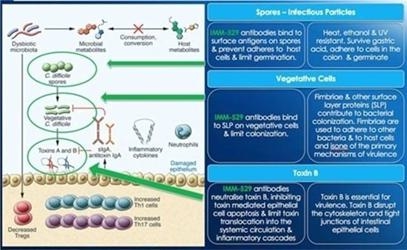
Preclinical studies with IMM-529 yielded promising results in a number of pre-clinical animal models (shown below). All results were highly statistically significant:
| ● | Prevention of C. difficile infection: approximately 70% (17/24) survival vs. 0% survival in the control groups: |
| ○ | Control group #1 (0/14) treated with water; and |
| ○ | Control group #2 (0/15) treated with non-hyper-immune colostrum. |
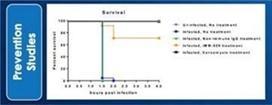
| ● | Treatment: approximately 80% survival (11/14) vs. <7% survival in the control groups: |
| ○ | Control group #1 (0/14): Treated with water alone following vancomycin treatment; and |
| ○ | Control group #2 (1/15): Treated with non-hyper-immune colostrum following vancomycin treatment. |
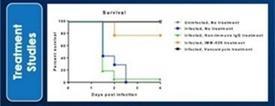
| ● | Relapse: approximately 90% survival in IMM-529 + vancomycin group (n=7/9); vs. 11% survival in the control group which received vancomycin alone (n=1/9). |
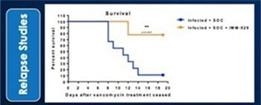
The results of these studies were published in Scientific Reports (Hutton et al. Bovine antibodies targeting primary and recurrent Clostridium difficile disease are potent antibiotic alternatives), SCI Rep. 2018 Jun 16:7(1):3665. For more information regarding the current status of development of IMM-529 and the Company’s plans moving forward, please see “IMM-529 to Treat Recurrent C. difficile Infections (CDI)” on page 31 above.
Other Development Programs
We also have a research collaboration with the U.S. Department of Defense (DoD) involving programs with the Walter Reed Army Institute of Research, for the development of Shigella-specific therapeutic products.
Collaborations with U.S. Army and U.S. Navy. We believe that our collaborations with the DoD are a powerful validation of the potential of our platform to develop novel anti-infectives. These collaborations also open the door to explore and develop potentially low risk / low cost therapeutics with some of the most advanced research facilities in the world. The DoD earlier commissioned several studies to characterize the polyclonal antibodies contained in Travelan. The aim was to conduct trials to determine the product’s effectiveness in neutralizing pathogenic GI bacterial infections as a preventative treatment for U.S. military personnel and civilians stationed or traveling in locations where such infections can be debilitating.
Armed Forces Research Institute of Medical Sciences.
In January 2019, we reported that the DoD-commissioned study showed Travelan was immunologically reactive to a number of dangerous and potentially fatal infectious bacteria. The Department of Enteric Diseases unit of the Armed Forces Research Institute of Medical Sciences (“AFRIMS”) performed the study. It took place at a WRAIR laboratory in Bangkok, Thailand. The study, one of three involving Travelan, looked at 60 clinical isolates of each of Campylobacter, ETEC, and Shigella obtained from infected U.S. defense personnel in southeast Asia between 1993 and 2016. The study indicated that, compared to the control, Travelan antibodies were reactive to all 180 clinical isolates.
In September 2019, we reported the findings of a study conducted by AFRIMS. The study evaluated the therapeutic potential of Travelan in a non- human primate (“NHP”) preclinical Shigella challenge model that closely mimics the disease seen in humans. The study was performed in collaboration with the Department of Enteric Diseases and the Department of Veterinary Medicine, AFRIMS, and the Department of Enteric Infections, Bacterial Diseases Branch, WRAIR. The placebo-controlled study was carried out in 12 NHPs segregated into 2 groups: a Travelan treatment cohort of 8 and a placebo cohort of 4, which were treated with either Travelan or placebo respectively twice daily for a total of 12 doses over a 6-day period. The animals received treatment for 3 days prior to oral challenge with approximately 3 x 10⁹ viable Shigella flexneri strain 2a organisms. All (4 of 4 - 100%) placebo- treated animals displayed acute dysentery symptoms within 24 to 36 hours of the Shigella flexneri 2a challenge. Seven of the eight individuals in the Travelan treatment cohort (87.5%) remained symptom-free to 4 days post the Shigella flexneri 2a challenge. Only one of the Travelan-treated cohort displayed dysentery symptoms during the same time frame as the placebo arm. Once the treatment period was concluded a second individual in the Travelan treatment group developed symptoms. Six of the eight Travelan treated cohort animals remained symptom-free to the conclusion of the study which was 11 days post the Shigella flexneri 2a challenge.
In June 2020, we updated the market on the latest developments arising from our cooperative research and development efforts with the DoD. AFRIMS completed the histopathological analysis, which provides a comprehensive view of the clinical disease and its effect on tissues of gut, revealed that all animals in the placebo-treated group displayed severe inflammation in different parts of the gastrointestinal tract. These animals also had very high levels of inflammatory cytokines (IL-1b, IL-6 and IL-8) in fecal samples collected throughout the study. The inflammation seen in the gastrointestinal tract and the increase in inflammatory cytokines in the feces were closely associated with the observed clinical outcomes of dysentery. Only 3 of the 8 Travelan-treated animals had signs of inflammation in the gastrointestinal tract, and only 2 of those had high levels of inflammatory cytokines in fecal samples. All other animals in the Travelan-treated group were clinically healthy and did not excrete any inflammatory cytokines. Overall the results suggest that Travelan® is functionally cross-reactive and may have prophylactic activity against Shigellosis.
In June 2020, we also reported the completion of the manufacture of three new Shigella-specific therapeutic products using proprietary vaccines developed by WRAIR. The immune reactivity of the three hyper-immune Shigella specific products were evaluated by the WRAIR using Enzyme- Linked ImmunoSorbent Assay and Western Blot analysis. The antibodies in the products were shown to react with the specific antigens present in the vaccines. The antibodies within the three products were also reactive to 4 different clinical isolates of Shigella (S. flexneri 2a, S. flexneri 3a, S. flexneri 6, and S. sonnei). The three Immuron Shigella-specific therapeutic products will now go on to evaluation in WRAIR’s preclinical models of shigellosis.
In September 2020, we announced the results of the study, sponsored by the DoD and funded through the Defense Health Agency, which was performed at the overseas laboratory of the WRAIR located in Bangkok, Thailand. The goal was to investigate the breadth of Travelan®’s immunological reactivity against pathogenic Vibrio cholera bacterial isolates. Clinical isolates were collected from infected personnel located in Bangladesh, Cambodia, and Thailand, enabling researchers to gauge Travelan®’s potential against bacterial strains typically seen in the field. When compared to a placebo control, researchers found that the polyclonal antibodies comprising Immuron’s Travelan® product were reactive to all 71 clinical isolates from these infected individuals. The ability of Travelan® to bind these bacteria highlights the broad-spectrum recognition by Travelan® of surface antigens on potentially debilitating and even life-threatening bacteria.
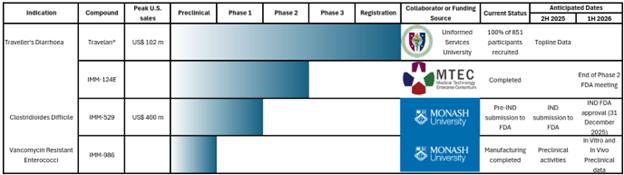
OUR MARKETED ASSETS
Our Flagship Commercial Assets. Immuron currently markets our flagship commercial product Travelan®, and Protectyn® in Australia, where both products are listed medicines on the Australian Register for Therapeutic Goods. Travelan® (AUST L 106709) is an over-the-counter orally administered passive immunotherapeutic product indicated to reduce the risk of travelers’ diarrhea and reduce the risk of minor gastro-intestinal disorders and is sold in pharmacies throughout Australia. Protectyn® (AUST L 231001) is currently sold online and in health practitioner clinics and is marketed as an immune supplement to help maintain a healthy digestive function and liver. In Canada, Travelan® (NPN 80046016) is a licensed natural health product and is indicated to reduce the risk of travelers’ diarrhea. In the U.S. Travelan® is sold as a dietary supplement for digestive-tract protection in accordance with section 403 (r)(6) of the FDA. The Company plans to pursue clinical development of Travelan®) through a formal FDA registration pathway to gain FDA-approval as a drug to specifically reduce the risk of travelers’ diarrhea in travelers to endemic areas.
In Australia Travelan® is approved as a preventative for Traveler’s Diarrhea, the indications are;
| ● | Helps enhance/promote general health and wellbeing. |
| ● | Decrease/reduce/relieve diarrhea. |
| ● | Helps reduce occurrence of diarrhea. |
| ● | Decrease/reduce loose stools. |
| ● | Helps decrease/reduce/relieve symptoms of travelers’ diarrhea. |
| ● | Helps reduce occurrence of symptoms of travelers’ diarrhea. |
| ● | Helps restore good/beneficial/friendly intestinal/gut/bowel flora. |
| ● | Helps enhance/improve/promote/increase healthy digestive system flora/good bacteria growth. |
| ● | Helps enhance/promote gastrointestinal system health. |
| ● | Maintain/support healthy gastrointestinal function. |
| ● | Maintain/support gastrointestinal mucosal membrane health. |
| ● | Aids/assists repair of gastrointestinal/gut wall lining. |
| ● | Decrease/reduce/relieve abdominal cramping. |
| ● | Helps decrease/reduce/relieve mild gastrointestinal tract inflammation. |
| ● | Decrease/reduce/relieve gastrointestinal pain. |
| ● | Enhance/improve/promote immune defense. |
| ● | Maintain/support healthy gastrointestinal immune function. |
Travelan® contains high levels of specific antibodies generated against 13 strains of Enterotoxigenic E.coli bacteria, the most common cause of Travelers’ Diarrhea. Travelan® directly targets the pathogens in the gut and prevents the infection and its resulting symptoms from occurring. The product generated close to $7.3 million AUD in revenue during fiscal year ending 30 June 2025 (FY25), following sales of over $4.9 million AUD in the previous fiscal year ending 30 June 2024 (FY24).
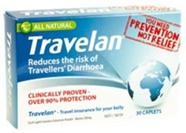 |
 |
Global sales of Travelan® and Protectyn® increased by 49% in the 2025 fiscal year to A$7.287M, compared to A$4.903M in FY24.The Company is pleased to report significant uplift of sales in Australia and North America. In the case of the USA, Travelan® sales were up by 54%, reaching A$1.658M in FY25, compared to A$1.076M in FY24. Global sales growth was attributable to increasing sales in both the Australian pharmacy channel and USA amazon.com sales channel. In Australia, Travelan® sales increased to A$5.201M in FY25 representing an increase of over 40% that of FY24 (A$3.703M). With international travel continuing to increase we anticipate continued strong growth in sales.
Marketing Channels
For our marketing efforts, we engage external resources which work with our in-house marketing team, with our approach to marketing varying depending on the geography where we market our products. For instance, in Australia we market Travelan® and Protectyn® in the retail pharmacy sales channel alongside utilizing an external resource to assist with sales. In Canada, we market Travelan in the retail pharmacy and grocery channels via a service provider to which we sell Travelan on consignment, while utilizing a service provider to assist with sales. In the United States, we market Travelan directly to Passport Health Travel Clinics, sell to distributors, sell to Amazon.com and Walmart.com on consignment basis while utilizing a service provider to assist with sales. We do not currently utilize any special sales methods, including installment sales.
OUR INVESTMENTS
Ateria is a UK based company that developed and launched JUVIA™ for the treatment of irritable bowel syndrome (IBS) in the UK followed by Australia. JUVIA™ Digestive Balance Formula is a food supplement activated by their unique ingredient ERME™. Unlike probiotics, which attempt to introduce new bacteria, ERME resets the gut by breaking down carbohydrates in the diet, starving the bad bacteria of food, allowing the good ones to thrive. Further information on Ateria can be found at ateriahealth.com.
The investment in Ateria continues to be fully impaired to Nil during the fiscal year ending 30 June 2025.
OVERVIEW OF TECHNOLOGY
Immuron Limited (NASDAQ: IMRN; ASX: IMC), is a commercial and clinical-stage Australian biopharmaceutical company with a proprietary technology platform focused on the development and commercialization of a novel class of orally delivered polyclonal antibodies for treatment of infectious diseases. Immuron’s technology is focused on generation of hyper-immune antibody-rich bovine colostrum, providing antimicrobial therapy to treat gut-mediated diseases.
The underlying nature of our platform technology enables the development of medicines across a large range of infectious diseases. The platform can be used to directly block viruses or bacteria and neutralize the toxins they produce at mucosal surfaces (such as the GI tract). Additionally, the dairy origins of our antibodies enable us to commercialize our platform through most regulatory pathways, including prescription, medical foods, over-the- counter medicines, and dietary supplements.
Manufacturing Process
Our active pharmaceutical ingredients are manufactured under cGMP conditions and many of the components are the same as those of normal cow’s milk. However, the main differentiation between milk and our active ingredient constituents is the presence of antibodies in bovine colostrum of the order of 35-45% by weight of dry colostrum powder. The main classes of immunoglobulins found in the active ingredient are IgG with smaller amounts of IgM and IgA. Immunoglobulins account for up to 70–80% of the total protein content in colostrum, whereas in milk they account for only 1–2% of total protein. The major class of immunoglobulin G found in bovine colostrum is IgG1 making up between 65% and 90% of total immunoglobulins, in contrast to milk which comprises predominantly IgA.
Vaccination
The active drug substance is prepared using the first milking colostrum of dairy cows that have been immunized with patented vaccines to produce very high levels of specific antibodies against selected surface antigens. Pregnant dairy cows at commercial dairy farms are immunized through a proprietary process.
Colostrum
The colostrum is harvested from immunized Holstein Friesian and Jersey cows registered for milk production for human consumption and at the time of harvesting are free from antibiotics. They are not given steroids at any stage of the process. Colostrum is harvested at the first milking which will be within twelve hours of calving, leaving plenty for the calf to feed on.
Once harvested, preparation of the active ingredient complies with processes that are regulated by Dairy Safe standards in addition to the TGA, which is a Federal requirement and known globally for its stringent criteria. The raw colostrum material is first pasteurized then cooled and centrifuged using a milk separator to remove somatic cells, cell debris, some bacteria and fat. It is then subjected to membrane ultra-filtration, removing much of the water, salts and lactose. The colostrum wet concentrate is then spray dried to produce a powder, which is milled to 200 microns. The processes are typical for the dairy industry and for production of dairy foods. After spray drying, the active ingredient is ready for further processing into the oral dosage form.
Tableting
The product excipients are all standard, FDA acceptable oral compounds that are granulated, milled and finally compressed into caplets and blister packaged (pharmaceutical grade packaging materials).
Batch Consistency
The IgG component of our active ingredient ranges between 36% and 45%. The parameters are stable within batches and across batches. Our product is stable according to ICH guidelines and the IgG component of our active ingredient is stable over time and is manufactured under cGMP conditions with all associated QA and QC processes ensuring the stability of these parameters.
Trademarks
We have rights to trademarks and trade names (both registered and unregistered) used in this Annual Report on Form 20-F (this “Annual Report”) which are important to our business. These trademarks are as follows:
| ● | Immuron (registration in U.S.); |
| ● | Travelan (registration in U.S., Australia, Canada and China); and |
| ● | Protectyn (registration in Australia and Canada); |
Solely for convenience, trademarks and trade names referred to in this Annual Report appear without the “®” or “™” symbols, but such references are not intended to indicate, in any way, that we will not assert, to the fullest extent possible under applicable law, our rights or the rights of the applicable licensor to these trademarks and trade names. We do not intend our use or display of other companies’ trade names, trademarks or service marks to imply a relationship with, or endorsement or sponsorship of us by, any other companies. Each trademark, trade name or service mark of any other company appearing in this Annual Report is the property of its respective holder.
PATENTS
We have a policy to identify, capture and protect all relevant intellectual property associated within our core business strategies. We own a number of patent families that have been filed to protect both the vaccine that is used to generate our colostrum enriched with antibodies of choice, as well as methods of treating certain conditions with the resulting hyper-immune colostrum.
Our patent rights are supplemented by a comprehensive body of confidential and proprietary expertise that has been developed over many years and relates to the methods of production of the hyper-immune colostrum. These trade secrets include information relating to the production system and an effective immunization process that is approved by an independent animal ethics committee.
During the year ended June 30, 2024, provisional patent application 63/561,361 was filed on March 5, 2024 in the United States. This patent application has now entered the national phase. During the year ended June 30, 2025, we continued to expand our patent portfolio with the conversion of provisional patent application 63/561,361 into two international patent applications. International patent application number PCT/AU2024/051338 entitled “ Methods and Composition II” was filed on December 12, 2024. International patent application number PCT/AU2025/050196 entitled “ Methods and Composition I” was filed on March 5, 2025.
A summary of our principal patent families is set out in the table below:
| Number | Country | Status | Expiry | |||
| Composition and Method for the Treatment and Prevention of Enteric Bacterial Infections | ||||||
| 8,637,025 | USA | Granted | February 25, 2028 | |||
| Methods and Compositions for the Treatment and/or Prophylaxis of Clostridium Difficile Associated Disease | ||||||
| 2014253685 | Australia | Granted | April 17, 2034 | |||
| 2,909,636 | Canada | Granted | April 17, 2034 | |||
| 14784945.9 | Europe | Granted | April 17, 2034 | |||
| 10,144,775 | USA | Granted | April 17, 2034 | |||
| 20210506081.2 | China | Granted | April 17, 2034 | |||
| 713233 | New Zealand | Granted | April 17, 2034 | |||
| Methods and Compositions II | ||||||
| PCT/AU2024/051338 | PCT Application | Filed | December 12, 2024 | |||
| Methods and Compositions I | ||||||
| PCT/AU2025/050196 | PCT Application | Filed | March 5, 2025 | |||
REGULATORY CONSIDERATIONS
Our clinical assets are considered as biologics by the FDA, conferring 12 years of market exclusivity from date of approval in the U.S. for approved drugs derived from our technology program. New products in Europe have 10 years of market exclusivity.
Our ongoing research and development activities, and the production and marketing of our pharmaceutical product candidates derived from those activities will be subject to regulation by human research ethics committees and institutional research boards, as well as numerous governmental authorities in Australia, principally the TGA, the FDA in the U.S., the MHRA in the United Kingdom and the EMA in Europe. Prior to marketing, any therapeutic product developed must undergo rigorous pre-clinical testing and clinical trials, as well as an extensive regulatory approval process mandated by the TGA and, to the extent that any of our pharmaceutical products under development are marketed abroad, by foreign regulatory agencies, including the FDA, EMA and MHRA.
Clinical trials can take many years to complete and require the expenditure of substantial resources. The length of time varies substantially according to the type, complexity, novelty and intended use of the product candidate. We cannot make any assurances that once clinical trials are completed by us or our collaborative partners, we will be able to submit as scheduled a marketing approval request to the applicable governmental regulatory authority, or that such request and application will be reviewed and cleared by such governmental authority in a timely manner, or at all. Although we intend to make use of fast-track and abbreviated regulatory approval programs when possible and commercially appropriate, we cannot be certain that we will be able to obtain the clearances and approvals necessary for clinical testing or for manufacturing and marketing our pharmaceutical products candidates. Delays in obtaining regulatory approvals could adversely affect the development and commercialization of our pharmaceutical product candidates and could adversely impact our business, financial condition and results of operations.
During the course of clinical trials and non-clinical studies, including toxicology studies, product candidates may exhibit unforeseen and unacceptable drug-related toxicities or side effects. If any unacceptable toxicities or side effects were to occur, we may, or regulatory authorities may require us to, interrupt, limit, delay or abort the development of our potential products. In addition, unacceptable toxicities could ultimately prevent the clearance of our product candidates by human research ethics committees, institutional research boards, the TGA, EMA, FDA or other regulatory authority for any or all targeted indications. Even after being cleared by a regulatory authority, any of our products may later be shown to be unsafe or not to have its purported effect, thereby preventing widespread use or requiring withdrawal from the market. We cannot make any assurances that IMM- 124E, IMM-529 or any other development or product candidate will be safe or effective when administered to patients.
Australian Disclosure Requirements
Dividends
No dividends were declared or paid to members for the year ended June 30, 2025. The directors do not recommend that a dividend be paid in respect of the financial year.
C. ORGANIZATIONAL STRUCTURE
We have three wholly-owned subsidiaries, Immuron Inc. (through which we have entered into contracts to supply Travelan to sell to Amazon.com and Walmart.com on consignment basis), Anadis ESP Pty Ltd (formed for the sole purpose to act as trustee for the Immuron Limited Executive Officer Share Plan Trust) and Immuron Canada Ltd (which currently does not have any operations) which were incorporated in U.S., Australia and Canada, respectively. All costs associated with the operations of these companies are borne by Immuron Limited.
D. PROPERTY, PLANT AND EQUIPMENT
Our corporate headquarters are located at Level 3, 62 Lygon Street, Carlton South, Victoria, 3053, Australia. Our principal office is located at Suite 10, 25-37 Chapman Street, Blackburn North, Victoria 3130 and consists of office facilities under a lease agreement which expired in December 2024 upon which it became a month to month lease. Subsequent to June 30, 2025, the Company entered into a new office facility lease agreement for the same premises expiring on August 31, 2028, with an ongoing further three year option for extension. We have no dedicated research and development facility as our research and development activities are provided by third party suppliers who are responsible for their own premises. We believe that our existing facilities are adequate for our current needs.
ITEM 4A. UNRESOLVED STAFF COMMENTS
Not applicable.
ITEM 5. OPERATING AND FINANCIAL REVIEW AND PROSPECTS
The following discussion and analysis includes certain forward-looking statements with respect to the business, financial condition and results of operations of our Company. The words “estimate”, “project”, “intend”, “expect” and similar expressions are intended to identify forward-looking statements within the Private Securities Litigation Reform Act of 1995. These forward-looking statements are subject to risks and uncertainties that could cause actual results to differ materially from those contemplated by such forward-looking statements, including those risk factors contained in Item 3.D. of this annual report. You should read the following discussion and analysis in conjunction with our consolidated financial statements and the notes thereto included in this annual report.
A. Operating Results
For analysis and discussion of years ending 2024 and 2023 please refer to the 20-F filed with the SEC on September 30, 2024.
Overview
We were incorporated under the laws of Australia in 1994 and have been listed on the ASX since April 30, 1999. Our ADSs have traded on The NASDAQ Capital Market since June 13, 2017.
Our consolidated financial statements appearing in this annual report comply with IFRS as issued by IASB. In this annual report, all references to “U.S. dollars” or “US$” are to the currency of the U.S., and all references to “Australian dollars”, “A$” or “$” are to the currency of Australia. Unless otherwise indicated or the context implies otherwise, items included in the financial statements of each of the group’s entities are measured using the currency of the primary economic environment in which the entity operates (‘the functional currency’). The consolidated financial statements are presented in Australian dollar (“A$” or “$”), which is Immuron Limited’s functional and presentation currency. All of our revenues are generated in Australian dollars, United States dollars and Canadian dollars, and the majority of our expenses are incurred in Australian dollars.
Immuron Limited is a commercial and clinical-stage biopharmaceutical company with a proprietary technology platform focused on the development and commercialization of a novel class of specifically targeted polyclonal antibodies in the treatment of diseases associated with the gastrointestinal tract. We believe that we can address this significant unmet medical need. Our oral polyclonal antibodies are orally active and offer localized delivery within the gastrointestinal (“GI”) tract. We currently market our flagship commercial product Travelan®, and Protectyn® in Australia, both products are listed medicines on the Australian Register for Therapeutic Goods. Travelan® is an over-the-counter product indicated to reduce the risk of travelers’ diarrhea and is sold in pharmacies throughout Australia. Protectyn® is currently sold online and in health practitioner clinics and is marketed as an immune supplement to help maintain a healthy digestive function and liver. We also market Travelan® in Canada where it is licensed as a natural health product indicated to reduce the risk of travelers’ diarrhea, and presently market Travelan® in the U.S. as a dietary supplement for digestive tract protection.
We believe that our lead drug candidates, currently in clinical development have the potential to transform the existing treatment paradigms for Enterotoxigenic Escherichia coli (ETEC) infections, travelers’ diarrhea and for Clostridioides difficile infections.
Results of Operations
The following discussion relates to our consolidated results of operations, financial condition and capital resources. You should read this discussion in conjunction with our consolidated financial statements and the notes thereto contained elsewhere in this annual report.
Comparison of the fiscal years ended June 30, 2025 and 2024
Revenue and Other income
| For the fiscal year ended June 30, |
Increase/ | |||||||||||
| 2025 A$ |
2024 A$ |
(Decrease) A$ |
||||||||||
| Revenue: | ||||||||||||
| Revenue from contracts with customers | 7,287,002 | 4,902,865 | 2,384,137 | |||||||||
| Other Income: | ||||||||||||
| Australian R&D tax incentive refund | 1,110,577 | 764,981 | 345,596 | |||||||||
| MTEC R&D grant | 146,252 | 2,599,458 | (2,453,206 | ) | ||||||||
| HJF R&D grant | 124,164 | — | 124,164 | |||||||||
| EMDG grant | — | 28,000 | (28,000 | ) | ||||||||
| Other income | 30,512 | 15,760 | 14,752 | |||||||||
| Total Other Income | 1,411,505 | 3,408,199 | (1,996,694 | ) | ||||||||
Revenues received from the sale of goods increased by A$2,384,137, or 49%, from fiscal 2024 to fiscal 2025, primarily due to the growth in the Australian and U.S. markets for Travelan® as international travel continues to increase. We anticipate that revenues from sales of our Travelan® product will continue to increase in the future.
For the fiscal 2025, the group has included an item in other income of $1,110,577 (2024: $764,981) to recognize income over the year necessary to match the R&D tax incentive on a systematic basis with the costs that they are intended to compensate. There was an increase in eligible Australian Research & Development expenditure during the fiscal year ended 30 June 2025 and consequently an increase in the accrual for the Australian R&D tax incentive refund. There was increased eligible expenditure on IMM-529 (Clostridioides difficile infection) and IMM-124E (new manufacturing processes and new colostrum harvest and collection methods). There was a reduction in ineligible expenditure on IMM-124E (overseas clinical trial).
The group’s other grant income consists of grants received by the group with relation to R&D grants. Grants are recognized as other income when the group is reasonably assured that it will comply with the conditions attaching to it and the grant will be received.
For the year ended 30 June 2025, the group has recognized $146,252 (2024: $2,599,458) R&D grant from Medical Technology Enterprise Consortium (“MTEC”) matching the R&D grant on a systematic basis with the costs that they are intended to compensate.
The group has recognized Nil in Export Market Development Grants Scheme (“EMDG”) grant for fiscal 2025 (2024: $28,000).
Cost of Goods Sold (“COGS”) and Gross Profit
| For the fiscal year ended June 30, |
Increase/ | |||||||||||
| 2025 A$ |
2024 A$ |
(Decrease) A$ |
||||||||||
| Revenue from contracts with customers | 7,287,002 | 4,902,865 | 2,384,137 | |||||||||
| Cost of Goods Sold | (2,521,903 | ) | (1,566,068 | ) | (955,835 | ) | ||||||
| Gross Profit | 4,765,099 | 3,336,797 | 1,428,302 | |||||||||
The decrease in gross profit margin from 68% in fiscal 2024 to 65% in fiscal 2025 is due to COGS following an increase in the price of bulk tablet manufacture.
Expenses
| For the fiscal year ended June 30, |
Increase/ | |||||||||||
| 2025 A$ |
2024 A$ |
(Decrease) A$ |
||||||||||
| Expenses: | ||||||||||||
| General and administrative expenses | 4,483,623 | 4,555,726 | (72,103 | ) | ||||||||
| Research and development expenses | 3,597,296 | 5,375,461 | (1,778,165 | ) | ||||||||
| Selling and marketing expenses | 3,452,416 | 2,029,648 | 1,422,768 | |||||||||
| Total expenses | 11,533,335 | 11,960,835 | (427,500 | ) | ||||||||
General and administrative expenses. General and administrative expenses decreased by A$72,103 from fiscal year 2024 to fiscal year 2025, in which employee benefits decreased by A$233,011 from fiscal 2024 to fiscal 2025. Decreases in general and administrative expenses were partly offset by an increase in share-based payments made to employees, consultants and directors of the Company of A$304,243 in fiscal year 2025 compared to A$3,299 in fiscal year 2024, mainly due to performance rights issued in FY25 in relation to Long Term Incentive Scheme.
Research and development expenses. Research and development expenses decreased by A$1,778,165 from fiscal 2024 to fiscal 2025 which reflects decreased R&D activity.
Selling and marketing expenses. Selling and marketing expenses increased by A$1,422,768 from fiscal 2024 to fiscal 2025 driving increased sales in Australia and North America.
Loss for the period. As a result of the foregoing, our loss for the period after income tax benefit decreased by A$1,720,970, or 25%, from A$6,936,957 in fiscal 2024 to A$5,215,987 in fiscal 2025.
Given our, and our subsidiaries’, history of recent losses, we have not recognized a deferred tax asset regarding unused tax losses and other temporary differences, as it has not been determined whether we, or our subsidiaries, will generate sufficient future taxable income against which we can utilize these unused tax losses and any uncalculated potential deferred tax assets, together with any other temporary differences. Should the need arise, we can, and will, revisit this position.
Inflation and Seasonality
Management believes inflation has not had a material impact on our Company’s operations or financial condition and that our operations are not currently subject to seasonal influences.
Foreign currency fluctuations
Our ordinary shares are quoted in Australian dollars on the ASX and the ADS are quoted in U.S. dollars on NASDAQ. Movements in the Australian dollar/U.S. dollar exchange rate may adversely affect the U.S. dollar price of the ADS. In the past year the Australian dollar has generally weakened against the U.S. dollar. However, this trend may not continue and may be reversed. If the Australian dollar weakens against the U.S. dollar, the U.S. dollar price of the ADS could decline, even if the price of our ordinary shares in Australian dollars increases or remains unchanged.
We are exposed to fluctuations in foreign currencies that arise from foreign currencies held in bank accounts and the translation of results from our operations outside Australia. Our foreign exchange exposure is primarily to the U.S. dollar and Canadian dollar. Foreign currency risks arising from commitments in foreign currencies are managed by holding cash in that currency. Foreign currency translation risk is not hedged as the cost of hedging at this time outweighs any benefits that may be obtained. For more information, see “Note 19 (Financial Risk Management Objectives and Policies – Market Risk – Foreign Exchange Risk)” under “Part III - Item 18 – Financial Statements” on page F-36 below.
Conditions in Australia
We are incorporated under the laws of, and our principal offices and research and development facilities are located in, the Commonwealth of Australia. Therefore, we are directly affected by political and economic conditions in Australia. See Item 3.D. “Key Information – Risk Factors” for a description of factors that could materially affect our operations. See also Notes to the Consolidated Financial Statements 1, 2, 3, and 8 as they relate to the Australian Research & Development Tax Incentive Scheme under “Part III - Item 18 – Financial Statements” below.
Australian Disclosure Requirements
Significant Changes in the State of Affairs
There have been no significant changes within the state of affairs during the year ended June 30, 2025 except as noted in the “Operating and Financial Review and Prospects” included in item 5.
Events occurring after the Reporting Date
At The Market Capital Raising
On 17, 18 and 21 July 2025, Immuron Limited raised total gross proceeds of US$1,822,322 (A$2,809,177) through an At The Market Facility comprising 877,440, 473,880 and 32,909,640 shares at an issue price of US$0.0473 (A$0.0722), US$0.0470 (A$0.0719) and US$0.0534 (A$0.0824) per share, respectively.
This capital raising initiative does not provide evidence of conditions that existed at 30 June 2025 and is therefore classified as a non-adjusting event in accordance with AASB 110 Events after the Reporting Period. No adjustments have been made to the financial statements as a result of this transaction.
No other matter or circumstance has occurred subsequent to period end that has significantly affected, or may significantly affect, the operations of the group, the results of those operations or the state of affairs of the group or economic entity in subsequent financial years.
Likely Developments and Expected Results of Operations
The group aims to create value for shareholders through a two-pronged approach. In the short- and medium-term, Immuron Limited sells and licenses its Travelan® over-the-counter product. Beyond this, the group is researching and clinically developing products, principally for the treatment of travelers’ diarrhea and Clostridium difficile infections.
More information on these developments is noted in the “Business Overview” section included in item 4.B.
Environmental Regulations
The group is not affected by any significant environmental regulation in respect of its operations.
B. Liquidity and Capital Resources
We have incurred cumulative losses and negative cash flows from operations since our inception in 1994 and as of June 30, 2025 we had accumulated losses of A$82,443,205.
On July 3, 2024, the Company announced that it had filed a Form F-3 Registration Statement. The Form F-3 enables the Company as a ‘foreign private issuer’ to raise up to US$15 million in the United States over a three year period and supersedes the Company’s recently expired US$100 million Form F-3 announced on 9 April 2019. The Form F-3 maintains the Company’s flexibility with direct access to U.S. capital markets. The Company also announced that it entered into an at-the-market offering agreement dated July 2, 2024, with H.C. Wainwright & Co., LLC as sales agent, relating to American Depositary Shares, or ADSs, representing our ordinary shares, no par value per share, offered by prospectus. Each ADS represents 40 ordinary shares. In accordance with the terms of the Offering Agreement and the prospectus, we may offer and sell our ADSs having an aggregate offering price of not more than US$2,069,083 from time to time through Wainwright acting as our sales agent. As at July 21, 2025, the Company completed the Offering Agreement, raising gross proceeds of US$2,068,866 (A$3,205,235) through the At The Market Facility.
Immuron anticipates that it will continue to incur losses for the foreseeable future. We expect that as we continue research efforts and the development of our product candidates, hire additional staff, including clinical, scientific, operational, financial and management personnel we will need additional capital to fund our operations which we may raise through a combination of equity offerings, debt financings, other third-party funding and other collaborations, strategic alliances and licensing arrangements.
The commitment to these projects will require additional external funding, at least until we are able to generate sufficient cash flow from sale of one or more of our products to support our continued operations. If adequate funding is not available, we may be required to delay, scale back or eliminate certain aspects of our operations or attempt to obtain funds through unfavorable arrangements with partners or others that may force us to relinquish rights to certain of our technologies, products or potential markets or that could impose onerous financial or other terms. Management is continuing its efforts to obtain additional funds so that we can meet our obligations and sustain operations. For more information, see “Note 19 (Financial Risk Management Objectives and Policies)” under “Part III - Item 18 – Financial Statements” on page F-36 below.
The sale of additional equity or convertible debt could result in additional dilution to our shareholders. The incurrence of indebtedness would result in debt service obligations and could result in operating and financing covenants that would restrict our operations. We can provide no assurance that financing will be available in the amounts we need or on terms acceptable to us, if at all. If we are unable to secure adequate additional funding we may be forced to make reductions in spending, extend payment terms with suppliers, liquidate assets where possible, and/or suspend or curtail planned programs. Any of these actions could materially harm our business.
We do not currently have any credit facilities in place. We currently have limited treasury activities and do not maintain formal funding or treasury policies. Our cash and cash equivalents are primarily held in Australian dollars and U.S. dollars, reflecting our operational footprint and liquidity needs. We have not incurred any material borrowings to date and therefore have no exposure to fixed or variable interest rate debt. We do not currently utilize financial instruments for hedging purposes. Should our operations expand and require more sophisticated treasury management, we intend to implement appropriate controls and policies to manage liquidity, currency exposure, and interest rate risk, including the potential use of hedging instruments. Currently, the cost of hedging outweighs any benefits that may be obtained. For more information, see “Note 19 (Financial Risk Management Objectives and Policies)” under “Part III - Item 18 – Financial Statements” on page F-36 below.
As of June 30, 2025, we had cash of A$2,830,526 as compared to cash of A$11,657,315 as of June 30, 2024. The Company had other current assets of A$3,486,744 (June 30, 2024: A$96,841). This other current assets amount includes a 90-day fixed term deposit of A$3,036,278 (30 June 2024: Nil), which matured on July 27, 2025. The company is in a position to meet future commitments in the current business cycle and pay its debts as and when they fall due. Furthermore, the Company is able to progress its research and development programs for at least the next 12 months from September 25, 2025. The annual report has been prepared on a going concern basis. Accordingly, the annual report does not include adjustments relating to the recoverability and classification of recorded asset amounts, or the amounts and classification of liabilities that might be necessary should the group not continue as a going concern. The Company is a going concern and is of the opinion that no asset is likely to be realized for an amount lower than the amount at which it is recorded in our Consolidated Statement of Financial Position as of June 30, 2025. For more information, see “Note 19 (Financial Risk Management Objectives and Policies)” under “Part III - Item 18 – Financial Statements” on page F-36 below.
We expect that our current cash, and cash equivalents will be sufficient to fund our capital requirements for at least 12 months from the issuance date of the financial statements. Our future funding requirements will depend on many factors, including, but not limited to:
| ● | the timing and costs of our planned clinical trials for our product candidates; |
| ● | the timing and costs of our planned preclinical studies for our product candidates; |
| ● | the number and characteristics of product candidates that we pursue; |
| ● | the outcome, timing and costs of seeking regulatory approvals; |
| ● | revenue received from commercial sales of any of our product candidates that may receive regulatory approval; |
| ● | the terms and timing of any future collaborations, licensing, consulting or other arrangements that we may establish; |
| ● | the amount and timing of any payments we may be required to make, or that we may receive, in connection with the licensing, filing, prosecution, defense and enforcement of any patents or other intellectual property rights; |
| ● | the costs of preparing, filing and prosecuting patent applications, maintaining and protecting our intellectual property rights and defending against intellectual property related claims; and |
| ● | the extent to which we need to in-license or acquire other products and technologies. |
In connection with the registered direct offering in July 2020, we issued Warrants to purchase 64,000 ADSs to the representatives (the “Representative’s Warrants”), respectively. The Representative’s Warrants are exercisable at a per ADS exercise price equal to US$23.4375. The Representative’s Warrants are exercisable at any time and from time to time, in whole or in part, during the four-year period commencing one year from the effective date of the offering. Any proceeds from the exercise of the Representative’s Warrants will be added to our working capital.
Cash flows
The following table sets forth the primary sources and uses of cash for each of the periods set forth below:
| For the year ended June 30, | ||||||||||||
| 2025 | 2024 | 2023 | ||||||||||
| A$ | A$ | A$ | ||||||||||
| Net cash used in operating activities | (6,136,949 | ) | (5,880,139 | ) | (2,595,195 | ) | ||||||
| Net cash (used in)/from investing activities | (2,900,412 | ) | 327,561 | (2,621,279 | ) | |||||||
| Net cash from/(used in) from financing activities | 199,747 | 829 | (44,667 | ) | ||||||||
Operating activities. Net cash used in operating activities increased by A$256,810 from A$5,880,139 in fiscal year 2024 to A$6,136,949 in fiscal year 2025. During the twelve months ended June 30, 2023 and 2024, net cash used in operating activities increased by A$3,284,044 from A$2,595,195 to A$5,880,139, respectively. The use of net cash in all periods resulted from our ordinary business operations. Net cash used in operating activities increased by approximately 4% in fiscal year 2025 due to higher receipts from customers and more government grants and other grants received which resulted in increase in net operational cash outflow.
Investing activities. Net cash from investing activities during the twelve months ended June 30, 2025 included a 90-day fixed term deposit of $3,036,278 (2024: Nil), which matured on July 27, 2025. Net cash from investing activities during the twelve months ended June 30, 2024 were minimal.
Financing activities. During the twelve months ended June 30, 2025, net cash provided by financing activities was A$199,747, which comprised of proceeds from issue of securities through an At The Market Facility (less costs associated with the issue), principal elements of lease payments and interest paid.
During the twelve months ended June 30, 2024, net cash inflow in relation to financing activities was A$829, which comprised of principal elements of lease payments, interest paid and net proceeds from issues of shares.
During the twelve months ended June 30, 2023, net cash outflow in relation to financing activities was A$44,667, which comprised of principal elements of lease payments and interest paid.
Contractual Obligations
The group had no contingent liabilities as at June 30, 2025 (June 30, 2024: Nil).
Off balance sheet arrangements
We are not a party to any material off-balance sheet arrangements. In addition, we have no unconsolidated special purpose financing or partnership entities that are likely to create material contingent obligations.
Quantitative and qualitative disclosures about market risks
We are exposed to market risk related to changes in interest rates and exchange rates. As of June 30, 2025, we had cash and cash equivalents of A$2,830,526, primarily held in bank accounts, and a term deposit of A$3,036,278 which matured on July 27, 2025. The Company had no borrowings as of June 30, 2025. Our primary exposure to market risk is interest rate sensitivity, which is affected primarily by changes in the general level of Australian interest rates. We are exposed to interest rate risks relating to our cash. Interest rate risk is the risk that a financial instrument’s value will fluctuate as a result of changes in market interest rates.
We are exposed to fluctuations in foreign currencies that arise from foreign currencies held in bank accounts and the translation of results from our operations outside Australia. Our foreign exchange exposure is primarily to the U.S. dollar and Canadian dollar. Foreign currency risks arising from commitments in foreign currencies are managed by holding cash in that currency. Foreign currency translation risk is not hedged.
C. Research and Development, Patents and Licenses
In recent years, we have continued our practice of building valuable research collaborations with institutes based in Australia, the United States, Europe and other countries to enable us to investigate a variety of therapeutic indications including ETEC, Shigella and Clostridioides Infections. These collaborative arrangements ensure that we work with well-respected key opinion leaders and laboratories with specific expertise in screening and animal modelling of relevance to the particular indication, without incurring ongoing administrative and personnel costs. We maintain in- house patent counsel and research and development project expertise to coordinate these research collaborations.
When a lead compound is identified as suitable for clinical development, we establish a project team to coordinate all non-clinical and clinical development and manufacturing activities. Typically, we would project manage all the project activities, tasks and milestones and engage clinical research organizations and contract manufacturing organizations to assist. We manage our manufacturing campaigns through contract manufacturing organizations for quality assurance and cGMP compliance. All clinical, non-clinical, clinical development and manufacturing of our compounds is performed in compliance with the appropriate governing authorities, regulators and standards (for example, the International Conference on Harmonisation of Technical Requirements for Registration of Pharmaceuticals for Human Use).
Research and development expenses amounted to A$3,597,296, A$5,375,461 and A$2,592,145 during the years ended June 30, 2025, 2024 and 2023, respectively. Costs associated with patent applications and defense of patent applications are classified as research and development expenses and amounted to approximately A$126,313, A$42,000 and A$80,000, during the years ended June 30, 2025, 2024 and 2023, respectively.
Our research and development expenses consist primarily of expenses for contracted research and development activities conducted by third parties on our behalf, including personnel, testing facilities and other payments in accordance with our research and clinical agreements. Research and development expenses also include costs associated with the acquisition and development of patents. Due to the numerous variables and the uncertain nature of the development of a clinical compound, including obtaining regulatory approvals, we are not able to reasonably estimate the nature, timing and costs of the future expenditures necessary to complete our research and development projects, the anticipated completion dates of each project and when material net cash flows from our research and development programs will commence.
D. Trend Information
We are a commercial and clinical development stage company, and while we believe that our technology will offer novel therapeutic strategies into an expanding market, we cannot predict with any degree of accuracy the outcome of our research or commercialization efforts. Accordingly, any trends within the markets in which we operate are expected to have more direct impact on our business in the event that we are successful in commercializing our new product candidates, including our current lead product candidates.
Over the past few years, there has been increasing pressure to reduce drug prices in the developed markets as a consequence of political initiatives and regulations aiming to curb continuous increases in healthcare spending. Any revenue we earn in the future may be negatively affected by such political initiatives and regulations. The increased burden of healthcare costs in the aging population have led to an increased focus on reducing costs and, therefore, have further increased the pressure to lower drug prices which may impact profitability. We expect this trend to continue in the years ahead. However, we believe spending in the healthcare industry, as compared to many other industries, is less linked to economic trends. We expect sales growth to continue at higher levels in emerging markets and also for niche, orphan indications. We also expect that demographic developments, increased treatment penetration, especially in newly established drug markets, and better diagnostic tools to enable the tailoring of drugs to specific needs, will result in continuing growth in overall global drug sales.
E. Critical Accounting Estimates
Estimates and judgments are continually evaluated and are based on historical experience and other factors, including expectations of future events that may have a financial impact on the entity and that are believed to be reasonable under the circumstances.
We make estimates and assumptions concerning the future. The resulting accounting estimates will, by definition, seldom equal the related actual results. The estimates and assumptions that have a significant risk of causing a material adjustment to the carrying amounts of assets and liabilities within the next financial year are discussed below.
See Note 2 to our financial statements for the fiscal year ended June 30, 2025 for a discussion of critical accounting judgements, estimates and assumptions.
ITEM 6. DIRECTORS, SENIOR MANAGEMENT AND EMPLOYEES
(Start of the Remuneration Report for Australian Disclosure Requirements)
The Immuron Limited Board of Directors (“the Board”) presents the 2024/2025 Remuneration Report, which has been prepared in accordance with the relevant Corporations Act 2001 (“Corporations Act”) and accounting standards requirements. The remuneration report sets out remuneration information for our key management personnel (“KMP”) as defined in the International Accounting Standards 24 ‘Related Party Disclosures’ and the Australian Corporations Act 2001 for the financial year ended June 30, 2025. The remuneration report has been audited as required by s308 (3C) of the Corporations Act.
A. Directors and Senior Management
As of September 25, 2025, our directors and executive officers are as follows:
| Name | Age | Position | ||
| Mr. Paul Brennan | 64 | Non-Executive Chairman | ||
| Mr. Daniel Pollock | 64 | Non-Executive Director | ||
| Prof. Ravi Savarirayan | 58 | Non-Executive Director | ||
| Dr. Jeannette Joughin | 62 | Non-Executive Director | ||
| Mr. Steven Lydeamore | 57 | Chief Executive Officer | ||
| Dr. Jerry Kanellos, Ph.D. | 63 | Chief Scientific Officer | ||
| Mr. Flavio Palumbo | 51 | Chief Commercial Officer | ||
| Mr. Phillip Hains | 66 | Chief Financial Officer and Company Secretary |
Mr. Paul Brennan has been a member of our board of directors and our Independent Non-Executive Director since March 2022. He has transitioned to his new role as the board’s Independent Non-Executive Chairman, effective from 1 July 2023. He also has special responsibilities as a member of the audit and risk committee and chair of the remuneration committee, effective from 1 July 2023. Mr Brennan holds an MBA from Swinburne University, a Bachelor of Science from the University of New England in NSW, Certificate in Midwifery Central Coast Areas Health Service NSW and General Nursing certificate from St Vincent’s Hospital Darlinghurst NSW. He has extensive experience in the health system through his clinical background and commercial exposure with various multinational companies. Mr Brennan was Chief Executive Officer (CEO) of PolyNovo Limited (ASX: PNV) for 7 years from 2015 to 2021 and took the Company from a market capitalisation of $30M to a high of $2B. Prior to this he was Marketing Director Australia and New Zealand and Sales Director New Zealand for Smith & Nephew Healthcare for 6 years. Mr. Brennan has coordinated the marketing, global strategy development, new product development and regulatory processes for the Asia-Pacific region for industry- leading organisations in relation to medical products and devices. He has an intimate knowledge of the manufacturing and production processes.
Mr. Daniel Pollock has been a member of our board of directors and our Independent Non-Executive Director since October 2012. He also has special responsibilities as chair of the audit and risk committee and a member of the remuneration committee. Mr. Pollock holds a Bachelor of Laws and Diploma in Professional Legal Practice and is a lawyer admitted in both Scotland and Australia and holding practicing certificates in both jurisdictions. He is a sole practitioner in his own legal firm based in Melbourne which operates internationally and specializes in commercial law. Further, he is executive director and co-owner of Great Accommodation Pty Ltd, a property management business operating in Victoria. Mr. Pollock has had historical involvement as a seed investor and board member of a number of small unlisted companies. The most recent of these was an e-pharmacy company where he was heavily involved in its commercial growth and ultimate sale to a large listed health services company.
Professor Ravi Savarirayan has been a member of our board of directors and our Independent Non-Executive Director since April 2017. Prof. Savarirayan holds a Doctor of Medicine from the University of Melbourne, a Bachelor of Medicine and Bachelor of Surgery from the University of Adelaide, is a Fellow of the Royal Australasian College of Physicians (FRACP) and is a member of the American Academy of Physician Assistants (ARCPA, Hons). He has been a consultant clinical geneticist at the Victorian Clinical Genetics Services since August 1999, as well as professor and research group leader of Molecular therapies at the Murdoch Children’s Research Institute since September 2000. Prof. Savarirayan has served as a founding member of the Skeletal Dysplasia Management Consortium since January 2011 and has acted as the chair of the specialist advisory committee in clinical genetics at the Royal Australasian College of Physicians since February 2009. He was president of the International Skeletal Dysplasia Society from July 2009 to June 2011 and has been an invited member of several international working committees on constitutional diseases of bone. Prof. Savarirayan’s primary research focus is on inherited disorders of the skeleton causing short stature, arthritis and osteoporosis. He has published over 210 peer-reviewed articles, collaborating with peers from over 30 countries. He has been on the editorial board of Human Mutation since January 2009, European Journal of Human Genetics since July 2007, American Journal of Medical Genetics since December 2011 and the Journal of Medical Genetics since June 2005. He is an NHMRC Leadership fellow.
Dr. Jeannette Joughin has been a member of our board of directors and our Independent Non-Executive Director since 1 June 2024. Dr. Joughin holds a Bachelor of Science (Honours) and a PhD, Immunology from Monash University. Dr. Joughin is an experienced biopharmaceutical and medical device leader with 20+ years’ experience locally and internationally. Her operational and leadership experience has been forged through conducting research at universities and holding clinical and commercial positions of increasing seniority in multi-national pharmaceutical companies, start-up environments in private and listed companies located in the USA, Europe and Australia, and as a Venture Partner working with local and global portfolio companies.
Mr. Steven Lydeamore has been our Chief Executive Officer (“CEO”) since June 2022. He has 30 years international pharmaceutical experience, working in Australia, Canada and USA. Mr. Lydeamore brings valuable international experience having spent eleven years working at Canadian global pharmaceutical company Apotex Inc., and four years for Mayne Pharma (USA) Limited. This includes valuable experience in mergers and acquisitions, finance, business development, sales and marketing, manufacturing, and research and development. Mr. Lydeamore was Chief Executive Officer of Anatara Lifesciences Limited (ASX: ANR) for four years until June 2022, during which time the Company successfully transitioned from a preclinical to a clinical company following development of a gastrointestinal tract delivery technology from which two products have commenced human clinical trials.
Dr. Jerry Kanellos, Ph.D. served as our Chief Scientific Officer (“CSO”) from July 2015 to August 2017, and since November 1, 2023. He also served as our Interim-CEO from August 2017 to November 2018 and CEO from March 2020 to June 2022. During transitional periods, he also stepped in as Chief Operating Officer, ensuring continuity and strategic direction across the organization. In addition, since April 2018, Dr. Kanellos has served as a director of Immuron Canada Limited. Dr. Kanellos has over 25 years of experience in the pharmaceutical and biotechnology industry, and has held leadership roles in executive management, business development, project management, intellectual property portfolio management research and development. From 2008 until 2012, Dr. Kanellos was the Chief Operating Officer of TransBio Limited where he was responsible for the strategic identification, development and maintenance of commercial partnerships globally, along with development, management and maintenance responsibility for the intellectual property portfolio, research and development and technology transfer. Prior to this, Dr. Kanellos worked for five years as a consultant to the biotechnology industry and provided development and commercialization strategies for various bodies including academic institutes, private and publicly listed companies and government departments both national and international. He has also been involved in the establishment and management of several startup biotechnology companies. During his ten year tenure in research and development at CSL Limited, a global specialty biotherapeutics company that develops and delivers innovative biotherapies, Dr. Kanellos gained considerable experience in the international drug development process, formulation development through to pharmaceutical scale up and cGMP manufacture successfully leading the Chemistry Manufacturing and Controls programs for the approval, manufacture and launch of several products. Dr. Kanellos holds a PhD degree in Medicine from the University of Melbourne.
Mr. Flavio Palumbo has been our Chief Commercial Officer (“CCO”) since November 2022. Mr. Palumbo is a successful commercial leader with over 20 years extensive global management and business development experience. Flavio has extensive consumer healthcare experience holding leadership roles for GlaxoSmithKline (GSK) locally (Australia & NZ), regionally (South-East Asia) and globally where he has been responsible for developing strategic plans and achieving hyper growth targets. Mr. Palumbo’s experience extends to sales and marketing leadership roles for Procter & Gamble (P&G) in the UK, Europe and Australia and Deloitte in Australia. MBA qualified from the University of Adelaide, with a proven record of accomplishment in commercial strategy, sales, marketing, brand and product management, communication, finance, digital technology and product innovation.
Chief Financial Officer and Company secretary
Mr. Phillip Hains was appointed as the secretary and Chief Financial Officer of the Company in April 2013. Mr. Hains is a Chartered Accountant operating a specialist public practice, The CFO Solution, now part of Acclime Australia. The CFO Solution focuses on providing back office support, financial reporting and compliance systems for listed public companies. A specialist in the public company environment, Mr Hains has served the needs of a number of company boards and their related committees. He has over 30 years of experience in providing businesses with accounting, administration, compliance and general management services. He holds a Master of Business Administration from RMIT University and a Public Practice Certificate from the Chartered Accountants Australia and New Zealand.
B. Compensation
Our remuneration policy is designed to ensure that directors and senior management are appropriately remunerated having regard to their relevant experience, their performance, the performance of our Company, industry norms and standards and the general pay environment as appropriate. Our remuneration policy has been established to enable us to attract, motivate and retain suitably qualified directors and senior management who will create value for shareholders.
Our remuneration policy is not directly based on our earnings. Our earnings have remained negative since inception due to the nature of our Company. Shareholder wealth reflects this speculative and volatile market sector. No dividends have ever been declared by us. We continue to focus on the research and development of our intellectual property portfolio with the objective of achieving key development and commercial milestones in order to add further shareholder value.
Non-Executive Director Remuneration
Similarly, our remuneration policy is designed to ensure that non-executive directors are appropriately remunerated with respect to their relevant experience, individual performance, the performance of our Company, industry norms/standards and the general pay environment as appropriate.
Our Constitution and the ASX Listing Rules specify that the aggregate remuneration of non-executive directors shall be determined from time to time by a meeting of shareholders. An amount (not exceeding the amount approved at the shareholders’ meeting) is determined by the Board and then divided between the non-executive directors. The latest determination was at the shareholders’ meeting held on October 29, 2020 when shareholders approved the aggregate maximum cash sum to be paid or provided as remuneration to the directors as a whole (other than the managing director and executive directors) for their services as A$750,000 per annum.
In the year ended June 30, 2025, our Non-Executive directors received an aggregate of A$521,025, including superannuation. The manner in which the aggregate remuneration is apportioned among non-executive directors is reviewed periodically. The Board is responsible for reviewing its own performance. Both Board and Board committee performance is monitored on an informal basis throughout the year with a formal review conducted during the financial year. No retirement benefits are payable other than statutory superannuation, if applicable.
Executive Director and Executive Officer Remuneration
Our remuneration policy is also designed to ensure that executive directors are appropriately remunerated with respect to their relevant experience, individual performance, the performance of our Company, industry norms/standards and the general pay environment as appropriate.
Our non-executive directors are responsible for evaluating the performance of the Chief Executive Officer (“CEO”) who in turn evaluates the performance of the other senior executives. The evaluation process is intended to assess our business performance, whether long-term strategic objectives are being achieved, and the achievement of individual performance objectives.
The performance of our CEO and senior executives are monitored on an informal basis throughout the year and a formal evaluation is performed annually.
Fixed Remuneration. Executives’ fixed remuneration comprises salary and superannuation and is reviewed annually by the CEO, and in turn, the Remuneration Committee. This review takes into account the executives’ experience, performance in achieving agreed objectives and market factors as appropriate.
Variable Remuneration – Short Term Incentive Scheme. Executives may be entitled to receive short term incentives (“STI”) as part of their total remuneration if they achieve certain performance indicators as set by the Board. These STI may be paid either by cash, or a combination of cash and the issue of equity in our Company, at the determination of the Board and Remuneration Committee.
The Remuneration Committee approves the issuance of bonuses following the recommendations of the CEO in the annual review of the performance of the executives, and our Company as a whole, against agreed key performance indicators (“KPIs”).
Variable Remuneration – Long Term Incentive Scheme. Executives may also be provided with longer-term incentives through our Omnibus Incentive Plan (“OIP”) that was approved by shareholders at our annual general meeting held on November 21, 2023. The goal of the OIP is to allow the executives to participate in, and benefit from, the growth of our Company as a result of their efforts and to assist in motivating and retaining those key employees over the long term. Continued service is the condition attached to the vesting of the options. The Board at its discretion determines the total number of options granted to each executive.
Remuneration paid in Fiscal 2025 and 2024
The following table sets forth all compensation we paid for the year ended June 30, 2025 with respect to each of our executive officers and directors during the 2025 fiscal year:
| Short-term benefits |
Post- employment benefits |
Long- term benefits |
Share-based payments |
|||||||||||||||||||||||||||||||||
| Cash salary and fees |
Cash bonus1 | Annual leave |
Super- annuation |
Long service leave |
Shares | Options2 | Perfor- mance rights3 |
Total | ||||||||||||||||||||||||||||
| 2025 | A$ | A$ | A$ | A$ | A$ | A$ | A$ | A$ | A$ | |||||||||||||||||||||||||||
| Non-executive directors | ||||||||||||||||||||||||||||||||||||
| Mr. Paul Brennan | 150,000 | — | — | 17,250 | — | — | 9,172 | — | 176,422 | |||||||||||||||||||||||||||
| Mr. Daniel Pollock | 115,000 | — | — | 13,225 | — | — | 17,476 | — | 145,701 | |||||||||||||||||||||||||||
| Prof. Ravi Savarirayan | 75,000 | — | — | — | — | — | 17,476 | — | 92,476 | |||||||||||||||||||||||||||
| Dr. Jeannette Joughin | 85,795 | — | — | — | — | — | 20,632 | — | 106,427 | |||||||||||||||||||||||||||
| Other KMP | ||||||||||||||||||||||||||||||||||||
| Mr. Steven Lydeamore | 455,359 | 76,213 | 6,710 | 63,849 | 9,727 | — | — | 126,514 | 738,372 | |||||||||||||||||||||||||||
| Dr. Jerry Kanellos4 | 271,700 | 27,703 | (234 | ) | 29,932 | 5,272 | — | — | 50,221 | 384,594 | ||||||||||||||||||||||||||
| Mr. Flavio Palumbo | 246,078 | 57,372 | 1,301 | 29,932 | 3,626 | — | — | 49,339 | 387,648 | |||||||||||||||||||||||||||
| Total KMP compensation | 1,398,932 | 161,288 | 7,777 | 154,188 | 18,625 | 64,756 | 226,074 | 2,031,640 | ||||||||||||||||||||||||||||
Notes
| 1. |
Cash bonus includes estimate of the bonus for the current year and any adjustments to the bonus for prior years.
The bonus can be settled in cash or performance rights at the determination of the Board and Remuneration Committee. Subsequently in August 2025, A$27,703 and A$133,585 were settled in cash and performance rights, respectively. |
| 2. |
1,000,000 options were granted under OIP to Mr. Paul Brennan on 16 March 2022, These options were revalued on 21 November 2023 following shareholder approval at the AGM and this is the final grant date.
1,000,000 options each were granted under OIP to Dr. Jeannette Joughin on 19 June 2024, Mr. Daniel Pollock and Prof. Ravi Savarirayan on 20 August 2024. The options were revalued on 18 November 2024 following shareholder approval at the AGM and this is the final grant date. |
The options are valued using the Black-Scholes option pricing model at the fair value over the 3-year vesting period and share-based payment expenses in the current reporting period has been recognized accordingly.
| 3. | 2,736,515, 1,088,535 and 985,883 performance rights were granted under OIP to Mr. Steven Lydeamore on 20 September 2024, Dr. Jerry Kanellos on 21 September 2024 and Mr. Flavio Palumbo on 25 September 2024, respectively. |
| 4. | Dr. Jerry Kanellos reduced his accrued annual leave by $234 in the financial year. |
The following table sets forth all compensation we paid for the year ended June 30, 2024 with respect to each of our executive officers and directors during the 2024 fiscal year:
| Short-term benefits |
Post- employment benefits |
Long- term benefits |
Share-based payments |
|||||||||||||||||||||||||||||||||
| Cash salary and fees |
Cash bonus1 | Annual leave |
Super- annuation |
Long service leave |
Shares | Options2 | Perfor- mance rights |
Total | ||||||||||||||||||||||||||||
| 2024 | A$ | A$ | A$ | A$ | A$ | A$ | A$ | A$ | A$ | |||||||||||||||||||||||||||
| Non-executive directors | ||||||||||||||||||||||||||||||||||||
| Mr. Paul Brennan3 | 150,000 | — | — | 16,500 | — | — | (12,896 | ) | — | 153,604 | ||||||||||||||||||||||||||
| Mr. Daniel Pollock | 115,000 | — | — | 12,650 | — | — | — | — | 127,650 | |||||||||||||||||||||||||||
| Dr. Roger Aston4 | 68,750 | — | — | 7,562 | — | — | — | — | 76,312 | |||||||||||||||||||||||||||
| Mr. Stephen Anastasiou4 | 63,288 | — | — | — | — | — | — | — | 63,288 | |||||||||||||||||||||||||||
| Prof. Ravi Savarirayan | 75,000 | — | — | — | — | — | — | — | 75,000 | |||||||||||||||||||||||||||
| Dr. Jeannette Joughin4 | 6,583 | — | — | — | — | — | 965 | — | 7,548 | |||||||||||||||||||||||||||
| Other KMP | ||||||||||||||||||||||||||||||||||||
| Mr. Steven Lydeamore5 | 435,750 | 99,847 | (2,762 | ) | 59,416 | 4,449 | — | 2,435 | — | 599,135 | ||||||||||||||||||||||||||
| Dr. Jerry Kanellos | 260,000 | 44,034 | 9,891 | 27,431 | 5,102 | — | 12,796 | — | 359,254 | |||||||||||||||||||||||||||
| Mr. Flavio Palumbo | 227,850 | 73,740 | 10,438 | 34,521 | 1,056 | — | — | — | 347,605 | |||||||||||||||||||||||||||
| Total KMP compensation | 1,402,221 | 217,621 | 17,567 | 158,080 | 10,607 | 3,300 | 1,809,396 | |||||||||||||||||||||||||||||
Notes
| 1. | Cash bonus includes estimate of the bonus for the current year and any adjustments to the bonus for prior years. |
| 2. |
500,000, 1,000,000 and 1,430,000 options were granted under OIP to Dr. Jerry Kanellos on 26 October 2021, Mr. Paul Brennan on 16 March 2022 and Mr. Steven Lydeamore on 27 June 2022, respectively.
1,000,000 options were granted to Dr. Jeannette Joughin on 19 June 2024. The options granted to Dr. Joughin were revalued on 18 November 2024 following shareholder approval at the AGM and this is the final grant date. |
The options are valued using the Black-Scholes option pricing model at the fair value over the 3-year vesting period and share-based payment expenses in the current reporting period has been recognized accordingly.
| 3. | 1,000,000 options originally granted in March 2022 were subsequently revalued on 21 November 2023 following shareholder approval at the AGM, resulting in a $12,896 reduction in share based payments expense during the current fiscal year. 21 November 2023 is the final grant date. |
| 4. | Mr Stephen Anastasiou resigned effective 3 May 2024. Dr. Roger Aston resigned effective 31 May 2024. Dr. Jeannette Joughin was appointed effective 1 June 2024. |
| 5. | Mr Steven Lydeamore reduced his accrued annual leave by $2,762 in the financial year. |
Australian Disclosure Requirements
Relative proportions of fixed vs variable remuneration expense
The following table shows the relative proportions of remuneration that are linked to performance and those that are fixed, based on the amounts disclosed as statutory remuneration expense above:
| Fixed remuneration | At risk - STI | At risk - LTI | ||||||||||||||||||||||
| Name | 2025% | 2024% | 2025% | 2024% | 2025% | 2024% | ||||||||||||||||||
| Non-executive director | ||||||||||||||||||||||||
| Mr. Paul Brennan | 95 | 100 | — | — | 5 | — | ||||||||||||||||||
| Mr. Daniel Pollock | 88 | 100 | — | — | 12 | — | ||||||||||||||||||
| Dr. Roger Aston1 | — | 100 | — | — | — | — | ||||||||||||||||||
| Mr. Stephen Anastasiou1 | — |
100 | — | — | — | — | ||||||||||||||||||
| Prof. Ravi Savarirayan | 81 | 100 | — | — | 19 | — | ||||||||||||||||||
| Dr. Jeannette Joughin1 | 81 | 81 | — | — | 19 | 19 | ||||||||||||||||||
| Other KMP | ||||||||||||||||||||||||
| Mr. Steven Lydeamore | 71 | 82 | 10 | 18 | 19 | — | ||||||||||||||||||
| Dr. Jerry Kanellos | 79 | 83 | 7 | 12 | 14 | 5 | ||||||||||||||||||
| Mr. Flavio Palumbo | 71 | 78 | 15 | 22 | 14 | — | ||||||||||||||||||
| 1. | Mr Stephen Anastasiou resigned effective 3 May 2024. Dr. Roger Aston resigned effective 31 May 2024. Dr. Jeannette Joughin was appointed effective 1 June 2024. |
Terms and conditions of the share-based payment arrangements
Options
The terms and conditions of each grant of options and performance rights affecting remuneration in the current or a future reporting year are as follows:
| Grant date | Vesting and exercise date |
Expiry date | Exercise price ($) | Value per option/right at grant date ($) |
Vested (%) | |||||||||||
| 2021-10-26 | 2021-10-26 | 2025-10-26 | 0.250 | 0.0886 | 100 | % | ||||||||||
| 2021-10-26 | 2022-10-26 | 2025-10-26 | 0.250 | 0.0886 | 100 | % | ||||||||||
| 2021-10-26 | 2023-10-26 | 2025-10-26 | 0.250 | 0.0886 | 100 | % | ||||||||||
| 2022-06-27 | 2022-06-27 | 2026-06-27 | 0.120 | 0.0530 | 100 | % | ||||||||||
| 2022-06-27 | 2023-06-27 | 2026-06-27 | 0.120 | 0.0530 | 100 | % | ||||||||||
| 2022-06-27 | 2024-06-27 | 2026-06-27 | 0.120 | 0.0530 | 100 | % | ||||||||||
| 2023-11-21 | 2023-03-16 | 2027-11-21 | 0.250 | 0.0511 | 100 | % | ||||||||||
| 2023-11-21 | 2024-03-16 | 2027-11-21 | 0.250 | 0.0511 | 100 | % | ||||||||||
| 2023-11-21 | 2025-03-16 | 2027-11-21 | 0.250 | 0.0511 | 100 | % | ||||||||||
| 2024-11-18 | 2025-06-19 | 2028-06-19 | 0.130 | 0.0350 | 100 | % | ||||||||||
| 2024-11-18 | 2026-06-19 | 2028-06-19 | 0.130 | 0.0350 | — | |||||||||||
| 2024-11-18 | 2027-06-19 | 2028-06-19 | 0.130 | 0.0350 | — | |||||||||||
| 2024-11-18 | 2025-08-20 | 2028-08-20 | 0.145 | 0.0334 | — | |||||||||||
| 2024-11-18 | 2026-08-20 | 2028-08-20 | 0.145 | 0.0334 | — | |||||||||||
| 2024-11-18 | 2027-08-20 | 2028-08-20 | 0.145 | 0.0334 | — | |||||||||||
| 2024-09-20 | 2025-06-30 | 2029-06-30 | — | 0.0960 | 100 | % | ||||||||||
| 2024-09-20 | 2025-10-02 | 2029-10-02 | — | 0.0960 | — | |||||||||||
| 2024-09-20 | 2026-01-02 | 2030-01-02 | — | 0.0960 | — | |||||||||||
| 2024-09-20 | 2025-10-31 | 2029-10-31 | — | 0.0960 | — | |||||||||||
| 2024-09-20 | 2026-08-31 | 2030-08-31 | — | 0.0960 | — | |||||||||||
| 2024-09-20 | 2027-06-02 | 2031-06-02 | — | 0.0960 | — | |||||||||||
| 2024-09-20 | 2028-06-02 | 2032-06-02 | — | 0.0960 | — | |||||||||||
| 2024-09-20 | 2029-04-02 | 2033-04-02 | — | 0.0960 | — | |||||||||||
| 2024-09-21 | 2025-06-30 | 2029-06-30 | — | 0.0960 | 100 | % | ||||||||||
| 2024-09-21 | 2025-10-02 | 2029-10-02 | — | 0.0960 | — | |||||||||||
| 2024-09-21 | 2026-01-02 | 2030-01-02 | — | 0.0960 | — | |||||||||||
| 2024-09-21 | 2025-10-31 | 2029-10-31 | — | 0.0960 | — | |||||||||||
| 2024-09-21 | 2026-08-31 | 2030-08-31 | — | 0.0960 | — | |||||||||||
| 2024-09-21 | 2027-06-02 | 2031-06-02 | — | 0.0960 | — | |||||||||||
| 2024-09-21 | 2028-06-02 | 2032-06-02 | — | 0.0960 | — | |||||||||||
| 2024-09-21 | 2029-04-02 | 2033-04-02 | — | 0.0960 | — | |||||||||||
| 2024-09-25 | 2025-06-30 | 2029-06-30 | — | 0.1050 | 100 | % | ||||||||||
| 2024-09-25 | 2025-10-02 | 2029-10-02 | — | 0.1050 | — | |||||||||||
| 2024-09-25 | 2026-01-02 | 2030-01-02 | — | 0.1050 | — | |||||||||||
| 2024-09-25 | 2025-10-31 | 2029-10-31 | — | 0.1050 | — | |||||||||||
| 2024-09-25 | 2026-08-31 | 2030-08-31 | — | 0.1050 | — | |||||||||||
| 2024-09-25 | 2027-06-02 | 2031-06-02 | — | 0.1050 | — | |||||||||||
| 2024-09-25 | 2028-06-02 | 2032-06-02 | — | 0.1050 | — | |||||||||||
| 2024-09-25 | 2029-04-02 | 2033-04-02 | — | 0.1050 | — | |||||||||||
Reconciliation of options and ordinary shares held by KMP
Share holdings
| 2025 | Balance at the start of the year1 |
Granted as remuneration |
Received on exercise of options/rights |
Other changes2 |
Balance at the end of the year |
|||||||||||||||
| Ordinary shares | ||||||||||||||||||||
| Mr. Paul Brennan | — | — | — | — | — | |||||||||||||||
| Mr. Daniel Pollock | 818,030 | — | — | — | 818,030 | |||||||||||||||
| Prof. Ravi Savarirayan | 877,840 | — | — | — | 877,840 | |||||||||||||||
| Dr. Jeannette Joughin | — | — | — | — | — | |||||||||||||||
| Mr. Steven Lydeamore | — | — | 1,147,083 | — | 1,147,083 | |||||||||||||||
| Dr. Jerry Kanellos | 333,000 | — | — | — | 333,000 | |||||||||||||||
| Mr. Flavio Palumbo | — | — | — | — | — | |||||||||||||||
| 2,028,870 | — | 1,147,083 | — | 3,175,953 | ||||||||||||||||
Notes
| 1. | Balance may include shares held prior to individuals becoming KMP. For individuals who became KMP during the year, the balance is as at the date they became KMP. |
| 2. | Other changes incorporate changes resulting from the acquisition or disposal of shares and includes movements due to resignation of KMP. |
Option holdings
| 2025 | Balance at start of the year1 |
Granted as remuneration2 |
Exercised | Other changes3 |
Balance at end of the year |
Vested and exercisable |
||||||||||||||||||
| Options | ||||||||||||||||||||||||
| Mr. Paul Brennan | 1,000,000 | — | — | — | 1,000,000 | 1,000,000 | ||||||||||||||||||
| Mr. Daniel Pollock | 1,600,000 | 1,000,000 | — | (1,600,000 | ) | 1,000,000 | — | |||||||||||||||||
| Prof. Ravi Savarirayan | 900,000 | 1,000,000 | — | (900,000 | ) | 1,000,000 | — | |||||||||||||||||
| Dr. Jeannette Joughin | — | 1,000,000 | — | — | 1,000,000 | 330,000 | ||||||||||||||||||
| Mr. Steven Lydeamore | 1,430,000 | — | — | — | 1,430,000 | 1,430,000 | ||||||||||||||||||
| Dr. Jerry Kanellos | 500,000 | — | — | — | 500,000 | 500,000 | ||||||||||||||||||
| Mr. Flavio Palumbo | — | — | — | — | — | — | ||||||||||||||||||
| 6,430,000 | 3,000,000 | — | (2,500,000 | ) | 5,930,000 | 3,260,000 | ||||||||||||||||||
Notes
| 1. | Balance may include shares held prior to individuals becoming KMP. For individuals who became KMP during the period, the balance is as at the date they became KMP. |
| 2. | No performance conditions were attached to the options granted and these vested on issue. This is in line with the aim of the OIP plan to provide long-term incentives to remain with the Company and long-term incentives to participate in, and benefit from the growth of the Company. Vested options have a condition of continued service with the Company. |
| 3. | Other changes incorporate changes resulting from the expiration/forfeiture of options. |
Performance rights
Performance rights to be issued to employees are long-term incentives under OIP.
| 2025 | Balance at start of the year |
Issued as remuneration1 |
Exercised | Other changes |
Balance at end of the year |
Vested and exercisable |
||||||||||||||||||
| Performance Rights | ||||||||||||||||||||||||
| Mr. Paul Brennan | — | — | — | — | — | — | ||||||||||||||||||
| Mr. Daniel Pollock | — | — | — | — | — | — | ||||||||||||||||||
| Prof. Ravi Savarirayan | — | — | — | — | — | — | ||||||||||||||||||
| Dr. Jeannette Joughin | — | — | — | — | — | — | ||||||||||||||||||
| Mr. Steven Lydeamore | 1,147,083 | 2,736,515 | (1,147,083 | ) | — | 2,736,515 | 547,303 | |||||||||||||||||
| Dr. Jerry Kanellos | 179,664 | 1,088,535 | — | — | 1,268,199 | 397,371 | ||||||||||||||||||
| Mr. Flavio Palumbo | — | 985,883 | — | — | 985,883 | 197,177 | ||||||||||||||||||
| 1,326,747 | 4,810,933 | (1,147,083 | ) | — | 4,990,597 | 1,141,851 | ||||||||||||||||||
Notes
| 1. | KMP performance rights granted in Fiscal Year 2025 and issued on 24 October 2024. |
Other transactions with key management personnel
During the year ended 30 June 2025, Immuron Limited engaged in transactions with Grandlodge Capital Pty Ltd for provision of warehousing, distribution and invoicing services for Immuron’s products, and Wattle Laboratories Pty Ltd for provision of rental office suites, both of which were previously related parties due to the directorship of Mr. Stephen Anastasiou. Mr. Anastasiou resigned as a director effective 3 May 2024, and from that date, these entities ceased to be related parties. Accordingly, transactions with these entities are disclosed as related party transactions up to the date of cessation of the related party relationship.
Aggregate amounts of each of the above types of other transactions with key management personnel of Immuron Limited:
| 2025 $ |
2024 $ |
|||||||
| Amounts recognised as expense | ||||||||
| Rental of an office suite from Wattle Laboratories Pty Ltd | N/A | 47,293 | ||||||
| Services rendered by Grandlodge Capital Pty Ltd | N/A | 55,000 | ||||||
| N/A | 102,293 | |||||||
During the fiscal year 2025, the group engaged a related party to Chief Scientific Officer as a casual staff for monitoring of owned and external online channels for product related questions and pharmacovigilance, which amounted to A$17,571 (2024: A$17,325) including superannuation.
Voting of shareholders at last year’s annual general meeting
Immuron Limited received more than 75 percent of favorable votes on its remuneration report for the 2024 financial year. The company did not receive any specific feedback at the 2024 annual general meeting or throughout the year on its remuneration practices.
Employment Agreements with Executive Officers
We have contracts with all of our senior management and employees, and letters of appointment for each of our directors.
Steven Lydeamore
On June 27, 2022, we entered into an Executive Service Agreement with Mr. Steven Lydeamore (the “Lydeamore Agreement”), pursuant to which Mr. Lydeamore is serving as our Chief Executive Officer (“CEO”). Pursuant to the Lydeamore Agreement, we will pay Mr. Lydeamore A$415,000 per annum. In the fiscal year 2024 and 2025, we increased his base salary to A$435,750 and A$455,359 per annum, respectively. In addition to the base salary, contributions will be made to the superannuation fund in accordance with the minimum amount prescribed by relevant superannuation legislation which shall not be limited by any maximum superannuation contribution base. Mr. Lydeamore may be eligible to participate in bonus plans, share plans or other incentive plans approved by the Board.
Jerry Kanellos
On July 23, 2015, we entered into an Executive Service Agreement with Dr. Jerry Kanellos (the “Kanellos Agreement”), pursuant to which Dr. Kanellos is serving as our Chief Scientific Officer (“CSO”). Pursuant to the Kanellos Agreement, we will pay Dr. Kanellos A$160,000 per annum. Following Dr. Kanellos’ appointment as Interim-Chief Executive Officer on August 3, 2017, we increased his base salary to A$210,000 per annum plus Australian statutory superannuation guarantee. On November 19, 2018, Dr. Jerry Kanellos resigned as Interim CEO and moved to the role of Chief Operating Officer on the same date with no change in remuneration. On March 25, 2020, Dr. Jerry Kanellos was appointed as CEO. Following Dr. Kanellos’ appointment as CEO, we increased his base salary to A$260,000 per annum plus Australian statutory superannuation guarantee. There were no changes to this compensation when Dr. Kanellos resigned as CEO, resumed his role as Chief Operating Officer on June 27, 2022 and moved to his current role as our CSO on November 1, 2023. During the fiscal year 2025, we increased his base salary to A$271,700 per annum. In addition to the base salary, contributions will be made by the Company to Mr. Kanellos’s superannuation fund in accordance with the minimum amount prescribed by relevant superannuation legislation from time to time. Dr. Kanellos may be eligible to participate in bonus plans, share plans or other incentive plans approved by the Board.
Flavio Palumbo
On November 1, 2022, we entered into an Executive Service Agreement with Mr. Flavio Palumbo (the “Palumbo Agreement”), pursuant to which Mr. Palumbo is serving as our Chief Commercial Officer (“CCO”). Pursuant to the Palumbo Agreement, we will pay Mr. Palumbo A$217,000 per annum. In the fiscal year 2024 and 2025, we increased his base salary to A$227,850 and A$246,078 per annum, respectively. In addition to the base salary, contributions will be made by the Company to Mr. Palumbo’s superannuation fund in accordance with the minimum amount prescribed by relevant superannuation legislation from time to time. Mr. Palumbo may be eligible to participate in bonus plans, share plans or other incentive plans approved by the board of directors from time to time, which will be appended as the Palumbo Agreement. Any payment or other benefit to Mr. Palumbo as a result of participation in any bonus, share or incentive plan will be at the sole and absolute discretion of the Company.
Omnibus Incentive Plan
Under the term of the OIP the Board may offer options and performance rights to key management staff and consultants and in special circumstances may provide financial assistance to an entitled option holder to assist in the exercise of the OIP options. The aggregate number of shares that may be issued upon the exercise of the OIP options, together with all other share purchase plans for eligible persons, may not at any time exceed 5% of the total number of our outstanding ordinary shares. Options and performance rights were granted to key management personnel and employees during the year ended 30 June 2025. These are based on non-market key performance indicators (KPIs). During the financial year ended 30 June 2025, performance bonus was granted to selected employees for the year based on STI KPIs. These can be settled in cash, or performance rights to key management personnel and employees in lieu of cash for those who elected to receive performance rights.
The assessed fair value of options granted to personnel at their grant date is allocated equally over the period from grant date to vesting date, and the amount for the current financial year is included in the remuneration table as set out above. Fair values at grant date are determined using the Black- Scholes option pricing model that takes into account the exercise price, the term of the option, the impact of dilution, the share price at grant date and expected price volatility of the underlying share, the expected dividend yield and the risk-free interest rate for the term of the option. The expected price volatility is based on the historic volatility (based on the remaining life of the options), adjusted for any expected changes to future volatility due to publicly available information.
As of June 30, 2025 the number of options and performance rights over ordinary shares in our Company held by each director and other key management personnel of our Company, including their personally related parties, are set out below.
As of June 30, 2025 our executive officers and directors as a group, then consisting of seven persons, held options under our OIP to purchase an aggregate of 10,920,597 ordinary shares. Of such options, options to purchase 500,000 ordinary shares at an exercise price of A$0.25 expire on October 26, 2025, options to purchase 1,430,000 ordinary shares at an exercise price of A$0.12 expire on June 27, 2026, options to purchase 1,000,000 at an exercise price of A$0.25 expire on November 21, 2027, options to purchase 1,000,000 at an exercise price of $0.13 expire on June 19, 2028 and options to purchase 2,000,000 at an exercise price of $0.145 expire on August 20, 2028. The executive officers also hold 4,990,597 performance rights. These can be settled in shares.
(End of the Remuneration Report for Australian Disclosure Requirements)
Other Australian Disclosure Requirements
Events occurring after the Reporting Date
At The Market Capital Raising
On 17, 18 and 21 July 2025, Immuron Limited raised total gross proceeds of US$1,822,322 (A$2,809,177) through an At The Market Facility comprising 877,440, 473,880 and 32,909,640 shares at an issue price of US$0.0473 (A$0.0722), US$0.0470 (A$0.0719) and US$0.0534 (A$0.0824) per share, respectively.
This capital raising initiative does not provide evidence of conditions that existed at 30 June 2025 and is therefore classified as a non-adjusting event in accordance with AASB 110 Events after the Reporting Period. No adjustments have been made to the financial statements as a result of this transaction.
No other matter or circumstance has occurred subsequent to period end that has significantly affected, or may significantly affect, the operations of the group, the results of those operations or the state of affairs of the group or economic entity in subsequent financial years.
Shares under options and performance rights
(a) Unissued ordinary shares
Unissued ordinary shares of Immuron Limited under options and performance rights at the date of this report are as follows:
| Date options issued | Expiry date | Issue price of shares ($) |
Number under options |
|||||||
| 2021-10-26 | 2025-10-26 | 0.250 | 500,000 | |||||||
| 2022-06-27 | 2026-06-27 | 0.120 | 1,430,000 | |||||||
| 2023-11-21 | 2027-11-21 | 0.250 | 1,000,000 | |||||||
| 2024-11-18 | 2028-06-19 | 0.130 | 1,000,000 | |||||||
| 2024-11-18 | 2028-08-20 | 0.145 | 2,000,000 | |||||||
| Total | 5,930,000 | |||||||||
| Date performance rights issued | Expiry date | Number under performance rights |
||||
| 2023-07-12 | 2027-07-12 | 362,092 | ||||
| 2024-10-24 | 2029-06-30 | 1,020,214 | ||||
| 2024-10-24 | 2029-10-02 | 255,054 | ||||
| 2024-10-24 | 2030-01-02 | 765,160 | ||||
| 2024-10-24 | 2029-10-31 | 510,107 | ||||
| 2024-10-24 | 2030-08-31 | 255,053 | ||||
| 2024-10-24 | 2031-06-02 | 765,160 | ||||
| 2024-10-24 | 2032-06-02 | 1,147,741 | ||||
| 2024-10-24 | 2033-04-02 | 382,580 | ||||
| 2025-08-16 | 2029-08-16 | 2,147,154 | ||||
| Total | 7,610,315 | |||||
No option holder or performance right holder has any right under the options or performance rights to participate in any other share issue of the Company or any other entity.
(b) Shares issued on the exercise of options and performance rights
1,326,747 ordinary shares of Immuron Limited were issued during the year ended 30 June 2025 on the exercise of performance rights granted. No ordinary shares of Immuron Limited were issued during the year ended 30 June 2025 on the exercise of options granted.
Insurance of officers and indemnities
(a) Insurance of officers
During the financial year, Immuron Limited paid a premium of A$196,500 to insure the directors and secretary of the Company. The liabilities insured are legal costs that may be incurred in defending civil or criminal proceedings that may be brought against the officers in their capacity as officers of entities in the group, and any other payments arising from liabilities incurred by the officers in connection with such proceedings. This does not include such liabilities that arise from conduct involving a willful breach of duty by the officers or the improper use by the officers of their position or of information to gain advantage for themselves or someone else or to cause detriment to the Company. It is not possible to apportion the premium between amounts relating to the insurance against legal costs and those relating to other liabilities.
(b) Indemnity of auditors
Immuron Limited has not, during or since the financial year, indemnified or agreed to indemnify the auditor of the Company or any related entity against a liability incurred by the auditor. During the financial year, the Company has not paid a premium in respect of a contract to insure the auditor of the Company or any related entity.
Proceedings on behalf of the Company
No person has applied to the Court under section 237 of the Corporations Act 2001 for leave to bring proceedings on behalf of the Company, or to intervene in any proceedings to which the Company is a party, for the purpose of taking responsibility on behalf of the Company for all or part of those proceedings.
No proceedings have been brought or intervened in on behalf of the Company with leave of the Court under section 237 of the Corporations Act 2001.
Non-audit services
The Company may decide to employ the auditor on assignments additional to their statutory audit duties where the auditor’s expertise and experience with the Company and/or the group are important.
Details of the amounts paid or payable to the auditor (Grant Thornton Audit Pty Ltd) for non-audit services provided during the year are set out below.
The board of directors has considered the position and, in accordance with advice received from the audit committee, is satisfied that the provision of the non-audit services is compatible with the general standard of independence for auditors imposed by the Corporations Act 2001. The directors are satisfied that the provision of non-audit services by the auditor, as set out below, did not compromise the auditor independence requirements of the Corporations Act 2001 for the following reasons:
| ● | all non-audit services have been reviewed and approved by the audit committee prior to work commencing to ensure they do not impact the impartiality and objectivity of the auditor; and |
| ● | none of the services undermine the general principles relating to auditor independence as set out in APES 110 Code of Ethics for Professional Accountants. |
During the year ended June 30, 2025, the following fees were paid or payable for non-audit services provided by the auditor of the group, its related practices and non-related audit firms:
| Year Ended June 30, |
||||||||
| 2025 A$ |
2024 A$ |
|||||||
| EMDG grant consulting services | 10,380 | 7,210 | ||||||
| Total remuneration for non-audit services | 10,380 | 7,210 | ||||||
Auditor’s Independence Declaration
There were no former partners or directors of Grant Thornton Audit Pty Ltd, the Company’s auditor, who were or were at any time during the financial year an officer of the Company.
A copy of the auditor’s independence declaration under Section 307C of the Corporations Act in relation to the audit for the year ended June 30, 2025 is included in Exhibit 23.2 of this annual report on Form 20-F.
Rounding of amounts
The company is of a kind referred to in Australian Securities and Investments Commission (“ASIC”) Legislative Instrument 2016/191, relating to the ‘rounding off’ of amounts in the directors’ report. Amounts in the directors’ report have been rounded off in accordance with the instrument to the nearest dollar.
This report is made in accordance with a resolution of directors.
Corporate governance statement
In accordance with ASX listing Rule 4.10.3, the group’s 2025 Corporate Governance Statements can be found on its website at www.immuron.com.au.
Signed in accordance with a resolution of the Directors made pursuant to s298(2) of the Corporations Act 2001.
| /s/ Paul Brennan | |
| Chairman | |
| Melbourne | |
| September 25, 2025 |
C. Board Practices
As of June 30, 2025, our board of directors consisted of four members. Directors are elected at each annual general meeting of our shareholders and serve until their successors are elected or appointed unless their office is earlier vacated. See Item 10 – Additional Information, section “Retirement of Directors”. We believe that each of our directors has relevant industry experience. The membership of our board of directors is directed by the following requirements:
| ● | our Constitution specifies that there must be a minimum of three directors and a maximum of ten directors, and our board of directors may determine the number of directors within those limits; |
| ● | as set forth in our Board Charter, the membership of the board of directors should consist of a majority of independent directors who satisfy the criteria recommended by the ASX Corporate Governance Principles and Recommendations of the Australian Securities and Investments Commission (“ASIC”); |
| ● | the Chairman of our Board should be an independent director who satisfies the criteria for independence recommended by the ASX Corporate Governance Principles and Recommendations; and |
| ● | our board of directors should, collectively, have the appropriate level of personal qualities, skills, experience, and time commitment to properly fulfill its responsibilities or have ready access to such skills where they are not available. |
Our board of directors has delegated responsibility for the conduct of our businesses to the Chief Executive Officer, but remains responsible for overseeing the performance of management. Our board of directors has established delegated limits of authority, which define the matters that are delegated to management and those that require board of directors’ approval. Under the Corporations Act, at least two of our directors must be resident Australians. None of our directors have any service contracts with us that provide for benefits upon termination of employment.
We have not entered into any service contracts with our directors providing for benefits upon termination of employment.
The Board meets to discuss business regularly throughout the year, with additional meetings being held when circumstances warrant. Included in the table below are details of the meetings of the Board and the sub-committees of the Board that were held during the 2025 financial year.
| Directors’ meetings | Audit Committee meetings |
Remuneration Committee meetings |
||||||||||||||||||||||
| Attended | Eligible | Attended | Eligible | Attended | Eligible | |||||||||||||||||||
| Mr. Paul Brennan | 9 | 9 | 2 | 2 | 1 | 1 | ||||||||||||||||||
| Mr. Daniel Pollock | 9 | 9 | 2 | 2 | 1 | 1 | ||||||||||||||||||
| Prof. Ravi Savarirayan | 7 | 9 | - | - | - | - | ||||||||||||||||||
| Dr. Jeannette Joughin | 9 | 9 | - | - | 1 | 1 | ||||||||||||||||||
Committees
To assist our board of directors with the effective discharge of its duties, it has established a Remuneration and Nomination Committee and an Audit and Risk Committee, which committees operate under a specific charter approved by our board of directors.
Remuneration and Nomination Committee
During the 2025 financial year, the members of our Remuneration and Nomination Committee are Paul Brennan as Chairman, Daniel Pollock and Dr. Jeannette Joughin as members, each of whom our board of directors has determined meets the criteria for independence under NASDAQ Listing Rule 5605(a)(2).
The committee’s role involves:
| ● | identifying, evaluating and recommending qualified nominees to serve on our board of directors; |
| ● | evaluating, adopting and administering our compensation plans and similar programs advisable for us, as well as modifying or terminating existing plans and programs; |
| ● | establishing policies with respect to equity compensation arrangements; and |
| ● | overseeing, reviewing and reporting on various remuneration matters to our board of directors. |
Audit and Risk Committee
During the 2025 financial year, the members of our Audit and Risk Committee were Daniel Pollock as Chairman and Paul Brennan as a member. Each of our board of directors has determined meets the criteria for independence of audit committee members set forth in Rule 10A-3(b)(1) under the Securities Exchange Act of 1934, as amended, or the Exchange Act, and the applicable rules of the NASDAQ Capital Market. Each member of our audit committee meets the financial literacy requirements of the listing standards of the NASDAQ Capital Market.
The principal duties and responsibilities of our audit committee include, among other things:
| ● | overseeing and reporting on various auditing and accounting matters to our board of directors, including the selection of our independent accountants, the scope of our annual audits, fees to be paid to the independent accountants, the performance of our independent accountants and our accounting practices; |
| ● | overseeing and reporting on various risk management matters to our board of directors; |
| ● | considering and approving or disapproving all related-party transactions; |
| ● | reviewing our annual and semi-annual financial statements and reports and discussing the statements and reports with our independent registered public accounting firm and management; |
| ● | reviewing and pre-approving the engagement of our independent registered public accounting firm to perform audit services and any permissible non-audit services; |
| ● | evaluating the performance of our independent registered public accounting firm and deciding whether to retain their services; and |
| ● | establishing procedures for the receipt, retention and treatment of complaints received by us regarding financial controls, accounting or auditing matters. |
D. Employees
As of June 30, 2025, we had seven full-time employees and one part time employee. Of the full-time employees, two are our Supply Chain Senior Associate and Quality Assurance Associate, two are our CSO and Research and Development Manager, two are our CCO and Marketing Manager and one is our CEO.
As of June 30, 2024, we had seven full-time employees and one part time employee. Of the full-time employees, two were our Quality Director and Quality Assurance Associate, two were our CSO and Research and Development Manager, two were our CCO and Marketing Manager and one was our CEO.
As of June 30, 2023, we had six full-time employees and one part time employee. Of the full-time employees, two were our Global Manufacturing Quality Director and our Research and Development Manager, two were our CCO and our COO, one was employed in U.S. sales and one was our CEO.
Our employees are located in Australia. None of our employees are represented by a labor union.
E. Share Ownership
Beneficial Ownership of Executive Officers and Directors
The following table sets forth certain information as of September 18, 2025 regarding the beneficial ownership of our ordinary shares by each of our directors and executive officers and by all of our directors and executive officers as a group.
Unless otherwise indicated, to our knowledge each shareholder possesses sole voting and investment power over the ordinary shares listed subject to community property laws, where applicable. None of our shareholders have different voting rights from other shareholders.
| Number of Ordinary Shares Beneficially |
Percentage of | |||||||
| Name | Owned (1) | Ownership (2) | ||||||
| Mr. Paul Brennan(3) | 1,000,000 | * | ||||||
| Mr. Daniel Pollock(4) | 1,818,030 | * | ||||||
| Prof. Ravi Savarirayan(5) | 1,877,840 | * | ||||||
| Dr. Jeannette Joughin(6) | 1,000,000 | * | ||||||
| Mr. Steven Lydeamore(7) | 5,313,598 | 1.97 | % | |||||
| Dr. Jerry Kanellos(8) | 2,101,199 | * | ||||||
| Mr. Flavio Palumbo(9) | 985,883 | * | ||||||
| Mr. Phillip Hains | 816,804 | * | ||||||
| Officers and directors as a group (8 persons)(10) | 14,913,354 | 5.44 | % | |||||
| * | Less than 1% |
| (1) | Beneficial ownership is determined in accordance with the rules of the SEC and generally includes voting or investment power with respect to securities. Ordinary shares relating to options currently exercisable or exercisable within 60 days of the date of this table are deemed outstanding for computing the percentage of the person holding such securities but are not deemed outstanding for computing the percentage of any other person. Except as indicated by footnote, and subject to community property laws where applicable, the persons named in the table above have sole voting and investment power with respect to all shares shown as beneficially owned by them. Except as set forth herein, the address for each of the persons listed in the table above is Immuron Limited, Level 3, 62 Lygon Street, Carlton South, Victoria, Australia 3053. |
| (2) | The percentages shown are based on 268,219,973 ordinary shares outstanding as of September 18, 2025, but do not include (i) 5,930,000 ordinary shares issuable upon the exercise of currently exercisable options that are traded on the ASX, (ii) 7,610,315 ordinary shares issuable upon the exercise of currently exercisable performance rights that are traded on the ASX. |
| (3) | Includes options to purchase 1,000,000 ordinary shares. |
| (4) | Includes options to purchase 1,000,000 ordinary shares. |
| (5) | Includes options to purchase 1,000,000 ordinary shares. |
| (6) | Includes options to purchase 1,000,000 ordinary shares. |
| (7) | Includes options to purchase 1,430,000 ordinary shares and rights to purchase 2,736,515 ordinary shares. |
| (8) | Includes options to purchase 500,000 ordinary shares and rights to purchase 1,268,199 ordinary shares. |
| (9) | Includes rights to purchase 985,883 ordinary shares. |
| (10) | Includes options and rights to purchase 10,920,597 ordinary shares. |
For a description of arrangements involving the employees in the capital of the Company, including any arrangement that involves the issue or grant of options or shares or securities of the Company, see “Item 6. Directors, Senior Management and Employees - B. Compensation - “Omnibus Incentive Plan.”
F. Disclosure of a Registrant’s Action to Recover Erroneously Awarded Compensation
Not applicable. The Company adopted a clawback policy in compliance with the Dodd-Frank Wall Street Reform and Consumer Protection Act, Exchange Act Rule 10D-1 and Nasdaq Listing Rule 5608. The clawback policy is included as Exhibit 97.1.
ITEM 7. MAJOR SHAREHOLDERS AND RELATED PARTY TRANSACTIONS
A. Major Shareholders
The following table sets forth as of September 18, 2025 certain information regarding the beneficial ownership by all shareholders known to us to own beneficially 5% or more of our ordinary shares:
| Ordinary Shares Beneficially Owned (1) |
||||||||
| Shareholder | Number | Percent (2) | ||||||
| HSBC CUSTODY NOMINEES (AUSTRALIA) LIMITED | 113,417,824 | 42.29 | % | |||||
| (1) | Beneficial ownership is determined in accordance with the rules of the SEC and generally includes voting or investment power with respect to securities. Ordinary shares relating to options currently exercisable or exercisable within 60 days of the date of this table are deemed outstanding for computing the percentage of the person holding such securities but are not deemed outstanding for computing the percentage of any other person. Except as indicated by footnote, and subject to community property laws where applicable, the persons named in the table above have sole voting and investment power with respect to all shares shown as beneficially owned by them. |
| (2) | The percentages shown are based on 268,219,973 ordinary shares outstanding as of September 18, 2025, but do not include 13,540,315 ordinary shares issuable upon the exercise of currently exercisable options and performance rights that are traded on the ASX. |
Significant Changes in the Ownership of Major Shareholders
There have been no significant changes in the ownership of major shareholders.
Major Shareholders Voting Rights
All of our shareholders, including the shareholders listed below, have the same voting rights attached to their ordinary shares.
Record Holders
As of September 18, 2025, there were 2,310 Immuron shareholders holding 268,219,973 fully paid ordinary shares. These numbers are not representative of the number of beneficial holders of our shares nor are they representative of where such beneficial holders reside, since many of these ordinary shares were held of record by brokers or other nominees. The majority of trading by our U.S. investors is done by means of ADS that are held of record by HSBC Custody Nominees (Australia) Ltd., which held 113,417,824 (42.29%) of our ordinary shares as of such date.
We are not controlled by another corporation, by any foreign government or by any natural or legal persons. There are no arrangements known to us which would result in a change in control of our Company at a subsequent date.
B. Related Party Transactions
The following transactions occurred with related parties:
| 2025 A$ |
2024 A$ |
2023 A$ |
||||||||||
| Amounts settled in cash or shares for goods and services | ||||||||||||
| Purchases of various goods and services from entities controlled by key management personnel (i) | N/A | 102,293 | 99,667 | |||||||||
| Other (ii) | 17,571 | 17,325 | 17,065 | |||||||||
| (i) | Purchases from entities controlled by key management personnel |
During the year ended 30 June 2025, Immuron Limited engaged in transactions with Grandlodge Capital Pty Ltd for provision of warehousing, distribution and invoicing services for Immuron’s products, and Wattle Laboratories Pty Ltd for provision of rental office suites, both of which were previously related parties due to the directorship of Mr. Stephen Anastasiou. Mr. Anastasiou resigned as a director effective 3 May 2024, and from that date, these entities ceased to be related parties. Accordingly, transactions with these entities are disclosed as related party transactions up to the date of cessation of the related party relationship.
Aggregate amounts of each of the above types of other transactions with key management personnel of Immuron Limited:
| 2025 A$ |
2024 A$ |
2023 A$ |
||||||||||
| Amounts settled in cash or shares during the period | ||||||||||||
| Rental of an office suite from Wattle Laboratories Pty Ltd | N/A | 47,293 | 44,667 | |||||||||
| Services rendered by Grandlodge Capital Pty Ltd | N/A | 55,000 | 55,000 | |||||||||
| N/A | 102,293 | 99,667 | ||||||||||
| ii) | Other |
During the fiscal year 2025, the group engaged a related party to Chief Scientific Officer as a casual staff for monitoring of owned and external online channels for product related questions and pharmacovigilance, which amounted to A$17,571 (2024: A$17,325) including superannuation.
C. Interests of Experts and Counsel A. Consolidated Statements and Other Financial Information
Not applicable.
ITEM 8. FINANCIAL INFORMATION
See our consolidated financial statements, including the notes thereto, included in Item 18.
Legal Proceedings
We are not involved in any legal proceedings nor are we subject to any threatened litigation that is material to our business or financial condition.
Dividend Distribution Policy
We have never paid cash dividends to our shareholders. We intend to retain future earnings for use in our business and do not anticipate paying cash dividends on our ordinary shares in the foreseeable future. Any future dividend policy will be determined by the Board of Directors and will be based upon various factors, including our results of operations, financial condition, current and anticipated cash needs, future prospects, contractual restrictions and other factors as the Board of Directors may deem relevant.
B. Significant Changes
There have been no significant changes in the operation or financial condition of our Company during the year ended June 30, 2025 except as noted in the “Operating and Financial Review and Prospects” included in item 5.
ITEM 9. THE OFFER AND LISTING
A. Offer and Listing Details
Australian Securities Exchange
Our ordinary shares have traded on the ASX since April 30, 1999 under the symbol IMC.
NASDAQ Capital Market
Our ADSs and Warrants have been listed on The NASDAQ Capital Market under the symbol “IMRN” and “IMRNW”, respectively, since June 13, 2017. The Warrants expired in June 2022 and were delisted June 10, 2022.
B. Plan of Distribution
Not applicable.
C. Markets
The principal listing of our ordinary shares is on the ASX, and since June 9, 2017, our ADSs and warrants have traded on The NASDAQ Capital Market. The Warrants expired in June 2022 and were delisted June 10, 2022.
D. Selling Shareholders
Not applicable.
E. Dilution
Not applicable.
F. Expenses of the Issue B. Memorandum and Articles of Association
Not applicable.
ITEM 10. ADDITIONAL INFORMATION
A. Share Capital
Not applicable.
Our Constitution
A copy of our Constitution is attached as Exhibit 1.1 and a copy of our Amended Constitution, is attached as Exhibit 1.2, to this Annual Report. Other than as disclosed below, the information called for by this Item is set forth in Exhibits 1.1 and 1.2 to this Annual Report and are incorporated by reference into this Annual Report.
Our Constitution is similar in nature to the bylaws of a U.S. corporation. It does not provide for or prescribe any specific objectives or purposes of our Company. Our Constitution is subject to the terms of the ASX Listing Rules and the Corporations Act. It may be amended or repealed and replaced by special resolution of shareholders, which is a resolution passed by at least 75% of the votes cast by shareholders entitled to vote on the resolution.
Under Australian law, a company has the legal capacity and powers of an individual both within and outside Australia. The material provisions of our Constitution are summarized below. This summary is not intended to be complete or to constitute a definitive statement of the rights and liabilities of our shareholders. Our Constitution is filed as an exhibit to this annual report.
Interested Directors
A director may not vote in respect of any contract or arrangement in which the director has, directly or indirectly, any material interest according to our Constitution. Such director must not be counted in a quorum, must not vote on the matter and must not be present at the meeting while the matter is being considered. However, that director may execute or otherwise act in respect of that contract or arrangement notwithstanding any material personal interest.
Unless a relevant exception applies, the Corporations Act requires our directors to provide disclosure of certain interests or conflicts of interests and prohibits directors from voting on matters in which they have a material personal interest and from being present at the meeting while the matter is being considered. In addition, the Corporations Act and the ASX Listing Rules require shareholder approval of any provision of related party benefits to our directors.
Borrowing Powers Exercisable by Directors
Pursuant to our Constitution, the management and control of our business affairs are vested in our board of directors. Our board of directors has the power to raise or borrow money, and charge any of our property or business or any uncalled capital, and may issue debentures or give any other security for any of our debts, liabilities or obligations or of any other person, in each case, in the manner and on terms it deems fit.
Retirement of Directors
Pursuant to our Constitution and the ASX Listing Rules, there must be an election of directors at each annual general meeting. The directors, other than the managing director, who are to stand for election at each annual general meeting are: (i) any director required to retire after a period of three years in office, (ii) any director appointed by the other directors in the year preceding the annual general meeting, (iii) any new directors, or (iv) if no person is standing for election for the aforementioned reasons then the director longest in office since last being elected. A director, other than the director who is the Chief Executive Officer, must retire from office at the conclusion of the third annual general meeting after which the director was elected. Retired directors are eligible for a re-election to the board of directors unless disqualified from acting as a director under the Corporations Act or our Constitution.
Rights and Restrictions on Classes of Shares
The rights attaching to our ordinary shares are detailed in our Constitution. Our Constitution provides that our directors may issue shares with preferred, deferred or other special rights, whether in relation to dividends, voting, return of share capital or otherwise as our board of directors may determine. Subject to any approval which is required from our shareholders under the Corporations Act and the ASX Listing Rules (see “—Exemptions from Certain NASDAQ Corporate Governance Rules” and “—Change of Control”), any rights and restrictions attached to a class of shares, we may issue further shares on such terms and conditions as our board of directors resolve. Currently, our outstanding share capital consists of only one class of ordinary shares.
Dividend Rights
Our board of directors may from time to time determine to pay dividends to shareholders. All dividends unclaimed for one year after having been declared may be invested or otherwise made use of by our board of directors for our benefit until claimed or otherwise disposed of in accordance with our Constitution.
Voting Rights
Under our Constitution, and subject to any voting exclusions imposed under the ASX Listing Rules (which typically exclude parties from voting on resolutions in which they have an interest), the rights and restrictions attaching to a class of shares, each shareholder has one vote on a show of hands at a meeting of the shareholders unless a poll is demanded under the Constitution or the Corporations Act. On a poll vote, each shareholder shall have one vote for each fully paid share and a fractional vote for each share held by that shareholder that is not fully paid, such fraction being equivalent to the proportion of the amount that has been paid to such date on that share. Shareholders may vote in person or by proxy, attorney or representative. Under Australian law, shareholders of a public company are not permitted to approve corporate matters by written consent. Our Constitution does not provide for cumulative voting.
Note that ADS holders may not directly vote at a meeting of the shareholders but may instruct the depositary to vote the number of deposited ordinary shares their ADSs represent.
Right to Share in Our Profits
Pursuant to our Constitution, our shareholders are entitled to participate in our profits only by payment of dividends. Our board of directors may from time to time determine to pay dividends to the shareholders; however, no dividend is payable except in accordance with the thresholds set out in the Corporations Act.
Rights to Share in the Surplus in the Event of Liquidation
Our Constitution provides for the right of shareholders to participate in a surplus in the event of our liquidation, subject to the rights attaching to a class of shares.
Redemption Provision for Ordinary Shares
There are no redemption provisions in our Constitution in relation to ordinary shares. Under our Constitution, any preference shares may be issued on the terms that they are, or may at our option be, liable to be redeemed.
Variation or Cancellation of Share Rights
Subject to the terms of issue of shares of that class, the rights attached to shares in a class of shares may only be varied or cancelled by a special resolution of our Company together with either:
| ● | a special resolution passed at a separate general meeting of members holding shares in the class; or |
| ● | the written consent of members with at least 75% of the shares in the class. |
Directors May Make Calls
Our Constitution provides that subject to the terms on which the shares have been issued directors may make calls on a shareholder for amounts unpaid on shares held by that shareholder, other than monies payable at fixed times under the conditions of allotment. Shares represented by the ADSs are fully paid and are not subject to calls by directors.
General Meetings of Shareholders
General meetings of shareholders may be called by our board of directors. Except as permitted under the Corporations Act, shareholders may not convene a meeting. The Corporations Act requires the directors to call and arrange to hold a general meeting on the request of shareholders with at least 5% of the votes that may be cast at a general meeting or at least 100 shareholders who are entitled to vote at the general meeting. Notice of the proposed meeting of our shareholders is required at least 28 clear days prior to such meeting under the Corporations Act.
Foreign Ownership Regulation
There are no limitations on the rights to own securities imposed by our Constitution. However, acquisitions and proposed acquisitions of securities in Australian companies may be subject to review and approval by the Australian Federal Treasurer under the Foreign Acquisitions and Takeovers Act 1975, or the FATA, which generally applies to acquisitions or proposed acquisitions:
| ● | by a foreign person (as defined in the FATA) or associated foreign persons that would result in such persons having an interest in 20% or more of the issued shares of, or control of 20% or more of the voting power in, an Australian company; and |
| ● | by non-associated foreign persons that would result in such foreign person having an interest in 40% or more of the issued shares of, or control of 40% or more of the voting power in, an Australian company, where the Australian company is valued above the monetary threshold prescribed by FATA. |
However, no such review or approval under the FATA is required if the foreign acquirer is a U.S. entity and the value of the target is less than A$1.464 million.
The Australian Federal Treasurer may prevent a proposed acquisition in the above categories or impose conditions on such acquisition if the Treasurer is satisfied that the acquisition would be contrary to the national interest. If a foreign person acquires shares or an interest in shares in an Australian company in contravention of the FATA, the Australian Federal Treasurer may order the divestiture of such person’s shares or interest in shares in that Australian company.
Ownership Threshold
There are no provisions in our Constitution that require a shareholder to disclose ownership above a certain threshold. The Corporations Act, however, requires a shareholder to notify us and the ASX once it, together with its associates, acquires a 5% interest in our ordinary shares, at which point the shareholder will be considered to be a “substantial” shareholder. Further, once a shareholder owns a 5% interest in us, such shareholder must notify us and the ASX of any increase or decrease of 1% or more in its holding of our ordinary shares, and must also notify us and the ASX on its ceasing to be a “substantial” shareholder.
Issues of Shares and Change in Capital
Subject to our Constitution, the Corporations Act, the ASX Listing Rules and any other applicable law, we may at any time issue shares and grant options or warrants on any terms, with preferred, deferred or other special rights and restrictions and for the consideration and other terms that the directors determine.
Subject to the requirements of our Constitution, the Corporations Act, the ASX Listing Rules and any other applicable law, including relevant shareholder approvals, we may consolidate or divide our share capital into a larger or smaller number by resolution, reduce our share capital (provided that the reduction is fair and reasonable to our shareholders as a whole and does not materially prejudice our ability to pay creditors) or buy back our ordinary shares whether under an equal access buy-back or on a selective basis.
Change of Control
Takeovers of listed Australian public companies, such as ours are regulated by the Corporations Act, which prohibits the acquisition of a “relevant interest” in issued voting shares in a listed company if the acquisition will lead to that person’s or someone else’s voting power in our Company increasing from 20% or below to more than 20% or increasing from a starting point that is above 20% and below 90%, subject to a range of exceptions.
Generally, a person will have a relevant interest in securities if the person:
| ● | is the holder of the securities; |
| ● | has power to exercise, or control the exercise of, a right to vote attached to the securities; or |
| ● | has the power to dispose of, or control the exercise of a power to dispose of, the securities, including any indirect or direct power or control. |
If, at a particular time, a person has a relevant interest in issued securities and the person:
| ● | has entered or enters into an agreement with another person with respect to the securities; |
| ● | has given or gives another person an enforceable right, or has been or is given an enforceable right by another person, in relation to the securities (whether the right is enforceable presently or in the future and whether or not on the fulfillment of a condition); |
| ● | has granted or grants an option to, or has been or is granted an option by, another person with respect to the securities; or |
| ● | the other person would have a relevant interest in the securities if the agreement were performed, the right enforced or the option exercised; the other person is presumed to already have a relevant interest in the securities. |
There are a number of exceptions to the above prohibition on acquiring a relevant interest in issued voting shares above 20%. In general terms, some of the more significant exceptions include:
| ● | when the acquisition results from the acceptance of an offer under a formal takeover bid; |
| ● | when the acquisition is conducted on market by or on behalf of the bidder under a takeover bid, the acquisition occurs during the bid period, the bid is for all the voting shares in a bid class and the bid is unconditional or only conditioned on prescribed matters set out in the Corporations Act; |
| ● | when shareholders of our Company approve the takeover by resolution passed at general meeting; |
| ● | an acquisition by a person if, throughout the six months before the acquisition, that person or any other person has had voting power in our Company of at least 19% and, as a result of the acquisition, none of the relevant persons would have voting power in our Company more than three percentage points higher than they had six months before the acquisition; |
| ● | when the acquisition results from the issue of securities under a rights issue; |
| ● | when the acquisition results from the issue of securities under dividend reinvestment schemes; |
| ● | when the acquisition results from the issue of securities under underwriting arrangements; |
| ● | when the acquisition results from the issue of securities through operation of law; |
| ● | an acquisition that arises through the acquisition of a relevant interest in another listed company which is listed on a prescribed financial market or a financial market approved by ASIC; |
| ● | an acquisition arising from an auction of forfeited shares conducted on-market; or |
| ● | an acquisition arising through a compromise, arrangement, liquidation or buy-back. |
Breaches of the takeovers provisions of the Corporations Act are criminal offenses. ASIC and the Australian Takeover Panel have a wide range of powers relating to breaches of takeover provisions, including the ability to make orders canceling contracts, freezing transfers of, and rights attached to, securities, and forcing a party to dispose of securities. There are certain defenses to breaches of the takeover provisions provided in the Corporations Act.
Access to and Inspection of Documents
Inspection of our records is governed by the Corporations Act. Any member of the public has the right to inspect or obtain copies of our registers on the payment of a prescribed fee. Shareholders are not required to pay a fee for inspection of our registers or minute books of the meetings of shareholders. Other corporate records, including minutes of directors’ meetings, financial records and other documents, are not open for inspection by shareholders. Where a shareholder is acting in good faith and an inspection is deemed to be made for a proper purpose, a shareholder may apply to the court to make an order for inspection of our books.
C. Material Contracts
We entered into a Development and Supply Agreement with Synlait Milk Ltd. on June 21, 2016. Pursuant to the agreement, Synlait Milk, a large dairy farm company located in New Zealand, agreed to vaccinate their cow herds with IMM- 124E vaccine and to collect the hyper-immune colostrum from the first milking of the cows at calving. This colostrum, which contains the vaccine antibodies, is then spray or freeze dried and tested for the vaccine properties. If levels of the vaccine are sufficient and meet our product specifications, the dried hyper-immune colostrum is then shipped to our warehouse in Melbourne, Australia.
We entered into a Manufacture and supply agreement with Mayne Pharma International Pty Ltd on the effective date April 1, 2025 (attached as Exhibit 4.9). Pursuant to the agreement Mayne Pharma, a large pharmaceutical company located in Australia, agreed to manufacture and supply products (Travelan® and Protectyn®) to Immuron in either bulk or packed form using colostrum powder supplied by Immuron.
We have not entered into any material contracts other than in the ordinary course of business and other than those described above.
D. Exchange Controls
Australia has largely abolished exchange controls on investment transactions. The Australian dollar is freely convertible into U.S. dollars. In addition, there are currently no specific rules or limitations regarding the export from Australia of profits, dividends, capital, or similar funds belonging to foreign investors, except that certain payments to non-residents must be reported to the Australian Cash Transaction Reports Agency, which monitors such transactions, and amounts on account of potential Australian tax liabilities may be required to be withheld unless a relevant taxation treaty can be shown to apply.
The Foreign Acquisitions and Takeovers Act 1975
Under Australian law, in certain circumstances foreign persons are prohibited from acquiring more than a limited percentage of the shares in an Australian company without notification to or approval from the Australian Treasurer. These limitations are set forth in the Australian Foreign Acquisitions and Takeovers Act, or the Takeovers Act.
Under the Takeovers Act, as currently in effect, any foreign person, together with associates, is prohibited from acquiring 15% or more of the shares in any company having total assets exceeding A$252 million or more. In addition, a foreign person may not acquire shares in a company having total assets of A$252 million or more if, as a result of that acquisition, the total holdings of all foreign persons and their associates will exceed 40% in aggregate without the approval of the Australian Treasurer. However, for “U.S. Investors” and investors from certain other countries, a threshold of A$1.464 million applies (except in certain circumstances) to each of the previous acquisitions. A “U.S. Investor” is defined by the Takeovers Act as a U.S. national or a U.S. enterprise.
If the necessary approvals are not obtained, the Treasurer may make an order requiring the acquirer to dispose of the shares it has acquired within a specified period of time. Under the current Australian foreign investment policy, however, it is unlikely that the Treasurer would make such an order where the level of foreign ownership exceeds 40% in the ordinary course of trading, unless the Treasurer finds that the acquisition is contrary to the national interest. The same rule applies if the total holdings of all foreign persons and their associates already exceeds 40% and a foreign person (or its associate) acquires any further shares, including in the course of trading in the secondary market of the ADSs. At present, we do not have total assets of A$252 million.
If the level of foreign ownership exceeds 40% at any time, we would be considered a foreign person under the Takeovers Act. In such event, we would be required to obtain the approval of the Treasurer for our Company, together with our associates, to acquire (i) more than 15% of an Australian company or business with assets totaling over A$252 million; or (ii) any direct or indirect ownership interest in Australian residential real estate.
The percentage of foreign ownership in our Company would also be included in determining the foreign ownership of any Australian company or business in which it may choose to invest. Since we have no current plans for any such acquisitions and do not own any property, any such approvals required to be obtained by us as a foreign person under the Takeovers Act will not affect our current or future ownership or lease of property in Australia.
Our Constitution does not contain any additional limitations on a non-resident’s right to hold or vote our securities.
Australian law requires the transfer of shares in our Company to be made in writing. No stamp duty will be payable in Australia on the transfer of ADSs.
E. Taxation
The following is a discussion of Australian and U.S. tax considerations material to our shareholders. To the extent that the discussion is based on tax legislation which has not been subject to judicial or administrative interpretation, the views expressed in the discussion might not be accepted by the tax authorities in question or by court. The discussion is not intended, and should not be construed, as legal or professional tax advice and does not exhaust all possible tax considerations.
Holders of our ADSs should consult their own tax advisors as to the United States, Australian or other tax consequences of the purchase, ownership and disposition of ADSs, including, in particular, the effect of any foreign, state or local taxes.
AUSTRALIAN TAX CONSIDERATIONS
In this section, we discuss the material Australian tax considerations that apply to non-Australian tax residents with respect to the acquisition, ownership and disposal of the absolute beneficial ownership of ADSs, which are evidenced by ADRs. This discussion is based upon existing Australian tax law as of the date of this annual report, which is subject to change, possibly retrospectively. This discussion does not address all aspects of Australian income tax law which may be important to particular investors in light of their individual investment circumstances, such as ADSs or shares held by investors subject to special tax rules (for example, financial institutions, insurance companies or tax exempt organizations). In addition, this summary does not discuss any foreign or state tax considerations, other than stamp duty.
Prospective investors are urged to consult their tax advisors regarding the Australian and foreign income and other tax considerations of the purchase, ownership and disposition of the ADSs or shares.
Nature of ADSs for Australian Taxation Purposes
Holders of our ADSs are treated as the owners of the underlying ordinary shares for Australian income tax and capital gains tax purposes.
Therefore, dividends paid on the underlying ordinary shares will be treated for Australian tax purposes as if they were paid directly to the owners of ADSs, and the disposal of ADSs will be treated for Australian tax purposes as the disposal of the underlying ordinary shares. In the following analysis we discuss the application of the Australian income tax and capital gains tax rules to non-Australian resident holders of ADSs.
Taxation of Dividends
Australia operates a dividend imputation system, under which dividends may be declared to be ‘franked’ to the extent of tax paid on company profits. Fully franked dividends are not subject to dividend withholding tax. Dividends that are not franked or are partly franked and are paid to non-Australian resident shareholders are subject to dividend withholding tax, but only to the extent the dividends are not franked.
Unfranked dividends paid to a non-resident shareholder are subject to withholding tax at 30%, unless the shareholder is a resident of a country with which Australia has a double taxation agreement. In accordance with the provisions of the Double Taxation Convention between Australia and the U.S., the maximum rate of Australian tax on unfranked dividends to which a resident of the U.S. is beneficially entitled is 15%, where the U.S. resident holds less than 10% of the voting rights in our Company, or 5% where the U.S. resident holds 10% or more of the voting rights in our Company. The Double Taxation Convention between Australia and the U.S. does not apply to limit the tax rate on dividends where the ADSs are effectively connected to a permanent establishment or a fixed base carried on by the owner of the ADSs in Australia through which the shareholder carries on business or provides independent personal services, respectively.
Tax on Sales or other Dispositions of Shares - Capital Gains Tax
Australian capital gains derived by non-Australian residents in respect of the disposal of capital assets that are not taxable Australian property will be disregarded. Non-Australian resident shareholders will not be subject to Australian capital gains tax on the capital gain made on a disposal of our shares, unless they, together with associates, hold 10% or more of our issued capital, tested either at the time of disposal or over any continuous 12 month period in the 24 months prior to disposal, and the value of our shares at the time of disposal are wholly or principally attributable to Australian real property assets.
Australian capital gains tax applies to net capital gains at a taxpayer’s marginal tax rate. Previously, certain shareholders, such as individuals were entitled to a discount of 50% for capital gains on shares held for greater than 12 months. However, as part of the 2012-2013 Federal Budget measures, the Australian Government announced changes to the application of the CGT discount for foreign resident individuals on taxable Australian assets, including shares. These changes became effective on 29 June 2013.
The effect of the change is to:
| ● | Retain access to the full CGT discount for discount capital gains of foreign resident individuals in respect of the increase in the value of a CGT asset that occurred before 9 May 2013; and |
| ● | Remove the CGT discount for discount capital gains for foreign resident individuals that arise after 8 May 2013. |
Foreign residents will still have access to a discount on discount capital gains accrued prior to 8 May 2013 provided they choose to obtain a market valuation for their assets as at that date.
Net capital gains are calculated after reduction for capital losses, which may only be offset against capital gains.
Tax on Sales or other Dispositions of Shares - Shareholders Holding Shares on Revenue Account
Some non-Australian resident shareholders may hold shares on revenue rather than on capital account, for example, share traders. These shareholders may have the gains made on the sale or other disposal of the shares included in their assessable income under the ordinary income provisions of the income tax law, if the gains are sourced in Australia.
Non-Australian resident shareholders assessable under these ordinary income provisions in respect of gains made on shares held on revenue account would be assessed for such gains at the Australian tax rates for non-Australian residents, which start at a marginal rate of 32.5% for non-Australian resident individuals. Some relief from the Australian income tax may be available to such non-Australian resident shareholders under the Double Taxation Convention between the U.S. and Australia, for example, because the shareholder does not have a permanent establishment in Australia.
To the extent an amount would be included in a non-Australian resident shareholder’s assessable income under both the capital gains tax provisions and the ordinary income provisions, the capital gain amount would generally be reduced, so that the shareholder would not be subject to double tax on any part of the income gain or capital gain.
Dual Residency
If a shareholder were a resident of both Australia and the U.S. under those countries’ domestic taxation laws, that shareholder may be subject to tax as an Australian resident. If, however, the shareholder is determined to be a U.S. resident for the purposes of the Double Taxation Convention between the U.S. and Australia, the Australian tax applicable would be limited by the Double Taxation Convention. Shareholders should obtain specialist taxation advice in these circumstances.
Stamp Duty
A transfer of shares of a company listed on the ASX is not subject to Australian stamp duty except in some circumstances where one person, or associated persons, acquires 90% or more of the shares.
Australian Death Duty
Australia does not have estate or death duties. No capital gains tax liability is realized upon the inheritance of a deceased person’s shares. The disposal of inherited shares by beneficiaries, may, however, give rise to a capital gains tax liability.
Goods and Services Tax
The issue or transfer of shares will not incur Australian goods and services.
UNITED STATES FEDERAL INCOME TAX CONSIDERATIONS
The following is a summary of certain material U.S. federal income tax consequences that generally apply to U.S. Holders (as defined below) who hold ADSs as capital assets. This summary is based on the U.S. Internal Revenue Code of 1986, as amended (the “Code”), Treasury regulations promulgated thereunder, judicial and administrative interpretations thereof, and the bilateral taxation convention between Australia and the U.S. (the “Tax Treaty”), all as in effect on the date hereof and all of which are subject to change either prospectively or retroactively.
This summary does not discuss all the tax consequences that may be relevant to an investment in ADSs by a U.S. Holder in light of such holder’s particular circumstances or to U.S. Holders subject to special rules, including broker-dealers, banks or other financial institutions, traders in securities who elect to use a mark-to-market method of accounting for securities holdings, insurance companies, investors liable for alternative minimum tax, tax- exempt organizations, regulated investment companies or real estate investment trusts, non-resident aliens of the U.S. or taxpayers whose functional currency is not the U.S. dollar, partnerships or other pass-through entities for U.S. federal income tax purposes or persons holding ADSs through any such entities, persons who acquired their ADSs through the exercise or cancellation of any employee stock options or otherwise as compensation for their services, investors that actually or constructively own 10% or more of our shares by vote or value, and investors holding ADSs as part of a straddle or appreciated financial position or as part of a hedging or conversion transaction.
If a partnership or an entity treated as a partnership for U.S. federal income tax purposes owns ADSs, the U.S. federal income tax treatment of a partner in such a partnership will generally depend upon the status of the partner and the activities of the partnership. A partnership that owns ADSs and each partner in such partnership should consult its own tax advisors about the U.S. federal income tax consequences of holding and disposing of ADSs.
This summary does not address the effect of any U.S. federal taxation other than U.S. federal income taxation. In addition, this summary does not include any discussion of U.S. federal estate and gift tax, state, local or foreign taxation. You are urged to consult your tax advisors regarding the particular U.S. federal income tax consequences to you relating to the purchase, ownership and disposition of ADSs, the consequences to you under any foreign taxing jurisdiction, as well as the U.S. federal, state and local tax considerations of an investment in ADSs.
For purposes of this summary, the term “U.S. Holder” means an (i) individual who is a citizen or, for U.S. federal income tax purposes, a resident of the U.S., (ii) a corporation or other entity taxable as a corporation created or organized in or under the laws of the U.S. or any political subdivision thereof, (iii) an estate whose income is subject to U.S. federal income tax regardless of its source, or (iv) a trust if (a) a court within the U.S. is able to exercise primary supervision over administration of the trust, and one or more U.S. persons have the authority to control all substantial decisions of the trust or (b) it has a valid election in effect under applicable U.S. Treasury regulations to be treated as a U.S. person.
Taxation of Dividends on ADSs
For U.S. federal income tax purposes, U.S. Holders of ADSs will be treated as owning the underlying ordinary shares represented by the ADSs held by them. Subject to the passive foreign investment company, or PFIC rules discussed below, the gross amount of any distributions received with respect to the underlying ordinary shares represented by the ADSs, including the amount of any taxes withheld therefrom, will constitute dividends for U.S. federal income tax purposes, to the extent of our current and accumulated earnings and profits, as determined under U.S. federal income tax principles. You will be required to include this amount of dividends in gross income as ordinary income. Distributions in excess of our earnings and profits will be treated as a non-taxable return of capital to the extent of your tax basis in the ADSs, and any amount in excess of your tax basis will be treated as gain from the sale of ADSs. See “Disposition of ADSs” below for the discussion on the taxation of capital gains. Dividends will not qualify for the dividends- received deduction generally available to corporations under Section 243 of the Code.
Dividends that we pay in Australian dollars, including the amount of any Australian taxes withheld therefrom, will be included in your income in a U.S. dollar amount calculated by reference to the exchange rate in effect on the day such dividends are received. A U.S. Holder who receives payment in Australian dollars and converts Australian dollars into U.S. dollars at an exchange rate other than the rate in effect on such day will likely have a foreign currency exchange gain or loss, which would be treated as U.S.-source ordinary income or loss.
Subject to complex limitations, any Australian withholding tax imposed on our dividends will be a foreign income tax eligible for credit against a U.S. Holder’s U.S. federal income tax liability (or, alternatively, for deduction against income in determining such tax liability). The limitations set forth in the Code include computational rules under which foreign tax credits allowable with respect to specific classes of income cannot exceed the U.S. federal income taxes otherwise payable with respect to each such class of income. Dividends generally will be treated as foreign-source passive category income or general category income for U.S. foreign tax credit purposes, depending upon the holder’s circumstances. The rules relating to the determination of the foreign tax credit are complex. You should consult with your own tax advisors to determine whether and to what extent you would be entitled to this credit.
Subject to certain limitations, “qualified dividend income” received by a non-corporate U.S. Holder will be subject to tax at a reduced maximum tax rate of 20 percent. Distributions taxable as dividends generally qualify for the 20 percent rate provided that either: (i) the issuer is entitled to benefits under the Tax Treaty or (ii) the ADSs are readily tradable on an established securities market in the U.S. and certain other requirements are met. We believe that we are entitled to benefits under the Tax Treaty and that the ADSs currently are readily tradable on an established securities market in the U.S. However, no assurance can be given that the ADSs will remain readily tradable. Furthermore, the reduced rate does not apply to dividends received from PFICs. The amount of foreign tax credit is limited in the case of foreign qualified dividend income. U.S. Holders of ADSs should consult their own tax advisors regarding the effect of these rules in their particular circumstances.
Disposition of ADSs
If you sell or otherwise dispose of ADSs, you will recognize gain or loss for U.S. federal income tax purposes in an amount equal to the difference between the amounts realized on the sale or other disposition and your adjusted tax basis in the ADSs. Subject to the PFIC rules discussed below, such gain or loss generally will be capital gain or loss and will be long-term capital gain or loss if you have held the ADSs for more than one year at the time of the sale or other disposition. In general, any gain that you recognize on the sale or other disposition of ADSs will be U.S.-source for purposes of the foreign tax credit limitation; losses will generally be allocated against U.S.-source income. Deduction of capital losses is subject to certain limitations under the Code. U.S. Holders are urged to consult their tax advisors regarding the tax consequences that may occur when a foreign withholding tax is imposed on a disposition of our ADSs, including the availability of the foreign tax credit under such U.S. Holder’s particular circumstances.
Passive Foreign Investment Company
The Code provides special, generally adverse, rules regarding certain distributions received by U.S. Holders with respect to, and sales, exchanges and other dispositions, including pledges, of, shares of stock of a PFIC. A foreign corporation will be a PFIC for any taxable year if at least 75% of its gross income for the taxable year is passive income or at least 50% of its gross assets during the taxable year, based on a quarterly average and generally by value, produce or are held for the production of passive income. Passive income for this purpose generally includes, among other things, dividends, interest, rents, royalties, gains from commodities and securities transactions and gains from the disposition of assets that produce or are held for the production of passive income. In determining whether a foreign corporation is a PFIC, a pro-rata portion of the income and assets of each corporation in which it owns, directly or indirectly, at least a 25% interest (by value) is taken into account.
Based on our business results for the last fiscal year and the composition of our assets, we believe that we were not a PFIC for U.S. federal income tax purposes for the taxable year ended June 30, 2025. However, the determination of PFIC status is a factual determination that must be made annually at the close of each taxable year and therefore, there can be no certainty as to our PFIC status for a taxable year until the close of that taxable year. Our PFIC status could change depending upon, among other things, a decrease in the trading price of our ordinary shares or ADSs and how quickly we make use of the cash proceeds from any offering, as well as changes in the composition and relative values of our assets and the composition of our income. Moreover, the rules governing whether certain assets are active or passive are complex and in some cases their application can be uncertain. If we were a PFIC in any year during a U.S. Holder’s holding period for the ordinary shares or ADSs, we generally would continue to be treated as a PFIC for each subsequent year during which the U.S. Holder owned the ordinary shares or ADSs.
If we are a PFIC for any taxable year during which a U.S. Holder holds ordinary shares or ADSs, any “excess distribution” that the holder receives and any gain recognized from a sale or other disposition (including a pledge) of such ordinary shares or ADSs will be subject to special tax rules, unless the U.S. Holder makes a mark-to-market election (provided the ADSs are “marketable”) or qualified electing fund election, as discussed below. Any distribution in a taxable year that is greater than 125% of the average annual distribution received by a U.S. Holder during the shorter of the three preceding taxable years or such holder’s holding period for the ordinary shares or ADSs will be treated as an excess distribution. Under these special tax rules:
| ● | the excess distribution or gain will be allocated ratably over the U.S. Holder’s holding period for the ordinary shares or ADSs; |
| ● | the amount allocated to the current taxable year, and any taxable year prior to the first taxable year in which we were a PFIC in the U.S. Holder’s holding period, will be treated as ordinary income arising in the current taxable year; and |
| ● | the amount allocated to each other year will be subject to income tax at the highest rate in effect for that year and applicable to the U.S. Holder and the interest charge generally applicable to underpayments of tax will be imposed on the resulting tax attributable to each such year. |
If we are a PFIC, the tax liability for amounts allocated to years prior to the year of disposition or excess distribution cannot be offset by any net operating loss, and gains (but not losses) recognized on the transfer of the ordinary shares or ADSs cannot be treated as capital gains, even if the ordinary shares or ADSs are held as capital assets. In addition, non-corporate U.S. Holders will not be eligible for reduced rates of taxation on any dividends that we pay if we are a PFIC for either the taxable year in which the dividend is paid or the preceding year. Furthermore, unless otherwise provided by the U.S. Treasury Department, each U.S. Holder of a PFIC is required to file an annual report containing such information as the U.S. Treasury Department may require.
If we are a PFIC for any taxable year during which any of our non-U.S. subsidiaries is also a PFIC, a U.S. Holder of ordinary shares or ADSs during such year would be treated as owning a proportionate amount (by value) of the shares of the lower-tier PFIC for purposes of the application of these rules to such subsidiary. You should consult your tax advisors regarding the tax consequences if the PFIC rules apply to any of our subsidiaries.
In certain circumstances, in lieu of being subject to the adverse tax rules discussed above, you may make an election to include gain on the stock of a PFIC as ordinary income under a mark-to-market method, provided that such stock is regularly traded on a qualified exchange, or “marketable”. Under current law, the mark-to-market election may be available to U.S. Holders of ADSs if the ADSs are listed on NASDAQ, which constitutes a qualified exchange. As stated above, the ADSs will be listed on NASDAQ. However, there can be no assurance that the ADSs will be “regularly traded” for purposes of the mark-to-market election. It should also be noted that it is intended that only the ADSs and not the ordinary shares will be listed on NASDAQ. While we would expect the Australian Stock Exchange, on which the ordinary shares are listed, to be considered a qualified exchange, no assurance can be given as to whether the Australian Stock Exchange is a qualified exchange, or that the ordinary shares would be traded in sufficient frequency to be considered regularly traded for these purposes. Additionally, because a mark-to-market election cannot be made for equity interests in any lower-tier PFIC that we may own, a U.S. Holder that makes a mark-to-market election with respect to its ADSs may continue to be subject to the PFIC rules with respect to any indirect investments held by us that are treated as an equity interest in a PFIC for U.S. federal income tax purposes. If you make an effective mark-to-market election, you will include as ordinary income in each year that we are a PFIC, the excess of the fair market value of your ordinary shares or ADSs at the end of your taxable year over your adjusted tax basis in such ordinary shares or ADSs. You will be entitled to deduct as an ordinary loss in each such year the excess of your adjusted tax basis in the ordinary shares or ADSs over their fair market value at the end of the year, but only to the extent of the net amount previously included in income as a result of the mark-to-market election. If you make an effective mark-to- market election, any gain you recognize upon the sale or other disposition of your ordinary shares or ADSs in a year that we are a PFIC will be treated as ordinary income and any loss will be treated as ordinary loss, but only to the extent of the net amount previously included in income as a result of the mark-to-market election. Any gain or loss you recognize upon the sale or other disposition of your ordinary shares or ADSs in a year when we are not a PFIC will be a capital gain or loss. See Disposition of ADSs above for the treatment of capital gains and losses.
Your adjusted tax basis in the ordinary shares or ADSs will be increased by the amount of any income inclusion and decreased by the amount of any losses under the mark-to-market rules. If you make a mark-to-market election, it will be effective for the taxable year for which the election is made and all subsequent taxable years unless the ordinary shares or ADSs are no longer regularly traded on a qualified exchange or the IRS consents to the revocation of the election. You are urged to consult your tax advisors about the availability of the mark-to-market election, and whether making the election would be advisable in your particular circumstances. In the case of a valid mark-to-market election, any distributions we make would generally be subject to the rules discussed above under “Taxation of Dividends,” except the reduced rates of taxation on any dividends received from us would not apply if we are a PFIC.
Alternatively, you can sometimes avoid the PFIC rules described above by electing to treat us as a “qualified electing fund” under Section 1295 of the Code. However, this option will not be available to you because we do not intend to comply with the requirements necessary to permit you to make this election.
U.S. Holders are urged to contact their own tax advisors regarding the determination of whether we are a PFIC and the tax consequences of such status.
Additional Tax on Investment Income
U.S. Holders that are individuals, estates, or trusts and whose income exceeds certain thresholds will be subject to a 3.8% Medicare contribution tax on net investment income, which will include dividends on and capital gains from the sale or other taxable disposition of ADSs, subject to certain limitations and exceptions.
Backup Withholding and Information Reporting
Payments in respect of ADSs may be subject to information reporting to the IRS and to U.S. backup withholding tax at a rate equal to the fourth lowest income tax rate applicable to individuals (which, under current law, is 24%). Backup withholding will not apply, however, if you (i) are a corporation or come within certain exempt categories and demonstrate the fact when so required or (ii) furnish a correct taxpayer identification number and make any other required certification.
Backup withholding is not an additional tax. Amounts withheld under the backup withholding rules may be credited against a U.S. Holder’s U.S. tax liability. A U.S. Holder may obtain a refund of any excess amounts withheld under the backup withholding rules by timely filing the appropriate claim for refund with the IRS, which is generally an annual income tax return.
U.S. Holders who are individuals generally will be required to report our name, address, and such information relating to an interest in the ADSs as is necessary to identify the class or issue of which the ADSs are a part. These requirements are subject to exceptions, including an exception for ADSs held in accounts maintained by certain financial institutions and an exception applicable if the aggregate value of all “specified foreign financial assets” (as defined in the Code) does not exceed $50,000.
U.S. Holders should consult their tax advisors regarding the application of these information reporting rules.
F. Dividends And Paying Agents
Not applicable.
G. Statement By Experts
Not applicable.
H. Documents on display
We are subject to the reporting requirements of the Exchange Act, as applicable to “foreign private issuers” as defined in Rule 3b-4 thereunder. As a foreign private issuer, we are exempt from certain provisions of the Exchange Act. Accordingly, our proxy solicitations are not subject to the disclosure and procedural requirements of Regulation 14A under the Exchange Act, transactions in our equity securities by our officers and directors are exempt from reporting and the “short-swing” profit recovery provisions contained in Section 16 of the Exchange Act. In addition, we are not required to file periodic reports and financial statements as frequently or as promptly as U.S. companies whose securities are registered under the Exchange Act. However, we file with the Securities and Exchange Commission an annual report on Form 20-F containing financial statements that have been examined and reported on, with an opinion expressed by, an independent registered public accounting firm, and we submit reports to the Securities and Exchange Commission on Form 6-K containing (among other things) press releases and unaudited financial information for the first six months of each fiscal year. We post our annual report on Form 20-F on our website (www.immuron.com.au/corporate-directory-and-governance) promptly following the filing of our annual report with the Securities and Exchange Commission. The information on our website is not incorporated by reference into this annual report.
This annual report and the exhibits thereto and any other document we file pursuant to the Exchange Act may be inspected without charge and copied at prescribed rates at the Securities and Exchange Commission public reference room at 100 F Street, N.E., Room 1580, Washington, D.C. 20549. You may obtain information on the operation of the Securities and Exchange Commission’s public reference room in Washington, D.C. by calling the Securities and Exchange Commission at 1-800-SEC-0330. The Exchange Act file number for our Securities and Exchange Commission filings is 001- 38104. Our filings with the SEC will also be available to the public through the SEC’s website at www.sec.gov.
The Securities and Exchange Commission maintains a website at www.sec.gov that contains reports, proxy and information statements, and other information regarding registrants that make electronic filings with the Securities and Exchange Commission using its EDGAR (Electronic Data Gathering, Analysis, and Retrieval) system.
The documents concerning our Company referred to in this annual report may also be inspected at our offices located at Level 3, 62 Lygon Street, Carlton Victoria, Australia, 3053.
I. Subsidiary Information
Not applicable.
J. ANNUAL REPORTS TO SECURITY HOLDERS
All press releases, financial reports such as Annual Report and other information are available using the stock code IMC on the Australian Stock Exchange website: www.asx.com.au. We file with the Securities and Exchange Commission an annual report on Form 20-F containing financial statements that have been examined and reported on, with an opinion expressed by, an independent registered public accounting firm, and we submit reports to the Securities and Exchange Commission on Form 6-K containing (among other things) press releases and unaudited financial information for the first six months of each fiscal year. We post our annual report on Form 20-F on our website (www.immuron.com.au/corporate-directory-and-governance) promptly following the filing of our annual report with the Securities and Exchange Commission. The information on our website is not incorporated by reference into this annual report. By providing their email address, security holders elect to receive all communications despatched by the Company electronically (where legally permissible) such as Annual Report via email. Hard copies are available, otherwise.
ITEM 11. QUANTITATIVE AND QUALITATIVE DISCLOSURES ABOUT MARKET RISK
We invest our excess cash in interest-bearing accounts and term deposits with banks in Australia. Our management believes that the financial institutions that hold our investments are financially sound and accordingly, minimal credit risk exists with respect to these investments. Certain of our cash equivalents are subject to interest rate risk. We had approximately A$3,036,278 on deposit on June 30, 2025. Due to the short duration and conservative nature of these instruments, we do not believe that we have a material exposure to interest rate risk. Our major market risk is changes in foreign exchange rates.
We conduct our activities almost exclusively in Australia. We are required to make certain payments in U.S. dollars and other currencies, however such payments are not significant to our operations and we believe an adverse movement in end-of-period exchange rates would not have a material impact on our operating results. In the twelve months ended June 30, 2025, the Australian dollar depreciated against the U.S. dollar.
We do not currently utilize derivative financial instruments or other financial instruments subject to market risk.
ITEM 12. DESCRIPTION OF SECURITIES OTHER THAN EQUITY SECURITIES
A. Debt Securities
Not applicable.
B. Warrants and Rights Description of the Warrants
Not applicable.
C. Other Securities
Not applicable.
D. American Depository Shares
Fees and Charges Payable by ADS Holders
Please refer to Exhibit 2(d) for description of securities. The table below summarizes the fees and charges that a holder of our ADSs may have to pay, directly or indirectly, to our depositary, The Bank of New York Mellon of 240 Greenwich Street, New York, NY 10286, U.S., pursuant to the Amended and Revised Deposit Agreement, between Immuron Limited and The Bank of New York Mellon, as depositary, and Owners and Holders of the American Depositary Shares, which was filed as Exhibit 4.1 to Amendment No.4 of our Registration Statement on Form F-1/A filed with the SEC on May 18, 2017, and the types of services and the amount of the fees or charges paid for such services. The disclosure under this heading “Fees and Charges Payable by ADS Holders” is subject to and qualified in its entirety by reference to the full text of the Deposit Agreement. The holder of an ADS may have to pay fees and charges in connection with ownership of the ADS:
| Persons depositing or withdrawing shares or ADS holders must pay: | For: | |
| US$5.00 (or less) per 100 ADSs (or portion of 100 ADSs) | Issuance of ADSs, including issuances resulting from a distribution of shares or rights or other property | |
| Cancellation of ADSs for the purpose of withdrawal, including if the Deposit Agreement terminates | ||
| US$0.05 (or less) per ADS | Any cash distribution to ADS holders | |
| A fee equivalent to the fee that would be payable if securities distributed to you had been shares and the shares had been deposited for issuance of ADSs | Distribution of securities distributed to holders of deposited securities which are distributed by the depositary to ADS holders | |
| US$0.05 (or less) per ADS per calendar year | Depositary services | |
| Registration or transfer fees | Transfer and registration of shares on our share register to or from the name of the depositary or its agent when you deposit or withdraw shares | |
| Expenses of the depositary | Cable, telex and facsimile transmissions (when expressly provided in the Deposit Agreement) converting foreign currency to U.S. dollars | |
| Taxes and other governmental charges the depositary or the custodian has to pay on any ADSs or shares underlying ADSs, such as stock transfer taxes, stamp duty or withholding taxes | As necessary | |
| Any charges incurred by the depositary or its agents for servicing the deposited securities | As necessary |
The depositary collects its fees for delivery and surrender of ADSs directly from investors depositing shares or surrendering ADSs for the purpose of withdrawal or from intermediaries acting for them. The depositary collects fees for making distributions to investors by deducting those fees from the amounts distributed or by selling a portion of distributable property to pay the fees. The depositary may collect its annual fee for depositary services by deduction from cash distributions or by directly billing investors or by charging the book-entry system accounts of participants acting for them. The depositary may collect any of its fees by deduction from any cash distribution payable to ADS holders that are obligated to pay those fees. The depositary may generally refuse to provide fee-attracting services until its fees for those services are paid.
From time to time, the depositary may make payments to us to reimburse and/or share revenue from the fees collected from ADS holders, or waive fees and expenses for services provided, generally relating to costs and expenses arising out of establishment and maintenance of the ADS program. In performing its duties under the Deposit Agreement, the depositary may use brokers, dealers or other service providers that are affiliates of the depositary and that may earn or share fees or commissions.
Fees and Payments Made by Us to the Depositary
For the year ended June 30, 2025, we paid The Bank of New York Mellon a total of US$8,062 for services pursuant to the 2024 Annual General Meeting (AGM).
PART II
ITEM 13. DEFAULTS, DIVIDEND ARREARAGES AND DELINQUENCIES
Not applicable.
ITEM 14. MATERIAL MODIFICATIONS TO THE RIGHTS OF SECURITY HOLDERS AND USE OF PROCEEDS
Not applicable.
ITEM 15. CONTROLS AND PROCEDURES
A. Disclosure Controls and Procedures
We maintain disclosure controls and procedures that are designed to ensure that information required to be disclosed in our reports under the Exchange Act is recorded, processed, summarized and reported within the time periods specified in the SEC’s rules and forms, and that such information is accumulated and communicated to our management, including our Chief Executive Officer and our Chief Financial Officer, as appropriate, to allow timely decisions regarding required disclosures. Any controls and procedures, no matter how well designed and operated, can provide only reasonable assurance of achieving the desired control objectives. Our management, after evaluating the effectiveness of our disclosure controls and procedures as of the evaluation date, concluded that as of the evaluation date of June 30, 2025, our disclosure controls and procedures were effective.
B. Management’s Annual Report on Internal Control over Financial Reporting
Our management is responsible for establishing and maintaining adequate internal control over financial reporting. Internal control over financial reporting is defined in Rule 13a-15(f) or 15d-15(f) promulgated under the Exchange Act as a process designed by, or under the supervision of, the company’s principal executive and principal financial officers and effected by the company’s board of directors, management and other personnel, to provide reasonable assurance regarding the reliability of financial reporting and the preparation of financial statements for external purposes in accordance with generally accepted accounting principles and includes those policies and procedures that:
| ● | pertain to the maintenance of records that in reasonable detail accurately and fairly reflect the transactions and dispositions of the assets of the company; |
| ● | provide reasonable assurance that transactions are recorded as necessary to permit preparation of financial statements in accordance with generally accepted accounting principles, and that receipts and expenditures of the Company are being made only in accordance with authorizations of management and directors of the company; and |
| ● | provide reasonable assurance regarding prevention or timely detection of unauthorized acquisition, use of disposition of the company’s assets that could have a material effect on the financial statements. |
Because of its inherent limitations, internal control over financial reporting may not prevent or detect misstatements. Projections of any evaluation of effectiveness to future periods are subject to the risk that controls may become inadequate because of changes in conditions, or that the degree of compliance with the policies or procedures may deteriorate.
Our management assessed the effectiveness of our internal control over financial reporting as of June 30, 2025. In making this assessment, our management used the criteria set forth by the Committee of Sponsoring Organizations of the Treadway Commission (COSO) in Internal Control- Integrated Framework (2013). Based on that assessment, our management concluded that as of June 30, 2025, our internal control over financial reporting is effective.
C. Attestation Report of the Registered Public Accounting Firm
This annual report on Form 20-F does not include an attestation report on ICFR from our independent public accounting firm because we are neither an accelerated filer nor a large accelerated filer, as such terms are defined in Rule 12b-2 under the Exchange Act.
D. Changes in Internal Control over Financial Reporting
As of the date of this report, there have been no changes in our internal control over financial reporting (as defined in Rules 13a-15(f) or 15d-15(f) of the Exchange Act) that occurred during the period covered by this annual report that have materially affected, or are reasonably likely to materially affect, the Company’s internal control over financial reporting.
ITEM 16. RESERVED
ITEM 16A. AUDIT COMMITTEE FINANCIAL EXPERT
We currently do not have a financial expert sitting as a member of the audit committee. We believe that the cost related to retaining a financial expert on the audit committee at this time is prohibitive as we are a small company that needs to apply our limited cash resources to the development of our product portfolio, which we believe is in the best interest of our shareholders. Our audit committee members include a highly experienced commercial lawyer, and a former biotechnology and pharmaceutical company CEO who continues to serve as a director of many other biotechnology and pharmaceutical companies. The committee currently believes that these skills sets, together with the support of Company Secretary and CFO who also sit as advisors to this committee and hold Accounting, Chartered Accountant, and MBA degrees, provide sufficient expertise for this committee to be able to serve and function effectively for the purpose for which it is intended.
ITEM 16B. CODE OF ETHICS
We have adopted a code of ethics that applies to all senior financial officers of our Company, including our chief executive officer, chief financial officer, chief accounting officer or controller, or persons performing similar functions. The code of ethics is publicly available under “Investor Centre” on our website at www.Immuron.com. Written copies are available upon request. If we make any substantive amendment to the code of ethics or grant any waivers, including any implicit waiver, from a provision of the codes of ethics, we will disclose the nature of such amendment or waiver on our website.
ITEM 16C. PRINCIPAL ACCOUNTANT FEES AND SERVICES
Fees Paid to Independent Public Accountants
The following table sets forth, for each of the years indicated, the fees billed by Grant Thornton Audit Pty Ltd.
| (i) | Audit services |
| Year Ended June 30, |
||||||||
| 2025 A$ |
2024 A$ |
|||||||
| Audit and review of financial statements1 | 326,710 | 254,350 | ||||||
| 326,710 | 254,350 | |||||||
| 1 | Audit fees consist of services that would normally be provided in connection with statutory and regulatory filings or engagements, including services that generally only the independent accountant can reasonably provide. |
| (ii) | All other fees |
| Year Ended June 30, |
||||||||
| 2025 A$ |
2024 A$ |
|||||||
| EMDG grant consulting services | 10,380 | 7,210 | ||||||
| 10,380 | 7,210 | |||||||
Pre-Approval Policies and Procedures
Our Audit Committee has adopted policies and procedures for the pre-approval of audit and non-audit services rendered by our independent registered public accounting firm. Pre-approval of an audit or non-audit service may be given as a general pre-approval, as part of the audit committee’s approval of the scope of the engagement of our independent registered public accounting firm, or on an individual basis. Any proposed services exceeding general pre-approved levels also requires specific pre-approval by our audit committee. The policy prohibits retention of the independent registered public accounting firm to perform the prohibited non-audit functions defined in Section 201 of the Sarbanes-Oxley Act or the rules of the Securities and Exchange Commission, and also requires the audit committee to consider whether proposed services are compatible with the independence of the registered public accounting firm. All of the fees described above were pre- approved by our Audit Committee.
ITEM 16D. EXEMPTIONS FROM THE LISTING STANDARDS FOR AUDIT COMMITTEES
Not applicable.
ITEM 16E. PURCHASES OF EQUITY SECURITIES BY THE ISSUER AND AFFILIATED PURCHASERS
Issuer Purchase of Equity Securities
Neither we, nor any affiliated purchaser of our Company, has purchased any of our securities during the year ended June 30, 2025.
ITEM 16F. CHANGE IN REGISTRANT’S CERTIFYING ACCOUNTANT.
Not applicable.
ITEM 16G. CORPORATE GOVERNANCE
The NASDAQ rules allow for a foreign private issuer, such as our Company, to follow our home country practices in lieu of certain of the NASDAQ’s corporate governance standards. We rely on exemptions from certain corporate governance standards that are contrary to the laws, rules, regulations or generally accepted business practices in Australia. These exemptions being sought are described below:
| ● | We rely on an exemption from the independence requirements for a majority of our board of directors as prescribed by NASDAQ Listing Rules. The ASX Listing Rules do not require us to have a majority of independent directors although ASX Corporate Governance Principles and Recommendations do recommend a majority of independent directors. During fiscal 2025, we had a majority of directors who were “independent” as defined in the ASX Corporate Governance Principles and Recommendations, which definition differs from NASDAQ’s definition. |
| ● | We rely on an exemption from the requirement that our independent directors meet regularly in executive sessions under NASDAQ Listing Rules. The ASX Listing Rules and the Corporations Act do not require the independent directors of an Australian company to have such executive sessions. |
| ● | We rely on an exemption from the quorum requirements applicable to meetings of shareholders under NASDAQ Listing Rules. In compliance with Australian law, our Constitution provides that three shareholders present, in person or by proxy, attorney or a representative, shall constitute a quorum for a general meeting. NASDAQ Listing Rules require that an issuer provide for a quorum as specified in its by-laws for any meeting of the holders of ordinary shares, which quorum may not be less than 33% (1/3) of the outstanding shares of an issuer’s voting ordinary shares. |
| ● | We rely on an exemption from the requirement prescribed by NASDAQ Listing Rules that issuers obtain shareholder approval prior to the issuance of securities in connection with certain acquisitions, private placements of securities, or the establishment or amendment of certain stock option, purchase or other compensation plans. Applicable Australian law and the ASX Listing Rules differ from NASDAQ requirements, with the ASX Listing Rules providing generally for prior shareholder approval in numerous circumstances, including (i) issuance of equity securities exceeding 15% of our issued share capital in any 12-month period (but, in determining the 15% limit, securities issued under an exception to the rule or with shareholder approval are not counted), (ii) issuance of equity securities to related parties (as defined in the ASX Listing Rules) and (iii) issuances of securities to directors or their associates under an employee incentive plan. |
ITEM 16H. MINE SAFETY DISCLOSURE
Not applicable.
ITEM 16I. DISCLOSURE REGARDING FOREIGN JURISDICTIONS THAT PREVENT INSPECTIONS.
Not applicable.
ITEM 16J. INSIDER TRADING POLICIES.
The group has adopted securities trading policies and procedures governing the purchase, sale, and other dispositions of the group’s securities by directors, senior management, and employees that are reasonably designed to promote compliance with applicable insider trading laws, rules and regulations, and any listing standards applicable to the registrant.
ITEM 16K. CYBERSECURITY
The Company’s executive officers oversee the strategic processes to safeguard data and comply with relevant regulations and has overall responsibility for evaluating cybersecurity risks, as well as related policies and risks in connection with the company’s supply chain, suppliers and other service providers. The Company does not currently engage any assessors, consultants, auditors, or other third parties in connection with any such processes, given the size and scale of the Company, the resources available to it, the anticipated expenditures, and the risks it faces in terms of cybersecurity. The Company’s executive officers are responsible for overseeing and periodically reviewing and identifying risks from cybersecurity threats associated with its use of any third-party service provider.
Since the start of its latest completed fiscal year and up to the date of this Annual Report, the Company is not aware of any risks from cybersecurity threats, including as a result of any previous cybersecurity incidents, have materially affected or are reasonably likely to materially affect the registrant, including its business strategy, results of operations, or financial condition.
The Board is collectively responsible for oversight of risks from cybersecurity threats. The Company’s executive officers oversee the overall processes to safeguard data and comply with relevant regulations and will report material cybersecurity incidents to the board. The Company’s executive officers have limited experience in the area of cybersecurity, but where necessary in the view of the Company’s executive officers, the Company will consult with external advisers to manage and remediate any cybersecurity incidents. For material cybersecurity incidents, the Company’s executive officers will promptly inform, update, and seek the instructions of the board. For additional information regarding risks from cybersecurity threats, please refer to Item 3D, “Risk Factors,” in this annual report on Form 20-F.
PART III
ITEM 17. FINANCIAL STATEMENTS
Our company has elected to furnish financial statements and related information specified in Item 18.
INDEX TO CONSOLIDATED FINANCIAL STATEMENTS
F-
REPORT OF INDEPENDENT REGISTERED PUBLIC ACCOUNTING FIRM
Board of Directors and Shareholders
Immuron Limited
Opinion on the financial statements
We have audited the accompanying
consolidated statements of financial position of Immuron Limited and subsidiaries (the “Company”) as of June 30, 2025
and 2024, related consolidated statements of profit or loss and other comprehensive income, changes in equity, and cash flows for
each of the three years in the period ended June 30, 2025 and the related notes (collectively referred to as the “consolidated
financial statements”). In our opinion, the consolidated financial statements present fairly, in all material respects, the
financial position of the Company as of June 30, 2025 and 2024, and the results of its operations and its cash flows for each of the
three years in the period ended June 30, 2025 in conformity with International Financial Reporting Standards, as issued by the
International Accounting Standards Board.
Basis for opinion
These consolidated financial statements are the responsibility of the Company’s management. Our responsibility is to express an opinion on the Company’s consolidated financial statements based on our audits. We are a public accounting firm registered with the Public Company Accounting Oversight Board (United States) (“PCAOB”) and are required to be independent with respect to the Company in accordance with the U.S. federal securities laws and the applicable rules and regulations of the Securities and Exchange Commission and the PCAOB.
We conducted our audits in accordance with the standards of the PCAOB. Those standards require that we plan and perform the audit to obtain reasonable assurance about whether the financial statements are free of material misstatement, whether due to error or fraud. The Company is not required to have, nor were we engaged to perform, an audit of its internal control over financial reporting. As part of our audits, we are required to obtain an understanding of internal control over financial reporting but not for the purpose of expressing an opinion on the effectiveness of the Company’s internal control over financial reporting. Accordingly, we express no such opinion.
Our audits included performing procedures to assess the risks of material misstatement of the financial statements, whether due to error or fraud, and performing procedures that respond to those risks. Such procedures included examining, on a test basis, evidence regarding the amounts and disclosures in the financial statements. Our audits also included evaluating the accounting principles used and significant estimates made by management, as well as evaluating the overall presentation of the financial statements. We believe that our audits provide a reasonable basis for our opinion.
Critical audit matters
Critical audit matters are matters arising from the current period audit of the financial statements that were communicated or required to be communicated to the audit committee and that: (1) relate to accounts or disclosures that are material to the financial statements and (2) involved our especially challenging, subjective, or complex judgments. We determined that there are no critical audit matters.
/s/ Grant Thornton Audit Pty Ltd
GRANT THORNTON AUDIT PTY LTD
We have served as the Company’s auditor since 2018.
Melbourne, Victoria
25 September 2025
F-
Consolidated Statement of Profit or Loss and Other Comprehensive Income
For the year ended 30 June
| Notes | 2025 A$ |
2024 A$ |
2023 A$ |
|||||||||||
| Revenue from contracts with customers | 3 | 7,287,002 | 4,902,865 | 1,804,705 | ||||||||||
| Cost of Goods Sold | (2,521,903 | ) | (1,566,068 | ) | (495,558 | ) | ||||||||
| Gross Profit | 4,765,099 | 3,336,797 | 1,309,147 | |||||||||||
| Grant Income | 3 | 1,411,505 | 3,408,199 | 2,591,498 | ||||||||||
| Fair value losses to financial assets | 3 | (557,676 | ) | (523,666 | ) | |||||||||
| Net foreign exchange gains/(losses) | 3 | 12,183 | (27,603 | ) | 363,724 | |||||||||
| Movement in inventory provision | 3 | 430,932 | ||||||||||||
| Expenses | ||||||||||||||
| General and administrative expenses | 4 | (4,483,623 | ) | (4,555,726 | ) | (4,220,905 | ) | |||||||
| Research and development expenses | 4 | (3,597,296 | ) | (5,375,461 | ) | (2,592,145 | ) | |||||||
| Selling and marketing expenses | 4 | (3,452,416 | ) | (2,029,648 | ) | (927,423 | ) | |||||||
| Operating loss | (5,344,548 | ) | (5,801,118 | ) | (3,568,838 | ) | ||||||||
| Finance income | 135,866 | 327,756 | 116,323 | |||||||||||
| Finance expenses | (7,305 | ) | (7,576 | ) | (9,652 | ) | ||||||||
| Finance costs - net | 128,561 | 320,180 | 106,671 | |||||||||||
| Share of loss from associates | 10(b) | (1,456,019 | ) | (324,340 | ) | |||||||||
| Loss Before Income Tax | (5,215,987 | ) | (6,936,957 | ) | (3,786,507 | ) | ||||||||
| Income tax expense | 5 | |||||||||||||
| Loss for the Period | (5,215,987 | ) | (6,936,957 | ) | (3,786,507 | ) | ||||||||
| Other comprehensive income | ||||||||||||||
| Items that may be reclassified to profit or loss: | ||||||||||||||
| Exchange differences on translation of foreign operations | 14 | (1,358 | ) | 2,266 | (1,012 | ) | ||||||||
| Total Comprehensive Loss for the Period | (5,217,345 | ) | (6,934,691 | ) | (3,787,519 | ) | ||||||||
| Basic/Diluted Loss per Share (in cents per share) | 7 | (2.26 | ) | (3.04 | ) | (1.66 | ) | |||||||
The accompanying notes form part of these financial statements.
F-
Consolidated Statement of Financial Position
As of 30 June
| 2025 | 2024 | |||||||||
| Notes | A$ | A$ | ||||||||
| ASSETS | ||||||||||
| Current Assets | ||||||||||
| Cash and cash equivalents | 8(a) | 2,830,526 | 11,657,315 | |||||||
| Trade and other receivables | 8(b) | 1,925,593 | 1,387,573 | |||||||
| Inventories | 9(a) | 1,772,363 | 1,584,608 | |||||||
| Other current assets | 8(d) | 3,486,744 | 96,841 | |||||||
| Total Current Assets | 10,015,226 | 14,726,337 | ||||||||
| Non-Current Assets | ||||||||||
| Property, plant and equipment | 113,950 | 154,347 | ||||||||
| Inventories | 9(a) | 666 | 669,285 | |||||||
| Total Non-Current Assets | 114,616 | 823,632 | ||||||||
| TOTAL ASSETS | 10,129,842 | 15,549,969 | ||||||||
| LIABILITIES | ||||||||||
| Current Liabilities | ||||||||||
| Trade and other payables | 8(e) | 1,529,435 | 2,135,852 | |||||||
| Employee benefit obligations | 9(b) | 391,503 | 522,571 | |||||||
| Other current liabilities | 45,272 | 40,556 | ||||||||
| Total Current Liabilities | 1,966,210 | 2,698,979 | ||||||||
| Non-Current Liabilities | ||||||||||
| Employee benefit obligations | 9(b) | 22,722 | 8,605 | |||||||
| Other non-current liabilities | 71,855 | 132,941 | ||||||||
| Total Non-Current Liabilities | 94,577 | 141,546 | ||||||||
| TOTAL LIABILITIES | 2,060,787 | 2,840,525 | ||||||||
| NET ASSETS | 8,069,055 | 12,709,444 | ||||||||
| EQUITY | ||||||||||
| Issued capital | 13 | 88,872,756 | 88,504,043 | |||||||
| Reserves | 14 | 1,639,504 | 3,173,797 | |||||||
| Accumulated losses | (82,443,205 | ) | (78,968,396 | ) | ||||||
| TOTAL EQUITY | 8,069,055 | 12,709,444 | ||||||||
The accompanying notes form part of these financial statements.
F-
Consolidated Statement of Changes in Equity
For the year ended 30 June
| Issued Capital |
Reserves | Accumulated Losses |
Total | |||||||||||||||
| Notes | A$ | A$ | A$ | A$ | ||||||||||||||
| Balance as at 1 July 2022 | 88,436,263 | 3,166,419 | (68,425,281 | ) | 23,177,401 | |||||||||||||
| Loss after income tax expense for the year | (3,786,507 | ) | (3,786,507 | ) | ||||||||||||||
| Other comprehensive income for the period | (1,012 | ) | (1,012 | ) | ||||||||||||||
| Total comprehensive loss for the period | (1,012 | ) | (3,786,507 | ) | (3,787,519 | ) | ||||||||||||
| Transactions with owners in their capacity as owners | ||||||||||||||||||
| Options/warrants issued/expensed | 14 | 104,753 | 104,753 | |||||||||||||||
| Options/warrants lapsed/expired | 14 | (156,392 | ) | 156,392 | ||||||||||||||
| Performance rights issued/expensed | 14 | 122,201 | 122,201 | |||||||||||||||
| Balance as at 30 June 2023 | 88,436,263 | 3,235,969 | (72,055,396 | ) | 19,616,836 | |||||||||||||
| Loss after income tax expense for the year | (6,936,957 | ) | (6,936,957 | ) | ||||||||||||||
| Other comprehensive income for the period | 2,266 | 2,266 | ||||||||||||||||
| Total comprehensive loss for the period | 2,266 | (6,936,957 | ) | (6,934,691 | ) | |||||||||||||
| Transactions with owners in their capacity as owners | ||||||||||||||||||
| Unlisted options issued/expensed | 14 | 15,231 | 15,231 | |||||||||||||||
| Options/warrants issued/expensed (net of adjustments) | 14 | (11,932 | ) | (11,932 | ) | |||||||||||||
| Options/warrants exercised | 14 | 67,780 | (43,780 | ) | 24,000 | |||||||||||||
| Options/warrants forfeited | 14 | (23,957 | ) | 23,957 | ||||||||||||||
| Balance as at 30 June 2024 | 88,504,043 | 3,173,797 | (78,968,396 | ) | 12,709,444 | |||||||||||||
| Loss after income tax expense for the year | (5,215,987 | ) | (5,215,987 | ) | ||||||||||||||
| Other comprehensive income for the period | (1,358 | ) | (1,358 | ) | ||||||||||||||
| Total comprehensive loss for the period | (1,358 | ) | (5,215,987 | ) | (5,217,345 | ) | ||||||||||||
| Transactions with owners in their capacity as owners | ||||||||||||||||||
| Shares issued, net of costs | 13 | 272,713 | 272,713 | |||||||||||||||
| Options/warrants issued/expensed | 14 | 64,755 | 64,755 | |||||||||||||||
| Options/warrants lapsed/expired | 14 | (1,741,178 | ) | 1,741,178 | ||||||||||||||
| Performance rights issued/expensed | 14 | 239,488 | 239,488 | |||||||||||||||
| Performance rights exercised | 14 | 96,000 | (96,000 | ) | ||||||||||||||
| Balance as at 30 June 2025 | 88,872,756 | 1,639,504 | (82,443,205 | ) | 8,069,055 | |||||||||||||
The accompanying notes form part of these financial statements.
F-
Consolidated Statement of Cash Flows
For the year ended 30 June
| Cash Flows Related to Operating Activities | Note | 2025 A$ |
2024 A$ |
2023 A$ |
||||||||||
| Receipts from customers | 7,592,577 | 4,734,350 | 1,912,689 | |||||||||||
| Payments to suppliers and employees | (14,772,687 | ) | (12,910,753 | ) | (7,842,052 | ) | ||||||||
| Australian R&D tax incentive refund | 768,433 | 395,001 | 251,986 | |||||||||||
| Grants received from government and non-government sources | 274,728 | 1,901,263 | 3,082,182 | |||||||||||
| Net Cash Flows Used In Operating Activities | 16 | (6,136,949 | ) | (5,880,139 | ) | (2,595,195 | ) | |||||||
| Cash Flows Related to Investing Activities | ||||||||||||||
| Payments for purchases of plant and equipment | (195 | ) | (7,739 | ) | ||||||||||
| Payments for term deposit | (3,036,278 | ) | ||||||||||||
| Payments for acquisition of associate | (2,729,863 | ) | ||||||||||||
| Interest received | 135,866 | 327,756 | 116,323 | |||||||||||
| Net Cash Flows From/(Used In) Investing Activities | (2,900,412 | ) | 327,561 | (2,621,279 | ) | |||||||||
| Cash Flows Related to Financing Activities | ||||||||||||||
| Proceeds from issues of securities | 396,827 | 24,000 | ||||||||||||
| Share issue transaction costs | (124,114 | ) | ||||||||||||
| Principal elements of lease payments | (65,661 | ) | (15,595 | ) | (35,015 | ) | ||||||||
| Interest and other costs of finance paid | (7,305 | ) | (7,576 | ) | (9,652 | ) | ||||||||
| Net Cash Flows From/(Used In) Financing Activities | 199,747 | 829 | (44,667 | ) | ||||||||||
| Net decrease in cash and cash equivalents | (8,837,614 | ) | (5,551,749 | ) | (5,261,141 | ) | ||||||||
| Cash and cash equivalents at the beginning of the year | 11,657,315 | 17,159,764 | 22,110,278 | |||||||||||
| Effects of exchange rate changes on cash and cash equivalents | 10,825 | 49,300 | 310,627 | |||||||||||
| Cash and Cash Equivalents at the End of the Year | 8(a) | 2,830,526 | 11,657,315 | 17,159,764 | ||||||||||
The accompanying notes form part of these financial statements.
F-
Notes to the Consolidated Financial Statements
Note 1. Summary of Material Accounting Policies
Corporate Information
The consolidated financial report of Immuron Limited (“the Company”) for the year ended June 30, 2025, 2024 and 2023 was authorized for issue in accordance with a resolution of the Directors on September 25, 2025.
Immuron Limited is a listed public company limited by shares incorporated and domiciled in Australia whose shares are publicly traded on the Australian Securities Exchange (“ASX”) and The NASDAQ Capital Market (“NASDAQ”).
The group’s principal activity is oral immunotherapy research and development and product sales focused on bovine-colostrum enriched with antibodies of choice for the treatment and prevention of a range of infectious diseases. Product sales comprise Travelan which is indicated to reduce the risk of contracting travelers’ diarrhea and Protectyn an OTC immune supplement for GI tract and liver health.
| (a) | Basis of preparation |
These general purpose financial statements have been prepared in accordance with Australian Accounting Standards and Interpretations issued by the Australian Accounting Standards Board and the Corporations Act 2001. Immuron Limited is a for-profit entity for the purpose of preparing the financial statements.
| (i) | Compliance with IFRS |
The consolidated financial statements of the Immuron Limited group also comply with International Financial Reporting Standards (“IFRS”) as issued by the International Accounting Standards Board (“IASB”).
| (ii) | Historical cost convention |
The financial statements have been prepared on a historical cost basis.
| (iii) | Going concern |
The group is in a position to meet future commitments in the current business cycle and pay its debts as and when they fall due. Immuron has cash on hand, a Research & Development Tax Incentive Receivable and a cash generating hyperimmune product business. Immuron’s directors are confident that the Company can raise capital if necessary to meet future commitments in the current business cycle. In July 2025, Immuron raised gross proceeds of USD$1,822,322 (A$2,809,177) through an At The Market Facility strengthening the Company’s ability to progress its research and development programs for at least the next 12 months from September 25, 2025. The annual report has been prepared on a going concern basis. Accordingly, the annual report does not include adjustments relating to the recoverability and classification of recorded asset amounts, or the amounts and classification of liabilities that might be necessary should the group not continue as a going concern.
This note provides a list of the material accounting policies adopted in the preparation of these consolidated financial statements to the extent they have not already been disclosed in the other notes above. These policies have been consistently applied to all the years presented, unless otherwise stated. The financial statements are for the group consisting of Immuron Limited and its subsidiaries.
| (iv) | New and amended standards adopted by the group |
There are no new accounting standards or interpretations that would be expected to have a material impact on the group in the current or future reporting years and on foreseeable future transactions.
| (v) | New standards, amendments and interpretations effective after 1 July 2025 and have not been early adopted |
The new and amended standards and interpretations that are issued, but not yet effective, up to the date of issuance of the group’s financial statements are disclosed below. The group intends to adopt these new and amended standards and interpretations, if applicable, when they become effective.
| ● | AASB 18 Presentation and Disclosure in Financial Statements |
In June 2024, the AASB issued AASB 18, which replaces AASB 101 Presentation of Financial Statements. AASB 18 introduces new requirements for presentation within the statement of comprehensive income, including specified totals and subtotals. Furthermore, entities are required to classify all income and expenses within the statement of comprehensive income into one of five categories: operating, investing, financing, income taxes and discontinued operations, whereof the first three are new. It also requires disclosure of newly defined management-defined performance measures, subtotals of income and expenses and includes new requirements for aggregation and disaggregation of financial information based on the identified ‘roles’ of the primary financial statements and the notes. In addition, narrow-scope amendments have been made to AASB 107 Statement of Cash Flows, which include changing the starting point from determining cash flows from operations under the indirect method, from ‘profit or loss’ to ‘operating profit or loss’ and removing the optionality around classification of cash flow from dividends and interest. In addition, there are consequential amendments to several other standards. AASB 18, and the amendments to the other standards, is effect for reporting periods beginning on or after 1 January 2027.
F-
Summary of material accounting policies
The following is a summary of the material accounting policies adopted by the Company in the preparation of the financial report. The accounting policies have been consistently applied, unless otherwise stated.
| (b) | Principles of consolidation and equity accounting |
| (i) | Subsidiaries |
Subsidiaries are all entities (including structured entities) over which the group has control. The group controls an entity when the group is exposed to, or has rights to, variable returns from its involvement with the entity and has the ability to affect those returns through its power to direct the activities of the entity. Subsidiaries are fully consolidated from the date on which control is transferred to the group. They are deconsolidated from the date that control ceases.
The acquisition method of accounting is used to account for business combinations by the group.
Intercompany transactions, balances and unrealized gains on transactions between group companies are eliminated. Unrealized losses are also eliminated unless the transaction provides evidence of an impairment of the transferred asset. Accounting policies of subsidiaries have been changed where necessary to ensure consistency with the policies adopted by the group.
| (ii) | Associates |
Associates are all entities over which the group has significant influence but not control or joint control. Investments in associates are accounted for using the equity method of accounting (see (iii) below), after initially being recognized at cost. On initial recognition, where an associate meets the definition of a business, AASB 3 Business Combinations applied by analogy.
| (iii) | Equity method |
Under the equity method, the share of the profits or losses of the associate is recognized in profit or loss and the share of the movements in equity is recognized in other comprehensive income. Investments in associates are carried in the statement of financial position at cost plus post-acquisition changes in the group’s share of net assets of the associate.
Goodwill relating to the associate is included in the carrying amount of the investment and is neither amortized nor individually tested for impairment. Dividends received or receivable from associates reduce the carrying amount of the investment.
When the group’s share of losses in an associate equal or exceeds its interest in the associate, including any unsecured long-term receivables, the group does not recognize further losses, unless it has incurred obligations or made payments on behalf of the associate. The group reports impairment losses of associates within the share of loss from associates.
| (iv) | Changes in ownership interests |
The group treats transactions with non-controlling interests that do not result in a loss of control as transactions with equity owners of the group. A change in ownership interest results in an adjustment between the carrying amounts of the controlling and non-controlling interests to reflect their relative interests in the subsidiary. Any difference between the amount of the adjustment to non-controlling interests and any consideration paid or received is recognized in a separate reserve within equity attributable to owners of Immuron Limited.
When the group ceases to consolidate or equity account for an investment because of a loss of control, joint control or significant influence, any retained interest in the entity is remeasured to its fair value with the change in carrying amount recognized in profit or loss. This fair value becomes the initial carrying amount for the purposes of subsequently accounting for the retained interest as an associate or financial asset. In addition, any amounts previously recognized in other comprehensive income in respect of that entity are accounted for as if the group had directly disposed of the related assets or liabilities. This may mean that amounts previously recognized in other comprehensive income are reclassified to profit or loss.
If the ownership interest in an associate is reduced but joint control or significant influence is retained, only a proportionate share of the amounts previously recognized in other comprehensive income are reclassified to profit or loss where appropriate.
| (c) | Segment reporting |
Operating segments are reported in a manner consistent with the internal reporting provided to the chief operating decision maker. This has been identified as the executive management team consisting of the CEO, CSO and CCO.
F-
Management considers the business from both a product and a geographic perspective and has identified two reportable segments: Research and development (R&D) and Hyper-immune products. See Note 15 for more details.
| (d) | Foreign currency translation |
| (i) | Functional and presentation currency |
Items included in the financial statements of each of the group’s entities are measured using the currency of the primary economic environment in which the entity operates (‘the functional currency’). The consolidated financial statements are presented in Australian dollar (“A$” or “$”), which is Immuron Limited’s functional and presentation currency.
| (ii) | Transactions and balances |
Foreign currency transactions are translated into the functional currency using the exchange rates at the dates of the transactions. Foreign exchange gains and losses resulting from the settlement of such transactions and from the translation of monetary assets and liabilities denominated in foreign currencies at year end exchange rates are generally recognized in profit or loss.
Foreign exchange gains and losses that relate to borrowings are presented in the consolidated statement of profit or loss and other comprehensive income, within finance costs. All other foreign exchange gains and losses are presented in the consolidated statement of profit or loss and other comprehensive income on a net basis within other gains/(losses).
Non-monetary items that are measured at fair value in a foreign currency are translated using the exchange rates at the date when the fair value was determined. Translation differences on assets and liabilities carried at fair value are reported as part of the fair value gain or loss. For example, translation differences on non-monetary assets and liabilities such as equities held at fair value through profit or loss are recognized in profit or loss as part of the fair value gain or loss and translation differences on non-monetary assets such as equities classified as at fair value through other comprehensive income are recognized in other comprehensive income.
| (iii) | Group companies |
The results and financial position of foreign operations (none of which has the currency of a hyperinflationary economy) that have a functional currency different from the presentation currency are translated into the presentation currency as follows:
| ● | assets and liabilities for each consolidated balance sheet presented are translated at the closing rate at the date of that consolidated balance sheet; |
| ● | income and expenses for each consolidated statement of profit or loss and consolidated statement of profit or loss and other comprehensive income are translated at average exchange rates (unless this is not a reasonable approximation of the cumulative effect of the rates prevailing on the transaction dates, in which case income and expenses are translated at the dates of the transactions); and |
| ● | all resulting exchange differences are recognized in other comprehensive income. |
On consolidation, exchange differences arising from the translation of any net investment in foreign entities, and of borrowings and other financial instruments designated as hedges of such investments, are recognized in other comprehensive income. When a foreign operation is sold or any borrowings forming part of the net investment are repaid, the associated exchange differences are reclassified to profit or loss, as part of the gain or loss on sale.
| (e) | Income and revenue recognition |
| (i) | Sale of hyper-immune products |
Revenue arises mainly from the sale of hyperimmune products. To determine whether to recognize revenue, the group follows the process of identifying the contract with a customer, identifying the performance obligations, determining the transaction price, allocating the transaction price to the performance obligations and recognizing revenue when performance obligations are satisfied.
F-
Revenue from the sale of hyperimmune products, which represents a single performance obligation, is recognized at a point in time when or as the group transfers control of the assets to the customer upon delivery of the products or in the case of consignment sales when the distributor sells the product to the customer. The general standard payments terms for customers are 30 days.
There is no significant cost to obtain the contract. However, there is variable consideration due to rebates, discounts and refunds. The variable amount of consideration is allocated entirely to the distinct good that is consistent with the amount of consideration to which the group expects to be entitled in exchange for transferring the promised goods to the customer. The group offers rebates of up to 15% to some loyal customers in Australia. There are no warranties. Returns and refunds are provided where this is outlined in a customer agreement. As per the group’s formal policy in place relating to stock returns, where a formal contract in place with a distributor includes a product return policy, we will adhere strictly to the terms outlined in that contract. For all other distributors and customers, stock returns are not guaranteed and will be considered at the group’s sole discretion on a case-by-case basis. The exception to this is where stock is short dated to within 3 months. In this case we will offer replacement stock or a refund.
| (ii) | Financing components |
The group does not expect to have any contracts where the period between the transfer of the promised goods or services to the customer and payment by the customer exceeds one year. As a consequence, the group does not adjust any of the transaction prices for the time value of money.
| (f) | Grants from government and non-government sources |
Grants are recognized at their fair value where there is a reasonable assurance that the grant will be received, and the group will comply with all attached conditions. Other income amounts are recognized when it has been established that the conditions of the grants have been met and that the expected amount can be reliably measured. Grants are recognized in profit or loss on a systematic basis over the periods in which the group recognizes as expenses the related costs for which the grants are intended to compensate.
| (i) | Research and development (“R&D”) tax incentive |
The group’s research and development activities are eligible under an Australian Government tax incentive for eligible expenditure from July 1, 2011. Management has assessed these activities and expenditure to determine which are likely to be eligible under the incentive scheme.
Refer to Note 3 for further information.
| (ii) | Accrued receivables |
These amounts primarily comprise receivables from the Australian Taxation Office in relation to the R&D tax incentive.
| (iii) | R&D grants from MTEC |
The group’s other grant income is recognized when compliance with the conditions attached to the grant have been determined and the group has ascertained the grant will be received and the amount can be reliably measured. These grants are recognized in profit or loss on a systematic basis over the periods in which the group recognizes as expenses the related costs for which the grants are intended to compensate.
Refer to Note 3 for further information.
| (iv) | Deferred income |
Government grants and other grants relating to costs are deferred and recognized in profit or loss over the period necessary to match them with the costs that they are intended to compensate.
| (g) | Income tax |
The income tax expense or credit for the period is the tax payable on the current period’s taxable income based on the applicable income tax rate for each jurisdiction adjusted by changes in deferred tax assets and liabilities attributable to temporary differences and to unused tax losses.
F-
The current income tax charge is calculated on the basis of the tax laws enacted or substantively enacted at the end of the reporting period in the countries where the Company and its subsidiaries and associates operate and generate taxable income. Management periodically evaluates positions taken in tax returns with respect to situations in which applicable tax regulation is subject to interpretation. It establishes provisions where appropriate on the basis of amounts expected to be paid to the tax authorities.
Deferred income tax is provided in full, using the liability method, on temporary differences arising between the tax bases of assets and liabilities and their carrying amounts in the consolidated financial statements. However, deferred tax liabilities are not recognized if they arise from the initial recognition of goodwill. Deferred income tax is also not accounted for if it arises from initial recognition of an asset or liability in a transaction other than a business combination that at the time of the transaction affects neither accounting nor taxable profit or loss. Deferred income tax is determined using tax rates (and laws) that have been enacted or substantially enacted by the end of the reporting period and are expected to apply when the related deferred income tax asset is realized or the deferred income tax liability is settled.
Deferred tax assets are recognized only if it is probable that future taxable amounts will be available to utilize those temporary differences and losses.
Current and deferred tax is recognized in profit or loss, except to the extent that it relates to items recognized in other comprehensive income or directly in equity. In this case, the tax is also recognized in other comprehensive income or directly in equity, respectively.
As per IFRIC 23 Uncertainty over Income Tax Treatments, where it is probable, the group has determined tax balances consistently with the tax treatment used or planned to be used in its income tax filings. Where the group has determined that it is not probable that the taxation authority will accept an uncertain tax treatment, the most likely amount or the expected value has been used in determining taxable balances (depending on which method is expected to better predict the resolution of the uncertainty).
| (h) | Impairment of assets |
An impairment loss is recognized for the amount by which the asset’s carrying amount exceeds its recoverable amount. The recoverable amount is the higher of an asset’s fair value less costs of disposal and value in use. For the purposes of assessing impairment, assets are grouped at the lowest levels for which there are separately identifiable cash inflows which are largely independent of the cash inflows from other assets or groups of assets (cash- generating units). Non-financial assets that suffered an impairment are reviewed for possible reversal of the impairment at the end of each reporting period.
| (i) | Cash and cash equivalents |
For the purpose of presentation in the consolidated statement of cash flows, cash and cash equivalents includes cash on hand, deposits held at call with financial institutions, other short-term, highly liquid investments with original maturities of three months or less that are readily convertible to known amounts of cash and which are subject to an insignificant risk of changes in value, and bank overdrafts. Bank overdrafts are shown within borrowings in current liabilities in the consolidated balance sheet.
| (j) | Trade receivables |
Trade receivables are recognized initially at fair value and subsequently measured at amortized cost using the effective interest method, less loss allowance.
The group applies the AASB 9 simplified approach to measuring expected credit losses which uses a lifetime expected loss allowance for all trade receivables.
To measure the expected credit losses, trade receivables assets have been grouped based on shared credit risk characteristics and the days past due.
The expected loss rates are based on the payment profiles of sales over a period of 60 months before June 30, 2024 and the corresponding historical credit losses experienced within this period. The historical loss rates are adjusted to reflect current and forward-looking information on macroeconomic factors affecting the ability of the customers to settle the receivables.
F-
| (i) | Classification as trade receivables |
Trade receivables are amounts due from customers for goods sold or services performed in the ordinary course of business. They are generally due for settlement within 30 days and therefore are all classified as current. Trade receivables are recognized initially at the amount of consideration that is unconditional unless they contain significant financing components, when they are recognized at fair value. The group holds the trade receivables with the objective of collecting the contractual cash flows and therefore measures them subsequently at amortized cost using the effective interest method. Details about the group’s impairment policies and the calculation of the loss allowance are provided below.
| (ii) | Fair value of trade and other receivables |
Due to the short-term nature of the current receivables, their carrying amount is considered to be the same as their fair value.
| (iii) | Risk management |
The group’s risk management is predominantly controlled by the Board. The Board monitors the group’s financial risk management policies and exposures and approves substantial financial transactions. It also reviews the effectiveness of internal controls relating to market risk, credit risk and liquidity risk.
The Board is responsible for overseeing the establishment and implementation of the risk management system, and reviews and assesses the effectiveness of the Company’s implementation of that system on a regular basis.
The Board and Senior Management identify the general areas of risk and their impact on the activities of the Company, with Management performing a regular review of:
| Ø | the major risks that occur within the business; the degree of risk involved; |
| Ø | the current approach to managing the risk; and |
| Ø | if appropriate, determine: |
| ○ | any inadequacies of the current approach; and |
| ○ | possible new approaches that more efficiently and effectively address the risk. |
Management report risks identified to the Board through the monthly Operations Report.
The Company seeks to ensure that its exposure to undue risk which is likely to impact its financial performance, continued growth and survival is minimized in a cost effective manner.
| (k) | Inventories |
| (i) | Raw materials and stores, work in progress and finished goods |
Raw materials and stores, work in progress and finished goods are stated at the lower of cost and net realizable value. Cost comprises of direct materials, direct labor and an appropriate proportion of variable and fixed overhead expenditure, the latter being allocated on the basis of normal operating capacity. Costs are assigned to individual items of inventory on the basis of weighted average costs. Costs of purchased inventory are determined after deducting rebates and discounts. Net realizable value is the estimated selling price in the ordinary course of business less the estimated costs of completion and the estimated costs necessary to make the sale.
F-
| (l) | Investments and other financial assets |
| (i) | Classification |
The group classifies its financial assets in the following measurement categories:
| ● | those to be measured subsequently at fair value (either through other comprehensive income or through profit or loss); and |
| ● | those to be measured at amortized cost. |
The classification depends on the group’s business model for managing the financial assets and the contractual terms of the cash flows.
For assets measured at fair value, gains and losses will either be recorded in profit or loss and other comprehensive income. For investments in equity instruments that are not held for trading, this will depend on whether the group has made an irrevocable election at the time of initial recognition to account for the equity investment at fair value through other comprehensive income (FVOCI).
| (ii) | Recognition and derecognition |
Regular way purchases and sales of financial assets are recognized on trade-date, the date on which the group commits to purchase or sell the asset. Financial assets are derecognized when the rights to receive cash flows from the financial assets have expired or have been transferred and the group has transferred substantially all the risks and rewards of ownership.
| (iii) | Measurement |
At initial recognition, the group measures a financial asset at its fair value plus, in the case of a financial asset not at fair value through profit or loss (FVPL), transaction costs that are directly attributable to the acquisition of the financial asset. Transaction costs of financial assets carried at FVPL are expensed in profit or loss.
| (iv) | Impairment |
The group assesses on a forward-looking basis the expected credit losses associated with its debt instruments carried at amortized cost and FVOCI. The impairment methodology applied depends on whether there has been a significant increase in credit risk.
For trade receivables, the group applies the simplified approach permitted by AASB 9, which requires expected lifetime losses to be recognized from initial recognition of the receivables.
| (v) | Income recognition - Interest income |
Interest income is recognized using the effective interest method. When a receivable is impaired, the group reduces the carrying amount to its recoverable amount, being the estimated future cash flow discounted at the original effective interest rate of the instrument, and continues unwinding the discount as interest income. Interest income on impaired loans is recognized using the original effective interest rate.
| (m) | Trade and other payables |
These amounts represent liabilities for goods and services provided to the group prior to the end of financial year which are unpaid. The amounts are unsecured and are usually paid within 30 days of recognition. Trade and other payables are presented as current liabilities unless payment is not due within 12 months after the reporting period. They are recognized initially at their fair value and subsequently measured at amortized cost using the effective interest method.
F-
| (n) | Employee benefits |
| (i) | Short-term obligations |
Liabilities for wages and salaries, including non-monetary benefits, annual leave and accumulating sick leave that are expected to be settled wholly within 12 months after the end of the period in which the employees render the related service are recognized in respect of employees’ services up to the end of the reporting period and are measured at the amounts expected to be paid when the liabilities are settled. The liabilities are presented as current employee benefit obligations in the balance sheet.
| (ii) | Other long-term employee benefit obligations |
In some countries, the group also has liabilities for long service leave and annual leave that are not expected to be settled wholly within 12 months after the end of the period in which the employees render the related service. These obligations are therefore measured as the present value of expected future payments to be made in respect of services provided by employees up to the end of the reporting period using the projected unit credit method.
Consideration is given to expected future wage and salary levels, experience of employee departures and periods of service. Expected future payments are discounted using market yields at the end of the reporting period of high-quality corporate bonds with terms and currencies that match, as closely as possible, the estimated future cash outflows. Remeasurements as a result of experience adjustments and changes in actuarial assumptions are recognized in profit or loss.
The obligations are presented as current liabilities in the balance sheet if the entity does not have an unconditional right to defer settlement for at least twelve months after the reporting period, regardless of when the actual settlement is expected to occur.
| (iii) | Share-based payments |
Share-based compensation benefits are provided to employees via the Omnibus Incentive Plan (OIP). In some cases, grant date might occur after the employees to whom the equity instruments were granted have begun rendering services. For example, if a grant of equity instruments is subject to shareholder approval, grant date might occur some months after the employees have begun rendering services in respect of that grant. The group is required to recognise the services when received. In this situation, the group estimates the grant date fair value of the equity instruments (for example by estimating the fair value of the equity instruments at the end of the reporting period), for the purposes of recognising the services received during the period between service commencement date and grant date. Once the date of grant has been established, the group revises the earlier estimate so that the amounts recognised for services received in respect of the grant are ultimately based on the grant date fair value of the equity instruments.
Employee options
The fair value of options granted under the OIP is recognized as a share-based payment expense with a corresponding increase in equity. The total amount to be expensed is determined by reference to the fair value of the options granted:
| - | including any market performance conditions (e.g. the company’s share price); |
| - | excluding the impact of any service and non-market performance vesting conditions (e.g. profitability, sales growth targets and remaining an employee of the Company over a specified time period); and |
| - | including the impact of any non-vesting conditions (e.g. the requirement for employees to save or holdings shares for a specific period of time). |
The total expense is recognized over the vesting period, which is the period over which all of the specified vesting conditions are to be satisfied. At the end of each period, the entity revises its estimates of the number of options that are expected to vest based on the non-market vesting and service conditions. It recognizes the impact of the revision to original estimates, if any, in profit or loss, with a corresponding adjustment to equity.
F-
Short term incentives (STIs)
These are based on achievement of non-market key performance indicators (KPIs) in a given fiscal year. They can be settled in cash or equity at the sole discretion of the Board of Directors. Where expected that they will be settled in cash, a corresponding liability is recognised.
Long-term incentives (LTIs)
Performance rights have been granted to employees which vest upon achievement of non-market KPIs. These performance rights are expected to vest between one and five years from the date of grant. Each non-market KPI is allocated a percentage weighting, the aggregate of which is 100%. Upon achievement of each KPI, the requisite number of performance rights vest allowing the employee to exercise the performance right (being converted to shares) at any time up to the date of expiry. The expiry date is four years after the vesting date.
| (o) | Contributed equity |
Ordinary shares are classified as equity.
Incremental costs directly attributable to the issue of new shares or options are shown in equity as a deduction, net of tax, from the proceeds.
| (p) | Loss per share |
| (i) | Basic loss per share |
Basic loss per share is calculated by dividing:
| ● | the loss attributable to owners of the company, excluding any costs of servicing equity other than ordinary shares |
| ● | by the weighted average number of ordinary shares outstanding during the financial year, adjusted for bonus elements in ordinary shares issued during the year. |
| (ii) | Diluted loss per share |
Diluted loss per share adjusts the figures used in the determination of basic loss per share to take into account:
| ● | the after income tax effect of interest and other financing costs associated with dilutive potential ordinary shares, and |
| ● | the weighted average number of additional ordinary shares that would have been outstanding assuming the conversion of all dilutive potential ordinary shares. |
| (q) | Rounding of amounts |
The company is of a kind referred to in ASIC Legislative Instrument 2016/191, relating to the ‘rounding off’ of amounts in the financial statements. Amounts in the financial statements have been rounded off in accordance with the instrument to the nearest dollar.
| (r) | Goods and services tax (GST) |
Revenues, expenses and assets are recognized net of the amount of associated GST, unless the GST incurred is not recoverable from the taxation authority. In this case it is recognized as part of the cost of acquisition of the asset or as part of the expense.
F-
Receivables and payables are stated inclusive of the amount of GST receivable or payable. The net amount of GST recoverable from, or payable to, the taxation authority is included with other receivables or payables in the consolidated balance sheet.
Cash flows are presented on a gross basis. The GST components of cash flows arising from investing or financing activities which are recoverable from, or payable to the taxation authority, are presented as operating cash flows.
| (s) | Parent entity financial information |
The financial information for the parent entity, Immuron Limited, disclosed in Note 21 has been prepared on the same basis as the consolidated financial statements, except that accounted for at cost in the financial statements of Immuron Limited.
| (t) | Fair value measurement |
| (i) | Fair value hierarchy |
This section explains the judgements and estimates made in determining the fair values of the financial instruments that are recognized and measured at fair value in the financial statements. To provide an indication about the reliability of the inputs used in determining fair value, the group has classified its financial instruments into the three levels prescribed under the accounting standards.
There were no transfers between different levels for recurring fair value measurements during the period.
The group’s policy is to recognize transfers into and out of fair value hierarchy levels as at the end of the reporting period.
Level 1: The fair value of financial instruments traded in active markets (such as publicly traded derivatives and equity securities) is based on quoted market prices at the end of the reporting period. The quoted market price used for financial assets held by the group is the current bid price. These instruments are included in level 1.
Level 2: The fair value of financial instruments that are not traded in an active market (e.g. over-the-counter derivatives) is determined using valuation techniques that maximize the use of observable market data and rely as little as possible on entity-specific estimates. If all significant inputs required to fair value an instrument are observable, the instrument is included in level 2.
Level 3: If one or more of the significant inputs is not based on observable market data, the instrument is included in level 3. This is the case for unlisted equity securities.
| (ii) | Valuation techniques used to determine fair values |
Specific valuation techniques used to value financial instruments include:
| ● | the use of commercial market prices |
| ● | the expected number of shares to be received |
| ● | for share options - option pricing models (e.g. Black-Scholes model) |
| (u) | Research and development |
Research costs are expensed in the period in which they are incurred. Development costs are capitalised when it is probable that the project will be a success considering its commercial and technical feasibility; the group is able to use or sell the asset; the Company has sufficient resources and intent to complete the development; and its costs can be measured reliably.
F-
Note 2. Critical Accounting Estimates and Judgments
Management evaluates estimates and judgments incorporated into the financial statements based on historical knowledge and best available current information. Estimates assume a reasonable expectation of future events and are based on current trends and economic data, obtained both internally and externally.
Share-based payments
The value attributed to share options and remunerations shares issued is an estimate calculated using an appropriate mathematical formula based on an option pricing model. The choice of models and the resultant option value require assumptions to be made in relation to the likelihood and timing of the conversion of the options to shares and the value of volatility of the price of the underlying shares.
Short term incentives (STIs)
These are based on achievement of non-market key performance indicators (KPIs) in a given fiscal year. They can be settled in cash or equity at the sole discretion of the Board of Directors. Where expected that they will be settled in cash, a corresponding liability is recognised.
Long-term incentives (LTIs)
Performance rights have been granted to employees which vest upon achievement of non-market KPIs. These performance rights are expected to vest between one and five years from the date of grant. Each non-market KPI is allocated a percentage weighting, the aggregate of which is 100%. Upon achievement of each KPI, the requisite number of performance rights vest allowing the employee to exercise the performance right (being converted to shares) at any time up to the date of expiry. The expiry date is four years after the vesting date.
Refer to Note 17 for further information
The assessed fair value of options and performance rights at grant date was determined using the Black-Scholes option pricing model that takes into account the exercise price, security price at grant date, term and expected price volatility of the underlying security, the expected dividend yield, the risk-free interest rate for the term of the security and certain probability assumptions.
Impairment of inventories
The provision for impairment of inventories assessment requires a degree of estimation and judgement. The level of the provision is assessed by taking into account the recent sales experience, the ageing of inventory, and in particular, the shelf life of inventories that affects obsolescence. Expected shelf- life is reassessed on a regular basis with reference to stability tests which are conducted by an expert engaged by the Company. A comprehensive stability study was completed in August 2020 and the reported findings support a shelf life of at least 130 months for the colostrum drug substance.
Refer to Note 9(a)i for further information
Presentation of Inventory
During the year ended 30 June 2025, management performed an assessment of its raw materials and utilization within 12 months from reporting date. Management determined $199,227 (2024: $139,745) of raw materials relating to Colostrum on hand held in Immuron’s warehouse will be consumed within 12 months from reporting date. An amount of $666 (2024: $669,285) of raw materials would be consumed beyond 12 months.
R&D tax incentive
The group’s research and development activities are eligible under an Australian Government tax incentive for eligible expenditure from July 1, 2011. Management has assessed these activities and expenditure to determine which are likely to be eligible under the incentive scheme.
Refer to Note 3 for further information.
F-
Note 3. Revenue and other income
| 30 June 2025 |
30 June 2024 |
30 June 2023 |
||||||||||||
| Notes | A$ | A$ | A$ | |||||||||||
| Revenue | ||||||||||||||
| Revenue from Operating Activities | ||||||||||||||
| Revenue from contracts with customers at a point in time | 7,287,002 | 4,902,865 | 1,804,705 | |||||||||||
| Total Revenue from Operating Activities | 7,287,002 | 4,902,865 | 1,804,705 | |||||||||||
| Grant Income | ||||||||||||||
| Australian R&D tax incentive refund | 1,110,577 | 764,981 | 392,877 | |||||||||||
| MTEC R&D grant | 146,252 | 2,599,458 | 2,158,936 | |||||||||||
| HJF R&D grant | 124,164 | |||||||||||||
| EMDG grant | 28,000 | 28,000 | ||||||||||||
| Other income | 30,512 | 15,760 | 11,685 | |||||||||||
| Total Grant Income | 1,411,505 | 3,408,199 | 2,591,498 | |||||||||||
| Other Gains/(Losses) – Net | ||||||||||||||
| Fair value losses to financial assets | 8 (c)(ii) | (557,676 | ) | (523,666 | ) | |||||||||
| Net foreign exchange gains/(losses) | 12,183 | (27,603 | ) | 363,724 | ||||||||||
| Movement in inventory provision | 430,932 | |||||||||||||
| (i) | Fair value of R&D tax incentive refund |
The group’s R&D activities are eligible under an Australian government tax incentive for eligible expenditure. Management has assessed these activities and expenditure to determine which are likely to be eligible under the incentive scheme. Amounts are recognized when it has been established that the conditions of the tax incentive have been met and that the expected amount can be reliably measured.
| (ii) | R&D grants from MTEC |
The group’s other grant income is recognized when compliance with the conditions attached to the grant have been determined and the group has ascertained the grant will be received and the amount can be reliably measured. For the year ended 30 June 2025, the group has recognized $146,252 (2024: $2,599,458) R&D grant from Medical Technology Enterprise Consortium (“MTEC”). This is to recognize income over the year necessary to match the grants on a systematic basis with the costs that they are intended to compensate.
F-
Note 4. Expenses
| 30 June | 30 June | 30 June | ||||||||||
| 2025 A$ |
2024 A$ |
2023 A$ |
||||||||||
| General and administrative expenses | ||||||||||||
| Accounting and audit | 625,377 | 576,540 | 657,970 | |||||||||
| Bad debts | 2,376 | |||||||||||
| Consulting | 69,068 | 120,851 | 23,241 | |||||||||
| Depreciation | 49,688 | 45,981 | 48,662 | |||||||||
| Employee benefits | 2,120,614 | 2,353,625 | 1,874,963 | |||||||||
| Expected credit losses | 19,233 | (11,687 | ) | 19,111 | ||||||||
| Insurance | 353,647 | 321,679 | 434,699 | |||||||||
| Investor relations | 236,587 | 206,300 | 194,754 | |||||||||
| Legal | 104,630 | 195,971 | 233,243 | |||||||||
| Listing and share registry | 204,905 | 163,949 | 152,954 | |||||||||
| Superannuation | 186,331 | 180,092 | 141,539 | |||||||||
| Travel and entertainment | 122,260 | 196,369 | 105,535 | |||||||||
| Share-based payment expenses - options | 64,755 | 3,299 | 104,753 | |||||||||
| Share-based payment expenses - performance rights | 239,488 | 122,201 | ||||||||||
| Other | 87,040 | 202,757 | 104,904 | |||||||||
| 4,483,623 | 4,555,726 | 4,220,905 | ||||||||||
| Research and development expenses | ||||||||||||
| Consulting | 521,243 | 277,128 | 111,530 | |||||||||
| Project research and development | 3,076,053 | 5,098,333 | 2,480,615 | |||||||||
| 3,597,296 | 5,375,461 | 2,592,145 | ||||||||||
| Selling and marketing expenses | ||||||||||||
| Selling | 481,957 | 379,406 | 192,878 | |||||||||
| Marketing | 2,257,990 | 1,310,979 | 474,926 | |||||||||
| Distribution costs | 712,469 | 339,263 | 259,619 | |||||||||
| 3,452,416 | 2,029,648 | 927,423 | ||||||||||
Note 5. Income Tax Expense
| 30 June | 30 June | |||||||
| 2025 A$ |
2024 A$ |
|||||||
| Unused tax losses for which no deferred tax asset has been recognized | 62,889,164 | 59,447,397 | ||||||
| Potential tax benefit @ 25% (2024: 25%) | 15,722,291 | 14,861,849 | ||||||
The above potential tax benefit for tax losses has not been recognized in the statement of financial position as of 30 June 2025 as it is not probable that they will be utilized. These tax losses can only be utilized in the future if the continuity of ownership test is passed, or failing that, the same business test is passed. The taxation benefits of tax losses and temporary difference not brought to account will only be obtained if: (i) the entity derives future assessable income of a nature and of an amount sufficient to enable the benefit from the deductions for the losses to be realized; (ii) the entity continues to comply with the conditions for deductibility imposed by law; and (iii) no change in tax legislation adversely affects the entity in realizing the benefits from deducting the losses.
The group operates in different tax jurisdictions and continues to meet its statutory requirements in these jurisdictions. The tax losses in each jurisdiction are subject to testing to make sure they meet all relevant statutory tests for them to be offset against future income.
Numerical reconciliation of income tax expense to prima facie tax payable
| 30 June 2025 A$ |
30 June 2024 A$ |
|||||||
| Loss from continuing operations before income tax expense | (5,215,987 | ) | (6,936,957 | ) | ||||
| Tax at the Australian tax rate of 25% (2024: 25%) | (1,303,997 | ) | (1,734,239 | ) | ||||
| Tax effect of amounts which are not deductible (taxable) in calculating taxable income: | ||||||||
| R&D tax incentive | (277,644 | ) | (191,245 | ) | ||||
| Accounting expenditure subject to R&D tax incentive | 638,263 | 439,644 | ||||||
| Share-based payments | 76,061 | 825 | ||||||
| Net impact of other amounts not deductible (taxable) | 6,875 | (220,449 | ) | |||||
| Subtotal | (860,442 | ) | (1,705,464 | ) | ||||
| Tax losses and other timing differences for which no deferred tax asset is recognized | 860,442 | 1,705,464 | ||||||
| Income tax expense | ||||||||
F-
Note 6. Key Management Personnel Compensation
This note details the nature and amount of remuneration for each Director of Immuron Limited, and for the Key Management Personnel.
The Directors of Immuron Limited during the financial year ended June 30, 2025 were:
The following persons held office as Directors of Immuron Limited during the financial year:
Mr. Paul Brennan, Independent Non-Executive Chairman
Mr. Daniel Pollock, Independent Non-Executive Director
Prof. Ravi Savarirayan, Independent Non-Executive Director
Dr. Jeannette Joughin Independent Non-Executive Director
The following persons held office as Key Management Personnel of Immuron Limited during the financial year ended June 30, 2025:
Mr. Steven Lydeamore, Chief Executive Officer
Dr. Jerry Kanellos, Chief Scientific Officer
Mr. Flavio Palumbo, Chief Commercial Officer
The aggregate compensation made to Directors and Other Key Management Personnel of the Company is set out below:
| 30 June 2025 |
30 June 2024 |
30 June 2023 |
||||||||||
| A$ | A$ | A$ | ||||||||||
| Key Management Personnel Compensation | ||||||||||||
| Short-term employee benefits | 1,567,997 | 1,637,409 | 1,394,154 | |||||||||
| Post-employment benefits | 154,188 | 158,080 | 5,283 | |||||||||
| Long-term benefits | 18,625 | 10,607 | 8,110 | |||||||||
| Share-based payment expenses to KMP and their related entities | 290,830 | 3,300 | 200,753 | |||||||||
| Total Key Management Personnel Compensation | 2,031,640 | 1,809,396 | 1,608,300 | |||||||||
Note 7. Loss per Share
| 30 June 2025 |
30 June 2024 |
30 June 2023 |
||||||||||
| A$ | A$ | A$ | ||||||||||
| Basic/Diluted loss per share (in cents) | 2.26 | 3.04 | 1.66 | |||||||||
| a) Net loss used in the calculation of basic and diluted loss per share | 5,215,987 | 6,936,957 | 3,786,507 | |||||||||
| b) Weighted average number of ordinary shares outstanding during the period used in the calculation of basic and diluted loss per share | 230,936,840 | 227,860,641 | 227,798,346 | |||||||||
The Company is currently in a loss making position and thus the impact of potential issuance of shares is concluded as anti-dilutive which includes the Company’s options and warrants and performance rights. Treasury shares are excluded from the calculation of weighted average number of ordinary shares.
F-
Note 8. Financial assets and financial liabilities
| (a) | Cash and cash equivalents |
| 30 June 2025 |
30 June 2024 |
|||||||
| A$ | A$ | |||||||
| Cash at Bank and in hand: | ||||||||
| Cash at bank and in hand | 2,830,526 | 11,657,315 | ||||||
| Total | 2,830,526 | 11,657,315 | ||||||
| (b) | Trade and other receivables |
| 30 June 2025 |
30 June 2024 |
|||||||
| A$ | A$ | |||||||
| Current | ||||||||
| Trade receivables1 | 826,857 | 607,436 | ||||||
| Loss allowance | (35,466 | ) | (16,233 | ) | ||||
| Accrued income – Australian R&D tax incentive refund2 | 1,110,514 | 768,370 | ||||||
| Other income receivables – R&D grants3 | 28,000 | |||||||
| Other receivables | 23,688 | |||||||
| Total | 1,925,593 | 1,387,573 | ||||||
| 1 | All trade receivables are non-interest bearing. |
| 2 | Receivables from the Australian Tax Office in relation to R&D tax incentive refund for the year. |
| 3 | The group has recognized $NIL EMDG grant in other income receivable for the current financial year (2024: $28,000). |
| (c) | Financial assets |
The group classifies the following as financial assets recognised at fair value through profit or loss (FVPL) as part of Immuron’s strategic investment in Ateria:
| ● | Immuron was entitled to 735,000 share options with a total exercise price of £1,470,000, expiring on 31 July 2023, which Immuron subsequently elected not to exercise; and |
| ● | On 22 February 2024 Immuron received 471,306 shares in Ateria upon satisfying performance milestones. |
Financial assets mandatorily measured at FVPL were $NIL as at 30 June 2025 (30 June 2024: $NIL). The 471,306 shares received on 22 February 2024 also have $NIL value given the impairment of the investment.
| (i) | Amounts recognised in profit or loss |
During the year, the following losses were recognised in profit or loss:
| 30 June 2025 |
30 June 2024 |
30 June 2023 |
||||||||||
| A$ | A$ | A$ | ||||||||||
| Fair value losses to financial assets | (557,676 | ) | (523,666 | ) | ||||||||
F-
(d) Other current assets
| 30 June 2025 |
30 June 2024 |
|||||||
| A$ | A$ | |||||||
| Prepayments | 442,800 | 86,798 | ||||||
| Term deposits | 3,036,278 | |||||||
| Other current assets | 7,666 | 10,043 | ||||||
| Total | 3,486,744 | 96,841 | ||||||
The group entered into a 90-day fixed term deposit earning interest at a rate of 4.52% per annum, which matured on 27 July 2025. Term deposits are presented as Other Current Assets as they are not considered highly liquid instruments readily convertible to cash and cash equivalents. The deposit was held to maturity in accordance with the group’s investment policy.
(e) Trade and other payables
| 30 June 2025 A$ |
30 June 2024 A$ |
|||||||
| Current | ||||||||
| Trade payables | 1,006,664 | 648,851 | ||||||
| Accrued expenses | 492,853 | 1,445,451 | ||||||
| Other payables | 29,918 | 41,550 | ||||||
| Total | 1,529,435 | 2,135,852 | ||||||
Note 9. Non-financial assets and liabilities
(a) Inventories
| 30 June 2025 | 30 June 2024 | |||||||||||||||||||||||
| Current A$ |
Non- current A$ |
Total A$ |
Current A$ |
Non- current A$ |
Total A$ |
|||||||||||||||||||
| Raw materials and stores (Colostrum) | 199,227 | 666 | 199,893 | 139,745 | 669,285 | 809,030 | ||||||||||||||||||
| Work in progress | 433,051 | 433,051 | 683,850 | 683,850 | ||||||||||||||||||||
| Finished goods (Travelan and Protectyn) | 1,140,050 | 1,140,050 | 610,020 | 610,020 | ||||||||||||||||||||
| Other inventories | 35 | 35 | 150,993 | 150,993 | ||||||||||||||||||||
| 1,772,363 | 666 | 1,773,029 | 1,584,608 | 669,285 | 2,253,893 | |||||||||||||||||||
F-
(i) Impairment of inventories
The provision for impairment of inventories assessment requires a degree of estimation and judgement. The level of the provision is assessed by taking into account the recent sales experience, the ageing of inventory, and in particular, the shelf life of inventories that affects obsolescence. Expected shelf-life is reassessed on a regular basis with reference to stability tests which are conducted by an expert engaged by the Company. A comprehensive stability study was completed in August 2020 and the reported findings support a shelf life of at least 130 months for the colostrum drug substance.
There were no short-dated finished goods as at 30 June 2025, resulting in no provision for finished goods as at 30 June 2025 (30 June 2024: Nil).
(b) Employee benefit obligations
| 2025 | 2024 | |||||||||||||||||||||||
| Current $ |
Non- current $ |
Total $ |
Current $ |
Non- current $ |
Total $ |
|||||||||||||||||||
| Leave obligations | 226,383 | 22,722 | 249,105 | 265,952 | 8,605 | 274,557 | ||||||||||||||||||
| Performance bonus | 165,120 | 165,120 | 256,619 | 256,619 | ||||||||||||||||||||
| 391,503 | 22,722 | 414,225 | 522,571 | 8,605 | 531,176 | |||||||||||||||||||
The current portion of this liability includes all of the accrued annual leave, the unconditional entitlements to long service leave where employees have completed the required period of service and also for those employees that are entitled to pro-rata payments in certain circumstances. Total leave provision of $226,383 (2024: $265,952) is presented as current, since the group does not have an unconditional right to defer settlement for any of these obligations. However, based on past experience, the group does not expect all employees to take the full amount of accrued leave or require payment within the next 12 months.
Note 10. Interests in other entities
(a) Material subsidiaries
The Company’s subsidiaries at 30 June 2025 are set out below. Unless otherwise stated, they have share capital consisting solely of ordinary shares that are held directly by the Company, and the proportion of ownership interests held equals the voting rights held by the Company. The country of incorporation or registration is also their principal place of business.
| Percentage of Ownership |
||||||||||||
| Country of Incorporation |
30 June 2025 |
30 June 2024 |
||||||||||
| Parent Entity: | ||||||||||||
| Immuron Limited | Australia | |||||||||||
| Subsidiaries of Immuron Limited: | ||||||||||||
| Immuron Inc. | USA | 100 | % | 100 | % | |||||||
| Anadis ESP Pty Ltd | Australia | 100 | % | 100 | % | |||||||
| IMC Canada Ltd. | Canada | 100 | % | 100 | % | |||||||
F-
(b) Interests in associates
Immuron acquired 17.5% interest in Ateria Health Limited (Ateria) on 25 November 2022 with cash consideration. Ateria is a U.K. based company that has developed ground-breaking product for the treatment of irritable bowel syndrome (IBS). The strategic investment advances Immuron’s objective to enter the broader IBS market with leading products and strengthen the distribution of Immuron’s Travelan® products through B2C online platforms and pharmacy and retail channels (B2B) in target markets. Ateria has the same financial year end date of 30 June as that of Immuron. On 22 February 2024, Immuron received 471,306 shares in Ateria upon satisfying performance milestones. This increased Immuron’s interest in Ateria to 23.6%. Steve Lydeamore resigned from the Ateria Board of Directors on 1 May 2024.
Impairment
During the 2025 fiscal year, Ateria continued to experience significant financial difficulty and generate negative EBITDA. Therefore, the Company’s investment in Ateria continues to be fully impaired to $NIL.
| Name of entity | Place of business/ country of incorporation |
Ownership interest held by the group |
||||||||
| 2025 % |
2024 % |
|||||||||
| Ateria Health Limited | United Kingdom | 23.6 | 23.6 | |||||||
| (i) | Summarised financial information for associates |
| 30 June 2025 |
30 June 2024 |
30 June 2023 |
||||||||||
| The group’s share of loss for the period | (1,456,019 | ) | (324,340 | ) | ||||||||
| Recognised in: | Note | 30 June 2025 |
30 June 2024 |
30 June 2023 |
||||||||||
| Share of loss for the year - 23.6% (2024: 23.6%) | (291,711 | ) | (324,340 | ) | ||||||||||
| Impairment of investment in associate | 8(c)(i) | (1,164,308 | ) | |||||||||||
| (1,456,019 | ) | (324,340 | ) | |||||||||||
The group’s share of losses of Ateria for the year was $39,379. As the carrying amount of the investment has beenreduced to $NIL, and the group has no further obligations in respect of the associate, the group has discontinued recognising its share of further losses. The cumulative amount of unrecognised losses as at 30 June 2025 is $39,379.
| Reconciliation of the consolidated entity’s carrying amount | 2025 $ |
2024 $ |
||||||
| Opening carrying amount | - | 159,066 | ||||||
| Initial Investment in Ateria Health Limited | ||||||||
| Acquisition of shares (Note 8(c) (iii)) | 1,195,350 | |||||||
| Share of loss in Ateria for the period | (190,108 | ) | ||||||
| Impairment of investment in Ateria | (1,164,308 | ) | ||||||
F-
Note 11. Company Details
The registered office of the Company is:
Level 3, 62 Lygon Street, Carlton, Victoria, Australia 3053.
The principal place of business of the Company is:
Unit 10, 25-37 Chapman Street, Blackburn, Victoria, Australia 3130.
Note 12. Contingent liabilities and Commitments
The group had no contingent liabilities or commitments at 30 June 2025 (2024: Nil).
Note 13. Share capital
| 2025 Shares |
2024 Shares |
2023 Shares |
2025 A$ |
2024 A$ |
2023 A$ |
|||||||||||||||||||
| Ordinary shares | ||||||||||||||||||||||||
| Fully paid | 233,959,013 | 227,998,346 | 227,798,346 | 88,872,756 | 88,504,043 | 88,436,263 | ||||||||||||||||||
| 233,959,013 | 227,998,346 | 227,798,346 | 88,872,756 | 88,504,043 | 88,436,263 | |||||||||||||||||||
| (i) | Movements in ordinary shares: |
| Details | Number of shares |
Total A$ |
||||||
| Balance at 30 June 2022 | 227,798,346 | 88,436,263 | ||||||
| Less: Transaction costs arising on share issues | ||||||||
| Balance at 30 June 2023 | 227,798,346 | 88,436,263 | ||||||
| Issue at $0.12 on exercise of unlisted options (2024-03-12) | 200,000 | 67,780 | ||||||
| Balance at 30 June 2024 | 227,998,346 | 88,504,043 | ||||||
| Issue of shares on the exercise of performance rights at $0.0 per share (2024-10-07) | 1,147,083 | 83,000 | ||||||
| Issue at US$2.1784 pursuant to At The Market facility (2025-01-08) | 2,579,760 | 226,567 | ||||||
| Issue at US$2.0971 pursuant to At The Market facility (2025-01-15) | 1,801,680 | 152,300 | ||||||
| Issue of shares on the exercise of performance rights at $0.0 per share (2025-04-10) | 179,664 | 13,000 | ||||||
| Issue at US$1.8435 pursuant to At The Market facility (2025-05-29) | 135,800 | 9,744 | ||||||
| Issue at US$1.8286 pursuant to At The Market facility (2025-06-03) | 116,680 | 8,216 | ||||||
| Less: Transaction costs arising on share issues | (124,114 | ) | ||||||
| Balance at 30 June 2025 | 233,959,013 | 88,872,756 | ||||||
| (ii) | Ordinary shares |
Ordinary shares entitle the holder to participate in dividends, and to share in the proceeds of winding up the Company in proportion to the number of and amounts paid on the shares held.
On a show of hands every holder of ordinary shares present at a meeting in person or by proxy, is entitled to one vote, and upon a poll each share is entitled to one vote.
Ordinary shares have no par value and the Company does not have a limited amount of authorized capital.
F-
| (iii) | Options |
Information relating to options, including details of options issued, exercised and lapsed during the financial year and options outstanding at the end of the reporting period, is set out in notes 14 and 17.
Note 14. Other reserves
The following table shows a breakdown of the consolidated statement of financial position line item ‘other reserves’ and the movements in these reserves during the year. A description of the nature and purpose of each reserve is provided below the table.
| Notes | Share-based payments A$ |
Foreign currency translation A$ |
Total other reserves A$ |
|||||||||||
| At 1 July 2022 | 3,053,197 | 113,222 | 3,166,419 | |||||||||||
| Currency translation differences | (1,012 | ) | (1,012 | ) | ||||||||||
| Other comprehensive income | (1,012 | ) | (1,012 | ) | ||||||||||
| Transactions with owners in their capacity as owners | ||||||||||||||
| Options and warrants issued/expensed | 14(ii) | 104,753 | 104,753 | |||||||||||
| Options and warrants lapsed/expired | 14(ii) | (156,392 | ) | (156,392 | ) | |||||||||
| Performance rights issued/expensed | 14(ii) | 122,201 | 122,201 | |||||||||||
| At 30 June 2023 | 3,123,759 | 112,210 | 3,235,969 | |||||||||||
| Notes | Share-based payments A$ |
Foreign currency translation A$ |
Total other reserves A$ |
|||||||||||
| At 1 July 2023 | 3,123,759 | 112,210 | 3,235,969 | |||||||||||
| Currency translation differences | 2,266 | 2,266 | ||||||||||||
| Other comprehensive income | 2,266 | 2,266 | ||||||||||||
| Transactions with owners in their capacity as owners | ||||||||||||||
| Options and warrants exercised | 14(ii) | (43,780 | ) | (43,780 | ) | |||||||||
| Options issued in the period (net of adjustments) | 14(ii) | (11,932 | ) | (11,932 | ) | |||||||||
| Lapse of unexercised options | 14(ii) | (23,957 | ) | (23,957 | ) | |||||||||
| Unlisted options issued/expensed | 14(ii) | 15,231 | 15,231 | |||||||||||
| At 30 June 2024 | 3,059,321 | 114,476 | 3,173,797 | |||||||||||
| Notes | Share-based payments A$ |
Foreign currency translation A$ |
Total other reserves A$ |
|||||||||||
| At 1 July 2024 | 3,059,321 | 114,476 | 3,173,797 | |||||||||||
| Currency translation differences | (1,358 | ) | (1,358 | ) | ||||||||||
| Other comprehensive income | 3,059,321 | 113,118 | 3,172,439 | |||||||||||
| Transactions with owners in their capacity as owners | ||||||||||||||
| Options and warrants issued/expensed (net of adjustments) | 14(ii) | 64,755 | 64,755 | |||||||||||
| Options and warrants lapsed/expired | 14(ii) | (1,741,178 | ) | (1,741,178 | ) | |||||||||
| Performance rights issued/expensed | 239,488 | 239,488 | ||||||||||||
| Performance rights exercised | (96,000 | ) | (96,000 | ) | ||||||||||
| At 30 June 2025 | 1,526,386 | 113,118 | 1,639,504 | |||||||||||
| (i) | Nature and purpose of other reserves |
Share-based payments
The share-based payment reserve records items recognized as expenses on valuation of share options and warrants issued to key management personnel, other employees and eligible contractors.
Foreign currency translation
Exchange differences arising on translation of foreign controlled entities are recognized in other comprehensive income as described in note 1(d) and accumulated in a separate reserve within equity. The cumulative amount is reclassified to profit or loss when the net investment is disposed of.
F-
| (ii) | Movements in options/warrants and performance rights: |
| Details | Notes | Number of Performance Rights and Options |
Total A$ |
|||||||
| Balance at 30 June 2022 | 19,873,877 | 3,053,197 | ||||||||
| Share-based payment expenses – options1 | 1,430,000 | 104,753 | ||||||||
| Lapse of unexercised options | (8,424,157 | ) | (156,392 | ) | ||||||
| Share-based payment expenses - performance rights2 | 122,201 | |||||||||
| Balance at 30 June 2023 | 12,879,720 | 3,123,759 | ||||||||
| Exercise of unlisted options at $0.12 (2024-03-12) | (200,000 | ) | (43,780 | ) | ||||||
| Performance rights issued2 | 1,688,839 | |||||||||
| Lapse of unexercised options | (173,600 | ) | (23,957 | ) | ||||||
| Unlisted Options Issued/Expensed | 15,231 | |||||||||
| Options issued in the period (net of adjustments)3 | 1,000,000 | (11,932 | ) | |||||||
| Balance at 30 June 2024 | 15,194,959 | 3,059,321 | ||||||||
| Options issued in the year (net of adjustments)4 | 3,000,000 | 55,584 | ||||||||
| Lapse of unexercised options | (8,016,120 | ) | (1,741,178 | ) | ||||||
| Share-based payments expense for options previously issued | 9,171 | |||||||||
| Exercise of performance rights5 | (1,326,747 | ) | (96,000 | ) | ||||||
| Performance rights issued in the year6 | 5,386,810 | 239,488 | ||||||||
| Lapse of performance rights issued in the year | (285,741 | ) | ||||||||
| Balance at 30 June 2025 | 13,953,161 | 1,526,386 | ||||||||
| 1. | During the fiscal year 2022, 1,430,000 options were granted under OIP to Mr. Steven Lydeamore on 27 June 2022. Subsequently, these options have been issued to Mr. Steven Lydeamore in July 2022. |
| 2. | During the fiscal year 2023, performance rights with a total value of $122,201 were granted to key management personnel and staff as part of their performance bonus. 1,688,839 performance rights were subsequently issued after the reporting period, on 12 July 2023. In which, 1,147,083 and 179,664 performance rights were issued to Mr. Steven Lydeamore and Dr. Jerry Kanellos as part of their fiscal year 2023 performance bonus of $83,000 and $13,000, respectively. These performance rights have Nil exercise price, exercisable on issue and expiring on 12 July 2027. |
| 3. | 1,000,000 options were granted to Mr. Paul Brennan upon his appointment March 16, 2022, but were subject to shareholder approval that was not obtained until 2023. The options have been expensed over the vesting period from when the service period commenced and Immuron have revised the estimate of the fair value at the grant date. Of the $(11,932) adjustment, $(12,896) relates to the difference between the estimated fair value and the grant date fair value of these options. The fair value at the shareholder approval date was determined using the Black-Scholes option pricing model and takes into account the exercise price, the term of the option, security price at grant date and expected price volatility of the underlying security, the expected dividend yield, risk-free interest rate for the term of the security and certain probability assumptions. The offsetting of $965 relates to options issued for Dr. Jeannette Joughin. |
| 4 | 1,000,000 options each were granted under OIP to Dr. Jeannette Joughin on 19 June 2024, Mr. Daniel Pollock and Prof. Ravi Savarirayan on 20 August 2024. Subsequently, these options were approved by shareholders at the 2024 annual general meeting held on 18 November 2024.
The fair value at the shareholder approval date was determined using the Black-Scholes option pricing model and takes into account the exercise price, security price at grant date, term and expected price volatility of the underlying security, the expected dividend yield, risk-free interest rate for the term of the security and certain probability assumptions. |
| 5. | 1,147,083 ordinary shares were issued to Mr. Steven Lydeamore during the year ended 30 June 2025 on the exercise of performance rights granted. |
| 6. | 2,736,515, 1,088,535 and 985,883 performance rights were granted under OIP to Mr. Steven Lydeamore on 20 September 2024, Dr. Jerry Kanellos on 21 September 2024 and Mr. Flavio Palumbo on 25 September 2024, respectively. |
F-
Note 15. Segment Reporting
Description of segments and principal activities
The group has identified its operating segments based on the internal reports that are reviewed and used by the executive management team in assessing performance and determining the allocation of resources. The executive management uses the measure of profit and loss to assess segment performance.
Management considers the business from both a product and a geographic perspective and has identified two reportable segments:
Research and development (R&D): income and expenses directly attributable to the group’s R&D projects performed in Australia and United States.
Hyper-immune products: income and expenses directly attributable to Travelan and Protectyn activities which occur in Australia, the United States, Canada and the rest of the world.
Financial breakdown
The segment information for the reportable segments for the year ended June 30, 2025 is as follows:
| Research and development |
Hyper-immune products |
Corporate | Total | |||||||||||||
| 2025 | A$ | A$ | A$ | A$ | ||||||||||||
| Hyper-immune products revenue | 7,287,002 | 7,287,002 | ||||||||||||||
| Cost of sales of goods | (2,521,903 | ) | (2,521,903 | ) | ||||||||||||
| Gross profit | 4,765,099 | 4,765,099 | ||||||||||||||
| Other income | 1,380,993 | 30,512 | 1,411,505 | |||||||||||||
| Net foreign exchange gains/(losses) | 12,183 | 12,183 | ||||||||||||||
| General and administrative expenses | (562,960 | ) | (3,920,663 | ) | (4,483,623 | ) | ||||||||||
| Research and development expenses | (3,597,296 | ) | (3,597,296 | ) | ||||||||||||
| Selling and marketing expenses | (3,452,416 | ) | (3,452,416 | ) | ||||||||||||
| Operating profit/(loss) | (2,779,263 | ) | 1,343,195 | (3,908,480 | ) | (5,344,548 | ) | |||||||||
| Finance income | 135,866 | 135,866 | ||||||||||||||
| Finance costs | (7,305 | ) | (7,305 | ) | ||||||||||||
| Profit/(loss) for the year | (2,779,263 | ) | 1,343,195 | (3,779,919 | ) | (5,215,987 | ) | |||||||||
| Assets | ||||||||||||||||
| Segment assets | 1,110,514 | 1,737,563 | 7,281,765 | 10,129,842 | ||||||||||||
| Total assets | 1,110,514 | 1,737,563 | 7,281,765 | 10,129,842 | ||||||||||||
| Liabilities | ||||||||||||||||
| Segment liabilities | 230,875 | 617,461 | 1,212,451 | 2,060,787 | ||||||||||||
| Total liabilities | 230,875 | 617,461 | 1,212,451 | 2,060,787 | ||||||||||||
F-
The segment information for the reportable segments for the year ended June 30, 2024 is as follows:
| Research and development |
Hyper-immune products |
Corporate | Total | |||||||||||||
| 2024 | A$ | A$ | A$ | A$ | ||||||||||||
| Hyper-immune products revenue | 4,902,865 | 4,902,865 | ||||||||||||||
| Cost of sales of goods | (1,566,068 | ) | (1,566,068 | ) | ||||||||||||
| Gross profit | 3,336,797 | 3,336,797 | ||||||||||||||
| Other income | 3,364,439 | 43,760 | 3,408,199 | |||||||||||||
| Fair value losses to financial assets | (557,676 | ) | (557,676 | ) | ||||||||||||
| Net foreign exchange gains/(losses) | (27,603 | ) | (27,603 | ) | ||||||||||||
| General and administrative expenses | (460,251 | ) | (3,565 | ) | (4,091,910 | ) | (4,555,726 | ) | ||||||||
| Research and development expenses | (5,375,461 | ) | (5,375,461 | ) | ||||||||||||
| Selling and marketing expenses | (2,029,648 | ) | (2,029,648 | ) | ||||||||||||
| Operating profit/(loss) | (2,471,273 | ) | 1,347,344 | (4,677,189 | ) | (5,801,118 | ) | |||||||||
| Finance income | 327,756 | 327,756 | ||||||||||||||
| Finance costs | (7,576 | ) | (7,576 | ) | ||||||||||||
| Share of loss from associates | (1,456,019 | ) | (1,456,019 | ) | ||||||||||||
| Profit/(loss) for the year | (2,471,273 | ) | 1,347,344 | (5,813,028 | ) | (6,936,957 | ) | |||||||||
| Assets | ||||||||||||||||
| Segment assets | 768,370 | 2,845,096 | 11,936,503 | 15,549,969 | ||||||||||||
| Total assets | 768,370 | 2,845,096 | 11,936,503 | 15,549,969 | ||||||||||||
| Liabilities | ||||||||||||||||
| Segment liabilities | 604,018 | 206,524 | 2,029,983 | 2,840,525 | ||||||||||||
| Total liabilities | 604,018 | 206,524 | 2,029,983 | 2,840,525 | ||||||||||||
F-
The segment information for the reportable segments for the year ended June 30, 2023 is as follows:
| Research and development |
Hyper-immune products |
Corporate | Total | |||||||||||||
| 2023 | A$ | A$ | A$ | A$ | ||||||||||||
| Hyper-immune products revenue | 1,804,705 | 1,804,705 | ||||||||||||||
| Cost of sales of goods | (495,558 | ) | (495,558 | ) | ||||||||||||
| Gross profit | 1,309,147 | 1,309,147 | ||||||||||||||
| Other income | 2,551,813 | 39,685 | 2,591,498 | |||||||||||||
| Fair value losses to financial assets | (523,666 | ) | (523,666 | ) | ||||||||||||
| Net foreign exchange gains/(losses) | 363,724 | 363,724 | ||||||||||||||
| Movement in inventory provision | 430,932 | 430,932 | ||||||||||||||
| General and administrative expenses | (460,251 | ) | 26,256 | (3,786,910 | ) | (4,220,905 | ) | |||||||||
| Research and development expenses | (2,592,145 | ) | (2,592,145 | ) | ||||||||||||
| Selling and marketing expenses | (927,423 | ) | (927,423 | ) | ||||||||||||
| Operating profit/(loss) | (500,583 | ) | 878,597 | (3,946,852 | ) | (3,568,838 | ) | |||||||||
| Finance income | 116,323 | 116,323 | ||||||||||||||
| Finance costs | (9,652 | ) | (9,652 | ) | ||||||||||||
| Share of loss from associates | (324,340 | ) | (324,340 | ) | ||||||||||||
| Profit/(loss) for the year | (500,583 | ) | 878,597 | (4,164,521 | ) | (3,786,507 | ) | |||||||||
| Assets | ||||||||||||||||
| Segment assets | 398,391 | 2,078,643 | 19,511,148 | 21,988,182 | ||||||||||||
| Total assets | 398,391 | 2,078,643 | 19,511,148 | 21,988,182 | ||||||||||||
| Liabilities | ||||||||||||||||
| Segment liabilities | 604,018 | 206,524 | 1,560,804 | 2,371,346 | ||||||||||||
| Total liabilities | 604,018 | 206,524 | 1,560,804 | 2,371,346 | ||||||||||||
F-
Information on geographical regions:
The group derives revenue from the transfer of hyper-immune products at a point in time in the following major product lines and geographical regions:
| Travelan | Protectyn | |||||||||||||||||||
| Australia | United States | Canada | Australia | Total | ||||||||||||||||
| 2025 | A$ | A$ | A$ | A$ | A$ | |||||||||||||||
| Hyper-immune products revenue | 5,201,385 | 1,658,336 | 378,706 | 48,575 | 7,287,002 | |||||||||||||||
| Revenue from external customers | 5,201,385 | 1,658,336 | 378,706 | 48,575 | 7,287,002 | |||||||||||||||
| Travelan | Protectyn | |||||||||||||||||||
| Australia | United States | Canada | Australia | Total | ||||||||||||||||
| 2024 | A$ | A$ | A$ | A$ | A$ | |||||||||||||||
| Hyper-immune products revenue | 3,702,876 | 1,075,614 | 80,888 | 43,487 | 4,902,865 | |||||||||||||||
| Revenue from external customers | 3,702,876 | 1,075,614 | 80,888 | 43,487 | 4,902,865 | |||||||||||||||
| Travelan | Protectyn | |||||||||||||||||||
| Australia | United States | Canada | Australia | Total | ||||||||||||||||
| 2023 | A$ | A$ | A$ | A$ | A$ | |||||||||||||||
| Hyper-immune products revenue | 1,100,725 | 642,819 | 1,201 | 59,960 | 1,804,705 | |||||||||||||||
| Revenue from external customers | 1,100,725 | 642,819 | 1,201 | 59,960 | 1,804,705 | |||||||||||||||
Information on major customers:
During the years ended June 30, 2025, 2024 and 2023, the Company had the following major customers in the hyper-immune product segment with revenues amounting to 10 percent or more of total group revenues:
| 2025 A$ |
2024 A$ |
2023 A$ |
||||||||||
| Customer A | 3,272,556 | 2,308,425 | 626,107 | |||||||||
| Customer B | 1,558,156 | 957,076 | ||||||||||
| Customer C | 958,031 | 842,173 | 223,504 | |||||||||
| Customer D | 860,086 | 552,509 | 236,437 | |||||||||
| Customer E | 378,706 |
|||||||||||
| Customer F | 23,026 | 465,614 | ||||||||||
| 7,050,561 | 4,660,183 | 1,551,662 | ||||||||||
F-
Note 16. Cash Flow Information
(a) Reconciliation of cash flow from operations with loss after income tax
| 30 June 2025 A$ |
30 June 2024 A$ |
30 June 2023 A$ |
||||||||||
| Net Loss for the Year | (5,215,987 | ) | (6,936,957 | ) | (3,786,507 | ) | ||||||
| Adjustments for | ||||||||||||
| Depreciation expense | 49,688 | 45,981 | 48,662 | |||||||||
| Expected credit losses | 19,233 | (11,687 | ) | 19,111 | ||||||||
| Finance costs | 7,305 | 7,576 | 9,652 | |||||||||
| Finance income | (135,866 | ) | (327,756 | ) | (116,323 | ) | ||||||
| Share of loss from associates | - | 1,456,019 | 324,340 | |||||||||
| Leave provision expense | (25,452 | ) | 44,863 | 27,235 | ||||||||
| Share-based payment expenses | 304,243 | 3,299 | 226,954 | |||||||||
| Unrealized net foreign currency gains | (12,183 | ) | (76,771 | ) | (422,881 | ) | ||||||
| Change in operating assets and liabilities: | ||||||||||||
| Add (increase) / decrease in trade and other receivables | (557,253 | ) | (958,466 | ) | 226,365 | |||||||
| Add decrease / (increase) in inventories | 480,864 | (194,279 | ) | (776,100 | ) | |||||||
| Add (increase) / decrease in other operating assets | (353,625 | ) | 71,353 | 414,249 | ||||||||
| Add decrease in financial assets | 557,676 | 523,666 | ||||||||||
| Add (decrease) / increase in trade and other payables | (606,417 | ) | 890,102 | 31,876 | ||||||||
| Add (decrease) / increase in other operating liabilities | (91,499 | ) | (451,092 | ) | 654,506 | |||||||
| Net Cash Flows Used In Operating Activities | (6,136,949 | ) | (5,880,139 | ) | (2,595,195 | ) | ||||||
(b) Non-cash financing and investing activities
See Note 17 for details regarding issues of options to employees.
Note 17. Share-based Payments
a) Executive share and option plan
The establishment of the Omnibus Incentive Plan (OIP) was approved by shareholders at the 2023 annual general meeting. The plan is designed to provide long-term incentives for executives (including directors) to deliver long-term shareholder returns. Participation in the plan is at the board’s discretion and no individual has a contractual right to participate in the plan or to receive any guaranteed benefits. Vesting of awards under the plan is subject to continuous employment.
F-
Set out below are summaries of all listed and unlisted options, including those issued under OIP:
| 2025 | 2024 | 2023 | ||||||||||||||||||||||
| Average exercise price per share option (A$) |
Number of options |
Average exercise price per share option (A$) |
Number of options | Average exercise price per share option (A$) |
Number of options |
|||||||||||||||||||
| As at 1 July | 0.28 | 13,506,120 | 0.27 | 12,879,720 | 0.37 | 19,873,877 | ||||||||||||||||||
| Granted during the year | 0.14 | 3,000,000 | 0.25 | 1,000,000 | 0.12 | 1,430,000 | ||||||||||||||||||
| Exercised during the year | 0.12 | (200,000 | ) | |||||||||||||||||||||
| Forfeited/lapsed during the year | 0.12 | (8,016,120 | ) | 0.18 | (173,600 | ) | 0.48 | (8,424,157 | ) | |||||||||||||||
| As at 30 June | 0.38 | 8,490,000 | 0.28 | 13,506,120 | 0.27 | 12,879,720 | ||||||||||||||||||
| Vested and exercisable at 30 June | 0.43 | 7,153,384 | 0.28 | 13,326,632 | 0.27 | 12,610,802 | ||||||||||||||||||
Share options outstanding at the end of the year have the following expiry date and exercise prices:
| Exercise price |
Share options |
Share options |
Share options |
|||||||||||||||
| Grant date | Expiry date |
(A$ unless stated otherwise) |
30 June 2025 |
30 June 2024 |
30 June 2023 |
|||||||||||||
| 2019-05-23 (warrants) | 2024-05-23 | USD | 0.125 | 173,600 | ||||||||||||||
| 2019-07-16 (warrants) | 2024-07-16 | USD | 0.125 | 116,120 | 116,120 | |||||||||||||
| 2020-10-29 | 2024-04-14 | 0.120 | 7,900,000 | 8,100,000 | ||||||||||||||
| 2020-07-24 (warrants) | 2025-07-21 | USD | 0.5859 | 2,560,000 | 2,560,000 | 2,560,000 | ||||||||||||
| 2021-10-26 | 2025-10-26 | 0.250 | 500,000 | 500,000 | 500,000 | |||||||||||||
| 2022-06-27 | 2026-06-27 | 0.120 | 1,430,000 | 1,430,000 | 1,430,000 | |||||||||||||
| 2023-11-21 | 2027-11-21 | 0.250 | 1,000,000 | 1,000,000 | ||||||||||||||
| 2024-11-18 | 2028-06-19 | 0.130 | 1,000,000 | |||||||||||||||
| 2024-11-18 | 2028-08-20 | 0.145 | 2,000,000 | |||||||||||||||
| Total | 8,490,000 | 13,506,120 | 12,879,720 | |||||||||||||||
| Weighted average remaining contractual life of options outstanding at end of period | 1.58 | 0.71 | 1.35 | |||||||||||||||
| (i) | Fair value of options granted |
The assessed fair value of options at grant date was determined using the Black-Scholes option pricing model that takes into account the exercise price, term of the option, security price at grant date and expected price volatility of the underlying security, the expected dividend yield, the risk-free interest rate for the term of the security and certain probability assumptions.
F-
The model inputs for options granted under OIP and issued during the year ended June 30, 2025 included:
| Share price | Fair value at grant |
|||||||||||||||||||||||||||||
| Exercise | at grant | Risk- free | date per | |||||||||||||||||||||||||||
| price | No. of | date | Expected | Dividend | interest | option | ||||||||||||||||||||||||
| Grant date | Expiry date | (A$) | options | (A$) | volatility | yield | rate | (A$) | ||||||||||||||||||||||
| 2024-11-18 | 2028-06-19 | 0.130 | 1,000,000 | 0.079 | 75.72 | % | 0.00 | % | 4.15 | % | 0.0350 | |||||||||||||||||||
| 2024-11-18 | 2028-08-20 | 0.145 | 2,000,000 | 0.079 | 74.51 | % | 0.00 | % | 4.15 | % | 0.0334 | |||||||||||||||||||
| 3,000,000 | * | |||||||||||||||||||||||||||||
| * | 1,000,000 options each granted to Dr. Jeannette Joughin on 19 June 2024, Mr. Daniel Pollock and Prof. Ravi Savarirayan on 20 August 2024 were approved by shareholders at the 2024 annual general meeting held on 18 November 2024. |
The model inputs for options granted under OIP and issued during the year ended June 30, 2024 included:
| Share price | Fair value at grant |
|||||||||||||||||||||||||||||
| Exercise | at grant | Risk- free | date per | |||||||||||||||||||||||||||
| price | No. of | date | Expected | Dividend | interest | option | ||||||||||||||||||||||||
| Grant date | Expiry date | (A$) | options | (A$) | volatility | yield | rate | (A$) | ||||||||||||||||||||||
| 2023-11-21 | 2027-11-21 | 0.250 | 1,000,000 | 0.080 | 119.21 | % | 0.00 | % | 4.09 | % | 0.0511 | |||||||||||||||||||
| 1,000,000 | * | |||||||||||||||||||||||||||||
| * | 1,000,000 options granted to Mr. Paul Brennan on 16 March 2022 were approved by shareholders at the 2023 annual general meeting held on 21 November 2023. |
No options were granted under OIP during the year ended June 30, 2023.
The expected life of the options is deemed to be the same as its contractual life. It is based on historical data and is not necessarily indicative of exercise patterns that may occur. The expected volatility reflects the assumption that the historical volatility is indicative of future trends, which may also not necessarily be the actual outcome.
| b) | Expenses arising from share-based payment transactions |
Total expenses arising from share-based payment transactions recognized during the period were as follows:
| 2025 A$ |
2024 A$ |
2023 A$ |
||||||||||
| Options issued under OIP | 64,755 | 3,299 | 104,753 | |||||||||
| Performance rights issued under OIP1 | 239,488 | 122,201 | ||||||||||
| 304,243 | 3,299 | 226,954 | ||||||||||
| 1 | Performance rights which can be settled in shares, were granted to key management personnel and employees during the year. The expense for the year ended 30 June 2025 was $239,488. The performance rights are based on non-market weighted key performance indicators (KPIs) and have been expensed over the service period, based on an estimate of KPIs that are expected to be achieved. The performance rights are expected to vest between one and five years.
During the financial year ended 30 June 2023, it was agreed that performance bonus for selected employees for the year would be paid in performance rights rather than cash. Performance rights to be issued to employees are long-term incentives under OIP. |
F-
Note 18. Related Party Transactions
| (a) | Subsidiaries and associates |
Interests in subsidiaries and associates are set out in note 10(a) and 10(b), respectively.
| (b) | Transactions with other related parties |
The following transactions occurred with related parties:
| 2025 A$ |
2024 A$ |
2023 A$ |
||||||||||
| Amounts settled in cash or shares for goods and services | ||||||||||||
| Purchases of various goods and services from entities controlled by key management personnel (i) | N/A | 102,293 | 99,667 | |||||||||
| Other (ii) | 17,571 | 17,325 | 17,065 | |||||||||
| (i) | Purchases from entities controlled by key management personnel |
During the year ended 30 June 2025, Immuron Limited engaged in transactions with Grandlodge Capital Pty Ltd for provision of warehousing, distribution and invoicing services for Immuron’s products, and Wattle Laboratories Pty Ltd for provision of rental office suites, both of which were previously related parties due to the directorship of Mr. Stephen Anastasiou. Mr. Anastasiou resigned as a director effective 3 May 2024, and from that date, these entities ceased to be related parties. Accordingly, transactions with these entities are disclosed as related party transactions up to the date of cessation of the related party relationship.
Aggregate amounts of each of the above types of other transactions with key management personnel of Immuron Limited:
| 2025 A$ |
2024 A$ |
2023 A$ |
||||||||||
| Amounts settled in cash or shares during the period | ||||||||||||
| Rental of an office suite from Wattle Laboratories Pty Ltd | 47,293 | 44,667 | ||||||||||
| Services rendered by Grandlodge Capital Pty Ltd | 55,000 | 55,000 | ||||||||||
| 102,293 | 99,667 | |||||||||||
| ii) | Other |
During the fiscal year 2025, the group engaged a related party to Chief Scientific Officer as a casual staff for monitoring of owned and external online channels for product related questions and pharmacovigilance, which amounted to $17,571 (2024: $17,325) including superannuation.
| (c) | Outstanding balances arising from sales/purchases of goods and services |
The following balances are outstanding at the end of the reporting period in relation to transactions with related parties:
| 2025 A$ |
2024 A$ |
2023 A$ |
||||||||||
| Current payables (purchases of goods and services) | ||||||||||||
| Entities controlled by key management personnel | N/A | 55,000 | 55,000 | |||||||||
F-
Note 19. Financial Risk Management Objectives and Policies
This note explains the group’s exposure to financial risks and how these risks could affect the group’s future financial performance.
The group’s risk management is predominantly controlled by the Board. The Board monitors the group’s financial risk management policies and exposures and approves substantial financial transactions. It also reviews the effectiveness of internal controls relating to market risk, credit risk and liquidity risk.
| (a) | Market risk |
Foreign exchange risk
The group undertakes certain transactions denominated in foreign currency and is exposed to foreign currency risk through foreign exchange rate fluctuations.
Foreign exchange rate risk arises from financial assets and financial liabilities denominated in a currency that is not the group’s functional currency. Exposure to foreign currency risk may result in the fair value of future cash flows of a financial instrument fluctuating due to the movement in foreign exchange rates of currencies in which the group holds financial instruments which are other than the Australian dollar (AUD) functional currency of the group including United States dollar (USD) and Canadian dollar (CAD). This risk is measured using sensitivity analysis and cash flow forecasting. The cost of hedging at this time outweighs any benefits that may be obtained.
Exposure
The group’s exposure to foreign currency risk at the end of the reporting period, expressed in Australian dollars, was as follows:
| 2025 | 2024 | |||||||||||||||||||||||
| USD A$ |
CAD A$ |
HKD A$ |
USD A$ |
CAD A$ |
HKD A$ |
|||||||||||||||||||
| Cash and cash equivalents | 1,078,285 | 15,680 | 2,721,574 | 13,453 | ||||||||||||||||||||
| Trade receivables | 77,660 | 60,631 |
36,297 | 88,459 | ||||||||||||||||||||
| Trade payables | 93,240 | 36,101 | 24,692 | 250,865 | 42,047 | 18,308 | ||||||||||||||||||
| Total exposure | 1,249,185 | 112,412 | 24,692 | 3,008,736 | 143,959 | 18,308 | ||||||||||||||||||
Sensitivity
As shown in the table above, the group is primarily exposed to changes in USD/AUD exchange rates. The sensitivity of profit or loss to changes in the exchange rates arises mainly from USD denominated financial instruments. The impact on other components of equity arises from the translation of foreign subsidiary financial statements into AUD.
The group has conducted a sensitivity analysis of its exposure to foreign currency risk. The group is currently materially exposed to the United States dollar (USD). The sensitivity analysis is conducted on a currency-by-currency basis using the sensitivity analysis variable, which is based on the average annual movement in exchange rates over the past five years at year-end spot rates. The variable for each currency the group is materially exposed to is listed below:
| ● | USD: 4.6% (2024: 4.8%) |
| Impact on loss for the period |
Impact on other components of equity |
|||||||||||||||
| 2025 A$ |
2024 A$ |
2025 A$ |
2024 A$ |
|||||||||||||
| USD/AUD exchange rate – change by 4.6% (2024: 4.8%) | 57,463 | 144,419 | 5,178 | 5,495 | ||||||||||||
| * | Holding all other variables constant |
F-
Loss is less sensitive to movements in the AUD/USD exchange rates in 2025 than 2024 because of the decreased amount of USD denominated cash and cash equivalents and the decreased variability of the AUD/USD exchange rate. Equity is less sensitive to movements in the AUD/USD exchange rates in 2025 than 2024 because of the decreased size of the foreign currency translation reserve for the subsidiary with USD functional currency. The group’s exposure to other foreign exchange movements is not material.
| (b) | Credit risk |
Exposure to credit risk relating to financial assets arises from the potential non-performance by counterparties of contract obligations that could lead to a financial loss to the group.
| (i) | Risk management |
Credit risk is managed through the maintenance of procedures (such as the utilization of systems for the approval, granting and renewal of credit limits, regular monitoring of exposures against such limits and monitoring the financial stability of significant customers and counterparties), ensuring to the extent possible that customers and counterparties to transactions are of sound credit worthiness. Such monitoring is used in assessing receivables for impairment. Credit terms are normally 30 days from the invoice date.
Risk is also minimized through investing surplus funds in financial institutions that maintain a high credit rating.
| (ii) | Security |
For some trade receivables the group may obtain security in the form of guarantees, deeds of undertaking or letters of credit which can be called upon if the counterparty is in default under the terms of the agreement.
| (iii) | Impairment of financial assets |
The group has one type of financial asset subject to the expected credit loss model:
| ● | trade receivables for sales of inventory |
While cash and cash equivalents are also subject to the impairment requirements of AASB 9, the identified impairment loss was immaterial.
Trade receivables
The group applies the AASB 9 simplified approach to measuring expected credit losses which uses a lifetime expected loss allowance for all trade receivables.
To measure the expected credit losses, trade receivables assets have been grouped based on shared credit risk characteristics and the days past due.
The expected loss rates are based on the payment profiles of sales over a period of 60 months before June 30, 2025 and the corresponding historical credit losses experienced within this period. The historical loss rates are adjusted to reflect current and forward-looking information on macroeconomic factors affecting the ability of the customers to settle the receivables.
F-
On that basis, the loss allowance as at June 30, 2025 was determined as follows for trade receivables:
| Days past due | ||||||||||||||||||||||||||||
| 30 June 2025 | Current A$ |
1-30 A$ |
31-60 A$ |
61-90 A$ |
91-120 A$ |
121+ A$ |
Total A$ |
|||||||||||||||||||||
| Expected credit loss rate1 | 1.80 | % | 4.17 | % | 9.09 | % | 19.34 | % | 24.55 | % | 33.15 | % | ||||||||||||||||
| Gross carrying amount1 | 599,670 | 157,576 | 26,162 | (9,559 | ) | 53,009 | 826,857 | |||||||||||||||||||||
| Loss allowance | 10,789 | 6,575 | 2,379 | (1,849 | ) | 17,572 | 35,466 | |||||||||||||||||||||
| 1. | Trade receivables balance of $826,857 represents 11.35% of $7,287,002 revenue from contracts with customers of the current fiscal year. Based on the expected credit losses assessment and review of individual accounts, $35,466 was provided for. Subsequent to 30 June 2025, above 87% of the trade receivables balance has since been received in cash. |
On that basis, the loss allowance as at June 30, 2024 was determined as follows for trade receivables:
| Days past due | ||||||||||||||||||||||||||||
| 30 June 2024 | Current A$ |
1-30 A$ |
31-60 A$ |
61-90 A$ |
91-120 A$ |
121+ A$ |
Total A$ |
|||||||||||||||||||||
| Expected credit loss rate1 | 0.23 | % | 1.80 | % | 0.00 | % | 5.83 | % | 16.15 | % | 50.90 | % | ||||||||||||||||
| Gross carrying amount1 | 463,334 | 75,725 | 8,458 | 4,183 | 42,631 | 13,105 | 607,436 | |||||||||||||||||||||
| Loss allowance | 1,073 | 1,361 | 244 | 6,885 | 6,670 | 16,233 | ||||||||||||||||||||||
| 1. | Trade receivables balance of $607,436 represents 12.39% of $4,902,865 revenue from contracts with customers of the current fiscal year. Based on the expected credit losses assessment and review of individual accounts, $16,233 was provided for. Subsequent to 30 June 2024, above 90% of the trade receivables balance has since been received in cash. |
Trade receivables are written off when there is no reasonable expectation of recovery. Indicators that there is no reasonable expectation of recovery include, amongst others, the failure of a debtor to engage in a repayment plan with the group, and a failure to make contractual payments for a period of greater than 121 days past due.
Impairment losses on trade receivables are presented as net impairment losses within operating profit. Subsequent recoveries of amounts previously written off are credited against the same line item.
| (c) | Liquidity risk |
Liquidity risk arises from the possibility that the group might encounter difficulty in settling its debts or otherwise meeting its obligations related to financial liabilities. The group manages this risk through the following mechanisms:
| ● | preparing forward looking cash flow analyses in relation to its operating, investing and financing activities; |
| ● | obtaining funding from a variety of sources; |
| ● | maintaining a reputable credit profile; |
| ● | managing credit risk related to financial assets; |
| ● | investing cash and cash equivalents and deposits at call with major financial institutions; and |
| ● | comparing the maturity profile of financial liabilities with the realisation profile of financial assets. |
F-
Maturities of financial liabilities
The tables below analyze the group’s financial liabilities into relevant maturity groupings based on their contractual maturities. The amounts disclosed in the table are the contractual undiscounted cash flows.
| Contractual maturities | Less than 6 months |
6 - 12 months |
Between 1 and 2 years |
Between 2 and 5 years |
Over 5 years |
Total contractual cash flows |
Carrying amount (assets)/ liabilities |
|||||||||||||||||||||
| of financial liabilities | A$ | A$ | A$ | A$ | A$ | A$ | A$ | |||||||||||||||||||||
| At 30 June 2025 | ||||||||||||||||||||||||||||
| Trade and other payables | 1,529,435 | 1,529,435 | 1,529,435 | |||||||||||||||||||||||||
| Lease liabilities | 24,725 | 24,725 | 49,449 | 24,725 | 123,624 | 123,624 | ||||||||||||||||||||||
| Total | 1,554,160 | 24,725 | 49,449 | 24,725 | 1,653,059 | 1,653,059 | ||||||||||||||||||||||
| At 30 June 2024 | ||||||||||||||||||||||||||||
| Trade and other payables | 2,135,852 | 2,135,852 | 2,135,852 | |||||||||||||||||||||||||
| Lease liabilities | 24,122 | 24,725 | 49,449 | 74,174 | 172,470 | 172,470 | ||||||||||||||||||||||
| Total | 2,159,974 | 24,725 | 49,449 | 74,174 | 2,308,322 | 2,308,322 | ||||||||||||||||||||||
Note 20. Events occurring after the Reporting Date
At The Market Capital Raising
On 17, 18 and 21 July 2025, Immuron Limited raised total gross proceeds of US$1,822,322 (A$2,809,177) through an At The Market Facility comprising 877,440, 473,880 and 32,909,640 shares at an issue price of US$0.0473 (A$0.0722), US$0.0470 (A$0.0719) and US$0.0534 (A$0.0824) per share, respectively.
This capital raising initiative does not provide evidence of conditions that existed at 30 June 2025 and is therefore classified as a non-adjusting event in accordance with AASB 110 Events after the Reporting Period. No adjustments have been made to the financial statements as a result of this transaction.
No other matter or circumstance has occurred subsequent to period end that has significantly affected, or may significantly affect, the operations of the group, the results of those operations or the state of affairs of the group or economic entity in subsequent financial years.
Note 21. Parent entity financial information
The individual financial statements for the parent entity show the following aggregate amounts:
| 2025 A$ |
2024 A$ |
|||||||
| Balance sheet | ||||||||
| Current assets | 8,999,353 | 14,724,947 | ||||||
| Non-current assets | 1,437,917 | 859,110 | ||||||
| Total assets | 10,437,270 | 15,584,057 | ||||||
| Current liabilities | 1,964,914 | 2,775,925 | ||||||
| Non-current liabilities | 94,577 | 141,510 | ||||||
| Total liabilities | 2,059,491 | 2,917,435 | ||||||
| Shareholders’ equity | ||||||||
| Share capital | 88,872,756 | 88,504,043 | ||||||
| Share-based payments reserve | 1,526,386 | 3,059,321 | ||||||
| Accumulated losses | (82,021,363 | ) | (78,896,742 | ) | ||||
| 8,377,779 | 12,666,662 | |||||||
| Loss for the year | 5,132,279 | 6,899,593 | ||||||
| Total comprehensive loss | 5,132,279 | 6,899,593 | ||||||
F-
| (b) | Guarantees entered into by the parent entity |
The parent entity has not entered into any guarantees in relation to debts of its subsidiaries in the year ended 30 June 2025 (2024: Nil).
| (c) | Contingent liabilities of the parent entity |
The parent entity did not have any contingent liabilities as at 30 June 2025 or 30 June 2024.
| (d) | Contractual commitments for the acquisition of property, plant or equipment |
The parent entity has not entered into any contractual commitments for the acquisition of property, plant or equipment in the year ended 30 June 2025 (2024: Nil).
| (e) | Determining the parent entity financial information |
The financial information for the parent entity has been prepared on the same basis as the consolidated financial statements, except as set out below.
| (i) | Investments in subsidiaries |
Investments in subsidiaries are accounted for at cost in the financial statements of Immuron Limited.
| (ii) | Intercompany loan |
Total comprehensive loss of the parent entity includes the fully impaired intercompany loan.
Note 22. Auditors’ Remuneration
The following table sets forth, for each of the years indicated, the fees billed by Grant Thornton Audit Pty Ltd.
| (i) | Audit services |
| Year Ended June 30, |
||||||||
| 2025 A$ |
2024 A$ |
|||||||
| Audit and review of financial statements 1 | 326,710 | 254,350 | ||||||
| 326,710 | 254,350 | |||||||
| 1 | Audit fees consist of services that would normally be provided in connection with statutory and regulatory filings or engagements, including services that generally only the independent accountant can reasonably provide. |
| (ii) | All other fees |
| Year Ended June 30, |
||||||||
| 2025 A$ |
2024 A$ |
|||||||
| EMDG grant consulting services | 10,380 | 7,210 | ||||||
| 10,380 | 7,210 | |||||||
F-
Australian Disclosure Requirements
All press releases, financial reports and other information are available using the stock code IMC on the Australian Stock Exchange website: www.asx.com.au.
Consolidated Entity Disclosure Statement:
| Name of entity | Type of entity | Trustee, partner, or participant in joint venture | % of share capital held | Country of incorporation | Australian resident or foreign resident (for tax purpose) | Foreign tax jurisdiction(s) of foreign residents | ||||||||
| Immuron Limited | Body corporate | n/a | n/a | Australia | Australian | n/a | ||||||||
| Immuron Inc. | Body corporate | n/a | 100 | United States | Foreign | United States | ||||||||
| Immuron Canada Ltd | Body corporate | n/a | 100 | Canada | Foreign | Canada | ||||||||
| Anadis ESP Pty Ltd | Body corporate | n/a | 100 | Australia | Australian | n/a | ||||||||
BASIS OF PREPARATION
This consolidated entity disclosure statement (CEDS) has been prepared in accordance with the Corporations Act 2001 and includes information for each entity that was part of the consolidated entity as at the end of the financial year in accordance with AASB 10 Consolidated Financial Statements.
DETERMINATION OF TAX RESIDENCY
Section 295 (A)(vi) of the Corporation Act 2001 defines tax residency as having the meaning in the Income Tax Assessment Act 1997. The determination of tax residency involves judgement as there are different interpretations that could be adopted and which could give rise to a different conclusion on residency. In determining tax residency, the group has applied the following interpretations:
Australian tax residency
The group has applied current legislation and judicial precedent, including having regard to the Tax Commissioner’s public guidance in Tax Ruling TR 2018/5.
Foreign tax residency
Where necessary, the group has used independent tax advisers in foreign jurisdictions to assist in its determination of tax residency to ensure applicable foreign tax legislation has been complied with (see section 295(3A)(vii) of the Corporations Act 2001).
Australian Disclosure Requirements
Directors’ Declaration
In the directors’ opinion:
| (a) | the financial statements and Notes set out on pages F-1 to F-41 are in accordance with the Corporations Act 2001, including: |
| (i) | Complying with Accounting Standards, the Corporations Regulations 2001 and other mandatory professional reporting requirements, and |
| (ii) | Giving a true and fair view of the consolidated entity’s financial position as at June 30, 2025 and of its performance for the fiscal year ended on that date, and |
| (b) | There are reasonable grounds to believe that the Company will be able to pay its debts as and when they become due and payable. |
| (c) | The consolidated entity disclosure statement is true and correct at June 30, 2025. |
Note 1 ‘Basis of preparation’ confirms that the financial statements also comply with International Financial Reporting Standards as issued by the International Accounting Standards Board.
The directors have been given the declarations by the chief executive officer and chief financial officer required by section 295A of the Corporations Act 2001.
This declaration is made in accordance with a resolution of the directors.
| /s/ Paul Brennan | |
| Chairman |
Melbourne, September 25, 2025
F-
ITEM 19. EXHIBITS
| * | Filed herewith. |
| (1) | Confidential treatment has been sought for certain portions of this document |
| (2) | Portions of this exhibit have been omitted on the basis that the Company customarily and actually treats that information as private or confidential and the omitted information is not material. |
SIGNATURES
The Registrant hereby certifies that it meets all of the requirements for filing on Form 20-F and that it has duly caused and authorized the undersigned to sign this report on its behalf.
| Immuron Limited | ||
| By: | /s/ Steven Lydeamore | |
| Steven Lydeamore | ||
| Chief Executive Officer | ||
| Dated: September 25, 2025 | ||
86
Exhibit 4.7
Employment Agreement
This employment agreement is made on ___ October 2023
between
Immuron Limited ACN 063 114 045 of Unit 10, 25-37 Chapman Street, Blackburn North, VIC 3130, Australia (Employer)
and
Flavio Palumbo (Employee).
BACKGROUND
| A. | The Employer initiated revision of the existing Employment agreement to revise terms and conditions in line with changes in laws and regulations and Employer policies. |
| B. | This Employment Agreement replaces the existing Employment Agreement. |
| C. | The Employer and the Employee agree that the remuneration and benefits to which the Employee is entitled pursuant to this agreement are, in part, consideration for the Employee agreeing to accept the revised terms and conditions. |
| D. | The Employer and the Employee have reached an agreement as to the terms and conditions which will apply to the Employee’s employment with the Employer. |
OPERATIVE PROVISIONS
| 1. | Appointment as Chief Commercial Officer (CCO) |
| 1.1. | Position |
The Employer appoints the Employee, and the Employee accepts the appointment, as Chief Commercial Officer (CCO) of the Employer.
Page
| 1.2. | Location |
The Employee will be based in Adelaide unless otherwise agreed. The Employee acknowledges and accepts that the Employee will be regularly required to travel away from that location in order to effectively carry out the Employee’s duties. All reasonable travel expenses will be reimbursed.
| 1.3. | Duration |
The Employee’s appointment commenced on 1 November 2022 (Commencement Date) and will continue until terminated in accordance with the provisions of this agreement.
| 2. | Duties and accountability |
| 2.1. | Duties |
| (a) | The Employee will be responsible for the matters listed in Schedule 1 to this agreement. |
| (b) | In performing the Employee’s duties, the Employee must: |
| (i) | serve the Employer faithfully and diligently and exercise all due skill and care; |
| (ii) | act in the best interests of the Employer at all times; |
| (iii) | avoid all conflicts of interest and otherwise refrain from acting or giving the appearance of acting contrary to the interests of the Employer; |
| (iv) | use the Employee’s best endeavours to protect and promote the Employer’s good name and reputation; and |
| (v) | report all things, of which the Employee becomes aware, that are relevant to the Employer’s interests. |
| 2.2. | Compliance |
In performing the Employee’s duties, the Employee must observe and comply with all duties imposed on the Employee by operation of law, including fiduciary duties and those duties outlined in the Corporations Act 2001 (Cth) and any listing rules (if applicable).
Page
| 2.3. | Hours of work |
The Employee’s normal hours of work will be from 8:30 am to 5:00 pm Monday to Friday together with such reasonable additional hours, including at weekends or during holidays, as are reasonably necessary for the proper performance of the Employee’s duties. The Employee acknowledges that there is no entitlement to additional remuneration for work performed outside the Employee’s normal working hours.
| 3. | Remuneration |
| 3.1. | Base salary |
| (a) | The Employer will pay the Employee a base salary of $227,850. (two hundred and twenty seven thousand eight hundred and fifty dollars) per annum. |
| (b) | Payment of base salary will be made on the 15th day of each month, for the current calendar month, to a bank account nominated by the Employee. |
| 3.2. | Superannuation |
| (a) | The Employee is required to nominate a complying superannuation fund. |
| (b) | In addition to the base salary, contributions will be made on behalf of the Employee, by the Employer, to the superannuation fund in accordance with the minimum amount prescribed by relevant superannuation legislation from time to time. |
| 3.3. | Bonus, incentives and share plan |
The Employee may be eligible to participate in bonus plans, share plans or other incentive plans approved by the board of directors from time to time, which will be appended as Schedule 2. Any payment or other benefit to the Employee as a result of participation in any bonus, share or incentive plan will be at the sole and absolute discretion of the Employer and will only be available to the Employee if the Employee remains an Employee on the 30th June in the relevant calendar year.
Page
| 3.4. | Expenses |
The Employer will meet all reasonable expenses incurred by the Employee in the performance of the Employee’s duties including, but not limited to, travel, entertainment and related expenses, subject to compliance by the Employee with any expense claiming procedures issued by the board of directors from time to time.
| 3.5. | Salary review |
| (a) | The Employer will undertake an annual review of the Employee’s base salary. |
| (b) | The Employer has no obligation to increase the Employee’s base salary at any time. |
| 4. | Leave |
| 4.1. | Annual leave |
| (a) | The Employee will be entitled to 4 weeks’ annual leave per year of continuous service, in accordance with the provisions of the National Employment Standards in the Fair Work Act 2009 (Cth). |
| (b) | The Employee must notify the board of directors in advance of the Employee’s intention to take annual leave. Annual leave must be taken at a time or times approved by the Employer. |
| 4.2. | Long service leave |
The Employee will be entitled to long service leave in accordance with the applicable legislation.
| 4.3. | Parental/ Personal/ carer’s and compassionate leave |
| (a) | An eligible Employee will be entitled to statutory parental leave entitlements as specified under the Fair Work Act (2009 ) as amended from time to time (the FWA). |
Page
| (b) | The Employee will be entitled to 10 days’ paid personal/carer’s leave per year of service if the Employee: |
| (i) | cannot attend work due to illness; or |
| (ii) | needs to care or support an immediate family member or other member of the Employee’s household due to illness or emergency. |
| (b) | Untaken paid personal/carer’s leave accumulates from year to year but will not be paid out on termination. |
| (c) | In addition, the Employee will be granted 2 days’ unpaid carer’s leave if the Employee has exhausted paid personal/carer’s leave and the Employee provides proof in accordance with clause 4.3(e). Rights under this clause arise each time the Employee needs to care for or support an immediate family member or other member of the Employee’s household due to illness or emergency. |
| (d) | The Employee is entitled to 2 days’ paid compassionate leave in the event of the death or a serious life-threatening illness or injury of an immediate family member or member of the Employee’s household. Untaken compassionate leave does not accumulate from year to year and will not be paid out if the Employee’s employment ends. |
| (e) | The Employer may require the Employee to provide a medical certificate or, if it is not reasonably practicable to do so, a statutory declaration for any absence from work for personal/carer’s or compassionate leave. |
| (f) | The Employee must give the Employer notice of the Employee’s intention to take personal/carer’s or compassionate as soon as practicable. The Employee must also advise the Employer of the period or expected period of leave. |
Page
| 4.4. | Public holidays |
The Employee is entitled to take gazetted public holidays in the jurisdiction in which they are working unless the Employer and the Employee agree to a variation of those days.
| 4.5. | Other |
The Employee may be entitled to other leave in accordance with the FWA, including community service leave and domestic violence leave.
| 5. | Confidentiality |
| (a) | For the purposes of this clause, Confidential Information includes information about the Employer’s business, products and services (including future products and services), financial information, pricing, terms of trade, suppliers and customers, contracts and arrangements, plans, strategies and forecasts, research and development information, and any other information designated as confidential by the Employer. |
| (b) | The Employee must not, either during or after employment has ended, disclose any Confidential Information developed, accessed or acquired as a direct or indirect result of the employment, except in the proper course of employment, as required by law, or with previous written consent from the Employer. |
| (c) | The Employee must only use the Confidential Information for the Employee’s employment and must not use or attempt to use any Confidential Information in any manner which may injure or cause loss to the Employer. |
| (d) | All Confidential Information remains the property of the Employer. |
| (e) | At the end of the Employee’s employment, the Employee must return any of the Confidential Information in the possession or control of the Employee. |
Page
| 6. | Intellectual Property |
Ownership
| 6.1. | Ownership |
| (a) | For the purpose of this clause, Intellectual Property includes any and all discoveries and intellectual property rights (including, without limitation, all copyright, designs, trademarks and patents) of any nature in any inventions, designs, works, computer programs, processes created, developed or generated by the Employee: |
| (i) | whether alone or with others (including the Employer’s other employees, contractors or agents) for the use of the Employer; |
| (ii) | without limiting the generality of clause 6.1(a), during work hours, on the Employer’s premises or using the Employer’s resources (including Confidential Information); and |
| (iii) | without limiting the generality of clauses 6.1(a) and 6.1(b), in the course of the Employee’s employment, |
or which are along the lines of the actual or anticipated business, work or investigations of the Employer.
| (b) | The Employee must disclose promptly all Intellectual Property to the Employer. |
| (c) | All Intellectual Property rights will vest in the Employer upon creation. The Employee assigns to the Employer all existing and future rights in all Intellectual Property the subject matter of this clause 6.1. The assignment is effective without any further payment to the Employee, whether by way of royalty or otherwise, and is in perpetuity and without restriction as to use or territory. |
| (d) | The Employee must do all things necessary to give effect to the assignment, including executing any further document required by the Employer, and do anything reasonably requested by the Employer to enable the Employer to further assure the rights assigned. |
Page
| 6.2. | Indemnity |
The Employee agrees to indemnify the Employer fully against all liabilities, costs and expenses which the Employer may incur as a result of any breach of this clause by the Employee.
| 6.3. | Survival of obligations |
The obligations accepted by the Employee under this clause survive the termination of the employment.
| 7. | Restraints |
| 7.1. | Non-compete |
| (a) | The Employee agrees that the Employee will not, without the written consent of the Employer, during the period of 12 months (or if this is unenforceable 6 months or if this is unenforceable 3 months) after the termination of the Employee’s employment and within Australia (or if this is unenforceable Victoria) undertake, carry on, be employed or engaged in, whether directly or indirectly, any business or activity that is the same or substantially similar to the part of the Employer’s business in which the Employee worked during the six months prior to the Employee’s employment ending. |
| (b) | The Employee acknowledges that any breach by the Employee of this clause would cause irreparable harm and significant damage to the Employer and, accordingly, that the Employer has the right to seek and obtain immediate injunctive relief in relation to any such breach. |
| (c) | The Employee acknowledges that the covenants contained in this clause are fair and reasonable and that the Employer is relying upon this acknowledgment in entering into this agreement. |
Page
| 7.2. | Non-solicit |
| (a) | The Employee agrees that the Employee will not, without the written consent of the Employer, during the period of 12 months after the termination of the Employee’s employment: |
| (i) | solicit, canvass, approach or accept any approach from any person or organisation who was at any time during the 12 months prior to the Employee’s employment ending, a client or customer of, a supplier or contractor to, or investor in the Employer; or |
| (ii) | solicit, interfere with or endeavour to entice away from the Employer any employee, contractor or consultant of the Employer. |
| (b) | The Employee acknowledges that any breach by the Employee of this clause would cause irreparable harm and significant damage to the Employer and, accordingly, that the Employer has the right to seek and obtain immediate injunctive relief in relation to any such breach. |
| (c) | The Employee acknowledges that the covenants contained in this clause are fair and reasonable and that the Employer is relying upon this acknowledgment in entering into this agreement. |
| 8. | Termination |
| 8.1. | Termination by Employer without notice |
The Employer may terminate the Employee’s employment at any time without prior notice if the Employee:
| (a) | commits any serious or persistent breach of any of the provisions of this agreement; |
| (b) | engages in serious misconduct or wilful neglect in the discharge of the Employee’s duties, including, but not limited to, dishonesty, fraud, breach of safety provisions, wilful damage to property of the Employer, drunkenness, use of illegal substances, gross negligence or unauthorised absenteeism; |
| (c) | otherwise commits any act which, in the reasonable opinion of the Employer may bring the Employer or any of its related body corporate into disrepute; |
Page
| (d) | becomes bankrupt or makes any arrangement or composition with the Employee’s creditors; |
| (e) | becomes of unsound mind; |
| (f) | breaches the Employee’s obligations under this agreement in relation to Confidential Information or Intellectual Property; or |
| (g) | is convicted of any criminal offence (including any offence under the Corporations Act 2001 (Cth)), other than an offence which in the reasonable opinion of the Employer does not affect the Employee’s position as an Employee of the Employer. |
| 8.2. | Termination by either party on notice |
| (a) | The Employer may terminate the Employee’s employment at any time by giving the Employee the minimum notice period specified under the FWA and the notice will be given in writing. |
| (b) | The Employee may terminate the Employee’s employment at any time by giving the Employer three months’ notice in in writing. |
| (c) | If any party gives notice of termination, the Employer may: |
| (i) | make a payment of salary in lieu of all or part of the notice period; or |
| (ii) | direct the Employee not to attend work and may excuse the Employee from the performance of the Employee’s duties for all or any part of the notice period. |
| 8.3. | Payments and adjustments on termination |
| (a) | If the Employee’s employment is terminated under clause 8.2, the Employer will be obliged to pay the Employee: |
| (i) | any accrued base salary to which the Employee may be entitled up to the date of the end of the notice period; |
| (ii) | any superannuation contributions payable up to the date of the end of the notice period; and |
Page
| (iii) | any amount to which the Employee may be entitled as at the date of termination in lieu of accrued annual leave or long service leave that may be payable pro rata. |
| (b) | If upon termination of employment, the Employee owes any monies or has taken any annual leave in excess of the Employee’s accrued entitlement, the Employer may, to the extent permitted by law, deduct from the Employee’s final pay any monies owed, or annual leave taken. |
| 8.4. | Obligations on termination — return of Employer property |
On termination of the Employee’s employment, the Employee must:
| (a) | immediately return to the Employer all property of the Employer that is in the control or possession of the Employee, including but not limited to, all documents, records, reports, laptop, computers and software, mobile phones, equipment, Confidential Information, credit cards, sim cards, keys and security passes; and |
| (b) | provide to the Employer all relevant passwords, if any, to computers, mobile phones, systems or computer files which have been in the Employee’s care or control during the Employee’s employment. |
| 9. | Employer policy |
| (a) | The Employee agrees to be bound by the policies, written codes of conduct, and practices or procedures of the Employer as may exist and be varied from time to time. |
| (b) | However, the policies of the Employer do not form part of this agreement. |
| 10. | General |
| 10.1. | Severability |
Part or all of any clause of this agreement that is or becomes illegal, void or unenforceable will be ineffective and severed from this agreement to the extent that it is illegal, void or unenforceable. The remaining provisions of this agreement will continue in force.
Page
| 10.2. | Notices |
All notices may be sent either by personal delivery, by electronic transmission or by pre-paid mail to the last known address of the other. Notices sent by electronic transmission are deemed to be received at 5pm on the day they are confirmed as being transmitted. Notices sent by mail are deemed to be received when delivered in the ordinary course of the post.
| 10.3. | Variation |
The terms and conditions referred to in this letter may only be varied by a written agreement signed by both the Employee and the Employer.
| 10.4. | Entire agreement |
This agreement is the sole agreement between the parties which relates to the terms and conditions under which the Employee is employed by the Employer and replaces any preceding agreement, if any. The parties expressly acknowledge that no representations or warranties have been made or given by either of them other than those contained in this agreement.
| 10.5. | Governing law |
This agreement will be governed by the laws of Victoria and the parties agree that they will submit to exclusive jurisdiction of the courts of Victoria and courts entitled to hear appeals from those courts.
Page
Executed as an agreement on ___ October 2023.
| Signed for Immuron Limited | ||
| Chairman | Company Secretary | |
| Signature of Chairman | Signature of Company Secretary |
| Agreed by Appointee | ||
| Witness name | ||
| Signature of Employee | Signature of witness |
Page
Schedule 1
Employee’s Duties
The Employee will report and be accountable to the Chief Executive Officer or such other person as nominated, from Immuron Limited.
The Employee is responsible for sales, marketing and business development.
Specific Responsibilities:
Refer to attached Position Description For the financial year ending 30 June 2024, the board of directors have approved the following bonus plan based on achieving percentages of the net sales target: $2,728,487.
Page
Schedule 2
Bonus Plan
| 90%-100% | 2% of Base Salary for each percentage of net sales target achieved above 90% up to 100% |
| 100%-120% | 0.2% of Base Salary for each percentage of net sales target achieved above 100% up to 120% |
| 120%+ | 10% of Base Salary |
Page
Exhibit 4.9
| Manufacture and supply agreement | ||
| Consolidating all agreed amendments as at 1 April 2025 to the original agreement signed 6 April 2018 | ||
|
Mayne Pharma International Pty Ltd (Mayne Pharma) Immuron Ltd (Customer) |
||
Table of contents
| Table of contents | 2 | |
| Details | 5 | |
| Agreed terms | 5 | |
| 1. | Defined terms & interpretation | 5 |
| 1.1 | Defined terms | 5 |
| 1.2 | Interpretation | 8 |
| 1.3 | Inconsistency | 9 |
| 2. | Supply and Purchase | 9 |
| 2.1 | Supply and Purchase | 9 |
| 2.2 | Additional Products | 9 |
| 3. | Specifications | 9 |
| 3.1 | Complete and adequate | 9 |
| 3.2 | Alteration of Specifications | 10 |
| 4. | Materials | 10 |
| 4.1 | Quality | 10 |
| 4.2 | Customer-Supplied Materials | 10 |
| 4.3 | Specifications | 10 |
| 4.4 | Cost | 10 |
| 4.5 | Tooling | 11 |
| 5. | Compliance with laws and regulations | 11 |
| 5.1 | Customer's obligations | 11 |
| 5.2 | Mayne Pharma's obligations | 11 |
| 5.3 | Quality agreement | 12 |
| 6. | Forecasts and Orders | 12 |
| 6.1 | Forecasts | 12 |
| 6.2 | Orders | 12 |
| 6.3 | Stock | 13 |
| 6.4 | Minimum Annual Volumes | 13 |
| 7. | Price and terms of payment | 14 |
| 7.1 | Prices | 14 |
| 7.2 | Review of Prices | 14 |
| 7.3 | Invoicing and payment terms | 14 |
| 7.4 | Rebates | 15 |
| 8. | Delivery and passing of risk and title | 15 |
| 8.1 | Delivery | 15 |
| 8.2 | Risk | 15 |
| 8.3 | Title | 15 |
Manufacture and supply agreement | page
| 9. | Acceptance of Product | 15 |
| 9.1 | Certificate of Analysis | 15 |
| 9.2 | Defective Product | 15 |
| 9.3 | Sole remedy | 16 |
| 10. | Liability, indemnity and insurance | 16 |
| 10.1 | No exclusion or limitation | 16 |
| 10.2 | Exclusion of implied obligations | 16 |
| 10.3 | Limitation of liability regarding matters other than Non-Excludable Obligations | 17 |
| 10.4 | Limitation on claims | 17 |
| 10.5 | Indemnity | 17 |
| 10.6 | Specific indemnity | 17 |
| 10.7 | Insurance | 17 |
| 10.8 | Maintain insurance | 18 |
| 10.9 | Evidence of insurance | 18 |
| 11. | Confidentiality | 18 |
| 11.1 | Information | 18 |
| 11.2 | Restrictions on disclosure and use | 18 |
| 11.3 | Permitted disclosure | 18 |
| 11.4 | Exceptions | 18 |
| 11.5 | Return of Information | 19 |
| 12. | Intellectual property rights | 19 |
| 12.1 | Licence by Customer | 19 |
| 12.2 | Warranty by Customer | 19 |
| 12.3 | Indemnity by Customer | 19 |
| 13. | Termination by a party | 19 |
| 13.1 | Termination without cause | 19 |
| 13.2 | Termination for breach | 19 |
| 13.3 | Notification of events | 20 |
| 13.4 | Accrued rights and remedies | 20 |
| 13.5 | Materials remaining on termination | 20 |
| 14. | Force majeure | 20 |
| 14.1 | Occurrence of Force Majeure Event | 20 |
| 14.2 | Termination | 20 |
| 14.3 | Consequences of termination | 21 |
| 15. | Term | 21 |
| 15.1 | Initial Term | 21 |
| 15.2 | Extensions of Initial Term | 21 |
| 15.3 | Further Term | 21 |
| 15.4 | Extensions of Further Term | 21 |
| 16. | Notices and other communications | 21 |
| 16.1 | Service of notices | 21 |
| 16.2 | Effective on receipt | 21 |
| 17. | Dispute resolution | 22 |
| 17.1 | No court proceeding unless procedure followed | 22 |
| 17.2 | Notice of Dispute | 22 |
| 17.3 | Negotiations | 22 |
| 17.4 | Arbitration | 22 |
Manufacture and supply agreement | page
| 17.5 | Urgent injunctive or other interlocutory relief | 22 |
| 17.6 | Parties not relieved from obligations under this agreement | 22 |
| 17.7 | Confidentiality | 22 |
| 17.8 | Costs | 22 |
| 17.9 | Breach of this clause | 22 |
| 18. | Tax | 22 |
| 18.1 | Prices are Tax exclusive | 22 |
| 18.2 | GST | 23 |
| 19. | Anti-corruption | 23 |
| 19.1 | Compliance with laws and regulations | 23 |
| 19.2 | Conflicts of interest | 23 |
| 20. | Personal Properties Securities Act (PPSA) | 24 |
| 21. | Miscellaneous | 24 |
| 21.1 | Assignment | 24 |
| 21.2 | Costs | 24 |
| 21.3 | Counterparts | 24 |
| 21.4 | Entire agreement | 24 |
| 21.5 | Further action | 24 |
| 21.6 | Governing law and jurisdiction | 24 |
| 21.7 | No merger | 25 |
| 21.8 | No modification | 25 |
| 21.9 | Non-waiver | 25 |
| 21.10 | Relationship | 25 |
| 21.11 | Rights cumulative | 25 |
| 21.12 | Severability | 25 |
| 21.13 | Survival of obligations | 25 |
| Schedule 1 – Commercial Terms | 26 | |
| Schedule 2 – Agreed Product Unit Prices, Batch Sizes and Minimum Annual Volumes | 27 | |
| Schedule 3 – Long Lead Time Items | 29 | |
| Signing page | 30 | |
Manufacture and supply agreement | page
Details
| Date | 1 April 2025 |
| Parties | |
| Name | Mayne Pharma International Pty Ltd |
| Short form name | Mayne Pharma |
| ABN | 88 007 870 984 |
| Notice details | 1538 Main North Road, Salisbury South, South Australia 5106, Australia |
| Facsimile: | |
| Attention: | |
| Name | Immuron Ltd |
| ABN | 80 063 114 045 |
| Short form name | Customer |
| Notice details | Unit 10, 25-37 Chapman St, Blackburn North 3130 Victoria |
| Email: | |
| Attention: |
Background
| A | Mayne Pharma carries on the business of providing contract manufacturing services. |
| B | The Customer carries on the business of, among other things, selling finished pharmaceutical products, including the Product. |
| C | On 6 April 2018, the Customer appointed Mayne Pharma as its manufacturer and supplier of the Product, and Mayne Pharma agreed to manufacture and supply the Product to the Customer under this Manufacture and Supply Agreement (“Agreement”). |
| D | Mayne Pharma and Customer amended the Agreement by Amendment Number One effective 1 July 2021, Amendment Number Two by way of a letter dated 4 April 2023 and Amendment Number Three dated 1 October 2024. |
| E | Mayne Pharma and Customer now wish to restate the Agreement consolidating the previous amendments, and making further amendments effective as of 1 April 2025, as set out in this iteration of the Agreement. |
Agreed terms
| 1. | Defined terms & interpretation |
| 1.1 | Defined terms |
In this agreement:
Adverse Drug Event means any untoward medical occurrence in a patient or clinical investigation subject administered with the Product, including any unfavourable and unintended sign (including an abnormal laboratory finding), symptom, or disease temporally associated with the use of the Product, whether or not considered related to the Product.
Manufacture and supply agreement | page
Affiliate means, with respect to a party, any person which, directly or indirectly, is controlled by, controls or is under common control with that party. In this definition, control means having the power to exercise or control the right to vote attached to 50% or more of the issued shares in that party, to appoint one half or more of the directors to the board of the party, or to determine substantially the conduct of the party's business activities.
Australian Consumer Law means the Australian Consumer Law set out in Schedule 2 of the Competition and Consumer Act 2010 (Cth).
Batch Size means the minimum batch size for each Product as set out in Schedule 2.
Binding Forecast is defined in clause 6.1(b)(i).
Bulk Product means a pharmaceutical Product which is supplied to the Customer in bulk, not in Packed form.
Business Day means:
| (a) | for receiving a notice under clause 16, a day that is not a Saturday, Sunday, public holiday or bank holiday in the place where the notice is received; and |
| (b) | for all other purposes, a day that is not a Saturday, Sunday, bank holiday or public holiday in Adelaide, Australia. |
Certificate of Analysis means a document which is signed and dated by an authorised representative of Mayne Pharma certifying that the Product conforms with the Specifications.
Commencement Date means the date specified in item 1 of Schedule 1.
Commercial Year means:
| (a) | prior to the Transition Date, the relevant Financial Year; |
| (b) | on and from the Transition Date, each consecutive 12 month period commencing on the Transition Date or the anniversary of that date, provided that the final Commercial Year shall end on the date of expiry or earlier termination of this agreement). |
CPI means the Consumer Price Index, All Groups, Weighted Average of 8 Cities issued by the Australian Bureau of Statistics
Customer-Supplied Materials means materials used in connection with the manufacture of the Product, supplied to Mayne Pharma by the Customer, including those specified in item 5 of Schedule 1.
Defective Product is defined in clause 9.2.
Delivery Date is defined in clause 6.2(c)(i).
Financial Year means a period commencing on 1 July and ending on the earlier of:
| (a) | 30 June of the following year; or |
| (b) | the day before the Transition Date (if applicable). |
Force Majeure Event means, in relation to a party, anything outside the reasonable control of that party, including:
| (a) | any act or omission of a third person (except for an act or omission of the party's representatives); |
| (b) | industrial action, labour dispute or labour shortage; |
| (c) | fire, flood, earthquake, elements of nature or act of God; |
| (d) | riot, civil disorder, rebellion or revolution; |
Manufacture and supply agreement | page
| (e) | failure of utilities or transportation shortage; or |
| (f) | breakdown of plant or equipment or shortage of materials. |
| (g) | Epidemic, pandemic, or quarantine |
Forecast is defined in clause 6.1(a).
Further Term means the period set out in Schedule 1
Good Manufacturing Practice means the practices and standards identified under the Therapeutic Goods Act 1989 (Commonwealth of Australia) to the extent they relate to the manufacture and testing of medicinal products, including the PIC/s described in the Guide to Good Manufacturing Practices for Medicinal Products, PE009 – 8 – 15 January 2009, as may be amended from time to time, and any replacement of those practices and standards.
Initial Term means the period set out in Schedule 1.
Intellectual Property Rights means all intellectual property rights subsisting anywhere in the world, including:
| (a) | patents, copyrights, designs, trade and service marks and any right to have information kept confidential; |
| (b) | any application or right to apply for registration of any of the rights referred to in paragraph (a), |
whether or not such rights are registered or capable of being registered.
Lead Time means, in respect of a Long Lead Time Item, the amount of time prior to delivery that Mayne Pharma requires to procure the Long Lead Time Item, as set out in Schedule 3.
Long Lead Time Item means each item with a Lead time greater than three months, as listed in Schedule 3.
Manufacture includes the process of packing when such packing has been requested by the Customer under this agreement.
Materials means the materials used in connection with the manufacture of the Product, including any Customer-Supplied Materials and Long Lead Time Items.
Minimum Annual Volume means the minimum annual volume for each Product as set out in Schedule 2, as varied by any notice given by Mayne Pharma pursuant to clause 7.2.
Non-Binding Forecast is defined in clause 6.1(b)(ii).
Order is defined in clause 6.2(a).
Packed Product means a pharmaceutical Product supplied to the Customer which has been packaged by Mayne Pharma in primary and secondary pharmaceutical packaging.
Precluded Party is defined in clause 14.1.
Price means the price of each Product as set out in Schedule 2, as varied by any notice given by Mayne Pharma pursuant to clause 7.2.
Product means the product(s) listed in Schedule 2, and includes both Bulk Product and Packed Product.
Regulatory Authority means any governmental authority regulating the use, importation, manufacture, storage, marketing, promotion, distribution and/or sale of therapeutic substances and the grant of any of the regulatory approvals and authorisations required for the manufacture, importation, storage, marketing, promotion, distribution or sale of the Product and, in the case of Australia, includes the TGA.
Manufacture and supply agreement | page
Quality Agreement means the technical agreement between the parties detailing the specification and technical terms for the manufacture of the Product, as amended by the parties from time to time in writing and signed by the parties’ authorised representatives.
Quarter means a three-month period ending on 31 March, 30 June, 30 September or 31 December (as the case may be).
Specifications means the specifications with respect to the manufacture, packaging, quality, characteristics (including the raw materials and product specification) and testing of the Product as set out in the Quality Agreement from time to time.
Tax means any tax (including any GST), withholding tax, duties, levies, charges, fees and other imposts of any kind (including any fine or penalty in connection with those items) levied, assessed, charged or collected in connection with this agreement or the performance of services under this agreement, but does not include any income or capital gains tax.
Term means the Initial Term, any extension of the Initial Term, the Further Term and any extension of the Further Term in accordance with clause 15.2.
Transition Date means date of the first invoice issued to the Customer by Mayne Pharma under this agreement for an Order of Packed Product, marking the commencement of supply of Packed Product.
| 1.2 | Interpretation |
In this agreement, except where the context otherwise requires:
| (a) | the singular includes the plural and vice versa, and a gender includes other genders; |
| (b) | another grammatical form of a defined word or expression has a corresponding meaning; |
| (c) | a reference to a clause, paragraph, schedule or annexure is to a clause or paragraph of, or schedule or annexure to, this agreement, and a reference to this agreement includes any schedule or annexure; |
| (d) | a reference to a document or instrument includes the document or instrument as novated, altered, supplemented or replaced from time to time; |
| (e) | a reference to A$, $A, dollar or $ is to Australian currency; |
| (f) | a reference to time is to Adelaide, Australia time; |
| (g) | a reference to a party is to a party to this agreement, and a reference to a party to a document includes the party's executors, administrators, successors and permitted assigns and substitutes; |
| (h) | a reference to a person includes a natural person, partnership, body corporate, association, governmental or local authority or agency or other entity; |
| (i) | a reference to a statute, ordinance, code or other law includes regulations and other instruments under it and consolidations, amendments, re-enactments or replacements of any of them; |
| (j) | the meaning of general words is not limited by specific examples introduced by including, for example or similar expressions; |
| (k) | a rule of construction does not apply to the disadvantage of a party because the party was responsible for the preparation of this agreement or any part of it; |
| (l) | except as expressly provided in this Agreement, the restatement or amendment of this Agreement from time to time shall not affect any rights, obligations, or liabilities that have accrued prior to the effective date of such restatement or amendment. All such rights, obligations, and liabilities shall continue to be enforceable as if the restatement or amendment had not occurred; |
Manufacture and supply agreement | page
| (m) | if a day on or by which an obligation must be performed or an event must occur is not a Business Day, the obligation must be performed or the event must occur on or by the next Business Day; and |
| (n) | headings are for ease of reference only and do not affect interpretation. |
| 1.3 | Inconsistency |
If there is any inconsistency between any of the provisions of clauses 1 to 21 and the provision of any annexure or schedule, the provisions of clauses 1 to 21 govern to the extent of any inconsistency.
| 2. | Supply and Purchase |
| 2.1 | Supply and Purchase |
Mayne Pharma will manufacture and supply the Products to the Customer in accordance with this agreement, in either Bulk or Packed form as ordered by the Customer from time to time.
| 2.2 | Additional Products |
| (a) | If the Customer wishes to manufacture one or more products containing the same active ingredients and same dosage form as the Products (each, an Additional Product), the Customer must inform Mayne Pharma before manufacturing such products and give Mayne Pharma a right of first refusal to obtain non-exclusive manufacturing rights for the Additional Products by giving Mayne Pharma a written notice, together with a product brief for such Additional Product (Additional Product Offer). The Additional Product Offer must include principal terms and conditions for said manufacturing of the Additional Product, acceptable to the Customer. |
| (b) | Within sixty (60) days of receipt of the Additional Product Offer, Mayne Pharma will respond in writing to the Customer (Additional Product Response). Such Additional Product Response must: |
| (i) | specify the unit price and the set-up costs (which may include technical assistance; analytical, process and cleaning validation; product stability associated with the process validation; and capital costs for machine change parts) for such Additional Product (in both Bulk and Packed options) which must be calculated by Mayne Pharma in good faith; or |
| (ii) | decline the request to manufacture such Additional Product, if Mayne Pharma considers it would not have the manufacturing capabilities, even if it used its best efforts, for such Additional Product, citing reasons for such rejection. |
| (c) | If Mayne Pharma provides a response in accordance with clause 2.2(b)(i), then, for a period of six (6) weeks from the date the Additional Product Response is received by the Customer, the parties must negotiate and finalise in good faith the terms on which Mayne Pharma will manufacture and supply the Additional Product and amend this agreement to include the products described in the Additional Product Offer as “Products” under this agreement, however neither party is under any obligation to reach agreement with the other. |
| 3. | Specifications |
| 3.1 | Complete and adequate |
The Customer warrants that, throughout the Term, the Specifications:
| (a) | are complete and adequate specifications, instructions and directions as to the Customer's requirements for the Product; and |
Manufacture and supply agreement | page
| (b) | include all formulae, data, know-how and methodology necessary or desirable to enable or assist Mayne Pharma to manufacture and handle the Product in a good, safe and efficient manner. |
| 3.2 | Alteration of Specifications |
| (a) | Mayne Pharma must not alter the Specifications without the Customer's prior consent in writing. |
| (b) | The Customer, after consultation with and subject to the written agreement of Mayne Pharma, may alter the Specifications. |
| 4. | Materials |
| 4.1 | Quality |
| (a) | Mayne Pharma is responsible for ensuring the Materials (except the Customer-Supplied Materials) are of good merchantable and safe quality and are reasonably fit for the purpose for which they are intended (but, to avoid doubt, is not responsible for any deficiencies in quality or lack of fitness for purpose that are caused by any failure of the Customer to comply with its obligations under this agreement, including under clause 3.1 or clause 5.1(b)). |
| (b) | Customer is responsible for creating and maintaining any Safety Data Sheet (“SDS”) required for the Product. |
| 4.2 | Customer-Supplied Materials |
| (a) | Customer must supply all Customer-Supplied Materials to Mayne Pharma at no cost and must ensure all such Customer-Supplied Materials are delivered to Mayne Pharma’s Salisbury Site. |
| (b) | Customer is responsible for ensuring the Customer-Supplied Materials are of good merchantable and safe quality and are reasonably fit for the purpose for which they are intended and must perform any testing on such Customer-Supplied Materials specified in item 5 of Schedule 1 Customer must ensure each delivery of Customer-Supplied Materials is accompanied by a certificate of analysis certifying that the Customer- Supplied Materials conform with the relevant specifications. |
| (c) | The Customer-Supplied Materials are, and shall remain the exclusive property of Customer, and shall be insured against risk of loss at all times by Customer. Mayne Pharma will use Customer-Supplied Materials only as necessary or reasonably useful to perform its obligations under this agreement. |
| (d) | Customer represents and warrants to Mayne Pharma that, as of the Commencement Date and at all times during the Term, no SDS or specific safety or handling data are or will be applicable to any Customer-Supplied Materials provided by Customer to Mayne Pharma, except as disclosed to Mayne Pharma in writing in advance by Customer in sufficient time for review and training by Mayne Pharma prior to Customer’s provision thereof; provided, however, that, where appropriate or required by law, as determined by Mayne Pharma in good faith and its reasonable discretion, Customer will provide a SDS and all related safety and handling data for any such Customer-Supplied Materials specified by Mayne Pharma. |
| 4.3 | Specifications |
The parties have agreed the specifications and testing procedures (and associated costs) in respect to the contents and quality of the Materials as specified in the Quality Agreement from time to time. Such specifications can be amended by written agreement of the parties.
| 4.4 | Cost |
| (a) | Unless expressly agreed in writing to the contrary, the cost of the Materials is included in the Prices. |
Manufacture and supply agreement | page
| (b) | In addition to Materials used to manufacture Products, Customer must pay for any Materials that are not used to manufacture Products in the following circumstances: |
| (i) | Mayne Pharma purchases Materials for the purpose of manufacturing Products for the Customer under this agreement but subsequently those Materials become obsolete due to the Customer or a Regulatory Authority requesting changes to the Specifications (in which case the Customer must pay for the cost of any obsolete Materials that can no longer be used to manufacture Products); and |
| (ii) | In response to Orders confirmed in accordance with clause 6.2, Mayne Pharma is required to purchase a minimum order quantity of one or more Materials and the minimum order quantity is so large that the Materials cannot be fully utilised before the expiry date for those Materials (in which case the Customer must pay for the cost of the Materials that are not used at the date of their expiry). |
| (iii) | In response to forecasts provided in accordance with clause 6.1(a), Mayne Pharma is required to purchase a minimum order quantity of one or more Materials and the minimum order quantity is so large that the Materials cannot be fully utilised before the expiry date for those Materials (in which case the Customer must pay for the cost of the Materials that are not used at the date of their expiry). |
| 4.5 | Tooling |
The Customer must pay all costs associated with acquiring and installing at Mayne Pharma’s facility any tooling that is required to manufacture the Products, and will own such tooling. Mayne Pharma is responsible for the routine maintenance of the tooling, including qualification (to Mayne Pharma protocol), cleaning, polishing and oiling of the tooling in accordance with Mayne Pharma’s standard operating procedure.
| 5. | Compliance with laws and regulations |
| 5.1 | Customer's obligations |
The Customer must:
| (a) | ensure that the Product is approved by or registered with any relevant Regulatory Authority, and that the Product remains approved or registered for the duration of this agreement; |
| (b) | ensure that the Product, when manufactured in accordance with the Specifications, complies with all applicable laws, rules and regulations; |
| (c) | obtain any consents or approvals which may be necessary or desirable in respect of the manufacture, storage, distribution, transportation, import, export or sale of the Product; |
| (d) | only deal with the Products in accordance with all applicable laws, rules and regulations; |
| (e) | advise Mayne Pharma as soon as reasonably practicable after becoming aware of any Adverse Drug Event; |
| (f) | handle any quality complaint resulting from the use of any of the Products or any Adverse Drug Event; and |
| (g) | advise Mayne Pharma of any matters necessary or relevant to be known by Mayne Pharma to ensure that it manufactures the Product in compliance with all applicable laws, rules and regulations. |
| 5.2 | Mayne Pharma's obligations |
| (a) | Mayne Pharma must: |
| (i) | manufacture the Product in accordance with the Specifications; |
| (ii) | manufacture the Product in accordance with current Good Manufacturing Practices; |
Manufacture and supply agreement | page
| (iii) | obtain and maintain all necessary approvals and licences in respect of Mayne Pharma's activities under this agreement; and |
| (iv) | ensure that Mayne Pharma's premises comply with standards stipulated by relevant State or Commonwealth authorities of Australia and standards stipulated by each Regulatory Authority. |
| (b) | To the extent permitted by law, Mayne Pharma makes no other representation or warranty, express or implied, with respect to the Product. |
| 5.3 | Quality agreement |
| (a) | The parties must execute the Quality Agreement simultaneously with the execution of this agreement. |
| (b) | If the Quality Agreement is not executed within 20 Business Days of the date of this agreement, Mayne Pharma may terminate this agreement by notice in writing. |
| (c) | If there is any inconsistency between this agreement and the Quality Agreement, the terms of this agreement will prevail to the extent of such inconsistency. |
| 6. | Forecasts and Orders |
| 6.1 | Forecasts |
| (a) | On the first day of each Month starting on the Commencement Date, the Customer must provide Mayne Pharma with a forecast of its monthly requirements for Bulk Product or Packed Product for the following 12 month period starting on the first day of that Month (Forecast). |
| (b) | The following rules apply to the Forecasts: |
| (i) | the first 90 days of each Forecast must consist of Orders that the Customer has placed or will place in accordance with 6.2(a) (Binding Forecast); and |
| (ii) | the product quantities provided for in the remaining period of the Forecast (Non- Binding Forecast) are, subject to clauses 6.2(c) and (d), for planning purposes only and do not constitute a commitment to purchase or supply. |
| 6.2 | Orders |
| (a) | The Customer must provide Mayne Pharma with a purchase order setting out the quantities of the Product, Bulk or Packed, desired delivery date and delivery instructions (Order), at least 90 days before the stipulated desired delivery date. |
| (b) | Each Order must be for whole multiples of the Minimum Order Quantity, unless the parties agree in writing to an alternative Order quantity before an Order is placed. |
| (c) | On receipt by Mayne Pharma of an Order, Mayne Pharma will do one of the following: |
| (i) | confirm its acceptance in writing and notify the Customer of the expected date of delivery (Delivery Date) of the Product; |
| (ii) | refuse to confirm any quantity of any Order which exceeds: |
| (A) | any Binding Forecast provided by the Customer for the period corresponding to the particular Order; or |
| (B) | 120% of the most recent Non-Binding Forecast provided by the Customer for the period corresponding to the particular Order; or |
| (iii) | refuse to confirm any part of the Order for any other reason, |
provided that if Mayne Pharma fails to notify the Customer within seven Business Days of its receipt of the Order, Mayne Pharma will be deemed to have accepted the Order in full.
Manufacture and supply agreement | page
| (d) | To the extent that an Order is 70% or less than the most recent Non-Binding Forecast provided by the Customer for the period corresponding to that Order, Mayne Pharma may notify the Customer, within seven Business Days of receiving the Order, that it elects to supply the Order on the condition that the Customer pays an amount equal to the Prices for 70% of the quantities identified in that Non-Binding Forecast in lieu of the Prices for the actual amount of the Order that is supplied. |
| (e) | Mayne Pharma agrees to use its reasonable endeavours: |
| (i) | to provide a Delivery Date not later than the delivery date specified in a valid Order; and |
| (ii) | to supply the Order by the Delivery Date. |
| (f) | Where a Material used in connection with the manufacture of a Product is a Long Lead Time Item, Mayne Pharma may order the quantity of Long Lead Time Items required to manufacture the quantity of Products set out in the Forecast given by the Customer prior to the start of the applicable Lead Time. If any Long Lead Time Item is unused or expires as a result of the Customer not placing an Order that corresponds to its last Forecast that was given prior to the start of the applicable Lead Time and on the basis of which Mayne Pharma decided to purchase that Long Lead Time Item, then the Customer will reimburse the cost of that unused or expired Long Lead Time Item to Mayne Pharma in accordance with the payment terms set out in item 3 of Schedule 1. |
| 6.3 | Stock |
| (a) | Subject to clause 6.3(b), Mayne Pharma will manufacture the Product in accordance with the Orders accepted by Mayne Pharma. |
| (b) | In accordance with clause 13.1, Mayne Pharma may stop manufacture of the Product by giving the Customer at least 12 months' notice. |
| (c) | The Customer may submit Orders to Mayne Pharma after receiving the notice under clause 6.3(b), provided the Orders are in accordance with the current Forecast. |
| 6.4 | Minimum Annual Volumes |
| (a) | The Customer will place Orders in each Commercial Year for at least the Minimum Annual Volumes. |
| (b) | For any Commercial Year which comprises a period of less than 12 months, the Minimum Annual Volumes required to be purchased by the Customer shall be appropriately reduced on a pro rata basis. |
| (c) | If, in any Commercial Year the Customer purchases less than the Minimum Annual Volumes (as adjusted under clause 6.4(b) if applicable) , Mayne Pharma may: |
| (i) | invoice the Customer for the difference between (1) the total fees that the Customer would have paid Mayne Pharma in that Commercial Year if it had purchased the Minimum Annual Volumes and (2) the total fees actually paid to Mayne Pharma in the relevant Commercial Year; and/or |
| (ii) | revise the Prices for the Products in subsequent Commercial Years to account for variations in order sizes and the smaller volume purchased in a prior Commercial Year. |
| (d) | Where Mayne Pharma issues an invoice to the Customer in accordance with clause 6.4(c)(i), the Customer must pay such invoice in accordance the payment terms set out in item 4 of Schedule 1. |
| (e) | If, in any two consecutive Commercial Years, the Customer fails to purchase the Minimum Annual Volumes, Mayne Pharma may terminate this agreement. |
Manufacture and supply agreement | page
| 7. | Price and terms of payment |
| 7.1 | Prices |
The Customer will pay Mayne Pharma the Prices for the manufacture of the Product in accordance with clause 7.3.
| 7.2 | Review of Prices |
| (a) | Not earlier than twelve months following the last Price increase and not more than once in any twelve month period, Mayne Pharma has the right (but not the obligation) to review and vary the Prices by giving 20 Business Days' notice to the Customer, to reflect increases or decreases in: |
| (i) | The overhead component of Mayne Pharma’s cost of manufacture, being the indirect costs associated with manufacturing the Product, such as salaries (excluding direct labour) consumables, insurance, rent, utilities, depreciation and maintenance, |
| (ii) | All other cost components that are not captured in (i), including: |
| (A) | The cost of Materials and direct labour, |
| (B) | currency fluctuations |
| (C) | increased costs as a result of changes to Specifications, Government legislation or regulations impacting the Product, including the business of manufacturing the Product anywhere in the world. |
Costs may only be increased by the amount of the actual change to those costs (except for costs captured in paragraph (i), which are capped at CPI over the relevant period).
Mayne Pharma will keep full and accurate records of all costs associated with the supply of Products to Customer. Mayne Pharma will at the time of giving notice of a Price increase provide Customer with a breakdown in cost increases and/or decreases of each Material and direct labour cost component outlined above. Upon request Mayne Pharma will produce such records to Customer for inspection and such records may, at Customer’s option, be audited by Customer or its designated representatives. Should Customer and Mayne Pharma fail to reach agreement on Price either party shall be entitled to submit this matter to dispute resolution in accordance with clause 17 of this Agreement.
Notwithstanding the foregoing, Mayne Pharma shall not increase the Price earlier than 01 June 2026.
| (b) | In respect of clause 7.2(a), Mayne Pharma will only seek a variation if as a result of the factors specified in a subclause of 7.2(a) (or a combination of factors in such subclauses), supports an increase or decrease of 2% or greater. |
| (c) | Where appropriate, Mayne Pharma will consult with the Customer before giving notice of a variation of the Price under clause 7.2. |
| 7.3 | Invoicing and payment terms |
| (a) | Mayne Pharma shall issue the Customer with an invoice on or after the date it supplies Products to the Customer in accordance with clause 8.1. The Customer must pay the Prices in accordance with the payment terms set out in item 4 of Schedule 1. |
| (b) | In respect of charges for Materials (including Long Lead Time Items) that are payable by the Customer under clause 4.4(b), 6.2(f) or 13.5, Mayne Pharma may issue an invoice on or after the date the Customer becomes obliged to pay for such Materials. The Customer must pay the relevant invoice in accordance with the payment terms set out in item 4 of Schedule 1. |
Manufacture and supply agreement | page
| 7.4 | Rebates |
| (a) | The Customer shall be entitled to receive rebates from Mayne Pharma for Orders which meet the criteria for such rebates (if any) specified in Schedule 2. |
| (b) | Within 30 days from the end of each Commercial Year, the Customer will notify Mayne Pharma in writing of the applicable rebate(s), the total number of units which qualify for the rebate(s), and the rebate amount claimed for that Commercial Year. Upon confirmation of the details contained in that notice, Mayne Pharma shall issue the Customer with a credit note for that amount. |
| 8. | Delivery and passing of risk and title |
| 8.1 | Delivery |
Mayne Pharma will supply the Product to the Customer in accordance with the delivery terms specified in item 5 of Schedule 1
| 8.2 | Risk |
All risk of loss or of damage to the Product will pass to the Customer upon delivery of the Product in accordance with the delivery terms specified in item 5 of Schedule 1.
| 8.3 | Title |
Title to the Product will pass to the Customer upon payment in full of the Price. Until title passes to the Customer:
| (a) | ownership of the Product remains with Mayne Pharma; |
| (b) | the Customer holds the Products as bailee and fiduciary for Mayne Pharma; and |
| (c) | if Mayne Pharma does not receive full payment when due it may, acting reasonably, retake possession of the Product. |
| 9. | Acceptance of Product |
| 9.1 | Certificate of Analysis |
Each delivery of the Product will be accompanied by a Certificate of Analysis from Mayne Pharma in respect of those Products. However, Mayne Pharma has no responsibility for any of the following:
| (a) | testing of the Bulk Product (including any stability trials); and |
| (b) | stability testing of the Packed Product; and |
| (c) | if a third party packed the finished product, release of the finished product (i.e. once the Product has been packaged). |
| 9.2 | Defective Product |
| (a) | The Customer must notify Mayne Pharma within ten Business Days of receipt of any delivery of the Product if the Customer reasonably believes any of the Product does not conform to the Specifications (Defective Product). |
| (b) | If the Customer gives notice under paragraph (a), the parties agree to consult with each other to resolve the issue (during which time Mayne Pharma may conduct its own retention sample testing). If the discrepancy is not resolved within a further ten Business Days from the receipt of the notice, the parties agree to appoint (subject to paragraph (d)(i), at the Customer's expense) an independent analyst, acceptable to both parties, that will carry out tests on representative samples taken from such shipment, and the results of such tests will be binding on the parties. |
Manufacture and supply agreement | page
| (c) | If the Customer does not notify Mayne Pharma in accordance with paragraph (a), then the Customer will be deemed to have accepted the Product at the end of the ten Business Day period after receipt of the Product. |
| (d) | If the independent analyst appointed under paragraph (b) determines that the Defective Product does not conform to the Specifications, then, provided that the Product has been stored at the appropriate storage conditions specified for the Product during shipping and storage of the Product once the Product has left Mayne Pharma’s facility: |
| (i) | Mayne Pharma must, at its expense, replace any such Defective Product and pay the costs of the independent analyst (or, if the Customer has already paid those costs, reimburse the Customer for those costs); and |
| (ii) | all quantities of Defective Product must, at Mayne Pharma's election and expense be either: |
| (A) | returned to Mayne Pharma at an address notified by Mayne Pharma, and packed and shipped according to instructions provided by Mayne Pharma; or |
| (B) | destroyed by the Customer under Mayne Pharma's direction. |
| (e) | If the independent analyst determines that the Defective Product does conform to the Specifications, the Customer is deemed to have accepted the Product, must pay Mayne Pharma for the Product in accordance with clause 7.3 and will reimburse Mayne Pharma for any costs incurred by Mayne Pharma in attempting to resolve the issue, including the costs of any retention sample testing conducted by Mayne Pharma. |
| 9.3 | Sole remedy |
Despite any other provision in this agreement, the Customer's sole remedy in respect of Product which fails to conform to the Specifications is, and Mayne Pharma's liability to the Customer under this agreement will be, limited as set out in clause 10.3.
| 10. | Liability, indemnity and insurance |
| 10.1 | No exclusion or limitation |
To the extent that the Customer acquires goods or services from Mayne Pharma as a consumer within the meaning of the Australian Consumer Law, the Customer may have certain rights and remedies (including, without limitation, consumer guarantee rights) that cannot be excluded, restricted or modified by agreement. Nothing in this clause 10 operates to exclude, restrict or modify the application of any implied condition or warranty, provision, the exercise of any right or remedy, or the imposition of any liability under the Australian Consumer Law or any other statute where to do so would:
| (a) | contravene that statute; or |
| (b) | cause any term of this agreement to be void, (Non-excludable Obligation). |
| 10.2 | Exclusion of implied obligations |
Except in relation to Non-excludable Obligations, all conditions, warranties, guarantees, rights, remedies, liabilities or other terms that may be implied by custom, under the general law or by statute are expressly excluded under this agreement.
Manufacture and supply agreement | page
| 10.3 | Limitation of liability regarding matters other than Non-Excludable Obligations |
Except in relation to Non-excludable Obligations, Mayne Pharma's liability to the Customer arising directly or indirectly under or in connection with this agreement or the performance or non-performance of this agreement and whether arising under any indemnity, statute, in tort (for negligence or otherwise), or on any other basis in law or equity is limited as follows:
| (a) | Mayne Pharma will have no liability whatsoever to the Customer for any loss of contract, loss or damage of the character of loss of profit or revenue, loss of opportunity, loss of production, loss of customers or goodwill, production stoppage, loss or corruption of data, loss of use of data, loss of privacy of communications, or any special, indirect or consequential loss or damage; and |
| (b) | the aggregate of Mayne Pharma's liability to the Customer is otherwise limited to an amount equal to the total consideration for the Product paid by the Customer to Mayne Pharma under this agreement in the 12 months prior to the time of the event giving rise to the liability occurred. |
| 10.4 | Limitation on claims |
A party is not liable for any breach of this agreement unless:
| (i) | notice of a claim in respect of the breach is given by the non-breaching party to the alleged breaching party within 12 months of the non-breaching party becoming aware of the breach; and |
| (ii) | within 6 months of the non-breaching party serving the notice, the claim has been admitted or satisfied by the alleged breaching party; settled between the parties or referred for dispute resolution in accordance with clause 17 or (if applicable) to a court of competent jurisdiction by the non-breaching party in relation to the claim. |
Otherwise, the claim is taken to be waived or withdrawn and is barred and unenforceable. For the purposes of this clause, “claim” means, in relation to a person, a demand, claim, action or proceedings made or brought by or against the person, however arising and whether present, unascertained, immediate, future or contingent.
| 10.5 | Indemnity |
The Customer must indemnify and hold harmless and keep indemnified and held harmless Mayne Pharma, its related bodies corporate and each of their directors, officers and employees, agents and contractors (each, indemnified persons) from and against all actions, claims, demands, losses, damages, costs and expenses (including legal expenses as between a solicitor and their own client) howsoever and wheresoever arising, whether during or after the Term, for which the indemnified person becomes liable which arise directly or indirectly from or in respect of the Product, its use or effects except to the extent that such action, claim, demand, loss, damage, cost or expense is caused by the gross negligence or wilful misconduct of Mayne Pharma.
| 10.6 | Specific indemnity |
Without limiting the generality of the indemnity in clause 10.5, the Customer must indemnify and keep indemnified Mayne Pharma, its related bodies corporate and each of their directors, officers and employees, agents and contractors from and against all actions, claims, demands, losses, damages, costs and expenses arising directly or indirectly from or in respect of:
| (a) | negligent, defective or inadequate Specifications; |
| (b) | defective, inadequate or inefficacious Materials (other than defective, inadequate or inefficacious materials negligently manufactured or supplied by Mayne Pharma and which it is the responsibility of Mayne Pharma to manufacture or supply pursuant to the Specifications); and |
| (c) | adverse reactions attributable in whole or in part to any failure or omission to research or assess adequately the possible effects of any Product or to give adequate warning or notice of possible adverse reactions to any Product. |
| 10.7 | Insurance |
Each party must effect and maintain product and public liability insurance, with reputable insurers, which:
| (a) | covers Mayne Pharma and the Customer (and each of their employees, contractors and agents) for their respective rights, interests and liabilities in respect of liability for: |
| (i) | damage or loss occurring to any property; and |
Manufacture and supply agreement | page
| (ii) | injury (including death) to any person, |
arising directly or indirectly from or in respect of any Product (to avoid doubt, in whatever country the liability arises); and
| (b) | provides coverage for at least $10 million for each occurrence. |
| 10.8 | Maintain insurance |
The Parties must maintain the insurance policies referred to in clause 10.7 throughout the Term and, in the case of a claims-based policy, until seven years after the end of this agreement.
| 10.9 | Evidence of insurance |
On request, a party must provide the other party with evidence of the currency of the insurance policies referred to in clause 10.7
| 11. | Confidentiality |
| 11.1 | Information |
In this clause 11, Information means any information supplied by either party (Disclosing Party) to the other (Recipient) in connection with this agreement or its subject matter and, in the case of Mayne Pharma, includes:
| (a) | information regarding the quality control, analysis, method of manufacture and other know-how to enable Mayne Pharma to properly undertake the manufacture of the Product; and |
| (b) | all information regarding pricing, financial and other commercial or technical information relating to the Product or Mayne Pharma's Materials. |
| 11.2 | Restrictions on disclosure and use |
Subject to the exceptions and permitted disclosures set out below, each Recipient agrees:
| (a) | to keep the Information received by it from the Disclosing Party strictly secret and confidential; and |
| (b) | to use the Information of the Disclosing Party only for the purposes of this agreement and not for any other activity without the prior written approval of the Disclosing Party, |
| 11.3 | Permitted disclosure |
| (a) | The Recipient may share Information of the Disclosing Party with any of its Affiliates and subcontractors for the purposes of this agreement, provided it must ensure such Affiliates and subcontractors comply with restrictions on use and disclosure of the Information which are at least equivalent to those set out in this agreement. |
| (b) | The Recipient may disclose Information of the Disclosing Party to the extent such disclosure is required by law or the rules of any applicable securities exchange. |
| 11.4 | Exceptions |
The restrictions on disclosure and use set out above do not apply to the extent the Recipient can show the Information:
| (a) | was public knowledge or generally known in the pharmaceutical industry at the date of its disclosure or which subsequently becomes public knowledge or generally known in the pharmaceutical industry through no act or failure to act on the part of the Recipient; |
| (b) | is or was already in the Recipient's possession and was not acquired directly or indirectly from the Disclosing Party; |
| (c) | is or was acquired by the Recipient in good faith from a third party who was not under an obligation of confidence with respect to that Information; or |
| (d) | is or was independently developed by or on behalf of Recipient without reference to, or reliance on the Information of the Disclosing Party. |
Manufacture and supply agreement | page
| 11.5 | Return of Information |
Each Recipient agrees, at the election of the Disclosing Party:
| (a) | to return to the Disclosing Party; or |
| (b) | to destroy, |
upon demand all documents, papers and other materials containing any of the Information of the Disclosing Party. Each Recipient may retain Information of the Disclosing Party to the extent (i) required by law, rule or regulation or the Recipient’s bona fide internal record keeping policies provided no attempt is made to use such Information except for legal or compliance purposes or (ii) it is held as a backup in electronic form in backup tapes, servers or other sources as a result of Recipient’s normal back up procedures for electronic data, provided that no attempt is made to recover such Information from back-up tapes, servers or other sources (except for legal or compliance purposes).
| 12. | Intellectual property rights |
| 12.1 | Licence by Customer |
The Customer grants to Mayne Pharma a non-exclusive, non-transferable licence to use all Intellectual Property Rights relating to the Specifications and the Product only for the purposes of this agreement and not for any other activity, which licence is capable of sub licence for that purpose to any related body corporate of Mayne Pharma.
| 12.2 | Warranty by Customer |
The Customer warrants to Mayne Pharma that the use by Mayne Pharma and its related bodies corporate of the Specifications and the manufacture by Mayne Pharma of the Product on behalf of the Customer will not infringe the Intellectual Property Rights of any third party.
| 12.3 | Indemnity by Customer |
The Customer agrees to indemnify Mayne Pharma, its related bodies corporate and each of their directors, officers and employees, agents and contractors (each, indemnified persons) from and against all actions, claims, demands, losses, damages, costs and expenses (including legal expenses as between a solicitor and their own client) which the indemnified person may incur as a result of using the Specifications or manufacturing or selling the Product, including claims relating to any infringement of a third party's Intellectual Property Rights.
| 13. | Termination by a party |
| 13.1 | Termination without cause |
Either party may terminate this agreement without cause by providing the other party at least 12 months’ notice in writing.
| 13.2 | Termination for breach |
A party may terminate this agreement with immediate effect by notice to the other party if:
| (a) | that other party breaches any material provision of this agreement and fails to remedy the breach within 20 Business Days after receiving notice requiring it to do so; |
| (b) | that other party breaches a material provision of this agreement where that breach is not capable of remedy; or |
| (c) | any event referred to in clause 13.3 happens to that other party. |
Manufacture and supply agreement | page
| 13.3 | Notification of events |
Each party must notify the other party immediately if:
| (a) | a party commits a breach of or fails to observe any provision binding upon it under or pursuant to this agreement and fails or omits to rectify such breach or failure within 20 Business Days of receipt of notice from the other party requiring it so to do; |
| (b) | that party ceases to carry on business; |
| (c) | that party ceases to be able to pay its debts as they become due; |
| (d) | any step is taken by a mortgagee to take possession or dispose of the whole or part of that party's assets, operations or business; |
| (e) | any step is taken to enter into any arrangement between that party and its creditors; |
| (f) | any step is taken to appoint a receiver, a receiver and manager, a trustee in bankruptcy, a provisional liquidator, a liquidator, an administrator or other like person of the whole or part of that party's assets, operations or business; |
| (g) | an order is made for winding up or dissolution without winding up of the party or an effective resolution is passed for the winding up of a party; or |
| (h) | where that party is a partnership, any step is taken to dissolve that partnership. |
| 13.4 | Accrued rights and remedies |
Termination of this agreement does not affect any accrued rights or remedies of either party.
| 13.5 | Materials remaining on termination |
At the expiration of the Term or upon earlier termination of this agreement, the Customer must, if requested by Mayne Pharma to do so, purchase at current market value or cost (whichever is the higher), such of the Materials as nominated by Mayne Pharma, provided these are in good condition.
| 14. | Force majeure |
| 14.1 | Occurrence of Force Majeure Event |
If a Force Majeure Event affecting a party precludes that party (Precluded Party) partially or wholly from complying with its obligations (except its payment obligations) under this agreement then:
| (a) | as soon as reasonably practicable after that Force Majeure Event arises, the Precluded Party must notify the other party of: |
| (i) | the Force Majeure Event; |
| (ii) | which obligations the Precluded Party is precluded from performing (Affected Obligations); |
| (iii) | the extent to which the Force Majeure Event precludes the Precluded Party from performing the Affected Obligations (Precluded Extent); and |
| (iv) | the expected duration of the delay arising directly out of the Force Majeure Event; |
| (b) | the Precluded Party's obligation to perform the Affected Obligations will, to the Precluded Extent, be suspended for the duration of the actual delay arising directly out of the Force Majeure Event; and |
| (c) | the other party's obligations to perform any obligations dependent on the Affected Obligations will be suspended until the Precluded Party resumes performance. |
| 14.2 | Termination |
If the suspension under clause 14.1(b) continues for more than 180 days, the other party may terminate this agreement immediately by giving notice to the Precluded Party.
Manufacture and supply agreement | page
| 14.3 | Consequences of termination |
If a party terminates this agreement under clause 14.2:
| (a) | the rights and obligations of the parties under this agreement (including, but not limited to, any licence) cease; and |
| (b) | any accrued rights or remedies of a party are not affected. |
| 15. | Term |
| 15.1 | Initial Term |
This agreement starts on the Commencement Date and continues for the Initial Term, as set out in item 2 of Schedule 1, subject to any earlier termination of this agreement and clause 15.2 below.
| 15.2 | Extensions of Initial Term |
The Initial Term will automatically extend by successive 12-month periods unless a party serves notice on the other to terminate at least 12 months prior to the end of the Initial Term or the then applicable extended term. Where a party serves such notice on the other, the agreement will terminate with effect from the final date of the then applicable term. Any such extension in place as at the commencement of the Further Term shall expire upon commencement of the Further Term.
| 15.3 | Further Term |
The Further Term commences and expires on the dates set out in item Schedule 13 of Schedule 1, subject to any earlier termination of this agreement and clause 15.4 below.
| 15.4 | Extensions of Further Term |
The Further Term will automatically extend by successive 12-month periods unless a party serves notice on the other to terminate at least 12 months prior to the end of the Further Term or the then applicable extended term. Where a party serves such notice on the other, the agreement will terminate with effect from the final date of the then applicable term.
| 16. | Notices and other communications |
| 16.1 | Service of notices |
A notice, demand, consent, approval or communication under this agreement (Notice) must be:
| (a) | in writing, in English and signed by a person duly authorised by the sender; and |
| (b) | hand delivered or sent by prepaid post or facsimile to the recipient's address for Notices specified in the Details, as varied by any Notice given by the recipient to the sender. |
| 16.2 | Effective on receipt |
A Notice given in accordance with clause 16.1 takes effect when taken to be received (or at a later time specified in it), and is taken to be received:
| (a) | if hand delivered, on delivery; |
| (b) | if sent by prepaid post, on the second Business Day after the date of posting (or on the seventh Business Day after the date of posting if posted to or from a place outside Australia); |
| (c) | if sent by facsimile, when the sender's facsimile system generates a message confirming successful transmission of the entire Notice unless, within eight Business Hours after the transmission, the recipient informs the sender that it has not received the entire Notice, |
but if the delivery, receipt or transmission is not on a Business Day or is after 5.00pm on a Business Day, the Notice is taken to be received at 9.00am on the next Business Day
Manufacture and supply agreement | page
| 17. | Dispute resolution |
| 17.1 | No court proceeding unless procedure followed |
A party must not start arbitration (other than arbitration under clause 17.4) or court proceedings (except proceedings seeking interlocutory relief) unless it has complied with this clause 17.
| 17.2 | Notice of Dispute |
A party claiming that a dispute, difference or question arising out of or relating to this agreement (including its existence, validity or termination thereof) has arisen (Dispute) must give the other party notice of the details of the Dispute (Dispute Notice).
| 17.3 | Negotiations |
The parties must attempt to resolve any Dispute by negotiations using the following escalation procedure:
| (a) | when a Dispute Notice is given, each party's respective representatives must first attempt to resolve the Dispute for a period of at least five Business Days; and |
| (b) | if they cannot resolve the Dispute within five Business Days after the Dispute Notice is given, they must refer the Dispute to their respective chief executive officers (or the chief executive officer of a party’s ultimate parent company or his or her delegate) (Senior Representatives) who must then attempt to resolve it for a period of at least ten Business Days. |
| 17.4 | Arbitration |
If the Senior Representatives cannot resolve the Dispute within 10 Business Days after referral in accordance with clause 17.3(b) (or longer period if the parties to the Dispute agree in writing), the Dispute must, at the request of either party, be submitted to arbitration in Melbourne, Australia, in accordance with, and subject to, ‘The Institute of Arbitrators & Mediators Australia Rules for the Conduct of Commercial Arbitrations'. There will be one arbitrator, who will be appointed under the rules, whose decision will be final and binding on the parties. The language of the arbitration proceedings shall be English.
| 17.5 | Urgent injunctive or other interlocutory relief |
Neither party is prevented from applying to a court at any stage for urgent injunctive or other interlocutory relief.
| 17.6 | Parties not relieved from obligations under this agreement |
The parties must continue to perform their respective obligations under this agreement pending the resolution of a Dispute.
| 17.7 | Confidentiality |
Any information or documents disclosed by a party under this clause 17 must be kept confidential and may only be used to attempt to resolve the Dispute.
| 17.8 | Costs |
Each party must bear its own costs of complying with this clause 17. The parties must equally pay the costs of any arbitrator.
| 17.9 | Breach of this clause |
If, in relation to a Dispute, a party breaches any of clauses 17.1 to17.8, the other party need not comply with those clauses in relation to that Dispute.
| 18. | Tax |
| 18.1 | Prices are Tax exclusive |
The Prices and any other charges payable to Mayne Pharma under this agreement do not include any amount on account of any Tax payable by Mayne Pharma.
Manufacture and supply agreement | page
| 18.2 | GST |
| (a) | Words or expressions used in this clause 18.2 which are defined in the A New Tax System (Goods and Services Tax) Act 1999 (Cth) have the same meaning in this clause 18. |
| (b) | Any consideration to be paid or provided to Mayne Pharma for a supply made by Mayne Pharma under or in connection with this agreement, unless specifically described in this agreement as 'GST inclusive', does not include an amount on account of GST. |
| (c) | Despite any other provision in this agreement, if Mayne Pharma makes a supply under or in connection with this agreement on which GST is payable (not being a supply the consideration for which is specifically described in this agreement as 'GST inclusive'): |
| (i) | the consideration payable or to be provided for that supply under this agreement but for the application of this clause (GST exclusive consideration) is increased by, and the Customer must also pay to Mayne Pharma, an amount equal to the GST exclusive consideration multiplied by the prevailing rate of GST (GST Amount); and |
| (ii) | the GST Amount must be paid to Mayne Pharma by the Customer without set off, deduction or requirement for demand, at the same time as the GST exclusive consideration is payable or to be provided. |
| (d) | If a payment to a party under this agreement is a reimbursement or indemnification or otherwise calculated by reference to a loss, cost or expense incurred by that party, then the payment will be reduced by the amount of any input tax credit to which that party, or the representative member of the GST group that party is a member of (as the case may be), is entitled in respect of that loss, cost or expense. |
| (e) | Mayne Pharma will give the Customer a tax invoice in respect of a taxable supply made under or in connection with this agreement. |
| (f) | If an adjustment event arises in respect of a supply made by Mayne Pharma under or in connection with this agreement then: |
| (i) | if Mayne Pharma's corrected GST amount is less than the previously attributed GST amount, Mayne Pharma will refund the difference to the Customer; or |
| (ii) | if Mayne Pharma's corrected GST amount is greater than the previously attributed GST amount, the Customer will pay the difference to Mayne Pharma; and |
| (iii) | Mayne Pharma must issue an adjustment note to the Customer; and |
| (iv) | any payment under clauses 18.2(f)(i) or 18.2(f)(ii) must be paid to Mayne Pharma or the Customer (as the case may be) within 15 Business Days of the adjustment note being issued by Mayne Pharma. |
| 19. | Anti-corruption |
| 19.1 | Compliance with laws and regulations |
Without limitation, each party represents that it is now in compliance with and will at all times remain in compliance with all applicable law and regulations relating to anti-corruption in Australia, including the Australian Criminal Code Act 1995 (Cth), the Anti-Money Laundering and Counter-Terrorism Financing Act 2006 (Cth), as well as the US Foreign Corrupt Practice Act 1977, the UK Bribery Act 2010 and related regulations, and any other applicable anti- corruption laws prohibiting bribery or other forms of corruption, including money laundering, within the public and private sectors.
| 19.2 | Conflicts of interest |
Except as disclosed in writing, each party warrants that:
| (a) | it does not have any interest which directly or indirectly conflicts with its proper and ethical performance of this agreement; and |
Manufacture and supply agreement | page
| (b) | it will maintain arms-length relations with all third parties (including government officials) with which it deals for, or on behalf of, the other party (if relevant). |
| 20. | Personal Properties Securities Act (PPSA) |
| (a) | The parties agree that by virtue of clause 8.3 Mayne Pharma has a security interest in the Product for the purposes of the PPSA to secure payment and to the extent applicable the PPSA applies. |
| (b) | Mayne Pharma may do anything reasonably necessary to perfect the security interest and comply with the requirements of the PPSA and the Customer agrees to do all things reasonably necessary to assist with this. |
| (c) | Mayne Pharma and the Customer agree that, pursuant to section 115 of the PPSA the following sections do not apply – section 129 (disposal by purchaser), section 129 (disposal by purchase); section 130 (notice of disposal) to the extent that it requires the secured party to give a notice to the grantor before disposal; paragraph 132(3)(d) (contents of statement of account after disposal); subsection 132(4) (statement of account if no disposal); section 142 (redemption of collateral); section 143 (reinstatement of security agreement). |
| 21. | Miscellaneous |
| 21.1 | Assignment |
| (a) | Subject to (b), neither party may assign this agreement or a right under this agreement, unless it obtains the prior written consent of the other party which will not be unreasonably withheld or delayed. |
| (b) | Either party may assign its rights and obligations under this agreement to an affiliate or transferee or acquirer of, or successor to, all or substantially all of its assets or business to which this agreement relates without the prior consent of the other party, provided the rights and obligations under this agreement remain unaffected. |
| 21.2 | Costs |
Each party must pay its own costs of negotiating, preparing and executing this agreement.
| 21.3 | Counterparts |
This agreement may be executed in counterparts. All executed counterparts constitute one document. Signatures to this agreement transmitted by facsimile, by electronic mail in “portable document format” (“.pdf”), or by any other electronic means which preserves the original graphic and pictorial appearance of the agreement, shall have the same effect as physical delivery of the paper document bearing the original signature.
| 21.4 | Entire agreement |
This agreement constitutes the entire agreement between the parties in connection with its subject matter and supersedes all previous agreements or understandings between the parties in connection with its subject matter. The schedules and annexures to this agreement form part of this agreement.
| 21.5 | Further action |
Each party must do, at its own expense, everything reasonably necessary (including executing documents) to give full effect to this agreement and any transaction contemplated by it.
| 21.6 | Governing law and jurisdiction |
This agreement is governed by the laws of Victoria, Australia and each party irrevocably and unconditionally submits to the non-exclusive jurisdiction of the courts of Victoria, Australia. The United Nations Convention on Contracts for the International Sale of Goods does not apply to this agreement.
Manufacture and supply agreement | page
| 21.7 | No merger |
The rights and obligations of the parties under this agreement do not merge on completion of any transaction contemplated by this agreement.
| 21.8 | No modification |
This agreement cannot be modified or waived except in writing and signed by the parties.
| 21.9 | Non-waiver |
A party does not waive a right, power or remedy if it fails to exercise or delays in exercising the right, power or remedy. A single or partial exercise of a right, power or remedy does not prevent another or further exercise of that or another right, power or remedy. A waiver of a right, power or remedy must be in writing and signed by the party giving the waiver.
| 21.10 | Relationship |
The relationship of principal and agent must not exist between the parties and Mayne Pharma is an independent contractor and not an agent of the Customer. Neither party must have any authority to act, execute any documents or warrant or represent on behalf of or otherwise bind the other party.
| 21.11 | Rights cumulative |
Except as expressly stated otherwise in this agreement, the rights of a party under this agreement are cumulative and are in addition to any other rights of that party.
| 21.12 | Severability |
If any term or provision of this agreement is held to be invalid or unenforceable, it is to be read down so as to be valid or enforceable or, if such reading down is not possible, severed and the remaining terms hereof will not be affected but will be valid and enforced to the fullest extent permitted by law.
| 21.13 | Survival of obligations |
Any indemnity or any obligation of confidence under this agreement is independent and survives termination of this agreement. Any other term by its nature intended to survive termination of this agreement survives termination of this agreement.
Manufacture and supply agreement | page
Schedule 1 – Commercial Terms
| 1. | Commencement Date |
9 April 2018
| 2. | Initial Term |
3 years
| 3. | Further Term |
Further Term Commencement Date: 1 April 2025
Further Term Expiry Date: 31 March 2028
| 4. | Payment terms |
30 days from date of invoice
| 5. | Delivery terms |
EXW (Incoterms 2020) Mayne Pharma Salisbury Site
| 6. | Customer-Supplied Materials |
| Materials | Testing to be performed by Customer prior to delivery to Mayne Pharma | |
| Colostrum Powder API | All required release testing, including all IgG and ELISA testing |
Manufacture and supply agreement | page
Schedule 2– Agreed Product Unit Prices, Batch Sizes and Minimum Annual Volumes
| A. | BULK PRODUCT |
| Product | Price per thousand tablets (excluding GST) ($AUD) |
Batch Size (tablets) |
Minimum Order Quantity |
Minimum Annual Volume |
| Colostrum 200mg | For PO-0267 (delivery date | |||
| tablets (bulk form) | 18 Oct 2024) and PO-0268 | |||
| (delivery date 15 Nov 2024): | ||||
| For all other Orders | ||||
| delivered after 1 Oct 2024: | ||||
NOTES:
| · | Pricing does not include final product release to market. Mayne Pharma is not responsible for testing of the finished packed product or finished pack stability of Bulk Product |
| · | Minimum Order Quantity is the minimum quantity of tablets that must be ordered in a single Order. |
| · | Orders of Packed Product will count towards the Minimum Annual Volume for Bulk Product. |
| B. | PACKED PRODUCT |
| Product | Price per pack (excluding GST) ($AUD) |
Batch Size (packs) |
Minimum Order Quantity (packs) |
Minimum Annual Volume (packs) |
| Travelan® Australia 30’s | ||||
| Travelan® USA 30’s | ||||
| Travelan® Canada 30’s | ||||
| Protectyn® 30’s |
NOTES:
| · | Minimum Order Quantity is the minimum quantity of packs that must be ordered in a single Order. |
| · | Orders of Packed Product will count towards the Minimum Annual Volume for Bulk Product (above, Sch 2 Part A), however Orders of Bulk Product will not count towards the Minimum Annual Volume of Packed Product. |
| · | Each single Order can have at most 2 different Products. |
| · | Prices for Packed Product include the price of the Bulk Product and the packing. |
| · | Pricing does include final product release to market. |
| · | Prices are exclusive of stability and annual product quality reviews, these can be performed and will be costed on an hourly fee for service basis. |
| · | Printed foil for Travelan® Australia, Travelan® USA and Travelan® Canada must all be the same. |
Manufacture and supply agreement | page
| C. | REBATES FOR PACKED PRODUCT |
| Packed Product |
Volume Invoiced per (packs) |
Rebate Value per Pack ($AUD) |
| Travelan AU/US/CA | <200,000 | |
| Travelan AU/US/CA | >200,000 |
As an example, for the period between 01 December 2025 and 30 November 2026 if Mayne Pharma invoices Customer for 320,000 packs of Travelan® Australia, Travelan® USA or Travelan® Canada there will be a rebate of payable
| · | The first 200,000 packs invoiced no rebate payable |
| · | Rebate bracket 120,000 packs x = |
Manufacture and supply agreement | page
Schedule 3 – Long Lead Time Items
| Material | Item No. | Minimum Order Quantity |
Lead Time |
| Microcrystalline | 222329 | 100kg | 128 days |
| Glucose BP | 222330 | 50kg | 128 days |
| Croscarmellose Sodium | 259001 | 25kg | 135 days |
| Film Triplex | 501651 | 500kg | 128 days |
| Alu Printed Foil | TBD | 500kg | 180 days |
| Travelan® & Protectyn® Cartons | TBD | 104,000 | 90 days |
Manufacture and supply agreement | page
Signing page
EXECUTED as an agreement.
| Signed for Mayne Pharma International Pty Ltd by an authorised officer |
/s/ Grant Swart | |
| Signature of authorised representative. | ||
| 07-May-2025 | ||
| Grant Swart | ||
| Name of authorised representative (print) | ||
| VP & General Manager Australia | ||
| Office held | ||
| Signed for Immuron Ltd by an authorised officer | /s/ Steven Lydeamore | |
| Signature of authorised representative | ||
| 07-May-2025 | ||
| Steven Lydeamore | ||
| Name of authorised representative (print) | ||
| Chief Executive Officer | ||
| Office held |
Manufacture and supply agreement | page 30
Exhibit 11.1

IMMURON LIMITED (ASX: IMC)
Corporate Governance Charters and Policies 2022
This version approved by the Board on 09 Sept 2022.
www.immuron.com.au
Contents
| 1 | INTRODUCTION | 3 |
| CHARTERS | 5 | |
| 2 | BOARD CHARTER | 5 |
| 3 | AUDIT AND RISK COMMITTEE CHARTER | 13 |
| 4 | REMUNERATION and NOMINATION COMMITTEE CHARTER | 17 |
| POLICIES | 20 | |
| 5 | ANTI-BRIBERY AND ANTI-CORRUPTION POLICY | 20 |
| 6 | CODE OF CONDUCT | 25 |
| 7 | COMMUNICATION AND DISCLOSURE POLICY | 29 |
| 8 | DIVERSITY POLICY | 32 |
| 9 | PRIVACY POLICY | 36 |
| 10 | RISK MANAGEMENT POLICY | 38 |
| 11 | SECURITIES TRADING POLICY | 39 |
| 12 | WHISTLEBLOWER POLICY | 46 |
Page
| 1 | INTRODUCTION |
| 1.1 | Purpose |
The Board and Management of Immuron Limited (the Company) and any subsidiaries, collectively known as the Group, are committed, individually and collectively, to complying with all legal obligations and maintaining high standards of ethics and integrity in all Company dealings.
These Corporate Governance Charters and Policies (Charters and Policies) are a compilation of the charters and policies enacted by the Board of Directors to govern the Company. It provides in the one document how Company Personnel will conduct business with internal and external stakeholders, and sets out the Company’s position on a range of matters required by legislation and stakeholders, including the ASX Corporate Governance Council Principles and Recommendations 4th edition (2019). The charters and policies contained in this document are enacted by a suite of management processes and procedures.
In addition to this Charters and Policies, the Company is also governed by its constitution, which is available on the Company website.
| 1.2 | Who does these Charters and Policies apply to? |
These Charters and Policies apply to all individuals at all levels who are employed by, act for, or represent the Company and its subsidiaries (Company Personnel, also referred to as ‘you’ in this Charters and Policies) anywhere in the world. For the purposes of these Charters and Policies, Company Personnel includes:
a) directors;
b) officers;
c) managers;
d) employees;
e) contractors;
f) consultants; and
g) any other person representing the Company.
These Charters and Policies apply to Company Personnel irrespective of their employment status (that is, whether they are employed on a full-time, part-time, maximum term, casual or temporary basis).
| 1.3 | Non-compliance and reporting obligations |
It is your responsibility to report to your line manager any actual or suspected breach of these Charters and Policies or of any applicable laws and regulations. If you do not feel comfortable making a report to your line manager, you should contact an executive or director, Human Resources, Company Secretary, or the Whistleblower service set out later in these Charters and Policies.
If an actual or suspected breach of these Charters and Policies is brought to your attention, you must report it through the proper channel.
All potential violations of these Charters and Policies may be regarded as misconduct and will be taken seriously and investigated. If it is substantiated that you have failed to comply with the Charters and Policies, you may be subject to disciplinary action up to and including termination of employment or termination of contract.
In addition, certain actions may breach legislation resulting in conviction, fines and / or imprisonment.
Page
| 1.4 | Further guidance |
If you require further guidance as to these Charters and Policies, please contact your Human Resources representative, or the Company Secretary.
| 1.5 | Review |
These Charters and Policies are reviewed upon changes to underlying legislation and at least once per calendar year by the Board to ensure its currency. Any changes to the Charters and Policies require approval of the Board.
Material changes in the Securities Dealing Policy will be notified to the ASX in accordance with the Listing Rules. The current version of these Charters and Policies (including the Securities Dealing Policy) is displayed on the Company website.
The date this version of the Charters and Policies was approved by the Board appears on the front cover.
| 1.6 | Definitions |
In these Charters and Policies, the following definitions apply:
| Term | Meaning | ||
| Board | the Board of the Company | ||
| CEO | the Chief Executive Officer (who may also be the Managing Director) (if any) | ||
| CFO | the Chief Financial Officer | ||
| Chair | the chair of the Board | ||
| Charters and Policies | this document, Corporate Governance Charters and Policies | ||
| Code | the Code of Conduct set out in these Charters and Policies | ||
| Company Personnel | For the purposes of these Charters and Policies, Company Personnel includes: | ||
| a) directors | e) contractors | ||
| b) officers | f) consultants, and | ||
| c) managers | g) any other person representing the Company. | ||
| d) employees | |||
| This Charters and Policies applies to Company Personnel irrespective of their employment status (that is, whether they are employed on a full-time, part-time, maximum term, casual or temporary basis). | |||
| Corporations Act | the Corporations Act 2001 | ||
| Company | Immuron Limited ACN 063 114 045 | ||
| Constitution | the constitution of the Company | ||
| Director | a director of the Company | ||
| General Meeting | a general meeting of shareholders of the Company and for the avoidance of doubt includes the annual general meeting | ||
| Group | the Company, its subsidiaries, and related bodies corporate | ||
| Related Entity | has the same meaning as provided under section 9 of the Corporations Act 2001 (Cth); | ||
| Reporting Period | the financial period covered by the annual report of the Company | ||
| Secretary | the secretary of the Company | ||
| Senior Executive and Senior Management | employees of the Company who manage the Company pursuant to the directions and delegations of the Board | ||
| You | Company Personnel (refer above) | ||
There are further specific definitions within certain policies.
Page
| Board Charter | |
CHARTERS
| 2 | BOARD CHARTER |
| 2.1 | Purpose |
This document sets out the following matters:
| ● | the roles and responsibilities of the Board of the Company; and | |
| ● | the roles and responsibilities of the Senior Management of the Company; and | |
| ● | the manner of operation of the Board. |
| 2.2 | Definitions |
Definitions for the Board Charter are set out in section 1.
| 2.3 | Composition of the Board |
It is the objective of the Company to establish and maintain a Board with a broad representation of skills, experience and expertise.
To assist in achieving the objective stated above, the Board will always consist of:
| ● | executive and non-executive directors; and |
| ● | a minimum of three directors. |
The members of the Board will be listed in the Annual Report of the Company.
The Board considers a director to be independent if the director is free of any interest, relationship or association that may materially influence, or may reasonably be perceived to materially influence, the director’s capacity to exercise their independent judgment on issues before the Board, and to act in the best interests of the Company and its shareholders. Therefore, the Board considers a non- executive director to be an independent director if they are a director who is not a member of Senior Management of the Company and who:
| ● | is not a substantial security holder of the Company, or an officer of, or otherwise directly associated with a substantial security holder of the Company; |
| ● | is not or has not been employed in an executive capacity by the Company or a subsidiary of the Company within the last three years and did not become a Director within three years of being so employed; |
| ● | within the last three years, has not been a senior employee, partner or director of a provider of material professional services to the Company or a child entity of the Company; |
| ● | within the last three years, has not been in a material business relationship with the Company or any child entity of the Company or an officer of, or an associate to, someone with such a relationship; |
| ● | is not a party to a material contractual relationship with the Company or a child entity of the Company other than as a Director of the Company; |
| ● | has not served on the Board for a period which may materially interfere with that Director’s motivation to act in the best interests of the Company; |
| Corporate Governance Charters and Policies | Page |
SEPT 2022 |
| Board Charter | |
| ● | has no close family ties with any person who falls within any of the categories described above; and |
| ● | is free from any conflict of interest which may materially interfere with that Director’s motivation to act in the best interest of the Company. |
The Board shall review the independence of each non-executive director on an annual basis, having regard to the indicia set out above.
If a Director ceases to be independent, the Director shall advise the Chair of the Board immediately, and, if the Board finds that a Director is no longer independent, the Board shall immediately announce this to the market.
The Board shall state whether a non-executive Director is independent or not, and the reasons for such opinion, in the Company’s annual report.
| 2.4 | Appointment of Directors |
Directors are appointed in accordance with the Constitution. The Board will review and assess the suitability of new Directors against fixed criteria, which include overall skills, experience and background, professional skills, potential conflicts of interest, ability to exercise independent judgement and whether such director can be independent.
Senior Executives (who may be Directors) are appointed to fill specific roles in the management of the Company. The Board will review and assess the suitability of new Senior Executives against criteria which include overall skills, experience and background, professional skills, potential conflicts of interest and the ability to exercise independent judgement.
Directors and Senior Executives will be requested to provide the Company with information to make a review and assessment as set out above and also a consent to the Company undertaking background and other appropriate checks.
The Board will set out the terms and conditions of the appointment of a Director or Senior Executive in a formal letter of appointment or a Service Agreement (including an Executive Service Agreement where applicable). Where that Director or Senior Executive proposes providing services via a corporate entity then the Company and that Director or Senior Executive will execute a letter under which that Director or Senior Executive personally acknowledges their obligations.
New Directors of the Company will be provided with a copy of the Constitution and all relevant policies (including this Board Charter) of the Board.
New Directors will be fully briefed with respect to the strategic direction of the Company. Directors will be offered regular opportunity for professional development.
The Company shall undertake appropriate checks before appointing a Director or Senior Executive or putting forward to security holders a candidate for election as a Director of the Company. The appointment of Directors and Senior Executives are conditional upon the checks being satisfactory.
The Company will provide security holders of the Company with all material information in the Company’s possession which is relevant to a decision on whether to elect or re-elect a Director.
The Board will set out the terms and conditions of the appointment of a member of Senior Management in an employment contract with the Senior Management.
| Corporate Governance Charters and Policies | Page |
SEPT 2022 |
| Board Charter | |
| 2.5 | Responsibilities of the Board |
The Board is responsible for management and corporate governance of the Company. The Board has the authority to make decisions and give directions in relation to:
| ● | the development, implementation and alteration of the strategic direction of the Company, including future expansion of business activities; |
| ● | risk management, assessment and monitoring. The risk management framework of the Company is reviewed at least once during each Reporting Period and it is to be disclosed if such review has taken place as part of the periodic reporting obligations of the Company; |
| ● | ensuring appropriate external reporting to shareholders, the ASX, ASIC and other stakeholders; |
| ● | encouraging ethical behaviour, including compliance with the Company’s governing laws and procedures and compliance with corporate governance standards; and |
| ● | establishing targets and goals for Senior Management to achieve and monitoring the performance of Senior Management. |
The Board is responsible for monitoring organisational capability in the context of agreed plans and budgets, accountability and diversity.
The Board has responsibility for the following specific matters:
| ● | the appointment and removal of the Chair of the Company; |
| ● | the appointment of new Directors to fill a vacancy or as additional Directors; |
| ● | the appointment, and where appropriate, the removal of the: |
| ○ | CEO; |
| ○ | CFO; |
| ○ | Executive Directors (to the extent of their capacity as an executive); Company Secretary; and |
| ○ | Ratifying the appointment or removal of other Senior Management of the Company. |
| ● | oversight of all matters delegated to Senior Management; |
| ● | reviewing the performance of the CEO and monitoring the performance of his or her direct reports; |
| ● | managing succession planning for the position of CEO and overseeing succession planning for his or her direct reports; |
| ● | approving overall Company, Director and specific senior executive remuneration and related performance standards and their evaluation; |
| ● | ensuring the Code of Conduct, Communication and Disclosure Policy, Securities Trading Policy, Diversity Policy, Risk Management Policy and Remuneration Policy are operative and being complied with; |
| ● | regular review of and powers to amend the Code of Conduct, Communication and Disclosure Policy, Securities Trading Policy, Diversity Policy, Risk Management Policy and Remuneration Policy to ensure the policies meet the standards of corporate governance the Board is committed to; |
| Corporate Governance Charters and Policies | Page |
SEPT 2022 |
| Board Charter | |
| ● | review and oversight of compliance with ASX Listing Rules, financial reporting obligations, including periodic and continuous disclosure, legal compliance and related corporate governance matters; |
| ● | approving and monitoring major capital expenditure, capital management, acquisitions and divestitures and material contracts; |
| ● | approving and monitoring major Company financing matters including incurring material debt obligations; and |
| ● | monitoring and reviewing the financial performance of the Company; |
| ● | monitoring and reviewing the operational performance of the Company including the viability of current and prospective operations and exploration opportunities; and |
| ● | proposing and recommending to shareholders any changes in the capital structure of the Company. |
The Board may, in its absolute discretion and without abrogating its responsibilities, delegate other matters from time to time.
| 2.6 | Allocation of Responsibilities |
The Chair of the Company has the following responsibilities:
| ● | the organisation and efficient conduct of the business of the Board at Board meetings and on all other occasions; |
| ● | ensuring all Directors are adequately informed about Board matters in a timely fashion to facilitate rigorous, effective and accurate decision making in all business of the Board; |
| ● | setting the agenda for meetings of the Board, guiding the meetings to facilitate open discussion and managing the conduct of, and frequency and length of such meetings, to provide the Board with an opportunity to arrive at a detailed understanding of the Company’s performance, financial position, operations and challenges; |
| ● | liaising with the Secretary concerning matters of corporate governance and conveying all information to the Board; |
| ● | encouraging engagement and compliance by Board members with their duties as Directors; |
| ● | ensuring each Director is empowered to fully participate in meetings and is properly informed of Director performance expectations; and |
| ● | engaging with major shareholders of the Company to ensure that their views are known to the Board. |
The CEO/Managing Director has the following responsibilities:
| ● | recommend to the Board for review and approval the Company strategy and strategic framework; |
| ● | recommend to the Board for review and approval a two year plan and annual budget for the first year of the plan including the setting of key objectives and deliverables consistent with the agreed strategy; |
| ● | recruit and develop appropriately skilled Senior Management to execute the plans of the Company; |
| Corporate Governance Charters and Policies | Page |
SEPT 2022 |
| Board Charter | |
| ● | manage the Company in accordance with the directions and delegations of the Board; |
| ● | report to the Board in a timely fashion all matters concerning the operations of the Company and the Company’s employees; |
| ● | coordinate the roles and responsibilities of the management and employees of the Company to achieve the goals set by the Board; |
| ● | carry out the day-to-day management of the Company; |
| ● | in consultation with the Company’s management and employees, establish and implement management policies and procedures to: |
| ○ | achieve the financial and operational goals set by the Board; |
| ○ | build and maintain employee satisfaction and well-being; |
| ○ | build and maintain a staff identity and loyalty to the Company; and |
| ○ | ensure a safe workplace for all employees. |
The Company Secretary has the following responsibilities:
| ● | The adoption and implementation of corporate governance practices; |
| ● | Coordination of the Board and its Committees; |
| ● | Monitoring of the policies and procedures of the Board; |
| ● | Advising the Board, through the Chair, of the corporate governance policies of the Company; |
| ● | Ensuring each director has access to the Company Secretary; |
| ● | The accurate reporting of the Business of the Board, including the timely dispatch of Board agendas and briefing papers and the accurate recording and timely dispatch of the minutes of the Board; |
| ● | Ensuring compliance with ASX Listing Rules, the Corporations Act and Corporations Regulations where applicable to the Board and the Company; |
| ● | Circulating all market announcements to the Board immediately prior to, or shortly after, release to the ASX (as applicable); |
| ● | In conjunction with the Chair, determine whether information conveyed to the Company Secretary should be disclosed to the ASX; and |
| ● | Liaising with the ASX in respect of Company announcements. |
| 2.7 | Board Meetings |
Subject to the Act, a quorum for meetings of Directors may be fixed by the Directors and, unless so fixed, is two.
The Board will meet no fewer than six (6) times each financial year, where possible and appropriate, and may meet as often as required to fulfil their duties. A meeting of the Board may be held in 2 or more places linked together by any technology.
Minutes of each Board meeting shall be prepared by the Company Secretary, approved by the Chair and circulated to Directors after each meeting.
Minutes of meetings will be approved in accordance with the Corporations Act.
Each Director has an obligation at Board meetings and concerning the Company generally, to reach decisions which he or she believes to be in the best interests of the Company, free of any actual or possible personal or other business related conflict of interest.
At the commencement of each meeting, each Director must disclose any actual or potential conflicts of interest. Ongoing conflicts of interest need not be disclosed at each meeting once acknowledged.
Where members are deemed to have a real or perceived conflict of interest, they will be excused from discussion on the issue where a conflict may, or exists.
| Corporate Governance Charters and Policies | Page |
SEPT 2022 |
| Board Charter | |
| 2.8 | Shareholder meetings |
The Company is committed to upholding shareholder rights and participation in General Meetings. Shareholders are to be invited to attend and ask questions at each General Meeting.
The auditor of the Company will be invited to attend and answer questions from the shareholders of the Company at each annual General Meeting.
If a resolution is proposed to be put at a General Meeting for the election or re-election of Director(s) of the Company, the notice of meeting convening such General Meeting will contain all material information for shareholders to determine whether to elect or re-election the Director(s).
All substantive resolutions at a General Meeting are to be determined by way of poll rather than as a show of hands.
| 2.9 | Board Committees and Corporate Governance |
To assist in execution of its duties, the Board will establish an Audit and Risk Committee and a Remuneration and Nomination Committee or, if the size and intended operations of the Company is such that establishment of one or both of these committees is not practicable, the Board shall undertake the functions of these committees.
The Board has adopted a charter for the Audit and Risk Committee setting out matters concerning its composition and responsibilities.
The Board has adopted a charter for the Remuneration and Nomination Committee setting out matters concerning its composition and responsibilities.
Committee charters are approved by the Board and reviewed when necessary.
Members of Committees (when applicable) are appointed by the Board. The Board may appoint additional Directors to Committees or remove and replace members of Committees by resolution.
The Board may also establish ad-hoc special purpose committees from time to time, with terms of reference approved by the Board.
The Board shall be informed of any actual and potential breach of any of the adopted policies and shall be provided with all available details of such actual or potential breach.
| 2.10 | Independent Professional Advice |
The Board and Directors, collectively and independently, are entitled to seek independent professional advice at the Company’s expense to assist in their carrying out the functions and responsibilities as set out in this Charter or as regulated by applicable legislation, regulation or common law.
The Chair must approve the engagement of professional advisors acting in the best interests of the Company. If the Chair refuses approval of the engagement of professional advisors, the matter may be referred to the Board.
| Corporate Governance Charters and Policies | Page |
SEPT 2022 |
| Board Charter | |
| 2.11 | Performance Evaluation |
The Board shall develop and disclose a process for periodically evaluating the performance of the Board and Senior Executives, its committees and individual Directors, and disclose, in relation to each Reporting Period, whether a performance evaluation was undertaken in accordance with that evaluation process during that Reporting Period.
The Board shall monitor and evaluate the performance of the CEO and Senior Executives in achieving the strategies and budgets set by the Board, and, where appropriate, may seek advice from the Remuneration Committee. Such evaluation of the CEO and Senior Executives shall be disclosed as part of the performance evaluation as set out in the preceding paragraph.
The Board shall approve non-executive director remuneration (subject to such remuneration not exceeding the maximum non-executive director remuneration pool approved by shareholders), Senior Executive and the CEO/Managing Director remuneration and any incentive or employee equity plans.
| 2.12 | Corporate Governance |
The Board shall encourage ethical behaviour and compliance with the Company’s policies and procedures, including but not limited to the Company’s Securities Trading Policy, Continuous Disclosure Policy and Code of Conduct.
The Board shall periodically review the Company’s compliance with corporate governance standards.
| 2.13 | Diversity |
The Board shall approve the Company’s Diversity Policy and annual measurable objectives to encourage diversity (including, but not limited to, gender diversity) across the Company.
The Board shall annually review the Company’s progress in achieving the measurable objectives set out in the Company’s Diversity Policy.
| 2.14 | Directors’ Conduct |
In undertaking the responsibilities described in this Charter, the Board shall endeavour to create further value for shareholders, and in accordance with the obligations imposed upon it by law and with the Constitution.
| 2.15 | Director Development |
The Company is committed to continuing professional development of its Directors and Senior Executives. In line with this commitment, there is an expectation all Directors and Senior Executives will commit to professional development each year where an appropriate time arises and on the basis the professional development is of value, both financially and in terms of the content being delivered. The Board will allocate an appropriate budget for this purpose to encourage Directors to participate in training and development programs. Any Director wishing to undertake either specific directorial training or personal development courses is expected to approach the Chair for approval of the proposed course. Development may be in both governance and governance processes or in the Company’s industry.
The Board shall adopt a program for evaluating the need for Directors and Senior Executives to undertake professional development. Such evaluation shall occur at least once for each Director and Senior Executive during each Reporting Period where possible and appropriate.
| Corporate Governance Charters and Policies | Page |
SEPT 2022 |
| Board Charter | |
| 2.16 | Director Induction |
New Directors will undergo an induction process in which they will be given a full briefing on the Company, including meeting with key Executives, tours of the premises (where applicable), an induction package and presentations.
| 2.17 | Independent Advice |
Any Director is entitled to seek independent professional advice at the Company’s expense on any matter connected with the discharge of his or her responsibilities, provided the Director:
| ● | first provides the Chair with details of the nature of and reasons for the professional advice sought, the likely cost of seeking such independent professional advice and the details of the independent adviser he or she proposes to instruct; |
| ● | The Chair must approve the independent adviser nominated by the Director; |
| ● | The Chair may prescribe a reasonable limit on the amount that the Company shall contribute towards the cost of obtaining the advice; |
| ● | All documentation containing or seeking independent professional advice must clearly state the advice is sought in relation to the Company and/or the Director in his or her capacity as a Director of the Company; |
The Chair shall decide if any advice received by an individual Director will be circulated to the remainder of the Board.
| Corporate Governance Charters and Policies | Page |
SEPT 2022 |
| Audit and Risk Committee Charter | |
| 3 | AUDIT AND RISK COMMITTEE CHARTER |
The Company has established an Audit and Risk Committee (Committee). The purpose for which the Committee has been established and the powers of the Committee are set out in this document.
| 3.1 | Definitions |
Definitions for this Charter are set out in section 1.
| 3.2 | Membership |
The Audit and Risk Committee will, where practical, consist of at least three independent Non-Executive Directors and such other members so that overall Audit and Risk Committee comprises:
| ● | at least one member who understands the industry in which the Company operates, and |
| ● | members who can read and understand financial statements and are otherwise financially literate. |
The Board may appoint one member of Senior Executive Management to be a member of the Committee if they deem that their expertise is crucial in adding value to the Committee.
| 3.3 | Chair |
The full Board will nominate the Chair of the Committee, who shall be an independent Non- Executive Director and not the Chair of the Board where possible.
| 3.4 | Secretary |
The Company Secretary will be the secretary of the Audit and Risk Committee.
| 3.5 | Other Attendees |
The CEO/Managing Director and CFO, as well as other members of Senior Management, may be invited to be present for all or part of the meetings of the Audit and Risk Committee, but will not be members of the Committee.
Representatives of the external Auditor are invited to attend the Audit and Risk Committee at least twice each year; once about the half year financial statements and once about the full year financial statements.
| 3.6 | Quorum |
A quorum will be two members (two Directors if committee constituted by the Board).
| 3.7 | Meetings |
Audit and Risk Committee Meetings will be held not less than four times a year, where possible and appropriate, to enable the Committee to undertake its role effectively. In addition, the Chair is required to call a meeting of the Audit and Risk Committee if requested to do so by any member of the Audit and Risk Committee, the CEO/Managing Director or the external Auditor.
| Corporate Governance Charters and Policies | Page |
SEPT 2022 |
| Audit and Risk Committee Charter | |
| 3.8 | Authority |
The Audit and Risk Committee is authorised by the Board to investigate any activity within its charter. The Audit and Risk Committee will have access to Management and Auditors and has rights to seek explanations and additional information. It is authorised to seek any information it requires from any employees and all employees are directed to cooperate with any request made by the Audit and Risk Committee.
The Audit and Risk Committee is authorised by the Board to obtain outside legal or other independent professional advice and to secure the attendance of outsiders with relevant experience and expertise if it considers this necessary.
The Audit and Risk Committee is required to make recommendations to the Board on all matters within the Audit and Risk Committee’s Charter.
| 3.9 | Reporting Procedures |
The Audit and Risk Committee will keep minutes of its meetings. The Secretary shall circulate the minutes of the meetings of the Committee to all members of the Committee for comment and change before being signed by the Chair of the Audit and Risk Committee and circulated to the Board with the Board Papers for the next Board Meeting. The minutes are to be tabled at the Board meeting following the Audit and Risk Committee meeting along with any recommendations of the Committee.
| 3.10 | Responsibilities of the Audit and Risk Committee |
The Audit and Risk Committee is responsible for reviewing the integrity of the Company’s financial reporting and overseeing the independence of the external auditors. The Audit and Risk Committee has the following duties:
| 3.11 | Accounting Practices and External Reporting |
Financial Statements
| ● | To review the audited annual and half yearly financial statements and any reports which accompany published financial statements before submission to the Board, recommending their approval, focusing particularly on: |
| ○ | any changes in accounting policies and practices; |
| ○ | major judgmental areas; |
| ○ | significant adjustments, accounting and financial reporting issues resulting from the internal and external audit; |
| ○ | asset carrying values and impairment testing; |
| ○ | going concern considerations; |
| ○ | compliance with accounting policies and standards; and |
| ○ | compliance with legal requirements. |
| ● | To review the evaluation by management of factors related to the independence of the Company’s public accountant and to assist them in the preservation of such independence. |
| ● | To oversee management’s appointment of the company’s public accountant. |
| Corporate Governance Charters and Policies | Page |
SEPT 2022 |
| Audit and Risk Committee Charter | |
Before the Company approves financial statements for a financial period (being a period within which the Company must report on its financial performance in accordance with its disclosure obligations), the Managing Director/CEO and CFO must provide a declaration that, in their opinion, the financial records of the Company have been properly maintained and that the financial statements comply with appropriate accounting standards and give a true and fair view of the financial position and performance of the Company and that the opinion of the Managing Director/CEO and the CFO has been formed on the basis of a sound system of governance, risk management and internal controls (the formulation of which are provided for in this Charter) which is operating effectively.
Periodic financial or other reports released in or for a particular financial period which are not audited or reviewed by the external auditor are to be peer-reviewed internally and signed off on by the CFO and the Board prior to release (including release as an announcement to ASX).
Related Party Transactions
To monitor and review the propriety of any related party transactions.
External Audit Function
| ● | To recommend to the Board the appointment of the external Auditor; |
| ● | To meet privately with the external Auditor on at least an annual basis; |
| ● | Each year, to review the appointment of the external Auditor, their independence, the scope of their appointment, the audit fee, and any questions of resignation or dismissal; |
| ● | To discuss with the external Auditor before the audit commences the nature and scope of the audit, and to ensure coordination between staff and external Auditor; |
| ● | To determine that no management restrictions are being placed upon external Auditor; |
| ● | To discuss problems and reservations arising from the interim and final audits, and any matters the Auditors may wish to discuss (in the absence of management where necessary); |
| ● | To review the external Auditor’s Management Letter and Management’s response; and |
| ● | To review any regulatory reports on the Company’s operations and Management’s response. |
Communication
| ● | Providing, through regular meetings, a forum for communication between the Board, Senior Financial Management, staff involved in internal control procedures and the external Auditors; |
| ● | Enhancing the credibility and objectivity of financial reports with other interested parties, including creditors, key stakeholders and the public; and |
| ● | Establishing procedures for complaints and reports regarding accounting, internal accounting controls and auditing matters and ensuring a mechanism for the confidential treatment of such complaints and reports including the ability to submit them anonymously. |
| 3.12 | Assessment of Effectiveness |
To evaluate the adequacy and effectiveness of the Company’s administrative, operating and accounting policies through active communication with operating Management, internal Auditors and the External Auditors.
| Corporate Governance Charters and Policies | Page |
SEPT 2022 |
| Audit and Risk Committee Charter | |
| 3.13 | Oversight of the Risk Management System |
| ● | Monitor management’s performance against the Company’s risk management systems, including whether the Company is operating within the risk appetite adopted by the Board and to make recommendations to the Board in relation to changes that may be desirable to the management systems or risk appetite as set by the Board; |
| ● | To review at least twice annually, where possible and appropriate, the Company’s risk management systems to ensure that risks relevant to achieving the Company’s strategic, business and reputational objectives are appropriately informed to the board; |
| ● | To review any material incident involving fraud or a breakdown of the Company’s risk controls. |
| ● | Meet periodically with key Management, internal staff and external Auditors to understand and discuss the Company’s control environment and make recommendations; |
| ● | Receive reports from internal audit on its review of the adequacy of the Company’s processes for managing risk; |
| ● | Receive reports from management on new and emerging sources of risk controls and mitigation measures that management has put in place to deal with those risks; |
| ● | Assess the internal processes for determining and managing key risk areas, including: |
| ○ | non-compliance with laws, regulations, standards and best practice guidelines, including environmental and industrial relations law; |
| ○ | the Company’s insurance program; |
| ○ | litigation and claims; and |
| ○ | relevant business risks other than those that are dealt with by other specific committees. |
| ● | To evaluate the Company’s exposure to fraud; |
| ● | To advise the Board in relation to risk oversight and management policies; |
| ● | To take an active interest in ethical considerations regarding the Company’s policies and practices; |
| ● | To monitor the standard of corporate conduct in areas such as arms-length dealings and likely conflicts of interest; |
| ● | To identify and direct any special projects or investigations deemed necessary; |
| ● | To ensure the appropriate engagement, employment and deployment of all employees under statutory obligations; |
| ● | To specifically address social and environmental risks that the Company faces; |
| ● | To ensure a safe working culture is sustained in the workforce; |
| ● | To oversee the Company’s insurance program, having regard to the business and insurable risks associated with the business of the Company; |
| ● | To determine the Company’s Risk Profile describing the material risks, including both financial and non-financial matters, facing the Company and to assess the Company’s Risk Profile as adopted and provide recommendations to update such risk profile with respect to forecast probabilities of financial and non-financial risks the Company faces (or may in future face); and |
| ● | To regularly review and update the Risk Profile (including the risk management systems and risk appetite as described above). |
| Corporate Governance Charters and Policies | Page |
SEPT 2022 |
| Remuneration and Nomination Committee Charter | |
| 4 | REMUNERATION and NOMINATION COMMITTEE CHARTER |
The Company has established a Remuneration and Nomination Committee (Committee). The purpose for which the Committee has been established and the powers of the Committee are set out in this document.
Notwithstanding any other provision of this Charter, no individual director or senior executive is permitted to be involved in deciding his or her own remuneration.
| 4.1 | Definitions |
Definitions for this Charter are set out in section 1.
| 4.2 | Membership |
The Remuneration and Nomination Committee shall, where practical, be appointed by the Board from among the Directors of the Company. Where possible, the Committee shall consist of not less than three members with a majority of whom being independent Directors.
Directors will be appointed to the Remuneration and Nomination Committee for a term of three years or such shorter time as they remain in the office of Director.
The Board may appoint one member of Senior Executive Management to be a member of the Committee if they deem that their expertise is crucial in adding value to the Committee.
| 4.3 | Chair |
The Remuneration and Nomination Committee shall appoint any Director as the Chair of the Committee. The Chair should be an independent director.
| 4.4 | Secretary |
The Company Secretary shall be the Secretary of the Remuneration and Nomination Committee.
| 4.5 | Quorum |
A quorum shall be two members.
| 4.6 | Meeting Frequency |
Remuneration and Nomination Committee meetings will be held not less than once a year to enable the Committee to undertake its role effectively.
| 4.7 | Authority |
The Remuneration and Nomination Committee is authorised by the Board to complete the duties of the Committee as defined in this Charter. It is authorised to seek information it requires from employees and all employees are directed to cooperate with requests by the Remuneration and Nomination Committee.
| Corporate Governance Charters and Policies | Page |
SEPT 2022 |
| Remuneration and Nomination Committee Charter | |
The Remuneration and Nomination Committee is authorised by the Board to obtain outside legal or other independent professional advice and to secure the attendance of outsiders with relevant experience and expertise at meetings of the Remuneration and Nomination Committee if it considers this necessary.
The Remuneration and Nomination Committee is required to make recommendations to the Board on all matters within the Remuneration and Nomination Committee’s charter.
| 4.8 | Reporting Procedures |
The Secretary shall circulate minutes of the meetings of the Remuneration and Nomination Committee to all members of the Committee for comment and change before being signed by the Chair of the Committee and circulated to the Board with the Board papers for the next Board meeting. The minutes are to be tabled at the Board meeting following the Remuneration and Nomination Committee meeting along with any recommendations of the Remuneration and Nomination Committee.
| 4.9 | Duties |
The duties of the Remuneration and Nomination Committee are to:
Remuneration duties
| ● | Assist the Board in fulfilling its responsibilities in respect of establishing appropriate remuneration levels and policies including incentive policies for directors and senior executives; |
| ● | Assess each market where the Company operates to ensure that senior executives are being rewarded commensurate with their responsibilities; |
| ● | Obtain the best possible advice in establishing salary levels; |
| ● | Make recommendations to the Board about the remuneration policies and procedures of the Company; |
| ● | Set policies for senior executives’ remuneration; |
| ● | Review the salary levels of senior executives and make recommendations to the Board on any proposed variations; |
| ● | Review recommendations from the CEO; |
| ● | Propose, for full Board approval, the terms and conditions of employment for the CEO; |
| ● | Undertake an annual review, which will be reported to and confirmed by the full Board, of the CEO’s performance, including setting with the CEO goals for the coming year and reviewing progress in achieving those goals; |
| ● | Undertaking Board and Senior Executive performance evaluations in accordance with adopted policies; |
| ● | Reviewing Board and Senior Executive needs for professional development; |
| ● | Set the criteria for negotiating any enterprise bargain agreement; |
| ● | Review the Company’s recruitment, retention and termination policies and procedures for senior management; |
| Corporate Governance Charters and Policies | Page |
SEPT 2022 |
| Remuneration and Nomination Committee Charter | |
| ● | Review and make recommendations to the Board on the Company’s equity based and financial incentive schemes; |
| ● | Review and make recommendations to the Board on the Company’s superannuation arrangements; and |
| ● | Review the remuneration of both executive and non-executive Directors and make recommendations to the Board on any proposed changes. |
Nomination duties
| ● | Developing and regularly reviewing a policy on Board structure. |
| ● | Developing criteria for Board membership. |
| ● | Implementing a procedure for undertaking appropriate checks of Director and Senior Executive candidates. |
| ● | Identifying and screening specific candidates for nomination. |
| ● | Ensuring there is an appropriate induction and orientation program in place. |
| ● | Making recommendations to the Board for committee membership. |
| ● | Ensuring there is an appropriate Board succession plan in place. |
| ● | Ensuring that the performance of each Board member and the Board is reviewed annually. |
| ● | Developing with Directors an appropriate training and development program. |
| ● | Overseeing management’s succession planning including the CEO and his/her direct reports. |
| ● | Assisting the Chair in advising Directors about their performance and possible retirement. |
Reviewing the policy in respect of tenure, remuneration and retirement of Directors.
| Corporate Governance Charters and Policies | Page |
SEPT 2022 |
| Anti-bribery and Anti-corruption Policy | |
POLICIES
| 5 | ANTI-BRIBERY AND ANTI-CORRUPTION POLICY |
| 5.1 | Introduction |
The Company is committed to the highest standard of honesty and integrity. The Company’s commitment to the highest ethical standards includes strict compliance with applicable anti-bribery and corruption laws in Australia and overseas, acting in an ethical manner and acting with honesty, integrity, fairness and respect.
This commitment is reflected in the statement of values of the Company. The secretary of the Company is the Anti-bribery Officer under this policy.
If the conduct concerns the secretary of the Company then references in this policy to the Anti-Bribery Officer are taken to include the Managing Director or CEO, or if the Company does not have a Managing Director or CEO, the Directors.
| 5.2 | What does this policy do? |
This policy sets out the responsibilities of the Company’s staff and applies both within Company and with respect to engagements by the Company of third parties. The Company is committed to observing and upholding a prohibition on bribery, facilitation payments and secret commissions, fraud and related improper conduct, including the offering and acceptance of gifts and hospitality.
This policy recognises that serious criminal and civil penalties may be incurred and the reputational damage that may be done to the Company if it is involved in bribery or corruption are significant.
| 5.3 | What is required under the policy? |
Personnel must:
| a) | understand and comply with this policy; |
| b) | not give, offer, accept or request bribes, facilitation payments, secret commissions or other prohibited or improper payments or benefits (including to public officials) or engage in money laundering or cause any of these things to be given, offered, accepted or requested; |
| c) | not approve any offers, or make, accept or request an irregular payment or other thing of value, to win business or influence a business decision in favour of the Company; |
| d) | comply with any reporting and approval processes for gifts, entertainment or hospitality; |
| e) | not offer or receive any gifts, entertainment or hospitality to or from public or government officials or politicians, without approval from the Anti-bribery Officer; |
| f) | obtain required approvals for donations and sponsorship; |
| g) | maintain accurate records of dealings with third parties; and |
| h) | be vigilant and report any breaches of, or suspicious behaviour related to, this policy to the Anti- bribery Officer. |
See Annexure A for further information on the application and implementation of this policy.
| Corporate Governance Charters and Policies | Page |
SEPT 2022 |
| Anti-bribery and Anti-corruption Policy | |
| 5.4 | ANNEXURE A – APPLICATION AND IMPLEMENTATION OF ANTI-BRIBERY AND CORRUPTION POLICY |
| 1. | Bribery |
| (a) | Bribery is the act of offering, promising, giving or accepting a benefit with the intention of influencing a person who is otherwise expected to act in good faith or in an impartial manner, to do or omit to do anything in the performance of their role or function, in order to provide the Company with business or a business advantage that is not legitimately due. Anti-bribery laws apply not only to the bribery of public officials but also bribery in respect of any commercial transaction in the private sector; merely offering a bribe will usually be sufficient for an offence to be committed. |
| (b) | Bribery can take many forms. The benefit that is offered, given or accepted may be monetary or non-monetary. Bribery can involve non-cash gifts, political or charitable contributions, loans, reciprocal favours, business or employment opportunities or lavish corporate hospitality. |
| (c) | Bribery is not necessarily direct; it can be indirect, for example, where: |
| ● | a person procures an intermediary or an agent to make an offer which constitutes a bribe to another person; or |
| ● | an offer which constitutes a bribe is made to an associate of a person who is sought to be influenced. |
| (d) | Personnel must not give, offer, promise, accept or request a bribe and must not cause a bribe to be given, offered, promised or accepted by another person. Under no circumstances will the Company approve of any offers, or make, request or receive an irregular or improper payment or other thing of value, to win business or influence a business decision in the Company’s favour. |
| 2. | Facilitation payments, secret commissions and money laundering |
The making of facilitation payments, secret commissions and money laundering by Personnel is prohibited.
| (a) | Facilitation payments are typically minor, unofficial payments made to secure or expedite a routine government action by a government official or employee. |
For the avoidance of doubt, mere use of the word “facilitation” in connection with a payment (whether cash or non-cash) does not, in and of itself, indicate a facilitation payment for the purposes of this policy. The payment must fall within the bounds of the above defined term to be considered a facilitation payment under this policy.
| (b) | Secret commissions typically arise where a person or entity (such as an employee of the Company) offers or gives a commission to an agent or representative of another person (such as a customer or client of the Company) that is not disclosed by that agent or representative to their principal. Such a payment is made as an inducement to influence the conduct of the principal's business. |
| Corporate Governance Charters and Policies | Page |
SEPT 2022 |
| Anti-bribery and Anti-corruption Policy | |
| (c) | Money laundering is where a person or entity conceals the existence of an illegal source of income and then disguises that income to make it appear legitimate. |
| 3. | Gifts, entertainment and hospitality |
The Company recognises that accepting or offering gifts, entertainment or hospitality of moderate value is customary and in accordance with local business practice, however the same is strictly prohibited in circumstances which could be considered to give rise to undue influence.
Where the offering or acceptance of gifts, entertainment or hospitality is permitted, they may only be offered or accepted where all of the following conditions are met:
| a) | it is done for the purpose of general relationship building only; |
| b) | it cannot reasonably be construed as an attempt to improperly influence the performance of the role or function of the recipient; |
| c) | it complies with the local law of the jurisdiction in which the expenditure is made; |
| d) | it is given in an open and transparent manner; and |
| e) | it does not include cash, loans or cash equivalents (such as gift certificates or vouchers). |
It may be a breach of this policy if gifts, entertainment or hospitality are provided to a single individual or single organisation on multiple occasions. It may also be a breach of this policy if gifts, entertainment or hospitality are received in a context that makes them inappropriate (for example, the provider is in the process of a competitive tender for the relevant division/business unit).
Personnel must not offer or accept from public or government officials or their associates, including politicians or political parties, any gifts, entertainment or hospitality, without approval from the Anti-bribery Officer.
If Personnel are uncertain as to whether the offer or acceptance of gifts, entertainment or hospitality is permitted in certain circumstances, they should seek clarification from the Anti- bribery Officer prior to the offer or acceptance of such gifts, entertainment or hospitality.
| 4. | Political and charitable donations |
The Company must deal with politicians and government officers on matters that relate to its business activities at arm’s length and with the utmost professionalism to avoid any perception of attempting to gain an advantage.
Political donations must be authorised by the Company’s board and disclosed under relevant law or laws, and recorded in the Company’s accounts.
Charitable donations must be authorised by the Company’s board and similarly disclosed under relevant law or laws, and recorded in the Company’s accounts.
| 5. | Maintain accurate records |
All accounts, invoices and other documents and records relating to dealings with third parties must be prepared accurately and completely. No accounts may be kept “off the books” to facilitate or conceal improper payments, or for any other means or reasons.
| Corporate Governance Charters and Policies | Page |
SEPT 2022 |
| Anti-bribery and Anti-corruption Policy | |
Similarly, all expenditure by Personnel (including on gifts, entertainment and hospitality), must be documented and recorded in expense reports and approved in the manner required by the Company in line with internal policies.
| 6. | Dealings with third parties |
Any proposed third party engagement must be implemented with appropriate controls to ensure that the actions of the third party will not adversely affect the Company.
In this context, third parties may include actual or potential agents, distributors, suppliers, purchasers or contractors.
The Company’s board is responsible for determining which third parties require specific anti- bribery controls. The board will make that determination having regard to this policy, the nature and location of the work proposed to be undertaken by third parties, and in accordance with any guidelines issued by the Company from time to time.
| 7. | Acquisitions and joint ventures |
In addition to any other due diligence investigations the Company would undertake prior to any acquisition of another entity or business, the Company must also undertake anti-bribery due diligence. The Company must keep detailed written records of those investigations.
Where the Company effectively controls a joint venture, or is considering acquiring an interest that would put it in a position of effective control of another entity, the joint venture entity must also comply with this policy. Where the Company is not in effective of another entity, it must exercise its influence to assist the joint venture to avoid improper conduct.
| 8. | Reporting breaches and suspicious behaviour |
Personnel must report any breaches of, or suspicious conduct in relation to, this policy, including behaviour that makes Personnel and third parties feel threatened or under pressure to engage in improper conduct. Personnel should make reports of such behaviour to the relevant Anti-bribery Officer (being the secretary of the Company).
Personnel who wish to raise a concern or report a breach may be worried about possible repercussions. Personnel should be reassured that the Company encourages transparency and honesty, and will support anyone who raises genuine concerns, made in good faith, under this policy, even if they turn out to be mistaken or if nothing further eventuates.
The Company is committed to ensuring no one suffers detrimental treatment as a result of refusing to take part in conduct that may constitute bribery or corruption, or raising a genuine concern in respect of such conduct. Detrimental treatment includes dismissal, disciplinary action, threats or other unfavourable treatment connected with raising a concern.
If Personnel are subjected to any such treatment, they are strongly encouraged inform the relevant Anti-bribery Officer immediately. If the matter is not remedied, the Personnel should raise it formally in accordance with the Whistleblower Policy of the Company.
| Corporate Governance Charters and Policies | Page |
SEPT 2022 |
| Anti-bribery and Anti-corruption Policy | |
| 9. | Training of Personnel |
The Company is committed to ensuring its Personnel fully understand this policy and how it is to be used. The Company will provide this policy (including as updated) as part of induction of new Personnel and will provide updates to existing Personnel.
The Company will use its best endeavours to provide training for personnel regarding how to recognise and deal with corruption and bribery, with the training of Personnel who are likely to be exposed to bribery or corruption to be prioritised.
| 10. | Implementation of this policy |
The Company must appoint an Anti-bribery Officer, who will be responsible for:
| a) | applying this policy and any divisional/business unit anti-bribery policy; |
| b) | monitoring the effectiveness of relevant policies; |
| c) | providing updates to the Company on the status of any reports made by Personnel, suspected or actual misconduct; and |
| d) | ensuring compliance with anti-bribery training programs. |
As noted in item 9 of this policy, The Company will provide this policy (including as updated) as part of induction of new Personnel and will provide updates to existing Personnel.
| Corporate Governance Charters and Policies | Page |
SEPT 2022 |
| Code of Conduct | |
| 6 | CODE OF CONDUCT |
The Company is committed to the highest standards of honesty and ethical practices in all aspects of the Company’s operations.
| 6.1 | Minimum Standards |
This Code of Conduct (“Code”) will be reviewed periodically to check it is operating effectively and whether any changes are required. Accordingly, this Code may be amended from time to time.
Notwithstanding the above, this Code will always comply with the following minimum standards:
| ● | The Company will regularly review its practices and procedures to ensure that its legal obligations are being met; |
| ● | The Company must publish this Code as amended on the Company’s web page; |
| ● | All employees of the Company and particularly Senior Management and Directors must act honestly always in the exercise of their duties as an employee; and |
| ● | All employees of the Company and particularly Senior Management and Directors will act to the best of their ability given their skills and experience. |
The Board and Senior Management endorse this Code. A condition of employment for any employee of the Company is agreeing to be bound by this Code.
This Code has been prepared in accordance with the statement of values of the Company as displayed on the website of the Company.
| 6.2 | Purpose |
This document sets out:
| ● | the standards of ethical behaviour and good corporate governance that are required to be achieved by the Board, Senior Management and employees; and |
| ● | how the Company will engender good corporate governance practices and encourage observance of the standards of behaviour and good corporate governance set out herein. |
This document is not a legal document but sets out the aspirations and values of the Company to be adhered to.
| 6.3 | Definitions |
Definitions for the Code are set out in section 1.
| Corporate Governance Charters and Policies | Page |
SEPT 2022 |
| Code of Conduct | |
| 6.4 | Standards |
Integrity, Honesty and Fairness
The Directors, Senior Management and every employee of the Company is expected to:
| ● | act in accordance with the stated values of the Company and in the best interest of the Company; |
| ● | act honestly and with high standards of personal integrity; |
| ● | act ethically and responsibly; |
| ● | treat fellow staff members with respect and not engage in bullying, harassment or discrimination; |
| ● | deal fairly with customers, suppliers and the community; |
| ● | understand and comply with legal requirements (including all laws and regulations that apply to the Company and its operations, the policies of the Company and, in respect of the Directors, the requirements placed on the Directors under Chapter 2D, Part 2D.1 of the Corporations Act 2001 (Cth); |
| ● | avoid actual or potential conflicts of interest and declare any actual or potential conflicts that arise (and deal appropriately with same). Those conflicts include but are not limited to financial conflicts of interest; |
| ● | take reasonable steps to avoid or manage any actual conflict or potential conflict that does arise; |
| ● | report any complaint or instance of dissatisfaction with the Company, its Senior Management or employees to the Board; |
| ● | never accept or offer any bribes or rebates or any other form of inducement or enticement; |
| ● | decline to accept any gift which may affect their motivation to act in the best interest of the Company; |
| ● | trade only in shares of the Company in strict accordance with the Company’s share trading policy; |
| ● | maintain confidentiality with respect to all dealings of the Company and maintain the confidences of all persons the Company has dealings with; |
| ● | not take advantage of their position or the opportunities arising therefrom for personal gain; and |
| ● | maintain individual’s privacy and not use any personal information provided to the Company for any purpose other than for that which it was provided to the Company. |
The Company encourages Directors, Senior Management and every employee of the Company to report breaches of this Code to the appropriate person (being the secretary of the Company).
Good Corporate Citizenship
The Company recognises that it operates in an environment which impacts on various interests in the community. In pursuing corporate responsibility, the Company will:
| ● | always consider the environmental, sociological and economic impacts of our operations; |
| ● | implement appropriate health and safety and environmental policies which balance the interests of our stakeholders and the communities in which we operate but always place the health and safety of our employees and others first; |
| ● | observe the letter and spirit of relevant laws and regulations; and |
| ● | adhere to the ASX Corporate Governance Principles and Recommendations. |
Workplace Fairness
The Company values its employees. The objective of the Company is to create a diverse and equitable workplace where employees feel encouraged to perform and are free from discrimination based on age, gender, race, religion, sexual orientation or marital status.
| Corporate Governance Charters and Policies | Page |
SEPT 2022 |
| Code of Conduct | |
In pursuit of this objective, the Company will:
| ● | not tolerate any act of bullying, harassment or discrimination; |
| ● | encourage the reporting of any act of harassment and deal swiftly and appropriately with those in breach of the standards to minimize harm, protecting the reporting employee if appropriate; and |
| ● | openly apply policies of performance management, recognise achievement consistent with the policies and communicate to employee’s areas in which they could improve. |
Trading Activities
The Company values fair competition and trade practices and will seek to comply with the letter and spirit of all Commonwealth and State or Territory trade practices laws where applicable. In pursuing this objective, the Company expects that:
| ● | its employees and particularly Senior Management will exercise the highest level of honesty and integrity in all dealings with suppliers, customers and consumers in relation to marketing and selling activities, use of market power, description of goods, our relationships with suppliers and the quality and safety of our products; and |
| ● | its employees and particularly Senior Management, will never say or do anything that is likely to mislead or deceive anyone dealing with the Company. |
| 6.5 | Assistance |
The Company considers breaches of this Code very seriously.
If you have any concerns or queries about conduct which may have breached this Code, it should be reported to a member of Senior Management. Employees making a report in good faith will be treated fairly and confidentially if appropriate. The report will be handled appropriately as the circumstances dictate to minimize harm to all parties.
Please contact the Company Secretary if you have any query or concern which has not been addressed in this Code or any other policy of the Company.
| Corporate Governance Charters and Policies | Page |
SEPT 2022 |
| Code of Conduct | |
| 6.6 | Declaration of Interest - Template |
| # | Company | Immuron Limited |
| 1 | Names of Director / officer | |
| 2 | Description of interest | |
| 3 | Entity | |
| 4 | Is the interest a material personal interest? | |
| 5 | If the interest is material, has a standing notice of interest in accordance with ss191 and 192 of the Corporations Act been provided to the Board? | |
| 6 | Date when disclosure given to the other Directors | |
| 7 | Steps taken by the board for dealing with any conflicts of interest of director | |
| 8 | Actions taken by director or officer to address any actual or perceived conflict of interest | |
| 9 | Description of proposed related party transaction | |
| 10 | Related party names and reason why related | |
| 11 | Board meeting approval details | |
| 12 | Voting restriction at Board meeting | |
| 13 | Board determination details on whether expert's report required | |
| 14 | Exemption reason from meeting members | |
| 15 | Company members meeting approval details |
| Corporate Governance Charters and Policies | Page |
SEPT 2022 |
| Communication and Disclosure Policy | |
| 7 | COMMUNICATION AND DISCLOSURE POLICY |
| 7.1 | Background |
As part of our overall policy of open disclosure, the Company ensures that all material communications regarding its operations are made available to all interested stakeholders in a timely fashion. To ensure that information about or concerning the Company which is to be given to the news media is timely, accurate, consistent, appropriate and conforms with Company policy, no public statement may be made on any matter concerning our work, our employees or our customers except in accordance with this policy.
Listing Rule 3.1 of the Australian Securities Exchange (“ASX”) requires listed entities to immediately notify the ASX when it becomes aware of any material information which is price sensitive (unless one of the exceptions apply) that a reasonable person would expect to have a material effect on the listed entity’s securities. Listing Rule 3.1 will apply to the Company on and from listing on the ASX
| 7.2 | Purpose |
This document sets out the Company’s policies and procedures which are aimed at ensuring the Company complies with the continuous disclosure requirements of the Corporations Act and ASX Listing Rules.
As part of effective communication the Company will, subject to and in compliance with the other terms of this policy, seek to implement an investor relations program to facilitate two way communication with investors. The Company, through its presentations and communications (which are to be made in accordance with the policies of the Company) seeks to engage with investors (including retail investors) as well as other market participants.
The Company encourages shareholder participation at general meetings.
| 7.3 | Definitions |
Definitions for the Board Charter are set out in section 1.
| 7.4 | Board Policy on Disclosure |
The Board is aware of its continuous disclosure obligations in respect of material information, and embraces the principle of providing access to that information to the widest audience.
The Board recognises that market announcements being accurate, balanced and expressed in a clear and objective manner allows investors to assess the impact of the information when making investment decisions is a critical component of effective communication and a free-market. In addition, the Board understands the importance of safeguarding the confidentiality of corporate information to avoid premature disclosure.
To ensure that these principles are appropriately actioned, the Board has nominated the Secretary as having responsibility for:
| ● | reviewing announcements to ensure they are accurate and balanced and are expressed in a clear and objective manner; |
| Corporate Governance Charters and Policies | Page |
SEPT 2022 |
| Communication and Disclosure Policy | |
| ● | ensuring that the Company complies with continuous disclosure requirements; |
| ● | overseeing and co-ordinating disclosure of information to ASX, analysts, brokers, shareholders, the media and the public; |
| ● | educating directors and staff on the Company’s disclosure policies and procedures and raising awareness of the principles underlying continuous disclosure. |
To safeguard against inadvertent disclosure of price sensitive information, the Board has agreed to keep to a minimum the number of directors and staff authorised to speak on the Company’s behalf.
In order of precedence, the following combinations of officers have authority to speak on behalf of the Company (including to the media) without the prior approval of the Board:
| ● | the Chair and/or the CEO, separately, then |
| ● | the Chair and a director, jointly, then |
| ● | any 2 directors and the CEO, jointly (by majority), and then |
| ● | in extreme circumstances, any 2 directors, jointly. |
These officers are also authorised to clarify information that the Company has released publicly through the ASX, but must avoid commenting on other price sensitive matters.
Although the officers set out above may respond to a request for comment from the media, no person may make overtures to the media on behalf of the Company or make any comment for and on behalf of the Company other than with the approval of the Board.
The Company has determined that the Secretary must be made aware of any information disclosures in advance, including information to be presented at private briefings. This will minimize the risk of breaching the continuous disclosure requirements.
Responses to enquiries from market analysts and shareholders are to be confined to errors in factual information and underlying assumptions. Earnings expectations are to be managed by using the continuous disclosure regime and any change to expectations is to be made by ASX announcement before commenting to anyone outside the Company.
The Company will not disclose price-sensitive information in any forum (including at a general meeting of shareholders) unless it has been previously disclosed to the ASX.
Any significant comments or concerns raised by investors or their representatives are to be conveyed to and, where appropriate responded to, by the Board and senior management.
The Company will disclose in its periodic reports whether it has any material exposure to environmental or social risks and, if it does, how it manages or intends to manage those risks.
| 7.5 | Responsibilities |
Directors and Senior Management must:
| ● | understand the continuous disclosure requirements set out in the ASX Listing Rules; |
| ● | convey all potentially material information to the Company Secretary or Chair immediately after obtaining or becoming aware of such information; |
| Corporate Governance Charters and Policies | Page |
SEPT 2022 |
| Communication and Disclosure Policy | |
| ● | preparing responses to any false information permeated with respect to the Company. Any such response must be approved by the Board; and |
| ● | convey all information that would or would likely influence persons who commonly invest in securities to the Company Secretary or the Chair. |
The Secretary must:
| ● | determine, in liaison with the Chair and CEO, whether information conveyed to the Secretary must be disclosed to the ASX before disclosing it to any person, including analysts and others outside the Company; |
| ● | release presentation material to ASX ahead of the presentation occurring (subject to specific exception set out in the Corporate Governance Principles and Recommendations); |
| ● | prepare an appropriate announcement in conjunction with the Chair and CEO, ensuring that the material information is reported in an objective and complete manner; |
| ● | report material information to the ASX following the approval of the Board, ensuring that information reported is factual and does not omit any material information required to be disclosed under the ASX Listing Rules; |
| ● | ensure that all announcements (including material market announcements) are provided to the Directors immediately prior to, or shortly after, release to the market; |
| ● | ensuring that all information released through the ASX is promptly made available to its bankers and other parties to whom it has a similar reporting responsibility; |
| ● | the further dissemination of information, after it has been released through the ASX, to investors and other interested parties; |
| ● | posting such information on the Company’s website immediately after the ASX confirms that it has received such announcements; |
| ● | reviewing all briefings and discussions with media representatives, analysts and major shareholders, to check whether any price sensitive information has been inadvertently disclosed. If so, to immediately announce the information through the ASX. |
| 7.6 | Shareholder Communications Strategy |
The Board acknowledges the need for effective communications with shareholders and has adopted the following strategy:
| ● | providing shareholders with timely access to balanced information concerning the Company via ASX market releases; |
| ● | shareholder meetings are structured to provide effective communication to shareholders and allow reasonable opportunity for informed shareholder participation; |
| ● | the external auditor attends the annual general meeting and is available to respond to shareholder questions; |
| ● | the Company's annual report is available (at the shareholder's option); |
| ● | in addition to the annual report, the Company issues a report with the release of the half-year and full-year financial results, which is posted on its website; |
| ● | the Company posts on its website all relevant announcements made to the market (including information used for analyst briefings and press releases) after they have been released to the ASX; and |
| ● | shareholder questions may be posed to the Company via email communication (please refer to the Company's website) or by written correspondence or telephone to the Secretary. |
| Corporate Governance Charters and Policies | Page |
SEPT 2022 |
| Diversity Policy | |
| 8 | DIVERSITY POLICY |
| 8.1 | Introduction |
The Company recognises the benefits arising from employee, senior management and Board diversity, including a broader pool of high quality employees, improving employee retention, accessing different perspectives and ideas and benefiting from all available talent. Diversity includes, but is not limited to, an individual’s race, ethnicity, gender, sexual orientation, age, physical abilities, educational background, socioeconomic status, and religious, political or other beliefs.
| 8.2 | Definitions |
Definitions for this policy are set out in section 1.
| 8.3 | Purpose |
The purpose of this Policy is to outline the Company’s commitment to fostering a corporate culture that embraces diversity and focuses on the composition of its Board and Senior Management team. The Policy also provides a process for the Board to determine measurable objectives which the Company will implement and report against to achieve its diversity goals.
| 8.4 | Diversity commitment |
The Company is committed to:
| ● | Complying with the diversity recommendations published by ASX Corporate Governance Committee by establishing measurable objectives (including a specific gender diversity target) for achieving gender diversity to the best of its ability; |
| ● | Promoting diversity among Company Personnel at all levels throughout the Company; and |
| ● | Keeping shareholders informed of the Company’s progress towards implementing and achieving its diversity objectives. |
The Board will:
| ● | Aim to ensure appropriate procedures and measures are introduced and responsibilities delegated to the Remuneration and Nomination Committee to ensure that the Company’s diversity commitments are implemented appropriately; |
| ● | Seek to ensure that the diversity profile is a factor that is considered in the selection and appointment of qualified employees, senior management and Board candidates; |
| ● | Seek to identify and consider programs and initiatives that: |
| ○ | Assist in the development of a broader pool of skilled and experienced Board candidates, who are women; |
| ○ | Assist with enhancing employee retention, that of women from middle management; |
| ○ | Assist with minimizing career disruption when employees take time out of the workplace to meet other obligations and attempt to re-enter the workforce; and, |
| ○ | Facilitate or permit employees to access such programs or initiatives where reasonable, possible and in line with the needs and objectives identified by the diversity profile. |
While a key focus of the Diversity Policy is promoting the role of women within organisations, the Company recognises that other forms of diversity are also important and will seek to promote and facilitate a range of diversity initiatives throughout the Company beyond gender diversity.
| Corporate Governance Charters and Policies | Page |
SEPT 2022 |
| Diversity Policy | |
| 8.5 | Responsibilities and Accountabilities |
Supporting workplace diversity is the responsibility of everyone in the Company.
The Board
| ● | Establishing the Company’s Diversity Policy; |
| ● | Establishing and monitoring the Company’s diversity strategy; |
| ● | Establishing measurable objectives for achieving diversity that are linked to the |
| ● | Company’s circumstances and industry; and |
| ● | Annually assessing the objectives and the progress in achieving them. |
Remuneration and Nomination Committee
| ● | Addressing strategies on Board diversity; |
| ● | Conducting all Board appointment processes in a manner that promotes gender diversity, including establishing a structured approach for identifying a pool of candidates, using external experts, where necessary; |
| ● | Advising on measurable objectives for achieving diversity, and annually assessing the objectives and the progress in achieving them; |
| ● | Reviewing and monitoring appropriate procedures to ensure the policy is implemented, which may include additional measurable objectives in relation to other aspects of diversity as identified in the policy; |
| ● | Reporting and, where appropriate, making recommendations to the Board in relation to the above matters. |
| ● | Reviewing and making recommendations to the Board regarding remuneration by gender; and |
| ● | Reviewing and reporting to the Board, at least annually, on the proportion of women and men at all levels of the Company, and their relative levels of remuneration. |
CEO
The CEO is responsible to the Board for:
| ● | The implementation of this Policy; |
| ● | The development, implementation, maintenance and review of the appropriate structures, systems, policies and procedures to support the Company’s diversity strategy; and |
| ● | Reporting to the Board and Remuneration and Nomination Committee on performance objectives and on the implementation of diversity initiatives and programs. |
Senior Executives
Senior executives of the Company are responsible to the CEO for:
| ● | The practice and promotion of behaviour that is consistent with the Company’s values and this policy; |
| ● | The incorporation of workplace diversity principles into their team and management practices; |
| ● | The recognition and use of the diverse skills and knowledge of employees; |
| Corporate Governance Charters and Policies | Page |
SEPT 2022 |
| Diversity Policy | |
| ● | Support for employees who seek flexible work arrangements and leave entitlements, subject to business needs; |
| ● | Providing a workplace that is free from discrimination and harassment; |
| ● | Ensuring meetings, travel and other work arrangements do not place inappropriate pressure on employees with personal or other family commitments; and |
| ● | Resolving workplace issues in a timely, sensitive and effective manner wherever possible and in accordance with applicable law. |
Employees
All employees are responsible for:
| ● | Behaving in a way that is consistent with the Company’s values and this Policy; |
| ● | Respecting different ways of thinking and working to maintain a workplace that is inclusive and free from discrimination; |
| ● | Supporting employees who access flexible work arrangements; and |
| ● | Being aware of the Company’s diversity initiatives and, where appropriate, being involved. |
| 8.6 | Measurable objectives |
Setting measurable objectives
The Board, in consultation with the Remuneration and Nomination Committee, will set measurable objectives for achieving diversity (including a specific gender diversity target), in accordance with this policy and the diversity targets set by the Board from time to time and will review the effectiveness and relevance of these measurable objectives on an annual basis.
The objectives set shall be in writing and be distributed to the Board and Senior Management.
The Board shall determine its gender diversity target for a specific reporting period. For the avoidance of doubt, the gender diversity target may be the same as for the prior reporting period.
Determining the measurable objectives
The measurable objectives should identify ways and, where applicable, specify benchmarks against which the achievement of diversity is measured, for the Board to assess and report annually on the Company’s progress towards achieving its diversity goals.
To set meaningful objectives, the Board (in consultation with the Remuneration and Nomination Committee) will assess its current diversity levels and identify where gaps exist.
Measurable objectives will then be developed which are tailored towards improving diversity in areas where most improvement is needed.
Periodic review
As part of the commitment to achieving and maintaining effective diversity policies, the Board and the Remuneration and Nomination Committee will perform regular reviews of the changes in diversity throughout the organisation where possible and appropriate,.
Measurable objectives as key performance indicators
The Board, in consultation with the Remuneration and Nomination Committee, will consider the extent to which the achievement of these measurable objectives should be tied to key performance indicators for the Board, the CEO and other Senior Management.
| Corporate Governance Charters and Policies | Page |
SEPT 2022 |
| Diversity Policy | |
Strategies
Strategies to help achieve the Company’s diversity objectives include:
| ● | Facilitating a corporate culture that embraces diversity and recognises employees at all levels have responsibilities outside of the workplace; |
| ● | Ensuring that meaningful and varied development opportunities are available to all employees to enhance the retention of new employees and promotion of existing employees; |
| ● | Recruiting from a diverse pool of candidates for all positions, including Board and senior management appointments; and |
| ● | Reviewing succession plans to ensure an appropriate focus on diversity. |
| 8.7 | Annual disclosure |
The Board will include in the Company’s Annual Report each year:
| ● | measurable objectives, if any, set by the Board; |
| ● | progress against achieving the objectives; and |
| ● | the proportion of women employees in the whole organisation, at Senior Management level and at Board level. |
| 8.8 | Review of this Policy |
The Diversity Policy will be reviewed annually by the Remuneration and Nomination Committee to ensure that it remains relevant and appropriate to the Company.
External reviews of this Policy may be undertaken at the request of the Board from time to time.
| Corporate Governance Charters and Policies | Page |
SEPT 2022 |
| Privacy Policy | |
| 9 | PRIVACY POLICY |
| 9.1 | Introduction |
The Company is committed to providing quality services to you and this policy outlines our ongoing obligations to you in respect of how we manage your Personal Information.
We have adopted the Australian Privacy Principles (APPs) contained in the Privacy Act 1988 (Cth) (the Privacy Act). The NPPs govern the way in which we collect, use, disclose, store, secure and dispose of your Personal Information.
A copy of the Australian Privacy Principles may be obtained from the website of The Office of the Australian Information Commissioner at www.oaic.gov.au/
| 9.2 | What is Personal Information and why do we collect it? |
Personal Information is information or an opinion that identifies an individual. Examples of Personal Information we collect include: names, addresses, email addresses, phone and facsimile numbers.
Personal Information is obtained in many ways including from interviews, correspondence, telephone, email, our website, media and publications, from other publicly available sources and from third parties. We don’t guarantee website links or policy of authorised third parties.
We collect your Personal Information for the primary purpose of providing our services to you, providing information to our clients and marketing. We may also use your Personal Information for secondary purposes closely related to the primary purpose, in circumstances where you would reasonably expect such use or disclosure. You may unsubscribe from our mailing/marketing lists at any time by contacting us in writing.
When we collect Personal Information we will, where appropriate and where possible, explain to you why we are collecting the information and how we plan to use it.
| 9.3 | Sensitive Information |
Sensitive information is defined in the Privacy Act to include information or opinion about such things as an individual's racial or ethnic origin, political opinions, membership of a political association, religious or philosophical beliefs, membership of a trade union or other professional body, criminal record or health information.
Sensitive information will be used by us only:
| ● | For the primary purpose for which it was obtained |
| ● | For a secondary purpose that is directly related to the primary purpose |
| ● | With your consent; or where required or authorised by law. |
| 9.4 | Third Parties |
Where reasonable and practicable to do so, we will collect your Personal Information only from you. However, in some circumstances we may be provided with information by third parties. In such a case we will take reasonable steps to ensure that you are made aware of the information provided to us by the third party.
| Corporate Governance Charters and Policies | Page |
SEPT 2022 |
| Privacy Policy | |
| 9.5 | Disclosure of Personal Information |
Your Personal Information may be disclosed in a number of circumstances including the following:
| ● | Third parties where you consent to the use or disclosure; and |
| ● | Where required or authorised by law. |
| 9.6 | Security of Personal Information |
Your Personal Information is stored in a manner that reasonably protects it from misuse and loss and from unauthorized access, modification or disclosure.
When your Personal Information is no longer needed for the purpose for which it was obtained, we will take reasonable steps to destroy or permanently de-identify your Personal Information. However, most of the Personal Information is or will be stored in client files which will be kept by us for a minimum of 7 years.
| 9.7 | Access to your Personal Information |
You may access the Personal Information we hold about you and to update and/or correct it, subject to certain exceptions. If you wish to access your Personal Information, please contact us in writing.
We will not charge any fee for your access request, but may charge an administrative fee for providing a copy of your Personal Information.
In order to protect your Personal Information we may require identification from you before releasing the requested information.
| 9.8 | Maintaining the Quality of your Personal Information |
It is an important to us that your Personal Information is up to date. We will take reasonable steps to make sure that your Personal Information is accurate, complete and up-to-date. If you find that the information we have is not up to date or is inaccurate, please advise us as soon as practicable so we can update our records and ensure we can continue to provide quality services to you.
| 9.9 | Policy Updates |
This Policy may change from time to time and is available on our website.
| 9.10 | Privacy Policy Complaints and Enquiries |
If you have any queries or complaints about our Privacy Policy please contact the Company Secretary.
| Corporate Governance Charters and Policies | Page |
SEPT 2022 |
| Risk Management Policy | |
| 10 | RISK MANAGEMENT POLICY |
The Board is committed to the identification, assessment and management of risk throughout the Company’s business activities.
The Company’s Risk Management Policy recognizes that risk management is an essential element of good corporate governance and fundamental in achieving its strategic and operational objectives. Risk management improves decision making, defines opportunities and mitigates material events that may impact security holder value.
The Board review’s the Company’s risk management framework at least annually and is to disclosure that such review has taken place.
Management reports risks identified to the Board through regular operations reports, and via direct and timely communication to the Board where and when applicable. The Company does not have an internal audit function.
The Company faces risks inherent to its business, including economic risks, which may materially impact the Company’s ability to create or preserve value for security holders over the short, medium or long term. The Company has in place policies and procedures, including a risk management framework, which is developed and updated to help manage risks. The Board does not consider the Company currently has material exposure to environmental or social sustainability risks.
The Board has established a policy for risk oversight and management within the Company. This is periodically reviewed and updated. Management reports risks identified to the Board through regular operations reports via direct communication to the Board where and when applicable. During the reporting period, management has reported to the Board as to the effectiveness of the Company’s management of its material business risks.
Before the Company approves financial statements for a financial reporting period, the Managing Director/CEO and CFO provide a declaration that, in their opinion, the financial records of the Company have been properly maintained and that the financial statements comply with appropriate accounting standards and give a true and fair view of the financial position and performance of the Company and that the opinion has been formed on the basis of a sound system of risk management and internal controls (the formulation of which is provided for in this Charter) which is operating effectively.
Periodic financial reports in a financial reporting period that are not audited or reviewed by the external auditor are to be peer-reviewed internally and signed-off on by the CFO and the Board prior to release (including as an announcement to ASX).
The Company also manages ongoing risk through the Audit and Risk Committee.
| Corporate Governance Charters and Policies | Page |
SEPT 2022 |
| Risk Management Policy | |
| 11 | SECURITIES TRADING POLICY |
| 11.1 | Purpose |
This securities trading policy (Policy) sets out the policy of the Company regarding dealing in Company securities.
In this Policy, securities include shares as well as options, warrants, debentures and any other security on issue from time to time.
| 11.2 | Definitions |
In addition to the definitions set out in section 1, the following definitions apply to this policy:
| Term | Meaning |
| Black Out Period | is another term sometimes used to refer to a Closed Period. |
| Closed Period | is a period in which Restricted Persons are prohibited from trading in Company securities, unless under exceptional circumstances. |
| Inside Information | is price sensitive information relating to the Company that is not generally available to the public, which a reasonable person would expect to have a material effect on the price or value of Company securities. |
| Restricted Person | includes all Executive and Non-Executive directors, officers and employees of the Company, including their associates. |
| Trading Window |
is a period that is not a Closed Period.
A Trading Window commences on the business day following the end of a Closed Period. It continues until a Closed Period commences again, subject to any other trading restrictions. |
| 11.3 | Scope |
As set out in Section 1 of these Charters and Policies, and reproduced here for completeness, the Securities Trading Policy applies to all individuals at all levels who are employed by, act for, or represent the Company and its subsidiaries (Company Personnel, also referred to as ‘you’ in this Code) anywhere in the world.
For the purposes of these Charters and Policies, Company Personnel includes:
a) directors;
b) officers;
c) managers;
d) employees;
e) contractors;
f) consultants; and
g) any other person representing the Company.
This Policy applies to Company Personnel irrespective of their employment status (that is, whether they are employed on a full-time, part-time, maximum term, casual or temporary basis).
| Corporate Governance Charters and Policies | Page |
SEPT 2022 |
| Risk Management Policy | |
In addition to Company Personnel, the Securities Trading Policy also applies to:
| ● | A spouse, partner, parents, children, business partners of Company Personnel |
| ● | people or entities defined as a related party or associate under the Corporations Act, which includes (but is not limited to) directors, their spouses, parents and children. A related party remains a related party if they have been a related party at any time within the previous six months. |
| ● | Collectively described as Restricted Persons. |
The term “trading” is used for convenience to refer to any form of dealing including but not only buying, selling, acquiring, disposing of, transferring, or granting or receiving interests in securities. Granting or receiving interests in securities may include but is not limited to directly or indirectly granting, allowing the grant of or becoming entitled to a security interest in or over securities. Lending securities is a form of dealing in securities (note, particular additional restrictions apply to lending securities).
| 11.4 | Policy |
The Company has adopted this Policy to regulate dealings by Restricted Persons in Securities.
All Restricted Persons must comply always with the provisions of the Corporation Act and, whilst the Company is listed, the Australian Securities Exchange (ASX) Listing Rules concerning Share dealings including:
| ● | Insider trading provisions; |
| ● | Market manipulation provisions; and |
| ● | Notification requirements. |
It is each Restricted Person’s own responsibility to ensure that they are fully aware of their legal obligations with respect of security dealings.
All trading in securities by Restricted Persons must be in accordance with this Policy. Despite anything else in this Policy, Restricted Persons should not deal in the Company’s securities when they possess Price Sensitive Information relating to the Company that is not generally available to the market.
| 11.5 | Insider Trading |
Restricted Persons who possess material price sensitive information (collectively, inside information) relating to the Company, are prohibited in all circumstances from:
| ● | Trading in securities in the Company; |
| ● | Procuring others to trade in securities in the Company; and |
| ● | Directly or indirectly communicating the inside information to another person who the Restricted Person believes is likely to trade in the securities in the Company in any way or procure a third person to trade in the securities in the Company. |
Insider trading is strictly prohibited by law, and it is incumbent upon all Restricted Persons to uphold that prohibition. Insider trading, or the perception of insider trading, by any Restricted Person will not be tolerated.
| Corporate Governance Charters and Policies | Page |
SEPT 2022 |
| Risk Management Policy | |
Insider trading is a crime and can result in imprisonment, fines, orders to pay compensation and other penalties against the Company and Restricted Persons.
| 11.6 | Price Sensitive Inside Information |
Inside information is information which is not generally available to the public and which a reasonable person would expect to have a material effect on the price or value of securities. The person who holds the information knows, or ought reasonably to know, the information is not generally available and, if it were, might materially affect the price or value of the Company’s securities.
Examples of inside information include, but are not limited to:
| ● | A material variance in the financial performance of the Company; |
| ● | The signing or termination of a joint venture; |
| ● | A proposed or actual takeover; |
| ● | An unexpected liability or legal claim against the Company; |
| ● | Proposed share issue; or |
| ● | Changes in management. |
Information is considered generally available if:
| ● | It can be easily observed; |
| ● | It has been released to the ASX, published in an Annual Report or prospectus or is generally available to the investing public and a reasonable time has elapsed since the information was communicated; or |
| ● | It may be deduced, inferred or concluded from the above. |
Information would be likely to have a material effect on the price or value of Company securities if the information might influence persons who commonly acquire Securities in deciding whether to acquire or dispose of Company securities.
| 11.7 | Closed Periods |
Given the heightened risk of actual or perceived insider trading, the Board has determined Restricted Persons are prohibited from dealing in Company securities during the following periods (Closed Periods):
| ● | the seven (7) day period prior to release of the Company’s half year report on the ASX platform; |
| ● | the seven (7) day period prior to release of the earlier of the Company’s preliminary final report or annual financial report on the ASX platform; |
| ● | the seven (7) day period prior to release of the Company’s quarterly activities and cashflow reports on the ASX platform; and |
| ● | any other period determined by the Board from time to time to be a Closed Period. |
The Company Secretary will notify Restricted Persons of the opening and closing date of any other period determined by the Board to be a Closed Period as provided for above.
| Corporate Governance Charters and Policies | Page |
SEPT 2022 |
| Risk Management Policy | |
| 11.8 | Excluded Trading |
Trading that is not covered by the restrictions in this Policy, includes:
| ● | Transfer of securities in a superannuation fund or other saving scheme in which the Restricted Person is a beneficiary, but the Restricted Person has no control or influence over the investment decisions made by the superannuation fund or saving scheme; |
| ● | An investment in, or trading units of, a fund or other scheme (other than a scheme only investing in Company securities) where the assets of the fund or other scheme are invested at the discretion of a third party; |
| ● | Where a Restricted Person is a trustee, trading in securities by that trust provided the Restricted Person is not a beneficiary of the trust and any decision to trade during a Closed Period is taken by the other trustees or by the investment managers independently of the Restricted Person; |
| ● | Undertakings to accept, or the acceptance of, a takeover offer; |
| ● | Trading under an offer or invitation made to all or most of the security holders, such as, a rights issue, a security purchase plan, a dividend or distribution investment plan (DRP) and an equal access buy-back, where the plan that determines the timing and structure of the offer has been approved by the Board. In the case of a DRP, the Restricted Person must only elect to participate in the DRP when they are not in possession of non-public price sensitive information and may not change that election until they are again not in possession of non- public price sensitive information.; |
| ● | A disposal of securities of the entity that is the result of a secured lender exercising their rights, for example, under a margin lending arrangement; |
| ● | Receipt of securities for which shareholder approval has been obtained; |
| ● | The issue of securities upon the conversion of convertible securities (i.e. exercise of options, conversion of performance rights etc.); |
| ● | Receipt of securities pursuant to an incentive scheme of the Company where the offer of such securities is either made on a periodic basis as disclosed to ASX or the offer was made prior to or following a Closed Period; |
| ● | The exercise (but not the sale of securities following exercise) of an option or a right under an employee incentive scheme, or the conversion of a convertible security, where the final date for the exercise of the option or right, or the conversion of the security, falls during a Closed Period and where the Restricted Person could not reasonably have exercised the options at a time prior to the Closed Period; and |
| ● | Trading under a non-discretionary trading plan for which prior written clearance has been provided in accordance with procedures set out in this Policy and where: |
| ○ | The Restricted Person did not enter the plan or amend the plan during a Closed Period; |
| ○ | The trading plan does not permit the Restricted Person to exercise any influence or discretion over how, when, or whether to trade; and |
| ○ | The Company’s trading policy does not allow the Restricted Person to cancel the trading plan or cancel or otherwise vary the terms of his or her participation in the trading plan during a prohibited period other than in exceptional circumstances. |
| Corporate Governance Charters and Policies | Page |
SEPT 2022 |
| Risk Management Policy | |
| 11.9 | Pre-Dealing Procedure - trading outside Closed Periods |
For all periods during which dealing in the Company’s securities is permitted in accordance with this policy, Restricted Persons must obtain prior written approval to trade in securities.
The Restricted person must advise the Company Secretary promptly following completion of any such trade.
Any approval to deal in the Company’s securities by a Restricted Person in accordance with this policy is automatically deemed to be withdrawn if the Restricted Person becomes aware of any price sensitive information prior to or during any approved dealing in the Company’s securities.
| 11.10 | Trading inside a Closed Period - Exceptional Circumstances |
A Restricted Person, who is not in possession of inside information affecting securities, may be given prior written approval to sell or otherwise dispose of securities during a Closed Period where there are exceptional circumstances.
Whether severe financial hardship or other exceptional circumstances exist is to be determined by the Chair or, if in the case of the Chair, by the Board in its sole and absolute discretion. Exceptional circumstances may include:
| ● | severe financial hardship which means a Restricted Person has a pressing financial commitment that cannot be satisfied otherwise than by selling the securities. By example, the tax liability of a Restricted Person would not normally constitute severe financial hardship unless the Restricted Person has no other means of satisfying the liability; |
| ● | if the Restricted Person is required by a court order, or there are court enforceable undertakings to transfer or sell the securities or there is some other overriding legal or regulatory requirement for the Restricted Person to do so; or |
| ● | a situation determined by the Chair or, in the case of the Chair, the non-executive Directors, to be an exceptional circumstance. |
| 11.11 | Procedure for obtaining written approval |
When requesting prior written approval to sell or otherwise dispose of securities, a Restricted Person must submit an application in writing (which can be by email) to the Chair, generally through the Company Secretary (in the case of the Chair an application in writing (which can be by email) to the non-executive Directors, and in the case of other Directors, to the Chair or their nominee) including the reasons for requesting approval and confirming the Restricted Person is not in possession of non- public price sensitive information. Approval, if granted, must be in writing (which can be by email) and must specify a time for which the approval applies.
| 11.12 | Application of restrictions to family members and others |
Several of the restrictions provided for in the Corporations Act, ASX Listing Rules and the Company’s corporate governance policies prohibit the communication of non-public price sensitive information to other people or arranging for another person to trade in securities.
Where a person related to or closely connected with a Restricted Person undertakes trading in securities, which are restricted by this Policy, there is often a presumption that such person has been privy to information held by the Restricted Person. If that presumption is correct, both the Restricted Person and the other person may have engaged in insider trading. Even if that presumption is incorrect, such trading may create a perception of insider trading.
| Corporate Governance Charters and Policies | Page |
SEPT 2022 |
| Risk Management Policy | |
Accordingly, to the extent it is in Restricted Persons’ power to do so, Restricted Persons should ensure that any securities trading which is prohibited by this Policy is not undertaken by their:
| ● | spouse or partner; |
| ● | immediate family members such as a parent, child, sibling, in-laws or other relative living in the Restricted Persons home or to whom material support is contributed; |
| ● | a company or trust over which the Restricted Person has influence or control (regardless of who is the beneficiary); |
| ● | a trust of which the Restricted Person is a beneficiary (other than a trust over which the Restricted Person exercises no control, i.e. a third person or entity exercises exclusive discretionary authority); and |
| ● | any other person over whom Restricted Person has investment control or influence. |
| 11.13 | Notifiable Interests |
Executive and Non-Executive directors must provide to the Company Secretary all information regarding trading in the Company securities within 2 (two) days of a trade in the Company’s securities to ensure compliance with all requirements of the Corporations Act and the Listing Rules.
| 11.14 | Anti-hedging Policy |
Restricted Persons are not permitted to enter transactions with securities (or any derivative thereof) in associated products which limit the economic risk of any unvested entitlements under any equity- based remuneration schemes offered by the Company.
| 11.15 | Breaches of this Policy |
Strict compliance with this policy is mandatory for Restricted Persons. Breaches of this policy may damage the Company’s reputation and undermine confidence in the market for Company securities.
Any Restricted Person who becomes aware of a violation of this Policy must immediately report the violation to the Secretary.
It should be noted the Company may be obliged to notify regulatory and/or criminal authorities of a serious breach of this Policy.
| 11.16 | Further Information |
If you have any questions or need further information on how to comply with this policy, please contact the Secretary.
| Corporate Governance Charters and Policies | Page |
SEPT 2022 |
| Risk Management Policy | |
| 11.17 | Request for security trade clearance - template |
| Dear Chairman, CEO and Company Secretary, | ||
| With this note I am requesting clearance to buy / sell / exercise options (please specify) securities of the company. I can advise that I am not aware of any “insider information” at this time. I understand that if clearance is provided it will be for a period of up to 7 calendar days from approval. | ||
| Planned buy quantity (approximate): | ||
| Planned sell quantity (approximate): | ||
| Planned exercise of options quantity (approximate): |
| Corporate Governance Charters and Policies | Page |
SEPT 2022 |
| Whistleblower Policy | |
| 12 | WHISTLEBLOWER POLICY |
| 12.1 | PURPOSE |
The Group is committed to creating and maintaining an open working environment in which all Group employees, prospective employees, contractors, consultants and external stakeholders are able to raise concerns regarding actual or suspected misconduct including unethical and unlawful conduct (Wrongdoing) by another Group employee, prospective employee, supplier, contractor or consultant.
This Whistleblower Policy (Policy) provides a mechanism to:
| ● | ensure people who disclose Wrongdoing can do so safely, securely, with confidence that they will be protected and without fear of reprisal; |
| ● | ensure disclosures are dealt with appropriately and on a timely basis; |
| ● | provide transparency around the Group’s process for receiving, handling and investigating disclosures; |
| ● | encourage more disclosures of Wrongdoing; and |
| ● | help deter Wrongdoing. |
This Policy will be made available on the Company’s website.
| 12.2 | SCOPE |
| 12.2.1 | Who is covered by this Policy |
This Policy applies to an individual who is:
| (a) | a current or former Group employee, including employees who are permanent, part-time, fixed term or temporary, interns, secondees and managers; |
| (b) | a current or former officer or associate of any company in the Group, for example a director or company secretary; |
| (c) | supplier or contractor who is providing, or has provided goods or services to the Group, whether paid or unpaid (e.g. volunteering) including their employees; and |
| (d) | a relative, dependent, or spouse of an individual identified in (a) to (c) above. |
| 12.2.2 | What Matters Can Be Reported Under the Policy |
A report can be made under this Policy if the discloser has a reasonable and genuine concern about an actual or suspected Wrongdoing within or involving the Group.
If the discloser has reasonable grounds to suspect the Wrongdoing, the discloser is protected under this Policy even if the disclosure turns out to be incorrect. The discloser should ensure as far as possible, that the facts of the report are accurate, complete, from first-hand knowledge, presented in an unbiased fashion and without material omission. Deliberate false reporting is not be covered by this Policy and will not be a protected disclosure.
| Corporate Governance Charters and Policies | Page |
SEPT 2022 |
| Whistleblower Policy | |
Examples of what may constitute Wrongdoing include:
| (a) | unethical, dishonest, fraudulent, corrupt or unlawful conduct, including money laundering and bribery; |
| (b) | misleading or deceptive conduct, including conduct or representations which amount to improper or misleading accounting, taxation or financial reporting practices; |
| (c) | conflicts of interest, including those relating to outside business interests, relationships, improper payments and donations; |
| (d) | breaches of privacy and confidentiality; |
| (e) | failure to comply with, or breach of legal or regulatory requirements; |
| (f) | engaging in or threatening to engage in detrimental conduct against a person who has made a disclosure, or is believed or suspected to have made, or be planning to make a disclosure of a Wrongdoing; |
| (g) | modern slavery, which exists if a person is not working of their own free will, is treated like property, or is seriously exploited or abused. Examples of modern slavery are human trafficking, slavery and slavery-like practices, forced labour, servitude, early and forced marriage, debt bondage and forms of child labour; and |
| (h) | conduct endangering the health and safety of any person or persons. |
| 12.2.3 | Personal Work-Related Grievances |
Not all types of concerns are covered by this Policy as some matters are excluded. Disclosures that relate solely to personal work-related grievances and do not relate to detriment or threat of detriment to the discloser are excluded and do not qualify for whistleblower protections under this Policy.
Personal work-related grievances are those that relates to the discloser’s current or former employment and only have implications for the discloser personally, with no other significant implications for the Group or other matters of misconduct beyond the discloser’s personal circumstances.
If the personal work-related grievance includes information about a Wrongdoing or suggests misconduct beyond the discloser’s personal circumstances, the personal work-related grievance may qualify for whistleblower protections under this Policy.
| 12.3 | MAKING A DISCLOSURE |
| 12.3.1 | How to report a Wrongdoing |
A report of a Wrongdoing can be made to any one of the following recipients:
| (a) | Whistleblower Protection Officer (WPO): The discloser can contact a WPO directly. A WPO is an individual within the Company who has specific whistleblower responsibilities under this Policy. This includes protecting and safeguarding the interests of discloser. The WPO will have access to independent financial, legal and operational advisors as required. |
| Corporate Governance Charters and Policies | Page |
SEPT 2022 |
| Whistleblower Policy | |
The WPO for the Company is the Company Secretary.
| (b) | Other Eligible Recipients (OER): There are other individuals who are eligible to receive reports and who are required to handle the disclosure in accordance with this Policy. |
These include directors, senior executives (i.e. the CEO and executive direct reports of the CEO) and the auditor of the Company. All reports received by OER will be referred to WPO unless there are exceptional circumstances.
A person can make disclosures to a legal practitioner for the purposes of obtaining legal advice or legal representation about the whistleblower requirements.
A person can also make disclosures to regulatory bodies and other external parties. In certain circumstances, public interest disclosures or emergency disclosures can be made to a journalist or parliamentarian. The criteria for making public interest disclosures or emergency disclosures are highly prescriptive and it is strongly recommended that the person contact the Company’s WPO, or obtain independent legal advice in the first instance to ensure that the person understands the criteria for making a public interest or emergency disclosure that qualifies for whistleblower protection under law.
| 12.3.2 | Confidentiality |
The Company has a legal obligation to protect the identity of the discloser. However, this obligation is subject to legal and regulatory requirements and in certain circumstances, the Company may be required to disclose the identity of the discloser to lawyers, regulators or law enforcement authorities. The Company can also disclose the identity of the discloser with the consent of the discloser.
The Company can disclose the information contained in a disclosure with or without the discloser’s consent if:
| (a) | the information does not include the discloser’s identity; |
| (b) | the Company has taken all reasonable steps to reduce the risk that the discloser will be identified from the information; and |
| (c) | It is reasonably necessary for investigating the issues raised in the disclosure. |
The discloser can decide how his or her identity will be handled when making a disclosure, over the course of the investigation and after the investigation is finalised. The discloser has three options in relation to identity protection:
| (a) | Confidential: Consent to the WPO knowing the discloser’s identity and for the identity to be disclosed for the purposes of investigating and reporting to relevant stakeholders. This is the preferred option as it allows the matter to be fully investigated whilst providing the discloser with ongoing protection and support. |
| Corporate Governance Charters and Policies | Page |
SEPT 2022 |
| Whistleblower Policy | |
| (b) | Partially Anonymous: Consent to only the WPO knowing the discloser’s identity. A pseudonym could be used so the discloser’s identity is not known to others. This may create some limitations to the investigation process. |
| (c) | Anonymous: No one knows the identity of the discloser. This is the least preferred option as it may not be possible to investigate the report if the Company is unable to contact the discloser who made the disclosure anonymously without providing a means of communication. |
All information, documents, records and reports relating to the investigation of a reported Wrongdoing will be confidentially stored and retained in an appropriate and secure manner. Access to all information relating to the disclosure will be limited to those directly involved in managing and investigating the disclosure. Only a restricted number of people who are directly involved in handling and investigating the disclosure will be made aware of the discloser’s identity (subject to the discloser’s consent) or information that is likely to lead to the identification of the discloser. Where possible, the discloser will be contacted to help identify certain aspects of their disclosure that could inadvertently identify them.
If the discloser believes there is a breach of confidentiality under this Policy, the disclosure can lodge a complaint with the Company’s WPO, or a regulator for investigation.
| 12.3.3 | Protection from detrimental acts or omissions |
It is unlawful for a person to engage in conduct that causes or threaten to cause detriment to the discloser or another person (i.e. individuals conducting, assisting or participating in a whistleblower investigation) who has or intends to make a report. It is also unlawful to cause detriment to the discloser or another person on the belief or suspicion that a report has been or will be made, regardless of whether the report was actually made. The Company will not tolerate such unlawful behaviour.
Examples of detrimental conduct include (but is not limited to):
| (a) | dismissal of an employee; |
| (b) | alteration of an employee’s position or duties to his or her disadvantage; |
| (c) | discriminatory behaviour towards the employee; |
| (d) | harassment or intimidation of a person; |
| (e) | harm and injury to a person, including psychological harm; or |
| (f) | damage to a person’s property, reputation, business or financial position. |
| Corporate Governance Charters and Policies | Page |
SEPT 2022 |
| Whistleblower Policy | |
Note that reasonable administrative or management action such as managing a discloser’s unsatisfactory work performance does not constitute a detriment if the action taken is consistent with the Company’s performance management process. An administrative action that is reasonable for the purpose of protecting a discloser from risk of detriment is not detrimental conduct. For example, the Company may ask the discloser to perform their duties from another location, reassigning the discloser to another role at the same level, make other modifications to the discloser’s workplace or the way they perform their work duties, or reassigning or relocating other staff involved in the disclosable matter.
A person who believes they have been subjected to a detriment because of the actual or intended disclosure should immediately report the matter to the WPO so prompt action can be taken to protect against further detrimental acts or omissions. Reports of detrimental conduct will be treated confidentially. A discloser may also seek independent legal advice or contact regulatory bodies if they believe they have suffered a detriment.
Anyone engaging in unlawful detrimental conduct may be subject to disciplinary action. The action taken will depend on the severity of the breach, but which may include a reprimand, formal warning, demotion, and/or termination of employment in the case of employees, or termination of contract in the case of suppliers or agents.
| 12.3.4 | Protection from civil, criminal and administrative liability |
A discloser may be entitled to protection from civil liability (such as breach of employment contract, duty of confidentiality or contractual obligation), criminal liability (such as attempted prosecution of the discloser for unlawfully releasing information or other use of the disclosure against the discloser in a prosecution (other than for making a false disclosure)) and administrative liability (including disciplinary action) in respect of the disclosure. Note that the whistleblower protections do not grant immunity for any Wrongdoing a discloser has engaged in that is revealed in the report.
| 12.3.5 | Compensation and other remedies |
A discloser and any other person who have suffered a detriment because of an entity’s failure to take reasonable precautions and exercise due diligence to prevent the detrimental conduct may be entitled to compensation or some other legal remedy through the courts. A person who is unsure of the protections or rights to compensation under the whistleblower laws should seek independent legal advice from a legal practitioner.
| 12.4 | INVESTIGATION PROCESS |
The following steps will apply upon receipt of a report:
| (a) | WPO will assess the report to determine if the report falls within the scope of this Policy. The disclosure will be handled confidentially. |
| (b) | WPO will determine whether, or how to investigate the report. The WPO will consider any conflicts of interest and ensure that measures are put in place to protect the discloser if the report falls within the scope of this Policy. Unless required by law, WPO will not disclose information that is likely to lead to the identification of the discloser as part of its investigation process without the discloser’s consent. |
| Corporate Governance Charters and Policies | Page |
SEPT 2022 |
| Whistleblower Policy | |
| (c) | WPO will determine the nature and scope of the investigation. WPO shall conduct the investigation in a confidential, timely, fair and impartial manner. WPO shall ensure appropriate records and documentations for each step of the investigation process are maintained and kept in a secure manner. |
| (d) | Where appropriate, WPO will keep the discloser informed of the investigation if the discloser can be contacted. The frequency and timeframe will vary depending on the nature of the disclosure. |
| (e) | Where appropriate, an employee who is the subject of the disclosure will be advised about the subject matter of the disclosure and prior to any actions being taken. |
| (f) | WPO will determine appropriate response and necessary action to remediate, or act on the investigation findings. |
| (g) | Where appropriate, WPO advises and debriefs the discloser about the outcome of the investigation, subject to privacy and confidentiality considerations. The discloser will not be provided with a copy of the investigation report. |
| 12.5 | FURTHER GUIDANCE |
If you require further guidance as to this Policy, please contact the Company Secretary. The Company encourages open communication and discussion about issues of concerns.
| Corporate Governance Charters and Policies | Page |
SEPT 2022 |
This page is intentionally blank
End of Corporate Governance Charters and Policies
| Corporate Governance Charters and Policies | Page |
SEPT 2022 |
Exhibit 12.1
CERTIFICATION OF CHIEF EXECUTIVE OFFICER
Pursuant to Rule 13a-14(a) under the Securities Exchange Act of 1934, as amended
I, Steven Lydeamore, certify that:
| 1. | I have reviewed this annual report on Form 20-F of Immuron Limited; |
| 2. | Based on my knowledge, this report does not contain any untrue statement of a material fact or omit to state a material fact necessary to make the statements made, in light of the circumstances under which such statements were made, not misleading with respect to the period covered by this report; |
| 3. | Based on my knowledge, the financial statements, and other financial information included in this report, fairly present in all material respects the financial condition, results of operations and cash flows of the registrant as of, and for, the periods presented in this report; |
| 4. | The registrant’s other certifying officer and I are responsible for establishing and maintaining disclosure controls and procedures (as defined in Exchange Act Rules 13a-15(e) and 15d-15(e)) and internal control over financial reporting (as defined in Exchange Act Rules 13a- 15(f) and 15d-15(f)) for the registrant and have: |
| (a) | Designed such disclosure controls and procedures, or caused such disclosure controls and procedures to be designed under our supervision, to ensure that material information relating to the registrant, including its consolidated subsidiaries, is made known to us by others within those entities, particularly during the period in which this report is being prepared; |
| (b) | Designed such internal control over financial reporting, or caused such internal control over financial reporting to be designed under our supervision, to provide reasonable assurance regarding the reliability of financial reporting and the preparation of financial statements for external purposes in accordance with generally accepted accounting principles; |
| (c) | Evaluated the effectiveness of the registrant’s disclosure controls and procedures and presented in this report our conclusions about the effectiveness of the disclosure controls and procedures, as of the end of the period covered by this report based on such evaluation; and |
| (d) | Disclosed in this report any change in the registrant’s internal control over financial reporting that occurred during the period covered by the annual report that has materially affected, or is reasonably likely to materially affect, the registrant’s internal control over financial reporting; |
| 5. | The registrant’s other certifying officer and I have disclosed, based on our most recent evaluation of internal control over financial reporting, to the registrant’s auditors and the audit committee of the registrant’s board of directors (or persons performing the equivalent function): |
| (a) | All significant deficiencies and material weaknesses in the design or operation of internal control over financial reporting which are reasonably likely to adversely affect the registrant’s ability to record, process, summarize and report financial information; and |
| (b) | Any fraud, whether or not material, that involves management or other employees who have a significant role in the registrant’s internal control over financial reporting. |
September 25, 2025
| By: | /s/ Steven Lydeamore | |
| Steven Lydeamore | ||
| Chief Executive Officer |
| * | The originally executed copy of this Certification will be maintained at the Registrant’s offices and will be made available for inspection upon request. |
Exhibit 12.2
CERTIFICATION OF CHIEF FINANCIAL OFFICER
Pursuant to Rule 13a-14(a) under the Securities Exchange Act of 1934, as amended
I, Philip Hains, certify that:
| 1. | I have reviewed this annual report on Form 20-F of Immuron Limited; |
| 2. | Based on my knowledge, this report does not contain any untrue statement of a material fact or omit to state a material fact necessary to make the statements made, in light of the circumstances under which such statements were made, not misleading with respect to the period covered by this report; |
| 3. | Based on my knowledge, the financial statements, and other financial information included in this report, fairly present in all material respects the financial condition, results of operations and cash flows of the registrant as of, and for, the periods presented in this report; |
| 4. | The registrant’s other certifying officer and I are responsible for establishing and maintaining disclosure controls and procedures (as defined in Exchange Act Rules 13a-15(e) and 15d-15(e)) and internal control over financial reporting (as defined in Exchange Act Rules 13a- 15(f) and 15d-15(f)) for the registrant and have: |
| (a) | Designed such disclosure controls and procedures, or caused such disclosure controls and procedures to be designed under our supervision, to ensure that material information relating to the registrant, including its consolidated subsidiaries, is made known to us by others within those entities, particularly during the period in which this report is being prepared; |
| (b) | Designed such internal control over financial reporting, or caused such internal control over financial reporting to be designed under our supervision, to provide reasonable assurance regarding the reliability of financial reporting and the preparation of financial statements for external purposes in accordance with generally accepted accounting principles; |
| (c) | Evaluated the effectiveness of the registrant’s disclosure controls and procedures and presented in this report our conclusions about the effectiveness of the disclosure controls and procedures, as of the end of the period covered by this report based on such evaluation; and |
| (d) | Disclosed in this report any change in the registrant’s internal control over financial reporting that occurred during the period covered by the annual report that has materially affected, or is reasonably likely to materially affect, the registrant’s internal control over financial reporting; |
| 5. | The registrant’s other certifying officer and I have disclosed, based on our most recent evaluation of internal control over financial reporting, to the registrant’s auditors and the audit committee of the registrant’s board of directors (or persons performing the equivalent function): |
| (a) | All significant deficiencies and material weaknesses in the design or operation of internal control over financial reporting which are reasonably likely to adversely affect the registrant’s ability to record, process, summarize and report financial information; and |
| (b) | Any fraud, whether or not material, that involves management or other employees who have a significant role in the registrant’s internal control over financial reporting. |
September 25, 2025
| By: | /s/ Phillip Hains | |
| Phillip Hains | ||
| Chief Financial Officer |
| * | The originally executed copy of this Certification will be maintained at the Registrant’s offices and will be made available for inspection upon request. |
Exhibit 13.1
CERTIFICATION PURSUANT TO 18 U.S.C. SECTION 1350
AS ADOPTED PURSUANT TO
SECTION 906 OF THE SARBANES-OXLEY ACT OF 2002
In connection with the Annual Report of Immuron Limited (the “Company”) on Form 20-F for the period ended June 30, 2025, as filed with the Securities and Exchange Commission on the date hereof (the “Report”), I, Steven Lydeamore, Chief Executive Officer of the Company, certify, pursuant to 18 U.S.C. § 1350, as adopted pursuant to § 906 of the Sarbanes-Oxley Act of 2002, that:
| (1) | The Report fully complies with the requirements of Section 13(a) or 15(d) of the Securities Exchange Act of 1934; and |
| (2) | The information contained in the Report fairly presents, in all material respects, the financial condition and result of operations of the Company. |
September 25, 2025
| By: | /s/ Steven Lydeamore | |
| Steven Lydeamore | ||
| Chief Executive Officer |
| * | The originally executed copy of this Certification will be maintained at the Company’s offices and will be made available for inspection upon request. |
Exhibit 13.2
CERTIFICATION PURSUANT TO 18 U.S.C. SECTION 1350
AS ADOPTED PURSUANT TO
SECTION 906 OF THE SARBANES-OXLEY ACT OF 2002
In connection with the Annual Report of Immuron Limited (the “Company”) on Form 20-F for the period ended June 30, 2025, as filed with the Securities and Exchange Commission on the date hereof (the “Report”), I, Philip Hains, Chief Financial Officer of the Company, certify, pursuant to 18 U.S.C. § 1350, as adopted pursuant to § 906 of the Sarbanes-Oxley Act of 2002, that:
| (1) | The Report fully complies with the requirements of Section 13(a) or 15(d) of the Securities Exchange Act of 1934; and |
| (2) | The information contained in the Report fairly presents, in all material respects, the financial condition and result of operations of the Company. |
September 25, 2025
| By: | /s/ Phillip Hains | |
| Phillip Hains | ||
| Chief Financial Officer |
| * | The originally executed copy of this Certification will be maintained at the Company’s offices and will be made available for inspection upon request. |
Exhibit 23.1
CONSENT OF INDEPENDENT REGISTERED PUBLIC ACCOUNTING FIRM
We have issued our report dated September 25, 2025 with respect to the consolidated financial statements of Immuron Limited on Form 20-F as of 30 June 2025 (and 2024) and for the year then ended.
We consent to the incorporation by reference of said report in the Registration Statements of Immuron Limited on Form F-3 (File No. 333-230762) and Post Effective Amendment on Form F-3 to F-1 (File No. 333-215204).
/s/ GRANT THORNTON AUDIT PTY LTD
Melbourne, Australia
September 25, 2025
Exhibit 23.2

| Grant Thornton Audit Pty Ltd | |
|
Level 22 Tower 5 Collins Square |
|
| 727 Collins Street | |
| Melbourne VIC 3008 GPO Box 4736 |
|
| Melbourne VIC 3001 | |
| T +61 3 8320 2222 |
Auditor’s Independence Declaration
To the Directors of Immuron Limited
In accordance with the requirements of section 307C of the Corporations Act 2001, as lead auditor for the audit of Immuron Limited for the year ended 30 June 2025, I declare that, to the best of my knowledge and belief, there have been:
| a | no contraventions of the auditor independence requirements of the Corporations Act 2001 in relation to the audit; and |
| b | no contraventions of any applicable code of professional conduct in relation to the audit. |
/s/ Grant Thornton Audit Pty Ltd
Grant Thornton Audit Pty Ltd
Chartered Accountants
/s/ T S Jackman
T S Jackman
Partner – Audit & Assurance
Melbourne, 25 September 2025
grantthornton.com.au
ACN-130 913 594
Grant Thornton Audit Pty Ltd ACN 130 913 594 a subsidiary or related entity of Grant Thornton Australia Limited ABN 41 127 556 389 ACN 127 556 389. Grant Thornton’ refers to the brand under which the Grant Thornton member firms provide assurance, tax and advisory services to their clients and/or refers to one or more member firms, as the context requires. Grant Thornton Australia Limited is a member firm of Grant Thornton International Ltd (GTIL). GTIL and the member firms are not a worldwide partnership. GTIL and each member firm is a separate legal entity. Services are delivered by the member firms. GTIL does not provide services to clients. GTIL and its member firms are not agents of, and do not obligate one another and are not liable for one another’s acts or omissions. In the Australian context only, the use of the term ‘Grant Thornton’ may refer to Grant Thornton Australia Limited ABN 41 127 556 389 ACN 127 556 389 and its Australian subsidiaries and related entities. Liability limited by a scheme approved under Professional Standards Legislation.
Exhibit 23.3
REPORT OF INDEPENDENT REGISTERED PUBLIC ACCOUNTING FIRM
Board of Directors and Shareholders
Immuron Limited
Opinion on the financial statements
We have audited the accompanying
consolidated statements of financial position of Immuron Limited and subsidiaries (the “Company”) as of June 30, 2025
and 2024, related consolidated statements of profit or loss and other comprehensive income, changes in equity, and cash flows for
each of the three years in the period ended June 30, 2025 and the related notes (collectively referred to as the “consolidated
financial statements”). In our opinion, the consolidated financial statements present fairly, in all material respects, the
financial position of the Company as of June 30, 2025 and 2024, and the results of its operations and its cash flows for each of the
three years in the period ended June 30, 2025 in conformity with International Financial Reporting Standards, as issued by the
International Accounting Standards Board.
Basis for opinion
These consolidated financial statements are the responsibility of the Company’s management. Our responsibility is to express an opinion on the Company’s consolidated financial statements based on our audits. We are a public accounting firm registered with the Public Company Accounting Oversight Board (United States) (“PCAOB”) and are required to be independent with respect to the Company in accordance with the U.S. federal securities laws and the applicable rules and regulations of the Securities and Exchange Commission and the PCAOB.
We conducted our audits in accordance with the standards of the PCAOB. Those standards require that we plan and perform the audit to obtain reasonable assurance about whether the financial statements are free of material misstatement, whether due to error or fraud. The Company is not required to have, nor were we engaged to perform, an audit of its internal control over financial reporting. As part of our audits, we are required to obtain an understanding of internal control over financial reporting but not for the purpose of expressing an opinion on the effectiveness of the Company’s internal control over financial reporting. Accordingly, we express no such opinion.
Our audits included performing procedures to assess the risks of material misstatement of the financial statements, whether due to error or fraud, and performing procedures that respond to those risks. Such procedures included examining, on a test basis, evidence regarding the amounts and disclosures in the financial statements. Our audits also included evaluating the accounting principles used and significant estimates made by management, as well as evaluating the overall presentation of the financial statements. We believe that our audits provide a reasonable basis for our opinion.
Critical audit matters
Critical audit matters are matters arising from the current period audit of the financial statements that were communicated or required to be communicated to the audit committee and that: (1) relate to accounts or disclosures that are material to the financial statements and (2) involved our especially challenging, subjective, or complex judgments. We determined that there are no critical audit matters.
/s/ Grant Thornton Audit Pty Ltd
GRANT THORNTON AUDIT PTY LTD
We have served as the Company’s auditor since 2018.
Melbourne, Victoria
25 September 2025