FYfalse0001888654http://fasb.org/srt/2025#ChiefExecutiveOfficerMemberonehttp://fasb.org/us-gaap/2025#AccountingStandardsUpdate202307Memberhttp://fasb.org/us-gaap/2025#NoDepreciationMethodMemberhttp://fasb.org/us-gaap/2025#StraightLineDepreciationMethodMemberhttp://fasb.org/us-gaap/2025#StraightLineDepreciationMethodMemberhttp://fasb.org/us-gaap/2025#StraightLineDepreciationMethodMemberhttp://fasb.org/us-gaap/2025#StraightLineDepreciationMethodMemberhttp://fasb.org/us-gaap/2025#StraightLineDepreciationMethodMember00018886542024-07-012025-06-300001888654feam:ExchangeMemberus-gaap:CommonStockMember2025-07-012026-06-3000018886542024-06-300001888654srt:MaximumMember2025-01-212025-01-210001888654feam:SecuritiesOfferingMember2026-06-300001888654feam:PerformanceBasedSharesMemberfeam:TwoThousandAndTwentyTwoEquityCompensationIncentivePlanMember2024-07-012025-06-300001888654feam:WarrantAmendmentsMemberfeam:AscendGlobalInvestmentFundSpcMember2025-12-042025-12-040001888654feam:InjectionAndRecoveryWellsMember2025-07-012026-06-300001888654feam:CanaccordGenuityLlcAndDADavidsonCoMemberfeam:AtmProgramMember2024-03-282024-03-2800018886542024-08-272024-08-270001888654us-gaap:PerformanceSharesMemberfeam:ServiceBasedCompensationMemberus-gaap:GeneralAndAdministrativeExpenseMember2024-07-012025-06-300001888654srt:MinimumMemberfeam:PerformanceBasedSharesMemberfeam:TwoThousandAndTwentyTwoEquityCompensationIncentivePlanMember2025-07-012026-06-300001888654feam:ExchangeAgreementMemberfeam:AscendGlobalInvestmentFundSpcAndBEPSpecialSituationsIVLLCMember2025-03-052025-03-050001888654feam:SeriesAAndSeriesBWarrantsMember2025-02-270001888654us-gaap:PerformanceSharesMemberfeam:ServiceBasedCompensationMemberus-gaap:GeneralAndAdministrativeExpenseMember2025-07-012026-06-300001888654us-gaap:ForeignCountryMember2026-06-300001888654feam:ConvertibleNoteDerivativeMemberus-gaap:MeasurementInputRiskFreeInterestRateMember2024-09-160001888654us-gaap:DomesticCountryMember2025-06-300001888654us-gaap:RetainedEarningsMember2024-07-012025-06-300001888654us-gaap:VehiclesMembersrt:MinimumMember2026-06-300001888654feam:FiveEBoronAmericasLimitedLiabilityCompanyMember2026-06-300001888654us-gaap:CommonStockMember2026-06-300001888654feam:VehicleNotesPayableMember2026-06-300001888654us-gaap:CommonStockMember2024-07-012025-06-300001888654feam:CapitalizedInterestMember2026-06-300001888654feam:ConvertibleNoteDerivativeMemberfeam:MeasurementInputDebtRateMembersrt:MaximumMember2024-12-310001888654feam:PerformanceBasedSharesMemberus-gaap:ShareBasedCompensationAwardTrancheOneMemberfeam:TwoThousandAndTwentyTwoEquityCompensationIncentivePlanMember2024-07-012025-06-300001888654feam:UnvestedStockOptionsMemberfeam:TwoThousandAndTwentyTwoEquityCompensationIncentivePlanMember2025-07-012026-06-300001888654feam:BEPSpecialSituationsIVLLCMember2026-06-300001888654feam:BEPSpecialSituationsIVLLCMemberfeam:WarrantAmendmentsMember2025-12-042025-12-040001888654us-gaap:PropertyPlantAndEquipmentOtherTypesMembersrt:MaximumMember2026-06-300001888654feam:EngineeringServicesAndVendorTestingMember2026-06-300001888654feam:MayTwoThousandTwentyFiveSubscriptionMember2025-05-152025-05-150001888654feam:PerformanceBasedSharesMemberfeam:TwoThousandAndTwentyTwoEquityCompensationIncentivePlanMember2025-07-012026-06-300001888654feam:AscendGlobalInvestmentFundSpcMember2026-06-300001888654feam:SmallScaleFacilityPlantMember2026-06-300001888654us-gaap:MeasurementInputPriceVolatilityMemberfeam:ConvertibleNoteDerivativeMember2024-06-300001888654feam:ConvertibleNoteDerivativeMemberfeam:AugustTwoThousandTwentyTwoNotesMemberfeam:MeasurementInputDebtRateMember2024-12-310001888654feam:TwoThousandAndTwentyTwoEquityCompensationIncentivePlanMember2025-06-300001888654us-gaap:DomesticCountryMember2026-06-300001888654feam:LetterAgreementMemberfeam:AscendGlobalInvestmentFundSpcAndBEPSpecialSituationsIVLLCMembersrt:MaximumMember2026-01-0700018886542025-01-212025-01-210001888654feam:WarrantAmendmentsMember2025-12-042025-12-0400018886542026-04-012026-06-300001888654feam:InjectionAndRecoveryWellsMember2025-06-300001888654feam:MarchTwoThousandTwentyFiveConvertibleNotesMemberfeam:ValuesExchangedInDebtExchangeAtFairValueMember2025-06-3000018886542023-08-102023-08-100001888654feam:MarchTwoThousandTwentyFiveConvertibleNotesMemberfeam:ConvertibleNotesOnExtinguishmentDateMember2025-06-300001888654feam:MayTwoThousandTwentyFiveSubscriptionMember2025-05-130001888654feam:BlackScholesMembersrt:MaximumMember2024-07-012025-06-300001888654feam:AssetRetirementCostMember2025-06-300001888654us-gaap:CommonStockMemberfeam:SubscriptionMember2025-07-012026-06-300001888654feam:CapitalizedInterestMember2025-06-300001888654feam:SeniorSecuredConvertibleNotesMember2024-06-300001888654feam:SmallScaleFacilityPlantMember2025-06-300001888654feam:MarchTwoThousandTwentyFiveConvertibleNotesMemberfeam:ConvertibleNotesOnExtinguishmentDateMember2024-07-012025-06-300001888654feam:EngineeringServicesAndVendorTestingMember2025-06-300001888654srt:MinimumMemberfeam:BlackScholesMember2024-07-012025-06-300001888654feam:SeriesAWarrantsMembersrt:MaximumMember2024-08-270001888654feam:BEPSpecialSituationsIVLLCMember2025-03-310001888654us-gaap:LandMember2025-06-300001888654feam:SeniorSecuredConvertibleNotesMember2023-07-012024-06-300001888654feam:SubscriptionAgreementMember2025-03-1300018886542025-07-012026-06-300001888654feam:SearlesValleyMineralsAssetsMemberfeam:AssetPurchaseAgreementMemberus-gaap:SubsequentEventMemberus-gaap:BridgeLoanMember2026-09-140001888654feam:CHESSDepositaryInterestsMember2025-07-012026-06-300001888654feam:AugustTwoThousandTwentyFiveEquityOfferingMember2025-08-210001888654us-gaap:ShareBasedCompensationAwardTrancheTwoMemberfeam:PerformanceBasedSharesMemberfeam:TwoThousandAndTwentyTwoEquityCompensationIncentivePlanMember2024-07-012025-06-300001888654feam:UnvestedStockOptionsMemberfeam:TwoThousandAndTwentyTwoEquityCompensationIncentivePlanMember2024-07-012025-06-300001888654feam:RestrictedShareRSUAndPerformanceShareUnitsPSUMemberfeam:TwoThousandAndTwentyTwoEquityCompensationIncentivePlanMember2025-06-300001888654us-gaap:BuildingMember2025-06-300001888654us-gaap:AdditionalPaidInCapitalMember2024-07-012025-06-300001888654country:US2026-06-300001888654feam:AssetRetirementCostMember2026-06-300001888654us-gaap:AdditionalPaidInCapitalMember2026-06-3000018886542024-08-270001888654feam:SeriesBWarrantsMember2024-08-270001888654us-gaap:GeneralAndAdministrativeExpenseMemberfeam:ServiceBasedCompensationMemberus-gaap:RestrictedStockUnitsRSUMember2025-07-012026-06-3000018886542026-03-172026-03-170001888654feam:MarchTwoThousandTwentyFiveConvertibleNotesMember2025-07-012026-06-300001888654feam:PerformanceBasedSharesMembersrt:MaximumMemberfeam:TwoThousandAndTwentyTwoEquityCompensationIncentivePlanMember2025-07-012026-06-300001888654feam:TwoThousandTwentyFourWarrantsMemberfeam:AugustTwoThousandTwentyFiveEquityOfferingMember2024-08-272024-08-270001888654feam:AugustTwoThousandTwentyFiveEquityOfferingMember2024-08-272024-08-270001888654feam:ConvertibleNoteDerivativeMemberfeam:MeasurementInputDebtRateMembersrt:MaximumMember2024-06-300001888654us-gaap:EmployeeStockOptionMemberus-gaap:GeneralAndAdministrativeExpenseMemberfeam:ServiceBasedCompensationMember2025-07-012026-06-300001888654feam:ServiceBasedCompensationMemberus-gaap:GeneralAndAdministrativeExpenseMemberfeam:TwoThousandAndTwentyTwoEquityCompensationIncentivePlanMember2024-07-012025-06-300001888654us-gaap:AdditionalPaidInCapitalMember2025-07-012026-06-300001888654feam:FebruaryTwoThousandTwentySixEquityOfferingMember2026-02-280001888654us-gaap:RetainedEarningsMember2026-06-300001888654feam:InjectionAndRecoveryWellsMember2025-06-300001888654feam:ConvertibleNoteDerivativeMemberfeam:AugustTwoThousandTwentyTwoNotesMemberfeam:MeasurementInputDebtRateMember2024-06-300001888654feam:FortCadyBorateProjectMember2025-06-300001888654feam:TwoThousandAndTwentyTwoEquityCompensationIncentivePlanMember2024-07-012025-06-300001888654feam:WarrantAmendmentsMemberfeam:AscendGlobalInvestmentFundSpcMember2025-12-040001888654feam:OneHundredPercentageMember2025-07-012026-06-300001888654feam:ConvertibleNoteDerivativeMemberfeam:SeptemberTwoThousandTwentyFourNoteMemberfeam:MeasurementInputDebtRateMember2024-12-310001888654us-gaap:ForeignCountryMember2025-06-300001888654feam:PerformanceBasedSharesMemberfeam:TwoThousandAndTwentyTwoEquityCompensationIncentivePlanMember2026-06-300001888654srt:MinimumMemberus-gaap:BuildingMember2026-06-300001888654us-gaap:StateAndLocalJurisdictionMember2025-06-300001888654feam:AscendGlobalInvestmentFundSpcMember2025-03-310001888654feam:RestrictedShareRSUAndPerformanceShareUnitsPSUMemberfeam:TwoThousandAndTwentyTwoEquityCompensationIncentivePlanMember2026-06-300001888654feam:ConvertibleNoteDerivativeMemberfeam:MeasurementInputDebtRateMemberfeam:JuneTwoThousandTwentyFourNotesMember2024-06-3000018886542024-12-312024-12-310001888654feam:AssetPurchaseAgreementMemberfeam:SearlesValleyMineralsAssetsMemberus-gaap:SubsequentEventMember2026-09-142026-09-140001888654us-gaap:CommonStockMember2025-07-012026-06-300001888654us-gaap:VehiclesMember2026-06-300001888654us-gaap:PropertyPlantAndEquipmentOtherTypesMember2025-06-300001888654feam:ServicedBasedSharesMemberfeam:TwoThousandAndTwentyTwoEquityCompensationIncentivePlanMember2025-06-300001888654feam:SeriesAWarrantsMember2025-02-270001888654feam:SearlesValleyMineralsAssetsMemberfeam:AssetPurchaseAgreementMemberus-gaap:SubsequentEventMemberfeam:SeniorUnsecuredPromissoryNoteMember2026-09-140001888654feam:AssetPurchaseAgreementMemberfeam:SearlesValleyMineralsAssetsMemberus-gaap:SubsequentEventMemberus-gaap:BridgeLoanMember2026-09-142026-09-140001888654feam:SeniorSecuredConvertibleNotesMember2022-08-310001888654feam:SeniorSecuredConvertibleNotesMember2025-07-012026-06-300001888654feam:AscendGlobalInvestmentFundSpcAndBEPSpecialSituationsIVLLCMember2025-03-142025-03-140001888654us-gaap:AdditionalPaidInCapitalMember2024-06-300001888654feam:PerformanceBasedSharesMembersrt:MaximumMemberfeam:TwoThousandAndTwentyTwoEquityCompensationIncentivePlanMember2024-07-012025-06-300001888654feam:ConvertibleNoteDerivativeMemberfeam:MeasurementInputDebtRateMember2024-09-160001888654feam:AugustTwoThousandTwentyFiveEquityOfferingMember2025-08-252025-08-250001888654feam:AssetPurchaseAgreementMemberfeam:SearlesValleyMineralsAssetsMemberus-gaap:SubsequentEventMember2026-09-140001888654us-gaap:LandMember2026-06-300001888654feam:HydrologyWellsMember2025-06-300001888654srt:MinimumMemberus-gaap:PropertyPlantAndEquipmentOtherTypesMember2026-06-300001888654feam:MeridianInvestmentsCorporationMemberfeam:RestructuringWarrantsMembersrt:MaximumMember2025-03-130001888654feam:TwoThousandAndTwentyTwoEquityCompensationIncentivePlanMember2025-07-012026-06-300001888654feam:AmendedAndRestatedNotePurchaseAgreementMember2026-06-300001888654feam:AtmProgramMember2024-07-012025-06-300001888654feam:InjectionAndRecoveryWellsMember2026-06-300001888654feam:RestrictedShareRSUAndPerformanceShareUnitsPSUMemberfeam:TwoThousandAndTwentyTwoEquityCompensationIncentivePlanMember2024-07-012025-06-300001888654feam:AscendGlobalInvestmentFundSpcAndBEPSpecialSituationsIVLLCMember2025-03-140001888654feam:FebruaryTwoThousandTwentySixEquityOfferingMember2026-02-012026-02-280001888654us-gaap:GeneralAndAdministrativeExpenseMemberfeam:ServiceBasedCompensationMemberfeam:TwoThousandAndTwentyTwoEquityCompensationIncentivePlanMember2025-07-012026-06-300001888654feam:UnvestedStockOptionsMemberfeam:TwoThousandAndTwentyTwoEquityCompensationIncentivePlanMember2026-06-300001888654feam:RestructuringWarrantsMember2025-03-130001888654feam:InjectionAndRecoveryWellsMember2026-06-300001888654feam:ServiceBasedCompensationMemberus-gaap:GeneralAndAdministrativeExpenseMember2025-07-012026-06-300001888654us-gaap:VehiclesMembersrt:MaximumMember2026-06-300001888654us-gaap:TaxYear2017Memberus-gaap:StateAndLocalJurisdictionMember2026-06-300001888654feam:LetterAgreementMemberfeam:EXIMWarrantsMember2025-12-0800018886542025-06-300001888654feam:UponExerciseOfStockOptionsAndVestingOfEquityAwardsMember2025-07-012026-06-300001888654us-gaap:RetainedEarningsMember2025-06-300001888654feam:RestructuringWarrantsMembersrt:MaximumMember2025-03-130001888654feam:ConvertibleNoteDerivativeMember2024-09-160001888654feam:VehicleNotesPayableMember2025-06-300001888654feam:UponExerciseOfStockOptionsAndVestingOfEquityAwardsMember2024-07-012025-06-300001888654feam:ConvertibleNoteDerivativeMemberfeam:MeasurementInputDebtRateMemberfeam:JuneTwoThousandTwentyFourNotesMember2024-12-310001888654us-gaap:BuildingMembersrt:MaximumMember2026-06-300001888654feam:BlackScholesMembersrt:MaximumMember2025-06-300001888654feam:ServicedBasedSharesMemberfeam:TwoThousandAndTwentyTwoEquityCompensationIncentivePlanMember2026-06-300001888654country:US2025-06-300001888654us-gaap:StateAndLocalJurisdictionMember2026-06-300001888654feam:SmallScaleFacilityPlantMember2026-01-012026-03-310001888654us-gaap:CommonStockMember2025-07-150001888654feam:ConvertibleNoteDerivativeMemberus-gaap:MeasurementInputPriceVolatilityMember2024-12-310001888654feam:ConvertibleNoteDerivativeMember2024-12-3100018886542026-09-160001888654us-gaap:RetainedEarningsMember2025-07-012026-06-300001888654us-gaap:BuildingMember2026-06-300001888654feam:ConvertibleNoteDerivativeMemberus-gaap:MeasurementInputRiskFreeInterestRateMember2024-06-300001888654us-gaap:VehiclesMember2025-06-300001888654feam:FiftyPercentageMember2025-07-012026-06-300001888654us-gaap:EmployeeStockOptionMemberfeam:ServiceBasedCompensationMemberus-gaap:GeneralAndAdministrativeExpenseMember2024-07-012025-06-300001888654feam:FortCadyBorateProjectMember2026-06-300001888654feam:SubscriptionAgreementMember2025-03-132025-03-130001888654feam:FourthAmendmentMember2025-01-140001888654srt:MinimumMemberfeam:BlackScholesMember2025-06-300001888654feam:MeridianInvestmentsCorporationMemberfeam:WarrantAmendmentsMember2025-12-040001888654feam:ConvertibleNoteDerivativeMember2024-06-300001888654feam:ConvertibleNoteDerivativeMemberus-gaap:MeasurementInputRiskFreeInterestRateMember2024-12-310001888654feam:HydrologyWellsMember2026-06-300001888654feam:MarchTwoThousandTwentyFiveConvertibleNotesMemberfeam:ValuesExchangedInDebtExchangeAtFairValueMember2024-07-012025-06-3000018886542025-02-142025-02-140001888654feam:SeniorSecuredConvertibleNotesMember2024-08-162025-02-150001888654feam:BEPSpecialSituationsIVLLCMemberfeam:RestructuringWarrantsMembersrt:MaximumMember2025-03-130001888654us-gaap:WarrantMemberfeam:SubscriptionMember2026-06-3000018886542026-06-300001888654srt:MinimumMember2025-01-212025-01-210001888654feam:ConvertibleNoteDerivativeMembersrt:MinimumMemberfeam:MeasurementInputDebtRateMember2024-12-310001888654feam:LetterAgreementMemberfeam:EXIMWarrantsMembersrt:MaximumMember2025-12-080001888654feam:ServicedBasedSharesMemberfeam:TwoThousandAndTwentyTwoEquityCompensationIncentivePlanMember2024-07-012025-06-300001888654feam:ConvertibleNoteDerivativeMembersrt:MinimumMemberfeam:MeasurementInputDebtRateMember2024-06-3000018886542025-12-3100018886542023-07-012024-06-300001888654feam:MeridianInvestmentsCorporationMemberfeam:WarrantAmendmentsMember2025-12-042025-12-040001888654feam:AssetPurchaseAgreementMemberfeam:SearlesValleyMineralsAssetsMemberus-gaap:SubsequentEventMemberfeam:SeniorUnsecuredPromissoryNoteMember2026-09-142026-09-140001888654feam:SeniorSecuredConvertibleNotesMemberfeam:ThirdAmendmentMember2026-06-300001888654feam:PerformanceBasedSharesMemberfeam:TwoThousandAndTwentyTwoEquityCompensationIncentivePlanMember2025-06-300001888654feam:BluescapeAndAscendMember2025-03-050001888654feam:ConvertibleNoteDerivativeMemberus-gaap:MeasurementInputPriceVolatilityMember2024-09-160001888654feam:TwoThousandAndTwentyTwoEquityCompensationIncentivePlanMember2026-06-300001888654feam:SeptemberTwoThousandTwentyFourConvertibleNoteDerivativesMember2022-08-310001888654feam:BlackScholesMember2024-07-012025-06-300001888654us-gaap:CommonStockMemberfeam:SubscriptionMember2026-06-300001888654feam:PerformanceBasedSharesMemberfeam:TwoThousandAndTwentyTwoEquityCompensationIncentivePlanMember2024-06-300001888654feam:ServicedBasedSharesMemberfeam:TwoThousandAndTwentyTwoEquityCompensationIncentivePlanMember2025-07-012026-06-300001888654us-gaap:PropertyPlantAndEquipmentMember2026-06-300001888654us-gaap:GeneralAndAdministrativeExpenseMemberfeam:ServiceBasedCompensationMemberus-gaap:RestrictedStockUnitsRSUMember2024-07-012025-06-300001888654feam:ServicedBasedSharesMemberfeam:TwoThousandAndTwentyTwoEquityCompensationIncentivePlanMember2024-06-300001888654feam:PerformanceBasedSharesMemberfeam:TwoThousandAndTwentyTwoEquityCompensationIncentivePlanMember2024-07-012025-06-300001888654feam:FourthAmendmentMemberfeam:SeniorSecuredConvertibleNotesMember2025-07-012026-06-300001888654us-gaap:PropertyPlantAndEquipmentOtherTypesMember2026-06-300001888654feam:RestrictedShareRSUAndPerformanceShareUnitsPSUMemberfeam:TwoThousandAndTwentyTwoEquityCompensationIncentivePlanMember2025-07-012026-06-300001888654us-gaap:CommonStockMember2025-06-300001888654us-gaap:AdditionalPaidInCapitalMember2025-06-300001888654us-gaap:CommonStockMemberfeam:WarrantAmendmentsMember2025-12-042025-12-040001888654us-gaap:WarrantMemberfeam:SubscriptionMember2025-07-012026-06-300001888654feam:BEPSpecialSituationsIVLLCMemberfeam:WarrantAmendmentsMember2025-12-040001888654us-gaap:CommonStockMember2024-06-300001888654feam:AscendGlobalInvestmentFundSpcAndBEPSpecialSituationsIVLLCMember2025-03-130001888654feam:MayTwoThousandTwentyFiveSubscriptionMemberus-gaap:NonrelatedPartyMember2025-05-130001888654feam:RestructuringWarrantsMemberfeam:AscendGlobalInvestmentFundSpcMembersrt:MaximumMember2025-03-130001888654feam:RestrictedShareRSUAndPerformanceShareUnitsPSUMemberfeam:TwoThousandAndTwentyTwoEquityCompensationIncentivePlanMember2024-06-300001888654feam:EngineeringMultiplierProgramMember2025-11-300001888654srt:MinimumMemberfeam:PerformanceBasedSharesMemberfeam:TwoThousandAndTwentyTwoEquityCompensationIncentivePlanMember2024-07-012025-06-3000018886542026-03-170001888654feam:SeniorSecuredConvertibleNotesMember2024-02-162024-08-150001888654feam:SeriesBWarrantsMember2025-02-270001888654us-gaap:RetainedEarningsMember2024-06-300001888654feam:ServiceBasedCompensationMemberus-gaap:GeneralAndAdministrativeExpenseMember2024-07-012025-06-300001888654us-gaap:CommonStockMember2025-07-152025-07-150001888654feam:SmallScaleFacilityPlantMember2026-03-172026-03-170001888654feam:ThirdAmendmentMember2024-09-160001888654feam:ExchangeMemberus-gaap:CommonStockMember2026-06-300001888654feam:PerformanceBasedSharesMemberfeam:TwoThousandAndTwentyTwoEquityCompensationIncentivePlanMember2025-07-012026-06-30utr:acrexbrli:purexbrli:sharesfeam:Segmentiso4217:USD
UNITED STATES
SECURITIES AND EXCHANGE COMMISSION
Washington, D.C. 20549
FORM 10-K
☒ ANNUAL REPORT PURSUANT TO SECTION 13 OR 15(d) OF THE SECURITIES EXCHANGE ACT OF 1934
For the fiscal year ended June 30, 2026
or
☐ TRANSITION REPORT PURSUANT TO SECTION 13 OR 15(d) OF THE SECURITIES EXCHANGE ACT OF 1934
For the transition period from to
Commission File Number 001-41279
5E ADVANCED MATERIALS, INC.

(Exact name of Registrant as specified in its Charter)
|
|
Delaware |
87-3426517 |
(State or other jurisdiction of
incorporation or organization) |
(I.R.S. Employer
Identification No.) |
|
|
|
9329 Mariposa Road, Suite 210
Hesperia, CA
|
92344 |
(Address of principal executive offices) |
(Zip Code) |
Registrant’s telephone number, including area code: (442) 221-0225
Securities registered pursuant to Section 12(b) of the Act:
|
|
|
|
Title of each class
|
Trading
Symbol(s)
|
Name of each exchange
on which registered
|
Common Stock, $0.01 par value |
FEAM |
The Nasdaq Global Select Market |
Securities registered pursuant to section 12(g) of the Act: None
Indicate by check mark if the registrant is a well-known seasoned issuer, as defined in Rule 405 of the Securities Act. Yes ☐ No ☒
Indicate by check mark if the registrant is not required to file reports pursuant to Section 13 or Section 15(d) of the Act. Yes ☐ No ☒
Indicate by check mark whether the registrant (1) has filed all reports required to be filed by Section 13 or 15(d) of the Securities Exchange Act of 1934 during the preceding 12 months (or for such shorter period that the registrant was required to file such reports), and (2) has been subject to such filing requirements for the past 90 days. Yes ☒ No ☐
Indicate by check mark whether the registrant has submitted electronically every Interactive Data File required to be submitted pursuant to Rule 405 of Regulation S-T (§232.405 of this chapter) during the preceding 12 months (or for such shorter period that the registrant was required to submit such files). Yes ☒ No ☐
Indicate by check mark whether the registrant is a large accelerated filer, an accelerated filer, a non-accelerated filer, a smaller reporting company, or an emerging growth company. See the definitions of “large accelerated filer,” “accelerated filer,” “smaller reporting company,” and “emerging growth company” in Rule 12b-2 of the Exchange Act.
|
|
|
|
Large accelerated filer |
☐ |
Accelerated filer |
☐ |
Non-accelerated filer |
☒ |
Smaller reporting company |
☒ |
|
|
Emerging growth company |
☒ |
If an emerging growth company, indicate by check mark if the registrant has elected not to use the extended transition period for complying with any new or revised financial accounting standards provided pursuant to Section 13(a) of the Exchange Act. ☒
Indicate by check mark whether the registrant has filed a report on and attestation to its management’s assessment of the effectiveness of its internal control over financial reporting under Section 404(b) of the Sarbanes-Oxley Act (15 U.S.C. 7262(b)) by the registered public accounting firm that prepared or issued its audit report. ☐
If securities are registered pursuant to Section 12(b) of the Act, indicate by check mark whether the financial statements of the registrant included in the filing reflect the correction of an error to previously issued financial statements. ☐
Indicate by check mark whether any of those error corrections are restatements that required a recovery analysis of incentive-based compensation received by any of the registrant’s executive officers during the relevant recovery period pursuant to §240.10D-1(b). ☐
Indicate by check mark whether the registrant is a shell company (as defined in Rule 12b-2 of the Act). Yes ☐ No ☒
The aggregate market value of the voting and non-voting common equity held by non-affiliates of the registrant was approximately $21.3 million as of December 31, 2025 (based on the last reported sale price of such stock on the Nasdaq Global Select Market on that date).
As of September 16, 2026, the number of shares outstanding of the registrant’s common stock was 41,647,371.
DOCUMENTS INCORPORATED BY REFERENCE
Certain portions of the registrant's Definitive Proxy Statement relating to the 2026 Annual Meeting of Stockholders, to be filed with the Securities and Exchange Commission within 120 days after the end of the registrant’s fiscal year ended June 30, 2026, are incorporated by reference into Part III where indicated.
Selected Definitions
•“5E Boron Americas” refers to 5E Boron Americas, LLC (f/k/a Fort Cady (California) Corporation).
•“5E SVM” refers to 5E SVM, LLC.
•“ABR” refers to American Pacific Borates Limited, a company incorporated under the laws of Australia.
•“ASX” refers to the Australian Securities Exchange.
•“Board” refers to the 5E Advanced Materials, Inc. Board of Directors.
•“Bylaws” refers to the Second Amended and Restated Bylaws of 5E Advanced Materials, Inc.
•“CDI” refers to a CHESS Depositary Interest.
•“CERCLA” refers to the Comprehensive Environmental Response, Compensation and Liability Act of 1980, as amended.
•“Certificate of Incorporation” refers to the Amended and Restated Certificate of Incorporation of 5E Advanced Materials, Inc., as amended.
•“Commercial-Scale Facility” refers to the Company’s proposed borates facility, located at the Project, as detailed in the Company’s PFS.
•“Common Stock” refers to the Company’s common stock, par value $0.01 per share.
•“Company” refers to 5E Advanced Materials, Inc., a Delaware corporation.
•“Corporations Act” refers to the Australian Corporations Act, 2001 (Cth).
•“EPA” refers to the U.S. Environmental Protection Agency.
•“EPC” refers to engineering, procurement and construction.
•“Exchange Act” refers to the Securities Exchange Act of 1934, as amended.
•“FEL” refers to front-end loading, a stage gated project management system (with a number to the corresponding stage, e.g., FEL-1, FEL-2, FEL-3.)
•“LCE” refers to lithium carbonate equivalent.
•“MSTs” refers to million short tons.
•“Nasdaq” refers to the Nasdaq Global Select Market.
•“ppm” refers to parts per million.
•“Preliminary Feasibility Study” or “PFS” refers to the Preliminary Feasibility Study and Technical Report Summary, dated September 17, 2026, included as Exhibit 96.1 to this Annual Report.
•“Project” refers to the 5E Boron Americas (Fort Cady) Complex.
•“Scheme” refers to a statutory Scheme of Arrangement under Australian law under Part 5.1 of the Corporations Act.
•“SEC” refers to the U.S. Securities and Exchange Commission.
•“Securities Act” refers to the Securities Act of 1933, as amended.
•“SSF” refers to the current Small-Scale Facility.
•“QPs” refers to Qualified Persons, as defined by SEC Regulation S-K 1300.
TRADEMARKS AND TRADE NAMES
This Annual Report on Form 10-K for the fiscal year ended June 30, 2026, and any documents incorporated by reference herein, (the “Annual Report”), contains, and incorporates by reference, references to trademarks, service marks and trade names belonging to us or other entities. All trademarks, service marks and trade names included or incorporated by reference into this Annual Report are the property of their respective owners. Solely for convenience, trademarks and trade names referred to in this Annual Report or the documents incorporated by reference herein, including logos, artwork and other visual displays, may appear without the ® or ™ symbols, but such references are not intended to indicate, in any way, that the respective owners will not assert, to the fullest extent under applicable law, their rights thereto. We do not intend our use or display of other companies’ trade names, trademarks or service marks to imply a relationship with, or endorsement or sponsorship of us by, any other companies.
CAUTIONARY NOTE REGARDING FORWARD-LOOKING STATEMENTS
This Annual Report includes statements that express our and our subsidiaries’ opinions, expectations, beliefs, plans, goals, objectives, assumptions or projections regarding future events or future financial performance and results, financial condition, business strategy, including certain projections, milestones, targets, business trends and other statements that are not historical facts. These statements constitute forward-looking statements within the meaning of the Safe Harbor provisions of the U.S. Private Securities Litigation Reform Act of 1995. We intend such forward-looking statements to be covered by the safe harbor provisions for forward-looking statements contained in Section 27A of the Securities Act of 1933, as amended (the “Securities Act”) and Section 21E of the Securities Exchange Act of 1934, as amended (the “Exchange Act”). These forward-looking statements can generally be identified by the use of forward-looking terminology, including the terms “believes,” “estimates,” “anticipates,” “expects,” “seeks,” “projects,” “forecasts,” “budgets,” “targets,” “aims,” “intends,” “plans,” “may,” “will,” “should,” “could,” “would,” “will be,” “will continue,” “will likely result” and similar expressions, and in each case including their negative or other variations of comparable terminology. However, not all forward-looking statements contain these identifying words. All statements other than statements of historical fact contained in this Annual Report are forward-looking statements, including without limitation, statements regarding our results of operations and financial position, business strategy, plans and prospects, ability to secure additional financing and continue as a going concern, Preliminary Feasibility Study (as defined herein), recently updated mineral resource estimate, the success and enforceability of our patent applications and other intellectual property protections, development plans, production capabilities (including the development of advanced boron derivatives), commercialization strategy, advancement of our supply chain initiatives, offtake discussions, customer qualification processes and success thereof, market demand for boron and lithium, the potential applications of our products across energy, defense, and industrial markets, ability to access and secure any government-based financing, purchase order commitments, vision of becoming a leading global supplier of borates and advanced boron materials, ability to continue to operate the SSF and develop the Project (each as defined herein), production forecasts and capital expenditure estimates and the pending Acquisition (as defined herein) of specified assets of SVM, the anticipated entry of the Sale Order (as defined herein) by the Bankruptcy Court, the expected consummation of the Acquisition and the timing thereof, and the funding and terms of the Bridge Facility. Forward-looking statements reflect management’s expectations regarding our future growth, results of operations, operational and financial performance and business prospects and opportunities. Such forward-looking statements are based on available current market material and management’s expectations, beliefs and forecasts concerning future events impacting our business.
The forward-looking statements in this Annual Report are only predictions. Forward-looking statements are based on our management’s beliefs and assumptions and on information currently available. These forward-looking statements are subject to a number of known and unknown risks, uncertainties, assumptions, and other important factors that may cause our actual results, performance or achievements to be materially different from any future results, performance or achievements expressed or implied by the forward-looking statements, including risks described under the heading “Part I, Item 1A. Risk Factors” in this Annual Report. Moreover, we operate in an evolving environment. New risk factors and uncertainties may emerge from time to time, and it is not possible for management to predict all risk factors and uncertainties.
You should not rely upon forward-looking statements as predictions of future events. We cannot assure you that the events and circumstances reflected in the forward-looking statements will be achieved or occur. Although we believe that the expectations reflected in the forward-looking statements are reasonable, we cannot guarantee future results, levels of activity, performance, or achievements. These forward-looking statements speak only as of the date of this Annual Report. Except as required by law, we undertake no obligation to update publicly any forward-looking statements for any reason after the date of this report or to conform these statements to actual results or to changes in our expectations. You should read this Annual Report and the documents that we reference or incorporate by reference in this Annual Report and have filed as exhibits to this report with the understanding that our actual future results, levels of activity, performance, and achievements may be materially different from what we expect. You are advised, however, to consult any additional disclosures we make in our reports to the SEC. All subsequent written and oral forward-looking statements attributable to us or persons acting on our behalf are expressly qualified in their entirety by the cautionary statements contained in this Annual Report.
SUMMARY RISK FACTORS
The following is a summary of the principal risks and uncertainties that make an investment in the Company speculative or risky. The following should be read in conjunction with the more detailed description of risk factors contained within Part I, Item 1A of this Annual Report.
Risks Relating to Our Business
•There is substantial doubt regarding our ability to continue as a going concern.
•We will need substantial additional financing to continue as a going concern and advance the Project.
•We have incurred significant losses and expect to incur continued losses for the foreseeable future.
•Our limited operating history makes our future performance difficult to evaluate.
•Our inability to operate the SSF, complete FEL-3 or validate wellfield design could adversely affect the Project.
•We have invested, and expect to continue to invest, significant capital in the Project.
•We have a limited history of mineral production and may not successfully execute our business strategy.
•We may be unable to develop, protect, obtain or acquire intellectual property important to our strategy.
•Third parties may claim that we infringe their proprietary intellectual property rights.
•Our development-stage activities may not result in commercial development or profitable operations.
•Our mineral resource and reserve estimates and PFS assumptions are inherently uncertain and subject to change.
•Project development, mine plan, wellfield design, recovery-rate, cost and schedule estimates remain uncertain.
•Customer qualification and non-binding commercial arrangements may not result in binding or bankable offtake agreements.
•Market demand, pricing and market-size assumptions for borates, lithium and co-products may prove inaccurate.
•We depend on a single mining project and a single geographic region.
•Our long-term success depends on achieving profitability and positive cash flow.
•Energy costs, natural gas supply and infrastructure constraints could delay or increase the cost of the Project.
•Macroeconomic conditions, inflation, interest rates, tariffs and trade policies could adversely affect financing and costs.
•Fluctuations in the value of the U.S. dollar relative to other currencies may adversely affect our competitive position, pricing and revenues.
•A shortage of equipment, disruption in our supply chain, production disruptions at our proposed facilities, or failure by our vendors or suppliers to comply with applicable laws and ethical business practices could adversely affect our ability to develop, construct or operate our business.
•Our proposed facilities or operations could be adversely affected by natural disasters, wars, health epidemics or pandemics, or other events outside of our control.
•Title to mineral properties, mining claims and related water rights is complex and may be challenged.
•Restrictions on water sourcing, recycling, disposal, evaporation ponds or solution management could affect operations.
•Environmental, operational, land-use and permitting regulations and requirements could impede, prevent, delay or limit Project development.
•Waste management, reclamation and closure obligations may result in significant costs and liabilities.
•Physical climate risks and evolving sustainability or climate disclosure obligations could increase costs.
•Litigation, arbitration or regulatory proceedings could adversely affect our business.
•Local communities and other stakeholders may affect development or operation of the Project.
•Exploration and development activities involve uncertainty and may not produce profitable results.
•Our future success depends on key personnel, skilled labor and our ability to scale our organization.
•Our directors and officers may have conflicts of interest.
•Acquisitions, joint ventures, strategic alliances or investments may be unsuccessful.
•Compliance with ever-evolving federal and state laws and other requirements relating to the processing of information about individuals necessitates significant expenditure and resources, and any failure by us or our vendors to comply may result in significant liability, negative publicity, and/or an erosion of trust, which could materially adversely affect our business, results of operations, and financial condition.
•Information technology system failures, network disruptions and breaches in data security – including as a result of artificial intelligence – could adversely affect us.
•Competition from established producers and new entrants, and further industry consolidation, could adversely affect our business, financial condition and results of operations.
Risks Relating to Our Common Stock
•Our largest stockholders control a significant percentage of our voting power.
•Outstanding warrants and future securities issuances could dilute existing stockholders.
•The market price and trading volume of our Common Stock may be volatile.
•We incur significant costs as a U.S.-listed public company.
•An active trading market for our Common Stock may not be sustained.
•We do not anticipate paying dividends for the foreseeable future.
•Securities or industry analyst coverage may adversely affect our trading value.
•Our status with the SEC as an Emerging Growth Company and Smaller Reporting Company allows reduced disclosure, which may make our Common Stock less attractive.
•Internal control or disclosure-control failures could affect investor confidence.
•Anti-takeover provisions and exclusive-forum provisions may limit stockholder rights.
•Future capital raising may substantially dilute stockholders or adversely affect our Common Stock.
•Failure to satisfy Nasdaq continued listing standards could result in delisting.
•Sales of our Common Stock could reduce its market price.
•We are a holding company and depend on subsidiaries to fund operations and expenses.
Risks Relating to the Pending Acquisition
•The pending Acquisition and additional businesses or assets we may acquire, joint ventures we may form or investments in other companies we may make in the future may be unsuccessful and may harm our operating results and prospects.
•The Acquisition is subject to closing conditions and may not be completed, and the Asset Purchase Agreement may be terminated in accordance with its terms.
•The consideration payable under the Asset Purchase Agreement is fixed and will not be adjusted based on our performance.
•The Acquisition will involve substantial costs.
•Our stockholders may not realize a benefit from the Acquisition commensurate with the ownership dilution they will experience in connection with the Acquisition.
•SVM is currently not a U.S. public reporting company and the obligations associated with integrating the operations related to the SVM Assets into a public company may require significant resources and management attention.
•We anticipate our indebtedness will increase upon completion of the Acquisition and may have the effect of heightening other risks we now face.
CAUTIONARY NOTE REGARDING RESERVES
Unless otherwise indicated, all mineral resource and reserve estimates included in this report have been prepared in accordance with, and are based on the relevant definitions set forth in, the SEC’s Mining Disclosure Rules and Regulation S-K 1300 (each as defined below). Mining disclosure in the United States was previously required to comply with SEC Industry Guide 7 (the “SEC Industry Guide 7”) under the Exchange Act. In accordance with the SEC’s Final Rule 33-10570, Modernization of Property Disclosure for Mining Registrants, the SEC has adopted final rules, effective February 25, 2019, to replace SEC Industry Guide 7 with new mining disclosure rules (the “Mining Disclosure Rules”) under subpart 1300 (Title 17, Part 229, Items 601 and 1300 through 1305) of Regulation S-K (“Regulation S-K 1300”) of the Securities Act. Regulation S-K 1300 replaces the historical property disclosure requirements included in SEC Industry Guide 7. Regulation S-K 1300 uses the Committee for Mineral Reserves International Reporting Standards (“CRIRSCO”)-based classification system for mineral resources and mineral reserves and accordingly, under Regulation S-K 1300, the SEC now recognizes estimates of “Measured Mineral Resources,” “Indicated Mineral Resources” and “Inferred Mineral Resources,” and requires SEC-registered mining companies to disclose in their SEC filings specified information concerning their mineral resources, in addition to mineral reserves. In addition, the SEC has amended its definitions of “Proven Mineral Reserves” and “Probable Mineral Reserves” to be substantially similar to international standards. The SEC Mining Disclosure Rules more closely align SEC disclosure requirements and policies for mining properties with current industry and global regulatory practices and standards. While the SEC now recognizes “Measured Mineral Resources,” “Indicated Mineral Resources” and “Inferred Mineral Resources” under the SEC Mining Disclosure Rules, investors should not assume that any part or all of the mineral deposits in these categories will be converted into a higher category of mineral resources or into mineral reserves. Investors are also cautioned not to assume that any measured mineral resources, indicated mineral resources, or inferred mineral resources are guarantees of actual resource amounts or that such amounts will be economically or legally mineable.
The following terms, as defined in Regulation S-K 1300, apply within this Annual Report on Form 10-K:
|
|
|
Measured Mineral Resource
(“Measured” or “Measured Mineral Resource”)
|
is that part of a mineral resource for which quantity and grade or quality are estimated on the basis of conclusive geological evidence and sampling. The level of geological certainty associated with a measured mineral resource is sufficient to allow a qualified person to apply modifying factors, as defined in this section, in sufficient detail to support detailed mine planning and final evaluation of the economic viability of the deposit. Because a measured mineral resource has a higher level of confidence than the level of confidence of either an indicated mineral resource or an inferred mineral resource, a measured mineral resource may be converted to a proven mineral reserve or to a probable mineral reserve. |
|
Indicated Mineral Resource
(“Indicated” or “Indicated Mineral Resource”)
|
is that part of a mineral resource for which quantity and grade or quality are estimated on the basis of adequate geological evidence and sampling. The level of geological certainty associated with an indicated mineral resource is sufficient to allow a qualified person to apply modifying factors in sufficient detail to support mine planning and evaluation of the economic viability of the deposit. Because an indicated mineral resource has a lower level of confidence than the level of confidence of a measured mineral resource, an indicated mineral resource may only be converted to a probable mineral reserve. |
|
Inferred Mineral Resource
(“Inferred” or “Inferred Mineral Resource”)
|
is that part of a mineral resource for which quantity and grade or quality are estimated on the basis of limited geological evidence and sampling. The level of geological uncertainty associated with an inferred mineral resource is too high to apply relevant technical and economic factors likely to influence the prospects of economic extraction in a manner useful for evaluation of economic viability. Because an inferred mineral resource has the lowest level of geological confidence of all mineral resources, which prevents the application of the modifying factors in a manner useful for evaluation of economic viability, an inferred mineral resource may not be considered when assessing the economic viability of a mining project, and may not be converted to a mineral reserve. |
Mineral Reserve |
is an estimate of tonnage and grade or quality of indicated and measured mineral resources that, in the opinion of the qualified person, can be the basis of an economically viable project. More specifically, it is the economically mineable part of a measured or indicated mineral resource, which includes diluting materials and allowances for losses that may occur when the material is mined or extracted. |
|
|
|
Probable Mineral Reserve
(“Probable” or “Probable Mineral Reserve”)
|
is the economically mineable part of an indicated and, in some cases, a measured mineral resource. |
|
Proven Mineral Reserve
(“Proven” or “Proven Mineral Reserve”)
|
is the economically mineable part of a measured mineral resource and can only result from conversion of a measured mineral resource. |
Incorporated by reference as Exhibit 96.1 to this filing is a Preliminary Feasibility Study and Technical Report Summary, dated September 17, 2026 (the “PFS”). The purpose of the PFS is to support the disclosure of mineral resource and reserve estimates for the Project, which are further described in the Business and Properties item of this report. The PFS was prepared in accordance with the SEC’s Mining Disclosure Rules and Regulation S-K Subpart 1300 and Item 601(b)(96) (technical report summary).
UNLESS OTHERWISE EXPRESSLY STATED, NOTHING CONTAINED IN THIS FILING IS, NOR DOES IT PURPORT TO BE, A TECHNICAL REPORT SUMMARY PREPARED BY A QUALIFIED PERSON PURSUANT TO AND IN ACCORDANCE WITH THE REQUIREMENTS OF SUBPART 1300 OF THE SECURITIES EXCHANGE COMMISSION REGULATION S-K.
CAUTIONARY NOTE REGARDING INDUSTRY AND MARKET DATA
This filing includes information concerning our industry and the markets in which we will operate that is based on information from various sources including public filings, internal company sources, various third-party sources and management estimates. Our management estimates regarding our position, share and industry size are derived from publicly available information and our internal research and are based on a number of key assumptions made upon reviewing such data and our knowledge of such industry and markets, which we believe to be reasonable. While we believe the industry, market and competitive position data included in this report is reliable and is based on reasonable assumptions, such data is necessarily subject to a high degree of uncertainty and risk and is subject to change due to a variety of factors, including those described in “Cautionary Note Regarding Forward-Looking Statements,” “Summary Risk Factors,” “Risk Factors” and elsewhere in this filing. These and other factors could cause results to differ materially from those expressed in the estimates included herein. We have not independently verified any data obtained from third-party sources and cannot assure you of the accuracy or completeness of such data.
PART I
Item 1. Business
Overview
5E Advanced Materials, Inc. (the “Company,” “we,” “our,” “us” and “5E”) is a development-stage company focused on becoming a vertically integrated global leader and supplier of refined borates and advanced boron derivative materials whose mission is to enable decarbonization, increase food security, and facilitate the domestic supply of critical materials. Our business strategy and objectives are to develop capabilities ranging from upstream extraction and product sales of borates, calcium-based co-products, and potentially other byproducts such as lithium carbonate, to downstream advanced boron material processing and development. Our vision is to safely process borates and other industrial minerals through responsible practices and a continuous improvement mindset. We hold 100% of the rights through ownership and lode claims filed with the United States Bureau of Land Management in the 5E Boron Americas (Fort Cady) Complex located in southern California (the “Project”), through our wholly owned subsidiary 5E Boron Americas, LLC (formerly Fort Cady (California) Corporation (“5E Boron Americas”)). Our Project is underpinned by boron reserves and lithium resource, with the boron being contained in a conventional boron mineral known as colemanite. Our facility was designated as Critical Infrastructure by the U.S. Department of Homeland Security’s Cybersecurity and Infrastructure Security Agency in 2022, and boron was added to the U.S. Department of the Interior’s 2025 Critical Minerals List on November 7, 2025. We currently operate our small-scale facility (the “SSF”) at the Project, which provides data and information necessary for us to ultimately establish a commercial-scale facility (the “Commercial-Scale Facility”) at the Project.
Through a multi-phased approach, we plan to develop the Project into a large-scale boron and lithium complex. The Project is based on a conventional colemanite deposit, which is a hydrated calcium borate mineral found in evaporite deposits, and we believe it is one of the largest known new conventional boron deposits globally. The deposit hosts a mineral resource and reserve from which we intend to extract and process into borates, advanced boron materials, calcium-based co-products, and potentially other byproducts such as lithium carbonate on a commercial scale. These materials are scarce in resource, currently subject to supply risk as a large portion of their consumption in the United States is sourced from foreign producers and are essential for supporting critical industries. When the Project is successfully developed, we believe that we can become an important supplier helping to provide supply security for these materials in the United States. The importance of the Project and its mineral resources and reserves have been recognized by it being designated as Critical Infrastructure by the Department of Homeland Security’s Cybersecurity and Infrastructure Security Agency. The Project is also expected to serve as an important supply source of borates that we intend to process and develop into refined borates and advanced boron materials over time.
We believe the Project represents one of the most compelling domestic critical material projects in the United States as a strategically located operation that targets stable long-term demand, with a defined pathway to production and a low-cost, high-margin and profitable financial profile.
Our Strategy and Recent Accomplishments
Our strategy is founded on leveraging our large mineral resources and reserves, related proposed infrastructure project, project development and advanced materials expertise to develop a vertically integrated business focused on refined borates and advanced boron materials, complemented by calcium-based co-products of calcium chloride and gypsum, and strategically extract and process economically accretive byproducts such as lithium carbonate. We intend to continue to thoughtfully develop our business over time in a systematic manner.
In November 2023, the U.S. Environmental Protection Agency (“EPA”) provided authorization to begin in-situ mining operations pursuant to an Underground Injection Control permit and in January 2024, we began wellfield injection with acid and began extracting minerals from the Project in the form of a Pregnant Leach Solution (“PLS”). The initial high-quality run-of-mine head grade of boric acid provided validation of our initial operational assumptions.
In April 2024, we commenced operation of the SSF, an above ground chemical plant designed to refine borates, which has served as a foundation for the design, engineering, and cost optimization for our proposed Commercial-Scale Facility, as well as serving as the source of product for our customer qualification and offtake agreement efforts. The SSF is an essential step in the overall Project development plan and serves as our current extraction and processing facility to demonstrate product development and design.
Shortly after we began to process the PLS at the SSF we produced our first batch of boric acid. During July 2024, we sent out our first samples of boric acid produced at the SSF to potential customers, and during April 2025, we were notified by a leading global
specialty glass manufacturer that they had successfully produced specialty glass utilizing our boric acid. In August 2025, we completed our first international product shipment, delivering boric acid to a customer in Taiwan, which we believe demonstrated our ability to produce and deliver product meeting customer specifications. We are aware of approximately 14 customers in eight diverse market segments who have successfully qualified our boric acid through a combination of laboratory evaluation, field trials and truckload-scale shipments.
In May 2026, we entered into a non-binding offtake heads of agreement with a domestic industrial customer for boric acid, providing for a ten-year term. Subsequent to the end of our fiscal year, we entered into a non-binding indication of interest with a domestic industrial end-user for boric acid and gypsum, contemplating a five-year term, and separately entered into two non-binding offtake heads of agreement with chemical distributors for boric acid, each with an initial five-year term and a renewal provision for an additional five years. We believe the progress in our commercial contracting arrangements represents an important step in our customer qualification and project financing readiness efforts and serves as a foundation toward the bankability of the Project. We have continued to engage with prospective customers and have received additional commercial interest, including requests for proposals and indicative terms. We believe that the progress observed in our customer qualification efforts will facilitate discussions with stakeholders about funding options for Phase 1 of the Project, including securing commercial contracts for our future products that are anticipated to underpin any financing.
We plan to continue to operate the SSF to produce additional boric acid for potential customers, advance the design of our commercial-scale wellfield design and operating methods, and refine the production process for our two proposed byproducts: calcium chloride and gypsum. Our expectation is that the SSF will cease operation and be decommissioned once we advance to the commercial construction stage for our proposed Commercial-Scale Facility.
While our immediate focus is on our efforts to establish the proposed Commercial-Scale Facility and our ability to commercially produce salable products, including boric acid, calcium chloride and gypsum, we remain dedicated to opportunistically developing downstream advanced boron materials processing capabilities and economically accretive byproducts such as lithium carbonate to extract greater value out of the Project. During fiscal year 2026, we advanced the development of higher-value, boron-derived materials. We produced a stable meta boric acid product, which achieved approximately 80% B2O3 equivalent content in our research and development activities, filed a provisional patent application with the U.S. Patent and Trademark Office relating to the production process, and continued larger-scale trials and customer sampling to support testing and qualification. We also commenced a ferroboron development program, engaging a dedicated technical lead to direct our research, development and trial programs and identifying two redox-based process routes for laboratory evaluation, with the goal of producing initial samples for evaluation by prospective end users. Subsequent to the end of our fiscal year, in August 2026, we reported that independent X-ray diffraction analysis confirmed the formation of iron boride (Fe2B) in ferroboron samples processed at 1,300°C, and that density-based analysis indicated conversion efficiency increasing from approximately 11% at 1,200°C to an average range of approximately 51% to 62% at 1,300°C. We have initiated testing at 1,400°C and are planning an approximately 500-gram batch with a third-party metallurgical processing partner as next steps toward process optimization and the production of samples for prospective customers. Any commercialization of meta boric acid or ferroboron remains subject to successful technical validation, customer qualification, intellectual property development, financing and other factors.
In May 2026, we announced the results of a Preliminary Economic Assessment (the “PEA”) evaluating the potential recovery of lithium, in the form of lithium carbonate, as a byproduct from the Project. The PEA is preliminary in nature and is based on a lithium resource that has not been converted to mineral reserves; accordingly, there is no certainty that the results of the PEA will be realized. We are continuing to evaluate the potential to recover lithium as a byproduct alongside our borates operations as part of our broader development, commercialization and financing strategy.
Concurrently with the commissioning of wellfield and start-up of the SSF, during January 2024 we selected Fluor Enterprises, Inc. (“Fluor”) as our Engineering, Procurement and Construction Management Firm (“EPC”) service provider to lead our FEL-2 engineering program. During August 2025, Fluor completed the FEL-2 engineering for our proposed Commercial-Scale Facility, which culminated in the issuance of an S-K 1300-compliant preliminary feasibility study. The preliminary feasibility study was further updated in September 2026, which has been filed as Exhibit 96.1 to this Annual Report (the “PFS”). The PFS includes a capital estimate of approximately $435 million to construct the proposed Commercial-Scale Facility, inclusive of $55 million for contingency and approximately $13 million of owner’s costs, and would result in approximately 17.5% of the Project’s total resource being converted into approximately 5.1 million short tons (“MSTs”) of boric acid reserves, and a resultant 37.5 year life of mine. Although our PFS focused on Phase 1 of commercial production, we have retained optionality for Phase 2 and Phase 3, at which point full operation could include 450,000 short tons of boric acid.
Our Strengths
We believe the following key strengths will help us toward our goal of becoming an important supplier of refined borates and advanced boron materials, complemented by calcium-based co-products and potentially other byproducts such as lithium carbonate:
Strategically Positioned to Benefit from Expected Substantial Demand Growth as Boric Acid Demand Outpaces Supply, Fueled by Intensified Decarbonization Efforts and Future-Facing Market Developments.
We are a development-stage company aiming to develop a materials reserve of high-quality borates and other key industrial minerals, currently positioned as inputs into key technologies and industries that address climate change, support decarbonization, energy independence, and support food, national security and defense sectors. We believe factors such as government regulation and incentives focused on domestic manufacturing and supply chains and capital investments across industries will drive demand for end-use applications like solar and wind energy infrastructure, neodymium-iron-boron magnets, defense applications, lithium-ion batteries, and other critical material applications. We expect any such growth in demand to increase the need for borates and other advanced boron materials that we seek to produce. In addition, products with future facing applications, including in the semiconductor, life sciences, aerospace, military and automotive markets, are also expected to drive demand growth. As a result of our broader focus on the refined borates and advanced boron materials rather than specific end-use applications, we believe we can be well-positioned to be an important domestic supplier to a diverse number of sectors benefiting from their expected growth.
Attractive Geographic Location with a Potential to Address Global Supply Challenges and National Security Concerns.
Over the past several years, the United States has taken action to reinforce existing supply chains and access to critical materials, while working to secure the domestic supply. In 2022, the Project was designated as Critical Infrastructure by the Department of Homeland Security’s Cybersecurity and Infrastructure Security Agency, which we believe is a testament to its potential importance as a U.S.-based source of boron, lithium and other materials. This designation supports our goal of playing an important role in providing critical materials domestically, while simultaneously addressing the currently challenged global supply chain. The global boron market is exposed to potential supply risks. There are currently only two major global suppliers: Eti Maden, a state-owned corporation in Turkey, and U.S. Borax, Inc., a subsidiary of Rio Tinto PLC, who together represent approximately 80-85% of total supply, with Eti Maden representing approximately 60% of global supply. Similarly, there are only a small number of domestic lithium carbonate suppliers today in the United States. The Project is located in Southern California and, if successfully commercialized, we expect it will have the ability to supply U.S. markets and industries with these two key materials, become a driver of exported goods, and thereby help reduce reliance on foreign sources and potentially bolster the United States economic growth. Our plans to develop U.S.-based downstream capabilities are similarly expected to allow us to onshore additional components of the overall boron supply chain that have historically been concentrated in Asia and other foreign regions.
Our Project is Based on one of the Largest Known New Conventional Boron Deposits in the World and Includes a Complementary Lithium Resource that has the Potential to Enable Us to Become an Important Participant in the U.S. Lithium Market.
The Project deposit is a rare colemanite borate deposit, and we believe it is one of the largest known new deposits of colemanite globally. The Preliminary Feasibility Study (filed as Exhibit 96.1 to this Annual Report) estimates a combined 5.1 MSTs of boric acid (H3BO3) proven and probable reserves for Phase 1 of the Project, and 208 thousand short tons (“TSTs”) of measured plus indicated mineral resource of lithium carbonate equivalent under mineral control. The mineral resource estimate also identified 0.4 MSTs of inferred mineral resource of boric acid (H3BO3) and 4 TSTs of lithium carbonate equivalent under mineral control. All reserve and mineral resource estimates were prepared using a 2.0% cut-off grade. We believe that the complementary lithium resource at the Project, if successfully developed, has the potential to enable us to become an important participant in the U.S. lithium market. We believe the size and quality of our Project’s boron reserves and lithium resource also position us to become a long-term supplier, if and when the site becomes operational.
We Believe Our Approach for Developing and Commercializing the Project, along with our Orientation towards Decarbonization-Enabling Materials and Industries can Position us Well to Focus On Sustainability Initiatives.
We believe that the boron and lithium materials we plan on producing will support industries and applications that enable decarbonization and emission reduction, such as electric vehicles and green energy. These industries are important contributors to and supporters of the United Nations Sustainable Development Goals (“SDGs”), which include accelerating a net-zero future, promoting sustainable infrastructure, improving global nutrition and health as well as promoting innovation. Further, we believe that our extraction techniques will help us create a set of infrastructure that is aligned with the industries we plan on supporting. Our method of in-situ extraction is expected to source water from our hydrology wells while providing for closed loop water recycling which we expect will help reduce overall water consumption and provide for efficient energy management. In-situ extraction is also traditionally associated with less above ground land disturbance than traditional resource extraction methods, while using fewer fossil fuels. Given
our early stage of development, we believe we have a unique opportunity to develop and grow our business and a potential sustainability advantage, including building a Board and leadership team as well as creating strong corporate governance policies, in each case focused on sustainability matters. We aim to have a positive impact on the prosperity of local communities by supporting job creation, providing specialized training, targeting local procurement and investment, all of which are important given certain communities near the Project are designated as economic development zones by the State of California.
Key elements of our strategy include:
Develop and Commercialize the Project to Produce an Economical and Secure Supply of Boron and Focusing on a more Environmentally Friendly In-Situ Extraction Process as Compared to Traditional Mining.
Our initial objective is to develop our Project’s boron resource and achieve a commercial extraction volume of borates and other byproducts safely and profitably with an aim to rely on a more environmentally friendly in-situ extraction process as compared to traditional mining. The SSF, which commenced operations in April 2024, has proven the technical merits of our planned in-situ mining techniques, and has served as the foundation for our future design, engineering, and cost optimization of our proposed commercial-scale complex while simultaneously providing product samples for customer qualification and offtake agreement efforts. If and when the commercial-scale complex is fully operational, we believe that we will have an opportunity to be a long-term supplier of borates, calcium chloride and gypsum, and the Project can serve as an important internal supply source for our development of downstream specialty and advanced materials.
Establish Competitive Market Positions in High-Value, High-Margin Markets for Refined Borates and Advanced Boron Materials that Address Decarbonization, Food Security, National Security and Defense, and Production of Domestic Supply.
We are seeking to establish competitive market positions in high-value-in-use, high-margin, and high-technology refined borates and advanced boron materials markets. We believe that as a result of efforts by several countries and businesses to address climate change and achieve decarbonization, as well as increasing challenges related to food security and geopolitical instability, key sectors such as electric vehicle manufacturing, clean energy infrastructure, food and fertilizers, and domestic security, will experience significant growth in the future. As a result, these sectors are expected to require secure and substantial new supplies of key inputs such as boron to support their growth. Assuming the successful commercial completion of our proposed Commercial-Scale Facility and complex, we believe we will have the opportunity to become one of the largest suppliers of borates in the domestic U.S. and international markets. Over time, we plan on developing downstream advanced boron materials capabilities to convert borates into advanced boron materials. These advanced boron materials may support higher technology applications across the fields of semiconductors, life sciences, aerospace, military, energy and automotive markets and would allow us to extract greater value from our processes and supply chain. Downstream advanced boron materials capabilities may be developed over time through a combination of internal research and development, commercial partnerships or joint ventures with other organizations or research institutions, or via the acquisition of intellectual property related to processing and manufacturing. During fiscal year 2026, we made initial progress in this area, producing a stable meta boric acid product achieving approximately 80% B2O3 equivalent content and commencing a ferroboron development program with two identified redox-based process routes under laboratory evaluation. Subsequent to our fiscal year end, independent testing confirmed iron boride (Fe2B) formation in ferroboron samples processed at 1,300°C, and we are advancing higher-temperature testing and larger batch trials in an effort to optimize the process and produce samples for evaluation by prospective customers.
Sign Offtake Agreements and Develop Commercial Partnerships to Expand High-Performance Boron Capabilities and Embed Ourselves in Customer Supply Chains.
As part of the commercialization plans for the Project, we plan on dedicating resources for marketing efforts to establish commercial definitive offtake agreements for the sale of borates, calcium chloride and gypsum. We believe sales of these materials will support our strategy of achieving a durable revenue base, which can be used to fund subsequent incremental capacity plans and generate cash necessary for investments in downstream advanced boron materials capabilities and economically accretive byproducts such as lithium carbonate. As we develop our downstream materials business, we plan to collaborate with customers and partners to support their development of high-performance applications in the areas of clean energy infrastructure, electric transportation, and high-grade fertilizers among other end uses. These commercial partnerships are expected to be an important element of embedding us within global supply chains and positioning us as an essential supplier of borates and advanced boron materials. We intend to invest in research and development initiatives with an aim to support our customers’ product development and create intellectual property for us. During fiscal year 2026, we made meaningful progress in this area, completing our first international product shipment to a customer in Taiwan, conducting a customer roadshow with 12 prospective customers across multiple end markets, and entering into a non-binding offtake heads of agreement with a domestic industrial customer for boric acid, providing for a ten-year term. Subsequent to our fiscal year end, we entered into a non-binding indication of interest with a domestic industrial end-user for boric acid and gypsum, contemplating a five-year term, and separately entered into two non-binding offtake heads of agreement with chemical
distributors for boric acid, each with an initial five year term and a renewal provision for an additional five years. While no definitive offtake agreements have been entered into to date, we believe these activities represent important progress toward our commercial and project financing objectives.
Fort Cady Project
In connection with the filing of this Annual Report, and included as Exhibit 96.1, we issued an updated Preliminary Feasibility Study (“PFS”) prepared in accordance with Regulation S-K 1300, which focuses on Phase 1 development of our Fort Cady Project to develop a 130,000 short ton per annum boric acid plant. We believe the PFS demonstrates a superior resource and management’s firm understanding of, and direction for, the business, all of which we believe can help position us to achieve profitability, generate cash flow, and reduce risk.
Due to the current favorable market backdrop and growing importance of critical materials, we continue to focus primarily on further defining our boron reserves, and to work towards developing our proposed Commercial-Scale Facility for the production of borates, calcium chloride and gypsum. A focus on boron extraction and related end markets is aligned with our mission to become a global leader in enabling industries addressing decarbonization, food security, national defense and production of domestic supply and our focus on high-value-in-use-materials and applications.
The PFS was based upon converting approximately 17.5% of our total mineral resource and established approximately 5.1 MSTs of boric acid reserves with an average grade of 7.89% (B2O3) and an initial 37.5 year life of mine utilizing an in-situ leaching mining method. The PFS allows for optionality for future expansion phases to develop the remaining portions of our total resource and future endeavors into value added advanced boron derivatives.
The financial model for the economic analysis included in the PFS was based upon a third-party preliminary market study which evaluated future supply and demand thematics for the boric acid market, as well as capital estimates developed by our EPC firm, Fluor and Miocene, Inc. (“Miocene”). The PFS included a capital estimate of approximately $367 million, a 15% contingency of approximately $55 million, and owner’s costs of approximately $13 million, for an aggregate capital estimate of approximately $435 million. The capital estimate includes the anticipated costs for a natural gas Combined Heat & Power (“CHP”) COGEN facility that will power Phase 1 of the Project. The estimated accuracy range for the capital estimate is ±25%, which is consistent with industry standards for an Association for Advancement of Cost Engineering Class 4 estimate for projects at the PFS stage. However, our capital estimate is supported by a comprehensive suite of engineering deliverables, including process flow diagrams, simulation and material balance data, equipment lists, preliminary design documentation, and advanced vendor testing, all of which contribute to a well-substantiated capital cost basis.
We will continue to operate the SSF while we stage gate to FEL-3 engineering for Phase 1 of the commercial-scale complex. FEL-3 engineering is expected to provide the necessary estimates to publish a final feasibility study and reach a final investment and construction decision for Phase 1 of the proposed commercial-scale complex during calendar year 2027. Based upon progress to date, we are now targeting to reach initial commercial production from Phase 1 in calendar year 2030, but this target may not be achieved and is contingent upon progressing through FEED engineering by January 2027 and securing the necessary financing to commence construction in January 2028.
Although our PFS focuses on Phase 1 of commercial production, we have retained optionality for Phase 2 and Phase 3, at which point full operation could include 450,000 short tons of boric acid.
Corporate History and Reorganization
5E Advanced Materials, Inc. was incorporated in the State of Delaware on September 23, 2021. Our predecessor, American Pacific Borates Limited (“ABR”), was incorporated in October 2016 under the laws of Western Australia and originally acquired the rights to the Project in 2017.
We acquired all of the issued and outstanding shares of ABR pursuant to a Scheme of Arrangement (“Scheme”) under Australian law, which was approved by ABR’s shareholders during 2021 and by the Federal Court of Australia on February 24, 2022. As part of the Scheme, 5E became the parent company of ABR and changed its place of domicile from Australia to the State of Delaware, effective March 8, 2022. In accordance with the Scheme, all ordinary shares of ABR were transferred to 5E and we issued to ABR shareholders either one share of our common stock, par value $0.01 per share (“Common Stock”), for every ten ordinary shares of ABR, or one CHESS Depositary Interest (“CDI”) for every one ordinary share of ABR, in each case as held on the Scheme record date, with each CDI representing one-tenth of one share of Common Stock. Following completion of the corporate
reorganization, ABR became a wholly owned subsidiary of 5E Advanced Materials, Inc., and our Common Stock began trading on Nasdaq under the symbol “FEAM.”
The Company previously maintained a listing on the ASX for its CDIs under the symbol “5EA.” In connection with the Company’s voluntary delisting from the ASX, trading in the CDIs was suspended on May 26, 2026, and the Company was removed from the official list of the ASX on May 28, 2026. As part of the delisting, the Company established a voluntary sale facility (the “Voluntary Sale Facility”) and compulsory sale facility (the “Compulsory Sale Facility”) to facilitate the transition of holders of CDIs who did not elect to convert their CDIs into Common Stock or dispose of their CDIs on the ASX. The Voluntary Sale Facility closed on August 12, 2026, and the Compulsory Sale Facility commenced on August 14, 2026, and the final sales of shares of Common Stock sold under such Compulsory Sale Facility occurred on September 16, 2026.
Subsequent to our fiscal year end, on September 14, 2026, we and our newly formed, wholly owned subsidiary 5E SVM, LLC (“5E SVM”) entered into an Asset Purchase Agreement (the “Asset Purchase Agreement”) with Searles Valley Minerals Inc., Trona Railway Company LLC and Searles Domestic Water Company LLC (collectively, “SVM” and, each, a “Seller”), and the other parties named therein, including Nirma Limited (“Nirma”), the indirect non-debtor parent company of SVM, to acquire specified assets of SVM (the “SVM Assets”). The SVM Assets to be acquired primarily consist of all real property owned by the Sellers, including the Sellers’ Argus, Westend and Trona production facilities and approximately 9,000 acres of Searles Lake brine resources, in each case located in San Bernardino County, California, together with the short-line railroad operated by Trona Railway Company LLC, potable water production and distribution facilities and related on-site utilities, storage, distribution and support infrastructure, as well as specified machinery, equipment, inventory, permits, licenses, contracts, intellectual property and other assets relating thereto. 5E SVM’s acquisition of the SVM Assets (the “Acquisition”) is being effectuated in connection with SVM’s voluntary cases (the “Chapter 11 Cases”) under chapter 11 of title 11 of the United States Code (the “Bankruptcy Code”) in the United States Bankruptcy Court for the District of Delaware (the “Bankruptcy Court”).
The Acquisition is being undertaken pursuant to section 363 of the Bankruptcy Code and was approved by the Bankruptcy Court at a hearing held on September 15, 2026. The order documenting the Bankruptcy Court’s approval of the Acquisition (the “Sale Order”) may be subject to objection, appeal, modification, stay or reversal. Under the Asset Purchase Agreement, 5E SVM has also agreed to assume specified liabilities and contracts relating to the SVM Assets (the “Assumed Liabilities”), subject to certain limitations. The consummation of the Acquisition (the “Closing”) is subject to customary conditions, and we expect the Closing to occur in early October 2026. Any appeal, stay, modification or reversal of the Sale Order could delay or prevent the Closing. Refer to “Risk Factors—Risks Relating to the Pending Acquisition” in Part I, Item 1A, “Management’s Discussion and Analysis of Financial Condition and Results of Operations — Recent Developments” in Part II, Item 7 and Note 17-Subsequent Events in the financial statements included in Part II, Item 8 of this Annual Report for additional information.
Competition
The mining industry is highly competitive. According to the preliminary market study prepared by Kline & Company, Inc., as part of our PFS, there were two major competitors in the borates industry, Eti Maden, a state-owned corporation in Turkey, and U.S. Borax, Inc., a subsidiary of Rio Tinto PLC. If we are successful in bringing the Project into production, we will be competing with those two large competitors in the borates industry, one state-owned enterprise and one global mining conglomerate, each of which we believe are generally well-funded and established. According to Global Market Insights, together they supplied approximately 80-85% of global boron demand which has led to a global duopoly, with Eti Maden alone having supplied approximately 60% of the world’s recent demand. We, therefore, may be at a significant disadvantage in the course of obtaining materials, supplies, labor and equipment from time to time. Additionally, we are, and expect to continue to be, an insignificant participant in the business of mining exploration and development for the foreseeable future.
When the Project is successfully developed and commercialized, the primary factors that we will be competing upon include, without limitation, the amount and quality of our material resources and reserves, the pricing of our products, and the quality of our customer support and service. Furthermore, prospective customers may consider additional factors such as the geographic location of our operations and the reputation of our business when compared to our competitors.
Customers
Because we have not yet begun large-scale production of mineral products, we currently do not have any definitive offtake agreements with customers. During July 2024, we sent out our first samples of boric acid produced at the SSF to potential customers, and as of September 2026, we were aware of approximately 14 customers in 8 diverse market segments who had successfully qualified our boric acid through a combination of laboratory evaluation, field trials and truckload-scale shipments. In August 2025, we completed our first international product shipment, delivering boric acid to a customer in Taiwan. In March 2026, our senior
management completed a customer roadshow involving 12 prospective customers across multiple end markets. In May 2026, we entered into a non-binding offtake heads of agreement with a domestic industrial customer for boric acid, providing for a ten-year term. Subsequent to the end of our fiscal year, we entered into a non-binding indication of interest with a domestic industrial end-user for boric acid and gypsum, contemplating a five-year term, and separately entered into two non-binding offtake heads of agreement with chemical distributors for boric acid, each with an initial five year term and a renewal provision for an additional five years. We believe the progress in our commercial contracting arrangements represents an important step in our customer qualification and project financing readiness efforts and serves as a foundation toward the bankability of the Project.
Governmental Regulation
We are subject to numerous and extensive federal, state and local laws, regulations, permits and other legal requirements applicable to the mining and mineral processing industry, including those pertaining to employee health and safety, air emissions, water usage, wastewater and stormwater discharges, air quality standards, greenhouse gas emissions, waste management, plant and wildlife protection, handling and disposal of hazardous and radioactive substances, remediation of soil and groundwater contamination, land use, reclamation and restoration of properties, the discharge of materials into the environment and groundwater quality and availability. Our business may be affected by varying degrees of government regulation such as restrictions on production, price controls, tax increases, expropriation of property, environmental and pollution controls or changes in conditions under which minerals may be marketed. An excess supply of certain minerals may exist from time to time due to lack of markets, restrictions on exports, and numerous factors beyond our control. These factors include market fluctuations and government regulations relating to prices, taxes, royalties, allowable production and importing and exporting minerals. These laws, regulations, permits and legal requirements have had, and will continue to have, a significant effect on our results of operations, earnings and competitive position.
Federal legislation and implementing regulations adopted and administered by the EPA, the Bureau of Land Management (the “BLM”), the Fish and Wildlife Service, including legislation such as the federal Clean Water Act (“CWA”), the Safe Drinking Water Act (the “SDWA”), the Clean Air Act, as amended (the “CAA”), the National Environmental Policy Act (the “NEPA”), the Comprehensive Environmental Response, Compensation, and Liability Act of 1980 (“CERCLA”), and the Resource Conservation and Recovery Act (the “RCRA”), have a direct bearing on our proposed solution mining and processing operations. These federal initiatives are often administered and enforced through state agencies operating under parallel state statutes and regulations.
CERCLA, and comparable state statutes, impose strict, joint and several liability on current and former owners and operators of sites and on persons who disposed of or arranged for the disposal of hazardous substances found at such sites. It is not uncommon for the government to file claims requiring clean-up actions, demands for reimbursement for government-incurred clean-up costs, or natural resource damages, or for neighboring landowners and other third parties to file claims for personal injury and property damage allegedly caused by hazardous substances released into the environment. The RCRA, and comparable state statutes, govern the disposal of solid waste and hazardous waste and authorize the imposition of substantial fines and penalties for noncompliance, as well as requirements for corrective actions. The CERCLA, RCRA, and comparable state statutes can impose liability for clean-up of sites and disposal of substances found on exploration, mining and processing sites long after activities on such sites have been completed.
The CAA restricts the emission of air pollutants from many sources, including processing activities. Any future processing operations by us may produce air emissions, including fugitive dust and other air pollutants from stationary equipment, storage facilities and the use of mobile sources such as trucks and heavy construction equipment, which are subject to review, monitoring and/or control requirements under the CAA and state air quality laws, as administered by the Mojave Desert Air Quality Management District (“MDAQMD”). New equipment and facilities are required to obtain permits before work and operations can begin. Once constructed or obtained, we may need to incur additional capital costs so that such facilities and equipment remain in compliance with applicable rules and regulations. In addition, permitting rules do impose limitations on our estimated production levels or result in additional capital expenditures in order to comply with the rules. We have received Authorization to Construct (“ATC”) air permits for the SSF and will require ATC air permits for the equipment for the large-scale facility once FEL-3 engineering is complete.
The CWA, and comparable state statutes, impose restrictions and controls on the discharge of pollutants into waters of the United States. The discharge of pollutants into regulated waters is prohibited, except in accordance with the terms of a permit issued by the EPA or an analogous state agency. We received a Waste Discharge Requirements (“WDR”) order from the Lahontan Regional Water Quality Control Board (the “LRWQCB”) in 1988. The LRWQCB regulates surface activities, such as ponds, that have the potential to allow process solutions to leak into the subsurface. The existing surface impoundments at the Project, which were used in the 1990s to produce CadyCal, are no longer in use. A Final Permanent Closure Plan was approved by the LRWQCB for closure of the existing impoundments, with such work being completed and pending formal sign-off by the LRWQCB. The closure of the impoundments and the 1988 WDR has been finalized and signed off by the LRWQCB. The current proposed Commercial-Scale Facility design includes approximately 37 acres of evaporation ponds for the purpose of removing sodium and calcium from the back end of the processing plant. We will apply for a new WDR order from LRWQCB as part of the development activities.
The CWA regulates storm water from facilities and generally requires a storm water discharge permit. The Project is located within a closed basin; therefore, the stormwater regulations do not apply either during construction or operations. We have requested and received a Notice of Non-Applicability (“NONA”) from the LRWQCB. The CWA and comparable state statutes provide for civil, criminal and administrative penalties for unauthorized discharges of pollutants and impose liability on parties responsible for those discharges for the costs of cleaning up any environmental damage caused by the release and for natural resource damages resulting from the release.
The SDWA and the Underground Injection Control (“UIC”) program promulgated thereunder, regulate the drilling and operation of subsurface injection wells. The EPA directly administers the UIC program in California. The program requires that a Class III UIC Solution Mining Permit be obtained before drilling an injection-recovery well. We have obtained a Class III UIC Permit to construct and operate a borate solution mine, with approval and bonding for our injection-recovery and water monitoring wells. During November 2023, the EPA provided authorization to begin in-situ mining operations pursuant to our Class III UIC permit. We expect that the EPA will grant authorization for additional wells as requested subject to an increase of the reclamation bonding amount. Violation of the Class III UIC Permit conditions, the SDWA and related UIC regulations and/or contamination of groundwater by mining related activities may result in fines, penalties, and remediation costs, among other sanctions and liabilities under the SDWA and state analogs. In addition, third party claims may be filed by landowners and other parties claiming damages for alternative water supplies, property damages, and bodily injury.
The Federal Land Policy Management Act (the “FLPMA”) governs the way in which public lands administered by the BLM are managed. The General Mining Law of 1872 and the FLPMA authorize U.S. citizens to locate mining claims on federal lands open to mineral entry. Borates are a locatable mineral, and locatable mineral deposits within mining claims such as the Project may be developed, extracted and processed under a Plan of Operations approved by the BLM. The NEPA requires a review of all projects proposed to occur on public lands.
The NEPA, and comparable state statute, the California Environmental Quality Act (“CEQA”), require federal agencies to integrate environmental considerations into their decision-making processes by evaluating the environmental impacts of their proposed actions, including issuance of permits to mining facilities, and assessing alternatives to those actions. The Barstow Office of the BLM issued a Record of Decision (“ROD”) for the Environmental Impact Statement (“EIS”) in 1994. The existing ROD does not have an expiration date, and minor modifications may be required in the future, but are not required to begin operating.
The regulatory landscape governing NEPA environmental reviews has undergone significant change since early 2025. Consistent with Executive Order 14154 (Unleashing American Energy), the Council on Environmental Quality (“CEQ”) rescinded its longstanding NEPA implementing regulations, with the rescission effective April 11, 2025 and confirmed by a final rule issued January 8, 2026. Following the rescission, the Department of the Interior (“DOI”) issued its own agency-specific NEPA implementing procedures in July 2025, which were adopted as a final rule effective February 24, 2026; DOI’s procedures are now maintained in a Departmental Handbook rather than the Code of Federal Regulations. As a DOI agency, BLM is subject to these revised procedures, which may affect the scope and process of any future environmental reviews related to modifications to our Plan of Operations. The NEPA statute itself remains in effect and continues to require federal environmental review of major federal actions, including BLM approval of plans of operations. However, there is ongoing uncertainty regarding the scope of required environmental analysis under the new agency-level procedures, and legal challenges to these regulatory changes remain possible. We cannot predict what effect these changes may have on our permitting timeline or costs.
Solution mining does not meet the definition of a mine under the Federal Mine Safety and Health Act of 1977, as amended by the Mine Improvement and New Emergency Response Act of 2006. Solution mining and processing activities are covered by the regulations adopted by the California Occupational Safety and Health Administration (“CalOSHA”). Therefore, our proposed operations will need to comply with the CalOSHA regulations and standards, including development of Safe Operating Procedures and training of personnel. At this time, it is not possible to predict the full effect that new or proposed statutes, regulations and policies will have on our operating costs, but any expansion of existing regulations, or making such regulations more stringent may have a negative impact on the profitability of the operations.
When operational, the Project will be required to maintain a comprehensive safety program. Employees and contractors will be required to complete initial training, as well as attend annual refresher sessions, which cover potential hazards that may be present at the facility. Workers at the facility will be entitled to compensation for any work-related injuries. The State of California may consider changes in workers’ compensation laws from time-to-time. Our costs will vary based on the number of accidents that occur at the Project and the costs of addressing such claims. We are and will be required to maintain insurance under various state workers’ compensation programs under the statutory limits for the current and proposed operations at the Project and the offices in California.
We generally are required to mitigate long-term environmental impacts by stabilizing, contouring, re-sloping, and revegetating various portions of a site after wellfield and processing operations are completed as well as plugging and abandoning injection
recovery, water monitoring and exploration drilling holes. Comprehensive environmental protection and reclamation standards must be met during the course of, and upon completion of, mining activities, and any failure to meet such standards may subject us to fines, penalties or other sanctions. Reclamation efforts will be conducted in accordance with detailed plans, which are reviewed and approved by the EPA, BLM, LRWQCB, and San Bernardino County on a regular basis. We currently have reclamation obligations and we have arranged surety bonds for reclamation with the County, State and Federal regulatory agencies. At this time, we have a partially collateralized surety bonds for approximately $0.6 million with the County of San Bernardino, and a fully collateralized surety bond for approximately $1.2 million for EPA reclamation.
We may be required to obtain new permits and permit modifications, including air, UIC permit, construction and occupancy permits issued by the San Bernardino County, California government, to complete our development plans. To obtain, maintain and renew these and other environmental permits and perform any required monitoring activities, we may be required to conduct environmental studies and collect and present to governmental authorities data pertaining to the potential impact that the current development plan or future operations may have upon the environment.
Environmental, safety and other laws and regulations continue to evolve which may cause us to meet stricter standards and give rise to greater enforcement, result in increased fines and penalties for noncompliance, and result in a heightened degree of responsibility for us and our officers, directors and employees. Future laws, regulations, permits or legal requirements, as well as the interpretation or enforcement of existing requirements, may require substantial increases in capital or operating costs to achieve and maintain compliance or otherwise delay, limit or prohibit our development plans and future operations, or other restrictions upon, our development plans or future operations or result in the imposition of fines and penalties for failure to comply.
Complying with these regulations is complicated and requires significant attention and resources. Our employees and retained consultants have a significant amount of experience working with various federal, state and local authorities to address compliance with such laws, regulations and permits. However, we cannot be sure that at all times we have been or will be in compliance with such requirements. We expect to continue to incur significant sums for ongoing regulatory expenditures, including salaries, and the costs for monitoring, compliance, remediation, reporting, pollution control equipment and permitting. In addition, we plan to invest significant capital to develop infrastructure so that it operates in a safe and environmentally responsible manner.
On March 20, 2025, President Trump signed Executive Order 14241 (Immediate Measures to Increase American Mineral Production, the “Mineral Production EO”), directing federal agencies to expedite permitting and approvals for domestic mineral production projects, prioritize federal lands for mineral exploration and development, and utilize financing programs to support domestic critical mineral supply chains. The Mineral Production EO invoked the Defense Production Act and established the National Energy Dominance Council (“NEDC”), chaired by the Secretary of the Interior, to identify priority projects and coordinate permitting across federal agencies. Boron is designated as a critical mineral on the U.S. Geological Survey’s Critical Minerals List, and as such the Fort Cady Project may be eligible for certain benefits under the Mineral Production EO, including consideration for inclusion as a transparency project on the Federal Permitting Improvement Steering Council’s Permitting Dashboard under the FAST-41 process, which provides for coordinated permitting timetables and public transparency for critical infrastructure and mineral projects. By November 2025, the Permitting Council had added 50 critical mineral and mining projects to the FAST-41 program. However, the Mineral Production EO does not override applicable statutory environmental requirements, and the Project remains subject to compliance with NEPA, the CWA, the SDWA, the CAA, the ESA, and other applicable law. While there can be no assurance that the Fort Cady Project would qualify for or benefit from any such programs, the Mineral Production EO reflects the current federal policy emphasis on expediting permitting for domestic critical mineral projects, which may be beneficial to the Project’s permitting timeline. The Mineral Production EO and related policy changes are subject to potential legal challenges, changes in administration priorities, and Congressional action.
We are not aware of any other probable government regulations that would materially impact us at this time, however there can be no assurance that regulations may not arise in the future that may have a negative effect on our results of operations, earnings and competitive position.
Dependence on Key Vendors, Suppliers and Global Supply Chain
Construction of an in-situ leaching mining operation and processing plant at the Project will require local and regional resources of contractors, construction materials, energy resources, employees, and housing for employees. The Project has good access to Interstate-40 (“I-40”), which connects it to numerous sizable communities between Barstow and the greater Los Angeles area which we believe can offer access to transportation, construction materials, labor, and housing. The Project currently has limited electrical service sufficient for the mine office, storage facilities and operation of the SSF, but will require an upgrade for our proposed Commercial-Scale Facility and complex and wellfield facilities, or the installation of a natural gas CHP COGEN facility, as currently contemplated in our PFS. An electrical transmission corridor operated by Southern California Edison (“SCE”) extends north-eastward through the eastern part of the Project. The boiler for the SSF operates on liquid natural gas. Currently, no natural gas is connected to
the Project, but we have a proposal from a major U.S. interstate natural gas transmission system operator to connect to the Mojave Pipeline. Two other natural gas transmission lines run along I-40 near the Project. We currently have two water production wells in an aquifer within our permit boundary, but water is limited in the Mojave Desert.
Employees
During April 2026, we undertook a strategic reduction in workforce, which reduced our workforce by approximately one-third, consisting of both employees and contractors, with the goal of aligning our cost structure with our current operational and development priorities. As of June 30, 2026, we had 25 full-time employees and no part-time employees. We expect to significantly increase the number of employees as part of our proposed Commercial-Scale Facility and subsequent phases of production at the Project.
We have entered into an Alternative Work Schedule agreement (the “AWS”) with certain non-exempt employees engaged with the operation of the SSF. The AWS is a contractual arrangement that provides for a work schedule that varies from the standard eight hours per day, five days per work week schedule in favor of a 12-hour alternating day and night shift plan that allow us to better operate the SSF. Under the AWS, employees are entitled to overtime pay if they work beyond the established alternative workweek schedule. The AWS is terminable at our discretion at any point in time but requires two-thirds of affected employees to affirmatively vote for its termination.
We use the services of independent contractors, consultants and firms to perform various professional services, including legal, information technology, environmental, commercial, investor relations, accounting and tax services, construction, geological, exploration and drilling operation services, among others.
Intellectual Property
We have no material patents, trademarks, licenses, franchises, concessions or royalty agreements. During fiscal year 2026, we filed a provisional patent application with the U.S. Patent and Trademark Office (“USPTO”) relating to the production process for meta boric acid. Also during fiscal year 2026, we filed an omnibus provisional patent application with the USPTO covering our proprietary closed-loop in-situ leach mining and production process, including claims relating to boric acid, gypsum, sodium chloride and management of metal impurities. We have also filed provisional patents with the USPTO specifically related to our production process for boric acid, our gypsum production process, and the different modes of operation and controls based on the composition of our feed stream.
Exploration
In July 2021, we purchased an additional three parcels of land and minerals, and our deposit is open to exploration on the southern side. The end of the deposit on the northwestern side has been clearly defined. We expect the southern side to become an exploration target to support proposed resource expansion drilling activities. An exploration target is a statement or estimate of the exploration potential of a mineral deposit in a defined geological setting where the statement or estimate, quoted as a range of tons and range of grade (or quality), relates to mineralization for which there has been insufficient exploration to estimate a mineral resource.
To the west of our real property are the patented and unpatented lands of a hectorite mining company as well as public lands managed by the BLM. Surface lands of both the hectorite mining company and the BLM land are included within our permitted boundaries. While the hectorite mining company has placer claims over our deposit, we have staked, filed, and recorded lode claims for the deposit. We have completed extensive diligence with third-party geologists, counsel, and mineral experts and we believe that since colemanite is a mudstone, the appropriate claim to establish mineral tenure is a lode claim.
Seasonality
We have no properties that are subject to material restrictions on their operations due to seasonality. However, we note that given the Project’s location in the Mojave Desert, the site may be impacted by extreme heat in the summer season. In addition, the desert terrain of the Project does not adequately absorb water and is subject to flash flooding in the instance of significant rain.
Corporate Office
Our principal executive offices are located at 9329 Mariposa Road, Suite 210, Hesperia, California 92344. Our telephone number is +1 (442) 221-0225.
Properties
Fort Cady Project (AKA 5E Boron Americas Project)
The Project is located in the Mojave Desert region in the high desert in eastern San Bernardino County, California, approximately 36 miles east of Barstow, near the town of Newberry Springs and two miles south of I-40. The Project lies approximately 118 miles northeast of Los Angeles, California, or approximately half-way between Los Angeles and Las Vegas, Nevada. Access to the Project is eastbound from Barstow on I-40 to the exit for Hector Road. From the Hector Road exit, travel continues south to the National Trails Highway, then east approximately one mile to County Road 20796, then south for 2.2 miles on County Road 20796 to an unnamed dirt road bearing east for another 1.1 miles to the mine office and plant site at the Project.
The Project area operates with electricity and is well served by other infrastructure, including I-40 and the main Burlington Northern Santa Fe (“BNSF”) rail line that runs from Chicago, Illinois to Los Angeles, California running immediately north alongside I-40. There are three main natural gas transmission lines along the I-40. The two southern transmission lines are owned and operated by SCE, while the northern transmission line is owned and operated by Kinder Morgan. The ports of Los Angeles, Long Beach and San Diego are all within a half-day drive from the Project on major highways. The Project will likely attract personnel from the Barstow-Victorville area.
The Project deposit is in a prospective area for borate and lithium mineralization and is fundamental to our strategy to become a globally integrated supplier of borates, lithium carbonate and advanced boron derivatives. The deposit mineralization is colemanite and the Project has a similar geological setting to U.S. Borax, Inc.’s open-pit mine and Nirma Limited’s Searles Lake operations, situated approximately 75 miles west-northwest and 90 miles northwest of the Project, respectively.
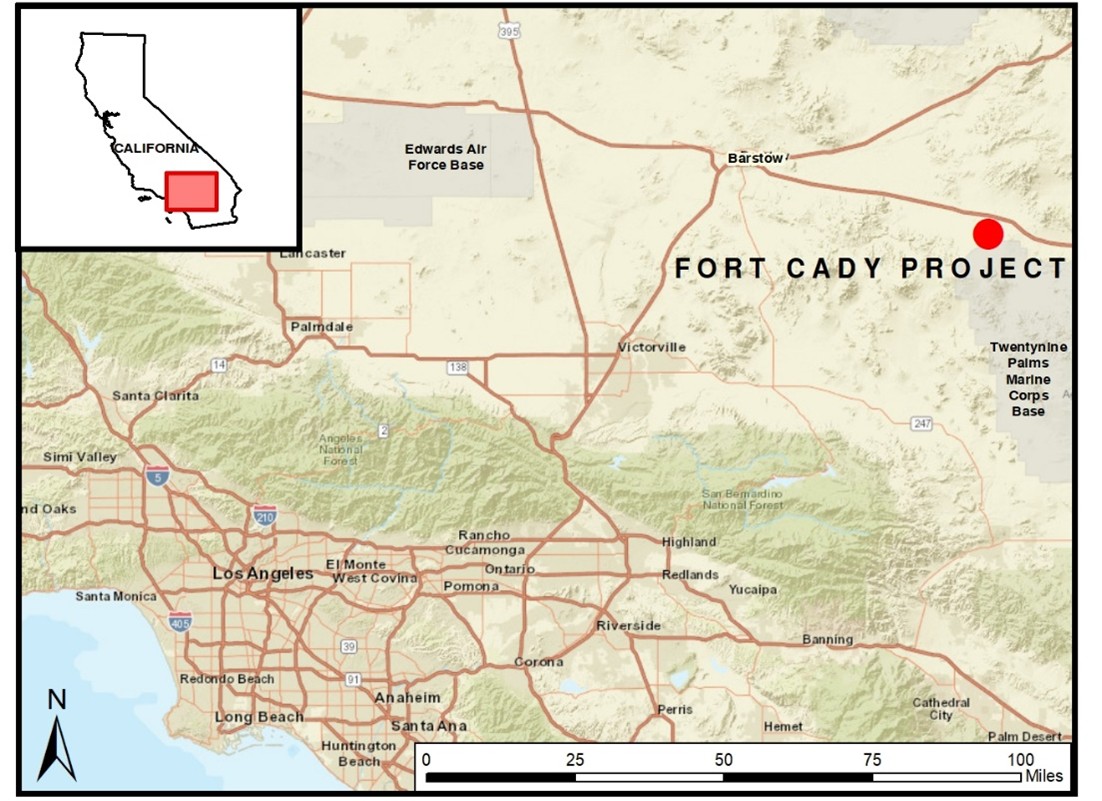
Mineral Title
We own fee simple (private) lands in Sections 25 and 36 of Township 8 North, Range 5 East of the San Bernardino Principal Meridian. An electrical transmission corridor, operated by SCE, tracts from the northeast to the southwest through the fee lands with SCE having surface and subsurface control to a depth of 500 feet, affecting approximately 91 acres of surface lands in the two sections. While this limits surface access to the land, mineralization remains accessible as the ore body occurs at depths greater than 1,000 feet.
We currently hold 30 unpatented lode claims, 117 unpatented placer claims, and two unpatented millsite claims with the BLM within the DOI. Two lode claims were originally filed by Duval Corporation (“Duval”) in 1978 with the other 28 lode claims filed by the Company in January 2025 (11 lode claims) and in August 2025 (17 lode claims). Subsequently, in February 2026, we revised certain of the claims to perfect recording in San Bernardino County, California. Placer claims were filed between October 29, 2016, and February 24, 2017. A review of the BLM Mineral & Land Record System database shows claim status as filed with the next assessment fees due annually on September 1, 2027.
Lastly, 272 acres of land located in Section 36 of Township 8 North, Range 5 East of the San Bernardino Principal Meridian, are split estate, with the surface estate owned by us and the mineral estate is owned by the State of California. These lands are available to us through a mineral lease from the California State Lands Commission. We own the remaining lands, with the minerals underlying the transmission line available subsurface.
Overview of Mining Locations
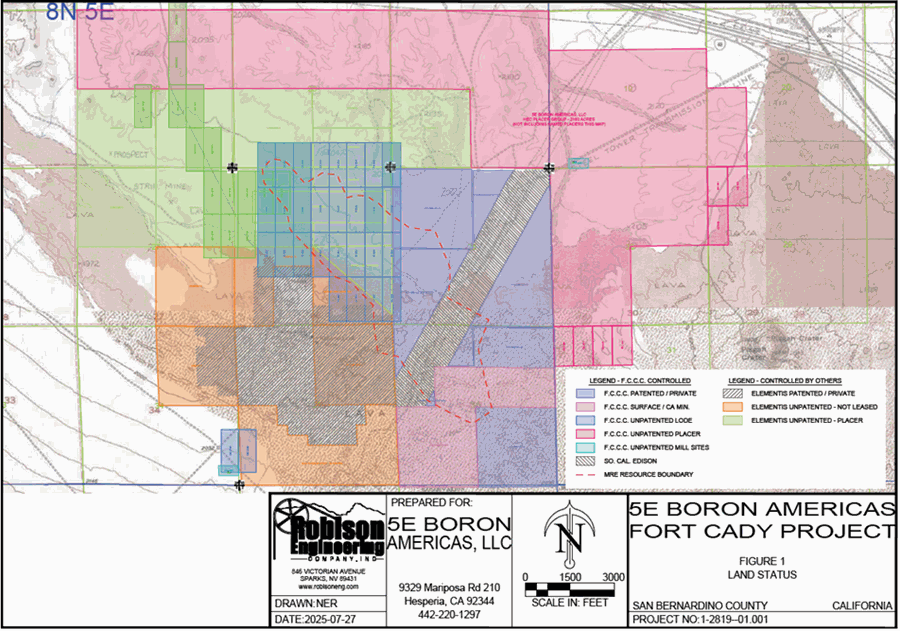
Fort Cady History
Discovery of the Project borate deposit occurred in 1964 when Congdon and Carey Minerals Exploration Company found several zones of colemanite, a calcium borate mineral, between the depths of 1,330 feet to 1,570 feet below ground surface in Section 26. In September 1977, Duval initiated land acquisition and exploration activities near Hector, California. By March 1981, Duval had completed 34 exploration holes, plus one potential water well. After evaluation of the exploration holes, Duval considered several mining methods. Subsequent studies and tests performed by Duval indicated that in-situ mining technology was feasible.
Duval commenced limited testing and pilot-scale solution mining operation in June 1981. Mountain States Mineral Enterprises, Inc. (“MSME”) purchased the Project from Duval in 1985. In July 1986, tests were initiated by MSME, where dilute hydrochloric acid solution was injected into the ore body. The acid dissolved the colemanite and was then withdrawn from the same well. Between 1981 and 2001, the various owners of the Project drilled an additional 17 wells, which were used for a series of injection testing and pilot-scale operations.
An additional phase of pilot plant operations was conducted between 1987 and 1988. The test results were positive; thus, the Project was viewed as commercially viable. MSME sold the Project to Fort Cady Mineral Corporation (“FCMC”) in 1989. In preparation for the permitting process, feasibility studies, detailed engineering and test work were completed by FCMC.
In 1990, a Plan of Operations (“PoO”) was submitted to the BLM and a Mining Conditional Use Permit and Reclamation Plan was submitted to San Bernardino County, which triggered environmental review under NEPA and CEQA. With the Project located on both public and private lands, the public lands are managed by the BLM in accordance with Surface Management Regulations of the Federal Land Policy and Management Act and federal environmental laws, and the private lands administered by San Bernardino County Land Use Services (“SBC-LUS”) in accordance with the California Surface Mining and Reclamation Act, the County Development Code and state environmental laws.
Based upon the activities described in the PoO, under the NEPA regulations, the BLM determined that an EIS was required while under CEQA, SBC-LUS determined that an Environmental Impact Report (“EIR”) was required. Under a Memorandum of Understanding, the two agencies completed a joint EIS and EIR to satisfy their environmental review requirements under NEPA and CEQA, respectively. The EIS and EIR process followed clearly defined requirements for public participation in studies, such as threatened and endangered species, cultural resources, light, noise, and impacts to local communities. The studies were completed, as was the public participation process, which resulted in a 1994 ROD from the BLM that approved the PoO and approval of the Mining Conditional Use Permit and Reclamation Plan from the SBC-LUS.
A second phase of pilot plant operations occurred between 1996 and 2001, during which approximately 2,200 tons of a synthetic colemanite product, marketed as CadyCal 100, were produced. Commercial-scale operations were not commissioned due to low product prices and other priorities of the controlling entity. For many years, boron was used in traditional applications such as cleaning supplies and ceramics, which did not formulate into a strong pull-side demand investment thesis where pricing justified further development of the Project.
In 2017, a group of Australian investors identified the Project and formed the investment thesis that the boron market had similar dynamics to the lithium market a decade earlier. Like the lithium market ten years prior, the market was dominated by a few companies with a compelling pull-side demand growth story fueled by future-facing applications targeting decarbonization and critical materials. Prior to lithium-ion batteries and electric vehicles, lithium was used in traditional everyday applications like boron’s use in recent years. As a result of the investment thesis that boron is expected to experience a supply deficit relative to demand, the group of Australian investors formed ABR and issued shares to Atlas Precious Metals in exchange for Fort Cady (California) Corporation, the entity holding the permits, mineral and property rights of the Project. In 2017, ABR underwent an initial public offering on the ASX and progressed exploration and development of the Project. In September 2021, ABR created a subsidiary, 5E Advanced Materials, Inc., and through the Scheme, reorganized the Company which placed the Company at the top of the corporate structure. Upon 5E Advanced Materials, Inc. becoming the parent company of the organization, in March 2022, we direct listed on the Nasdaq and became an issuer with the U.S. Securities and Exchange Commission.
In total, we have spent in excess of $172 million on the Project thus far, including resource drilling, monitoring wells, metallurgical test works, well injection tests, permitting activities, construction and operation of the SSF, pilot-scale test works, engineering and vendor testing related to the proposed Commercial-Scale Facility and wellfield testing and development activities.
Access and Infrastructure
We continue to develop operating infrastructure for the Project in support of extraction and processing activities. A manned gate is located on the Project access road and provides required site-specific safety briefings and monitors personnel entry and exit to the site. Personnel are predominantly sourced from the surrounding area including Barstow and Victorville, California.
The BNSF rail line from Las Vegas, Nevada to Los Angeles, California runs parallel to I-40 and is adjacent to the Project. A rail loadout is located approximately 1.2 miles north of the National Trails Highway on a road that bears north and located 0.4 miles west of San Bernardino County Road 20796. San Bernardino County operates six general aviation airports with the closest airport to the Project being the Barstow-Daggett Airport located approximately 23 miles west of the Project off the National Trails Highway. Commercial flight service is available through five airports in the greater Los Angeles area and in Las Vegas, Nevada. A dedicated cargo service airport is located approximately 65 miles southwest of the Project.
The construction of the SSF was performed by a construction contractor with additional local resources supporting construction contracting, construction materials, energy sources, employees, and housing. The Project has good access to I-40 which connects it to numerous sizable communities between Barstow, California and the greater Los Angeles area offering excellent access to transportation, construction materials, labor, and housing. The Project was successful in removing natural gas generators from the facility and is currently supplied by approximately one megawatt of shore power that is sufficient for mine office, storage facilities on site, and the operation of the SSF. An electrical transmission corridor operated by SCE extends northeastward through the eastern part of the Project. The Project has two water wells located nearby to support in-situ leaching operations where unpatented millsite claims are filed. Currently, no natural gas is connected to the Project, but we have a proposal from a major U.S. interstate natural gas transmission system operator to connect to the Mojave Pipeline. Two other natural gas transmission lines run along I-40 near the Project.
The plant site currently has a 2,000 square foot control room and office building, a 1,000 square foot administrative building, storage buildings, warehouse, an analytical laboratory, an approximately 20-acre production facility (the SSF), four injection/recovery wells, and an intended gypsum storage area occupying 17 acres. Gypsum is a byproduct of past pilot plant production and is intended, along with calcium chloride, to be a future co-product that can be sold to the regional market.
Project Permits and Reclamation Requirements
We currently have the following Project permits in place:
1.The MDAQMD has issued operating permits for the SSF and the permits are renewed annually. After front-end engineering and design and during detail design of the proposed Commercial-Scale Facility, and once we have determined each original equipment manufacturer for major pieces of equipment and based on the specification sheets for each piece of equipment, ATC permits for the proposed Commercial-Scale Facility will be provided to MDAQMD for approval. It is expected that the issuance of the ATCs will require that the existing operating permits for the SSF be closed. The ATC permits for the proposed Commercial-Scale Facility must meet National Ambient Air Quality Standards (“NAAQS”) and MDAQMD requirements (Air Resources Board, MDAQMD, and EPA).
There is no reclamation or closure requirement under MDAQMD.
2.The LRWQCB issued the current WDR in 1988. The WDRs regulate activities in the existing surface impoundments, which were used in the 1990’s to produce CadyCal and are no longer being used. We remain compliant with the permit by complying with the monitoring requirements and submitting quarterly reports. A Final Permanent Closure Plan has been approved by the LRWQCB for closure of the existing impoundments. The closure of the ponds and the 1988 WDRs is pending final sign-off by the LRWQCB. The current proposed Commercial-Scale Facility design includes approximately 37 acres of evaporation ponds for the purpose of removing sodium and calcium from the back end of the processing plant. We will apply for a new or amended WDRs order from LRWQCB for the proposed Commercial-Scale Facility.
There is an existing reclamation and closure requirement approved by LRWQCB. The bond amount to close the ponds is included in the SBC – LUS Financial Assurance Cost Estimate (“FACE”), discussed below. This is currently secured with a partially collateralized surety bond.
3.The LRWQCB also issued a NONA, verifying that the Project does not require a stormwater permit for approved construction and operations activities. The NONA was issued as the Project is located in a closed basin with no stormwater discharge.
There is no reclamation or bonding requirement associated with the NONA.
4.SBC-LUS issued the Mining Conditional Use Permit and Reclamation Plan in 1994, based upon the 1990 application and ensuing EIR. The Reclamation Plan was amended, and the permit was modified in 2019 to address changes such as relocation of the processing plant and additional water related infrastructure. Ground use is regulated in accordance with applicable state law. The Mining Conditional Use Permit and Reclamation Plan includes Conditions of Approval for engineering and planning related activities, as well as requirements to avoid impacts to desert tortoises. The permitted production throughput under the Mining Conditional Use Permit is 90,000 short tons of boron oxide or boron oxide equivalent.
We maintain a certificate of deposit with the California State Mining and Reclamation Agency, as administered by SBC-LUS. The FACE is updated annually. The FACE includes demolition of all existing structures, regrading, and revegetation of all disturbance on private lands. This bond also includes plugging and abandonment of all wells located outside the EPA UIC purview.
5.The BLM issued a ROD in 1994, establishing the EIS boundary. The ROD authorizes mining of borates. The ROD also has requirements for our activities to eliminate adverse impacts to desert tortoises and cultural resources.
Reclamation and land disturbance for BLM is currently included with the FACE on file with the County and is secured with a partially collateralized surety bond. Previously we held certificates of deposit, which were subsequently released since the surety bond was accepted and approved.
6.The EPA retains primacy for Class 3 solution mining UIC permits in the State of California. The EPA issued the UIC permit for the Project in August 2020. The permit defines the Area of Review (“AOR”) boundary. All subsurface solution mining activities, including monitoring wells and injection wells, are located within the AOR boundary. The EPA approved mining operations in November 2023.
In accordance with the permit conditions, we have installed five upgradient and four downgradient monitoring wells for the initial mining block. As a condition to receive final approval in November 2023, the EPA required modification to the permit and the installation of nine additional water monitoring wells for a total of eighteen monitoring wells. The permit was modified in June 2024, and the nine additional wells were installed in fall 2024.
We installed four Injection/Recovery Wells (“IR Wells”) and subsequently modified the permit to include horizontal wells. In July 2025, two of the IR Wells were converted from vertical wells to horizontal-side tracks where each well extends approximately 1,500 feet laterally. During the quarter ended March 31, 2026, we encountered difficulties with the lateral sections of these wells, and they are no longer accessible. However, while they were operational, we validated technical and operating feasibility of horizontal wells, injection rates, geologic continuity of the main mineralized horizon, a more consistent head grade relative to vertical wells, and validated materials of construction and future completion designs. We expect to submit a final mine plan to the EPA for review following additional wellfield testing and validation.
We have submitted and maintain a fully collateralized surety bond with the EPA for plugging and abandonment of all wells within the EPA AOR boundary.
7.Additional environmental permitting that will likely be required for the proposed Commercial-Scale Facility includes:
a.The California Unified Control Act/Agency has primacy over EPA’s Tier II reporting requirements. The Hazardous Material Business Plan has been submitted for construction related activities and will be updated with processing related chemicals that are expected to be utilized to operate the proposed Commercial-Scale Facility. Such updates will require additional approvals.
b.The current AOR boundary does not include the entirety of Section 36. It is anticipated 5E will request an additional AOR boundary extension to include the Section 36 vested right property.
SSF and Wellfield Update
The SSF is an above ground chemical plant, which commenced operations in April 2024, designed to refine borates extracted from the Project’s in-situ mining operations. The SSF serves as the foundation for the design, engineering, and cost optimization of our proposed Commercial-Scale Facility, and as the source of product for our customer qualification and commercial strategy efforts. The wellfield comprises our injection and recovery wells, through which we inject a weak acid solution into the colemanite ore body,
extract the resulting pregnant leach solution, and deliver it to the SSF for processing into boric acid and other boron products. Together, the SSF and wellfield represent our current operating infrastructure and the primary basis for demonstrating the technical and commercial viability of the Project. For a discussion of recent SSF and wellfield activities and accomplishments during fiscal year 2026, refer to the “Our Strategy and Recent Accomplishments” section above.
Updated Preliminary Feasibility Study, Technical Report Summary
In connection with the filing of this Annual Report, and included as Exhibit 96.1, we issued an updated Preliminary Feasibility Study prepared in accordance with Regulation S-K 1300, which focuses on developing Phase 1 (130,000 short ton per annum boric acid plant) of our Fort Cady Project. We believe the PFS demonstrates a superior resource and management’s firm understanding of, and direction for, the business, all of which we believe can help position us to achieve profitability, generate cash flow, and reduce risk.
Due to the current favorable market backdrop and growing importance of critical materials, we continue to focus primarily on further defining our boron reserves, and to work towards developing our proposed Commercial-Scale Facility for the production of borates, calcium chloride and gypsum. A focus on boron extraction and related end markets is aligned with our mission to become a global leader in enabling industries addressing decarbonization, food security, national defense and production of domestic supply and our focus on high-value-in-use materials and applications.
The PFS includes a revised mineral resource estimate inclusive and exclusive of reserves, a mineral reserve statement for boric acid, estimates for capital costs and operating expenses, and a bottoms-up economic analysis of the first commercial phase of the Project. The financial model for the economic analysis includes third-party preliminary market studies and independent pricing forecasts for boric acid, calcium chloride and gypsum.
The PFS included a capital estimate of approximately $367 million, a 15% contingency of approximately $55 million, and owner’s costs of approximately $13 million, for an aggregate capital estimate of approximately $435 million. The capital estimate includes the anticipated costs for a natural gas CHP COGEN facility that will power Phase 1 of the Project. The estimated accuracy range for the capital estimate is ±25%, which is consistent with industry standards for an Association for Advancement of Cost Engineering Class 4 estimate for projects at the PFS stage. Our capital estimate is supported by a comprehensive suite of engineering deliverables, including process flow diagrams, simulation and material balance data, equipment lists, preliminary design documentation, and advanced vendor testing, all of which contribute to a well-substantiated capital cost basis.
The report was prepared by qualified persons (“QP” as defined in S-K 1300) including Company management and third-party independent companies Miocene, Fluor, Geomega, Inc., and Escalante Geological Services, LLC (“Escalante”). All QPs have the necessary experience per Regulation S-K 1300 and material assumptions and information pertaining to the disclosure of our mineral resources, including material assumptions relating to all modifying factors, price estimates, and scientific and technical information, as described in the PFS, and remain current as of the date of this report.
The PFS was based upon converting approximately 17.5% of our total mineral resource and established approximately 5.1 MSTs of boric acid reserves with an average grade of 7.89% (B2O3) and an initial 37.5 year life of mine utilizing an in-situ leaching mining method. Although our PFS focused on Phase 1 of commercial production, we have retained optionality for Phase 2 and Phase 3, at which point full operation could include 450,000 short tons of boric acid.
We will continue to operate the SSF while we stage gate to FEL-3 engineering for Phase 1 of the commercial-scale complex. FEL-3 engineering is expected to provide the necessary estimates to publish a final feasibility study and reach a final investment and construction decision for Phase 1 of the proposed commercial-scale complex during calendar year 2027. Based upon progress to date, we are now targeting to reach initial commercial production from Phase 1 in calendar year 2030, but this target may not be achieved and is contingent upon progressing through FEED engineering by January 2027 and securing the necessary financing to commence construction in January 2028.
Plan of Operations
Upon successful development of the Project, we expect to mine and process colemanite to produce borates, calcium chloride, sodium chloride, and gypsum. The borates produced are planned to be further produced into second, third and fourth boron derivatives. We also continue to evaluate the potential production of lithium carbonate as a possible additional byproduct of the Project. Initially, we expect to derive revenue principally from the sale of boric acid, calcium chloride, and gypsum. As our advanced boron materials strategy develops, we intend to produce revenue from advanced boron materials further enabling decarbonization, energy, food security, and defense applications. Refer to the discussion above under “Our Strategy and Recent Accomplishments” for recent updates on our advanced materials development.
The Project deposit is planned to be mined via ISL mining to recover leached solution from the mineralized horizons, which is a technique that has been utilized for several decades in the production of uranium, salt, bromine, potash and soda ash. The use of in-situ technology for boron extraction was developed at the Project property in the 1980s. In-situ solution mining depends on void spaces, porosity, permeability, ore zone thickness, transmissivity, storage coefficient, piezometric surface, and hydraulic gradient as well as reaction and extraction method efficiencies. There are various ways of developing the wellfield for in-situ leaching, including a “push-pull” mechanism where wells function as both injection and recovery wells; line drive; and multiple spot patterns. We plan to develop the Project utilizing a horizontal well development strategy, and this strategy was incorporated into the assumptions for the PFS. During July 2025, we drilled horizontal sidetracks from two of our existing vertical IR Wells, placing the wellbores in high-grade colemanite zones of the deposit. As described above under “Wellfield,” we subsequently determined that these horizontal sidetracks were no longer accessible; however, while they were operational, we validated certain technical and operating parameters that we expect to inform our future wellfield design.
The recovery of boron from colemanite is currently occurring through ISL mining and boric acid is being produced at the SSF. The in-situ mining method includes injecting a weak hydrochloric acid (“HCl”) solution (containing <5% HCl in substantially recycled water solution with regenerated HCl) through wells drilled into the colemanite ore body. The injected acid remains in the formation for a limited period of time to allow reaction with the alkaline ore body and leach the colemanite ore.
The extracted solution is pumped to the SSF where leach solution is crystallized to produce boric acid. The crystallized boric acid is dried, sized, and bagged as final product. Other boron products are expected to be prepared for market, as required, by end-use customers. Calcium is expected to be recovered from the remaining solution after boric acid processing to produce either gypsum or calcium chloride with the final solution being substantially recycled back into the resource deposit. Within the processing facility, some HCl is regenerated from the gypsum precipitation process as a result of the sulfuric acid acidification of the process recycle stream. The weak HCl solution is combined with recycled water to produce the make-up solution for reinjection into the formation. The process operates a zero liquid discharge evaporator and produces no liquid waste.
Mineral Resource Estimate
Mr. Steven Kerr of Escalante Geological Services, LLC completed an updated resource estimate effective June 30, 2026 (the “June 2026 Estimate”), which incorporated expanded mineral tenure and the exclusion of mineral reserves, as compared to the prior year mineral resource estimate. The June 2026 Estimate was delineated into controlled resources (which includes minerals secured by unpatented lode claims, our fee lands, and the SCE power corridor), and uncontrolled resources (which includes minerals available for mineral lease from the California State Lands Commission). The June 2026 Estimate identified 51.79 MSTs of measured ore, containing 7.71 MSTs of in-situ boric acid (H3BO3), with an average grade of 8.44% (B2O3), and 76.31 MSTs of indicated ore, containing 11.19 MSTs of in-situ boric acid (H3BO3), with an average grade of 8.33% (B2O3). On a combined basis, measured plus indicated mineral resource represent 18.90 MSTs of in-situ boric acid (H3BO3), with an average grade of 8.37% (B2O3). The June 2026 Estimate also identified an aggregate measured plus indicated mineral resource estimate of 208 TSTs of lithium carbonate equivalent (“LCE”), with an average grade of 0.17% LCE. The June 2026 Estimate also identified 3.09 MSTs of inferred ore, containing 0.41 MSTs of in-situ boric acid (H3BO3), with an average grade of 7.66% (B2O3). The June 2026 Estimate also identified an inferred mineral resource estimate of 4 TSTs of LCE, with an average grade of 0.15% LCE. Unless otherwise indicated, average grades for mineral resources presented in this discussion are calculated by weighting the grade of each mineralized bed by its contained product (in-situ boric acid for B₂O₃ grades and lithium carbonate equivalent for LCE grades). Average grades for mineral reserves presented in this Annual Report are weighted by ore tonnage.
Uncontrolled lands included in the June 2026 Estimate identified 22.36 MSTs of measured plus indicated ore, containing 2.45 MSTs of in-situ boric acid (H3BO3), with an average grade of 6.41% (B2O3), and 0.93 MSTs of inferred ore, containing 0.10 MSTs of in-situ boric acid (H3BO3), with an average grade of 6.41% (B2O3). The June 2026 Estimate also identified an aggregate measured plus indicated mineral resource estimate of 44 TSTs of LCE within uncontrolled lands, with an average grade of 0.20% LCE. The June 2026 Estimate also identified an inferred mineral resource estimate of 2 TSTs of LCE, with an average grade of 0.20% LCE in uncontrolled lands.
Mineral Resources
Regulation S-K 1300 defines a “mineral resource” as a concentration or occurrence of material of economic interest in or on the Earth’s crust in such form, grade or quality, and quantity that there are reasonable prospects for economic extraction. A mineral resource is a reasonable estimate of mineralization, taking into account relevant factors such as cut-off grade, likely mining dimensions, location or continuity, that, with the assumed and justifiable technical and economic conditions, is likely to, in whole or in part, become economically extractable. It is not merely an inventory of all mineralization drilled or sampled.
A “measured mineral resource” is that part of a mineral resource for which quantity and grade or quality are estimated on the basis of conclusive geological evidence and sampling. The level of geological certainty associated with a measured mineral resource is sufficient to allow a qualified person to apply modifying factors, as defined in this section, in sufficient detail to support detailed mine planning and final evaluation of the economic viability of the deposit. Because a measured mineral resource has a higher level of confidence than the level of confidence of either an indicated mineral resource or an inferred mineral resource, a measured mineral resource may be converted to a proven mineral reserve or to a probable mineral reserve.
An “indicated mineral resource” is that part of a mineral resource for which quantity and grade or quality are estimated on the basis of adequate geological evidence and sampling. The level of geological certainty associated with an indicated mineral resource is sufficient to allow a qualified person to apply modifying factors in sufficient detail to support mine planning and evaluation of the economic viability of the deposit. Because an indicated mineral resource has a lower level of confidence than the level of confidence of a measured mineral resource, an indicated mineral resource may only be converted to a probable mineral reserve.
An “inferred mineral resource” is that part of a mineral resource for which quantity and grade or quality are estimated on the basis of limited geological evidence and sampling. The level of geological uncertainty associated with an inferred mineral resource is too high to apply relevant technical and economic factors likely to influence the prospects of economic extraction in a manner useful for evaluation of economic viability. Because an inferred mineral resource has the lowest level of geological confidence of all mineral resources, which prevents the application of the modifying factors in a manner useful for evaluation of economic viability, an inferred mineral resource may not be considered when assessing the economic viability of a mining project, and may not be converted to a mineral reserve.
Resource Assumptions
Key assumptions used in the resource estimate include: mineralized horizons exhibit lateral continuity that will support mining using in-situ leaching mining methods, mineralized horizons are not disrupted by structural or stratigraphic features that could limit mining, there is reasonable continuity of colemanite mineralization throughout the deposit, and there is adequate exploration data to support estimation of resources.
Resource Methodology
The database used for resource estimation includes 52 core holes and three rotary holes for a total of 55 bore holes. Thirty of the core holes were completed by Duval between 1979 and 1981. We completed 14 core holes in 2017 and another core hole in 2022. In 2024, we completed three additional rotary holes as observation wells from which chip samples were collected through the mineral horizons for B2O3 and lithium analyses. The cumulative sampled length for the database is approximately 17,848 feet. The Project’s exploration dataset is current as of February 12, 2025. Drilling coordinates in the database are in UTM NAD 83-11, and depths and elevations are reported in meters. Borate is listed as weight percent (%) B2O3 and lithium as ppm. The drilling database contains 5,767 analytical values for B2O3 and 5,402 analytical values for lithium.
Core recovery for the 2017 drilling program ranged from 93% to 100% with an overall average of 97.60%. Physical core recovery records for earlier drilling conducted by Duval and FCMC are not available, but based on missing intervals in the drilling database, core recovery likely exceeded 90% in the core drilling and correlates to the 2017 drilling program. The QP has completed a thorough review and verification of the drilling database and found the database to be sufficient for resource modeling.
The QP developed a gridded geologic model of the Project using Carlson Mining™ software. The mineralization does not correlate to lithological markers as the entire sequence is predominantly lacustrine mudstone. However, detailed examination of the analytical results reveals distinct mineralized horizons. The deposit was delineated based on these patterns of mineralization into four mineralized horizons, two non-mineralized or weakly mineralized interbeds and two non-mineralized horizons bounding the deposit. The grid model was constructed across the deposit area, with a grid cell size of 50 meters by 50 meters. Grids represent the bounding elevation surfaces of key horizons, horizon thicknesses, and analytical grades. Grids representing the bounding surface elevations of the mineral horizon were interpolated through triangulation. Mineral horizon grids for thickness and analytical grades were interpolated using Ordinary Kriging (“OK”) and Inverse Distance Squared (“ID2”) algorithms. Mineralization is spatially defined by a resource boundary using a distance of 200 meters from the last intersection of mineralization in a drill hole and by property boundaries. Grids are masked to the outside of the resource boundary.
Using composites for each mineralized horizon, variography was successful for B2O3 grades for the Major Mineralized Horizon (“MMH”), Intermediate Mineralized Horizon (“IMH”), and the Lower Mineralized Horizon (“LMH”). Variogram modeling was unsuccessful for the Upper Mineralized Horizon (“UMH”) and with lithium in all horizons. Grids representing B2O3 grades for the
MMH, IMH, and LMH were constructed using OK based on the constructed variograms. ID2 interpolation was used with all remaining grade grids using the same spatial limits established with the horizon grids.
Cut-off Grade
The definition of cut-off grade for an in-situ mining operation is the economic point at which a producer would cease operating a particular well, or in the case of a combination of wells, the wellfield, when the variable costs to produce the next unit of production exceed the price that can be achieved in the market for that product. As such, cash costs are established as the basis for a cut-off grade analysis. We commenced mining operations in January 2024 and began operating the SSF in April 2024. The SSF achieved a steady state of operation in the summer of 2024 and optimized mining operations by September 2024. As such, mining data from September and October 2024 have been utilized as the basis of design and further leveraged for the cut-off grade analysis. Using this data set, an in-depth assessment was performed that included an analysis of the cash costs (i.e., the variable cost to produce boric acid) and excluded book costs (i.e., depreciation) as the capital is assumed to have already been invested to build the project such that it can operate.
An in-depth assessment of cut-off grade was undertaken in 2022 and 2023 as mass and energy balances were developed to fundamentally begin to assess economic viability of the Project. Data informing the mass and energy balances included incorporating the results of leaching tests, historical results, mining, and processing costs, as well as commodity pricing, and resulted in a 2.0% cut-off calculation.
The in-depth analysis discussed above incorporated mineralization and at what point economic extraction or boron in solution is no longer viable. The driver of this analysis focuses on three specific ratios derived from the basis of design using mining data from the periods of September and October 2024: calcium to boron, sodium to boron, and magnesium to boron. These three ratios are drivers of various costs, chemical utilizations, and byproduct production rates. For example, calcium to boron impacts sulfuric acid utilization and gypsum production compared to boric acid production. Additionally, magnesium to boron impacts lime utilization and metal salt waste production compared to boric acid production. Lastly, sodium to boron impacts HCl utilization and sodium chloride production compared to boric acid production.
The PFS incorporated the above methodology and other key assumptions that are in the financial model detailed in Section 19 of the PFS (refer to Exhibit 96.1 of this Annual Report). The sales price for boric acid has increased over the past several years and was tracking in a range of $950 to $1,080 per short ton free on board (“FOB”) as of June 2026 per Fastmarkets boric acid, technical grade, granular fca UW West Coast index, and the PFS includes an assumption of $1,248 per short ton FOB when production first commences based on a preliminary market study prepared by an independent third-party. Sales prices for calcium chloride and gypsum in the PFS were similarly based upon a preliminary market study and forecasts prepared by the same independent third-party. The result of this exercise is a 2.0% financially viable driven grade cut-off, where the costs are near the forecasted price for boric acid.
Fort Cady Mineral Resource Estimate as of June 30, 2026, exclusive of mineral reserves
Results of the mineral resource estimation are shown in the table below, based on resource classification of the Project. The resource estimate contains a combined 128.10 MSTs of measured plus indicated ore under mineral control, containing 18.90 MSTs of in-situ boric acid (H3BO3), with an average grade of 8.37% (B2O3), and 208 TSTs of LCE, with an average grade of 0.17% LCE. The resource estimate was prepared using a 2.0% cut-off grade for B2O3 and no cut-off grade for lithium. The sales price for boric acid has increased over the past several years and was tracking in a range of $950 to $1,080 per short ton FOB as of June 2026 per Fastmarkets boric acid, technical grade, granular fca US West Coast index. Our PFS estimates the FOB prices for boric acid, calcium chloride and gypsum to be $1,248, $174 and $33 per short ton, respectively, in the first year of production, based upon a preliminary market study prepared by an independent third-party, as discussed in further detail of Sections 16 and 19.3.1 of our PFS filed as Exhibit 96.1 to this Annual Report. As of June 2026, the price of calcium chloride and gypsum were at approximate values forecasted in the PFS. The mineral resource estimate also identified 3.09 MSTs of inferred ore under mineral control, containing 0.41 MSTs of in-situ boric acid (H3BO3), with an average grade of 7.66% (B2O3), and 4 TSTs of LCE, with an average grade of 0.15% LCE. The reference point for the resource in the PFS is in-situ prior to mining losses and processing losses.
|
|
|
|
|
|
|
|
|
|
|
|
|
|
|
|
|
|
|
|
|
|
|
|
|
|
|
|
|
|
|
|
|
|
|
|
|
|
|
|
|
|
|
|
|
|
|
|
|
|
|
|
|
|
|
|
|
|
|
|
|
|
|
|
|
Thick |
|
B2O3 |
|
H3BO3 |
|
Li |
|
LCE |
|
|
|
|
|
|
Resource Classification Tons |
|
|
Product Tons - Measured |
|
|
Product Tons - Indicated |
|
|
Product Tons - Inferred |
|
Property |
Bed(1) |
(m) |
|
(%) |
|
(%) |
|
(ppm) |
|
(%) |
|
Tonnes |
|
Tons |
|
|
Measured |
|
Indicated |
|
Inferred |
|
|
B2O3 |
|
H3BO3 |
|
LCE |
|
|
B2O3 |
|
H3BO3 |
|
LCE |
|
|
B2O3 |
|
H3BO3 |
|
LCE |
|
|
UMH |
|
7.06 |
|
|
7.73 |
|
|
13.72 |
|
|
262.0 |
|
|
0.14 |
|
|
5,389,672 |
|
|
5,941,096 |
|
|
|
2,673,493 |
|
|
3,267,603 |
|
|
— |
|
|
|
206,580 |
|
|
366,886 |
|
|
3,729 |
|
|
|
252,486 |
|
|
448,416 |
|
|
4,557 |
|
|
|
— |
|
|
— |
|
|
— |
|
Unpatented |
MMH |
|
31.31 |
|
|
8.99 |
|
|
15.97 |
|
|
374.0 |
|
|
0.20 |
|
|
23,883,147 |
|
|
26,326,663 |
|
|
|
11,846,998 |
|
|
14,479,665 |
|
|
— |
|
|
|
1,065,024 |
|
|
1,891,483 |
|
|
23,585 |
|
|
|
1,301,696 |
|
|
2,311,812 |
|
|
28,826 |
|
|
|
— |
|
|
— |
|
|
— |
|
Lode Claims |
IMH |
|
38.53 |
|
|
8.02 |
|
|
14.24 |
|
|
340.0 |
|
|
0.18 |
|
|
29,390,577 |
|
|
32,397,565 |
|
|
|
14,578,904 |
|
|
17,818,661 |
|
|
— |
|
|
|
1,169,139 |
|
|
2,076,390 |
|
|
26,385 |
|
|
|
1,428,947 |
|
|
2,537,810 |
|
|
32,249 |
|
|
|
— |
|
|
— |
|
|
— |
|
|
LMH |
|
28.32 |
|
|
9.02 |
|
|
16.02 |
|
|
232.0 |
|
|
0.12 |
|
|
21,607,945 |
|
|
23,818,683 |
|
|
|
10,718,407 |
|
|
13,100,275 |
|
|
— |
|
|
|
966,856 |
|
|
1,717,136 |
|
|
13,237 |
|
|
|
1,181,713 |
|
|
2,098,722 |
|
|
16,178 |
|
|
|
— |
|
|
— |
|
|
— |
|
Sub-Total |
|
|
80,271,341 |
|
|
88,484,007 |
|
|
|
39,817,803 |
|
|
48,666,204 |
|
|
— |
|
|
|
3,407,599 |
|
|
6,051,895 |
|
|
66,935 |
|
|
|
4,164,843 |
|
|
7,396,761 |
|
|
81,810 |
|
|
|
— |
|
|
— |
|
|
— |
|
|
|
|
|
|
|
|
|
|
|
|
|
|
|
|
|
|
|
|
|
|
|
|
|
|
|
|
|
|
|
|
|
|
|
|
|
|
|
|
|
|
|
|
|
|
UMH |
|
8.79 |
|
|
6.60 |
|
|
11.72 |
|
|
250.6 |
|
|
0.13 |
|
|
2,402,829 |
|
|
2,648,665 |
|
|
|
847,573 |
|
|
1,695,146 |
|
|
105,947 |
|
|
|
55,940 |
|
|
99,349 |
|
|
1,131 |
|
|
|
111,880 |
|
|
198,698 |
|
|
2,261 |
|
|
|
6,992 |
|
|
12,419 |
|
|
141 |
|
Fee Land |
MMH |
|
42.72 |
|
|
8.23 |
|
|
14.62 |
|
|
323.0 |
|
|
0.17 |
|
|
11,682,198 |
|
|
12,877,419 |
|
|
|
4,120,774 |
|
|
8,241,548 |
|
|
515,097 |
|
|
|
339,140 |
|
|
602,312 |
|
|
7,085 |
|
|
|
678,279 |
|
|
1,204,624 |
|
|
14,171 |
|
|
|
42,392 |
|
|
75,289 |
|
|
886 |
|
|
IMH |
|
17.23 |
|
|
7.24 |
|
|
12.85 |
|
|
349.4 |
|
|
0.19 |
|
|
4,712,057 |
|
|
5,194,153 |
|
|
|
1,662,129 |
|
|
3,324,258 |
|
|
207,766 |
|
|
|
120,277 |
|
|
213,612 |
|
|
3,091 |
|
|
|
240,554 |
|
|
427,224 |
|
|
6,183 |
|
|
|
15,035 |
|
|
26,701 |
|
|
386 |
|
|
LMH |
|
21.95 |
|
|
8.63 |
|
|
15.33 |
|
|
222.9 |
|
|
0.12 |
|
|
6,001,386 |
|
|
6,615,396 |
|
|
|
2,116,927 |
|
|
4,233,853 |
|
|
264,616 |
|
|
|
182,696 |
|
|
324,469 |
|
|
2,512 |
|
|
|
365,393 |
|
|
648,937 |
|
|
5,023 |
|
|
|
22,837 |
|
|
40,559 |
|
|
314 |
|
Sub-Total |
|
|
24,798,470 |
|
|
27,335,634 |
|
|
|
8,747,403 |
|
|
17,494,805 |
|
|
1,093,425 |
|
|
|
698,053 |
|
|
1,239,742 |
|
|
13,819 |
|
|
|
1,396,105 |
|
|
2,479,483 |
|
|
27,638 |
|
|
|
87,257 |
|
|
154,968 |
|
|
1,727 |
|
|
|
|
|
|
|
|
|
|
|
|
|
|
|
|
|
|
|
|
|
|
|
|
|
|
|
|
|
|
|
|
|
|
|
|
|
|
|
|
|
|
|
|
|
|
UMH |
|
8.97 |
|
|
5.91 |
|
|
10.50 |
|
|
2.7 |
|
|
0.00 |
|
|
1,192,999 |
|
|
1,315,056 |
|
|
|
276,162 |
|
|
867,937 |
|
|
170,957 |
|
|
|
16,321 |
|
|
28,986 |
|
|
4 |
|
|
|
51,295 |
|
|
91,100 |
|
|
12 |
|
|
|
10,104 |
|
|
17,944 |
|
|
2 |
|
Power Corridor |
MMH |
|
67.58 |
|
|
7.83 |
|
|
13.91 |
|
|
277.0 |
|
|
0.15 |
|
|
8,983,455 |
|
|
9,902,564 |
|
|
|
2,079,538 |
|
|
6,535,692 |
|
|
1,287,333 |
|
|
|
162,828 |
|
|
289,182 |
|
|
3,066 |
|
|
|
511,745 |
|
|
908,859 |
|
|
9,637 |
|
|
|
100,798 |
|
|
179,018 |
|
|
1,898 |
|
|
IMH |
|
14.10 |
|
|
5.09 |
|
|
9.04 |
|
|
279.0 |
|
|
0.15 |
|
|
1,874,394 |
|
|
2,066,166 |
|
|
|
433,895 |
|
|
1,363,669 |
|
|
268,602 |
|
|
|
22,089 |
|
|
39,231 |
|
|
644 |
|
|
|
69,424 |
|
|
123,297 |
|
|
2,025 |
|
|
|
13,674 |
|
|
24,286 |
|
|
399 |
|
|
LMH |
|
14.25 |
|
|
7.83 |
|
|
13.90 |
|
|
250.0 |
|
|
0.13 |
|
|
1,894,407 |
|
|
2,088,227 |
|
|
|
438,528 |
|
|
1,378,230 |
|
|
271,469 |
|
|
|
34,323 |
|
|
60,957 |
|
|
584 |
|
|
|
107,872 |
|
|
191,580 |
|
|
1,834 |
|
|
|
21,247 |
|
|
37,736 |
|
|
361 |
|
Sub-Total |
|
|
13,945,256 |
|
|
15,372,013 |
|
|
|
3,228,123 |
|
|
10,145,529 |
|
|
1,998,362 |
|
|
|
235,561 |
|
|
418,357 |
|
|
4,298 |
|
|
|
740,335 |
|
|
1,314,836 |
|
|
13,508 |
|
|
|
145,824 |
|
|
258,983 |
|
|
2,661 |
|
Controlled Total |
|
|
119,015,066 |
|
|
131,191,654 |
|
|
|
51,793,329 |
|
|
76,306,538 |
|
|
3,091,787 |
|
|
|
4,341,213 |
|
|
7,709,993 |
|
|
85,052 |
|
|
|
6,301,284 |
|
|
11,191,080 |
|
|
122,956 |
|
|
|
233,080 |
|
|
413,951 |
|
|
4,388 |
|
|
|
|
|
|
|
|
|
|
|
|
|
|
|
|
|
|
|
|
|
|
|
|
|
|
|
|
|
|
|
|
|
|
|
|
|
|
|
|
|
|
|
|
|
CA Surface |
UMH |
|
16.17 |
|
|
6.99 |
|
|
12.41 |
|
|
313.2 |
|
|
0.17 |
|
|
3,788,532 |
|
|
4,176,141 |
|
|
|
208,807 |
|
|
3,800,289 |
|
|
167,046 |
|
|
|
14,596 |
|
|
25,922 |
|
|
348 |
|
|
|
265,640 |
|
|
471,777 |
|
|
6,337 |
|
|
|
11,676 |
|
|
20,737 |
|
|
279 |
|
Section 36 |
MMH |
|
47.41 |
|
|
6.76 |
|
|
12.01 |
|
|
376.0 |
|
|
0.20 |
|
|
11,109,305 |
|
|
12,245,912 |
|
|
|
612,296 |
|
|
11,143,780 |
|
|
489,836 |
|
|
|
41,391 |
|
|
73,511 |
|
|
1,225 |
|
|
|
753,320 |
|
|
1,337,896 |
|
|
22,303 |
|
|
|
33,113 |
|
|
58,809 |
|
|
980 |
|
(Uncontrolled) |
IMH |
|
16.51 |
|
|
3.66 |
|
|
6.50 |
|
|
340.3 |
|
|
0.18 |
|
|
3,869,438 |
|
|
4,265,325 |
|
|
|
213,266 |
|
|
3,881,446 |
|
|
170,613 |
|
|
|
7,804 |
|
|
13,860 |
|
|
386 |
|
|
|
142,029 |
|
|
252,244 |
|
|
7,031 |
|
|
|
6,243 |
|
|
11,088 |
|
|
309 |
|
|
LMH |
|
10.07 |
|
|
6.18 |
|
|
10.98 |
|
|
465.9 |
|
|
0.25 |
|
|
2,358,929 |
|
|
2,600,274 |
|
|
|
130,014 |
|
|
2,366,249 |
|
|
104,011 |
|
|
|
8,039 |
|
|
14,278 |
|
|
322 |
|
|
|
146,314 |
|
|
259,853 |
|
|
5,869 |
|
|
|
6,431 |
|
|
11,422 |
|
|
258 |
|
Uncontrolled Total |
|
|
21,126,204 |
|
|
23,287,653 |
|
|
|
1,164,383 |
|
|
21,191,764 |
|
|
931,506 |
|
|
|
71,830 |
|
|
127,570 |
|
|
2,282 |
|
|
|
1,307,303 |
|
|
2,321,769 |
|
|
41,540 |
|
|
|
57,464 |
|
|
102,056 |
|
|
1,826 |
|
Table prepared using a 2.0% B2O3 cut-off grade and no lithium cut-off grade.
(1)“UMH” is Upper Mineralized Horizon, “MMH” is Major Mineralized Horizon, “IMH” is Intermediate Mineralized Horizon, and “LMH” is Lower Mineralized Horizon.
(2)Grades shown in the table are per-bed in-situ grades. Average grades for aggregated classifications presented in the accompanying narrative are weighted by contained product rather than by ore tonnage, as described above.
Commodity Pricing Assumptions
Our PFS includes an economic analysis, and we obtained an independent preliminary market study for boric acid, calcium chloride and gypsum. The preliminary market study was based on 15 years of historical data and include an assessment of future supply and demand analysis as well as forecasted future price assumptions, as further detailed in Sections 16 and 19.3.1 of our PFS, which is incorporated by reference as Exhibit 96.1 of this Annual Report. Our PFS estimates the price for boric acid to be $1,248 per short ton in the initial year of commercial production, escalating to $1,364 per short ton in year 5 due to demand outpacing supply of boric acid, and then held flat when supply and demand for boric acid are expected to normalize. Our PFS estimates the price for calcium chloride and gypsum to be $174 and $33 per short ton, respectively, in the initial year of commercial production, with such prices held flat throughout the model. The price utilized in the financial model for gypsum and calcium chloride is the real price as of June 2025 as provided by the independent preliminary market study. Per the independent preliminary market study, the sales price for boric acid has increased over the past several years. The price of boric acid was tracking in a range of $950 to $1,080 per short ton FOB in the spot market as of June 2026 per Fastmarkets boric acid, technical grade, granular fca US West Coast index, with variations driven by differing jurisdictions in the spot market. Refer to the tables below for a summary of the prices utilized in our economic analysis included in our PFS.
|
|
|
|
|
|
|
|
|
|
|
|
|
Year |
|
Year 1 |
|
|
Year 5 |
|
|
Final Year |
|
Boric acid price per short ton |
|
$ |
1,248 |
|
|
$ |
1,364 |
|
|
$ |
1,364 |
|
CAGR(1) |
|
|
|
|
|
1.8 |
% |
|
|
0.2 |
% |
Calcium chloride per short ton |
|
$ |
174 |
|
|
$ |
174 |
|
|
$ |
174 |
|
CAGR(1) |
|
|
|
|
|
0.0 |
% |
|
|
0.0 |
% |
Gypsum per short ton |
|
$ |
33 |
|
|
$ |
33 |
|
|
$ |
33 |
|
CAGR(1) |
|
|
|
|
|
0.0 |
% |
|
|
0.0 |
% |
(1) Compounded annual growth rate is calculated based upon the initial price in year 1 of production for the respective product to the end of mine life. |
|
|
|
|
|
|
|
|
|
|
Life of Mine Price Assumptions(1) |
|
|
Measured and Indicated |
|
|
Average |
|
|
Range |
Boric acid price per short ton |
|
$ |
1,354 |
|
|
$1,201 - $1,374 |
Calcium chloride per short ton |
|
$ |
174 |
|
|
$174 - $174 |
Gypsum per short ton |
|
$ |
33 |
|
|
$33 - $33 |
(1) The economic analysis in Section 19 of the Preliminary Feasibility Study includes only measured and indicated resources. |
The PFS was prepared based primarily on information available at the time of preparation, is subject to assumptions, conditions and is qualified by various limitations. The foregoing summary description of the PFS is qualified in its entirety by reference to the full PFS, which is included as Exhibit 96.1 to this Annual Report.
Internal Controls Disclosure for Mineral Resource and Mineral Reserve Estimation
Between September 2017 and October 2017, 14 holes for a total of 23,111 feet were completed as part of a confirmatory resource drilling program. Assay results from all 14 drill holes were used in the mineral resource estimate. There are 2,113 samples from the 2017 drilling program representing 1,713 feet of core. In conjunction with the 2017 drilling program, 29 historical drill holes completed by Duval and four holes completed by FCMC were in the mineral resource estimate. There are 3,672 samples from the historic drilling representing a cumulative total of 10,831 feet of core.
The PFS indicates that the quality assurance and quality control (“QA/QC”) procedures for the Duval and FCMC drill holes are unknown, though the work products compiled during these historic drilling campaigns, suggests they were carried out by competent geologists following procedures considered standard practice at those times. Discussions held with the exploration geologist for Duval at the time of drilling and sampling indicate that Duval had internal QA/QC procedures in place to help confirm the accuracy of the assay results. Geochemical analyses were carried out using X-Ray Fluorescence Spectrometry (“XRF”). XRF results were reportedly checked against logging and assay data.
For the database of drill holes, entire core hole sequences were sampled and dispatched by commercial carrier to the Saskatchewan Research Council (“SRC”) for geochemical analysis. As part of the QA/QC procedures, internationally recognized standards, blanks and duplicates were inserted into the sample batches prior to submitting to SRC. SRC has been accredited by the Standards Council of Canada and conforms with the requirements of ISO/IEC 17025.2005. Upon receipt of samples, SRC completed
an inventory of samples received, completing the chain of custody documentation, and providing a ledger system tracking samples received and steps in process for sample preparation and analysis. Core samples and chip samples were dried in their original sample bags, then jaw crushed. A subsample was split out using a sample riffler. The subsample was then pulverized with a jaw and ring grinding mill. The grinding mill was cleaned between each sample using steel wool and compressed air or by silica sand. The resulting pulp sample was then transferred to a barcode labeled plastic vial for analysis. All samples underwent a multi-element Inductively Coupled Plasma Optical Emission Spectroscopy (“ICP-OES”), using a multi-acid digestion for a range of elements. Boron was also analyzed by ICP-OES but underwent a separate digestion where an aliquot of the sample was fused in a mixture of NaO2/NaCO3 in a muffle oven, then dissolved in deionized water, prior to analysis. Major oxides were reported in weight percent. Minor, trace, and rare earth elements were reported in ppm. The detection limit for boron was 2 ppm and 1 ppm for lithium.
For the database of drill holes, a total of 2,253 core samples and 441 control samples were submitted for multi-element analysis to SRC. We submitted control samples, in the form of certified standards, blanks and coarse duplicates (bags with sample identification supplied for SRC to make duplicate samples). In addition to these control samples, SRC also submitted their own internal control samples in the form of standards and pulp duplicates. Certified standards, prepared by the National Institute of Standards and Technology, were submitted as part of our QA/QC procedures. No two standards in any single batch submission were more than two standard deviations from the analyzed mean, implying an acceptable level of precision of SRC instrumentation. SRC assayed two different standards, for its own QA/QC protocol and the QP found that the analytical precision for analysis of both standards was reasonable, with no two standards in any single batch submission being more than two standard deviations from the analyzed mean.
Blank samples inserted consisting of non-mineralized marble. One hundred and thirty-five blank samples were submitted, all of which had assay results of less than 73 ppm boron. The level of boron detected in the blanks was likely sourced from pharmaceutical (borosilicate) glass used during sample digestion. These boron concentrations are considered immaterial in relation to the boron levels detected in the colemanite mineralization and do not appear to represent carryover contamination from sample preparation. Lithium levels in the blank samples were also at acceptable levels with the majority of assays less than 15 ppm lithium. The four highest lithium levels in the blanks immediately followed samples that contained relatively high lithium concentrations. Overall, the concentration of the primary elements of interest (boron and lithium) in the blank samples were at levels considered to be acceptable, implying a reasonable performance for sample preparation.
A total of 136 duplicate samples were submitted to the SRC. SRC composed coarse duplicate samples using a Boyd rotary splitter. There was a good correlation between original and duplicate samples with a reasonable level of precision maintained in the results.
In addition to the sampling and analytical procedures described above, we maintain internal controls for reviewing and documenting the information supporting our mineral resource and mineral reserve estimates, the methods used to prepare them and the validity of the resulting estimates. Drill hole, survey and assay data are maintained in a central database, and the QPs perform data entry and validation checks on that database before it is used to prepare the estimates. The information used to compile our mineral resource and mineral reserve estimates is prepared and certified by the QPs identified above. Our Chief Executive Officer is primarily responsible for reviewing the work of the QPs who prepare those estimates, and our Chief Executive Officer evaluates (together with those QPs) the reasonableness of the criteria, assumptions and modifying factors used in the estimates. Calculations performed using those criteria are reviewed and validated by the QPs.
Mineral resource and mineral reserve estimates are, by their nature, estimates and are subject to a comprehensive range of risks and uncertainties. These include the geological complexity and continuity of the deposit; the density, spacing and reliability of the drilling and sampling data on which the estimates are based, including our reliance in part on historic drill holes completed by Duval and FCMC for which QA/QC procedures are unknown; the interpretation, modeling and extrapolation of that data; the reliability of metallurgical testwork and recovery assumptions; the accuracy of estimated capital and operating costs; the selection of cut-off grade and commodity price assumptions; the availability and continued effectiveness of mineral tenure, water rights, permits and infrastructure; and changes in the mine plan, technology, regulation or macroeconomic conditions. Because our mineral reserve estimate is derived from the mine plan and economic analysis in the PFS, which is a preliminary feasibility study, it is subject to greater uncertainty than an estimate supported by a final feasibility study. Actual quantities of borates and other minerals recovered, and the costs of recovering them, may differ materially from these estimates. For additional information, please see the risks described under the heading “Part I, Item 1A. Risk Factors” in this Annual Report.
Comparison of Mineral Resource Estimates to Prior Year
The prior year mineral resource estimate, which was estimated as of March 10, 2025 and remained valid as of June 30, 2025, reported aggregate measured, indicated and inferred mineral resources of 3.37, 14.18 and 0.55 MSTs of in-situ boric acid (H3BO3), respectively. The mineral resource estimate included as Exhibit 96.1 to this Annual Report and summarized above, was estimated as
of June 30, 2026, reported aggregate measured, indicated and inferred mineral resources of 7.84, 13.51, and 0.52 MSTs of in-situ boric acid (H3BO3), respectively. This represents a 22% increase in combined measured and indicated resource, which is comprised of a 133% increase in measured resource, and a 5% decrease in indicated resource. Inferred resource decreased 7% compared to the prior year. These year-over-year changes are ascribed to; (i) approximately 5.1 MSTs of proven and probable mineral reserves being excluded from the current year mineral resource estimate versus such amount being included in the prior year estimate, and (ii) the expansion of our mineral tenure between estimates as the result of the filing of additional lode claims.
Mineral Reserve Estimate
Miocene has completed a mineral reserve estimate for the Project. The mineral reserve estimate was developed based upon the detailed mine plan included in Section 13 of our PFS and the mineral resource estimate. Prior to August 2025, when we published the original pre-feasibility study for the Project, we had not yet established mineral reserves and therefore had not disclosed reserve estimates. Reserves point of reference is in-situ with a 2.0% cutoff grade established based on the analysis performed with the mineral resources cut-off grade. Our EPA UIC permit subdivides the mineralized deposit into three blocks for development. Block 1 comprises the northwestern third of the orebody, Block 2 occupies the central portion of the orebody, and Block 3 comprises the southeastern third of the orebody. The SSF currently operates in Block 2 and Block 2 is permitted for mining with sufficient resources on fee-based lands and within the power corridor operated by SCE to convert resources to reserves on an economic basis, which provides for a 37.5 year life of mine. To convert additional resources to reserves, Block 1 and Block 3 would need to be authorized by the EPA and a mine plan devised that includes this mineral tenure.
For economic modeling, a mine plan was designed where recovery and flow rates are sufficient to feed the chemical plant where PLS is converted to a finished refined borate product available for sale. Production output is within permitted parameters with forecasted revenue from borate sales based on a pricing forecast based on the aforementioned third-party preliminary market study.
The mine plan and wellfield optimization were based on third-party engineering work that incorporated months of actual wellfield data from the SSF into the design and included a bottoms-up capital estimate. The capital estimate was derived by Fluor for the inside and outside battery limits above ground and a total capital estimate was derived and incorporated into the economic analysis. The operating costs were derived from material and energy balances provided by Fluor as well as a bottoms-up labor build for human capital requirements. The revenue and cost inputs for the economic model were on a real basis.
The reserve estimate identified 2.57 MSTs of proven boric acid (H3BO3) reserves with an average grade of 7.92% B2O3, and 2.48 MSTs of probable boric (H3BO3) reserves with an average grade of 7.87% B2O3, each derived using a 2.0% cut-off grade, consistent with the cut-off grade for the mineral resource estimate. The mineral reserve estimate was incorporated into our PFS, which is incorporated by reference to Exhibit 96.1 to this Annual Report.
Mineral Reserves
Regulation S-K 1300 defines a “proven mineral reserve” as the economically mineable part of a measured mineral resource and can only result from conversion of a measured mineral resource.
A “probable mineral reserve” is the economically mineable part of an indicated and, in some cases, a measured mineral resource.
Reserve Assumptions
Assumptions utilized for the reserve estimate were consistent with the assumptions utilized for the resource estimate, except that only measured and indicated resource included in the mine plan from fee-based lands and the power corridor operated by SCE were included in the resource base (representing a portion of our fee-based lands and the power corridor). The economic assessment that supports the recognition of reserves was based on a 130,000 short ton per year boric acid production plant, a capital cost estimate for Phase 1 of the Project of approximately $435 million, in-situ leaching mining operation delivering 10.2% boric acid in solution (head grade), by weight, to an above ground processing plant; the aforementioned commodity price assumptions; cash operating costs of approximately $563 per ton of boric acid produced and a 7% discount rate. Additional assumptions included performing a tradeoff analysis based on actual vertical well performance relative to expected horizontal well performance whereby horizontal well performance is expected to outperform vertical wells, the chemical plant is designed to yield 95.1% boric acid yield, leaching efficiency is assumed to be 81.9% based on leach testing, and mining efficiency was 95% based on the Company’s July 2025 horizontal drilling program.
The reserve estimate is subject to potential change based on changes to the forward-looking cost and revenue assumptions. It is assumed that we will produce and sell borates to customers once the proposed Commercial-Scale Facility is constructed, commissioned, and in operation. Full extraction of this reserve is dependent upon the modification of the Company’s UIC permit to include the final mine plan. We obtained a minor modification and authorization to drill the horizontal and sidetrack program in July 2025, and it is our expectation that we will be successful in modifying the UIC permit. The evaporation ponds incorporated into the design of the proposed Commercial-Scale Facility and placed on our fee-based land require a WDR with the LRWQCB, and we expect to obtain the WDR for the evaporation ponds to remove calcium and sodium.
We do not believe that there are other existing environmental, permitting, legal, socio-economic, marketing, political, or other factors that might materially affect the in-situ mineral reserve estimate.
Fort Cady Mineral Reserve Estimate as of June 30, 2026
|
|
|
|
|
|
|
|
|
|
|
|
|
|
|
|
|
|
|
|
|
|
|
|
|
|
|
|
|
|
Probable Mineral Reserves |
Bed |
|
Mean Mineralized Bed Thickness
(ft) |
|
|
Avg. B2O3 Grade
(wt. %) |
|
|
Insoluble Material Grade
(wt. %) |
|
|
Mineralized Bed Volume
(ft3) |
|
|
Recoverable Mineralized Bed Volume
(ft3) |
|
|
B2O3 Reserve
(tons) |
|
|
H3BO3 Reserve
(tons) |
|
|
UMH |
|
|
9.58 |
|
|
|
6.42 |
|
|
|
14.3 |
|
|
|
3,121,287 |
|
|
|
2,428,517 |
|
|
|
92,979 |
|
|
|
165,131 |
|
|
MMH |
|
|
70.13 |
|
|
|
8.06 |
|
|
|
24.5 |
|
|
|
26,246,406 |
|
|
|
20,421,016 |
|
|
|
781,846 |
|
|
|
1,388,558 |
|
|
IMH |
|
|
19.47 |
|
|
|
6.82 |
|
|
|
29.3 |
|
|
|
6,728,406 |
|
|
|
5,235,036 |
|
|
|
200,430 |
|
|
|
355,964 |
|
|
LMH |
|
|
23.25 |
|
|
|
8.49 |
|
|
|
45.6 |
|
|
|
10,728,126 |
|
|
|
8,347,018 |
|
|
|
319,577 |
|
|
|
567,568 |
|
|
|
|
|
|
|
|
|
|
|
|
|
|
|
|
|
|
|
|
|
|
|
|
|
|
|
|
|
|
|
Proven Mineral Reserves |
|
Bed |
|
Mean Mineralized Bed Thickness
(ft) |
|
|
Avg. B2O3 Grade
(wt. %) |
|
|
Insoluble Material Grade
(wt. %) |
|
|
Mineralized Bed Volume
(ft3) |
|
|
Recoverable Mineralized Bed Volume
(ft3) |
|
|
B2O3 Reserve
(tons) |
|
|
H3BO3 Reserve
(tons) |
|
UMH |
|
|
9.58 |
|
|
|
6.47 |
|
|
|
14.3 |
|
|
|
3,304,965 |
|
|
|
2,571,428 |
|
|
|
98,450 |
|
|
|
174,848 |
|
MMH |
|
|
70.13 |
|
|
|
8.10 |
|
|
|
24.5 |
|
|
|
26,343,664 |
|
|
|
20,496,688 |
|
|
|
784,743 |
|
|
|
1,393,703 |
|
IMH |
|
|
19.47 |
|
|
|
6.93 |
|
|
|
29.3 |
|
|
|
7,282,993 |
|
|
|
5,666,533 |
|
|
|
216,950 |
|
|
|
385,304 |
|
LMH |
|
|
23.25 |
|
|
|
8.53 |
|
|
|
45.6 |
|
|
|
11,703,147 |
|
|
|
9,105,634 |
|
|
|
348,621 |
|
|
|
619,151 |
|
|
|
|
|
|
|
|
|
|
|
|
|
|
|
|
|
|
|
|
|
|
|
|
|
|
Proven and Probable Mineral Reserves |
|
Reserve |
|
Avg. B2O3 Grade
(wt. %) |
|
|
Insoluble Material Grade
(wt. %) |
|
|
Mineralized Bed Volume
(ft3) |
|
|
Recoverable Mineralized Bed Volume
(ft3) |
|
|
B2O3 Reserve
(tons) |
|
|
H3BO3 Reserve
(tons) |
|
Proven |
|
|
7.92 |
|
|
|
29.6 |
|
|
|
48,634,769 |
|
|
|
37,840,283 |
|
|
|
1,448,764 |
|
|
|
2,573,006 |
|
Probable |
|
|
7.87 |
|
|
|
29.3 |
|
|
|
46,824,225 |
|
|
|
36,431,587 |
|
|
|
1,394,832 |
|
|
|
2,477,221 |
|
Comparison of Mineral Reserve Estimates to Prior Year
We did not have mineral reserves as of June 30, 2025. Our initial mineral reserve estimate for the Project was established in the Preliminary Feasibility Study published in August 2025, with an effective date of August 4, 2025, subsequent to our fiscal year ended June 30, 2025, and was first disclosed in our Annual Report on Form 10-K for the fiscal year ended June 30, 2025. Accordingly, the mineral reserve estimate, effective June 30, 2026 and summarized above, represents our first mineral reserve estimate as of a fiscal year end, and no comparison to a prior fiscal year-end mineral reserve estimate is presented.
As compared to the initial mineral reserve estimate effective August 4, 2025, total proven and probable mineral reserves decreased approximately 5%, from 5.34 MSTs to 5.05 MSTs of boric acid (H₃BO₃), and the initial life of mine decreased from 39.5 years to 37.5 years. Within the total, proven mineral reserves increased from 1.35 MSTs to 2.57 MSTs and probable mineral reserves decreased from 3.98 MSTs to 2.48 MSTs, and the average grade of total mineral reserves decreased from 8.03% to 7.89% (B₂O₃). These changes are ascribed to: (i) the June 2026 Estimate, in which the reclassification of certain indicated mineral resources to measured mineral resources within the mine plan area resulted in a corresponding conversion of probable mineral reserves to proven mineral reserves; and (ii) further refining and geologic modeling of the mine plan wellfield, which reduced the recoverable mineralized volume within the mine plan by approximately 5%. The decrease in the initial life of mine is proportional to the decrease in total mineral reserves, as the assumed annual production rate of the proposed Commercial-Scale Facility is unchanged. Key
modifying factors were unchanged between the two estimates, including the 2.0% B₂O₃ cut-off grade, leaching efficiency of 81.9%, mining efficiency of 95%, boric acid plant yield of 95.1%, and the aggregate capital estimate of approximately $435 million. No adjustment for depletion was made, as production from the SSF during fiscal year 2026 was de minimis relative to total mineral reserves.
Available Information
We make available free of charge on our website, www.5eadvancedmaterials.com, our annual reports on Form 10-K, quarterly reports on Form 10-Q, current reports on Form 8-K and amendments to those reports filed or furnished pursuant to the Exchange Act, as soon as reasonably practicable after we electronically file such information with, or furnish it to, the SEC. These documents are also available on the SEC’s website at www.sec.gov. The information on our website is not, and shall not be deemed to be, a part of this Annual Report or incorporated into any of our other filings with the SEC.
Item 1A. Risk Factors
Each of the risks described below should be carefully considered, together with all of the other information contained in this Annual Report, before making an investment decision with respect to our securities. In the event of the occurrence, reoccurrence, continuation or increased severity of any of the risks described below, our business, financial condition or results of operations could be materially and adversely affected, and you may lose all or part of your investment. The risks included here are not exhaustive. Other sections of this Annual Report may include additional factors which could adversely affect our business and financial performance. New risks emerge from time to time and it is not possible for management to predict all such risks, nor can it assess the impact of all such risks on our business or the extent to which any risk, or combination of risks, may cause actual results to differ materially.
Risks Relating to Our Business
There is substantial doubt regarding our ability to continue as a going concern. We will need to raise substantial additional funding, which may not be available on acceptable terms, if at all, to continue as a going concern and advance the Project.
There is substantial doubt regarding our ability to continue as a going concern. Our existence in our current form is dependent upon our ability to obtain additional capital. In addition, if the pending Acquisition of assets from SVM described elsewhere in this Annual Report is consummated, our capital requirements will increase, including the remaining cash consideration payable by us at the consummation of the Acquisition (the “Closing”), our transaction costs and our working capital and operating requirements of the acquired business. Our cash and cash equivalents, including liquidity improvement resulting from our February 2026 financing, as of the date of this Annual Report will not be sufficient for us to continue as a going concern or to fund our long-term operations and proposed development of the Project. Raising funds in the current economic environment has been and continues to be challenging, and financing may not be available in sufficient amounts or on acceptable terms, if at all. The issuance of additional securities, whether equity or debt, including pursuant to the Acquisition, or the possibility of such issuance, or the securing of financing that investors consider to be unfavorable to us, may cause the market price of our shares to decline. The sale of additional equity or debt securities would dilute the ownership of existing stockholders.
We will need to obtain substantial additional financing to continue as a going concern, advance FEL-3 and related technical work, and develop the proposed commercial-scale facility.
We have limited assets upon which to develop and commence our business operations and to rely otherwise. We will need to seek significant additional funds in the future through one or more equity financings, debt financings, strategic investments, government funding or grants, project-level financing, royalty arrangements, customer prepayments, offtake-linked financing, commercial arrangements or other strategic alliances with third parties, either alone or in combination. Our business plan, which includes the development of the Project, has required and will continue to require substantial capital expenditures. We will require financing to fund continued operation of our Small-Scale Facility (the “SSF”), FEL-3 engineering, additional technical and design work, customer qualification and commercial development activities, corporate overhead, construction, commissioning, initial commercial production and working capital requirements.
Our near-term business plan depends on obtaining additional capital to support, among other things, continued SSF activities, FEL-3 engineering, wellfield optimization, customer qualification and commercial development activities, permitting modifications, infrastructure planning, technical studies, corporate overhead and other operating costs. If we are unable to obtain sufficient capital on acceptable terms and on the timeline required, we may be required to delay, reduce the scope of, suspend or eliminate some or all of these activities, which could delay development of the Project, adversely affect our ability to obtain financing for the proposed Commercial-Scale Facility and materially adversely affect our business, liquidity, financial condition and ability to continue as a going concern.
The PFS included a capital estimate for Phase 1 of the proposed Commercial-Scale Facility, and the amount of capital ultimately required to complete development may be materially higher than the amounts currently estimated. Actual capital requirements will depend on, among other things, FEL-3 engineering, final feasibility work, wellfield design, procurement strategy, long-lead equipment costs, construction and labor costs, energy infrastructure, inflation, tariffs, contingency, owner’s costs, financing costs, permitting requirements, schedule changes and other factors. The size of the capital required to develop Phase 1 is substantial relative to our current market capitalization and available liquidity, which may make financing more difficult, expensive, dilutive or unavailable.
Any financing we pursue may be subject to extensive third-party diligence and conditions, including review of the PFS and updated technical report summary, FEL-3 engineering, wellfield design and performance, recovery rates, customer qualification, non-binding commercial arrangements and potential offtake support, permitting status, market studies, commodity price assumptions, environmental matters, title and other technical, legal, financial and commercial matters. Financing sources may not be satisfied with
the results of such diligence or may require additional work, commitments or conditions before providing financing, which could delay, reduce, increase the cost of or prevent financing.
As previously disclosed, in September 2024, we received a non-binding letter of interest from the Export-Import Bank of the United States (“EXIM”) for a loan-backed guarantee on project debt financing of up to $285 million for our proposed Commercial-Scale Facility. We have had continued engagement with representatives from EXIM on the loan package, but we cannot make any assurances that the loan package will be finalized on a timely basis, or at all.
If we are unable to raise adequate funds, we may have to delay, reduce the scope of or eliminate some or all of our business plan expenditures, including FEL-3, wellfield optimization, customer qualification, development of our proposed Commercial-Scale Facility or operation of the SSF, and the failure to procure such required financing could have a material and adverse effect on our business, liquidity, financial condition, results of operations and ability to continue as a going concern. If we are unable to continue as a going concern, we might have to liquidate our assets and the values we receive for our assets in liquidation or dissolution could be significantly lower than the values reflected in our financial statements.
The inclusion of the going concern explanatory paragraph by our auditors, our lack of revenue, our development-stage status, our current market capitalization, our limited trading liquidity and our potential inability to continue as a going concern may materially adversely affect our business, share price, and ability to raise new capital or to enter into critical contractual relations with third parties due to concerns about our ability to meet our contractual obligations.
We have incurred significant net operating losses since our inception and anticipate that we will incur continued losses for the foreseeable future.
We had an accumulated deficit of $274.5 million as of June 30, 2026, and we expect to incur significant development, engineering, operating and corporate expenses for the foreseeable future related to the completion of development and commercialization of the Project. As a result, we expect we will continue to sustain substantial operating and net losses, and it is possible that we will never be able to sustain or develop the revenue levels necessary to attain profitability. If we are unable to raise sufficient capital to continue operating and developing the Project, our business, financial condition and results of operations could be materially and adversely affected.
Our future performance is difficult to evaluate because we have no or only a limited operating history in the minerals industry and no revenue from our proposed extraction operations at our properties, which may negatively impact our ability to achieve our business objectives.
Although the Project deposit was identified over 60 years ago and significant work has been undertaken to refine the resource estimate and development plan since that time, including by our immediate predecessor, ABR, which undertook significant development activities to develop the resource estimate and mine plan for the Project, we have not realized any material revenues to date from the sale of mineral products. To date, our operating cash flow needs have been financed primarily through equity and equity-linked financing and not through cash flows derived from our operations.
We currently produce an insignificant amount of material from our SSF and we have not sold any material amounts of product derived from our properties. As a result, our revenues are expected to be determined, to a large degree, by the development and future success of our proposed Commercial-Scale Facility at the Project, subsequent operating activities as well as ongoing commercial and marketing efforts to establish offtake agreements for material products. Our revenues will also be substantially impacted by the prevailing prices for borates and its derivatives, calcium chloride, gypsum and other byproducts, to the extent that these products can be successfully extracted. At the present time, the recovery process for lithium has not been field tested and determined, and the cost and efficiency of such process will likely not be addressed until a later point in our development cycle. For the products that we aim to successfully produce in the future, market prices are dictated by supply and demand, and we cannot predict or control the price we will receive for boric acid and its derivatives, calcium chloride, gypsum, lithium carbonate and other byproducts. Although management has identified currently favorable market conditions concerning the supply and demand of boric acid and advanced boron materials, future market conditions may be significantly less favorable as a result of numerous factors, including many that are beyond the scope of our control.
We were incorporated in September 2021, and we have only recently begun to implement our current business strategy. As a result, we have little or no historical financial and operating information available to help you evaluate our future financial and operating performance. Therefore, it is possible that actual costs may increase significantly, and we may not be able to achieve our expected results. The Project may ultimately be less profitable than currently anticipated or may not be profitable at all, which could have a material adverse effect on our results of operations and financial position.
Our inability to continue to operate the SSF, complete FEL-3 and further technical and economic studies, or successfully validate and optimize our wellfield design may have a material adverse impact on the Project.
The SSF is our smaller-scale boron facility and serves as a demonstration and validation facility for the design, engineering, customer qualification, operating assumptions and cost optimization for our proposed Commercial-Scale Facility at the Project. We believe the SSF has provided and may continue to provide valuable data and information to enhance detailed engineering, product qualification, wellfield design and operational processes for the proposed Commercial-Scale Facility.
The ongoing operation of the SSF, learnings and data collection are being undertaken in parallel with the engineering process for the proposed Commercial-Scale Facility. This approach has a higher risk of re-work of certain portions of the Project, as information and data we receive may cause us to revise or redesign portions of the proposed commercial-scale complex, causing potential delays and increased design costs. Additional technical and economic studies, including FEL-3 engineering, may be required to assist in determining the economic recoverability of mineral resources and reserves for the Project. An abbreviated process development approach may also lead to technical risk, and higher capital and operating expenditures. We cannot assure you that the proposed Commercial-Scale Facility at the Project will be completed on schedule, within budget or at all, or achieve an adequate return on investment. We are also a newly formed company which makes it more difficult for you to evaluate our track record of meeting various milestones or target completion deadlines.
In particular, our ultimate wellfield design, use of horizontal wells, injection and recovery configurations, permeability assumptions, solution chemistry, recovery rates, operating methods and scale-up assumptions remain subject to technical uncertainty. Results from the SSF, vertical wells, horizontal wells, step-rate testing or other technical work may not be representative of commercial-scale operations or may require us to modify the mine plan, wellfield design, processing facilities, costs, schedule or expected recoveries.
The SSF is maintenance intensive, requires us to incur operating costs including labor and raw materials, and may require additional capital expenditures to replace existing equipment, test proposed designs or processes or evaluate modifications to our processes. We cannot assure you that we will have access to sufficient capital to continue operation of the SSF, or that such costs and expenditures will result in a positive economic outcome for the Project. We also may not need to operate the SSF for an extended period if key technical, customer qualification or other objectives have been achieved, and we may elect or be required to curtail, idle, place on care and maintenance or decommission the SSF. Any such decision, or any other facts and circumstances indicating that the carrying value of the SSF or related assets is not recoverable, could result in impairment charges.
If we are unable to operate the SSF or complete FEL-3 and related technical and economic studies in a timely and cost-effective manner, or if such work results in changes to the expected economics, design, schedule or recoveries for the Project, our ability to develop the Project could be materially adversely affected.
We have invested and, subject to availability of adequate capital, plan to continue to invest significant amounts of capital in the Project.
We have invested significant capital in the Project, including resource drilling, monitoring wells, metallurgical test work, well injection testing, permitting activities, construction and operation of the SSF, pilot-scale test work, FEL-2 engineering and preparation of the PFS. Subject to availability of adequate capital, we expect to continue to invest significant capital in the Project, including FEL-3 engineering, additional technical and economic studies, wellfield optimization, commercial development, permitting modifications, long-lead procurement, development planning and potential construction of the proposed Commercial-Scale Facility.
The Project may require more capital than currently expected, including, without limitation, because of changes in design, scope, permitting requirements, capital costs, operating costs, inflation, tariffs, supply-chain conditions, energy infrastructure, construction labor, equipment costs, financing terms, schedule, contingency, owner’s costs, wellfield performance, recovery rates or other factors. If the Project does not proceed as planned, or if we are unable to finance or complete the Project, some or all of our prior and future investments may not be recovered, and we may be required to record impairments or other charges.
We have a limited history of mineral production, and we may not be able to successfully achieve our business strategies, including our downstream processing ambitions.
We are a development-stage company and we have a limited history of mining or refining mineral products from our properties. As such, any future revenues and profits are uncertain. There can be no assurance that the Project will successfully reach commercial-scale production of minerals or otherwise generate operating earnings. Advancing projects from the development-stage into commercial production requires significant capital and time and will be subject to further technical and economic studies, permitting
requirements and construction of mines, processing plants, roads and related works and infrastructure. We will continue to incur losses until mining-related operations successfully reach commercial production levels and generate sufficient revenue to fund continuing operations. There is no certainty that we will generate revenue from any source, operate profitably or provide a return on investment in the future.
In addition, substantial additional capital will be required to develop and support potential downstream processing capabilities at the Project. The economic viability of the production of advanced boron materials at the Project will be dependent on a number of factors beyond the scope of our control, including the market demand for and competitive landscape of the advanced boron materials that we hope to produce. We cannot assure you that our downstream processing ambitions will operate profitably or provide a return on investment in the future.
We may be unable to develop, protect, obtain or acquire intellectual property required to implement our business strategy successfully.
Our strategy may depend in part on our ability to develop, protect, obtain or acquire intellectual property and know-how related to in-situ extraction, closed-loop processing, wellfield design, recovery, processing, reinjection, product specifications, impurity management, co-product processing and advanced boron materials. During fiscal year 2026, we filed a provisional patent application with the United States Patent and Trademark Office (“USPTO”) relating to the production process for meta boric acid. Also during fiscal year 2026, we filed an omnibus provisional patent application with the USPTO covering our proprietary closed-loop in-situ leach mining and production process, including claims relating to boric acid, gypsum, sodium chloride and management of metal impurities. We have also filed provisional patents with the USPTO specifically related to our production process for boric acid, our gypsum production process, and the different modes of operation and controls based on the composition of our feed stream. We may file additional patent applications or seek other forms of intellectual property protection in the future.
There can be no assurance that any patent applications will result in issued patents, that any issued patents will provide meaningful protection, that our claims will be broad enough to prevent competitors from developing competing technologies, that our intellectual property will not be challenged, designed around, invalidated or circumvented, or that we will be able to enforce our rights cost-effectively. We also may rely on trade secrets, know-how, confidentiality obligations and other non-patent protections that may be difficult to protect or enforce. If we are unable to develop, obtain, protect or enforce intellectual property or proprietary know-how that is important to our business, our competitive position, commercialization strategy, ability to partner with customers or strategic parties and long-term prospects could be adversely affected.
Other licenses that may be necessary for some of our proposed downstream processing steps have not yet been obtained. Any failure to establish or maintain collaborative, joint venture or licensing arrangements for the production of boron or other specialty products on favorable terms could adversely affect our business and prospects.
Third parties may claim that we infringe on their proprietary intellectual property rights, and resulting litigation may be costly and could prevent or delay our development activities.
Our commercial success will depend in part on not infringing, misappropriating or violating the intellectual property rights of others. From time to time, we may be subject to legal proceedings and claims, including claims of alleged infringement of trademarks, copyrights, patents and other intellectual property rights held by third parties. In the future, third parties may sue us for alleged infringement of their proprietary or intellectual property rights. We may not be aware of whether our products do or will infringe existing or future patents or the intellectual property rights of others. Any litigation in this regard, regardless of outcome or merit, could result in substantial costs and diversion of management and technical resources as well as harm to our brand, any of which could adversely affect our business, financial condition and results of operations. If the party claiming infringement were to prevail, we could be forced to discontinue the use of the related technology or design and/or pay significant damages unless we enter into royalty or licensing arrangements with the prevailing party or are able to redesign our products or processes to avoid infringement. Any such license may not be available on reasonable terms, if at all, and there can be no assurance that we would be able to redesign our products or processes in a way that would not infringe the intellectual property rights of others. In addition, any payments we are required to make and any injunction we are required to comply with as a result of such infringement could harm our reputation and financial results. In addition, as we seek to protect and commercialize proprietary technologies, including in-situ extraction, closed-loop processing, wellfield designs, product processing and advanced boron materials, competitors or other third parties may assert that our processes, equipment, products, know-how or patent applications infringe or otherwise violate their intellectual property rights. Any such claims, whether or not meritorious, could require us to incur substantial legal costs, divert management attention, delay development, require changes to our processes or products, require licenses that may not be available on acceptable terms or at all, or otherwise adversely affect our business.
All of our business activities are now in the development-stage, but there can be no assurance that our development efforts will result in commercial development.
All of our operations are at the development-stage and there is no guarantee that any such activity will result in commercial production. Although a certain amount of drilling has been conducted at the Project to date, the evaluation of the final mine plan is not yet complete. Significant additional drilling and mine design activities could be required to develop the Project.
The exploration and development of boron and other byproducts involves significant risks which even a combination of careful evaluation, experience and knowledge cannot eliminate. While the discovery of these minerals may result in substantial rewards, few properties which are explored are ultimately developed into producing mines. Major expenses may be required to establish and develop proven and probable mineral reserves, to develop processes and to construct mining and processing facilities at a particular site, including at the Project. It is impossible to ensure that the exploration and development programs planned by us or any future development programs will result in a profitable commercial mining operation. There is no assurance that our mineral exploration and development activities will result in any discoveries of commercial quantities of boron, lithium, or any other materials or byproducts. There is also no assurance that any mineral property will be brought into commercial production. Whether a mineral deposit will be commercially viable depends on a number of factors, some of which are: the particular attributes of the deposit, such as size, grade and proximity to infrastructure, the run of mine solution produced, engineering of the plant and process to produce a commercial product, prices of minerals and the volatility of their respective markets; raw material input prices and the related volatility thereof, and government regulations, including regulations relating to prices, taxes, royalties, land tenure, land use, importing and exporting of minerals and environmental protection. These factors and others are beyond our control, and the effects of these factors cannot be accurately predicted. Our long-term profitability will be in part related to the cost and success of our proposed exploration and development programs and any subsequent development programs at the Project and elsewhere.
We are a development-stage company and our estimates of mineral resources and reserves remain inherently uncertain and subject to significant change, and the actual volume and grade of material actually recovered may differ materially from current estimates.
During August 2025, we advanced our Project from the exploration stage by filing a Preliminary Feasibility Study, resulting in the conversion of certain measured and indicated resources into proven and probable reserves for boric acid. An updated PFS and technical report summary is included as an exhibit to this Annual Report. Despite this advancement, there remains considerable uncertainty in our resource and reserve estimates due to the inherent risks and subjective judgments involved in such assessments. Investors should not assume that the mineral reserve and resource estimates described under “Properties–Mineral Resource Estimate” and “Properties–Mineral Reserve Estimate” will be fully or economically extracted.
Mineral resources are not mineral reserves and have not demonstrated economic viability. Measured and indicated mineral resources may never be converted into mineral reserves, and inferred mineral resources have a lower level of geological confidence and may not be considered in assessing economic viability under Regulation S-K 1300. Mineral reserves depend on numerous modifying factors, including pricing, recovery, costs, permitting, infrastructure, market demand, taxes, royalties, inflation, financing, metallurgical performance, wellfield design, environmental requirements and other assumptions, any of which may prove inaccurate or change over time.
The Project deposit has had a significant amount of prior drilling and has been the subject of multiple prior mineral resource estimates, including a 2018 initial feasibility study prepared for ABR according to the Joint Ore Reserves Committee (the “JORC Code”), a second feasibility study originally released in April 2020 and updated further in February 2021 also prepared for ABR in accordance with the JORC Code, and an amended initial assessment report released by us in May 2023 and further revised in February 2024. None of the prior ABR mineral resource estimates were Regulation S-K 1300 compliant, and such prior estimates resulted in different mineral resource estimates. Investors should not rely on such historic estimates as current estimates under Regulation S-K 1300. Our current Regulation S-K 1300 disclosure is based on the PFS released by us in August 2025 and the updated PFS and technical report summary, with an effective date of June 30, 2026, included as Exhibit 96.1 to this Annual Report. Additional time and expenditures are required to commercially mine and to construct, complete and install mining and processing facilities for properties that are actually mined and developed. Any expenditure that we may make in the development of refined borates and advanced boron materials may not result in the discovery of commercially exploitable mineral deposits or such advanced boron materials.
The mineral reserve estimates stated in this filing and extracted from the PFS or updated technical report summary represent the amount of boric acid that the qualified persons in that report estimated could be economically and legally extracted or produced at the time of the mineral reserve determination. Such estimates and related PFS assumptions are based on qualified-person judgments and are not guarantees of actual production, recoveries, mine life, profitability, commercial feasibility or economic extraction. Any material reductions in the quantity of mineral reserves or resources, related grades, recovery rates, prices, market assumptions or increases in cost of production could have a material adverse effect on our business, financial condition or prospects.
Future FEL-3 work, technical studies, market studies, updated reserve or resource estimates, permitting requirements, financing requirements or other work could result in materially different project economics, higher costs, longer timelines, reduced reserves or resources, impairment of assets or a decision not to proceed with some or all of the Project as currently contemplated.
Estimates relating to the development of the Project, the PFS, the updated technical report summary and the mine plan are uncertain and we may incur higher costs and lower economic returns than estimated.
The PFS and any updated technical report summary are not final feasibility studies and remain subject to further engineering, design refinement, technical validation, permitting, financing, market studies, cost estimation and commercial development work and we may incur higher costs and lower economic returns than estimated. The PFS, updated technical report summary, mine plan, reserves, capital costs, operating costs, production profile, recoveries, pricing assumptions, co-product assumptions, schedule and other assumptions may change as FEL-3 engineering and related work progresses.
Estimates relating to the development of the Project and mine plan are uncertain, including estimates related to capital expenditures, operating costs, wellfield design, horizontal wells, injection and recovery configurations, recovery rates, processing requirements, energy infrastructure, natural gas supply, evaporation ponds, co-products, labor, logistics, permitting, financing costs and the timing of commercial production. We are now targeting initial commercial production in 2030, but this target may not be achieved and is contingent upon progressing through FEED engineering by January 2027 and securing the necessary financing to commence construction in January 2028. Delays may result from financing, engineering, permitting, procurement, construction, commissioning, technical validation, customer qualification, offtake, market conditions, supply-chain constraints, labor availability, litigation, regulatory changes or other factors.
In addition, the Project is based on in-situ leaching and chemical processing at a scale that we have not previously achieved. The ultimate commercial wellfield design, use of horizontal wells, recovery rates, solution chemistry, scaling, impurity management, acid consumption, evaporation and crystallization performance and commercial-scale processing results may differ materially from our current expectations, including those based on the SSF, historical pilot operations, step-rate testing, customer samples or other technical work. If our assumptions prove inaccurate, or if future technical studies or commercial-scale operations produce results that differ from expectations, we may be required to redesign portions of the Project, incur additional costs, delay development, reduce expected production, revise reserve or resource estimates or determine not to proceed with the Project as currently contemplated.
Further, because the PFS capital estimate and Project economics depend on assumptions that may change, investors should not place undue reliance on such estimates as guarantees of future results. Actual costs, revenues, cash flows, returns, production volumes, recoveries, mine life and schedule could differ materially from current estimates and could adversely affect our business, financial condition and prospects.
The actual profitability or economic feasibility of the Project may differ from our estimates as a result of any of the following risks normally encountered in the mining industry, such as:
•changes in tonnage, grades, metallurgical characteristics, recovery rates, solution chemistry or other technical assumptions;
•changes in input commodity, labor, equipment, water, power, natural gas, reagent, construction, logistics or financing costs;
•the quality of the data on which engineering, mine plan, processing, recovery, wellfield and economic assumptions are made;
•adverse geological, geotechnical, hydrological, wellfield, processing or operating conditions;
•availability of adequate and skilled labor, machinery, equipment, long-lead items, infrastructure, water, power and natural gas;
•inflation, tariffs, taxes, royalties, interest rates, trade policies, regulatory changes or changes in financing availability or terms;
•delays in obtaining environmental, land-use or other government permits, approvals, amendments or authorizations;
•weather, severe climate impacts, accidental fires, floods, drought, wildfires, earthquakes or other natural disasters;
•water management, pollution, environmental damage or harm to plants or animals, including endangered or protected species;
•health and safety issues, pandemics or infectious diseases;
•social and community issues, labor disputes, protests, road blockages, work stoppages or challenges to permits or mining activities;
•uncertainties regarding our ability to successfully implement downstream processing and reach full revenue potential; and
•other known and unknown risks involved in the conduct of exploration, development, construction and operation of mines.
Any of the aforementioned risks may cause substantial delays to the Project and require significant capital outlays, adversely affecting our future earnings and competitive position and, potentially, our financial viability. In addition, the nature of some of these risks is such that liabilities could exceed any applicable insurance policy limits or could be excluded from coverage. As many of the risks described above are also risks against which we cannot insure or against which we may elect not to obtain insurance, we are not fully insured against all potential risks incident to our business. The potential costs which could be associated with any liabilities not covered by insurance, or in excess of insurance coverage, or compliance with applicable laws and regulations could be substantial. As a result of market conditions, certain insurance may become unavailable or available only for reduced amounts of coverage. If we were to incur a significant loss for which we were not fully insured, it could have a material adverse effect on our business, results of operations, financial condition and liquidity.
Our growth depends upon demand for borates, lithium, calcium chloride, gypsum and related products in the markets we seek to serve, and such demand may not develop as we expect.
Our growth is dependent upon the development of demand for borates, advanced boron materials, lithium, calcium chloride, gypsum and related products across diverse end markets, including industrial, specialty glass, insulation, agriculture, defense, energy, infrastructure, technology, automotive and other markets. If the market for such applications does not develop as we expect, develops more slowly than we expect, or current boron producers or other competitors fulfill all or a portion of the market’s anticipated needs, our business, prospects, financial condition and results of operations may be adversely affected.
Demand for our potential products could be affected by numerous external factors, including customer specifications, substitution by alternative materials, technological changes, government regulations and incentives, trade policies, customer adoption, capital investment cycles, macroeconomic conditions, end-market growth rates, competitive pricing, geopolitical conditions and the ability of incumbent producers to respond to new supply.
Our long-term success will depend on our ability to convert customer qualification and non-binding commercial arrangements into definitive, bankable offtake agreements and to deliver product under those agreements.
Because we have not yet begun commercial-scale production of mineral products, we currently do not have any fully binding long-term supply or offtake agreements with customers. We have, and may continue to enter into heads of agreement, letters of intent, memoranda of understanding, purchase orders, trial shipment arrangements, qualification arrangements or other commercial arrangements with potential customers, but these arrangements may be non-binding, conditional or otherwise subject to further negotiation and may not result in definitive offtake agreements, revenue, pricing, margins, minimum volumes or financing support.
We expect certain commercial heads of agreement to include important commercial terms, including potential products, volumes, specifications, pricing mechanisms, delivery periods and other matters, but they are expected to be subject to conditions, including achieving project financing. These arrangements may also be subject to further negotiation, modification or replacement, including based on lender, underwriter, strategic investor or other financing-source feedback. If the terms of such arrangements are not viewed as bankable or otherwise sufficient to support financing, we may need to renegotiate such terms, seek different commercial arrangements or pursue other financing strategies, any of which could delay or adversely affect our business plan.
Customer qualification is an important step toward commercialization, but successful qualification of boric acid or other products produced from the SSF does not guarantee that any customer will enter into a binding offtake agreement, purchase product in commercial quantities, accept commercial-scale production, agree to favorable pricing or provide financing support. Customers may require additional testing, validation or requalification of products produced at commercial scale, even if they have qualified SSF-produced products, and such additional qualification may delay or reduce expected sales.
Potential definitive offtake agreements may contain fixed pricing, formula-based pricing, index-linked pricing, inflation-adjusted pricing, price collars, floors, ceilings, volume commitments, quality specifications, delivery obligations, termination rights, force majeure provisions, penalties, financing conditions or other terms that could reduce expected economics, increase operational risk or limit our flexibility. If we are unable to enter into definitive offtake agreements on acceptable terms, or if we are unable to
deliver product under such agreements after they are executed, our business, results of operations, ability to obtain financing and financial condition could be materially and adversely affected.
If the estimates and assumptions we use to determine market demand, market size and pricing are inaccurate, our future growth rate and Project economics may not be accurate or may be adversely affected.
Our estimate of the annual total addressable market and long-term pricing for our proposed products is based on internal and third-party estimates, which are based on factors including historical and current global demand and pricing, the number and geographic location of suppliers, supplier capacity, customer specifications, end-use applications, published pricing indices, market studies and assumptions regarding future demand growth. Market estimates and growth forecasts are subject to significant uncertainty and are based on assumptions and estimates that may prove to be inaccurate.
Boric acid and many borate products are not exchange-traded commodities, and third-party published pricing indices and market studies may not fully reflect realized pricing, contract-specific terms, customer specifications, regional dynamics, freight, logistics, product quality, price floors or ceilings, inflation adjustments, customer concentration or long-term market conditions. If the price, demand, market size, growth trajectory or marketability of boric acid, calcium chloride, gypsum, lithium or other potential products differs from our expectations, our ability to obtain financing, enter into offtake agreements, support reserves, achieve expected Project economics or develop our business could be adversely affected.
We currently depend on a single mining project.
The Project currently accounts for all of our mineral resources and reserves and, without the Assets expected to be acquired from SVM, the current potential for the future generation of revenue. Any adverse development affecting the Project will have a material adverse effect on our business, prospects, profitability, financial performance and results of operations. These developments include, but are not limited to, the inability to obtain necessary permits or financing to develop the Project, changes in technical parameters of project development, changes in costs or anticipated costs which may make it uneconomic to develop and/or operate the Project, unusual and unexpected geologic formations, seismic activity, rock bursts, flooding, drought, and other conditions involved in the drilling and removal of material, any of which could result in damage to, or destruction of, property, and which could hinder the development and future operation of the Project. If the Project is completed to management’s contemplated target production capacity of up to 450,000 tons per year of boric acid, it will exceed the limits of our existing permits, which would require us to seek modifications to the permits. There can be no assurance that we could obtain any required permit modifications. Based on the Preliminary Feasibility Report, and assuming we reach economically viable production, the Project, by its nature, will have a defined production life (the period during which extraction will remain viable). Ultimately, we will be required to replace and expand our resources and any established reserves if we are to maintain operating revenues. In the absence of additional mineral projects, we will be solely dependent on the Project for our revenue and profits, if any. Our ability to maintain or increase our annual production will be dependent, in significant part, on our ability to expand the Project, bring new projects into production and to complete acquisitions.
Our long-term success will depend ultimately on our ability to achieve and maintain profitability and to develop positive cash flow from our proposed operating activities.
Our long-term success, including the recoverability of the carrying values of our assets, our ability to acquire and develop additional projects, and continuing with the exploration, development and commissioning and operating activities of the Project will depend ultimately on our ability to achieve and maintain profitability and to develop positive cash flow from our operations by establishing ore bodies that contain commercially recoverable borates, lithium, and other minerals and to develop these into profitable operating activities. The economic viability of our future operating activities has many risks and uncertainties including, but not limited to:
•a significant, prolonged decrease in the market price of borates, lithium, gypsum, calcium chloride and other minerals;
•difficulty in marketing and/or selling borates, lithium, gypsum, calcium chloride and other minerals;
•significantly higher than expected capital costs to construct the Project;
•significantly higher than expected extraction costs;
•significantly lower than expected borates, lithium, and other minerals extraction;
•significant delays, reductions or stoppages of borates, lithium, and other minerals extraction activities;
•the introduction of significantly more stringent regulation affecting our activities; and
•global political, economic and market conditions, including political disturbances, war, terrorist attacks and changes in global trade policies and tariffs.
Our future operating activities may change as a result of any one or more of these risks and uncertainties, and we cannot assure you that any ore body that we extract mineralized materials from will result in achieving and maintaining profitability and developing positive cash flow.
The cost and availability of electricity, natural gas and other energy resources are subject to volatile market conditions and infrastructure constraints.
Mining development projects and operations consume large amounts of raw materials and energy. We may rely on third parties for the supply of energy we consume and will consume in our development and mining activities. The prices for and availability of electricity, natural gas, oil and other energy resources are subject to worldwide supply and demand, volatile market conditions, weather conditions, geopolitical events, regulatory actions and other factors beyond our control. Variations in the cost or availability of raw materials and energy may significantly affect our operating results and Project economics.
The Phase 1 plan currently contemplates a natural gas combined heat and power or cogeneration facility rather than reliance on a Southern California Edison interconnection for commercial-scale power. If we proceed with such a facility, we will be dependent on natural gas supply, pipeline connection, construction, permitting, equipment procurement, commissioning, emissions compliance, operating performance and long-term energy costs. Growing demand for on-site power generation driven by the rapid expansion of artificial intelligence and other data center activity could significantly increase the cost and reduce the availability of the cogeneration equipment we anticipate procuring for such a facility. Any inability to secure reliable and cost-effective energy, complete required energy infrastructure, operate the cogeneration facility as expected, or manage energy-related permitting or emissions obligations could delay or increase the cost of developing and operating the Project.
Inadequate infrastructure may constrain our future mining operations, including at the Project.
Any potential commercial production at the Project will depend on adequate infrastructure. In particular, reliable power sources, natural gas supply, water supply, transportation, surface facilities, evaporation ponds, communications, security, construction staging, logistics and other infrastructure are necessary to develop and operate the Project. Failure to adequately meet these infrastructure requirements or changes in the cost, availability, design or schedule of such inputs could affect our ability to develop or commence production at the Project and could have a material adverse effect on our business, financial condition, results of operations, cash flows or prospects.
Uncertain global economic conditions could have a material adverse effect on our business, financial condition, results of operations or prospects, including the pricing of our products.
Our financial results are tied to global economic conditions and their impact on levels of consumer confidence and consumer spending. Global consumer markets can be impacted by significant U.S. and international economic downturns and inflation, such as the economic contraction caused by the coronavirus pandemic of 2020 and the global credit crunch experienced in 2008, as well as global hostilities and conflict, including in Ukraine and Russia, as well as the Middle East. High levels of inflation, recession or a weak recovery, due to factors that include, but are not limited to, disruptions in financial markets, federal budget, tax, tariff or trade policy issues in the United States, political upheavals, war or unrest, economic sanctions against trading nations, and demonetization, could cause us to experience significant cost increases and revenue declines due to deteriorated consumer confidence and spending, and a decrease in the availability of credit or on commercially acceptable terms, which could have a material adverse effect on our business prospects or financial condition.
Our business is also dependent upon certain industries, such as energy, automotive, agriculture, transportation, petrochemical and original equipment manufacturing, and these are also cyclical in nature. Therefore, these industries may experience their own significant fluctuations in demand for our products based on such things as economic conditions, energy prices, consumer demand and infrastructure funding decisions by governments. Many of these factors are beyond our control. As a result of the volatility in the industries we plan to serve, we may ultimately have difficulty increasing or maintaining our level of sales or profitability. If the industries we serve were to suffer a downturn, then our business may be adversely affected.
Prices and availability of commodities consumed or used in connection with exploration and development and mining, such as natural gas, diesel, oil and electricity, also fluctuate, and these fluctuations have and could in the future affect the costs of operations. These fluctuations can be unpredictable, can occur over short periods of time and may have a material adverse impact on our operating costs or the timing and costs of various projects.
Our business could be affected by macroeconomic risks.
Our operations and performance depend significantly on global and regional economic conditions. Macroeconomic conditions, including inflation, slower growth or recession, changes to fiscal and monetary policy, tighter credit, higher interest rates, high unemployment and currency fluctuations can materially adversely affect demand for our products. In addition, confidence and spending can be materially and adversely affected in response to financial market volatility, negative financial news, declines in income or asset values, energy shortages and cost increases, labor and healthcare costs and other economic factors. An adverse impact on demand for our products, uncertainty about, or a decline in, global or regional economic conditions can have a significant impact on our suppliers and other partners. Potential effects include financial instability; inability to obtain credit to finance operations and purchases of our products; and insolvency. We cannot predict the timing or scale of these various macroeconomic conditions, but they could have a material adverse effect on our business, results of operations and financial condition.
Government efforts to combat inflation, along with other interest rate pressures, may lead to increased financing costs and Project completion costs.
Over the past several years, global and U.S. levels of monetary inflation have been higher than recent historical averages. Government entities have taken various actions to combat inflation, such as raising interest rate benchmarks. Government entities may continue their efforts, or implement additional efforts, to combat inflation, which could include among other things continuing to raise interest rate benchmarks or maintaining interest rate benchmarks at elevated levels. Such government efforts, along with other interest rate pressures arising from an inflationary economic environment, could lead to higher financing costs and have a material adverse effect on our business, financial condition and results of operations.
We are subject to anti-bribery, anti-corruption, and anti-money laundering laws, including the U.S. Foreign Corrupt Practices Act, as well as export control laws, customs laws, sanctions laws and other laws governing our operations. If we fail to comply with these laws, we could be subject to civil or criminal penalties, other remedial measures and legal expenses, which could adversely affect our business, results of operations and financial condition.
The U.S. Departments of Justice, Commerce, State and Treasury and other federal agencies and authorities have a broad range of civil and criminal penalties they may seek to impose against corporations and individuals for violations of economic sanctions laws, export control laws, the U.S. Foreign Corrupt Practices Act (the “FCPA”), and other federal statutes and regulations, including those established by the Office of Foreign Assets Control (“OFAC”). Under these laws and regulations, as well as other anti-corruption laws, anti-money laundering laws, export control laws, customs laws, sanctions laws and other laws governing our operations, various government agencies may require export licenses, may seek to impose modifications to business practices, including cessation of business activities in sanctioned countries or with sanctioned persons or entities and modifications to compliance programs, which may increase compliance costs, and may subject us to fines, penalties and other sanctions. A violation of these laws or regulations would negatively affect our business, financial condition and results of operations.
We are continuing to implement policies and procedures designed to facilitate compliance by us and our directors, officers, employees, representatives, consultants and agents with the FCPA, OFAC restrictions and other export control, anti-corruption, anti-money-laundering and anti-terrorism laws and regulations. We cannot assure you, however, that our policies and procedures are or will be sufficient or that directors, officers, employees, representatives, consultants and agents have not engaged and will not engage in conduct for which we may be held responsible, nor can we assure you that our business partners have not engaged and will not engage in conduct that could materially affect their ability to perform their contractual obligations to us or even result in our being held liable for such conduct. Violations of the FCPA, OFAC restrictions or other export control, anti-corruption, anti-money laundering and anti-terrorism laws or regulations may result in severe criminal or civil sanctions, and we may be subject to other liabilities, which could have a material adverse effect on our business, financial condition and results of operations.
Title to mineral properties and related water rights is a complex process and we may suffer a material adverse effect in the event the Project property or other properties that we may acquire are determined to have title deficiencies.
Acquisition of title to mineral properties and related water rights is a very detailed and time-consuming process. Title to, and the area of, mineral properties may be disputed. We cannot give any assurance that title to such property will not be challenged or impugned. Mineral properties sometimes contain claims or transfer histories that examiners cannot verify. A successful claim that we do not have title to the Project property or lack appropriate water rights could cause us to lose any rights to explore, develop and mine any minerals on that property, without compensation for our prior expenditures relating to such property.
Challenges to our mining claims could adversely affect our operations and financial condition.
Certain of our mining activities depend upon the validity and enforceability of mining claims, including unpatented mining claims, which are subject to potential challenges from third parties, regulatory bodies, or governmental agencies. Such challenges may include assertions that:
•A mining claim is invalid due to improper staking, inaccurate or incomplete documentation, or non-compliance with applicable laws and regulations.
•A mining claim lacks proper tenure, ownership, or rights due to disputed title or conflicting ownership claims.
•The type of mining claim (e.g., lode versus placer) has been incorrectly characterized, which may impact our rights to extract minerals.
•The boundaries or location of a mining claim have been incorrectly established or recorded.
If any of our mining claims are successfully challenged, we may lose rights to some or all of the mineral deposits within those claims. The resolution of any such challenges, whether through litigation or administrative procedures, can be costly, time-consuming, and uncertain. An adverse determination could require us to modify or terminate our mining activities on the affected properties, incur substantial costs to rectify deficiencies, or significantly delay our mining plans. Such outcomes could materially and adversely affect our operations, financial condition, and results of operations.
Restrictions on our ability to obtain, recycle and dispose of water may impact our ability to execute our development plans and proposed operations.
Water is an essential component of our planned mining processes. We currently have two water production wells in an aquifer within our permit boundary, but water is limited in the Mojave Desert. If our demand for water were to outpace supply, our ability to perform mining operations could be restricted or made more costly. Along with the risks of other extreme weather events, drought risk, in particular, is likely increased by climate change. If we are unable to obtain sufficient water to use in our operations, we may be unable to economically produce our target minerals, which could have an adverse effect on our financial condition, results of operations and cash flows. In addition, commercial development of the Project may depend on our ability to design, permit, construct and operate evaporation ponds, solution management systems, recycling systems and related facilities for sodium and calcium removal, brine or process solution management, monitoring and closure. Changes in pond sizing, liner requirements, waste discharge requirements, monitoring obligations, closure obligations or water-board requirements could increase costs, delay development or constrain operations.
The development, construction and proposed operation of our properties and projects is subject to various environmental, operational and land-use regulations that could adversely affect our ability to grow.
Our properties and Project are subject to numerous environmental laws, regulations, guidelines, policies and other requirements relating to, among other things, local land use, zoning, building and operational laws and regulations. Requirements that are in place for mining projects may require conformance with specified generation capacities, sound levels, radar setbacks, as well as restrictions on communications interference, hazards to aviation or navigation, or other potential nuisances.
Although we believe the major permits and approvals required for the Project are currently in place, Phase 1 development and commercial-scale operations may require additional permits, permit amendments, modifications, renewals, authorizations, bonding or agency approvals, including modifications to our EPA permit to address different wellfield designs and the permitted term or period of operations. Regulators may disagree with our interpretation of the scope, timing or nature of required permit modifications or may impose conditions that increase costs or delay development. Any failure to obtain, maintain or comply with such permits, permit modifications or approvals could adversely affect our ability to develop or operate the Project.
Mining projects may experience local opposition in certain markets due to claims based on alleged nuisances, concerns about conversion of land use from agriculture or undeveloped land to mining, or other claims of potential adverse health or environmental impacts, such as misuse of water resources, landscape degradation, land use, food scarcity or price increase. We could experience significant opposition from third parties, including environmental non-governmental organizations, local landowners, neighborhood groups, municipalities and other entities either during the permit application process, including during any public hearings, comment periods or appeal proceedings, or after environmental permits are issued, as well as by governmental regulators if future administrations or regulators become less favorable to our industry. We could also experience renewed opposition if any permit requires amendment.
Any such opposition may be taken into account by government officials responsible for granting the relevant permits, which could result in the permits being delayed, not being granted or being granted solely on the condition that we carry out certain corrective measures to our proposed projects (including at the Project), which could materially increase our operational costs. In addition, we may become subject to legal proceedings or claims contesting the construction or operation of our projects or permits required thereunder. Any such delays, permit restrictions, legal proceedings or disputes (even if ultimately decided in our favor) could materially delay our ability to complete construction of a project (including at the Project) in a timely manner, or at all, materially increase the costs associated with commencing or continuing such project’s commercial operations or harm our reputation. Any settlement of claims or unfavorable outcomes or developments relating to these proceedings or disputes, such as judgments for monetary damages, injunctions or denial or revocation of permits, could have a material adverse effect on our business, financial condition, results of operations, and reputation.
The mining industry is historically a cyclical industry and market fluctuations in the prices of borates and other minerals could adversely affect our business.
We may derive revenues from the extraction and sale of borates, calcium-based co-products and other minerals. The marketability of minerals is affected by numerous factors beyond our control. These factors include government regulations relating to pricing, taxes, royalties, allowable production, imports, exports, prevailing price, price volatility, supply, changes in buyer preferences and demand for borates and other minerals. The prices of such commodities have historically fluctuated, and may in the future fluctuate widely and may be affected by numerous factors beyond our control, including international, economic and political trends, domestic and foreign tax policy, the price of imports of commodities, the cost of exploration, development, production and processing mineral ore, available transportation capacity, expectations of inflation, currency exchange fluctuations, interest rates, global or regional consumptive patterns, speculative activities, increased production due to new or improved extraction and production developments and methods, technological changes in the markets for the end products and the overall supply and demand for minerals. The effect of these factors on the price of borates and other minerals, and therefore the economic viability of any of our exploration properties, cannot accurately be predicted. Additionally, new production of borates from current or new competitors in the borates market could adversely affect prices. Any additional supply (including as a result of new investments) could have an adverse effect on the price of such materials. Only limited information is available with respect to the status of expansion and new borate production capacity expansion projects being developed by current and potential competitors, and, as such, we cannot make accurate projections regarding the future capacities of current and possible new entrants into the market and the dates on which such capacities could become available on the market. If these potential projects are completed in the short term, they could adversely affect market prices for borates and lithium, thereby resulting in a material adverse effect on the economic feasibility of extracting any minerals we discover.
Changes in commodity prices would affect our revenues and may reduce the amount of funds available to reinvest in development activities. Reductions in mineral prices not only reduce our revenues and profits but could also reduce the quantities of any reserves that are commercially recoverable. Declining mineral prices may also adversely impact our operations by requiring a review of the commercial feasibility of any of our proposed exploration and development programs. Any such review may indicate a material adverse effect on the economic feasibility of our proposed business.
Fluctuations in the value of the United States dollar relative to other currencies may adversely affect our business.
Because we anticipate that a portion of our future product sales may be to customers outside the United States, a strong U.S. dollar could negatively impact our export competitiveness by making our products more expensive for foreign buyers, thereby potentially reducing our anticipated international sales. A strong U.S. dollar could also make imported borate products comparatively less expensive, potentially increasing competition from foreign producers importing into the U.S. market. Conversely, a weak U.S. dollar may enhance our export competitiveness by making our products relatively less expensive in foreign markets and may make imported products comparatively more expensive, reducing competition from foreign imports; however, because we expect to source a portion of our equipment, materials and services from outside the United States, a weak U.S. dollar could also increase the cost of those imported inputs and our capital costs. These currency fluctuations, whether strengthening or weakening the U.S. dollar, introduce volatility and uncertainty in our anticipated pricing, sales, costs, profitability, and overall competitive position in both domestic and international markets.
We face risks relating to mining, exploration, development and mine construction on our properties.
Our level of profitability, if any, in future years will depend to a great degree on borate prices and whether our properties can be brought into production. Exploration and development of borate resources are highly speculative in nature, and it is impossible to ensure that the currently proposed and future exploration programs and/or feasibility studies on our existing properties will fully monetize the reserves. Whether it will be economically feasible to extract boron depends on a number of factors, including, but not
limited to: the particular attributes of the deposit, such as size, grade and proximity to infrastructure; boron prices and volatility of the market; mining, processing and transportation costs; the willingness of lenders and investors to provide project financing on commercially reasonable or favorable terms; labor costs and possible labor strikes; and governmental regulations, including, without limitation, regulations relating to prices, taxes, royalties, land tenure, land use, importing and exporting materials, foreign exchange, environmental protection, employment, worker safety, transportation, and reclamation and closure obligations. The effect of these factors cannot be accurately predicted, but any one or a combination of these factors may result in us receiving an inadequate return on invested capital. In addition, we are subject to the risks normally encountered in the mining industry, such as:
•the discovery of unusual or unexpected geological formations;
•accidental fires, floods, earthquakes, severe weather or other natural disasters;
•unplanned power outages and water shortages;
•construction delays and higher than expected capital costs due to, among other things, supply chain disruptions, higher transportation costs and inflation;
•controlling water and other similar mining hazards;
•explosions and mechanical failure of equipment;
•operating labor disruptions and labor disputes;
•the ability to obtain suitable or adequate machinery, equipment or labor;
•our liability for pollution or other hazards; and
•other unknown risks involved in the conduct of exploration and operation of mines.
The nature of these risks is such that liabilities could exceed any applicable insurance policy limits or could be excluded from coverage. There are also risks against which we cannot insure or against which we may elect not to insure. The potential costs, which could be associated with any liabilities not covered by insurance or in excess of insurance coverage, or compliance with applicable laws and regulations may cause substantial delays and require significant capital outlays, adversely affecting our future earnings and competitive position and potentially our financial viability.
Mineral exploration and development, such as our proposed operations, are subject to extraordinary risks.
Mineral exploration, development and production involves many risks which even a combination of experience, knowledge and careful evaluation may not be able to overcome. The industrial activities conducted at our facilities present significant risk of serious injury or death to our employees, customers or other visitors to our operations, notwithstanding our safety precautions, including our material compliance with federal, state and local employee health and safety regulations. While we have in place policies and procedures to minimize such risks, we may nevertheless be unable to avoid material liabilities for an injury or death. Our operations will be subject to geological, technical and operating hazards and risks inherent in the exploration for mineral resources and, if we discover a mineral resource in commercially exploitable quantity, our operations could be subject to all of the hazards and risks inherent in the development and production of resources, including liability for pollution or similar hazards against which we cannot insure or against which we may elect not to insure. Any such event could result in work stoppages and damage to property, including damage to the environment. Even though we maintain workers’ compensation insurance and a general liability policy to address the risk of incurring material liabilities for injury or death, there can be no assurance that the insurance coverage will be adequate or will continue to be available on the terms acceptable to us, or at all, which could result in material liabilities for an injury or death. The payment of any liabilities that arise may have a material adverse impact on us.
Our proposed facilities or operations could be adversely affected by natural or human causes outside of our control, such as natural disasters, wars or health epidemics or pandemics.
We may be impacted by natural disasters, wars, health epidemics or pandemics, terrorist attacks, civil unrest, cyber threats or attacks, or other events outside of our control. For example, the Project is located in San Bernardino County, California near active faults, which may make our operations more susceptible to nearby earthquakes. If major disasters such as earthquakes, wildfires, health epidemics or pandemics, floods, drought, or other events occur, or our information system or communications network breaks down or operates improperly, our ability to achieve or continue operations at the Project may be seriously damaged, or we may have to stop or delay our proposed exploration and development, and eventually production and shipment of our products. We may incur expenses or delays relating to such events outside of our control, which could have a material adverse impact on our business, operating results and financial condition.
A shortage of skilled technicians and engineers may further increase our operating costs, which may materially adversely affect our results of operations.
Efficient production of borate products using modern techniques and equipment requires skilled technicians and engineers. In addition, our efforts will significantly increase the number of skilled operators, maintenance technicians, engineers and other personnel required to successfully operate our business. In the event that we are unable to hire, train and retain the necessary number of skilled technicians, engineers and other personnel there could be an adverse impact on our labor costs and our ability to reach anticipated production levels in a timely manner, which could have a material adverse effect on our results of operations.
Changes in U.S. trade policies, including the imposition of tariffs, could materially increase the cost of constructing or operating the Project.
Our planned Commercial-Scale Facility for in-situ mining of boron will require significant capital investment, currently estimated to be approximately $435 million, inclusive of contingency. The construction of this facility will involve sourcing equipment from within the United States, but also from various European countries and other international sources. Recent and potential future changes in U.S. trade policies, including tariffs implemented or proposed by the U.S. government and any retaliatory actions taken in response by foreign governments, could significantly increase the cost of imported equipment and materials required for the construction of our facility.
The economic analysis included in our Preliminary Feasibility Study, and the related cost analyses, have not accounted for the impact of existing or future tariffs. The ultimate impact of currently announced tariffs and any future tariffs or trade policies will depend on various factors, including the timing of implementation and the amount, scope and nature of such tariffs or policies. Given the uncertainty and volatility surrounding trade and tariff policies, particularly in light of historical shifts in tariff approaches, including those imposed under the current U.S. administration, we may experience materially increased costs that are difficult to predict accurately at this time. Such cost increases could negatively affect the projected economics of our facility and our ability to access financing, potentially causing the economic feasibility of the project to deteriorate substantially or render the project economically unviable, thereby causing us to delay, significantly modify, or cancel the project entirely, which would have a material adverse effect on our business, financial condition, results of operations, and prospects.
A shortage of equipment or disruption in our supply chain could adversely affect our ability to develop, construct or operate our business.
Our ability to develop, construct and operate the Project will depend on the availability, timing, cost, quality and performance of equipment, materials and services, including long-lead or specialized equipment such as crystallizers, cogeneration equipment, pumps, wellfield materials, electrical components, processing equipment, steel, acid and reagents, construction materials and engineering and construction services. Shortages, delays, quality issues, cost increases, vendor failures, logistics constraints, tariffs, geopolitical events or other supply-chain disruptions could increase costs, delay FEL-3, construction or commissioning, require design changes, or otherwise adversely affect our business. In particular, growing demand for on-site power generation driven by the rapid expansion of artificial intelligence and other data center activity could significantly increase the cost, and reduce the availability, of the cogeneration equipment we anticipate procuring for the Project, which could materially increase our capital costs or delay the development and construction of the Project.
Further, we are subject to risk from fluctuating market prices of certain raw materials, including steel, concrete, fiberglass reinforced plastic, and bulk chemicals, among others, which are necessary for the construction, maintenance and operation of our assets. The price of these raw materials may be affected by supply restrictions or other market factors (including inflation) from time to time. Some of the components and materials related to our current and planned assets will be sourced from outside the United States through arrangements with various vendors, and we may experience delays in obtaining these components and materials as a result of shipping and transportation constraints, and other supply chain disruptions. Political, social or economic instability in regions where these components and materials are made could cause future disruptions in trade.
Actions in various countries have created uncertainty with respect to tariff impacts on the costs of some of these components and materials. The degree of our exposure is dependent on (among other things) the type of some of these components and materials. Significant price increases for these raw materials could reduce our operating margins, and could harm our business, financial condition, and results of operations.
In particular, bulk chemicals are critical to the operation of our business. These raw materials are in high demand, subject to price fluctuations and of limited availability. If manufacturers are not able to manufacture or procure enough of these components or manufacture and procure them in a timely manner, this would have a material adverse effect on the development of our products and
in turn, our business, financial conditions and results of operations. Significant price increases for bulk chemicals in particular may have an adverse impact on the economic viability of our proposed development and operating activities.
Disruptions in production at our proposed facilities may have a material adverse impact on our business, results of operations and/or financial condition.
Manufacturing facilities in our industry are subject to planned and unplanned production shutdowns, turnarounds, outages and other disruptions. Any serious disruption at our proposed Commercial-Scale Facility could impair our ability to use our facilities and have a material adverse impact on any future revenues and increase our costs and expenses. Long-term production disruptions may allow competitors to be sought for alternative supply which could further adversely affect our profitability or delay or keep us from reaching commercial development at all.
Unplanned production disruptions may occur for external reasons including natural disasters, weather, disease, strikes, transportation interruption, government regulation, political unrest or terrorism, or internal reasons, such as fire, unplanned maintenance or other manufacturing problems. We may experience delays in construction, equipment procurement, or in completing our proposed Commercial-Scale Facility on time. Any such production disruption could have a material impact on our proposed operations, operating results and financial condition.
Failure by our vendors or our component or raw material suppliers to use legal or ethical business practices and comply with applicable laws and regulations may adversely affect our proposed business.
We do not control our vendors or suppliers or their business partners. Accordingly, we cannot guarantee that they follow legal or ethical business practices, such as fair wage practices and compliance with environmental safety and other local laws. A lack of demonstrated compliance could lead us to seek alternative manufacturers or suppliers, which could increase our costs and result in delayed delivery of components and raw materials, or other disruptions of our operations. Violation of labor or other laws by our manufacturers or suppliers or the divergence of a supplier’s labor or other practices from those generally accepted as ethical in the U.S. or other markets in which we do and expect to do business could also attract negative publicity for us and harm our proposed business.
Competition with and new production of borates and other minerals from current or new competitors in the market could adversely affect our proposed business, financial condition and results of operations.
The borates industry is concentrated and includes large, established and well-funded competitors. Competitors may have substantially greater financial, technical, operational, customer, logistical, marketing and other resources than we do. Existing producers may respond to our development plans or new supply by adjusting prices, increasing output, expanding capacity, changing contract terms, leveraging customer relationships or otherwise competing in ways that make it more difficult for us to obtain financing, enter into offtake agreements, achieve expected pricing or operate the Project economically.
If current or future competitors increase production, lower prices, secure long-term customer commitments, develop substitute products, improve processing technology or otherwise satisfy demand that we expect to serve, our ability to develop the Project, obtain financing, execute offtake agreements, sell product or achieve expected economics could be materially adversely affected.
There is limited information on the status of new production capacity expansion projects being developed by the current and potential competitors and, as such, we cannot make accurate projections regarding the capacities of possible new entrants into the market and the dates on which any new projects could become operational but any significant increase in supply could adversely affect market prices for borates, thereby resulting in a material adverse effect on the economic feasibility of extracting our resources.
Industry consolidation may result in increased competition, which could have a material adverse effect on our proposed business.
Some of our competitors have made or may make acquisitions or enter into partnerships or other strategic relationships to achieve competitive advantages. In addition, new entrants not currently considered competitors may enter our market through acquisitions, partnerships or strategic relationships. We expect industry consolidation to continue and/or increase as demand for critical materials increases. Industry consolidation may result in competitors with more compelling product offerings or greater pricing flexibility than we may have, or business practices that make it more difficult for us to compete effectively, including on the basis of price, sales, technology or supply. These competitive pressures could have a material adverse effect on our proposed business.
We are subject to significant environmental and government regulations and compliance with such regulations requires significant expenditures.
Mining activities in the United States are subject to extensive federal, state, local and foreign laws and regulations governing environmental protection, natural resources, prospecting, development, production, post-closure reclamation, taxes, labor standards and occupational health and safety laws and regulations, including mine safety, toxic substances and other matters. The costs associated with compliance with such laws and regulations are substantial. In addition, changes in such laws and regulations, or more restrictive interpretations of current laws and regulations by governmental authorities, could result in unanticipated capital expenditures, expenses or restrictions on or suspensions of our operations and delays in the development of our properties.
As a current holder of interests in U.S. mineral properties, we may be subject to CERCLA. CERCLA, along with analogous statutes in certain states, imposes strict, joint and several liability on owners and operators of facilities which release hazardous substances into the environment. CERCLA imposes similar liability upon generators and transporters of hazardous substances disposed of at an off-site facility from which a release has occurred or is threatened. Under CERCLA’s strict joint and several liability provisions, we could potentially be liable for all remedial costs associated with property that we currently or previously owned or operated regardless of whether our activities are the actual cause of the release of hazardous substances. Such liability could include the cost of removal or remediation of the release and damages for injury to the natural resources. Releases from such facilities or from any of our current U.S. properties due to past or current activities could form the basis for liability under CERCLA and its analogs. In addition, off-site disposal of hazardous substances, including hazardous mining wastes, may subject us to CERCLA liability. Our current and prior U.S. properties are not, to our knowledge, currently listed or proposed for listing on the National Priority List and we are not aware of pending or threatened CERCLA litigation which names us as a defendant or concerns any of our current or prior U.S. properties or operations. However, we have not conducted a Phase 1 or similar environmental site assessment on our properties and cannot be certain that we are aware of all current or historical operations at or affecting our properties that could involve contamination. We cannot predict the potential for future CERCLA liability with respect to our U.S. properties, nor can we predict the potential impact or future direction of CERCLA litigation in the area surrounding our properties.
Environmental regulations, including climate change related legislation or regulations, mandate, among other things, the maintenance of air and water quality standards, land development and land reclamation, and set forth limitations on the generation, transportation, storage and disposal of solid and hazardous waste. Enhanced public and private focus on climate change, greenhouse effects and proposed or contemplated laws and regulations relating to carbon emissions may impact aspects of our development plans or our future production. Environmental legislation is evolving in a manner that may require stricter standards and enforcement, increased fines and penalties for non-compliance, more stringent environmental assessments of proposed projects, and a heightened degree of responsibility for mining companies and their officers, directors and employees. In connection with our current activities or in connection with our prior operating activities, we may incur environmental costs that could have a material adverse effect on financial condition and results of operations. Any failure to remedy an environmental problem could require us to suspend operations or enter into interim compliance measures pending completion of the required remedy.
We may also incur substantial costs, including fines, damages, criminal or civil sanctions and remediation costs, or experience interruptions in our operations, for violations arising under these laws and regulations or permit requirements. If we violate environmental, health and safety laws or regulations, in addition to being required to correct such violations, we can be held liable in administrative, civil or criminal proceedings for substantial fines and other sanctions could be imposed that could disrupt or limit our operations. Liabilities associated with the investigation and clean-up of hazardous substances, as well as personal injury, property damages or natural resource damages arising from the release of, or exposure to, such hazardous substances, may be imposed without regard to violations of laws or regulations or other fault, and may also be imposed jointly and severally.
We may in the future be subject to claims by third parties or employees relating to exposure to hazardous materials and the associated liabilities may be material.
Any failure of our on-going compliance with current and future laws and government regulations, including environment, workplace health and safety, tax and accounting laws, rules and regulations as well as stock exchange listing rules, could have a material adverse effect on our future financial condition and prospects, and/or result in reputational harm.
We may face increased costs and be subject to liability resulting from the generation and disposal of certain wastes, including hazardous wastes, in the course of the Project’s development and/or other future operations.
Our business is subject to stringent and complex laws and regulations relating to the generation, use, handling, storage, recycling, disposal and exposure to solid and hazardous wastes. These laws are frequently subject to change. In the course of our operations, we may generate solid or certain hazardous wastes through the disposal of other materials utilized in our development
activities or our future operations. In addition, environmental laws can result in the imposition of liability in connection with end-of-life system disposal.
We own and lease real property and may be subject to requirements regarding the storage, use and disposal of hazardous substances, including spill prevention, control and counter-measure requirements. If our owned or leased properties are contaminated, whether during or prior to our ownership or operation, we could be responsible for the costs of investigation and cleanup and for any related liabilities, including claims for damage to property, persons or natural resources. That responsibility may arise even if we were not at fault and did not cause or were not aware of the contamination. The costs of compliance with laws relating to the management and disposal of solid and hazardous wastes or the remediation of any contamination to which we are or may be responsible, and any changes to our operations mandated by new or amended laws, may be significant. Failure to comply with such laws and regulations could result in significant expenses, delays or fines, which in turn could have a material adverse effect on our results of operations and financial position.
Land reclamation requirements may be burdensome on our financial position.
Land reclamation requirements are generally imposed on companies with mining operations or mineral exploration companies in order to minimize long-term effects of land disturbance. We are required to mitigate long-term environmental impacts at the Project by stabilizing, contouring, re-sloping, and revegetating various portions of the site after wellfield and processing operations are completed. In addition, we are responsible for plugging and abandoning all injection recovery, water monitoring, and exploration drilling holes. In undertaking these reclamation activities, we must meet comprehensive environmental protection and reclamation standards. Any failure to meet such standards may subject us to fines, penalties, or other sanctions. In addition, in order to carry out reclamation obligations imposed on us in connection with exploration, potential development and production activities, we must allocate financial resources that might otherwise be spent on exploration and development programs. We currently have reclamation obligations and have arranged surety bonds for reclamation related costs. If we are required to carry out unanticipated reclamation work, our financial position could be adversely affected.
The physical consequences of climate change could have a material adverse effect on our properties and proposed business activities.
Climate change may increase the frequency or intensity of adverse weather conditions, such as tropical storms, wildfires, droughts, floods, hurricanes, tornadoes, extreme temperatures or ice storms and may have the long-term effect of changing weather patterns in ways that are difficult to anticipate, which may result in damage or destruction to our assets or to third party assets on which we rely, affect the availability of water for our facilities, or otherwise require us to incur costs, or elicit changes in applicable regulations in the jurisdictions in which we operate, which may result in, among other impacts, increased compliance costs, reduced revenues, restrictions on our proposed operations, and difficulties in obtaining or maintaining permits, licenses or authorizations required for our proposed business. Any such disruption may prevent or delay us from continuing to develop the Project and any other of our properties, or, if and when completed, operating in the normal course.
Certain of our operations are dependent on particular meteorological conditions. Climate change may have a long-term and permanent effect on meteorological patterns, including the frequency or intensity of wind, precipitation, or change in temperatures at the Project and any other of our properties. Furthermore, components of our systems could be damaged by severe weather, such as wildfires, hailstorms, tornadoes, hurricanes, flooding, drought, high or low temperatures or other weather conditions. Replacement and spare parts for key components may be difficult or costly to acquire or may be unavailable. Unfavorable weather and atmospheric conditions could impair the effectiveness of our assets or reduce their output beneath their estimated or engineered capacity or require shutdown of key equipment, impeding future operation of our assets.
The increasing concentration of greenhouse gases in the Earth’s atmosphere is contributing to climate changes that are having significant physical effects, such as increased frequency and severity of storms, droughts, fires, floods and other climatic events. If any such effects were to occur in the regions in which we explore, develop and operate, they could adversely affect or delay such activities and may otherwise cause us to incur significant costs in preparing for or responding to those effects.
New or evolving sustainability and climate-related disclosure obligations and expectations could result in additional costs of compliance, restrictions on our access to capital, and increased litigation or reputational risk.
We are subject to evolving and potentially diverging sustainability and climate-related disclosure views and expectations from regulators, investors, customers and other stakeholders. Although federal climate disclosure requirements remain subject to change, we operate in California and may be affected by state-level requirements, customer requirements, investor expectations and broader market practices. Compliance with new or evolving requirements may require additional controls, data collection, third-party support,
disclosure processes and management attention, and any failure to meet or timely meet applicable requirements or stakeholder expectations could result in increased costs, litigation, enforcement, reputational harm or other adverse effects. Moreover, if we are effective at addressing such matters, we may also attract negative attention from stakeholders and regulators with diverging views on ESG and sustainability.
Further, those investors, employees, customers and other stakeholders that judge companies’ performance on sustainability matters may make investment decisions based on organizations that publish sustainability ratings or assessments. Topics evaluated in these assessments include, for example, climate impacts, human rights, land use, human capital management, ethics and compliance, and board oversight of sustainability issues. There can be no assurance that we could successfully manage such issues or meet these stakeholders’ expectations. Failure to do so could result in adverse impacts on our reputation, relationships, business, or operating results.
We are required to obtain, maintain, amend and renew governmental permits in order to conduct development and mining operations, a process that is often costly and time-consuming.
In the ordinary course of business, mining companies are required to seek governmental permits, licenses, authorizations and approvals for continuation or expansion of existing operations and for the commencement of new operations. Obtaining, maintaining, amending and renewing governmental permits can be costly and time-consuming and involves numerous jurisdictions and agencies, public notice and comment processes, technical submissions and ongoing compliance obligations. Private parties, such as environmental activists, frequently attempt to intervene in the permitting process and to persuade regulators to deny necessary permits or seek to overturn permits that have been issued. Obtaining the necessary governmental permits involves numerous jurisdictions, public hearings and possibly costly undertakings. These third-party actions can materially increase the costs and cause delays in the permitting process and could potentially cause us to not proceed with the development or operation of our properties.
Although major permits and approvals for the Project are in place, Phase 1 development and commercial-scale operations may require additional permits, permit amendments, modifications, renewals, authorizations and bonding, including modifications to the EPA permit to address different wellfield designs and the permitted term or period of operations, and approvals related to evaporation ponds, waste discharge requirements, air permits, construction and occupancy permits and other matters. We cannot assure you that required permits, amendments or approvals will be obtained or maintained on acceptable terms or in a timely manner, or that regulators will agree with our interpretation of the approvals required. Any delay, denial, modification, appeal, challenge or failure to comply with permits could delay, limit or prevent our development plans or operations and could materially adversely affect our business.
Lawsuits or arbitration proceedings may be commenced against us and an adverse ruling could adversely affect our business, financial condition and results of operations.
We may from time to time be subject to claims, litigation, arbitration, regulatory proceedings, governmental inspections, audits or investigations arising in the ordinary course of business, including matters relating to commercial disputes, vendors, contractors, employees, securities laws, permits, title, environmental matters, intellectual property or other matters. In addition, we may also be subject to class action lawsuits, including those alleging violations of the Fair Labor Standards Act and state and municipal wage and hour laws. Even if we ultimately prevail, such proceedings may require significant management attention and expense. An adverse ruling, settlement or other resolution could have a material adverse effect on our business, financial condition, cash flows or results of operations.
Moreover, governmental authorities and private parties may bring lawsuits based upon damage to property and injury to persons resulting from the environmental, health and safety impacts of prior and current operations, including operations conducted by other mining companies many years ago at sites located on properties that we currently own or own in the future. These lawsuits could lead to the imposition of substantial fines, remediation costs, penalties and other civil and criminal sanctions. We cannot assure you that any such law, regulation, enforcement or private claim would not have a material adverse effect on our financial condition, results of operations or cash flows.
We are vulnerable to the risks associated with operating in a single geographic region and concentrating our capital investment in the State of California increases our exposure to that risk.
We expect to focus our operational activities and capital investments at the Project in California. Should we be able to bring the Project into production, we would then be solely dependent upon a single mining operation for our revenue and profits and all of our operations would be conducted in a single geographic region in the western United States in California. The geographic concentration of our operations may disproportionately expose us to disruptions in our operations if the region experiences severe weather,
transportation capacity constraints, constraints on the availability of required equipment, facilities, personnel or services, significant governmental regulation or natural disasters. If any of these factors were to impact the region in which we operate more than other borate producing regions, our business, financial condition, results of operations and cash flows could be adversely affected relative to other mining companies that have a more geographically diversified asset portfolio.
In addition, scientists have warned that increasing concentrations of greenhouse gases in the Earth’s atmosphere may produce climate changes that have significant physical effects, such as increased frequency and severity of storms, droughts and floods and other climatic events. For example, the State of California has experienced several years of increasingly more extreme drought and forest fires throughout the state. If these warnings are correct, and if any such climate-related weather and environmental effects were to detrimentally impact the areas where we or our customers operate, they could have an adverse effect on our business, financial condition and prospects.
The operation or development of our facilities could be adversely affected by local communities and/or other stakeholders.
Relationships with local communities and other stakeholders may impact the development or operations of the Project as well as other future projects. We may become impacted by the interests of local communities and other stakeholders, including in some cases, Indigenous peoples. Certain of these communities or other stakeholders may have or may develop interests or objectives which are different from, or even in conflict with, our objectives, including the use of our project lands and waterways near our facilities. Our relationships with the communities near the Project and other stakeholders are critical to the future success of the Project, as well as at any future development. There is an increasing level of public concern relating to the perceived effect of mining activities on the environment and on communities impacted by such activities. Publicity adverse to the Project, or the mining industry generally, could have an adverse effect on our development plans or future operations and may impact relationships with the communities in which we ultimately operate and other associated stakeholders.
We may in the future, be subject to disputes with local communities, including Indigenous peoples, regarding the use of certain aspects of our assets, facilities and land and may in the future, be required to enter into settlement agreements providing for such use, on terms that include, among others, lump sum payments, royalty payments or restrictions on our business.
In addition, disputes surrounding Indigenous land claims regarding lands on or near our properties could interfere with future operations and/or result in additional operating costs or restrictions, as well as adversely impact the use and enjoyment of our real property rights with respect to our assets.
While we are focused on operating in a socially responsible manner regarding the operation or development of our facilities, there can be no assurance that our efforts in this respect will mitigate this potential risk. All the foregoing could have a material adverse effect on our business, financial condition and results of operations, including, but not limited to, as a result of increased costs, reduced revenues, diversion of management attention, reputational harm, disruptions to our operations and other reasons.
We currently plan to continue to invest significant amounts of capital in a variety of exploration activities, which involve many uncertainties and risks that could prevent us from realizing profits or may result in the total or partial loss of our investment.
Our exploration and development activities may be delayed, more costly than anticipated or unsuccessful for many reasons, including declines in boric acid and its derivatives, lithium carbonate, HCl and gypsum, cost overruns, unanticipated financial, operational or political events, mechanical and technical difficulties, increases in operating cost structures, equipment and labor shortages, industrial actions or other circumstances which may result in the delay, suspension or termination of our exploration and development projects, the total or partial loss of our investment in such projects and activities and a material adverse effect on our results of operations, financial condition and prospects.
Our future success depends on the continuing efforts of our management and key employees and our ability to attract and retain highly skilled personnel.
The responsibility of overseeing the day-to-day operations and the strategic management of our business depends substantially on our senior officers and our key personnel. Loss of such personnel may have an adverse effect on our performance. The success of our operations will depend upon numerous factors, many of which are beyond our control, including our ability to attract and retain additional key personnel in sales, marketing, commercial, engineering and technical support and finance. We currently depend upon a relatively small number of key persons to seek out and form strategic alliances and find and retain additional employees. Certain areas in which we operate are highly competitive regions and competition for qualified personnel is intense. We may be unable to hire suitable field personnel for our technical team or there may be periods of time where a particular position remains vacant while a suitable replacement is identified and appointed.
Our inability to hire and maintain suitable personnel could have a material adverse effect on us and could prevent us from effectively pursuing our business plan, including developing, growing, and operating our business profitably.
We also depend upon third parties, including consultants, engineers, suppliers and others, for their development, construction and operating expertise and expect to remain so for the foreseeable future. Our ability to continue conducting our activities is in large part dependent upon the efforts of third parties. Highly qualified consultants and engineers are expensive and difficult to attract and retain. We may need to engage additional third parties for new development projects, to establish mineral reserves through drilling, to carry out environmental and social impact assessments, to develop processes to extract boron and lithium and other materials, and to continue to develop the Project. If such parties’ work is deficient or negligent or is not completed in a timely manner, it could have a material adverse effect on us. As a result, our use of services of consultants could have a material adverse effect on us and could prevent us from effectively pursuing our business plan.
We will need to increase the size and capabilities of our organization and we may be unable to manage our growth effectively.
Our past growth has provided, and our future growth may create, challenges to our organization. Members of our management team possess significant experience and have previously carried out or been exposed to exploration, development and production activities. However, we have limited operating history and our ability to achieve our objectives depends on the ability of our directors, officers and management to implement current plans and respond to any unforeseen circumstances that require changes to those plans. The execution of our business plan will place demands on us and our management. In the future, we expect to hire and train new personnel as we continue to grow and expand our operations. Our ability to recruit, assimilate, and maintain new personnel will be critical to our performance and we will be required to recruit additional personnel to achieve our business objectives. As a public company, we will need to support managerial, operational, financial and other resources. This growth may place significant strain on us. Successful growth is also dependent upon our ability to implement appropriate financial and management controls and systems and procedures. If we are unable to recruit additional personnel and effectively train, motivate, retain, and manage employees, or if we fail to manage these challenges effectively, our financial condition, business, and results of operations could be materially and adversely affected. As we advance FEL-3 and potential Phase 1 development, we expect to need additional engineering, project management, construction, operating, safety, finance, legal, commercial and administrative capabilities. If we are unable to hire, train and retain personnel or effectively scale our systems, controls and processes, our ability to execute our business plan could be adversely affected.
Our directors and officers may in the future be in a position of a conflict of interest.
Some of our directors and officers currently also serve as directors and officers of other companies involved in natural resource exploration, development and production, and any of our directors may in the future serve in such positions. As at the date of this report, none of our directors or officers serves as an officer or director of a minerals exploration, development or producing company nor possesses a conflict of interests with our business. However, there exists the possibility that they may in the future be in a position of a conflict of interest.
Compliance with ever-evolving federal and state laws and other requirements relating to the processing of information about individuals necessitates significant expenditure and resources, and any failure by us or our vendors to comply may result in significant liability, negative publicity, and/or an erosion of trust, which could materially adversely affect our business, results of operations, and financial condition.
In connection with running our business, we receive, store, use and otherwise process information that relates to individuals and/or constitutes “personal data,” “personal information,” “personally identifiable information,” or similar terms under applicable data privacy laws (collectively, “Personal Information”), including from and about actual and prospective customers, as well as our employees and business contacts. We also depend on third-party vendors in relation to the operation of our business, a number of which process Personal Information on our behalf.
We and our vendors are subject to a variety of federal and state data privacy laws, rules, regulations, industry standards and other requirements, including those that apply generally to the processing of Personal Information, and those that are specific to certain industries, sectors, contexts, or locations. These requirements, and their applications, interpretations and amendments, are constantly evolving. It is also possible that new laws, regulations and other requirements, or amendments to or changes in interpretations of existing laws, regulations and other requirements, may require us to incur significant costs, implement new processes, or change our processing of information and business operations, which could ultimately hinder our ability to grow our business by extracting value from our data assets.
For example, the California Consumer Privacy Act (“CCPA”) requires businesses that process personal information of California residents to, among other things: provide certain disclosures to California residents regarding the business’s collection, use,
and disclosure of their personal information; receive and respond to requests from California residents to access, delete, and correct their personal information, or to opt out of certain disclosures of their personal information; and enter into specific contractual provisions with service providers that process California resident personal information on the business’s behalf. The enactment of the CCPA is prompting a wave of similar legislative developments in other states in the United States, which creates a patchwork of overlapping but different state laws.
In 2024, the National Security Division of the U.S. Department of Justice (“DOJ”) issued a new rule—referred to as the “Data Security Program” (“DSP”)—to implement Executive Order 14117 aimed at preventing access to “bulk U.S. sensitive personal data” and “government-related data” by “countries of concern” (including China, Russia, Iran, North Korea, Cuba, and Venezuela) and “covered persons” (as all such terms are defined in the DSP). Based on our assessment of the DSP, we do not believe we engage in covered data transactions at this time, though we may discover that we do or we may begin doing so in the future.
Even though we believe we and our vendors are generally in compliance with applicable laws, rules and regulations relating to privacy and data security, these laws are in some cases relatively new and the interpretation and application of these laws are uncertain. Any failure or perceived failure by us to comply with data privacy laws, rules, regulations, industry standards and other requirements could result in proceedings or actions against us by individuals, consumer rights groups, government agencies, or others. We could incur significant costs in investigating and defending such claims and, if found liable, pay significant damages or fines or be required to make changes to our business. Further, these proceedings and any subsequent adverse outcomes may subject us to significant negative publicity and an erosion of trust. If any of these events were to occur, our business, results of operations, and financial condition could be materially adversely affected.
We could be subject to information technology system failures, network disruptions, and breaches in data security – including as a result of artificial intelligence –which could negatively affect our business, financial position, results of operations and cash flows.
The efficiency and efficacy of our business and its operations depend heavily on the performance and availability of our computer and information systems, which we use to communicate, control and manage our operations and prepare our financial management and reporting information. As dependence on digital technologies is expanding, cyber incidents, including deliberate attacks and accidental cybersecurity events have been increasing worldwide. We face numerous and evolving cybersecurity risks that threaten the confidentiality, integrity and availability of our information systems and confidential information, including from diverse threat actors, such as state-sponsored organizations, opportunistic hackers and hacktivists, as well as through diverse attack vectors, such as social engineering/phishing, company insiders, suppliers or providers, and as a result of human or technological error, including misconfigurations, bugs, or other vulnerabilities in software and hardware. Computers, telecommunication and information systems are used to conduct our exploration and development activities, will be used to conduct our production activities and have become an integral part of our business. We use these systems to analyze and store financial and operating data, as well as to support our internal communications and interactions with business partners. Cyber-attacks could compromise our computer, telecommunications and information systems and result in additional costs as well as disruptions to our business operations or the loss of our data. Cyberattacks are expected to accelerate on a global basis in frequency and magnitude as threat actors are becoming increasingly sophisticated in using techniques and tools, including artificial intelligence, that circumvent security controls, evade detection and remove forensic evidence. As a result, we may be unable to detect, investigate, remediate or recover from future attacks or incidents, or to avoid a material adverse impact to our information systems, confidential information or business. A cyber-attack involving our information systems and related infrastructure, or those of our business partners, could disrupt our business and negatively impact our operations in a variety of ways. Our information systems and confidential information are vulnerable to a range of cybersecurity risks and threats, including malicious code embedded in open-source software, or misconfigurations, “bugs” or other vulnerabilities in commercial software that is integrated into our (or our suppliers’ or service providers’) IT systems, products or services. Although we maintain insurance policies, we cannot be certain that any or all of the costs and liabilities incurred in relation any cybersecurity attack or incident will be covered or that applicable insurance will be available to us in the future on economically reasonable terms or at all. We and certain of our third-party providers regularly experience cyberattacks and other incidents, and we expect such attacks and incidents to continue in varying degrees. While to date no incidents have had a material impact on our operations or financial results, we cannot guarantee that material incidents will not occur in the future.
Given the size of our organization, we rely heavily on the use of, and services provided by third parties, including for a significant portion of our key cybersecurity risk management. Because we make extensive use of third-party suppliers and service providers, such as cloud services that support our internal and customer-facing operations, successful cyberattacks that disrupt or result in unauthorized access to third party information systems can materially impact our operations and financial results.
Such material risks and threats include, but are not limited to, the following:
•impacts to availability of systems or data, e.g., operational disruption such as ransomware, even if no direct impact to information data is involved. For instance:
oan attack on the computers or information systems which control our mining operations could cause a temporary interruption of our production;
oa cyberattack on our accounting, accounts payable or related information systems could expose us to liability to employees and third parties, or reputational risk, if their sensitive personal information is obtained;
opossible loss of material information, which in turn could delay productive processes and selling efforts, causing economic losses; and
oa cyberattack on a service provider or their information systems which we rely on could result in supply chain disruptions, which could delay or halt our major development projects.
•Non-malicious (e.g., unintentional) incidents that have an adverse impact on confidentiality, integrity or availability of information or systems resulting from human or system error or malfunction.
•A third party or supply chain incident, e.g., incidents that impact our company due to an impact on a vendor, service provider, supply chain player, partner, or any other third party.
•Further material risks connected to aforementioned cybersecurity incidents include but are not limited to:
otheft, loss, or unauthorized disclosure of sensitive information,
ofinancial loss, including the costs of forensic investigation, remediation, individual and regulatory notification, credit monitoring, regulatory fines and litigation, including class-action litigation,
olegal and regulatory penalties or enforcement, including under privacy and data protection laws such as the California Consumer Privacy Act (as amended by the California Privacy Rights Act), state data breach notification laws, and SEC cybersecurity incident disclosure requirements, and
odamage to our reputation.
In addition, we and our service providers increasingly use artificial intelligence, machine learning, and automated decision-making technologies, systems, and tools (collectively, “AI Technologies”) in our operations. We expect that increased investment will be required in the future to continuously improve our use of AI Technologies. As with many technological innovations, there are significant risks involved in developing, maintaining, and deploying these technologies, and there can be no assurance that the usage of or our investments in such technologies will always enhance our products or services or be beneficial to our business, including our efficiency or profitability. Our use of AI Technologies presents its own cybersecurity and data privacy risks. For example, our personnel could intentionally or inadvertently input confidential, proprietary, or personal information into third-party AI Technologies, potentially resulting in the unauthorized disclosure or loss of confidential information, the loss of trade secrets and other intellectual property, or violations of applicable privacy or data protection laws. Artificial intelligence systems may also produce inaccurate, incomplete or biased output, and any over-reliance on such output could adversely affect our operations or decision-making. In particular, if the models underlying our AI Technologies are incorrectly designed or implemented; trained or reliant on incomplete, inadequate, inaccurate, biased or otherwise poor quality data, or on data to which we do not have sufficient rights or in relation to which we and/or the providers of such data have not implemented sufficient legal compliance measures; used without sufficient oversight and governance to provide for their responsible use; and/or adversely impacted by unforeseen defects, technical challenges, cybersecurity threats, data privacy concerns, or material performance issues , the performance of our products, services and business, as well as our reputation, could suffer or we could incur liability resulting from the violation of laws or contracts to which we are a party or civil claims. Moreover, the integration and use of AI creates unique attack vectors, such as the infiltration, corruption (e.g., “poisoning”), or manipulation of training data and AI model inputs, that can lead to downstream impacts, such as inaccurate model outputs and skewed decision-making.
Risks Relating to Our Common Stock
Our largest stockholders hold a significant percentage of our voting power and may be able to exert significant influence or control over the direction of our business.
Our largest stockholders, Bluescape Special Situations IV (“Bluescape”), Meridian Investments Corporation (“Meridian”) and Ascend Global Investment Fund SPC for and on behalf of Strategic SP (together with Meridian, “Ascend”), hold a significant percentage of our outstanding common stock, par value $0.01 per share (“Common Stock”). Notwithstanding that these parties no longer hold a controlling interest, they collectively hold approximately 49.2% of our Common Stock. If Meridian, Ascend and Bluescape were to choose to act together, they would be able to control or significantly influence matters submitted to our stockholders for approval, as well as our management and affairs. For example, these parties, if they choose to act together, could
control or significantly influence the election of directors and the approval of any merger, consolidation or sale of all or substantially all of our assets. This concentration of ownership control may delay, defer or prevent a change in control, entrench our management or the board of directors, or impede a merger, consolidation, takeover or other business combination involving us that other stockholders may desire. These parties may have interests that are different than those of other stockholders.
Under the Fourth Amended and Restated Investor and Registration Rights Agreement (the “IRRA”), Bluescape and Ascend have director designation rights based on their beneficial ownership levels. Bluescape has two designees based on its current beneficial ownership level, while Ascend has one current designee based on its current beneficial ownership level, representing, in the aggregate, three of the five members of our board of directors. These rights, together with the ownership interests of Bluescape, Ascend and Meridian, may allow such stockholders to exert substantial influence over our business and strategic direction.
Exercise of our outstanding warrants or issuance of additional securities will dilute the ownership interest of our existing stockholders or may otherwise depress the price of our Common Stock.
We have issued warrants in prior financings and may issue additional warrants or other securities in future financings, strategic transactions, government financing arrangements or other transactions. We also issued warrants in connection with the EXIM-related guarantee arrangements for a loan under EXIM’s engineering multiplier program. Furthermore, we expect to issue 8,300,000 shares of Common Stock in connection with the Acquisition as described below. As of September 16, 2026, the Company had 41,647,371 shares of Common Stock issued and outstanding. The issuance of the shares in the Acquisition would represent approximately 16.6% of the Company’s issued and outstanding shares of Common Stock on a post-issuance basis.
The exercise of some or all outstanding warrants, or the issuance or potential issuance of additional warrants, equity securities, convertible securities, preferred equity, strategic equity or other securities, will dilute the ownership interests of existing stockholders and may increase the number of shares of Common Stock eligible for resale in the public market. Any sales in the public market of shares of Common Stock issuable upon exercise or conversion of such securities, or the anticipation of such exercises, issuances or sales, could adversely affect the prevailing market price of our Common Stock. Additionally, the existence of warrants or other convertible securities may encourage short selling by market participants because the exercise or conversion of such securities could be used to satisfy short positions, or because the anticipated exercise or conversion of such securities for shares of Common Stock could depress the price of our Common Stock.
The market price and trading volume of our Common Stock may be volatile and may be affected by economic conditions beyond our control.
Our Common Stock is listed and publicly traded on Nasdaq. The market price of our Common Stock may be highly volatile and subject to wide fluctuations. In addition, the trading volume of our Common Stock may fluctuate and cause significant price variations to occur. If the market price of our Common Stock declines, you may be unable to resell your Common Stock at a competitive price. We cannot assure you that the market price of our Common Stock will not fluctuate or significantly decline in the future or that an active trading market for our Common Stock will be maintained.
Some specific factors that could negatively affect the price of our Common Stock or result in fluctuations in its price and trading volume include:
•actual or expected fluctuations in our prospects or operating results;
•changes in the demand for, or market prices for, borates, lithium, calcium chloride, gypsum, and other minerals;
•additions or departures of our key personnel;
•changes or proposed changes in laws, regulations or tax policy;
•sales or perceived potential sales of our Common Stock by us or our directors, senior management or stockholders in the future;
•announcements or expectations concerning additional commercial and financing efforts;
•conditions in the U.S. and global financial markets, or in our industry in particular, or changes in general economic conditions; and
•the other factors described in this “Risk Factors” section and elsewhere in this Annual Report.
In recent years, the stock markets generally have experienced extreme price and volume fluctuations that have often been unrelated or disproportionate to the operating performance of those companies. Broad market and industry factors may significantly affect the market price of our Common Stock, regardless of our actual operating performance.
We incur increased costs as a result of operating as a U.S. listed public company, and our management is required to devote substantial time to compliance initiatives and corporate governance practices.
As a U.S. listed public company we incur, and particularly after we are no longer an “emerging growth company” we expect to incur, significant additional legal, accounting, and other expenses. The Dodd-Frank Wall Street Reform and Consumer Protection Act (the “Dodd-Frank Act”), the Sarbanes-Oxley Act of 2002 (the “Sarbanes-Oxley Act”), the listing requirements of Nasdaq, and other applicable securities rules and regulations impose various requirements on public companies, including establishment and maintenance of effective disclosure and financial controls and corporate governance practices. We expect that we will need to hire additional accounting, finance, legal, and other personnel in connection with our efforts to comply with the requirements of being a public company, and our management and other personnel will need to devote a substantial amount of time towards maintaining compliance with these requirements. These requirements increase our legal and financial compliance costs and make some activities more time-consuming and costly. In addition, we expect that the rules and regulations applicable to us as a public company may make it more difficult and more expensive for us to obtain directors’ and officers’ liability insurance, which could make it more difficult for us to attract and retain qualified members of our board of directors or executive officers.
We are subject to Section 404 of the Sarbanes-Oxley Act and the related rules of the SEC, which generally require our management and independent registered public accounting firm to report on the effectiveness of our internal control over financial reporting. Beginning with our 2023 Annual Report on Form 10-K, Section 404 required an annual management assessment of the effectiveness of our internal control over financial reporting. However, for so long as we remain an emerging growth company as defined in the Jumpstart Our Business Startups Act of 2012 (the “JOBS Act”), we intend to take advantage of certain exemptions from various reporting requirements that are applicable to public companies that are not emerging growth companies, including, but not limited to, not being required to comply with the auditor attestation requirements of Section 404. Once we are no longer an emerging growth company or, if prior to such date, we opt to no longer take advantage of the applicable exemption, we will be required to include an opinion from our independent registered public accounting firm on the effectiveness of our internal control over financial reporting.
An active trading market for our Common Stock may not be sustained and the trading price for our Common Stock may fluctuate significantly.
Shares of our Common Stock are able to be traded by the public on Nasdaq. However, a liquid public market for our Common Stock may not be sustained, which means you may experience a decrease in the value or trading price of shares of our Common Stock, regardless of our operating performance. In the past, following periods of volatility in the market price of a company’s securities, securities class action litigation has often been instituted against that company. If we were involved in any similar litigation, we could incur substantial costs and our management’s attention and resources could be diverted.
Because we do not anticipate paying dividends on our Common Stock in the foreseeable future, capital appreciation, if any, will be your sole source of gain on our Common Stock.
We have not declared dividends, and we do not anticipate that we will do so in the foreseeable future. We currently intend to retain future earnings, if any, to finance the development of our proposed business. Dividends, if any, on our outstanding Common Stock will be declared by and subject to the discretion of our Board of Directors on the basis of our earnings, financial requirements and other relevant factors, and subject to Delaware and federal law. We cannot assure you that our Common Stock will appreciate in value. You may not realize a return on your investment in our Common Stock and you may even lose your entire investment in our Common Stock.
If securities or industry analysts do not publish research or reports about our business, or if they issue an adverse or misleading opinion regarding our stock, the market price and trading volume of our Common Stock could decline.
The trading market for our Common Stock will be influenced by the research and reports that securities or industry analysts publish about us or our business. Securities and industry analysts may discontinue research on us, to the extent such coverage currently exists, or in other cases, may never publish research on us. If no or few securities or industry analysts commence coverage of us, the trading price for our Common Stock could be negatively affected. In the event securities or industry analysts initiate coverage, if one or more of the analysts who cover us downgrade our Common Stock or publish adverse or misleading research about our
business, the market price of our Common Stock would likely decline. If one or more of these analysts cease coverage of us or fail to publish reports on us regularly, we could lose visibility in the financial markets, demand for our Common Stock could decrease, which might cause our price and trading volume to decline.
We are an “emerging growth company” and “smaller reporting company” and are able to avail ourselves of reduced disclosure requirements, which may make our Common Stock less attractive to investors.
We are an “emerging growth company” as defined in the JOBS Act and a “smaller reporting company” as defined in SEC rules, and we may take advantage of certain exemptions from reporting requirements that are applicable to other public companies. For example, we have elected to rely on an exemption from the auditor attestation requirements of Section 404 of the Sarbanes-Oxley Act relating to internal control over financial reporting, and we will not provide such an attestation from our auditors while we qualify for that exemption.
We may avail ourselves of certain disclosure exemptions until we are no longer an emerging growth company or smaller reporting company, as applicable. We cannot predict whether investors will find our Common Stock less attractive because of our reliance on some or all of these exemptions. If investors find our Common Stock less attractive, it may adversely affect the price of our Common Stock and there may be a less active trading market for our Common Stock.
We will cease to be an “emerging growth company” upon the earliest date permitted or required under applicable SEC rules, including based on the passage of time since our first sale of common equity securities pursuant to an effective Securities Act registration statement, our revenues, our public float or our issuance of certain debt securities. We will continue to qualify as a smaller reporting company for so long as we meet the applicable public float or revenue tests.
If we experience any material weaknesses in the future or otherwise fail to develop or maintain an effective system of internal controls in the future, we may not be able to accurately report our financial condition or results of operations, which may adversely affect investor confidence in us and, as a result, the value of our Common Stock.
Effective internal control over financial reporting is necessary for us to provide reliable financial reports, prevent fraud and operate successfully as a public company. If we cannot provide reliable financial reports or prevent fraud, our reputation and operating results would be harmed. As a result of being a public company, we are required, under Section 404 of the Sarbanes-Oxley Act, to furnish a report by management on, among other things, the effectiveness of our internal control over financial reporting, which began with our 2023 Annual Report on Form 10-K. This assessment includes disclosure of any material weaknesses identified by our management in our internal control over financial reporting. If we identify one or more material weaknesses in our internal control over financial reporting during the evaluation and testing process, we may be unable to conclude that our internal controls are effective. We have not been, and will not be, audited or subject to an assessment of internal control over financial reporting until we are no longer an emerging growth company. There can be no assurance that no material weakness or significant deficiency will be identified once such an audit or assessment of internal control over financial reporting is completed.
Additionally, when we cease to be an “emerging growth company” under the federal securities laws, our independent registered public accounting firm may be required to express an opinion on the effectiveness of our internal controls. If we are unable to confirm that our internal control over financial reporting is effective, or if our independent registered public accounting firm is unable to express an unqualified opinion on the effectiveness of our internal controls, we could lose investor confidence in the accuracy and completeness of our financial reports, which could cause the price of our Common Stock to decline.
Our disclosure controls and procedures may not prevent or detect all errors or acts of fraud.
As a public company, we are subject to the periodic reporting requirements of the Exchange Act. We designed our disclosure controls and procedures to provide reasonable assurance that information we must disclose in reports we file or submit under the Exchange Act is accumulated and communicated to management, and recorded, processed, summarized and reported within the time periods specified in the rules and forms of the SEC. We believe that any disclosure controls and procedures, no matter how well-conceived and operated, can provide only reasonable, not absolute, assurance that the objectives of the control system are met. These inherent limitations include the realities that judgments in decision-making can be faulty, and that breakdowns can occur because of simple error or mistake. Additionally, controls can be circumvented by the individual acts of some persons, by collusion of two or more people or by an unauthorized override of the controls. Accordingly, because of the inherent limitations in our control system, misstatements due to error or fraud may occur and not be detected.
Our Certificate of Incorporation and Bylaws contain anti-takeover provisions that could delay or discourage takeover attempts that stockholders may consider favorable and may prevent attempts by our stockholders to replace or remove our current management.
Our Certificate of Incorporation and Bylaws contain provisions that could delay or prevent a merger, acquisition, or other change in control of our company that stockholders may find favorable, including transactions in which stockholders might otherwise receive a premium for their shares. These provisions could also limit the price that investors might be willing to pay in the future for shares of our Common Stock, thereby depressing the market prices for our Common Stock. In addition, these provisions could also make it difficult for stockholders to elect directors who are not nominated by the current members of our Board of Directors or take other corporate actions, including effecting changes in our management. These provisions include, among other things, that:
•the ability of our Board to issue shares of Preferred Stock and to determine the price and other terms of those shares, including preferences and voting rights, without stockholder approval, which could be used to significantly dilute the ownership of a hostile acquirer;
•allowing only our Board to fill director vacancies, which prevents stockholders from being able to fill vacancies on our Board;
•a prohibition on stockholders action by written consent, which forces stockholder action to be taken at an annual or special meeting of our stockholders;
•a requirement that special meetings of our stockholders may be called only by (i) our Board or (ii) our secretary, following receipt of one or more written demands to call a special meeting from stockholders of record who own, in the aggregate, at least 25% of the voting power of our outstanding shares then entitled to vote on the matter or matters to be brought before the proposed special meeting that complies with the procedures for calling a special meeting set forth in our Bylaws, which may inhibit the ability of an acquirer to require the convening of a special meeting of our stockholders;
•a requirement for the affirmative vote of holders of at least 66 2/3% of the voting power of all of the then-outstanding shares of the voting stock, voting together as a single class, to amend the certain provisions of our Certificate of Incorporation or our Bylaws, which may inhibit the ability of an acquirer to effect such amendments to facilitate an unsolicited takeover attempt;
•the ability of our Board to amend our Bylaws, which may allow our Board to take additional actions to prevent an unsolicited takeover and inhibit the ability of an acquirer to amend the Bylaws to facilitate an unsolicited takeover attempt;
•advance notice procedures with which stockholders must comply to nominate candidates to our Board or to propose matters to be acted upon at a stockholders’ meeting, which may discourage or deter a potential acquirer from conducting a solicitation of proxies to elect the acquirer’s own slate of directors or otherwise attempting to obtain control of our company; and
•a prohibition of cumulative voting in the election of our Board, which would otherwise allow less than a majority of stockholders to elect director candidates.
We are also subject to Section 203 of the Delaware General Corporation Law (the “DGCL”), which prevents us from engaging in a business combination, such as a merger, with an interested stockholder (i.e., a person or group that acquires at least 15% of our voting stock) for a period of three years from the date such person became an interested stockholder, unless (with certain exceptions) the business combination or the transaction in which the person became an interested stockholder is approved in a prescribed manner.
Raising additional capital could adversely affect the voting power or value of our Common Stock and result in substantial dilution.
Until such time, if ever, as we can generate substantial revenue, we expect to finance our cash needs through a combination of equity offerings, debt instruments, preferred equity, strategic investments, project-level financing, government funding, warrants, convertible securities, customer prepayments, royalty arrangements or other financing structures. We do not currently have any committed external source of funds sufficient to develop Phase 1 of the proposed Commercial-Scale Facility. In addition, we may seek additional capital due to favorable market conditions or strategic considerations, even if we believe that we have sufficient funds for our current or future operating plans.
The amount of capital needed to develop the Project is substantial relative to our current market capitalization. As a result, additional equity or equity-linked financing could result in significant dilution to existing stockholders. We cannot predict the size or price of future issuances of Common Stock or the size or terms of future issuances of debt instruments, warrants, preferred equity or other securities convertible into or exercisable for Common Stock, or the effect, if any, that future issuances and sales of our securities will have on the market price of the Common Stock. The terms of these securities may include liquidation or other preferences,
anti-dilution rights, participation rights, board or consent rights, collateral rights or other terms that adversely affect your rights as a common stockholder.
Our Certificate of Incorporation authorizes us to issue, without the approval of our stockholders, one or more classes or series of Preferred Stock having such designations, preferences, limitations and relative rights, including preferences over our Common Stock respecting dividends and distributions, as our Board of Directors may determine. For example, we might grant holders of Preferred Stock the right to elect some number of our directors in all events or on the happening of specified events or the right to veto specified transactions. The terms of one or more classes or series of Preferred Stock could adversely impact the voting power or value of our Common Stock. Similarly, the repurchase or redemption rights or liquidation preferences we might grant to holders of Preferred Stock could affect the residual value of our Common Stock.
Debt financing and preferred equity financing, if available, may involve agreements that include covenants limiting or restricting our ability to take specific actions, such as incurring additional debt, making capital expenditures, or declaring dividends.
We have in the past and may again in the future receive a notice of the failure to satisfy a continued listing rule from Nasdaq.
Our Common Stock is listed on Nasdaq. Nasdaq maintains several requirements for continued listing of our Common Stock. One such requirement is the maintenance of a minimum closing bid price of $1.00. In September 2024, we received written notice from Nasdaq notifying us that the bid price for our Common Stock had closed below the $1.00 Bid Price Requirement for continued inclusion on The Nasdaq Global Select Market. Although we regained compliance with the Bid Price Requirement in a timely manner, there is no guarantee we will in the future be able to maintain compliance with the Bid Price Requirement or any other Nasdaq listing standard, which would subject our Common Stock to delisting from Nasdaq.
If our Common Stock is delisted from Nasdaq in the future based on any continued listing requirement, it is unlikely that we will be able to re-list our Common Stock on another national securities exchange and, as a result, we expect our securities would be quoted on an over-the-counter market. If this occurs, we could face significant material adverse consequences, including:
•a limited availability of market quotations for our Common Stock;
•a determination that our Common Stock is a “penny stock” which will require brokers trading in our Common Stock to adhere to more stringent rules, which could result in a reduced level of trading activity in the secondary trading market for our Common Stock;
•more limited news and analyst coverage for us; and
•a decreased ability to issue additional securities or obtain additional financing in the future.
Delisting also could result in, among other things, a loss of investor confidence or interest in strategic transactions or opportunities, us being subject to regulation in each state in which we offer our securities, and difficulty in recruiting and retaining personnel through equity incentive awards.
Sales of our Common Stock could reduce its market price.
Sales of a substantial number of shares of our Common Stock in the public market could occur at any time. Such sales, or any market perception that substantial holders of our Common Stock intend to sell Common Stock, could reduce the market price of our Common Stock. If a material number of shares are sold during a concentrated period, such sales could adversely affect the market price of our Common Stock and impair our ability to raise additional capital through the sale of securities.
We are a holding company and, as such, we depend on our subsidiaries to generate cash to fund our operations and expenses.
We are a holding company and essentially all of our assets are the capital stock of our subsidiaries. As a result, our investors are subject to the risks attributable to our subsidiaries. As a holding company, we conduct all of our business through our subsidiaries. Therefore, our ability to fund and conduct our business, service our debt and pay dividends, if any, in the future will principally depend on the ability of our subsidiaries to generate sufficient cash flow to make upstream cash distributions to us. Our subsidiaries are separate legal entities, and although they are wholly-owned and controlled by us, they have no obligation to make any funds available to us, whether in the form of loans, dividends or otherwise. The ability of these entities to pay dividends and other distributions will depend on their operating results and will be subject to applicable laws and regulations which require that solvency and capital standards be maintained by such companies and contractual restrictions contained in the instruments governing any debt
obligations. In the event of a bankruptcy, liquidation or reorganization of any of our material subsidiaries, holders of indebtedness and trade creditors may be entitled to payment of their claims from the assets of those subsidiaries before us.
Our Bylaws designate the Court of Chancery of the State of Delaware as the sole and exclusive forum for certain types of actions and proceedings that may be initiated by our stockholders, which could limit our stockholders’ ability to obtain a favorable judicial forum for disputes with us or our directors, officers, employees or agents.
Our Bylaws provide that, unless we consent in writing to the selection of an alternative forum, the Court of Chancery of the State of Delaware (or, if the Court of Chancery does not have jurisdiction, the federal district court for the District of Delaware) will, to the fullest extent permitted by applicable law, be the sole and exclusive forum for certain derivative actions, fiduciary-duty claims, claims arising under the DGCL, our Certificate of Incorporation or Bylaws and internal-affairs doctrine claims. Our Bylaws further provide that, unless we consent in writing to the selection of an alternative forum, federal district courts of the United States will be the exclusive forum for claims arising under the Securities Act.
These choice-of-forum provisions may limit a stockholder’s ability to bring a claim in a judicial forum that it finds favorable for disputes with us or our directors, officers, employees or agents, which may discourage such lawsuits against us and such persons. Alternatively, if a court were to find these provisions of our Bylaws inapplicable to, or unenforceable in respect of, one or more of the specified types of actions or proceedings, we may incur additional costs associated with resolving such matters in other jurisdictions, which could adversely affect our business, financial condition or operating results.
Risks Relating to the Pending Acquisition
The pending Acquisition and additional businesses or assets we may acquire, joint ventures we may form or investments in other companies we may make in the future may be unsuccessful and may harm our operating results and prospects.
Our pending Acquisition of specified assets of SVM and any additional acquisitions of complementary businesses or assets we may pursue may not be successful. The Acquisition is being effected through a court-supervised sale pursuant to section 363 of the Bankruptcy Code in connection with the Chapter 11 Cases, which involves risks that are distinct from a negotiated acquisition outside of bankruptcy. Once it is entered, the Sale Order may be subject to appeal, modification, stay or reversal. The type of financing for the Acquisition and any other acquisition will depend on circumstances existing at that time, including market conditions and our share price. If we are successful at identifying and making the Acquisition and any other acquisitions, integration of the SVM business or any other acquired businesses or assets nevertheless involves many challenges, including a potential strain on our administrative and operational resources, unanticipated issues, expenses or liabilities, and difficulties in the assimilation of different corporate cultures and business practices. We may also seek to enter into joint ventures, pursue strategic alliances in an effort to leverage our existing operations and industry experience, increase our product offerings, expand our distribution and make investments in other companies. We cannot guarantee that we will be able to identify and complete suitable acquisitions or investments at reasonable prices, or that we will be successful in realizing any anticipated benefits from our pending Acquisition or from any future acquisitions or investments.
The success of the Acquisition and any future acquisitions, joint ventures, strategic alliances or investments involve a number of risks, the occurrence of which could adversely affect our business, reputation, operating results and financial condition. Such risks include, without limitation: diversion of management’s attention; disruption to our existing operations and plans; inability to effectively manage our expanded operations; difficulties or delays in integrating and assimilating information and financial systems and operations or in realizing projected efficiencies, growth prospects, cost savings, and synergies; potential loss of key employees and customers of the acquired businesses or adverse effects on existing business relationships; adverse impact on overall profitability if our expanded operations do not achieve the financial results projected in our valuation models; inaccurate assessment of additional post-acquisition investments, undisclosed, contingent, tax or other liabilities or problems, unanticipated costs associated with an acquisition and an inability to recover or manage such liabilities and costs; incorrect estimates made in the accounting for acquisitions; and incurrence of non-recurring charges and write-off of significant amounts of goodwill or other assets as a result of deterioration in the performance of an acquired business or product line, adverse market conditions, changes in the competitive landscape, changes in laws or regulations that restrict activities of an acquired business or product line, or as a result of a variety of other circumstances.
Additionally, the success of the Acquisition and any future acquisitions will substantially depend on our ability to retain key personnel. For example, we will rely on existing employees and operators of SVM to successfully operate the SVM Assets. The loss of key employees could result in the loss of vital institutional knowledge, experience and expertise, damage critical customer relationships and impact our ability to successfully operate SVM’s business and implement our strategy for these assets. Specifically, the loss of key employees who have in-depth knowledge of SVM’s mining, manufacturing, engineering, research and development, and administrative processes could significantly impact our results of operations. We may not be able to find qualified replacements
for these key positions and the integration of replacements may be disruptive to the business. We may face similar challenges in connection with any future acquisitions we pursue.
The Acquisition is subject to closing conditions and may not be completed, and the Asset Purchase Agreement may be terminated in accordance with its terms.
The Acquisition is subject to customary conditions that must be satisfied or waived prior to the Closing, including, among others, (i) that the Sale Order must be entered and not be subject to stay, vacatur or reversal (or modified in a manner materially adverse to Nirma without its consent), (ii) the satisfaction of certain requirements under the bidding procedures approved by the Bankruptcy Court, (iii) the execution and delivery of definitive documentation for the Promissory Note (as defined below) and the Bridge Facility (as defined below) and the funding of the initial tranche of the Bridge Facility, and (iv) the absence of any law or order enjoining or otherwise prohibiting the Acquisition. The Closing is also conditioned upon, with respect to the acquisition of the railroad assets of Trona Railway Company LLC, the receipt of any required authorization from the Surface Transportation Board (the “STB”). If such STB authorization has not been received at the time of Closing, the transfer of such railroad assets will be deferred until such authorization is obtained. Additionally, the Closing is subject to the satisfaction of closing conditions applicable to Nirma, the provider of the bridge financing described below, including that the Closing occur on or before October 2, 2026 unless Nirma consents to an extension of the Outside Date (as defined below). Nirma’s failure to satisfy, or to waive, its closing conditions could prevent the consummation of the Acquisition.
Furthermore, there is a short time period between the entry into the Asset Purchase Agreement and the expected Closing. The Asset Purchase Agreement may be terminated if the Closing has not occurred on or before October 2, 2026 (the “Outside Date”), provided that the Outside Date may be extended to October 16, 2026, by SVM, subject to the consent of Nirma, and thereafter by the mutual written consent of the parties.
No assurance can be given that these conditions will be satisfied or waived within the applicable time period or that, if satisfied, the Acquisition will be completed on the expected timetable. Any failure or delay in completing the Acquisition could cause the Company not to realize, or to be delayed in realizing, some or all of the anticipated benefits of the Acquisition.
Moreover, if the Acquisition is not completed, our ongoing business may be adversely affected for example:
•we may experience negative reactions from the financial markets, including negative impacts on our stock price;
•we may experience negative reactions from our business partners and employees;
•we will be required to pay certain costs relating to the Acquisition, including financial advisory, legal, financing and accounting costs and associated fees and expenses, whether or not the Acquisition is completed;
•the market price of our Common Stock could decline to the extent that the current market price reflects a market assumption that the Acquisition will be completed; and
•matters relating to the Acquisition (including diligence, proceedings in the Chapter 11 Cases and transition planning) will require substantial commitments of time and resources by management and other key employees, which could otherwise have been devoted to day-to-day operations or to other opportunities that may have been beneficial to us as an independent company.
The consideration payable under the Asset Purchase Agreement is fixed and will not be adjusted based on our performance.
Under the Asset Purchase Agreement, the total aggregate consideration payable by us consists of (i) approximately $3.4 million in cash (less the $0.3 million deposit made in connection with the signing of the Asset Purchase Agreement), (ii) 8,300,000 shares of the Company’s Common Stock, and (iii) a senior unsecured promissory note in an aggregate principal amount of approximately $6.2 million to be issued by 5E SVM (the “Promissory Note”). Pursuant to the Asset Purchase Agreement, the Company has guaranteed 5E SVM’s obligation to pay the cash consideration and certain of 5E SVM’s indemnification obligations to SVM and Nirma. The purchase price will not be adjusted for changes in the market price of our Common Stock or the economic performance of the Company or SVM. If the market price of our Common Stock increases or the economic performance or outlook of the assets to be acquired declines, the consideration will not be adjusted to account for any such changes or any effective increase or decrease in the value of the consideration issued or paid to SVM under the Asset Purchase Agreement.
The Acquisition will involve substantial costs.
We have incurred and expect to incur substantial non-recurring costs associated with the Acquisition, many of which have been and will be incurred regardless of whether the Acquisition is consummated.
The combined company will also incur significant restructuring and integration costs in connection with the integration of our existing operations with the operations of the SVM Assets and the execution of our business plan, including costs relating to formulating and implementing integration plans and eliminating duplicative costs, as well as potential employment-related costs. The costs related to restructuring will be expensed as a cost of the ongoing results of operations of either us or the combined company. There are processes, policies, procedures, operations, technologies and systems that must be integrated in connection with the Acquisition and subsequent integration. We have assumed that a certain level of expenses will be incurred to integrate the Company and the operations of the SVM Assets and we continue to assess the magnitude of such expenses. Many of these expenses are, by their nature, difficult to estimate accurately and there are many factors beyond our control that could affect the total amount of such expenses and the timing of their incurrence. The net benefit we expect from the elimination of duplicative costs, as well as the realization of strategic benefits, additional income, synergies and other efficiencies in offsetting integration-related costs over time may not be achieved in the near term, or at all.
Furthermore, the Company, SVM and the California Air Resources Board (“CARB”) reached a global settlement resolving CARB’s claims relating to SVM’s pre-Closing operations under the CARB Programs (as defined in the Sale Order), including the cap-and-invest regulation and mandatory reporting regulation. The Sale Order is anticipated to provide that the SVM Assets are to be transferred free and clear of all pre-Closing CARB claims and interests (the “CARB Claims and Interests,” as defined in the Sale Order), and CARB will be permanently barred from asserting any such claims against 5E SVM, the Buyer Group (as defined in the Sale Order) or the Transferred Assets (as defined in the Sale Order). At Closing, SVM will surrender all of its currently held compliance instruments to CARB in satisfaction of SVM’s post-petition, pre-Closing obligations under the CARB Programs. Following the Closing, CARB will treat the facilities acquired by 5E SVM as new facilities, with a new ARB ID and a new compliance instrument tracking system account, and CARB will not true up or reduce 5E SVM’s allowance allocations on the basis of allocations received by SVM pre-Closing. CARB has agreed not to appeal the Sale Order. However, the Sale Order may be subject to appeal by other parties. Other governmental authorities may also challenge the scope of the free-and-clear protections contained in the Sale Order or take actions in the future that are inconsistent with such protections. If such challenges are successful, 5E SVM could face material additional environmental compliance costs, which could have a material adverse effect on our business, financial condition, results of operations and cash flow.
In addition, following the Closing, 5E SVM will be subject to prospective CARB compliance obligations as the owner and operator of the SVM Assets. Such obligations will include the obligation to acquire and surrender compliance instruments to cover the greenhouse gas emissions resulting from the operation of the SVM Assets. Such costs could be material and are difficult to predict, because they will depend on the quantity of future greenhouse gas emissions that our business releases and other factors outside of our control, for example, the quantity, if any, of free compliance instruments received from CARB and the future costs of each compliance instrument that needs to be acquired on the market, which is required to increase each year under the cap-and-invest regulation.
Our stockholders may not realize a benefit from the Acquisition commensurate with the ownership dilution they will experience in connection with the Acquisition.
If we are unable to realize the full strategic and financial benefits currently anticipated from the Acquisition, our stockholders will have experienced substantial dilution of their ownership interests without receiving any commensurate benefit or only receiving part of the commensurate benefit to the extent we are able to realize only part of the strategic and financial benefits currently anticipated from the Acquisition.
SVM is currently not a U.S. public reporting company and the obligations associated with integrating the operations related to the SVM Assets into a public company may require significant resources and management attention.
SVM is a private company that is not subject to public company reporting requirements and does not have accounting personnel specifically employed to review internal controls over financial reporting. As a public company, we are required to document and test our internal controls over financial reporting pursuant to Section 404(b) of the Sarbanes-Oxley Act of 2002, so that our management can certify as to the effectiveness of our internal control over financial reporting in connection with our annual report. The operations of the SVM Assets will be required to be included in the scope of our internal control over financial reporting in the annual report to be filed with the SEC for the fiscal year following the fiscal year in which the Closing occurs and thereafter, which will require us to make and document significant changes to our internal controls over financial reporting. Integrating these operations into our current compliance and accounting system and disclosure controls and procedures may increase our legal and financial compliance costs,
make some activities more difficult, time-consuming or costly and increase demand on our systems and resources. Furthermore, the need to establish the necessary corporate infrastructure to integrate these operations may divert management’s attention from implementing our growth strategy. However, the measures we take may not be sufficient to satisfy our obligations as a public company. If we do not continue to develop and implement the right processes and tools to manage our enterprise and maintain our culture, our ability to compete successfully and achieve our business objectives could be impaired, which could negatively impact our business, financial condition and results of operations. In addition, we cannot predict or estimate the amount of additional costs we may incur to bring the SVM business into compliance with these requirements. We anticipate that these costs will materially increase our selling, general and administrative expenses. These additional obligations could have a material adverse effect on our business, financial condition, results of operations and cash flow.
We anticipate our indebtedness will increase upon completion of the Acquisition and may have the effect of heightening other risks we now face.
Upon completion of the Acquisition, we will have additional indebtedness and will be subject to increased risks associated with debt financing. The Closing is conditioned upon our receipt of $10.0 million in senior secured bridge financing from Nirma or its designated subsidiary (the “Bridge Facility”), which will be secured by substantially all of 5E SVM’s assets, guaranteed by the Company and accrue interest at a rate of 8.00% per annum, which will accrue and be payable in-kind and capitalized quarterly to the principal amount thereof. A portion of the Bridge Facility will be funded upon the Closing, with the remaining amount to be funded post-Closing upon satisfaction of specified conditions, and the Bridge Facility will mature 270 days after the Closing. The Bridge Facility will also include a $1.0 million transaction fee, which will be due at maturity. In addition, we will issue the Promissory Note as consideration, which will accrue interest at 14.5% per annum, payable in-kind and capitalized quarterly, will require a cash payment of approximately $1.2 million on the 24-month anniversary of its issuance date and will otherwise mature on the fifth anniversary of its issuance date.
Our increased indebtedness could have important consequences to holders of our Common Stock, including:
•increasing our vulnerability to general adverse economic and industry conditions;
•limiting our ability to obtain additional financing to fund future working capital, capital expenditures and other general corporate requirements;
•requiring the use of cash or other resources to repay the principal amounts and accrued interest at maturity, thereby reducing our ability to use our cash flow to fund working capital, acquisitions, capital expenditures and general corporate requirements;
•limiting our flexibility in planning for, or reacting to, changes in our business and our industry; and
•putting us at a disadvantage compared to our competitors with less indebtedness.
In addition, under the Asset Purchase Agreement, we are required to post replacement surety bonds, letters of credit and other forms of financial assurance, and to substitute ourselves for SVM and Nirma with respect to all existing guarantee and indemnity obligations relating to the acquired business, within 12 months following the Closing. The cost and availability of such financial assurance instruments is not guaranteed, and our failure to post them within the required timeframe could result in regulatory consequences or the loss of permits necessary to operate the acquired business. In addition, under the terms of the Bridge Facility, the amount of any draw on the letters of credit maintained by SVM or Nirma in support of such obligations, and the face amount of any such letters of credit that remain outstanding 12 months after the Closing, will be added to the outstanding principal amount of the Bridge Facility.
The SVM Assets are being acquired on an “as is, where is” basis in a sale under section 363 of the Bankruptcy Code, and we will have limited or no post-closing recourse against SVM.
5E SVM is acquiring the SVM Assets on an “as is, where is” basis. The representations, warranties and pre-Closing covenants of SVM contained in the Asset Purchase Agreement will not survive the Closing of the Acquisition (other than in the case of intentional fraud), and the Asset Purchase Agreement does not provide for indemnification by SVM in favor of 5E SVM for any breach thereof. Covenants that by their terms contemplate performance after the closing will survive in accordance with their terms. As a result, following the Closing, we will have limited or no recourse against SVM with respect to the condition of the SVM Assets or any undisclosed liabilities, and we will bear the risk of any defects, deficiencies or liabilities associated with the SVM Assets that are not expressly covered by the Excluded Liabilities.
Although the SVM Assets are expected to be transferred free and clear of liens, claims and encumbrances pursuant to section 363 of the Bankruptcy Code, certain environmental, reclamation and regulatory obligations applicable to 5E SVM as the post-Closing owner and operator of the SVM Assets are expected to be expressly preserved under the Sale Order. These obligations include, among others, compliance with environmental laws of general applicability, obligations under orders issued by the California Lahontan Regional Water Board with respect to SVM’s Argus, Westend and Trona production facilities, as well as decommissioning and reclamation obligations under federal law with respect to Bureau of Land Management leases. The scope and cost of these obligations may be significant and are not fully quantifiable at this time.
The Sale Order, once entered, will remain subject to appeal until the applicable appeal period has expired. Any reversal, modification or vacatur of the Sale Order on appeal could adversely affect the protections afforded to us in connection with the Acquisition, including the free-and-clear transfer of the SVM Assets and the protections against successor liability claims. We have relied upon the anticipated final and binding nature of the Sale Order and the protections expected to be afforded by sections 363(f) and 363(m) of the Bankruptcy Code in agreeing to consummate the Acquisition.
Not applicable.
Item 1C. Cybersecurity
Description of Processes for Assessing, Identifying, and Managing Cybersecurity Risks
We have developed and implemented a cybersecurity risk management program intended to protect the confidentiality, integrity, and availability of our critical systems and information.
Our cybersecurity risk management program is integrated into our overall risk management program, and shares common methodologies, reporting channels and governance processes that apply across the risk management program to other legal, compliance, strategic, operational, and financial risk areas.
Key elements of our cybersecurity risk management program include but are not limited to the following:
Risk Assessment
We periodically conduct assessments of cybersecurity risks designed to help identify material risks from cybersecurity threats to our critical systems and information.
Cybersecurity Function
Our cybersecurity function is managed by our Chief Financial Officer, who relies on retained third-party cybersecurity consultants to carry out cybersecurity risk assessments, implement and monitor security controls, and coordinate incident response. We do not maintain a dedicated internal cybersecurity staff, which is consistent with our size and operating model.
Protection Measures
We implement and maintain cybersecurity controls, including firewalls, access controls, and intrusion detection systems, to safeguard our systems and data from unauthorized access, use, or disclosure. Furthermore, we use external service providers, where appropriate, to assess, test or otherwise assist with aspects of our security processes.
Incident Detection and Response
We have established a cybersecurity incident response plan that includes procedures for responding to relevant cybersecurity incidents. These protocols include incident response plans and escalation procedures to minimize the impact of potential breaches.
Cybersecurity Training and Awareness
All new hires receive cybersecurity awareness training. All employees, including incident response personnel and senior management, receive periodic training and are periodically subject to evaluations to confirm their cybersecurity knowledge and awareness.
Third-Party Risk Management
We have implemented a third-party risk management process for key service providers based on our assessment of their criticality to our operations and respective risk profile. This process may include review of vendors’ certifications or attestations, review of vendors’ system and organizational controls reports, and contractual requirements relating to data protection and incident notification, calibrated to the sensitivity of the data or systems involved.
Artificial Intelligence Risk Management
We have adopted an AI use policy that governs the use of AI Technologies by our employees and contractors. The policy is designed to address risks associated with AI use, including data privacy, information security, output accuracy, and appropriate human oversight. Our Chief Financial Officer is responsible for oversight of the policy’s implementation, with periodic review to reflect developments in AI Technologies and applicable regulatory guidance.
Material Cybersecurity Incidents
We have not identified risks from known cybersecurity threats, including as a result of any prior cybersecurity incidents, that have materially affected us, including our operations, business strategy, results of operations, or financial condition. We face risks from cybersecurity threats that, if realized, are reasonably likely to materially affect us, including our operations, business strategy, results of operations, or financial condition. See “Risk Factors” within this report when evaluating our business and related risk.
Cybersecurity Governance
The Board of Directors is responsible for overseeing cybersecurity, information security, and information technology risks, as well as management’s actions to identify, assess, mitigate, and remediate those risks. As part of its program of regular risk oversight, the Audit Committee assists the Board of Directors in exercising oversight of the Company’s cybersecurity, information security, and information technology risks. Periodically, the Audit Committee reviews and discusses with the Chief Financial Officer, who leads our cybersecurity program, the Company’s policies, procedures, and practices with respect to cybersecurity, information security and information and operational technology, including related risks.
Recognizing the importance of cybersecurity to the success and resilience of our business, the Board of Directors considers cybersecurity to be an important aspect of corporate governance. To facilitate effective oversight, our Chief Financial Officer holds discussions on cybersecurity risks and the effectiveness of cybersecurity measures including in response to emerging cybersecurity risks and developments.
Our management team, including the Chief Financial Officer, is responsible for assessing and managing our material risks from cybersecurity threats. The team has primary responsibility for our overall cybersecurity risk management program and supervises both our internal cybersecurity personnel and our retained external cybersecurity consultants.
Given the size of the Company, we do not employ individuals with significant experience and relevant backgrounds in information security, cyber risk management, and cyber incident response. However, we contract with third-party vendors who have these backgrounds. Our third-party cybersecurity consultants hold relevant professional certifications and have experience in cybersecurity risk management and incident response for companies of similar size and complexity, and our Chief Financial Officer relies on the expertise provided by these third parties in carrying out his cybersecurity responsibilities.
Our management team takes steps to stay informed about and monitor efforts to prevent, detect, mitigate, and remediate cybersecurity risks and incidents through various means, which may include threat intelligence and other information obtained from governmental, public or private sources, including external consultants engaged by us; and alerts and reports produced by security tools deployed in our information technology environment.
Item 2. Properties
Our principal executive offices are located at 9329 Mariposa Road, Suite 210, Hesperia, California 92344.
Information relating to our mining operations can be found in Part I, Item 1. Business of this Annual Report, under the section titled “Properties.”
Item 3. Legal Proceedings
Except as disclosed in Note 14-Commitments and Contingencies in the consolidated financial statements included in Part II, Item 8 of this Annual Report, as of the date of this filing, we are not a party to any material pending legal proceedings, nor are we aware of any material civil proceeding or government authority contemplating any legal proceeding, and to our knowledge, no such proceedings by or against us have been threatened. We anticipate that we and our subsidiaries may from time to time become subject to various claims, legal proceedings, governmental inspections, audits, or investigations arising in the ordinary course of business. It is not feasible to predict the outcome of any such proceedings, and we cannot assure you that their ultimate disposition will not have a material adverse effect on our business, financial condition, cash flows or results of operations.
Item 4. Mine Safety Disclosures
Not applicable as we do not currently operate any mines subject to the U.S. Federal Mine Safety and Health Act of 1977.
PART II
Item 5. Market for Registrant’s Common Equity, Related Stockholder Matters and Issuer Purchases of Equity Securities
Market for Common Stock
Our Common Stock is currently listed on Nasdaq under the symbol “FEAM.”
Holders
The closing price of our Common Stock on September 16, 2026 was $1.76 per share. As of that date, there were 109 holders of record of our Common Stock according to Computershare Trust Company, N.A. The actual number of stockholders is greater than these numbers and includes holders who are beneficial owners, but whose shares are held in street name by brokers and other nominees. These numbers of active holders of record also do not include holders whose shares may be held in trust by other entities.
Dividend Policy
We have not paid any cash dividends on our Common Stock to date. The payment of cash dividends in the future will be dependent upon our revenues and earnings, if any, capital requirements and general financial condition. The payment of any cash dividends will be subject to the discretion of the Board of Directors.
Unregistered Sale of Equity Securities
None.
Purchases of Equity Securities by the Issuer and Affiliated Purchasers
None.
Item 6. [Reserved]
Item 7. Management’s Discussion and Analysis of Financial Condition and Results of Operations
The following Management’s Discussion and Analysis of Financial Condition and Results of Operations (“MD&A”) summarizes the significant factors affecting the operating results, financial condition, liquidity and capital resources, and cash flows of our Company for the years ended June 30, 2026 and 2025. This MD&A should be read in conjunction with, and is qualified in its entirety by, the consolidated financial statements, the accompanying notes thereto and other financial information included in this Annual Report on Form 10-K (the “Annual Report”). Except for historical information, this MD&A contains various forward-looking statements that involve risks, uncertainties and assumptions and other important factors and are based upon judgments concerning various factors beyond our control. Our actual results could differ materially from those anticipated in these forward-looking statements as a result of many factors, including those discussed under “Part I, Item 1A-Risk Factors” and under “Forward-Looking Statements”, as well as elsewhere in this Annual Report, any of which could cause the Company’s actual results, performance or achievements, or industry results, to differ materially from any future results, performance or achievements expressed or implied by such forward-looking statements. All forward-looking statements speak only as of the date on which they are made. We undertake no obligation to update such statements to reflect events that occur or circumstances that exist after the date on which they are made. Additionally, you should refer to the “Cautionary Note Regarding Forward-Looking Statements.” References within this MD&A to the “Company,” “we,” “our,” and “us,” refer to 5E Advanced Materials, Inc. and its subsidiaries.
Overview
5E Advanced Materials, Inc. is a development-stage company focused on becoming a vertically integrated global leader and supplier of refined borates and advanced boron derivative materials whose mission is to enable decarbonization, increase food security, and facilitate the domestic supply of critical materials. Our business strategy and objectives are to develop capabilities ranging from upstream extraction and product sales of borates, calcium-based co-products, and potentially other byproducts such as lithium carbonate, to downstream advanced boron material processing and development. Our vision is to safely process borates and other industrial minerals through responsible practices and a continuous improvement mindset. We hold 100% of the rights through ownership and lode claims filed with the United States Bureau of Land Management in the 5E Boron Americas (Fort Cady) Complex located in southern California (the “Project”) through our wholly owned subsidiary 5E Boron Americas, LLC (formerly Fort Cady (California) Corporation (“5E Boron Americas”)). Our Project is underpinned by boron reserves and lithium resource, with the boron being contained in a conventional boron mineral known as colemanite. Our facility was designated as Critical Infrastructure by the U.S. Department of Homeland Security’s Cybersecurity and Infrastructure Security Agency in 2022, and boron was added to the U.S. Department of the Interior’s 2025 Critical Minerals List on November 7, 2025. We currently operate our small-scale facility (the “SSF”) at the Project, which provides data and information necessary for us to ultimately establish a Commercial-Scale Facility (the “Commercial-Scale Facility”) at the Project.
We believe the Project represents one of the most compelling domestic critical material projects in the United States as a strategically located operation that targets stable long-term demand, with a defined pathway to production and a low-cost, high-margin and profitable financial profile.
Recent Developments
Pending Acquisition of Searles Valley Minerals Assets
On September 14, 2026, subsequent to our fiscal year end, we and 5E SVM entered into the Asset Purchase Agreement with SVM, pursuant to which 5E SVM agreed to acquire the SVM Assets in the Acquisition. For a description of the Asset Purchase Agreement, the SVM Assets, the Acquisition, the Chapter 11 Cases and related defined terms, refer to “Corporate History and Reorganization” in Part I, Item 1 of this Annual Report.
The consideration for the Acquisition consists of (i) approximately $3.4 million in cash (less the $0.3 million deposit paid in connection with the signing of the Asset Purchase Agreement), (ii) 8,300,000 shares of our Common Stock and (iii) the Promissory Note, in an aggregate principal amount of approximately $6.2 million, to be issued by 5E SVM, which will accrue paid-in-kind interest at a rate of 14.5% per annum, require a cash payment of approximately $1.2 million on the 24-month anniversary of its issuance and otherwise mature on the fifth anniversary of its issuance. We have guaranteed 5E SVM’s obligation to pay the remainder of the cash consideration at Closing and certain of 5E SVM’s indemnification obligations to SVM and Nirma. We have also agreed to register the resale of the shares of Common Stock issued in the Acquisition following the Closing.
The consummation of the Acquisition remains subject to customary conditions, including the condition that the Sale Order be entered and must not be subject to a stay, vacatur or reversal. The Closing is also conditioned upon our receipt of $10.0 million in senior secured bridge financing from Nirma or its designated subsidiary pursuant to the Bridge Facility. The Bridge Facility will be
secured by substantially all of 5E SVM’s assets, guaranteed by us and will accrue paid-in-kind interest at a rate of 8.00% per annum. A portion of the Bridge Facility will be funded upon the Closing, with the remaining amount to be funded post-Closing upon satisfaction of specified conditions, and the Bridge Facility will mature 270 days after the Closing. The Bridge Facility will also include a $1.0 million transaction fee due at maturity. The Closing is also conditioned upon, with respect to the acquisition of the railroad assets of Trona Railway Company LLC, the receipt of any required authorization from the Surface Transportation Board; if such authorization has not been received at the time of Closing, the transfer of such railroad assets will be deferred until it is obtained. We expect the Closing to occur in early October 2026. Refer to “Risk Factors—Risks Relating to the Pending Acquisition” in Part I, Item 1A of this Annual Report for a discussion of the closing conditions, termination provisions and other risks relating to the Acquisition.
If the Acquisition is consummated, our capital requirements will increase, including the remaining cash consideration payable at Closing, our transaction costs and our working capital and operating requirements of the acquired business, and the Bridge Facility and the Promissory Note will increase our consolidated indebtedness. Refer to Note 17-Subsequent Events in the financial statements included in Part II, Item 8 of this Annual Report for additional information.
Updated Preliminary Feasibility Study, Technical Report Summary
In connection with the filing of this Annual Report, and included as Exhibit 96.1, we issued an updated Preliminary Feasibility Study (“PFS”) prepared in accordance with Regulation S-K 1300, which focuses on developing Phase 1 (130,000 short ton per annum boric acid plant) of our Fort Cady Project. We believe the PFS demonstrates a world-class resource, management’s firm understanding and direction for the business, which we believe can help position us to achieve profitability, generate cash flow, and reduce risk. The updates predominantly addressed SEC comments we received to revise our disclosures restated to our mineral resources to be inclusive and exclusive of reserves.
Due to the current favorable market backdrop and growing importance of critical materials, we continue to focus primarily on further defining our boron reserves, and to work towards developing our proposed Commercial-Scale Facility for the production of borates, calcium chloride and gypsum. A focus on boron extraction and related end markets is aligned with our mission to become a global leader in enabling industries addressing decarbonization, food security, national defense and production of domestic supply and our focus on high-value-in-use materials and applications.
The PFS was based upon converting approximately 17.5% of our total mineral resource and established approximately 5.1 MSTs of boric acid reserves with an average grade of 7.89% (B2O3) and an initial 37.5 year life of mine utilizing an in-situ leaching mining method. The PFS allows for optionality for future expansion phases to develop the remaining portions of our total resource and future endeavors into value added advanced boron derivatives.
The financial model for the economic analysis included in the PFS was based upon a third-party preliminary market study which evaluated future supply and demand thematics for the boric acid market, as well as capital estimates developed by our EPC firm, Fluor Enterprises, Inc. (“Fluor”) and Miocene, Inc. (“Miocene”). The PFS included a capital estimate of approximately $367 million, a 15% contingency of approximately $55 million, and owner’s costs of approximately $13 million, for an aggregate capital estimate of approximately $435 million. The capital estimate includes the anticipated costs for a natural gas Combined Heat & Power (“CHP”) COGEN facility that will power Phase 1 of the Project. The estimated accuracy range for the capital estimate is ±25%, which is consistent with industry standards for an Association for Advancement of Cost Engineering Class 4 estimate for projects at the PFS stage. Our capital estimate is supported by a comprehensive suite of engineering deliverables, including process flow diagrams, simulation and material balance data, equipment lists, preliminary design documentation, and advanced vendor testing, all of which contribute to a well-substantiated capital cost basis.
While operations have been reduced and been limited, we will continue to operate the SSF in some capacity while we stage gate to FEL-3 engineering for Phase 1 of the commercial-scale complex. FEL-3 engineering is expected to provide the necessary estimates to publish a final feasibility study and reach a final investment and construction decision for Phase 1 of the proposed commercial-scale complex. Based upon progress to date, we are now targeting to reach initial commercial production from Phase 1 in calendar year 2030, but this target may not be achieved and is contingent upon progressing through FEED engineering by January 2027 and securing the necessary financing to commence construction in January 2028.
Although our PFS focused on Phase 1 of commercial production, we have retained optionality for Phase 2 and Phase 3, at which point full operation could include 450,000 short tons of boric acid.
Fiscal Year 2026 Highlights and Future Considerations
Operational Update
During fiscal year 2026, we continued to operate the SSF to generate the data, information and product necessary to advance the engineering of our proposed Commercial-Scale Facility and to support our customer qualification program. We continued to develop our wellfield during the year, including the drilling of horizontal sidetracks from two of our existing injection and recovery wells during the first fiscal quarter; as described below under “Wellfield,” we subsequently determined that these horizontal sidetracks were no longer accessible, although the program validated certain technical and operating parameters that we expect to inform our future wellfield design.
We advanced the development of higher-value, boron-derived materials. We produced a stable meta boric acid product, which achieved approximately 80% B2O3 equivalent content in our research and development activities, filed a provisional patent application with the U.S. Patent and Trademark Office (“USPTO”) relating to the production process, and continued larger-scale trials and customer sampling to support testing and qualification. We also commenced a ferroboron development program, engaging a dedicated technical lead to direct our research, development and trial programs and identifying two redox-based process routes for laboratory evaluation, with the goal of producing initial samples for evaluation by prospective end users. In August 2026, subsequent to our fiscal year end, we reported that independent X-ray diffraction analysis confirmed the formation of iron boride (Fe2B) in ferroboron samples processed at 1,300°C, with density-based analysis indicating conversion efficiency increasing from approximately 11% at 1,200°C to an average range of approximately 51% to 62% at 1,300°C. We have initiated testing at 1,400°C and are planning an approximately 500-gram batch with a third-party metallurgical processing partner as next steps toward process optimization and the production of samples for prospective customers. We have not entered into any definitive commercial agreements for meta boric acid or ferroboron, and any future commercialization remains subject to successful technical validation, customer qualification, intellectual property development, financing and other factors.
Also during fiscal year 2026, we filed an omnibus provisional patent application with the USPTO covering our proprietary closed-loop in-situ leach mining and production process, including claims relating to boric acid, gypsum, sodium chloride and management of metal impurities. We also filed provisional patents with the USPTO specifically related to our production process for boric acid, our gypsum production process, and the different modes of operation and controls based on the composition of our feed stream.
Commercial Strategy
During fiscal year 2026, we continued to advance our commercial strategy and customer qualification program for the Project. In August 2025, we completed our first international product shipment, delivering boric acid to a customer in Taiwan, which we believe demonstrated our ability to produce and deliver product meeting customer specifications. In March 2026, our senior management completed a customer roadshow involving 12 prospective customers across multiple end markets, including ceramics, insulation, ferroboron, biocidal and pesticidal applications and distribution, that included on-site facility tours and technical discussions regarding product specifications, logistics, qualification pathways and potential commercial structures. As a result of these engagements, multiple prospective customers requested proposals and indicative commercial terms.
In May 2026, we entered into a non-binding offtake heads of agreement with a domestic industrial customer for boric acid, providing for a ten-year term. Subsequent to the end of our fiscal year, we entered into a non-binding indication of interest with a domestic industrial end-user for boric acid and gypsum, contemplating a five-year term, and separately entered into two non-binding offtake heads of agreement with chemical distributors for boric acid, each with an initial five year term and a renewal provision for an additional five years. We believe the progress in our commercial contracting arrangements represents an important step in our customer qualification and project financing readiness efforts and serves as a foundation toward the bankability of the Project. We have continued to engage with prospective customers and have received additional commercial interest, including requests for proposals and indicative terms. Other than the non-binding heads of agreement and indication of interest described above, we have not entered into any definitive offtake or other commercial agreements as a result of these activities, and there can be no assurance that these discussions will result in definitive agreements or on terms acceptable to us.
Lithium Preliminary Economic Assessment
In May 2026, we announced the results of a Preliminary Economic Assessment (the “PEA”) evaluating the potential recovery of lithium, in the form of lithium carbonate, as a byproduct from the Project. The PEA is preliminary in nature and is based on a lithium resource that has not been converted to mineral reserves; accordingly, there is no certainty that the results of the PEA will be realized.
We are continuing to evaluate the potential to recover lithium as a byproduct alongside our borates operations as part of our broader development, commercialization and financing strategy.
Wellfield
During July 2025, we drilled horizontal sidetracks from two of our existing vertical injection and recovery wells to evaluate the technical feasibility of deploying horizontal wells within the ore body and to perform further testing to validate that increased downhole heat improved the solubility of the ore. During the quarter ended March 31, 2026, we encountered difficulty with our fiberglass reinforced production tubing in our horizontal sidetracks that we drilled from our existing injection and recovery wells as we applied increasing temperature to our mining operations. In addition, downhole tubing and fiber optic equipment became lodged within one of our horizontal sidetrack wells, and the loss of wellbore continuity in the second sidetrack well led to the inability to access the horizontal portion of the well. Despite losing access to the horizontal portions of the wells, while they were operational, we validated technical and operating feasibility of horizontal wells, injection rates, geologic continuity of the main mineralized horizon, a more consistent head grade relative to vertical wells, and validated materials of construction and future completion designs.
Reduction in Workforce
During April 2026, we undertook a strategic reduction in workforce, which reduced our workforce by approximately one-third, consisting of both employees and contractors, with the goal of aligning our cost structure with our current operational and development priorities. We anticipate that this initiative will reduce our compensation costs by approximately $1.4 million in fiscal year 2027.
Financing Highlights
August 2025 Equity Offering
On August 21, 2025, we entered into an underwriting agreement to issue and sell an aggregate of 2,374,481 shares of our common stock, par value $0.01 per share (“Common Stock”) at a price of $3.50 per share (the “August 2025 Equity Offering”). The August 2025 Equity Offering closed on August 25, 2025, and resulted in aggregate net proceeds of approximately $7.4 million after deducting underwriting discounts and commissions, and other offering expenses paid by us. As part of the August 2025 Equity Offering, BEP Special Situations IV LLC (“Bluescape”) and Ascend Global Investment Fund SPC, for and on behalf of Strategic SP (“Ascend”), together with Meridian Investments Corporation (“Meridian”), each purchased 100,000 shares of our Common Stock at $3.50 per share, a price per share equal to other investors who purchased shares of the Company’s Common Stock in the transaction. Refer to Note 10-Equity to the financial statements included in Part II, Item 8 of this Annual Report for additional details.
December 2025 Warrant Exercise
On December 4, 2025, each of Bluescape, Meridian and Ascend each exercised in full the warrants to purchase shares of our Common Stock that had been issued to them in connection with our March 2025 debt restructuring (the “Restructuring Warrants”), with 10% exercised on a cash basis, and the remaining 90% on a cashless basis (the “December 2025 Warrant Exercise”). In connection with these exercises, we issued an aggregate of 1,067,296 shares of our Common Stock and received approximately $2.0 million in cash proceeds. Following the exercises, no Restructuring Warrants remained outstanding. Refer to Note 10-Equity to the financial statements included in Part II, Item 8 of this Annual Report for additional details.
February 2026 Equity Offering
In February 2026, we completed the issuance and sale of an aggregate of 18,000,000 shares of our Common Stock at a price of $2.00 per share (the “February 2026 Equity Offering”). The February 2026 Equity Offering resulted in aggregate net proceeds of approximately $33.2 million after deducting placement agent fees and other offering expenses paid by us. As part of the February 2026 Equity Offering, Bluescape purchased 4,000,000 shares of our Common Stock at $2.00 per share, the same price per share paid by other investors in the offering. Refer to Note 10-Equity to the financial statements included in Part II, Item 8 of this Annual Report for additional details.
Financing Transactions — Liquidity Considerations and Going Concern
As a pre-revenue development-stage company, we are dependent on debt and equity financing transactions to fund our continued development and operational activities. While we have continued to execute a number of financing transactions, as described under the heading Financing Highlights above, each of which improved our cash position, we continue to operate under a business plan that includes reductions in certain spending, and we will need additional financing to maintain our operations and carry out our planned business objectives. In addition, if the pending Acquisition described under Recent Developments above is consummated, our capital requirements will increase. The receipt of potential funding cannot be considered probable at this time because these plans are not entirely within management’s control as of the date of this Annual Report. Therefore, there exists substantial doubt regarding our ability to continue as a going concern. Even if additional financing is successfully consummated, available liquidity may still not be sufficient to eliminate the aforementioned substantial doubt regarding our ability to continue as a going concern. Refer to the “Going Concern” discussion within Note 1-Description of Company and Summary of Significant Accounting Policies of the financial statements included in Part II, Item 8 of this Annual Report for additional details.
Export-Import Bank of the United States (“EXIM”) Financing Initiatives
In September 2024, we received a non-binding Letter of Interest (“LOI”) from EXIM. The LOI outlines the potential for the creation of a debt facility of up to $285 million (the “EXIM Loan”), which would be utilized for construction of Phase 1 of our proposed Commercial-Scale Facility. The potential debt funding package would carry a repayment tenor of up to 15 years under EXIM’s Make More in America Initiative, a part of a whole-of-government effort to strengthen America’s supply chains, support American jobs and boost America’s ability to compete with countries like China, especially in sectors critical to national security. We believe the LOI demonstrates a growing awareness and commitment by the U.S. government to securing an integrated boron supply chain.
In late January 2025, our executive management held meetings with representatives of EXIM in Washington, D.C., through which we gained deeper insights into the funding process requirements and expected timetables for EXIM’s loan programs, and provided EXIM with additional education on our Project.
We have not yet submitted a formal application to EXIM for the EXIM Loan. A final commitment, if any, must comply with EXIM’s policies and eligibility requirements, and will depend on meeting EXIM’s underwriting criteria, authorization process, and the finalization and satisfaction of terms and conditions. The LOI does not represent a funding commitment or an indication of financing or project viability, and there is no guarantee that we will secure the EXIM Loan.
In November 2025, we formally submitted an application to EXIM for a $10.0 million funding package (the “EMP Loan”) through EXIM’s Engineering Multiplier Program (“EMP”). The EMP is designed to finance feasibility studies, pre-construction design, engineering, architectural and environmental services undertaken prior to the commencement of the implementation phase of a physical project, for projects that are anticipated to generate additional exports of U.S. goods and services. We believe the Project and the remaining engineering work needed qualify for a loan under the EMP. We are in regular discussions with EXIM regarding the EMP Loan and continue to advance the application through EXIM’s review process. We view the EMP Loan as an opportunity to introduce EXIM to the Project and to help facilitate a more efficient process for the EXIM Loan contemplated by the LOI. There is no guarantee that the EMP Loan will be awarded.
On December 8, 2025, at our 2025 annual meeting of stockholders, our stockholders approved our entry into an agreement (the “Letter Agreement”) to issue to Bluescape and Ascend, or their respective affiliates (the “Guarantors”), warrants to purchase up to an aggregate of 2,816,346 shares of our Common Stock at an exercise price of $3.5507 per share (the “EXIM Warrants”), in connection with each Guarantor providing a guarantee or collateral package (the “Guarantee”) to EXIM as a condition of EXIM awarding the EMP Loan. On January 7, 2026, we and the Guarantors entered into the Letter Agreement, and we issued the EXIM Warrants. The EXIM Warrants vest and become exercisable only after the Guarantors provide the Guarantee to EXIM, and in an amount equal to the amount guaranteed by such Guarantor. However, the Company is under no obligation to secure any potential EMP Loan with the Guarantee and may pursue other options for security or collateral with EXIM. As of the date of this Annual Report, the EMP Loan has not been awarded and the Guarantee has not been provided; accordingly, the EXIM Warrants have not vested and no shares are issuable thereunder. Refer to Note 10-Equity to the financial statements included in Part II, Item 8 of this Annual Report for additional details.
Reverse Stock Split
On February 14, 2025, following stockholder approval, we effected a 1-for-23 reverse stock split (the “Reverse Stock Split”) of our Common Stock. All references to the number of shares and per share amounts of our Common Stock included in this Annual Report have been retroactively adjusted to give effect to the Reverse Stock Split for all periods presented.
Australian Stock Exchange Delisting
Our Common Stock is listed on Nasdaq under the symbol “FEAM.” We previously maintained a listing on the Australian Stock Exchange (“ASX”) for our CHESS Depositary Interests (“CDIs”) under the symbol “5EA.” In connection with our voluntary delisting from ASX, trading in the CDIs was suspended on May 26, 2026, and we were removed from the official list of ASX on May 28, 2026. We established voluntary and compulsory sale facilities to facilitate the transition of holders of CDIs who did not elect to convert their CDIs into Common Stock or dispose of their CDIs on the ASX. The Voluntary Sale Facility closed on August 12, 2026, and the Compulsory Sale Facility commenced on August 14, 2026, and the final sales of shares of Common Stock sold under such Compulsory Sale Facility occurred on September 16, 2026. Following completion of the Compulsory Sale Facility process, and remittance of payments due thereunder, the CDI structure will be fully terminated.
Director Changes
On April 13, 2026, we appointed Jonathan Siegler to our Board of Directors as one of Bluescape’s designees, replacing Graham van’t Hoff in that designee capacity. Mr. van’t Hoff continues to serve as Chairman and a director. Mr. Siegler has significant experience in project finance, capital structuring, infrastructure development and transaction execution, which we believe will support the next phase of development and the prospective debt and equity financing for the proposed Commercial-Scale Facility.
Results of Operations
The following table summarizes our results of operations for the periods presented.
|
|
|
|
|
|
|
|
|
|
|
|
|
|
|
|
|
|
|
Year Ended June 30, |
|
|
Variance |
|
|
|
2026 |
|
|
2025 |
|
|
$ |
|
|
% |
|
|
|
(in thousands) |
|
|
|
|
COSTS AND EXPENSES |
|
|
|
|
|
|
|
|
|
|
|
|
Project expenses |
|
$ |
5,171 |
|
|
$ |
4,999 |
|
|
$ |
172 |
|
|
|
3 |
% |
Small-scale facility operating costs |
|
|
3,075 |
|
|
|
4,330 |
|
|
|
(1,255 |
) |
|
|
(29 |
%) |
General and administrative |
|
|
12,103 |
|
|
|
14,443 |
|
|
|
(2,340 |
) |
|
|
(16 |
%) |
Impairment expense |
|
|
1,608 |
|
|
|
— |
|
|
|
1,608 |
|
|
N/A |
|
Depreciation and amortization expense |
|
|
21,362 |
|
|
|
19,947 |
|
|
|
1,415 |
|
|
|
7 |
% |
Total costs and expenses |
|
|
43,319 |
|
|
|
43,719 |
|
|
|
(400 |
) |
|
|
(1 |
%) |
LOSS FROM OPERATIONS |
|
|
(43,319 |
) |
|
|
(43,719 |
) |
|
|
400 |
|
|
|
(1 |
%) |
NON-OPERATING INCOME (EXPENSE) |
|
|
|
|
|
|
|
|
|
|
|
|
Interest income |
|
|
444 |
|
|
|
103 |
|
|
|
341 |
|
|
* |
|
Other income |
|
|
— |
|
|
|
7 |
|
|
|
(7 |
) |
|
|
(100 |
%) |
Gain (loss) on extinguishment of debt |
|
|
— |
|
|
|
17,333 |
|
|
|
(17,333 |
) |
|
|
(100 |
%) |
Derivative gain (loss) |
|
|
— |
|
|
|
1,357 |
|
|
|
(1,357 |
) |
|
|
(100 |
%) |
Interest expense |
|
|
(18 |
) |
|
|
(6,455 |
) |
|
|
6,437 |
|
|
|
(100 |
%) |
Other expense |
|
|
(15 |
) |
|
|
(2 |
) |
|
|
(13 |
) |
|
* |
|
Total non-operating income (expense) |
|
|
411 |
|
|
|
12,343 |
|
|
|
(11,932 |
) |
|
|
(97 |
%) |
Income tax expense (benefit) |
|
|
— |
|
|
|
179 |
|
|
|
(179 |
) |
|
|
(100 |
%) |
NET INCOME (LOSS) |
|
$ |
(42,908 |
) |
|
$ |
(31,555 |
) |
|
$ |
(11,353 |
) |
|
|
36 |
% |
* Represents a percentage change greater than ± 300%
Comparison of the years ended June 30, 2026 and 2025
Project expenses
Project expenses include drilling, site preparation, engineering (excluding amounts eligible to be capitalized), testing and sampling, development and testing of our wellfield, hydrology, permits, property taxes, surveys, certain consultants, certain insurance costs, environmental remediation unrelated to our operations to satisfy permit requirements and other expenses associated with further progressing our Project. For the year ended June 30, 2026, Project expenses increased $172 thousand, or 3%, versus the prior fiscal year. The increase was primarily the result of an increase in development costs associated with our commercial wellfield design and testing program ($1.0 million). This increase was offset, to a lesser extent, by decreases in (i) site-related costs ($0.6 million), and (ii) insurance costs ($0.2 million).
Small-scale facility operating costs
Small-scale facility operating costs consist of raw materials, salaries and benefits for employees that are directly responsible for the operation of the SSF and wellfield, and maintenance and upkeep related to the SSF. For the year ended June 30, 2026, Small-scale facility operating costs decreased $1.3 million, or 29%, versus the prior fiscal year. The decrease was primarily the result of decreases in: (i) salaries and benefits for our employees directly responsible for operating the SSF due to a reduction in headcount between periods ($0.8 million), (ii) decreased utilization of raw materials necessary to operate the SSF and produce boric acid and other byproducts ($0.3 million), and (iii) maintenance, upkeep and other costs incurred for the operation of the SSF ($0.2 million).
General and administrative expenses
General and administrative expenses include professional fees, costs associated with marketing, on-going SEC and public company costs, public relations, rent, salaries for administrative personnel, share-based compensation, corporate insurance, certain consultants, investor relations and other expenses. For the year ended June 30, 2026, general and administrative expenses decreased $2.4 million, or 16%, versus the prior fiscal year. The decrease was primarily due to decreases in: (i) professional fees, primarily as a result of incurring incremental legal and accounting fees in the prior fiscal year in connection with the March 5, 2025 transaction which extinguished all of our convertible notes in exchange for equity interest in the Company (the “Exchange Transaction”) as well as higher contract accounting service costs in the prior year (combined impact of $0.8 million), (ii) incentive compensation expense, inclusive of share-based compensation and cash incentives, which was partially due to prior year share-based compensation being elevated by the acceleration of certain equity awards in connection with certain employee severance agreements ($0.7 million), (iii) corporate insurance costs ($0.6 million), (iv) other miscellaneous cost-cutting measures across the organization ($0.4 million), (v) severance related costs ($0.2 million), and (vi) decrease in base employee compensation and benefits ($0.1 million). These decreases were offset, to a lesser extent, by an increase in investor relations and marketing costs ($0.4 million). For additional details regarding the Exchange Transaction, refer to Note 7-Debt and Note 10-Equity to the financial statements included in Part II, Item 8 of this Annual Report for additional details.
Impairment expense
During the third fiscal quarter of 2026, after the initial validation of the horizontal sidetracks we drilled from two of our existing injection and recovery wells, we encountered difficulty with our downhole fiberglass reinforced production tubing as we applied increasing temperature to our mining operations. In addition, downhole tubing and fiber optic equipment became lodged within one of the horizontal sidetrack wells, and the loss of wellbore continuity in the second sidetrack well led to the inability to access the horizontal portion of the well. Despite losing access to the horizontal portions of the wells, we validated the technical and operating feasibility of horizontal wells before failure, including injection rates, the geologic continuity of the main mineralized horizon, a more consistent head grade relative to vertical wells, and our materials of construction and future completion designs. The difficulties encountered with the horizontal sidetracks did not impact the previously existing vertical sections of the related wells. We determined that both horizontal sidetracks were fully impaired and had no remaining fair value, and accordingly, the remaining net book value of approximately $1.6 million associated with the horizontal sidetrack wells was written off to impairment expense during the year ended June 30, 2026. There was no comparable activity for the year ended June 30, 2025.
Depreciation and amortization expense
Depreciation and amortization relate to use of our SSF, injection and recovery wells, owned or leased vehicles, buildings and equipment and the accretion of our asset retirement obligations. For the year ended June 30, 2026, depreciation and amortization expense increased $1.4 million, or 7%, versus the prior fiscal year. The increase was primarily due to the combined effect of (i) our
beginning to depreciate $2.1 million of costs incurred for the horizontal sidetracks we drilled from our existing injection and recovery wells during the quarter ended September 30, 2025, and prior to their impairment (refer to the discussion of Impairment expense above), and (ii) the reduction in the useful life of the injection and recovery wells from 5.0 years to 3.75 years to more closely align with our operational and development plans.
Interest income
Interest income is derived from the investment of our excess cash and cash equivalents and reclamation bond deposits in short-term (original maturities of three months or less) investments of highly liquid treasury bills, certificates of deposit and money market mutual funds. For the year ended June 30, 2026, interest income increased $341 thousand, versus the prior fiscal year. Such increase was primarily due to interest income earned on the remaining cash generated by the February 2026 Equity Offering, and to a lesser extent, interest earned on the reclamation bond deposit accounts.
Other income
Other income is primarily derived from the sale of scrap and other materials. For the year ended June 30, 2026, we did not recognize other income from the sale of scrap materials, versus $7 thousand recognized during the prior fiscal year.
Gain (Loss) on extinguishment of debt
The gain on extinguishment of debt incurred for the year ended June 30, 2025 resulted from the Exchange Transaction and the related extinguishment of all indebtedness owed by the Company under an amended and restated note purchase agreement. The Exchange Transaction was accounted for as a troubled debt restructuring. As a result, we derecognized the remaining principal, accrued interest and unamortized discount and debt issuance costs associated with the then outstanding convertible notes of $82.4 million (the “Convertible Notes”), and recognized the fair value of various equity interests issued to the former noteholders, less $5.0 million of proceeds received, at their fair value of $65.1 million. The difference in value between the Convertible Notes and the net fair value of equity interests issued resulted in a gain on extinguishment of debt of $17.3 million. For a complete description of the Exchange Transaction and related equity interests issued to the former noteholders, refer to the discussions in Note 7-Debt and Note 10-Equity in Part II, Item 8 of this Annual Report. There was no comparable activity for the year ended June 30, 2026.
Derivative gain
Derivative gain (loss) results from changes in the fair value of the embedded conversion features relating to degressive issuance provisions originally contained in a May 2024 amended and restated note purchase agreement and subsequently incorporated into and continued under a September 2024 amended and restated note purchase agreement. As a result, these conversion features were deemed to be embedded derivatives requiring bifurcation and separate accounting as stand-alone derivative instruments (the “June 2024 Convertible Note Derivative” and “September 2024 Convertible Note Derivative”). On December 31, 2024, upon the expiration of the degressive issuance conversion features, the June 2024 Convertible Note Derivative and September 2024 Convertible Note Derivative expired and the remaining aggregate fair value of such derivatives of $3.6 million was transferred to additional paid-in capital. Refer to Note 7-Debt and Note 8-Convertible Note Derivatives to the financial statements included in Part II, Item 8 of this Annual Report for additional details. There was no derivative gain (loss) for the year ended June 30, 2026, as the June 2024 Convertible Note Derivative and September 2024 Convertible Note Derivative each expired on December 31, 2024, prior to the beginning of the period.
Interest expense
Interest expense primarily related to interest expense incurred on the Convertible Notes while such notes were outstanding and was net of amounts capitalized to construction-in-progress. We also recognized interest expense for the amortization of debt issuance costs and debt discounts on the Convertible Notes. In connection with the Exchange Transaction on March 5, 2025, all indebtedness owed by the Company under the then effective amended and restated note purchase agreement was extinguished and the recognition of interest expense ceased. For the year ended June 30, 2026, interest expense decreased $6.4 million versus the prior fiscal year. The decrease was due to the extinguishment of the Convertible Notes in March 2025 and the resulting cessation of interest expense thereon.
Other expense
Other expense relates to losses on foreign currency transactions, certain non-income related taxes and penalties. For the year ended June 30, 2026, other expense increased $13 thousand, versus the prior fiscal year. The increase was primarily due to increases in fines and penalties.
Income tax expense
Income tax expense relates to federal, state and foreign taxes levied on our income, subject to the applicable tax codes and regulations. For the year ended June 30, 2026, we did not recognize any income tax expense or benefit, compared to income tax expense of approximately $179 thousand for the year ended June 30, 2025. The prior-year income tax expense was primarily the result of cancellation of debt income recognized as a result of the Exchange Transaction, which was not eligible to be fully offset with accumulated net operating losses subject to limitation or exclusion from income under the applicable tax code. We have recorded a full valuation allowance against our net deferred tax asset.
Liquidity and Capital Resources
Overview
As of June 30, 2026, we had cash and cash equivalents of $19.5 million and working capital of $17.3 million compared to $3.8 million of cash and cash equivalents and a working capital deficit of $1.8 million as of June 30, 2025. We maintain the majority of our cash and cash equivalents in accounts with major U.S. and multi-national financial institutions, and our deposits at certain of these institutions may exceed insured limits. Market conditions can impact the viability of these institutions.
Our predominant source of cash has been generated through equity financing from issuances of our common stock and equity-linked securities, including our Convertible Notes. Since inception, we have not generated revenues, and as such, have relied on equity financing and equity-linked instruments to fund our operating and investing activities.
During fiscal year 2026, we completed the August 2025 Equity Offering, the December 2025 Warrant Exercise and the February 2026 Equity Offering, each aimed at strengthening our balance sheet and funding mining and SSF operations, wellfield development and the engineering of our proposed Commercial-Scale Facility. During fiscal year 2025, we completed an equity offering during August of 2024, issued the September 2024 Notes and the January 2025 Notes, completed the Exchange Transaction and the related out-of-court restructuring, and completed the March 2025 Subscription and the May 2025 Equity Offering. As a result of the Exchange Transaction in March 2025, all outstanding indebtedness under an amended and restated convertible note agreement was extinguished in exchange for equity interests in the Company, and the related minimum cash covenant was eliminated. Refer to Note 1-Description of Company and Summary of Significant Accounting Policies, Note 7-Debt and Note 10-Equity to the financial statements included in Part II, Item 8 of this Annual Report for additional details of these financing transactions.
A summary of our cash flows for the years ended June 30 follows.
|
|
|
|
|
|
|
|
|
|
|
|
|
|
|
|
|
|
|
For the year ended June 30, |
|
|
Variance |
|
|
|
2026 |
|
|
2025 |
|
|
$ |
|
|
% |
|
|
|
($ in thousands) |
|
|
|
|
Net cash used in operating activities |
|
$ |
(19,040 |
) |
|
$ |
(23,640 |
) |
|
$ |
4,600 |
|
|
|
(19 |
%) |
Net cash used in investing activities |
|
|
(7,622 |
) |
|
|
(1,969 |
) |
|
|
(5,653 |
) |
|
|
287 |
% |
Net cash provided by financing activities |
|
|
42,276 |
|
|
|
24,549 |
|
|
|
17,727 |
|
|
|
72 |
% |
Net increase (decrease) in cash and cash equivalents |
|
$ |
15,614 |
|
|
$ |
(1,060 |
) |
|
$ |
16,674 |
|
|
|
(1573 |
%) |
Cash Flows Used For Operating Activities
Net cash used in operating activities for each of the above periods was primarily the result of general and administrative costs (exclusive of share-based compensation), costs incurred in furthering the Project, operating costs of the SSF, and the funding of reclamation bond accounts in satisfaction of certain permit requirements. During the year ended June 30, 2026, we used $19.0 million of cash for operating activities, a decrease of approximately $4.6 million or 19% compared to the comparable period in the prior fiscal year. The decrease in cash used in operations during the current period primarily results from decreases in General and administrative expenses, net of non-cash share-based compensation expense, Small-scale facility operating costs (refer to the discussion of year-over-year changes in General and administrative expenses and Small-scale facility operating costs within Results of Operations above for
additional details), a reduction in contributions to fund reclamation bonds, as well as changes in working capital requirements (exclusive of cash balances), as compared to the prior year.
Cash Flows Used For Investing Activities
Our cash flows used for investing activities primarily relate to wellfield development activities (to the extent allowable to be capitalized), equipment purchases, stage 2 of our front-end loading (“FEL-2”) engineering and related vendor testing related to our Commercial-Scale Facility, advanced planning for stage 3 of our front-end loading (“FEL-3”) engineering program, and the payment of a settlement to a former construction contractor related to the construction of our SSF. During the year ended June 30, 2026, we used $7.6 million of cash for investing activities, an increase of approximately $5.6 million compared to the prior fiscal year. The increase in cash used in investing activities primarily resulted from the payment of an approximately $4.3 million settlement to a former construction contractor related to the construction of our SSF (refer to Note 4-Properties, Plant and Equipment, Net and Note 14-Commitments and Contingencies) and wellfield development activities, including the horizontal sidetracks we drilled from two of our existing injection and recovery wells. Net cash used in investing activities during the year ended June 30, 2025 primarily related to engineering services for FEL-2 engineering and related vendor testing for our Commercial-Scale Facility.
Cash Flows From Financing Activities
Our cash flows from financing activities primarily relate to equity and equity-linked financing transactions to fund our business and operations. Cash flows provided by financing activities for the year ended June 30, 2026 were the result of (i) approximately $7.4 million of net proceeds received from the August 2025 Equity Offering, (ii) approximately $2.0 million of net proceeds received from the December 2025 Warrant Exercise, and (iii) approximately $33.2 million of net proceeds received from the February 2026 Equity Offering. These net cash inflows were offset by (i) approximately $0.2 million of costs paid in connection with the May 2025 Subscription, and (ii) approximately $0.1 million of taxes paid upon the vesting and release of shares for equity awards.
Cash flows provided by financing activities for the year ended 2025 were the result of (i) approximately $3.0 million of net proceeds received from the August 2024 Equity Offering, (ii) approximately $5.5 million of net proceeds received from the issuance of Convertible Notes in September 2024, (iii) approximately $4.7 million of net proceeds received from the issuance of Convertible Notes in January 2025, (iv) approximately $4.9 million of net proceeds received from an equity subscription in March 2025, after recognition of the related costs and fees related directly to the issuance of the related equity instruments, (v) approximately $6.6 million of proceeds received from an equity offering in May 2025 (exclusive of amounts that remained payable as of June 30, 2025 and were paid in fiscal year 2026), and (vi) approximately $0.2 million of taxes paid upon the vesting and release of shares for equity awards.
Material Cash Requirements
Our material short-term cash requirements include general and administrative expenses including recurring payroll and benefit obligations for our employees, costs necessary to further the engineering of our proposed Commercial-Scale Facility, professional fees, operating costs for the SSF, Project related costs such as property taxes and insurance, payments under certain lease agreements and working capital needs. Our long-term material cash requirements from currently known obligations include future obligations to reclaim, remediate, or otherwise restore properties to a condition that existed prior to our operations, and $3.0 million of purchase order commitments for drilling, services and consultants related to our wellfield development program, raw materials for the operation of the SSF, engineering services and vendor testing related to the design of our proposed Commercial-Scale Facility, environmental testing and other corporate services. In addition, if the pending Acquisition described under Recent Developments above is consummated, we will be required to pay the remaining cash consideration of approximately $3.1 million at Closing, and 5E SVM will issue the Promissory Note in an aggregate principal amount of approximately $6.2 million. The Promissory Note will require a cash payment of approximately $1.2 million on the 24-month anniversary of its issuance, and the Bridge Facility, including the $1.0 million transaction fee, will be payable 270 days after the Closing. Refer to the “Construction in Progress,” “Asset Retirement Obligations,” “Accounts Payable and Accrued Liabilities,” and “Commitments and Contingencies” footnotes in the financial statements included in Part II, Item 8 of this Annual Report for more information on certain of these expenditures and obligations.
Future Capital Requirements and Going Concern
Over the next 12 months we have the following plans that will require additional capital:
•Operate the SSF to provide the necessary data for our Commercial-Scale Facility, progress our customer qualification program through product samples and validate our wellfield design and operational plans;
•Progress FEL-3, and the related detailed engineering and vendor testing;
•Optimize wellfield design and operating plan in an effort to optimize future mining capital, construction capital and operational expenditures;
•Pursue and optimize infrastructure capital expenditures for our proposed Commercial-Scale Facility which could include expansion of non-potable water resources, upgrading shore power, connection to a natural gas network, preparing certain lands for the construction of the proposed Commercial-Scale Facility, and constructing new access roads into and out of the location for our proposed Commercial-Scale Facility; and
•Further define our advanced boron materials strategy, including our ferroboron supply chain initiative, meta boric acid product development, with consideration to engineering and repurposing our SSF once sufficient data has been obtained for flow sheet optimization and the production of product for customer qualification.
Although the August 2025 Equity Offering, the December 2025 Warrant Exercise and the February 2026 Equity Offering improved our cash position, and we continue to operate under a business plan that includes reductions in certain spending, we will need additional financing to maintain our operations and carry out our business objectives. Absent additional financing, we may no longer be able to meet our ongoing obligations, continue operations, or achieve the milestones outlined above.
In addition, on September 14, 2026, we and 5E SVM entered into the Asset Purchase Agreement described above under “—Recent Developments” and in Note 17-Subsequent Events in the financial statements included in Part II, Item 8 of this Annual Report. If the Acquisition is consummated, we will be required to pay the remaining cash consideration of approximately $3.1 million at Closing, and we expect to incur transaction costs and to fund the working capital and operating requirements of the acquired business, each of which will increase our capital requirements. Although the Closing of the Acquisition is conditioned upon our receipt of the $10.0 million Bridge Facility, only a portion of the Bridge Facility will be funded at Closing, with the remainder to be funded post-Closing upon satisfaction of specified conditions, and the Bridge Facility, including a $1.0 million transaction fee, will mature 270 days after the Closing. The closing of the Acquisition is subject to conditions that are not within our control, and the pending Acquisition was not considered a mitigating factor in our evaluation of our ability to continue as a going concern.
We intend to explore different potential financing strategies to help support the growth of our business and execution of our business plan, including equity or debt financing, government funding or grants, private capital, royalty agreements or customer prepayments, the exercise of a significant portion of the warrants outstanding to acquire our Common Stock, or other strategic alliances with third parties. However, there is no assurance that we will be able to secure additional financing on adequate terms, in a timely manner, or at all.
The receipt of any potential funding cannot be considered probable at this time because these plans are not entirely within our control as of the date of this Annual Report. Therefore, there exists substantial doubt regarding our ability to continue as a going concern for a period of one year after the date of this Annual Report. Even if additional financing is successfully consummated, available liquidity may still not be sufficient to eliminate the aforementioned substantial doubt regarding our ability to continue as a going concern. If the Company is unable to raise additional capital or generate cash flows necessary to fund our operations, we will need to curtail planned activities, discontinue certain operations, or sell certain assets, which could materially and adversely affect our business, financial condition, results of operations, and prospects. Refer to the “Going Concern” discussion within Note 1-Description of Company and Summary of Significant Accounting Policies included in Part II, Item 8 of this Annual Report for more information.
2024 Equity Distribution Agreement
On March 28, 2024, we entered into an equity distribution agreement (the “Equity Distribution Agreement”) with Canaccord Genuity LLC and D.A. Davidson & Co. (the “Agents”) pursuant to which we may offer and sell up to $15.0 million of shares of our Common Stock from time to time through the Agents, acting as our sales agents, or directly to one or more of the Agents, acting as principal. On August 14, 2025, the Equity Distribution Agreement was terminated pursuant to the terms therein. The Company is not subject to any termination penalties related to the termination of the Equity Distribution Agreement. We did not sell any shares of our common stock under the Equity Distribution Agreement.
Related Party Transactions
Certain of our largest stockholders have been a significant source of financing in recent periods. As of June 30, 2026, each of Ascend and Bluescape beneficially owned more than 5% of our outstanding Common Stock and, together with Meridian, is considered a related party. During the year ended June 30, 2026, these related parties participated in several of the financing transactions that improved our cash position, including the August 2025 Equity Offering, the December 2025 exercise of outstanding
warrants and the February 2026 Equity Offering. In each of the equity offerings, these related parties purchased shares at the same price per share as the other participating investors. In January 2026, we issued warrants to purchase up to $10.0 million of shares of our Common Stock to Bluescape and Ascend. Such warrants will be exercisable, if ever, upon such parties providing a guarantee for a potential $10.0 million funding package from the Export-Import Bank of the United States, and for a notional amount of Common Stock equal to the amount guaranteed by such party. The aggregate notional value of these warrants will not exceed $10.0 million, and the maximum number of shares issuable under all such warrants is 2,816,346.
We expect that these stockholders may continue to be a potential source of financing in future periods, although we are under no obligation, and these stockholders are under no obligation, to provide additional financing, and there can be no assurance that any such financing will be available. For additional information regarding these transactions, refer to Note 16-Related Parties in the financial statements included in Part II, Item 8 of this Annual Report.
Critical Accounting Policies and Estimates
Use of Estimates
The preparation of financial statements in conformity with accounting principles generally accepted in the United States of America requires management to make estimates, assumptions and allocations that affect the reported amounts of assets and liabilities and the disclosure of contingent assets and liabilities at the date of the consolidated financial statements, and the reported amounts of expenses during the reporting periods. Actual results could differ materially from those estimates. Our significant estimates and assumptions may include the estimated useful lives and valuation of properties, plant and equipment, mineral rights and properties, deferred tax assets, asset retirement obligations and share-based compensation. See Note 1-Description of Company and Summary of Significant Accounting Policies to our consolidated financial statements included in Part II, Item 8 of this Annual Report for a full description of the critical accounting policies and estimates below, as well as other accounting policies and estimates we make. Below are the most significant policies we apply in preparing our financial statements, which also describe the most significant estimates and assumptions we make in applying these policies.
Asset Retirement Obligations
Our mining, exploration and development activities are subject to various laws and regulations, including legal and contractual obligations to reclaim, remediate, or otherwise restore properties at the time the property is removed from service. We estimate these costs based upon internally generated information and information obtained from outside sources. These estimates are then inflated and discounted based on when the expenditures are expected to be incurred and recorded at fair value as an asset and corresponding liability on our consolidated balance sheet. Because these costs typically extend many years into the future, estimation is difficult and requires judgments that are subject to revisions based upon numerous factors, including inflation, changing technology and the political and regulatory environment in which we operate. Changes in cost estimates, discount rates, timing of abandonment activities or inflation, among others, could have a significant impact on our future results of operations or liquidity. We review our assumptions and estimates of future development and abandonment costs annually, or more frequently if circumstances change. See Note 5-Asset Retirement Obligations to our consolidated financial statements included in Part II, Item 8 of this Annual Report.
Derivative Financial Instruments
We record derivative instruments on our consolidated balance sheet at fair value as either an asset or a liability with changes in fair value recognized currently in earnings. During the year ended June 30, 2025, we recognized two separate derivative instruments, each related to embedded conversion features associated with our Convertible Notes. The valuation methodology used as the basis of determining the amount allocated to the derivative instruments and the related derivative gains was a with-and-without methodology utilizing a binomial lattice model (Level 3). This model required the use of assumptions that were subjective, and had different assumptions been used, the resulting derivative gains and amount reflected as a discount to the respective Convertible Notes could have been materially different. See Note 8-Convertible Note Derivatives to our consolidated financial statements included in Part II, Item 8 of this Annual Report.
Properties, Plant and Equipment
We record properties, plant and equipment at historical cost. Depreciation and amortization expense is provided in amounts sufficient to match the cost of depreciable assets to operations over their estimated service lives or productive value, whichever is shorter. There is inherent judgment applied in determining an assets useful life, particularly related to the useful life we have assigned to the SSF and its related injection and recovery wells since we do not have a historical basis of comparison for similar assets, and
there are limited comparable projects to utilize in benchmarking. If different useful lives had been used, the resulting depreciation expense recognized may be materially different. We review our assumptions and estimates for the assigned useful lives annually, or more frequently if circumstances change. Expenditures for improvements that significantly extend the useful life of an asset are capitalized. Expenditures for maintenance and repairs are charged to expense when incurred. See Note 4-Properties, Plant and Equipment, Net to our consolidated financial statements included in Part II, Item 8 of this Annual Report. Effective July 1, 2025, the estimated useful life of our injection and recovery wells was revised downward from 5.0 years to 3.75 years to align with our revised operational and development plans.
Impairment of Long-Lived Assets
The carrying amount of our long-lived assets is reviewed for impairment whenever events and circumstances indicate that such assets might be impaired. An asset is considered impaired when the estimated future undiscounted cash flows are less than the carrying amount of the asset. In the event the carrying amount of such asset is not considered recoverable, the asset is adjusted to its fair value. During the year ended June 30, 2026, we recognized an impairment charge of approximately $1.6 million related to the horizontal sidetrack wells. Refer to Note 4-Properties, Plant and Equipment, Net to the financial statements included in Part II, Item 8 of this Annual Report for additional details.
Share-Based Compensation
We apply a fair value-based method of accounting for stock-based compensation, which requires recognition in the financial statements of the cost of services received in exchange for equity awards. Compensation expense is based on the fair value on the grant or modification date and is recognized in our financial statements over the vesting period with a corresponding increase in additional paid-in capital. We utilize the Black-Scholes option-pricing model to measure the fair value of stock options and our stock price on the date of grant for restricted stock units and performance based restricted stock units. See Note 11-Share-Based Compensation to our consolidated financial statements in Part II, Item 8 of this Annual Report for a full discussion of our stock-based compensation.
New Accounting Pronouncements and Requirements
See Note 1-Description of Company and Summary of Significant Accounting Policies and specifically the discussion under the heading Recently Issued and Adopted Accounting Pronouncements to our consolidated financial statements included in Part II, Item 8 of this Annual Report for a discussion of new accounting requirements and related status of our adoption. During the year ended June 30, 2026, we adopted ASU 2023-09, Improvements to Income Tax Disclosures, on a prospective basis. We are currently evaluating the impact of ASU 2024-03, Disaggregation of Income Statement Expenses, which is effective for us beginning with the July 1, 2027 annual reporting period, unless we choose to adopt such standard at an earlier date.
Item 7A. Quantitative and Qualitative Disclosures About Market Risk
We are a smaller reporting company as defined by Rule 12b-2 of the Exchange Act and are not required to provide the information required under this item.
Item 8. Financial Statements
Index to Financial Statements
Report of Independent Registered Public Accounting Firm
To the Board of Directors and Stockholders of 5E Advanced Materials, Inc.
Opinion on the Financial Statements
We have audited the accompanying consolidated balance sheets of 5E Advanced Materials, Inc. and its subsidiaries (the “Company”) as of June 30, 2026 and 2025, and the related consolidated statements of operations, of changes in stockholders’ equity and of cash flows for the years then ended, including the related notes (collectively referred to as the “consolidated financial statements”). In our opinion, the consolidated financial statements present fairly, in all material respects, the financial position of the Company as of June 30, 2026 and 2025, and the results of its operations and its cash flows for the years then ended in conformity with accounting principles generally accepted in the United States of America.
Substantial Doubt About the Company’s Ability to Continue as a Going Concern
The accompanying consolidated financial statements have been prepared assuming that the Company will continue as a going concern. As discussed in Note 1 to the consolidated financial statements, the Company currently generates no revenue from operations and has incurred recurring losses from operations and will need to secure additional financing in the next twelve months to maintain its operations, which raises substantial doubt about its ability to continue as a going concern. Management’s plans in regard to these matters are also described in Note 1. The consolidated financial statements do not include any adjustments that might result from the outcome of this uncertainty.
Basis for Opinion
These consolidated financial statements are the responsibility of the Company’s management. Our responsibility is to express an opinion on the Company’s consolidated financial statements based on our audits. We are a public accounting firm registered with the Public Company Accounting Oversight Board (United States) (PCAOB) and are required to be independent with respect to the Company in accordance with the U.S. federal securities laws and the applicable rules and regulations of the Securities and Exchange Commission and the PCAOB.
We conducted our audits of these consolidated financial statements in accordance with the standards of the PCAOB. Those standards require that we plan and perform the audits to obtain reasonable assurance about whether the consolidated financial statements are free of material misstatement, whether due to error or fraud. The Company is not required to have, nor were we engaged to perform, an audit of its internal control over financial reporting. As part of our audits we are required to obtain an understanding of internal control over financial reporting but not for the purpose of expressing an opinion on the effectiveness of the Company’s internal control over financial reporting. Accordingly, we express no such opinion.
Our audits included performing procedures to assess the risks of material misstatement of the consolidated financial statements, whether due to error or fraud, and performing procedures that respond to those risks. Such procedures included examining, on a test basis, evidence regarding the amounts and disclosures in the consolidated financial statements. Our audits also included evaluating the accounting principles used and significant estimates made by management, as well as evaluating the overall presentation of the consolidated financial statements. We believe that our audits provide a reasonable basis for our opinion.
/s/ PricewaterhouseCoopers LLP
Denver, Colorado
September 17, 2026
We have served as the Company’s auditor since 2022.
5E ADVANCED MATERIALS, INC.
CONSOLIDATED BALANCE SHEETS
(In thousands, except per share data)
|
|
|
|
|
|
|
|
|
|
|
June 30, |
|
|
June 30, |
|
|
|
2026 |
|
|
2025 |
|
ASSETS |
|
|
|
|
|
|
Current assets: |
|
|
|
|
|
|
Cash and cash equivalents |
|
$ |
19,450 |
|
|
$ |
3,836 |
|
Prepaid expenses and other current assets |
|
|
634 |
|
|
|
777 |
|
Total current assets |
|
|
20,084 |
|
|
|
4,613 |
|
Mineral rights and properties, net |
|
|
7,600 |
|
|
|
7,735 |
|
Construction in progress |
|
|
3,497 |
|
|
|
3,050 |
|
Properties, plant and equipment, net |
|
|
34,441 |
|
|
|
53,658 |
|
Reclamation bond deposits |
|
|
2,196 |
|
|
|
1,532 |
|
Right of use asset |
|
|
64 |
|
|
|
141 |
|
Other assets |
|
|
101 |
|
|
|
— |
|
Total assets |
|
$ |
67,983 |
|
|
$ |
70,729 |
|
|
|
|
|
|
|
|
LIABILITIES AND STOCKHOLDERS’ EQUITY |
|
|
|
|
|
|
Current liabilities: |
|
|
|
|
|
|
Accounts payable and accrued liabilities |
|
$ |
2,751 |
|
|
$ |
6,352 |
|
Lease liabilities, current |
|
|
68 |
|
|
|
81 |
|
Total current liabilities |
|
|
2,819 |
|
|
|
6,433 |
|
Long-term debt, net |
|
|
— |
|
|
|
22 |
|
Lease liabilities |
|
|
— |
|
|
|
68 |
|
Asset retirement obligations |
|
|
1,071 |
|
|
|
1,016 |
|
Total liabilities |
|
|
3,890 |
|
|
|
7,539 |
|
|
|
|
|
|
|
|
Commitments and contingencies (Note 14) |
|
|
|
|
|
|
|
|
|
|
|
|
|
Stockholders’ equity: |
|
|
|
|
|
|
Common stock, $0.01 par value; 360,000 shares authorized; 41,515 and
20,018 shares outstanding June 30, 2026 and June 30, 2025, respectively |
|
|
415 |
|
|
|
200 |
|
Additional paid-in capital |
|
|
338,142 |
|
|
|
294,546 |
|
Retained earnings (accumulated deficit) |
|
|
(274,464 |
) |
|
|
(231,556 |
) |
Total stockholders’ equity |
|
|
64,093 |
|
|
|
63,190 |
|
Total liabilities and stockholders’ equity |
|
$ |
67,983 |
|
|
$ |
70,729 |
|
The accompanying notes are an integral part of these consolidated financial statements
5E ADVANCED MATERIALS, INC.
CONSOLIDATED STATEMENTS OF OPERATIONS
(In thousands, except per share amounts)
|
|
|
|
|
|
|
|
|
|
|
Year ended June 30, |
|
|
|
2026 |
|
|
2025 |
|
Operating expenses: |
|
|
|
|
|
|
Project expenses |
|
$ |
5,171 |
|
|
$ |
4,999 |
|
Small-scale facility operating costs |
|
|
3,075 |
|
|
|
4,330 |
|
General and administrative |
|
|
12,103 |
|
|
|
14,443 |
|
Impairment expense |
|
|
1,608 |
|
|
|
— |
|
Depreciation and amortization expense |
|
|
21,362 |
|
|
|
19,947 |
|
Total operating expenses |
|
|
43,319 |
|
|
|
43,719 |
|
Income (loss) from operations |
|
|
(43,319 |
) |
|
|
(43,719 |
) |
|
|
|
|
|
|
|
Non-operating income (expense): |
|
|
|
|
|
|
Interest income |
|
|
444 |
|
|
|
103 |
|
Other income |
|
|
— |
|
|
|
7 |
|
Gain (loss) on extinguishment of debt |
|
|
— |
|
|
|
17,333 |
|
Derivative gain (loss) |
|
|
— |
|
|
|
1,357 |
|
Interest expense |
|
|
(18 |
) |
|
|
(6,455 |
) |
Other expense |
|
|
(15 |
) |
|
|
(2 |
) |
Total non-operating income (expense) |
|
|
411 |
|
|
|
12,343 |
|
|
|
|
|
|
|
|
Income (loss) before income taxes |
|
|
(42,908 |
) |
|
|
(31,376 |
) |
|
|
|
|
|
|
|
Income tax expense (benefit) |
|
|
— |
|
|
|
179 |
|
Net income (loss) |
|
$ |
(42,908 |
) |
|
$ |
(31,555 |
) |
|
|
|
|
|
|
|
Net income (loss) per common share ― basic and diluted |
|
$ |
(1.43 |
) |
|
$ |
(3.95 |
) |
Weighted average common shares outstanding ― basic and diluted |
|
|
29,974 |
|
|
|
7,996 |
|
|
|
|
|
|
|
|
The accompanying notes are an integral part of these consolidated financial statements
5E ADVANCED MATERIALS, INC.
CONSOLIDATED STATEMENTS OF CASH FLOWS
(In thousands)
|
|
|
|
|
|
|
|
|
|
|
Year ended June 30, |
|
|
|
2026 |
|
|
2025 |
|
Cash Flows From Operating Activities: |
|
|
|
|
|
|
Net income (loss) |
|
$ |
(42,908 |
) |
|
$ |
(31,555 |
) |
Adjustments to reconcile net income (loss) to net cash used in operating activities: |
|
|
|
|
|
|
Depreciation and amortization |
|
|
21,362 |
|
|
|
19,947 |
|
Share-based compensation |
|
|
1,183 |
|
|
|
2,099 |
|
Gain (loss) on extinguishment of debt |
|
|
— |
|
|
|
(17,333 |
) |
Common stock issued for services |
|
|
71 |
|
|
|
— |
|
Gain on convertible note derivatives |
|
|
— |
|
|
|
(1,357 |
) |
Impairment expense |
|
|
1,608 |
|
|
|
— |
|
Transaction costs incurred in troubled debt restructuring |
|
|
— |
|
|
|
(837 |
) |
Accretion of asset retirement obligations |
|
|
99 |
|
|
|
80 |
|
Amortization of debt issuance costs and discount — convertible notes |
|
|
— |
|
|
|
1,095 |
|
Amortization of right of use asset |
|
|
77 |
|
|
|
141 |
|
Interest earned on reclamation bond |
|
|
(64 |
) |
|
|
(21 |
) |
Other |
|
|
— |
|
|
|
(4 |
) |
Change in: |
|
|
|
|
|
|
Prepaid expenses and other current assets |
|
|
143 |
|
|
|
1,136 |
|
Reclamation bond deposits |
|
|
(600 |
) |
|
|
(1,200 |
) |
Accounts payable and accrued liabilities |
|
|
33 |
|
|
|
4,169 |
|
Asset retirement settlements |
|
|
(44 |
) |
|
|
— |
|
Net cash used in operating activities |
|
|
(19,040 |
) |
|
|
(23,640 |
) |
|
|
|
|
|
|
|
Cash Flows From Investing Activities: |
|
|
|
|
|
|
Construction in progress |
|
|
(1,179 |
) |
|
|
(1,941 |
) |
Properties, plant and equipment additions |
|
|
(6,558 |
) |
|
|
(124 |
) |
Properties, plant and equipment disposals / refunds received |
|
|
200 |
|
|
|
96 |
|
Other assets |
|
|
(85 |
) |
|
|
— |
|
Net cash used in investing activities |
|
|
(7,622 |
) |
|
|
(1,969 |
) |
|
|
|
|
|
|
|
Cash Flows From Financing Activities: |
|
|
|
|
|
|
Proceeds from issuance of common stock and warrants, net of issuance costs |
|
|
40,391 |
|
|
|
9,642 |
|
Proceeds from warrant exercises |
|
|
2,000 |
|
|
|
— |
|
Proceeds from debt exchange transaction, net of issuance costs |
|
|
— |
|
|
|
4,891 |
|
Proceeds from issuance of convertible notes |
|
|
— |
|
|
|
11,000 |
|
Debt issuance costs |
|
|
— |
|
|
|
(764 |
) |
Proceeds from note payable |
|
|
60 |
|
|
|
— |
|
Payments on notes payable |
|
|
(103 |
) |
|
|
(42 |
) |
Taxes paid for equity award vesting |
|
|
(72 |
) |
|
|
(178 |
) |
Net cash provided by financing activities |
|
|
42,276 |
|
|
|
24,549 |
|
|
|
|
|
|
|
|
Net increase (decrease) in cash and cash equivalents |
|
|
15,614 |
|
|
|
(1,060 |
) |
Cash and cash equivalents at beginning of period |
|
|
3,836 |
|
|
|
4,896 |
|
Cash and cash equivalents at end of period |
|
$ |
19,450 |
|
|
$ |
3,836 |
|
|
|
|
|
|
|
|
Supplemental Disclosure of Cash Flow Information: |
|
|
|
|
|
|
Cash paid for interest |
|
$ |
18 |
|
|
$ |
3 |
|
Cash paid for taxes |
|
$ |
179 |
|
|
$ |
— |
|
|
|
|
|
|
|
|
Noncash Investing and Financing Activities: |
|
|
|
|
|
|
Construction in progress transferred to properties, plant and equipment (Note 4) |
|
$ |
2,119 |
|
|
$ |
— |
|
Accounts payable and accrued liabilities change related to capital additions |
|
|
(3,472 |
) |
|
|
180 |
|
Accounts payable and accrued liabilities change related to debt issuance costs |
|
|
— |
|
|
|
(271 |
) |
Accounts payable and accrued liabilities change related to equity issuance costs |
|
|
(238 |
) |
|
|
238 |
|
Interest paid through issuance of additional convertible notes (Note 7) |
|
|
— |
|
|
|
7,441 |
|
Increase in asset retirement costs |
|
|
— |
|
|
|
141 |
|
Convertible note derivatives liability reclassification to equity (Note 10) |
|
|
— |
|
|
|
3,601 |
|
Net fair value of equity interest exchanged for convertible notes (Notes 7 and 10) |
|
$ |
— |
|
|
$ |
65,059 |
|
The accompanying notes are an integral part of these consolidated financial statements
5E ADVANCED MATERIALS, INC.
CONSOLIDATED STATEMENTS OF CHANGES IN STOCKHOLDERS’ EQUITY
(In thousands)
|
|
|
|
|
|
|
|
|
|
|
|
|
|
|
|
|
|
|
|
|
|
|
|
|
|
|
|
|
Additional |
|
|
|
|
|
Total |
|
|
|
Common Stock |
|
|
Paid-in |
|
|
Accumulated |
|
|
Stockholders’ |
|
|
|
Shares |
|
|
Amount |
|
|
Capital |
|
|
Deficit |
|
|
Equity |
|
Balance at June 30, 2024 |
|
|
2,753 |
|
|
$ |
28 |
|
|
$ |
210,679 |
|
|
$ |
(200,001 |
) |
|
$ |
10,706 |
|
Shares issued for: |
|
|
|
|
|
|
|
|
|
|
|
|
|
|
|
Cash, net of offering costs |
|
|
2,254 |
|
|
|
22 |
|
|
|
7,880 |
|
|
|
— |
|
|
|
7,902 |
|
Warrants, net of issuance costs |
|
|
— |
|
|
|
— |
|
|
|
1,502 |
|
|
|
— |
|
|
|
1,502 |
|
Shares issued in debt exchange: |
|
|
|
|
|
|
|
|
|
|
|
|
|
|
|
Debt exchange, net of issuance costs |
|
|
13,587 |
|
|
|
136 |
|
|
|
56,962 |
|
|
|
— |
|
|
|
57,098 |
|
Common stock, net of issuance costs |
|
|
1,408 |
|
|
|
14 |
|
|
|
4,362 |
|
|
|
— |
|
|
|
4,376 |
|
Warrants, net of issuance costs |
|
|
— |
|
|
|
— |
|
|
|
7,639 |
|
|
|
— |
|
|
|
7,639 |
|
Vesting of restricted share units |
|
|
16 |
|
|
|
— |
|
|
|
(178 |
) |
|
|
— |
|
|
|
(178 |
) |
Share-based compensation expense |
|
|
— |
|
|
|
— |
|
|
|
2,099 |
|
|
|
— |
|
|
|
2,099 |
|
Convertible note derivative liability reclassification |
|
|
— |
|
|
|
— |
|
|
|
3,601 |
|
|
|
— |
|
|
|
3,601 |
|
Net income (loss) |
|
|
— |
|
|
|
— |
|
|
|
— |
|
|
|
(31,555 |
) |
|
|
(31,555 |
) |
Balance at June 30, 2025 |
|
|
20,018 |
|
|
$ |
200 |
|
|
$ |
294,546 |
|
|
$ |
(231,556 |
) |
|
$ |
63,190 |
|
Shares issued for: |
|
|
|
|
|
|
|
|
|
|
|
|
|
|
|
Issuance of common stock, net of offering costs |
|
|
20,374 |
|
|
|
204 |
|
|
|
40,424 |
|
|
|
— |
|
|
|
40,628 |
|
Issuance of common stock, warrant exercise |
|
|
1,067 |
|
|
|
11 |
|
|
|
1,989 |
|
|
|
— |
|
|
|
2,000 |
|
Issuance of common stock for services |
|
|
20 |
|
|
|
— |
|
|
|
71 |
|
|
|
— |
|
|
|
71 |
|
Vesting of restricted share units |
|
|
36 |
|
|
|
— |
|
|
|
(71 |
) |
|
|
— |
|
|
|
(71 |
) |
Share-based compensation expense |
|
|
— |
|
|
|
— |
|
|
|
1,183 |
|
|
|
— |
|
|
|
1,183 |
|
Net income (loss) |
|
|
— |
|
|
|
— |
|
|
|
— |
|
|
|
(42,908 |
) |
|
|
(42,908 |
) |
Balance at June 30, 2026 |
|
|
41,515 |
|
|
$ |
415 |
|
|
$ |
338,142 |
|
|
$ |
(274,464 |
) |
|
$ |
64,093 |
|
The accompanying notes are an integral part of these consolidated financial statements
5E ADVANCED MATERIALS, INC.
NOTES TO CONSOLIDATED FINANCIAL STATEMENTS
1. Description of Company and Summary of Significant Accounting Policies
Nature of Business
5E Advanced Materials, Inc. (“5E,” or the “Company”) is a development-stage company focused on becoming a vertically integrated global leader and supplier of refined borates and advanced boron derivative materials whose mission is to enable decarbonization, increase food security, and facilitate domestic supply of critical materials. The Company’s business strategy and objectives are to develop capabilities ranging from upstream extraction and product sales of borates, calcium-based co-products, and potentially other byproducts such as lithium carbonate, to downstream advanced boron material processing and development. The Company holds 100% of the rights through ownership and lode claims filed with the United States Bureau of Land Management in the 5E Boron Americas (Fort Cady) Complex (the “Project”) located in southern California through its wholly owned subsidiary 5E Boron Americas, LLC (formerly Fort Cady (California) Corporation (“5E Boron Americas”)). The Project is underpinned by a boron reserve and lithium resource, with the boron being contained in a conventional boron mineral known as colemanite. The Company’s facility was designated as Critical Infrastructure by the U.S. Department of Homeland Security’s Cybersecurity and Infrastructure Security Agency in 2022, and boron was added to the U.S. Department of the Interior’s 2025 Critical Minerals List in 2025. The Company is currently operating its small-scale facility (the “SSF”) at the Project, which provides data, information and product necessary for the Company to ultimately establish a commercial-scale facility at the Project.
Reorganization Scheme
5E acquired all of the issued and outstanding shares of American Pacific Borates Limited (“ABR”), the Company’s Australian predecessor and wholly owned subsidiary, pursuant to a Scheme of Arrangement (“Scheme”) under Australian law, which was approved by ABR’s shareholders during 2021 and by the Federal Court of Australia on February 24, 2022. As part of the Scheme, 5E became the parent company of ABR and changed its place of domicile from Australia to the State of Delaware in the United States, effective on March 8, 2022.
In accordance with the Scheme, all ordinary shares of ABR were transferred to 5E and the Company issued to the shareholders of ABR either one share of its common stock, par value $0.01 (the “Common Stock”) for every ten ordinary shares of ABR or one CHESS Depositary Interest (“CDI”) for every one ordinary share of ABR, in each case, as held on the Scheme record date. Each CDI represented one-tenth of one share of Common Stock.
The Company’s Common Stock is listed on Nasdaq under the symbol “FEAM.” The Company previously maintained a listing on the Australian Stock Exchange (“ASX”) for its CDIs under the symbol “5EA.” In connection with the Company’s voluntary delisting from ASX, trading in the CDIs was suspended on May 26, 2026, and the Company was removed from the official list of ASX on May 28, 2026. The Company established voluntary and compulsory sale facilities to facilitate the transition of holders of CDIs who did not elect to convert their CDIs into Common Stock or dispose of their CDIs on the ASX. The Voluntary Sale Facility closed on August 12, 2026, and the Compulsory Sale Facility commenced on August 14, 2026, and the final sales of shares of Common Stock sold under such Compulsory Sale Facility occurred on September 16, 2026. Following completion of the Compulsory Sale Facility process, and remittance of payments due thereunder, the CDI structure will be fully terminated.
All share and per share data presented in the consolidated financial statements is presented on the basis of the Company’s Common Stock.
Reverse Stock Split
On January 21, 2025, at an annual meeting of stockholders, the Company’s stockholders approved amendments to the Company’s Amended and Restated Certificate of Incorporation to effect a reverse stock split of the Company’s Common Stock at a ratio ranging from any whole number between 1-for-10 and 1-for-25, with the exact ratio within such range to be determined by the Company’s Board of Directors (the “Board”) in its discretion. On February 3, 2025, the Board approved a 1-for-23 reverse stock split, which became effective at 5:00 p.m., Eastern Time on February 14, 2025 (the “Effective Time”), upon filing of an amendment to the Amended and Restated Certificate of Incorporation (the “Charter Amendment”) with the Secretary of State of the State of Delaware (the “Reverse Stock Split”).
As a result of the Reverse Stock Split, at the Effective Time, every 23 shares of the Company’s issued and outstanding shares of Common Stock immediately prior to the Effective Time, were automatically converted, without any action on the part of the
holder thereof, into one validly issued, fully-paid and non-assessable share of Common Stock, subject to the treatment of fractional shares as described below.
The Charter Amendment did not affect the number of authorized shares of Common Stock or the par value of each share of Common Stock. The number of CDIs in respect of the Company’s shares of Common Stock outstanding immediately prior to the effectiveness of the Reverse Stock Split was proportionately reduced by the final split ratio, subject to rounding. The 1:10 share-to-CDI ratio was not affected by the Reverse Stock Split.
No fractional shares of Common Stock or CDIs were issued as a result of the Reverse Stock Split. Holders of Common Stock who otherwise would have been entitled to receive a fractional share of Common Stock in connection with the Reverse Stock Split received a cash payment in lieu thereof.
As a result of the Reverse Stock Split, proportionate adjustments were made to the per share exercise price and the number of shares issuable upon the exercise of all outstanding options and warrants to purchase shares of the Company’s Common Stock, and a proportionate adjustment was made to the number of shares issuable upon the vesting of all outstanding Restricted Stock Units and Performance Stock Units.
These notes to the consolidated financial statements and the accompanying consolidated financial statements give retroactive effect to the Reverse Stock Split for all periods presented.
Debt Exchange and Related Agreements
During March 2025, the Company completed a debt restructuring transaction with BEP Special Situations IV LLC (“Bluescape”), Meridian Investments Corporation (“Meridian”) and Ascend Global Investment Fund SPC (“Ascend”), for and on behalf of Strategic SP (together with Meridian, “Ascend”) in connection with certain restructuring and recapitalization transactions with respect to the Company’s capital structure (collectively the “Exchange Transaction”), including the Company’s Convertible Notes (as defined in Note 7-Debt) issued pursuant to the Amended and Restated Note Purchase Agreement (as defined in Note 7-Debt). The Exchange Transaction resulted in:
•
the issuance of an aggregate of 13,586,524 shares of the Company’s Common Stock on March 5, 2025, to Ascend and Bluescape upon exchange of all of the outstanding Convertible Notes (as defined in Note 7-Debt) and the extinguishment of all indebtedness owed by the Company under the Amended and Restated Note Purchase Agreement (as defined in Note 7-Debt) (the “Exchange”);
•
the issuance and sale by the Company of 1,408,173 shares of Common Stock to Ascend and Bluescape on March 13, 2025, at a price per share of $3.5507 (the “Subscription Price”) for aggregate net proceeds of approximately $4.9 million;
•
the issuance by the Company to Ascend and Bluescape of warrants on March 13, 2025 to purchase up to 5,632,692 shares of Common Stock, at a price per share equal to the Subscription Price (the “Restructuring Warrants”), which were ultimately exercised (refer to Note 10-Equity); and
•
the right of each of Ascend and Bluescape to designate two directors to serve on the Company’s Board of Directors (“Board”) for so long as such party beneficially owns 25% of the Company’s Common Stock and one director to serve on the Company’s Board for so long as such party beneficially owns 10% of the Company’s Common Stock.
As a result of the Exchange Transaction, Bluescape and Ascend became related parties of the Company. Refer to Note 16-Related Parties for additional information.
Going Concern
Management evaluated whether there are conditions and events, considered in the aggregate, that raise substantial doubt about the Company’s ability to continue as a going concern for one year after the date that these consolidated financial statements are issued. When substantial doubt exists, management evaluates whether the mitigating effect of its plans sufficiently alleviates substantial doubt about the Company’s ability to continue as a going concern. The mitigating effect of management’s plans, however, is only considered if both (1) it is probable that the plans will be effectively implemented within one year after the date that the financial statements are issued, and (2) it is probable that the plans, when implemented, will mitigate the relevant conditions or events that raise substantial doubt about the Company’s ability to continue as a going concern for one year after the date that the consolidated financial statements are issued. In performing this analysis, management concluded there continues to exist substantial doubt regarding the Company’s ability to continue as a going concern.
As a pre-revenue development-stage company, the Company is dependent on debt and equity financing transactions to fund its continued development and operational activities. While the Company has continued to execute a number of financing transactions, as described in Note 7-Debt and Note 10-Equity, each of which have improved the Company’s cash position, and while the Company continues to operate under a business plan that includes reductions in certain spending, management anticipates the need for additional financing to maintain its operations and carry out its business objectives. In addition, as described in Note 17-Subsequent Events, on September 14, 2026, the Company and its newly formed, wholly owned subsidiary 5E SVM, LLC (“5E SVM”) entered into an Asset Purchase Agreement to acquire specified assets of Searles Valley Minerals Inc. and certain of its affiliates (the “Acquisition”). If the Acquisition is consummated, the Company’s capital requirements will increase, including the remaining cash consideration payable at closing, transaction costs and the working capital and operating requirements of the acquired business. The closing of the Acquisition is subject to conditions that are not within the Company’s control, and the pending Acquisition was not considered a mitigating factor in management’s evaluation of the Company’s ability to continue as a going concern. The receipt of potential funding cannot be considered probable at this time because these plans are not entirely within management’s control as of the date of these consolidated financial statements. Therefore, there exists substantial doubt regarding the Company’s ability to continue as a going concern. Even if additional financing is successfully consummated, available liquidity may still not be sufficient to eliminate the aforementioned substantial doubt regarding the Company’s ability to continue as a going concern. If the Company is unable to raise additional capital or generate cash flows necessary to fund its operations and business objectives, the Company will need to curtail planned activities, discontinue certain operations, or sell certain assets, which could materially and adversely affect its business, financial condition, results of operations, and prospects.
These financial statements have been prepared on a going concern basis, which contemplates the realization of assets and satisfaction of liabilities in the ordinary course of business and do not include any adjustments relating to the recoverability and classification of recorded asset amounts or the amounts and classification of liabilities that might result from the outcome of the uncertainties described above.
Basis of Presentation
The accompanying consolidated financial statements have been prepared in conformity with accounting principles generally accepted in the United States of America (“GAAP”). The financial statements are presented in U.S. dollars.
Basis of Consolidation
The consolidated financial statements comprise the financial statements of 5E and its wholly owned subsidiaries, ABR, and 5E Boron Americas. In preparing the consolidated financial statements, all intercompany balances and transactions, income and expenses and profit and losses resulting from intra-company transactions have been eliminated.
Concentrations of Risk
The Company maintains cash and cash equivalents across several financial institutions, including cash deposits at major commercial banks, investments in money market mutual funds (“MMMFs”) held with various financial institutions, and investments in United States Treasury bills. Cash deposits held at commercial banks may, at times, exceed insurance limits provided by the United States Federal Deposit Insurance Corporation. MMMFs and U.S. Treasury bills are not insured by the FDIC or any other government deposit insurance program. Management monitors the financial condition of the institutions holding the Company’s deposits, believes the Company is not exposed to significant credit risk with respect to any of these instruments, and the Company has not experienced any credit losses on its cash and cash equivalents.
The Company’s operations are predominately focused on the Project, which results in the Company being dependent upon a single mining operation in a single geographic region in the western United States in California. The geographic concentration of the Company’s operations may disproportionately expose it to disruptions if the region experiences severe weather, transportation capacity constraints, constraints on the availability of required equipment, facilities, personnel or services, significant governmental regulation or natural disasters.
Risks and Uncertainties
The Company is subject to a number of risks that its management believes are similar to those of other companies of similar size and industry, including but not limited to, the success of its exploration activities, need for significant additional capital (or financing) to fund operating losses, competition from substitute products and services from larger companies, protection of proprietary technology, patent litigation, tariff and trade policy impacts on operating and construction costs, and dependence on key individuals. The Company currently generates no revenue from operations and will need to rely on raising additional capital or
financing to sustain current and planned operations in the long term. There can be no assurance that management will be successful in its efforts to raise additional capital on terms favorable to the Company, or at all, or in management’s ability to adequately reduce expenses, if necessary, to maintain sufficient liquidity or capital resources. Refer to the Going Concern discussion above for additional details.
Use of Estimates
The preparation of consolidated financial statements in conformity with GAAP requires management to make estimates, assumptions, and allocations that affect amounts reported in the consolidated financial statements and related notes. Items that are subject to such estimates and assumptions include, but are not limited to, estimated useful lives and valuation of properties, plant and equipment, mineral rights and properties, deferred tax assets, estimation of future costs, useful life, and discount rates used to calculate the asset retirement obligations (“ARO”), assumptions used to value the embedded conversion option of the Convertible Notes (while outstanding, as further defined and described in Note 7-Debt), impairment of long-lived assets, and fair value of stock-based compensation. Actual results could differ due to the uncertainty inherent in the nature of these estimates.
Segment Information
The Company has evaluated how it is organized and managed and has identified only one reportable business segment, which is the development of the Project. There has been no change in the determination of the Company’s segment information in the current reporting period. All of the Company’s operations and assets are located in the United States. The operating results of the Company’s single reportable segment are evaluated by the Company’s Chief Executive Officer, who has been determined to be the Company’s Chief Operating Decision Maker (“CODM”), to make key operating decisions, such as the allocation of resources and the evaluation of operating segment performance. The primary measure of profit and loss evaluated by the Company’s CODM for its single reportable segment is consolidated net income. Consolidated net income, total assets, cash flows and all significant segment expense items are presented in the Company’s consolidated financial statements and notes to the consolidated financial statements. Total segment expenses as presented on the consolidated statement of operations equal the total expenses evaluated by the CODM.
Significant Accounting Policies
Convertible Debt
Upon the issuance of convertible debt, the Company evaluates the embedded conversion features to determine whether the embedded conversion feature(s) should be bifurcated from the host instrument and accounted for separately as a derivative. If the conversion feature does not require derivative treatment, the instrument is evaluated for consideration of any beneficial conversion features. If a conversion feature is deemed to be beneficial, the intrinsic value of the conversion feature is recorded as additional paid in capital.
Derivative Financial Instruments
The Company records derivative instruments on the consolidated balance sheet at fair value as either an asset or a liability with changes in fair value recognized currently in earnings. Derivative financial instruments are classified as either current or non-current based upon the related classification of the host contract.
Debt Issue Costs
Costs incurred in connection with the issuance of debt are recorded as a reduction of the related debt and are amortized to interest expense over the life of the debt. Upon the extinguishment of the related debt, any remaining unamortized debt issue costs are written-off.
Capitalized Interest
The Company capitalizes a portion of its interest expense incurred on its Convertible Notes (as further described and defined in Note 7-Debt). The amount capitalized is determined by multiplying the amount of interest expense incurred during the reporting period by the ratio of amounts capitalized to construction in progress with respect to the principal amount of Convertible Notes outstanding and is limited to actual interest costs incurred during the period. The accumulated construction in progress balances
included in the capitalized interest calculation begin when the costs are incurred and end when the asset is either placed into service or written off. Capitalized interest costs are then depreciated over the life of the related asset.
Fair Value Measurements
Fair value is the price that would be received to sell an asset or paid to transfer a liability in an orderly transaction between market participants at the measurement date (exit price). The authoritative guidance requires disclosure of the framework for measuring fair value and requires that fair value measurements be classified and disclosed in one of the following categories:
Level 1 - Unadjusted quoted prices in active markets that are accessible at the measurement date for identical, unrestricted assets or liabilities. The Company considers active markets as those in which transactions for the assets or liabilities occur with sufficient frequency and volume to provide pricing information on an ongoing basis.
Level 2 - Quoted prices in markets that are not active, or inputs that are observable, either directly or indirectly, for substantially the full term of the asset or liability. This category includes those derivative instruments that can be valued using observable market data. Substantially all of the inputs are observable in the marketplace throughout the full term of the derivative instrument, can be derived from observable data, or are supported by observable levels at which transactions are executed in the marketplace.
Level 3 - Measured based on prices or valuation models that require inputs that are both significant to the fair value measurement and less observable from objective sources (i.e., supported by little or no market activity).
Financial assets and liabilities are classified based on the lowest level of input that is significant to the fair value measurement. The Company’s assessment of the significance of a particular input to the fair value measurement requires judgment and may affect the valuation of the fair value of assets and liabilities and their placement within the fair value hierarchy. The Company periodically reviews its inputs to confirm that the fair value level classification is appropriate. When transfers between levels occur, it is the Company’s policy to assume that the transfer occurred at the end of the period in which the change in circumstances that caused the transfer occurred.
The Company uses a Black-Scholes option valuation model to determine the grant date fair value of employee stock options which uses Level 2 inputs. See Note 11-Share-Based Compensation for a description of the inputs used. The Company uses a binomial lattice model to determine the fair value of its Convertible Notes and related Convertible Note Derivative, which used Level 2 and Level 3 inputs, respectively, while outstanding. The Convertible Notes were extinguished in March 2025 and the Convertible Note Derivatives expired on December 31, 2024; accordingly, there were no such instruments outstanding during the year ended June 30, 2026. See Note 7-Debt and Note 8-Convertible Note Derivatives, respectively, for a description of the inputs used.
Cash and Cash Equivalents
Cash and cash equivalents consist of cash and liquid investments with an original maturity when acquired of three months or less. As of June 30, 2026 and 2025, cash and cash equivalents consisted of $19.5 million and $3.8 million, respectively, held across commercial bank deposit accounts, MMMFs, and United States Treasury bills, all with financial institutions or custodians in the United States.
Mineral Rights and Properties and Exploration and Evaluation Costs
Mineral property acquisition costs, including indirectly related acquisition costs, are capitalized when incurred. Acquisition costs include cash consideration.
Exploration and evaluation costs are classified as project expenses and expensed as incurred. When it is determined that a mining deposit can be economically and legally extracted or produced, development costs related to such reserves and incurred after such determination will be considered for capitalization. The establishment of proven and probable reserves is based on results of feasibility studies. Upon commencement of commercial production from the proposed commercial-scale facility, capitalized costs will be amortized over their estimated useful lives or units of production, whichever is a more reliable measure. Capitalized amounts relating to a property that is abandoned or otherwise considered uneconomic for the foreseeable future will be written off.
Drilling, development and related costs are either classified as project expenses and charged to operations as incurred, or capitalized, based on the following criteria:
•whether the drilling or development costs relate to a project that has been determined to be economically feasible, and a decision has been made to put the project into production; and
•whether, at the time the cost is incurred: (a) the expenditure embodies a probable future benefit that involves a capacity, singly or in combination with other assets, to contribute directly or indirectly to future net cash inflows, (b) the Company can obtain the benefit and control others’ access to it, and (c) the transaction or event giving rise to the right to or control of the benefit has already occurred.
Properties, Plant and Equipment
Properties, plant and equipment are recorded at historical cost. Depreciation and amortization are provided in amounts sufficient to match the cost of depreciable assets to operations over their estimated service lives or productive value, whichever is shorter. Expenditures for improvements that significantly extend the useful life of an asset are capitalized. Expenditures for maintenance and repairs are charged to expense when incurred.
Assets under construction (“Construction in progress”) include engineering costs related to the proposed commercial-scale facility, and will be depreciated in accordance with the Company’s depreciation policy once placed in service.
Impairment of Long-Lived Assets
The carrying amount of long-lived assets is reviewed for impairment when events and circumstances indicate that such assets might be impaired. An asset is considered impaired when estimated future undiscounted cash flows are less than the carrying amount of the asset. In the event the carrying amount of such asset is not considered recoverable, the asset is adjusted to its fair value.
Asset Retirement Obligations
The Company’s mining, construction, exploration and development activities are subject to various laws and regulations, including legal and contractual obligations to reclaim, remediate, or otherwise restore properties at the time the related asset is removed from service. If a reasonable estimate of the fair value of an obligation to perform site reclamation, dismantle facilities, plug and abandon wells and neutralize the ore body after the completion of mining operations can be made, the Company records an asset retirement obligation liability (an “ARO”) on its consolidated balance sheet and capitalizes the present value of the asset retirement cost in mineral rights and properties.
In general, the amount of the initial recorded ARO and the costs capitalized will equal the estimated future costs to satisfy the abandonment obligation assuming normal operation of the asset, using current prices that are escalated by an assumed inflation factor up to the estimated settlement date, which is then discounted back to the date that the abandonment obligation was incurred using the Company’s credit adjusted risk-free rate. After recording these amounts, the ARO is accreted to its future estimated value and the original capitalized costs are amortized using the straight line method over the estimated life of the related asset. Accretion of the liability is included in project expenses in the statement of operations and the amortization of the original capitalized costs are included in depreciation and amortization expense in the Company’s statement of operations (See Note 2-Mineral Rights and Properties, Net and Note 5-Asset Retirement Obligations).
For activities that do not qualify for asset capitalization, the costs associated with the obligation are charged to expense. Environmental compliance costs related to maintaining the existing permits are expensed in the period incurred.
Certain asset retirement obligations are secured by surety bonds held for the benefit of the state of California or United States Environmental Protection Agency in amounts determined by applicable federal and state regulatory agencies. Reclamation bond deposits as of June 30, 2026 and 2025 were $2.2 million and $1.5 million, respectively.
Leases
The Company determines if a contractual arrangement is, or contains, a lease at the inception date. Right-of-use (“ROU”) assets and liabilities related to operating leases are separately reported in the consolidated balance sheet. The Company has made an accounting policy election to exclude short-term leases (leases with a term of 12 months or less and which do not include a purchase option that the Company is reasonably certain to exercise) from the balance sheet presentation.
ROU assets represent the Company’s right to use an underlying asset for the lease term and lease liabilities represent the Company’s obligation to make lease payments arising from the lease. ROU assets and lease liabilities are recognized at the lease commencement date based on the present value of the future lease payments over the lease term. When the rate implicit to the lease cannot be readily determined, the Company utilizes the Company’s incremental borrowing rate in determining the present value of the future lease payments. The incremental borrowing rate is derived from information available at the lease commencement date and represents the rate of interest that the Company would have to pay to borrow on a collateralized basis over a similar term an amount equal to the lease payments in a similar economic environment. The ROU asset includes any lease payments made and lease incentives received prior to the commencement date. Operating lease ROU assets could also include any cumulative prepaid or accrued rent when the lease payments are uneven throughout the lease term. The ROU assets and lease liabilities may include options to extend or terminate the lease when it is reasonably certain that the Company will exercise that option.
Lease liabilities are increased by interest and reduced by payments each period, and the ROU asset is amortized over the lease term. For operating leases, interest on the lease liability and the amortization of the ROU asset result in straight-line rent expense over the lease term. Variable lease expenses are recorded when incurred.
Financial Instruments
The Company’s financial instruments consist of cash and cash equivalents, reclamation bond deposits, vehicle notes, and accounts payable and accrued liabilities. Management believes the Company is not exposed to significant interest, currency or credit risks arising from these financial instruments. The fair values of these instruments, due to their short-term nature, with the exception of the Convertible Notes and vehicle notes, approximate their carrying value. See Note 8-Convertible Note Derivatives for fair value information related to the Convertible Notes.
Share-Based Compensation
The fair value of share-based compensation awards is measured at the date of grant and amortized over the requisite service period, which is generally the vesting period, with a corresponding increase in additional paid-in capital. The Company does not estimate the potential for forfeiture of share-based compensation awards when determining the fair value of awards on the grant date. In the case of a share-based compensation award that is either canceled or forfeited prior to vesting, the amortized expense associated with the unvested award is reversed.
Loss per Common Share
Basic loss per common share is computed by dividing net loss available to common stockholders by the weighted average number of common shares outstanding during the respective period. Diluted loss per share includes certain adjustments to basic net loss per share for income and to common shares outstanding for common stock equivalents and convertible instruments. See Note 12-Earnings (Loss) Per Common Share for details of any such adjustments.
Income Taxes
The Company uses the liability method of accounting for income taxes. Under this method, deferred income taxes are recorded to reflect the tax consequences in future years of differences between the tax basis of assets and liabilities and their financial reporting amounts at each year-end.
In evaluating the Company’s ability to recover its deferred tax assets, management considers all available positive and negative evidence, including scheduled reversals of deferred tax liabilities, projected future taxable income, tax planning strategies and recent financial operations. In projecting future taxable income, the Company develops assumptions including the amount of future state and federal pretax operating income, the reversal of temporary differences, and the implementation of feasible and prudent tax planning strategies. These assumptions require significant judgment about the forecasts of future taxable income and the assumptions are consistent with the plans and estimates that the Company uses to manage the underlying business. A valuation allowance is recorded against deferred tax assets if the Company believes it is more likely than not the related tax benefits will not be realized.
The Company evaluates uncertain tax positions in a two-step process, whereby (i) it is determined whether it is more likely than not that the tax positions will be sustained based on the technical merits of the position and (ii) for those tax positions that meet the more-likely-than-not recognition threshold, the largest amount of tax benefit that is greater than 50% likely of being realized upon ultimate settlement with the related tax authority would be recognized.
Contingencies
Certain conditions may exist as of the date the Company’s consolidated financial statements are issued that may result in a loss to the Company, but which will only be resolved when one or more future events occur or fail to occur. The Company’s management, with input from legal counsel, assesses such contingent liabilities, and such assessment inherently involves judgment. In assessing loss contingencies related to legal proceedings that are pending against the Company or unasserted claims that may result in proceedings, the Company’s management, with input from legal counsel, evaluates the perceived merits of any legal proceedings or unasserted claims as well as the perceived merits of the amount of relief sought or expected to be sought therein.
If the assessment of a contingency indicates that it is probable that a loss has been incurred and the amount of liability can be estimated, then the estimated undiscounted liability is accrued in the Company’s consolidated financial statements. If the assessment indicates that a potentially material loss contingency is not probable but is reasonably possible, or is probable but cannot be estimated, then the nature of the contingent liability, together with an estimate of the range of possible loss if determinable and material, is disclosed. Actual results could vary from these estimates and judgments.
Loss contingencies considered remote are generally not disclosed unless they involve guarantees, in which case the guarantees would be disclosed.
Legal costs incurred in connection with loss contingencies are generally expensed when incurred as general and administrative costs.
Reclassifications
Certain reclassifications have been made to prior years’ reported amounts in order to conform to the current year presentation. These reclassifications did not impact our previously reported net income (loss), stockholders’ equity or cash flows.
Recently Issued and Adopted Accounting Pronouncements
From time to time, new accounting pronouncements are issued by the Financial Accounting Standards Board (“FASB”) that are adopted by the Company as of the specified effective date. Unless otherwise discussed, management believes that the impact of recently issued standards did not or will not have a material impact on the Company’s consolidated financial statements upon adoption.
In November 2023, the FASB issued Accounting Standards Update (“ASU”) 2023-07, Segment Reporting (Topic 280) (“ASU 2023-07”). ASU 2023-07 is intended to enhance reportable segment disclosure requirements, including significant segment expenses and interim disclosures. The guidance allows for disclosure of multiple measures of a segment’s profit or loss, and it requires that public entities with a single reportable segment provide all disclosures required by ASU 2023-07 and all existing disclosures required by the existing segment disclosure guidance. ASU 2023-07 is effective for annual reporting periods beginning after December 15, 2023 and interim periods within fiscal years beginning after December 15, 2024. The amendments are to be applied retrospectively, and early adoption is permitted. The Company adopted ASU 2023-07 effective June 30, 2025, and applied its provisions retrospectively to all periods presented in its consolidated financial statements (refer to Segment Information above for additional information).
In December 2023, the FASB issued ASU 2023-09, Improvements to Income Tax Disclosures (“ASU 2023-09”). ASU 2023-09 is intended to improve income tax disclosures primarily through enhanced disclosure of income tax rate reconciliation items, and disaggregation of income (loss) from continuing operations, income tax expense (benefit) and income taxes paid, net disclosures by federal, state, and foreign jurisdictions, among others. ASU 2023-09 is effective for annual reporting periods beginning after December 15, 2024, and early adoption is permitted. The Company adopted ASU 2023-09 effective June 30, 2026, and applied its provisions prospectively (refer to Note 15-Income Taxes, for additional information).
In November 2024, the FASB issued ASU 2024-03, Income Statement–Reporting Comprehensive Income–Expense Disaggregation Disclosures (Subtopic 220-40): Disaggregation of Income Statement Expenses (“ASU 2024-03”), which requires the disaggregation of certain expenses in the notes of the financial statements, to provide enhanced transparency into the expense captions presented on the face of the income statement. In January 2025, the FASB issued Income Statement–Reporting Comprehensive Income–Expense Disaggregation Disclosures (Subtopic 220-40): Clarifying the Effective Date (“ASU 2025-01”), which clarified the effective dates of ASU 2024-03. ASU 2024-03 is effective for annual reporting periods beginning after December 15, 2026, and interim periods beginning after December 15, 2027 and may be applied either prospectively or retrospectively. The Company is currently evaluating the impact that ASU 2024-03 will have on its related disclosures, including the adoption date and transition method.
2. Mineral Rights and Properties, Net
The Company owns surface properties and the associated mineral rights for the Project. The Company has capitalized the cost of drilling water supply wells, which provide water for the Project.
Mineral rights and properties, net consisted of the following at the end of each period presented.
|
|
|
|
|
|
|
|
|
|
|
June 30, |
|
|
June 30, |
|
|
|
2026 |
|
|
2025 |
|
|
|
(in thousands) |
|
Mineral properties |
|
$ |
6,733 |
|
|
$ |
6,733 |
|
Hydrology wells |
|
|
547 |
|
|
|
547 |
|
Asset retirement cost, net of accumulated amortization of
$201 and $66 as of June 30, 2026 and 2025, respectively(1) |
|
|
320 |
|
|
|
455 |
|
Mineral rights and properties, net |
|
$ |
7,600 |
|
|
$ |
7,735 |
|
(1)Represents the carrying value of capitalized costs associated with asset retirement obligations, as discussed in Note 5-Asset Retirement Obligations.
3. Construction in Progress
Construction in progress represents the equipment which has been acquired and is not in use, costs incurred for design, engineering (including related vendor testing), construction, installation services in relation to the development of the Project, and any amounts of interest that have been capitalized related to such balances.
During fiscal year 2026, the Company drilled horizontal sidetracks from two of its existing injection and recovery wells and therefore transferred approximately $2.1 million of costs incurred, that were previously recorded as construction in progress to property, plant and equipment, inclusive of amounts capitalized as construction in progress related to injection and recovery wells as of June 30, 2025. The horizontal sidetrack wells were subsequently impaired. Refer to Note 4-Properties, Plant and Equipment, Net for additional details. As of June 30, 2026, the amounts that continue to be reported as construction in progress relate to costs incurred in connection with the proposed commercial-scale facility, and related interest capitalized thereon. The Company ceased interest capitalization upon the extinguishment of the Convertible Notes, refer to Note 7-Debt.
Construction in progress consisted of the following at the end of each period presented.
|
|
|
|
|
|
|
|
|
|
|
June 30, |
|
|
June 30, |
|
|
|
2026 |
|
|
2025 |
|
|
|
(in thousands) |
|
Engineering services and vendor testing |
|
$ |
3,412 |
|
|
$ |
2,525 |
|
Injection and recovery wells |
|
|
— |
|
|
|
374 |
|
Buildings |
|
|
— |
|
|
|
66 |
|
Capitalized interest |
|
|
85 |
|
|
|
85 |
|
Total construction in progress |
|
$ |
3,497 |
|
|
$ |
3,050 |
|
4. Properties, Plant and Equipment, Net
During fiscal year 2026, the Company drilled horizontal sidetracks from two of its existing injection and recovery wells to evaluate the technical feasibility of deploying horizontal wells within the ore body, and also to perform further testing to validate that increased downhole heat improved solubility of the ore. Upon placing the horizontal sidetrack wells into service, the Company transferred approximately $2.1 million of costs incurred that were previously recorded as construction in progress to property, plant and equipment. During the third fiscal quarter of 2026, after the initial validation of the horizontal sidetrack wells, the Company encountered difficulty with our downhole fiberglass reinforced production tubing as we applied increasing temperature to our mining operations. In addition, downhole tubing and fiber optic equipment became lodged within one of the horizontal sidetrack wells, and the loss of wellbore continuity in the second sidetrack well led to the inability to access the horizontal portion of the well. The difficulties encountered with the horizontal sidetrack wells did not impact the previously existing vertical sections of the related wells. The Company determined that both horizontal sidetracks were fully impaired as a result of these difficulties and had no remaining fair value. Therefore, the remaining net book value of approximately $1.6 million associated with the horizontal sidetrack wells was written off to impairment expense during the 2026 fiscal year.
As discussed within Note 14-Commitments and Contingencies, during the third fiscal quarter of 2026, the Company and a former construction contractor that constructed the SSF entered into a settlement agreement to fully resolve the disputes among the
parties. The Company had previously accrued $2.8 million for probable amounts owed under the construction contract, and upon settlement, recorded an additional $1.5 million to property, plant and equipment, which is being depreciated prospectively over the remaining useful life of the SSF.
Properties, plant and equipment, net consisted of the following at the end of each period presented.
|
|
|
|
|
|
|
|
|
|
|
|
|
|
|
Depreciation |
|
Estimated useful |
|
June 30, |
|
|
June 30, |
|
Asset category |
|
method |
|
life (in years) |
|
2026 |
|
|
2025 |
|
|
|
|
|
|
|
(in thousands) |
|
Land |
|
N/A |
|
— |
|
$ |
1,533 |
|
|
$ |
1,533 |
|
Small-scale facility — plant |
|
Straight-line |
|
3.75 |
|
|
70,300 |
|
|
|
69,313 |
|
Injection and recovery wells |
|
Straight-line |
|
3.75(1) |
|
|
6,134 |
|
|
|
6,134 |
|
Buildings |
|
Straight-line |
|
7-15 |
|
|
1,050 |
|
|
|
979 |
|
Vehicles |
|
Straight-line |
|
3-5 |
|
|
305 |
|
|
|
305 |
|
Other plant and equipment |
|
Straight-line |
|
5-10 |
|
|
817 |
|
|
|
754 |
|
|
|
|
|
|
|
|
80,139 |
|
|
|
79,018 |
|
Less accumulated depreciation |
|
|
|
|
|
|
(45,698 |
) |
|
|
(25,360 |
) |
Properties, plant and equipment, net |
|
|
|
|
|
$ |
34,441 |
|
|
$ |
53,658 |
|
(1)
Effective July 1, 2025, the estimated useful life of the injection and recovery wells were revised downward from 5 years to 3.75 years to align with the Company’s revised operational and development plans.
The Company recognized depreciation expense of approximately $21.4 million and $19.9 million for the years ended June 30, 2026 and 2025, respectively. Included in depreciation expense was amortization related to asset retirement costs (refer to Note 2-Mineral Rights and Properties, Net) of approximately $135 thousand and $22 thousand for the years ended June 30, 2026 and 2025, respectively.
5. Asset Retirement Obligations
The Company’s asset retirement obligations represent the present value of estimated future costs associated with the plugging and abandonment of water monitoring, injection and recovery wells, surface reclamation and neutralization of the ore body at the end of mining operations.
The following table provides a reconciliation of the Company’s asset retirement obligations during the period presented.
|
|
|
|
|
|
|
Year ended |
|
|
|
June 30, 2026 |
|
|
|
(in thousands) |
|
Asset retirement obligation — beginning of period |
|
$ |
1,016 |
|
Accretion |
|
|
99 |
|
Liabilities settled |
|
|
(44 |
) |
Asset retirement obligation — end of period |
|
$ |
1,071 |
|
6. Accounts Payable and Accrued Liabilities
Accounts payable and accrued liabilities consisted of the following at the end of each period presented.
|
|
|
|
|
|
|
|
|
|
|
June 30, |
|
|
June 30, |
|
|
|
2026 |
|
|
2025 |
|
|
|
(in thousands) |
|
Accounts payable - trade(1) |
|
$ |
579 |
|
|
$ |
893 |
|
Accrued expenses |
|
|
1,090 |
|
|
|
841 |
|
Accrued capital expenditures |
|
|
115 |
|
|
|
3,529 |
|
Accrued payroll |
|
|
945 |
|
|
|
866 |
|
Income taxes payable - federal |
|
|
— |
|
|
|
179 |
|
Current portion of debt |
|
|
22 |
|
|
|
44 |
|
Accounts payable and accrued liabilities |
|
$ |
2,751 |
|
|
$ |
6,352 |
|
(1)Includes $55 thousand and $110 thousand related to capital expenditures as of June 30, 2026 and 2025, respectively.
7. Debt
Long-Term Debt
Long-term debt consisted of the following at the end of each period presented.
|
|
|
|
|
|
|
|
|
|
|
June 30, |
|
|
June 30, |
|
|
|
2026 |
|
|
2025 |
|
|
|
(in thousands) |
|
Vehicle notes payable |
|
$ |
22 |
|
|
$ |
66 |
|
Total debt |
|
|
22 |
|
|
|
66 |
|
Current portion of debt |
|
|
22 |
|
|
|
44 |
|
Long-term debt |
|
$ |
— |
|
|
$ |
22 |
|
Interest Expense
Interest expense consisted of the following for each period presented.
|
|
|
|
|
|
|
|
|
|
|
Year ended June 30, |
|
|
|
2026 |
|
|
2025 |
|
|
|
(in thousands) |
|
Convertible notes interest |
|
$ |
— |
|
|
$ |
5,441 |
|
Vehicle notes interest |
|
|
2 |
|
|
|
4 |
|
Amortization of debt issuance costs and
discount — convertible notes |
|
|
— |
|
|
|
1,095 |
|
Other interest |
|
|
16 |
|
|
|
— |
|
Gross interest expense |
|
|
18 |
|
|
|
6,540 |
|
Less: amount capitalized to construction in progress |
|
|
— |
|
|
|
85 |
|
Interest expense, net of amounts capitalized |
|
$ |
18 |
|
|
$ |
6,455 |
|
|
|
|
|
|
|
|
Effective interest rate — convertible notes(1) |
|
N/A |
|
|
|
13.2 |
% |
(1)The effective interest rate represents a weighted-average interest rate applicable for the respective period, for the period of time which the Convertible Notes (as defined below) were outstanding. Interest expense utilized in the calculation is based upon the gross interest expense in the table above, and the principal balance utilized in the calculation is based on the ending net long-term debt applicable to each interest period inclusive of unamortized debt issuance costs and discount, changes in the principal balance resulting from the issuance of any Convertible Notes, interest paid-in-kind and any adjustments resulting from the Amended and Restated Note Purchase Agreement (as defined below).
Convertible Notes - Background
In August 2022, the Company entered into a $60.0 million private placement of senior secured convertible notes (the “August 2022 Notes”) with Bluescape, which were secured by substantially all of the Company’s assets. The August 2022 Notes were subsequently amended and restated several times to transfer certain ownership of the debt to Ascend, to modify conversion terms, extend maturities, adjust interest provisions and issue additional tranches of notes to Bluescape and Ascend (together, the “Convertible Notes”). Interest on the Convertible Notes was payable semi-annually on February 15 and August 15 of each year, either in cash or through the issuance of additional notes. The agreement that governed the Convertible Notes, including the various amended and restated forms of such agreement (collectively, the “Amended and Restated Note Purchase Agreement”) also included various minimum cash covenants that were periodically waived and extended. Prior to fiscal year 2025, the Company issued an additional $6.0 million of convertible notes in substantially the same form and under the same terms as the then outstanding Convertible Notes (the “June 2024 Notes”) and elected to issue additional notes as payment for approximately $5.7 million of interest accrued on the Convertible Notes since their inception.
Convertible Notes - Fiscal Year 2025 and 2026 Activity
On August 15, 2024, the Company elected to issue additional notes as payment for approximately $3.4 million of interest accrued on the Convertible Notes during the period from February 16, 2024 through August 15, 2024.
On September 16, 2024, the Company entered into a third amendment to the Amended and Restated Note Purchase Agreement and agreed, among other things, to issue and sell $6.0 million aggregate principal amount of new senior secured convertible notes in substantially the same form and under the same terms as the then outstanding Convertible Notes (the “September 2024 Notes”) to Bluescape and Ascend.
On January 14, 2025, the Company entered into a fourth amendment (“Amendment No. 4”) to the Amended and Restated Note Purchase Agreement and agreed, among other things, to issue and sell $5.0 million aggregate principal amount of new senior secured convertible notes in substantially the same form and under the same terms as the then outstanding Convertible Notes (the “January 2025 Notes”) to Bluescape and Ascend. Concurrently with the execution of Amendment No. 4, the Company entered into various agreements in contemplation of the Exchange Transaction, as discussed in Note 1-Description of Company and Summary of Significant Accounting Policies.
On February 17, 2025, the Company elected to issue additional notes as payment for approximately $4.0 million of interest accrued on the Convertible Notes during the period from August 15, 2024 through February 15, 2025.
In connection with its entry into the September 2024 Notes and January 2025 Notes, the Company incurred approximately $454 thousand and approximately $283 thousand of debt issuance costs, respectively.
Convertible Notes – Conversion Terms
The Amended and Restated Note Purchase Agreement contained provisions that allowed for the conversion of the Convertible Notes, including interest paid-in-kind, into shares of the Company’s Common Stock in various circumstances at both the Company and holder’s election at various conversion rates. However, during the period over which the Convertible Notes were outstanding, and prior to the Exchange, no such conversion occurred.
The conversion rate applicable to the June 2024 Notes and the September 2024 Notes was subject to adjustment if, after the issuance date of such notes and on or prior to December 31, 2024, the Company sold Common Stock or any other equity-linked securities in one or more transactions at an effective price per share that was less than the respective conversion price then in effect, subject to certain exemptions (a “Degressive Issuance”). In the event of a Degressive Issuance, the conversion rate applicable to the respective Convertible Notes was subject to adjustment based on the weighted average issuance price of the securities sold in such Degressive Issuance, as set forth in the Amended and Restated Note Purchase Agreement. As part of the August 2024 Equity Offering (as further described and defined in Note 10-Equity), a Degressive Issuance provision applicable to the June 2024 Notes resulted in an adjustment to the conversion rate applicable to the June 2024 Notes. A Degressive Issuance did not occur with respect to the September 2024 Notes prior to the expiration of such feature on December 31, 2024.
Convertible Notes – Derivatives
The Degressive Issuance feature associated with the June 2024 Notes and September 2024 Notes were deemed to be embedded derivatives requiring bifurcation and separate accounting as stand-alone derivative instruments (the “June 2024 Convertible Note Derivative” and “September 2024 Convertible Note Derivative,” respectively, and together, the “Convertible Note Derivatives”) through December 31, 2024. Refer to Note 8-Convertible Note Derivatives for additional details regarding the accounting and valuation techniques for the Convertible Note Derivatives.
The September 2024 Notes were initially recorded at their face amount of $6.0 million less debt issuance costs of $454 thousand and the fair value of the September 2024 Convertible Note Derivative, which was determined to be $1.6 million. Refer to Note 8-Convertible Note Derivatives for additional details.
Convertible Notes – Gain On Extinguishment
On March 5, 2025, the Company completed the Exchange, pursuant to which all outstanding Convertible Notes were exchanged for an aggregate 13,586,524 shares of the Company’s Common Stock, as described in more detail in Note 1-Description of Company and Summary of Significant Accounting Policies. The Exchange resulted in the termination of the Amended and Restated Note Purchase Agreement, the extinguishment of all related indebtedness, and the elimination of the associated minimum cash covenant.
The Exchange Transaction was evaluated and constitutes a single transaction that was accounted for as a troubled debt restructuring. The Exchange transaction is considered a troubled debt restructuring as the Company was experiencing financial
difficulty at the time of the transaction and the noteholders granted a concession to the Company, as the fair value of equity interests received by the noteholders was less than the net carrying value of the long-term debt on such date.
In accordance with the accounting for troubled debt restructurings, the Company derecognized the remaining principal, accrued interest, unamortized discount and debt issuance costs associated with the Convertible Notes upon the effectiveness of the Exchange Transaction and recognized the equity interest issued to the noteholders at fair value, less issuance costs paid. Refer to Note 10-Equity, for information related to the determination of fair value of the equity interests issued and issuance costs paid. The difference in value between the prior debt and the fair value of the equity interest issued, less proceeds received by the Company in the Exchange Transaction, resulted in a gain on extinguishment of debt of approximately $17.3 million, the calculation of which is summarized in the following table.
|
|
|
|
|
|
|
Year ended June 30, 2025 |
|
|
|
(in thousands) |
|
Values exchanged in debt exchange, at fair value |
|
|
|
Equity interests, at fair value |
|
$ |
70,059 |
|
Cash proceeds received |
|
|
(5,000 |
) |
Net value exchanged for extinguishment of debt |
|
$ |
65,059 |
|
|
|
|
|
Convertible notes on extinguishment date |
|
|
|
Principal |
|
$ |
90,112 |
|
Accrued interest |
|
|
497 |
|
Unamortized convertible notes discount |
|
|
(5,109 |
) |
Unamortized debt issuance costs |
|
|
(3,108 |
) |
Net long-term debt derecognized |
|
$ |
82,392 |
|
|
|
|
|
Gain (loss) on extinguishment of debt |
|
$ |
17,333 |
|
The gain on extinguishment of debt decreased basic loss per share of Common Stock for the year ended June 30, 2025, by $2.17.
8. Convertible Note Derivatives
The June 2024 Convertible Note Derivative and September 2024 Convertible Note Derivative, each which relate to the June 2024 Notes and September 2024 Notes, respectively, described in Note 7-Debt, were valued upon initial recognition and at each reporting period at fair value using a with-and-without methodology utilizing a binomial lattice model (a model which utilizes Level 3 fair value inputs). The significant assumptions used in the fair value model for the Convertible Note Derivatives on certain key dates include the following, with changes in volatility, debt rate and stock price having the most significant impact on the related fair values.
|
|
|
|
|
|
|
|
|
|
|
|
September 16, 2024 |
|
|
|
|
|
December 31, 2024 |
|
(September 2024 Notes) |
|
June 30, 2024 |
|
Risk-free interest rate |
|
4.4% |
|
3.4% |
|
4.5% |
|
Volatility |
|
60.0% |
|
60.0% |
|
50.0% |
|
Debt rate |
|
21.6% - 32.6% |
(1) |
23.7% |
|
28.7% - 36.7% |
(2) |
Stock price per share |
|
$14.72 |
|
$11.50 |
|
$27.83 |
|
(1)Debt rates of 24.5%, 32.6% and 21.6% were utilized in the valuation of the August 2022 Notes, June 2024 Notes and September 2024 Notes, respectively.
(2)Debt rates of 28.7% and 36.7% were utilized in the valuation of the August 2022 Notes and June 2024 Notes, respectively.
Changes in the fair value between periods were recognized in Derivative gain (loss) in the statement of operations but had no related impact on the Company’s cash position or cash flows. The provision that resulted in separate accounting for the June 2024 Convertible Note Derivative began June 11, 2024 in connection with the issuance of the June 2024 Notes, and on September 16, 2024 for the September 2024 Convertible Note Derivative in connection with the issuance of the September 2024 Notes. Each of these provisions expired on December 31, 2024, and accordingly, the Convertible Note Derivatives were derecognized and the remaining fair values were transferred to additional paid-in capital on such date. Refer to Note 10-Equity for additional information. There were no other derivative instruments outstanding for any period after December 31, 2024.
The components of changes to the fair value of the Convertible Note Derivatives are summarized below.
|
|
|
|
|
|
|
Derivative |
|
|
|
(Asset)/Liability |
|
|
|
(in thousands) |
|
Convertible note derivatives (asset) liability — June 30, 2024 |
|
$ |
3,315 |
|
Additions, at fair value, September 16, 2024 |
|
|
1,643 |
|
Fair value adjustments (gain) loss, net |
|
|
(1,357 |
) |
Reclassified to additional paid-in capital, at fair value, December 31, 2024 |
|
|
(3,601 |
) |
Convertible note derivatives (asset) liability — June 30, 2025 |
|
$ |
— |
|
9. Financial Instruments and Fair Value Measurements
At June 30, 2026, cash equivalents, trade and other payables, as well as vehicle notes approximated their fair value due to their short-term nature. The Company’s financial instruments also consist of environmental reclamation bonds which are invested in certificates of deposit and money market funds which are classified as Level 1. The Convertible Notes and Convertible Note Derivatives were classified as Level 2 and Level 3, respectively, while outstanding. The reconciliation of changes in the fair value of the Convertible Note Derivatives for the period outstanding can be found in Note 8-Convertible Note Derivatives.
10. Equity
The Company is authorized to issue up to 360,000,000 shares of common stock, par value $0.01 per share, and 20,000,000 shares of preferred stock, par value, $0.01 per share. The Company has no outstanding shares of preferred stock.
August 2024 Equity Offering
On August 27, 2024, the Company completed an offering (the “August 2024 Equity Offering”) of (i) 231,884 shares (the “Shares”) of Common Stock, (ii) Series A warrants to purchase up to an aggregate of up to 231,885 shares of Common Stock (the “Series A Warrants”) and (iii) Series B warrants to purchase an aggregate of 231,885 shares of Common Stock (the “Series B Warrants”, and collectively with the Series A Warrants, the “2024 Warrants”). The Shares and 2024 Warrants were offered and sold on a combined basis for consideration equating to $17.25 for one Share and two 2024 Warrants. This transaction resulted in net proceeds to the Company of approximately $3.0 million after deducting placement agent fees and other offering expenses. The aggregate net proceeds and issuance costs associated with the August 2024 Equity Offering were allocated to the Shares and 2024 Warrants based upon the relative fair value of such items on the offering date, which resulted in approximately $1.5 million allocated to the Shares and $1.5 million allocated to the 2024 Warrants.
The Series A Warrants and the Series B Warrants became exercisable on February 27, 2025. The Series A Warrants will expire on February 27, 2030, and the Series B Warrants will expire on February 27, 2027. The exercise price for each of the 2024 Warrants is $18.3563 per share.
The 2024 Warrants contain standard adjustments to the exercise price including for stock splits, stock dividends, rights offerings and pro rata distributions. The 2024 Warrants also include certain rights upon the occurrence of a “fundamental transaction,” as described in the respective warrant agreement, including the right of the holder thereof to receive from the Company or a successor entity the same type or form of consideration (and in the same proportion) that is being offered and paid to the holders of Common Stock in such fundamental transaction in the amount of the Black Scholes value, as described in the respective warrant agreement, of the unexercised portion of the 2024 Warrant on the date of the consummation of such fundamental transaction. The 2024 Warrants include cashless exercise rights to the extent the resale of the shares of Common Stock underlying the 2024 Warrants is not registered under the Securities Act.
Convertible Note Derivatives Reclassification
On December 31, 2024, the provision that resulted in separate accounting for the Convertible Note Derivatives expired. Accordingly, the remaining $3.6 million fair value associated with the Convertible Note Derivatives was derecognized as a liability and transferred to additional paid-in capital on such date. Refer to Note 7-Debt and Note 8-Convertible Note Derivatives for additional information.
Debt Exchange Transaction
As further described in Note 1-Description of Company and Summary of Significant Accounting Policies and Note 7-Debt, the Exchange Transaction resulted in (i) the issuance of 13,586,524 shares of Common Stock issued in the Exchange for the termination of the Amended and Restated Note Purchase Agreement and the extinguishment of all indebtedness owed by the Company under the Amended and Restated Note Purchase Agreement, (ii) the issuance of 1,408,173 shares of Common Stock for an aggregate purchase price of $5.0 million in the March 2025 Subscription, and (iii) the issuance of Restructuring Warrants with a one-year term to purchase an aggregate 5,632,692 shares of Common Stock. For accounting purposes, and as described in Note 7-Debt, the Exchange Transaction was determined to constitute a single transaction accounted for as a troubled debt restructuring. As such, the equity interests issued in the Exchange Transaction were recognized in stockholders’ equity at fair value on their respective issuance dates, less issuance costs incurred, which were allocated based upon the relative fair value of the underlying equity interests. The table below summarizes the method by which fair value was determined, the fair value, the allocation of transaction costs incurred, and net amounts recognized in stockholders’ equity for each equity interest issued in the Exchange Transaction.
|
|
|
|
|
|
|
|
|
|
|
|
|
|
|
|
|
|
|
|
|
|
|
Equity Interest Issued / Transaction |
|
Fair Value Method |
|
Units |
|
|
Fair Value per Unit |
|
|
Fair Value
(in thousands) |
|
|
Transaction Costs Incurred |
|
|
Amount Recognized in Equity |
|
Common Stock / Exchange |
|
Closing price |
|
|
13,586,524 |
|
|
$ |
4.26 |
|
|
$ |
57,879 |
|
|
$ |
(781 |
) |
|
$ |
57,098 |
|
Common Stock / Subscription |
|
Closing price |
|
|
1,408,173 |
|
|
$ |
3.15 |
|
|
|
4,436 |
|
|
|
(60 |
) |
|
$ |
4,376 |
|
Warrants / Subscription |
|
Black-Scholes |
|
|
5,632,692 |
|
|
$ |
1.37 |
|
|
|
7,744 |
|
|
|
(105 |
) |
|
$ |
7,639 |
|
Total |
|
|
$ |
70,059 |
|
|
$ |
(946 |
) |
|
$ |
69,113 |
|
May 2025 Equity Offering
On May 12, 2025 and May 13, 2025, the Company entered into subscription agreements to issue and sell an aggregate of 1,984,709 shares of its Common Stock at a price of $3.55 per share (collectively, the “May 2025 Subscription”). In connection with the May 2025 Subscription, the Company also issued 37,042 shares of its Common Stock as an advisory fee. The May 2025 Subscription closed on May 15, 2025 and resulted in aggregate net proceeds to the Company of approximately $6.4 million after deducting fees and other offering expenses paid by the Company.
Shares Issued for Services
On July 15, 2025, the Company issued a total of 20,000 shares of Common Stock with a fair value on the issuance date of $3.55 per share to an investor in exchange for a market awareness campaign and various public and investor relations services. The shares were sold in a private offering to an investor that was acquiring the shares for its own account.
August 2025 Equity Offering
On August 21, 2025, the Company entered into an underwriting agreement to issue and sell an aggregate of 2,374,481 shares of its Common Stock at a price of $3.50 per share (the “August 2025 Equity Offering”). The August 2025 Equity Offering closed on August 25, 2025, and resulted in net proceeds of approximately $7.4 million after the recognition of underwriting discounts and commissions, and other offering expenses paid by the Company.
December 2025 Warrant Exercise
In connection with the Exchange Transaction, on March 13, 2025, and as further described in Note 1-Description of Company and Summary of Significant Accounting Policies, the Company issued Restructuring Warrants to purchase up to an aggregate of 5,632,692 shares of Common Stock, comprised of warrants to purchase up to 2,816,346 shares to Bluescape and warrants to purchase up to 1,408,173 shares to each of Meridian and Ascend. The Restructuring Warrants were immediately exercisable, had an exercise price of $3.5507 per share, and would expire on the first anniversary of the issuance.
On December 4, 2025, the Company entered into amendments to the Restructuring Warrants with each of Bluescape, Ascend and Meridian (the “Warrant Amendments”). The Warrant Amendments permitted each holder to exercise its Restructuring Warrants on a cashless basis after the holder exercised at least 10% of the shares underlying its Restructuring Warrants for cash.
On December 4, 2025, each of Bluescape, Ascend and Meridian exercised their respective Restructuring Warrants in full
(10% cash exercise and 90% cashless exercise). Under the cashless exercise feature, the number of shares issued upon net exercise was determined using a formula that compared the five-day volume weighted price on the date the Company received notice from the warrant holder of its intent to exercise the warrants to the existing warrant exercise price. In connection with the exercise, the Company issued 1,067,296 shares of its Common Stock and received approximately $2.0 million in cash proceeds. The cash proceeds received from the cash exercises were recorded as an increase to stockholders’ equity. The shares issued in connection with the cashless exercises resulted in a reclassification within stockholders’ equity associated with the net share settlement of the Restructuring Warrants. Following the exercises, Bluescape, Ascend and Meridian held no additional warrants.
EXIM Warrant Issuance
During November 2025, the Company formally submitted an application to the Export-Import Bank of the United States (“EXIM”) for a $10.0 million funding package (the “EMP Loan”) through EXIM’s Engineering Multiplier Program (“EMP”). The EMP is a program designed to finance feasibility studies, pre-construction design, engineering, architectural and environmental services undertaken prior to the commencement of the implementation phase of a physical project, for projects that are anticipated to generate additional exports of U.S. goods and services. The Company believes the Project and the remaining costs associated with the engineering work needed qualifies for a loan pursuant to the EMP program.
On December 8, 2025, at the Company’s 2025 annual meeting of stockholders, the Company’s stockholders approved the Company’s entry into an agreement (the “Letter Agreement”) to issue up to 2,816,346 warrants with an exercise price of $3.5507 to purchase up to $10.0 million shares of the Company’s Common Stock (the “EXIM Warrants”), to Bluescape and Ascend, or their respective affiliates (the “Guarantors”) in connection with each party providing a guarantee or collateral package (the “Guarantee”) to EXIM as a condition of awarding the EMP Loan. However, the Company is under no obligation to secure any potential EXIM Loan with the Guarantee and may pursue other options for security or collateral with EXIM.
On January 7, 2026, the Company and the Guarantors entered into the Letter Agreement, pursuant to which the Company issued the EXIM Warrants. The terms of the EXIM Warrants are substantially identical to the terms of the 2024 Warrants, except:
•vest and become exercisable only after the date that the Guarantors provide the Guarantee to EXIM, and in an amount equal to the amount guaranteed by such Guarantor;
•expire upon the earlier of (a) the second anniversary of the date that the EXIM Loan is repaid or (b) the release of the Guarantee; and
•do not include an option for the holder to require the Company to repurchase the EXIM Warrants for the Black-Scholes value of the EXIM Warrants in connection with the consummation of a fundamental transaction.
As of the date these financial statements were issued, the EXIM Loan has not been awarded and the Guarantee has not been provided; accordingly, the EXIM Warrants have not vested and no shares are issuable thereunder. Because the EXIM Warrants contain a contingent vesting feature tied to a future event outside the Company’s control, no accounting recognition has been recorded as of June 30, 2026. If and when the EXIM Loan is awarded and the Guarantors provide the Guarantee, the Company will complete its accounting analysis at that time, including determination of the appropriate classification and measurement of the EXIM Warrants. If the EXIM Loan is never awarded or the Guarantee is never provided, the EXIM Warrants will expire without vesting and no accounting recognition will be required.
February 2026 Equity Offering
In February 2026, the Company completed the issuance and sale of an aggregate of 18,000,000 shares of its Common Stock at a price of $2.00 per share (the “February 2026 Equity Offering”). The February 2026 Equity Offering resulted in aggregate net proceeds of approximately $33.2 million after deducting placement agent fees, and other offering expenses paid by the Company.
Vesting of Equity Awards
During the years ended June 30, 2026 and 2025, the Company issued approximately 36 thousand shares and 16 thousand shares of its Common Stock upon the vesting of equity awards, respectively. The vesting events did not result in any cash proceeds to the Company.
2024 Equity Distribution Agreement
On March 28, 2024, the Company entered into an equity distribution agreement (the “Equity Distribution Agreement”) with Canaccord Genuity LLC and D.A. Davidson & Co. (the “Agents”) pursuant to which the Company may offer and sell up to $15.0 million of shares of Common Stock from time to time through the Agents, acting as the Company’s sales agents, or directly to one or more of the Agents, acting as principal (the “ATM Program”).
As a result of the August 2024 Equity Offering, the Company was precluded from utilizing the ATM Program for one year following the closing of the offering, and as a result approximately $410,000 of costs previously capitalized for the ATM Program were written-off to general and administrative expense during the year ended June 30, 2025. On August 14, 2025, the Equity Distribution Agreement was terminated pursuant to the terms therein. The Company is not subject to any termination penalties related to the termination of the Equity Distribution Agreement. The Company did not sell any shares of Common Stock under the Equity Distribution Agreement.
11. Share-Based Compensation
2022 Equity Compensation Plan
The Company maintains the Amended and Restated 5E Advanced Materials, Inc. 2022 Equity Compensation Plan (the “Incentive Plan”), which has been amended from time to time with Board and stockholder approval. As of June 30, 2026, the aggregate number of shares of Common Stock reserved for issuance under the Incentive Plan was approximately 1.4 million shares. As of June 30, 2026, approximately 390 thousand shares remained available for future grants.
The Incentive Plan authorizes the grant of stock options, restricted share units (“RSUs”), performance share units (“PSUs”), performance cash units and other equity-based awards to employees, directors and consultants. The Compensation Committee of the Board administers the Incentive Plan and determines the terms and conditions of each award, including exercise prices for stock options, which may not be less than the fair market value of the Company’s common stock on the date of grant. The Company issues new shares of Common Stock to satisfy stock option exercises.
Share-Based Compensation Expense
Share-based compensation expense is included in general and administrative expense and represents costs associated with RSUs, PSUs and options granted to directors, employees and consultants of the Company. Share-based compensation expense consisted of the following for the periods presented.
|
|
|
|
|
|
|
|
|
|
|
Year Ended June 30, |
|
|
|
2026 |
|
|
2025 |
|
|
|
(in thousands) |
|
Share-based compensation expense — service based |
|
|
|
|
|
|
ABR Employee share option plan |
|
$ |
— |
|
|
$ |
167 |
|
2022 Equity Compensation Plan — Options |
|
|
613 |
|
|
|
185 |
|
2022 Equity Compensation Plan — PSUs |
|
|
65 |
|
|
|
95 |
|
2022 Equity Compensation Plan — RSUs |
|
|
505 |
|
|
|
1,652 |
|
Total share-based compensation expense |
|
$ |
1,183 |
|
|
$ |
2,099 |
|
As of June 30, 2026, the Company had approximately $1.3 million of total unrecognized stock-based compensation expense related to unvested stock-based compensation awards that is expected to be recognized over a weighted average period of approximately 0.9 years.
Stock Options
All stock options outstanding prior to September 30, 2022 were granted under the predecessor parent company’s employee share option plan (the “ABR Employee Share Option Plan”). New option grants are made under the Incentive Plan and vest ratably over the vesting period, which is generally three years or less. The fair value of stock option awards granted to directors, officers, employees and/or consultants is estimated on the grant date using a Black-Scholes option valuation model. Volatility is determined using the Company’s historical stock price information. No stock option awards were granted during the year ended June 30, 2026.
The significant assumptions used to estimate the fair value of stock option awards granted during the year ended 2025, using a Black-Scholes option valuation model are as follows.
|
|
|
|
|
Year ended June 30, |
|
|
2025 |
Exercise price |
|
$6.72 - $29.21 |
Share price |
|
$4.26 - $14.25 |
Volatility |
|
99.2% - 108.0% |
Expected term in years |
|
2.8 - 4.0 |
Risk-free interest rate |
|
3.4% - 4.1% |
Dividend rate |
|
Nil |
The following table summarizes stock option activity for each of the periods presented.
|
|
|
|
|
|
|
|
|
|
|
|
|
|
|
|
|
|
|
Year ended June 30, |
|
|
|
2026 |
|
|
2025 |
|
|
|
Number of Options |
|
|
Weighted Average Exercise Price |
|
|
Number of Options |
|
|
Weighted Average Exercise Price |
|
|
|
(In thousands, except per share data) |
|
Outstanding at beginning of period |
|
|
647 |
|
|
$ |
18.31 |
|
|
|
174 |
|
|
$ |
214.51 |
|
Granted |
|
|
— |
|
|
|
— |
|
|
|
607 |
|
|
|
7.51 |
|
Expired/forfeited |
|
|
(109 |
) |
|
|
43.89 |
|
|
|
(134 |
) |
|
|
223.39 |
|
Outstanding at end of period |
|
|
538 |
|
|
|
13.10 |
|
|
|
647 |
|
|
|
18.31 |
|
|
|
|
|
|
|
|
|
|
|
|
|
|
Vested at the end of period |
|
|
66 |
|
|
|
55.06 |
|
|
|
28 |
|
|
|
251.61 |
|
Unvested at end of the period |
|
|
472 |
|
|
$ |
7.30 |
|
|
|
619 |
|
|
$ |
7.93 |
|
The weighted average remaining life of vested options as of June 30, 2026 and 2025, was approximately 3.7 years and 5.0 years, respectively. As of June 30, 2026 and 2025, the maximum expiration date for vested options was approximately 6.8 and 7.8 years, respectively.
As of June 30, 2026, there was approximately $0.9 million of unrecognized compensation cost related to 472 thousand unvested stock options. This cost is expected to be recognized over a weighted-average remaining period of approximately 0.9 years. As of June 30, 2026 and 2025, the maximum expiration date for unvested options was approximately 2.9 and 3.9 years, respectively.
The following table summarizes the activity for unvested options for each of the periods presented.
|
|
|
|
|
|
|
|
|
|
|
|
|
|
|
|
|
|
|
Year ended June 30, |
|
|
|
2026 |
|
|
2025 |
|
|
|
Number of Options |
|
|
Weighted Average Grant Date Fair Value per share |
|
|
Number of Options |
|
|
Weighted Average Grant Date Fair Value per share |
|
|
|
(In thousands, except per share data) |
|
Unvested at beginning of period |
|
|
619 |
|
|
$ |
3.25 |
|
|
|
15 |
|
|
$ |
41.12 |
|
Granted |
|
|
— |
|
|
|
— |
|
|
|
607 |
|
|
|
2.98 |
|
Vested |
|
|
(48 |
) |
|
|
4.56 |
|
|
|
(3 |
) |
|
|
141.22 |
|
Expired/forfeited |
|
|
(99 |
) |
|
|
3.16 |
|
|
|
— |
|
|
|
— |
|
Unvested at end of period |
|
|
472 |
|
|
$ |
3.14 |
|
|
|
619 |
|
|
$ |
3.25 |
|
As of June 30, 2026 and 2025, all outstanding stock options and vested stock options had no intrinsic value as the exercise prices of the respective options exceeded the Company’s stock price on such dates. There were no options exercised during the years ended June 30, 2026 and 2025.
Full Value Awards (Restricted Share Units and Performance Share Units)
The fair value of service-based and performance-based restricted stock units granted to directors, officers, employees and/or consultants is determined on the grant date by reference to the Company’s stock price on the grant date.
The following table summarizes RSU and PSU activity for each of the periods presented.
|
|
|
|
|
|
|
|
|
|
|
|
|
|
|
|
|
|
|
|
|
|
|
Serviced-Based Shares |
|
|
Weighted Average Grant Date Fair Value per Share |
|
|
Performance- Based Shares |
|
|
Weighted Average Grant Date Fair Value per Unit |
|
|
Total Shares |
|
|
|
(In thousands, except per share data) |
|
Non-vested shares/units
outstanding at June 30, 2024 |
|
|
16.0 |
|
|
$ |
58.95 |
|
|
|
4.1 |
|
|
|
131.68 |
|
|
|
20.1 |
|
Granted |
|
|
64.8 |
|
|
|
7.29 |
|
|
|
19.8 |
|
(1) |
|
11.62 |
|
|
|
84.6 |
|
Vested |
|
|
(24.7 |
) |
|
|
31.41 |
|
|
|
— |
|
|
|
— |
|
|
|
(24.7 |
) |
Forfeited |
|
|
(0.5 |
) |
|
|
13.60 |
|
|
|
(1.1 |
) |
|
|
76.66 |
|
|
|
(1.6 |
) |
Non-vested shares/units
outstanding at June 30, 2025 |
|
|
55.6 |
|
|
|
11.36 |
|
|
|
22.8 |
|
|
$ |
30.11 |
|
|
|
78.4 |
|
Granted |
|
|
264.3 |
|
|
|
2.19 |
|
|
|
216.1 |
|
(2) |
|
1.55 |
|
|
|
480.4 |
|
Vested |
|
|
(56.5 |
) |
|
|
7.55 |
|
|
|
(0.4 |
) |
|
|
266.30 |
|
|
|
(56.9 |
) |
Forfeited |
|
|
(16.1 |
) |
|
|
3.71 |
|
|
|
(36.2 |
) |
|
|
3.58 |
|
|
|
(52.3 |
) |
Non-vested shares/units
outstanding at June 30, 2026 |
|
|
247.3 |
|
|
$ |
2.93 |
|
|
|
202.3 |
|
|
$ |
3.84 |
|
|
|
449.6 |
|
(1)During the year ended June 30, 2025, approximately 19.8 thousand PSUs were granted, which based on the achievement of certain financial and operational targets, could vest within a range of 0% to 100%. The targets are 1) construction of the large-scale commercial facility commencing prior to September 1, 2026; 2) an approved final investment decision in the large-scale commercial facility at a modeled internal rate of return of 20%; 3) achievement of an enterprise value in excess of $200 million; and 4) achievement of an enterprise value in excess of $300 million. The determination of the percentage of shares that ultimately vest will be made on the three-year anniversary of the grant date based upon achievement of the performance targets over the period.
(2)During the year ended June 30, 2026, approximately 216.1 thousand PSUs were granted, which based on the achievement of certain financial and operational targets, could vest within a range of 0% to 100%. The targets are 1) construction of the large-scale commercial facility commencing prior to June 30, 2027; 2) an approved final investment decision in the large-scale commercial facility at a modeled internal rate of return of 18%; and 3) the Company’s share price exceeding $8.80 per share. The determination of the percentage of shares that ultimately vest will be made on the three-year anniversary of the grant date based upon achievement of the performance targets over the period.
12. Earnings (Loss) Per Common Share
Basic earnings (loss) per share is computed by dividing the net income (loss) available to common stockholders by the weighted average number of common shares outstanding during the respective period. Diluted loss per share includes certain adjustments to basic earnings per share for income and to common shares outstanding that could occur if RSUs, PSUs, stock options and convertible securities such as the Convertible Notes and warrants were exercised or converted into common stock. Diluted loss per share equals basic loss per share for the years ended June 30, 2026 and 2025, as the effect of including dilutive securities and adjustments to income in the calculation would be antidilutive, primarily because there was a net loss in such years. For a complete description of the terms of the Convertible Notes, warrants and outstanding equity awards, refer to Note 7-Debt, Note 10-Equity and Note 11-Share Based Compensation, respectively.
For the years ended June 30, 2026 and 2025, the following effects are excluded from the computation of dilutive loss per share as such effects would have an anti-dilutive effect.
|
|
|
|
|
|
|
|
|
|
|
Year Ended June 30, |
|
|
|
2026 |
|
|
2025 |
|
|
|
(in thousands) |
|
Interest expense on convertible notes, net of amounts capitalized |
|
$ |
— |
|
|
$ |
6,451 |
|
Derivative gain (loss) — convertible note derivatives |
|
$ |
— |
|
|
$ |
1,357 |
|
Gain (loss on extinguishment of debt |
|
$ |
— |
|
|
$ |
17,333 |
|
Additional shares assuming conversion of convertible notes(1) |
|
|
— |
|
|
|
3,120 |
|
Additional shares assuming exercise of warrants(2) |
|
|
3,280 |
|
|
|
6,096 |
|
Stock options, unvested restricted stock units and performance
share units excluded due to anti-dilutive effect |
|
|
987 |
|
|
|
725 |
|
(1)Represents the shares that would have been issued if noteholders had elected to convert the Convertible Notes into shares of Common Stock based upon the principal and accrued interest balance and Conversion Rate applicable at the beginning of the respective period, or at the issuance date of such Convertible Notes, if later.
(2)Inclusive of EXIM Warrants. Refer to Note 10-Equity for the terms of the EXIM Warrants.
13. Defined Contribution Plan
The Company sponsors a defined contribution plan under Section 401(k) of the Internal Revenue Code. This plan covers all of the Company’s employees that have attained the age of 21 and have completed three months of service to the Company. The Company matches employee deferrals 100% up to 4% and 50% up to 6% of an employee’s eligible earnings, subject to limitations imposed by the Internal Revenue Service. The Company’s contributions to this plan were $133 thousand and $107 thousand for the years ended June 30, 2026 and 2025, respectively.
14. Commitments and Contingencies
Purchase Obligations
As of June 30, 2026, the Company had purchase order commitments of approximately $3.0 million primarily for drilling, services and consultants related to the Company’s wellfield development program, raw materials for the operation of the SSF, engineering services and vendor testing related to the design of the proposed commercial-scale facility, environmental testing and other corporate services.
Litigation
Construction Services
On July 17, 2023, the Company filed a complaint (the “Complaint”) against a previous construction contractor in the United States District Court for the Central District of California, Eastern Division, alleging, among other things, breaches by the contractor of its contractual obligations to 5E Boron Americas under the Procurement and Construction Contract, effective April 26, 2022, relating to the construction of the SSF. On August 10, 2023, the contractor filed an answer to the Complaint and asserted counterclaims against 5E Boron Americas seeking relief of approximately $5.5 million.
On March 17, 2026, the parties executed a settlement agreement resolving all claims and counterclaims related to the matter, and the Company paid a settlement amount of approximately $4.3 million. The Company had previously accrued $2.8 million related to probable amounts owed under the construction contract and, upon approval of the settlement, recorded an additional $1.5 million to property, plant and equipment, which will be depreciated prospectively over the remaining useful life of the SSF. Refer to Note 4-Properties, Plant and Equipment, Net for additional details.
Mining Claims
On May 11, 2026, Elementis Specialties Inc. (“Elementis”) filed a complaint in the United States District Court for the Central District of California, Eastern Division, captioned Elementis Specialties Inc. v. 5E Advanced Materials, Inc. et al., Case No. 5:26-cv-02488, against the Company and its wholly owned subsidiary, 5E Boron Americas. The complaint alleges, among other things, claims for quiet title, trespass, declaratory relief, slander of title, and violation of California’s unfair competition law relating to certain federal unpatented mining claims in San Bernardino County, California. Elementis seeks declaratory and injunctive relief, quiet title, compensatory and consequential damages in an amount to be proven at trial, punitive damages, statutory penalties, attorneys’ fees, costs, and interest. The Company believes it has defensible claims, disputes the allegations, and intends to vigorously defend the matter. On July 31, 2026, the Company filed a counterclaim against Elementis seeking a declaration of the parties’ rights to maintain their respective mining claims. The matter is currently in the discovery stage. A jury trial date has been set for October 2027. Based on information currently available and management’s current assessment, the Company is unable to reasonably estimate possible damages or a range of possible damages and has not recorded an accrual related to this matter in the accompanying consolidated financial statements.
15. Income Taxes
The Company did not record a U.S. federal or state income tax benefit for losses incurred during the fiscal year ended June 30, 2026. However, the Company recorded U.S. current income tax expense in connection with the Exchange during the fiscal year ended June 30, 2025. The Company has concluded that it is more likely than not that its deferred tax assets will not be realized which resulted in the recording of a full valuation allowance during those periods.
Domestic and foreign components of loss before income taxes for the years presented are as follows.
|
|
|
|
|
|
|
|
|
|
|
Year ended June 30, |
|
|
|
2026 |
|
|
2025 |
|
|
|
(in thousands) |
|
United States |
|
$ |
42,908 |
|
|
$ |
31,376 |
|
Australia |
|
|
— |
|
|
|
— |
|
Total net loss |
|
$ |
42,908 |
|
|
$ |
31,376 |
|
The provision for income taxes for the years presented are as follows:
|
|
|
|
|
|
|
|
|
|
|
Year ended June 30, |
|
|
|
2026 |
|
|
2025 |
|
|
|
(in thousands) |
|
U.S. federal taxes: |
|
|
|
|
|
|
Current |
|
$ |
— |
|
|
$ |
179 |
|
Deferred |
|
|
— |
|
|
|
— |
|
U.S. state taxes: |
|
|
|
|
|
|
Current |
|
|
— |
|
|
|
— |
|
Deferred |
|
|
— |
|
|
|
— |
|
Foreign state taxes: |
|
|
|
|
|
|
Current |
|
|
— |
|
|
|
— |
|
Deferred |
|
|
— |
|
|
|
— |
|
Income tax expense |
|
$ |
— |
|
|
$ |
179 |
|
A reconciliation of the income tax expense for the year ended June 30, 2026 to the amount computed by applying the 21.0% statutory U.S. federal income tax rate to income before income taxes after the adoption of ASU 2023-09 is as follows.
|
|
|
|
|
|
|
|
|
Year ended June 30, 2026 |
|
|
($ in thousands) |
|
|
(percentage) |
Pre-tax book income/(loss) |
|
$ |
(42,908 |
) |
|
|
|
|
|
|
|
|
Provision at U.S. federal statutory rate |
|
|
(9,011 |
) |
|
21.0% |
State income taxes, net of federal benefit |
|
|
— |
|
|
0.0% |
|
|
|
|
|
|
Change in valuation allowance |
|
|
8,716 |
|
|
(20.3%) |
Non-taxable or non-deductible items |
|
|
|
|
|
Share-based compensation |
|
|
114 |
|
|
(0.3%) |
Other |
|
|
39 |
|
|
(0.1%) |
Other |
|
|
142 |
|
|
(0.3%) |
Effective tax rate |
|
$ |
— |
|
|
0.0% |
The following table presents a reconciliation of the United States statutory income tax rate for the year ended June 30, 2025 to the Company’s effective income tax rate.
|
|
|
|
|
|
|
Year ended |
|
|
|
June 30, 2025 |
|
|
|
($ in thousands) |
|
Loss before income taxes |
|
$ |
31,376 |
|
Statutory income tax rate |
|
|
21.0 |
% |
Income tax benefit at statutory tax rates |
|
$ |
6,589 |
|
State income tax benefit (expense) |
|
|
1,954 |
|
Share-based compensation |
|
|
(2,083 |
) |
Cancellation of debt income |
|
|
(2,898 |
) |
Other |
|
|
(50 |
) |
Write-off of NOL due to Section 382 limitations |
|
|
(9,017 |
) |
Change in valuation allowance |
|
|
5,326 |
|
Income tax (expense) benefit |
|
$ |
(179 |
) |
Income Taxes Paid
Cash income taxes paid, net of refunds, for the year presented are as follows.
|
|
|
|
|
|
|
Year ended |
|
|
|
June 30, 2026 |
|
|
|
($ in thousands) |
|
Federal |
|
$ |
179 |
|
State |
|
|
— |
|
Income taxes paid, net of refunds |
|
$ |
179 |
|
Deferred income taxes reflect the net tax effects of temporary differences between the carrying amounts of assets and liabilities for financial reporting purposes and the amounts used for income tax purposes. The significant components of the Company’s deferred taxes as of each date presented below are as follows.
|
|
|
|
|
|
|
|
|
|
|
June 30, |
|
|
June 30, |
|
|
|
2026 |
|
|
2025 |
|
|
|
($ in thousands) |
|
Deferred tax assets: |
|
|
|
|
|
|
Net operating loss carryforward |
|
$ |
28,536 |
|
|
$ |
21,516 |
|
Amortization of exploration expenditures |
|
|
10,066 |
|
|
|
9,605 |
|
Share-based compensation |
|
|
946 |
|
|
|
983 |
|
Depreciation |
|
|
4,838 |
|
|
|
1,720 |
|
Interest Limitation Section 163(j) |
|
|
1,243 |
|
|
|
1,704 |
|
Other deferred tax assets |
|
|
623 |
|
|
|
259 |
|
Total deferred tax assets |
|
|
46,252 |
|
|
|
35,787 |
|
Less: valuation allowance |
|
|
(46,107 |
) |
|
|
(35,600 |
) |
Deferred tax assets, net of valuation allowance to offset |
|
|
145 |
|
|
|
187 |
|
Deferred tax liabilities: |
|
|
|
|
|
|
Capitalized interest |
|
|
(24 |
) |
|
|
(23 |
) |
Other deferred tax liabilities |
|
|
(121 |
) |
|
|
(164 |
) |
Net deferred tax assets |
|
$ |
— |
|
|
$ |
— |
|
As of June 30, 2026, the Company had U.S. federal, state, and Australian net operating loss (“NOL”) carryforwards of $96.4 million, $71.5 million and $10.2 million, respectively. As of June 30, 2025, the Company had U.S. federal, state, and Australian NOL carryforwards of $67.7 million, $40.7 million and $14.6 million, respectively. U.S. net operating loss carryforwards for the periods arising before December 31, 2018 have a 20-year carryforward, the earliest of which could expire in 2037. The amount of the post-tax reform U.S. federal NOL generated after tax year 2017 of approximately $96.4 million, can be carried forward
indefinitely. California net operating losses have a 20-year carryforward, the earliest of which could expire beginning in 2037. Australia net operating losses can be carried forward indefinitely.
The utilization of the Company’s net operating loss or tax attributes are subject to annual limitations in accordance with IRC section 382 and similar state provisions resulting from certain ownership changes that occurred. Such an annual limitation could result in the expiration of the attributes before utilization. The federal and state NOL carryforwards at June 30, 2025 have been reduced to reflect IRC section 382 ownership changes through June 30, 2025 and resultant inability to utilize a portion of the NOL prior to its expiration due to annual limitations. The net operating loss carryforwards reported as of June 30, 2026 reflect the impact of previously identified Section 382 limitations. No additional ownership changes that affected the Section 382 ownership analysis were identified through June 30, 2026.
The Company evaluates both the positive and negative evidence available to determine the realizability of its deferred tax assets. As of June 30, 2026 and 2025, the Company had a valuation allowance of $46.1 million and $35.6 million, respectively, of which both primarily relate to net operating losses and exploration costs.
Changes in the balance of the Company’s deferred tax asset valuation allowance for the periods presented are as follows:
|
|
|
|
|
|
|
|
|
|
|
Year ended June 30, |
|
|
|
2026 |
|
|
2025 |
|
|
|
($ in thousands) |
|
Valuation allowance |
|
$ |
10,507 |
|
|
$ |
(3,803 |
) |
The Company had no unrecognized tax benefits as of June 30, 2026 or 2025. The Company recognizes interest accrued related to unrecognized tax benefits and penalties in its income tax provision, if applicable. The Company has not recognized any interest or penalties in the periods presented in these financial statements. The Company is subject to income tax in the U.S. federal jurisdiction, California and Australia. Tax years 2022 and forward remain subject to examination but there are currently no ongoing exams in any taxing jurisdictions.
On July 4, 2025, President Trump signed into law the One Big Beautiful Bill Act (“OBBBA”). The OBBBA includes changes to U.S. tax law applicable to the Company beginning in 2025. The impact of the OBBBA on the Company’s consolidated financial statements has been reflected in its current and deferred taxes, however, there was no material impact for the year ended June 30, 2026.
16. Related Parties
As of June 30, 2026, Ascend and Bluescape beneficially owned approximately 20.1% and 29.2%, respectively of the Company’s outstanding Common Stock and are therefore considered related parties. Additionally, pursuant to the Fourth Amended and Restated Investor and Registration Rights Agreement dated January 14, 2025, Bluescape and Ascend each have the right to designate two individuals to our Board, and we are required to appoint or nominate such persons to our Board. Each party may designate two directors for so long as it beneficially owns at least 25% of our Common Stock, reducing to one director for so long as it beneficially owns at least 10% of our Common Stock.
As described in Note 10-Equity, on August 21, 2025, the Company completed the August 2025 Equity Offering. As part of the August 2025 Equity Offering, Bluescape and Ascend, together with Meridian, each purchased 100,000 shares of our Common Stock at $3.50 per share, a price per share equal to other investors who purchased shares of the Company’s Common Stock in the transaction.
As described in Note 10-Equity, on December 4, 2025, the Company entered into the Warrant Amendments with Bluescape, Ascend and Meridian, and each exercised all of their outstanding Restructuring Warrants.
As described in Note 10-Equity, on January 7, 2026, the Company issued the EXIM Warrants to purchase up to $10.0 million of shares of the Company’s Common Stock to Bluescape and Ascend.
As described in Note 10-Equity, in February 2026, the Company completed the February 2026 Equity Offering. As part of the February 2026 Equity Offering, Bluescape purchased 4,000,000 shares of our Common Stock at $2.00 per share, a price per share equal to other investors who purchased shares of the Company’s Common Stock in the transaction.
17. Subsequent Events
Asset Purchase Agreement for the Acquisition of Searles Valley Minerals Assets
On June 15, 2026, Searles Valley Minerals Inc., Trona Railway Company LLC and Searles Domestic Water Company LLC (collectively, the “Sellers” and, each, a “Seller”) filed voluntary petitions for relief commencing cases (the “Chapter 11 Cases”) under chapter 11 of title 11 of the United States Code (the “Bankruptcy Code”) in the United States Bankruptcy Court for the District of Delaware (the “Bankruptcy Court”), which are being jointly administered for procedural purposes only. On July 7, 2026, the Bankruptcy Court entered an order approving procedures to govern the sale process for certain assets of the Sellers (the “Bidding Procedures”), including, without limitation, the process for the submission of bids by prospective purchasers and the assumption and assignment of executory contracts and unexpired leases. On September 14, 2026, 5E SVM, LLC, a newly formed, wholly owned subsidiary of the Company (“5E SVM”), was selected as the successful bidder for specified assets of the Sellers.
On September 14, 2026, the Company and 5E SVM entered into an Asset Purchase Agreement (the “Asset Purchase Agreement”) with the Sellers and the other parties named therein, including Nirma Limited (“Nirma”), the ultimate, indirect parent company of the Sellers. At a hearing held on September 15, 2026, the Bankruptcy Court approved the Acquisition under section 363 of the Bankruptcy Code. The order documenting the Bankruptcy Court’s approval of the Acquisition (the “Sale Order”) may be subject to a motion to stay, motion to vacate, or an appeal. Pursuant to the Asset Purchase Agreement, 5E SVM agreed to purchase specified assets of the Sellers (the “SVM Assets”) for consideration consisting of (i) approximately $3.4 million in cash (less the Earnest Money (as defined below)), (ii) 8,300,000 shares of the Company’s Common Stock and (iii) a senior unsecured promissory note in an aggregate principal amount of approximately $6.2 million to be issued by 5E SVM (the “Promissory Note”) for distribution to certain lenders of the Sellers. In connection with 5E SVM’s acquisition of the SVM Assets (the “Acquisition”), 5E SVM also agreed to assume specified liabilities and contracts relating to the SVM Assets (the “Assumed Liabilities”), subject to certain limitations.
The SVM Assets primarily consist of all real property owned by the Sellers, including the Sellers’ Argus, Westend and Trona production facilities and approximately 9,000 acres of Searles Lake brine resources, in each case located in San Bernardino County, California, together with the short-line railroad operated by Trona Railway Company LLC, potable water production and distribution facilities and related on-site utilities, storage, distribution and support infrastructure, as well as specified machinery, equipment, inventory, permits, licenses, contracts, intellectual property and other assets relating thereto. Certain specified assets of the Sellers are excluded from the SVM Assets, including certain cash and cash equivalents of the Sellers and specified contracts and other assets. The Assumed Liabilities primarily consist of liabilities and expenses relating to the SVM Assets, subject to specified limitations.
5E SVM is acquiring the SVM Assets on an “as is, where is” basis. The representations, warranties and pre-Closing covenants of the Sellers contained in the Asset Purchase Agreement will not survive the consummation of the Acquisition (the “Closing”), except with respect to claims based on intentional fraud, and the Asset Purchase Agreement does not provide for indemnification by the Sellers in favor of 5E SVM for any breach thereof. Covenants that by their terms contemplate performance after the Closing will survive in accordance with their terms. Although the SVM Assets are expected to be transferred free and clear of liens, claims and encumbrances pursuant to section 363 of the Bankruptcy Code, certain environmental, reclamation and regulatory obligations applicable to 5E SVM as the post-Closing owner and operator of the SVM Assets are expected to be expressly preserved under the Sale Order and the transfer of the SVM Assets may be subject to additional liabilities that cannot be extinguished in the bankruptcy process.
In connection with the signing of the Asset Purchase Agreement, 5E SVM made a $0.3 million deposit (the “Earnest Money”) to be applied toward the cash consideration payable by 5E SVM upon the Closing. The Earnest Money will be returned to 5E SVM if the Asset Purchase Agreement is terminated, unless it is terminated by the Sellers as a result of 5E SVM’s breach, in which case the Earnest Money will be forfeited and retained by the Sellers. Pursuant to the Asset Purchase Agreement, the Company agreed to guarantee 5E SVM’s obligation to pay the cash consideration and certain of 5E SVM’s indemnification obligations to the Sellers and Nirma.
The Company agreed to register the resale of the shares of Common Stock issuable in the Acquisition following the Closing. The Promissory Note will accrue interest at a rate of 14.5% per annum, which will accrue and be payable in-kind and capitalized quarterly to the principal amount thereof, and will require a cash payment of approximately $1.2 million on the 24-month anniversary of the issuance date but otherwise mature on the fifth anniversary of the issuance date. 5E SVM will have the right to prepay the Promissory Note at any time, in whole or in part, in cash without premium or penalty. The Promissory Note will contain customary representations and certain covenants of 5E SVM, including specified restrictions on 5E SVM’s ability to make restricted payments, subject to exceptions.
The consummation of the Acquisition is subject to customary Closing conditions, including the condition that the Sale Order may not be subject to stay, vacatur or reversal, and the satisfaction of certain requirements under the Bidding Procedures. The Closing is also conditioned upon, with respect to the acquisition of the railroad assets of Trona Railway Company LLC, the receipt of any required authorization from the Surface Transportation Board (the “STB”). If such STB authorization has not been received at the time of Closing, the transfer of such railroad assets will be deferred until such authorization is obtained. Additionally, the Closing is conditioned upon the Company’s receipt of $10.0 million in senior secured bridge financing to be provided by Nirma or its designated subsidiary (the “Bridge Facility”), as well as the satisfaction of Closing conditions applicable to Nirma.
The Bridge Facility will be secured by substantially all of 5E SVM’s assets and guaranteed by the Company and accrue interest at a rate of 8.00% per annum, which will accrue and be payable in-kind and capitalized quarterly to the principal amount thereof. A portion of the Bridge Facility will be funded upon the Closing, with the remaining amount to be funded post-Closing upon satisfaction of specified conditions, and the Bridge Facility will mature 270 days after the Closing. The Bridge Facility will include a $1.0 million transaction fee which will be due at maturity. The Company will have the right to prepay the Bridge Facility at any time, in whole or in part, in cash without premium or penalty. The Bridge Facility will contain customary representations and certain covenants of the Company, including specified restrictions on the Company’s ability to make restricted payments, subject to exceptions, as well as customary indemnification provisions in favor of the lender thereunder.
The Asset Purchase Agreement may be terminated if, among other things, the Closing (other than any deferred closing with respect to specified assets subject to authorization of the STB) has not occurred on or before October 2, 2026 (the “Outside Date”), provided that the Outside Date may be extended to October 16, 2026, by the Sellers, subject to Nirma’s consent, and thereafter by the mutual written consent of the parties. The Company expects the Closing to occur in early October 2026.
The Company has begun to evaluate the accounting for the Acquisition, including the determination of whether the Acquisition will be accounted for as a business combination or as an asset acquisition. Because this evaluation is at a preliminary stage and the initial accounting for the Acquisition is incomplete, the Company is unable to estimate the financial statement effects of the Acquisition at this time.
Item 9. Changes in and Disagreements With Accountants on Accounting and Financial Disclosure
None.
Item 9A. Controls and Procedures
Limitations on Effectiveness of Controls and Procedures
Management recognizes that any controls and procedures, no matter how well designed and operated, can provide only reasonable assurance of achieving their objectives and management necessarily applies its judgment in evaluating the cost-benefit relationship of possible controls and procedures.
Evaluation of Disclosure Controls and Procedures
The Company’s management, with the participation of the Company’s Chief Executive Officer and Chief Financial Officer, has evaluated the effectiveness of the Company’s disclosure controls and procedures as defined in Rules 13a-15(e) and 15d-15(e) under the Exchange Act, as of June 30, 2026 (the “Evaluation Date”). Based on that evaluation, the Company’s Chief Executive Officer and Chief Financial Officer concluded that the Company’s disclosure controls and procedures were effective at the reasonable assurance level as of the Evaluation Date.
Management’s Annual Report on Internal Control Over Financial Reporting
Our management, with the participation of our Chief Executive Officer and Chief Financial Officer, is responsible for establishing and maintaining adequate internal control over financial reporting, as such term is defined in Rules 13a-15(f) and 15d-15(f) under the Exchange Act, for the Company.
Management conducted an evaluation of the effectiveness of our internal control over financial reporting, as of the Evaluation Date, based on the framework set forth in Internal Control-Integrated Framework 2013 issued by the Committee of Sponsoring Organizations of the Treadway Commission (COSO). Based on its evaluation under this framework, management, with the participation of our Chief Executive Officer and Chief Financial Officer, concluded that our internal control over financial reporting was effective at the reasonable assurance level as of the Evaluation Date.
This annual report does not include an attestation report of our registered public accounting firm regarding internal control over financial reporting due to an exemption established by the JOBS Act for “emerging growth companies.”
Changes in Internal Control Over Financial Reporting
There were no changes in the Company’s internal control over financial reporting (as defined in Rule 13a-15(f) and Rule 15d-15(f) under the Exchange Act) during the quarter ended June 30, 2026 that have materially affected, or are reasonably likely to materially affect, our internal control over financial reporting.
a) Disclosure in lieu of reporting on a Current Report on Form 8-K.
None.
b) Insider Trading Arrangements and Policies.
During the three months ended June 30, 2026, no director or “officer” (as defined in Rule 16a-1(f) under the Exchange Act) of the Company adopted, modified or terminated a “Rule 10b5-1 trading arrangement” and/or “non-Rule 10b5-1 trading arrangement,” as each term is defined in Item 408 of Regulation S-K.
Item 9C. Disclosure Regarding Foreign Jurisdictions that Prevent Inspections
Not applicable.
PART III
Item 10. Directors, Executive Officers and Corporate Governance
The remaining information required by this Item 10 of Form 10-K will be included in the Proxy Statement for our 2026 Annual Meeting of Stockholders (the “2026 Proxy Statement”), which will be filed with the Securities and Exchange Commission within 120 days after the end of the fiscal year to which this report relates.
We have adopted a written Code of Business Conduct (our “Code of Conduct”) that applies to all officers, directors and employees, including our principal executive officer, principal financial officer, principal accounting officer or controller, or persons performing similar functions. The Code of Conduct is available on our website at https://investors.5eadvancedmaterials.com. We intend to satisfy the disclosure requirement under Item 5.05 of Form 8-K regarding amendments to, or waiver from, a provision of our Code of Conduct, as well as Nasdaq’s requirement to disclose waivers with respect to directors and executive officers, by posting such information on our website at the address specified above. The information contained on our website is not incorporated by reference into this Annual Report on Form 10-K.
Information About Our Executive Officers and Directors.
The following information with respect to the Board and executive officers and directors is presented as of September 17, 2026:
|
|
|
|
|
|
|
Name |
|
Age |
|
Position |
|
Principal Employment |
Paul Weibel, CPA |
|
42 |
|
Chief Executive Officer |
|
Same |
Joshua Malm, CPA |
|
44 |
|
Chief Financial Officer, Treasurer
and Corporate Secretary |
|
Same |
Graham van’t Hoff |
|
64 |
|
Chairman of the Board |
|
Former Executive Vice President of Global Chemicals
at Royal Dutch Shell PLC |
Barry Dick |
|
63 |
|
Director |
|
Co-Founder, Partner, and Director
of Gold Quay Capital PTE. Ltd. |
Curtis Hébert |
|
63 |
|
Director |
|
Partner at Brunini Law Firm |
Bryn Jones |
|
48 |
|
Director |
|
Managing Director for entX Limited |
Jonathan Siegler |
|
54 |
|
Director |
|
Managing Director and Chief Financial Officer of Bluescape Energy Partners |
Item 11. Executive Compensation
The information required by this Item 11 of Form 10-K will be included in our 2026 Proxy Statement and is incorporated herein by reference.
Item 12. Security Ownership of Certain Beneficial Owners and Management and Related Stockholder Matters
The information required by this Item 12 of Form 10-K will be included in our 2026 Proxy Statement and is incorporated herein by reference.
Item 13. Certain Relationships and Related Transactions, and Director Independence
The information required by this Item 13 of Form 10-K will be included in our 2026 Proxy Statement and is incorporated herein by reference.
Item 14. Principal Accountant Fees and Services
The information required by this Item 14 of Form 10-K will be included in our 2026 Proxy Statement and is incorporated herein by reference.
PART IV
Item 15. Exhibits and Financial Statement Schedules
(a)(1) and (2) Financial Statements; Financial Statement Schedules
Our consolidated financial statements as of and for the years ended June 30, 2026 and 2025, together with the notes thereto, and the reports of our independent registered public accounting firm PricewaterhouseCoopers LLP dated September 17, 2026 thereon, are presented in “Item 8. Financial Statements and Supplementary Data” of this Annual Report.
Financial Statement Schedules
Financial statement schedules listed under U.S. Securities and Exchange Commission rules but not included in this report are omitted because they are not applicable or the required information is provided in the notes to our consolidated financial statements.
EXHIBITS
(a)(3) Exhibits
The following documents are filed as exhibits hereto:
|
|
|
Exhibit Number |
|
Exhibit Title |
2.1# |
|
Scheme Implementation Agreement dated as of October 11, 2021 between American Pacific Borates Limited and 5E Advanced Materials, Inc. (incorporated by reference to Exhibit 2.1 to the Company’s Registration Statement on Form 10-12B filed with the SEC on March 7, 2022). |
2.2# |
|
Asset Purchase Agreement, dated September 14, 2026, by and among 5E Advanced Materials, Inc. and the other parties named therein (incorporated by reference to Exhibit 2.1 to the Company’s Current Report on Form 8-K filed with the SEC on September 15, 2026). |
3.1 |
|
Amended and Restated Certificate of Incorporation of 5E Advanced Materials, Inc. (incorporated by reference to Exhibit 3.1 to the Company’s Current Report on Form 8-K filed with the SEC on January 19, 2024). |
3.2 |
|
Certificate of Amendment to Amended and Restated Certificate of Incorporation of 5E Advanced Materials, Inc. (incorporated by reference to Exhibit 3.1 to the Company’s Current Report on Form 8-K filed with the SEC on February 18, 2025). |
3.3 |
|
Second Amended and Restated Bylaws of 5E Advanced Materials, Inc. (incorporated by reference to Exhibit 3.1 to the Company’s Current Report on Form 8-K filed with the SEC on November 1, 2024). |
4.1* |
|
Description of Capital Stock. |
4.2 |
|
Form of Series A Common Stock Purchase Warrant (incorporated by reference to Exhibit 4.1 to the Company’s Current Report on Form 8-K filed with the SEC on August 28, 2024). |
4.3 |
|
Form of Series B Common Stock Purchase Warrant (incorporated by reference to Exhibit 4.2 to the Company’s Current Report on Form 8-K filed with the SEC on August 28, 2024). |
4.4 |
|
Form of Restructuring Common Stock Purchase Warrant (incorporated by reference to Exhibit 10.4 to the Company’s Current Report on Form 8-K dated January 14, 2025). |
4.5 |
|
Form of Amendment and Notice to Exercise of Common Stock Purchase Warrant (incorporated by reference to Exhibit 4.4 to the Company’s Quarterly Report on Form 10-Q dated February 17, 2026). |
10.1 |
|
Form of Indemnification Agreement for Directors and Officers (incorporated by reference to Exhibit 10.2 to the Company’s Registration Statement on Form 10-12B filed with the SEC on March 7, 2022). |
10.2+ |
|
Offer Letter from Fort Cady (California) Corporation to Mr. Weibel (incorporated by reference to Exhibit 10.6 to the Company’s Registration Statement on Form 10-12B filed with the SEC on March 7, 2022). |
10.3+ |
|
Offer Letter from 5E Advanced Materials, Inc. to Mr. van’t Hoff (incorporated by reference to Exhibit 10.3 to the Company’s Current Report on Form 8-K filed with the SEC on October 25, 2022). |
10.4+ |
|
Promotion Letter from Fort Cady (California) Corporation to Mr. Weibel (incorporated by reference to Exhibit 10.8 to the Company’s Registration Statement on Form 10-12B filed with the SEC on March 7, 2022). |
10.5 |
|
Letter dated November 4, 2021 by 5E Advanced Materials, Inc. to ASX Limited regarding acknowledgment of CHESS Depositary Nominee (CDN) Function (incorporated by reference to Exhibit 10.9 to the Company’s Registration Statement on Form 10-12B filed with the SEC on March 7, 2022). |
10.6+ |
|
Addendum to Offer Letter from Fort Cady (California) Corporation to Mr. Weibel (as amended by Promotion Letter from Fort Cady (California) Corporation to Mr. Weibel) (incorporated by reference to Exhibit 10.14 to the Company’s Annual Report on Form 10-K filed with the SEC August 30, 2023). |
10.7 |
|
Form of Securities Purchase Agreement (incorporated by reference to Exhibit 10.1 to the Company's Current Report on Form 8-K filed with the SEC on August 28, 2024). |
10.8 |
|
Securities Subscription Agreement, dated January 14, 2025 (incorporated by reference to Exhibit 10.2 to the Company’s Current Report on Form 8-K filed with the SEC on January 14, 2025). |
10.9 |
|
Fourth Amended and Restated Investor and Registration Rights Agreement, dated January 14, 2025 (incorporated by reference to Exhibit 10.5 to the Company’s Current Report on Form 8-K filed with the SEC on January 14, 2025). |
10.10+ |
|
Non-Employee Director Compensation Policy (incorporated by reference to Exhibit 10.8 to the Company’s Quarterly Report on Form 10-Q filed with the SEC on February 13, 2025). |
|
|
|
Exhibit Number |
|
Exhibit Title |
10.11+ |
|
Amended and Restated 5E Advanced Materials, Inc. 2022 Equity Compensation Plan (incorporated by reference to Exhibit 10.1 to the Company’s Current Report on Form 8-K filed with the SEC on March 4, 2025). |
10.11(a)+ |
|
Amendment to Amended and Restated 5E Advanced Materials, Inc. 2022 Equity Compensation Plan (incorporated by reference to Exhibit 10.1 to the Company’s Current Report on Form 8-K filed with the SEC on December 8, 2025). |
10.11(b)+* |
|
Form of Stock Option Agreement pursuant to the Amended and Restated 5E Advanced Materials, Inc. 2022 Equity Compensation Plan. |
10.11(c)+* |
|
Form of Restricted Share Unit Agreement pursuant to the Amended and Restated 5E Advanced Materials, Inc. 2022 Equity Compensation Plan. |
10.11(d)+* |
|
Form of Performance Share Unit Agreement pursuant to the Amended and Restated 5E Advanced Materials, Inc. 2022 Equity Compensation Plan. |
10.12 |
|
Form of Securities Purchase Agreement (incorporated by reference to Exhibit 10.21 to the Company’s Registration Statement on Form S-1 (File No. 333-292988) filed with the SEC on January 27, 2026). |
10.13+ |
|
Non-Executive Director Appointment Letter, Curtis Hébert, Jr., dated March 6, 2025 (incorporated by reference to Exhibit 10.8 to the Company’s Quarterly Report on Form 10-Q filed with the SEC on May 15, 2025). |
10.14+ |
|
Malm Employment Agreement, dated May 15, 2025 (incorporated by reference to Exhibit 10.11 to the Company’s Quarterly Report on Form 10-Q filed with the SEC on May 15, 2025). |
10.15+ |
|
Non-Executive Director Appointment Letter, Jonathan Siegler, dated April 13, 2026 (incorporated by reference to Exhibit 10.1 to the Company’s Quarterly Report on Form 10-Q filed with the SEC on May 12, 2026). |
19.1* |
|
Insider Trading Compliance Policy. |
21.1 |
|
Subsidiaries of the Company (incorporated by reference to Exhibit 21.1 to the Company’s Annual Report on Form 10-K filed with the SEC on September 9, 2024). |
23.1* |
|
Consent of PricewaterhouseCoopers LLP. |
23.2* |
|
Consent of Miocene, Inc. |
23.3* |
|
Consent of Fluor Enterprises, Inc. |
23.4* |
|
Consent of Geomega, Inc. |
23.5* |
|
Consent of Escalante Geological Services LLC. |
23.6* |
|
Consent of Paul Weibel, CPA, 5E Advanced Materials, Inc. |
31.1* |
|
Certification of the Principal Executive Officer required by Rule 13a-14(a) or Rule 15d-14(a). |
31.2* |
|
Certification of the Principal Financial Officer required by Rule 13a-14(a) or Rule 15d-14(a). |
32.1** |
|
Certification of the Principal Executive Officer required by Rule 13a-14(b) or Rule 15d-14(b) and 18 U.S.C. 1350. |
32.2** |
|
Certification of the Principal Financial Officer required by Rule 13a-14(b) or Rule 15d-14(b) and 18 U.S.C. 1350. |
96.1* |
|
Preliminary Feasibility Study & Technical Report Summary, dated September 17, 2026. |
97.1 |
|
Clawback Policy (incorporated by reference to Exhibit 97.1 to the Company’s Annual Report on Form 10-K filed with the SEC on September 9, 2024). |
101* |
|
Interactive data files (formatted as Inline XBRL). |
104* |
|
Cover page interactive data file (formatted as Inline XBRL and contained in Exhibit 101). |
# Schedules have been omitted pursuant to Items 601(a)(5) and 601(b)(2) of Regulation S-K. The Company hereby undertakes to furnish supplemental copies of any of the omitted schedules upon request by the U.S. Securities and Exchange Commission. The Company may request confidential treatment pursuant to Rule 24b-2 of the Securities Exchange Act of 1934, as amended, for any schedules so furnished.
+ Management contract or compensatory plan, contract or arrangement.
* Filed herewith.
** Furnished herewith.
Item 16. Form 10-K Summary
None.
SIGNATURES
Pursuant to the requirements of Section 13 or 15(d) of the Securities Exchange Act of 1934, as amended, the registrant has duly caused this report to be signed on its behalf by the undersigned, thereunto duly authorized.
|
|
5E ADVANCED MATERIALS, INC. |
|
|
By: |
/s/ Paul Weibel
|
|
Paul Weibel |
|
Chief Executive Officer
(Principal Executive Officer)
|
Date: September 17, 2026
POWER OF ATTORNEY AND SIGNATURES
We, the undersigned officers and directors of 5E Advanced Materials, Inc. hereby severally constitute and appoint Paul Weibel, our true and lawful attorney-in-fact and agent, with full power of substitution and resubstitution for her or him and in her or his name, place and stead, and in any and all capacities, to sign any and all amendments to this Annual Report on Form 10-K, and generally to do all things in our names and on our behalf in such capacities to enable 5E Advanced Materials, Inc. to comply with the provisions of the Securities Exchange Act of 1934, as amended, and all the requirements of the Securities Exchange Commission.
Pursuant to the requirements of the Securities Exchange Act of 1934, as amended, this report has been signed below by the following persons on behalf of the registrant and in the capacities and on the dates indicated.
|
|
|
|
Signature
|
Capacity
|
Date
|
|
|
|
|
/s/ Paul Weibel
Paul Weibel
|
Chief Executive Officer
(Principal Executive Officer)
|
September 17, 2026 |
|
|
|
|
/s/ Joshua Malm
Joshua Malm
|
Chief Financial Officer
(Principal Accounting Officer and Principal Financial Officer)
|
September 17, 2026 |
|
|
|
|
/s/ Graham van’t Hoff
Graham van’t Hoff
|
Chairman of the Board |
September 17, 2026 |
|
|
|
|
/s/ Barry Dick
Barry Dick
|
Director |
September 17, 2026 |
|
|
|
|
/s/ Curtis Hébert, Jr.
Curtis Hébert, Jr.
|
Director |
September 17, 2026 |
|
|
|
|
/s/ Bryn Jones
Bryn Jones
|
Director |
September 17, 2026 |
|
|
|
/s/ Jonathan Siegler |
Director |
September 17, 2026 |
Jonathan Siegler |
|
|
EX-4.1
2
feam-ex4_1.htm
EX-4.1
EX-4.1
DESCRIPTION OF CAPITAL STOCK
Description of Capital Stock
The following description of our capital stock is a summary. The following description of our securities is not complete and may not contain all the information you should consider before investing in our securities. This description is summarized from, and qualified in its entirety by reference to, the complete text of our Amended and Restated Certificate of Incorporation and Second Amended and Restated Bylaws (“Bylaws”), which are incorporated by reference herein.
Our authorized capital stock is 380,000,000 shares divided into 360,000,000 shares of common stock, par value of $0.01 per share (“Common Stock”), and 20,000,000 shares of preferred stock, par value of $0.01 per share (“Preferred Stock”).
Common Stock
Except as otherwise required by law, as provided in our Amended and Restated Certificate of Incorporation or as provided in the resolution or resolutions, if any, adopted by our Board of Directors (our “Board”) with respect to any series of the Preferred Stock, the holders of our Common Stock will exclusively possess all voting power. Each holder of shares of Common Stock will be entitled to one vote for each share held by such holder. Our Amended and Restated Certificate of Incorporation and Bylaws provide that holders of one-third (1/3) in voting power of the shares entitled to vote at a meeting, present in person or represented by proxy, will constitute a quorum at all meetings of stockholders for the transaction of business. When a quorum is present, the affirmative vote of a majority of the votes cast is required to take action, unless otherwise specified by law, our Bylaws or our Amended and Restated Certificate of Incorporation, and except for any action to amend, alter or repeal our Bylaws, which shall require the affirmative vote of at least 66 2/3% of the voting power of the shares of then-outstanding voting stock entitled to vote generally in the election of directors, voting together as a single class. Subject to the rights of holders of any series of outstanding Preferred Stock, holders of shares of our Common Stock will have equal rights of participation in the dividends and other distributions in cash, stock or property of the Company when, as and if declared thereon by our Board from time to time out of assets or funds legally available therefor and will have equal rights to receive the assets and funds of the Company available for distribution to stockholders in the event of any liquidation, dissolution or winding up of the affairs of the Company, whether voluntary or involuntary.
CHESS Depositary Interests (CDIs)
Prior to May 28, 2026, our Common Stock was represented on the Australian Securities Exchange (“ASX”) in the form of CHESS Depositary Interests (“CDIs”), with ten CDIs representing one share of Common Stock. CDIs conferred the beneficial ownership of our Common Stock on each CDI holder, with legal title held by CHESS Depositary Nominees Pty Ltd. (the “Depositary Nominee”). On May 26, 2026, CDIs ceased to be quoted or traded on the ASX from the close of market, and on May 28, 2026, we voluntarily delisted from the ASX pursuant to ASX Listing Rule 17.11 (the “ASX Delisting”). On May 29, 2026, the Depositary Nominee revoked the trust under which it held shares of Common Stock underlying the CDIs.
As a result of the ASX Delisting, former CDI holders are no longer able to trade CDIs on the ASX. As part of the delisting, the Company established a voluntary sale facility (the “Voluntary Sale Facility”) and compulsory sale facility (the “Compulsory Sale Facility”) to facilitate the transition of holders of CDIs who did not elect to convert their CDIs into Common Stock or dispose of their CDIs on the ASX. During the period from the ASX Delisting through the closure of the Voluntary Sale Facility on August 12, 2026, CDI holders who had not previously converted their CDIs into shares of Common Stock or sold their CDIs on the ASX could elect either to (i) request the conversion of their CDIs into shares of Common Stock on a 10:1 basis, as described below under “Conversion of CDIs to Shares of Common Stock (Prior to ASX Delisting),” or (ii) participate in a Voluntary Sale Facility, pursuant to which the shares of Common Stock underlying their CDIs were sold on the Nasdaq Global Select Market by a broker appointed by the Company, with the pro rata gross sale proceeds remitted to such holders. Any CDIs that had not been converted or otherwise disposed of by the closure of the Voluntary Sale Facility were disposed of through the Compulsory Sale Facility. Pursuant to the Compulsory Sale Facility, the Depositary Nominee exercised its power of sale with respect to the shares of Common Stock underlying any remaining CDIs, and a broker appointed by the Company sold such underlying shares of Common Stock on the Nasdaq Global Select Market. The gross sale proceeds under the Compulsory Sale Facility are in the process of being remitted to former CDI holders on a pro rata basis. The Company will pay all brokerage and related fees and costs associated with sales under both the Voluntary Sale Facility and the Compulsory Sale Facility. Following completion of the Compulsory Sale Facility process, and remittance of payments due thereunder, the CDI structure will be fully terminated.
Conversion of CDIs to Shares of Common Stock (Prior to the ASX Delisting)
Prior to the ASX Delisting, CDI holders were able to convert their CDIs into shares of Common Stock by instructing the share registry for the CDIs. Conversions were made either:
•Directly, in the case of CDIs held on the issuer sponsored sub-register operated by the Company, by completing a CDI cancellation form and returning it (together with certified identification documentation where applicable) to the Company's Australian CDI registry services provider, Computershare Investor Services Pty Limited; or
•Through the holder's “sponsoring participant” (usually their broker), in the case of CDIs held on the CHESS sub-register, in which case the sponsoring broker would arrange for completion of the relevant form and its return to the share registry for the CDIs.
Upon receipt of a valid CDI cancellation request, the share registry would arrange the transfer of the relevant shares of Common Stock from the Depositary Nominee into the name of the CDI holder in book entry form, or deliver them through the holder's DTC participant to the holder's account at The Depository Trust Company (the U.S. central securities depository). No CDI cancellation fee was charged to a CDI holder requesting that their Common Stock be registered directly on the Company's U.S. register in their own name, although a fee was payable by DTC participants receiving Common Stock within DTC in accordance with Computershare Trust Company, N.A.'s standard tariff.
Following the ASX Delisting, the conversion process described above remained available to CDI holders, alongside the Voluntary Sale Facility, through the date of closure of the Voluntary Sale Facility on August 12, 2026. During that period, CDI holders who had not previously converted their CDIs into shares of Common Stock or sold their CDIs on the ASX prior to the ASX Delisting could elect either to (i) request the conversion of their remaining CDIs into shares of Common Stock on a 10:1 basis through the process described above or (ii) participate in the Voluntary Sale Facility. After the closure of the Voluntary Sale Facility, any CDIs that had not been converted or otherwise disposed of became subject to the Compulsory Sale Facility, and the conversion process described above is no longer available. Following the completion of the Compulsory Sale Facility process, and remittance of payments due thereunder, the CDI structure will be fully terminated.
Conversion of shares of Common Stock to CDIs (No Longer Available Following the ASX Delisting)
Prior to the ASX Delisting, holders of Common Stock were able to convert their shares into CDIs for trading on the ASX by contacting the Company's transfer agent, Computershare Trust Company, N.A. Upon receipt of a valid conversion request, the underlying shares of Common Stock would be transferred to the Depositary Nominee, and CDIs (together with a holding statement for the corresponding CDIs) would be issued to the relevant security holder. No trading in the CDIs could take place on the ASX until such conversion was completed. The Company's transfer agent did not charge a fee to a holder of Common Stock seeking to convert their shares of Common Stock into CDIs, although a fee may have been payable by market participants.
Effective April 17, 2026, the Company suspended the ability to issue new CDIs as a result of requests from holders of Common Stock to convert their Common Stock to CDIs, in connection with the Company's application to delist from the ASX. Following the ASX Delisting on May 28, 2026, the conversion of shares of Common Stock into CDIs is no longer available.
Dividends and Other Stockholder Entitlements
Prior to the ASX Delisting, holders of CDIs were entitled to receive all direct economic benefits and other entitlements in relation to the underlying shares of Common Stock held by the Depositary Nominee on their behalf, including any dividends and other distributions that attached to the underlying shares of Common Stock. Because the ratio of CDIs to Common Stock was not one-to-one (ten CDIs representing one share of Common Stock) entitlements were determined on the basis of shares of Common Stock rather than CDIs, and marginal differences could exist between the entitlement of a CDI holder and the entitlement that would have accrued if that holder held the underlying shares directly.
Following the ASX Delisting, CDIs are no longer a mechanism through which holders participate in dividends or other distributions. Any dividends or other distributions declared by the Company will be paid directly to holders of Common Stock of record as of the applicable record date on the Nasdaq Global Select Market, in accordance with applicable U.S. law and the Company's Amended and Restated Certificate of Incorporation. Former CDI holders who have converted their CDIs into shares of Common Stock will receive any dividends or distributions as direct holders of Common Stock. Former CDI holders whose underlying shares of Common Stock are held by the Depositary Nominee pending disposal under the Voluntary Sale Facility or the Compulsory Sale Facility will not receive dividends or other distributions in respect of such shares; any entitlement to distributions will instead be reflected, to the extent applicable, in the sale proceeds distributed to such holders under the applicable sale facility.
The Company has not declared or paid any cash dividends on its Common Stock and does not currently anticipate doing so in the foreseeable future.
Preferred Stock
Our Board is authorized to provide, out of the unissued shares of Preferred Stock, for one or more series of Preferred Stock and, with respect to each such series, to fix the number of shares constituting such series and the designation of such series, the voting powers, if any, of the shares of such series, and the preferences and relative, participating, optional or other special rights, if any, and any qualifications, limitations or restrictions thereof, of the shares of such series, as are stated in the resolution or resolutions providing for the issuance of such series adopted by the Board. The authority of the Board with respect to each series of Preferred Stock includes determination of the following:
•the designation of the series;
•the number of shares of the series;
•the dividend rate or rates on the shares of that series, whether dividends will be cumulative and, if so, from which date or dates, and the relative rights of priority, if any, of payment of dividends on shares of that series;
•whether the series will have voting rights in addition to the voting rights provided by law and, if so, the terms of such voting rights;
•whether the series will have conversion privileges and, if so, the terms and conditions of such conversion, including provision for adjustment of the conversion rate in such events as the Board determines;
•whether or not the shares of that series will be redeemable, in whole or in part, at the option of the Company or the holder thereof and, if made subject to such redemption, the terms and conditions of such redemption, including the date or dates upon or after which they will be redeemable, and the amount per share payable in case of redemptions, which amount may vary under different conditions and at different redemption rates;
•the terms and amount of any sinking fund provided for the purchase or redemption of the shares of such series;
•the rights of the shares of that series in the event of voluntary or involuntary liquidation, dissolution or winding up of the Company, and the relative rights of priority, if any, of payment of shares of that series;
•the restrictions, if any, on the issue or reissue of any additional Preferred Stock; and
•any other relative rights, preferences and limitations of that series.
Investor Designation Rights
Pursuant to the terms of an investor and registration rights agreement to which we are a party, each of BEP Special Situations IV LLC and Ascend Global Investment Fund SPC for and on behalf of Strategic SP has the right to designate two individuals to our Board, and we are required to appoint or nominate such persons to our Board. Each party may designate two directors for so long as it beneficially owns at least 25% of our Common Stock, reducing to one director for so long as such party beneficially owns at least 10% of our Common Stock, in each case including any shares of Common Stock issued to such party upon the exercise of the warrants issued to such party on March 13, 2025, all of which warrants have been exercised in full. The size of our Board was reduced to four directors pursuant to the terms of this agreement and has subsequently been increased to five directors.
EX-10.11(B)
3
feam-ex10_11b.htm
EX-10.11(B)
EX-10.11(b)
Stock Option Agreement
This Stock Option Agreement (this “Agreement”) is made effective as of [●] (the “Grant Date”) by and between 5E Advanced Materials, Inc., a Delaware corporation (the “Company”), and [●] (the “Grantee”), pursuant to the Amended and Restated 5E Advanced Materials, Inc. 2022 Equity Compensation Plan, as in effect and as amended from time to time (the “Plan”). Capitalized terms that are not defined herein shall have the meanings given to such terms in the Plan.
WHEREAS, the Company has adopted the Plan in order to grant Awards from time to time to certain directors, officers, key employees and consultants of the Company and its Affiliates; and
WHEREAS, the Grantee is an Eligible Participant as contemplated by the Plan, and the Compensation Committee (the “Committee”) has reviewed and ratified that it is in the best interests of the Company and its shareholders to make this grant to the Grantee.
NOW, THEREFORE, in consideration of the premises and subject to the terms and conditions set forth herein and in the Plan, the parties hereto agree as follows:
1.
Shares Subject to Option; Exercise Price.
1.1
Shares Subject to Option. The Company shall grant to the Grantee, effective as of the Grant Date, an option to purchase [●] shares of Common Stock (“Shares") from the Company, which shall become exercisable, if at all, as provided below in Section 2.1 (the “Option”).
1.2
Exercise Price. The Option shall have an exercise price of [●] per Share (“Exercise Price”), which is not less than the Fair Market Value per Share on the Grant Date.
1.3
Option Subject to Plan. By signing this Agreement, the Grantee acknowledges that he or she has been provided a copy of the Plan and has had the opportunity to review such Plan and agrees to be bound by all the terms and provisions of the Plan.
1.4
Character of Option. The Option granted hereunder is [not] intended to be an “incentive stock option” within the meaning of Section 422 of the Code. If the Option is designated as an Incentive Stock Option:
(a)Grantee acknowledges that to the extent the aggregate fair market value of shares (determined as of the time the option with respect to the shares is granted) with respect to which stock options intended to qualify as “incentive stock options” under Section 422 of the Code, including the Option, are exercisable for the first time by Grantee during any calendar year exceeds $100,000 or if for any other reason such stock options do not qualify or cease to qualify for treatment as “incentive stock options” under Section 422 of the Code, such stock options (including the Option) will be treated as non-qualified stock options. Grantee further acknowledges that the rule set forth in the preceding sentence will be applied by taking the Option and other stock options into account in the order in which they were granted, as determined under Section 422(d) of the Code. Grantee also acknowledges that if the Option is exercised more than three
months after Grantee’s termination of service, other than by reason of death or Disability, the Option will be taxed as a Non-Qualified Stock Option.
(b)Grantee will give prompt written notice to the Company of any disposition or other transfer of any Shares acquired under this Agreement if such disposition or other transfer is made (i) within two years from the Grant Date or (ii) within one year after the transfer of such Shares to Grantee. Such notice will specify the date of such disposition or other transfer and the amount realized, in cash, other property, assumption of indebtedness or other consideration, by Grantee in such disposition or other transfer.
2.
Vesting and Exercisability; Expiration.
2.1
Vesting and Exercisability. The Option shall vest as follows: 100% on the third (3rd) anniversary of the Grant Date. Notwithstanding the foregoing, and unless as otherwise set forth above, all or a portion of the Option may also vest and become exercisable under the circumstances described in Section 4 or Section 5.
2.2
Normal Expiration Date. Unless the Option earlier terminates in accordance with Sections 2 or 4, the Option shall terminate on the fourth (4th) anniversary of the Grant Date (the “Normal Expiration Date”). Once a portion of the Option has become exercisable pursuant to this Section 2, such portion of the Option may be exercised, subject to the provisions hereof, at any time and from time to time until the Normal Expiration Date.
3.
Method of Exercise and Payment. All or part of the exercisable portion of the Option may be exercised by the Grantee upon (a) the Grantee’s written notice to the Company’s Chief Executive Officer, Chief Legal Officer or Chief Financial Officer of exercise and the Grantee’s electronic execution through the authorized third-party administrator (the “Exercise Notice”) and (b) the Grantee’s payment of the Exercise Price in full for the Shares with respect to which the Option is exercised (together with applicable withholding taxes) at the time of exercise (i) in cash or cash equivalents, (ii) in unrestricted Shares already owned by the Grantee, valued at the Fair Market Value on the date of exercise, or (iii) by net exercise or broker’s cashless exercise procedure, or any other procedures approved by the Committee from time to time. As soon as practicable after receipt of the Exercise Notice and payment in full of the Exercise Price of any exercisable portion of the Option in accordance with this Section 3, but subject to Section 11 below, the Company shall deliver to the Grantee (or such other person or entity) a certificate, certificates or electronic book-entry notation representing the Shares acquired upon the exercise thereof, registered in the name of the Grantee (or such other person or entity); provided that, if the Company, in its sole discretion, shall determine that, under applicable securities laws, any certificates issued under this Section 3 must bear a legend restricting the transfer of such Shares, such certificates shall bear the appropriate legend.
4.
Termination of Service.
4.1
Any Termination. Except as otherwise set forth in Section 5, in the event that the Grantee’s service terminates for any reason, any portion of the Option held by the Grantee that is not then vested and exercisable shall be automatically forfeited upon such termination of service and neither the Company nor any Affiliate shall have any further obligations to the
Grantee under this Agreement, provided however that the Board shall have the absolute discretion to accelerate the vesting date. Any then-vested portion of the Option must be exercised in accordance with the terms of the Plan by the earlier of 90 days of the Grantee’s termination of service or the expiration date of the Option.
4.2
Termination due to Death. In the event that the Grantee’s service terminates by reason of the Grantee’s death, any then-vested portion of the Option may be exercised by the Grantee’s beneficiary as designated in accordance with Section 7, or if no such beneficiary is named, by the Grantee’s estate, at any time prior to 6 months (180 days) following the Grantee’s termination of service or the Normal Expiration Date of the Option, whichever period is shorter. The Option shall terminate immediately thereafter.
4.3
Termination for Cause. Unless otherwise determined by the Board, in the event that the Grantee’s service terminates for Cause, the entire Option held by the Grantee, whether or not then vested and exercisable, shall terminate and be cancelled immediately upon such termination of service. “Cause” shall have the meaning assigned to such term in any Company or Affiliate employment, severance, or similar agreement or Award agreement with the Grantee or, if no such agreement exists or the agreement does not define “Cause,” Cause means (a) any conduct, action or behavior by a Grantee, whether or not in connection with the Grantee’s employment, including, without limitation, the commission of any felony or a lesser crime involving dishonesty, fraud, misappropriation, theft, wrongful taking of property, embezzlement, bribery, forgery, extortion or other crime of moral turpitude, that has or may reasonably be expected to have a material adverse effect on the reputation or business of the Company, its Subsidiaries and Affiliates or which results in gain or personal enrichment of the Grantee to the detriment of the Company, its Subsidiaries and Affiliates; (b) a governmental authority has prohibited the Grantee from working or being affiliated with the Company, its Subsidiaries and Affiliates or the business conducted thereby; (c) the commission of any act by the Grantee of gross negligence or malfeasance, or any willful violation of law, in each case, in connection with the Grantee’s performance of his or her duties with the Company or a Subsidiary or Affiliate thereof; (d) performance of a Grantee’s duties in an unsatisfactory manner after a written warning and a ten (10) day opportunity to cure; (e) breach of the Grantee’s duty of loyalty to the Company, its Subsidiaries or any of its Affiliates; (f) chronic absenteeism; (g) substance abuse, illegal drug use or habitual insobriety; or (h) violation of obligations of confidentiality to any third party in the course of providing services to the Company, its Subsidiaries and/or Affiliates.
5.1
Treatment of Option Upon a Change in Control. If the Company is a party to an agreement that results or is reasonably likely to result in a Change in Control, then the Committee may provide for any of the following: (a) the continuation of the Option by the Company, if the Company is the surviving corporation; (b) the assumption of the Option by the surviving corporation or its parent or subsidiary; (c) the substitution by the surviving corporation or its parent or subsidiary of an equivalent award (subject to the requirements of Code Section 409A); (d) settlement of any then-vested portion of the Option (including any portion that vests upon or in connection with the Change in Control) for the Change in Control Price (less the Exercise Price), or (e) termination and cancellation without consideration of (i)
any then-unvested portion of the Option (to the extent the Option or portion thereof does not and is not reasonably expected to become vested upon or in connection with the Change in Control, as determined by the Committee) or (ii) all or any portion of the Option if the Exercise Price equals or exceeds the Change in Control Price. For purposes of this Section 5.1, “Change in Control Price” shall mean (x) the price per Share paid to shareholders of the Company in the Change in Control transaction, or (y) the Fair Market Value of a Share upon a Change in Control, as determined by the Committee. To the extent that the consideration paid in any such Change in Control transaction consists all or in part of securities or other non-cash consideration, the value of such securities or other non-cash consideration shall be determined in good faith by the Committee.
5.2
Qualifying Termination Following a Change in Control. Notwithstanding the foregoing vesting schedule, any language to the contrary in the Plan or the Grantee’s employment or other services agreement with the Company, the Option will not vest solely upon a Change in Control unless such Option is not either (a) assumed by the Company’s successor or (b) converted to an equivalent value award upon substantially the same terms effective immediately following the Change in Control (in accordance with the requirements of Code Section 409A). However, the Grantee will be immediately entitled to exercise the entire Option, whether vested or unvested, if the Grantee experiences a Qualifying Termination. A “Qualifying Termination” occurs if, within twelve (12) months following a Change in Control, the Grantee’s service is terminated by the Company without Cause.
6.
Transferability. The Option granted hereunder may not be sold, transferred, pledged, assigned, encumbered or otherwise alienated or hypothecated, other than by will or by the laws of descent and distribution. All rights with respect to the Option granted to the Grantee hereunder shall be exercisable during his or her lifetime only by such Grantee. Following the Grantee’s death, all rights with respect to the Option that were exercisable at the time of the Grantee’s death and have not terminated shall be exercised by his or her designated beneficiary or his or her estate.
7.
Beneficiary Designation. The Grantee may from time to time name any beneficiary or beneficiaries (who may be named contingently or successively) by whom any right under the Plan and this Agreement is to be exercised in case of his or her death. Each designation will revoke all prior designations by the Grantee, shall be in a form reasonably prescribed by the Committee, and will be effective only when filed by the Grantee in writing with the Committee during his or her lifetime.
8.
No Rights as Shareholder. Except as otherwise required by law, the Grantee shall not have any rights as a shareholder with respect to any Shares covered by the Option granted hereunder until such time as the Shares issuable upon exercise of such Option have been so issued.
9.
No Right to Continued Service. Neither the Plan nor this Agreement shall confer upon the Grantee any right to be retained in any position, as an Eligible Participant of the Company. Further, nothing in the Plan or this Agreement shall be construed to limit the discretion of the Company to terminate the Grantee’s continuous service at any time, with or without cause.
10.
Adjustments. If any change is made to the outstanding Common Stock or the capital structure of the Company, if required, the Shares subject to the Option shall be adjusted or terminated in any manner as contemplated by Section 14(b) of the Plan.
11.
Tax Liability and Withholding.
11.1Whenever Shares are to be issued pursuant to the exercise of the Option or any portion of the Option or any cash payment is to be made hereunder, the Grantee shall be required to pay to the Company, and the Company shall have the right to deduct from any compensation paid to the Grantee pursuant to the Plan, the amount of any required withholding taxes sufficient to satisfy federal, state, and local withholding tax requirements, both domestic and foreign, relating to such transaction, and to take all other such action as the Committee deems necessary to satisfy all obligations for the payment of such withholding taxes. The Committee may permit the Grantee to satisfy any federal state or local tax withholding obligation, both domestic and foreign, by any of the following means, or by a combination of such means:
(a)tendering a cash payment in an amount up to the maximum statutory withholding rate;
(b)authorizing the Company to withhold Shares from the Shares otherwise issuable or deliverable to the Grantee upon exercise of the Option or any portion of the Option having a Fair Market Value equal to the amount of such required tax withholdings;
(c)delivering to the Company previously owned and unencumbered Shares; or
(d)by broker’s cashless exercise procedure (i.e., “sell to cover”), as permitted by applicable law.
11.2Notwithstanding any action the Company takes with respect to any or all Tax-Related Items, the ultimate liability for all Tax-Related Items is and remains the Grantee’s responsibility and the Company (a) makes no representation or undertakings regarding the treatment of any Tax-Related Items in connection with the grant, vesting or settlement of the Option (or any portion thereof) or the subsequent sale of any Shares; and (b) does not commit to structure the Option to reduce or eliminate the Grantee’s liability for Tax-Related Items.
12.
Non-Compete; Non-Solicitation; Non-Disparagement.
12.1
Non-Compete. During the period of Grantee’s service and, to the extent permissible under applicable law and provided that the Grantee resides in a state other than California and is performing services to an entity engaged in the same or similar business as the Company and its Affiliates (as described further in this Section 12.1(a)) in a state other than California, the Grantee agrees and covenants that for a period of one year following the Grantee's termination of continuous service, the Grantee shall not contribute his or her knowledge, directly or indirectly, in whole or in part, as an employee, officer, owner, manager, advisor, consultant, agent, partner, director, shareholder, volunteer, intern or in any other similar capacity to an entity engaged in the same or similar business as the Company and its Affiliates,
including those engaged in the business of boron or lithium mining or production or the manufacture of boron-based specialty products or that are engaged in technology and research development related to boron and boron-derivatives.
12.2
Non-Solicitation. The Grantee agrees and covenants that for one year following the Grantee's termination of continuous service, the Grantee shall not directly or indirectly, solicit, hire, recruit, attempt to hire or recruit, or induce the termination of employment of any employee (other than any employee based in California) of the Company or its Affiliates.
12.3
Non-Disparagement. Subject to Section 12.8, the Grantee shall not make any disparaging external statements or communications about the Company, its Subsidiaries or any of its Affiliates (the “Company Group”) or any of their respective direct or indirect equity holders, directors, managers, officers or employees. Notwithstanding the foregoing, nothing in this Agreement is intended to require the Grantee to make any untruthful statement or to violate any law.
12.4
Other Covenants. For the avoidance of doubt, the restrictive covenants set forth in this Section 12 are in addition to, and not in lieu of, any restrictive covenants to which the Grantee may otherwise be subject, whether under the terms of his or her employment or services agreement or otherwise.
12.5
Severability. The covenants contained in this Section 12 shall be construed as a series of separate covenants, one for each county, city, state or any similar subdivision in any geographic location in which the Company Group is engaged in business, which includes the United States (the “Geographic Area”). Except for geographic coverage, each such separate covenant shall be deemed identical in terms to the covenant contained in the preceding sections. If, in any judicial proceeding, a court refuses to enforce any of such separate covenants (or any part thereof), then such unenforceable covenant (or such part) shall be eliminated from this Agreement to the extent necessary to permit the remaining separate covenants (or portions thereof) to be enforced. In the event that the provisions of this Section 12 are deemed to exceed the time, geographic or scope limitations permitted by applicable law, then such provisions shall be reformed to the maximum time, geographic or scope limitations, as the case may be, permitted by applicable law.
12.6
Acknowledgments. The Grantee acknowledges that the restrictions set forth in Sections 12.1, 12.2 and 12.3 are fair and reasonable in all respects. Without limiting the foregoing, the Grantee makes the following acknowledgments:
(a)
The Grantee will, by virtue of the Grantee’s position with the Company, have and gain a high level of inside knowledge regarding the Company Group and its business, and as a result, will have the ability to harm or threaten its legitimate business interests, including, without limitation, its goodwill, technologies, intellectual property, business plans, processes, methods of operation, customers, customer lists, referral sources, vendors and vendor contracts, financial and marketing information, and other trade secrets.
(b)The Grantee will provide services or have significant presence or influence on behalf of the Company Group within the entire Geographic Area due to the nature of the Company Group’s business, which is conducted extensively throughout the Geographic Area.
(c)The type of activities restricted by Sections 12.1 and 12.2 would be in direct competition with the Company Group’s business.
(d)The Grantee has received sufficient consideration in exchange for the covenants made herein.
12.7
Remedies for Breach.
(a)The Grantee acknowledges and agrees that in the event of the Grantee’s actual or threatened breach of any of the restrictive covenants contained in this Section 12, the Company will have no adequate remedy at law. The Grantee accordingly agrees that, in the event of any actual or threatened breach by the Grantee of any of said covenants, the Company will be entitled to seek immediate injunctive and other equitable relief, without bond and without the necessity of showing actual monetary damages. Nothing in this Section 12 will be construed as prohibiting the Company from pursuing any other remedies available to it for such breach or threatened breach, including the recovery of any damages that it is able to prove.
(b)
In addition, and not in limitation of the foregoing, in the event of the Grantee’s breach of any of the restrictive covenants set forth in this Section 12, (i) the Option (whether vested or unvested) shall immediately be forfeited, (ii) the Company shall be entitled to recover any Shares previously acquired upon the exercise of the Option, and (iii) if the Grantee has previously sold any of the Shares derived from the Option, the Company shall also have the right to recover from the Grantee the economic value thereof.
12.8
Notwithstanding anything in this Agreement to the contrary, nothing contained in this Agreement shall prohibit either party (or either party’s attorney(s)) from (a) communicating directly with, filing a charge with, reporting possible violations of federal law or regulation to, participating in any investigation by, or cooperating with the U.S. Securities and Exchange Commission, the Financial Industry Regulatory Authority, the Equal Employment Opportunity Commission, the National Labor Relations Board (the “NLRB”), the Occupational Safety and Health Administration, the U.S. Commodity Futures Trading Commission, the U.S. Department of Justice or any other securities regulatory agency, self-regulatory authority or federal, state or local regulatory authority (collectively, “Government Agencies”), or making other disclosures that are protected under the whistleblower provisions of applicable law or regulation, (b) communicating directly with, cooperating with, or providing information (including trade secrets) in confidence to any Government Agencies for the purpose of reporting or investigating a suspected violation of law, or from providing such information to such party’s attorney(s) or in a sealed complaint or other document filed in a lawsuit or other governmental proceeding, and/or (c) receiving an award for information provided to any Government Agency. Further, nothing herein will prevent Grantee from
participating in activity permitted by Section 7 of the National Labor Relations Act or from filing an unfair labor practice charge with the NLRB. Pursuant to 18 USC Section 1833(b), Grantee will not be held criminally or civilly liable under any federal or state trade secret law for the disclosure of a trade secret that is made: (x) in confidence to a federal, state, or local government official, either directly or indirectly, or to an attorney, and solely for the purpose of reporting or investigating a suspected violation of law; or (y) in a complaint or other document filed in a lawsuit or other proceeding, if such filing is made under seal. Further, nothing in this Agreement is intended to or shall preclude either party from providing truthful testimony in response to a valid subpoena, court order, regulatory request or other judicial, administrative, or legal process or otherwise as required by law. If Grantee is required to provide testimony, then unless otherwise directed or requested by a Government Agency or law enforcement, Grantee shall notify the Company as soon as reasonably practicable after receiving any such request of the anticipated testimony. Further, nothing in this Agreement prevents Grantee from discussing or disclosing information about unlawful acts in the workplace, such as harassment or discrimination or any other conduct that Grantee has reason to believe is unlawful.
13.
Compliance with Law. The issuance or transfer of Shares pursuant to the Option shall be subject to all applicable laws, rules and regulations, and to such approvals by any governmental agencies or national securities exchanges as may be required. No Shares shall be issued upon exercise of any portion of the Option granted hereunder, if such exercise would result in a violation of applicable law, including the U.S. federal securities laws and any applicable state or foreign securities laws.
14.
Notices. Any notice required to be delivered to the Company under this Agreement shall be in writing and addressed to the Secretary of the Company at the Company's principal corporate offices. Any notice required to be delivered to the Grantee under this Agreement shall be in writing and addressed to the Grantee at the Grantee's address as shown in the records of the Company. Either party may designate another address in writing (or by such other method approved by the Company) from time to time.
15.
Governing Law. This Agreement will be construed and interpreted in accordance with the laws of the State of Delaware without regard to conflict of law principles.
16.
Interpretation. Any dispute regarding the interpretation of this Agreement shall be submitted by the Grantee or the Company to the Committee for review. The resolution of such dispute by the Committee shall be final and binding on the Grantee and the Company.
17.
Option Subject to Plan. This Agreement is subject to the Plan as approved by the Company’s shareholders. The terms and provisions of the Plan as it may be amended from time to time are hereby incorporated herein by reference. In the event of a conflict between any term or provision contained herein and a term or provision of the Plan, the applicable terms and provisions of the Plan will govern and prevail.
18.
Successors and Assigns. The Company may assign any of its rights under this Agreement. This Agreement will be binding upon and inure to the benefit of the successors and assigns of the Company. Subject to the restrictions on transfer set forth herein, this Agreement will
be binding upon the Grantee and the Grantee's beneficiaries, executors, administrators and the person(s) to whom the Option may be transferred by will or the laws of descent or distribution.
19.
Severability. The invalidity or unenforceability of any provision of the Plan or this Agreement shall not affect the validity or enforceability of any other provision of the Plan or this Agreement, and each provision of the Plan and this Agreement shall be severable and enforceable to the extent permitted by law.
20.
Discretionary Nature of Plan. The Plan is discretionary and may be amended, cancelled or terminated by the Company at any time, in its discretion. The grant of the Option in this Agreement does not create any contractual right or other right to receive any Option or other Awards in the future, including under any future plan that may be adopted by the Company. Future Awards, if any, will be at the sole discretion of the Company. Any amendment, modification, or termination of the Plan shall not constitute a change or impairment of the terms and conditions of the Grantee's employment with the Company.
21.
Amendments. This Agreement and the Option may be amended as provided in the Plan.
22.
Section 409A. This Option is intended to be exempt from the requirements of Code Section 409A and this Agreement shall be interpreted accordingly. Notwithstanding any provision of this Agreement, to the extent that the Committee determines that any portion of the Option granted under this Agreement is subject to Code Section 409A and fails to comply with the requirements of Code Section 409A, notwithstanding anything to the contrary contained in the Plan or in this Agreement, the Committee reserves the right to amend, restructure, terminate or replace such portion of the Option in order to cause such portion of the Option to either not be subject to Code Section 409A or to comply with the applicable provisions of such section.
23.
No Impact on Other Benefits. The value of the Grantee's Option is not part of his or her normal or expected compensation for purposes of calculating any severance, retirement, welfare, insurance or similar employee benefit.
24.1
Waiver. Either party hereto may by written notice to the other (a) extend the time for the performance of any of the obligations or other actions of the other under this Agreement, (b) waive compliance with any of the conditions or covenants of the other contained in this Agreement and (c) waive or modify performance of any of the obligations of the other under this Agreement. Except as provided in the preceding sentence, no action taken pursuant to this Agreement, including, without limitation, any investigation by or on behalf of either party, shall be deemed to constitute a waiver by the party taking such action of compliance with any representations, warranties, covenants or agreements contained herein. The waiver by either party hereto of a breach of any provision of this Agreement shall not operate or be construed as a waiver of any preceding or succeeding breach and no failure by either party to exercise any right or privilege hereunder shall be deemed a waiver of such party’s rights or privileges hereunder or shall be deemed a waiver of such party’s rights to exercise the same at any subsequent time or times hereunder.
24.2
Entire Agreement. This Agreement, together with the Plan, constitutes the entire obligation of the parties with respect to the subject matter of this Agreement and supersedes any prior written or oral expressions of intent or understanding with respect to such subject matter (provided, that this Agreement shall not supersede any written employment agreement or other written agreement between the Company and the Grantee, including, but not limited to, any written restrictive covenant agreements).
24.3
Section and Other Headings. The section and other headings contained in this Agreement are for reference purposes only and shall not affect the meaning or interpretation of this Agreement.
24.4
Counterparts. This Agreement may be executed in counterparts, each of which shall be deemed an original but all of which together will constitute one and the same instrument. Counterpart signature pages to this Agreement transmitted by facsimile transmission, by electronic mail in portable document format (.pdf), or by any other electronic means intended to preserve the original graphic and pictorial appearance of a document, will have the same effect as physical delivery of the paper document bearing an original signature.
24.5
Erroneously Awarded Compensation. Notwithstanding any provision in the Plan or in this Agreement to the contrary, this Award shall be subject to any compensation recovery and/or recoupment policy that may be adopted and amended from time to time by the Company to comply with applicable law, including, without limitation, the Dodd-Frank Wall Street Reform and Consumer Protection Act, or to comport with good corporate governance practices.
25.
Acceptance. The Grantee hereby acknowledges receipt of a copy of the Plan and this Agreement. The Grantee has read and understands the terms and provisions thereof, and accepts the Option subject to all of the terms and conditions of the Plan and this Agreement. The Grantee acknowledges that there may be adverse tax consequences upon the exercise of the Option, any portion of the Option or disposition of the Shares pursuant to the Option and that the Grantee has been advised to consult a tax advisor prior to such exercise or disposition.
[signature page follows]
Notwithstanding anything in this Agreement or in the Plan to the contrary, the Committee hereby reserves the right, in its sole discretion, to terminate or cancel this Award if the Grantee fails to accept this Agreement on or prior to 60 days from the Grant Date.
IN WITNESS WHEREOF, the parties hereto have executed this Agreement as of the date first above written.
5E Advanced Materials, Inc.
By: ___________________
Name: [●]
Title: [●]
Grantee
By: ___________________
Name: [●]
Acceptance Date: [●]
[Signature Page to Stock Option Agreement]
EX-10.11(C)
4
feam-ex10_11c.htm
EX-10.11(C)
EX-10.11(c)
Restricted Share Unit Agreement
This Restricted Share Unit Agreement (this "Agreement") is made and entered into as of [●] (the "Grant Date") by and between 5E Advanced Materials, Inc., a Delaware corporation (the "Company") and [●] (the "Grantee"). Capitalized terms that are used but not defined herein have the meaning ascribed to them in the Plan (as defined below).
WHEREAS, the Company has adopted the 5E Advanced Materials, Inc. 2022 Equity Compensation Plan, as in effect and as amended from time to time (the "Plan") pursuant to which awards of Restricted Share Units may be granted;
WHEREAS, the Compensation Committee (the “Committee”) has reviewed and recommended to the Company’s board of directors (the “Board”) that it is in the best interests of the Company and its shareholders to grant the award of Restricted Share Units provided for herein; and
WHEREAS, the Board has acknowledged and ratified the Committee’s recommendation that it is in the best interests of the Company and its shareholders to grant the award of Restricted Share Units provided for herein.
NOW, THEREFORE, the parties hereto, intending to be legally bound, agree as follows:
1.
Grant of Restricted Share Units.
1.1
Pursuant to Section 7 of the Plan, the Company hereby issues to the Grantee on the Grant Date an Award consisting of, in the aggregate, [●] Restricted Share Units (the "Restricted Share Units"). Each Restricted Share Unit represents the right to receive one share of Common Stock, subject to the terms and conditions set forth in this Agreement and the Plan.
1.2The Restricted Share Units shall be credited to a separate account maintained for the Grantee on the books and records of the Company.
2.
Consideration. The grant of the Restricted Share Units is made in consideration of the services to be rendered by the Grantee to the Company.
3.1
Except as otherwise provided herein, provided that the Grantee remains in continuous service through the applicable vesting date, the Restricted Share Units will vest in [●] [equal] installment[s], in accordance with the vesting schedule below (the period during which restrictions apply, the "Restricted Period"):
Once vested, the Restricted Share Units become "Vested Units."
[Vesting Schedule]
3.2The foregoing vesting schedule notwithstanding, if the Grantee's continuous service terminates for any reason at any time before all of his or her Restricted Share Units have vested, the Grantee's unvested Restricted Share Units shall be automatically forfeited upon
such termination of continuous service and neither the Company nor any Affiliate shall have any further obligations to the Grantee under this Agreement, provided however that the Board shall have the absolute discretion to accelerate the vesting date.
4.1
Treatment of Restricted Stock Units Upon a Change in Control. If the Company is a party to an agreement that results or is reasonably likely to result in a Change in Control, then the Board may provide for any of the following: (a) the continuation of the Restricted Stock Units by the Company, if the Company is the surviving corporation; (b) the assumption of the Restricted Stock Units by the surviving corporation or its parent or subsidiary; (c) the substitution by the surviving corporation or its parent or subsidiary of an equivalent award; (d) settlement of the Vested Units (including any Restricted Stock Units that vest upon or in connection with the Change in Control) for the Change in Control Price; (e) the acceleration of any then-unvested Restricted Stock Units; or (f) termination and cancellation without consideration of any then-unvested portion of the Restricted Stock Units (to the extent any Restricted Stock Units do not and are not reasonably expected to become vested upon or in connection with the Change in Control, as determined by the Board). For purposes of this Section 4.1, “Change in Control Price” shall mean (x) the price per Share paid to shareholders of the Company in the Change in Control transaction, or (y) the Fair Market Value of a share of Common Stock upon a Change in Control, as determined by the Board. To the extent that the consideration paid in any such Change in Control transaction consists all or in part of securities or other non-cash consideration, the value of such securities or other non-cash consideration shall be determined in good faith by the Board.
4.2
Qualifying Termination Following a Change in Control. Except as otherwise determined by the Board, the Restricted Stock Units will not vest solely upon a Change in Control unless such Restricted Stock Units are not either (a) assumed by the Company’s successor or (b) converted to an equivalent value award upon substantially the same terms effective immediately following the Change in Control. However, the Grantee will be immediately entitled to vesting of all outstanding Restricted Stock Units if the Grantee experiences a Qualifying Termination. A “Qualifying Termination” occurs if, within twelve (12) months following a Change in Control, the Grantee’s service is terminated by the Company without Cause. “Cause” shall have the meaning assigned to such term in any Company or Affiliate employment, severance, or similar agreement or Award agreement with the Grantee or, if no such agreement exists or the agreement does not define “Cause,” Cause means (a) any conduct, action or behavior by a Grantee, whether or not in connection with the Grantee’s employment, including, without limitation, the commission of any felony or a lesser crime involving dishonesty, fraud, misappropriation, theft, wrongful taking of property, embezzlement, bribery, forgery, extortion or other crime of moral turpitude, that has or may reasonably be expected to have a material adverse effect on the reputation or business of the Company, its Subsidiaries and Affiliates or which results in gain or personal enrichment of the Grantee to the detriment of the Company, its Subsidiaries and Affiliates; (b) a governmental authority has prohibited the Grantee from working or being affiliated with the Company, its Subsidiaries and Affiliates or the business conducted thereby; (c) the commission of any act by the Grantee of gross negligence or malfeasance, or any willful violation of law, in each case, in connection with the Grantee’s performance of his or her
duties with the Company or a Subsidiary or Affiliate thereof; (d) performance of a Grantee’s duties in an unsatisfactory manner after a written warning and a ten (10) day opportunity to cure; (e) breach of the Grantee’s duty of loyalty to the Company, its Subsidiaries or any of its Affiliates; (f) chronic absenteeism; (g) substance abuse, illegal drug use or habitual insobriety; or (h) violation of obligations of confidentiality to any third party in the course of providing services to the Company, its Subsidiaries and/or Affiliates.
5.
Restrictions. Subject to any exceptions set forth in this Agreement or the Plan, during the Restricted Period and until such time as the Restricted Share Units are settled in accordance with Section 8, the Restricted Share Units or the rights relating thereto may not be assigned, alienated, pledged, attached, sold or otherwise transferred or encumbered by the Grantee. Any attempt to assign, alienate, pledge, attach, sell or otherwise transfer or encumber the Restricted Share Units or the rights relating thereto shall be wholly ineffective and, if any such attempt is made, the Restricted Share Units will be forfeited by the Grantee and all of the Grantee's rights to such units shall immediately terminate without any payment or consideration by the Company.
6.
Beneficiary Designation. The Grantee may from time to time name any beneficiary or beneficiaries (who may be named contingently or successively) by whom any right under the Plan and this Agreement is to be exercised in case of his or her death. Each designation will revoke all prior designations by the Grantee, shall be in a form reasonably prescribed by the Administrator, and will be effective only when filed by the Grantee in writing with the Administrator during his or her lifetime.
7.
Rights as Shareholder; Dividend Equivalents.
7.1The Grantee shall not have any rights of a shareholder with respect to the shares of Common Stock underlying the Restricted Share Units unless and until the Restricted Share Units vest and are settled by the issuance of such shares of Common Stock.
7.2Upon and following the settlement of the Restricted Share Units, the Grantee shall be the record owner of the shares of Common Stock underlying the Restricted Share Units unless and until such shares are sold or otherwise disposed of, and as record owner shall be entitled to all rights of a shareholder of the Company (including voting rights).
7.3The Board may, in its sole discretion, grant Dividend Equivalent Rights in accordance with Section 7(g) of the Plan.
8.
Settlement of Restricted Share Units.
8.1Subject to Section 11 hereof, promptly following the vesting date, and in any event no later than September 15 of the fiscal year following the fiscal year in which such vesting occurs, the Company shall (a) issue and deliver to the Grantee the number of shares of Common Stock equal to the number of Vested Units; and (b) enter the Grantee's name on the books of the Company as the shareholder of record with respect to the shares of Common Stock delivered to the Grantee.
8.2Notwithstanding Section 8.1, the Committee may, but is not required to, prescribe rules pursuant to which the Grantee may elect to defer settlement of the Restricted Share Units.
Any deferral election must be made in compliance with such rules and procedures as the Committee deems advisable.
If the Grantee is deemed a "specified employee" within the meaning of Section 409A of the Code, as determined by the Committee, at a time when the Grantee becomes eligible for settlement of the RSUs upon his or her "separation from service" within the meaning of Section 409A of the Code, then to the extent necessary to prevent any accelerated or additional tax under Section 409A of the Code, such settlement will be delayed until the earlier of: (a) the date that is six months following the Grantee's separation from service and (b) the Grantee's death.
8.3To the extent that the Grantee does not vest in any Restricted Share Units, all interest in such Restricted Share Units shall be forfeited. The Grantee has no right or interest in any Restricted Share Units that are forfeited.
9.
No Right to Continued Service. Neither the Plan nor this Agreement shall confer upon the Grantee any right to be retained in any position, as an Eligible Participant of the Company. Further, nothing in the Plan or this Agreement shall be construed to limit the discretion of the Company to terminate the Grantee's continuous service at any time, with or without cause.
10.
Adjustments. If any change is made to the outstanding Common Stock or the capital structure of the Company, if required, the Restricted Share Units shall be adjusted or terminated in any manner as contemplated by Section 14(b) of the Plan.
11.
Tax Liability and Withholding.
11.1The Grantee shall be required to pay to the Company, and the Company shall have the right to deduct from any compensation paid to the Grantee pursuant to the Plan, the amount of any required withholding taxes in respect of the Restricted Share Units and to take all such other action as the Committee deems necessary to satisfy all obligations for the payment of such withholding taxes. The Committee may permit the Grantee to satisfy any federal, state or local tax withholding obligation, both domestic and foreign, by any of the following means, or by a combination of such means:
(a)
tendering a cash payment in an amount up to the maximum statutory withholding rate;
(b)
authorizing the Company to withhold shares of Common Stock from the shares of Common Stock otherwise issuable or deliverable to the Grantee as a result of the vesting of the Restricted Share Units; provided, however, that no shares of Common Stock shall be withheld with a value exceeding the maximum amount of tax required to be withheld by law;
(c)
delivering to the Company previously owned and unencumbered shares of Common Stock; or
(d)by broker’s cashless exercise procedure (i.e., “sell to cover”), as permitted by applicable law.
11.2
Notwithstanding any action the Company takes with respect to any or all income tax, social insurance, payroll tax, or other tax-related withholding ("Tax-Related Items"), the ultimate liability for all Tax-Related Items is and remains the Grantee's responsibility and the Company (a) makes no representation or undertakings regarding the treatment of any Tax-Related Items in connection with the grant, vesting or settlement of the Restricted Share Units or the subsequent sale of any shares; and (b) does not commit to structure the Restricted Share Units to reduce or eliminate the Grantee's liability for Tax-Related Items.
12.
Non-competition; Non-solicitation; Non-disparagement.
12.1In consideration of the Restricted Share Units, the Grantee agrees and covenants not to:
(a)during the period of Grantee’s service and, to the extent permissible under applicable law and provided that the Grantee resides in a state other than California and is performing services to an entity engaged in the same or similar business as the Company and its Affiliates (as described further in this Section 12.1(a)) in a state other than California, for a period of one year following the Grantee's termination of continuous service, contribute his or her knowledge, directly or indirectly, in whole or in part, as an employee, officer, owner, manager, advisor, consultant, agent, partner, director, shareholder, volunteer, intern or in any other similar capacity to an entity engaged in the same or similar business as the Company and its Affiliates, including those engaged in the business of boron or lithium mining or production or the manufacture of boron-based specialty products or that are engaged in technology and research development related to boron and boron-derivatives;
(b)
for one year following the Grantee's termination of continuous service, directly or indirectly, solicit, hire, recruit, attempt to hire or recruit, or induce the termination of employment of any employee (other than any employee based in California) of the Company or its Affiliates; or
(c)
make any disparaging external statements or communications about the Company, its Subsidiaries or any of its Affiliates (the “Company Group") or any of their respective direct or indirect equity holders, directors, managers, officers or employees; notwithstanding the foregoing, nothing in this Agreement is intended to require the Grantee to make any untruthful statement or to violate any law.
12.2For the avoidance of doubt, the restrictive covenants set forth in this Section 12 are in addition to, and not in lieu of, any restrictive covenants to which the Grantee may otherwise be subject, whether under the terms of his or her employment or services agreement or otherwise.
12.3
The covenants contained in this Section 12 shall be construed as a series of separate covenants, one for each county, city, state or any similar subdivision in any geographic location in which the Company Group is engaged in business, which includes the United States (the “Geographic Area”). Except for geographic coverage, each such separate covenant shall be deemed identical in terms to the covenant contained in the preceding sections. If, in any
judicial proceeding, a court refuses to enforce any of such separate covenants (or any part thereof), then such unenforceable covenant (or such part) shall be eliminated from this Agreement to the extent necessary to permit the remaining separate covenants (or portions thereof) to be enforced. In the event that the provisions of this Section 12 are deemed to exceed the time, geographic or scope limitations permitted by applicable law, then such provisions shall be reformed to the maximum time, geographic or scope limitations, as the case may be, permitted by applicable law.
12.4The Grantee acknowledges that the restrictions set forth in Sections 12.1(a), 12.1(b) and 12.1(c) are fair and reasonable in all respects. Without limiting the foregoing, the Grantee makes the following acknowledgments:
(a)
The Grantee will, by virtue of the Grantee’s position with the Company, have and gain a high level of inside knowledge regarding the Company Group and its business, and as a result, will have the ability to harm or threaten its legitimate business interests, including, without limitation, its goodwill, technologies, intellectual property, business plans, processes, methods of operation, customers, customer lists, referral sources, vendors and vendor contracts, financial and marketing information, and other trade secrets.
(b)The Grantee will provide services or have significant presence or influence on behalf of the Company Group within the entire Geographic Area due to the nature of the Company Group’s business, which is conducted extensively throughout the Geographic Area.
(c)The type of activities restricted by Sections 12.1(a) and 12.1(b) would be in direct competition with the Company Group’s business.
(d)The Grantee has received sufficient consideration in exchange for the covenants made herein.
12.5The Grantee acknowledges and agrees that if the Grantee breaches or threatens to breach any of the restrictive covenants set forth in this Section 12, the Company will have no adequate remedy at law. The Grantee accordingly agrees that:
(a)in the event of any actual or threatened breach by the Grantee of any of said covenants, the Company shall be entitled to seek, in addition to other available remedies, a temporary or permanent injunction or other equitable relief against such breach or threatened breach from any court of competent jurisdiction, without the necessity of showing any actual damages or that money damages would not afford an adequate remedy, and without the necessity of posting any bond or other security. The aforementioned equitable relief shall be in addition to, not in lieu of, legal remedies, monetary damages or other available forms of relief, and nothing in this Section 12 will be construed as prohibiting the Company from pursuing any other remedies available to it for such breach or threatened breach, including the recovery of any damages that it is able to prove; and
(b)in addition, and not in limitation of the foregoing, in the event of the Grantee’s breach of any of the restrictive covenants set forth in this Section 12, (i) the Restricted Share Units (whether vested or unvested) shall immediately be forfeited, (ii) the Company shall be entitled to recover any cash and/or shares of Common Stock previously acquired upon the settlement of the Restricted Share Units, and (iii) if the Grantee has previously sold any shares of Common Stock received upon settlement of Vested Units, the Company shall also have the right to recover from the Grantee the economic value thereof.
13.
Compliance with Law. The issuance and transfer of shares of Common Stock with respect to Vested Units shall be subject to all applicable laws, rules and regulations, and to such approvals by any governmental agencies or national securities exchanges as may be required. No shares of Common Stock shall be issued or transferred upon vesting of any portion of the Restricted Share Units granted hereunder, if such issuance would result in a violation of applicable law, including the U.S. federal securities laws and any applicable state or foreign securities laws.
14.
Notices. Any notice required to be delivered to the Company under this Agreement shall be in writing and addressed to the Secretary of the Company at the Company's principal corporate offices. Any notice required to be delivered to the Grantee under this Agreement shall be in writing and addressed to the Grantee at the Grantee's address as shown in the records of the Company. Either party may designate another address in writing (or by such other method approved by the Company) from time to time.
15.
Governing Law. This Agreement will be construed and interpreted in accordance with the laws of the State of Delaware without regard to conflict of law principles.
16.
Interpretation. Any dispute regarding the interpretation of this Agreement shall be submitted by the Grantee or the Company to the Committee for review. The resolution of such dispute by the Committee shall be final and binding on the Grantee and the Company.
17.
Restricted Share Units Subject to Plan. This Agreement is subject to the Plan as approved by the Company's shareholders. The terms and provisions of the Plan as it may be amended from time to time are hereby incorporated herein by reference. In the event of a conflict between any term or provision contained herein and a term or provision of the Plan, the applicable terms and provisions of the Plan will govern and prevail.
18.
Successors and Assigns. The Company may assign any of its rights under this Agreement. This Agreement will be binding upon and inure to the benefit of the successors and assigns of the Company. Subject to the restrictions on transfer set forth herein, this Agreement will be binding upon the Grantee and the Grantee's beneficiaries, executors, administrators and the person(s) to whom the Restricted Share Units may be transferred by will or the laws of descent or distribution.
19.
Severability. The invalidity or unenforceability of any provision of the Plan or this Agreement shall not affect the validity or enforceability of any other provision of the Plan or this Agreement, and each provision of the Plan and this Agreement shall be severable and enforceable to the extent permitted by law.
20.
Discretionary Nature of Plan. The Plan is discretionary and may be amended, cancelled or terminated by the Company at any time, in its discretion. The grant of the Restricted Share Units in this Agreement does not create any contractual right or other right to receive any Restricted Share Units or other Awards in the future, including under any future plan that may be adopted by the Company. Future Awards, if any, will be at the sole discretion of the Company. Any amendment, modification, or termination of the Plan shall not constitute a change or impairment of the terms and conditions of the Grantee's employment with the Company.
21.
Amendments. This Agreement and the Restricted Share Units may be amended as provided in the Plan.
22.
Section 409A. This Agreement is intended to comply with Section 409A of the Code or an exemption thereunder and shall be construed and interpreted in a manner that is consistent with the requirements for avoiding additional taxes or penalties under Section 409A of the Code. Notwithstanding the foregoing, the Company makes no representations that the payments and benefits provided under this Agreement comply with Section 409A of the Code and in no event shall the Company be liable for all or any portion of any taxes, penalties, interest or other expenses that may be incurred by the Grantee on account of non-compliance with Section 409A of the Code.
23.
No Impact on Other Benefits. The value of the Grantee's Restricted Share Units is not part of his or her normal or expected compensation for purposes of calculating any severance, retirement, welfare, insurance or similar employee benefit.
24.1
Waiver. Either party hereto may by written notice to the other (a) extend the time for the performance of any of the obligations or other actions of the other under this Agreement, (b) waive compliance with any of the conditions or covenants of the other contained in this Agreement and (c) waive or modify performance of any of the obligations of the other under this Agreement. Except as provided in the preceding sentence, no action taken pursuant to this Agreement, including, without limitation, any investigation by or on behalf of either party, shall be deemed to constitute a waiver by the party taking such action of compliance with any representations, warranties, covenants or agreements contained herein. The waiver by either party hereto of a breach of any provision of this Agreement shall not operate or be construed as a waiver of any preceding or succeeding breach and no failure by either party to exercise any right or privilege hereunder shall be deemed a waiver of such party’s rights or privileges hereunder or shall be deemed a waiver of such party’s rights to exercise the same at any subsequent time or times hereunder.
24.2
Entire Agreement. This Agreement, together with the Plan, constitutes the entire obligation of the parties with respect to the subject matter of this Agreement and supersedes any prior written or oral expressions of intent or understanding with respect to such subject matter (provided, that this Agreement shall not supersede any written employment agreement or other written agreement between the Company and the Grantee, including, but not limited to, any written restrictive covenant agreements).
24.3
Section and Other Headings. The section and other headings contained in this Agreement are for reference purposes only and shall not affect the meaning or interpretation of this Agreement.
24.4
Counterparts. This Agreement may be executed in counterparts, each of which shall be deemed an original but all of which together will constitute one and the same instrument. Counterpart signature pages to this Agreement transmitted by facsimile transmission, by electronic mail in portable document format (.pdf), or by any other electronic means intended to preserve the original graphic and pictorial appearance of a document, will have the same effect as physical delivery of the paper document bearing an original signature.
24.5
Erroneously Awarded Compensation. Notwithstanding any provision in the Plan or in this Agreement to the contrary, this Award shall be subject to any compensation recovery and/or recoupment policy that may be adopted and amended from time to time by the Company to comply with applicable law, including, without limitation, the Dodd-Frank Wall Street Reform and Consumer Protection Act, or to comport with good corporate governance practices.
25.
Acceptance. The Grantee hereby acknowledges receipt of a copy of the Plan and this Agreement. The Grantee has read and understands the terms and provisions thereof, and accepts the Restricted Share Units subject to all of the terms and conditions of the Plan and this Agreement. The Grantee acknowledges that there may be adverse tax consequences upon the vesting or settlement of the Restricted Share Units or disposition of the underlying shares and that the Grantee has been advised to consult a tax advisor prior to such vesting, settlement or disposition.
[signature page follows]
Notwithstanding anything in this Agreement or in the Plan to the contrary, the Committee hereby reserves the right, in its sole discretion, to terminate or cancel this Award if the Grantee fails to accept this Agreement on or prior to 60 days from the Grant Date.
IN WITNESS WHEREOF, the parties hereto have executed this Agreement as of the date first above written.
5E Advanced Materials, Inc.
By: ___________________
Name: [●]
Title: [●]
Grantee
By: ___________________
Name: [●]
Acceptance Date: [●]
EX-10.11(D)
5
feam-ex10_11d.htm
EX-10.11(D)
EX-10.11(d)
Performance Share Unit Agreement
This Performance Share Unit Agreement (this "Agreement") is made and entered into as of [●] (the "Grant Date") by and between 5E Advanced Materials, Inc., a Delaware corporation (the "Company") and [●] (the "Grantee"). Capitalized terms that are used but not defined herein have the meanings ascribed to them in the Plan (as defined below).
WHEREAS, the Company has adopted the 5E Advanced Materials, Inc. 2022 Equity Compensation, as in effect and as amended from time to time (the "Plan") pursuant to which awards of Performance Share Units may be granted;
WHEREAS, the Compensation Committee (the “Committee”) has reviewed and recommended to the Company’s board of directors (the “Board”) that it is in the best interests of the Company and its shareholders to grant the award of Performance Share Units provided for herein; and
WHEREAS, the Board has acknowledged and ratified the Committee’s recommendation that it is in the best interests of the Company and its shareholders to grant the award of Performance Share Units provided for herein.
NOW, THEREFORE, the parties hereto, intending to be legally bound, agree as follows:
1.
Grant of Performance Share Units. Pursuant to Section 8 of the Plan, the Company hereby grants to the Grantee an Award for a target number of [●] Performance Share Units (the "Target Award"). Each Performance Share Unit ("PSU") represents the right to receive one share of Common Stock, subject to the terms and conditions set forth in this Agreement and the Plan. The number of PSUs that the Grantee actually earns for the Performance Period (up to a maximum of [●] will be determined by the level of achievement of the Performance Goal(s) in accordance with Exhibit I attached hereto.
2.
Performance Period. For purposes of this Agreement, the term "Performance Period" shall be the period commencing on [●] and ending [●].
3.1The number of PSUs earned by the Grantee for the Performance Period will be determined at the end of the Performance Period based on the level of achievement of the Performance Goal(s) in accordance with Exhibit I. All determinations of whether Performance Goal(s) have been achieved, the number of PSUs earned by the Grantee, and all other matters related to this Section 3 shall be made by the Committee in its sole discretion.
3.2Promptly following completion of the Performance Period (and no later than thirty (30) days following the end of the Performance Period), the Committee will review and certify in writing (a) whether, and to what extent, the Performance Goal(s) for the Performance Period has been achieved, and (b) the number of PSUs that the Grantee shall earn, if any, subject to compliance with the requirements of Section 4. Such certification shall be final, conclusive and binding on the Grantee, and on all other persons, to the maximum extent permitted by law.
4.
Vesting of PSUs. The PSUs are subject to forfeiture until they vest. Except as otherwise provided herein, the PSUs will vest and become nonforfeitable on the date the Committee certifies the achievement of the Performance Goal(s) in accordance with Section 3.2, subject to (a) the achievement of the minimum threshold Performance Goal(s) for payout set forth in Exhibit I attached hereto, and (b) the Grantee's continuous service from the Grant Date through the last day of the Performance Period. The number of PSUs that vest and become payable under this Agreement shall be determined by the Committee based on the level of achievement of the Performance Goal(s) set forth in Exhibit I and shall be rounded to the nearest whole PSU.
[Vesting Schedule]
5.
Termination of Continuous Service. Except as otherwise expressly provided in this Agreement or the Plan, if the Grantee's continuous service terminates for any reason at any time before all of his or her PSUs have vested, the Grantee's unvested PSUs shall be automatically forfeited upon such termination of continuous service and neither the Company nor any Affiliate shall have any further obligations to the Grantee under this Agreement; provided, however, that the Board shall have the absolute discretion to accelerate the vesting date. Should the Board choose to accelerate vesting on PSUs granted, performance vesting conditions will be waived.
6.1
Treatment of PSUs Upon a Change in Control. If the Company is a party to an agreement that results or is reasonably likely to result in a Change in Control, then the Board may provide for any of the following: (a) the continuation of the PSUs by the Company, if the Company is the surviving corporation; (b) the assumption of the PSUs by the surviving corporation or its parent or subsidiary; (c) the substitution by the surviving corporation or its parent or subsidiary of an equivalent award; (d) the vesting of PSUs based on the attainment of the applicable Performance Goal(s) as of the date of the consummation of the Change in Control or, to the extent performance goals are not reasonably ascertainable (as determined by the Board), at Target Award levels or at any other level as determined by the Board; (e) settlement of vested PSUs (including any PSUs that vest upon or in connection with the Change in Control) for the Change in Control Price; or (f) termination and cancellation without consideration of any then-unvested PSUs (to the extent any PSUs do not and are not reasonably expected to become vested upon or in connection with the Change in Control, as determined by the Board). For purposes of this Section 6.1, “Change in Control Price” shall mean (x) the price per Share paid to shareholders of the Company in the Change in Control transaction, or (y) the Fair Market Value of a share of Common Stock upon a Change in Control, as determined by the Board. To the extent that the consideration paid in any such Change in Control transaction consists all or in part of securities or other non-cash consideration, the value of such securities or other non-cash consideration shall be determined in good faith by the Board.
6.2
Qualifying Termination Following a Change in Control. Except as otherwise determined by the Board, the PSUs will not vest solely upon a Change in Control unless such PSUs are not either (a) assumed by the Company’s successor or (b) converted to an equivalent value award upon substantially the same terms effective immediately following the Change in Control. However, the Grantee will be immediately entitled to vesting of all outstanding
PSUs at Target Award levels if the Grantee experiences a Qualifying Termination. A “Qualifying Termination” occurs if, within twelve (12) months following a Change in Control, the Grantee’s service is terminated by the Company without Cause. “Cause” shall have the meaning assigned to such term in any Company or Affiliate employment, severance, or similar agreement or Award agreement with the Grantee or, if no such agreement exists or the agreement does not define “Cause,” Cause means (a) any conduct, action or behavior by a Grantee, whether or not in connection with the Grantee’s employment, including, without limitation, the commission of any felony or a lesser crime involving dishonesty, fraud, misappropriation, theft, wrongful taking of property, embezzlement, bribery, forgery, extortion or other crime of moral turpitude, that has or may reasonably be expected to have a material adverse effect on the reputation or business of the Company, its Subsidiaries and Affiliates or which results in gain or personal enrichment of the Grantee to the detriment of the Company, its Subsidiaries and Affiliates; (b) a governmental authority has prohibited the Grantee from working or being affiliated with the Company, its Subsidiaries and Affiliates or the business conducted thereby; (c) the commission of any act by the Grantee of gross negligence or malfeasance, or any willful violation of law, in each case, in connection with the Grantee’s performance of his or her duties with the Company or a Subsidiary or Affiliate thereof; (d) performance of a Grantee’s duties in an unsatisfactory manner after a written warning and a ten (10) day opportunity to cure; (e) breach of the Grantee’s duty of loyalty to the Company, its Subsidiaries or any of its Affiliates; (f) chronic absenteeism; (g) substance abuse, illegal drug use or habitual insobriety; or (h) violation of obligations of confidentiality to any third party in the course of providing services to the Company, its Subsidiaries and/or Affiliates.
7.1Payment in respect of the PSUs earned for the Performance Period shall be made in shares of Common Stock or in the form approved by the Board in accordance with Section 8(e) of the Plan and shall be issued within the timeframe specified by the Board following the vesting date. The Company shall (a) issue and deliver to the Grantee the number of shares of Common Stock equal to the number of vested PSUs, and (b) enter the Grantee's name on the books of the Company as the shareholder of record with respect to the shares of Common Stock delivered to the Grantee.
7.2If the Grantee is deemed a "specified employee" within the meaning of Section 409A of the Code, as determined by the Committee, at a time when the Grantee becomes eligible for settlement of the RSUs upon his or her "separation from service" within the meaning of Section 409A of the Code, then to the extent necessary to prevent any accelerated or additional tax under Section 409A of the Code, such settlement will be delayed until the earlier of: (a) the date that is six months following the Grantee's separation from service and (b) the Grantee's death.
8.
Transferability. Subject to any exceptions set forth in this Agreement or the Plan, the PSUs or the rights relating thereto may not be assigned, alienated, pledged, attached, sold or otherwise transferred or encumbered by the Grantee, except by will or the laws of descent and distribution, and upon any such transfer by will or the laws of descent and distribution, the transferee shall hold
such PSUs subject to all of the terms and conditions that were applicable to the Grantee immediately prior to such transfer.
9.
Beneficiary Designation. The Grantee may from time to time name any beneficiary or beneficiaries (who may be named contingently or successively) by whom any right under the Plan and this Agreement is to be exercised in case of his or her death. Each designation will revoke all prior designations by the Grantee, shall be in a form reasonably prescribed by the Administrator, and will be effective only when filed by the Grantee in writing with the Administrator during his or her lifetime.
10.
Rights as Shareholder; Dividend Equivalents.
10.1
The Grantee shall not have any rights of a shareholder with respect to the shares of Common Stock underlying the PSUs, including, but not limited to, voting rights.
10.2Upon and following the vesting of the PSUs and the issuance of shares, the Grantee shall be the record owner of the shares of Common Stock underlying the PSUs unless and until such shares are sold or otherwise disposed of, and as record owner shall be entitled to all rights of a shareholder of the Company (including voting and dividend rights).
11.
No Right to Continued Service. Neither the Plan nor this Agreement shall confer upon the Grantee any right to be retained in any position, as an Eligible Participant of the Company. Further, nothing in the Plan or this Agreement shall be construed to limit the discretion of the Company to terminate the Grantee's continuous service at any time, with or without cause.
12.
Adjustments. If any change is made to the outstanding Common Stock or the capital structure of the Company, if required, the PSUs shall be adjusted or terminated in any manner as contemplated by Section 14(b) of the Plan.
13.
Tax Liability and Withholding.
13.1The Grantee shall be required to pay to the Company, and the Company shall have the right to deduct from any compensation paid to the Grantee pursuant to the Plan, the amount of any required withholding taxes in respect of the PSUs and to take all such other action as the Committee deems necessary to satisfy all obligations for the payment of such withholding taxes. The Committee may permit the Grantee to satisfy any federal, state or local tax withholding obligation, both domestic and foreign, by any of the following means, or by a combination of such means:
(a)tendering a cash payment in an amount up to the maximum statutory withholding rate;
(b)
authorizing the Company to withhold shares of Common Stock from the shares of Common Stock otherwise issuable or deliverable to the Grantee as a result of the vesting of the PSUs; provided, however, that no shares of Common Stock shall be withheld with a value exceeding the maximum amount of tax required to be withheld by law;
(c)
delivering to the Company previously owned and unencumbered shares of Common Stock; or
(d)by broker’s cashless exercise procedure (i.e., “sell to cover”), as permitted by applicable law.
13.2
Notwithstanding any action the Company takes with respect to any or all income tax, social insurance, payroll tax, or other tax-related withholding ("Tax-Related Items"), the ultimate liability for all Tax-Related Items is and remains the Grantee's responsibility and the Company (a) makes no representation or undertakings regarding the treatment of any Tax-Related Items in connection with the grant, vesting or settlement of the PSUs or the subsequent sale of any shares, and (b) does not commit to structure the PSUs to reduce or eliminate the Grantee's liability for Tax-Related Items.
14.
Non-competition; Non-solicitation; Non-disparagement.
14.1In consideration of the PSUs, the Grantee agrees and covenants not to:
(a)during the period of Grantee’s service and, to the extent permissible under applicable law and provided that the Grantee resides in a state other than California and is performing services to an entity engaged in the same or similar business as the Company and its Affiliates (as described further in this Section 14.1(a)) in a state other than California, for a period of one year following the Grantee's termination of continuous service, contribute his or her knowledge, directly or indirectly, in whole or in part, as an employee, officer, owner, manager, advisor, consultant, agent, partner, director, shareholder, volunteer, intern or in any other similar capacity to an entity engaged in the same or similar business as the Company and its Affiliates, including those engaged in the business of boron or lithium mining or production or the manufacture of boron-based specialty products or that are engaged in technology and research development related to boron and boron-derivatives;
(b)
for one year following the Grantee's termination of continuous service, directly or indirectly, solicit, hire, recruit, attempt to hire or recruit, or induce the termination of employment of any employee (other than any employee based in California) of the Company or its Affiliates; or
(c)
make any disparaging external statements or communications about the Company, its Subsidiaries or any of its Affiliates (the “Company Group") or any of their respective direct or indirect equity holders, directors, managers, officers or employees; notwithstanding the foregoing, nothing in this Agreement is intended to require the Grantee to make any untruthful statement or to violate any law.
14.2For the avoidance of doubt, the restrictive covenants set forth in this Section 14 are in addition to, and not in lieu of, any restrictive covenants to which the Grantee may otherwise be subject, whether under the terms of his or her employment or services agreement or otherwise.
14.3
The covenants contained in this Section 14 shall be construed as a series of separate covenants, one for each county, city, state or any similar subdivision in any geographic location in which the Company Group is engaged in business, which includes the United States (the “Geographic Area”). Except for geographic coverage, each such separate covenant shall be deemed identical in terms to the covenant contained in the preceding sections. If, in any judicial proceeding, a court refuses to enforce any of such separate covenants (or any part thereof), then such unenforceable covenant (or such part) shall be eliminated from this Agreement to the extent necessary to permit the remaining separate covenants (or portions thereof) to be enforced. In the event that the provisions of this Section 14 are deemed to exceed the time, geographic or scope limitations permitted by applicable law, then such provisions shall be reformed to the maximum time, geographic or scope limitations, as the case may be, permitted by applicable law.
14.4The Grantee acknowledges that the restrictions set forth in Sections 14.1(a), 14.1(b) and 14.1(c) are fair and reasonable in all respects. Without limiting the foregoing, the Grantee makes the following acknowledgments:
(a)
The Grantee will, by virtue of the Grantee’s position with the Company, have and gain a high level of inside knowledge regarding the Company Group and its business, and as a result, will have the ability to harm or threaten its legitimate business interests, including, without limitation, its goodwill, technologies, intellectual property, business plans, processes, methods of operation, customers, customer lists, referral sources, vendors and vendor contracts, financial and marketing information, and other trade secrets.
(b)The Grantee will provide services or have significant presence or influence on behalf of the Company Group within the entire Geographic Area due to the nature of the Company Group’s business, which is conducted extensively throughout the Geographic Area.
(c)The type of activities restricted by Sections 14.1(a) and 14.1(b) would be in direct competition with the Company Group’s business.
(d)The Grantee has received sufficient consideration in exchange for the covenants made herein.
14.5The Grantee acknowledges and agrees that if the Grantee breaches or threatens to breach any of the restrictive covenants set forth in this Section 14, the Company will have no adequate remedy at law. The Grantee accordingly agrees that:
(a)
in the event of any actual or threatened breach by the Grantee of any of said covenants, the Company shall be entitled to seek, in addition to other available remedies, a temporary or permanent injunction or other equitable relief against such breach or threatened breach from any court of competent jurisdiction, without the necessity of showing any actual damages or that money damages would not afford an adequate remedy, and without the necessity of posting any bond or other security. The aforementioned equitable relief shall be in addition to, not in lieu of, legal remedies,
monetary damages or other available forms of relief, and nothing in this Section 14 will be construed as prohibiting the Company from pursuing any other remedies available to it for such breach or threatened breach, including the recovery of any damages that it is able to prove; and
(b)in addition, and not in limitation of the foregoing, in the event of the Grantee’s breach of any of the restrictive covenants set forth in this Section 14, (i) the PSUs (whether vested or unvested) shall immediately be forfeited, (ii) the Company shall be entitled to recover any cash and/or shares of Common Stock previously acquired upon the settlement of the PSUs, and (iii) if the Grantee has previously sold any shares of Common Stock received upon settlement of PSUs, the Company shall also have the right to recover from the Grantee the economic value thereof.
15.
Compliance with Law. The issuance and transfer of shares of Common Stock in connection with the PSUs shall be subject to all applicable laws, rules and regulations, and to such approvals by any governmental agencies or national securities exchanges as may be required. No shares of Common Stock shall be issued or transferred upon vesting of any portion of the PSUs granted hereunder, if such issuance would result in a violation of applicable law, including the U.S. federal securities laws and any applicable state or foreign securities laws.
16.
Notices. Any notice required to be delivered to the Company under this Agreement shall be in writing and addressed to the Secretary of the Company at the Company's principal corporate offices. Any notice required to be delivered to the Grantee under this Agreement shall be in writing and addressed to the Grantee at the Grantee's address as shown in the records of the Company. Either party may designate another address in writing (or by such other method approved by the Company) from time to time.
17.
Governing Law. This Agreement will be construed and interpreted in accordance with the laws of the State of Delaware without regard to conflict of law principles.
18.
Interpretation. Any dispute regarding the interpretation of this Agreement shall be submitted by the Grantee or the Company to the Committee for review. The resolution of such dispute by the Committee shall be final and binding on the Grantee and the Company.
19.
PSUs Subject to Plan. This Agreement is subject to the Plan as approved by the Company's shareholders. The terms and provisions of the Plan as it may be amended from time to time are hereby incorporated herein by reference. In the event of a conflict between any term or provision contained herein and a term or provision of the Plan, the applicable terms and provisions of the Plan will govern and prevail.
20.
Successors and Assigns. The Company may assign any of its rights under this Agreement. This Agreement will be binding upon and inure to the benefit of the successors and assigns of the Company. Subject to the restrictions on transfer set forth herein, this Agreement will be binding upon the Grantee and the Grantee's beneficiaries, executors, administrators and the person(s) to whom the PSUs may be transferred by will or the laws of descent or distribution.
21.
Severability. The invalidity or unenforceability of any provision of the Plan or this Agreement shall not affect the validity or enforceability of any other provision of the Plan or this
Agreement, and each provision of the Plan and this Agreement shall be severable and enforceable to the extent permitted by law.
22.
Discretionary Nature of Plan. The Plan is discretionary and may be amended, cancelled or terminated by the Company at any time, in its discretion. The grant of the PSUs in this Agreement does not create any contractual right or other right to receive any PSUs or other Awards in the future, including under any future plan that may be adopted by the Company. Future Awards, if any, will be at the sole discretion of the Company. Any amendment, modification, or termination of the Plan shall not constitute a change or impairment of the terms and conditions of the Grantee's employment with the Company.
23.
Amendments. This Agreement and the PSUs may be amended as provided in the Plan.
24.
Section 409A. This Agreement is intended to comply with Section 409A of the Code or an exemption thereunder and shall be construed and interpreted in a manner that is consistent with the requirements for avoiding additional taxes or penalties under Section 409A of the Code. Notwithstanding the foregoing, the Company makes no representations that the payments and benefits provided under this Agreement comply with Section 409A of the Code and in no event shall the Company be liable for all or any portion of any taxes, penalties, interest or other expenses that may be incurred by the Grantee on account of non-compliance with Section 409A of the Code.
25.
No Impact on Other Benefits. The value of the Grantee's PSUs is not part of his or her normal or expected compensation for purposes of calculating any severance, retirement, welfare, insurance or similar employee benefit.
26.1
Waiver. Either party hereto may by written notice to the other (i) extend the time for the performance of any of the obligations or other actions of the other under this Agreement, (ii) waive compliance with any of the conditions or covenants of the other contained in this Agreement and (iii) waive or modify performance of any of the obligations of the other under this Agreement. Except as provided in the preceding sentence, no action taken pursuant to this Agreement, including, without limitation, any investigation by or on behalf of either party, shall be deemed to constitute a waiver by the party taking such action of compliance with any representations, warranties, covenants or agreements contained herein. The waiver by either party hereto of a breach of any provision of this Agreement shall not operate or be construed as a waiver of any preceding or succeeding breach and no failure by either party to exercise any right or privilege hereunder shall be deemed a waiver of such party’s rights or privileges hereunder or shall be deemed a waiver of such party’s rights to exercise the same at any subsequent time or times hereunder.
26.2
Entire Agreement. This Agreement, together with the Plan, constitutes the entire obligation of the parties with respect to the subject matter of this Agreement and supersedes any prior written or oral expressions of intent or understanding with respect to such subject matter (provided, that this Agreement shall not supersede any written employment agreement
or other written agreement between the Company and the Grantee, including, but not limited to, any written restrictive covenant agreements).
26.3
Section and Other Headings. The section and other headings contained in this Agreement are for reference purposes only and shall not affect the meaning or interpretation of this Agreement.
26.4
Counterparts. This Agreement may be executed in counterparts, each of which shall be deemed an original but all of which together will constitute one and the same instrument. Counterpart signature pages to this Agreement transmitted by facsimile transmission, by electronic mail in portable document format (.pdf), or by any other electronic means intended to preserve the original graphic and pictorial appearance of a document, will have the same effect as physical delivery of the paper document bearing an original signature.
26.5
Erroneously Awarded Compensation. Notwithstanding any provision in the Plan or in this Agreement to the contrary, this Award shall be subject to any compensation recovery and/or recoupment policy that may be adopted and amended from time to time by the Company to comply with applicable law, including, without limitation, the Dodd-Frank Wall Street Reform and Consumer Protection Act, or to comport with good corporate governance practices.
27.
Acceptance. The Grantee hereby acknowledges receipt of a copy of the Plan and this Agreement. The Grantee has read and understands the terms and provisions thereof, and accepts the PSUs subject to all of the terms and conditions of the Plan and this Agreement. The Grantee acknowledges that there may be adverse tax consequences upon the vesting or settlement of the PSUs or disposition of the underlying shares and that the Grantee has been advised to consult a tax advisor prior to such vesting, settlement or disposition.
[signature page follows]
Notwithstanding anything in this Agreement or in the Plan to the contrary, the Committee hereby reserves the right, in its sole discretion, to terminate or cancel this Award if the Grantee fails to accept this Agreement on or prior to 60 days from the Grant Date.
IN WITNESS WHEREOF, the parties hereto have executed this Agreement as of the date first above written.
5E Advanced Materials, Inc.
By: ___________________
Name: [●]
Title: [●]
Grantee
By: ___________________
Name: [●]
Acceptance Date: [●]
EX-19.1
6
feam-ex19_1.htm
EX-19.1
EX-19.1
5E Advanced Materials, Inc.
Insider Trading Compliance Policy
Federal laws and regulations prohibit trading in the securities of a company while in possession of material nonpublic information and in breach of a duty of trust or confidence. These laws and regulations also prohibit anyone who is aware of material nonpublic information from providing this information to others who may trade. 5E Advanced Materials, Inc. (together with its subsidiaries, the “Company”) requires its personnel to comply at all times with federal laws and regulations governing insider trading. Violating such laws and regulations can undermine investor trust, harm the reputation and integrity of the Company, and result in dismissal from the Company or even serious criminal and civil charges against the individual and the Company. The Company reserves the right to take disciplinary or other measure(s) it determines in its sole discretion to be appropriate in any particular situation, including disclosure of wrongdoing to governmental authorities.
Persons Covered and Administration of Policy
This Insider Trading Compliance Policy (this “Policy”) applies to all officers, directors and employees of the Company. For purposes of this Policy, “officers” refer to those individuals who meet the definition of “officer” under Section 16 of the Securities Exchange Act of 1934 (as amended, the “Exchange Act”). Individuals subject to this Policy are responsible for ensuring that members of their household comply with this Policy. This Policy also applies to any entities controlled by individuals subject to this Policy, including any corporations, limited liability companies, partnerships or trusts, and transactions by these entities should be treated for the purposes of this Policy as if they were for the individual’s own account. The Company may determine that this Policy applies to additional persons with access to material nonpublic information, such as contractors or consultants. Officers, directors and employees, together with any other person designated as being subject to this Policy by the Office of the Corporate Secretary (the “Compliance Officer”), are referred to collectively as “Covered Persons.”
Questions regarding this Policy should be directed to the Compliance Officer, who is responsible for the administration of this Policy.
Policy Statement
Unless otherwise permitted by this Policy, no Covered Person shall:
•purchase, sell, gift or otherwise transfer any security of the Company while in possession of material nonpublic information about the Company;
•purchase, sell, gift or otherwise transfer any security of any other company, while in possession of material nonpublic information about the other company obtained in connection with your employment by or service to the Company;
•directly or indirectly communicate material nonpublic information to anyone outside the Company unless in accordance with Company policy regarding confidential information; or
•directly or indirectly communicate material nonpublic information to anyone within the Company except on a need-to-know basis.
For this purpose:
“Securities” includes stocks, bonds, notes, debentures, options, warrants, equity and other convertible securities, as well as derivative instruments.
“Purchase” and “sale” are defined broadly under the federal securities law. “Purchase” includes not only the actual purchase of a security, but also any contract to purchase or otherwise acquire a security. “Sale” includes not only the actual sale of a security, but also any contract to sell or otherwise dispose of a security. These definitions extend to a broad range of transactions, including conventional cash-for-stock transactions, conversions, the exercise of stock options or warrants, puts, calls, pledging and margin loans, or other derivative securities.
Information is considered “material” if there is a substantial likelihood that a reasonable investor would consider it important in making a decision to buy, sell, or hold a security, or is market sensitive information meaning, the information is likely to have a significant effect on the market price or trading volume of the security. Material information can be positive or negative and can relate to virtually any aspect of a company’s business or to any type of security. Also, information that something is likely to happen in the future—or even just that it may happen—could be deemed material.
Examples of material information may include (but are not limited to) information about:
•earnings, revenue, or similar financial information;
•technical or scientific information relating to our operations, project, or research and development activities;
•unexpected financial results;
•unpublished financial reports or projections;
•extraordinary borrowing or liquidity problems;
•changes in control or sale of all or part of the Company’s business;
•changes in directors, senior management, or auditors;
•information about current, proposed, or contemplated transactions, business plans,
•financial restructurings, acquisition targets or significant expansions or
•contractions of operations;
•changes in dividend policies or the declaration of a stock split or the proposed or
•contemplated issuance, redemption, or repurchase of securities;
•negotiations regarding an important license, distribution agreement, joint
•venture or collaboration agreement;
•material defaults under agreements or actions by creditors, clients, or suppliers
•relating to a company’s credit rating;
•information about major contracts;
•impending financial problems;
•the interruption of project development or production or other aspects of a
•company’s business as a result of an accident, fire, natural disaster, or breakdown
•major environmental incidents or environmental regulatory issues;
•institution of, or developments in, major litigation, investigations, or regulatory
•actions or proceedings; and
•information about Company affiliates.
Information is “nonpublic” if it is not available to the general public. In order for information to be considered “public,” it must be widely disseminated in a manner that makes it generally available to investors in a Regulation FD-compliant method, such as through a press release, a filing with the U.S. Securities and Exchange Commission (the “SEC”) or a Regulation FD-compliant conference call. The Compliance Officer shall have sole discretion to decide whether information is public for purposes of this Policy.
The circulation of rumors, even if accurate and reported in the media, does not constitute public dissemination. In addition, even after a public announcement, a reasonable period of time may need to lapse in order for the market to react to the information. Generally, the passage of two full trading days following release of the information to the public, is a reasonable waiting period before such information is deemed to be public.
The laws and regulations concerning insider trading are complex, and Covered Persons are encouraged to seek guidance from the Compliance Officer prior to considering a transaction in securities.
Quarterly Blackout Periods
The Compliance Officer will designate a list of persons who (with their controlled entities and household members) must not purchase, sell, gift or otherwise transfer any security of the Company during any blackout period, except as otherwise permitted by this Policy.
The quarterly blackout period:
•begins 10 trading days prior to the end of each fiscal quarter; and
•ends after completion of the first full trading day after the earnings release for that quarter.
A “trading day” is a day on which U.S. national stock exchanges are open for trading. If, for example, the Company were to release earnings on Monday prior to 9:30 a.m. Eastern Time, then the blackout period would terminate after the close of trading on Monday. If the Company were to release earnings on Monday after 9:30 a.m. Eastern Time, then the blackout period would terminate after the close of trading on Tuesday. Any question as to whether information is publicly available shall be directed to the Compliance Officer.
Additional Blackout Periods
From time to time, the Compliance Officer may determine that an additional blackout period is appropriate. Persons subject to an additional blackout period must not purchase, sell, gift or otherwise transfer any security of the Company, except as otherwise permitted by this Policy, and must not disclose that an additional blackout period is in effect.
Pre-Clearance of Transactions
Directors, officers and certain other employees and consultants who are so designated from time to time (each, a “Pre-Clearance Person”) (with their controlled entities and household members) must pre-clear each transaction in any security of the Company.
A request for pre-clearance must be in writing, should be made at least two business days in advance of the proposed transaction, and should include the identity of the Pre-Clearance Person, a description of the proposed transaction, the proposed date of the transaction, and the number of shares or other securities involved. In addition, the Pre-Clearance Person must execute a certification that he or she is not aware of material nonpublic information about the Company. The Compliance Officer, or the Chief Financial Officer for transactions by the Compliance Officer, shall have sole discretion to decide whether to clear any contemplated transaction. Pre-clearance approval will remain valid for two business days for transactions without a proposed transaction date. Notwithstanding receipt of pre-clearance, if the Pre-Clearance Person becomes aware of material nonpublic information, or becomes subject to a blackout period before the transaction is effected, the transaction may not be completed.
Pre-clearance should not be understood to represent legal advice by the company that a proposed transaction complies with the law. None of the Company, the Compliance Officer, or the Company’s other employees will have any liability for any delay in reviewing, or refusal of, a request for pre-clearance.
Exempt Transactions
This Policy, except for provisions set forth in the Prohibited Transactions section below, does not apply to:
•transactions directly with the Company;
•gift transactions for family or estate planning purposes, where securities are gifted to a person or entity subject to this Policy, except that gift transactions involving Company securities are subject to pre-clearance;
•transactions relating to equity incentive awards without any open-market sale of securities (e.g., cash exercises of stock options or the “net settlement” of restricted stock units but not broker-assisted cashless exercises or open-market sales to cover taxes upon the vesting of restricted stock units);
•where the Company offers its securities under an employee stock purchase plan, the purchase of such securities through such employee stock purchase plan; however, the sale of any such securities and changing instructions regarding the level of withholding contributions which are used to purchase such securities is not an excepted transaction;
•“sell-to-cover” transactions pursuant to a non-discretionary policy adopted by the Company that is intended to facilitate the payment of withholding taxes associated with vesting of equity awards (other than stock options);
•transactions under a pre-cleared Rule 10b5-1 plan; or
•transactions under a pre-cleared non-Rule 10b5-1 trading arrangement as defined in Item 408(c) of Regulation S-K).
Rule 10b5-1 Trading Plans
The restrictions in this Policy, except for provisions set forth in the Prohibited Transactions section below, do not apply to transactions under a trading plan (a “Trading Plan”) that satisfies either:
•the conditions of Rule 10b5-1; or
•the elements of a non-Rule 10b5-1 trading arrangement as defined in Item 408(c) of Regulation S-K; and
•the Compliance Officer has pre-approved.
The Compliance Officer may impose such other conditions on the implementation and operation of a Trading Plan as the Compliance Officer deems necessary or advisable.
An individual may only modify a Trading Plan outside of a blackout period and, in any event, when the individual does not possess material nonpublic information. Modifications to and early terminations of a Trading Plan are subject to pre-approval by the Compliance Officer.
The Company also reserves the right from time to time to suspend, discontinue, or otherwise prohibit transactions under a Trading Plan if the Compliance Officer or the Board of Directors, in its discretion, determines that such suspension, discontinuation, or other prohibition is in the best interests of the Company.
Compliance of a Trading Plan with the terms of Rule 10b5-1 and the execution of transactions pursuant to the Trading Plan are the sole responsibility of the person initiating the Trading Plan, and none of the Company, the Compliance Officer, or the Company’s other employees assumes any liability for any delay in reviewing and/or refusing to approve a Trading Plan submitted for approval, nor the legality or consequences relating to a person entering into, informing the Company of, or trading under, a Trading Plan.
Prohibited Transactions
The Company has determined that there is a heightened legal risk and the appearance of improper or inappropriate conduct if persons subject to this Policy engage in certain types of transactions. Therefore, Covered Persons shall comply with the following policies with respect to certain transactions in the Company’s securities.
Short Sales
Short sales of the Company’s securities are prohibited by this Policy. Short sales are sales of shares that the insider does not own at the time of sale, or sales of shares against which the insider does not deliver the shares within 20 days after the sale. In addition, Section 16(c) of the Exchange Act prohibits Section 16 reporting persons (i.e., directors, officers, and the Company’s 10% stockholders) from making short sales of the Company’s equity securities.
Options
Transactions in puts, calls, or other derivative securities involving the Company’s equity securities, on an exchange, on an over-the-counter market, or in any other organized market, are prohibited by this Policy.
Hedging Transactions
Hedging transactions involving the Company’s securities, such as prepaid variable forward contracts, equity swaps, collars and exchange funds, or other transactions that hedge or offset, or are designed to hedge or offset, any decrease in the market value of the Company’s equity securities, are prohibited by this Policy.
Margin Accounts and Pledging
Individuals are prohibited from pledging Company securities as collateral for a loan, purchasing Company securities on margin (i.e., borrowing money to purchase the securities), or placing Company securities in a margin account. This prohibition does not apply to cashless exercises of stock options under the Company’s equity plans, nor to situations approved in advance by the Board as to directors and executive officers and by the Compliance Officer as to other Covered Persons.
Partnership Distributions
Nothing in this Policy is intended to limit the ability of an investment fund, venture capital partnership or other similar entity with which a director is affiliated to distribute Company securities to its partners, members, or other similar persons. It is the responsibility of each affected director and the affiliated entity, in consultation with their own counsel (as appropriate), to determine the timing of any distributions, based on all relevant facts and circumstances, and applicable securities laws.
Post-Termination Transactions
If an individual is in possession of material nonpublic information when the individual’s service terminates, the restrictions set forth in “Policy Statement” above continue to apply until that information has become public or is no longer material.
Policy Administration
The Compliance Officer has authority to interpret, amend and implement this Policy. This authority includes interpreting or waiving the terms of this Policy, to the extent consistent with its general purpose and applicable securities laws. The Chief Financial Officer will administer this Policy as it applies to any trading activity by the Compliance Officer. The Board will approve any waiver of the terms of this Policy for directors or executive officers.
Certification of Compliance
All Covered Persons may be asked periodically to certify their compliance with the terms and provisions of this Policy.
Effective Date: September 1, 2026
EX-23.1
7
feam-ex23_1.htm
EX-23.1
EX-23.1
CONSENT OF INDEPENDENT REGISTERED PUBLIC ACCOUNTING FIRM
We hereby consent to the incorporation by reference in the Registration Statements on Form S-1 (Nos. 333-293066 and 333-292988), Form S-3 (Nos. 333-287557, 333-285880, 333-282325, 333-276753 and 333-276162) and Form S-8 (Nos. 333-293192, 333-285886 and 333-264136) of 5E Advanced Materials, Inc. of our report dated September 17, 2026, relating to the financial statements, which appears in this Form 10-K.
|
|
/s/ PricewaterhouseCoopers LLP |
|
Denver, Colorado |
|
September 17, 2026 |
|
EX-23.2
8
feam-ex23_2.htm
EX-23.2
EX-23.2
CONSENT OF MIOCENE, INC.
|
|
To: |
U.S. Securities and Exchange Commission (“SEC”) |
|
Board of Directors of 5E Advanced Materials, Inc. |
|
|
Re: |
Annual Report on Form 10-K of 5E Advanced Materials, Inc. (the “Company”) dated September 17, 2026 (the “Form 10-K”) |
Miocene, Inc. (“Miocene”), in connection with the Form 10-K consents to:
(i)The filing and/or incorporation by reference by the Company and use of the Technical Report Summary titled “Preliminary Feasibility Study on 5E Advanced Materials Fort Cady Project” with a report date of September 17, 2026, and effective date of June 30, 2026 (the “Technical Report Summary”) that was prepared in accordance with Subpart 1300 of Regulation S-K promulgated by the SEC, filed (or incorporated by reference) as Exhibit 96.1 to the Company’s 2026 Annual Report on Form 10-K, dated September 17, 2026;
(ii)The use of and references to our name, including our status as an expert or “qualified person” (as defined in Subpart 1300 of Regulation S-K promulgated by the SEC), in connection with the Form 10-K and any such Technical Report Summary; and
(iii)The use of any quotation from, or summarization of, the particular section or sections of the Technical Report Summary in the Form 10-K, to the extent it was prepared by us, that we supervised its preparation of and/or that was reviewed and approved by us, that is included or incorporated by reference to the Form 10-K.
Miocene is responsible for, and this consent pertains to Sections 12, 13 and 18 (specifically Sections 18.1.5 through 18.1.8) of the Technical Report Summary.
Neither the whole nor any part of the Technical Report Summary nor any reference thereto may be included in any other filings with the SEC without the prior written consent of Miocene as to the form and context in which it appears.
Dated: September 17, 2026
|
|
|
By: |
|
/s/ Alan E. White |
Name: |
|
Alan E. White, P.E. |
Title: |
|
Principal Engineer and Chief Financial Officer,
Miocene, Inc.
|
EX-23.3
9
feam-ex23_3.htm
EX-23.3
EX-23.3
CONSENT OF FLUOR ENTERPRISES, INC.
|
|
To: |
U.S. Securities and Exchange Commission (“SEC”) |
|
Board of Directors of 5E Advanced Materials, Inc. |
|
|
Re: |
Annual Report on Form 10-K of 5E Advanced Materials, Inc. (the “Company”) dated September 17, 2026 (the “Form 10-K”) |
Fluor Enterprises, Inc. (“Fluor”), in connection with the Form 10-K consents to:
(i)The filing and/or incorporation by reference by the Company and use of the Technical Report Summary titled “Preliminary Feasibility Study on 5E Advanced Materials Fort Cady Project” with a report date of September 17, 2026, and effective date of June 30, 2026 (the “Technical Report Summary”) that was prepared in accordance with Subpart 1300 of Regulation S-K promulgated by the SEC, filed (or incorporated by reference) as Exhibit 96.1 to the Company’s 2026 Annual Report on Form 10-K, dated September 17, 2026;
(ii)The use of and references to our name, including our status as an expert or “qualified person” (as defined in Subpart 1300 of Regulation S-K promulgated by the SEC), in connection with the Form 10-K and any such Technical Report Summary; and
(iii)The use of any quotation from, or summarization of, the particular section or sections of the Technical Report Summary in the Form 10-K, to the extent it was prepared by us, that we supervised its preparation of and/or that was reviewed and approved by us, that is included or incorporated by reference to the Form 10-K.
Fluor is responsible for, and this consent pertains to Sections 10, 14 and 18 (specifically Sections 18.1.1 through 18.1.4, 18.1.9, and 18.2) of the Technical Report Summary.
Neither the whole nor any part of the Technical Report Summary nor any reference thereto may be included in any other filings with the SEC without the prior written consent of Fluor as to the form and context in which it appears.
Dated: September 17, 2026
|
|
|
By: |
|
/s/ Kevin Martina |
Name: |
|
Kevin Martina, P.Eng. |
Title: |
|
Director, Process/Specialty Engineering,
Fluor Enterprises, Inc.
|
EX-23.4
10
feam-ex23_4.htm
EX-23.4
EX-23.4
CONSENT OF GEOMEGA, INC.
|
|
To: |
U.S. Securities and Exchange Commission (“SEC”) |
|
Board of Directors of 5E Advanced Materials, Inc. |
|
|
Re: |
Annual Report on Form 10-K of 5E Advanced Materials, Inc. (the “Company”) dated September 17, 2026 (the “Form 10-K”) |
Geomega, Inc. (“Geomega”), in connection with the Form 10-K consents to:
(i)The filing and/or incorporation by reference by the Company and use of the Technical Report Summary titled “Preliminary Feasibility Study on 5E Advanced Materials Fort Cady Project” with a report date of September 17, 2026, and effective date of June 30, 2026 (the “Technical Report Summary”) that was prepared in accordance with Subpart 1300 of Regulation S-K promulgated by the SEC, filed (or incorporated by reference) as Exhibit 96.1 to the Company’s 2026 Annual Report on Form 10-K, dated September 17, 2026;
(ii)The use of and references to our name, including our status as an expert or “qualified person” (as defined in Subpart 1300 of Regulation S-K promulgated by the SEC), in connection with the Form 10-K and any such Technical Report Summary; and
(iii)The use of any quotation from, or summarization of, the particular section or sections of the Technical Report Summary in the Form 10-K, to the extent it was prepared by us, that we supervised its preparation of and/or that was reviewed and approved by us, that is included or incorporated by reference to the Form 10-K.
Geomega is responsible for, and this consent pertains to Section 7.3 of the Technical Report Summary.
Neither the whole nor any part of the Technical Report Summary nor any reference thereto may be included in any other filings with the SEC without the prior written consent of Geomega as to the form and context in which it appears.
Dated: September 17, 2026
|
|
|
By: |
|
/s/ Martin Roth |
Name: |
|
Martin Roth, P.G. |
Title: |
|
Senior Hydrogeologist,
Geomega, Inc.
|
EX-23.5
11
feam-ex23_5.htm
EX-23.5
EX-23.5
CONSENT OF ESCALANTE GEOLOGICAL SERVICES, LLC
|
|
To: |
U.S. Securities and Exchange Commission (“SEC”) |
|
Board of Directors of 5E Advanced Materials, Inc. |
|
|
Re: |
Annual Report on Form 10-K of 5E Advanced Materials, Inc. (the “Company”) dated September 17, 2026 (the “Form 10-K”) |
Escalante Geological Services, LLC (“Escalante”), in connection with the Form 10-K consents to:
(i)The filing and/or incorporation by reference by the Company and use of the Technical Report Summary titled “Preliminary Feasibility Study on 5E Advanced Materials Fort Cady Project” with a report date of September 17, 2026, and effective date of June 30, 2026 (the “Technical Report Summary”) that was prepared in accordance with Subpart 1300 of Regulation S-K promulgated by the SEC, filed (or incorporated by reference) as Exhibit 96.1 to the Company’s 2026 Annual Report on Form 10-K, dated September 17, 2026;
(ii)The use of and references to our name, including our status as an expert or “qualified person” (as defined in Subpart 1300 of Regulation S-K promulgated by the SEC), in connection with the Form 10-K and any such Technical Report Summary; and
(iii)The use of any quotation from, or summarization of, the particular section or sections of the Technical Report Summary in the Form 10-K, to the extent it was prepared by us, that we supervised its preparation of and/or that was reviewed and approved by us, that is included or incorporated by reference to the Form 10-K.
Escalante is responsible for, and this consent pertains to Sections 2, 3, 4, 5, 6, 7 (except 7.3), 8, 9, 11, 15, 17, 20, 21 and 22 of the Technical Report Summary.
Neither the whole nor any part of the Technical Report Summary nor any reference thereto may be included in any other filings with the SEC without the prior written consent of Escalante as to the form and context in which it appears.
Dated: September 17, 2026
|
|
|
By: |
|
/s/ Steven Kerr |
Name: |
|
Steven Kerr, P.G., C.P.G. |
Title: |
|
Principal,
Escalante Geological Services, LLC
|
EX-23.6
12
feam-ex23_6.htm
EX-23.6
EX-23.6
CONSENT OF PAUL WEIBEL
In connection with the Annual Report on Form 10-K (the “Form 10-K”) filed by 5E Advanced Materials, Inc. (the “Company”) with the U.S. Securities and Exchange Commission (“SEC”), the undersigned hereby consent to:
(i)The filing and/or incorporation by reference by the Company and use of the Technical Report Summary titled “Preliminary Feasibility Study on 5E Advanced Materials Fort Cady Project” with a, report date of September 17, 2026, and effective date of June 30, 2026 (the “Technical Report Summary”) that was prepared in accordance with Subpart 1300 of Regulation S-K promulgated by the SEC, filed (or incorporated by reference) as Exhibit 96.1 to the Company’s 2026 Annual Report on Form 10-K, dated September 17, 2026;
(ii)The use of and references to the undersigned’s name as a “qualified person” (as defined in Subpart 1300 of Regulation S-K promulgated by the SEC), in connection with the Form 10-K and any such Technical Report Summary; and
(iii)The use of any quotation from, or summarization of, the particular section or sections of the Technical Report Summary in the Form 10-K, to the extent it was prepared by the undersigned, that the undersigned supervised its preparation of and/or that was reviewed and approved by the undersigned, that is included or incorporated by reference to the Form 10-K.
The undersigned is responsible for, and this consent pertains to Sections 1, 16, 19, 23, 24 and 25 of the Technical Report Summary.
Neither the whole nor any part of the Technical Report Summary nor any reference thereto may be included in any other filings with the SEC without the prior written consent of the undersigned as to the form and context in which it appears.
Dated: September 17, 2026
|
|
|
By: |
|
/s/ Paul Weibel |
Name: |
|
Paul Weibel, CPA
(License No. CA 056912)
|
Title: |
|
Chief Executive Officer,
5E Advanced Materials, Inc.
|
EX-31.1
13
feam-ex31_1.htm
EX-31.1
EX-31.1
CERTIFICATION
I, Paul Weibel, certify that:
1.I have reviewed this Annual Report on Form 10-K of 5E Advanced Materials, Inc.;
2.Based on my knowledge, this report does not contain any untrue statement of a material fact or omit to state a material fact necessary to make the statements made, in light of the circumstances under which such statements were made, not misleading with respect to the period covered by this report;
3.Based on my knowledge, the financial statements, and other financial information included in this report, fairly present in all material respects the financial condition, results of operations and cash flows of the registrant as of, and for, the periods presented in this report;
4.The registrant’s other certifying officer(s) and I are responsible for establishing and maintaining disclosure controls and procedures (as defined in Exchange Act Rules 13a-15(e) and 15d-15(e)) and internal control over financial reporting (as defined in Exchange Act Rules 13a-15(f) and 15d-15(f)) for the registrant and have:
a.Designed such disclosure controls and procedures, or caused such disclosure controls and procedures to be designed under our supervision, to ensure that material information relating to the registrant, including its consolidated subsidiaries, is made known to us by others within those entities, particularly during the period in which this report is being prepared;
b.Designed such internal control over financial reporting, or caused such internal control over financial reporting to be designed under our supervision, to provide reasonable assurance regarding the reliability of financial reporting and the preparation of financial statements for external purposes in accordance with generally accepted accounting principles;
c.Evaluated the effectiveness of the registrant’s disclosure controls and procedures and presented in this report our conclusions about the effectiveness of the disclosure controls and procedures, as of the end of the period covered by this report based on such evaluation; and
d.Disclosed in this report any change in the registrant’s internal control over financial reporting that occurred during the registrant’s most recent fiscal quarter (the registrant’s fourth fiscal quarter in the case of an annual report) that has materially affected, or is reasonably likely to materially affect, the registrant’s internal control over financial reporting; and
5.The registrant’s other certifying officer(s) and I have disclosed, based on our most recent evaluation of internal control over financial reporting, to the registrant’s auditors and the audit committee of the registrant’s board of directors (or persons performing the equivalent functions):
a.All significant deficiencies and material weaknesses in the design or operation of internal control over financial reporting which are reasonably likely to adversely affect the registrant’s ability to record, process, summarize and report financial information; and
b.Any fraud, whether or not material that involves management or other employees who have a significant role in the registrant’s internal control over financial reporting.
Date: September 17, 2026
|
|
|
|
|
/s/ Paul Weibel |
|
|
Paul Weibel
Chief Executive Officer
(Principal Executive Officer)
|
EX-31.2
14
feam-ex31_2.htm
EX-31.2
EX-31.2
CERTIFICATION
I, Joshua Malm, certify that:
1.I have reviewed this Annual Report on Form 10-K of 5E Advanced Materials, Inc.;
2.Based on my knowledge, this report does not contain any untrue statement of a material fact or omit to state a material fact necessary to make the statements made, in light of the circumstances under which such statements were made, not misleading with respect to the period covered by this report;
3.Based on my knowledge, the financial statements, and other financial information included in this report, fairly present in all material respects the financial condition, results of operations and cash flows of the registrant as of, and for, the periods presented in this report;
4.The registrant’s other certifying officer(s) and I are responsible for establishing and maintaining disclosure controls and procedures (as defined in Exchange Act Rules 13a-15(e) and 15d-15(e)) and internal control over financial reporting (as defined in Exchange Act Rules 13a-15(f) and 15d-15(f)) for the registrant and have:
a.Designed such disclosure controls and procedures, or caused such disclosure controls and procedures to be designed under our supervision, to ensure that material information relating to the registrant, including its consolidated subsidiaries, is made known to us by others within those entities, particularly during the period in which this report is being prepared;
b.Designed such internal control over financial reporting, or caused such internal control over financial reporting to be designed under our supervision, to provide reasonable assurance regarding the reliability of financial reporting and the preparation of financial statements for external purposes in accordance with generally accepted accounting principles;
c.Evaluated the effectiveness of the registrant’s disclosure controls and procedures and presented in this report our conclusions about the effectiveness of the disclosure controls and procedures, as of the end of the period covered by this report based on such evaluation; and
d.Disclosed in this report any change in the registrant’s internal control over financial reporting that occurred during the registrant’s most recent fiscal quarter (the registrant’s fourth fiscal quarter in the case of an annual report) that has materially affected, or is reasonably likely to materially affect, the registrant’s internal control over financial reporting; and
5.The registrant’s other certifying officer(s) and I have disclosed, based on our most recent evaluation of internal control over financial reporting, to the registrant’s auditors and the audit committee of the registrant’s board of directors (or persons performing the equivalent functions):
a.All significant deficiencies and material weaknesses in the design or operation of internal control over financial reporting which are reasonably likely to adversely affect the registrant’s ability to record, process, summarize and report financial information; and
b.Any fraud, whether or not material that involves management or other employees who have a significant role in the registrant’s internal control over financial reporting.
Date: September 17, 2026
|
|
|
/s/ Joshua Malm |
|
Joshua Malm
Chief Financial Officer
(Principal Financial Officer)
|
EX-32.1
15
feam-ex32_1.htm
EX-32.1
EX-32.1
CERTIFICATION PURSUANT TO
18 U.S.C. SECTION 1350,
AS ADOPTED PURSUANT TO
SECTION 906 OF THE SARBANES-OXLEY ACT OF 2002
In connection with the annual report of 5E Advanced Materials, Inc. (the “Company”) on Form 10-K for the year ended June 30, 2026, as filed with the U.S. Securities and Exchange Commission on the date hereof (the “Report”), I, Paul Weibel, Chief Executive Officer of the Company, certify, pursuant to 18 U.S.C. Section 1350, as adopted pursuant to Section 906 of the Sarbanes-Oxley Act of 2002, that, to my knowledge:
1.The Report fully complies with the requirements of Section 13(a) or 15(d) of the Securities Exchange Act of 1934, as amended; and
2.The information contained in the Report fairly presents, in all material respects, the financial condition and results of operations of the Company.
Date: September 17, 2026
|
|
|
/s/ Paul Weibel |
|
Paul Weibel
Chief Executive Officer
(Principal Executive Officer)
|
EX-32.2
16
feam-ex32_2.htm
EX-32.2
EX-32.2
CERTIFICATION PURSUANT TO
18 U.S.C. SECTION 1350,
AS ADOPTED PURSUANT TO
SECTION 906 OF THE SARBANES-OXLEY ACT OF 2002
In connection with the annual report of 5E Advanced Materials, Inc. (the “Company”) on Form 10-K for the year ended June 30, 2026, as filed with the U.S. Securities and Exchange Commission on the date hereof (the “Report”), I, Joshua Malm, Chief Financial Officer of the Company, certify, pursuant to 18 U.S.C. Section 1350, as adopted pursuant to Section 906 of the Sarbanes-Oxley Act of 2002, that, to my knowledge:
1.The Report fully complies with the requirements of Section 13(a) or 15(d) of the Securities Exchange Act of 1934, as amended; and
2.The information contained in the Report fairly presents, in all material respects, the financial condition and results of operations of the Company.
Date: September 17, 2026
|
|
|
/s/ Joshua Malm |
|
Joshua Malm
Chief Financial Officer
(Principal Financial Officer)
|
EX-96.1
17
feam-ex96_1.htm
EX-96.1
EX-96.1

Preliminary Feasibility Study
& Technical Report Summary
5E Advanced Materials Fort Cady Project
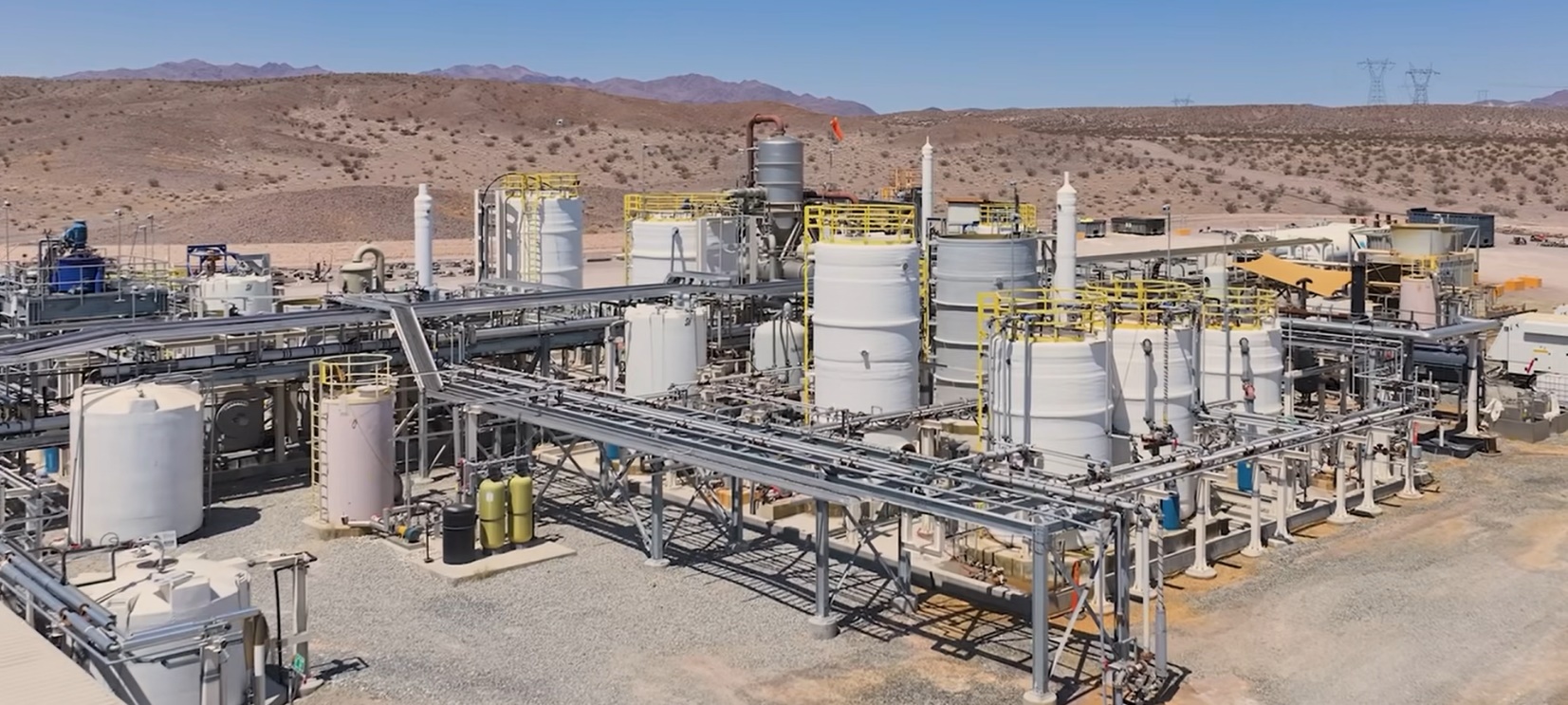
Report Date
SEPTEMBER 17, 2026
Report Effective Date
JUNE 30, 2026
Signature Page
List of Qualified Persons
|
|
|
|
|
|
|
Section(s) |
Date |
Alan E. White, P. E.,
Miocene, Inc. |
12, 13 and 18 (18.1.5 through 18.1.8) |
September 17, 2026 |
/s/ Alan E. White |
|
|
|
|
|
Kevin Martina, P.Eng.,
Fluor Enterprises, Inc. |
10, 14 and 18 (18.1.1 through 18.1.4, 18.1.9 and 18.2) |
September 17, 2026 |
/s/ Kevin Martina |
|
|
|
|
|
Martin Roth, P.G.,
Geomega, Inc. |
7.3 |
September 17, 2026 |
/s/ Martin Roth |
|
|
|
|
|
Steven Kerr, P.G., C.P.G., Principal,
Escalante Geological Services, LLC |
2, 3, 4, 5, 6, 7 (except 7.3), 8, 9, 11, 15, 17, 20, 21 and 22 |
September 17, 2026 |
/s/ Steven Kerr |
|
|
|
|
|
Paul Weibel, CPA,
5E Advanced Materials, Inc. |
1, 16, 19, 23, 24 and 25 |
September 17, 2026 |
/s/ Paul Weibel |
|
|
|
|
|
|
|
Glossary of Terms |
Abbreviation |
Definition |
5E |
5E Advanced Materials, Inc., including its wholly-owned subsidiary 5E Boron Americas, LLC |
amsl |
Above mean sea level |
AOR |
Area of Review |
APBL |
American Pacific Borate & Lithium |
BA |
Boric acid |
B2O3 |
Boron oxide or Boron trioxide (chemical formula) |
bgs |
Below ground surface |
BLM |
U.S. Department of the Interior Bureau of Land Management |
C |
Celsius |
CaCl2 |
Calcium Chloride (chemical formula) |
CAGR |
Compound annual growth rate |
CEQA |
California Environmental Quality Act |
cm |
Centimeter |
cm3 |
Cubic centimeter |
cm/sec |
Centimeters per second |
CO2 |
Carbon dioxide (chemical formula) |
CSTR |
Continuous Stirred-Tank Reactor |
DL |
Detection limit |
Duval |
Duval Corporation |
E |
East |
EIR |
Environmental Impact Report (California lead) |
EIS |
Environmental Impact Statement (BLM lead) |
EPA |
United States Environmental Protection Agency |
F |
Fahrenheit |
FACE |
Financial Assurance Cost Estimate |
FCMC |
Fort Cady Mineral Corporation |
FEL |
Front End Loading, a stage gated project management system (with a number to the corresponding stage, e.g., FEL-2) |
ft |
Foot or Feet |
ft2 |
Square feet |
ft3 |
Cubic foot |
g |
Gram |
Gal |
Gallon(s) |
g/l |
Gram per liter |
Gal/min |
Gallons per minute |
gpm |
gallons per minute |
H2SO4 |
Sulfuric acid (chemical formula) |
H3BO3 |
Boric acid (chemical formula) |
HCl |
Hydrochloric acid (chemical formula) |
ICP |
Inductively Coupled Plasma |
ID2 |
Inverse Distance Squared algorithm |
IRR |
Internal Rate of Return |
ISL |
In-situ Leaching |
JORC |
Australian Joint Ore Reserves Committee |
K |
Hydraulic coefficient |
k |
Thousand |
kg |
Kilogram |
kv |
Kilovolt |
|
|
kw |
Kilowatt |
kWh |
Kilowatt hour |
Kline |
Kline & Company, Inc. |
lb(s) |
Pound(s) mass |
Li |
Lithium |
LOM |
Life of Mine |
LCE |
Lithium carbonate equivalents |
m |
Meters(s) |
mg |
Milligram |
mi |
Mile(s) |
mm |
Millimeter(s) |
MDAQMD |
Mojave Desert Air Quality Management District |
MgCl2 |
Magnesium Chloride (chemical formula) |
MMBtu |
Millions of British Thermal Units |
MSME |
Mountain States Mineral Enterprises Inc. |
Mt |
Million tons |
mt |
Metric tons |
M |
Million |
MTO |
Material Take-off |
MW |
Megawatt |
N |
North |
NaCl |
Sodium chloride (chemical formula) |
NAD 83 |
North American Datum 83 is a unified horizontal or geometric datum providing a spatial reference for mapping purposes |
NEPA |
National Environmental Policy Act |
NN |
Nearest neighbor |
NPV |
Net present value |
pH |
Potential Hydrogen – a numeric scale to specify the acidity or alkalinity of an aqueous solution |
PLS |
Pregnant leach solution |
Ppm |
Parts per million |
psi |
Pounds per square inch of pressure |
QA/QC |
Quality Assurance and Quality Control |
QP |
Qualified Person per SEC S-K 1300 definition |
ROD |
The 1994 Record of Decision for the Fort Cady Project was issued after the EIS/EIR evaluations. |
S |
Storage coefficient |
$ |
United States dollars |
SBC-LUS |
San Bernardino County Land Use Services Department |
SCE |
Southern California Edison |
SEC |
U.S. Securities and Exchange Commission |
SSF |
Small-scale Facility |
ST |
Short ton |
stpa |
Short tons per annum |
tpy |
Tons per year |
TRS |
Technical Report Summary |
UIC |
Underground Injection Control Class III Area Permit |
U.S. |
United States |
US$ |
United States dollars |
UTM |
Universal Transverse Mercator coordinate system for mapping |
wt. |
Weight |
XRF |
X-Ray Fluorescence Spectrometry |
yr |
Year |
1 Executive Summary
This report was prepared as a pre-feasibility level Technical Report Summary in accordance with the U.S. Securities and Exchange Commission (SEC) S-K regulations (Title 17, Part 229, Items 601 and 1300 through 1305) for 5E Advanced Materials, Inc. and its subsidiary 5E Boron Americas, LLC, (together 5E or the Company) Fort Cady Project (the Project). The Project described herein is part of 5E’s strategy to become a globally integrated supplier of industrial minerals through in-situ extraction of colemanite. Once extracted, the Company will produce and refine boron and calcium-based products. The Project is in the Mojave Desert, near the town of Newberry Springs, California.
Using the volumes, market inputs, and anticipated operating and capital costs, a detailed economic model was created with a forecasted net present value (NPV7) of approximately US$711M and internal rate of return (IRR) of 19.2%. Further details, including key model assumptions, are included in Section 19. This Technical Report Summary includes Phase 1 of the Project, and while the resource base provides the opportunity for expansion that could include additional production tonnage or value-added boron derivatives, they are excluded from this Technical Report Summary.
The Project includes six parcels of private land owned by 5E, federal land owned by the U.S. Department of the Interior Bureau of Land Management (BLM), and an electrical transmission corridor runs through the Project where Southern California Edison (SCE) has surface and subsurface control to a depth of 500 ft. While this limits surface access to the area within the right-of-way of the transmission lines, mineral rights are owned by 5E, and mineralization remains accessible as the ore body occurs at depths greater than 1,000 ft. The Project also includes 30 unpatented lode claims, 117 unpatented placer claims and two unpatented millsite claims from the Bureau of Land Management within the U.S. Department of the Interior. On the southwestern side of the Project, the State of California owns the mineral rights for 272 acres of land where 5E owns the surface rights. These mineral rights can be leased from the state.
Major mining permits were obtained in 1994, with a Record of Decision (ROD) issued by the BLM and a Conditional Use Permit issued by the State of California. In 2020, an Underground Injection Control (UIC) permit was obtained by the United States Environmental Protection Agency (EPA) and approval to commence mining operations was obtained in 2023. The mining permits allow for 90,000 short tons of borate, defined as boron oxide or boron oxide equivalent, thus permitting up to approximately 160,000 short tons of boric acid.
5E believes the resource is one of the largest deposit of borate globally with a history of exploration and mining of the ore body, beginning in 1964 with the resource discovery and includes production of boric acid and synthetic borates by Duval Corporation (Duval) and Fort Cady Mineral Corporation (FCMC). Geologically, the deposit is bounded by faults on both east and west sides and is the site of prior volcanic activity from the Pisgah Crater. Mineralization occurs in a sequence of lacustrine lakebed sediments ranging in depths from 1,300 ft to 1,500 ft below ground surface.
Exploration drilling has led to a geologic interpretation of the deposit as lacustrine evaporite sediments containing colemanite, a hydrated calcium borate mineral. The deposit also contains appreciable quantities of lithium. Geologic modeling based on drilling and sampling results depicts an elongate deposit of lacustrine evaporite sediments containing colemanite. The deposit is approximately 2.1 mi long by 0.6 mi wide and ranging in thickness from 70 to 262 ft. Mineralization has been defined in four distinct horizons defined by changes in lithology and B2O3 analyses.
A mineral resource and mineral reserve statement has been estimated and reported using a cut-off grade of 2.0% B2O3. Total measured, indicated, and inferred resources for the Project (inclusive of mineral reserves) total 204.8 MSTs of ore and 28.8 MSTs of boric acid. Resources exclusive of mineral reserves are presented in Section 11. Proven reserves total 2.6 MSTs and probable reserves total 2.5 MSTs of boric acid, respectively. The initial life of mine for Phase 1 is 37.5 years based on the current mine plan and 17.5% of the resource has been converted to reserves. The southeastern side of the property includes an exploration target and there is additional resource potential with this target.
The colemanite resource is to be mined via in-situ leaching (ISL) using a hydrochloric acid solution. The leachate will be processed in the commercial-scale facility to initially produce 130,000 short tons per annum (k stpa) of boric acid along with calcium-based by-products calcium chloride and gypsum. A Class 4 or FEL-2 level engineering estimate for the
phase 1 plant was prepared as part of this Technical Report Summary. In November 2023, the Company received approval to commence in-situ mining operations from the EPA and began mining in January 2024. The Company’s small-scale facility (SSF) began operation in April 2024, has achieved production and at times has achieved a steady state of production of approximately one short ton per day.
Global boric acid demand remains robust across established markets and future-facing industries while supply continues to be tight across the industry operating network. The supply deficit is expected to continue to materially worsen in the future and lead to elevated pricing. This outlook, along with a pricing forecast for boric acid and its calcium by-products, was assessed in a preliminary market study detailed in Section 16.
Capital cost expectations for a 130,000 stpa boric acid plant (inclusive of co-product processing and COGEN power) were determined to be $367M for the first stage plus a contingency of $55M and owner’s cost estimate of $13M for a total capital estimate of $435M. Operating costs are built upon detailed material and energy balances and recent historical pricing of raw materials and utilities.
Operation of the Company’s SSF has provided many of the parameters and scoping items for FEL-2 engineering and the mine plan, while also confirming historical data from operations in the 1980’s. Product produced from the SSF has been sent to various customers for qualification and sampling. Progression to Front End Loading Stage 3 Process Design Package (FEL-3) engineering will further refine the accuracy of the capital cost estimates for the chemical processing plant. Additionally, operation of horizontal directional wells and demonstrating a pilot scale well program is expected to confirm the final mine plan for the commercial facility. Once these steps are completed, the Company will be well positioned to advance this pre-feasibility study to a full-feasibility study.
2 Introduction
2.1 Registrant for Whom the Technical Report was Prepared
This report was prepared as a pre-feasibility study level Technical Report Summary in accordance with the U.S. Securities and Exchange Commission (SEC) S-K regulations Title 17, Part 229, Items 601 and 1300 through 1305 for 5E Advanced Materials, Inc. and its subsidiary 5E Boron Americas, LLC. The report was prepared by Qualified Persons (QPs) from third-party independent companies Fluor Enterprises, Inc. (Fluor), Miocene, Inc. (Miocene), Escalante Geological Services, LLC (Escalante), and Geomega, Inc. (Geomega) and Company management.
2.2 Terms of Reference and Purpose of the Report
The quality of information, conclusions, and estimates contained herein is based on the following:
a)information available at the time of preparation, and
b)assumptions, conditions, and qualifications set forth in this report.
This Technical Report Summary is based on a Class 4 or FEL-2 pre-feasibility study level engineering. This report is intended for use by 5E Advanced Materials, Inc. and its subsidiary 5E Boron Americas, LLC, subject to the terms and conditions of its agreements with Escalante, Fluor, Geomega, and Miocene and relevant securities legislation. Escalante, Fluor, Geomega, and Miocene permit 5E to file this report as a Technical Report Summary with the SEC pursuant to the SEC S-K regulations, more specifically Title 17, Subpart 229.60, Item 601(b)(96) – Technical Report Summary and Title 17, Subpart 229.1300 – Disclosure by Registrants Engaged in Mining Operations. Except for the purposes specified under U.S. securities law, any other uses of this report by any third party are at that party’s sole risk. The responsibility for this disclosure remains with the Company.
The purpose of this Technical Report Summary is to report on mineral resources and reserves as well as inform parties with potential financial interests in 5E and the Project.
2.3 Sources of Information
This report is based in part on external consultants’ expertise and their technical reports, internal Company technical reports, previous technical reports, maps, published government reports, company letters and memoranda, and public information cited throughout this report and listed in Section 24.
Reliance upon information provided by the registrant is listed in Section 25, when applicable.
2.4 Details of Inspection
Escalante, Fluor, Geomega, and Miocene have visited the property, inspected core samples, reviewed relevant intellectual property and reports, and have extensive knowledge of the Project.
2.5 Report Version Update
The user of this document should ensure that this is the most recent Technical Report Summary for the property. This Technical Report Summary is an update of a previously filed Technical Report Summary filed pursuant to 17 CFR §§ 229.1300 through 229.1305 subpart 229.1300 of Regulation S-K. The previously filed Technical Report Summary has a report date of August 7, 2025, and an effective date of August 4, 2025.
2.6 Units of Measure
The U.S. System for weights and units has been used throughout this report. Tons are reported in short tons of 2,000 pounds (lbs), drilling and resource model dimensions and map scales are in feet (ft). When included, metric tons are referred to as tonnes or mt. All currency is in U.S. dollars ($ or US$) unless otherwise stated.
2.7 Mineral Resource and Mineral Reserve Definition
The terms “mineral resource” and “mineral reserves” as used in this Technical Report Summary have the following definitions below.
2.7.1 Mineral Resources
17 CFR § 229.1300 defines a “mineral resource” as a concentration or occurrence of material of economic interest in or on the Earth’s crust in such form, grade or quality, and quantity that there are reasonable prospects for economic extraction. A mineral resource is a reasonable estimate of mineralization, taking into account relevant factors such as cut-off grade, likely mining dimensions, location or continuity, that, with the assumed and justifiable technical and economic conditions, is likely to, in whole or in part, become economically extractable. It is not merely an inventory of all mineralization drilled or sampled.
A “measured mineral resource” is that part of a mineral resource for which quantity and grade or quality are estimated on the basis of conclusive geological evidence and sampling. The level of geological certainty associated with a measured mineral resource is sufficient to allow a qualified person to apply modifying factors, as defined in this section, in sufficient detail to support detailed mine planning and final evaluation of the economic viability of the deposit. Because a measured mineral resource has a higher level of confidence than the level of confidence of either an indicated mineral resource or an inferred mineral resource, a measured mineral resource may be converted to a proven mineral reserve or to a probable mineral reserve.
An “indicated mineral resource” is that part of a mineral resource for which quantity and grade or quality are estimated on the basis of adequate geological evidence and sampling. The level of geological certainty associated with an indicated mineral resource is sufficient to allow a qualified person to apply modifying factors in sufficient detail to support mine planning and evaluation of the economic viability of the deposit. Because an indicated mineral resource has a lower level of confidence than the level of confidence of a measured mineral resource, an indicated mineral resource may only be converted to a probable mineral reserve.
An “inferred mineral resource” is that part of a mineral resource for which quantity and grade or quality are estimated on the basis of limited geological evidence and sampling. The level of geological uncertainty associated with an inferred mineral resource is too high to apply relevant technical and economic factors likely to influence the prospects of economic extraction in a manner useful for evaluation of economic viability. Because an inferred mineral resource has the lowest level of geological confidence of all mineral resources, which prevents the application of the modifying factors in a manner useful for evaluation of economic viability, an inferred mineral resource may not be considered when assessing the economic viability of a mining project, and may not be converted to a mineral reserve.
2.7.2 Mineral Reserves
17 CFR § 229.1300 defines a “mineral reserve” as an estimate of tonnage and grade or quality of indicated and measured mineral resources that, in the opinion of the qualified person, can be the basis of an economically viable project. More specifically, it is the economically mineable part of a measured or indicated mineral resource, which includes diluting materials and allowances for losses that may occur when the material is mined or extracted. A “proven mineral reserve” is the economically mineable part of a measured mineral resource and can only result from conversion of a measured mineral resource. A “probable mineral reserve” is the economically mineable part of an indicated and, in some cases, a measured mineral resource.
2.8 Qualified Persons
This report was compiled by 5E and its management, with contributions from Escalante Geological Services, LLC, Fluor Enterprises, Inc., Geomega, Inc., and Miocene, Inc. The QP’s, Escalante, Fluor, Geomega, and Miocene, are third-party firms comprising mining experts in accordance with 17 CFR § 229.1302(b)(1). 5E has determined that the third-party firms and internal management listed as qualified persons meet the qualifications specified under the definition of a qualified person in 17 CFR § 229.1300.
Escalante Geological Services, LLC prepared the following sections of the report:
Sections 2, 3, 4, 5, 6, 7 (excluding 7.3), 8, 9, 11, 15, 17, 20, 21, 22
Fluor Enterprises, Inc. prepared the following sections of the report:
Sections 10, 14, 18 (specifically Sections 18.1.1 through 18.1.4, 18.1.9 and 18.2, which are specific to operating and capital expenditures, excluding wellfield) and contributed to sections 22, 23, and 24
Geomega, Inc. prepared the following sections of the report:
Sections 7.3
Miocene, Inc. prepared the following sections of the report:
Sections 12, 13, 18 (specifically Sections 18.1.5 through 18.1.8, which are specific to wellfield capital expenditures)
The following members of 5E management prepared the following sections of the report:
•Paul Weibel, CPA, and Chief Executive Officer
Sections 1, 16, 19, 23, 24, 25
Section 16 Market Studies and Contracts was prepared by 5E. The company engaged Kline and Company, Inc. (Kline) to perform a preliminary market study and pricing forecast for boric acid, calcium chloride and gypsum. Forward pricing forecasts obtained from Kline were utilized as part of the financial model outlined in Section 19, Economic Analysis. Kline was not engaged as a qualified person; however, 5E has obtained permission to refer to the preliminary market study they have provided and cite accordingly.
3 Property Description and Location
3.1 Property Location
The Project is located in the Mojave Desert region in the high desert of San Bernardino County, California. Figure 3.1 outlines a map where the Project lies, which is approximately 118 mi northeast of Los Angeles, approximately 36 mi east-southeast of Barstow and approximately 17 mi east of Newberry Springs. The approximate center of the project area is N34°45’25.20”, W116°25’02.02”. The Project is in a similar geological setting as Rio Tinto’s U.S. Borax, Inc. operations in Boron, California, and Searles Valley Minerals operations in Trona, California, situated approximately 75 mi west-northwest and 90 mi northwest of the Project, respectively.
Figure 3.1: General location map
3.2 Area of Property
Figure 3.2 shows the 5E property and adjacent properties.
Figure 3.2: Property ownership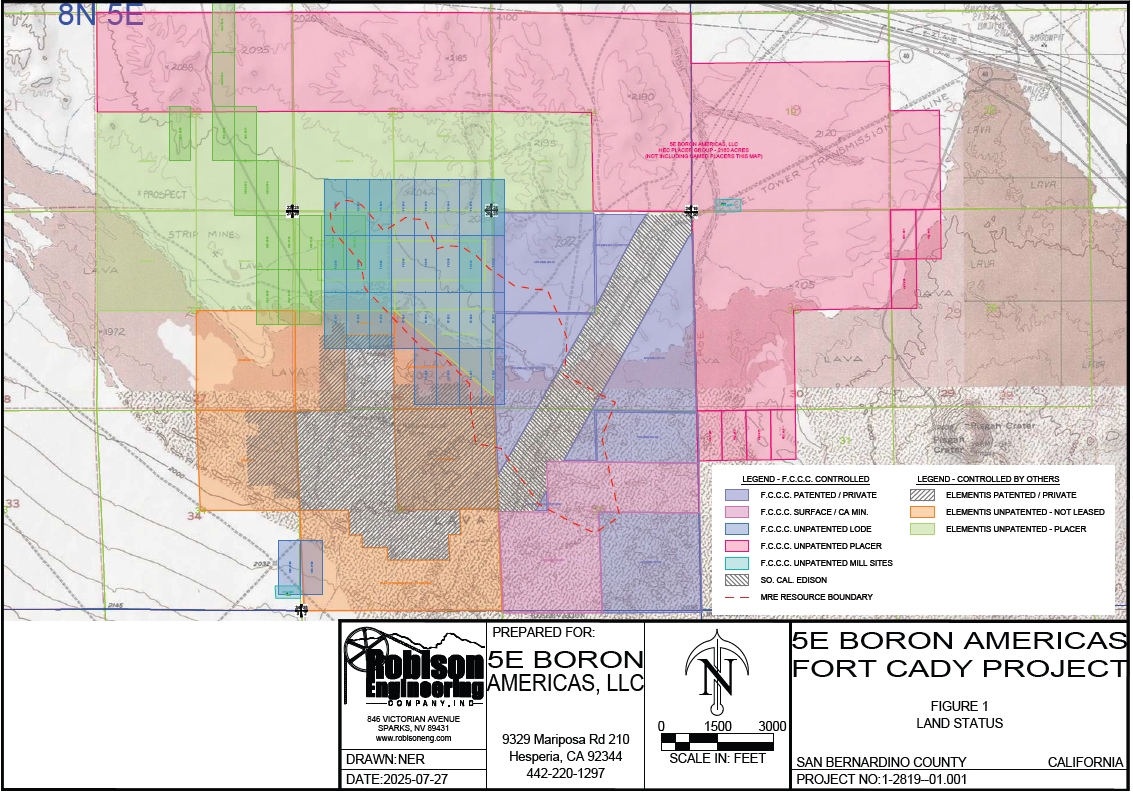
3.3 Mineral Title
5E owns simple fee (private) lands in Sections 25 and 36, of Township 8 North, Range 5 East of the San Bernardino Principal Meridian. An electrical transmission corridor, operated by SCE, tracts from the northeast to the southwest through the fee lands with SCE having surface and subsurface control to a depth of 500 ft, affecting approximately 91 acres of surface lands in the two sections. While this limits surface access to the land, mineralization remains accessible as the ore body occurs at depths greater than 1,000 ft (~ 300 m.)
5E currently holds 30 unpatented lode claims, 117 unpatented placer claims, and two (2) unpatented millsite claims with the BLM. Two lode claims were originally filed by Duval Corporation in 1978 with the 28 other lode claims filed by the Company in January 2025 (11 lode claims) and August 2025 (17 lode claims). Subsequently, in February 2026, we revised certain of the claims to perfect recording in San Bernardino County, California. Placer claims were filed between October 29, 2016, and February 24, 2017. A review of the BLM Mineral & Land Record System (MLRS) database shows claim status as filed with the next assessment fees due annually on September 1, 2027.
Lastly, in Section 36, Township 8 North, Range 5 East, 272 acres of land in Section 36 are split estate, with the surface estate owned by 5E and the mineral estate is owned by the State of California. These lands are available to 5E through a mineral lease from the California State Lands Commission. The remaining lands are owned by 5E, with the minerals underlying the transmission line available subsurface. Table 3.1 summarizes the mineral holdings held by 5E.
Table 3.1: 5E mineral holdings
|
|
|
|
Land Title Type |
Land Titles |
Private (Patented Property with surface and mineral rights in Fee Simple Title owned by 5E) |
Parcels: 05-29-251-01; 05-29-251-03; 05-29-251-05; 05-29-251-12; 05-29-251-13 |
Private (Patented Property with surface rights in Fee Simple Title owned by 5E; Mineral rights owned by State of California) |
Parcel: 05-29-251-04 |
Unpatented Lode Mining Claims Recorded and Located by 5E |
HEC #182, HEC #184, FC 001, FC 002, FC 003, FC 004, FC 005, FC 006, FC 007, FC 008, FC 009, FC 010, FC 011, FC 012, FC 013, FC 014, FC 015, FC 016, FC 017, FC 018, FC 019, FC 020, FC 021, FC 022, FC 023, FC 024, FC 025, FC 026, FC 027, FC 028 |
Unpatented Millsite Claims |
FCM 001, FCM 002 |
Unpatented Placer Mining Claims |
HEC #19, HEC #21, HEC #23, HEC #25, HEC #34 thru HEC #41; HEC #43 thru HEC #67, HEC #70 thru HEC #82; HEC#85 thru HEC #93; HEC #288, HEC #290, HEC #292, HEC #294, HEC #296, HEC #297, HEC #299 thru HEC #350 |
3.4 Mineral Rights
5E holds the rights to the mineral estate underlying Sections 25 and 36, except for the portion of the mineral estate held by the State of California in Section 36.
3.5 Incumbrances
5E maintains financial assurance bonds for reclamation and closure for current and planned operations. Additional information on reclamation and closure liabilities is included in Section 17. The amount of bonds and certificate of deposits posted with the applicable agency are present in Table 3.2.
Table 3.2: Current financial assurance obligations
|
|
|
|
|
|
|
|
Regulatory Authority |
Regulatory Obligation |
Instrument |
Instrument US$ |
United States Environmental Protection Agency |
Groundwater restoration
Groundwater monitoring
Plugging and abandonment of AOR wells |
Bond EACX173000037 |
$1,200,000 |
County of Sen Bernardino |
Reclamation and Closure |
Bond SPA151286 001 |
$799,994 |
County of San Bernardino |
Reclamation and Closure |
Certificate of deposits |
$61,604 |
3.5.1 Remediation Liabilities
5E submitted a Final Reclamation and Closure Plan to the Lahontan Regional Water Quality Control Board (LRWQCB) for closure of ponds constructed on the property in the 1980’s, and the ponds have been closed. The closure of the ponds and the 1988 WDRs is awaiting final sign-off from the LRWQCB. The bonding for closure of these ponds is included in the surety bond with San Bernardino County.
3.6 Other Significant Risk Factors
The mineral resource estimate (Section 11) includes BLM-managed public lands on which 5E has located unpatented mining claims in accordance with the Mining Law of 1872. Elementis Specialties, Inc. has filed a lawsuit in the US District Court, Central District of California, challenging the validity of 5E’s lode claims. Elementis operates a mine adjacent to 5E’s Fort Cady Project and alleges that 5E was unable to locate its lode claims because Elementis had already located placer claims on the subject public lands. Lode claims and placer claims are used to locate different types of mineralization, and one form of claim cannot be used as a substitute for the other. 5E believes the mineralization that it has claimed with its lode claims is lode-style mineralization, not placer mineralization.
An exploration program to expand the resource is possible in Section 36 on the southeastern portion of the property; however, this would require a mineral lease to be filed and executed with the California State Lands Commission for the State of California held mineral estate.
3.7 Royalties
There are no royalties associated with privately and publicly held lands in Section 25 and 36.
4 Accessibility, Climate, Local Resources, Infrastructure, and Physiography
4.1 Topography, Elevation, and Vegetation
The Project area is located on a gentle pediment with elevations ranging from approximately 1,970 ft above mean sea level (amsl) to approximately 2,185 ft amsl. Basalt lava flows cover most of the higher elevations or hilltops with flat ground and drainages covered in pale, gray-brown, silty soils. Basalt lava flows become more dominant south of the Project area with the Lava Bed Mountains located a few miles south of the Project area. The Project area’s vegetation is dominated by burro weed, creosote, cactus, and scattered grasses.
4.2 Accessibility and Transportation to the Property
Access to the Project is via U.S. Interstate 40 (I-40), eastbound from Barstow to the Hector Road exit. From the exit, travel south to Route 66, then east approximately 1 mile to County Road 20796 (CR20796). Travel south on CR20796 for 2.2 mi to the unnamed dirt access road bearing east for another 1.1 mi to the Project.
The BNSF Railroad main line from Chicago to Los Angeles runs parallel to I-40. A BNSF rail loadout is in Newberry Springs. There are potential options to develop rail access closer to the Project.
San Bernardino County operates six general aviation airports with the closest airport to the Project being the Barstow-Daggett Airport located approximately 23 mi west of the Project off Route 66. Commercial flight service is available through five airports in the greater Los Angeles area and in Las Vegas, Nevada. A dedicated cargo service airport is located approximately 65 mi southwest of the Project.
4.3 Climate and Length of Operating Season
The Project is accessible year-round, located in the western Mojave Desert with arid, hot, dry, and sunny summers of low humidity and temperate winters. Based upon climate data from the nearby town of Newberry Springs, the climate over the past 30 years indicates average monthly high temperatures ranging from 55°F in December to 98.2°F in July. Monthly low temperatures range from 40.1°F in December to 74.3°F in August. Extremes range from a record low of 7°F to a record high of 117°F. Maximum temperatures in summer frequently exceed 100°F while cold spells in winter with temperatures below 20°F may occur but seldom last for more than a few days. Average rainfall is generally less than 10 inches per year with most precipitation occurring in the winter and spring.
4.4 Infrastructure Availability and Sources
5E continues to develop operating infrastructure for the Project in support of extraction and processing activities. A manned gate is located on the Project access road and provides required site-specific safety briefings and monitors personnel entry and exit to the site. Personnel are predominantly sourced from the surrounding area including Barstow, California, and Victorville, California.
The BNSF Railroad main line from Las Vegas, Nevada to Los Angeles, California runs parallel to I-40. A rail loadout is located approximately 1.2 mi north of the National Trails Highway on a road that bears north and located 0.4 mi west of CR20796.
The construction of the small-scale facility was performed by a construction contractor with additional local resources supporting construction contracting, construction materials, energy sources, employees, and housing. The Project has
good access to I-40 which connects it to numerous sizable communities between Barstow, California and the greater Los Angeles area offering excellent access to transportation, construction materials, labor, and housing. The Project currently has limited electrical service (approximately 1 megawatt) that is sufficient for mine office, storage facilities on site, and provides a good portion of the power for the small-scale facility. The small-scale facility operates on shore power and liquid natural gas and 5E is currently exploring options for upgrading electrical services to the Project. An electrical transmission corridor operated by SCE extends northeastward through the eastern part of the Project. The Project has two water wells located nearby to support in-situ leaching operations where unpatented millsite claims are filed. Currently there is no natural gas connected to the Project, but 5E has a proposal from Kinder Morgan to connect to the Mojave Pipeline. Two other natural gas transmission lines run along Interstate 40 near the Project.
The plant site currently has a 2,000 ft2 control room and office building, a 1,000 ft2 administrative building, storage buildings, warehouse, an analytical laboratory, an approximately 20-acre production facility called the small-scale facility, and an intended gypsum storage area occupying 17 acres. Gypsum is a byproduct of past pilot plant production and is intended to be a future byproduct that can be sold to the regional market.
5 History
Discovery of the Project borate deposit occurred in 1964 when Congdon and Carey Minerals Exploration Company found several zones of colemanite, a calcium borate mineral, between the depths of 1,330 ft to 1,570 ft (405 m to 487 m) below ground surface (bgs) in Section 26, Township 8 North, Range 5 East (Simon Hydro-Search, 1993).
5.1 Prior Ownership and Ownership Changes
In September 1977, Duval initiated land acquisition and exploration activities near Hector, California. By March 1981, Duval had completed 34 exploration holes (DHB holes), plus one (1) potential water well. After evaluation of the exploration holes, Duval considered several mining methods. Subsequent studies and tests performed by Duval indicated that in-situ mining technology was feasible. Duval commenced limited testing and pilot-scale solution mining operations in June 1981 per the Mining and Land Reclamation Plan, Fort Cady Project, 2019.
Mountain States Mineral Enterprises, Inc. (MSME) purchased the project from Duval in 1985 and, in 1986, conducted an additional series of tests. MSME eventually sold the project to Fort Cady Mineral Corporation in 1989. FCMC began the permitting process, which resulted in a 1994 ROD from the BLM and approval from San Bernardino County, the California lead agency.
5.2 Exploration and Development Results of Previous Owners
Duval commenced limited-scale solution mining tests in June 1981. Between 1981 and 2001, subsequent owners drilled an additional 17 wells, which were used for a series of injection testing and pilot-scale operations. In July 1986, tests were conducted by MSME, where dilute hydrochloric acid solution was injected into the ore body. The acid dissolved the colemanite and was then withdrawn from the same well.
The first phase of pilot plant operations was conducted between 1987 and 1988. Approximately 550 tons (500 tonnes) of boric acid were produced. The test results were positive; thus, the Project was viewed as commercially viable. In preparation for the permitting process, feasibility studies, detailed engineering and test works were completed with FCMC receiving the required permits for a commercial-scale operation. Final state and local approvals for commercial-scale solution mining and processing were attained in 1994.
A second phase of pilot plant operations occurred between 1996 and 2001, during which approximately 2,200 tons of a synthetic colemanite product, marketed as CadyCal 100, were produced. Commercial-scale operations were not commissioned due to low product prices and other priorities of the controlling entity. For many years, boron was used in traditional applications such as cleaning supplies and ceramics, which never formulated in a strong pull-side demand investment thesis where pricing justified further development of the Project. However, a group of Australian investors,
through extensive due diligence identified green shoots that the market dynamics were fundamentally beginning to change.
5.3 American Pacific Borates Share Exchange of Atlas Precious Metals
In 2017, a group of Australian investors identified the Project and formed the investment thesis that the boron market had similar dynamics to the lithium market a decade earlier. Like the lithium market ten years prior, the market was dominated by a few companies with a compelling pull-side demand growth story fueled by future-facing applications targeting decarbonization and critical materials. Prior to lithium-ion batteries and electric vehicles, lithium was used in traditional everyday applications like boron’s use in recent years. As a result of the investment thesis that boron is expected to experience a supply deficit relative to demand, the group of Australian investors formed American Pacific Borates and Lithium Ltd (APBL) and issued shares to Atlas Precious Metals in exchange for the Fort Cady (California) Corporation, the entity holding the permits, mineral and property rights of the Project. In 2017, APBL underwent an initial public offering on the Australian Stock Exchange and progressed exploration and development of the Project. In September 2021, APBL created a subsidiary, 5E, through a corporate reorganization which placed 5E at the top of the corporate structure. Upon 5E becoming the parent company of the organization, in March 2022 5E direct listed on Nasdaq and became an SEC issuer. Shortly before becoming an SEC issuer, 5E Boron Americas, LLC was designated as Critical Infrastructure by the Department of Homeland Security Cybersecurity and Infrastructure Security Agency.
5.4 Historic Production
Limited historic production data, provided to 5E by previous operators, is summarized in Table 5.1 through Table 5.4. Little other information is available for these tests; the results could not be independently verified.
Table 5.1: Duval testing results
|
|
|
|
|
|
|
|
|
|
|
|
|
|
|
|
|
|
|
|
Test
No. |
|
Volume
Injected
(Gal) |
Injection Rate
(Gal/min) |
Pump Pressure
(psi) |
Acid
(%) |
Volume
Recovered
(Gal) |
Recovery Rate
(Gal/min) |
Average Concentration
H₃BO₃
(%) |
Maximum Concentration
H₃BO₃
(%) |
1 |
|
680 |
1.5 |
150 |
16% HCl |
700 |
1.0–2.0 |
0.3 |
|
|
|
1,500 |
2 |
275 |
5% H₂SO₄ |
1,500 |
1.0–2.0 |
0.5 |
1.5 |
|
|
1,400 |
1.5–2.0 |
150 |
5% H₂SO₄ |
2,000 |
1.0–2.0 |
1.5 |
4.6 |
|
|
1,500 |
2 |
275 |
23% H₂SO₄ |
1,500 |
1.0–2.0 |
1.0 |
4.0 |
2 |
|
2,250 |
2 |
300 |
8% H₂SO₄ |
2,000 |
1.5–2.0 |
1.5 |
4.0 |
3 |
|
5,358 |
2–2.5 |
275 |
6.9% H₂SO₄ |
28,927 |
1.0–1.5 |
3.0 |
6.9 |
|
|
6,597 |
2–2.5 |
275 |
17.5% HCl |
|
|
3.0 |
6.9 |
4 |
|
19,311 |
2–2.5 |
230–275 |
6.2% HCl &
2.4% H₂SO₄ |
67,995 |
1.0–1.5 |
3.0 |
6.5 |
5 |
|
20,615 |
2 |
290 |
16% HCl |
112,637 |
1.0–1.5 |
2.5 |
5.2 |
6 |
|
21,569 |
20 |
275 |
1.6% HCl |
63,460 |
1.0–1.5 |
1.1 |
1.7 |
Table 5.2: Mountain States testing injection summary
|
|
|
|
|
|
|
|
|
|
|
|
|
|
|
|
|
|
|
|
|
|
|
|
|
|
|
|
|
|
|
|
|
|
|
|
Date |
|
|
|
|
|
Gallons |
|
Pounds |
|
Theoretical H₃BO₃ |
Series |
|
From |
To |
|
Test Nos. |
|
Wells SMT |
|
Series |
∑ |
|
HCl |
CO₂ |
|
Series |
∑ |
1 |
|
8/4/1986 |
8/23/1986 |
|
1-3 |
|
6 & 9 |
|
67,972 |
67,972 |
|
23,286 |
— |
|
59,540 |
59,540 |
2 |
|
11/4/1986 |
11/10/1986 |
|
4-7 |
|
6 |
|
45,489 |
113,461 |
|
15,500 |
— |
|
39,431 |
98,971 |
3 |
|
12/9/1986 |
12/18/1986 |
|
8-11 |
|
6 |
|
53,023 |
166,484 |
|
15,398 |
— |
|
39,173 |
138,144 |
4 |
|
6/18/1986 |
6/27/1987 |
|
12-15 |
|
9 |
|
47,640 |
214,124 |
|
— |
4,313 |
|
18,184 |
156,328 |
Total |
|
|
|
|
|
|
|
|
214,124 |
214,124 |
|
54,184 |
4,313 |
|
156,328 |
156,328 |
Table 5.3: Mountain States testing recovery summary
|
|
|
|
|
|
|
|
|
|
|
|
|
|
|
|
|
|
|
|
|
|
|
|
|
|
|
|
|
|
|
|
|
|
|
|
|
|
|
|
|
|
|
|
Date |
|
Test Nos. |
|
Wells SMT |
|
Gallons |
|
Pounds BA |
|
% BA in Solution,
by Surge Tank |
|
Theoretical BA |
Series |
|
From |
To |
|
|
|
Series |
∑ |
|
Series |
∑ |
|
High |
End |
Avg |
|
Series |
∑ |
1 |
|
8/7/1986 |
10/17/1986 |
|
1-3 |
|
6 & 9 |
|
128,438 |
128,438 |
|
32,608 |
32,608 |
|
3.84 |
1.56 |
2.50 |
|
54.77 |
54.77 |
2 |
|
11/5/1986 |
11/13/1986 |
|
4-7 |
|
6 |
|
51,636 |
180,074 |
|
21,223 |
53,831 |
|
5.74 |
4.05 |
4.68 |
|
53.83 |
54.39 |
3 |
|
12/10/1986 |
1/13/1987 |
|
8-11 |
|
6 |
|
99,889 |
279,963 |
|
33,386 |
87,217 |
|
5.59 |
1.93 |
4.18 |
|
85.23 |
63.14 |
4 |
|
6/9/1987 |
7/0/1987 |
|
12-15 |
|
9 |
|
86,595 |
366,558 |
|
18,973 |
106,190 |
|
3.55 |
1.81 |
2.60 |
|
104.34 |
67.93 |
Total |
|
|
|
|
|
|
|
|
366,558 |
366,558 |
|
106,190 |
106,190 |
|
|
|
3.79 |
|
|
67.93 |
In 2017, 5E completed an exploration drilling program to validate previous exploration efforts and expand mineral resources. Post drilling, an Australasian Code for Reporting of Exploration Results, Mineral Resources and Ore Reserves (JORC) mineral resource estimate was prepared by Terra Modelling Services (TMS). TMS updated the JORC mineral resource estimate in December 2018. The 2018 JORC mineral resource estimate identified 4.63 million tonnes of measured resource, 2.24 million tonnes of indicated resource, and 7.07 million tonnes of inferred resource using a B2O3 cut-off grade of 5%.
In October 2021, 5E issued an Initial Assessment Report (the Initial Assessment Report) on the Fort Cady Borate Project reporting a measured plus indicated resource estimate of 97.55 million tons (Mt) grading at 6.53% B2O3 and 324 parts per million (ppm) lithium using a 5.0% B2O3 cut-off grade. The Initial Assessment also identified 11.43 Mt of in Inferred resource grading at 6.40% B2O3 and 324 ppm Li. The Initial Assessment was subsequently updated in February 2022 with no changes to the resource estimate.
In October 2023, 5E updated and issued the Initial Assessment Report, dated October 2023, on the Project. The October 2023 Initial Assessment Report provided an updated estimate of 74.31 Mt of measured plus indicated resources grading at 4.15 B2O3 and 356 ppm Li using a 2.0% B2O3 cut-off grade, following a change in mineral tenure and improvements in processing. An inferred resource of 96.9 Mt grading at 4.75% B2O3 and 321 ppm LI was also identified in the estimate.
Table 5.4: Fort Cady Mineral Corporation production summary
|
|
|
|
|
|
|
|
|
|
|
|
|
|
|
|
|
|
|
|
|
|
|
|
|
|
|
|
|
|
|
|
|
|
|
|
|
|
|
|
|
|
|
|
|
|
|
|
Flow to Plant |
|
|
|
|
|
|
|
|
|
|
|
|
|
|
|
|
Date |
|
Total
Minutes |
|
Gallons |
Gal/min |
|
pH |
|
Free Acid
(g/l) |
|
Boric
Acid
(%) |
|
Chloride
(g/l) |
|
Sulfate
(g/l) |
|
Boric
Acid (tons) |
|
B₂O₃
(tons) |
|
CadyCal
100
(tons) |
Jan-01 |
|
7,215 |
|
258,556 |
35.8 |
|
5.83 |
|
|
|
2.33 |
|
12.54 |
|
3.76 |
|
15 |
|
9 |
|
20 |
Feb-01 |
|
7,785 |
|
331,886 |
42.6 |
|
2.54 |
|
0.35 |
|
2.36 |
|
12.13 |
|
4.94 |
|
25 |
|
14 |
|
33 |
Mar-01 |
|
10,470 |
|
422,922 |
40.4 |
|
2.41 |
|
0.23 |
|
1.90 |
|
15.84 |
|
3.23 |
|
34 |
|
19 |
|
45 |
Apr-01 |
|
10,290 |
|
393,824 |
38.3 |
|
1.86 |
|
2.60 |
|
5.43 |
|
42.11 |
|
8.18 |
|
41 |
|
23 |
|
53 |
May-01 |
|
7,560 |
|
296,000 |
39.2 |
|
2.02 |
|
2.67 |
|
5.77 |
|
44.77 |
|
8.70 |
|
31 |
|
17 |
|
40 |
Jun-01 |
|
3,375 |
|
120,928 |
35.8 |
|
0.67 |
|
1.35 |
|
3.12 |
|
27.84 |
|
5.30 |
|
12 |
|
7 |
|
16 |
Jul-01 |
|
2,385 |
|
77,157 |
32.4 |
|
1.19 |
|
0.31 |
|
2.00 |
|
12.74 |
|
2.60 |
|
7 |
|
4 |
|
9 |
Aug-01 |
|
3,300 |
|
142,207 |
43.1 |
|
4.04 |
|
0.07 |
|
3.84 |
|
19.60 |
|
3.08 |
|
15 |
|
8 |
|
19 |
Sep-01 |
|
4,875 |
|
247,901 |
50.9 |
|
2.77 |
|
0.12 |
|
3.44 |
|
23.21 |
|
3.68 |
|
21 |
|
12 |
|
28 |
Oct-01 |
|
10,035 |
|
478,723 |
47.7 |
|
2.03 |
|
0.35 |
|
3.00 |
|
15.54 |
|
4.60 |
|
37 |
|
1 |
|
49 |
Nov-01 |
|
9,270 |
|
371,171 |
40.0 |
|
1.99 |
|
0.16 |
|
2.39 |
|
14.15 |
|
4.02 |
|
23 |
|
13 |
|
30 |
Dec-01 |
|
12,525 |
|
353,885 |
28.3 |
|
1.83 |
|
0.17 |
|
2.52 |
|
14.94 |
|
2.58 |
|
29 |
|
16 |
|
38 |
01-Total |
|
89,085 |
|
3,495,160 |
39.2 |
|
2.44 |
|
0.73 |
|
3.19 |
|
21.37 |
|
4.74 |
|
291 |
|
164 |
|
381 |
00-Total |
|
87,255 |
|
3,142,413 |
36.0 |
|
2.14 |
|
0.25 |
|
2.70 |
|
12.42 |
|
2.54 |
|
279 |
|
157 |
|
366 |
99-Total |
|
92,820 |
|
2,475,770 |
26.7 |
|
1.59 |
|
0.48 |
|
2.82 |
|
10.13 |
|
6.84 |
|
201 |
|
113 |
|
263 |
98-Total |
|
111,468 |
|
2,715,319 |
24.4 |
|
1.24 |
|
0.91 |
|
2.85 |
|
7.78 |
|
10.19 |
|
217 |
|
122 |
|
284 |
97-Total |
|
109,040 |
|
2,692,940 |
24.7 |
|
0.99 |
|
1.84 |
|
3.10 |
|
3.52 |
|
13.00 |
|
252 |
|
142 |
|
329 |
96-Total |
|
101,212 |
|
2,711,044 |
26.8 |
|
1.33 |
|
1.32 |
|
3.01 |
|
2.96 |
|
5.76 |
|
244 |
|
137 |
|
319 |
In January 2024, the Company began injection after receiving approval from the EPA to commence mining in November 2023. In April 2024, the Company began operating its small-scale facility and producing borates. Table 5.5 summarizes 5E’s injection – recovery summary per cycle for IR-1, IR-2, and IR-3 while and table 5.6 summarizes 5E’s injection – recovery summary per cycle for IR-4.
Table 5.5: 5E injection – recovery summary per cycle (IR-1, IR-2, and IR-3)
|
|
|
|
|
|
|
|
|
|
|
|
|
|
|
|
|
|
Complete
I/R Cycle |
Injection
Well |
Volume Injected
(gal) |
Injection Rate
(gal/min) |
Pump Pressure
(psi) |
Recovery
Well |
Volume Recovered
(gal) |
Recovery Rate
(gal/min) |
Average
H₃BO₃
(%) |
1 |
IR-3 |
5,206.99 |
14.89 |
63.28 |
|
|
|
|
2 |
IR-1 |
9,230.59 |
11.45 |
24.13 |
IR-3 |
732.70 |
9.27 |
2.20 |
3 |
IR-2 |
4,443.94 |
14.86 |
116.50 |
IR-2 |
2,893.28 |
1.82 |
2.29 |
4 |
IR-1 |
18,369.41 |
27.61 |
121.20 |
|
|
|
|
5 |
IR-2 |
3,571.00 |
15.96 |
67.31 |
IR-1 |
2,407.62 |
3.06 |
0.62 |
|
|
|
|
|
IR-3 |
1,191.32 |
1.34 |
1.11 |
6 |
IR-1 |
13,745.17 |
18.14 |
67.64 |
IR-2 |
2,329.89 |
2.25 |
3.07 |
7 |
IR-3 |
26,375.01 |
39.82 |
42.61 |
IR-1 |
8,346.20 |
17.27 |
2.11 |
|
|
|
|
|
IR-2 |
12,717.00 |
34.55 |
1.96 |
|
|
|
|
|
IR-3 |
3,247.43 |
14.60 |
1.60 |
8 |
IR-2 |
2,357.90 |
15.40 |
64.06 |
IR-1 |
707.36 |
4.62 |
0.99 |
|
|
|
|
|
IR-2 |
|
|
|
|
|
|
|
|
IR-3 |
1,414.70 |
9.24 |
0.55 |
9 |
IR-1 |
779.53 |
23.01 |
58.10 |
IR-1 |
472.02 |
13.37 |
0.79 |
|
|
|
|
|
IR-2 |
461.27 |
7.68 |
0.25 |
|
|
|
|
|
IR-3 |
464.61 |
7.74 |
0.55 |
10 |
IR-2 |
3,516.00 |
11.91 |
115.16 |
IR-1 |
2,109.60 |
7.15 |
0.82 |
|
|
|
|
|
IR-3 |
1,054.80 |
3.57 |
0.55 |
11 |
IR-1 |
11,620.79 |
20.08 |
25.47 |
IR-1 |
|
|
|
|
|
|
|
|
IR-2 |
3,673.40 |
7.91 |
2.09 |
|
|
|
|
|
IR-3 |
5,592.49 |
13.09 |
1.48 |
12 |
IR-2 |
11,047.68 |
2.62 |
80.31 |
IR-2 |
19,149.02 |
6.65 |
4.53 |
|
IR-3 |
16,450.00 |
21.08 |
140.30 |
IR-1 |
29,127.24 |
6.74 |
5.64 |
|
IR-1 |
12,410.20 |
19.57 |
122.25 |
IR-3 |
16,107.29 |
7.45 |
4.24 |
|
IR-3 |
1,815.00 |
12.35 |
103.00 |
|
|
|
|
|
IR-2 |
333.00 |
5.55 |
111.00 |
|
|
|
|
|
IR-1 |
5,209.97 |
43.40 |
28.59 |
|
|
|
|
13 |
IR-1 |
27,337.13 |
6.70 |
60.57 |
IR-1 |
40,537.49 |
9.38 |
5.29 |
|
IR-3 |
22,531.94 |
3.54 |
55.19 |
Combined with data above |
14 |
IR-1 |
33,894.24 |
6.35 |
64.34 |
IR-1 |
31,620.99 |
5.92 |
5.18 |
15 |
IR-1 |
32,065.38 |
8.60 |
115.38 |
IR-3 |
2,127.05 |
3.94 |
5.55 |
16 |
IR-1 |
4,849.05 |
2.07 |
71.86 |
IR-1 |
41,348.82 |
17.67 |
6.13 |
|
IR-3 |
11,114.78 |
5.61 |
72.84 |
IR-2 |
17,567.34 |
9.76 |
4.06 |
17 |
IR-3 |
2,521.19 |
28.19 |
52.33 |
IR-1 |
10,071.44 |
4.94 |
5.67 |
|
IR-1 |
2,758.17 |
61.29 |
98.48 |
IR-3 |
15,981.97 |
7.83 |
4.92 |
|
|
|
|
|
IR-2 |
863.74 |
0.25 |
5.67 |
18 |
IR-1 |
11,052.45 |
3.76 |
70.81 |
IR-1 |
19,205.31 |
16.01 |
7.07 |
|
IR-3 |
18,854.36 |
3.74 |
69.45 |
IR-2 |
1,545.69 |
0.80 |
9.17 |
|
|
|
|
|
IR-3 |
6,324.87 |
3.40 |
6.63 |
|
|
|
|
|
|
|
|
|
|
|
|
|
|
|
|
|
|
Complete
I/R Cycle |
Injection
Well |
Volume Injected
(gal) |
Injection Rate
(gal/min) |
Pump Pressure
(psi) |
Recovery
Well |
Volume Recovered
(gal) |
Recovery Rate
(gal/min) |
Average
H₃BO₃
(%) |
19 |
IR-1 |
4,905.86 |
7.43 |
73.67 |
IR-1 |
5,097.00 |
2.83 |
4.03 |
|
|
|
|
|
IR-2 |
13,070.53 |
7.26 |
4.68 |
|
|
|
|
|
IR-3 |
1,733.01 |
0.70 |
4.38 |
20 |
IR-1 |
5,249.52 |
5.15 |
40.20 |
|
|
|
|
|
IR-3 |
11,049.80 |
7.67 |
36.23 |
|
|
|
|
|
IR-1 |
4,078.35 |
6.47 |
70.07 |
|
|
|
|
|
IR-2 |
2,542.97 |
14.13 |
64.00 |
IR-1 |
655.19 |
0.91 |
4.12 |
|
IR-3 |
8,035.73 |
7.44 |
61.25 |
IR-2 |
6,197.07 |
4.68 |
4.13 |
|
IR-1 |
11,890.22 |
5.08 |
71.66 |
IR-3 |
5,450.06 |
4.54 |
5.19 |
21 |
IR-1 |
15,110.04 |
7.41 |
64.49 |
IR-1 |
23,296.09 |
3.23 |
7.43 |
|
IR-3 |
9,455.86 |
4.38 |
62.88 |
IR-2 |
17,009.05 |
2.36 |
7.65 |
|
IR-1 |
6,794.54 |
2.98 |
54.36 |
IR-3 |
4,835.47 |
0.67 |
8.21 |
22 |
IR-1 |
5,632.64 |
3.91 |
58.98 |
IR-1 |
986.47 |
0.46 |
8.32 |
|
IR-3 |
26,175.41 |
3.03 |
112.36 |
IR-2 |
10,971.17 |
5.08 |
7.53 |
|
|
|
|
|
IR-3 |
837.90 |
0.39 |
4.86 |
|
|
|
|
|
24 Hour Recovery Pause |
|
|
|
|
|
IR-1 |
8,663.25 |
6.30 |
3.28 |
|
|
|
|
|
IR-2 |
8,831.20 |
4.54 |
3.26 |
|
|
|
|
|
IR-3 |
1,189.49 |
0.49 |
3.14 |
23 |
IR-1 |
20,111.84 |
16.76 |
51.24 |
IR-1 |
5,338.40 |
1.49 |
7.46 |
|
IR-3 |
1,305.83 |
21.76 |
41.98 |
IR-2 |
20,262.84 |
8.65 |
6.56 |
|
|
|
|
|
IR-3 |
3,839.77 |
4.92 |
4.15 |
24 |
IR-1 |
10,735.96 |
4.16 |
65.56 |
IR-1 |
433.72 |
7.22 |
2.12 |
|
IR-3 |
4,219.55 |
3.91 |
70.26 |
IR-2 |
6,726.29 |
10.19 |
2.79 |
|
IR-1 |
5,851.48 |
1.81 |
68.98 |
IR-3 |
433.72 |
7.22 |
3.29 |
|
IR-2 |
4,589.64 |
1.37 |
71.58 |
7 Day Recovery Pause |
|
IR-3 |
10,217.39 |
2.94 |
72.65 |
IR-1 |
1,259.62 |
1.05 |
5.14 |
|
|
|
|
|
IR-2 |
12,583.30 |
13.12 |
6.23 |
|
|
|
|
|
IR-3 |
1,106.44 |
2.63 |
4.86 |
25 |
IR-1 |
6,657.38 |
2.71 |
60.05 |
IR-1 |
1,983.10 |
1.84 |
4.86 |
|
IR-3 |
8,684.07 |
16.08 |
71.24 |
IR-2 |
4,304.86 |
4.03 |
4.86 |
|
|
|
|
|
IR-3 |
16,086.25 |
9.15 |
6.06 |
26 |
IR-3 |
4,522.27 |
3.77 |
68.32 |
IR-3 |
33,720.96 |
4.68 |
6.27 |
27 |
IR-3 |
15,847.10 |
9.78 |
67.88 |
IR-2 |
12,072.07 |
8.05 |
5.08 |
|
|
|
|
|
IR-3 |
1,226.40 |
0.82 |
5.08 |
28 |
IR-1 |
7,303.31 |
3.38 |
54.68 |
IR-2 |
33,433.04 |
14.65 |
4.83 |
|
IR-3 |
7,795.03 |
3.61 |
68.44 |
|
|
|
|
29 |
IR-3 |
6,330.72 |
13.19 |
67.56 |
IR-3 |
25,288.41 |
17.56 |
5.49 |
|
IR-1 |
4,228.14 |
4.70 |
44.36 |
|
|
|
|
30 |
IR-3 |
1,773.14 |
1.06 |
94.60 |
IR-2 |
12,790.93 |
17.76 |
4.63 |
31 |
IR-1 |
24,119.86 |
23.65 |
114.25 |
IR-3 |
15,666.38 |
14.51 |
5.49 |
|
IR-3 |
13,818.41 |
12.79 |
77.86 |
IR-1 |
5,285.80 |
3.52 |
4.49 |
32 |
IR-3 |
8,717.51 |
8.07 |
61.45 |
IR-2 |
13,456.27 |
13.68 |
4.04 |
|
IR-1 |
11,354.01 |
10.51 |
101.36 |
Combined with data above |
|
IR-3 |
2,979.31 |
8.28 |
99.25 |
Combined with data above |
33 |
IR-3 |
9,673.93 |
4.48 |
78.59 |
IR-1 |
1,792.07 |
4.97 |
4.74 |
34 |
IR-1 |
4,181.65 |
3.87 |
85.69 |
IR-2 |
12,871.21 |
11.92 |
4.72 |
|
IR-3 |
8,053.74 |
8.95 |
114.23 |
IR-1 |
6,517.74 |
3.62 |
4.73 |
|
|
|
|
|
|
|
|
|
|
|
|
|
|
|
|
|
|
Complete
I/R Cycle |
Injection
Well |
Volume Injected
(gal) |
Injection Rate
(gal/min) |
Pump Pressure
(psi) |
Recovery
Well |
Volume Recovered
(gal) |
Recovery Rate
(gal/min) |
Average
H₃BO₃
(%) |
Steam heated solution |
35 |
IR-1 |
68,518.59 |
63.44 |
74.36 |
IR-3 |
68,518.59 |
63.44 |
5.65 |
36 |
IR-1 |
35,022.36 |
32.43 |
68.64 |
IR-2 |
35,022.36 |
32.43 |
5.62 |
37 |
IR-1 |
13,988.00 |
12.95 |
61.33 |
IR-2 |
2,648.00 |
7.35 |
5.92 |
|
|
|
|
|
IR-3 |
11,185.03 |
31.06 |
5.59 |
38 |
IR-1 |
6,021.82 |
5.58 |
57.68 |
IR-2 |
11,218.12 |
18.69 |
5.26 |
|
IR-3 |
1,590.00 |
6.63 |
67.24 |
IR-3 |
8,575.53 |
14.29 |
4.55 |
|
IR-1 |
19,710.28 |
18.25 |
70.25 |
IR-2 |
10,822.60 |
4.09 |
4.74 |
|
|
|
|
|
IR-3 |
9,168.02 |
3.47 |
3.70 |
39 |
IR-3 |
9,089.95 |
25.25 |
69.58 |
IR-2 |
24,947.90 |
11.67 |
4.28 |
|
IR-1 |
1,556.98 |
1.44 |
71.68 |
Combined with data above |
|
IR-1 |
3,429.60 |
3.18 |
78.36 |
Combined with data above |
40 |
IR-1 |
4,545.51 |
4.21 |
64.39 |
|
|
|
|
|
IR-1 |
25,433.09 |
23.55 |
61.48 |
IR-3 |
15,245.69 |
5.52 |
5.96 |
Total |
|
627,453.08 |
|
|
|
658,696.49 |
|
|
Table 5.6: 5E injection – recovery summary per cycle (IR-4)
|
|
|
|
|
|
|
|
|
|
|
|
|
|
|
|
|
|
Complete
I/R Cycle |
Injection
Well |
Volume Injected
(gal) |
Injection Rate
(gal/min) |
Pump Pressure
(psi) |
Recovery
Well |
Volume Recovered
(gal) |
Recovery Rate
(gal/min) |
Average
H₃BO₃
(%) |
1 |
IR--4 |
3,496.01 |
21.29 |
115.56 |
IR-4 |
2,663.89 |
10.82 |
0.40 |
2 |
IR-4 |
5,395.21 |
3.93 |
124.26 |
IR-4 |
8,136.86 |
22.04 |
3.20 |
3 |
IR-4 |
2,537.92 |
3.60 |
102.73 |
IR-4 |
715.80 |
20.92 |
2.69 |
4 |
IR-4 |
11,527.29 |
15.52 |
112.38 |
IR-4 |
8,650.70 |
28.63 |
4.60 |
5 |
IR-4 |
16,474.89 |
12.61 |
73.75 |
IR-4 |
3,564.96 |
16.50 |
3.01 |
6 |
IR-4 |
7,400.40 |
6.59 |
120.55 |
IR-4 |
8,729.30 |
20.19 |
4.78 |
7 |
IR-4 |
7,853.70 |
9.26 |
119.92 |
IR-4 |
7,937.90 |
17.94 |
5.55 |
8 |
IR-4 |
8,878.00 |
10.87 |
93.00 |
IR-4 |
15,790.90 |
10.34 |
6.01 |
9 |
IR-4 |
8,700.30 |
6.44 |
69.12 |
IR-4 |
12,922.89 |
6.05 |
5.90 |
10 |
IR-4 |
9,641.00 |
9.45 |
128.79 |
IR-4 |
21,252.32 |
6.78 |
5.39 |
11 |
IR-4 |
10,983.36 |
7.32 |
137.15 |
IR-4 |
28,551.44 |
15.17 |
4.74 |
12 |
IR-4 |
13,529.92 |
5.78 |
138.88 |
IR-4 |
14,205.00 |
11.80 |
4.81 |
13 |
IR-4 |
13,600.29 |
5.15 |
117.73 |
IR-4 |
15,109.93 |
9.33 |
4.88 |
14 |
IR-4 |
6,446.20 |
8.77 |
82.06 |
IR-4 |
20,930.95 |
7.75 |
4.90 |
15 |
IR-4 |
17,513.86 |
14.71 |
119.40 |
IR-4 |
18,259.44 |
6.34 |
5.51 |
16 |
IR-4 |
26,883.73 |
17.52 |
128.26 |
IR-4 |
13,426.25 |
9.32 |
5.30 |
17 |
IR-4 |
47,761.87 |
40.14 |
70.04 |
IR-4 |
12,123.06 |
50.51 |
3.20 |
18 |
IR-4 |
12,993.61 |
4.93 |
34.88 |
IR-4 |
33,627.47 |
7.57 |
6.13 |
19 |
IR-4 |
58,515.05 |
5.29 |
89.10 |
IR-4 |
7,731.22 |
1.30 |
5.05 |
20 |
IR-4 |
10,528.19 |
5.70 |
55.69 |
IR-4 |
10,844.75 |
4.11 |
7.35 |
21 |
IR-4 |
7,715.22 |
16.92 |
126.53 |
IR-4 |
8,752.76 |
12.16 |
3.97 |
22 |
IR-4 |
1,077.09 |
17.95 |
41.90 |
IR-4 |
17,930.93 |
3.11 |
5.69 |
23 |
IR-4 |
50,693.34 |
5.87 |
111.46 |
IR-4 |
25,935.29 |
9.01 |
5.85 |
24 |
IR-4 |
10,344.98 |
2.39 |
64.78 |
IR-4 |
13,928.74 |
4.84 |
6.31 |
25 |
IR-4 |
8,021.89 |
13.37 |
72.58 |
IR-4 |
34,964.89 |
6.07 |
5.18 |
26 |
IR-4 |
8,070.94 |
11.21 |
64.23 |
IR-4 |
5,078.17 |
3.53 |
2.92 |
27 |
IR-4 |
1,415.94 |
23.60 |
84.69 |
IR-4 |
13,223.72 |
10.50 |
5.08 |
28 |
IR-4 |
12,780.83 |
4.95 |
68.33 |
IR-4 |
10,037.30 |
11.15 |
4.86 |
29 |
IR-4 |
10,254.86 |
15.54 |
94.22 |
IR-4 |
10,227.39 |
4.73 |
3.39 |
30 |
IR-4 |
23,327.37 |
4.05 |
70.06 |
IR-4 |
16,649.16 |
4.62 |
6.32 |
31 |
IR-4 |
5,215.85 |
17.39 |
62.25 |
IR-4 |
15,252.04 |
4.24 |
6.92 |
32 |
IR-4 |
13,609.48 |
5.16 |
66.35 |
IR-4 |
14,282.18 |
4.96 |
10.93 |
33 |
IR-4 |
4,667.70 |
15.56 |
68.58 |
IR-4 |
17,595.95 |
12.22 |
4.33 |
Total |
|
457,856.29 |
|
|
|
469,033.55 |
|
|
6 Geological Setting, Mineralization and Deposit
6.1 Regional Setting
The Project area is in the western Mojave Desert and is part of the Basin and Range Physiographic Province. The region is characterized by narrow faulted mountain ranges and flat valleys and basins, the result of tectonic extension that began approximately 17 million years ago. The Project lies within the Hector Basin of the Barstow Trough and is bounded on the southwest by the San Andreas fault zone and the Transverse Ranges, on the north by the Garlock fault zone, and on the east by the Death Valley and Granite Mountain infrastructure faults. Numerous faults of various orientations are found within the area with various orientations though the predominant trend is to the northwest.
The Barstow Trough, a structural depression, extends northwesterly from Barstow toward Randsburg and to east-southeast toward Bristol. It is characterized by thick successions of Cenozoic sediments, including borate-bearing lacustrine deposits, with abundant volcanism along the trough flanks. The northwest-southeast trending trough initially formed during Oligocene through Miocene times. As the basin was filled with sediments and the adjacent highland areas were reduced by erosion, the areas receiving sediments expanded, and playa lakes, characterized by fine-grained clastic and evaporitic chemical deposition, formed in the low areas at the center of the basins.
Exposures of fine-grained lacustrine sediments and tuffs, possibly Pliocene in age, are found throughout the Project area. Younger alluvium occurs in washes and overlying the older lacustrine lakebed sediments. Much of the Project area is covered by recent olivine basalt flows from the Pisgah Crater, which is located approximately two miles east of the site as shown in Figure 6.1 and Figure 6.2. Thick fine-grained, predominantly lacustrine lakebed mudstones appear to have been uplifted, forming a block of lacustrine sediments interpreted to be floored by an andesitic lava flow.
Figure 6.1: Surface geology in the Newberry Springs area
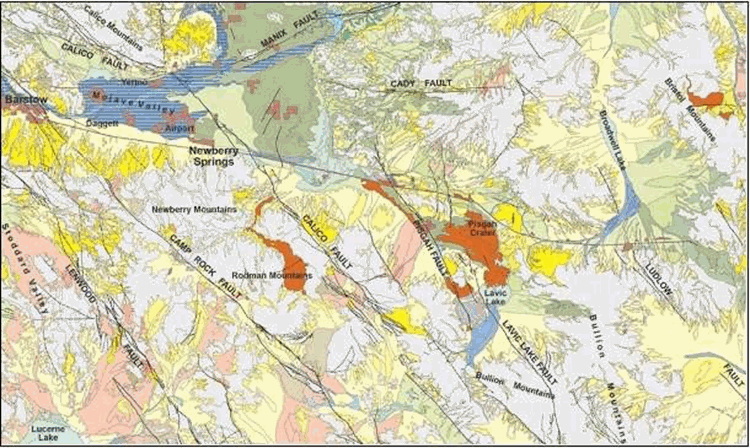
There are three prominent geologic features in the project area (Figure 6.2):
•Pisgah Fault, which transects the southwest portion of the project area west of the ore body;
•Pisgah Crater lava flow located approximately 2 miles east of the site; and
•Fault B, located east of the deposit.
Figure 6.2: Topographic map with faults and infrastructure
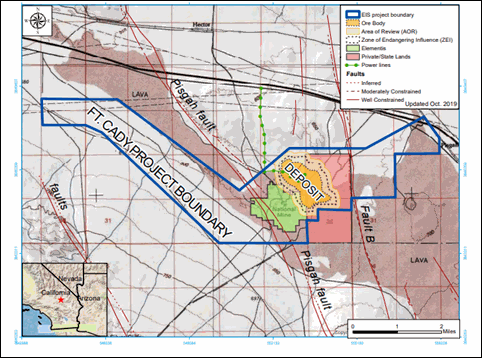
The Pisgah Fault is a right-lateral slip fault that exhibits at least 250 ft of vertical separation at the Project. The east side of the fault is up-thrown relative to the west side. Fault B is located east of the ore body and also exhibits at least 250 ft of vertical separation; however, at Fault B, the east side is down dropped relative to the west side. The uplifted zone containing the borate ore body the Wedge is situated within a thick area of fine-grained, predominantly lacustrine lakebed mudstones, east of the Pisgah Fault and west of Fault B.
6.1.1 Mineralization
Mineralization occurs in a sequence of lacustrine lakebed sediments ranging in depths from 1,300 ft to 1,500 ft bgs. The mineralization is hosted by a sequence of mudstones, evaporites and tuffs, consisting of variable amounts of colemanite, calcium borate 2CaO • 3B2O3• 5H2O, and lithium. Colemanite and lithium are the target minerals. Colemanite is a secondary alteration mineral formed from borax and ulexite. The mineral is semi-hard with a Mohs hardness of 4.5 and forms as discreet monoclinic, prismatic crystals or masses. Colemanite typically forms as a translucent colorless, white, or gray crystal with a vitreous luster. Colemanite is insoluble in water but soluble in HCl and sulfuric acid (H2SO4). Colemanite is associated with thinly laminated siltstone, clay and gypsum beds containing an average of 9% calcite, 35% anhydrite plus 10% celestite (SrSO4) (Wilkinson & Krier, 1985). In addition to colemanite and celestite, elevated levels of lithium have been found through chemical analyses of drill samples. X-ray diffraction analysis of core samples from the deposit indicates the presence of the evaporite minerals anhydrite, colemanite, celestite, and calcite. The mineralogy of the detrital sediments include quartz, illite, feldspars, clinoptilolite, and zeolite. The deposit underlies massive clay beds which appear to encapsulate the evaporite ore body on all sides as well as above and below the deposit. This enclosed setting makes the deposit an ideal candidate for in-situ mining technology affording excellent containment of the leachate solution.
6.2 Mineral Deposit
Boron is believed to have been sourced from regional thermal waters which flowed from hot springs during times of active volcanism. These hot springs vented into the Hector Basin when it contained a large desert lake. Borates were precipitated as the thermal waters entered the lake and cooled or as the lake waters evaporated and became saturated
with boron. Colemanite, being the least soluble mineral, would evaporate on the receding margins of the lake. The evaporite-rich sequence forms a consistent zone in which the borate-rich colemanite zone transgresses higher in the section relative to stratigraphic marker beds.
Based on drilling results, the deposit is elliptical in shape, with the long axis trending N40°W to N50°W. extending over an area of about 606 acres at an average depth of approximately 1,300 ft to 1,500 ft bgs. Beds within the colemanite deposit strike roughly N45°W and dip about 10° or less to the southwest. Using an isoline of 5% B2O3, mineralization has an approximate width of 2,800 ft and a length of 11,150 ft with thickness ranging from 70 to 262 ft exclusive of barren interbeds.
The western margin of mineralization appears to be roughly linear, paralleling the Pisgah Fault which lies approximately 1 mi to the west (Figure 6.2). Duval geologists consider this boundary to be controlled by facies change from evaporite rich mudstones to carbonate-rich lake beds, because of syn-depositional faulting. The northeast and northwest boundaries of the deposit are controlled by facies changes to more clastic material, reducing both the overall evaporite content and the concentration of colemanite within the evaporites. The southeast end of the deposit is open-ended, and additional drilling is necessary to define the southeastern limits of borate deposition (Wilkinson & Krier, 1985).
6.3 Stratigraphic Column
Drilling of the deposit by Duval in the late 1970’s and early 1980’s defined the following lithological sequence (Figure 6.3 and Figure 6.4). Four major units have been identified:
•Unit 1: is characterized by a 490 to 655 ft thick sequence of red-brown mudstones with minor sandstone, zeolitized tuff, limestone, and rarely hectorite clay beds. Unit 1 is located immediately below the alluvium and surface basaltic lavas.
•Unit 2: is a green-grey mudstone that contains minor anhydrite, limestone, and zeolitized tuffs. Unit 2 has a thickness ranging from 330 to 490 ft and is interpreted as lacustrine beds.
•Unit 3: is a 245 to 490-foot thick evaporite section which consists of rhythmic laminations of anhydrite, clay, calcite, and gypsum. Unit 3 contains the colemanite mineralization. Thin beds of air fall tuff are found in the unit which provide time continuous markers for interpretation of the sedimentation history. These tuffs have variably been altered to zeolites or clays. Anhydrite is the dominant evaporite mineral, and the ore deposit itself is made up mostly of an intergrowth of anhydrite, colemanite, celestite, and calcite with minor amounts of gypsum and howlite.
•Unit 4: is characterized by clastic sediments made up of red and grey-green mudstones and siltstones, with locally abundant anhydrite and limestone. The unit is approximately 160 ft thick and rests directly on an irregular surface of andesitic lava flows. Where drilling has intersected this boundary, it has been noted that an intervening sandstone or conglomerate composed mostly of coarse volcanic debris is usually present.
Figure 6.3 Long-section and cross-section through the Fort Cady deposit
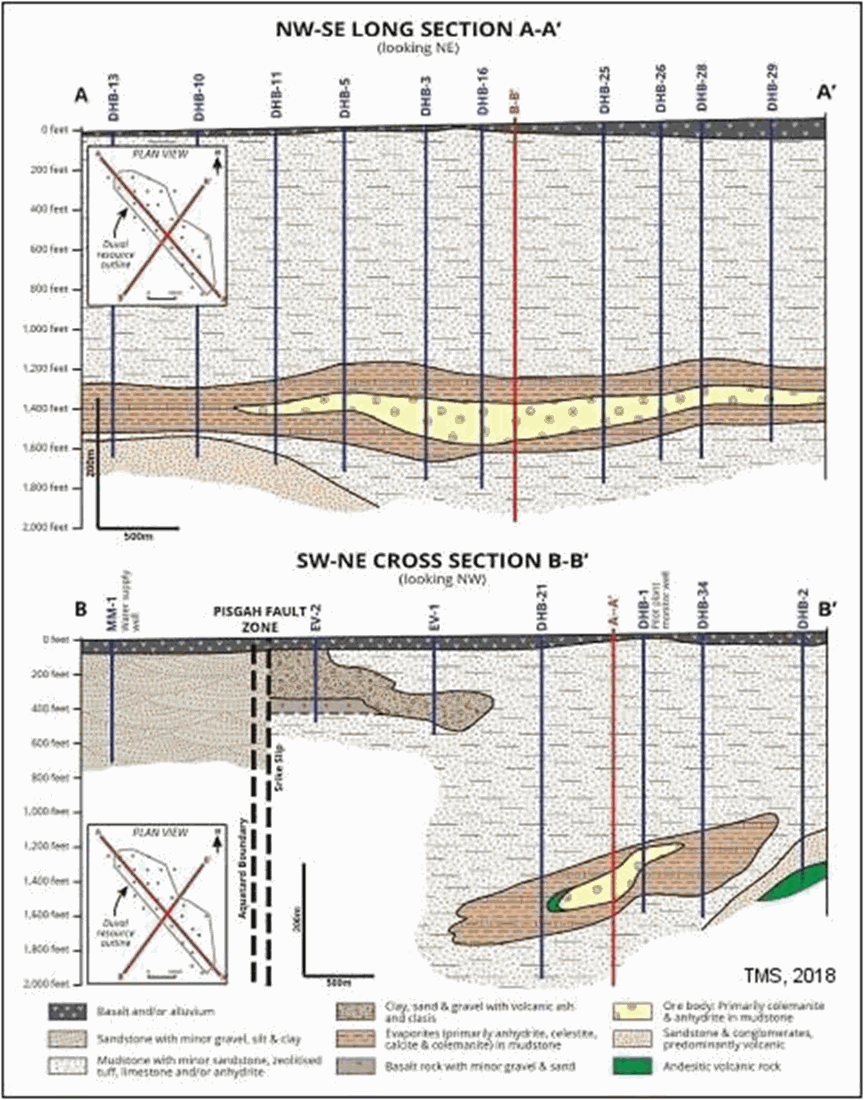
Figure 6.4: Generalized lithological column for the Fort Cady deposit
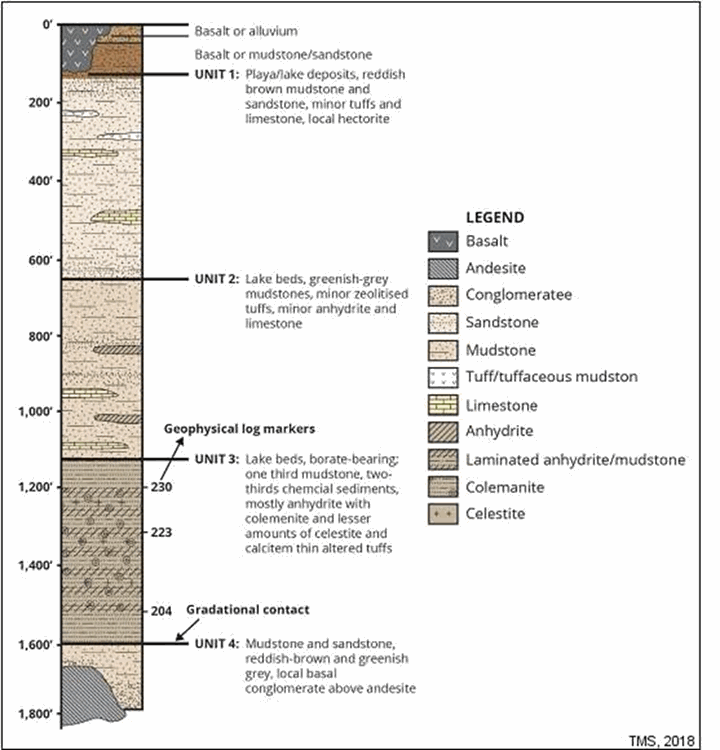
7 Exploration
7.1 Non-drilling exploration
Non-drilling exploration has not been deemed appropriate for this deposit.
7.2 Drilling
7.2.1 Historic Drilling
As part of their exploration program, Duval completed 35 drill holes between 1979 and 1981. The DHB holes were drilled using a combination of rotary drilling through the overburden followed by core drilling through the evaporite sequence. DHB-32 was drilled as a water well southeast of the Project. Geologic logs of rotary cuttings and core were completed for all holes followed by geochemical analyses of the core. Duval paid particular attention during logging to identifying marker beds ash tuffs for correlation. In addition to geologic logging, down-hole geophysics were completed on 25 holes for gamma ray and neutron. A few holes had additional geophysical logs completed for compensated density, deviation, induction, elastic properties, and caliper.
In 1981 and 1982, after the exploration program, Duval drilled five solution mining test (SMT) wells which were used in injection/recovery (IR) tests. Like previous drilling, the wells were rotary drilled through the overburden and cored through the evaporite sequence. Following coring, a 5.5-inch casing was set through the cored interval. All SMT wells were logged, and analytical samples are available from the cored intervals of SMT-1, SMT-2, and SMT-3. Gamma ray and neutron logs were collected from all SMT wells. Caliper, compensated density, and induction logs were run on several, but not all the SMT wells. Three additional SMT wells were established in 1992 and 1993 (SMT-92 & 93 Holes) and these three wells were rotary drilled to full depth and no geologic samples were collected.
FCMC completed two drilling campaigns during their participation in the Project. Additional P-Series holes were completed between 1987 and 1996 as rotary holes for injection/recovery test wells. Cuttings were sampled for analysis at 5-foot intervals for holes P-1, P-2, and P-3. A ten-foot sampling interval was used for sampling on P-4. No geologic samples were collected for holes P-5, P-6, and P-7. FCMC completed three S-Series wells in 1990. All three wells were rotary drilled and no geologic sampling was performed. FCMC completed down-hole geophysics on all the P and S-series wells. Historic drilling completed by Duval and FCMC is summarized in Table 7.1.
Table 7.1: Historic drilling summary
|
|
|
|
|
|
|
|
|
|
|
|
|
|
|
|
|
|
|
|
|
|
|
UTM 83-11 m |
|
|
Rotary Interval (ft) |
|
Cored Interval (ft) |
|
Drill Hole ID |
Easting |
Northing |
Collar
Elev.
(ft) |
Depth
(ft) |
From |
To |
|
From |
To |
No. of
Samples |
DHB-01 |
553,336 |
3,846,154 |
2,004 |
1,623 |
— |
1,090 |
|
1,090 |
1,623 |
187 |
DHB-02 |
554,062 |
3,846,179 |
2,033 |
1,679 |
— |
955 |
|
955 |
1,443 |
— |
DHB-03 |
553,089 |
3,845,899 |
1,980 |
1,773 |
— |
940 |
|
940 |
1,773 |
214 |
DHB-04 |
552,855 |
3,845,669 |
1,981 |
1,708 |
— |
1,194 |
|
1,194 |
1,708 |
178 |
DHB-05 |
552,848 |
3,846,153 |
1,978 |
1,730 |
— |
1,043 |
|
1,043 |
1,730 |
179 |
DHB-06 |
553,115 |
3,846,386 |
2,008 |
1,616 |
— |
1,040 |
|
1,040 |
1,616 |
125 |
DHB-07 |
553,736 |
3,845,492 |
2,000 |
1,735 |
— |
1,063 |
|
1,063 |
1,735 |
181 |
DHB-08 |
552,575 |
3,846,214 |
1,966 |
1,809 |
— |
1,072 |
|
1,072 |
1,809 |
186 |
DHB-09 |
552,391 |
3,846,408 |
1,967 |
1,750 |
— |
1,137 |
|
1,137 |
1,750 |
138 |
DHB-10 |
552,349 |
3,846,631 |
1,980 |
1,655 |
— |
1,148 |
|
1,148 |
1,655 |
86 |
DHB-11 |
552,599 |
3,846,390 |
1,976 |
1,671 |
— |
1,150 |
|
1,150 |
1,671 |
86 |
DHB-12 |
552,824 |
3,846,402 |
1,993 |
1,625 |
— |
1,130 |
|
1,130 |
1,625 |
85 |
DHB-13 |
552,104 |
3,846,877 |
1,978 |
1,661 |
— |
1,140 |
|
1,140 |
1,661 |
70 |
DHB-14 |
553,089 |
3,846,151 |
1,987 |
1,631 |
— |
1,105 |
|
1,105 |
1,631 |
80 |
DHB-15 |
553,580 |
3,846,158 |
2,013 |
1,609 |
— |
1,177 |
|
1,177 |
1,609 |
51 |
DHB-16 |
553,263 |
3,845,595 |
1,985 |
1,845 |
— |
1,193 |
|
1,193 |
1,845 |
138 |
DHB-17 |
552,843 |
3,845,925 |
1,982 |
1,804 |
— |
1,178 |
|
1,178 |
1,804 |
151 |
DHB-18 |
553,238 |
3,845,431 |
1,978 |
1,880 |
— |
1,212 |
|
1,212 |
1,878 |
106 |
DHB-19 |
554,141 |
3,845,287 |
2,034 |
1,460 |
— |
1,060 |
|
1,060 |
1,460 |
74 |
DHB-20 |
553,006 |
3,845,437 |
1,998 |
1,671 |
— |
1,207 |
|
1,207 |
1,671 |
— |
DHB-21 |
553,292 |
3,845,143 |
2,011 |
1,752 |
— |
1,118 |
|
1,118 |
1,828 |
39 |
DHB-22 |
553,275 |
3,845,902 |
1,988 |
1,711 |
— |
1,196 |
|
1,196 |
1,711 |
135 |
DHB-23 |
553,508 |
3,845,110 |
2,021 |
1,857 |
— |
1,208 |
|
1,208 |
1,857 |
114 |
DHB-24 |
553,523 |
3,845,637 |
1,994 |
1,780 |
— |
1,202 |
|
1,202 |
1,780 |
119 |
DHB-25 |
553,699 |
3,845,297 |
2,021 |
1,818 |
— |
1,248 |
|
1,248 |
1,818 |
152 |
DHB-26 |
553,891 |
3,845,056 |
2,050 |
1,702 |
— |
1,106 |
|
1,106 |
1,702 |
106 |
DHB-27 |
553,698 |
3,844,803 |
2,043 |
1,795 |
— |
1,228 |
|
1,228 |
1,795 |
95 |
DHB-28 |
554,004 |
3,844,943 |
2,053 |
1,690 |
— |
1,185 |
|
1,185 |
1,690 |
115 |
DHB-29 |
554,164 |
3,844,454 |
2,040 |
1,610 |
— |
1,203 |
|
1,203 |
1,610 |
101 |
DHB-30 |
553,873 |
3,844,630 |
2,050 |
1,720 |
— |
1,250 |
|
1,250 |
1,720 |
83 |
DHB-31 |
553,865 |
3,844,381 |
2,037 |
1,460 |
— |
1,195 |
|
1,195 |
1,625 |
41 |
DHB-32 |
551,770 |
3,843,845 |
2,045 |
870 |
— |
870 |
|
— |
— |
— |
DHB-33 |
554,045 |
3,844,254 |
2,043 |
1,601 |
— |
1,124 |
|
1,124 |
1,860 |
80 |
DHB-34 |
553,746 |
3,845,722 |
2,116 |
1,525 |
— |
1,150 |
|
1,150 |
1,620 |
79 |
DHB-35 |
551,249 |
3,848,166 |
2,068 |
1,449 |
— |
1,194 |
|
1,194 |
1,459 |
— |
P-1 |
553,093 |
3,845,908 |
1,984 |
1,500 |
— |
1,500 |
|
— |
— |
20 |
P-2 |
553,094 |
3,845,969 |
1,984 |
1,510 |
— |
1,510 |
|
— |
— |
21 |
P-3 |
553,033 |
3,845,902 |
1,981 |
1,510 |
— |
1,510 |
|
— |
— |
18 |
P-4 |
553,033 |
3,845,935 |
1,977 |
1,510 |
— |
1,510 |
|
— |
— |
34 |
P-5 |
553,193 |
3,845,874 |
1,985 |
1,547 |
— |
1,547 |
|
— |
— |
— |
P-6 |
553,209 |
3,845,946 |
1,989 |
1,525 |
— |
1,525 |
|
— |
— |
— |
P-7 |
553,217 |
3,846,023 |
1,992 |
1,475 |
— |
1,475 |
|
— |
— |
— |
SMT-1 |
553,323 |
3,846,144 |
2,004 |
1,315 |
— |
1,235 |
|
1,235 |
1,315 |
59 |
SMT-2 |
553,310 |
3,846,135 |
2,004 |
1,679 |
— |
1,234 |
|
1,234 |
1,316 |
55 |
SMT-3 |
553,211 |
3,845,897 |
1,988 |
1,679 |
— |
1,325 |
|
1,325 |
1,518 |
69 |
SMT-6 |
553,210 |
3,845,934 |
1,988 |
1,450 |
— |
1,341 |
|
1,341 |
1,450 |
— |
SMT-9 |
553,194 |
3,845,837 |
1,985 |
1,497 |
— |
1,341 |
|
1,341 |
1,497 |
— |
This data, along with company drilling discussed in Section 7.2.2 and subsequent analysis discussed in Section 8, form the basis and confirmations for the geologic model.
7.2.2 Company Drilling
After acquisition of the Project in May 2017, American Pacific Borates and Lithium, Ltd, a predecessor entity to 5E, completed 14 drill holes, which confirmed previous drilling results and expanded the Mineral Resource Estimate. Table 7.2 provides a summary of the 2017 drilling program. A cross-section through the deposit is also displayed in Figure 7.1. Drilling through the overburden sequence was completed using rotary air blast drilling. This was followed by drilling a 2.5-inch core through the evaporite sequence. All drill holes were completed vertically with no greater than five degrees of deviation.
Table 7.2: 2017 5E drilling summary
|
|
|
|
|
|
|
|
|
|
|
|
|
|
|
|
|
|
|
|
|
|
|
UTM 83-11 m |
|
|
Rotary Interval (ft) |
|
Cored Interval (ft) |
|
Drill Hole ID |
Easting |
Northing |
Collar
Elev.
(ft) |
Depth
(ft) |
From |
To |
|
From |
To |
No. of
Samples |
17FTCBL-01 |
552,638 |
3,846,716 |
2,006 |
1,569 |
— |
1,204 |
|
1,204 |
1,569 |
82 |
17FTCBL-02 |
552,711 |
3,846,490 |
1,997 |
1,509 |
— |
1,208 |
|
1,208 |
1,509 |
107 |
17FTCBL-03 |
552,981 |
3,846,485 |
2,019 |
1,459 |
— |
1,153 |
|
1,153 |
1,459 |
91 |
17FTCBL-04 |
552,695 |
3,846,268 |
1,978 |
1,738 |
— |
1,266 |
|
1,266 |
1,738 |
162 |
17FTCBL-05 |
552,930 |
3,846,267 |
1,995 |
1,589 |
— |
1,237 |
|
1,237 |
1,589 |
150 |
17FTCBL-06 |
553,145 |
3,846,260 |
2,002 |
1,502 |
— |
1,189 |
|
1,189 |
1,502 |
83 |
17FTCBL-07 |
552,772 |
3,846,041 |
1,977 |
1,775 |
— |
1,196 |
|
1,196 |
1,775 |
207 |
17FTCBL-08 |
552,972 |
3,846,042 |
1,984 |
1,625 |
— |
1,202 |
|
1,202 |
1,625 |
153 |
17FTCBL-09 |
553,179 |
3,846,037 |
1,992 |
1,560 |
— |
1,169 |
|
1,169 |
1,560 |
120 |
17FTCBL-10 |
552,831 |
3,845,939 |
1,989 |
1,647 |
— |
1,208 |
|
1,208 |
1,647 |
176 |
17FTCBL-11 |
553,078 |
3,845,899 |
1,983 |
1,778 |
— |
1,332 |
|
1,332 |
1,778 |
155 |
17FTCBL-12 |
552,963 |
3,845,801 |
1,973 |
1,750 |
— |
1,281 |
|
1,281 |
1,750 |
212 |
17FTCBL-13 |
553,153 |
3,845,818 |
1,992 |
1,769 |
— |
1,313 |
|
1,313 |
1,769 |
155 |
17FTCBL-14 |
553,270 |
3,845,608 |
1,987 |
1,845 |
— |
1,328 |
|
1,328 |
1,845 |
260 |
Core logging was completed on all drill holes and included lithological and geotechnical logging. Downhole geophysical logs included Gam Ray, Induction, and standard caliper, and were completed on all drill holes from surface to total depth except for 17FTCBL009 where adverse hole conditions resulted in only partial geophysical logging. All core is logged and photographed according to industry standard procedures. An example of core photos is shown in Figure 7.2.
A geotechnical drill hole, APBL023, was also completed in 2017. This well was cored for its entire length and a geologic log was completed to define mineralized horizons. No splitting or analytical samples were collected from this hole to preserve the core for subsequent geotechnical testing.
In 2022, 5E drilled 13 wells as part of a monitoring well and testing program. One well, IR2-01-01, was cored and assayed and subsequently added to the drilling database as outlined in Table 7.3.
In 2023, three observation wells, OW-9, OW-10, and OW-11 were completed as part of the permitting process with the EPA. Down-hole geophysics were completed on the three wells. Rotary cuttings from the wells were logged and assayed and subsequently included into the drilling database.
The QP considers the drilling program by 5E to be of sufficient quality to support a Mineral Resource Estimate.
Table 7.3: Recent 5E Drilling
|
|
|
|
|
|
|
|
|
|
|
|
|
|
|
|
|
|
|
|
|
|
|
UTM 83-11 m |
|
|
Rotary Interval (ft) |
|
Cored Interval (ft) |
|
Drill Hole ID |
Easting |
Northing |
Collar
Elev.
(ft) |
Depth
(ft) |
From |
To |
|
From |
To |
No. of
Samples |
IR2-01-01 |
552,472 |
3,845,807 |
2,006 |
1,931 |
— |
1,079 |
|
1,079 |
1,931 |
135 |
OW-9 |
553,364 |
3,845,874 |
1,972 |
1,527 |
— |
1,527 |
|
— |
— |
46 |
OW-9 |
553,619 |
3,845,692 |
1,979 |
1,800 |
— |
1,800 |
|
— |
— |
44 |
OW-11 |
552,669 |
3,845,877 |
1,978 |
1,538 |
— |
1,538 |
|
— |
— |
41 |
Figure 7.1: Cross-section through the Fort Cady deposit
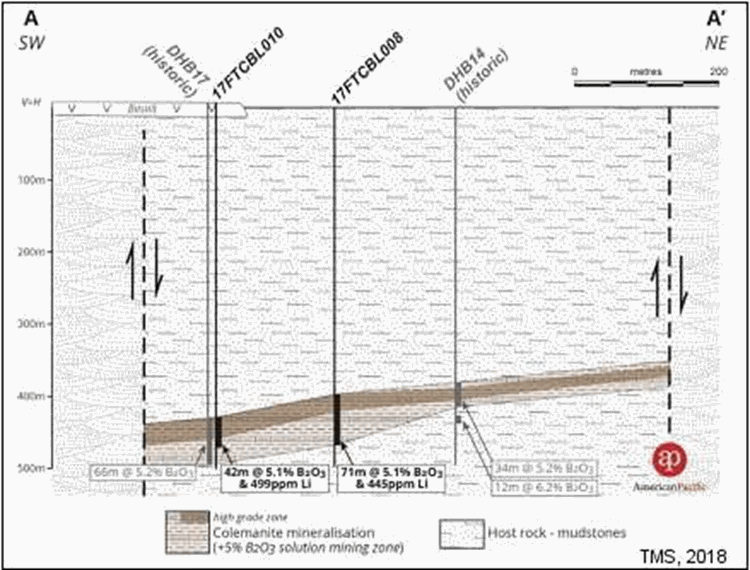
Figure 7.2: Core photo, 17FTCBL-014
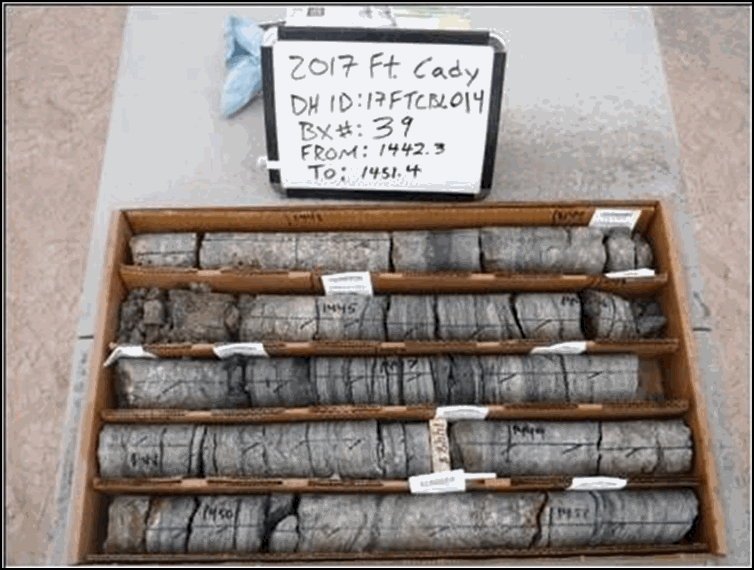
7.3 Hydrogeology
7.3.1 Hydraulic Setting
The Project deposit is in the California Groundwater Bulletin 118 Unit Basin 14 Lavic Valley, and Hydrologic Unit 12 sub-basin 180902081303. There is no name associated with the sub-basin and it is located north and west of the Lavic Lake and town of Lavic hydrologic sub basins. Basin 180902081303 is approximately 39,657 acres (160.48 square kilometers) in area and extends from the Rodman Mountains south and west of the Project in a north direction towards Highway 40, terminating at a topographical divide at the highway. The basin is bound to the south and east by the Pisgah Crater and Lavic Lake Volcanic Field.
The Fort Cady Mountains constrain Basin 14 to the north and the Rodman Mountains and Lava Bed Mountains constrain Basin 14 to the south of the Project. The groundwater flow in the Lavic Valley alluvial basin is generally west towards the Mojave River, but in the project area is poorly defined. The basin outflow is interpreted to occur to the east of Broadwell Valley, with no localized groundwater discharge such as evapotranspiration or discharge to springs or a river.
The mineral deposit is bounded to the west by the Pisgah Fault and to the east by subordinate faults that include Fault B (UIC permit application; Confluence Water Resources CWR, 2019 Fault B Program Results, Technical Report).
The nearest industrial well, owned by Candeo Lava Products, is 3.5 miles east of the Project ore body. No other water wells are known to exist within the vicinity of the Project. Water level measurements from the Candeo Lava Products well are not currently available but are greater than 96 ft bgs based on the CWR investigation in 2018. The next closest water well is located north and west of the Project at the Desert Oasis Highway Rest Stop providing non-potable water to the rest stop facilities. This well is located approximately 7 miles northwest of the Project. The depth to water from the Rest Stop Well (Well 1807), was measured by CWR to be 54.75 ft bgs, at an approximate elevation of 1,758 ft amsl.
The nearest municipal well is screened in the valley alluvium, west of the Pisgah fault and approximately five miles northwest of the ore body (Figure 7.3).
Figure 7.3: Project area groundwater basins and surrounding area wells, Fort Cady Project
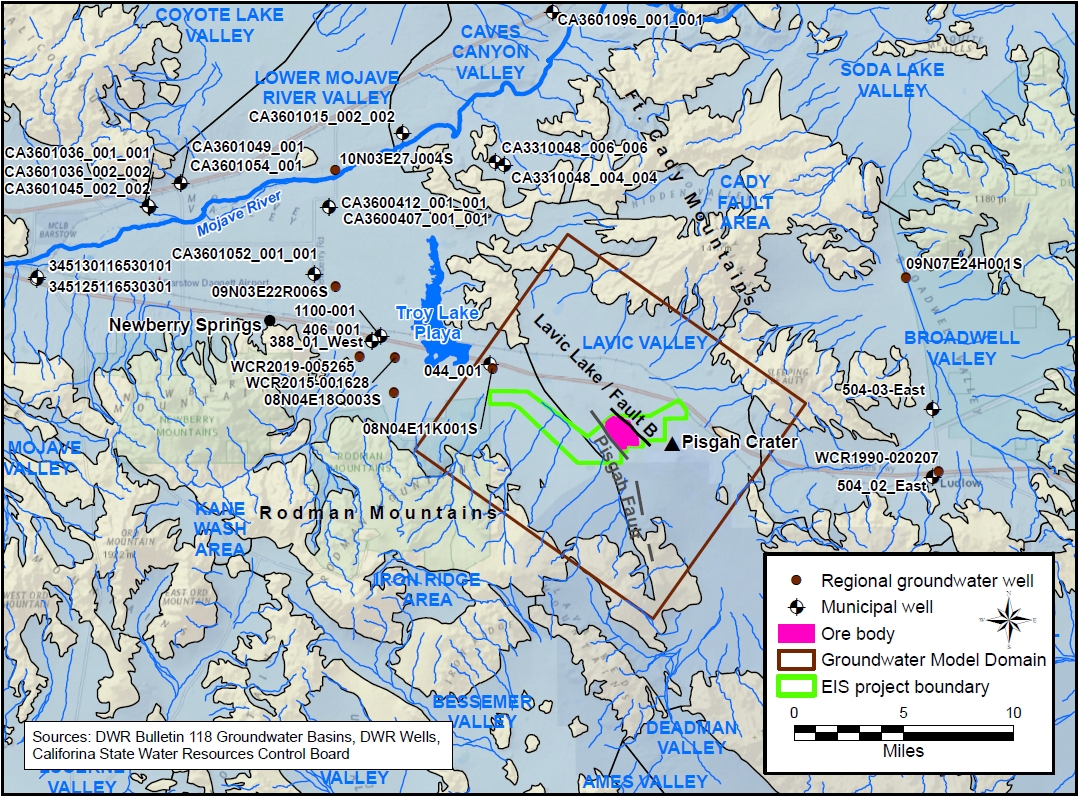
Private domestic wells are associated with rural residences located greater than 6.5 miles west of the Project on the eastern edge of the town of Newberry Springs. Irrigation wells are located further west, the closest of which is approximately 10 miles west of the Project. The Pisgah Fault separates these residential and irrigation wells from the Project area, such that they are not within the same regional groundwater flow system and are not hydraulically connected.
The Project is located within a closed basin. Although surface water is rarely present in the vicinity of the Project, when it occurs, flow is in a northwesterly direction past the Project area from the Rodman Mountains and the Pisgah Crater topographic divide. There are no perennial springs or streams in the vicinity of the Project. Surface water-related features are seasonal, and ephemeral in response to meteorological events. These features consist of unnamed dry washes that may carry water during heavy storm events generally draining west through the Project area toward the Troy Lake playa in Newberry Springs.
7.3.2 Project Area Groundwater Levels
The orebody is “wedged” between the Pisgah Fault and Fault B. The static depths to groundwater in the vicinity of the orebody generally range between 240 and 350 ft bgs. Prior to injection in 2024, the measured groundwater elevation in the wedge ranged from approximately 1,500 ft amsl at MW-3A to 1,720 ft amsl at AOR-3A, although many wells were still recovering from fluid evacuation during drilling. Injection and recovery in the IR wells beginning in January 2024 has caused pressure fluctuations in two wells, OW-6A and all three screens of OW-10 (nested well). The pressure response from injections causes water level fluctuations of about 35 ft in OW-6A which is about 1,000 ft away from the IR wells. The deepest screen of OW-10 fluctuates ~50 ft while the middle and shallow screen fluctuate ~100 ft in response to injection and recovery at the IR wells. The water levels in the remaining wells do not show a response to injections and are either still recovering or remaining relatively flat.
The groundwater elevation outside the wedge, west of the Pisgah Fault in the quaternary alluvial fan sediments of the Lower Mojave River Valley Groundwater Basin is approximately 1,785 ft amsl in Project wells MWW-1, MWW-S1, and MWW-2.
The difference in groundwater elevation between Project wells presents a steepening of the gradient from west to east across the Pisgah Fault. There is approximately a 30 to 40 foot water level differential on the east and west sides of the Pisgah Fault, which is regionally recognized as a barrier to groundwater flow and represents one of the groundwater basin boundaries.
Groundwater in the vicinity of Fault B at Project wells TW-1, PW-1, and PW-2, is approximately 350 to 390 ft bgs in the coarser alluvial sediments to the east of Fault B (PW-1 and PW-2) and in a mix of alluvial and fine playa sediments to the west of Fault B (TW-1).
Monitoring wells drilled in 2021 by 5E as part of permit compliance did not encounter groundwater above the Unit 4 sediments except for a perched groundwater zone localized in fine sand lenses underlaying surficial basalt above the contact with Unit 1. The results of the Shallow Groundwater Characterization Program (CWR, June 2022, Shallow Groundwater Characterization Report on Mining Block 2 Near Pisgah Fault), indicated that groundwater encountered during drilling of the Series 7 wells is of low yield, poor quality and probably low storage capacity.
Recharge to the perched zone originates from precipitation occurring in the Lava Bed Mountains, and drainage from Sunshine Peak, located southwest of the project. The upgradient precipitation drains into the shallow alluvium southwest of the Pisgah Fault with shallow groundwater flowing in a northeasterly direction through unconsolidated alluvial sediments, before draining under the basalt flow at a gradient of 0.002 ft/ft into cemented sandstone and mudstone, where it is compartmentalized within the lithology and controlled by Fault B. Interpretation of chip logs for all Series 7 and Series 3 wells, and the WSW and WMW wells, indicate the shallow cemented sandstone is not uniform, decreasing in depth to the east of the project, where the mudstone is encountered higher in most wellbores due to either pre-basalt flow topography and/or offset from faulting.
Since shallow groundwater was not encountered or observed during drilling of the Series 3 monitor wells, the Pisgah Fault is interpreted as being a strong influence on the shallow groundwater system flow dynamics, influencing the groundwater quality in Block 2. The lateral extent of the shallow groundwater system is anticipated to be confined to within the area underlying the surface basalt near the Series 7 wells to the extent of the Pisgah Fault zone northwest of the Project.
The Pisgah Fault compartmentalizes the shallow groundwater system’s lateral extent within the western Project area and is not the source of shallow groundwater.
Below Unit 4 is the Unit 5 andesite where groundwater was encountered in MW-3B (CWR, March 12, 2023, CWR Technical Memorandum, Results of OW-3A and MW-3B Hydraulic Testing, Fort Cady California Project), describe the results of groundwater testing between Unit 4 and the underlying andesite. The results of air lift testing found that the Unit 5 groundwater is under a highly confined pressure demonstrating that Unit 4 is an aquiclude up to 150 ft thick, preventing percolation of groundwater from Unit 3 to Unit 5. The current conceptual model indicates that recharge in the deep bedrock is extremely slow. This is particularly true between the Pisgah Fault and Fault B, where inflow from precipitation recharge through the alluvium or inflow from adjacent bedrock is minimal due to the bounding faults.
Proven water resources have been deemed acceptable through Phase 1 of the Project.
7.3.3 Hydrogeology External to the Ore Block
The hydrology east of Fault B, approximately 3,500 ft east of the colemanite deposit was analyzed by CWR (2018) that found, 1) a significant groundwater resource east of Fault B, and 2) that the fault is a barrier to groundwater flow. Stable isotope analytical results compared against Nevada Meteoric Water Lines appropriate for desert terrains found that the aquifer east of Fault B and the aquifer west of the Pisgah Fault have different origins, while the limited groundwater
between the two faults is of a different origin than both aquifers. Recovery rates from wells between the two faults, which includes the colemanite deposit, are less than one gpm as would be expected in mudstones and claystone with very limited groundwater present.
7.3.4 Formation Hydraulic Properties
Testing for hydraulic properties of the colemanite and evaporates/mudstones containing the colemanite have occurred on several occasions. Based on the pump test results in mudstone and claystone sediments above and below the ore body evaporites, CWR (2019) estimated hydraulic conductivity to be approximately 10-5 ft/day, a very low value. Additionally, a majority of the monitoring wells have been recovering since development and have not reached a steady state value after 3+ years, a clear indicator of limited water in the confining units and low hydraulic conductivity.
The results of the testing in OW-3A indicate the contact between Units 2 and 4 is extremely low permeability, with hydraulic conductivity (K) approximately 4.3 x 10⁻⁵ feet/day. Testing in MW-3B indicates the permeability of the underlying andesite is three orders of magnitude higher, approximately 8.9 x 10⁻² feet/day (CWR, March 12, 2023, Results of OW-3A and MW-3B Hydraulic Testing, Fort Cady California Project).
7.3.4.1 Duval 1980-1982
Beginning in 1980, Duval retained Core Laboratories, Inc. to run injectivity tests on one-inch cores from borehole SMT-1. The samples were extracted with toluene, salts leached with cool methanol and dried in a controlled humidity oven. Permeability to air and Boyle’s Law porosity were determined for each sample.
The injectivity tests were run at the reservoir temperature of (simulated) formation water (120o F) which flowed through the core until equilibrium occurred, and a minimum of three pore volumes had been injected. Sulfuric acid and hydrochloric acid solutions were injected through the core samples after which the permeability to acid solutions was determined.
In the 1981 testing, injection pressures were up to 1,250 psi, with flow velocities predominantly 107 cm/sec with groundwater, increasing to 105 cm/sec with acid concentrations between 10-20%, indicative of the hydraulically tight nature of the claystone hosting the deposit.
While detailed information on the Core Lab testing procedures is available, quality assurance and quality control (QA/QC) procedures are not.
Based on the colemanite content in the sediments and laboratory core analyses, the end-point porosity of the ore body formation after mining was predicted by Core Lab in 1981 to be 15-19%.
7.3.4.2 In-Situ 1990
A field pilot test found that the initial permeability ranged from 1.35 x 10⁻⁹ to 2.9 x 10⁻¹⁰ cm/sec as part as a multiple well constant rate injection test to determine the directional tendencies of hydraulic properties in the mineral deposit. In-Situ also investigated the effects of prior injection/recovery testing using a Badger flow meter, a HEREMIT data logger, and pressure transmitters. The water-level responses were measured in the injection well and six nearby observation wells and the Cooper and Jacob method used to analyze data from each well and the Papadopulos Method to determine directional permeability. The results confirmed the earlier work that the permeability and transmissivity of the deposit are low.
7.3.4.3 Hydro-Engineering 1996
This analysis summarized some of the testing and provided interpretations of prior testing in 1981 and 1990. The mineralized sequence of rock transmissivity is estimated at 10 gal/day/ft, or 1.3 ft2/day. Assuming that the colemanite mineralized sequence occurs over an approximate 300 ft thickness, then the native K was estimated at 4.5 x 10⁻³ ft/day, similar to that of Simon Hydro-Search 1993 of 8.2 x 10⁻³ to 2.2 x 10⁻² ft/day K converted from millidarcy units. The storage coefficient (S) of the ore body was also estimated by Hydro-Engineering 1996 to be at 2.5 x 10⁻⁶.
Increases in the transmissivity, hydraulic conductivity and storage coefficient will occur as colemanite is dissolved from the formation. Hydro-Engineering, 1996, estimated that the end-point permeability of the ore body formation after colemanite dissolution would be approximately 30 times higher, with a long-term storage coefficient of approximately 1.1 x 10⁻⁵. The end-point hydraulic properties are still low because much of the formation is evaporites, anhydrite, and claystone that will not be dissolved.
7.3.4.4 Geomega 2023
Geomega analyzed step rate testing completed in the IR wells in block two in 2023. The step rate tests resulted in an average formation fracture pressure of 917 psi and a formation fracture gradient of 0.69 psi/ft, well aligned with prior estimates of 0.65 to 0.76 psi/ft from the Duval 1983 pilot tests. Further analysis of the data indicated that permeability ranged from 0.5 to 2 millidarcies with total porosity ranging from 27% to 34%, aligned with prior low permeability estimates.
7.3.5 Water Quality Compliance Monitoring
Routine sampling of monitoring wells is ongoing for water quality purposes, with OW-6A specifically used to monitor the movement of mining related solutions. While monitoring wells installed closer to the IR wells in late 2024 do not have enough data yet to determine mining related impacts (there is a wide range of natural variability in the ore body), none of the monitoring wells show definitive indications of mining related solution impact as of Q2 2025.
8 Sample Preparation, Analysis and Security
8.1 Sampling Method and Approach
Between September 2017 and October 2017, 14 holes for a total of 23,111 ft were completed as part of a confirmatory resource drilling program. Assay results from all 14 drill holes were used in the mineral resource estimate. There are 2,113 samples from the 2017 drilling program representing 1,713 ft of core. In conjunction with the 2017 drilling program, 29 historical drill holes completed by Duval and four holes completed by FCMC have been utilized in the mineral resource estimate. There are 3,672 samples from the historic drilling representing a cumulative total 10,831.3 ft of core. The QA/QC procedures for the historic drilling are unknown though the work products compiled during the historic drilling suggest it was carried out by competent geologists following procedures considered standard practice at that time.
Discussions held with Pamela A.K. Wilkinson, who was an exploration geologist for Duval at the time of drilling and sampling, indicate that Duval had internal quality control and quality assurance procedures in place to ensure that assay results were accurate. Duval utilized their Tucson, West Texas Culberson Mine or New Mexico Duval Potash Mine laboratories for analytical work carried out at the Project. Geochemical analyses were carried out using X-Ray Fluorescence Spectrometry (XRF). XRF results were reportedly checked against logging and assay data.
Entire core sequences were sampled. Sample intervals were determined at the time of logging based on changes in lithology, mineralogy, and bedding. Sample intervals range from 0.2 to 6.6 ft with an overall average sample length of 2.66 ft. Following determination of sampling intervals, the core was split in half using a core splitter. One half of the core is used for the analytical sample with the remaining half core being returned to the core box for archiving. Samples are then placed into labeled plastic sample bags along with a pre-numbered sample tag. A companion sample tag is placed back in the core box marking the interval sampled. Samples were dispatched by commercial carrier to the Saskatchewan Research Council (SRC) for geochemical analysis. SRC has been accredited by the Standards Council of Canada and conforms with the requirements of ISO/IEC 17025.2005.
Identical sampling procedures were followed in 2022 for IR2-01-01. One hundred thirty-five (135) samples were collected from IR2-01-01 and dispatched to SRC for analysis.
For observation wells OW-9, OW-10 and OW-11, 131 chip samples were collected on 1.0 to 16 ft. intervals with the most samples through the mineral horizons at 10 ft. lengths. Sample splits weighing approximately 640 grams were dispatched to SRC for analysis.
8.2 Sample Preparation, Analysis and Security
Upon receipt of samples from 5E, SRC would complete an inventory of samples received, completing the chain of custody documentation, and providing a ledger system to APBL tracking samples received and steps in process for sample preparation and analysis. Core samples and chip samples are dried in their original sample bags, then jaw crushed. A subsample is split out using a sample riffler. The subsample is then pulverized with a jaw and ring grinding mill. The grinding mill is cleaned between each sample using steel wool and compressed air or by using silica sand. The resulting pulp sample is then transferred to a barcode labeled plastic vial for analysis.
All samples underwent a multi-element Inductively Coupled Plasma Optical Emission Spectroscopy (ICP-OES), using a multi-acid digestion for Ag, Al2O3, Ba, Be, CaO, Cd, Ce, Cr, Cu, Dy, Er, Eu, Fe2O3, Ga, Gd, Hf, Ho, K2O, La, Li, MgO, MnO, Mo, Na2O, Nb, Nd, Ni, P2O5, Pb, Pr, Sc, Sm, Sn, Sr, Ta, Tb, Th, TiO2, U, V, W, Y, Yb, Zn, and Zr. Boron was also analyzed by ICP-OES but undergoes a separate digestion where an aliquot of the sample is fused in a mixture of NaO2/NaCO3 in a muffle oven, then dissolved in deionized water, prior to analysis. Major oxides Al2O3, CaO, Fe2O3, K2O, MgO, MnO, Na2O, P2O5 and TiO2 are reported in weight percent. Minor, trace, and rare earth elements are reported in ppm. The detection limit for B is 2 ppm and 1 ppm for Li.
For the 2017 drilling program and IR2-01-01 in 2022, a total of 2,253 core samples and 441 control samples were submitted for multi-element analysis to SRC. 5E submitted control samples in the form of certified standards, blanks and coarse duplicates bags with sample identification supplied by 5E for SRC to make duplicate samples. In addition to these control samples, SRC also submitted their own internal control samples in the form of standards and pulp duplicates. A summary of all the QA/QC control samples submitted to SRC is shown in Table 8.1. Only the internal control samples provided by SRC were included with rotary chip samples from the observation wells drilled in 2023.
Table 8.1: Summary of QA/QC control samples
|
|
|
|
|
|
|
|
|
|
|
|
|
|
|
|
|
|
|
|
|
|
Submitted
By |
Drilling Type |
Number of
Holes |
Meters
Drilled |
Standards |
Blanks |
Coarse
Duplicates |
Pulp
Duplicates |
Total
Frequency |
Primary
Samples |
Total |
5E |
Rotary |
15 |
5,284.24 |
— |
— |
— |
— |
— |
— |
— |
|
Diamond Tail |
— |
— |
— |
— |
— |
— |
— |
— |
— |
|
Tail |
15 |
2,472.85 |
153 |
143 |
144 |
— |
— |
2,253 |
2,693 |
|
Total |
15 |
7,757.09 |
153 |
143 |
144 |
— |
— |
2,253 |
2,693 |
|
Frequency |
5.68% |
5.31% |
5.35% |
— |
19.10% |
83.66% |
100% |
SRC |
SRC Internal QAQC |
|
|
151 |
|
82 |
|
|
|
|
|
Frequency |
7.10% |
|
3.90% |
|
11.00% |
|
|
Certified standards SRM 1835 and SRM 97b, prepared by the National Institute of Standards and Technology, were submitted as part of the APBL QA/QC procedures, the results of which are shown graphically on Figure 8.1 and Figure 8.2. Standard deviations shown are for the SRC assays. No two standards in any single batch submission were more than two standard deviations from the analyzed mean, implying an acceptable level of precision of SRC instrumentation.
Figure 8.1: Assay results of Standard SRM1835
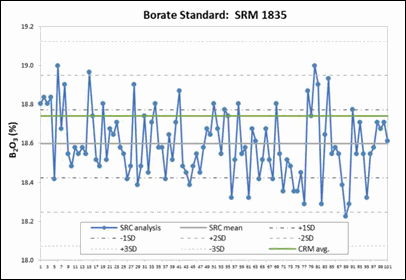
Figure 8.2: Assay results of Standard SRM97b
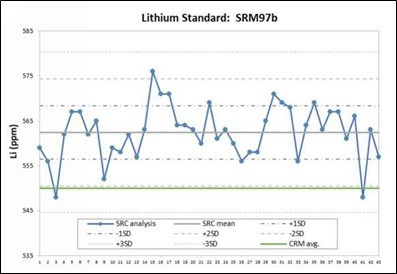
SRC assayed two different standards, CAR110/BSM and CAR110/BSH, for its own QC protocol. CAR110/BSM is designated as a “medium boron standard.” CAR110/BSH is designated as a “high boron standard.” Figure 8.3 and Figure 8.4 display the analytical results for the certified standards. The analytical precision for analysis of both CAR110/BSM and CAR110/BSH is also reasonable, with no two standards in any single batch submission being more than two standard deviations from the analyzed mean.
Figure 8.3: Assay results for SRC Standard CAR110/BSM
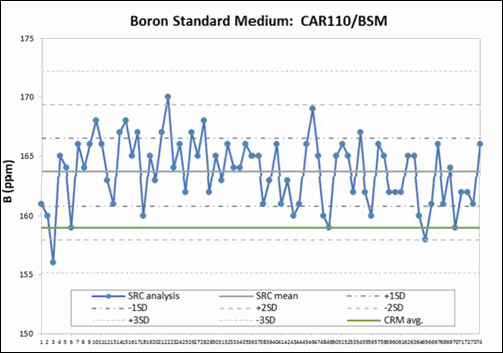
Figure 8.4: Assay results for SRC Standard CAR110/BSH
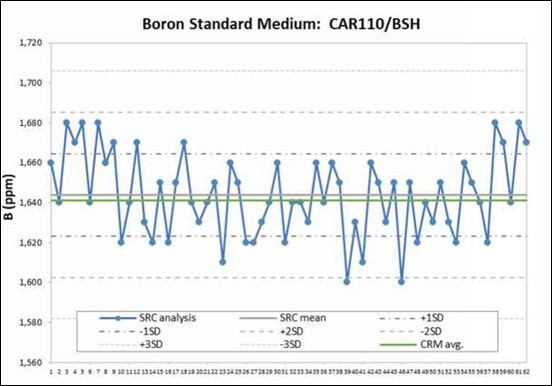
Figure 8.5: Sample blank assay results for boron
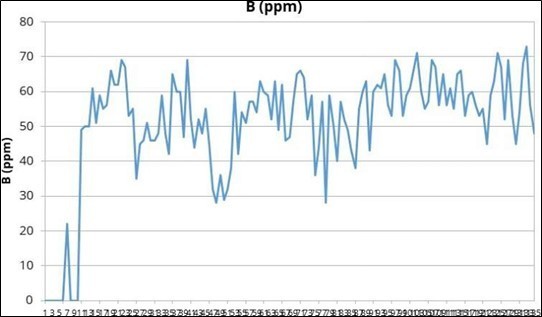
Blank samples inserted by 5E consisted of non-mineralized marble. One hundred and thirty-five blank samples were submitted, all of which had assay results of less than 73 ppm B. The level of boron detected in the blanks is likely sourced from pharmaceutical borosilicate glass used during sample digestion. These boron concentrations are considered immaterial in relation to the boron levels detected in the colemanite mineralization and do not appear to represent carryover contamination from sample preparation. Lithium levels in the blank samples are also at acceptable levels with many assays <15 ppm Li. The four highest Li levels in the blanks immediately followed samples that contained relatively high Li concentrations. Overall, the concentration of the primary elements of interest B and Li in the blanks are at levels considered to be acceptable, implying a reasonable performance for sample preparation. The results of the blanks for B and Li are plotted in Figure 8.5 and Figure 8.6.
Figure 8.6: Sample blank assay results for lithium
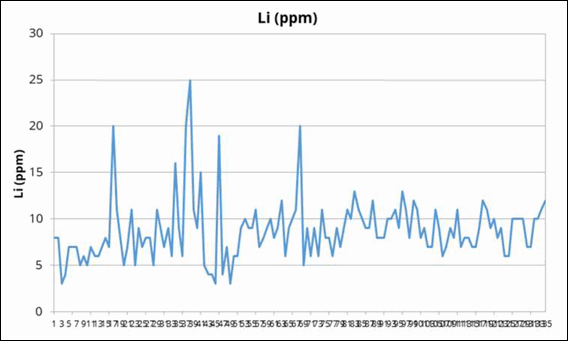
A total of 136 duplicate samples were submitted to the SRC. 5E commissioned SRC to compose coarse duplicate samples using a Boyd rotary splitter. Figure 8.7 and Figure 8.8 show the assay results of duplicate samples for B and Li. As can be seen from the regressions, there is a good correlation between original and duplicate samples.
Figure 8.7: Duplicate sample results for boron
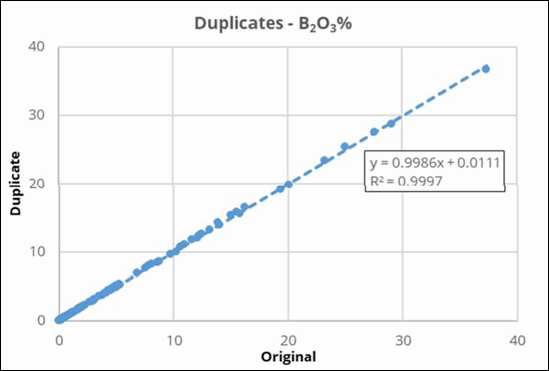
Figure 8.8: Duplicate sample results for lithium
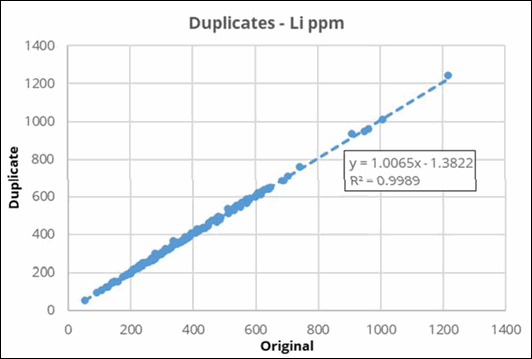
Figure 8.9 displays a HARD half absolute relative difference plot for the duplicates. This highlights reasonable precision for the duplicates. Regression and HARD results were also plotted for pulp duplicates assayed in SRC’s own QC protocol shown in Figure 8.10 and Figure 8.11. These also show a reasonable level of precision.
Figure 8.9: HARD diagram for 5E duplicate samples
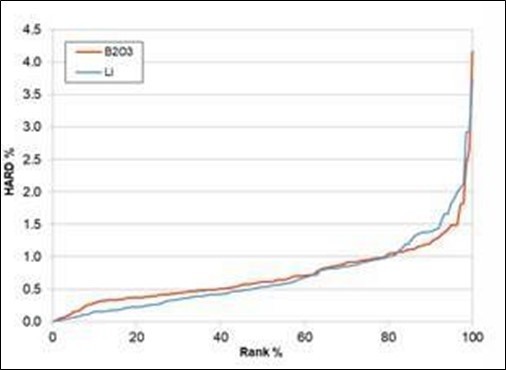
Figure 8.10: SRC duplicate results
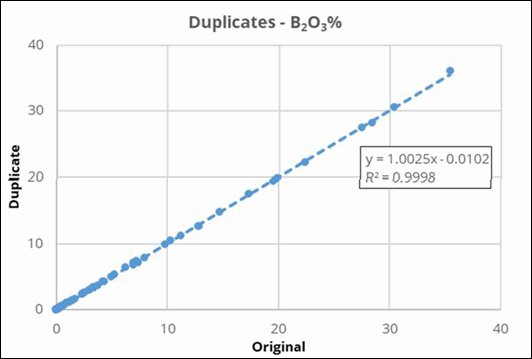
Figure 8.11: SRC duplicates HARD diagram
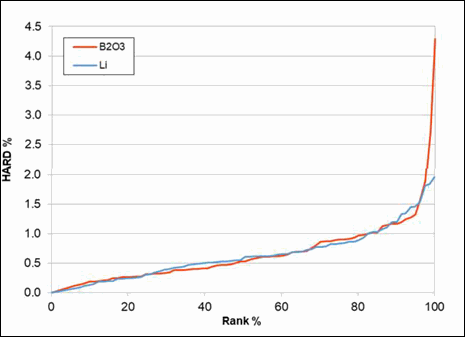
The QP believes reasonable care has been taken to collect and dispatch samples for analysis. The QA/QC program has shown that the analyses are viable with a minimum of dispersion or contamination errors. The QP considers the sampling program to be of sufficient quality to support a mineral resource estimate.
9 Data Verification
9.1 Data Verification Procedures
During a site visit, the QP examined the core and also visited the site in 2024. Core has been safely stored in a designated storage building near the mine site office and is in good condition. The QP examined the core and compared the core to the geologic logs and sample interval records and found good agreement with the log descriptions and with no discrepancies with sample intervals.
The QP has done a visual check of drilling locations through Google Earth. Drill sites from the 2017 drilling program are still visible in imagery. Older sites completed by Duval and FCMC are not discernible on imagery.
Historic drilling location records were originally recorded in California State Plane coordinates or in metes and bounds. The QP checked historic drilling location data to ensure these records had been properly converted to Universal Transverse Mercator (UTM) coordinates, the coordinate system used in the 2017 drilling program. All historic location data has been properly converted to the current UTM coordinate system.
The QP received drilling records, sample intervals, and assay results in excel workbook files that were used as input for the drill hole database. Through a variety of data checks drill hole information was evaluated for duplicate entries, incorrect intervals, lengths, or distance values less than or equal to zero, out-of-sequence intervals and intervals or distances greater than the reported drill hole length. Historical drill hole records were also checked against relevant Duval and FCMC data sets. A review comparing original field logs and assay reports showed the data to have been transcribed accurately into the Excel files.
9.2 Data Limitations or Failures
The QP did not identify any data limitations or failures.
9.3 Data Adequacy
The QP believes adequate care has been taken in preserving and transcribing the historic data to digital format and drill hole data accurately corresponds back to the sample ledger and assay certificates. The QP believes that the data used is adequate and suitable for a mineral resource estimate.
10 Mineral Processing and Metallurgical Testing
This section summarizes at a high level the overall metallurgical program and flowsheet development work completed during the preliminary feasibility study (PFS). This test work validates the selected options of the PFS flowsheets.
The most recent phase of metallurgical test work was primarily focused on the evaluation and optimization of the crystallization and impurity removal circuits for boric acid production. Crystallization represents a critical unit operation, directly influencing both product purity and throughput.
The impurity removal process step occurs downstream of the boric acid crystallization steps, but it is critical for the operation that impurities such as magnesium and calcium are removed. A portion of the crystallizer mother liquor is recycled back to be re-injected in the solution mining process. If the impurities are not removed, then they will build up and adversely affect the in-situ leaching process.
10.1 Metallurgical Testing
To support the development and design verification of the Large-Scale Borate Facility (LSBF) process, 5E initiated a comprehensive metallurgical test work program. Pregnant leach solution (PLS) from the wellfield (i.e. representative samples) was collected from the SSF and shipped to Kemetco Research Inc. (Kemetco), an independent metallurgical laboratory based in Richmond, British Columbia, Canada. Kemetco was selected based on its demonstrated expertise in crystallization technologies and other critical hydrometallurgical unit operations relevant to boric acid production. The
laboratory also brings extensive prior experience with borate systems, making it a strategic partner for validating process assumptions and optimizing key parameters. Prior to engaging Kemetco, 5E commissioned Ardent Technologies (Ardent) to perform preliminary test work. Ardent’s studies, which focused on gypsum processing, impurity removal, and boric acid crystallization, which provided valuable insights and formed the basis for subsequent testing at Kemetco. The Kemetco program expanded on this foundation, incorporating process solutions and refining key parameters to inform the FEL-2 process design.
10.2 Representative Samples
To ensure the test work was based on realistic process conditions, 5E shipped five drums of brine solution and five buckets of crude boric acid, both generated from the SSF, to Kemetco. These materials were used to reconstitute a representative PLS for metallurgical testing. Prior to combining the materials, Kemetco conducted a full analytical characterization of each component. The results of this analysis are presented in Section 10.4.
10.3 Testing Laboratory
In March of 2025, 5E selected and engaged Kemetco, an independent and ISO-certified laboratory, to conduct the metallurgical testing program. The facility has no financial interest in 5E and was chosen for its expertise in crystallization and process development.
In addition to Kemetco’s work, earlier test programs (July 2022) were conducted by Ardent. While Ardent’s initial studies primarily used synthetic solutions, some of their later work incorporated actual process materials and contributed to the development of the current test program. Their findings, particularly in the areas of impurity removal and crystallization behavior, were valuable in shaping the scope and direction of the Kemetco testing.
10.4 Relevant Results
10.4.1 Feedstock Assay Results
5E shipped brine solution and crude boric acid, both produced at the SSF, to Kemetco’s testing facility. These materials were directly generated from actual wellfield operations, making them highly representative of the expected feedstock for the LSBF. The use of authentic, wellfield-derived PLS is a critical component of the metallurgical test program, ensuring that the results are directly applicable to full-scale operations. This approach enhances confidence in the process design, performance assumptions, and downstream engineering decisions.
At Kemetco, the brine and crude boric acid were combined to reconstitute the PLS. Prior to blending, each component underwent comprehensive metallurgical analysis to characterize its composition. The results of this analysis are presented in Table 10.1.
Table 10.1: Kemetco metallurgical analysis for the five brine samples
|
|
|
|
|
|
|
|
|
|
|
|
|
|
|
|
Element |
Unit |
5E-PLS #1 |
PLS #2 |
PLS #3 |
PLS #4 |
PLS #5 |
Average |
Ag Silver |
mg/L |
<0.5 |
<0.5 |
<0.5 |
<0.5 |
<0.5 |
<DL |
Al Aluminum |
mg/L |
51 |
49 |
50 |
50 |
50 |
50 |
As Arsenic |
mg/L |
<2. |
<2. |
<2. |
<2. |
<2. |
<DL |
B Boron |
mg/L |
4,006 |
3,995 |
3,836 |
3,858 |
3,846 |
3,908 |
Ba Barium |
mg/L |
1 |
1 |
1 |
1 |
1 |
1 |
Be Beryllium |
mg/L |
<0.2 |
<0.2 |
<0.2 |
<0.2 |
<0.2 |
<DL |
Bi Bismuth |
mg/L |
<2. |
<2. |
<2. |
<2. |
<2. |
<DL |
Ca Calcium |
mg/L |
21,284 |
20,693 |
21,312 |
21,121 |
21,151 |
21,112 |
Cd Cadmium |
mg/L |
<0.2 |
<0.2 |
<0.2 |
<0.2 |
<0.2 |
<DL |
Co Cobalt |
mg/L |
<0.5 |
<0.5 |
<0.5 |
<0.5 |
<0.5 |
<DL |
Cr Chromium |
mg/L |
<0.5 |
<0.5 |
<0.5 |
<0.5 |
<0.5 |
<DL |
Cu Copper |
mg/L |
<1. |
<1. |
<1. |
<1. |
<1. |
<DL |
Fe Iron |
mg/L |
183 |
172 |
174 |
183 |
178 |
178 |
K Potassium |
mg/L |
185 |
179 |
187 |
186 |
183 |
184 |
Li Lithium |
mg/L |
39 |
38 |
39 |
39 |
38 |
38 |
Mg Magnesium |
mg/L |
1,341 |
1,305 |
1,369 |
1,331 |
1,358 |
1,341 |
Mn Manganese |
mg/L |
44 |
42 |
44 |
44 |
43 |
43 |
Mo Molybdenum |
mg/L |
<1. |
<1. |
<1. |
<1. |
<1. |
<DL |
Na Sodium |
mg/L |
4,462 |
4,323 |
4,457 |
4,416 |
4,423 |
4,416 |
Ni Nickel |
mg/L |
2 |
2 |
2 |
2 |
2 |
2 |
* P Phosphorus |
mg/L |
<5. |
<5. |
<5. |
<5. |
<5. |
<DL |
Pb Lead |
mg/L |
<2. |
<2. |
<2. |
<2. |
<2. |
<DL |
* S Sulfur |
mg/L |
404 |
393 |
382 |
407 |
393 |
396 |
Sb Antimony |
mg/L |
<2. |
<2. |
<2. |
<2. |
<2. |
<DL |
Se Selenium |
mg/L |
3 |
3 |
3 |
<2. |
3 |
3 |
Si Silicon |
mg/L |
25 |
25 |
24 |
24 |
24 |
24 |
Sn Tin |
mg/L |
<2. |
<2. |
<2. |
<2. |
<2. |
<DL |
Sr Strontium |
mg/L |
225 |
219 |
224 |
224 |
223 |
223 |
Ti Titanium |
mg/L |
<1. |
<1. |
<1. |
<1. |
<1. |
<DL |
Tl Thallium |
mg/L |
<2. |
<2. |
<2. |
<2. |
<2. |
<DL |
U Uranium |
mg/L |
<5. |
<5. |
<5. |
<5. |
<5. |
<DL |
V Vanadium |
mg/L |
<1. |
<1. |
<1. |
<1. |
<1. |
<DL |
Zn Zinc |
mg/L |
3 |
3 |
3 |
3 |
3 |
3 |
Density (g/mL) |
g/mL |
1.08 |
1.09 |
1.09 |
1.09 |
1.08 |
1.08 |
Cl (colorimetric) |
mg/L |
48,377 |
48,472 |
49,576 |
51,116 |
49,233 |
49,355 |
F by ISE (ppm) |
mg/L |
101 |
96 |
99 |
101 |
97 |
99 |
pH |
|
4.85 |
4.88 |
4.83 |
4.90 |
4.89 |
|
H₃BO₃ |
g/kg |
21 |
21 |
20 |
20 |
20 |
21 |
* Not certified |
|
|
|
|
|
|
|
Table 10.2: Kemetco metallurgical analysis for the five boric acid samples
|
|
|
|
|
|
|
|
|
|
|
|
|
|
|
|
Element |
Unit |
Boric Acid #1 |
Boric Acid #2 |
Boric Acid #3 |
Boric Acid #4 |
Boric Acid #5 |
Average |
Ag Silver |
mg/kg |
<5. |
<5. |
<5. |
<5. |
<5. |
<DL |
Al Aluminum |
mg/kg |
<10. |
<10. |
<10. |
<10. |
<10. |
<DL |
As Arsenic |
mg/kg |
<20. |
<20. |
<20. |
<20. |
<20. |
<DL |
B Boron |
mg/kg |
158,991 |
163,909 |
155,827 |
160,997 |
157,943 |
159,533 |
Ba Barium |
mg/kg |
<2. |
<2. |
<2. |
<2. |
<2. |
<DL |
Be Beryllium |
mg/kg |
<2. |
<2. |
<2. |
<2. |
<2. |
<DL |
Bi Bismuth |
mg/kg |
<20. |
<20. |
<20. |
<20. |
<20. |
<DL |
Ca Calcium |
mg/kg |
19,181 |
16,696 |
18,409 |
18,283 |
18,282 |
18,170 |
Cd Cadmium |
mg/kg |
<2. |
<2. |
<2. |
<2. |
<2. |
<DL |
Co Cobalt |
mg/kg |
<5. |
<5. |
<5. |
<5. |
<5. |
<DL |
Cr Chromium |
mg/kg |
<5. |
<5. |
<5. |
<5. |
<5. |
<DL |
Cu Copper |
mg/kg |
<10. |
<10. |
<10. |
<10. |
<10. |
<DL |
Fe Iron |
mg/kg |
18.3 |
14.1 |
14.6 |
14.1 |
14.5 |
15 |
K Potassium |
mg/kg |
<50. |
<50. |
<50. |
<50. |
<50. |
<DL |
Li Lithium |
mg/kg |
<10. |
<10. |
<10. |
<10. |
<10. |
<DL |
Mg Magnesium |
mg/kg |
<10. |
<10. |
<10. |
<10. |
<10. |
<DL |
Mn Manganese |
mg/kg |
<2. |
<2. |
<2. |
5.6 |
<2. |
6 |
Mo Molybdenum |
mg/kg |
<10. |
<10. |
<10. |
<10. |
<10. |
<DL |
Na Sodium |
mg/kg |
<50. |
<50. |
<50. |
<50. |
<50. |
<DL |
Ni Nickel |
mg/kg |
<5. |
<5. |
<5. |
<5. |
<5. |
<DL |
* P Phosphorus |
mg/kg |
<50. |
<50. |
<50. |
<50. |
<50. |
<DL |
Pb Lead |
mg/kg |
<20. |
<20. |
<20. |
<20. |
<20. |
<DL |
* S Sulfur |
mg/kg |
15,260 |
13,021 |
15,540 |
14,630 |
14,707 |
14,632 |
Sb Antimony |
mg/kg |
<20. |
<20. |
<20. |
<20. |
<20. |
<DL |
Se Selenium |
mg/kg |
<20. |
<20. |
<20. |
<20. |
<20. |
<DL |
Si Silicon |
mg/kg |
87.2 |
80.6 |
87.2 |
84.1 |
86.7 |
85 |
Sn Tin |
mg/kg |
<20. |
<20. |
<20. |
<20. |
<20. |
<DL |
Sr Strontium |
mg/kg |
35.9 |
30.7 |
36.5 |
33.9 |
35.4 |
34 |
Ti Titanium |
mg/kg |
<10. |
<10. |
<10. |
<10. |
<10. |
<DL |
Tl Thallium |
mg/kg |
<20. |
<20. |
<20. |
<20. |
<20. |
<DL |
U Uranium |
mg/kg |
<50. |
<50. |
<50. |
<50. |
<50. |
<DL |
V Vanadium |
mg/kg |
<10. |
<10. |
<10. |
<10. |
<10. |
<DL |
Zn Zinc |
mg/kg |
<5. |
<5. |
<5. |
<5. |
<5. |
<DL |
H₃BO₃ |
g/kg |
909 |
937 |
891 |
921 |
903 |
912 |
10.4.2 PLS Characterization
The PLS composition that is fed to the crystallizers was simulated using METSIM® modelling software and is shown below. Kemetco amended the reconstituted PLS with small amounts of magnesium chloride, calcium chloride, and sodium chloride to approach the simulated feed conditions. This was done to simulate the various recycle streams within the plant.
The target boric acid head grade expected from the mining operation is 10.2 wt.%. Actual testing by Kemetco was performed at a target of 10.4 wt.%. The slight variation in boric acid head grade is a result of some adjustments to the overall process simulation that were performed after the test work program had begun. Table 10.3 provides the simulated crystallizer feed conditions from the METSIM model.
Table 10.3: Simulated crystallizer feed conditions
|
|
|
|
Component |
wt. (%) |
H₂O |
76.6% |
H₃BO₃ |
10.4% |
CaCl₂ |
5.3% |
NaCl |
3.8% |
MgCl₂ |
2.4% |
KCl |
1.0% |
LiCl |
0.5% |
CaSO₄ |
0.1% |
pH |
4.0 |
The amended PLS feed compositions for the crystallization tests are shown in Table 10.4 and Table 10.5 provides the feed solutions compositions for continuous crystallization tests (CRZ1-4 and CRZ1-5).
Table 10.4: Amended PLS feed compositions for batch crystallization tests (CRZ1-1 through CRZ1-3)
|
|
|
|
|
|
|
|
|
|
Element |
Unit |
CRZ1-1 |
CRZ1-2 |
CRZ1-3 |
Ag Silver |
mg/kg |
<1. |
<2.5 |
<1. |
Al Aluminum |
mg/kg |
63 |
65 |
58 |
As Arsenic |
mg/kg |
<4.0 |
<10.0 |
<4.0 |
B Boron |
mg/kg |
15,941 |
21,030 |
18,491 |
Ba Barium |
mg/kg |
1 |
1 |
1 |
Be Beryllium |
mg/kg |
<0.4 |
<1.0 |
<0.4 |
Bi Bismuth |
mg/kg |
<4.0 |
<10.0 |
<4.0 |
Ca Calcium |
mg/kg |
17,380 |
16,830 |
17,095 |
Cd Cadmium |
mg/kg |
<0.4 |
<1.0 |
<0.4 |
Co Cobalt |
mg/kg |
<1.0 |
<2.5 |
<1.0 |
Cr Chromium |
mg/kg |
<1.0 |
<2.5 |
2 |
Cu Copper |
mg/kg |
<2.0 |
<5.0 |
<2.0 |
Fe Iron |
mg/kg |
146 |
153 |
142 |
K Potassium |
mg/kg |
244 |
250 |
249 |
Li Lithium |
mg/kg |
69 |
70 |
68 |
Mg Magnesium |
mg/kg |
6,067 |
6,069 |
5,762 |
Mn Manganese |
mg/kg |
33 |
38 |
31 |
Mo Molybdenum |
mg/kg |
<2. |
<5.0 |
<2.0 |
Na Sodium |
mg/kg |
14,504 |
14,467 |
15,575 |
Ni Nickel |
mg/kg |
<1.0 |
<2.5 |
3 |
* P Phosphorus |
mg/kg |
<10.0 |
<25.0 |
<10. |
Pb Lead |
mg/kg |
<4.0 |
<10.0 |
<4.0 |
* S Sulfur |
mg/kg |
249 |
243 |
313 |
Sb Antimony |
mg/kg |
<4.0 |
<10.0 |
<4.0 |
Se Selenium |
mg/kg |
<4.0 |
<10.0 |
<4.0 |
Si Silicon |
mg/kg |
27 |
27 |
27 |
Sn Tin |
mg/kg |
<4.0 |
<10.0 |
<4.0 |
Sr Strontium |
mg/kg |
166 |
163 |
161 |
Ti Titanium |
mg/kg |
<2.0 |
<5.0 |
<2.0 |
Tl Thallium |
mg/kg |
<4.0 |
<10.0 |
<4.0 |
U Uranium |
mg/kg |
<10.0 |
<25.0 |
<10.0 |
V Vanadium |
mg/kg |
<2.0 |
<5.0 |
<2.0 |
Zn Zinc |
mg/kg |
3 |
<2.5 |
3 |
Table 10.5: Feed solutions for continuous crystallization
|
|
|
|
|
|
|
|
Element |
Unit |
CRZ1-4 |
CRZ1-5 |
Ag Silver |
mg/kg |
<1.0 |
<1.0 |
Al Aluminum |
mg/kg |
40 |
12 |
As Arsenic |
mg/kg |
<4.0 |
<4.0 |
B Boron |
mg/kg |
19,967 |
16,484 |
Ba Barium |
mg/kg |
1 |
1 |
Be Beryllium |
mg/kg |
<0.4 |
<0.4 |
Bi Bismuth |
mg/kg |
<4.0 |
<4.0 |
Ca Calcium |
mg/kg |
17,460 |
16,609 |
Cd Cadmium |
mg/kg |
<0.4 |
<0.4 |
Co Cobalt |
mg/kg |
<1.0 |
<1.0 |
Cr Chromium |
mg/kg |
2 |
<1.0 |
Cu Copper |
mg/kg |
<2.0 |
<2.0 |
Fe Iron |
mg/kg |
125 |
<2.0 |
K Potassium |
mg/kg |
248 |
244 |
Li Lithium |
mg/kg |
67 |
65 |
Mg Magnesium |
mg/kg |
5,915 |
5,350 |
Mn Manganese |
mg/kg |
33 |
31 |
Mo Molybdenum |
mg/kg |
<2.0 |
<2.0 |
Na Sodium |
mg/kg |
15,983 |
14,480 |
Ni Nickel |
mg/kg |
2 |
2 |
* P Phosphorus |
mg/kg |
<10.0 |
<10.0 |
Pb Lead |
mg/kg |
<4.0 |
<4.0 |
* S Sulfur |
mg/kg |
319 |
324 |
Sb Antimony |
mg/kg |
<4.0 |
<4.0 |
Se Selenium |
mg/kg |
<4.0 |
<4.0 |
Si Silicon |
mg/kg |
22 |
50 |
Sn Tin |
mg/kg |
<4.0 |
<4.0 |
Sr Strontium |
mg/kg |
167 |
34 |
Ti Titanium |
mg/kg |
<2.0 |
<2.0 |
Tl Thallium |
mg/kg |
<4.0 |
<4.0 |
U Uranium |
mg/kg |
<10.0 |
<10.0 |
V Vanadium |
mg/kg |
<2.0 |
<2.0 |
Zn Zinc |
mg/kg |
3 |
4 |
Cl |
mg/kg |
76,599 |
66,522 |
10.4.3 Crystallization Results
Five boric acid crystallization tests and a re-crystallization test were performed. These tests were performed using 1-stage crystallization, 2-stage crystallization, flash crystallization, and re-crystallization processes. In each test, representative samples were collected and analyzed. The crystal samples were analyzed using Inductively Coupled Plasma (ICP) techniques. Crystallization tests CRZ1-1 to CRZ1-3 were performed in batch mode and CRZ1-4 and CRZ1-5 were performed in a continuous process.
Boric acid solubility curves were generated by measuring boric acid concentrations at various temperatures ranging from 10°C to 80°C (50°F to 176°F). This is a critical step in designing full-scale crystallizers, as it defines the temperature range required for crystal growth and enables calculation of the amount of boric acid that can be crystallized from solution—directly impacting plant throughput. The solubility curve data collected, confirmed previously postulated data used in the process simulation. This information is essential for accurately sizing crystallizers and associated process equipment by informing the mass and energy balance requirements needed to meet design capacity. A well-characterized solubility curve also supports optimized process control, helping to prevent fouling and poor crystal quality, and is used to validate the overall process simulation model.
Figure 10.1: Boric acid solubility curve at various temperatures for CRZ1-1, CRZ1-2, and CRZ1-3
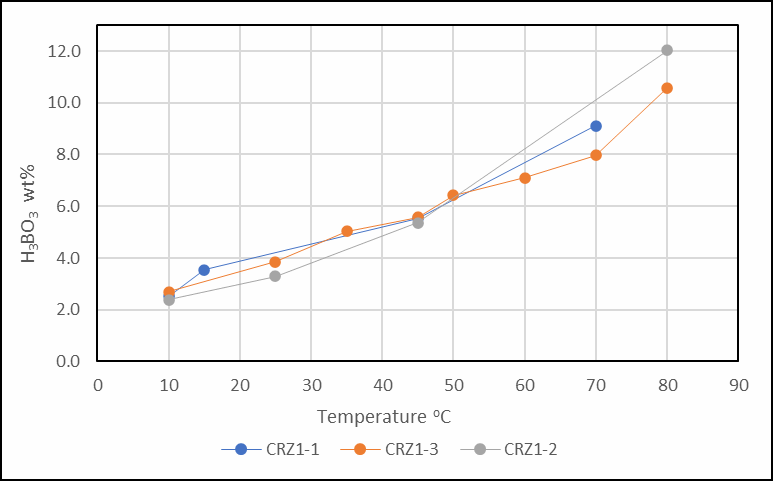
Figure 10.2: Boric acid continuous crystallization set-up including an agitated feed tank
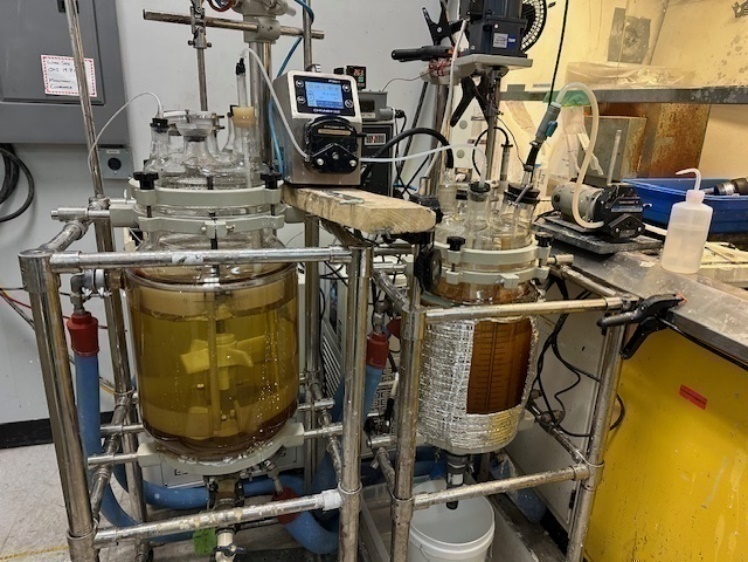
Figure 10.3: Boric acid crystals after continuous crystallization test (CRZ1-4)
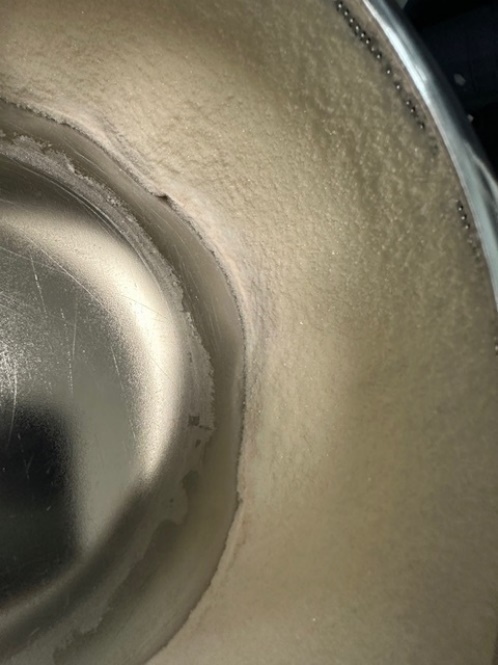
Figure 10.4: Boric acid crystals after continuous crystallization test (CRZ1-4) and centrifugation
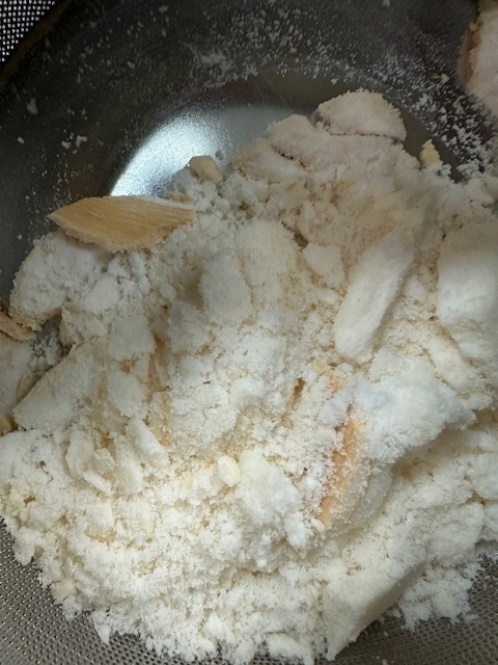
The boric acid crystals in the continuous crystallization test, CRZ1-4, had a distinct brown-orange layer that is indicative of ferric iron precipitation. The boric acid crystals pictured are not the finished product. They are the result of the crude crystallization step. The full process includes a filtration step for the crude crystallizer slurry. The resulting filter cake is washed and redissolved. This solution is filtered again before being fed to the re-crystallization process as shown in Figure 10.5 and Figure 10.6 below.
Figure 10.5: Boric acid crystals after re-crystallization
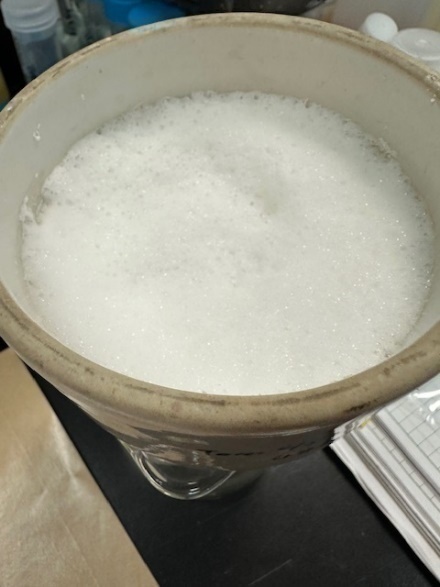
Figure 10.6: Boric acid crystals after re-crystallization and dewatering process
The re-crystallization testing yielded a bright-white boric acid crystal product. This is a visual indicator of higher product purity and was confirmed in the lab testing through ICP and chloride analysis as shown below. The boric acid recrystallization test confirmed that the product can achieve the customer specifications listed in Section 16 through water dissolution and displacement washing. This method successfully met or exceeded target chemical specifications, particularly for iron and chloride, and is the design basis for the Large-Scale Borates Facility.
Table 10.6: Boric acid re-crystallization results
|
|
|
|
|
|
|
|
|
|
|
|
|
|
|
|
|
|
|
|
|
|
|
|
|
|
|
|
Solutions |
|
Crystals – wet solids |
|
Crystals – dry solids |
|
Unit |
Feed |
Mother
Liquor |
Wet
Discharge |
|
Batch 1
Crystals-wet |
Batch 2
Crystals-wet |
Batch 3
Washed
Crystals-wet |
|
Batch 1
Crystals-dry |
Batch 2
Crystals-dry |
Batch 3
Washed
Crystals-dry |
BA assay |
wt% |
- |
- |
- |
|
- |
- |
- |
|
98.89 |
98.85 |
98.61 |
Calc H₃BO₃ |
wt% |
12.50 |
5.14 |
4.50 |
|
102.71 |
95.62 |
95.94 |
|
101.68 |
108.03 |
109.08 |
Ag |
mg/kg |
<1.0 |
<1.0 |
<1.0 |
|
<5.0 |
<5.0 |
<5.0 |
|
<5.0 |
<5.0 |
<5.0 |
Al |
mg/kg |
<2.0 |
<2.0 |
<2.0 |
|
<10.0 |
<10.0 |
<10.0 |
|
<10.0 |
<10.0 |
<10.0 |
As |
mg/kg |
<4.0 |
<4.0 |
<4.0 |
|
<20.0 |
<20.0 |
<20.0 |
|
<20.0 |
<20.0 |
<20.0 |
B |
mg/kg |
21,862 |
8,983 |
7,869 |
|
170,117 |
146,588 |
152,546 |
|
177,782 |
175,656 |
177,375 |
Ba |
mg/kg |
<0.4 |
<0.4 |
<0.4 |
|
<2.0 |
<2.0 |
<2.0 |
|
<2.0 |
<2.0 |
<2.0 |
Be |
mg/kg |
<0.4 |
<0.4 |
<0.4 |
|
<2.0 |
<2.0 |
<2.0 |
|
<2.0 |
<2.0 |
<2.0 |
Bi |
mg/kg |
<4.0 |
<4.0 |
<4.0 |
|
<20.0 |
<20.0 |
<20.0 |
|
<20.0 |
<20.0 |
<20.0 |
Ca |
mg/kg |
187 |
200 |
33.0 |
|
17.8 |
38.3 |
<10.0 |
|
18 |
35 |
<10.0 |
Cd |
mg/kg |
<0.4 |
<0.4 |
<0.4 |
|
<2.0 |
<2.0 |
<2.0 |
|
<2.0 |
<2.0 |
<2.0 |
Co |
mg/kg |
<1.0 |
<1.0 |
<1.0 |
|
<5.0 |
<5.0 |
<5.0 |
|
<5.0 |
<5.0 |
<5.0 |
Cr |
mg/kg |
<1.0 |
<1.0 |
<1.0 |
|
<5.0 |
<5.0 |
<5.0 |
|
<5.0 |
<5.0 |
<5.0 |
Cu |
mg/kg |
<2.0 |
<2.0 |
<2.0 |
|
<10.0 |
<10.0 |
<10.0 |
|
<10.0 |
<10.0 |
<10.0 |
Fe |
mg/kg |
2.6 |
2.9 |
<2.0 |
|
<10.0 |
<10.0 |
<10.0 |
|
<10.0 |
<10.0 |
<10.0 |
K |
mg/kg |
<10.0 |
<10.0 |
<10.0 |
|
<50.0 |
<50.0 |
<50.0 |
|
<50.0 |
<50.0 |
<50.0 |
Li |
mg/kg |
<2.0 |
<2.0 |
<2.0 |
|
<10.0 |
<10.0 |
<10.0 |
|
<10.0 |
<10.0 |
<10.0 |
Mg |
mg/kg |
58.6 |
63.7 |
9.9 |
|
<10.0 |
10.2 |
<10.0 |
|
<10.0 |
11 |
<10.0 |
Mn |
mg/kg |
2.2 |
2.5 |
0.9 |
|
<2.0 |
<2.0 |
<2.0 |
|
<2.0 |
<2.0 |
<2.0 |
Mo |
mg/kg |
<2.0 |
<2.0 |
<2.0 |
|
<10.0 |
<10.0 |
<10.0 |
|
<10.0 |
<10.0 |
<10.0 |
Na |
mg/kg |
154 |
162 |
25.3 |
|
<50.0 |
<50.0 |
<50.0 |
|
<50.0 |
<50.0 |
<50.0 |
Ni |
mg/kg |
<1.0 |
<1.0 |
<1.0 |
|
<5.0 |
<5.0 |
<5.0 |
|
<5.0 |
<5.0 |
<5.0 |
* P |
mg/kg |
<10.0 |
<10.0 |
<10.0 |
|
<50.0 |
<50.0 |
<50.0 |
|
<50.0 |
<50.0 |
<50.0 |
Pb |
mg/kg |
<4.0 |
<4.0 |
<4.0 |
|
<20.0 |
<20.0 |
<20.0 |
|
<20.0 |
<20.0 |
<20.0 |
* S |
mg/kg |
20.7 |
21.2 |
6.0 |
|
<20.0 |
<20.0 |
<20.0 |
|
<20.0 |
<20.0 |
<20.0 |
Sb |
mg/kg |
<4.0 |
<4.0 |
<4.0 |
|
<20.0 |
<20.0 |
<20.0 |
|
<20.0 |
<20.0 |
<20.0 |
Se |
mg/kg |
<4.0 |
<4.0 |
<4.0 |
|
<20.0 |
<20.0 |
<20.0 |
|
<20.0 |
<20.0 |
<20.0 |
Si |
mg/kg |
<4.0 |
<4.0 |
<4.0 |
|
<20.0 |
<20.0 |
<20.0 |
|
<20.0 |
<20.0 |
<20.0 |
Sn |
mg/kg |
<4.0 |
<4.0 |
<4.0 |
|
<20.0 |
<20.0 |
<20.0 |
|
<20.0 |
<20.0 |
<20.0 |
Sr |
mg/kg |
1.9 |
2.0 |
<0.4 |
|
<2.0 |
<2.0 |
<2.0 |
|
<2.0 |
<2.0 |
<2.0 |
Ti |
mg/kg |
<2.0 |
<2.0 |
<2.0 |
|
<10.0 |
<10.0 |
<10.0 |
|
<10.0 |
<10.0 |
<10.0 |
Tl |
mg/kg |
<4.0 |
<4.0 |
<4.0 |
|
<20.0 |
<20.0 |
<20.0 |
|
<20.0 |
<20.0 |
<20.0 |
U |
mg/kg |
<10.0 |
<10.0 |
<10.0 |
|
<50.0 |
<50.0 |
<50.0 |
|
<50.0 |
<50.0 |
<50.0 |
V |
mg/kg |
<2.0 |
<2.0 |
<2.0 |
|
<10.0 |
<10.0 |
<10.0 |
|
<10.0 |
<10.0 |
<10.0 |
Zn |
mg/kg |
<1.0 |
<1.0 |
<1.0 |
|
<5.0 |
<5.0 |
<5.0 |
|
<5.0 |
<5.0 |
<5.0 |
Cl |
mg/kg |
687 |
775 |
123 |
|
40.1 |
105 |
10.0 |
|
28.8 |
104 |
12.6 |
Table 10.7: Particle size distribution for batch crystallization test CRZ1-1 through CRZ1-3
|
|
|
|
|
|
|
|
|
|
|
Unit |
CRZ1-1 |
CRZ1-2 |
CRZ1-3 |
D10 |
μm |
101 |
73 |
58 |
D50 |
μm |
283 |
215 |
189 |
D90 |
μm |
492 |
419 |
404 |
Table 10.8: Particle size distribution for continuous crystallization test CRZ1-4
|
|
|
|
|
|
|
|
Batch #
Unit |
D10
(um) |
D50
(um) |
D90
(um) |
1 |
79.0 |
318.0 |
646.7 |
3 |
82.5 |
250.2 |
696.5 |
5 |
75.9 |
238.9 |
663.4 |
7 |
79.6 |
233.7 |
653.2 |
9 |
80.1 |
225.4 |
586.3 |
10 |
96.6 |
366.9 |
793.6 |
Table 10.9: Particle size distribution for continuous crystallization test CRZ1-5
|
|
|
|
|
|
|
|
Batch #
Unit |
D10
(um) |
D50
(um) |
D90
(um) |
1 |
78.0 |
289.5 |
573.8 |
3 |
43.6 |
233.8 |
651.1 |
5 |
54.8 |
175.2 |
648.1 |
7 |
61.9 |
177.6 |
635.8 |
9 |
47.9 |
175.9 |
591.1 |
10 |
73.5 |
184.9 |
526.9 |
Table 10.10: Boric acid crystal particle size distribution for re-crystallization
|
|
|
|
|
|
D10
(μm) |
D50
(μm) |
D90
(μm) |
147.9 |
269.7 |
449.3 |
The particle size distribution for the re-crystallization test yielded boric acid crystals that are coarser than the final product specification.
Table 10.11: Boric acid crystal particle size specification
|
|
|
|
|
|
Parameter |
Unit |
Design Value |
Dry Sieve Analysis |
|
|
8 mesh (2360 micron) |
%, Max |
0.0 |
20 mesh (850 micron) |
%, Max |
2.0 |
30 mesh (600 micron) |
%, Max |
5.0 |
100 mesh (150 micron) |
%, Min |
60.0 |
200 mesh (75 micron) |
% |
Report |
Crystal growth dynamics are influenced by several interdependent process parameters, including residence time, slurry density, degree of supersaturation, cooling method and rate, agitation intensity, and mixing efficiency. These variables can be strategically manipulated to control nucleation and growth rates, thereby influencing the final crystal size distribution—favoring either larger crystals or a greater yield of smaller crystals, depending on process objectives. While crystal growth optimization was not a primary focus of the current test work campaign, the data generated—including operating conditions and corresponding residence times—provides a valuable baseline. These results will inform future optimization efforts during final process design.
10.4.4 Impurity Removal Test Results
Impurity removal testing was conducted on crystallizer mother liquor to evaluate two process flow options for removing magnesium while minimizing boron losses. The goal was to selectively precipitate impurities without compromising boron recovery. Two different flow sheet options were evaluated as part of the test work.
Option 1: Crystallizer mother liquor Evaporation (50% mass) Cooling Crystallization Sequential pH Adjustments with Lime Slurry
•The mother liquor was first evaporated to 50% of its original mass, followed by cooling crystallization and two sequential pH adjustments using lime slurry.
•At a mid-range acidic pH, approximately 45% of boron and 2% of the magnesium were removed.
•A second pH adjustment to a higher and more basic pH removed an additional 38% of boron and 84% of the magnesium.
•The final solid phase contained 53% of the initial boron, primarily as a calcium–boron complex with measurable magnesium content (11% B, 15.2% Ca, 8.2% Mg).
Option 2: CRZ1 mother liquor Sequential pH adjustments Evaporation (EVP1) (60% mass reduction)
•The mother liquor underwent sequential pH adjustments to a mid-ranged acidic pH and then to a higher and more basic pH. This was followed by evaporation to 60% of its original mass.
•At the first pH adjustment (mid-ranged acidic), only 8% of boron was removed, with no measurable magnesium removal.
•At the second (basic) pH adjustment, 60% of boron and 12% of magnesium were removed.
Note that the actual pH values were determined through experimentation.
The difference in magnesium removal at a basic pH (Option 1) was 84% compared to a basic pH (Option 2) was 12% removal. Magnesium removal is strongly pH dependent. Boron precipitates out at lower pH and the resulting boron calcium complex can be recycled to increase overall boron recovery. Removing magnesium is important because it is a waste product, and the remaining filtrate is rich in calcium chloride which is to be further concentrated and sold as a byproduct. Both options that were tested were successful. The major difference between the two options was that the size of evaporation ponds was smaller in Option 2. Option 2 is included in the basis of design.
These data points are helpful for understanding the sensitivities of the selective precipitations in order to further recover valuable boron while removing impurities.
10.5 Adequacy of Data
The QP for Fluor, Kevin Martina, conducted a thorough review of the metallurgical test methods and results of the metallurgical test involving the PLS sample collected from the SSF. He confirmed that the reporting was consistent with industry standard practice and that the appropriate protocols were followed during sample preparation. Mr. Martina further verified that the processing and testing of the PLS sample were conducted in accordance with the accepted methodologies. Based on this evaluation, the QP concluded that the extent of testing performed is suitable for the current engineering study level and provides relevant data to support ongoing process design development.
11 Mineral Resource Estimates
Mr. Steven Kerr of Escalante Geological Services, LLC completed an updated mineral resource estimate for the Project with an effective date of June 30, 2026. Mr. Kerr prepared two prior estimates: an October 2023 estimate, which identified a total resource of 171.3 million short tons of ore, with 30.95 million short tons classified as measured resource and 43.35 million short tons classified as indicated resource, using a cut-off grade of 2.0% B₂O₃; and a March 10, 2025 estimate, which incorporated three additional bore holes and additional mineral tenure acquired in the intervening period.
The current estimate is the first to incorporate all mineral tenure held by 5E as of the effective date, including all 30 unpatented lode claims described in Section 3.3. In accordance with Item 1304(d)(2) of Regulation S-K, mineral resources are stated both inclusive of mineral reserves (Table 11.7) and exclusive of mineral reserves (Table 11.8). Mineral reserves were first established in the August 2025 pre-feasibility study, and this is the first mineral resource estimate for the Project reported exclusive of those reserves.
11.1 Key Assumptions
Key assumptions used in the economic assessment include:
•Mineralized horizons exhibit lateral continuity that will support mining using in-situ leaching mining methods;
•Mineralized horizons are not disrupted by structural or stratigraphic features that could limit mining;
•There is reasonable continuity of colemanite mineralization throughout the deposit; and
•There is adequate exploration data to support estimation of resources.
A detailed financial model using a discount rate of 7% (NPV7) delivered a positive net present value to support the cut-off grade and more broadly the resulting mineral resource estimation.
11.2 QP’s Estimate of Resource
11.2.1 Resource Database
The database used for resource estimation includes 52 core holes and three rotary holes for a total of 55 bore holes. Thirty (30) of the core holes were completed by Duval between 1979 and 1981. 5E completed 14 core holes in 2017 and another hole in 2022. In 2024, 5E completed three (3) rotary holes as observation wells from which chip samples were collected through the mineral horizons for B2O3 and Li analyses. The cumulative sampled length for the database is 5,440.19 m (17,848.39 ft). Table 11.1 summarizes the drilling database. The Project’s exploration dataset is current as of February 12, 2025. Drilling coordinates in the database are in UTM NAD 83-11, and depths and elevations are reported in meters. Borate is listed as weight percent (%) B2O3 and Li as ppm. The drilling database contains 5,767 analytical values for B2O3 and 5,402 analytical values for Li.
Core recovery for the 5E drilling programs has ranged from 93% to 100% with an overall average of 97.60%. Core recovery records for earlier drilling conducted by Duval are not available, but based on missing intervals in the drilling database, core recovery likely exceeded 90% in the core drilling. The QP has completed a thorough review and verification of the drilling database and found the database to be sufficient for resource modeling.
Table 11.1: Summary of drilling database
|
|
|
|
|
|
|
|
|
|
Core Hole ID |
Cumulative Core Length (m) |
Cumulative Sample Length (m) |
B₂O₃ Analyses |
Li Analyses |
APBL-01 |
111.13 |
88.90 |
82 |
82 |
APBL-02 |
91.74 |
87.74 |
107 |
107 |
APBL-03 |
93.11 |
92.80 |
91 |
91 |
APBL-04 |
143.77 |
142.71 |
162 |
162 |
APBL-05 |
107.35 |
104.76 |
150 |
150 |
APBL-06 |
95.34 |
90.47 |
83 |
83 |
APBL-07 |
176.27 |
166.09 |
207 |
207 |
APBL-08 |
128.96 |
127.20 |
153 |
153 |
APBL-09 |
119.33 |
118.51 |
120 |
120 |
APBL-10 |
133.81 |
126.50 |
176 |
176 |
APBL-11 |
135.72 |
134.79 |
155 |
155 |
APBL-12 |
142.77 |
138.42 |
212 |
212 |
APBL-13 |
138.99 |
136.75 |
155 |
155 |
APBL-14 |
157.43 |
156.99 |
260 |
260 |
DHB-01 |
162.49 |
158.41 |
184 |
184 |
DHB-03 |
212.90 |
212.12 |
213 |
213 |
DHB-05 |
207.26 |
207.26 |
179 |
179 |
DHB-06 |
175.57 |
155.42 |
124 |
124 |
DHB-07 |
204.83 |
204.06 |
179 |
179 |
DHB-08 |
224.63 |
224.63 |
186 |
186 |
DHB-09 |
170.69 |
170.69 |
138 |
138 |
DHB-10 |
139.08 |
81.79 |
86 |
86 |
DHB-11 |
112.90 |
73.28 |
86 |
86 |
DHB-12 |
120.67 |
74.04 |
85 |
— |
DHB-13 |
102.57 |
61.17 |
70 |
70 |
DHB-14 |
117.63 |
75.71 |
80 |
— |
DHB-15 |
125.70 |
56.18 |
51 |
51 |
DHB-16 |
145.48 |
122.62 |
138 |
138 |
DHB-17 |
141.25 |
104.49 |
151 |
151 |
DHB-18 |
139.48 |
92.32 |
105 |
105 |
DHB-19 |
106.68 |
59.40 |
74 |
74 |
DHB-21 |
26.33 |
25.93 |
39 |
39 |
DHB-22 |
135.94 |
101.81 |
135 |
135 |
DHB-23 |
136.24 |
100.80 |
114 |
114 |
DHB-24 |
146.00 |
120.00 |
119 |
119 |
DHB-25 |
173.74 |
134.87 |
152 |
152 |
DHB-26 |
121.37 |
81.99 |
106 |
106 |
DHB-27 |
132.71 |
67.07 |
95 |
95 |
DHB-28 |
128.62 |
80.07 |
115 |
115 |
DHB-29 |
120.64 |
75.28 |
101 |
101 |
DHB-30 |
137.53 |
68.49 |
83 |
83 |
DHB-31 |
49.00 |
57.36 |
41 |
— |
DHB-33 |
111.19 |
92.17 |
80 |
— |
DHB-34 |
68.76 |
87.47 |
79 |
— |
IR-2-01-01 |
137.59 |
119.57 |
135 |
135 |
SMT-1 |
24.40 |
24.40 |
57 |
59 |
SMT-2 |
24.60 |
24.60 |
55 |
— |
SMT-3 |
33.10 |
33.10 |
69 |
— |
P1 |
61.10 |
61.10 |
20 |
— |
P2 |
64.20 |
64.20 |
21 |
— |
P3 |
55.10 |
55.10 |
18 |
— |
P4 |
54.20 |
54.20 |
34 |
— |
Total |
6,327.89 |
5,375.80 |
5,910 |
5,330 |
Rotary Hole ID |
Hole Depth (m) |
Cumulative Sample Length (m) |
B₂O₃ Analyses |
Li Analyses |
OW-09 |
480.06 |
126.50 |
46 |
46 |
OW-10 |
466.00 |
132.88 |
44 |
44 |
OW-11 |
460.00 |
121.71 |
41 |
41 |
Total |
|
381.09 |
131 |
131 |
11.2.2 Geologic Model
The QP developed a gridded geologic model of the Project using Carlson Mining™ software. The mineralization does not correlate to lithological markers as the entire sequence is predominantly lacustrine mudstone. However, detailed examination of the analytical results reveals distinct mineralized horizons. The deposit was delineated based on these patterns of mineralization into four mineralized horizons, two non-mineralized or weakly mineralized interbeds and two non-mineralized horizons bounding the deposit. These horizons are listed in Table 11.2.
The grid model was constructed across the deposit area, with a grid cell size of 50 m x 50 m. Grids represent the bounding elevation surfaces of key horizons, horizon thicknesses, and analytical grades. Grids representing the bounding surface elevations of the mineral horizon were interpolated through triangulation. Mineral horizon grids for thickness and analytical grades were interpolated using Ordinary Kriging (OK) and Inverse Distance Squared (ID2) algorithms. Mineralization is spatially defined by a resource boundary using a distance of 200 m from the last intersection of mineralization in a drill hole and by property boundaries. Grids are masked to the outside of the resource boundary.
Table 11.2: Modelled horizons
|
|
|
|
|
|
|
|
|
|
|
|
Horizon |
Abbreviation |
Thickness Range
(m) |
Average Thickness
(m) |
Composite B₂O₃ Range (wt.%) |
Composited Li Range (ppm) |
Overburden |
OBN |
317.0 – 507.7 |
381.8 |
NA |
NA |
Upper Mineralized Horizon |
UMH |
0.1 – 12.5 |
4.3 |
0.87 – 14.45 |
99 – 588 |
Upper Interbed |
UI |
0.1 – 16.7 |
6.7 |
0.5 – 4.1 |
108 – 623 |
Main Mineralized Horizon |
MMH |
0.7 – 69.4 |
27.4 |
2.6 – 17.6 |
98 – 550 |
Medial Interbed |
MI |
0.2 – 5.2 |
9.7 |
0.3 – 1.9 |
386 – 492 |
Intermediate Mineralized Horizon |
IMH |
1.8 – 58.3 |
22.5 |
0.7 – 12.0 |
23 – 534 |
Lower Mineralized Horizon |
LMH |
0.0 – 53.9 |
19.7 |
0.2 – 5.7 |
91 – 534 |
Lower Sandstone * |
LSS |
0.1 – 58.6 |
15.6 |
NA |
NA |
* Horizon not fully penetrated. NA: Not Applicable |
11.2.3 Grade Estimation & Resource Classification
Using composites for each mineralized horizon, variography was successful for B2O3 grades for the Major Mineralized Horizon (MMH), Intermediate Mineralized Horizon (IMH), and the Lower Mineralized Horizon (LMH) and are summarized in Table 11.3. Variogram modelling was unsuccessful for the Upper Mineralized Horizon and with Li in all horizons. Grids representing B2O3 grades for the MMH, IMH, and LMH were constructed using OK based on the constructed variograms. ID2 interpolation was used with all remaining grade grids using the same spatial limits established with the horizon grids.
Table 11.3: Modelled variograms
|
|
|
|
|
|
|
|
|
|
Horizon |
Type |
Nugget |
First Structure |
Second Structure |
MMH |
Spherical, omnidirectional |
— |
200.0 |
400 |
IMH |
Spherical, omnidirectional |
0.2 |
180.0 |
450 |
LMH |
Spherical, omnidirectional |
0.2 |
530.0 |
— |
Based on the variography above, the deposit was classified as follows:
•Measured Resource Category: based on a maximum spacing between mineralized drill holes for each horizon of 200 m.
•Indicated Resources Category: based on a maximum spacing between mineralized drill holes for each horizon of 400 m.
•Inferred Resources Category: based on a maximum spacing between mineralized drill holes for each horizon of 800 m.
Drilling and sampling density is sufficient that no further limits on classification are required.
11.3 Model Validation
The QP has conducted an audit of the gridded model. The audit and validation of the gridded model consisted of the following steps:
1.
Drilling data was loaded into Carlson Mining to compare drill hole postings with the provided grids representing the top and bottom surfaces for each mineralized horizon. This comparison was done using a grid inspector tool in Carlson Mining that enables simultaneous viewing of drill hole data along with grid values at each drilling location. The QP found the resulting comparisons to be satisfactory. This step was repeated comparing drill hole composite grades from drill hole data with grids representing the grades of B2O3 and Li for each mineralized horizon. While there are some fluctuations with grid values generated by OK and ID2, these fluctuations are small and within expected ranges.
2.The gridded model was evaluated using a series of swath plots. A swath plot is a graphical display of the grade distribution derived from a series of bands, or swaths, generated as sections through the deposit. Grade variations from the OK model are compared to nearest neighbor (NN) searches on drill hole composites.
3.On a local scale, the NN search does not provide reliable estimations of grade but, on a much larger scale, it represents an unbiased estimation of the grade distribution based on the underlying data. If the model estimation completed by OK is unbiased, the grade trends may show local fluctuations on a swath plot, but the overall trend should be similar to the NN distribution of grade. Three swath plots are shown in Figure 11.1.
Figure 11.1: Grade variation swath
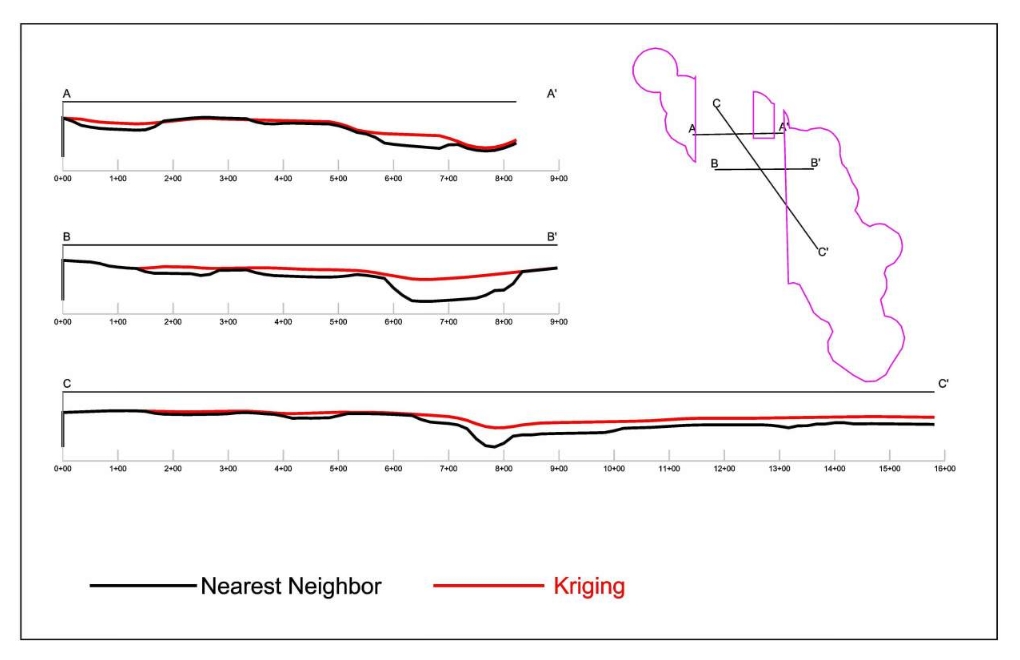
11.3.1 Density Measurements
The 2017 drilling program included the collection of 777 density measurements from core samples. Density determinations were made using the weight in air/weight in water method. The weighted average bulk density determined from the 381 samples collected through the mineralized horizons is 2.18 g/cm3. and has been used as the bulk density in resource estimation.
11.4 Cut-off Grade
A 5.0% B2O3 cut-off grade was previously established by Duval and was carried forth by previous QP’s in previous technical report summaries. An in-depth assessment of cut-off grade was undertaken in 2022 and 2023 as mass and energy balances were developed to fundamentally begin to assess economic viability. Data informing the mass and energy balances included incorporating the results of leaching tests, historical results, mining, and processing costs, as well as commodity pricing. This assessment derived a 2.0% cut-off calculation based on the most recent previous initial assessment.
Cut-off grade is an economic analysis to measure cash costs (i.e., the variable cost to produce boric acid compared to the price that can be achieved in the market for the sale of boric acid). 5E commenced mining operations in January 2024 and began operating the SSF in April 2024. The SSF achieved a steady state of operation in the Summer of 2024 and optimized mining operations by September 2024. As such, mining data from September and October 2024 have been utilized as the basis of design and further leveraged for the cut-off grade analysis. Using this data set, an in-depth assessment was performed that included an analysis of the cash costs (i.e., the variable cost to produce boric acid) and excluded book costs (i.e., depreciation) as the capital is assumed to have already been invested to build the project such that it can operate. The definition of cut-off grade for the in-situ mining operation is the point at which the Company would cease operating a particular well or in the case of a combination of wells, the wellfield. As such, cash costs are established as the basis for the analysis.
The in-depth analysis incorporates mineralization and at what point economic extraction or boron in solution is no longer viable. The driver of this analysis focuses on three specific ratios derived from the basis of design using mining data during the period of September and October 2024: calcium to boron, sodium to boron, and magnesium to boron. These three ratios are drivers of various costs, chemical utilizations, and byproduct production rates. For example, calcium to boron impacts sulfuric acid utilization and gypsum production compared to boric acid production. Additionally, magnesium to boron impacts lime utilization and metal salt waste production compared to boric acid production. Lastly, sodium to boron impacts HCl utilization and sodium chloride production compared to boric acid production. Table 11.4 below details the average, minimum and maximum ratios of elements utilized in the basis of design from September and October 2024:
Table 11.4: Basis of design ratios
|
|
|
|
|
|
|
|
|
Ca:B |
Mg:B |
Na:B |
Average |
1.27 |
0.13 |
0.34 |
Minimum |
0.77 |
0.03 |
0.02 |
Maximum |
2.05 |
0.22 |
0.70 |
To calculate cut-off grade, the following assumptions were utilized which are in-line with the basis of design noted in Section 14:
•Overall boric acid yield of 95.1% and HCl utilization of 90%;
•Magnesium accounts for 50% of the metal impurities and all impurities are extracted at similar rates;
•Sodium chloride is 80% of the chloride losses;
•The LSBF is designed for 130,000 short tons per year with a maximum 50% recycling and 10% excess flow capacity in the plant and max solubility of 10% boric acid; and
•Orebody calcite is held constant at 7.03% (Note: This assumption is derived from XRD results (7.03% calcite) of core and historical pilot plant results from the 1980’s (3.80%, 6.08%, and 6.08% calcite).
Table 11.5 provides the cost inputs used in the sensitivity analysis for cut-off grade:
Table 11.5: Cut-off grade input costs
|
|
|
|
|
|
Raw Material |
Unit |
Price |
36% HCl |
per short ton BA |
$158.61 |
H₂SO₄ |
per short ton BA |
$124.13 |
Lime |
per short ton BA |
$197.47 |
Metal impurities waste |
per short ton BA |
$45.00 |
Natural gas |
per MMBtu |
$3.19 |
Finally, a sensitivity analysis was performed where cash costs were calculated at each discreet cutoff grade to determine where the cost curves relative to the price of boric acid intersect. For this analysis, the magnesium to boron ratio and the sodium to boron ratio were held constant using the averages obtained from actual mining data and noted in Table 11.4 above. Table 11.6 provides this analysis:
Table 11.6: Cut-off grade analysis
|
|
|
|
|
|
|
|
|
|
|
|
|
|
|
|
B₂O₃ |
1.5% |
2.0% |
3.0% |
4.0% |
6.0% |
8.0% |
10.0% |
Ca:B |
6.98 |
5.47 |
3.96 |
3.20 |
2.45 |
2.07 |
1.85 |
Mg:B |
0.13 |
0.13 |
0.13 |
0.13 |
0.13 |
0.13 |
0.13 |
Na:B |
0.34 |
0.34 |
0.34 |
0.34 |
0.34 |
0.34 |
0.34 |
Max head grade BA wt% |
4.4% |
4.9% |
5.9% |
6.7% |
7.8% |
8.7% |
9.3% |
Production rate (kST/yr) |
40.9 |
51.3 |
68.6 |
82.5 |
103.6 |
118.7 |
130.0 |
Plant flow (gpm) |
880 |
880 |
880 |
880 |
880 |
880 |
880 |
36% HCl (lb/ST) |
655 |
655 |
655 |
655 |
655 |
655 |
655 |
H₂SO₄ (lb/ST) |
7,216 |
5,743 |
4,270 |
3,534 |
2,797 |
2,429 |
2,208 |
Lime (lb/ST) |
957 |
821 |
685 |
618 |
550 |
516 |
496 |
Gypsum production (kST/yr) |
259 |
259 |
257 |
256 |
255 |
253 |
252 |
Metal waste (kST/yr) |
6.3 |
7.9 |
10.6 |
12.7 |
16.0 |
18.3 |
20.1 |
NaCl Production (kST/yr) |
6.2 |
7.7 |
10.4 |
12.5 |
15.7 |
17.9 |
19.6 |
Heating (MMBtu/ST) |
7.7 |
7.7 |
7.7 |
7.7 |
7.7 |
7.7 |
7.7 |
Electricity (kWh/ST) |
3,424 |
2,734 |
2,043 |
1,698 |
1,353 |
1,180 |
1,078 |
BTU/ST |
21.7 |
19.2 |
16.6 |
15.3 |
14.1 |
13.4 |
13.0 |
BA Packaging ($/ST) |
$18.00 |
$18.00 |
$18.00 |
$18.00 |
$18.00 |
$18.00 |
$18.00 |
BA freight ($/ST) |
$113.50 |
$113.50 |
$113.50 |
$113.50 |
$113.50 |
$113.50 |
$113.50 |
Variable cost ($/ST) |
$877.98 |
$749.52 |
$621.06 |
$556.83 |
$492.60 |
$460.49 |
$441.20 |
Fixed cost ($/ST) |
$746.52 |
$595.99 |
$445.45 |
$370.19 |
$294.92 |
$257.29 |
$235.00 |
Cash cost ($/ST) |
$1,624.50 |
$1,345.51 |
$1,066.52 |
$927.02 |
$787.53 |
$717.78 |
$676.20 |
Cash cost w/ credit ($/ST) |
$1,417.49 |
$1,180.75 |
$944.01 |
$825.64 |
$707.27 |
$648.09 |
$612.85 |
Sales pricing has risen over the past several years and is currently tracking around $1,100 to $1,300 per short ton F.O.B. in the spot market as of July 2025. For this evaluation, current pricing was used along with price forecasting based on the preliminary market study performed by Kline.
Figure 11.2 plots the cutoff grade relative to cash costs. The result of this exercise is a 2.0% financially viable cutoff grade, where our cash costs are near the current and forecasted boric acid pricing at the commencement of production. The geological model used a 2.0% B2O3 cutoff grade which has a boric acid equivalent cutoff of 3.55% boric acid.
Figure 11.2: Cash costs, $/st of boric acid
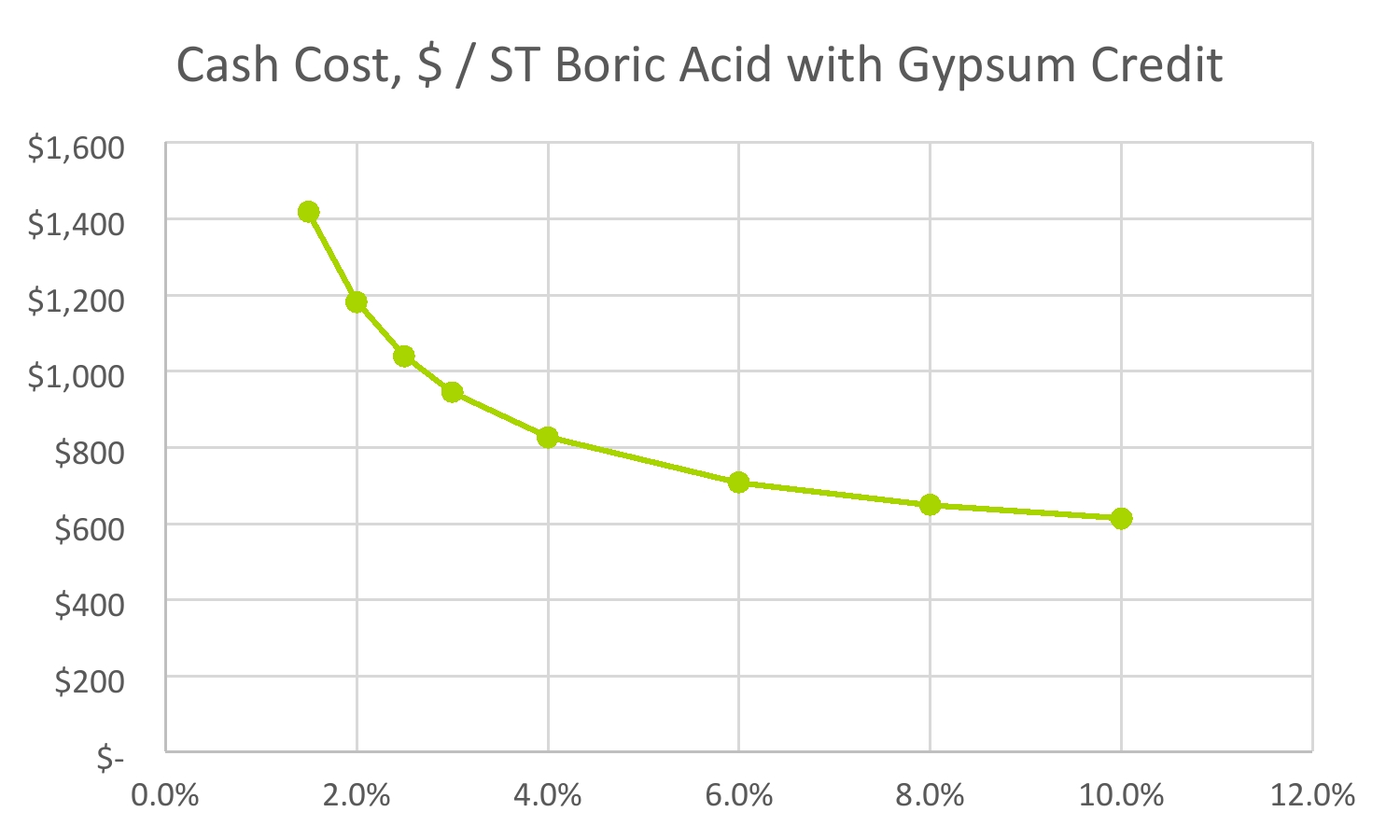
11.5 Mineral Resource Estimation
Results of the mineral resource estimation are shown in Table 11.7 (inclusive of mineral reserves) and Table 11.8 (exclusive of mineral reserves). Below, Figure 11.3 shows resource classification of the Project. The resource estimate for lands under mineral control by 5E contains a combined 177.3 million short tons of measured plus indicated resources with an average grade of 8.25% B2O3 and 312 ppm Li, using a 2.0% cut-off grade for B2O3. Average grades and lithium concentrations for aggregated classifications presented in this section are calculated by weighting each mineralized bed's grade by its contained product (in-situ boric acid or lithium carbonate equivalent, as applicable), rather than by ore tonnage. Mineral reserve grades presented in Section 12 are weighted by ore tonnage. The mineral resource estimate also identifies 4.2 million short tons of inferred resources under mineral control. Uncontrolled land (State of California Surface) contains approximately 22.4 million short tons of measured plus indicated resources and an inferred resource of 0.9 million short tons. The electrical transmission corridor contains 29.9 million short tons, and while SCE maintains control of the surface and resources to a depth of 500 ft, it does not impinge on 5E’s mineral rights for B2O3 and Li which occur at depths greater than 1,000 ft.
It is noted that these numbers are different to previous reports, which are ascribed to the change in cut-off grade as detailed in Section 11.4 and Section 3.6 as well as an increase in mineral tenure. Regulation S-K 1300 requires a current economic assessment to be completed which provides a reasonable basis for establishing the prospects of economic extraction of the mineral resource estimation.
Table 11.7: Fort Cady Project mineral resource estimate (inclusive of mineral reserves)*, Effective June 30, 2026
|
|
|
|
|
|
|
|
|
|
|
|
|
|
|
|
|
|
|
|
|
|
|
|
|
|
|
|
|
|
|
|
|
|
|
|
|
|
|
|
|
|
|
|
|
|
|
|
|
|
|
|
|
|
|
|
|
Classification Tons |
|
Product Tons–Measured |
|
Product Tons–Indicated |
|
Product Tons–Inferred |
Property |
Bed |
Thick
(m) |
B₂O₃
(%) |
H₃BO₃
(%) |
Li
(ppm) |
LCE
(%) |
Tonnes |
Tons |
Measured |
Indicated |
Inferred |
|
B₂O₃ |
H₃BO₃ |
LCE |
|
B₂O₃ |
H₃BO₃ |
LCE |
|
B₂O₃ |
H₃BO₃ |
LCE |
|
UMH |
7.06 |
7.73 |
13.72 |
262.00 |
0.14 |
5,389,672 |
5,941,096 |
2,673,493 |
3,267,603 |
— |
|
206,580 |
366,886 |
3729 |
|
252,486 |
448,416 |
4,557 |
|
— |
— |
— |
Unpatented |
MMH |
31.31 |
8.99 |
15.97 |
374.00 |
0.20 |
23,883,147 |
26,326,663 |
11,846,998 |
14,479,665 |
— |
|
1,065,024 |
1,891,483 |
23,585 |
|
1,301,696 |
2,311,812 |
28,826 |
|
— |
— |
— |
Lode Claims |
IMH |
38.53 |
8.02 |
14.24 |
340.00 |
0.18 |
29,390,577 |
32,397,565 |
14,578,904 |
17,818,661 |
— |
|
1,169,139 |
2,076,390 |
26,385 |
|
1,428,947 |
2,537,810 |
32,249 |
|
— |
— |
— |
|
LMH |
28.32 |
9.02 |
16.02 |
232.00 |
0.12 |
21,607,945 |
23,818,683 |
10,718,407 |
13,100,275 |
— |
|
966,856 |
1,717,136 |
13237 |
|
1,181,713 |
2,098,722 |
16,178 |
|
— |
— |
— |
|
Sub-Total |
80,271,341 |
88,484,007 |
39,817,803 |
48,666,204 |
— |
|
3,407,599 |
6,051,895 |
66,935 |
|
4,164,843 |
7,396,761 |
81,810 |
|
— |
— |
— |
|
UMH |
2.96 |
6.60 |
11.72 |
250.60 |
0.13 |
5,237,458 |
5,773,309 |
2,472,388 |
3,101,236 |
199,686 |
|
163,178 |
289,803 |
3,298 |
|
204,682 |
363,514 |
4,137 |
|
13,179 |
23,406 |
266.38 |
Fee |
MMH |
15.25 |
8.23 |
14.62 |
323.00 |
0.17 |
26,938,158 |
29,694,236 |
12,865,519 |
15,809,116 |
1,019,601 |
|
1,058,832 |
1,880,486 |
22,121 |
|
1,301,090 |
2,310,736 |
27,182 |
|
83,913 |
149,030 |
1,753 |
Land |
IMH |
6.09 |
7.24 |
12.85 |
349.40 |
0.19 |
10,766,257 |
11,867,767 |
5,132,408 |
6,327,384 |
407,975 |
|
371,397 |
659,601 |
9,545 |
|
457,869 |
813,176 |
11,768 |
|
29,522 |
52,432 |
759 |
|
LMH |
8.11 |
8.63 |
15.33 |
222.90 |
0.12 |
14,326,177 |
15,791,907 |
6,888,713 |
8,363,283 |
539,911 |
|
594,514 |
1,055,857 |
8,173 |
|
721,773 |
1,281,869 |
9,922 |
|
46,596 |
82,754 |
641 |
|
Sub-Total |
57,268,050 |
63,127,220 |
27,359,028 |
33,601,019 |
2,167,173 |
|
2,187,921 |
3,885,747 |
43,138 |
|
2,685,414 |
4,769,296 |
53,010 |
|
173,211 |
307,622 |
3,419 |
|
UMH |
2.57 |
5.91 |
10.50 |
2.70 |
0.00 |
2,093,660 |
2,307,865 |
712,998 |
1,423,910 |
170,957 |
|
42,138 |
74,837 |
10 |
|
84,153 |
149,456 |
20 |
|
10,104 |
17,944 |
2 |
Power |
MMH |
22.06 |
7.83 |
13.91 |
277.00 |
0.15 |
17,959,378 |
19,796,826 |
6,433,014 |
12,076,479 |
1,287,333 |
|
503,705 |
894,580 |
9,485 |
|
945,588 |
1,679,365 |
17,806 |
|
100,798 |
179,018 |
1,898 |
Corridor |
IMH |
4.40 |
5.09 |
9.04 |
279.00 |
0.15 |
3,578,805 |
3,944,958 |
1,260,563 |
2,415,793 |
268,602 |
|
64,175 |
113,974 |
1,872 |
|
122,987 |
218,425 |
3,588 |
|
13,674 |
24,286 |
399 |
|
LMH |
4.25 |
7.83 |
13.90 |
250.00 |
0.13 |
3,457,554 |
3,811,301 |
1,196,680 |
2,343,151 |
271,469 |
|
93,662 |
166,344 |
1592 |
|
183,395 |
325,709 |
3,118 |
|
21,247 |
37,736 |
361 |
|
Sub-Total |
27,089,397 |
29,860,949 |
9,603,255 |
18,259,333 |
1,998,362 |
|
703,680 |
1,249,736 |
12,960 |
|
1,336,123 |
2,372,955 |
24,533 |
|
145,824 |
258,983 |
2,661 |
|
Total |
164,628,788 |
181,472,176 |
76,780,085 |
100,526,556 |
4,165,535 |
|
6,299,200 |
11,187,378 |
123,033 |
|
8,186,380 |
14,539,011 |
159,352 |
|
319,034 |
566,605 |
6,080 |
CA Surface |
UMH |
4.78 |
6.99 |
12.41 |
313.20 |
0.17 |
3,788,532 |
4,176,141 |
208,807 |
3,800,289 |
167,046 |
|
14,596 |
25,922 |
348 |
|
265,640 |
471,777 |
6,337 |
|
11,676 |
20,737 |
279 |
Section 36 |
MMH |
14.02 |
6.76 |
12.01 |
376.00 |
0.20 |
11,109,305 |
12,245,912 |
612,296 |
11,143,780 |
489,836 |
|
41,391 |
73,511 |
1225 |
|
753,320 |
1,337,896 |
22,303 |
|
33,113 |
58,809 |
980 |
(Uncontrolled) |
IMH |
4.88 |
3.66 |
6.50 |
340.30 |
0.18 |
3,869,438 |
4,265,325 |
213,266 |
3,881,446 |
170,613 |
|
7,804 |
13,860 |
386 |
|
142,029 |
252,244 |
7,031 |
|
6,243 |
11,088 |
309 |
|
LMH |
2.98 |
6.18 |
10.98 |
465.90 |
0.25 |
2,358,929 |
2,600,274 |
130,014 |
2,366,249 |
104,011 |
|
8,039 |
14,278 |
322 |
|
146,314 |
259,853 |
5,869 |
|
6,431 |
11,422 |
258 |
|
Uncontrolled Total |
21,126,204 |
23,287,653 |
1,164,383 |
21,191,764 |
931,506 |
|
71,830 |
127,570 |
2,282 |
|
1,307,303 |
2,321,769 |
41,540 |
|
57,464 |
102,056 |
1,826 |
* Denotes 2.0% cut-off. Aggregate average grades presented in the accompanying text are weighted by contained product rather than by ore tonnage. |
In accordance with Item 1304(d)(2) of Regulation S-K, the following table presents mineral resources exclusive of mineral reserves. These figures represent total mineral resources as presented in Table 11.7, less the tonnage converted to proven and probable mineral reserves as presented in Section 12.
Table 11.8: Fort Cady Project mineral resource estimate (exclusive of mineral reserves)*, Effective June 30, 2026
|
|
|
|
|
|
|
|
|
|
|
|
|
|
|
|
|
|
|
|
|
|
|
|
|
|
|
|
|
|
|
|
|
|
|
|
|
|
|
|
|
|
|
|
|
|
|
|
|
|
|
|
|
|
|
|
|
Classification Tons |
|
Product Tons–Measured |
|
Product Tons–Indicated |
|
Product Tons–Inferred |
Property |
Bed |
Thick
(m) |
B₂O₃
(%) |
H₃BO₃
(%) |
Li
(ppm) |
LCE
(%) |
Tonnes |
Tons |
Measured |
Indicated |
Inferred |
|
B₂O₃ |
H₃BO₃ |
LCE |
|
B₂O₃ |
H₃BO₃ |
LCE |
|
B₂O₃ |
H₃BO₃ |
LCE |
|
UMH |
7.06 |
7.73 |
13.72 |
262.00 |
0.14 |
5,389,672 |
5,941,096 |
2,673,493 |
3,267,603 |
— |
|
206,580 |
366,886 |
3729 |
|
252,486 |
448,416 |
4,557 |
|
— |
— |
— |
Unpatented |
MMH |
31.31 |
8.99 |
15.97 |
374.00 |
0.20 |
23,883,147 |
26,326,663 |
11,846,998 |
14,479,665 |
— |
|
1,065,024 |
1,891,483 |
23,585 |
|
1,301,696 |
2,311,812 |
28,826 |
|
— |
— |
— |
Lode Claims |
IMH |
38.53 |
8.02 |
14.24 |
340.00 |
0.18 |
29,390,577 |
32,397,565 |
14,578,904 |
17,818,661 |
— |
|
1,169,139 |
2,076,390 |
26,385 |
|
1,428,947 |
2,537,810 |
32,249 |
|
— |
— |
— |
|
LMH |
28.32 |
9.02 |
16.02 |
232.00 |
0.12 |
21,607,945 |
23,818,683 |
10,718,407 |
13,100,275 |
— |
|
966,856 |
1,717,136 |
13237 |
|
1,181,713 |
2,098,722 |
16,178 |
|
— |
— |
— |
|
Sub-Total |
80,271,341 |
88,484,007 |
39,817,803 |
48,666,204 |
— |
|
3,407,599 |
6,051,895 |
66,935 |
|
4,164,843 |
7,396,761 |
81,810 |
|
— |
— |
— |
|
UMH |
8.79 |
6.60 |
11.72 |
250.61 |
0.13 |
2,402,829 |
2,648,665 |
847,573 |
1,695,146 |
105,947 |
|
55,940 |
99,349 |
1,131 |
|
111,880 |
198,698 |
2,261 |
|
6,992 |
12,419 |
141.33 |
Fee |
MMH |
42.72 |
8.23 |
14.62 |
323.01 |
0.17 |
11,682,198 |
12,877,419 |
4,120,774 |
8,241,548 |
515,097 |
|
339,140 |
602,312 |
7,085 |
|
678,279 |
1,204,624 |
14,171 |
|
42,392 |
75,289 |
886 |
Land |
IMH |
17.23 |
7.24 |
12.85 |
349.40 |
0.19 |
4,712,057 |
5,194,153 |
1,662,129 |
3,324,258 |
207,766 |
|
120,277 |
213,612 |
3,091 |
|
240,554 |
427,224 |
6,183 |
|
15,035 |
26,701 |
386 |
|
LMH |
21.95 |
8.63 |
15.33 |
222.89 |
0.12 |
6,001,386 |
6,615,396 |
2,116,927 |
4,233,853 |
264,616 |
|
182,696 |
324,469 |
2,512 |
|
365,393 |
648,937 |
5,023 |
|
22,837 |
40,559 |
314 |
|
Sub-Total |
24,798,470 |
27,335,634 |
8,747,403 |
17,494,805 |
1,093,425 |
|
698,053 |
1,239,742 |
13,819 |
|
1,396,105 |
2,479,483 |
27,638 |
|
87,257 |
154,968 |
1,727 |
|
UMH |
8.97 |
5.91 |
10.50 |
2.67 |
0.00 |
1,192,999 |
1,315,056 |
276,162 |
867,937 |
170,957 |
|
16,321 |
28,986 |
4 |
|
51,295 |
91,100 |
12 |
|
10,104 |
17,944 |
2 |
Power |
MMH |
67.58 |
7.83 |
13.91 |
277.00 |
0.15 |
8,983,455 |
9,902,564 |
2,079,538 |
6,535,692 |
1,287,333 |
|
162,828 |
289,182 |
3,066 |
|
511,745 |
908,859 |
9,637 |
|
100,798 |
179,018 |
1,898 |
Corridor |
IMH |
14.10 |
5.09 |
9.04 |
279.00 |
0.15 |
1,874,394 |
2,066,166 |
433,895 |
1,363,669 |
268,602 |
|
22,089 |
39,231 |
644 |
|
69,424 |
123,297 |
2,025 |
|
13,674 |
24,286 |
399 |
|
LMH |
14.25 |
7.83 |
13.90 |
250.00 |
0.13 |
1,894,407 |
2,088,227 |
438,528 |
1,378,230 |
271,469 |
|
34,323 |
60,957 |
584 |
|
107,872 |
191,580 |
1,834 |
|
21,247 |
37,736 |
361 |
|
Sub-Total |
13,945,256 |
15,372,013 |
3,228,123 |
10,145,529 |
1,998,362 |
|
235,561 |
418,357 |
4,298 |
|
740,335 |
1,314,836 |
13,508 |
|
145,824 |
258,983 |
2,661 |
|
Total |
119,015,066 |
131,191,654 |
51,793,329 |
76,306,538 |
3,091,787 |
|
4,341,213 |
7,709,993 |
85,052 |
|
6,301,284 |
11,191,080 |
122,956 |
|
233,080 |
413,951 |
4,388 |
CA Surface |
UMH |
16.17 |
6.99 |
12.41 |
313.24 |
0.17 |
3,788,532 |
4,176,141 |
208,807 |
3,800,289 |
167,046 |
|
14,596 |
25,922 |
348 |
|
265,640 |
471,777 |
6,337 |
|
11,676 |
20,737 |
279 |
Section 36 |
MMH |
47.41 |
6.76 |
12.01 |
376.00 |
0.20 |
11,109,305 |
12,245,912 |
612,296 |
11,143,780 |
489,836 |
|
41,391 |
73,511 |
1225 |
|
753,320 |
1,337,896 |
22,303 |
|
33,113 |
58,809 |
980 |
(Uncontrolled) |
IMH |
16.51 |
3.66 |
6.50 |
340.32 |
0.18 |
3,869,438 |
4,265,325 |
213,266 |
3,881,446 |
170,613 |
|
7,804 |
13,860 |
386 |
|
142,029 |
252,244 |
7,031 |
|
6,243 |
11,088 |
309 |
|
LMH |
10.07 |
6.18 |
10.98 |
465.93 |
0.25 |
2,358,929 |
2,600,274 |
130,014 |
2,366,249 |
104,011 |
|
8,039 |
14,278 |
322 |
|
146,314 |
259,853 |
5,869 |
|
6,431 |
11,422 |
258 |
|
Uncontrolled Total |
21,126,204 |
23,287,653 |
1,164,383 |
21,191,764 |
931,506 |
|
71,830 |
127,570 |
2,282 |
|
1,307,303 |
2,321,769 |
41,540 |
|
57,464 |
102,056 |
1,826 |
* Denotes 2.0% cut-off. Aggregate average grades presented in the accompanying text are weighted by contained product rather than by ore tonnage. |
Figure 11.3: Resource classification
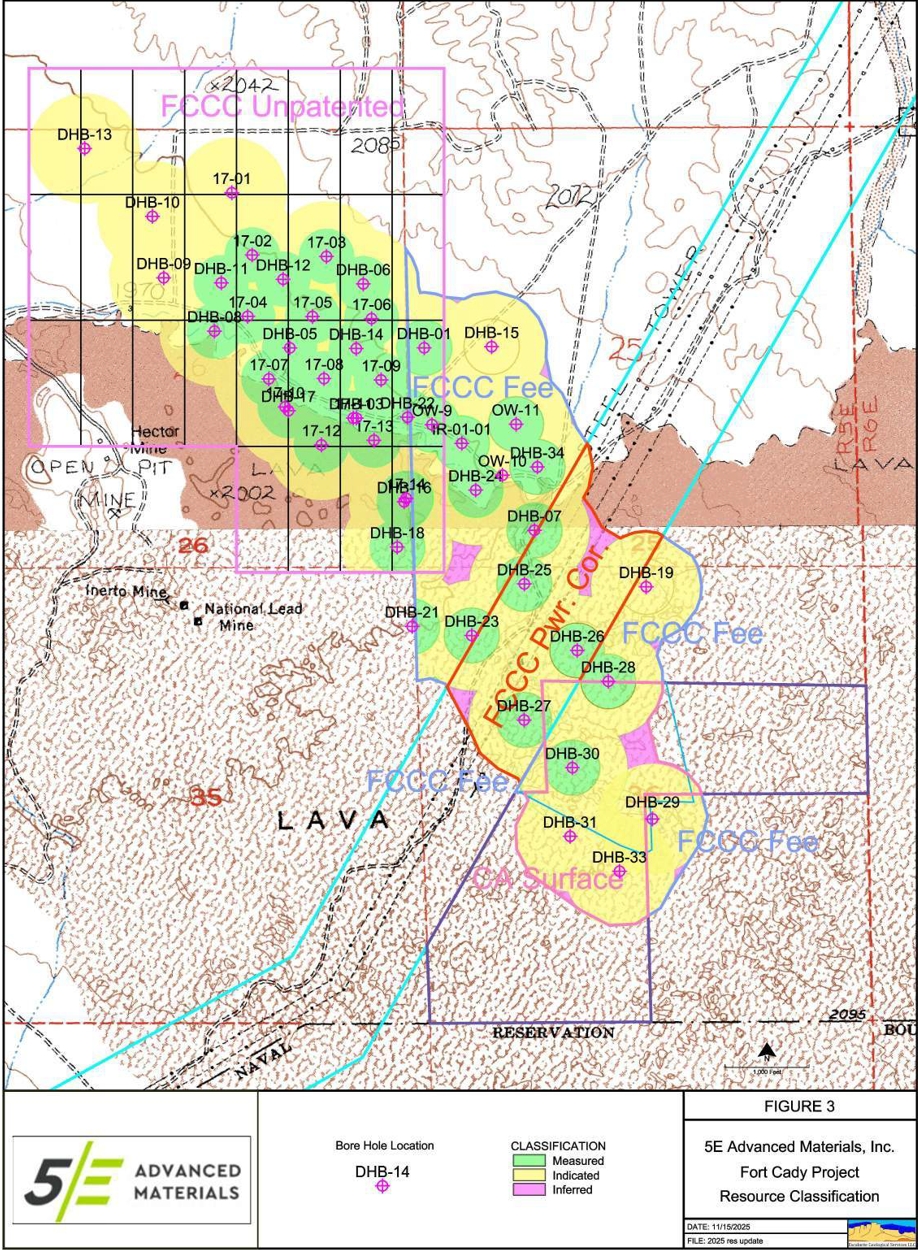
11.6 Uncertainties
The QP is not aware of any known environmental, permitting, legal, title, taxation, socio-economic, marketing, or other relevant factors or uncertainties that could affect the mineral resource estimate.
The accuracy of resources and reserve estimates is, in part, a function of the quality and quantity of available data and of engineering and geological interpretation and judgment. Given the data available at the time this report was prepared, the estimates presented herein are considered reasonable. However, they should be accepted with the understanding that additional data and analysis available after the date of the estimates may necessitate revision. These revisions may be material. There is no guarantee that all or any part of the estimated resources or reserves will be recoverable.
11.7 Individual Grade for Each Commodity
Included with Section 11.5.
11.8 Disclose Required Future Work
Approximately 97% of the deposit is measured plus indicated resources. Though there is potential to expand the resource with step-out drilling, there are more than sufficient resources defined to focus efforts on development and production.
12 Mineral Reserve Estimates
A detailed mine plan was prepared in Section 13 in support of mineral reserves. The EPA UIC permit subdivides the mineralized deposit into three blocks for development. Block 1 comprises the northwestern third of the orebody, Block 2 occupies the central portion of the orebody, and Block 3 comprises the southeastern third of the orebody. The SSF currently operates in Block 2 and Block 2 is permitted for mining with sufficient resources on fee-based lands and within the power corridor to convert resources to reserves on an economic basis, which provides for 37.5 years of mining life. To convert additional resources to reserves, Block 1 and Block 3 would need to be authorized by the EPA and a mine plan devised that includes this mineral tenure.
For economic modeling, a mine plan (Section 10) was designed where recovery and flow rates are sufficient to feed the chemical plant (Section 14) where PLS is converted to a finished refined borate product available for sale. Production output is within permitted parameters with forecasted revenue from borate sales based on a pricing forecast based on a preliminary market study commissioned by 5E, as discussed in Section 16 of this report.
The mine plan and wellfield optimization were based on third-party engineering work that incorporated 18 months of actual wellfield data from the SSF into the design and includes a bottoms-up capital estimate. A capital estimate was derived by Fluor for the inside and outside battery limits above ground and a total capital estimate was derived and incorporated into the economic analysis. The operating costs were derived from material and energy balances provided by Fluor as well as a bottoms-up labor build for human capital requirements. The revenue and cost inputs for the economic model were on a real basis and the economic model yields an NPV7 of $711 million.
12.1 Conversion Assumptions, Parameters, and Methods
All conversion assumptions such as plant efficiency, leaching efficiency, and mining efficiency were taken into consideration to calculate the reserve estimate.
The following steps and assumptions were used to calculate reserves:
•Measured and indicated resource of fee-based land and the power corridor were included as the base resource.
•The mine plan includes portions of 5E’s fee-based lands and the power corridor.
•Trade off analysis performed based on actual vertical well performance relative to expected horizontal well performance.
•Fluor designed the above ground chemical plant with a 95.1% boric acid yield.
•The leaching efficiency is 81.9% based on leach testing performed by 5E, Hazen, and MSME.
•Mining efficiency is 95% based on the July 2025 horizontal well drill program.
•Discounted cash flow based on capital and operating cost inputs.
Reserves are stated in-situ with a 2.0% cutoff grade established based on the analysis performed with mineral resources in Section 11. Cut-off was established using a long-term forecasted sales price of $1,350 per ton F.O.B. and a cash cost as detailed in Table 11.6 of $1,181 per short ton. The long-term price was obtained from a preliminary market study with the price of boric acid having increased, which has been driven by supply-demand fundamentals. B2O3 grade was captured from the measured and indicated grades of the fee-based land and power corridor.
12.2 Mineral Reserve Estimate
The mine plan considered measured and indicated resources with measured resources converted to proven reserves and indicated resources converted to probable reserves. The plan design results in 2.57 MSTs of boric acid proven reserve with a weighted average grade of 7.92% boric oxide, and 2.48 MSTs of boric acid probable reserve with a weighted average grade of 7.87% boric oxide. The mineral reserve statement, as of June 30, 2026, for the Fort Cady Project is presented in Table 12.3. Table 12.1 provides the proven mineral reserves and Table 12.2 provides the probable mineral reserves. The reference point for the mineral reserves is in-situ.
Table 12.1: Proven mineral reserves
|
|
|
|
|
|
|
|
|
|
|
|
|
|
|
|
Proven Mineral Reserves |
Bed |
Mean Mineralized Bed Thickness
(ft) |
Avg. B₂O₃ Grade
(wt. %) |
Insoluble Material Grade
(wt. %) |
Mineralized Bed Volume
(ft³) |
Recoverable Mineralized Bed Volume
(ft³) |
B₂O₃ Reserve
(tons) |
H₃BO₃ Reserve
(tons) |
UMH |
9.58 |
6.47 |
14.3 |
3,304,965 |
2,571,428 |
98,450 |
174,848 |
MMH |
70.13 |
8.10 |
24.5 |
26,343,664 |
20,496,688 |
784,743 |
1,393,703 |
IMH |
19.47 |
6.93 |
29.3 |
7,282,993 |
5,666,533 |
216,950 |
385,304 |
LMH |
23.25 |
8.53 |
45.6 |
11,703,147 |
9,105,634 |
348,621 |
619,151 |
Table 12.2: Probable mineral reserves
|
|
|
|
|
|
|
|
|
|
|
|
|
|
|
|
Probable Mineral Reserves |
Bed |
Mean Mineralized Bed Thickness
(ft) |
Avg. B₂O₃ Grade
(wt. %) |
Insoluble Material Grade
(wt. %) |
Mineralized Bed Volume
(ft³) |
Recoverable Mineralized Bed Volume
(ft³) |
B₂O₃ Reserve
(tons) |
H₃BO₃ Reserve
(tons) |
UMH |
9.58 |
6.42 |
14.3 |
3,121,287 |
2,428,517 |
92,979 |
165,131 |
MMH |
70.13 |
8.06 |
24.5 |
26,246,406 |
20,421,016 |
781,846 |
1,388,558 |
IMH |
19.47 |
6.82 |
29.3 |
6,728,406 |
5,235,036 |
200,430 |
355,964 |
LMH |
23.25 |
8.49 |
45.6 |
10,728,126 |
8,347,018 |
319,577 |
567,568 |
Table 12.3: Mineral reserve statement
|
|
|
|
|
|
|
|
|
|
|
|
|
|
Proven and Probable Mineral Reserves |
Reserve |
Avg. B₂O₃ Grade
(wt. %) |
Insoluble Material Grade
(wt. %) |
Mineralized Bed Volume
(ft³) |
Recoverable Mineralized Bed Volume
(ft³) |
B₂O₃ Reserve
(tons) |
H₃BO₃ Reserve
(tons) |
Proven |
7.92 |
29.6 |
48,634,769 |
37,840,283 |
1,448,764 |
2,573,006 |
Probable |
7.87 |
29.3 |
46,824,225 |
36,431,587 |
1,394,832 |
2,477,221 |
See Table 11.7 for total mineral resources inclusive of mineral reserves, and Table 11.8 for mineral resources exclusive of mineral reserves, presented in accordance with Item 1304(d)(2) of Regulation S-K.
12.3 Relevant Factors
The reserve statement herein is subject to potential change based on changes to the forward-looking cost and revenue assumptions utilized in this Technical Report Summary (TRS). It is assumed that 5E will produce and sell borates to customers once the LSBF is constructed, commissioned, and in operation. Full extraction of this reserve is dependent upon the modification of the UIC permit to include the finalized mine plan based on the learnings obtained from the Company’s horizontal wells. 5E obtained a minor modification and authorization to drill the horizontal and sidetrack program in July 2025 and it is 5E’s expectation that it will be successful in modifying the UIC permit. In the QP’s opinion, 5E’s expectation is reasonable. The evaporation ponds incorporated into the design of the LSBF and placed on 5E’s fee-based land require a waste discharge permit (WDR) with the Lahontan Regional Water Quality Control Board. 5E had a WDR for evaporation ponds and 5E expects to obtain the WDR for the evaporation ponds to remove calcium and sodium. In the QP’s opinion, 5E’s expectation is reasonable.
The QP is not aware of other existing environmental, permitting, legal, socio-economic, marketing, political, or other factors that might materially affect the in-situ mineral reserve estimate. An increase to mineral reserves is possible as the current mine plan only captures approximately 41% of the resource. Additionally, an exploration target is available which, with further exploration work, could increase the resource and provide potential to increase the mineral reserves.
The mineral reserve statement herein, effective June 30, 2026, supersedes the initial mineral reserve statement for the Project, which had an effective date of August 4, 2025. Total proven and probable mineral reserves decreased approximately 5%, from 5.34 million short tons to 5.05 million short tons of boric acid, and the initial life of mine decreased from 39.5 years to 37.5 years. Proven mineral reserves increased from 1.35 million short tons to 2.57 million short tons and probable mineral reserves decreased from 3.98 million short tons to 2.48 million short tons, reflecting the reclassification of certain indicated mineral resources to measured mineral resources within the mine plan area, as described in Section 11, and further refinement and geologic modeling of the mine plan wellfield. Cut-off grade, recovery efficiencies, commodity price assumptions, and the capital estimate were unchanged between the two statements.
13 Mining Methods
Given the geological and stratigraphic suitability, the Project will be employing ISL as its mining method to recover borates from the mineralized horizons. Depth and grade of the deposit precludes conventional mining techniques such as open pit and underground mining as effective methods for economical extraction of ore. With ISL mining, there is no stripping of waste rock or underground development required for the Project. Mine development steps include drilling and constructing of injection/recovery wells (IR Wells), installing pumping or airlifting extraction equipment on wells, and piping to transport leach solutions to the wellfield and PLS to the chemical plant for processing. Mining fleet and machinery are not required for the Project.
The process designed by 5E and Fluor assumed an initial production rate of 130,000 stpa boric acid. This production rate should correspond to 880 – 900 gallons/min of PLS to the processing plant, assuming a head grade of 10.2% weight boric acid in the PLS (160°F), and 95.1% yield of boric acid in the processing plant. This translates to a minimum of 100 gpm production from at least nine wells during recovery phase of injection cycles when operating under the proven cyclic injection-residence-recovery well operation. Required well production capacity will be minimized when recovering from dedicated production wells outside of the cyclic cycle and/or during continuous mining operation of horizontal wells.
Based on the results of operating the SSF injection – recovery wells and preliminary work completed by 5E, the LSBF calls for the installation of 27 directional wells targeting the upper mineralized horizon (UMH), major mineralized horizon
(MMH), and lower mineralized horizon (LMH) spaced at 200-ft horizontal offset and 120 – 180-ft vertical spacing. Operating strategy of the wells will focus on high-grade mineralization zone cavern development through continuous injection and cyclic push-pull mechanics. These wells are to operate as injection and recovery wells whereby injection and recovery of lixiviant through separate horizontal wellbores and full reservoir contact is accomplished by geo-steered laterals in a “fishbone” pattern and positively intercepting each well. The leach solution (lixiviant) is pumped into the well and, after a prescribed residence time, is retrieved from the same well, or offset wells as caverns develop, for processing. This method will be used until the dissolution of the colemanite in the deposit progresses to where complete reservoir flow is established between regional groups of wells.
13.1 Geotechnical and Hydrological Model Contribution to Mine Design
The mineralized body exists in four major evaporite sequences totaling approximately 108-ft thickness and comprised of interbedded layers of claystone, anhydrite, heulandite, biotite, quartz, and muscovite, inhibiting permeability. The Major Mineralized Horizon contains 40 – 60% colemanite in nearly continuous 50 – 60-ft thick intervals providing the basis for targeting for primary wells. Upper Mineralized Horizon (UMH) contains 30 – 50% colemanite in semi-continuous 15 – 20-ft thick intervals interbedded with associated insoluble material providing the targeting basis secondary wells. Lower Mineralized Horizon (LMH) contains 40 – 60% colemanite in nearly-continuous 15 – 18-ft thick intervals. The Intermediate Mineralized Horizon (IMH) is in the target range with the MMH for wellfield development and mine planning.
Static geotechnical model and drilling programs indicate orebody deposition exists in stratigraphically continuous beds at an 8 – 10° NE – SW inclination. Regional water monitoring wells have indicated solution migration and pore pressure transmission along this inclination of the orebody from IR Wells via transducer response from monitoring wells. Micro-deformation instrumentation has provided fluid migration via plume tracking of injected fluids to confirm orebody dip migration of lixiviant. Incorporating an operating strategy to utilize injection wells with the end of the well placed up-dip provides the opportunity to leverage the downward dip of the 8 – 10° inclination to ensure solvent flows downward through the orebody dissolving colemanite. Since production wells down-dip and the plan equips the bottom of wells with jet pumps to efficiently lift the PLS to surface, this operating strategy utilizes the natural 8 – 10° inclination and gravity to assist with recovery. This knowledge supports a mine plan for a 27-well network to manage cavity formation and maintain artificial lift when operating wells within each horizon.
Well planning of mineralized horizons and the sequence of the drilling program utilize directional drilling to target MMH/IMH in a primary set of IR Wells in 90 – 92° trajectory drilled along the strike of orebody, perpendicular to the 8 – 10° structural dip/inclination. The horizontal well’s extended reach along the strike enables multiple injection/production points via perforated intervals and slotted liners promoting uniform dissolution of colemanite and ensures effective leaching across a wider area than vertical well patterns. Gravity driven flow of the solvent from up-dip wells to dedicated production wells at lower elevations de-risks fluid injection leak off concerns and higher probability of fluid capture, which is necessary for maintaining hydraulic gradient per the EPA UIC permit.
Vertical production wells have indicated that wellbore collapse due to collapsing clay will not occur if the operating strategy is followed. Reservoir re-charge to wellbore is greater than geo-mechanical collapse stress and is evident during recovery phase of production cycles. Pilot horizontal wells will run geophysical logging tools to quantify degree of geo-mechanical collapse stresses and jet pump deployment will confirm quantification. Given the estimated degree of geo-mechanical stability within the mineralized zones, directional and horizontal wellbores become feasible as tools of scaling to increase contact area by a factor of 20X with a 3,450-ft lateral well and permeability driven sustainable injection rates of +100 gpm.
13.2 Artificial Lift
Current recovery method at the SSF wellfield is airlifting solution using compressed air injected into production tubing to force fluids up the backside annulus of the well between 7-in casing and production tubing. Average recovery rates are approximately 15 – 20 gpm and heavily rely on reservoir pressure to maintain higher recovery rates. The LSBF design
includes installation of jet pump systems due to proven designs with artificial lift in oil and gas fields and ability to recover higher rates of PLS needed for commercial plant design.
Hydraulic jet pumps are planned as the primary means of PLS recovery from the orebody when reservoir pressure has not been maintained for adequate recovery rates between a network of communicating wells within a target horizon. Each dual use IR Well and dedicated production well will contain a jet pump BHA (bottom-hole assembly) constructed of corrosion resistant alloy (CRA) and the possible addition of corrosion inhibitor to ensure adequate production rates of PLS. Jet pumps have no moving parts and operate using a high-pressure fluid to create a Venturi effect, drawing reservoir fluids into the pump and lifting to the surface.
Each jet pump will consist of a nozzle, throat, and diffuser. High-pressure power fluid is pumped from the surface through the nozzle, creating a high velocity, low-pressure jet which draws in corrosive reservoir PLS from the wellbore and mining region in the absence of reservoir pressure. The mixed fluids (power fluid + PLS) pass through the diffuser where kinetic energy is converted back to pressure, enabling the fluid to be lifted to surface. The absence of moving parts reduces the need for maintenance and the ability of the jet pumps to tolerate solids without significant wear. The diagram in Figure 13.1 below provides the assembly structure of the jet pump.
Typical jet pump systems in oil and gas applications are frequently used to produce residual acid with minimal erosion and corrosion to conventional steel designs. 5E has designed a prototype convention jet pump and has successfully tested in a laboratory based environment and has begun initial field tests with favorable results. Full field trials are required to confirm assumed recovery rates.
Figure 13.1: jet pump assembly
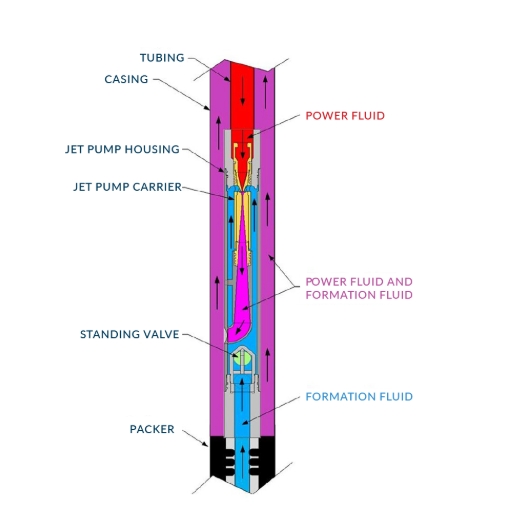
13.3 Wellfield Operating Strategy
The wellfield will be operating under an artificially induced reservoir pressure environment with the main objective of maintaining a high enough productivity index while remaining below the established fracture gradient. Maintenance of reservoir pressure will be key to achieving adequate recovery rates of PLS from each targeted horizon, particularly for offset wells within direct communication where displacement of reacted HCl will need to be recovered at surface. The network of 27 jet pumps will be key to maintaining the ability of the orebody to deliver fluids to the wellbore by recovering fluid during production phase and circulation of unspent or reacted HCl during injection phase.
In addition to recovery rate of fluids, the installation of a jet pump network provides the ability to maintain a high temperature power fluid to the reservoir fluid and maintain a critical temperature needed for boric acid to remain in solution. Installation of the centralized surface facility (CSF) will supply high-pressure power fluid to multiple jet pumps
across the 27 well network, recovering and circulating fluid as needed. After lifting at-grade PLS to surface, the power fluid and produced fluid are separated at surface with PLS directed towards plant and lower concentration PLS recycled and directed towards the next group of wells undergoing recovery operations.
Dissolution kinetics of the rate at which colemanite dissolves and boron is extracted assumes that the solid colemanite particle reacts with HCl, and the reaction front moves inward as mineralized particles dissolve. Geo-steered wells adjust the wellbore path using measurement while drilling (MWD) and logging while drilling (LWD) technology to ensure the well stays within target horizon. The rate of dissolution is mainly controlled by film diffusion of HCl through the liquid boundary layer, underground surface reaction between HCl and colemanite, and diffusion of reaction products through a porous layer of undissolved precipitates. To progressively leach the orebody in required amounts, greater volumes of fluid will need to be injected to replace previously leached volume and contact new colemanite. The underground surface chemical reaction is the rate-controlling step because the reaction at the colemanite surface is slower than the diffusion of HCl to the mineralized particle or removal of products, thus resource temperature needs to be maintained at dissolution levels to produce required head grades. Table 13.1 below provides the parameters for which the wellfield operating strategy will be deployed, and Figure 13.2 provides the first-year production rates per cycle.
Table 13.1: Wellfield operating strategy mining parameters
|
|
|
|
|
|
|
|
|
|
|
|
Well Group |
Unit |
MMH |
UMH |
LMH |
IMH |
Geologic Unit |
horizon |
Major |
Upper |
Lower |
Intermediate |
Colemanite Reserve |
tons |
3,270,047 |
501,765 |
1,780,099 |
1,122,736 |
MMH Reserve, H₃BO₃ |
tons |
2,613,737.67 |
401,058.83 |
1,422,827.36 |
897,399.29 |
No. of Wells |
each |
9.00 |
9.00 |
9.00 |
* accounted in MMH |
Well Completion |
type |
Open-Hole, limited entry perforated tubing, liner hanger |
Open-Hole, limited entry perforated tubing, liner hanger |
Open-Hole, limited entry perforated tubing, liner hanger |
Open-Hole, limited entry perforated tubing, liner hanger |
Avg Length |
ft |
3,450 |
3,450 |
3,450 |
3,450 |
Avg Thickness |
ft |
61.18 |
9.08 |
20.27 |
17.20 |
Group Injection Rate |
gpm |
1,125 |
1,170 |
1,350 |
1,125 |
Group Production Rate |
gpm |
1,125 |
1,170 |
1,350 |
1,125 |
H₃BO₃ tons per year (tpy) |
tons |
43,333 |
43,333 |
43,333 |
* |
Colemanite Mass Leached, tpy |
tons |
74,377 |
77,352 |
89,252 |
* |
Horizon Life |
years |
43.97 |
6.49 |
19.94 |
* |
Mining Efficiency |
% |
95.0 |
95.0 |
95.0 |
* |
Leaching Efficiency |
% |
81.9 |
81.9 |
81.9 |
* |
Plant Efficiency |
% |
95.1 |
95.1 |
95.1 |
* |
Dedicated Injection Wells |
each |
1.0 |
— |
— |
* |
Dedicated Production Wells |
each |
1.0 |
— |
— |
* |
Dual Injection/Recovery Wells |
each |
7.00 |
9.00 |
9.00 |
* |
* Accounted for in MMH |
|
|
|
|
|
Figure 13.2: Year 1 production rates per cycle
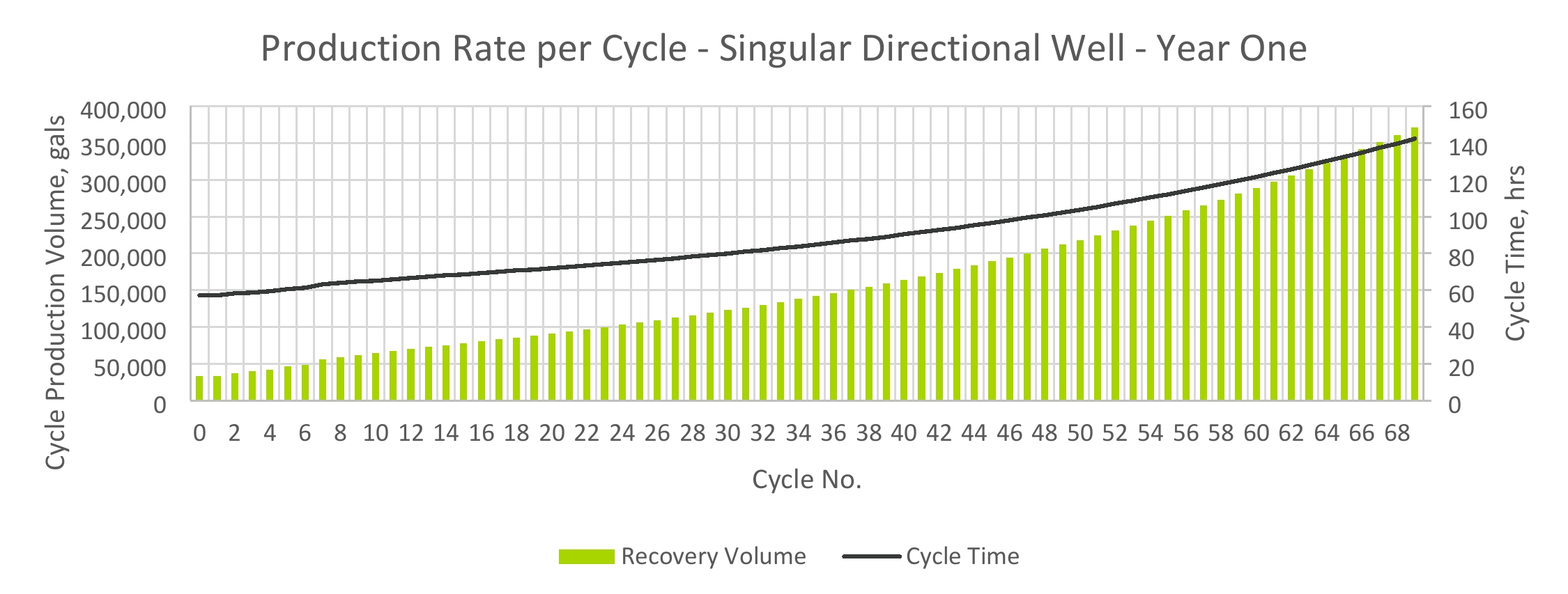
The mine plan utilizes in-situ leaching operations via lixiviant solutions to mine the colemanite resource in place without physically removing large volumes of ore or overburden. The process relies on the natural and enhanced permeability of the deposit to allow leaching solution to flow through and dissolve targeted mineralization. Solution mining accesses the colemanite deposit through wells drilled into the orebody, where leaching solution is then injected directly into the mineralized zone. The colemanite mineral’s moderate solubility combined with its geological and stratigraphic suitability allows leaching solutions to extract boron without stripping the surface or backfilling voids from underground development.
Mine recovery rate (leaching efficiency) of 81.9% is applied to account for losses for leaching solution not reaching and reacting with the ore body, as well as for non-recoverable saturated solution underground. This is based on studies conducted by 5E, Hazen, and MSME. Leaching efficiency requires lixiviant to contact colemanite, therefore an additional “mining efficiency” factor for fluid to contact colemanite probability has been introduced to account for reduction anomalies due to wellbore traversing in lower grade zones or discontinuous colemanite beds along horizontal well paths. The mining efficiency factor is based on drilling experience during a 3000 ft horizontal well and sidetrack program deployed in July 2025 which tested drill cuttings using ICP-OES and confirmed approximately 95% of the wellbore was in the planned zone. Table 13.2 below provides the ICP-OES results from the horizontal well program.
Table 13.2: Horizontal well program ICP-OES results (July 7, 2025)
|
|
|
|
|
|
|
|
|
|
|
|
|
|
|
|
|
|
|
|
|
|
|
|
|
|
|
|
|
|
|
|
|
|
|
|
|
|
|
|
Test Sample ID |
Depth
(md ft) |
Date |
Test Date |
Al
(ppm) |
As
(ppm) |
B
(ppm) |
B
(wt. %) |
Ca
(ppm) |
Fe
(ppm) |
K
(ppm) |
Li
(ppm) |
Mg
(ppm) |
Mn
(ppm) |
Na
(ppm) |
S
(ppm) |
Si
(ppm) |
Sr
(ppm) |
Ti
(ppm) |
Zn
(ppm) |
7092563 |
1090-1100 |
7/7/2025 |
7/17/2025 |
1,429 |
49 |
261 |
0.1% |
125,607 |
2,233 |
6,279 |
— |
1,896 |
590 |
4,802 |
>38,702 |
2,485 |
6,210 |
21 |
— |
7092562 |
1190-1200 |
7/7/2025 |
7/17/2025 |
954 |
133 |
370 |
0.2% |
101,618 |
2,752 |
6,026 |
— |
1,795 |
347 |
9,440 |
>43,670 |
1,462 |
6,224 |
— |
— |
7092561 |
1220-1230 |
7/7/2025 |
7/17/2025 |
1,073 |
96 |
451 |
0.3% |
100,893 |
1,852 |
7,782 |
— |
2,058 |
272 |
6,911 |
>42,540 |
1,478 |
8,714 |
— |
— |
7092560 |
1230-1240 |
7/7/2025 |
7/17/2025 |
1,179 |
192 |
567 |
0.3% |
113,484 |
3,433 |
7,240 |
— |
2,002 |
332 |
8,914 |
>42,951 |
1,515 |
3,806 |
— |
— |
7092559 |
1240-1250 |
7/7/2025 |
7/17/2025 |
2,308 |
67 |
602 |
0.3% |
45,406 |
2,611 |
10,940 |
— |
2,146 |
186 |
13,398 |
>27,689 |
1,554 |
7,538 |
— |
— |
7092558 |
1250-1260 |
7/7/2025 |
7/17/2025 |
1,206 |
111 |
603 |
0.3% |
99,541 |
3,605 |
9,300 |
— |
2,056 |
474 |
6,951 |
>41,829 |
1,191 |
2,783 |
— |
— |
7092557 |
1260-1270 |
7/7/2025 |
7/17/2025 |
1,419 |
123 |
774 |
0.4% |
135,328 |
3,629 |
9,211 |
— |
1,710 |
446 |
7,660 |
>43,335 |
1,271 |
4,382 |
— |
— |
7092556 |
1270-1280 |
7/7/2025 |
7/17/2025 |
1,572 |
123 |
1,040 |
0.6% |
116,244 |
3,276 |
8,530 |
— |
1,683 |
425 |
8,870 |
>43,810 |
1,147 |
2,761 |
— |
— |
7092555 |
1280-1290 |
7/7/2025 |
7/17/2025 |
1,646 |
88 |
390 |
0.2% |
82,825 |
2,059 |
11,775 |
— |
1,868 |
277 |
7,276 |
>44,076 |
1,514 |
3,686 |
— |
— |
7092554 |
1290-1300 |
7/7/2025 |
7/17/2025 |
1,325 |
84 |
600 |
0.3% |
103,330 |
2,181 |
4,191 |
— |
1,713 |
303 |
4,821 |
>43,003 |
1,679 |
4,099 |
— |
— |
7092553 |
1370-1380 |
7/7/2025 |
7/17/2025 |
1,380 |
125 |
810 |
0.5% |
113,453 |
2,612 |
9,955 |
— |
2,714 |
300 |
9,277 |
>42,004 |
— |
12,491 |
— |
— |
7092552 |
1380-1390 |
7/7/2025 |
7/17/2025 |
913 |
202 |
822 |
0.5% |
156,475 |
2,809 |
8,358 |
— |
2,303 |
334 |
6,742 |
>42,702 |
1,288 |
13,441 |
— |
— |
7092551 |
1390-1400 |
7/7/2025 |
7/17/2025 |
1,565 |
323 |
1,205 |
0.7% |
128,577 |
4,084 |
8,446 |
— |
2,608 |
296 |
9,043 |
>42,849 |
1,397 |
11,787 |
— |
— |
7092550 |
1400-1410 |
7/7/2025 |
7/17/2025 |
838 |
206 |
10,478 |
6.0% |
175,003 |
2,289 |
8,333 |
— |
1,996 |
306 |
5,845 |
>44,070 |
1,292 |
13,966 |
— |
— |
7092549 |
1410-1420 |
7/7/2025 |
7/17/2025 |
1,041 |
162 |
9,456 |
5.4% |
147,142 |
2,307 |
7,282 |
— |
2,652 |
280 |
7,079 |
>43,938 |
1,572 |
4,219 |
— |
— |
7092548 |
1420-1430 |
7/7/2025 |
7/17/2025 |
1,289 |
169 |
7,031 |
4.0% |
123,375 |
3,127 |
8,459 |
— |
2,642 |
277 |
7,845 |
>44,396 |
1,564 |
7,765 |
— |
— |
7092547 |
1430-1440 |
7/7/2025 |
7/17/2025 |
1,198 |
116 |
5,288 |
3.0% |
173,385 |
1,858 |
7,458 |
— |
2,691 |
287 |
7,329 |
>43,984 |
1,410 |
10,056 |
— |
— |
7092546 |
1440-1450 |
7/7/2025 |
7/17/2025 |
781 |
115 |
11,449 |
6.5% |
157,714 |
1,256 |
6,834 |
— |
1,983 |
263 |
6,230 |
>42,023 |
1,080 |
8,933 |
— |
— |
7092545 |
1530-1540 |
7/7/2025 |
7/15/2025 |
649 |
141 |
16,792 |
9.6% |
192,185 |
1,343 |
5,246 |
— |
1,398 |
183 |
405 |
>52,789 |
1,079 |
17,493 |
— |
— |
7092544 |
1550-1560 |
7/7/2025 |
7/15/2025 |
1,378 |
163 |
7,387 |
4.2% |
176,049 |
2,547 |
7,565 |
— |
1,725 |
194 |
1,957 |
>52,386 |
1,599 |
10,261 |
— |
220 |
7092543 |
1580-1590 |
7/7/2025 |
7/15/2025 |
813 |
74 |
17,522 |
10.0% |
>206,819 |
1,248 |
2,417 |
— |
947 |
193 |
377 |
>51,705 |
1,331 |
10,044 |
— |
163 |
7092542 |
1690-1700 |
7/7/2025 |
7/15/2025 |
493 |
133 |
7,901 |
4.5% |
>197,773 |
2,106 |
3,969 |
— |
1,332 |
160 |
2,966 |
>49,443 |
1,617 |
14,302 |
— |
167 |
7092541 |
1780-1800 |
7/7/2025 |
7/15/2025 |
— |
87 |
4,274 |
2.4% |
201,932 |
1,936 |
4,191 |
— |
1,054 |
212 |
866 |
>54,254 |
1,379 |
13,362 |
— |
230 |
7092540 |
1800-1820 |
7/7/2025 |
7/15/2025 |
401 |
166 |
10,417 |
6.0% |
>206,458 |
2,923 |
4,377 |
— |
1,486 |
455 |
1,700 |
>51,615 |
1,727 |
18,578 |
— |
156 |
7092539 |
1820-1840 |
7/7/2025 |
7/14/2025 |
292 |
197 |
35,684 |
20.4% |
>167,183 |
2,618 |
6,990 |
— |
1,501 |
273 |
4,580 |
>41,796 |
1,529 |
17,113 |
— |
— |
7092538 |
1840-1860 |
7/7/2025 |
7/14/2025 |
310 |
189 |
35,610 |
20.4% |
>153,839 |
2,720 |
6,670 |
— |
1,476 |
265 |
4,458 |
>38,460 |
1,416 |
17,058 |
— |
— |
7092537 |
1860-1880 |
7/7/2025 |
7/14/2025 |
718 |
141 |
42,442 |
24.3% |
>159,921 |
3,284 |
6,309 |
— |
1,427 |
210 |
2,841 |
>39,980 |
1,219 |
14,588 |
— |
— |
7092536 |
1880-1900 |
7/7/2025 |
7/14/2025 |
605 |
126 |
23,761 |
13.6% |
>167,104 |
2,202 |
6,204 |
— |
1,328 |
221 |
2,285 |
>41,776 |
1,035 |
15,672 |
— |
— |
7092535 |
1900-1920 |
7/7/2025 |
7/14/2025 |
582 |
132 |
29,091 |
16.6% |
>17,895 |
2,140 |
6,331 |
— |
1,355 |
266 |
2,968 |
>44,724 |
1,401 |
18,983 |
— |
— |
7092534 |
1920-1940 |
7/7/2025 |
7/14/2025 |
997 |
171 |
19,077 |
10.9% |
133,397 |
2,811 |
11,536 |
— |
1,737 |
196 |
2,653 |
>43,156 |
1,209 |
15,413 |
— |
— |
7092533 |
1940-1960 |
7/7/2025 |
7/9/2025 |
— |
192 |
33,517 |
19.2% |
>155,231 |
1,875 |
6,611 |
90 |
1,074 |
145 |
1,347 |
>38,808 |
1,075 |
15,226 |
82 |
— |
7092532 |
1960-1980 |
7/7/2025 |
7/9/2025 |
63 |
222 |
49,058 |
28.0% |
>155,569 |
2,222 |
6,539 |
91 |
1,013 |
105 |
1,056 |
>38,892 |
656 |
13,455 |
80 |
— |
7092531 |
1980-2000 |
7/7/2025 |
7/9/2025 |
304 |
379 |
10,202 |
5.8% |
>138,112 |
1,909 |
8,576 |
91 |
1,429 |
128 |
1,505 |
>34,528 |
4,611 |
8,094 |
75 |
— |
7092530 |
2000-2020 |
7/7/2025 |
7/9/2025 |
157 |
155 |
19,179 |
11.0% |
>137,156 |
1,691 |
8,113 |
87 |
1,409 |
94 |
1,937 |
>34,289 |
811 |
7,930 |
69 |
— |
7092529 |
2020-2040 |
7/7/2025 |
7/9/2025 |
277 |
176 |
17,087 |
9.8% |
>141,037 |
2,278 |
11,755 |
104 |
1,667 |
61 |
3,343 |
>39,921 |
1,158 |
10,534 |
86 |
— |
7092528 |
2040-2060 |
7/7/2025 |
7/9/2025 |
— |
163 |
43,631 |
24.9% |
>161,324 |
1,237 |
6,670 |
89 |
988 |
85 |
1,989 |
>40,331 |
912 |
15,596 |
79 |
— |
7092527 |
2060-2080 |
7/7/2025 |
7/9/2025 |
75 |
191 |
16,692 |
9.5% |
>156,423 |
2,009 |
9,584 |
88 |
1,246 |
139 |
2,552 |
>39,106 |
1,028 |
11,085 |
81 |
— |
7092526 |
2100-2120 |
7/7/2025 |
7/9/2025 |
— |
158 |
16,692 |
9.5% |
>155,883 |
1,353 |
6,995 |
93 |
1,215 |
97 |
2,268 |
>38,971 |
1,010 |
12,078 |
77 |
— |
7092525 |
2180-2200 |
7/7/2025 |
7/9/2025 |
— |
122 |
16,918 |
9.7% |
>157,460 |
830 |
2,519 |
75 |
762 |
48 |
— |
>39,365 |
727 |
8,635 |
76 |
— |
7092524 |
2220-2240 |
7/7/2025 |
7/9/2025 |
— |
141 |
27,287 |
15.6% |
>158,720 |
1,072 |
2,392 |
82 |
752 |
37 |
248 |
>39,680 |
1,074 |
10,737 |
83 |
— |
7092523 |
2280-2300 |
7/7/2025 |
7/9/2025 |
— |
148 |
12,674 |
7.2% |
>146,014 |
1,202 |
3,586 |
74 |
984 |
77 |
490 |
>36,503 |
1,169 |
9,618 |
74 |
— |
7092522 |
2380-2400 |
7/7/2025 |
7/9/2025 |
— |
146 |
9,210 |
5.3% |
>165,228 |
1,104 |
2,160 |
86 |
918 |
101 |
1,445 |
>41,307 |
1,150 |
10,993 |
84 |
— |
7092521 |
2548 |
7/7/2025 |
7/9/2025 |
— |
165 |
7,976 |
4.6% |
>159,690 |
1,228 |
2,233 |
86 |
882 |
122 |
382 |
>39,922 |
961 |
11,579 |
81 |
— |
7092520 |
2580-2600 |
7/7/2025 |
7/9/2025 |
37 |
238 |
2,696 |
1.5% |
>171,634 |
2,321 |
5,803 |
108 |
1,431 |
144 |
1,445 |
>42,908 |
900 |
8,782 |
88 |
— |
7092519 |
2600-2620 |
7/7/2025 |
7/9/2025 |
— |
206 |
7,440 |
4.3% |
>161,274 |
2,003 |
4,912 |
105 |
1,346 |
101 |
1,616 |
>40,319 |
1,176 |
11,114 |
87 |
— |
7092518 |
2640-2660 |
7/7/2025 |
7/9/2025 |
212 |
172 |
12,033 |
6.9% |
>144,798 |
1,945 |
8,102 |
108 |
1,484 |
87 |
2,426 |
>36,199 |
1,408 |
13,307 |
82 |
— |
7092517 |
2680-2700 |
7/7/2025 |
7/9/2025 |
47 |
160 |
14,388 |
8.2% |
>149,230 |
1,391 |
5,160 |
98 |
1,162 |
52 |
1,518 |
>37,308 |
1,386 |
13,046 |
80 |
— |
7092516 |
2780-2800 |
7/7/2025 |
7/9/2025 |
108 |
157 |
6,899 |
3.9% |
>159,966 |
1,523 |
4,711 |
100 |
1,259 |
103 |
924 |
>39,991 |
1,257 |
10,514 |
90 |
— |
7092515 |
2880-2900 |
7/7/2025 |
7/9/2025 |
77 |
201 |
6,021 |
3.4% |
>156,296 |
2,067 |
4,207 |
89 |
1,117 |
130 |
1,020 |
>39,074 |
1,288 |
12,675 |
80 |
— |
7092514 |
2980-3000 |
7/7/2025 |
7/9/2025 |
131 |
162 |
4,054 |
2.3% |
>162,181 |
1,688 |
5,649 |
94 |
941 |
80 |
1,374 |
>40,543 |
1,276 |
10,815 |
82 |
— |
7092513 |
3022 |
7/7/2025 |
7/9/2025 |
122 |
146 |
35,828 |
20.5% |
>140,990 |
1,222 |
3,236 |
82 |
810 |
65 |
1,043 |
>35,247 |
1,431 |
10,926 |
70 |
— |
The EPA UIC permit subdivides the mineralized deposit into three blocks for development. Block 1 comprises the northwestern third of the orebody, Block 2 occupies the central portion of the orebody, and Block 3 comprises the southeastern third of the orebody. The SSF currently operates in Block 2 and Figure 13.3 presents the commercial mine plan of the 27 wells in Block 2. Figure 13.4 provides an example of the cross section in Block 2 and the MMH wells with vertical spacing while Figure 13.5 provides an example of the cross section in Block 2 and the MMH wells with lateral spacing. To permit mining of Block 1 and Block 3, the EPA UIC permits will require additional monitoring wells to be installed and baseline parameters to be established via sampling and laboratory testing. Block 2 has established enough resources and reserves for the first phase of mining.
Figure 13.3: LSBF block 2 mine plan
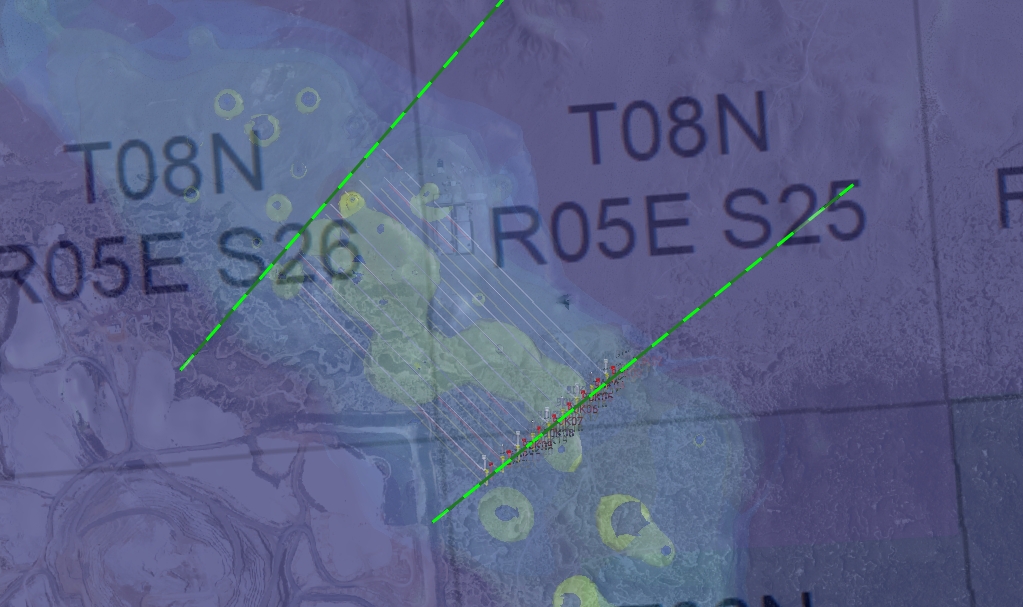
Figure 13.4: Block 2 mining cross section – MMH wells vertical spacing
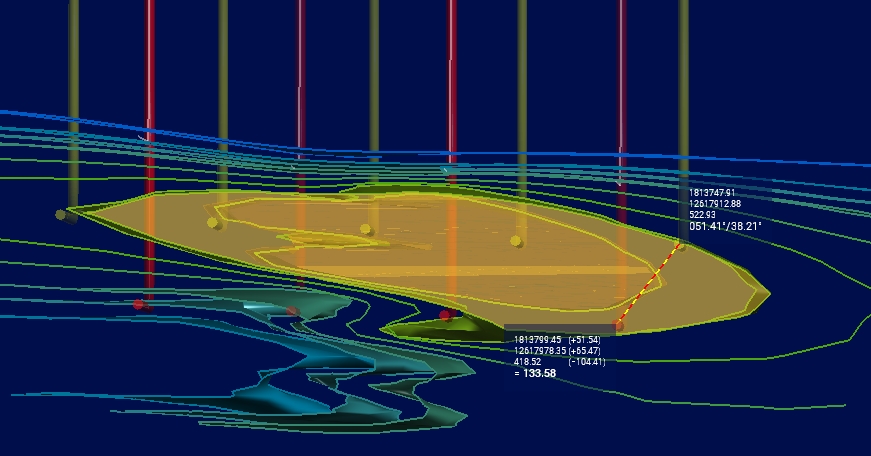
Figure 13.5: Block 2 mining cross section – MMH wells lateral spacing
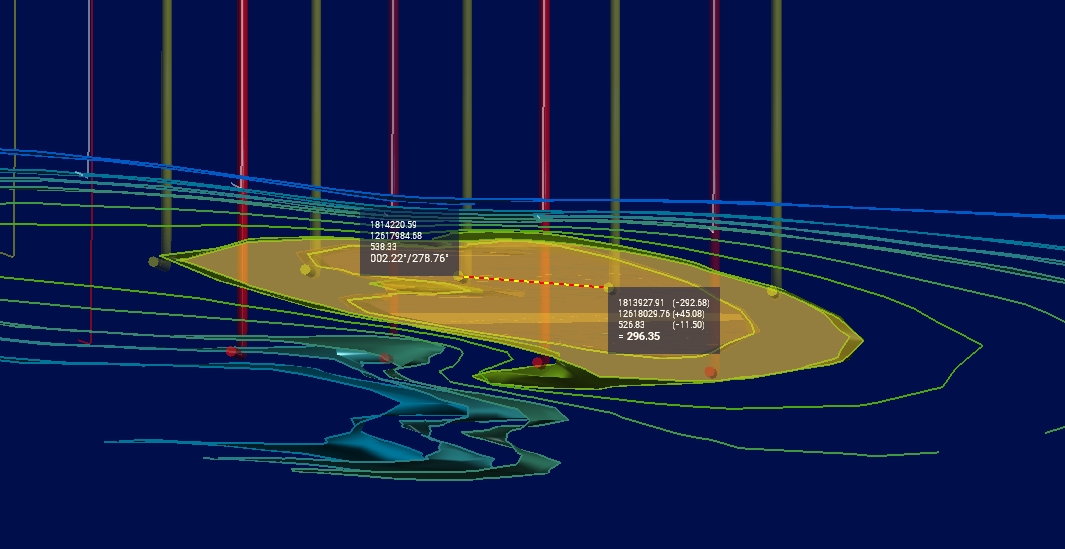
Drilling and construction of the 27 wells for the LSBF wellfield requires a precision super single automated drilling rig operating by a 5-man crew with 24 hour per day and seven days a week (24/7) operations. Additional personnel require a dedicated tool-pusher and drill site manager on-site 24/7 while the rig deploys a rotary steerable directional drilling method. During the program, the commercial production wells will actively be adjusted or geo-steered based on logging during drilling operations.
Given the progressive nature of cavern development and injection fluid recharge and re-injection, cavern voids are expected to remain fluid-filled thus limiting subsidence risks at surface. Existing Micro-deformation instrumentation monitors the surface for subsidence and indicates cyclical net balance of subsidence and heave, and results are displayed in Figure 13.6 below. The injection interval is isolated to colemanite bearing orebody with overburden geological layers providing a bridge to reduce subsidence effects. Micro-deformation instrumentation will continue to monitor orebody throughout life of mine.
Figure 13.6: Micro-deformation results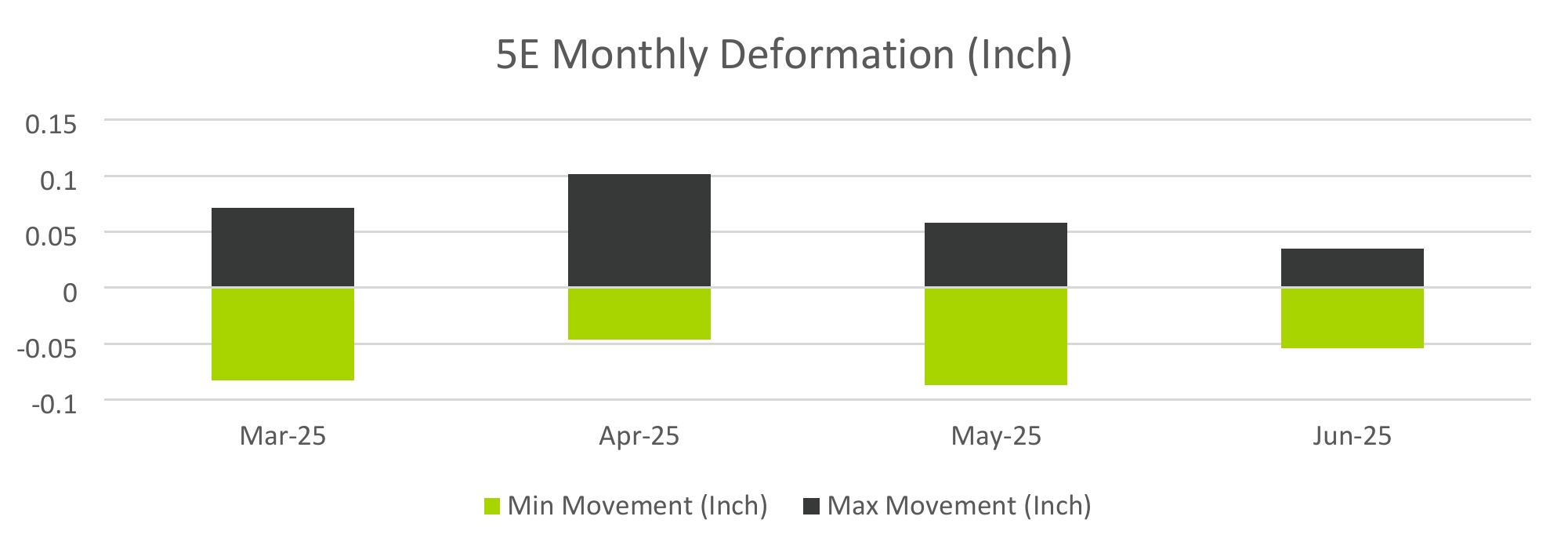
14 Processing and Recovery Methods
This section outlines the processing facilities established in the final stage of the 2025 Pre-feasibility Study for the Large-Scale Borates Facility Project (LSBF). It encompasses all processing operations, from the delivery of PLS from the mine wells to the production of boric acid and associated byproducts.
14.1 Processing Summary
During the Front-End Loading Phase 2 (FEL-2), 5E successfully executed an extensive program of mineral processing and metallurgical testing, as detailed in Section 10. Building on these results, the company has selected a proven, crystallization-based process for boric acid extraction. This method has been validated through both laboratory-scale experiments and the operational success of the SSF, illustrated in Figure 14.1.
Figure 14.1: Small-Scale Facility
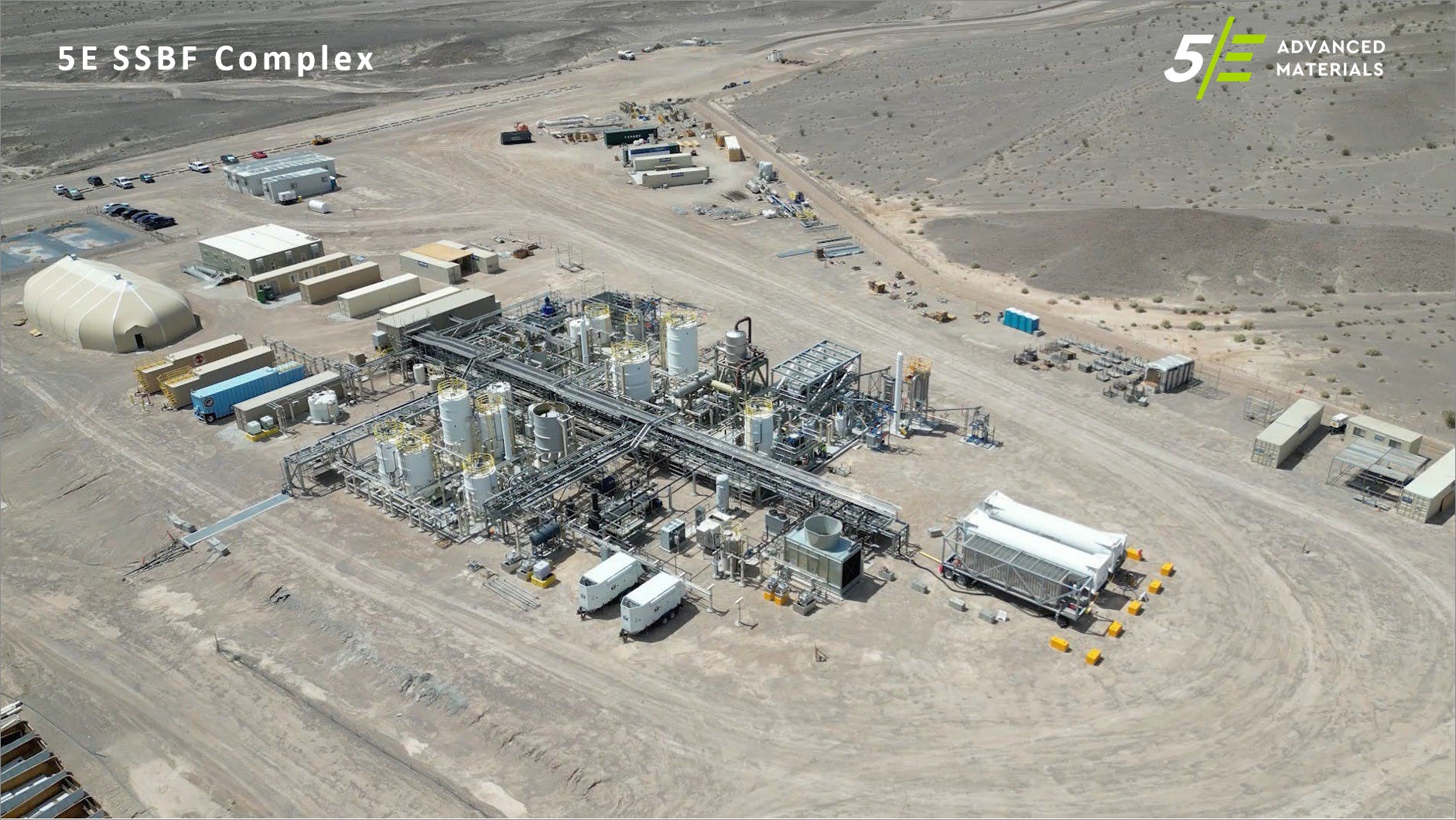
The SSF has consistently produced boric acid that meets or exceeds customer quality specifications. Operational insights, performance data, and key learnings from the SSF have been integrated into the design of the forthcoming Large-Scale Borates Facility.
A high-level overview of the selected process, along with a simplified block flow diagram (Figure 14.2), is presented below. Additional technical details are available in Section 14.3 and the Process & Utility Description document (5EAM-G1-RPT-225-00003).
Figure 14.2: Block flow diagram of the Large-Scale Borates Facility
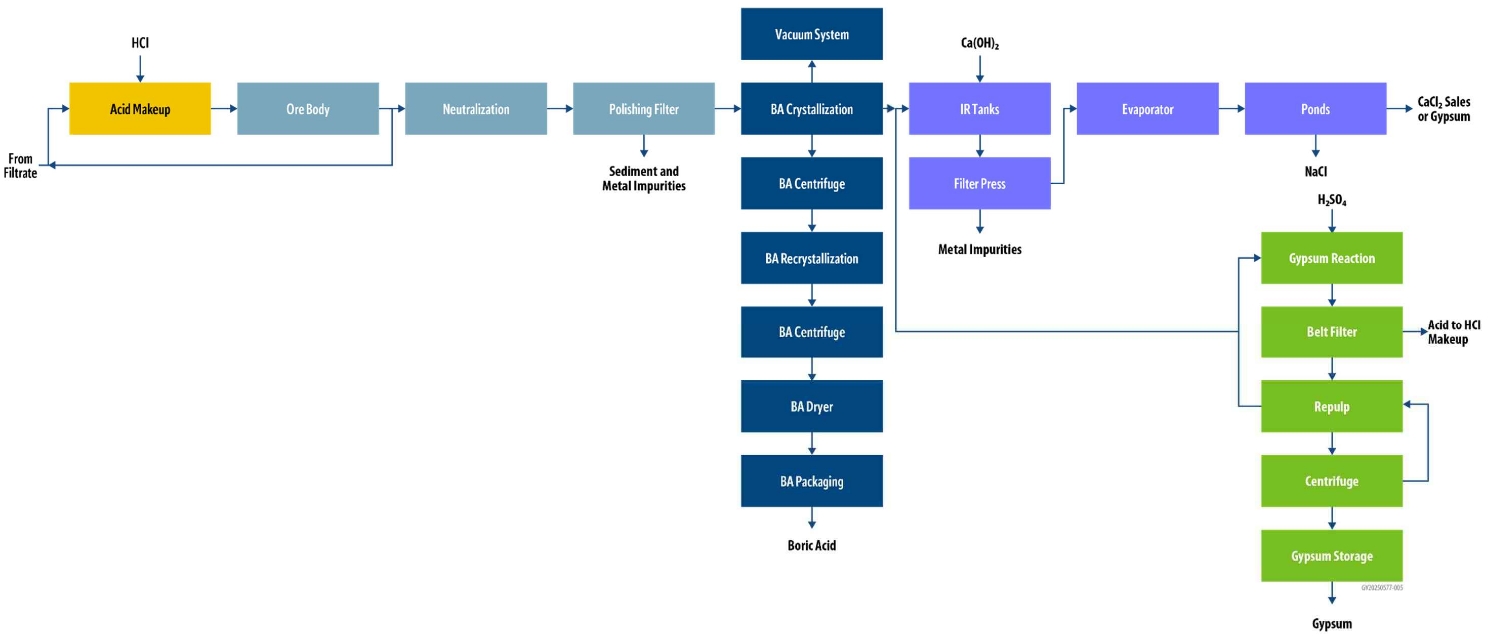
•
Solution Mining and Injection: Target minerals are dissolved in situ using solution mining techniques utilizing heat and steam. The resulting PLS is transported via pipeline infrastructure to the surface processing facilities.
•
PLS Recovery and Clarification: The PLS undergoes pH adjustment through lime addition, which reduces acidity and enables the use of more cost-effective materials of construction. A multi-stage solid-liquid separation process, including filtration, removes precipitated solids, yielding a clarified solution ready for downstream processing.
•
Boric Acid Circuit: This core section of the process is dedicated to the concentration, extraction, and purification of boric acid. A two-stage vacuum chilled crystallization system initiates the precipitation of boric acid, followed by filtration, washing, and redissolution. A second two-stage recrystallization step ensures high-purity product formation. Final dewatering is achieved via centrifugation, and the wet crystals are dried in a rotary dryer, cooled, and packaged. A portion of the centrate is directed to the Impurity Removal Circuit and the remainder is sent to the Gypsum circuit.
•
Impurity Removal Circuit and Evaporation: In the Impurity Removal stage, magnesium hydroxide [Mg(OH)₂] and other impurities are removed from the process stream through a reaction with hydrated lime. This reaction causes the impurities to precipitate, allowing them to be separated via filtration. The resulting filtrate slurry then enters the Evaporation Circuit, where mechanical evaporation and evaporation ponds concentrate solution. During this process, sodium chloride is precipitated and removed as waste. The concentrated brine, now enriched with calcium chloride, is either directed to truck loading for sale as a byproduct or sent to the Gypsum Circuit for further processing.
•
Gypsum Circuit: Here, the Calcium Chloride rich brine reacts with sulfuric acid to precipitate gypsum, which is then filtered and refined to be sold as a byproduct. This circuit also facilitates the regeneration of hydrochloric acid, which is recycled back to the wellfield for reuse in the mining process.
14.2 Process Design Criteria / Usages
The LSBF’s engineering and design framework is guided by the specifications detailed in the Process Design Criteria document (5EAM-G1-DBD-225-00001), with summary of the most critical process parameters, assumptions, and usages reflected in Table 14.1 below:
Table 14.1 LSBF design criteria
|
|
|
|
|
|
|
|
|
|
|
|
Design Criteria / Usages – Process Summary |
Parameter |
Units |
Value
(Gypsum only) |
Value
(CaCl₂ and Gypsum) |
Comments |
Feed Rate |
st/hr |
25.6 |
25.6 |
|
Operating Days per Year |
days/yr |
365 |
365 |
|
Operating Factor |
% |
91 |
91 |
|
Plant Operating Hours |
hr/yr |
8,000 |
8,000 |
|
Boron Recovery |
% |
95.1 |
95.1 |
|
Boric Acid Production Rate |
ST/hr |
16.25 |
16.25 |
|
Boric Acid Design Production |
stpa |
130,000 |
130,000 |
|
Gypsum Production |
stpa |
162,000 |
129,000 |
Dry Basis |
Calcium Chloride Production |
stpa |
0 |
57,000 |
~57,000 @ 40% weight CaCl₂ solution, equivalent to 60,000 @38% |
Water Consumption |
gpm |
237 |
237 |
Make up from wells |
Hydrochloric Acid |
lbs/ST BA |
291 |
510 |
100% basis |
Sulfuric Acid |
lbs/ST BA |
1,451 |
1,157 |
100% basis |
Lime |
lbs/ST BA |
423 |
423 |
100% basis |
Natural Gas |
MMBtu/ST |
7 |
7 |
|
Electricity |
kW/ST |
1,000 |
1,000 |
|
Employees |
people |
110 |
110 |
80 operators and 30 overhead |
14.2.1 Basis for Boric Acid (BA) Head Grade
As stated in Section 11.1 Key Assumptions, it is the opinion of the QP for Section 13 that 5E may achieve a boric acid head grade of 10.2% weight in the PLS at 160°F, with 12% head grade being the maximum potentially achieved at 212°F for PLS recovery. The drivers assume to achieve this rate are two-fold: (1) injectate solution can be heated above ground at a temperature above 200°F with PLS solution leaving the formation at 160°F, or (2) the formation can be heated via dedicated steam injection such that PLS solution exits the formation at 160°F. Other drivers that have been proven include: (1) recycled boron remains in solution during mining, (2) boron solubility curves follow calcium curves as demonstrated by work performed by MSME in the 1980’s, and (3) 5E’s extracted PLS aligns with the solubility curves versus temperature. See Kemetco solubility curve in Section 10.
14.3 Work Breakdown Structure and Plant Layout
To support the execution and management of the LSBF project, the processing facilities have been organized using a structure Work Breakdown Structure (WBS). This framework provides a clear, hierarchical representation of the project scope, enabling effective planning, coordination, and control throughout the project lifecycle. Table 14.2 presents the processing facilities by WBS, while the plant layout is illustrated in Figure 14.3 and Figure 14.4. This WBS divides the LSBF into five primary geographic areas, each representing a distinct portion of the processing infrastructure. Two additional areas are included for cost accounting purposes. During FEL-2, the project scope was defined to the Level 2 WBS, providing sufficient detail for pre-feasibility level planning and reporting. Further refinement to Levels 3 and 4 will be completed during FEL-3 and the detailed design phase.
This structured approach ensures that each component of the processing facilities is clearly defined and traceable, supporting efficient execution and alignment with overall project objectives.
Table 14.2 LSBF WBS processing facilities
|
|
|
|
|
|
|
|
|
|
|
|
FEL-2 (DEFINITION LVL) |
|
FEL-3/EXECUTION |
|
AREA
LEVEL 1 |
|
AREA
LEVEL 2 |
|
AREA
LEVEL 3 |
|
PLANT AREA |
|
UNIT TYPE |
|
CWA - DRAFT |
|
"N" |
|
"N#" |
|
"N###" |
DESCRIPTION |
G |
|
|
|
|
General |
|
|
G100000 |
|
|
GENERAL |
S |
|
|
|
|
Site and Infrastructure |
|
|
S100000 |
|
|
Site Preparation |
|
|
|
|
S101000 |
Site Preparation |
|
|
|
|
S102000 |
Mass Earthworks |
|
|
|
|
S103000 |
Site Drainage |
|
|
|
|
S104000 |
Sediment Handling |
|
|
|
|
S105000 |
Site Finish Grading |
|
|
|
|
S106000 |
Topsoil/Overburden Storage |
|
|
S200000 |
|
|
Plant Roads |
|
|
|
|
S201000 |
Plant Site Roads |
|
|
|
|
S202000 |
Parking |
|
|
|
|
S203000 |
Access Roads |
B |
|
|
|
|
Buildings/Ancillary Facilities |
|
|
B100000 |
|
|
Buildings |
|
|
|
|
B101000 |
Administration Buildings (by 5E) |
|
|
|
|
B102000 |
Guard House/Security Buildings/Gate House |
|
|
|
|
B103000 |
Truck Weigh Scale |
|
|
|
|
B104000 |
Central Control Room |
|
|
|
|
B105000 |
Warehouses |
|
|
|
|
B106000 |
Process Controls Lab |
|
|
|
|
B107000 |
Maintenance Building |
P |
|
|
|
|
Hydrometallurgical Processing Facility |
|
|
P100000 |
|
|
Solution Mining and Injection |
|
|
|
|
P101000 |
Mining Acid Make-up |
|
|
|
|
P102000 |
Reserved for Owner |
|
|
P200000 |
|
|
PLS Recovery and Clarification |
|
|
|
|
P201000 |
Mine FEED Storage and Return |
|
|
|
|
P202000 |
PLS Solid/Liquid Separation |
|
|
|
|
P203000 |
PLS Tailings Filtration |
|
|
|
|
P204000 |
Tailings Handling and Storage |
|
|
P300000 |
|
|
Boric Acid Circuit |
|
|
|
|
P301000 |
Boric Acid Crystallization |
|
|
|
|
P302000 |
Boric Acid Filtration and Washing |
|
|
|
|
P303000 |
Boric Acid Recrystallization and Dissolution |
|
|
|
|
P304000 |
Boric Acid Drying |
|
|
|
|
P305000 |
Boric Acid Product Packing and Loadout System |
|
|
|
|
P306000 |
Boric Acid Building |
|
|
|
|
P307000 |
Brine Storage and Distribution |
|
|
P400000 |
|
|
Impurity Removal Circuit |
|
|
|
|
P401000 |
Impurity Precipitation/Concentration |
|
|
|
|
P402000 |
Impurity Filtration |
|
|
|
|
P403000 |
Impurity Handling and Storage |
|
|
P500000 |
|
|
Evaporation Circuit |
|
|
|
|
P501000 |
Brine Concentration |
|
|
P600000 |
|
|
Gypsum Circuit |
|
|
|
|
P601000 |
Gypsum Precipitation/Concentration |
|
|
|
|
P602000 |
Gypsum Filtration |
|
|
|
|
P603000 |
Gypsum Refining |
|
|
|
|
P604000 |
Gypsum Drying |
|
|
|
|
P605000 |
Gypsum Product Packing and Truck Loadout System(s) |
|
|
|
|
P606000 |
Gypsum Plant Building |
|
|
|
|
|
|
|
|
|
|
|
|
FEL-2 (DEFINITION LVL) |
|
FEL-3/EXECUTION |
|
AREA
LEVEL 1 |
|
AREA
LEVEL 2 |
|
AREA
LEVEL 3 |
|
PLANT AREA |
|
UNIT TYPE |
|
CWA - DRAFT |
|
"N" |
|
"N#" |
|
"N###" |
DESCRIPTION |
|
|
P700000 |
|
|
Reagents |
|
|
|
|
P701000 |
Lime System |
|
|
|
|
P702000 |
Hydrochloric Acid System |
|
|
|
|
P703000 |
Sulfuric Acid System |
|
|
|
|
P704000 |
Sodium Hydroxide System |
|
|
|
|
P705000 |
Miscellaneous Reagent Systems |
|
|
P800000 |
|
|
Evaporation Ponds |
U |
|
|
|
|
Utilities and Offsite (U&O) |
|
|
U100000 |
|
|
Plant Utilities (Above/Underground) |
|
|
|
|
U100000 |
Utilities General |
|
|
|
|
U101000 |
Natural Gas |
|
|
|
|
U102000 |
Process Water Storage and Supply |
|
|
|
|
U103000 |
Gland Water Storage and Supply |
|
|
|
|
U104000 |
Potable Water Storage and Supply |
|
|
|
|
U105000 |
Reverse Osmosis Water Storage and Supply |
|
|
|
|
U106000 |
Firewater/Raw Water Storage and Supply |
|
|
|
|
U107000 |
Fire Protection System |
|
|
|
|
U108000 |
Cooling Water |
|
|
|
|
U109000 |
Chilled Water |
|
|
|
|
U110000 |
Demin Water |
|
|
|
|
U111000 |
Steam and Condensate Systems |
|
|
|
|
U112000 |
Storm Water System |
|
|
|
|
U113000 |
Compressed Air |
|
|
|
|
U114000 |
Instrument Air |
|
|
|
|
U115000 |
Lube Oil/Hydraulic |
|
|
|
|
U116000 |
Oily Water Treatment |
|
|
|
|
U117000 |
Environmental Monitoring |
|
|
|
|
U118000 |
Utility Shelters |
|
|
|
|
U119000 |
Sanitary Sewer |
|
|
U200000 |
|
|
Interconnecting Systems |
|
|
|
|
U201000 |
Piperack |
|
|
|
|
U202000 |
Piperack (Placeholder) |
|
|
|
|
U203000 |
Piperack (Placeholder) |
|
|
|
|
U203000 |
Piperack Utilities |
|
|
U300000 |
|
|
Power Supply and Distribution |
|
|
|
|
U301000 |
Plant Site Power Distribution |
|
|
|
|
U302000 |
Plant Site Grounding |
|
|
|
|
U303000 |
Main Sub-Station E-House |
|
|
|
|
U304000 |
E-House 1 |
|
|
|
|
U305000 |
E-House 2 |
|
|
U400000 |
|
|
Communications |
|
|
|
|
U401000 |
Plant Control Systems |
|
|
|
|
U402000 |
Fire Detection System |
|
|
|
|
U403000 |
Security System |
|
|
|
|
U404000 |
Process Monitoring System (CCTV) |
|
|
|
|
U405000 |
Telephone System |
|
|
|
|
U406000 |
Fiber Optics/Networks |
|
|
|
|
U407000 |
Satellite Connection |
|
|
|
|
U408000 |
Radio Communication |
|
|
U500000 |
|
|
Offsites |
|
|
U600000 |
|
|
Cogen Facility |
Figure 14.3: LSBF plant layout
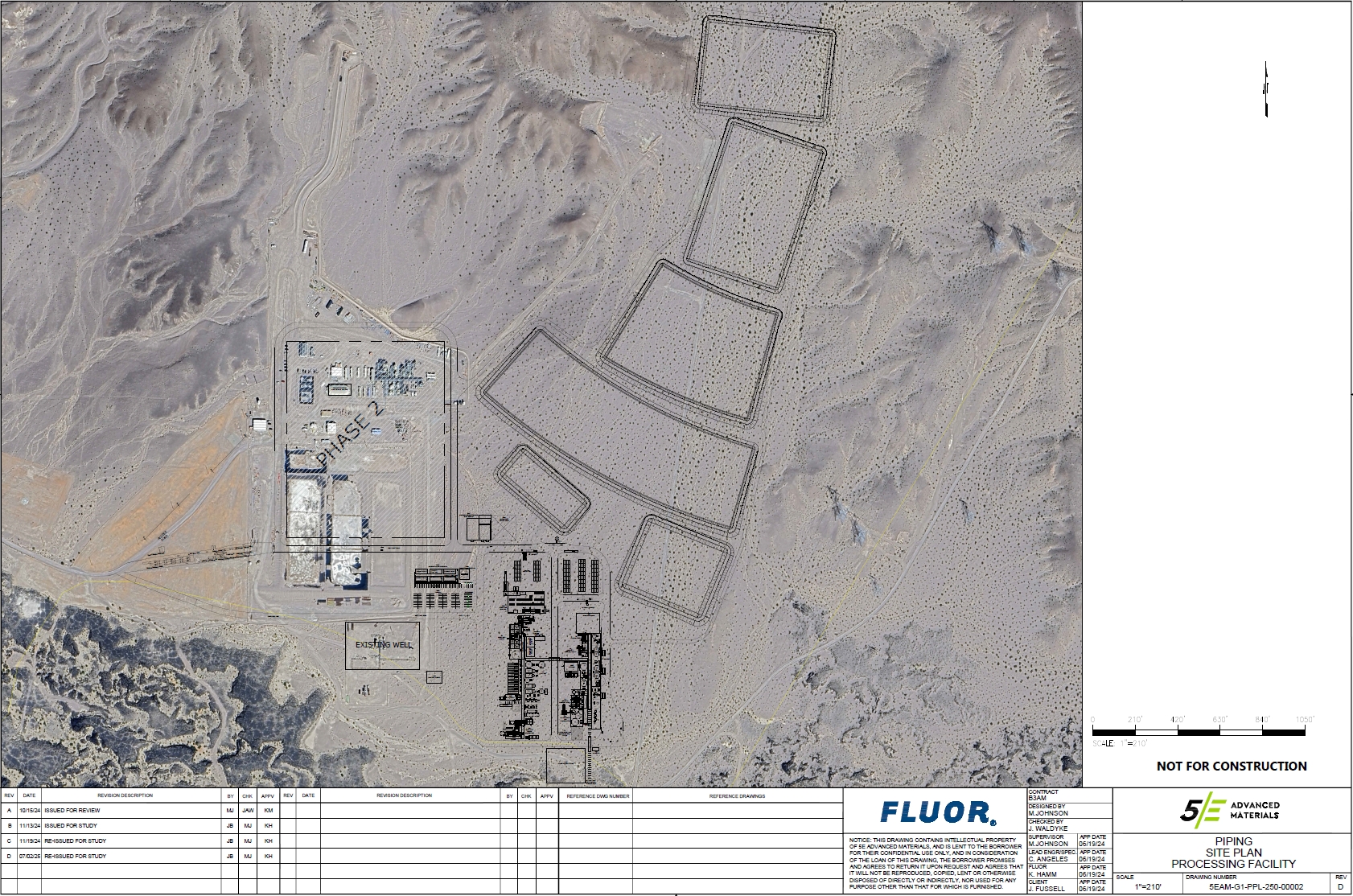
Figure 14.4: LSBF detailed layout
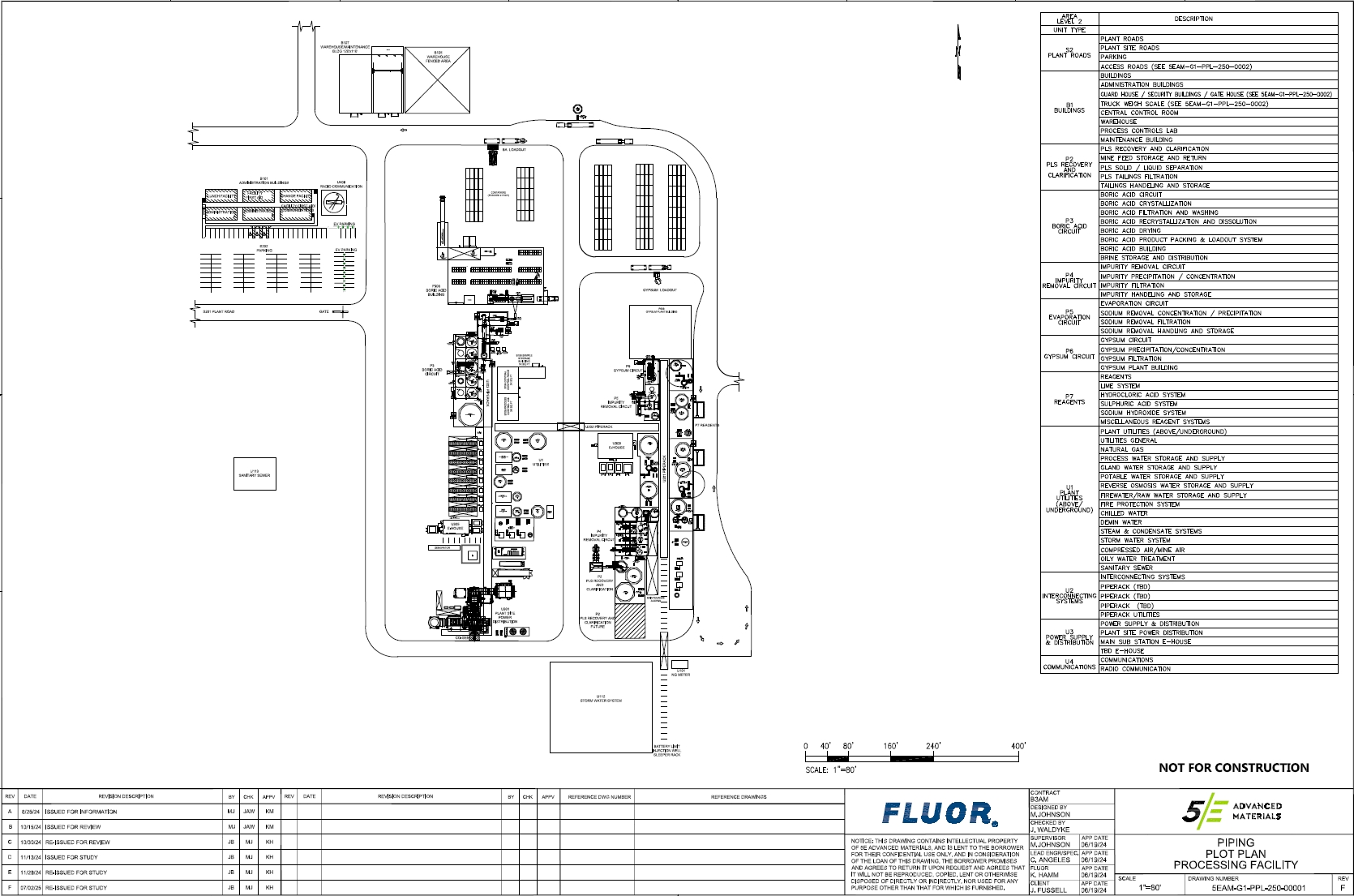
14.4 Description of Processing Facilities
The processing facility at the LSBF is engineered to support high-efficiency, high-throughput extraction and refinement of boric acid and associated byproducts from the PLS. This section provides a more detailed overview of each major processing area, highlighting the unit operations, equipment, and supporting systems that collectively enable the transformation of raw leached solution into finished, market-ready products. The design integrates industry best practices and leverages proven technologies validated through extensive test work and the successful operation of the SSF.
At the core of the LSBF is the Hydrometallurgical Processing Area, which encompasses all major processing functions. The following subsections describe this area. For a comprehensive breakdown of the facility scope, refer to the Scope of Facilities document 5EAM-G1-RPT-201-00003.
•Solution Mining and Injection: This unit area utilizes in-situ mining techniques to dissolve target minerals underground. The resulting PLS is then transferred for further processing via pipelines to the Hydrometallurgical Processing area.
•PLS Recovery and Clarification: In this unit, PLS undergoes a pH adjustment and a multi-stage solid-liquid separation process. Lime is added to increase the pH, reducing the solution's acidity before it enters the Crystallization Circuit. This adjustment allows for better material of construction selection for downstream equipment. Filtration units then remove the precipitated solids, resulting in clarified PLS for the next stages and dewatered tailings. Dedicated storage tanks (PLS Storage) ensure a constant flow of clarified PLS to subsequent stages.
•In addition to the above, this area contains the mine feed and regenerated acid return scope (i.e., storage and pipe headers).
•Boric Acid Circuit: This critical sub-area focuses on boric acid concentration, extraction, and purification and employs the following unit operations:
•Crystallization: A two-stage vacuum cooled crystallization system is employed to precipitate the primary boric acid. This is followed by a filtration and washing operation using a belt filter. The boric acid crystals are then redissolved and recrystallized through another two-stage vacuum cooled crystallization system to achieve high-purity boric acid. The product is dewatered via centrifugation to a moisture content suitable for drying.
•Boric Acid Drying/Cooling: Wet boric acid crystals from the filtering/washing centrifuge stage will undergo a rotary drying process to remove residual moisture. After the drying operation, the crystals will be cooled prior to being sent to the packaging and loadout system.
•Boric Acid Product Packing & Loadout System: This system facilitates the packaging of dried boric acid crystals into appropriate containers for shipment and sale.
•Boric Acid Building: This building encompasses the equipment and machinery required for the boric acid packaging and loadout area to remove risks of product contamination from external moisture, dust, etc.
•Brine Storage and Distribution: Concentrated brine from the boric acid extraction process is stored and distributed from this area.
•Impurity Removal Circuit: This circuit aims to precipitate and remove bulk impurities from the boric acid filtrate/centrate, which is disposed of as a waste material.
•The circuit includes equipment to precipitate impurities through reagent addition. This process is carried out in two separate steps, each involving filtration equipment to separate the precipitated material from the solution. Impurities will be disposed of as waste via a manual handling process performed by 5E.
•Evaporation Circuit: This circuit focuses on further concentrating the received brine solution to reduce the evaporation pond area necessary to promote precipitation of sodium in the form of sodium chloride as a waste material.
•Brine concentration: Includes an Evaporation system (i.e., Evaporator and Heat Exchangers) to concentrate the brine solution, thus minimizing the downstream evaporation pond area needed to precipitate and remove solid sodium chloride before proceeding to the Gypsum Circuit.
•Evaporation Ponds: Following the Evaporation Circuit, the brine stream undergoes further concentration through a dedicated evaporation pond system. This system comprises six sequential ponds designed to extract sodium chloride (NaCl) from a calcium chloride (CaCl₂) rich brine. The process begins in Buffer-1, which manages seasonal fluctuations by storing brine during cooler months and releasing it during warmer periods. The brine then passes through four main evaporation ponds (P-2 to P-5), where water evaporates and NaCl precipitates. The final stage occurs in the reservoir pond, which holds the remaining brine and ensures a consistent, year-round feed to the downstream processing plant.
In total, the pond system spans approximately 37 acres, with around 33.5 acres actively engaged in brine processing. Once the brine is sufficiently concentrated, the resulting calcium chloride stream is directed either to the Gypsum Circuit for further treatment or to a truck load-out facility for sale as a byproduct.
•Gypsum Circuit: This section addresses two key objectives:
•Gypsum precipitation and removal: Includes reaction equipment (CSTR) to precipitate gypsum by the addition of sulfuric acid, followed by filtration to produce gypsum cake. This crude gypsum cake will be further refined to a product via a repulp step and a centrifugation step. The final gypsum product is transported to storage for truck load out and shipping. Additionally, this process serves to regenerate HCl acid that will then be recycled back to the IR Wells.
•Reagents: This area contains the various reagent systems for storing, preparing, and supplying various chemicals required throughout the processing plant. Examples include:
•Miscellaneous Reagents as defined on the PFDs
•Plant Utilities (Above/Underground): This covers the design, installation, and operation of all utility systems within the plant boundaries, including both above ground and underground piping and infrastructure.
•Utilities General: Overall planning and coordination of the various utility systems within the plant.
•Natural Gas: Delivery, pressure regulation, and distribution of natural gas for use as fuel in boilers, dryers, or other process equipment.
•Process Water Storage and Supply: Storage and distribution of treated water used in various process applications.
•Potable Water Storage and Supply: Storage and distribution of treated potable water.
•Reverse Osmosis Water Storage and Supply: Production, storage, and distribution of high-purity water through reverse osmosis for specific process needs.
•Firewater/Raw Water Storage and Supply: Storage and distribution of water for fire protection systems and potentially raw water for treatment and use in other applications.
•Fire Protection System: Installation of a fire protection system including fire hydrants, sprinklers, and alarms.
•Cooling Water: Delivery, treatment, and distribution of cooling water used to regulate process temperatures in various equipment.
•Chilled Water: Production, storage, and distribution of chilled water for specific cooling requirements within the process.
•Demin Water: Production, storage, and distribution of demineralized water, which is high-purity water with minimal ionic content, for critical process applications.
•Steam & Condensate Systems: Generation, distribution, and recovery of steam for use in various process equipment including the wellfield, along with management of condensate (returned condensed steam).
•Compressed Air: Production, storage, and distribution of compressed air for use in various instruments, etc. (excludes air for mine wells).
•Sanitary Sewer: This section covers the collection and treatment of sanitary wastewater generated within the plant before discharge to a leach field.
•Interconnecting Systems:
•This area is meant to capture major pipe rack systems which provide utilities to multiple process areas.
•Power Supply and Distribution:
•Electrical Distribution: Installation of the main ring grounding system, electrical distribution system within the plant, including transformers, switchgear, and cabling to deliver power to various equipment.
•Communications: This includes the installation of communication and auxiliary systems supporting multiple areas of the facility. Systems include the following:
•Process Monitoring System (CCTV)
•Fiber Optics and Networks
•Offsite Utilities: By Others; Natural Gas header and tie-in to offsite gas supplier metering stations is included.
•Combined Heat and Power Plant (CHP) Facility
•A modular system featuring a gas engine or turbine generator set, capable of generating approximately 20 MW of electricity. This system will support the processing facility's operations independently, without requiring integration with the electrical grid.
•An integrated waste heat recovery system designed to efficiently capture and economically utilize the generated heat/energy in other areas of the process design.
14.5 Equipment Selection – Processing Facilities
The selection of equipment for the LSBF is directly informed by the process design and operational requirements established during the FEL-2 phase. Each piece of equipment has been chosen to ensure reliable performance, alignment with throughput targets, and compatibility with the crystallization-based boric acid recovery process.
In addition to process suitability, the selection criteria emphasized:
•Proven history of operation in similar applications
•Readily available spare parts
•Standardization of components to minimize inventory
Table 14.3 below summarizes the major plant equipment selections for the processing facilities that form the basis of the capital cost estimate. An all-inclusive list of equipment can be viewed in the plant mechanical equipment list (Mechanical Equipment List 5EAM-G1-EQL-255-00001). Details on equipment purchasing are provided in Project Execution Strategy 5EAM-G1-PEP-100-00001.
Table 14.3 Major Plant Equipment Selections
|
|
|
|
|
|
MAJOR EQUIPMENT SUMMARY – PROCESSING FACILITIES |
Equipment Tag |
Equipment Type |
Equipment Description |
P2-TNK-201 |
TANK |
PREGNANT LEACH SOLUTION HOLDING TANK |
P2-SBR-202 |
SCRUBBER |
HCL MAKE-UP TANK SCRUBBER |
P2-TNK-202 |
TANK |
HCL MAKE-UP TANK |
P2-VPK-202 |
PACKAGE |
HCL MAKE-UP TANK SCRUBBER PACKAGE |
P2-TNK-205 |
TANK |
PLS PH ADJUSTMENT TANK |
P2-TNK-206 |
TANK |
PLS FILTER PRESS FEED TANK |
P2-FIP-201 |
FILTER PRESS |
PLS FILTER PRESS |
P2-FIL-201 |
FILTER |
PLS POLISHING FILTER |
P2-TNK-208 |
TANK |
PLS FILTER PRESS WASH WATER TANK |
P2-TNK-207 |
TANK |
PLS FILTRATE TANK |
P2-CRN-001 |
CRANE |
FILTER PRESS CRANE |
P3-TNK-301 |
TANK |
BA CRYSTALLIZER FEED TANK |
P3-VPK-301 |
PACKAGE |
BORIC ACID CRYSTALLIZER PACKAGE |
P3-CRZ-301 |
CRYSTALLIZER |
1ST STAGE BA CRYSTALLIZER |
P3-CRZ-302 |
CRYSTALLIZER |
2ND STAGE BA CRYSTALLIZER |
P3-HEX-301-A |
CONDENSER |
BA CRYSTALLIZER VENT CONDENSER 1 |
P3-HEX-302-A |
HEAT EXCHANGER |
INTER CONDENSER 1 |
P3-HEX-303-A |
HEAT EXCHANGER |
AFTER CONDENSER 1 |
P3-EJR-301-A |
EJECTOR |
FIRST VACUUM EJECTOR 1 |
P3-EJR-302-A |
EJECTOR |
SECOND VACUUM EJECTOR 1 |
P3-HEX-304 |
CONDENSER |
BA CRYSTALLIZER VENT CONDENSER 2 |
P3-HEX-305 |
HEAT EXCHANGER |
INTER CONDENSER 2 |
P3-HEX-306 |
HEAT EXCHANGER |
AFTER CONDENSER 2 |
P3-EJR-303 |
EJECTOR |
FIRST VACUUM EJECTOR 2 |
P3-EJR-304 |
EJECTOR |
SECOND VACUUM EJECTOR 2 |
P3-TNK-302 |
TANK |
BA CRYSTALLIZER HOTWELL |
P3-VPK-302 |
PACKAGE |
BA BELT FILTER VENDOR PACKAGE |
P3-FIB-301 |
BELT FILTER |
BA BELT FILTER |
P3-TNK-303 |
TANK |
BA DISSOLUTION TANK |
P3-HEX-307 |
HEAT EXCHANGER |
BA DISSOLUTION TANK HEAT EXCHANGER |
P3-FIL-301 |
FILTER PRESS |
CALCIUM SULFATE FILTER |
P3-CRZ-303 |
CRYSTALLIZER |
1ST STAGE BA RECRYSTALLIZER |
P3-CRZ-304 |
CRYSTALLIZER |
2ND STAGE BA RECRYSTALLIZER |
P3-HEX-308 |
CONDENSER |
BA RECRYSTALLIZER VENT CONDENSER STAGE 1 |
P3-HEX-309 |
CONDENSER |
RECRYSTALLIZER INTER CONDENSER STAGE 1 |
P3-HEX-310 |
CONDENSER |
RECRYSTALLIZER AFTER CONDENSER STAGE 1 |
P3-EJR-305 |
EJECTOR |
RECRYSTALLIZER FIRST VACUUM EJECTOR STAGE 1 |
P3-EJR-306 |
EJECTOR |
RECRYSTALLIZER SECOND VACUUM EJECTOR STAGE 1 |
P3-HEX-311 |
CONDENSER |
BA RECRYSTALLIZER VENT CONDENSER STAGE 1 |
P3-HEX-312 |
CONDENSER |
RECRYSTALLIZER INTER CONDENSER STAGE 1 |
P3-HEX-313 |
CONDENSER |
RECRYSTALLIZER AFTER CONDENSER STAGE 1 |
P3-EJR-307 |
EJECTOR |
RECRYSTALLIZER FIRST VACUUM EJECTOR STAGE 1 |
P3-EJR-308 |
EJECTOR |
RECRYSTALLIZER SECOND VACUUM EJECTOR STAGE 1 |
P3-TNK-304 |
TANK |
BA RECRYSTALLIZER HOTWELL |
P3-CTF-301 |
CENTRIFUGE |
BA CENTRIFUGE |
|
|
|
|
|
|
MAJOR EQUIPMENT SUMMARY – PROCESSING FACILITIES |
Equipment Tag |
Equipment Type |
Equipment Description |
P3-TNK-305 |
TANK |
BA CENTRIFUGE FEED TANK |
P3-TNK-306 |
TANK |
BA CENTRATE TANK |
P3-BLO-301 |
BLOWER |
BA DRYER COMBUSTION AIR BLOWER |
P3-BLO-302 |
BLOWER |
BA DRYER AIR BLOWER |
P3-BLO-303 |
BLOWER |
BA COOLER AIR BLOWER |
P3-BRN-301 |
BURNER |
BA DRYER BURNER |
P3-CLR-301 |
COOLER |
BA COOLER |
P3-HET-301 |
HEATER |
BA AIR HEATER |
P3-DRY-301 |
DRYER |
BA DRYER |
P3-HEX-314 |
COOLER |
BA COOLER AIR COOLER |
P3-CYC-301 |
CYCLONE |
BA CYCLONE 1 |
P3-CYC-302 |
CYCLONE |
BA CYCLONE 2 |
P3-VPK-303 |
PACKAGE |
BA DRYER SCRUBBER PACKAGE |
P3-SBR-301 |
SCRUBBER |
BA SCRUBBER |
P3-BUE-301 |
BUCKET ELEVATOR |
BA PRODUCT BUCKET ELEVATOR |
P3-DCO-301 |
DUST COLLECTOR |
BA SILO DUST COLLECTOR |
P3-SLO-301 |
SILO |
BA PRODUCT STORAGE SILO |
P3-VPK-304 |
BAGGING SYSTEM |
BA PRODUCT BAGGING SYSTEM |
P3-TNK-308 |
TANK |
BRINE HOLDING TANK |
P4-TNK-402 |
TANK |
NEUTRALIZATION TANK |
P4-THK-401 |
THICKENER |
IMPURITY REMOVAL THICKENER |
P4-TNK-403 |
TANK |
IMPURITY REMOVAL THICKENER OVERFLOW TANK |
P4-TNK-404 |
TANK |
IMPURITY REMOVAL FILTER FEED TANK |
P4-FIP-401 |
FILTER PRESS |
IMPURITY REMOVAL FILTER PRESS |
P4-TNK-405 |
TANK |
IMPURITY REMOVAL FILTER CLOTH WASH TANK |
P4-TNK-406 |
TANK |
MAGNESIUM REMOVAL TANK |
P4-FIP-402 |
FILTER PRESS |
MAGNESIUM REMOVAL FILTER PRESS |
P4-TNK-407 |
TANK |
MAGNESIUM REMOVAL FILTER CLOTH WASH TANK |
P4-TNK-408 |
TANK |
MAGNESIUM REMOVAL FILTRATE TANK |
P5-TNK-501 |
TANK |
EVAPORATOR FEED TANK |
P5-EVP-501 |
EVAPORATOR |
EVAPORATOR |
P5-EJR-501 |
EJECTOR |
EVAPORATOR STEAM EJECTOR 1 |
P5-EJR-502 |
EJECTOR |
EVAPORATOR STEAM EJECTOR 2 |
P5-HEX-501 |
HEAT EXCHANGER |
EVAPORATOR PRE-HEATER |
P5-HEX-502 |
HEAT EXCHANGER |
EVAPORATOR HEATER |
P5-FIL-501 |
FILTER |
EVAPORATOR POLISHING FILTER |
P6-TNK-601 |
TANK |
GYPSUM PRECIPITATION TANK |
P6-VPK-601 |
PACKAGE |
GYPSUM VENT SCRUBBER PACKAGE |
P6-SBR-601 |
SCRUBBER |
GYPSUM VENT SCRUBBER |
P6-CTF-601 |
CENTRIFUGE |
GYPSUM CENTRIFUGE |
P6-FIB-601 |
BELT FILTER |
GYPSUM BELT FILTER |
P6-VPK-602 |
PACKAGE |
GYPSUM BELT FILTER PACKAGE |
P6-TNK-603 |
TANK |
GYPSUM CENTRIFUGE FEED TANK |
P6-TNK-604 |
TANK |
GYPSUM CENTRATE TANK |
P6-TNK-606-A/B |
TANK |
CALCIUM CHLORIDE TANK A/B |
P7-BLO-701 |
BLOWER |
LIME BULK UNLOADING BLOWER |
P7-SLO-701 |
SILO |
LIME SILO |
P7-TNK-701 |
TANK |
LIME MIXING TANK |
P7-TNK-702 |
TANK |
LIME STORAGE TANK |
P7-TNK-703-A/B |
TANK |
HYDROCHLORIC ACID STORAGE TANK A/B |
P7-TNK-704-A |
TANK |
SULFURIC ACID STORAGE TANK A |
P7-TNK-704-B |
TANK |
SULFURIC ACID STORAGE TANK B |
P7-TNK-705 |
TANK |
SODIUM HYDROXIDE STORAGE TANK |
U1-MSC-101 |
SKID |
NATURAL GAS METERING SKID |
U1-FIL-101 |
FILTER |
RO 1 POLISHING FILTER |
|
|
|
|
|
|
MAJOR EQUIPMENT SUMMARY – PROCESSING FACILITIES |
Equipment Tag |
Equipment Type |
Equipment Description |
U1-ROS-101 |
REVERSE OSMOSIS |
REVERSE OSMOSIS NO. 1 |
U1-TNK-103 |
TANK |
RAW WATER TANK |
U1-TNK-104 |
TANK |
TREATED WATER TANK |
U1-TNK-105 |
TANK |
RO 1 FEED TANK |
U1-VPK-101 |
PACKAGE |
RAW WATER TREATMENT PACKAGE |
U1-VPK-102 |
PACKAGE |
REVERSE OSMOSIS NO. 1 PACKAGE |
U1-TNK-106 |
TANK |
RO WATER TANK |
U1-FIL-106 |
FILTER |
GLAND SEAL WATER FILTER |
U1-TNK-109 |
TANK |
PROCESS WATER TANK |
U1-TNK-111 |
TANK |
POTABLE WATER TANK |
U1-VPK-104 |
PACKAGE |
POTABLE WATER TREATMENT PACKAGE |
U1-TNK-112 |
TANK |
FIRE WATER TANK |
U1-VPK-105 |
PACKAGE |
BOILER SYSTEM PACKAGE |
U1-TNK-113 |
TANK |
CHILLED WATER EXPANSION TANK |
U1-VPK-106 |
PACKAGE |
CHILLED WATER PACKAGE |
U1-FIL-103 |
FILTER |
WATER RECOVERY RO POLISHING FILTER |
U1-ROS-103 |
REVERSE OSMOSIS |
WATER RECOVERY REVERSE OSMOSIS |
U1-TNK-114 |
TANK |
WATER RECOVERY TANK |
U1-VPK-107 |
PACKAGE |
WATER RECOVERY RO PACKAGE |
U1-ACO-101-A/B/C |
COMPRESSOR |
PLANT AIR COMPRESSOR |
U1-DRY-101 |
DRYER |
PLANT AIR DRYER |
U1-FIL-104-A/B |
FILTER |
PLANT AIR PRE-DRYER FILTERS |
U1-FIL-105-A/B |
FILTER |
PLANT AIR POST-DRYER FILTER |
U1-VPK-108 |
PACKAGE |
AIR COMPRESSOR PACKAGE |
U1-VSL-101 |
RECEIVER |
PLANT AIR RECEIVER |
U1-VSL-102 |
RECEIVER |
INSTRUMENT AIR RECEIVER |
B1-CRN-101 |
CRANE |
MAINTENANCE SHOP CRANE |
15 Infrastructure
15.1 Access and Local Communities
The Project is located near Interstate-40 along with nearby access to rail and a natural gas transmission line. Currently, the Project receives electrical power from a 12kV powerline and the SSF operates off this power. Figure 15.1 shows general infrastructure needs for the Project.
Figure 15.1: Fort Cady Project infrastructure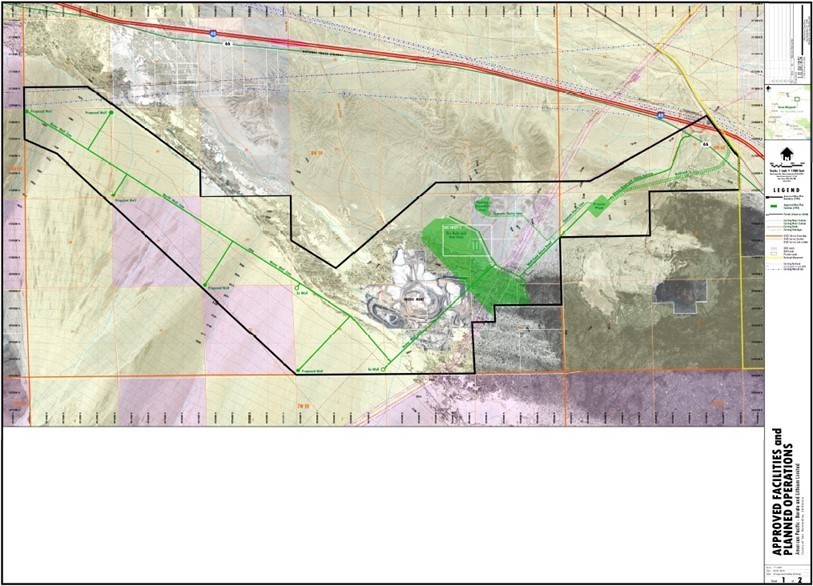
15.2 Site Facilities and Infrastructure
The infrastructure required for the Project is expected to consist of the following:
•Natural gas – 5E will require a natural gas pipeline that will need to be tied into a nearby transmission pipeline to serve the processing plant. Discussions are ongoing with a proposal received from Kinder Morgan and the cost of piping from the Mojave Pipeline to a cogeneration facility (COGEN) included in the CAPEX estimate.
•Electrical power upgrade– an economic trade-off study is currently being conducted to evaluate co-generation versus an upgraded and dedicated powerline to the Project.
•Rail – connection to a rail spur adjacent to our EIS boundary is being considered for rail loading and the BLM Plan of Operations includes a permitted rail spur. In conjunction, a truck-to-rail transloading operation is being evaluated at another, existing rail spur location located 15 miles from the Project, which may be implemented as part of Phase II expansion.
•Roads – Plant access roads will require upgrades, and some roads may require paving. New access roads are also being considered. 5E has received two rights-of-way for the east and west side of the property from the Bureau of Land Management's Barstow office. Both right-of-way applications are expected to be granted and have National Environmental Policy Act exclusions.
•Water – 5E currently has adequate water resources for Phase 1 of the project with two existing water wells. Wells and pipelines will need to be expanded to accommodate later phases and expansion. The well southwest of the property is included in the permitted Plan of Operations. The well northeast of the property is not yet included in the Plan of Operations. 5E has secured millsite claims for each well.
•Material storage – storage for materials products and consumables will need to be built near the plant site including a stacking system for gypsum. Off-site storage and distribution are being explored with potential partners.
15.3 Security
The Project currently has 24-hour security service and camera surveillance for critical areas and areas with high-traffic, with gates at entrances to the Project area. 5E is considering constructing a fence around the property.
15.4 Communications
The Project currently utilizes a satellite-based internet service, which is fully functional. For larger operations, 5E has considered a dedicated fiber line to site or a dedicated cell tower amongst other potential options. Additionally, a strong cell phone signal is available.
15.5 Logistics Requirements and Off-site Infrastructure
15.5.1 Rail
Rail is not currently used by the Project; however, the BNSF rail is situated next to the Project and is being assessed for logistical requirements. Several transloading and rail service providers have also been contacted for potential off-site loading to rail transport.
15.5.2 Port and Logistics
The Port of Los Angeles, Long Beach, and San Diego are all within a half-day drive from the Project on major highways. 5E has a truck scale on-site that can weigh deliveries to and from ports or rail.
15.5.3 Off-site storage and distribution
Storage and distribution locations off-site are being explored, and discussions have been initiated with several potential providers.
16 Market Studies and Contracts
This section was completed with reference to a preliminary market study performed by Kline and Company, Inc. titled Boric Acid, Calcium Chloride, Gypsum Market Studies and Pricing Models dated June 19, 2025. 5E incorporated information obtained through consultation with industry experts, discussions with current end-use customers, and other publicly available sources to complete this section.
16.1 General Market Overview
Initially, 5E recognizes two primary minerals mined through ISL at the Project : borate and calcium. 5E will produce boric acid from its borate mineral and either calcium chloride or gypsum from the calcium mineral. Additional byproducts can be produced from other minerals and elements included with metals salts (i.e., lithium and magnesium); however, additional testing, analysis and research will need to occur to finalize a process before these minerals can be included in economic analysis.
16.2 Borates
16.2.1 Market Overview
Based on the preliminary market study, global boric acid demand was estimated at approximately 1,137k metric tonnes per year in 2024 and is projected to grow at a compounded annual growth rate (CAGR) of 5.5%, reaching 1,834k metric tonnes per year by 2033.
The growth is driven by both traditional and emerging sectors, with applications spanning E-glass, textile fiberglass, specialty borosilicate glass, fertilizers, ceramics, and detergents, as well as high-value uses such as permanent magnets, semiconductors, nuclear energy, and advanced defense materials. Currently, glass applications account for 21% of total demand, non-glass applications for 40%, and the remaining 39% is attributed to specialty borates. The boron market is a global oligopoly where two companies dominate approximately 85% of global supply. Specific to boric acid, there are approximately 13 global suppliers; however, the market remains dominated by the two largest suppliers.
16.2.2 Historical Pricing
The global boric acid market has historically demonstrated stable prices with periods of relatively low volatility. Between 2010 and 2024, prices averaged $789 per short ton F.O.B. with the material driver to prices being supply and demand. Figure 16.1 provides the historical and forecasted supply and demand. and Figure 16.2 provides the historical pricing and forecasted pricing.
There are two historical periods where pricing significantly increased relative to historical averages, and both are driven by tightness in supply and demand. In 2010 and 2011, a labor dispute caused a plant shutdown at one of the larger producers which caused a supply constraint such that demand exceeded supply. This led to a period where pricing increased to $1,229 per short ton in Q4 2011. In 2020, the world experienced the COVID-19 pandemic. During the COVID-19 pandemic, demand dissipated causing pricing to drop to as low as $470 per short ton in Q2 2020. Once the pandemic ended, demand surged such that supply capacity could not keep pace with demand. This led to the second period where pricing significantly increased to $1,213 per short ton in Q2 2022. Although there has been a small decline since the COVID-19 pandemic, increases in demand have led to prices remaining elevated relative to long term historical averages. At the end of 2024, boric acid prices stabilized around $1,000 per short ton.
Figure 16.1: Project market capacity versus demand
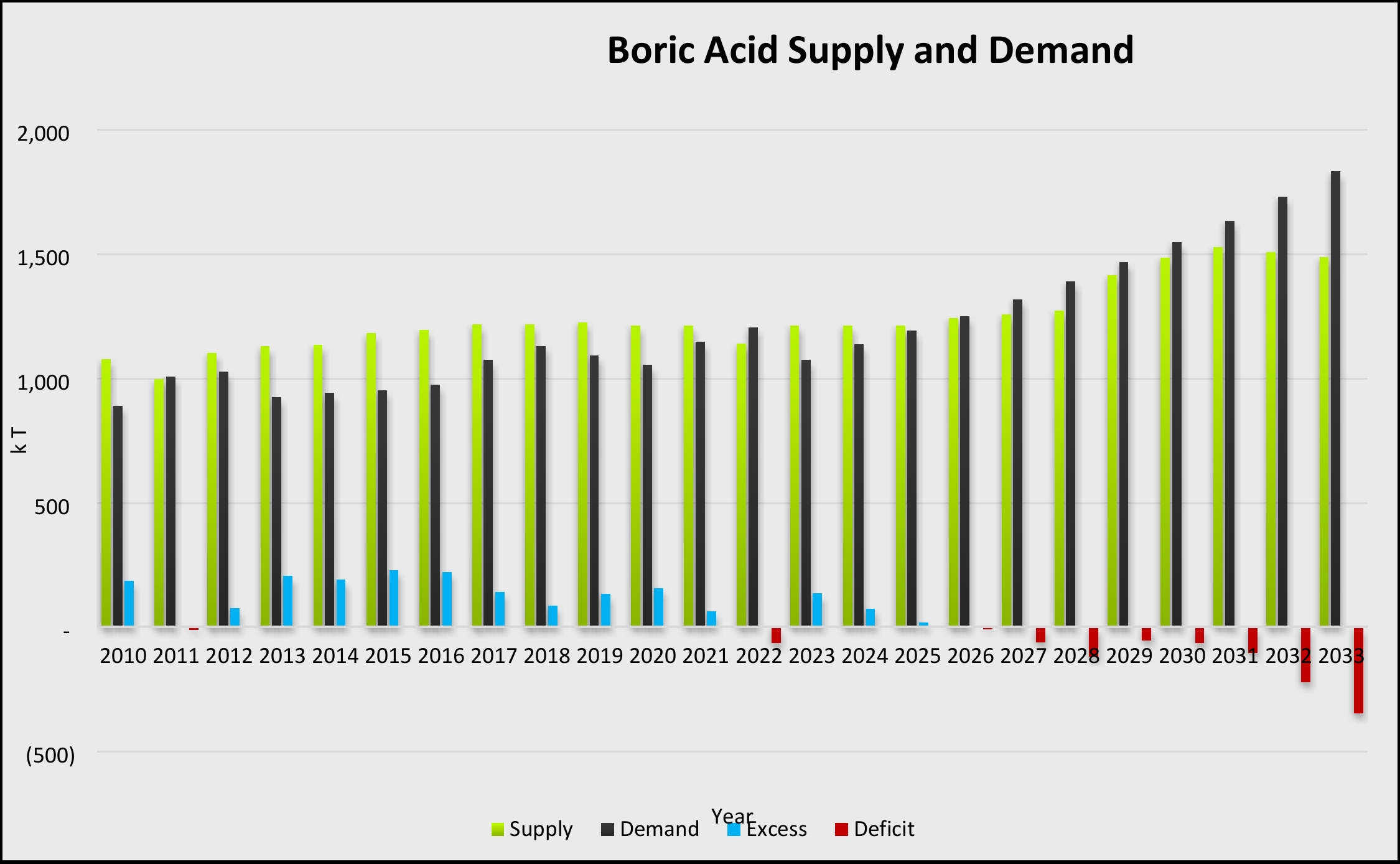
Figure 16.2: Forecasted boric acid pricing, per Kline 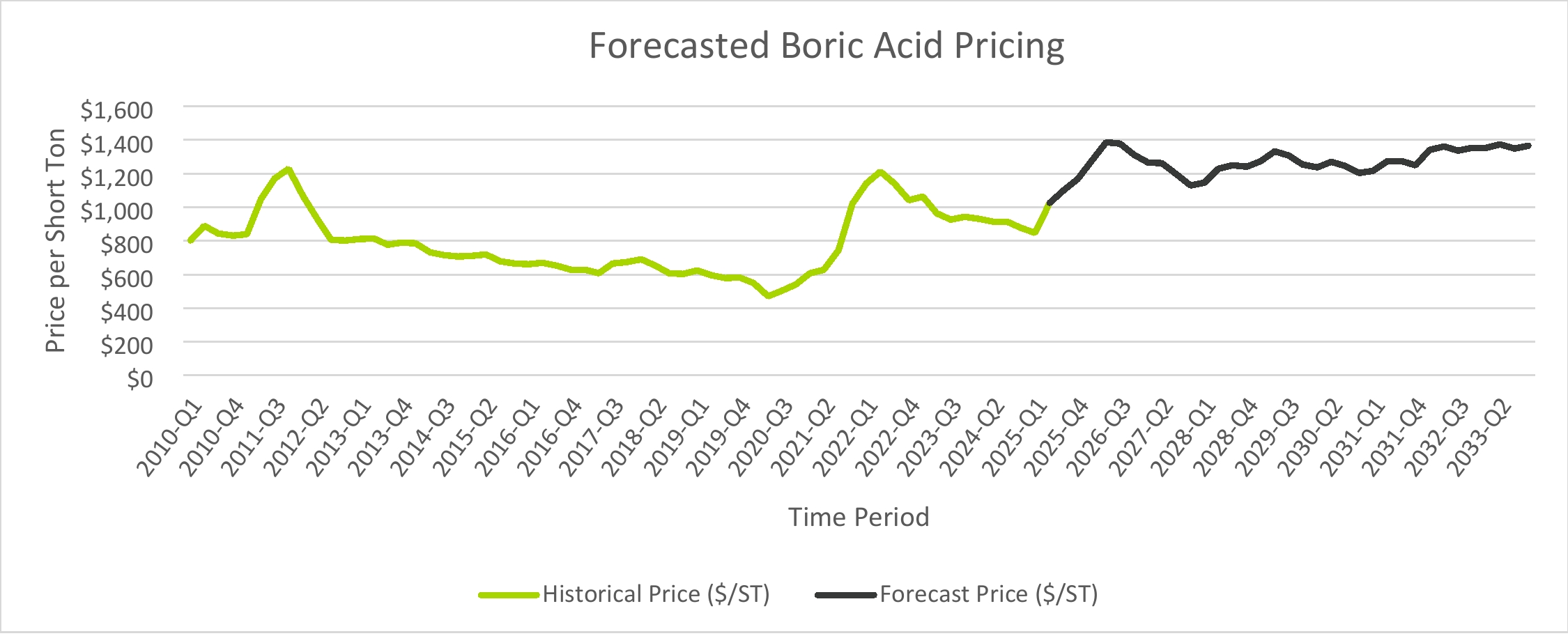
Boric acid is commercially available in two primary grades: granular and powder. Granular technical grade is the most traded form and serves as the standard product for large industrial customers. Powder grade, typically a byproduct of the screening process, is more variable in quality and availability and is required for high-specification applications such as pharmaceuticals or electronics.
Pricing is also influenced by packaging format. While bulk shipments offer the lowest-cost logistics solution, producers typically charge a $25 – 50 per short ton premium for smaller pack sizes, such as 50 lb. bags, to account for handling and
purchasing in smaller quantities. Despite these differences, the underlying production costs for both grades and pack sizes are similar, indicating that pricing differentials are driven more by market dynamics and buyer preferences than by cost structure.
16.2.3 Market Balance
Over the period of 2010 through 2021, supply was sufficient to meet demand. Since 2021, global boric acid demand has steadily outpaced, with the imbalance expected to widen further through the end of the decade. Estimates project boric acid demand to grow from 1,137k metric tonnes in 2024 to 1,834k metric tonnes per year by 2033, driven by strong momentum in specialty glass, agriculture, EVs, and specialty applications. In contrast, supply is forecast to grow at a slower pace relative to demand, increasing from 1,242k metric tonnes in 2024 to 1,488k metric tonnes per year by 2033, resulting in a cumulative market shortfall that begins in 2025 and reaches approximately 346k metric tonnes by 2033.
On the supply side, growth remains limited due to the industry’s high consolidation, with most of the production concentrated among Rio Tinto in the U.S. and Eti Maden in Turkey. Most other global producers operate at smaller scales or focus on lower-grade borates. While Eti Maden has confirmed a capacity expansion of 60k metric tonnes per year by 2027, no other major new supply is expected in the next 3 – 4 years. Several announced projects face delays or uncertainty. Additionally, China’s opportunistic capacity has shifted toward domestic consumption and is often constrained by quality limitations.
Given the limited pipeline of new capacity and rising demand from sectors such as EVs, permanent magnets, and high-end agriculture, the boric acid market is expected to remain imbalanced. This tight supply outlook is likely to support continued pricing strength and enhance the commercial case for new entrants capable of delivering high-purity, reliable supply to strategic regions such as the U.S. and Asia.
The supply-side analysis in Figure 16.1 presumes moderate expansion at existing suppliers, 5E’s anticipated supply per schedule in late 2028, and one additional major boric acid supplier entering the market per their publicly stated timeline. Demand-side analysis was built based on bottom-up analysis of expected and/or published end market expansion, moderated with the end market value in use as price pressures build on lower value applications. With existing market tightness, tailwinds for pricing exist as customers seek new supply sources outside of the existing oligopolistic market.
The analysis of the substitutability of boric acid in end uses concluded that most large volume applications have low or no risk of substitutability. Specifically, boric acid provides unique functionality in applications such as specialty glass, boron steel, and permanent magnets that have limited, and in many cases, higher cost alternatives such as rare earth elements, or would require significant investment to reformulate. Additionally, concerns for moderately substitutable applications have been identified as primarily other borate containing molecules (i.e., colemanite mineral), however, most market participants who can producer end products with a concentrate such as colemanite have already switched versus the boric acid alternative.
16.2.4 Market Costs
Estimating the operating unit cost of boric acid production is challenging due to limited public disclosures. One major supplier, being state-owned, does not report production costs separately, while another producer groups all borate-related products under a broader minerals category in its annual filings, complicating the isolation of boric acid costs. Recent company reports indicate that overall borate production costs are increasing due to input cost inflation, higher third-party expenses, and operational pressures. Although some inflationary effects have begun to stabilize, one of the larger producers faces margin pressure, incurred a reserve downgrade in 2018, and have implemented active cost-control measures with its board reportedly pushing for stronger operational discipline. 5E expected costs are given in Section 18.2.
16.2.5 Boric Acid Market
Boric acid is essential in diverse industries, catering to both commodity and specialty markets. Customers include large-scale users in glass and agriculture as well as smaller buyers purchasing through distributors. In high-value applications like specialty glass, flame retardants, and boron derivatives, performance outweighs price. Substitution is uncommon due to boric acid’s reliable boron content and superior downstream performance compared to boron ores like colemanite or ulexite. Figure 16.3 provides an overview of boric acid demand by end use.
Figure 16.3: Boric Acid Demand by End Use, per Kline
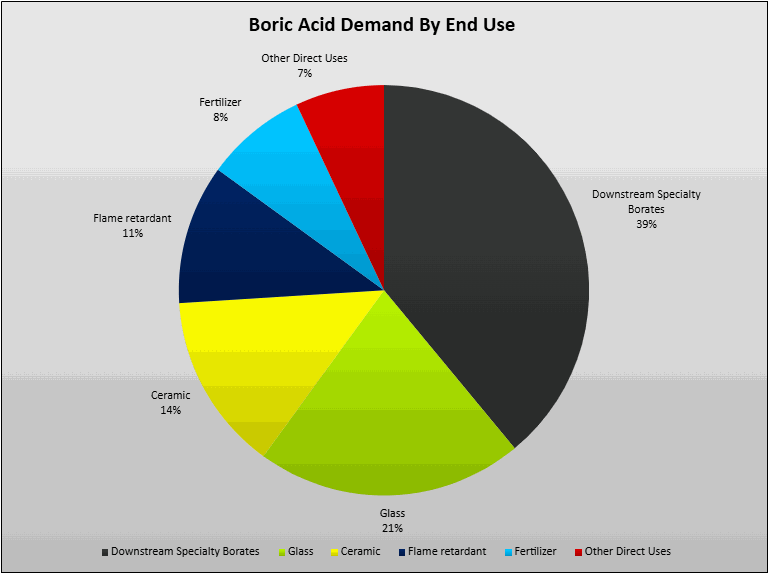
Logistics and customer proximity dictate packaging and shipment formats for boric acid, usually provided in 25-kg bags, one-ton bags, or bulk containers which are transported by truck, rail, or ocean freight. Asia remains the leading sales region due to proximity and demand, but interest is rising in North America and Europe. This along with supply chain security efforts drives demand for high-purity boric acid from nations of reliable jurisdictions. In some areas, reliance on a single supplier prompts buyers to seek diverse and dependable sources.
Geopolitical concerns and consistent quality needs are likely to lead some buyers to pay a scarcity premium for reliable boric acid supply. Governments, especially in the U.S. and European Union, are encouraging domestic production of critical and strategic materials, boosting interest in new market entrants.
The market’s opacity, reliance on negotiated contracts, and duopolistic nature mean there is no standard index price for boric acid. Pricing is highly influenced by demand, purity requirements, and capacity utilization. Kline’s latest model
predicts Chinese boric acid prices will increase to about $1,364 per short ton by 2030, driven by ongoing supply constraints and rising demand from high-specification sectors. Figure 16.2 provides forecasted boric acid pricing.
16.2.6 Boric Acid Specifications
Boric acid expected technical grade specifications are as follows:
o
Equivalent H3BO3%: 99.9 – 100.9
oU.S. Sieve Mesh Size mm % Retained Guarantee
16.3 Calcium Chloride
16.3.1 Market Overview
Calcium chloride (CaCl2) is a versatile chemical compound widely used in various industries due to its hygroscopic properties and ability to lower the freezing point of water. It is commonly employed in de-icing and dust control applications, where it effectively melts ice and suppresses dust on roads and construction sites. In the oil and gas industry, it is used to increase fluid densities and control swelling. The compound is produced through several methods, both naturally from brine purification and synthetically via the Solvay process, where it is a byproduct of soda ash manufacturing, and by reacting hydrochloric acid with limestone.
The global calcium chloride market was estimated to be 3,825k metric tonnes in 2024, having seen higher-than-normal growth from the previous year of 1.5%. North America represents approximately 40% of global demand, followed by Asia, Europe, the Middle East, Africa, and South America. U.S. demand in 2024 was 1,050k metric tonnes, with growth expectations of 0.6% CAGR until 2034.
16.3.2 Historical Pricing
Calcium chloride pricing has nearly doubled since 2007, when average prices in the U.S. were $267 per metric tonne, reaching $500 in early 2025. The two biggest year-over-year increases during that time were between 2008 and 2009 and 2021 and 2022. The U.S. market has some of the highest average prices seen globally, driven by recent demand for winter road treatment and a supply deficit due to plant closures during the twenty-first century. The U.S. is thus a net importer of calcium chloride, with Mexico, China, Canada, Europe, and the Middle East as the main sources in recent years.
16.3.3 Market Balance
The U.S. calcium chloride market is dominated by two large public companies. The larger company operates a former Dow plant in Ludington, Michigan, with a calcium chloride capacity of 700k metric tonnes per year. The plant processes brine supplied by a Canadian operation. The second largest U.S. producer currently operates four plants throughout the U.S., two brine-based facilities in the Mojave Desert (California), and two facilities that use HCl and limestone feedstock in West Virginia, and Louisiana.
Outside of these two market leaders, the U.S. has limited calcium chloride producers. The U.S. market is also supplied by both Canada and Mexico. Leading Canadian producers include two brine-based producers. One Mexican-based producer, is the only plant in North America running the Solvay Process.
16.3.4 Market Cost
Calcium chloride is sold in liquid and solid form, but the market always sells on a dry weight basis (dry metric tonnes – DMT) with pricing and margins determined by application. De-icing and dust control are the lowest price applications, selling for around $240 per metric tonne, followed by construction ($300-350) and oil and gas ($450-550). While not consumed in large quantities, calcium chloride can sell for over $600 per metric tonne and approach $1,000 in food, agriculture, electronics, and chemical industry applications.
Production costs can be as low as $80-100 per metric tonne for liquid calcium chloride produced from brine. Producing flake and pellet grades requires additional capital and operational costs for drying, typically adding around $100 per metric tonne for flake and an additional $50-100 per metric tonne for pellet capabilities.
16.3.5 Calcium Chloride Market
When combined, the use of calcium chloride for road de-icing and dust control represents the largest application, with 2024 demand in the U.S. reaching 252k metric tonnes for each. De-icing is tied to winter weather patterns, where demand in the northern U.S. and Canada was strong in 2024 and early 2025. Historically and looking ahead, both segments are expected to grow at around 0.5% CAGR.
Usage in the oil and gas sector as a drilling fluid is the largest individual use in the U.S. at 294k metric tonnes. Key markets include Permian (West Texas), Marcellus (Appalachia), and offshore (Gulf of Mexico). U.S. oilfield growth projections are roughly 0.75% in 2025 and 2026, with similar growth expected through 2030, followed by a gradual decline.
The remainder of the market comprises construction (147k metric tonnes) and other uses (105k metric tonnes), spread across numerous end-use applications such as food and beverage, agriculture, desiccants, refrigeration and cooling, water treatment, concrete and masonry surface treatment, metallurgy, tire weighting, humidification, and chemical synthesis. Growth for these categories is slightly higher, at 1.0% and 1.25% CAGR for construction and other uses, respectively. Figure 16.4 provides a breakdown of U.S. calcium chloride market demand and growth from 2024 to 2034.
Figure 16.4: U.S. calcium chloride market demand and growth, 2024 – 2034
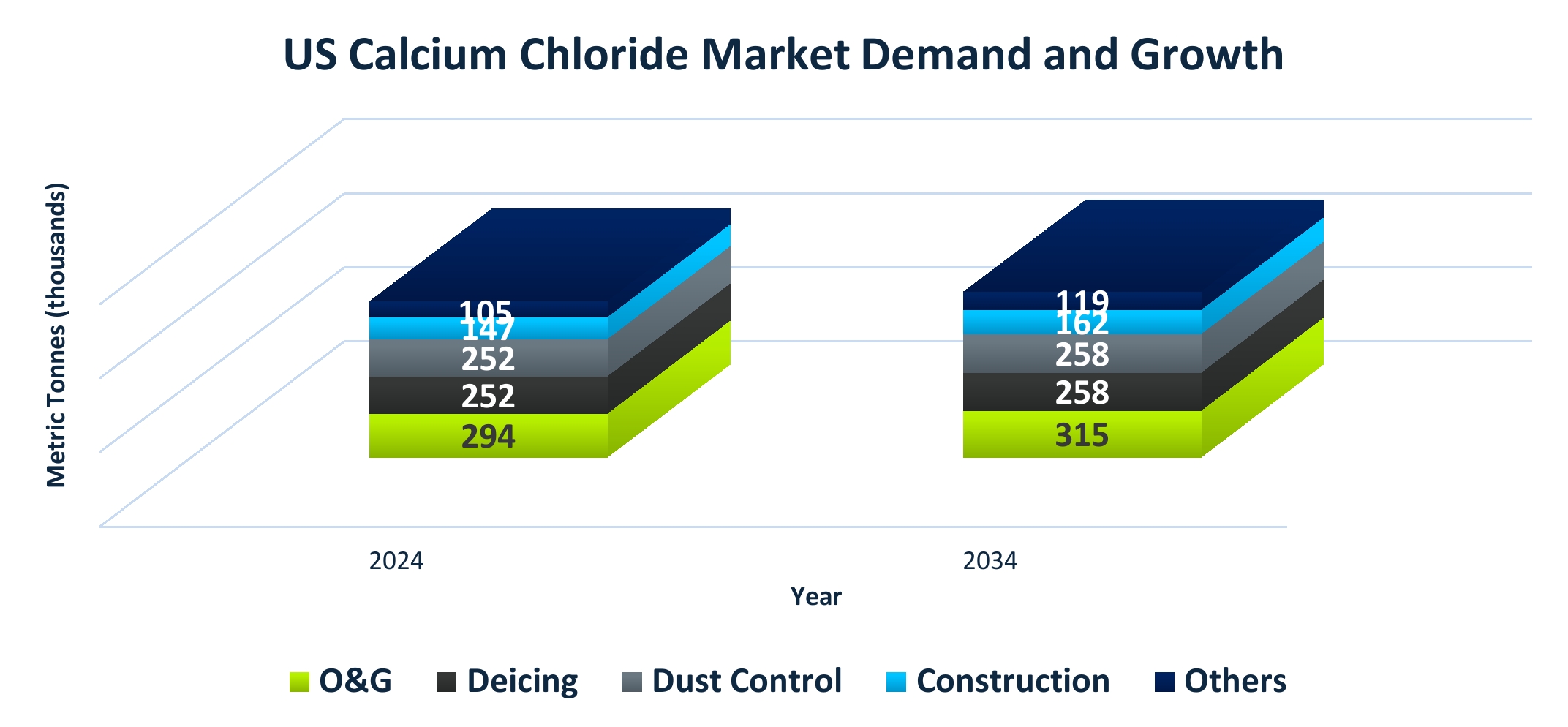
16.3.6 Calcium Chloride Specifications
Calcium chloride is sold in the market in various forms: liquid (with concentrations ranging from 28-42%), flake (72-87%), pellets or prill (92-97%), and powder (83-99%). These ranges represent observed concentrations from U.S. producers. Powder is collected from pellet or prill processing. Most applications utilize calcium chloride in liquid form, so solids are dissolved in water for most final uses. Given its exothermic properties, which make solid calcium chloride effective at melting snow, heat management must be considered during dissolution.
Product purity is separate from the above-mentioned criteria. Common contaminants include alkali chlorides (such as NaCl), magnesium (such as MgCl2), and calcium hydroxide and specifications typically call for impurities to be less than 5%. For certain food and beverage applications, producers can obtain various certifications, such as Halal, Kosher, etc.
16.4 Gypsum
16.4.1 Market Overview
Gypsum, a versatile mineral, finds extensive use in construction, agriculture, and industry. Primarily utilized for drywall, plaster, and cement, it provides fire resistance and acoustic insulation in construction. In agriculture, gypsum enhances soil structure by supplying calcium and sulfur. It is obtained through natural mining and as a synthetic byproduct from flue-gas desulfurization (FGD). Between 2019 and 2024, U.S. gypsum demand held steady at approximately 44 million metric tons, with prefabricated products leading the market. During this period, the U.S. market experienced a modest growth rate of 0.1% CAGR.
16.4.2 Historical Pricing
Between 2019 and 2024, gypsum prices rose steadily due to supply constraints and cost pressures. In 2024, the average price for calcined gypsum reached $63 per metric tonne, while uncalcined gypsum averaged $13 per metric tonne. The sharper increase in calcined gypsum prices was driven by value-added processing and strong demand from the construction sector.
In 2024, the price of crude uncalcined gypsum used in cement and agriculture varied and was estimated to range from $36 to $87 per metric tonne, depending on the grade and application. Meanwhile, synthetic gypsum prices remained stable at approximately $6.5 per metric tonne from 2019 to 2024. Figure 16.5 below provides historical pricing for various types of gypsum.
Figure 16.5 Average market price for uncalcined gypsum by grade and application, per Kline
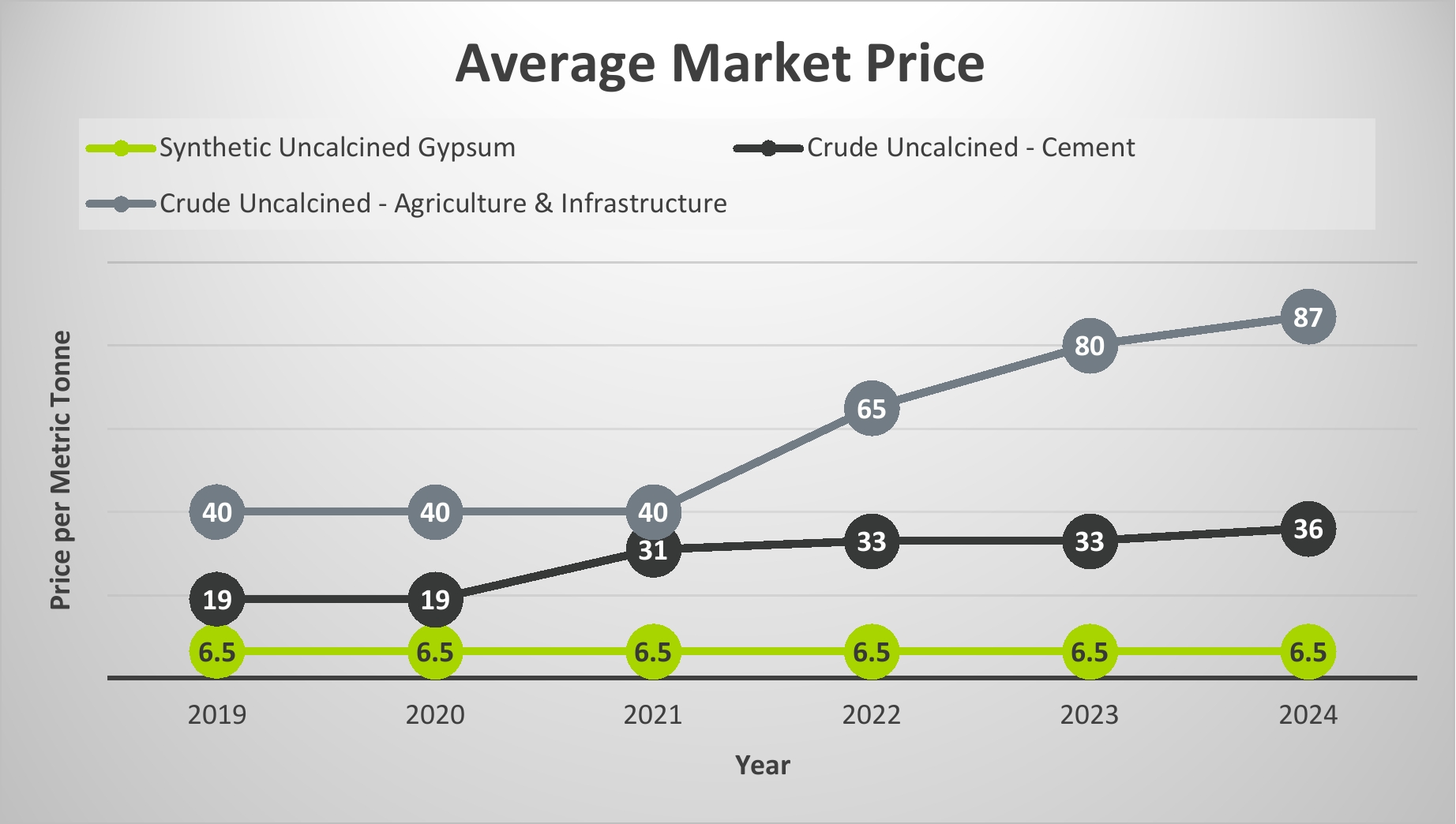
16.4.3 Market Imbalance
The U.S. gypsum market is supported by both domestic production and imports. Imports have risen due to limited local supply near demand centers and the decline in synthetic gypsum output caused by the phase-out of coal-fired power plants. As coal-fired power plants reduce production, the drop in synthetic gypsum supply is anticipated to open market opportunities for 5E's gypsum output. The Project is strategically located near major agricultural demand centers and wallboard manufacturers, which are expected to be primary outlets for the byproduct.
Gypsum is imported from countries such as Mexico, Spain, and Canada. Despite these imports, the U.S. retains substantial domestic production capacity, with major producers including USG, National Gypsum, and Georgia-Pacific. Figure 16.6 provides a breakdown of the U.S. production between crude and synthetic gypsum.
Figure 16.6 Gypsum USA production
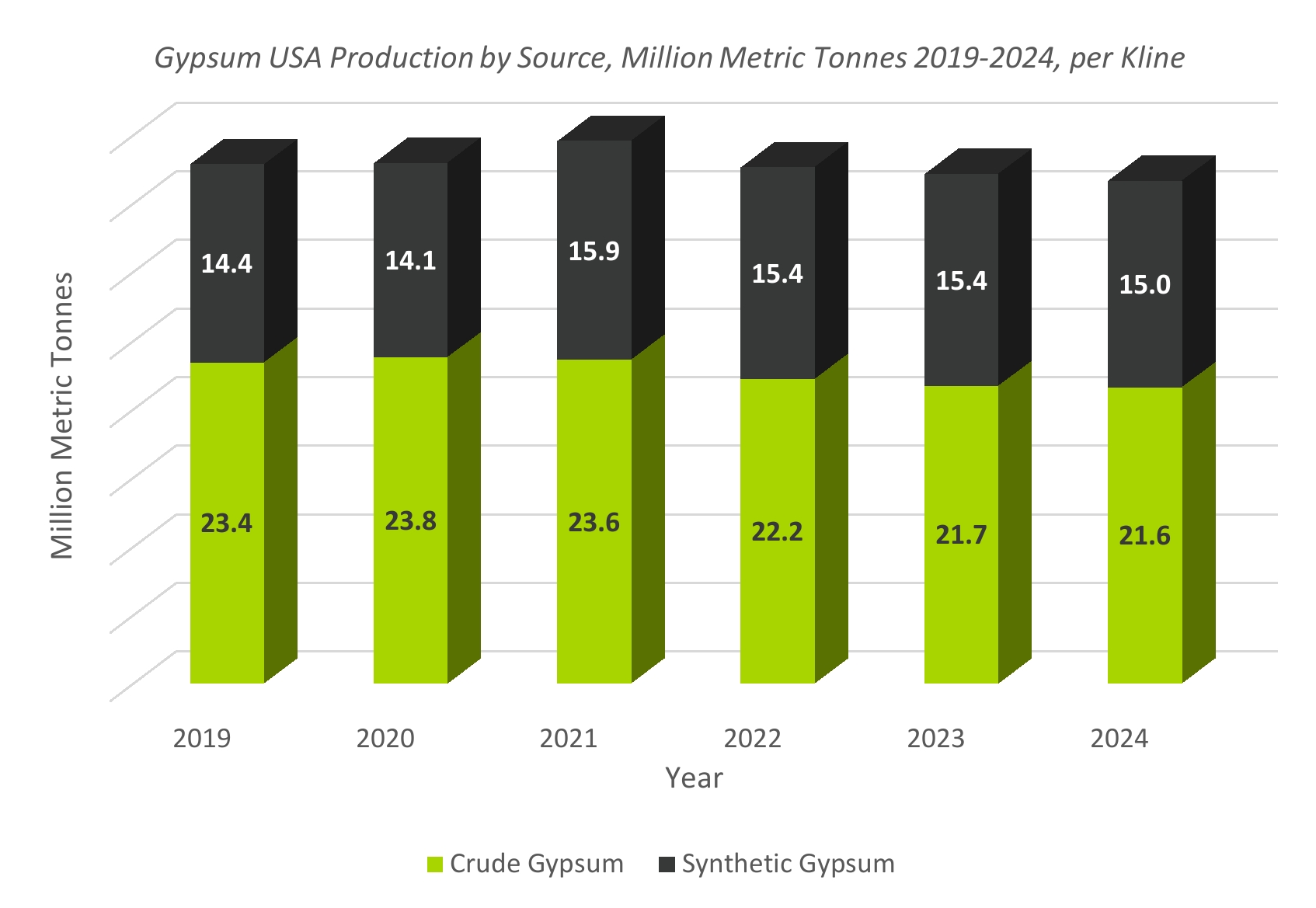
16.4.4 Market Costs
The operating costs for gypsum production can vary significantly due to several factors. Major producers typically do not disclose detailed operating costs publicly, making it difficult to determine the exact figures. However, overall production costs are influenced by factors such as increased manufacturing efficiency, recycling practices, and import dynamics. For example, synthetic gypsum, a byproduct of coal-fired power plants, is favored for its high purity levels (95–99%) and consistent quality. The cost of crude gypsum has increased due to rising energy and transportation expenses, while synthetic gypsum prices fluctuate based on transport distance and contractual agreements. Additionally, regional factors, such as proximity to mines and local demand, are crucial in determining market costs.
16.4.5 Gypsum Market
The U.S. gypsum market is projected to grow steadily at a 2.8% CAGR through 2034, driven by rising use of prefabricated gypsum products like lightweight wallboards, strong construction activity, and consistent cement demand. Agricultural applications are also gaining traction, especially in regions with saline soil and poor water quality, such as California. Specialty uses in plaster, joint compounds, and fillers add niche demand. Limited domestic supply near key consumption hubs has heightened reliance on imports, driving up delivered costs and creating an opportunity for regionally available synthetic gypsum to meet growing demand. Figure 16.7 provides the U.S. gypsum market and demand growth forecasted from 2024 to 2034.
Figure 16.7: U.S. gypsum market demand and growth, 2024 – 2034
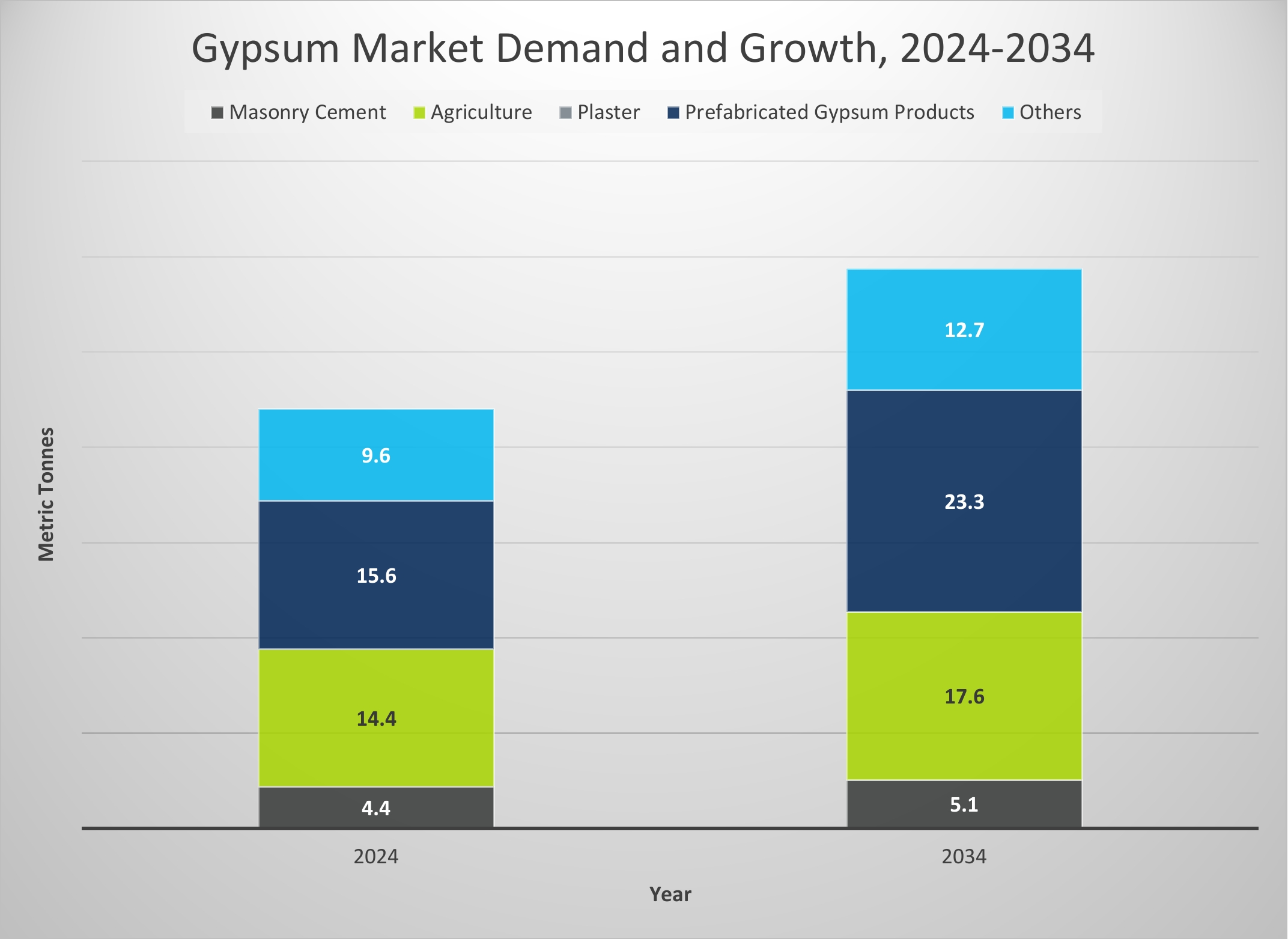
16.4.6 Gypsum Specifications
Final gypsum specifications are not confirmed at this time but it is expected that 5E will meet specification requirements for cement manufacturing.
16.5 Conclusions
Boric acid is a versatile product with hundreds of end-use applications that are critical to food security, national defense, decarbonization, electrification, and consumer consumption, among others. Due to increased demand for existing applications and new projected demand from future-facing technologies, combined with two major suppliers operating at, or near capacity, the supply of boric acid, and many downstream derivatives that require boric acid as feedstock, has been in tight supply, resulting in higher prices over the past 18 months. With existing suppliers unlikely, or unable, to add meaningful capacity, and only six new boric acid projects identified, of which only 5E is substantially permitted, the supply-demand deficit is expected to continue or worsen over the remainder of the decade. As a result, pricing will likely remain elevated and continue to rise. As a US-based producer, 5E is positioned to secure both domestic and strategic global supply chains for boric acid and other key boron derivatives that require boric acid.
16.6 Contracts
5E is engaged in discussions with several direct end-users as well as distributors for supply of boric acid, calcium chloride, and gypsum. 5E also has multiple signed heads of offtake agreements and non-binding letters-of-intent with terms agreed in principle which could result in definitive offtake agreements for multi-year supply. For boric acid
specifically, these customers represent multiple end-use applications including specialty glass, insulation, defense, agriculture, and others, as well multiple geographic regions. Since 5E has produced products from its SSF, 5E has supplied and qualified finished products with future customers, with the intent of securing contracts for most of the available phased capacity, while reserving a portion for spot market sales and increased tonnage for contracted customers. 5E is in discussions with a large, local cement manufacturer for offtake of gypsum and the customer has sampled the product. Additionally, 5E is discussing a calcium chloride offtake agreement with two different counterparties who have visited the site. One is a large regional distributor, and the other is a large global manufacturer with operations in the southeastern United States. Delivery and saleable gypsum and calcium chloride will likely focus on customers within a certain geographical radius to minimize overall delivered costs.
17 Environmental Studies, Permitting, and Closure
17.1 Environmental Requirements for Solution Mining
Due to the depth and characteristics of both the ore body and overburden, in the 1980’s the decision was made to recover the ore via solution mining. The Project mineralized deposit is an ideal candidate for solution mining as it is bound by faults. The Project is permitted to produce 90,000 short tons per year of borate, defined as boron oxide or boron oxide equivalent, thus permitting up to approximately 160,000 short tons of boric acid.
17.2 Environmental Study Results
The Project is located on both public and private lands. The public lands are managed by the BLM in accordance with its 43 CFR §§ 3809 Surface Management Regulations, the Federal Land Policy and Management Act, and federal environmental laws. The private lands are administered by San Bernardino County Land Use Planning (SBC – LUS) in accordance with the California Surface Mining and Reclamation Act, the County Development Code, and state environmental laws.
In 1990, a Plan of Operations (PoO) was submitted to the BLM and a Mining Conditional Use Permit and Reclamation Plan was submitted to San Bernardino County, which triggered environmental review under the National Environmental Policy Act (NEPA) and the California Environmental Quality Act (CEQA). BLM and the County prepared a joint Environmental Impact Statement (EIS)/Environmental Impact Report (EIR) to satisfy their environmental review requirements under NEPA and CEQA, respectively.
The EIS/EIR process follows clearly defined requirements for public participation and studies, such as threatened and endangered species, cultural resources, light, noise, and impacts to local communities. The studies were completed, as was the public participation process. Additional studies are currently not required at this time.
In 1994, the EIS/EIR process resulted in the issuance of a ROD from the BLM that approved the PoO and approval of the Mining Condition Use Permit and Reclamation Plan from the SBC – LUS, as discussed below.
17.3 Required Permits and Status
5E currently has the following permits in place:
1.The Mojave Desert Air Quality Management District (MDAQMD) has issued Operating Permits for the SSF and the permits are renewed annually. After FEED engineering and during detail design of the LSBF, once 5E has determined each original equipment manufacturer (OEM) for major pieces of equipment and based on the specification sheets for each piece of equipment, Authorization to Construct (ATC) permits for the LSBF will be provided to MDAQMD for approval. It is expected that the issuance of the LSBF ATCs will require that the Operating Permit for the SSF be closed. The ATC permits for the LSBF must meet National Ambient Air Quality Standards (NAAQS) and MDAQMD requirements (ARB, MDAQMD, and EPA).
There is no reclamation or closure requirement under MDAQMD.
2.The Lahontan Regional Water Quality Control Board (LRWQCB) issued the current Waste Discharge Requirements (WDRs) in 1988. The WDRs regulate activities in the existing surface impoundments, which were used in the 1990’s to produce CadyCal and are no longer being used. 5E remains compliant with the permit by complying with the monitoring requirements and submitting quarterly reports. A Final Permanent Closure Plan has been approved by the LRWQCB for closure of the existing impoundments. The closure of the ponds and the 1988 WDRs has been finalized and final sign off by the LRWQCB is expected. The current LSBF design includes approximately 37 acres of evaporation ponds for the purpose of removing sodium and calcium from the back end of the processing plant. 5E will apply for a new WDR order from LRWQCB for the LSBF.
There is an existing reclamation and closure requirement approved by LRWQCB. The bond amount to close the ponds is included in the SBC – LUS Financial Assurance Cost Estimate (FACE), discussed below. This is currently secured with a partially collateralized surety bond.
3.The LRWQCB previously issued a Notice of Non-applicability (NONA), verifying that the Project does not require a stormwater permit for approved construction and operations activities.
There is no reclamation or bonding requirement associated with the NONA.
4.SBC- LUS issued the Mining Conditional Use Permit and Reclamation Plan in 1994, based upon the 1990 application and ensuing EIR. The Reclamation Plan was amended, and the permit was modified in 2019 to address changes such as relocation of the processing plant and additional water related infrastructure. Ground use is regulated in accordance with applicable state law. The Mining Conditional Use Permit and Reclamation Plan includes Conditions of Approval for engineering and planning related activities, as well as requirements to avoid impacts to desert tortoises. The permitted production throughput under the Mining Conditional Use Permit is 90,000 short tons of boron oxide or boron oxide equivalent.
5E maintains a cash bond with the California State Mining and Reclamation Agency, as administered by SBC – LUS. The FACE is updated annually. The FACE includes demolition of all existing structures, regrading, and revegetation of all disturbance on private lands. This bond also includes plugging and abandonment of all wells located outside the U.S Environmental Protection Agency (EPA) UIC purview (discussed below).
5.The BLM issued a ROD in 1994, establishing the EIS boundary (Figure 6.2). The ROD authorizes the mining of borates. The ROD also has requirements for company activities to avoid adverse impacts to desert tortoises and cultural resources.
Reclamation and land disturbance for BLM is currently included with the FACE on file with the County and is secured with a partially collateralized surety bond. Previously, we held certificates of deposit, which are expected to be released since the surety bond was accepted and approved.
6.The EPA retains primacy for Class 3 solution mining Underground Injection Control UIC permits in the State of California. EPA issued the UIC permit for the Project in August 2020. The permit defines the Area of Review (AOR) boundary. All subsurface solution mining activities, including monitoring wells, are located within the AOR boundary. The EPA approved mining operations in November 2023.
Per the permit conditions, 5E has installed five upgradient and four downgradient monitoring wells for the initial mining block. As a condition to receive final approval in November 2023, the EPA required modification to the permit and the installation of nine additional water monitoring wells for a total of eighteen monitoring wells. The permit was modified in June 2024, and the nine additional wells were installed in Fall 2024.
5E installed four IR Wells and subsequently modified the permit to include horizontal wells. In July 2025, two of the IR Wells were converted from vertical wells to horizontal-side tracks where each well extends approximately 1,500 ft.
5E has submitted and maintains a fully collateralized surety bond with the EPA for plugging and abandonment of all wells within the EPA AOR boundary.
7.Additional environmental permitting that will likely be required for the LSBF includes:
a)The California Unified Control Act/Agency (CUPA) has primacy over EPA’s Tier II reporting requirements. The Hazardous Material Business Plan (HMBP) has been submitted for construction related activities and will be updated with processing related chemicals that are expected to be utilized to operate the LSBF.
b)The current AOR boundary does not include entirety of Section 36. It is anticipated 5E will request additional AOR boundary extension to include the Section 36 vested right property.
18 Capital and Operating Costs
Capital and operating costs are incurred and reported in US dollars and are estimated at an initial assessment level with an accuracy of approximately ±25%.
18.1 Capital Cost Estimate
The capital cost estimate includes the first phase of commercial production for the LSBF and a summary by scope or area is provided below in Table 18.1. Capital expended for the SSF is excluded as that is in operation and for purposes of this TRS has been sunk.
Table 18.1: Capital summary
|
|
|
|
Scope / Area |
Capital Cost
(US$ millions) |
Process Facility & Infrastructure |
$280.7 |
COGEN |
$50.2 |
Evaporation Ponds |
$5.6 |
Wellfield |
$30.8 |
Sub-total Capital Costs |
$367.3 |
Contingency |
$55.1 |
Owner's Cost |
$12.5 |
Total Capital |
$434.9 |
18.1.1 Capital Cost Estimate – Processing Facility and Infrastructure
The capital cost estimate for the LSBF Project has been developed with a high level of confidence and rigor, in alignment with Association for Advancement of Cost Engineering (AACE) Class 4 standards. This estimate supports the development of a new greenfield processing facility, strategically located adjacent to 5E’s existing SSF. Designed for a production capacity of 130,000 short tons per year of boric acid and associated byproducts, the LSBF Project marks a significant milestone in the company’s long-term growth strategy.
Led by Fluor, an industry leading engineering and construction firm, in close collaboration with 5E and Tier 1 equipment vendors, the estimate reflects the project’s scope as defined in February 2025. Between February and June 2025, the project team successfully completed a targeted value engineering program and additional technical test work. These efforts resulted in meaningful refinements to both the process design and execution strategy, which have been integrated into the project’s critical engineering deliverables, including updated process narratives, flow diagrams, material balances, and equipment list/pricing.
These refinements have contributed to a more efficient and cost-effective project configuration. Key improvements included optimizing the boric acid head grade, removing the need for upfront solid/liquid separation equipment such as clarifiers, and incorporating evaporation ponds for sodium chloride handling. Additional efficiencies were achieved through the optimization of utilities and tankage, the removal of the boiler system (now supported by the Cogen WHRS), reuse of existing site infrastructure, and a more compressed facility layout.
Collectively, these enhancements have led to a reduction in the capital expenditure estimate while simultaneously increasing the facility’s design capacity. The improvements have also strengthened the project’s financial model, resulting in a more favorable internal rate of return (IRR) and improved overall economic performance. Furthermore, the process modifications and supporting test work have increased confidence in the technical basis of design, providing a solid foundation for the next phase of project development. Table 18.2 provides a detailed breakdown of the Process Facility and Infrastructure portion of the estimate in Table 18.1.
Table 18.2: Detailed breakdown of process facility and infrastructure
|
|
|
|
Description |
Total Cost
(US$ millions) |
Direct Field Costs |
$265.1 |
Indirect Field Costs |
$28.3 |
Total Field Costs |
$293.4 |
Home Office Costs |
$18.6 |
Total Field and Office Costs |
$312.0 |
Escalation |
$12.4 |
Contingency |
$46.8 |
Sales and Use Taxes |
$3.3 |
February 2025 Class 4 – Indicated Total Cost |
$374.6 |
Value Engineering and Process Refinements |
($47.1) |
July 2025 Class 4 – Indicated Total Cost with Adjustment |
$327.5 |
The capital estimate summary above reflects the outcome of a structured and disciplined development process. To support this estimate, a robust methodology was applied—grounded in industry best practices and tailored to the specific characteristics of the LSBF Project. The following section outlines the basis of estimate, including the data sources, engineering inputs, pricing strategies, and assumptions that underpin the capital cost model.
18.1.2 .Processing Facility and Infrastructure – Basis and Methodology
The capital estimate methodology integrates a combination of vendor budget pricing, historical cost data, and engineering-developed material take-offs (MTOs), and Fluor’s proprietary unit rate databases. Direct field costs were calculated using Fluor’s Standard Unit Effort Hours Catalog, adjusted for site-specific productivity factors derived from a proprietary algorithm that considers labor availability, climate, site logistics, and project complexity. Mechanical equipment pricing was based on a mix of formal vendor quotes and internal benchmarks from similar projects.
Figure 18.1: Summary of equipment pricing
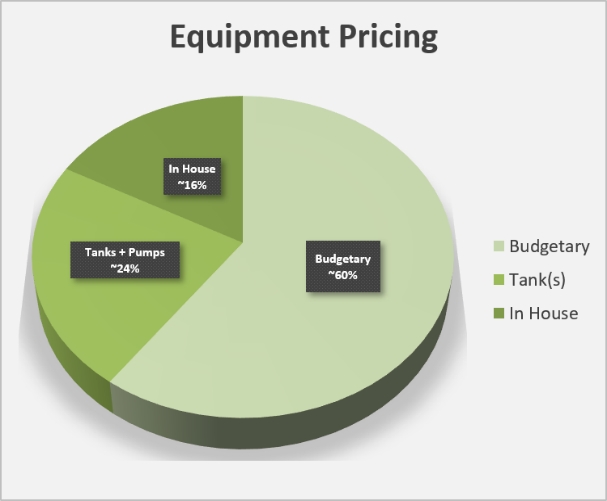
Table 18.3: Bid summary
|
|
|
|
|
|
|
|
Tier # |
Equipment Description |
Bid(s) Requested |
Bid(s) Received |
1 |
Crystallizer/Evaporator Package (including Heat Exchangers and Ancillaries) |
3 |
3 |
1 |
Centrifuge Package |
4 |
3 |
1 |
Filter Press Package |
4 |
4 |
1 |
Belt Filter Package |
4 |
3 |
1 |
Sedimentation Package (Clarifier/Thickeners) |
4 |
4 |
1 |
Dryer/Cooler Packages (with Cyclones) |
4 |
4 |
1 |
Chilled Water Package |
1 |
1 |
1 |
Boiler System Package |
1 |
1 |
1 |
Boric Acid Bagging System |
In-house |
N/A |
1 |
Electric House Package |
In-house |
N/A |
The estimate includes detailed cost modeling for civil works, concrete, structural steel, buildings, mechanical equipment, piping, electrical systems, instrumentation, and control systems. Indirect field costs, home office costs, and construction services were applied using historical percentages and industry norms. Allowances were included for material overbuy, construction waste, and MTO uncertainty. Escalation was applied at 4% from Q1 2025 forward, and a deterministic contingency of 15% was included to account for uncertainties within the defined scope.
The estimate assumes an EPCM execution strategy, with contractors providing construction labor, supervision, tools, and equipment. All costs are presented in U.S. dollars and reflect pricing as of Q1 2025. The capital estimate excludes owner’s costs, permitting, land acquisition, environmental remediation, and other external factors. Owner’s costs such as mine well development, insurance, commissioning, and infrastructure outside the battery limits are addressed separately.
The estimated accuracy range for this AACE Class 4 estimate is ±25%, which is consistent with industry standards for projects at the PFS stage. This range reflects the typical level of definition at this phase and is not indicative of the quality of the estimate itself. Rather, it highlights the prudent approach taken to account for early-stage variables. To further demonstrate the strength and maturity of the LSBF estimate, Table 18.4 benchmarks the project’s deliverables against standard AACE Class 4 criteria. The estimate is supported by a comprehensive suite of engineering deliverables,
including process flow diagrams, simulation and material balance data, equipment lists, and preliminary design documentation, all of which contribute to a well-substantiated capital cost basis. For further details on the capital basis of estimate refer to 5EAM-G1-PLN-310-00001.
Table 18.4: 5E project deliverables versus standard AACE Class 4 criteria
|
|
|
|
|
|
|
|
Estimate Accuracy & Deliverable Requirements Class 4 |
Category |
Estimate Items |
AACE Class 4
(Typical) |
5E PFS |
Maturity Definition |
Engineering % Complete |
1-5% |
2.5-5% |
Project |
Plant Capacity |
Preliminary |
Defined |
Definition |
Class of Facility |
Preliminary |
Defined |
|
Plant Location |
Preliminary |
Defined |
|
Soils Hydrology / Geotech |
Preliminary |
Semi Defined |
|
Project Master Schedule |
Preliminary |
Preliminary |
|
Construction Execution Strategy |
Preliminary |
Preliminary |
|
Procurement & Contracting Strategy |
Preliminary |
Semi Defined |
|
Engineering Design Criteria |
Preliminary |
Semi Defined |
Engineering |
Process Flow Diagrams |
Preliminary |
Defined |
Deliverables |
Plot Plans |
Preliminary |
Preliminary |
|
Mechanical Equipment List & Datasheets |
Partial |
Semi Defined |
|
Piping Line List & Line Classes |
N/A |
Preliminary |
|
Piping Specialty Item List |
N/A |
N/A |
|
Electrical Equipment List |
Preliminary |
Semi Defined |
|
Instrument Index |
N/A |
N/A |
|
Material Specifications |
N/A |
Preliminary |
Bulks |
Equipment Envelope |
Cost Factor |
Equipment Modelling / Layout |
Quantification |
Civil |
Cost Factor |
100% Eng MTO |
|
Concrete |
Cost Factor |
50% Eng MTO / 50% Est MTO |
|
Steel |
Cost Factor |
85% Eng MTO / 15% Est MTO |
|
Piping |
Cost Factor |
65% Eng MTO / 35% Est MTO |
|
Electrical |
Cost Factor |
25% Eng MTO / 75% Est MTO |
|
Infrastructure |
Cost Factor |
100% Eng MTO |
Material Pricing |
Mechanical Equipment |
100% Budgetary or In-house |
60% Budgetary / 40% Inhouse |
Basis |
Electrical Equipment |
|
DCS / Control System |
|
Pipe & Pipe Fabrication |
Cost Factor |
In-House Prices from nearby representative project firm pricing |
|
Fabricated Structural Steel |
|
Bulk Electrical & Instruments |
Contract Pricing |
Civil / Site Prep / Piling |
Cost Factor |
In-House Prices |
Basis |
Concrete |
In-House Prices |
|
Buildings |
In-House Prices |
|
Steel |
In-House Prices |
|
Mechanical |
Cost Factor |
|
Piping |
In-House Prices |
|
Electrical & Instrumentation |
In-House Prices |
|
Insulation & Paint |
Cost Factor |
|
Module Fabrication |
N/A |
|
Logistics Cost |
Cost Factor |
|
|
|
|
|
|
|
|
Estimate Accuracy & Deliverable Requirements Class 4 |
Category |
Estimate Items |
AACE Class 4
(Typical) |
5E PFS |
Construction Inputs |
Temp Facilities & Services
(incl. Man camp) |
Cost Factor |
Preliminary; Historical DFC and IFC Factored Average Rates Used |
|
Construction Equipment Utilization plan |
|
Heavy Haul & Heavy Lift plan |
|
CM Staffing Plan |
|
Site Assignment Policy |
|
Area Market Labor Analysis |
N/A |
Estimate Accuracy |
AACE (18R-97) |
L: -15% to -30% /
H: +20% to +50% |
±25% |
|
Typical Contingency |
20% to 30% |
15% |
18.1.3 Capital Cost Estimate – Evaporative Ponds
The capital cost estimate for the solar evaporation pond system was developed by Ad-Infinitum who are recognized in the industry as one of the global leaders in evaporative pond design and execution. The estimate is in alignment with AACE Class 4 standards and is a culmination of a FEL-2 specific study commissioned by 5E.
This estimate supports the development of a new greenfield solar evaporative pond system encompassing a total of 37 acres including a scope taking into site and environmental parameters (topography, evaporation rates, temperature, wind, and radiation) developing steady-state mass and energy balances, and geometric and operational sizing of the ponds and berms, as well as developing a salt harvesting plan.
The capital estimate methodology integrates a combination of vendor and area subcontractor budget and material pricing, historical cost data, and engineering-developed material take-offs (MTOs). A contingency of 15% was included to account for uncertainties within the defined scope. All costs are presented in U.S. dollars and reflect pricing as of Q2 2025.
18.1.4 Capital Cost Estimate – Cogeneration Combined Power & Heat (CHP) Plant
A capital cost estimate for the Combined Power & Heat Plant (CHP) was derived from competitive budgetary bid quotations received from recognized global Tier 1 OEM vendors suppliers. The total direct and indirect packages installation cost was established by using a Lang factor which is a process industry standard methodology that utilizes a multiplier that represents the ration of the total installed cost (TIC) to the total equipment cost (TEC).
18.1.5 Capital Cost Estimate – Wellfield
The operation is an owner operated mining operation. A third-party contractor will perform drilling of the in-situ injection recovery well field and a third-party OEM has designed and will manufacture the artificial lift system. As detailed in Section 13, the wellfield calls for the installation of 27 horizontal wells and jet pumps for artificial lift. Table 18.5 below provides a summary of the wellfield capital cost. The cost for the wellfield includes the following: drill pad construction, 3rd party drilling, downhole material (casing, production tubing, and cement), and artificial lift (jet pumps and jet pump triplex surface pumps).
Table 18.5 Mining capital cost estimate
|
|
|
|
Description |
Total Cost
(US$ millions) |
Site Works |
$1.9 |
Well Materials |
$9.4 |
Drilling |
$5.6 |
Logging |
$2.0 |
Stimulation and Completions |
$2.1 |
Surface Facilities |
$3.7 |
Artificial Lift |
$6.1 |
Wellfield Sub-total |
$30.8 |
Contingency |
$4.6 |
Total Wellfield |
$35.4 |
18.1.6 Other Sustaining Capital
The wellfield is designed such that the quantity of wells is expected to be sufficient for the current life of mine and it is expected that overtime the extraction method will transition from injection of the mining fluid until the well becomes hydrostatic and then recovery of the fluid (i.e., “huff and puff” extraction) to complete reservoir flow and recovery. Using the current estimate of the wellfield as a basis, 5E assumed $5.7 million is outlaid incrementally every five years as sustaining for major workovers and any additional necessary wells.
18.1.7 Wellfield Basis
The wellfield capital estimates were based on actual equipment purchased for the SSF, vendor bids, actual costs derived from the injection recovery wells for the small-scale facility and July 2025 drill program, and third-party quotes. The quantity of wells estimated to provide the chemical plant with PLS to achieve the stated design is based on engineering simulations, actual wellfield data from the SSF, and incorporates work from MSME.
Mining equipment, initial wells, and sustaining capital cost estimates were based on the following:
•All injection recovery wells were based on new casing, production tubing, screens, and well heads.
•Costs for drilling, auxiliary, and overhead were based on third-party estimates and work performed.
•Mining capital includes a 15% contingency.
18.1.8 Closure Costs
Closure costs have not been included in this estimate as the reserve and life of mine only account for 41% of the measured and indicated resource and it is assumed that expansion capital can be deployed in the future and the wellfield and mine plan can be updated to convert incremental resources to reserves.
18.1.9 Owner’s Costs
Table 18.6 provides the breakout of Owner’s Costs breakout and totals $12.5 million. This estimate was provided by 5E. No formal contingency is applied to Owner’s Cost.
Table 18.6: Owner’s cost breakdown
|
|
|
|
Item |
Cost
(US $ million) |
Owner's team |
$4.2 |
Construction insurance |
$3.6 |
Taxes |
$4.7 |
Total |
$12.5 |
18.2 Operating Cost Estimates
Operating costs have been forecasted based on the material and energy balance provided by Fluor. Operating costs are segregated as variable operating costs and fixed operating costs in the financial model. Variable operating costs include packaging, logistics, and raw materials such as natural gas, hydrochloric acid, sulfuric acid, and lime. Fixed operating costs include administrative labor, operating labor, general and administrative overhead, repair labor, repair materials, depreciation as well as taxes and insurance.
As with capital costs, operating costs are captured in US dollars and are estimated at an initial assessment level with an accuracy of approximately ±25%.
18.2.1 Variable Operating Cost
Variable operating costs are derived from a material balance with the following assumptions:
•Calcium-to-boron ratio of 1.2 calcium and sodium byproduct volumes and sulfuric acid consumption. This ratio is consistent with wellfield data obtained during operation of the SSF,
•90% HCl efficiency rate with 10% HCl lost in the process, and
•10.2% weight boric acid concentration in the PLS.
Variable materials and prices represented on the basis of cost per a produced short ton of boric acid are shown in Table 18.7. Cost figures include estimated freight to 5E. Pricing for raw materials is based on historical costs for the 12-month period from July 2024 thru June 2025.
Table 18.7 Variable materials cost
|
|
|
|
|
|
Material |
Units |
Cost
(US$/ST) |
HCl 36% solution basis |
1,416.7 lb/ST H₃BO₃ |
$158.61 |
Sulfuric acid |
1,180.6 lb/ST H₃BO₃ |
$124.13 |
Lime |
423 lb/ST H₃BO₃ |
$197.47 |
The basis for packaging and logistics included the following:
•$18 per short ton of boric acid for packaging based on actual packaging for SSF.
•$113.50 per short ton of boric acid for shipping and freight delivered to customers based on actual quotes received and paid by third-party logistic carriers.
The basis for utilities included the following:
•Natural gas consumption to operate COGEN facility consuming 1,791,477 MMBtu per year or 12.25 MMBtu per short ton of boric acid derived from the energy balance.
•Pricing for natural gas is based on a 12-month average of $3.19 per MMBtu based on California City Gate pricing.
18.2.2 Fixed Operating Cost
Fixed operating costs include the following:
•Site administrative labor
•Repair labor and materials
Operating labor was derived from a principle first plan of operations with 80 operators and 30 employees for site administrative labor. Cost per person was estimated at $86,680 and the basis for fixed overhead was derived by the current overhead rate of spend for 5E which is approximately $150,000 per quarter and this is assumed to double for the LSBF. Repair labor and maintenance is estimated to be 3.0% of cumulative capital including sustaining capital. Taxes and insurance are assumed to be 1.5% of cumulative capital including sustaining capital. Depreciation assumes a 10-year useful life for initial capital and any sustaining capital is depreciated in the year incurred.
18.2.3 Other Operating Costs
Other operating costs include costs and credits associated with the material balance and process flow sheet which includes a byproduct credit for gypsum and calcium chloride and costs associated with metals precipitation waste. Gypsum is assumed to be net neutral cost and sold in the market at cost. Table 18.8 provides the breakdown of units and cost associated with other operating costs and Figure 19.2 provides the total operating costs and credits over life of mine.
Table 18.8 Other operating costs
|
|
|
|
|
|
Material |
Units |
Cost
(US$) |
Metals precipitation waste |
$/ST |
45 |
Gypsum |
$/ST |
12 |
Calcium chloride |
$/ST |
55 |
18.2.4 Basis for Operating Cost Estimates
Operating assumptions were based on the following assumptions:
•Year 1 operates at 64% capacity, 7,000 hours and produces 13.37 short tons of boric acid per hour.
•Year 2 operates at 88.9% capacity, 8,000 hours and produces 16.25 short tons of boric acid per hour.
•Year 3 operates at 93.3% capacity, 8,000 hours and produces 17.06 short tons per hour.
•Utilizations are based on mass and energy balances.
•Input costs use historical pricing over the last 12 months, third-party vendor quotes or actual inputs based on real time purchases at the SSF.
19 Economic Analysis
19.1 General Description
5E prepared a cash flow model to evaluate the Project’s reserves on a real basis. This model was prepared on an annual basis from the reserve effective date to the exhaustion of mineral reserves for the current mine plan. As discussed in previous sections, additional resources could be converted to additional reserves with expansion of the wellfield or mine plan in the future. This section presents the main assumptions used in the cash flow model and the resulting indicative economics. The model results are presented in U.S. dollars US$, unless otherwise stated.
All results in this section are presented on a 100% basis. As with the capital and operating forecasts, the economic analysis is inherently a forward-looking exercise. These estimates rely upon a range of assumptions and forecasts that are subject to change depending upon macroeconomic conditions, operating strategy and new data collected through operation of the small-scale facility.
19.2 Basic Model Parameters
Key criteria used in the analysis are presented throughout this section. Basic model parameters are summarized in Table 19.1.
Table 19.1 Basic model parameters
|
|
|
|
Description |
Value |
Mine Life |
37 years with partial last year using Proven and Probable Reserve |
Discount Rate |
7% |
All costs incurred prior to the model’s start date are considered sunk costs. The potential impact of these costs on the economics of the operation is not evaluated. This includes contributions to depreciation and the small-scale facility as these items are assumed to have a zero balance at model start. The selected discount rate is 7% given the Projects risk profile, U.S. jurisdiction, permitting status, capability to secure U.S.-agency financing and was chosen as a reasonable cost for funding based on review of comparable projects in the development phase of the mining cycle. Additionally, economic analysis is performed on a real basis that does not capture the nominal aspects of inflation, thus driving a slightly lower discount rate than would traditionally be captured on a nominal basis.
19.3 External Factors
19.3.1 Pricing
Modeled prices are based on the prices developed in the Market Studies and Contracts section of this report Section 16 (see Figure 16.2) and were developed on a real basis. 5E engaged Kline to perform a preliminary market study and the assumptions and inputs for revenue in the financial model were based on the preliminary market study. A sensitivity analysis is performed below, and the financial model is most sensitive to boric acid pricing and this forecast is a material assumption. The prices are modeled as:
•Boric Acid: $1,248 F.O.B. per short ton when production is forecasted to commence
•Gypsum: $32.66 per short ton is held flat on a real basis throughout the model
•Calcium Chloride: $174.18 per short ton is held flat on a real basis throughout the model
All products produced by the operation are modeled based on independent pricing forecasts as described in Section 16 and were prepared as part of a preliminary market study performed by Kline. Kline built a regression pricing model forecast for boric acid on a real basis with key inputs and drivers of the forecast utilization of supply and demand, sulfuric acid pricing, and cost of freight. The material driver to the pricing forecast is supply and demand utilization whereby the boric acid market is forecasted to grow at 5.5% as disclosed in Section 16 but supply is forecasted to fall short. Gypsum pricing was based on actual 2024 real pricing and the model assumes 5E handles freight and logistics. The netback price for gypsum is $20.66 per short ton. Calcium chloride pricing was based on actual 2024 real pricing to the end market customers. This price was further discounted in the model to assume 5E would sell to distribution at bulk and the model assumes 5E handles freight and logistics. The netback price for calcium chloride is $119.64.
19.3.2 Taxes and Royalties
As modeled, the operation is subject to a combined 27.98% federal and state income tax rate. The model does not include any tax loss carryforwards and no existing depreciation pools are accounted for in the model. Any application of tax loss carryforwards would reduce the tax burden of the operation. The capital for the project is subject to depreciation over a 10-year period and sustaining capital is depreciated in the year incurred for purposes of financial modeling. There are no royalties to account for currently. The project is being evaluated as a standalone entity for this initial assessment without a corporate structure. As such, tax calculations presented here may differ significantly from the actual incurred by 5E.
19.3.3 Working Capital
The assumptions used for working capital in this analysis are as follows:
•Accounts Receivable: 30 days
•Accounts Payable: 30 days
•Zero opening balance for accounts receivable and payable
19.4 Technical Factors
19.4.1 Mining and Production Profile
The modeled mining profile was developed by 5E. The details of the mining profile are presented previously in this report. No modifications were made to the profile for use in the economic model. The modeled profile is presented in Figure 19.1.
Figure 19.1: Resource Extraction Profile
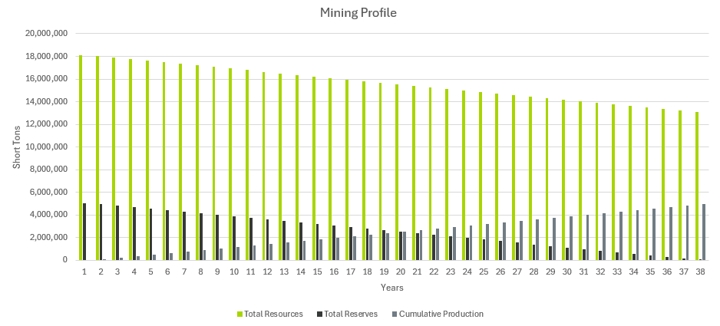
A summary of the modeled mine life profile is presented in Table 19.2 Life of Mine Summary.
Table 19.2: Life of mine summary
|
|
|
|
|
|
Description |
Unit |
Value |
Life of mine |
Years |
37.5 |
Reserves – Boric Acid |
Short Tons |
5.1 M |
Resources (total measured and indicated, exclusive of reserves) – Boric Acid |
Short Tons |
21.4 M |
19.4.2 Operating Costs
Operating costs modeled in US dollars can be categorized as variable, fixed and other operating costs credits. A summary of operating costs over the life of operation is presented in Figure 19.3 and Figure 19.4.
Figure 19.2: Operating costs (first ten years)
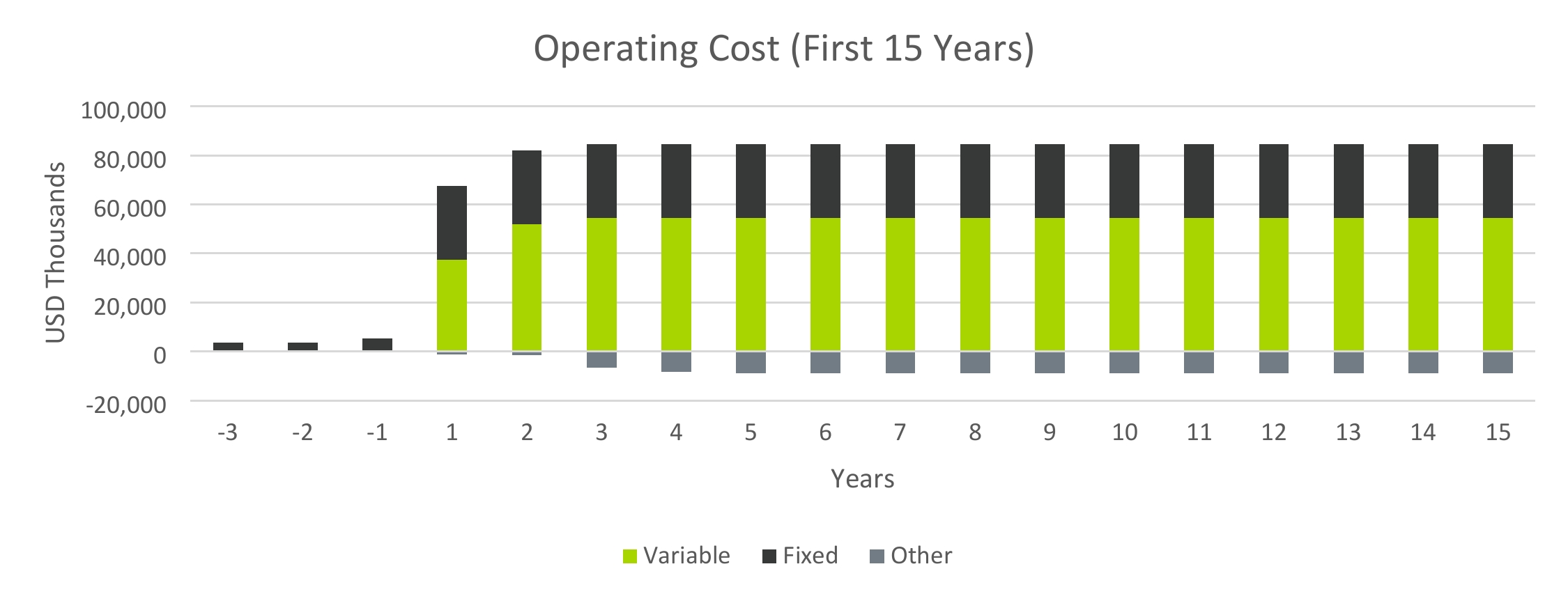
19.4.3 Variable Costs
Total variable operating costs over the life of mine are provided in Table 19.3 and Table 19.4.
Table 19.3: Variable operating cost over life of mine
|
|
|
|
Variable operating cost: |
Total US$
(thousands) |
Materials |
$1,239,267 |
Logistics |
$573,214 |
Natural gas |
$197,341 |
Total |
$2,009,822 |
19.4.4 Fixed Costs
Table 19.4: Total fixed operating cost over life of mine excluding depreciation
|
|
|
|
Fixed operating cost: |
Total US$
(thousands) |
Administrative labor |
$94,560 |
Operating labor |
$271,801 |
General and administrative overhead |
$48,600 |
Repair labor |
$203,883 |
Repair materials |
$285,436 |
Taxes and insurance |
$244,659 |
Total |
$1,148,939 |
19.4.5 Other operating costs / (credits)
Table 19.5: Total other operating costs / (credits) over life of mine
|
|
|
|
Other operating cost / credit: |
Total US$
(thousands) |
Calcium chloride |
($250,590) |
Metals precipitation waste |
$39,507 |
Gypsum |
($103,530) |
Total |
($314,613) |
19.4.6 Capital Costs
Capital is modeled on an annual basis and is used in the model as developed in previous sections with 15% contingency. The modeled capital profile is presented in Figure 19.3.
Figure 19.3: Capital profile of the mine
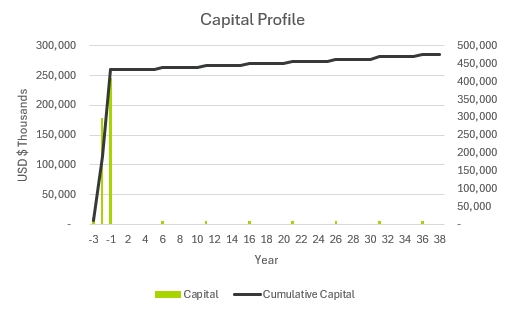
19.4.7 Infrastructure and Logistics
The economic analysis includes OSBL and ISBL capital, which includes a warehouse for boric acid storage and calcium chloride loadout station. Boric acid and calcium chloride transport will be serviced via truck with calcium chloride sold as a by-product credit in the local California market. Boric acid transport will be serviced via truck to local customers in the western United States, to the Los Angeles ports for shipment to Asia, and either shipped via truck to the eastern United States or shipped to rail for further transport. Capital includes a covered storage facility for gypsum which will be serviced via truck with gypsum sold as a by-product credit in the local California market. While revenue and by-product credits are captured in the economic model at F.O.B. pricing, freight and logistics are assumed as costs to 5E and included in operating costs estimates. Capital also includes an upgrade to the SoCal Edison service road that provides the main access to the Project. While a trade-off study is being performed, utility is assumed to be sourced via natural gas and main power delivered via gas COGEN. The capital estimate includes the cost and installation of the COGEN facility as well as a metering station and connection to the gas pipeline and all required piping to the COGEN facility. While it is common for similar projects to finance COGEN off-balance sheet and include as part of operating expenditure, the economic analysis assumes the COGEN is 5E operated and owned.
19.4.8 Economic Results
The economic analysis metrics are prepared on an annual after-tax basis in U.S. dollars. The results of analysis are presented in Table 19.6. The annual project after tax cash flow is presented in Figure 19.4.
Figure 19.4: Cash flow projection
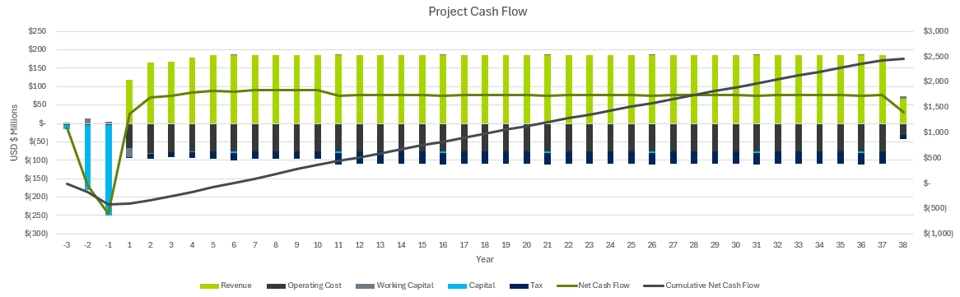
Table 19.6: Results of economic analysis
|
|
|
|
|
|
Life of Mine Cashflow |
Units |
Value |
Total Revenue |
US$ Million |
6,838.6 |
Operating Expenses |
US$ Million |
2,844.1 |
Operating Margin Ratio |
% |
58.4 |
Capital Outlay |
US$ Million |
474.8 |
Taxes Paid |
US$ Million |
1,054.0 |
Depreciation |
US$ Million |
474.8 |
Free Cash Flow |
US$ Million |
2,465.7 |
NPV @ 7% |
US$ Million |
711.3 |
IRR |
% |
19.2 |
Payback |
Years |
6.1 |
19.4.9 Sensitivity Analysis
Sensitivity analysis for the financial model was performed based on changes to boric acid price, annual production, discount rate, variable cost pricing, gypsum price, labor cost per person, and raw material acid utilization. Using a ±10% change for each variable, NPV7 is plotted in real dollars for comparison and arranged in order of total variability in Figure 19.5.
Figure 19.5: Sensitivity analysis
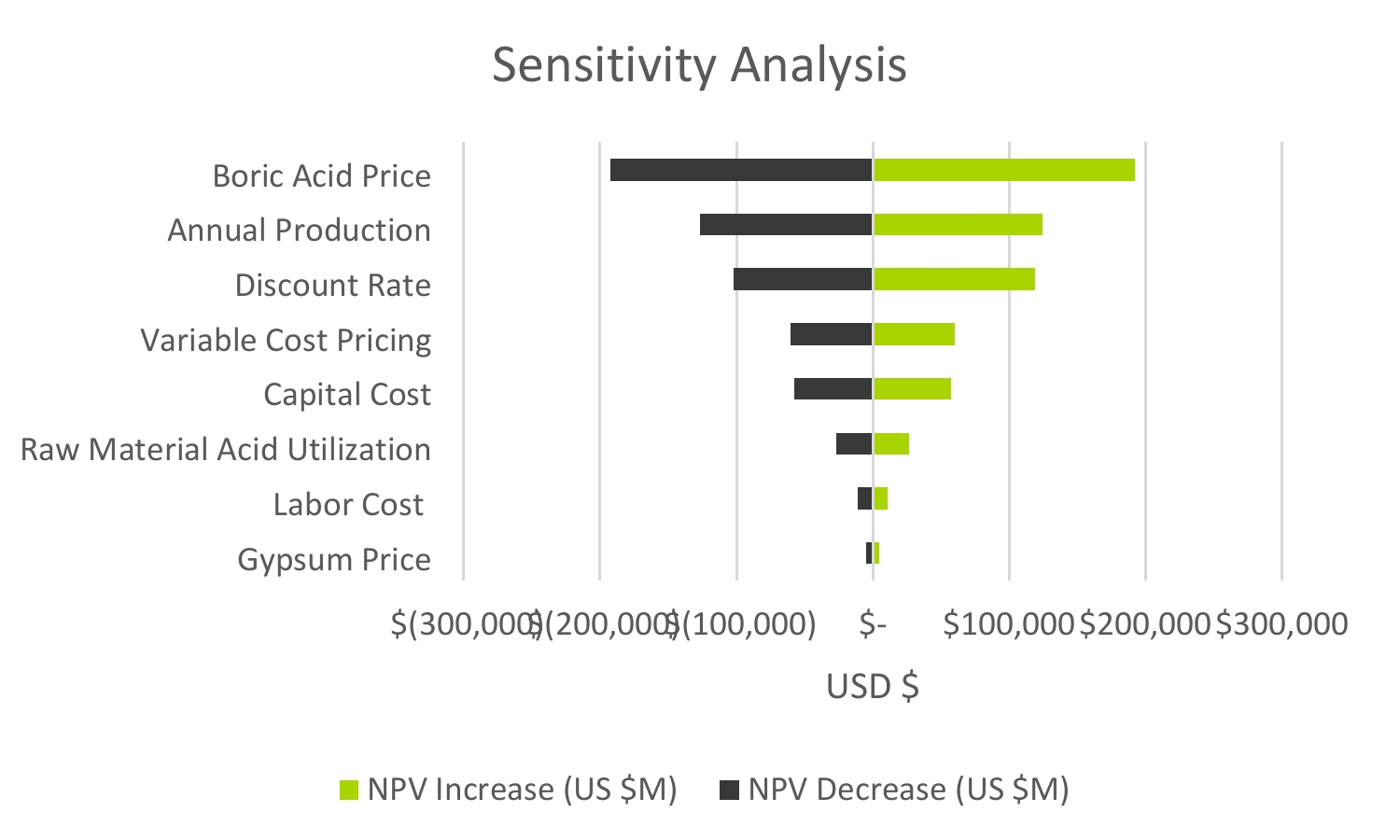
19.4.10 Cash Flow Snapshot
The annual cashflow, expressed in million U.S. dollars, is presented in Figure 19.7.
Table 19.7 Summary of annual cash flow, US$ millions
|
|
|
|
|
|
|
|
|
|
|
|
|
|
|
|
|
|
|
|
|
|
|
|
|
|
|
|
|
|
|
|
|
|
|
|
|
|
|
|
|
|
|
|
|
|
|
|
|
Pre-Production |
|
Production |
Description |
LOM Total |
Units |
YR-3 |
YR-2 |
YR-1 |
|
YR1 |
YR2 |
YR3 |
YR4 |
YR5 |
YR6 |
YR7 |
YR8 |
YR9 |
YR10 |
YR11 |
YR12 |
YR13 |
YR14 |
YR15 |
YR16-40 |
Assumptions |
|
|
|
|
|
|
|
|
|
|
|
|
|
|
|
|
|
|
|
|
|
|
Production Quantity |
5,050.2 |
ST |
— |
— |
— |
|
93.6 |
130.0 |
136.5 |
136.5 |
136.5 |
136.5 |
136.5 |
136.5 |
136.5 |
136.5 |
136.5 |
136.5 |
136.5 |
136.5 |
136.5 |
3,052.1 |
Boric Acid Price |
1,354.1 |
$/ST |
— |
— |
— |
|
1,273 |
1,266 |
1,234 |
1,305 |
1,353 |
1,360 |
1,364 |
1,364 |
1,364 |
1,364 |
1,364 |
1,364 |
1,364 |
1,364 |
1,364 |
1,364 |
|
|
|
|
|
|
|
|
|
|
|
|
|
|
|
|
|
|
|
|
|
|
|
Income |
|
|
|
|
|
|
|
|
|
|
|
|
|
|
|
|
|
|
|
|
|
|
Revenue |
6,838.6 |
$M |
— |
— |
— |
|
119.2 |
164.6 |
168.4 |
178.1 |
184.7 |
185.6 |
186.2 |
186.2 |
186.2 |
186.2 |
186.2 |
186.2 |
186.2 |
186.2 |
186.2 |
4,162.5 |
|
|
|
|
|
|
|
|
|
|
|
|
|
|
|
|
|
|
|
|
|
|
|
Operating Expenditure |
|
|
|
|
|
|
|
|
|
|
|
|
|
|
|
|
|
|
|
|
|
|
Variable |
(2,009.8) |
$M |
— |
— |
— |
|
(37.2) |
(51.7) |
(54.3) |
(54.3) |
(54.3) |
(54.3) |
(54.3) |
(54.3) |
(54.3) |
(54.3) |
(54.3) |
(54.3) |
(54.3) |
(54.3) |
(54.3) |
(1,214.6) |
Fixed |
(1,148.9) |
$M |
(3.5) |
(3.5) |
(5.3) |
|
(30.3) |
(30.3) |
(30.3) |
(30.3) |
(30.3) |
(30.3) |
(30.3) |
(30.3) |
(30.3) |
(30.3) |
(30.3) |
(30.3) |
(30.3) |
(30.3) |
(30.3) |
(681.9) |
Other (Operating)/Credit |
314.6 |
$M |
— |
— |
— |
|
1.2 |
1.6 |
6.6 |
8.5 |
8.9 |
8.9 |
8.9 |
8.9 |
8.9 |
8.9 |
8.9 |
8.9 |
8.9 |
8.9 |
8.9 |
198.8 |
Total |
(2,844.1) |
$M |
(3.5) |
(3.5) |
(5.3) |
|
(66.4) |
(80.4) |
(78.0) |
(76.1) |
(75.7) |
(75.7) |
(75.7) |
(75.7) |
(75.7) |
(75.7) |
(75.7) |
(75.7) |
(75.7) |
(75.7) |
(75.7) |
(1,697.8) |
|
|
|
|
|
|
|
|
|
|
|
|
|
|
|
|
|
|
|
|
|
|
|
Working Capital Costs |
0.0 |
$M |
1.2 |
13.8 |
5.7 |
|
(25.0) |
(2.6) |
(0.5) |
(1.0) |
(0.6) |
0.4 |
(0.5) |
— |
— |
— |
0.5 |
(0.5) |
— |
— |
— |
9.1 |
|
|
|
|
|
|
|
|
|
|
|
|
|
|
|
|
|
|
|
|
|
|
|
Capital Costs |
|
|
|
|
|
|
|
|
|
|
|
|
|
|
|
|
|
|
|
|
|
|
Initial |
(435.0) |
$M |
(10.9) |
(178.3) |
(245.7) |
|
— |
— |
— |
— |
— |
— |
— |
— |
— |
— |
— |
— |
— |
— |
— |
— |
Sustaining |
(39.9) |
$M |
— |
— |
— |
|
— |
— |
— |
— |
— |
(5.7) |
— |
— |
— |
— |
(5.7) |
— |
— |
— |
— |
(28.5) |
Total Capital |
(474.8) |
$M |
(10.9) |
(178.3) |
(245.7) |
|
— |
— |
— |
— |
— |
(5.7) |
— |
— |
— |
— |
(5.7) |
— |
— |
— |
— |
(28.5) |
|
|
|
|
|
|
|
|
|
|
|
|
|
|
|
|
|
|
|
|
|
|
|
Pre-Tax Cash Flow |
3,519.6 |
$M |
(13.2) |
(168.1) |
(245.4) |
|
27.8 |
81.6 |
89.9 |
101.1 |
108.4 |
104.6 |
109.9 |
110.4 |
110.4 |
110.4 |
105.2 |
110.0 |
110.4 |
110.4 |
110.4 |
2,445.3 |
|
|
|
|
|
|
|
|
|
|
|
|
|
|
|
|
|
|
|
|
|
|
|
Income Tax |
(1,054.0) |
$M |
— |
— |
— |
|
(2.8) |
(12.2) |
(14.0) |
(17.5) |
(19.5) |
(18.1) |
(20.0) |
(20.0) |
(20.0) |
(20.0) |
(31.3) |
(33.0) |
(33.0) |
(33.0) |
(33.0) |
(727.0) |
|
|
|
|
|
|
|
|
|
|
|
|
|
|
|
|
|
|
|
|
|
|
|
After-Tax Cash Flow |
2,465.7 |
$M |
(13.2) |
(168.1) |
(245.4) |
|
25.0 |
69.5 |
75.9 |
83.6 |
88.9 |
86.5 |
89.9 |
90.5 |
90.5 |
90.5 |
73.9 |
77.0 |
77.5 |
77.5 |
77.5 |
1,718.3 |
20 Adjacent Properties
Elementis operates their hectorite mine adjacent to the west side of the Project. The mine produces hectorite, a specialty clay mineral used in ceramics, cosmetics, and other specialties requiring high viscosity or high thermal stability. While the mine is adjacent to the Project it produces a product that does not compete with 5E.
Land status around the Project area includes the following:
•To the west are the patented and unpatented lands of the Elementis hectorite mine as well as public lands managed by the U.S. Department of Interior, Bureau of Land Management. Both Elementis and BLM land are included within the EIS boundary. While Elementis has placer claims over the 5E deposit, 5E has staked and filed lode claims. 5E has completed extensive diligence with third-party geologists, counsel, and mineral experts and it has been determined that as colemanite is a mudstone with the appropriate claim to establish mineral tenure being a lode claim.
•BLM land is to the north and east of the Project.
•Lands south of the Project area are part of the U.S. Marine Corps Twentynine Palms Marine Base. Figure 3.2 Property Ownership shows the mineral tenure for the project.
21 Other Relevant Data and Information
There is currently no other relevant information or data to present.
22 Interpretation and Conclusions
This pre-feasibility study provides substantial updates to sections 10, 11, 12, 13, 14, 18, and 19. This report is a work product of many months of actual in-situ mining, over 24 months of operating 5E’s SSF, comprehensive testing with various OEMs on specific pieces of equipment that have been incorporated into the design, and over 15,000 engineering hours. The LSBF mine plan includes 27 directional wells feeding a chemical plant designed by Fluor with pregnant leach solution at a feed rate of 25.6 short tons per hour with a boric acid head grade of 10.2% weight. The head grade in the plant feed plays a critical role for process control and for the sizing of the plant’s equipment, piping and instrumentation. Variations in the in-situ mining conditions can drive a variable range of boric acid head grades with boric acid solubility, HCl concentration and temperature being drivers to head grade. The head grade assumption reflects both what is realistically achievable as demonstrated by the SSF and an optimal value for equipment design to meet the stated production goals of 130,000 short tons of boric acid and achieving a 95.1% recovery rate in the chemical plant. Byproducts produced include gypsum and calcium chloride, with the production rate of gypsum being 129,000 short tons per annum on a dry basis and the projected rate of calcium chloride being 60,000 short tons per annum in solution (38% weight).
Crystallization is a pivotal step in achieving purity and meeting customer specifications and represents a major capital investment due to the complexity and material requirements of the equipment. Kemetco performed a comprehensive metallurgical test program and was critical in further understanding process behavior and optimizing the overall design. The testing confirmed that two-stage crystallization leaves behind too many impurities, necessitating a selective dissolution and recrystallization phase where boric acid slurry is filtered, washed, redissolved, and then recrystallized. This approach enables tighter control over crystal growth and significantly improves product quality. The impurity removal process is another critical component, particularly for managing magnesium levels, which are highly pH dependent. Precise control of sequential pH adjustments is essential to selectively precipitating and removing impurities while minimizing boron losses and this step is vital for maintaining the integrity of the in-situ mining process as recycled process streams are re-injected into the wellfield. Inadequate removal of impurities could negatively impact boron leaching efficiencies and this purification step supports the downstream process and refinement of the byproducts.
Given the high temperature and aridity of the local climate, the most cost-effective approach to concentrate the calcium rich return brine is by maximizing the use of evaporation ponds.
The total capital estimate for the project is $435 million and economic analysis yields an NPV7 of $711.3 million and project IRR of 19.2%. Based on the economic analysis, mineral resources and mineral reserves have been estimated and reported using a cut-off grade of 2.0% B2O3. Measured, Indicated, and Inferred resources for the Project, inclusive of mineral reserves, total 204.8 MSTs of ore, 28.8 MSTs of boric acid and 0.3 Mt of lithium carbonate equivalent. Proven reserves total 2.6 MSTs of H3BO3 and probable reserves total 2.5 MSTs of H3BO3.
5E has an established mineral holding through ownership of fee lands and unpatented placer and lode claims. The property has undergone prior exploration primarily conducted in the 1980’s along with more recent drilling conducted in 2017 which validated previous exploration and expanded known mineral occurrences. Drilling completed on the Project is sufficient for the delineation of a mineral resource estimate and economic analysis has provided justification for establishing mineral reserves.
Geologic interpretation of the deposit describes mineralization as lacustrine evaporite sediments containing colemanite, a hydrated calcium borate mineral. The deposit also contains appreciable quantities of lithium. Geologic modeling based on drilling and sampling results depicts an elongate deposit of lacustrine evaporite sediments containing colemanite. The deposit is approximately 2.1 mi. long by 0.6 mi. wide, and ranges in thickness from 70 to 262 ft. with mineralization that has been defined in four distinct horizons defined by changes in lithology and B2O3 analyses.
In conclusion, there are reasonable prospects for economic extraction for the mineral resources and reserves estimated and presented in this pre-feasibility study. 5E has been diligent in validating the work completed by the previous operators and further expanding the size and classification assurance of the deposit. Current and previous evaluations of mining methods indicate a deposit well suited for ISL solution mining as a preferred method for economic extraction. Progression to FEL-3 or FEED engineering will further define the accuracy and optimization of the capital cost estimates for the chemical processing plant and some additional exploration and in-fill drilling can further bolster the resource and reserve. Using the samples produced from the SSF, 5E is positioned to secure bankable offtake agreements for commercialization. Once these steps are completed, the Company is well positioned to update this pre-feasibility study to a feasibility study.
23 Recommendations
The QP’s have made the following recommendations:
•Stage-gate to FEL-3 engineering. FEL-3 engineering and relevant required testing are estimated to cost approximately $6.6M. Additional details of the work to be performed include the following:
•Further test work to optimize the crystallizer design is required for optimizing crystal growth and particle size distribution which are specification requirements. Factors such as residence time, slurry density, supersaturation, type of cooling, cooling rate, level of agitation, and mixing rate, should all be evaluated and considered for controlling crystal size.
•Completion of additional locked cycle testing be conducted on the crystallization process during FEL-3 to better simulate steady-state operation and assess long-term process stability. This test will help identify potential impurity buildup and equipment fouling to validate product quality over multiple cycles, and support more accurate mass balance and equipment design decisions.
•The harsh nature of the pregnant leach solution necessitates that a robust and quantitative materials of construction coupon testing program be completed. This is critical to ensure that compatible materials are selected for equipment, piping, and instrumentation. Improper material selection may cause safety, production, and/or quality issues.
•Further test work on fluid and slurry flow characteristics including density (carrier fluid and solids for slurries), particle size distributions, solids weight percents, and viscosity.
•Completion of a detailed heat integration study and an optimized water balance to help to reduce both capital and operating expenditures as well as reduction in the environmental resource requirements.
•More detailed studies on environmental impact should be performed in the next engineering phase, specifically emissions (gaseous and particulate), scrubber efficiencies, gypsum stockpiles, wastewater discharge, solids waste handling (clay and metal impurities), biodiversity and habitat impact.
•Completion of a Reliability, Availability, and Maintainability (RAM) analysis to evaluate the long-term performance and operational efficiency of critical systems. This analysis helps identify potential bottlenecks, optimize maintenance strategies, and improve overall system uptime, ultimately supporting more accurate cost estimates and design decisions.
•Investigate setting up purchasing agreements with reagent suppliers to ensure that there will be adequate availability and that the costs are fully understood.
•A thickener for the PLS feed to the plant is not considered due to the low solids content seen in the PLS feed to the SSF. It is recommended to perform test work to confirm the solids content that will come from the wellfield.
•Continued operation of the SSF to gain a more in-depth understanding of the performance of the horizontal wells, including artificial lift (jet pump) and integrating a dedicated steam injection well. Through operation of existing horizontal and directional wells, confirm residence time and length of injection – recovery cycles with reconciliation to commercial recovery rates. Injection cycle volume should target volume required to produce desired feed rate to LSBF plus contingency volume required due to mining efficiency and void space created by previous cycles. Injection rates need to balance with expected residence time to achieve desired PLS concentration versus expected recovery production rates. Cost is estimated at $1.6 million.
24 References
5E SSF high frequency wellfield instrumentation results via SSF DCS.
5E SSF Injection Schedule and Results.
5E July 2025 Horizontal Drill Program ICP results.
Ardent Technologies, Test Work Report – Consolidated Ardent Testing Data.
Bartlett, R.W., 1998. Solution Mining: Leaching and Fluid Recovery of Materials, Second Edition, Routledge Publishing.
Confluence Water Resources, LLC 2019. 2019 Fault B Program Results, Technical Report, March 2019.
Confluence Water Resources, LLC 2022. Shallow Groundwater Characterization Report Mining Block 2 Near Pisgah Fault, June 2022.
Confluence Water Resources, LLC 2023. Results from OW-3A and MW3B Hydraulic Testing, Technical Memorandum, March 2023.
Core Laboratories, Inc., 1981. Boron Analysis of Core Leachings Well SMT-1, San Bernadino County by D. Burnett, July 1981.
Fort Cady California Corporation, 2019. Revised 2019 Mining/Land Reclamation Plan and Plan of Operations. Revised April 2019.
Haliburton Micro-deformation instrumentation results.
Hazen Research, Inc., 2019. Recovery and Purification of Boric Acid from Colemanite Leach Liquor using Solvent Extraction – Report 12574, September 2019.
Hydro-Engineering, 1996. Aquifer Characteristics and potential well field geometry, by G Hoffman & E Sandberg, February 1996.
Kemetco Research, Inc., Test Work Report – Scoping Boric Acid Production Testing: T0903 Report
Kline Preliminary Market Study, June 2025.
Simon Hydro-Search, 1993. Fort Cady Mineral Corporation Solution Mining Project Feasibility Report, San Bernardino County, California. Prepared for Southern California Edison by Simon Hydro-Search. October 22, 1993.
Swenson Technology, Inc. 2019. Test Report – Crystallization of Boric Acid by J Majors, April 2019.
Wilkinson & Krier, 1985. Geological Summary – Duval Corp. internal review, by P Wilkinson and Krier N, January 1985.
25 Reliance on Information Provided by the Registrant
5E has provided the external QP’s with a variety of materials for the preparation of this report. These materials include the following:
•Drilling records from the 2017 drilling program completed by APBL, which includes drilling locations, drill logs, sampling records, analytical results/certificates, geophysical logs, and core photos.
•Drilling records from Duval and FCMC, which include drill logs, sampling records, analytical results/certificates, and geophysical logs.
•Historical drilling maps and testing records.
•Third-party laboratory reports related to process test work based on synthetic brine.
•Testing performed by Kemetco on crystallization.
•Commodity pricing forecasts and a preliminary market study performed by Kline.
•Historic solution mine information from MSME and Duval.
