 エドガーで原本を確認する
UNITED STATES
SECURITIES AND EXCHANGE COMMISSION
Washington, D.C. 20549
FORM
CURRENT REPORT
Pursuant to Section 13 or 15(d)
of the Securities Exchange Act of 1934
Date of Report (Date of earliest event reported):
(Exact name of registrant as specified in its charter)
| (State or other jurisdiction of incorporation) |
(Commission File Number) |
(I.R.S. Employer Identification No.) |
Sagimet Biosciences Inc.
| (Address of principal executive offices, including zip code) |
(Registrant’s telephone number, including area code)
Not applicable
(Former Name or Former Address, if Changed Since Last Report)
Check the appropriate box below if the Form 8-K filing is intended to simultaneously satisfy the filing obligation of the registrant under any of the following provisions:
| Written communications pursuant to Rule 425 under the Securities Act (17 CFR 230.425) |
| Soliciting material pursuant to Rule 14a-12 under the Exchange Act (17 CFR 240.14a-12) |
| Pre-commencement communications pursuant to Rule 14d-2(b) under the Exchange Act (17 CFR 240.14d-2(b)) |
| Pre-commencement communications pursuant to Rule 13e-4(c) under the Exchange Act (17 CFR 240.13e-4(c)) |
Securities registered pursuant to Section 12(b) of the Act:
| Title of each class |
Trade |
Name of each exchange on which registered |
||
Indicate by check mark whether the registrant is an emerging growth company as defined in Rule 405 of the Securities Act of 1933 (§ 230.405 of this chapter) or Rule 12b-2 of the Securities Exchange Act of 1934 (§ 240.12b-2 of this chapter).
Emerging growth company
If an emerging growth company, indicate by check mark if the registrant has elected not to use the extended transition period for complying with any new or revised financial accounting standards provided pursuant to Section 13(a) of the Exchange Act.
| Item 2.02 | Results of Operations and Financial Condition. |
On August 11, 2026, Sagimet Biosciences Inc. (the “Company”) issued a press release announcing its financial results for the quarter ended June 30, 2026. A copy of the press release is furnished as Exhibit 99.1 to this Current Report on Form 8-K and is incorporated herein by reference.
The information contained in this Item 2.02 (including Exhibit 99.1) is being furnished and shall not be deemed “filed” for purposes of Section 18 of the Securities Exchange Act of 1934, as amended (the “Exchange Act”), or otherwise subject to the liabilities of that section and shall not be deemed to be incorporated by reference in any filing under the Securities Act of 1933, as amended (the “Securities Act”), or the Exchange Act, except as shall be expressly set forth by specific reference in such filing.
| Item 7.01 | Regulation FD Disclosure. |
On August 11, 2026, the Company updated information reflected in a slide presentation, which is attached as Exhibit 99.2 to this Current Report on Form 8-K and is incorporated herein by reference. Representatives of the Company will use the updated presentation in various meetings with investors from time to time.
The information in Item 7.01 of this Current Report on Form 8-K, including the information set forth in Exhibit 99.2, is being furnished and shall not be deemed “filed” for purposes of Section 18 of the Exchange Act, nor shall Exhibit 99.2 furnished herewith be deemed incorporated by reference in any filing under the Securities Act or the Exchange Act, except as shall be expressly set forth by specific reference in such a filing.
| Item 9.01 | Financial Statements and Exhibits. |
(d) Exhibits
| Exhibit |
Document |
|
| 99.1 | Press Release of Sagimet Biosciences Inc., dated August 11, 2026. | |
| 99.2 | Investor Presentation of Sagimet Biosciences Inc., dated August 11, 2026. | |
| 104 | Cover Page Interactive Data File (embedded within the Inline XBRL document). | |
SIGNATURES
Pursuant to the requirements of the Securities Exchange Act of 1934, as amended, the registrant has duly caused this report to be signed on its behalf by the undersigned hereunto duly authorized.
| Sagimet Biosciences Inc. |
||||||
| Date: August 11, 2026 |
By: | /s/ David Happel |
||||
| David Happel | ||||||
| Chief Executive Officer | ||||||
Exhibit 99.1

Sagimet Biosciences Reports Second Quarter 2026 Financial Results and
Provides Corporate Updates
Phase 3 clinical trial of denifanstat in moderate to severe acne patients for the U.S.
on track to initiate in second half of 2026
First-in-human Phase 1 clinical trial of FASN inhibitor TVB-3567 ongoing
Secured equity financing with gross proceeds of $175.0 million in April 2026
Cash, cash equivalents and marketable securities of $257.6 million as of June 30, 2026, expected to fund current operations through 2028, including through data readout of denifanstat Phase 3 trial in moderate to severe acne
FOSTER CITY, Calif., August 11, 2026 – Sagimet Biosciences Inc. (Nasdaq: SGMT), Sagimet Biosciences Inc. (Nasdaq: SGMT), a clinical-stage biopharmaceutical company developing novel therapeutics targeting dysfunctional metabolic and fibrotic pathways, today reported financial results for the quarter ended June 30, 2026, and provided corporate updates.
“The second quarter saw Sagimet building on our strategic decision to focus on dermatology. Denifanstat, if approved, could offer a convenient oral once-daily treatment option for patients aged 12 years and older living with moderate to severe acne, and would be the first innovative oral treatment approved for acne in more than forty years,” said David Happel, Chief Executive Officer of Sagimet. “We plan to advance denifanstat into a registrational Phase 3 clinical trial in moderate to severe acne in the United States in the second half of 2026. With our recent equity financing, we are well positioned to fund our programs through 2028, including through data readout of the Phase 3 denifanstat trial and NDA submission.”
Recent Corporate Highlights
| • | Strategic focus: In April 2026, Sagimet announced a strategic decision to advance denifanstat in moderate to severe acne for the U.S., prioritizing its dermatology programs in its capital allocation. |
| • | Equity financing: In April 2026, the Company completed an underwritten equity financing resulting in $175.0 million of gross proceeds, before deducting underwriting discounts and commissions and other offering expenses. |
| • | Russell Index inclusion: Sagimet was added to the broad-market Russell 3000® Index and small-cap Russell 2000® Index effective June 29, 2026. |
| • | TVB-3567: A first-in-human Phase 1 clinical trial of FASN inhibitor TVB-3567 is ongoing. |
| • | KOL event: On April 30, 2026, the Company hosted a Key Opinion Leader event with Julie Harper, MD, founding Director and past President of the American Acne and Rosacea Society, discussing the acne treatment landscape and Sagimet’s planned Phase 3 clinical trial. A recording of the event is accessible at this link. |
Publications and Presentations
| • | Data showing that Sagimet’s FASN inhibitors reduced de novo lipid levels in human sebocytes were presented at the 83rd Society for Investigative Dermatology Annual Meeting in May 2026 (here). |
| • | In May 2026, Sagimet presented two posters at the European Association for the Study of the Liver (EASL): |
| • | Denifanstat and resmetirom combination therapy rapidly decreased atherogenic lipids in healthy adults in a Phase 1 open-label trial (here). |
| • | Transcriptomic analysis revealed distinct mechanisms underlying the synergistic effect of a fatty acid synthase (FASN) inhibitor and resmetirom combination in LDL receptor knockout MASH mice (here). |
Anticipated Upcoming Milestones
| • | Sagimet intends to advance denifanstat into a registrational Phase 3 clinical trial in moderate to severe acne patients for the U.S. in the second half of 2026. |
| • | Upon completion of the Phase 1 clinical trial of TVB-3567, subject to consultation with regulatory authorities, Sagimet plans to initiate a Phase 2 clinical trial with TVB-3567 in moderate to severe acne patients before the end of 2026. |
| • | The Company also plans to develop a topical formulation of a FASN inhibitor for the potential treatment of acne. |
Financial Results for the Three Months Ended June 30, 2026
| • | Cash, cash equivalents and marketable securities as of June 30, 2026, were $257.6 million. |
| • | Research and development expense for the three and six months ended June 30, 2026, was $11.5 million and $18.5 million, respectively, compared to $7.2 million and $22.6 million for the three and six months ended June 30, 2025, respectively. |
| • | General and administrative expense for the three and six months ended June 30, 2026, was $4.3 million and $9.0 million, respectively, compared to $4.7 million and $9.2 million for the three and six months ended June 30, 2025, respectively. |
| • | Net loss for the three and six months ended June 30, 2026, was $14.0 million and $24.6 million, respectively, compared to $10.4 million and $28.6 million for the three and six months ended June 30, 2025, respectively. |
About Sagimet Biosciences
Sagimet is a clinical-stage biopharmaceutical company developing novel FASN inhibitors designed to target dysfunctional metabolic and fibrotic pathways in conditions resulting from the overproduction of the fatty acid, palmitate. FASN is a regulator of lipid synthesis, and a key pathway implicated in multiple diseases, such as acne, MASH and certain FASN-dependent tumor types. For additional information about Sagimet, please visit www.sagimet.com.
About Acne
Acne is one of the most common skin conditions in the U.S., with approximately 50 million Americans affected annually and more than 5 million seeking medical treatment for acne each year. Acne affects around 85% of persons between the ages of 12 and 24. Moderate to severe acne accounts for 20% of acne sufferers, or approximately 10 million people in the U.S. annually. There is no cure for acne; and due to its pathology, most patients require chronic management and multiple annual courses of treatment for flare control.
Forward-Looking Statements
This press release contains forward-looking statements within the meaning of, and made pursuant to the safe harbor provisions of, The Private Securities Litigation Reform Act of 1995. All statements contained in this press release, other than statements of historical facts or statements that relate to present facts or current conditions, including but not limited to, statements regarding the expected timing of the presentation of data from ongoing clinical trials, Sagimet’s clinical development plans and related timelines and anticipated development milestones, are forward-looking statements. These statements involve known and unknown risks, uncertainties and other important factors that may cause Sagimet’s actual results, performance or achievements to be materially different from any future results, performance or achievements expressed or implied by the forward-looking statements. In some cases, these statements can be identified by terms such as “may,” “might,” “will,” “should,” “expect,” “plan,” “aim,” “seek,” “anticipate,” “could,” “intend,” “target,” “project,” “contemplate,” “believe,” “estimate,” “predict,” “forecast,” “potential” or “continue” or the negative of these terms or other similar expressions. The forward-looking statements in this press release are only predictions. Sagimet has based these forward-looking statements largely on its current expectations and projections about future events and financial trends that Sagimet believes may affect its business, financial condition and results of operations. These forward-looking statements speak only as of the date of this press release and are subject to a number of risks, uncertainties and assumptions, some of which cannot be predicted or quantified and some of which are beyond Sagimet’s control, including, among others: the clinical development and therapeutic potential of denifanstat, TVB-3567 or any other drug candidates or combination therapies developed by Sagimet; Sagimet’s ability to advance drug candidates into and successfully complete clinical trials within anticipated timelines; Sagimet’s relationship with Ascletis, and the success of its development and registration efforts for denifanstat; the accuracy of Sagimet’s estimates regarding its capital requirements and Sagimet’s ability to maintain and successfully enforce adequate intellectual property protection. These and other risks and uncertainties are described more fully in the “Risk Factors” section of Sagimet’s most recent filings with the Securities and Exchange Commission and available at www.sec.gov. You should not rely on these forward-looking statements as predictions of future events. The events and circumstances reflected in these forward-looking statements may not be achieved or occur, and actual results could differ materially from those projected in the forward-looking statements. Moreover, Sagimet operates in a dynamic industry and economy.
New risk factors and uncertainties may emerge from time to time, and it is not possible for management to predict all risk factors and uncertainties that Sagimet may face. Except as required by applicable law, Sagimet does not plan to publicly update or revise any forward-looking statements contained herein, whether as a result of any new information, future events, changed circumstances or otherwise.
Investor Contact:
Joyce Allaire
LifeSci Advisors
JAllaire@LifeSciAdvisors.com
Media Contact:
Maggie Whitney
LifeSci Communications
mwhitney@lifescicomms.com
SAGIMET BIOSCIENCES INC.
CONDENSED STATEMENTS OF OPERATIONS AND COMPREHENSIVE LOSS
(unaudited)
(in thousands, except for share and per share amounts)
| Three Months Ended June 30, | Six Months Ended June 30, | |||||||||||||||
| 2026 | 2025 | 2026 | 2025 | |||||||||||||
| Operating expenses: |
||||||||||||||||
| Research and development |
$ | 11,535 | $ | 7,248 | $ | 18,530 | $ | 22,590 | ||||||||
| General and administrative |
4,283 | 4,677 | 9,001 | 9,200 | ||||||||||||
|
|
|
|
|
|
|
|
|
|||||||||
| Total operating expenses |
15,818 | 11,925 | 27,531 | 31,790 | ||||||||||||
|
|
|
|
|
|
|
|
|
|||||||||
| Loss from operations |
(15,818 | ) | (11,925 | ) | (27,531 | ) | (31,790 | ) | ||||||||
| Total other income |
1,865 | 1,539 | 2,928 | 3,228 | ||||||||||||
|
|
|
|
|
|
|
|
|
|||||||||
| Net loss |
$ | (13,953 | ) | $ | (10,386 | ) | $ | (24,603 | ) | $ | (28,562 | ) | ||||
|
|
|
|
|
|
|
|
|
|||||||||
| Net loss per share, basic and diluted |
$ | (0.26 | ) | $ | (0.32 | ) | $ | (0.57 | ) | $ | (0.89 | ) | ||||
|
|
|
|
|
|
|
|
|
|||||||||
| Weighted-average shares outstanding, basic and diluted |
53,114,533 | 32,195,366 | 42,893,900 | 32,195,355 | ||||||||||||
|
|
|
|
|
|
|
|
|
|||||||||
| Net loss |
$ | (13,953 | ) | $ | (10,386 | ) | $ | (24,603 | ) | $ | (28,562 | ) | ||||
| Other comprehensive loss: |
||||||||||||||||
| Net unrealized loss on marketable securities |
(85 | ) | (45 | ) | (197 | ) | (154 | ) | ||||||||
|
|
|
|
|
|
|
|
|
|||||||||
| Total comprehensive loss |
$ | (14,038 | ) | $ | (10,431 | ) | $ | (24,800 | ) | $ | (28,716 | ) | ||||
|
|
|
|
|
|
|
|
|
|||||||||
SAGIMET BIOSCIENCES INC.
CONDENSED BALANCE SHEETS
(unaudited)
(in thousands)
| As of | ||||||||
| June 30, 2026 |
December 31, 2025 |
|||||||
| Cash, cash equivalents and marketable securities |
$ | 257,564 | $ | 113,124 | ||||
| Total assets |
$ | 263,430 | $ | 116,482 | ||||
| Current liabilties |
$ | 5,419 | $ | 5,101 | ||||
| Noncurrent liabilities |
$ | 1,856 | $ | — | ||||
| Stockholders’ equity |
$ | 256,155 | $ | 111,381 | ||||
| Liabilities and stockholders’ equity |
$ | 263,430 | $ | 116,482 | ||||
Targeting Metabolic Dysfunction with Novel Therapeutics August 2026 Exhibit 99.2
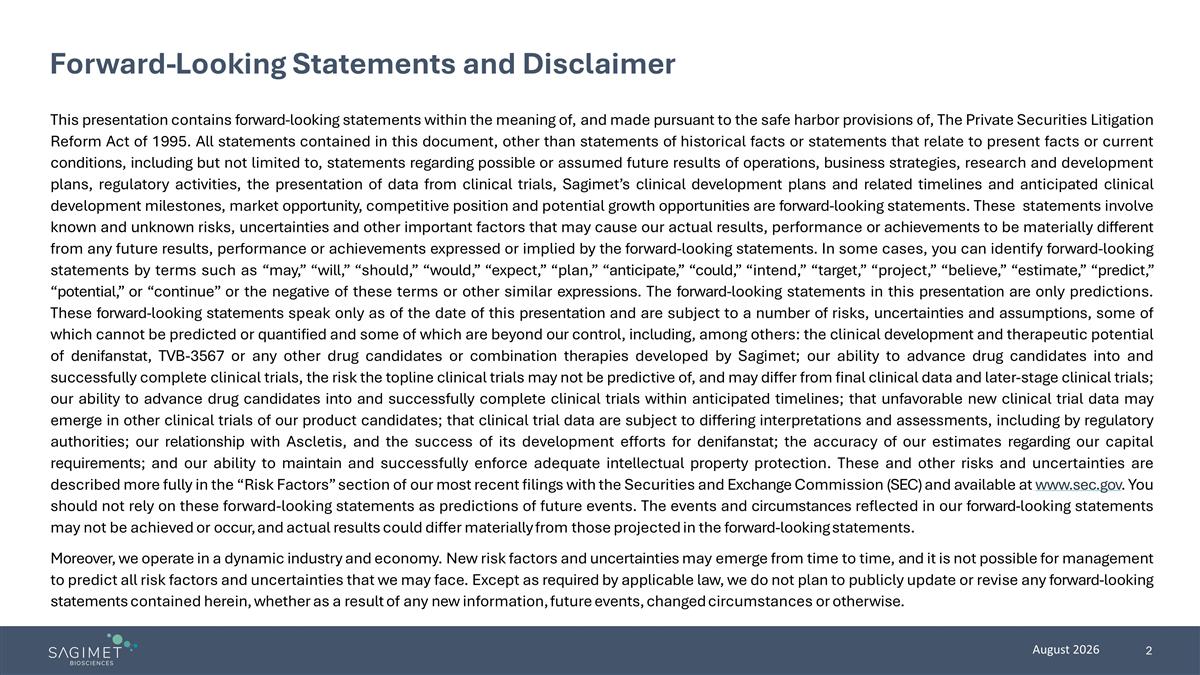
Forward-Looking Statements and Disclaimer This presentation contains forward-looking statements within the meaning of, and made pursuant to the safe harbor provisions of, The Private Securities Litigation Reform Act of 1995. All statements contained in this document, other than statements of historical facts or statements that relate to present facts or current conditions, including but not limited to, statements regarding possible or assumed future results of operations, business strategies, research and development plans, regulatory activities, the presentation of data from clinical trials, Sagimet’s clinical development plans and related timelines and anticipated clinical development milestones, market opportunity, competitive position and potential growth opportunities are forward-looking statements. These statements involve known and unknown risks, uncertainties and other important factors that may cause our actual results, performance or achievements to be materially different from any future results, performance or achievements expressed or implied by the forward-looking statements. In some cases, you can identify forward-looking statements by terms such as “may,” “will,” “should,” “would,” “expect,” “plan,” “anticipate,” “could,” “intend,” “target,” “project,” “believe,” “estimate,” “predict,” “potential,” or “continue” or the negative of these terms or other similar expressions. The forward-looking statements in this presentation are only predictions. These forward-looking statements speak only as of the date of this presentation and are subject to a number of risks, uncertainties and assumptions, some of which cannot be predicted or quantified and some of which are beyond our control, including, among others: the clinical development and therapeutic potential of denifanstat, TVB-3567 or any other drug candidates or combination therapies developed by Sagimet; our ability to advance drug candidates into and successfully complete clinical trials, the risk the topline clinical trials may not be predictive of, and may differ from final clinical data and later-stage clinical trials; our ability to advance drug candidates into and successfully complete clinical trials within anticipated timelines; that unfavorable new clinical trial data may emerge in other clinical trials of our product candidates; that clinical trial data are subject to differing interpretations and assessments, including by regulatory authorities; our relationship with Ascletis, and the success of its development efforts for denifanstat; the accuracy of our estimates regarding our capital requirements; and our ability to maintain and successfully enforce adequate intellectual property protection. These and other risks and uncertainties are described more fully in the “Risk Factors” section of our most recent filings with the Securities and Exchange Commission (SEC) and available at www.sec.gov. You should not rely on these forward-looking statements as predictions of future events. The events and circumstances reflected in our forward-looking statements may not be achieved or occur, and actual results could differ materially from those projected in the forward-looking statements. Moreover, we operate in a dynamic industry and economy. New risk factors and uncertainties may emerge from time to time, and it is not possible for management to predict all risk factors and uncertainties that we may face. Except as required by applicable law, we do not plan to publicly update or revise any forward-looking statements contained herein, whether as a result of any new information, future events, changed circumstances or otherwise.
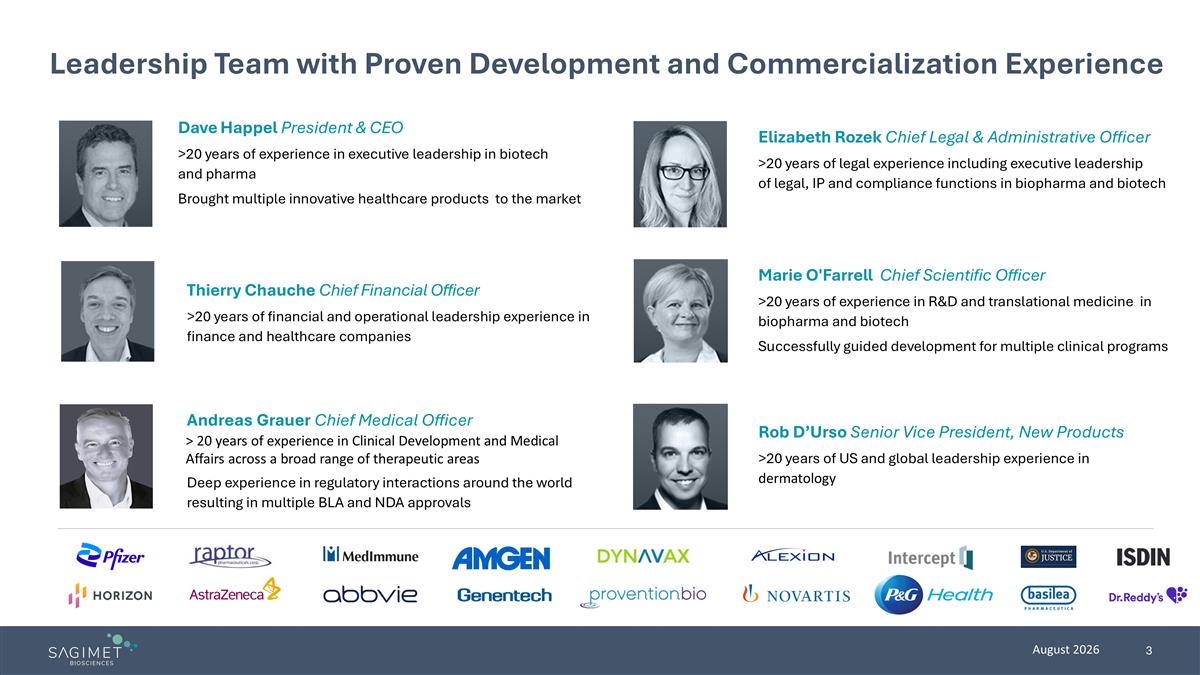
Dave Happel President & CEO >20 years of experience in executive leadership in biotech and pharma Brought multiple innovative healthcare products to the market Andreas Grauer Chief Medical Officer > 20 years of experience in Clinical Development and Medical Affairs across a broad range of therapeutic areas Deep experience in regulatory interactions around the world resulting in multiple BLA and NDA approvals Thierry Chauche Chief Financial Officer >20 years of financial and operational leadership experience in finance and healthcare companies Elizabeth Rozek Chief Legal & Administrative Officer >20 years of legal experience including executive leadership of legal, IP and compliance functions in biopharma and biotech Rob D’Urso Senior Vice President, New Products >20 years of US and global leadership experience in dermatology Marie O'Farrell Chief Scientific Officer >20 years of experience in R&D and translational medicine in biopharma and biotech Successfully guided development for multiple clinical programs Leadership Team with Proven Development and Commercialization Experience
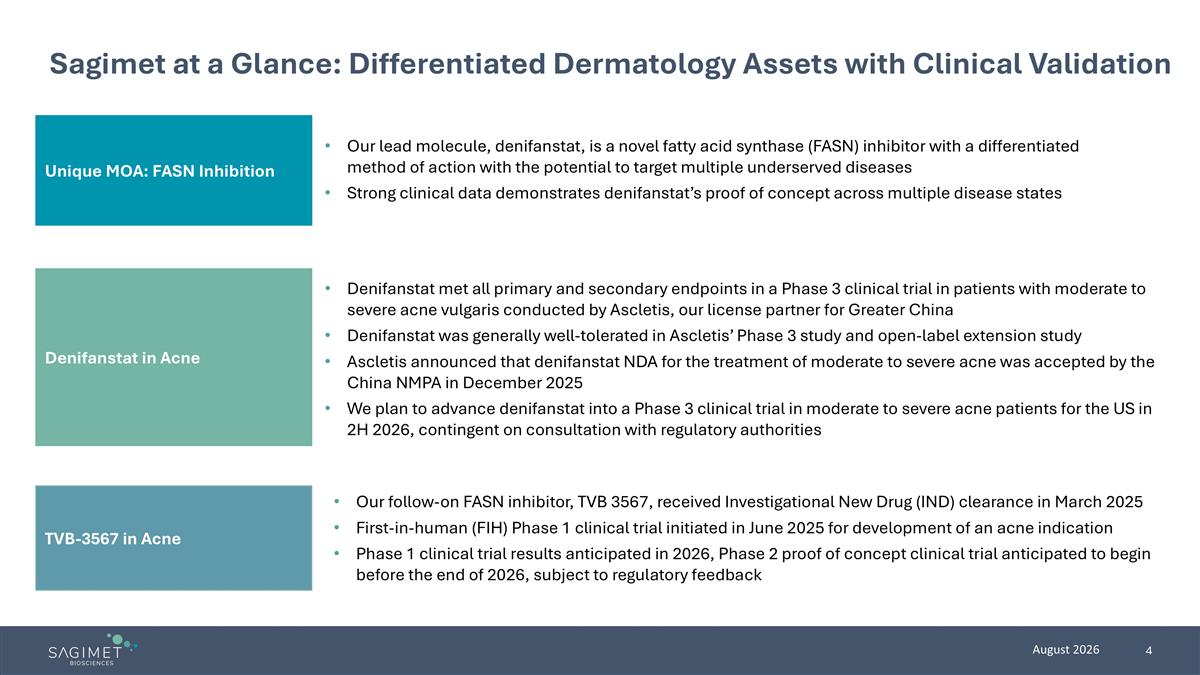
TVB-3567 in Acne Unique MOA: FASN Inhibition Sagimet at a Glance: Differentiated Dermatology Assets with Clinical Validation Our lead molecule, denifanstat, is a novel fatty acid synthase (FASN) inhibitor with a differentiated method of action with the potential to target multiple underserved diseases Strong clinical data demonstrates denifanstat’s proof of concept across multiple disease states Denifanstat met all primary and secondary endpoints in a Phase 3 clinical trial in patients with moderate to severe acne vulgaris conducted by Ascletis, our license partner for Greater China Denifanstat was generally well-tolerated in Ascletis’ Phase 3 study and open-label extension study Ascletis announced that denifanstat NDA for the treatment of moderate to severe acne was accepted by the China NMPA in December 2025 We plan to advance denifanstat into a Phase 3 clinical trial in moderate to severe acne patients for the US in 2H 2026, contingent on consultation with regulatory authorities Our follow-on FASN inhibitor, TVB 3567, received Investigational New Drug (IND) clearance in March 2025 First-in-human (FIH) Phase 1 clinical trial initiated in June 2025 for development of an acne indication Phase 1 clinical trial results anticipated in 2026, Phase 2 proof of concept clinical trial anticipated to begin before the end of 2026, subject to regulatory feedback Denifanstat in Acne
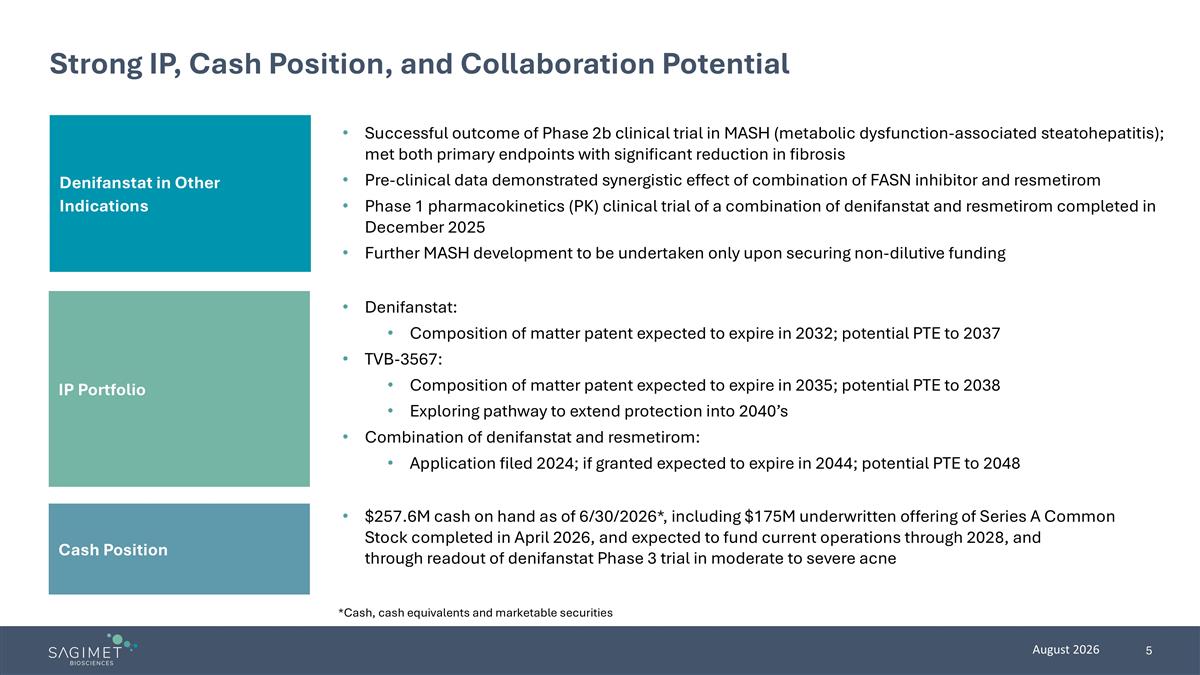
Denifanstat in Other Indications Strong IP, Cash Position, and Collaboration Potential Successful outcome of Phase 2b clinical trial in MASH (metabolic dysfunction-associated steatohepatitis); met both primary endpoints with significant reduction in fibrosis Pre-clinical data demonstrated synergistic effect of combination of FASN inhibitor and resmetirom Phase 1 pharmacokinetics (PK) clinical trial of a combination of denifanstat and resmetirom completed in December 2025 Further MASH development to be undertaken only upon securing non-dilutive funding Denifanstat: Composition of matter patent expected to expire in 2032; potential PTE to 2037 TVB-3567: Composition of matter patent expected to expire in 2035; potential PTE to 2038 Exploring pathway to extend protection into 2040’s Combination of denifanstat and resmetirom: Application filed 2024; if granted expected to expire in 2044; potential PTE to 2048 $257.6M cash on hand as of 6/30/2026*, including $175M underwritten offering of Series A Common Stock completed in April 2026, and expected to fund current operations through 2028, and through readout of denifanstat Phase 3 trial in moderate to severe acne *Cash, cash equivalents and marketable securities IP Portfolio Cash Position
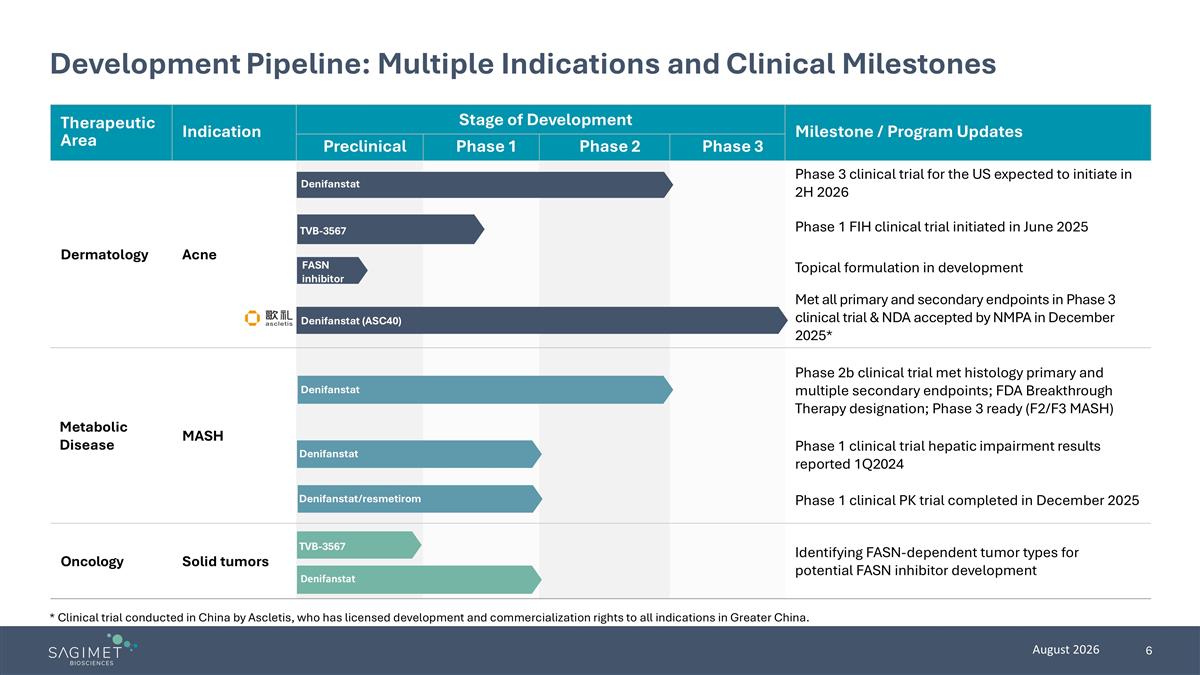
Therapeutic Area Indication Stage of Development Milestone / Program Updates Preclinical Phase 1 Phase 2 Phase 3 Dermatology Acne Phase 3 clinical trial for the US expected to initiate in 2H 2026 Phase 1 FIH clinical trial initiated in June 2025 Topical formulation in development Met all primary and secondary endpoints in Phase 3 clinical trial & NDA accepted by NMPA in December 2025* Metabolic Disease MASH Phase 2b clinical trial met histology primary and multiple secondary endpoints; FDA Breakthrough Therapy designation; Phase 3 ready (F2/F3 MASH) Phase 1 clinical trial hepatic impairment results reported 1Q2024 Phase 1 clinical PK trial completed in December 2025 Oncology Solid tumors Identifying FASN-dependent tumor types for potential FASN inhibitor development Development Pipeline: Multiple Indications and Clinical Milestones * Clinical trial conducted in China by Ascletis, who has licensed development and commercialization rights to all indications in Greater China. Denifanstat Denifanstat TVB-3567 Denifanstat (ASC40) TVB-3567 Denifanstat Denifanstat/resmetirom Denifanstat FASN inhibitor

FASN Inhibition Offers Differentiated MOA in Acne
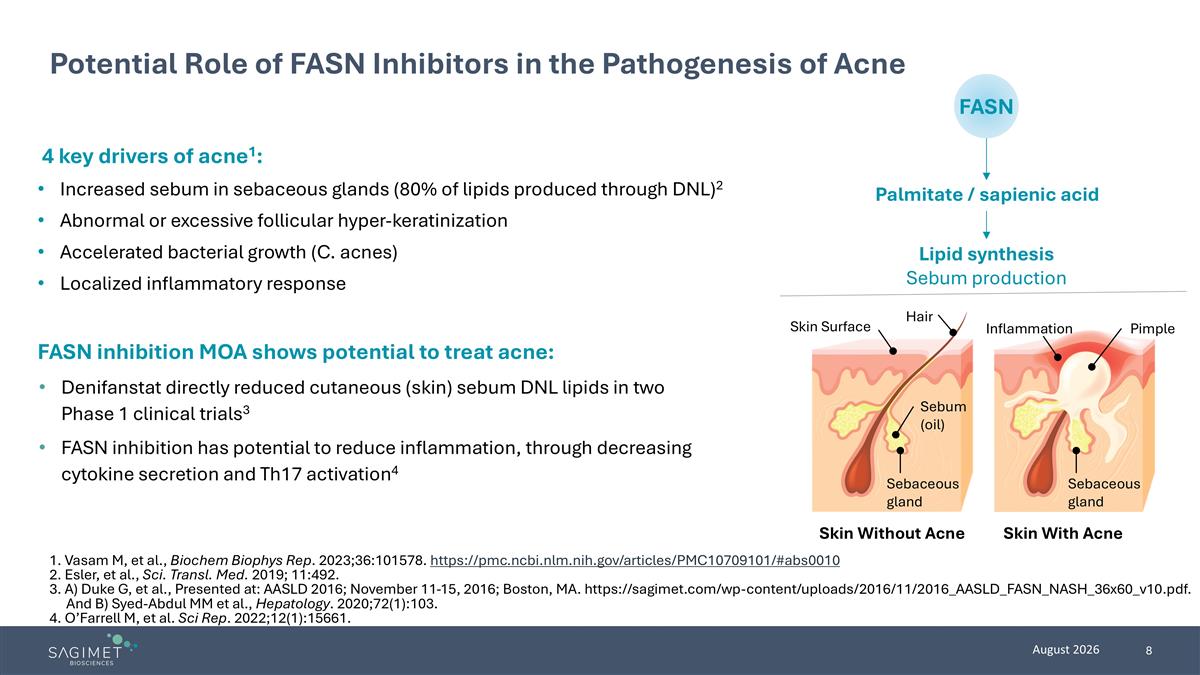
4 key drivers of acne1: Increased sebum in sebaceous glands (80% of lipids produced through DNL)2 Abnormal or excessive follicular hyper-keratinization Accelerated bacterial growth (C. acnes) Localized inflammatory response Potential Role of FASN Inhibitors in the Pathogenesis of Acne 1. Vasam M, et al., Biochem Biophys Rep. 2023;36:101578. https://pmc.ncbi.nlm.nih.gov/articles/PMC10709101/#abs0010 2. Esler, et al., Sci. Transl. Med. 2019; 11:492. 3. A) Duke G, et al., Presented at: AASLD 2016; November 11-15, 2016; Boston, MA. https://sagimet.com/wp-content/uploads/2016/11/2016_AASLD_FASN_NASH_36x60_v10.pdf. And B) Syed-Abdul MM et al., Hepatology. 2020;72(1):103. 4. O’Farrell M, et al. Sci Rep. 2022;12(1):15661. FASN Palmitate / sapienic acid Lipid synthesis Sebum production Hair Skin Surface Sebum (oil) Inflammation Sebaceous gland Skin With Acne Skin Without Acne Pimple Sebaceous gland FASN inhibition MOA shows potential to treat acne: Denifanstat directly reduced cutaneous (skin) sebum DNL lipids in two Phase 1 clinical trials3 FASN inhibition has potential to reduce inflammation, through decreasing cytokine secretion and Th17 activation4
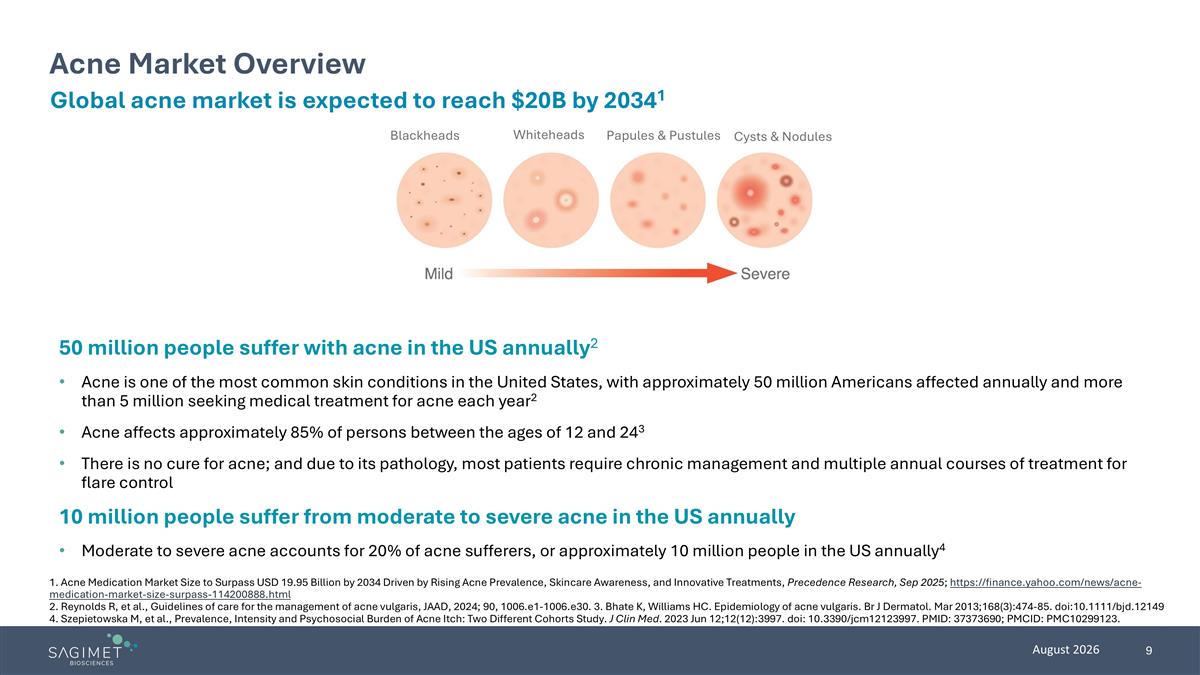
Blackheads Whiteheads Papules & Pustules Cysts & Nodules Acne Market Overview Global acne market is expected to reach $20B by 20341 50 million people suffer with acne in the US annually2 Acne is one of the most common skin conditions in the United States, with approximately 50 million Americans affected annually and more than 5 million seeking medical treatment for acne each year2 Acne affects approximately 85% of persons between the ages of 12 and 243 There is no cure for acne; and due to its pathology, most patients require chronic management and multiple annual courses of treatment for flare control 10 million people suffer from moderate to severe acne in the US annually Moderate to severe acne accounts for 20% of acne sufferers, or approximately 10 million people in the US annually4 1. Acne Medication Market Size to Surpass USD 19.95 Billion by 2034 Driven by Rising Acne Prevalence, Skincare Awareness, and Innovative Treatments, Precedence Research, Sep 2025; https://finance.yahoo.com/news/acne-medication-market-size-surpass-114200888.html 2. Reynolds R, et al., Guidelines of care for the management of acne vulgaris, JAAD, 2024; 90, 1006.e1-1006.e30. 3. Bhate K, Williams HC. Epidemiology of acne vulgaris. Br J Dermatol. Mar 2013;168(3):474-85. doi:10.1111/bjd.12149 4. Szepietowska M, et al., Prevalence, Intensity and Psychosocial Burden of Acne Itch: Two Different Cohorts Study. J Clin Med. 2023 Jun 12;12(12):3997. doi: 10.3390/jcm12123997. PMID: 37373690; PMCID: PMC10299123.
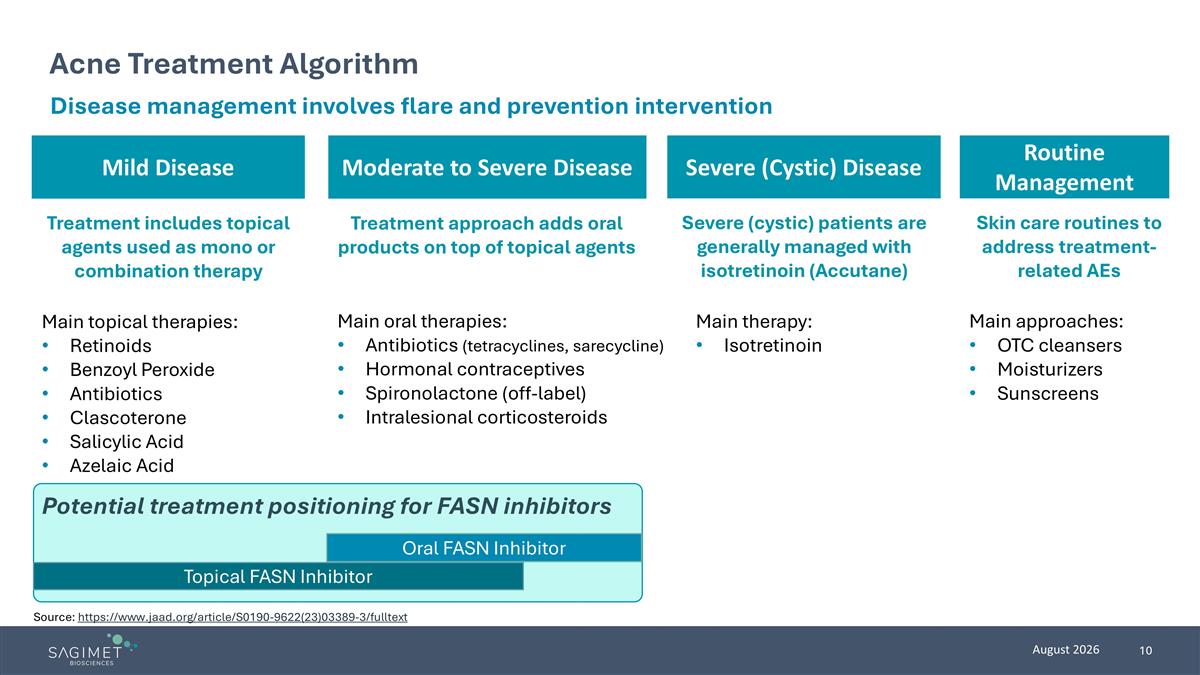
Moderate to Severe Disease Mild Disease Acne Treatment Algorithm Disease management involves flare and prevention intervention Treatment includes topical agents used as mono or combination therapy Main topical therapies: Retinoids Benzoyl Peroxide Antibiotics Clascoterone Salicylic Acid Azelaic Acid Treatment approach adds oral products on top of topical agents Main oral therapies: Antibiotics (tetracyclines, sarecycline) Hormonal contraceptives Spironolactone (off-label) Intralesional corticosteroids Severe (cystic) patients are generally managed with isotretinoin (Accutane) Main therapy: Isotretinoin Severe (Cystic) Disease Oral FASN Inhibitor Topical FASN Inhibitor Potential treatment positioning for FASN inhibitors Source: https://www.jaad.org/article/S0190-9622(23)03389-3/fulltext Routine Management Main approaches: OTC cleansers Moisturizers Sunscreens Skin care routines to address treatment-related AEs

Denifanstat’s Clinical Data in Acne
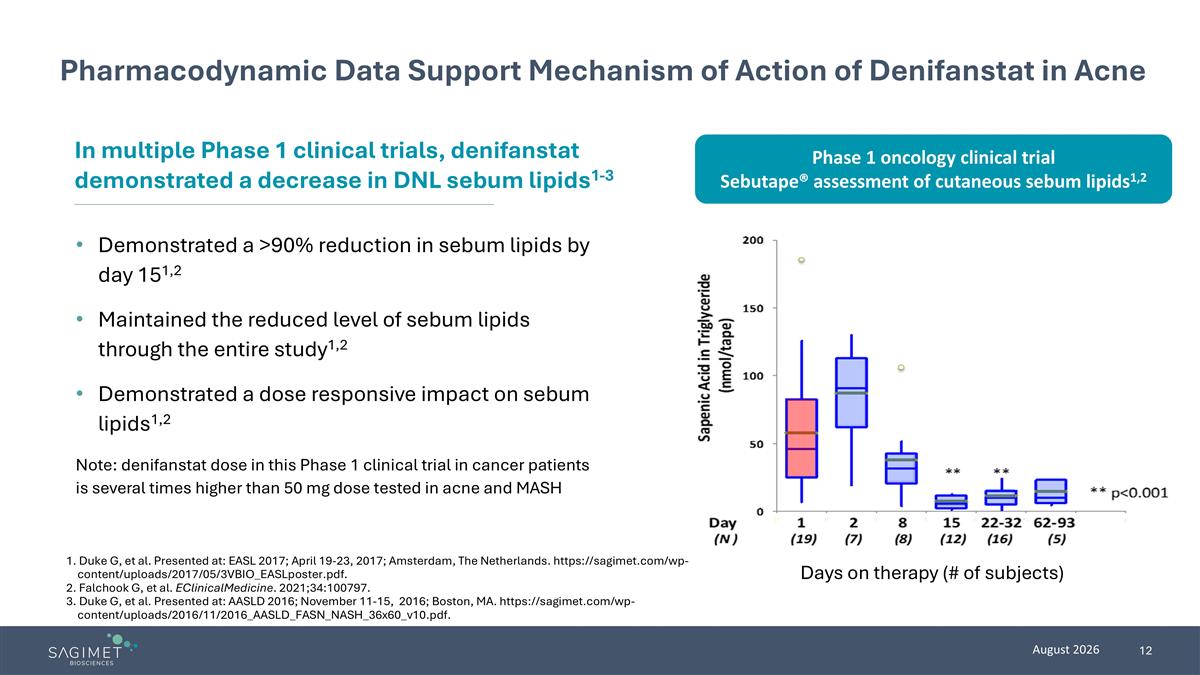
Pharmacodynamic Data Support Mechanism of Action of Denifanstat in Acne Demonstrated a >90% reduction in sebum lipids by day 151,2 Maintained the reduced level of sebum lipids through the entire study1,2 Demonstrated a dose responsive impact on sebum lipids1,2 Note: denifanstat dose in this Phase 1 clinical trial in cancer patients is several times higher than 50 mg dose tested in acne and MASH In multiple Phase 1 clinical trials, denifanstat demonstrated a decrease in DNL sebum lipids1-3 1. Duke G, et al. Presented at: EASL 2017; April 19-23, 2017; Amsterdam, The Netherlands. https://sagimet.com/wp-content/uploads/2017/05/3VBIO_EASLposter.pdf. 2. Falchook G, et al. EClinicalMedicine. 2021;34:100797. 3. Duke G, et al. Presented at: AASLD 2016; November 11-15, 2016; Boston, MA. https://sagimet.com/wp-content/uploads/2016/11/2016_AASLD_FASN_NASH_36x60_v10.pdf. Days on therapy (# of subjects) Phase 1 oncology clinical trial Sebutape® assessment of cutaneous sebum lipids1,2
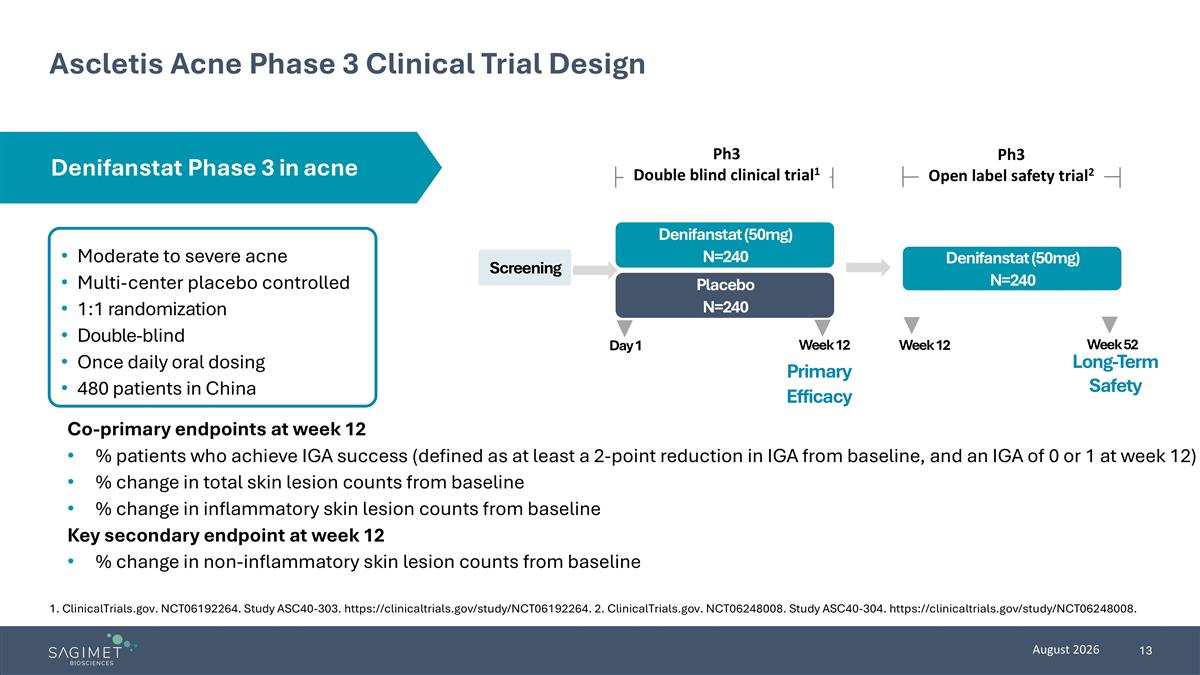
Ascletis Acne Phase 3 Clinical Trial Design Moderate to severe acne Multi-center placebo controlled 1:1 randomization Double-blind Once daily oral dosing 480 patients in China Co-primary endpoints at week 12 % patients who achieve IGA success (defined as at least a 2-point reduction in IGA from baseline, and an IGA of 0 or 1 at week 12) % change in total skin lesion counts from baseline % change in inflammatory skin lesion counts from baseline Key secondary endpoint at week 12 % change in non-inflammatory skin lesion counts from baseline Screening Placebo N=240 Denifanstat (50mg) N=240 Day 1 Week 12 Primary Efficacy Denifanstat (50mg) N=240 Long-Term Safety Ph3 Double blind clinical trial1 Ph3 Open label safety trial2 Week 12 Week 52 Denifanstat Phase 3 in acne 1. ClinicalTrials.gov. NCT06192264. Study ASC40-303. https://clinicaltrials.gov/study/NCT06192264. 2. ClinicalTrials.gov. NCT06248008. Study ASC40-304. https://clinicaltrials.gov/study/NCT06248008.
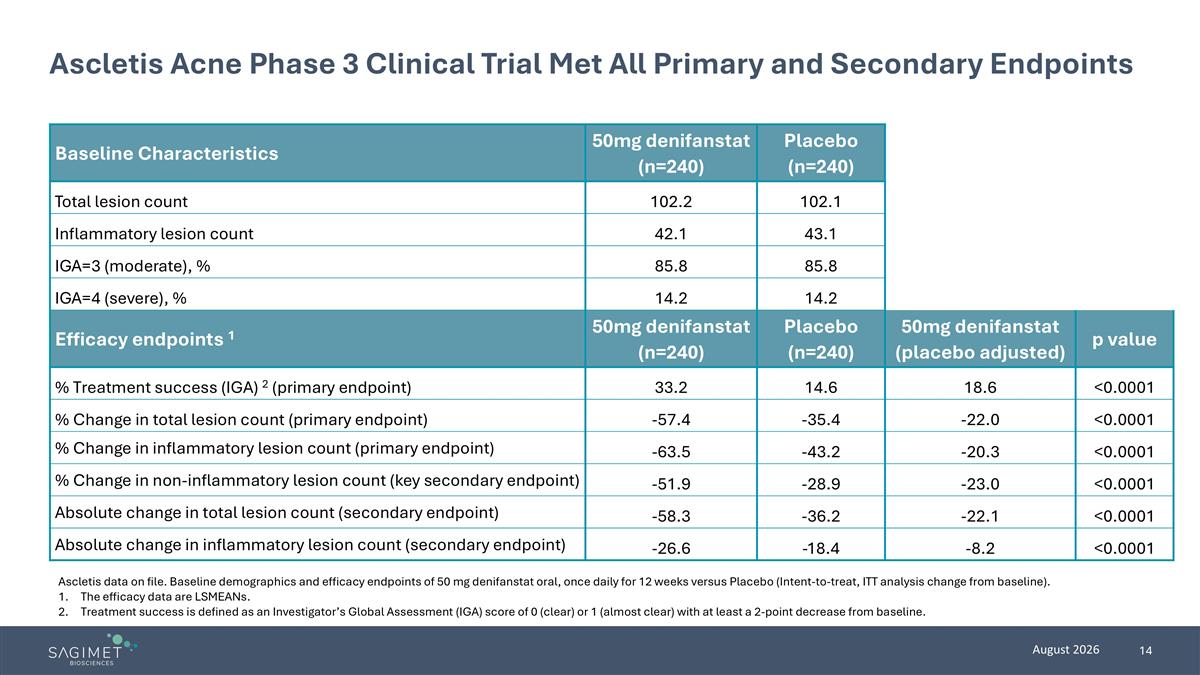
Ascletis Acne Phase 3 Clinical Trial Met All Primary and Secondary Endpoints Baseline Characteristics 50mg denifanstat (n=240) Placebo (n=240) Total lesion count 102.2 102.1 Inflammatory lesion count 42.1 43.1 IGA=3 (moderate), % 85.8 85.8 IGA=4 (severe), % 14.2 14.2 Efficacy endpoints 1 50mg denifanstat (n=240) Placebo (n=240) 50mg denifanstat (placebo adjusted) p value % Treatment success (IGA) 2 (primary endpoint) 33.2 14.6 18.6 <0.0001 % Change in total lesion count (primary endpoint) -57.4 -35.4 -22.0 <0.0001 % Change in inflammatory lesion count (primary endpoint) -63.5 -43.2 -20.3 <0.0001 % Change in non-inflammatory lesion count (key secondary endpoint) -51.9 -28.9 -23.0 <0.0001 Absolute change in total lesion count (secondary endpoint) -58.3 -36.2 -22.1 <0.0001 Absolute change in inflammatory lesion count (secondary endpoint) -26.6 -18.4 -8.2 <0.0001 Ascletis data on file. Baseline demographics and efficacy endpoints of 50 mg denifanstat oral, once daily for 12 weeks versus Placebo (Intent-to-treat, ITT analysis change from baseline). The efficacy data are LSMEANs. Treatment success is defined as an Investigator’s Global Assessment (IGA) score of 0 (clear) or 1 (almost clear) with at least a 2-point decrease from baseline.
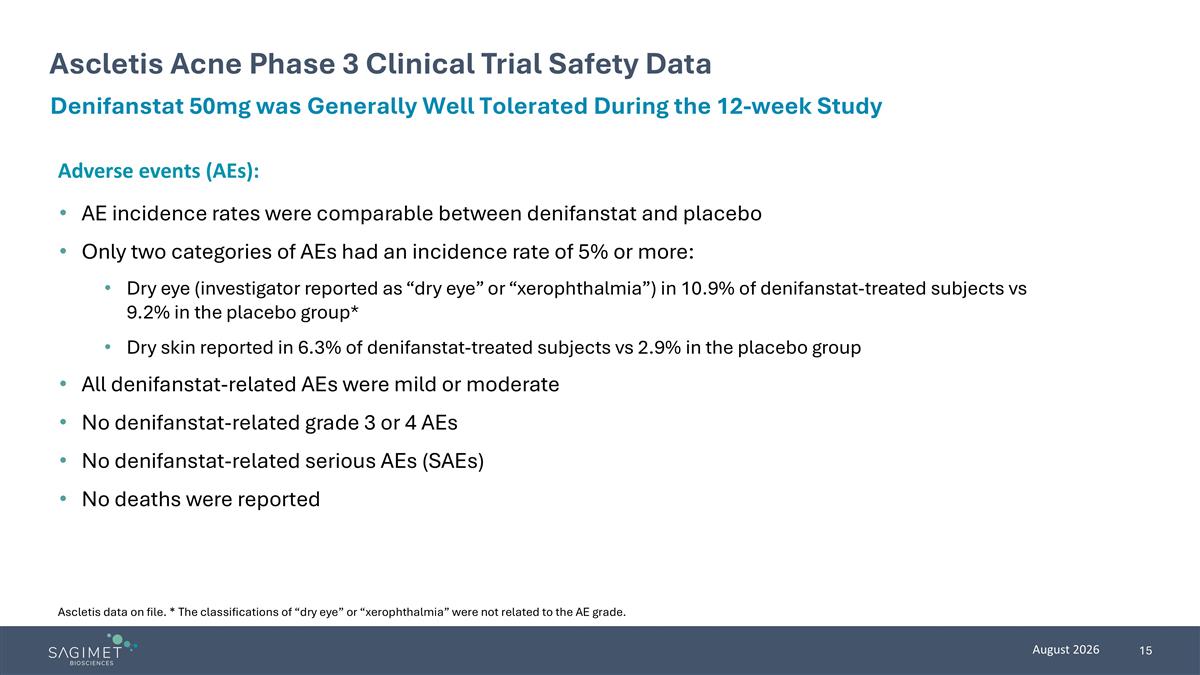
Ascletis Acne Phase 3 Clinical Trial Safety Data Denifanstat 50mg was Generally Well Tolerated During the 12-week Study Adverse events (AEs): AE incidence rates were comparable between denifanstat and placebo Only two categories of AEs had an incidence rate of 5% or more: Dry eye (investigator reported as “dry eye” or “xerophthalmia”) in 10.9% of denifanstat-treated subjects vs 9.2% in the placebo group* Dry skin reported in 6.3% of denifanstat-treated subjects vs 2.9% in the placebo group All denifanstat-related AEs were mild or moderate No denifanstat-related grade 3 or 4 AEs No denifanstat-related serious AEs (SAEs) No deaths were reported Ascletis data on file. * The classifications of “dry eye” or “xerophthalmia” were not related to the AE grade.
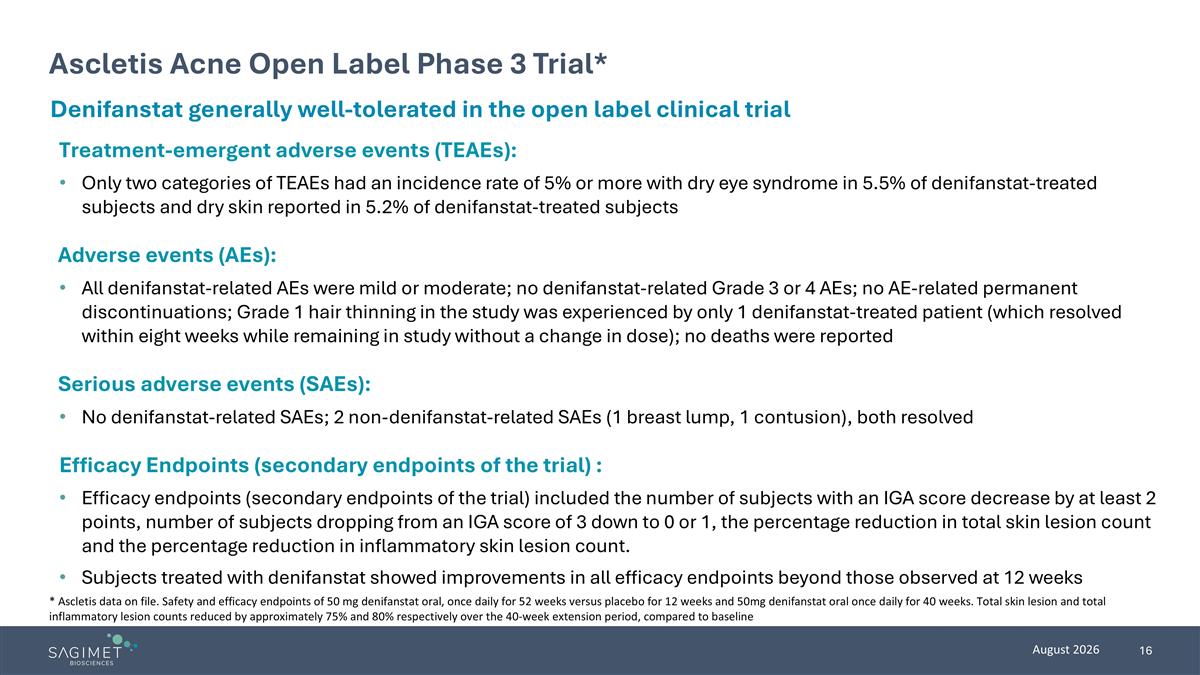
Ascletis Acne Open Label Phase 3 Trial* Denifanstat generally well-tolerated in the open label clinical trial * Ascletis data on file. Safety and efficacy endpoints of 50 mg denifanstat oral, once daily for 52 weeks versus placebo for 12 weeks and 50mg denifanstat oral once daily for 40 weeks. Total skin lesion and total inflammatory lesion counts reduced by approximately 75% and 80% respectively over the 40-week extension period, compared to baseline Treatment-emergent adverse events (TEAEs): Only two categories of TEAEs had an incidence rate of 5% or more with dry eye syndrome in 5.5% of denifanstat-treated subjects and dry skin reported in 5.2% of denifanstat-treated subjects Adverse events (AEs): All denifanstat-related AEs were mild or moderate; no denifanstat-related Grade 3 or 4 AEs; no AE-related permanent discontinuations; Grade 1 hair thinning in the study was experienced by only 1 denifanstat-treated patient (which resolved within eight weeks while remaining in study without a change in dose); no deaths were reported Serious adverse events (SAEs): No denifanstat-related SAEs; 2 non-denifanstat-related SAEs (1 breast lump, 1 contusion), both resolved Efficacy Endpoints (secondary endpoints of the trial) : Efficacy endpoints (secondary endpoints of the trial) included the number of subjects with an IGA score decrease by at least 2 points, number of subjects dropping from an IGA score of 3 down to 0 or 1, the percentage reduction in total skin lesion count and the percentage reduction in inflammatory skin lesion count. Subjects treated with denifanstat showed improvements in all efficacy endpoints beyond those observed at 12 weeks

Sagimet’s Upcoming Development Programs
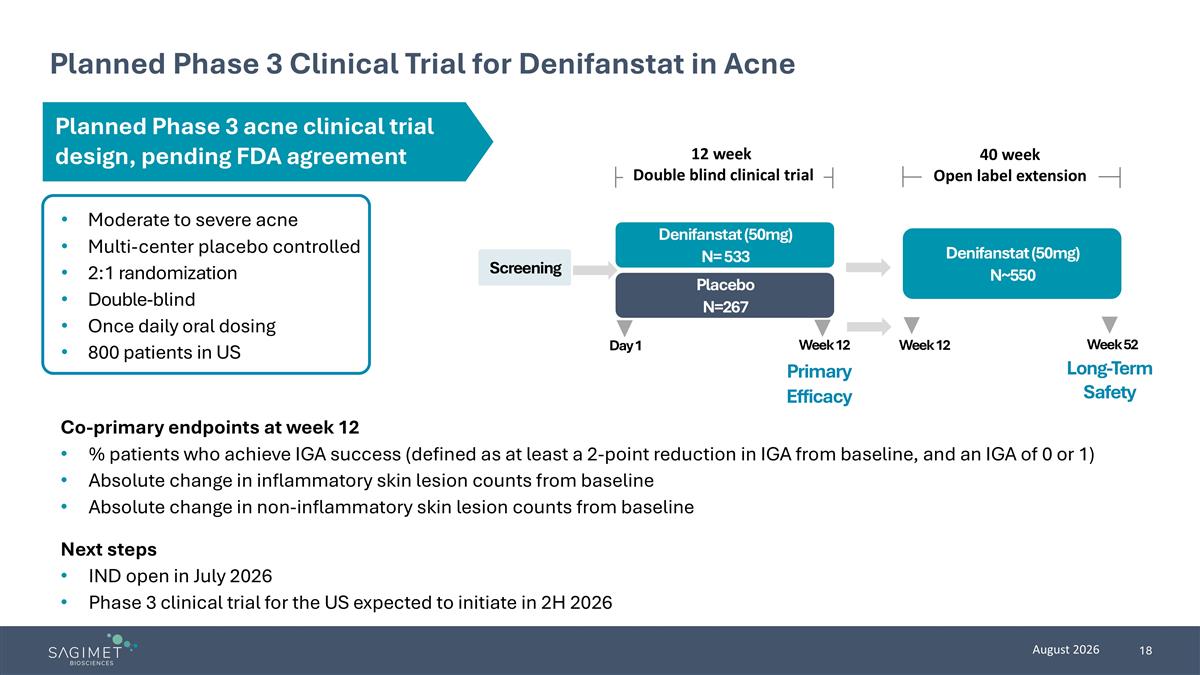
Planned Phase 3 Clinical Trial for Denifanstat in Acne Moderate to severe acne Multi-center placebo controlled 2:1 randomization Double-blind Once daily oral dosing 800 patients in US Co-primary endpoints at week 12 % patients who achieve IGA success (defined as at least a 2-point reduction in IGA from baseline, and an IGA of 0 or 1) Absolute change in inflammatory skin lesion counts from baseline Absolute change in non-inflammatory skin lesion counts from baseline Next steps IND open in July 2026 Phase 3 clinical trial for the US expected to initiate in 2H 2026 Screening Placebo N=267 Denifanstat (50mg) N= 533 Day 1 Week 12 Primary Efficacy Denifanstat (50mg) N~550 Long-Term Safety 12 week Double blind clinical trial 40 week Open label extension Week 12 Week 52 Planned Phase 3 acne clinical trial design, pending FDA agreement
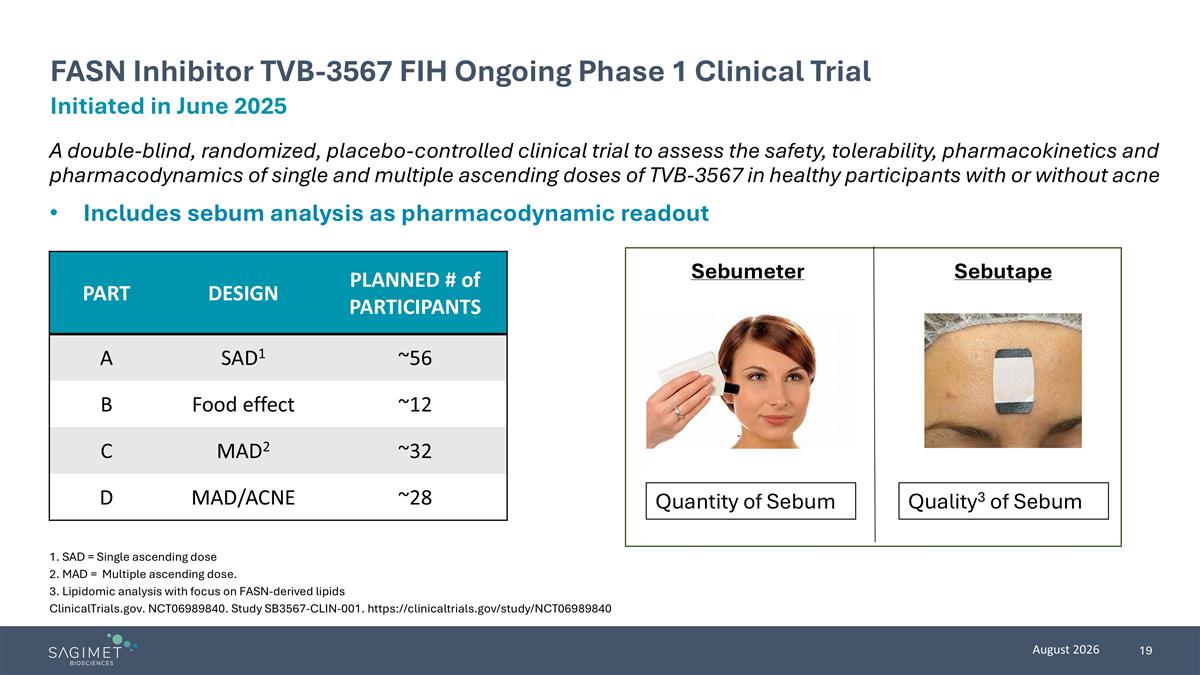
A double-blind, randomized, placebo-controlled clinical trial to assess the safety, tolerability, pharmacokinetics and pharmacodynamics of single and multiple ascending doses of TVB-3567 in healthy participants with or without acne Includes sebum analysis as pharmacodynamic readout 1. SAD = Single ascending dose 2. MAD = Multiple ascending dose. 3. Lipidomic analysis with focus on FASN-derived lipids ClinicalTrials.gov. NCT06989840. Study SB3567-CLIN-001. https://clinicaltrials.gov/study/NCT06989840 Initiated in June 2025 FASN Inhibitor TVB-3567 FIH Ongoing Phase 1 Clinical Trial Sebutape Sebumeter Quantity of Sebum Quality3 of Sebum PART DESIGN PLANNED # of PARTICIPANTS A SAD1 ~56 B Food effect ~12 C MAD2 ~32 D MAD/ACNE ~28
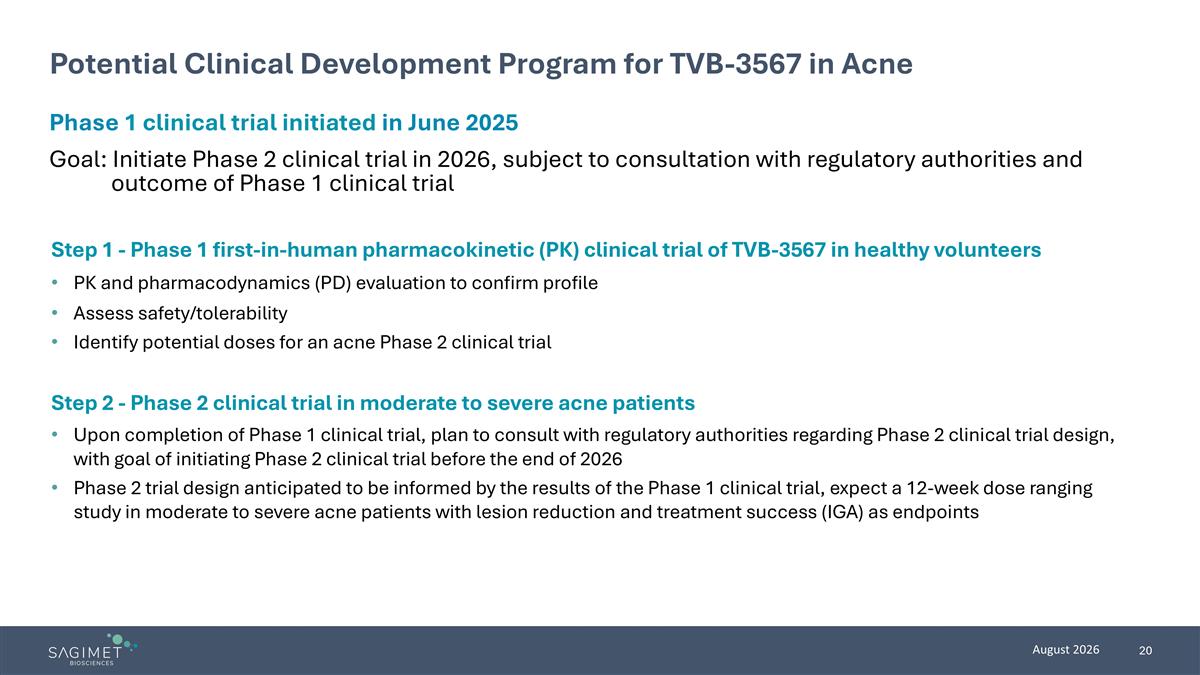
Potential Clinical Development Program for TVB-3567 in Acne Step 1 - Phase 1 first-in-human pharmacokinetic (PK) clinical trial of TVB-3567 in healthy volunteers PK and pharmacodynamics (PD) evaluation to confirm profile Assess safety/tolerability Identify potential doses for an acne Phase 2 clinical trial Step 2 - Phase 2 clinical trial in moderate to severe acne patients Upon completion of Phase 1 clinical trial, plan to consult with regulatory authorities regarding Phase 2 clinical trial design, with goal of initiating Phase 2 clinical trial before the end of 2026 Phase 2 trial design anticipated to be informed by the results of the Phase 1 clinical trial, expect a 12-week dose ranging study in moderate to severe acne patients with lesion reduction and treatment success (IGA) as endpoints Phase 1 clinical trial initiated in June 2025 Goal: Initiate Phase 2 clinical trial in 2026, subject to consultation with regulatory authorities and outcome of Phase 1 clinical trial
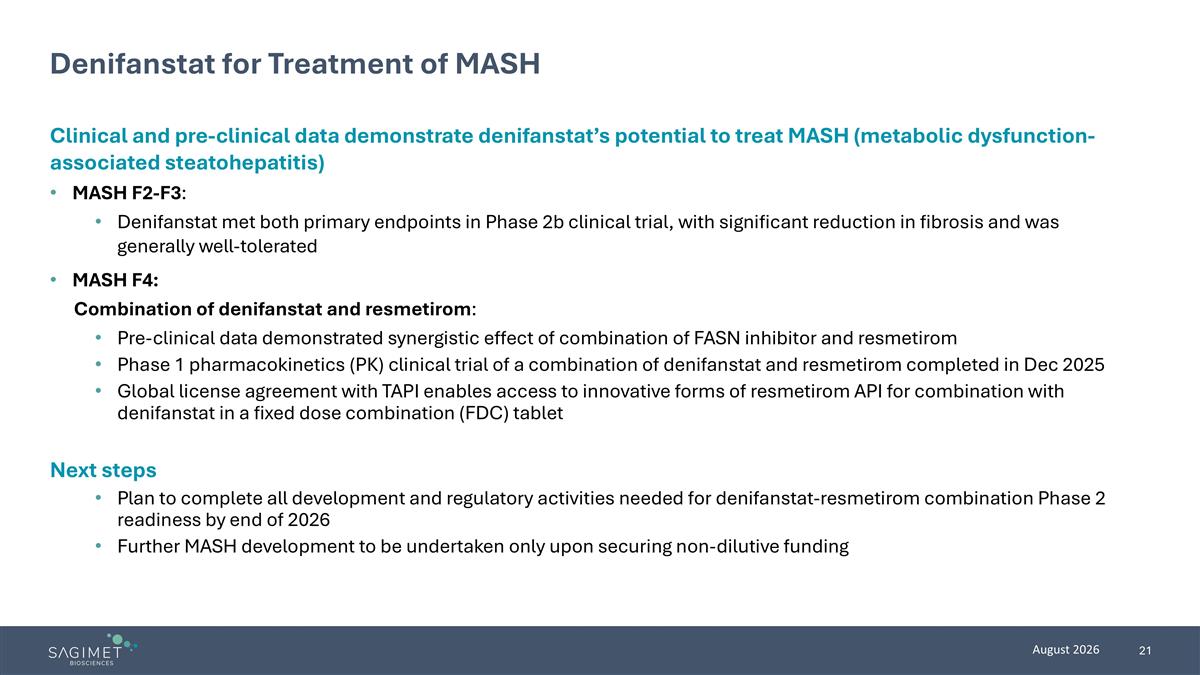
Denifanstat for Treatment of MASH Clinical and pre-clinical data demonstrate denifanstat’s potential to treat MASH (metabolic dysfunction-associated steatohepatitis) MASH F2-F3: Denifanstat met both primary endpoints in Phase 2b clinical trial, with significant reduction in fibrosis and was generally well-tolerated MASH F4: Combination of denifanstat and resmetirom: Pre-clinical data demonstrated synergistic effect of combination of FASN inhibitor and resmetirom Phase 1 pharmacokinetics (PK) clinical trial of a combination of denifanstat and resmetirom completed in Dec 2025 Global license agreement with TAPI enables access to innovative forms of resmetirom API for combination with denifanstat in a fixed dose combination (FDC) tablet Next steps Plan to complete all development and regulatory activities needed for denifanstat-resmetirom combination Phase 2 readiness by end of 2026 Further MASH development to be undertaken only upon securing non-dilutive funding
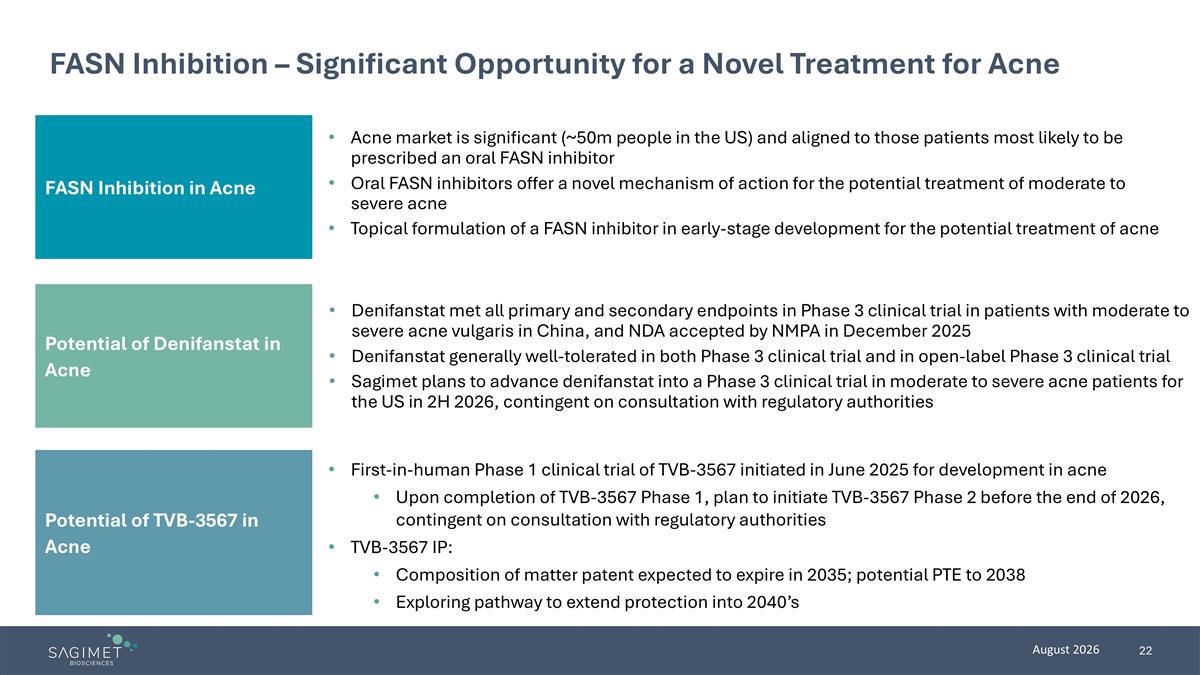
FASN Inhibition – Significant Opportunity for a Novel Treatment for Acne FASN Inhibition in Acne Potential of TVB-3567 in Acne Acne market is significant (~50m people in the US) and aligned to those patients most likely to be prescribed an oral FASN inhibitor Oral FASN inhibitors offer a novel mechanism of action for the potential treatment of moderate to severe acne Topical formulation of a FASN inhibitor in early-stage development for the potential treatment of acne First-in-human Phase 1 clinical trial of TVB-3567 initiated in June 2025 for development in acne Upon completion of TVB-3567 Phase 1, plan to initiate TVB-3567 Phase 2 before the end of 2026, contingent on consultation with regulatory authorities TVB-3567 IP: Composition of matter patent expected to expire in 2035; potential PTE to 2038 Exploring pathway to extend protection into 2040’s Potential of Denifanstat in Acne Denifanstat met all primary and secondary endpoints in Phase 3 clinical trial in patients with moderate to severe acne vulgaris in China, and NDA accepted by NMPA in December 2025 Denifanstat generally well-tolerated in both Phase 3 clinical trial and in open-label Phase 3 clinical trial Sagimet plans to advance denifanstat into a Phase 3 clinical trial in moderate to severe acne patients for the US in 2H 2026, contingent on consultation with regulatory authorities