0001737927FYfalse00-0000000UnlimitedUnlimitedUnlimitedUnlimitedUnlimitedUnlimitedhttp://fasb.org/us-gaap/2025#UsefulLifeTermOfLeaseMemberhttp://fasb.org/us-gaap/2025#GainLossOnSalesOfAssetsAndAssetImpairmentChargeshttp://fasb.org/us-gaap/2025#GainLossOnSalesOfAssetsAndAssetImpairmentChargeshttp://fasb.org/us-gaap/2025#GainLossOnSalesOfAssetsAndAssetImpairmentChargeshttp://fasb.org/us-gaap/2025#PropertyPlantAndEquipmentNethttp://fasb.org/us-gaap/2025#PropertyPlantAndEquipmentNethttp://fasb.org/us-gaap/2025#PropertyPlantAndEquipmentNethttp://fasb.org/us-gaap/2025#PropertyPlantAndEquipmentNethttp://fasb.org/us-gaap/2025#OtherLiabilitiesCurrenthttp://fasb.org/us-gaap/2025#OtherLiabilitiesCurrenthttp://fasb.org/us-gaap/2025#OtherLiabilitiesCurrenthttp://fasb.org/us-gaap/2025#OtherLiabilitiesCurrenthttp://fasb.org/us-gaap/2025#OtherLiabilitiesNoncurrenthttp://fasb.org/us-gaap/2025#OtherLiabilitiesNoncurrenthttp://fasb.org/us-gaap/2025#OtherLiabilitiesNoncurrenthttp://fasb.org/us-gaap/2025#OtherLiabilitiesNoncurrenthttp://fasb.org/us-gaap/2025#OtherLiabilitieshttp://fasb.org/srt/2025#ChiefExecutiveOfficerMember0001737927cgc:SoftwareAndDomainNamesMember2025-03-310001737927cgc:SupremeCannabisMember2022-06-222022-06-220001737927cgc:OtherNoncontrollingInterestMember2023-03-310001737927cgc:UnitOfferingMember2025-04-012026-03-310001737927cgc:SettlementOfConvertibleDebenturesMember2023-04-012024-03-310001737927cgc:MayTwoThousandAndTwentyFourConvertibleDebentureMember2026-03-310001737927cgc:SecuredOvernightFinancingRateSofrOvernightindexSwapAdjustedFloorRateMember2023-12-272023-12-270001737927srt:ScenarioPreviouslyReportedMember2025-12-310001737927us-gaap:RetainedEarningsMembersrt:ScenarioPreviouslyReportedMember2025-06-300001737927cgc:BioSteelManufacturingMember2026-03-310001737927us-gaap:CommonStockMembersrt:RestatementAdjustmentMember2024-12-310001737927cgc:BioSteelMember2023-04-012024-03-310001737927cgc:EquityClassifiedWarrantsMember2025-04-012026-03-310001737927cgc:ThisWorksDivestitureMember2025-04-012026-03-310001737927cgc:SharebasedReserveMemberus-gaap:AdditionalPaidInCapitalMember2024-06-300001737927cgc:StorzBickelMember2025-04-012026-03-310001737927us-gaap:RevolvingCreditFacilityMember2026-03-310001737927cgc:RangeThreeMember2025-04-012026-03-3100017379272024-10-012024-12-310001737927us-gaap:CommonStockMembersrt:ScenarioPreviouslyReportedMember2025-09-3000017379272025-04-012026-03-310001737927cgc:SoftwareAndDomainNamesMembersrt:MinimumMember2026-03-310001737927us-gaap:CommonStockMembersrt:ScenarioPreviouslyReportedMember2023-09-300001737927srt:ScenarioPreviouslyReportedMember2025-04-012025-06-300001737927srt:ScenarioPreviouslyReportedMember2023-09-300001737927us-gaap:RetainedEarningsMember2025-09-300001737927us-gaap:RetainedEarningsMembersrt:RestatementAdjustmentMember2024-12-310001737927cgc:CannabisNetRevenueMember2024-04-012025-03-310001737927cgc:LIBORPlusMember2026-03-310001737927cgc:SoftwareAndDomainNamesMember2026-03-310001737927us-gaap:CommonStockMembercgc:FebruaryTwoThousandTwentyFiveAtTheMarketEquityProgramMember2024-04-012025-03-310001737927cgc:CannabisNetRevenueMember2025-04-012026-03-310001737927cgc:JanuaryTwoThousandTwentyFourUnitOfferingMember2024-01-180001737927cgc:MTLCannabisCorpMember2026-03-310001737927cgc:SharebasedReserveMembersrt:RestatementAdjustmentMemberus-gaap:AdditionalPaidInCapitalMember2024-09-300001737927us-gaap:WarrantMembersrt:RestatementAdjustmentMemberus-gaap:AdditionalPaidInCapitalMember2025-09-300001737927cgc:OwnershipChangesMemberus-gaap:AdditionalPaidInCapitalMember2026-03-310001737927us-gaap:WarrantMembercgc:TerrAscendDecember2022Member2024-04-012025-03-310001737927srt:RestatementAdjustmentMember2025-12-310001737927cgc:WanaMember2026-03-310001737927us-gaap:RetainedEarningsMembersrt:ScenarioPreviouslyReportedMember2025-03-310001737927cgc:SupremeCannabisMember2020-09-082020-09-090001737927cgc:CreditFacilityMember2025-03-312025-03-310001737927cgc:ExchangeableSharesMember2026-03-3100017379272024-07-012024-09-300001737927us-gaap:NoncontrollingInterestMember2024-04-012025-03-310001737927cgc:AcreageDebtOptionPremiumMemberus-gaap:StockOptionMember2024-03-310001737927us-gaap:CommonStockMember2024-03-310001737927cgc:JuneTwoThousandTwentyFourAtTheMarketEquityProgramMember2024-06-062024-06-060001737927cgc:PromissoryNoteMember2024-04-180001737927cgc:SharebasedReserveMembersrt:RestatementAdjustmentMemberus-gaap:AdditionalPaidInCapitalMember2025-12-310001737927cgc:CanadianMedicalCannabisNetRevenueMembercgc:CanadianMedicalCannabisMember2024-04-012025-03-310001737927us-gaap:RetainedEarningsMember2023-09-300001737927cgc:ThisWorkMember2025-04-012026-03-310001737927srt:RestatementAdjustmentMember2024-10-012024-12-310001737927cgc:IntangibleAssetsMember2024-04-012025-03-310001737927cgc:BioSteelMember2025-04-012026-03-310001737927cgc:ExchangeableSharesMember2025-03-310001737927us-gaap:ForeignTaxJurisdictionOtherMember2024-04-012025-03-310001737927us-gaap:RetainedEarningsMember2024-06-300001737927cgc:TerrAscendExchangeableSharesMembercgc:AccelerationOfShareBasedCompensationExpenseRelatedToAcquisitionMilestonesMember2024-03-310001737927cgc:SharebasedReserveMembersrt:ScenarioPreviouslyReportedMemberus-gaap:AdditionalPaidInCapitalMember2024-09-300001737927cgc:CanadianMedicalCannabisNetRevenueMembercgc:CanadianAdultUseCannabisMember2023-04-012024-03-310001737927us-gaap:CommonStockMembersrt:ScenarioPreviouslyReportedMember2025-06-300001737927us-gaap:CostOfSalesMember2025-04-012026-03-310001737927country:GB2024-04-012025-03-310001737927country:DE2025-04-012026-03-310001737927cgc:SupremeDebtExchangeMembersrt:MinimumMember2024-05-022024-05-0200017379272025-04-012025-06-300001737927cgc:AcreageHoldingsIncMember2022-11-152022-11-150001737927cgc:TotalMember2025-04-012026-03-310001737927srt:MinimumMembercgc:DistributionChannelMember2026-03-310001737927srt:ScenarioPreviouslyReportedMember2023-07-012023-09-300001737927cgc:BuildingsAndGreenhousesMembersrt:MinimumMember2026-03-310001737927cgc:CanopyUsaMember2024-05-012024-12-310001737927cgc:ExchangeableSharesMember2024-04-012025-03-310001737927cgc:MTLCannabisCorpMembercgc:BrandsMember2026-03-310001737927cgc:CanadianMedicalCannabisMembercountry:CA2024-04-012025-03-310001737927us-gaap:WarrantMembersrt:RestatementAdjustmentMemberus-gaap:AdditionalPaidInCapitalMember2023-09-300001737927us-gaap:RetainedEarningsMember2026-03-310001737927us-gaap:WarrantMembercgc:TerrAscendDecember2022Member2024-03-310001737927us-gaap:EmployeeStockOptionMember2024-04-012025-03-310001737927cgc:EquityClassifiedWarrantsMember2026-03-310001737927cgc:MTLArrangementAgreementMemberus-gaap:StockOptionMember2026-03-162026-03-160001737927cgc:OperatingLicensesMembersrt:MinimumMember2026-03-310001737927cgc:AcreageAcquisitionMember2024-12-090001737927cgc:CanopyUsaMember2025-12-310001737927cgc:MTLCannabisCorpMembercgc:DistributionChannelMember2026-03-310001737927cgc:SharebasedReserveMembersrt:ScenarioPreviouslyReportedMemberus-gaap:AdditionalPaidInCapitalMember2025-03-310001737927cgc:MTLCannabisCorpMemberus-gaap:WarrantMember2026-03-162026-03-160001737927us-gaap:ComputerEquipmentMember2026-03-310001737927cgc:CanopyUSALPsMembercgc:TerrAscendCommonSharesMember2024-06-040001737927us-gaap:SellingGeneralAndAdministrativeExpensesMember2025-04-012026-03-310001737927us-gaap:WarrantMembersrt:RestatementAdjustmentMemberus-gaap:AdditionalPaidInCapitalMember2024-12-310001737927srt:RestatementAdjustmentMember2024-09-300001737927cgc:BrandsMember2025-03-310001737927us-gaap:CostOfSalesMember2023-04-012024-03-310001737927us-gaap:FairValueInputsLevel3Memberus-gaap:FairValueMeasurementsRecurringMember2026-03-310001737927cgc:CbiExchangeMember2024-04-182024-04-180001737927cgc:FourPointTwoFivePercentageUnsecuredSeniorNotesMember2024-03-310001737927us-gaap:WarrantMemberus-gaap:AdditionalPaidInCapitalMember2025-06-300001737927cgc:AmortizableIntangiblesInProcessMember2025-03-310001737927cgc:AugustTwoThousandTwentyFiveEquityDistributionAgreementMember2025-04-012026-03-310001737927us-gaap:RetainedEarningsMembersrt:ScenarioPreviouslyReportedMember2024-12-310001737927cgc:AcreageHoldingsIncMember2024-06-030001737927us-gaap:AccumulatedOtherComprehensiveIncomeMember2024-04-012025-03-310001737927srt:MaximumMember2023-04-012024-03-310001737927cgc:AcreageTaxReceivableAgreementMembercgc:OtherMember2024-04-012025-03-310001737927srt:RestatementAdjustmentMember2025-04-012025-09-300001737927cgc:GreenstarsMember2024-04-180001737927cgc:OtherIssuancesAndShareIssueCostsMember2023-04-012024-03-310001737927cgc:TotalMember2023-04-012024-03-310001737927us-gaap:RevenueFromContractWithCustomerMemberus-gaap:CustomerConcentrationRiskMember2023-04-012024-03-310001737927srt:ScenarioPreviouslyReportedMember2024-12-310001737927cgc:EquityClassifiedWarrantsMember2023-04-012024-03-310001737927us-gaap:LeaseholdImprovementsMember2026-03-310001737927cgc:LoanReceivableMembercgc:ElevateLoanReceivableMember2024-04-012025-03-310001737927cgc:AugustTwoThousandTwentyFiveAtTheMarketEquityProgramMembersrt:MaximumMember2025-08-292025-08-2900017379272024-12-310001737927cgc:BioSteelMember2023-03-310001737927cgc:TerrAscendWarrantsMembercgc:CanopyUSALPsMember2024-06-040001737927cgc:LiabilityClassifiedWarrantsMember2025-03-310001737927cgc:AcreageAndWanaDebtMembercgc:OtherLenderMember2026-03-310001737927cgc:AcquiredBrandsMember2025-03-310001737927cgc:CreditFacilityMember2021-03-180001737927cgc:JulyTwoThousandAndTwentyThreePayDownMembercgc:CreditFacilityMember2023-07-130001737927us-gaap:PropertyPlantAndEquipmentMember2024-04-012025-03-310001737927country:AU2024-04-012025-03-310001737927srt:MinimumMemberus-gaap:ComputerEquipmentMember2026-03-310001737927country:US2023-04-012024-03-310001737927srt:RestatementAdjustmentMember2024-04-012024-12-310001737927cgc:ProductionAndWarehouseEquipmentMembercgc:RightOfUseAssetsMember2026-03-310001737927cgc:SharebasedReserveMembersrt:RestatementAdjustmentMemberus-gaap:AdditionalPaidInCapitalMember2023-09-3000017379272022-10-242022-10-240001737927us-gaap:WarrantMembersrt:ScenarioPreviouslyReportedMemberus-gaap:AdditionalPaidInCapitalMember2024-09-300001737927cgc:SharebasedReserveMemberus-gaap:AdditionalPaidInCapitalMember2025-04-012026-03-3100017379272023-10-012023-12-310001737927us-gaap:CommonStockMembersrt:ScenarioPreviouslyReportedMember2025-12-310001737927cgc:SharebasedReserveMemberus-gaap:AdditionalPaidInCapitalMember2024-03-3100017379272025-03-3100017379272025-07-012025-09-300001737927cgc:OtherGeographicalAreaMember2023-04-012024-03-310001737927us-gaap:RetainedEarningsMember2024-12-310001737927cgc:PrimeRateFloorMember2023-12-272023-12-270001737927cgc:RangeTwoMember2026-03-3100017379272024-04-012024-06-300001737927cgc:StorzAndBickelMember2024-04-012025-03-310001737927us-gaap:WarrantMembersrt:ScenarioPreviouslyReportedMemberus-gaap:AdditionalPaidInCapitalMember2024-12-310001737927us-gaap:RetainedEarningsMembersrt:RestatementAdjustmentMember2025-12-310001737927cgc:CanopyUSALPsMemberus-gaap:EquityMethodInvestmentsMember2024-04-012025-03-310001737927us-gaap:WarrantMemberus-gaap:AdditionalPaidInCapitalMember2026-03-310001737927us-gaap:ComputerEquipmentMember2025-03-310001737927cgc:TerrAscendMemberus-gaap:StockOptionMember2024-03-310001737927us-gaap:RetainedEarningsMembersrt:ScenarioPreviouslyReportedMember2023-12-310001737927cgc:CompensationOptionsMembercgc:MTLArrangementAgreementMember2026-03-162026-03-160001737927cgc:SharebasedReserveMemberus-gaap:AdditionalPaidInCapitalMember2024-12-310001737927cgc:SharebasedReserveMemberus-gaap:AdditionalPaidInCapitalMember2025-12-310001737927cgc:LoanAgreementMemberus-gaap:SecuredDebtMember2026-01-080001737927us-gaap:ForeignTaxJurisdictionOtherMember2023-04-012024-03-310001737927cgc:CanadianAdultUseCannabisMembercountry:CA2025-04-012026-03-310001737927us-gaap:AccountsPayableMember2025-03-310001737927cgc:WanaMember2024-04-300001737927us-gaap:CommonStockMembersrt:ScenarioPreviouslyReportedMember2024-06-300001737927us-gaap:OperatingExpenseMembercgc:EmployeeRelatedAndOtherRestructuringCostsMember2023-04-012024-03-310001737927cgc:ThisWorksMember2023-04-012024-03-310001737927cgc:OwnershipChangesMemberus-gaap:AdditionalPaidInCapitalMember2024-03-310001737927srt:RestatementAdjustmentMember2025-03-310001737927cgc:SharebasedReserveMembersrt:ScenarioPreviouslyReportedMemberus-gaap:AdditionalPaidInCapitalMember2024-06-300001737927cgc:OtherGeographicalAreaMember2025-03-310001737927cgc:LoanAgreementMembercgc:SecuredOvernightFinancingRateSofrOvernightindexSwapAdjustedFloorRateMember2026-01-082026-01-080001737927srt:RestatementAdjustmentMember2025-09-3000017379272026-01-012026-03-310001737927us-gaap:IntellectualPropertyMember2025-03-310001737927cgc:SharebasedReserveMembersrt:RestatementAdjustmentMemberus-gaap:AdditionalPaidInCapitalMember2025-03-310001737927us-gaap:RetainedEarningsMember2023-04-012024-03-310001737927us-gaap:FairValueMeasurementsRecurringMember2026-03-310001737927srt:ScenarioPreviouslyReportedMember2024-09-300001737927cgc:EquityClassifiedWarrantsMember2025-03-310001737927us-gaap:CommonStockMember2025-09-300001737927us-gaap:AllOtherSegmentsMember2023-04-012024-03-310001737927cgc:OtherRevenueMember2023-04-012024-03-3100017379272025-12-310001737927srt:MaximumMembercgc:OmnibusEquityIncentivePlanMember2023-09-252023-09-250001737927country:GB2023-04-012024-03-310001737927srt:ScenarioPreviouslyReportedMember2025-07-012025-09-300001737927us-gaap:CommonStockMember2023-09-300001737927country:CA2023-04-012024-03-310001737927cgc:SettlementOfDebenturesMember2023-04-012024-03-310001737927us-gaap:FairValueInputsLevel1Memberus-gaap:FairValueMeasurementsRecurringMember2025-03-310001737927country:NL2024-04-012025-03-310001737927cgc:SupremeDebtExchangeMember2024-05-020001737927cgc:CanopyUsaMember2024-12-310001737927cgc:SharebasedReserveMembersrt:ScenarioPreviouslyReportedMemberus-gaap:AdditionalPaidInCapitalMember2024-03-310001737927cgc:OperatingLicensesMember2026-03-3100017379272025-07-290001737927us-gaap:CapitalLossCarryforwardMembercgc:IndefiniteMember2026-03-310001737927us-gaap:CommonStockMembersrt:RestatementAdjustmentMember2023-09-300001737927country:CA2024-04-012025-03-310001737927srt:RestatementAdjustmentMember2023-12-310001737927cgc:ExchangeableSharesMember2024-03-310001737927srt:ScenarioPreviouslyReportedMember2023-12-310001737927cgc:AcreageAndWanaDebtMember2026-03-310001737927cgc:ExpiringBetween15And20YearsMember2026-03-310001737927us-gaap:RetainedEarningsMembersrt:RestatementAdjustmentMember2023-09-300001737927us-gaap:WarrantMembersrt:ScenarioPreviouslyReportedMemberus-gaap:AdditionalPaidInCapitalMember2023-12-310001737927cgc:DistributionChannelMember2026-03-310001737927cgc:LiabilityClassifiedWarrantsMember2025-04-012026-03-310001737927srt:ScenarioPreviouslyReportedMember2024-06-300001737927cgc:InternationalMarketsCannabisMember2023-04-012024-03-310001737927cgc:OtherGeographicalAreaMember2026-03-310001737927cgc:January2026ConvertibleDebentureMembercgc:SupremeDebtExchangeMember2026-01-070001737927us-gaap:AccumulatedTranslationAdjustmentMember2024-04-012025-03-310001737927us-gaap:CommonStockMembersrt:ScenarioPreviouslyReportedMember2024-09-300001737927cgc:OtherNoncontrollingInterestMember2023-04-012024-03-310001737927us-gaap:RetainedEarningsMembersrt:ScenarioPreviouslyReportedMember2024-09-300001737927us-gaap:WarrantMemberus-gaap:AdditionalPaidInCapitalMember2024-12-310001737927cgc:AcreageHoldingsIncMember2024-12-090001737927us-gaap:SecuredDebtMembercgc:LoanAgreementMembersrt:MaximumMember2026-01-080001737927cgc:MTLArrangementAgreementMember2026-03-162026-03-160001737927cgc:OtherRevolvingDebtFacilityLoanAndFinancingsMember2025-03-310001737927cgc:SharebasedReserveMemberus-gaap:AdditionalPaidInCapitalMember2025-09-300001737927us-gaap:AccumulatedTranslationAdjustmentMember2024-03-310001737927us-gaap:SecuredOvernightFinancingRateSofrOvernightIndexSwapRateMember2023-12-272023-12-270001737927cgc:StorzAndBickelMember2025-04-012026-03-310001737927cgc:SecondQuarterTwoThousandAndTwentyFourPaydownsMembercgc:CreditFacilityMember2023-07-012023-09-300001737927cgc:FebruaryTwoThousandTwentyFiveAtTheMarketEquityProgramMember2025-02-282026-03-310001737927cgc:AcreageHoldingsIncMember2022-11-150001737927us-gaap:FairValueInputsLevel3Membercgc:CanopyUSALLCEquityMethodInvestmentProbabilityAndTimingOfUSLegalizationMember2025-04-012026-03-310001737927srt:RestatementAdjustmentMember2024-12-310001737927us-gaap:WarrantMembersrt:RestatementAdjustmentMemberus-gaap:AdditionalPaidInCapitalMember2025-12-310001737927us-gaap:FairValueInputsLevel3Member2025-04-012026-03-310001737927srt:MaximumMember2025-04-012026-03-310001737927cgc:OperatingLicensesMembersrt:MaximumMember2026-03-3100017379272023-09-300001737927us-gaap:WarrantMemberus-gaap:AdditionalPaidInCapitalMember2023-09-300001737927us-gaap:OfficeEquipmentMembersrt:MaximumMember2026-03-310001737927cgc:LoanReceivableMembercgc:AcreageDebtMember2024-04-012025-03-310001737927cgc:DistributionChannelMember2025-03-310001737927srt:RestatementAdjustmentMember2024-03-3100017379272023-04-012023-12-310001737927srt:MaximumMember2020-08-102020-09-090001737927cgc:ThisWorksDivestitureMember2023-12-182023-12-180001737927stpr:CA-ON2025-04-012026-03-310001737927us-gaap:CommonStockMember2024-09-300001737927cgc:CreditFacilityMember2021-03-182021-03-180001737927cgc:CanopyUSALPsMemberus-gaap:EquityMethodInvestmentsMember2025-04-012026-03-310001737927cgc:SecondQuarterTwoThousandAndTwentyFourPaydownsMembercgc:CreditFacilityMember2023-09-300001737927cgc:ExpiringBetweenTenAndFifteenYearsMember2026-03-310001737927srt:ScenarioPreviouslyReportedMember2023-04-012024-03-310001737927cgc:FourthQuarterTwoThousandAndTwentyFourPaydownMembercgc:CreditFacilityMember2024-03-310001737927srt:MinimumMember2024-04-012025-03-310001737927us-gaap:CommonStockMembersrt:ScenarioPreviouslyReportedMember2024-03-310001737927cgc:OtherAccountsReceivableMember2025-03-310001737927cgc:CanopyUsaMember2024-04-302024-04-300001737927us-gaap:LandMember2025-03-3100017379272024-04-012025-03-310001737927us-gaap:RetainedEarningsMember2023-03-3100017379272024-03-310001737927cgc:OtherAccountsReceivableMember2026-03-310001737927us-gaap:CommonStockMembersrt:RestatementAdjustmentMember2024-03-310001737927us-gaap:SellingGeneralAndAdministrativeExpensesMember2023-04-012024-03-310001737927us-gaap:OperatingExpenseMemberus-gaap:PropertyPlantAndEquipmentMember2023-04-012024-03-310001737927us-gaap:CommonStockMember2025-04-012026-03-310001737927cgc:EquityClassifiedWarrantsMember2024-03-310001737927cgc:CreditFacilityMember2024-08-080001737927cgc:BioSteelMember2024-04-012025-03-310001737927cgc:ExpiringWithinFiveYearsMember2026-03-310001737927cgc:LoanAgreementMember2026-03-310001737927cgc:BioSteelUSAndBioSteelManufacturingMember2025-04-012026-03-310001737927us-gaap:AccumulatedTranslationAdjustmentMember2025-03-310001737927us-gaap:IntellectualPropertyMember2026-03-310001737927cgc:BioSteelMember2023-09-140001737927us-gaap:RetainedEarningsMembersrt:RestatementAdjustmentMember2024-03-310001737927cgc:TerrAscendMemberus-gaap:StockOptionMember2024-04-012025-03-310001737927cgc:BioSteelCanadaMember2025-04-012026-03-310001737927cgc:MTLCannabisCorpMemberus-gaap:StockOptionMember2026-03-162026-03-160001737927cgc:AcreageTaxReceivableAgreementMembercgc:OtherMember2024-03-310001737927us-gaap:RetainedEarningsMembersrt:ScenarioPreviouslyReportedMember2025-12-310001737927cgc:ExchangeableSharesMember2023-04-012024-03-310001737927cgc:ThisWorksDivestitureMember2023-12-172023-12-170001737927us-gaap:WarrantMemberus-gaap:AdditionalPaidInCapitalMember2025-12-310001737927cgc:TrustSPAMember2026-03-310001737927cgc:ElevateLoanReceivableMember2026-03-310001737927us-gaap:CommonStockMembersrt:ScenarioPreviouslyReportedMember2023-12-310001737927us-gaap:AccumulatedGainLossFinancialLiabilityFairValueOptionAttributableToParentMember2024-03-310001737927country:NL2023-04-012024-03-310001737927us-gaap:RestrictedStockUnitsRSUMember2023-03-310001737927srt:MinimumMember2025-04-012026-03-310001737927srt:ScenarioPreviouslyReportedMember2025-10-012025-12-3100017379272025-10-012025-12-310001737927srt:RestatementAdjustmentMember2023-04-012023-12-310001737927cgc:MTLArrangementAgreementMemberus-gaap:WarrantMember2026-03-162026-03-160001737927cgc:IntangibleAssetsMemberus-gaap:OperatingExpenseMember2023-04-012024-03-310001737927us-gaap:AllOtherSegmentsMember2025-04-012026-03-310001737927cgc:CanopyUsaMembercgc:JettyMember2024-06-040001737927us-gaap:CommonStockMembersrt:RestatementAdjustmentMember2023-12-310001737927srt:ScenarioPreviouslyReportedMember2025-09-300001737927cgc:LoanReceivableMembercgc:CanopyUSALoansReceivableMember2026-03-310001737927us-gaap:DepositsMember2025-03-310001737927cgc:BuildingsAndGreenhousesMember2026-03-310001737927us-gaap:CommonStockMember2025-03-310001737927cgc:EarlyPrepaymentMember2025-09-120001737927cgc:ExpiringBetweenFiveAndTenYearsMember2026-03-310001737927us-gaap:NoncontrollingInterestMember2024-03-310001737927cgc:CanadaCannabisMembercgc:AncillaryCannabisRevenuesMember2023-04-012024-03-310001737927us-gaap:EmployeeStockOptionMember2025-04-012026-03-310001737927country:DE2026-03-310001737927us-gaap:CommonStockMember2025-06-300001737927cgc:TrustSPAMembersrt:MaximumMember2023-05-192023-05-190001737927cgc:CanadianAdultUseCannabisMembercountry:CA2024-04-012025-03-310001737927us-gaap:OfficeEquipmentMember2025-03-310001737927cgc:LiabilityClassifiedWarrantsMember2023-03-310001737927cgc:AcreageHoldingsIncMember2026-03-310001737927cgc:ThisWorksDivestitureMembersrt:MaximumMember2023-12-182023-12-180001737927us-gaap:WarrantMembersrt:ScenarioPreviouslyReportedMemberus-gaap:AdditionalPaidInCapitalMember2025-12-310001737927cgc:AncillaryCannabisRevenuesMembercgc:CanadianAdultUseCannabisMembercountry:CA2023-04-012024-03-310001737927us-gaap:CommonStockMembersrt:RestatementAdjustmentMember2024-09-300001737927cgc:CanopyUSALPsMemberus-gaap:EquityMethodInvestmentsMember2026-03-310001737927cgc:LiabilityClassifiedWarrantsMember2023-04-012024-03-310001737927cgc:StorzBickelReportingUnitMember2026-03-310001737927us-gaap:RetainedEarningsMembersrt:RestatementAdjustmentMember2025-03-310001737927cgc:CanopyRiversMembercgc:WanaMember2024-06-300001737927cgc:ThisWorksDivestitureMember2023-12-180001737927cgc:JuneTwoThousandTwentyFourAtTheMarketEquityProgramMember2024-04-012025-03-310001737927srt:RestatementAdjustmentMember2023-04-012023-09-300001737927us-gaap:FairValueInputsLevel3Membercgc:CanopyUSALLCEquityMethodInvestmentVolatilityOfWanaAndJettyEquityMember2025-04-012026-03-310001737927cgc:AmortizableIntangiblesInProcessMember2026-03-310001737927srt:RestatementAdjustmentMember2024-07-012024-09-300001737927us-gaap:AccumulatedGainLossFinancialLiabilityFairValueOptionAttributableToParentMember2024-04-012025-03-3100017379272025-04-012025-09-300001737927cgc:LoanReceivableMembercgc:CanopyUSALoansReceivableMember2025-04-012026-03-310001737927cgc:ThirdQuarterTwoThousandAndTwentyFourPaydownsMembercgc:CreditFacilityMember2023-10-012023-12-310001737927cgc:OtherIssuancesAndShareIssueCostsMember2024-04-012025-03-310001737927cgc:OperatingLicensesMember2025-03-310001737927cgc:IntangibleAssetsMember2025-04-012026-03-310001737927cgc:TerrAscendWarrantsMembercgc:CanopyUSALPsMember2024-06-042024-06-040001737927cgc:SharebasedReserveMembersrt:ScenarioPreviouslyReportedMemberus-gaap:AdditionalPaidInCapitalMember2025-12-3100017379272023-03-310001737927cgc:SecondQuarterTwoThousandAndTwentyFivePaydownsMembercgc:CreditFacilityMember2024-07-012024-09-300001737927us-gaap:CommonStockMembersrt:RestatementAdjustmentMember2025-12-310001737927srt:RestatementAdjustmentMember2024-06-300001737927cgc:LoanAgreementMember2026-01-082026-01-080001737927us-gaap:CommonStockMember2023-04-012024-03-310001737927cgc:LiabilityClassifiedWarrantsMember2026-03-310001737927srt:ScenarioPreviouslyReportedMember2024-04-012025-03-310001737927cgc:CanopyUSALPsMembercgc:TerrAscendCommonSharesMember2026-03-310001737927us-gaap:WarrantMemberus-gaap:AdditionalPaidInCapitalMember2024-06-300001737927us-gaap:NoncontrollingInterestMember2023-04-012024-03-310001737927cgc:ThisWorkMember2024-04-012025-03-310001737927cgc:ProductionAndWarehouseEquipmentMembercgc:RightOfUseAssetsMember2025-03-310001737927srt:ScenarioPreviouslyReportedMember2023-04-012023-12-310001737927cgc:FourthQuarterTwoThousandAndTwentyFourPaydownMembercgc:CreditFacilityMember2024-01-012024-03-310001737927us-gaap:WarrantMembersrt:ScenarioPreviouslyReportedMemberus-gaap:AdditionalPaidInCapitalMember2025-06-300001737927us-gaap:AccumulatedOtherComprehensiveIncomeMember2025-04-012026-03-310001737927cgc:CannabisMember2024-04-012025-03-310001737927srt:ScenarioPreviouslyReportedMember2024-07-012024-09-300001737927us-gaap:PropertyPlantAndEquipmentMember2023-04-012024-03-310001737927cgc:IndefiniteMember2026-03-310001737927cgc:CanadianMedicalCannabisMembercgc:AncillaryCannabisRevenuesMembercountry:CA2023-04-012024-03-310001737927us-gaap:EmployeeStockOptionMember2023-04-012024-03-310001737927us-gaap:RestrictedStockUnitsRSUMember2025-04-012026-03-310001737927us-gaap:WarrantMemberus-gaap:AdditionalPaidInCapitalMember2024-04-012025-03-310001737927us-gaap:FairValueInputsLevel3Membercgc:CanopyUsaEquityMethodInvestmentExpectedFutureCashFlowsMember2025-04-012026-03-310001737927us-gaap:RetainedEarningsMembersrt:ScenarioPreviouslyReportedMember2023-09-300001737927cgc:JanuaryTwoThousandTwentyFourUnitOfferingMember2024-01-182024-01-180001737927cgc:MTLCannabisCorpMember2025-04-012026-03-310001737927cgc:January2026InvestorWarrantsMember2026-01-072026-01-070001737927country:CA2026-03-310001737927us-gaap:RestrictedStockUnitsRSUMember2026-03-310001737927us-gaap:WarrantMembersrt:ScenarioPreviouslyReportedMemberus-gaap:AdditionalPaidInCapitalMember2024-06-3000017379272023-04-012024-03-310001737927us-gaap:RetainedEarningsMembersrt:RestatementAdjustmentMember2025-06-300001737927cgc:CbiExchangeAgreementMember2024-04-182024-04-180001737927cgc:CanopyUsaMember2025-04-012026-03-310001737927us-gaap:AccumulatedOtherComprehensiveIncomeMember2023-03-310001737927cgc:WanaMemberus-gaap:StockOptionMember2024-04-012025-03-310001737927cgc:ThirdPaydownAgreementMember2026-03-312026-03-310001737927us-gaap:WarrantMemberus-gaap:AdditionalPaidInCapitalMember2025-09-300001737927cgc:FebruaryTwoThousandTwentyFiveAtTheMarketEquityProgramMember2024-04-012025-03-310001737927cgc:CanopyUsaMember2024-04-300001737927cgc:StorzBickelReportingUnitMember2025-03-310001737927us-gaap:PropertyPlantAndEquipmentMember2025-04-012026-03-310001737927cgc:SharebasedReserveMembersrt:RestatementAdjustmentMemberus-gaap:AdditionalPaidInCapitalMember2024-06-300001737927cgc:EquityClassifiedWarrantsMember2023-03-310001737927cgc:MTLArrangementAgreementMember2026-03-1600017379272025-06-300001737927cgc:LiabilityClassifiedWarrantsMember2024-04-012025-03-310001737927country:DE2025-03-310001737927cgc:January2026ConvertibleDebentureMembercgc:SupremeDebtExchangeMember2026-01-072026-01-070001737927us-gaap:AssetUnderConstructionMember2026-03-310001737927us-gaap:RetainedEarningsMember2023-12-310001737927cgc:StorzBickelMember2024-04-012025-03-310001737927cgc:SharebasedReserveMemberus-gaap:AdditionalPaidInCapitalMember2023-03-310001737927country:AU2025-04-012026-03-310001737927cgc:RangeThreeMember2026-03-3100017379272025-01-012025-03-310001737927cgc:MTLCannabisCorpMembercgc:MTLArrangementAgreementMember2026-03-160001737927us-gaap:SellingGeneralAndAdministrativeExpensesMember2024-04-012025-03-310001737927country:DE2024-04-012025-03-3100017379272026-06-110001737927cgc:ThisWorkMember2023-04-012024-03-310001737927cgc:LoanAgreementMemberus-gaap:SecuredDebtMember2026-01-082026-01-080001737927srt:RestatementAdjustmentMember2025-04-012025-06-300001737927cgc:MTLCannabisCorpMembercgc:MTLArrangementAgreementMember2026-03-162026-03-160001737927us-gaap:WarrantMembersrt:RestatementAdjustmentMemberus-gaap:AdditionalPaidInCapitalMember2024-03-310001737927us-gaap:AccumulatedGainLossFinancialLiabilityFairValueOptionAttributableToParentMember2023-04-012024-03-310001737927srt:ScenarioPreviouslyReportedMember2024-10-012024-12-310001737927srt:ScenarioPreviouslyReportedMember2024-04-012024-06-300001737927cgc:CanopyUsaMemberus-gaap:CommonStockMembercgc:AcreageAcquisitionMember2024-12-092024-12-090001737927cgc:ProductionAndWarehouseEquipmentMembersrt:MaximumMember2026-03-310001737927cgc:ThisWorksMember2024-04-012025-03-310001737927cgc:ReorganizationAmendmentsMembersrt:MinimumMemberus-gaap:CommonClassBMember2023-05-192023-05-190001737927us-gaap:CommonStockMembercgc:AcreageAcquisitionMember2025-04-012026-03-310001737927cgc:InternationalMarketsCannabisMember2024-04-012025-03-310001737927cgc:January2026ConvertibleDebentureMembercgc:SupremeDebtExchangeMembersrt:MinimumMember2026-01-072026-01-070001737927cgc:BuildingsAndGreenhousesMembersrt:MaximumMember2026-03-310001737927us-gaap:AccumulatedTranslationAdjustmentMember2023-04-012024-03-310001737927us-gaap:CommonStockMembersrt:ScenarioPreviouslyReportedMember2025-03-310001737927us-gaap:RestrictedStockUnitsRSUMember2024-03-310001737927us-gaap:FairValueInputsLevel3Membercgc:ElevateLoanReceivableMember2025-04-012026-03-310001737927us-gaap:CommonStockMember2024-12-3100017379272026-05-152025-04-012026-03-310001737927us-gaap:RevolvingCreditFacilityMember2025-03-310001737927cgc:ThirdQuarterTwoThousandAndTwentyFivePaydownsMembercgc:CreditFacilityMember2024-10-012024-12-310001737927us-gaap:CommonStockMembersrt:ScenarioPreviouslyReportedMember2024-12-310001737927cgc:JuneTwoThousandTwentyFourAtTheMarketEquityProgramMemberus-gaap:CommonStockMember2024-04-012025-03-3100017379272025-04-012025-12-310001737927cgc:SharebasedReserveMembersrt:ScenarioPreviouslyReportedMemberus-gaap:AdditionalPaidInCapitalMember2023-12-310001737927us-gaap:AccumulatedTranslationAdjustmentMember2025-04-012026-03-310001737927cgc:January2026ConvertibleDebentureMembercgc:ExchangeTransactionMember2026-01-072026-01-070001737927us-gaap:RetainedEarningsMembersrt:RestatementAdjustmentMember2024-09-300001737927cgc:CanadianMedicalCannabisNetRevenueMembercgc:CanadianAdultUseCannabisMember2025-04-012026-03-310001737927country:GB2025-04-012026-03-310001737927srt:RestatementAdjustmentMember2024-04-012025-03-310001737927country:US2025-04-012026-03-310001737927srt:MinimumMembercgc:BrandsMember2026-03-310001737927us-gaap:AccumulatedOtherComprehensiveIncomeMember2026-03-310001737927us-gaap:WarrantMembersrt:RestatementAdjustmentMemberus-gaap:AdditionalPaidInCapitalMember2025-03-310001737927cgc:AcreageHoldingsIncMember2024-12-092024-12-090001737927cgc:SharebasedReserveMemberus-gaap:AdditionalPaidInCapitalMember2023-12-310001737927cgc:CreditFacilityMember2025-03-310001737927cgc:CanopyUSALPsMemberus-gaap:EquityMethodInvestmentsMember2025-03-310001737927cgc:SharebasedReserveMembersrt:RestatementAdjustmentMemberus-gaap:AdditionalPaidInCapitalMember2025-09-300001737927us-gaap:WarrantMemberus-gaap:AdditionalPaidInCapitalMember2024-03-310001737927us-gaap:WarrantMemberus-gaap:AdditionalPaidInCapitalMember2023-03-310001737927us-gaap:AccountsPayableMember2026-03-310001737927cgc:LoanReceivableMembercgc:CanopyUSALoansReceivableMember2025-03-310001737927cgc:PaydownAgreementMember2021-03-180001737927cgc:AugustTwoThousandTwentyFiveAtTheMarketEquityProgramMember2025-04-012026-03-310001737927srt:ScenarioPreviouslyReportedMember2025-04-012025-09-300001737927us-gaap:CommonStockMember2023-03-310001737927cgc:OtherRevolvingDebtFacilityLoanAndFinancingsMember2026-03-310001737927srt:ScenarioPreviouslyReportedMember2023-10-012023-12-310001737927us-gaap:LeaseholdImprovementsMember2025-03-310001737927srt:MaximumMemberus-gaap:ComputerEquipmentMember2026-03-310001737927us-gaap:RetainedEarningsMember2024-09-300001737927cgc:CanopyUsaMember2025-01-012025-12-310001737927us-gaap:WarrantMembersrt:RestatementAdjustmentMemberus-gaap:AdditionalPaidInCapitalMember2024-06-300001737927us-gaap:CommonStockMember2024-06-300001737927cgc:CanadianAdultUseCannabisMembercountry:CA2023-04-012024-03-310001737927country:DE2023-04-012024-03-310001737927cgc:CannabisHempAndOtherConsumerProductsMember2025-04-012026-03-310001737927cgc:StorzBickelReportingUnitMember2025-04-012026-03-3100017379272023-12-310001737927us-gaap:FairValueMeasurementsRecurringMember2025-03-310001737927cgc:CompensationOptionsMembercgc:MTLArrangementAgreementMember2026-03-160001737927us-gaap:LandMember2026-03-310001737927cgc:BioSteelUSMember2026-03-310001737927us-gaap:RevenueFromContractWithCustomerMemberus-gaap:CustomerConcentrationRiskMember2024-04-012025-03-310001737927cgc:BrandsMember2026-03-310001737927cgc:RangeOneMember2026-03-310001737927cgc:January2026ConvertibleDebentureMember2026-01-070001737927us-gaap:CommonStockMembersrt:RestatementAdjustmentMember2025-03-310001737927srt:RestatementAdjustmentMember2023-09-300001737927cgc:OmnibusEquityIncentivePlanMember2025-03-310001737927srt:RestatementAdjustmentMember2025-04-012025-12-310001737927cgc:ContractualAndOtherSettlementObligationsMemberus-gaap:OperatingExpenseMember2023-04-012024-03-310001737927cgc:OwnershipChangesMemberus-gaap:AdditionalPaidInCapitalMember2025-03-310001737927country:CA2025-03-310001737927cgc:MTLCannabisCorpMembercgc:CompensationOptionsMember2026-03-162026-03-160001737927us-gaap:AccumulatedOtherComprehensiveIncomeMember2023-04-012024-03-310001737927cgc:SharebasedReserveMembersrt:ScenarioPreviouslyReportedMemberus-gaap:AdditionalPaidInCapitalMember2024-12-310001737927cgc:OtherNoncontrollingInterestMember2024-03-310001737927cgc:TotalMember2024-04-012025-03-310001737927cgc:AcreageHoldingsIncMemberus-gaap:CommonStockMember2024-12-092024-12-090001737927cgc:OmnibusEquityIncentivePlanMember2026-03-310001737927us-gaap:NoncontrollingInterestMember2023-03-310001737927us-gaap:CommonStockMembercgc:AcreageAcquisitionMember2024-12-090001737927us-gaap:RetainedEarningsMembersrt:ScenarioPreviouslyReportedMember2024-06-300001737927us-gaap:AssetUnderConstructionMember2025-03-310001737927us-gaap:FairValueInputsLevel1Memberus-gaap:FairValueMeasurementsRecurringMember2026-03-310001737927cgc:CanadianMedicalCannabisMembercountry:CA2023-04-012024-03-310001737927us-gaap:WarrantMembersrt:ScenarioPreviouslyReportedMemberus-gaap:AdditionalPaidInCapitalMember2025-09-300001737927us-gaap:AccumulatedGainLossFinancialLiabilityFairValueOptionAttributableToParentMember2023-03-310001737927us-gaap:CostOfSalesMember2024-04-012025-03-310001737927srt:RestatementAdjustmentMember2023-10-012023-12-310001737927srt:ScenarioPreviouslyReportedMember2025-03-310001737927us-gaap:WarrantMembersrt:ScenarioPreviouslyReportedMemberus-gaap:AdditionalPaidInCapitalMember2025-03-310001737927cgc:IntangibleAssetsMember2023-04-012024-03-310001737927cgc:BioSteelMember2025-03-310001737927us-gaap:RestrictedStockUnitsRSUMember2025-03-310001737927cgc:EntityOtherMembercgc:VariousMember2025-04-012026-03-310001737927us-gaap:OverAllotmentOptionMember2023-11-020001737927cgc:TrustSPAMembersrt:MaximumMember2023-05-190001737927us-gaap:FairValueInputsLevel3Membercgc:AcreageAndWanaDebtMember2025-04-012026-03-310001737927cgc:LoanAgreementMemberus-gaap:SecuredOvernightFinancingRateSofrOvernightIndexSwapRateMember2026-01-082026-01-080001737927us-gaap:RetainedEarningsMember2025-03-310001737927country:NL2025-04-012026-03-310001737927cgc:LoanAgreementMember2025-03-310001737927us-gaap:AdditionalPaidInCapitalMember2024-03-310001737927cgc:UnitOfferingMember2023-09-180001737927cgc:SharebasedReserveMembersrt:RestatementAdjustmentMemberus-gaap:AdditionalPaidInCapitalMember2025-06-300001737927cgc:LiabilityClassifiedWarrantsMember2024-03-310001737927cgc:EarlyPrepaymentMembercgc:CreditFacilityMember2025-09-120001737927us-gaap:OperatingExpenseMember2023-04-012024-03-310001737927srt:RestatementAdjustmentMember2024-04-012024-06-300001737927srt:RestatementAdjustmentMember2023-07-012023-09-300001737927cgc:January2026ConvertibleDebentureMembercgc:ExchangeTransactionMember2026-01-070001737927cgc:SharebasedReserveMemberus-gaap:AdditionalPaidInCapitalMember2025-03-310001737927cgc:SupremeDebtExchangeMember2024-05-022024-05-020001737927cgc:LoanAgreementMember2026-01-080001737927cgc:CanadianMedicalCannabisMembercgc:CanadianMedicalCannabisNetRevenueMember2025-04-012026-03-310001737927us-gaap:RevenueFromContractWithCustomerMemberus-gaap:CustomerConcentrationRiskMember2025-04-012026-03-3100017379272021-03-1800017379272024-04-012024-09-300001737927cgc:OtherRevenueMember2025-04-012026-03-310001737927cgc:DebentureMembercgc:AcreageHempco1Member2024-04-012025-03-310001737927us-gaap:CommonStockMember2025-12-310001737927srt:RestatementAdjustmentMember2025-06-300001737927us-gaap:WarrantMembersrt:ScenarioPreviouslyReportedMemberus-gaap:AdditionalPaidInCapitalMember2024-03-310001737927cgc:CanadianMedicalCannabisMembercountry:CA2025-04-012026-03-310001737927us-gaap:CommonStockMember2023-12-310001737927us-gaap:AccumulatedTranslationAdjustmentMember2026-03-310001737927srt:MinimumMember2020-08-102020-09-090001737927cgc:OwnershipChangesMemberus-gaap:AdditionalPaidInCapitalMember2023-04-012024-03-310001737927cgc:JettyMemberus-gaap:StockOptionMember2024-04-012025-03-310001737927us-gaap:OfficeEquipmentMembersrt:MinimumMember2026-03-310001737927cgc:CreditFacilityMember2026-03-310001737927srt:MinimumMember2023-04-012024-03-310001737927us-gaap:AllOtherSegmentsMember2024-04-012025-03-310001737927cgc:RightOfUseAssetsMembercgc:BuildingsAndGreenhousesMember2026-03-310001737927cgc:PaydownAgreementMembercgc:CreditFacilityMember2021-03-180001737927cgc:AcquiredBrandsMember2026-03-310001737927srt:MinimumMembercgc:OmnibusEquityIncentivePlanMember2023-09-252023-09-250001737927cgc:FirstQuarterTwoThousandAndTwentyFivePaydownsMembercgc:CreditFacilityMember2024-06-300001737927us-gaap:RetainedEarningsMember2025-04-012026-03-310001737927cgc:ProductionAndWarehouseEquipmentMember2025-03-310001737927country:US2026-03-310001737927us-gaap:CommonStockMembersrt:RestatementAdjustmentMember2025-06-3000017379272023-07-012023-09-300001737927cgc:SettlementOfAcreageAcquisitionMember2024-04-012025-03-310001737927cgc:StorzBickelReportingUnitMembercgc:BrandAndLicenseMember2023-04-012024-03-310001737927cgc:FebruaryTwoThousandTwentyFiveAtTheMarketEquityProgramMember2025-04-012026-03-310001737927cgc:EntityOtherMembercgc:VariousMember2024-04-012025-03-310001737927country:US2023-04-012024-03-310001737927cgc:FebruaryTwoThousandTwentyFiveAtTheMarketEquityProgramMember2025-02-282025-02-280001737927cgc:OtherIssuancesAndShareIssueCostsMember2025-04-012026-03-310001737927us-gaap:RetainedEarningsMember2025-12-3100017379272020-08-102020-09-090001737927cgc:FirstQuarterTwoThousandAndTwentyFivePaydownsMembercgc:CreditFacilityMember2024-04-012024-06-300001737927srt:EuropeMember2026-03-310001737927cgc:SupremeCannabisMember2018-10-190001737927cgc:SoftwareAndDomainNamesMembersrt:MaximumMember2026-03-310001737927cgc:CanadianMedicalCannabisNetRevenueMembercgc:CanadianMedicalCannabisMember2023-04-012024-03-310001737927us-gaap:CommonStockMembersrt:RestatementAdjustmentMember2025-09-300001737927cgc:SupremeCannabisMember2018-09-202018-10-190001737927cgc:AugustTwentyTwentyFourSupremeConvertibleDebtExchangeMember2024-08-202024-08-200001737927us-gaap:WarrantMembersrt:ScenarioPreviouslyReportedMemberus-gaap:AdditionalPaidInCapitalMember2023-09-300001737927cgc:SharebasedReserveMembersrt:RestatementAdjustmentMemberus-gaap:AdditionalPaidInCapitalMember2023-12-310001737927cgc:OtherGeographicalAreaMember2025-04-012026-03-310001737927cgc:OwnershipChangesMemberus-gaap:AdditionalPaidInCapitalMember2023-03-310001737927cgc:EarlyPrepaymentMembercgc:CreditFacilityMember2025-09-122025-09-120001737927cgc:January2026ConvertibleDebentureMember2026-03-310001737927us-gaap:AccumulatedOtherComprehensiveIncomeMember2024-03-310001737927country:DE2025-04-012026-03-310001737927us-gaap:RetainedEarningsMember2024-04-012025-03-310001737927cgc:EquityClassifiedWarrantsMember2024-04-012025-03-310001737927cgc:RightOfUseAssetsMembercgc:BuildingsAndGreenhousesMember2025-03-310001737927cgc:StorzAndBickelMember2023-04-012024-03-310001737927us-gaap:ForeignTaxJurisdictionOtherMember2025-04-012026-03-310001737927us-gaap:WarrantMembersrt:RestatementAdjustmentMemberus-gaap:AdditionalPaidInCapitalMember2025-06-300001737927cgc:FixedSharesOptionAndFloatingSharesAgreementMembercgc:AcreageOneMember2024-03-310001737927srt:RestatementAdjustmentMember2025-10-012025-12-310001737927cgc:BuildingsAndGreenhousesMember2025-03-310001737927cgc:RangeOneMember2025-04-012026-03-310001737927cgc:RedeemableNonControllingInterestsMemberus-gaap:AdditionalPaidInCapitalMember2023-03-310001737927cgc:BioSteelMember2023-04-012024-03-310001737927us-gaap:OfficeEquipmentMember2026-03-310001737927us-gaap:OverAllotmentOptionMember2023-11-022023-11-020001737927us-gaap:RestrictedStockUnitsRSUMember2024-04-012025-03-310001737927us-gaap:RetainedEarningsMember2024-03-310001737927cgc:SharebasedReserveMemberus-gaap:AdditionalPaidInCapitalMember2023-04-012024-03-310001737927cgc:MayTwoThousandAndTwentyFourConvertibleDebentureMember2025-03-310001737927cgc:HSCPHoldersPursuantToAmendedTRAMemberus-gaap:CommonStockMember2024-12-092024-12-0900017379272023-09-252023-09-250001737927cgc:ExchangeTransactionMember2026-01-082026-01-080001737927srt:MaximumMember2024-04-012025-03-310001737927us-gaap:RestrictedStockUnitsRSUMember2023-04-012024-03-310001737927cgc:January2026ConvertibleDebentureMember2025-03-310001737927us-gaap:GoodwillMembercgc:StorzBickelReportingUnitMemberus-gaap:OperatingExpenseMember2023-04-012024-03-310001737927cgc:CbiExchangeMember2024-04-180001737927country:DE2023-04-012024-03-310001737927cgc:ThirdQuarterTwoThousandAndTwentyFivePaydownsMembercgc:CreditFacilityMember2024-12-310001737927srt:MinimumMembercgc:PaydownAgreementMember2021-03-180001737927cgc:TerrAscendExchangeableSharesMembercgc:AccelerationOfShareBasedCompensationExpenseRelatedToAcquisitionMilestonesMember2024-04-012025-03-310001737927cgc:CanopyUsaMembercgc:AcreageAcquisitionMember2024-06-040001737927us-gaap:RetainedEarningsMembersrt:ScenarioPreviouslyReportedMember2025-09-300001737927cgc:SupremeDebtExchangeMembercgc:MayTwoThousandTwentyFourConvertibleDebentureMember2024-05-022024-05-020001737927cgc:January2026ConvertibleDebentureMember2026-01-072026-01-070001737927cgc:CannabisNetRevenueMember2023-04-012024-03-310001737927cgc:SharebasedReserveMembersrt:RestatementAdjustmentMemberus-gaap:AdditionalPaidInCapitalMember2024-12-310001737927cgc:OtherGeographicalAreaMember2024-04-012025-03-310001737927cgc:EntityOtherMembercgc:VariousMember2024-03-310001737927cgc:ThisWorksMember2025-04-012026-03-310001737927cgc:CreditFacilityMember2024-08-082024-08-080001737927cgc:EntityOtherMembercgc:VariousMember2025-03-310001737927cgc:InternationalMarketsCannabisMember2025-04-012026-03-310001737927cgc:StorzBickelMember2023-04-012024-03-310001737927cgc:ThirdPaydownAgreementMember2025-12-312025-12-3100017379272024-06-300001737927cgc:CannabisMember2025-04-012026-03-310001737927us-gaap:FairValueInputsLevel3Membercgc:CanopyUSALLCEquityMethodInvestmentDiscountRateMember2025-04-012026-03-310001737927us-gaap:RetainedEarningsMembersrt:ScenarioPreviouslyReportedMember2024-03-310001737927srt:ScenarioPreviouslyReportedMember2024-04-012024-12-310001737927country:US2025-04-012026-03-310001737927us-gaap:FairValueInputsLevel3Memberus-gaap:FairValueMeasurementsRecurringMember2025-03-310001737927cgc:SharebasedReserveMemberus-gaap:AdditionalPaidInCapitalMember2024-04-012025-03-310001737927country:US2024-04-012025-03-310001737927cgc:SharebasedReserveMemberus-gaap:AdditionalPaidInCapitalMember2026-03-310001737927country:CA2025-04-012026-03-310001737927cgc:ThirdPaydownAgreementMember2025-07-312025-07-310001737927country:DE2024-04-012025-03-310001737927stpr:CA-ON2023-04-012024-03-310001737927us-gaap:CommonStockMember2026-03-310001737927us-gaap:RetainedEarningsMembersrt:RestatementAdjustmentMember2023-12-310001737927cgc:WanaMember2022-10-242022-10-240001737927us-gaap:IntellectualPropertyMembersrt:MaximumMember2026-03-310001737927us-gaap:WarrantMemberus-gaap:AdditionalPaidInCapitalMember2024-09-300001737927us-gaap:WarrantMembersrt:RestatementAdjustmentMemberus-gaap:AdditionalPaidInCapitalMember2023-12-310001737927cgc:StorzBickelReportingUnitMember2024-04-012025-03-310001737927cgc:SharebasedReserveMemberus-gaap:AdditionalPaidInCapitalMember2025-06-300001737927srt:ScenarioPreviouslyReportedMember2024-04-012024-09-300001737927cgc:SharebasedReserveMemberus-gaap:AdditionalPaidInCapitalMember2024-09-300001737927country:US2024-04-012025-03-3100017379272023-09-090001737927us-gaap:PrimeRateMember2023-12-272023-12-270001737927us-gaap:WarrantMemberus-gaap:AdditionalPaidInCapitalMember2025-03-310001737927cgc:BioSteelMember2026-03-310001737927cgc:CanadianMedicalCannabisNetRevenueMembercgc:CanadianAdultUseCannabisMember2024-04-012025-03-3100017379272025-09-300001737927cgc:SharebasedReserveMembersrt:ScenarioPreviouslyReportedMemberus-gaap:AdditionalPaidInCapitalMember2023-09-300001737927srt:RestatementAdjustmentMember2024-04-012024-09-300001737927cgc:CanadaCannabisMembercgc:AncillaryCannabisGrossMarginsMember2023-04-012024-03-310001737927us-gaap:CommonStockMember2024-04-012025-03-310001737927cgc:AcreageDebtOptionPremiumMemberus-gaap:StockOptionMember2024-04-012025-03-310001737927us-gaap:WarrantMemberus-gaap:AdditionalPaidInCapitalMember2025-04-012026-03-310001737927cgc:ProductionAndWarehouseEquipmentMember2026-03-310001737927us-gaap:FairValueInputsLevel3Membercgc:CanopyUSALPsEquityMethodInvestmentProbabilityAndTimingOfUSLegalizationMember2025-04-012026-03-310001737927cgc:WanaMemberus-gaap:StockOptionMember2024-03-310001737927srt:MinimumMemberus-gaap:IntellectualPropertyMember2026-03-310001737927cgc:OtherRevenueMember2024-04-012025-03-310001737927cgc:AugustTwoThousandTwentyFiveAtTheMarketEquityProgramMember2025-08-292025-08-290001737927us-gaap:FairValueInputsLevel3Membercgc:WarrantDerivativeLiabilityMember2025-04-012026-03-310001737927cgc:AcreageHoldingsIncMember2021-12-160001737927cgc:CanopyUsaMembercgc:WanaMember2024-06-040001737927us-gaap:RetainedEarningsMember2025-06-300001737927srt:RestatementAdjustmentMember2025-07-012025-09-300001737927srt:MaximumMembercgc:SupremeCannabisMember2018-10-1900017379272024-09-300001737927srt:MaximumMembercgc:BrandsMember2026-03-310001737927stpr:CA-ON2024-04-012025-03-310001737927cgc:RedeemableNonControllingInterestsMemberus-gaap:AdditionalPaidInCapitalMember2023-04-012024-03-310001737927cgc:CreditFacilityMember2023-07-1300017379272023-04-012023-09-300001737927cgc:OtherNoncontrollingInterestMember2024-04-012025-03-310001737927cgc:FixedSharesOptionAndFloatingSharesAgreementMembercgc:AcreageOneMember2024-04-012025-03-3100017379272020-09-090001737927us-gaap:EquityMethodInvestmentsMembercgc:CanopyUSALLCMember2024-04-012025-03-310001737927cgc:CannabisMember2023-04-012024-03-310001737927cgc:ThirdPaydownAgreementMember2025-07-310001737927cgc:SharebasedReserveMembersrt:ScenarioPreviouslyReportedMemberus-gaap:AdditionalPaidInCapitalMember2025-06-300001737927cgc:LoanReceivableMembercgc:ElevateLoanReceivableMember2025-03-310001737927us-gaap:AccumulatedTranslationAdjustmentMember2023-03-310001737927cgc:ProductionAndWarehouseEquipmentMembersrt:MinimumMember2026-03-310001737927cgc:DistributionChannelMembersrt:MaximumMember2026-03-310001737927srt:ScenarioPreviouslyReportedMember2025-06-300001737927cgc:MTLCannabisCorpMember2026-03-162026-03-1600017379272024-04-012024-12-310001737927cgc:SharebasedReserveMembersrt:ScenarioPreviouslyReportedMemberus-gaap:AdditionalPaidInCapitalMember2025-09-300001737927srt:ScenarioPreviouslyReportedMember2023-04-012023-09-300001737927cgc:AcreageHoldingsIncMember2024-06-032024-06-030001737927us-gaap:WarrantMembersrt:RestatementAdjustmentMemberus-gaap:AdditionalPaidInCapitalMember2024-09-300001737927cgc:UnitOfferingMember2023-09-182023-09-180001737927us-gaap:AccumulatedOtherComprehensiveIncomeMember2025-03-310001737927cgc:RangeTwoMember2025-04-012026-03-310001737927cgc:JettyMemberus-gaap:StockOptionMember2024-03-310001737927cgc:EntityOtherMembercgc:VariousMember2026-03-310001737927us-gaap:RetainedEarningsMembersrt:RestatementAdjustmentMember2025-09-300001737927srt:ScenarioPreviouslyReportedMember2024-03-3100017379272026-03-310001737927srt:ScenarioPreviouslyReportedMember2025-04-012025-12-310001737927cgc:SettlementOfFourPointTwoFivePercentageUnsecuredSeniorNotesMember2023-04-012024-03-310001737927cgc:SecondQuarterTwoThousandAndTwentyFivePaydownsMembercgc:CreditFacilityMember2024-09-300001737927us-gaap:GoodwillMemberus-gaap:OperatingExpenseMember2023-04-012024-03-310001737927cgc:ExchangeableSharesMember2025-04-012026-03-310001737927srt:RestatementAdjustmentMember2023-04-012024-03-310001737927cgc:SharebasedReserveMembersrt:RestatementAdjustmentMemberus-gaap:AdditionalPaidInCapitalMember2024-03-310001737927cgc:DebentureMembercgc:AcreageHempco1Member2024-03-310001737927cgc:BioSteelMember2024-03-310001737927cgc:ThirdQuarterTwoThousandAndTwentyFourPaydownsMembercgc:CreditFacilityMember2023-12-310001737927us-gaap:WarrantMemberus-gaap:AdditionalPaidInCapitalMember2023-12-310001737927cgc:SharebasedReserveMemberus-gaap:AdditionalPaidInCapitalMember2023-09-300001737927us-gaap:CommonStockMembersrt:RestatementAdjustmentMember2024-06-300001737927us-gaap:RetainedEarningsMembersrt:RestatementAdjustmentMember2024-06-30xbrli:purecgc:Unitxbrli:sharescgc:Customeriso4217:CADiso4217:CADxbrli:sharescgc:Segmentiso4217:GBPcgc:Acquisitioniso4217:USD
UNITED STATES
SECURITIES AND EXCHANGE COMMISSION
Washington, D.C. 20549
FORM 10-K
(Mark One)
☒ ANNUAL REPORT PURSUANT TO SECTION 13 OR 15(d) OF THE SECURITIES EXCHANGE ACT OF 1934
For the fiscal year ended March 31, 2026
OR
☐ TRANSITION REPORT PURSUANT TO SECTION 13 OR 15(d) OF THE SECURITIES EXCHANGE ACT OF 1934
For the transition period from to
Commission File Number 001-38496
Canopy Growth Corporation
(Exact name of registrant as specified in its charter)
|
|
Canada |
N/A |
|
(State or other jurisdiction of
incorporation or organization)
|
(I.R.S. Employer
Identification No.)
|
|
1 Hershey Drive
Smiths Falls, Ontario
|
K7A 0A8 |
(Address of principal executive offices) |
(Zip Code) |
Registrant’s telephone number, including area code: (855) 558-9333
Securities registered pursuant to Section 12(b) of the Act:
|
|
|
|
|
Title of each class |
|
Trading
Symbol(s)
|
|
Name of each exchange on which registered |
Common shares, no par value |
|
CGC |
|
The Nasdaq Global Select Market |
Securities registered pursuant to Section 12(g) of the Act: None
Indicate by check mark if the registrant is a well-known seasoned issuer, as defined in Rule 405 of the Securities Act. Yes ☐ No ☒
Indicate by check mark if the registrant is not required to file reports pursuant to Section 13 or Section 15(d) of the Act. Yes ☐ No ☒
Indicate by check mark whether the registrant (1) has filed all reports required to be filed by Section 13 or 15(d) of the Securities Exchange Act of 1934 during the preceding 12 months (or for such shorter period that the registrant was required to file such reports), and (2) has been subject to such filing requirements for the past 90 days. Yes ☒ No ☐
Indicate by check mark whether the registrant has submitted electronically every Interactive Data File required to be submitted pursuant to Rule 405 of Regulation S-T (§ 232.405 of this chapter) during the preceding 12 months (or for such shorter period that the registrant was required to submit such files). Yes ☒ No ☐
Indicate by check mark whether the registrant is a large accelerated filer, an accelerated filer, a non-accelerated filer, a smaller reporting company, or an emerging growth company. See the definitions of “large accelerated filer,” “accelerated filer,” “smaller reporting company,” and “emerging growth company” in Rule 12b-2 of the Exchange Act.
|
|
|
|
|
|
|
Large accelerated filer |
|
☐ |
|
Accelerated filer |
|
☒ |
|
|
|
|
Non-accelerated filer |
|
☐ |
|
Smaller reporting company |
|
☐ |
|
|
|
|
|
|
|
Emerging growth company |
|
☐ |
|
|
|
|
If an emerging growth company, indicate by check mark if the registrant has elected not to use the extended transition period for complying with any new or revised financial accounting standards provided pursuant to Section 13(a) of the Exchange Act. ☐
Indicate by check mark whether the registrant has filed a report on and attestation to its management’s assessment of the effectiveness of its internal control over financial reporting under Section 404(b) of the Sarbanes-Oxley Act (15 U.S.C. 7262(b)) by the registered public accounting firm that prepared or issued its audit report. ☒
If securities are registered pursuant to Section 12(b) of the Act, indicate by check mark whether the financial statements of the registrant included in the filing reflect the correction of an error to previously issued financial statements. ☒
Indicate by check mark whether any of those error corrections are restatements that required a recovery analysis of incentive-based compensation received by any of the registrant’s executive officers during the relevant recovery period pursuant to §240.10D-1(b). ☒
Indicate by check mark whether the registrant is a shell company (as defined in Rule 12b-2 of the Act). Yes ☐ No ☒
The aggregate market value of the voting and non-voting common equity held by non-affiliates of the registrant was approximately $485 million as of September 30, 2025 (the last business day of the registrant’s most recently completed second fiscal quarter), based on the closing sale price of the common shares on The Nasdaq Global Select Market on that date.
As of June 11, 2026, there were 422,154,892 common shares of the registrant outstanding and 26,261,474 non-voting and non-participating exchangeable shares of the registrant outstanding which are convertible at any time, at the option of the holder, into common shares of the registrant on a one for one basis.
Table of Contents
Unless otherwise noted or the context indicates otherwise, references in this Comprehensive Form 10-K (as defined below) to the “Company,” “Canopy Growth,” “we,” “us” and “our” refer to Canopy Growth Corporation and its direct and indirect wholly-owned subsidiaries and investments accounted for by the equity method; the term “cannabis” means the plant of any species or subspecies of genus Cannabis and any part of that plant, including all derivatives, extracts, cannabinoids, isomers, acids, salts, and salts of isomers; and the term “hemp” has the meaning given to such term in the U.S. Agricultural Improvement Act of 2018 (the “2018 Farm Bill”), including hemp-derived cannabidiol (“CBD”).
This Comprehensive Form 10-K contains references to our trademarks and trade names and to trademarks and trade names belonging to other entities. Solely for convenience, trademarks and trade names referred to in this report may appear without the ® or ™ symbols, but such references are not intended to indicate, in any way, that their respective owners will not assert, to the fullest extent under applicable law, their rights thereto. We do not intend our use or display of other companies’ trademarks or trade names to imply a relationship with, or endorsement or sponsorship of us or our business by, any other companies.
All currency amounts in this Comprehensive Form 10-K are stated in Canadian dollars, which is our reporting currency, unless otherwise noted. All references to “dollars” or “C$” are to Canadian dollars and all references to “US$” are to U.S. dollars.
EXPLANATORY NOTE
We are filing this comprehensive annual report on Form 10-K for the fiscal years ended March 31, 2026, 2025 and 2024 (“Comprehensive Form 10-K”). This Comprehensive Form 10-K contains our audited financial statements for the fiscal year ended March 31, 2026, as well as restatements of the following previously filed periods: (i) audited consolidated financial statements for the fiscal year ended March 31, 2025, originally included in our Annual Report on Form 10-K for the fiscal year ended March 31, 2025 (the “2025 10-K”), (ii) audited consolidated financial statements for the fiscal year ended March 31, 2024, originally included in our Annual Report on Form 10-K for the fiscal year ended March 31, 2024 (the “2024 10-K”), and (iii) unaudited consolidated financial statements for the quarterly periods ended September 30, 2023, December 31, 2023, June 30, 2024, September 30, 2024, December 31, 2024, June 30, 2025, September 30, 2025 and December 31, 2025, originally included in the our Quarterly Reports on Form 10-Q for such quarterly periods (collectively, the “Form 10-Qs” and together with the 2025 10-K and the 2024 10-K, the “Prior Financial Statements”).
Restatement Background
As previously disclosed in the Company’s Current Report on Form 8-K and material change report filed on May 15, 2026, in connection with the preparation of our consolidated financial statements for the fiscal year ended March 31, 2026, the audit committee of the board of directors (the “Board”) of the Company (the “Audit Committee”) was made aware of and, after discussion with senior management of the Company, concluded that the Prior Financial Statements should no longer be relied upon because of non-cash technical errors in the Company’s accounting relating to certain share-settled warrants of the Company with exercise prices denominated in U.S. dollars, first issued during the fiscal year ended March 31, 2024 (the “Identified Warrants”). In addition, the reports of the Company’s independent registered public accounting firms included in the 2025 10-K and the 2024 10-K should no longer be relied upon.
The Company determined that the Identified Warrants should have been classified as liabilities rather than equity instruments under applicable accounting standards, given the Company’s Canadian dollar functional currency. Accordingly, the Company should have recorded these instruments as liabilities on its consolidated balance sheets and measured them at fair value at each reporting date, with changes in fair value recorded in the consolidated statements of operations and comprehensive loss. The corrections required to be made to the Prior Financial Statements are the result of a technical application of accounting standards.
The Company evaluated the materiality of these misstatements both qualitatively and quantitatively in accordance with Staff
Accounting Bulletin (“SAB”) No. 99, Materiality, and SAB No. 108, Considering the Effects of Prior Year Misstatements in Current
Year Financial Statements, and determined the effect of correcting these misstatements was material to the Prior Financial Statements.
As a result of the material misstatements, the Company has restated its Prior Financial Statements in accordance with Accounting
Standards Codification (“ASC”) 250, Accounting Changes and Error Corrections.
Items Restated in this Comprehensive Form 10-K
This Comprehensive Form 10-K for the fiscal years ended March 31, 2026, 2025 and 2024 reflects changes to the Consolidated Balance Sheet at March 31, 2025 and 2024, the Consolidated Statements of Comprehensive Loss, Shareholders’ Equity, and Cash Flows for the fiscal years ended March 31, 2025 and 2024, and the related notes hereto. The restatement of the consolidated financial statements for the fiscal years ended March 31, 2025 and 2024 is disclosed in Note 2 to the consolidated financial statements, included in Part II, Item 8 of this Comprehensive Form 10-K. The restatement of the consolidated financial statements for the fiscal year ended March 31, 2024 is disclosed in Note 2 to the consolidated financial statements, included in Part II, Item 8 of this Comprehensive Form 10-K. The restatement of the consolidated financial statements for the quarterly and year-to-date periods in fiscal year 2025, 2024 and 2023 are disclosed in Note 35 to the consolidated financial statements, included in Part II, Item 8 of this Comprehensive Form 10-K. Other sections impacted are: Part I, Item 1A. Risk Factors; Part II, Item 7. Management’s Discussion and Analysis of Financial Condition and Results of Operations; and Part II, Item 9A. Controls and Procedures.
The Company has not filed, and does not intend to file, amendments to the previously filed Quarterly Reports on Form 10-Q for any of the quarters in the fiscal years ended March 31, 2026, 2025 and 2024, nor the previously filed 2025 10-K or 2024 10-K. Accordingly, investors should rely only on the financial information and other disclosures regarding the restated periods in this Comprehensive Form 10-K or in future filings with the Securities and Exchange Commission (as applicable) and Canadian securities regulators (as applicable), and not on any previously issued or filed reports, earnings releases or similar communications relating to these periods.
See Note 2 and Note 35 to the consolidated financial statements, included in Part II, Item 8 of this Comprehensive Form 10-K, for additional information on the restatement and the related consolidated financial statement effects.
Internal Control Considerations
In connection with the restatement, our management has assessed the effectiveness of our internal control over financial reporting. Based on this assessment, management identified a material weakness in our internal control over financial reporting, resulting in the conclusion by our Chief Executive Officer and Chief Financial Officer that our internal control over financial reporting and our disclosure controls and procedures were not effective as of March 31, 2026.
Management is taking steps to remediate the material weakness in our internal control over financial reporting, as described in Part II, Item 9A, “Controls and Procedures.” See Part II, Item 9A, “Controls and Procedures,” for additional information related to the identified material weakness in internal control over financial reporting and the related remediation measures.
PART I
Special Note Regarding Forward-Looking Statements; Risk Factor Summary
This Comprehensive Form 10-K contains “forward-looking statements” within the meaning of Section 27A of the Securities Act of 1933, as amended (the “Securities Act”), and Section 21E of the Securities Exchange Act of 1934, as amended (the “Exchange Act”) and other applicable securities laws, which involve certain known and unknown risks and uncertainties. Forward-looking statements predict or describe our future operations, business plans, business and investment strategies and the performance of our investments. These forward-looking statements are generally identified by their use of such terms and phrases as “intend,” “goal,” “strategy,” “estimate,” “expect,” “project,” “projections,” “forecasts,” “plans,” “seeks,” “anticipates,” “potential,” “proposed,” “will,” “should,” “could,” “would,” “may,” “likely,” “designed to,” “foreseeable future,” “believe,” “scheduled” and other similar expressions. Our actual results or outcomes may differ materially from those anticipated. You are cautioned not to place undue reliance on these forward-looking statements, which speak only as of the date the statement was made.
Forward-looking statements include, but are not limited to, statements with respect to:
•
laws and regulations and any amendments thereto applicable to our business and the impact thereof, including uncertainty regarding the application of U.S. state and federal law to cannabis and hemp (including CBD) products and the scope of any regulations by the U.S. Food and Drug Administration (the “FDA”), the U.S. Drug Enforcement Administration (the “DEA”), the U.S. Federal Trade Commission (the “FTC”), the U.S. Patent and Trademark Office, the U.S. Department of Agriculture (the “USDA”) and any state equivalent regulatory agencies over cannabis and hemp (including CBD) products;
•
expectations regarding the amount or frequency of impairment losses, including as a result of the write-down of intangible assets, including goodwill;
•
our ability to refinance debt as and when required on terms favorable to us and comply with covenants contained in our debt facilities and debt instruments;
•
the impacts of the Company’s strategy to accelerate entry into the U.S. cannabis market through the creation of Canopy USA, LLC (“Canopy USA”);
•
expectations for Canopy USA to capitalize on the opportunity for growth in the United States cannabis sector and the anticipated benefits of such strategy;
•
the timing and occurrence of the final tranche closing in connection with the acquisition of Lemurian, Inc. (“Jetty”) by Canopy USA pursuant to the exercise of the options to acquire Jetty;
•
the issuance of additional common shares of the Company (each whole share, a “Canopy Share” or a “Share”) to satisfy any deferred and/or option exercise payments to the shareholders of Wana (as defined below) and Jetty and the issuance of additional Non-Voting Shares (as defined below) issuable to Canopy Growth from Canopy USA in consideration thereof;
•
the acquisition of additional Canopy USA Common Shares (as defined below) in connection with the Trust Transaction (as defined below), including any warrants of Canopy USA issued to the Trust (as defined below) in accordance with the Trust SPA (as defined below);
•
expectations regarding the potential success of, and the costs and benefits associated with, our acquisitions, equity investments and dispositions, including our acquisition of MTL (as defined below);
•
the grant, renewal and impact of any license or supplemental license to conduct activities with cannabis or any amendments thereof;
•
our international activities, including required regulatory approvals and licensing, anticipated costs and timing, and expected impact;
•
our ability to successfully create and launch brands and further create, launch and scale products in jurisdictions where such products are legal and that we currently operate in;
•
the benefits, viability, safety, efficacy, dosing and social acceptance of cannabis, including CBD and other cannabinoids;
•
our remediation plan and our ability to remediate the material weakness in our internal control over financial reporting;
•
expectations regarding the use of proceeds of equity financings;
•
the legalization of the use of cannabis for medical or adult-use in jurisdictions outside of Canada, the related timing and impact thereof and our intentions to participate in such markets, if and when such use is legalized;
•
the impact of the implementation of the rescheduling of medical cannabis from Schedule I controlled substance under the CSA (as defined below) to a Schedule III controlled substance;
•
our ability to execute on our strategy and the anticipated benefits of such strategy;
•
the ongoing impact of the legalization of additional cannabis product types and forms for adult-use in Canada, including federal, provincial, territorial and municipal regulations pertaining thereto, the related timing and impact thereof and our intentions to participate in such markets; the ongoing impact of developing provincial, state, territorial and municipal regulations pertaining to the sale and distribution of cannabis, the related timing and impact thereof, as well as the restrictions on federally regulated cannabis producers participating in certain retail markets and our intentions to participate in such markets to the extent permissible;
•
the timing and nature of legislative changes in the U.S. regarding the regulation of cannabis including tetrahydrocannabinol (“THC”);
•
the future performance of our business and operations;
•
our competitive advantages and business strategies;
•
the competitive conditions of the industry;
•
the expected growth in the number of customers using our products;
•
expectations regarding revenues, expenses and anticipated cash needs;
•
expectations regarding cash flow, liquidity and sources of funding;
•
expectations regarding capital expenditures;
•
the expansion of our production and manufacturing, the costs and timing associated therewith and the receipt of applicable production and sale licenses;
•
expectations with respect to our growing, production and supply chain capacities;
•
expectations regarding the resolution of litigation and other legal and regulatory proceedings, reviews and investigations;
•
expectations with respect to future production costs;
•
the effects of tariffs and related retaliatory measures, the levels of inflation, interest rates and trade policy and risks relating to the evolving regulatory landscape in the United States, on our costs and our margins;
•
the effects of the conflict in the Middle East and its impact on global commerce and shipping supply chains and potential shipping delays;
•
expectations with respect to future sales and distribution channels and networks;
•
the expected methods to be used to distribute and sell our products;
•
our future product offerings;
•
the anticipated future gross margins of our operations;
•
accounting standards and estimates;
•
expectations regarding our distribution network;
•
expectations regarding the costs and benefits associated with our contracts and agreements with third parties, including under our third-party supply and manufacturing agreements;
•
our ability to comply with the listing requirements of the Nasdaq Stock Market LLC (“Nasdaq”) and the Toronto Stock Exchange (“TSX”); and
•
expectations on price changes for products in cannabis markets.
Certain of the forward-looking statements contained herein concerning the industries in which we conduct our business are based on estimates prepared by us using data from publicly available governmental sources, market research, industry analysis and on assumptions based on data and knowledge of these industries, which we believe to be reasonable. However, although generally indicative of relative market positions, market shares and performance characteristics, such data is inherently imprecise. The industries in which we conduct our business involve risks and uncertainties that are subject to change based on various factors, which are described further below.
The forward-looking statements contained herein are based upon certain material assumptions, including: (i) management’s perceptions of historical trends, current conditions and expected future developments; (ii) our ability to generate cash flow from operations; (iii) general economic, financial market, regulatory and political conditions in which we operate; (iv) the production and manufacturing capabilities and output from our facilities, strategic alliances and equity investments; (v) consumer interest in our products; (vi) competition; (vii) anticipated and unanticipated costs; (viii) government regulation of our activities and products including but not limited to the areas of taxation and environmental protection; (ix) the timely receipt of any required regulatory authorizations, approvals, consents, permits and/or licenses; (x) our ability to obtain qualified staff, equipment and services in a timely and cost-efficient manner; (xi) our ability to conduct operations in a safe, efficient and effective manner; (xii) our ability to realize anticipated benefits, synergies or generate revenue, profits or value from our recent acquisitions into our existing operations; and (xiii) other considerations that management believes to be appropriate in the circumstances. While our management considers these assumptions to be reasonable based on information currently available to management, there is no assurance that such expectations will prove to be correct.
By their nature, forward-looking statements are subject to inherent risks and uncertainties that may be general or specific and which give rise to the possibility that expectations, forecasts, predictions, projections or conclusions will not prove to be accurate, that assumptions may not be correct and that objectives, strategic goals and priorities will not be achieved. A variety of factors, including known and unknown risks, many of which are beyond our control, could cause actual results to differ materially from the forward-looking statements in this Comprehensive Form 10-K and other reports we file with, or furnish to, the Securities and Exchange Commission (the “SEC”) and other regulatory agencies and made by our directors, officers, other employees and other persons authorized to speak on our behalf.
Such factors include, without limitation, risks related to our ability to remediate the material weakness identified in our internal control over financial reporting as of March 31, 2026, or inability to otherwise maintain an effective system of internal control; the risk that the restatement of the Prior Financial Statements could negatively affect investor confidence and raise reputation risks; our limited operating history; risks that we may be required to write down intangible assets, including goodwill, due to impairment; the adequacy of our capital resources and liquidity, including but not limited to, availability of sufficient cash flow to execute our business plan (either within the expected timeframe or at all); the diversion of management time on matters related to Canopy USA; the risks that the Trust’s future ownership interest in Canopy USA is not quantifiable, and the Trust may have significant ownership and influence over Canopy USA; the risks in the event that Acreage Holdings, Inc. (“Acreage”) and Wana cannot satisfy their debt obligations as they become due; volatility in and/or degradation of general economic, market, industry or business conditions; risks relating to the overall macroeconomic environment, which may impact customer spending, our costs and our margins, including tariffs (and related retaliatory measures), the levels of inflation, interest rates and trade policy; risks relating to the evolving regulatory landscape in the United States; risks relating to our current and future operations in emerging markets; compliance with applicable environmental, economic, health and safety, energy and other policies and regulations and in particular health concerns with respect to vaping and the use of cannabis products in vaping devices; risks and uncertainty regarding future product development; changes in regulatory requirements in relation to our business and products; our reliance on licenses issued by and contractual arrangements with various federal, state and provincial governmental authorities; inherent uncertainty associated with projections; future levels of revenues and the impact of increasing levels of competition; third-party manufacturing risks; third-party transportation risks; our exposure to risks related to an agricultural business, including wholesale price volatility and variable product quality; changes in laws, regulations and guidelines and our compliance with such laws, regulations and guidelines; risks relating to inventory write downs; risks relating to our ability to refinance debt as and when required on terms favorable to us and to comply with covenants contained in our debt facilities and debt instruments; risks associated with jointly owned investments; our ability to manage disruptions in credit markets or changes to our credit ratings; the success or timing of completion of ongoing or anticipated capital or maintenance projects; risks related to the integration of acquired businesses; the timing and manner of the legalization of cannabis in the United States; business strategies, growth opportunities and expected investment; counterparty risks and liquidity risks that may impact our ability to obtain loans and other credit facilities on favorable terms; the potential effects of judicial, regulatory or other proceedings, litigation or threatened litigation or proceedings, or reviews or investigations, on our business, financial condition, results of operations and cash flows; risks associated with divestment and restructuring; the anticipated effects of actions of third parties such as competitors, activist investors or federal, state, provincial, territorial or local regulatory authorities, self-regulatory organizations, plaintiffs in litigation or persons threatening litigation; consumer demand for cannabis products; the implementation and effectiveness of key personnel changes; risks related to stock exchange restrictions; risks related to the protection and enforcement of our intellectual property rights; the risks related to our exchangeable shares (the “Exchangeable Shares”) having different rights from the Canopy Shares and there may never be a trading market for the Exchangeable Shares; future levels of capital, environmental or maintenance expenditures, general and administrative and other expenses; risks related to finalization of the consideration payable by us for the acquisition by Canopy USA of the remaining interests in Jetty; and the factors discussed under the heading “Risk Factors” in this Comprehensive Form 10-K. Readers are cautioned to consider these and other factors, uncertainties and potential events carefully and not to put undue reliance on forward-looking statements.
Forward-looking statements are provided for the purposes of assisting the reader in understanding our financial performance, financial position, and cash flows as of and for periods ended on certain dates and to present information about management’s current expectations and plans relating to the future, and the reader is cautioned that the forward-looking statements may not be appropriate for any other purpose. While we believe that the assumptions and expectations reflected in the forward-looking statements are reasonable based on information currently available to management, there is no assurance that such assumptions and expectations will prove to have been correct. Forward-looking statements are made as of the date they are made and are based on the beliefs, estimates, expectations, and opinions of management on that date. We undertake no obligation to update or revise any forward-looking statements, whether as a result of new information, estimates or opinions, future events or results or otherwise or to explain any material difference between subsequent actual events and such forward-looking statements, except as required by law. The forward-looking statements contained in this Comprehensive Form 10-K and other reports we file with, or furnish to, the SEC and other regulatory agencies and made by our directors, officers, other employees, and other persons authorized to speak on our behalf are expressly qualified in their entirety by these cautionary statements.
Risk Factor Summary
•
We may not be able to achieve or maintain profitability and may continue to incur losses in the future.
•
We are in the early stages of developing global infrastructure in a new industry and therefore we are subject to many risks common in developing companies.
•
In the past, we have identified conditions and events that raised substantial doubt about our ability to continue as a going concern and it is possible that we may identify conditions and events in the future that raise substantial doubt about our ability to continue as a going concern.
•
We have been and may in the future be required to write down intangible assets, including goodwill, due to impairment.
•
The anticipated benefits of the strategy involving Canopy USA may not be realized and the fair value of our equity method investment in Canopy USA is volatile.
•
There is limited long-term data with respect to the efficacy, side effects and safety of our products; and our products have been and may be in the future subject to recalls.
•
We are subject to extensive regulation and licensing and may not successfully comply with all applicable laws and regulations.
•
The production and distribution of our products are subject to disruption, the risks of an agricultural business and the risk that third party suppliers and distributors may not perform their obligations to us.
•
Our businesses face highly competitive conditions.
•
We have concluded that certain of our previously issued financial statements should not be relied upon and have restated certain of our previously issued financial statements which was time-consuming and expensive and could expose us to additional risks that could have a negative effect on us.
•
We have identified a material weakness in our internal control over financial reporting which could, if not remediated, adversely affect our ability to report our financial condition and results of operations in a timely and accurate manner, which may adversely affect investor confidence in our company and, as a result, the value of the Canopy Shares.
•
Failure to establish and maintain effective internal control over financial reporting may result in us not being able to accurately report our financial results, which could result in a loss of investor confidence and adversely affect the market price of the Canopy Shares.
•
As a result of self-reporting the BioSteel Review (as defined below), the Company is the subject of a regulatory investigation and inquiry in connection with the BioSteel Review, and it cannot predict the timing of developments, and any adverse outcome of these continuing matters could have a material adverse effect on the Company.
•
The price of the Canopy Shares has been and may continue to be highly volatile.
•
We are subject to other risks generally applicable to our industry and the conduct of our businesses.
•
There can be no assurance that our current and future acquisitions, including our most recent acquisition of MTL, investments or expansions of scope of existing relationships will have a beneficial impact on our business, financial condition and results of operations.
•
In the event Acreage or Wana, as guarantor, cannot satisfy the debt obligations as they become due, the Acreage and Wana Debt (as defined below) may not be repaid and the Company may lose the entirety of its investment in the Acreage and Wana Debt, and, in the event Acreage or Wana are unable to continue as a going concern, which may occur in the event that the ARCA Lender (as defined below) enforces its security over the Acreage and Wana Debt, there would be a negative impact on Canopy USA’s business, financial results and operations and have an adverse impact on the Company’s U.S. strategy, and, potentially, negatively affect the share price of the Canopy Shares.
Item 1. Business.
Our Vision and Purpose
We are here to better lives through cannabis.
We believe in the power of a plant – not as a trend or commodity, but as a catalyst for elevating human potential. For the patient seeking to function more fully in their everyday lives, the veteran finding relief, and the individual rediscovering balance, clarity, and purpose. We believe that, with responsible enjoyment, cannabis can enrich experiences, deepen connection, and enhance well-being.
Cannabis is a global economic force in the making. We believe it will stand alongside – and eventually rival – the largest consumer packaged goods industries in the world. The companies that lead will not be those who move fastest, but those who are principled, disciplined, and focused on the consumer.
Guided by these beliefs, we choose to lead the industry. We are making decisions for the long term, creating standards others will follow, and earning trust every day – with every product, interaction, and every commitment kept.
We are building a global, consumer-centric company with a clear and uncompromising ambition: to lead the world in bettering lives through cannabis. A company with brands and category-defining products that can scale globally, grounded in superior flower cultivation, driven by innovation across formats and technologies, and consistently delighting consumers. A company driven by focused and disciplined operators, relentless in execution, strategic prioritization, and financial performance. Our foundation is built on four enduring values:
•
Leadership. We courageously set the standard for what this industry can and should be.
•
Excellence. We pursue uncompromising quality in everything we do – from cultivation to consumer experience.
•
Trust. We earn it through consistency, transparency, and integrity.
•
Innovation. We challenge assumptions and seek to unlock the full potential of cannabis as a plant and category.
Together, these values shape how we operate and create value, and how we better the lives of our people, and everyone we serve.
The full potential of cannabis is just beginning to be unlocked – and we intend to lead that future.
Our Company
Canopy Growth was incorporated pursuant to the Canada Business Corporations Act on August 5, 2009 and the Canopy Shares are listed and trade on both the TSX and The Nasdaq Global Select Market. We were among the first companies to be permitted to cultivate and sell legal cannabis in Canada. Today, Canopy Growth is a world-leading cannabis company which produces, distributes, and sells a diverse range of cannabis and cannabis-related products for adult-use and medical purposes under a portfolio of distinct brands in Canada pursuant to the Cannabis Act, SC 2018, c 16 (the “Cannabis Act”), and globally pursuant to applicable international legislation, regulations, and permits.
We supply high-quality cannabis products in Canada, Europe, and Australia, and hold a significant non-controlling, non-voting interest in Canopy USA, an entity that participates in the sale of cannabis products in the United States. Every market we operate in reflects the same uncompromising commitment: to better lives through cannabis – with consistency, quality, and trust at the center of everything we do. From cultivation to consumer experience, from product innovation to market execution, our decisions are designed to improve the lives of the people we serve.
Our Brands
We are a leader in both the medical and adult-use cannabis markets in Canada, offering a broad and growing portfolio of brands and formats built to meet the needs of medical cannabis patients and adult-use consumers.
Our medical platform is anchored by Spectrum Therapeutics in Canada and Canopy Medical in select international markets – brands built on the belief that patients deserve access to cannabis products held to the highest standards of safety, consistency, and efficacy. For adult-use cannabis, we maintain supply agreements across all Canadian provinces and territories and sell products through their established retail distribution systems. Using a consumer-driven approach, we offer a diverse portfolio of products designed for a wide range of occasions and experiences. Our distinct adult-use cannabis brands include Tweed® (“Tweed”), 7ACRES, Maitri, HiWay, Twd., Wana®, Claybourne™, DOJA, DeeLish, MTL Cannabis, LowKey, R’belle, and Deep Space.
Our curated cannabis product formats include dried flower, pre-rolled joints (“PRJ”), oil, softgel capsules, edibles including gummies and vapes, as well as a wide range of cannabis accessories including our premier herbal vaporizer devices Storz & Bickel® (collectively with Storz & Bickel GmbH, “Storz & Bickel”).
Our Strategy and Outlook
We aspire to demonstrate how cannabis can be used to bettering lives and communities, and we have defined a clear strategy to bring this ambition to life. Our overall strategy is anchored in our commitment to building beloved consumer brands within an asset-right operating model, which focuses on driving efficiency for the greatest return on investment while owning the core capabilities that are critical to long-term sustainable success. We believe that this will enable us to compete more effectively, and lead, in today’s rapidly evolving market.
To achieve our vision, our strategy consists of six pillars:
•
We are and expect to continue to be Canada’s #1 medical cannabis provider by revenue - We are committed to the high-quality production of medical cannabis products and are equally committed to helping medical professionals confidently prescribe and patients to responsibly use our products. As the leaders in providers of medical cannabis to patients in Canada, our award-winning network of clinics allows us to serve patients nationwide across the Apollo, Canada House and Abba Medix banners. We provide services that ensure the patient comes first by providing quick access to medical care to start their cannabis journey or helping medical cannabis patients seek reimbursement for their medicines. We are strong advocates for our patients and consistently seek to deliver products that are responsive to their needs.
•
Leadership of global vaporization through Storz &Bickel - Vaporization is a consumption method that aligns with the desires of many of our medical cannabis patients and adult-use consumers. With an already extensive product portfolio, our focus is to continue to push for more impactful product innovations that allow for the expansion of new product formats. Like our cannabis, these devices are crafted with the same attention to quality, performance and safety and undergo rigorous manufacturing procedures and certification. While already internationally established, Storz & Bickel is focused on addressing consumer needs in the North American market and intends to continue to deliver its award-winning products to a broader audience.
•
Focused growth in international medical cannabis market - Our unwavering commitment to the safety and effectiveness of our products is a critical strategic imperative which also helps differentiate us in the growing cannabis market. We deliver medical cannabis to patients in Germany, Poland, and Australia and expect to do so in the United Kingdom over the coming fiscal year. To remain successful, we consistently strive to make significant investments in our operations within Canada and Europe and we are well-positioned to pursue international growth opportunities with our strong medical cannabis brands and distribution networks. We intend to fuel the continued demand for our European Union Good Manufacturing Practices (“EU-GMP”) certified medical grade cannabis internationally with supply from within Europe and from our Canadian EU-GMP certified facility in Kincardine, Ontario. In addition, we will continue to maximize our existing routes to market to further our execution on our international growth plans, while leveraging our cannabis expertise and well-established medical brands.
•
Focusing on profitable scale in adult-use cannabis through our powerhouse brands backed by exceptional product quality - The heart of our business is in North America with our roots in Canada and investments in the U.S. Our brand portfolio includes Tweed, Claybourne™, HiWay, 7ACRES, Twd., Wana, DOJA, DeeLish, MTL Cannabis, LowKey, R’belle, and Deep Space in our Canadian adult-use market. As markets continue to evolve, we believe the role of brands will become more prominent in consumers’ desire for trustworthy products that deliver quality and consistency of experience. We are investing in our brands to further our position of leadership in the market and to continually strengthen their relationship with consumers. We understand that the success of our products and brands is only achievable with the support and buy-in of customers. As consumer needs and trends evolve, we are continuing to focus our efforts on product categories with the highest and most tangible profit opportunities that also align to customer needs and consumer desires. At the same time, we are significantly optimizing our wholesale capabilities to ensure that our products have the broadest distribution in our highest profit geographies.
•
Leveraging our disciplined “asset-right” model to build world class cultivation and to power our growth - As the cannabis market continues to rapidly evolve, we remain focused on driving efficiency for the greatest return on asset investments. With our acquisition of MTL Cannabis Corp. (“MTL”) completed in fiscal 2026, we have access to world leading genetics and talent that will shape our cultivation practices. Our objective is to excel at our own internal manufacturing capabilities by making selective investments in assets that will accelerate returns and secure long-term sustainable profitability. This means we will invest where necessary and continue to leverage local and/or regional suppliers for raw materials to complement our owned operations. We continually and consistently seek to optimize our operating footprint in order to achieve profitability and foster growth while retaining a steadfast commitment to the quality of our products and the integrity of our global supply chain.
•
Unparalleled exposure to the expanding U.S. cannabis market - Unlike other cannabis businesses, our investment in Canopy USA provides a unique opportunity to maximize the value of our previously-held conditional U.S. THC investments. We have an unconsolidated and non-controlling interest in Canopy USA which is, and is expected to continue to be, accounted for as an equity method (fair value) investment until such time as both the NASDAQ Stock Market and The New York Stock Exchange permit the listing of companies that consolidate the financial statements of entities that cultivate, distribute or possess marijuana (as defined in 21 U.S.C 802) in the United States for non-medicinal purposes (the “Stock Exchange Permissibility Date”).
We continue to explore brand opportunities to continue building a foundation for us to participate indirectly in the world’s largest and fastest growing cannabis market and to offer our shareholders unique exposure to this market’s growth. See “Risk Factors – Our expansion plans into the United States rely upon the continued operations and success of Canopy USA and its subsidiaries and the anticipated benefits of the strategy involving Canopy USA is uncertain and may not be realized; and the fair value of our equity method investment in Canopy USA is volatile” under Item 1A of this Comprehensive Form 10-K.
Our Brands and Products
Cannabis Products
We produce and sell a wide range of cannabis products, including dried cannabis flower, PRJ, extracts and concentrates, edibles including gummies and vapes in Canada and other locations where legally permissible to do so. Our cannabis products are sold both in the direct-to-patient markets for medicinal use, as well as in the adult-use market following the enactment of the Cannabis Act in Canada and the amendments thereto which provided for the legalization and regulation of cannabis products beyond cannabis flower and cannabis oils, to include products such as beverages, edibles including gummies and vapes (collectively, “Cannabis 2.0”). Our cannabis products are sold under a variety of brand names described under “Brand Portfolio” below and are intended to position us as a leader in both the medical and adult-use markets.
Our cannabis products include:
•
Dried Flower: We pride ourselves on growing high-quality cannabis, which is packaged for sale as dried flower and PRJ. We sell dried flower and PRJ in both the medical and adult-use markets. Dried flower continues to be the core of all cannabis markets globally and accordingly our focus on consistent high quality cultivation is relentless. Further, as the PRJ category gains further momentum based on the convenience of consumption for these products, we will continue to seek an active role in the category’s growth through non-infused and infused PRJ products.
•
Extracts and Concentrates: This category includes softgel capsules which offer a convenient, precise, and discrete dosing solution for those interested in consuming their cannabis in pill form and are available in a variety of concentrates, from micro to full doses. In addition to our historic experience in the softgel product category, which we feel is a competitive advantage, this category also represents a precise and low-cost consumption option for consumers while continuing to be attractive from a margin perspective for the Company. We also produce one of the leading brands of hash, a concentrated extract derived from the trichomes of the plant. Our hash has been a market leader, standing out among competitors because of its consistency, texture and potency sought out by more experienced cannabis consumers.
•
Cannabis Edibles: This category includes a range of ingestible products including gummies. Current products offer a discreet and dosable cannabis experience and are available in a variety of flavors and sizes. We continue to view the edibles category as one of the major long term growth drivers within the cannabis industry.
•
Cannabis Vapes: Our vapes are designed to bring effective and reliable technology to the vaping category. Our “510” vape concentrate cartridges and all-in-one vape devices are available in a variety of strains, with a range of THC and CBD levels. Our vapes are tamper-resistant, adhere to Health Canada’s regulations and we are continually reviewing and testing all inputs to ensure the highest quality and reliability of cannabinoids, terpenes and tamper-resistance features. Our vape cartridges are tested to the FDA standard for leachability to ensure the reduction of heavy metals and contaminants leaching into the extract. Our all-in-one vape products are produced using UL 8139 or equivalent Certified Safe Manufacturing standards which evaluate the safety of the integrated systems of a vape device and safety features and mechanisms that protect the user from harm when using the device. All of our vape battery cells are certified to UL 1642 or an equivalent safety standard.
Devices and Delivery Technology
In addition to the vape pens and cartridge products that we offer in the legal cannabis market in Canada, through Storz & Bickel, we manufacture and sell medical cannabis and dry herb vaporizer devices. Storz & Bickel operates in an internationally certified facility dedicated to manufacturing medical devices. The certified medical vaporizers and dry herb vaporizers are exported to over 100 markets around the world. Storz & Bickel currently holds registrations to sell their medical devices Volcano Medic 2, and Mighty+ Medic in Australia, Canada, the European Union, Israel, Switzerland, and the United Kingdom and meet the country specific requirements including, but not limited to, electrical safety, biocompatibility, usability, as well as clinical performance and general safety. The Storz & Bickel dry herb vaporizers are crafted in the same facility and with the same attention to performance and safety as their medical devices and they undergo rigorous manufacturing procedures and are either TÜV Süd-certified or UL listed (UL8139).
On September 9, 2025, Storz & Bickel launched the Veazy®, an accessible new addition to its premium portable vaporizer portfolio, extending the Company’s precision engineering to a broader audience. The Veazy is the first vaporizer from Storz & Bickel to be available in multiple colors that blend style with function—Charming Pink, Inspiring Orange, Dynamic Blue and Alluring Black.
Brand Portfolio
Our diverse brand portfolio enables us to effectively reach a broad spectrum of consumers for a variety of needs and occasions throughout their day – whether for adult-use or for medical purposes. Our product portfolio consists of Adult-Use Brands, Medical Brands, and Devices - as well as brands that we license from others, referred to as our “Affiliated Brands” below.
|
|
|
|
|
Adult-Use Brands |
|
Tweed is our flagship cannabis brand. Designed for everyday hardworking Canadians, Tweed offers dependable products across dried flower, pre-rolls, vapes, oils and softgels. Tweed’s familiar formats are made to fit seamlessly into any routine. |
|
|
DOJA is based in British Columbia’s picturesque Okanagan Valley, where DOJA’s premium, hand-crafted flower is grown. Born with a rebellious spirit and respect for the land, DOJA stays true to its West Coast roots proudly representing those “Of a Different Strain.” |
|
7ACRES is crafted by knowledgeable cannabis minds, who share a passion for the product. Every effort is made to ensure that each harvest is greater than the last and celebrated with true-to-plant aromas and flavours across flower, pre-rolls, infused pre-rolls, vapes and concentrates. |
|

|
DeeLish is the newest brand in our portfolio. A no-frills value brand built for everyday consumers, DeeLish offers everyday pricing and rotating genetics that keep the lineup fresh. Available in flower and pre-roll formats. |

|
Deep Space is an out-of-this-world brand. With high potency products and a bold brand presence, Deep Space is made for those who search for high impact experiences from infused pre-rolls and super sour edibles. |
|

|
MTL Cannabis is a symbol of authenticity, quality, and passion. Known for high-THC, terpene-rich indoor flower and precision-rolled pre-rolls, MTL Cannabis is built for discerning consumers who expect the very best. With award-winning genetics and hand-finished craftsmanship, MTL Cannabis represents the foundation of who we are: growers first, always focused on delivering consistent excellence. |

|
HiWay is a value brand that offers a variety of products at a convenient price point. From dried flower to pre-rolls, HiWay’s products have the trusted quality that our consumers rely on. |
|

|
LowKey by MTL Cannabis is approachable, fun, and designed for every moment. It’s cannabis for connection, creativity, and relaxation — without compromising on quality. By combining value-driven pricing with consistent indoor-grown products, LowKey gives more people access to cannabis they can trust, whether it’s flower, pre-rolls, or concentrates. |

|
Maitri is a Québec-exclusive brand focused on expertly-cultivated cannabis strains with high THC. Maitri is designed to bring the natural beauty of the province into your home. |
|
|
R’belle is a premium small-batch brand in Quebec, crafted for those who want something unique and elevated. With limited releases, exclusive genetics, and striking presentation, R’belle is cannabis designed to stand out. It’s where craft innovation meets consumer sophistication — bold, rebellious, and unforgettable. |

|
Twd. is a value brand with simple go-to offerings across flower, pre-rolls and oil. |
|
|
|
|
|
|
|
|
Medical Brands |

|
Spectrum Therapeutics is our brand of medical cannabis products designed to optimize the therapeutic benefits of medical cannabis as prescribed by a medical practitioner. Branded products include cannabis oils, softgels and dried flower. Spectrum Therapeutics is also an e-commerce, multi-brand platform within the Canadian medical cannabis market. |
|

|
Canada House Clinics operates 13 clinic locations in seven provinces including both standalone and embedded locations inside third-party medical clinics, that are dedicated to helping clients on the front lines and serving veterans. |

|
Canopy Medical is a leading pharmaceutical manufacturer for the production, import and release of medical cannabis products in Europe. Canopy Medical is committed to developing and delivering world-class medical cannabis solutions for patients to improve their quality of life through innovative and high-quality products. Current medical cannabis formats sold within the Canopy Medical cannabis brand today include dried flower and oil extracts.
|
|

|
Apollo is an online medical cannabis clinic providing patients in Canada wide access to free, fully virtual medical cannabis consultations. |
|
Abba Medix is a veteran focused Canadian medical cannabis online distribution platform, primarily serving veterans. |
|
|
|
Devices |
|
Affiliated Brands |
|

Storz & Bickel
|
Based in Tuttlingen, Germany, Storz & Bickel are designers and manufacturers of medically approved herbal vaporizer devices, most notably the Volcano Medic 2 and the Mighty+ Medic, Venty and Veazy. |
|

|
Claybourne™ is a California-based cannabis brand established in 2017, known for producing high-quality products with a focus on consistent, detail-oriented cultivation and processing. |
|
|
|
|
Wana is an innovative edibles brand that is setting the standard through their thoughtfully crafted gluten-free, vegan recipe gummies. Wana is about making every ordinary day just a little more special. |
Our Operations
Canadian Operations
Medical
Under the Cannabis Act, license holders are able to sell medical cannabis through the mail to registered patients. Through the Spectrum Therapeutics and Abba Medix websites, patients who have registered with one of our Clinics (as defined below) are able to purchase products online and have them shipped directly to the address indicated on their registration document.
We have developed several programs to improve access to medical cannabis for authorized patients. First, we provide an income-tested compassionate pricing program whereby eligible low-income patients may obtain a discount on regular prices of medical cannabis through the Spectrum Therapeutics medical shop and on the Abba Medix online platform. We also have multiple offerings for veterans of the Canadian Armed Forces, including a team of customer care agents dedicated to assisting veterans with registration, ordering and insurance coverage; pre-approval and direct billing of Veterans Affairs Canada (“VAC”) to ensure uninterrupted access to medication as well as full coverage (through VAC) of all cannabis products offered in our online Spectrum Therapeutics and Abba Medix medical shops. Veterans do not have to pay out of pocket for any product; and can access special offers on our Storz & Bickel devices. For non-veterans, we also provide support through our customer care team to help patients identify if their medication is covered under the growing number of private health plans that have a medical cannabis component.
In our effort to drive awareness of our products and services, we work closely with patient educators of specialty medical cannabis clinics and continue to hold community events (to the extent allowable within the regulatory environment) to build relationships and education on the offerings from Spectrum Therapeutics and Abba Medix.
Together, Abba Medix, Canada House and Apollo Cannabis Clinics (“Apollo”, and together with Canada House, our “Clinics”) provide Canada-wide access to free, fully virtual medical cannabis consultations – no referral required. Patients receive personalized treatment plans, ongoing education, and continuous support. To date, Apollo has helped thousands of Canadians manage a variety of general and complex medical conditions through evidence-based care. Our Apollo clinic has been named Best Medical Cannabis Clinic in the 2025 Toronto Star’s Readers’ Choice Awards, a public vote that reflects the trust patients place in Apollo’s care.
Adult-Use
Our cannabis cultivation operations are focused in three facilities, our hybrid greenhouse facility in Kincardine, Ontario, a second indoor facility in Pointe Claire, Quebec, and third facility in Louiseville, Quebec. We believe that the capacity from these facilities will collectively meet the current demand for dried flower across our entire house of brands both domestically and internationally. Further, the receipt of EU-GMP certification at the Kincardine facility enables us to continue exporting certified medical cannabis to medical markets in Europe and Australia.
Our licensed operational capacity in Canada includes advanced manufacturing capability for oil and softgel encapsulation, PRJ (infused and non-infused) and hash production, which is primarily completed at our Smiths Falls, Ontario manufacturing facility. Through our in-house manufacturing capabilities of cannabis products, we can process and package bulk cannabis flower, whether internally or externally sourced, into high-quality cannabis flower products. Our remaining products are manufactured through an adaptive third-party sourcing model for all vapes, edibles and extracts. We are confident that our production and manufacturing capabilities and know-how are sufficient to meet the diverse needs of our adult-use and medical cannabis consumers in Canada.
Global Operations
In recent years, the actions of governments around the world have signaled a significant change in attitudes towards cannabis and have either formally legalized medical cannabis access, or established government efforts to explore the legalization of medical cannabis access. Therefore, opportunities continue to exist for us to operate in jurisdictions where governments have established, or are actively moving towards, a legal framework. To support our continued push toward profitability, and to continue to seize growth opportunities in the global markets, we have reduced investment and concentrated our operational footprint in incubator markets in favor of using our resources to broaden partnerships in markets where we can operate via third parties with local expertise. Our purpose is to grow our global medical cannabis portfolio profitably. Our present market approach remains focused on supporting immediate revenue and establishing us as a leader in these markets, as permitted by local law and regulations.
Europe
Canopy Growth’s production and distribution facility in Europe is in Sankt Leon-Rot, Germany. Our Canopy Medical and Spectrum Therapeutics brands continue to serve this medical market with operations in Germany and Poland. In addition, the Tweed brand was successfully re-introduced into Germany in fiscal 2026. Our European medical cannabis business operates in accordance with the specific regulatory framework in place in the relevant jurisdictions, including supplying EU-GMP as applicable to medical cannabis products.
In addition to medical cannabis, our operations in Europe also include Storz & Bickel, the award-winning manufacturers of vaporizers and related accessories. The corporate offices and production facility of Storz & Bickel are located in Tuttlingen, Germany where we are focused on the production of the CRAFTY®, VENTY®, VEAZY®, PLENTY® and MIGHTY+® and the classic VOLCANO®.
United States
We are not considered a U.S. Marijuana Issuer (as defined in the Canadian Securities Administrators Staff Notice 51-352 – Issuers with U.S. Marijuana-Related Activities (the “Staff Notice”)) nor do we have material ancillary involvement in the U.S. cannabis industry in accordance with the Staff Notice. While we have an investment in Canopy USA, which is a platform that is intended to enable such U.S.-based companies that may themselves participate in the U.S. cannabis market to operate, the transaction structure was intended to ensure that we do not violate the federal laws of the United States respecting cannabis and do not allow us to participate in cannabis activities in the United States or direct the activities of Canopy USA. Where a non-controlled affiliate has expressed an intent to enter the U.S. cannabis market, we have taken steps to insulate ourselves from all economic and voting interests. See “Business – Our Company – Canopy USA” and “Business – Government Regulation – U.S. Regulatory Framework” for further discussion.
Australia and New Zealand
Early in fiscal 2018, we launched our Australian operations and Spectrum Therapeutics began selling medical cannabis to doctors prescribing its products. Spectrum Therapeutics continues to support Australian medical patients through imported products. Additionally, Storz & Bickel medical devices, notably the MIGHTY+ MEDIC®, is also available to patients in Australia. The MIGHTY+ MEDIC is listed on the Australian Register of Therapeutic Goods since 2019.
For medical devices to be legally supplied in New Zealand, they must be notified to the New Zealand Medicines and Medical Devices Safety Authority’s Web Assisted Notification of Devices (“WAND”) database. The Storz & Bickel medical devices have been notified to the WAND database.
Loan Agreement
On January 8, 2026, the Company entered into a loan and guaranty agreement (the “Loan Agreement”), by and among the Company, as a borrower, certain subsidiaries of the Company party thereto, as borrowers and/or guarantors, the parties identified therein as lenders (the “Lenders”), and JGB Collateral LLC, as administrative and collateral agent (“JGB”), pursuant to which, among other things, the Lenders advanced US$150 million in cash pursuant to a senior secured term loan in the aggregate principal amount of approximately US$162.1 million (collectively, the “Loans”). The Loans were funded on January 8, 2026 (the “Loan Closing Date”) with an original issue discount of approximately US$12.1 million. The Loans mature on the earlier of (i) January 31, 2031, and (ii) the date that is 120 days prior to the maturity date of our outstanding senior unsecured convertible debentures with an aggregate principal amount of $55.0 million maturing on July 8, 2031.
The outstanding principal amount of the Loans bear interest at an annual rate equal to the applicable Term SOFR rate (subject to a minimum floor of 3.25%) plus 6.25%. Interest on the Loans will be paid monthly in arrears in cash. Following the first anniversary of the first interest payment date, each Lender will have the option to require the borrowers to repay such Lender its pro rata share of up to US$3.0 million of principal per calendar month on each payment date thereafter. Prepayment and repayment of the Loans will be subject to (i) an interest make-whole equal to 12 monthly interest payments less any payments made by the borrowers on account of interest prior to the date of such prepayment for any prepayments or repayments made during the first year of the Loans and (ii) an exit fee equal to approximately US$6.5 million, provided that, with respect to any partial prepayment or repayment of the Loans, only the pro rata portion of such exit fee will be payable at the time of each such partial payment. The Loans and obligations under the Loan Agreement and other related loan documents are secured by substantially all of the assets of the Company and each of its material subsidiaries.
The Loan Agreement also includes certain prepayment fees, a minimum unrestricted cash requirement of the lesser of US$90 million or the outstanding principal amount of the Loans, and various other representations, warranties, covenants and events of default customary for a financing of this nature.
In connection with the Loan Agreement, on the Loan Closing Date, the Company issued 18,705,578 common share purchase warrants of the Company (the “Loan Warrants”) to the Lenders in accordance with each Lender’s pro rata share of the Loans. Each Loan Warrant entitles the holder thereof to acquire one common share of the Company at an exercise price equal to US$1.30 per common share for a period of five years from the Loan Closing Date.
A portion of the net proceeds from the Loans was used to repay all outstanding amounts owing under the Company’s previous first lien senior secured term loan facility (the “Credit Facility”).
On June 15, 2026, the Company amended the Loan Agreement pursuant to a first amendment to loan and guaranty agreement (the “Amendment”), by and among the Company, as a borrower, certain subsidiaries of the Company party thereto, as borrowers and/or guarantors, certain lenders party thereto, and JGB. Pursuant to the Amendment, the Lenders have, among other things, restricted (the “Exchange Restriction”) the Company’s and certain of its subsidiaries’ ability to exchange any Non-Voting Shares into Canopy USA Class B Shares (as defined below) at any time prior to the Stock Exchange Permissibility Date.
ATM Programs
On June 6, 2024, the Company established an at-the-market equity program that allowed it to issue and sell up to US$250 million of Canopy Shares to the public from time to time at the Company’s discretion (the “June 2024 ATM Program”) pursuant to an equity distribution agreement (the “2024 Equity Distribution Agreement”) entered into among the Company and BMO Nesbitt Burns Inc., as Canadian agent, and BMO Capital Markets Corp., as U.S. agent (together, the “Agents”).
On February 28, 2025, the Company established a new at-the-market equity program that allowed it to issue and sell up to US$200 million of Canopy Shares to the public from time to time at the Company’s discretion (the “February 2025 ATM Program”) pursuant to an equity distribution agreement (as amended, the “February 2025 Equity Distribution Agreement”) entered into among the Company and the Agents. The February 2025 Equity Distribution Agreement replaced the 2024 Equity Distribution Agreement. As of March 31, 2026, the February 2025 ATM Program has been completed.
On August 29, 2025, the Company established a new at-the-market equity program that allows it to issue and sell up to US$200 million of Canopy Shares to the public from time to time at the Company’s discretion (the “August 2025 ATM Program”, and together with the June 2024 ATM Program and the February 2025 ATM Program, the “ATM Programs”) in concurrent public offerings in the United States (the “U.S. Offering”) and Canada; provided, however; that (i) sales of Canopy Shares in the August 2025 ATM Program in Canada is limited to aggregate gross sales proceeds to the Company of up to US$50 million (or its Canadian dollar equivalent) (the “Canadian Offering”); and (ii) in no event will the combined gross sales proceeds of the August 2025 ATM Program in the United States and Canada exceed US$200 million. The Company established the August 2025 ATM Program pursuant to an equity distribution agreement (the “August 2025 Equity Distribution Agreement”) entered into among the Company and the Agents.
The August 2025 ATM Program will be effective until the earlier of (A) June 5, 2027; (B) the issuance and sale of Canopy Shares having an aggregate offering price of US$200 million on the terms and subject to the conditions set forth in the August 2025 Equity Distribution Agreement; (C) the date on which the Company’s registration statement, as amended, filed with the SEC (the “Registration Statement”) has ceased to be useable for sales of Shelf Securities (as defined in the August 2025 Equity Distribution Agreement) pursuant to General Instruction I.B.1 of Form S-3; (D) the date on which the Company receives notice from the SEC that the Registration Statement has ceased to be effective; and (E) the date on which the August 2025 Equity Distribution Agreement is terminated by the parties. Notwithstanding the foregoing, the Canadian Offering will automatically terminate on the earlier of (i) July 5, 2026; (ii) the date on which the issuance and sale of Canopy Shares in the Canadian Offering equals US$50 million (or its Canadian dollar equivalent); (iii) the date on which the Company receives notice from the Ontario Securities Commission that the Company’s Canadian short form base shelf prospectus dated June 5, 2024 has ceased to be effective; or (iv) the date on which the August 2025 Equity Distribution Agreement is terminated pursuant to clauses (A) through (E) above; provided, however, that a termination of the Canadian Offering as contemplated by clauses (i), (ii) and (iii) above will in no case affect the U.S. Offering and the August 2025 Equity Distribution Agreement will continue in full force and effect with respect to the U.S. Offering. The August 2025 Equity Distribution Agreement replaced the February 2025 Equity Distribution Agreement.
During the fiscal year ended March 31, 2026, the Company sold 127,505,498 Canopy Shares for gross proceeds of approximately $238.4 million (US$173.3 million) under the February 2025 ATM Program and 56,206,101 Canopy Shares for gross proceeds of approximately $135.8 million (US$98.0 million) under the August 2025 ATM Program. As of June 11, 2026, we can issue and sell up to US$102.0 million of Canopy Shares under the August 2025 ATM Program.
Acquisition of MTL
On December 14, 2025, we entered into an arrangement agreement, as amended on January 6, 2026 with MTL, pursuant to which, among other things, we agreed to acquire all of the issued and outstanding common shares in the capital of MTL (the “MTL Shares”) in accordance with a plan of arrangement under the Canada Business Corporations Act (the “MTL Arrangement”). Pursuant to the terms of the MTL Arrangement, shareholders of MTL received 0.32 of a Canopy Share and $0.144 in cash (the “Cash Consideration”) for each MTL Share held immediately prior to the closing of the MTL Arrangement.
In connection with the MTL Arrangement:
•
each outstanding warrant to purchase MTL Shares that was out-of-the-money (each, a “MTL Warrant”) was exchanged for a replacement warrant (a “Replacement Warrant”) to acquire from Canopy Growth the number of Canopy Shares as is equal to (a) the number of MTL Shares issuable on the exercise of such MTL Warrant immediately prior to the effective time of the MTL Arrangement (the “Effective Time”), multiplied by (b) 0.32. The exercise price per Canopy Share subject to any such Replacement Warrants is equal to the price per Canopy Share that was otherwise payable to acquire a MTL Share pursuant to the MTL Warrant it replaced less an amount equal to the Cash Consideration;
•
each outstanding option to purchase MTL Shares that was out-of-the-money (each, a “MTL Option”) was exchanged for a replacement option (a “Replacement Option”) to acquire from Canopy Growth the number of Canopy Shares as is equal to (a) the number of MTL Shares issuable on exercise of such MTL Option immediately prior to the Effective Time, multiplied by (b) 0.32. The exercise price per Canopy Share subject to any such Replacement Option is equal to the price per Canopy Share that was otherwise payable to acquire a MTL Share pursuant to the MTL Option it replaced less an amount equal to the Cash Consideration; and
•
each outstanding compensation option (collectively, “MTL Compensation Options”) to purchase units of MTL (the “MTL Units”) was exchanged for a compensation option (a “Replacement Compensation Option”) to acquire from Canopy Growth the number of units (the “Canopy Units”) as is equal to (a) the number of MTL Units that were issuable on exercise of such MTL Compensation Option immediately prior to the Effective Time, multiplied by (b) 0.32. The exercise price per Canopy Unit subject to any such Replacement Compensation Option is equal to the price per Canopy Unit that was otherwise payable to acquire a MTL Unit pursuant to the MTL Compensation Option it replaced less an amount equal to the Cash Consideration. Each Canopy Unit is comprised of one Canopy Share and one half of one Canopy Growth warrant (each whole warrant, a “Canopy Unit Warrant”), with each Canopy Unit Warrant exercisable to acquire one Canopy Share until September 19, 2028 at an exercise price of C$2.61 per Canopy Share, subject to adjustment in accordance with its terms.
On March 16, 2026, we completed the acquisition of MTL and now own 100% of the issued and outstanding MTL Shares.
In aggregate, upon closing of the transaction, we issued 41,232,337 Canopy Shares and made a cash payment of $18.5 million pursuant to the MTL Arrangement as consideration to the shareholders of MTL for the MTL Shares. In addition, 2,956,391 Canopy Shares were issued under the MTL Arrangement to certain former shareholders (the “MC Shareholders”) of Montreal Cannabis Medical, Inc. (“MC”) in exchange for a release of all prior obligations owing to the former MC Shareholders in connection with MTL’s prior acquisition of MC. The Canopy Shares issued to the MC Shareholders are subject to an 18-month restriction on transfer. The Company also issued 7,446,919 Replacement Warrants, 160,000 Replacement Options and 70,515 Replacement Compensation Options.
Government Contracts
In Canada, we sell cannabis and cannabis products to cannabis control authorities in all of the provinces and territories in Canada (other than Saskatchewan which does not have a central cannabis control authority), where each such cannabis control authority is the sole wholesale distributor and in certain provinces, the sole retailer, of cannabis and cannabis products in the relevant province. We sell these products to the various cannabis control authorities under supply agreements that are subject to terms that allow for renegotiation of sale prices and termination at the election of the applicable cannabis control authority. In particular, the cannabis control authorities may in the future choose to stop purchasing our products, may change the prices at which they purchase our products, may require that we provide them with the lowest purchase price in line with what we offer another third-party, may return our products to us at any time and, in certain circumstances, may cancel purchase orders at any time including after products have been shipped. For the year ended March 31, 2026, we had approximately $130.2 million in gross sales to cannabis control authorities and no cannabis control authority accounted for 10% or more of our net consolidated revenue.
Intellectual Property and Product Safety
Intellectual Property
The proprietary nature of, and protection for, our products, technologies and processes are important to our business. We rely on a combination of trademarks and know-how with a limited portfolio of patents (utility and design), to protect our intellectual property. The duration of the protection afforded by our registered intellectual property varies by the nature of the registration, but we manage renewals and notices on an on-going basis to ensure that our intellectual property is protected in line with our strategic focus under applicable law in various jurisdictions.
Product Safety and Pharmacovigilance
In the interest of patient safety and good pharmacovigilance practices, we have continued to maintain a unique global pharmacovigilance and product safety program to capture, document and evaluate adverse events reported from the worldwide use of our medical cannabis products and our various Canadian adult-use cannabis brands, as well as products sold by Storz & Bickel.
Pharmacovigilance, also known as drug safety, is the science and activities relating to the detection, assessment, understanding and prevention of adverse effects or any other drug-related problems. Our regulatory affairs team works to ensure that new products are developed with consumer safety in mind.
The global pharmacovigilance program ensures that all employees are trained on how to identify and report adverse events. Data collected from various sources (including, but not limited to, spontaneous reporting, clinical trials, literature and health authorities’ databases) are processed and analyzed in a centralized global safety database by our regulatory affairs team, in compliance with global and local regulatory requirements.
Collected data is then used to perform signal detection activities and prepare periodic aggregate safety reports to evaluate the benefit-risk profile of our products.
Government Regulation
Canadian Regulatory Framework
On October 17, 2018, the Cannabis Regulations under the Cannabis Act came into force (the “Cannabis Regulations”). The Cannabis Regulations set out several classes of licenses that authorized activities in relation to cannabis, including:
•
a license for cultivation;
•
a license for processing;
•
a license for analytical testing;
•
a license for sale for medical purposes;
•
a license for research; and a cannabis drug license.
Prior to October 17, 2018, cannabis was governed by the Controlled Drug and Substances Act (Canada) (“CDSA”). Under the CDSA, the Access to Cannabis for Medical Purposes Regulations (“ACMPR”) set out a framework to provide individuals with access to cannabis for medical purposes and was the governing legislation in respect of the production, sale and distribution of medical cannabis and related oil extracts in Canada. Although the ACMPR were repealed, the regulatory framework applicable to cannabis for medical purposes was substantially reproduced within the Cannabis Act with minimal changes.
Pursuant to the transitional provisions outlined in the Cannabis Act, we transitioned all licenses held under the ACMPR regulatory framework to the new Cannabis Act; therefore, all licenses remain active due to the regulatory change that occurred on October 17, 2018.
At the end of each term of their respective licenses, a license holder must submit an application for renewal to Health Canada containing information prescribed by the Cannabis Act.
The Cannabis Act legalized adult-use cannabis use nationwide in Canada. It creates a legal framework for controlling the production, distribution, sale and possession of cannabis across Canada for both medical and adult-use purposes. Subject to provincial or territorial restrictions, adults who are 18 years of age or older are legally able to:
•
possess up to 30 grams of legal cannabis, dried or equivalent in non-dried form in public;
•
share up to 30 grams of legal cannabis, dried or equivalent in non-dried form with other adults;
•
buy dried or fresh cannabis and cannabis oil from a provincially licensed retailer;
•
grow, from licensed seed or seedlings, up to four cannabis plants per residence for personal use; and
•
make cannabis products, such as food and drinks, at home as long as dangerous organic solvents are not used to create concentrated products.
In the initial stage of the regulated adult-use cannabis market, products available for sale were the same as those permitted in the medical cannabis market (dried flowers, oils and softgels and dried cannabis products). On October 17, 2019, the second phase of adult-use cannabis products, specifically, edible cannabis products, cannabis extracts, and cannabis topical products, were legalized pursuant to certain amendments to the regulations under the Cannabis Act. Edible cannabis products, cannabis extracts, and cannabis topical products, which are now available for sale, are subject to additional regulatory requirements that include supplemental marketing and advertising rules, further restrictions on labelling and packaging, rules relating to ingredients of edible cannabis products and cannabis extracts, limits on THC content, and added production facility requirements.
Further, the current regime for medical cannabis will continue to allow access to cannabis to people who have the authorization of their healthcare provider.
Under the Cannabis Act, license holders are permitted to sell and distribute medical cannabis through the mail to registered patients. The Cannabis Act also provides provincial and municipal governments with the authority to prescribe regulations regarding retail and distribution of adult-use cannabis, as well as the ability to alter some of the existing baseline requirements, such as increasing the minimum age for purchase and consumption. As the distribution and sale of cannabis for adult-use purposes is regulated under the individual authority of each provincial and territorial government, regulatory regimes vary from jurisdiction to jurisdiction. In each of the provinces and territories, except for Saskatchewan, a provincial distributor is responsible for purchasing cannabis from producers and selling products to its regulated retail distribution channels.
The Cannabis Act also includes several measures to help prevent youth from accessing cannabis, including both age restrictions and restrictions on the promotion of cannabis.
The Cannabis Act discourages youth cannabis use by prohibiting products that are appealing to youth, packaging or labeling cannabis in a way that makes it appealing to youth, selling cannabis through self-service displays or vending machines, or promoting cannabis, except in narrow circumstances, where young people cannot see the promotion. The new legislation also helps protect public health by creating strict safety and quality regulations.
In connection with the framework for regulating cannabis in Canada, the Canadian federal government introduced corresponding penalties under the Criminal Code (Canada), including penalties for the illegal sale of cannabis, possession of cannabis over the prescribed limit, production of cannabis beyond personal cultivation limits, taking cannabis across the Canadian border, giving or selling cannabis to a youth and involving a youth to commit a cannabis-related offense.
Following extensive engagement with stakeholders, universities, researchers, health authorities, cannabis industry associations, cannabis license holders, provinces, territories and the public, the Canadian federal government announced the following amendments to the Cannabis Act and its regulations:
•
An increase in the public possession limit for cannabis beverages to a level that is similar to other forms of cannabis, such as solid edible cannabis products (i.e. gummies or chocolate). Adults in Canada are now able to possess up to 17.1 liters (equal to 48 cans of 355 ml each) of cannabis beverages in public for non-medical purposes, which is up from approximately 2.1 liters (equal to five cans of 355 ml each) under the previous rules.
Existing controls that mitigate the risks of overconsumption and accidental consumption, such as child-resistant packaging and strict limits on the amount of THC per container, remain in place;
•
Changing how the Canadian federal government regulates non-therapeutic cannabis research with human participants, helping make the process of conducting this research easier, while still maintaining appropriate public health and safety controls;
•
Allowing for analytical testing license holders and federal and provincial government laboratories to produce, distribute and sell reference standards and test kits, to increase access to cannabis testing materials and thereby support access to a quality-controlled supply of cannabis; and
•
Broadening the educational qualifications for the Head of Laboratory, a position that is required for an analytical testing license and is responsible for all cannabis testing activities that occur at the licensed site.
In December 2023, Health Canada released guidance on cannabis products deliberately made with intoxicating cannabinoids other than delta-9-THC. Health Canada defines “intoxicating cannabinoids” as cannabinoids that bind to and activate the CB1 receptor and the guidance includes a list that currently sets out 9 cannabinoids that qualify, however, that list is subject to Health Canada’s discretion to revise this list as new evidence becomes available about any of the current listed cannabinoids or any other potential intoxicating cannabinoids. This guidance recommends that license holders apply the regulatory controls (including limits on the amount of cannabinoids in certain products) currently applicable to delta-9-THC to all other cannabinoids that Health Canada considers to be “intoxicating cannabinoids” in order to minimize the risks of accidental consumption, overconsumption and adverse effects. This guidance comes at a time when various provincial regulators (such as those in Ontario, British Columbia and Alberta) are actively evaluating whether to permit the sale of or how to evaluate limits on the levels of certain cannabinoids (such as tetrahydrocannabivarin and cannabinol).
On March 12, 2025, the Regulations amending certain regulations concerning cannabis (streamlining of requirements) and the Order Amending Schedule 2 to the Cannabis Act came into force. These amendments are intended to reduce regulatory burden and support diversity and competition in the legal cannabis market while maintaining the public health and public safety objectives of the Cannabis Act.
The amendments include the following:
•
Changes to the scope and presence of security clearance holders with respect to onsite monitoring of activities and destruction of cannabis;
•
Creation of new waste categories and simplification of destruction records;
•
No longer requiring the distribution of “consumer leaflets” to accompany the sale of adult use cannabis in provinces. However, a package insert or leaflet may be included in the packaging of a product;
•
Simplification of the import/export permits and records, the package on dates and the shipment of cannabis both domestically and internationally;
•
Permission to have as many alternate Quality Assurance Persons (“QAPs”) that are required to need to support the business, with clear detail denoting the tasks to be personally performed by the QAP;
•
Increased capacity thresholds to be eligible for micro cultivation, nursery and micro-processing licenses;
•
Simplification of the security measures including intrusion detection, secure storage, and motion detection in areas where cannabis is being handled and processed;
•
Packaging simplification to the immediate container for all classes of cannabis products except cannabis seeds;
•
Removal of the requirement to submit a notice of new cannabis product for dried and fresh cannabis products;
•
Cultivation license holders may sell pollen to other license holders;
•
Health Canada being granted authority to suspend licenses for contravention of the Cannabis Fees Order;
•
Derivatives may now be produced, exported, sold and processed from plant parts exempted under the Cannabis Act without a license;
•
Pre-rolled dried cannabis no longer has a weight limit (formerly 1g);
•
Ethyl alcohol (up to 10mg per activation) may be used in cannabis extracts intended for inhalation and denatured alcohol many now be used in cannabis topicals;
•
Several consumer-focused changes to packaging and labelling requirements, including:
o
Dried cannabis equivalency statement no longer required on the label;
o
Cannabis health warning messages on the label now vary based on the product class and route of ingestion;
o
Removal of the requirement to list the THC and CBD quantities on the label, only total THC and total CBD required;
o
Co-packing for cannabis (dried, fresh, extracts, topicals and edibles) permitted with restrictions on properties and weight of cannabis and THC;
o
Wrapper (if used) on the outer container can now list more than just the THC Symbol; Dried cannabis products may have transparent packaging or packaging with cut-outs;
o
The container and lid/cap can be a different color;
o
Permission to use other images and information on wrappers if required by another act or regulation; and
o
Permission to include product counterfeiting measures such as a barcode or quick response (QR) code; and
•
Removing the requirements to file the annual reports of promotional expenses and activities and key investor reports for license holders who are wholly owned by publicly traded entities.
Beyond medical cannabis sales, the Cannabis Act does not govern the retail sales of cannabis in the adult-use market. Retail sales of cannabis are governed by provincial legislation which contemplates the sale and distribution of cannabis to adult use customers. The provincial and territorial regulations in Prince Edward Island, Nova Scotia (with limited exceptions for certain
Mi’kmaw communities) and Quebec allow only for government-run cannabis stores, while the provincial and territorial regulations in Ontario, Alberta, Newfoundland and Labrador, Nunavut, Yukon, Northwest Territories, Saskatchewan and Manitoba leave the retail sale of cannabis to the private sector. In New Brunswick and British Columbia, provincial and territorial regulations allow for a hybrid model in which both public and private stores can operate. In addition, in Ontario, British Columbia, New Brunswick, Nova Scotia, Newfoundland and Labrador, Northwest Territories, Yukon, Prince Edward Island and Quebec, the provincial body is solely responsible for online sales.
European Union Regulatory Framework
While each country in the European Union (“EU”) has its own laws and regulations, many common practices are being adopted relative to the developing and growing medicinal cannabis market. For example, to ensure quality and safe products for patients, many EU countries only permit the import and sale of medical cannabis from EU-GMP certified manufacturers.
The EU requires adherence to EU-GMP standards for the manufacture of active substances and medicinal products, including cannabis products for medicinal purposes. Therefore, a system for certification of EU-GMP has been implemented, which allows the local competent authority under the law of the respective EU member state to conduct inspections of manufacturing sites and, if the strict EU-GMP standards are met, to issue a certificate of EU-GMP compliance that is also accepted in other EU member countries.
As of April 1, 2024, the Law on the Controlled Use of Cannabis (Gesetz zum kontrollierten Umgang mit Cannabis, “Cannabis Law”) has led to the partial legalization of non-medicinal cannabis and a regulatory reform of cannabis for medicinal purposes in Germany. In terms of cannabis for medicinal purposes the Medicinal Cannabis Law (Medizinalcannabis-Gesetz), which is part of the Cannabis Law, works in unison with existing pharmaceutical laws and regulations in Europe. For example, the Medicinal Cannabis Law still requires that all cannabis for medicinal purposes must be EU-GMP certified, sold by EU-GMP certified manufacturers and prescribed by a physician. The Cannabis Law also permits the use of non-medicinal cannabis in Germany to a limited extent and its cultivation at home or together in so-called cannabis social clubs, the details of which are set out in the Recreational Cannabis Law (Konsumcannabis-Gesetz). Import of non-medicinal cannabis is not permitted in Germany. Although cannabis as of April 1, 2024 is no longer classified as a narcotic, regardless of whether for medicinal or non-medicinal purposes, cannabis remains a licensed and controlled use product in Germany.
The government of Germany has proposed to tighten the Medicinal Cannabis Law. There is a draft bill from the German Federal Government dated December 3, 2025 (docket no. 21/3061), which was debated in the German Bundestag at its first reading on December 18, 2025. In particular, discussions are focusing on a possible ban on the postal delivery of medicinal cannabis, as well as a requirement for cannabis patients to visit a local doctor’s office regularly, for example once a year. It is unclear whether and/or when these proposals will be turned into law.
The government of Germany presented a further draft bill aimed at stabilizing contributions to statutory health insurance (Entwurf eines Gesetzes zur Stabilisierung der Beitragssätze in der gesetzlichen Krankenversicherung). Under this proposal, reimbursement entitlements for treatment with medicinal cannabis will, in the future, be restricted to treatment with standardized-quality extracts and medicinal products containing the active ingredients dronabinol and nabilone. Consequently, the costs of treatment with cannabis flowers will no longer be reimbursed by statutory health insurance. This draft bill has not yet been debated in the German Parliament (Bundestag) and the impact of this legislation on the Company’s operations and cash flow, if adopted is expected to be limited.
Australia Regulatory Framework
Medicinal cannabis was federally legalized in Australia in 2016 under the Therapeutic Goods Act 1989 (Cth) (the “Act”). While adult-use cannabis is not currently permissible in Australia, the Australian Capital Territory has decriminalized the adult possession of up to 50 grams of dried cannabis in public and 150 grams of fresh cannabis. However, selling, supplying, or sharing cannabis remains illegal without federal licensing. The Office of Drug Control grants licenses for the cultivation, production, and manufacture of cannabis for medicinal and scientific reasons in accordance with the Narcotic Drugs Act 1967 (Cth). The majority of medicinal cannabis products prescribed in Australia are done pursuant to the authority of Therapeutic Goods Administration (“TGA”) under the Therapeutics Goods Act (1989). In addition, the Office of Drug Control manages import and export regulations, including issuing permits for medicinal cannabis.
We hold the licensing for the registration of our cannabis products as well as the necessary permissions for the import and distribution of sale of medical cannabis in Australia.
With respect to the sale of vaporizers in Australia, the regulations have changed since implementation. On March 1, 2024 the importation of all non-therapeutic vapes or personal importation of all vapes became prohibited by the TGA. Our Storz & Bickel vapes, namely the VOLCANO MEDIC 2 and MIGHTY+ MEDIC, are registered as a medical device with the TGA and therefore is not subject to the limitations imposed by the ban (but still requires import permits or notice as required under the Act).
As therapeutic vapes, the Storz & Bickel devices may still be lawfully supplied by pharmacists and physicians in Australia to patients, provided those vapes continue to meet the relevant applicable regulatory standards set forth by the TGA.
U.S. Regulatory Framework
Forty-one states, the District of Columbia, Puerto Rico, the Virgin Islands, Guam, and Northern Mariana have passed legislation or legalized some form of cannabis use for certain medical purposes. Twenty-four of those states, the District of Columbia, Guam, and Northern Mariana, have also legalized cannabis for adults for non-medical purposes (sometimes referred to as adult or recreational use). Eight additional states have legalized forms of low-potency cannabis for select medical conditions. Only three states continue to prohibit cannabis entirely, although one of those states has decriminalized possession of small amounts, leaving only Idaho and Kansas with complete criminalization. Prior to a Final Order announced by the U.S. Department of Justice (the “DOJ”) on April 23, 2026, cannabis other than “hemp,” as defined in statute, was categorized as a Schedule I controlled substance under the Controlled Substances Act (21 U.S.C. § 811) (the “CSA”), making it illegal under federal law in the U.S. to cultivate, distribute, or possess cannabis without the relevant registrations. The DOJ Final Order placed FDA approved products and products containing cannabis subject to a qualifying state-issued license for medical use in Schedule III of the CSA. The DOJ also announced a new hearing process to continue the process to fully remove marijuana from Schedule I to Schedule III. The hearing will begin on June 29, 2026.
Despite the recent U.S. federal government actions, which are subject to legal challenge, there remain conflicting views between state legislatures and the U.S. federal government regarding cannabis, the legality of investment in cannabis businesses in the U.S. is not fully settled and there can be no assurances that federal or state authorities will consider such investments to be compliant with applicable law and regulations.
The response to this inconsistency was first addressed in August 2013 when then Deputy Attorney General James Cole authored a memorandum (the “Cole Memorandum”), noting that in jurisdictions that have enacted laws legalizing cannabis in some form and that have also implemented strong and effective regulatory and enforcement systems to control the cultivation, distribution, sale and possession of cannabis, conduct in compliance with those laws and regulations is less likely to be a priority at the federal level.
In light of limited investigative and prosecutorial resources, the Cole Memorandum concluded that the DOJ should be focused on addressing only the most significant threats related to cannabis. The Cole Memorandum was later rescinded by U.S. Attorney General Jeff Sessions under the Trump Administration. Despite this rescission, the DOJ has not prioritized the enforcement of the CSA’s prohibition on cannabis against cannabis companies complying with the state law and their vendors for over nine years.
On March 11, 2021, Merrick Garland was appointed as U.S. Attorney General. At his confirmation hearing, he said, “It does not seem to me a useful use of limited resources that we have, to be pursuing prosecutions in states that have legalized and that are regulating the use of marijuana, either medically or otherwise.” In April 2022, Attorney General Garland reiterated that prosecuting the possession of cannabis is “not an efficient use” of federal resources, especially “given the ongoing opioid and methamphetamine epidemics” facing the nation. In March 2023, Attorney General Merrick Garland testified in a Congressional hearing that the DOJ was continuing its work on a new memorandum regarding cannabis enforcement. Garland stated that the policy will be “very close to what was done in the Cole memorandum” but was yet to be finalized.
In the 2024 Consolidated Appropriations Act, Congress included a provision, known as the Joyce Amendment (previously the Rohrabacher-Farr Amendment) which prohibited the DOJ from spending funds to interfere with the implementation of state medical cannabis laws until September 30, 2024. The amendment, which had been renewed every year since 2015, has not been extended past its 2024 expiration.
In February 2014, the Financial Crimes Enforcement Network (“FinCEN”) of the U.S. Treasury Department issued a memorandum on Bank Secrecy Act (“BSA”) Expectations Regarding Marijuana-Related Businesses (the “FinCEN Marijuana-Related Guidance”) providing instructions to banks seeking to provide services to cannabis-related businesses. The FinCEN Marijuana-Related Guidance states that in some circumstances, it is permissible for banks to provide services to cannabis-related businesses without risking prosecution for violation of federal money laundering laws. Despite this guidance, under U.S. federal law it may, under certain circumstances, be a violation of federal money laundering statutes for financial institutions to accept any proceeds from cannabis sales or any other Schedule I controlled substances. Banks and other financial institutions could be prosecuted and possibly convicted of money laundering for providing services to U.S. cannabis businesses. Under U.S. federal law, banks or other financial institutions that provide a cannabis business with a checking account, debit or credit card, small business loan or any other service could be found guilty of money laundering or conspiracy. Due to this uncertainty, many U.S.
banks and certain Canadian banks are reluctant to transact business with U.S. cannabis companies. While the federal government has not initiated financial crimes prosecutions against state-law compliant cannabis companies or their vendors, the government theoretically could. Further, while the FinCEN Marijuana-Related Guidance is presumptively still in effect, FinCEN could elect to rescind the FinCEN Marijuana-Related Guidance at any time.
FinCEN, along with other federal banking regulators, released an interagency statement on Providing Financial Services to Customers Engaged in Hemp-Related Businesses in December 2019 (“FinCEN Hemp Statement”). In June 2020, FinCEN issued further guidance regarding Due Diligence Requirements under the BSA for Hemp-Related Business Customers (“FinCEN Hemp Guidance”). The FinCEN Hemp Statement and FinCEN Hemp Guidance provided financial institutions with anti-money laundering risk considerations for hemp-related businesses to ultimately enhance the availability of financial services for, and the financial transparency of, hemp-related businesses in compliance with federal law. The FinCEN Hemp Statement and FinCEN Hemp Guidance do not replace or supersede the FinCEN Marijuana-Related Guidance. To date, there have been no revisions to this guidance reflecting the recent DOJ Final Order rescheduling of certain medical cannabis products.
In 2022, President Biden signed into law the “Medical Marijuana and Cannabidiol Research Expansion Act,” a bipartisan bill aimed at easing restrictions on cannabis research, and the first standalone cannabis reform bill to pass both the House and Senate. Additionally, on October 6, 2022, President Biden issued a presidential proclamation pardoning federal convictions for simple marijuana possession offenses, encouraging state governors to do the same on the state level where permissible, and requesting that the Secretary of Health and Human Services and the Attorney General initiate an administrative process to review cannabis’s Schedule I classification under the CSA. In response to this directive, the U.S. Department of Health and Human Services (the “HHS”) issued a letter to the DEA on August 29, 2023, recommending that cannabis be reclassified as a Schedule III drug under the CSA. President Biden issued an additional proclamation on December 22, 2023 further expanding the list of pardoned offenses under federal law related to marijuana possession.
On May 16, 2024, the DEA issued a proposed rule to reclassify marijuana from its current classification as a Schedule I drug to a Schedule III drug. The CSA provides that substances in Schedule III have a moderate to low potential for physical and psychological dependence and reclassification of marijuana from a Schedule I to a Schedule III drug would thereby loosen certain DEA restrictions. Nonetheless, the DEA has made clear that if reclassification were to take place, the “regulatory controls applicable to Schedule III controlled substances would apply” which includes controls related to the manufacture, distribution, dispensing, and possession of marijuana. Of note, the proposed rule applies only to marijuana as defined in the CSA, i.e., limited to the plant and derivatives of the plant. The proposed rule did not therefore apply to synthetically derived THC or hemp as it is defined by the CSA. The comment period to the proposed rule lasted 60 days from its publication in the Federal Register, which was on May 21, 2024. The comment period ended on July 22, 2024, yet the formal rulemaking process remains ongoing. In a Final Order announced April 23, 2026, the DOJ placed FDA approved products containing marijuana and marijuana products regulated by a state medical marijuana license in Schedule III of the CSA. The DEA also stated in the April 23, 2026 announcement that the DEA is withdrawing notice of the prior hearing and will hold a new administrative hearing starting on June 29, 2026 to consider the broader rescheduling of marijuana from Schedule I to Schedule III. The DOJ actions do not change the status of any cannabis products under the Federal Food, Drug, and Cosmetic Act, which is implemented by the FDA. To date, all FDA approved products containing cannabis are prescription drugs, approved through the FDA drug approval process.
The recent DOJ actions were taken in accordance with the December 2025 President Trump executive order (the “Executive Order”) directing the U.S. Attorney General to expedite the completion of the administrative process to reschedule marijuana from Schedule I to Schedule III.
Multiple legislative reforms related to cannabis and cannabis-related banking have been proposed by the federal government in the United States. Examples include the States Reform Act; the Cannabis Administration and Opportunity Act; the Marijuana Opportunity, Reinvestment and Expungement Act; the Secure and Fair Enforcement Regulation (“SAFER”) Banking Act; the Capital Lending and Investment for Marijuana Businesses Act; H.R. 9702 to amend the Internal Revenue Code of 1986 to allow deductions and credits relating to expenditures in connection with marijuana sales conducted in compliance with state law. On September 27, 2023, the Senate Banking, Housing, and Urban Affairs Committee passed the SAFER Banking Act, which would protect financial institutions and other parties accepting money derived from the state-legal cannabis industry by “creat[ing] protections for financial institutions that provide financial services to [state-legal cannabis companies] and service providers for such businesses,” and also explicitly protects insurers. The provisions of the SAFER Banking Act are now pending a Senate floor vote and, if passed in both the Senate and the House, would impact the legal status of financial transactions involving cannabis or state-legal cannabis companies in the following years.
The recent Final Order by the DOJ and the upcoming hearing are subject to challenge through litigation. There can be no assurance the administrative process will result in rescheduling of cannabis under the CSA, or that any of the above pieces of legislation will ultimately be passed into law in the United States in the 119th Congress.
On December 20, 2018, the 2018 Farm Bill was signed into law in the United States. The 2018 Farm Bill, among other things, defines hemp, removes substances that meet the definition of l hemp, including CBD derived from hemp from the CSA and allows for hemp production and sale in the United States. The passage of the 2018 Farm Bill has allowed the Company to advance its hemp interests in the United States.
The United States FDA has retained authority over the addition of hemp-derived CBD and THC to products that fall within the Federal Food, Drug, and Cosmetic Act. So far, the FDA has stated that (a) to date, it has approved only one cannabis-derived drug product (a prescription drug to treat two forms of epilepsy and seizures associated with tuberous sclerosis) and three cannabis-related drug products (synthetically derived products), (b) it has seen only limited data about CBD safety and the data it has seen points to risks that need to be considered before taking CBD for any reason, (c) some CBD products are being marketed with unproven medical claims and are of unknown quality, and (d) it is currently illegal to market CBD by adding it to a food or labeling it as a dietary supplement and existing regulatory pathways for foods and dietary supplements are not appropriate for CBD. Since the passage of the 2018 Farm Bill, the FDA has periodically issued warning letters to CBD companies, which have been primarily sent to companies making unfounded medical claims related to major diseases regarding their products. On November 12, 2025, Congress enacted an appropriations bill which modified the definition of hemp, which will go into effect on November 12, 2026. This new definition narrows what qualifies as federally legal hemp, effectively prohibiting most intoxicating hemp products currently sold in the U.S. marketplace.
In light of the FDA’s statements, courts have found that the FDA’s position on CBD amounts to guidance and have stayed cases until FDA issues final regulations. Some states take the position that CBD products are not legally permitted to be sold, but increasingly, more states are allowing CBD foods, beverages, and supplements to be sold in-state and issuing more comprehensive regulations for the testing and labelling of those products.
In 2023, the FDA announced that it would not create a regulated pathway for CBD through traditional food or dietary supplement frameworks, and further legislation will be required. Following that announcement, two U.S. Representatives have introduced the Hemp and Hemp-Derived CBD Consumer Protection and Market Stabilization Act of 2023 and the CBD Product Safety and Standardization Act of 2023 to regulate such products. Neither piece of legislation has received a hearing in Congress, and while a stated priority for key members of Congress, there can be no assurance that any legislation regulating CBD will move or become law this Congress or that the FDA will change its approach and create a regulatory pathway for CBD products as food or dietary supplements.
Finally, there are several cases pending in the Second, Fourth, and Ninth Circuits challenging state and local cannabis licensure programs as violative of the Dormant Commerce Clause doctrine, which generally restricts states from enforcing policies that impede interstate commerce.
Our objective is to capitalize on the opportunities presented as a result of the changing regulatory environment governing the cannabis industry in the United States. Unless and until U.S. federal law is effective permitting a lawful pathway through the CSA with respect to medical and/or adult-use cannabis (and as to the timing or scope of the effective date of any such potential changes there can be no assurance), there is a risk that federal authorities may enforce current federal law, and the business of these entities may be deemed to be producing, cultivating, extracting, or dispensing cannabis or the Company may be considered to be aiding or abetting or otherwise engaging in a conspiracy to commit such acts in violation of the CSA and other federal laws in the United States.
There is a risk that our interpretation of laws, regulations and guidelines, including, but not limited to, the CSA, the associated regulations, various state regulations and applicable stock exchange rules and regulations may differ from those of others, including those of such government authorities, securities regulators and stock exchanges. In addition, we have and will endeavor to cause the entities that we invest in to only conduct business in a state-law compliant manner by including appropriate representations, warranties and covenants in agreements with such entities. Any violation of these terms would result in a breach of the applicable agreement between us and such entity and, accordingly, may have a material adverse effect on our business, operations and financial condition. In particular, we may be required to divest its interest in an entity or risk significant fines, penalties, administrative sanctions, convictions, settlements or delisting from the TSX and/or Nasdaq and there is no assurance that any divestiture will be completed on terms favorable to us or at all.
For these reasons, our interests in the U.S. cannabis market may be subject to heightened scrutiny by regulators, stock exchanges, clearing agencies and other Canadian and U.S. authorities. Please refer to “Risk Factors” under Item 1A of this Comprehensive Form 10-K for further discussion.
We are not considered a U.S. Marijuana Issuer (as defined in the Staff Notice) nor do we have material ancillary involvement in the U.S. cannabis industry in accordance with the Staff Notice. While we have an investment in Canopy USA, which is a platform that is intended to enable such U.S.-based companies that may themselves participate in the U.S. cannabis market to operate, the transaction structure was intended to ensure that we do not violate the federal laws of the United States respecting cannabis and does not allow us to direct the activities of Canopy USA. Where a non-controlled affiliate has expressed an intent to enter the U.S. cannabis market, we have taken steps to insulate ourselves from all economic and voting interests.
Competition
Health Canada issues licenses to cultivate, process and/or sell cannabis under the Cannabis Act. According to the Health Canada website, as of the date of this Comprehensive Form 10-K, 952 licenses to cultivate, distribute or sell cannabis have been issued. When considering the competitive landscape for cannabis production, cultivation and sale, each license issued by Health Canada is connected to a specific entity and a specific property, so to commence a new production site, an entity must apply for a new license.
Due to the number of licensees in Canada and the limited distribution channels for cannabis products, in the adult-use market, we compete on the basis of quality, price, brand recognition, consistency and variety of cannabis products. Internationally, the capacity of cannabis companies to operate is limited to those countries which have legalized aspects of the production, distribution, sale and use of cannabis. To date, only a limited number of international jurisdictions currently allow the sale of medical cannabis to patients and even fewer have permitted non-medicinal use of cannabis.
In our strategy towards medical cannabis sales both in Canada and in Europe, we place a distinct focus on physician and pharmacist familiarity and education to instill confidence in the effectiveness of our medical product portfolio for their patients. For adult-use cannabis, we devote significant time to our relationship with provincial wholesalers to ensure that our products are present in retail stores and readily available for customers to purchase.
Overall, the barriers to entry remain low. Certain companies in the Canadian cannabis market have elected to enter into contract manufacturing arrangements with license holders pursuant to which the license holder cultivates, processes and sells cannabis under the brand of the contracting company without the contracting company being required to own its own cannabis production assets. This can reduce the barriers to entry for branding companies and increase the number of cannabis products available to consumers; however, such arrangements are contingent on procuring favorable terms under manufacturing arrangements with license holders and are still subject to the ongoing requirements of maintaining cannabis production assets.
In addition, there are unlicensed growers and retailers of cannabis that, while operating illegally, still act as significant competitors by either diverting customers away due to product choice, perceived quality of product, convenience of access or price point.
Storz & Bickel is subject to its own unique competitive considerations but follows more traditional consumer packaged goods (“CPG”) market challenges than those observed within our primary cannabis activities and product portfolio.
Reportable Segments
Prior to the three months ended June 30, 2025, we had the following four reportable segments: (i) Canada cannabis, (ii) International markets cannabis, (iii) Storz & Bickel, and (iv) This Works (divested December 18, 2023). Following a change in our CODM (as defined below) and internal reorganizations initiated by us in the three months ended March 31, 2025, we changed the structure of our internal management reporting. Accordingly, as of the three months ended June 30, 2025, we began reporting our financial results for the following two reportable segments:
•
Cannabis - includes the global production, distribution and sale of a diverse range of cannabis and cannabis-related products. Sales in Canada are pursuant to the Cannabis Act, while international sales are pursuant to applicable international legislation, regulations and permits; and
•
Storz & Bickel - includes the production, distribution and sale of vaporizers and accessories.
These segments reflect how the Company’s operations are managed, how the Company’s Chief Executive Officer, who is the Chief Operating Decision Maker (“CODM”), allocates resources and evaluates performance, and how the Company’s internal management financial reporting is structured. The Company’s CODM evaluates the performance of these segments, with a focus on (i) segment net revenue, and (ii) segment gross margin as the measure of segment profit or loss. Accordingly, information regarding segment net revenue and segment gross margin for the comparative periods have been restated to reflect the aforementioned change in reportable segments.
Cannabis
Canadian Medical Cannabis Market
We are committed to science-based development and high-quality production of medical cannabis products and are equally committed to helping medical professionals responsibly authorize, and consumers to responsibly use, our products. Our commitment to addressing the safety and effectiveness of our products is a critical strategic imperative which helps to differentiate us in the growing cannabis market. We listen carefully to consumers and stay in close communication with regulatory agencies, governments and other stakeholders to identify new opportunities to deliver on consumer needs, enhance safety and support the growing industry.
As leaders in providing medical cannabis to patients in Canada, our award winning network of clinics allows us to serve patients nationwide across the Apollo, Canada House, and Abba Medix banners. Our primary focus is on ensuring the patient comes first by providing quick access to medical care to start their cannabis journey or helping medical cannabis patients seek reimbursement for their medicines. We are strong advocates for our patients and consistently seek to deliver products that are responsive to their needs. Our Spectrum Therapeutics and Abba Medix medical brands are leaders in medical cannabis. Spectrum Therapeutics and Abba Medix produce and distribute a diverse portfolio of medical cannabis products to medical customers in Canada. The sale of medical cannabis to patients in Canada is the only sales channel in which we are permitted to sell products directly to our consumer. Accordingly, we continue to invest in patient education, medical practitioner support and our broader medical cannabis network, solidifying our position as a trusted leader in the Canadian medical cannabis market. We serve the needs of medical patients through a wide range of cannabis products across a variety of brands, formats and strains, distributed through our e-commerce shop and the Abba Medix online platform.
We also believe that everyone who is eligible to be prescribed medical cannabis should have access to it, regardless of their income. Spectrum Therapeutics provides an income-tested compassionate pricing program, whereby eligible low-income patients can obtain a discount on regular prices. Additionally, we offer active military members and veterans without coverage a discount on regular prices through both Abba Medix and Spectrum Therapeutics platforms. Spectrum Therapeutics was the first in our industry to provide a compassionate pricing program, and today, we have several other programs to improve access to medical cannabis for authorized patients. As of March 31, 2026, there were 6,694 Spectrum Therapeutics patients and 331 Abba Medix patients accessing the veterans and compassionate pricing programs. We offer support for our veterans of the Canadian Armed Forces, including a team of customer care agents dedicated to assisting veterans with registration, ordering and insurance coverage; pre-approval and direct billing of VAC to ensure uninterrupted access to medication as well as full coverage (through VAC) of all cannabis products offered in our online Spectrum Therapeutics medical shop and via the Abba Medix online platform. Veterans do not have to pay out of pocket for any product; and can access special offers on our Storz & Bickel devices. For non-veterans, we also provide support through our customer care team to help patients identify if their medication is covered under the growing number of private health plans that have a medical cannabis component.
Canadian Adult-Use Market
We are focused on leveraging our capabilities and scale in order to optimize our operating footprint and achieve profitability and growth. Our strategy in Canada includes:
•
Continuing the launch of our portfolio of innovative, consumer-centric, premium-focused adult-use cannabis products, specifically: inhalable cannabis (whole and pre-rolled flower, infused pre-rolls, vape and concentrates), ingestible cannabis (e.g. edible formats like gummies) and cannabis extracts (predominantly oils, softgels and hash) across Canada.
•
Strengthening our connection with consumers by offering differentiated brands and product portfolios that resonate with them. Our goal is to deepen consumer loyalty and trust to provide an elevated consumer experience.
The sale of adult-use cannabis is conducted in accordance with applicable provincial and territorial legislation governing retail sales and for online sales through applicable local agencies and distributors.
European Medical Cannabis Market
Our primary strategy in the European medical cannabis market is to increase access to our medical cannabis products for patients in countries where it is legally permissible to do so, and to position ourselves as a trusted market leader. We provide raw material supply from our facility in Kincardine, Ontario and are in the process of adding additional capabilities at our Smiths Falls facility of finished product supply to meet the evolving demands of patients and consumers in the European market. Medical cannabis patients in Europe remain heavily reliant on dried flower with variable concentrations and profiles of cannabinoids, with a slow increase in demand for vaping products and extracts. Our operations are nimble to respond to these evolving changes in patient demand and physician preferences in each unique European market.
Canopy Growth produces and makes available a portfolio of medical cannabis products to healthcare practitioners and medical patients in Germany and Poland and expect to do so in the United Kingdom over the coming fiscal year. We also consistently explore partnerships with several third parties to opportunistically enter other European markets where it is legally permissible to do so.
Australian Medical Cannabis Market
We provide raw material supply from our facility in Kincardine, Ontario to supply the Australian market. Medical cannabis patients in Australia can access our global portfolio of products, including Spectrum Therapeutics, as well as our Storz & Bickel line of medically approved vaporizers. Our strategy encompasses continuing the medical sales that began in Australia in May 2019 and supporting Australian patients through imports that are compliant with local regulations including an assortment of cannabis products, including oils, soft gels and flower.
Storz & Bickel
Storz & Bickel is widely recognized as the global leader in vaporizer design and manufacturing. From the brand’s home base in Tuttlingen, Germany, Storz & Bickel sets the standard for vaporizer excellence across a range of premium devices including the iconic tabletop Volcano vaporizer as well as a range of portable devices offering the same high-quality experience delivered by the Mighty, Mighty+, Crafty+, Veazy, and Venty.
As a further testament to the brand’s relentless focus on quality and consistency, the Storz & Bickel Volcano Medic 2, and Mighty+ Medic are all certified as medical cannabis vaporizers, and all the brand’s devices for medical as well as home use are produced with the same rigorous quality control processes at the Company’s ISO 13485 certified facility.
Storz & Bickel continues to define the present and future of leading vaporizer technology with a relentless focus on quality and innovation.
Canopy USA
On October 24, 2022, we completed a number of strategic transactions in connection with the creation of Canopy USA, a U.S.-domiciled holding company wherein, as of October 24, 2022, Canopy USA holds certain U.S. cannabis investments previously held by us.
On May 19, 2023, the Company and Canopy USA entered into the First A&R Protection Agreement (as defined below) and amended and restated Canopy USA’s limited liability company agreement (the “A&R LLC Agreement”). Pursuant to the A&R LLC Agreement, the share capital of Canopy USA was amended to, among other things, (a) create a new class of Canopy USA Class B Shares, which may not be issued prior to the conversion of the Non-Voting Shares or the Class A shares of Canopy USA (the “Canopy USA Common Shares”) into Canopy USA Class B Shares; (b) amend the terms of the Non-Voting Shares such that the Non-Voting Shares will be convertible into Canopy USA Class B Shares (as opposed to Canopy USA Common Shares); and (c) amend the terms of the Canopy USA Common Shares such that upon conversion of all of the Non-Voting Shares into Canopy USA Class B Shares, the Canopy USA Common Shares will, subject to their terms, automatically convert into Canopy USA Class B Shares, provided that the number of Canopy USA Class B Shares to be issued to the former holders of the Canopy USA Common Shares will be equal to no less than 10% of the total issued and outstanding Canopy USA Class B Shares following such issuance. Accordingly, in no circumstances will the Company, at the time of such conversions, own more than 90% of the Canopy USA Class B Shares. On April 30, 2024, Canopy USA and its members entered into a second amended and restated limited liability company agreement (the “Second A&R LLC Agreement”). In accordance with the terms of the Second A&R LLC Agreement, the terms of the Non-Voting Shares have been amended such that the Non-Voting Shares are only convertible into Canopy USA Class B Shares following the date that the NASDAQ Stock Market or The New York Stock Exchange permit the listing of companies that consolidate the financial statements of companies that cultivate, distribute or possess marijuana (as defined in 21 U.S.C 802) in the United States. Based on the Company’s discussions with the Office of the Chief Accountant of the SEC, the Company believes that the staff of the SEC would not object to the deconsolidation of the financial results of Canopy USA from the Company’s financial statements in accordance with accounting principles generally accepted in the United States of America (“U.S. GAAP”).
On May 19, 2023, Canopy USA and Huneeus 2017 Irrevocable Trust (the “Trust”) entered into a share purchase agreement (the “Trust SPA”), which sets out the terms of the Trust’s investment in Canopy USA in the aggregate amount of up to US$20 million (the “Trust Transaction”). Agustin Huneeus, Jr. is the trustee of the Trust and is an affiliate of a shareholder of Jetty. On April 26, 2024, Canopy USA completed the first tranche closing of the Trust Transaction and pursuant to the Trust SPA, the timeline to complete the second tranche closing has lapsed. As of March 31, 2026, the Trust holds an aggregate 28,571,429 Canopy USA Common Shares and warrants to acquire up to 85,714,284 Voting Shares (as defined in the A&R LLC Agreement) expiring on April 26, 2031. Subject to the terms of the Trust SPA, the Trust has been granted options to acquire additional Voting Shares with a value of up to an additional US$10 million and one such additional option includes the issuance of additional warrants of Canopy USA.
In addition, subject to the terms and conditions of the A&R Protection Agreement (as defined below) and the terms of the option agreements to acquire Wana and Jetty, as applicable, Canopy Growth may be required to issue additional common shares in satisfaction of certain deferred and/or option exercise payments to the shareholders of Wana and Jetty. Canopy Growth will receive additional Non-Voting Shares from Canopy USA as consideration for any Company common shares issued in the future to the shareholders of Wana and Jetty.
Canopy USA and certain entities controlled by Canopy USA (the “Canopy USA LPs”) currently hold an ownership interest in the following assets, among others:
•
Wana – Canopy USA holds 100% of the membership interests of Mountain High Products, LLC, Wana Wellness, LLC and The Cima Group, LLC (collectively, “Wana”), a leading cannabis edibles brand in North America.
•
Jetty – Canopy USA holds approximately 77% of the shares of Jetty, a California-based producer of high-quality cannabis extracts and pioneer of clean vape technology.
•
Acreage – Canopy USA holds 100% of the issued and outstanding shares of Acreage, a vertically-integrated multi-state cannabis operator, with its main operations in densely populated states across the Northeast U.S., including New Jersey and New York.
•
TerrAscend – the Canopy USA LPs hold an aggregate of 64,564,487 common shares (the “TerrAscend Common Shares”) in the capital of TerrAscend Corp. (“TerrAscend”) on an as-converted basis and 22,474,130 TerrAscend Common Share purchase warrants with a weighted average exercise price of $6.07 per TerrAscend Common Share and expiring on December 31, 2032 (the “TerrAscend Warrants”). Assuming full exercise of the TerrAscend Warrants, the Canopy USA LPs will hold an aggregate of 87,038,617 TerrAscend Common Shares on an as-converted basis assuming conversion of the TerrAscend exchangeable shares (the “TerrAscend Exchangeable Shares”) held by the Canopy USA LPs.
TerrAscend is a leading North American cannabis operator with vertically integrated operations and a presence in Pennsylvania, New Jersey, Michigan and California as well as licensed cultivation and processing operations in Maryland.
Canopy USA was determined to be a variable interest entity pursuant to ASC 810 - Consolidations (“ASC 810”). In accordance with ASC 810, Canopy Growth consolidated the financial results of Canopy USA up to April 30, 2024. As of April 30, 2024, Canopy Growth has deconsolidated the financial results of Canopy USA and has a non-controlling interest in Canopy USA as of such date.
Ownership of U.S. Cannabis Investments
The shares and interests in Acreage, Wana and Jetty are held, directly or indirectly, by Canopy USA and the shares and warrants in TerrAscend are held directly by the Canopy USA LPs, and Canopy Growth no longer holds a direct interest in any shares or interests in such entities. Canopy Growth holds non-voting and non-participating shares (the “Non-Voting Shares”) in the capital of Canopy USA and an interest in the Canopy USA LPs. The Non-Voting Shares do not carry voting rights, rights to receive dividends or other rights upon dissolution of Canopy USA. The Non-Voting Shares are convertible into Class B shares of Canopy USA (the “Canopy USA Class B Shares”), provided that such conversion shall only be permitted following the Stock Exchange Permissibility Date. The Company also has the right (regardless of the fact that its Non-Voting Shares are non-voting and non-participating) to appoint one member to the Canopy USA board of managers (the “Canopy USA Board”).
As of March 31, 2026, the Trust holds 28,571,429 Canopy USA Common Shares, the shareholders of Wana collectively hold 60,955,929 Canopy USA Common Shares and a wholly-owned subsidiary of the Company holds all of the issued and outstanding Non-Voting Shares in the capital of Canopy USA, representing approximately 84.4% of the issued and outstanding shares in Canopy USA on an as-converted basis.
Canopy Growth and Canopy USA are also party to a protection agreement (the “Protection Agreement”) to provide for certain covenants in order to preserve the value of the Non-Voting Shares held by Canopy Growth until such time as the Non-Voting Shares are converted in accordance with their terms, provided that, such conversion shall only be permitted following the Stock Exchange Permissibility Date, but does not provide Canopy Growth with the ability to direct the business, operations or activities of Canopy USA. The Protection Agreement was amended and restated on May 19, 2023 (the “First A&R Protection Agreement”) and on January 25, 2024 (the “Second A&R Protection Agreement” and together with the First A&R Protection Agreement, the “A&R Protection Agreement”).
Until such time as Canopy Growth converts its Non-Voting Shares into Canopy USA Class B Shares following the Stock Exchange Permissibility Date, Canopy Growth will have no economic or voting interest in Canopy USA or the Canopy USA LPs. Canopy USA will continue to operate independently of Canopy Growth.
Acreage Agreements
On June 4, 2024, the option to acquire the issued and outstanding Class E subordinate voting shares (the “Fixed Shares”) of Acreage (the “Acreage Option”) was exercised in accordance with the terms of the arrangement agreement dated April 18, 2019, as amended on May 15, 2019, September 23, 2020 and November 17, 2020 (the “Existing Acreage Arrangement Agreement”). Concurrently with the closing of the acquisition of the Fixed Shares pursuant to the exercise of the Acreage Option, on December 9, 2024, the Fixed Shares were issued to Canopy USA upon closing of the Acreage Acquisition (as defined below). Accordingly, Canopy Growth does not hold any Fixed Shares or Floating Shares (as defined below). The acquisition of the Floating Shares pursuant to the court-approved plan of arrangement occurred immediately prior to the acquisition of the Fixed Shares pursuant to the Existing Acreage Arrangement Agreement such that 100% of the issued and outstanding shares of Acreage are owned by Canopy USA.
On June 3, 2024, a wholly-owned subsidiary of the Company (the “Optionor”) acquired certain outstanding debt of Acreage (the “Debt Acquisition”).
The Optionor entered into various agreements in connection with the Debt Acquisition in order to acquire approximately US$99.8 million of Acreage’s outstanding debt (the “Acquired Debt”) in exchange for approximately US$69.8 million in cash and the release of approximately US$30.1 million that was held in escrow.
The Optionor subsequently transferred approximately US$2.2 million of the Acquired Debt and entered into a series of agreements, including an amended and restated credit agreement (the “First ARCA”), which provided for, among other things, the Acquired Debt, certain interest payments to be paid-in-kind, revisions to certain financial covenants and, following certain events, an extension to the maturity date.
On September 13, 2024, the Optionor entered into a series of transactions with, among others, an arm’s length third-party lender (the “ARCA Lender”). Pursuant to such transactions, the Optionor, the ARCA Lender and Acreage, among others, amended and restated the First ARCA pursuant to a second amended and restated credit agreement dated as of September 13, 2024 (the “Second ARCA”). Pursuant to the Second ARCA and an agreement among lenders entered into on September 13, 2024 between, among others, the Optionor and the ARCA Lender, all interest owing to the Optionor under the Second ARCA is, subject to the consent of the ARCA Lender, to be paid-in-kind and not in cash.
On July 29, 2025, the Company entered into an agreement with certain lenders under the Credit Facility in order to permit the Company to grant Canopy USA certain consents in order to allow Canopy USA to secure from the ARCA Lender an additional US$22 million in financing for Acreage and its subsidiaries (the “Acreage Financing”). In connection with the Acreage Financing, the Optionor, the ARCA Lender and Acreage, among others, amended and restated the Second ARCA pursuant to a third amended and restated credit agreement dated as of July 29, 2025 (the “Third ARCA” and such amounts owing under the Third ARCA, the “Acreage and Wana Debt”). In connection with the Third ARCA, each of Canopy Elevate I LLC, Canopy Elevate II LLC and Canopy Elevate III LLC (each a wholly-owned subsidiary of Canopy USA and collectively, “Elevate”) entered into a limited recourse pledge agreement pursuant to which such entities pledged, as security for the obligations under the Third ARCA, each of their respective equity interests in each of the Wana entities. In addition, as security for the obligations under the Third ARCA, each of the Wana entities provided guarantees and security over substantially all of their respective assets.
As of March 31, 2026, the aggregate principal amount of the Acreage and Wana Debt owing to the Optionor was approximately $175.4 million (US$125.8 million) and the aggregate principal amount of the Acreage and Wana Debt owing to the ARCA Lender was approximately $110.2 million (US$79.0 million).
Acreage is currently in default under the Third ARCA. On May 12, 2026, the Optionor, the ARCA Lender and Acreage, among others, entered into a Forbearance Agreement (the “Forbearance Agreement”). Under the terms of the Forbearance Agreement, Acreage is required to appoint, among others, a chief restructuring officer and financial advisor in order to assist Acreage with a strategic review of its business. The initial forbearance period had an outside date of June 5, 2026, which was extended at the sole discretion of the lenders to June 16, 2026. The forbearance may be further extended at the sole discretion of the lenders. The portion of the Acreage and Wana Debt owing to the ARCA Lender ranks in priority to the portion of the Acreage and Wana Debt owing to the Company and may be exercised by the ARCA Lender over the assets pledged as security under the Acreage and Wana Debt. See “Risk Factors – In the event Acreage or Wana, as guarantor, cannot satisfy the debt obligations as they become due, the Acreage and Wana Debt may not be repaid and the Company may lose the entirety of its investment in the Acreage and Wana Debt, and, in the event Acreage or Wana are unable to continue as a going concern, which may occur in the event that the ARCA Lender enforces its security over the Acreage and Wana Debt, there would be a negative impact on Canopy USA’s business, financial results and operations and have an adverse impact on the Company’s U.S. strategy, and, potentially, negatively affect the share price of the Canopy Shares” under Item 1A of this Comprehensive Form 10-K.
Acreage Acquisition
On December 9, 2024, Canopy USA completed the acquisition of all of the issued and outstanding Fixed Shares and Class D subordinate voting shares (the “Floating Shares”) of Acreage (the “Acreage Acquisition”) and now owns 100% of the issued and outstanding shares of Acreage. In connection with such acquisition, Canopy Growth issued an aggregate of 5,888,291 Canopy Shares to former shareholders of Acreage.
In connection with the Acreage Acquisition, Canopy Growth: (i) issued 5,118,426 Canopy Shares pursuant to the tax receivable bonus plans of High Street Capital Partners, LLC, as subsidiary of Acreage; and (ii) 306,151 Canopy Shares were issuable in connection with Canopy USA’s acquisition of the minority interests of certain subsidiaries of Acreage, of which 268,057 Canopy Shares were issued as of March 31, 2026.
Immediately following the closing of the Acreage Acquisition, Canopy Growth issued an aggregate of 1,315,553 Canopy Shares and 1,197,658 common share purchase warrants to certain securityholders of Acreage in order to satisfy an outstanding liability. Each common share purchase warrant entitles the holder thereof to acquire one Canopy Share at an exercise price of US$3.66 until June 6, 2029.
In exchange for the issuances of Canopy Shares, warrants and other replacement securities in connection with the Acreage Acquisition, Canopy Growth received additional Non-Voting Shares with a value of approximately $50.8 million and Canopy USA delivered guarantees in respect of the obligations owing pursuant to the Elevate loan receivable. Refer to Note 13 for more information on Canopy USA investment balances.
Human Capital Resources
As of March 31, 2026, Canopy Growth had 1,128 total employees, including 923 employees in Canada, as compared to 960 total employees as of March 31, 2025 including 728 employees in Canada. As of March 31, 2026, the Company had 205 employees outside of Canada (principally supporting our international medical cannabis business and Storz & Bickel businesses). Our employee concentration has been adjusted to primarily focus on production, distribution, sales enablement and commercial execution.
Our human resources department strives to make Canopy Growth a first-choice employer within the cannabis industry. In fiscal 2026, we continued to focus on the following priorities: (1) offering a market competitive employee value proposition inclusive of unique rewards that align to our strategy; (2) creating talent density with a focus on employee development and; (3) fostering employee enthusiasm and commitment towards their role and Canopy’s vision of unleashing the power of cannabis to improve lives. The ways in which we are driving these three key priorities are highlighted below.
Our employee value proposition includes rewarding employees competitively, treating our employees fairly, and providing the flexibility needed to cultivate greatness. In fiscal 2026, we continued to execute against our road map of programs designed to attract, motivate, recognize, reward, and retain the talent we need to realize our vision and deliver on our growth expectations, while holistically supporting total employee well-being. We greatly advanced our technical capabilities, making rewards easily accessible to our employees and making data readily available to our leaders.
Our talent management strategy included formal succession planning resulting in the development of our internal workforce through skill development classes and leadership education. We also implemented 360 assessments and leadership coaching programs for senior leaders. This has allowed us to access our bench strength and continually adjust our workforce strategy to ensure we are filing talent gaps with high performing and diverse external talent, while also preparing for future challenge that may arise.
Our culture is our key differentiator and what we believe makes us a first-choice employer in the cannabis industry. We also believe that employee engagement is critical to our success and therefore we gather employee feedback on a regular basis. This allows us to access our employees’ understanding of business progress, the sentiment around our culture, and to identify areas for improvement. This feedback is incorporated in the development of the human capital priorities as well as the overall company priorities.
We remain committed to our diversity, equity & inclusion (“DEI”) efforts by embedding equity into every part of the organization and creating an inclusive organizational environment. We incorporate DEI into our talent assessment process by embedding fairness, consistency, and objectivity at every stage of evaluation of our employees. Our approach relies on clearly defined role criteria, standardized assessment tools, and structured decision making to minimize bias and ensure all employees are evaluated against the same expectations. We review assessment outcomes for equity across employee demographics annually.
We have learned the importance of providing flexibility and well-being resources to our employees. We consistently provide access to wellness webinars, assistance programs, and a variety of supplementary resources. In addition, we continue to support remote work and our focus is on fostering a culture of accountability and connection which is at the core of our engagement with employees. Furthermore, all of our employees complete annual training on applicable corporate policies including our Code of Business Conduct and Ethics, Whistleblower Protection Policy, Insider Trading Policy and Anti-Bribery and Anti-Corruption Policy.
Website Access to Reports
We maintain a website at www.canopygrowth.com. We are providing the address to our website solely for the information of investors. The information contained on our website is not a part of, nor is it incorporated by reference into this Comprehensive Form 10-K. Through our website, we make available, free of charge, our annual proxy statement, annual reports on Form 10-K, quarterly reports on Form 10-Q, current reports on Form 8-K and amendments to those reports filed or furnished pursuant to Section 13(a) or 15(d) of the Exchange Act, as soon as reasonably practicable after we electronically file such material with, or furnish them to the SEC. The SEC maintains a website that contains these reports at www.sec.gov.
Item 1A. Risk Factors.
An investment in us involves a number of risks. In addition to the other information contained in this Comprehensive Form 10-K and in other filings we make, investors should give careful consideration to the following risk factors. Any of the matters highlighted in these risk factors could adversely affect our business, results of operations, financial condition and growth prospects, causing an investor to lose all, or part of, their investment. The risks and uncertainties described below are those we currently believe to be material, but they are not the only ones we face. If any of the following risks, or any other risks and uncertainties that we have not yet identified or that we currently consider not to be material, actually occur or become material, our business, prospects, financial condition, results of operations and cash flows and consequently the price of our securities could be materially and adversely affected.
Risks Relating to the Restatement of the Prior Financial Statements
We have concluded that certain of our previously issued financial statements should not be relied upon and have restated certain of our previously issued financial statements which was time-consuming and expensive and could expose us to additional risks that could have a negative effect on us.
As discussed in the Explanatory Note of this Comprehensive Form 10-K and in Note 2, “Basis of Presentation—Restatement of Previously Issued Consolidated Financial Statements” under Item 8 of this Comprehensive Form 10-K, we have concluded that the Prior Financial Statements should not be relied upon. We have restated our previously issued (i) audited consolidated financial statements for the fiscal years ended March 31, 2025 and 2024, included in the 2025 10-K and 2024 10-K, respectively, and (ii) unaudited consolidated financial statements for the quarterly periods ended September 30, 2023, December 31, 2023, June 30, 2024, September 30, 2024, December 31, 2024, June 30, 2025, September 30, 2025 and December 31, 2025, included in the Form 10-Qs for such quarterly periods. The restatement process was time-consuming and expensive and could expose us to additional risks that could have a negative effect on us. In particular, we incurred substantial unanticipated expenses and costs, including audit, legal and other professional fees, in connection with the restatement of the Prior Financial Statements and the ongoing remediation of a material weakness in our internal control over financial reporting. Certain remediation actions were recommended, and we are in the process of implementing them (see Part II, Item 9A, Controls and Procedures of this Comprehensive Form 10-K for a description of these remediation measures). To the extent these remediation steps are not successful, we could be required to incur additional time and expenses. In addition, the restatement and related matters could impair our reputation and could cause our counterparties to lose confidence in us. Each of these occurrences could have an adverse effect on our business, results of operations, financial condition and stock price.
The restatement of the Prior Financial Statements may lead to future shareholder litigation.
Putative class action lawsuits alleging violations of securities laws may be filed against the Company and members of its management following our announcement that the Company had determined that it is appropriate to restate the Prior Financial Statements, which it has now done as more fully described under Item 3 in this Comprehensive Form 10-K. Substantial damages or other monetary remedies assessed against the Company could have a material adverse effect on our business, financial condition, results of operations and cash flows. Such lawsuits may be commenced against the Company and its officers and directors based in part or in whole on allegations related to the restatement of the Prior Financial Statements. As with any substantial litigation, the Company expects to devote significant time, attention and resources to the defense of any future litigation, which may have a material adverse effect on the Company even if such litigation is resolved in a manner favorable to the Company. The Company cannot predict when or how any future litigation would be resolved or estimate what the potential loss or range of loss would be, if any.
We have identified a material weakness in our internal control over financial reporting which could, if not remediated, adversely affect our ability to report our financial condition and results of operations in a timely and accurate manner, which may adversely affect investor confidence in our company and, as a result, the value of the Canopy Shares.
Section 404 of the Sarbanes-Oxley Act of 2002 requires that public companies evaluate and report on their systems of internal control over financial reporting. As disclosed in Part II, Item 9A, Controls and Procedures of this Comprehensive Form 10-K, our management, including our Chief Executive Officer and our Chief Financial Officer, has determined that we had a material weakness in our internal control over financial reporting as of March 31, 2026 pertaining to material misstatements made in the Prior Financial Statements related to incorrect non-cash technical accounting application over equity-linked instruments. This material weakness resulted in identified material misstatements to the financial statements, and the Prior Financial Statements are restated in this filing. As a result of the material weakness, the Company’s management, under the supervision of the Audit Committee and with participation of the Company’s Chief Executive Officer and Chief Financial Officer, concluded that the Company’s internal control over financial reporting was not effective as of March 31, 2026.
Although we are working to remedy the material weakness and ineffectiveness of the Company’s internal control over financial reporting and disclosure controls and procedures, there can be no assurance as to when the remediation plan will be fully developed and implemented or the outcome of such remediation efforts. Until our remediation plan is fully implemented, our management will continue to devote significant time, attention and financial resources to these efforts. If we do not complete our remediation in a timely fashion, or at all, or if our remediation plan is inadequate, there will continue to be an increased risk that our future consolidated financial statements could contain errors that will be undetected.
Further and continued determinations that there are one or more material weaknesses in the effectiveness of the Company’s internal control over financial reporting could adversely affect our business, reputation, revenues, results of operations, financial condition and the price of the Canopy Shares, adversely affect our ability to timely file periodic reports under the Exchange Act and applicable Canadian securities legislation, and limit our ability to access the capital markets through equity or debt issuances. For more information relating to the Company’s internal control over financial reporting, the material weakness that existed as of March 31, 2026 and the remediation activities undertaken by us, see Part II, Item 9A, Controls and Procedures of this Comprehensive Form 10-K. See also “—Failure to establish and maintain effective internal control over financial reporting may result in our not being able to accurately report our financial results, which could result in a loss of investor confidence and adversely affect the market price of the Canopy Shares.”
Failure to establish and maintain effective internal control over financial reporting may result in us not being able to accurately report our financial results, which could result in a loss of investor confidence and adversely affect the market price of the Canopy Shares.
We are responsible for establishing and maintaining adequate internal control over financial reporting, which is a process designed to provide reasonable assurance regarding the reliability of financial reporting and the preparation of financial statements for external purposes in accordance with U.S. GAAP. Our internal control over financial reporting may not prevent or detect misstatements. Also, projections of any evaluation of effectiveness to future periods are subject to risk that controls may become inadequate because of changes in conditions, or that the degree of compliance with the policies or procedures may deteriorate. Our financial reporting processes also rely in part on third-party information technology systems and service providers, including systems used for accounting, consolidation and reporting. Disruptions, failures, delays, or deficiencies in these systems or in the performance of third-party service providers could impair our ability to maintain effective internal control over financial reporting or timely prepare and file our financial statements. A failure to prevent or detect errors or misstatements may result in a decline in the price of the Canopy Shares and harm our ability to raise capital in the future.
If our management is unable to certify the effectiveness of our internal controls or if material weaknesses or significant deficiencies in our internal controls are identified, we could be subject to regulatory scrutiny and a loss of public confidence, which could harm our business and cause a decline in the price of the Canopy Shares. As disclosed under “Item 9A. Controls and Procedures” in this Comprehensive Form 10-K, in connection with preparing our financial statements for the year ended March 31, 2026, management concluded that a material weakness existed in our internal control over financial reporting pertaining to material misstatements made in the Prior Financial Statements related to incorrect non-cash technical accounting application over equity-linked instruments. In addition, due to the same material weakness, we determined that our disclosure controls and procedures were not effective as of March 31, 2026. See “—We have identified a material weakness in our internal control over financial reporting which could, if not remediated, adversely affect our ability to report our financial condition and results of operations in a timely and accurate manner, which may adversely affect investor confidence in our company and, as a result, the value of the Canopy Shares.”
In addition, if we do not maintain adequate financial and management personnel, processes and controls, we may not be able to accurately report our financial performance on a timely basis, which could cause a decline in the price of the Canopy Shares and harm our ability to raise capital. Failure to accurately report our financial performance on a timely basis could also jeopardize our listing on the TSX and/or Nasdaq. Delisting of the Canopy Shares on any stock exchange would reduce the liquidity of the market for the Canopy Shares, which would likely reduce the price of, and increase the volatility of, the price of the Canopy Shares.
We do not expect that our disclosure controls and procedures and internal control over financial reporting will prevent all error or fraud. A control system, no matter how well designed and implemented, can provide only reasonable, not absolute, assurance that the control system’s objectives will be met. Further, the design of a control system must reflect the fact that there are resource constraints, and the benefits of controls must be considered relative to their costs. Due to the inherent limitations in all control systems, no evaluation of controls can provide absolute assurance that all control issues within an organization will be detected. The inherent limitations include the realities that judgments in decision-making can be faulty and that breakdowns can occur because of simple errors or mistakes. Controls can also be circumvented by individual acts of certain persons, by collusion of two or more people or by management override of the controls. Due to the inherent limitations in a cost-effective control system, misstatements due to error or fraud may occur and may not be detected in a timely manner or at all. If we cannot provide reliable financial reports or prevent fraud, our reputation and operating results could be materially adversely affected, which could also cause investors to lose confidence in our reported financial information, which in turn could result in a reduction in the price of the Canopy Shares.
In addition, acquisitions can pose challenges in implementing the required processes, procedures and controls in the new operations. Companies that are acquired by us may not have disclosure controls and procedures or internal control over financial reporting that are as thorough or effective as those required by the securities laws that currently apply to us.
Risks Relating to Our Growth Strategy
We may not be able to achieve or maintain profitability and may continue to incur losses in the future.
We have incurred significant losses in recent periods and have negative operating cash flow for each of our fiscal years since 2019, including the fiscal year ended March 31, 2026. We may not be able to achieve or maintain profitability and may continue to incur significant losses in the future. In addition, we expect to continue to invest in our business and incur costs and operating expenses as we implement initiatives to continue to improve our business.
If our revenue declines or fails to grow at a rate faster than our expenses, and we are unable to secure funding under terms that are favorable or acceptable to us, or at all, we will not be able to achieve and maintain profitability in future periods. As a result, we may continue to generate losses. We may not achieve profitability in the future and, even if we do become profitable, we might not be able to sustain that profitability. There is no assurance that future revenues will be sufficient to generate the funds required to continue operations without external funding.
We are in the early stages of developing global infrastructure in a new industry and therefore we are subject to many risks common in developing companies.
We are in the early stages of developing a global infrastructure to capitalize on the opportunity in the cannabis industry. Accordingly, we are subject to many of the risks common to developing enterprises, including under-capitalization, limitations with respect to personnel, other resources and lack of revenue. Accordingly, investors may find it difficult to evaluate our prospects for success. There is no assurance that we will be successful and our likelihood of success must be considered in light of our stage of operations. Further, we are subject to a variety of business risks generally associated with developing companies. In addition, our business has evolved and may continue to evolve as we adjust our operating footprint, expand in select markets, and implement operational and strategic initiatives. Our ability to manage changes in our business and sustain our growth effectively will require us to continue to implement and improve our operational and financial systems and to train and manage our employee base. There can be no assurances that we will be able to manage changes in our business and growth successfully. Our inability to manage changes in our business and growth successfully could have a material adverse effect on our business, financial condition, results of operations and growth prospects.
We have been and may in the future be required to write down intangible assets, including goodwill, due to impairment, which could have a material adverse effect on our business, financial condition, results of operations and growth prospects. We are also subject to the risk of defects or impairment charges related to potential write-downs of acquired assets or goodwill in future acquisitions.
Goodwill and other intangible assets are reviewed annually or more frequently when events or changes in circumstances indicate that their fair value has been reduced to less than their carrying amount. We periodically calculate the fair value of our reporting units and intangible assets to test for impairment. This calculation may be affected by several factors, including general economic conditions, regulatory developments, changes in category growth rates as a result of changing adult consumer preferences, success of planned new product introductions, and competitive activity. Certain events can also trigger an immediate review. If the carrying value of goodwill and other intangible assets exceeds their fair value and the loss in value is other than temporary, they are considered impaired, which would result in impairment losses and could have a material adverse effect on our business, financial condition, results of operations and growth prospects. We have in the past and may in the future be required to write down acquired assets and intangible assets, including goodwill, due to impairment, which would reduce earnings.
At March 31, 2026, we performed our annual goodwill impairment analysis using the quantitative assessment. An impairment of $47.5 million was recognized as the estimated fair value of the Storz & Bickel reporting unit was less than its carrying value. At March 31, 2026, no goodwill remains relating to Storz & Bickel.
For a discussion of write downs of intangible assets and goodwill, see Note 15, “Intangible Assets” and Note 16, “Goodwill” to the consolidated financial statements in Item 8 of this Comprehensive Form 10-K.
In addition, a defect in any business arrangement, including the acquisition of the minority interest of Jetty by Canopy USA, may arise to defeat or impair our claim to such transaction, which may have a material adverse effect on our business, financial condition, results of operations and growth prospects. It is possible that material changes could occur that may adversely affect management’s estimate of the recoverable amount for any agreement we enter into. Impairment estimates, based on applicable key assumptions and sensitivity analysis, will be based on management’s best knowledge of the amounts, events or actions at such time, and the actual future outcomes may differ from any estimates that are provided by us. Any impairment charges on our carrying value of business arrangements could have a material adverse effect on our business, financial condition, results of operations and growth prospects.
As a result of self-reporting the BioSteel Review, the Company is the subject of a regulatory investigation and inquiry in connection with the BioSteel Review, and it cannot predict the timing of developments, and any adverse outcome of these continuing matters could have a material adverse effect on the Company.
The Company is the subject of a regulatory investigation and inquiry which relate to the Company’s accounting policies and related matters. The Company cannot predict when the regulatory investigation and inquiry will be completed or the further timing of any other developments in connection with the regulatory investigation and inquiry. The Company also cannot predict their results or outcomes.
While the Company is fully cooperating with the regulatory investigation and inquiry, it cannot predict when such matters will be completed, the further timing of any other developments in connection with these matters, or the outcome and potential impact. Such matters may be closed without any action taken against the Company, or conversely may ultimately have a material adverse effect on the Company, the trading price of the Canopy Shares, and our ability to raise additional capital, among other consequences.
If a civil enforcement proceeding is initiated against the Company for alleged violations of securities laws or regulations, the Company may face a variety of civil sanctions and penalties, including, but not limited to, financial penalties and awards, injunctive relief and compliance conditions, which may have a material adverse effect on the financial condition or results of operations of the Company. As with any regulatory investigation and inquiry, the expense of cooperating and responding and the distraction to management may have a material adverse effect on the Company even if the regulatory investigation and inquiry is ultimately closed or resolved in a manner favorable to the Company.
There can be no assurance that our current and future acquisitions, including our most recent acquisition of MTL, investments or expansions of scope of existing relationships will have a beneficial impact on our business, financial condition and results of operations.
We have entered into, and may in the future enter into additional acquisitions or investments with third parties that we believe will complement or augment our existing business. Our ability to complete acquisitions or investments is dependent upon, and may be limited by, the availability of suitable candidates and capital. In addition, acquisitions or investments could present unforeseen integration or operational obstacles or costs, may not enhance our business, and/or may involve risks that could adversely affect us, including by diverting significant amounts of management time from operations in order to pursue and complete such transactions or maintain such relationships. Future acquisitions or investments could result in the incurrence of additional debt, costs and contingent liabilities, and there can be no assurance that future acquisitions or investments will achieve, the expected benefits to our business or that we will be able to consummate future acquisitions or investments on satisfactory terms, or at all. Any of the foregoing could have a material adverse effect on our business, financial condition, results of operations and growth prospects.
The success of our acquisitions, including our most recent acquisition of MTL, depends upon our ability to integrate any businesses that we acquire. The integration of acquired business operations could disrupt our business by causing unforeseen operating difficulties, diverting management’s attention from day-to-day operations and requiring significant financial resources that would otherwise be used for the ongoing development of our business. The difficulties of integration could be increased by the necessity of coordinating geographically dispersed organizations, coordinating personnel with disparate business backgrounds, managing different corporate cultures, or discovering previously unknown liabilities. In addition, we could be unable to retain key employees or customers of the acquired businesses. We could face integration issues, including those related to operations, internal controls, information systems and operational functions of the acquired companies and we also could fail to realize cost efficiencies or synergies that we anticipated when selecting our acquisition candidates or these acquisitions could fail to compete successfully and may not produce the anticipated revenues and profits. Any of these items could adversely affect our financial condition, results of operations or growth prospects.
We may not be able to secure adequate or reliable sources of funding required to operate our business.
There is no guarantee that we will be able to achieve our business objectives. Our continued development may require additional financing. The failure to raise such capital could result in a delay or indefinite postponement of our current business objectives or in our inability to continue to operate our business. There can be no assurance that additional capital or other types of financing will be available if needed or that, if available, the terms of such financing will be favorable to us. If additional funds are raised through issuances of equity or convertible debt securities or we exchange outstanding debt for such securities, existing shareholders could suffer significant dilution, and any new equity securities issued could have rights, preferences and privileges superior to those of holders of Canopy Shares. In addition, from time to time, we may enter into transactions to acquire assets or the equity of other companies. These transactions may be financed wholly or partially with debt, which may temporarily increase our debt levels above industry standards. Any debt financing secured in the future could involve restrictive covenants relating to capital raising activities and other financial and operational matters, which may make it more difficult for us to obtain additional capital and to pursue business opportunities, including potential acquisitions or other strategic joint venture opportunities.
Controlled substance and other legislation and treaties may restrict or limit our ability to research, manufacture and develop a commercial market for our products outside of the jurisdictions in which we currently operate and our expansion into additional jurisdictions is subject to risks.
Our ability to expand internationally is also contingent, in part, upon compliance with applicable regulatory requirements enacted by governmental authorities and obtaining all requisite regulatory approvals. We cannot predict the impact of the compliance regime that governmental authorities may implement to regulate the adult-use or medical cannabis industry. Similarly, we cannot predict how long it will take to secure all appropriate regulatory approvals for our products, or the extent of testing and documentation that may be required by governmental authorities.
Approximately 250 substances, including cannabis, are listed in the Schedules annexed to the UN Single Convention on Narcotic Drugs (New York, 1961), the Convention on Psychotropic Substances (Vienna, 1971) and the Convention against Illicit Traffic in Narcotic Drugs and Psychotropic Substances (introducing control on precursors) (Vienna, 1988). The purpose of these listings is to control and limit the use of these drugs according to a classification of their therapeutic value, risk of abuse and health dangers, and to minimize the diversion of precursor chemicals to illegal drug manufacturers. The 1961 UN Single Convention on Narcotic Drugs, as amended in 1972, classifies cannabis as a Schedule I (substances with addictive properties, presenting a serious risk of abuse) narcotic drug.
The 1971 UN Convention on Psychotropic Substances classifies tetrahydrocannabinol, which includes delta-9 THC as a Schedule I psychotropic substance (substances presenting a high risk of abuse, posing a particularly serious threat to public health, which are of very little or no therapeutic value). Many countries are parties to these conventions, which govern international trade and domestic control of these substances, including cannabis. They may interpret and implement their obligations in a way that creates legal obstacles to our obtaining manufacturing and/or marketing approval for our products in those countries. These countries may not be willing or able to amend or otherwise modify their laws and regulations to permit our products to be manufactured and/or marketed, and achieving such amendments to the laws and regulations may take a prolonged period of time. There can be no assurance that any market for our products will develop in any jurisdiction in which we do not currently have operations. We may face new or unexpected risks or significantly increase our exposure to one or more existing risk factors, including economic instability, political instability, changes in laws and regulations and the effects of competition. These factors may limit our capability to successfully expand our operations into such jurisdictions and may have a material adverse effect on our business, financial condition, results of operations and growth prospects.
We are subject to risks relating to our current and future operations in emerging markets.
We have operations in various emerging markets. Such operations expose us to the socio-economic conditions as well as the laws governing the cannabis industry in such countries. Inherent risks with conducting foreign operations include, but are not limited to: high rates of inflation; extreme fluctuations in currency exchange rates, military repression; war or civil war; social and labor unrest; organized crime; hostage taking; terrorism; violent crime; expropriation and nationalization; renegotiation or nullification of existing licenses, approvals, permits and contracts; changes in taxation policies; restrictions on foreign exchange and repatriation; and changing political norms, banking and currency controls and governmental regulations that favor or require us to award contracts in, employ citizens of, or purchase supplies from, the jurisdiction. Other risks include civil disturbance risks; changes in laws, regulations or policies of particular countries, including those relating to royalties, duties, tariffs, imports, exports and currency; the cancellation or renegotiation of contracts; the imposition of royalties, net profits payments, tax increases or other claims by government entities, including retroactive claims; a disregard for due process and the rule of law by local courts; the risk of expropriation and nationalization; delays in obtaining or the inability to obtain necessary governmental permits or the reimbursement of refundable tax from fiscal authorities.
Governments in certain foreign jurisdictions intervene in their economies, sometimes frequently, and occasionally make significant changes in policies and regulations. Changes, if any, in cannabis industry policies or shifts in political attitude in the countries in which we operate may adversely affect our business, financial condition, results of operations and growth prospects. Operations may be affected in varying degrees by government regulations with respect to, but not limited to, restrictions on production, price controls, export controls, currency remittance, importation of product and supplies, income and other taxes, royalties, the repatriation of profits, expropriation of property, foreign investment, maintenance of licenses, approvals and permits, environmental matters, land use, land claims of local people, water use and workplace safety. Failure to comply strictly with applicable laws, regulations and local practices could result in loss, reduction or expropriation of licenses, or the imposition of additional local or foreign parties as joint venture partners with carried or other interests.
Threats or instability in a country or region caused by political events, including elections, changes in government, changes in personnel or legislative bodies, foreign relations or military control present serious political and social risk and instability causing interruptions to the flow of business negotiations and influencing relationships with government officials. Changes in policy or law may have a material adverse effect on our business, financial condition, results of operations and growth prospects. The risks include increased “unpaid” state participation, higher energy costs, higher taxation levels, higher import and export costs and potential expropriation.
Other risks include the potential for forced labor or child labor, fraud and corruption by suppliers, government officials, or our personnel that may implicate us. Company policies, including the Company’s Code of Business Conduct and Ethics, Whistleblower Protection Policy, Insider Trading Policy and Anti-Bribery and Anti-Corruption Policy mandate compliance with applicable laws, including but not limited to Canada’s Fighting Against Forced Labour and Child Labour in Supply Chains Act, the U.S. Foreign Corrupt Practices Act (“FCPA”), the Corruption of Foreign Public Officials Act (Canada), and other anti-bribery laws. However, we cannot provide complete assurance that our policies, procedures, and internal controls will always prevent violations of applicable laws. If we are found liable for violations of applicable laws, we could suffer from a range of criminal or civil penalties or other sanctions. Violations or allegations of violations could have a material adverse effect on our business.
There is also the risk of increased disclosure requirements; currency fluctuations; restrictions on the ability of local operating companies to hold Canadian dollars, U.S. dollars or other foreign currencies in offshore bank accounts; import and export restrictions; increased regulatory requirements and restrictions; increased health-related regulations; limitations on the repatriation of earnings or on our ability to assist in minimizing our expatriate workforce’s exposure to double taxation in both the home and host jurisdictions; and increased financing costs.
These risks may limit or disrupt our investments, restrict the movement of funds, cause us to have to expend more funds than previously expected or required or result in the deprivation of contract rights or the taking of property by nationalization or expropriation without fair compensation, and may have a material adverse effect on our business, financial condition, results of operations and growth prospects.
In addition, the enforcement by us of our legal rights in foreign countries, including rights to exploit our properties or utilize our permits and licenses and contractual rights may not be recognized by the court systems in such foreign countries or enforced in accordance with the rule of law.
It is difficult to predict the future political, social and economic direction of the countries in which we operate, and the impact government decisions may have on our business. Any political or economic instability in the countries in which we operate could have a material and adverse effect on our business, financial condition, results of operations and growth prospects.
We continue to monitor developments and policies in the emerging markets in which we operate and assess the impact thereof to our operations; however, such developments cannot be accurately predicted and could have an adverse effect on our business, financial condition, results of operations and growth prospects.
In the past, we have identified conditions and events that raised substantial doubt about our ability to continue as a going concern and it is possible that we may identify conditions and events in the future that raise substantial doubt about our ability to continue as a going concern.
We have previously identified conditions and events that raised substantial doubt about our ability to continue as a going concern. We were able to successfully mitigate the substantial doubt by completing several balance sheet actions during the fiscal year ended March 31, 2024 and additional actions during the fiscal year ended March 31, 2025. Accordingly, we believe that our existing cash and cash equivalents will enable us to fund our operating expenses and capital expenditure requirements more than one year from the date of this Comprehensive Form 10-K. However, we have based this estimate on assumptions that may prove to be wrong, and we could exhaust our available capital resources sooner than we expect. In the future, if we are unable to obtain sufficient funding to support our operations, our financial condition and results of operations will be materially and adversely affected and we may be unable to continue as a going concern. In the future, reports from our independent registered public accounting firm may also contain statements expressing substantial doubt about our ability to continue as a going concern. If we seek additional financing to fund our business activities in the future and there remains substantial doubt about our ability to continue as a going concern, investors or other financing sources may be unwilling to provide additional funding to us on commercially reasonable terms or at all.
Risks related to Canopy USA
Our expansion plans into the United States rely upon the continued operations and success of Canopy USA and its subsidiaries and the anticipated benefits of the strategy involving Canopy USA is uncertain and may not be realized; and the fair value of our equity method investment in Canopy USA is volatile.
Our expansion plans into the United States primarily rely on the continued operations and success of Canopy USA and its subsidiaries. See “Business – Canopy USA” for additional information regarding Canopy USA and its ownership interests in Acreage, Wana and the majority interest of Jetty, each of which is a subsidiary of Canopy USA.
We cannot provide any assurance that the acquisitions of Acreage and/or Wana, and/or the majority interest of Jetty will be beneficial to Canopy USA or to us in the near term or at all. Furthermore, if Canopy USA fails to realize the intended benefits of any or all such acquisitions, the market price of the Canopy Shares could decline to the extent that the market price reflects those expected benefits.
Achieving the benefits anticipated through Canopy USA depends in part on the ability of Canopy USA to effectively capitalize on its scale, to realize the anticipated capital and operating synergies, to profitably sequence the growth prospects and to maximize the potential of its growth opportunities. Certain benefits expected from the formation of Canopy USA may not be realized.
Through our ownership in the Non-Voting Shares, we own a non-participating and non-voting interest in Canopy USA and we classify such interest in Canopy USA as an equity method investment. The fair value of our equity investment in Canopy USA is subject to certain assumptions and accordingly such valuation is uncertain and highly volatile. For example, from June 30, 2024 to March 31, 2026, the fair value of our equity investments in Canopy USA and the Canopy USA LPs declined by 72%. A significant reduction in the value of Canopy USA could have a material adverse effect on our financial condition and future prospects as a result of our equity and loan receivable interests in Canopy USA.
In the event Acreage or Wana, as guarantor, cannot satisfy the debt obligations as they become due, the Acreage and Wana Debt may not be repaid and the Company may lose the entirety of its investment in the Acreage and Wana Debt, and, in the event Acreage or Wana are unable to continue as a going concern, which may occur in the event that the ARCA Lender enforces its security over the Acreage and Wana Debt, there would be a negative impact on Canopy USA’s business, financial results and operations and have an adverse impact on the Company’s U.S. strategy, and, potentially, negatively affect the share price of the Canopy Shares.
Acreage is currently in default under the Third ARCA. On May 12, 2026, the Optionor, the ARCA Lender and Acreage, among others, entered into the Forbearance Agreement. Under the terms of the Forbearance Agreement, Acreage is required to appoint, among others, a chief restructuring officer and financial advisor in order to assist Acreage with a strategic review of its business.
The initial forbearance period had an outside date of June 5, 2026, which was extended at the sole discretion of the lenders to June 16, 2026. The forbearance may be further extended at the sole discretion of the lenders. The portion of the Acreage and Wana Debt owing to the ARCA Lender ranks in priority to the portion of the Acreage and Wana Debt owing to the Company and may be exercised by the ARCA Lender over the assets pledged as security under the Acreage and Wana Debt. In the event that the lenders exercise any remedies under the Third ARCA, the Acreage and Wana Debt may not be repaid, and the Company may lose the entirety of its investment in the Acreage and Wana Debt. In addition, Acreage and/or Wana may be required to terminate or significantly curtail their operations or enter into arrangements with third parties that may require Acreage and/or Wana to relinquish rights to certain aspects of their business and/or dispose of certain assets, which would have a negative impact on Canopy USA’s business, financial results and operations and have an adverse impact on the Company’s U.S. strategy, and, ultimately, the Company’s financial results and operations.
In the event Acreage or Wana are unable to continue as a going concern, which may occur in the event that the ARCA Lender enforces its security over the Acreage and Wana Debt, this would have a negative impact on Canopy USA’s business, financial results and operations and have an adverse impact on the Company’s U.S. strategy, and, potentially, negatively affect the share price of the Canopy Shares.
Acreage’s and Wana’s continuation as a going concern is dependent upon their continued operations, which in turn is dependent upon, among other things, Acreage’s and Wana’s ability to meet their financial requirements. There is no assurance that Acreage or Wana will be successful in their plans to fund their operations and debt obligations as they become due and payable, which for greater certainty includes the debt obligations in favor of the Company in connection with the Acreage and Wana Debt.
As of March 31, 2026, the aggregate principal amount of the Acreage and Wana Debt outstanding was approximately $285.6 million (US$204.8 million), of which approximately $175.4 million (US$125.8 million) was owing to the Company and such amount is subordinate to approximately $110.2 million (US$79.0 million) owed to the ARCA Lender.
The Trust’s total ownership interest in Canopy USA is not quantifiable, including whether the Canopy USA warrants issued to the Trust in connection with the first tranche closing of the Trust Transaction are exercised or not, and the Trust may have significant ownership and influence over Canopy USA upon completion of the Trust Transaction.
In connection with the Trust Transaction, the Trust was entitled, subject to the terms and conditions of the Trust SPA, to be issued Canopy USA Common Shares in two tranches with an aggregate value of up to US$10 million along with warrants of Canopy USA to acquire additional Canopy USA Common Shares or Canopy USA Class B Shares. In addition, subject to the terms of the Trust SPA, the Trust has also been granted options to acquire additional Voting Shares (as defined in the Second A&R LLC Agreement) with a value of up to an additional US$10 million and one such additional option includes the issuance of additional warrants of Canopy USA. On April 26, 2024, Canopy USA completed the first tranche closing of the Trust Transaction in accordance with the Trust SPA and pursuant to the Trust SPA, the timeline to complete the second tranche closing has lapsed. As of March 31, 2025, the Trust holds an aggregate of 28,571,429 Canopy USA Common Shares and warrants to acquire up to 85,714,284 Voting Shares expiring on April 26, 2031. The number of additional Voting Shares and/or warrants of Canopy USA that remain issuable to the Trust in accordance with the Trust SPA will be determined by a future fair market valuation and accordingly, the number of such additional shares of Canopy USA to be issued to the Trust pursuant to the terms of the Trust SPA is currently not known and is not quantifiable as of the date hereof. Upon completion of the Trust Transaction, including the issuance of additional Voting Shares and/or additional Canopy USA warrants upon exercise of the options granted pursuant to the Trust SPA, the Trust may hold a significant ownership interest in Canopy USA and as a result, shareholders of Canopy USA, including Canopy Growth, may be significantly diluted following the completion of the Trust Transaction. Further, if the Trust holds a significant ownership interest in Canopy USA, the Trust will be in a position to exercise significant influence over matters requiring Canopy USA shareholder approval, subject to the terms of the Second A&R Protection Agreement. In addition, pursuant to the Second A&R LLC Agreement, (i) the Trust has designated one individual (the “Trust Nominee”) to the Canopy USA Board and the Trust will continue to hold such nomination right so long as the Trust holds at least 4.4% of the issued and outstanding Canopy USA Common Shares and (ii) the Trust Nominee, together with the individual designated to the Canopy USA Board by Ms. Whiteman, have approval rights over certain enumerated key decisions set out in the Second A&R LLC Agreement. There can be no assurance that the Trust’s interests will align with the interests of other shareholders of Canopy USA, including our interest.
We are unable to control Canopy USA.
By virtue of the Company currently holding Non-Voting Shares, we have no power to control, direct or exercise decisive influence over Canopy USA. There are no guarantees that Canopy USA’s interests will align with the interests of the Company or the interests of our shareholders. As a result, Canopy USA’s board of managers could take actions that are contrary to the interests of the Company or our shareholders, including preventing Canopy USA from entering into transactions that could be beneficial to the Company or our shareholders.
Canopy USA may impact our third party business relationships.
Third parties with which we currently have business relationships, including banks, industry partners, customers and suppliers, may experience uncertainty associated with our U.S. strategy, including with respect to maintaining current or future relationships with us.
While we believe, based on the advice of our legal advisors, that we currently comply with all applicable laws and regulations and that we will remain in compliance in the event that Canopy USA exercises the right to acquire 19.99% of the membership interests of Cultiv8 Interests, LLC (the “Cultiv8 Option”) or in the event that the Canopy USA LPs convert the TerrAscend Exchangeable Shares into TerrAscend Common Shares, there is a risk that our interpretation of laws, regulations, and guidelines, may differ from those of others, including those of our banks, industry partners, customers and suppliers. Such uncertainty could have a material and adverse effect on our current and future business, operations, results of operations, financial condition and prospects.
Risks Relating to Our Products
We are subject to risks and uncertainty regarding future product development.
We expect to derive a portion of our future revenues from the sale of new products, including Cannabis 2.0 products, some of which are still being actively developed and put into production. If we fail to adequately meet market demand for such products in a timely fashion, it may adversely affect our profitability.
We may not be successful in maintaining the consumer brand recognition and loyalty of our products.
We compete in a market that relies on innovation and the ability to react to evolving consumer preferences. Consumers in the cannabis market have demonstrated a degree of brand loyalty, but suppliers must continue to adapt their products in order to maintain their status among customers as the market evolves. Our continued success depends in part on our ability and our suppliers’ ability to continue to differentiate the brand names we represent, own or license and maintain similarly high levels of recognition with target consumers. Trends within the cannabis industry change often and our failure to anticipate, identify or react to changes in these trends could, among other things, lead to reduced demand for our products.
Regulations have been and are likely to continue to be enacted in the future that would make it more difficult to appeal to consumers or to leverage the brands that we distribute, own or license. For example, the Canadian federal regulatory regime requires plain packaging on cannabis products in order to prohibit testimonials, lifestyle branding and packaging that is appealing to youth. The restriction on the use of logos and brand names on cannabis products could have a material adverse effect on our business, financial condition, results of operations and growth prospects, as it may be difficult to establish brand loyalty.
Furthermore, even if we are able to continue to distinguish our products, there can be no assurance that the sales, marketing and distribution efforts of our competitors will not be successful in persuading consumers of our products to switch to their products. Some of our competitors have greater access to resources than we do, which better positions them to conduct market research in relation to branding strategies or costly marketing campaigns. Any loss of consumer brand loyalty to our products or in our ability to effectively brand our products in a recognizable way could have a material adverse effect on our ability to continue to sell our products and maintain our market share, which could have a material adverse effect on our business, financial condition, results of operations and growth prospects.
Our products have in the past and may in the future be subject to recalls.
Manufacturers and distributors of products are sometimes subject to the recall or return of their products for a variety of reasons, including, among other things, product defects, such as contamination, unintended harmful side effects or interactions with other substances, packaging safety and inadequate or inaccurate labeling disclosure.
While we have not experienced any recalls since 2019, if any of our products are recalled in the future for any reason, we could be required to incur the unexpected expense of the recall and any legal proceedings that might arise in connection with the recall. All customers who are potentially impacted would be notified, corrective actions would be put in place, and existing product and procedures would be re-tested and examined. We may also lose a significant amount of sales and may not be able to replace those sales at an acceptable margin, or at all. In addition, product recalls have in the past and may in the future require significant management attention. Although we have detailed procedures in place for testing finished products, there can be no assurance that any quality, potency or contamination problems will be detected in time to avoid unforeseen product recalls, regulatory action or lawsuits. Additionally, if one or more of our products were subject to recall, we may experience unexpected expenses in connection with the recall, related regulatory proceedings, disruption of our sales and operations, diversion of management’s attention, negative publicity as well as our reputation and the reputation of products could be harmed. A recall of one of our products could lead to decreased demand for that product or our other products and could have a material adverse effect on our business, financial condition, results of operations and growth prospects. Additionally, product recalls may lead to increased scrutiny of our operations by Health Canada or other regulatory agencies, requiring further management attention and potential legal fees and other expenses. Furthermore, any product recall affecting the cannabis or hemp industries more broadly could lead consumers to lose confidence in the safety and security of the products sold by participants in these industries generally, which could have a material adverse effect on our business, financial condition, results of operations and growth prospects.
There is limited long-term data with respect to the efficacy, side effects and safety of our products, and future clinical research studies on the effects of cannabis, hemp, cannabinoids and cannabis-based products may lead to conclusions that dispute or conflict with our understanding and belief regarding their benefits, commercial viability, safety, efficacy, dosing and social acceptance.
Research in Canada and internationally regarding the benefits, commercial viability, safety, efficacy, dosing and social acceptance of cannabis, hemp or isolated cannabinoids (such as CBD and THC) inhaled in dietary supplements, food or cosmetic products remains in early stages. There have been relatively few clinical trials or other controlled studies on the potential benefits of cannabis, hemp or isolated cannabinoids in dietary supplements, food, or cosmetic products and there is limited long-term data with respect to efficacy, side effects and/or interaction of these substances with human or animal biochemistry. As a result, our products could have unexpected side effects or safety concerns, the discovery of which could lead to civil litigation, regulatory actions and even possibly criminal enforcement actions which could have a material adverse effect on our business, financial conditions and results of operations. In addition, if the products we sell do not or are not perceived to have the effects intended by the end user, this could have a material adverse effect on our business, financial condition and results of operations. See also “–We are and may become subject to, or prosecute, litigation in the ordinary course of our manufacturing, marketing, distribution and sale of our products”, “–We may be subject to product liability claims.” and “–Our products have in the past and may in the future be subject to recalls.”
The statements made by us, including in this Comprehensive Form 10-K, concerning the potential benefits of cannabis and isolated cannabinoids are based on publicly available scientific literature and reports, which are subject to methodological limitations, qualifications and assumptions and evolving scientific consensus. Future research and clinical studies may cast doubt or disprove the Company’s current beliefs regarding the benefits, commercial viability, safety, efficacy, dosing and social acceptance of cannabis, hemp and cannabinoids, or could raise or heighten concerns regarding, and perceptions relating to, cannabis, and cannabinoids, which could have a material adverse effect on the demand for our products, as well as on our business, financial condition, results of operations.
The controversy surrounding vapes and vaporizers and vaporizer products and government regulations of vapes and vaporizers and vaporizer products may materially and adversely affect the market for vapes and vaporizer products and expose us to litigation and additional regulation.
There have been a number of highly publicized cases involving lung and other illnesses and deaths that appear to be related to vapes and vaporizer devices and/or products used in such devices (such as vape or vaporizer liquids). During this time, the focus has been on vapes and vaporizer devices, the manner in which the devices were used and the related vape and vaporizer device products - THC, nicotine, other substances in vapes and vaporizer liquids, possibly adulterated products and other illegal unlicensed cannabis vape and vaporizer products. Some provinces, territories and municipalities in Canada have taken steps to prohibit the sale or distribution of vapes and vaporizers, restrict the sale and distribution of such products or impose restrictions on flavors, substances and concentration of substances used, or use of such vapes and vaporizers, however some Canadian provinces have already taken steps to reduce such restrictions.
Cannabis vapes and vaporizers in Canada are regulated under the Cannabis Act, Cannabis Regulations and other laws and regulations of general application. Negative public sentiment may prompt regulators to decide to further limit or defer the industry’s ability to sell cannabis vapes and vaporizer products, and may also diminish consumer demand for such products. For instance, Health Canada enacted regulations that place stricter limits on the advertising and promotion of vaping products and make health warnings on vaping products mandatory, although such regulations explicitly exclude cannabis and cannabis accessories. Health Canada and the province of Quebec are seeking to limit the flavors of inhaled cannabis extracts. The Cannabis Regulations prohibit promoting a cannabis extract or associated cannabis accessories in a manner that could cause a person to believe that it has the flavor of a confectionery, dessert, soft drink or energy drink. These actions, together with potential deterioration in the public’s perception of cannabis containing vaping liquids, may result in a reduced market for our vaping products. There can be no assurance that we will be able to meet any additional compliance requirements or regulatory restrictions, or remain competitive in face of unexpected changes in market conditions.
Litigation pertaining to vapes and vaporizer products for nicotine is ongoing and that litigation could potentially expand to include our products, which would have a material adverse effect on our business, financial condition, operating results, liquidity, cash flow and operational performance.
Future research may lead to findings that vaporizers, electronic cigarettes and related products are not safe for their intended use.
Vaporizers, electronic cigarettes and related products were recently developed and therefore the scientific or medical communities have had a limited period of time to study the long-term health effects of their use. Currently, there is limited scientific or medical data on the safety of such products for their intended use and the medical community is still studying the health effects of the use of such products, including the long-term health effects. If a consensus were to develop among the scientific or medical community that the use of any or all of these products pose long-term health risks, market demand for these products and their use could materially decline. Such a development could also lead to litigation, reputational harm and significant regulation. Loss of demand for our products, product liability claims and increased regulation stemming from unfavorable scientific studies on vaporizer products could have a material adverse effect on our business, financial condition, results of operations and growth prospects.
In addition, the FDA may assert jurisdiction to regulate a vaporizer as a drug if a vaporizer is promoted for an “intended use” that involves the diagnosis, cure, mitigation, or treatment of disease or affects the structure or function of the body. The FDA has taken the position that an inhaled product cannot be a dietary supplement. Our vaporizer products may also be subject to additional regulation by the U.S. Consumer Product Safety Commission (CPSC), which has in the past overseen recalls of vaporizer devices. We continue to monitor our regulatory obligations and may adjust our product claims and marketing accordingly.
In the United States, our advertising is also subject to regulation by the U.S. federal government, including the FTC under the Federal Trade Commission Act. The FTC requires that all advertising, including for vaporizers, be truthful, not misleading, and substantiated by reliable evidence. We continue to be subject to general FTC advertising standards, and depending on the nature of the claims made, vaporizer marketing could fall within the scope of FTC oversight. If the FTC were to bring administrative proceedings, the Company would be required to incur expenses to defend its labeling and could be required to develop additional supporting evidence or to change its advertising and labeling. To date, we have not received any FTC requests.
Risks Relating to Regulation and Compliance
Cannabis is a controlled substance in the United States and therefore subject to the CSA.
We are indirectly involved in ancillary activities related to the cannabis industry in jurisdictions in the United States where local state law permits such activities and, by virtue of Canopy USA and Canopy USA LPs’ holdings of shares and warrants of TerrAscend, we may be indirectly associated with the cultivation, processing or distribution of cannabis in the United States. In the United States, cannabis is regulated at both the federal and state levels. To our knowledge, there are to date a total of 40 states, and the District of Columbia, that have now legalized or passed legislation decriminalizing cannabis in some form, including California, Nevada, New York, New Jersey, Washington and Florida. Although several states allow the sale of cannabis at the state level, cannabis continues to be categorized as a controlled substance under the CSA and may be subject to regulation by the Federal Food and Drug Administration. While the DOJ recently issued a Final Order placing FDA approved products containing cannabis and cannabis products regulated by a state medical marijuana license in Schedule III of the CSA, cultivation, distribution, sale and possession of cannabis may still violate federal law in the United States. The inconsistency between federal and state laws and regulations may result in a loss of the value of our investments and alliances in these businesses.
While state regulation in certain U.S. states may take a permissive approach to medical and/or adult-use of cannabis, the CSA may still be enforced by U.S. federal law enforcement officials against individuals and companies operating in those states for activity that is legal under state law. If the DOJ opted to pursue a policy of aggressively enforcing U.S. federal law against financiers or equity owners of cannabis-related businesses, then Canopy USA, Acreage, TerrAscend, Wana and Jetty, for instance, could face (i) seizure of their cash and other assets used to support or derived from their business activities; and/or (ii) the arrest of its employees, directors, officers, managers and/or investors, who could face charges of ancillary criminal violations of the CSA for aiding and abetting and conspiring to violate the CSA by virtue of providing financial support to state-licensed or permitted cultivators, processors, distributors, and/or retailers of cannabis.
Based on the advice of our legal advisors with respect to the formation of Canopy USA, the transaction structure was intended to (i) permit us to remain able to represent that we comply with U.S. federal criminal law, particularly direct or indirect violations of the CSA (collectively, “Applicable Federal Law”); and (ii) ensure that (a) we do not, directly or indirectly, violate Applicable Federal Law; (b) we will not directly violate U.S. federal law as we do not cultivate, distribute, sell, or possess cannabis in the United States; (c) we do not violate indirect federal law (such as aiding and abetting, conspiracy, or Racketeer Influenced and Corrupt Organizations (RICO) Act) because we do not control or profit from companies that cultivate, distribute, sell, or possess cannabis in the United States; and (d) we do not violate anti-money laundering laws because no funds will flow from entities that cultivate, distribute, sell, or possess cannabis in the United States to us. While we believe, based on the advice of our legal advisors, that we currently comply, and will continue to comply (in the event that Canopy USA exercises the Cultiv8 Option or in the event that the Canopy USA LPs convert the TerrAscend Exchangeable Shares into TerrAscend Common Shares), with all applicable laws and regulations by virtue of our ownership interest in the Non-Voting Shares of Canopy USA, there is a risk that our interpretation of laws, regulations, and guidelines, may differ from those of others, including those of shareholders, government authorities, securities regulators, and stock exchanges. In the event of an aggressive enforcement policy, the DOJ could allege that we and the Board, and potentially our shareholders, “aided and abetted” violations of U.S. federal law as a result of our ownership interest in the Non-Voting Shares of Canopy USA and the activities of Canopy USA. In these circumstances, we may lose our entire investment and directors, officers and/or our shareholders may be required to defend any criminal charges against them at their own expense and, if convicted, be sent to federal prison.
Violations of any federal laws and regulations could result in significant fines, penalties, administrative sanctions, convictions or settlements arising from civil proceedings initiated by either the federal government or private citizens, or criminal charges, including, but not limited to, disgorgement of profits, cessation of business activities or divestiture. This could have a material adverse effect on us, including our reputation and ability to conduct business, the listing of our securities on the TSX, Nasdaq or other exchanges, our financial position, operating results, profitability or liquidity or the market price of our listed securities. Overall, an investor’s contribution to and involvement in our activities may result in federal civil and/or criminal prosecution, including forfeiture of his or her entire investment.
We operate in highly regulated industries where the regulatory environments are rapidly developing and we may not always succeed in complying fully with applicable regulatory requirements in all jurisdictions where we carry on business.
Our business and activities are heavily regulated in all jurisdictions where we carry on business. Our operations are subject to various laws, regulations and guidelines by governmental authorities (including, in Canada, Health Canada and other federal, provincial, state and local regulatory agencies) relating to, among other things, the cultivation, manufacture, processing, marketing, labeling, packaging, management, transportation, distribution, import, export, storage, sale, pricing and disposal of cannabis, hemp and cannabis-based products, and also including laws, regulations and guidelines relating to health and safety, insurance coverage, banking, the conduct of operations and the protection of the environment (including relating to emissions and discharges to water, air and land, and the handling and disposal of hazardous and non-hazardous materials and wastes). Our operations may also be affected in varying degrees by government regulations with respect to, among other things, price controls, import or export controls, controls on currency remittance, increased income taxes, restrictions on foreign investment and government policies rewarding contracts to local competitors or requiring domestic producers or vendors to purchase supplies from a particular jurisdiction. Laws, regulations and guidelines, applied generally, grant government agencies and self-regulatory bodies broad administrative discretion over our activities, including the power to limit or restrict business activities as well as impose additional disclosure requirements on our products and services, as well as on our personnel (including management and the Board).
Achievement of our business objectives is contingent, in part, upon compliance with regulatory requirements enacted by these governmental authorities and obtaining all necessary regulatory approvals for the cultivation, production, processing, storage, transportation, distribution, sale, import and export, as applicable, of our products. The cannabis and hemp industries are still new, and in Canada, in particular, the Cannabis Act has no close precedent in Canadian law. Similarly, the regulatory regimes in the jurisdictions in which we and our strategic investments operate outside of Canada are new and are still being developed without close precedent in such jurisdictions. The effect of relevant governmental authorities’ administration, application and enforcement of their respective regulatory regimes and delays in obtaining, or failure to obtain, necessary regulatory approvals may significantly delay or impact the development of markets, products and sales initiatives and could have a material adverse effect on our business, financial condition, results of operations and growth prospects.
The regulatory environment for our products is rapidly developing, and the need to build and maintain robust systems to comply with different and changing regulations in multiple jurisdictions increases the possibility that we may violate one or more applicable requirements. While we endeavor to comply with all relevant laws, regulations and guidelines, any failure to comply with the regulatory requirements applicable to our operations could subject us to negative consequences, including, but not limited to, civil and criminal penalties, damages, fines, the curtailment or restructuring of our operations, asset seizures, revocation or imposition of additional conditions on licenses to operate our business, the denial of regulatory applications (including, in the U.S., by other regulatory regimes that rely on the positions of the DEA, FDA and USDA in the application of their respective regimes), the suspension or expulsion from a particular market or jurisdiction or of our key personnel, the imposition of additional or more stringent inspection, testing and reporting requirements or negative publicity, any of which could have a material adverse effect on our business, financial condition, results of operations and growth prospects. Additionally, scheduled or unscheduled inspections of our facilities or facilities of our strategic investments or third party suppliers by applicable regulatory agencies could result in adverse findings that could require significant remediation efforts and/or temporary or permanent shutdown of our facilities or those of our strategic investments or third party suppliers. The outcome of any regulatory or agency proceedings, investigations, inspections, audits, and other contingencies could harm our reputation, require us to take, or refrain from taking, actions that could harm our operations or require us to pay substantial amounts of money, harming our results of operations, financial condition and cash flows. Increasingly, communication and coordination among regulators has led in other industries to coordinated responses to regulatory and licensure applications. To the extent that regulators coordinate responses to license applications and regulatory conditions, limitations or denials of licenses in one jurisdiction may lead to denials in other jurisdictions. There can be no assurance that any pending or future regulatory or agency proceedings, investigations, inspections and audits will not result in substantial costs or a diversion of management’s attention and resources, adversely impact our future growth plans and opportunities or have a material adverse effect on our business, financial condition and results of operations.
If any part of our business activities are found to be in violation of any of federal, state, provincial or local laws or any other governmental regulations, in addition to the items described above:
•
we may be subject to “Warning Letters,” untitled letters, fines, penalties, administrative sanctions, settlements, injunctions, product recalls and/or other enforcement actions arising from civil, administrative or other proceedings initiated that could adversely affect our business, financial condition, operating results, liquidity, cash flow and operational performance;
•
the profits or revenues derived therefrom could be subject to anti-money laundering statutes, including the Money Laundering Control Act, which could result in significant disruption to our business operations and involve significant costs, expenses or other penalties; and our suppliers, service providers and distributors may elect, at any time, to breach, terminate or otherwise cease to participate in supply, service or distribution agreements, or other relationships, on which our operations rely.
We are reliant on required licenses, authorizations, approvals and permits issued by Canadian and foreign governmental authority for our ability to grow, process, store and sell cannabis, hemp and cannabinoids which are subject to ongoing compliance, reporting and renewal requirements.
We are dependent on our existing licenses from governmental authorities in order to grow, store, process and sell cannabis. These licenses are subject to ongoing compliance and reporting requirements. Failure to comply with the requirements of these licenses or failure to maintain these licenses could have a material adverse effect on our business, financial condition, results of operations and growth prospects. There can be no guarantee that a license will be extended or renewed or, if extended or renewed, that it will be extended or renewed on terms that are favorable to us or that a governmental authority will not revoke the licenses. Should we fail to comply with requirements of the licenses, should the applicable governmental authority not extend or renew the licenses, should they be renewed on different terms (including not allowing for anticipated capacity increases) or should the licenses be revoked or suspended, our business, financial condition, results of operations and growth prospects will be materially adversely affected.
In addition, our ability to grow our business may be dependent on securing and maintaining certain new licenses. Failure to comply with the requirements of any license application or failure to obtain and maintain the appropriate licenses with the relevant authorities would have a material adverse effect on our business, financial condition, results of operations and growth prospects. There can also be no guarantees that regulatory authorities will issue the required licenses to us.
Changes in the laws, regulations and guidelines governing cannabis and hemp may adversely affect our business and that of our investments.
Our current operations are subject to various laws, regulations and guidelines promulgated by governmental authorities relating to the marketing, acquisition, manufacture, packaging/labeling, management, transportation, storage, sale and disposal of cannabis or hemp. We are also subject to laws and regulations relating to health and safety, insurance coverage, the conduct of operations and the protection of the environment (including relating to emissions and discharges to water, air and land, the handling and disposal of hazardous and non-hazardous materials and wastes). Additionally, our growth strategy continues to evolve as regulations governing the cannabis industry in the jurisdictions in which we operate become more fully developed. Interpretation of these laws, rules and regulations and their application to our operations is ongoing. No assurance can be given that new laws, regulations and guidelines will not be enacted or that existing laws, regulations and guidelines will not be amended, repealed or interpreted or applied in a manner which could require extensive changes to our operations, increase compliance costs, give rise to material liabilities or a revocation of our licenses and other permits, restrict the growth opportunities that we currently anticipate or otherwise limit or curtail our operations. Amendments to current laws, regulations and guidelines governing the production, sale and use of cannabis and cannabis-based products, more stringent implementation or enforcement thereof or other unanticipated events, including changes in political conditions and/or regimes or political instability, currency controls, fluctuations in currency exchange rates and rates of inflation, labor unrest, changes in taxation laws, regulations and policies, restrictions on foreign exchange and repatriation, governmental regulations relating to foreign investment and the cannabis business more generally, and changes in attitudes toward cannabis, are beyond our control and could require extensive changes to our operations, which in turn may result in a material adverse effect on our business, financial condition, results of operations and growth prospects.
While the production of cannabis in Canada is under the regulatory oversight of the Canadian federal government, the distribution and retail sale of adult-use cannabis in Canada falls within the jurisdiction of the provincial and territorial governments. The impact of the legislation regulating adult-use cannabis passed in such provinces and territories on the cannabis industry and on our business plans and operations is uncertain. Certain Canadian provinces and territories have announced certain restrictions that are more stringent than the federal rules or regulations such as retail sale and marketing restrictions, bans on certain types of cannabis products, raising minimum age of purchase and flavor restrictions. For example, Quebec limits the sale of other high THC non-edible cannabis products. In April 2023, the Supreme Court of Canada affirmed the provinces’ power to enact regulations that are more restrictive than the federal regime. In addition, the distribution and retail channels and applicable rules and regulations in the provinces continue to evolve, and our ability to distribute and retail cannabis products in Canada is dependent on the ability of the provinces and territories of Canada to establish licensed retail networks and outlets. There is no guarantee that the applicable legislation regulating the distribution and sale of cannabis for adult-use purposes will allow for the growth opportunities we currently anticipate and may result in a material adverse effect on our business, financial condition and results of operations. In December 2023, Health Canada released guidance on cannabis products deliberately made with intoxicating cannabinoids other than delta-9-THC. Health Canada defines “intoxicating cannabinoids” as cannabinoids that bind to and activate the type 1 cannabinoid receptor (CB1 receptor) and the guidance includes a list that currently sets out 9 cannabinoids that qualify, however, that list is subject to Health Canada’s discretion to revise this list as new evidence becomes available about any of the current listed cannabinoids or any other potential intoxicating cannabinoids. This guidance recommends that cannabis license holders apply the regulatory controls (including limits on the amount of cannabinoids in certain products) currently applicable to delta-9-THC to all other cannabinoids that Health Canada considers to be “intoxicating cannabinoids” in order to minimize the risks of accidental consumption, overconsumption and adverse effects. This guidance comes at a time when various provincial regulators (such as those in Ontario, British Columbia and Alberta) are actively evaluating whether to permit the sale of or how to evaluate limits on the levels of certain cannabinoids (such as tetrahydrocannabivarin and cannabinol).
Provincial and territorial distributors may take different positions on the sale and distribution of products with various cannabinoids and may decide to ban, limit or implement new guidance on the types of cannabis products permitted for sale in each of their jurisdictions (including in response to Health Canada’s guidance on intoxicating cannabinoids) which may result in some or all of our products being viewed as non-compliant with applicable law or non-binding policy guidance.
In addition, government programs that provide coverage, reimbursement, or other financial support for medical cannabis are subject to change and may evolve in ways that negatively affect the Company. Adjustments to eligibility criteria, reimbursement rates, funding levels, or program availability could reduce patient access to medical cannabis products and, in turn, negatively impact demand for our medical product offerings and adversely impact the Company’s profitability, financial performance and cash flow. Effective April 1, 2026, Veterans Affairs Canada reduced its reimbursement rate for medical cannabis from $8.50 per gram to $6.00 per gram (the “Reimbursement Adjustment”), which may lower the purchasing power of eligible veterans and eligible Royal Canadian Mounted Police members and reduce overall demand within this patient group, and as a result, the Company’s revenue from medical cannabis sales in Canada could potentially decline due to such changes. Future changes may also introduce additional administrative requirements or compliance obligations that could result in increased operational costs for the Company. Although we currently participate in the medical cannabis market in accordance with all applicable rules, guidelines, and reimbursement frameworks, we cannot predict the nature, timing, or scope of any future modifications to government benefits programs. The Reimbursement Adjustment and any other amendments to current medical cannabis benefit structures, or more stringent implementation thereof, may result in our medical cannabis revenues and gross margins materially declining, which would have a material adverse effect on our business, financial condition and results of operations.
Furthermore, additional countries continue to pass laws that allow for the production and distribution of cannabis in some form or another. We have some subsidiaries, investments and strategic alliances in place outside of Canada, which may be affected if more countries legalize cannabis. Increased international competition and limitations placed on us by Canadian regulations might lower the demand for our products on a global scale. We also face competition in each jurisdiction outside of Canada where we have subsidiaries, investments and strategic alliances with local companies that have more experience, more in-depth knowledge of local markets or applicable laws, regulations and guidelines or longer operating histories in such jurisdictions.
We are subject to certain restrictions of the TSX and Nasdaq, which may constrain our ability to expand our business in the United States.
The Canopy Shares are currently listed on the TSX and Nasdaq, and accordingly, so long as we choose to continue to be listed on these exchanges, we must comply with the TSX and Nasdaq requirements or guidelines when conducting business, especially when pursuing opportunities in the United States.
On October 16, 2017, the TSX provided clarity regarding the application of Sections 306 (Minimum Listing Requirements) and 325 (Management) and Part VII (Halting of Trading, Suspension and Delisting of Securities) of the TSX Company Manual (collectively, the “TSX Requirements”) to TSX-listed issuers with business activities in the cannabis sector. In TSX Staff Notice 2017-0009, the TSX notes that issuers with ongoing business activities that violate U.S. federal law regarding cannabis are not in compliance with the TSX Requirements. The TSX reminded issuers that, among other things, should the TSX find that a listed issuer is engaging in activities contrary to the TSX Requirements, the TSX has the discretion to initiate a delisting review. Although we believe that we currently comply with all applicable laws and regulations, including the TSX Requirements, there is a risk that our interpretation may differ from the TSX and failure to comply with the TSX Requirements could result in a delisting of the Canopy Shares from the TSX or the denial of an application for certain approvals, such as to have additional securities listed on the TSX, which could have a material adverse effect on the trading price of the Canopy Shares and could have a material adverse effect on our business, financial condition, results of operations and growth prospects.
While Nasdaq has not issued official rules specific to the cannabis or hemp industry, stock exchanges in the United States, including Nasdaq, have historically refused to list certain cannabis-related businesses, including cannabis retailers, that operate primarily in the United States. In connection with our creation of Canopy USA, Nasdaq Regulation indicated its position that companies that consolidate “the assets and revenues generated from activities in violation under federal law cannot continue to list on Nasdaq.” Canopy USA exercised its options to acquire Wana and Jetty on May 6, 2024. As of April 30, 2024, Canopy Growth has deconsolidated the financial results of Canopy USA and has a non-controlling interest in Canopy USA as of such date, which will be accounted for as an equity method (fair value) investment until the Stock Exchange Permissibility Date occurs. Based on our discussions with the OCA, we continue to believe that the SEC would not object to the deconsolidation of the financial results of Canopy USA from the Company’s financial statements in accordance with U.S. GAAP now that Canopy USA has acquired Acreage, Wana and the majority interest of Jetty. However, there can be no assurance that the SEC will agree with the Company’s accounting treatment of Canopy USA in the future. Failure to comply with any requirements imposed by Nasdaq could result in the delisting of the Canopy Shares from Nasdaq or denial of any application to have additional securities listed on Nasdaq, which could have a material adverse effect on the trading price of the Canopy Shares.
We may be subject to heightened scrutiny by regulatory authorities.
Any future investments, joint ventures or operations in the United States, may become the subject of heightened scrutiny by regulators, stock exchanges and other authorities in Canada and/or the United States. As a result, we may be subject to significant direct and indirect interaction with public officials. There can be no assurance that this heightened scrutiny will not in turn lead to the imposition of certain restrictions on our ability to invest in the United States or any other jurisdiction, in addition to those described herein.
We are constrained by law in our ability to market and advertise our products.
Our marketing and advertising are subject to regulation by various regulatory bodies in the jurisdictions we operate. In Canada, the development of our business and related results of operations may be hindered by applicable regulatory restrictions on sales and marketing activities. For example, the regulatory environment in Canada limits our ability to compete for market share in a manner similar to other industries. Furthermore, the applicable regulatory restrictions on sales and marketing activities are not always clear, may be subject to interpretation and have in the past, and may in the future, be interpreted or applied inconsistently by the applicable Canadian regulatory agencies, which have broad interpretative and enforcement discretion with respect to such activities. If we are unable to effectively market our products and compete for market share, or if the costs of compliance with government legislation and regulation cannot be absorbed through increased selling prices for our products, our sales and results of operations could be adversely affected. See “Business – Canadian Regulatory Framework.”
We are subject to a number of federal, state, and foreign environmental and safety laws and regulations that may expose us to significant costs and liabilities.
Our operations are subject to environmental and safety laws and regulations concerning, among other things, emissions and discharges to water, air and land, the handling and disposal of hazardous and non-hazardous materials and wastes, and employee health and safety. Accordingly, we will incur ongoing costs and obligations related to compliance with environmental and employee health and safety matters. In addition, changes in environmental, employee health and safety or other laws, more vigorous enforcement thereof or other unanticipated events could require extensive changes to our operations or give rise to material liabilities, which could have a material adverse effect on our business, financial condition, results of operations and growth prospects.
Further, compliance with EU-GMP requires satisfying additional standards for the conduct of our operations and subjects us to ongoing compliance inspections in respect of these standards in connection with our EU-GMP certified facilities. Compliance with safety, health and environmental laws and regulations can require significant expenditures, and failure to comply with such safety, health and environmental laws and regulations may result in the imposition of fines and penalties, the temporary or permanent suspension of operations, the imposition of clean-up costs resulting from contaminated properties, the imposition of damages and the loss of or refusal of governmental authorities to issue permits or licenses to us or to certify our compliance with EU-GMP standards. Exposure to these liabilities may arise in connection with our existing operations, our historical operations and operations that we may undertake in the future. We could also be held liable for worker exposure to hazardous substances and for accidents causing injury or death. There can be no assurance that we will at all times be in compliance with all safety, health and environmental laws and regulations notwithstanding our attempts to comply with such laws and regulations.
Anti-money laundering and other banking laws and regulations can limit our ability to access financing and hamper our growth.
We are subject to a variety of domestic and international laws and regulations pertaining to money laundering, financial recordkeeping and proceeds of crime, including the Proceeds of Crime (Money Laundering) and Terrorist Financing Act (Canada), as amended and the rules and regulations thereunder, the Criminal Code (Canada) and any related or similar rules, regulations or guidelines, issued, administered or enforced by governmental authorities internationally.
In the event that any of our operations or investments, any proceeds thereof, any dividends or distributions therefrom, or any profits or revenues accruing from such operations or investments were found to be in violation of money laundering legislation, such transactions may be viewed as proceeds of crimes under one or more of the statutes noted above or any other applicable legislation. This could restrict or otherwise jeopardize our ability to declare or pay dividends, effect other distributions or subsequently repatriate such funds back to Canada. Furthermore, while we have no current intention to declare or pay dividends in the foreseeable future, in the event that a determination was made that proceeds obtained by us could reasonably be shown to constitute proceeds of crime, we may decide or be required to suspend declaring or paying dividends without advance notice and for an indefinite period of time.
In February 2014, FinCEN of the U.S. Department of the Treasury issued the FinCEN Marijuana-Related Guidance. The FINCEN Marijuana-Related Guidance states that in some circumstances, it may not be appropriate to prosecute banks that provide services to marijuana-related businesses for violations of federal money laundering laws. It refers to supplementary guidance that then Deputy Attorney General Cole issued to federal prosecutors relating to the prosecution of money laundering offenses predicated on cannabis-related violations of the CSA. It is unclear at this time whether the current or future administrations will follow the guidelines of the FINCEN Marijuana-Related Guidance.
Following the passage of the 2018 Farm Bill, FinCEN, along with other federal banking regulators, released the FinCEN Hemp Statement. In June 2020, FinCEN issued the FinCEN Hemp Guidance.
The FinCEN Hemp Statement and FinCEN Hemp Guidance provided financial institutions with anti-money laundering risk considerations for hemp-related businesses to ultimately enhance the availability of financial services for, and the financial transparency of, hemp-related businesses in compliance with federal law. The FinCEN Hemp Statement and FinCEN Hemp Guidance do not replace or supersede the FinCEN Marijuana-Related Guidance.
While the DOJ recently issued a Final Order which placed FDA approved products containing cannabis and cannabis products regulated by a state medical cannabis license in Schedule III of the CSA, it remains unclear exactly how these provisions will be fully implemented and whether the Final Order or the ongoing hearing process will be challenged in court. Under U.S. federal law, banks or other financial institutions that provide a cannabis-related business with a checking account, debit or credit card, small business loan, or any other service could be found guilty of money laundering, aiding and abetting, or conspiracy. As a result, we may have limited or no access to banking or other financial services in the United States and we may be unable to deposit funds in federally insured and licensed banking institutions. Banking restrictions could be imposed due to institutions not accepting payments and deposits. We are at risk that any of our bank accounts and/or the bank accounts of Canopy USA could be closed at any time. The inability or limitation on our ability to open or maintain bank accounts in the United States, to obtain other banking services and/or accept credit card and debit card payments may make it difficult to operate and conduct our business as planned in the United States. Such risks increase our costs and our ability to handle any revenue received. Although multiple legislative reforms related to cannabis and cannabis-related banking are currently being considered by the federal government in the United States, such as the Secure and Fair Enforcement Banking Act, there can be no assurance that this or any similar legislation will become law in the United States.
We could be adversely affected by violations of the Corruption of Foreign Public Officials Act (Canada), the U.S. Foreign Corrupt Practices Act and other similar anti-bribery laws.
Our business is subject to the Corruption of Foreign Public Officials Act (Canada), the FCPA and other similar laws which generally prohibit companies and employees from engaging in bribery or other prohibited payments to government officials for the purpose of obtaining or retaining business. In addition, we are or will be subject to the anti-bribery laws of any other countries in which we conduct business now or in the future. Our policies mandate compliance with these anti-corruption and anti-bribery laws. Our employees or other agents may, without our knowledge and despite our efforts, engage in conduct prohibited under our policies and procedures and under anti-bribery laws, for which we may be held responsible. There can be no assurance that our internal control policies and procedures will always protect us from recklessness, fraudulent behavior, dishonesty or other inappropriate acts committed by our affiliates, employees, contractors or agents. If our employees or other agents are found to have engaged in such practices, we could suffer severe criminal and/or civil penalties and other consequences that may have a material adverse effect on our business, financial condition, results of operations and growth prospects.
We must rely on local counsel and consultants with respect to laws and regulations in countries outside of Canada.
The legal and regulatory requirements in the foreign countries in which we operate with respect to the cultivation and sale of cannabis, banking systems and controls, as well as local business culture and practices are different from those in Canada. Our officers and directors must rely, to a great extent, on local legal counsel and consultants in order to keep abreast of material legal, regulatory and governmental developments as they pertain to and affect our business, financial condition, results of operations and growth prospects, and to assist with governmental relations. We must rely, to some extent, on those members of management and our board of directors who have previous experience working and conducting business in these countries, if any, in order to enhance its understanding of and appreciation for the local business culture and practices. We also rely on the advice of local experts and professionals in connection with current and new regulations that develop in respect of the cultivation and sale of cannabis as well as in respect of banking, financing, labor, litigation and tax matters in these jurisdictions. Any developments or changes in such legal, regulatory or governmental requirements or in local business practices are beyond our control. The impact of any such changes may adversely affect our business, financial condition, results of operations and growth prospects.
Any rescheduling of U.S. Schedule I cannabis to Schedule III would have an uncertain impact on our business.
In August 2023, the HHS recommended that the DEA move marijuana from Schedule I to Schedule III under the CSA and on May 16, 2024, the DEA issued a proposed rule to reclassify marijuana from its current classification as a Schedule I drug to a Schedule III drug. In December 2025, President Trump issued an Executive Order directing the DOJ to expedite the completion of the rescheduling of marijuana from Schedule I to Schedule III. In a Final Order announced April 23, 2026, the U.S. federal government placed FDA approved products containing marijuana and marijuana products regulated by a state medical marijuana license in Schedule III of the CSA and announced a new hearing to consider the broader rescheduling of marijuana to Schedule III. There are significant uncertainties as to the implementation of the Final Order and to the outcome of the hearing process. The impacts of any such adoption on our business and competitive position are unclear. For example, the Final Order rescheduling certain marijuana from Schedule I to Schedule III is accompanied by additional regulatory obligations as prerequisite to participate in the U.S. market, and it may provide a greater benefit to the businesses of our competitors than our business, including by providing favorable tax treatment to their U.S. operations. We cannot provide any assurance that rescheduling of marijuana from Schedule I to Schedule III would result in our ability or willingness to operate in the U.S. market. Participation in the U.S. cannabis market could remain subject to extensive licensing, compliance, and enforcement requirements, if participation were pursued, and rescheduling may impose additional regulatory obligations or costs. As a result, rescheduling could fail to improve, or could adversely affect, our ability to compete or operate, and any potential benefits may accrue disproportionately to other market participants. Public speculation regarding the likelihood, timing or effects of rescheduling of marijuana from Schedule I to Schedule III has contributed to, and may continue to contribute to, significant volatility in the market for the Canopy Shares.
To the extent that market speculation results in an increase in the price of the Canopy Shares, the price of the Canopy Shares could decline significantly thereafter if market expectations are not realized, regulatory developments are delayed, modified or reversed, if the DEA fails to effectively or appropriately implement any changed regulations, or investor optimism fades.
Risks Relating to Competition, Performance and Operations
We may not successfully execute our business strategy.
We may be unable to pursue our business strategy in the future at the desired pace or at all. We may be unable to, among other things, identify suitable companies to acquire or invest in; complete acquisitions on satisfactory terms; successfully expand our infrastructure and sales force to support growth; achieve satisfactory returns on acquired companies, particularly in countries where we do not currently operate; or enter into successful business arrangements for technical assistance or management expertise outside of North America.
In addition, the process of integrating acquired businesses, particularly in new markets, may involve unforeseen difficulties, such as loss of key employees, and may require a disproportionate amount of management’s attention and financial and other resources. Entry into new markets exposes us to market-specific regulatory, operational, and commercial risks, including unfamiliar regulatory regimes, changes in applicable laws, import and export restrictions, supply chain disruptions, currency fluctuations, and reliance on local partners and distributors. We can give no assurance that we will ultimately be able to effectively integrate and manage the operations of any acquired business or realize anticipated synergies. The failure to successfully integrate the cultures, operating systems, procedures and information technologies of an acquired business could have a material adverse effect on our business, financial condition, results of operations and growth prospects.
If we succeed in expanding our existing businesses, such expansion may place increased demands on management, operating systems, internal controls and financial and physical resources. If not managed effectively, these increased demands may adversely affect the services provided to customers. In addition, our personnel, systems, procedures and controls may be inadequate to support future operations, particularly with respect to operations in countries outside of North America. Consequently, in order to manage growth effectively, we may be required to increase expenditures to increase our physical resources, expand, train and manage our employee base, improve management, financial and information systems and controls, or make other capital expenditures. Our business, financial condition, results of operations and growth prospects could be adversely affected if we encounter difficulties in effectively managing the budgeting, forecasting and other process control issues presented by future growth.
We have been and may in the future be required to write down inventory due to downward pressure on market prices, which could have a material adverse effect on our business, financial condition, results of operations and growth prospects.
At the end of each reporting period, management performs an assessment of inventory obsolescence, prices and demand to measure inventory at the lower of cost and net realizable value. Net realizable value is defined as the estimated selling price in the ordinary course of business, less reasonably predictable costs of completion, disposal and transportation. We also consider factors such as slow-moving or non-marketable products in our determination of obsolescence. As a result of this assessment, inventory write-downs have occurred on a few occasions in the past and may occur from period to period in the future. Continued pricing pressures in the markets in which we operate may result in further inventory write-downs. We have had a series of inventory write-downs due to price compression in the cannabis market. We expect these write-downs to continue as pricing pressures remain elevated. These inventory write-downs have in the past and may in the future have a material adverse effect on our results of operations and financial position.
We may not be able to supply the purchasers in various provinces and territories of Canada with our products in the quantities or prices anticipated, or at all, due to the discretion such purchasers have over purchasing, pricing, and product listings.
A significant component of our current revenues are dependent upon our supply contracts with the various Canadian provinces and territories. There are many factors which could impact our contractual agreements with the provinces and territories, including but not limited to availability of supply, product selection and the popularity of our products with retail customers. If our supply agreements with certain Canadian provinces are amended, terminated or otherwise altered, our sales and operating results could be adversely affected, which could have a material adverse effect on our business, financial condition, results of operations and growth prospects.
Our supply arrangements with provincial and territorial purchasers, each of which we understand to be substantially similar in all material respects with the supply arrangements entered into with the other license holders in the Canadian cannabis industry, do not contain any binding minimum purchase obligations on the part of the relevant provincial purchaser.
Purchase orders are primarily driven by end-consumer demand for our products and the relevant purchaser’s supply. Accordingly, we cannot predict the quantities of our products that will be purchased by the provincial and territorial purchasers, or if our products will be purchased at all. Provincial and territorial purchasers may change the terms of the supply agreements at any time during the supply relationship including on pricing, may terminate such supply agreements at their election, have broad rights of order cancellation and return of products, and are under no obligation to purchase our products or maintain any listings of our products for sale.
As a result, provincial and territorial purchasers have a significant amount of control over the terms of the supply arrangements. Provincial and territorial purchasers may in the future choose to stop purchasing our products.
The adult-use cannabis market in Canada has in the past been and may in the future become oversupplied.
Numerous additional cannabis producers have and may continue to enter the Canadian market. We and such other cannabis producers have in the past produced and may in the future produce more cannabis than is needed to satisfy the collective demand of the Canadian medical and adult-use markets, and we may be unable to export that over-supply into other markets. As a result, the available supply of cannabis could exceed demand, which has in the past, and may in the future, result in significant inventory write downs and downward pressure on wholesale prices of our products.
We must rely largely on our own market research and internal data to forecast sales and market demand and market prices, which may differ from our forecasts.
Given the early stage of the cannabis and hemp industries, we rely largely on our own market research and internal data to forecast industry trends and statistics as detailed forecasts are, with certain exceptions, not generally available from other sources. Inaccurate forecasts or expectations regarding market conditions, including prices, capital expenditure levels, inventory levels, production and supply chain capacity and operating expenses could have, and have in the past had, a material adverse effect on our business, financial condition and results of operations. A failure in the demand for our products to materialize as a result of competition, technological change, change in the regulatory or legal landscape or other factors could have a material adverse effect on our business, financial condition, results of operations and growth prospects.
We may be unsuccessful in competing in the legal cannabis market in Canada and in international markets.
We face competition from a large number of existing license holders licensed under the Cannabis Act. Certain of these competitors may have significantly greater financial, production, marketing, research and development and technical and human resources than we do, which may allow them to achieve greater economies of scale, invest more heavily in brand development, and respond more quickly to changing consumer preferences. As a result, our competitors may be more successful than us in gaining or maintaining market penetration and market share in cannabis industry in Canada. Our commercial opportunity in the cannabis market in Canada could be reduced or eliminated if our competitors produce and commercialize products that, are safer, more effective, more convenient or less expensive than the products that we produce, have greater sales, marketing and distribution support than our products, enjoy enhanced timing of market introduction and perceived effectiveness advantages over our products or receive more favorable publicity than our products. If our products do not achieve an adequate level of acceptance by the market, we may not generate sufficient revenue from these products, and our business may not become profitable.
The Cannabis Act allows individuals over the age of 18 to legally cultivate up to four cannabis plants per household provided that each plant meets certain requirements, subject to any restrictions on these activities imposed in certain provinces and territories. If we are unable to effectively compete with other suppliers to the cannabis market, or a significant number of individuals take advantage of the ability to cultivate and use their own cannabis, our business may be adversely affected.
In addition, the Cannabis Act allows for licenses to be granted for outdoor cultivation, which may reduce start-up capital required for new entrants in the cannabis industry. It may also ultimately lower prices, as capital expenditure requirements related to outdoor growing are typically much lower than those associated with indoor growing. Such results may also have a material adverse effect on our business, financial condition, results of operations and growth prospects.
Similar to the Canada, Germany now allows for limited household cultivation of cannabis and the personal possession of cannabis for medical consumption. As is the potential risk in Canada, if we are unable to effectively compete with other suppliers to the cannabis market in Germany, or a significant number of individuals take advantage of the ability to cultivate and use their own cannabis, our business may be adversely affected.
We face competition from the illegal cannabis market in every market we sell our products.
We face competition from illegal market participants that are unlicensed and unregulated, and that are selling cannabis and cannabis products, including products with higher concentrations of active ingredients, using flavors or other additives or engaging in advertising and promotion activities that we are not permitted to. As these illegal market participants do not comply with the regulations governing the cannabis industry, their operations may also have significantly lower costs and they may be able to sell products with significantly higher cannabinoid potencies or which include ingredients that are prohibited by law. The perpetuation of the illegal market for cannabis may have a material adverse effect on our business, financial condition, results of operations and growth prospects, as well as the perception of cannabis use.
Regulatory non-compliance by licensed cannabis competitors may have an adverse effect on our business, results of operations and financial condition.
In addition to competition from illegal market participants, we may also face competition from licensed cannabis competitors that fail to comply with the regulations governing the cannabis industry when developing and selling cannabis products. These competitors may be able to produce and sell products with significantly higher cannabinoid potencies or which include ingredients that are prohibited by law. If regulatory authorities are delayed in, or fail to, effectively restrict the sale and distribution of such non-compliant cannabis products by our competitors, there may be a material adverse effect on our business, results of operations and financial condition, as well as the perception of cannabis use.
The Canadian excise duty framework affects our profitability.
Canada’s excise duty framework imposes an excise duty and various regulatory-like restrictions on cannabis products sold in Canada. We currently hold licenses issued by the Canada Revenue Agency (“CRA”) required to comply with this excise framework. Currently, the excise tax significantly increases the cost of cannabis to consumers in Canada. Any change in the rates or application of the excise duty, and any restrictive interpretations by the CRA or the courts of the provisions of the Excise Act, 2001 (which may be different than those contained in the Cannabis Act) may affect our profitability and ability to compete in the market.
We rely on third-party manufacturers and distributors to manufacture and distribute certain of our products, and those third parties may not perform their obligations.
We rely on third-party manufacturers, distributors and other services, to manufacture and distribute certain of our products. As we rely more heavily on third-party manufacturing, our success may be contingent on procuring favorable terms under manufacturing arrangements with license holders. If these third-parties do not successfully carry out their contractual obligations or terminate or suspend their contractual arrangements with us, experience delays or interruptions or damage our products, our operations could be disrupted, management’s attention could be diverted and our business and results of operations and financial condition could be adversely affected. In certain cases, damage to our products, product spoilage or improper storage or handling, could expose us to potential product liability, damage our reputation and the reputation of our products or brands or otherwise harm our business.
We are vulnerable to third-party transportation risks.
We depend on fast and efficient courier services to distribute our products to our customers. Any prolonged disruption of this courier service could have a material adverse effect on our business, financial condition, results of operations and growth prospects. Rising costs associated with the courier services that we use to ship our products may also adversely affect our business and our ability to operate profitably.
Due to the nature of our products, security of the product during transportation to and from facilities is of the utmost concern. A breach of security during transport or delivery could have a material and adverse effect on our business, financial condition, results of operations and growth prospects. Any breach of the security measures during transport or delivery, including any failure to comply with applicable recommendations or requirements, could also have an impact on our ability to continue operating under our current licenses or impact the prospects of renewing our licenses.
The inability of our customers or suppliers to meet their financial or contractual obligations to us may result in disruption to our supply chain and operations and could result in financial losses.
We have exposure to several customers who are license holders and, at least some of these customers are experiencing financial difficulties. In addition, we also face exposure to our third-party hemp, cannabis products and non-cannabis product suppliers who may face financial difficulties, which would impact our supply of cannabis products and non-cannabis products. We have in the past, and may in the future, have disruptions in our supply chain and need to take allowances against and need to write off receivables due to the creditworthiness of these customers.
Further, the inability of these customers to purchase our products could have a material adverse effect on our results of operations.
Our business may be impacted as a result of increased rates of inflation.
Our results of operations could be adversely affected by general conditions in the global economy and in the global financial markets, including changes in inflation, interest rates and overall economic conditions and uncertainties. We have experienced significant inflationary pressures, including, in particular, on wages, and pricing with third-party suppliers and manufacturers. Increased inflation could reduce our purchasing power and result in negative impacts on the ability to obtain goods and services required for the operation of our business or to pass on rising costs to our customers. To the extent that we are unable to offset such cost inflation through higher prices of our offerings or other cost savings, there could be a negative impact on our business, sales and margin performance, net income, cash flows and the trading price of the Canopy Shares.
Our cannabis cultivation operations are vulnerable to rising energy costs and dependent upon key inputs.
Our cannabis cultivation operations consume considerable energy, making us vulnerable to rising energy costs. Rising or volatile energy costs may have a material adverse effect on our business, financial condition, results of operations and growth prospects.
In addition, our business is dependent on a number of key inputs and their related costs, including raw materials and supplies related to our growing operations, as well as electricity, water and other utilities. Any significant interruption or negative change in the availability or economics of the supply chain for key inputs could have a material adverse effect on our business, financial condition, results of operations and growth prospects.
We, or the cannabis industry more generally, may receive unfavorable publicity or become subject to negative consumer perception.
We believe the cannabis industry is highly dependent upon broad social acceptance and consumer perception regarding the safety, efficacy and quality of cannabis products, as well as consumer views concerning regulatory compliance. Consumer perception of our products can be significantly influenced by scientific research or findings, regulatory investigations, litigation, media attention, market rumors or speculation and other publicity regarding the consumption or effects of cannabis products. There can be no assurance that future scientific research, findings, regulatory proceedings, litigation, media attention or other research findings or publicity will be favorable to the cannabis market or any particular product, or consistent with earlier publicity. Future research reports, findings, regulatory proceedings, litigation, media attention or other publicity that are perceived as less favorable than, or that question, earlier research reports, findings or publicity could have a material adverse effect on the demand for our products and our business, financial condition and results of operations. Our dependence upon consumer perceptions means that adverse scientific research reports, findings, regulatory proceedings, litigation, media attention or other publicity, whether or not accurate or with merit, could have a material adverse effect on the demand for our products, and our business, results of operations, financial condition and cash flows. Further, adverse publicity, reports or other media attention regarding the safety, efficacy and quality of cannabis in general, or our products specifically, or associating the consumption or use of cannabis with illness or other negative effects or events, could have such a material adverse effect. Such adverse publicity reports or other media attention could arise even if the adverse effects associated with such products resulted from consumers’ failure to consume such products legally, appropriately or as directed. The increased usage of social media, artificial intelligence and other web-based tools used to generate, publish, and discuss user-generated content and to connect with other users has made it increasingly easier for individuals and groups to communicate and share opinions and views, whether or not true, on our products, operations, and activities and the cannabis industry in general. Social media permits user-generated content to be distributed to a broad audience which can respond or react, in near real time, with comments that may be generated by automation and are often not be filtered or checked for accuracy. In many cases, we do not have the ability to filter such comments or verify their accuracy. Accordingly, the speed with which negative publicity (whether based in truth or not) can be disseminated has increased dramatically with the expansion of social media and artificial intelligence. The dissemination of negative or inaccurate posts, comments or other user-generated content about the cannabis industry, our business, or our products on social media (including those published by third-parties) could damage our brand, image, and reputation or how the cannabis industry is perceived generally, which could have a material adverse impact on the market for our products and thus on our business, financial condition and results of operations. Certain businesses may have strong economic opposition to the cannabis industry. Lobbying by such groups, and any resulting inroads they might make in halting or rolling back the cannabis movement, could affect how the cannabis industry is perceived by others and could have a detrimental impact on the market for our products and thus on our business, financial condition and results of operations.
Although we take care in protecting our image and reputation, we do not ultimately have control over how we or the cannabis industry is perceived by others. Reputation loss may result in decreased investor confidence, increased challenges in developing and maintaining community relations and an impediment to our overall ability to advance our business strategy and realize on our growth prospects, thereby having a material adverse effect on our business, financial condition, results of operations and growth prospects.
The markets that we operate in are increasingly competitive, and we may compete for market share with other companies, both domestically and internationally, that may have longer operating histories and more financial resources, manufacturing and marketing experience than us.
The markets for cannabis are competitive and evolving and we face intense competition from both existing and emerging companies that offer similar products. Some of our current and potential competitors may have longer operating histories, greater financial, marketing and other resources and larger customer bases than we have. In addition, there is potential that the cannabis industry will undergo consolidation, creating larger companies with financial resources, manufacturing and marketing capabilities and product offerings that are greater than ours. As a result of this competition, we may be unable to maintain our operations or develop them as currently proposed on terms we consider acceptable, or at all. Increased competition by larger, better-financed competitors with geographic advantages could adversely affect our business, financial condition, results of operations and growth prospects. For example, we may not be able to enter into supply agreements or negotiate favorable prices. In addition, competitive factors may result in us being unable to enter into desirable arrangements with new partners, to recruit or retain qualified employees or to acquire the capital necessary to fund our capital investments.
Given the rapid changes affecting global, national and regional economies generally, and the cannabis sector in particular, we may not be able to create and maintain a competitive advantage in the marketplace. Our success will depend on our ability to respond to, among other things, changes in the economy, regulatory conditions, market conditions and competitive pressures. Any failure by us to anticipate or respond adequately to such changes could have a material and adverse effect on our business, financial condition, operating results, liquidity, cash flow and operational performance.
In Canada, the number of licenses granted, and the number of license holders ultimately authorized by Health Canada, could also have an impact on our business, financial condition, results of operations and growth prospects. We expect to face additional competition from new market entrants that are granted licenses under the Cannabis Act or existing license holders which are not yet active in the industry. If a significant number of new licenses are granted by Health Canada, we may experience increased competition for market share and may experience downward price pressure on our products as new entrants increase production. We also face competition from illegal cannabis dispensaries that are selling cannabis to individuals despite not having a valid license. A significant number of illegal dispensaries are still in operation, providing additional competition.
If the number of users of medical and/or adult-use cannabis increases, the demand for products will increase and we expect that competition will become more intense, as current and future competitors begin to offer an increasing number of diversified products. To remain competitive, we will require a continued high level of investment in research and development, sales and customer support. We may not have sufficient resources to maintain research and development, sales and customer support efforts on a competitive basis, which could have a material adverse effect on our business, financial condition, results of operations and growth prospects. Furthermore, the Canadian federal authorization of home cultivation, outdoor grow, and the easing of other barriers to entry into a Canadian adult-use cannabis market, could have a material adverse effect on our business, financial condition, results of operations and growth prospects.
Additionally, the legal landscape for medical and adult-use cannabis is changing internationally. More countries have passed laws that allow for the production and distribution of medical cannabis in some form or another, and some of these countries may pass laws allowing for the production and distribution of adult-use cannabis as well. Increased international competition could have a material adverse effect on our business, financial condition, results of operations and growth prospects.
We are subject to liability arising from any fraudulent or illegal activity by our employees, contractors and consultants.
We are exposed to the risk that our employees, independent contractors and consultants may engage in fraudulent, improper or other illegal activity. Such misconduct could include intentional, fraudulent, reckless and/or negligent conduct or unauthorized activity that violates: (i) applicable laws and regulations; (ii) manufacturing standards and healthcare requirements; (iii) federal and provincial healthcare fraud and abuse of federal, state and provincial laws and regulations; or (iv) laws and regulations that require the true, complete and accurate reporting of financial, personal, medical and/or insurance information or data. It is not always possible for us to identify and deter such misconduct within a reasonable time or at all, and the precautions taken by us to detect and prevent this activity may not be effective in controlling unknown or unmanaged risks or losses or in protecting us from governmental investigations or other actions or lawsuits stemming from a failure to comply with such laws, regulations or standards. If any such actions are brought against us, whether or not we are successful in defending us or asserting our rights, those actions could have a material adverse effect on our business, including the imposition of civil, criminal and administrative penalties, damages, monetary fines, contractual damages, reputational harm, diminished profits and future earnings, and the curtailment of our operations, any of which could have a material adverse effect on our business, financial condition, results of operations and growth prospects. Any allegation of impropriety alone may have a material reputational impact on our business, which could result in a material adverse effect on our financial condition or results of operations.
Our production facilities are integral to our operations and any adverse changes or developments affecting our facilities may affect our business, financial condition, results of operations and growth prospects.
Our activities and resources are focused on various production and manufacturing facilities. The licenses held by us are specific to individual facilities. Adverse changes or developments affecting any facility, including but not limited to a breach of security, an inability to successfully grow cannabis plants or produce finished goods, unanticipated cost overruns in growing or producing products, an outbreak of a communicable illness or a force majeure event, could have a material and adverse effect on our business, financial condition, results of operations and growth prospects. Any breach of the security measures and other facility requirements, including any failure to comply with recommendations or requirements arising from inspections by regulatory agencies, could also have an impact on our ability to continue operating under our licenses or the prospect of renewing our licenses or could result in a revocation of our licenses.
All facilities continue to operate with routine maintenance. We bear many, if not all, of the costs of maintenance and upkeep at our facilities, including replacement of components over time. Our operations and financial performance may be adversely affected if we and our facilities are unable to keep up with maintenance requirements.
Certain contemplated capital expenditures in Canada, including the upgrade of our physical infrastructure, the maintenance and reassignment of cultivation rooms or cannabis storage areas, may require Health Canada approval. There is no guarantee that Health Canada will approve expansions and/or renovations, which could adversely affect our business, financial condition, results of operations and growth prospects.
We are subject to risks inherent in an agricultural business, including the risk of crop failure.
We grow cannabis, which is an agricultural process. As such, our business is subject to the risks inherent in the agricultural business, including risks of crop failure presented by weather, insects, plant diseases and similar agricultural risks. Although we primarily grow our products indoors under climate-controlled conditions, there can be no assurance that natural elements, such as insects and plant diseases, will not interrupt our production activities or have an adverse effect on our business, financial condition, results of operations and growth prospects.
The majority of our assets are the capital stock of our material subsidiaries; therefore our investors are subject to the risks attributable to our material subsidiaries, which generate substantially all of our revenues.
The majority of our assets are the capital stock of our material subsidiaries. We conduct substantially all of our business through our subsidiaries, which generate substantially all of our revenues. Consequently, our cash flows and ability to complete current or desirable future enhancement opportunities are dependent on the earnings of our subsidiaries and the distribution of those earnings to us. The ability of these entities to pay dividends and other distributions will depend on their operating results and will be subject to applicable laws and regulations which require that solvency and capital standards be maintained by such companies and contractual restrictions contained in the instruments governing their debt. In the event of a bankruptcy, liquidation or reorganization of any of our material subsidiaries, holders of indebtedness and trade creditors may be entitled to payment of their claims from the assets of those subsidiaries before us.
We are and may become subject to a variety of privacy and data security laws and contractual obligations, which could increase compliance costs and our failure to comply with them could subject us to potentially significant fines or penalties and otherwise harm our business.
We maintain an array of sensitive information, including confidential business and personal information in connection with our operations, and are subject to laws and regulations governing the privacy and security of such information. The global data protection landscape is rapidly evolving, and we may be affected by or subject to new, amended or existing laws and regulations in the future, including as our operations continue to expand and we operate in foreign jurisdictions. These laws and regulations may be subject to differing interpretations, which adds to the complexity of collecting, using, disclosing and processing personal information. Guidance on implementation and compliance practices are often updated or otherwise revised.
In the United States, there are numerous federal and state privacy and data security laws and regulations governing the collection, use, disclosure and protection of personal information, including federal and state health information privacy laws, state laws addressing sensitive data, such as biometric information, federal and state security breach notification laws and federal and state consumer protection laws. Each of these laws is subject to varying interpretations and constantly evolving. While the United States lacks a nationwide privacy law of general applicability, certain state laws govern the privacy and security of personal information, many of which differ from each other in significant ways and may not have the same effect, thus complicating compliance efforts. Certain U.S. States, including, but not limited to, California, Colorado, Virginia, Connecticut, Indiana, Iowa, Tennessee, Texas and Utah, have adopted state-specific privacy regimes similar to legal regimes in place outside the United States. In addition to state laws, the FTC takes the view that failing to take appropriate steps to keep consumers’ personal information secure may constitute unfair acts or practices in or affecting commerce in violation of Section 5(a) of the Federal Trade Commission Act, 15 U.S.C § 45(a). The FTC expects a company’s data security measures to be reasonable and appropriate in light of the sensitivity and volume of consumer information it holds, the size and complexity of its business and the cost of available tools to improve security and reduce vulnerabilities. Individually identifiable health information is considered sensitive data that merits stronger safeguards.
Outside the United States, numerous countries have adopted generally applicable data privacy regimes at the national level. For example, the European Parliament, the European Commission and the Council of the European Union adopted a comprehensive General Data Protection Regulation (“GDPR”) which imposes several requirements relating to the lawful bases to rely upon to process personal data, the information provided to the individuals, the security and confidentiality of the personal data, data breach notification, broadened data subject rights, and the use of third-party processors in connection with the processing of the personal data. The GDPR also imposes strict rules on the transfer of personal data out of the European Union, enhances enforcement authority and imposes large penalties for noncompliance, including the potential for fines of up to €20 million or 4% of the annual global revenues of the infringer, whichever is greater. The withdrawal of the United Kingdom from the European Union further complicated European data protection compliance obligations, as we must also comply with data privacy and security laws in effect in the United Kingdom that are substantially similar to the GDPR, but may diverge over time.
In Canada, the Personal Information Protection and Electronics Documents Act (Canada) (“PIPEDA”), the Personal Information Protection Act (Alberta), the Personal Information Protection Act (British Columbia), and the Act respecting the protection of personal information in the private sector (Quebec) govern the collection, use, and disclosure of personal information by private sector organizations. The Office of the Privacy Commissioner of Canada (“OPC”) has stated that it considers the personal information of cannabis users is to be considered sensitive. Canadian privacy jurisprudence regarding the obligations that private sector organizations have to individual data subjects is constantly evolving.
Privacy laws in Canada are also changing at the legislative level in an effort to modernize laws to keep up with technological changes and to align with the international standards such as the GDPR. In Quebec, the passage of Law 25, An Act to modernize legislative provisions as regards the protection of personal information (formerly Bill 64) (“Law 25”), which gradually came into effect between September 2022 and 2024, modernized the obligations incumbent on private sector organizations in relation to the collection, use, and disclosure of personal information within Quebec, including, without limitation, by providing individuals with more significant rights and control over their personal information and imposing more accountability and transparency related obligations (e.g., privacy-by design, data breach notifications) that are in many ways similar to the GDPR. Law 25 enhanced the Commission d’accès à l’information’s powers, including by providing new powers of investigation and the ability to impose administrative monetary penalties (of up to $10 million or the amount corresponding to 2% of worldwide turnover for the preceding fiscal year, whichever is greater) and penal fines (of up to $25 million or the amount corresponding to 4% of worldwide turnover for the preceding fiscal year, whichever is greater). On the federal level, on June 16, 2022, the Canadian Federal Government introduced Bill C-27, the Digital Charter Implementation Act, 2022 (“Bill C-27”) which would replace PIPEDA with consumer privacy-specific legislation. Additionally, Bill C-27, would have introduced the Artificial Intelligence Data Act. Similar to Quebec’s Law 25, Bill C-27’s consumer privacy-specific legislation significantly enhances penalties and enforcement measures available to the OPC. Bill C-27 died on the order table when the Canadian Parliament was prorogued in January 2025. It is expected that a version of Bill C-27 that focuses on the privacy law aspects will be re-introduced into Parliament this year.
In addition, with respect to consumer health information, there are a number of federal, state and provincial laws protecting the confidentiality of certain patient health information, including patient records, and restricting the use and disclosure of that protected information. For example, the privacy rules under provincial health sector privacy laws protect medical records and other personal health information by limiting their use and disclosure of health information to the minimum level reasonably necessary to accomplish the intended purpose and apply to our operations globally. In Canada, we may also be required to retain certain customer personal information for prescribed periods of time pursuant to the Cannabis Act.
In the United States, the Health Insurance Portability and Accountability Act (“HIPAA”) imposes privacy and security requirements and breach reporting obligations with respect to individually identifiable health information upon “covered entities” (health plans, health care clearinghouses and certain health care providers), and their respective business associates, individuals or entities that create, received, maintain or transmit protected health information in connection with providing a service for or on behalf of a covered entity. HIPAA mandates the reporting of certain breaches of health information to the HHS, affected individuals and if the breach is large enough, the media. Entities that are found to be in violation of HIPAA as the result of a breach of unsecured protected health information, a complaint about privacy practices or an audit by HHS, may be subject to significant civil, criminal and administrative fines and penalties and/or additional reporting and oversight obligations if required to enter into a resolution agreement and corrective action plan with HHS to settle allegations of HIPAA non-compliance. In addition, provisions of the Americans with Disabilities Act require confidential treatment of employee medical records. In addition, some standalone state health privacy laws subject health-related information to additional safeguards and disclosures, while some specifically regulate consumer health data, such as the Washington My Health My Data Act, Nevada’s Consumer Health Data Privacy Law, Connecticut’s amendments to its privacy law to address health data.
If we were found to be in violation of the privacy or security rules under provincial health sector privacy laws, HIPAA, or other applicable laws protecting the confidentiality of health information in jurisdictions we operate in, we could be subject to sanctions and civil or criminal penalties, which could increase our liabilities, harm our reputation and have a material adverse effect on our business, financial condition, results of operations and growth prospects.
The DOJ issued a rule in 2025 entitled, “Access to U.S. Sensitive Personal Data and Government-Related Data by Countries of Concern or Covered Persons,” known less formally as the “Bulk Transfer Rule.” The Bulk Transfer Rule is codified at 28 CFR part 202 and prohibits and restricts bulk transfers of sensitive personal data (including genetic and health data) to certain countries of concern, such as China, Russia, and Iran. It restricts the ability to engage in certain cross-border transactions involving genomic or biological samples and related data, which may increase compliance costs, lead to increased regulatory scrutiny or liability, and may require additional contractual negotiations, impacting our business operations.
Additional jurisdictions in which we operate or which we may enter also have data privacy and security laws and regulations that govern the collection, use, disclosure, transfer, storage, disposal, and protection of sensitive personal information. Data privacy and security are rapidly developing areas of law, as well, and imposition of new requirements is common. The interpretation and enforcement of such laws and regulations are uncertain and subject to change, and may require substantial costs to monitor and implement compliance. Failure to comply with data protection laws and regulations could result in government enforcement actions (which could include substantial civil and/or criminal penalties), litigation, business disruption, and/or adverse publicity and could negatively affect our business, financial condition, results of operations and growth prospects.
We may experience breaches of security at our facilities or fraudulent or unpermitted data access or other cyber-security breaches, which may cause our customers to lose confidence in our security or data protection measures and may expose us to risks related to breaches of applicable privacy and data security laws, regulations and requirements.
Given the nature of our products and our products’ lack of legal availability outside of certain legalized or regulated retail or distribution channels, as well as the concentration of inventory in our facilities, despite meeting or exceeding the applicable security requirements under applicable law, there remains a risk of theft. A security breach at one of our facilities could expose us to liability and to potentially costly litigation, increase expenses and business disruptions relating to the resolution and future prevention of these breaches and may deter potential customers from choosing our products.
Our information systems and any of our third-party service providers and vendors are vulnerable to an increasing threat of continually evolving cybersecurity risks. These risks may take the form of malware, computer viruses, cyber threats, extortion, employee error, malfeasance, system errors or other types of risks, and may occur from inside or outside of the respective organizations. Cybersecurity risk is increasingly difficult to identify and quantify and cannot be fully mitigated because of the rapidly evolving nature of the threats, targets and consequences. Additionally, unauthorized parties may attempt to gain access to these systems through fraud or other means of deceiving third-party service providers, employees or vendors. Our operations depend, in part, on how well networks, equipment, IT systems and software are protected against damage from a number of threats. These operations also depend on the timely maintenance, upgrade and replacement of networks, equipment, IT systems and software, as well as pre-emptive expenses to mitigate the risks of failures. If we are unable or delayed in maintaining, upgrading or replacing IT systems and software, the risk of a cybersecurity incident could materially increase. Any of these and other events could result in information system failures, delays and/or increases in capital expenses. The failure of information systems or a component of information systems could, depending on the nature of any such failure, adversely impact our business reputation and results of operations.
We are dependent upon information technology systems in the conduct of our operations and we collect, store and use certain data, intellectual property, our proprietary business information and certain personal information of our employees and customers on our computer systems. A data security breach may occur in a variety of ways, including, without limitation, a procedural or process failure, information technology malfunction, supply chain vulnerability, computer virus, cybersecurity threat (such as denial-of-service attacks, direct or indirect cyber-attacks or cyber-intrusions over the Internet, hacking, ransomware, phishing and other social engineering attacks), unauthorized access or use, natural disasters, terrorism, war, and telecommunication and electrical failures. In addition, theft of data such as customer lists and preferences and other consumer and employee personal information, for competitive, fraudulent, or other unauthorized purposes, is an ongoing and growing risk. Any such theft, data security breach or other incident may have a material adverse effect on our business, financial condition, results of operations and growth prospects.
Many highly publicized data security incidents and attacks have occurred to other companies over the last several years, and we expect such attacks to continue. We have been, and expect to continue to be, subject to various cyberattacks and phishing schemes. Any fraudulent, malicious or accidental breach of our data security could result in unintentional disclosure of, or unauthorized access to, third-party, customer, vendor, employee or other confidential or sensitive data or information, which could potentially result in business disruptions and additional costs to us, including, without limitation, to repair or replace damaged systems, remediate issues, enhance security or respond to occurrences, lost sales, violations of data privacy and security laws, regulations, and requirements, violations of other laws, penalties, fines, regulatory action or litigation. We also rely on third-party service providers for certain information technology systems, such as payment processing, and any data security breach at a third-party service provider could have similar effects. In addition, media or other reports of perceived security vulnerabilities to our systems or those of our third-party suppliers, even if no breach has been attempted or occurred, could adversely impact our brand and reputation and customers could lose confidence in our security measures and reliability, which would harm our ability to retain customers and gain new ones. If any of these events were to occur, it could have a material adverse effect on our business, financial condition, results of operations and growth prospects.
We are and may become subject to, or prosecute, litigation in the ordinary course of our manufacturing, marketing, distribution and sale of our products.
We may from time to time be subject to litigation, claims, other legal and regulatory proceedings and disputes arising in the ordinary course of our manufacturing, marketing, distribution and sale of our products, some of which may adversely affect our business, financial condition, results of operations and growth prospects. Should we face class actions filed against us, plaintiffs in such class action lawsuits, as well as in other lawsuits against us, may seek very large or indeterminate amounts, including punitive damages, which may remain unknown for substantial periods of time. Should any litigation in which we become involved be determined against us, such a decision could adversely affect our ability to continue operating, adversely affect the market price for the Canopy Shares and require the use of significant resources.
Even to the extent we ultimately prevail in litigation, litigation can consume and redirect significant resources. Litigation may also create a negative perception of us and our brands, which could have an adverse effect on our business, financial condition, results of operations and growth prospects. Please refer to “Part 1 – Legal Proceedings” under Item 3 of this Comprehensive Form 10-K for further discussion.
We may be subject to product liability claims.
As a manufacturer and distributor of products designed to be topically applied, ingested or inhaled by humans, we face exposure to product liability claims, regulatory action and litigation if our products are alleged to have caused significant loss, injury, or death. In addition, the manufacture and sale of cannabis products involve the risk of injury to consumers due to tampering by unauthorized third parties or product contamination. Previously unknown adverse reactions resulting from consumption of cannabis products alone or in combination with other medications or substances could occur as described under “ – There is limited long-term data with respect to the efficacy, side effects and safety of our products, and future clinical research studies on the effects of cannabis, hemp, cannabinoids and cannabis-based products may lead to conclusions that dispute or conflict with our understanding and belief regarding their benefits, commercial viability, safety, efficacy, dosing and social acceptance.” We may be subject to various product liability claims, including, among others, that our products caused injury or illness, are incorrectly labeled, include inadequate instructions for use or include inadequate warnings concerning possible side effects or interactions with other substances.
A product liability claim or regulatory action against us could result in increased costs to us, could adversely affect our reputation with our clients and consumers generally, and could have a material adverse effect on our business, financial condition, results of operations and growth prospects. Please refer to “Part 1 – Legal Proceedings” under Item 3 of this Comprehensive Form 10-K for further discussion. There can be no assurances that we will be able to obtain or maintain product liability insurance on acceptable terms or with adequate coverage against potential liabilities. Such insurance is expensive and may not be available in the future on acceptable terms, or at all. The inability to obtain sufficient insurance coverage on reasonable terms or to otherwise protect against potential product liability claims could prevent or inhibit the commercialization of our products.
We rely on third-party testing and analytical methods which are validated but still being standardized.
We are required to test our cannabis products, as well as cannabis accessories, in many of our active markets, with independent third-party testing laboratories for, among other things, cannabinoid levels. However, testing methods and analytical assays for cannabinoid levels of detection vary among different testing laboratories. There is currently no industry consensus on standards for testing methods or compendium of analytical assays or standard levels of detection. The detected and reported cannabinoid content in our cannabis and hemp products therefore can differ depending on the laboratory and testing methods (analytical assays) used. Variations in reported cannabinoid content will likely continue until the relevant regulatory agencies and independent certification bodies (e.g., ISO, USP) collaborate to develop, publish and implement standardized testing approaches for cannabis (including hemp), cannabinoids and their derivative products. Until such standardized analytical assays and levels of detection are developed, the existing differences could cause confusion with our consumers, which could lead to a negative perception of us and our products, increase the risk of litigation and regulatory enforcement action regarding cannabinoid content and could make it more difficult for us to comply with regulatory requirements regarding contents of ingredients and packaging and labeling.
We may decide, or be required, to divest or restructure certain of our interests.
In certain circumstances, we may decide, or be required, to divest certain of our interests, including interests in Canopy USA. In particular, if any of our interests give rise to a violation of any applicable laws and regulations, including U.S. federal law, we may be required to divest our interest or risk significant fines, penalties, administrative sanctions, convictions, settlements or delisting from the TSX and/or Nasdaq. For instance, if we determine that our operations are not compliant with U.S. laws or the policies of the TSX and Nasdaq, we will use commercially reasonable best efforts to divest our interest in the event that we cannot restructure our holdings. There is no assurance that these divestitures will be completed on terms favorable to us, or at all. Any opportunities resulting from these divestitures, and the anticipated effects of these divestitures on us, may never be realized or may not be realized to the extent we anticipate. Not all of our interests are liquid, and such interests may be difficult to dispose of and subject to illiquidity discounts on divestiture. Any required divestiture or an actual or perceived violation of applicable laws or regulations by us could have a material adverse effect on us, including on our reputation and ability to conduct business, the listing of the Canopy Shares on the TSX and Nasdaq, our financial position, operating results, profitability or liquidity or the market price of the Canopy Shares. In addition, it is difficult for us to estimate the time or resources that may be required for the investigation of any such matter or its final resolution because, in part, the time and resources that may be needed are dependent on the nature and extent of any information requested by the applicable authorities involved, and such time or resources could be substantial.
If we decide, or are required, to restructure our interests, including our interests in Canopy USA, either to further our own strategic initiatives or to remain in compliance with laws or stock exchange requirements, such restructuring could result in the write-down of the value of our interests, which could have a material adverse effect on our business, financial condition, results of operations and growth prospects.
Fluctuations in wholesale and retail prices could result in earnings volatility.
The cannabis industry is a margin-based business in which gross profits depend on the excess of sales prices over costs. Consequently, profitability is sensitive to fluctuations in wholesale, retail and supplier prices caused by changes in supply (which itself depends on other factors such as weather, fuel, equipment and labor costs, shipping costs, economic situation and demand), taxes, government programs and policies for the cannabis industry (including price controls and wholesale price restrictions that may be imposed by government agencies responsible for the sale of cannabis), and other market conditions, all of which are factors beyond our control.
Our operating income may be materially adversely affected by a decline in the price of cannabis and will be sensitive to changes in the price of cannabis and the overall condition of the cannabis industry, as our profitability is directly related to the price of cannabis. There is currently not an established market price for cannabis and the price of cannabis is affected by numerous factors beyond our control. Any price decline may have a material adverse effect on our business, financial condition, results of operations and growth prospects.
The Loan Agreement contains restrictive covenants that may limit our operating flexibility.
Our Loan Agreement contains various restrictive covenants, including the Exchange Restriction, that limit, among other things, our ability to transfer or dispose of assets, merge with other companies or consummate certain changes of control, acquire other companies or make acquisition, relocate or open new offices that contain a material amount of assets, pay dividends, incur additional indebtedness and liens or enter into new businesses. We therefore may not be able to engage in any of the foregoing transactions unless we obtain the consent of the applicable lenders or terminate the Loan Agreement, which may limit our operating flexibility. In addition, our Loan Agreement is secured by substantially all of our present and after-acquired property as well as the present and after-acquired property of each of our material subsidiaries, including intellectual property. The Loan Agreement also requires us to maintain a minimum unrestricted cash amount equal to the lesser of US$90 million or the outstanding principal amount of the loans outstanding thereunder. There is no guarantee that we will be able to generate sufficient cash flow or sales to meet such covenant or pay the principal and interest on any such debt. Furthermore, there is no guarantee that future working capital, borrowings or equity financing will be available to repay or refinance any such debt. Any inability to make scheduled payments or meet the financial covenants in our Loan Agreement would adversely affect our business, financial condition, results of operations and growth prospects.
We may be unable to attract or retain skilled labor and personnel with experience in our various areas of business, or to obtain adequate equipment, parts and components, and we may be unable to attract, develop and retain additional employees required for our operations and future developments.
Our success is currently largely dependent on the performance of our skilled employees. Our future success depends on our continuing ability to attract, develop, motivate and retain highly qualified and skilled employees. Qualified individuals are in high demand, and we may incur significant costs to attract and retain them. Restructurings and other changes to our operations in the past led, and could in the future lead, to increased attrition amongst employees including those not directly affected by our previous reductions in headcount, and we may not be successful at retaining such employees or attracting new employees, which may have a material adverse effect on our business, financial condition, results of operations and growth prospects.
In addition, our ability to compete and grow will be dependent upon having access, at a reasonable cost and in a timely manner, to skilled labor, adequate equipment, parts and components. No assurances can be given that we will be successful in maintaining the required supply of skilled labor, adequate equipment, parts and components. It is also possible that the final costs of the major equipment contemplated by our capital expenditure programs may be significantly greater than anticipated or available, in which circumstance there could be a material adverse effect on our financial results.
We are exposed to counterparty risks and liquidity risks that may impact our ability to obtain loans and other credit facilities on favorable terms.
We are exposed to counterparty risks and liquidity risks, including, but not limited to, through: (i) financial institutions that may hold our cash and cash equivalents; (ii) companies that will have payables to us; (iii) our insurance providers; and (iv) our lenders, if any. These factors may impact our ability to obtain loans and other credit facilities in the future and, if obtained, on terms favorable to us. If these risks materialize, our operations could be adversely impacted and the price of the Canopy Shares could be adversely affected.
Risks Relating to Our Intellectual Property
We are subject to risks related to the protection and enforcement of our intellectual property rights, and we may be unable to protect or enforce our intellectual property rights.
We currently rely on trade secrets, technical know-how, proprietary information, trademarks, copyrights, designs and certain patent filings to maintain our competitive position. We try to protect our intellectual property by strategically seeking and obtaining registered protection where appropriate, developing and implementing standard operating procedures to protect trade secrets, technical know-how and proprietary information, and entering into agreements with parties that have access to our inventions, trade secrets, technical know-how and proprietary information, such as our partners, collaborators, employees and consultants, to protect confidentiality and ownership. We also seek to preserve the integrity and confidentiality of our inventions, trade secrets, technical know-how and proprietary information by maintaining physical security of our premises and physical and electronic security of our information technology systems, and we seek to protect our trademarks and the goodwill associated therewith by monitoring and enforcing against unauthorized use of our trademarks.
It is possible that we will inadvertently disclose or otherwise fail or be unable to protect our inventions, trade secrets, technical know-how or proprietary information, or will fail to identify our inventions or trademarks as patentable or registrable intellectual property, or fail to obtain patent or registered trademark protection therefor.
Any such disclosure or failure could have a material adverse effect on our business, financial condition, results of operations and growth prospects.
Our intellectual property rights may be invalid or unenforceable under applicable laws, and we may be unable to have issued or registered, and unable to enforce, our intellectual property rights.
The laws regarding intellectual property rights relating to cannabis and cannabis-related products, and the positions of intellectual property offices administering such laws, are constantly evolving, and there is uncertainty regarding which countries will permit the filing, prosecution, issuance, registration and enforcement of intellectual property rights relating to cannabis and cannabis-related products.
Specifically, we have sought trademark protection in many countries, including Canada and the European Union. Our ability to obtain registered trademark protection for cannabis and cannabis-related goods and services (including hemp and hemp-related goods and services), may be limited in certain countries outside of Canada and Europe, where laws on the legality of cannabis use are not uniform, and trademarks cannot be obtained for products that are “contrary to public policy or accepted principles of morality.” Accordingly, our ability to obtain, maintain or enforce intellectual property rights may be limited in certain countries.
Moreover, in any infringement proceeding, some or all of our current or future trademarks, patents or other intellectual property rights or other proprietary know-how, or arrangements or agreements seeking to protect the same for our benefit, may be found invalid, unenforceable, anti-competitive or not infringed. An adverse result in any litigation or defense proceedings could put one or more of our current or future trademarks, patents or other intellectual property rights at risk of being invalidated or interpreted narrowly and could put existing intellectual property applications at risk of not being issued. Any or all of these events could have a material adverse effect on our business, financial condition, results of operations and growth prospects.
We cannot offer any assurances about which patent applications, if any, will issue, the breadth of any such patent or whether any issued patents will be found invalid or unenforceable or which of our products or processes will be found to infringe upon the patents or other proprietary rights of third parties. Any successful opposition to future issued patents could deprive us of rights necessary for the successful commercialization of any new products or processes that we may develop.
In addition, there is no guarantee that any patent or other intellectual property applications that we file will result in registration or any enforceable intellectual property rights or the breadth of such protection. Further, with respect to any patent applications that we file, there is no assurance that we will find all potentially relevant prior art relating to such applications, which may prevent a patent from issuing from such application or invalidate any patent that issues from such application. Even if patents do successfully issue, and cover our products and processes, third parties may challenge their validity, enforceability or scope, which may result in such patents being narrowed, found unenforceable or invalidated. Furthermore, even if they are unchallenged, any patent applications and future patents may not adequately protect our intellectual property rights, provide exclusivity for our products or processes or prevent others from designing around any issued patent claims. Any of these outcomes could impair our ability to prevent competition from third parties, which could have a material adverse effect on our business, financial condition, results of operations and growth prospects.
We may be subject to allegations that we are in violation of third-party intellectual property rights, and we may be found to infringe third-party intellectual property rights, possibly without the ability to obtain licenses necessary to use such third-party intellectual property rights.
Other parties may assert that our products, including those developed, produced and sold by contract manufacturers on our behalf, or our operations and production methods, may infringe on their intellectual property rights. There may be third-party patents or patent applications with claims to products or processes related to the manufacture, use or sale of our products and processes including those made by third party on our behalf. There may be currently pending patent applications, some of which may still be confidential, that may later result in issued patents that our products or processes may infringe. In addition, third parties may obtain patents in the future and claim that use of our inventions, trade secrets, technical know-how and proprietary information, or the manufacture, use or sale of our products infringes upon those patents. Third parties may also claim that our use of our trademarks infringes upon their trademark rights. Such claims, whether or not meritorious, may result supply chain disruptions, as well as in the expenditure of significant financial and managerial resources, legal fees, result in injunctions, temporary restraining orders, other equitable relief, and/or require the payment of damages, any or all of which may have an adverse effect on our business, financial condition, results of operations and growth prospects. In addition, we may need to obtain licenses from third parties who allege that we have infringed on their purported rights, whether or not such allegations have merit. Such licenses may not be available on terms acceptable to us, and we may be unable to obtain any licenses or other necessary or useful rights to such third-party intellectual property.
We receive licenses to use some third-party intellectual property rights, and the failure of the owner of such intellectual property to properly maintain or enforce the intellectual property underlying such licenses, or our inability to obtain or maintain such licenses, could have a material adverse effect on our business, financial condition, results of operations and growth prospects.
We are party to licenses granted by third parties, that give us rights to use third-party intellectual property that is necessary or useful to our business. Our success will depend, in part, on the ability of the applicable licensor to maintain and enforce its licensed intellectual property against other third parties, particularly intellectual property rights to which we have secured exclusive rights. Without protection for the intellectual property we have licensed, other companies might be able to offer substantially similar products for sale, or utilize substantially similar processes or publicity and marketing rights, any of which could have a material adverse effect on our business, financial condition, results of operations and growth prospects. Our success will also depend, in part, on our ability to obtain licenses to certain intellectual property that we believe are necessary or useful for our business. Such licenses may not be available on terms acceptable to us, or at all, which could adversely affect our ability to commercialize our products or services, as well as have a material adverse effect on our business, financial condition, results of operations and growth prospects.
Any of our licensors may allege that we have breached our license agreements with those licensors, whether with or without merit, and accordingly seek to terminate our applicable licenses. If successful, this could result in our loss of the right to use applicable licensed intellectual property, which could adversely affect our ability to commercialize our products or services, as well as have a material adverse effect on our business, financial condition, results of operations and growth prospects.
Risks Relating to the Canopy Shares and the Exchangeable Shares
The market price for the Canopy Shares has in the past been volatile and may continue to be volatile and subject to significant fluctuation.
The market prices for the securities of cannabis companies, including the Company, have historically been, and may in the future be, subject to large fluctuations. For example, during the period from April 1, 2025 through June 11, 2026, the closing price of the Canopy Shares on Nasdaq ranged from a low of US$0.83 to a high of US$1.93. The market price for the Canopy Shares may be volatile and subject to wide fluctuations in response to many factors, including:
•
actual or anticipated fluctuations in our results of operations;
•
changes in estimates of our future results of operations by us or securities research analysts;
•
changes in the economic performance or market valuations of other companies that investors deem comparable to us;
•
additions or departures of our executive officers and other key employees;
•
transfer restrictions on outstanding Canopy Shares;
•
equity issuances by us (including through the sale of securities convertible into equity securities) or resales of Canopy Shares by our stockholders or the perception in the market that such issuances or resales might occur;
•
significant acquisitions or business combinations, strategic partnerships, investments or capital commitments;
•
increases in speculative trading activity by investors targeting publicly traded cannabis companies, which can further contribute to the volatility of the market price for the Canopy Shares if aggregate short exposure exceeds the number of the Canopy Shares available for purchase;
•
news reports relating to trends, concerns or competitive developments, regulatory changes or enforcement actions and other related issues in our industry or target markets;
•
the prospect of actual or perceived future changes to the legal and regulatory regimes that govern our products and our industries and/or government actions, rulings or policies;
•
changes in financial estimates and recommendations by securities analysts;
•
investors’ general perception of us and the public’s reaction to our press releases, our other public announcements and our filings with the SEC and Canadian securities regulators;
•
our ability to remediate our material weakness and otherwise maintain effective internal control over financial reporting;
•
our failure to comply with the Nasdaq and TSX rules;
•
reports by industry analysts, investor perceptions, and market rumors or speculation;
•
general market, economic and political conditions (including rising geopolitical tensions as a result of, among other things, the conflict between Russia and Ukraine and the conflict in the Middle East);
•
negative announcements by our customers, competitors or suppliers regarding their own performance; and the realization of any of the other risk factors set forth herein.
For example, reports by industry analysts, investor perceptions, market rumors or speculation could trigger a sell-off in the Canopy Shares. Any sales of substantial numbers of Canopy Shares in the public market or the perception that such sales might occur may cause the market price of the Canopy Shares to decline. In addition, to the extent that other large companies within our industries experience declines in their stock price, the share price of the Canopy Shares may decline as well. Moreover, if the market price of the Canopy Shares drops significantly, shareholders may institute securities class action lawsuits against us. Lawsuits against us could cause us to incur substantial costs and could divert the time and attention of our management and other resources.
Securities markets have a high level of price and volume volatility, and the market price of securities of many companies have experienced wide fluctuations in price which have not necessarily been related to the operating performance, underlying asset values or prospects of such companies. Securities of companies in the cannabis industry have experienced substantial volatility often based on factors unrelated to the financial performance or prospects of the companies involved. These factors include global economic developments and market perceptions of the industry. There can be no assurance that continuing fluctuations in price will not occur. The market price of the Canopy Shares is also likely to be affected by changes in our financial condition or results of operations. In addition, certain institutional investors may base their investment decisions on consideration of our environmental, governance, diversity and social practices and performance against such institutions’ respective investment guidelines and criteria, and failure to meet such criteria may result in limited or no investment in the Canopy Shares by those institutions, which could adversely affect the trading price of the Canopy Shares. There can be no assurance that continuing fluctuations in price and volume will not occur. If such increased levels of volatility and market turmoil continue, the trading price of the Canopy Shares may be adversely affected.
In addition, our shareholders may be unable to sell significant quantities of the Canopy Shares into the public markets without a significant reduction in the price of the Canopy Shares, or at all. There can be no assurance that there will be sufficient liquidity of the Canopy Shares, nor that we will continue to meet the listing requirements of the TSX or Nasdaq or achieve listing on any other recognized stock exchange.
The financial reporting obligations of being a public company and maintaining a dual listing on the TSX and on Nasdaq requires significant company resources and management attention.
We are subject to the public company reporting obligations under the Exchange Act and the rules and regulations regarding corporate governance practices, including those under the Sarbanes-Oxley Act, the Dodd-Frank Act, and the listing requirements of Nasdaq. We incur significant legal, accounting, reporting and other expenses in order to maintain a dual listing on both the TSX and Nasdaq. Moreover, our listing on both the TSX and Nasdaq may increase price volatility due to various factors, including the ability to buy or sell Canopy Shares, different market conditions in different capital markets and different trading volumes. In addition, low trading volume may increase the price volatility of the Canopy Shares.
If we are deemed to be an “investment company” under the Investment Company Act of 1940, as amended (the “1940 Act”), as a result of our unconsolidated interest in Canopy USA and certain other financial assets, we would likely either (i) be required to institute burdensome compliance requirements and restrict our activities to comply with the 1940 Act, which may make it difficult for us to continue operating our business or (ii) take actions to consolidate the financial results of Canopy USA into our financial statements, which would likely result in the loss of our listing on the Nasdaq.
Under Sections 3(a)(1)(A) and (C) of the 1940 Act, a company generally will be deemed to be an “investment company” for purposes of the 1940 Act if (1) it is, or holds itself out as being, engaged primarily, or proposes to engage primarily, in the business of investing, reinvesting or trading in securities or (2) it is engaged, or proposes to engage, in the business of investing, reinvesting, owning, holding or trading in securities and owns or proposes to acquire investment securities having a value exceeding 40% of the value of its total assets (exclusive of U.S. government securities and cash items) on an unconsolidated basis, absent the ability to rely on another exclusion under the 1940 Act. Such “investment companies” are required to register and meet other requirements promulgated under the 1940 Act.
As of March 31, 2026, as a result of our unconsolidated interest in Canopy USA and certain other financial assets, we believe we own investment securities having a value of less than 40% of our total assets (exclusive of U.S. government securities and cash items) on an unconsolidated basis. Accordingly, we do not currently believe that we are an “investment company,” as such term is defined in the 1940 Act. However, if, in the future, this percentage exceeds 40%, absent the reliance on another exclusion, which may not be available and would depend on circumstances at that time, or some sort of relief from the SEC, which likely would not be available, we would be deemed to be an “investment company” for purposes of the 1940 Act. If this were to occur, we would likely either (i) be required to institute burdensome compliance requirements and our activities may be restricted, which may make it difficult for us to continue operating our business or (ii) take actions to consolidate the financial results of Canopy USA into our financial statements, which would likely result in the loss of our listing on the Nasdaq.
If we were deemed to be an “investment company” under the 1940 Act, our future activities may be restricted, including:
•
restrictions on the nature of our investments; and restrictions on the issuance of securities, each of which may make it difficult for us to conduct our business and raise working capital.
In addition, we may be required to comply with burdensome requirements, including:
•
registration as an investment company with the SEC;
•
adoption of a specific form of corporate structure different from our current operating structure; and
•
limits on borrowing, extensive compliance program requirements, reporting, record keeping, voting, proxy and disclosure requirements and other rules and regulations to which we are currently not subject.
Compliance with these additional regulatory burdens would require additional expenses for which we have not allotted funds and may hinder our ability to operate our business, and make it impractical for us to continue our business as contemplated and could have a material adverse effect on our business, financial condition and results of operations.
If we determined to avoid compliance with 1940 Act by taking actions to consolidate the financial results of Canopy USA into our financial statements, we would likely lose our listing on the Nasdaq. As we have previously disclosed, the Nasdaq has advised us that companies that consolidate “the assets and revenues generated from activities in violation under federal law cannot continue to list on Nasdaq”. Because cannabis, other than hemp, continues to be categorized as a Schedule I controlled substance under the CSA, it is illegal under federal law in the United States to cultivate, distribute, or possess cannabis. Accordingly, Canopy USA’s activities violate federal law and, if its financial results were consolidated into our financial results, the Canopy Shares would likely be delisted from the Nasdaq.
It is not anticipated that any dividend will be paid to holders of the Canopy Shares for the foreseeable future.
No dividends on the Canopy Shares have been paid to date. We currently intend to retain future earnings, if any, for future operations and expansion. Our board of directors has the discretion to declare dividends and to prescribe the timing, amount and payment of such dividends. Such decision will depend upon our future earnings, cash flows, acquisition capital requirements and financial condition, and other relevant factors that our board of directors may deem relevant. Further, our Loan Agreement and certain other financial arrangements provide for certain restrictions on our ability to pay dividends and there can be no assurance that we will declare a dividend on a quarterly, annual or other basis, or at all. We have no plans to pay any dividends, now or in the near future.
Investors in the United States may have difficulty bringing actions and enforcing judgments against us and others based on securities law civil liability provisions.
We are incorporated under the federal laws of Canada and our head office is located in the Province of Ontario. Some of our directors and officers and some of the experts named in this Comprehensive Form 10-K are residents of Canada or otherwise reside outside of the United States and a substantial portion of their assets and our assets are located outside the United States. Consequently, it may be difficult for investors in the United States to bring an action against such directors, officers or experts or to enforce against those persons or us a judgment obtained in a U.S. court predicated upon the civil liability provisions of U.S. federal securities laws or other U.S. laws. In addition, while statutory provisions exist in Ontario for derivative actions to be brought in certain circumstances, the circumstances in which a derivative action may be brought, and the procedures and defenses that may be available in respect of any such action, may be different than those of shareholders of a company incorporated in the United States.
There can be no assurance that we will not become a passive foreign investment company for U.S. federal income tax purposes, which could result in adverse U.S. federal income tax consequences to U.S. investors.
A non-U.S. corporation, like us, will be classified as a “passive foreign investment company” (“PFIC”) for U.S. federal income tax purposes for any tax year in which (a) 75% or more of the corporation’s gross income for such tax year is passive income or (b) 50% or more of the corporation’s gross assets by value either produce passive income or are held for the production of passive income, based on the quarterly average of the fair market value of such assets. We believe that we are not a PFIC for our most recently completed tax year. However, no assurance can be provided that we will not be classified as a PFIC for our current tax year or in the foreseeable future. Whether we are treated as a PFIC is fundamentally a factual determination that is made on an annual basis and depends, in part, on the nature and composition of our income and assets from time to time. Fluctuations in the market price of the Canopy Shares may cause us to be classified as a PFIC for the current or future tax years, because the value of our assets for purposes of the PFIC “asset test” (described below), including the value of our goodwill and other intangibles, may be determined by reference to the market price of the Canopy Shares, which could be volatile. In particular, declines in the market price of the Canopy Shares, and the manner in which we deploy cash (including cash raised in the Offering), could increase our risk of becoming a PFIC. No opinion of legal counsel or ruling from the IRS concerning our status as a PFIC has been obtained or is currently planned to be requested. PFIC classification is fundamentally factual in nature, generally cannot be determined until the close of the tax year in question and is determined annually. Additionally, the analysis depends, in part, on the application of complex U.S. federal income tax rules, which are subject to differing interpretations. Consequently, there can be no assurance that we will never be, are not, and will not become a PFIC for any tax year during which U.S. investors hold Canopy Shares.
Future sales or issuances of securities could adversely affect the prevailing market price of our securities.
We may issue and sell additional equity securities in subsequent offerings (including through the sale of securities convertible into equity securities and/or in connection with conversions or exchanges to retire outstanding debt). In addition, we are required to issue Canopy Shares pursuant to certain of our agreements. For example, additional Canopy Shares may be issued by us as consideration for the acquisition by Canopy USA of the remaining minority interests in Jetty. The number of such additional Canopy Shares issuable may be material and as of the date hereof, may be up to approximately 29,100,000 Canopy Shares, as such number of Canopy Shares may be subject to change from time to time based on Jetty’s financial performance. In addition, we may issue additional Canopy Shares to satisfy any deferred payments to the shareholders of Wana, and additional Canopy Shares may be issued under the August 2025 ATM Program from time to time, each of which could result in dilution to our shareholders. We cannot predict the size of future issuances of equity securities or the size and terms of future issuances of debt instruments or other securities convertible into equity securities or the effect, if any, that future issuances and sales of our securities will have on the market price of the Canopy Shares.
Additional issuances of our securities may involve the issuance of a significant number of Canopy Shares at prices less than the current market price for the Canopy Shares. Issuances of a substantial number of Canopy Shares, or the perception that such issuances could occur, may adversely affect prevailing market prices of the Canopy Shares. Any transaction involving the issuance of Canopy Shares, or securities convertible into Canopy Shares, would result in dilution, possibly substantial, to security holders.
Sales of substantial amounts of our securities by our shareholders, including Constellation Brands Inc. and its wholly-owned subsidiaries, or the availability of such securities for sale, could adversely affect the prevailing market prices for the securities and dilute investors’ earnings per share.
Exercises of presently outstanding share options or warrants or conversion of Exchangeable Shares may also result in dilution to security holders. For example, as of June 11, 2026, we had outstanding:
•
26,261,474 Canopy Shares issuable upon conversion of the issued and outstanding Exchangeable Shares.
•
54,367,558 warrants exercisable into 54,367,558 Canopy Shares at an average exercise price of $3.60 per Canopy Share.
•
2,600,460 options exercisable into 2,600,460 Canopy Shares at an average exercise price of $4.22 per Canopy Share.
Exercises of these options or warrants or conversion of the Exchangeable Shares into Canopy Shares will result in dilution to our shareholders. In addition, sales of the Canopy Shares underlying these options or warrants could adversely affect the prevailing market price of the Canopy Shares. A decline in the market prices of the Canopy Shares could impair our ability to raise additional capital through the sale of securities should we desire to do so.
The Exchangeable Shares have different rights from the Canopy Shares and there may never be a trading market for the Exchangeable Shares.
Our shareholders have the option to convert their Canopy Shares into Exchangeable Shares in accordance with their terms. There are important differences between the rights of the Canopy Shares and the Exchangeable Shares. While each Exchangeable Share is convertible into a Canopy Share, the Exchangeable Shares do not carry voting rights, rights to receive dividends or other rights upon dissolution of Canopy Growth. For example, holders of Exchangeable Shares are not able to exercise voting rights at meetings of shareholders and will not receive distributions if dividends are declared by our Board. The differences between the rights of holders of the Exchangeable Shares and Canopy Shares are significant and may materially and adversely affect the market value of your investment.
Presently, there are no plans to list the Exchangeable Shares on a securities exchange or in the over-the-counter market, and there is not expected to be a market for trading of the Exchangeable Shares. Thus, persons holding Exchangeable Shares will likely have no ability to sell their Exchangeable Shares and will likely have to exchange them for Canopy Shares in order to have any liquidity. In addition, any sale of Exchangeable Shares will require the holder thereof to deliver a certification to us that such holder reasonably believes that such transfer is occurring in compliance with the Canadian take-over bid requirements as though the Exchangeable Shares were voting securities or equity securities of the Company.
General Risks
We are dependent on our senior management.
Our success is dependent upon the ability, expertise, judgment, discretion and good faith of our senior management. Our future success depends on our continuing ability to attract, develop, motivate and retain key employees. Qualified individuals are in high demand, and we may incur significant costs to attract and retain them. The loss of the services of a member of senior management, or an inability to attract other suitably qualified persons when needed, could have a material adverse effect on our ability to execute our business plan and strategy, and we may be unable to find adequate replacements on a timely basis, or at all. While employment and consulting agreements are customarily used as a primary method of retaining the services of certain employees, these agreements cannot assure the continued services of such individuals and consultants.
We do not maintain key-person insurance on the lives of any of our officers or employees.
Further, certain shareholders, directors, officers and employees in our Canadian operations may require security clearance from Health Canada. Under the Cannabis Act, a security clearance cannot be valid for more than five years and must be renewed before the expiry of a current security clearance. There is no assurance that any of our existing personnel who presently or may in the future require a security clearance will be able to obtain or renew such clearances or that new personnel who require a security clearance will be able to obtain one. A failure by an employee to maintain or renew his or her security clearance may impair our operations. In addition, if an employee with security clearance leaves and we are unable to find a suitable replacement who has a security clearance required by the Cannabis Act in a timely manner, or at all, there could occur a material adverse effect on our business, financial condition, results of operations and growth prospects.
We may be negatively impacted by challenging global economic conditions and the evolving regulatory landscape in the United States.
Our business, financial condition, results of operations and cash flow may be negatively impacted by challenging global economic conditions.
A global economic slowdown would cause disruptions and extreme volatility in global financial markets, increased rates of default and bankruptcy and declining consumer and business confidence, which can lead to decreased levels of consumer spending. These macroeconomic developments could negatively impact our business, which depends on the general economic environment and levels of consumer spending. As a result, in the event of a global economic slowdown, we may not be able to maintain our existing customers or attract new customers, or we may be forced to reduce the price of our products. We are unable to predict the likelihood of the occurrence, duration or severity of such disruptions in the credit and financial markets or adverse global economic conditions. Any general or market-specific economic downturn could have a material adverse effect on our business, financial condition, results of operations and cash flow.
Additionally, the U.S. has imposed and may impose additional quotas, duties, tariffs, retaliatory or trade protection measures or other restrictions or regulations and may adversely adjust prevailing quota, duty or tariff levels, which can affect both the materials that we use to package our products and the sale of finished products. For example, the tariffs imposed by the U.S. on goods produced in Europe may impact products that we import from Germany in connection with our Storz & Bickel products sold in the U.S. The imposition of such tariffs, if not suspended or repealed, may increase the cost of our Storz & Bickel products, which could lead to reduced margins and decreased consumer demand. While our core business is more insulated from the effects of tariffs, measures to reduce the impact of tariff increases or trade restrictions, including geographical diversification of our sources of supply, adjustments in packaging design and fabrication or increased prices, could increase our costs, delay our time to market and/or decrease sales. The uncertainty related to whether and when tariffs will be imposed or modified make measures to mitigate the impact of tariffs more costly and difficult to plan. Other governmental action related to tariffs or international trade agreements has the potential to adversely impact demand for our products and our costs, customers, suppliers and global economic conditions and cause higher volatility in financial markets. On February 20, 2026, the Supreme Court of the United States held that tariffs imposed under the International Emergency Economic Powers Act were unlawful. Shortly thereafter, the Trump Administration announced new global tariffs of 10% for 150 days, citing fundamental international payment issues. While we actively review existing and proposed measures to seek to assess the impact of them on our business, changes in tariff rates, additional tariff and import duties and other new or augmented trade restrictions could have a number of negative impacts on our business, including higher consumer prices and reduced demand for our products and higher input costs.
Further, in 2025, the Trump Administration established the Department of Government Efficiency, which implemented a federal government hiring freeze and announced certain additional efforts to reduce federal government employee headcount and the size of the federal government. It is unclear how these executive actions or other potential actions by the Trump Administration or other parts of the federal government will impact the DEA or other regulatory authorities. These budgetary pressures may reduce the DEA’s ability to perform its responsibilities. If a significant reduction in the DEA’s workforce occurs, the DEA’s budget is significantly reduced or a prolonged government shutdown occurs, it could significantly impact the ability of the DEA to timely finalize and implement the rescheduling of cannabis from a Schedule I controlled substance under the CSA to a Schedule III controlled substance under the CSA, which could have an adverse impact on the Company’s U.S. strategy, and, ultimately, the Company’s financial results and operations.
Natural disasters, pandemic outbreaks, boycotts and geopolitical events or acts of terrorism could adversely affect our operations and financial results.
The occurrence of one or more natural disasters, such as hurricanes, floods and earthquakes, unusually adverse weather, pandemic or epidemic outbreaks, of highly communicable diseases or viruses, boycotts and geopolitical events, such as civil unrest in countries in which our operations are located and acts of terrorism, or similar disruptions could adversely affect our business, financial condition, results of operations and growth prospects. These events could result in physical damage to one or more of our properties, increases in fuel or other energy prices, the temporary or permanent closure of one or more of our facilities, the temporary lack of an adequate workforce in a market, the temporary or long-term disruption in the supply of products from suppliers, the temporary disruption in the transport of goods, delay in the delivery of goods to our facilities, and disruption to our information systems.
Such events could also adversely impact consumer sentiment, reduce demand for consumer products like ours and cause general economic slowdown. These factors could otherwise disrupt our operations and could have a material adverse effect on our business, financial condition, results of operations and growth prospects.
In February 2022, following Russia’s invasion of Ukraine, the United States and the European Union imposed various economic sanctions against Russia. Such sanctions may result in restrictions on the sale of oil or other energy resources from Russia to other countries and could result in an increase in our global shipping expenses, reduce our sales, or otherwise have an adverse effect on our European operations. Additionally, escalation by Russia beyond Ukraine and into other countries within the region could also reduce our sales and have a negative effect on our European operations. In addition, the military conflict between the United States, Israel and Iran and escalation risks of a widening conflict in the Middle East are likely to continue to impact the global economy, and any prolonged or expanded conflict and instability in the Middle East could further disrupt global trade, supply chains, energy supplies and market confidence.
Moreover, future events could cause global financial conditions to suddenly and rapidly destabilize, and governmental authorities may have limited resources to respond to such future crises. Future crises may be precipitated by any number of causes, including natural disasters, geopolitical instability, changes to energy prices or sovereign defaults. Any sudden or rapid destabilization of global economic conditions could adversely impact our ability to obtain equity or debt financing or make other suitable arrangements to finance our projects and would likely have a material adverse effect on our business, financial condition, results of operations, growth prospects and the value of the Canopy Shares.
Our business may be negatively affected by climate change, weather conditions and the availability of natural resources.
There is growing concern that carbon dioxide and other greenhouse gases in the atmosphere may have an adverse impact on global temperatures, water levels, weather patterns, and the frequency and severity of extreme weather and natural disasters. In the event that such climate change has a negative effect on agricultural productivity, we may be subject to decreased availability or less favorable pricing for certain commodities that are necessary for our products. Unfavorable growing conditions can reduce both crop size and crop quality. In addition, there is an increased focus by foreign, federal, state and local regulatory and legislative bodies regarding environmental policies relating to climate change, regulating greenhouse gas emissions, energy policies, and sustainability. Increased compliance costs and expenses due to the impacts of climate change and additional legal or regulatory requirements regarding climate change or designed to reduce or mitigate the effects of carbon dioxide and other greenhouse gas emissions on the environment may cause disruptions in, or an increase in the costs associated with, the running of our manufacturing facilities and our business, as well as increase distribution and supply chain costs.
Our business is subject to evolving corporate governance and public disclosure regulations and expectations, including with respect to environmental, social and governance matters, which could expose us to numerous risks.
We are subject to changing rules and regulations promulgated by a number of governmental and self-regulatory organizations, including the SEC, Canadian securities regulators, Nasdaq, the TSX and the Financial Accounting Standards Board. These rules and regulations continue to evolve in scope and complexity. In addition, increasingly regulators, customers, investors, employees and other stakeholders are focusing on environmental, social and governance (“ESG”) matters and related disclosures. For example, in Canada, we are required to comply with the Fighting Against Forced Labour and Child Labour in Supply Chains Act, which came into force on January 1, 2024. Under the provisions of this legislation, corporate entities that meet certain criteria are required to examine their supply chains and file public reports to the Minister of Public Safety and Emergency Preparedness on measures they have taken to identify, address and reduce the risk that forced labour, prison labour and child labour are used in their supply chains, such report must be submitted before May 31st of each year starting in 2024. Other mandatory ESG-related disclosures include the Conflict Minerals Reporting in U.S. and the Modern Slavery Act in the United Kingdom. There are also a number of voluntary reporting schemes that provide a framework to report ESG-related information. Failure to comply with these rules and regulations could have a material adverse effect on the Company’s reputation, business, results of operations and financial condition.
These changing rules, regulations and stakeholder expectations have resulted in, and are likely to continue to result in, increased general and administrative expenses and increased management time and attention spent complying with or meeting such regulations and expectations. We may also communicate certain initiatives and goals, regarding environmental, social, governance and sustainability matters, in our SEC filings, Canadian public filings or in other public disclosures. These initiatives and goals within the scope of ESG could be difficult and expensive to implement, the technologies needed to implement them may not be cost effective and may not advance at a sufficient pace, and we could be criticized for the accuracy, adequacy or completeness of the disclosure. Further, statements about our ESG related initiatives and goals, and progress against those goals, may be based on standards for measuring progress that are still developing, internal controls and processes that continue to evolve, and assumptions that are subject to change in the future. In addition, we could be criticized for the scope or nature of such initiatives or goals, or for any revisions to these goals. If our ESG-related data, processes and reporting are incomplete or inaccurate, or if we fail to achieve progress with respect to our initiatives or goals within the scope of ESG on a timely basis, or at all, our reputation, business, financial performance and growth could be adversely affected.
We may be unable to obtain insurance coverage at acceptable rates and there may be coverage limitations and other exclusions which may not be sufficient to cover our potential liabilities.
While we have insurance to protect our assets, operations and employees, such insurance is subject to deductibles, coverage limits and exclusions and may not be available or adequate for the risks and hazards to which we are exposed in our current state of operations. For example, certain wholesalers, distributors, retailers and other service providers may require suppliers of hemp products to provide indemnification in connection with such products, which may not be covered by insurance. No assurance can be given that insurance will be adequate to cover our liabilities or will be generally available in the future or, if available, that premiums and deductibles will be commercially justifiable. If we were to incur substantial liability claims and such damages were not covered by insurance or were in excess of policy limits, or if we were to incur such liability at a time when we are not able to obtain liability insurance, our business, financial condition, results of operations and growth prospects may be adversely affected.
Tax and accounting requirements may change or be interpreted in ways that are unforeseen to us and we may face difficulty or be unable to implement and/or comply with any such changes or interpretations.
We are subject to numerous tax and accounting requirements, and changes in existing accounting or taxation rules or practices, or varying interpretations of current rules or practices, could have a significant adverse effect on our financial results, the manner in which we conduct our business or the marketability of any of our products. In many countries, including the U.S., we are subject to transfer pricing and other tax regulations designed to ensure that appropriate levels of income are reported as earned and are taxed accordingly. Although we believe that we are in substantial compliance with all applicable regulations and restrictions, we are subject to the risk that governmental authorities could audit our transfer pricing and related practices and assert that additional taxes are owed or that various jurisdictions could assert that we should file tax returns in jurisdictions where we do not file and subject us to additional tax. In the future, the geographic scope of our business may expand, and such expansion will require us to comply with the tax laws and regulations of additional jurisdictions. Requirements as to taxation vary substantially among jurisdictions. Complying with the tax laws and regulations of these jurisdictions can be time consuming and expensive and could potentially subject us to penalties and fees in the future if we failed to comply. In the event that we failed to comply with applicable tax laws, regulations and accounting requirements, this could have a material adverse effect on our business, financial condition, results of operations and growth prospects.
Item 1B. Unresolved Staff Comments.
Not applicable.
Item 1C. Cybersecurity
The Company’s Audit Committee is responsible for overseeing the Company’s internal controls including oversight over our risk management program and cybersecurity. Management is responsible for the day-to-day administration of the Company’s risk management program and its cybersecurity policies, processes, and practices. The Company’s cybersecurity policies, standards, processes, and practices are based on recognized frameworks established by the National Institute of Standards and Technology and the International Organization for Standardization and are standalone from the Company’s overall risk management system and processes. The Company seeks to address all material cybersecurity threats through a company-wide approach that addresses the confidentiality, integrity, and availability of the Company’s information systems or the information that the Company collects and stores, by assessing, identifying and managing cybersecurity issues as they occur.
Cybersecurity Risk Management and Strategy
The Company’s cybersecurity risk management strategy focuses on several areas:
•
Identification and Reporting: The Company has implemented a comprehensive, cross-functional approach to identifying, and managing material cybersecurity threats and incidents. The Company’s program includes controls and procedures to properly alert, identify, scope, triage, escalate, contain, eradicate mitigate and recover from cybersecurity incidents by providing management visibility and to enable management to take action with respect to reporting of material incidents in a timely manner.
•
Technical Safeguards: Our program consists of layered defenses to enhance resiliency within the system to prevent, detect and respond to any incidents. Our perimeter security includes but is not limited to, proactive threat intelligence via our security partners, firewalls, end-point security agents, email security, vulnerability assessments and scans, proactive patching, and privileged access management. Our detection capabilities include event logging and monitoring such as unsuccessful login attempts, escalated privilege attempts, anomaly detection. Our response capabilities are supplemented by a 3rd party breach response process through our insurer’s cyber panel, which includes access to a breach coach and forensic experts under a tripartite agreement to ensure coordinated response and maintain privilege; security playbooks setting forth a tactical guide to respond to cybersecurity events and threats as they occur; and recovery procedures. We have also implemented various technical safeguards that are designed to protect the Company’s information systems from cybersecurity threats, including: firewalls, intrusion prevention and detection systems, anti-malware functionality, and access controls, which are evaluated and improved through vulnerability assessments and cybersecurity threat intelligence, as well as outside audits and certifications.
•
Incident Response and Recovery Planning: The Company has established and maintains a comprehensive incident response, business continuity, and disaster recovery plans designed to address the Company’s response to a cybersecurity incident. The Company conducts regular tabletop exercises to test these plans and ensure personnel are familiar with their roles in a response scenario.
•
Third-Party Risk Management: The Company maintains a comprehensive, risk-based approach to identifying and overseeing material cybersecurity threats presented by third parties, including vendors, service providers, and other external users of the Company’s systems, as well as the systems of third parties that could adversely impact our business in the event of a material cybersecurity incident affecting those third-party systems.
•
Education and Awareness: The Company provides regular, mandatory training for all levels of employees regarding cybersecurity threats as a means to equip the Company’s employees with effective tools to address cybersecurity threats, and to communicate the Company’s evolving information security policies, standards, processes, and practices.
The Company conducts periodic assessment and testing of the Company’s policies, standards, processes, and practices in a manner intended to address cybersecurity threats and events. The results of such assessments, audits, and reviews are published in monthly cybersecurity dashboards that are shared with our Chief Business Development & Corporate Affairs Officer (“CBCO”). Based on the monthly reports, the CBCO, with support from the VP of Information Technology, evaluates and provides a summary report to the Audit Committee on an annual basis. We review and train our employees on our cybersecurity policies, standards, processes, and practices annually or more frequently depending on needs identified within the monthly cybersecurity dashboards.
Governance
The Audit Committee oversees the Company’s risk management program, including the management of cybersecurity threats. The Audit Committee receives prompt and timely information regarding any cybersecurity risk that meets pre-established reporting thresholds, as well as ongoing updates regarding any such risk. On an annual basis, the Audit Committee discusses the Company’s approach to overseeing cybersecurity threats with the Company’s CBCO and other members of senior management.
The VP of Information Technology, in coordination with our senior management team, including the CBCO, work collaboratively to implement a program designed to protect the Company’s information systems from cybersecurity threats and to promptly respond to any material cybersecurity incidents in accordance with the Company’s incident response and recovery plans. To facilitate the success of the Company’s cybersecurity program, cross-functional teams throughout the Company address cybersecurity threats and respond to cybersecurity incidents. Through ongoing communications with these teams, senior management are informed about and monitor the prevention, detection, mitigation and remediation of cybersecurity threats and incidents in real time, and report such threats and incidents to the Audit Committee when appropriate.
The VP of Information Technology has been with our Company for less than one year where he is responsible for the Company’s global Information Technology (“IT”) strategy, cybersecurity, infrastructure, enterprise platforms, and technology governance. In this role, he partners closely with executive leadership to ensure technology investments enable business outcomes, support regulatory compliance, and strengthen operational resilience across the Company’s international footprint. With over 33 years of experience leading large scale enterprise technology environments, the VP of Information Technology oversees the Company’s IT functions including modern workplace, infrastructure services, cybersecurity, cloud and data platforms, enterprise applications, and vendor management. Prior to joining our organization, he held senior executive technology leadership roles, including with October’s Very Own and DECIEM, part of the Estee Lauder group of companies where he focused on delivering global enterprise rollouts, digital and infrastructure transformation security programs across complex, multi-jurisdictional organizations. He brings a strong background in executive stakeholder engagement, board level communication, and managing technology in regulated industries. He is recognized in the industry for his disciplined, risk‑based approach to IT leadership and continues to advance his professional development in IT executive leadership, governance, and cybersecurity.
Material Effects of Cybersecurity Incidents
Risks from cybersecurity threats, have not materially affected and are not reasonably likely to materially impact our operations, including our business strategy, results of operations, or financial condition.
Item 2. Properties.
Our corporate headquarters is located in Smiths Falls, Ontario, Canada. Our primary cultivation facilities are located in Ontario and Quebec. Outside Canada, we maintain a production and distribution facility for the European market in Sankt Leon-Rot, Germany. Further, the corporate offices and production facility of Storz & Bickel are located in Tuttlingen, Germany.
We believe that our facilities, taken as a whole, are in good condition and working order. We also believe we have adequate capacity to meet our current needs for the foreseeable future.
As of March 31, 2026, our material owned or leased properties consisted of the following:
|
|
|
Facility Location |
Type |
Property Owned/Leased |
CANADA |
Smiths Falls, Ontario |
Production / processing, manufacturing, distribution, research and development, corporate
Licensed for cultivation
|
Owned, subject to mortgage in favor of Wilmington Trust, National Association, in connection with the Credit Facility |
Kincardine, Ontario |
Cultivation |
Owned, subject to mortgage in favor of Wilmington Trust, National Association, in connection with the Credit Facility |
551 Rue Saint-Marc, Louiseville, QC J5V 2L4 |
Cannabis cultivation facility of ISOCANMED INC. |
Owned |
815 Avenue Tecumseh, Pointe-Claire, QC H9R 0B6 |
Cannabis cultivation, processing, packaging and fulfillment facility of MTL Cannabis Corp. |
Leased |
4225 Autoroute Transcanadienne, Pointe-Claire, QC H9R 1B4 |
Cannabis processing, packaging, distribution and medical fulfillment operations facility of MTL Cannabis Corp. |
Leased |
EUROPE |
Tuttlingen, Germany |
Corporate, manufacturing (Storz & Bickel) |
Owned |
Sankt Leon-Rot, Germany |
Production, distribution |
Leased |
Item 3. Legal Proceedings.
Other than as disclosed below, we are not aware of: (a) any legal proceedings to which we are a party, or to which any of our properties is subject, which would be material to us or of any such proceedings being contemplated, (b) any penalties or sanctions imposed by a court relating to securities legislation, or other penalties or sanctions imposed by a court or regulatory body against us that would likely be considered important to a reasonable investor making an investment decision, and (c) any settlement agreements that we have entered into before a court relating to securities legislation or with a securities regulatory authority.
On June 27, 2023, an ostensible shareholder commenced a putative class action (Dziedziejko v. Canopy Growth Corporation et al., Court File No. CV-23-00701769-00CP) in the Ontario Superior Court of Justice against the Company, two of its former officers, and the Company’s former auditor on behalf of a putative class of all persons or entities who acquired Canopy Growth’s securities in the secondary market between June 1, 2021 to June 22, 2023 and held some or all of those securities until the close of trading on May 10, 2023 or June 22, 2023. The plaintiff alleges that the Company’s disclosures contained misrepresentations within the meaning of the Securities Act (Ontario), that certain officers authorized, permitted, or acquiesced in the release of the impugned disclosures, that the Company and one of its officers acted in a manner that was oppressive or unfairly prejudicial to the proposed class members by failing to remedy alleged deficiencies in the Company’s internal controls, and that all of the defendants are liable for damages to the putative class. The action seeks an unspecified amount of damages, interest, legal fees, and the costs of administering a plan of distribution of the recovery. The Company was also named in two other putative class proceedings that were commenced between May 2023 and July 2023 in the Ontario Superior Court of Justice alleging that the Company’s disclosures contained misrepresentations. However, on November 10, 2023, the Ontario Superior Court of Justice decided a carriage motion staying those actions (Leonard v. Canopy Growth Corporation et al., Court File No. CV-23-00702281-00CP and Twidale v. Canopy Growth Corporation et al., Court File No. CV-23-00700135-00CP), and allowing the Dziedziejko action to proceed to a hearing of the plaintiff’s motions for leave to proceed under the Securities Act and class certification. On December 22, 2025, the Ontario Superior Court of Justice granted the plaintiff in the Dziedziejko action leave to proceed with the claims under the Securities Act against the Company and the two former officers, and certified the Dziedziejko action as a class proceeding pursuant to the Class Proceedings Act (Ontario), defining the class as all persons or entities, other than certain excluded persons, who, between June 1, 2021 and June 22, 2023, acquired the Company’s securities in the secondary market and who held some or all of those securities until the close of trading on May 10, 2023 or June 22, 2023 and who either: (i) are residents of Canada or were residents of Canada at the time of such acquisitions; or (ii) acquired the Company’s securities on an exchange in Canada or another exchange located outside of the United States.
On June 15, 2023, an ostensible shareholder commenced a putative class action (Asmaro v. Canopy Growth Corporation et al., Court File No. VLC-S-S-234351) against the Company and two of its officers in the Supreme Court of British Columbia on behalf of a putative class of all persons and entities who purchased or otherwise acquired securities of the Company between August 6, 2021 and May 10, 2023. The lawsuit alleges that the Company’s disclosures contained misrepresentations within the meaning of the Securities Act (British Columbia), that certain officers authorized, permitted, or acquiesced in the release of the impugned disclosures, and that all of the defendants are liable for damages to the putative class.
The plaintiff seeks an unspecified amount of damages.
In May 2023, in connection with the Company’s internal review (the “BioSteel Review”) of the financial reporting matters related to a former subsidiary, BioSteel Sports Nutrition Inc. (“BioSteel Canada”), the Company voluntarily self-reported to the SEC that the timing and amount of revenue recognition in the BioSteel Canada business unit were under review. As a result of self-reporting the BioSteel Review, the Company is the subject of an ongoing investigation by the SEC. Although the Company is fully cooperating with the SEC and continues to voluntarily respond to requests in connection with this matter, it cannot predict when such matters will be completed or the outcome and potential impact. Any remedial measures, sanctions, fines or penalties, including, but not limited to, financial penalties and awards, injunctive relief and compliance conditions, imposed on the Company in connection with this matter could have a material adverse impact on our business, financial condition and results of operations. See “Risk Factors — Risks Relating to Our Growth Strategy — As a result of self-reporting the BioSteel Review, the Company is the subject of a regulatory investigation and inquiry in connection with the BioSteel Review, and it cannot predict the timing of developments, and any adverse outcome of these continuing matters could have a material adverse effect on the Company” under Item 1A of this Comprehensive Form 10-K.
On April 4, 2025, an ostensible shareholder commenced a putative class action (Baron v. Canopy Growth Corporation et al. Case 1:25-cv-01877) against the Company and two of its former officers in the U.S. District Court for the Eastern District of New York on behalf of all persons and entities that purchased or otherwise acquired Company securities between May 30, 2024 and February 6, 2025, alleging violations of U.S. federal securities laws. The claim alleged that the Company made false and/or misleading statements and/or failed to disclose that: (i) the Company had allegedly incurred significant costs producing Claybourne™ pre-rolled joints in connection with the Claybourne™ product launch in Canada; (ii) the foregoing costs, in addition to certain indirect costs that the Company incurred in connection with its Storz & Bickel vaporizer devices, were likely to have a significant negative impact on the Company’s gross margins and overall financial results; and (iii) accordingly, the Company had allegedly overstated the efficacy of its cost reduction measures and the health of its gross margins while downplaying issues with the same. The plaintiff sought an unspecified amount of damages, attorneys’ fees and costs, and other relief. On November 21, 2025, the district court appointed two ostensible shareholders as co-lead plaintiffs, and on December 9, 2025 ordered the co-lead plaintiffs to file an amended complaint by January 22, 2026. In lieu of filing an amended complaint, on January 22, 2026, the co-lead plaintiffs voluntarily dismissed the action without prejudice as to all defendants. On January 23, 2026, the district court terminated the case.
The Company denies any alleged misconduct and liability for each of the claims asserted in the above-noted Court and arbitration proceedings, believes that the defendants/respondents have meritorious defenses to the claims, and expects to vigorously defend the claims, although the Company cannot predict when or how they will be resolved or estimate what the potential loss or range of loss would be, if any.
From time to time, we may become involved in legal proceedings arising in the ordinary course of our business. We are not currently a party to any other legal proceedings other than described above, the outcome of which, if determined adversely to us, would individually or in the aggregate have a material adverse effect on our business, financial condition, results of operations or prospects. Please refer to “Risk Factors” under Item 1A of this Comprehensive Form 10-K for further discussion.
Item 4. Mine Safety Disclosures.
Not applicable.
PART II
Item 5. Market for Registrant’s Common Equity, Related Stockholder Matters and Issuer Purchases of Equity Securities.
The Canopy Shares are traded on Nasdaq under the symbol “CGC” and the TSX under the symbol “WEED.”
Holders
As of June 11, 2026, there were approximately 763 registered holders of record of Canopy Shares. This number of holders of record does not represent the actual number of beneficial owners of Canopy Shares because shares are frequently held in “street name” by securities dealers and others for the benefit of individual owners who have the right to vote their shares.
Dividends
As of the date of this Comprehensive Form 10-K, we have not declared any dividends or made any distributions on the Canopy Shares. Furthermore, we have no current intention to declare dividends on the Canopy Shares in the foreseeable future. Any decision to pay dividends on the Canopy Shares in the future will be at the discretion of our board of directors and will depend on, among other things, our results of operations, current and anticipated cash requirements and surplus, financial condition, any contractual restrictions and financing agreement covenants, our ability to meet solvency tests imposed by corporate law and other factors that our board of directors may deem relevant.
Recent Sales of Unregistered Securities
Not applicable.
Purchases of Equity Securities by the Issuer and Affiliated Persons
We did not purchase any of the Canopy Shares during the three months ended March 31, 2026.
Item 6. Reserved.
Item 7. Management’s Discussion and Analysis of Financial Condition and Results of Operations.
Introduction
This Management’s Discussion and Analysis of our financial condition and results of operations (“MD&A”), which should be read in conjunction with our consolidated financial statements and the notes thereto included in Item 8 of this Comprehensive Form 10-K (the “Financial Statements”), provides additional information on our business, current developments, financial condition, cash flows and results of operations. The discussion in this section has been impacted by the restatement described in the Explanatory Note at the beginning of this Comprehensive Form 10-K and in Note 2 and Note 35 of the consolidated financial statements of this Comprehensive Form 10-K. Certain of the financial and other information provided in this MD&A has been updated to reflect the restatement adjustments.
Our MD&A is organized as follows:
•
Part 1 - Business Overview. This section provides a general description of our business, which we believe is important in understanding the results of our operations, financial condition, and potential future trends.
•
Part 2 - Results of Operations. This section provides an analysis of our results of operations for (1) fiscal 2026 in comparison to fiscal 2025; (2) fiscal 2025 in comparison to fiscal 2024; (3) the quarterly period ended September 30, 2023 in comparison to September 30, 2022; (4) the quarterly period ended December 31, 2023 in comparison to December 31, 2022; (5) the quarterly period ended June 30, 2024 in comparison to June 30, 2023; (6) the quarterly period ended September 30, 2024 in comparison to September 30, 2023; (7) the quarterly period ended December 31, 2024 in comparison to December 31, 2023; (8) the quarterly period ended June 30, 2025 in comparison to June 30, 2024; (9) the quarterly period ended September 30, 2025 in comparison to September 30, 2024; and (10) the quarterly period ended December 31, 2025 in comparison to December 31, 2024.
•
Part 3 - Financial Liquidity and Capital Resources. This section provides an analysis of our cash flows and outstanding debt and commitments for fiscal 2026. Included in this analysis is a discussion of the amount of financial capacity available to fund our ongoing operations and future commitments.
•
Part 4 - Critical Accounting Policies and Estimates. This section identifies those accounting policies that are considered important to our results of operations and financial condition, require significant judgment and involve significant management estimates. Our significant accounting policies, including those considered to be critical accounting policies, are summarized in Note 3 of the Financial Statements.
We prepare and report our Financial Statements in accordance with accounting principles generally accepted in the United States of America (“U.S. GAAP”). Our Financial Statements, and the financial information contained herein, are reported in thousands of Canadian dollars, except share and per share amounts or as otherwise stated. We have determined that the Canadian dollar is the most relevant and appropriate reporting currency as, despite continuing shifts in the relative size of our operations across multiple geographies, the majority of our operations are conducted in Canadian dollars and our financial results are prepared and reviewed internally by management in Canadian dollars.
In addition to historical data, this discussion contains forward-looking statements about our business, operations and financial performance based on current expectations that involve risks, uncertainties and assumptions. Our actual results may differ materially from those in this discussion as a result of various factors, including but not limited to those discussed in Part 1, Item 1A, “Risk Factors” in this Comprehensive Form 10-K.
Part 1 - Business Overview
We are here to better lives through cannabis.
We believe in the power of a plant – not as a trend or commodity, but as a catalyst for elevating human potential. For the patient seeking to function more fully in their everyday lives, the veteran finding relief, and the individual rediscovering balance, clarity, and purpose. We believe that, with responsible enjoyment, cannabis can enrich experiences, deepen connection, and enhance well-being.
Cannabis is a global economic force in the making. We believe it will stand alongside – and eventually rival – the largest consumer packaged goods industries in the world. The companies that lead will not be those who move fastest, but those who are principled, disciplined, and focused on the consumer.
Guided by these beliefs, we choose to lead the industry. We are making decisions for the long term, creating standards others will follow, and earning trust every day – with every product, interaction, and every commitment kept.
We are building a global, consumer-centric company with a clear and uncompromising ambition: to lead the world in bettering lives through cannabis. A company with brands and category-defining products that can scale globally, grounded in superior flower cultivation, driven by innovation across formats and technologies, and consistently delighting consumers. A company driven by focused and disciplined operators, relentless in execution, strategic prioritization, and financial performance.
Our foundation is built on four enduring values:
•
Leadership. We courageously set the standard for what this industry can and should be.
•
Excellence. We pursue uncompromising quality in everything we do – from cultivation to consumer experience.
•
Trust. We earn it through consistency, transparency, and integrity.
•
Innovation. We challenge assumptions and seek to unlock the full potential of cannabis as a plant and category.
Together, these values shape how we operate and create value, and how we better the lives of our people, and everyone we serve.
The full potential of cannabis is just beginning to be unlocked – and we intend to lead that future.
Our cannabis products are principally sold for adult-use and medical purposes under a portfolio of distinct brands. Our core operations are in Canada, Europe and Australia and we hold a significant non-controlling, non-voting interest in an entity that participates in the sale of cannabis and hemp derived products in the United States.
Today, we are a leader in the medical as well as adult use cannabis market in Canada where we offer a broad portfolio of brands and products and continue to expand our portfolio to include new innovative cannabis products and formats. We produce, distribute, and sell a diverse range of cannabis and cannabis-related products for adult-use and medical purposes under a portfolio of distinct brands in Canada pursuant to the Cannabis Act, SC 2018, c 16 (the “Cannabis Act”), and globally pursuant to applicable legislation, regulations, and permits. Our curated cannabis product formats include dried flower, pre-rolled joints (“PRJ”), oil, softgel capsules, edibles including gummies, vapes and beverages, as well as a wide range of cannabis accessories including our premier herbal vaporizer devices Storz & Bickel® (collectively with Storz & Bickel GmbH, “Storz & Bickel”).
Segment Reporting
Prior to the three months ended June 30, 2025, we had the following four reportable segments: (i) Canada cannabis, (ii) International markets cannabis, (iii) Storz & Bickel, and (iv) This Works (divested December 18, 2023). Following a change in our CODM (as defined below) and internal reorganizations initiated by us in the three months ended March 31, 2025, we changed the structure of our internal management reporting. Accordingly, as of the three months ended June 30, 2025, we began reporting our financial results for the following two reportable segments:
•
Cannabis - includes the global production, distribution and sale of a diverse range of cannabis and cannabis-related products. Sales in Canada are pursuant to the Cannabis Act, while international sales are pursuant to applicable international legislation, regulations and permits; and
•
Storz & Bickel - includes the production, distribution and sale of vaporizers and accessories.
These segments reflect how our operations are managed, how our Chief Executive Officer, who is the Chief Operating Decision Maker (“CODM”), allocates resources and evaluates performance, and how our internal management financial reporting is structured. Our CODM evaluates the performance of these segments, with a focus on (i) segment net revenue, and (ii) segment gross margin as the measure of segment profit or loss. Accordingly, information regarding segment net revenue and segment gross margin for the comparative periods have been restated to reflect the aforementioned change in reportable segments.
Factors Impacting our Business
To achieve our vision, our strategy consists of six pillars:
We are and expect to continue to be Canada’s #1 medical cannabis provider by revenue - We are committed to the high-quality production of medical cannabis products and are equally committed to helping medical professionals confidently prescribe and patients to responsibly use our products. As the leaders in providers of medical cannabis to patients in Canada, our award winning network of clinics allows us to serve patients nationwide across the Apollo, Canada House and Abba Medix banners. We provide services that ensure the patient comes first by providing quick access to medical care to start their cannabis journey or helping medical cannabis patients seek reimbursement for their medicines. We are strong advocates for our patients and consistently seek to deliver products that are responsive to their needs.
Leadership of global vaporization through Storz &Bickel - Vaporization is a consumption method that aligns with the desires of many of our medical cannabis patients and adult-use consumers. With an already extensive product portfolio, our focus is to continue to push for more impactful product innovations that allow for the expansion of new product formats. Like our cannabis, these devices are crafted with the same attention to quality, performance and safety and undergo rigorous manufacturing procedures and certification. While already internationally established, Storz & Bickel is focused on addressing consumer needs in the North American market and intends to continue to deliver its award-winning products to a broader audience.
Focused growth in international medical cannabis market - Our unwavering commitment to the safety and effectiveness of our products is a critical strategic imperative which also helps differentiate us in the growing cannabis market. We deliver medical cannabis to patients in Germany, Poland, and Australia and expect to do so in the United Kingdom over the coming fiscal year.
To remain successful, we consistently strive to make significant investments in our operations within Canada and Europe and we are well-positioned to pursue international growth opportunities with our strong medical cannabis brands and distribution networks. We intend to fuel the continued demand for our European Union Good Manufacturing Practices (“EU-GMP”) certified medical grade cannabis internationally with supply from within Europe and from our Canadian EU-GMP certified facility in Kincardine, Ontario. In addition, we will continue to maximize our existing routes to market to further our execution on our international growth plans, while leveraging our cannabis expertise and well-established medical brands.
Focusing on profitable scale in adult-use cannabis through our powerhouse brands backed by exceptional product quality - The heart of our business is in North America with our roots in Canada and investments in the U.S. Our brand portfolio includes Tweed, Claybourne™, HiWay, 7ACRES, Twd., Wana, DOJA, DeeLish, MTL Cannabis, LowKey, R’belle, and Deep Space in our Canadian adult-use market. As markets continue to evolve, we believe the role of brands will become more prominent in consumers’ desire for trustworthy products that deliver quality and consistency of experience. We are investing in our brands to further our position of leadership in the market and to continually strengthen their relationship with consumers. We understand that the success of our products and brands is only achievable with the support and buy-in of customers. As consumer needs and trends evolve, we are continuing to focus our efforts on product categories with the highest and most tangible profit opportunities that also align to customer needs and consumer desires. At the same time, we are significantly optimizing our wholesale capabilities to ensure that our products have the broadest distribution in our highest profit geographies.
Leveraging our disciplined “asset-right” model to build world class cultivation and to power our growth - As the cannabis market continues to rapidly evolve, we remain focused on driving efficiency for the greatest return on asset investments. With our acquisition of MTL completed in fiscal 2026, we have access to world leading genetics and talent that will shape our cultivation practices. Our objective is to excel at our own internal manufacturing capabilities by making selective investments in assets that will accelerate returns and secure long-term sustainable profitability. This means we will invest where necessary and continue to leverage local and/or regional suppliers for raw materials to complement our owned operations. We continually and consistently seek to optimize our operating footprint in order to achieve profitability and foster growth while retaining a steadfast commitment to the quality of our products and the integrity of our global supply chain.
Unparalleled exposure to the expanding U.S. cannabis market - Unlike other cannabis businesses, our investment in Canopy USA provides a unique opportunity to maximize the value of our previously-held conditional U.S. THC investments. We have an unconsolidated and non-controlling interest in Canopy USA which is, and is expected to continue to be, accounted for as an equity method (fair value) investment until such time as both the NASDAQ Stock Market and The New York Stock Exchange permit the listing of companies that consolidate the financial statements of entities that cultivate, distribute or possess marijuana (as defined in 21 U.S.C 802) in the United States for non-medicinal purposes (the “Stock Exchange Permissibility Date”). Canopy USA continues to explore brand opportunities to continue building a foundation for us to participate indirectly in the world’s largest and fastest growing cannabis market and to offer our shareholders unique exposure to this market’s growth. See “Risk Factors – Our expansion plans into the United States rely upon the continued operations and success of Canopy USA and its subsidiaries and the anticipated benefits of the strategy involving Canopy USA is uncertain and may not be realized; and the fair value of our equity method investment in Canopy USA is volatile” under Item 1A of this Comprehensive Form 10-K.
Recent Developments
August 2025 ATM Program
On August 29, 2025, we established a new at-the-market equity program (the “August 2025 ATM Program”) that allows us to issue and sell up to US$200 million of Canopy Shares to the public from time to time at our discretion in concurrent public offerings in the United States (the “U.S. Offering”) and Canada; provided, however; that (i) sales of Canopy Shares in the August 2025 ATM Program in Canada is limited to aggregate gross sales proceeds to us of up to US$50 million (or its Canadian dollar equivalent) (the “Canadian Offering”); and (ii) in no event will the combined gross sales proceeds of the August 2025 ATM Program in the United States and Canada exceed US$200 million. The Company established the August 2025 ATM Program pursuant to an equity distribution agreement (the “August 2025 Equity Distribution Agreement”) entered into among us and BMO Nesbitt Burns Inc., as Canadian agent, and BMO Capital Markets Corp., as U.S. agent (together, the “Agents”).
The August 2025 ATM Program will be effective until the earlier of (A) June 5, 2027; (B) the issuance and sale of Canopy Shares having an aggregate offering price of US$200 million on the terms and subject to the conditions set forth in the August 2025 Equity Distribution Agreement; (C) the date on which the Company’s registration statement, as amended (the “Registration Statement”), filed with the Securities and Exchange Commission (the “SEC”) has ceased to be useable for sales of Shelf Securities (as defined in the August 2025 Equity Distribution Agreement) pursuant to General Instruction I.B.1 of Form S-3; (D) the date on which the Company receives notice from the SEC that the Registration Statement has ceased to be effective; and (E) the date on which the August 2025 Equity Distribution Agreement is terminated by the parties.
Notwithstanding the foregoing, the Canadian Offering will automatically terminate on the earlier of (i) July 5, 2026; (ii) the date on which the issuance and sale of common shares in the Canadian Offering equals US$50 million (or its Canadian dollar equivalent); (iii) the date on which the Company receives notice from the Ontario Securities Commission that the Company’s Canadian short form base shelf prospectus dated June 5, 2024 has ceased to be effective; or (iv) the date on which the August 2025 Equity Distribution Agreement is terminated pursuant to clauses (A) through (E) above; provided, however, that a termination of the Canadian Offering as contemplated by clauses (i), (ii) and (iii) above will in no case affect the U.S. Offering and the August 2025 Equity Distribution Agreement will continue in full force and effect with respect to the U.S. Offering. The August 2025 Equity Distribution Agreement replaced the equity distribution agreement dated February 28, 2025, as amended, among us and the Agents that established our prior at-the-market equity program (the “February 2025 ATM Program”).
During the fiscal year ended March 31, 2026, we sold 56,206,101 Canopy Shares for gross proceeds of approximately $135.8 million (US$98.0 million) under the August 2025 ATM Program.
Credit Facility Prepayments
On July 29, 2025, we entered into an agreement (the “Third Paydown Agreement”) with certain lenders under the Credit Facility (as defined below). Pursuant to the Third Paydown Agreement, we were required to make the following prepayments: (i) US$25 million at par on or prior to July 31, 2025; (ii) US$10 million at par on or prior to December 31, 2025; and (iii) US$15 million at par on or prior to March 31, 2026. On July 31, 2025, we made the first of the three prepayments required under the Third Paydown Agreement, which resulted in an aggregate principal reduction of US$25 million under our Credit Facility (the “First Prepayment”). On September 12, 2025, we made an early prepayment of US$25 million at par (the “Early Prepayment”) to reduce the outstanding principal balance of the Credit Facility. The Early Prepayment satisfies the remainder of our prepayment obligations associated with the Third Paydown Agreement.
In connection with the Loan Transaction (as defined below), a portion of the net proceeds from the Loans (as defined below) was used to repay all outstanding amounts owing under the Credit Facility.
Loan Agreement
On January 8, 2026, we entered into a loan and guaranty agreement (the “Loan Agreement”), by and among us, as a borrower, certain subsidiaries of the Company party thereto, as borrowers and/or guarantors, the parties identified therein as lenders (the “Lenders”), and JGB Collateral LLC, as administrative and collateral agent (“JGB”), pursuant to which, among other things, the Lenders advanced US$150 million in cash pursuant to a senior secured term loan in the aggregate principal amount of approximately US$162.1 million (collectively, the “Loans” and such transaction, the “Loan Transaction”). The Loans were funded on January 8, 2026 (the “Loan Closing Date”) with an original issue discount of approximately US$12.1 million. The Loans mature on the earlier of (i) January 31, 2031, and (ii) the date that is 120 days prior to the maturity date of the January 2026 Convertible Debentures (as defined below).
The outstanding principal amount of the Loans bear interest at an annual rate equal to the applicable Term SOFR rate (subject to a minimum floor of 3.25%) plus 6.25%. Interest on the Loans will be paid monthly in arrears in cash. Following the first anniversary of the first interest payment date, each Lender will have the option to require the borrowers to repay such Lender its pro rata share of up to US$3 million of principal per calendar month on each payment date thereafter. Prepayment and repayment of the Loans will be subject to (i) an interest make-whole equal to 12 monthly interest payments less any payments made by the borrowers on account of interest prior to the date of such prepayment for any prepayments or repayments made during the first year of the Loans and (ii) an exit fee equal to approximately US$6.5 million, provided that, with respect to any partial prepayment or repayment of the Loans, only the pro rata portion of such exit fee will be payable at the time of each such partial payment. The Loans and obligations under the Loan Agreement and other related loan documents are secured by substantially all of the assets of the Company and each of its material subsidiaries.
The Loan Agreement also includes certain prepayment fees, a minimum unrestricted cash requirement of the lesser of US$90 million or the outstanding principal amount of the Loans, and various other representations, warranties, covenants and events of default customary for a financing of this nature.
In connection with the Loan Agreement, on the Loan Closing Date, we issued 18,705,578 common share purchase warrants of the Company (the “Loan Warrants”) to the Lenders in accordance with each Lender’s pro rata share of the Loans. Each Loan Warrant entitles the holder thereof to acquire one Canopy Share at an exercise price equal to US$1.30 per Canopy Share for a period of five years from the Loan Closing Date.
A portion of the net proceeds from the Loans was used to repay all outstanding amounts owing under the Credit Facility.
On June 15, 2026, the Company amended the Loan Agreement pursuant to a first amendment to loan and guaranty agreement (the “Amendment”), by and among the Company, as a borrower, certain subsidiaries of the Company party thereto, as borrowers and/or guarantors, certain lenders party thereto, and JGB. Pursuant to the Amendment, the Lenders have, among other things, restricted (the “Exchange Restriction”) the Company’s and certain of its subsidiaries’ ability to exchange any non-voting and non-participating shares in the capital of Canopy USA, LLC (“Canopy USA”) into Class B shares of Canopy USA at any time prior to the Stock Exchange Permissibility Date.
2026 Exchange Agreement
On January 7, 2026, we entered into an exchange agreement (the “Exchange Agreement”) with the May 2024 Investor (as defined below) pursuant to which, among other things, on January 8, 2026 (the “Exchange Closing Date”), the May 2024 Investor delivered to us the May 2024 Convertible Debenture (as defined below) held by the May 2024 Investor in exchange for (A) the Company issuing to the May 2024 Investor (i) new senior unsecured convertible debentures of the Company with an aggregate principal amount of $55.0 million maturing on July 8, 2031 (the “January 2026 Convertible Debentures”), (ii) 12,731,481 common share purchase warrants of the Company (the “January 2026 Investor Warrants”), and (iii) 9,493,670 Canopy Shares (the “Exchange Shares”) and (B) a $10.5 million cash payment from the Company (collectively, the “Exchange Transaction”).
Each January 2026 Investor Warrant entitles the holder to acquire one Canopy Share at an exercise price equal to $2.16 per Canopy Share until January 8, 2031. The January 2026 Convertible Debentures bear interest at a rate of 7.50% per annum, payable in semi-annual payments in cash, and are convertible, at the option of the May 2024 Investor, into Canopy Shares at a conversion price equal to $1.83 per Canopy Share.
The January 2026 Convertible Debentures are subject to a forced conversion feature upon notice from the Company in the event that the average closing trading price of the Canopy Shares on the TSX exceeds $2.75 for a period of 10 consecutive trading days.
Acquisition of MTL
On December 14, 2025, we entered into an arrangement agreement, as amended on January 6, 2026 with MTL, pursuant to which, among other things, we agreed to acquire all of the issued and outstanding common shares (the “MTL Shares”) in the capital of MTL Cannabis Corp. (“MTL”) in accordance with a plan of arrangement under the Canada Business Corporations Act (the “MTL Arrangement”). Pursuant to the terms of the MTL Arrangement, shareholders of MTL received 0.32 of a Canopy Share and $0.144 in cash (the “Cash Consideration”) for each MTL Share held immediately prior to the closing of the MTL Arrangement.
In connection with the MTL Arrangement:
•
each outstanding warrant to purchase MTL Shares that was out-of-the-money (each, a “MTL Warrant”) was exchanged for a replacement warrant (a “Replacement Warrant”) to acquire from Canopy Growth the number of Canopy Shares as is equal to (a) the number of MTL Shares issuable on the exercise of such MTL Warrant immediately prior to the effective time of the MTL Arrangement (the “Effective Time”), multiplied by (b) 0.32. The exercise price per Canopy Share subject to any such Replacement Warrants is equal to the price per Canopy Share that was otherwise payable to acquire a MTL Share pursuant to the MTL Warrant it replaced less an amount equal to the Cash Consideration;
•
each outstanding option to purchase MTL Shares that was out-of-the-money (each, a “MTL Option”) was exchanged for a replacement option (a “Replacement Option”) to acquire from Canopy Growth the number of Canopy Shares as is equal to (a) the number of MTL Shares issuable on exercise of such MTL Option immediately prior to the Effective Time, multiplied by (b) 0.32. The exercise price per Canopy Share subject to any such Replacement Option is equal to the price per Canopy Share that was otherwise payable to acquire a MTL Share pursuant to the MTL Option it replaced less an amount equal to the Cash Consideration; and
•
each outstanding compensation option (collectively, “MTL Compensation Options”) to purchase units of MTL (the “MTL Units”) was exchanged for a compensation option (a “Replacement Compensation Option”) to acquire from Canopy Growth the number of units (the “Canopy Units”) as is equal to (a) the number of MTL Units that were issuable on exercise of such MTL Compensation Option immediately prior to the Effective Time, multiplied by (b) 0.32. The exercise price per Canopy Unit subject to any such Replacement Compensation Option is equal to the price per Canopy Unit that was otherwise payable to acquire a MTL Unit pursuant to the MTL Compensation Option it replaced less an amount equal to the Cash Consideration. Each Canopy Unit is comprised of one Canopy Share and one half of one Canopy Growth warrant (each whole warrant, a “Canopy Unit Warrant”), with each Canopy Unit Warrant exercisable to acquire one Canopy Share until September 19, 2028 at an exercise price of C$2.61 per Canopy Share, subject to adjustment in accordance with its terms.
On March 16, 2026, we completed the acquisition of MTL and now own 100% of the issued and outstanding MTL Shares.
In aggregate, upon closing of the transaction, we issued 41,232,337 Canopy Shares and made a cash payment of $18.5 million pursuant to the MTL Arrangement as consideration to the shareholders of MTL for the MTL Shares. In addition, 2,956,391 Canopy Shares were issued under the MTL Arrangement to certain former shareholders (the “MC Shareholders”) of Montreal Cannabis Medical, Inc. (“MC”) in exchange for a release of all prior obligations owing to the former MC Shareholders in connection with MTL’s prior acquisition of MC. The Canopy Shares issued to the MC Shareholders are subject to an 18-month restriction on transfer. The Company also issued 7,446,919 Replacement Warrants, 160,000 Replacement Options and 70,515 Replacement Compensation Options.
Management Cease Trade Order
On May 15, 2026, the Company filed a press release as well as a material change report with the Canadian securities regulators and a Current Report on Form 8-K with the SEC pursuant to which the Company announced that it identified that its (i) audited consolidated financial statements for the fiscal year ended March 31, 2024, included in the Company’s Annual Report on Form 10-K for the fiscal year ended March 31, 2024 (the “2024 10-K”), (ii) audited consolidated financial statements for the fiscal year ended March 31, 2025, included in the Company’s Annual Report on Form 10-K for the fiscal year ended March 31, 2025 (the “2025 10-K”); and (iii) unaudited consolidated financial statements for the quarterly periods ended September 30, 2023, December 31, 2023, June 30, 2024, September 30, 2024, December 31, 2024, June 30, 2025, September 30, 2025, and December 31, 2025, included in the Company’s Quarterly Reports on Form 10-Q for such quarterly periods (together with the 2024 10-K and the 2025 10-K, the “Prior Financial Statements”) should no longer be relied upon because of a technical non-cash accounting error relating to the classification of certain share-settled warrants of the Company with exercise prices denominated in U.S. dollars, first issued during the fiscal year ended March 31, 2024 (the “Identified Warrants”), contained in the Prior Financial Statements (the “Default”). Accordingly, the Company should have recorded these instruments as liabilities on its consolidated balance sheets and measured them at fair value at each reporting date, with changes in fair value recorded in the consolidated statements of operations and comprehensive loss. On May 28, 2026, the Ontario Securities Commission issued a management cease trade order against Luc Mongeau, the Company’s Chief Executive Officer and Thomas Stewart, the Company’s Chief Financial Officer as a result of the Default. The management cease trade order prohibits Mr. Mongeau and Mr. Stewart from trading in the securities of the Company until two full business days following the filing of this Comprehensive Form 10-K, following which the management cease trade order may be lifted.
Part 2 - Results of Operations
The results of operations presented below reports the financial performance of the continuing operations of Canopy Growth for the years ended March 31, 2026 and 2025 and for the quarterly periods ended September 30, 2023, December 31, 2023, June 30, 2024, September 30, 2024, December 31, 2024, June 30, 2025, September 30, 2025, and December 31, 2025.
Discussion of Fiscal 2026 Results of Operations
The following table presents selected consolidated financial information for the years ended March 31, 2026 and 2025:
|
|
|
|
|
|
|
|
|
|
|
|
|
|
|
|
|
|
|
Year ended March 31, |
|
|
|
|
|
|
|
(in thousands of Canadian dollars, except share amounts and
where otherwise indicated) |
|
2026 |
|
|
2025 |
|
|
$ Change |
|
|
% Change |
|
|
|
|
|
|
(As Restated) |
|
|
|
|
|
|
|
Selected consolidated financial information: |
|
|
|
|
|
|
|
|
|
|
|
|
Net revenue |
|
$ |
284,603 |
|
|
$ |
268,995 |
|
|
$ |
15,608 |
|
|
|
6 |
% |
Gross margin percentage |
|
|
24 |
% |
|
|
30 |
% |
|
|
- |
|
|
(600) bps |
|
Net loss from continuing operations |
|
$ |
(262,908 |
) |
|
$ |
(514,901 |
) |
|
$ |
251,993 |
|
|
|
49 |
% |
Basic and diluted loss per share from
continuing operations1 |
|
$ |
(0.88 |
) |
|
$ |
(4.79 |
) |
|
$ |
3.91 |
|
|
|
82 |
% |
1 For the year ended March 31, 2026, the weighted average number of outstanding common shares, basic and diluted, totaled 298,043,044 (year ended March 31, 2025 - 107,553,729). |
|
|
|
Net Revenue
We report net revenue in two segments: (i) Cannabis; and (ii) Storz & Bickel. The following table presents segmented net revenue for the years ended March 31, 2026 and 2025:
|
|
|
|
|
|
|
|
|
|
|
|
|
|
|
|
|
Net Revenue |
|
Year ended March 31, |
|
|
|
|
|
|
|
(in thousands of Canadian dollars) |
|
2026 |
|
|
2025 |
|
|
$ Change |
|
|
% Change |
|
Cannabis |
|
|
|
|
|
|
|
|
|
|
|
|
Canadian adult-use cannabis1 |
|
$ |
94,472 |
|
|
$ |
78,828 |
|
|
$ |
15,644 |
|
|
|
20 |
% |
Canadian medical cannabis2 |
|
|
90,818 |
|
|
|
77,032 |
|
|
|
13,786 |
|
|
|
18 |
% |
International markets cannabis3 |
|
|
28,654 |
|
|
|
30,866 |
|
|
|
(2,212 |
) |
|
|
(7 |
%) |
|
|
$ |
213,944 |
|
|
$ |
186,726 |
|
|
$ |
27,218 |
|
|
|
15 |
% |
|
|
|
|
|
|
|
|
|
|
|
|
|
Storz & Bickel |
|
$ |
70,659 |
|
|
$ |
82,269 |
|
|
$ |
(11,610 |
) |
|
|
(14 |
%) |
|
|
|
|
|
|
|
|
|
|
|
|
|
Net revenue |
|
$ |
284,603 |
|
|
$ |
268,995 |
|
|
$ |
15,608 |
|
|
|
6 |
% |
1 Reflects excise taxes of $51,856 and other revenue adjustments, representing our determination of returns and pricing adjustments, of $3,885 for the year ended March 31, 2026 (year ended March 31, 2025 - excise taxes of $36,442 and other revenue adjustments of $4,166). |
|
2 Reflects excise taxes of $10,368 for the year ended March 31, 2026 (year ended March 31, 2025 - $8,532). |
|
3 Reflects other revenue adjustments of $1,222 for the year ended March 31, 2026 (year ended March 31, 2025 - $100). |
|
Net revenue was $284.6 million in fiscal 2026, as compared to $269.0 million in fiscal 2025.
Cannabis
Net revenue from our Cannabis segment was $213.9 million in fiscal 2026, as compared to $186.7 million in fiscal 2025.
Canadian adult-use cannabis net revenue was $94.5 million in fiscal 2026, as compared to $78.8 million in fiscal 2025. The year-over-year increase is primarily attributable to growth in infused PRJ offerings and new All-In-One vaporizers which launched in the first quarter of fiscal 2026, partially offset by declines in edibles and non-infused PRJs.
Canadian medical cannabis net revenue was $90.8 million in fiscal 2026, as compared to $77.0 million in fiscal 2025. The year-over-year increase is primarily attributable to an increase in the average size of medical orders placed by our customers due largely to an increase in the percentage of insured customers, and a larger assortment of cannabis product choices offered to our customers.
International markets cannabis revenue was $28.7 million in fiscal 2026, as compared to $30.9 million in fiscal 2025. The year-over-year decrease is primarily attributable to supply chain challenges in Europe in the first three quarters of the year, partially offset by strength in Europe during the last quarter of the fiscal year.
Storz & Bickel
Revenue from Storz & Bickel was $70.7 million in fiscal 2026, as compared to $82.3 million in fiscal 2025. The year-over-year decrease is primarily attributable to lapping strong sales in the prior year and continued consumer economic uncertainty, offset by our new product launch in September 2025.
Cost of Goods Sold and Gross Margin
The following table presents cost of goods sold, gross margin and gross margin percentage on a consolidated basis for the years ended March 31, 2026 and 2025:
|
|
|
|
|
|
|
|
|
|
|
|
|
|
|
|
|
|
|
Year ended March 31, |
|
|
|
|
|
|
|
(in thousands of Canadian dollars except where indicated) |
2026 |
|
|
2025 |
|
|
$ Change |
|
|
% Change |
|
Net revenue |
|
$ |
284,603 |
|
|
$ |
268,995 |
|
|
$ |
15,608 |
|
|
|
6 |
% |
|
|
|
|
|
|
|
|
|
|
|
|
|
Cost of goods sold |
|
$ |
214,933 |
|
|
$ |
189,484 |
|
|
$ |
25,449 |
|
|
|
13 |
% |
Gross margin |
|
|
69,670 |
|
|
|
79,511 |
|
|
|
(9,841 |
) |
|
|
(12 |
%) |
Gross margin percentage |
|
|
24 |
% |
|
|
30 |
% |
|
|
- |
|
|
(600) bps |
|
Cost of goods sold was $214.9 million in fiscal 2026, as compared to $189.5 million in fiscal 2025. Our gross margin was $69.7 million in fiscal 2026, or 24% of net revenue, as compared to a gross margin of $79.5 million and gross margin percentage of 30% of net revenue in fiscal 2025.
We report gross margin and gross margin percentage in two segments: (i) Cannabis; and (ii) Storz & Bickel. The following table presents segmented gross margin and gross margin percentage for the years ended March 31, 2026 and 2025:
|
|
|
|
|
|
|
|
|
|
|
|
|
|
|
|
|
|
|
Year ended March 31, |
|
|
|
|
|
|
|
(in thousands of Canadian dollars except where indicated) |
2026 |
|
|
2025 |
|
|
$ Change |
|
|
% Change |
|
Cannabis segment |
|
|
|
|
|
|
|
|
|
|
|
|
Net revenue |
|
$ |
213,944 |
|
|
$ |
186,726 |
|
|
$ |
27,218 |
|
|
|
15 |
% |
Cost of goods sold |
|
|
167,852 |
|
|
|
137,731 |
|
|
|
30,121 |
|
|
|
22 |
% |
Gross margin |
|
|
46,092 |
|
|
|
48,995 |
|
|
|
(2,903 |
) |
|
|
(6 |
%) |
Gross margin percentage |
|
|
22 |
% |
|
|
26 |
% |
|
|
|
|
(400) bps |
|
|
|
|
|
|
|
|
|
|
|
|
|
|
Storz & Bickel segment |
|
|
|
|
|
|
|
|
|
|
|
|
Revenue |
|
$ |
70,659 |
|
|
$ |
82,269 |
|
|
$ |
(11,610 |
) |
|
|
(14 |
%) |
Cost of goods sold |
|
|
47,081 |
|
|
|
51,753 |
|
|
|
(4,672 |
) |
|
|
(9 |
%) |
Gross margin |
|
|
23,578 |
|
|
|
30,516 |
|
|
|
(6,938 |
) |
|
|
(23 |
%) |
Gross margin percentage |
|
|
33 |
% |
|
|
37 |
% |
|
|
|
|
(400) bps |
|
Cannabis
Gross margin for our Cannabis segment was $46.1 million in fiscal 2026, or 22% of net revenue, as compared to $49.0 million in fiscal 2025, or 26% of net revenue. The year-over-year decrease in the gross margin percentage was primarily attributable to lower sales relating to international markets, higher inventory provisions, costs related to new product launches and a shift in both product and geographical mix.
Further impacting our Cannabis gross margin in fiscal 2026 are inventory charges of $9.9 million relating primarily to our acquisition of MTL and $0.8 million in flow-through of inventory step-up relating to our acquisition of MTL. The inventory charges resulted from a review of the overall Cannabis segment inventory levels after the acquisition of MTL.
Storz & Bickel
Gross margin for our Storz & Bickel segment was $23.6 million in fiscal 2026, or 33% of net revenue, as compared to $30.5 million in fiscal 2025, or 37% of net revenue. The year-over-year decrease in the gross margin percentage is primarily attributable to lower sales, increased tariffs on imports to the United States and shifts in geographic mix, partially offset by the fact prior year gross margins were depressed due to discounts provided to clear out remaining stock of previously discounted product and no significant discounts were provided on sales in the current period.
Operating Expenses
The following table presents operating expenses for the years ended March 31, 2026 and 2025:
|
|
|
|
|
|
|
|
|
|
|
|
|
|
|
|
|
|
|
Year ended March 31, |
|
|
|
|
|
|
|
(in thousands of Canadian dollars) |
|
2026 |
|
|
2025 |
|
|
$ Change |
|
|
% Change |
|
Operating expenses |
|
|
|
|
|
|
|
|
|
|
|
|
General and administrative |
|
$ |
55,579 |
|
|
$ |
65,060 |
|
|
$ |
(9,481 |
) |
|
|
(15 |
%) |
Sales and marketing |
|
|
63,080 |
|
|
|
60,852 |
|
|
|
2,228 |
|
|
|
4 |
% |
Acquisition, divestiture, and other costs |
|
|
21,475 |
|
|
|
19,524 |
|
|
|
1,951 |
|
|
|
10 |
% |
Depreciation and amortization |
|
|
19,850 |
|
|
|
24,190 |
|
|
|
(4,340 |
) |
|
|
(18 |
%) |
Selling, general and administrative expenses |
|
|
159,984 |
|
|
|
169,626 |
|
|
|
(9,642 |
) |
|
|
(6 |
%) |
|
|
|
|
|
|
|
|
|
|
|
|
|
Share-based compensation |
|
|
4,266 |
|
|
|
(4,205 |
) |
|
|
8,471 |
|
|
|
201 |
% |
|
|
|
|
|
|
|
|
|
|
|
|
|
Loss on asset impairment and restructuring |
|
|
67,079 |
|
|
|
31,233 |
|
|
|
35,846 |
|
|
|
115 |
% |
Total operating expenses |
|
$ |
231,329 |
|
|
$ |
196,654 |
|
|
$ |
34,675 |
|
|
|
18 |
% |
Selling, general and administrative expenses
Selling, general and administrative expenses were $160.0 million in fiscal 2026, as compared to $169.6 million in fiscal 2025.
General and administrative expense was $55.6 million in fiscal 2026, as compared to $65.1 million in fiscal 2025. The year-over-year decrease is primarily attributable to: (i) continued reductions in headcount; and (ii) lower third party costs, including insurance, professional fees and IT costs.
Sales and marketing expense was $63.1 million in fiscal 2026, as compared to $60.9 million in fiscal 2025. The year-over-year increase is primarily attributable to increased costs associated with: (i) customer acquisition costs; and (ii) royalties and other variable marketing costs. The increased costs were partially offset by continued reductions in headcount.
Acquisition-related costs were $21.5 million in fiscal 2026, as compared to $19.5 million in fiscal 2025. In fiscal 2026, costs were incurred primarily in relation to:
•
continued legal costs arising from the restatement of our consolidated financial statements in connection with the review of the financial reporting matters related to the BioSteel business unit for the following previously filed periods: (i) audited consolidated financial statements for the fiscal year ended March 31, 2022, originally included in our Annual Report on Form 10-K for such fiscal year, and (ii) unaudited consolidated financial statements for the quarterly periods ended June 30, 2022, September 30, 2022 and December 31, 2022, originally included in our Quarterly Reports on Form 10-Q for such quarterly periods (collectively, the “Prior Periods”);
•
transaction costs associated with the acquisition of MTL;
•
other non-recurring acquisition, divestiture and litigation costs and recoveries.
Comparatively, in fiscal 2025, costs were incurred primarily in relation to:
•
continued legal costs arising from the restatement of our consolidated financial statements in connection with the review of the financial reporting matters related to the BioSteel business unit for the Prior Periods;
•
the reorganization of Canopy USA;
•
costs associated with the acquisition of certain outstanding debt of Acreage Holdings, Inc. (“Acreage”) by a wholly-owned subsidiary of the Company (the “Debt Acquisition”); and
•
costs relating to the modification of the term loan credit agreement (the “Credit Agreement”) that occurred in August 2024.
Depreciation and amortization expense was $19.9 million in fiscal 2026, as compared to $24.2 million in fiscal 2025. The year-over-year decrease is primarily attributable to the reduction in new capital expenditures.
Share-based compensation
Share-based compensation was $4.3 million in fiscal 2026, as compared to $(4.2) million in fiscal 2025. The year-over-year increase is primarily attributable to the fact that the prior expense reversal was driven by the departure of our former CEO which resulted in a deemed modification of his existing share-based compensation and reversal of expensing associated with unvested tranches. Current year expensing increase was impacted by fiscal 2026 grants of 2.8 million options and 3.9 million restricted share units, offset by higher estimated forfeitures in the first and third quarters of fiscal 2026 due to departures of certain executives and lower expense due to reduced headcount.
Asset impairment and restructuring costs
Asset impairment and restructuring costs recorded in operating expenses were $67.1 million in fiscal 2026, as compared to $31.2 million in fiscal 2025.
Loss on asset impairment and restructuring recorded in fiscal 2026 is primarily related to the impairment of goodwill associated with the Storz & Bickel business and employee restructuring costs.
Comparatively, in fiscal 2025, the loss on asset impairment and restructuring was primarily related to the non-cash impairment of divestiture-related assets, employee restructuring costs, and ongoing holding costs to maintain previously restructured sites. These amounts were offset by a gain related to remeasurement of a lease liability upon execution of the exit agreement.
Other
The following table presents other income (expense), net, and income tax (expense) recovery for the years ended March 31, 2026 and 2025:
|
|
|
|
|
|
|
|
|
|
|
|
|
|
|
|
|
|
|
Year ended March 31, |
|
|
|
|
|
|
|
(in thousands of Canadian dollars) |
|
2026 |
|
|
2025 |
|
|
$ Change |
|
|
% Change |
|
|
|
|
|
|
(As Restated) |
|
|
|
|
|
|
|
Other income (expense), net |
|
|
(101,226 |
) |
|
|
(390,617 |
) |
|
|
289,391 |
|
|
|
74 |
% |
Income tax expense |
|
|
(23 |
) |
|
|
(7,141 |
) |
|
|
7,118 |
|
|
|
100 |
% |
Other income (expense), net
Other income (expense), net, was an expense amount of $101.2 million in fiscal 2026, as compared to an expense amount of $390.6 million in fiscal 2025. The year-over-year change of $289.4 million, decrease in expense, is primarily attributable to:
•
Decrease in non-cash expense of $333.2 million related to fair value changes on our Canopy USA related and other financial assets, from an expense amount of $400.2 million in fiscal 2025 to an expense amount of $67.0 million in fiscal 2026. The fiscal 2026 expense amount is primarily attributable to fair value decreases relating to our investments in:
•
the Canopy Elevate I LLC, Canopy Elevate II LLC and Canopy Elevate III LLC (collectively, “Elevate”) loan receivable, the amounts owing under the third amended and restated credit agreement dated as of July 29, 2025 among a wholly-owned subsidiary of the Company, an arm’s length third-party lender, Acreage and the other parties named therein (the “Acreage and Wana Debt” and together with the Elevate loan receivable, the “Canopy USA Loans Receivable”), in the amount of $76.1 million relating to fair value movements in consideration of the debtor’s net assets.
The fair value decrease was partially offset by a fair value increase related to our investment in:
•
the Canopy USA LPs (as defined below) equity method investment in the amount of $9.1 million.
Comparatively, the fiscal 2025 expense amount is primarily attributable to fair value decreases relating to our investments in:
•
the Canopy USA and certain entities controlled by Canopy USA (the “Canopy USA LPs”) equity method investments in the aggregate amount of $246.7 million;
•
the Canopy USA Loans Receivable, in the amount of $147.4 million relating to fair value movements in consideration of the debtor's net assets;
•
the Acreage financial instrument, in the amount of $31.8 million. On a quarterly basis, we determine the fair value of the Acreage financial instrument using a probability-weighted expected return model, incorporating several potential scenarios and outcomes associated with the Acreage Amended Arrangement (as defined below). The fair value decrease in fiscal 2025 is primarily attributable to an increase of approximately 75% in our share price up to the Deconsolidation Date (as defined below), relative to an increase of approximately 46% in Acreage’s share price during that same period. As a result, the model at the Deconsolidation Date reflects both a higher estimated value of the Canopy Shares that were expected to be issued upon the acquisition of all of the issued and outstanding Class E subordinate voting shares (the “Fixed Shares”) and Class D subordinate voting shares of Acreage (the “Acreage Acquisition”), and a higher estimated value of the Acreage shares that were expected to be acquired at that time. In the period up to the Deconsolidation Date, the relative share price movements resulted in a decrease in the value of the Acreage financial instrument; and
•
Indiva Limited (“Indiva”) shares, in the amount of $2.8 million due to a decrease in the price per Indiva share as a result of Indiva’s CCAA (as defined below) proceedings.
These fair value decreases were partially offset by a fair value increases related to our investments in:
•
The exchangeable shares (the “TerrAscend Exchangeable Shares”) in the capital of TerrAscend Corp. (“TerrAscend”), in the amount of $17.3 million, which was primarily attributable to an increase of approximately 16% in TerrAscend’s share price up to April 30, 2024, being the date that Canopy Growth deconsolidated the financial results of Canopy USA (the “Deconsolidation Date”);
•
the 22,474,130 TerrAscend common share purchase warrants with a weighted average exercise price of $6.07 per TerrAscend common share and expiring on December 31, 2032 (the “TerrAscend Warrants”), in the amount of $7.9 million, which was primarily attributable to an increase of approximately 16% in TerrAscend’s share price up to the Deconsolidation Date; and
•
the option premium asset associated with an option premium prepayment (the “Option Premium”), in the amount of $3.1 million related to closing of the Acreage Debt Acquisition and release of the amount that was previously held in escrow pursuant to the option agreement dated November 15, 2022 (the “Option Agreement”) among a wholly owned subsidiary of Canopy Growth and the lenders party to Acreage’s credit agreement.
•
Change of $80.5 million related to fair value changes on warrant derivative liability, from a gain of $89.2 in fiscal 2025 to a gain of $8.7 in fiscal 2026. The decrease in fair value gain is driven by a change in the decrease of our share price, we experienced a larger decrease in our share price in fiscal 2025 compared to fiscal 2026.
•
Change of $35.5 million related to fair value changes on acquisition related contingent consideration and other, from an expense of $35.5 million in fiscal 2025 to $nil in fiscal 2026. There were no fair value changes for any acquisition related contingent consideration in fiscal 2026, whereas the fair value changes in fiscal 2025 related to various acquisition related contingent consideration.
•
Change of $36.9 million related to charges associated with the settlement of our debt, from a gain of $22.3 million in fiscal 2025 to a loss of $14.6 million in fiscal 2026. For fiscal 2026, we recognized a loss of $14.6 million, related to the settlement of the May 2024 Convertible Debenture and the settlement of the Credit Facility. Comparatively, in fiscal 2025, we recognized a gain of $22.3 million, primarily in connection with the exchange of the $100 million principal amount promissory note issued to Greenstar Canada Investment Limited Partnership (the “CBI Note”).
•
Increase in interest income of $1.2 million, from $8.8 million in fiscal 2025 to $10.0 million in fiscal 2026. The year-over-year increase is attributable to higher cash balances.
•
Decrease in interest expense of $36.4 million, from $74.6 million in fiscal 2025 to $38.2 million in fiscal 2026. The year-over-year decrease is primarily attributable to the reduction of our debt balances.
Income tax expense
Income tax expense in fiscal 2026 was $0.02 million, as compared to an income tax expense of $7.1 million in fiscal 2025. In fiscal 2026, the income tax expense consisted of a deferred income tax expense of $0.04 million (compared to an expense of $6.8 million in fiscal 2025) and current income tax recovery of $0.01 million (compared to an expense of $0.3 million in fiscal 2025).
The decrease of $6.8 million in the deferred income tax expense is primarily a result of the settlements of the CBI Note in fiscal 2025 that did not recur in fiscal 2026.
The decrease of $0.3 million in the current income tax expense relates primarily to a prior period return to provision recovery of $0.3 million in a German subsidiary of the Company. Otherwise, the current tax expense remained consistent period over period and arose primarily in connection with tax on income for tax purposes that could not be reduced by the group’s tax attributes in the current taxation year.
Restructuring, Asset Impairments and Related Costs
Fiscal 2026
Total restructuring, asset impairments and related costs of $77.0 million were recognized in fiscal 2026. The fiscal 2026 expense amount is primarily related to the non-cash impairment of the Storz & Bickel goodwill, Storz & Bickel brand and inventory-related charges. Employee-related restructuring costs further contributed to the total charges in fiscal 2026.
A summary of the pre-tax charges recognized in fiscal 2026 in connection with our restructuring actions described above is as follows:
|
|
|
|
|
|
|
Year ended
March 31, 2026 |
|
Costs recorded in cost of goods sold: |
|
|
|
Inventory write-downs and other charges |
|
$ |
9,878 |
|
|
|
|
|
Costs recorded in operating expenses: |
|
|
|
Impairment of property, plant and equipment, net |
|
|
1,715 |
|
Impairment of intangible assets |
|
|
8,028 |
|
Impairment of goodwill |
|
|
47,491 |
|
Employee-related, other asset impairment and other restructuring costs |
|
|
9,845 |
|
Asset impairment and restructuring costs |
|
|
67,079 |
|
|
|
|
|
Total restructuring, asset impairments and related costs |
|
$ |
76,957 |
|
Fiscal 2025
Total restructuring, asset impairments and related costs of $33.2 million were recognized in fiscal 2025. The fiscal 2025 expense amount is primarily attributable to the non-cash impairment of divestiture-related assets, employee restructuring costs and other costs associated with previous restructuring actions. This was partially offset by a gain related to the renegotiation of the terms of a long term facility lease, resulting in a short-term to long-term reclassification of its lease liabilities in December 2024 (the “Lease Renegotiation”) and reversal of a previous restructuring charge.
A summary of the pre-tax charges recognized in fiscal 2025 in connection with our restructuring actions described above is as follows:
|
|
|
|
|
|
|
Year ended
March 31, 2025 |
|
Costs recorded in cost of goods sold: |
|
|
|
Inventory write-downs and other charges |
|
$ |
1,991 |
|
|
|
|
|
Costs recorded in operating expenses: |
|
|
|
Impairment of property, plant and equipment, net |
|
|
13,523 |
|
Contractual and other settlement obligations |
|
|
(1,942 |
) |
Employee-related, other asset impairment and other restructuring costs |
|
|
19,652 |
|
Asset impairment and restructuring costs |
|
|
31,233 |
|
|
|
|
|
Total restructuring, asset impairments and related costs |
|
$ |
33,224 |
|
Net Loss
The net loss from continuing operations in fiscal 2026 was $262.9 million, as compared to a net loss from continuing operations of $514.9 million in fiscal 2025. The year-over-year decrease in the net loss from continuing operations is primarily attributable to the year-over-year decrease in expense relating to other income (expense), net, of $289.4 million, which was primarily driven by lower fair value losses on Canopy USA related assets and lower interest expense. The lower expense was partially offset by an increase in operating loss relating to impairment restructuring charges relating primarily to the impairment of goodwill. These variances are described above.
Adjusted EBITDA (Non-GAAP Measure)
Our “Adjusted EBITDA” is a non-GAAP measure used by management that is not defined by U.S. GAAP and may not be comparable to similar measures presented by other companies. Management calculates Adjusted EBITDA as the reported net income (loss), adjusted to exclude income tax recovery (expense); other income (expense), net; loss on equity method investments; share-based compensation expense; depreciation and amortization expense; asset impairment and restructuring costs; acquisition related restructuring and other inventory write-downs; and charges related to the flow-through of inventory step-up on business combinations, and further adjusted to remove acquisition, divestiture, and other costs. Asset impairments related to periodic changes to our supply chain processes are not excluded from Adjusted EBITDA given their occurrence through the normal course of core operational activities. Accordingly, management believes that Adjusted EBITDA provides meaningful and useful financial information as this measure demonstrates the operating performance of businesses.
The following table presents Adjusted EBITDA for the years ended March 31, 2026 and 2025:
|
|
|
|
|
|
|
|
|
|
|
|
|
|
|
|
|
|
|
Year ended March 31, |
|
|
|
|
|
|
|
(in thousands of Canadian dollars) |
|
2026 |
|
|
2025 |
|
|
$ Change |
|
|
% Change |
|
|
|
|
|
|
(As Restated) |
|
|
|
|
|
|
|
Net loss from continuing operations |
|
$ |
(262,908 |
) |
|
$ |
(514,901 |
) |
|
$ |
251,993 |
|
|
|
49 |
% |
Income tax expense |
|
|
23 |
|
|
|
7,141 |
|
|
|
(7,118 |
) |
|
|
(100 |
%) |
Other (income) expense, net |
|
|
101,226 |
|
|
|
390,617 |
|
|
|
(289,391 |
) |
|
|
(74 |
%) |
Share-based compensation |
|
|
4,266 |
|
|
|
(4,205 |
) |
|
|
8,471 |
|
|
|
201 |
% |
Acquisition, divestiture, and other costs1 |
|
|
22,944 |
|
|
|
21,502 |
|
|
|
1,442 |
|
|
|
7 |
% |
Depreciation and amortization |
|
|
36,473 |
|
|
|
43,118 |
|
|
|
(6,645 |
) |
|
|
(15 |
%) |
Loss on asset impairment and restructuring |
|
|
67,079 |
|
|
|
31,233 |
|
|
|
35,846 |
|
|
|
115 |
% |
Acquisition related restructuring and other
inventory write-downs |
|
|
9,878 |
|
|
|
1,991 |
|
|
|
7,887 |
|
|
|
396 |
% |
Charges related to the flow-through of inventory
step-up on business combinations |
|
|
849 |
|
|
|
- |
|
|
|
849 |
|
|
|
100 |
% |
Adjusted EBITDA |
|
$ |
(20,170 |
) |
|
$ |
(23,504 |
) |
|
$ |
3,334 |
|
|
|
14 |
% |
1 Acquisition, divestiture, and other costs include discrete transaction and litigation costs. |
|
The Adjusted EBITDA loss in fiscal 2026 was $20.2 million, as compared to an Adjusted EBITDA loss of $23.5 million in fiscal 2025. The year-over-year decrease in the Adjusted EBITDA loss is primarily attributable to the year-over-year reduction in our total selling, general and administrative expense. These variances are described above.
Discussion of Fiscal 2025 Results of Operations
The following table presents selected consolidated financial information for the years ended March 31, 2025 and 2024:
|
|
|
|
|
|
|
|
|
|
|
|
|
|
|
|
|
|
|
Years ended March 31, |
|
|
|
|
|
|
|
(in thousands of Canadian dollars, except share amounts and
where otherwise indicated) |
|
2025 |
|
|
2024 |
|
|
$ Change |
|
|
% Change |
|
|
|
(As Restated) |
|
|
(As Restated) |
|
|
|
|
|
|
|
Selected consolidated financial information: |
|
|
|
|
|
|
|
|
|
|
|
|
Net revenue |
|
$ |
268,995 |
|
|
$ |
297,146 |
|
|
$ |
(28,151 |
) |
|
|
(9 |
%) |
Gross margin percentage |
|
|
30 |
% |
|
|
27 |
% |
|
|
- |
|
|
300 bps |
|
Net loss from continuing operations |
|
$ |
(514,901 |
) |
|
$ |
(520,093 |
) |
|
$ |
5,192 |
|
|
|
1 |
% |
Basic and diluted loss per share from
continuing operations1 |
|
$ |
(4.79 |
) |
|
$ |
(6.95 |
) |
|
$ |
2.16 |
|
|
|
31 |
% |
1 For the year ended March 31, 2025, the weighted average number of outstanding common shares, basic and diluted, totaled 107,553,729 (year ended March 31, 2024 - 74,787,521). |
|
Net Revenue
We report net revenue in two segments: (i) Cannabis; and (ii) Storz & Bickel. This Works was divested on December 18, 2023 and revenue derived from the remainder of our operations were included within “Other”. The following table presents segmented net revenue for the years ended March 31, 2025 and 2024:
|
|
|
|
|
|
|
|
|
|
|
|
|
|
|
|
|
Net Revenue |
|
Years ended March 31, |
|
|
|
|
|
|
|
(in thousands of Canadian dollars) |
|
2025 |
|
|
2024 |
|
|
$ Change |
|
|
% Change |
|
|
|
|
|
|
|
|
|
|
|
|
|
|
Cannabis |
|
|
|
|
|
|
|
|
|
|
|
|
|
|
|
|
|
|
|
|
|
|
|
|
|
Canadian adult-use cannabis1,3 |
|
$ |
78,828 |
|
|
$ |
92,803 |
|
|
$ |
(13,975 |
) |
|
|
(15 |
%) |
Canadian medical cannabis2,4 |
|
|
77,032 |
|
|
|
66,362 |
|
|
|
10,670 |
|
|
|
16 |
% |
International markets cannabis5 |
|
|
30,866 |
|
|
|
32,518 |
|
|
|
(1,652 |
) |
|
|
(5 |
%) |
|
|
|
186,726 |
|
|
|
191,683 |
|
|
|
(4,957 |
) |
|
|
(3 |
%) |
|
|
|
|
|
|
|
|
|
|
|
|
|
Storz & Bickel |
|
$ |
82,269 |
|
|
$ |
79,464 |
|
|
$ |
2,805 |
|
|
|
4 |
% |
This Works |
|
$ |
- |
|
|
$ |
21,256 |
|
|
$ |
(21,256 |
) |
|
|
(100 |
%) |
Other1,2 |
|
$ |
- |
|
|
$ |
4,743 |
|
|
$ |
(4,743 |
) |
|
|
(100 |
%) |
|
|
|
|
|
|
|
|
|
|
|
|
|
Net revenue |
|
$ |
268,995 |
|
|
$ |
297,146 |
|
|
$ |
(28,151 |
) |
|
|
(9 |
%) |
1 A reclassification of $433 of ancillary cannabis revenues from Other to Canadian adult-use cannabis occurred for the year ended March 31, 2024. |
|
2 A reclassification of $5,016 of ancillary cannabis revenues from Other to Canadian medical cannabis occurred for the year ended March 31, 2024. |
|
3 Reflects excise taxes of $36,442 and other revenue adjustments, representing our determination of returns and pricing adjustments, of $4,166 for the year ended March 31, 2025 (year ended March 31, 2024 - excise taxes of $40,115 and other revenue adjustments of $3,514). |
|
4 Reflects excise taxes of $8,532 for the year ended March 31, 2025 (year ended March 31, 2024 - $6,673). |
|
5 Reflects other revenue adjustments of $100 for the year ended March 31, 2025 (year ended March 31, 2024 - $645). |
|
Net revenue was $269.0 million in fiscal 2025, as compared to $297.1 million in fiscal 2024. The year-over-year decrease is primarily attributable to: (i) the This Works Divestiture (as defined below) on December 18, 2023; (ii) a decrease in Canada adult-use cannabis; and (iii) a decline in our U.S. CBD business. These decreases were partially offset by: (i) growth in Canada medical; and (ii) growth in Storz & Bickel.
Cannabis
Net revenue from our Cannabis segment was $186.7 million in fiscal 2025, as compared to $191.7 million in fiscal 2024.
Canadian adult-use cannabis net revenue was $78.8 million in fiscal 2025, as compared to $92.8 million in fiscal 2024. The year-over-year decrease is primarily attributable to lower sales volumes and sales velocity on our core flower and PRJ offerings due to continued increase in price competition, partially offset by a shift towards infused PRJs and opportunistic bulk sales.
Canadian medical cannabis net revenue was $77.0 million in fiscal 2025, as compared to $66.4 million in fiscal 2024. The year-over-year increase is primarily attributable to an increase in the average size of medical orders placed by our customers due largely to an increase in the percentage of insured customers, and a larger assortment of cannabis product choices offered to our customers.
International markets cannabis revenue was $30.9 million in fiscal 2025, as compared to $32.5 million in fiscal 2024. The year-over-year decrease is primarily attributable to: (i) a decline in our Australian medical cannabis business and (ii) a decline in our U.S. CBD business resulting from a transition of our U.S. CBD business to Canopy USA which was deconsolidated on April 30, 2024, offset by increased shipments of flower products in Europe, driven by Poland and Germany.
Storz & Bickel
Revenue from Storz & Bickel was $82.3 million in fiscal 2025, as compared to $79.5 million in fiscal 2024. The year-over-year increase is primarily attributable to strong growth in Germany and the United Kingdom, sales of our Mighty vaporizer and sales of Venty, our newest portable vaporizer.
This Works
Revenue from This Works was $nil in fiscal 2025, as compared to $21.3 million in fiscal 2024. The year-over-year decrease is due to the completion of the This Works Divestiture on December 18, 2023.
Cost of Goods Sold and Gross Margin
The following table presents cost of goods sold, gross margin and gross margin percentage on a consolidated basis for the years ended March 31, 2025 and 2024:
|
|
|
|
|
|
|
|
|
|
|
|
|
|
|
|
|
|
|
Years ended March 31, |
|
|
|
|
|
|
|
(in thousands of Canadian dollars except where indicated) |
2025 |
|
|
2024 |
|
|
$ Change |
|
|
% Change |
|
Net revenue |
|
$ |
268,995 |
|
|
$ |
297,146 |
|
|
$ |
(28,151 |
) |
|
|
(9 |
%) |
|
|
|
|
|
|
|
|
|
|
|
|
|
Cost of goods sold |
|
$ |
189,484 |
|
|
$ |
216,264 |
|
|
$ |
(26,780 |
) |
|
|
(12 |
%) |
Gross margin |
|
|
79,511 |
|
|
|
80,882 |
|
|
|
(1,371 |
) |
|
|
(2 |
%) |
Gross margin percentage |
|
|
30 |
% |
|
|
27 |
% |
|
|
- |
|
|
300 bps |
|
Cost of goods sold was $189.5 million in fiscal 2025, as compared to $216.3 million in fiscal 2024. Our gross margin was $79.5 million in fiscal 2025, or 30% of net revenue, as compared to a gross margin of $80.9 million and gross margin percentage of 27% of net revenue in fiscal 2024. The year-over-year increase in the gross margin percentage was primarily attributable to improvement in our Canada cannabis segment resulting from (i) the realized benefit of our cost savings program and strategic changes to our business that were initiated in the fourth quarter of fiscal 2023; and (ii) a shift in channel mix to higher margin medical sales, partially offset by costs related to new product launches, increased price competition and higher indirect costs.
The following table presents segmented gross margin and gross margin percentage for the years ended March 31, 2025 and 2024:
|
|
|
|
|
|
|
|
|
|
|
|
|
|
|
|
|
|
|
Years ended March 31, |
|
|
|
|
|
|
|
(in thousands of Canadian dollars except where indicated) |
2025 |
|
|
2024 |
|
|
$ Change |
|
|
% Change |
|
Canada cannabis segment |
|
|
|
|
|
|
|
|
|
|
|
|
Net revenue1 |
|
$ |
186,726 |
|
|
$ |
191,683 |
|
|
$ |
(4,957 |
) |
|
|
(3 |
%) |
Cost of goods sold2 |
|
|
137,731 |
|
|
|
151,904 |
|
|
|
(14,173 |
) |
|
|
(9 |
%) |
Gross margin |
|
|
48,995 |
|
|
|
39,779 |
|
|
|
9,216 |
|
|
|
23 |
% |
Gross margin percentage |
|
|
26 |
% |
|
|
21 |
% |
|
|
|
|
500 bps |
|
|
|
|
|
|
|
|
|
|
|
|
|
|
Storz & Bickel segment |
|
|
|
|
|
|
|
|
|
|
|
|
Revenue |
|
$ |
82,269 |
|
|
$ |
79,464 |
|
|
$ |
2,805 |
|
|
|
4 |
% |
Cost of goods sold |
|
|
51,753 |
|
|
|
46,793 |
|
|
|
4,960 |
|
|
|
11 |
% |
Gross margin |
|
|
30,516 |
|
|
|
32,671 |
|
|
|
(2,155 |
) |
|
|
(7 |
%) |
Gross margin percentage |
|
|
37 |
% |
|
|
41 |
% |
|
|
|
|
(400) bps |
|
|
|
|
|
|
|
|
|
|
|
|
|
|
This Works segment |
|
|
|
|
|
|
|
|
|
|
|
|
Revenue |
|
|
- |
|
|
$ |
21,256 |
|
|
$ |
(21,256 |
) |
|
|
(100 |
%) |
Cost of goods sold |
|
|
- |
|
|
|
10,722 |
|
|
|
(10,722 |
) |
|
|
(100 |
%) |
Gross margin |
|
|
- |
|
|
|
10,534 |
|
|
|
(10,534 |
) |
|
|
(100 |
%) |
Gross margin percentage |
|
|
- |
% |
|
|
50 |
% |
|
|
|
|
N/A |
|
|
|
|
|
|
|
|
|
|
|
|
|
|
Other |
|
|
|
|
|
|
|
|
|
|
|
|
Revenue1 |
|
|
- |
|
|
$ |
4,743 |
|
|
$ |
(4,743 |
) |
|
|
(100 |
%) |
Cost of goods sold2 |
|
|
- |
|
|
|
6,845 |
|
|
|
(6,845 |
) |
|
|
(100 |
%) |
Gross margin |
|
|
- |
|
|
|
(2,102 |
) |
|
|
2,102 |
|
|
|
100 |
% |
Gross margin percentage |
|
|
- |
% |
|
|
(44 |
%) |
|
|
|
|
N/A |
|
1 A reclassification of $nil and $5,449 of ancillary cannabis revenues from Other to Canada cannabis occurred for the year ended March 31, 2025 and March 31, 2024, respectively.
2 A reclassification of $nil and $4,705 of ancillary cannabis cost of goods sold from Other to Canada cannabis occurred for the year ended March 31, 2025 and March 31, 2024, respectively.
Cannabis
Gross margin for our Cannabis segment was $49.0 million in fiscal 2025, or 26% of net revenue, as compared to $39.8 million in fiscal 2024, or 21% of net revenue. The year-over-year increase in the gross margin percentage was primarily attributable to: (i) the realized benefit of our cost savings program and strategic changes to our business that were initiated in the fourth quarter of fiscal 2023; and (ii) a shift in channel mix to higher margin medical sales. The increase was partially offset by: (i) recent pricing pressures in Poland; (ii) lower selling prices in Germany; (iii) lower sales in our Australian medical cannabis business; and (iv) the decline in U.S. CBD sales.
Storz & Bickel
Gross margin for our Storz & Bickel segment was $30.5 million in fiscal 2025, or 37% of net revenue, as compared to $32.7 million in fiscal 2024, or 41% of net revenue. The year-over-year decrease in the gross margin percentage is driven primarily by a shift in product mix as additional rebates were provided to clear out remaining stock of a previously planned discontinued product and increases in indirect costs.
This Works
Gross margin for our This Works segment was $nil in fiscal 2025, or 0% of net revenue, as compared to $10.5 million in fiscal 2024, or 50% of net revenue. The year-over-year decrease in the gross margin percentage is due to the completion of the This Works Divestiture on December 18, 2023.
Operating Expenses
The following table presents operating expenses for the years ended March 31, 2025 and 2024:
|
|
|
|
|
|
|
|
|
|
|
|
|
|
|
|
|
|
|
Years ended March 31, |
|
|
|
|
|
|
|
(in thousands of Canadian dollars) |
|
2025 |
|
|
2024 |
|
|
$ Change |
|
|
% Change |
|
Operating expenses |
|
|
|
|
|
|
|
|
|
|
|
|
General and administrative |
|
$ |
65,060 |
|
|
$ |
90,265 |
|
|
$ |
(25,205 |
) |
|
|
(28 |
%) |
Sales and marketing |
|
|
60,852 |
|
|
|
76,145 |
|
|
|
(15,293 |
) |
|
|
(20 |
%) |
Acquisition, divestiture, and other costs |
|
|
19,524 |
|
|
|
34,767 |
|
|
|
(15,243 |
) |
|
|
(44 |
%) |
Depreciation and amortization |
|
|
24,190 |
|
|
|
28,252 |
|
|
|
(4,062 |
) |
|
|
(14 |
%) |
Selling, general and administrative expenses |
|
|
169,626 |
|
|
|
229,429 |
|
|
|
(59,803 |
) |
|
|
(26 |
%) |
|
|
|
|
|
|
|
|
|
|
|
|
|
Share-based compensation |
|
|
(4,205 |
) |
|
|
14,180 |
|
|
|
(18,385 |
) |
|
|
(130 |
%) |
|
|
|
|
|
|
|
|
|
|
|
|
|
Loss on asset impairment and restructuring |
|
|
31,233 |
|
|
|
65,987 |
|
|
|
(34,754 |
) |
|
|
(53 |
%) |
Total operating expenses |
|
$ |
196,654 |
|
|
$ |
309,596 |
|
|
$ |
(112,942 |
) |
|
|
(36 |
%) |
Selling, general and administrative expenses
Selling, general and administrative expenses were $169.6 million in fiscal 2025, as compared to $229.4 million in fiscal 2024.
General and administrative expense was $65.1 million in fiscal 2025, as compared to $90.3 million in fiscal 2024. The year-over-year decrease is primarily attributable to: (i) the impact of the restructuring actions and cost savings program initiated in the fourth quarter of fiscal 2023; (ii) continued decrease in people costs and professional service costs; and (iii) the This Works Divestiture on December 18, 2023.
Sales and marketing expense was $60.9 million in fiscal 2025, as compared to $76.1 million in fiscal 2024. The year-over-year decrease is primarily attributable to: (i) the This Works Divestiture on December 18, 2023; (ii) the impact of the restructuring actions and cost savings program initiated in the fourth quarter of fiscal 2023; and (iii) continued decrease in people costs and professional service costs.
Acquisition-related costs were $19.5 million in fiscal 2025, as compared to $34.8 million in fiscal 2024. In fiscal 2025, costs were incurred primarily in relation to:
•
continued legal costs arising from the restatement of our consolidated financial statements in connection with the review of the financial reporting matters related to the BioSteel business unit for the previously filed Prior Periods;
•
the reorganization of Canopy USA;
•
costs associated with the Debt Acquisition of Acreage; and
•
costs relating to the modification of the Credit Agreement that occurred in August 2024;
Comparatively, in fiscal 2024, costs were incurred primarily in relation to:
•
approximately $8.3 million of costs relating to the modification of the Credit Agreement that occurred in July 2023;
•
approximately $10.7 million of legal and audit costs related to the restatement of our consolidated financial statements for the Prior Periods in connection with the correction of material misstatement arising from an internal review of financial reporting matters related to sales in the BioSteel business unit that were accounted for incorrectly, and the filing of our Annual Report on Form 10-K for the fiscal years ended March 31, 2023 and 2022 in June 2023;
•
the reorganization of Canopy USA; and
•
evaluating other potential opportunities.
Depreciation and amortization expense was $24.2 million in fiscal 2025, as compared to $28.3 million in fiscal 2024. The year-over-year decrease is primarily attributable to the previously-noted restructuring actions and cost savings programs, including the closure of certain of our Canadian facilities and other operational changes to implement cultivation-related efficiencies and improvements in the Canadian adult-use cannabis business.
Share-based compensation
Share-based compensation was $(4.2) million in fiscal 2025, as compared to $14.2 million in fiscal 2024. The year-over-year change from an expense to an expense reversal is driven by the departure of our former CEO which resulted in a deemed modification of his existing share-based compensation and reversal of expensing associated with unvested tranches. The expense reversal is partially offset by (i) the first quarter of fiscal 2025 grant of 0.8 million options and 0.7 million restricted share units and (ii) higher forfeitures in fiscal 2024 due to previously-noted restructuring actions.
Asset impairment and restructuring costs
Asset impairment and restructuring costs recorded in operating expenses were $31.2 million in fiscal 2025, as compared to $66.0 million in fiscal 2024.
Loss on asset impairment and restructuring recorded in fiscal 2025 is primarily related to the non-cash impairment of divestiture-related assets, employee restructuring costs, and ongoing holding costs to maintain previously restructured sites. These amounts were offset by a gain related to remeasurement of a lease liability upon execution of the exit agreement.
Comparatively, in fiscal 2024, the loss on asset impairment and restructuring was primarily related to: (i) the Storz & Bickel goodwill and intangible asset impairment resulting from our annual impairment testing; (ii) the charges associated with the completion of the divestiture of the Company’s interest in This Works on December 18, 2023 (the “This Works Divestiture”); and (iii) incremental impairment losses and other costs associated with the restructuring of our Canadian cannabis operations that were initiated in the three months ended March 31, 2023. These charges were offset by a gain on the sale of our production facility at 1 Hershey Drive in Smiths Falls, Ontario. The gain is due to the sale proceeds exceeding the carrying value that was previously impaired at March 31, 2023.
Other
The following table presents other income (expense), net, and income tax (expense) recovery for the years ended March 31, 2025 and 2024:
|
|
|
|
|
|
|
|
|
|
|
|
|
|
|
|
|
|
|
Years ended March 31, |
|
|
|
|
|
|
|
(in thousands of Canadian dollars) |
|
2025 |
|
|
2024 |
|
|
$ Change |
|
|
% Change |
|
|
|
(As Restated) |
|
|
(As Restated) |
|
|
|
|
|
|
|
Other income (expense), net |
|
|
(390,617 |
) |
|
|
(279,052 |
) |
|
|
(111,565 |
) |
|
|
(40 |
%) |
Income tax (expense) |
|
|
(7,141 |
) |
|
|
(12,327 |
) |
|
|
5,186 |
|
|
|
42 |
% |
Other income (expense), net
Other income (expense), net was an expense amount of $390.6 million in fiscal 2025, as compared to an expense amount of $279.1 million in fiscal 2024. The year-over-year change of $111.6 million, increase in expense, was primarily attributable to:
•
Increase in non-cash expense of $275.4 million related to fair value changes on our Canopy USA related and other financial assets, from an expense amount of $124.8 million in fiscal 2024 to an expense amount of $400.2 million in fiscal 2025. The fiscal 2025 expense amount is primarily attributable to fair value decreases relating to our investments in:
•
the Canopy USA equity method investment in the amount of $98.6 million;
•
the Canopy USA LPs equity method investment in the amount of $148.1 million;
•
the Elevate loan receivable, in the amount of $7.3 million relating to fair value movements in consideration of the debtor’s net assets;
•
the Acreage and Wana Debt loan receivable, in the amount of $140.1 million, primarily attributable to changes in market conditions and assumptions;
•
the Acreage financial instrument, in the amount of $31.8 million. On a quarterly basis, we determine the fair value of the Acreage financial instrument using a probability-weighted expected return model, incorporating several potential scenarios and outcomes associated with the arrangement agreement between us and Acreage dated April 18, 2019, as amended on May 15, 2019, September 23, 2020 and November 17, 2020 and the restated plan of arrangement (the “Acreage Amended Arrangement”). The fair value decrease in fiscal 2025 is primarily attributable to an increase of approximately 75% in our share price up to the Deconsolidation Date, relative to an increase of approximately 46% in Acreage’s share price during that same period. As a result, the model at the Deconsolidation Date reflects both a higher estimated value of the Canopy Shares that were expected to be issued upon the Acreage Acquisition, and a higher estimated value of the common shares in the capital of Acreage that were expected to be acquired at that time. In the period up to the Deconsolidation Date, the relative share price movements resulted in a decrease in the value of the Acreage financial instrument; and
•
Indiva shares, in the amount of $2.8 million due to a decrease in the price per Indiva share as a result of Indiva’s CCAA proceedings.
These fair value decreases were partially offset by a fair value increase related to our investment in:
•
the TerrAscend Exchangeable Shares, in the amount of $17.3 million, which was primarily attributable to an increase of approximately 16% in TerrAscend’s share price up to the Deconsolidation Date;
•
the TerrAscend Warrants, in the amount of $7.9 million, which was primarily attributable to an increase of approximately 16% in TerrAscend’s share price up to the Deconsolidation Date; and
•
the option premium asset associated with an option premium payment, in the amount of $3.1 million related to closing of the Acreage Debt Acquisition and release of the amount that was previously held in escrow pursuant to the Option Agreement.
Comparatively, the fiscal 2024 expense amount is primarily attributable to fair value decreases relating to our investments in:
•
The Wana (as defined below) financial instrument, in the amount of $83.2 million, primarily attributable to changes in expectations of future cash flows to be generated by Mountain High Products, LLC, Wana Wellness, LLC and The Cima Group, LLC (collectively, “Wana”);
•
The Lemurian, Inc. (“Jetty”) financial instrument, in the amount of $15.1 million, primarily attributable to changes in expectations of future cash flows to be generated by Jetty;
•
The Acreage financial instrument, in the amount of $45.4 million. On a quarterly basis, we determine the fair value of the Acreage financial instrument using a probability-weighted expected return model, incorporating several potential scenarios and outcomes associated with the Acreage Amended Arrangement. The fair value decrease for fiscal 2024 is primarily attributable to a decrease of approximately 51% in our share price, relative to a decrease of approximately 49% in Acreage’s share price during the same period. As a result, the model at March 31, 2024 reflects both a lower estimated value of the Canopy Shares expected to be issued upon changes in U.S. federal law to permit the general cultivation, distribution, and possession of marijuana or to remove the regulation of such activities from the federal laws of the United States (the “Triggering Event”), and a lower estimated value of the Acreage shares expected to be acquired at that time. In fiscal 2024, the relative share price movements resulted in a decrease in the value of the Acreage financial instrument; and
•
The Hempco Debenture (as defined below), in the amount of $15.8 million, primarily attributable to changes in expectations of future cash flows to be received.
These fair value decreases were partially offset by a fair value increase related to our investment in:
•
The TerrAscend Exchangeable Shares, in the amount of $26.9 million, primarily attributable to an increase of approximately 23% in TerrAscend’s share price during fiscal 2024; and
•
The 22,474,130 TerrAscend Warrants, in the amount of $6.6 million, primarily attributable to an increase of approximately 23% in TerrAscend’s share price during fiscal 2024.
•
Change of $121.2 million related to fair value changes on warrant derivative liability, from a loss of $32.0 in fiscal 2024 to a gain of $89.2 in fiscal 2025. The change from fair value loss to a fair value gain is driven by a change in our share price.
•
Decrease in expense of $35.8 million related to non-cash fair value changes on our debt, from $35.8 million in fiscal 2024 to $nil in fiscal 2025. The year-over-year change is driven primarily by the fair value change of the CBI Note in fiscal 2024. In fiscal 2025 there are no debt balances recorded at fair value.
•
Change of $47.8 million related to fair value changes on acquisition related contingent consideration and other, from an income of $12.3 million in fiscal 2024 to an expense of $35.5 million in fiscal 2025. The fair value change in fiscal 2025 relates primarily to various acquisition related contingent consideration. Comparatively, the fair value change in fiscal 2024 related primarily to the estimated deferred payments associated with our investment in Wana.
•
Change of $34.4 million related to charges associated with the settlement of our debt, from an expense amount of $12.1 million in fiscal 2024 to an income amount of $22.3 million in fiscal 2025. For fiscal 2025, we recognized a gain of $22.3 million, primarily in connection with the exchange of the CBI Note. Comparatively, in fiscal 2024, we recognized a charge of $12.1 million, which is primarily due to the settlement of our unsecured senior notes and principal repayments on the Credit Facility.
•
Decrease in interest income of $7.4 million, from $16.2 million in fiscal 2024 to $8.8 million in fiscal 2025. The year-over-year decrease is attributable to lower cash and cash equivalents and short-term investment balances.
•
Decrease in interest expense of $30.8 million, from $105.4 million in fiscal 2024 to $74.6 million in fiscal 2025. The year-over-year decrease is primarily attributable to the reduction of our debt balances.
Income tax expense
Income tax expense in fiscal 2025 was $7.1 million, as compared to an income tax expense of $12.3 million in fiscal 2024. In fiscal 2025, the income tax expense consisted of a deferred income tax expense of $6.8 million (compared to an expense of $12.0 million in fiscal 2024) and current income tax expense of $0.3 million (compared to an expense of $0.3 million in fiscal 2024).
The decrease of $5.2 million in the deferred income tax expense is primarily a result of: (i) a decrease due to the settlements of our senior notes due July 2023 pursuant to an indenture dated June 20, 2018 as supplemented on April 30, 2019 and June 29, 2022 in fiscal 2024 relative to the settlements of the CBI Note in fiscal 2025; and (ii) an increase due to the realization of deferred taxes for entities that historically did not meet the deferred tax asset recognition criteria.
The current income tax expense remained consistent year over year and arose primarily in connection with tax on income for tax purposes that could not be reduced by the group’s tax attributes in the current taxation year.
Restructuring, Asset Impairments and Related Costs
Fiscal 2025
Total restructuring, asset impairments and related costs of $33.2 million were recognized in fiscal 2025. The fiscal 2025 expense amount is primarily attributable to the non-cash impairment of divestiture-related assets, employee restructuring costs and other costs associated with previous restructuring actions. This was partially offset by a gain related to the Lease Renegotiation and reversal of a previous restructuring charge.
A summary of the pre-tax charges recognized in fiscal 2025 in connection with our restructuring actions described above is as follows:
|
|
|
|
|
|
|
Year ended
March 31, 2025 |
|
Costs recorded in cost of goods sold: |
|
|
|
Inventory write-downs and other charges |
|
$ |
1,991 |
|
|
|
|
|
Costs recorded in operating expenses: |
|
|
|
Impairment of property, plant and equipment, net |
|
|
13,523 |
|
Contractual and other settlement obligations |
|
|
(1,942 |
) |
Employee-related, other asset impairment and other restructuring costs |
|
|
19,652 |
|
Asset impairment and restructuring costs |
|
|
31,233 |
|
|
|
|
|
Total restructuring, asset impairments and related costs |
|
$ |
33,224 |
|
Fiscal 2024
Total restructuring, asset impairments and related costs of $65.0 million were recognized in fiscal 2024.
Restructuring and other charges totaling $(14.5) million were recognized in fiscal 2024 comprised of: (i) a gain on property, plant and equipment, (ii) reversal of inventory write-downs and other charges, (iii) reversal of contractual and other settlement costs, and (iv) employee-related costs and other restructuring costs. These charges relate to various incremental impairment losses and other costs associated with the restructuring of the Company’s Canadian cannabis operations that were initiated in the three months ended March 31, 2023, in addition to continued evaluation of the Company’s overall operations throughout fiscal 2024. The gain on property, plant and equipment was primarily driven by a gain on the sale of the Company’s production facility at 1 Hershey Drive in Smiths Falls, Ontario.
Impairment charges totaling $79.5 million were recognized in fiscal 2024, comprised of: (i) goodwill impairment losses of $42.1 million relating to the Storz & Bickel reporting unit, (ii) impairment charges of $9.0 million for the Storz & Bickel acquired brand intangible asset, (iii) impairment charges of $28.1 million relating to This Works Divestiture including $7.9 million for the acquired brand and $20.2 million for the excess of carrying amount over the fair value less costs to sell of This Works, and (iv) other intangible asset impairment charges of $0.3 million.
A summary of the pre-tax charges recognized in fiscal 2024 in connection with our restructuring actions described above is as follows:
|
|
|
|
|
|
|
|
|
|
|
|
|
|
|
Year ended March 31, 2024 |
|
|
|
Restructuring and other charges |
|
|
Other impairments |
|
|
Total |
|
Costs recorded in cost of goods sold: |
|
|
|
|
|
|
|
|
|
Reversal of inventory write-downs and other charges |
|
$ |
(986 |
) |
|
$ |
- |
|
|
$ |
(986 |
) |
|
|
|
|
|
|
|
|
|
|
Costs recorded in operating expenses: |
|
|
|
|
|
|
|
|
|
(Gain) impairment of property, plant and equipment, net |
|
|
(40,578 |
) |
|
|
- |
|
|
|
(40,578 |
) |
Impairment of intangible assets |
|
|
- |
|
|
|
17,266 |
|
|
|
17,266 |
|
Impairment of goodwill |
|
|
- |
|
|
|
42,081 |
|
|
|
42,081 |
|
Contractual and other settlement obligations |
|
|
(2,129 |
) |
|
|
- |
|
|
|
(2,129 |
) |
Employee-related and other restructuring costs |
|
|
29,193 |
|
|
|
20,154 |
|
|
|
49,347 |
|
Asset impairment and restructuring costs |
|
|
(13,514 |
) |
|
|
79,501 |
|
|
|
65,987 |
|
|
|
|
|
|
|
|
|
|
|
Total restructuring, asset impairments and related costs |
|
$ |
(14,500 |
) |
|
$ |
79,501 |
|
|
$ |
65,001 |
|
Net Loss
The net loss from continuing operations in fiscal 2025 was $514.9 million, as compared to a net loss from continuing operations of $520.1 million in fiscal 2024. The year-over-year decrease in the net loss from continuing operations is primarily attributable to the decrease in operating loss resulting from lower operating expenses. The decrease in operating loss was partially offset by an increase in expense relating to other income (expense), net, of $111.6 million, which was primarily driven by increased fair value losses on Canopy USA related assets, offset by fair value gains on the warrant derivative liability. These variances are described above.
Adjusted EBITDA (Non-GAAP Measure)
The following table presents Adjusted EBITDA for the years ended March 31, 2025 and 2024:
|
|
|
|
|
|
|
|
|
|
|
|
|
|
|
|
|
|
|
Years ended March 31, |
|
|
|
|
|
|
|
(in thousands of Canadian dollars) |
|
2025 |
|
|
2024 |
|
|
$ Change |
|
|
% Change |
|
|
|
(As Restated) |
|
|
(As Restated) |
|
|
|
|
|
|
|
Net loss from continuing operations |
|
$ |
(514,901 |
) |
|
$ |
(520,093 |
) |
|
$ |
5,192 |
|
|
|
1 |
% |
Income tax expense |
|
|
7,141 |
|
|
|
12,327 |
|
|
|
(5,186 |
) |
|
|
(42 |
%) |
Other (income) expense, net |
|
|
390,617 |
|
|
|
279,052 |
|
|
|
111,565 |
|
|
|
40 |
% |
Share-based compensation |
|
|
(4,205 |
) |
|
|
14,180 |
|
|
|
(18,385 |
) |
|
|
(130 |
%) |
Acquisition, divestiture, and other costs |
|
|
21,502 |
|
|
|
37,435 |
|
|
|
(15,933 |
) |
|
|
(43 |
%) |
Depreciation and amortization |
|
|
43,118 |
|
|
|
53,176 |
|
|
|
(10,058 |
) |
|
|
(19 |
%) |
Loss on asset impairment and restructuring |
|
|
31,233 |
|
|
|
65,987 |
|
|
|
(34,754 |
) |
|
|
(53 |
%) |
Restructuring costs recorded in cost of goods sold |
|
|
1,991 |
|
|
|
(986 |
) |
|
|
2,977 |
|
|
|
302 |
% |
Adjusted EBITDA |
|
$ |
(23,504 |
) |
|
$ |
(58,922 |
) |
|
$ |
35,418 |
|
|
|
60 |
% |
The Adjusted EBITDA loss in fiscal 2025 was $23.5 million, as compared to an Adjusted EBITDA loss of $58.9 million in fiscal 2024. The year-over-year decrease in the Adjusted EBITDA loss is primarily attributable to the year-over-year reduction in our total selling, general and administrative expense. These variances are described above.
Quarterly Discussion and Analysis
The Company has restated the unaudited consolidated financial statements for the quarterly periods ended September 30, 2023, December 31, 2023, June 30, 2024, September 30, 2024, December 31, 2024, June 30, 2025, September 30, 2025 and December 31, 2025, originally included in our Quarterly Reports on Form 10-Q for such quarterly periods. The restatements of such unaudited consolidated quarterly financial statements are provided in Note 35, “Restatement of Previously Issued Unaudited Interim Condensed Consolidated Financial Statements” of the consolidated financial statements of this Comprehensive Form 10-K. The following discussion should be read in conjunction with our accompanying restated unaudited condensed interim consolidated financial statements disclosed in Part II, Item 8. Financial Statements and Supplementary Data, Note 35, “Restatement of Previously Issued Unaudited Interim Condensed Consolidated Financial Statements” of this Comprehensive Form 10-K.
As described under “Segment Reporting” above, prior to the first quarter of fiscal 2026, we had the following four reportable segments: (i) Canada cannabis, (ii) International markets cannabis; (iii) Storz & Bickel, and (iv) This Works (divested December 18, 2023).
For purposes of our quarterly discussion and analysis below, we are reporting our segment net revenue and segment gross margin for all periods prior to the first quarter of fiscal 2026, along with comparative periods, for the aforementioned four reportable segments. Beginning in the first quarter of fiscal 2026, we are reporting our segment net revenue and segment gross margin for the following two reportable segments: (i) Cannabis and (ii) Storz & Bickel and results for the comparative periods have been restated to reflect the change in segments.
Discussion of Results of Operations for the Three and Six Months Ended September 30, 2023
Discussion of Second Quarter of Fiscal 2024 Results of Operations
|
|
|
|
|
|
|
|
|
|
|
|
|
|
|
|
|
|
|
Three months ended September 30, |
|
|
|
|
|
|
|
(in thousands of Canadian dollars, except share amounts and
where otherwise indicated) |
|
2023 |
|
|
2022 |
|
|
$ Change |
|
|
% Change |
|
|
|
(As Restated) |
|
|
|
|
|
|
|
|
|
|
Selected consolidated financial information: |
|
|
|
|
|
|
|
|
|
|
|
|
Net revenue |
|
$ |
69,595 |
|
|
$ |
87,941 |
|
|
$ |
(18,346 |
) |
|
|
(21 |
%) |
Gross margin percentage |
|
|
34 |
% |
|
|
(1 |
%) |
|
|
- |
|
|
3,500 bps |
|
Net loss from continuing operations |
|
$ |
(139,547 |
) |
|
$ |
(196,466 |
) |
|
$ |
56,919 |
|
|
|
29 |
% |
Net loss from continuing operations
attributable to Canopy Growth Corporation |
|
$ |
(139,547 |
) |
|
$ |
(195,177 |
) |
|
$ |
55,630 |
|
|
|
29 |
% |
Basic and diluted loss per share from
continuing operations1,2 |
|
$ |
(1.95 |
) |
|
$ |
(4.14 |
) |
|
$ |
2.19 |
|
|
|
53 |
% |
1For the three months ended September 30, 2023, the weighted average number of outstanding common shares, basic and diluted, totaled 71,629,443 (three months ended September 30, 2022 - 47,159,215). |
|
2 Share and per share amounts have been retrospectively adjusted to reflect the consolidation of the issued and outstanding Canopy Shares on the basis of one post-consolidation common share for every 10 pre-consolidation common share (the “Share Consolidation”), which became effective on December 15, 2023. |
|
Revenue
We report net revenue in four segments: (i) Canada cannabis; (ii) rest-of-world cannabis; (iii) Storz & Bickel; and (iv) This Works. Revenue derived from the remainder of our operations are included within "other". The following tables present segmented net revenue, by channel and by form, for the three months ended September 30, 2023 and 2022:
|
|
|
|
|
|
|
|
|
|
|
|
|
|
|
|
|
Net Revenue |
|
Three months ended September 30, |
|
|
|
|
|
|
|
(in thousands of Canadian dollars) |
|
2023 |
|
|
2022 |
|
|
$ Change |
|
|
% Change |
|
Canada cannabis |
|
|
|
|
|
|
|
|
|
|
|
|
Canadian adult-use cannabis |
|
|
|
|
|
|
|
|
|
|
|
|
Business-to-business1 |
|
$ |
24,016 |
|
|
$ |
25,317 |
|
|
$ |
(1,301 |
) |
|
|
(5 |
%) |
Business-to-consumer |
|
|
- |
|
|
|
12,772 |
|
|
|
(12,772 |
) |
|
|
(100 |
%) |
|
|
|
24,016 |
|
|
|
38,089 |
|
|
|
(14,073 |
) |
|
|
(37 |
%) |
Canadian medical cannabis2 |
|
|
14,976 |
|
|
|
14,215 |
|
|
|
761 |
|
|
|
5 |
% |
|
|
$ |
38,992 |
|
|
$ |
52,304 |
|
|
$ |
(13,312 |
) |
|
|
(25 |
%) |
|
|
|
|
|
|
|
|
|
|
|
|
|
Rest-of-world cannabis3 |
|
$ |
8,977 |
|
|
$ |
10,552 |
|
|
$ |
(1,575 |
) |
|
|
(15 |
%) |
Storz & Bickel |
|
$ |
11,991 |
|
|
$ |
13,494 |
|
|
$ |
(1,503 |
) |
|
|
(11 |
%) |
This Works |
|
$ |
7,074 |
|
|
$ |
6,868 |
|
|
$ |
206 |
|
|
|
3 |
% |
Other |
|
|
2,561 |
|
|
|
4,723 |
|
|
|
(2,162 |
) |
|
|
(46 |
%) |
|
|
|
|
|
|
|
|
|
|
|
|
|
Net revenue |
|
$ |
69,595 |
|
|
$ |
87,941 |
|
|
$ |
(18,346 |
) |
|
|
(21 |
%) |
1 Reflects excise taxes of $10,829 and other revenue adjustments, representing our determination of returns and pricing adjustments, of $500 for the three months ended September 30, 2023 (three months ended September 30, 2022 - excise taxes of $11,366 and other revenue adjustments of $353). |
|
2 Reflects excise taxes of $1,652 for the three months ended September 30, 2023 (three months ended September 30, 2022 - $1,130). |
|
3 Reflects other revenue adjustments of $70 for the three months ended September 30, 2023 (three months ended September 30, 2022 - $535). |
|
Net revenue was $69.6 million in the second quarter of fiscal 2024, a decrease of $18.3 million as compared to $87.9 million in the second quarter of fiscal 2023.
Canada cannabis
Net revenue from our Canada cannabis segment was $39.0 million in the second quarter of fiscal 2024, as compared to $52.3 million in the second quarter of fiscal 2023.
Canadian adult-use cannabis net revenue was $24.0 million in the second quarter of fiscal 2024, as compared to $38.1 million in the second quarter of fiscal 2023.
•
Net revenue from the business-to-business channel was $24.0 million in the second quarter of fiscal 2024, as compared to $25.3 million in the second quarter of fiscal 2023. The year-over-year decrease is primarily attributable to the decline in the 7ACRES brand offset by the growth in the Tweed flower and pre-roll products.
•
Revenue from the adult-use business-to-consumer channel was $nil in the second quarter of fiscal 2024, as compared to $12.8 million in the second quarter of fiscal 2023. The year-over-year decrease is attributable to the divestiture of our retail business in Canada in the third quarter of fiscal 2023.
Canadian medical cannabis net revenue was $15.0 million in the second quarter of fiscal 2024, as compared to $14.2 million in the second quarter of fiscal 2023. The year-over-year increase is primarily attributable to an increase in the average size of medical orders placed by our customers due largely to a shift in our customer mix, and a larger assortment of cannabis product choices offered to our customers. These factors were partially offset by a year-over-year decrease in the total number of medical orders, which we believe is attributable to a greater number of medical patients procuring product from the adult-use market.
Rest-of-world cannabis
Rest-of-world cannabis revenue was $9.0 million in the second quarter of fiscal 2024, as compared to $10.6 million in the second quarter of fiscal 2023. The year-over-year decrease is attributable to:
•
A decline in our U.S. CBD business, primarily due to the continuing impact of our strategy shift to re-focus and refine our portfolio of product and brand offerings on premium products; and
•
Softness in the German medical cannabis market, offset by increased sales of medical cannabis in Australia.
Storz & Bickel
Revenue from Storz & Bickel was $12.0 million in the second quarter of fiscal 2024, as compared to $13.5 million in the second quarter of fiscal 2023. The year-over-year decrease is primarily attributable to timing of sales to distributors, partially offset by favorable foreign currency translations.
This Works
Revenue from This Works was $7.1 million in the second quarter of fiscal 2024, as compared to $6.9 million in the second quarter of fiscal 2023. The year-over-year increase is primarily attributable to an expanded product portfolio in our “Bodycare” line and continued success and strengthening sales velocity of our "In Transit" skincare product lineup, further supported by favorable foreign currency translations.
Cost of Goods Sold and Gross Margin
The following table presents cost of goods sold, gross margin and gross margin percentage on a consolidated basis for the three months ended September 30, 2023 and 2022:
|
|
|
|
|
|
|
|
|
|
|
|
|
|
|
|
|
|
|
Three months ended September 30, |
|
|
|
|
|
|
|
(in thousands of Canadian dollars except where indicated) |
2023 |
|
|
2022 |
|
|
$ Change |
|
|
% Change |
|
Net revenue |
|
$ |
69,595 |
|
|
$ |
87,941 |
|
|
$ |
(18,346 |
) |
|
|
(21 |
%) |
|
|
|
|
|
|
|
|
|
|
|
|
|
Cost of goods sold |
|
$ |
46,169 |
|
|
$ |
88,552 |
|
|
$ |
(42,383 |
) |
|
|
(48 |
%) |
Gross margin |
|
|
23,426 |
|
|
|
(611 |
) |
|
|
24,037 |
|
|
|
3,934 |
% |
Gross margin percentage |
|
|
34 |
% |
|
|
(1 |
%) |
|
|
- |
|
|
3,500 bps |
|
Cost of goods sold was $46.2 million in the second quarter of fiscal 2024, as compared to $88.6 million in the second quarter of fiscal 2023. Our gross margin was $23.4 million in the second quarter of fiscal 2024, or 34% of net revenue, as compared to a gross margin of $(0.6) million and gross margin percentage of (1%) of net revenue in the second quarter of fiscal 2023. The year-over-year increase in the gross margin percentage is primarily attributable to:
•
Improvement in our Canada cannabis segment, primarily attributable to: (i) the realized benefit of our cost savings program and strategic changes to our business that were initiated in the fourth quarter of fiscal 2022 and the fourth quarter of fiscal 2023; (ii) a year-over-year decrease in write-downs of excess inventory; and (iii) opportunistic utilization of lower cost inputs;
•
A year-over-year decrease in restructuring charges, from $4.8 million in the second quarter of fiscal 2023 to $nil in the second quarter of fiscal 2024. In the second quarter of fiscal 2023, restructuring charges related primarily to inventory write-downs resulting from: (i) the strategic changes to our business that were initiated in the fourth quarter of fiscal 2022, including the shift to a contract manufacturing model for certain product format; and (ii) amounts deemed excess based on current and projected demand; and We report gross margin and gross margin percentage in four segments: (i) Canada cannabis; (ii) rest-of-world cannabis; (iii) Storz & Bickel; and (iv) This Works.
•
Improvement in our Rest-of-world cannabis and This Works segments, primarily due to lower excess and obsolete inventory charges in the second quarter of fiscal 2024.
Cost of sales associated with the remainder of our operations are included within "other". The following table presents segmented gross margin and gross margin percentage for the three months ended September 30, 2023 and 2022:
|
|
|
|
|
|
|
|
|
|
|
|
|
|
|
|
|
|
|
Three months ended September 30, |
|
|
|
|
|
|
|
(in thousands of Canadian dollars except where indicated) |
2023 |
|
|
2022 |
|
|
$ Change |
|
|
% Change |
|
Canada cannabis segment |
|
|
|
|
|
|
|
|
|
|
|
|
Net revenue |
|
$ |
38,992 |
|
|
$ |
52,304 |
|
|
$ |
(13,312 |
) |
|
|
(25 |
%) |
Cost of goods sold |
|
|
24,871 |
|
|
|
59,956 |
|
|
|
(35,085 |
) |
|
|
(59 |
%) |
Gross margin |
|
|
14,121 |
|
|
|
(7,652 |
) |
|
|
21,773 |
|
|
|
285 |
% |
Gross margin percentage |
|
|
36 |
% |
|
|
(15 |
%) |
|
|
|
|
5,100 bps |
|
|
|
|
|
|
|
|
|
|
|
|
|
|
Rest-of-world cannabis segment |
|
|
|
|
|
|
|
|
|
|
|
|
Revenue |
|
$ |
8,977 |
|
|
$ |
10,552 |
|
|
$ |
(1,575 |
) |
|
|
(15 |
%) |
Cost of goods sold |
|
|
6,286 |
|
|
|
11,884 |
|
|
|
(5,598 |
) |
|
|
(47 |
%) |
Gross margin |
|
|
2,691 |
|
|
|
(1,332 |
) |
|
|
4,023 |
|
|
|
302 |
% |
Gross margin percentage |
|
|
30 |
% |
|
|
(13 |
%) |
|
|
|
|
4,300 bps |
|
|
|
|
|
|
|
|
|
|
|
|
|
|
Storz & Bickel segment |
|
|
|
|
|
|
|
|
|
|
|
|
Revenue |
|
$ |
11,991 |
|
|
$ |
13,494 |
|
|
$ |
(1,503 |
) |
|
|
(11 |
%) |
Cost of goods sold |
|
|
8,073 |
|
|
|
7,492 |
|
|
|
581 |
|
|
|
8 |
% |
Gross margin |
|
|
3,918 |
|
|
|
6,002 |
|
|
|
(2,084 |
) |
|
|
(35 |
%) |
Gross margin percentage |
|
|
33 |
% |
|
|
44 |
% |
|
|
|
|
(1,100) bps |
|
|
|
|
|
|
|
|
|
|
|
|
|
|
This Works segment |
|
|
|
|
|
|
|
|
|
|
|
|
Revenue |
|
$ |
7,074 |
|
|
$ |
6,868 |
|
|
$ |
206 |
|
|
|
3 |
% |
Cost of goods sold |
|
|
3,688 |
|
|
|
4,565 |
|
|
|
(877 |
) |
|
|
(19 |
%) |
Gross margin |
|
|
3,386 |
|
|
|
2,303 |
|
|
|
1,083 |
|
|
|
47 |
% |
Gross margin percentage |
|
|
48 |
% |
|
|
34 |
% |
|
|
|
|
1,400 bps |
|
|
|
|
|
|
|
|
|
|
|
|
|
|
Other |
|
|
|
|
|
|
|
|
|
|
|
|
Revenue |
|
$ |
2,561 |
|
|
$ |
4,723 |
|
|
$ |
(2,162 |
) |
|
|
(46 |
%) |
Cost of goods sold |
|
|
3,251 |
|
|
|
4,655 |
|
|
|
(1,404 |
) |
|
|
(30 |
%) |
Gross margin |
|
|
(690 |
) |
|
|
68 |
|
|
|
(758 |
) |
|
|
(1,115 |
%) |
Gross margin percentage |
|
|
(27 |
%) |
|
|
1 |
% |
|
|
|
|
(2,800) bps |
|
Canada cannabis
Gross margin for our Canada cannabis segment was $14.1 million in the second quarter of fiscal 2024, or 36% of net revenue, as compared to $(7.7) million in the second quarter of fiscal 2023, or (15%) of net revenue. The year-over-year increase in the gross margin percentage was primarily attributable to: (i) the realized benefit of our cost savings program and strategic changes to our business that were initiated in the fourth quarter of fiscal 2022 and the fourth quarter of fiscal 2023; (ii) a year-over-year decrease in write-downs of excess inventory; and (iii) opportunistic utilization of lower cost inputs.
Rest-of-world cannabis
Gross margin for our rest-of-world cannabis segment was $2.7 million in the second quarter of fiscal 2024, or 30% of net revenue, as compared to $(1.3) million in the second quarter of fiscal 2023, or (13%) of net revenue. The year-over-year increase in the gross margin percentage is primarily attributable to our U.S. CBD business, due primarily to the year-over-year decrease in restructuring charges, as we recorded charges of $3.7 million in the second quarter of fiscal 2023 relating to inventory write-downs resulting from strategic changes to our business.
These charges decreased to $nil in the second quarter of fiscal 2024.
Storz & Bickel
Gross margin for our Storz & Bickel segment was $3.9 million in the second quarter of fiscal 2024, or 33% of net revenue, as compared to $6.0 million in the second quarter of fiscal 2023, or 44% of net revenue. The year-over-year decrease in the gross margin percentage is driven primarily by lower revenues in the second quarter of fiscal 2024 as there is less variability in production costs for Storz & Bickel.
This Works
Gross margin for our This Works segment was $3.4 million in the second quarter of fiscal 2024, or 48% of net revenue, as compared to $2.3 million in the second quarter of fiscal 2023, or 34% of net revenue. The year-over-year increase in the gross margin percentage is primarily due to lower excess and obsolete inventory charges in the second quarter of fiscal 2024.
Operating Expenses
The following table presents operating expenses for the three months ended September 30, 2023 and 2022:
|
|
|
|
|
|
|
|
|
|
|
|
|
|
|
|
|
|
|
Three months ended September 30, |
|
|
|
|
|
|
|
(in thousands of Canadian dollars) |
|
2023 |
|
|
2022 |
|
|
$ Change |
|
|
% Change |
|
Operating expenses |
|
|
|
|
|
|
|
|
|
|
|
|
General and administrative |
|
$ |
19,024 |
|
|
$ |
30,784 |
|
|
$ |
(11,760 |
) |
|
|
(38 |
%) |
Sales and marketing |
|
|
19,601 |
|
|
|
35,698 |
|
|
|
(16,097 |
) |
|
|
(45 |
%) |
Research and development |
|
|
1,105 |
|
|
|
5,489 |
|
|
|
(4,384 |
) |
|
|
(80 |
%) |
Acquisition, divestiture, and other costs |
|
|
10,488 |
|
|
|
14,006 |
|
|
|
(3,518 |
) |
|
|
(25 |
%) |
Depreciation and amortization |
|
|
7,393 |
|
|
|
9,043 |
|
|
|
(1,650 |
) |
|
|
(18 |
%) |
Selling, general and administrative expenses |
|
|
57,611 |
|
|
|
95,020 |
|
|
|
(37,409 |
) |
|
|
(39 |
%) |
|
|
|
|
|
|
|
|
|
|
|
|
|
Share-based compensation expense |
|
|
2,717 |
|
|
|
9,573 |
|
|
|
(6,856 |
) |
|
|
(72 |
%) |
|
|
|
|
|
|
|
|
|
|
|
|
|
(Gain)/loss on asset impairment and restructuring |
|
|
(29,895 |
) |
|
|
43,968 |
|
|
|
(73,863 |
) |
|
|
(168 |
%) |
Total operating expenses |
|
$ |
30,433 |
|
|
$ |
148,561 |
|
|
$ |
(118,128 |
) |
|
|
(80 |
%) |
Selling, general and administrative expenses
Selling, general and administrative expenses were $57.6 million in the second quarter of fiscal 2024, as compared to $95.0 million in the second quarter of fiscal 2023.
General and administrative expense was $19.0 million in the second quarter of fiscal 2024, as compared to $30.8 million in the second quarter of fiscal 2023. The year-over-year decrease is primarily attributable to the impact of the restructuring actions and cost savings programs initiated in the fourth quarters of both fiscal 2022 and fiscal 2023. We realized reductions relative to the second quarter of fiscal 2023 primarily in relation to: (i) compensation costs for finance, information technology, legal and other administrative functions; and (ii) a reduction in facilities and insurance costs.
Sales and marketing expense was $19.6 million in the second quarter of fiscal 2024, as compared to $35.7 million in the second quarter of fiscal 2023. The year-over-year decrease is primarily attributable to: (i) the divestiture of our retail business in Canada in the third quarter of fiscal 2023; (ii) cost reductions related to the previously-noted restructuring actions and cost savings programs, which resulted in a rationalization of our sales and marketing spending in certain areas of our business, particularly for our Canadian cannabis and U.S. CBD businesses, and a reduction in compensation costs.
Research and development expense was $1.1 million in the second quarter of fiscal 2024, as compared to $5.5 million in the second quarter of fiscal 2023. The year-over-year decrease is primarily attributable to cost reductions associated with the previously-noted restructuring actions and cost savings programs, as we: (i) continued to realize reductions in compensation costs and curtail research and development projects; and (ii) shifted to outsourced contract model for certain research and development projects.
Acquisition, divestiture, and other costs were $10.5 million in the second quarter of fiscal 2024, as compared to $14.0 million in the second quarter of fiscal 2023. In the second quarter of fiscal 2024, costs were incurred primarily in relation to:
•
Approximately $6.5 million of costs relating to the modification of the Credit Agreement that occurred in July 2023.
•
Approximately $1.8 million of legal and audit costs related to the restatement of our consolidated financial statements for the previously filed Prior Periods, in connection with the correction of material misstatement arising from an internal review of financial reporting matters related to sales in the BioSteel business unit that were accounted for incorrectly, and the filing of our Annual Report on Form 10-K for the fiscal years ended March 31, 2023 and 2022 in June 2023; and Comparatively, in the second quarter of fiscal 2023, costs were incurred primarily in relation to the reorganization of Canopy USA, the planned divestiture of certain of our corporate-owned retail stores, and evaluating other potential acquisition opportunities.
•
The reorganization, including the creation of Canopy USA.
Depreciation and amortization expense was $7.4 million in the second quarter of fiscal 2024, as compared to $9.0 million in the second quarter of fiscal 2023. The year-over-year decrease is primarily attributable to: (i) the previously-noted restructuring actions and cost savings programs, including the closure of certain of our Canadian facilities and other operational changes to implement cultivation-related efficiencies and improvements in the Canadian adult-use cannabis business; and (ii) the divestiture of our retail business in Canada in the third quarter of fiscal 2023.
Share-based compensation expense
Share-based compensation expense was $2.7 million in the second quarter of fiscal 2024, as compared to $9.6 million in the second quarter of fiscal 2023. The year-over-year decrease is primarily attributable to the impact of our previously-noted restructuring actions, which resulted in forfeitures of stock options, restricted share units and performance units and results in lower relative expenses in future periods. While 24.0 million stock options were granted in the first quarter of fiscal 2024 and 15.1 million restricted share units were granted in the second quarter of fiscal 2024, the associated expense relating to both items partially offset the decrease noted.
(Gain)/loss on asset impairment and restructuring
(Gain)/loss on asset impairment and restructuring recorded in operating expenses were $(29.9) million in the second quarter of fiscal 2024, as compared to $44.0 million in the second quarter of fiscal 2023.
Gain on asset impairment and restructuring recorded in the second quarter of fiscal 2024 were primarily related to a gain on the sale of our production facility at 1 Hershey Drive in Smiths Falls, Ontario. The gain is due to the sale proceeds exceeding the carrying value that was previously impaired at March 31, 2023. This reversal was partially offset by various incremental impairment losses and other costs associated with the restructuring of our Canadian cannabis operations that were initiated in the three months ended March 31, 2023.
Comparatively, in the second quarter of fiscal 2023, the loss on asset impairment and restructuring were primarily related to:
•
Impairment losses associated with the planned divestiture of our Canadian retail operations, as we recorded write-downs of property, plant and equipment, operating licenses and brand intangible assets, right-of-use assets, and certain other assets due to the excess of their carrying values over their estimated fair values;
•
Incremental costs primarily associated with the restructuring actions completed in fiscal 2022, including the closure of certain of our Canadian production facilities; and
•
Goodwill impairment losses of $2.3 million associated with our This Works reporting unit, respectively (refer to “Impairment of Goodwill” in “Critical Accounting Policies and Estimates” section below), and asset impairment charges relating to certain acquired brand intangible assets.
Other
The following table presents other income (expense), net, and income tax expense for the three months ended September 30, 2023 and 2022:
|
|
|
|
|
|
|
|
|
|
|
|
|
|
|
|
|
|
|
Three months ended September 30, |
|
|
|
|
|
|
|
(in thousands of Canadian dollars) |
|
2023 |
|
|
2022 |
|
|
$ Change |
|
|
% Change |
|
|
|
(As Restated) |
|
|
|
|
|
|
|
|
|
|
Other income (expense), net |
|
|
(119,719 |
) |
|
|
(39,074 |
) |
|
|
(80,645 |
) |
|
|
(206 |
%) |
Income tax expense |
|
|
(12,821 |
) |
|
|
(8,220 |
) |
|
|
(4,601 |
) |
|
|
(56 |
%) |
Other income (expense), net
Other income (expense), net was an expense amount of $119.7 million in the second quarter of fiscal 2024, as compared to an expense amount of $39.1 million in the second quarter of fiscal 2023. The year-over-year change of $80.6 million is primarily attributable to:
•
Change of $82.2 million related to non-cash fair value changes on our other financial assets, from an expense amount of $0.1 million in the second quarter of fiscal 2023 to an expense of $82.3 million in the second quarter of fiscal 2024. The expense amount recognized in the second quarter of fiscal 2024 is primarily attributable to fair value decreases relating to our investments in:
o
The Wana financial instrument, in the amount of $43.6 million, which was attributable primarily to changes in expectations of the future cash flows to be generated by Wana; The Acreage financial instrument, in the amount of $23.4 million.
o
On a quarterly basis, we determine the fair value of the Acreage financial instrument using a probability-weighted expected return model, incorporating several potential scenarios and outcomes associated with the Acreage Amended Arrangement. The fair value decrease in the second quarter of fiscal 2024 is primarily attributable to an increase of approximately 106% in our share price during the second quarter of fiscal 2024, relative to an increase of approximately 191% in Acreage’s share price during that same period. As a result, the model at September 30, 2023 reflects both a higher estimated value of the Canopy Growth common shares expected to be issued upon a Triggering Event, and a higher estimated value of the Acreage shares expected to be acquired at that time. In the second quarter of fiscal 2024, the relative share price movements resulted in a decrease in the value of the Acreage financial instrument;
o
The Hempco Debenture, in the amount of $19.5 million, which was attributable primarily to changes in expected future cash flows to be received; and
o
The Jetty financial instrument, in the amount of $17.3 million, which was attributable primarily to changes in the expectations of the future cash flows to be generated by Jetty.
These fair value decreases were partially offset by a fair value increases related to our investments in:
o
The TerrAscend Exchangeable Shares, in the amount of $13.2 million, primarily attributable to an increase of approximately 17% in TerrAscend’s share price during the second quarter of fiscal 2024; and
o
The TerrAscend Warrants, in the amount of $7.2 million, primarily attributable to an increase of approximately 17% in TerrAscend’s share price during the second quarter of fiscal 2024.
Comparatively, the expense amount in the second quarter of fiscal 2023 was primarily attributable to fair value decreases relating to our investments in: (i) the TerrAscend Exchangeable Shares ($37.5 million); (ii) the secured debentures issued by TerrAscend Canada Inc. (TerrAscend Canada”) and Arise Bioscience, Inc. (“Arise Bioscience”) and associated 22,474,130 TerrAscend common share purchase warrants, being all of the previously issued TerrAscend warrants controlled by Canopy USA (the “Prior Warrants”) (totaling $6.6 million); and (iii) the option to purchase 1,072,450 TerrAscend Common Shares for an aggregate purchase price of $1.00 (the “TerrAscend Option”) ($1.1 million), which were all driven largely by a decrease of approximately 40% in TerrAscend’s share price in the second quarter of fiscal 2023. This was offset by the increase in the fair value of our investment in: the Wana financial instrument of $34.8 million, due primarily to changes in expectations of the future cash flows to be generated by Wana; and the Acreage financial instrument of $12.0 million, due primarily to the relative share prices of Acreage and Canopy Growth.
•
Decrease of $21.7 million related to charges associated with the settlement of our debt, from an income amount of $14.5 million in the second quarter of fiscal 2023 to an expense amount of $7.3 million in the second quarter of fiscal 2024. In the second quarter of fiscal 2024 we recognized charges of $7.3 million, primarily in connection with principal repayments on the Credit Facility. The second quarter 2023 paydowns resulted in a principal reduction of $73,313 (US$54,491) for a cash payment of $69,647 (US$51,766) and included write-offs of the related deferred financing costs. Comparatively, in the second quarter of fiscal 2023, we recognized charges in the amount of $14.5 million in connection with the acquisition and cancellation, by Canopy Growth, of approximately $262.6 million of aggregate principal amount of Canopy Notes (as defined below) from certain noteholders for an aggregate purchase price of $260.0 million, in exchange for Canopy Growth common shares (the “2022 Exchange Transaction”). These charges primarily include: (i) the recognition of a derivative liability in connection with the incremental Canopy Growth common shares that were potentially issuable as at June 30, 2022 at the volume-weighted average trading price of our common shares on the Nasdaq Global Select Market for the 10 consecutive trading days beginning on, and including, June 30, 2022, being US$2.6245, on the second tranche closing on July 18, 2022, pursuant to the exchange agreements entered into with the noteholders (the “2022 Exchange Agreements”); partially offset by (ii) the release of amounts recorded in accumulated other comprehensive income in relation to the credit risk fair value adjustment associated with the portion of the Canopy Notes that were acquired and cancelled on June 30, 2022.
•
Increase in expense of $13.3 million related to non-cash fair value changes on our debt, from $13.8 million in the second quarter of fiscal 2023 to $27.1 million in the second quarter of fiscal 2024. The year-over-year change is driven by the fair value change of the unsecured senior notes prior to redemption in July 2023, the fair value changes on the CBI Note, and the fair value changes on the unsecured non-interest bearing convertible debentures.
•
Decrease in non-cash income of $0.9 million related to fair value changes on the warrant derivative liability associated with the warrants held by a wholly-owned subsidiary of CBI to acquire 38,454,444 common shares of Canopy Growth at a price of $76.68 per common share (the “Tranche B Warrants”), from an income amount of $0.9 million in the second quarter of fiscal 2023 to a fair value change of $nil in the second quarter of fiscal 2024. The fair value change of $nil in the second quarter of fiscal 2024 is the result of the fair value of the warrant derivative liability decreasing to $nil in the fourth quarter of fiscal 2023, and remaining at $nil in the second quarter of fiscal 2024 as our share price declined approximately 106% in the period. Comparatively, the income amount recognized in the second quarter of fiscal 2023 of $0.9 million, associated with a decrease in the fair value of the warrant derivative liability, was primarily attributable to our share price increasing by approximately 2% during the second quarter of fiscal 2023, further impacted by an increase in the risk-free interest rate and a shorter expected time to maturity of the Tranche B Warrants.
•
Increase in non-cash income of $20.0 million related to fair value changes on acquisition related contingent consideration and other, from an expense amount of $16.3 million in the second quarter of fiscal 2023 to an income amount of $3.7 million in the second quarter of fiscal 2024. These fair value changes relate primarily to the estimated deferred payments associated with our investment in Wana, with the fair value changes in both periods primarily associated with changes in expectations of future cash flows to be generated by Wana.
•
Increase in non-cash fair value gain of $10.6 million related to fair value changes on warrant derivative liability, from an amount of $nil in the second quarter of fiscal 2023 to a fair value gain of $10.6 million in the second quarter of fiscal 2024. The fair value change was driven by the decrease in our share price during the period.
Income tax expense
Income tax expense in the second quarter of fiscal 2024 was $12.8 million, compared to income tax expense of $8.2 million in the second quarter of fiscal 2023. In the second quarter of fiscal 2024, income tax expense consisted of deferred income tax expense of $12.5 million (compared to an expense of $6.4 million in the second quarter of fiscal 2023) and current income tax expense of $0.3 million (compared to an expense of $1.8 million in the second quarter of fiscal 2023).
The increase of $6.1 million in the deferred income tax expense is primarily a result of (i) increase in the amount of settlements of the Canopy Notes, and (ii) decrease in the change in deferred tax liabilities that arose in connection with the required revaluation of the accounting carrying value, but not the tax basis, of property, plant and equipment, intangible assets, and other financial assets.
The decrease of $1.5 million in current income tax expense arose primarily as a result of the reduction in the number of legal entities that generated income for tax purposes.
Net Loss from Continuing Operations
The net loss in the second quarter of fiscal 2024 was $139.5 million, as compared to a net loss of $196.5 million in the second quarter of fiscal 2023. The year-over-year decrease in the net loss is primarily attributable to: (i) the year-over-year change from a loss on asset impairment and restructuring to a gain on asset impairment and restructuring; (ii) the year-over-year change in other income (expense), net, of $80.6 million; and (iii) the decrease in selling, general and administrative expenses. These variances are described above.
Adjusted EBITDA (Non-GAAP Measure)
The following table presents Adjusted EBITDA for the three months ended September 30, 2023 and 2022:
|
|
|
|
|
|
|
|
|
|
|
|
|
|
|
|
|
|
|
Three months ended September 30, |
|
|
|
|
|
|
|
(in thousands of Canadian dollars) |
|
2023 |
|
|
2022 |
|
|
$ Change |
|
|
% Change |
|
|
|
(As Restated) |
|
|
|
|
|
|
|
|
|
|
Net loss from continuing operations |
|
$ |
(139,547 |
) |
|
$ |
(196,466 |
) |
|
$ |
56,919 |
|
|
|
29 |
% |
Income tax expense |
|
|
12,821 |
|
|
|
8,220 |
|
|
|
4,601 |
|
|
|
56 |
% |
Other (income) expense, net |
|
|
119,719 |
|
|
|
39,074 |
|
|
|
80,645 |
|
|
|
206 |
% |
Share-based compensation |
|
|
2,717 |
|
|
|
9,573 |
|
|
|
(6,856 |
) |
|
|
(72 |
%) |
Acquisition, divestiture, and other costs |
|
|
10,488 |
|
|
|
14,006 |
|
|
|
(3,518 |
) |
|
|
(25 |
%) |
Depreciation and amortization1 |
|
|
12,530 |
|
|
|
20,427 |
|
|
|
(7,897 |
) |
|
|
(39 |
%) |
(Gain)/loss on asset impairment and restructuring |
|
|
(29,895 |
) |
|
|
43,968 |
|
|
|
(73,863 |
) |
|
|
(168 |
%) |
Restructuring costs recorded in cost of goods sold |
|
|
(689 |
) |
|
|
4,822 |
|
|
|
(5,511 |
) |
|
|
(114 |
%) |
Adjusted EBITDA |
|
$ |
(11,856 |
) |
|
$ |
(56,376 |
) |
|
$ |
44,520 |
|
|
|
79 |
% |
1 From Consolidated Statements of Cash Flows. |
|
The Adjusted EBITDA loss in the second quarter of fiscal 2024 was $11.9 million, as compared to an Adjusted EBITDA loss of $56.4 million in the second quarter of fiscal 2023. The year-over-year decrease in Adjusted EBITDA loss is primarily attributable to the year-over-year increase in our gross margin, and the year-over-year decrease in our selling, general and administrative expenses.
Discussion of Results of Operation for the Six Months Ended September 30, 2023
|
|
|
|
|
|
|
|
|
|
|
|
|
|
|
|
|
|
|
Six months ended September 30, |
|
|
|
|
|
|
|
(in thousands of Canadian dollars, except share amounts and
where otherwise indicated) |
|
2023 |
|
|
2022 |
|
|
$ Change |
|
|
% Change |
|
|
|
(As Restated) |
|
|
|
|
|
|
|
|
|
|
Selected consolidated financial information: |
|
|
|
|
|
|
|
|
|
|
|
|
Net revenue |
|
$ |
145,853 |
|
|
$ |
180,168 |
|
|
$ |
(34,315 |
) |
|
|
(19 |
%) |
Gross margin percentage |
|
|
25 |
% |
|
|
(2 |
%) |
|
|
- |
|
|
2,700 bps |
|
Net loss from continuing operations |
|
$ |
(150,116 |
) |
|
$ |
(2,265,601 |
) |
|
$ |
2,115,485 |
|
|
|
93 |
% |
Net loss from continuing operations
attributable to Canopy Growth Corporation |
|
$ |
(150,116 |
) |
|
$ |
(2,264,807 |
) |
|
$ |
2,114,691 |
|
|
|
93 |
% |
Basic and diluted loss per share from
continuing operations1,2 |
|
$ |
(2.36 |
) |
|
$ |
(52.14 |
) |
|
$ |
49.78 |
|
|
|
95 |
% |
1For the six months ended September 30, 2023, the weighted average number of outstanding common shares, basic and diluted, totaled 63,383,000 (six months ended September 30, 2022 - 43,522,965). |
|
2 Share and per share amounts have been retrospectively adjusted to reflect the Share Consolidation, which became effective on December 15, 2023. |
|
Revenue
We report net revenue in four segments: (i) Canada cannabis; (ii) rest-of-world cannabis; (iii) Storz & Bickel; and (iv) This Works. Revenue derived from the remainder of our operations are included within "other". The following tables present segmented net revenue, by channel and by form, for the six months ended September 30, 2023 and 2022:
|
|
|
|
|
|
|
|
|
|
|
|
|
|
|
|
|
Net Revenue |
|
Six months ended September 30, |
|
|
|
|
|
|
|
(in thousands of Canadian dollars) |
|
2023 |
|
|
2022 |
|
|
$ Change |
|
|
% Change |
|
Canada cannabis |
|
|
|
|
|
|
|
|
|
|
|
|
Canadian adult-use cannabis |
|
|
|
|
|
|
|
|
|
|
|
|
Business-to-business1 |
|
$ |
48,205 |
|
|
$ |
51,857 |
|
|
$ |
(3,652 |
) |
|
|
(7 |
%) |
Business-to-consumer |
|
|
- |
|
|
|
25,207 |
|
|
|
(25,207 |
) |
|
|
(100 |
%) |
|
|
|
48,205 |
|
|
|
77,064 |
|
|
|
(28,859 |
) |
|
|
(37 |
%) |
Canadian medical cannabis2 |
|
|
29,401 |
|
|
|
27,655 |
|
|
|
1,746 |
|
|
|
6 |
% |
|
|
$ |
77,606 |
|
|
$ |
104,719 |
|
|
$ |
(27,113 |
) |
|
|
(26 |
%) |
|
|
|
|
|
|
|
|
|
|
|
|
|
Rest-of-world cannabis3 |
|
$ |
19,139 |
|
|
$ |
24,333 |
|
|
$ |
(5,194 |
) |
|
|
(21 |
%) |
Storz & Bickel |
|
$ |
30,064 |
|
|
$ |
29,137 |
|
|
$ |
927 |
|
|
|
3 |
% |
This Works |
|
$ |
13,091 |
|
|
$ |
12,388 |
|
|
$ |
703 |
|
|
|
6 |
% |
Other |
|
|
5,953 |
|
|
|
9,591 |
|
|
|
(3,638 |
) |
|
|
(38 |
%) |
|
|
|
|
|
|
|
|
|
|
|
|
|
Net revenue |
|
$ |
145,853 |
|
|
$ |
180,168 |
|
|
$ |
(34,315 |
) |
|
|
(19 |
%) |
1Reflects excise taxes of $21,855 and other revenue adjustments, representing our determination of returns and pricing adjustments, of $1,370 for the six months ended September 30, 2023 (six months ended September 30, 2022 - excise taxes of $22,957 and other revenue adjustments of $903). |
|
2 Reflects excise taxes of $3,012 for the six months ended September 30, 2023 (six months ended September 30, 2022 - $2,286). |
|
3 Reflects other revenue adjustments of $137 for the six months ended September 30, 2023 (six months ended September 30, 2022 - $1,201). |
|
Net revenue was $145.9 million in the six months ended September 30, 2023, a decrease of $34.3 million as compared to $180.2 million in the six months ended September 30, 2022.
Canada cannabis
Net revenue from our Canada cannabis segment was $77.6 million in the six months ended September 30, 2023, as compared to $104.7 million in the six months ended September 30, 2022.
Canadian adult-use cannabis net revenue was $48.2 million in the six months ended September 30, 2023, as compared to $77.1 million in the six months ended September 30, 2022.
•
Net revenue from the business-to-business channel was $48.2 million in the six months ended September 30, 2023, as compared to $51.9 million in the six months ended September 30, 2022.The year-over-year decrease is primarily attributable to lower sales volumes across our premium and value-priced categories which, for the value-priced category, is largely the result of a strategy shift. For the premium category, the decrease is primarily attributable to supply chain constraints and shortages of in-demand flower. This decrease was partially offset by increased sales of our mainstream brands, primarily resulting from improved product attributes and new products introduced under the Tweed brand.
•
Revenue from the adult-use business-to-consumer channel was $nil in the six months ended September 30, 2023, as compared to $25.2 million in the six months ended September 30, 2022. The year-over-year decrease is attributable to the divestiture of our retail business in Canada in the third quarter of fiscal 2023.
Canadian medical cannabis net revenue was $29.4 million in the six months ended September 30, 2023, as compared to $27.7 million in the six months ended September 30, 2022. The year-over-year increase is primarily attributable to an increase in the average size of medical orders placed by our customers due largely to a shift in our customer mix, and a larger assortment of cannabis product choices offered to our customers. These factors were partially offset by a year-over-year decrease in the total number of medical orders, which we believe is attributable to a greater number of medical patients procuring product from the adult-use market.
Rest-of-world cannabis
Rest-of-world cannabis revenue was $19.1 million in the six months ended September 30, 2023, as compared to $24.3 million in the six months ended September 30, 2022. The year-over-year decrease is attributable to:
•
A decline in our U.S. CBD business, primarily due to: (i) the opportunistic sale, in the first quarter of fiscal 2023, of bulk crude CBD resin which did not recur in the first quarter of fiscal 2024; and (ii) the continuing impact of our strategy shift to re-focus and refine our portfolio of product and brand offerings on premium products;
•
Bulk cannabis sales, predominantly to Israel, in the amount of $4.2 million recognized in the first six months of fiscal 2023, which did not recur in the first six months of fiscal 2024; and
•
Softness in the German medical cannabis market, offset by increased sales of medical cannabis in Australia.
Storz & Bickel
Revenue from Storz & Bickel was $30.1 million in the six months ended September 30, 2023, as compared to $29.1 million in the six months ended September 30, 2022. The year-over-year increase is primarily attributable to the expansion of our distribution and retail channels in the United States, helped by favorable foreign currency translation and partially offset by timing of sales to distributors.
This Works
Revenue from This Works was $13.1 million in the six months ended September 30, 2023, as compared to $12.4 million in the six months ended September 30, 2022. The year-over-year increase is primarily attributable to an expanded product portfolio in our “Bodycare” line and continued success and strengthening sales velocity of our "In Transit" skincare product lineup, further supported by favorable foreign currency translations.
Cost of Goods Sold and Gross Margin
The following table presents cost of goods sold, gross margin and gross margin percentage on a consolidated basis for the six months ended September 30, 2023 and 2022:
|
|
|
|
|
|
|
|
|
|
|
|
|
|
|
|
|
|
|
Six months ended September 30, |
|
|
|
|
|
|
|
(in thousands of Canadian dollars except where indicated) |
2023 |
|
|
2022 |
|
|
$ Change |
|
|
% Change |
|
Net revenue |
|
$ |
145,853 |
|
|
$ |
180,168 |
|
|
$ |
(34,315 |
) |
|
|
(19 |
%) |
|
|
|
|
|
|
|
|
|
|
|
|
|
Cost of goods sold |
|
$ |
108,665 |
|
|
$ |
184,604 |
|
|
$ |
(75,939 |
) |
|
|
(41 |
%) |
Gross margin |
|
|
37,188 |
|
|
|
(4,436 |
) |
|
|
41,624 |
|
|
|
938 |
% |
Gross margin percentage |
|
|
25 |
% |
|
|
(2 |
%) |
|
|
- |
|
|
2,700 bps |
|
Cost of goods sold was $108.7 million in the six months ended September 30, 2023, as compared to $184.6 million in the six months ended September 30, 2022. Our gross margin was $37.2 million in the six months ended September 30, 2023, or 25% of net revenue, as compared to a gross margin of $(4.4) million and gross margin percentage of (2%) of net revenue in the six months ended September 30, 2022. The year-over-year increase in the gross margin percentage is primarily attributable to:
•
Improvement in our Canada cannabis segment, primarily attributable to: (i) the realized benefit of our cost savings program and strategic changes to our business that were initiated in the fourth quarter of fiscal 2022 and the fourth quarter of fiscal 2023; (ii) a year-over-year decrease in write-downs of excess inventory; and (iii) capturing of value from previously identified excess inventory;
•
A year-over-year decrease in restructuring charges, from $8.1 million in the first quarter of fiscal 2023 to $nil in the first quarter of fiscal 2024. In the first six months of fiscal 2023, restructuring charges related primarily to inventory write-downs resulting from: (i) the strategic changes to our business that were initiated in the fourth quarter of fiscal 2022, including the shift to a contract manufacturing model for certain product format; and (ii) amounts deemed excess based on current and projected demand; and The factors above, resulting in a year-over-year increase in our gross margin percentage, were partially offset by a decrease in the amount of payroll subsidies received from the Canadian government pursuant to a COVID-19 relief program, from $1.6 million in the six months ended September 30, 2022 to $nil in the six months ended September 30, 2023.
•
Improvement in our Rest-of-world cannabis and This Works segments, primarily due to lower excess and obsolete inventory charges in the second quarter of fiscal 2024.
We report gross margin and gross margin percentage in four segments: (i) Canada cannabis; (ii) rest-of-world cannabis; (iii) Storz & Bickel; and (iv) This Works. Cost of sales associated with the remainder of our operations are included within "other". The following table presents segmented gross margin and gross margin percentage for the six months ended September 30, 2023 and 2022:
|
|
|
|
|
|
|
|
|
|
|
|
|
|
|
|
|
|
|
Six months ended September 30, |
|
|
|
|
|
|
|
(in thousands of Canadian dollars except where indicated) |
2023 |
|
|
2022 |
|
|
$ Change |
|
|
% Change |
|
Canada cannabis segment |
|
|
|
|
|
|
|
|
|
|
|
|
Net revenue |
|
$ |
77,606 |
|
|
$ |
104,719 |
|
|
$ |
(27,113 |
) |
|
|
(26 |
%) |
Cost of goods sold |
|
|
63,980 |
|
|
|
124,904 |
|
|
|
(60,924 |
) |
|
|
(49 |
%) |
Gross margin |
|
|
13,626 |
|
|
|
(20,185 |
) |
|
|
33,811 |
|
|
|
168 |
% |
Gross margin percentage |
|
|
18 |
% |
|
|
(19 |
%) |
|
|
|
|
3,700 bps |
|
|
|
|
|
|
|
|
|
|
|
|
|
|
Rest-of-world cannabis segment |
|
|
|
|
|
|
|
|
|
|
|
|
Revenue |
|
$ |
19,139 |
|
|
$ |
24,333 |
|
|
$ |
(5,194 |
) |
|
|
(21 |
%) |
Cost of goods sold |
|
|
12,967 |
|
|
|
25,825 |
|
|
|
(12,858 |
) |
|
|
(50 |
%) |
Gross margin |
|
|
6,172 |
|
|
|
(1,492 |
) |
|
|
7,664 |
|
|
|
514 |
% |
Gross margin percentage |
|
|
32 |
% |
|
|
(6 |
%) |
|
|
|
|
3,800 bps |
|
|
|
|
|
|
|
|
|
|
|
|
|
|
Storz & Bickel segment |
|
|
|
|
|
|
|
|
|
|
|
|
Revenue |
|
$ |
30,064 |
|
|
$ |
29,137 |
|
|
$ |
927 |
|
|
|
3 |
% |
Cost of goods sold |
|
|
18,439 |
|
|
|
17,514 |
|
|
|
925 |
|
|
|
5 |
% |
Gross margin |
|
|
11,625 |
|
|
|
11,623 |
|
|
|
2 |
|
|
|
0.02 |
% |
Gross margin percentage |
|
|
39 |
% |
|
|
40 |
% |
|
|
|
|
(100) bps |
|
|
|
|
|
|
|
|
|
|
|
|
|
|
This Works segment |
|
|
|
|
|
|
|
|
|
|
|
|
Revenue |
|
$ |
13,091 |
|
|
$ |
12,388 |
|
|
$ |
703 |
|
|
|
6 |
% |
Cost of goods sold |
|
|
6,810 |
|
|
|
7,438 |
|
|
|
(628 |
) |
|
|
(8 |
%) |
Gross margin |
|
|
6,281 |
|
|
|
4,950 |
|
|
|
1,331 |
|
|
|
27 |
% |
Gross margin percentage |
|
|
48 |
% |
|
|
40 |
% |
|
|
|
|
800 bps |
|
|
|
|
|
|
|
|
|
|
|
|
|
|
Other |
|
|
|
|
|
|
|
|
|
|
|
|
Revenue |
|
$ |
5,953 |
|
|
$ |
9,591 |
|
|
$ |
(3,638 |
) |
|
|
(38 |
%) |
Cost of goods sold |
|
|
6,469 |
|
|
|
8,923 |
|
|
|
(2,454 |
) |
|
|
(28 |
%) |
Gross margin |
|
|
(516 |
) |
|
|
668 |
|
|
|
(1,184 |
) |
|
|
(177 |
%) |
Gross margin percentage |
|
|
(9 |
%) |
|
|
7 |
% |
|
|
|
|
(1,600) bps |
|
Canada cannabis
Gross margin for our Canada cannabis segment was $13.6 million in the six months ended September 30, 2023, or 18% of net revenue, as compared to $(20.2) million in the six months ended September 30, 2022, or (19%) of net revenue. The year-over-year increase in the gross margin percentage was primarily attributable to: (i) the realized benefit of our cost savings program and strategic changes to our business that were initiated in the fourth quarter of fiscal 2022 and the fourth quarter of fiscal 2023; (ii) a year-over-year decrease in write-downs of excess inventory; and (iii) capturing of value from previously identified excess inventory. These increases were partially offset by a decrease in the amount of payroll subsidies received from the Canadian government pursuant to a COVID-19 relief program, from $1.6 million in the six months ended September 30, 2022 to $nil in the six months ended September 30, 2023.
Rest-of-world cannabis
Gross margin for our rest-of-world cannabis segment was $6.2 million in the six months ended September 30, 2023, or 32% of net revenue, as compared to $(1.5) million in the six months ended September 30, 2022, or (6%) of net revenue. The year-over-year increase in the gross margin percentage is primarily attributable to an improvement in our U.S. CBD business, due primarily to the year-over-year decrease in restructuring charges, as we recorded charges of $7.0 million in the six months ended September 30, 2022 relating to inventory write-downs resulting from strategic changes to our business.
These charges decreased to $nil in the six months ended September 30, 2023 and the realized benefit of our cost savings program and the strategic changes made to our business, including the shift to a contract manufacturing model for certain product formats and the re-focusing of our U.S. CBD product and brand portfolio.
Partially offsetting the above was a shift in the business mix as compared to the six months ended September 30, 2022 resulting from higher sales in lower-margin geographies relative to the six months ended September 30, 2022.
Storz & Bickel
Gross margin for our Storz & Bickel segment was $11.6 million in the six months ended September 30, 2023, or 39% of net revenue, as compared to $11.6 million in the six months ended September 30, 2022, or 40% of net revenue. Gross margins were broadly consistent on a year-over-year basis.
This Works
Gross margin for our This Works segment was $6.3 million in the six months ended September 30, 2023, or 48% of net revenue, as compared to $5.0 million in the six months ended September 30, 2022, or 40% of net revenue. The year-over-year increase in the gross margin percentage is primarily due to lower excess and obsolete inventory charges in the six months ended September 30, 2023.
Operating Expenses
The following table presents operating expenses for the six months ended September 30, 2023 and 2022:
|
|
|
|
|
|
|
|
|
|
|
|
|
|
|
|
|
|
|
Six months ended September 30, |
|
|
|
|
|
|
|
(in thousands of Canadian dollars) |
|
2023 |
|
|
2022 |
|
|
$ Change |
|
|
% Change |
|
Operating expenses |
|
|
|
|
|
|
|
|
|
|
|
|
General and administrative |
|
$ |
43,164 |
|
|
$ |
58,555 |
|
|
$ |
(15,391 |
) |
|
|
(26 |
%) |
Sales and marketing |
|
|
40,352 |
|
|
|
73,723 |
|
|
|
(33,371 |
) |
|
|
(45 |
%) |
Research and development |
|
|
2,457 |
|
|
|
12,442 |
|
|
|
(9,985 |
) |
|
|
(80 |
%) |
Acquisition, divestiture, and other costs |
|
|
19,392 |
|
|
|
18,199 |
|
|
|
1,193 |
|
|
|
7 |
% |
Depreciation and amortization |
|
|
15,009 |
|
|
|
18,902 |
|
|
|
(3,893 |
) |
|
|
(21 |
%) |
Selling, general and administrative expenses |
|
|
120,374 |
|
|
|
181,821 |
|
|
|
(61,447 |
) |
|
|
(34 |
%) |
|
|
|
|
|
|
|
|
|
|
|
|
|
Share-based compensation expense |
|
|
6,434 |
|
|
|
14,838 |
|
|
|
(8,404 |
) |
|
|
(57 |
%) |
|
|
|
|
|
|
|
|
|
|
|
|
|
(Gain)/loss on asset impairment and restructuring |
|
|
(27,961 |
) |
|
|
1,771,953 |
|
|
|
(1,799,914 |
) |
|
|
(102 |
%) |
Total operating expenses |
|
$ |
98,847 |
|
|
$ |
1,968,612 |
|
|
$ |
(1,869,765 |
) |
|
|
(95 |
%) |
Selling, general and administrative expenses
Selling, general and administrative expenses were $120.4 million in the six months ended September 30, 2023, as compared to $181.8 million in the six months ended September 30, 2022.
General and administrative expense was $43.2 million in the six months ended September 30, 2023, as compared to $58.6 million in the six months ended September 30, 2022. The year-over-year decrease is primarily attributable to the impact of the restructuring actions and cost savings programs initiated in the fourth quarters of both fiscal 2022 and fiscal 2023. We realized reductions relative to the six months ended September 30, 2023 primarily in relation to: (i) compensation costs for finance, information technology, legal and other administrative functions; and (ii) a reduction in facilities and insurance costs. The decrease noted above was partially offset by a year-over-year decrease in the amount of payroll subsidies received from the Canadian government pursuant to a COVID-19 relief program, from $2.9 million received in the six months ended September 30, 2022 to $nil in the six months ended September 30, 2023.
Sales and marketing expense was $40.4 million in the six months ended September 30, 2023, as compared to $73.7 million in the six months ended September 30, 2022. The year-over-year decrease is primarily attributable to: (i) the divestiture of our retail business in Canada in the third quarter of fiscal 2023; (ii) cost reductions related to the previously-noted restructuring actions and cost savings programs, which resulted in a rationalization of our sales and marketing spending in certain areas of our business, particularly for our Canadian cannabis and U.S. CBD businesses, and a reduction in compensation costs.
Research and development expense was $2.5 million in the six months ended September 30, 2023, as compared to $12.4 million in the six months ended September 30, 2022. The year-over-year decrease is primarily attributable to cost reductions associated with the previously-noted restructuring actions and cost savings programs, as we: (i) continued to realize reductions in compensation costs and curtail research and development projects; and (ii) shifted to outsourced contract model for certain research and development projects.
Acquisition, divestiture, and other costs were $19.4 million in the six months ended September 30, 2023, as compared to $18.2 million in the six months ended September 30, 2022. In the six months ended September 30, 2023, costs were incurred primarily in relation to:
•
Approximately $6.5 million of costs relating to the modification of the Credit Agreement that occurred in July 2023.
•
Approximately $6.8 million of legal and audit costs related to the restatement of our consolidated financial statements for the previously filed Prior Periods, in connection with the correction of material misstatement arising from an internal review of financial reporting matters related to sales in the BioSteel business unit that were accounted for incorrectly, and the filing of our Annual Report on Form 10-K for the fiscal years ended March 31, 2023 and 2022 in June 2023; and
•
The reorganization, including the creation of Canopy USA.
Comparatively, in the six months ended September 30, 2022, costs were incurred primarily in relation to the reorganization of Canopy USA and the planned divestiture of certain of our corporate-owned retail stores, and evaluating other potential acquisition opportunities.
Depreciation and amortization expense was $15.0 million in the six months ended September 30, 2023, as compared to $18.9 million in the six months ended September 30, 2022. The year-over-year decrease is primarily attributable to: (i) the previously-noted restructuring actions and cost savings programs, including the closure of certain of our Canadian facilities and other operational changes to implement cultivation-related efficiencies and improvements in the Canadian adult-use cannabis business; and (ii) the divestiture of our retail business in Canada in the third quarter of fiscal 2023.
Share-based compensation expense
Share-based compensation expense was $6.4 million in the six months ended September 30, 2023, as compared to $14.8 million in the six months ended September 30, 2022. The year-over-year decrease is primarily attributable to the impact of our previously-noted restructuring actions, which resulted in forfeitures of stock options, restricted share units and performance units and results in lower relative expenses in future periods. While 24.0 million stock options were granted in the first quarter of fiscal 2024 and 15.1 million restricted share units were granted in the second quarter of fiscal 2024, the associated expense relating to both items partially offset the decrease noted. However, the impact was limited because the stock options and restricted share units were only issued part-way through the period.
(Gain)/loss on asset impairment and restructuring
(Gain)/loss on asset impairment and restructuring recorded in operating expenses were $(28.0) million in the six months ended September 30, 2023, as compared to $1.8 billion in the six months ended September 30, 2022.
Gain on asset impairment and restructuring recorded in the six months ended September 30, 2023 were primarily related a gain on the sale of our production facility at 1 Hershey Drive in Smiths Falls, Ontario. The gain is due to the sale proceeds exceeding the carrying value that was previously impaired at March 31, 2023. This reversal was partially offset by various incremental impairment losses and other costs associated with the restructuring of our Canadian cannabis operations that were initiated in the three months ended March 31, 2023.
Comparatively, in the six months ended September 30, 2022, the loss on asset impairment and restructuring were primarily related to:
•
Goodwill impairment losses of $1.8 billion, substantially of which was associated with our cannabis operations reporting unit in the global cannabis segment. Refer to “Impairment of Goodwill” in “Critical Accounting Policies and Estimates” section below;
•
Impairment losses associated with the planned divestiture of our Canadian retail operations, as we recorded write-downs of property, plant and equipment, operating license and brand intangible assets, right-of-use assets, and certain other assets due to the excess of their carrying values over their estimated fair value; and
•
Incremental costs primarily associated with the restructuring actions completed in fiscal 2022, including the closure of certain of our Canadian production facilities, and operational changes initiated in the fourth quarter of fiscal 2022 to: (i) implement cultivation-related efficiencies and improvements in the Canadian recreational cannabis business; and (ii) implement a flexible manufacturing platform, including contract manufacturing for certain product formats.
Other
The following table presents other income (expense), net, and income tax expense for the six months ended September 30, 2023 and 2022:
|
|
|
|
|
|
|
|
|
|
|
|
|
|
|
|
|
|
|
Six months ended September 30, |
|
|
|
|
|
|
|
(in thousands of Canadian dollars) |
|
2023 |
|
|
2022 |
|
|
$ Change |
|
|
% Change |
|
|
|
(As Restated) |
|
|
|
|
|
|
|
|
|
|
Other income (expense), net |
|
|
(73,618 |
) |
|
|
(280,584 |
) |
|
|
206,966 |
|
|
|
74 |
% |
Income tax expense |
|
|
(14,839 |
) |
|
|
(11,969 |
) |
|
|
(2,870 |
) |
|
|
(24 |
%) |
Other income (expense), net
Other income (expense), net was an expense amount of $73.6 million in the six months ended September 30, 2023, as compared to an expense amount of $280.6 million in the six months ended September 30, 2022. The year-over-year change of $207.0 million is primarily attributable to:
•
Change of $283.8 million related to non-cash fair value changes on our other financial assets, from an expense amount of $300.9 million in the six months ended September 30, 2022 to $17.2 million in the six months ended September 30, 2023. The expense amount recognized in the six months ended September 30, 2023 is primarily attributable to fair value decreases relating to our investments in:
o
The Wana financial instrument, in the amount of $49.1 million, primarily attributable to changes in expectations of future cash flows to be generated by Wana;
o
The Jetty financial instrument, in the amount of $17.3 million, primarily attributable to changes in expectations of future cash flows to be generated by Jetty; and
o
The Hempco Debenture, in the amount of $17.9 million, primarily attributable to changes in expectations of future cash flows to be received.
These fair value decreases were partially offset by fair value increases primarily attributable to our investments in:
o
The Acreage financial instrument, in the amount of $21.3 million. On a quarterly basis, we determine the fair value of the Acreage financial instrument using a probability-weighted expected return model, incorporating several potential scenarios and outcomes associated with the Acreage Amended Arrangement. The fair value increase in the six months ended September 30, 2023 is primarily attributable to a decrease of approximately 56% in our share price during the six months ended September 30, 2023, relative to a decrease of approximately 29% in Acreage’s share price during that same period. As a result, the model at September 30, 2023 reflects both a lower estimated value of the Canopy Growth common shares expected to be issued upon a Triggering Event, and a lower estimated value of the Acreage shares expected to be acquired at that time. In the six months ended September 30, 2023, the relative share price movements resulted in an increase in the value of the Acreage financial instrument;
o
The TerrAscend Exchangeable Shares, in the amount of $33.1 million, primarily attributable to an increase of approximately 35% in TerrAscend’s share price during the six months ended September 30, 2023; and
o
The TerrAscend Warrants, in the amount of $13.2 million, primarily attributable to an increase of approximately 35% in TerrAscend’s share price during the six months ended September 30, 2023.
Comparatively, the expense amount in the six months ended September 30, 2022 was primarily attributable to fair value decreases relating to our investments in: (i) the TerrAscend Exchangeable Shares ($175.5 million); (ii) the secured debentures issued by TerrAscend Canada and Arise Bioscience and associated Prior Warrants (totaling $68.6 million); and (iii) the TerrAscend Option ($4.9 million), which were all driven largely by a decrease of approximately 75% in TerrAscend’s share price in the six months ended September 30, 2022. Additionally, the fair value of our investment in the Wana financial instrument decreased $119.2 million, due primarily to changes in expectations of the future cash flows to be generated by Wana. The fair value decreases were partially offset by a fair value increase related to the Acreage financial instrument in the amount of $72.0 million, as described below in our discussion of the fair value changes on the liability arising from the Acreage Amended Arrangement.
•
Increase of $7.9 million related to charges associated with the settlement of our debt, from $4.7 million expense in the six months ended September 30, 2022 to $12.6 million expense in the six months ended September 30, 2023. In the six months ended September 30, 2023 we recognized charges of $12.6 million, primarily in connection with the conversion of US$150.0 million aggregate principal amount of senior unsecured convertible debentures of the Company (the “February 2023 Convertible Debentures”) into Canopy Shares at a conversion price of 92.5% of the volume-weighted average price of our Canopy Shares during the three consecutive trading days ending on the business day immediately prior to the date of conversion and the Company’s paydowns of outstanding principal amounts under the Credit Facility in the second quarter of fiscal 2024 which resulted in a principal reduction of $73,313 (US$54,491) for a cash payment of $69,647 (US$51,766) and included write-offs of the related deferred financing costs. These charges were partially offset by a gain recognized upon the second payment made in connection with the paydown of the Credit Facility made on April 17, 2023, as we repaid $125.6 million (US$93.8 million) of the principal amount outstanding under the Credit Agreement at a discounted price of US$930 per US$1,000. Comparatively, in the six months ended September 30, 2022, we recognized charges in the amount of $4.7 million in connection with the 2022 Exchange Transaction. These charges primarily include: (i) the recognition of, and fair value changes through to the final closing of the 2022 Exchange Transaction (the “Final Closing”) on, a derivative liability in connection with the incremental common shares that were potentially issuable as at June 30, 2022 based on the volume-weighted average trading price of the Canopy Shares on the Nasdaq Global Select Market for the 10 consecutive trading days beginning on, and including, June 30, 2022, being US$26.2450 (the “Averaging Price”) on the Final Closing, pursuant to the 2022 Exchange Agreements; and (ii) professional fees associated with the 2022 Exchange Transaction.
These charges were partially offset by the release of amounts recorded in accumulated other comprehensive income in relation to the credit risk fair value adjustment associated with the portion of the Canopy Notes that were acquired and cancelled in June and July 2022.
•
Change of $1.8 million related to non-cash fair value changes on our debt, from an expense amount of $23.4 million in the six months ended September 30, 2022 to an expense amount of $25.2 million in the six months ended September 30, 2023. The year-over-year change, is primarily attributable to the fair value changes on the unsecured non-interest bearing convertible debentures, partially offset by the fair value changes on the CBI Note, and the fair value change of the unsecured senior notes prior to redemption in July 2023; compared to the fair value change of the unsecured senior notes in the six months ended September 30, 2022.
•
Decrease in non-cash income of $26.2 million related to fair value changes on the warrant derivative liability associated with the Tranche B Warrants, from an income amount of $26.2 million in the six months ended September 30, 2022 to a fair value change of $nil in the six months ended September 30, 2023. The fair value change of $nil in the six months ended September 30, 2023 is the result of the fair value of the warrant derivative liability decreasing to $nil in the fourth quarter of fiscal 2023, and remaining at $nil as of September 30, 2023 as our share price declined approximately 56% in the six months ended September 30, 2023. Comparatively, the income amount recognized in the six months ended September 30, 2022 of $26.2 million, associated with a decrease in the fair value of the warrant derivative liability, was primarily attributable to a decrease of approximately 60% in our common share price during the six months ended September 30, 2022, further impacted by an increase in the risk-free interest rate and a shorter expected time to maturity of the Tranche B Warrants.
•
Decrease in non-cash income of $13.6 million related to fair value changes on acquisition related contingent consideration and other, from $24.1 million in the six months ended September 30, 2022 to $10.5 million in the six months ended September 30, 2023. These fair value changes relate primarily to the estimated deferred payments associated with our investment in Wana, with the fair value changes in both periods primarily associated with changes in expectations of future cash flows to be generated by Wana.
•
Decrease in non-cash income of $47.0 million related to the fair value changes on the liability arising from the Acreage Amended Arrangement, from an income amount of $47.0 million in the six months ended September 30, 2022 to a fair value change of $nil in the six months ended September 30, 2023. The fair value change of $nil associated with the Acreage financial instrument in the six months ended September 30, 2023 is a result of the change from a liability amount to an asset amount recorded in other financial assets; in the six months ended September 30, 2023, the fair value of the Acreage financial instrument increased, as explained above, and remained in an asset position. Comparatively, the income amount recognized in the six months ended September 30, 2022, associated with a decrease in the liability arising from the Acreage Amended Arrangement to $nil, was primarily attributable to a decrease of approximately 60% in our share price in the six months ended September 30, 2022, relative to a decrease of approximately 27% in Acreage’s share price during that same period. As a result, the probability-weighted expected return model used to determine the fair value of the liability arising from the Acreage Amended Arrangement at September 30, 2022 reflected a lower estimated value of the Canopy Growth common shares expected to be issued at the exchange ratio of 0.3048 upon a Triggering Event, relative to the estimated value of the Fixed Shares expected to be acquired at that time (changes in our share price have a more significant impact on the model relative to changes in Acreage’s share price); in the six months ended September 30, 2022, this resulted in a change from a liability amount to an asset amount.
•
Increase in non-cash fair value gain of $10.6 million related to fair value changes on warrant derivative liability, from an amount of $nil in the six months ended September 30, 2022 to a fair value gain of $10.6 million in the six months ended September 30, 2023. The fair value change was driven by the decrease in our share price during the period.
Income tax expense
Income tax expense in the six months ended September 30, 2023 was $14.8 million, compared to income tax expense of $12.0 million in the six months ended September 30, 2022. In the six months ended September 30, 2023, income tax expense consisted of deferred income tax expense of $14.0 million (compared to an expense of $8.8 million in the six months ended September 30, 2022) and current income tax expense of $0.8 million (compared to an expense of $3.1 million in the six months ended September 30, 2022).
The increase of $5.2 million in the deferred income tax expense is primarily a result of (i) an increase due to the settlements of the Canopy Notes; and (ii) decrease in the change in deferred tax liabilities that arose in connection with the required revaluation of the accounting carrying value, but not the tax basis, of property, plant and equipment, intangible assets, and other financial assets.
The decrease of $2.4 million in current income tax expense arose primarily as a result of the reduction in the number of legal entities that generated income for tax purposes.
Net Loss from Continuing Operations
The net loss in the six months ended September 30, 2023 was $150.1 million, as compared to a net loss of $2.3 billion in the six months ended September 30, 2022.
The year-over-year decrease in the net loss is primarily attributable to: (i) the year-over-year change from a loss on asset impairment and restructuring with respect to goodwill impairment losses of $1.7 billion recorded in the six months ended September 30, 2022 to a gain on asset impairment and restructuring; (ii) the year-over-year change in other income (expense), net, of $207.0 million; and (iii) the decrease in selling, general and administrative expenses. These variances are described above.
Adjusted EBITDA (Non-GAAP Measure)
The following table presents Adjusted EBITDA for the six months ended September 30, 2023 and 2022:
|
|
|
|
|
|
|
|
|
|
|
|
|
|
|
|
|
|
|
Six months ended September 30, |
|
|
|
|
|
|
|
(in thousands of Canadian dollars) |
|
2023 |
|
|
2022 |
|
|
$ Change |
|
|
% Change |
|
|
|
(As Restated) |
|
|
|
|
|
|
|
|
|
|
Net loss from continuing operations |
|
$ |
(150,116 |
) |
|
$ |
(2,265,601 |
) |
|
$ |
2,115,485 |
|
|
|
93 |
% |
Income tax expense |
|
|
14,839 |
|
|
|
11,969 |
|
|
|
2,870 |
|
|
|
24 |
% |
Other (income) expense, net |
|
|
73,618 |
|
|
|
280,584 |
|
|
|
(206,966 |
) |
|
|
(74 |
%) |
Share-based compensation |
|
|
6,434 |
|
|
|
14,838 |
|
|
|
(8,404 |
) |
|
|
(57 |
%) |
Acquisition, divestiture, and other costs |
|
|
19,392 |
|
|
|
18,199 |
|
|
|
1,193 |
|
|
|
7 |
% |
Depreciation and amortization1 |
|
|
29,641 |
|
|
|
41,424 |
|
|
|
(11,783 |
) |
|
|
(28 |
%) |
(Gain)/loss on asset impairment and restructuring |
|
|
(27,961 |
) |
|
|
1,771,953 |
|
|
|
(1,799,914 |
) |
|
|
(102 |
%) |
Restructuring costs recorded in cost of goods sold |
|
|
(689 |
) |
|
|
8,122 |
|
|
|
(8,811 |
) |
|
|
(108 |
%) |
Adjusted EBITDA |
|
$ |
(34,842 |
) |
|
$ |
(118,512 |
) |
|
$ |
83,670 |
|
|
|
71 |
% |
1 From Consolidated Statements of Cash Flows. |
|
The Adjusted EBITDA loss in the six months ended September 30, 2023 was $34.8 million, as compared to an Adjusted EBITDA loss of $118.5 million in the six months ended September 30, 2022. The year-over-year decrease in the Adjusted EBITDA loss is primarily attributable to the year-over-year increase in our gross margin, and the year-over-year decrease in our selling, general and administrative expenses.
Discussion of Results of Operations for the Three and Nine Months Ended December 31, 2023
Discussion of Third Quarter of Fiscal 2024 Results of Operations
|
|
|
|
|
|
|
|
|
|
|
|
|
|
|
|
|
|
|
Three months ended December 31, |
|
|
|
|
|
|
|
(in thousands of Canadian dollars, except share amounts and
where otherwise indicated) |
|
2023 |
|
|
2022 |
|
|
$ Change |
|
|
% Change |
|
|
|
(As Restated) |
|
|
|
|
|
|
|
|
|
|
Selected consolidated financial information: |
|
|
|
|
|
|
|
|
|
|
|
|
Net revenue |
|
$ |
78,505 |
|
|
$ |
84,850 |
|
|
$ |
(6,345 |
) |
|
|
(7 |
%) |
Gross margin percentage |
|
|
36 |
% |
|
|
6 |
% |
|
|
- |
|
|
3,000 bps |
|
Net loss from continuing operations |
|
$ |
(219,143 |
) |
|
$ |
(226,844 |
) |
|
$ |
7,701 |
|
|
|
3 |
% |
Net loss from continuing operations
attributable to Canopy Growth Corporation |
|
$ |
(219,143 |
) |
|
$ |
(226,302 |
) |
|
$ |
7,159 |
|
|
|
3 |
% |
Basic and diluted loss per share from
continuing operations1,2 |
|
$ |
(2.65 |
) |
|
$ |
(4.66 |
) |
|
$ |
2.01 |
|
|
|
43 |
% |
1 For the three months ended December 31, 2023, the weighted average number of outstanding common shares, basic and diluted, totaled 82,919,190 (three months ended December 31, 2022 - 48,611,260). |
|
2 Prior year share and per share amounts have been retrospectively adjusted to reflect the Share Consolidation, which became effective on December 15, 2023. |
|
Revenue
We report net revenue in four segments: (i) Canada cannabis; (ii) rest-of-world cannabis; (iii) Storz & Bickel; and (iv) This Works. Revenue derived from the remainder of our operations are included within "other". The following table presents segmented net revenue for the three months ended December 31, 2023 and 2022:
|
|
|
|
|
|
|
|
|
|
|
|
|
|
|
|
|
Net Revenue |
|
Three months ended December 31, |
|
|
|
|
|
|
|
(in thousands of Canadian dollars) |
|
2023 |
|
|
2022 |
|
|
$ Change |
|
|
% Change |
|
Canada cannabis |
|
|
|
|
|
|
|
|
|
|
|
|
Canadian adult-use cannabis |
|
|
|
|
|
|
|
|
|
|
|
|
Business-to-business1 |
|
$ |
23,386 |
|
|
$ |
21,522 |
|
|
$ |
1,864 |
|
|
|
9 |
% |
Business-to-consumer |
|
|
- |
|
|
|
11,036 |
|
|
|
(11,036 |
) |
|
|
(100 |
%) |
|
|
|
23,386 |
|
|
|
32,558 |
|
|
|
(9,172 |
) |
|
|
(28 |
%) |
Canadian medical cannabis2 |
|
|
15,642 |
|
|
|
14,059 |
|
|
|
1,583 |
|
|
|
11 |
% |
|
|
$ |
39,028 |
|
|
$ |
46,617 |
|
|
$ |
(7,589 |
) |
|
|
(16 |
%) |
|
|
|
|
|
|
|
|
|
|
|
|
|
Rest-of-world cannabis3 |
|
$ |
10,527 |
|
|
$ |
5,846 |
|
|
$ |
4,681 |
|
|
|
80 |
% |
Storz & Bickel |
|
$ |
18,453 |
|
|
$ |
20,214 |
|
|
$ |
(1,761 |
) |
|
|
(9 |
%) |
This Works |
|
$ |
8,165 |
|
|
$ |
8,289 |
|
|
$ |
(124 |
) |
|
|
(1 |
%) |
Other |
|
|
2,332 |
|
|
|
3,884 |
|
|
|
(1,552 |
) |
|
|
(40 |
%) |
|
|
|
|
|
|
|
|
|
|
|
|
|
Net revenue |
|
$ |
78,505 |
|
|
$ |
84,850 |
|
|
$ |
(6,345 |
) |
|
|
(7 |
%) |
1 Reflects excise taxes of $9,741 and other revenue adjustments, representing our determination of returns and pricing adjustments, of $1,113 for the three months ended December 31, 2023 (three months ended December 31, 2022 - excise taxes of $10,797 and other revenue adjustments of $2,000). |
|
2 Reflects excise taxes of $1,815 for the three months ended December 31, 2023 (three months ended December 31, 2022 - $1,339). |
|
3 Reflects other revenue adjustments of $317 for the three months ended December 31, 2023 (three months ended December 31, 2022 - $3,684). |
|
Net revenue was $78.5 million in the third quarter of fiscal 2024, a decrease of $6.3 million as compared to $84.9 million in the third quarter of fiscal 2023.
Canada cannabis
Net revenue from our Canada cannabis segment was $39.0 million in the third quarter of fiscal 2024, as compared to $46.6 million in the third quarter of fiscal 2023.
Canadian adult-use cannabis net revenue was $23.4 million in the third quarter of fiscal 2024, as compared to $32.6 million in the third quarter of fiscal 2023.
•
Net revenue from the business-to-business channel was $23.4 million in the third quarter of fiscal 2024, as compared to $21.5 million in the third quarter of fiscal 2023. The year-over-year increase is primarily attributable to the growth in the large format products of Tweed flower as well as the addition of the Wana brand gummies to the portfolio.
•
Revenue from the adult-use business-to-consumer channel was $nil in the third quarter of fiscal 2024, as compared to $11.0 million in the third quarter of fiscal 2023. The year-over-year decrease is attributable to the divestiture of our retail business in Canada in the third quarter of fiscal 2023.
Canadian medical cannabis net revenue was $15.6 million in the third quarter of fiscal 2024, as compared to $14.1 million in the third quarter of fiscal 2023. The year-over-year increase is primarily attributable to an increase in the average size of medical orders placed by our customers due largely to a shift in our customer mix, and a larger assortment of cannabis product choices offered to our customers.
Rest-of-world cannabis
Rest-of-world cannabis revenue was $10.5 million in the third quarter of fiscal 2024, as compared to $5.8 million in the third quarter of fiscal 2023. The year-over-year increase is attributable to growth in Germany, Poland and Czech Republic driven by increased shipments of high quality flower products as well as continued strong growth in our Australian medical business.
Storz & Bickel
Revenue from Storz & Bickel was $18.5 million in the third quarter of fiscal 2024, as compared to $20.2 million in the third quarter of fiscal 2023. The year-over-year decrease is primarily attributable to production constraints and ramp-up of newly launched portable vaporizer in the second quarter of fiscal 2024.
This Works
Revenue from This Works was $8.2 million in the third quarter of fiscal 2024, as compared to $8.3 million in the third quarter of fiscal 2023. The year-over-year revenue is slightly lower due to the completion of the This Works Divestiture on December 18, 2023.
Cost of Goods Sold and Gross Margin
The following table presents cost of goods sold, gross margin and gross margin percentage on a consolidated basis for the three months ended December 31, 2023 and 2022:
|
|
|
|
|
|
|
|
|
|
|
|
|
|
|
|
|
|
|
Three months ended December 31, |
|
|
|
|
|
|
|
(in thousands of Canadian dollars except where indicated) |
2023 |
|
|
2022 |
|
|
$ Change |
|
|
% Change |
|
Net revenue |
|
$ |
78,505 |
|
|
$ |
84,850 |
|
|
$ |
(6,345 |
) |
|
|
(7 |
%) |
|
|
|
|
|
|
|
|
|
|
|
|
|
Cost of goods sold |
|
$ |
50,279 |
|
|
$ |
79,622 |
|
|
$ |
(29,343 |
) |
|
|
(37 |
%) |
Gross margin |
|
|
28,226 |
|
|
|
5,228 |
|
|
|
22,998 |
|
|
|
440 |
% |
Gross margin percentage |
|
|
36 |
% |
|
|
6 |
% |
|
|
- |
|
|
3,000 bps |
|
Cost of goods sold was $50.3 million in the third quarter of fiscal 2024, as compared to $79.6 million in the third quarter of fiscal 2023. Our gross margin was $28.2 million in the third quarter of fiscal 2024, or 36% of net revenue, as compared to a gross margin of $5.2 million and gross margin percentage of 6% of net revenue in the third quarter of fiscal 2023. The year-over-year increase in the gross margin percentage is primarily attributable to:
•
Improvement in our Canada cannabis segment, primarily attributable to: (i) the realized benefit of our cost savings program and strategic changes to our business that were initiated in the fourth quarter of fiscal 2022 and the fourth quarter of fiscal 2023; (ii) a year-over-year decrease in write-downs of excess inventory; and (iii) opportunistic utilization of lower cost inputs;
•
A year-over-year decrease in restructuring charges, from $2.0 million in the third quarter of fiscal 2023 to $nil in the third quarter of fiscal 2024. In the third quarter of fiscal 2023, restructuring charges related primarily to inventory write-downs resulting from: (i) the strategic changes to our business that were initiated in the fourth quarter of fiscal 2022, including the shift to a contract manufacturing model for certain product format; and (ii) amounts deemed excess based on current and projected demand;
•
Improvement in our Rest-of-world cannabis segment, primarily due to lower excess and obsolete inventory charges in the third quarter of fiscal 2024; and
•
Improvement in the Storz & Bickel segment, primarily due to lower input costs and a positive shift in product mix to higher-margin newly launched products.
We report gross margin and gross margin percentage in four segments: (i) Canada cannabis; (ii) rest-of-world cannabis; (iii) Storz & Bickel; and (iv) This Works. Cost of sales associated with the remainder of our operations are included within "other". The following table presents segmented gross margin and gross margin percentage for the three months ended December 31, 2023 and 2022:
|
|
|
|
|
|
|
|
|
|
|
|
|
|
|
|
|
|
|
Three months ended December 31, |
|
|
|
|
|
|
|
(in thousands of Canadian dollars except where indicated) |
2023 |
|
|
2022 |
|
|
$ Change |
|
|
% Change |
|
Canada cannabis segment |
|
|
|
|
|
|
|
|
|
|
|
|
Net revenue |
|
$ |
39,028 |
|
|
$ |
46,617 |
|
|
$ |
(7,589 |
) |
|
|
(16 |
%) |
Cost of goods sold |
|
|
27,915 |
|
|
|
51,898 |
|
|
|
(23,983 |
) |
|
|
(46 |
%) |
Gross margin |
|
|
11,113 |
|
|
|
(5,281 |
) |
|
|
16,394 |
|
|
|
310 |
% |
Gross margin percentage |
|
|
28 |
% |
|
|
(11 |
%) |
|
|
|
|
3,900 bps |
|
|
|
|
|
|
|
|
|
|
|
|
|
|
Rest-of-world cannabis segment |
|
|
|
|
|
|
|
|
|
|
|
|
Revenue |
|
$ |
10,527 |
|
|
$ |
5,846 |
|
|
$ |
4,681 |
|
|
|
80 |
% |
Cost of goods sold |
|
|
6,335 |
|
|
|
8,030 |
|
|
|
(1,695 |
) |
|
|
(21 |
%) |
Gross margin |
|
|
4,192 |
|
|
|
(2,184 |
) |
|
|
6,376 |
|
|
|
292 |
% |
Gross margin percentage |
|
|
40 |
% |
|
|
(37 |
%) |
|
|
|
|
7,700 bps |
|
|
|
|
|
|
|
|
|
|
|
|
|
|
Storz & Bickel segment |
|
|
|
|
|
|
|
|
|
|
|
|
Revenue |
|
$ |
18,453 |
|
|
$ |
20,214 |
|
|
$ |
(1,761 |
) |
|
|
(9 |
%) |
Cost of goods sold |
|
|
9,004 |
|
|
|
11,028 |
|
|
|
(2,024 |
) |
|
|
(18 |
%) |
Gross margin |
|
|
9,449 |
|
|
|
9,186 |
|
|
|
263 |
|
|
|
3 |
% |
Gross margin percentage |
|
|
51 |
% |
|
|
45 |
% |
|
|
|
|
600 bps |
|
|
|
|
|
|
|
|
|
|
|
|
|
|
This Works segment |
|
|
|
|
|
|
|
|
|
|
|
|
Revenue |
|
$ |
8,165 |
|
|
$ |
8,289 |
|
|
$ |
(124 |
) |
|
|
(1 |
%) |
Cost of goods sold |
|
|
3,912 |
|
|
|
4,257 |
|
|
|
(345 |
) |
|
|
(8 |
%) |
Gross margin |
|
|
4,253 |
|
|
|
4,032 |
|
|
|
221 |
|
|
|
5 |
% |
Gross margin percentage |
|
|
52 |
% |
|
|
49 |
% |
|
|
|
|
300 bps |
|
|
|
|
|
|
|
|
|
|
|
|
|
|
Other |
|
|
|
|
|
|
|
|
|
|
|
|
Revenue |
|
$ |
2,332 |
|
|
$ |
3,884 |
|
|
$ |
(1,552 |
) |
|
|
(40 |
%) |
Cost of goods sold |
|
|
3,113 |
|
|
|
4,409 |
|
|
|
(1,296 |
) |
|
|
(29 |
%) |
Gross margin |
|
|
(781 |
) |
|
|
(525 |
) |
|
|
(256 |
) |
|
|
(49 |
%) |
Gross margin percentage |
|
|
(33 |
%) |
|
|
(14 |
%) |
|
|
|
|
(1,900) bps |
|
Canada cannabis
Gross margin for our Canada cannabis segment was $11.1 million in the third quarter of fiscal 2024, or 28% of net revenue, as compared to $(5.3) million in the third quarter of fiscal 2023, or (11%) of net revenue. The year-over-year increase in the gross margin percentage was primarily attributable to: (i) the realized benefit of our cost savings program and strategic changes to our business that were initiated in the fourth quarter of fiscal 2022 and the fourth quarter of fiscal 2023; (ii) a year-over-year decrease in write-downs of excess inventory; and (iii) opportunistic utilization of lower cost inputs.
Rest-of-world cannabis
Gross margin for our rest-of-world cannabis segment was $4.2 million in the third quarter of fiscal 2024, or 40% of net revenue, as compared to $(2.2) million in the third quarter of fiscal 2023, or (37%) of net revenue. The year-over-year increase in the gross margin percentage is primarily attributable to additional variable consideration recognized in respect of our U.S. CBD business and a downward adjustment related to a customer in an exited international market in the third quarter of fiscal 2023. Both items did not recur in the third quarter of fiscal 2024.
Storz & Bickel
Gross margin for our Storz & Bickel segment was $9.4 million in the third quarter of fiscal 2024, or 51% of net revenue, as compared to $9.2 million in the third quarter of fiscal 2023, or 45% of net revenue. The year-over-year increase in the gross margin percentage is driven primarily by lower input costs and a positive shift in product mix to higher-margin newly launched products.
This Works
Gross margin for our This Works segment was $4.3 million in the third quarter of fiscal 2024, or 52% of net revenue, as compared to $4.0 million in the third quarter of fiscal 2023, or 49% of net revenue. The year-over-year increase in the gross margin percentage is primarily due to lower excess and obsolete inventory charges in the third quarter of fiscal 2024.
Operating Expenses
The following table presents operating expenses for the three months ended December 31, 2023 and 2022:
|
|
|
|
|
|
|
|
|
|
|
|
|
|
|
|
|
|
|
Three months ended December 31, |
|
|
|
|
|
|
|
(in thousands of Canadian dollars) |
|
2023 |
|
|
2022 |
|
|
$ Change |
|
|
% Change |
|
Operating expenses |
|
|
|
|
|
|
|
|
|
|
|
|
General and administrative |
|
$ |
22,735 |
|
|
$ |
31,314 |
|
|
$ |
(8,579 |
) |
|
|
(27 |
%) |
Sales and marketing |
|
|
18,326 |
|
|
|
32,410 |
|
|
|
(14,084 |
) |
|
|
(43 |
%) |
Research and development |
|
|
1,311 |
|
|
|
4,907 |
|
|
|
(3,596 |
) |
|
|
(73 |
%) |
Acquisition, divestiture, and other costs |
|
|
4,981 |
|
|
|
13,347 |
|
|
|
(8,366 |
) |
|
|
(63 |
%) |
Depreciation and amortization |
|
|
7,083 |
|
|
|
7,626 |
|
|
|
(543 |
) |
|
|
(7 |
%) |
Selling, general and administrative expenses |
|
|
54,436 |
|
|
|
89,604 |
|
|
|
(35,168 |
) |
|
|
(39 |
%) |
|
|
|
|
|
|
|
|
|
|
|
|
|
Share-based compensation expense |
|
|
3,693 |
|
|
|
6,055 |
|
|
|
(2,362 |
) |
|
|
(39 |
%) |
|
|
|
|
|
|
|
|
|
|
|
|
|
Loss on asset impairment and restructuring |
|
|
30,413 |
|
|
|
22,259 |
|
|
|
8,154 |
|
|
|
37 |
% |
Total operating expenses |
|
$ |
88,542 |
|
|
$ |
117,918 |
|
|
$ |
(29,376 |
) |
|
|
(25 |
%) |
Selling, general and administrative expenses
Selling, general and administrative expenses were $54.4 million in the third quarter of fiscal 2024, as compared to $89.6 million in the third quarter of fiscal 2023.
General and administrative expense was $22.7 million in the third quarter of fiscal 2024, as compared to $31.3 million in the third quarter of fiscal 2023. The year-over-year decrease is primarily attributable to the impact of the restructuring actions and cost savings programs initiated in the fourth quarters of both fiscal 2022 and fiscal 2023. We realized reductions relative to the third quarter of fiscal 2023 primarily in relation to: (i) compensation costs for finance, information technology, legal and other administrative functions; and (ii) a reduction in facilities and insurance costs.
Sales and marketing expense was $18.3 million in the third quarter of fiscal 2024, as compared to $32.4 million in the third quarter of fiscal 2023. The year-over-year decrease is primarily attributable to: (i) the divestiture of our retail business in Canada in the third quarter of fiscal 2023; (ii) cost reductions related to the previously-noted restructuring actions and cost savings programs, which resulted in a rationalization of our sales and marketing spending in certain areas of our business, particularly for our Canadian cannabis and U.S. CBD businesses, and a reduction in compensation costs.
Research and development expense was $1.3 million in the third quarter of fiscal 2024, as compared to $4.9 million in the third quarter of fiscal 2023. The year-over-year decrease is primarily attributable to cost reductions associated with the previously-noted restructuring actions and cost savings programs, as we: (i) continued to realize reductions in compensation costs and curtail research and development projects; and (ii) shifted to outsourced contract model for certain research and development projects.
Acquisition, divestiture, and other costs were $5.0 million in the third quarter of fiscal 2024, as compared to $13.3 million in the third quarter of fiscal 2023. In the third quarter of fiscal 2024, costs were incurred primarily in relation to:
•
Approximately $2.4 million of additional advisory fees relating to the modification of the Credit Agreement that occurred in July 2023.
•
Approximately $2.0 million of legal and audit costs related to the restatement of our consolidated financial statements for the previously filed Prior Periods, in connection with the correction of material misstatement arising from an internal review of financial reporting matters related to sales in the BioSteel business unit that were accounted for incorrectly, and the filing of our Annual Report on Form 10-K for the fiscal years ended March 31, 2023 and 2022 in June 2023; and
•
The reorganization of Canopy USA.
Comparatively, in the third quarter of fiscal 2023, costs were incurred primarily in relation to the reorganization of Canopy USA, the divestiture of certain of our corporate-owned retail stores in Canada, and evaluating other potential acquisition opportunities.
Depreciation and amortization expense was $7.1 million in the third quarter of fiscal 2024, as compared to $7.6 million in the third quarter of fiscal 2023. The year-over-year decrease is primarily attributable to: (i) the previously-noted restructuring actions and cost savings programs, including the closure of certain of our Canadian facilities and other operational changes to implement cultivation-related efficiencies and improvements in the Canadian adult-use cannabis business; and (ii) the divestiture of our retail business in Canada in the third quarter of fiscal 2023.
Share-based compensation expense
Share-based compensation expense was $3.7 million in the third quarter of fiscal 2024, as compared to $6.1 million in the third quarter of fiscal 2023. The year-over-year decrease is primarily attributable to the impact of our previously-noted restructuring actions, which resulted in forfeitures of stock options, restricted share units and performance units and results in lower relative expenses in future periods. While 2.4 million stock options were granted in the first quarter of fiscal 2024 and 1.5 million restricted share units were granted in the second quarter of fiscal 2024, the associated expense relating to both items partially offset the decrease noted.
Loss on asset impairment and restructuring
Loss on asset impairment and restructuring recorded in operating expenses were $30.4 million in the third quarter of fiscal 2024, as compared to $22.3 million in the third quarter of fiscal 2023.
Loss on asset impairment and restructuring recorded in the third quarter of fiscal 2024 were primarily related to the charges associated with the completion of the This Works Divestiture, as $28.1 million of write-downs occurred due to the sale. In addition, there were various incremental impairment losses and other costs associated with the restructuring of our Canadian cannabis operations that were initiated in the three months ended March 31, 2023.
Comparatively, in the third quarter of fiscal 2023, the loss on asset impairment and restructuring were primarily related to:
•
Asset impairment charges totaling $10.6 million relating to certain acquired brand intangible assets within our Canada cannabis segment;
•
Employee-related restructuring charges associated with actions completed in the third quarter of fiscal 2023 as part of our ongoing program to align general and administrative costs with business objectives, and further streamline the organization;
•
Incremental impairment losses associated with the divestiture of our Canadian retail operations in connection with: (i) the closing, on October 26, 2022, of the transaction by which 420 Investments Ltd. acquired the ownership of five of our corporate-owned retail stores in Alberta; and (ii) the closing, on December 30, 2022, of the transaction by which OEG Retail Cannabis acquired ownership of 23 of our corporate-owned retail stores in Manitoba, Saskatchewan and Newfoundland and Labrador, as well as all Tokyo Smoke-related intellectual property, as we recorded write-downs of certain other assets due to the excess of their carrying values over their estimated fair values, and recognized contractual and other settlement obligations; and
•
Incremental costs primarily associated with the restructuring actions completed in fiscal 2022, including the closure of certain of our Canadian production facilities.
Other
The following table presents other income (expense), net, and income tax expense for the three months ended December 31, 2023 and 2022:
|
|
|
|
|
|
|
|
|
|
|
|
|
|
|
|
|
|
|
Three months ended December 31, |
|
|
|
|
|
|
|
(in thousands of Canadian dollars) |
|
2023 |
|
|
2022 |
|
|
$ Change |
|
|
% Change |
|
|
|
(As Restated) |
|
|
|
|
|
|
|
|
|
|
Other income (expense), net |
|
|
(159,904 |
) |
|
|
(115,490 |
) |
|
|
(44,414 |
) |
|
|
(38 |
%) |
Income tax recovery |
|
|
1,077 |
|
|
|
1,336 |
|
|
|
(259 |
) |
|
|
(19 |
%) |
Other income (expense), net
Other income (expense), net was an expense amount of $159.9 million in the third quarter of fiscal 2024, as compared to an expense amount of $115.5 million in the third quarter of fiscal 2023. The year-over-year change of $44.4 million is primarily attributable to:
•
Change of $50.9 million related to non-cash fair value changes on our other financial assets, from an expense amount of $95.8 million in the third quarter of fiscal 2023 to an expense of $146.7 million in the third quarter of fiscal 2024. The expense amount recognized in the third quarter of fiscal 2024 is primarily attributable to fair value decreases relating to our investments in:
o
The Wana financial instrument, in the amount of $62.6 million, which was attributable primarily to changes in expectations of the future cash flows to be generated by Wana;
o
The Acreage financial instrument, in the amount of $43.6 million. On a quarterly basis, we determine the fair value of the Acreage financial instrument using a probability-weighted expected return model, incorporating several potential scenarios and outcomes associated with the Acreage Amended Arrangement. The fair value decrease in the third quarter of fiscal 2024 is primarily attributable to a decrease of approximately 36% in our share price during the third quarter of fiscal 2024, relative to a decrease of approximately 54% in Acreage’s share price during that same period.
As a result, the model at December 31, 2023 reflects both a lower estimated value of the Canopy Shares expected to be issued upon a Triggering Event, and a lower estimated value of the Acreage shares expected to be acquired at that time. In the third quarter of fiscal 2024, the relative share price movements resulted in a decrease in the value of the Acreage financial instrument;
o
The TerrAscend Exchangeable Shares, in the amount of $22.9 million, which was primarily attributable to a decrease of approximately 21% in TerrAscend’s share price during the third quarter of fiscal 2024;
o
The TerrAscend Warrants, in the amount of $10.5 million, which was primarily attributable to a decrease of approximately 21% in TerrAscend’s share price during the third quarter of fiscal 2024; and
o
The Jetty financial instrument, in the amount of $9.9 million, which was attributable primarily to changes in expectations of the future cash flows to be generated by Jetty.
These fair value decreases were partially offset by fair value increases related to our investments in:
o
The secured debenture (the "Hempco Debenture") advanced by an affiliate of the Company to Universal Hemp, LLC, a wholly owned subsidiary of Acreage ("Acreage Hempco"), in the amount of $2.1 million, which was attributable primarily to changes in expectations of future cash flows to be received.
Comparatively, the expense amount in the third quarter of fiscal 2023 was primarily attributable to fair value decreases relating to our investments in: (i) the TerrAscend Exchangeable Shares ($31.5 million); (ii) the TerrAscend Warrants ($17.5 million); (iii) the Acreage call option ($35.0 million); (iv) the Wana financial instrument ($16.2 million); and (v) the Jetty financial instrument ($10.2 million). The fair value decreases were partially offset by fair value increases associated with the secured debentures issued by TerrAscend Canada and Arise Bioscience and the associated Prior Warrants, up to the closing of the transactions contemplated in connection with the debt settlement agreement dated December 9, 2022 between Canopy USA, certain limited partnerships controlled by Canopy USA, TerrAscend, TerrAscend Canada and Arise Bioscience (totaling $9.9 million).
•
Change of $9.5 million related to charges associated with the settlement of our debt, from an income amount of $8.9 million in the third quarter of fiscal 2023 to an expense amount of $0.6 million in the third quarter of fiscal 2024. In the third quarter of fiscal 2024 we recognized charges of $0.6 million, primarily in connection with principal repayments on the Credit Facility. The Third Quarter 2024 Paydowns (as defined below) resulted in a principal reduction of $65,379 (US$48,532) for a cash payment of $63,167 (US$46,902) and included write-offs of the related deferred financing costs. Comparatively, in the third quarter of fiscal 2023, we recognized a gain in the amount of $8.9 million in connection with the first payment made in connection with the paydown on November 10, 2022, as we repaid $126.3 million (US$94.4 million) of the principal amount outstanding under the Credit Agreement at a discounted price of US$930 per US$1,000.
•
Decrease in expense of $3.6 million related to non-cash fair value changes on our debt, from $9.0 million in the third quarter of fiscal 2023 to $5.4 million in the third quarter of fiscal 2024. The year-over-year change is driven by the fair value change of the unsecured senior notes in the third quarter of fiscal 2023 versus the fair value changes on the CBI Note in the third quarter of fiscal 2024.
•
Decrease in non-cash income of $6.9 million related to fair value changes on acquisition related contingent consideration and other, from $1.8 million in the third quarter of fiscal 2023 to $8.6 million in the third quarter of fiscal 2024. These fair value changes relate primarily to the estimated deferred payments associated with our investment in Wana, with the fair value changes in both periods primarily associated with changes in expectations of future cash flows to be generated by Wana.
•
Increase in non-cash fair value gain of $11.1 million related to fair value changes on warrant derivative liability, from an amount of $nil in the third quarter of fiscal 2023 to a fair value gain of $11.1 million in the third quarter of fiscal 2024. The fair value change was driven by the decrease in our share price during the period.
Income tax recovery
Income tax recovery in the third quarter of fiscal 2024 was $1.1 million, compared to income tax recovery of $1.3 million in the third quarter of fiscal 2023. In the third quarter of fiscal 2024, income tax recovery consisted of deferred income tax recovery of $0.6 million (compared to a recovery of $1.8 million in the third quarter of fiscal 2023) and current income tax recovery of $0.5 million (compared to an expense of $0.5 million in the third quarter of fiscal 2023).
The decrease of $1.2 million in the deferred income tax recovery is primarily a result of change in deferred tax liabilities that arose in connection with the required revaluation of the accounting carrying value, but not the tax basis, of property, plant and equipment, intangible assets, and other financial assets, net of deferred tax assets recognized in the quarter where the accounting criteria for recognition of an asset has been satisfied.
The increase of $1.0 million in current income tax recovery arose primarily as a result of the reduction in the number of legal entities that generated income for tax purposes.
Net Loss from Continuing Operations
The net loss from continuing operations in the third quarter of fiscal 2024 was $219.1 million, as compared to a net loss of $226.8 million in the third quarter of fiscal 2023. The year-over-year decrease in the net loss is primarily attributable to the decrease in selling, general and administrative expenses, offset by (i) the year-over-year increase in loss on asset impairment and restructuring; and (ii) the year-over-year change in other income (expense), net, of $44.4 million. These variances are described above.
Adjusted EBITDA (Non-GAAP Measure)
The following table presents Adjusted EBITDA for the three months ended December 31, 2023 and 2022:
|
|
|
|
|
|
|
|
|
|
|
|
|
|
|
|
|
|
|
Three months ended December 31, |
|
|
|
|
|
|
|
(in thousands of Canadian dollars) |
|
2023 |
|
|
2022 |
|
|
$ Change |
|
|
% Change |
|
|
|
(As Restated) |
|
|
|
|
|
|
|
|
|
|
Net loss from continuing operations |
|
$ |
(219,143 |
) |
|
$ |
(226,844 |
) |
|
$ |
7,701 |
|
|
|
3 |
% |
Income tax recovery |
|
|
(1,077 |
) |
|
|
(1,336 |
) |
|
|
259 |
|
|
|
19 |
% |
Other (income) expense, net |
|
|
159,904 |
|
|
|
115,490 |
|
|
|
44,414 |
|
|
|
38 |
% |
Share-based compensation |
|
|
3,693 |
|
|
|
6,055 |
|
|
|
(2,362 |
) |
|
|
(39 |
%) |
Acquisition, divestiture, and other costs |
|
|
4,981 |
|
|
|
13,347 |
|
|
|
(8,366 |
) |
|
|
(63 |
%) |
Depreciation and amortization1 |
|
|
12,240 |
|
|
|
19,308 |
|
|
|
(7,068 |
) |
|
|
(37 |
%) |
Loss on asset impairment and restructuring |
|
|
30,413 |
|
|
|
22,259 |
|
|
|
8,154 |
|
|
|
37 |
% |
Restructuring costs recorded in cost of goods sold |
|
|
- |
|
|
|
2,007 |
|
|
|
(2,007 |
) |
|
|
(100 |
%) |
Adjusted EBITDA |
|
$ |
(8,989 |
) |
|
$ |
(49,714 |
) |
|
$ |
40,725 |
|
|
|
82 |
% |
1 From Consolidated Statements of Cash Flows. |
|
The Adjusted EBITDA loss in the third quarter of fiscal 2024 was $9.0 million, as compared to an Adjusted EBITDA loss of $49.7 million in the third quarter of fiscal 2023. The year-over-year decrease in Adjusted EBITDA loss is primarily attributable to the year-over-year increase in our gross margin and the year-over-year decrease in our selling, general and administrative expenses.
Discussion of Results of Operation for the Nine Months Ended December 31, 2023
|
|
|
|
|
|
|
|
|
|
|
|
|
|
|
|
|
|
|
Nine months ended December 31, |
|
|
|
|
|
|
|
(in thousands of Canadian dollars, except share amounts and
where otherwise indicated) |
|
2023 |
|
|
2022 |
|
|
$ Change |
|
|
% Change |
|
|
|
(As Restated) |
|
|
|
|
|
|
|
|
|
|
Selected consolidated financial information: |
|
|
|
|
|
|
|
|
|
|
|
|
Net revenue |
|
$ |
224,358 |
|
|
$ |
265,018 |
|
|
$ |
(40,660 |
) |
|
|
(15 |
%) |
Gross margin percentage |
|
|
29 |
% |
|
|
0 |
% |
|
|
- |
|
|
2,900 bps |
|
Net loss from continuing operations |
|
$ |
(369,260 |
) |
|
$ |
(2,492,445 |
) |
|
$ |
2,123,185 |
|
|
|
85 |
% |
Net loss from continuing operations
attributable to Canopy Growth Corporation |
|
$ |
(369,260 |
) |
|
$ |
(2,491,109 |
) |
|
$ |
2,121,849 |
|
|
|
85 |
% |
Basic and diluted loss per share from
continuing operations1,2 |
|
$ |
(5.28 |
) |
|
$ |
(54.96 |
) |
|
$ |
49.68 |
|
|
|
90 |
% |
1 For the nine months ended December 31, 2023, the weighted average number of outstanding common shares, basic and diluted, totaled 69,918,744 (nine months ended December 31, 2022 - 45,323,788). |
|
2 Prior year share and per share amounts have been retrospectively adjusted to reflect the Share Consolidation, which became effective on December 15, 2023. |
|
Revenue
We report net revenue in four segments: (i) Canada cannabis; (ii) rest-of-world cannabis; (iii) Storz & Bickel; and (iv) This Works. Revenue derived from the remainder of our operations are included within "other". The following table presents segmented net revenue for the nine months ended December 31, 2023 and 2022:
|
|
|
|
|
|
|
|
|
|
|
|
|
|
|
|
|
Net Revenue |
|
Nine months ended December 31, |
|
|
|
|
|
|
|
(in thousands of Canadian dollars) |
|
2023 |
|
|
2022 |
|
|
$ Change |
|
|
% Change |
|
Canada cannabis |
|
|
|
|
|
|
|
|
|
|
|
|
Canadian adult-use cannabis |
|
|
|
|
|
|
|
|
|
|
|
|
Business-to-business1 |
|
$ |
71,591 |
|
|
$ |
73,379 |
|
|
$ |
(1,788 |
) |
|
|
(2 |
%) |
Business-to-consumer |
|
|
- |
|
|
|
36,243 |
|
|
|
(36,243 |
) |
|
|
(100 |
%) |
|
|
|
71,591 |
|
|
|
109,622 |
|
|
|
(38,031 |
) |
|
|
(35 |
%) |
Canadian medical cannabis2 |
|
|
45,043 |
|
|
|
41,714 |
|
|
|
3,329 |
|
|
|
8 |
% |
|
|
$ |
116,634 |
|
|
$ |
151,336 |
|
|
$ |
(34,702 |
) |
|
|
(23 |
%) |
|
|
|
|
|
|
|
|
|
|
|
|
|
Rest-of-world cannabis3 |
|
$ |
29,666 |
|
|
$ |
30,179 |
|
|
$ |
(513 |
) |
|
|
(2 |
%) |
Storz & Bickel |
|
$ |
48,517 |
|
|
$ |
49,351 |
|
|
$ |
(834 |
) |
|
|
(2 |
%) |
This Works |
|
$ |
21,256 |
|
|
$ |
20,677 |
|
|
$ |
579 |
|
|
|
3 |
% |
Other |
|
|
8,285 |
|
|
|
13,475 |
|
|
|
(5,190 |
) |
|
|
(39 |
%) |
|
|
|
|
|
|
|
|
|
|
|
|
|
Net revenue |
|
$ |
224,358 |
|
|
$ |
265,018 |
|
|
$ |
(40,660 |
) |
|
|
(15 |
%) |
1Reflects excise taxes of $31,596 and other revenue adjustments, representing our determination of returns and pricing adjustments, of $2,483 for the nine months ended December 31, 2023 (nine months ended December 31, 2022 - excise taxes of $33,754 and other revenue adjustments of $2,903). |
|
2 Reflects excise taxes of $4,827 for the nine months ended December 31, 2023 (nine months ended December 31, 2022 - $3,625). |
|
3 Reflects other revenue adjustments of $454 for the nine months ended December 31, 2023 (nine months ended December 31, 2022 - $4,885). |
|
Net revenue was $224.4 million in the nine months ended December 31, 2023, a decrease of $40.7 million as compared to $265.0 million in the nine months ended December 31, 2022.
Canada cannabis
Net revenue from our Canada cannabis segment was $116.6 million in the nine months ended December 31, 2023, as compared to $151.3 million in the nine months ended December 31, 2022.
Canadian adult-use cannabis net revenue was $71.6 million in the nine months ended December 31, 2023, as compared to $109.6 million in the nine months ended December 31, 2022.
•
Net revenue from the business-to-business channel was $71.6 million in the nine months ended December 31, 2023, as compared to $73.4 million in the nine months ended December 31, 2022. The year-over-year decrease is primarily attributable to lower sales volumes across our premium and value-priced categories which, for the value-priced category, is largely the result of a strategy shift. For the premium category, the decrease is primarily attributable to supply chain constraints and shortages of in-demand flower. This decrease was partially offset by increased sales of our mainstream brands, primarily resulting from improved product attributes and new products introduced under the Tweed brand.
•
Revenue from the adult-use business-to-consumer channel was $nil in the nine months ended December 31, 2023, as compared to $36.2 million in the nine months ended December 31, 2022. The year-over-year decrease is attributable to the divestiture of our retail business in Canada in the third quarter of fiscal 2023.
Canadian medical cannabis net revenue was $45.0 million in the nine months ended December 31, 2023, as compared to $41.7 million in the nine months ended December 31, 2022. The year-over-year increase is primarily attributable to an increase in the average size of medical orders placed by our customers due largely to a shift in our customer mix, and a larger assortment of cannabis product choices offered to our customers.
Rest-of-world cannabis
Rest-of-world cannabis revenue was $29.7 million in the nine months ended December 31, 2023, as compared to $30.2 million in the nine months ended December 31, 2022. The year-over-year decrease is attributable to:
•
A decline in our U.S. CBD business, primarily due to: (i) the opportunistic sale, in the first quarter of fiscal 2023, of bulk crude CBD resin which did not recur in the first quarter of fiscal 2024; and (ii) the continuing impact of our strategy shift to re-focus and refine our portfolio of product and brand offerings on premium products;
•
Bulk cannabis sales, predominantly to a customer in an exited international market, in the amount of $4.2 million recognized in the first six months of fiscal 2023, which did not recur in the first six months of fiscal 2024; and
•
Softness in the German medical cannabis market, offset by increased sales in Australia, Poland and Czech Republic.
Storz & Bickel
Revenue from Storz & Bickel was $48.5 million in the nine months ended December 31, 2023, as compared to $49.4 million in the nine months ended December 31, 2022. The year-over-year decrease is primarily attributable to production constraints and ramp-up of newly launched portable vaporizer in the second quarter of fiscal 2024, offset by the expansion of our distribution and retail channels in the United States, helped by favorable foreign currency translation.
This Works
Revenue from This Works was $21.3 million in the nine months ended December 31, 2023, as compared to $20.7 million in the nine months ended December 31, 2022. The year-over-year increase is primarily attributable to an expanded product portfolio in our “Bodycare” line and continued success and strengthening sales velocity of our "In Transit" skincare product lineup, further supported by favorable foreign currency translations, slightly offset by the completion of the This Works Divestiture on December 18, 2023.
Cost of Goods Sold and Gross Margin
The following table presents cost of goods sold, gross margin and gross margin percentage on a consolidated basis for the nine months ended December 31, 2023 and 2022:
|
|
|
|
|
|
|
|
|
|
|
|
|
|
|
|
|
|
|
Nine months ended December 31, |
|
|
|
|
|
|
|
(in thousands of Canadian dollars except where indicated) |
2023 |
|
|
2022 |
|
|
$ Change |
|
|
% Change |
|
Net revenue |
|
$ |
224,358 |
|
|
$ |
265,018 |
|
|
$ |
(40,660 |
) |
|
|
(15 |
%) |
|
|
|
|
|
|
|
|
|
|
|
|
|
Cost of goods sold |
|
$ |
158,944 |
|
|
$ |
264,226 |
|
|
$ |
(105,282 |
) |
|
|
(40 |
%) |
Gross margin |
|
|
65,414 |
|
|
|
792 |
|
|
|
64,622 |
|
|
|
8,159 |
% |
Gross margin percentage |
|
|
29 |
% |
|
|
0 |
% |
|
|
- |
|
|
2,900 bps |
|
Cost of goods sold was $158.9 million in the nine months ended December 31, 2023, as compared to $264.2 million in the nine months ended December 31, 2022. Our gross margin was $65.4 million in the nine months ended December 31, 2023, or 29% of net revenue, as compared to a gross margin of $0.8 million and gross margin percentage of 0% of net revenue in the nine months ended December 31, 2022. The year-over-year increase in the gross margin percentage is primarily attributable to:
•
Improvement in our Canada cannabis segment, primarily attributable to: (i) the realized benefit of our cost savings program and strategic changes to our business that were initiated in the fourth quarter of fiscal 2022 and the fourth quarter of fiscal 2023; (ii) a year-over-year decrease in write-downs of excess inventory; and (iii) capturing of value from previously identified excess inventory;
•
A year-over-year decrease in restructuring charges, from $10.1 million in the first nine months of fiscal 2023 to reversal of $0.7 in the first nine months of fiscal 2024. In the first nine months of fiscal 2023, restructuring charges related primarily to inventory write-downs resulting from: (i) the strategic changes to our business that were initiated in the fourth quarter of fiscal 2022, including the shift to a contract manufacturing model for certain product format; and (ii) amounts deemed excess based on current and projected demand; and
•
Improvement in our Rest-of-world cannabis and This Works segments, primarily due to lower excess and obsolete inventory charges in the first nine months of fiscal 2024.
The factors above, resulting in a year-over-year increase in our gross margin percentage, were partially offset by a decrease in the amount of payroll subsidies received from the Canadian government pursuant to a COVID-19 relief program, from $1.6 million in the nine months ended December 31, 2022 to $nil in the nine months ended December 31, 2023.
We report gross margin and gross margin percentage in four segments: (i) Canada cannabis; (ii) rest-of-world cannabis; (iii) Storz & Bickel; and (iv) This Works. Cost of sales associated with the remainder of our operations are included within "other". The following table presents segmented gross margin and gross margin percentage for the nine months ended December 31, 2023 and 2022:
|
|
|
|
|
|
|
|
|
|
|
|
|
|
|
|
|
|
|
Nine months ended December 31, |
|
|
|
|
|
|
|
(in thousands of Canadian dollars except where indicated) |
2023 |
|
|
2022 |
|
|
$ Change |
|
|
% Change |
|
Canada cannabis segment |
|
|
|
|
|
|
|
|
|
|
|
|
Net revenue |
|
$ |
116,634 |
|
|
$ |
151,336 |
|
|
$ |
(34,702 |
) |
|
|
(23 |
%) |
Cost of goods sold |
|
|
91,895 |
|
|
|
176,803 |
|
|
|
(84,908 |
) |
|
|
(48 |
%) |
Gross margin |
|
|
24,739 |
|
|
|
(25,467 |
) |
|
|
50,206 |
|
|
|
197 |
% |
Gross margin percentage |
|
|
21 |
% |
|
|
(17 |
%) |
|
|
|
|
3,800 bps |
|
|
|
|
|
|
|
|
|
|
|
|
|
|
Rest-of-world cannabis segment |
|
|
|
|
|
|
|
|
|
|
|
|
Revenue |
|
$ |
29,666 |
|
|
$ |
30,179 |
|
|
$ |
(513 |
) |
|
|
(2 |
%) |
Cost of goods sold |
|
|
19,302 |
|
|
|
33,855 |
|
|
|
(14,553 |
) |
|
|
(43 |
%) |
Gross margin |
|
|
10,364 |
|
|
|
(3,676 |
) |
|
|
14,040 |
|
|
|
382 |
% |
Gross margin percentage |
|
|
35 |
% |
|
|
(12 |
%) |
|
|
|
|
4,700 bps |
|
|
|
|
|
|
|
|
|
|
|
|
|
|
Storz & Bickel segment |
|
|
|
|
|
|
|
|
|
|
|
|
Revenue |
|
$ |
48,517 |
|
|
$ |
49,351 |
|
|
$ |
(834 |
) |
|
|
(2 |
%) |
Cost of goods sold |
|
|
27,443 |
|
|
|
28,542 |
|
|
|
(1,099 |
) |
|
|
(4 |
%) |
Gross margin |
|
|
21,074 |
|
|
|
20,809 |
|
|
|
265 |
|
|
|
1 |
% |
Gross margin percentage |
|
|
43 |
% |
|
|
42 |
% |
|
|
|
|
100 bps |
|
|
|
|
|
|
|
|
|
|
|
|
|
|
This Works segment |
|
|
|
|
|
|
|
|
|
|
|
|
Revenue |
|
$ |
21,256 |
|
|
$ |
20,677 |
|
|
$ |
579 |
|
|
|
3 |
% |
Cost of goods sold |
|
|
10,722 |
|
|
|
11,695 |
|
|
|
(973 |
) |
|
|
(8 |
%) |
Gross margin |
|
|
10,534 |
|
|
|
8,982 |
|
|
|
1,552 |
|
|
|
17 |
% |
Gross margin percentage |
|
|
50 |
% |
|
|
43 |
% |
|
|
|
|
700 bps |
|
|
|
|
|
|
|
|
|
|
|
|
|
|
Other |
|
|
|
|
|
|
|
|
|
|
|
|
Revenue |
|
$ |
8,285 |
|
|
$ |
13,475 |
|
|
$ |
(5,190 |
) |
|
|
(39 |
%) |
Cost of goods sold |
|
|
9,582 |
|
|
|
13,331 |
|
|
|
(3,749 |
) |
|
|
(28 |
%) |
Gross margin |
|
|
(1,297 |
) |
|
|
144 |
|
|
|
(1,441 |
) |
|
|
(1,001 |
%) |
Gross margin percentage |
|
|
(16 |
%) |
|
|
1 |
% |
|
|
|
|
(1,700) bps |
|
Canada cannabis
Gross margin for our Canada cannabis segment was $24.7 million in the nine months ended December 31, 2023, or 21% of net revenue, as compared to $(25.5) million in the nine months ended December 31, 2022, or (17%) of net revenue. The year-over-year increase in the gross margin percentage was primarily attributable to: (i) the realized benefit of our cost savings program and strategic changes to our business that were initiated in the fourth quarter of fiscal 2022 and the fourth quarter of fiscal 2023; (ii) a year-over-year decrease in write-downs of excess inventory; and (iii) capturing of value from previously identified excess inventory. These increases were partially offset by a decrease in the amount of payroll subsidies received from the Canadian government pursuant to a COVID-19 relief program, from $1.6 million in the nine months ended December 31, 2022 to $nil in the nine months ended December 31, 2023.
Rest-of-world cannabis
Gross margin for our rest-of-world cannabis segment was $10.4 million in the nine months ended December 31, 2023, or 35% of net revenue, as compared to $(3.7) million in the nine months ended December 31, 2022, or (12%) of net revenue. The year-over-year increase in the gross margin percentage is primarily attributable to an improvement in our U.S. CBD business, due primarily to the year-over-year decrease in restructuring charges, as we recorded charges of $7.3 million in the nine months ended December 31, 2022 relating to inventory write-downs resulting from strategic changes to our business. These charges decreased to $nil in the nine months ended December 31, 2023 and the realized benefit of our cost savings program and the strategic changes made to our business, including the shift to a contract manufacturing model for certain product formats and the re-focusing of our U.S. CBD product and brand portfolio.
Further supporting the improved gross margin was a shift in the business mix to increased sales in Australia, Poland and Czech Republic compared to the nine months ended December 31, 2022.
Storz & Bickel
Gross margin for our Storz & Bickel segment was $21.1 million in the nine months ended December 31, 2023, or 43% of net revenue, as compared to $20.8 million in the nine months ended December 31, 2022, or 42% of net revenue. Gross margins were broadly consistent on a year-over-year basis.
This Works
Gross margin for our This Works segment was $10.5 million in the nine months ended December 31, 2023, or 50% of net revenue, as compared to $9.0 million in the nine months ended December 31, 2022, or 43% of net revenue. The year-over-year increase in the gross margin percentage is primarily due to lower excess and obsolete inventory charges in the nine months ended December 31, 2023.
Operating Expenses
The following table presents operating expenses for the nine months ended December 31, 2023 and 2022:
|
|
|
|
|
|
|
|
|
|
|
|
|
|
|
|
|
|
|
Nine months ended December 31, |
|
|
|
|
|
|
|
(in thousands of Canadian dollars) |
|
2023 |
|
|
2022 |
|
|
$ Change |
|
|
% Change |
|
Operating expenses |
|
|
|
|
|
|
|
|
|
|
|
|
General and administrative |
|
$ |
65,899 |
|
|
$ |
89,869 |
|
|
$ |
(23,970 |
) |
|
|
(27 |
%) |
Sales and marketing |
|
|
58,678 |
|
|
|
106,133 |
|
|
|
(47,455 |
) |
|
|
(45 |
%) |
Research and development |
|
|
3,768 |
|
|
|
17,349 |
|
|
|
(13,581 |
) |
|
|
(78 |
%) |
Acquisition, divestiture, and other costs |
|
|
24,373 |
|
|
|
31,546 |
|
|
|
(7,173 |
) |
|
|
(23 |
%) |
Depreciation and amortization |
|
|
22,092 |
|
|
|
26,528 |
|
|
|
(4,436 |
) |
|
|
(17 |
%) |
Selling, general and administrative expenses |
|
|
174,810 |
|
|
|
271,425 |
|
|
|
(96,615 |
) |
|
|
(36 |
%) |
|
|
|
|
|
|
|
|
|
|
|
|
|
Share-based compensation expense |
|
|
10,127 |
|
|
|
20,893 |
|
|
|
(10,766 |
) |
|
|
(52 |
%) |
|
|
|
|
|
|
|
|
|
|
|
|
|
Loss on asset impairment and restructuring |
|
|
2,452 |
|
|
|
1,794,212 |
|
|
|
(1,791,760 |
) |
|
|
(100 |
%) |
Total operating expenses |
|
$ |
187,389 |
|
|
$ |
2,086,530 |
|
|
$ |
(1,899,141 |
) |
|
|
(91 |
%) |
Selling, general and administrative expenses
Selling, general and administrative expenses were $174.8 million in the nine months ended December 31, 2023, as compared to $271.4 million in the nine months ended December 31, 2022.
General and administrative expense was $65.9 million in the nine months ended December 31, 2023, as compared to $89.9 million in the nine months ended December 31, 2022. The year-over-year decrease is primarily attributable to the impact of the restructuring actions and cost savings programs initiated in the fourth quarters of both fiscal 2022 and fiscal 2023. We realized reductions relative to the nine months ended December 31, 2023 primarily in relation to: (i) compensation costs for finance, information technology, legal and other administrative functions; and (ii) a reduction in facilities and insurance costs. The decrease noted above was partially offset by a year-over-year decrease in the amount of payroll subsidies received from the Canadian government pursuant to a COVID-19 relief program, from $2.9 million received in the nine months ended December 31, 2022 to $nil in the nine months ended December 31, 2023.
Sales and marketing expense was $58.7 million in the nine months ended December 31, 2023, as compared to $106.1 million in the nine months ended December 31, 2022. The year-over-year decrease is primarily attributable to: (i) the divestiture of our retail business in Canada in the third quarter of fiscal 2023; (ii) cost reductions related to the previously-noted restructuring actions and cost savings programs, which resulted in a rationalization of our sales and marketing spending in certain areas of our business, particularly for our Canadian cannabis and U.S. CBD businesses, and a reduction in compensation costs.
Research and development expense was $3.8 million in the nine months ended December 31, 2023, as compared to $17.3 million in the nine months ended December 31, 2022. The year-over-year decrease is primarily attributable to cost reductions associated with the previously-noted restructuring actions and cost savings programs, as we: (i) continued to realize reductions in compensation costs and curtail research and development projects; and (ii) shifted to outsourced contract model for certain research and development projects.
Acquisition, divestiture, and other costs were $24.4 million in the nine months ended December 31, 2023, as compared to $31.5 million in the nine months ended December 31, 2022. In the nine months ended December 31, 2023, costs were incurred primarily in relation to:
•
Approximately $8.9 million of costs relating to the modification of the Credit Agreement that occurred in July 2023.
•
Approximately $8.8 million of legal and audit costs related to the restatement of our consolidated financial statements for the previously filed Prior Periods, in connection with the correction of material misstatement arising from an internal review of financial reporting matters related to sales in the BioSteel business unit that were accounted for incorrectly, and the filing of our Annual Report on Form 10-K for the fiscal years ended March 31, 2023 and 2022 in June 2023;
•
The reorganization of Canopy USA; and
•
Evaluating other potential acquisition opportunities.
Comparatively, in the nine months ended December 31, 2022, costs were incurred primarily in relation to the reorganization of Canopy USA and the planned divestiture of certain of our corporate-owned retail stores, and evaluating other potential acquisition opportunities.
Depreciation and amortization expense was $22.1 million in the nine months ended December 31, 2023, as compared to $26.5 million in the nine months ended December 31, 2022. The year-over-year decrease is primarily attributable to: (i) the previously-noted restructuring actions and cost savings programs, including the closure of certain of our Canadian facilities and other operational changes to implement cultivation-related efficiencies and improvements in the Canadian adult-use cannabis business; and (ii) the divestiture of our retail business in Canada in the third quarter of fiscal 2023.
Share-based compensation expense
Share-based compensation expense was $10.1 million in the nine months ended December 31, 2023, as compared to $20.9 million in the nine months ended December 31, 2022. The year-over-year decrease is primarily attributable to the impact of our previously-noted restructuring actions, which resulted in forfeitures of stock options, restricted share units and performance units and results in lower relative expenses in future periods. While 2.4 million stock options were granted in the first quarter of fiscal 2024 and 1.5 million restricted share units were granted in the second quarter of fiscal 2024, the associated expense relating to both items partially offset the decrease noted. However, the impact was limited because the stock options and restricted share units were only issued part-way through the period.
Loss on asset impairment and restructuring
Loss on asset impairment and restructuring recorded in operating expenses were $2.5 million in the nine months ended December 31, 2023, as compared to $1.8 billion in the nine months ended December 31, 2022.
Loss on asset impairment and restructuring recorded in the nine months ended December 31, 2023 were primarily related to the charges associated with the completion of the This Works Divestiture, as $28.1 million of write-downs occurred due to the sale. In addition, there were various incremental impairment losses and other costs associated with the restructuring of our Canadian cannabis operations that were initiated in the three months ended March 31, 2023. These charges were offset by a gain on the sale of our production facility at 1 Hershey Drive in Smiths Falls, Ontario. The gain is due to the sale proceeds exceeding the carrying value that was previously impaired at March 31, 2023.
Comparatively, in the nine months ended December 31, 2022, the loss on asset impairment and restructuring were primarily related to:
•
Goodwill impairment losses of $1.8 billion, substantially of which was associated with our cannabis operations reporting unit in the global cannabis segment. Refer to “Impairment of Goodwill” in “Critical Accounting Policies and Estimates” section below;
•
Impairment losses associated with the planned divestiture of our Canadian retail operations, as we recorded write-downs of property, plant and equipment, operating license and brand intangible assets, right-of-use assets, and certain other assets due to the excess of their carrying values over their estimated fair value; and
•
Incremental costs primarily associated with the restructuring actions completed in fiscal 2022, including the closure of certain of our Canadian production facilities, and operational changes initiated in the fourth quarter of fiscal 2022 to: (i) implement cultivation-related efficiencies and improvements in the Canadian recreational cannabis business; and (ii) implement a flexible manufacturing platform, including contract manufacturing for certain product formats.
Other
The following table presents other income (expense), net, and income tax expense for the nine months ended December 31, 2023 and 2022:
|
|
|
|
|
|
|
|
|
|
|
|
|
|
|
|
|
|
|
Nine months ended December 31, |
|
|
|
|
|
|
|
(in thousands of Canadian dollars) |
|
2023 |
|
|
2022 |
|
|
$ Change |
|
|
% Change |
|
|
|
(As Restated) |
|
|
|
|
|
|
|
|
|
|
Other income (expense), net |
|
|
(233,523 |
) |
|
|
(396,074 |
) |
|
|
162,551 |
|
|
|
41 |
% |
Income tax expense |
|
|
(13,762 |
) |
|
|
(10,633 |
) |
|
|
(3,129 |
) |
|
|
(29 |
%) |
Other income (expense), net
Other income (expense), net was an expense amount of $233.5 million in the nine months ended December 31, 2023, as compared to an expense amount of $396.1 million in the nine months ended December 31, 2022. The year-over-year change of $162.6 million is primarily attributable to:
•
Change of $232.9 million related to non-cash fair value changes on our other financial assets, from an expense amount of $396.8 million in the nine months ended December 31, 2022 to $163.9 million in the nine months ended December 31, 2023. The expense amount recognized in the nine months ended December 31, 2023 is primarily attributable to fair value decreases relating to our investments in:
o
The Wana financial instrument, in the amount of $111.8 million, primarily attributable to changes in expectations of future cash flows to be generated by Wana;
o
The Jetty financial instrument, in the amount of $27.2 million, primarily attributable to changes in expectations of future cash flows to be generated by Jetty;
o
The Acreage financial instrument, in the amount of $22.3 million. On a quarterly basis, we determine the fair value of the Acreage financial instrument using a probability-weighted expected return model, incorporating several potential scenarios and outcomes associated with the Acreage Amended Arrangement. The fair value increase in the nine months ended December 31, 2023 is primarily attributable to a decrease of approximately 71% in our share price during the nine months ended December 31, 2023, relative to a decrease of approximately 67% in Acreage’s share price during that same period. As a result, the model at December 31, 2023 reflects both a lower estimated value of the Canopy Growth common shares expected to be issued upon a Triggering Event, and a lower estimated value of the Acreage shares expected to be acquired at that time. In the nine months ended December 31, 2023, the relative share price movements resulted in an increase in the value of the Acreage financial instrument; and
o
The Hempco Debenture, in the amount of $15.8 million, primarily attributable to changes in expectations of future cash flows to be received.
These fair value decreases were partially offset by fair value increases primarily attributable to our investments in:
o
The TerrAscend Exchangeable Shares, in the amount of $10.2 million, primarily attributable to an increase of approximately 7% in TerrAscend’s share price during the nine months ended December 31, 2023; and
o
The TerrAscend Warrants, in the amount of $2.7 million, primarily attributable to an increase of approximately 7% in TerrAscend’s share price during the nine months ended December 31, 2023.
Comparatively, the expense amount in the nine months ended December 31, 2022 was primarily attributable to fair value decreases relating to our investments in: (i) the TerrAscend Exchangeable Shares ($207.0 million); (ii) the secured debentures issued by TerrAscend Canada and Arise Bioscience and associated Prior Warrants (totaling $58.7 million); (iii) the TerrAscend Warrants issued by TerrAscend ($17.5 million) and (iv) the TerrAscend Option ($5.1 million), which were all driven largely by a decrease of approximately 78% in TerrAscend’s share price in the nine months ended December 31, 2022. Additionally, the fair value of our investment in the Wana and Jetty financial instruments decreased $135.4 million and $9.8 million, respectively, due primarily to changes in expectations of the future cash flows to be generated by Wana and an increase in discount rates used in the valuation of both the Wana and Jetty financial instruments. The fair value decreases were partially offset by a fair value increase related to the Acreage financial instrument in the amount of $37.0 million.
•
Increase of $17.3 million related to charges associated with the settlement of our debt, from $4.2 million income in the nine months ended December 31, 2022 to $13.1 million expense in the nine months ended December 31, 2023. In the nine months ended December 31, 2023 we recognized charges of $13.1 million, primarily in connection with the conversion of the February 2023 Convertible Debentures into Canopy Shares at a conversion price of 92.5% of the volume-weighted average price of our Canopy Shares during the three consecutive trading days ending on the business day immediately prior to the date of conversion and the Second Quarter 2024 Paydowns (as defined below) and Third Quarter 2024 Paydowns which resulted in a principal reduction of $73,313 (US$54,491) and $65,379 (US$48,532), respectively, for a cash payment of $69,647 (US$51,766) and $63,167 (US$46,902), respectively, and included write-offs of the related deferred financing costs. These charges were partially offset by a gain recognized upon the second payment made in connection with the paydown of the Credit Facility made on April 17, 2023, as we repaid $125.6 million (US$93.8 million) of the principal amount outstanding under the Credit Agreement at a discounted price of US$930 per US$1,000.
•
Comparatively, in the nine months ended December 31, 2022, we recognized income in the amount of $4.2 million primarily relating to: (i) the gain recognized upon the first payment made in connection with the paydown on November 10, 2022, as we repaid $126.3 million (US$94.4 million) of the principal amount outstanding under the Credit Agreement at a discounted price of US$930 per US$1,000; and (ii) the release of amounts recorded in accumulated other comprehensive income in relation to the credit risk fair value adjustment associated with the portion of the Canopy Notes that were acquired and cancelled in June and July 2022. These were offset by charges relating to the 2022 Exchange Transaction and primarily include: (i) the recognition of, and fair value changes through to the Final Closing on, a derivative liability in connection with the incremental common shares that were potentially issuable as at June 30, 2022 at the Averaging Price on the Final Closing, pursuant to the 2022 Exchange Agreements; and (ii) professional fees associated with the 2022 Exchange Transaction.
•
Change of $1.8 million related to non-cash fair value changes on our debt, from an expense amount of $32.4 million in the nine months ended December 31, 2022 to an expense amount of $30.6 million in the nine months ended December 31, 2023. The year-over-year change, is primarily attributable to the fair value changes on the unsecured non-interest bearing convertible debentures, partially offset by the fair value changes on the CBI Note, and the fair value change of the unsecured senior notes prior to redemption in July 2023; compared to the fair value change of the unsecured senior notes in the nine months ended December 31, 2022.
•
Decrease in non-cash income of $26.3 million related to fair value changes on the warrant derivative liability associated with the Tranche B Warrants, from an income amount of $26.3 million in the nine months ended December 31, 2022 to a fair value change of $nil in the nine months ended December 31, 2023. The fair value change of $nil in the nine months ended December 31, 2023 is the result of the fair value of the warrant derivative liability decreasing to $nil in the fourth quarter of fiscal 2023, and expiring as of November 1, 2023. Comparatively, the income amount recognized in the nine months ended December 31, 2022 of $26.3 million, associated with a decrease in the fair value of the warrant derivative liability, was primarily attributable to a decrease of approximately 67% in our common share price during the nine months ended December 31, 2022, further impacted by an increase in the risk-free interest rate and a shorter expected time to maturity of the Tranche B Warrants.
•
Decrease in non-cash income of $6.8 million related to fair value changes on acquisition related contingent consideration and other, from $25.9 million in the nine months ended December 31, 2022 to $19.1 million in the nine months ended December 31, 2023. These fair value changes relate primarily to the estimated deferred payments associated with our investment in Wana, with the fair value changes in both periods primarily associated with changes in expectations of future cash flows to be generated by Wana.
•
Decrease in non-cash income of $47.0 million related to the fair value changes on the liability arising from the Acreage Amended Arrangement, from an income amount of $47.0 million in the nine months ended December 31, 2022 to a fair value change of $nil in the nine months ended December 31, 2023. The fair value change of $nil associated with the Acreage financial instrument in the nine months ended December 31, 2023 is a result of the change from a liability amount to an asset amount recorded in other financial assets; in the nine months ended December 31, 2023, the fair value of the Acreage financial instrument increased, as explained above, and remained in an asset position. Comparatively, the income amount recognized in the nine months ended December 31, 2022, associated with a decrease in the liability arising from the Acreage Amended Arrangement to $nil, was primarily attributable to a decrease of approximately 61% in our share price during the first quarter of fiscal 2023, relative to a decrease of approximately 27% in Acreage’s share price during that same period. As a result, the probability-weighted expected return model used to determine the fair value of the liability arising from the Acreage Amended Arrangement at June 30, 2022 reflected a lower estimated value of the Canopy Growth common shares expected to be issued at the exchange ratio of 0.03048 upon a Triggering Event, relative to the estimated value of the Fixed Shares expected to be acquired at that time (changes in our share price have a more significant impact on the model relative to changes in Acreage’s share price); in the first quarter of fiscal 2023, this resulted in a change from a liability amount to an asset amount.
•
Increase in non-cash fair value gain of $21.7 million related to fair value changes on warrant derivative liability, from an amount of $nil in the nine months ended December 31, 2022 to a fair value gain of $21.7 million in the nine months ended December 31, 2023. The fair value change was driven by the decrease in our share price during the period.
Income tax expense
Income tax expense in the nine months ended December 31, 2023 was $13.8 million, compared to income tax expense of $10.6 million in the nine months ended December 31, 2022. In the nine months ended December 31, 2023, income tax expense consisted of deferred income tax expense of $13.4 million (compared to an expense of $7.0 million in the nine months ended December 31, 2022) and current income tax expense of $0.4 million (compared to an expense of $3.6 million in the nine months ended December 31, 2022).
The increase of $6.4 million in the deferred income tax expense is primarily a result of (i) an increase due to the settlements of the Canopy Notes; and (ii) decrease in the change in deferred tax liabilities that arose in connection with the required revaluation of the accounting carrying value, but not the tax basis, of property, plant and equipment, intangible assets, and other financial assets.
The decrease of $3.2 million in current income tax expense arose primarily as a result of the reduction in the number of legal entities that generated income for tax purposes.
Net Loss from Continuing Operations
The net loss in the nine months ended December 31, 2023 was $369.3 million, as compared to a net loss of $2.5 billion in the nine months ended December 31, 2022. The year-over-year decrease in the net loss is primarily attributable to: (i) the year-over-year change from a loss on asset impairment and restructuring with respect to goodwill impairment losses of $1.7 billion recorded in the nine months ended December 31, 2022 to a gain on asset impairment and restructuring; (ii) the year-over-year change in other income (expense), net, of $162.6 million; and (iii) the decrease in selling, general and administrative expenses. These variances are described above.
Adjusted EBITDA (Non-GAAP Measure)
The following table presents Adjusted EBITDA for the nine months ended December 31, 2023 and 2022:
|
|
|
|
|
|
|
|
|
|
|
|
|
|
|
|
|
|
|
Nine months ended December 31, |
|
|
|
|
|
|
|
(in thousands of Canadian dollars) |
|
2023 |
|
|
2022 |
|
|
$ Change |
|
|
% Change |
|
|
|
(As Restated) |
|
|
|
|
|
|
|
|
|
|
Net loss from continuing operations |
|
$ |
(369,260 |
) |
|
$ |
(2,492,445 |
) |
|
$ |
2,123,185 |
|
|
|
85 |
% |
Income tax expense |
|
|
13,762 |
|
|
|
10,633 |
|
|
|
3,129 |
|
|
|
29 |
% |
Other (income) expense, net |
|
|
233,523 |
|
|
|
396,074 |
|
|
|
(162,551 |
) |
|
|
(41 |
%) |
Share-based compensation |
|
|
10,127 |
|
|
|
20,893 |
|
|
|
(10,766 |
) |
|
|
(52 |
%) |
Acquisition, divestiture, and other costs |
|
|
24,373 |
|
|
|
31,546 |
|
|
|
(7,173 |
) |
|
|
(23 |
%) |
Depreciation and amortization1 |
|
|
41,881 |
|
|
|
60,732 |
|
|
|
(18,851 |
) |
|
|
(31 |
%) |
Loss on asset impairment and restructuring |
|
|
2,452 |
|
|
|
1,794,212 |
|
|
|
(1,791,760 |
) |
|
|
(100 |
%) |
Restructuring costs recorded in cost of goods sold |
|
|
(689 |
) |
|
|
10,129 |
|
|
|
(10,818 |
) |
|
|
(107 |
%) |
Adjusted EBITDA |
|
$ |
(43,831 |
) |
|
$ |
(168,226 |
) |
|
$ |
124,395 |
|
|
|
74 |
% |
1 From Consolidated Statements of Cash Flows. |
|
The Adjusted EBITDA loss in the nine months ended December 31, 2023 was $43.8 million, as compared to an Adjusted EBITDA loss of $168.2 million in the nine months ended December 31, 2022. The year-over-year decrease in the Adjusted EBITDA loss is primarily attributable to the year-over-year increase in our gross margin, and the year-over-year decrease in our selling, general and administrative expenses.
Discussion of Results of Operations for the Three Months Ended June 30, 2024
Discussion of First Quarter of Fiscal 2025 Results of Operations
|
|
|
|
|
|
|
|
|
|
|
|
|
|
|
|
|
|
|
Three months ended June 30, |
|
|
|
|
|
|
|
(in thousands of Canadian dollars, except share amounts and
where otherwise indicated) |
|
2024 |
|
|
2023 |
|
|
$ Change |
|
|
% Change |
|
|
|
(As Restated) |
|
|
|
|
|
|
|
|
|
|
Selected consolidated financial information: |
|
|
|
|
|
|
|
|
|
|
|
|
Net revenue |
|
$ |
66,212 |
|
|
$ |
76,258 |
|
|
$ |
(10,046 |
) |
|
|
(13 |
%) |
Gross margin percentage |
|
|
35 |
% |
|
|
18 |
% |
|
|
- |
|
|
1,700 bps |
|
Net loss from continuing operations |
|
$ |
(107,928 |
) |
|
$ |
(10,569 |
) |
|
$ |
(97,359 |
) |
|
|
(921 |
%) |
Net loss from continuing operations
attributable to Canopy Growth Corporation |
|
$ |
(107,928 |
) |
|
$ |
(10,569 |
) |
|
$ |
(97,359 |
) |
|
|
(921 |
%) |
Basic and diluted loss per share from
continuing operations1,2 |
|
$ |
(1.36 |
) |
|
$ |
(0.19 |
) |
|
$ |
(1.17 |
) |
|
|
(616 |
%) |
1 For the three months ended June 30, 2024, the weighted average number of outstanding common shares, basic and diluted, totaled 79,243,020 (three months ended June 30, 2023 - 55,045,936). |
|
2 Prior year share and per share amounts have been retrospectively adjusted to reflect the Share Consolidation, which became effective on December 15, 2023. |
|
Revenue
We report net revenue in four segments: (i) Canada cannabis; (ii) international markets cannabis; (iii) Storz & Bickel; and (iv) This Works. Revenue derived from the remainder of our operations are included within "other". The following table presents segmented net revenue for the three months ended June 30, 2024 and 2023:
|
|
|
|
|
|
|
|
|
|
|
|
|
|
|
|
|
Net Revenue |
|
Three months ended June 30, |
|
|
|
|
|
|
|
(in thousands of Canadian dollars) |
|
2024 |
|
|
2023 |
|
|
$ Change |
|
|
% Change |
|
Canada cannabis |
|
|
|
|
|
|
|
|
|
|
|
|
Canadian adult-use cannabis1 |
|
$ |
18,883 |
|
|
$ |
24,271 |
|
|
$ |
(5,388 |
) |
|
|
(22 |
%) |
Canadian medical cannabis2 |
|
|
18,795 |
|
|
|
15,622 |
|
|
|
3,173 |
|
|
|
20 |
% |
|
|
$ |
37,678 |
|
|
$ |
39,893 |
|
|
$ |
(2,215 |
) |
|
|
(6 |
%) |
|
|
|
|
|
|
|
|
|
|
|
|
|
International markets cannabis3 |
|
$ |
10,082 |
|
|
$ |
10,162 |
|
|
$ |
(80 |
) |
|
|
(1 |
%) |
Storz & Bickel |
|
$ |
18,452 |
|
|
$ |
18,073 |
|
|
$ |
379 |
|
|
|
2 |
% |
This Works |
|
$ |
- |
|
|
$ |
6,017 |
|
|
$ |
(6,017 |
) |
|
|
(100 |
%) |
Other |
|
|
- |
|
|
|
2,113 |
|
|
|
(2,113 |
) |
|
|
(100 |
%) |
|
|
|
|
|
|
|
|
|
|
|
|
|
Net revenue |
|
$ |
66,212 |
|
|
$ |
76,258 |
|
|
$ |
(10,046 |
) |
|
|
(13 |
%) |
1 Reflects excise taxes of $7,517 and other revenue adjustments, representing our determination of returns and pricing adjustments, of $1,200 for the three months ended June 30, 2024 (three months ended June 30, 2023 - excise taxes of $11,026 and other revenue adjustments of $870). |
|
2 Reflects excise taxes of $2,054 for the three months ended June 30, 2024 (three months ended June 30, 2023 - $1,360). |
|
3 Reflects other revenue adjustments of $nil for the three months ended June 30, 2024 (three months ended June 30, 2023 - $67). |
|
Net revenue was $66.2 million in the first quarter of fiscal 2025, a decrease of $10.0 million as compared to $76.3 million in the first quarter of fiscal 2024.
Canada cannabis
Net revenue from our Canada cannabis segment was $37.7 million in the first quarter of fiscal 2025, as compared to $39.9 million in the first quarter of fiscal 2024.
Canadian adult-use cannabis net revenue was $18.9 million in the first quarter of fiscal 2025, as compared to $24.3 million in the first quarter of fiscal 2024. The year-over-year decrease is primarily attributable to lower sales volumes, which were partially affected by supply constraints for certain products as a result of financial difficulties with our contract manufacturers and lower sales velocity due to increased price competition.
Canadian medical cannabis net revenue was $18.8 million in the first quarter of fiscal 2025, as compared to $15.6 million in the first quarter of fiscal 2024. The year-over-year increase is primarily attributable to an increase in the average size of medical orders placed by our customers due largely to an increase in the percentage of insured customers, and a larger assortment of cannabis product choices offered to our customers. These factors were partially offset by a year-over-year decrease in the total number of medical orders, which was primarily related to the increasing number of adult-use cannabis retail stores across Canada.
International markets cannabis
International markets cannabis revenue was $10.1 million in the first quarter of fiscal 2025, as compared to $10.2 million in the first quarter of fiscal 2024. Revenues are flat year-over-year as the increased shipments of high quality flower products in Europe, driven by Poland, was offset by a decline in our Australian medical business.
Storz & Bickel
Revenue from Storz & Bickel was $18.5 million in the first quarter of fiscal 2025, as compared to $18.1 million in the first quarter of fiscal 2024. Revenues are up 2% year-over-year due to strong growth of our Mighty vaporizer and contribution from our newly launched portable vaporizer in the third quarter of fiscal 2024.
This Works
Revenue from This Works was $nil in the first quarter of fiscal 2025, as compared to $6.0 million in the first quarter of fiscal 2024. The year-over-year decrease is due to the completion of the This Works Divestiture on December 18, 2023.
Cost of Goods Sold and Gross Margin
The following table presents cost of goods sold, gross margin and gross margin percentage on a consolidated basis for the three months ended June 30, 2024 and 2023:
|
|
|
|
|
|
|
|
|
|
|
|
|
|
|
|
|
|
|
Three months ended June 30, |
|
|
|
|
|
|
|
(in thousands of Canadian dollars except where indicated) |
2024 |
|
|
2023 |
|
|
$ Change |
|
|
% Change |
|
Net revenue |
|
$ |
66,212 |
|
|
$ |
76,258 |
|
|
$ |
(10,046 |
) |
|
|
(13 |
%) |
|
|
|
|
|
|
|
|
|
|
|
|
|
Cost of goods sold |
|
$ |
43,181 |
|
|
$ |
62,496 |
|
|
$ |
(19,315 |
) |
|
|
(31 |
%) |
Gross margin |
|
|
23,031 |
|
|
|
13,762 |
|
|
|
9,269 |
|
|
|
67 |
% |
Gross margin percentage |
|
|
35 |
% |
|
|
18 |
% |
|
|
- |
|
|
1,700 bps |
|
Cost of goods sold was $43.2 million in the first quarter of fiscal 2025, as compared to $62.5 million in the first quarter of fiscal 2024. Our gross margin was $23.0 million in the first quarter of fiscal 2025, or 35% of net revenue, as compared to a gross margin of $13.8 million and gross margin percentage of 18% of net revenue in the first quarter of fiscal 2024. The year-over-year increase in the gross margin percentage is primarily attributable to:
•
Improvement in our Canada cannabis segment, primarily attributable to: (i) the realized benefit of our cost savings program and strategic changes to our business that were initiated in the fourth quarter of fiscal 2023; (ii) a year-over-year decrease in write-downs of excess inventory; and (iii) a shift in channel mix to higher margin medical sales; and
•
Improvement in our international markets cannabis segment, primarily due to an increase in sales mix to higher-margin Poland as well as a lower overall cost structure.
We report gross margin and gross margin percentage in four segments: (i) Canada cannabis; (ii) international markets cannabis; (iii) Storz & Bickel; and (iv) This Works. Cost of sales associated with the remainder of our operations are included within "other". The following table presents segmented gross margin and gross margin percentage for the three months ended June 30, 2024 and 2023:
|
|
|
|
|
|
|
|
|
|
|
|
|
|
|
|
|
|
|
Three months ended June 30, |
|
|
|
|
|
|
|
(in thousands of Canadian dollars except where indicated) |
2024 |
|
|
2023 |
|
|
$ Change |
|
|
% Change |
|
Canada cannabis segment |
|
|
|
|
|
|
|
|
|
|
|
|
Net revenue |
|
$ |
37,678 |
|
|
$ |
39,893 |
|
|
$ |
(2,215 |
) |
|
|
(6 |
%) |
Cost of goods sold |
|
|
25,584 |
|
|
|
40,161 |
|
|
|
(14,577 |
) |
|
|
(36 |
%) |
Gross margin |
|
|
12,094 |
|
|
|
(268 |
) |
|
|
12,362 |
|
|
|
(4,613 |
%) |
Gross margin percentage |
|
|
32 |
% |
|
|
(1 |
%) |
|
|
|
|
3,300 bps |
|
|
|
|
|
|
|
|
|
|
|
|
|
|
International markets cannabis segment |
|
|
|
|
|
|
|
|
|
|
|
|
Revenue |
|
$ |
10,082 |
|
|
$ |
10,162 |
|
|
$ |
(80 |
) |
|
|
(1 |
%) |
Cost of goods sold |
|
|
6,457 |
|
|
|
6,681 |
|
|
|
(224 |
) |
|
|
(3 |
%) |
Gross margin |
|
|
3,625 |
|
|
|
3,481 |
|
|
|
144 |
|
|
|
4 |
% |
Gross margin percentage |
|
|
36 |
% |
|
|
34 |
% |
|
|
|
|
200 bps |
|
|
|
|
|
|
|
|
|
|
|
|
|
|
Storz & Bickel segment |
|
|
|
|
|
|
|
|
|
|
|
|
Revenue |
|
$ |
18,452 |
|
|
$ |
18,073 |
|
|
$ |
379 |
|
|
|
2 |
% |
Cost of goods sold |
|
|
11,140 |
|
|
|
10,366 |
|
|
|
774 |
|
|
|
7 |
% |
Gross margin |
|
|
7,312 |
|
|
|
7,707 |
|
|
|
(395 |
) |
|
|
(5 |
%) |
Gross margin percentage |
|
|
40 |
% |
|
|
43 |
% |
|
|
|
|
(300) bps |
|
|
|
|
|
|
|
|
|
|
|
|
|
|
This Works segment |
|
|
|
|
|
|
|
|
|
|
|
|
Revenue |
|
$ |
- |
|
|
$ |
6,017 |
|
|
$ |
(6,017 |
) |
|
|
(100 |
%) |
Cost of goods sold |
|
|
- |
|
|
|
3,122 |
|
|
|
(3,122 |
) |
|
|
(100 |
%) |
Gross margin |
|
|
- |
|
|
|
2,895 |
|
|
|
(2,895 |
) |
|
|
(100 |
%) |
Gross margin percentage |
|
|
- |
% |
|
|
48 |
% |
|
|
|
|
(4,800) bps |
|
|
|
|
|
|
|
|
|
|
|
|
|
|
Other |
|
|
|
|
|
|
|
|
|
|
|
|
Revenue |
|
$ |
- |
|
|
$ |
2,113 |
|
|
$ |
(2,113 |
) |
|
|
(100 |
%) |
Cost of goods sold |
|
|
- |
|
|
|
2,166 |
|
|
|
(2,166 |
) |
|
|
(100 |
%) |
Gross margin |
|
|
- |
|
|
|
(53 |
) |
|
|
53 |
|
|
|
100 |
% |
Gross margin percentage |
|
|
- |
% |
|
|
(3 |
%) |
|
|
|
|
300 bps |
|
Canada cannabis
Gross margin for our Canada cannabis segment was $12.1 million in the first quarter of fiscal 2025, or 32% of net revenue, as compared to $(0.3) million in the first quarter of fiscal 2024, or (1%) of net revenue. The year-over-year increase in the gross margin percentage was primarily attributable to: (i) the realized benefit of our cost savings program and strategic changes to our business that were initiated in the fourth quarter of fiscal 2023; (ii) a year-over-year decrease in write-downs of excess inventory; and (iii) strong Canadian medical cannabis sales.
International markets cannabis
Gross margin for our international markets cannabis segment was $3.6 million in the first quarter of fiscal 2025, or 36% of net revenue, as compared to $3.5 million in the first quarter of fiscal 2024, or 34% of net revenue. The year-over-year increase in the gross margin percentage is primarily attributable to the shift in sales mix to higher-margin Poland as well as a lower cost structure relating to our overall international cannabis operations.
Storz & Bickel
Gross margin for our Storz & Bickel segment was $7.3 million in the first quarter of fiscal 2025, or 40% of net revenue, as compared to $7.7 million in the first quarter of fiscal 2024, or 43% of net revenue. The year-over-year decrease in the gross margin percentage is driven primarily by a shift in product mix as additional rebates were provided to clear out remaining stock of a previously planned discontinued product.
This Works
Gross margin for our This Works segment was $nil in the first quarter of fiscal 2025, or 0% of net revenue, as compared to $2.9 million in the first quarter of fiscal 2024, or 48% of net revenue. The year-over-year decrease in the gross margin percentage is due to the completion of the This Works Divestiture on December 18, 2023.
Operating Expenses
The following table presents operating expenses for the three months ended June 30, 2024 and 2023:
|
|
|
|
|
|
|
|
|
|
|
|
|
|
|
|
|
|
|
Three months ended June 30, |
|
|
|
|
|
|
|
(in thousands of Canadian dollars) |
|
2024 |
|
|
2023 |
|
|
$ Change |
|
|
% Change |
|
Operating expenses |
|
|
|
|
|
|
|
|
|
|
|
|
General and administrative |
|
$ |
18,907 |
|
|
$ |
25,492 |
|
|
$ |
(6,585 |
) |
|
|
(26 |
%) |
Sales and marketing |
|
|
15,248 |
|
|
|
20,751 |
|
|
|
(5,503 |
) |
|
|
(27 |
%) |
Acquisition, divestiture, and other costs |
|
|
7,775 |
|
|
|
8,904 |
|
|
|
(1,129 |
) |
|
|
(13 |
%) |
Depreciation and amortization |
|
|
6,038 |
|
|
|
7,616 |
|
|
|
(1,578 |
) |
|
|
(21 |
%) |
Selling, general and administrative expenses |
|
|
47,968 |
|
|
|
62,763 |
|
|
|
(14,795 |
) |
|
|
(24 |
%) |
|
|
|
|
|
|
|
|
|
|
|
|
|
Share-based compensation expense |
|
|
4,151 |
|
|
|
3,717 |
|
|
|
434 |
|
|
|
12 |
% |
|
|
|
|
|
|
|
|
|
|
|
|
|
Loss on asset impairment and restructuring |
|
|
20 |
|
|
|
1,934 |
|
|
|
(1,914 |
) |
|
|
(99 |
%) |
Total operating expenses |
|
$ |
52,139 |
|
|
$ |
68,414 |
|
|
$ |
(16,275 |
) |
|
|
(24 |
%) |
Selling, general and administrative expenses
Selling, general and administrative expenses were $48.0 million in the first quarter of fiscal 2025, as compared to $62.8 million in the first quarter of fiscal 2024.
General and administrative expense was $18.9 million in the first quarter of fiscal 2025, as compared to $25.5 million in the first quarter of fiscal 2024. The year-over-year decrease is primarily attributable to: (i) the This Works Divestiture on December 18, 2023 and (ii) the impact of the restructuring actions and cost savings program initiated in the fourth quarter of fiscal 2023.
Sales and marketing expense was $15.2 million in the first quarter of fiscal 2025, as compared to $20.8 million in the first quarter of fiscal 2024. The year-over-year decrease is primarily attributable to: (i) the This Works Divestiture on December 18, 2023 and (ii) the impact of the restructuring actions and cost savings program initiated in the fourth quarter of fiscal 2023.
Acquisition, divestiture, and other costs were $7.8 million in the first quarter of fiscal 2025, as compared to $8.9 million in the first quarter of fiscal 2024. In the first quarter of fiscal 2025, costs were incurred primarily in relation to:
•
The reorganization of Canopy USA;
•
Costs associated with the Debt Acquisition of Acreage; and
•
Continued legal costs arising from the restatement of our consolidated financial statements in connection with the review of the financial reporting matters related to the BioSteel business unit.
Comparatively, in the first quarter of fiscal 2024, costs were incurred primarily in relation to the legal and audit costs related to the restatement of our consolidated financial statements, the reorganization of Canopy USA, and evaluating other potential strategic opportunities.
Depreciation and amortization expense was $6.0 million in the first quarter of fiscal 2025, as compared to $7.6 million in the first quarter of fiscal 2024. The year-over-year decrease is primarily attributable to the previously-noted restructuring actions and cost savings programs, including the closure of certain of our Canadian facilities and other operational changes to implement cultivation-related efficiencies and improvements in the Canadian adult-use cannabis business.
Share-based compensation expense
Share-based compensation expense was $4.2 million in the first quarter of fiscal 2025, as compared to $3.7 million in the first quarter of fiscal 2024. The year-over-year increase is primarily attributable to the second quarter of fiscal 2024 grant of 1.5 million restricted share units and the first quarter of fiscal 2025 grant of 0.8 million options and 0.7 million restricted share units.
Loss on asset impairment and restructuring
Loss on asset impairment and restructuring recorded in operating expenses were $0.02 million in the first quarter of fiscal 2025, as compared to $1.9 million in the first quarter of fiscal 2024.
Loss on asset impairment and restructuring recorded in the first quarter of fiscal 2025 related primarily to employee restructuring costs and ongoing holding costs to maintain previously restructured sites. These amounts were offset by a gain related to remeasurement of a lease liability upon execution of the surrender agreement.
Comparatively, in the first quarter of fiscal 2024, the loss on asset impairment and restructuring were primarily related to incremental impairment losses and other costs associated with the restructuring of our Canadian cannabis operations that were initiated in the fourth quarter of fiscal 2023, including the closure of our production facility at 1 Hershey Drive in Smiths Falls, Ontario.
Other
The following table presents other income (expense), net, and income tax expense for the three months ended June 30, 2024 and 2023:
|
|
|
|
|
|
|
|
|
|
|
|
|
|
|
|
|
|
|
Three months ended June 30, |
|
|
|
|
|
|
|
(in thousands of Canadian dollars) |
|
2024 |
|
|
2023 |
|
|
$ Change |
|
|
% Change |
|
|
|
(As Restated) |
|
|
|
|
|
|
|
|
|
|
Other income (expense), net |
|
|
(72,626 |
) |
|
|
46,101 |
|
|
|
(118,727 |
) |
|
|
(258 |
%) |
Income tax expense |
|
|
(6,194 |
) |
|
|
(2,018 |
) |
|
|
(4,176 |
) |
|
|
(207 |
%) |
Other income (expense), net
Other income (expense), net was an expense amount of $72.6 million in the first quarter of fiscal 2025, as compared to an income amount of $46.1 million in the first quarter of fiscal 2024. The year-over-year change of $118.7 million is primarily attributable to:
•
Change of $64.3 million related to non-cash fair value changes on our other financial assets, from an income amount of $65.1 million in the first quarter of fiscal 2024 to an income amount of $0.8 million in the first quarter of fiscal 2025. The income amount recognized in the first quarter of fiscal 2025 is primarily attributable to fair value increases relating to our investments in:
o
The TerrAscend Exchangeable Shares, in the amount of $17.3 million, which was primarily attributable to an increase of approximately 16% in TerrAscend’s share price up to the Deconsolidation Date;
o
The TerrAscend Warrants, in the amount of $7.9 million, which was primarily attributable to an increase of approximately 16% in TerrAscend’s share price up to the Deconsolidation Date;
o
The Elevate loan receivable, in the amount of $7.3 million relating to fair value movements in consideration of the debtor's net assets; and
o
the option premium asset associated with an option premium payment, in the amount of $3.1 million related to closing of the Acreage Debt Acquisition and release of the amount that was previously held in escrow pursuant to the Option Agreement.
These fair value increases were partially offset by fair value decreases related to our investments in:
o
The Acreage financial instrument, in the amount of $31.8 million. On a quarterly basis, we determine the fair value of the Acreage financial instrument using a probability-weighted expected return model, incorporating several potential scenarios and outcomes associated with the Acreage Amended Arrangement. The fair value decrease in the first quarter of fiscal 2025 is primarily attributable to an increase of approximately 75% in our share price up to the Deconsolidation Date, relative to an increase of approximately 46% in Acreage’s share price during that same period. As a result, the model at the Deconsolidation Date reflects both a higher estimated value of the Canopy Growth common shares expected to be issued upon Canopy USA’s acquisition of Acreage, and a higher estimated value of the Acreage shares expected to be acquired at that time. In the period up to the Deconsolidation Date, the relative share price movements resulted in a decrease in the value of the Acreage financial instrument; and
o
Indiva shares, in the amount of $2.8 million due a decrease in their share price as a result of their CCAA proceedings.
Comparatively, the income amount in the first quarter of fiscal 2024 was primarily attributable to fair value increases relating to our investments in: (i) the Acreage financial instrument ($44.7 million); (ii) the TerrAscend Exchangeable Shares ($19.9 million); and (iii) the TerrAscend Warrants ($6.0 million). The fair value increases were partially offset by fair value decreases associated with the Wana financial instrument ($5.5 million).
•
Decrease in income of $76.0 million related to non-cash fair value changes on our equity method investments, from $nil in the first quarter of fiscal 2024 to an expense amount of $76.0 million in the first quarter of fiscal 2025. The year-over-year change is driven by the fair value change of our Canopy USA equity method investment in the first quarter of fiscal 2025.
•
Decrease in income of $1.9 million related to non-cash fair value changes on our debt, from $1.9 million in the first quarter of fiscal 2024 to $nil in the first quarter of fiscal 2025. The year-over-year change is driven primarily by the fair value change of the CBI Note in the first quarter of fiscal 2024.
•
Decrease in non-cash income of $33.5 million related to fair value changes on acquisition related contingent consideration and other, from an income amount of $6.8 million in the first quarter of fiscal 2024 to an expense amount of $26.8 million in the first quarter of fiscal 2025. The fair value change in the first quarter of fiscal 2025 relate primarily to various acquisition related contingent consideration. Comparatively, the fair value change in the first quarter of fiscal 2024, related primarily to the estimated deferred payments associated with our investment in Wana.
•
Change of $27.4 million related to charges associated with the settlement of our debt, from an expense amount of $5.3 million in the first quarter of fiscal 2024 to an income amount of $22.1 million in the first quarter of fiscal 2025. In the first quarter of fiscal 2025 we recognized a gain of $22.1 million, primarily in connection with the exchange of the CBI Note. Comparatively, in the first quarter of fiscal 2024, we recognized a charge in the amount of $5.3 million which is primarily due to the settlement of our unsecured senior notes, offset by a gain on repayment of the Credit Facility.
•
Decrease in interest income of $5.8 million, from $7.8 million in the first quarter of fiscal 2024 to $2.1 million in the first quarter of fiscal 2025. The year-over-year decrease is attributable to lower cash and cash equivalents and short-term investment balances.
•
Decrease in interest expense of $11.0 million, from $32.2 million in the first quarter of fiscal 2024 to $21.1 million in the first quarter of fiscal 2025. The year-over-year decrease is primarily attributable to the reduction of our debt balances.
•
Increase in non-cash fair value gain of $21.3 million related to fair value changes on warrant derivative liability, from an amount of $nil in the first quarter of fiscal 2024 to a fair value gain of $21.3 million in the first quarter of fiscal 2025. The fair value change was driven by the decrease in our share price during the period.
Income tax expense
Income tax expense in the first quarter of fiscal 2025 was $6.2 million, compared to income tax expense of $2.0 million in the first quarter of fiscal 2024. In the first quarter of fiscal 2025, income tax expense consisted of deferred income tax expense of $6.0 million (compared to an expense of $1.5 million in the first quarter of fiscal 2024) and current income tax expense of $0.2 million (compared to an expense of $0.5 million in the first quarter of fiscal 2024).
The increase of $4.5 million in the deferred income tax expense is primarily a result of the settlements of the CBI Note in the first quarter of fiscal 2025 and utilization of losses for tax purposes, where the accounting criteria for recognition of an asset has been met.
The decrease of $0.3 million in current income tax expense arose primarily as a result of the utilization of group’s tax attributes to shelter tax on income for tax purposes.
Net Loss from Continuing Operations
The net loss from continuing operations in the first quarter of fiscal 2025 was $107.9 million, as compared to a net loss of $10.6 million in the first quarter of fiscal 2024. The year-over-year increase in the net loss is primarily attributable to: (i) the year-over-year change in other income (expense), net, of $118.7 million; and (ii) offset by the decrease in selling, general and administrative expenses. These variances are described above.
Adjusted EBITDA (Non-GAAP Measure)
The following table presents Adjusted EBITDA for the three months ended June 30, 2024 and 2023:
|
|
|
|
|
|
|
|
|
|
|
|
|
|
|
|
|
|
|
Three months ended June 30, |
|
|
|
|
|
|
|
(in thousands of Canadian dollars) |
|
2024 |
|
|
2023 |
|
|
$ Change |
|
|
% Change |
|
|
|
(As Restated) |
|
|
|
|
|
|
|
|
|
|
Net loss from continuing operations |
|
$ |
(107,928 |
) |
|
$ |
(10,569 |
) |
|
$ |
(97,359 |
) |
|
|
(921 |
%) |
Income tax expense |
|
|
6,194 |
|
|
|
2,018 |
|
|
|
4,176 |
|
|
|
207 |
% |
Other (income) expense, net |
|
|
72,626 |
|
|
|
(46,101 |
) |
|
|
118,727 |
|
|
|
258 |
% |
Share-based compensation |
|
|
4,151 |
|
|
|
3,717 |
|
|
|
434 |
|
|
|
12 |
% |
Acquisition, divestiture, and other costs |
|
|
8,627 |
|
|
|
8,904 |
|
|
|
(277 |
) |
|
|
(3 |
%) |
Depreciation and amortization1 |
|
|
11,030 |
|
|
|
17,111 |
|
|
|
(6,081 |
) |
|
|
(36 |
%) |
Loss on asset impairment and restructuring |
|
|
20 |
|
|
|
1,934 |
|
|
|
(1,914 |
) |
|
|
(99 |
%) |
Adjusted EBITDA |
|
$ |
(5,280 |
) |
|
$ |
(22,986 |
) |
|
$ |
17,706 |
|
|
|
77 |
% |
1 From Consolidated Statements of Cash Flows. |
|
The Adjusted EBITDA loss in the first quarter of fiscal 2025 was $5.3 million, as compared to an Adjusted EBITDA loss of $23.0 million in the first quarter of fiscal 2024. The year-over-year decrease in Adjusted EBITDA loss is primarily attributable to the year-over-year increase in our gross margin and the year-over-year decrease in our selling, general and administrative expenses.
Discussion of Results of Operations for the Three and Six Months Ended September 30, 2024
Discussion of Second Quarter of Fiscal 2025 Results of Operations
|
|
|
|
|
|
|
|
|
|
|
|
|
|
|
|
|
|
|
Three months ended September 30, |
|
|
|
|
|
|
|
(in thousands of Canadian dollars, except share amounts and
where otherwise indicated) |
|
2024 |
|
|
2023 |
|
|
$ Change |
|
|
% Change |
|
|
|
(As Restated) |
|
|
(As Restated) |
|
|
|
|
|
|
|
Selected consolidated financial information: |
|
|
|
|
|
|
|
|
|
|
|
|
Net revenue |
|
$ |
62,991 |
|
|
$ |
69,595 |
|
|
$ |
(6,604 |
) |
|
|
(9 |
%) |
Gross margin percentage |
|
|
35 |
% |
|
|
34 |
% |
|
|
- |
|
|
100 bps |
|
Net loss from continuing operations |
|
$ |
(112,220 |
) |
|
$ |
(139,547 |
) |
|
$ |
27,327 |
|
|
|
20 |
% |
Net loss from continuing operations
attributable to Canopy Growth Corporation |
|
$ |
(112,220 |
) |
|
$ |
(139,547 |
) |
|
$ |
27,327 |
|
|
|
20 |
% |
Basic and diluted loss per share from
continuing operations1,2 |
|
$ |
(1.30 |
) |
|
$ |
(1.95 |
) |
|
$ |
0.65 |
|
|
|
33 |
% |
1 For the three months ended September 30, 2024, the weighted average number of outstanding common shares, basic and diluted, totaled 86,827,991 (three months ended September 30, 2023 - 71,629,443). |
|
2 Prior year share and per share amounts have been retrospectively adjusted to reflect the Share Consolidation, which became effective on December 15, 2023. |
|
Revenue
We report net revenue in four segments: (i) Canada cannabis; (ii) international markets cannabis; (iii) Storz & Bickel; and (iv) This Works. Revenue derived from the remainder of our operations are included within "other". The following table presents segmented net revenue for the three months ended September 30, 2024 and 2023:
|
|
|
|
|
|
|
|
|
|
|
|
|
|
|
|
|
Net Revenue |
|
Three months ended September 30, |
|
|
|
|
|
|
|
(in thousands of Canadian dollars) |
|
2024 |
|
|
2023 |
|
|
$ Change |
|
|
% Change |
|
Canada cannabis |
|
|
|
|
|
|
|
|
|
|
|
|
Canadian adult-use cannabis1 |
|
$ |
18,388 |
|
|
$ |
24,087 |
|
|
$ |
(5,699 |
) |
|
|
(24 |
%) |
Canadian medical cannabis2 |
|
|
18,689 |
|
|
|
16,179 |
|
|
|
2,510 |
|
|
|
16 |
% |
|
|
$ |
37,077 |
|
|
$ |
40,266 |
|
|
$ |
(3,189 |
) |
|
|
(8 |
%) |
|
|
|
|
|
|
|
|
|
|
|
|
|
International markets cannabis3 |
|
$ |
10,060 |
|
|
$ |
8,977 |
|
|
$ |
1,083 |
|
|
|
12 |
% |
Storz & Bickel |
|
$ |
15,854 |
|
|
$ |
11,991 |
|
|
$ |
3,863 |
|
|
|
32 |
% |
This Works |
|
$ |
- |
|
|
$ |
7,074 |
|
|
$ |
(7,074 |
) |
|
|
(100 |
%) |
Other |
|
|
- |
|
|
|
1,287 |
|
|
|
(1,287 |
) |
|
|
(100 |
%) |
|
|
|
|
|
|
|
|
|
|
|
|
|
Net revenue |
|
$ |
62,991 |
|
|
$ |
69,595 |
|
|
$ |
(6,604 |
) |
|
|
(9 |
%) |
1 Reflects excise taxes of $8,903 and other revenue adjustments, representing our determination of returns and pricing adjustments, of $1,300 for the three months ended September 30, 2024 (three months ended September 30, 2023 - excise taxes of $10,829 and other revenue adjustments of $500). |
|
2 Reflects excise taxes of $2,064 for the three months ended September 30, 2024 (three months ended September 30, 2023 - $1,652). |
|
3 Reflects other revenue adjustments of $nil for the three months ended September 30, 2024 (three months ended September 30, 2023 - $70). |
|
Net revenue was $63.0 million in the second quarter of fiscal 2025, a decrease of $6.6 million as compared to $69.6 million in the second quarter of fiscal 2024.
Canada cannabis
Net revenue from our Canada cannabis segment was $37.1 million in the second quarter of fiscal 2025, as compared to $40.3 million in the second quarter of fiscal 2024.
Canadian adult-use cannabis net revenue was $18.4 million in the second quarter of fiscal 2025, as compared to $24.1 million in the second quarter of fiscal 2024. The year-over-year decrease is primarily attributable to lower sales volumes, which were partially affected by supply constraints for certain products as a result of financial difficulties with our contract manufacturers and lower sales velocity due to continued increase in price competition.
Canadian medical cannabis net revenue was $18.7 million in the second quarter of fiscal 2025, as compared to $16.2 million in the second quarter of fiscal 2024. The year-over-year increase is primarily attributable to an increase in the average size of medical orders placed by our customers due largely to an increase in the percentage of insured customers, and a larger assortment of cannabis product choices offered to our customers.
International markets cannabis
International markets cannabis revenue was $10.1 million in the second quarter of fiscal 2025, as compared to $9.0 million in the second quarter of fiscal 2024. The year-over-year increase is primarily attributable to the increased shipments of flower products in Europe, driven by Poland and Germany, which was offset by a decline in our Australian medical business.
Storz & Bickel
Revenue from Storz & Bickel was $15.9 million in the second quarter of fiscal 2025, as compared to $12.0 million in the second quarter of fiscal 2024. The year-over-year increase is primarily attributable to strong growth in Germany and the U.S., sales of our Mighty vaporizer and contribution from Venty, our new portable vaporizer that was launched in the third quarter of fiscal 2024.
This Works
Revenue from This Works was $nil in the second quarter of fiscal 2025, as compared to $7.1 million in the second quarter of fiscal 2024. The year-over-year decrease is due to the completion of the This Works Divestiture on December 18, 2023.
Cost of Goods Sold and Gross Margin
The following table presents cost of goods sold, gross margin and gross margin percentage on a consolidated basis for the three months ended September 30, 2024 and 2023:
|
|
|
|
|
|
|
|
|
|
|
|
|
|
|
|
|
|
|
Three months ended September 30, |
|
|
|
|
|
|
|
(in thousands of Canadian dollars except where indicated) |
2024 |
|
|
2023 |
|
|
$ Change |
|
|
% Change |
|
Net revenue |
|
$ |
62,991 |
|
|
$ |
69,595 |
|
|
$ |
(6,604 |
) |
|
|
(9 |
%) |
|
|
|
|
|
|
|
|
|
|
|
|
|
Cost of goods sold |
|
$ |
41,153 |
|
|
$ |
46,169 |
|
|
$ |
(5,016 |
) |
|
|
(11 |
%) |
Gross margin |
|
|
21,838 |
|
|
|
23,426 |
|
|
|
(1,588 |
) |
|
|
(7 |
%) |
Gross margin percentage |
|
|
35 |
% |
|
|
34 |
% |
|
|
- |
|
|
100 bps |
|
Cost of goods sold was $41.2 million in the second quarter of fiscal 2025, as compared to $46.2 million in the second quarter of fiscal 2024. Our gross margin was $21.8 million in the second quarter of fiscal 2025, or 35% of net revenue, as compared to a gross margin of $23.4 million and gross margin percentage of 34% of net revenue in the second quarter of fiscal 2024. The year-over-year increase in the gross margin percentage is primarily attributable to improvement in our international markets cannabis segment, primarily due to an increase in sales mix to higher-margin Poland as well as a lower overall cost structure.
We report gross margin and gross margin percentage in four segments: (i) Canada cannabis; (ii) international markets cannabis; (iii) Storz & Bickel; and (iv) This Works. Cost of sales associated with the remainder of our operations are included within "other". The following table presents segmented gross margin and gross margin percentage for the three months ended September 30, 2024 and 2023:
|
|
|
|
|
|
|
|
|
|
|
|
|
|
|
|
|
|
|
Three months ended September 30, |
|
|
|
|
|
|
|
(in thousands of Canadian dollars except where indicated) |
2024 |
|
|
2023 |
|
|
$ Change |
|
|
% Change |
|
Canada cannabis segment |
|
|
|
|
|
|
|
|
|
|
|
|
Net revenue |
|
$ |
37,077 |
|
|
$ |
40,266 |
|
|
$ |
(3,189 |
) |
|
|
(8 |
%) |
Cost of goods sold |
|
|
25,127 |
|
|
|
25,964 |
|
|
|
(837 |
) |
|
|
(3 |
%) |
Gross margin |
|
|
11,950 |
|
|
|
14,302 |
|
|
|
- 2,352 |
|
|
|
(16 |
%) |
Gross margin percentage |
|
|
32 |
% |
|
|
36 |
% |
|
|
|
|
(400) bps |
|
|
|
|
|
|
|
|
|
|
|
|
|
|
International markets cannabis segment |
|
|
|
|
|
|
|
|
|
|
|
|
Revenue |
|
$ |
10,060 |
|
|
$ |
8,977 |
|
|
$ |
1,083 |
|
|
|
12 |
% |
Cost of goods sold |
|
|
5,320 |
|
|
|
6,286 |
|
|
|
(966 |
) |
|
|
(15 |
%) |
Gross margin |
|
|
4,740 |
|
|
|
2,691 |
|
|
|
2,049 |
|
|
|
76 |
% |
Gross margin percentage |
|
|
47 |
% |
|
|
30 |
% |
|
|
|
|
1,700 bps |
|
|
|
|
|
|
|
|
|
|
|
|
|
|
Storz & Bickel segment |
|
|
|
|
|
|
|
|
|
|
|
|
Revenue |
|
$ |
15,854 |
|
|
$ |
11,991 |
|
|
$ |
3,863 |
|
|
|
32 |
% |
Cost of goods sold |
|
|
10,706 |
|
|
|
8,073 |
|
|
|
2,633 |
|
|
|
33 |
% |
Gross margin |
|
|
5,148 |
|
|
|
3,918 |
|
|
|
1,230 |
|
|
|
31 |
% |
Gross margin percentage |
|
|
32 |
% |
|
|
33 |
% |
|
|
|
|
(100) bps |
|
|
|
|
|
|
|
|
|
|
|
|
|
|
This Works segment |
|
|
|
|
|
|
|
|
|
|
|
|
Revenue |
|
$ |
- |
|
|
$ |
7,074 |
|
|
$ |
(7,074 |
) |
|
|
(100 |
%) |
Cost of goods sold |
|
|
- |
|
|
|
3,688 |
|
|
|
(3,688 |
) |
|
|
(100 |
%) |
Gross margin |
|
|
- |
|
|
|
3,386 |
|
|
|
(3,386 |
) |
|
|
(100 |
%) |
Gross margin percentage |
|
|
- |
% |
|
|
48 |
% |
|
|
|
|
(4,800) bps |
|
|
|
|
|
|
|
|
|
|
|
|
|
|
Other |
|
|
|
|
|
|
|
|
|
|
|
|
Revenue |
|
$ |
- |
|
|
$ |
1,287 |
|
|
$ |
(1,287 |
) |
|
|
(100 |
%) |
Cost of goods sold |
|
|
- |
|
|
|
2,158 |
|
|
|
(2,158 |
) |
|
|
(100 |
%) |
Gross margin |
|
|
- |
|
|
|
(871 |
) |
|
|
871 |
|
|
|
100 |
% |
Gross margin percentage |
|
|
- |
% |
|
|
(68 |
%) |
|
|
|
|
6,800 bps |
|
Canada cannabis
Gross margin for our Canada cannabis segment was $12.0 million in the second quarter of fiscal 2025, or 32% of net revenue, as compared to $14.3 million in the second quarter of fiscal 2024, or 36% of net revenue. The year-over-year decrease in the gross margin percentage was primarily attributable to lower adult-use sales, partially offset by increased sales in higher-margin medical business, the realized benefit of our cost savings program and strategic changes to our business that were initiated in the fourth quarter of fiscal 2023 and a year-over-year decrease in write-downs of excess inventory.
International markets cannabis
Gross margin for our international markets cannabis segment was $4.7 million in the second quarter of fiscal 2025, or 47% of net revenue, as compared to $2.7 million in the second quarter of fiscal 2024, or 30% of net revenue. The year-over-year increase in the gross margin percentage is primarily attributable to the shift in sales mix to higher-margin Poland, a shift in sales mix within individual markets to higher margin products, and a lower cost structure relating to our overall international cannabis operations.
Storz & Bickel
Gross margin for our Storz & Bickel segment was $5.1 million in the second quarter of fiscal 2025, or 32% of net revenue, as compared to $3.9 million in the second quarter of fiscal 2024, or 33% of net revenue. The year-over-year gross margin percentage remained consistent period over period as rebates provided to clear out remaining stock of a previously planned discontinued product were offset by strong margins realized on other product sales.
This Works
Gross margin for our This Works segment was $nil in the second quarter of fiscal 2025, or 0% of net revenue, as compared to $3.4 million in the second quarter of fiscal 2024, or 48% of net revenue. The year-over-year decrease in the gross margin percentage is due to the completion of the This Works Divestiture on December 18, 2023.
Operating Expenses
The following table presents operating expenses for the three months ended September 30, 2024 and 2023:
|
|
|
|
|
|
|
|
|
|
|
|
|
|
|
|
|
|
|
Three months ended September 30, |
|
|
|
|
|
|
|
(in thousands of Canadian dollars) |
|
2024 |
|
|
2023 |
|
|
$ Change |
|
|
% Change |
|
Operating expenses |
|
|
|
|
|
|
|
|
|
|
|
|
General and administrative |
|
$ |
16,798 |
|
|
$ |
20,129 |
|
|
$ |
(3,331 |
) |
|
|
(17 |
%) |
Sales and marketing |
|
|
14,983 |
|
|
|
19,601 |
|
|
|
(4,618 |
) |
|
|
(24 |
%) |
Acquisition, divestiture, and other costs |
|
|
3,930 |
|
|
|
10,488 |
|
|
|
(6,558 |
) |
|
|
(63 |
%) |
Depreciation and amortization |
|
|
6,019 |
|
|
|
7,393 |
|
|
|
(1,374 |
) |
|
|
(19 |
%) |
Selling, general and administrative expenses |
|
|
41,730 |
|
|
|
57,611 |
|
|
|
(15,881 |
) |
|
|
(28 |
%) |
|
|
|
|
|
|
|
|
|
|
|
|
|
Share-based compensation expense |
|
|
5,221 |
|
|
|
2,717 |
|
|
|
2,504 |
|
|
|
92 |
% |
|
|
|
|
|
|
|
|
|
|
|
|
|
Loss (gain) on asset impairment and restructuring |
|
|
20,830 |
|
|
|
(29,895 |
) |
|
|
50,725 |
|
|
|
170 |
% |
Total operating expenses |
|
$ |
67,781 |
|
|
$ |
30,433 |
|
|
$ |
37,348 |
|
|
|
123 |
% |
Selling, general and administrative expenses
Selling, general and administrative expenses were $41.7 million in the second quarter of fiscal 2025, as compared to $57.6 million in the second quarter of fiscal 2024.
General and administrative expense was $16.8 million in the second quarter of fiscal 2025, as compared to $20.1 million in the second quarter of fiscal 2024. The year-over-year decrease is primarily attributable to: (i) the This Works Divestiture on December 18, 2023 and (ii) the impact of the restructuring actions and cost savings program initiated in the fourth quarter of fiscal 2023.
Sales and marketing expense was $15.0 million in the second quarter of fiscal 2025, as compared to $19.6 million in the second quarter of fiscal 2024. The year-over-year decrease is primarily attributable to: (i) the This Works Divestiture on December 18, 2023 and (ii) the impact of the restructuring actions and cost savings program initiated in the fourth quarter of fiscal 2023.
Acquisition, divestiture, and other costs were $3.9 million in the second quarter of fiscal 2025, as compared to $10.5 million in the second quarter of fiscal 2024. In the second quarter of fiscal 2025, costs were incurred primarily in relation to:
•
continued legal costs arising from the restatement of our consolidated financial statements in connection with the review of the financial reporting matters related to the BioSteel business unit;
•
the reorganization of Canopy USA; and
•
costs relating to the modification of the Credit Agreement (as defined below) that occurred in August 2024.
Comparatively, in the second quarter of fiscal 2024, costs were incurred primarily in relation to:
•
costs relating to the modification of the Credit Agreement that occurred in July 2023;
•
legal and audit costs arising from the restatement of our consolidated financial statements in connection with the review of the financial reporting matters related to the BioSteel business unit;
•
the reorganization of Canopy USA.
Depreciation and amortization expense was $6.0 million in the second quarter of fiscal 2025, as compared to $7.4 million in the second quarter of fiscal 2024. The year-over-year decrease is primarily attributable to the previously-noted restructuring actions and cost savings programs, including the closure of certain of our Canadian facilities and other operational changes to implement cultivation-related efficiencies and improvements in the Canadian adult-use cannabis business.
Share-based compensation expense
Share-based compensation expense was $5.2 million in the second quarter of fiscal 2025, as compared to $2.7 million in the second quarter of fiscal 2024. The year-over-year increase is primarily attributable to: (i) the first quarter of fiscal 2025 grant of 0.8 million options and 0.7 million restricted share units, and (ii) higher forfeitures in the second quarter of fiscal 2024 due to previously-noted restructuring actions.
Loss (gain) on asset impairment and restructuring
Loss (gain) on asset impairment and restructuring recorded in operating expenses were $20.8 million in the second quarter of fiscal 2025, as compared to $(29.9) million in the second quarter of fiscal 2024.
Loss on asset impairment and restructuring recorded in the second quarter of fiscal 2025 related primarily to the non-cash impairment of divestiture-related assets, employee restructuring costs, and ongoing holding costs to maintain previously restructured sites.
Comparatively, in the second quarter of fiscal 2024, the gain on asset impairment and restructuring was primarily related to a gain on the sale of our production facility at 1 Hershey Drive in Smiths Falls, Ontario. The gain is due to the sale proceeds exceeding the carrying value that was previously impaired at March 31, 2023. This gain was partially offset by various incremental impairment losses and other costs associated with the restructuring of our Canadian cannabis operations that were initiated in the three months ended March 31, 2023.
Other
The following table presents other income (expense), net, and income tax expense for the three months ended September 30, 2024 and 2023:
|
|
|
|
|
|
|
|
|
|
|
|
|
|
|
|
|
|
|
Three months ended September 30, |
|
|
|
|
|
|
|
(in thousands of Canadian dollars) |
|
2024 |
|
|
2023 |
|
|
$ Change |
|
|
% Change |
|
|
|
(As Restated) |
|
|
(As Restated) |
|
|
|
|
|
|
|
Other income (expense), net |
|
|
(65,975 |
) |
|
|
(119,719 |
) |
|
|
53,744 |
|
|
|
45 |
% |
Income tax expense |
|
|
(302 |
) |
|
|
(12,821 |
) |
|
|
12,519 |
|
|
|
98 |
% |
Other income (expense), net
Other income (expense), net was an expense amount of $66.0 million in the second quarter of fiscal 2025, as compared to an expense amount of $119.7 million in the second quarter of fiscal 2024. The year-over-year change of $53.7 million is primarily attributable to:
•
Change of $34.9 million related to non-cash fair value changes on our other financial assets, from an expense amount of $82.3 million in the second quarter of fiscal 2024 to an expense amount of $47.4 million in the second quarter of fiscal 2025. The expense amount recognized in the second quarter of fiscal 2025 is primarily attributable to fair value decreases relating to our investments in:
o
the Elevate loan receivable, in the amount of $41.9 million relating to fair value movements in consideration of the debtor's net assets; and
o
the Acreage Debt loan receivable, in the amount of $5.5 million, primarily attributable to changes in market conditions and assumptions.
Comparatively, the expense amount in the second quarter of fiscal 2024 was primarily attributable to fair value decreases relating to our investments in:
o
the Wana financial instrument, in the amount of $43.6 million, which was attributable primarily to changes in expectations of the future cash flows to be generated by Wana;
o
the Acreage financial instrument, in the amount of $23.4 million. On a quarterly basis, we determine the fair value of the Acreage financial instrument using a probability-weighted expected return model, incorporating several potential scenarios and outcomes associated with the Acreage Amended Arrangement.
The fair value decrease in the second quarter of fiscal 2024 is primarily attributable to an increase of approximately 106% in our share price during the second quarter of fiscal 2024, relative to an increase of approximately 191% in Acreage’s share price during that same period. As a result, the model at September 30, 2023 reflects both a higher estimated value of the Canopy Growth common shares expected to be issued upon Canopy USA's acquisition of Acreage, and a higher estimated value of the Acreage shares expected to be acquired at that time. In the second quarter of fiscal 2024, the relative share price movements resulted in a decrease in the value of the Acreage financial instrument;
o
the Hempco Debenture, in the amount of $19.5 million, which was attributable primarily to changes in expected future cash flows to be received; and
o
the Jetty financial instrument, in the amount of $17.3 million, which was attributable primarily to changes in the expectations of the future cash flows to be generated by Jetty.
These fair value decreases were partially offset by fair value increases related to our investments in:
o
the TerrAscend Exchangeable Shares, in the amount of $13.2 million, primarily attributable to an increase of approximately 17% in TerrAscend’s share price during the second quarter of fiscal 2024; and
o
the TerrAscend Warrants, in the amount of $7.2 million, primarily attributable to an increase of approximately 17% in TerrAscend’s share price during the second quarter of fiscal 2024.
•
Increase in expense of $13.7 million related to non-cash fair value changes on our equity method investments, from $nil in the second quarter of fiscal 2024 to an expense amount of $13.7 million in the second quarter of fiscal 2025. The year-over-year change is driven by the fair value change of our Canopy USA equity method investment in the second quarter of fiscal 2025.
•
Decrease in expense of $27.1 million related to non-cash fair value changes on our debt, from $27.1 million in the second quarter of fiscal 2024 to $nil in the second quarter of fiscal 2025. The year-over-year change is driven primarily by the fair value change of the CBI Note in the second quarter of fiscal 2024. In the second quarter of fiscal 2025 there are no debt balances recorded at fair value.
•
Change of $10.5 million related to fair value changes on acquisition related contingent consideration and other, from an income amount of $3.7 million in the second quarter of fiscal 2024 to an expense amount of $6.7 million in the second quarter of fiscal 2025. The fair value change in the second quarter of fiscal 2025 relates primarily to acquisition consideration from a divestiture-related asset. Comparatively, the fair value change in the second quarter of fiscal 2024, related primarily to the estimated deferred payments associated with our investment in Wana.
•
Change of $7.6 million related to charges associated with the settlement of our debt, from an expense amount of $7.3 million in the second quarter of fiscal 2024 to an income amount of $0.3 million in the second quarter of fiscal 2025. In the second quarter of fiscal 2025 we recognized a gain of $0.3 million, primarily in connection with the partial settlement of the Supreme Debentures (as defined below). Comparatively, in the second quarter of fiscal 2024, we recognized a charge in the amount of $7.3 million which is primarily due to principal repayments on the Credit Facility.
•
Decrease in interest income of $1.0 million, from $3.5 million in the second quarter of fiscal 2024 to $2.4 million in the second quarter of fiscal 2025. The year-over-year decrease is attributable to lower cash and cash equivalents and short-term investment balances.
•
Decrease in interest expense of $6.1 million, from $27.4 million in the second quarter of fiscal 2024 to $21.3 million in the second quarter of fiscal 2025. The year-over-year decrease is primarily attributable to the reduction of our debt balances.
•
Increase in non-cash fair value gain of $8.7 million related to fair value changes on warrant derivative liability, from a fair value gain of $10.6 million in the second quarter of fiscal 2024 to a fair value gain of $19.3 million in the second quarter of fiscal 2025. The fair value change was driven by the decrease in our share price during the period.
Income tax expense
Income tax expense in the second quarter of fiscal 2025 was $0.3 million, compared to income tax expense of $12.8 million in the second quarter of fiscal 2024. In the second quarter of fiscal 2025, income tax expense consisted of deferred income tax expense of $0.2 million (compared to an expense of $12.5 million in the second quarter of fiscal 2024) and current income tax expense of $0.1 million (compared to an expense of $0.3 million in the second quarter of fiscal 2024).
The decrease of $12.3 million in the deferred income tax expense is primarily a result of the settlements of the Canopy Notes in the second quarter of fiscal 2024 and utilization of losses for tax purposes, where the accounting criteria for recognition of an asset has been met.
The decrease of $0.2 million in current income tax expense arose primarily as a result of the utilization of group’s tax attributes to shelter tax on income for tax purposes.
Net Loss from Continuing Operations
The net loss from continuing operations in the second quarter of fiscal 2025 was $112.2 million, as compared to a net loss of $139.5 million in the second quarter of fiscal 2024. The year-over-year decrease in the net loss is primarily attributable to: (i) the year-over-year change in other income (expense), net, of $53.7 million; and (ii) offset by the change from gain to loss on asset impairment and restructuring costs. These variances are described above.
Adjusted EBITDA (Non-GAAP Measure)
The following table presents Adjusted EBITDA for the three months ended September 30, 2024 and 2023:
|
|
|
|
|
|
|
|
|
|
|
|
|
|
|
|
|
|
|
Three months ended September 30, |
|
|
|
|
|
|
|
(in thousands of Canadian dollars) |
|
2024 |
|
|
2023 |
|
|
$ Change |
|
|
% Change |
|
|
|
(As Restated) |
|
|
(As Restated) |
|
|
|
|
|
|
|
Net loss from continuing operations |
|
$ |
(112,220 |
) |
|
$ |
(139,547 |
) |
|
$ |
27,327 |
|
|
|
20 |
% |
Income tax expense |
|
|
302 |
|
|
|
12,821 |
|
|
|
(12,519 |
) |
|
|
(98 |
%) |
Other (income) expense, net |
|
|
65,975 |
|
|
|
119,719 |
|
|
|
(53,744 |
) |
|
|
(45 |
%) |
Share-based compensation |
|
|
5,221 |
|
|
|
2,717 |
|
|
|
2,504 |
|
|
|
92 |
% |
Acquisition, divestiture, and other costs |
|
|
4,078 |
|
|
|
10,488 |
|
|
|
(6,410 |
) |
|
|
(61 |
%) |
Depreciation and amortization1 |
|
|
10,307 |
|
|
|
12,530 |
|
|
|
(2,223 |
) |
|
|
(18 |
%) |
Loss (gain) on asset impairment and restructuring |
|
|
20,830 |
|
|
|
(29,895 |
) |
|
|
50,725 |
|
|
|
170 |
% |
Restructuring costs recorded in cost of goods sold |
|
|
- |
|
|
|
(689 |
) |
|
|
689 |
|
|
|
100 |
% |
Adjusted EBITDA |
|
$ |
(5,507 |
) |
|
$ |
(11,856 |
) |
|
$ |
6,349 |
|
|
|
54 |
% |
1 From Consolidated Statements of Cash Flows. |
|
The Adjusted EBITDA loss in the second quarter of fiscal 2025 was $5.5 million, as compared to an Adjusted EBITDA loss of $11.9 million in the second quarter of fiscal 2024. The year-over-year decrease in Adjusted EBITDA loss is primarily attributable to the year-over-year decrease in our selling, general and administrative expenses.
Discussion of Results of Operations for the Six Months Ended September 30, 2024
|
|
|
|
|
|
|
|
|
|
|
|
|
|
|
|
|
|
|
Six months ended September 30, |
|
|
|
|
|
|
|
(in thousands of Canadian dollars, except share amounts and
where otherwise indicated) |
|
2024 |
|
|
2023 |
|
|
$ Change |
|
|
% Change |
|
|
|
(As Restated) |
|
|
(As Restated) |
|
|
|
|
|
|
|
Selected consolidated financial information: |
|
|
|
|
|
|
|
|
|
|
|
|
Net revenue |
|
$ |
129,203 |
|
|
$ |
145,853 |
|
|
$ |
(16,650 |
) |
|
|
(11 |
%) |
Gross margin percentage |
|
|
35 |
% |
|
|
25 |
% |
|
|
- |
|
|
1,000 bps |
|
Net loss from continuing operations |
|
$ |
(220,149 |
) |
|
$ |
(150,116 |
) |
|
$ |
(70,033 |
) |
|
|
(47 |
%) |
Net loss from continuing operations
attributable to Canopy Growth Corporation |
|
$ |
(220,149 |
) |
|
$ |
(150,116 |
) |
|
$ |
(70,033 |
) |
|
|
(47 |
%) |
Basic and diluted loss per share from
continuing operations1,2 |
|
$ |
(2.65 |
) |
|
$ |
(2.36 |
) |
|
$ |
(0.29 |
) |
|
|
(12 |
%) |
1 For the six months ended September 30, 2024, the weighted average number of outstanding common shares, basic and diluted, totaled 83,056,230 (six months ended September 30, 2023 - 63,383,000). |
|
2 Prior year share and per share amounts have been retrospectively adjusted to reflect the Share Consolidation, which became effective on December 15, 2023. |
|
Revenue
We report net revenue in four segments: (i) Canada cannabis; (ii) international markets cannabis; (iii) Storz & Bickel; and (iv) This Works. Revenue derived from the remainder of our operations are included within "other". The following table presents segmented net revenue for the six months ended September 30, 2024 and 2023:
|
|
|
|
|
|
|
|
|
|
|
|
|
|
|
|
|
Net Revenue |
|
Six months ended September 30, |
|
|
|
|
|
|
|
(in thousands of Canadian dollars) |
|
2024 |
|
|
2023 |
|
|
$ Change |
|
|
% Change |
|
Canada cannabis |
|
|
|
|
|
|
|
|
|
|
|
|
Canadian adult-use cannabis1 |
|
$ |
37,271 |
|
|
$ |
48,358 |
|
|
$ |
(11,087 |
) |
|
|
(23 |
%) |
Canadian medical cannabis2 |
|
|
37,484 |
|
|
|
31,801 |
|
|
|
5,683 |
|
|
|
18 |
% |
|
|
$ |
74,755 |
|
|
$ |
80,159 |
|
|
$ |
(5,404 |
) |
|
|
(7 |
%) |
|
|
|
|
|
|
|
|
|
|
|
|
|
International markets cannabis3 |
|
$ |
20,142 |
|
|
$ |
19,139 |
|
|
$ |
1,003 |
|
|
|
5 |
% |
Storz & Bickel |
|
$ |
34,306 |
|
|
$ |
30,064 |
|
|
$ |
4,242 |
|
|
|
14 |
% |
This Works |
|
$ |
- |
|
|
$ |
13,091 |
|
|
$ |
(13,091 |
) |
|
|
(100 |
%) |
Other |
|
|
- |
|
|
|
3,400 |
|
|
|
(3,400 |
) |
|
|
(100 |
%) |
|
|
|
|
|
|
|
|
|
|
|
|
|
Net revenue |
|
$ |
129,203 |
|
|
$ |
145,853 |
|
|
$ |
(16,650 |
) |
|
|
(11 |
%) |
1Reflects excise taxes of $16,420 and other revenue adjustments, representing our determination of returns and pricing adjustments, of $2,500 for the six months ended September 30, 2024 (six months ended September 30, 2023 - excise taxes of $21,855 and other revenue adjustments of $1,370). |
|
2 Reflects excise taxes of $4,118 for the six months ended September 30, 2024 (six months ended September 30, 2023 - $3,012). |
|
3 Reflects other revenue adjustments of $nil for the six months ended September 30, 2024 (six months ended September 30, 2023 - $137). |
|
Net revenue was $129.2 million in the six months ended September 30, 2024, a decrease of $16.7 million as compared to $145.9 million in the six months ended September 30, 2023.
Canada cannabis
Net revenue from our Canada cannabis segment was $74.8 million in the six months ended September 30, 2024, as compared to $80.2 million in the six months ended September 30, 2023.
Canadian adult-use cannabis net revenue was $37.3 million in the six months ended September 30, 2024, as compared to $48.4 million in the six months ended September 30, 2023. The year-over-year decrease is primarily attributable to lower sales volumes, which were partially affected by supply constraints for certain products as a result of financial difficulties with our contract manufacturers and lower sales velocity due to continued increase in price competition.
Canadian medical cannabis net revenue was $37.5 million in the six months ended September 30, 2024, as compared to $31.8 million in the six months ended September 30, 2023. The year-over-year increase is primarily attributable to an increase in the average size of medical orders placed by our customers due largely to an increase in the percentage of insured customers, and a larger assortment of cannabis product choices offered to our customers.
International markets cannabis
International markets cannabis revenue was $20.1 million in the six months ended September 30, 2024, as compared to $19.1 million in the six months ended September 30, 2023. The year-over-year increase is primarily attributable to the increased shipments of flower products in Europe, driven by Poland and Germany, which was offset by a decline in our Australian medical business.
Storz & Bickel
Revenue from Storz & Bickel was $34.3 million in the six months ended September 30, 2024, as compared to $30.1 million in the six months ended September 30, 2023. The year-over-year increase is primarily attributable to strong growth in Germany and the U.S., sales of our Mighty vaporizer and contribution from Venty, our new portable vaporizer that was launched in the third quarter of fiscal 2024.
This Works
Revenue from This Works was $nil in the six months ended September 30, 2024, as compared to $13.1 million in the six months ended September 30, 2023. The year-over-year decrease is due to the completion of the This Works Divestiture on December 18, 2023.
Cost of Goods Sold and Gross Margin
The following table presents cost of goods sold, gross margin and gross margin percentage on a consolidated basis for the six months ended September 30, 2024 and 2023:
|
|
|
|
|
|
|
|
|
|
|
|
|
|
|
|
|
|
|
Six months ended September 30, |
|
|
|
|
|
|
|
(in thousands of Canadian dollars except where indicated) |
2024 |
|
|
2023 |
|
|
$ Change |
|
|
% Change |
|
Net revenue |
|
$ |
129,203 |
|
|
$ |
145,853 |
|
|
$ |
(16,650 |
) |
|
|
(11 |
%) |
|
|
|
|
|
|
|
|
|
|
|
|
|
Cost of goods sold |
|
$ |
84,334 |
|
|
$ |
108,665 |
|
|
$ |
(24,331 |
) |
|
|
(22 |
%) |
Gross margin |
|
|
44,869 |
|
|
|
37,188 |
|
|
|
7,681 |
|
|
|
21 |
% |
Gross margin percentage |
|
|
35 |
% |
|
|
25 |
% |
|
|
- |
|
|
1,000 bps |
|
Cost of goods sold was $84.3 million in the six months ended September 30, 2024, as compared to $108.7 million in the six months ended September 30, 2023. Our gross margin was $44.9 million in the six months ended September 30, 2024, or 35% of net revenue, as compared to a gross margin of $37.2 million and gross margin percentage of 25% of net revenue in the six months ended September 30, 2023. The year-over-year increase in the gross margin percentage is primarily attributable to:
•
Improvement in our Canada cannabis segment, primarily attributable to: (i) the realized benefit of our cost savings program and strategic changes to our business that were initiated in the fourth quarter of fiscal 2023; (ii) a year-over-year decrease in write-downs of excess inventory; and (iii) a shift in channel mix to higher margin medical sales; and
•
Improvement in our international markets cannabis segment, primarily due to an increase in sales mix to higher-margin Poland as well as a lower overall cost structure.
We report gross margin and gross margin percentage in four segments: (i) Canada cannabis; (ii) international markets cannabis; (iii) Storz & Bickel; and (iv) This Works. Cost of sales associated with the remainder of our operations are included within "other". The following table presents segmented gross margin and gross margin percentage for the six months ended September 30, 2024 and 2023:
|
|
|
|
|
|
|
|
|
|
|
|
|
|
|
|
|
|
|
Six months ended September 30, |
|
|
|
|
|
|
|
(in thousands of Canadian dollars except where indicated) |
2024 |
|
|
2023 |
|
|
$ Change |
|
|
% Change |
|
Canada cannabis segment |
|
|
|
|
|
|
|
|
|
|
|
|
Net revenue |
|
$ |
74,755 |
|
|
$ |
80,159 |
|
|
$ |
(5,404 |
) |
|
|
(7 |
%) |
Cost of goods sold |
|
|
50,711 |
|
|
|
66,125 |
|
|
|
(15,414 |
) |
|
|
(23 |
%) |
Gross margin |
|
|
24,044 |
|
|
|
14,034 |
|
|
|
10,010 |
|
|
|
71 |
% |
Gross margin percentage |
|
|
32 |
% |
|
|
18 |
% |
|
|
|
|
1,400 bps |
|
|
|
|
|
|
|
|
|
|
|
|
|
|
International markets cannabis segment |
|
|
|
|
|
|
|
|
|
|
|
|
Revenue |
|
$ |
20,142 |
|
|
$ |
19,139 |
|
|
$ |
1,003 |
|
|
|
5 |
% |
Cost of goods sold |
|
|
11,777 |
|
|
|
12,967 |
|
|
|
(1,190 |
) |
|
|
(9 |
%) |
Gross margin |
|
|
8,365 |
|
|
|
6,172 |
|
|
|
2,193 |
|
|
|
36 |
% |
Gross margin percentage |
|
|
42 |
% |
|
|
32 |
% |
|
|
|
|
1,000 bps |
|
|
|
|
|
|
|
|
|
|
|
|
|
|
Storz & Bickel segment |
|
|
|
|
|
|
|
|
|
|
|
|
Revenue |
|
$ |
34,306 |
|
|
$ |
30,064 |
|
|
$ |
4,242 |
|
|
|
14 |
% |
Cost of goods sold |
|
|
21,846 |
|
|
|
18,439 |
|
|
|
3,407 |
|
|
|
18 |
% |
Gross margin |
|
|
12,460 |
|
|
|
11,625 |
|
|
|
835 |
|
|
|
7 |
% |
Gross margin percentage |
|
|
36 |
% |
|
|
39 |
% |
|
|
|
|
(300) bps |
|
|
|
|
|
|
|
|
|
|
|
|
|
|
This Works segment |
|
|
|
|
|
|
|
|
|
|
|
|
Revenue |
|
$ |
- |
|
|
$ |
13,091 |
|
|
$ |
(13,091 |
) |
|
|
(100 |
%) |
Cost of goods sold |
|
|
- |
|
|
|
6,810 |
|
|
|
(6,810 |
) |
|
|
(100 |
%) |
Gross margin |
|
|
- |
|
|
|
6,281 |
|
|
|
(6,281 |
) |
|
|
(100 |
%) |
Gross margin percentage |
|
|
- |
% |
|
|
48 |
% |
|
|
|
|
(4,800) bps |
|
|
|
|
|
|
|
|
|
|
|
|
|
|
Other |
|
|
|
|
|
|
|
|
|
|
|
|
Revenue |
|
$ |
- |
|
|
$ |
3,400 |
|
|
$ |
(3,400 |
) |
|
|
(100 |
%) |
Cost of goods sold |
|
|
- |
|
|
|
4,324 |
|
|
|
(4,324 |
) |
|
|
(100 |
%) |
Gross margin |
|
|
- |
|
|
|
(924 |
) |
|
|
924 |
|
|
|
100 |
% |
Gross margin percentage |
|
|
- |
% |
|
|
(27 |
%) |
|
|
|
|
2,700 bps |
|
Canada cannabis
Gross margin for our Canada cannabis segment was $24.0 million in the six months ended September 30, 2024, or 32% of net revenue, as compared to $14.0 million in the six months ended September 30, 2023, or 18% of net revenue. The year-over-year increase in the gross margin percentage was primarily attributable to: (i) the realized benefit of our cost savings program and strategic changes to our business that were initiated in the fourth quarter of fiscal 2023; (ii) a year-over-year decrease in write-downs of excess inventory; and (iii) strong Canadian medical cannabis sales.
International markets cannabis
Gross margin for our international markets cannabis segment was $8.4 million in the six months ended September 30, 2024, or 42% of net revenue, as compared to $6.2 million in the six months ended September 30, 2023, or 32% of net revenue. The year-over-year increase in the gross margin percentage is primarily attributable to the shift in sales mix to higher-margin Poland as well as a lower cost structure relating to our overall international cannabis operations.
Storz & Bickel
Gross margin for our Storz & Bickel segment was $12.5 million in the six months ended September 30, 2024, or 36% of net revenue, as compared to $11.6 million in the six months ended September 30, 2023, or 39% of net revenue. The year-over-year decrease in the gross margin percentage is driven primarily by a shift in product mix as additional rebates were provided to clear out remaining stock of a previously planned discontinued product.
This Works
Gross margin for our This Works segment was $nil in the six months ended September 30, 2024, or 0% of net revenue, as compared to $6.3 million in the six months ended September 30, 2023, or 48% of net revenue. The year-over-year decrease in the gross margin percentage is due to the completion of the This Works Divestiture on December 18, 2023.
Operating Expenses
The following table presents operating expenses for the six months ended September 30, 2024 and 2023:
|
|
|
|
|
|
|
|
|
|
|
|
|
|
|
|
|
|
|
Six months ended September 30, |
|
|
|
|
|
|
|
(in thousands of Canadian dollars) |
|
2024 |
|
|
2023 |
|
|
$ Change |
|
|
% Change |
|
Operating expenses |
|
|
|
|
|
|
|
|
|
|
|
|
General and administrative |
|
$ |
35,705 |
|
|
$ |
45,621 |
|
|
$ |
(9,916 |
) |
|
|
(22 |
%) |
Sales and marketing |
|
|
30,231 |
|
|
|
40,352 |
|
|
|
(10,121 |
) |
|
|
(25 |
%) |
Acquisition, divestiture, and other costs |
|
|
11,705 |
|
|
|
19,392 |
|
|
|
(7,687 |
) |
|
|
(40 |
%) |
Depreciation and amortization |
|
|
12,057 |
|
|
|
15,009 |
|
|
|
(2,952 |
) |
|
|
(20 |
%) |
Selling, general and administrative expenses |
|
|
89,698 |
|
|
|
120,374 |
|
|
|
(30,676 |
) |
|
|
(25 |
%) |
|
|
|
|
|
|
|
|
|
|
|
|
|
Share-based compensation expense |
|
|
9,372 |
|
|
|
6,434 |
|
|
|
2,938 |
|
|
|
46 |
% |
|
|
|
|
|
|
|
|
|
|
|
|
|
Loss (gain) on asset impairment and restructuring |
|
|
20,850 |
|
|
|
(27,961 |
) |
|
|
48,811 |
|
|
|
175 |
% |
Total operating expenses |
|
$ |
119,920 |
|
|
$ |
98,847 |
|
|
$ |
21,073 |
|
|
|
21 |
% |
Selling, general and administrative expenses
Selling, general and administrative expenses were $89.7 million in the six months ended September 30, 2024, as compared to $120.4 million in the six months ended September 30, 2023.
General and administrative expense was $35.7 million in the six months ended September 30, 2024, as compared to $45.6 million in the six months ended September 30, 2023. The year-over-year decrease is primarily attributable to: (i) the This Works Divestiture on December 18, 2023 and (ii) the impact of the restructuring actions and cost savings program initiated in the fourth quarter of fiscal 2023.
Sales and marketing expense was $30.2 million in the six months ended September 30, 2024, as compared to $40.4 million in the six months ended September 30, 2023. The year-over-year decrease is primarily attributable to: (i) the This Works Divestiture on December 18, 2023 and (ii) the impact of the restructuring actions and cost savings program initiated in the fourth quarter of fiscal 2023.
Acquisition, divestiture, and other costs were $11.7 million in the six months ended September 30, 2024, as compared to $19.4 million in the six months ended September 30, 2023. In the six months ended September 30, 2024, costs were incurred primarily in relation to:
•
the reorganization of Canopy USA;
•
costs associated with the Debt Acquisition of Acreage;
•
continued legal costs arising from the restatement of our consolidated financial statements in connection with the review of the financial reporting matters related to the BioSteel business unit; and
•
costs relating to the modification of the Credit Agreement that occurred in August 2024.
Comparatively, in the six months ended September 30, 2023, costs were incurred primarily in relation to:
•
costs relating to the modification of the Credit Agreement that occurred in July 2023;
•
legal and audit costs arising from the restatement of our consolidated financial statements in connection with the review of the financial reporting matters related to the BioSteel business unit;
•
the reorganization of Canopy USA.
Depreciation and amortization expense was $12.1 million in the six months ended September 30, 2024, as compared to $15.0 million in the six months ended September 30, 2023. The year-over-year decrease is primarily attributable to the previously-noted restructuring actions and cost savings programs, including the closure of certain of our Canadian facilities and other operational changes to implement cultivation-related efficiencies and improvements in the Canadian adult-use cannabis business.
Share-based compensation expense
Share-based compensation expense was $9.4 million in the six months ended September 30, 2024, as compared to $6.4 million in the six months ended September 30, 2023. The year-over-year increase is primarily attributable to: (i) the first quarter of fiscal 2025 grant of 0.8 million options and 0.7 million restricted share units, and (ii) higher forfeitures in the first half of fiscal 2024 due to previously-noted restructuring actions.
Loss (gain) on asset impairment and restructuring
Loss (gain) on asset impairment and restructuring recorded in operating expenses were $20.9 million in the six months ended September 30, 2024, as compared to $(28.0) million in the six months ended September 30, 2023.
Loss on asset impairment and restructuring recorded in the six months ended September 30, 2024 related primarily to the non-cash impairment of divestiture-related assets, employee restructuring costs, and ongoing holding costs to maintain previously restructured sites. These amounts were offset by a gain related to remeasurement of a lease liability upon execution of the surrender agreement.
Comparatively, in the six months ended September 30, 2023, the gain on asset impairment and restructuring was primarily related to a gain on the sale of our production facility at 1 Hershey Drive in Smiths Falls, Ontario. The gain is due to the sale proceeds exceeding the carrying value that was previously impaired at March 31, 2023. This gain was partially offset by various incremental impairment losses and other costs associated with the restructuring of our Canadian cannabis operations that were initiated in the three months ended March 31, 2023.
Other
The following table presents other income (expense), net, and income tax expense for the six months ended September 30, 2024 and 2023:
|
|
|
|
|
|
|
|
|
|
|
|
|
|
|
|
|
|
|
Six months ended September 30, |
|
|
|
|
|
|
|
(in thousands of Canadian dollars) |
|
2024 |
|
|
2023 |
|
|
$ Change |
|
|
% Change |
|
|
|
(As Restated) |
|
|
(As Restated) |
|
|
|
|
|
|
|
Other income (expense), net |
|
|
(138,602 |
) |
|
|
(73,618 |
) |
|
|
(64,984 |
) |
|
|
(88 |
%) |
Income tax expense |
|
|
(6,496 |
) |
|
|
(14,839 |
) |
|
|
8,343 |
|
|
|
56 |
% |
Other income (expense), net
Other income (expense), net was an expense amount of $138.6 million in the six months ended September 30, 2024, as compared to an expense amount of $73.6 million in the six months ended September 30, 2023. The year-over-year change of $65.0 million is primarily attributable to:
•
Change of $29.4 million related to non-cash fair value changes on our other financial assets, from an expense amount of $17.2 million in the six months ended September 30, 2023 to an expense amount of $46.6 million in the six months ended September 30, 2024. The expense amount recognized in the six months ended September 30, 2024 is primarily attributable to fair value decreases relating to our investments in:
o
the Elevate loan receivable, in the amount of $34.6 million relating to fair value movements in consideration of the debtor's net assets; and
o
the Acreage Debt loan receivable, in the amount of $6.0 million, primarily attributable to changes in market conditions and assumptions.
o
the Acreage financial instrument, in the amount of $31.8 million. On a quarterly basis, we determine the fair value of the Acreage financial instrument using a probability-weighted expected return model, incorporating several potential scenarios and outcomes associated with the Acreage Amended Arrangement. The fair value decrease in the six months ended September 30, 2024 is primarily attributable to an increase of approximately 75% in our share price up to the Deconsolidation Date, relative to an increase of approximately 46% in Acreage’s share price during that same period. As a result, the model at the Deconsolidation Date reflects both a higher estimated value of the Canopy Growth common shares expected to be issued upon Canopy USA’s acquisition of Acreage, and a higher estimated value of the Acreage shares expected to be acquired at that time. In the period up to the Deconsolidation Date, the relative share price movements resulted in a decrease in the value of the Acreage financial instrument; and
o
Indiva shares, in the amount of $2.8 million due a decrease in their share price as a result of their CCAA proceedings.
These fair value decreases were partially offset by a fair value increases related to our investments in:
o
the TerrAscend Exchangeable Shares, in the amount of $17.3 million, which was primarily attributable to an increase of approximately 16% in TerrAscend’s share price up to the Deconsolidation Date;
o
the TerrAscend Warrants, in the amount of $7.9 million, which was primarily attributable to an increase of approximately 16% in TerrAscend’s share price up to the Deconsolidation Date;
o
the Elevate loan receivable, in the amount of $7.3 million relating to fair value movements in consideration of the debtor's net assets; and
o
the Acreage debt Option Premium, in the amount of $3.1 million related to closing of the Acreage Debt Acquisition and release of the amount that was previously held in escrow pursuant to the Option Agreement.
Comparatively, the expense amount in the six months ended September 30, 2023 was primarily attributable to fair value decreases relating to our investments in: (i) the Wana financial instrument ($49.1 million); (ii) the Jetty financial instrument ($17.3 million); and the Hempco Debenture ($17.9 million). The fair value decreases were partially offset by fair value increases associated with our investments in: (i) the Acreage financial instrument ($21.3 million); (ii) the TerrAscend Exchangeable Shares ($33.1 million); and the TerrAscend Warrants ($13.2 million).
•
Increase in expense of $89.6 million related to non-cash fair value changes on our equity method investments, from $nil in the six months ended September 30, 2023 to an expense amount of $89.6 million in the six months ended September 30, 2024. The year-over-year change is driven by the fair value change of our Canopy USA equity method investment in the six months ended September 30, 2024.
•
Decrease in expense of $25.2 million related to non-cash fair value changes on our debt, from $25.2 million in the six months ended September 30, 2023 to $nil in the six months ended September 30, 2024. The year-over-year change is driven primarily by the fair value change of the CBI Note in the six months ended September 30, 2023. In the six months ended September 30, 2024 there are no debt balances recorded at fair value.
•
Change of $44.0 million related to fair value changes on acquisition related contingent consideration and other, from an income amount of $10.5 million in the six months ended September 30, 2023 to an expense amount of $33.5 million in the six months ended September 30, 2024. The fair value change in the six months ended September 30, 2024 relates primarily to various acquisition related contingent consideration. Comparatively, the fair value change in the six months ended September 30, 2023, related primarily to the estimated deferred payments associated with our investment in Wana.
•
Change of $35.0 million related to charges associated with the settlement of our debt, from an expense amount of $12.6 million in the six months ended September 30, 2023 to an income amount of $22.4 million in the six months ended September 30, 2024. In the six months ended September 30, 2024 we recognized a gain of $22.4 million, primarily in connection with the exchange of the CBI Note. Comparatively, in the six months ended September 30, 2023, we recognized a charge in the amount of $12.6 million which is primarily due to the settlement of our unsecured senior notes and principal repayments on the Credit Facility.
•
Decrease in interest income of $6.8 million, from $11.3 million in the six months ended September 30, 2023 to $4.5 million in the six months ended September 30, 2024. The year-over-year decrease is attributable to lower cash and cash equivalents and short-term investment balances.
•
Decrease in interest expense of $17.2 million, from $59.6 million in the six months ended September 30, 2023 to $42.4 million in the six months ended September 30, 2024. The year-over-year decrease is primarily attributable to the reduction of our debt balances.
•
Increase in non-cash fair value gain of $30.0 million related to fair value changes on warrant derivative liability, from a fair value gain of $10.6 million in the six months ended September 30, 2023 to a fair value gain of $40.6 million in the six months ended September 30, 2024. The fair value change was driven by the decrease in our share price during the period.
Income tax expense
Income tax expense in the six months ended September 30, 2024 was $6.5 million, compared to income tax expense of $14.8 million in the six months ended September 30, 2023. In the six months ended September 30, 2024, income tax expense consisted of deferred income tax expense of $6.2 million (compared to an expense of $14.0 million in the six months ended September 30, 2023) and current income tax expense of $0.3 million (compared to an expense of $0.8 million in the six months ended September 30, 2023).
The decrease of $7.8 million in the deferred income tax expense is primarily a result of: (i) a decrease due to the settlements of the Canopy Notes in the second quarter of fiscal 2024 relative to the settlements of the CBI Note in fiscal 2025; and (ii) an increase due to the realization of deferred taxes for entities that historically did not meet the deferred tax asset recognition criteria.
The decrease of $0.5 million in current income tax expense arose primarily in connection with previously cash taxable legal entities that are no longer taxable and as a result of the utilization of group’s tax attributes to shelter tax on income for tax purposes.
Net Loss from Continuing Operations
The net loss from continuing operations in the six months ended September 30, 2024 was $220.1 million, as compared to a net loss of $150.1 million in the six months ended September 30, 2023. The year-over-year increase in the net loss is primarily attributable to: (i) the year-over-year change in other income (expense), net, of $65.0 million; (ii) the change from gain to loss on asset impairment and restructuring costs; and (iii) offset by the decrease in selling, general and administrative expenses and improvement in gross margins. These variances are described above.
Adjusted EBITDA (Non-GAAP Measure)
The following table presents Adjusted EBITDA for the six months ended September 30, 2024 and 2023:
|
|
|
|
|
|
|
|
|
|
|
|
|
|
|
|
|
|
|
Six months ended September 30, |
|
|
|
|
|
|
|
(in thousands of Canadian dollars) |
|
2024 |
|
|
2023 |
|
|
$ Change |
|
|
% Change |
|
|
|
(As Restated) |
|
|
(As Restated) |
|
|
|
|
|
|
|
Net loss from continuing operations |
|
$ |
(220,149 |
) |
|
$ |
(150,116 |
) |
|
$ |
(70,033 |
) |
|
|
(47 |
%) |
Income tax expense |
|
|
6,496 |
|
|
|
14,839 |
|
|
|
(8,343 |
) |
|
|
(56 |
%) |
Other (income) expense, net |
|
|
138,602 |
|
|
|
73,618 |
|
|
|
64,984 |
|
|
|
88 |
% |
Share-based compensation |
|
|
9,372 |
|
|
|
6,434 |
|
|
|
2,938 |
|
|
|
46 |
% |
Acquisition, divestiture, and other costs |
|
|
12,705 |
|
|
|
19,392 |
|
|
|
(6,687 |
) |
|
|
(34 |
%) |
Depreciation and amortization1 |
|
|
21,337 |
|
|
|
29,641 |
|
|
|
(8,304 |
) |
|
|
(28 |
%) |
Loss (gain) on asset impairment and restructuring |
|
|
20,850 |
|
|
|
(27,961 |
) |
|
|
48,811 |
|
|
|
175 |
% |
Restructuring costs recorded in cost of goods sold |
|
|
- |
|
|
|
(689 |
) |
|
|
689 |
|
|
|
100 |
% |
Adjusted EBITDA |
|
$ |
(10,787 |
) |
|
$ |
(34,842 |
) |
|
$ |
24,055 |
|
|
|
69 |
% |
1 From Consolidated Statements of Cash Flows. |
|
The Adjusted EBITDA loss in the six months ended September 30, 2024 was $10.8 million, as compared to an Adjusted EBITDA loss of $34.8 million in the six months ended September 30, 2023. The year-over-year decrease in Adjusted EBITDA loss is primarily attributable to the year-over-year increase in our gross margin and the year-over-year decrease in our selling, general and administrative expenses.
Discussion of Results of Operations for the Three and Nine Months Ended December 31, 2024
Discussion of Third Quarter of Fiscal 2025 Results of Operations
|
|
|
|
|
|
|
|
|
|
|
|
|
|
|
|
|
|
|
Three months ended December 31, |
|
|
|
|
|
|
|
(in thousands of Canadian dollars, except share amounts and
where otherwise indicated) |
|
2024 |
|
|
2023 |
|
|
$ Change |
|
|
% Change |
|
|
|
(As Restated) |
|
|
(As Restated) |
|
|
|
|
|
|
|
Selected consolidated financial information: |
|
|
|
|
|
|
|
|
|
|
|
|
Net revenue |
|
$ |
74,761 |
|
|
$ |
78,505 |
|
|
$ |
(3,744 |
) |
|
|
(5 |
%) |
Gross margin percentage |
|
|
32 |
% |
|
|
36 |
% |
|
|
- |
|
|
(400) bps |
|
Net loss from continuing operations |
|
$ |
(98,083 |
) |
|
$ |
(219,143 |
) |
|
$ |
121,060 |
|
|
|
55 |
% |
Net loss from continuing operations
attributable to Canopy Growth Corporation |
|
$ |
(98,083 |
) |
|
$ |
(219,143 |
) |
|
$ |
121,060 |
|
|
|
55 |
% |
Basic and diluted loss per share from
continuing operations1 |
|
$ |
(0.89 |
) |
|
$ |
(2.65 |
) |
|
$ |
1.76 |
|
|
|
66 |
% |
1 For the three months ended December 31, 2024, the weighted average number of outstanding common shares, basic and diluted, totaled 110,306,430 (three months ended December 31, 2023 - 82,919,190). |
|
Revenue
We report net revenue in four segments: (i) Canada cannabis; (ii) international markets cannabis; (iii) Storz & Bickel; and (iv) This Works. Revenue derived from the remainder of our operations are included within "other". The following table presents segmented net revenue for the three months ended December 31, 2024 and 2023:
|
|
|
|
|
|
|
|
|
|
|
|
|
|
|
|
|
Net Revenue |
|
Three months ended December 31, |
|
|
|
|
|
|
|
(in thousands of Canadian dollars) |
|
2024 |
|
|
2023 |
|
|
$ Change |
|
|
% Change |
|
Canada cannabis |
|
|
|
|
|
|
|
|
|
|
|
|
Canadian adult-use cannabis1 |
|
$ |
21,153 |
|
|
$ |
23,490 |
|
|
$ |
(2,337 |
) |
|
|
(10 |
%) |
Canadian medical cannabis2 |
|
|
19,575 |
|
|
|
16,894 |
|
|
|
2,681 |
|
|
|
16 |
% |
|
|
$ |
40,728 |
|
|
$ |
40,384 |
|
|
$ |
344 |
|
|
|
1 |
% |
|
|
|
|
|
|
|
|
|
|
|
|
|
International markets cannabis3 |
|
$ |
12,024 |
|
|
$ |
10,527 |
|
|
$ |
1,497 |
|
|
|
14 |
% |
Storz & Bickel |
|
$ |
22,009 |
|
|
$ |
18,453 |
|
|
$ |
3,556 |
|
|
|
19 |
% |
This Works |
|
$ |
- |
|
|
$ |
8,165 |
|
|
$ |
(8,165 |
) |
|
|
(100 |
%) |
Other |
|
|
- |
|
|
|
976 |
|
|
|
(976 |
) |
|
|
(100 |
%) |
|
|
|
|
|
|
|
|
|
|
|
|
|
Net revenue |
|
$ |
74,761 |
|
|
$ |
78,505 |
|
|
$ |
(3,744 |
) |
|
|
(5 |
%) |
1 Reflects excise taxes of $9,335 and other revenue adjustments, representing our determination of returns and pricing adjustments, of $924 for the three months ended December 31, 2024 (three months ended December 31, 2023 - excise taxes of $9,741 and other revenue adjustments of $1,113). |
|
2 Reflects excise taxes of $2,148 for the three months ended December 31, 2024 (three months ended December 31, 2023 - $1,815). |
|
3 Reflects other revenue adjustments of $62 for the three months ended December 31, 2024 (three months ended December 31, 2023 - $317). |
|
Net revenue was $74.8 million in the third quarter of fiscal 2025, a decrease of $3.7 million as compared to $78.5 million in the third quarter of fiscal 2024.
Canada cannabis
Net revenue from our Canada cannabis segment was $40.7 million in the third quarter of fiscal 2025, as compared to $40.4 million in the third quarter of fiscal 2024.
Canadian adult-use cannabis net revenue was $21.2 million in the third quarter of fiscal 2025, as compared to $23.5 million in the third quarter of fiscal 2024. The year-over-year decrease is primarily attributable to lower sales volumes and sales velocity on our core flower and PRJ offerings due to continued increase in price competition, partially offset by contributions from new product launches and opportunistic bulk sales.
Canadian medical cannabis net revenue was $19.6 million in the third quarter of fiscal 2025, as compared to $16.9 million in the third quarter of fiscal 2024. The year-over-year increase is primarily attributable to an increase in the average size of medical orders placed by our customers due largely to an increase in the percentage of insured customers, and a larger assortment of cannabis product choices offered to our customers.
International markets cannabis
International markets cannabis revenue was $12.0 million in the third quarter of fiscal 2025, as compared to $10.5 million in the third quarter of fiscal 2024. The year-over-year increase is primarily attributable to the increased shipments of flower products in Europe, driven by Poland and Germany, which was offset by a decline in our Australian medical business.
Storz & Bickel
Revenue from Storz & Bickel was $22.0 million in the third quarter of fiscal 2025, as compared to $18.5 million in the third quarter of fiscal 2024. The year-over-year increase is primarily attributable to strong growth in Germany, the U.S., and the United Kingdom and sales of Venty, our newest portable vaporizer.
This Works
Revenue from This Works was $nil in the third quarter of fiscal 2025, as compared to $8.2 million in the third quarter of fiscal 2024. The year-over-year decrease is due to the completion of the This Works Divestiture on December 18, 2023.
Cost of Goods Sold and Gross Margin
The following table presents cost of goods sold, gross margin and gross margin percentage on a consolidated basis for the three months ended December 31, 2024 and 2023:
|
|
|
|
|
|
|
|
|
|
|
|
|
|
|
|
|
|
|
Three months ended December 31, |
|
|
|
|
|
|
|
(in thousands of Canadian dollars except where indicated) |
2024 |
|
|
2023 |
|
|
$ Change |
|
|
% Change |
|
Net revenue |
|
$ |
74,761 |
|
|
$ |
78,505 |
|
|
$ |
(3,744 |
) |
|
|
(5 |
%) |
|
|
|
|
|
|
|
|
|
|
|
|
|
Cost of goods sold |
|
$ |
50,663 |
|
|
$ |
50,279 |
|
|
$ |
384 |
|
|
|
1 |
% |
Gross margin |
|
|
24,098 |
|
|
|
28,226 |
|
|
|
(4,128 |
) |
|
|
(15 |
%) |
Gross margin percentage |
|
|
32 |
% |
|
|
36 |
% |
|
|
- |
|
|
(400) bps |
|
Cost of goods sold was $50.7 million in the third quarter of fiscal 2025, as compared to $50.3 million in the third quarter of fiscal 2024. Our gross margin was $24.1 million in the third quarter of fiscal 2025, or 32% of net revenue, as compared to a gross margin of $28.2 million and gross margin percentage of 36% of net revenue in the third quarter of fiscal 2024. The year-over-year decrease in the gross margin percentage is primarily attributable to costs related to new product launches, increased price competition and indirect costs.
We report gross margin and gross margin percentage in four segments: (i) Canada cannabis; (ii) international markets cannabis; (iii) Storz & Bickel; and (iv) This Works. Cost of sales associated with the remainder of our operations are included within "other". The following table presents segmented gross margin and gross margin percentage for the three months ended December 31, 2024 and 2023:
|
|
|
|
|
|
|
|
|
|
|
|
|
|
|
|
|
|
|
Three months ended December 31, |
|
|
|
|
|
|
|
(in thousands of Canadian dollars except where indicated) |
2024 |
|
|
2023 |
|
|
$ Change |
|
|
% Change |
|
Canada cannabis segment |
|
|
|
|
|
|
|
|
|
|
|
|
Net revenue |
|
$ |
40,728 |
|
|
$ |
40,384 |
|
|
$ |
344 |
|
|
|
1 |
% |
Cost of goods sold |
|
|
30,547 |
|
|
|
29,078 |
|
|
|
1,469 |
|
|
|
5 |
% |
Gross margin |
|
|
10,181 |
|
|
|
11,306 |
|
|
|
- 1,125 |
|
|
|
(10 |
%) |
Gross margin percentage |
|
|
25 |
% |
|
|
28 |
% |
|
|
|
|
(300) bps |
|
|
|
|
|
|
|
|
|
|
|
|
|
|
International markets cannabis segment |
|
|
|
|
|
|
|
|
|
|
|
|
Revenue |
|
$ |
12,024 |
|
|
$ |
10,527 |
|
|
$ |
1,497 |
|
|
|
14 |
% |
Cost of goods sold |
|
|
7,092 |
|
|
|
6,335 |
|
|
|
757 |
|
|
|
12 |
% |
Gross margin |
|
|
4,932 |
|
|
|
4,192 |
|
|
|
740 |
|
|
|
18 |
% |
Gross margin percentage |
|
|
41 |
% |
|
|
40 |
% |
|
|
|
|
100 bps |
|
|
|
|
|
|
|
|
|
|
|
|
|
|
Storz & Bickel segment |
|
|
|
|
|
|
|
|
|
|
|
|
Revenue |
|
$ |
22,009 |
|
|
$ |
18,453 |
|
|
$ |
3,556 |
|
|
|
19 |
% |
Cost of goods sold |
|
|
13,024 |
|
|
|
9,004 |
|
|
|
4,020 |
|
|
|
45 |
% |
Gross margin |
|
|
8,985 |
|
|
|
9,449 |
|
|
|
(464 |
) |
|
|
(5 |
%) |
Gross margin percentage |
|
|
41 |
% |
|
|
51 |
% |
|
|
|
|
(1,000) bps |
|
|
|
|
|
|
|
|
|
|
|
|
|
|
This Works segment |
|
|
|
|
|
|
|
|
|
|
|
|
Revenue |
|
$ |
- |
|
|
$ |
8,165 |
|
|
$ |
(8,165 |
) |
|
|
(100 |
%) |
Cost of goods sold |
|
|
- |
|
|
|
3,912 |
|
|
|
(3,912 |
) |
|
|
(100 |
%) |
Gross margin |
|
|
- |
|
|
|
4,253 |
|
|
|
(4,253 |
) |
|
|
(100 |
%) |
Gross margin percentage |
|
|
- |
% |
|
|
52 |
% |
|
|
|
|
(5,200) bps |
|
|
|
|
|
|
|
|
|
|
|
|
|
|
Other |
|
|
|
|
|
|
|
|
|
|
|
|
Revenue |
|
$ |
- |
|
|
$ |
976 |
|
|
$ |
(976 |
) |
|
|
(100 |
%) |
Cost of goods sold |
|
|
- |
|
|
|
1,950 |
|
|
|
(1,950 |
) |
|
|
(100 |
%) |
Gross margin |
|
|
- |
|
|
|
(974 |
) |
|
|
974 |
|
|
|
100 |
% |
Gross margin percentage |
|
|
- |
% |
|
|
(100 |
%) |
|
|
|
|
10,000 bps |
|
Canada cannabis
Gross margin for our Canada cannabis segment was $10.2 million in the third quarter of fiscal 2025, or 25% of net revenue, as compared to $11.3 million in the third quarter of fiscal 2024, or 28% of net revenue. The year-over-year decrease in the gross margin percentage was primarily attributable to lower adult-use sales and costs related to new product launches, partially offset by increased sales in higher-margin medical business.
International markets cannabis
Gross margin for our international markets cannabis segment was $4.9 million in the third quarter of fiscal 2025, or 41% of net revenue, as compared to $4.2 million in the third quarter of fiscal 2024, or 40% of net revenue. The year-over-year increase in the gross margin percentage is primarily attributable to the shift in sales mix to higher-margin Poland.
Storz & Bickel
Gross margin for our Storz & Bickel segment was $9.0 million in the third quarter of fiscal 2025, or 41% of net revenue, as compared to $9.4 million in the third quarter of fiscal 2024, or 51% of net revenue. The year-over-year decrease in the gross margin percentage is primarily attributable to increases in indirect costs.
This Works
Gross margin for our This Works segment was $nil in the third quarter of fiscal 2025, or 0% of net revenue, as compared to $4.3 million in the third quarter of fiscal 2024, or 52% of net revenue. The year-over-year decrease in the gross margin percentage is due to the completion of the This Works Divestiture on December 18, 2023.
Operating Expenses
The following table presents operating expenses for the three months ended December 31, 2024 and 2023:
|
|
|
|
|
|
|
|
|
|
|
|
|
|
|
|
|
|
|
Three months ended December 31, |
|
|
|
|
|
|
|
(in thousands of Canadian dollars) |
|
2024 |
|
|
2023 |
|
|
$ Change |
|
|
% Change |
|
Operating expenses |
|
|
|
|
|
|
|
|
|
|
|
|
General and administrative |
|
$ |
16,984 |
|
|
$ |
24,046 |
|
|
$ |
(7,062 |
) |
|
|
(29 |
%) |
Sales and marketing |
|
|
15,445 |
|
|
|
18,326 |
|
|
|
(2,881 |
) |
|
|
(16 |
%) |
Acquisition, divestiture, and other costs |
|
|
3,036 |
|
|
|
4,981 |
|
|
|
(1,945 |
) |
|
|
(39 |
%) |
Depreciation and amortization |
|
|
6,011 |
|
|
|
7,083 |
|
|
|
(1,072 |
) |
|
|
(15 |
%) |
Selling, general and administrative expenses |
|
|
41,476 |
|
|
|
54,436 |
|
|
|
(12,960 |
) |
|
|
(24 |
%) |
|
|
|
|
|
|
|
|
|
|
|
|
|
Share-based compensation expense |
|
|
5,159 |
|
|
|
3,693 |
|
|
|
1,466 |
|
|
|
40 |
% |
|
|
|
|
|
|
|
|
|
|
|
|
|
Loss on asset impairment and restructuring |
|
|
1,285 |
|
|
|
30,413 |
|
|
|
(29,128 |
) |
|
|
(96 |
%) |
Total operating expenses |
|
$ |
47,920 |
|
|
$ |
88,542 |
|
|
$ |
(40,622 |
) |
|
|
(46 |
%) |
Selling, general and administrative expenses
Selling, general and administrative expenses were $41.5 million in the third quarter of fiscal 2025, as compared to $54.4 million in the third quarter of fiscal 2024.
General and administrative expense was $17.0 million in the third quarter of fiscal 2025, as compared to $24.0 million in the third quarter of fiscal 2024. The year-over-year decrease is primarily attributable to: (i) the This Works Divestiture on December 18, 2023 and (ii) the impact of the restructuring actions and cost savings program initiated in the fourth quarter of fiscal 2023.
Sales and marketing expense was $15.4 million in the third quarter of fiscal 2025, as compared to $18.3 million in the third quarter of fiscal 2024. The year-over-year decrease is primarily attributable to: (i) the This Works Divestiture on December 18, 2023 and (ii) the impact of the restructuring actions and cost savings program initiated in the fourth quarter of fiscal 2023.
Acquisition, divestiture, and other costs were $3.0 million in the third quarter of fiscal 2025, as compared to $5.0 million in the third quarter of fiscal 2024. In the third quarter of fiscal 2025, costs were incurred primarily in relation to:
•
continued legal costs arising from the restatement of our consolidated financial statements in connection with the review of the financial reporting matters related to the BioSteel business unit; and
•
the reorganization of Canopy USA.
Comparatively, in the third quarter of fiscal 2024, costs were incurred primarily in relation to:
•
costs relating to the modification of the Credit Agreement that occurred in July 2023;
•
legal and audit costs arising from the restatement of our consolidated financial statements in connection with the review of the financial reporting matters related to the BioSteel business unit;
•
the reorganization of Canopy USA.
Depreciation and amortization expense was $6.0 million in the third quarter of fiscal 2025, as compared to $7.1 million in the third quarter of fiscal 2024. The year-over-year decrease is primarily attributable to the previously-noted restructuring actions and cost savings programs, including the closure of certain of our Canadian facilities and other operational changes to implement cultivation-related efficiencies and improvements in the Canadian adult-use cannabis business.
Share-based compensation expense
Share-based compensation expense was $5.2 million in the third quarter of fiscal 2025, as compared to $3.7 million in the third quarter of fiscal 2024. The year-over-year increase is primarily attributable to: (i) the first quarter of fiscal 2025 grant of 0.8 million options and 0.7 million restricted share units, and (ii) higher forfeitures in the third quarter of fiscal 2024 due to previously-noted restructuring actions.
Loss on asset impairment and restructuring
Loss on asset impairment and restructuring recorded in operating expenses was $1.3 million in the third quarter of fiscal 2025, as compared to $30.4 million in the third quarter of fiscal 2024.
Loss on asset impairment and restructuring recorded in the third quarter of fiscal 2025 related primarily to employee restructuring costs, and ongoing holding costs to maintain previously restructured sites.
Comparatively, in the third quarter of fiscal 2024, the loss on asset impairment and restructuring was primarily related to the charges associated with the completion of the This Works Divestiture, as $28.1 million of write-downs occurred due to the sale. In addition, there were various incremental impairment losses and other costs associated with the restructuring of our Canadian cannabis operations that were initiated in the three months ended March 31, 2023.
Other
The following table presents other income (expense), net, and income tax (expense) recovery for the three months ended December 31, 2024 and 2023:
|
|
|
|
|
|
|
|
|
|
|
|
|
|
|
|
|
|
|
Three months ended December 31, |
|
|
|
|
|
|
|
(in thousands of Canadian dollars) |
|
2024 |
|
|
2023 |
|
|
$ Change |
|
|
% Change |
|
|
|
(As Restated) |
|
|
(As Restated) |
|
|
|
|
|
|
|
Other income (expense), net |
|
|
(73,945 |
) |
|
|
(159,904 |
) |
|
|
85,959 |
|
|
|
54 |
% |
Income tax expense |
|
|
(316 |
) |
|
|
1,077 |
|
|
|
(1,393 |
) |
|
|
(129 |
%) |
Other income (expense), net
Other income (expense), net was an expense amount of $73.9 million in the third quarter of fiscal 2025, as compared to an expense amount of $159.9 million in the third quarter of fiscal 2024. The year-over-year change of $86.0 million is primarily attributable to:
•
Change of $70.4 million related to non-cash fair value changes on our Canopy USA related and other financial assets, from an expense amount of $146.7 million in the third quarter of fiscal 2024 to an expense amount of $76.3 million in the third quarter of fiscal 2025. The expense amount recognized in the third quarter of fiscal 2025 is primarily attributable to fair value decreases relating to our investment in:
o
the Canopy USA equity method investment in the amount of $140.4 million.
These fair value decreases were partially offset by a fair value increase related to our investment in:
o
the Elevate loan receivable, in the amount of $59.4 million relating to fair value movements in consideration of the debtor's net assets; and
o
the Acreage Debt loan receivable, in the amount of $4.7 million, primarily attributable to changes in market conditions and assumptions.
Comparatively, the expense amount in the third quarter of fiscal 2024 was primarily attributable to fair value decreases relating to our investments in:
o
the Wana financial instrument, in the amount of $62.6 million, which was attributable primarily to changes in expectations of the future cash flows to be generated by Wana;
o
the Acreage financial instrument, in the amount of $43.6 million. On a quarterly basis, we determine the fair value of the Acreage financial instrument using a probability-weighted expected return model, incorporating several potential scenarios and outcomes associated with the Acreage Amended Arrangement. The fair value decrease in the third quarter of fiscal 2024 is primarily attributable to a decrease of approximately 36% in our share price during the third quarter of fiscal 2024, relative to a decrease of approximately 54% in Acreage’s share price during that same period.
As a result, the model at December 31, 2023 reflects both a lower estimated value of the Canopy Growth common shares expected to be issued upon Canopy USA's acquisition of Acreage, and a lower estimated value of the Acreage shares expected to be acquired at that time. In the third quarter of fiscal 2024, the relative share price movements resulted in a decrease in the value of the Acreage financial instrument;
o
the TerrAscend Exchangeable Shares, in the amount of $22.9 million, primarily attributable to a decrease of approximately 21% in TerrAscend’s share price during the third quarter of fiscal 2024;
o
the TerrAscend Warrants, in the amount of $10.5 million, primarily attributable to a decrease of approximately 21% in TerrAscend’s share price during the third quarter of fiscal 2024; and
o
the Jetty financial instrument, in the amount of $9.9 million, which was attributable primarily to changes in the expectations of the future cash flows to be generated by Jetty.
These fair value decreases were partially offset by a fair value increase related to our investment in:
o
the Hempco Debenture, in the amount of $2.1 million, which was attributable primarily to changes in expected future cash flows to be received.
•
Decrease in expense of $5.4 million related to non-cash fair value changes on our debt, from $5.4 million in the third quarter of fiscal 2024 to $nil in the third quarter of fiscal 2025. The year-over-year change is driven primarily by the fair value change of the CBI Note in the third quarter of fiscal 2024. In the third quarter of fiscal 2025 there are no debt balances recorded at fair value.
•
Change of $8.6 million related to fair value changes on acquisition related contingent consideration and other, from an income amount of $8.6 million in the third quarter of fiscal 2024 to $nil in the third quarter of fiscal 2025. No fair value changes occurred in the third quarter of fiscal 2025. Comparatively, the fair value change in the third quarter of fiscal 2024, related primarily to the estimated deferred payments associated with our investment in Wana.
•
Change of $0.6 million related to charges associated with the settlement of our debt, from an expense amount of $0.6 million in the third quarter of fiscal 2024 to $nil in the third quarter of fiscal 2025. In the third quarter of fiscal 2025, settlement of debt balances did not result in any gains or losses. In the third quarter of fiscal 2024, we recognized a charge in the amount of $0.6 million which is primarily due to principal repayments on the Credit Facility.
•
Decrease in interest income of $0.6 million, from $2.5 million in the third quarter of fiscal 2024 to $1.9 million in the third quarter of fiscal 2025. The year-over-year decrease is attributable to lower cash and cash equivalents and short-term investment balances.
•
Decrease in interest expense of $7.9 million, from $24.6 million in the third quarter of fiscal 2024 to $16.8 million in the third quarter of fiscal 2025. The year-over-year decrease is primarily attributable to the reduction of our debt balances.
•
Increase in non-cash fair value gain of $12.7 million related to fair value changes on warrant derivative liability, from a fair value gain of $11.1 million in the third quarter of fiscal 2024 to a fair value gain of $23.8 million in the third quarter of fiscal 2025. The fair value change was driven by the decrease in our share price during the period.
Income tax (expense) recovery
Income tax expense in the third quarter of fiscal 2025 was $0.3 million, compared to income tax recovery of $1.1 million in the third quarter of fiscal 2024. In the third quarter of fiscal 2025, income tax expense consisted of deferred income tax expense of $0.2 million (compared to a recovery of $0.6 million in the third quarter of fiscal 2024) and current income tax expense of $0.1 million (compared to a recovery of $0.5 million in the third quarter of fiscal 2024).
The increase of $0.8 million in the deferred income tax expense is primarily a result of the utilization of losses for tax purposes, where the accounting criteria for recognition of an asset has been met.
The increase of $0.6 million in current income tax expense arose primarily in connection with tax on income for tax purposes that could not be reduced by the group's tax attributes in the current taxation year.
Net Loss from Continuing Operations
The net loss from continuing operations in the third quarter of fiscal 2025 was $98.1 million, as compared to a net loss of $219.1 million in the third quarter of fiscal 2024. The year-over-year decrease in the net loss is primarily attributable to: (i) the year-over-year change in other income (expense), net, of $86.0 million; and (ii) the decrease in operating loss from continuing operations. These variances are described above.
Adjusted EBITDA (Non-GAAP Measure)
The following table presents Adjusted EBITDA for the three months ended December 31, 2024 and 2023:
|
|
|
|
|
|
|
|
|
|
|
|
|
|
|
|
|
|
|
Three months ended December 31, |
|
|
|
|
|
|
|
(in thousands of Canadian dollars) |
|
2024 |
|
|
2023 |
|
|
$ Change |
|
|
% Change |
|
|
|
(As Restated) |
|
|
(As Restated) |
|
|
|
|
|
|
|
Net loss from continuing operations |
|
$ |
(98,083 |
) |
|
$ |
(219,143 |
) |
|
$ |
121,060 |
|
|
|
55 |
% |
Income tax expense |
|
|
316 |
|
|
|
(1,077 |
) |
|
|
1,393 |
|
|
|
129 |
% |
Other (income) expense, net |
|
|
73,945 |
|
|
|
159,904 |
|
|
|
(85,959 |
) |
|
|
(54 |
%) |
Share-based compensation |
|
|
5,159 |
|
|
|
3,693 |
|
|
|
1,466 |
|
|
|
40 |
% |
Acquisition, divestiture, and other costs |
|
|
3,595 |
|
|
|
4,981 |
|
|
|
(1,386 |
) |
|
|
(28 |
%) |
Depreciation and amortization1 |
|
|
10,314 |
|
|
|
12,240 |
|
|
|
(1,926 |
) |
|
|
(16 |
%) |
Loss (gain) on asset impairment and restructuring |
|
|
1,285 |
|
|
|
30,413 |
|
|
|
(29,128 |
) |
|
|
(96 |
%) |
Adjusted EBITDA |
|
$ |
(3,469 |
) |
|
$ |
(8,989 |
) |
|
$ |
5,520 |
|
|
|
61 |
% |
1 From Consolidated Statements of Cash Flows. |
|
The Adjusted EBITDA loss in the third quarter of fiscal 2025 was $3.5 million, as compared to an Adjusted EBITDA loss of $9.0 million in the third quarter of fiscal 2024. The year-over-year decrease in Adjusted EBITDA loss is primarily attributable to the year-over-year decrease in our selling, general and administrative expenses.
Discussion of Results of Operations for the Nine Months Ended December 31, 2024
|
|
|
|
|
|
|
|
|
|
|
|
|
|
|
|
|
|
|
Nine months ended December 31, |
|
|
|
|
|
|
|
(in thousands of Canadian dollars, except share amounts and
where otherwise indicated) |
|
2024 |
|
|
2023 |
|
|
$ Change |
|
|
% Change |
|
|
|
(As Restated) |
|
|
(As Restated) |
|
|
|
|
|
|
|
Selected consolidated financial information: |
|
|
|
|
|
|
|
|
|
|
|
|
Net revenue |
|
$ |
203,964 |
|
|
$ |
224,358 |
|
|
$ |
(20,394 |
) |
|
|
(9 |
%) |
Gross margin percentage |
|
|
34 |
% |
|
|
29 |
% |
|
|
- |
|
|
500 bps |
|
Net loss from continuing operations |
|
$ |
(318,232 |
) |
|
$ |
(369,260 |
) |
|
$ |
51,028 |
|
|
|
14 |
% |
Net loss from continuing operations
attributable to Canopy Growth Corporation |
|
$ |
(318,232 |
) |
|
$ |
(369,260 |
) |
|
$ |
51,028 |
|
|
|
14 |
% |
Basic and diluted loss per share from
continuing operations1 |
|
$ |
(3.45 |
) |
|
$ |
(5.28 |
) |
|
$ |
1.83 |
|
|
|
35 |
% |
1 For the nine months ended December 31, 2024, the weighted average number of outstanding common shares, basic and diluted, totaled 92,172,660 (nine months ended December 31, 2023 - 69,918,744). |
|
Revenue
We report net revenue in four segments: (i) Canada cannabis; (ii) international markets cannabis; (iii) Storz & Bickel; and (iv) This Works. Revenue derived from the remainder of our operations are included within "other". The following table presents segmented net revenue for the nine months ended December 31, 2024 and 2023:
|
|
|
|
|
|
|
|
|
|
|
|
|
|
|
|
|
Net Revenue |
|
Nine months ended December 31, |
|
|
|
|
|
|
|
(in thousands of Canadian dollars) |
|
2024 |
|
|
2023 |
|
|
$ Change |
|
|
% Change |
|
Canada cannabis |
|
|
|
|
|
|
|
|
|
|
|
|
Canadian adult-use cannabis1 |
|
$ |
58,424 |
|
|
$ |
71,848 |
|
|
$ |
(13,424 |
) |
|
|
(19 |
%) |
Canadian medical cannabis2 |
|
|
57,059 |
|
|
|
48,695 |
|
|
|
8,364 |
|
|
|
17 |
% |
|
|
$ |
115,483 |
|
|
$ |
120,543 |
|
|
$ |
(5,060 |
) |
|
|
(4 |
%) |
|
|
|
|
|
|
|
|
|
|
|
|
|
International markets cannabis3 |
|
$ |
32,166 |
|
|
$ |
29,666 |
|
|
$ |
2,500 |
|
|
|
8 |
% |
Storz & Bickel |
|
$ |
56,315 |
|
|
$ |
48,517 |
|
|
$ |
7,798 |
|
|
|
16 |
% |
This Works |
|
$ |
- |
|
|
$ |
21,256 |
|
|
$ |
(21,256 |
) |
|
|
(100 |
%) |
Other |
|
|
- |
|
|
|
4,376 |
|
|
|
(4,376 |
) |
|
|
(100 |
%) |
|
|
|
|
|
|
|
|
|
|
|
|
|
Net revenue |
|
$ |
203,964 |
|
|
$ |
224,358 |
|
|
$ |
(20,394 |
) |
|
|
(9 |
%) |
1Reflects excise taxes of $25,755 and other revenue adjustments, representing our determination of returns and pricing adjustments, of $3,424 for the nine months ended December 31, 2024 (nine months ended December 31, 2023 - excise taxes of $31,596 and other revenue adjustments of $2,483). |
|
2 Reflects excise taxes of $6,266 for the nine months ended December 31, 2024 (nine months ended December 31, 2023 - $4,827). |
|
3 Reflects other revenue adjustments of $62 for the nine months ended December 31, 2024 (nine months ended December 31, 2023 - $454). |
|
Net revenue was $204.0 million in the nine months ended December 31, 2024, a decrease of $20.4 million as compared to $224.4 million in the nine months ended December 31, 2023.
Canada cannabis
Net revenue from our Canada cannabis segment was $115.5 million in the nine months ended December 31, 2024, as compared to $120.5 million in the nine months ended December 31, 2023.
Canadian adult-use cannabis net revenue was $58.4 million in the nine months ended December 31, 2024, as compared to $71.8 million in the nine months ended December 31, 2023. The year-over-year decrease is primarily attributable to lower sales volumes, which were partially affected by supply constraints for certain products as a result of financial difficulties with our contract manufacturers and lower sales velocity on our core flower and PRJ offerings due to continued increase in price competition, partially offset by contributions from new product launches and opportunistic bulk sales.
Canadian medical cannabis net revenue was $57.1 million in the nine months ended December 31, 2024, as compared to $48.7 million in the nine months ended December 31, 2023. The year-over-year increase is primarily attributable to an increase in the average size of medical orders placed by our customers due largely to an increase in the percentage of insured customers, and a larger assortment of cannabis product choices offered to our customers.
International markets cannabis
International markets cannabis revenue was $32.2 million in the nine months ended December 31, 2024, as compared to $29.7 million in the nine months ended December 31, 2023. The year-over-year increase is primarily attributable to the increased shipments of flower products in Europe, driven by Poland and Germany, which was offset by a decline in our Australian medical business.
Storz & Bickel
Revenue from Storz & Bickel was $56.3 million in the nine months ended December 31, 2024, as compared to $48.5 million in the nine months ended December 31, 2023. The year-over-year increase is primarily attributable to strong growth in Germany, the U.S., and the United Kingdom, sales of our Mighty vaporizer and contribution from Venty, our newest portable vaporizer.
This Works
Revenue from This Works was $nil in the nine months ended December 31, 2024, as compared to $21.3 million in the nine months ended December 31, 2023. The year-over-year decrease is due to the completion of the This Works Divestiture on December 18, 2023.
Cost of Goods Sold and Gross Margin
The following table presents cost of goods sold, gross margin and gross margin percentage on a consolidated basis for the nine months ended December 31, 2024 and 2023:
|
|
|
|
|
|
|
|
|
|
|
|
|
|
|
|
|
|
|
Nine months ended December 31, |
|
|
|
|
|
|
|
(in thousands of Canadian dollars except where indicated) |
2024 |
|
|
2023 |
|
|
$ Change |
|
|
% Change |
|
Net revenue |
|
$ |
203,964 |
|
|
$ |
224,358 |
|
|
$ |
(20,394 |
) |
|
|
(9 |
%) |
|
|
|
|
|
|
|
|
|
|
|
|
|
Cost of goods sold |
|
$ |
134,997 |
|
|
$ |
158,944 |
|
|
$ |
(23,947 |
) |
|
|
(15 |
%) |
Gross margin |
|
|
68,967 |
|
|
|
65,414 |
|
|
|
3,553 |
|
|
|
5 |
% |
Gross margin percentage |
|
|
34 |
% |
|
|
29 |
% |
|
|
- |
|
|
500 bps |
|
Cost of goods sold was $135.0 million in the nine months ended December 31, 2024, as compared to $158.9 million in the nine months ended December 31, 2023. Our gross margin was $69.0 million in the nine months ended December 31, 2024, or 34% of net revenue, as compared to a gross margin of $65.4 million and gross margin percentage of 29% of net revenue in the nine months ended December 31, 2023. The year-over-year increase in the gross margin percentage is primarily attributable to:
•
Improvement in our Canada cannabis segment, primarily attributable to: (i) the realized benefit of our cost savings program and strategic changes to our business that were initiated in the fourth quarter of fiscal 2023; (ii) a year-over-year decrease in write-downs of excess inventory; and (iii) a shift in channel mix to higher margin medical sales; and
•
Improvement in our international markets cannabis segment, primarily due to an increase in sales mix to higher-margin Poland as well as a lower overall cost structure.
Partially offset by costs related to new product launches, increased price competition and indirect costs.
We report gross margin and gross margin percentage in four segments: (i) Canada cannabis; (ii) international markets cannabis; (iii) Storz & Bickel; and (iv) This Works. Cost of sales associated with the remainder of our operations are included within "other". The following table presents segmented gross margin and gross margin percentage for the nine months ended December 31, 2024 and 2023:
|
|
|
|
|
|
|
|
|
|
|
|
|
|
|
|
|
|
|
Nine months ended December 31, |
|
|
|
|
|
|
|
(in thousands of Canadian dollars except where indicated) |
2024 |
|
|
2023 |
|
|
$ Change |
|
|
% Change |
|
Canada cannabis segment |
|
|
|
|
|
|
|
|
|
|
|
|
Net revenue |
|
$ |
115,483 |
|
|
$ |
120,543 |
|
|
$ |
(5,060 |
) |
|
|
(4 |
%) |
Cost of goods sold |
|
|
81,258 |
|
|
|
95,203 |
|
|
|
(13,945 |
) |
|
|
(15 |
%) |
Gross margin |
|
|
34,225 |
|
|
|
25,340 |
|
|
|
8,885 |
|
|
|
35 |
% |
Gross margin percentage |
|
|
30 |
% |
|
|
21 |
% |
|
|
|
|
900 bps |
|
|
|
|
|
|
|
|
|
|
|
|
|
|
International markets cannabis segment |
|
|
|
|
|
|
|
|
|
|
|
|
Revenue |
|
$ |
32,166 |
|
|
$ |
29,666 |
|
|
$ |
2,500 |
|
|
|
8 |
% |
Cost of goods sold |
|
|
18,869 |
|
|
|
19,302 |
|
|
|
(433 |
) |
|
|
(2 |
%) |
Gross margin |
|
|
13,297 |
|
|
|
10,364 |
|
|
|
2,933 |
|
|
|
28 |
% |
Gross margin percentage |
|
|
41 |
% |
|
|
35 |
% |
|
|
|
|
600 bps |
|
|
|
|
|
|
|
|
|
|
|
|
|
|
Storz & Bickel segment |
|
|
|
|
|
|
|
|
|
|
|
|
Revenue |
|
$ |
56,315 |
|
|
$ |
48,517 |
|
|
$ |
7,798 |
|
|
|
16 |
% |
Cost of goods sold |
|
|
34,870 |
|
|
|
27,443 |
|
|
|
7,427 |
|
|
|
27 |
% |
Gross margin |
|
|
21,445 |
|
|
|
21,074 |
|
|
|
371 |
|
|
|
2 |
% |
Gross margin percentage |
|
|
38 |
% |
|
|
43 |
% |
|
|
|
|
(500) bps |
|
|
|
|
|
|
|
|
|
|
|
|
|
|
This Works segment |
|
|
|
|
|
|
|
|
|
|
|
|
Revenue |
|
$ |
- |
|
|
$ |
21,256 |
|
|
$ |
(21,256 |
) |
|
|
(100 |
%) |
Cost of goods sold |
|
|
- |
|
|
|
10,722 |
|
|
|
(10,722 |
) |
|
|
(100 |
%) |
Gross margin |
|
|
- |
|
|
|
10,534 |
|
|
|
(10,534 |
) |
|
|
(100 |
%) |
Gross margin percentage |
|
|
- |
% |
|
|
50 |
% |
|
|
|
|
(5,000) bps |
|
|
|
|
|
|
|
|
|
|
|
|
|
|
Other |
|
|
|
|
|
|
|
|
|
|
|
|
Revenue |
|
$ |
- |
|
|
$ |
4,376 |
|
|
$ |
(4,376 |
) |
|
|
(100 |
%) |
Cost of goods sold |
|
|
- |
|
|
|
6,274 |
|
|
|
(6,274 |
) |
|
|
(100 |
%) |
Gross margin |
|
|
- |
|
|
|
(1,898 |
) |
|
|
1,898 |
|
|
|
100 |
% |
Gross margin percentage |
|
|
- |
% |
|
|
(43 |
%) |
|
|
|
|
4,300 bps |
|
Canada cannabis
Gross margin for our Canada cannabis segment was $34.2 million in the nine months ended December 31, 2024, or 30% of net revenue, as compared to $25.3 million in the nine months ended December 31, 2023, or 21% of net revenue. The year-over-year increase in the gross margin percentage was primarily attributable to: (i) the realized benefit of our cost savings program and strategic changes to our business that were initiated in the fourth quarter of fiscal 2023; (ii) a year-over-year decrease in write-downs of excess inventory; and (iii) strong Canadian medical cannabis sales. Offset by costs related to new product launches and increased price competition.
International markets cannabis
Gross margin for our international markets cannabis segment was $13.3 million in the nine months ended December 31, 2024, or 41% of net revenue, as compared to $10.4 million in the nine months ended December 31, 2023, or 35% of net revenue. The year-over-year increase in the gross margin percentage is primarily attributable to the shift in sales mix to higher-margin Poland as well as a lower cost structure relating to our overall international cannabis operations.
Storz & Bickel
Gross margin for our Storz & Bickel segment was $21.4 million in the nine months ended December 31, 2024, or 38% of net revenue, as compared to $21.1 million in the nine months ended December 31, 2023, or 43% of net revenue.
The year-over-year decrease in the gross margin percentage is driven primarily by a shift in product mix as additional rebates were provided to clear out remaining stock of a previously planned discontinued product and increases in indirect costs.
This Works
Gross margin for our This Works segment was $nil in the nine months ended December 31, 2024, or 0% of net revenue, as compared to $10.5 million in the nine months ended December 31, 2023, or 50% of net revenue. The year-over-year decrease in the gross margin percentage is due to the completion of the This Works Divestiture on December 18, 2023.
Operating Expenses
The following table presents operating expenses for the nine months ended December 31, 2024 and 2023:
|
|
|
|
|
|
|
|
|
|
|
|
|
|
|
|
|
|
|
Nine months ended December 31, |
|
|
|
|
|
|
|
(in thousands of Canadian dollars) |
|
2024 |
|
|
2023 |
|
|
$ Change |
|
|
% Change |
|
Operating expenses |
|
|
|
|
|
|
|
|
|
|
|
|
General and administrative |
|
$ |
52,689 |
|
|
$ |
69,667 |
|
|
$ |
(16,978 |
) |
|
|
(24 |
%) |
Sales and marketing |
|
|
45,676 |
|
|
|
58,678 |
|
|
|
(13,002 |
) |
|
|
(22 |
%) |
Acquisition, divestiture, and other costs |
|
|
14,741 |
|
|
|
24,373 |
|
|
|
(9,632 |
) |
|
|
(40 |
%) |
Depreciation and amortization |
|
|
18,068 |
|
|
|
22,092 |
|
|
|
(4,024 |
) |
|
|
(18 |
%) |
Selling, general and administrative expenses |
|
|
131,174 |
|
|
|
174,810 |
|
|
|
(43,636 |
) |
|
|
(25 |
%) |
|
|
|
|
|
|
|
|
|
|
|
|
|
Share-based compensation expense |
|
|
14,531 |
|
|
|
10,127 |
|
|
|
4,404 |
|
|
|
43 |
% |
|
|
|
|
|
|
|
|
|
|
|
|
|
Loss on asset impairment and restructuring |
|
|
22,135 |
|
|
|
2,452 |
|
|
|
19,683 |
|
|
|
803 |
% |
Total operating expenses |
|
$ |
167,840 |
|
|
$ |
187,389 |
|
|
$ |
(19,549 |
) |
|
|
(10 |
%) |
Selling, general and administrative expenses
Selling, general and administrative expenses were $131.2 million in the nine months ended December 31, 2024, as compared to $174.8 million in the nine months ended December 31, 2023.
General and administrative expense was $52.7 million in the nine months ended December 31, 2024, as compared to $69.7 million in the nine months ended December 31, 2023. The year-over-year decrease is primarily attributable to: (i) the This Works Divestiture on December 18, 2023 and (ii) the impact of the restructuring actions and cost savings program initiated in the fourth quarter of fiscal 2023.
Sales and marketing expense was $45.7 million in the nine months ended December 31, 2024, as compared to $58.7 million in the nine months ended December 31, 2023. The year-over-year decrease is primarily attributable to: (i) the This Works Divestiture on December 18, 2023 and (ii) the impact of the restructuring actions and cost savings program initiated in the fourth quarter of fiscal 2023.
Acquisition, divestiture, and other costs were $14.7 million in the nine months ended December 31, 2024, as compared to $24.4 million in the nine months ended December 31, 2023. In the nine months ended December 31, 2024, costs were incurred primarily in relation to:
•
continued legal costs arising from the restatement of our consolidated financial statements in connection with the review of the financial reporting matters related to the BioSteel business unit;
•
the reorganization of Canopy USA;
•
costs associated with the Debt Acquisition of Acreage; and
•
costs relating to the modification of the Credit Agreement that occurred in August 2024.
Comparatively, in the nine months ended December 31, 2023, costs were incurred primarily in relation to:
•
costs relating to the modification of the Credit Agreement that occurred in July 2023;
•
legal and audit costs arising from the restatement of our consolidated financial statements in connection with the review of the financial reporting matters related to the BioSteel business unit;
•
the reorganization of Canopy USA; and
•
evaluating other potential acquisition opportunities.
Depreciation and amortization expense was $18.1 million in the nine months ended December 31, 2024, as compared to $22.1 million in the nine months ended December 31, 2023. The year-over-year decrease is primarily attributable to the previously-noted restructuring actions and cost savings programs, including the closure of certain of our Canadian facilities and other operational changes to implement cultivation-related efficiencies and improvements in the Canadian adult-use cannabis business.
Share-based compensation expense
Share-based compensation expense was $14.5 million in the nine months ended December 31, 2024, as compared to $10.1 million in the nine months ended December 31, 2023. The year-over-year increase is primarily attributable to: (i) the first quarter of fiscal 2025 grant of 0.8 million options and 0.7 million restricted share units, and (ii) higher forfeitures in the first three quarters of fiscal 2024 due to previously-noted restructuring actions.
Loss on asset impairment and restructuring
Loss on asset impairment and restructuring recorded in operating expenses were $22.1 million in the nine months ended December 31, 2024, as compared to $2.5 million in the nine months ended December 31, 2023.
Loss on asset impairment and restructuring recorded in the nine months ended December 31, 2024 related primarily to the non-cash impairment of divestiture-related assets, employee restructuring costs, and ongoing holding costs to maintain previously restructured sites. These amounts were offset by a gain related to remeasurement of a lease liability upon execution of the surrender agreement.
Comparatively, in the nine months ended December 31, 2023, the loss on asset impairment and restructuring was primarily related to charges associated with the completion of the This Works Divestiture, as $28.1 million of write-downs occurred due to the sale. In addition, there were various incremental impairment losses and other costs associated with the restructuring of our Canadian cannabis operations that were initiated in the three months ended March 31, 2023. These charges were offset by a gain on the sale of our production facility at 1 Hershey Drive in Smiths Falls, Ontario. The gain is due to the sale proceeds exceeding the carrying value that was previously impaired at March 31, 2023.
Other
The following table presents other income (expense), net, and income tax expense for the nine months ended December 31, 2024 and 2023:
|
|
|
|
|
|
|
|
|
|
|
|
|
|
|
|
|
|
|
Nine months ended December 31, |
|
|
|
|
|
|
|
(in thousands of Canadian dollars) |
|
2024 |
|
|
2023 |
|
|
$ Change |
|
|
% Change |
|
|
|
(As Restated) |
|
|
(As Restated) |
|
|
|
|
|
|
|
Other income (expense), net |
|
|
(212,547 |
) |
|
|
(233,523 |
) |
|
|
20,976 |
|
|
|
9 |
% |
Income tax expense |
|
|
(6,812 |
) |
|
|
(13,762 |
) |
|
|
6,950 |
|
|
|
51 |
% |
Other income (expense), net
Other income (expense), net was an expense amount of $212.5 million in the nine months ended December 31, 2024, as compared to an expense amount of $233.5 million in the nine months ended December 31, 2023. The year-over-year change of $21.0 million is primarily attributable to:
•
Change of $48.7 million related to non-cash fair value changes on our Canopy USA related and other financial assets, from an expense amount of $163.9 million in the nine months ended December 31, 2023 to an expense amount of $212.6 million in the nine months ended December 31, 2024. The expense amount recognized in the nine months ended December 31, 2024 is primarily attributable to fair value decreases relating to our investments in:
o
the Canopy USA equity method investment in the amount of $230.0 million;
o
the Acreage Debt loan receivable, in the amount of $1.2 million, primarily attributable to changes in market conditions and assumptions;
o
the Acreage financial instrument, in the amount of $31.8 million. On a quarterly basis, we determine the fair value of the Acreage financial instrument using a probability-weighted expected return model, incorporating several potential scenarios and outcomes associated with the Acreage Amended Arrangement. The fair value decrease in the nine months ended December 31, 2024 is primarily attributable to an increase of approximately 75% in our share price up to the Deconsolidation Date, relative to an increase of approximately 46% in Acreage’s share price during that same period. As a result, the model at the Deconsolidation Date reflects both a higher estimated value of the Canopy Growth common shares that were expected to be issued upon Canopy USA’s acquisition of Acreage, and a higher estimated value of the Acreage shares that were expected to be acquired at that time. In the period up to the Deconsolidation Date, the relative share price movements resulted in a decrease in the value of the Acreage financial instrument; and
o
Indiva shares, in the amount of $2.8 million due a decrease in their share price as a result of their CCAA proceedings.
These fair value decreases were partially offset by fair value increases related to our investments in:
o
the TerrAscend Exchangeable Shares, in the amount of $17.3 million, which was primarily attributable to an increase of approximately 16% in TerrAscend’s share price up to the Deconsolidation Date;
o
the TerrAscend Warrants, in the amount of $7.9 million, which was primarily attributable to an increase of approximately 16% in TerrAscend’s share price up to the Deconsolidation Date; and
o
the Acreage debt Option Premium, in the amount of $3.1 million related to closing of the Acreage Debt Acquisition and release of the amount that was previously held in escrow pursuant to the Option Agreement.
the Elevate loan receivable, in the amount of $24.8 million relating to fair value movements in consideration of the debtor's net assets; Comparatively, the expense amount in the nine months ended December 31, 2023 was primarily attributable to fair value decreases relating to our investments in: (i) the Wana financial instrument ($111.8 million); (ii) the Jetty financial instrument ($27.2 million); (iii) the Acreage financial instrument ($22.3 million); and (iv) the Hempco Debenture ($15.8 million). The fair value decreases were partially offset by fair value increases associated with our investments in: (i) the TerrAscend Exchangeable Shares ($10.2 million); and (ii) the TerrAscend Warrants ($2.7 million).
•
Decrease in expense of $30.6 million related to non-cash fair value changes on our debt, from $30.6 million in the nine months ended December 31, 2023 to $nil in the nine months ended December 31, 2024. The year-over-year change is driven primarily by the fair value change of the CBI Note in the nine months ended December 31, 2023. In the nine months ended December 31, 2024 there are no debt balances recorded at fair value.
•
Change of $52.6 million related to fair value changes on acquisition related contingent consideration and other, from an income amount of $19.1 million in the nine months ended December 31, 2023 to an expense amount of $33.5 million in the nine months ended December 31, 2024. The fair value change in the nine months ended December 31, 2024 relates primarily to various acquisition related contingent consideration. Comparatively, the fair value change in the nine months ended December 31, 2023, related primarily to the estimated deferred payments associated with our investment in Wana.
•
Change of $35.6 million related to charges associated with the settlement of our debt, from an expense amount of $13.1 million in the nine months ended December 31, 2023 to an income amount of $22.4 million in the nine months ended December 31, 2024. In the nine months ended December 31, 2024 we recognized a gain of $22.4 million, primarily in connection with the exchange of the CBI Note. Comparatively, in the nine months ended December 31, 2023, we recognized a charge in the amount of $13.1 million which is primarily due to the settlement of our unsecured senior notes and principal repayments on the Credit Facility.
•
Decrease in interest income of $7.4 million, from $13.8 million in the nine months ended December 31, 2023 to $6.4 million in the nine months ended December 31, 2024. The year-over-year decrease is attributable to lower cash and cash equivalents and short-term investment balances.
•
Decrease in interest expense of $25.0 million, from $84.2 million in the nine months ended December 31, 2023 to $59.2 million in the nine months ended December 31, 2024. The year-over-year decrease is primarily attributable to the reduction of our debt balances.
•
Increase in non-cash fair value gain of $42.7 million related to fair value changes on warrant derivative liability, from a fair value gain of $21.7 million in the nine months ended December 31, 2023 to a fair value gain of $64.4 million in the nine months ended December 31, 2024. The fair value change was driven by the decrease in our share price during the period.
Income tax expense
Income tax expense in the nine months ended December 31, 2024 was $6.8 million, compared to income tax expense of $13.8 million in the nine months ended December 31, 2023. In the nine months ended December 31, 2024, income tax expense consisted of deferred income tax expense of $6.4 million (compared to an expense of $13.4 million in the nine months ended December 31, 2023) and current income tax expense of $0.4 million (compared to an expense of $0.4 million in the nine months ended December 31, 2023).
The decrease of $7.0 million in the deferred income tax expense is primarily a result of: (i) a decrease due to the settlements of the Canopy Notes in fiscal 2024 relative to the settlements of the CBI Note in fiscal 2025; and (ii) an increase due to the realization of deferred taxes for entities that historically did not meet the deferred tax asset recognition criteria.
The current income tax expense remained consistent period over period and arose primarily in connection with tax on income for tax purposes that could not be reduced by the group's tax attributes in the current taxation year.
Net Loss from Continuing Operations
The net loss from continuing operations in the nine months ended December 31, 2024 was $318.2 million, as compared to a net loss of $369.3 million in the nine months ended December 31, 2023. The year-over-year decrease in the net loss is primarily attributable to: (i) the decrease in selling, general and administrative expenses and improvement in gross margins; (ii) reduction in income tax expense; and (iii) decrease in other income (expense), net of $21.0 million. These variances are described above.
Adjusted EBITDA (Non-GAAP Measure)
The following table presents Adjusted EBITDA for the nine months ended December 31, 2024 and 2023:
|
|
|
|
|
|
|
|
|
|
|
|
|
|
|
|
|
|
|
Nine months ended December 31, |
|
|
|
|
|
|
|
(in thousands of Canadian dollars) |
|
2024 |
|
|
2023 |
|
|
$ Change |
|
|
% Change |
|
|
|
(As Restated) |
|
|
(As Restated) |
|
|
|
|
|
|
|
Net loss from continuing operations |
|
$ |
(318,232 |
) |
|
$ |
(369,260 |
) |
|
$ |
51,028 |
|
|
|
14 |
% |
Income tax expense |
|
|
6,812 |
|
|
|
13,762 |
|
|
|
(6,950 |
) |
|
|
(51 |
%) |
Other (income) expense, net |
|
|
212,547 |
|
|
|
233,523 |
|
|
|
(20,976 |
) |
|
|
(9 |
%) |
Share-based compensation |
|
|
14,531 |
|
|
|
10,127 |
|
|
|
4,404 |
|
|
|
43 |
% |
Acquisition, divestiture, and other costs |
|
|
16,300 |
|
|
|
24,373 |
|
|
|
(8,073 |
) |
|
|
(33 |
%) |
Depreciation and amortization1 |
|
|
31,651 |
|
|
|
41,881 |
|
|
|
(10,230 |
) |
|
|
(24 |
%) |
Loss (gain) on asset impairment and restructuring |
|
|
22,135 |
|
|
|
2,452 |
|
|
|
19,683 |
|
|
|
803 |
% |
Restructuring costs recorded in cost of goods sold |
|
|
- |
|
|
|
(689 |
) |
|
|
689 |
|
|
|
100 |
% |
Adjusted EBITDA |
|
$ |
(14,256 |
) |
|
$ |
(43,831 |
) |
|
$ |
29,575 |
|
|
|
67 |
% |
The Adjusted EBITDA loss in the nine months ended December 31, 2024 was $14.3 million, as compared to an Adjusted EBITDA loss of $43.8 million in the nine months ended December 31, 2023. The year-over-year decrease in Adjusted EBITDA loss is primarily attributable to the year-over-year increase in our gross margin and the year-over-year decrease in our selling, general and administrative expenses.
Discussion of Results of Operations for the Three Months Ended June 30, 2025
|
|
|
|
|
|
|
|
|
|
|
|
|
|
|
|
|
|
|
Three months ended June 30, |
|
|
|
|
|
|
|
(in thousands of Canadian dollars, except share amounts and
where otherwise indicated) |
|
2025 |
|
|
2024 |
|
|
$ Change |
|
|
% Change |
|
|
|
(As Restated) |
|
|
(As Restated) |
|
|
|
|
|
|
|
Selected consolidated financial information: |
|
|
|
|
|
|
|
|
|
|
|
|
Net revenue |
|
$ |
72,134 |
|
|
$ |
66,212 |
|
|
$ |
5,922 |
|
|
|
9 |
% |
Gross margin percentage |
|
|
25 |
% |
|
|
35 |
% |
|
|
- |
|
|
(1,000) bps |
|
Net loss from continuing operations |
|
$ |
(44,861 |
) |
|
$ |
(107,928 |
) |
|
$ |
63,067 |
|
|
|
58 |
% |
Basic and diluted loss per share from
continuing operations1 |
|
$ |
(0.24 |
) |
|
$ |
(1.36 |
) |
|
$ |
1.12 |
|
|
|
82 |
% |
1 For the three months ended June 30, 2025, the weighted average number of outstanding Canopy Shares, basic and diluted, totaled 188,321,555 (three months ended June 30, 2024 - 79,243,020). |
|
Revenue
We report net revenue in two segments: (i) Cannabis; and (ii) Storz & Bickel. The following table presents segmented net revenue for the three months ended June 30, 2025 and 2024:
|
|
|
|
|
|
|
|
|
|
|
|
|
|
|
|
|
Net Revenue |
|
Three months ended June 30, |
|
|
|
|
|
|
|
(in thousands of Canadian dollars) |
|
2025 |
|
|
2024 |
|
|
$ Change |
|
|
% Change |
|
Canada cannabis |
|
|
|
|
|
|
|
|
|
|
|
|
Canadian adult-use cannabis1 |
|
$ |
27,021 |
|
|
$ |
18,883 |
|
|
$ |
8,138 |
|
|
|
43 |
% |
Canadian medical cannabis2 |
|
|
21,206 |
|
|
|
18,795 |
|
|
|
2,411 |
|
|
|
13 |
% |
International markets cannabis |
|
|
8,755 |
|
|
|
8,415 |
|
|
|
340 |
|
|
|
4 |
% |
|
|
$ |
56,982 |
|
|
$ |
46,093 |
|
|
$ |
10,889 |
|
|
|
24 |
% |
|
|
|
|
|
|
|
|
|
|
|
|
|
Storz & Bickel |
|
$ |
15,152 |
|
|
$ |
20,119 |
|
|
$ |
(4,967 |
) |
|
|
(25 |
%) |
|
|
|
|
|
|
|
|
|
|
|
|
|
Net revenue |
|
$ |
72,134 |
|
|
$ |
66,212 |
|
|
$ |
5,922 |
|
|
|
9 |
% |
1 Includes excise taxes of $14,199 and other revenue adjustments, representing our determination of returns and pricing adjustments, of $923 for the three months ended June 30, 2025 (three months ended June 30, 2024 - excise taxes of $7,517 and other revenue adjustments of $1,200). |
|
2 Includes excise taxes of $2,415 for the three months ended June 30, 2025 (three months ended June 30, 2024 - $2,054). |
|
Net revenue was $72.1 million in the first quarter of fiscal 2026, an increase of $5.9 million as compared to $66.2 million in the first quarter of fiscal 2025.
Cannabis
Net revenue from our Cannabis segment was $57.0 million in the first quarter of fiscal 2026, as compared to $46.1 million in the first quarter of fiscal 2025.
Canadian adult-use cannabis net revenue was $27.0 million in the first quarter of fiscal 2026, as compared to $18.9 million in the first quarter of fiscal 2025. The year-over-year increase is primarily attributable to growth in flower and infused PRJ offerings, partially offset by declines in edibles and non-infused PRJs.
Canadian medical cannabis net revenue was $21.2 million in the first quarter of fiscal 2026, as compared to $18.8 million in the first quarter of fiscal 2025. The year-over-year increase is primarily attributable to an increase in the number of insured customers, increased order sizes from our insured customers, and a larger assortment of cannabis product choices offered to our customers.
International markets cannabis revenue was $8.8 million in the first quarter of fiscal 2026, as compared to $8.4 million in the first quarter of fiscal 2025. The year-over-year increase is primarily attributable to the increased shipments of flower products in Europe, which was offset by a decline in our Australian medical cannabis business.
Storz & Bickel
Revenue from Storz & Bickel was $15.2 million in the first quarter of fiscal 2026, as compared to $20.1 million in the first quarter of fiscal 2025. The year-over-year decrease is primarily attributable to lapping strong sales in the prior year and consumer economic uncertainty.
Cost of Goods Sold and Gross Margin
The following table presents cost of goods sold, gross margin and gross margin percentage on a consolidated basis for the three months ended June 30, 2025 and 2024:
|
|
|
|
|
|
|
|
|
|
|
|
|
|
|
|
|
|
|
Three months ended June 30, |
|
|
|
|
|
|
|
(in thousands of Canadian dollars except where indicated) |
2025 |
|
|
2024 |
|
|
$ Change |
|
|
% Change |
|
Net revenue |
|
$ |
72,134 |
|
|
$ |
66,212 |
|
|
$ |
5,922 |
|
|
|
9 |
% |
|
|
|
|
|
|
|
|
|
|
|
|
|
Cost of goods sold |
|
$ |
54,096 |
|
|
$ |
43,181 |
|
|
$ |
10,915 |
|
|
|
25 |
% |
Gross margin |
|
|
18,038 |
|
|
|
23,031 |
|
|
|
(4,993 |
) |
|
|
(22 |
%) |
Gross margin percentage |
|
|
25 |
% |
|
|
35 |
% |
|
|
- |
|
|
(1,000) bps |
|
Cost of goods sold was $54.1 million in the first quarter of fiscal 2026, as compared to $43.2 million in the first quarter of fiscal 2025. Our gross margin was $18.0 million in the first quarter of fiscal 2026, or 25% of net revenue, as compared to a gross margin of $23.0 million and gross margin percentage of 35% of net revenue in the first quarter of fiscal 2025. The year-over-year decrease in the gross margin percentage is primarily attributable to costs related to new product launches, as well as shifts in both product and geographical mix, and increases in freight costs.
We report gross margin and gross margin percentage in two segments: (i) Cannabis; and (ii) Storz & Bickel. The following table presents segmented gross margin and gross margin percentage for the three months ended June 30, 2025 and 2024:
|
|
|
|
|
|
|
|
|
|
|
|
|
|
|
|
|
|
|
Three months ended June 30, |
|
|
|
|
|
|
|
(in thousands of Canadian dollars except where indicated) |
2025 |
|
|
2024 |
|
|
$ Change |
|
|
% Change |
|
Cannabis segment |
|
|
|
|
|
|
|
|
|
|
|
|
Net revenue |
|
$ |
56,982 |
|
|
$ |
46,093 |
|
|
$ |
10,889 |
|
|
|
24 |
% |
Cost of goods sold |
|
|
43,391 |
|
|
|
30,822 |
|
|
|
12,569 |
|
|
|
41 |
% |
Gross margin |
|
|
13,591 |
|
|
|
15,271 |
|
|
|
- 1,680 |
|
|
|
(11 |
%) |
Gross margin percentage |
|
|
24 |
% |
|
|
33 |
% |
|
|
|
|
(900) bps |
|
|
|
|
|
|
|
|
|
|
|
|
|
|
Storz & Bickel segment |
|
|
|
|
|
|
|
|
|
|
|
|
Revenue |
|
$ |
15,152 |
|
|
$ |
20,119 |
|
|
$ |
(4,967 |
) |
|
|
(25 |
%) |
Cost of goods sold |
|
|
10,705 |
|
|
|
12,359 |
|
|
|
(1,654 |
) |
|
|
(13 |
%) |
Gross margin |
|
|
4,447 |
|
|
|
7,760 |
|
|
|
(3,313 |
) |
|
|
(43 |
%) |
Gross margin percentage |
|
|
29 |
% |
|
|
39 |
% |
|
|
|
|
(1,000) bps |
|
Cannabis
Gross margin for our Cannabis segment was $13.6 million in the first quarter of fiscal 2026, or 24% of net revenue, as compared to $15.3 million in the first quarter of fiscal 2025, or 33% of net revenue. The year-over-year decrease in the gross margin percentage was primarily attributable to costs related to new product launches and a shift in both product and geographical mix.
Storz & Bickel
Gross margin for our Storz & Bickel segment was $4.4 million in the first quarter of fiscal 2026, or 29% of net revenue, as compared to $7.8 million in the first quarter of fiscal 2025, or 39% of net revenue. The year-over-year decrease in the gross margin percentage is primarily attributable to lower sales and shifts in geographic mix.
Operating Expenses
The following table presents operating expenses for the three months ended June 30, 2025 and 2024:
|
|
|
|
|
|
|
|
|
|
|
|
|
|
|
|
|
|
|
Three months ended June 30, |
|
|
|
|
|
|
|
(in thousands of Canadian dollars) |
|
2025 |
|
|
2024 |
|
|
$ Change |
|
|
% Change |
|
Operating expenses |
|
|
|
|
|
|
|
|
|
|
|
|
General and administrative |
|
$ |
14,698 |
|
|
$ |
18,907 |
|
|
$ |
(4,209 |
) |
|
|
(22 |
%) |
Sales and marketing |
|
|
15,833 |
|
|
|
15,248 |
|
|
|
585 |
|
|
|
4 |
% |
Acquisition, divestiture, and other costs |
|
|
2,111 |
|
|
|
7,775 |
|
|
|
(5,664 |
) |
|
|
(73 |
%) |
Depreciation and amortization |
|
|
5,466 |
|
|
|
6,038 |
|
|
|
(572 |
) |
|
|
(9 |
%) |
Selling, general and administrative expenses |
|
|
38,108 |
|
|
|
47,968 |
|
|
|
(9,860 |
) |
|
|
(21 |
%) |
|
|
|
|
|
|
|
|
|
|
|
|
|
Share-based compensation expense |
|
|
(99 |
) |
|
|
4,151 |
|
|
|
(4,250 |
) |
|
|
(102 |
%) |
|
|
|
|
|
|
|
|
|
|
|
|
|
Loss on asset impairment and restructuring |
|
|
2,653 |
|
|
|
20 |
|
|
|
2,633 |
|
|
|
13,165 |
% |
Total operating expenses |
|
$ |
40,662 |
|
|
$ |
52,139 |
|
|
$ |
(11,477 |
) |
|
|
(22 |
%) |
Selling, general and administrative expenses
Selling, general and administrative expenses were $38.1 million in the first quarter of fiscal 2026, as compared to $48.0 million in the first quarter of fiscal 2025.
General and administrative expense was $14.7 million in the first quarter of fiscal 2026, as compared to $18.9 million in the first quarter of fiscal 2025. The year-over-year decrease is primarily attributable to: (i) continued reductions in headcount; and (ii) lower third party costs, including insurance, professional fees and IT costs.
Sales and marketing expense was $15.8 million in the first quarter of fiscal 2026, as compared to $15.2 million in the first quarter of fiscal 2025. The year-over-year increase is primarily attributable to increased costs associated with: (i) customer acquisition costs; and (ii) royalties and other variable marketing costs. The increased costs were partially offset by continued reductions in headcount.
Acquisition, divestiture, and other costs were $2.1 million in the first quarter of fiscal 2026, as compared to $7.8 million in the first quarter of fiscal 2025. In the first quarter of fiscal 2026, costs were incurred primarily in relation to:
•
continued legal costs arising from the restatement of our consolidated financial statements in connection with the review of the financial reporting matters related to the BioSteel business unit for the previously filed Prior Periods; and
•
other non-recurring acquisition and divestiture costs.
Comparatively, in the first quarter of fiscal 2025, costs were incurred primarily in relation to:
•
the reorganization of Canopy USA;
•
costs associated with the Debt Acquisition of Acreage; and
•
continued legal costs arising from the restatement of our consolidated financial statements for the periods described above, in connection with the review of the financial reporting matters related to the BioSteel business unit.
Depreciation and amortization expense was $5.5 million in the first quarter of fiscal 2026, as compared to $6.0 million in the first quarter of fiscal 2025. The year-over-year decrease is primarily attributable to the reduction in new capital expenditures.
Share-based compensation
Share-based compensation was -$0.1 million in the first quarter of fiscal 2026, as compared to $4.2 million in the first quarter of fiscal 2025. The year-over-year decrease is primarily attributable to: (i) higher estimated forfeitures in the first quarter of fiscal 2026 due to departures of certain executives; and (ii) lower expense due to reduced headcount.
The decrease is offset by the first quarter of fiscal 2026 grant of 2.5 million options and 3.3 million restricted share units.
Loss on asset impairment and restructuring
Loss on asset impairment and restructuring recorded in operating expenses was $2.7 million in the first quarter of fiscal 2026, as compared to $0.02 million in the first quarter of fiscal 2025.
Loss on asset impairment and restructuring recorded in the first quarter of fiscal 2026 related primarily to employee restructuring costs.
Comparatively, in the first quarter of fiscal 2025, the loss on asset impairment and restructuring related primarily to employee restructuring costs and ongoing holding costs to maintain previously restructured sites. These amounts were offset by a gain related to remeasurement of a lease liability.
Other
The following table presents other income (expense), net, and income tax expense for the three months ended June 30, 2025 and 2024:
|
|
|
|
|
|
|
|
|
|
|
|
|
|
|
|
|
|
|
Three months ended June 30, |
|
|
|
|
|
|
|
(in thousands of Canadian dollars) |
|
2025 |
|
|
2024 |
|
|
$ Change |
|
|
% Change |
|
|
|
(As Restated) |
|
|
(As Restated) |
|
|
|
|
|
|
|
Other income (expense), net |
|
|
(21,946 |
) |
|
|
(72,626 |
) |
|
|
50,680 |
|
|
|
70 |
% |
Income tax expense |
|
|
(291 |
) |
|
|
(6,194 |
) |
|
|
5,903 |
|
|
|
95 |
% |
Other income (expense), net
Other income (expense), net was an expense amount of $21.9 million in the first quarter of fiscal 2026, as compared to an expense amount of $72.6 million in the first quarter of fiscal 2025. The year-over-year change of $50.7 million is primarily attributable to:
•
Change of $65.1 million related to non-cash fair value changes on our Canopy USA related assets and other financial assets, from an expense amount of $75.2 million in the first quarter of fiscal 2025 to an expense amount of $10.1 million in the first quarter of fiscal 2026. The expense amount recognized in the first quarter of fiscal 2026 is primarily attributable to a fair value decrease relating to our investment in:
o
the Canopy USA LPs equity method investment in the amount of $15.6 million.
This fair value decrease was partially offset by a fair value increase related to our investment in:
o
the Elevate loan receivable, in the amount of $5.5 million relating to fair value movements in consideration of the debtor's net assets.
Comparatively, the expense amount in the first quarter of fiscal 2025 was primarily attributable to fair value decreases relating to our investments in:
o
the Canopy USA and the Canopy USA LPs equity method investments in the aggregate amount of $76.0 million;
o
the Acreage financial instrument, in the amount of $31.8 million. On a quarterly basis, we determine the fair value of the Acreage financial instrument using a probability-weighted expected return model, incorporating several potential scenarios and outcomes associated with the Acreage Amended Arrangement. The fair value decrease in the first quarter of fiscal 2025 is primarily attributable to an increase of approximately 75% in our share price up to the Deconsolidation Date, relative to an increase of approximately 46% in Acreage’s share price during that same period. As a result, the model at the Deconsolidation Date reflects both a higher estimated value of the Canopy Growth common shares expected to be issued upon Canopy USA’s acquisition of Acreage, and a higher estimated value of the Acreage shares expected to be acquired at that time. In the period up to the Deconsolidation Date, the relative share price movements resulted in a decrease in the value of the Acreage financial instrument; and
o
Indiva shares, in the amount of $2.8 million due a decrease in their share price as a result of their CCAA proceedings.
These fair value decreases were partially offset by a fair value increase related to our investment in:
o
the TerrAscend Exchangeable Shares, in the amount of $17.3 million, which was primarily attributable to an increase of approximately 16% in TerrAscend’s share price up to the Deconsolidation Date;
o
the TerrAscend Warrants, in the amount of $7.9 million, which was primarily attributable to an increase of approximately 16% in TerrAscend’s share price up to the Deconsolidation Date;
o
the Elevate loan receivable, in the amount of $7.3 million relating to fair value movements in consideration of the debtor's net assets; and
o
the Acreage debt Option Premium, in the amount of $3.1 million related to closing of the Debt Acquisition and release of the amount that was previously held in escrow pursuant to the Option Agreement.
•
Change of $26.8 million related to fair value changes on acquisition related contingent consideration and other, from an expense amount of $26.8 million in the first quarter of fiscal 2025 to $nil in the first quarter of fiscal 2026. No fair value changes occurred in the first quarter of fiscal 2026. Comparatively, the fair value change in the first quarter of fiscal 2025, related primarily to various acquisition related contingent consideration.
•
Change of $22.1 million related to charges associated with the settlement of our debt, from an income amount of $22.1 million in the first quarter of fiscal 2025 to $nil in the first quarter of fiscal 2026. In the first quarter of fiscal 2026, settlement of debt balances did not result in any gains or losses. Comparatively, in the first quarter of fiscal 2025, we recognized a gain of $22.1 million, primarily in connection with the exchange of the CBI Note.
•
Decrease in interest income of $1.0 million, from $2.1 million in the first quarter of fiscal 2025 to $1.1 million in the first quarter of fiscal 2026. The year-over-year decrease is attributable to lower cash and cash equivalents and short-term investment balances.
•
Decrease in interest expense of $11.4 million, from $21.1 million in the first quarter of fiscal 2025 to $9.7 million in the first quarter of fiscal 2026. The year-over-year decrease is primarily attributable to the reduction of our debt balances.
•
Decrease in non-cash fair value gain of $24.6 million related to fair value changes on warrant derivative liability, from a fair value gain of $21.3 million in the first quarter of fiscal 2025 to a fair value loss of $3.3 million in the first quarter of fiscal 2026. The fair value change was driven by movement in our share price during the period.
Income tax expense
Income tax expense in the first quarter of fiscal 2026 was $0.3 million, compared to income tax expense of $6.2 million in the first quarter of fiscal 2025. In the first quarter of fiscal 2026, income tax expense consisted of deferred income tax expense of $0.1 million (compared to an expense of $6.0 million in the first quarter of fiscal 2025) and current income tax expense of $0.2 million (compared to an expense of $0.2 million in the first quarter of fiscal 2025).
The decrease of $5.9 million in the deferred income tax expense is primarily a result of the settlement of the CBI Note in the first quarter of fiscal 2025, that did not recur in the first quarter of fiscal 2026 and utilization of losses for tax purposes, where the accounting criteria for recognition of an asset has been met.
The current income tax expense remained consistent year over year and arose primarily in connection with tax on income for tax purposes that could not be reduced by the group’s tax attributes in the current taxation year.
Net Loss from Continuing Operations
The net loss from continuing operations in the first quarter of fiscal 2026 was $44.9 million, as compared to a net loss of $107.9 million in the first quarter of fiscal 2025. The year-over-year decrease in the net loss is primarily attributable to: (i) the year-over-year change in other income (expense), net, of $50.7 million; and (ii) the decrease in operating loss from continuing operations. These variances are described above.
Adjusted EBITDA (Non-GAAP Measure)
The following table presents Adjusted EBITDA for the three months ended June 30, 2025 and 2024:
|
|
|
|
|
|
|
|
|
|
|
|
|
|
|
|
|
|
|
Three months ended June 30, |
|
|
|
|
|
|
|
(in thousands of Canadian dollars) |
|
2025 |
|
|
2024 |
|
|
$ Change |
|
|
% Change |
|
|
|
(As Restated) |
|
|
(As Restated) |
|
|
|
|
|
|
|
Net loss from continuing operations |
|
$ |
(44,861 |
) |
|
$ |
(107,928 |
) |
|
$ |
63,067 |
|
|
|
58 |
% |
Income tax expense |
|
|
291 |
|
|
|
6,194 |
|
|
|
(5,903 |
) |
|
|
(95 |
%) |
Other (income) expense, net |
|
|
21,946 |
|
|
|
72,626 |
|
|
|
(50,680 |
) |
|
|
(70 |
%) |
Share-based compensation |
|
|
(99 |
) |
|
|
4,151 |
|
|
|
(4,250 |
) |
|
|
(102 |
%) |
Acquisition, divestiture, and other costs |
|
|
2,484 |
|
|
|
8,627 |
|
|
|
(6,143 |
) |
|
|
(71 |
%) |
Depreciation and amortization |
|
|
9,670 |
|
|
|
11,030 |
|
|
|
(1,360 |
) |
|
|
(12 |
%) |
Loss (gain) on asset impairment and restructuring |
|
|
2,653 |
|
|
|
20 |
|
|
|
2,633 |
|
|
|
13,165 |
% |
Adjusted EBITDA |
|
$ |
(7,916 |
) |
|
$ |
(5,280 |
) |
|
$ |
(2,636 |
) |
|
|
(50 |
%) |
The Adjusted EBITDA loss in the first quarter of fiscal 2026 was $7.9 million, as compared to an Adjusted EBITDA loss of $5.3 million in the first quarter of fiscal 2025. The year-over-year increase in Adjusted EBITDA loss is primarily attributable to softer gross margins across the business, offset by selling, general and administrative expense cost savings.
Discussion of Results of Operations for the Three and Six Months Ended September 30, 2025
Discussion of Second Quarter of Fiscal 2026 Results of Operations
|
|
|
|
|
|
|
|
|
|
|
|
|
|
|
|
|
|
|
Three months ended September 30, |
|
|
|
|
|
|
|
(in thousands of Canadian dollars, except share amounts and
where otherwise indicated) |
|
2025 |
|
|
2024 |
|
|
$ Change |
|
|
% Change |
|
|
|
(As Restated) |
|
|
(As Restated) |
|
|
|
|
|
|
|
Selected consolidated financial information: |
|
|
|
|
|
|
|
|
|
|
|
|
Net revenue |
|
$ |
66,683 |
|
|
$ |
62,991 |
|
|
$ |
3,692 |
|
|
|
6 |
% |
Gross margin percentage |
|
|
33 |
% |
|
|
35 |
% |
|
|
- |
|
|
(200) bps |
|
Net loss from continuing operations |
|
$ |
(4,978 |
) |
|
$ |
(112,220 |
) |
|
$ |
107,242 |
|
|
|
96 |
% |
Basic and diluted loss per share from
continuing operations1 |
|
$ |
(0.02 |
) |
|
$ |
(1.30 |
) |
|
$ |
1.28 |
|
|
|
98 |
% |
1 For the three months ended September 30, 2025, the weighted average number of outstanding Canopy Shares, basic and diluted, totaled 274,025,102 (three months ended September 30, 2024 - 86,827,991). |
|
Revenue
We report net revenue in two segments: (i) Cannabis; and (ii) Storz & Bickel. The following table presents segmented net revenue for the three months ended September 30, 2025 and 2024:
|
|
|
|
|
|
|
|
|
|
|
|
|
|
|
|
|
Net Revenue |
|
Three months ended September 30, |
|
|
|
|
|
|
|
(in thousands of Canadian dollars) |
|
2025 |
|
|
2024 |
|
|
$ Change |
|
|
% Change |
|
Canada cannabis |
|
|
|
|
|
|
|
|
|
|
|
|
Canadian adult-use cannabis1 |
|
$ |
23,940 |
|
|
$ |
18,388 |
|
|
$ |
5,552 |
|
|
|
30 |
% |
Canadian medical cannabis2 |
|
|
21,821 |
|
|
|
18,689 |
|
|
|
3,132 |
|
|
|
17 |
% |
International markets cannabis3 |
|
|
5,091 |
|
|
|
8,346 |
|
|
|
(3,255 |
) |
|
|
(39 |
%) |
|
|
$ |
50,852 |
|
|
$ |
45,423 |
|
|
$ |
5,429 |
|
|
|
12 |
% |
|
|
|
|
|
|
|
|
|
|
|
|
|
Storz & Bickel |
|
$ |
15,831 |
|
|
$ |
17,568 |
|
|
$ |
(1,737 |
) |
|
|
(10 |
%) |
|
|
|
|
|
|
|
|
|
|
|
|
|
Net revenue |
|
$ |
66,683 |
|
|
$ |
62,991 |
|
|
$ |
3,692 |
|
|
|
6 |
% |
1 Includes excise taxes of $13,802 and other revenue adjustments, representing our determination of returns and pricing adjustments, of -$37 for the three months ended September 30, 2025 (three months ended September 30, 2024 - excise taxes of $8,903 and other revenue adjustments of $1,300). |
|
2 Includes excise taxes of $2,513 for the three months ended September 30, 2025 (three months ended September 30, 2024 - $2,064). |
|
3 Reflects other revenue adjustments of $359 for the three months ended September 30, 2025 (three months ended September 30, 2024 - $nil). |
|
Net revenue was $66.7 million in the second quarter of fiscal 2026, an increase of $3.7 million as compared to $63.0 million in the second quarter of fiscal 2025.
Cannabis
Net revenue from our Cannabis segment was $50.9 million in the second quarter of fiscal 2026, as compared to $45.4 million in the second quarter of fiscal 2025.
Canadian adult-use cannabis net revenue was $23.9 million in the second quarter of fiscal 2026, as compared to $18.4 million in the second quarter of fiscal 2025. The year-over-year increase is primarily attributable to growth in infused PRJ offerings and new All-In-One vaporizers which launched in the first quarter of fiscal 2026, partially offset by declines in edibles and non-infused PRJs.
Canadian medical cannabis net revenue was $21.8 million in the second quarter of fiscal 2026, as compared to $18.7 million in the second quarter of fiscal 2025. The year-over-year increase is primarily attributable to an increase in the number of insured customers, increased order sizes from our insured customers, and a larger assortment of cannabis product choices offered to our customers.
International markets cannabis revenue was $5.1 million in the second quarter of fiscal 2026, as compared to $8.3 million in the second quarter of fiscal 2025. The year-over-year decrease is primarily attributable to supply chain challenges in Europe.
Storz & Bickel
Revenue from Storz & Bickel was $15.8 million in the second quarter of fiscal 2026, as compared to $17.6 million in the second quarter of fiscal 2025. The year-over-year decrease is primarily attributable to lapping strong sales in the prior year and continued consumer economic uncertainty, offset by our new product launch in September 2025.
Cost of Goods Sold and Gross Margin
The following table presents cost of goods sold, gross margin and gross margin percentage on a consolidated basis for the three months ended September 30, 2025 and 2024:
|
|
|
|
|
|
|
|
|
|
|
|
|
|
|
|
|
|
|
Three months ended September 30, |
|
|
|
|
|
|
|
(in thousands of Canadian dollars except where indicated) |
2025 |
|
|
2024 |
|
|
$ Change |
|
|
% Change |
|
Net revenue |
|
$ |
66,683 |
|
|
$ |
62,991 |
|
|
$ |
3,692 |
|
|
|
6 |
% |
|
|
|
|
|
|
|
|
|
|
|
|
|
Cost of goods sold |
|
$ |
44,778 |
|
|
$ |
41,153 |
|
|
$ |
3,625 |
|
|
|
9 |
% |
Gross margin |
|
|
21,905 |
|
|
|
21,838 |
|
|
|
67 |
|
|
|
0.3 |
% |
Gross margin percentage |
|
|
33 |
% |
|
|
35 |
% |
|
|
- |
|
|
(200) bps |
|
Cost of goods sold was $44.8 million in the second quarter of fiscal 2026, as compared to $41.2 million in the second quarter of fiscal 2025. Our gross margin was $21.9 million in the second quarter of fiscal 2026, or 33% of net revenue, as compared to a gross margin of $21.8 million and gross margin percentage of 35% of net revenue in the second quarter of fiscal 2025.
We report gross margin and gross margin percentage in two segments: (i) Cannabis; and (ii) Storz & Bickel. The following table presents segmented gross margin and gross margin percentage for the three months ended September 30, 2025 and 2024:
|
|
|
|
|
|
|
|
|
|
|
|
|
|
|
|
|
|
|
Three months ended September 30, |
|
|
|
|
|
|
|
(in thousands of Canadian dollars except where indicated) |
2025 |
|
|
2024 |
|
|
$ Change |
|
|
% Change |
|
Cannabis segment |
|
|
|
|
|
|
|
|
|
|
|
|
Net revenue |
|
$ |
50,852 |
|
|
$ |
45,423 |
|
|
$ |
5,429 |
|
|
|
12 |
% |
Cost of goods sold |
|
|
34,979 |
|
|
|
29,272 |
|
|
|
5,707 |
|
|
|
19 |
% |
Gross margin |
|
|
15,873 |
|
|
|
16,151 |
|
|
|
(278 |
) |
|
|
(2 |
%) |
Gross margin percentage |
|
|
31 |
% |
|
|
36 |
% |
|
|
|
|
(500) bps |
|
|
|
|
|
|
|
|
|
|
|
|
|
|
Storz & Bickel segment |
|
|
|
|
|
|
|
|
|
|
|
|
Revenue |
|
$ |
15,831 |
|
|
$ |
17,568 |
|
|
$ |
(1,737 |
) |
|
|
(10 |
%) |
Cost of goods sold |
|
|
9,799 |
|
|
|
11,881 |
|
|
|
(2,082 |
) |
|
|
(18 |
%) |
Gross margin |
|
|
6,032 |
|
|
|
5,687 |
|
|
|
345 |
|
|
|
6 |
% |
Gross margin percentage |
|
|
38 |
% |
|
|
32 |
% |
|
|
|
|
600 bps |
|
Cannabis
Gross margin for our Cannabis segment was $15.9 million in the second quarter of fiscal 2026, or 31% of net revenue, as compared to $16.2 million in the second quarter of fiscal 2025, or 36% of net revenue. The year-over-year decrease in the gross margin percentage was primarily attributable to lower sales relating to international markets cannabis and higher inventory provisions.
Storz & Bickel
Gross margin for our Storz & Bickel segment was $6.0 million in the second quarter of fiscal 2026, or 38% of net revenue, as compared to $5.7 million in the second quarter of fiscal 2025, or 32% of net revenue. The year-over-year increase in the gross margin percentage is primarily attributable to the fact that prior year gross margins were depressed due to discounts provided to clear out remaining stock of previously discontinued product and no significant discounts were provided on sales in the current period.
Operating Expenses
The following table presents operating expenses for the three months ended September 30, 2025 and 2024:
|
|
|
|
|
|
|
|
|
|
|
|
|
|
|
|
|
|
|
Three months ended September 30, |
|
|
|
|
|
|
|
(in thousands of Canadian dollars) |
|
2025 |
|
|
2024 |
|
|
$ Change |
|
|
% Change |
|
Operating expenses |
|
|
|
|
|
|
|
|
|
|
|
|
General and administrative |
|
$ |
14,412 |
|
|
$ |
16,798 |
|
|
$ |
(2,386 |
) |
|
|
(14 |
%) |
Sales and marketing |
|
|
15,120 |
|
|
|
14,983 |
|
|
|
137 |
|
|
|
1 |
% |
Acquisition, divestiture, and other costs |
|
|
1,730 |
|
|
|
3,930 |
|
|
|
(2,200 |
) |
|
|
(56 |
%) |
Depreciation and amortization |
|
|
5,034 |
|
|
|
6,019 |
|
|
|
(985 |
) |
|
|
(16 |
%) |
Selling, general and administrative expenses |
|
|
36,296 |
|
|
|
41,730 |
|
|
|
(5,434 |
) |
|
|
(13 |
%) |
|
|
|
|
|
|
|
|
|
|
|
|
|
Share-based compensation expense |
|
|
2,009 |
|
|
|
5,221 |
|
|
|
(3,212 |
) |
|
|
(62 |
%) |
|
|
|
|
|
|
|
|
|
|
|
|
|
Loss on asset impairment and restructuring |
|
|
494 |
|
|
|
20,830 |
|
|
|
(20,336 |
) |
|
|
(98 |
%) |
Total operating expenses |
|
$ |
38,799 |
|
|
$ |
67,781 |
|
|
$ |
(28,982 |
) |
|
|
(43 |
%) |
Selling, general and administrative expenses
Selling, general and administrative expenses were $36.3 million in the second quarter of fiscal 2026, as compared to $41.7 million in the second quarter of fiscal 2025.
General and administrative expense was $14.4 million in the second quarter of fiscal 2026, as compared to $16.8 million in the second quarter of fiscal 2025. The year-over-year decrease is primarily attributable to: (i) continued reductions in headcount; and (ii) lower third party costs, including insurance, professional fees and IT costs.
Sales and marketing expense was $15.1 million in the second quarter of fiscal 2026, as compared to $15.0 million in the second quarter of fiscal 2025. The year-over-year increase is primarily attributable to increased costs associated with: (i) customer acquisition costs; and (ii) royalties and other variable marketing costs. The increased costs were partially offset by continued reductions in headcount.
Acquisition, divestiture, and other costs were $1.7 million in the second quarter of fiscal 2026, as compared to $3.9 million in the second quarter of fiscal 2025. In the second quarter of fiscal 2026, costs were incurred primarily in relation to:
•
continued legal costs arising from the restatement of our consolidated financial statements in connection with the review of the financial reporting matters related to the BioSteel business unit for the previously filed Prior Periods; and
•
other non-recurring acquisition, divestiture and litigation costs.
Comparatively, in the second quarter of fiscal 2025, costs were incurred primarily in relation to:
•
continued legal costs arising from the restatement of our consolidated financial statements in connection with the review of the financial reporting matters related to the BioSteel business unit for the previously filed Prior Periods;
•
the strategic transactions completed in connection with the creation of Canopy USA; and
•
costs relating to the modification of the Credit Agreement that occurred in August 2024.
Depreciation and amortization expense was $5.0 million in the second quarter of fiscal 2026, as compared to $6.0 million in the second quarter of fiscal 2025. The year-over-year decrease is primarily attributable to the reduction in new capital expenditures.
Share-based compensation
Share-based compensation was $2.0 million in the second quarter of fiscal 2026, as compared to $5.2 million in the second quarter of fiscal 2025. The year-over-year decrease is primarily attributable to lower expense due to reduced headcount. The decrease is partially offset by fiscal 2026 grants of 2.8 million options and 3.8 million restricted share units.
Loss on asset impairment and restructuring
Loss on asset impairment and restructuring recorded in operating expenses was $0.5 million in the second quarter of fiscal 2026, as compared to $20.8 million in the second quarter of fiscal 2025.
Loss on asset impairment and restructuring recorded in the second quarter of fiscal 2026 related primarily to employee restructuring costs.
Comparatively, in the second quarter of fiscal 2025, the loss on asset impairment and restructuring related primarily to the non-cash impairment of divestiture-related assets, employee restructuring costs, and ongoing holding costs to maintain previously restructured sites.
Other
The following table presents other income (expense), net, and income tax expense for the three months ended September 30, 2025 and 2024:
|
|
|
|
|
|
|
|
|
|
|
|
|
|
|
|
|
|
|
Three months ended September 30, |
|
|
|
|
|
|
|
(in thousands of Canadian dollars) |
|
2025 |
|
|
2024 |
|
|
$ Change |
|
|
% Change |
|
|
|
(As Restated) |
|
|
(As Restated) |
|
|
|
|
|
|
|
Other income (expense), net |
|
|
12,130 |
|
|
|
(65,975 |
) |
|
|
78,105 |
|
|
|
118 |
% |
Income tax expense |
|
|
(214 |
) |
|
|
(302 |
) |
|
|
88 |
|
|
|
29 |
% |
Other income (expense), net
Other income (expense), net was an income amount of $12.1 million in the second quarter of fiscal 2026, as compared to an expense amount of $66.0 million in the second quarter of fiscal 2025. The year-over-year change of $78.1 million is primarily attributable to:
•
Change of $85.0 million related to non-cash fair value changes on our Canopy USA related assets and other financial assets, from an expense amount of $61.1 million in the second quarter of fiscal 2025 to an income amount of $23.9 million in the second quarter of fiscal 2026. The income amount recognized in the second quarter of fiscal 2026 is primarily attributable to a fair value increase relating to our investment in:
o
the Canopy USA LPs equity method investment in the amount of $42.0 million.
This fair value increase was partially offset by a fair value decrease related to our investment in:
o
the Elevate loan receivable, in the amount of $18.1 million relating to fair value movements in consideration of the debtor's net assets.
Comparatively, the expense amount in the second quarter of fiscal 2025 was primarily attributable to fair value decreases relating to our investments in:
o
the Canopy USA and the Canopy USA LPs equity method investments in the aggregate amount of $13.7 million;
o
the Elevate loan receivable, in the amount of $41.9 million relating to fair value movements in consideration of the debtor's net assets; and
o
the Acreage Debt loan receivable, in the amount of $5.5 million, primarily attributable to changes in market conditions and assumptions.
•
Change of $6.7 million related to fair value changes on acquisition related contingent consideration and other, from an expense amount of $6.7 million in the second quarter of fiscal 2025 to $nil in the second quarter of fiscal 2026. No fair value changes occurred in the second quarter of fiscal 2026. Comparatively, the fair value change in the second quarter of fiscal 2025, related primarily to acquisition consideration from a divestiture-related asset.
•
Change of $1.6 million related to charges associated with the settlement of our debt, from an income amount of $0.3 million in the second quarter of fiscal 2025 to an expense amount of $1.3 million in the second quarter of fiscal 2026. In the second quarter of fiscal 2026, settlement of debt balances were made at par and included a write-off of deferred financing costs which resulted in a loss for the period. Comparatively, in the second quarter of fiscal 2025, we recognized a gain of $0.3 million, primarily in connection with the partial settlement of the Supreme Debentures.
•
Decrease in interest income of $0.4 million, from $2.4 million in the second quarter of fiscal 2025 to $2.0 million in the second quarter of fiscal 2026. The year-over-year decrease is attributable to lower interest rates.
•
Decrease in interest expense of $12.5 million, from $21.3 million in the second quarter of fiscal 2025 to $8.8 million in the second quarter of fiscal 2026. The year-over-year decrease is primarily attributable to the reduction of our debt balances.
•
Decrease in non-cash fair value gain of $22.6 million related to fair value changes on warrant derivative liability, from a fair value gain of $19.3 million in the second quarter of fiscal 2025 to a fair value loss of $3.3 million in the second quarter of fiscal 2026. The fair value change was driven by movement in our share price during the period.
Income tax expense
Income tax expense in the second quarter of fiscal 2026 was $0.2 million, compared to income tax expense of $0.3 million in the second quarter of fiscal 2025. In the second quarter of fiscal 2026, income tax expense consisted of deferred income tax recovery of $0.1 million (compared to an expense of $0.2 million in the second quarter of fiscal 2025) and current income tax expense of $0.3 million (compared to an expense of $0.1 million in the second quarter of fiscal 2025).
The change of $0.3 million from a deferred income tax expense to a deferred income tax recovery is primarily a result of the utilization of losses for tax purposes, where the accounting criteria for recognition of an asset has been met.
The increase of $0.2 million in the current income tax expense arose primarily in connection with tax on income for tax purposes that could not be reduced by the group’s tax attributes in the current taxation year.
Net Loss from Continuing Operations
The net loss from continuing operations in the second quarter of fiscal 2026 was $5.0 million, as compared to a net loss of $112.2 million in the second quarter of fiscal 2025. The year-over-year decrease in the net loss is primarily attributable to: (i) the year-over-year change in other income (expense), net, of $78.1 million; and (ii) the decrease in operating loss from continuing operations. These variances are described above.
Adjusted EBITDA (Non-GAAP Measure)
The following table presents Adjusted EBITDA for the three months ended September 30, 2025 and 2024:
|
|
|
|
|
|
|
|
|
|
|
|
|
|
|
|
|
|
|
Three months ended September 30, |
|
|
|
|
|
|
|
(in thousands of Canadian dollars) |
|
2025 |
|
|
2024 |
|
|
$ Change |
|
|
% Change |
|
|
|
(As Restated) |
|
|
(As Restated) |
|
|
|
|
|
|
|
Net loss from continuing operations |
|
$ |
(4,978 |
) |
|
$ |
(112,220 |
) |
|
$ |
107,242 |
|
|
|
96 |
% |
Income tax expense |
|
|
214 |
|
|
|
302 |
|
|
|
(88 |
) |
|
|
(29 |
%) |
Other (income) expense, net |
|
|
(12,130 |
) |
|
|
65,975 |
|
|
|
(78,105 |
) |
|
|
(118 |
%) |
Share-based compensation |
|
|
2,009 |
|
|
|
5,221 |
|
|
|
(3,212 |
) |
|
|
(62 |
%) |
Acquisition, divestiture, and other costs |
|
|
2,097 |
|
|
|
4,078 |
|
|
|
(1,981 |
) |
|
|
(49 |
%) |
Depreciation and amortization |
|
|
9,245 |
|
|
|
10,307 |
|
|
|
(1,062 |
) |
|
|
(10 |
%) |
Loss (gain) on asset impairment and restructuring |
|
|
494 |
|
|
|
20,830 |
|
|
|
(20,336 |
) |
|
|
(98 |
%) |
Adjusted EBITDA |
|
$ |
(3,049 |
) |
|
$ |
(5,507 |
) |
|
$ |
2,458 |
|
|
|
45 |
% |
The Adjusted EBITDA loss in the second quarter of fiscal 2026 was $3.0 million, as compared to an Adjusted EBITDA loss of $5.5 million in the second quarter of fiscal 2025. The year-over-year decrease in Adjusted EBITDA loss is primarily attributable to selling, general and administrative expense cost savings.
Discussion of Results of Operations for the Six Months Ended September 30, 2025
|
|
|
|
|
|
|
|
|
|
|
|
|
|
|
|
|
|
|
Six months ended September 30, |
|
|
|
|
|
|
|
(in thousands of Canadian dollars, except share amounts and
where otherwise indicated) |
|
2025 |
|
|
2024 |
|
|
$ Change |
|
|
% Change |
|
|
|
(As Restated) |
|
|
(As Restated) |
|
|
|
|
|
|
|
Selected consolidated financial information: |
|
|
|
|
|
|
|
|
|
|
|
|
Net revenue |
|
$ |
138,817 |
|
|
$ |
129,203 |
|
|
$ |
9,614 |
|
|
|
7 |
% |
Gross margin percentage |
|
|
29 |
% |
|
|
35 |
% |
|
|
- |
|
|
(600) bps |
|
Net loss from continuing operations |
|
$ |
(49,839 |
) |
|
$ |
(220,149 |
) |
|
$ |
170,310 |
|
|
|
77 |
% |
Basic and diluted loss per share from
continuing operations1 |
|
$ |
(0.22 |
) |
|
$ |
(2.65 |
) |
|
$ |
2.43 |
|
|
|
92 |
% |
1 For the six months ended September 30, 2025, the weighted average number of outstanding common shares, basic and diluted, totaled 231,407,491 (six months ended September 30, 2024 - 83,056,230). |
|
Revenue
We report net revenue in two segments: (i) Cannabis; and (ii) Storz & Bickel. The following table presents segmented net revenue for the six months ended September 30, 2025 and 2024:
|
|
|
|
|
|
|
|
|
|
|
|
|
|
|
|
|
Net Revenue |
|
Six months ended September 30, |
|
|
|
|
|
|
|
(in thousands of Canadian dollars) |
|
2025 |
|
|
2024 |
|
|
$ Change |
|
|
% Change |
|
Canada cannabis |
|
|
|
|
|
|
|
|
|
|
|
|
Canadian adult-use cannabis1 |
|
$ |
50,961 |
|
|
$ |
37,271 |
|
|
$ |
13,690 |
|
|
|
37 |
% |
Canadian medical cannabis2 |
|
|
43,027 |
|
|
|
37,484 |
|
|
|
5,543 |
|
|
|
15 |
% |
International markets cannabis3 |
|
|
13,846 |
|
|
|
16,761 |
|
|
|
(2,915 |
) |
|
|
(17 |
%) |
|
|
$ |
107,834 |
|
|
$ |
91,516 |
|
|
$ |
16,318 |
|
|
|
18 |
% |
|
|
|
|
|
|
|
|
|
|
|
|
|
Storz & Bickel |
|
$ |
30,983 |
|
|
$ |
37,687 |
|
|
$ |
(6,704 |
) |
|
|
(18 |
%) |
|
|
|
|
|
|
|
|
|
|
|
|
|
Net revenue |
|
$ |
138,817 |
|
|
$ |
129,203 |
|
|
$ |
9,614 |
|
|
|
7 |
% |
1 Reflects excise taxes of $28,001 and other revenue adjustments, representing our determination of returns and pricing adjustments, of $886 for the six months ended September 30, 2025 (six months ended September 30, 2024 - excise taxes of $16,420 and other revenue adjustments of $2,500). |
|
2 Reflects excise taxes of $4,928 for the six months ended September 30, 2025 (six months ended September 30, 2024 - $4,118). |
|
3 Reflects other revenue adjustments of $359 for the six months ended September 30, 2025 (six months ended September 30, 2024 - $nil). |
|
Net revenue was $138.8 million in the six months ended September 30, 2025, an increase of $9.6 million as compared to $129.2 million in the six months ended September 30, 2024.
Cannabis
Net revenue from our Cannabis segment was $107.8 million in the six months ended September 30, 2025, as compared to $91.5 million in the six months ended September 30, 2024.
Canadian adult-use cannabis net revenue was $51.0 million in the six months ended September 30, 2025, as compared to $37.3 million in the six months ended September 30, 2024. The year-over-year increase is primarily attributable to growth in flower, infused PRJ offerings and new All-In-One vaporizers which launched in the first quarter of fiscal 2026, partially offset by declines in edibles and non-infused PRJs.
Canadian medical cannabis net revenue was $43.0 million in the six months ended September 30, 2025, as compared to $37.5 million in the six months ended September 30, 2024. The year-over-year increase is primarily attributable to an increase in the number of insured customers, increased order sizes from our insured customers, and a larger assortment of cannabis product choices offered to our customers.
International markets cannabis revenue was $13.8 million in the six months ended September 30, 2025, as compared to $16.8 million in the six months ended September 30, 2024. The year-over-year decrease is primarily attributable to supply chain challenges in Europe.
Storz & Bickel
Revenue from Storz & Bickel was $31.0 million in the six months ended September 30, 2025, as compared to $37.7 million in the six months ended September 30, 2024. The year-over-year decrease is primarily attributable to lapping strong sales in the prior year and continued consumer economic uncertainty, offset by our new product launch in September 2025.
Cost of Goods Sold and Gross Margin
The following table presents cost of goods sold, gross margin and gross margin percentage on a consolidated basis for the six months ended September 30, 2025 and 2024:
|
|
|
|
|
|
|
|
|
|
|
|
|
|
|
|
|
|
|
Six months ended September 30, |
|
|
|
|
|
|
|
(in thousands of Canadian dollars except where indicated) |
2025 |
|
|
2024 |
|
|
$ Change |
|
|
% Change |
|
Net revenue |
|
$ |
138,817 |
|
|
$ |
129,203 |
|
|
$ |
9,614 |
|
|
|
7 |
% |
|
|
|
|
|
|
|
|
|
|
|
|
|
Cost of goods sold |
|
$ |
98,874 |
|
|
$ |
84,334 |
|
|
$ |
14,540 |
|
|
|
17 |
% |
Gross margin |
|
|
39,943 |
|
|
|
44,869 |
|
|
|
(4,926 |
) |
|
|
(11 |
%) |
Gross margin percentage |
|
|
29 |
% |
|
|
35 |
% |
|
|
- |
|
|
(600) bps |
|
Cost of goods sold was $98.9 million in the six months ended September 30, 2025, as compared to $84.3 million in the six months ended September 30, 2024. Our gross margin was $39.9 million in the six months ended September 30, 2025, or 29% of net revenue, as compared to a gross margin of $44.9 million and gross margin percentage of 35% of net revenue in the six months ended September 30, 2024.
We report gross margin and gross margin percentage in two segments: (i) Cannabis; and (ii) Storz & Bickel. The following table presents segmented gross margin and gross margin percentage for the six months ended September 30, 2025 and 2024:
|
|
|
|
|
|
|
|
|
|
|
|
|
|
|
|
|
|
|
Six months ended September 30, |
|
|
|
|
|
|
|
(in thousands of Canadian dollars except where indicated) |
2025 |
|
|
2024 |
|
|
$ Change |
|
|
% Change |
|
Cannabis segment |
|
|
|
|
|
|
|
|
|
|
|
|
Net revenue |
|
$ |
107,834 |
|
|
$ |
91,516 |
|
|
$ |
16,318 |
|
|
|
18 |
% |
Cost of goods sold |
|
|
78,370 |
|
|
|
60,094 |
|
|
|
18,276 |
|
|
|
30 |
% |
Gross margin |
|
|
29,464 |
|
|
|
31,422 |
|
|
|
(1,958 |
) |
|
|
(6 |
%) |
Gross margin percentage |
|
|
27 |
% |
|
|
34 |
% |
|
|
|
|
(700) bps |
|
|
|
|
|
|
|
|
|
|
|
|
|
|
Storz & Bickel segment |
|
|
|
|
|
|
|
|
|
|
|
|
Revenue |
|
$ |
30,983 |
|
|
$ |
37,687 |
|
|
$ |
(6,704 |
) |
|
|
(18 |
%) |
Cost of goods sold |
|
|
20,504 |
|
|
|
24,240 |
|
|
|
(3,736 |
) |
|
|
(15 |
%) |
Gross margin |
|
|
10,479 |
|
|
|
13,447 |
|
|
|
(2,968 |
) |
|
|
(22 |
%) |
Gross margin percentage |
|
|
34 |
% |
|
|
36 |
% |
|
|
|
|
(200) bps |
|
Cannabis
Gross margin for our Cannabis segment was $29.5 million in the six months ended September 30, 2025, or 27% of net revenue, as compared to $31.4 million in the six months ended September 30, 2024, or 34% of net revenue. The year-over-year decrease in the gross margin percentage was primarily attributable to lower sales relating to international markets cannabis, higher inventory provisions, costs related to new product launches and a shift in both product and geographical mix.
Storz & Bickel
Gross margin for our Storz & Bickel segment was $10.5 million in the six months ended September 30, 2025, or 34% of net revenue, as compared to $13.4 million in the six months ended September 30, 2024, or 36% of net revenue. The year-over-year decrease in the gross margin percentage is primarily attributable to lower sales and shifts in geographic mix, partially offset by the fact prior year gross margins were depressed due to discounts provided to clear out remaining stock of previously discontinued product and no significant discounts were provided on sales in the current period.
Operating Expenses
The following table presents operating expenses for the six months ended September 30, 2025 and 2024:
|
|
|
|
|
|
|
|
|
|
|
|
|
|
|
|
|
|
|
Six months ended September 30, |
|
|
|
|
|
|
|
(in thousands of Canadian dollars) |
|
2025 |
|
|
2024 |
|
|
$ Change |
|
|
% Change |
|
Operating expenses |
|
|
|
|
|
|
|
|
|
|
|
|
General and administrative |
|
$ |
29,110 |
|
|
$ |
35,705 |
|
|
$ |
(6,595 |
) |
|
|
(18 |
%) |
Sales and marketing |
|
|
30,953 |
|
|
|
30,231 |
|
|
|
722 |
|
|
|
2 |
% |
Acquisition, divestiture, and other costs |
|
|
3,841 |
|
|
|
11,705 |
|
|
|
(7,864 |
) |
|
|
(67 |
%) |
Depreciation and amortization |
|
|
10,500 |
|
|
|
12,057 |
|
|
|
(1,557 |
) |
|
|
(13 |
%) |
Selling, general and administrative expenses |
|
|
74,404 |
|
|
|
89,698 |
|
|
|
(15,294 |
) |
|
|
(17 |
%) |
|
|
|
|
|
|
|
|
|
|
|
|
|
Share-based compensation expense |
|
|
1,910 |
|
|
|
9,372 |
|
|
|
(7,462 |
) |
|
|
(80 |
%) |
|
|
|
|
|
|
|
|
|
|
|
|
|
Loss on asset impairment and restructuring |
|
|
3,147 |
|
|
|
20,850 |
|
|
|
(17,703 |
) |
|
|
(85 |
%) |
Total operating expenses |
|
$ |
79,461 |
|
|
$ |
119,920 |
|
|
$ |
(40,459 |
) |
|
|
(34 |
%) |
Selling, general and administrative expenses
Selling, general and administrative expenses were $74.4 million in the six months ended September 30, 2025, as compared to $89.7 million in the six months ended September 30, 2024.
General and administrative expense was $29.1 million in the six months ended September 30, 2025, as compared to $35.7 million in the six months ended September 30, 2024. The year-over-year decrease is primarily attributable to: (i) continued reductions in headcount; and (ii) lower third party costs, including insurance, professional fees and IT costs.
Sales and marketing expense was $31.0 million in the six months ended September 30, 2025, as compared to $30.2 million in the six months ended September 30, 2024. The year-over-year increase is primarily attributable to increased costs associated with: (i) customer acquisition costs; and (ii) royalties and other variable marketing costs. The increased costs were partially offset by continued reductions in headcount.
Acquisition, divestiture, and other costs were $3.8 million in the six months ended September 30, 2025, as compared to $11.7 million in the six months ended September 30, 2024. In the six months ended September 30, 2025, costs were incurred primarily in relation to:
•
continued legal costs arising from the restatement of our consolidated financial statements in connection with the review of the financial reporting matters related to the BioSteel business unit for the previously filed Prior Periods; and
•
other non-recurring acquisition, divestiture and litigation costs.
Comparatively, in the six months ended September 30, 2024, costs were incurred primarily in relation to:
•
the strategic transactions completed in connection with the creation of Canopy USA;
•
costs associated with the Debt Acquisition of Acreage;
•
continued legal costs arising from the restatement of our consolidated financial statements in connection with the review of the financial reporting matters related to the BioSteel business unit for the previously filed Prior Periods; and
•
costs relating to the modification of the Credit Agreement that occurred in August 2024.
Depreciation and amortization expense was $10.5 million in the six months ended September 30, 2025, as compared to $12.1 million in the six months ended September 30, 2024. The year-over-year decrease is primarily attributable to the reduction in new capital expenditures.
Share-based compensation
Share-based compensation was $1.9 million in the six months ended September 30, 2025, as compared to $9.4 million in the six months ended September 30, 2024. The year-over-year decrease is primarily attributable to: (i) higher estimated forfeitures in the first quarter of fiscal 2026 due to departures of certain executives; and (ii) lower expense due to reduced headcount. The decrease is partially offset by fiscal 2026 grants of 2.8 million options and 3.8 million restricted share units.
Loss on asset impairment and restructuring
Loss on asset impairment and restructuring recorded in operating expenses was $3.1 million in the six months ended September 30, 2025, as compared to $20.9 million in the six months ended September 30, 2024.
Loss on asset impairment and restructuring recorded in the six months ended September 30, 2025 related primarily to employee restructuring costs.
Comparatively, in the six months ended September 30, 2024, the loss on asset impairment and restructuring related primarily to non-cash impairment of divestiture-related assets, employee restructuring costs, and ongoing holding costs to maintain previously restructured sites. These amounts were offset by a gain related to remeasurement of a lease liability upon execution of the surrender agreement.
Other
The following table presents other income (expense), net, and income tax expense for the six months ended September 30, 2025 and 2024:
|
|
|
|
|
|
|
|
|
|
|
|
|
|
|
|
|
|
|
Six months ended September 30, |
|
|
|
|
|
|
|
(in thousands of Canadian dollars) |
|
2025 |
|
|
2024 |
|
|
$ Change |
|
|
% Change |
|
|
|
(As Restated) |
|
|
(As Restated) |
|
|
|
|
|
|
|
Other income (expense), net |
|
|
(9,816 |
) |
|
|
(138,602 |
) |
|
|
128,786 |
|
|
|
93 |
% |
Income tax expense |
|
|
(505 |
) |
|
|
(6,496 |
) |
|
|
5,991 |
|
|
|
92 |
% |
Other income (expense), net
Other income (expense), net was an expense amount of $9.8 million in the six months ended September 30, 2025, as compared to an expense amount of $138.6 million in the six months ended September 30, 2024. The year-over-year change of $128.8 million is primarily attributable to:
•
Change of $150.1 million related to non-cash fair value changes on our Canopy USA related assets and other financial assets, from an expense amount of $136.3 million in the six months ended September 30, 2024 to an income amount of $13.8 million in the six months ended September 30, 2025. The income amount recognized in the six months ended September 30, 2025 is primarily attributable to a fair value increase relating to our investment in:
o
the Canopy USA LPs equity method investment in the amount of $26.4 million.
This fair value increase was partially offset by a fair value decrease related to our investment in:
o
the Elevate loan receivable, in the amount of $12.6 million relating to fair value movements in consideration of the debtor's net assets.
Comparatively, the expense amount in the six months ended September 30, 2024 was primarily attributable to fair value decreases relating to our investments in:
o
the Canopy USA and the Canopy USA LPs equity method investments in the aggregate amount of $89.6 million;
o
the Elevate loan receivable, in the amount of $34.6 million relating to fair value movements in consideration of the debtor's net assets; and
o
the Acreage Debt loan receivable, in the amount of $6.0 million, primarily attributable to changes in market conditions and assumptions.
o
the Acreage financial instrument, in the amount of $31.8 million. On a quarterly basis, we determine the fair value of the Acreage financial instrument using a probability-weighted expected return model, incorporating several potential scenarios and outcomes associated with the arrangement agreement dated April 18, 2019, as amended on May 15, 2019, September 23, 2020 and November 17, 2020 (the “Existing Acreage Arrangement Agreement”) and amended and restated plan of arrangement implemented by the Company and Acreage on September 23, 2020. The fair value decrease in the six months ended September 30, 2024 is primarily attributable to an increase of approximately 75% in our share price up to the Deconsolidation Date, relative to an increase of approximately 46% in Acreage’s share price during that same period. As a result, the model at the Deconsolidation Date reflects both a higher estimated value of the Canopy Growth common shares expected to be issued upon Canopy USA’s acquisition of Acreage, and a higher estimated value of the Acreage shares expected to be acquired at that time. In the period up to the Deconsolidation Date, the relative share price movements resulted in a decrease in the value of the Acreage financial instrument; and
o
Indiva shares, in the amount of $2.8 million due a decrease in their share price as a result of their CCAA proceedings.
These fair value decreases were partially offset by a fair value increase related to our investment in:
o
the TerrAscend Exchangeable Shares, in the amount of $17.3 million, which was primarily attributable to an increase of approximately 16% in TerrAscend’s share price up to the Deconsolidation Date;
o
the TerrAscend Warrants, in the amount of $7.9 million, which was primarily attributable to an increase of approximately 16% in TerrAscend’s share price up to the Deconsolidation Date;
o
the Elevate loan receivable, in the amount of $7.3 million relating to fair value movements in consideration of the debtor's net assets; and
o
the Acreage debt Option Premium, in the amount of $3.1 million related to closing of the Acreage Debt Acquisition and release of the amount that was previously held in escrow pursuant to the Debt Acquisition.
•
Change of $33.5 million related to fair value changes on acquisition related contingent consideration and other, from an expense amount of $33.5 million in the six months ended September 30, 2024 to $nil in the six months ended September 30, 2025. No fair value changes occurred in the six months ended September 30, 2025. Comparatively, the fair value change in the six months ended September 30, 2024, related primarily to various acquisition related contingent consideration.
•
Change of $23.7 million related to charges associated with the settlement of our debt, from an income amount of $22.4 million in the six months ended September 30, 2024 to an expense amount of $1.3 million in the six months ended September 30, 2025. In the six months ended September 30, 2025, settlement of debt balances were made at par and included a write-off of deferred financing costs which resulted in a loss for the period. Comparatively, in the six months ended September 30, 2024, we recognized a gain of $22.4 million, primarily in connection with the exchange of the CBI Note.
•
Decrease in interest income of $1.5 million, from $4.5 million in the six months ended September 30, 2024 to $3.0 million in the six months ended September 30, 2025. The year-over-year decrease is attributable to lower average cash and cash equivalents and short-term investment balances and lower interest rates.
•
Decrease in interest expense of $23.9 million, from $42.4 million in the six months ended September 30, 2024 to $18.5 million in the six months ended September 30, 2025. The year-over-year decrease is primarily attributable to the reduction of our debt balances.
•
Decrease in non-cash fair value gain of $47.3 million related to fair value changes on warrant derivative liability, from a fair value gain of $40.6 million in the six months ended September 30, 2024 to a fair value loss of $6.7 million in the six months ended September 30, 2025. The fair value change was driven by movement in our share price during the period.
Income tax expense
Income tax expense in the six months ended September 30, 2025 was $0.5 million, compared to income tax expense of $6.5 million in the six months ended September 30, 2024. In the six months ended September 30, 2025, income tax expense consisted of deferred income tax expense of $nil (compared to an expense of $6.2 million in the six months ended September 30, 2024) and current income tax expense of $0.5 million (compared to an expense of $0.3 million in the six months ended September 30, 2024).
The decrease of $6.2 million in the deferred income tax expense is primarily a result of the settlement of the CBI Note in fiscal 2025, that did not recur in fiscal 2026.
The current income tax expense remained consistent year over year and arose primarily in connection with tax on income for tax purposes that could not be reduced by the group’s tax attributes in the current taxation year.
Net Loss from Continuing Operations
The net loss from continuing operations in the six months ended September 30, 2025 was $49.8 million, as compared to a net loss of $220.1 million in the six months ended September 30, 2024. The year-over-year decrease in the net loss is primarily attributable to: (i) the year-over-year change in other income (expense), net, of $128.8 million; and (ii) the decrease in operating loss from continuing operations. These variances are described above.
Adjusted EBITDA (Non-GAAP Measure)
The following table presents Adjusted EBITDA for the six months ended September 30, 2025 and 2024:
|
|
|
|
|
|
|
|
|
|
|
|
|
|
|
|
|
|
|
Six months ended September 30, |
|
|
|
|
|
|
|
(in thousands of Canadian dollars) |
|
2025 |
|
|
2024 |
|
|
$ Change |
|
|
% Change |
|
|
|
(As Restated) |
|
|
(As Restated) |
|
|
|
|
|
|
|
Net loss from continuing operations |
|
$ |
(49,839 |
) |
|
$ |
(220,149 |
) |
|
$ |
170,310 |
|
|
|
77 |
% |
Income tax expense |
|
|
505 |
|
|
|
6,496 |
|
|
|
(5,991 |
) |
|
|
(92 |
%) |
Other (income) expense, net |
|
|
9,816 |
|
|
|
138,602 |
|
|
|
(128,786 |
) |
|
|
(93 |
%) |
Share-based compensation |
|
|
1,910 |
|
|
|
9,372 |
|
|
|
(7,462 |
) |
|
|
(80 |
%) |
Acquisition, divestiture, and other costs |
|
|
4,581 |
|
|
|
12,705 |
|
|
|
(8,124 |
) |
|
|
(64 |
%) |
Depreciation and amortization |
|
|
18,915 |
|
|
|
21,337 |
|
|
|
(2,422 |
) |
|
|
(11 |
%) |
Loss (gain) on asset impairment and restructuring |
|
|
3,147 |
|
|
|
20,850 |
|
|
|
(17,703 |
) |
|
|
(85 |
%) |
Adjusted EBITDA |
|
$ |
(10,965 |
) |
|
$ |
(10,787 |
) |
|
$ |
(178 |
) |
|
|
(2 |
%) |
The Adjusted EBITDA loss in the six months ended September 30, 2025 was $11.0 million, as compared to an Adjusted EBITDA loss of $10.8 million in the six months ended September 30, 2024. The year-over-year increase in Adjusted EBITDA loss is primarily attributable to softer gross margins across the business, offset by selling, general and administrative expense cost savings.
Discussion of Results of Operations for the Three and Nine Months Ended December 31, 2025
Discussion of Third Quarter of Fiscal 2026 Results of Operations
|
|
|
|
|
|
|
|
|
|
|
|
|
|
|
|
|
|
|
Three months ended December 31, |
|
|
|
|
|
|
|
(in thousands of Canadian dollars, except share amounts and
where otherwise indicated) |
|
2025 |
|
|
2024 |
|
|
$ Change |
|
|
% Change |
|
|
|
(As Restated) |
|
|
(As Restated) |
|
|
|
|
|
|
|
Selected consolidated financial information: |
|
|
|
|
|
|
|
|
|
|
|
|
Net revenue |
|
$ |
74,541 |
|
|
$ |
74,761 |
|
|
$ |
(220 |
) |
|
|
(0.3 |
%) |
Gross margin percentage |
|
|
29 |
% |
|
|
32 |
% |
|
|
- |
|
|
(300) bps |
|
Net loss from continuing operations |
|
$ |
(58,345 |
) |
|
$ |
(98,083 |
) |
|
$ |
39,738 |
|
|
|
41 |
% |
Basic and diluted loss per share from
continuing operations1 |
|
$ |
(0.17 |
) |
|
$ |
(0.89 |
) |
|
$ |
0.72 |
|
|
|
81 |
% |
1 For the three months ended December 31, 2025, the weighted average number of outstanding Canopy Shares, basic and diluted, totaled 345,534,979 (three months ended December 31, 2024 - 110,306,430). |
|
Revenue
We report net revenue in two segments: (i) Cannabis; and (ii) Storz & Bickel. The following table presents segmented net revenue for the three months ended December 31, 2025 and 2024:
|
|
|
|
|
|
|
|
|
|
|
|
|
|
|
|
|
Net Revenue |
|
Three months ended December 31, |
|
|
|
|
|
|
|
(in thousands of Canadian dollars) |
|
2025 |
|
|
2024 |
|
|
$ Change |
|
|
% Change |
|
Canada cannabis |
|
|
|
|
|
|
|
|
|
|
|
|
Canadian adult-use cannabis1 |
|
$ |
22,927 |
|
|
$ |
21,153 |
|
|
$ |
1,774 |
|
|
|
8 |
% |
Canadian medical cannabis2 |
|
|
22,511 |
|
|
|
19,575 |
|
|
|
2,936 |
|
|
|
15 |
% |
International markets cannabis3 |
|
|
6,209 |
|
|
|
8,974 |
|
|
|
(2,765 |
) |
|
|
(31 |
%) |
|
|
$ |
51,647 |
|
|
$ |
49,702 |
|
|
$ |
1,945 |
|
|
|
4 |
% |
|
|
|
|
|
|
|
|
|
|
|
|
|
Storz & Bickel |
|
$ |
22,894 |
|
|
$ |
25,059 |
|
|
$ |
(2,165 |
) |
|
|
(9 |
%) |
|
|
|
|
|
|
|
|
|
|
|
|
|
Net revenue |
|
$ |
74,541 |
|
|
$ |
74,761 |
|
|
$ |
(220 |
) |
|
|
(0.3 |
%) |
1 Includes excise taxes of $13,239 and other revenue adjustments, representing our determination of returns and pricing adjustments, of $324 for the three months ended December 31, 2025 (three months ended December 31, 2024 - excise taxes of $9,335 and other revenue adjustments of $924). |
|
2 Includes excise taxes of $2,611 for the three months ended December 31, 2025 (three months ended December 31, 2024 - $2,148). |
|
3 Reflects other revenue adjustments of $933 for the three months ended December 31, 2025 (three months ended December 31, 2024 - $62). |
|
Net revenue was $74.5 million in the third quarter of fiscal 2026, a decrease of $0.3 million as compared to $74.8 million in the third quarter of fiscal 2025.
Cannabis
Net revenue from our Cannabis segment was $51.6 million in the third quarter of fiscal 2026, as compared to $49.7 million in the third quarter of fiscal 2025.
Canadian adult-use cannabis net revenue was $22.9 million in the third quarter of fiscal 2026, as compared to $21.2 million in the third quarter of fiscal 2025. The year-over-year increase is primarily attributable to growth in infused PRJ offerings and new All-In-One vaporizers which launched in the first quarter of fiscal 2026, partially offset by declines in edibles and non-infused PRJs.
Canadian medical cannabis net revenue was $22.5 million in the third quarter of fiscal 2026, as compared to $19.6 million in the third quarter of fiscal 2025. The year-over-year increase is primarily attributable to an increase in the number of insured customers, increased order sizes from our insured customers, and a larger assortment of cannabis product choices offered to our customers.
International markets cannabis revenue was $6.2 million in the third quarter of fiscal 2026, as compared to $9.0 million in the third quarter of fiscal 2025. The year-over-year decrease is primarily attributable to supply chain challenges in Europe.
Storz & Bickel
Revenue from Storz & Bickel was $22.9 million in the third quarter of fiscal 2026, as compared to $25.1 million in the third quarter of fiscal 2025. The year-over-year decrease is primarily attributable to lapping strong sales in the prior year and continued consumer economic uncertainty, offset by our new product launch in September 2025.
Cost of Goods Sold and Gross Margin
The following table presents cost of goods sold, gross margin and gross margin percentage on a consolidated basis for the three months ended December 31, 2025 and 2024:
|
|
|
|
|
|
|
|
|
|
|
|
|
|
|
|
|
|
|
Three months ended December 31, |
|
|
|
|
|
|
|
(in thousands of Canadian dollars except where indicated) |
2025 |
|
|
2024 |
|
|
$ Change |
|
|
% Change |
|
Net revenue |
|
$ |
74,541 |
|
|
$ |
74,761 |
|
|
$ |
(220 |
) |
|
|
(0.3 |
%) |
|
|
|
|
|
|
|
|
|
|
|
|
|
Cost of goods sold |
|
$ |
53,075 |
|
|
$ |
50,663 |
|
|
$ |
2,412 |
|
|
|
5 |
% |
Gross margin |
|
|
21,466 |
|
|
|
24,098 |
|
|
|
(2,632 |
) |
|
|
(11 |
%) |
Gross margin percentage |
|
|
29 |
% |
|
|
32 |
% |
|
|
- |
|
|
(300) bps |
|
Cost of goods sold was $53.1 million in the third quarter of fiscal 2026, as compared to $50.7 million in the third quarter of fiscal 2025. Our gross margin was $21.5 million in the third quarter of fiscal 2026, or 29% of net revenue, as compared to a gross margin of $24.1 million and gross margin percentage of 32% of net revenue in the third quarter of fiscal 2025.
We report gross margin and gross margin percentage in two segments: (i) Cannabis; and (ii) Storz & Bickel. The following table presents segmented gross margin and gross margin percentage for the three months ended December 31, 2025 and 2024:
|
|
|
|
|
|
|
|
|
|
|
|
|
|
|
|
|
|
|
Three months ended December 31, |
|
|
|
|
|
|
|
(in thousands of Canadian dollars except where indicated) |
2025 |
|
|
2024 |
|
|
$ Change |
|
|
% Change |
|
Cannabis segment |
|
|
|
|
|
|
|
|
|
|
|
|
Net revenue |
|
$ |
51,647 |
|
|
$ |
49,702 |
|
|
$ |
1,945 |
|
|
|
4 |
% |
Cost of goods sold |
|
|
38,671 |
|
|
|
35,596 |
|
|
|
3,075 |
|
|
|
9 |
% |
Gross margin |
|
|
12,976 |
|
|
|
14,106 |
|
|
|
(1,130 |
) |
|
|
(8 |
%) |
Gross margin percentage |
|
|
25 |
% |
|
|
28 |
% |
|
|
|
|
(300) bps |
|
|
|
|
|
|
|
|
|
|
|
|
|
|
Storz & Bickel segment |
|
|
|
|
|
|
|
|
|
|
|
|
Revenue |
|
$ |
22,894 |
|
|
$ |
25,059 |
|
|
$ |
(2,165 |
) |
|
|
(9 |
%) |
Cost of goods sold |
|
|
14,404 |
|
|
|
15,067 |
|
|
|
(663 |
) |
|
|
(4 |
%) |
Gross margin |
|
|
8,490 |
|
|
|
9,992 |
|
|
|
(1,502 |
) |
|
|
(15 |
%) |
Gross margin percentage |
|
|
37 |
% |
|
|
40 |
% |
|
|
|
|
(300) bps |
|
Cannabis
Gross margin for our Cannabis segment was $13.0 million in the third quarter of fiscal 2026, or 25% of net revenue, as compared to $14.1 million in the third quarter of fiscal 2025, or 28% of net revenue. The year-over-year decrease in the gross margin percentage was primarily attributable to lower sales relating to international markets cannabis and change in sales mix.
Storz & Bickel
Gross margin for our Storz & Bickel segment was $8.5 million in the third quarter of fiscal 2026, or 37% of net revenue, as compared to $10.0 million in the third quarter of fiscal 2025, or 40% of net revenue. The year-over-year decrease in the gross margin percentage is primarily attributable to lower sales and increased tariffs on imports to the United States.
Operating Expenses
The following table presents operating expenses for the three months ended December 31, 2025 and 2024:
|
|
|
|
|
|
|
|
|
|
|
|
|
|
|
|
|
|
|
Three months ended December 31, |
|
|
|
|
|
|
|
(in thousands of Canadian dollars) |
|
2025 |
|
|
2024 |
|
|
$ Change |
|
|
% Change |
|
Operating expenses |
|
|
|
|
|
|
|
|
|
|
|
|
General and administrative |
|
$ |
12,944 |
|
|
$ |
16,984 |
|
|
$ |
(4,040 |
) |
|
|
(24 |
%) |
Sales and marketing |
|
|
15,952 |
|
|
|
15,445 |
|
|
|
507 |
|
|
|
3 |
% |
Acquisition, divestiture, and other costs |
|
|
10,758 |
|
|
|
3,036 |
|
|
|
7,722 |
|
|
|
254 |
% |
Depreciation and amortization |
|
|
4,783 |
|
|
|
6,011 |
|
|
|
(1,228 |
) |
|
|
(20 |
%) |
Selling, general and administrative expenses |
|
|
44,437 |
|
|
|
41,476 |
|
|
|
2,961 |
|
|
|
7 |
% |
|
|
|
|
|
|
|
|
|
|
|
|
|
Share-based compensation expense |
|
|
888 |
|
|
|
5,159 |
|
|
|
(4,271 |
) |
|
|
(83 |
%) |
|
|
|
|
|
|
|
|
|
|
|
|
|
Loss on asset impairment and restructuring |
|
|
2,491 |
|
|
|
1,285 |
|
|
|
1,206 |
|
|
|
94 |
% |
Total operating expenses |
|
$ |
47,816 |
|
|
$ |
47,920 |
|
|
$ |
(104 |
) |
|
|
(0.2 |
%) |
Selling, general and administrative expenses
Selling, general and administrative expenses were $44.4 million in the third quarter of fiscal 2026, as compared to $41.5 million in the third quarter of fiscal 2025.
General and administrative expense was $12.9 million in the third quarter of fiscal 2026, as compared to $17.0 million in the third quarter of fiscal 2025. The year-over-year decrease is primarily attributable to: (i) continued reductions in headcount; and (ii) lower third party costs, including insurance, professional fees and IT costs.
Sales and marketing expense was $16.0 million in the third quarter of fiscal 2026, as compared to $15.4 million in the third quarter of fiscal 2025. The year-over-year increase is primarily attributable to increased costs associated with: (i) customer acquisition costs; and (ii) royalties and other variable marketing costs. The increased costs were partially offset by continued reductions in headcount.
Acquisition, divestiture, and other costs were $10.8 million in the third quarter of fiscal 2026, as compared to $3.0 million in the third quarter of fiscal 2025. In the third quarter of fiscal 2026, costs were incurred primarily in relation to:
•
continued legal costs arising from the restatement of our consolidated financial statements in connection with the review of the financial reporting matters related to the BioSteel business unit for the previously filed Prior Periods;
•
transaction costs associated with the proposed acquisition of MTL; and
•
other non-recurring acquisition, divestiture and litigation costs and recoveries.
Comparatively, in the third quarter of fiscal 2025, costs were incurred primarily in relation to:
•
continued legal costs arising from the restatement of our consolidated financial statements in connection with the review of the financial reporting matters related to the BioSteel business unit for the previously filed Prior Periods; and
•
the strategic transactions completed in connection with the reorganization of Canopy USA.
Depreciation and amortization expense was $4.8 million in the third quarter of fiscal 2026, as compared to $6.0 million in the third quarter of fiscal 2025. The year-over-year decrease is primarily attributable to the reduction in new capital expenditures.
Share-based compensation
Share-based compensation was $0.9 million in the third quarter of fiscal 2026, as compared to $5.2 million in the third quarter of fiscal 2025. The year-over-year decrease is primarily attributable to: (i) higher estimated forfeitures in the third quarter of fiscal 2026 due to departures of certain executives; and (ii) lower expense due to reduced headcount. The decrease is partially offset by fiscal 2026 grants of 2.8 million options and 3.9 million restricted share units.
Loss on asset impairment and restructuring
Loss on asset impairment and restructuring recorded in operating expenses was $2.5 million in the third quarter of fiscal 2026, as compared to $1.3 million in the third quarter of fiscal 2025.
Loss on asset impairment and restructuring recorded in the third quarter of fiscal 2026 related primarily to employee restructuring costs.
Comparatively, in the third quarter of fiscal 2025, the loss on asset impairment and restructuring related primarily to employee restructuring costs, and ongoing holding costs to maintain previously restructured sites.
Other
The following table presents other income (expense), net, and income tax expense for the three months ended December 31, 2025 and 2024:
|
|
|
|
|
|
|
|
|
|
|
|
|
|
|
|
|
|
|
Three months ended December 31, |
|
|
|
|
|
|
|
(in thousands of Canadian dollars) |
|
2025 |
|
|
2024 |
|
|
$ Change |
|
|
% Change |
|
|
|
(As Restated) |
|
|
(As Restated) |
|
|
|
|
|
|
|
Other income (expense), net |
|
|
(31,627 |
) |
|
|
(73,945 |
) |
|
|
42,318 |
|
|
|
57 |
% |
Income tax expense |
|
|
(368 |
) |
|
|
(316 |
) |
|
|
(52 |
) |
|
|
(16 |
%) |
Other income (expense), net
Other income (expense), net was an expense amount of $31.6 million in the third quarter of fiscal 2026, as compared to an expense amount of $73.9 million in the third quarter of fiscal 2025. The year-over-year change of $42.3 million is primarily attributable to:
•
Change of $44.5 million related to non-cash fair value changes on our Canopy USA related assets and other financial assets, from an expense amount of $76.3 million in the third quarter of fiscal 2025 to an expense amount of $31.8 million in the third quarter of fiscal 2026. The expense amount recognized in the third quarter of fiscal 2026 is primarily attributable to a fair value decrease relating to our investment in:
o
the Canopy USA Loans Receivable, in the amount of $17.7 million relating to fair value movements in consideration of the debtor’s net assets; and
o
the Canopy USA LPs equity method investment in the amount of $14.1 million.
Comparatively, the expense amount in the third quarter of fiscal 2025 was primarily attributable to fair value decreases relating to our investments in:
o
the Canopy USA and the Canopy USA LPs equity method investments in the aggregate amount of $140.4 million.
These fair value decreases were partially offset by a fair value increase related to our investment in:
o
the Canopy USA Loans Receivable, in the amount of $64.1 million relating to fair value movements in consideration of the debtor’s net assets and changes in market conditions and assumptions.
•
Increase in interest income of $1.2 million, from $1.9 million in the third quarter of fiscal 2025 to $3.1 million in the third quarter of fiscal 2026. The year-over-year increase is attributable to higher cash balances.
•
Decrease in interest expense of $9.5 million, from $16.8 million in the third quarter of fiscal 2025 to $7.3 million in the third quarter of fiscal 2026. The year-over-year decrease is primarily attributable to the reduction of our debt balances.
•
Decrease in non-cash fair value gain of $19.5 million related to fair value changes on warrant derivative liability, from a fair value gain of $23.8 million in the third quarter of fiscal 2025 to a fair value gain of $4.3 million in the third quarter of fiscal 2026. The fair value change was driven by movement in our share price during the period.
Income tax expense
Income tax expense in the third quarter of fiscal 2026 was $0.4 million, compared to income tax expense of $0.3 million in the third quarter of fiscal 2025. In the third quarter of fiscal 2026, income tax expense consisted of deferred income tax recovery of $0.02 million (compared to an expense of $0.2 million in the third quarter of fiscal 2025) and current income tax expense of $0.4 million (compared to an expense of $0.1 million in the third quarter of fiscal 2025).
The decrease of $0.2 million in deferred income tax expense is primarily a result of the utilization of losses for tax purposes, where the accounting criteria for recognition of an asset has been met.
The increase of $0.3 million in the current income tax expense arose primarily in connection with tax on income for tax purposes that could not be reduced by the group’s tax attributes in the current taxation year.
Net Loss from Continuing Operations
The net loss from continuing operations in the third quarter of fiscal 2026 was $58.3 million, as compared to a net loss of $98.1 million in the third quarter of fiscal 2025. The year-over-year decrease in the net loss is primarily attributable to the year-over-year change in other income (expense), net, of $42.3 million and partially offset by a small increase in operating loss from continuing operations. These variances are described above.
Adjusted EBITDA (Non-GAAP Measure)
The following table presents Adjusted EBITDA for the three months ended December 31, 2025 and 2024:
|
|
|
|
|
|
|
|
|
|
|
|
|
|
|
|
|
|
|
Three months ended December 31, |
|
|
|
|
|
|
|
(in thousands of Canadian dollars) |
|
2025 |
|
|
2024 |
|
|
$ Change |
|
|
% Change |
|
|
|
(As Restated) |
|
|
(As Restated) |
|
|
|
|
|
|
|
Net loss from continuing operations |
|
$ |
(58,345 |
) |
|
$ |
(98,083 |
) |
|
$ |
39,738 |
|
|
|
41 |
% |
Income tax expense |
|
|
368 |
|
|
|
316 |
|
|
|
52 |
|
|
|
16 |
% |
Other (income) expense, net |
|
|
31,627 |
|
|
|
73,945 |
|
|
|
(42,318 |
) |
|
|
(57 |
%) |
Share-based compensation |
|
|
888 |
|
|
|
5,159 |
|
|
|
(4,271 |
) |
|
|
(83 |
%) |
Acquisition, divestiture, and other costs |
|
|
11,195 |
|
|
|
3,595 |
|
|
|
7,600 |
|
|
|
211 |
% |
Depreciation and amortization |
|
|
8,905 |
|
|
|
10,314 |
|
|
|
(1,409 |
) |
|
|
(14 |
%) |
Loss on asset impairment and restructuring |
|
|
2,491 |
|
|
|
1,285 |
|
|
|
1,206 |
|
|
|
94 |
% |
Adjusted EBITDA |
|
$ |
(2,871 |
) |
|
$ |
(3,469 |
) |
|
$ |
598 |
|
|
|
17 |
% |
The Adjusted EBITDA loss in the third quarter of fiscal 2026 was $2.9 million, as compared to an Adjusted EBITDA loss of $3.5 million in the third quarter of fiscal 2025. The year-over-year decrease in Adjusted EBITDA loss is primarily attributable to selling, general and administrative expense cost savings.
Discussion of Results of Operations for the Nine Months Ended December 31, 2025
|
|
|
|
|
|
|
|
|
|
|
|
|
|
|
|
|
|
|
Nine months ended December 31, |
|
|
|
|
|
|
|
(in thousands of Canadian dollars, except share amounts and
where otherwise indicated) |
|
2025 |
|
|
2024 |
|
|
$ Change |
|
|
% Change |
|
|
|
(As Restated) |
|
|
(As Restated) |
|
|
|
|
|
|
|
Selected consolidated financial information: |
|
|
|
|
|
|
|
|
|
|
|
|
Net revenue |
|
$ |
213,358 |
|
|
$ |
203,964 |
|
|
$ |
9,394 |
|
|
|
5 |
% |
Gross margin percentage |
|
|
29 |
% |
|
|
34 |
% |
|
|
- |
|
|
(500) bps |
|
Net loss from continuing operations |
|
$ |
(108,184 |
) |
|
$ |
(318,232 |
) |
|
$ |
210,048 |
|
|
|
66 |
% |
Basic and diluted loss per share from
continuing operations1 |
|
$ |
(0.40 |
) |
|
$ |
(3.45 |
) |
|
$ |
3.05 |
|
|
|
88 |
% |
1 For the nine months ended December 31, 2025, the weighted average number of outstanding common shares, basic and diluted, totaled 269,588,323 (nine months ended December 31, 2024 - 92,172,660). |
|
Revenue
We report net revenue in two segments: (i) Cannabis; and (ii) Storz & Bickel. The following table presents segmented net revenue for the nine months ended December 31, 2025 and 2024:
|
|
|
|
|
|
|
|
|
|
|
|
|
|
|
|
|
Net Revenue |
|
Nine months ended December 31, |
|
|
|
|
|
|
|
(in thousands of Canadian dollars) |
|
2025 |
|
|
2024 |
|
|
$ Change |
|
|
% Change |
|
Canada cannabis |
|
|
|
|
|
|
|
|
|
|
|
|
Canadian adult-use cannabis1 |
|
$ |
73,888 |
|
|
$ |
58,424 |
|
|
$ |
15,464 |
|
|
|
26 |
% |
Canadian medical cannabis2 |
|
|
65,538 |
|
|
|
57,059 |
|
|
|
8,479 |
|
|
|
15 |
% |
International markets cannabis3 |
|
|
20,055 |
|
|
|
25,735 |
|
|
|
(5,680 |
) |
|
|
(22 |
%) |
|
|
$ |
159,481 |
|
|
$ |
141,218 |
|
|
$ |
18,263 |
|
|
|
13 |
% |
|
|
|
|
|
|
|
|
|
|
|
|
|
Storz & Bickel |
|
$ |
53,877 |
|
|
$ |
62,746 |
|
|
$ |
(8,869 |
) |
|
|
(14 |
%) |
|
|
|
|
|
|
|
|
|
|
|
|
|
Net revenue |
|
$ |
213,358 |
|
|
$ |
203,964 |
|
|
$ |
9,394 |
|
|
|
5 |
% |
1 Reflects excise taxes of $41,240 and other revenue adjustments, representing our determination of returns and pricing adjustments, of $1,210 for the nine months ended December 31, 2025 (nine months ended December 31, 2024 - excise taxes of $25,755 and other revenue adjustments of $3,424). |
|
2 Reflects excise taxes of $7,539 for the nine months ended December 31, 2025 (nine months ended December 31, 2024 - $6,266). |
|
3 Reflects other revenue adjustments of $1,292 for the nine months ended December 31, 2025 (nine months ended December 31, 2024 - $62). |
|
Net revenue was $213.4 million in the nine months ended December 31, 2025, an increase of $9.4 million as compared to $204.0 million in the nine months ended December 31, 2024.
Cannabis
Net revenue from our Cannabis segment was $159.5 million in the nine months ended December 31, 2025, as compared to $141.2 million in the nine months ended December 31, 2024.
Canadian adult-use cannabis net revenue was $73.9 million in the nine months ended December 31, 2025, as compared to $58.4 million in the nine months ended December 31, 2024. The year-over-year increase is primarily attributable to growth in flower, infused PRJ offerings and new All-In-One vaporizers which launched in the first quarter of fiscal 2026, partially offset by declines in edibles and non-infused PRJs.
Canadian medical cannabis net revenue was $65.5 million in the nine months ended December 31, 2025, as compared to $57.1 million in the nine months ended December 31, 2024. The year-over-year increase is primarily attributable to an increase in the number of insured customers, increased order sizes from our insured customers, and a larger assortment of cannabis product choices offered to our customers.
International markets cannabis revenue was $20.1 million in the nine months ended December 31, 2025, as compared to $25.7 million in the nine months ended December 31, 2024. The year-over-year decrease is primarily attributable to supply chain challenges in Europe.
Storz & Bickel
Revenue from Storz & Bickel was $53.9 million in the nine months ended December 31, 2025, as compared to $62.7 million in the nine months ended December 31, 2024. The year-over-year decrease is primarily attributable to lapping strong sales in the prior year and continued consumer economic uncertainty, offset by our new product launch in September 2025.
Cost of Goods Sold and Gross Margin
The following table presents cost of goods sold, gross margin and gross margin percentage on a consolidated basis for the nine months ended December 31, 2025 and 2024:
|
|
|
|
|
|
|
|
|
|
|
|
|
|
|
|
|
|
|
Nine months ended December 31, |
|
|
|
|
|
|
|
(in thousands of Canadian dollars except where indicated) |
2025 |
|
|
2024 |
|
|
$ Change |
|
|
% Change |
|
Net revenue |
|
$ |
213,358 |
|
|
$ |
203,964 |
|
|
$ |
9,394 |
|
|
|
5 |
% |
|
|
|
|
|
|
|
|
|
|
|
|
|
Cost of goods sold |
|
$ |
151,949 |
|
|
$ |
134,997 |
|
|
$ |
16,952 |
|
|
|
13 |
% |
Gross margin |
|
|
61,409 |
|
|
|
68,967 |
|
|
|
(7,558 |
) |
|
|
(11 |
%) |
Gross margin percentage |
|
|
29 |
% |
|
|
34 |
% |
|
|
- |
|
|
(500) bps |
|
Cost of goods sold was $151.9 million in the nine months ended December 31, 2025, as compared to $135.0 million in the nine months ended December 31, 2024. Our gross margin was $61.4 million in the nine months ended December 31, 2025, or 29% of net revenue, as compared to a gross margin of $69.0 million and gross margin percentage of 34% of net revenue in the nine months ended December 31, 2024.
We report gross margin and gross margin percentage in two segments: (i) Cannabis; and (ii) Storz & Bickel. The following table presents segmented gross margin and gross margin percentage for the nine months ended December 31, 2025 and 2024:
|
|
|
|
|
|
|
|
|
|
|
|
|
|
|
|
|
|
|
Nine months ended December 31, |
|
|
|
|
|
|
|
(in thousands of Canadian dollars except where indicated) |
2025 |
|
|
2024 |
|
|
$ Change |
|
|
% Change |
|
Cannabis segment |
|
|
|
|
|
|
|
|
|
|
|
|
Net revenue |
|
$ |
159,481 |
|
|
$ |
141,218 |
|
|
$ |
18,263 |
|
|
|
13 |
% |
Cost of goods sold |
|
|
117,041 |
|
|
|
95,690 |
|
|
|
21,351 |
|
|
|
22 |
% |
Gross margin |
|
|
42,440 |
|
|
|
45,528 |
|
|
|
(3,088 |
) |
|
|
(7 |
%) |
Gross margin percentage |
|
|
27 |
% |
|
|
32 |
% |
|
|
|
|
(500) bps |
|
|
|
|
|
|
|
|
|
|
|
|
|
|
Storz & Bickel segment |
|
|
|
|
|
|
|
|
|
|
|
|
Revenue |
|
$ |
53,877 |
|
|
$ |
62,746 |
|
|
$ |
(8,869 |
) |
|
|
(14 |
%) |
Cost of goods sold |
|
|
34,908 |
|
|
|
39,307 |
|
|
|
(4,399 |
) |
|
|
(11 |
%) |
Gross margin |
|
|
18,969 |
|
|
|
23,439 |
|
|
|
(4,470 |
) |
|
|
(19 |
%) |
Gross margin percentage |
|
|
35 |
% |
|
|
37 |
% |
|
|
|
|
(200) bps |
|
Cannabis
Gross margin for our Cannabis segment was $42.4 million in the nine months ended December 31, 2025, or 27% of net revenue, as compared to $45.5 million in the nine months ended December 31, 2024, or 32% of net revenue. The year-over-year decrease in the gross margin percentage was primarily attributable to lower sales relating to international markets cannabis, higher inventory provisions, costs related to new product launches and a shift in both product and geographical mix.
Storz & Bickel
Gross margin for our Storz & Bickel segment was $19.0 million in the nine months ended December 31, 2025, or 35% of net revenue, as compared to $23.4 million in the nine months ended December 31, 2024, or 37% of net revenue. The year-over-year decrease in the gross margin percentage is primarily attributable to lower sales, increased tariffs on imports to the United States and shifts in geographic mix, partially offset by the fact prior year gross margins were depressed due to discounts provided to clear out remaining stock of previously discontinued product and no significant discounts were provided on sales in the current period.
Operating Expenses
The following table presents operating expenses for the nine months ended December 31, 2025 and 2024:
|
|
|
|
|
|
|
|
|
|
|
|
|
|
|
|
|
|
|
Nine months ended December 31, |
|
|
|
|
|
|
|
(in thousands of Canadian dollars) |
|
2025 |
|
|
2024 |
|
|
$ Change |
|
|
% Change |
|
Operating expenses |
|
|
|
|
|
|
|
|
|
|
|
|
General and administrative |
|
$ |
42,054 |
|
|
$ |
52,689 |
|
|
$ |
(10,635 |
) |
|
|
(20 |
%) |
Sales and marketing |
|
|
46,905 |
|
|
|
45,676 |
|
|
|
1,229 |
|
|
|
3 |
% |
Acquisition, divestiture, and other costs |
|
|
14,599 |
|
|
|
14,741 |
|
|
|
(142 |
) |
|
|
(1 |
%) |
Depreciation and amortization |
|
|
15,283 |
|
|
|
18,068 |
|
|
|
(2,785 |
) |
|
|
(15 |
%) |
Selling, general and administrative expenses |
|
|
118,841 |
|
|
|
131,174 |
|
|
|
(12,333 |
) |
|
|
(9 |
%) |
|
|
|
|
|
|
|
|
|
|
|
|
|
Share-based compensation expense |
|
|
2,798 |
|
|
|
14,531 |
|
|
|
(11,733 |
) |
|
|
(81 |
%) |
|
|
|
|
|
|
|
|
|
|
|
|
|
Loss on asset impairment and restructuring |
|
|
5,638 |
|
|
|
22,135 |
|
|
|
(16,497 |
) |
|
|
(75 |
%) |
Total operating expenses |
|
$ |
127,277 |
|
|
$ |
167,840 |
|
|
$ |
(40,563 |
) |
|
|
(24 |
%) |
Selling, general and administrative expenses
Selling, general and administrative expenses were $118.8 million in the nine months ended December 31, 2025, as compared to $131.2 million in the nine months ended December 31, 2024.
General and administrative expense was $42.1 million in the nine months ended December 31, 2025, as compared to $52.7 million in the nine months ended December 31, 2024. The year-over-year decrease is primarily attributable to: (i) continued reductions in headcount; and (ii) lower third party costs, including insurance, professional fees and IT costs.
Sales and marketing expense was $46.9 million in the nine months ended December 31, 2025, as compared to $45.7 million in the nine months ended December 31, 2024. The year-over-year increase is primarily attributable to increased costs associated with: (i) customer acquisition costs; and (ii) royalties and other variable marketing costs. The increased costs were partially offset by continued reductions in headcount.
Acquisition, divestiture, and other costs were $14.6 million in the nine months ended December 31, 2025, as compared to $14.7 million in the nine months ended December 31, 2024. In the nine months ended December 31, 2025, costs were incurred primarily in relation to:
•
continued legal costs arising from the restatement of our consolidated financial statements in connection with the review of the financial reporting matters related to the BioSteel business unit for the previously filed Prior Periods;
•
transaction costs associated with the proposed acquisition of MTL; and
•
other non-recurring acquisition, divestiture and litigation costs and recoveries.
Comparatively, in the nine months ended December 31, 2024, costs were incurred primarily in relation to:
•
continued legal costs arising from the restatement of our consolidated financial statements in connection with the review of the financial reporting matters related to the BioSteel business unit for the previously filed Prior Periods;
•
the strategic transactions completed in connection with the reorganization of Canopy USA;
•
costs associated with the Debt Acquisition of Acreage; and
•
costs relating to the modification of the Credit Agreement that occurred in August 2024.
Depreciation and amortization expense was $15.3 million in the nine months ended December 31, 2025, as compared to $18.1 million in the nine months ended December 31, 2024. The year-over-year decrease is primarily attributable to the reduction in new capital expenditures.
Share-based compensation
Share-based compensation was $2.8 million in the nine months ended December 31, 2025, as compared to $14.5 million in the nine months ended December 31, 2024. The year-over-year decrease is primarily attributable to: (i) higher estimated forfeitures in the first and third quarters of fiscal 2026 due to departures of certain executives; and (ii) lower expense due to reduced headcount. The decrease is partially offset by fiscal 2026 grants of 2.8 million options and 3.9 million restricted share units.
Loss on asset impairment and restructuring
Loss on asset impairment and restructuring recorded in operating expenses was $5.6 million in the nine months ended December 31, 2025, as compared to $22.1 million in the nine months ended December 31, 2024.
Loss on asset impairment and restructuring recorded in the nine months ended December 31, 2025 related primarily to employee restructuring costs.
Comparatively, in the nine months ended December 31, 2024, the loss on asset impairment and restructuring related primarily to non-cash impairment of divestiture-related assets, employee restructuring costs, and ongoing holding costs to maintain previously restructured sites. These amounts were offset by a gain related to remeasurement of a lease liability upon execution of the surrender agreement.
Other
The following table presents other income (expense), net, and income tax expense for the nine months ended December 31, 2025 and 2024:
|
|
|
|
|
|
|
|
|
|
|
|
|
|
|
|
|
|
|
Nine months ended December 31, |
|
|
|
|
|
|
|
(in thousands of Canadian dollars) |
|
2025 |
|
|
2024 |
|
|
$ Change |
|
|
% Change |
|
|
|
(As Restated) |
|
|
(As Restated) |
|
|
|
|
|
|
|
Other income (expense), net |
|
|
(41,443 |
) |
|
|
(212,547 |
) |
|
|
171,104 |
|
|
|
81 |
% |
Income tax expense |
|
|
(873 |
) |
|
|
(6,812 |
) |
|
|
5,939 |
|
|
|
87 |
% |
Other income (expense), net
Other income (expense), net was an expense amount of $41.4 million in the nine months ended December 31, 2025, as compared to an expense amount of $212.5 million in the nine months ended December 31, 2024. The year-over-year change of $171.1 million is primarily attributable to:
•
Change of $194.6 million related to non-cash fair value changes on our Canopy USA related assets and other financial assets, from an expense amount of $212.6 million in the nine months ended December 31, 2024 to an expense amount of $18.0 million in the nine months ended December 31, 2025. The expense amount recognized in the nine months ended December 31, 2025 is primarily attributable to a fair value decrease relating to our investment in:
o
the Canopy USA Loans Receivable, in the amount of $30.3 million relating to fair value movements in consideration of the debtor’s net assets.
This fair value decrease was partially offset by a fair value increase related to our investment in:
o
the Canopy USA LPs equity method investment in the amount of $12.3 million.
Comparatively, the expense amount in the nine months ended December 31, 2024 was primarily attributable to fair value decreases relating to our investments in:
o
the Canopy USA and the Canopy USA LPs equity method investments in the aggregate amount of $230.0 million;
o
the Acreage financial instrument, in the amount of $31.8 million. On a quarterly basis, we determine the fair value of the Acreage financial instrument using a probability-weighted expected return model, incorporating several potential scenarios and outcomes associated with the Existing Acreage Arrangement Agreement and amended and restated plan of arrangement implemented by the Company and Acreage on September 23, 2020. The fair value decrease in the nine months ended December 31, 2024 is primarily attributable to an increase of approximately 75% in our share price up to the Deconsolidation Date, relative to an increase of approximately 46% in Acreage’s share price during that same period. As a result, the model at the Deconsolidation Date reflects both a higher estimated value of the Canopy Growth common shares expected to be issued upon Canopy USA’s acquisition of Acreage, and a higher estimated value of the Acreage shares expected to be acquired at that time. In the period up to the Deconsolidation Date, the relative share price movements resulted in a decrease in the value of the Acreage financial instrument; and
o
Indiva shares, in the amount of $2.8 million due a decrease in their share price as a result of their CCAA proceedings.
These fair value decreases were partially offset by a fair value increase related to our investment in:
o
the Canopy USA Loans Receivable, in the amount of $23.6 million relating to fair value movements in consideration of the debtor’s net assets and changes in market conditions and assumptions;
o
the TerrAscend Exchangeable Shares, in the amount of $17.3 million, which was primarily attributable to an increase of approximately 16% in TerrAscend’s share price up to the Deconsolidation Date;
o
the TerrAscend Warrants, in the amount of $7.9 million, which was primarily attributable to an increase of approximately 16% in TerrAscend’s share price up to the Deconsolidation Date;
o
the Acquired Debt Option Premium, in the amount of $3.1 million related to closing of the Debt Acquisition and release of the amount that was previously held in escrow pursuant to the Debt Acquisition.
•
Change of $33.5 million related to fair value changes on acquisition related contingent consideration and other, from an expense amount of $33.5 million in the nine months ended December 31, 2024 to $nil in the nine months ended December 31, 2025. No fair value changes occurred in the nine months ended December 31, 2025. Comparatively, the fair value change in the nine months ended December 31, 2024, related primarily to various acquisition related contingent consideration.
•
Change of $23.7 million related to charges associated with the settlement of our debt, from an income amount of $22.4 million in the nine months ended December 31, 2024 to an expense amount of $1.3 million in the nine months ended December 31, 2025. In the nine months ended December 31, 2025, settlement of debt balances were made at par and included a write-off of deferred financing costs which resulted in a loss for the period. Comparatively, in the nine months ended December 31, 2024, we recognized a gain of $22.4 million, primarily in connection with the exchange of the CBI Note.
•
Decrease in interest income of $0.3 million, from $6.4 million in the nine months ended December 31, 2024 to $6.1 million in the nine months ended December 31, 2025. The year-over-year change is not significant with the impact of lower cash balances at the beginning of the year causing a decrease in interest income, offset by higher cash balances increasing interest income in the latter months.
•
Decrease in interest expense of $33.3 million, from $59.2 million in the nine months ended December 31, 2024 to $25.9 million in the nine months ended December 31, 2025. The year-over-year decrease is primarily attributable to the reduction of our debt balances.
•
Decrease in non-cash fair value gain of $66.8 million related to fair value changes on warrant derivative liability, from a fair value gain of $64.4 million in the nine months ended December 31, 2024 to a fair value loss of $2.4 million in the nine months ended December 31, 2025. The fair value change was driven by movement in our share price during the period.
Income tax expense
Income tax expense in the nine months ended December 31, 2025 was $0.9 million, compared to income tax expense of $6.8 million in the nine months ended December 31, 2024. In the nine months ended December 31, 2025, income tax expense consisted of deferred income tax expense of $0.04 (compared to an expense of $6.4 million in the nine months ended December 31, 2024) and current income tax expense of $0.8 million (compared to an expense of $0.4 million in the nine months ended December 31, 2024).
The decrease of $6.4 million in the deferred income tax expense is primarily a result of the settlement of the CBI Note in fiscal 2025, that did not recur in fiscal 2026.
The increase of $0.4 million in the current income tax expense arose primarily in connection with tax on income for tax purposes that could not be reduced by the group’s tax attributes in the current taxation year.
Net Loss from Continuing Operations
The net loss from continuing operations in the nine months ended December 31, 2025 was $108.2 million, as compared to a net loss of $318.2 million in the nine months ended December 31, 2024. The year-over-year decrease in the net loss is primarily attributable to: (i) the year-over-year change in other income (expense), net, of $171.1 million; and (ii) the decrease in operating loss from continuing operations. These variances are described above.
Adjusted EBITDA (Non-GAAP Measure)
The following table presents Adjusted EBITDA for the nine months ended December 31, 2025 and 2024:
|
|
|
|
|
|
|
|
|
|
|
|
|
|
|
|
|
|
|
Nine months ended December 31, |
|
|
|
|
|
|
|
(in thousands of Canadian dollars) |
|
2025 |
|
|
2024 |
|
|
$ Change |
|
|
% Change |
|
|
|
(As Restated) |
|
|
(As Restated) |
|
|
|
|
|
|
|
Net loss from continuing operations |
|
$ |
(108,184 |
) |
|
$ |
(318,232 |
) |
|
$ |
210,048 |
|
|
|
66 |
% |
Income tax expense |
|
|
873 |
|
|
|
6,812 |
|
|
|
(5,939 |
) |
|
|
(87 |
%) |
Other (income) expense, net |
|
|
41,443 |
|
|
|
212,547 |
|
|
|
(171,104 |
) |
|
|
(81 |
%) |
Share-based compensation |
|
|
2,798 |
|
|
|
14,531 |
|
|
|
(11,733 |
) |
|
|
(81 |
%) |
Acquisition, divestiture, and other costs |
|
|
15,776 |
|
|
|
16,300 |
|
|
|
(524 |
) |
|
|
(3 |
%) |
Depreciation and amortization |
|
|
27,820 |
|
|
|
31,651 |
|
|
|
(3,831 |
) |
|
|
(12 |
%) |
Loss on asset impairment and restructuring |
|
|
5,638 |
|
|
|
22,135 |
|
|
|
(16,497 |
) |
|
|
(75 |
%) |
Adjusted EBITDA |
|
$ |
(13,836 |
) |
|
$ |
(14,256 |
) |
|
$ |
420 |
|
|
|
3 |
% |
The Adjusted EBITDA loss in the nine months ended December 31, 2025 was $13.8 million, as compared to an Adjusted EBITDA loss of $14.3 million in the nine months ended December 31, 2024. The year-over-year decrease in Adjusted EBITDA loss is primarily attributable to selling, general and administrative expense cost savings, offset by softer gross margins across the business.
Part 3 – Financial Liquidity and Capital Resources
The Financial Statements have been prepared in accordance with generally accepted accounting principles on a going concern basis, which contemplates the realization of assets and the satisfaction of liabilities in the normal course of business.
As of March 31, 2026, we had cash and cash equivalents of $364.7 million and short-term investments of $nil.
We have recently completed the following debt and equity financings:
•
On August 29, 2025, we established the August 2025 ATM Program that allows us to issue and sell up to US$200 million Canopy Shares to the public from time to time at our discretion in the concurrent U.S. Offering and Canadian Offering; provided, however; that (i) sales of Canopy Shares in the Canadian Offering is limited to aggregate gross sales proceeds to us of up to US$50 million (or its Canadian dollar equivalent); and (ii) in no event will the combined gross sales proceeds of the August 2025 ATM Program in the United States and Canada exceed US$200 million. As of June 11, 2026, we sold an aggregate of 56,206,101 Canopy Shares at an average price of $2.42 per Canopy Share, for gross proceeds of $135.8 million (US$98.0 million) and net proceeds, inclusive of commissions and fees, of $134.4 million (US$97.1 million). Since the establishment of the August 2025 ATM Program, we have paid an aggregate amount of $1.4 million (US$0.9 million) as compensation to the Agents under the August 2025 ATM Program. As of June 11, 2026, we can issue and sell up to US$102.0 million of Canopy Shares under the August 2025 ATM Program; provided that we can issue and sell up to US$50 million (or its Canadian equivalent) of Canopy Shares pursuant to the Canadian Offering under the August 2025 ATM Program.
•
On January 7, 2026, we entered into the Exchange Agreement pursuant to which, among other things, on the Exchange Closing Date, the May 2024 Investor exchanged the May 2024 Convertible Debenture for (A) (i) the January 2026 Convertible Debentures, (ii) the January 2026 Investor Warrants, and (iii) the Exchange Shares and (B) a $10.5 million cash payment.
•
On January 8, 2026, we entered into the Loan Agreement, pursuant to which, among other things, the Lenders advanced US$150 million in cash pursuant to a senior secured term loan in the aggregate principal amount of US$162.1 million. The Loans were funded on January 8, 2026 with an original issue discount of US$12.1 million. The Loans mature on the earlier of (i) January 31, 2031, and (ii) the date that is 120 days prior to the maturity date of the January 2026 Convertible Debentures.
In connection with the Loan Agreement, on the Loan Closing Date, we issued the Loan Warrants to the Lenders in accordance with each Lender’s pro rata share of the Loans. Each Loan Warrant entitles the holder to acquire one Canopy Share at an exercise price equal to US$1.30 per Canopy Share for a period of five years from the Loan Closing Date. In connection with the Loan Transaction, a portion of the net proceeds from the Loans was used to repay all outstanding amounts owing under the Credit Facility.
On June 15, 2026, we entered into the Amendment, by and among the Company, as a borrower, certain subsidiaries of the Company party thereto, as borrowers and/or guarantors, certain lenders party thereto, and JGB. Pursuant to the Amendment, the Lenders have, among other things, imposed the Exchange Restriction on the Company.
We have access to further liquidity through public offerings of equity and debt securities. To facilitate such offerings, in June 2024, we filed a shelf registration statement with the SEC (as amended, the “Shelf Registration Statement”). Pursuant to the Shelf Registration Statement, we may sell securities up to an aggregate total offering price of US$500 million less any amounts previously sold under the February 2025 ATM Program and the August 2025 ATM Program. The securities covered by the Shelf Registration Statement include: (i) Canopy Shares; (ii) Exchangeable Shares (as defined below); (iii) debt securities; (iv) subscription receipts; (v) warrants; and (vi) units consisting of one or more of such securities or any combination of these securities. The specifics of any future offerings, along with the use of proceeds of any securities offered, will be described in detail in a prospectus supplement, or other offering materials, at the time of any offering.
Under the Shelf Registration Statement, we may access liquidity through the August 2025 ATM Program, pursuant to which we may sell, from time to time, up to US$102.0 million of additional Canopy Shares as of the date hereof.
In addition to the above, we continue to review and pursue selected external financing sources to ensure adequate financial resources. These potential sources include, but are not limited to: (i) obtaining financing from traditional or non-traditional investment capital organizations; (ii) obtaining funding from the sale of Canopy Shares or other equity or debt instruments; and (iii) obtaining debt financing with lending terms that more closely match our business model and capital needs. We may from time to time seek to retire our outstanding debt through cash purchases and/or exchanges for equity securities, and open market purchases, privately negotiated transactions or otherwise. Such repurchases or exchanges, if any, will depend on prevailing market conditions, our liquidity requirements, contractual restrictions and other factors. The amounts involved may be material.
Cash Flows
The table below presents cash flows for the years ended March 31, 2026, 2025 and 2024:
|
|
|
|
|
|
|
|
|
|
|
|
|
|
|
Year ended March 31, |
|
(in thousands of Canadian dollars) |
|
2026 |
|
|
2025 |
|
|
2024 |
|
Net cash (used in) provided by: |
|
|
|
|
|
|
|
|
|
Operating activities1 |
|
$ |
(63,806 |
) |
|
$ |
(165,750 |
) |
|
$ |
(281,950 |
) |
Investing activities2 |
|
|
(21,349 |
) |
|
|
(47,788 |
) |
|
|
241,590 |
|
Financing activities |
|
|
332,409 |
|
|
|
148,660 |
|
|
|
(465,055 |
) |
Effect of exchange rate changes on cash and cash equivalents |
|
|
3,618 |
|
|
|
8,389 |
|
|
|
(1,292 |
) |
Net increase/(decrease) in cash and cash equivalents |
|
|
250,872 |
|
|
|
(56,489 |
) |
|
|
(506,707 |
) |
Cash and cash equivalents, beginning of period3 |
|
|
113,811 |
|
|
|
170,300 |
|
|
|
677,007 |
|
Cash and cash equivalents, end of period |
|
$ |
364,683 |
|
|
$ |
113,811 |
|
|
$ |
170,300 |
|
1 Includes net cash used in operating activities from discontinued operations of $nil, $nil and $(53,529) for the year ended March 31, 2026, 2025 and 2024, respectively. |
|
2 Includes net cash provided by investing activities from discontinued operations of $nil, $14,127 and $21,992 for the year ended March 31, 2026, 2025 and 2024, respectively. |
|
3 Includes cash of our discontinued operations of $nil, $nil, and $9,314 for March 31, 2025, 2024 and 2023, respectively. |
|
|
|
|
The accounting restatement of our share-settled warrants for the years ended March 31, 2025 and 2024 has no impact on net cash used or provided by operating, investing, and financing activities. Refer to our statement of cash flows and Note 2 of the Financial Statements for additional details on the accounting restatement and its impact on components of our operating cash flows.
Operating activities
Cash used in operating activities totaled $63.8 million in fiscal 2026, as compared to cash used of $165.8 million in fiscal 2025. The decrease in the cash used in operating activities is primarily due to: (i) a reduction in the cash interest paid due to a reduction in our debt balances; and (ii) year-over-year change in working capital movements due to decreased spending and timing, offset by increased operating cash outflow relating to the acquisition of MTL.
Cash used in operating activities totaled $165.8 million in fiscal 2025, as compared to cash used of $282.0 million in fiscal 2024. The decrease in the cash used in operating activities is primarily due to: (i) the year-over-year decrease in our operating losses, resulting from our previously-noted restructuring actions and cost savings programs, including the closure of certain of our Canadian facilities and other operational changes to implement cultivation-related efficiencies and improvements in the Canadian adult-use cannabis business; and (ii) a reduction in the cash interest paid resulting from a reduction in our debt balances.
Investing activities
The cash used in investing activities totaled $21.3 million in fiscal 2026. Purchases of property, plant and equipment were $5.3 million, primarily related to production equipment enhancements made at certain of our Canadian cultivation and production facilities, and at our Storz & Bickel facilities. Our strategic investments in other financial assets were $nil as we made no new investments in other financial assets during the year. Net redemptions of short-term investments were $19.0 million, and related to timing of maturities and remaining balance of short-term investments. Net cash outflow relating to the acquisition of MTL was $41.5 million, net of cash obtained from consolidation of MTL. Other investing cash inflows of $7.0 million primarily relate to a litigation settlement associated with a previously divested entity.
The cash used in investing activities totaled $47.8 million in fiscal 2025. Purchases of property, plant and equipment were $10.8 million, primarily related to building improvements and production equipment enhancements made at certain of our Canadian cultivation and production facilities. Our strategic investments in other financial assets were $95.3 million, and related primarily to the cash payment to acquire the outstanding principal, including all accrued and unpaid interest thereon, of Acreage’s debt, being an amount up to US$150.0 million (the “Acreage Debt”). Additional cash outflows include $7.0 million relating to the deconsolidation of the financial results of Canopy USA within the Company’s financial statements, refer to Note 5 in the Company’s accompanying financial statements for details. Net redemptions of short-term investments were $16.4 million, and were made largely to fund operations and investing activities as described above. Proceeds of $4.9 million from the sale of property, plant and equipment primarily related to previous restructuring actions. Net cash inflow on loan receivable of $30.3 million, primarily related to cash receipts from various loan repayments.
The cash provided by investing activities totaled $241.6 million in fiscal 2024. Purchases of property, plant and equipment were $3.4 million, primarily related to production equipment enhancements made at certain of our Canadian cultivation and production facilities, and at our Storz & Bickel facilities. Our strategic investments in other financial assets were $0.3 million, and related primarily to our $2.2 million investment in Indiva Inc. Net redemptions of short-term investments were $78.5 million, and were made largely to fund operations and investing activities as described above. Proceeds of $154.1 million from the sale of property, plant and equipment primarily related to facilities sold in connection with the restructuring actions associated with our Canadian cannabis operations and transition to an asset-light model. Additional cash outflows include $1.0 million from the sale of certain wholly-owned subsidiaries, and other investing activities of $7.7 million, primarily related to completing the purchase of the remaining 45% of the common shares of Les Serres Vert Cannabis Inc., in connection with the restructuring actions related to our Canadian cannabis operations initiated in the fourth quarter of fiscal 2023.
Financing activities
The cash provided by financing activities totaled $332.4 million in fiscal 2026. Proceeds from the issuance of Canopy Shares were $374.2 million and related to the sale of Canopy Shares under the February 2025 ATM Program and the August 2025 ATM Program. Issuance of long-term debt resulted in $208.0 million of cash inflow and relates to the Loan Agreement, offset by long-term debt repayments of $221.5 million which related primarily to repayment and settlement of the Credit Facility and the January 2026 Convertible Debenture. Debt issuance and extinguishment costs also resulted in a cash outflow of $11.0 million. Other financing activities resulted in a cash outflow of $17.2 million, which related primarily to: (i) finance lease payments and (ii) share issuance costs.
The cash provided by financing activities totaled $148.7 million in fiscal 2025. Proceeds from the issuance of common shares were $385.4 million and related to the sale of common shares as part of the ATM Programs and $8.5 million in gross proceeds were received from the exercise of warrants, these amounts were offset by share issuance costs of $10.2 million. In addition, $68.3 million was received relating to the Exchange and Subscription Agreement (as defined below), offset by long-term debt repayments of $289.0 million which related primarily to the First Quarter 2025 Paydowns (as defined below), Second Quarter 2025 Paydown (as defined below), Third Quarter 2025 Paydown (as defined below), and the Optional Prepayment (as defined below). Other financing activities resulted in a cash outflow of $24.5 million, which related primarily to: (i) finance lease payments and (ii) share issuance costs, as noted above.
The cash used in financing activities totaled $465.1 million in fiscal 2024, as we made repayments of long-term debt in the amount of $509.8 million related primarily to the various paydowns on the Credit Facility throughout the year. Other financing activities resulted in a cash outflow of $36.3 million, primarily relating to finance lease payments made in connection with terminating the finance lease for the cultivation facility in Mirabel, Quebec, share issuance costs, and debt issuance and extinguishment costs. The cash outflows are offset by proceeds from issuances of Canopy Shares and warrants of $81.1 million in September 2023 and January 2024.
Free Cash Flow (Non-GAAP Measure)
Free cash flow is a non-GAAP measure used by management that is not defined by U.S. GAAP and may not be comparable to similar measures presented by other companies. Management believes that free cash flow presents meaningful information regarding the amount of cash flow required to maintain and organically expand our business, and that the free cash flow measure provides meaningful information regarding our liquidity requirements.
The table below presents free cash flows for the years ended March 31, 2026, 2025, 2024:
|
|
|
|
|
|
|
|
|
|
|
|
|
|
|
Year ended March 31, |
|
(in thousands of Canadian dollars) |
|
2026 |
|
|
2025 |
|
|
2024 |
|
Net cash used in operating activities - continuing
operations |
|
$ |
(63,806 |
) |
|
$ |
(165,750 |
) |
|
$ |
(228,421 |
) |
Purchases of and deposits on property, plant and
equipment- continuing operations |
|
|
(5,333 |
) |
|
|
(10,813 |
) |
|
|
(3,449 |
) |
Free cash flow1 - continuing operations |
|
$ |
(69,139 |
) |
|
$ |
(176,563 |
) |
|
$ |
(231,870 |
) |
1Free cash flow is a non-GAAP measure, and is calculated as net cash provided by (used in) operating activities, less purchases of and deposits on property, plant and equipment. |
|
Free cash flow in fiscal 2026 was an outflow of $69.1 million, as compared to an outflow of $176.6 million in fiscal 2025. The year-over-year decrease in the free cash outflow primarily reflects the decrease in cash used in operating activities, as described above.
Free cash flow in fiscal 2025 was an outflow of $176.6 million, as compared to an outflow of $231.9 million in fiscal 2024. The year-over-year decrease in the free cash outflow primarily reflects the decrease in cash used in operating activities, as described above.
Debt
Since our formation, we have financed our cash requirements primarily through the issuance of Canopy Shares, including the $5.1 billion investment by Constellation Brands Inc. in the third quarter of fiscal 2019, and debt. Total debt outstanding as of March 31, 2026 was $233.4 million, as compared to $304.1 million as of March 31, 2025. The total principal amount owing, which excludes fair value adjustments, deferred debt costs, and interest payable, was $281.0 million at March 31, 2026, a decrease from $315.5 million at March 31, 2025. The decreases were primarily due to: (i) paydown of various debt balances totaling $221.5 million, offset by the issuance of new debt pursuant to the Loan Agreement, totaling $208.0 million; and (ii) the impact of foreign currency translations.
Credit Facility
On March 18, 2021, the Company entered into the Credit Agreement providing for a five-year, first lien senior secured term loan facility in an aggregate principal amount of US$750.0 million (the “Credit Facility”).
The Company had the ability to obtain up to an additional US$500.0 million of incremental senior secured debt pursuant to the Credit Agreement. Pursuant to the balance sheet actions completed on October 24, 2022, we entered into agreements with certain of our lenders under the Credit Agreement pursuant to which we agreed to purchase in the aggregate US$187.5 million of the principal amount outstanding under the Credit Facility at a discounted price of US$930 per US$1,000 or US$174.4 million in the aggregate. Additionally, on October 24, 2022, we and certain of our lenders agreed to make certain amendments to the Credit Agreement which, among other things, resulted in: (i) a reduction to the minimum liquidity covenant to no less than US$100.0 million following completion of the second principal repurchase on April 17, 2023; (ii) certain changes to the application of net proceeds from asset sales; (iii) the establishment of a new committed delayed draw term credit facility in an aggregate principal amount of US$100.0 million; and (iv) the elimination of the additional US$500.0 million incremental term loan facility.
On July 13, 2023, we entered into an amended Credit Agreement (the “Amended Credit Agreement”). The Amended Credit Agreement required the Company to prepay or repurchase principal indebtedness under the Credit Facility in an amount equal to the U.S. dollar equivalent of $93.0 million at a discounted price of US$930 per US$1,000 (the “July 2023 Paydown”). In addition, the Amended Credit Agreement required the Company to apply certain net proceeds from asset sales to prepay or repurchase principal indebtedness under the Credit Facility and receive principal reductions at, in certain circumstances, a discounted price of US$950 per US$1,000. The Amended Credit Agreement also included, among other things, amendments to the minimum liquidity covenant such that the US$100.0 million minimum liquidity covenant ceased to apply concurrently with the July 2023 Paydown. The Company made the July 2023 Paydown on July 21, 2023.
Between August 11, 2023 and June 28, 2024, the Company repurchased additional outstanding principal amounts under the Credit Facility as follows:
•
On each of August 11, 2023 and September 14, 2023, the Company repurchased aggregate principal of $73.3 million (US$54.5 million) for a cash payment of $69.6 million (US$51.8 million) (the “Second Quarter 2024 Paydowns”).
•
On each of November 28, 2023 and December 27, 2023, the Company repurchased aggregate principal of $65.4 million (US$48.5 million) for a cash payment of $63.2 million (US$46.9 million) (the “Third Quarter 2024 Paydowns”).
•
On February 21, 2024, the Company repurchased aggregate principal of $31.1 million (US$23.0 million) for a cash payment of $28.0 million (US$20.7 million) (the “Fourth Quarter 2024 Paydown”).
•
On each of April 29, 2024 and June 28, 2024, the Company repurchased aggregate principal of $11.2 million (US$8.2 million) for a cash payment of $11.2 million (US$8.2 million) (the “First Quarter 2025 Paydowns”).
On August 8, 2024, we entered into an amendment (the “Amending Agreement”) with all of the lenders to the Credit Facility under the Amended Credit Agreement. Pursuant to the terms of the Amending Agreement, the maturity date of the Credit Facility was extended to December 18, 2026 and a mandatory US$97.5 million prepayment of the Credit Facility at 97.5% of par thereby reducing the outstanding amount of the Credit Facility by US$100.0 million was required to be made by December 31, 2024. In addition, the Amending Agreement provided for a further extension to the maturity date of the Credit Facility to September 18, 2027 if an optional prepayment was made on or before March 31, 2025 (the “Optional Prepayment”). The Amending Agreement also included changes to certain negative covenants, repayment provisions in the event of divestitures and events of default.
Through August 8, 2024, the Credit Facility matured on March 18, 2026 and through December 26, 2023, had an interest rate of LIBOR + 8.50%. After August 8, 2024, the Credit Facility matured on December 18, 2026, and after December 26, 2023, interest on amounts outstanding under the Credit Facility was calculated at either the applicable prime rate plus 7.50% per annum, subject to a prime rate floor of 2.00%, or adjusted term SOFR plus 8.50% per annum, subject to an adjusted term SOFR floor of 1.00%. Our obligations under the Credit Facility were guaranteed by our material wholly-owned Canadian and U.S. subsidiaries. The Credit Facility was secured by substantially all of our assets and our material wholly-owned Canadian and U.S. subsidiaries, including material real property. The Amended Credit Agreement contained representations and warranties, and affirmative and negative covenants.
Between September 27, 2024 and March 31, 2025, the Company repurchased additional outstanding principal amounts under the Credit Facility as follows:
•
On September 27, 2024, the Company repurchased aggregate principal of $1.1 million (US$0.9 million) for a cash payment of $1.1 million (US$0.9 million) (the “Second Quarter 2025 Paydown”).
•
On October 16, 2024, the Company repurchased aggregate principal of $137.7 million (US$100.0 million) for a cash payment of $134.3 million (US$97.5 million) (the “Third Quarter 2025 Paydown”).
•
On March 31, 2025, the Company made the Optional Prepayment and repurchased aggregate principal of $143.9 million (US$100.0 million) for a cash payment of $140.3 million (US$97.5 million).
On July 29, 2025, we entered into the Third Paydown Agreement with certain lenders under our Credit Facility. Pursuant to the Third Paydown Agreement, we were required to make the following prepayments: (i) US$25 million at par on or prior to July 31, 2025; (ii) US$10 million at par on or prior to December 31, 2025; and (iii) US$15 million at par on or prior to March 31, 2026. On July 31, 2025, we made the First Prepayment and on September 12, 2025, we made the Early Prepayment. The First Prepayment and Early Prepayment satisfied all of our prepayment obligations associated with the Third Paydown Agreement.
In connection with the Loan Transaction on January 8, 2026, the Company repaid all amounts outstanding under the Credit Facility.
Supreme Cannabis Convertible Debentures and Accretion Debentures
On October 19, 2018, The Supreme Cannabis Company, Inc. (“Supreme Cannabis”) issued 6.0% senior unsecured convertible debentures (the “Supreme Debentures”) for gross proceeds of $100.0 million. On September 9, 2020, the Supreme Debentures were amended to effect, among other things: (i) the cancellation of $63.5 million of principal amount of the Supreme Debentures; (ii) an increase in the interest rate to 8% per annum; (iii) the extension of the maturity date to September 10, 2025; and (iv) a reduction in the conversion price to $2.85.
In addition, on September 9, 2020, Supreme Cannabis issued new senior unsecured non-convertible debentures (the “Accretion Debentures”). The principal amount began at $nil and accreted at a rate of 11.06% per annum based on the remaining principal amount of the Supreme Debentures of $36.5 million to a maximum of $13.5 million, compounding on a semi-annual basis commencing on September 9, 2020, and ending on September 9, 2023. As of September 9, 2023, the principal amount of the Accretion Debentures was finalized as $10.4 million. The Accretion Debentures were payable in cash, but did not bear cash interest and were not convertible into Supreme Shares (as defined below).
The principal amount of the Accretion Debentures amortized, or would be paid, at 1.0% per month over the 24 months prior to maturity.
As a result of the arrangement (the “Supreme Arrangement”) we completed with Supreme Cannabis on June 22, 2021 pursuant to which we acquired 100% of the issued and outstanding common shares of Supreme Cannabis (the “Supreme Shares”), the Supreme Debentures remained outstanding as securities of Supreme Cannabis, which, upon conversion entitled the holder thereof to receive, in lieu of the number of Supreme Shares to which such holder was theretofore entitled, the consideration payable under the Supreme Arrangement that such holder would have been entitled to be issued and receive if, immediately prior to the effective time of the Supreme Arrangement, such holder had been the registered holder of the number of Supreme Shares to which such holder was theretofore entitled.
In connection with the Supreme Arrangement, we, Supreme Cannabis and Computershare Trust Company of Canada (the “Trustee”) entered into a supplemental indenture whereby we agreed to issue Canopy Shares upon conversion of any Supreme Debenture. In addition, we were able to force conversion of the Supreme Debentures outstanding with 30 days’ notice if the daily volume weighted average trading price of our Canopy Shares was greater than $385.90 for any 10 consecutive trading days. We, Supreme Cannabis and the Trustee entered into a further supplemental indenture whereby we agreed to guarantee the obligations of Supreme Cannabis pursuant to the Supreme Debentures and the Accretion Debentures.
Prior to September 9, 2023, the Supreme Debentures were not redeemable. Beginning on and after September 9, 2023, Supreme Cannabis was from time to time, upon providing 60 days prior written notice to the Trustee, able to redeem the Supreme Debentures outstanding, provided that the Accretion Debentures had already been redeemed in full.
On May 2, 2024, we entered into the Exchange and Subscription Agreement where approximately $27.5 million of aggregate principal amount of outstanding Supreme Debentures and Accretion Debentures were settled.
On August 20, 2024, we entered into an exchange and subscription agreement (the “August 2024 Supreme Convertible Debt Exchange”) with a single institutional investor (the “August 2024 Investor”) pursuant to which, among other things, the August 2024 Investor delivered to the Company approximately $2.7 million of aggregate principal amount of outstanding Supreme Debentures held by the August 2024 Investor in exchange for 291,351 Canopy Shares and $0.03 million in cash for accrued interest.
For the year ended March 31, 2025 principal payments on the Accretion Debentures totaled $1.5 million and approximately $30.2 million of aggregate principal amount of outstanding Supreme Debenture and Accretion Debentures were settled through the August 2024 Supreme Convertible Debt Exchange and the Exchange and Subscription Agreement.
For the year ended March 31, 2026, principal payments on the Accretion Debentures totaled $0.2 million and principal payments on the Supreme Debentures totaled $2.0 million. As of March 31, 2026, the Supreme Debentures and the Accretion Debentures have been fully settled and are no longer outstanding.
May 2024 Convertible Debenture
On May 2, 2024, we entered into an exchange and subscription agreement (the “Exchange and Subscription Agreement”) with a single institutional investor (the “May 2024 Investor”) pursuant to which, among other things, the May 2024 Investor delivered to us approximately $27.5 million aggregate principal amount of outstanding Supreme Debentures and Accretion Debentures held by the May 2024 Investor and paid us approximately $68.3 million (US$50 million) in exchange for us issuing to the May 2024 Investor (i) a new senior unsecured convertible debenture of the Company (the “May 2024 Convertible Debenture”) with an aggregate principal amount of approximately $96.4 million maturing five years from the closing date (the “Closing Date”) of the transaction (the “Transaction”) and (ii) 3,350,430 common share purchase warrants (the “May 2024 Investor Warrants”). Each May 2024 Investor Warrant entitles the holder to acquire one Canopy Share at an exercise price equal to $16.18 per Canopy Share for a period of five years from the Closing Date. Interest amounts outstanding under the May 2024 Convertible Debenture was calculated at a rate of 7.50% per annum, payable in semi-annual payments in cash or, at our option, in Canopy Shares for the first four semi-annual interest payments after the Closing Date, subject to satisfaction of certain conditions, including the prior approval of the TSX.
The May 2024 Convertible Debenture was convertible into Canopy Shares at the option of the May 2024 Investor at a conversion price equal to $14.38 per share. The May 2024 Convertible Debenture was subject to a forced conversion feature upon notice from us in the event that the average closing trading price of the Canopy Shares on the TSX exceeds $21.57 for a period of 10 consecutive trading days. In addition, pursuant to the terms of the May 2024 Convertible Debenture, for so long as the principal amount under the May 2024 Convertible Debenture remained outstanding (the “2024 Debenture ROFR Term”), we granted the May 2024 Investor a right of first refusal to subscribe for, and to be issued, as an investor in any debt or equity financing that we were going to complete during the 2024 Debenture ROFR Term (the “Proposed Financing”); provided, however, that the May 2024 Investor was required to subscribe for 25% of the Proposed Financing on the same terms and conditions contemplated in the proposed financing (the “2024 Debenture ROFR”).
In connection with the Exchange Transaction on January 8, 2026, the May 2024 Investor exchanged the May 2024 Convertible Debenture with the Company for (A) (i) the January 2026 Convertible Debentures, (ii) the January 2026 Investor Warrants and (iii)
the Exchange Shares; and (B) a cash payment in the aggregate amount of $10.5 million. As a result, the May 2024 Convertible Debenture is no longer outstanding and the 2024 Debenture ROFR has been terminated.
2026 Exchange Agreement
On January 7, 2026, we entered into the Exchange Agreement with the May 2024 Investor pursuant to which, among other things, on the Exchange Closing Date, the May 2024 Investor delivered to us the May 2024 Convertible Debenture held by the May 2024 Investor in exchange for (A) the Company issuing to the May 2024 Investor (i) the January 2026 Convertible Debentures, (ii) the January 2026 Investor Warrants, and (iii) the Exchange Shares and (B) a $10.5 million cash payment from the Company.
Each January 2026 Investor Warrant entitles the holder to acquire one Canopy Share at an exercise price equal to $2.16 per Canopy Share until January 8, 2031. The January 2026 Convertible Debentures bear interest at a rate of 7.50% per annum, payable in semi-annual payments in cash, and are convertible, at the option of the May 2024 Investor, into Canopy Shares at a conversion price equal to $1.83 per Canopy Share.
The January 2026 Convertible Debentures are subject to a forced conversion feature upon notice from the Company in the event that the average closing trading price of the Canopy Shares on the TSX exceeds $2.75 for a period of 10 consecutive trading days.
Loan Agreement
On January 8, 2026, we entered into the Loan Transaction. The Loans were funded on the Loan Closing Date with an original issue discount of approximately US$12.1 million. The Loans mature on the earlier of (i) January 31, 2031, and (ii) the date that is 120 days prior to the maturity date of the January 2026 Convertible Debentures.
The outstanding principal amount of the Loans bear interest at an annual rate equal to the applicable Term SOFR rate (subject to a minimum floor of 3.25%) plus 6.25%. Interest on the Loans will be paid monthly in arrears in cash. Following the first anniversary of the first interest payment date, each Lender will have the option to require the borrowers to repay such Lender its pro rata share of up to US$3 million of principal per calendar month on each payment date thereafter. Prepayment and repayment of the Loans will be subject to (i) an interest make-whole equal to 12 monthly interest payments less any payments made by the borrowers on account of interest prior to the date of such prepayment for any prepayments or repayments made during the first year of the Loans and (ii) an exit fee equal to approximately US$6.5 million, provided that, with respect to any partial prepayment or repayment of the Loans, only the pro rata portion of such exit fee will be payable at the time of each such partial payment. The Loans and obligations under the Loan Agreement and other related loan documents are secured by substantially all of the assets of the Company and each of its material subsidiaries.
The Loan Agreement also includes certain prepayment fees, a minimum unrestricted cash requirement of the lesser of US$90 million or the outstanding principal amount of the Loans, and various other representations, warranties, covenants and events of default customary for a financing of this nature.
In connection with the Loan Agreement, on the Loan Closing Date, we issued the Loan Warrants to the Lenders in accordance with each Lender’s pro rata share of the Loans. Each Loan Warrant entitles the holder thereof to acquire one Canopy Share at an exercise price equal to US$1.30 per Canopy Share for a period of five years from the Loan Closing Date.
A portion of the net proceeds from the Loans was used to repay all outstanding amounts owing under the Credit Facility.
On June 15, 2026, we entered into the Amendment, by and among the Company, as a borrower, certain subsidiaries of the Company party thereto, as borrowers and/or guarantors, certain lenders party thereto, and JGB. Pursuant to the Amendment, the Lenders have, among other things, imposed the Exchange Restriction on the Company.
Contractual Obligations and Commitments
The table below presents information about our contractual obligations and commitments as of March 31, 2026 and the timing and effect that such obligations and commitments are expected to have on our liquidity and cash flows in future periods:
|
|
|
|
|
|
|
|
|
|
|
|
|
|
|
|
|
|
|
|
|
|
|
Payments due by period |
|
|
|
|
|
|
Less than |
|
|
|
|
|
|
|
|
|
|
(CDN $000's) |
|
Total |
|
|
1 year |
|
|
1-3 years |
|
|
3-5 years |
|
|
Over 5 years |
|
Long-term debt obligations |
|
$ |
280,972 |
|
|
$ |
12,545 |
|
|
$ |
100,360 |
|
|
$ |
113,067 |
|
|
$ |
55,000 |
|
Interest and fee payments on debt obligations |
|
|
112,154 |
|
|
|
30,974 |
|
|
|
51,233 |
|
|
|
27,781 |
|
|
|
2,166 |
|
Operating leases1 |
|
|
44,711 |
|
|
|
11,211 |
|
|
|
16,280 |
|
|
|
6,580 |
|
|
|
10,640 |
|
Finance leases1 |
|
|
13,104 |
|
|
|
6,401 |
|
|
|
6,552 |
|
|
|
151 |
|
|
|
- |
|
Purchase obligations |
|
|
32,559 |
|
|
|
30,205 |
|
|
|
1,954 |
|
|
|
400 |
|
|
|
- |
|
Other liabilities2 |
|
|
28,887 |
|
|
|
22,541 |
|
|
|
6,346 |
|
|
|
- |
|
|
|
- |
|
|
|
$ |
512,387 |
|
|
$ |
113,877 |
|
|
$ |
182,725 |
|
|
$ |
147,979 |
|
|
$ |
67,806 |
|
1 Refer to Note 31 of our Financial Statements for further information on our leases. Amounts include interest related to operating and finance leases of $12.0 million and $0.5 million, respectively. |
|
2 Refer to Note 19 of our Financial Statements for further information on our other liabilities. |
|
Part 4 – Critical Accounting Policies and Estimates
Our significant accounting policies are more fully described in Note 3 of our Financial Statements. Certain of our accounting policies require the application of significant judgment by management and, as a result, are subject to an inherent degree of uncertainty. We believe that the following accounting policies and estimates are the most critical to fully understand and evaluate our reported financial position and results of operations, as they require our most subjective or complex management judgments. The estimates used are based on our historical experience, our observance of trends in the industry, information provided by our customers and information available from other outside sources, as appropriate. Actual results may vary from our estimates in amounts that may be material to the Financial Statements.
The following critical accounting policies and estimates are those which we believe have the most significant effect on the amounts recognized in the Financial Statements.
Inventory valuation
Critical judgment. Inventory is valued at the lower of cost and net realizable value. The valuation of our inventory balances involves calculating the estimated net realizable value of our inventory and assessing it against the cost. A component of this analysis therefore involves determining whether there is excess, slow-moving or obsolete inventory on hand.
Assumptions and judgment. When determining whether there is excess, slow-moving or obsolete inventory, management makes assumptions around future demand and production forecasts, which are then compared to current inventory levels. Management also makes assumptions around future pricing, and considers historical experience and the application of the specific identification method for identifying obsolete inventory.
Impact if actual results differ from assumptions. If the assumptions around future demand for our inventory are more optimistic than actual future results, the net realizable value calculated using these assumptions may be overstated, resulting in an overstatement of the inventory balance.
Estimated useful lives and depreciation and amortization of property, plant and equipment and intangible assets
Critical estimates. During the purchase or construction of our property, plant and equipment, and during the acquisition or purchase of intangible assets, amounts are capitalized onto the balance sheet. When the assets go into service, a useful life is assigned to determine the required quarterly depreciation and amortization expense. The useful lives are determined through the exercise of judgment. When an asset is abandoned or ceases to be used the carrying value of the asset is adjusted to its salvage value.
Assumptions and judgment. The useful lives are determined based on the nature of the asset. Management considers information from manufacturers, historical data, and industry standards to estimate the appropriate useful life and salvage value. In certain cases management may obtain third party appraisals to estimate salvage value.
Impact if actual results differ from assumptions. If actual useful lives differ from the estimates used, the timing of depreciation and amortization expense will be impacted. For example, a longer useful life will result in lower depreciation and amortization expense recorded each year, but will also increase the periods over which depreciation and amortization expense is taken. When an asset is abandoned, if the salvage value differs from the estimates used the abandonment cost will be impacted.
Impairment of property, plant and equipment and finite lived intangible assets
Critical estimates. Property, plant and equipment and finite lived intangible assets need to be assessed for impairment when an indicator of impairment exists. If an indicator of impairment exists, further judgment and assumptions will be required in determining the recoverable amount.
Assumptions and judgment. When determining whether an impairment indicator exists, judgment is required in considering the facts and circumstances surrounding these long-lived assets. Management considers whether events such as a change in strategic direction, changes in business climate, or changes in technology would indicate that a long-lived asset may be impaired. When an impairment indicator does exist, judgment and assumptions are required to estimate the future cash flows used in assessing the recoverable amount of the long-lived asset.
Impact if actual results differ from assumptions. If impairment indicators exist and are not identified, or judgment and assumptions used in assessing the recoverable amount change, the carrying value of long-lived assets can exceed the recoverable amount.
Impairment of goodwill and indefinite lived intangible assets
Critical estimates. Indefinite lived intangible assets and goodwill need to be tested for impairment annually at the measurement date of March 31 or sooner, if events or circumstances indicate that the carrying amount of an asset may not be recoverable. An entity may first perform a qualitative assessment of impairment, and a quantitative assessment is only required if the qualitative assessment determines that it is more likely than not that the fair value of the reporting unit is less than its carrying amount.
Assumptions and judgment. When performing a qualitative assessment, judgment is required when considering relevant events and circumstances that could affect the fair value of the indefinite lived intangible asset or reporting unit to which goodwill is assigned. Management considers whether events and circumstances such as a change in strategic direction and changes in business climate would impact the fair value of the indefinite lived intangible asset or reporting unit to which goodwill is assigned. If a quantitative analysis is required, assumptions are required to estimate the fair value to compare against the carrying value.
Goodwill
Fiscal 2024
As part of our annual impairment testing, we performed a quantitative goodwill impairment assessment for our remaining goodwill balance, which is assigned to the Storz & Bickel reporting unit. From the analysis, an impairment of $42.1 million to Storz & Bickel’s goodwill was recognized as the estimated fair value of the Storz & Bickel reporting unit was less than its carrying value. The estimated fair value of the Storz & Bickel reporting unit was determined using the income valuation method, with the most significant assumptions used in applying this method being: (i) the discount rate; (ii) the expected long-term growth rate; (iii) revenue growth rate projections; and (iv) annual cash flow projections. Certain negative trends, including slower growth rates, resulted in updated long-term financial forecasts indicating lower forecasted revenue and cash flow generation for the Storz & Bickel reporting unit. This methodology is consistent with that used by us for our annual impairment test conducted at March 31, 2023. At March 31, 2024, the remaining carrying value of the Storz & Bickel goodwill is $43.2 million.
Fiscal 2025
As part of our annual impairment testing, we performed a quantitative goodwill impairment assessment for our remaining goodwill balance, which is assigned to the Storz & Bickel reporting unit. From the analysis, no impairment was noted for our Storz & Bickel reporting unit, as the estimated fair value of the Storz & Bickel reporting unit exceeded its carrying value. The estimated fair value of the Storz & Bickel reporting unit was determined using the income valuation method, with the most significant assumptions used in applying this method being: (i) the discount rate; (ii) the expected long-term growth rate; (iii) revenue growth rate projections; and (iv) annual cash flow projections. This methodology is consistent with that used by us for our annual impairment test conducted at March 31, 2024.
The carrying value, at March 31, 2025, of the goodwill associated with the Storz & Bickel reporting unit was $46.0 million. For the Storz & Bickel reporting unit, if all other assumptions were held constant and the discount rate was increased by 50 basis points, the estimated fair value would decrease by 5%. If all other assumptions were held constant and the long-term growth rate was decreased by 50 basis points, the estimated fair value would decrease by 4%. If all other assumptions were held constant and the revenue growth rate projections were decreased by 250 basis points, the estimated fair value would decrease by 13% and result in an impairment charge. If all other assumptions were held constant and the annual cash flow projections were decreased by 250 basis points, the estimated fair value would decrease by 3%.
At March 31, 2025, the fair value of the Storz & Bickel reporting unit to which goodwill is assigned exceeded its carrying value by approximately 10%. Accordingly, the goodwill assigned to the Storz & Bickel reporting unit is at risk for impairment in future periods. We may be required to perform a quantitative goodwill impairment assessment in future periods for the Storz & Bickel reporting unit, to the extent we experience declines in the expected long-term growth rate, revenue growth rate projections or annual cash flow projections, or if discount rates increase, or if other indicators of impairment arise.
Fiscal 2026
As part of our annual impairment testing, we performed a quantitative goodwill impairment assessment for our goodwill balance assigned to the Storz & Bickel reporting unit. From the analysis, an impairment of $47.5 million to Storz & Bickel's goodwill was recognized as the estimated fair value of the Storz & Bickel reporting unit was less than its carrying value. The estimated fair value of the Storz & Bickel reporting unit was determined using the income valuation method, with the most significant assumptions used in applying this method being: (i) the discount rate; (ii) the expected long-term growth rate; (iii) revenue growth rate projections; and (iv) annual cash flow projections. Certain negative trends, including slower growth rates, resulted in updated long-term financial forecasts indicating lower forecasted revenue and cash flow generation for the Storz & Bickel reporting unit. This methodology is consistent with that used by us for our annual impairment test conducted at March 31, 2025. At March 31, 2026, no goodwill remains relating to Storz & Bickel.
Indefinite lived intangible assets
If a quantitative analysis is required, our acquired intangible assets are evaluated for impairment by comparing the carrying value of the intangible assets to their estimated fair value. The estimated fair value of the acquired brands indefinite lived intangible assets are calculated based on an income approach using the relief-from-royalty method. The estimated fair value of the operating license indefinite life intangible assets is calculated based on a market valuation approach.
In fiscal 2024, we recognized intangible asset impairment losses totaling $9.0 million in connection with certain acquired brands intangible assets relating to our Storz & Bickel segment. Certain negative trends, including slower growth rates and increased competition, resulted in updated long-term financial forecasts indicating lower forecasted revenue and cash flow generation for the specific acquired brands. This change in financial forecasts indicated it was more likely than not that the fair value of our indefinite lived intangible asset associated with the acquired brands might also be below their carrying values, and accordingly we performed a quantitative assessment for impairment. The most significant assumptions used in the relief-from-royalty method to determine the estimated fair value of intangible assets with indefinite lives are: (i) the estimated royalty rate, (ii) the discount rate, (iii) the expected long-term growth rate, and (iv) the annual revenue projections.
In fiscal 2025, no intangible asset impairments were recognized.
In fiscal 2026, we recognized intangible asset impairment losses totaling $8.0 million in connection with certain acquired brands intangible assets relating to our Storz & Bickel segment. Certain negative trends, including slower growth rates, resulted in updated long-term financial forecasts indicating lower forecasted revenue and cash flow generation for the specific acquired brands. This change in financial forecasts indicated it was more likely than not that the fair value of our indefinite lived intangible asset associated with the acquired brands might also be below their carrying values, and accordingly we performed a quantitative assessment for impairment. The most significant assumptions used in the relief-from-royalty method to determine the estimated fair value of intangible assets with indefinite lives are: (i) the estimated royalty rate, (ii) the discount rate, (iii) the expected long-term growth rate, and (iv) the annual revenue projections.
Impact if actual results differ from assumptions. If the judgments relating to the qualitative or quantitative assessments performed differ from actual results, or if assumptions are different, the values of the indefinite lived intangible assets and goodwill can differ from the amounts recorded.
Fair value measurement of equity method investments
Critical estimates. The Canopy USA and Canopy USA LPs equity method investments are measured at fair value. The valuation of the equity method investments use an asset based approach where Level 3 inputs are used. The Canopy USA fair value is determined based on the net asset values of its businesses, which are impacted by the values of its Acreage and Wana Debt and the Elevate loan. The Canopy USA LPs equity method investments hold the TerrAscend investments and as a result, the fair value measurement is dependent on the fair value measurement of the TerrAscend Exchangeable Shares and TerrAscend Warrants. The valuation of the TerrAscend Exchangeable Shares is based on a put option pricing model and the valuation of the TerrAscend Warrants is based on a Black-Scholes option pricing model. Judgement is required to make assumptions on the key inputs, being the probability and timing of U.S. legalization.
Assumptions and judgment. The valuation techniques require assumptions and judgment around the inputs to be used.
Impact if actual results differ from assumptions. If the assumptions and judgments differ, the fair value calculations will be impacted. Certain assumptions will have greater impact on the determination of fair value. Information on the valuation techniques and inputs used in determining fair values are disclosed in Note 24 of our Financial Statements.
Other fair value measurements
Critical estimates. Some of our assets and liabilities are measured at fair value. In certain cases where Level 1 inputs are not available, valuation approaches using Level 2 and Level 3 inputs are required.
Assumptions and judgment. The valuation techniques require assumptions and judgment around the inputs to be used.
Impact if actual results differ from assumptions. If the assumptions and judgments differ, the fair value calculations will be impacted. Certain assumptions will have greater impact on the determination of fair value depending on the nature of the asset or liability. Information on the valuation techniques and inputs used in determining fair values are disclosed in Note 24 of our Financial Statements.
Valuation of Warrant Liabilities
Critical estimates. The fair value of the warrant liabilities are measured using the Black-Scholes option pricing model.
Assumptions and judgment. The option pricing model relies on key inputs such as expected life of the warrant, the volatility of our share price, and the risk-free interest rate used.
Impact if actual results differ from assumptions. If key inputs differ, the fair value of the warrant liabilities will be impacted. Variations in the fair value of the warrant liabilities will result in changes to the fair value gain/loss recorded each period.
Revenue recognition
Critical estimates. The determination of the reduction of the transaction price for variable consideration requires that we make certain estimates and assumptions that affect the timing and amounts of revenue recognized.
Assumptions and judgment. We estimate the variable consideration by taking into account factors such as historical information, current trends, forecasts, inventory levels, availability of actual results and expectations of customer and consumer behavior.
Impact if actual results differ from assumptions. A more optimistic outlook on future demand can result in lower expected returns and reduced likelihood of price adjustments necessary to sell the product. This outlook will reduce the provision against revenue.
Stock-based compensation
Critical estimates. We use the Black-Scholes option pricing model to calculate our share-based compensation expense.
Assumptions and judgment. The option pricing model relies on key inputs such as rate of forfeiture, expected life of the option, the volatility of our share price, and the risk-free interest rate used.
Impact if actual results differ from assumptions. If key inputs differ, the fair value of options will be impacted. A higher fair value of the options will result in higher share-based compensation expense over the vesting period of the option.
Income taxes
Critical estimates. Many of our normal course transactions may have uncertain tax consequences. We use judgment to determine income for tax purposes and this may impact the recognized amount of assets or liabilities, the disclosure of contingent liabilities or the reported amount of revenue or expense and may result in an unrealized tax benefit for transactions that have not yet been reviewed by tax authorities and that may in the future be under discussion, audit, dispute or appeal.
Assumptions and judgment. We use historical experience, current and expected future outcomes, third-party evaluations and various other assumptions believed to be reasonable in making judgments.
Impact if actual results differ from assumptions. An unrealized tax benefit will be realized when we determine that realization is not in doubt. In any case, if the final outcome is different from our estimate this will impact our income taxes and cash flow.
Item 7A. Quantitative and Qualitative Disclosures About Market Risk.
Market risk is the potential economic loss arising from adverse changes in market factors. As a result of our global operating, acquisition and financing activities, we are exposed to market risk associated with changes in foreign currency exchange rates, interest rates and equity prices. To manage the volatility relating to these risks, we may periodically purchase derivative instruments including foreign currency forwards. We do not enter into derivative instruments for trading or speculative purposes.
Foreign currency risk
Our Financial Statements are presented in Canadian dollars. We are exposed to foreign currency exchange rate risk as the functional currencies of certain subsidiaries, including those in the United States and Europe, are not in Canadian dollars. The translation of foreign currencies to Canadian dollars is performed for balance sheet accounts using exchange rates in effect at the balance sheet date, and for revenues and expense using an average exchange rate for the period. Therefore, fluctuations in the value of the Canadian dollar affect the reported amounts of net revenue, expenses, assets and liabilities. The resulting translation adjustments are reported as a component of accumulated other comprehensive income or loss on the consolidated balance sheet.
A hypothetical 10% change in the U.S. dollar against the Canadian dollar compared to the exchange rate at March 31, 2026, would affect the carrying value of net assets by approximately $23.5 million, with a corresponding impact to the foreign currency translation account within accumulated other comprehensive income or loss. A hypothetical 10% change in the euro against the Canadian dollar compared to the exchange rate at March 31, 2026, would affect the carrying value of net assets by approximately $12.1 million, with a corresponding impact to the foreign currency translation account within accumulated other comprehensive income or loss.
We also have exposure to changes in foreign exchange rates associated with transactions which are undertaken by our subsidiaries in currencies other than their functional currency. As a result, we have been impacted by changes in exchange rates and may be impacted for the foreseeable future.
Foreign currency derivative instruments may be used to hedge existing foreign currency denominated assets and liabilities, forecasted foreign currency denominated sales/purchases to/from third parties as well as intercompany sales/purchases, intercompany principal and interest payments, and in connection with acquisitions, divestitures or investments outside of Canada. Historically, while we have purchased derivative instruments to mitigate the foreign exchange risks associated with certain transactions, the impact of these hedging transactions on our Financial Statements has been immaterial.
Interest rate risk
Our cash equivalents and short-term investments are held in both fixed-rate and adjustable-rate securities. Investments in fixed-rate instruments carry a degree of interest rate risk. The fair value of fixed-rate securities may be adversely impacted due to a rise in interest rates. Additionally, a falling-rate environment creates reinvestment risk because as securities mature, the proceeds are reinvested at a lower rate, generating less interest income. As at March 31, 2026, our cash and cash equivalents, and short-term investments, consisted of $238.2 million in interest rate sensitive instruments, as compared to $17.8 million at March 31, 2025, in interest rate sensitive instruments.
Our financial liabilities consist of long-term fixed rate debt and floating-rate debt. Fluctuations in interest rates could impact our cash flows, primarily with respect to the interest payable on floating-rate debt.
|
|
|
|
|
|
|
|
|
|
|
Aggregate Notional Value |
|
|
|
March 31, 2026 |
|
|
March 31, 2025 |
|
Fixed interest rate debt |
|
$ |
55,000 |
|
|
$ |
98,778 |
|
Variable interest rate debt |
|
|
225,972 |
|
|
|
216,686 |
|
Equity price risk
We hold other financial assets and liabilities in the form of investments in shares, warrants, options, put liabilities, and convertible debentures that are measured at fair value and recorded through either net income (loss) or other comprehensive income (loss). We are exposed to price risk on these financial assets, which is the risk of variability in fair value due to movements in equity or market prices.
Information regarding the fair value of financial instrument assets and liabilities that are measured at fair value on a recurring basis, and the relationship between the unobservable inputs used in the valuation of these financial assets and their fair value is presented in Note 24 of the Financial Statements.
Item 8. Financial Statements and Supplementary Data.
The financial statements required by this item and the reports of the independent accountants thereon required by Item 14(a)(2) appear on pages F-2 to F-68. See accompanying Index to the Financial Statements on page F-1.
Item 9. Changes in and Disagreements With Accountants on Accounting and Financial Disclosure.
None.
Item 9A. Controls and Procedures.
Evaluation of Disclosure Controls and Procedures
We maintain disclosure controls and procedures (as that term is defined in Rules 13a-15(e) and 15d-15(e) under the Exchange Act) that are designed to ensure that information required to be disclosed in our reports under the Exchange Act is recorded, processed, and summarized and reported within the time periods specified in the SEC’s rules and forms, and that such information is accumulated and communicated to our management, including our Chief Executive Officer and Chief Financial Officer, as appropriate, to allow timely decisions regarding required disclosures. Any controls and procedures, no matter how well designed and operated, can provide only reasonable assurance of achieving the desired control objectives. An evaluation of the effectiveness of the design and operation of our disclosure controls and procedures as of the end of the period covered by this Comprehensive Form 10‑K was made under the supervision and with the participation of our management, including our Chief Executive Officer and Chief Financial Officer.
Based upon this evaluation, our Chief Executive Officer and Chief Financial Officer have concluded that, as of March 31, 2026, our disclosure controls and procedures were not effective as of such date due to a material weakness in internal control over financial reporting, as described below.
However, giving full consideration to the material weakness, we have concluded that the Financial Statements included in this Comprehensive Form 10-K present fairly, in all material respects, our financial position, the results of our operations and our cash flows for each of the periods presented in conformity with U.S. GAAP.
Management’s Annual Report on Internal Control Over Financial Reporting
Our management is responsible for establishing and maintaining adequate internal control over financial reporting (as defined in Rule 13a-15(f) under the Exchange Act). Our internal control over financial reporting is a process designed under the supervision of our Chief Executive Officer and Chief Financial Officer to provide reasonable assurance regarding the reliability of financial reporting and the preparation of financial statements for external reporting purposes in accordance with U.S. GAAP.
Our internal control over financial reporting includes policies and procedures that pertain to the maintenance of records that, in reasonable detail, accurately and fairly reflect the transactions and dispositions of our assets; provide reasonable assurance that transactions are recorded as necessary to permit preparation of financial statements in accordance with U.S. GAAP, and that receipts and expenditures are being made only in accordance with authorizations of our management and directors; and provide reasonable assurance regarding prevention or timely detection of unauthorized acquisition, use or disposition of our assets that could have a material effect on our financial statements.
Because of its inherent limitations, internal control over financial reporting may not prevent or detect misstatements. In addition, projections of any evaluation of effectiveness to future periods are subject to the risk that controls may become inadequate because of changes in conditions or that the degree of compliance with the policies or procedures may deteriorate.
Management conducted an assessment of the effectiveness of our internal control over financial reporting as of March 31, 2026, based on the framework established in Internal Control – Integrated Framework issued by the Committee of Sponsoring Organizations of the Treadway Commission in 2013. Based on this evaluation, management has determined that our internal control over financial reporting as of March 31, 2026 was not effective because of a material weakness in internal control over financial reporting. Accordingly, a reasonable possibility exists that material misstatements in the Company’s financial statements will not be prevented or detected on a timely basis.
A material weakness is a deficiency, or a combination of deficiencies, in internal control over financial reporting, such that there is a reasonable possibility that a material misstatement of our annual or interim financial statements will not be prevented or detected on a timely basis.
Management has determined that it did not maintain effective internal control over financial reporting due to the existence of a material weakness pertaining to material misstatements made in prior financial statements related to incorrect non-cash technical accounting application over equity-linked instruments. Specifically, management identified a deficiency in the design and operating effectiveness of a control intended to review and approve the financial reporting implications of significant technical accounting and, specifically, the classification between equity and liabilities. This occurred due to incorrect assessments of the functional currency interaction with instrument terms, triggered by new U.S. dollar-denominated fact pattern that arose in the second quarter of the fiscal year ended March 31, 2024. As a consequence, the Company determined that certain share-settled warrants with exercise prices denominated in U.S. dollars, first issued during the fiscal year ended March 31, 2024, should have been classified as liabilities rather than equity instruments under applicable accounting standards, given the Company’s Canadian dollar functional currency. Accordingly, the Company should have recorded these instruments as liabilities on its consolidated balance sheets and measured them at fair value at each reporting date, with changes in fair value recorded in the consolidated statements of operations and comprehensive loss.
The deficiency did not impact revenue, gross margin, operating income/loss, Adjusted EBITDA, or cash flows from operations. Management corrected the misclassification between equity and liabilities, as well as subsequent changes in fair value being reported through the income statement prior to the issuance of this Comprehensive Form 10-K.
In March 2026, we completed the acquisition of MTL and are currently integrating MTL into our operations, compliance program and internal control processes. MTL constituted approximately 13.4% of our total assets as of March 31, 2026, including the goodwill and other intangible assets recorded as part of the purchase price allocation, and 1.2% of our net revenues for the fiscal year ended March 31, 2026. In accordance with guidance issued by the SEC, companies are permitted to exclude acquisitions from their assessment of internal control over financial reporting during the first fiscal year following an acquisition. Therefore, we have excluded the acquired operation of MTL from our assessment of our internal control over financial reporting.
Our independent registered public accounting firm, PKF O’Connor Davies, LLP, who audited our financial statements included in this Comprehensive Form 10-K, has issued its report on the effectiveness of our internal control over financial reporting as of March 31, 2026, which is included herein.
Plan for Remediation of Material Weakness
Our management, with the oversight of the Audit Committee of the Board, is updating our internal processes and controls to strengthen their effectiveness and has developed a remediation plan, which includes the following actions:
•
Enhancing technical accounting review controls and procedures for all complex and non-routine transactions involving equity-linked financial instruments to ensure compliance with applicable accounting standards and guidance. This will include the design and implementation of a formal control involving the engagement of third-party experts for new equity-instrument issuances.
•
Implementing training aimed at improving employee knowledge and skills in accounting requirements for complex financial instruments and raising awareness of applicable guidance and frameworks.
•
Enhancing management oversight and monitoring of significant accounting matters.
We will not be able to conclude whether the actions we are taking will fully remediate the material weakness in our internal control over financial reporting until the updated controls have operated for a sufficient period of time and management has concluded, through testing, that such controls are operating effectively. We may also conclude that additional measures may be required to remediate the material weakness in our internal control over financial reporting, which may necessitate further action. See “Item 1A. Risk Factors—Risks Relating to the Restatement of the Prior Financial Statements – We have identified a material weakness in our internal control over financial reporting which could, if not remediated, adversely affect our ability to report our financial condition and results of operations in a timely and accurate manner, which may adversely affect investor confidence in our company and, as a result, the value of the Canopy Shares.”
Changes in Internal Control Over Financial Reporting
Except as discussed above, as of March 31, 2026, there were no other changes in our internal control over financial reporting (as such term is defined in Rules 13a–15(f) and 15d–15(f) under the Exchange Act) that occurred during our most recent quarter, that has materially affected, or is reasonably likely to materially affect, our internal control over financial reporting.
Item 9B. Other Information.
Rule 10b5-1 Trading Arrangements
During the three months ended March 31, 2026, no director or officer (as defined in Rule 16a-1(f) of the Exchange Act) informed us of the adoption or termination a “Rule 10b5-1 trading arrangement” or a “non-Rule 10b5-1 trading arrangement”, as each term is defined in Item 408(c) of Regulation S-K.
Item 9C. Disclosures Regarding Foreign Jurisdictions that Prevent Inspections.
Not applicable.
PART III
Unless otherwise specified, all dollar amounts in Part III of this Comprehensive Form 10-K are in United States of America (“U.S.”) dollars (“US$” or “$”) unless stated otherwise. “C$” means Canadian dollars.
As used in this Part III of this Comprehensive Form 10-K, references to:
•
“Fiscal 2027” refer to the 12-month period ended March 31, 2027;
•
“Fiscal 2026” refer to the 12-month period ended March 31, 2026;
•
“Fiscal 2025” refer to the 12-month period ended March 31, 2025;
•
“Fiscal 2024” refer to the 12-month period ended March 31, 2024;
•
“Fiscal 2023” refer to the 12-month period ended March 31, 2023; and
•
“Fiscal 2021” refer to the 12-month period ended March 31, 2021.
In addition, all Share amounts and exercise prices in this Part III have been adjusted for the one-for-10 Share Consolidation, which became effective on December 15, 2023.
Item 10. Directors, Executive Officers and Corporate Governance.
Directors
The table below sets forth certain biographical information regarding each director of the Company. In addition, a discussion of the qualifications, attributes and skills of each director that led the Company’s board of directors (the “Board”) and the Corporate Governance, Compensation and Nominating Committee of the Board (“CGCN Committee”) to the conclusion that he or she should continue to serve as a director follows each of the director biographies. Additional information regarding the skills and expertise of each director is included below under the section entitled “Board of Directors, Committees and Governance—Board Skills Matrix.” If a director is listed as “Independent” in the table below, that director meets the requirement to be an “independent director” under Rule 5605(a)(2) the Listing Rules of the Nasdaq Stock Market (the “Nasdaq Rules”) and the definition of “independence” under Canadian National Instrument 52-110 – Audit Committees (“NI 52-110”).
|
|
|
Name |
Age (1) |
Position |
Luc Mongeau |
60 |
Director and Chief Executive Officer |
M. Shan Atkins |
69 |
Director and Chair of the Audit Committee |
David Lazzarato |
70 |
Director, Chair of the Board and member of the Audit Committee, and member of the CGCN Committee |
Theresa Yanofsky |
69 |
Director, Chair of the CGCN Committee and member of the Audit Committee |
Joseph Bayern |
63 |
Director, member of the CGCN Committee |
(1) Ages as of June 1, 2026.
|
|
|
|
Luc Mongeau
Woodbridge, Ontario, Canada
Independent
Director Since
February 7, 2024, CEO since January 6, 2025
|
Luc Mongeau is the Chief Executive Officer (“CEO”) of Canopy Growth and also serves on the Board. Mr. Mongeau is a seasoned executive with over 25 years of experience spearheading consumer goods companies throughout North America, including Weston Foods and Mars Petcare. Mr. Mongeau is an established leader with demonstrated expertise in marketing, sales, supply chain operations, and mergers and acquisitions. Prior to Canopy Growth, from September 2022 to January 2025, Mr. Mongeau was the CEO of eSolutions Furniture Inc., formerly Bestar-Bush, where he led the transformation of the business to deepen its share of the digital commerce furniture industry. This included reconfiguring the North American manufacturing network and enhancing the company’s global supply chain. From September 2017 to March 2022, during Mr. Mongeau’s tenure as President of Weston Foods, he spearheaded the strategic realignment and end-to-end operational leadership of the North American bakery, overseeing a team of over 6,000 employees across 40 facilities. He also directed the development of commercial strategies across branded and private label categories for major North American retailers and managed the sale of Weston Foods. Prior to this, in his role as President of Mars Petcare North America, Mr. Mongeau provided strategic and operational leadership to the North American organization with more than 3,000 employees, 27 manufacturing sites, and three distinct operating units within both branded and private label categories.
Mr. Mongeau holds a Bachelor of Science from the Université de Sherbrooke and an MBA from the Ivey School of Business at Western University. He has also completed executive education at Harvard Business School.
Mr. Mongeau brings his extensive experience in business transformation and strategic leadership to the Board.
|
|
|
|
|
Committee Memberships |
|
|
N/A |
|
|
Attendance in Fiscal 2026 |
Other Public Company Directorships |
|
Board: 16/16 |
None |
|
David Lazzarato
Toronto, Ontario, Canada
Independent
Director Since
March 31, 2020
|
David Lazzarato serves as Chair of the Board, is a member of the Audit Committee and a member of the CGCN Committee. Mr. Lazzarato’s impressive career includes senior executive positions with Alliance Atlantis Communications, Allstream, Bell Canada, and CAE. In 2016, Mr. Lazzarato retired and has since been a corporate director. Mr. Lazzarato has served on corporate and not-for-profit boards for two decades. Mr. Lazzarato has served on the board of directors and as a member of the audit committee of BlueAnt Media Corporation, an international streamer, production studio and rights business listed on the TSX, since February 2026. Previously, Mr. Lazzarato served on the board of directors of Flutter Entertainment plc, a New York Stock Exchange listed company, from May 2020 until May 2024 and Thunderbird Entertainment from February 2024 through January 2026.
Mr. Lazzarato brings to the Board a demonstrated commercial and financial acumen to assist businesses going through pivotal inflection points.
|
|
Committee Memberships |
|
|
Audit Committee |
|
|
CGCN Committee |
|
|
Attendance in Fiscal 2026 |
Other Public Company Directorships |
|
Board: 15/16 |
BlueAnt Media Corporation (TSX: BAMI) (Since February 2026) |
|
Audit: 3/4 |
|
|
CGCN: 4/5 |
|
|
M. Shan Atkins
Orlando, Florida
Independent
Director Since
August 6, 2025
|
M. Shan Atkins, ICD.D, NACD.DC serves as a member of the Board where she also acts as the Chair of the Audit Committee. Ms. Atkins is a retired consumer and retail executive. She was most recently Co-Founder and Managing Director of Chetrum Capital LLC, a private investment firm, a position she held from 2001 through 2017. Ms. Atkins is a former partner in the consumer and retail practice of international consultancy Bain & Company where she developed and executed strategic plans for major retail organizations. She also served as a C-suite executive at a Fortune 15 public retailer, where she led a multi-billion-dollar business unit. Ms. Atkins is an independent board director with extensive experience in retail strategy and operations, consumer goods, wholesale distribution, cybersecurity oversight, accounting and finance, and private investment in both the U.S. and Canada having served on the boards of eleven public and large private companies since beginning her board service in 1999 while an executive in the retail industry. Ms. Atkins has received numerous accolades in her directorship career, including being recognized in 2025 as one of the top 250 Directors in America by Wall Street Journal. Ms. Atkins has served on the board of directors of Darden Restaurants (NYSE: DRI), an owner and operator of full-service restaurants, since 2014, where she chairs the audit committee and serves on the Governance and Nominating Committee of the Darden Restaurants board. During the past five years, Ms. Atkins also served on the following public company boards of directors: SpartanNash Company, a food solutions company, based in Michigan from 2013 until its acquisition in September 2025; Aurora Cannabis, Inc., a Canadian cannabis company, from 2019 to 2023; SunOpta, Inc., a North American manufacturer of natural and organic food products, from 2014 to 2019; LSC Communications, Inc., a leading provider of long and short-run printing services to the book, catalog and magazine publishing industries, from 2016 to 2021. Ms. Atkins was an observer on the Board of Canopy Growth from April 1, 2025 until she became an independent director on August 6, 2025.
Ms. Atkins brings to the Board her retail industry, operations, strategic planning, financial expertise, and public-company director experience.
|
|
|
|
|
Committee Memberships |
|
|
Audit Committee (Chair) |
|
|
Attendance in Fiscal 2026 |
Other Public Company Directorships |
|
Board: 7/7 |
Darden Restaurants (NYSE: DRI) (Since 2014) |
|
Audit: 2/2 |
SpartanNash (NASD: SPTN) (Since 2003) |
|
Theresa Yanofsky
Westmount, Quebec, Canada
Independent
Director Since
March 31, 2020
|
Theresa Yanofsky currently serves as a member of the Board where she also acts as the Chair of the CGCN Committee as well as a member of the Audit Committee. Ms. Yanofsky has extensive experience working with big-name retailers and is respected for her strategic leadership and disciplined approach to driving revenue. Ms. Yanofsky brings over 30 years of experience working with rapidly growing big-name global retailers. Ms. Yanofsky has served as a board member for Reitmans (Canada) Ltd., (“Reitmans”), a Canadian-based retailer listed on the TSX, since August 2019 and has served as a member of the board of directors of Goodfood Market Corp., a leading online grocery company in Canada listed on the TSX, since July 2019. Most recently, Ms. Yanofksy was appointed as a board member for Purolator Inc., a leading integrated freight, package and logistics provider, in April, 2022. Ms. Yanofksy served as the Senior Vice-President, General Manager of Sephora Canada, a retailer of personal care and beauty products, from 2015 until her retirement in March 2020; prior to which she worked at L Brands where she was the country manager for Bath & Body Works Canada. Ms. Yanofsky brings to the Board over 30 years of experience working with rapidly growing big-name global retailers as well as significant senior management and public company board and corporate governance experience. |
|
Committee Memberships |
|
|
Audit Committee |
|
|
CGCN Committee (Chair) |
|
|
Attendance in Fiscal 2026 |
Other Public Company Directorships |
|
Board: 15/16 |
Goodfood Market Corp. (TSX: FOOD) (Since 2019) |
|
Audit: 4/4 |
Reitmans Canada Limited (TSXV: RET) (Since 2019) |
|
CGCN: 5/5 |
Purolator Inc. |
|
|
|
|
Joseph Bayern
St. James, New York
Independent
Director Since
October 10, 2025
|
Joseph Bayern is a dynamic leader with a history of creating shareholder value through turnarounds, organic growth and business model transformations. He has a deep understanding of the consumer products industry domestically as well as internationally and has been part of large multi-national organizations, mid-sized growth companies and startups. Mr. Bayern has worked with some of the most globally recognized brands such as Snapple, Dr. Pepper and Voss Water, and companies including Deloitte LLP, Cadbury Schweppes, (“Cadbury”) and Curaleaf Holdings, Inc. (“Curaleaf”). Since January 9, 2026, Mr. Bayern has been the CEO of MM Brands, Inc., which owns the Mary’s Medicinals and Dixie cannabis brands distributed in the United States. Prior to MM Brands, Inc., Mr. Bayern served as the CEO of GCC MSO Management LLC d/b/a Glorious Cannabis Company, a cannabis company with operations in Michigan and Massachusetts, from October 2023 to October 2024. Prior to that, Mr. Bayern served as an executive officer of Curaleaf, a U.S. provider of consumer products in cannabis listed on the Canadian Securities Exchange, from December 2019 to January 2023, including serving as President from December 2019 until December of 2020 and CEO from January 2021 until May 2022. Prior to his involvement with Curaleaf, Mr. Bayern served as the President of a California-based cannabis start-up, Indus Holdings, Inc. (“Indus”) from January 2019 to December 2019, where he successfully helped the company raise $40 million and complete its go public transaction, pursuant to which Indus’ shares were listed for trading on the Canadian Stock Exchange. Prior to entering the cannabis industry in January of 2019, Mr. Bayern was part of the team that helped Voss of Norway, a company that bottles and sells drinking water from Norway (“Voss”), make Voss a globally recognized brand. During his tenure at Voss, Mr. Bayern served as Chief Operating Officer from January 2011 to December 2017 and then CEO from December 2017 until November 2018. At Voss, Mr. Bayern helped grow the business from $25 million to $100 million, raised growth capital and executed a partial sale to a strategic buyer. While running global strategy for Cadbury from September 2003 until August 2006, and U.S. strategy for Cadbury’s beverage business from August 2006 to November 2007, which included Dr. Pepper and Snapple brands, he was part of the team that transformed Cadbury into a pure play confectionery leader, which ultimately was acquired by Kraft Foods Inc. and resulted in the formation of the Dr. Pepper Snapple Group in 2008. At Snapple Beverage Group (“Snapple”) from December 1997 to August 2003, Mr. Bayern was part of the executive team responsible for the turnaround of Snapple under the ownership of The Triarc Beverage Group (“Triarc”). Triarc bought Snapple from The Quaker Oats Company for $300 million in 1997 and sold the business to Cadbury Schweppes plc for $1.4 billion in 2000. Prior to joining Snapple, Mr. Bayern spent 12 years in various accounting and management consulting roles, including as a Senior Manager of Management Consulting with Deloitte LLP. Mr. Bayern was a Board observer from April 1, 2025 until he became an independent director on October 10, 2025.
Mr. Bayern brings to the Board significant executive officer experience, including serving as CEO of Curaleaf Holdings, Inc., a publicly traded cannabis consumer products company, as well as CEO of two private companies. He also brings to the Board significant executive experience with non-cannabis consumer products companies.
|
|
Committee Memberships |
|
|
CGCN Committee |
|
|
Attendance in Fiscal 2026 |
Other Public Company Directorships |
|
Board: 7/7 |
MM Brands, Inc. (since January 2026) |
|
CGCN: 2/2 |
|
Board of Directors, Committees and Governance
Overview
The Board and management of the Company recognize the importance of corporate governance for the effective management of the Company and the protection of its stakeholders, particularly our shareholders (“Shareholders”).
National Policy 58-201 – Corporate Governance Guidelines (“NI 58-101”) establishes corporate governance guidelines that apply to all public companies. NI 58-101 charters disclosure of corporate governance practices, which disclosure is set out below, in accordance with Form 58-101F1 – Corporate Governance Disclosure. The Company is also required to comply with the provisions of the Sarbanes-Oxley Act of 2002 (“SOX”) and the applicable rules adopted by the SEC pursuant to SOX, as well as the Nasdaq Rules and the rules of the Toronto Stock Exchange (the “TSX”).
Maintaining a high standard of corporate governance is a priority for the Board and the Company’s management as both believe that effective corporate governance will help create and maintain Shareholder value in the long term. A description of the Company’s corporate governance practices is set out below.
Board of Directors
The Board is responsible for the stewardship of the Company, supervising the management of our business affairs and acting in the best interests of the Company. The Board has adopted written “Corporate Governance Guidelines” pursuant to which the Board assumes responsibility for the stewardship of the Company. The Corporate Governance Guidelines are available on the Company’s website at www.canopygrowth.com/investors/governance/committees-charters/.
The Company’s Corporate Governance Guidelines state that the primary responsibilities of directors are to exercise their business judgment in good faith and to act in what they reasonably believe is in the best interests of the Company. Directors are required to fulfill their responsibilities consistent with their fiduciary duties, in compliance with all applicable rules and regulations and subject to the provisions of the Company’s certificate of incorporation, as amended and its bylaws. In forming his or her judgment, each director is entitled to rely in good faith on the accuracy of the records of the Company and the information, opinions, reports or statements presented by the Company’s officers, employees, Board committees, outside advisors and auditors. In discharging their obligations, directors are entitled to rely on the honesty and integrity of the Company’s senior executives and its outside advisors and auditors.
The independent judgment of the Board in carrying out its responsibilities is the responsibility of all directors. The Board facilitates independent supervision of management through meetings of the Board and through frequent informal discussions among independent members of the Board and management. In addition, the Board has free access to the Company’s external auditors, external legal counsel and to the Company’s officers.
Meetings
During Fiscal 2026, the Board met sixteen times, the Audit Committee met four times and the CGCN Committee met five times. The Board and committees held a combination of in-person and video conference meetings. The individual attendance summary for each of the directors who served as a director during Fiscal 2026 is set forth above.
Board Member Attendance at Board Meetings and Annual Shareholder Meetings
The Company’s Corporate Governance Guidelines state that all directors are expected to make reasonable best efforts to attend all meetings of the Board, all meetings of the committees of which they are members and the annual meeting of Shareholders, and to maintain a satisfactory Board and committee meeting attendance record of no less than 75% in the aggregate, subject to recusal by the Board or relevant committee. During Fiscal 2026, (i) the current directors attended, in aggregate, over 96% of the total number of Board meetings, over 93% of CGCN Committee meetings, and over 91% of Audit Committee meetings held and on which he or she served during his or her period of service and (ii) each director attended at least 75% of the aggregate of (a) the total number of meetings of the Board held during the period for which the director had served as a director on the Board and (b) the total number of meetings held by all committees of the Board on which the director served during the periods that the director served on such committees. The Company generally encourages, but does not require, directors to attend the Company’s annual meetings of Shareholders. Directors are encouraged to attend Board meetings and meetings of committees of which they are members in person but may also attend such meetings by telephone or video conference. All directors were present at the Company’s 2025 annual general and special meeting of Shareholders, which was held via live audio webcast held on September 26, 2025, adjourned to, and reconvened on October 10, 2025 (the “2025 Annual General Meeting”).
Familial Relationships
There are no family relationships among any directors and executive officers.
Board Leadership Structure and Qualifications
Pursuant to the Corporate Governance Guidelines, the Board must be composed of a majority of “independent directors”, including the Chair of the Board. The Company defines an “independent director” in accordance with the standards and requirements promulgated by all applicable regulatory bodies exercising control over the Company, including Rule 5605(a)(2) of the Nasdaq Rules. Where it is not appropriate for the Chair of the Board to be independent, an independent director will be appointed to act as lead director (the “Lead Director”). The Lead Director carries out the primary responsibilities that would otherwise be the responsibility of the independent Chair of the Board. At this time, the Board believes that requiring that there be a Lead Director in the event the Chair of the Board is not an independent director is appropriate to provide the most effective leadership structure for Canopy Growth in the rapidly-evolving and highly-regulated cannabis industry.
Currently, Luc Mongeau serves as our CEO and David Lazzarato serves as Chair of our Board. Mr. Lazzarato is an independent director and therefore we currently do not have a Lead Director.
The Chair of the Board will preside over all meetings of the directors, be responsible for the agenda at all meetings of the Board and will preside over meetings of Shareholders. The Chair will convey recommendations of the independent directors to the Board and will be the liaison between the Board and the management of the Company. The Chair will preview information sent to the Board as necessary and approve meeting schedules to assure that there is sufficient time for discussion of all agenda items.
The key responsibilities of the Chair of the Board include, among other things:
•
providing leadership to the Board with respect to its functions as described in the Corporate Governance Guidelines and as otherwise may be appropriate;
•
ensuring Canopy Growth’s policies and practices related to corporate governance and Board operations are properly reflected in internal and external communications;
•
working with the CGCN Committee, submitting to the Board a proposed slate of directors for election at the annual general meeting of shareholders;
•
ensuring that appropriate procedures are in place for the effective operation of the Board;
•
managing the ongoing performance review and the compensation plan for the Company’s CEO; and
•
being available to the Company’s CEO and management to provide guidance and advice.
Oversight of Risk Management
The Board oversees the management of risks inherent in the operation of our business, with a focus on the most significant risks that we face. The Board performs this role primarily through its Audit Committee and CGCN Committee. Each Board committee addresses the risks specific to the function of that committee. For example, the Board committees address the following risks:
•
The Audit Committee performs the Board’s oversight responsibilities as they relate to our accounting policies, internal controls, and financial reporting practices, and is responsible for, among other things, overseeing the process by which the Company assesses and manages risks, and identifying risks inherent in the Company’s business including cybersecurity risks.
•
In connection with its corporate compensation responsibilities, the CGCN Committee reviews all compensation policies and practices for all employees to determine whether such policies and practices create risks that are reasonably likely to have a material adverse effect on the Company.
•
In connection with its corporate governance responsibilities, the CGCN Committee is to discuss with management and evaluate management’s efforts to ensure that the Company’s management is taking into account risks that may affect the Company in the areas of human capital management, and the need to update disclosure controls and procedures to address evolving disclosure requirements on environmental, social and governance matters.
Position Descriptions
Chief Executive Officer
The CEO leads the management of the Company’s business and affairs and the implementation of the resolutions and policies of the Board and will report to and comply with the direction of the Board. The key accountabilities and responsibilities of the CEO include, among other things: duties relating to the Company’s values, strategy, governance, risk management, risk appetite, financial performance, human resources management, operational direction, Board interaction, talent management, succession planning and effective communication with Shareholders, clients, employees, regulators and other stakeholders. In addition, the Mongeau Agreement (as defined below) sets forth the responsibilities of the CEO, as approved by the Board, including:
•
shaping global strategic plans by developing and executing the Company’s strategy with the appropriate scale and pace while retaining Company values and entrepreneurial culture and targeting the best markets and products for sustainable customer satisfaction with the appropriate sales and earnings growth;
•
developing a world-class supply chain by defining and executing the supply chain strategy and aligning people, processes and systems to optimize output while maintaining high levels of efficiency across product development, manufacturing/production, quality control and logistics;
•
delivering consistency by producing results based on agreed upon targets and timetable in a rapidly evolving industry;
•
building leading product portfolios by continuing to innovate and develop new products to fulfill consumers across various channels, including medical and adult-use; embracing social responsibility by ensuring that the Company is adhering to all regulatory requirements and is viewed a leader in quality products and safety around the world, and ensuring the Company is at the forefront of the rapidly evolving regulatory landscape;
•
cultivating high performing cross-functional teams and leading the executive team in setting and executing strategic, financial and operational initiatives to drive sustainable growth and profitability;
•
fostering a high performing culture in an entrepreneurial and fast-paced environment that operates with discipline and trust among leaders;
•
identifying emerging market trends and opportunities for expansion, diversification and innovation; and
•
such other duties as the Board may specify from time to time.
Committee Chairs
The Board has developed written charters with respect to each of the Audit Committee and the CGCN Committee, which includes a description of the primary responsibilities of the Chairs of such committees.
The primary responsibilities of the Chair of the Audit Committee and CGCN Committee include, among other things: chairing and setting the agenda for the meetings of the applicable committee, providing leadership to the applicable committee and acting as liaison and maintaining communication with the Chair of the Board and the Board to optimize and co-ordinate input from directors, and to optimize the effectiveness of the applicable committee. The Corporate Governance Guidelines and the committee charters set out in writing the responsibilities of the Board and the committees, respectively.
Committees of Our Board of Directors
The standing committees of the Board consist of the Audit Committee and the CGCN Committee. The responsibilities of these committees are described below. In addition, the Board may establish other committees from time to time to assist the Board in connection with specific matters. The Board oversees the operations of the committees, the appointment of their respective members, their compensation and their conduct. The Board has no intention at this time to establish other standing committees. The following table summarizes the current membership of the Board and each of its committees:
|
|
|
Director Name |
Audit Committee |
CGCN Committee |
M. Shan Atkins |
Chair |
|
Theresa Yanofsky |
Member |
Chair |
David Lazzarato |
Member |
Member |
Joseph Bayern |
|
Member |
The Audit Committee and the CGCN Committee have adopted detailed charters outlining their responsibilities. Copies of these charters are available on the Company’s website at www.canopygrowth.com/investors/governance/committees-charters/.
Audit Committee
General. The Board has a separately designated standing Audit Committee established in accordance with the Nasdaq Rules. The Audit Committee is currently comprised of three directors: M. Shan Atkins (Chair), David Lazzarato and Theresa Yanofsky, all of whom are considered to be “independent” within the meaning of such term under applicable Nasdaq Rules relating to audit committees and Section 1.4 of NI 52-110. The members of the Audit Committee are appointed by the Board, and each member of the Audit Committee serves at the pleasure of the Board until the member resigns, is removed or ceases to be a member of the Board.
The Board has determined that M. Shan Atkins, the Chair of the Audit Committee, qualifies as an “audit committee financial expert” for purposes of the SEC’s rules and meets the requirements for independence of audit committee members under the Nasdaq Rules. The SEC has indicated that the designation of Ms. Atkins as an audit committee financial expert does not make her an “expert” for any purpose, impose any duties, obligations or liabilities on her that are greater than those imposed on other members of the Audit Committee and the Board who do not carry this designation or affect the duties, obligations or liabilities of any other member of the Audit Committee or the Board.
Purpose. The Audit Committee’s primary purpose is to assist the Board in fulfilling its oversight responsibilities for the financial reporting process, the system of internal control over financial reporting and accounting compliance, the audit process of the financial statements and processes for identifying, evaluating and monitoring the management of the Company’s principal risks impacting financial reporting. The Audit Committee also assists the Board with the oversight of financial strategies and the adequacy and effectiveness of the Company’s overall risk management program including cybersecurity. The Audit Committee Chair also meets regularly with management and with the Company’s internal auditors, including its Chief Financial Officer, and its external auditors, PKF O’Connor Davies.
The Audit Committee Charter (the “Audit Committee Charter”) sets forth, among other things, the role and responsibilities of the Audit Committee’s chair.
Responsibilities. Pursuant to the Audit Committee Charter, the Audit Committee is directly responsible for, among other things: (1) assisting the Board with the oversight of the quality and integrity of the Company’s financial statements, (2) the appointment, compensation and oversight of the work of the independent auditors, including resolution of disagreements between management and the independent auditors regarding financial reporting and (3) establishment and maintenance of processes to assure compliance with applicable legal and regulatory requirements and the Company Code of Business Conduct and Ethics.
The Audit Committee Charter is available on the Company’s website at www.canopygrowth.com/investors/governance/committees-charters/.
CGCN Committee
General. The CGCN Committee is currently comprised of three directors of the Company: Theresa Yanofsky (Chair), Joseph Bayern, and David Lazzarato, all of whom are considered to be an “independent director” under applicable Nasdaq Rules relating to compensation committees and nominating committees and meet the definition of “independence” under NI 52-110.
Purpose. The CGCN Committee’s purpose is to provide leadership in shaping the corporate governance policies and practices of the Company, put forward nominations for the appointment of directors by the Board, discharge the responsibilities of the Board relating to compensation of the Company’s directors and executive officers as determined by the Board, assist the Board in establishing appropriate incentive compensation and equity-based plans and to administer such plans, oversee the annual process of evaluation of the performance of management; and to assist the Board in its oversight of CGCN Committee’s human resource strategies.
Responsibilities - Compensation and Corporate Governance Matters. The CGCN Committee’s primary responsibilities are, among other things, to assist the Board in discharging its responsibilities relating to: (1) setting the Company’s compensation program, (2) administering and monitoring the incentive and equity-based compensation plans including awards under the Company’s Amended and Restated Omnibus Incentive Plan (the “Omnibus Incentive Plan”), and (3) preparing the compensation committee report, in the annual report and proxy statement under the rules and regulations of the SEC. In addition, the CGCN Committee is responsible for overseeing and assessing the functioning of the Board, its committees and individual directors, for the development, recommendation to the Board, implementation and assessment of effective corporate governance principles, overseeing the process of succession planning for the CEO and, as warranted, other senior officers of the Company, and handling such other matters that are specifically delegated to the committee by the Board from time to time.
Pursuant to the charter of the CGCN Committee (the “CGCN Committee Charter”), the CGCN Committee shall, among other things:
•
annually, review and approve or recommend that the Board approve corporate goals and objectives relevant to CEO compensation, evaluate the CEO’s performance in light of those corporate goals and objectives, and approve or recommend that the Board approve the CEO’s compensation level based on this evaluation;
•
annually review and, as appropriate, approve or recommend that the Board approve each element of compensation including salaries, bonuses, benefits, and perquisites, and including with respect to any equity-based plans, for the CEO and other named executive officers (“NEOs”) identified in Item 11 (Executive Compensation) of this Comprehensive Form 10-K; and
•
annually review, and as appropriate, approve or recommend the results of the most recent stockholder advisory vote on the compensation of NEOs (a “Say on Pay Vote”) when considering executive compensation policies and decisions, the frequency with which the Company will conduct Say on Pay Votes, the inclusion of proposals regarding the Say on Pay Vote and the frequency of the Say on Pay Vote in any Company filing with the SEC in accordance with applicable law and regulation.
The CGCN Committee Charter does not provide for delegation of these duties.
Pursuant to the CGCN Committee Charter, the CGCN Committee has the authority to retain, at Canopy Growth’s expense, a compensation consultant only after taking into consideration the independence factors set out in Rule 5605(d)(3)(D) of the Nasdaq Rules (the “Compensation Committee Advisor Independence Factors”), to the extent applicable. For Fiscal 2026, after considering the Compensation Committee Advisor Independence Factors, the CGCN Committee continued to directly retain Mercer (Canada) Limited (“Mercer”) as its compensation consultant.
For additional information with respect to the role of Mercer in the determination of executive compensation, please see “Compensation Discussion and Analysis,” including the information under the subsection entitled “Annual Oversight of Compensation.”
Responsibilities - Board Nominations. The CGCN Committee is responsible for, among other things: identifying individuals qualified to become members of the Board, consistent with criteria approved by the Board, and to select, or recommend that the Board select, the director nominees for the next annual meeting of shareholders. In carrying out the foregoing duties, the CGCN Committee consistently seeks to achieve a balance of knowledge, experience, diversity and capability on the Board. While the CGCN Committee has not established specific minimum qualifications for director candidates, it considers all pertinent factors that it deems appropriate. As set forth in our Corporate Governance Guidelines, among the qualifications considered in the selection of director candidates, the CGCN Committee will look at the following attributes and criteria of candidates: experience, skills, expertise, diversity, personal and professional integrity, character, business judgment, time availability in light of other commitments, dedication and conflicts of interest. In evaluating and identifying candidates, the CGCN Committee has the authority to retain and terminate any third-party search firm that is used to identify director candidates and has the authority to approve the fees and retention terms of any search firm.
The CGCN Committee will also consider director nominations identified by Shareholders. Nominations by Shareholders must be provided in a timely manner and must include sufficient biographical information so that the CGCN Committee can appropriately assess the proposed nominee’s background and qualifications. For a Shareholder to have his or her candidate considered by the CGCN Committee for inclusion as a director nominee at the Company’s 2026 annual meeting of Shareholders, Shareholder submissions of candidates for nomination to the Board must be submitted in writing to the Corporate Secretary of the Company at Canopy Growth Corporation, 1 Hershey Drive, Smiths Falls, Ontario, K7A 0A8. Potential nominees recommended by a Shareholder in accordance with these procedures will be considered and evaluated in the same manner as other potential nominees.
The CGCN Committee Charter is available on the Company’s website at www.canopygrowth.com/investors/governance/committees-charters/.
Compensation Committee Interlocks and Insider Participation
The following persons served as members of the CGCN Committee during Fiscal 2026: Theresa Yanofsky, Willy Kruh (ceased being a director in September 2025), David Lazzarato and Joseph Bayern. No person who served as a member of the CGCN Committee during Fiscal 2026 served as an officer or employee of the Company prior to or during such person’s tenure on the CGCN Committee, and no such person had any relationships with the Company of the type that is required to be disclosed under Item 404 of Regulation S-K. During Fiscal 2026, none of our executive officers served as a member of the board of directors or compensation committee (or other board committee performing equivalent functions) of another entity.
Diversity, Equity and Inclusion
Over the course of Fiscal 2026, the Company has continued its journey towards creating greater equity in its workplace. We have undertaken the below noted steps to help us achieve our diversity, equity and inclusion (“DEI”) vision to: 1) develop a workforce of talent that reflects the communities and consumers we serve, and 2) create an inclusive environment where individuals feel welcomed, respected and valued based on their unique identities and perspectives.
To achieve these goals, we believe in investing in resources and integrating DEI strategies into our business efforts and priorities versus treating them solely as a standalone objective. As part of our initiatives, we have developed a multi-year strategy focused on the following three areas: 1) systems and accountability; 2) creating a culture of inclusion; and 3) increased education and awareness. As part of this work, several of our key activities are highlighted below:
•
Maintained a U.S. company-wide holiday in recognition of both Martin Luther King Day and Juneteenth.
•
Advanced a recognition day calendar for historically excluded groups with dates including, among others, Lunar New Year, Juneteenth, World Mental Health Day, Diwali, the Indigenous People’s Day, and National Day of Truth and Reconciliation.
•
Trained all Human Resource team members on how to manage bias in hiring.
•
Increased diversity in our job candidate pipeline by partnering with job boards and with external recruiting firms.
•
Integrated tools to mitigate bias into year-end review, our talent review processes and our annual merit program.
We actively seek opportunities to enhance our DEI strategy through a variety of initiatives. We are investing time, resources and leadership engagement to achieve our desired results and achieve meaningful progress.
As of the date of this Comprehensive Form 10-K, the Company has five directors, two of whom are women, representing 40% of Board membership. None of the current directors are from any of the other “designated groups” (as defined in the Employment Equity Act (Ontario)), namely women, members of visible minorities, Indigenous peoples and persons with disabilities (collectively, the “Designated Groups”). Our CEO is part of the LGBTQ+ community. As of March 31, 2026, one of the Company’s named executive officers, as such term is defined by the SEC and Canadian National Instrument 51-102 - Continuous Disclosure Obligations, is a woman, and a visible minority.
Exercise of Independent Judgment – Conflicts of Interest
The Company is governed by the provisions of the Canada Business Corporations Act (the “CBCA”), pursuant to which a director or officer of the Company must disclose to the Company in writing or by requesting that it be entered in the minutes of meetings of the Board, the nature and extent of any interest that he or she has in a material contract or material transaction, whether made or proposed, with the Company, if the director or officer: (a) is a party to the contract or transaction; (b) is a director or an officer, or an individual acting in a similar capacity, of a party to the contract or transaction; or (c) has a material interest in a party to the contract or transaction. Except as otherwise permitted by the CBCA, an interested director cannot vote on any resolution to approve such contract or transaction.
Board and Committee Assessment
The Board is committed to regular assessments of its own effectiveness and that of its committees. The CGCN Committee is responsible for coordinating periodic assessments of the effectiveness of the Board, the Audit Committee and the CGCN Committee. Annually, the CGCN Committee makes recommendations to the Board regarding the process to be followed and the issues to be explored.
The Board addresses items raised both through the assessment process and through informal feedback as warranted. In Fiscal 2026, the Board has continued to expand its exposure to members of management, further enhanced its focus on key topics of strategic concern to the Company, and continued to develop its knowledge of the Company’s business functions through various presentations and discussions from internal business groups. The Board conducted a formal assessment of its own effectiveness and that of its committees during Fiscal 2026 which was completed on March 31, 2026. The Board concluded that committee and Board meetings are efficient and effective. The Chair of the CGCN Committee reviewed and completed the Board self-evaluations with the Chair of the Board during Fiscal 2026.
Orientation and Continuing Education
The CGCN Committee ensures that newly elected directors and committee members receive effective and comprehensive orientation, and that all directors are provided continuing education opportunities, both to maintain and enhance their skills and abilities as directors and, as applicable, committee members, and to ensure their knowledge and understanding of the Company’s business remains current.
Through its onboarding program, new directors are given the opportunity to meet with members of management to review the budget, forecast and strategic plan for the Company, as well as key corporate projects. When circumstances permit, a new director shall participate in a site tour of the Company’s operating facilities and of the retail stores carrying our products and receive an overview of the past year of activities, the competitive landscape and insight into distribution channels.
In order to ensure that directors are knowledgeable in subjects related to the discharge of their duties as well as cannabis industry trends, the Company has addressed continuing education in its Corporate Governance Guidelines, which provide, among other things, that each director is expected to be involved in continuing director education on an ongoing basis to enable him or her to better perform his or her duties and to recognize and deal appropriately with issues that arise in connection therewith. The Board has adopted a Continuing Education Policy, which provides that the CGCN Committee will present the directors, from time to time throughout each fiscal year, with a variety of continuing education opportunities. The CGCN Committee may also invite external legal counsel and other external advisors of the Company to present at Board meetings on topics and trends facing companies in the cannabis industry. In addition, directors have access to the Company’s in-house and external legal counsel in the event of any questions or matters relating to their corporate and director responsibilities and to keep themselves current with changes in legislation. In Fiscal 2026, the Board was offered four education sessions, one of which was presented by external advisors and three were presented by various Company business units. These included a session on key consideration and risk in respect of mergers and acquisition, updates on U.S. cannabis regulatory roadmap and rescheduling, and competitive landscape and legislative changes of the international cannabis landscape, as well as an in-depth review of the innovation pipeline for the Canadian adult-use market. Sessions were held in-person and virtually and were attended by all members of the Board.
These continuing education opportunities are in addition to any presentations by management or other Company employees on the Company’s ongoing operations either at Board meetings or organized separately.
The Board’s Continuing Education Policy is administered by the CGCN Committee and reviewed on an annual basis and revised as necessary.
Board Skills Matrix
The following skills matrix sets out skills and expertise that the Board considers important to fulfill its oversight role, the specific skills and expertise of each director and reflects the current strengths of the Board as a whole.
|
|
|
|
|
|
David
Lazzarato

|
Theresa
Yanofsky

|
Luc
Mongeau

|
Shan
Atkins

|
Joseph
Bayern

|
Canadian Cannabis industry |
X |
X |
X |
X |
- |
Retail and consumer products industries |
X |
X |
X |
X |
X |
Public company board experience |
X |
X |
X |
X |
- |
CPA designation |
X |
- |
- |
X |
X |
Public company executive experience |
X |
- |
X |
- |
X |
Corporate governance |
X |
X |
- |
X |
X |
Executive compensation |
X |
X |
X |
X |
X |
International business |
X |
X |
X |
X |
X |
M&A |
X |
X |
X |
X |
X |
Finance and capital markets |
X |
- |
- |
X |
X |
Legal and regulatory |
X |
- |
X |
- |
X |
HR and labor relations |
X |
X |
X |
- |
X |
Marketing |
- |
X |
X |
- |
X |
Operations |
- |
X |
X |
X |
X |
Information technology |
X |
X |
X |
X |
X |
Director Term Limits
The Board has not adopted director term limits, other than pursuant to the Director Retirement Age Policy, as further described below, or formal mechanisms of Board renewal as it believes that the imposition of such limitations on a Board implicitly discounts the value of experience and continuity amongst the Board members and runs the risk of excluding experienced and potentially valuable Board members as a result of an arbitrary determination. Instead, the CGCN Committee reviews the Board’s composition on a regular basis and has established criteria for its directors based upon the Company’s current and projected needs in accordance with an identified skills matrix. In order to ensure that the interests of directors are fully aligned with those of the Company, directors shall be required to retire from the Board at the age of 75 in accordance with the Company’s Mandatory Director Retirement Age Policy. One year prior to a given director attaining the age of 75, the CGCN Committee will begin the process of identifying a suitable replacement for the retiring director. In exceptional circumstances, the CGCN Committee may recommend to the Board to exempt a director from the application of the Mandatory Director Retirement Age Policy.
Anti-Hedging & Insider Trading Policy
Pursuant to the Company’s Insider Trading Policy, the executive officers and directors are not permitted to enter into any transaction that has the direct or indirect effect of offsetting the economic value (hedging) of any interest in any security of the Company. This includes the purchase of financial instruments such as variable prepaid forward contracts, equity swaps, collars or units of exchange funds that are designed to hedge or offset a decrease in the market value of securities. To the Company’s knowledge, no executive officer or director of the Company has entered into any such transaction or purchased such a financial instrument.
The Board has also adopted an Insider Trading Policy to ensure, among other things: (i) that persons to whom the policy applies understand their obligations to preserve the confidentiality of undisclosed “Material Information” (as defined in the Insider Trading Policy); (ii) strict compliance by all insiders with all requirements relating to the reporting of insider trading and with respect to trading when in possession of undisclosed “Material Information”; (iii) that individuals subject to scheduled and unscheduled blackout periods adhere to the restrictions on trading as set out in the policy and (iv) preclearance request procedures for Reporting Insiders (as defined in the Insider Trading Policy) and post trading reporting procedures for Reporting Insiders required to file reports under Section 16 of the Exchange Act. The Company seeks to discourage its employees from frequent buying and selling of securities for the purpose of realizing short-term profits and to acquire securities as long term investments only. For greater detail, please refer to the Company’s Insider Trading Policy, which can be found at https://www.canopygrowth.com/investors/governance/articles-bylaws-policies/.
Succession Plan
In accordance with the Corporate Governance Guidelines, the Company has adopted a succession plan in order to lessen disruption and provide direction in the event of an extended absence or departure of the CEO or another member of executive management. By outlining the strategic direction of the Company, integrating strategies and embedding accountability, the succession plan is designed to ensure a smooth transition across the Company. The succession plan includes specific strategies for addressing either a short-term, long-term, or permanent absence of the CEO or other member of the executive management team. It is the responsibility of the CGCN Committee, in consultation with the executive management team to suggest further mechanisms to minimize the impact of an unforeseen absence or vacancy in key roles and to ultimately make a recommendation to the Board to fill the vacancy. Pursuant to the Corporate Governance Guidelines, the CGCN Committee is required to annually review and report to the Board on succession planning, which must include emergency CEO succession, CEO succession in the ordinary course and succession for other members of the senior management team.
Share Ownership Guidelines
For the purpose of strengthening the alignment of the interests of the Company’s executive officers and non-employee directors with those of the other Shareholders, the Company approved written Share Ownership Guidelines (the “Guidelines”) and reviews the Guidelines annually. In accordance with the Guidelines, executive officers as well as certain other members of senior management are expected to hold share interests valued at the multiples of annual base salary by the end of an initial five-year accumulation period, beginning on the later of (i) the date of approval of the Guidelines; or (ii) the date on which the Guidelines become applicable to a given director or officer following their appointment to such position, and to maintain such an ownership level thereafter. The following details of the Guidelines are applicable to the following officer positions held as of March 31, 2026:
|
|
Title |
Guidelines |
Chief Executive Officer |
five times base salary |
Chief Financial Officer |
three times base salary |
Chief Business Development & Corporate Affairs Officer |
three times base salary |
Directors are expected to hold share interests valued at two-and-a-half times their annual cash board retainer by the end of an initial five-year accumulation period and to maintain such an ownership level thereafter. For purposes of the Guidelines, share interests include, among other things, Canopy Shares and restricted stock.
In instances where an officer or director has not achieved the share ownership level established by the Guidelines within the initial five-year accumulation period, the CGCN Committee will review the matter with such officer or director to determine an appropriate remedy in light of the principles of these Guidelines. The CGCN Committee will annually review and assess the adequacy of the Guidelines and adopt any changes it deems necessary.
Communication with the Board
The Company values input from its Shareholders and is respectful of their right to communicate any concerns they may have to leadership of the Company. Considering the above, Shareholders or other interested parties may arrange to communicate directly with members of the Board or committees of the Board, the Chair of the Board, a Chair of a committee of the Board or the Board or committees of the Board as a group by writing to them in the care of the Board of Directors, Canopy Growth Corporation, 1 Hershey Drive, Smiths Falls, ON, K7A 3K8.
We will forward all such communications (other than unsolicited advertising materials) to the applicable members of the Board or committees of the Board. The Company reserves the right to edit profanity or other inappropriate language, or to exclude questions that are not pertinent to Board or committee matters or that are otherwise inappropriate.
Involvement in Certain Legal Proceedings/Cease Trade Orders, Bankruptcies, Penalties or Sanctions
Except as disclosed below:
1.
No director is, as at the date of this Comprehensive Form 10-K, or has been within ten years before the date of this Comprehensive Form 10-K, a director, chief executive officer or chief financial officer of any company (including the Company) that:
a.
was subject to an order that was issued while the director was acting in the capacity as director, chief executive officer or chief financial officer; or
b.
was subject to an order that was issued after the director ceased to be a director, chief executive officer or chief financial officer and which resulted from an event that occurred while that person was acting in the capacity as director, chief executive officer or chief financial officer.
For the purposes hereof, the term “order” means: (a) a cease trade order; (b) an order similar to a cease trade order; or (c) an order that denied the relevant company access to any exemption under securities legislation, that was in effect for a period of more than 30 consecutive days.
a.
is, as at the date of this Comprehensive Form 10-K, or has been within the 10 years before the date of this Comprehensive Form 10-K, a director or executive officer of any company (including the Company) that, while such person was acting in such capacity, or within a year of that person ceasing to act in that capacity, became bankrupt, made a proposal under any legislation relating to bankruptcy or insolvency or was subject to or instituted any proceedings, arrangement or compromise with creditors or had a receiver, receiver-manager or trustee appointed to hold its assets; or
b.
has, within 10 years before the date of this Comprehensive Form 10-K, become bankrupt, made a proposal under any legislation relating to bankruptcy or insolvency, or become subject to or instituted any proceedings, arrangement or compromise with creditors, or had a receiver, receiver manager or trustee appointed to hold the assets of the director.
3.
No director has been subject to:
a.
any penalties or sanctions imposed by a court relating to securities legislation or by a securities regulatory authority or has entered into a settlement agreement with a securities regulatory authority; or
b.
any other penalties or sanctions imposed by a court or regulatory body that would likely be considered important to a reasonable securityholder in deciding whether to vote for a director.
Since August 2019, Ms. Yanofsky has served as a member of the board of directors of Reitmans. On May 19, 2020, Reitmans filed a petition with the Québec Superior Court for the issuance of, and was granted on the same day, an initial order (the “Initial Order”) seeking the protection and the remedies offered by the Companies’ Creditors Arrangement Act, R.S.C. 1985, c. C 36 (the “CCAA”). Since its initial filing, Reitmans obtained extensions of the Initial Order until May 28, 2021. On May 25, 2021, the Québec Superior Court issued an extension of the stay of proceedings pursuant to the CCAA until September 28, 2021. Reitmans elected to reduce the amount of the interim debtor-in-possession financing entered into in connection with the CCAA proceedings from C$60.0 million to C$30.0 million. On January 4, 2022, Reitmans obtained a sanction order from the Québec Superior Court for the Company’s plan of arrangement under the CCAA (the “Plan of Arrangement”). Under the Plan of Arrangement, Reitmans distributed an aggregate amount of C$95 million (the “Reitmans Settlement Amount”) to its creditors in full and final settlement of all claims affected by the Plan of Arrangement, including an initial payment of up to C$20,000 per claim plus, if applicable, a pro rata distribution of the remaining balance of the Reitmans Settlement Amount.
Ms. Atkins was a member of the board of directors of LSC Communications, Inc. from 2016 to 2021. On April 13, 2020, LSC Communications, Inc. and certain affiliated entities each filed a voluntary petition for relief under Chapter 11 of the United States Bankruptcy Code in the United States Bankruptcy Court for the Southern District of New York. Substantially all of the assets of LSC Communications were acquired by Atlas Holdings, a private company, pursuant to a court-supervised sale process in December 2020.
Joseph Bayern served as Chief Executive Officer of GCC MSO Management, LLC, d/b/a Glorious Cannabis Company (“GCC”), from October 2023 to October 2024. Following Mr. Bayern’s departure, on February 7, 2025, Needham Bank (the “Plaintiff”) filed a complaint in the Michigan 4th Circuit Court (Jackson County) (the “Court”) seeking the appointment of a receiver with respect to entities related to GCC MSO Management, LLC (collectively, the “Defendants”).
On February 14, 2025, the Court appointed a receiver with respect to all of the Defendants.
Except as set forth above, we are not aware of any of our directors or executive officers being involved in any legal proceedings in the past ten years relating to any matters in bankruptcy, insolvency, criminal proceedings (other than traffic and other minor offenses), or being subject to any of the items set forth under Item 401(f) of Regulation S-K.
EXECUTIVE OFFICERS
The following sets forth certain information regarding our executive officers:
|
|
|
Name |
Age (1) |
Position |
Luc Mongeau |
60 |
Director and Chief Executive Officer |
Thomas Stewart(2) |
44 |
Chief Financial Officer |
Christelle Gedeon |
45 |
Chief Business Development & Corporate Affairs Officer |
(1) Ages as of June 1, 2026
(2) Mr. Stewart was appointed interim Chief Financial Officer effective July 9, 2025 and was subsequently appointed Chief Financial Officer effective September 17, 2025.
Luc Mongeau. For information regarding Mr. Mongeau, see “Directors” above in this Item 10.
Thomas Stewart serves as Canopy Growth’s CFO as of September 17, 2025. Prior to his appointment as CFO, Mr. Stewart served as Canopy Growth’s interim Chief Financial Officer since July 2025 and had been a member of the Company’s senior finance leadership team since joining the Company in 2019 as Chief Accounting Officer, a position in which Mr. Stewart oversaw a wide range of finance functions, including accounting, transactional services, external reporting, tax, financial planning and analysis, commercial finance, and operations finance. He has played a key role in building Canopy Growth’s finance function and navigating the Company through significant transformation.
Mr. Stewart is a seasoned finance executive with over 20 years of experience in public company environments. Prior to Canopy Growth, he spent a decade at Constellation Brands in increasingly senior finance roles, following the start of his career in the assurance practice of PricewaterhouseCoopers in Rochester, NY.
From 2018 to 2025, Mr. Stewart served on the Board of Directors for Baden Street Settlement House, a non-profit based in Rochester, where he chaired the Compensation Committee and sat on the Finance & Audit Committee. He is also a member of the Dean’s Advisory Board for the State University of New York at Brockport School of Business.
Mr. Stewart holds a bachelor’s degree in accounting from the State University of New York at Geneseo and is a Certified Public Accountant (CPA) in the state of New York.
Christelle Gedeon serves as Canopy Growth’s Chief Business Development & Corporate Affairs Officer. Dr. Gedeon joined the Company in August 2022 and oversees the company’s global M&A, legal, regulatory, government relations, health and safety, communications and Information Technology (“IT”) governance and infrastructure. Dr. Gedeon has been instrumental to the Company’s profitability strategy including leading the development and announcement of Canopy USA, the Company’s novel approach to realizing the opportunity presented by the U.S. THC market in advance of federal permissibility.
Prior to joining Canopy Growth, Dr. Gedeon served in a number of senior leadership roles including Chief Legal Officer and Corporate Secretary at Aphria, Inc. from July 2018 to August 2021 and Chief Legal Officer of The Metals Company, a deep-sea mining company, from August 2021 to August 2022. Prior to joining Aphria, Dr. Gedeon was a Partner at Fasken Martineau DuMoulin LLP, a leading Canadian law firm. Through these roles, she developed extensive experience in the cannabis industry and in the management of complex regulatory structures, intellectual property management, corporate governance, government relations, and strategic acquisitions, all capabilities that are critical to advancing Canopy Growth’s strategy for North American leadership.
An accomplished commercial lawyer and strategist with more than a decade of experience, Dr. Gedeon played an instrumental role in the completion of more than 50 mergers, acquisitions, and strategic investments during her tenure. Dr. Gedeon holds a Ph.D. in Clinical Pharmacology and Toxicology from the University of Toronto and a dual law degree (LL.B./B.C.L.) from McGill University. She is dual barred in Ontario and Quebec, a registered trademark agent, and certified by Competent Boards with the GCB.D ESG governance designation, a globally recognized credential for board members, executives, and advisors who want to master governance in the context of sustainability, ESG, and climate risk.
Ethical Business Conduct
The Board is responsible for promoting an ethical business culture and fostering an environment that places an emphasis on compliance. The Board monitors compliance, including through receipt by the Audit Committee, of reports of unethical behavior.
The Board has adopted a Code of Business Conduct and Ethics (the “Code”) for directors, officers (including our CEO, CFO and principal accounting officer), employees and applicable third parties conducting work for or on behalf of the Company. The Code may be accessed on the Company’s website at www.canopygrowth.com/code-of-business-conduct-and-ethics/. We intend to post on our website all disclosures that are required by law or Nasdaq Rules concerning any amendments to, or waivers from, any provision of the Code.
Directors, officers, employees and consultants are responsible for reporting situations of non-compliance with respect to breaches of law, regulation or company policy, including the Code, or other concerns related to ethics and business conduct of which they become aware to the Chair of the Board, CEO, Corporate Secretary or outside legal counsel or in accordance with the Company’s Whistleblower Policy. If any person chooses to remain anonymous, every effort is made by the Company to respect such a request.
The Company has a strict no retaliation policy for anyone who reports a violation in good faith, regardless of the accuracy of such a report. Furthermore, any allegation of reprisal is fully investigated by the Company.
The Board has also adopted a Whistleblower Protection Policy which establishes procedures for: (i) the receipt, retention and treatment of complaints received by the Company regarding accounting, auditing and other financial matters (collectively, “Accounting Irregularities”), any illegal acts or violations of the Code or any other policy of the Company, or applicable laws and regulations (collectively, “Wrongdoings”); and (ii) the submission by employees, officers and directors of the Company, on a confidential and anonymous basis, of concerns regarding any Accounting Irregularities and Wrongdoings.
The Board has also adopted a Disclosure Policy to ensure, among other things: (i) that the Company complies with timely disclosure obligations under securities laws and the regulations of the stock exchanges on which the Company’s securities are listed; (ii) that the Company prevents material misrepresentations made to the public; (iii) that the Company prevents the selective disclosure of “material information” (as defined in the Disclosure Policy); (iv) that prompt corrected disclosure is made by the Company, if material information is undisclosed or if material misrepresentations are known to have been made publicly; and (v) that all communications to the public are informative, timely, factual, balanced, accurate and broadly disseminated.
The Board has also adopted an Insider Trading Policy as discussed above under “Board of Directors, Committees and Governance—Anti-Hedging & Insider Trading Policy” in this Item 10.
The Board has also continued to maintain and has updated existing policies after completing a thorough review of its corporate governance practices, including adopting an advance notice by-law (as described below) and updating the Anti-Bribery and Anti-Corruption Policy to clarify the definitions and refine the language regarding gifts, entertainment, hospitality and charitable contributions.
On May 26, 2026, the Board approved By-Law No. 2 Advance Notice By-Law (the “Advance Notice By-Law”), which is an amendment to its current bylaws. The Advance Notice By-Law became effective upon its approval by the Board. However, pursuant to Section 103 of the CBCA, the Board must submit the Advance Notice By-Law to the Shareholders at the next meeting of Shareholders (the “Shareholders Meeting”). At the Shareholders Meeting, Shareholders may, by ordinary resolution, confirm, reject or amend the Advance Notice By-Law. If the Advance Notice By-Law is confirmed or confirmed, as amended, by the Shareholders at the Shareholders Meeting, the Advance Notice By-Law will continue in effect in the form in which it was confirmed. If the Advance Notice By-Law is rejected by Shareholders at the Shareholders Meeting, the Advance Notice By-Law will cease to be effective from the date of such rejection, and no subsequent resolution of the Board to make, amend or repeal a by-law of the Company having substantially the same purpose or effect may be effective until it is confirmed by the Shareholders. The Company expects to submit the Advance Notice By-Law to Shareholders at its next annual general meeting of Shareholders, which is expected to take place in September 2026.
The Advance Notice By-Law establishes a formal framework governing how Shareholders may nominate directors for election at annual or special meetings of Shareholders. Its purpose is to ensure an orderly, transparent nomination process by setting clear deadlines and detailed disclosure requirements. Subject to the CBCA, applicable securities laws and the articles of the Company, only individuals nominated in accordance with the Advance Notice By-Law are eligible for election at a meeting of Shareholders. Pursuant to the Advance Notice By-Law, nominations may be made (i) by the Board, (ii) by or at the direction or request of one or more Shareholders pursuant to a proposal made in accordance with the provisions of the CBCA, or a requisition of a Shareholders’ meeting by one or more of the Shareholders made in accordance with the provisions of the CBCA, or (iii) by a Nominating Shareholder (as such term is defined in the Advance Notice By-Law) who meets ownership and procedural requirements contained in the Advance Notice By-Law.
To nominate a nominee for director, a Nominating Shareholder must, among other things, deliver a written notice containing specified information, as prescribed in the Advance Notice By-Law, to the Secretary of the Company as follows:
•
in the case of an annual meeting of Shareholders, subject to limited exceptions, no later than the 90th day before the first anniversary of the previous year’s annual meeting of Shareholders; provided, however, if the date of the annual meeting of Shareholders is advanced more than 30 days prior to or delayed by more than 30 days after the anniversary of the preceding year’s annual meeting of Shareholders, notice by the Shareholder to be timely must be so received not later than the close of business on the later of the 90th day prior to such annual meeting of Shareholders or, if later than the 90th day prior to such annual meeting of Shareholders, the 10th day following the day on which public announcement of the date of such meeting of Shareholders is first made; and
•
in the case of a special meeting of Shareholders called to elect directors, no later than the later of the 90th day prior to such special meeting of Shareholders or the 10th day after the public announcement of the date of such special meeting of Shareholders.
Under the Advance Notice By-Law, adjournments or postponements of an annual or special meeting of Shareholders do not restart or extend the notice period referred to above.
A valid notice must include extensive information about both the proposed nominee and the Nominating Shareholder, including, among other things, all the information that would be required to be disclosed in a dissident’s proxy statement or other filings required to be made in connection with solicitations of proxies for election of directors pursuant to the CBCA, the U.S. Securities Exchange Act of 1934, as amended, or any applicable securities laws.
Shareholders must update their notice after the record date for the applicable meeting of Shareholders and again shortly before the meeting of Shareholders to ensure all information remains accurate. The Board retains discretion to waive any requirement of the Advance Notice By-Law.
The foregoing description of the Advance Notice By-Law is qualified in its entirety by reference to the Advance Notice By-Law, which is filed as Exhibit 3.5 to this Comprehensive Form 10-K and incorporated herein by reference.
Item 11. Executive Compensation.
COMPENSATION DISCUSSION AND ANALYSIS
Throughout this Compensation Discussion and Analysis (“CD&A”), we describe our executive compensation philosophy, program, and the compensation decisions made in Fiscal 2026 for our named executive officers (“NEOs”), as defined under applicable SEC rules and Canadian National Instrument 51-102 – Continuous Disclosure Obligations. This disclosure should be read in conjunction with the Summary Compensation Table and the related executive compensation disclosures included in this Comprehensive Form 10-K.
Our executive compensation program is designed to align pay outcomes with Company performance, reinforce accountability, and support the attraction and retention of experienced leadership.
For Fiscal 2026, the Company’s NEOs consist of the following individuals:
|
|
Name |
Title |
Luc Mongeau |
Chief Executive Officer |
Thomas Stewart(1) |
Chief Financial Officer |
Christelle Gedeon |
Chief Business Development & Corporate Affairs Officer |
Judy Hong(2) |
Former Chief Financial Officer |
(1) Mr. Stewart was appointed interim CFO effective July 9, 2025 and was subsequently appointed CFO effective September 17, 2025.
(2) Ms. Hong served as CFO until July 9, 2025.
Fiscal 2026 Performance Highlights
Fiscal 2026 represented a pivotal year for Canopy Growth, marked by a reset of the Company’s cost base and structure, the strengthening of its balance sheet, and an acquisition which is expected to expand the Company’s market presence and address the demand for additional high quality flower.
Highlights for Fiscal 2026 include:
Strategic Recapitalization and Strengthened Financial Performance
•
The Company recapitalized its balance sheet with a new US$150 million term loan and extended the maturity dates of all outstanding indebtedness to January 2031 at the earliest. The Company raised $374 million of equity in Fiscal 2026 and ended the year with net cash of $131 million, compared to net debt of $173 million at the end of Fiscal 2025. The strengthened financial position increases strategic flexibility while reducing risk and uncertainty.
•
The Company returned to growth in Fiscal 2026, reporting a net revenue increase of 6% for the year led by strong performance in the Canadian medical and adult-use businesses.
•
Cost reduction efforts enabled the Company to capture over $29 million in annualized savings since March 1, 2025, exceeding its original $20 million target announced in the fourth quarter of Fiscal 2025.
Acquisition of MTL Established Canopy Growth as Canada’s Leading Medical Cannabis Business
•
The Company completed the acquisition of MTL Cannabis Corp. (“MTL”), in March 2026 in a transaction valued at approximately $125 million on a fully-diluted equity basis and approximately $179 million on an enterprise value basis.
•
The acquisition established the combined company as the leading medical cannabis provider in Canada by revenue, combining MTL’s patient network, Canada House clinics, and Abba Medix online medical channel with the Company’s existing Spectrum Therapeutics platform.
•
The transaction added two Québec cultivation facilities to the Company’s footprint, expanding its operational, brand, and product presence in Québec, Canada's second-largest cannabis market. MTL is known for its cultivation expertise and high quality flower, and the additional production capacity is expected to support the Company’s growth strategy both in Canada and internationally.
•
The Company expects the transaction to realize approximately $10 million in annualized run-rate cost synergies within 18 months, driven primarily by anticipated operating efficiencies and corporate integration.
Growth in Global Medical Cannabis
•
Canada medical cannabis net revenue increased 16% in Fiscal 2026, driven by the addition of new patients.
•
The Company launched Spectrum Reserve, a new premium medical cannabis brand featuring flower selected for size, potency, and terpene levels through rigorous in-house standards during cultivation and post-harvest processing.
•
In Australia, the Company introduced its Canadian-grown 7ACRES brand, expanding its medical cannabis offering with two high-THC sativa strains, Ultra Jack and Jack Frost. The Company further expanded its Spectrum Therapeutics portfolio in Australia with new softgel capsules in CBD, THC, and balanced formats.
•
During Fiscal 2026, the Company took action to strengthen supply chain execution in its European medical cannabis business in response to supply constraints that affected international markets cannabis revenue. The acquisition of MTL is expected to further bolster high-quality flower supply to support continued growth in the European medical cannabis market.
Canadian Adult-Use Growth
•
Canadian adult-use cannabis net revenue increased 21% in Fiscal 2026, successfully returning to growth after a decline in the previous year.
•
Growth was driven by a series of product innovations targeting Canada’s fastest-growing adult-use categories, including vapes, high-THC flower, pre-rolls, and edibles, anchored by the Company’s flagship Tweed and 7ACRES brands and supplemented by Claybourne and the re-entry of Deep Space into the edibles category. In March 2026, the Company introduced DeeLish, a new cannabis brand featuring 27%–33% THC flower and 26%–32% THC pre-rolls across rotating genetics.
Continued Leadership in Vaporization via Storz & Bickel
•
Storz & Bickel launched the new VEAZY™ vaporizer, expanding the brand’s portable vaporizer portfolio while reinforcing its strategy around affordability and portability.
•
Storz & Bickel announced an executive transition in March 2026, with David Männer appointed Managing Director, succeeding co-founder Jürgen Bickel following 25 years of leadership. The leadership team began implementing a new strategy designed to accelerate product development and strengthen sales and market execution while maintaining cost discipline.
Objectives and General Principles of the Compensation Program
The Company’s compensation philosophy is based on attracting, retaining and motivating employees with incentives aligned with corporate strategic objectives and the interests of Shareholders, while effectively managing risk and broader stakeholder considerations.
The Company believes that an effective compensation program, founded on the following principles, is key to building long-term shareholder value:
|
|
|
|
|
|
|
Attracting, Retaining and Motivating Talent in Key Markets |
|
Alignment with Corporate Strategic Objectives |
|
Alignment with Shareholders’ Interests |
|
Effective Risk Management |
|
|
|
|
|
|
|
|
Total compensation, inclusive of base, short-term, and long-term incentives, are benchmarked against talent in markets in which the Company competes for talent, both inside and outside the Company’s industry. The approach seeks to ensure that the Company’s talent acquisition efforts remain in line with market standard and practice while the sector seeks to balance unique interplay of the sector being a high-growth sector but maturing in certain markets where the sector is experiencing significant market changes.
|
|
Awards are linked to the Company’s short-term and long-term strategic objectives, and pay programs are aligned with our pay-for-performance philosophy. |
|
A significant component of total compensation consists of equity-based compensation that is “at risk”, where executives are rewarded for contributing to a higher return on Shareholders’ investment and are equally negatively impacted by delivering lower Shareholder returns. Together with our minimum Share Ownership Policy, the use of equity-based compensation ensures that employees are material owners of the Company’s equity and are aligned with the interests of Shareholders. |
|
The compensation structure encourages the Company’s management to take responsible risks and to manage those risks appropriately through the use of a balanced scorecard which rewards employees to balance financial performance and individual achievement. More details regarding risk management can be found within “Executive Compensation Risk Management”.
|
Target Pay Positioning
For NEOs, total target direct compensation is set by reference to the 50th percentile of relevant publicly-traded peers, weighted more heavily towards long-term equity-based compensation. Positioning will depend upon the role, responsibilities, experience, and contributions of each NEO, as well as the comparability to the peer incumbents, which may deviate slightly from the 50th percentile based on informed judgment. Recognizing that the Company is a North American organization with senior executives located in both Canada and the United States, the dual peer group approach (the Canadian Consumer-Focused Group and the U.S. CPG and Pharmaceutical Group) is used for benchmarking and target setting purposes to reflect competitive pay levels in both jurisdictions, as appropriate.
Annual Oversight of Compensation
Role of the CGCN Committee
The CGCN Committee is responsible for overseeing executive compensation, including the annual review and approval of NEO compensation. For CEO compensation, the CGCN Committee works with its independent compensation advisor, Mercer, and is supported by the Company’s Senior Vice President of Human Resources (the “SVP HR”), to develop and approve compensation decisions. For all other NEOs and senior officers, the CGCN Committee reviews and approves recommendations provided by the CEO and SVP HR. The CGCN Committee also reviews various aspects of the Company’s compensation programs and makes determinations on changes to incentive plan design, as appropriate. The process and timeline of the CGCN Committee’s annual activities are noted below.
Fiscal 2026 Policies & Practices Related to the Grant of Certain Equity Awards
At its regularly scheduled annual meeting, the CGCN Committee approved equity awards for each individual executive officer, in alignment with their respective employment agreements. In accordance with our Omnibus Incentive Plan, these annual equity awards are issued upon the exit of our fourth quarter financial blackout period, which occurs two trading days after the annual earnings call. The valuations of these awards are calculated based upon the fair market value definition as prescribed in our Omnibus Incentive Plan. The CGCN Committee does not grant equity awards in anticipation of the release of material nonpublic information (“MNPI”), and the Company does not time the release of MNPI based upon grant dates of equity. In the event MNPI becomes known to the CGCN Committee before granting an equity award, the CGCN Committee will consider such information and use its business judgment to determine whether to delay the grant of equity to avoid any appearance of impropriety.
Role of the Compensation Consultant
The CGCN Committee continued their engagement of Mercer, to provide independent advice on executive compensation, including the alignment of Canopy Growth’s compensation policies and practices with its executive compensation philosophy and related governance matters. The nature and scope of services provided by Mercer to the CGCN Committee during Fiscal 2026 included the review, support, and advice on:
•
The Company’s compensation philosophy
•
The review of Canopy Growth’s peer group
•
Compensation levels for Canopy Growth’s NEOs and other executive roles and the Board
•
Short-Term Incentive Plan metrics, weightings, and target setting
•
Long-Term Incentive Plan mix of vehicles and related performance metrics
•
Compensation disclosure and other governance matters
•
Management-prepared materials and recommendations in advance of CGCN Committee meetings
•
Attendance at CGCN Committee meetings as requested
The CGCN Committee considers, among other information, the advice provided by Mercer in making its executive compensation decisions; however, it may or may not follow Mercer’s advice in making such decisions.
Any other services, not related to executive or director compensation, and recommendations provided by Mercer or its affiliates to the Company require approval from the Chair of the CGCN Committee. The CGCN Committee has considered the independence of Mercer and has not identified any conflicts of interest regarding their services or employees.
Role of CEO and SVP HR
The CEO and SVP HR support the CGCN Committee in fulfilling its executive compensation oversight responsibilities. The CEO and SVP HR provide recommendations to the CGCN Committee on compensation decisions for all NEOs and senior executive officers, other than the CEO. The SVP HR also provides information, analysis, and guidance to the CGCN Committee and responds to questions to assist in the CGCN Committee’s evaluation of compensation programs and decisions.
Components of Compensation & Key Decisions for Fiscal Year 2026
Summary of Compensation Elements
The Company’s compensation program is designed to support its pay-for-performance philosophy and applies to all employees. The mix of compensation components varies by role and level within the organization and includes the following key elements:
|
|
|
|
|
Pay Element |
Description & Objective |
Fixed |
Annual |
Base Salary |
• Fixed component of executive pay, used to determine other elements of compensation and benefits
• Provides predictable compensation for day-to-day services
|
Performance-Based |
Annual |
Short-Term Incentives |
• Annual cash bonus awarded based on the achievement of defined pre-established financial and corporate objectives
• Varies based on actual performance against pre-established financial and corporate objectives
|
Long-Term |
Stock Options |
• Provided annually and intended to align recipient with shareholder value creation, as well as to drive retention of key employees
• No value to recipient unless shareholder value created from time of grant
• Aligns executive interests directly with shareholder value creation
|
Share-based Awards |
• Provided annually to align recipient with shareholder value creation, incentivize achievement of defined long-term objectives, and to drive retention of key employees
• Restricted Share Units (“RSUs”) vest equally over three years from the date of grant based on continued service
• Performance Share Units (“PSUs”) were not granted to NEOs in Fiscal 2026 as part of the Company’s long-term incentive program
|
|
|
|
|
|
Pay Element |
Description & Objective |
Other |
Annual |
Benefits |
• Provided annually as a fixed component of executive benefits
• Benefit coverage offered includes group health care, dental, vision, health spending account, Flexible Spending Account (FSA), life insurance, accidental death and dismemberment insurance, and short- and long-term disability coverage. Coverage varies by the country in which the employee resides
• Eligible to participate in our current 401(k) or Canadian Group Retirement Savings Plan
• Annual product allowance
• The CEO is entitled to a car allowance pursuant to the terms of their employment agreement
|
A significant portion of our NEOs’ compensation is variable and directly linked to Company performance. Short-term incentives are tied to the achievement of annual financial and corporate objectives, while long-term incentives are aligned with shareholder value creation and retention through equity-based compensation. This structure reinforces our pay-for-performance philosophy and aligns executive compensation with both short-term results and long-term value creation.
The following chart illustrates our CEO’s Fiscal 2026 target total direct compensation (“TDC”) mix.
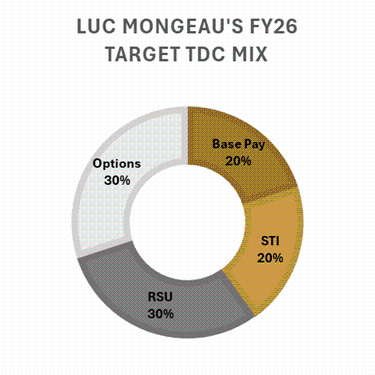
Base Salary
Base salary forms the foundation for attracting and retaining top talent while ensuring competitiveness with the market. Base salaries are determined based on market rates for similar positions and each executive’s expected contribution and past performance.
For all NEOs other than the CEO, the CEO and the SVP HR develop salary recommendations based on: (i) approved benchmarking provided by the Company’s independent compensation consultant (Mercer) and (ii) market survey data. CEO base salary decisions are developed by the CGCN Committee with input from Mercer and the SVP HR, and are informed by the approved benchmarking data. All senior executive base salaries, including the salary of the CEO, are reviewed and approved by the CGCN Committee.
Mr. Stewart’s base salary increased during Fiscal 2026 in connection with his appointment as Chief Financial Officer, reflecting the expanded scope and responsibilities of the role and aligning his compensation with the Company’s executive compensation framework.
For Fiscal 2026, the CGCN Committee approved a 2.5% base salary increase for Dr. Gedeon in connection with the Company’s annual merit cycle. The CGCN Committee did not approve base salary increases for the remaining NEOs, other than Mr. Stewart’s increase in connection with his appointment as CFO, reflecting the Company’s continued focus on cost discipline and alignment with financial performance.
The following table illustrates base salary details for our NEOs throughout Fiscal 2026:
|
|
|
|
|
Individual |
Local
Currency
|
Fiscal 2025
Annual Base Salary |
Fiscal 2026
Annual Base Salary(1) |
% Change |
Luc Mongeau |
C$ |
C$975,000 |
C$975,000 |
- |
Thomas Stewart(2) |
US$ |
- |
US$375,000 |
- |
Christelle Gedeon |
C$ |
C$535,000 |
C$548,375 |
2.5% |
Judy Hong(3) |
US$ |
US$415,000 |
US$415,000 |
- |
(1) NEO’s represented in the local currency in which they are paid
(2) Mr. Stewart’s base salary increased during Fiscal 2026 in connection with his appointment as CFO, reflecting the expanded scope and responsibilities of the role. Pursuant to the Stewart Agreement (as defined below), Mr. Stewart is also eligible for a 5% base salary increase in Fiscal 2027.
(3) Reflects Ms. Hong’s Fiscal 2026 annual base salary in the role of CFO. Ms. Hong’s service ended as of July 9, 2025. For actual amounts paid to Ms. Hong prior to the termination of her service, please see “Executive Compensation—Summary Compensation Table” in this Item 11.
Short-Term Incentives
All NEOs who were employed by the Company at the end of Fiscal 2026 participated in the Company’s short-term incentive plan (the “STIP”), which provides an annual cash incentive based on performance relative to pre-established financial and corporate objectives. The STIP is a leveraged bonus design, where executives may earn between 0% and 200% of the target bonus opportunity (“target”), which is defined as a percentage of base salary for each executive.
Plan Design
For our NEOs, the STIP is linked to a combination of corporate and financial objectives and is structured as follows:
|
|
|
|
|
|
|
Base Salary
($) |
X |
STIP Target
(% of salary) |
X |
Performance Score
(0 - 200%) |
= |
STIP Payout
($) |
Fiscal 2026 Target Award Levels
Under the STIP, and pursuant to their respective employment agreements, each NEO has a target award expressed as a percentage of base salary. Payouts are based on the achievement of overall Company performance relative to pre-established financial and corporate objectives. NEOs may receive no payout for performance at or below threshold level, and a maximum payout of 200% of target for performance at or above maximum objectives.
The threshold, target, and maximum awards for our NEOs are as follows:
|
|
|
|
Individual |
Below Threshold
(% of salary) |
Target
(% of salary) |
Maximum
(% of salary) |
Luc Mongeau | CEO |
0% |
100% |
200% |
Thomas Stewart | CFO |
0% |
75% |
150% |
Christelle Gedeon | CBCO |
0% |
75% |
150% |
Fiscal 2026 STIP Performance Criteria & Results
Per the Company’s STIP, the performance of the Company’s executive leadership team, including the NEOs, was assessed based on predetermined financial and corporate objectives that were established and approved by the CGCN Committee at the beginning of the fiscal year. For Fiscal 2026, all NEOs were evaluated against corporate and financial objectives, which were recommended and approved by the CGCN Committee. These objectives were weighted as outlined in the table below.
For Fiscal 2026, the calculated STIP performance result was 110.4% of target based on achievement against the pre-established financial and corporate objectives approved by the CGCN Committee. The CGCN Committee certified the results and approved STIP payouts based on the formulaic application of the approved plan design. No discretion was exercised to increase or decrease the calculated payout, and the same performance factor applied to all NEOs eligible for a Fiscal 2026 STIP payout.
Financial performance for the year was impacted by continued industry headwinds and market volatility, resulting in performance below target for certain financial metrics. Despite these challenges, the Company delivered strong execution against its corporate objectives.
The corporate objectives, as established and certified by the CGCN Committee, focused on internal cost savings, international growth, and inventory management, and were achieved at a high level. These priorities were designed to support long-term sustainability, strengthen operational performance, and align execution with the Company’s strategic plan.
The CGCN Committee determined that the approved STIP payout appropriately reflects overall Company performance, recognizing both financial outcomes and the successful execution of key corporate priorities, while maintaining alignment with the Company’s pay-for-performance philosophy.
|
|
|
|
|
Fiscal 2026 |
Canopy Growth
Adjusted EBITDA(1)
|
Canopy Growth
Revenue
|
Other Corporate
Objectives
|
Total |
Objective Weighting |
30% |
25% |
45% |
100% |
Achievement Against Applicable Metrics |
24.2% |
61.5% |
195.1% |
- |
Weight X Achievement |
7.2% |
15.4% |
87.8% |
110.4% |
(1) Adjusted EBITDA is calculated as the reported net income (loss), adjusted to exclude income tax recovery (expense); other income (expense), net; loss on equity method investments; share-based compensation expense; depreciation and amortization expense; asset impairment and restructuring costs; acquisition related restructuring and other inventory write-downs; and charges related to the flow-through of inventory step-up on business combinations, and further adjusted to remove acquisition, divestiture, and other costs. Adjusted EBITDA is a non-GAAP measure used by management that is not defined by U.S. GAAP and may not be comparable to similar measures presented by other companies.
Fiscal 2026 STIP Payouts
For Fiscal 2026, the CGCN Committee approved the following cash bonuses to the NEOs based on actual performance relative to the pre-established STIP objectives:
|
|
|
|
Individual |
Target
(% of salary)
|
Payout Factor
(% of target)
|
Bonus Payout
(USD)(1)
|
Luc Mongeau | CEO |
100% |
110.4% |
$772,013 |
Thomas Stewart | CFO |
75% |
110.4% |
$264,966(2) |
Christelle Gedeon | CBCO |
75% |
110.4% |
$323,893 |
(1) Fiscal 2026 STIP payments can be converted to C$ using the average exchange rate of C$1.00 = US$0.7174, as set forth above under “Executive Compensation — Currency Conversion” in this Item 11. These payments are expected to be made by July 10, 2026.
(2) Mr. Stewart’s Fiscal 2026 annual bonus has been prorated to reflect accrual commensurate with his appointment as CFO during the fiscal year.
Long-Term Incentives
Summary of Principal Terms of Long-Term Incentive Plan (“LTIP”) Instruments
The table below summarizes the principal terms of our stock options (“Options”) and RSUs for Fiscal 2026.
|
|
|
|
RSUs |
Options |
Purpose |
• RSUs represent compensation to incentivize executives to achieve long-term objectives of the Company, to retain executives, as well as to align executives’ interests with those of Shareholders
|
• Options represent compensation that is intended to align executives’ interests with those of Shareholders by providing executives with the opportunity to become Shareholders
• These are considered entirely “at risk” because the value of Options rises (and may fall) in conjunction with the market price of Canopy Shares where the change in Canopy Share prices is deemed an indirect measure of overall performance by the Company and the execution on key performance metrics by the Company’s employees and executives
|
Form of Award |
• RSUs represent notional shares that track the value of the Canopy Shares as of the vesting date, based on the TSX in prior years and, beginning in Fiscal 2025, based on the Nasdaq
|
• A holder of vested Options may acquire Canopy Shares at the exercise price established on the date of grant, which is equal to the closing price of the Canopy Shares on the applicable stock exchange on which the Canopy Shares traded as of the date of grant
• Beginning in Fiscal 2025, newly granted Options are priced and tracked based on the closing price of the Canopy Shares on the Nasdaq
|
Vesting |
• Historically, RSUs generally vested on the first, second, and third anniversaries of the grant date,
|
• Options vest on the first, second, and third anniversaries of the date of the grant, with one
|
|
|
|
|
RSUs |
Options |
|
with one-third of the granted RSUs vesting on each date. • Beginning in Fiscal 2025, the Company transitioned to a standardized vesting approach for annual equity grants, with RSUs vesting in equal one-third installments on June 15th of the first, second, and third year following the grant date
|
third of the number of granted Options vesting on each date |
Settlement |
• RSUs will, at the CGCN Committee’s discretion, be settled in Canopy Shares purchased from the open market, or in Canopy Shares issued from treasury
|
• The value of a vested Option is the difference between its exercise price and the closing price of the Canopy Shares on the applicable stock exchange on which the Canopy Shares are traded on the date prior to exercise
• Beginning in Fiscal 2025, newly granted Options are priced and tracked based on the value of the Canopy Shares as listed on the NASDAQ. All Options are settled in Canopy Shares issued from treasury
|
Fiscal 2023 PSU Awards
PSUs were last granted in Fiscal 2023 and were subject to multi-year performance conditions. These awards were fully certified by the CGCN Committee based on Fiscal 2025 performance, and the resulting Canopy Shares were released to participants in Fiscal 2026.
Fiscal 2026 | Long-Term Incentive Award Grant Issuance
All NEOs who were employed by the Company at the start of Fiscal 2026 participated in the Company’s long-term incentive program. For Fiscal 2026, the Company’s long-term incentive program consisted exclusively of RSUs and Options. The Company’s LTIP is designed to align executive compensation with long-term shareholder value creation and to support the retention of key talent through equity-based awards.
Annual LTIP awards are typically granted following the end of the Company’s fiscal year, upon the exit of the Company’s financial blackout period.
In connection with his appointment as CFO, Mr. Stewart received an additional equity award outside of the Company’s annual grant cycle. This award was provided to align his compensation with the scope and responsibilities of the CFO role and is consistent with the Company’s approach to executive transitions.
The following table shows the LTIP awards granted to our NEOs for Fiscal 2026:
|
|
|
|
Individual |
Grant Date |
Options (#) |
Share-Based Awards (#) |
Luc Mongeau | CEO |
06/03/2025 |
912,733 |
727,212 |
Thomas Stewart | CFO(1) |
06/03/2025 |
46,355 |
55,400 |
09/17/2025 |
222,280 |
178,462 |
Christelle Gedeon | CBCO |
06/03/2025 |
333,889 |
266,023 |
Judy Hong | Former CFO(2) |
06/03/2025 |
532,771 |
424,481 |
(1) Mr. Stewart’s awards reflect (i) his participation in the Company’s annual grant cycle while serving as Vice President, Finance, and (ii) an additional grant awarded in connection with his appointment as CFO on September 17, 2025. The additional award was provided to align his compensation with the scope and responsibilities of the CFO role.
(2) Ms. Hong served as CFO for a portion of Fiscal 2026 until her service end date of June 9, 2025. Her LTIP award reflects participation in the Company’s annual grant cycle prior to her departure from the Company. In connection with the termination of her employment during Fiscal 2026, any unvested equity awards held by Ms. Hong were forfeited or cancelled in accordance with the terms of the applicable award agreements.
Each of the Options granted has a six-year term, subject to earlier termination upon the occurrence of certain events related to termination of employment, as specified in the form of option agreement pursuant to which the Options were granted (the “Option Grant Agreement”). One-third of the Options become exercisable on each of the first, second and third anniversaries of the grant date, subject to the terms of the Option Grant Agreement. The exercise price of each Option granted on June 3, 2025 was US$1.47 per Share, and the exercise price of the Options granted to Mr. Stewart on September 17, 2025 was US$1.40 per Share.
RSUs granted on June 3, 2025 vest in equal one-third installments on June 15, 2026, 2027 and 2028, subject to continued service. The RSUs granted to Mr. Stewart on September 17, 2025 vest in equal one-third installments on each of the first, second and third anniversaries of the grant date, subject to continued service.
Fiscal 2027 | Long-Term Incentive Award Plan Design
For Fiscal 2027, the CCGN Committee approved maintaining the same annual grant percentages for NEOs (salary X accrual percentage).
However, as part of the CFO transition, the LTIP target for the CFO role has been adjusted from 300% to 200% of salary, with an equal split between Stock Options (50%) and RSUs (50%), reflecting a more balanced approach to long-term incentives.
|
|
|
|
Individual |
Total LTI Accrual
(% of salary)
|
RSU
(% of salary) |
Stock Option
(% of salary) |
Luc Mongeau | CEO |
300% |
150% |
150% |
Thomas Stewart | CFO |
200% |
100% |
100% |
Christelle Gedeon | CBCO |
200% |
100% |
100% |
Peer Groups and Compensation Benchmarking
With the engagement of our executive compensation consultant Mercer, the CGCN Committee re-evaluated Canopy Growth’s publicly-traded peer group in Fiscal 2023. We believe this peer group, with the adjustments noted below, reflects the current reality of Canopy Growth and the cannabis industry and the companies we compete with for talent.
In Fiscal 2023, the CGCN Committee approved the use of two distinct groups of publicly-traded peers to inform the setting of target total direct compensation levels for NEOs. The first group includes similarly-sized Canadian consumer-focused industry comparators, including cannabis companies, while the second group includes similarly-sized U.S. CPG and also includes companies in the cannabis industry. These groups include organizations that the Company would potentially compete with for talent. The criteria used to select the peer group are as follows:
•
Publicly traded company;
•
Market capitalization between approximately 1/3 and 3 times that of the Company at the time of the review in early Fiscal 2023 (with the Company positioned at or near median); and
•
Operating within the consumer discretionary, consumer staples or pharmaceuticals industries
The peers selected for benchmarking executive compensation in Fiscal 2026 are:
|
|
|
|
Company Name |
Cannabis |
Peer Group |
Global Industry Classification Sub-Industry |
Canada Goose Holdings Inc. |
|
CAN |
Apparel, Accessories and Luxury Goods |
Pet Valu Holdings Ltd. |
|
CAN |
Specialty Stores |
Jamieson Wellness Inc. |
|
CAN |
Personal Products |
SNDL Inc. |
● |
CAN |
Pharmaceuticals |
Village Farms International, Inc. |
● |
CAN |
Agricultural Products - produce cannabis |
Andrew Peller Limited |
|
CAN |
Distillers and Vintners |
High Tide Inc. |
● |
CAN |
Pharmaceuticals |
Goodfood Market Corp. |
|
CAN |
Internet and Direct Marketing Retail |
Cronos Group Inc. |
● |
CAN |
Pharmaceuticals |
Aurora Cannabis Inc. |
● |
CAN |
Pharmaceuticals |
Tilray Brands, Inc. |
● |
US |
Pharmaceuticals |
WW International, Inc. |
|
US |
Specialized Consumer Services |
Green Thumb Industries Inc. |
● |
US |
Pharmaceuticals |
SunOpta Inc. |
|
US |
Packaged Foods and Meats |
MGP Ingredients, Inc. |
|
US |
Distillers and Vintners |
Amphastar Pharmaceuticals, Inc. |
|
US |
Pharmaceuticals |
Nature’s Sunshine Products, Inc. |
|
US |
Personal Care Products |
Ascend Wellness Holdings, Inc. |
● |
US |
Personal Care Products |
ANI Pharmaceuticals, Inc. |
|
US |
Pharmaceuticals |
In addition to its review of peer group executive compensation data, the CGCN Committee uses executive compensation survey data to supplement its review, and when insufficient peer group data is available for specific executive positions or as another means of performing a market check on executive compensation levels and practices. This information assists the CGCN Committee in making well-informed decisions regarding executive compensation matters.
Executive Compensation Risk Management
The CGCN Committee considers and assesses, as necessary, the implications of risks associated with the Company’s compensation policies and practices and devotes such time and resources as it believes are appropriate given the Company’s current stage of development. The Company’s practice during Fiscal 2026 of compensating its senior executives through a mix of base salary, short-term incentives and long-term incentives, provided under the Omnibus Incentive Plan, is designed to mitigate risk by: (i) ensuring that the Company retains such executives; and (ii) aligning the interests of its executives with the short-term and long-term objectives of the Company and its Shareholders. The CGCN Committee monitors the Company’s compensation practices and policies at least annually and more often as may be required to deal with issues that arise between annual reviews. During Fiscal 2026, the CGCN Committee did not identify any significant risks arising from the Company’s compensation policies and practices that the CGCN Committee believed were reasonably likely to have a material adverse effect on the Company.
The table below outlines key elements of the Company’s compensation risk management framework:
|
Risk Mitigating Compensation Practices |
• Conduct an annual review of the Company’s compensation practices to ensure that the Company compensates its key employees appropriately to retain executives with critical skills.
|
• Deliver a significant majority of each executive’s compensation through “at-risk” instruments that create a clear link between pay and performance, align executive interests with those of Shareholders and help incentivize executives to drive Shareholder value.
|
• Defer a significant portion of each executive’s compensation through the application of multi-year time vesting conditions on long-term incentive equity awards. Options and RSUs vest over three years.
|
• Cap annual short-term incentive payouts to discourage excessive risk-taking.
|
• Adopt guidelines regarding share ownership for the CEO and other NEOs set at five times annual base salary for the CEO and at three times annual base salary for the rest of the NEOs.
|
• Have trading guidelines that restrict executives and directors from entering into transactions that have the direct or indirect effect of offsetting (hedging) the economic benefits of owning Company securities.
|
• Hold an annual say-on-pay advisory vote which provides Shareholders with a mechanism to share their views on the Company’s executive pay practices.
|
• Receive independent, third-party advice directly from an external compensation consultant.
|
• Maintain a clawback policy, outlined in the Omnibus Incentive Plan, whereby the Board may require the reimbursement, reduction or cancellation of an award for (i) failing to comply with any obligation to the Company; (ii) termination for cause; (iii) conduct that causes material financial or reputational harm to the Company or its affiliates; (iv) willful misconduct, gross negligence or fraud; or (v) restatement of its financial statements resulting in negative impacts to the Company’s financial results. In addition, the Board adopted a standalone clawback policy to comply with Section 10D of the Exchange Act and the rules of Nasdaq (as amended, the “Clawback Policy”), which provides for the recoupment of certain executive compensation in the event of an accounting restatement resulting from material noncompliance with financial reporting requirements under U.S. federal securities laws. In Fiscal 2025, an updated version of the Clawback Policy was adopted by the Board that included a transition period in the event the Company changes its fiscal year and clarified language regarding the method of recouping incentive-based compensation and other recoupment rights, including providing discretion to the Board on enforcement of the policy.
|
Recovery Analysis under Clawback Policy
As described in Note 2 to the audited consolidated financial statements included in Part II, Item 8 of this Comprehensive Form 10-K, in connection with the preparation of our consolidated financial statements for the fiscal year ended March 31, 2026, on May 15, 2026, the Audit Committee was made aware of and, after discussion with senior management of the Company, concluded that the (i) audited consolidated financial statements for the fiscal year ended March 31, 2025, originally included in our Annual Report on Form 10-K for the fiscal year ended March 31, 2025 (the “2025 10-K”), (ii) audited consolidated financial statements for the fiscal year ended March 31, 2024, originally included in our Annual Report on Form 10-K for the fiscal year ended March 31, 2024 (the “2024 10-K”), and (iii) unaudited consolidated financial statements for the quarterly periods ended September 30, 2023, December 31, 2023, June 30, 2024, September 30, 2024, December 31, 2024, June 30, 2025, September 30, 2025 and December 31, 2025, originally included in the our Quarterly Reports on Form 10-Q for such quarterly periods (collectively, the “Form 10-Qs” and together with the 2025 10-K and the 2024 10-K, the “Prior Financial Statements”) should no longer be relied upon because of non-cash technical errors in the Company’s accounting relating to certain share-settled warrants of the Company with exercise prices denominated in U.S. dollars, first issued during the fiscal year ended March 31, 2024. Accordingly, the Prior Financial Statements have been restated in this Comprehensive Form 10-K (the “Restatement”). In accordance with our Clawback Policy, the Board completed an analysis to determine whether, as a result of the Restatement, it had to require prompt repayment or forfeiture of any erroneously awarded Incentive-Based Compensation (as such term is defined in the Clawback Policy) received by any Covered Executive (as such term is defined in the Clawback Policy) during Fiscal 2024, Fiscal 2025 or Fiscal 2026. For each of Fiscal 2024, Fiscal 2025 and Fiscal 2026, the performance measures used to determine Incentive-Based Compensation were Adjusted EBITDA and revenue, neither of which were impacted by the Restatement. Accordingly, the Board determined that no erroneously awarded Incentive-Based Compensation was awarded.
Results of Fiscal 2025 Say-On-Pay Vote
Canopy Growth’s compensation program for its executive management team is designed to drive Shareholder value and to effectively attract and retain talent. Each year, we conduct a Shareholder advisory vote to approve the compensation of our NEOs as disclosed in our proxy statement for our annual meeting of shareholders (a “say-on-pay” vote). At our 2025 Annual General Meeting, our Shareholders approved our NEO compensation at that time, with approximately 82.1% of the votes cast voting in favor of approval. Given these results, the CGCN Committee has decided to retain our overall approach to executive compensation while continuing to evaluate our practices frequently, including in response to future say-on-pay votes. The CGCN Committee continues to monitor further stakeholder feedback, Company performance, and market developments for potential further improvements to the Company’s compensation structure for executive officers. The Company expects to have its next “say-on-pay” vote at its 2026 annual meeting of shareholders (the “2026 Annual Meeting”).
Performance Graph
The following performance graph illustrates the Company’s cumulative Shareholder return assuming reinvestment of dividends, by comparing a C$100 investment in the Canopy Shares beginning March 31, 2021 to the return on the S&P/TSX Composite Index, which is the headline index for the Canadian equity market, and the Global X Marijuana Life Sciences Index ETF (Ticker: HMMJ).
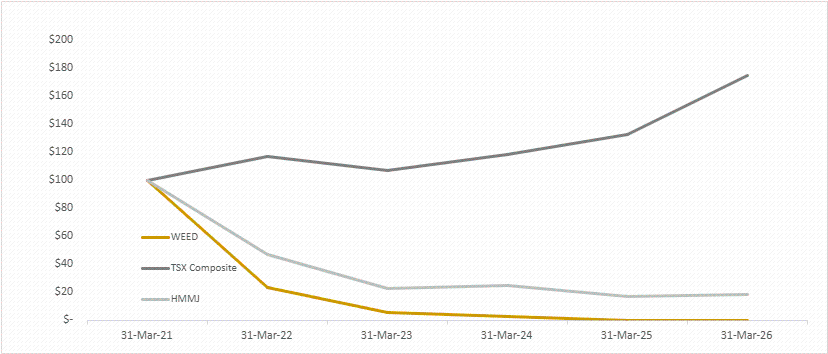
|
|
|
|
|
|
|
|
March 31,
2021 |
March 31, 2022 |
March 31, 2023 |
March 31, 2024 |
March 31, 2025 |
March 31, 2026 |
Canopy Growth Corporation |
C$100.00 |
C$23.49 |
C$5.87 |
C$2.89 |
C$0.33 |
C$0.33 |
S&P/TSX Composite Index |
C$100.00 |
C$117.06 |
C$107.48 |
C$118.54 |
C$133.24 |
C$175.22 |
|
|
|
|
|
|
|
Global X Marijuana Life Sciences Index ETF |
C$100.00 |
C$47.48 |
C$23.06 |
C$25.07 |
C$17.37 |
C$18.26 |
Since March 31, 2021, the Canopy Share price performance declined because of considerable volatility in the cannabis sector resulting from a multitude of factors, including, among others, (i) underperformance of the Canadian cannabis sector, resulting in significant price compression in the adult-use space, (ii) restructuring of our operations in order to improve long-term performance, (iii) continued capital requirements through the issuance of additional common shares, and (iv) the multiple attempts in the U.S. to reschedule cannabis from a Schedule I substance to a Schedule III substance under the Controlled Substances Act (21 U.S.C. § 811). In addition, relative stock underperformance was impacted by strength in the S&P/TSX resulting in higher commodity prices.
We believe the appropriate benchmark to assess our share price performance is against the Global X Marijuana Life Sciences Index ETF as this ETF contains a basket of our peer competitors. The S&P/TSX Composite Index is a broad-based exchange that contains companies in non-cannabis sectors and as such would have fewer comparative factors to a company in the cannabis industry.
While our Canopy Share price has been volatile due in part to the evolving state of the cannabis industry, our executive compensation remains competitive as we aim to attract and retain an experienced executive team whose compensation is tied to a variety of metrics including long-term profit improvement and Canopy Share price appreciation. Executive compensation for Fiscal 2026 remains aligned with financial performance and the Shareholder experience to the end of Fiscal 2026, evidenced by a significant decrease in realizable equity compensation held by executives. For further discussion on this point, please refer above to “PSU Metric Details and Certification Results”.
COMPENSATION COMMITTEE REPORT
The members of the CGCN Committee have reviewed and discussed the contents of the CD&A with management. Based on such review and discussion with management, and subject to the limitations on the role and responsibility of the CGCN Committee, the CGCN Committee recommended to the Board that the CD&A be included in the Company’s Comprehensive Form 10-K and in the proxy statement issued in connection with the 2026 Annual Meeting.
Respectfully submitted by the members of the CGCN Committee
Theresa Yanofsky (Chair)
David Lazzarato
Joseph Bayern
The foregoing Compensation Committee Report shall not be deemed to be “soliciting material,” deemed “filed” with the SEC or subject to the liabilities of Section 18 of the Exchange Act. Notwithstanding anything to the contrary set forth in any of the Company’s filings under the Securities Act, or the Exchange Act that might incorporate by reference past or future filings, including this Comprehensive Form 10-K, in whole or in part, the foregoing Compensation Committee Report shall not be incorporated by reference into any such filings.
EXECUTIVE COMPENSATION
Currency Conversion
Certain of the NEO’s employment agreements specify payments in U.S. dollars, while others specify payments in Canadian dollars. Where payments are made in Canadian dollars throughout this section, we have converted Canadian dollars to U.S. dollars using the Bloomberg average exchange rates for the relevant 12-month period as specified in the bullets below. Share-based currency conversion calculations are represented as of the applicable award date using the Bloomberg exchange rate for the date of the award.
•
Fiscal 2026 of C$1.00 to US$0.7174 for the 12-month period ended March 31, 2026;
•
Fiscal 2025 of C$1.00 to US$0.6951 for the 12-month period ended March 31, 2025; and
•
Fiscal 2024 of C$1.00 to US$0.7386 for the 12-month period ended March 31, 2024.
Summary Compensation Table
The following table sets forth the compensation for Fiscal 2024, Fiscal 2025 and Fiscal 2026 awarded to, earned by, or paid to the NEOs.
|
|
|
|
|
|
|
|
|
Name and Principal Position |
Fiscal Year |
Salary |
Bonus(2) |
Stock
awards(1) |
Option awards(1) |
Non-equity incentive plan compensation |
All other compensation(3) |
Total |
Luc Mongeau, CEO |
2026 |
699,465 |
- |
1,069,002 |
1,050,476 |
772,013 |
24,843 |
3,615,799 |
2025 |
130,331 |
- |
121,500 |
422,489 |
122,460 |
172,145 |
968,925 |
2024 |
- |
- |
- |
- |
- |
- |
- |
Thomas Stewart, CFO(4) |
2026 |
357,731 |
- |
331,285 |
299,875 |
264,966 |
12,467 |
1,266,324 |
2025 |
- |
- |
- |
- |
- |
- |
- |
2024 |
- |
- |
- |
- |
- |
- |
- |
Christelle Gedeon, CBCO |
2026 |
390,822 |
167,922 |
391,054 |
384,277 |
323,893 |
689 |
1,658,657 |
2025 |
371,880 |
- |
388,737 |
364,767 |
216,411 |
693 |
1,342,488 |
2024 |
383,454 |
- |
375,977 |
479,289 |
454,884 |
- |
1,693,604 |
|
Judy Hong,
Former CFO(5)
|
2026 |
140,462 |
150,000 |
623,987 |
613,173 |
- |
1,189,694 |
2,717,316 |
2025 |
415,001 |
- |
622,501 |
584,124 |
241,505 |
9,618 |
1,872,749 |
2024 |
410,960 |
- |
622,499 |
772,886 |
486,685 |
10,033 |
2,303,063 |
Notes:
(1)
The amounts in this column represent the aggregate grant date fair value of the relevant award(s) presented, as determined in accordance with FASB ASC Topic 718, “Compensation-Stock Compensation”. See Note 21 to the consolidated financial statements included in this Comprehensive Form 10-K, regarding assumptions underlying valuation of equity awards.
(2)
Dr. Gedeon and Ms. Hong each received a one-time cash retention bonus pursuant to retention agreements entered into on August 19, 2024. The retention bonuses were awarded to support their continued service during a period of organizational transition and strategic execution and were earned upon continued employment with the Company through October 1, 2025. The amount reported for Dr. Gedeon includes vacation pay equal to 10% of the cash retention bonus, calculated in accordance with her employment terms and applicable Canadian employment standards. In connection with the termination of Ms. Hong’s employment during Fiscal 2026, the retention bonus was paid in accordance with the terms of her retention agreement. The awards were not subject to performance-based vesting conditions.
(3)
Represents the following for the respective NEOs: For Mr. Mongeau, this includes C$22,500 (US$16,142) in car allowance, C$10,875 (US$7,802) in employer contributions under the Company’s defined contribution retirement plan, C$960 (US$689) in cell phone allowance, and C$294 (US$211) in product allowance. For Mr. Stewart, includes US$11,453 in 401(k) employer match, US$665 in cell phone allowance, and US$349 in product allowance. For Dr. Gedeon, this includes C$997 (US$689) in cell phone allowance. For Ms. Hong, this includes US$1,168,643 in severance payments, representing 18 months of base salary and an amount based on the average actual short-term incentive payments received during the prior two years, US$15,523 in accrued vacation pay, US$5,131 in 401(k) employer match, US$325 in cell phone allowance, and US$72 in product allowance.
(4)
Mr. Stewart was appointed CFO on September 17, 2025. The amounts reported in the Salary column include compensation earned during Fiscal 2026, including a temporary stipend paid in connection with his service as interim CFO prior to his appointment. In addition, Mr. Stewart received an equity award in connection with his appointment as CFO, as described above under “Long-Term Incentives.”
(5)
Ms. Hong’s employment with the Company terminated on July 9, 2025. The amounts reported reflect compensation earned during Fiscal 2026, including severance and other payments made in connection with her termination in accordance with the terms of her employment agreement, as described above under “Employment Agreements.”
Grants of Plan-Based Awards in Fiscal 2026
The following table sets forth the grants of plan-based awards made in Fiscal 2026. Non-equity incentive plan awards listed below were made pursuant to the terms of the respective NEO’s employment agreement. All equity incentive plan awards were made pursuant to the terms of the respective NEO’s employment agreement and the Omnibus Incentive Plan.
|
|
|
|
|
|
|
|
|
|
|
|
Name |
Grant
Date
|
Estimated Future Payouts Under Non-Equity Incentive Plan(1) |
Estimated Future Payouts Under Equity Incentive Plan Awards |
All other stock awards: Number of shares of stock or units(#) |
All other option awards: Number of securities underlying options (#) |
Exercise or base price of option awards
($/Sh) |
Grant date fair value of stock and option awards(2) |
Threshold ($) |
Target
($) |
Max
($)
|
Threshold (#) |
Target
(#) |
Max
(#) |
Luc Mongeau |
1-Apr-25 |
$0 |
$699,465 |
$1,398,930 |
- |
- |
- |
- |
- |
- |
- |
3-Jun-25 |
- |
- |
- |
- |
- |
- |
- |
912,733 |
$1.47 |
$1,050,476 |
3-Jun-25 |
- |
- |
- |
- |
- |
- |
727,212 |
- |
- |
$1,069,002 |
Thomas Stewart(3) |
1-Apr-25 |
$0 |
$240,196 |
$480,134 |
- |
- |
- |
- |
- |
- |
- |
3-Jun-25 |
- |
- |
- |
- |
- |
- |
- |
46,355 |
$1.47 |
$53,351 |
3-Jun-25 |
- |
- |
- |
- |
- |
- |
55,400 |
- |
- |
$81,438 |
17-Sep-25 |
- |
- |
- |
- |
- |
- |
- |
222,280 |
$1.40 |
$246,525 |
17-Sep-25 |
- |
- |
- |
- |
- |
- |
178,462 |
- |
- |
$249,847 |
Christelle Gedeon |
1-Apr-25 |
$0 |
$293,456 |
$586,912 |
- |
- |
- |
- |
- |
- |
- |
3-Jun-25 |
- |
- |
- |
- |
- |
- |
- |
99,214 |
$1.47 |
$115,699 |
3-Jun-25 |
- |
- |
- |
- |
- |
- |
- |
234,675 |
$1.47 |
$268,578 |
3-Jun-25 |
- |
- |
- |
- |
- |
- |
266,023 |
- |
- |
$391,054 |
Judy Hong(4) |
1-Apr-25 |
- |
- |
- |
- |
- |
- |
- |
- |
- |
- |
3-Jun-25 |
- |
- |
- |
- |
- |
- |
- |
532,771 |
$1.47 |
$613,173 |
3-Jun-25 |
- |
- |
- |
- |
- |
- |
424,481 |
- |
- |
$623,987 |
Notes:
(1)
The amounts shown in these columns reflect the short-term cash incentive bonuses that potentially could have been earned during Fiscal 2026 based upon the achievement of Company performance goals under our STIP. Target amounts are calculated based on the NEO’s base salary in effect during the fiscal year, adjusted on a prorated basis for any mid-year compensation changes. The actual award paid to each NEO under the STIP for Fiscal 2026 is set forth above in the Summary Compensation Table in the “Non-Equity Incentive Plan Compensation” column. More information regarding short-term cash incentive bonuses under our STIP can be found in the CD&A under the heading “Short-Term Incentives”.
(2)
The amounts in this column represent the aggregate grant date fair value of the relevant award(s) presented, as determined in accordance with FASB ASC Topic 718, “Compensation-Stock Compensation.” See Note 21 of the consolidated financial statements included in this Comprehensive Form 10-K, regarding assumptions underlying valuation of equity awards.
(3)
Mr. Stewart’s awards reflect (i) his participation in the Company’s annual grant cycle while serving as Vice President, Finance, and (ii) an additional grant awarded in connection with his appointment as CFO on September 17, 2025. The additional award was provided to align his compensation with the scope and responsibilities of the CFO role.
(4)
Ms. Hong’s employment terminated during Fiscal 2026. She was not eligible to receive a payout under the Company’s Fiscal 2026 STIP. Any amounts paid to Ms. Hong in connection with her termination are described above under “Employment Agreements” and reflected in the Summary Compensation Table. Unvested equity awards held by Ms. Hong were forfeited or cancelled in accordance with the applicable award agreements.
Employment Agreements
Luc Mongeau
In connection with Mr. Mongeau’s appointment as Chief Executive Officer of the Company, on November 26, 2024, the Company and Mr. Mongeau entered into an employment agreement (the “Mongeau Agreement”).
Pursuant to the Mongeau Agreement, as Chief Executive Officer, Mr. Mongeau reports to the Board and is entitled to an annual base salary of C$975,000. Mr. Mongeau is also entitled to a monthly car allowance of C$1,875.
Mr. Mongeau is eligible to participate in the Company’s STIP, with a target annual incentive opportunity of 100% of his base salary (the “Mongeau Target Amount”), and a payout range of 0% to 200% of the Mongeau Target Amount based on the achievement of predetermined financial and corporate objectives approved by the CGCN Committee.
Mr. Mongeau is also eligible to participate in the Omnibus Incentive Plan. In connection with his appointment, Mr. Mongeau received a one-time equity award consisting of 50,000 restricted share units and 225,000 stock options, with an exercise price of US$2.43, equal to the fair market value of the Canopy Shares on the grant date. These awards vest in equal one-third installments on each of the first three anniversaries of the grant date, subject to the terms of the Omnibus Incentive Plan and applicable award agreements.
Pursuant to the Mongeau Agreement, Mr. Mongeau is eligible to receive, at least once every fiscal year, a long-term incentive award with a target value of 300% of his base salary (based on the fair market value of the Canopy Shares on the date of grant). The form and mix of equity awards are determined by the CGCN Committee, in its discretion, and consist of stock options and restricted share units.
If the Company terminates Mr. Mongeau’s employment without Cause (as defined in the Mongeau Agreement), or if Mr. Mongeau resigns for Good Reason (as defined in the Mongeau Agreement), then, provided that he signs and returns to the Company a full and final employment separation, release and waiver of liability, the Company will provide (a) a lump sum payment equal to 18 months of Mr. Mongeau’s base salary; (b) a lump sum payment equal to 150% of the average actual annual short-term incentive payments received by Mr. Mongeau during the prior two years; and (c) continuation of any statutorily prescribed benefits for the minimum period required under the provisions of the Employment Standards Act, 2000 (Ontario) (the “ESA”). The Company may terminate Mr. Mongeau’s employment for Cause without further liability.
The Mongeau Agreement contains non-competition and non-solicitation provisions in favor of the Company for a period of 18 months following termination.
Thomas Stewart
In connection with Mr. Stewart’s appointment as Chief Financial Officer of the Company, on September 17, 2025, the Company and Mr. Stewart entered into an employment agreement (the “Stewart Agreement”).
Pursuant to the Stewart Agreement, Mr. Stewart serves as Chief Financial Officer of the Company and reports to the Chief Executive Officer. He is employed by Canopy Growth USA, LLC. Mr. Stewart is entitled to an annual base salary of US$375,000, subject to applicable tax withholdings and deductions. His base salary is subject to annual review by the Board, and will be increased by 5% in connection with the Fiscal 2027 merit cycle.
Mr. Stewart is eligible to participate in the Company’s STIP, with a target annual incentive opportunity of 75% of his base salary (the “Stewart Target Amount”), and a payout range of 0% to 200% of the Stewart Target Amount based on the achievement of predetermined financial and corporate objectives approved by the CGCN Committee.
Mr. Stewart is also eligible to participate in the Omnibus Incentive Plan. Pursuant to the Stewart Agreement, Mr. Stewart is eligible to receive, at least once every fiscal year, a long-term incentive award with a target value of 200% of his base salary (based on the fair market value of the Canopy Shares on the date of grant). The form and mix of equity awards are determined by the CGCN Committee, in its discretion, and may consist of stock options, restricted share units or other awards authorized under the Omnibus Incentive Plan.
In addition, in connection with his appointment as Chief Financial Officer, Mr. Stewart was granted a one-time equity award with a value of US$500,000, comprised of 50% stock options and 50% restricted share units. This award vests in three equal annual installments, subject to the terms of the Omnibus Incentive Plan and applicable award agreements.
Pursuant to the Stewart Agreement, Mr. Stewart’s employment is “at will.” If the Company terminates Mr. Stewart’s employment without cause, then, provided that he signs and returns to the Company a full and final employment separation, release and waiver of liability, the Company will provide (a) a payment equal to 18 months of Mr. Stewart’s base salary, payable either as a lump sum or salary continuance at the Company’s discretion; (b) a lump sum payment equal to 150% of the average actual annual short-term incentive payments received by Mr. Stewart during the prior two years; (c) vesting of any outstanding performance share units at actual performance levels for performance periods that have already been certified by the Board or applicable committee; and (d) reimbursement of a portion of Consolidated Omnibus Budget Reconciliation Act of 1985 (“COBRA”) premiums for up to 18 months, subject to the terms of the Stewart Agreement.
The Company may also terminate Mr. Stewart’s employment for cause, without further liability.
The Stewart Agreement contains certain non-competition and non-solicitation provisions in favor of the Company for a period of 18 months following termination of employment.
Christelle Gedeon
In connection with Dr. Gedeon’s appointment as Chief Legal Officer of the Company, on August 1, 2022, the Company and Dr. Gedeon entered into an employment agreement (the “Gedeon Agreement”). Dr. Gedeon’s title was updated to Chief Business Development & Corporate Affairs Officer as of January 9, 2026. Dr. Gedeon continues to report to the Chief Executive Officer.
Dr. Gedeon is eligible to participate in the Company’s STIP, with a target annual incentive opportunity of 75% of her base salary (the “Gedeon Target Amount”), and a payout range of 0% to 200% of the Gedeon Target Amount based on the achievement of predetermined financial and corporate objectives approved by the CGCN Committee.
Dr. Gedeon is also eligible to participate in the Omnibus Incentive Plan. Pursuant to the Gedeon Agreement, Dr. Gedeon is eligible to receive, at least once every fiscal year, a long-term incentive award with a target value of 200% of her base salary (based on the fair market value of the Canopy Shares on the date of grant). The form and mix of equity awards are determined by the CGCN Committee, in its discretion, and consist of stock options and restricted share units.
If the Company terminates Dr. Gedeon’s employment without cause, then, provided that she signs and returns to the Company a full and final employment separation, release and waiver of liability, the Company will provide (a) a lump sum payment equal to 18 months of Dr. Gedeon’s base salary; (b) a lump sum payment equal to 150% of the average actual annual short-term incentive payments received by Dr. Gedeon during the prior two years; and (c) continuation of any statutorily prescribed benefits for the minimum period required under the provisions of the ESA. The Company may terminate Dr. Gedeon’s employment with cause without further liability.
The Gedeon Agreement contains non-competition and non-solicitation provisions in favor of the Company for a period of 18 months following termination.
The Gedeon Agreement was amended effective June 1, 2023, to increase Dr. Gedeon’s base salary to C$509,250, and further amended effective August 21, 2023, to increase her base salary to C$535,000 in connection with an expansion in scope and responsibilities. Dr. Gedeon’s base salary was subsequently increased to C$548,375 during Fiscal 2026 in connection with the Company’s annual merit cycle.
Judy Hong
In connection with Ms. Hong’s appointment as Chief Financial Officer of the Company, on April 1, 2022, the Company and Ms. Hong entered into an employment agreement dated March 24, 2022 (the “Hong Agreement”). Ms. Hong’s employment with the Company terminated during Fiscal 2026.
Pursuant to the Hong Agreement, as Chief Financial Officer, Ms. Hong reported to the Chief Executive Officer and was initially entitled to an annual base salary of US$395,000, which was increased to US$415,000 in June 2023.
Ms. Hong was eligible to participate in the Company’s STIP, with a target annual incentive opportunity of 75% of her base salary (the “Hong Target Amount”), and a payout range of 0% to 200% of the Hong Target Amount based on the achievement of predetermined financial and corporate objectives approved by the CGCN Committee.
Ms. Hong was also eligible to participate in the Omnibus Incentive Plan. Pursuant to the Hong Agreement, Ms. Hong was eligible to receive, at least once every fiscal year, a long-term incentive award with a target value of 300% of her base salary (based on the fair market value of the Canopy Shares on the date of grant). The form and mix of equity awards were determined by the Board or the CGCN Committee, in its discretion.
Pursuant to the Hong Agreement, Ms. Hong’s employment was “at will.” If the Company terminated Ms. Hong’s employment without cause, then, provided that she signed and returned to the Company a full and final employment separation, release and waiver of liability, the Company would provide (a) a lump sum payment equal to 18 months of Ms. Hong’s base salary; (b) a lump sum payment equal to 150% of the average actual annual short-term incentive payments received by Ms. Hong during the prior two years; (c) vesting of any outstanding performance share units at actual performance levels for performance periods that had already been certified by the Board or applicable committee; and (d) reimbursement of a portion of COBRA premiums, in each case subject to the terms of the Hong Agreement. The Company could terminate Ms. Hong’s employment with cause without further liability.
The Hong Agreement contained non-competition and non-solicitation provisions in favor of the Company for a period of 18 months following termination.
Outstanding Equity Awards at March 31, 2026
The following table presents information concerning outstanding Options and RSU awards to each of the NEOs as of March 31, 2026, the Company’s fiscal year end.
|
|
|
|
|
|
|
|
|
|
|
Name |
Grant Date (1) |
Option Awards |
Stock Awards |
Number of securities underlying unexercised options - (#) exercisable |
Number of securities underlying unexercised options - (#) unexercisable |
Equity incentive plan awards: number of securities underlying unexercised unearned options (#) |
Option exercise price ($) |
Option expiration date |
Number of shares or units of stock that have not vested (#) |
Market value of shares or units of stock that have not vested ($)(2) |
Equity incentive plan awards: number of unearned shares, units or other rights that have not vested (#) |
Equity incentive plan awards: market or payout value of unearned shares, units or other rights that have not vested
($)(2) |
(b) |
(c) |
(d) |
(e) |
(f) |
(g) |
(h) |
(i) |
(j) |
Luc Mongeau |
11-Feb-25 |
75,000 |
150,000 |
- |
US$2.43 |
11-Feb-31 |
- |
- |
- |
- |
11-Feb-25 |
- |
- |
- |
- |
- |
33,333 |
US$31,666 |
- |
- |
03-Jun-25 |
- |
912,733 |
- |
US$1.47 |
03-Jun-31 |
- |
- |
- |
- |
03-Jun-25 |
- |
- |
- |
- |
- |
727,212 |
US$690,851 |
- |
- |
Thomas Stewart |
09-Jun-21 |
320 |
- |
- |
C$308.70 |
09-Jun-27 |
- |
- |
- |
- |
03-Dec-21 |
4,151 |
- |
- |
C$135.80 |
03-Dec-27 |
- |
- |
- |
- |
14-Jun-22 |
2,096 |
- |
- |
C$48.40 |
14-Jun-28 |
- |
- |
- |
- |
28-Jun-23 |
6,766 |
6,766 |
- |
C$6.20 |
28-Jun-29 |
- |
- |
- |
- |
22-Aug-23 |
- |
- |
- |
- |
- |
5,768 |
US$5,474 |
- |
- |
10-Jun-24 |
2,837 |
5,675 |
- |
US$7.59 |
10-Jun-30 |
- |
- |
- |
- |
10-Jun-24 |
- |
- |
- |
- |
- |
6,997 |
US$6,647 |
- |
- |
03-Jun-25 |
- |
46,355 |
- |
US$1.47 |
03-Jun-31 |
- |
- |
- |
- |
03-Jun-25 |
- |
- |
- |
- |
- |
55,400 |
US$52,630 |
- |
- |
17-Sep-25 |
- |
222,280 |
- |
US$1.40 |
17-Sep-31 |
- |
- |
- |
- |
17-Sep-25 |
- |
- |
- |
- |
- |
178,462 |
US$169,539 |
- |
- |
Christelle Gedeon |
10-Aug-22 |
26,216 |
- |
- |
C$37.00 |
10-Aug-28 |
- |
- |
- |
- |
22-Nov-22 |
4,990 |
- |
- |
C$53.90 |
22-Nov-28 |
- |
- |
- |
- |
28-Jun-23 |
109,516 |
54,758 |
- |
C$6.20 |
28-Jun-29 |
- |
- |
- |
- |
22-Aug-23 |
- |
- |
- |
- |
- |
30,312 |
US$28,766 |
- |
- |
10-Jun-24 |
20,769 |
41,538 |
- |
US$7.59 |
10-Jun-30 |
- |
- |
- |
- |
10-Jun-24 |
- |
- |
- |
- |
- |
34,145 |
US$32,438 |
- |
- |
03-Jun-25 |
- |
333,889 |
- |
US$1.47 |
03-Jun-31 |
- |
- |
- |
- |
03-Jun-25 |
- |
- |
- |
- |
- |
266,023 |
US$252,722 |
- |
- |
Notes:
(1)
Unless otherwise indicated, with respect to all outstanding equity awards held by the NEOs as of March 31, 2026, Options vest in equal one-third installments on each of the first three anniversaries of the grant date, subject to the continued employment of the respective NEO. RSUs granted in Fiscal 2026, unless otherwise specified, vest in equal one-third installments on June 15 of each of the first three years following the grant date, in alignment with the Company’s standardized vesting approach.
(2)
The market value of the unvested stock awards is calculated by multiplying the number of unvested Canopy Shares held by the applicable NEO by the closing price of the Canopy Shares on March 31, 2026 (the last trading day of Fiscal 2026) on the Nasdaq Global Select Market, which was US$0.95.
Option Exercises and Stock Vested in Fiscal 2026
The following table presents information concerning Option exercises and Canopy Shares acquired upon vesting of RSU awards by each of our NEOs in Fiscal 2026:
|
|
|
|
|
|
Option awards |
Stock awards |
Name |
Number of shares
acquired on exercise
(#) |
Value realized
on exercise
($)(1) |
Number of shares
acquired on vesting
(#) |
Value realized
on vesting
($)(2) |
Luc Mongeau |
- |
- |
16,667 |
17,689 |
Thomas Stewart(3) |
- |
- |
9,790 |
13,161 |
Christelle Gedeon |
- |
- |
55,495 |
74,102 |
Judy Hong |
- |
- |
38,678 |
56,817 |
Notes:
(1)
These amounts reflect the aggregate of the differences between the exercise price of the Option and the market price of a Share at the time of exercise for each Option exercised by an NEO in Fiscal 2026.
(2)
These amounts reflect the market price on the vesting date.
(3)
Amounts for Mr. Stewart include equity awards that vested prior to and following his appointment as CFO during Fiscal 2026.
Potential Payments Upon Termination or Change-in-Control
A narrative description of the individual payments the Company is currently required to make upon termination or a change in control of the Company is described above under “Employment Agreements”.
Ms. Hong’s employment with the Company terminated during Fiscal 2026. The payments and benefits payable to Ms. Hong upon her termination are described above under “Employment Agreements” and are not reflected in the table below. Actual amounts paid to Ms. Hong upon her termination are included in the Summary Compensation Table above.
Potential Payments Upon Termination Without Cause
The following table sets forth the estimated payments and benefits to each of the active NEOs in the event of a termination without cause, assuming such termination occurred on March 31, 2026, and there was no change-in-control, based on the terms of their respective employment agreements in effect as of that date:
|
|
|
|
|
Termination Without Cause |
Individual |
Cash Payment ($) |
Accelerated Awards ($) |
Benefits ($)(4) |
Total ($) |
Luc Mongeau | CEO |
$1,180,977(1) |
- |
$1,919 |
$1,182,896 |
Thomas Stewart | CFO |
$767,007(2) |
- |
$47,683 |
$814,691 |
Christelle Gedeon | CBCO |
$974,901(3) |
- |
$5,064 |
$979,965 |
Notes:
(1)
Upon termination without cause effective March 31, 2026, Mr. Mongeau would have been entitled to a payment in the amount of $1,182,896, representing 18 months base salary plus one and a half times the average actual amounts paid as short-term annual incentive performance bonus to Mr. Mongeau during the prior two years.
(2)
Upon termination without cause effective March 31, 2026, Mr. Stewart would have been entitled to a payment in the amount of $814,691, representing 18 months base salary plus one and a half times the average actual amounts paid as short-term annual incentive performance bonuses to Mr. Stewart during the prior two years.
(3)
Upon termination without cause effective March 31, 2026, Dr. Gedeon would have been entitled to a payment in the amount of $979,965, representing 18 months base salary plus one and a half times the average actual amounts paid as short-term annual incentive performance bonuses to Dr. Gedeon during the prior two years, as well as the statutorily prescribed vacation time.
(4)
As of March 31, 2025, Mr. Mongeau, Mr. Stewart, and Dr. Gedeon are participants in Canopy Growth’s benefits plan. Upon termination without cause effective March 31, 2026, Mr. Mongeau and Dr. Gedeon would receive the statutorily prescribed benefits as set forth in the ESA. Upon termination without cause effective March 31, 2026, if Mr. Stewart were to elect continuation coverage under the Company’s medical plan pursuant to the COBRA, a reimbursement to Mr. Stewart for a portion of COBRA premium payments would be required.
Subject to the specific terms of the NEOs’ respective employment agreements, upon a termination of the NEO without cause, Options, RSUs and other Awards will be treated in accordance with the terms of the Omnibus Incentive Plan.
Potential Payments Upon Termination Following a Change in Control
None of the NEOs are entitled to a payment solely upon a change in control pursuant to the terms of their respective employment agreements. However, pursuant to the terms of the Omnibus Incentive Plan, for a period of 18 months following a Change in Control (as defined in the Omnibus Incentive Plan), where a participant’s employment or term of office or engagement is terminated for any reason other than for Cause (as defined in the Omnibus Incentive Plan): (i) any unvested awards as at the date of such termination shall be deemed to have vested, and any period of restriction shall be deemed to have lapsed, as at the date of such termination and shall become payable as at the date of termination; and (ii) the level of achievement of performance goals for any unvested awards that are deemed to have vested pursuant to (i) above shall be based on the actual performance achieved at the end of the applicable period immediately prior to the date of termination.
Ms. Hong’s employment with the Company terminated during Fiscal 2026. The payments and benefits payable to Ms. Hong upon her termination are described above under “Employment Agreements” and are not reflected in the table below. Actual amounts paid to Ms. Hong upon her termination are included in the Summary Compensation Table above.
The table below shows the payments that would be made to the active NEOs upon termination within 18 months following a Change in Control, assuming such termination occurred on March 31, 2026. With the exception of the “Accelerated Awards ($)” and “Total ($)” columns, all amounts in the table below are the same as those presented in the “Potential Payments Upon Termination Without Cause” table above, and all footnotes to the “Cash Payment ($)” and “Benefits ($)” columns in that table apply equally to the corresponding columns below.
|
|
|
|
|
Termination within 18 Months Following Change In Control |
Individual |
Cash Payment ($) |
Accelerated Awards ($)(1) |
Benefits ($) |
Total ($) |
Luc Mongeau | CEO |
$1,180,977 |
$722,518 |
$1,919 |
$1,905,414 |
Thomas Stewart | CFO |
$767,007 |
$228,816 |
$47,683 |
$1,043,507 |
Christelle Gedeon | CBCO |
$974,901 |
$325,300 |
$5,064 |
$1,305,264 |
Notes:
(1)
Reflect unvested RSU and Option awards, which will be deemed to have vested. The value was calculated based on the closing price of the Canopy Shares on March 31, 2026 (the last trading day of Fiscal 2026) on the Nasdaq Global Select Market, which was US$0.95.
CEO Pay Ratio and Background
Set forth below is the annual total compensation of our median employee, the annual total compensation of our Chief Executive Officer, Mr. Mongeau, and the ratio of these two values:
•
The Fiscal 2026 annual total compensation of the median employee of Canopy Growth (other than our CEO, Mr. Mongeau) was US$46,632 (or approximately C$65,000).
•
The Fiscal 2026 annualized total compensation of our CEO, Mr. Mongeau, was US$3,586,957 (or approximately C$4,999,860).
•
For Fiscal 2026, the ratio of the annualized total compensation of our CEO to the median annual total compensation of all our other employees was 76 to 1.
To determine the median employee, we used our global employee population as of March 31, 2026. Total compensation for this purpose was calculated using each employee’s annualized base salary, projected STI bonus, and the target value of LTI awards to be granted during the year, where applicable.
Amounts that were originally paid or recorded in Canadian dollars were converted to U.S. dollars using the Bloomberg average exchange rate of C$1.00 to US$0.7174 for the 12-month period ended March 31, 2026.
This pay ratio is a reasonable estimate calculated in a manner consistent with SEC rules based on our payroll and employment records, pursuant to the methodology described above. The SEC rules for identifying the median employee and calculating the pay ratio based on that employee’s annual total compensation allow companies to adopt a variety of methodologies, to apply certain exclusions, and to make reasonable estimates and assumptions that reflect their compensation practices. As such, the pay ratio reported by other companies may not be comparable to the pay ratio reported above, as other companies may have different employment and compensation practices and may use different methodologies, exclusions, estimates and assumptions in calculating their own pay ratios.
DIRECTOR COMPENSATION
Director Compensation
The Company’s director compensation program is designed to attract and retain qualified individuals to serve on the Board. The CGCN Committee assesses the director compensation program annually and approves any changes it deems appropriate based on market benchmarking, governance best practices, and the Company’s strategic needs. For Fiscal 2026, non-employee directors received the following amounts in connection with their services to the Company in their capacity as directors:
|
|
Fiscal 2026 Fees and Equity Awards(1) |
Annual Amount
(US$)(2) |
Chair - Cash |
$161,415 (C$225,000) |
Board Member - Cash |
$107,610 (C$150,000) |
Annual Equity Grant - Chair - RSUs |
$161,415 (C$225,000) |
Annual Equity Grant - Non-Chair Board Member - RSUs |
$107,610 (C$150,000) |
Committee Chair - Cash |
$21,522 (C$30,000) |
Committee Member - Cash |
$10,761 (C$15,000) |
Notes:
(1)
The RSUs generally vest in four equal quarterly installments, beginning on the last trading day of the first quarter after such RSUs are granted.
(2)
Fiscal 2026 Board payments were converted to US$ using the average exchange rate of C$1.00 = US$0.7174, as set forth above under “Executive Compensation—Currency Conversion” in this Item 11. These payments are expected to be made by July 10, 2026.
Director Compensation in Fiscal 2026
|
|
|
|
Name |
Fees Earned or Paid in Cash($)(1) |
Stock Awards
($)(2) |
Total
($) |
David Lazzarato |
$182,937 |
$164,462 |
$347,399 |
Theresa Yanofsky |
$139,893 |
$109,641 |
$249,534 |
M. Shan Atkins |
$116,218 |
$70,804 |
$187,023 |
Joseph Bayern |
$75,631 |
$51,190 |
$126,821 |
Willy Kruh (former director)(3) |
$73,707 |
$109,641 |
$183,349 |
Notes:
(1)
This column reflects the following amounts earned or paid during Fiscal 2026: (i) a cash retainer for Board service and (ii) cash retainers for serving as a committee member, a committee Chair or Chair of the Board. Payments were converted to US$ using the average exchange rate of C$1.00 = US$0.7174, as set forth above under “Executive Compensation—Currency Conversion” in this Item 11.
(2)
The amounts in this column represent the aggregate grant date fair value of the relevant award(s) presented, as determined in accordance with FASB ASC Topic 718, “Compensation-Stock Compensation.” See Note 21 of the consolidated financial statements included in this Comprehensive Form 10-K, regarding assumptions underlying valuation of equity awards.
(3)
Mr. Kruh resigned from the Board effective October 10, 2025. The amounts reported reflect compensation earned for his service as a director through the effective date of his resignation.
Item 12. Security Ownership of Certain Beneficial Owners and Management and Related Stockholder Matters.
The following table sets forth information, based on data provided to us or filed with the SEC, with respect to beneficial ownership of the Canopy Shares as of June 1, 2026 for:
•
all persons known by us to own beneficially more than 5% of our outstanding Shares;
•
each of our NEOs named in the Summary Compensation Table included in Item 11 (“Executive Compensation”) of this Comprehensive Form 10-K;
•
each of our directors; and
•
all of our current directors and executive officers as a group.
Beneficial ownership is determined according to the rules of the SEC. Generally, a person has beneficial ownership of a security if the person possesses sole or shared voting or investment power of that security, including any securities that a person has the right to acquire beneficial ownership within 60 days. Except as otherwise indicated, all persons listed below have sole voting power and dispositive power with respect to the Shares beneficially owned by them, subject to applicable community property laws.
|
|
|
|
|
|
|
|
|
|
|
|
|
|
|
|
|
|
Name and Address of Beneficial Owner(1) |
|
Number of Shares
Beneficially Owned |
|
|
Percent of Class(2) |
|
Greater than 5% Shareholders |
|
|
|
|
|
|
|
|
CBI Group |
|
|
26,261,474 |
(3) |
|
|
5.9 |
% |
Directors and Named Executive Officers |
|
|
|
|
|
|
|
|
David Lazzarato |
|
|
72,048 |
(4) |
|
|
* |
|
Theresa Yanofsky |
|
|
53,145 |
(5) |
|
|
* |
|
M. Shan Atkins |
|
|
41,390 |
(6) |
|
|
* |
|
Joseph Bayern |
|
|
40,000 |
(7) |
|
|
|
|
Luc Mongeau |
|
|
664,095 |
(8) |
|
|
* |
|
Thomas Stewart |
|
|
63,230 |
(9) |
|
|
* |
|
Christelle Gedeon |
|
|
492,069 |
(10) |
|
|
* |
|
Judy Hong |
|
|
275,256 |
(11) |
|
|
* |
|
Current Directors and Executive Officers as a Group (7 persons) |
|
|
1,425,977 |
|
|
|
* |
|
Notes:
* Less than 1%.
(1)
Except as otherwise indicated, the address for each shareholder listed is c/o Canopy Growth Corporation, 1 Hershey Drive, Smiths Falls, Ontario, K7A 0A8.
(2)
The percentages above are based on 422,154,892 Canopy Shares outstanding as of June 1, 2026. In accordance with the rules of the SEC, Common Shares that may be issued upon the exercise, vesting or exchange of derivative securities (such as a Options, RSUs or Exchangeable Shares) within 60 days of June 1, 2026 are deemed to be beneficially owned by the person holding such Options, RSUs or Exchangeable Shares and are treated as outstanding for the purpose of computing the percentage beneficial ownership of such person, but are not treated as outstanding for the purpose of computing the percentage beneficial ownership of any other person.
(3)
Consists of 15,811,474 Exchangeable Shares held by Greenstar Canada Investment Limited Partnership (“Greenstar”) and 10,450,000 Exchangeable Shares held by CBG Holdings LLC (“CBG”). According to the Schedule 13D/A (Amendment No. 13) (“13D/A#13”) filed with the SEC on April 19, 2024 by CBG, Greenstar II LLC (“GII”), Greenstar II Holdings LLC (“GIIH”), Greenstar, Greenstar Canada Investment Corporation (“GCIC”), Constellation Brands Canada Holdings ULC (“CBCH ULC”), Constellation Capital LLC (“CC LLC”), Constellation International Holdings Limited (“CIHL”) and Constellation Brands, Inc. (“CBI” and, together with its affiliates, the “CBI Group”), (i) each of Greenstar, GCIC, CBCH ULC, CC LLC and CIHL has shared voting and dispositive power over 15,811,474 Exchangeable Shares, (ii) each of CBG, GII, GIIH shares has shared voting and dispositive power over 10,450,000 Exchangeable Shares, and (iii) CBI has shared voting and dispositive power over 26,261,474 Exchangeable Shares. Each Exchangeable Share is convertible, at any time, at the option of the holder, into Common Shares. Other than information relating to the CBI Group’s percentage of beneficial ownership, the foregoing information is based solely on the information provided in 13D/A#13. This beneficial owner’s address is 207 High Point Drive, Victor, New York 14564.
(4)
Consists of 72,048 Common Shares held directly by Mr. Lazzarato.
(5)
Consists of 53,145 Common Shares held directly by Ms. Yanofsky.
(6)
Consists of 41,390 Common Shares held directly by Ms. Atkins.
(7)
Consists of 40,000 Common Shares held directly by Mr. Bayern.
(8)
Consists of 42,447 Common Shares held directly by Mr. Mongeau, 379,244 Options that could be exercised within 60 days of June 1, 2026, and 242,404 RSUs that will vest within 60 days of June 1, 2026.
(9)
Consists of 38 Common Shares held directly by Mr. Stewart, 41,226 Options that could be exercised within 60 days of June 1, 2026, and 21,966 RSUs that will vest within 60 days of June 1, 2026.
(10)
Consists of 38,008 Common Shares held directly by Dr. Gedeon, 348,314 Options that could be exercised within 60 days of June 1, 2026, and 105,747 RSUs that will vest within 60 days of June 1, 2026.
(11)
On July 9, 2025, the Company terminated Ms. Hong’s employment with the Company. Accordingly, information relating to Ms. Hong is as of July 9, 2025.
SECURITIES AUTHORIZED FOR ISSUANCE UNDER EQUITY COMPENSATION PLANS
The following table sets forth the details regarding the number of Canopy Shares to be issued upon exercise of outstanding Options, RSUs and PSUs and the weighted average exercise price of the outstanding Options in connection with the Omnibus Incentive Plan as of March 31, 2026:
|
|
|
|
Plan Category |
Number of Securities to be Issued upon Exercise of Outstanding Options, Warrants and Rights |
Weighted-Average Exercise Price of Outstanding Options, Warrants and Rights |
Number of Securities Remaining Available for Future Issuance under Equity Compensation Plans(1) |
Equity compensation plans approved by security holders(2) |
5,666,473(3) |
$3.00 |
36,540,350 |
Equity compensation plans not approved by security holders |
- |
- |
- |
Total |
5,666,473 |
$3.00 |
36,540,350 |
Notes:
(1)
Based on the maximum number of Canopy Shares available for issuance under the Omnibus Incentive Plan, being 42,206,823 Canopy Shares, or 10% of the 422,068,225 outstanding Canopy Shares as of March 31, 2026.
(2)
The maximum number of Canopy Shares issuable from treasury pursuant to awards under the Omnibus Incentive Plan cannot exceed 10% of the total outstanding Shares from time to time.
(3)
Represents the number of Canopy Shares reserved for issuance upon the exercise or vesting, as applicable, of the denoted outstanding Options, RSUs and PSUs issued pursuant to the Omnibus Incentive Plan.
Securities Outstanding under Equity Compensation Plans
The following table sets forth the details regarding the number of Canopy Shares reserved for issuance under awards currently outstanding pursuant to the Omnibus Incentive Plan as of March 31, 2026:
|
|
Compensation Security |
Number of Canopy Shares Reserved for Issuance and Percentage of Outstanding Canopy Shares |
as of March 31, 2026(1) |
Options |
2,743,855 (0.6%) |
RSUs |
2,922,618 (0.7%) |
PSUs |
- (0.0%) |
Total |
5,666,473 (1.3%) |
Notes:
(1)
Percentages based on 422,068,225 issued and outstanding Canopy Shares as of March 31, 2026.
To date, no deferred stock units, restricted stock or stock appreciation rights have been issued pursuant to the Omnibus Incentive Plan.
Item 13. Certain Relationships and Related Transactions, and Director Independence.
We or one of our subsidiaries may occasionally enter into transactions with certain “related persons” as defined in Item 404 of Regulation S-K. Related persons include our executive officers, directors, director nominees, persons beneficially owning 5% or more of the Shares, immediate family members of these persons and entities in which one of these persons has a direct or indirect material interest. We generally refer to transactions with these related persons as “related person transactions”.
The CBI Group Investments
On April 14, 2023, Greenstar entered into an exchange agreement with the Company pursuant to which the Company agreed to purchase for cancellation the remaining C$100 million principal amount of senior notes of the Company due July 2023 (the “Canopy Notes”) held by Greenstar in exchange for: (i) a cash payment to Greenstar in the amount of unpaid and accrued interest owing under the Canopy Notes held by Greenstar; and (ii) a promissory note (the “CBI Note”) issued to Greenstar in the aggregate principal amount of C$100 million payable on December 31, 2024.
Approval of Exchangeable Shares and Related Matters
At a special meeting (the “Special Meeting”) of shareholders of the Company held on April 12, 2024, the Company’s shareholders passed a special resolution authorizing and approving an amendment to the Company’s Articles of Incorporation, as amended, in order to: (i) create and authorize the issuance of an unlimited number of a new class of non-voting and non-participating exchangeable shares (the “Exchangeable Shares”) and (ii) restate the rights of the Shares to provide for a conversion feature whereby each Share may at any time, at the option of the holder, be converted into one Exchangeable Share (the “Exchangeable Shares Resolution”).
On April 18, 2024, in connection with the approval of the Exchangeable Shares Resolution and the creation of the Exchangeable Shares, the Company entered into an Exchange Agreement (the “April 2024 Exchange Agreement”) with Greenstar, pursuant to which Greenstar converted approximately C$81.2 million of principal amount of the C$100 million principal amount CBI Note into 9,111,549 Exchangeable Shares (the “Note Exchange”), calculated based on a price per Exchangeable Share equal to C$8.91. Pursuant to the terms of the April 2024 Exchange Agreement, all accrued and unpaid interest on the CBI Note together with the remaining principal amount of the CBI Note was cancelled and forgiven for no additional consideration by Greenstar. Following the closing of the Note Exchange, there is no outstanding balance owing under the CBI Note and the CBI Note has been cancelled.
Concurrently with the Note Exchange, Greenstar and CBG Holdings LLC (“CBG” and, together with Greenstar, the “CBG Group”), a wholly owned subsidiary of Constellation Brands, Inc., exchanged all 17,149,925 Canopy Shares they collectively held for 17,149,925 Exchangeable Shares (the “CBI Exchange”) for no consideration pursuant to the terms of the Company’s Articles of Incorporation, as amended in accordance with the Exchangeable Shares Resolution. As a result of the CBI Exchange and the Note Exchange, the CBG Group no longer holds any Canopy Shares and, as of June 11, 2026, the CBG Group held an aggregate of 26,261,474 Exchangeable Shares. Assuming the conversion of CBG Group’s Exchangeable Shares into Canopy Shares, CBG Group would own 5.9% of the outstanding Canopy Shares as of June 11, 2026.
Policy Regarding Related Person Transactions
The Board and the Audit Committee updated a written policy on May 28, 2025, which updated the prior policy adopted on June 20, 2023, providing that all related person transactions or series of similar transactions required to be disclosed pursuant to SEC Regulation S-K Item 404(a) must be presented to the Board for pre-approval or ratification. The policy requires each of our (i) directors or director nominees, (ii) executive officers, and (iii) security holders known by the Company to own of record or to beneficially own more than 5% of any class of our voting securities to notify the CBCO promptly and, whenever possible, in advance of the occurrence of any potential related person transaction in which such person is directly or indirectly involved.
The CBCO is responsible for reviewing all potential related person transactions and taking reasonable steps to ensure that all related person transactions requiring disclosure under Item 404(a) of Regulation S-K are presented to the Audit Committee for pre-approval or ratification by members of the committee in their discretion at the committee’s next regularly scheduled meeting or, if deemed appropriate, by consent in lieu of a meeting. No director may engage in a vote to pre-approve or ratify any related person transaction in which he or she or any member of his or her immediate family has a material interest; provided, however, that such director must provide any information concerning such related person transaction that the Audit Committee may reasonably request. If a potential related person transaction involves the CBCO, the CFO would assume the responsibilities of the CBCO under the policy with respect to that transaction.
The Audit Committee may consider all factors it deems relevant when determining whether to approve or ratify a related person transaction. In the context of evaluating potential transactions, the Audit Committee may consider, among other factors, the nature of the transaction and the related person’s interest in the transaction, the size of the transaction, whether we are able to engage in a comparable transaction with an unaffiliated party on more favorable terms, the benefit of the transaction to the Company, and the impact of the transaction on the related person. Following the adoption of this policy, we are not aware of any related person transaction required to be reported under Regulation S-K Item 404(a) that has not been pre-approved or ratified pursuant to this policy.
Director Independence
The Board is currently comprised of five directors: Luc Mongeau, M. Shan Atkins, Joseph Bayern, David Lazzarato and Theresa Yanofsky. Please see the biographies of individual directors in Item 10 of this Comprehensive Form 10-K. The Board has determined that four of the five directors (or 80% of the directors), namely Ms. Atkins, Mr. Bayern, Mr. Lazzarato and Ms. Yanofsky, have no relationship which, in the opinion of the Board, would interfere with the exercise of independent judgment in carrying out the responsibilities of a director, and each is an “independent director” under Rule 5605(a)(2) of the Nasdaq Rules and meet the definition of “independence” under NI 52-110. Mr. Mongeau is not considered independent because of his role as the Chief Executive Officer of the Company.
During Fiscal 2026, following the conclusion of formal business of each quarterly Board meeting, the non-independent director was asked to leave the meeting and the independent directors held an “in camera” meeting to facilitate open and candid discussion. In addition, any item which could involve a potential conflict of interest among one or more directors is voted on by those directors that are not related to the conflict in question. It is anticipated that “in camera” meetings of the independent directors will continue to be held in this manner during the current fiscal year.
Item 14. Principal Accountant Fees and Services.
The following table sets forth fees billed and expected to be billed to the Company for the fiscal years ended March 31, 2026 and 2025 for professional services rendered by PKF O'Connor Davies, LLP (“PKFOD”).
|
|
|
|
2026
(US$)
|
2025
(US$)
|
Audit Fees(1) |
$2,300,000 |
$2,625,000 |
Audit-Related Fees(2) |
- |
- |
Tax Fees(3) |
- |
- |
All Other Fees(4) |
- |
- |
Total |
$2,300,000 |
$2,625,000 |
Notes:
(1)
“Audit Fees” refers to the aggregate fees billed and expected to be billed by PKFOD for audit services, including fees incurred in relation to quarterly reviews, procedures in connection with securities filings, and statutory audits.
(2)
“Audit-Related Fees” refers to the aggregate fees billed for assurance and related services by PKFOD that are reasonably related to the performance of the audit or review of the Company’s financial statements and not reported under Audit Fees.
(3)
“Tax Fees” refers to the aggregate fees billed for the professional services rendered by PKFOD for tax compliance.
(4)
“All Other Fees” refers to fees for products and services provided by the principal accountant, other than the services reported in the above categories.
The Audit Committee’s policy is to pre-approve any and all audit services and permissible non-audit services to be performed by the Company’s independent registered public accounting firm. All fees and services described in the table above were pre-approved by the Audit Committee.
PART IV
Item 15. Exhibits and Financial Statement Schedules.
|
|
|
|
|
|
(a) (1) |
|
|
Financial Statements |
|
|
|
|
|
|
|
|
|
See the accompanying Index to Consolidated Financial Statement Schedule on page F-1. |
|
|
|
|
|
|
(a) (2) |
|
|
Financial Statement Schedules |
|
|
|
|
|
|
|
|
|
See the accompanying Index to Consolidated Financial Statement Schedule on page F-1. |
|
|
|
|
|
|
(a) (3) |
|
|
Exhibits |
Exhibit Index
|
|
|
|
Exhibit
Number
|
|
Description |
2.1 |
|
Arrangement Agreement, dated as of December 14, 2025, by and between Canopy Growth Corporation and MTL Cannabis Corp. (incorporated by reference to Exhibit 2.1 to the Company’s Current Report on Form 8-K, filed with the SEC on December 15, 2025). |
3.1 |
|
Certificate of Incorporation and Articles of Amendment of Canopy Growth Corporation (incorporated by reference to Exhibit 3.1 to the Company’s Annual Report on Form 10-K for the year ended March 31, 2020, filed with the SEC on June 1, 2020). |
3.2 |
|
By-Law No. 1 of Canopy Growth Corporation (incorporated by reference to Exhibit 3.2 to the Company’s Quarterly Report on Form 10-Q for the quarterly period ended September 30, 2021, filed with the SEC on November 8, 2021). |
3.3 |
|
Amendment to Articles of Canopy Growth Corporation, filed on December 15, 2023 (incorporated by reference to Exhibit 3.1 to the Company’s Current Report on Form 8-K, filed with the SEC on December 18, 2023). |
3.4 |
|
Articles of Amendment to Articles of Incorporation of Canopy Growth Corporation, filed on April 12, 2024 (incorporated by reference to Exhibit 3.1 to the Company’s Current Report on Form 8-K, filed with the SEC on April 16, 2024). |
3.5 |
|
By-Law No. 2 of Canopy Growth Corporation (incorporated by reference to Exhibit 3.1 to the Company’s Current Report on Form 8-K, filed with the SEC on May 27, 2026). |
4.1* |
|
Description of Capital Stock of Canopy Growth Corporation. |
4.2 |
|
Form of Canopy Growth Corporation Common Share Certificate (incorporated by reference to Exhibit 4.2 to the Company’s Annual Report on Form 10-K for the year ended March 31, 2020, filed with the SEC on June 1, 2020). |
4.3 |
|
Form of Warrant (incorporated by reference to Exhibit 4.1 to the Company’s Current Report on Form 8-K, filed with the SEC on September 18, 2023). |
4.4 |
|
Form of Series A Warrant (incorporated by reference to Exhibit 4.1 to the Company’s Current Report on Form 8-K, filed with the SEC on January 19, 2024). |
4.5 |
|
Form of Series B Warrant (incorporated by reference to Exhibit 4.2 to the Company’s Current Report on Form 8-K, filed with the SEC on January 19, 2024). |
4.6 |
|
Form of Convertible Debenture Certificate (incorporated by reference to Exhibit 4.1 to the Company’s Current Report on Form 8-K, filed with the SEC on May 6, 2024). |
4.7 |
|
Form of Warrant Certificate (incorporated by reference to Exhibit 4.2 to the Company’s Current Report on Form 8-K, filed with the SEC on May 6, 2024). |
4.8 |
|
Form of Loan Warrant Certificate (incorporated by reference to Exhibit 4.1 to the Company’s Current Report on Form 8-K, filed with the SEC on January 8, 2026). |
4.9 |
|
Convertible Debenture Certificate (incorporated by reference to Exhibit 4.2 to the Company’s Current Report on Form 8-K, filed with the SEC on January 8, 2026). |
4.10 |
|
Form of Investor Warrant Certificate (incorporated by reference to Exhibit 4.3 to the Company’s Current Report on Form 8-K, filed with the SEC on January 8, 2026). |
10.1† |
|
Form of Director and Officer Indemnity Agreement (incorporated by reference to Exhibit 10.1 to the Company’s Annual Report on Form 10-K for the year ended March 31, 2022, filed with the SEC on May 31, 2022). |
10.2† |
|
Canopy Growth Corporation Amended and Restated Omnibus Incentive Plan (incorporated by reference to Exhibit 10.2 to the Company’s Annual Report on Form 10-K for the year ended March 31, 2022, filed with the SEC on May 31, 2022). |
10.3† |
|
Form of Option Grant Agreement (U.S. and Canadian Employees) (incorporated by reference to Exhibit 10.1 to the Company’s Current Report on Form 8-K, filed with the SEC on June 14, 2021). |
10.4† |
|
Form of Restricted Stock Unit Grant Agreement (U.S. Employees) (For Settlement in Common Shares Only) (incorporated by reference to Exhibit 10.2 to the Company’s Current Report on Form 8-K, filed with the SEC on June 14, 2021). |
10.5† |
|
Form of Restricted Stock Unit Grant Agreement (For Non-U.S. Employees) (For Settlement in Common Shares Only) (incorporated by reference to Exhibit 10.3 to the Company’s Current Report on Form 8-K, filed with the SEC on June 14, 2021). |
10.6† |
|
Form of Performance Stock Unit Grant Agreement (U.S. Employees) (incorporated by reference to Exhibit 10.4 to the Company’s Quarterly Report on Form 10-Q for the quarterly period ended June 30, 2021, filed with the SEC on August 6, 2021). |
10.7† |
|
Form of Performance Stock Unit Grant Agreement (Canadian Employees) (incorporated by reference to Exhibit 10.5 to the Company’s Quarterly Report on Form 10-Q for the quarterly period ended June 30, 2021, filed with the SEC on August 6, 2021). |
10.8† |
|
Canopy Growth Corporation Omnibus Equity Incentive Plan (incorporated by reference to Exhibit 10.10 to the Company’s Quarterly Report on Form 10-Q for the quarterly period ended September 30, 2023, filed with the SEC on November 9, 2023). |
|
|
|
10.9† |
|
Form of Option Grant Agreement (U.S. and Canadian Employees) (incorporated by reference to Exhibit 10.11 to the Company’s Quarterly Report on Form 10-Q for the quarterly period ended September 30, 2023, filed with the SEC on November 9, 2023). |
10.10† |
|
Form of Option Grant Agreement (International Employees) (incorporated by reference to Exhibit 10.12 to the Company’s Quarterly Report on Form 10-Q for the quarterly period ended September 30, 2023, filed with the SEC on November 9, 2023). |
10.11† |
|
Form of Restricted Stock Unit Grant Agreement (U.S. Employees) (For Settlement in Common Shares Only) (incorporated by reference to Exhibit 10.13 to the Company’s Quarterly Report on Form 10-Q for the quarterly period ended September 30, 2023, filed with the SEC on November 9, 2023). |
10.12† |
|
Form of Restricted Stock Unit Grant Agreement (Non-U.S. Employees) (For Settlement in Common Shares Only) (incorporated by reference to Exhibit 10.14 to the Company’s Quarterly Report on Form 10-Q for the quarterly period ended September 30, 2023, filed with the SEC on November 9, 2023). |
10.13 |
|
Non-Employee Director Compensation Table (incorporated by reference to Exhibit 10.14 to the Company’s Annual Report on Form 10-K for the year ended March 31, 2025, filed with the SEC on May 30, 2025). |
10.14‡ |
|
Credit Agreement, dated as of March 18, 2021, among Canopy Growth Corporation and 11065220 Canada Inc., as borrowers, the lenders party thereto and Wilmington Trust, National Association, as administrative and collateral agent (incorporated by reference to Exhibit 10.1 to the Company’s Current Report on Form 8-K, filed with the SEC on March 18, 2021). |
10.15‡ |
|
Amendment No. 1 to Credit Agreement, dated as of October 24, 2022, among Canopy Growth Corporation, 11065220 Canada Inc., the lenders party thereto and Wilmington Trust, National Association (incorporated by reference to Exhibit 10.4 to the Company’s Current Report on Form 8-K, filed with the SEC on October 26, 2022). |
10.16 |
|
Amendment No. 2 to Credit Agreement, dated as of July 13, 2023, between Canopy Growth Corporation, 11065220 Canada Inc., the lenders party thereto and Wilmington Trust, National Association (incorporated by reference to Exhibit 10.3 to the Company’s Current Report on Form 8-K, filed with the SEC on July 14, 2023). |
10.17 |
|
Amendment No. 3 to Credit Agreement, dated as of August 8, 2024, between Canopy Growth Corporation, 11065220 Canada Inc., the lenders party thereto and Wilmington Trust, National Association (incorporated by reference to Exhibit 10.13 to the Company’s Quarterly Report on Form 10-Q for the quarterly period ended June 30, 2024, filed with the SEC on August 9, 2024). |
10.18† |
|
Employment Agreement, effective as of November 26, 2024, by and between Canopy Growth Corporation and Luc Mongeau (incorporated by reference to Exhibit 10.1 to the Company’s Current Report on Form 8-K, filed with the SEC on November 26, 2024). |
10.19 |
|
Letter Agreement, dated October 24, 2022, by and among 11065220 Canada Inc., AFC Gamma Inc., Viridescent Realty Trust, Inc. and AFC Institutional Fund LLC (incorporated by reference to Exhibit 10.5 to the Company’s Current Report on Form 8-K, filed with the SEC on October 26, 2022). |
10.20 |
|
Second Amended and Restated Protection Agreement, dated as of January 25, 2024, by and among Canopy USA, LLC, 11065220 Canada Inc. and Canopy Growth Corporation (incorporated by reference to Exhibit 10.2 to the Company’s Quarterly Report on Form 10-Q for the quarterly period ended December 31, 2023, filed with the SEC on February 9, 2024). |
10.21 |
|
Second Amended and Restated Limited Liability Company Agreement of Canopy USA, LLC, dated April 30, 2024 (incorporated by reference to Exhibit 10.1 to the Company’s Current Report on Form 8-K, filed with the SEC on May 6, 2024). |
10.22‡ |
|
Share Purchase Agreement, dated May 19, 2023, by and among Canopy USA, LLC and Huneeus 2017 Irrevocable Trust (incorporated by reference to Exhibit 10.10 to the Company’s Quarterly Report on Form 10-Q for the quarterly period ended June 30, 2023, filed with the SEC on August 9, 2023). |
10.23 |
|
Form of Registration Rights Agreement, between the Company and the investors party thereto (incorporated by reference to Exhibit 10.2 to the Company’s Current Report on Form 8-K, filed with the SEC on September 18, 2023). |
10.24 |
|
Registration Rights Agreement, dated as of January 19, 2024 (incorporated by reference to Exhibit 10.2 to the Company’s Current Report on Form 8-K, filed with the SEC on January 19, 2024). |
10.25 |
|
Form of Registration Rights Agreement (incorporated by reference to Exhibit 10.3 to the Company’s Current Report on Form 8-K, filed with the SEC on May 6, 2024). |
10.26† |
|
Employment Agreement, effective as of August 1, 2022, between Canopy Growth Corporation and Christelle Gedeon (incorporated by reference to Exhibit 10.42 to the Company’s Annual Report on Form 10-K for the year ended March 31, 2024, filed with the SEC on May 30, 2024). |
10.27† |
|
Amendment to Employment Agreement of Christelle Gedeon, effective as of August 21, 2023 (incorporated by reference to Exhibit 10.43 to the Company’s Annual Report on Form 10-K for the year ended March 31, 2024, filed with the SEC on May 30, 2024). |
10.28 |
|
Second Amended and Restated Credit Agreement, dated as of September 13, 2024, by and among 11065220 Canada Inc., as lender, the other lenders party thereto, High Street Capital Partners, LLC, as borrower, Acreage Holdings, Inc. and each other loan party identified on the signature pages thereto, and Acquiom Agency Services LLC, as agent for |
|
|
|
|
|
the lenders (incorporated by reference to Exhibit 10.1 to Acreage Holdings, Inc.’s Current Report on Form 8-K filed by Acreage Holding, Inc. with the SEC on September 19, 2024). |
10.29 |
|
Assignment and Acceptance, dated as of June 3, 2024, by and among AFC Gamma, Inc., AFC Institutional Fund LLC and AFC Agent LLC, as assignors, and 11065220 Canada Inc., as assignee (incorporated by reference to Exhibit 10.1 to the Company’s Current Report on Form 8-K, filed with the SEC on June 5, 2024). |
10.30‡ |
|
Amendment No. 3 to Credit Agreement, dated as of August 8, 2024, between Canopy Growth Corporation, 11065220 Canada Inc., the lenders party thereto and Wilmington Trust, National Association (incorporated by reference to Exhibit 10.13 of the Company’s Quarterly Report on Form 10-Q for the quarterly period ended June 30, 2024, filed with the SEC on August 9, 2024). |
10.31 |
|
Loan Agreement, dated as of April 14, 2022, between Canopy Elevate I LLC and 11065220 Canada Inc. (incorporated by reference to Exhibit 10.52 to the Company’s Annual Report on Form 10-K for the year ended March 31, 2025, filed with the SEC on May 30, 2025). |
10.32 |
|
Loan Agreement, dated as of April 14, 2022, between Canopy Elevate II LLC and 11065220 Canada Inc. (incorporated by reference to Exhibit 10.53 to the Company’s Annual Report on Form 10-K for the year ended March 31, 2025, filed with the SEC on May 30, 2025). |
10.33 |
|
Loan Agreement, dated as of April 14, 2022, between Canopy Elevate III LLC and 11065220 Canada Inc. (incorporated by reference to Exhibit 10.54 to the Company’s Annual Report on Form 10-K for the year ended March 31, 2025, filed with the SEC on May 30, 2025). |
10.34 |
|
Notice and Limited Consent, dated as of July 29, 2025, by and among Canopy Growth Corporation, 11065220 Canada Inc., the lender party thereto, the guarantors party thereto, and Wilmington Trust, National Association (incorporated by reference to Exhibit 10.1 to the Company’s Current Report on Form 8-K, filed with the SEC on July 29, 2025). |
10.35 |
|
Third Amended and Restated Credit Agreement, dated as of July 29, 2025, by and among 11065220 Canada Inc., as lender, the other lenders party thereto, High Street Capital Partners, LLC, as borrower, Acreage Holdings, Inc. and each other loan party identified on the signature pages thereto, and Acquiom Agency Services LLC, as agent for the lenders (incorporated by reference to Exhibit 10.3 of the Company’s Quarterly Report on Form 10-Q for the quarterly period ended June 30, 2025, filed with the SEC on August 8, 2025). |
10.36† |
|
Employment Agreement, effective as of September 17, 2025, between Canopy Growth USA, LLC and Thomas Stewart (incorporated by reference to Exhibit 10.1 to the Company’s Current Report on Form 8-K, filed with the SEC on September 17, 2025). |
10.37 |
|
Loan and Guaranty Agreement, dated as of January 8, 2026, by and among Canopy Growth Corporation, as borrower, the subsidiaries of Canopy Growth Corporation party thereto as borrowers or guarantors, the parties identified therein as lenders, and JGB Collateral LLC, as administrative agent (incorporated by reference to Exhibit 10.1 to the Company’s Current Report on Form 8-K, filed with the SEC on January 8, 2026). |
10.38 |
|
Registration Rights Agreement, dated as of January 8, 2026, by and among Canopy Growth Corporation and the investor parties thereto (incorporated by reference to Exhibit 10.2 to the Company’s Current Report on Form 8-K, filed with the SEC on January 8, 2026). |
10.39 |
|
Exchange Agreement, dated as of January 7, 2026, by and between Canopy Growth Corporation and MMCAP International Inc. SPC (incorporated by reference to Exhibit 10.3 to the Company’s Current Report on Form 8-K, filed with the SEC on January 8, 2026). |
10.40 |
|
Registration Rights Agreement, dated as of January 8, 2026, by and between Canopy Growth Corporation and MMCAP International Inc. SPC (incorporated by reference to Exhibit 10.4 to the Company’s Current Report on Form 8-K, filed with the SEC on January 8, 2026). |
10.41* |
|
First Amendment to Loan and Guaranty Agreement, dated as of June 15, 2026, by and among Canopy Growth Corporation, the subsidiaries of Canopy Growth Corporation parties thereto, the parties identified therein as lenders, and JGB Collateral LLC, as administrative agent. |
14.1 |
|
Canopy Growth Corporation Code of Business Conduct and Ethics (incorporated by reference to Exhibit 14.1 to the Company’s Annual Report on Form 10-K for the year ended March 31, 2025, filed with the SEC on May 30, 2025). |
19.1 |
|
Insider Trading Policy (incorporated by reference to Exhibit 19.1 to the Company’s Annual Report on Form 10-K for the year ended March 31, 2025, filed with the SEC on May 30, 2025). |
21.1* |
|
List of Subsidiaries of Canopy Growth Corporation. |
23.1* |
|
Consent of PFK O’Connor Davies, Independent Registered Public Accounting Firm. |
24.1* |
|
Power of Attorney (included on signature page hereto). |
31.1* |
|
Certification of the Principal Executive Officer pursuant to Rules 13a-14(a) and 15d-14(a) of the Securities Exchange Act of 1934, as amended, as adopted pursuant to Section 302 of the Sarbanes-Oxley Act of 2002. |
31.2* |
|
Certification of the Principal Financial Officer pursuant to Rules 13a-14(a) and 15d-14(a) of the Securities Exchange Act of 1934, as amended, as adopted pursuant to Section 302 of the Sarbanes-Oxley Act of 2002. |
32.1** |
|
Certification of the Principal Executive Officer pursuant to 18 U.S.C. Section 1350, as adopted pursuant to Section 906 of the Sarbanes-Oxley Act of 2002. |
† This document has been identified as a management contract or compensatory plan or arrangement.
* Filed herewith.
** This exhibit shall not be deemed “filed” for purposes of Section 18 of the Securities Exchange Act of 1934, as amended (the “Exchange Act”) or otherwise subject to the liability of that Section. Such exhibit shall not be deemed incorporated into any filing under the Securities Act of 1933, as amended (the “Securities Act”), or the Exchange Act.
‡ Portions of this exhibit are redacted pursuant to Item 601(b)(10)(iv) of Regulation S-K.
Item 16. Form 10-K Summary Pursuant to the requirements of Section 13 or 15(d) of the Securities Exchange Act of 1934, the Registrant has duly caused this report to be signed on its behalf by the undersigned, thereunto duly authorized.
None.
SIGNATURES
|
|
|
|
|
|
Canopy Growth Corporation |
|
|
|
|
Date: June 15, 2026 |
|
By: |
/s/ Luc Mongeau |
|
|
|
Luc Mongeau |
|
|
|
Chief Executive Officer
(Principal Executive Officer)
|
Power of Attorney
KNOW ALL PERSONS BY THESE PRESENTS, that each person whose signature appears below constitutes and appoints Luc Mongeau and Thomas Stewart, and each of them, as his or her attorneys-in-fact, each with the power of substitution, for him or her in any and all capacities, to sign any amendments to this Annual Report on Form 10-K, and to file the same, with exhibits thereto and other documents in connection therewith, with the Securities and Exchange Commission, hereby ratifying and confirming all that each of said attorneys-in-fact, or his substitute or substitutes, may do or cause to be done by virtue hereof.
Pursuant to the requirements of the Securities Exchange Act of 1934, this report has been signed below by the following persons on behalf of the Registrant and in the capacities and on the dates indicated.
|
|
|
|
|
Name |
|
Title |
|
Date |
|
|
|
|
|
/s/ Luc Mongeau |
|
Director and Chief Executive Officer
(Principal Executive Officer)
|
|
June 15, 2026 |
Luc Mongeau |
|
|
|
|
|
|
|
|
|
/s/ Thomas Stewart |
|
Chief Financial Officer
(Principal Financial Officer and Principal Accounting Officer)
|
|
June 15, 2026 |
Thomas Stewart |
|
|
|
|
|
|
|
|
|
/s/ David Lazzarato |
|
Director |
|
June 15, 2026 |
David Lazzarato |
|
|
|
|
|
|
|
|
|
/s/ Theresa Yanofsky |
|
Director |
|
June 15, 2026 |
Theresa Yanofsky |
|
|
|
|
|
|
|
|
|
/s/ M. Shan Atkins |
|
Director |
|
June 15, 2026 |
M. Shan Atkins |
|
|
|
|
|
|
|
|
|
/s/ Joseph Bayern |
|
Director |
|
June 15, 2026 |
Joseph Bayern |
|
|
|
|
|
|
|
|
|
INDEX TO CONSOLIDATED FINANCIAL STATEMENTS
|
|
Reports of Independent Registered Public Accounting Firm (PKF O’Connor Davies, LLP, New York, NY, PCAOB ID: 127) |
F-2 |
|
|
Consolidated Balance Sheets as of March 31, 2026, 2025, and 2024 |
F-7 |
|
|
Consolidated Statements of Operations and Comprehensive Loss for the Years Ended March 31, 2026, 2025, and 2024 |
F-8 |
|
|
Consolidated Statements of Shareholders’ Equity for the Years Ended March 31, 2026, 2025, and 2024 |
F-9 |
|
|
Consolidated Statements of Cash Flows for the Years Ended March 31, 2026, 2025, and 2024 |
F-12 |
|
|
Notes to Consolidated Financial Statements |
F-14 |
REPORT OF INDEPENDENT REGISTERED PUBLIC ACCOUNTING FIRM
To the Board of Directors and Shareholders of
Canopy Growth Corporation
Opinion on the Consolidated Financial Statements
We have audited the accompanying consolidated balance sheets of Canopy Growth Corporation and subsidiaries (the “Company”) as of March 31, 2026, 2025, and 2024 the related consolidated statements of operations and comprehensive loss, shareholders’ equity, and cash flows for each of the three years in the period ended March 31, 2026, and the related notes (collectively referred to as the “consolidated financial statements”). In our opinion, the consolidated financial statements present fairly, in all material respects, the financial position of the Company as of March 31, 2026, 2025, and 2024 and the results of its operations and its cash flows for each of the three years in the period ended March 31, 2026, in conformity with accounting principles generally accepted in the United States of America.
We have also audited, in accordance with the standards of the Public Company Accounting Oversight Board (United States) (“PCAOB”), the Company’s internal control over financial reporting as of March 31, 2026, based on criteria established in Internal Control–Integrated Framework (2013) issued by the Committee of Sponsoring Organizations of the Treadway Commission (COSO), and our report dated June 15, 2026, expressed an adverse opinion on the effectiveness of the Company’s internal control over financial reporting.
Restatement of previously issued Consolidated Financial Statements
As discussed in Note 2 to the consolidated financial statements, the 2025 and 2024 consolidated financial statements have been restated to correct misstatements.
Basis for Opinion
These consolidated financial statements are the responsibility of the Company’s management. Our responsibility is to express an opinion on the Company’s consolidated financial statements based on our audits. We are a public accounting firm registered with the PCAOB and are required to be independent with respect to the Company in accordance with the U.S. federal securities laws and the applicable rules and regulations of the Securities and Exchange Commission and the PCAOB.
We conducted our audits in accordance with the standards of the PCAOB. Those standards require that we plan and perform the audit to obtain reasonable assurance about whether the consolidated financial statements are free of material misstatement, whether due to error or fraud. Our audits included performing procedures to assess the risks of material misstatement of the consolidated financial statements, whether due to error or fraud, and performing procedures that respond to those risks. Such procedures included examining, on a test basis, evidence regarding the amounts and disclosures in the consolidated financial statements. Our audits also included evaluating the accounting principles used and significant estimates made by management, as well as evaluating the overall presentation of the consolidated financial statements. We believe that our audits provide a reasonable basis for our opinion.
Critical Audit Matters
The critical audit matters communicated below are matters arising from the current period audit of the financial statements that were communicated or required to be communicated to the audit committee and that: (1) relate to accounts or disclosures that are material to the financial statements and (2) involved our especially challenging, subjective, or complex judgments. The communication of critical audit matters does not alter in any way our opinion on the financial statements, taken as a whole, and we are not, by communicating the critical audit matters below, providing separate opinions on the critical audit matters or on the accounts or disclosures to which they relate.
Fair value measurement of financial instruments and equity method investments carried at fair value
As discussed in Notes 5 and 13 to the consolidated financial statements, the Company has financial instruments and equity method investments in Canopy USA, LLC (“Canopy USA”) and certain entities controlled by Canopy USA (the “Canopy USA LPs”). Canopy USA and the Canopy USA LPs currently hold an ownership interest in various United States (“U.S.”) cannabis operators (“Operators”). As discussed in Note 24, there are significant unobservable inputs in the fair value measurement of Canopy USA and the Canopy USA LPs and the financial instruments of those entities. As of March 31, 2026, the equity method investments in Canopy USA and the Canopy USA LPs and financial instruments of those entities were recorded as other investments of $108.0 million, with a fair value loss of $67.0 million recognized in other income (expense), net, for the year ended March 31, 2026.
We identified the assessment of the fair value measurement of the equity method investments in Canopy USA and the Canopy USA LPs and the financial instruments of those entities as a critical audit matter. There was a high degree of subjective auditor judgment in the evaluation of the key assumptions that were not directly observable, when determining the fair value of the equity method investments in Canopy USA and the Canopy USA LPs and the financial instruments of those entities.
The key assumptions included the probability of each scenario, the intrinsic value of the Operators, the probability and timing of U.S. legalization, the estimated premium on U.S. legalization, and the control premium. Additionally, the audit effort associated with the evaluation of the discount rate required specialized skills and knowledge.
The following are the primary procedures we performed to address this critical audit matter:
•
Evaluated the design and implementation of internal control over the Company’s key assumptions noted above.
•
Involved valuation professionals with specialized skills and knowledge who assisted in evaluating the Company’s key assumptions noted above. The evaluation was achieved by applying the below procedures as applicable to the equity method investments in Canopy USA and the Canopy USA LPs and the financial instruments of those entities:
▪
Assessed the appropriateness of the valuation methodologies (e.g., Discounted Cash Flow method “DCF”, Guideline Public Company “GPC” method) applied in determining the fair value of the Company’s minority equity investments, in line with Accounting Standards Codification (“ASC”) 820’s fair value hierarchy and the unit of account.
▪
Tested the mathematical accuracy of valuation models and ensuring that the models were applied consistently and in accordance with ASC 820 guidance.
▪
Performed independent calculations of enterprise value and equity value under both the DCF and GPC approaches using independently developed assumptions or ranges.
▪
Reviewed the reasonableness of GPCs to ensure they are a reasonable proxy for the underly subject company being valued.
▪
Corroborated market participant assumptions used in determining fair value, including benchmarking key inputs against market data such as cost of debt, weighted average cost of capital (“WACC”), or observed transaction activity.
▪
Evaluated the probability and timing of U.S. legalization by monitoring political developments and the potential for relevant legislation in the U.S.
▪
Performed sensitivity analysis around certain assumptions related to the DCF analysis and Black-Scholes calculation and determined degree of overall impacts on fair conclusions.
▪
Corroborated market inputs used in valuation models such as volatility, risk free rates, and stock prices.
•
Assessed the appropriateness of disclosures in the consolidated financial statements.
Goodwill impairment assessment of the Storz & Bickel reporting unit
As discussed in Notes 3 and 16 to the consolidated financial statements, the Company reviews goodwill annually for impairment in the fourth quarter, or sooner if events or circumstances indicate that its carrying amount may not be recoverable. The Company may elect to first assess qualitative factors to determine whether it is more likely than not that the fair value of a reporting unit is less than its carrying amount. If factors indicate this is the case, then a quantitative test is performed and an impairment is recorded for any excess carrying value above the reporting unit’s fair value, not to exceed the amount of the goodwill. From the analysis, an impairment of $47.5 million to Storz & Bickel’s goodwill was recognized as the estimated fair value of the Storz & Bickel (“S&B”) reporting unit was determined using the income valuation method, with the most significant assumptions used in applying this method being: (i) the discount rate; (ii) the expected long-term growth rate; (iii) revenue growth rate projections; and (iv) annual cash flow projections. At March 31, 2026, no goodwill remained relating to S&B.
We identified the evaluation of the recoverability of the carrying value of goodwill for the S&B reporting unit as a critical audit matter. Specifically, our evaluation of certain assumptions, including revenue growth rate projections and the discount rate, required a high degree of auditor judgment as they were based on subjective determinations of future market and economic conditions. Additionally, the audit effort associated with the evaluation of the discount rate required specialized skills and knowledge.
The following are the primary procedures we performed to address this critical audit matter.
•
We evaluated the design and implementation of internal control related to the Company’s goodwill impairment process.
•
We evaluated the reasonableness of the Company’s revenue growth rate projections for the S&B reporting unit by comparing these to publicly available market data, the Company’s business strategy, and historical performance.
•
We involved valuation professionals with specialized skills and knowledge, who assisted in:
▪
Assessing the Company’s identification of reporting units and consistency of methodology with prior periods.
▪
Reviewing management’s qualitative assessment and corroborating market and industry data to support or challenge management’s assertion that it is more likely than not that the fair value exceeds the carrying value.
▪
Performing sensitivity analysis on key inputs.
▪
Evaluating the discount rate by comparing it against a range of discount rates that was independently developed using publicly available market data for comparable entities.
▪
Developing an estimate of the S&B reporting unit’s fair value using the reporting unit’s cash flow forecast and an independently developed discount rate and comparing the results of our estimate of fair value to the Company’s fair value estimate.
•
Assessed the appropriateness of disclosures in the consolidated financial statements.
Fair value measurement of intangible assets and goodwill related to a material acquisition
As discussed in Notes 28 to the consolidated financial statements, on March 16, 2026, the Company and MTL Cannabis Corp. (“MTL”) completed a transaction in accordance with a plan of arrangement under the Canada Business Corporations Act with the Company owning 100% of the issued and outstanding common shares of MTL.
We identified the allocation of purchase price for the MTL acquisition as a critical audit matter because of the significant estimates management makes to determine the fair values of assets acquired and liabilities assumed. This required a high degree of auditor judgment and an increased effort, including the need to involve our fair value specialists, when performing audit procedures to evaluate the reasonableness of management's assumptions.
The following are the primary procedures we performed to address this critical audit matter.
•
We evaluated the design and implementation of the internal control related to the Company’s accounting for business combinations.
•
We assessed the fair value allocations and related computations prepared by a third-party valuation firm retained by management.
•
We involved valuation professionals with specialized skills and knowledge, who assisted in testing the purchase price allocations and determined the appropriateness of the concluded values for the acquisitions computed by the third-party valuation firm.
•
Our procedures included (i) reading the purchase agreement; (ii) tracing back the consideration to supporting documentation or payment; (ii) testing management’s process for estimating the fair values of the intangible assets acquired and where applicable, contingent considerations; and (iii) tested the mathematical accuracy of the calculations performed along with assessing the completeness and accuracy of the information used in the calculations. Our process also included evaluating the appropriateness of the valuation method, testing the completeness and accuracy of data provided by management, and evaluating the reasonableness of significant assumptions related to the rate of future revenue growth and profitability of the acquired business and the discount rate.
•
Assessed the appropriateness of disclosures in the consolidated financial statements.
/s/ PKF O’Connor Davies, LLP
We have served as the Company’s auditor since 2023.
New York, New York
June 15, 2026
PCAOB ID No. 127
REPORT OF INDEPENDENT REGISTERED PUBLIC ACCOUNTING FIRM
To the Board of Directors and
Shareholders of Canopy Growth Corporation
Opinion on Internal Control Over Financial Reporting
We have audited Canopy Growth Corporation’s (the “Company”) internal control over financial reporting as of March 31, 2026, based on criteria established in Internal Control–Integrated Framework (2013) issued by the Committee of Sponsoring Organizations of the Treadway Commission (“COSO”). In our opinion, because of the effect of the material weakness described in the following paragraphs on the achievement of the objectives of the control criteria, the Company has not maintained effective internal control over financial reporting as of March 31, 2026, based on criteria established in Internal Control–Integrated Framework (2013) issued by COSO.
A material weakness is a control deficiency, or a combination of deficiencies, in internal control over financial reporting, such that there is a reasonable possibility that a material misstatement of the company’s annual or interim financial statements will not be prevented or detected on a timely basis. A material weakness has been identified and included in management’s assessment in that a control designed to review and approve the financial reporting implications of significant technical accounting matters, specifically the classification of equity-linked instruments as either equity or liabilities, was not designed or operating effectively.
This material weakness was considered in determining the nature, timing, and extent of audit tests applied in our audit of the March 31, 2026 consolidated financial statements, and this report does not affect our report dated June 15, 2026, on those consolidated financial statements.
The Company acquired MTL Cannabis Corp. (the “Acquired Entity”) during the year ended March 31, 2026, and management excluded the Acquired Entity from its assessment of the effectiveness of the Company’s internal control over financial reporting as of March 31, 2026. The Acquired Entity’s internal control over financial reporting was associated with approximately 13.4% of total assets and 1.2% of net revenues included in the consolidated financial statements of the Company as of and for the year ended March 31, 2026. Our audit of internal control over financial reporting of the Company also excluded an evaluation of the internal control over financial reporting of the Acquired Entity.
We have also audited, in accordance with the standards of the Public Company Accounting Oversight Board (United States) (“PCAOB”), the consolidated balance sheets of the Company as of March 31, 2026, 2025, and 2024, and the related consolidated statements of operations and comprehensive loss, shareholders’ equity, and cash flows for each of the three years in the period ended March 31, 2026, and our report dated June 15, 2026, expressed an unqualified opinion on those consolidated financial statements.
Basis for Opinion
The Company’s management is responsible for maintaining effective internal control over financial reporting, and for its assessment of the effectiveness of internal control over financial reporting, included in the accompanying Management’s Annual Report on Internal Controls over Financial Reporting. Our responsibility is to express an opinion on the Company’s internal control over financial reporting based on our audit. We are a public accounting firm registered with the PCAOB and are required to be independent with respect to the Company in accordance with the U.S. federal securities laws and the applicable rules and regulations of the Securities and Exchange Commission and the PCAOB.
We conducted our audit in accordance with the standards of the PCAOB. Those standards require that we plan and perform the audit to obtain reasonable assurance about whether effective internal control over financial reporting was maintained in all material respects. Our audit of internal control over financial reporting included obtaining an understanding of internal control over financial reporting, assessing the risk that a material weakness exists, and testing and evaluating the design and operating effectiveness of internal control based on the assessed risk. Our audit also included performing such other procedures as we considered necessary in the circumstances. We believe that our audit provides a reasonable basis for our opinion.
Definition and Limitations of Internal Control over Financial Reporting
A company’s internal control over financial reporting is a process designed to provide reasonable assurance regarding the reliability of financial reporting and the preparation of financial statements for external purposes in accordance with generally accepted accounting principles. A company’s internal control over financial reporting includes those policies and procedures that (1) pertain to the maintenance of records that, in reasonable detail, accurately and fairly reflect the transactions and dispositions of the assets of the company; (2) provide reasonable assurance that transactions are recorded as necessary to permit preparation of financial statements in accordance with generally accepted accounting principles, and that receipts and expenditures of the company are being made only in accordance with authorizations of management and directors of the company; and (3) provide reasonable assurance regarding prevention or timely detection of unauthorized acquisition, use, or disposition of the company’s assets that could have a material effect on the financial statements.
Because of its inherent limitations, internal control over financial reporting may not prevent or detect misstatements. Also, projections of any evaluation of effectiveness to future periods are subject to the risk that controls may become inadequate because of changes in conditions, or that the degree of compliance with the policies or procedures may deteriorate.
/s/ PKF O’Connor Davies, LLP
New York, New York
June 15, 2026
CANOPY GROWTH CORPORATION
CONSOLIDATED BALANCE SHEETS
(in thousands of Canadian dollars, except number of shares and per share data)
|
|
|
|
|
|
|
|
|
|
|
|
|
|
|
March 31,
2026 |
|
|
March 31,
2025 |
|
|
March 31,
2024 |
|
|
|
|
|
|
(As Restated) |
|
|
(As Restated) |
|
ASSETS |
|
Current assets: |
|
|
|
|
|
|
|
|
|
Cash and cash equivalents |
|
$ |
364,683 |
|
|
$ |
113,811 |
|
|
$ |
170,300 |
|
Short-term investments |
|
|
- |
|
|
|
17,656 |
|
|
|
33,161 |
|
Restricted short-term investments |
|
|
5,046 |
|
|
|
6,410 |
|
|
|
7,310 |
|
Amounts receivable, net |
|
|
36,289 |
|
|
|
52,780 |
|
|
|
51,847 |
|
Inventory |
|
|
110,513 |
|
|
|
96,373 |
|
|
|
77,292 |
|
Assets of discontinued operations |
|
|
- |
|
|
|
- |
|
|
|
8,038 |
|
Prepaid expenses and other assets |
|
|
12,935 |
|
|
|
7,544 |
|
|
|
23,232 |
|
Total current assets |
|
|
529,466 |
|
|
|
294,574 |
|
|
|
371,180 |
|
Other investments |
|
|
108,010 |
|
|
|
179,977 |
|
|
|
437,629 |
|
Property, plant and equipment |
|
|
316,494 |
|
|
|
293,523 |
|
|
|
320,103 |
|
Intangible assets |
|
|
92,411 |
|
|
|
87,200 |
|
|
|
104,053 |
|
Goodwill |
|
|
55,685 |
|
|
|
46,042 |
|
|
|
43,239 |
|
Other assets |
|
|
16,666 |
|
|
|
16,385 |
|
|
|
24,126 |
|
Total assets |
|
$ |
1,118,732 |
|
|
$ |
917,701 |
|
|
$ |
1,300,330 |
|
|
|
|
|
|
|
|
|
|
|
LIABILITIES AND SHAREHOLDERS’ EQUITY |
|
Current liabilities: |
|
|
|
|
|
|
|
|
|
Accounts payable |
|
$ |
34,817 |
|
|
$ |
26,099 |
|
|
$ |
28,673 |
|
Other accrued expenses and liabilities |
|
|
42,999 |
|
|
|
38,613 |
|
|
|
54,039 |
|
Current portion of long-term debt |
|
|
16,237 |
|
|
|
4,258 |
|
|
|
103,935 |
|
Warrant derivative liability |
|
|
27,522 |
|
|
|
8,647 |
|
|
|
99,941 |
|
Other liabilities |
|
|
36,868 |
|
|
|
25,434 |
|
|
|
48,068 |
|
Total current liabilities |
|
|
158,443 |
|
|
|
103,051 |
|
|
|
334,656 |
|
Long-term debt |
|
|
217,123 |
|
|
|
299,811 |
|
|
|
493,294 |
|
Deferred income tax liabilities |
|
|
8,199 |
|
|
|
- |
|
|
|
- |
|
Other liabilities |
|
|
37,373 |
|
|
|
36,273 |
|
|
|
71,814 |
|
Total liabilities |
|
|
421,138 |
|
|
|
439,135 |
|
|
|
899,764 |
|
Commitments and contingencies |
|
|
|
|
|
|
|
|
|
Canopy Growth Corporation shareholders’ equity: |
|
|
|
|
|
|
|
|
|
Share capital
Common shares - $nil par value; Authorized - unlimited; Issued and
outstanding - 422,068,225 shares, 183,865,295 shares and 91,115,501
shares, respectively.
Exchangeable shares - $nil par value; Authorized - unlimited; Issued
and outstanding - 26,261,474 shares, 26,261,474 shares and nil shares,
respectively. |
|
|
9,233,577 |
|
|
|
8,782,405 |
|
|
|
8,219,322 |
|
Additional paid-in capital |
|
|
2,591,714 |
|
|
|
2,570,945 |
|
|
|
2,563,597 |
|
Accumulated other comprehensive income |
|
|
10,530 |
|
|
|
535 |
|
|
|
(16,051 |
) |
Deficit |
|
|
(11,138,227 |
) |
|
|
(10,875,319 |
) |
|
|
(10,366,441 |
) |
Total Canopy Growth Corporation shareholders' equity |
|
|
697,594 |
|
|
|
478,566 |
|
|
|
400,427 |
|
Noncontrolling interests |
|
|
- |
|
|
|
- |
|
|
|
139 |
|
Total shareholders’ equity |
|
|
697,594 |
|
|
|
478,566 |
|
|
|
400,566 |
|
Total liabilities and shareholders’ equity |
|
$ |
1,118,732 |
|
|
$ |
917,701 |
|
|
$ |
1,300,330 |
|
The accompanying notes are an integral part of these consolidated financial statements.
CANOPY GROWTH CORPORATION
CONSOLIDATED STATEMENTS OF OPERATIONS AND COMPREHENSIVE LOSS
(in thousands of Canadian dollars, except number of shares and per share data)
|
|
|
|
|
|
|
|
|
|
|
|
|
|
|
Years ended March 31, |
|
|
|
2026 |
|
|
2025 |
|
|
2024 |
|
|
|
|
|
|
(As Restated) |
|
|
(As Restated) |
|
Revenue |
|
$ |
346,827 |
|
|
$ |
313,969 |
|
|
$ |
343,934 |
|
Excise taxes |
|
|
62,224 |
|
|
|
44,974 |
|
|
|
46,788 |
|
Net revenue |
|
|
284,603 |
|
|
|
268,995 |
|
|
|
297,146 |
|
Cost of goods sold |
|
|
214,933 |
|
|
|
189,484 |
|
|
|
216,264 |
|
Gross margin |
|
|
69,670 |
|
|
|
79,511 |
|
|
|
80,882 |
|
Operating expenses |
|
|
|
|
|
|
|
|
|
Selling, general and administrative expenses |
|
|
159,984 |
|
|
|
169,626 |
|
|
|
229,429 |
|
Share-based compensation |
|
|
4,266 |
|
|
|
(4,205 |
) |
|
|
14,180 |
|
Loss on asset impairment and restructuring |
|
|
67,079 |
|
|
|
31,233 |
|
|
|
65,987 |
|
Total operating expenses |
|
|
231,329 |
|
|
|
196,654 |
|
|
|
309,596 |
|
Operating loss from continuing operations |
|
|
(161,659 |
) |
|
|
(117,143 |
) |
|
|
(228,714 |
) |
Other income (expense), net |
|
|
(101,226 |
) |
|
|
(390,617 |
) |
|
|
(279,052 |
) |
Loss from continuing operations before income taxes |
|
|
(262,885 |
) |
|
|
(507,760 |
) |
|
|
(507,766 |
) |
Income tax expense |
|
|
(23 |
) |
|
|
(7,141 |
) |
|
|
(12,327 |
) |
Net loss from continuing operations |
|
|
(262,908 |
) |
|
|
(514,901 |
) |
|
|
(520,093 |
) |
Discontinued operations, net of income tax |
|
|
- |
|
|
|
6,023 |
|
|
|
(192,113 |
) |
Net loss |
|
|
(262,908 |
) |
|
|
(508,878 |
) |
|
|
(712,206 |
) |
Net loss from discontinued operations attributable to noncontrolling
interests and redeemable noncontrolling interest |
|
|
- |
|
|
|
- |
|
|
|
(18,526 |
) |
Net loss attributable to Canopy Growth Corporation |
|
$ |
(262,908 |
) |
|
$ |
(508,878 |
) |
|
$ |
(693,680 |
) |
|
|
|
|
|
|
|
|
|
|
Basic and diluted loss per share |
|
|
|
|
|
|
|
|
|
Continuing operations |
|
$ |
(0.88 |
) |
|
$ |
(4.79 |
) |
|
$ |
(6.95 |
) |
Discontinued operations |
|
|
- |
|
|
|
0.06 |
|
|
|
(2.32 |
) |
Basic and diluted loss per share |
|
$ |
(0.88 |
) |
|
$ |
(4.73 |
) |
|
$ |
(9.27 |
) |
Basic and diluted weighted average common shares
outstanding |
|
|
298,043,044 |
|
|
|
107,553,729 |
|
|
|
74,787,521 |
|
|
|
|
|
|
|
|
|
|
|
Comprehensive income (loss): |
|
|
|
|
|
|
|
|
|
Net loss from continuing operations |
|
$ |
(262,908 |
) |
|
$ |
(514,901 |
) |
|
$ |
(520,093 |
) |
Other comprehensive income (loss), net of income tax |
|
|
|
|
|
|
|
|
|
Fair value changes of own credit risk of financial liabilities |
|
|
- |
|
|
|
- |
|
|
|
(12,334 |
) |
Foreign currency translation |
|
|
9,995 |
|
|
|
13,120 |
|
|
|
(917 |
) |
Total other comprehensive income (loss), net of income tax |
|
|
9,995 |
|
|
|
13,120 |
|
|
|
(13,251 |
) |
Comprehensive loss from continuing operations |
|
|
(252,913 |
) |
|
|
(501,781 |
) |
|
|
(533,344 |
) |
Comprehensive income (loss) from discontinued operations |
|
|
- |
|
|
|
6,023 |
|
|
|
(192,113 |
) |
Comprehensive loss |
|
|
(252,913 |
) |
|
|
(495,758 |
) |
|
|
(725,457 |
) |
Comprehensive loss from discontinued operations attributable to
noncontrolling interests and redeemable noncontrolling interest |
|
|
- |
|
|
|
- |
|
|
|
(18,526 |
) |
Comprehensive loss attributable to Canopy Growth
Corporation |
|
$ |
(252,913 |
) |
|
$ |
(495,758 |
) |
|
$ |
(706,931 |
) |
The accompanying notes are an integral part of these consolidated financial statements.
CANOPY GROWTH CORPORATION
CONSOLIDATED STATEMENTS OF SHAREHOLDERS’ EQUITY
(in thousands of Canadian dollars)
|
|
|
|
|
|
|
|
|
|
|
|
|
|
|
|
|
|
|
|
|
|
|
|
|
|
|
|
|
|
|
Year ended March 31, 2026 |
|
|
|
|
|
|
Additional paid-in capital |
|
|
Accumulated |
|
|
|
|
|
|
|
|
|
Share capital |
|
|
Share-based reserve |
|
|
Warrants |
|
|
Ownership changes |
|
|
other comprehensive income (loss) |
|
|
Deficit |
|
|
Total |
|
Balance at March 31, 2025 (As Restated) |
|
$ |
8,782,405 |
|
|
$ |
503,409 |
|
|
$ |
2,590,485 |
|
|
$ |
(522,949 |
) |
|
$ |
535 |
|
|
$ |
(10,875,319 |
) |
|
$ |
478,566 |
|
ATM Programs |
|
|
374,171 |
|
|
|
- |
|
|
|
- |
|
|
|
- |
|
|
|
- |
|
|
|
- |
|
|
|
374,171 |
|
Debt issuance and exchange |
|
|
16,899 |
|
|
|
- |
|
|
|
17,587 |
|
|
|
- |
|
|
|
- |
|
|
|
- |
|
|
|
34,486 |
|
MTL acquisition |
|
|
60,998 |
|
|
|
211 |
|
|
|
4,559 |
|
|
|
- |
|
|
|
- |
|
|
|
- |
|
|
|
65,768 |
|
Other issuances of common shares, warrants
and share issue costs |
|
|
(6,750 |
) |
|
|
- |
|
|
|
- |
|
|
|
- |
|
|
|
- |
|
|
|
- |
|
|
|
(6,750 |
) |
Share-based compensation |
|
|
- |
|
|
|
4,266 |
|
|
|
- |
|
|
|
- |
|
|
|
- |
|
|
|
- |
|
|
|
4,266 |
|
Issuance and vesting of restricted share units and
performance share units |
|
|
5,854 |
|
|
|
(5,854 |
) |
|
|
- |
|
|
|
- |
|
|
|
- |
|
|
|
- |
|
|
|
- |
|
Comprehensive income (loss) |
|
|
- |
|
|
|
- |
|
|
|
- |
|
|
|
- |
|
|
|
9,995 |
|
|
|
(262,908 |
) |
|
|
(252,913 |
) |
Balance at March 31, 2026 |
|
$ |
9,233,577 |
|
|
$ |
502,032 |
|
|
$ |
2,612,631 |
|
|
$ |
(522,949 |
) |
|
$ |
10,530 |
|
|
$ |
(11,138,227 |
) |
|
$ |
697,594 |
|
CANOPY GROWTH CORPORATION
CONSOLIDATED STATEMENTS OF SHAREHOLDERS’ EQUITY
(in thousands of Canadian dollars)
|
|
|
|
|
|
|
|
|
|
|
|
|
|
|
|
|
|
|
|
|
|
|
|
|
|
|
|
|
|
|
|
|
|
|
Year ended March 31, 2025 |
|
|
|
|
|
|
Additional paid-in capital |
Accumulated |
|
|
|
|
|
|
|
|
|
|
|
|
Share capital |
|
|
Share-based reserve |
|
|
Warrants |
|
|
Ownership changes |
|
|
other comprehensive income (loss) |
|
|
Deficit |
|
|
Noncontrolling interests |
|
|
Total |
|
|
|
(As Restated) |
|
|
(As Restated) |
|
|
(As Restated) |
|
|
|
|
|
|
|
|
(As Restated) |
|
|
|
|
|
(As Restated) |
|
Balance at March 31, 2024 |
|
$ |
8,219,322 |
|
|
$ |
504,758 |
|
|
$ |
2,581,788 |
|
|
$ |
(522,949 |
) |
|
$ |
(16,051 |
) |
|
$ |
(10,366,441 |
) |
|
$ |
139 |
|
|
$ |
400,566 |
|
Common shares issued from June 2024
ATM Program |
|
|
347,076 |
|
|
|
- |
|
|
|
- |
|
|
|
- |
|
|
|
- |
|
|
|
- |
|
|
|
- |
|
|
|
347,076 |
|
Common shares issued from February 2025
ATM Program |
|
|
38,315 |
|
|
|
- |
|
|
|
- |
|
|
|
- |
|
|
|
- |
|
|
|
- |
|
|
|
- |
|
|
|
38,315 |
|
Other issuances of common shares and share
issue costs |
|
|
53,674 |
|
|
|
- |
|
|
|
- |
|
|
|
- |
|
|
|
- |
|
|
|
- |
|
|
|
- |
|
|
|
53,674 |
|
Exercise of warrants |
|
|
22,450 |
|
|
|
- |
|
|
|
- |
|
|
|
- |
|
|
|
- |
|
|
|
- |
|
|
|
- |
|
|
|
22,450 |
|
Exercise of Previous Equity Incentive Plan
stock options |
|
|
308 |
|
|
|
(196 |
) |
|
|
- |
|
|
|
- |
|
|
|
- |
|
|
|
- |
|
|
|
- |
|
|
|
112 |
|
Share-based compensation |
|
|
- |
|
|
|
(4,205 |
) |
|
|
- |
|
|
|
- |
|
|
|
- |
|
|
|
- |
|
|
|
- |
|
|
|
(4,205 |
) |
Issuance and vesting of restricted share units
and performance share units |
|
|
4,953 |
|
|
|
(4,953 |
) |
|
|
- |
|
|
|
- |
|
|
|
- |
|
|
|
- |
|
|
|
- |
|
|
|
- |
|
Extinguishment of promissory note and
issuance of exchangeable shares |
|
|
81,220 |
|
|
|
8,005 |
|
|
|
- |
|
|
|
- |
|
|
|
(15,127 |
) |
|
|
- |
|
|
|
- |
|
|
|
74,098 |
|
Canopy USA Transaction |
|
|
12,452 |
|
|
|
- |
|
|
|
- |
|
|
|
- |
|
|
|
10,398 |
|
|
|
- |
|
|
|
(139 |
) |
|
|
22,711 |
|
Supreme debt settlement |
|
|
2,635 |
|
|
|
- |
|
|
|
8,697 |
|
|
|
- |
|
|
|
- |
|
|
|
- |
|
|
|
- |
|
|
|
11,332 |
|
Disposal and liquidation of consolidated
entities |
|
|
- |
|
|
|
- |
|
|
|
- |
|
|
|
- |
|
|
|
8,195 |
|
|
|
- |
|
|
|
- |
|
|
|
8,195 |
|
Comprehensive income (loss) |
|
|
- |
|
|
|
- |
|
|
|
- |
|
|
|
- |
|
|
|
13,120 |
|
|
|
(508,878 |
) |
|
|
- |
|
|
|
(495,758 |
) |
Balance at March 31, 2025 |
|
$ |
8,782,405 |
|
|
$ |
503,409 |
|
|
$ |
2,590,485 |
|
|
$ |
(522,949 |
) |
|
$ |
535 |
|
|
$ |
(10,875,319 |
) |
|
$ |
- |
|
|
$ |
478,566 |
|
CANOPY GROWTH CORPORATION
CONSOLIDATED STATEMENTS OF SHAREHOLDERS’ EQUITY
(in thousands of Canadian dollars)
|
|
|
|
|
|
|
|
|
|
|
|
|
|
|
|
|
|
|
|
|
|
|
|
|
|
|
|
|
|
|
|
|
|
|
|
|
|
|
Year ended March 31, 2024 |
|
|
|
|
|
|
Additional paid-in capital |
|
|
Accumulated |
|
|
|
|
|
|
|
|
|
|
|
|
Common
shares |
|
|
Share-based reserve |
|
|
Warrants |
|
|
Ownership changes |
|
|
Redeemable noncontrolling interest |
|
|
other comprehensive income (loss) |
|
|
Deficit |
|
|
Noncontrolling interests |
|
|
Total |
|
|
|
(As Restated) |
|
|
(As Restated) |
|
|
(As Restated) |
|
|
|
|
|
|
|
|
|
|
|
(As Restated) |
|
|
|
|
|
(As Restated) |
|
Balance at March 31, 2023 |
|
$ |
7,938,571 |
|
|
$ |
498,150 |
|
|
$ |
2,581,788 |
|
|
$ |
(521,961 |
) |
|
$ |
(51,492 |
) |
|
$ |
(13,860 |
) |
|
$ |
(9,672,761 |
) |
|
$ |
1,587 |
|
|
$ |
760,022 |
|
Private Placement, net of
issuance costs |
|
|
12,233 |
|
|
|
- |
|
|
|
- |
|
|
|
- |
|
|
|
- |
|
|
|
- |
|
|
|
- |
|
|
|
- |
|
|
|
12,233 |
|
Other issuances of common
shares |
|
|
252,576 |
|
|
|
(80 |
) |
|
|
- |
|
|
|
- |
|
|
|
- |
|
|
|
11,060 |
|
|
|
- |
|
|
|
- |
|
|
|
263,556 |
|
Exercise of Previous Equity
Incentive Plan stock options |
|
|
293 |
|
|
|
(293 |
) |
|
|
- |
|
|
|
- |
|
|
|
- |
|
|
|
- |
|
|
|
- |
|
|
|
- |
|
|
|
- |
|
Share-based compensation |
|
|
- |
|
|
|
14,180 |
|
|
|
- |
|
|
|
- |
|
|
|
- |
|
|
|
- |
|
|
|
- |
|
|
|
- |
|
|
|
14,180 |
|
Issuance and vesting of
restricted share units and
performance share units |
|
|
7,199 |
|
|
|
(7,199 |
) |
|
|
- |
|
|
|
- |
|
|
|
- |
|
|
|
- |
|
|
|
- |
|
|
|
- |
|
|
|
- |
|
Changes in redeemable
noncontrolling interest |
|
|
- |
|
|
|
- |
|
|
|
- |
|
|
|
- |
|
|
|
(18,526 |
) |
|
|
- |
|
|
|
- |
|
|
|
18,526 |
|
|
|
- |
|
Ownership changes relating to
noncontrolling interests, net |
|
|
- |
|
|
|
- |
|
|
|
- |
|
|
|
- |
|
|
|
70,018 |
|
|
|
- |
|
|
|
- |
|
|
|
(1,436 |
) |
|
|
68,582 |
|
Redemption of redeemable
noncontrolling interest |
|
|
8,450 |
|
|
|
- |
|
|
|
- |
|
|
|
(988 |
) |
|
|
- |
|
|
|
- |
|
|
|
- |
|
|
|
(12 |
) |
|
|
7,450 |
|
Comprehensive loss |
|
|
- |
|
|
|
- |
|
|
|
- |
|
|
|
- |
|
|
|
- |
|
|
|
(13,251 |
) |
|
|
(693,680 |
) |
|
|
(18,526 |
) |
|
|
(725,457 |
) |
Balance at March 31, 2024 |
|
$ |
8,219,322 |
|
|
$ |
504,758 |
|
|
$ |
2,581,788 |
|
|
$ |
(522,949 |
) |
|
$ |
- |
|
|
$ |
(16,051 |
) |
|
$ |
(10,366,441 |
) |
|
$ |
139 |
|
|
$ |
400,566 |
|
The accompanying notes are an integral part of these consolidated financial statements.
CANOPY GROWTH CORPORATION
CONSOLIDATED STATEMENTS OF CASH FLOWS
(in thousands of Canadian dollars)
|
|
|
|
|
|
|
|
|
|
|
|
|
|
|
Years ended March 31, |
|
|
|
2026 |
|
|
2025 |
|
|
2024 |
|
|
|
|
|
|
(As Restated) |
|
|
(As Restated) |
|
Cash flows from operating activities: |
|
|
|
|
|
|
|
|
|
Net loss |
|
$ |
(262,908 |
) |
|
$ |
(508,878 |
) |
|
$ |
(712,206 |
) |
Gain (loss) from discontinued operations, net of income tax |
|
|
- |
|
|
|
6,023 |
|
|
|
(192,113 |
) |
Net loss from continuing operations |
|
|
(262,908 |
) |
|
|
(514,901 |
) |
|
|
(520,093 |
) |
Adjustments to reconcile net loss to net cash used in operating activities: |
|
|
|
|
|
|
|
|
|
Depreciation of property, plant and equipment |
|
|
19,026 |
|
|
|
21,522 |
|
|
|
28,376 |
|
Amortization of intangible assets |
|
|
17,447 |
|
|
|
21,596 |
|
|
|
24,800 |
|
Share-based compensation |
|
|
4,266 |
|
|
|
(4,205 |
) |
|
|
14,180 |
|
Loss on asset impairment and restructuring |
|
|
58,055 |
|
|
|
20,285 |
|
|
|
53,797 |
|
Income tax expense |
|
|
23 |
|
|
|
7,141 |
|
|
|
12,327 |
|
Non-cash fair value adjustments and charges related to
settlement of long-term debt |
|
|
72,907 |
|
|
|
324,175 |
|
|
|
196,879 |
|
Change in operating assets and liabilities, net of effects from
purchases of businesses: |
|
|
|
|
|
|
|
|
|
Amounts receivable |
|
|
25,685 |
|
|
|
(4,485 |
) |
|
|
(3,749 |
) |
Inventory |
|
|
3,710 |
|
|
|
(17,715 |
) |
|
|
1,034 |
|
Prepaid expenses and other assets |
|
|
(4,367 |
) |
|
|
5,719 |
|
|
|
(2,433 |
) |
Accounts payable and accrued liabilities |
|
|
(4,353 |
) |
|
|
(15,484 |
) |
|
|
9,115 |
|
Other, including non-cash foreign currency |
|
|
6,703 |
|
|
|
(9,398 |
) |
|
|
(42,654 |
) |
Net cash used in operating activities - continuing operations |
|
|
(63,806 |
) |
|
|
(165,750 |
) |
|
|
(228,421 |
) |
Net cash used in operating activities - discontinued operations |
|
|
- |
|
|
|
- |
|
|
|
(53,529 |
) |
Net cash used in operating activities |
|
|
(63,806 |
) |
|
|
(165,750 |
) |
|
|
(281,950 |
) |
Cash flows from investing activities: |
|
|
|
|
|
|
|
|
|
Purchases of and deposits on property, plant and equipment |
|
|
(5,333 |
) |
|
|
(10,813 |
) |
|
|
(3,449 |
) |
Purchases of intangible assets |
|
|
(620 |
) |
|
|
(467 |
) |
|
|
(547 |
) |
Proceeds on sale of property, plant and equipment |
|
|
5 |
|
|
|
4,932 |
|
|
|
154,052 |
|
Redemption of short-term investments |
|
|
19,001 |
|
|
|
16,428 |
|
|
|
78,549 |
|
Net cash outflow on sale or deconsolidation of subsidiaries |
|
|
- |
|
|
|
(6,968 |
) |
|
|
(955 |
) |
Net cash outflow on acquisition of subsidiaries |
|
|
(41,536 |
) |
|
|
- |
|
|
|
- |
|
Net cash inflow on loan receivable |
|
|
153 |
|
|
|
30,308 |
|
|
|
- |
|
Investment in other financial assets |
|
|
- |
|
|
|
(95,335 |
) |
|
|
(347 |
) |
Other investing activities |
|
|
6,981 |
|
|
|
- |
|
|
|
(7,705 |
) |
Net cash provided by (used in) investing activities - continuing operations |
|
|
(21,349 |
) |
|
|
(61,915 |
) |
|
|
219,598 |
|
Net cash provided by investing activities - discontinued operations |
|
|
- |
|
|
|
14,127 |
|
|
|
21,992 |
|
Net cash provided by (used in) investing activities |
|
|
(21,349 |
) |
|
|
(47,788 |
) |
|
|
241,590 |
|
Cash flows from financing activities: |
|
|
|
|
|
|
|
|
|
Proceeds from issuance of common shares and warrants |
|
|
374,171 |
|
|
|
385,391 |
|
|
|
81,063 |
|
Proceeds from exercise of stock options |
|
|
- |
|
|
|
112 |
|
|
|
- |
|
Proceeds from exercise of warrants |
|
|
- |
|
|
|
8,454 |
|
|
|
- |
|
Issuance of long-term debt and convertible debentures |
|
|
207,990 |
|
|
|
68,255 |
|
|
|
- |
|
Repayment of long-term debt |
|
|
(221,508 |
) |
|
|
(289,031 |
) |
|
|
(509,779 |
) |
Debt issuance and extinguishment costs |
|
|
(11,039 |
) |
|
|
(791 |
) |
|
|
(7,654 |
) |
Other financing activities |
|
|
(17,205 |
) |
|
|
(23,730 |
) |
|
|
(28,685 |
) |
Net cash provided by (used in) financing activities |
|
|
332,409 |
|
|
|
148,660 |
|
|
|
(465,055 |
) |
Effect of exchange rate changes on cash and cash equivalents |
|
|
3,618 |
|
|
|
8,389 |
|
|
|
(1,292 |
) |
Net increase/(decrease) in cash and cash equivalents |
|
|
250,872 |
|
|
|
(56,489 |
) |
|
|
(506,707 |
) |
Cash and cash equivalents, beginning of period1 |
|
|
113,811 |
|
|
|
170,300 |
|
|
|
677,007 |
|
Cash and cash equivalents, end of period |
|
$ |
364,683 |
|
|
$ |
113,811 |
|
|
$ |
170,300 |
|
1 Includes cash of our discontinued operations of $nil, $nil, and $9,314 for March 31, 2025, 2024 and 2023, respectively.
The accompanying notes are an integral part of these consolidated financial statements.
CANOPY GROWTH CORPORATION
CONSOLIDATED STATEMENTS OF CASH FLOWS
(in thousands of Canadian dollars)
|
|
|
|
|
|
|
|
|
|
|
|
|
|
|
Years ended March 31, |
|
|
|
2026 |
|
|
2025 |
|
|
2024 |
|
Supplemental disclosure of cash flow information |
|
|
|
|
|
|
|
|
|
Cash received during the period: |
|
|
|
|
|
|
|
|
|
Income taxes |
|
$ |
325 |
|
|
$ |
128 |
|
|
$ |
6,238 |
|
Interest |
|
$ |
9,997 |
|
|
$ |
8,947 |
|
|
$ |
18,097 |
|
Cash paid during the period: |
|
|
|
|
|
|
|
|
|
Income taxes |
|
$ |
469 |
|
|
$ |
783 |
|
|
$ |
2,082 |
|
Interest |
|
$ |
29,019 |
|
|
$ |
64,904 |
|
|
$ |
98,118 |
|
Noncash investing and financing activities |
|
|
|
|
|
|
|
|
|
Additions to property, plant and equipment |
|
$ |
313 |
|
|
$ |
426 |
|
|
$ |
106 |
|
The accompanying notes are an integral part of these consolidated financial statements.
CANOPY GROWTH CORPORATION
NOTES TO CONSOLIDATED FINANCIAL STATEMENTS
(in thousands of Canadian dollars)
1. DESCRIPTION OF BUSINESS
Canopy Growth Corporation is a publicly traded corporation, incorporated in Canada, with its head office located at 1 Hershey Drive, Smiths Falls, Ontario. References in these consolidated financial statements to “Canopy Growth” or “the Company” refer to Canopy Growth Corporation and its subsidiaries.
The principal activities of the Company are the production, distribution and sale of a diverse range of cannabis and cannabinoid-based products for both adult-use and medical purposes under a portfolio of distinct brands in Canada pursuant to the Cannabis Act, SC 2018, c 16 (the “Cannabis Act”), which came into effect on October 17, 2018 and regulates both the medical and adult-use cannabis markets in Canada. The Company has also expanded to jurisdictions outside of Canada where cannabis is federally lawful, permissible and regulated, and the Company, through its subsidiaries, operates in Australia, Germany, and certain other European markets. Additionally, the Company produces, distributes and sells vaporizers and similar cannabis accessories in various global markets, including the United States.
2. BASIS OF PRESENTATION
The consolidated financial statements have been presented in Canadian dollars and are prepared in accordance with accounting principles generally accepted in the United States of America (“U.S. GAAP”). Canopy Growth has determined that the Canadian dollar is the most relevant and appropriate reporting currency as, despite continuing shifts in the relative size of the Company’s operations across multiple geographies, the majority of its operations are conducted in Canadian dollars and its financial results are prepared and reviewed internally by management in Canadian dollars. The Company’s consolidated financial statements, and the financial information contained herein, are reported in thousands of Canadian dollars, except share and per share amounts or as otherwise stated.
Restatement of Previously Issued Consolidated Financial Statements
In connection with the preparation of the Company’s consolidated financial statements for the fiscal year ended March 31, 2026, management of the Company identified an accounting classification error relating to certain share-settled warrants of the Company with exercise prices denominated in U.S. dollars, first issued during the fiscal year ended March 31, 2024 (the “Identified Warrants”). As a result, the Company’s previously filed: (i) audited consolidated financial statements for the fiscal year ended March 31, 2025, originally included in our Annual Report on Form 10-K for the fiscal year ended March 31, 2025 (the “2025 10-K”), (ii) audited consolidated financial statements for the fiscal year ended March 31, 2024, originally included in our Annual Report on Form 10-K for the fiscal year ended March 31, 2024 (the “2024 10-K”), and (iii) unaudited consolidated financial statements for the quarterly periods ended September 30, 2023, December 31, 2023, June 30, 2024, September 30, 2024, December 31, 2024, June 30, 2025, September 30, 2025 and December 31, 2025, originally included in the our Quarterly Reports on Form 10-Q for such quarterly periods (collectively, the “Form 10-Qs” and together with the 2025 10-K and the 2024 10-K, the “Prior Financial Statements”), should no longer be relied upon.
The Company determined that the Identified Warrants should have been classified as liabilities rather than equity instruments under applicable accounting standards, given the Company’s Canadian dollar functional currency. Accordingly, the Company should have recorded these instruments as liabilities on its consolidated balance sheets and measured them at fair value at each reporting date, with changes in fair value recorded in the consolidated statements of operations and comprehensive loss. The corrections (the “Restatement Items”) required to be made to the Prior Financial Statements are the result of a technical application of accounting standards.
Impact of Restatement
The Company evaluated the materiality of these misstatements both qualitatively and quantitatively in accordance with Staff Accounting Bulletin (“SAB”) No. 99, Materiality, and SAB No. 108, Considering the Effects of Prior Year Misstatements in Current Year Financial Statements, and determined the effect of correcting these misstatements was material to the Prior Financial Statements. As a result of the material misstatements, we have restated our Prior Financial Statements in accordance with Accounting Standards Codification (“ASC”) 250, Accounting Changes and Error Corrections (the “Restated Financial Statements”).
A reconciliation from the previously reported amounts in the Prior Financial Statements to the restated amounts in the Restated Financial Statements is provided for the impacted financial statement line items below for: (i) the consolidated balance sheet as of March 31, 2025 and March 31, 2024; (ii) the consolidated statement of operations and comprehensive loss for the year ended March 31, 2025 and March 31, 2024; (iii) the consolidated statement of shareholders’ equity for the year ended March 31, 2025 and March 31, 2024; and (iv) the consolidated statement of cash flows for the year ended March 31, 2025 and March 31, 2024. The previously reported amounts in the Prior Financial Statements are labeled as “As Previously Reported” in the tables below.
The amounts labelled “Restatement Adjustments” represent the effects of the restatement described above.
In connection with the restatement, certain disclosures for the year ended March 31, 2024 have been updated, where applicable, to reflect the impact of the restated amounts on affected balance sheet line items, while disclosures for other line items have not been revised as they were not impacted.
Also see Note 35, “Restatement of Previously Issued Unaudited Interim Condensed Consolidated Financial Statements.”
The following tables present the effect of the Restatement Items on the Company’s consolidated balance sheet as of March 31,
2025 and March 31, 2024 (in thousands, except number of shares and per share data):
|
|
|
|
|
|
|
|
|
|
|
|
|
|
|
March 31, 2025 |
|
|
|
As Previously
Reported |
|
|
Restatement
Adjustment |
|
|
As Restated |
|
Warrant derivative liability |
|
$ |
- |
|
|
$ |
8,647 |
|
|
$ |
8,647 |
|
Total current liabilities |
|
|
94,404 |
|
|
|
8,647 |
|
|
|
103,051 |
|
Total liabilities |
|
|
430,488 |
|
|
|
8,647 |
|
|
|
439,135 |
|
Share capital |
|
|
8,796,406 |
|
|
|
(14,001 |
) |
|
|
8,782,405 |
|
Additional paid-in capital |
|
|
2,618,417 |
|
|
|
(47,472 |
) |
|
|
2,570,945 |
|
Deficit |
|
|
(10,928,145 |
) |
|
|
52,826 |
|
|
|
(10,875,319 |
) |
Total Canopy Growth Corporation shareholders’ equity |
|
|
487,213 |
|
|
|
(8,647 |
) |
|
|
478,566 |
|
Total shareholders’ equity |
|
|
487,213 |
|
|
|
(8,647 |
) |
|
|
478,566 |
|
Total liabilities and shareholders’ equity |
|
|
917,701 |
|
|
|
- |
|
|
|
917,701 |
|
|
|
|
|
|
|
|
|
|
|
|
|
|
|
|
March 31, 2024 |
|
|
|
As Previously
Reported |
|
|
Restatement
Adjustment |
|
|
As Restated |
|
Warrant derivative liability |
|
$ |
- |
|
|
$ |
99,941 |
|
|
$ |
99,941 |
|
Total current liabilities |
|
|
234,715 |
|
|
|
99,941 |
|
|
|
334,656 |
|
Total liabilities |
|
|
799,823 |
|
|
|
99,941 |
|
|
|
899,764 |
|
Share capital |
|
|
8,244,301 |
|
|
|
(24,979 |
) |
|
|
8,219,322 |
|
Additional paid-in capital |
|
|
2,602,148 |
|
|
|
(38,551 |
) |
|
|
2,563,597 |
|
Deficit |
|
|
(10,330,030 |
) |
|
|
(36,411 |
) |
|
|
(10,366,441 |
) |
Total Canopy Growth Corporation shareholders’ equity |
|
|
500,368 |
|
|
|
(99,941 |
) |
|
|
400,427 |
|
Total shareholders’ equity |
|
|
500,507 |
|
|
|
(99,941 |
) |
|
|
400,566 |
|
Total liabilities and shareholders’ equity |
|
|
1,300,330 |
|
|
|
- |
|
|
|
1,300,330 |
|
The correction of the warrant classification misstatement described above resulted in a decrease in share capital and additional paid-in capital with a corresponding increase in warrant derivative liability. Additionally, the warrant derivative liability is recorded at fair value in the consolidated statements of operations and comprehensive loss and due to the changes in fair value, the correction resulted in changes to the deficit balance.
The following tables present the effect of the Restatement Items on the Company’s consolidated statement of operations and comprehensive loss for the years ended March 31, 2025 and 2024 (in thousands, except number of shares and per share data):
|
|
|
|
|
|
|
|
|
|
|
|
|
|
|
Year ended March 31, 2025 |
|
|
|
As Previously
Reported |
|
|
Restatement
Adjustment |
|
|
As Restated |
|
Net revenue |
|
$ |
268,995 |
|
|
$ |
- |
|
|
$ |
268,995 |
|
Gross margin |
|
|
79,511 |
|
|
|
- |
|
|
|
79,511 |
|
Operating loss from continuing operations |
|
|
(117,143 |
) |
|
|
- |
|
|
|
(117,143 |
) |
Other income (expense), net |
|
|
(479,854 |
) |
|
|
89,237 |
|
|
|
(390,617 |
) |
Loss from continuing operations before income taxes |
|
|
(596,997 |
) |
|
|
89,237 |
|
|
|
(507,760 |
) |
Net loss from continuing operations |
|
|
(604,138 |
) |
|
|
89,237 |
|
|
|
(514,901 |
) |
Net loss |
|
|
(598,115 |
) |
|
|
89,237 |
|
|
|
(508,878 |
) |
Net loss attributable to Canopy Growth Corporation |
|
|
(598,115 |
) |
|
|
89,237 |
|
|
|
(508,878 |
) |
|
|
|
|
|
|
|
|
|
|
Basic and diluted loss per share - continuing operations |
|
$ |
(5.62 |
) |
|
$ |
0.83 |
|
|
$ |
(4.79 |
) |
Basic and diluted loss per share |
|
$ |
(5.56 |
) |
|
$ |
0.83 |
|
|
$ |
(4.73 |
) |
|
|
|
|
|
|
|
|
|
|
Comprehensive loss: |
|
|
|
|
|
|
|
|
|
Net loss from continuing operations |
|
|
(604,138 |
) |
|
|
89,237 |
|
|
|
(514,901 |
) |
Comprehensive loss from continuing operations |
|
|
(591,018 |
) |
|
|
89,237 |
|
|
|
(501,781 |
) |
Comprehensive loss |
|
|
(584,995 |
) |
|
|
89,237 |
|
|
|
(495,758 |
) |
Comprehensive loss attributable to Canopy Growth Corporation |
|
|
(584,995 |
) |
|
|
89,237 |
|
|
|
(495,758 |
) |
|
|
|
|
|
|
|
|
|
|
|
|
|
|
|
Year ended March 31, 2024 |
|
|
|
As Previously
Reported |
|
|
Restatement
Adjustment |
|
|
As Restated |
|
Net revenue |
|
$ |
297,146 |
|
|
$ |
- |
|
|
$ |
297,146 |
|
Gross margin |
|
|
80,882 |
|
|
|
- |
|
|
|
80,882 |
|
Operating loss from continuing operations |
|
|
(228,714 |
) |
|
|
- |
|
|
|
(228,714 |
) |
Other income (expense), net |
|
|
(242,641 |
) |
|
|
(36,411 |
) |
|
|
(279,052 |
) |
Loss from continuing operations before income taxes |
|
|
(471,355 |
) |
|
|
(36,411 |
) |
|
|
(507,766 |
) |
Net loss from continuing operations |
|
|
(483,682 |
) |
|
|
(36,411 |
) |
|
|
(520,093 |
) |
Net loss |
|
|
(675,795 |
) |
|
|
(36,411 |
) |
|
|
(712,206 |
) |
Net loss attributable to Canopy Growth Corporation |
|
|
(657,269 |
) |
|
|
(36,411 |
) |
|
|
(693,680 |
) |
|
|
|
|
|
|
|
|
|
|
Basic and diluted loss per share - continuing operations |
|
$ |
(6.47 |
) |
|
$ |
(0.48 |
) |
|
$ |
(6.95 |
) |
Basic and diluted loss per share |
|
$ |
(8.79 |
) |
|
$ |
(0.48 |
) |
|
$ |
(9.27 |
) |
|
|
|
|
|
|
|
|
|
|
Comprehensive loss: |
|
|
|
|
|
|
|
|
|
Net loss from continuing operations |
|
|
(483,682 |
) |
|
|
(36,411 |
) |
|
|
(520,093 |
) |
Comprehensive loss from continuing operations |
|
|
(496,933 |
) |
|
|
(36,411 |
) |
|
|
(533,344 |
) |
Comprehensive loss |
|
|
(689,046 |
) |
|
|
(36,411 |
) |
|
|
(725,457 |
) |
Comprehensive loss attributable to Canopy Growth Corporation |
|
|
(670,520 |
) |
|
|
(36,411 |
) |
|
|
(706,931 |
) |
The correction of the warrant classification misstatement described above resulted in a change in other income (expense), net resulting from the fair value movement of the warrant derivative liability. The valuation of the warrant derivative liability is dependent on various inputs and primarily affected by changes in the share price of Canopy Shares.
The following table presents the affect of the Restatement Items on the Company’s consolidated statement of shareholders’ equity for the years ended March 31, 2025 and 2024:
|
|
|
|
|
|
|
|
|
|
|
|
|
|
|
March 31, 2025 |
|
|
|
As Previously
Reported |
|
|
Restatement
Adjustment |
|
|
As Restated |
|
Share capital |
|
$ |
8,796,406 |
|
|
$ |
(14,001 |
) |
|
$ |
8,782,405 |
|
Additional paid-in capital - Share-based reserve |
|
|
513,229 |
|
|
|
(9,820 |
) |
|
|
503,409 |
|
Additional paid-in capital - Warrants |
|
|
2,628,137 |
|
|
|
(37,652 |
) |
|
|
2,590,485 |
|
Deficit |
|
|
(10,928,145 |
) |
|
|
52,826 |
|
|
|
(10,875,319 |
) |
Total shareholders’ equity |
|
|
487,213 |
|
|
|
(8,647 |
) |
|
|
478,566 |
|
|
|
|
|
|
|
|
|
|
|
|
|
|
|
|
March 31, 2024 |
|
|
|
As Previously
Reported |
|
|
Restatement
Adjustment |
|
|
As Restated |
|
Share capital |
|
$ |
8,244,301 |
|
|
$ |
(24,979 |
) |
|
$ |
8,219,322 |
|
Additional paid-in capital - Share-based reserve |
|
|
514,578 |
|
|
|
(9,820 |
) |
|
|
504,758 |
|
Additional paid-in capital - Warrants |
|
|
2,610,519 |
|
|
|
(28,731 |
) |
|
|
2,581,788 |
|
Deficit |
|
|
(10,330,030 |
) |
|
|
(36,411 |
) |
|
|
(10,366,441 |
) |
Total shareholders’ equity |
|
|
500,507 |
|
|
|
(99,941 |
) |
|
|
400,566 |
|
The following table presents the effect of the Restatement Items on the Company’s consolidated statement of cash flows for the years ended March 31, 2025 and 2024:
|
|
|
|
|
|
|
|
|
|
|
|
|
|
|
Year ended March 31, 2025 |
|
|
|
As Previously
Reported |
|
|
Restatement
Adjustment |
|
|
As Restated |
|
Cashflows from operating activities: |
|
|
|
|
|
|
|
|
|
Net loss |
|
$ |
(598,115 |
) |
|
$ |
89,237 |
|
|
$ |
(508,878 |
) |
Net loss from continuing operations |
|
|
(604,138 |
) |
|
|
89,237 |
|
|
|
(514,901 |
) |
Non-cash fair value adjustments and charges related to
settlement of unsecured senior notes |
|
|
413,412 |
|
|
|
(89,237 |
) |
|
|
324,175 |
|
Net cash used in operating activities - continuing operations |
|
|
(165,750 |
) |
|
|
- |
|
|
|
(165,750 |
) |
Net cash used in operating activities |
|
|
(165,750 |
) |
|
|
- |
|
|
|
(165,750 |
) |
|
|
|
|
|
|
|
|
|
|
|
|
|
|
|
Year ended March 31, 2024 |
|
|
|
As Previously
Reported |
|
|
Restatement
Adjustment |
|
|
As Restated |
|
Cashflows from operating activities: |
|
|
|
|
|
|
|
|
|
Net loss |
|
$ |
(675,795 |
) |
|
$ |
(36,411 |
) |
|
$ |
(712,206 |
) |
Net loss from continuing operations |
|
|
(483,682 |
) |
|
|
(36,411 |
) |
|
|
(520,093 |
) |
Non-cash fair value adjustments and charges related to
settlement of unsecured senior notes |
|
|
160,468 |
|
|
|
36,411 |
|
|
|
196,879 |
|
Net cash used in operating activities - continuing operations |
|
|
(228,421 |
) |
|
|
- |
|
|
|
(228,421 |
) |
Net cash used in operating activities |
|
|
(281,950 |
) |
|
|
- |
|
|
|
(281,950 |
) |
The correction of the warrant classification misstatement described above resulted in no net change to net cash used in operating activities.
The remainder of the notes to the Company’s consolidated financial statements have been updated and restated, as applicable, to reflect the impacts of the restatement described above.
Principles of consolidation
The accompanying consolidated financial statements include the accounts of the Company and all entities in which the Company either has a controlling voting interest or is the primary beneficiary of a variable interest entity. All intercompany accounts and transactions have been eliminated on consolidation.
Variable interest entities
A variable interest entity (“VIE”) is an entity that does not have sufficient equity at risk to finance its activities without additional subordinated financial support or is structured such that equity investors lack the ability to control the entity’s activities or do not substantially participate in the gains and losses of the entity.
Upon inception of a contractual agreement, and thereafter, if a reconsideration event occurs, the Company performs an assessment to determine whether the arrangement contains a variable interest in an entity and whether that entity is a VIE. The primary beneficiary of a VIE is the party that has both the power to direct the activities that most significantly impact the VIE’s economic performance and the obligation to absorb losses or the right to receive benefits from the VIE that could potentially be significant to the VIE. Under ASC 810 – Consolidations (“ASC 810”), where the Company concludes that it is the primary beneficiary of a VIE, the Company consolidates the accounts of that VIE.
Equity method investments
Investments accounted for using the equity method include those investments where the Company: (i) can exercise significant influence over the other entity and (ii) holds common shares and/or in-substance common shares of the other entity. Under the equity method, investments are carried at cost, and subsequently adjusted for the Company’s share of net income (loss), comprehensive income (loss) and distributions received from the investee. If the current fair value of an investment falls below its carrying amount, this may indicate that an impairment loss should be recorded. Any impairment losses recognized are not reversed in subsequent periods.
The Company can also elect to account for certain equity method investments at fair value where a valuation technique and various inputs are used in determining the fair value of the equity method investments each period. The fair value changes are recorded in other income (expense), net.
Use of estimates
The preparation of these consolidated financial statements and accompanying notes in conformity with U.S. GAAP requires management to make estimates and assumptions that affect the amounts reported. Actual results could differ from those estimates. Financial statement areas that require significant judgments and estimates are as follows:
Allowance for credit losses - The assessment involves judgment and incorporates estimates of loss based on available information relevant to considering the collectability and includes consideration of economic and business conditions, default trends and other internal and external factors. The amount is subject to change based on experience and new information which could result in outcomes that require adjustment to the carrying amounts affecting future periods.
Inventory reserves - The Company records inventory reserves based on the Company’s estimated forecast of product demand, production requirements, market conditions and regulatory environment. Actual losses may differ from management’s estimates.
Estimated useful lives, impairment considerations, and amortization of property, plant and equipment and intangible assets - Amortization of capital and intangible assets is dependent upon estimates of useful lives based on management’s judgment.
Goodwill and indefinite lived intangible asset impairment testing requires management to make estimates in the impairment testing model. On at least an annual basis, the Company tests whether goodwill and indefinite lived intangible assets are impaired. The reporting unit’s fair value is determined using a discounted future cash flow model, which incorporate assumptions regarding future events, specifically future cash flows, growth rates and discount rates.
Impairment of long-lived assets is influenced by judgment in defining an asset group and determining the indicators of impairment, and estimates used to measure impairment losses.
Legal proceedings - Judgment is used in determining the probability of incurring a loss in addition to determining the estimated amount. Amounts recorded are based on management’s judgment and actual amounts recorded may not be realized.
Fair value measurement of financial instruments - The use of various valuation approaches described in Note 24 may involve uncertainties and determinations based on the Company’s judgment and any value estimated from these techniques may not be realized or realizable.
Consolidation of variable interest entities - The determination of whether the Company is the primary beneficiary of a variable interest entity requires significant judgment. The assessment requires a qualitative analysis of power and benefits of the variable interest entity.
3. SUMMARY OF SIGNIFICANT ACCOUNTING POLICIES
Foreign currency translation
In preparing the financial statements of individual entities, transactions in currencies other than the entity’s functional currency are recognized at exchange rates in effect on the date of the transactions. At each reporting date monetary assets and liabilities denominated in foreign currencies are re-translated at the exchange rates applicable at that date. Non-monetary items carried at fair value that are denominated in foreign currencies are translated at the rates prevailing at the date when the fair value was determined. Non-monetary assets and liabilities that are measured at historical cost in a foreign currency are translated using the exchange rate at the date of the transaction. Realized and unrealized exchange gains and losses are recognized through net income (loss).
For the purposes of presenting consolidated financial statements, the assets and liabilities of foreign operations are translated into Canadian dollars at the exchange rates applicable at the balance sheet date. Income and expenses, and cash flows of foreign operations are translated into Canadian dollars using average exchange rates. Exchange differences resulting from translating foreign operations are recognized in accumulated other comprehensive income (loss). Transactional exchange gains and losses are included in other income (expense), net.
Cash equivalents and short-term investments
Cash and cash equivalents consist of cash and highly liquid investments that are readily convertible into known amounts of cash with original maturities of three months or less.
Investments with maturities or redemption dates greater than 90 days at the date of purchase are included in short-term investments. The Company’s investments in debt securities, if any, have been classified and accounted for using the fair value option. Unrealized gain and losses on debt securities, if any, are recognized in net income (loss). All other short-term investments are recorded at fair value with gains or losses recognized in net income (loss).
Restricted short-term investments
The Company considers short-term investments to be restricted when withdrawal or general use is legally restricted.
Accounts receivable
Accounts receivables are recorded at the invoiced amount and arise out of the sales to customers. The Company is exposed to credit losses primarily through sales of products and maintains an allowance for credit losses at an amount sufficient to absorb losses inherent in its accounts receivable portfolio as of the reporting dates based on the projection of expected credit losses. The allowance for credit losses represents management’s best estimate of probable credit losses in accounts receivable, taking into account a combination of past events, current conditions, and supportable forecasts. The Company estimates and reserves for its allowance for credit losses based on its experience with past due accounts and collectability, write-off history, the aging of accounts receivable and an analysis of customer data.
Inventory
Inventory consists of raw materials, supplies and consumables used in the inventory process, merchandise for sale, finished goods and work-in-process such as pre-harvested cannabis plants, by-products to be extracted, oils, gel capsules and edible products. Inventory is valued at the lower of cost and net realizable value. Net realizable value is defined as the estimated selling price in the ordinary course of business, less reasonably predictable costs of completion, disposal and transportation. Cost is determined using standard costs, approximating average costs, and include direct and indirect labor, consumables, materials, packaging supplies, utilities, facilities costs, quality and testing costs, production related depreciation and other overhead costs. The Company records inventory reserves for obsolete and slow-moving inventory. Inventory reserves are based on inventory obsolescence trends, age of inventory, historical experience and application of the specific identification method. The Company classifies cannabis inventory as a current asset, although part of such inventory, because of the duration of the cultivation, drying, and conversion process, ordinarily would not be utilized within one year.
Property, plant and equipment
Property, plant and equipment is recorded at cost less accumulated depreciation. Major additions and improvements are capitalized, while maintenance and repairs are expensed as incurred. When assets are retired or disposed of, the cost and accumulated depreciation are removed from the respective accounts and any related gain or loss is recognized in net income (loss).
Depreciation is calculated on a straight-line basis over the expected useful lives of the assets, which are as follows:
|
|
|
|
|
Years |
Buildings and greenhouses |
|
20 - 50 |
Production and warehouse equipment |
|
5 - 30 |
Office and lab equipment |
|
3 - 25 |
Computer equipment |
|
3 - 5 |
Leasehold improvements |
|
Lesser of estimated useful life or lease term |
Depreciation commences upon the property, plant and equipment becoming available for its intended use. Construction in progress is measured at cost and upon completion reclassified to one of the Company’s five classes of property, plant and equipment as noted in the above table, depending on the nature of the associated assets.
Estimates of useful life and residual value, and the method of depreciation, are reviewed only when events or changes in circumstances indicate that the current estimates or depreciation method are no longer appropriate. Any changes are accounted for on a prospective basis as a change in estimate.
Intangible assets
Finite lived intangible assets are recorded at cost less accumulated amortization and accumulated impairment losses, if any. Intangible assets acquired in a business combination are recognized at fair value at the date of acquisition, while intangible assets that are internally generated are recognized at cost.
Amortization is provided on a straight-line basis over the following terms:
|
|
|
|
|
Years |
Intellectual property |
|
5 - 15 |
Distribution channel |
|
4 - 11 |
Operating licenses |
|
5 - 8 |
Software and domain names |
|
3 - 5 |
Brands |
|
2 - 5 |
The estimated useful life and amortization method are reviewed at the end of each reporting year, with the effect of any changes in estimate being accounted for on a prospective basis.
Goodwill and indefinite lived intangible assets
Goodwill is allocated to the reporting unit in which the business that created the goodwill resides. A reporting unit is an operating segment, or a business unit one level below that operating segment, for which discrete financial information is prepared and regularly reviewed by segment management. The Company reviews goodwill and indefinite lived intangible assets annually for impairment in the fourth quarter, or sooner, if events or circumstances indicate that the carrying amount of an asset may not be recoverable. The Company may elect to first assess qualitative factors to determine whether it is more likely than not that the fair value of a reporting unit is less than its carrying amount. If factors indicate this is the case, then a quantitative test is performed and an impairment is recorded for any excess carrying value above the reporting unit’s fair value, not to exceed the amount of goodwill.
Indefinite lived intangible assets are comprised of certain acquired brand names and operating licenses, which are carried at cost less accumulated impairment losses. The Company reviews the classification each reporting period to decide whether the assessment made about the useful life as indefinite or finite is still appropriate. Any change is accounted for on a prospective basis as a change in estimate.
Year ended March 31, 2024
For the year-end March 31, 2024, the Company deconsolidated BioSteel and classified its results as discontinued operations, (see Note 6). As a result, the Company reported its financial results for the following four reportable segments: (i) Canada cannabis; (ii) International markets cannabis; (iii) Storz & Bickel; and (iv) This Works. On December 18, 2023, the Company completed the sale of This Works and as of such date, the results of This Works are no longer included in the Company’s financial results (see Note 34). In the three months ended March 31, 2024, the Company performed its annual goodwill impairment test and recognized impairment losses in relation to its Storz & Bickel reporting unit. Refer to Note 16 for further details.
Year ended March 31, 2025
In the three months ended March 31, 2025, the Company performed its annual goodwill impairment test on its remaining goodwill balance, which is assigned to the Storz & Bickel reporting unit. No impairment was noted for the Storz & Bickel reporting unit, as the estimated fair value of the Storz & Bickel reporting unit exceeded its carrying value. Refer to Note 16 for further details.
Year ended March 31, 2026
In the three months ended March 31, 2026, the Company performed its annual goodwill impairment test on its remaining goodwill balance, which is assigned to the Storz & Bickel reporting unit. A goodwill impairment was recognized in relation to the Storz & Bickel reporting unit. Refer to Note 16 for further details.
Impairment of long-lived assets
The Company evaluates the recoverability of long-lived assets, including property, plant and equipment and finite lived intangible assets whenever events or changes in circumstances indicate a potential impairment exists. The Company groups assets at the lowest level for which cash flows are separately identifiable, referred to as an asset group. When indicators of potential impairment are present the Company prepares a projected undiscounted cash flow analysis for the respective asset or asset group. If the sum of the undiscounted cash flow is less than the carrying value of the asset or asset group, an impairment loss is recognized equal to the excess of the carrying value over the fair value, if any.
Revenue recognition
The Company’s cannabis revenue is comprised of sales of: (i) adult-use cannabis products in Canada, either to government agencies or third-party retailers under a “business-to-business” wholesale model; and (ii) medical and other cannabis products in Canada and certain other countries. The Company’s revenue is also comprised of sales of vaporizers and similar cannabis accessories, merchandise, and revenue from other sources.
The Company’s revenue-generating activities have a single performance obligation and revenue is recognized at the point in time when control of the product transfers and the Company’s obligations have been fulfilled. This generally occurs when the product is shipped or delivered to the customer, depending upon the method of distribution and shipping terms set forth in the customer contract. In accordance with contracts with certain of the Company’s Canadian provincial and territorial customers, the Company fulfills its obligations only when the customer transfers control of the product to the end consumer. Revenue is measured as the amount of consideration the Company expects to receive in exchange for the sale of the Company’s product. Certain of the Company’s customer contracts, most notably those with the Canadian provincial and territorial agencies, may provide the customer with a right of return. In certain circumstances the Company may also provide a retrospective price adjustment to a customer. These items give rise to variable consideration, which is recognized as a reduction of the transaction price based upon the expected amounts of the product returns and price adjustments at the time revenue for the corresponding product sale is recognized. The determination of the reduction of the transaction price for variable consideration requires that the Company make certain estimates and assumptions that affect the timing and amounts of revenue recognized. The Company estimates this variable consideration by taking into account factors such as historical information, current trends, forecasts, provincial and territorial inventory levels, availability of actual results and expectations of demand. The Company recognizes a liability for sales refunds within other current liabilities, and an asset for the value of inventory which is expected to be returned is recognized within prepaid expenses and other assets on the consolidated balance sheets.
Sales of products are for cash or otherwise agreed-upon credit terms. The Company’s payment terms vary by location and customer; however, the time period between when revenue is recognized and when payment is due is not significant.
Cost of goods sold
The types of costs included in cost of goods sold are raw materials, packaging materials, manufacturing costs, plant facilities administrative support and overheads, and freight and warehouse costs, including distribution costs. Cost of goods sold also includes inventory valuation adjustments.
Advertising
Advertising costs are expensed as incurred. Advertising expenses totaled $25,889, $22,906 and $28,656 in the years ended March 31, 2026, 2025, and 2024, respectively.
Research and development
Research and development costs are expensed as incurred. Research and development expenses totaled $2,614, $2,742, and $4,611 in the years ended March 31, 2026, 2025, and 2024, respectively.
Asset impairment and restructuring costs
Asset impairment and restructuring costs consist of property, plant and equipment, intangible asset and goodwill impairment charges, asset abandonment costs, contractual and other settlement costs, and employee-related and other restructuring costs. Offsetting the charges for the year ended March 31, 2024 was a gain on sale of the Company’s production facility as sale proceeds exceeded the carrying value that was previously impaired. Refer to Note 7 for further details.
When a long-lived asset is abandoned its carrying amount is adjusted to its salvage value, if any. In determining the salvage value of the Company’s long-lived assets, management considers information from manufacturers, historical data, and industry standards. In certain cases, management may obtain third party appraisals to estimate salvage value.
Accounting for warrants
When the Company enters into arrangements pursuant to which warrants are issued by the Company, modified, or amended, the terms of the warrants are evaluated to determine the appropriate accounting and classification in accordance with FASB ASC Topic 480, Distinguishing Liabilities from Equity (“ASC 480”), ASC Topic 505, Equity (“ASC 505”), ASC Topic 815, Derivatives and Hedging (“ASC 815”), and ASC Topic 718, Compensation—Stock Compensation (“ASC 718”).
Warrants that meet the criteria for liability classification under ASC 480, or that do not meet the criteria for equity classification under ASC 815 due to exercise contingencies, settlement provisions, or other contractual terms, are accounted for as derivative liabilities. These warrants are measured at fair value in accordance with ASC 820, Fair Value Measurement, with changes in fair value recognized in earnings, and are presented as warrant derivative liabilities on the Company’s consolidated balance sheets. Warrants that meet the criteria for equity classification are recorded in shareholders’ equity.
Share-based compensation
The Company accounts for share-based compensation using the fair value method. With the exception of a limited number of share-based awards subject to market-based performance conditions that are valued using the Monte Carlo simulation model, the fair value of awards granted is estimated at the date of grant using the Black-Scholes model. The share-based compensation expense is based on the fair value of share-based awards at the grant date and the expense is recognized over the related service period following a graded vesting expense schedule. Forfeitures are estimated at the time of grant and revised in subsequent periods if there is a difference in actual forfeitures and the estimate.
For awards with service and/or non-market based performance conditions, the amount of compensation expense recognized is based on the number of awards expected to vest, reflecting estimated expected forfeitures, and is adjusted to reflect those awards that do ultimately vest. For awards with performance conditions, the Company recognizes the compensation expense if and when the Company concludes that it is probable that the performance condition will be achieved. The Company reassesses the probability of achieving the performance condition at each reporting date.
Income taxes
Income taxes are comprised of current and deferred taxes. These taxes are accounted for using the liability method. Current tax is recognized in connection with income for tax purposes, unrealized tax benefits and the recovery of tax paid in a prior period and measured using the enacted tax rates and laws applicable to the taxation period during which the income for tax purposes arose. Deferred tax is recognized on the difference between the carrying amount of an asset or a liability, as reflected in the financial statements, and the corresponding tax base, used in the computation of income for tax purposes (“temporary difference”) and measured using the enacted tax rates and laws as at the balance sheet date that are expected to apply to the income that the Company expects to arise for tax purposes in the period during which the difference is expected to reverse. Management assesses the likelihood that a deferred tax asset will be realized and a valuation allowance is provided to the extent that it is more likely than not that all or a portion of a deferred tax asset will not be realized. The determination of both current and deferred taxes reflects the Company’s interpretation of the relevant tax rules and judgment.
An unrealized tax benefit may arise in connection with a period that has not yet been reviewed by the relevant tax authority. A change in the recognition or measurement of an unrealized tax benefit is reflected in the period during which the change occurs.
Income taxes are recognized in the consolidated statement of operations, except when they relate to a pre-tax item that is recognized in other comprehensive income (loss) or directly in equity, respectively. Income taxes recognized in other comprehensive income (loss) or equity are reclassified to the consolidated statement of operations if the corresponding pre-tax item is reclassified to the consolidated statement of operations. Where income taxes arise from the initial accounting for a business combination, these are embedded in the pre-tax accounting for the business combination.
Interest and penalties in respect of income taxes are not recognized in the consolidated statement of operations as a component of income taxes but as a component of interest expense.
Earnings (loss) per share
Basic earnings (loss) per share is computed by dividing reported net income (loss) by the weighted average number of common shares outstanding for the reporting period. Diluted earnings (loss) per share is computed by dividing earnings (loss) by the sum of the weighted average number of common shares and the number of dilutive potential common share equivalents outstanding during the period. Diluted earnings (loss) per share reflects the potential dilution that could occur if securities or other contracts to issue common shares were exercised or converted into common shares of the Company during the reporting periods. Potential dilutive common share equivalents consist of the incremental common shares issuable upon the exercise of warrants, vested share options, RSUs and the incremental shares issuable upon conversion of convertible notes. As at March 31, 2026, March 31, 2025, and March 31, 2024, all instruments were anti-dilutive.
Fair value measurements
Fair value is defined as the price that would be received to sell an asset or paid to transfer a liability in an orderly transaction between market participants at the measurement date. The Company calculates the estimated fair value of financial instruments using quoted market prices whenever available. When quoted market prices are not available, the Company uses standard pricing models.
For other investments measured at fair value that earn interest, the Company has elected to present interest income as part of the fair value change in other income (expense), net.
4. NEW ACCOUNTING POLICIES
Recently Adopted Accounting Pronouncements
Income Taxes
In December 2023, the FASB issued ASU 2023-09, Income Taxes (Topic 740): Improvements to Income Tax Disclosures (“ASU 2023-09”), which enhances income tax disclosures, primarily through changes to the rate reconciliation and disaggregation of income taxes paid. ASU 2023-09 is effective for annual periods beginning after December 15, 2024, with early adoption permitted. Adoption of ASU2023-09 did not impact our consolidated balance sheets or income statements or have a material impact on our financial statement disclosures. Refer to Note 27 for the incremental disclosures required under ASU2023-09.
Accounting Guidance Not Yet Adopted
Disaggregation of Income Statement Expenses
In November 2024, the FASB issued ASU 2024-03, Income Statement - Reporting Comprehensive Income - Expense Disaggregation Disclosures (Subtopic 220-40): Disaggregation of Income Statement Expenses (“ASU 2024-03”), which requires the disclosure of additional information related to certain costs and expenses, including amounts of inventory purchases, employee compensation, and depreciation and amortization included in each income statement line item. ASU 2024-03 is effective for annual periods beginning after December 15, 2026, and interim periods within fiscal years beginning after December 15, 2027. The Company is evaluating the impact on the consolidated financial statements and expects to implement the provisions of ASU 2024-03 for its fiscal year ending March 31, 2028.
5. CANOPY USA
On October 24, 2022, Canopy Growth completed a number of strategic transactions in connection with the creation of Canopy USA, LLC (“Canopy USA”), a U.S.-domiciled holding company wherein, as of October 24, 2022, Canopy USA holds certain U.S. cannabis investments previously held by Canopy Growth.
On May 19, 2023, the Company and Canopy USA entered into the First A&R Protection Agreement (as defined below) and amended and restated Canopy USA’s limited liability company agreement (the “A&R LLC Agreement”). Pursuant to the A&R LLC Agreement, the share capital of Canopy USA was amended to, among other things, (a) create a new class of Canopy USA Class B Shares (as defined below), which may not be issued prior to the conversion of the Non-Voting Shares (as defined below) or the Class A shares of Canopy USA (the “Canopy USA Common Shares”) into Canopy USA Class B Shares; (b) amend the terms of the Non-Voting Shares such that the Non-Voting Shares will be convertible into Canopy USA Class B Shares (as opposed to Canopy USA Common Shares); and (c) amend the terms of the Canopy USA Common Shares such that upon conversion of all of the Non-Voting Shares into Canopy USA Class B Shares, the Canopy USA Common Shares will, subject to their terms, automatically convert into Canopy USA Class B Shares, provided that the number of Canopy USA Class B Shares to be issued to the former holders of the Canopy USA Common Shares will be equal to no less than 10% of the total issued and outstanding Canopy USA Class B Shares following such issuance. Accordingly, in no circumstances will the Company, at the time of such conversions, own more than 90% of the Canopy USA Class B Shares.
On May 19, 2023, Canopy USA and Huneeus 2017 Irrevocable Trust (the “Trust”) entered into a share purchase agreement (the “Trust SPA”), which sets out the terms of the Trust’s investment in Canopy USA in the aggregate amount of up to US$20 million (the “Trust Transaction”). Agustin Huneeus, Jr. is the trustee of the Trust and is an affiliate of a shareholder of Jetty (as defined below). On April 26, 2024, Canopy USA completed the first tranche closing of the Trust Transaction and pursuant to the Trust SPA, the timeline to complete the second tranche closing has lapsed. As of March 31, 2026, the Trust holds an aggregate 28,571,429 Canopy USA Common Shares and warrants to acquire up to 85,714,284 Voting Shares (as defined in the A&R LLC Agreement) expiring on April 26, 2031. Subject to the terms of the Trust SPA, the Trust has been granted options to acquire additional Voting Shares with a value of up to an additional US$10 million and one such additional option includes the issuance of additional warrants of Canopy USA.
In addition, subject to the terms and conditions of the A&R Protection Agreement (as defined below) and the terms of the option agreements to acquire Wana (as defined below) and Jetty, as applicable, Canopy Growth may be required to issue additional common shares in satisfaction of certain deferred and/or option exercise payments to the shareholders of Wana and Jetty. Canopy Growth will receive additional Non-Voting Shares from Canopy USA as consideration for any Company common shares issued in the future to the shareholders of Wana and Jetty.
On April 30, 2024, Canopy USA and its members entered into a second amended and restated limited liability company agreement (the “Second A&R LLC Agreement”). In accordance with the terms of the Second A&R LLC Agreement, the terms of the Non-Voting Shares have been amended such that the Non-Voting Shares are only convertible into Canopy USA Class B Shares following the date that the NASDAQ Stock Market or The New York Stock Exchange permit the listing of companies that consolidate the financial statements of companies that cultivate, distribute or possess marijuana (as defined in 21 U.S.C 802) in the United States. Based on the Company’s discussions with the Office of the Chief Accountant of the Securities and Exchange Commission (“SEC”), the Company believes that the staff of the SEC would not object to the deconsolidation of the financial results of Canopy USA from the Company’s financial statements in accordance with U.S. GAAP.
On May 6, 2024, Canopy USA exercised the options (the “Wana Options”) to acquire Mountain High Products, LLC, Wana Wellness, LLC and The Cima Group, LLC (collectively, “Wana”), a leading cannabis edibles brand in North America, and subsequently closed the transactions to acquire Wana Wellness, LLC and The Cima Group, LLC. On October 8, 2024, Canopy USA closed the acquisition of Mountain High Products, LLC. In addition, Canopy USA exercised the options (the “Jetty Options”) to acquire Lemurian, Inc. (“Jetty”) a California-based producer of high-quality cannabis extracts and pioneer of clean vape technology and subsequently completed the first tranche closing to acquire Jetty. On June 4, 2024, the option to acquire the issued and outstanding Class E subordinate voting shares (the “Fixed Shares”) of Acreage Holdings, Inc. (“Acreage”), a vertically-integrated multi-state cannabis operator, with its main operations in densely populated states across the Northeast U.S., including New Jersey and New York (the “Acreage Option”) was exercised and on December 9, 2024, Canopy USA completed the acquisition of all of the issued and outstanding Fixed Shares and Class D subordinate voting shares (the “Floating Shares”) of Acreage (the “Acreage Acquisition”). Certain entities controlled by Canopy USA (the “Canopy USA LPs”) also hold direct interests in the capital of TerrAscend Corp. (“TerrAscend”), a leading North American cannabis operator with vertically integrated operations and a presence in Pennsylvania, New Jersey, Michigan and California as well as licensed cultivation and processing operations in Maryland.
Canopy USA and the Canopy USA LPs currently hold an ownership interest in the following assets, among others:
•
Wana - Canopy USA holds 100% of the membership interests of Wana.
•
Jetty - Canopy USA holds approximately 77% of the shares of Jetty.
•
Acreage - Canopy USA holds 100% of the issued and outstanding shares of Acreage.
•
TerrAscend - the Canopy USA LPs hold an aggregate of 64,564,487 TerrAscend common shares (the “TerrAscend Common Shares”) on an as-converted basis and 22,474,130 TerrAscend Common Share purchase warrants with a weighted average exercise price of $6.07 per TerrAscend Common Share and expiring on December 31, 2032 (the “TerrAscend Warrants”). Assuming full exercise of the TerrAscend Warrants, the Canopy USA LPs will hold an aggregate of 87,038,617 TerrAscend Common Shares on an as-converted basis assuming conversion of the TerrAscend exchangeable shares (the “TerrAscend Exchangeable Shares”) held by the Canopy USA LPs.
Canopy USA was determined to be a variable interest entity pursuant to ASC 810. In accordance with ASC 810, Canopy Growth consolidated the financial results of Canopy USA up to April 30, 2024. As of April 30, 2024, Canopy Growth deconsolidated the financial results of Canopy USA and has a non-controlling interest in Canopy USA as of such date.
Ownership of U.S. Cannabis Investments
The shares and interests in Acreage, Wana and Jetty are held, directly or indirectly, by Canopy USA and the shares and warrants in TerrAscend are held directly by the Canopy USA LPs, and Canopy Growth no longer holds a direct interest in any shares or interests in such entities. Canopy Growth holds non-voting and non-participating shares (the “Non-Voting Shares”) in the capital of Canopy USA and an interest in the Canopy USA LPs. The Non-Voting Shares do not carry voting rights, rights to receive dividends or other rights upon dissolution of Canopy USA. The Non-Voting Shares are convertible into Class B shares of Canopy USA (the “Canopy USA Class B Shares”), provided that such conversion shall only be permitted following the Stock Exchange Permissibility Date (as defined below). The Company also has the right (regardless of the fact that its Non-Voting Shares are non-voting and non-participating) to appoint one member to the Canopy USA board of managers (the “Canopy USA Board”).
On October 24, 2022, Canopy USA and the Company also entered into an agreement with, among others, Nancy Whiteman, the controlling shareholder of Wana, which was amended and restated on May 19, 2023 and on April 30, 2024, whereby subsidiaries of Canopy USA agreed to pay additional consideration in order to acquire the Wana Options and the future payments owed in connection with the exercise of the Wana Options were reduced to US$3.00 in exchange for the issuance of Canopy USA Common Shares and Canopy Shares (the “Wana Amending Agreement”). In accordance with the terms of the Wana Amending Agreement, on April 30, 2024, (i) Canopy USA issued 60,955,929 Canopy USA Common Shares and (ii) Canopy Growth issued 1,086,279 Canopy Shares to the shareholders of Wana.
As of March 31, 2026, the Trust holds 28,571,429 Canopy USA Common Shares, the shareholders of Wana collectively hold 60,955,929 Canopy USA Common Shares and a wholly-owned subsidiary of the Company holds all of the issued and outstanding Non-Voting Shares in the capital of Canopy USA, representing approximately 84.4% of the issued and outstanding shares in Canopy USA on an as-converted basis.
Canopy Growth and Canopy USA are also party to a protection agreement (the “Protection Agreement”) to provide for certain covenants in order to preserve the value of the Non-Voting Shares held by Canopy Growth until such time as the Non-Voting Shares are converted in accordance with their terms, provided that, such conversion shall only be permitted following the Stock Exchange Permissibility Date, but does not provide Canopy Growth with the ability to direct the business, operations or activities of Canopy USA. The Protection Agreement was amended and restated on May 19, 2023 (the “First A&R Protection Agreement”) and on January 25, 2024 (the “Second A&R Protection Agreement” and together with the First A&R Protection Agreement, the “A&R Protection Agreement”).
Until such time as Canopy Growth converts its Non-Voting Shares into Canopy USA Class B Shares following the date on which both the NASDAQ Stock Market and The New York Stock Exchange permit the listing of companies that consolidate the financial statements of entities that cultivate, distribute or possess marijuana (as defined in 21 U.S.C 802) in the United States for non-medicinal purposes (the “Stock Exchange Permissibility Date”), Canopy Growth will have no economic or voting interest in Canopy USA or the Canopy USA LPs. Canopy USA will continue to operate independently of Canopy Growth.
Acreage Agreements
On June 4, 2024, the Acreage Option was exercised in accordance with the terms of the arrangement agreement dated April 18, 2019, as amended on May 15, 2019, September 23, 2020 and November 17, 2020 (the “Existing Acreage Arrangement Agreement”). Concurrently with the closing of the acquisition of the Fixed Shares pursuant to the exercise of the Acreage Option, on December 9, 2024, the Fixed Shares were issued to Canopy USA upon closing of the Acreage Acquisition. Accordingly, Canopy Growth does not hold any Fixed Shares or Floating Shares. The acquisition of the Floating Shares pursuant to the court-approved plan of arrangement occurred immediately prior to the acquisition of the Fixed Shares pursuant to the Existing Acreage Arrangement Agreement such that 100% of the issued and outstanding shares of Acreage are owned by Canopy USA. For additional details, see “Acreage Acquisition” below.
On June 3, 2024, a wholly-owned subsidiary of the Company (the “Optionor”) acquired certain outstanding debt of Acreage (the “Debt Acquisition”).
The Optionor entered into various agreements in connection with the Debt Acquisition in order to acquire approximately $136,567 (US$99,837) of Acreage’s outstanding debt (the “Acquired Debt”) in exchange for $95,460 (US$69,786) in cash and the release of approximately $41,107 (US$30,051) that was held in escrow.
The Optionor subsequently transferred approximately $2,972 (US$2,173) of the Acquired Debt and entered into a series of agreements, including an amended and restated credit agreement (the “First ARCA”), which provided for, among other things, the Acquired Debt, certain interest payments to be paid-in-kind, revisions to certain financial covenants and, following certain events, an extension to the maturity date.
On September 13, 2024, the Optionor entered into a series of transactions with, among others, an arm’s length third-party lender (the “ARCA Lender”). Pursuant to such transactions, the Optionor, the ARCA Lender and Acreage, among others, amended and restated the First ARCA pursuant to a second amended and restated credit agreement dated as of September 13, 2024 (the “Second ARCA”). Pursuant to the Second ARCA and an agreement among lenders entered into on September 13, 2024 between, among others, the Optionor and the ARCA Lender, all interest owing to the Optionor under the Second ARCA is, subject to the consent of the ARCA Lender, to be paid-in-kind and not in cash.
On July 29, 2025, the Company entered into the Third Paydown Agreement (as defined below) in order to permit the Company to grant Canopy USA certain consents (the “Acreage Financing Consent”) in order to allow Canopy USA to secure from the ARCA Lender an additional US$22,000 in financing for Acreage and its subsidiaries (the “Acreage Financing”). In connection with the Acreage Financing, the Optionor, the ARCA Lender and Acreage, among others, amended and restated the Second ARCA pursuant to a third amended and restated credit agreement dated as of July 29, 2025 (the “Third ARCA” and such amounts owing under the Third ARCA, the “Acreage and Wana Debt”). In connection with the Third ARCA, each of Canopy Elevate I LLC, Canopy Elevate II LLC and Canopy Elevate III LLC (each a wholly-owned subsidiary of Canopy USA and collectively, “Elevate”) entered into a limited recourse pledge agreement pursuant to which such entities pledged, as security for the obligations under the Third ARCA, each of their respective equity interests in each of the Wana entities. In addition, as security for the obligations under the Third ARCA, each of the Wana entities provided guarantees and security over substantially all of their respective assets.
As of March 31, 2026, the aggregate principal amount of the Acreage and Wana Debt owing to the Optionor was approximately $175,421 (US$125,849) and the aggregate principal amount of the Acreage and Wana Debt owing to the ARCA Lender was approximately $110,177 (US$79,042). Acreage is currently in default under the Third ARCA. On May 12, 2026, the Optionor, the ARCA Lender and Acreage, among others, entered into a Forbearance Agreement (the “Forbearance Agreement”). Under the terms of the Forbearance Agreement, Acreage is required to appoint, among others, a chief restructuring officer and financial advisor in order to assist Acreage with a strategic review of its business. The initial forbearance period had an outside date of June 5, 2026, which was extended at the sole discretion of the lenders to June 16, 2026. The forbearance may be further extended at the sole discretion of the lenders. The portion of the Acreage and Wana Debt owing to the ARCA Lender ranks in priority to the portion of the Acreage and Wana Debt owing to the Company and may be exercised by the ARCA Lender over the assets pledged as security under the Acreage and Wana Debt. See “Risk Factors – In the event Acreage or Wana, as guarantor, cannot satisfy the debt obligations as they become due, the Acreage and Wana Debt may not be repaid and the Company may lose the entirety of its investment in the Acreage and Wana Debt, and, in the event Acreage or Wana are unable to continue as a going concern, which may occur in the event that the ARCA Lender enforces its security over the Acreage and Wana Debt, there would be a negative impact on Canopy USA’s business, financial results and operations and have an adverse impact on the Company’s U.S. strategy, and, potentially, negatively affect the share price of the Canopy Shares,” under Item 1A of this Comprehensive Form 10-K.
Deconsolidation of Canopy USA
As of April 30, 2024, as a result of the series of transactions described above (the “Canopy USA Transaction”), Canopy Growth has deconsolidated the financial results of Canopy USA and has a non-controlling interest in Canopy USA as of such date. The deconsolidation of Canopy USA occurred after completion of the following structural amendments: (i) execution of the Second A&R LLC Agreement, (ii) execution of the Second A&R Protection Agreement and (iii) completion of the initial tranche closing of the Trust Transaction, which included the election of a third member to the Canopy USA Board such that the Canopy USA Board was, upon such closing, comprised of an appointee of the Trust, Nancy Whiteman, the controlling shareholder of Wana and the Company.
Canopy Growth’s deconsolidation of Canopy USA resulted in recognition of equity method investments (see Note 13) and a loan receivable recorded at fair value (see Note 13). The deconsolidation of Canopy USA from the financial results of Canopy Growth resulted in the derecognition of the following assets and liabilities:
|
|
|
|
|
Cash |
|
$ |
6,968 |
|
Other financial assets |
|
|
386,045 |
|
Other assets |
|
|
1,315 |
|
Other liabilities |
|
|
(20,067 |
) |
Cumulative translation adjustment |
|
|
10,398 |
|
Net assets disposed |
|
$ |
384,659 |
|
|
|
|
|
Derecognition of non-controlling interest in Canopy USA |
|
$ |
139 |
|
|
|
|
|
Equity method investments |
|
$ |
227,119 |
|
Elevate loan receivable |
|
|
174,864 |
|
Total retained non-controlling interest in the former subsidiaries |
|
$ |
401,983 |
|
|
|
|
|
Issuance of common shares |
|
$ |
(12,452 |
) |
|
|
|
|
Consideration received in cash |
|
$ |
- |
|
Total consideration |
|
$ |
- |
|
|
|
|
|
Gain on disposal of consolidated entity |
|
$ |
5,011 |
|
The gain on derecognition of Canopy USA is the differences between the carrying amounts of the derecognized assets, liabilities and non-controlling interest, value of common shares issued, and the fair value of the retained non-controlling interest in Canopy USA, being the equity method investments and the Elevate loan receivable (together with the Acreage and Wana Debt, the “Canopy USA Loans Receivable”). The gain on derecognition is reflected in other income (expense), net.
Acreage Acquisition
On December 9, 2024, Canopy USA completed the Acreage Acquisition and now owns 100% of the issued and outstanding shares of Acreage. In aggregate, Canopy Growth issued 5,888,291 common shares to former shareholders of Acreage.
In addition, Canopy Growth: (i) issued 5,118,426 common shares of the Company pursuant to the tax receivable bonus plans of High Street Capital Partners, LLC, as subsidiary of Acreage; and (ii) 306,151 common shares of the Company were issuable in connection with Canopy USA’s acquisition of the minority interests of certain subsidiaries of Acreage, of which 268,057 common shares of the Company have been issued as of March 31, 2026.
Immediately following the closing of the Acreage Acquisition, Canopy Growth issued an aggregate of 1,315,553 common shares and 1,197,658 common share purchase warrants to certain securityholders of Acreage in order to satisfy an outstanding liability. Each common share purchase warrant entitles the holder thereof to acquire one Canopy Growth common share at an exercise price of US$3.66 until June 6, 2029.
In exchange for the issuances of Canopy Shares, warrants and other replacement securities in connection with the Acreage Acquisition, Canopy Growth received additional Non-Voting Shares with a value of $50,786 and Canopy USA delivered guarantees in respect of the obligations owing pursuant to the Elevate loan receivable. Refer to Note 13 for more information on Canopy USA investment balances and refer to Note 20 for more information on the share and warrant issuances as part of the Acreage Acquisition.
6. BIOSTEEL
On September 14, 2023, following a review of the strategic options for the BioSteel business unit, Canopy Growth ceased funding the operations of BioSteel Sports Nutrition Inc. (“BioSteel Canada”). BioSteel Canada commenced proceedings (the “CCAA Proceedings”) under the Companies' Creditors Arrangement Act (the “CCAA”) in the Ontario Superior Court of Justice (Commercial List) (the “CCAA Court”) and sought and obtained recognition of that proceeding under Chapter 15 of the United States Bankruptcy Code. To assist with the sale process, the CCAA Court approved the appointment of a monitor as required under the CCAA.
As a result of the CCAA Proceedings, the most relevant activity of BioSteel Canada became the liquidation and sale of assets. Management concluded that Canopy Growth ceased to have the power to direct the relevant activity of BioSteel Canada because the liquidation and sale transactions required approval from the CCAA Court. Thus, Canopy Growth no longer had a controlling interest in BioSteel Canada and had deconsolidated the entity effective September 14, 2023. The deconsolidation of BioSteel Canada and related impairment charges were classified under losses from discontinued operations.
The strategic decisions made encompassed all operations of the BioSteel business unit, including those of BioSteel Canada. For this reason, the BioSteel segment results for all periods prior to the September 14, 2023 deconsolidation of BioSteel Canada, including costs to exit, were classified as discontinued operations.
On November 16, 2023, BioSteel Sports Nutrition USA LLC (“BioSteel US”) and BioSteel Manufacturing LLC (“BioSteel Manufacturing” and collectively with BioSteel Canada and BioSteel US, the “BioSteel Entities”) were added as additional applicants in the CCAA Proceedings. As a result, the most relevant activity of both entities became the liquidation and sale of assets and distribution of cash and proceeds to their respective stakeholders and management concluded that Canopy Growth ceased to have the power to direct the relevant activities of BioSteel US and BioSteel Manufacturing because those activities required approval from the CCAA Court. As a result of the conclusion of the sale of assets and distribution of the cash and proceeds of the BioSteel Entities, on July 31, 2024, the CCAA Court granted an order which provided, among other things, for the termination of the CCAA Proceedings upon service of a certificate (the “CCAA Termination Certificate”) and authorization for the BioSteel Entities to file assignments in bankruptcy pursuant to the Bankruptcy and Insolvency Act. The BioSteel Entities were assigned into bankruptcy as of October 2, 2024. The bankruptcy of the BioSteel Entities will deal with any remaining nominal assets of the BioSteel Entities. The CCAA Termination Certificate was served on October 22, 2024.
As a result of the foregoing, Canopy Growth no longer has a controlling interest in BioSteel US and BioSteel Manufacturing and has deconsolidated both entities effective November 16, 2023. The deconsolidation of BioSteel US and BioSteel Manufacturing and related impairment charges were classified under losses from discontinued operations.
|
|
|
|
|
|
|
|
|
|
|
|
|
|
|
Years ended |
|
|
|
March 31, |
|
|
March 31, |
|
|
March 31, |
|
|
|
2026 |
|
|
2025 |
|
|
2024 |
|
Net revenue |
|
$ |
- |
|
|
$ |
- |
|
|
$ |
56,610 |
|
Cost of goods sold |
|
|
- |
|
|
|
- |
|
|
|
145,625 |
|
Operating expenses |
|
|
- |
|
|
|
- |
|
|
|
97,851 |
|
Operating loss |
|
|
- |
|
|
|
- |
|
|
|
(186,866 |
) |
Other income (expense), net1 |
|
|
- |
|
|
|
6,023 |
|
|
|
(6,183 |
) |
Income tax (expense) recovery |
|
|
- |
|
|
|
- |
|
|
|
936 |
|
Net income (loss) on discontinued operations, net of tax |
|
$ |
- |
|
|
$ |
6,023 |
|
|
$ |
(192,113 |
) |
1 Included in Other income (expense), net for the year ended March 31, 2024 is a loss on deconsolidation of $9,820.
Investment in BioSteel Entities
The CCAA Proceedings for the BioSteel Entities have been completed. Canopy Growth continues to have a 100% ownership interest in each of BioSteel US and BioSteel Manufacturing but has deconsolidated both entities because it no longer has a controlling interest in them. Since the estimated amount of the liabilities of BioSteel US and BioSteel Manufacturing exceeds the estimated fair value of the assets available for distribution to its creditors, the fair value of Canopy Growth’s equity investment in BioSteel US and BioSteel Manufacturing approximates zero.
Canopy Growth’s Amounts Receivable from BioSteel Entities
Prior to Canopy Growth’s deconsolidation of BioSteel Canada, Canopy Growth made significant secured loans to BioSteel Canada for purposes of funding its operations. The secured loans and corresponding interest were considered intercompany transactions and eliminated in Canopy Growth’s consolidated financial statements prior to September 14, 2023, being the deconsolidation date. As of the deconsolidation date, the secured loans and corresponding interest are now considered related party transactions and have been recognized in Canopy Growth’s consolidated financial statements at their estimated fair value of $29,000.
As of the deconsolidation date for BioSteel US and BioSteel Manufacturing, Canopy Growth has recorded remaining amounts legally receivable from BioSteel US and BioSteel Manufacturing at their estimated fair value.
The remaining amounts legally receivable from the BioSteel Entities are measured at their expected recoverable amounts. As of March 31, 2026 and March 31, 2025, the receivable balance from the BioSteel Entities are $nil.
7. ASSET IMPAIRMENT AND RESTRUCTURING COSTS
Year ended March 31, 2026
Restructuring and other charges
In the year ended March 31, 2026, the Company recorded a loss on asset impairment and restructuring which primarily related to the non-cash impairment of the Storz & Bickel goodwill and Storz & Bickel brand. Employee-related restructuring costs were also incurred throughout the year.
|
|
|
|
|
|
|
Year ended
March 31, 2026 |
|
Costs recorded in cost of goods sold: |
|
|
|
Inventory write-downs and other charges |
|
$ |
9,878 |
|
|
|
|
|
Costs recorded in operating expenses: |
|
|
|
Impairment of property, plant and equipment, net |
|
|
1,715 |
|
Impairment of intangible assets |
|
|
8,028 |
|
Impairment of goodwill |
|
|
47,491 |
|
Employee-related, other asset impairment and other restructuring costs |
|
|
9,845 |
|
Asset impairment and restructuring costs |
|
|
67,079 |
|
|
|
|
|
Total restructuring, asset impairments and related costs |
|
$ |
76,957 |
|
Year ended March 31, 2025
Restructuring and other charges
In the year ended March 31, 2025, the Company recorded a loss on asset impairment and restructuring which primarily related to the non-cash impairment of divestiture-related assets, employee restructuring costs and other costs associated with previous restructuring actions. This was partially offset by a gain related to the Lease Renegotiation and reversal of a previous restructuring charge.
|
|
|
|
|
|
|
Year ended
March 31, 2025 |
|
Costs recorded in cost of goods sold: |
|
|
|
Inventory write-downs and other charges |
|
$ |
1,991 |
|
|
|
|
|
Costs recorded in operating expenses: |
|
|
|
Impairment of property, plant and equipment, net |
|
|
13,523 |
|
Contractual and other settlement obligations |
|
|
(1,942 |
) |
Employee-related, other asset impairment and other restructuring costs |
|
|
19,652 |
|
Asset impairment and restructuring costs |
|
|
31,233 |
|
|
|
|
|
Total restructuring, asset impairments and related costs |
|
$ |
33,224 |
|
Year ended March 31, 2024
Restructuring and other charges
In the year ended March 31, 2024, the Company recorded charges associated with operational changes resulting from its continuing strategic review of its business. Charges relate to various incremental impairment losses and other costs associated with the restructuring of the Company’s Canadian cannabis operations that were initiated in the three months ended March 31, 2023, in addition to continued evaluation of the Company’s overall operations throughout fiscal 2024. The Company also recognized impairment charges associated with the This Works Divestiture (as defined below), as described in Note 29(a) below.
Offsetting the charges above was a gain on the sale of the Company’s production facility at 1 Hershey Drive in Smiths Falls, Ontario. The gain was due to the sale proceeds exceeding the carrying value that was previously impaired at March 31, 2023.
Other impairments
The other impairment charges described below related to goodwill and intangible assets are in addition to the restructuring and impairment costs described above.
Goodwill
In the year ended March 31, 2024, the Company recognized goodwill impairment charges totaling $42,081 relating to the Company’s Storz & Bickel reporting unit. Refer to Note 16 for further details.
Intangible assets
In the year ended March 31, 2024, the Company recognized asset impairment losses totaling $17,266 relating primarily to This Works prior to divestiture and the Storz & Bickel’s acquired brand intangible asset.
A summary of the pre-tax charges totaling $65,001 recognized in connection with the Company’s restructuring actions and other impairments is as follows:
|
|
|
|
|
|
|
|
|
|
|
|
|
|
|
Year ended March 31, 2024 |
|
|
|
Restructuring and other charges |
|
|
Other impairments |
|
|
Total |
|
Costs recorded in cost of goods sold: |
|
|
|
|
|
|
|
|
|
Reversal of inventory write-downs and other charges |
|
$ |
(986 |
) |
|
$ |
- |
|
|
$ |
(986 |
) |
|
|
|
|
|
|
|
|
|
|
Costs recorded in operating expenses: |
|
|
|
|
|
|
|
|
|
(Gain) impairment of property, plant and equipment, net |
|
|
(40,578 |
) |
|
|
- |
|
|
|
(40,578 |
) |
Impairment of intangible assets |
|
|
- |
|
|
|
17,266 |
|
|
|
17,266 |
|
Impairment of goodwill |
|
|
- |
|
|
|
42,081 |
|
|
|
42,081 |
|
Contractual and other settlement obligations |
|
|
(2,129 |
) |
|
|
- |
|
|
|
(2,129 |
) |
Employee-related and other restructuring costs |
|
|
29,193 |
|
|
|
20,154 |
|
|
|
49,347 |
|
Asset impairment and restructuring costs |
|
|
(13,514 |
) |
|
|
79,501 |
|
|
|
65,987 |
|
|
|
|
|
|
|
|
|
|
|
Total restructuring, asset impairments and related costs |
|
$ |
(14,500 |
) |
|
$ |
79,501 |
|
|
$ |
65,001 |
|
8. CASH AND CASH EQUIVALENTS
The components of cash and cash equivalents are as follows:
|
|
|
|
|
|
|
|
|
|
|
March 31, |
|
|
March 31, |
|
|
|
2026 |
|
|
2025 |
|
Cash |
|
$ |
126,435 |
|
|
$ |
113,681 |
|
Cash equivalents |
|
|
238,248 |
|
|
|
130 |
|
|
|
$ |
364,683 |
|
|
$ |
113,811 |
|
9. SHORT-TERM INVESTMENTS
The components of short-term investments are as follows:
|
|
|
|
|
|
|
|
|
|
|
March 31, |
|
|
March 31, |
|
|
|
2026 |
|
|
2025 |
|
Term Deposits |
|
$ |
- |
|
|
$ |
17,656 |
|
|
|
$ |
- |
|
|
$ |
17,656 |
|
The amortized cost of short-term investments at March 31, 2026 is $nil (March 31, 2025 – $17,656).
10. AMOUNTS RECEIVABLE, NET
The components of amounts receivable, net are as follows:
|
|
|
|
|
|
|
|
|
|
|
March 31, |
|
|
March 31, |
|
|
|
2026 |
|
|
2025 |
|
Accounts receivable, net |
|
$ |
31,241 |
|
|
$ |
47,514 |
|
Indirect taxes receivable |
|
|
3,224 |
|
|
|
2,211 |
|
Interest receivable |
|
|
1,533 |
|
|
|
219 |
|
Other receivables |
|
|
291 |
|
|
|
2,836 |
|
|
|
$ |
36,289 |
|
|
$ |
52,780 |
|
Included in the accounts receivable, net balance at March 31, 2026 is an allowance for credit losses of $1,798 (March 31, 2025 – $1,212).
11. INVENTORY
The components of inventory are as follows:
|
|
|
|
|
|
|
|
|
|
|
March 31, |
|
|
March 31, |
|
|
|
2026 |
|
|
2025 |
|
Raw materials, packaging supplies and consumables |
|
$ |
20,519 |
|
|
$ |
16,268 |
|
Work in progress |
|
|
46,200 |
|
|
|
46,944 |
|
Finished goods |
|
|
43,794 |
|
|
|
33,161 |
|
|
|
$ |
110,513 |
|
|
$ |
96,373 |
|
In the year ended March 31, 2026, the Company recorded write-downs related to inventory in cost of goods sold of $16,951 (year ended March 31, 2025 – $10,289).
12. PREPAID EXPENSES AND OTHER ASSETS
The components of prepaid expenses and other assets are as follows:
|
|
|
|
|
|
|
|
|
|
|
March 31, |
|
|
March 31, |
|
|
|
2026 |
|
|
2025 |
|
Prepaid expenses |
|
$ |
7,544 |
|
|
$ |
5,363 |
|
Deposits |
|
|
944 |
|
|
|
152 |
|
Other assets |
|
|
4,447 |
|
|
|
2,029 |
|
|
|
$ |
12,935 |
|
|
$ |
7,544 |
|
13. OTHER INVESTMENTS
The following tables outline changes in other financial assets. Additional details on how the fair value of significant investments are calculated are included in Note 24.
|
|
|
|
|
|
|
|
|
|
|
|
|
|
|
|
|
|
|
|
|
|
|
|
|
|
|
|
|
|
|
|
|
|
|
|
|
|
|
|
Foreign |
|
|
|
|
|
|
|
|
|
|
|
Balance at |
|
|
|
|
|
|
|
|
currency |
|
|
|
|
|
Balance at |
|
|
|
|
|
March 31, |
|
|
|
|
|
Fair value |
|
|
translation |
|
|
|
|
|
March 31, |
|
Entity |
|
Instrument |
|
2025 |
|
|
Additions |
|
|
changes |
|
|
adjustments |
|
|
Other |
|
|
2026 |
|
Canopy USA Loans Receivable |
|
Loan receivable |
|
$ |
144,683 |
|
|
$ |
- |
|
|
$ |
(76,088 |
) |
|
$ |
(4,695 |
) |
|
$ |
- |
|
|
$ |
63,900 |
|
Canopy USA LPs |
|
Equity method investment |
|
|
33,144 |
|
|
|
- |
|
|
|
9,078 |
|
|
|
(143 |
) |
|
|
- |
|
|
|
42,079 |
|
Other |
|
Various |
|
|
2,150 |
|
|
|
- |
|
|
|
- |
|
|
|
- |
|
|
|
(119 |
) |
|
|
2,031 |
|
|
|
|
|
$ |
179,977 |
|
|
$ |
- |
|
|
$ |
(67,010 |
) |
|
$ |
(4,838 |
) |
|
$ |
(119 |
) |
|
$ |
108,010 |
|
1 Refer to Note 30 for information regarding the Acreage Amended Arrangement.
|
|
|
|
|
|
|
|
|
|
|
|
|
|
|
|
|
|
|
|
|
|
|
|
|
|
|
|
|
|
|
|
|
|
|
|
|
|
|
|
Foreign |
|
|
|
|
|
|
|
|
|
|
|
Balance at |
|
|
|
|
|
|
|
|
currency |
|
|
|
|
|
Balance at |
|
|
|
|
|
March 31, |
|
|
|
|
|
Fair value |
|
|
translation |
|
|
|
|
|
March 31, |
|
Entity |
|
Instrument |
|
2024 |
|
|
Additions |
|
|
changes |
|
|
adjustments |
|
|
Other |
|
|
2025 |
|
Acreage1 |
|
Fixed Shares option and Floating Shares agreement |
|
$ |
10,000 |
|
|
$ |
- |
|
|
$ |
(31,808 |
) |
|
$ |
(35 |
) |
|
$ |
21,843 |
|
|
$ |
- |
|
TerrAscend Exchangeable Shares |
|
Exchangeable shares |
|
|
120,000 |
|
|
|
- |
|
|
|
17,291 |
|
|
|
2,109 |
|
|
|
(139,400 |
) |
|
|
- |
|
TerrAscend - December 2022 |
|
Warrants |
|
|
32,500 |
|
|
|
- |
|
|
|
7,929 |
|
|
|
571 |
|
|
|
(41,000 |
) |
|
|
- |
|
TerrAscend |
|
Option |
|
|
2,000 |
|
|
|
- |
|
|
|
265 |
|
|
|
35 |
|
|
|
(2,300 |
) |
|
|
- |
|
Wana |
|
Option |
|
|
149,766 |
|
|
|
- |
|
|
|
- |
|
|
|
1,537 |
|
|
|
(151,303 |
) |
|
|
- |
|
Jetty |
|
Options |
|
|
59,915 |
|
|
|
- |
|
|
|
- |
|
|
|
615 |
|
|
|
(60,530 |
) |
|
|
- |
|
Acreage Hempco |
|
Debenture |
|
|
11,780 |
|
|
|
- |
|
|
|
- |
|
|
|
121 |
|
|
|
(11,901 |
) |
|
|
- |
|
Acreage Debt Option Premium |
|
Option |
|
|
37,574 |
|
|
|
- |
|
|
|
3,147 |
|
|
|
386 |
|
|
|
(41,107 |
) |
|
|
- |
|
Acreage Tax Receivable Agreement |
|
Other |
|
|
1,287 |
|
|
|
- |
|
|
|
- |
|
|
|
13 |
|
|
|
(1,300 |
) |
|
|
- |
|
Acreage Debt |
|
Loan receivable |
|
|
- |
|
|
|
133,595 |
|
|
|
(140,136 |
) |
|
|
6,541 |
|
|
|
- |
|
|
|
- |
|
Elevate loan receivable2 |
|
Loan receivable |
|
|
- |
|
|
|
174,864 |
|
|
|
(7,277 |
) |
|
|
4,174 |
|
|
|
(27,078 |
) |
|
|
144,683 |
|
Canopy USA, LLC |
|
Equity method investment |
|
|
- |
|
|
|
97,033 |
|
|
|
(98,591 |
) |
|
|
1,558 |
|
|
|
- |
|
|
|
- |
|
Canopy USA LPs |
|
Equity method investment |
|
|
- |
|
|
|
180,873 |
|
|
|
(148,132 |
) |
|
|
403 |
|
|
|
- |
|
|
|
33,144 |
|
Other |
|
Various |
|
|
12,807 |
|
|
|
- |
|
|
|
(2,915 |
) |
|
|
24 |
|
|
|
(7,766 |
) |
|
|
2,150 |
|
|
|
|
|
$ |
437,629 |
|
|
$ |
586,365 |
|
|
$ |
(400,227 |
) |
|
$ |
18,052 |
|
|
$ |
(461,842 |
) |
|
$ |
179,977 |
|
1 Refer to Note 30 for information regarding the Acreage Amended Arrangement.
2 Upon deconsolidation of the financial results of Canopy USA within the Company’s financial statements, the Elevate loan receivable, which was previously recorded at amortized cost, is now recorded at fair value. The remeasurement of this retained non-controlling interest from the deconsolidation of Canopy USA is part of the gain on disposal of consolidated entity described in Note 5.
Equity Method Investments
The following tables contains the summarized balance sheet and income statement information for equity method investments:
|
|
|
|
|
|
|
|
|
|
|
December 31, 2025 |
|
|
December 31, 2024 |
|
Assets |
|
|
|
|
|
|
Current Assets |
|
$ |
131,377 |
|
|
$ |
145,367 |
|
Other Assets |
|
|
400,739 |
|
|
|
501,469 |
|
|
|
$ |
532,116 |
|
|
$ |
646,836 |
|
Liabilities |
|
|
|
|
|
|
Current Liabilities |
|
$ |
638,367 |
|
|
$ |
580,537 |
|
Other Liabilities |
|
|
175,268 |
|
|
|
213,745 |
|
|
|
$ |
813,635 |
|
|
$ |
794,282 |
|
|
|
|
|
|
|
|
Non-controlling interest |
|
$ |
51,508 |
|
|
$ |
53,364 |
|
|
|
|
|
|
|
|
|
|
|
|
Twelve months ended |
|
|
Eight months ended |
|
|
|
December 31, 2025 |
|
|
December 31, 2024 |
|
Revenue |
|
$ |
266,366 |
|
|
$ |
45,899 |
|
Cost of goods sold |
|
|
173,474 |
|
|
|
39,470 |
|
Gross profit |
|
|
92,892 |
|
|
|
6,429 |
|
Operating expenses |
|
|
157,125 |
|
|
|
34,363 |
|
Operating loss |
|
|
(64,233 |
) |
|
|
(27,934 |
) |
Other income (loss) |
|
|
(48,404 |
) |
|
|
(213,312 |
) |
Income tax (expense) recovery |
|
|
(10,125 |
) |
|
|
10,740 |
|
Net loss |
|
|
(122,762 |
) |
|
|
(230,506 |
) |
Net loss attributable to non-controlling interest |
|
|
(1,804 |
) |
|
|
(134,995 |
) |
Net loss attributable to Canopy USA |
|
$ |
(120,958 |
) |
|
$ |
(95,511 |
) |
Through its ownership in the Non-Voting Shares, the Company has a non-participating and non-voting interest in Canopy USA and an interest in the Canopy USA LPs, and classifies such interests in Canopy USA and the Canopy USA LPs as equity method investments. The Company has elected to account for its investments in Canopy USA and the Canopy USA LPs at fair value. Refer to Note 24 for information on the valuation technique and inputs used in determining the fair value of the Canopy USA and the Canopy USA LPs investments and Note 26 for information on fair value movements.
Other financial assets
For information regarding the deconsolidation of the financial results of Canopy USA within the Company’s financial statements, see Note 5. Following the deconsolidation of Canopy USA on April 30, 2024, the Company derecognized certain U.S. cannabis investments above, including, among others, interests in the Floating Shares of Acreage, Wana, Jetty, TerrAscend, and the Universal Hemp, LLC debenture.
Acreage and Wana Debt
On June 3, 2024, the Optionor closed the Debt Acquisition.
The Optionor entered into various agreements in connection with the Debt Acquisition in order to acquire the Acquired Debt in exchange for $95,460 (US$69,786) in cash and the release of approximately $41,107 (US$30,051) that was held in escrow.
The Optionor subsequently transferred approximately $2,972 (US$2,173) of the Acquired Debt and entered into a series of agreements, including the First ARCA, which provided for, among other things, the Acquired Debt, certain interest payments to be paid-in-kind, revisions to certain financial covenants and, following certain events, an extension to the maturity date.
On September 13, 2024, the Optionor entered into a series of transactions with, among others, the ARCA Lender. Pursuant to such transactions, the Optionor, the ARCA Lender and Acreage, among others, entered into the Second ARCA. Pursuant to the Second ARCA and an agreement among lenders entered into on September 13, 2024 between, among others, the Optionor and the ARCA Lender, all interest owing to the Optionor under the Second ARCA is, subject to the consent of the ARCA Lender, to be paid-in-kind and not in cash.
On July 29, 2025, the Company entered into the Third Paydown Agreement in order to permit the Company to grant Canopy USA the Acreage Financing Consent in order to allow Canopy USA to secure from the ARCA Lender an additional US$22,000 pursuant to the Acreage Financing.
In connection with the Acreage Financing, the Optionor, the ARCA Lender and Acreage, among others, amended and restated the Second ARCA pursuant to the Third ARCA. In connection with the Third ARCA, each of the Elevate entities entered into a limited recourse pledge agreement pursuant to which such entities pledged, as security for the obligations under the Third ARCA, each of their respective equity interests in each of the Wana entities. In addition, as security for the obligations under the Third ARCA, each of the Wana entities provided guarantees and security over substantially all of their respective assets.
As of March 31, 2026, the aggregate principal amount of the Acreage and Wana Debt owing to the Optionor was approximately $175,421 (US$125,849) and the aggregate principal amount of the Acreage and Wana Debt owing to the ARCA Lender was approximately $110,177 (US$79,042).
Acreage is currently in default under the Third ARCA. On May 12, 2026, the Optionor, the ARCA Lender and Acreage, among others, entered into the Forbearance Agreement. Under the terms of the Forbearance Agreement, Acreage is required to appoint, among others, a chief restructuring officer and financial advisor in order to assist Acreage with a strategic review of its business. The initial forbearance period had an outside date of June 5, 2026, which was extended at the sole discretion of the lenders to June 16, 2026. The forbearance may be further extended at the sole discretion of the lenders. The portion of the Acreage and Wana Debt owing to the ARCA Lender ranks in priority to the portion of the Acreage and Wana Debt owing to the Company and may be exercised by the ARCA Lender over the assets pledged as security under the Acreage and Wana Debt. See “Risk Factors – In the event Acreage or Wana, as guarantor, cannot satisfy the debt obligations as they become due, the Acreage and Wana Debt may not be repaid and the Company may lose the entirety of its investment in the Acreage and Wana Debt, and, in the event Acreage or Wana are unable to continue as a going concern, which may occur in the event that the ARCA Lender enforces its security over the Acreage and Wana Debt, there would be a negative impact on Canopy USA’s business, financial results and operations and have an adverse impact on the Company’s U.S. strategy, and, potentially, negatively affect the share price of the Canopy Shares,” under Item 1A of this Comprehensive Form 10-K.
Elevate Loan Receivable
Prior to Canopy Growth’s deconsolidation of Canopy USA, intercompany loans (collectively the “Elevate loan”) existed between subsidiaries and these loans were eliminated in Canopy Growth’s consolidated financial statements. Upon deconsolidation of Canopy USA, the Elevate loan is now considered a related party loan and has been recognized in Canopy Growth’s consolidated financial statements at fair value. See Note 5, for the initial value of the Elevate loan receivable upon deconsolidation of Canopy USA.
On December 9, 2024, Canopy USA delivered guarantees in respect of the obligations owing pursuant to the Elevate loan receivable. Upon delivery thereof, each guarantee is now factored into the fair value consideration of the Elevate loan receivable. Refer to Note 24 for information on the valuation technique and other inputs used in determining the fair value.
As of March 31, 2026, the aggregate principal and interest amount owing to Canopy Growth is $240,742 (US$172,711) and $74,444 (US$53,407), respectively.
14. PROPERTY, PLANT AND EQUIPMENT
The components of property, plant and equipment are as follows:
|
|
|
|
|
|
|
|
|
|
|
March 31, |
|
|
March 31, |
|
|
|
2026 |
|
|
2025 |
|
Buildings and greenhouses |
|
$ |
313,234 |
|
|
$ |
304,891 |
|
Production and warehouse equipment |
|
|
72,897 |
|
|
|
64,096 |
|
Leasehold improvements |
|
|
7,524 |
|
|
|
3,177 |
|
Office and lab equipment |
|
|
12,343 |
|
|
|
11,043 |
|
Computer equipment |
|
|
7,281 |
|
|
|
7,006 |
|
Land |
|
|
5,286 |
|
|
|
4,987 |
|
Right-of-use-assets |
|
|
|
|
|
|
Buildings and greenhouses |
|
|
26,221 |
|
|
|
9,648 |
|
Production and warehouse equipment |
|
|
986 |
|
|
|
- |
|
Assets in process |
|
|
2,108 |
|
|
|
643 |
|
|
|
|
447,880 |
|
|
|
405,491 |
|
Less: Accumulated depreciation |
|
|
(131,386 |
) |
|
|
(111,968 |
) |
|
|
$ |
316,494 |
|
|
$ |
293,523 |
|
Depreciation expense included in cost of goods sold for the year ended March 31, 2026 is $16,609 (year ended March 31, 2025 – $18,895; year ended March 31, 2024 – $24,655). Depreciation expense included in selling, general and administrative expenses for the year ended March 31, 2026 is $2,417 (year ended March 31, 2025 – $2,627; year ended March 31, 2024 – $3,721).
See Note 7 for information on property, plant and equipment impairment charges of $1,715 in the year ended March 31, 2026 (year ended March 31, 2025 – $13,523 loss; year ended March 31, 2024 – $40,578 gain).
15. INTANGIBLE ASSETS
The components of intangible assets are as follows:
|
|
|
|
|
|
|
|
|
|
|
|
|
|
|
|
|
|
|
March 31, 2026 |
|
|
March 31, 2025 |
|
|
|
Gross |
|
|
Net |
|
|
Gross |
|
|
Net |
|
|
|
Carrying |
|
|
Carrying |
|
|
Carrying |
|
|
Carrying |
|
|
|
Amount |
|
|
Amount |
|
|
Amount |
|
|
Amount |
|
Finite lived intangible assets |
|
|
|
|
|
|
|
|
|
|
|
|
Intellectual property |
|
$ |
90,646 |
|
|
$ |
24,300 |
|
|
$ |
87,770 |
|
|
$ |
32,301 |
|
Distribution channel |
|
|
56,985 |
|
|
|
11,817 |
|
|
|
46,210 |
|
|
|
2,093 |
|
Operating licenses |
|
|
24,400 |
|
|
|
9,885 |
|
|
|
24,400 |
|
|
|
12,925 |
|
Software and domain names |
|
|
33,404 |
|
|
|
797 |
|
|
|
33,159 |
|
|
|
1,763 |
|
Brands |
|
|
31,722 |
|
|
|
21,876 |
|
|
|
14,499 |
|
|
|
7,469 |
|
Amortizable intangibles in process |
|
|
237 |
|
|
|
237 |
|
|
|
194 |
|
|
|
194 |
|
Total |
|
$ |
237,394 |
|
|
$ |
68,912 |
|
|
$ |
206,232 |
|
|
$ |
56,745 |
|
|
|
|
|
|
|
|
|
|
|
|
|
|
Indefinite lived intangible assets |
|
|
|
|
|
|
|
|
|
|
|
|
Acquired brands |
|
|
|
|
$ |
23,499 |
|
|
|
|
|
$ |
30,455 |
|
Total intangible assets |
|
|
|
|
$ |
92,411 |
|
|
|
|
|
$ |
87,200 |
|
Amortization expense included in cost of goods sold for the year ended March 31, 2026 is $14 (year ended March 31, 2025 – $33; year ended March 31, 2024 – $55). Amortization expense included in selling, general and administrative expenses for the year ended March 31, 2026 is $17,433 (year ended March 31, 2025 – $21,563; year ended March 31, 2024 – $24,745).
Estimated amortization expense for each of the five succeeding fiscal years and thereafter is as follows:
|
|
|
|
|
2027 |
|
$ |
17,730 |
|
2028 |
|
|
16,979 |
|
2029 |
|
|
12,720 |
|
2030 |
|
|
3,451 |
|
2031 |
|
|
2,593 |
|
Thereafter |
|
|
15,439 |
|
Total |
|
|
68,912 |
|
See Note 7 for information on intangible asset impairment charges of $8,028 in the year ended March 31, 2026 (year ended March 31, 2025 – $nil; year ended March 31, 2024 – $17,266).
16. GOODWILL
The changes in the carrying amount of goodwill are as follows:
|
|
|
|
|
Balance, March 31, 2024 |
|
$ |
43,239 |
|
Foreign currency translation adjustments |
|
|
2,803 |
|
Balance, March 31, 2025 |
|
$ |
46,042 |
|
Purchase accounting allocations |
|
|
55,685 |
|
Impairment losses |
|
|
(47,491 |
) |
Foreign currency translation adjustments |
|
|
1,449 |
|
Balance, March 31, 2026 |
|
$ |
55,685 |
|
Year ended March 31, 2026
As part of the Company’s annual impairment testing, the Company performed a quantitative goodwill impairment assessment for its remaining goodwill balance, which is assigned to the Company’s Storz & Bickel reporting unit. From the analysis, an impairment of $47,491 to Storz & Bickel’s goodwill was recognized as the estimated fair value of the Storz & Bickel reporting unit was determined using the income valuation method, with the most significant assumptions used in applying this method being: (i) the discount rate; (ii) the expected long-term growth rate; (iii) revenue growth rate projections; and (iv) annual cash flow projections. Certain negative trends, including slow growth rates, resulted in updated long-term financial forecasts indicating lower forecasted revenue and cash flow generation for the Storz & Bickel reporting unit.
This methodology is consistent with that used by the Company for its annual impairment test conducted at March 31, 2025. At March 31, 2026, no goodwill remains relating to Storz & Bickel.
Year ended March 31, 2025
As part of the Company’s annual impairment testing, the Company performed a quantitative goodwill impairment assessment for its remaining goodwill balance, which is assigned to the Company’s Storz & Bickel reporting unit. From the analysis, no impairment was recognized as the estimated fair value of the Storz & Bickel reporting unit was more than its carrying value. The estimated fair value of the Storz & Bickel reporting unit was determined using the income valuation method, with the most significant assumptions used in applying this method being: (i) the discount rate; (ii) the expected long-term growth rate; (iii) revenue growth rate projections; and (iv) annual cash flow projections. This methodology is consistent with the methodology used by the Company in the prior year. At March 31, 2025, the remaining carrying value of the Storz & Bickel goodwill is $46,042.
17. OTHER ACCRUED EXPENSES AND LIABILITIES
The components of other accrued expenses and liabilities are as follows:
|
|
|
|
|
|
|
|
|
|
|
March 31, |
|
|
March 31, |
|
|
|
2026 |
|
|
2025 |
|
Employee compensation |
|
$ |
15,661 |
|
|
$ |
13,729 |
|
Taxes and government fees |
|
|
14,402 |
|
|
|
13,073 |
|
Professional fees |
|
|
4,022 |
|
|
|
2,699 |
|
Other |
|
|
8,914 |
|
|
|
9,112 |
|
|
|
$ |
42,999 |
|
|
$ |
38,613 |
|
18. DEBT
The components of debt are as follows:
|
|
|
|
|
|
|
|
|
|
|
|
|
|
|
|
|
|
|
|
|
|
|
March 31, 2026 |
|
|
March 31, 2025 |
|
|
|
Maturity Date |
|
Principle |
|
|
Book Value |
|
|
Principle |
|
|
Book Value |
|
|
|
|
|
|
|
|
|
|
|
|
|
|
|
|
Credit Facility |
|
September 18, 2027 |
|
$ |
- |
|
|
$ |
- |
|
|
$ |
216,686 |
|
|
$ |
211,120 |
|
Loan Agreement |
|
January 31, 2031 |
|
|
225,972 |
|
|
|
177,042 |
|
|
|
- |
|
|
|
- |
|
January 2026 Convertible
Debenture |
|
July 8, 2031 |
|
|
55,000 |
|
|
|
56,318 |
|
|
|
- |
|
|
|
- |
|
May 2024 Convertible Debenture |
|
May 14, 2029 |
|
|
- |
|
|
|
- |
|
|
|
96,358 |
|
|
|
90,231 |
|
Other revolving debt facility, loan,
and financings |
|
|
|
|
- |
|
|
|
- |
|
|
|
2,422 |
|
|
|
2,718 |
|
|
|
|
|
|
280,972 |
|
|
|
233,360 |
|
|
|
315,466 |
|
|
|
304,069 |
|
Less: current portion |
|
|
|
|
|
|
|
(16,237 |
) |
|
|
|
|
|
(4,258 |
) |
Long-term portion |
|
|
|
|
|
|
$ |
217,123 |
|
|
|
|
|
$ |
299,811 |
|
Credit Facility
On March 18, 2021, the Company entered into a term loan credit agreement (the “Credit Agreement”) providing for a five-year, first lien senior secured term loan facility in an aggregate principal amount of US$750,000 (the “Credit Facility”). The Company had the ability to obtain up to an additional US$500,000 of incremental senior secured debt pursuant to the Credit Agreement. On October 24, 2022, in connection with the balance sheet actions completed as part of the creation of Canopy USA, the Company entered into agreements with certain of its lenders under the Credit Agreement to tender US$187,500 of the principal amount outstanding thereunder at a discounted price of US$930 per US$1,000 or US$174,375 in the aggregate. Additionally, on October 24, 2022, the Company and certain of its lenders agreed to make certain amendments to the Credit Agreement which, among other things, resulted in: (i) a reduction to the minimum liquidity covenant to no less than US$100,000 following completion of the second principal repurchase on April 17, 2023; (ii) certain changes to the application of net proceeds from asset sales; (iii) the establishment of a new committed delayed draw term credit facility in an aggregate principal amount of US$100,000; and (iv) the elimination of the additional US$500,000 incremental term loan facility.
On July 13, 2023, as part of the Company’s balance sheet deleveraging initiatives, the Company entered into agreements with certain of its lenders under the Credit Agreement pursuant to which certain additional amendments were made to the Credit Agreement (the Credit Agreement, as amended as of July 13, 2023, is referred to herein as the “Amended Credit Agreement”). The Amended Credit Agreement required the Company to prepay or repurchase principal indebtedness under the Credit Facility in an amount equal to the U.S. dollar equivalent of $93,000 at a discounted price of US$930 per US$1,000 (the “July 2023 Paydown”). In addition, the Amended Credit Agreement required the Company to apply certain net proceeds from asset sales to prepay or repurchase principal indebtedness under the Credit Facility and receive principal reductions at, in certain circumstances, a discounted price of US$950 per US$1,000.
The Amended Credit Agreement also included, among other things, amendments to the minimum liquidity covenant such that the US$100,000 minimum liquidity covenant ceased to apply concurrently with the July 2023 Paydown. The Company made the July 2023 Paydown on July 21, 2023.
Between August 11, 2023 and June 28, 2024, the Company repurchased additional outstanding principal amounts under the Credit Facility as follows:
•
On each of August 11, 2023 and September 14, 2023, the Company repurchased aggregate principal of $73,313 (US$54,491) for a cash payment of $69,647 (US$51,766) (the “Second Quarter 2024 Paydowns”).
•
On each of November 28, 2023 and December 27, 2023, the Company repurchased aggregate principal of $65,379 (US$48,532) for a cash payment of $63,167 (US$46,902) (the “Third Quarter 2024 Paydowns”).
•
On February 21, 2024, the Company repurchased aggregate principal of $31,078 (US$23,000) for a cash payment of $27,970 (US$20,700) (the “Fourth Quarter 2024 Paydown”).
•
On each of April 29, 2024 and June 28, 2024, the Company repurchased aggregate principal of $11,159 (US$8,165) for a cash payment of $11,159 (US$8,165) (the “First Quarter 2025 Paydowns”).
On August 8, 2024, the Company entered into an amendment (the “Amending Agreement”) with all of the lenders to the Credit Facility under the Amended Credit Agreement, among the Company and 11065220 Canada Inc., as borrowers, the lenders party thereto and Wilmington Trust, National Association, as administrative and collateral agent. Pursuant to the terms of the Amending Agreement, the maturity date of the Credit Facility was extended to December 18, 2026 and a mandatory US$97,500 prepayment of the Credit Facility at 97.5% of par thereby reducing the outstanding amount of the Credit Facility by US$100,000 was required to be made by December 31, 2024. In addition, the Amending Agreement provided for a further extension to the maturity date of the Credit Facility to September 18, 2027 if an optional prepayment on the same terms was made on or before March 31, 2025 (the “Optional Prepayment”). The Amending Agreement also included changes to certain negative covenants, repayment provisions in the event of divestitures and events of default.
Through August 8, 2024, the Credit Facility matured on March 18, 2026 and through December 26, 2023, had an interest rate of LIBOR + 8.50%. After August 8, 2024, the Credit Facility matured on December 18, 2026, and after December 26, 2023, interest on amounts outstanding under the Credit Facility was calculated at either the applicable prime rate plus 7.50% per annum, subject to a prime rate floor of 2.00%, or adjusted term SOFR plus 8.50% per annum, subject to an adjusted term SOFR floor of 1.00%. The Company’s obligations under the Credit Facility were guaranteed by material wholly-owned Canadian and U.S. subsidiaries of the Company. The Credit Facility was secured by substantially all of the assets of the Company and its material wholly-owned Canadian and U.S. subsidiaries, including material real property. The Amended Credit Agreement contained representations and warranties, and affirmative and negative covenants.
Between September 27, 2024 and March 31, 2025, the Company repurchased additional outstanding principal amounts under the Credit Facility as follows:
•
On September 27, 2024, the Company repurchased aggregate principal of $1,148 (US$851) for a cash payment of $1,148 (US$851) (the “Second Quarter 2025 Paydown”).
•
On October 16, 2024, the Company repurchased aggregate principal of $137,710 (US$100,000) for a cash payment of $134,267 (US$97,500) (the “Third Quarter 2025 Paydown”).
•
On March 31, 2025, the Company made the Optional Prepayment and repurchased aggregate principal of $143,870 (US$100,000) for a cash payment of $140,273 (US$97,500).
On July 29, 2025, the Company entered into an agreement (the “Third Paydown Agreement”) with certain lenders under its Credit Facility. Pursuant to the Third Paydown Agreement, the Company was required to make the following prepayments: (i) US$25,000 at par on or prior to July 31, 2025; (ii) US$10,000 at par on or prior to December 31, 2025; and (iii) US$15,000 at par on or prior to March 31, 2026. In accordance with the terms of the Third Paydown Agreement, on July 31, 2025, the Company made the first of the three required prepayments in the aggregate amount of US$25,000 to reduce the principal balance of the Credit Facility (the “First Prepayment”).
On September 12, 2025, the Company made an early prepayment of US$25,000 at par (the “Early Prepayment”) to reduce the outstanding principal balance of the Credit Facility. The Early Prepayment satisfied the remainder of the Company’s prepayment obligations associated with the Third Paydown Agreement. The First Prepayment and the Early Prepayment resulted in an aggregate principal reduction of $69,230 (US$50,000) for a cash payment of $69,230 (US$50,000).
In connection with the Loan Transaction (as defined below) on January 8, 2026, the Company repaid all amounts outstanding under the Credit Facility.
Supreme Cannabis Convertible Debentures and Accretion Debentures
On October 19, 2018, The Supreme Cannabis Company, Inc. (“Supreme Cannabis”) issued 6.0% senior unsecured convertible debentures (the “Supreme Debentures”) for gross proceeds of $100,000. On September 9, 2020, the Supreme Debentures were amended to effect, among other things: (i) the cancellation of $63,500 of principal amount of the Supreme Debentures; (ii) an increase in the interest rate to 8% per annum; (iii) the extension of the maturity date to September 10, 2025; and (iv) a reduction in the conversion price to $2.85.
In addition, on September 9, 2020, Supreme Cannabis issued new senior unsecured non-convertible debentures (the “Accretion Debentures”). The principal amount began at $nil and accreted at a rate of 11.06% per annum based on the remaining principal amount of the Supreme Debentures of $36,500 to a maximum of $13,500, compounding on a semi-annual basis commencing on September 9, 2020, and ending on September 9, 2023. As of September 9, 2023, the principal amount of the Accretion Debentures was finalized as $10,434. The Accretion Debentures were payable in cash, but did not bear cash interest and were not convertible into common shares of Supreme Cannabis (the “Supreme Shares”). The principal amount of the Accretion Debentures amortized, or would be paid, at 1.0% per month over the 24 months prior to maturity.
As a result of an arrangement (the “Supreme Arrangement”) the Company completed with Supreme Cannabis on June 22, 2021 pursuant to which the Company acquired 100% of the issued and outstanding Supreme Shares, the Supreme Debentures remained outstanding as securities of Supreme Cannabis, which, upon conversion entitled the holder thereof to receive, in lieu of the number of Supreme Shares to which such holder was theretofore entitled, the consideration payable under the Supreme Arrangement that such holder would have been entitled to be issued and receive if, immediately prior to the effective time of the Supreme Arrangement, such holder had been the registered holder of the number of Supreme Shares to which such holder was theretofore entitled.
In connection with the Supreme Arrangement, the Company, Supreme Cannabis and Computershare Trust Company of Canada (the “Trustee”) entered into a supplemental indenture whereby the Company agreed to issue Canopy Shares upon conversion of any Supreme Debenture. In addition, the Company was able to force conversion of the Supreme Debentures outstanding with 30 days’ notice if the daily volume weighted average trading price of Canopy Shares was greater than $385.90 for any 10 consecutive trading days. The Company, Supreme Cannabis and the Trustee entered into a further supplemental indenture whereby the Company agreed to guarantee the obligations of Supreme Cannabis pursuant to the Supreme Debentures and the Accretion Debentures.
Prior to September 9, 2023, the Supreme Debentures were not redeemable. Beginning on and after September 9, 2023, Supreme Cannabis was from time to time, upon providing 60 days prior written notice to the Trustee, able to redeem the Supreme Debentures outstanding, provided that the Accretion Debentures had already been redeemed in full.
On May 2, 2024, the Company entered into the Exchange and Subscription Agreement (as defined below) where approximately $27,563 of aggregate principal amount of outstanding Supreme Debentures and Accretion Debentures were settled.
On August 20, 2024, the Company entered into an exchange and subscription agreement with a single institutional investor (the “August 2024 Investor”) pursuant to which, among other things, the August 2024 Investor delivered to the Company approximately $2,664 of aggregate principal amount of outstanding Supreme Debentures held by the August 2024 Investor in exchange for 291,351 Canopy Shares and $29 in cash for accrued interest.
For the years ended March 31, 2026 and March 31, 2025 principal payments on the Accretion Debentures totaled $165 and $1,473, respectively, and principal payments on the Supreme Debentures totaled $2,014 and $nil, respectively. As of March 31, 2026, the Supreme Debentures and the Accretion Debentures have been fully settled and are no longer outstanding.
May 2024 Convertible Debenture
On May 2, 2024, the Company entered into an exchange and subscription agreement (the “Exchange and Subscription Agreement”) with a single institutional investor (the “May 2024 Investor”) pursuant to which, among other things, the May 2024 Investor delivered to the Company approximately $27,563 aggregate principal amount of outstanding Supreme Debentures and Accretion Debentures held by the May 2024 Investor and paid the Company $68,255 (US$50,000) in exchange for the Company issuing to the May 2024 Investor (i) a new senior unsecured convertible debenture of the Company (the “May 2024 Convertible Debenture”) with an aggregate principal amount of $96,358 maturing five years from the closing date (the “Closing Date”) of the transaction and (ii) 3,350,430 common share purchase warrants (the “May 2024 Investor Warrants”) of the Company. Each May 2024 Investor Warrant entitles the holder to acquire one Canopy Share at an exercise price equal to $16.18 per Canopy Share for a period of five years from the Closing Date. Interest on amounts outstanding under the May 2024 Convertible Debenture was calculated at a rate of 7.50% per annum, payable in semi-annual payments in cash or, at the option of the Company, in Canopy Shares for the first four semi-annual interest payments after the Closing Date, subject to satisfaction of certain conditions, including the prior approval of the Toronto Stock Exchange (the “TSX”).
The May 2024 Convertible Debenture was convertible into Canopy Shares at the option of the May 2024 Investor at a conversion price equal to $14.38 per share. The May 2024 Convertible Debenture was subject to a forced conversion feature upon notice from the Company in the event that the average closing trading price of the Canopy Shares on the TSX exceeds $21.57 for a period of 10 consecutive trading days. In addition, pursuant to the terms of the May 2024 Convertible Debenture, for so long as the principal amount under the May 2024 Convertible Debenture remained outstanding (the “2024 Debenture ROFR Term”), the Company granted the May 2024 Investor a right of first refusal to subscribe for, and to be issued, as an investor in any debt or equity financing that the Company wished to complete during the 2024 Debenture ROFR Term (the “Proposed Financing”); provided, however, that the May 2024 Investor was required to subscribe for 25% of the Proposed Financing on the same terms and conditions contemplated in the Proposed Financing (the “2024 Debenture ROFR”).
In connection with the Exchange Transaction (as defined below) on January 8, 2026, the May 2024 Investor exchanged the May 2024 Convertible Debenture with the Company for (A) (i) the January 2026 Convertible Debentures (as defined below), (ii) the January 2026 Investor Warrants (as defined below) and (iii) the Exchange Shares (as defined below); and (B) a cash payment in the aggregate amount of $10,500. As a result, the May 2024 Convertible Debenture is no longer outstanding and the 2024 Debenture ROFR has been terminated.
January 2026 Convertible Debenture
On January 7, 2026, the Company entered into an exchange agreement (the “Exchange Agreement”) with the May 2024 Investor pursuant to which, among other things, on January 8, 2026 (the “Exchange Closing Date”), the May 2024 Investor delivered to the Company the May 2024 Convertible Debenture held by the May 2024 Investor in exchange for (A) the Company issuing to the May 2024 Investor (i) new senior unsecured convertible debentures of the Company with an aggregate principal amount of $55,000 maturing on July 8, 2031 (the “January 2026 Convertible Debentures”), (ii) 12,731,481 common share purchase warrants of the Company (the “January 2026 Investor Warrants”), and (iii) 9,493,670 Canopy Shares (the “Exchange Shares”) and (B) a $10,500 cash payment from the Company (collectively, the “Exchange Transaction”).
Each January 2026 Investor Warrant entitles the holder to acquire one Canopy Share at an exercise price equal to $2.16 per Canopy Share until January 8, 2031. The January 2026 Convertible Debentures bear interest at a rate of 7.50% per annum, payable in semi-annual payments in cash, and are convertible, at the option of the May 2024 Investor, into Canopy Shares at a conversion price equal to $1.83 per Canopy Share.
The January 2026 Convertible Debentures are subject to a forced conversion feature upon notice from the Company in the event that the average closing trading price of the Canopy Shares on the TSX exceeds $2.75 for a period of 10 consecutive trading days.
Loan Agreement
On January 8, 2026, the Company entered into a loan and guaranty agreement (the “Loan Agreement”), by and among the Company, as a borrower, certain subsidiaries of the Company party thereto, as borrowers and/or guarantors, the parties identified therein as lenders (the “Lenders”), and JGB Collateral LLC, as administrative and collateral agent (“JGB”), pursuant to which, among other things, the Lenders advanced US$150,000 in cash pursuant to a senior secured term loan in the aggregate principal amount of approximately US$162,115 (collectively, the “Loans” and such transaction, the “Loan Transaction”). The Loans were funded on January 8, 2026 (the “Loan Closing Date”) with an original issue discount of approximately US$12,115. The Loans will mature on the earlier of (i) January 31, 2031, and (ii) the date that is 120 days prior to the maturity date of the January 2026 Convertible Debentures (as defined below).
The outstanding principal amount of the Loans bear interest at an annual rate equal to the applicable Term SOFR rate (subject to a minimum floor of 3.25%) plus 6.25%. Interest on the Loans will be paid monthly in arrears in cash. Following the first anniversary of the first interest payment date, each Lender will have the option to require the borrowers to repay such Lender its pro rata share of up to US$3,000 of principal per calendar month on each payment date thereafter. Prepayment and repayment of the Loans will be subject to (i) an interest make-whole equal to 12 monthly interest payments less any payments made by the borrowers on account of interest prior to the date of such prepayment for any prepayments or repayments made during the first year of the Loans and (ii) an exit fee equal to approximately US$6,485, provided that, with respect to any partial prepayment or repayment of the Loans, only the pro rata portion of such exit fee will be payable at the time of each such partial payment. The Loans and obligations under the Loan Agreement and other related loan documents are secured by substantially all of the assets of the Company and each of its material subsidiaries.
The Loan Agreement also includes certain prepayment fees, a minimum unrestricted cash requirement of the lesser of US$90,000 or the outstanding principal amount of the Loans, and various other representations, warranties, covenants and events of default customary for a financing of this nature.
In connection with the Loan Agreement, on the Loan Closing Date, the Company issued 18,705,578 common share purchase warrants of the Company (the “Loan Warrants”) to the Lenders in accordance with each Lender’s pro rata share of the Loans. Each Loan Warrant entitles the holder thereof to acquire one Canopy Share at an exercise price equal to US$1.30 per Canopy Share for a period of five years from the Loan Closing Date.
A portion of the net proceeds from the Loans was used to repay all outstanding amounts owing under the Credit Facility.
On June 15, 2026, the Company amended the Loan Agreement pursuant to a first amendment to loan and guaranty agreement (the “Amendment”), by and among the Company, as a borrower, certain subsidiaries of the Company party thereto, as borrowers and/or guarantors, certain lenders party thereto, and JGB. Pursuant to the Amendment, the Lenders have, among other things, restricted the Company’s and certain of its subsidiaries’ ability to exchange any Non-Voting Shares into Canopy USA Class B Shares at any time prior to the Stock Exchange Permissibility Date.
Debt payments
As of March 31, 2026, the required principal repayments under long-term debt obligations for each of the five succeeding fiscal years and thereafter are as follows:
|
|
|
|
|
2027 |
|
$ |
12,545 |
|
2028 |
|
|
50,180 |
|
2029 |
|
|
50,180 |
|
2030 |
|
|
50,180 |
|
2031 |
|
|
62,887 |
|
Thereafter |
|
|
55,000 |
|
|
|
$ |
280,972 |
|
19. OTHER LIABILITIES
The components of other liabilities are as follows:
|
|
|
|
|
|
|
|
|
|
|
|
|
|
|
|
|
|
|
|
|
|
|
|
|
|
|
As at March 31, 2026 |
|
|
As at March 31, 2025 |
|
|
|
Current |
|
|
Long-term |
|
|
Total |
|
|
Current |
|
|
Long-term |
|
|
Total |
|
Lease liabilities |
|
$ |
14,327 |
|
|
$ |
31,027 |
|
|
$ |
45,354 |
|
|
$ |
16,542 |
|
|
$ |
27,786 |
|
|
$ |
44,328 |
|
Acquisition consideration
and other investment
related liabilities |
|
|
- |
|
|
|
4,552 |
|
|
|
4,552 |
|
|
|
- |
|
|
|
4,439 |
|
|
|
4,439 |
|
Refund liability |
|
|
3,638 |
|
|
|
- |
|
|
|
3,638 |
|
|
|
2,661 |
|
|
|
- |
|
|
|
2,661 |
|
Settlement liabilities and
other |
|
|
18,903 |
|
|
|
1,794 |
|
|
|
20,697 |
|
|
|
6,231 |
|
|
|
4,048 |
|
|
|
10,279 |
|
|
|
$ |
36,868 |
|
|
$ |
37,373 |
|
|
$ |
74,241 |
|
|
$ |
25,434 |
|
|
$ |
36,273 |
|
|
$ |
61,707 |
|
Included in the settlement liabilities and other balance at March 31, 2026 is a litigation accrual. For the year ended March 31, 2026, a new litigation provision was recorded as a result of legal proceeding developments during the period.
20. SHARE CAPITAL
Authorized
An unlimited number of common shares and exchangeable shares.
(i) Equity financings
Year ended March 31, 2026
For the year ended March 31, 2026, the Company sold 127,505,498 Canopy Shares for gross proceeds of $238,379 (US$173,278) under the February 2025 ATM Program (as defined below). As of March 31, 2026, the February 2025 ATM Program has been completed and a total of 150,674,856 Canopy Shares have been sold for gross proceeds of $276,694 (US$200,000).
On August 29, 2025, the Company established a new at-the-market equity program (the “August 2025 ATM Program” and together with the June 2024 ATM Program (as defined below) and the February 2025 ATM Program, the “ATM Programs”) that allows it to issue and sell up to US$200,000 of common shares of the Company to the public from time to time at the Company’s discretion in concurrent public offerings in the United States (the “U.S. Offering”) and Canada; provided, however; that (i) sales of common shares in the August 2025 ATM Program in Canada is limited to aggregate gross sales proceeds to the Company of up to US$50,000 (or its Canadian dollar equivalent) (the “Canadian Offering”); and (ii) in no event will the combined gross sales proceeds of the August 2025 ATM Program in the United States and Canada exceed US$200,000. The Company established the August 2025 ATM Program pursuant to an equity distribution agreement (the “August 2025 Equity Distribution Agreement”) entered into among the Company and BMO Nesbitt Burns Inc., as Canadian agent, and BMO Capital Markets Corp., as U.S. agent (together, the “Agents”).
The August 2025 ATM Program will be effective until the earlier of (A) June 5, 2027; (B) the issuance and sale of common shares having an aggregate offering price of US$200,000 on the terms and subject to the conditions set forth in the August 2025 Equity Distribution Agreement; (C) the date on which the Company’s registration statement, as amended, filed with the SEC (the “Registration Statement”) has ceased to be useable for sales of Shelf Securities (as defined in the August 2025 Equity Distribution Agreement) pursuant to General Instruction I.B.1 of Form S-3; (D) the date on which the Company receives notice from the SEC that the Registration Statement has ceased to be effective; and (E) the date on which the August 2025 Equity Distribution Agreement is terminated by the parties. Notwithstanding the foregoing, the Canadian Offering will automatically terminate on the earlier of (i) July 5, 2026; (ii) the date on which the issuance and sale of common shares in the Canadian Offering equals US$50,000 (or its Canadian dollar equivalent); (iii) the date on which the Company receives notice from the Ontario Securities Commission that the Company’s Canadian short form base shelf prospectus dated June 5, 2024 has ceased to be effective; or (iv) the date on which the August 2025 Equity Distribution Agreement is terminated pursuant to clauses (A) through (E) above; provided, however, that a termination of the Canadian Offering as contemplated by clauses (i), (ii) and (iii) above will in no case affect the U.S. Offering and the August 2025 Equity Distribution Agreement will continue in full force and effect with respect to the U.S. Offering. The August 2025 Equity Distribution Agreement replaced the February 2025 Equity Distribution Agreement (as defined below).
During the fiscal year ended March 31, 2026, the Company sold 56,206,101 common shares for gross proceeds of $135,792 (US$98,040) under the August 2025 ATM Program.
Year ended March 31, 2025
On June 6, 2024, the Company established an at-the-market equity program that allowed it to issue and sell up to US$250,000 of common shares of the Company to the public from time to time at the Company’s discretion (the “June 2024 ATM Program”) pursuant to an equity distribution agreement (the “June 2024 Equity Distribution Agreement”) entered into among the Company and the Agents. As of March 31, 2025, the June 2024 ATM Program has been completed and a total of 71,044,862 Canopy Shares have been sold for gross proceeds of $347,076 (US$250,000).
On February 28, 2025, the Company established a new at-the-market equity program that allowed it to issue and sell up to US$200,000 of common shares of the Company to the public from time to time at the Company’s discretion (the “February 2025 ATM Program”) pursuant to an equity distribution agreement (the “February 2025 Equity Distribution Agreement”) entered into among the Company and the Agents. The February 2025 Equity Distribution Agreement replaced the June 2024 Equity Distribution Agreement (as defined below).
During the fiscal year ended March 31, 2025, the Company sold 23,169,358 Canopy Shares for gross proceeds of $38,315 under the February 2025 ATM Program. Refer to Note 36 for additional information on Canopy Shares sold after March 31, 2025 as part of the February 2025 ATM Program.
Year ended March 31, 2024
On September 18, 2023, the Company entered into subscription agreements (the “Subscription Agreements”) with certain institutional investors (the “Investors”). Pursuant to the terms of the Subscription Agreements, the Company issued 2,292,947 units (after giving effect to the Share Consolidation (as defined below)) of the Company (the “Units”) to the Investors at a price per Unit of US$10.90 (after giving effect to the Share Consolidation) for aggregate gross proceeds of $33,745 (US$25,000) (the “Unit Offering”). Each Unit is comprised of one Canopy Share and one common share purchase warrant (a “Warrant”). Each Warrant entitles the holder to acquire one Canopy Share at a price per share equal to US$13.50 (after giving effect to the Share Consolidation) for a period of five years from the date of issuance. The Unit Offering closed on September 19, 2023. The Investors also held an over-allotment option to acquire up to an additional 2,292,947 (after giving effect to the Share Consolidation) Units at a price per Unit of US$10.90 (after giving effect to the Share Consolidation) for aggregate gross proceeds of approximately US$25,000 at the discretion of the Investors at any time on or before November 2, 2023 (the “Over-Allotment Option”). The Over-Allotment Option was not exercised by the Investors and expired on November 2, 2023.
The gross proceeds from the Unit Offering were allocated to the Canopy Shares, Warrants, and Over-Allotment Option based on their relative fair values. Unit quantities, price per Unit amounts and exercise price of the Warrants relating to the Subscription Agreements have been retrospectively adjusted to reflect the consolidation of the issued and outstanding Canopy Shares on the basis of one post-consolidation common share for every 10 pre-consolidation common share (the “Share Consolidation”), which became effective on December 15, 2023, see Note 2 for details.
On January 18, 2024, the Company entered into subscription agreements (the “January 2024 Subscription Agreements”) with certain institutional investors (the “January 2024 Investors”). Pursuant to the terms of the January 2024 Subscription Agreements, the Company issued 8,158,510 units of the Company (the “January 2024 Units”) to the January 2024 Investors at a price per January 2024 Unit of US$4.29 for aggregate gross proceeds of approximately $47,117 (US$35,000) (the “January 2024 Unit Offering”). Each January 2024 Unit is comprised of (a) one Canopy Share and (b)(i) one Series A common share purchase warrant (a “Series A Warrant”) or (ii) one Series B common share purchase warrant (a “Series B Warrant” and, together with the Series A Warrants, the “January 2024 Warrants”).
Each January 2024 Warrant entitles the holder to acquire one Canopy Share from the Company at a price per share equal to US$4.83. The Series A Warrants are exercisable until January 19, 2029, and the Series B Warrants are exercisable for a period commencing on July 19, 2024 until July 19, 2029. The January 2024 Unit Offering closed on January 19, 2024.
The gross proceeds from the January 2024 Unit Offering were allocated to the Canopy Shares and the January 2024 Warrants based on their relative fair values.
(ii) Other issuances of common shares
During the year ended March 31, 2026, the Company issued the following common shares, net of share issuance costs, as a result of business combinations, milestones being met, and other equity-settled transactions:
|
|
|
|
|
|
|
|
|
|
|
|
|
|
|
Number of common shares |
|
|
Share
capital |
|
|
Share and
warrant
reserve |
|
Other issuances and share issue costs |
|
|
30,375 |
|
|
$ |
(6,750 |
) |
|
$ |
- |
|
Total |
|
|
30,375 |
|
|
$ |
(6,750 |
) |
|
$ |
- |
|
During the year ended March 31, 2025, the Company issued the following common shares, net of share issuance costs, as a result of business combinations, milestones being met, and other equity-settled transactions:
|
|
|
|
|
|
|
|
|
|
|
|
|
|
|
Number of common shares |
|
|
Share
capital |
|
|
Share
based
reserve |
|
Settlement of Acreage Acquisition |
|
|
12,559,952 |
|
|
$ |
63,919 |
|
|
$ |
11,939 |
|
Other issuances and share issue costs |
|
|
- |
|
|
|
(10,245 |
) |
|
|
- |
|
Total |
|
|
12,559,952 |
|
|
$ |
53,674 |
|
|
$ |
11,939 |
|
During the year ended March 31, 2024, the Company issued the following common shares, net of share issuance costs, as a result of business combinations, milestones being met, and other equity-settled transactions:
|
|
|
|
|
|
|
|
|
|
|
|
|
|
|
Number of common shares |
|
|
Share
capital |
|
|
Share
based
reserve |
|
Settlement of convertible debentures |
|
|
8,445,894 |
|
|
$ |
108,055 |
|
|
$ |
- |
|
Settlement of 4.25% unsecured senior notes |
|
|
11,477,366 |
|
|
|
57,084 |
|
|
|
- |
|
Settlement of debentures |
|
|
7,341,818 |
|
|
|
87,754 |
|
|
|
- |
|
Other issuances and share issue costs |
|
|
6,165 |
|
|
|
(317 |
) |
|
|
(80 |
) |
Total |
|
|
27,271,243 |
|
|
$ |
252,576 |
|
|
$ |
(80 |
) |
(iii) Liability classified warrants
The Company applies the Black-Scholes option pricing model to determine the fair value of its liability classified warrants at each reporting date with changes in fair value recorded in the consolidated statements of operations and comprehensive loss, see Note 26 for details. The following is a summary of the Company’s liability classified warrant activity during the years ended March 31, 2024, 2025 and 2026:
|
|
|
|
|
|
|
|
|
|
|
|
|
|
|
Number of
whole
warrants |
|
|
Weighted average exercise price |
|
|
Weighted average remaining life (years) |
|
Balance outstanding at March 31, 20231 |
|
|
- |
|
|
$ |
- |
|
|
|
- |
|
Issuance of warrants from private placement |
|
|
10,451,457 |
|
|
|
5.51 |
|
|
|
5.11 |
|
Balance outstanding at March 31, 2024 |
|
|
10,451,457 |
|
|
$ |
5.51 |
|
|
|
5.03 |
|
Issuance of warrants |
|
|
1,197,658 |
|
|
|
5.17 |
|
|
|
4.49 |
|
Issuance of replacement warrants resulting from the Acreage Acquisition |
|
|
1,845,843 |
|
|
|
10.53 |
|
|
|
4.30 |
|
Exercise of warrants |
|
|
(1,279,660 |
) |
|
|
6.60 |
|
|
|
- |
|
Expiry of warrants |
|
|
(82,148 |
) |
|
|
125.60 |
|
|
|
- |
|
Balance outstanding at March 31, 2025 |
|
|
12,133,150 |
|
|
$ |
5.59 |
|
|
|
4.09 |
|
Issuance of warrants |
|
|
18,705,578 |
|
|
|
1.80 |
|
|
|
5.00 |
|
Balance outstanding at March 31, 2026 |
|
|
30,838,728 |
|
|
$ |
3.23 |
|
|
|
4.11 |
|
1 This balance excludes warrants previously issued by the Company to CBG (as defined below) which were exercisable to acquire 1,281,815 common shares at an exercise price equal to the 5-day volume-weighted average price of the Company common shares immediately prior to exercise (the “Tranche C Warrants”). The
Tranche C Warrants represent a derivative liability and have nominal value. As of November 1, 2023, the Tranche C Warrants are considered expired in accordance with their terms.
The following is a summary of the Company’s liability classified warrant balances during the years ended March 31, 2024, 2025 and 2026:
|
|
|
|
|
|
|
Warrant derivative liability |
|
Fair value as of March 31, 2023 |
|
$ |
- |
|
Initial measurement upon issuance of warrants |
|
|
62,616 |
|
Fair value change |
|
|
37,325 |
|
Fair value as of March 31, 2024 |
|
$ |
99,941 |
|
Initial measurement upon issuance of warrants |
|
|
4,828 |
|
Initial measurement upon issuance of replacement warrants resulting from the Acreage Acquisition |
|
|
7,111 |
|
Exercise of warrants |
|
|
(13,996 |
) |
Fair value change |
|
|
(89,237 |
) |
Balance outstanding at March 31, 2025 |
|
$ |
8,647 |
|
Issuance of warrants |
|
|
27,571 |
|
Fair value change |
|
|
(8,696 |
) |
Balance outstanding at March 31, 2026 |
|
$ |
27,522 |
|
(iv) Equity classified warrants
The following is a summary of the Company’s equity classified warrant activity during the years ended March 31, 2024, 2025 and 2026:
|
|
|
|
|
|
|
|
|
|
|
|
|
|
|
|
|
|
|
Number of
whole
warrants |
|
|
Weighted average exercise price |
|
|
Weighted average remaining life (years) |
|
|
Warrant reserve |
|
|
|
|
|
|
|
|
|
|
|
|
(As Restated) |
|
Balance outstanding at March 31, 2023 |
|
|
12,819,305 |
|
|
$ |
580.38 |
|
|
|
1.49 |
|
|
$ |
2,581,788 |
|
Expiry of warrants |
|
|
(12,819,305 |
) |
|
|
580.38 |
|
|
|
- |
|
|
|
- |
|
Balance outstanding at March 31, 2024 |
|
|
- |
|
|
$ |
- |
|
|
|
- |
|
|
$ |
2,581,788 |
|
Issuance of warrants |
|
|
3,350,430 |
|
|
|
16.18 |
|
|
|
5.00 |
|
|
|
8,697 |
|
Balance outstanding at March 31, 2025 |
|
|
3,350,430 |
|
|
$ |
16.18 |
|
|
|
4.12 |
|
|
$ |
2,590,485 |
|
Issuance of warrants |
|
|
12,731,481 |
|
|
|
2.16 |
|
|
|
5.00 |
|
|
|
17,587 |
|
Issuance of replacement warrants |
|
|
7,446,919 |
|
|
|
1.90 |
|
|
|
1.39 |
|
|
|
4,559 |
|
Balance outstanding at March 31, 2026 |
|
|
23,528,830 |
|
|
$ |
4.08 |
|
|
|
3.46 |
|
|
$ |
2,612,631 |
|
As part of the acquisition of MTL Cannabis Corp. (“MTL”), the Company issued 7,446,919 replacement warrants with an average strike price of $1.90 per whole warrant.
(v) Issuances of exchangeable shares
On April 18, 2024, Greenstar Canada Investment Limited Partnership (“Greenstar”) and CBG Holdings LLC (“CBG”), indirect, wholly-owned subsidiaries of CBI, exchanged all 17,149,925 Canopy Shares they collectively held for 17,149,925 Exchangeable Shares for no consideration. In addition, an additional 9,111,549 Exchangeable Shares were issued to Greenstar as part of an exchange agreement with Greenstar, pursuant to which Greenstar converted approximately $81,220 of principal amount of the $100,000 principal amount of a promissory note for the additional Exchangeable Shares (the “Note Exchange”). The Exchangeable Shares are convertible at any time, at the option of the holder, into Canopy Shares on a one for one basis.
21. SHARE-BASED COMPENSATION
CANOPY GROWTH CORPORATION SHARE-BASED COMPENSATION PLAN
On September 25, 2023, the Company’s shareholders approved a new Omnibus Equity Incentive Plan (the “Omnibus Equity Incentive Plan”) pursuant to which the Company can issue share-based long-term incentives. The Omnibus Equity Incentive Plan replaces the Company’s previous equity incentive plan, which was originally approved by the Company’s shareholders on July 30, 2018 (the “Previous Equity Incentive Plan”). The approval of the Omnibus Equity Incentive Plan and replacement of the Previous Equity Incentive Plan are detailed in the Company’s definitive proxy statement filed with the Securities and Exchange Commission on August 9, 2023.
All directors, employees and consultants of the Company are eligible to receive awards of common share purchase options (“Options”), restricted share units (“RSUs”), deferred share units or shares-based awards (collectively, the “Awards”) under the Omnibus Equity Incentive Plan, subject to certain limitations. The Omnibus Equity Incentive Plan allows for a maximum term of each Option to be ten years from the date of grant and the maximum number of common shares available for issuance under the Omnibus Equity Incentive Plan remains at 10% of the issued and outstanding common shares from time to time, less the number of common shares issuable pursuant to other security-based compensation arrangements of the Company (including common shares reserved for issuance under the Previous Equity Incentive Plan).
The Omnibus Equity Incentive Plan was adopted on September 25, 2023. No further awards will be granted under the Previous Equity Incentive Plan and any new Awards will be issued by the Company pursuant to the terms of the Omnibus Equity Incentive Plan. However, outstanding and unvested awards granted under the Previous Equity Incentive Plan will continue to be governed in accordance with the terms of such plan.
The maximum number of common shares reserved for Awards is 42,206,823 at March 31, 2026 (March 31, 2025 – 18,386,530). As of March 31, 2026, the only Awards issued have been Options, RSUs and performance share units (“PSUs”) under the Previous Equity Incentive Plan, and Options and RSUs under the Omnibus Equity Incentive Plan.
The Omnibus Equity Incentive Plan is administered by the Corporate Governance, Compensation and Nominating Committee of the Board (the “CGCN Committee”) which establishes in its discretion, among other things, exercise prices, at not less than the Fair Market Value (as defined in the Omnibus Equity Incentive Plan) at the date of grant, vesting terms and expiry dates (set at up to ten years from issuance) for Awards, subject to the limits contained in the Omnibus Equity Incentive Plan.
The following is a summary of the changes in the Options outstanding during the years ended March 31, 2024, 2025 and 2026:
|
|
|
|
|
|
|
|
|
|
|
Options
issued |
|
|
Weighted
average
exercise price |
|
Balance outstanding at March 31, 2023 |
|
|
1,375,089 |
|
|
$ |
271.20 |
|
Options granted |
|
|
2,438,257 |
|
|
|
6.22 |
|
Options exercised |
|
|
(1,143 |
) |
|
|
0.60 |
|
Options forfeited |
|
|
(928,281 |
) |
|
|
214.17 |
|
Balance outstanding at March 31, 2024 |
|
|
2,883,922 |
|
|
$ |
271.20 |
|
Options granted |
|
|
990,107 |
|
|
|
8.81 |
|
Replacement options issued resulting from the Acreage Acquisition |
|
|
93,383 |
|
|
|
85.67 |
|
Options exercised |
|
|
(18,621 |
) |
|
|
6.05 |
|
Options forfeited |
|
|
(299,876 |
) |
|
|
334.48 |
|
Balance outstanding at March 31, 2025 |
|
|
3,648,915 |
|
|
$ |
32.81 |
|
Options granted |
|
|
2,799,022 |
|
|
|
2.00 |
|
Replacement options issued(1) |
|
|
230,515 |
|
|
|
1.55 |
|
Options expired/forfeited |
|
|
(3,934,597 |
) |
|
|
28.94 |
|
Balance outstanding at March 31, 2026(1) |
|
|
2,743,855 |
|
|
$ |
4.19 |
|
(1) Included is 70,515 replacement compensation options with an exercise price of $1.59 per compensation option. Each compensation option is exercisable for one Canopy Share and one half of one Canopy Growth warrant. Each whole Canopy Growth warrant is exercisable to acquire one Canopy Share until September 19, 2028 at an exercise price of $2.61 per Canopy Share. |
|
As part of the acquisition of MTL, the Company issued 230,515 replacement options with an average strike price of $1.55 per Option. Included in the replacement option balance was 70,515 compensation options which are exercisable for one Canopy Share and one half of one Canopy Growth warrant. Each whole Canopy Growth warrant is exercisable to acquire one Canopy Share at an exercise price of $2.61 per Canopy Share.
The following is a summary of the Options outstanding as at March 31, 2026:
|
|
|
|
|
|
|
|
|
|
|
|
|
|
|
|
|
|
|
Options Outstanding |
|
|
Options Exercisable |
|
|
|
|
|
|
Weighted Average |
|
|
|
|
|
Weighted Average |
|
|
|
|
|
|
Remaining |
|
|
|
|
|
Remaining |
|
|
|
Outstanding at |
|
|
Contractual Life |
|
|
Exercisable at |
|
|
Contractual Life |
|
Range of Exercise Prices |
|
March 31, 2026 |
|
|
(years) |
|
|
March 31, 2026 |
|
|
(years) |
|
$1.53 - $7.50 |
|
|
2,573,074 |
|
|
|
4.73 |
|
|
|
486,325 |
|
|
|
3.11 |
|
$7.51 - $56.10 |
|
|
157,803 |
|
|
|
3.70 |
|
|
|
80,886 |
|
|
|
3.22 |
|
$56.11 - $308.70 |
|
|
12,978 |
|
|
|
1.87 |
|
|
|
12,978 |
|
|
|
1.87 |
|
|
|
|
2,743,855 |
|
|
|
4.65 |
|
|
|
580,189 |
|
|
|
3.10 |
|
At March 31, 2026, the weighted average exercise price of Options outstanding and options exercisable was $4.19 and $10.06, respectively (March 31, 2025 – $32.81 and $63.41, respectively).
The Company recorded $1,123 in share-based compensation expense related to Options issued to employees and contractors for the year ended March 31, 2026 (for the year ended March 31, 2025 – $(8,619); for the year ended March 31, 2024 – $10,403). The share-based compensation expense for the year ended March 31, 2025 includes a large expense reversal resulting from the departure of the Company’s former CEO. The departure resulted in a reversal of expense relating to unvested equity.
The Company uses the Black-Scholes option pricing model to establish the fair value of Options granted during the years ended March 31, 2026, 2025 and 2024 on their measurement date by applying the following assumptions:
|
|
|
|
|
|
|
|
|
March 31, |
|
March 31, |
|
March 31, |
|
|
2026 |
|
2025 |
|
2024 |
Risk-free interest rate |
|
2.72% |
|
3.44% |
|
3.83% |
Expected life of options (years) |
|
3 - 5 |
|
3 - 5 |
|
3 - 5 |
Expected volatility |
|
121% |
|
117% |
|
83% |
Expected forfeiture rate |
|
18% |
|
19% |
|
21% |
Expected dividend yield |
|
nil |
|
nil |
|
nil |
Black-Scholes value of each Option |
|
$1.60 |
|
$5.94 |
|
$3.87 |
Volatility was estimated by using the historical volatility of the Company. The expected life in years represents the period of time that Options granted are expected to be outstanding. The risk-free rate was based on zero coupon Canada government bonds with a remaining term equal to the expected life of the Options.
For the year ended March 31, 2026, the Company recorded $3,143 in share-based compensation expense related to RSUs and PSUs (for the year ended March 31, 2025 – $4,414, for the year ended March 31, 2024 – $3,777).
The following is a summary of changes in the Company’s RSUs and PSUs during the years ended March 31, 2024, 2025 and 2026:
|
|
|
|
|
|
|
Number of RSUs
and PSUs |
|
Balance outstanding at March 31, 2023 |
|
|
258,322 |
|
RSUs and PSUs granted |
|
|
1,556,983 |
|
RSUs and PSUs released |
|
|
(140,496 |
) |
RSUs and PSUs cancelled and forfeited |
|
|
(402,510 |
) |
Balance outstanding at March 31, 2024 |
|
|
1,272,299 |
|
RSUs and PSUs granted |
|
|
774,331 |
|
Replacement RSUs issued resulting from the Acreage Acquisition |
|
|
6,627 |
|
RSUs and PSUs released |
|
|
(449,636 |
) |
RSUs and PSUs cancelled and forfeited |
|
|
(243,936 |
) |
Balance outstanding at March 31, 2025 |
|
|
1,359,685 |
|
RSUs granted |
|
|
3,881,642 |
|
RSUs and PSUs released |
|
|
(778,558 |
) |
RSUs and PSUs cancelled and forfeited |
|
|
(1,540,151 |
) |
Balance outstanding at March 31, 2026 |
|
|
2,922,618 |
|
22. ACCUMULATED OTHER COMPREHENSIVE INCOME (LOSS)
Accumulated other comprehensive income includes the following components:
|
|
|
|
|
|
|
|
|
|
|
|
|
|
|
Foreign currency translation adjustments |
|
|
Changes of own credit risk of financial liabilities |
|
|
Accumulated other comprehensive income (loss) |
|
As at March 31, 2023 |
|
$ |
(30,261 |
) |
|
$ |
16,401 |
|
|
$ |
(13,860 |
) |
Disposal of consolidated entities |
|
|
- |
|
|
|
11,060 |
|
|
|
11,060 |
|
Other comprehensive income |
|
|
(917 |
) |
|
|
(12,334 |
) |
|
|
(13,251 |
) |
As at March 31, 2024 |
|
$ |
(31,178 |
) |
|
$ |
15,127 |
|
|
$ |
(16,051 |
) |
Disposal and liquidation of consolidated entities |
|
|
18,593 |
|
|
|
- |
|
|
|
18,593 |
|
Extinguishment of promissory note and issuance of exchangeable shares |
|
|
- |
|
|
|
(15,127 |
) |
|
|
(15,127 |
) |
Other comprehensive income |
|
|
13,120 |
|
|
|
- |
|
|
|
13,120 |
|
As at March 31, 2025 |
|
$ |
535 |
|
|
$ |
- |
|
|
$ |
535 |
|
Other comprehensive income |
|
|
9,995 |
|
|
|
- |
|
|
|
9,995 |
|
As at March 31, 2026 |
|
$ |
10,530 |
|
|
$ |
- |
|
|
$ |
10,530 |
|
23. NONCONTROLLING INTERESTS
The net change in the noncontrolling interests is as follows:
|
|
|
|
|
|
|
|
|
|
|
|
|
|
|
BioSteel |
|
|
Other |
|
|
Total |
|
As at March 31, 2023 |
|
$ |
1,447 |
|
|
$ |
140 |
|
|
$ |
1,587 |
|
Comprehensive loss |
|
|
(18,526 |
) |
|
|
|
|
|
(18,526 |
) |
Net loss attributable to redeemable noncontrolling interest |
|
|
18,526 |
|
|
|
- |
|
|
|
18,526 |
|
Share-based compensation |
|
|
148 |
|
|
|
- |
|
|
|
148 |
|
Ownership changes |
|
|
(1,595 |
) |
|
|
(1 |
) |
|
|
(1,596 |
) |
As at March 31, 2024 |
|
$ |
- |
|
|
$ |
139 |
|
|
$ |
139 |
|
Canopy USA Transactions |
|
|
- |
|
|
|
(139 |
) |
|
|
(139 |
) |
As at March 31, 2025 |
|
$ |
- |
|
|
$ |
- |
|
|
$ |
- |
|
Comprehensive income (loss) |
|
|
- |
|
|
|
- |
|
|
|
- |
|
As at March 31, 2026 |
|
$ |
- |
|
|
$ |
- |
|
|
$ |
- |
|
24. FAIR VALUE OF FINANCIAL INSTRUMENTS
Fair value measurements are made using a three-tier fair value hierarchy, which prioritizes the inputs used in measuring fair value:
•
Level 1 - defined as observable inputs such as quoted prices in active markets;
•
Level 2 - defined as inputs other than quoted prices in active markets that are either directly or indirectly observable; and
•
Level 3 - defined as unobservable inputs in which little or no market data exists, therefore requiring an entity to develop its own assumptions.
The fair value measurement is categorized in its entirety by reference to its lowest level of significant input.
The Company records cash, accounts receivable, interest receivable and, accounts payable, and other accrued expenses and liabilities at cost. The carrying values of these instruments approximate their fair value due to their short-term maturities. Unless otherwise noted, it is management’s opinion that the Company is not exposed to significant interest or credit risks arising from these financial instruments.
Assets and liabilities recognized or disclosed at fair value on a nonrecurring basis may include items such as property, plant and equipment, goodwill and other intangible assets, equity and other investments and other assets. The Company determines the fair value of these items using Level 3 inputs, as described in the related sections below.
The following table represents the Company’s financial assets and liabilities measured at estimated fair value on a recurring basis:
|
|
|
|
|
|
|
|
|
|
|
|
|
|
|
|
|
|
|
Fair value measurement using |
|
|
|
|
|
|
Quoted |
|
|
Significant |
|
|
|
|
|
|
|
|
|
prices in |
|
|
other |
|
|
Significant |
|
|
|
|
|
|
active |
|
|
observable |
|
|
unobservable |
|
|
|
|
|
|
markets |
|
|
inputs |
|
|
inputs |
|
|
|
|
|
|
(Level 1) |
|
|
(Level 2) |
|
|
(Level 3) |
|
|
Total |
|
|
|
|
|
|
|
|
|
(As Restated) |
|
|
|
|
March 31, 2026 |
|
|
|
|
|
|
|
|
|
|
|
|
Assets: |
|
|
|
|
|
|
|
|
|
|
|
|
Restricted short-term investments |
|
$ |
5,046 |
|
|
$ |
- |
|
|
$ |
- |
|
|
$ |
5,046 |
|
Other investments |
|
|
46 |
|
|
|
- |
|
|
|
105,979 |
|
|
|
106,025 |
|
Liabilities: |
|
|
|
|
|
|
|
|
|
|
|
|
Warrant derivative liability |
|
|
- |
|
|
|
- |
|
|
|
27,522 |
|
|
|
27,522 |
|
|
|
|
|
|
|
|
|
|
|
|
|
|
March 31, 2025 |
|
|
|
|
|
|
|
|
|
|
|
|
Assets: |
|
|
|
|
|
|
|
|
|
|
|
|
Short-term investments |
|
$ |
17,656 |
|
|
$ |
- |
|
|
$ |
- |
|
|
$ |
17,656 |
|
Restricted short-term investments |
|
|
6,410 |
|
|
|
- |
|
|
|
- |
|
|
|
6,410 |
|
Other investments |
|
|
46 |
|
|
|
- |
|
|
|
177,827 |
|
|
|
177,873 |
|
Liabilities: |
|
|
|
|
|
|
|
|
|
|
|
|
Warrant derivative liability |
|
|
- |
|
|
|
- |
|
|
|
8,647 |
|
|
|
8,647 |
|
The following table summarizes the valuation techniques and significant unobservable inputs in the fair value measurement of significant level 3 financial instruments:
|
|
|
|
|
|
|
|
|
Financial asset / financial liability |
|
Valuation techniques |
|
Significant unobservable inputs |
|
Relationship of unobservable inputs to fair value |
|
Canopy USA, LLC Equity Method Investment |
|
Asset based approach |
|
Probability and timing of US legalization |
|
Increase or decrease in probability of US legalization will result in an increase or decrease in fair value |
|
|
|
|
|
Discount rate |
|
Increase or decrease in discount rate will result in a decrease or increase in fair value |
|
|
|
|
|
Expected future cash flows |
|
Increase or decrease in expected future cash flows will result in an increase or decrease in fair value |
|
|
|
|
|
Volatility of Wana and Jetty equity |
|
Increase or decrease in volatility will result in an increase or decrease in fair value |
|
Canopy USA LPs Equity Method Investment |
|
Asset based approach |
|
Probability and timing of US legalization |
|
Increase or decrease in probability of US legalization will result in an increase or decrease in fair value |
|
Elevate Loan Receivable |
|
Lesser of discounted cash flow and debtor net assets |
|
Equity value of Canopy USA |
|
Increase or decrease in equity value will result in an increase or decrease in fair value |
|
Acreage and Wana Debt |
|
Lesser of discounted cash flow and debtor net assets |
|
Equity value of Canopy USA |
|
Increase or decrease in equity value will result in an increase or decrease in fair value |
|
Warrant derivative liability |
|
Black-Scholes option pricing model |
|
Volatility of Canopy Share price |
|
Increase or decrease in volatility will result in an increase or decrease in fair value |
25. REVENUE
Revenue is disaggregated as follows:
|
|
|
|
|
|
|
|
|
|
|
|
|
|
|
Years ended |
|
|
|
March 31, |
|
|
March 31, |
|
|
March 31, |
|
|
|
2026 |
|
|
2025 |
|
|
2024 |
|
Cannabis |
|
|
|
|
|
|
|
|
|
Canadian adult-use cannabis1 |
|
$ |
94,472 |
|
|
$ |
78,828 |
|
|
$ |
92,803 |
|
Canadian medical cannabis2 |
|
|
90,818 |
|
|
|
77,032 |
|
|
|
66,362 |
|
International markets cannabis |
|
|
28,654 |
|
|
|
30,866 |
|
|
|
32,518 |
|
|
|
$ |
213,944 |
|
|
$ |
186,726 |
|
|
$ |
191,683 |
|
|
|
|
|
|
|
|
|
|
|
Storz & Bickel |
|
$ |
70,659 |
|
|
$ |
82,269 |
|
|
$ |
79,464 |
|
This Works |
|
|
- |
|
|
|
- |
|
|
|
21,256 |
|
Other1,2 |
|
|
- |
|
|
|
- |
|
|
|
4,743 |
|
Net revenue |
|
$ |
284,603 |
|
|
$ |
268,995 |
|
|
$ |
297,146 |
|
1 A reclassification of $433 of ancillary cannabis revenues from Other to Canadian adult-use cannabis occurred for the year ended March 31, 2024.
2 A reclassification of $5,016 of ancillary cannabis revenues from Other to Canadian medical cannabis occurred for the year ended March 31, 2024.
3 Canadian adult-use cannabis net revenue during the year ended March 31, 2026 reflects excise taxes of $51,856 (year ended March 31, 2025 - $36,442; and year ended March 31, 2024 - $40,115).
4 Canadian medical cannabis net revenue during the year ended March 31, 2026 reflects excise taxes of $10,368 (year ended March 31, 2025 - $8,532; and year ended March 31, 2024 - $6,673).
The Company recognizes variable consideration related to estimated future product returns and price adjustments as a reduction of the transaction price at the time revenue for the corresponding product sale is recognized. Net revenue reflects actual returns and variable consideration related to estimated returns and price adjustments in the amount of $5,107 for the year ended March 31, 2026 (year ended March 31, 2025 – $4,266; and year ended March 31, 2024 – $4,159). As of March 31, 2026, the liability for estimated returns and price adjustments was $3,638 (March 31, 2025 – $2,661).
26. OTHER INCOME (EXPENSE), NET
Other income (expense), net is disaggregated as follows:
|
|
|
|
|
|
|
|
|
|
|
|
|
|
|
Years ended |
|
|
|
March 31, |
|
|
March 31, |
|
|
March 31, |
|
|
|
2026 |
|
|
2025 |
|
|
2024 |
|
|
|
|
|
|
(As Restated) |
|
|
(As Restated) |
|
Fair value changes on Canopy USA related assets |
|
$ |
(67,010 |
) |
|
$ |
(397,312 |
) |
|
$ |
(125,341 |
) |
Fair value changes on other financial assets |
|
|
- |
|
|
|
(2,915 |
) |
|
|
535 |
|
Fair value changes on debt |
|
|
- |
|
|
|
- |
|
|
|
(35,843 |
) |
Fair value changes on derivative liability |
|
|
8,696 |
|
|
|
89,237 |
|
|
|
(31,977 |
) |
Fair value changes on acquisition related contingent
consideration and other |
|
|
- |
|
|
|
(35,525 |
) |
|
|
12,315 |
|
(Loss) gain related to settlement of debt |
|
|
(14,593 |
) |
|
|
22,340 |
|
|
|
(12,134 |
) |
Interest income |
|
|
9,997 |
|
|
|
8,815 |
|
|
|
16,235 |
|
Interest expense |
|
|
(38,192 |
) |
|
|
(74,569 |
) |
|
|
(105,352 |
) |
Foreign currency gain (loss) |
|
|
(624 |
) |
|
|
1,486 |
|
|
|
704 |
|
Other income (expense), net |
|
|
500 |
|
|
|
(2,174 |
) |
|
|
1,806 |
|
|
|
$ |
(101,226 |
) |
|
$ |
(390,617 |
) |
|
$ |
(279,052 |
) |
27. INCOME TAXES
Net loss before income taxes was generated as follows:
|
|
|
|
|
|
|
|
|
|
|
|
|
|
|
Years ended |
|
|
|
March 31, |
|
|
March 31, |
|
|
March 31, |
|
|
|
2026 |
|
|
2025 |
|
|
2024 |
|
|
|
|
|
|
(As Restated) |
|
|
(As Restated) |
|
Domestic - Canada |
|
$ |
(184,743 |
) |
|
$ |
(889,018 |
) |
|
$ |
(317,197 |
) |
Foreign - outside of Canada |
|
|
(78,142 |
) |
|
|
381,258 |
|
|
|
(190,569 |
) |
|
|
$ |
(262,885 |
) |
|
$ |
(507,760 |
) |
|
$ |
(507,766 |
) |
The income tax (expense) recovery consists of the following:
|
|
|
|
|
|
|
|
|
|
|
|
|
|
|
Years ended |
|
|
|
March 31, |
|
|
March 31, |
|
|
March 31, |
|
|
|
2026 |
|
|
2025 |
|
|
2024 |
|
Current |
|
|
|
|
|
|
|
|
|
Domestic - Canada |
|
$ |
(96 |
) |
|
$ |
79 |
|
|
$ |
(462 |
) |
Foreign - outside of Canada |
|
|
109 |
|
|
|
(418 |
) |
|
|
194 |
|
|
|
$ |
13 |
|
|
$ |
(339 |
) |
|
$ |
(268 |
) |
Deferred |
|
|
|
|
|
|
|
|
|
Domestic - Canada |
|
$ |
(53 |
) |
|
$ |
(7,006 |
) |
|
$ |
(12,596 |
) |
Foreign - outside of Canada |
|
|
17 |
|
|
|
204 |
|
|
|
537 |
|
|
|
|
(36 |
) |
|
|
(6,802 |
) |
|
|
(12,059 |
) |
Income tax (expense) recovery |
|
$ |
(23 |
) |
|
$ |
(7,141 |
) |
|
$ |
(12,327 |
) |
As more fully described in Note 3, income taxes that are required to be reflected in equity, instead of in the consolidated statements of operations, are included in the consolidated statements of shareholders’ equity, if applicable.
Current and deferred income tax referred to above is recognized based on the Company’s best estimate of the tax rates expected to apply to the income, loss or temporary difference. The Company is subject to income tax in numerous jurisdictions with varying tax rates. During the current year ended, there were no material changes to the enacted statutory tax rates in the jurisdictions where the majority of the Company’s income for tax purposes was earned or where its material temporary differences or losses are expected to be realized or settled, however the impact of commercial decisions and market forces result in changes to the distribution of income for tax purposes amongst taxing jurisdictions that may result in a change of the effective tax rate applicable to such income, loss or temporary difference.
A reconciliation of the amount of income taxes reflected above compared to the expected income taxes calculated at the federal statutory income tax rate of 15% for the years ended March 31, 2026, 2025 and 2024 is as follows:
|
|
|
|
|
|
|
|
|
|
|
|
|
|
|
|
|
|
|
|
|
|
|
|
|
|
|
Years ended |
|
|
|
March 31, 2026 |
|
|
March 31, 2025 |
|
|
March 31, 2024 |
|
|
|
Amount |
|
|
Percent |
|
|
Amount |
|
|
Percent |
|
|
Amount |
|
|
Percent |
|
Canadian federal statutory rate |
|
$ |
39,433 |
|
|
|
15.0 |
% |
|
$ |
76,164 |
|
|
|
15.0 |
% |
|
$ |
76,165 |
|
|
|
15.0 |
% |
State and local income taxes, net of federal
income tax effect1 |
|
|
(65 |
) |
|
|
-0.2 |
% |
|
|
(2,966 |
) |
|
|
-3.9 |
% |
|
|
(5,286 |
) |
|
|
-6.9 |
% |
Acquisition costs |
|
|
(1,178 |
) |
|
|
-3.0 |
% |
|
|
(949 |
) |
|
|
-1.2 |
% |
|
|
(3,749 |
) |
|
|
-4.9 |
% |
Deconsolidation of subsidiaries |
|
|
- |
|
|
|
0.0 |
% |
|
|
- |
|
|
|
0.0 |
% |
|
|
(51,787 |
) |
|
|
-68.0 |
% |
Settlement of debt |
|
|
- |
|
|
|
0.0 |
% |
|
|
(4,715 |
) |
|
|
-6.2 |
% |
|
|
1,174 |
|
|
|
1.5 |
% |
Fair value of warrant derivative liability |
|
|
1,305 |
|
|
|
3.3 |
% |
|
|
13,386 |
|
|
|
17.6 |
% |
|
|
(5,462 |
) |
|
|
-7.2 |
% |
Other |
|
|
(1,123 |
) |
|
|
-2.8 |
% |
|
|
133 |
|
|
|
0.2 |
% |
|
|
(330 |
) |
|
|
-0.4 |
% |
Non-deductible and (non taxable) items |
|
|
(996 |
) |
|
|
-2.5 |
% |
|
|
7,855 |
|
|
|
10.3 |
% |
|
|
(60,154 |
) |
|
|
-79.0 |
% |
Federal statutory tax rate differential |
|
|
(155 |
) |
|
|
-0.4 |
% |
|
|
1,135 |
|
|
|
1.5 |
% |
|
|
6,697 |
|
|
|
8.8 |
% |
Divestiture of subsidiaries |
|
|
- |
|
|
|
0.0 |
% |
|
|
- |
|
|
|
0.0 |
% |
|
|
(16,069 |
) |
|
|
-21.1 |
% |
Other |
|
|
366 |
|
|
|
0.9 |
% |
|
|
(2,866 |
) |
|
|
-3.8 |
% |
|
|
266 |
|
|
|
0.3 |
% |
The Netherlands |
|
|
211 |
|
|
|
0.5 |
% |
|
|
(1,731 |
) |
|
|
-2.3 |
% |
|
|
(9,106 |
) |
|
|
-12.0 |
% |
Federal statutory tax rate differential |
|
|
10,725 |
|
|
|
27.2 |
% |
|
|
1,538 |
|
|
|
2.0 |
% |
|
|
6,982 |
|
|
|
9.2 |
% |
Valuation Allowance |
|
|
(21,076 |
) |
|
|
-53.4 |
% |
|
|
(2,892 |
) |
|
|
-3.8 |
% |
|
|
(15,772 |
) |
|
|
-20.7 |
% |
Other |
|
|
325 |
|
|
|
0.8 |
% |
|
|
(143 |
) |
|
|
-0.2 |
% |
|
|
(1,127 |
) |
|
|
-1.5 |
% |
Germany |
|
|
(10,026 |
) |
|
|
-25.4 |
% |
|
|
(1,497 |
) |
|
|
-2.0 |
% |
|
|
(9,917 |
) |
|
|
-13.0 |
% |
Federal statutory tax rate differential |
|
|
- |
|
|
|
0.0 |
% |
|
|
(11,570 |
) |
|
|
-15.2 |
% |
|
|
(3,865 |
) |
|
|
-5.1 |
% |
Divestiture of subsidiaries |
|
|
- |
|
|
|
0.0 |
% |
|
|
28,905 |
|
|
|
38.0 |
% |
|
|
9,663 |
|
|
|
12.7 |
% |
United Kingdom |
|
|
- |
|
|
|
0.0 |
% |
|
|
17,335 |
|
|
|
22.8 |
% |
|
|
5,798 |
|
|
|
7.6 |
% |
Federal statutory tax rate differential |
|
|
252 |
|
|
|
0.6 |
% |
|
|
869 |
|
|
|
1.1 |
% |
|
|
15,783 |
|
|
|
20.7 |
% |
Valuation Allowance |
|
|
(259 |
) |
|
|
-0.7 |
% |
|
|
(3,091 |
) |
|
|
-4.1 |
% |
|
|
(27,995 |
) |
|
|
-36.8 |
% |
Deconsolidation of subsidiaries |
|
|
- |
|
|
|
0.0 |
% |
|
|
43,365 |
|
|
|
56.9 |
% |
|
|
(7,348 |
) |
|
|
-9.6 |
% |
United States of America |
|
|
(7 |
) |
|
|
0.0 |
% |
|
|
41,143 |
|
|
|
53.9 |
% |
|
|
(19,560 |
) |
|
|
-25.7 |
% |
Other foreign jurisdictions |
|
|
482 |
|
|
|
1.2 |
% |
|
|
1,723 |
|
|
|
2.3 |
% |
|
|
4,932 |
|
|
|
6.5 |
% |
Foreign Tax Effects |
|
|
(9,340 |
) |
|
|
-23.7 |
% |
|
|
56,973 |
|
|
|
74.7 |
% |
|
|
(27,853 |
) |
|
|
-36.6 |
% |
Change in valuation allowances |
|
|
(22,485 |
) |
|
|
-57.0 |
% |
|
|
(90,220 |
) |
|
|
-118.5 |
% |
|
|
55,468 |
|
|
|
72.8 |
% |
Other |
|
|
(1,544 |
) |
|
|
-3.9 |
% |
|
|
(90 |
) |
|
|
-0.1 |
% |
|
|
(1,209 |
) |
|
|
-1.6 |
% |
Reversal of tax recorded in OCI |
|
|
- |
|
|
|
0.0 |
% |
|
|
(3,203 |
) |
|
|
-4.2 |
% |
|
|
(5,830 |
) |
|
|
-7.7 |
% |
Non-taxable portion of capital gains and
losses |
|
|
(5,026 |
) |
|
|
-12.7 |
% |
|
|
(51,654 |
) |
|
|
-67.8 |
% |
|
|
(43,628 |
) |
|
|
-57.3 |
% |
Other adjustments |
|
|
(6,570 |
) |
|
|
-16.7 |
% |
|
|
(54,947 |
) |
|
|
-72.1 |
% |
|
|
(50,667 |
) |
|
|
-66.5 |
% |
Income tax (expense) recovery |
|
$ |
(23 |
) |
|
|
-0.1 |
% |
|
$ |
(7,141 |
) |
|
|
-9.4 |
% |
|
$ |
(12,327 |
) |
|
|
-16.2 |
% |
1 Canadian provincial income taxes paid are 100% attributed to Ontario. |
|
Current income taxes payable in the amount of $291 (March 31, 2025 – $397) is included in accounts payable and current income taxes receivable in the amount of $nil (March 31, 2025 – $nil) is included in other accounts receivable.
The Company continues to believe the amount of unrealized tax benefits appropriately reflects the uncertainty of items that are or may in the future be under discussion, audit, dispute or appeal with a tax authority or which otherwise result in uncertainty in the determination of income for tax purposes. If appropriate, an unrealized tax benefit will be realized in the year in which the Company determines that realization is not in doubt. Where the final determined outcome is different from the Company’s estimate, such difference will impact the Company’s income taxes in the year during which such determination is made.
Significant components of deferred income tax assets (liabilities) consist of the following:
|
|
|
|
|
|
|
|
|
|
|
March 31, |
|
|
March 31, |
|
|
|
2026 |
|
|
2025 |
|
Deferred income tax assets |
|
|
|
|
|
|
Property, plant and equipment |
|
$ |
74,028 |
|
|
$ |
74,392 |
|
Intangible assets |
|
|
30,263 |
|
|
|
17,483 |
|
Inventory reserves and write-downs |
|
|
5,584 |
|
|
|
5,587 |
|
Other reserves and accruals |
|
|
6,501 |
|
|
|
2,792 |
|
Losses carried forward |
|
|
1,184,939 |
|
|
|
1,176,913 |
|
Equity method investments and other financial assets |
|
|
113,359 |
|
|
|
106,570 |
|
Deferred financing costs |
|
|
7,581 |
|
|
|
11,439 |
|
Unrealized losses |
|
|
62,211 |
|
|
|
68,877 |
|
Other |
|
|
32,069 |
|
|
|
10,698 |
|
Gross deferred income tax assets |
|
|
1,516,535 |
|
|
|
1,474,751 |
|
Valuation allowances |
|
|
(1,508,750 |
) |
|
|
(1,474,467 |
) |
Total deferred income tax assets, net |
|
$ |
7,785 |
|
|
$ |
284 |
|
|
|
|
|
|
|
|
Deferred income tax liabilities |
|
|
|
|
|
|
Property, plant and equipment |
|
$ |
(1,849 |
) |
|
$ |
- |
|
Intangible assets |
|
|
(7,394 |
) |
|
|
- |
|
Deferred financing costs |
|
|
(5,506 |
) |
|
|
- |
|
Other |
|
|
(973 |
) |
|
|
- |
|
Total deferred income tax liabilities |
|
|
(15,722 |
) |
|
|
- |
|
Net deferred income tax assets (liabilities) |
|
$ |
(7,937 |
) |
|
$ |
284 |
|
In evaluating whether it is more likely than not that all or a portion of a deferred income tax asset will be realized consideration is given to the estimated reversal of deferred income tax liabilities and future taxable income. The Company has recognized valuation allowances for operating losses carried forward, capital losses carried forward and other deferred income tax assets when it is believed that it is more likely than not that these items will not be realized.
As at March 31, 2026, the Company had temporary differences associated with investments in foreign subsidiaries for which no deferred income tax liabilities have been recognized, as the Company is able to control the timing of the reversal of these temporary differences and material undistributed earnings are considered permanently invested. Determination of the amount of the unrecognized deferred income tax liability is not practicable due to the inherent complexity of the multi-jurisdictional operations of the Company.
The cash income taxes paid by jurisdiction are as follows:
|
|
|
|
|
|
|
|
|
|
|
|
|
|
|
Years ended |
|
|
|
March 31, |
|
|
March 31, |
|
|
March 31, |
|
|
|
2026 |
|
|
2025 |
|
|
2024 |
|
|
|
|
|
|
|
|
|
|
|
Canadian federal |
|
$ |
- |
|
|
$ |
(104 |
) |
|
$ |
(5,706 |
) |
Canadian provincial1 |
|
|
- |
|
|
|
(24 |
) |
|
|
- |
|
Foreign |
|
|
|
|
|
|
|
|
|
Australia |
|
|
307 |
|
|
|
254 |
|
|
|
- |
|
Germany |
|
|
(325 |
) |
|
|
529 |
|
|
|
485 |
|
Netherlands |
|
|
162 |
|
|
|
- |
|
|
|
(195 |
) |
USA |
|
|
- |
|
|
|
- |
|
|
|
1,260 |
|
Total foreign |
|
|
144 |
|
|
|
783 |
|
|
|
1,550 |
|
|
|
$ |
144 |
|
|
$ |
655 |
|
|
$ |
(4,156 |
) |
1 Canadian provincial income taxes paid are 100% attributed to Ontario |
|
As at March 31, 2026, the Company has the following losses carried forward available to reduce future years’ taxable income, which losses expire as follows:
|
|
|
|
|
Expiring within 5 years |
|
$ |
1,864 |
|
Expiring between 5 and 10 years |
|
|
12,629 |
|
Expiring between 10 and 15 years |
|
|
853,917 |
|
Expiring between 15 and 20 years |
|
|
2,313,166 |
|
Indefinite |
|
|
581,948 |
|
|
|
$ |
3,763,524 |
|
|
|
|
|
|
Total in Canada |
|
$ |
3,179,713 |
|
Total in United States |
|
|
505,295 |
|
Total in Europe |
|
|
78,516 |
|
|
|
$ |
3,763,524 |
|
|
|
|
|
|
Total operating losses |
|
$ |
3,763,524 |
|
Total capital losses (carried forward indefinitely) |
|
|
1,427,322 |
|
|
|
$ |
5,190,846 |
|
28. ACQUISITIONS
(a) Year ended March 31, 2026
The following table summarizes the consolidated balance sheet impact at acquisition of the Company’s business combinations that occurred in the year ended March 31, 2026.
|
|
|
|
|
|
|
MTL Cannabis |
|
|
|
Corp. |
|
Cash and cash equivalents |
|
$ |
4,999 |
|
Accounts receivable |
|
|
9,752 |
|
Inventory |
|
|
17,156 |
|
Other current assets |
|
|
1,469 |
|
Property, plant and equipment |
|
|
37,218 |
|
Intangible assets |
|
|
|
Brands |
|
|
17,300 |
|
Distribution channel |
|
|
10,750 |
|
Goodwill |
|
|
55,685 |
|
Accounts payable |
|
|
(7,867 |
) |
Other accrued expenses and liabilities |
|
|
(9,198 |
) |
Other current liabilities |
|
|
(1,287 |
) |
Deferred income tax liabilities |
|
|
(8,199 |
) |
Other long-term liabilities |
|
|
(15,475 |
) |
Net assets acquired |
|
$ |
112,303 |
|
|
|
|
|
Consideration paid in cash |
|
$ |
18,555 |
|
Consideration paid in shares |
|
|
60,998 |
|
Replacement equity |
|
|
4,770 |
|
Other consideration |
|
|
27,980 |
|
Total consideration |
|
$ |
112,303 |
|
|
|
|
|
Total consideration paid in cash |
|
$ |
46,535 |
|
Less: Cash and cash equivalents acquired |
|
|
(4,999 |
) |
Net cash outflow |
|
$ |
41,536 |
|
Acquisition of MTL
On March 16, 2026, the Company and MTL completed an arrangement in accordance with a plan of arrangement under the Canada Business Corporations Act (the “MTL Arrangement”) and the Company now owns 100% of the issued and outstanding common shares of MTL (the “MTL Shares”). Pursuant to the terms of the MTL Arrangement, shareholders of MTL (the “MTL Shareholders”) received 0.32 of a Canopy Share and $0.144 in cash (the “Cash Consideration”) for each MTL Share held immediately prior to the closing of the MTL Arrangement.
In connection with the MTL Arrangement:
•
each outstanding warrant to purchase MTL Shares that was out-of-the-money (each, a “MTL Warrant”) was exchanged for a replacement warrant (a “Replacement Warrant”) to acquire from Canopy Growth the number of Canopy Shares as is equal to (a) the number of MTL Shares issuable on the exercise of such MTL Warrant immediately prior to the effective time of the MTL Arrangement (the “Effective Time”), multiplied by (b) 0.32. The exercise price per Canopy Share subject to any such Replacement Warrants is equal to the price per Canopy Share that was otherwise payable to acquire a MTL Share pursuant to the MTL Warrant it replaced less an amount equal to the Cash Consideration;
•
each outstanding option to purchase MTL Shares that was out-of-the-money (each, a “MTL Option”) was exchanged for a replacement option (a “Replacement Option”) to acquire from Canopy Growth the number of Canopy Shares as is equal to (a) the number of MTL Shares issuable on exercise of such MTL Option immediately prior to the Effective Time, multiplied by (b) 0.32. The exercise price per Canopy Share subject to any such Replacement Option is equal to the price per Canopy Share that was otherwise payable to acquire a MTL Share pursuant to the MTL Option it replaced less an amount equal to the Cash Consideration; and
•
each outstanding compensation option (collectively, “MTL Compensation Options”) to purchase units of MTL (the “MTL Units”) was exchanged for a compensation option (a “Replacement Compensation Option”) to acquire from Canopy Growth the number of units (the “Canopy Units”) as is equal to (a) the number of MTL Units that were issuable on exercise of such MTL Compensation Option immediately prior to the Effective Time, multiplied by (b) 0.32. The exercise price per Canopy Unit subject to any such Replacement Compensation Option is equal to the price per Canopy Unit that was otherwise payable to acquire a MTL Unit pursuant to the MTL Compensation Option it replaced less an amount equal to the Cash Consideration. Each Canopy Unit is comprised of one Canopy Share and one half of one Canopy Growth warrant (each whole warrant, a “Canopy Unit Warrant”), with each Canopy Unit Warrant exercisable to acquire one Canopy Share until September 19, 2028 at an exercise price of C$2.61 per Canopy Share, subject to adjustment in accordance with its terms.
In aggregate, upon closing of the transaction, the Company issued 41,232,337 Canopy Shares and made a cash payment of $18,555 pursuant to the MTL Arrangement as consideration to the MTL Shareholders for the MTL Shares. In addition, 2,956,391 Canopy Shares were issued under the MTL Arrangement to certain former shareholders (the “MC Shareholders”) of Montreal Cannabis Medical, Inc. (“MC”) in exchange for a release of all prior obligations owing to the former MC Shareholders in connection with MTL’s prior acquisition of MC. The Canopy Shares issued to the MC Shareholders are subject to an 18-month restriction on transfer. The Company also issued 7,446,919 Replacement Warrants, 160,000 Replacement Options and 70,515 Replacement Compensation Options. The fair value of the replacement equity totaled $4,770, calculated using a Black-Scholes model. Other consideration of $27,980 relates to cash payments made to settle preexisting debt and is considered part of the transaction consideration.
(b) Year ended March 31, 2025
There were no acquisitions during the fiscal year ended March 31, 2025.
(c) Year ended March 31, 2024
There were no acquisitions during the fiscal year ended March 31, 2024.
29. DIVESTITURES
(a) This Works Divestiture
On December 18, 2023, the Company entered into an agreement to divest all of its interest in This Works to a London-based investment firm (the “This Works Divestiture”). The Company completed the This Works Divestiture on December 18, 2023, pursuant to which the Company received a cash payment of $2,249 (£1,333) and a loan note of $5,240 (£3,106) with a maturity date of December 18, 2027. The Company may receive an earnout payment of up to $5,905 (£3,500), subject to certain financial targets.
Prior to closing of the This Works Divestiture, the net assets of This Works were recorded as held for sale and the Company recorded asset impairment and restructuring charges of $28,144. Upon the completion of the This Works Divestiture, the Company no longer controls This Works and derecognized the assets and liabilities on the closing date:
|
|
|
|
|
Current assets1 |
|
$ |
13,793 |
|
Intangible assets |
|
|
16,828 |
|
Less: valuation allowance |
|
|
(20,154 |
) |
Current liabilities |
|
|
(6,661 |
) |
Cumulative translation adjustment |
|
|
2,322 |
|
Net assets disposed |
|
$ |
6,128 |
|
|
|
|
|
Consideration received in cash |
|
$ |
2,249 |
|
Future cash consideration |
|
|
7,286 |
|
Costs to sell |
|
|
(3,407 |
) |
Total consideration |
|
$ |
6,128 |
|
|
|
|
|
Gain on disposal of consolidated entity |
|
$ |
- |
|
1 Included in current assets is $5,968 of cash.
The gain calculated on the derecognition of the assets and liabilities of This Works is the difference between the carrying amounts of the derecognized assets and liabilities, and the fair value of consideration received, net of costs to sell.
30. ACREAGE ARRANGEMENT
On December 9, 2024, Canopy USA completed the Acreage Acquisition and now owns 100% of the issued and outstanding shares of Acreage. In aggregate, Canopy Growth issued 5,888,291 common shares to former shareholders of Acreage.
See Note 5 for information regarding the Canopy USA Transaction. Canopy USA, as of October 24, 2022, holds certain U.S. cannabis investments previously held by the Company, which enabled Canopy USA to consummate the acquisition of Acreage. See Note 5 for more details related to the Acreage Acquisition.
31. LEASES
The Company primarily leases office and production facilities, warehouses, production equipment and vehicles. The Company assesses service arrangements to determine if an asset is explicitly or implicitly specified in the agreement and if the Company has the right to control the use of the identified asset.
The right-of-use asset is initially measured at cost, which is primarily comprised of the initial amount of the lease liability, plus initial direct costs and lease payments at or before the lease commencement date, less any lease incentives received, and is amortized on a straight-line basis over the remaining lease term. All right-of-use assets are reviewed periodically for impairment. The lease liability is initially measured at the present value of lease payments, discounted using the interest rate implicit in the lease or, if that rate cannot be readily determined, the incremental borrowing rate. The Company elected to recognize expenses for leases with a term of 12 months or less on a straight-line basis over the lease term and not to recognize these short-term leases on the balance sheet. Leases have varying terms and certain of the Company’s lease arrangements provide it with the option to extend or to terminate the lease early.
Lease payments included in the measurement of the lease liability comprise (a) fixed payments, including in-substance fixed payments; (b) variable lease payments that depend on an index or a rate, initially measured using the index or rate as at the commencement date; (c) amounts expected to be payable under a residual value guarantee; and (d) the exercise price under a purchase option that the Company is reasonably certain to exercise, lease payments in an optional renewal period if the Company is reasonably certain to exercise an extension option, and penalties for early termination of a lease unless the Company is reasonably certain not to terminate early.
At inception or reassessment of a contract that contains lease and non-lease components, the Company allocates the consideration in the contract to each lease component on the basis of their relative stand-alone prices.
Balance sheet location
A summary of lease right-of-use assets and liabilities are as follows:
|
|
|
|
|
|
|
|
|
|
|
March 31, |
|
|
March 31, |
|
|
|
2026 |
|
|
2025 |
|
Property, plant and equipment |
|
|
|
|
|
|
Operating lease |
|
$ |
20,180 |
|
|
$ |
4,556 |
|
Finance lease |
|
|
480 |
|
|
|
- |
|
|
|
$ |
20,660 |
|
|
$ |
4,556 |
|
Other current liabilities: |
|
|
|
|
|
|
Operating lease |
|
$ |
8,367 |
|
|
$ |
7,463 |
|
Finance lease |
|
|
5,960 |
|
|
|
9,079 |
|
Other long-term liabilities: |
|
|
|
|
|
|
Operating lease |
|
|
24,380 |
|
|
|
15,667 |
|
Finance lease |
|
|
6,647 |
|
|
|
12,119 |
|
|
|
$ |
45,354 |
|
|
$ |
44,328 |
|
Lease expense
The components of total lease expense are as follows:
|
|
|
|
|
|
|
|
|
|
|
Years ended |
|
|
|
March 31, |
|
|
March 31, |
|
|
|
2026 |
|
|
2025 |
|
Operating lease expense |
|
$ |
7,591 |
|
|
$ |
12,068 |
|
Finance lease expense |
|
|
762 |
|
|
|
1,422 |
|
|
|
$ |
8,353 |
|
|
$ |
13,490 |
|
Lease maturities
As of March 31, 2026, the minimum payments due for lease liabilities for each of the five succeeding fiscal years and thereafter are as follows:
|
|
|
|
|
|
|
|
|
|
|
Operating Leases |
|
|
Finance Leases |
|
2027 |
|
$ |
11,211 |
|
|
$ |
6,401 |
|
2028 |
|
|
9,676 |
|
|
|
6,401 |
|
2029 |
|
|
6,604 |
|
|
|
151 |
|
2030 |
|
|
3,268 |
|
|
|
151 |
|
2031 |
|
|
3,312 |
|
|
|
- |
|
Thereafter |
|
|
10,640 |
|
|
|
- |
|
Total lease payments |
|
$ |
44,711 |
|
|
$ |
13,104 |
|
Less: Interest |
|
|
11,964 |
|
|
|
497 |
|
Total lease liabilities |
|
$ |
32,747 |
|
|
$ |
12,607 |
|
Supplemental information
|
|
|
|
|
|
|
|
|
|
|
Years ended |
|
|
|
March 31, |
|
|
March 31, |
|
|
|
2026 |
|
|
2025 |
|
Cash paid for amounts included in the measurement of lease liabilities: |
|
|
|
|
|
|
Operating cash flows from operating leases |
|
$ |
8,339 |
|
|
$ |
13,337 |
|
Operating cash flows from finance leases |
|
|
762 |
|
|
|
1,422 |
|
Financing cash flows from finance leases |
|
|
10,328 |
|
|
|
13,584 |
|
|
|
|
|
|
|
|
Right-of-use assets obtained in exchange for new lease liabilities: |
|
|
|
|
|
|
Operating leases |
|
$ |
16,061 |
|
|
$ |
1,810 |
|
Finance leases |
|
|
517 |
|
|
|
- |
|
|
|
|
|
|
|
|
|
|
|
|
March 31, |
|
|
March 31, |
|
|
|
2026 |
|
|
2025 |
|
Weighted-average remaining lease term: |
|
|
|
|
|
|
Operating leases |
|
|
5 |
|
|
|
3 |
|
Finance leases |
|
|
1 |
|
|
|
2 |
|
|
|
|
|
|
|
|
Weighted-average discount rate |
|
|
|
|
|
|
Operating leases |
|
|
10.35 |
% |
|
|
5.05 |
% |
Finance leases |
|
|
6.67 |
% |
|
|
6.31 |
% |
32. RELATED PARTY
Year ended March 31, 2026
There were no reportable related party transactions in the year ended March 31, 2026.
Year ended March 31, 2025
For the year ended March 31, 2025, CBG converted its Canopy Shares into Exchangeable Shares (Note 20(iv)) and additional Exchangeable Shares were issued to Greenstar as part of the Note Exchange (Note 18).
Year ended March 31, 2024
There were no reportable related party transactions in the year ended March 31, 2024.
33. COMMITMENTS AND CONTINGENCIES
The Company has entered into agreements in which it has committed to purchase a minimum amount of inventory, pay a minimum amount of royalty expenses, incur expenditures for property, plant and equipment and procure various other goods or services. The following summarizes the Company’s annual minimum commitments associated with its contractual agreements as of March 31, 2026. This amount excludes the Company’s debt and lease related commitments which are disclosed elsewhere in Notes 18 and 31, respectively in these consolidated financial statements.
|
|
|
|
|
2027 |
|
$ |
30,205 |
|
2028 |
|
|
1,275 |
|
2029 |
|
|
679 |
|
2030 |
|
|
400 |
|
2031 |
|
|
- |
|
Thereafter |
|
|
- |
|
|
|
$ |
32,559 |
|
Legal proceedings
In the ordinary course of business, the Company is at times subject to various legal proceedings and disputes. The Company assesses the liabilities and contingencies in connection with outstanding legal proceedings utilizing the latest information available. Where it is probable that the Company will incur a loss and the amount of the loss can be reasonably estimated, a liability is recorded in the consolidated financial statements. Where a loss is only reasonably possible or the amount of the loss cannot be reasonably estimated, no liability is recorded in the consolidated financial statements, but disclosures, as necessary, are provided.
34. SEGMENTED INFORMATION
Reportable segments
Prior to the three months ended June 30, 2025, the Company had the following four reportable segments: (i) Canada cannabis, (ii) International markets cannabis, (iii) Storz & Bickel, and (iv) This Works (divested December 18, 2023). Following a change in the CODM (as defined below) and internal reorganizations initiated by the Company in the three months ended March 31, 2025, the Company has changed the structure of its internal management reporting. Accordingly, as of the three months ended June 30, 2025, the Company began reporting its financial results for the following two reportable segments:
•
Cannabis - includes the global production, distribution and sale of a diverse range of cannabis and cannabis-related products. Sales in Canada are pursuant to the Cannabis Act, while international sales are pursuant to applicable international legislation, regulations and permits; and
•
Storz & Bickel - includes the production, distribution and sale of vaporizers and accessories.
These segments reflect how the Company’s operations are managed, how the Company’s Chief Executive Officer, who is the Chief Operating Decision Maker (“CODM”), allocates resources and evaluates performance, and how the Company’s internal management financial reporting is structured. The Company’s CODM evaluates the performance of these segments, with a focus on (i) segment net revenue, and (ii) segment gross margin as the measure of segment profit or loss. Accordingly, information regarding segment net revenue and segment gross margin for the comparative periods has been restated to reflect the aforementioned change in reportable segments. The remainder of the Company’s operations include revenue derived from, and cost of sales associated with, the Company’s non-cannabis extraction activities and other ancillary activities; these are included within “other”.
The accounting policies of each segment are the same as those disclosed in the summary of significant accounting policies in Note 3.
|
|
|
|
|
|
|
|
|
|
|
|
|
|
|
Years ended |
|
|
|
March 31, |
|
|
March 31, |
|
|
March 31, |
|
|
|
2026 |
|
|
2025 |
|
|
2024 |
|
|
|
|
|
|
(As Restated) |
|
|
(As Restated) |
|
Segmented net revenue |
|
|
|
|
|
|
|
|
|
Cannabis |
|
$ |
213,944 |
|
|
$ |
186,726 |
|
|
$ |
191,683 |
|
Storz & Bickel |
|
|
70,659 |
|
|
|
82,269 |
|
|
|
79,464 |
|
This Works |
|
|
- |
|
|
|
- |
|
|
|
21,256 |
|
Other1 |
|
|
- |
|
|
|
- |
|
|
|
4,743 |
|
|
|
$ |
284,603 |
|
|
$ |
268,995 |
|
|
$ |
297,146 |
|
Segmented gross margin: |
|
|
|
|
|
|
|
|
|
Cannabis |
|
|
46,092 |
|
|
|
48,995 |
|
|
|
39,779 |
|
Storz & Bickel |
|
|
23,578 |
|
|
|
30,516 |
|
|
|
32,671 |
|
This Works |
|
|
- |
|
|
|
- |
|
|
|
10,534 |
|
Other2 |
|
|
- |
|
|
|
- |
|
|
|
(2,102 |
) |
|
|
|
69,670 |
|
|
|
79,511 |
|
|
|
80,882 |
|
Selling, general and administrative expenses |
|
|
159,984 |
|
|
|
169,626 |
|
|
|
229,429 |
|
Share-based compensation |
|
|
4,266 |
|
|
|
(4,205 |
) |
|
|
14,180 |
|
Loss on asset impairment and restructuring |
|
|
67,079 |
|
|
|
31,233 |
|
|
|
65,987 |
|
Operating loss from continuing operations |
|
|
(161,659 |
) |
|
|
(117,143 |
) |
|
|
(228,714 |
) |
Other income (expense), net |
|
|
(101,226 |
) |
|
|
(390,617 |
) |
|
|
(279,052 |
) |
Loss from continuing operations before incomes taxes |
|
$ |
(262,885 |
) |
|
$ |
(507,760 |
) |
|
$ |
(507,766 |
) |
1 A reclassification of $5,449 of ancillary cannabis revenues from Other to Cannabis occurred for the year ended March 31, 2024.
2 A reclassification of $744 of ancillary cannabis gross margins from Other to Cannabis occurred for the year ended March 31, 2024.
Asset information by segment is not provided to, or reviewed by, the Company’s CODM as it is not used to make strategic decisions, allocate resources, or assess performance.
Entity-wide disclosures
Disaggregation of net revenue by geographic area:
|
|
|
|
|
|
|
|
|
|
|
|
|
|
|
Years ended |
|
|
|
March 31, |
|
|
March 31, |
|
|
March 31, |
|
|
|
2026 |
|
|
2025 |
|
|
2024 |
|
Canada |
|
$ |
186,092 |
|
|
$ |
155,912 |
|
|
$ |
162,712 |
|
Germany |
|
|
62,072 |
|
|
|
59,904 |
|
|
|
52,194 |
|
United States |
|
|
28,270 |
|
|
|
35,990 |
|
|
|
40,988 |
|
Other |
|
|
8,169 |
|
|
|
17,189 |
|
|
|
41,252 |
|
|
|
$ |
284,603 |
|
|
$ |
268,995 |
|
|
$ |
297,146 |
|
Disaggregation of long-lived tangible assets by geographic area:
|
|
|
|
|
|
|
|
|
|
|
March 31, |
|
|
March 31, |
|
|
|
2026 |
|
|
2025 |
|
Canada |
|
$ |
265,362 |
|
|
$ |
239,382 |
|
Germany |
|
|
50,406 |
|
|
|
53,079 |
|
Other |
|
|
726 |
|
|
|
1,062 |
|
|
|
$ |
316,494 |
|
|
$ |
293,523 |
|
For the year ended March 31, 2026, no customer represented more than 10% of the Company’s net revenue (years ended March 31, 2025 and 2024, one and one, respectively).
35. RESTATEMENT OF PREVIOUSLY ISSUED UNAUDITED INTERIM CONDENSED CONSOLIDATED FINANCIAL STATEMENTS (UNAUDITED)
The following tables include corrections to the prior period results, and present the effect of the Restatement Items described in Note 2, “Basis of Presentation - Restatement of Previously Issued Consolidated Financial Statements” on the Company’s unaudited interim condensed consolidated balance sheets for the periods indicated (in thousands, except number of shares and per share data):
|
|
|
|
|
|
|
|
|
|
|
|
|
|
|
September 30, 2023 |
|
|
|
As Previously
Reported |
|
|
Restatement
Adjustment |
|
|
As Restated |
|
Warrant derivative liability1 |
|
$ |
- |
|
|
$ |
20,659 |
|
|
$ |
20,659 |
|
Total current liabilities |
|
|
196,252 |
|
|
|
20,659 |
|
|
|
216,911 |
|
Total liabilities |
|
|
918,760 |
|
|
|
20,659 |
|
|
|
939,419 |
|
Share capital |
|
|
8,219,846 |
|
|
|
(10,476 |
) |
|
|
8,209,370 |
|
Additional paid-in capital |
|
|
2,575,174 |
|
|
|
(18,797 |
) |
|
|
2,556,377 |
|
Deficit |
|
|
(10,020,896 |
) |
|
|
8,614 |
|
|
|
(10,012,282 |
) |
Total Canopy Growth Corporation shareholders’ equity |
|
|
749,325 |
|
|
|
(20,659 |
) |
|
|
728,666 |
|
Total shareholders’ equity |
|
|
749,464 |
|
|
|
(20,659 |
) |
|
|
728,805 |
|
Total liabilities and shareholders’ equity |
|
|
1,668,224 |
|
|
|
- |
|
|
|
1,668,224 |
|
1 Included in this balance is the overallotment derivative liability |
|
|
|
|
|
|
|
|
|
|
|
|
|
|
|
|
December 31, 2023 |
|
|
|
As Previously
Reported |
|
|
Restatement
Adjustment |
|
|
As Restated |
|
Warrant derivative liability |
|
$ |
- |
|
|
$ |
9,526 |
|
|
$ |
9,526 |
|
Total current liabilities |
|
|
221,345 |
|
|
|
9,526 |
|
|
|
230,871 |
|
Total liabilities |
|
|
815,088 |
|
|
|
9,526 |
|
|
|
824,614 |
|
Share capital |
|
|
8,219,747 |
|
|
|
(10,476 |
) |
|
|
8,209,271 |
|
Additional paid-in capital |
|
|
2,578,519 |
|
|
|
(18,797 |
) |
|
|
2,559,722 |
|
Deficit |
|
|
(10,237,693 |
) |
|
|
19,747 |
|
|
|
(10,217,946 |
) |
Total Canopy Growth Corporation shareholders’ equity |
|
|
544,524 |
|
|
|
(9,526 |
) |
|
|
534,998 |
|
Total shareholders’ equity |
|
|
544,663 |
|
|
|
(9,526 |
) |
|
|
535,137 |
|
Total liabilities and shareholders’ equity |
|
|
1,359,751 |
|
|
|
- |
|
|
|
1,359,751 |
|
|
|
|
|
|
|
|
|
|
|
|
|
|
|
|
June 30, 2024 |
|
|
|
As Previously
Reported |
|
|
Restatement
Adjustment |
|
|
As Restated |
|
Warrant derivative liability |
|
$ |
- |
|
|
$ |
65,803 |
|
|
$ |
65,803 |
|
Total current liabilities |
|
|
166,599 |
|
|
|
65,803 |
|
|
|
232,402 |
|
Total liabilities |
|
|
753,305 |
|
|
|
65,803 |
|
|
|
819,108 |
|
Share capital |
|
|
8,393,936 |
|
|
|
(14,805 |
) |
|
|
8,379,131 |
|
Additional paid-in capital |
|
|
2,617,703 |
|
|
|
(35,849 |
) |
|
|
2,581,854 |
|
Deficit |
|
|
(10,457,168 |
) |
|
|
(15,149 |
) |
|
|
(10,472,317 |
) |
Total Canopy Growth Corporation shareholders’ equity |
|
|
532,923 |
|
|
|
(65,803 |
) |
|
|
467,120 |
|
Total shareholders’ equity |
|
|
532,923 |
|
|
|
(65,803 |
) |
|
|
467,120 |
|
Total liabilities and shareholders’ equity |
|
|
1,286,228 |
|
|
|
- |
|
|
|
1,286,228 |
|
|
|
|
|
|
|
|
|
|
|
|
|
|
|
|
September 30, 2024 |
|
|
|
As Previously
Reported |
|
|
Restatement
Adjustment |
|
|
As Restated |
|
Warrant derivative liability |
|
$ |
- |
|
|
$ |
45,353 |
|
|
$ |
45,353 |
|
Total current liabilities |
|
|
281,284 |
|
|
|
45,353 |
|
|
|
326,637 |
|
Total liabilities |
|
|
722,680 |
|
|
|
45,353 |
|
|
|
768,033 |
|
Share capital |
|
|
8,490,670 |
|
|
|
(14,001 |
) |
|
|
8,476,669 |
|
Additional paid-in capital |
|
|
2,620,491 |
|
|
|
(35,533 |
) |
|
|
2,584,958 |
|
Deficit |
|
|
(10,585,461 |
) |
|
|
4,181 |
|
|
|
(10,581,280 |
) |
Total Canopy Growth Corporation shareholders’ equity |
|
|
509,668 |
|
|
|
(45,353 |
) |
|
|
464,315 |
|
Total shareholders’ equity |
|
|
509,668 |
|
|
|
(45,353 |
) |
|
|
464,315 |
|
Total liabilities and shareholders’ equity |
|
|
1,232,348 |
|
|
|
- |
|
|
|
1,232,348 |
|
|
|
|
|
|
|
|
|
|
|
|
|
|
|
|
December 31, 2024 |
|
|
|
As Previously
Reported |
|
|
Restatement
Adjustment |
|
|
As Restated |
|
Warrant derivative liability |
|
$ |
- |
|
|
$ |
33,479 |
|
|
$ |
33,479 |
|
Total current liabilities |
|
|
97,016 |
|
|
|
33,479 |
|
|
|
130,495 |
|
Total liabilities |
|
|
572,744 |
|
|
|
33,479 |
|
|
|
606,223 |
|
Share capital |
|
|
8,670,494 |
|
|
|
(14,001 |
) |
|
|
8,656,493 |
|
Additional paid-in capital |
|
|
2,637,337 |
|
|
|
(47,472 |
) |
|
|
2,589,865 |
|
Deficit |
|
|
(10,707,357 |
) |
|
|
27,994 |
|
|
|
(10,679,363 |
) |
Total Canopy Growth Corporation shareholders’ equity |
|
|
591,475 |
|
|
|
(33,479 |
) |
|
|
557,996 |
|
Total shareholders’ equity |
|
|
591,475 |
|
|
|
(33,479 |
) |
|
|
557,996 |
|
Total liabilities and shareholders’ equity |
|
|
1,164,219 |
|
|
|
- |
|
|
|
1,164,219 |
|
|
|
|
|
|
|
|
|
|
|
|
|
|
|
|
June 30, 2025 |
|
|
|
As Previously
Reported |
|
|
Restatement
Adjustment |
|
|
As Restated |
|
Warrant derivative liability |
|
$ |
- |
|
|
$ |
11,981 |
|
|
$ |
11,981 |
|
Total current liabilities |
|
|
98,669 |
|
|
|
11,981 |
|
|
|
110,650 |
|
Total liabilities |
|
|
415,695 |
|
|
|
11,981 |
|
|
|
427,676 |
|
Share capital |
|
|
8,836,531 |
|
|
|
(14,001 |
) |
|
|
8,822,530 |
|
Additional paid-in capital |
|
|
2,614,869 |
|
|
|
(47,472 |
) |
|
|
2,567,397 |
|
Deficit |
|
|
(10,969,672 |
) |
|
|
49,492 |
|
|
|
(10,920,180 |
) |
Total shareholders’ equity |
|
|
488,976 |
|
|
|
(11,981 |
) |
|
|
476,995 |
|
Total liabilities and shareholders’ equity |
|
|
904,671 |
|
|
|
- |
|
|
|
904,671 |
|
|
|
|
|
|
|
|
|
|
|
|
|
|
|
|
September 30, 2025 |
|
|
|
As Previously
Reported |
|
|
Restatement
Adjustment |
|
|
As Restated |
|
Warrant derivative liability |
|
$ |
- |
|
|
$ |
15,320 |
|
|
$ |
15,320 |
|
Total current liabilities |
|
|
81,104 |
|
|
|
15,320 |
|
|
|
96,424 |
|
Total liabilities |
|
|
333,825 |
|
|
|
15,320 |
|
|
|
349,145 |
|
Share capital |
|
|
9,078,337 |
|
|
|
(14,001 |
) |
|
|
9,064,336 |
|
Additional paid-in capital |
|
|
2,614,968 |
|
|
|
(47,472 |
) |
|
|
2,567,496 |
|
Deficit |
|
|
(10,971,311 |
) |
|
|
46,153 |
|
|
|
(10,925,158 |
) |
Total shareholders’ equity |
|
|
736,013 |
|
|
|
(15,320 |
) |
|
|
720,693 |
|
Total liabilities and shareholders’ equity |
|
|
1,069,838 |
|
|
|
- |
|
|
|
1,069,838 |
|
|
|
|
|
|
|
|
|
|
|
|
|
|
|
|
December 31, 2025 |
|
|
|
As Previously
Reported |
|
|
Restatement
Adjustment |
|
|
As Restated |
|
Warrant derivative liability |
|
$ |
- |
|
|
$ |
11,038 |
|
|
$ |
11,038 |
|
Total current liabilities |
|
|
98,294 |
|
|
|
11,038 |
|
|
|
109,332 |
|
Total liabilities |
|
|
348,019 |
|
|
|
11,038 |
|
|
|
359,057 |
|
Share capital |
|
|
9,169,947 |
|
|
|
(14,001 |
) |
|
|
9,155,946 |
|
Additional paid-in capital |
|
|
2,615,588 |
|
|
|
(47,472 |
) |
|
|
2,568,116 |
|
Deficit |
|
|
(11,033,938 |
) |
|
|
50,435 |
|
|
|
(10,983,503 |
) |
Total shareholders’ equity |
|
|
758,173 |
|
|
|
(11,038 |
) |
|
|
747,135 |
|
Total liabilities and shareholders’ equity |
|
|
1,106,192 |
|
|
|
- |
|
|
|
1,106,192 |
|
The following tables present the effect of the Restatement Items on the Company’s unaudited interim condensed consolidated
statements of operations and comprehensive income (loss) for the periods indicated (in thousands, except number of shares and per
share data):
|
|
|
|
|
|
|
|
|
|
|
|
|
|
|
Three months ended September 30, 2023 |
|
|
|
As Previously
Reported |
|
|
Restatement
Adjustment |
|
|
As Restated |
|
Net revenue |
|
$ |
69,595 |
|
|
$ |
- |
|
|
$ |
69,595 |
|
Gross margin |
|
|
23,426 |
|
|
|
- |
|
|
|
23,426 |
|
Operating loss from continuing operations |
|
|
(7,007 |
) |
|
|
- |
|
|
|
(7,007 |
) |
Other income (expense), net |
|
|
(128,334 |
) |
|
|
8,614 |
|
|
|
(119,720 |
) |
Loss from continuing operations before income taxes |
|
|
(135,341 |
) |
|
|
8,614 |
|
|
|
(126,727 |
) |
Net loss from continuing operations |
|
|
(148,162 |
) |
|
|
8,614 |
|
|
|
(139,548 |
) |
Net loss |
|
|
(324,800 |
) |
|
|
8,614 |
|
|
|
(316,186 |
) |
Net loss attributable to Canopy Growth Corporation |
|
|
(310,014 |
) |
|
|
8,614 |
|
|
|
(301,400 |
) |
|
|
|
|
|
|
|
|
|
|
Basic and diluted loss per share - continuing operations1 |
|
$ |
(2.07 |
) |
|
$ |
0.12 |
|
|
$ |
(1.95 |
) |
Basic and diluted loss per share1 |
|
$ |
(4.33 |
) |
|
$ |
0.12 |
|
|
$ |
(4.21 |
) |
|
|
|
|
|
|
|
|
|
|
Comprehensive loss: |
|
|
|
|
|
|
|
|
|
Net loss from continuing operations |
|
|
(148,162 |
) |
|
|
8,614 |
|
|
|
(139,548 |
) |
Comprehensive loss from continuing operations |
|
|
(177,179 |
) |
|
|
8,614 |
|
|
|
(168,565 |
) |
Comprehensive loss |
|
|
(353,817 |
) |
|
|
8,614 |
|
|
|
(345,203 |
) |
Comprehensive loss attributable to Canopy Growth Corporation |
|
|
(339,031 |
) |
|
|
8,614 |
|
|
|
(330,417 |
) |
1 Amount has been adjusted to reflect the December 13, 2023 Share Consolidation where one post-consolidation common share was exchanged for every 10 pre-consolidation common shares. |
|
|
|
|
|
|
|
|
|
|
|
|
|
|
|
|
Six months ended September 30, 2023 |
|
|
|
As Previously
Reported |
|
|
Restatement
Adjustment |
|
|
As Restated |
|
Net revenue |
|
$ |
145,853 |
|
|
$ |
- |
|
|
$ |
145,853 |
|
Gross margin |
|
|
37,188 |
|
|
|
- |
|
|
|
37,188 |
|
Operating loss from continuing operations |
|
|
(61,659 |
) |
|
|
- |
|
|
|
(61,659 |
) |
Other income (expense), net |
|
|
(82,233 |
) |
|
|
8,614 |
|
|
|
(73,619 |
) |
Loss from continuing operations before income taxes |
|
|
(143,892 |
) |
|
|
8,614 |
|
|
|
(135,278 |
) |
Net loss from continuing operations |
|
|
(158,731 |
) |
|
|
8,614 |
|
|
|
(150,117 |
) |
Net loss |
|
|
(366,661 |
) |
|
|
8,614 |
|
|
|
(358,047 |
) |
Net loss attributable to Canopy Growth Corporation |
|
|
(348,135 |
) |
|
|
8,614 |
|
|
|
(339,521 |
) |
|
|
|
|
|
|
|
|
|
|
Basic and diluted loss per share - continuing operations1 |
|
$ |
(2.50 |
) |
|
$ |
0.14 |
|
|
$ |
(2.36 |
) |
Basic and diluted loss per share1 |
|
$ |
(5.49 |
) |
|
$ |
0.14 |
|
|
$ |
(5.35 |
) |
|
|
|
|
|
|
|
|
|
|
Comprehensive loss: |
|
|
|
|
|
|
|
|
|
Net loss from continuing operations |
|
|
(158,731 |
) |
|
|
8,614 |
|
|
|
(150,117 |
) |
Comprehensive loss from continuing operations |
|
|
(180,730 |
) |
|
|
8,614 |
|
|
|
(172,116 |
) |
Comprehensive loss |
|
|
(388,660 |
) |
|
|
8,614 |
|
|
|
(380,046 |
) |
Comprehensive loss attributable to Canopy Growth Corporation |
|
|
(370,134 |
) |
|
|
8,614 |
|
|
|
(361,520 |
) |
1 Amount has been adjusted to reflect the December 13, 2023 Share Consolidation where one post-consolidation common share was exchanged for every 10 pre-consolidation common shares. |
|
|
|
|
|
|
|
|
|
|
|
|
|
|
|
|
Three months ended December 31, 2023 |
|
|
|
As Previously
Reported |
|
|
Restatement
Adjustment |
|
|
As Restated |
|
Net revenue |
|
$ |
78,505 |
|
|
$ |
- |
|
|
$ |
78,505 |
|
Gross margin |
|
|
28,226 |
|
|
|
- |
|
|
|
28,226 |
|
Operating loss from continuing operations |
|
|
(60,316 |
) |
|
|
- |
|
|
|
(60,316 |
) |
Other income (expense), net |
|
|
(171,037 |
) |
|
|
11,133 |
|
|
|
(159,904 |
) |
Loss from continuing operations before income taxes |
|
|
(231,353 |
) |
|
|
11,133 |
|
|
|
(220,220 |
) |
Net loss from continuing operations |
|
|
(230,276 |
) |
|
|
11,133 |
|
|
|
(219,143 |
) |
Net loss |
|
|
(216,797 |
) |
|
|
11,133 |
|
|
|
(205,664 |
) |
Net loss attributable to Canopy Growth Corporation |
|
|
(216,797 |
) |
|
|
11,133 |
|
|
|
(205,664 |
) |
|
|
|
|
|
|
|
|
|
|
Basic and diluted loss per share - continuing operations |
|
$ |
(2.78 |
) |
|
$ |
0.13 |
|
|
$ |
(2.65 |
) |
Basic and diluted loss per share |
|
$ |
(2.62 |
) |
|
$ |
0.13 |
|
|
$ |
(2.49 |
) |
|
|
|
|
|
|
|
|
|
|
Comprehensive loss: |
|
|
|
|
|
|
|
|
|
Net loss from continuing operations |
|
|
(230,276 |
) |
|
|
11,133 |
|
|
|
(219,143 |
) |
Comprehensive loss from continuing operations |
|
|
(221,526 |
) |
|
|
11,133 |
|
|
|
(210,393 |
) |
Comprehensive loss |
|
|
(208,047 |
) |
|
|
11,133 |
|
|
|
(196,914 |
) |
Comprehensive loss attributable to Canopy Growth Corporation |
|
|
(208,047 |
) |
|
|
11,133 |
|
|
|
(196,914 |
) |
|
|
|
|
|
|
|
|
|
|
|
|
|
|
|
Nine months ended December 31, 2023 |
|
|
|
As Previously
Reported |
|
|
Restatement
Adjustment |
|
|
As Restated |
|
Net revenue |
|
$ |
224,358 |
|
|
$ |
- |
|
|
$ |
224,358 |
|
Gross margin |
|
|
65,414 |
|
|
|
- |
|
|
|
65,414 |
|
Operating loss from continuing operations |
|
|
(121,975 |
) |
|
|
- |
|
|
|
(121,975 |
) |
Other income (expense), net |
|
|
(253,270 |
) |
|
|
19,747 |
|
|
|
(233,523 |
) |
Loss from continuing operations before income taxes |
|
|
(375,245 |
) |
|
|
19,747 |
|
|
|
(355,498 |
) |
Net loss from continuing operations |
|
|
(389,007 |
) |
|
|
19,747 |
|
|
|
(369,260 |
) |
Net loss |
|
|
(583,458 |
) |
|
|
19,747 |
|
|
|
(563,711 |
) |
Net loss attributable to Canopy Growth Corporation |
|
|
(564,932 |
) |
|
|
19,747 |
|
|
|
(545,185 |
) |
|
|
|
|
|
|
|
|
|
|
Basic and diluted loss per share - continuing operations |
|
$ |
(5.56 |
) |
|
$ |
0.28 |
|
|
$ |
(5.28 |
) |
Basic and diluted loss per share |
|
$ |
(8.08 |
) |
|
$ |
0.28 |
|
|
$ |
(7.80 |
) |
|
|
|
|
|
|
|
|
|
|
Comprehensive loss: |
|
|
|
|
|
|
|
|
|
Net loss from continuing operations |
|
|
(389,007 |
) |
|
|
19,747 |
|
|
|
(369,260 |
) |
Comprehensive loss from continuing operations |
|
|
(402,256 |
) |
|
|
19,747 |
|
|
|
(382,509 |
) |
Comprehensive loss |
|
|
(596,707 |
) |
|
|
19,747 |
|
|
|
(576,960 |
) |
Comprehensive loss attributable to Canopy Growth Corporation |
|
|
(578,181 |
) |
|
|
19,747 |
|
|
|
(558,434 |
) |
|
|
|
|
|
|
|
|
|
|
|
|
|
|
|
Three months ended June 30, 2024 |
|
|
|
As Previously
Reported |
|
|
Restatement
Adjustment |
|
|
As Restated |
|
Net revenue |
|
$ |
66,212 |
|
|
$ |
- |
|
|
$ |
66,212 |
|
Gross margin |
|
|
23,031 |
|
|
|
- |
|
|
|
23,031 |
|
Operating loss from continuing operations |
|
|
(29,108 |
) |
|
|
- |
|
|
|
(29,108 |
) |
Other income (expense), net |
|
|
(93,889 |
) |
|
|
21,263 |
|
|
|
(72,626 |
) |
Loss from continuing operations before income taxes |
|
|
(122,997 |
) |
|
|
21,263 |
|
|
|
(101,734 |
) |
Net loss from continuing operations |
|
|
(129,191 |
) |
|
|
21,263 |
|
|
|
(107,928 |
) |
Net loss |
|
|
(127,138 |
) |
|
|
21,263 |
|
|
|
(105,875 |
) |
Net loss attributable to Canopy Growth Corporation |
|
|
(127,138 |
) |
|
|
21,263 |
|
|
|
(105,875 |
) |
|
|
|
|
|
|
|
|
|
|
Basic and diluted loss per share - continuing operations |
|
$ |
(1.63 |
) |
|
$ |
0.27 |
|
|
$ |
(1.36 |
) |
Basic and diluted loss per share |
|
$ |
(1.60 |
) |
|
$ |
0.27 |
|
|
$ |
(1.33 |
) |
|
|
|
|
|
|
|
|
|
|
Comprehensive loss: |
|
|
|
|
|
|
|
|
|
Net loss from continuing operations |
|
|
(129,191 |
) |
|
|
21,263 |
|
|
|
(107,928 |
) |
Comprehensive loss from continuing operations |
|
|
(129,959 |
) |
|
|
21,263 |
|
|
|
(108,696 |
) |
Comprehensive loss |
|
|
(127,906 |
) |
|
|
21,263 |
|
|
|
(106,643 |
) |
Comprehensive loss attributable to Canopy Growth Corporation |
|
|
(127,906 |
) |
|
|
21,263 |
|
|
|
(106,643 |
) |
|
|
|
|
|
|
|
|
|
|
|
|
|
|
|
Three months ended September 30, 2024 |
|
|
|
As Previously
Reported |
|
|
Restatement
Adjustment |
|
|
As Restated |
|
Net revenue |
|
$ |
62,991 |
|
|
$ |
- |
|
|
$ |
62,991 |
|
Gross margin |
|
|
21,838 |
|
|
|
- |
|
|
|
21,838 |
|
Operating loss from continuing operations |
|
|
(45,943 |
) |
|
|
- |
|
|
|
(45,943 |
) |
Other income (expense), net |
|
|
(85,305 |
) |
|
|
19,330 |
|
|
|
(65,975 |
) |
Loss from continuing operations before income taxes |
|
|
(131,248 |
) |
|
|
19,330 |
|
|
|
(111,918 |
) |
Net loss from continuing operations |
|
|
(131,550 |
) |
|
|
19,330 |
|
|
|
(112,220 |
) |
Net loss |
|
|
(128,293 |
) |
|
|
19,330 |
|
|
|
(108,963 |
) |
Net loss attributable to Canopy Growth Corporation |
|
|
(128,293 |
) |
|
|
19,330 |
|
|
|
(108,963 |
) |
|
|
|
|
|
|
|
|
|
|
Basic and diluted loss per share - continuing operations |
|
$ |
(1.52 |
) |
|
$ |
0.22 |
|
|
$ |
(1.30 |
) |
Basic and diluted loss per share |
|
$ |
(1.48 |
) |
|
$ |
0.22 |
|
|
$ |
(1.26 |
) |
|
|
|
|
|
|
|
|
|
|
Comprehensive loss: |
|
|
|
|
|
|
|
|
|
Net loss from continuing operations |
|
|
(131,550 |
) |
|
|
19,330 |
|
|
|
(112,220 |
) |
Comprehensive loss from continuing operations |
|
|
(126,034 |
) |
|
|
19,330 |
|
|
|
(106,704 |
) |
Comprehensive loss |
|
|
(122,777 |
) |
|
|
19,330 |
|
|
|
(103,447 |
) |
Comprehensive loss attributable to Canopy Growth Corporation |
|
|
(122,777 |
) |
|
|
19,330 |
|
|
|
(103,447 |
) |
|
|
|
|
|
|
|
|
|
|
|
|
|
|
|
Six months ended September 30, 2024 |
|
|
|
As Previously
Reported |
|
|
Restatement
Adjustment |
|
|
As Restated |
|
Net revenue |
|
$ |
129,203 |
|
|
$ |
- |
|
|
$ |
129,203 |
|
Gross margin |
|
|
44,869 |
|
|
|
- |
|
|
|
44,869 |
|
Operating loss from continuing operations |
|
|
(75,051 |
) |
|
|
- |
|
|
|
(75,051 |
) |
Other income (expense), net |
|
|
(179,194 |
) |
|
|
40,592 |
|
|
|
(138,602 |
) |
Loss from continuing operations before income taxes |
|
|
(254,245 |
) |
|
|
40,592 |
|
|
|
(213,653 |
) |
Net loss from continuing operations |
|
|
(260,741 |
) |
|
|
40,592 |
|
|
|
(220,149 |
) |
Net loss |
|
|
(255,431 |
) |
|
|
40,592 |
|
|
|
(214,839 |
) |
Net loss attributable to Canopy Growth Corporation |
|
|
(255,431 |
) |
|
|
40,592 |
|
|
|
(214,839 |
) |
|
|
|
|
|
|
|
|
|
|
Basic and diluted loss per share - continuing operations |
|
$ |
(3.14 |
) |
|
$ |
0.49 |
|
|
$ |
(2.65 |
) |
Basic and diluted loss per share |
|
$ |
(3.08 |
) |
|
$ |
0.49 |
|
|
$ |
(2.59 |
) |
|
|
|
|
|
|
|
|
|
|
Comprehensive loss: |
|
|
|
|
|
|
|
|
|
Net loss from continuing operations |
|
|
(260,741 |
) |
|
|
40,592 |
|
|
|
(220,149 |
) |
Comprehensive loss from continuing operations |
|
|
(255,993 |
) |
|
|
40,592 |
|
|
|
(215,401 |
) |
Comprehensive loss |
|
|
(250,683 |
) |
|
|
40,592 |
|
|
|
(210,091 |
) |
Comprehensive loss attributable to Canopy Growth Corporation |
|
|
(250,683 |
) |
|
|
40,592 |
|
|
|
(210,091 |
) |
|
|
|
|
|
|
|
|
|
|
|
|
|
|
|
Three months ended December 31, 2024 |
|
|
|
As Previously
Reported |
|
|
Restatement
Adjustment |
|
|
As Restated |
|
Net revenue |
|
$ |
74,761 |
|
|
$ |
- |
|
|
$ |
74,761 |
|
Gross margin |
|
|
24,098 |
|
|
|
- |
|
|
|
24,098 |
|
Operating loss from continuing operations |
|
|
(23,822 |
) |
|
|
- |
|
|
|
(23,822 |
) |
Other income (expense), net |
|
|
(97,758 |
) |
|
|
23,813 |
|
|
|
(73,945 |
) |
Loss from continuing operations before income taxes |
|
|
(121,580 |
) |
|
|
23,813 |
|
|
|
(97,767 |
) |
Net loss from continuing operations |
|
|
(121,896 |
) |
|
|
23,813 |
|
|
|
(98,083 |
) |
Net loss |
|
|
(121,896 |
) |
|
|
23,813 |
|
|
|
(98,083 |
) |
Net loss attributable to Canopy Growth Corporation |
|
|
(121,896 |
) |
|
|
23,813 |
|
|
|
(98,083 |
) |
|
|
|
|
|
|
|
|
|
|
Basic and diluted loss per share - continuing operations |
|
$ |
(1.11 |
) |
|
$ |
0.22 |
|
|
$ |
(0.89 |
) |
Basic and diluted loss per share |
|
$ |
(1.11 |
) |
|
$ |
0.22 |
|
|
$ |
(0.89 |
) |
|
|
|
|
|
|
|
|
|
|
Comprehensive loss: |
|
|
|
|
|
|
|
|
|
Net loss from continuing operations |
|
|
(121,896 |
) |
|
|
23,813 |
|
|
|
(98,083 |
) |
Comprehensive loss from continuing operations |
|
|
(123,058 |
) |
|
|
23,813 |
|
|
|
(99,245 |
) |
Comprehensive loss |
|
|
(123,058 |
) |
|
|
23,813 |
|
|
|
(99,245 |
) |
Comprehensive loss attributable to Canopy Growth Corporation |
|
|
(123,058 |
) |
|
|
23,813 |
|
|
|
(99,245 |
) |
|
|
|
|
|
|
|
|
|
|
|
|
|
|
|
Nine months ended December 31, 2024 |
|
|
|
As Previously
Reported |
|
|
Restatement
Adjustment |
|
|
As Restated |
|
Net revenue |
|
$ |
203,964 |
|
|
$ |
- |
|
|
$ |
203,964 |
|
Gross margin |
|
|
68,967 |
|
|
|
- |
|
|
|
68,967 |
|
Operating loss from continuing operations |
|
|
(98,873 |
) |
|
|
- |
|
|
|
(98,873 |
) |
Other income (expense), net |
|
|
(276,952 |
) |
|
|
64,405 |
|
|
|
(212,547 |
) |
Loss from continuing operations before income taxes |
|
|
(375,825 |
) |
|
|
64,405 |
|
|
|
(311,420 |
) |
Net loss from continuing operations |
|
|
(382,637 |
) |
|
|
64,405 |
|
|
|
(318,232 |
) |
Net loss |
|
|
(377,327 |
) |
|
|
64,405 |
|
|
|
(312,922 |
) |
Net loss attributable to Canopy Growth Corporation |
|
|
(377,327 |
) |
|
|
64,405 |
|
|
|
(312,922 |
) |
|
|
|
|
|
|
|
|
|
|
Basic and diluted loss per share - continuing operations |
|
$ |
(4.15 |
) |
|
$ |
0.70 |
|
|
$ |
(3.45 |
) |
Basic and diluted loss per share |
|
$ |
(4.09 |
) |
|
$ |
0.70 |
|
|
$ |
(3.39 |
) |
|
|
|
|
|
|
|
|
|
|
Comprehensive loss: |
|
|
|
|
|
|
|
|
|
Net loss from continuing operations |
|
|
(382,637 |
) |
|
|
64,405 |
|
|
|
(318,232 |
) |
Comprehensive loss from continuing operations |
|
|
(379,051 |
) |
|
|
64,405 |
|
|
|
(314,646 |
) |
Comprehensive loss |
|
|
(373,741 |
) |
|
|
64,405 |
|
|
|
(309,336 |
) |
Comprehensive loss attributable to Canopy Growth Corporation |
|
|
(373,741 |
) |
|
|
64,405 |
|
|
|
(309,336 |
) |
|
|
|
|
|
|
|
|
|
|
|
|
|
|
|
Three months ended June 30, 2025 |
|
|
|
As Previously
Reported |
|
|
Restatement
Adjustment |
|
|
As Restated |
|
Net revenue |
|
$ |
72,134 |
|
|
$ |
- |
|
|
$ |
72,134 |
|
Gross margin |
|
|
18,038 |
|
|
|
- |
|
|
|
18,038 |
|
Operating loss from continuing operations |
|
|
(22,624 |
) |
|
|
- |
|
|
|
(22,624 |
) |
Other income (expense), net |
|
|
(18,612 |
) |
|
|
(3,334 |
) |
|
|
(21,946 |
) |
Loss from continuing operations before income taxes |
|
|
(41,236 |
) |
|
|
(3,334 |
) |
|
|
(44,570 |
) |
Net loss from continuing operations |
|
|
(41,527 |
) |
|
|
(3,334 |
) |
|
|
(44,861 |
) |
Net loss attributable to Canopy Growth Corporation |
|
|
(41,527 |
) |
|
|
(3,334 |
) |
|
|
(44,861 |
) |
|
|
|
|
|
|
|
|
|
|
Basic and diluted loss per share - continuing operations |
|
$ |
(0.22 |
) |
|
$ |
(0.02 |
) |
|
$ |
(0.24 |
) |
Basic and diluted loss per share |
|
$ |
(0.22 |
) |
|
$ |
(0.02 |
) |
|
$ |
(0.24 |
) |
|
|
|
|
|
|
|
|
|
|
Comprehensive loss: |
|
|
|
|
|
|
|
|
|
Net loss from continuing operations |
|
|
(41,527 |
) |
|
|
(3,334 |
) |
|
|
(44,861 |
) |
Comprehensive loss from continuing operations |
|
|
(34,814 |
) |
|
|
(3,334 |
) |
|
|
(38,148 |
) |
Comprehensive loss attributable to Canopy Growth Corporation |
|
|
(34,814 |
) |
|
|
(3,334 |
) |
|
|
(38,148 |
) |
|
|
|
|
|
|
|
|
|
|
|
|
|
|
|
Three months ended September 30, 2025 |
|
|
|
As Previously
Reported |
|
|
Restatement
Adjustment |
|
|
As Restated |
|
Net revenue |
|
$ |
66,683 |
|
|
$ |
- |
|
|
$ |
66,683 |
|
Gross margin |
|
|
21,905 |
|
|
|
- |
|
|
|
21,905 |
|
Operating loss from continuing operations |
|
|
(16,894 |
) |
|
|
- |
|
|
|
(16,894 |
) |
Other income (expense), net |
|
|
15,469 |
|
|
|
(3,339 |
) |
|
|
12,130 |
|
Loss from continuing operations before income taxes |
|
|
(1,425 |
) |
|
|
(3,339 |
) |
|
|
(4,764 |
) |
Net loss from continuing operations |
|
|
(1,639 |
) |
|
|
(3,339 |
) |
|
|
(4,978 |
) |
Net loss attributable to Canopy Growth Corporation |
|
|
(1,639 |
) |
|
|
(3,339 |
) |
|
|
(4,978 |
) |
|
|
|
|
|
|
|
|
|
|
Basic and diluted loss per share - continuing operations |
|
$ |
(0.01 |
) |
|
$ |
(0.01 |
) |
|
$ |
(0.02 |
) |
Basic and diluted loss per share |
|
$ |
(0.01 |
) |
|
$ |
(0.01 |
) |
|
$ |
(0.02 |
) |
|
|
|
|
|
|
|
|
|
|
Comprehensive loss: |
|
|
|
|
|
|
|
|
|
Net loss from continuing operations |
|
|
(1,639 |
) |
|
|
(3,339 |
) |
|
|
(4,978 |
) |
Comprehensive income (loss) from continuing operations |
|
|
5,132 |
|
|
|
(3,339 |
) |
|
|
1,793 |
|
Comprehensive income (loss) attributable to Canopy Growth Corporation |
|
|
5,132 |
|
|
|
(3,339 |
) |
|
|
1,793 |
|
|
|
|
|
|
|
|
|
|
|
|
|
|
|
|
Six months ended September 30, 2025 |
|
|
|
As Previously
Reported |
|
|
Restatement
Adjustment |
|
|
As Restated |
|
Net revenue |
|
$ |
138,817 |
|
|
$ |
- |
|
|
$ |
138,817 |
|
Gross margin |
|
|
39,943 |
|
|
|
- |
|
|
|
39,943 |
|
Operating loss from continuing operations |
|
|
(39,518 |
) |
|
|
- |
|
|
|
(39,518 |
) |
Other income (expense), net |
|
|
(3,143 |
) |
|
|
(6,673 |
) |
|
|
(9,816 |
) |
Loss from continuing operations before income taxes |
|
|
(42,661 |
) |
|
|
(6,673 |
) |
|
|
(49,334 |
) |
Net loss from continuing operations |
|
|
(43,166 |
) |
|
|
(6,673 |
) |
|
|
(49,839 |
) |
Net loss attributable to Canopy Growth Corporation |
|
|
(43,166 |
) |
|
|
(6,673 |
) |
|
|
(49,839 |
) |
|
|
|
|
|
|
|
|
|
|
Basic and diluted loss per share - continuing operations |
|
$ |
(0.19 |
) |
|
$ |
(0.03 |
) |
|
$ |
(0.22 |
) |
Basic and diluted loss per share |
|
$ |
(0.19 |
) |
|
$ |
(0.03 |
) |
|
$ |
(0.22 |
) |
|
|
|
|
|
|
|
|
|
|
Comprehensive loss: |
|
|
|
|
|
|
|
|
|
Net loss from continuing operations |
|
|
(43,166 |
) |
|
|
(6,673 |
) |
|
|
(49,839 |
) |
Comprehensive loss from continuing operations |
|
|
(29,682 |
) |
|
|
(6,673 |
) |
|
|
(36,355 |
) |
Comprehensive loss attributable to Canopy Growth Corporation |
|
|
(29,682 |
) |
|
|
(6,673 |
) |
|
|
(36,355 |
) |
|
|
|
|
|
|
|
|
|
|
|
|
|
|
|
Three months ended December 31, 2025 |
|
|
|
As Previously
Reported |
|
|
Restatement
Adjustment |
|
|
As Restated |
|
Net revenue |
|
$ |
74,541 |
|
|
$ |
- |
|
|
$ |
74,541 |
|
Gross margin |
|
|
21,466 |
|
|
|
- |
|
|
|
21,466 |
|
Operating loss from continuing operations |
|
|
(26,350 |
) |
|
|
- |
|
|
|
(26,350 |
) |
Other income (expense), net |
|
|
(35,909 |
) |
|
|
4,282 |
|
|
|
(31,627 |
) |
Loss from continuing operations before income taxes |
|
|
(62,259 |
) |
|
|
4,282 |
|
|
|
(57,977 |
) |
Net loss from continuing operations |
|
|
(62,627 |
) |
|
|
4,282 |
|
|
|
(58,345 |
) |
Net loss attributable to Canopy Growth Corporation |
|
|
(62,627 |
) |
|
|
4,282 |
|
|
|
(58,345 |
) |
|
|
|
|
|
|
|
|
|
|
Basic and diluted loss per share - continuing operations |
|
$ |
(0.18 |
) |
|
$ |
0.01 |
|
|
$ |
(0.17 |
) |
Basic and diluted loss per share |
|
$ |
(0.18 |
) |
|
$ |
0.01 |
|
|
$ |
(0.17 |
) |
|
|
|
|
|
|
|
|
|
|
Comprehensive loss: |
|
|
|
|
|
|
|
|
|
Net loss from continuing operations |
|
|
(62,627 |
) |
|
|
4,282 |
|
|
|
(58,345 |
) |
Comprehensive income (loss) from continuing operations |
|
|
(70,070 |
) |
|
|
4,282 |
|
|
|
(65,788 |
) |
Comprehensive income (loss) attributable to Canopy Growth Corporation |
|
|
(70,070 |
) |
|
|
4,282 |
|
|
|
(65,788 |
) |
|
|
|
|
|
|
|
|
|
|
|
|
|
|
|
Nine months ended December 31, 2025 |
|
|
|
As Previously
Reported |
|
|
Restatement
Adjustment |
|
|
As Restated |
|
Net revenue |
|
$ |
213,358 |
|
|
$ |
- |
|
|
$ |
213,358 |
|
Gross margin |
|
|
61,409 |
|
|
|
- |
|
|
|
61,409 |
|
Operating loss from continuing operations |
|
|
(65,868 |
) |
|
|
- |
|
|
|
(65,868 |
) |
Other income (expense), net |
|
|
(39,052 |
) |
|
|
(2,391 |
) |
|
|
(41,443 |
) |
Loss from continuing operations before income taxes |
|
|
(104,920 |
) |
|
|
(2,391 |
) |
|
|
(107,311 |
) |
Net loss from continuing operations |
|
|
(105,793 |
) |
|
|
(2,391 |
) |
|
|
(108,184 |
) |
Net loss attributable to Canopy Growth Corporation |
|
|
(105,793 |
) |
|
|
(2,391 |
) |
|
|
(108,184 |
) |
|
|
|
|
|
|
|
|
|
|
Basic and diluted loss per share - continuing operations |
|
$ |
(0.39 |
) |
|
$ |
(0.01 |
) |
|
$ |
(0.40 |
) |
Basic and diluted loss per share |
|
$ |
(0.39 |
) |
|
$ |
(0.01 |
) |
|
$ |
(0.40 |
) |
|
|
|
|
|
|
|
|
|
|
Comprehensive loss: |
|
|
|
|
|
|
|
|
|
Net loss from continuing operations |
|
|
(105,793 |
) |
|
|
(2,391 |
) |
|
|
(108,184 |
) |
Comprehensive loss from continuing operations |
|
|
(99,752 |
) |
|
|
(2,391 |
) |
|
|
(102,143 |
) |
Comprehensive loss attributable to Canopy Growth Corporation |
|
|
(99,752 |
) |
|
|
(2,391 |
) |
|
|
(102,143 |
) |
The following tables present the effect of the Restatement Items on the Company’s unaudited interim condensed consolidated
statements of shareholders’ equity for the periods indicated:
|
|
|
|
|
|
|
|
|
|
|
|
|
|
|
September 30, 2023 |
|
|
|
As Previously
Reported |
|
|
Restatement
Adjustment |
|
|
As Restated |
|
Share capital |
|
$ |
8,219,846 |
|
|
$ |
(10,476 |
) |
|
$ |
8,209,370 |
|
Additional paid-in capital - Share-based reserve |
|
|
507,358 |
|
|
|
(9,820 |
) |
|
|
497,538 |
|
Additional paid-in capital - Warrants |
|
|
2,590,765 |
|
|
|
(8,977 |
) |
|
|
2,581,788 |
|
Deficit |
|
|
(10,020,896 |
) |
|
|
8,614 |
|
|
|
(10,012,282 |
) |
Total shareholders’ equity |
|
|
749,464 |
|
|
|
(20,659 |
) |
|
|
728,805 |
|
|
|
|
|
|
|
|
|
|
|
|
|
|
|
|
December 31, 2023 |
|
|
|
As Previously
Reported |
|
|
Restatement
Adjustment |
|
|
As Restated |
|
Share capital |
|
$ |
8,219,747 |
|
|
$ |
(10,476 |
) |
|
$ |
8,209,271 |
|
Additional paid-in capital - Share-based reserve |
|
|
510,703 |
|
|
|
(9,820 |
) |
|
|
500,883 |
|
Additional paid-in capital - Warrants |
|
|
2,590,765 |
|
|
|
(8,977 |
) |
|
|
2,581,788 |
|
Deficit |
|
|
(10,237,693 |
) |
|
|
19,747 |
|
|
|
(10,217,946 |
) |
Total shareholders’ equity |
|
|
544,663 |
|
|
|
(9,526 |
) |
|
|
535,137 |
|
|
|
|
|
|
|
|
|
|
|
|
|
|
|
|
June 30, 2024 |
|
|
|
As Previously
Reported |
|
|
Restatement
Adjustment |
|
|
As Restated |
|
Share capital |
|
$ |
8,393,936 |
|
|
$ |
(14,805 |
) |
|
$ |
8,379,131 |
|
Additional paid-in capital - Share-based reserve |
|
|
524,138 |
|
|
|
(9,820 |
) |
|
|
514,318 |
|
Additional paid-in capital - Warrants |
|
|
2,616,514 |
|
|
|
(26,029 |
) |
|
|
2,590,485 |
|
Deficit |
|
|
(10,457,168 |
) |
|
|
(15,149 |
) |
|
|
(10,472,317 |
) |
Total shareholders’ equity |
|
|
532,923 |
|
|
|
(65,803 |
) |
|
|
467,120 |
|
|
|
|
|
|
|
|
|
|
|
|
|
|
|
|
September 30, 2024 |
|
|
|
As Previously
Reported |
|
|
Restatement
Adjustment |
|
|
As Restated |
|
Share capital |
|
$ |
8,490,670 |
|
|
$ |
(14,001 |
) |
|
$ |
8,476,669 |
|
Additional paid-in capital - Share-based reserve |
|
|
527,242 |
|
|
|
(9,820 |
) |
|
|
517,422 |
|
Additional paid-in capital - Warrants |
|
|
2,616,198 |
|
|
|
(25,713 |
) |
|
|
2,590,485 |
|
Deficit |
|
|
(10,585,461 |
) |
|
|
4,181 |
|
|
|
(10,581,280 |
) |
Total shareholders’ equity |
|
|
509,668 |
|
|
|
(45,353 |
) |
|
|
464,315 |
|
|
|
|
|
|
|
|
|
|
|
|
|
|
|
|
December 31, 2024 |
|
|
|
As Previously
Reported |
|
|
Restatement
Adjustment |
|
|
As Restated |
|
Share capital |
|
$ |
8,670,494 |
|
|
$ |
(14,001 |
) |
|
$ |
8,656,493 |
|
Additional paid-in capital - Share-based reserve |
|
|
532,149 |
|
|
|
(9,820 |
) |
|
|
522,329 |
|
Additional paid-in capital - Warrants |
|
|
2,628,137 |
|
|
|
(37,652 |
) |
|
|
2,590,485 |
|
Deficit |
|
|
(10,707,357 |
) |
|
|
27,994 |
|
|
|
(10,679,363 |
) |
Total shareholders’ equity |
|
|
591,475 |
|
|
|
(33,479 |
) |
|
|
557,996 |
|
|
|
|
|
|
|
|
|
|
|
|
|
|
|
|
June 30, 2025 |
|
|
|
As Previously
Reported |
|
|
Restatement
Adjustment |
|
|
As Restated |
|
Share capital |
|
$ |
8,836,531 |
|
|
$ |
(14,001 |
) |
|
$ |
8,822,530 |
|
Additional paid-in capital - Share-based reserve |
|
|
509,681 |
|
|
|
(9,820 |
) |
|
|
499,861 |
|
Additional paid-in capital - Warrants |
|
|
2,628,137 |
|
|
|
(37,652 |
) |
|
|
2,590,485 |
|
Deficit |
|
|
(10,969,672 |
) |
|
|
49,492 |
|
|
|
(10,920,180 |
) |
Total shareholders’ equity |
|
|
488,976 |
|
|
|
(11,981 |
) |
|
|
476,995 |
|
|
|
|
|
|
|
|
|
|
|
|
|
|
|
|
September 30, 2025 |
|
|
|
As Previously
Reported |
|
|
Restatement
Adjustment |
|
|
As Restated |
|
Share capital |
|
$ |
9,078,337 |
|
|
$ |
(14,001 |
) |
|
$ |
9,064,336 |
|
Additional paid-in capital - Share-based reserve |
|
|
509,780 |
|
|
|
(9,820 |
) |
|
|
499,960 |
|
Additional paid-in capital - Warrants |
|
|
2,628,137 |
|
|
|
(37,652 |
) |
|
|
2,590,485 |
|
Deficit |
|
|
(10,971,311 |
) |
|
|
46,153 |
|
|
|
(10,925,158 |
) |
Total shareholders’ equity |
|
|
736,013 |
|
|
|
(15,320 |
) |
|
|
720,693 |
|
|
|
|
|
|
|
|
|
|
|
|
|
|
|
|
December 31, 2025 |
|
|
|
As Previously
Reported |
|
|
Restatement
Adjustment |
|
|
As Restated |
|
Share capital |
|
$ |
9,169,947 |
|
|
$ |
(14,001 |
) |
|
$ |
9,155,946 |
|
Additional paid-in capital - Share-based reserve |
|
|
510,400 |
|
|
|
(9,820 |
) |
|
|
500,580 |
|
Additional paid-in capital - Warrants |
|
|
2,628,137 |
|
|
|
(37,652 |
) |
|
|
2,590,485 |
|
Deficit |
|
|
(11,033,938 |
) |
|
|
50,435 |
|
|
|
(10,983,503 |
) |
Total shareholders’ equity |
|
|
758,173 |
|
|
|
(11,038 |
) |
|
|
747,135 |
|
The following tables present the effect of the Restatement Items on the Company’s unaudited interim condensed consolidated
statements of cash flows for the periods indicated:
|
|
|
|
|
|
|
|
|
|
|
|
|
|
|
Six months ended September 30, 2023 |
|
|
|
As Previously
Reported |
|
|
Restatement
Adjustment |
|
|
As Restated |
|
Cashflows from operating activities: |
|
|
|
|
|
|
|
|
|
Net loss |
|
$ |
(366,661 |
) |
|
$ |
8,614 |
|
|
$ |
(358,047 |
) |
Net loss from continuing operations |
|
|
(158,731 |
) |
|
|
8,614 |
|
|
|
(150,117 |
) |
Non-cash fair value adjustments and charges related to
settlement of unsecured senior notes |
|
|
44,438 |
|
|
|
(8,614 |
) |
|
|
35,824 |
|
Net cash used in operating activities - continuing operations |
|
|
(172,613 |
) |
|
|
- |
|
|
|
(172,613 |
) |
Net cash used in operating activities |
|
|
(227,322 |
) |
|
|
- |
|
|
|
(227,322 |
) |
|
|
|
|
|
|
|
|
|
|
|
|
|
|
|
Nine months ended December 31, 2023 |
|
|
|
As Previously
Reported |
|
|
Restatement
Adjustment |
|
|
As Restated |
|
Cashflows from operating activities: |
|
|
|
|
|
|
|
|
|
Net loss |
|
$ |
(583,458 |
) |
|
$ |
19,747 |
|
|
$ |
(563,711 |
) |
Net loss from continuing operations |
|
|
(389,007 |
) |
|
|
19,747 |
|
|
|
(369,260 |
) |
Non-cash fair value adjustments and charges related to
settlement of unsecured senior notes |
|
|
188,452 |
|
|
|
(19,747 |
) |
|
|
168,705 |
|
Net cash used in operating activities - continuing operations |
|
|
(205,961 |
) |
|
|
- |
|
|
|
(205,961 |
) |
Net cash used in operating activities |
|
|
(259,891 |
) |
|
|
- |
|
|
|
(259,891 |
) |
|
|
|
|
|
|
|
|
|
|
|
|
|
|
|
Three months ended June 30, 2024 |
|
|
|
As Previously
Reported |
|
|
Restatement
Adjustment |
|
|
As Restated |
|
Cashflows from operating activities: |
|
|
|
|
|
|
|
|
|
Net loss |
|
$ |
(127,138 |
) |
|
$ |
21,263 |
|
|
$ |
(105,875 |
) |
Net loss from continuing operations |
|
|
(129,191 |
) |
|
|
21,263 |
|
|
|
(107,928 |
) |
Non-cash fair value adjustments and charges related to
settlement of unsecured senior notes |
|
|
79,793 |
|
|
|
(21,263 |
) |
|
|
58,530 |
|
Net cash used in operating activities - continuing operations |
|
|
(51,780 |
) |
|
|
- |
|
|
|
(51,780 |
) |
Net cash used in operating activities |
|
|
(51,780 |
) |
|
|
- |
|
|
|
(51,780 |
) |
|
|
|
|
|
|
|
|
|
|
|
|
|
|
|
Six months ended September 30, 2024 |
|
|
|
As Previously
Reported |
|
|
Restatement
Adjustment |
|
|
As Restated |
|
Cashflows from operating activities: |
|
|
|
|
|
|
|
|
|
Net loss |
|
$ |
(255,431 |
) |
|
$ |
40,592 |
|
|
$ |
(214,839 |
) |
Net loss from continuing operations |
|
|
(260,741 |
) |
|
|
40,592 |
|
|
|
(220,149 |
) |
Non-cash fair value adjustments and charges related to
settlement of unsecured senior notes |
|
|
147,290 |
|
|
|
(40,592 |
) |
|
|
106,698 |
|
Net cash used in operating activities - continuing operations |
|
|
(105,632 |
) |
|
|
- |
|
|
|
(105,632 |
) |
Net cash used in operating activities |
|
|
(105,632 |
) |
|
|
- |
|
|
|
(105,632 |
) |
|
|
|
|
|
|
|
|
|
|
|
|
|
|
|
Nine months ended December 31, 2024 |
|
|
|
As Previously
Reported |
|
|
Restatement
Adjustment |
|
|
As Restated |
|
Cashflows from operating activities: |
|
|
|
|
|
|
|
|
|
Net loss |
|
$ |
(377,327 |
) |
|
$ |
64,405 |
|
|
$ |
(312,922 |
) |
Net loss from continuing operations |
|
|
(382,637 |
) |
|
|
64,405 |
|
|
|
(318,232 |
) |
Non-cash fair value adjustments and charges related to
settlement of unsecured senior notes |
|
|
223,591 |
|
|
|
(64,405 |
) |
|
|
159,186 |
|
Net cash used in operating activities - continuing operations |
|
|
(132,598 |
) |
|
|
- |
|
|
|
(132,598 |
) |
Net cash used in operating activities |
|
|
(132,598 |
) |
|
|
- |
|
|
|
(132,598 |
) |
|
|
|
|
|
|
|
|
|
|
|
|
|
|
|
Three months ended June 30, 2025 |
|
|
|
As Previously
Reported |
|
|
Restatement
Adjustment |
|
|
As Restated |
|
Cashflows from operating activities: |
|
|
|
|
|
|
|
|
|
Net loss |
|
$ |
(41,527 |
) |
|
$ |
(3,334 |
) |
|
$ |
(44,861 |
) |
Net loss from continuing operations |
|
|
(41,527 |
) |
|
|
(3,334 |
) |
|
|
(44,861 |
) |
Non-cash fair value adjustments and charges related to
settlement of unsecured senior notes |
|
|
10,049 |
|
|
|
3,334 |
|
|
|
13,383 |
|
Net cash used in operating activities |
|
|
(10,337 |
) |
|
|
- |
|
|
|
(10,337 |
) |
|
|
|
|
|
|
|
|
|
|
|
|
|
|
|
Six months ended September 30, 2025 |
|
|
|
As Previously
Reported |
|
|
Restatement
Adjustment |
|
|
As Restated |
|
Cashflows from operating activities: |
|
|
|
|
|
|
|
|
|
Net loss |
|
$ |
(43,166 |
) |
|
$ |
(6,673 |
) |
|
$ |
(49,839 |
) |
Net loss from continuing operations |
|
|
(43,166 |
) |
|
|
(6,673 |
) |
|
|
(49,839 |
) |
Non-cash fair value adjustments and charges related to
settlement of unsecured senior notes |
|
|
(12,571 |
) |
|
|
6,673 |
|
|
|
(5,898 |
) |
Net cash used in operating activities |
|
|
(28,316 |
) |
|
|
- |
|
|
|
(28,316 |
) |
|
|
|
|
|
|
|
|
|
|
|
|
|
|
|
Nine months ended December 31, 2025 |
|
|
|
As Previously
Reported |
|
|
Restatement
Adjustment |
|
|
As Restated |
|
Cashflows from operating activities: |
|
|
|
|
|
|
|
|
|
Net loss |
|
$ |
(105,793 |
) |
|
$ |
(2,391 |
) |
|
$ |
(108,184 |
) |
Net loss from continuing operations |
|
|
(105,793 |
) |
|
|
(2,391 |
) |
|
|
(108,184 |
) |
Non-cash fair value adjustments and charges related to
settlement of unsecured senior notes |
|
|
19,246 |
|
|
|
2,391 |
|
|
|
21,637 |
|
Net cash used in operating activities |
|
|
(45,552 |
) |
|
|
- |
|
|
|
(45,552 |
) |
EX-4.1
2
cgc-ex4_1.htm
EX-4.1
EX-4.1
Exhibit 4.1
DESCRIPTION OF SECURITIES REGISTERED
PURSUANT TO SECTION 12 OF THE
SECURITIES EXCHANGE ACT OF 1934
As of the date of filing of our Annual Report on Form 10-K for the year ended March 31, 2026 (the “Annual Report on Form 10-K”), Canopy Growth Corporation (“Canopy,” “we,” “us” and “our”) has one class of securities registered under Section 12 of the Securities Exchange Act of 1934, as amended: our common shares, no par value (“Common Shares”). Our authorized capital shares also includes non-voting and non-participating exchangeable shares (the “Exchangeable Shares”).
The following description of our Common Shares and Exchangeable Shares is a summary and does not purport to be complete. It is based on and qualified in its entirety by reference to our Articles of Incorporation, as amended (the “Articles of Incorporation”) and our Bylaws, as amended (the “Bylaws”), each of which are incorporated by reference as exhibits to the Annual Report on Form 10-K, of which this Exhibit 4.1 is a part.
Description of Common Shares
Authorized Capital Shares: Our authorized capital shares includes an unlimited number of Common Shares. The primary trading markets of exchange for our Common Shares are The Nasdaq Global Select Market (“Nasdaq”) and the Toronto Stock Exchange (“TSX”), under the trading symbols “CGC” and “WEED,” respectively.
Voting Rights: Holders of our Common Shares are entitled to receive notice of and to attend all meetings of shareholders to be convened by Canopy. Each holder of our Common Shares is entitled to one vote per Common Share held on all matters voted on by the shareholders, either in person or by proxy. At any meeting of shareholders, every matter brought before such meeting shall, unless otherwise required by our Articles of Incorporation, Bylaws or by applicable law, be determined by the affirmative vote of the majority of the votes cast on the matter. Our Common Shares do not have cumulative voting rights.
Dividends and Liquidation Rights: Holders of our Common Shares are entitled to receive dividends, if any, as may be declared by our board of directors (the “Board”) in its discretion, out of funds legally available for the payment of dividends. Holders of our Common Shares are entitled to share ratably in all assets of Canopy legally available for distribution to holders of Common Shares in the event of liquidation, dissolution or winding-up of Canopy, whether voluntary or involuntary.
Subdivision or Consolidation: No subdivision or consolidation of our Common Shares may be carried out unless, at the same time, the Exchangeable Shares are subdivided or consolidated in a manner so as to preserve the relative rights of the holders of each class of securities.
Conversion Right: Each issued and outstanding Common Share may at any time, at the option of the holder, be converted into one Exchangeable Share.
Other Rights and Preferences: There are no sinking fund, preemptive or redemption rights attached to our Common Shares.
Transfer Agent and Registrar: The transfer agent and registrar for our Common Shares is Odyssey Trust Company. The transfer agent and registrar’s address is Stock Exchange Tower, 1230 – 300 5th Avenue Southwest, Calgary, Alberta, T2P 3C4, and its telephone number is (888) 290-1175.
Description of Exchangeable Shares
Authorized Capital Shares: Our authorized capital shares includes an unlimited number of Exchangeable Shares. There is no trading market for our Exchangeable Shares.
Voting Rights: Holders of our Exchangeable Shares are not entitled to receive notice of, attend, or vote at meetings of the shareholders to be convened by Canopy; provided that the holders of Exchangeable Shares will, however, be entitled to receive notice of meetings of shareholders called for the purpose of authorizing the dissolution of Canopy or the sale of its undertaking or assets, or a substantial part thereof, but holders of Exchangeable Shares will not be entitled to vote at such meetings.
Dividends and Liquidation Rights: The holders of Exchangeable Shares will not be entitled to receive any dividends. In the event of the dissolution, liquidation or winding-up of Canopy or any other distribution of assets of Canopy among its shareholders for the purpose of winding-up its affairs, the holders of Exchangeable Shares will not be entitled to receive any amount, property or assets of Canopy.
Subdivision or Consolidation: No subdivision or consolidation of the Exchangeable Shares may be carried out unless, at the same time, our Common Shares are subdivided or consolidated in a manner so as to preserve the relative rights of the holders of each class of securities.
Conversion Right: Each issued and outstanding Exchangeable Share may at any time, at the option of the holder, be converted into one Common Share.
Change of Control: Upon any consolidation, amalgamation, arrangement, merger, redemption, compulsory acquisition or similar transaction of or involving our Common Shares, or a sale or conveyance of all or substantially all the assets of Canopy to any other body corporate, trust, partnership or other entity (each, a “Change of Control”), each Exchangeable Share that is outstanding on the effective date of such Change of Control will remain outstanding and, upon the exchange of such Exchangeable Share thereafter, will be entitled to receive and will accept, in lieu of the number of Common Shares that the holder thereof would have been entitled to receive prior to such effective date, the number of shares or other securities or property (including cash) that such holder would have been entitled to receive on such Change of Control, if, on the effective date of such Change of Control, the holder had been the registered holder of the number of Common Shares which it was entitled to acquire upon the exchange of the Exchangeable Share as of such date (the “Adjusted Exchange Consideration”); provided that, in the event the Exchangeable Shares are to be exchanged for securities of another entity with securities that are substantially similar to the terms of the Exchangeable Shares (the “Alternative Exchangeable Security”), as determined by the Board, acting reasonably, using the same exchange ratio as is applicable for our Common Shares in connection with the Change of Control, then in such circumstances, each Exchangeable Share that is outstanding on the effective date of a Change of Control will be exchanged for the Alternative Exchangeable Security.
While holders of Exchangeable Shares will be permitted to freely sell or transfer the Exchangeable Shares (unless the Common Shares that were converted into Exchangeable Shares were “restricted securities,” as such term is defined in Rule 144 promulgated under the Securities Act of 1933, as amended (the “Securities Act”)), Canopy does not expect that an active or liquid trading market for the Exchangeable Shares will develop or be sustained. Each transfer of Exchangeable Shares will be accompanied by certification to Canopy by the transferring holder of the Exchangeable Shares that such holder reasonably believes that such transfer is occurring in compliance with the Canadian take-over bid requirements as though the Exchangeable Shares were voting securities or equity securities of Canopy. To the extent a holder of Common Shares that are “restricted securities” converts those Common Shares into Exchangeable Shares, those Exchangeable Shares will also be “restricted securities,” which can only be sold pursuant to a registration statement under the Securities Act or an exemption from the registration provisions of the Securities Act. The Exchangeable Shares are not expected to be listed on a stock exchange or over-the-counter market.
If the Adjusted Exchange Consideration includes cash, then Canopy will, or will cause the other body corporate, trust, partnership or other entity resulting from or party to such Change of Control to, deposit with an escrow agent appointed by Canopy on the closing date of the Change of Control the aggregate cash that would be payable to holders of Exchangeable Shares if all of the outstanding Exchangeable Shares were exchanged immediately prior to the Change of Control. All such funds will be held by the escrow agent in a segregated interest-bearing account for the benefit of the holders of Exchangeable Shares, and will solely be used to satisfy the cash portion of the Adjusted Exchange Consideration upon exchanges of Exchangeable Shares into Common Shares from time to time (with holders of Exchangeable Shares being entitled to any accumulated interest on the funds from the date of initial deposit to and including the business day immediately preceding the date of exchange, on a pro rata basis).
If, in connection with a Change of Control, a holder of a Common Share may elect a form of consideration (including, without limitation, shares, other securities, cash or other property) from options made available, then all holders of Exchangeable Shares will be deemed to have elected to receive an equal percentage of each of the different types of consideration offered, unless otherwise agreed in writing by such holder of Exchangeable Shares in accordance with the terms of the transaction and prior to any applicable election deadline; provided that if the option made available is between two securities, one of which is an Alternative Exchangeable Security, then all holders of Exchangeable Shares will be deemed to have elected to receive solely Alternative Exchangeable Securities.
In such case, the Adjusted Exchange Consideration will equal the consideration that a holder of Common Shares making an election on the terms set forth in the preceding sentence would have received in the transaction.
Other Rights and Preferences: There are no sinking fund, preemptive, or redemption rights attached to our Exchangeable Shares.
Transfer Agent and Registrar: The transfer agent and registrar for our Exchangeable Shares is Odyssey Trust Company. The transfer agent and registrar’s address is Stock Exchange Tower, 1230 – 300 5th Avenue Southwest, Calgary, Alberta, T2P 3C4, and its telephone number is (888) 290-1175.
Foreign Ownership of Our Common Shares
There is no limitation imposed by our Articles of Incorporation or Bylaws on the right of non-Canadian residents to hold our Common Shares or exercise voting rights on our Common Shares. The following provides a brief summary, as of the date of filing of the Annual Report on Form 10-K, of certain limitations imposed by Canadian laws on the rights of non-Canadian residents to hold our Common Shares or exercise voting rights on our Common Shares, but should not be deemed to be comprehensive or complete in any part, and any such holder or potential holder of our Common Shares should undertake a more thorough review of such applicable laws, or consult the advice or services of a qualified expert or professional. This summary is based upon the current provisions of Canadian laws in effect as of the date hereof.
Competition Act: Limitations on the ability to acquire and hold our Common Shares may be imposed by the Competition Act (Canada). This legislation permits the Commissioner of Competition of Canada (“Commissioner”) to review any acquisition or establishment, directly or indirectly, including through the acquisition of shares, of control over or of a significant interest in us. This legislation grants the Commissioner jurisdiction to seek a remedial order from the Canadian Competition Tribunal to prohibit an acquisition if it has not been completed or to require a divestiture up to three years after the acquisition has been substantially completed. The Competition Tribunal may grant such an order if it finds that the acquisition prevents or lessens, or is likely to prevent or lessen, competition substantially in a market in Canada.
This legislation also requires any person or persons who intend to acquire more than 20% of our Common Shares or, if such person or persons already own more than 20% of our Common Shares prior to the acquisition, more than 50% of our Common Shares, to file a notification with the Canadian Competition Bureau if certain financial thresholds are exceeded. Where a notification is required, unless an exemption is available, the legislation prohibits completion of the acquisition until the expiration of a 30-day statutory waiting period. The Commissioner may, within the initial 30-day period, issue a supplemental information request to a party that has filed a notification. Where a supplementary information request is issued, the legislation prohibits completion of the acquisition until 30 days following compliance with the request. Parties must comply with the applicable waiting periods unless the Commissioner either waives or terminates such waiting period. The legislation also expressly provides that the merger notification requirements apply to transactions designed to avoid the application of the notification provisions.
Investment Canada Act: Under the Investment Canada Act, an “acquisition of control” of a Canadian business by a “non-Canadian” (as determined pursuant to the Investment Canada Act) is either (i) subject to review and approval prior to completion (a “Reviewable Transaction”) or (ii) subject to a requirement to submit a notification not later than 30 days after closing. An investment will be a Reviewable Transaction where the applicable financial threshold is met. A Reviewable Transaction may not be implemented until an application for review has been filed and the responsible Minister of the federal cabinet has determined that the investment is likely to be of “net benefit to Canada” taking into account certain factors set out in the Investment Canada Act.
The Investment Canada Act contains various rules to determine if there has been an “acquisition of control” by a non-Canadian.
For example, for purposes of determining whether an investor has acquired control of a corporation by acquiring shares, the following general rules apply, subject to certain exceptions: the acquisition of a majority of the undivided ownership interests in the voting shares of the corporation is deemed to be acquisition of control of that corporation; the acquisition of less than a majority, but one third or more, of the voting shares of a corporation or of an equivalent undivided ownership interest in the voting shares of the corporation is presumed to be acquisition of control of that corporation unless it can be established that, on the acquisition, the corporation is not controlled in fact by the acquirer through the ownership of voting shares; and the acquisition of less than one third of the voting shares of a corporation or of an equivalent undivided ownership interest in the voting shares of the corporation is deemed not to be acquisition of control of that corporation.
The Investment Canada Act also includes a discretionary national security review regime which allows the federal government to review any level of investments in a Canadian business or entity by a non-Canadian to “acquire, in whole or part, or to establish an entity carrying on all or any part of its operations in Canada” where the federal government believes that the investment by a non-Canadian could be “injurious to national security”. No financial or shareholding threshold applies to a national security review. The federal government has broad discretion to determine whether an investor is a non-Canadian and therefore subject to national security review. A national security review may occur on a pre- or post-closing basis.
Certain Canadian Income Tax Considerations for U.S. Shareholders
The following summarizes, as of the date of filing of the Annual Report on Form 10-K, certain Canadian federal income tax considerations generally applicable under the Income Tax Act (Canada) and the regulations thereunder (collectively, the “Canadian Tax Act”) and the Canada-United States Tax Convention (1980), as amended (the “Convention”) to the holding and disposition of our Common Shares.
This summary is generally applicable to beneficial owners of our Common Shares each of whom, at all relevant times and for purposes of the Canadian Tax Act and the Convention: (i) is neither resident nor deemed to be resident in Canada; (ii) is resident solely in the United States and is entitled to benefits of the Convention; (iii) does not use or hold, and is not deemed to use or hold, our Common Shares in, or in the course of, carrying on a business in Canada; (iv) deals at arm’s length with and is not affiliated with us; (v) holds our Common Shares as capital property; (vi) is not an “authorized foreign bank” or an insurer that carries on business in Canada and elsewhere; (vii) is not a “financial institution” or a “specified financial institution”; (viii) that has not entered into or will not enter into a “derivative forward agreement” or “synthetic disposition arrangement” in respect of the Common Shares; (ix) that does not receive dividends on our Common Shares under or as part of a “dividend rental arrangement”, all as defined in the Canadian Tax Act; and (x) is not exempt from tax under Part I of the Canadian Tax Act (each such holder, a “U.S. Resident Holder”). Generally, a U.S. Resident Holder’s Common Shares will be considered to be capital property of the U.S. Resident Holder provided that the U.S. Resident Holder is not a trader or dealer in securities, does not acquire, hold or dispose of (or is not deemed to have acquired, held or disposed of) our Common Shares in one or more transactions considered to be an adventure or concern in the nature of trade, and does not hold or use (or is not deemed to hold or use) our Common Shares in the course of carrying on a business.
This summary is based upon the current provisions of the Canadian Tax Act and the Convention in effect as of the date prior to the date of filing of the Annual Report on Form 10-K, and our understanding of the current published administrative policies and assessing practices of the Canada Revenue Agency (“CRA”) published in writing prior to the date of filing. This summary does not anticipate or take into account any changes in law or in the administrative policies or assessing practices of the CRA, whether by legislative, governmental or judicial decision or action, except specific proposals to amend the Canadian Tax Act publicly and officially announced by or on behalf of the Minister of Finance (Canada) prior to the date hereof (the “Tax Proposals”). This summary assumes that the Tax Proposals will be enacted in the form proposed. This summary does not take into account any other federal or any provincial, territorial or foreign tax legislation or considerations, which may differ significantly from those set out herein. No assurances can be given that the Tax Proposals will be enacted as proposed or at all, or that legislative, judicial or administrative changes will not modify or change the statements expressed herein.
This summary is of a general nature only, is not exhaustive of all possible Canadian federal income tax considerations and is not intended and should not be construed as legal or tax advice to any particular U.S. Resident Holder. Accordingly, U.S. Resident Holders are urged to consult their own tax advisors with respect to their own particular circumstances.
Currency: For the purposes of the Canadian Tax Act, all amounts expressed in a currency other than Canadian dollars relating to the acquisition, holding or disposition of Common Shares, including dividends, adjusted cost base and proceeds of disposition, must be determined in Canadian dollars using the relevant rate of exchange as determined in accordance with the Canadian Tax Act.
Taxation of Dividends: Under the Canadian Tax Act, dividends paid or credited, or deemed to be paid or credited, to a U.S. Resident Holder on our Common Shares will generally be subject to Canadian withholding tax at a rate of 25% of the gross amount of such dividends, unless the rate is reduced under the Convention. Under the Convention, the rate of withholding tax on dividends paid or credited to a U.S. Resident Holder who is the beneficial owner of the dividend and is fully entitled to benefits under the Convention is generally reduced to 15% of the gross amount of the dividend. The rate of withholding tax is further reduced to 5% if the beneficial owner of such dividend is a U.S. Resident Holder that is a company that owns, directly or indirectly, at least 10% of the voting shares of Canopy.
Disposition of Common Shares: Generally, a U.S. Resident Holder will not be subject to tax under the Canadian Tax Act in respect of any capital gain realized by such U.S. Resident Holder on a disposition or deemed disposition of our Common Shares, nor will a capital loss arising therefrom be recognized under the Canadian Tax Act, unless our Common Shares constitute “taxable Canadian property” of the U.S. Resident Holder and are not “treaty-protected property” (each as defined in the Canadian Tax Act). Our Common Shares generally will not be “taxable Canadian property” to a U.S. Resident Holder provided that, at the time of the disposition or deemed disposition, the Common Shares are listed on a “designated stock exchange” for purposes of the Canadian Tax Act (which currently includes the Nasdaq and the TSX), unless at any time during the 60-month period immediately preceding the disposition of the Common Shares the following two conditions are met concurrently: (a) (i) the U.S. Resident Holder, (ii) persons with whom the U.S. Resident Holder did not deal at arm’s length, (iii) partnerships in which the U.S. Resident Holder or a person described in (ii) holds a membership interest directly or indirectly through one or more partnerships, or (iv) any combination of the persons and partnerships described in (i) through (iii), owned 25% or more of the issued shares of any class or series of the capital stock of Canopy; and (b) more than 50% of the fair market value of such shares was derived directly or indirectly, from one or any combination of real or immovable property situated in Canada, “Canadian resource property”, “timber resource property” (each as defined in the Canadian Tax Act), and options in respect of or interests in, or for civil law rights in, any such properties (whether or not such property exists). Notwithstanding the foregoing, in certain circumstances set out in the Canadian Tax Act, the Common Shares may be deemed to be “taxable Canadian property.”
Even if the Common Shares are taxable Canadian property to a U.S. Resident Holder, any capital gain realized on the disposition or deemed disposition of such Common Shares may be exempt from tax under the Canadian Tax Act if such Common Shares are “treaty-protected property” for the purposes of the Canadian Tax Act.
A U.S. Resident Holder whose Common Shares are, or may be, taxable Canadian property should consult their own tax advisors.
EX-10.41
3
cgc-ex10_41.htm
EX-10.41
EX-10.41
FIRST AMENDMENT TO LOAN AND GUARANTY AGREEMENT
THIS FIRST AMENDMENT TO LOAN AND GUARANTY AGREEMENT (this “Amendment”) is entered into as of June 15, 2026, by and among CANOPY GROWTH CORPORATION, a corporation organized under the federal laws of Canada (“Borrower Representative”) the other Loan Parties party hereto, JGB CAPITAL, LP, a Delaware limited partnership, JGB PARTNERS, LP, a Delaware limited partnership, DEEPDALE INVESTORS, LLC, a Delaware limited liability company (together with JGB CAPITAL, LP, and JGB PARTNERS, LP, the “Required Lenders”) and JGB COLLATERAL LLC, as administrative agent and collateral agent for the Lenders (in such capacity, “Agent”).
RECITALS:
WHEREAS, the Borrowers, the Agent and the Lenders have entered into that certain Loan and Guaranty Agreement, dated as of January 8, 2026 (as amended, restated, amended and restated, supplemented or otherwise modified from time to time prior to the date hereof, the “Existing Loan Agreement”; and the Existing Loan Agreement, as modified by this Amendment, and as the same may be further amended, restated, amended and restated, supplemented or otherwise modified from time to time, the “Loan Agreement”; capitalized terms used herein and not defined shall have the meaning ascribed to them in the Loan Agreement); and
WHEREAS, Borrower Representative has requested that the Agent and the Lenders constituting the Required Lenders amend certain provisions of the Existing Loan Agreement to, among other things, add an additional exception to Section 6.6 thereof to permit certain redemptions, retirements or purchases of Equity Interests of a Loan Party and, subject to the satisfaction or waiver by the Agent of the conditions set forth herein, the Agent and Required Lenders are willing to do so on the terms set forth herein.
NOW, THEREFORE, in consideration of the mutual agreements, provisions and covenants contained herein, the parties hereto hereby agree as follows:
1.
Amendments to Existing Loan Agreement:
(a)
Exhibit A of the Existing Loan Agreement is hereby modified and amended by adding the following defined terms in the appropriate alphabetical locations:
““LLC Agreement” means that certain Second Amended and Restated Limited Liability Company Agreement of Canopy USA, LLC, effective as of April 30, 2024, as amended, restated, supplemented or otherwise modified from time to time.
“Triggering Event Date” means the date on which both the NASDAQ Stock Market and The New York Stock Exchange permit the listing of companies that consolidate the financial statements of persons that cultivate, distribute or possess marijuana (as defined in 21 U.S.C 802) in the United States for non-medicinal purposes.”
Section 6.6 of the Existing Loan Agreement is hereby modified and amended by (i) replacing the period at the end of clause (f) of Section 6.6 of the Existing Loan Agreement with “; and” and (ii) adding a new clause (g) immediately following clause (f) thereof as follows: “(g) any redemptions, retirements or purchases of any Equity Interests of a Loan Party, provided that the proceeds (if any) of such redemption, retirement or purchase are payable to other Loan Parties or any other Loan Party.” (c) Section 6 of the Existing Loan Agreement is hereby modified and amended by adding a new Section 6.13 immediately following Section 6.12 thereof as follows: “6.13 Triggering Event. On and after June 1, 2026, notwithstanding anything set forth in the LLC Agreement, exchange any Exchangeable Shares (as such term is defined in the LLC Agreement) into Class B Shares (as such term is defined in the LLC Agreement) at any time prior to the Triggering Event Date.” 2. Conditions Precedent. This Amendment shall become effective on the date (such date, the “First Amendment Effective Date”) on which the Agent shall have received this Amendment duly executed by the Borrower Representative, the other Loan Parties party hereto, and the Required Lenders. 3. Representations and Warranties. Each Loan Party hereby represents and warrants to the Agent and the Lenders as follows: (a) each of the representations and warranties of the Loan Parties set forth in Section 4 of the Loan Agreement or any other Loan Document shall be true and correct in all material respects (provided that, any such representation or warranty that is qualified as to “materiality,” “Material Adverse Effect” or similar language, or by a qualifying exhibit or schedule, shall be true and correct in all respects) as if made on the First Amendment Effective Date, except to the extent that such representation or warranty expressly relates to a certain date (in which event such representations and warranties shall be true or correct in all material respects (provided that, any such representation or warranty that is qualified as to “materiality,” “Material Adverse Effect” or similar language, or by a qualifying exhibit or schedule, shall be true and correct in all respects) as of such particular date); (b) no Default or Event of Default has occurred and is continuing as of the First Amendment Effective Date; (c) as of the First Amendment Effective Date, each Loan Party has all corporate or other organizational power and authority to execute and deliver this Amendment and to perform its obligations under this Amendment and the Loan Agreement, in each case to the extent party thereto, and such execution, delivery and performance, as applicable, has been duly authorized by all necessary corporate or other organizational action; and (d) each Loan Party has duly executed and delivered this Amendment, and each of the Amendment and the Loan Agreement constitutes the legal, valid, and binding obligation of such Loan Party party thereto, enforceable in accordance with its terms; and
(e)
each Loan Party’s respective Obligations under the Loan Documents are not subject to any setoff, deduction, claim, counterclaim or defenses of any kind or character whatsoever.
4.
Costs and Expenses. The Borrower Representative agrees to pay or reimburse the Agent for all reasonable and documented out-of-pocket costs and expenses incurred in connection with this Amendment and any other documents prepared in connection herewith and the transactions contemplated hereby, as well as the reasonable and documented fees and disbursements invoiced through the date hereof of Agent’s counsel, Haynes and Boone, LLP.
5.
Successors and Assigns. The provisions of this Amendment shall be binding upon and inure to the benefit of the parties hereto and their respective successors and permitted assigns, provided, that except as permitted by Section 11.2 of the Loan Agreement, no Loan Party may assign or transfer any of its rights or obligations under this Amendment without the prior written consent of the Agent.
6.
No Modification. Except as expressly amended hereby, the Existing Loan Agreement and other Loan Documents remain unmodified and in full force and effect. All references in the Loan Documents to the Existing Loan Agreement shall be deemed to be references to the Existing Loan Agreement, as amended hereby. This Amendment shall constitute an amendment under Section 11.8 of the Loan Agreement and this Amendment shall constitute a Loan Document.
7.
Counterparts; Integration; Effectiveness. This Amendment may be executed in counterparts (and by different parties hereto in different counterparts), each of which shall constitute an original, but all of which when taken together shall constitute a single contract. This Amendment and the other Loan Documents constitute the entire contract among the parties relating to the subject matter hereof and supersede any and all previous agreements and understandings, oral or written, relating to the subject matter hereof. Delivery of an executed counterpart of a signature page of this Amendment by telecopy or other electronic imaging (e.g., DocuSign, “pdf” or “tif”) shall be effective as delivery of a manually executed counterpart of this Amendment.
8.
Incorporation by Reference. The terms and provisions of Sections 10 (“Choice of Law, Venue and Jury Trial Waiver”), 12.10 (“No Waiver by Course of Conduct; Cumulative Remedies”), 11.6 (“Severability”), and 9 (“Notices”) of the Loan Agreement shall be incorporated herein, mutatis mutandis, as if set forth herein in full; provided, that each reference to “this Agreement” shall be read to refer to “this Amendment” for the purposes hereof.
9.
Reaffirmation. Each of the Loan Parties as debtor, grantor, pledgor, guarantor, assignor (or in other any other similar capacity in which such Loan Party grants liens or security interests in its property or otherwise acts as accommodation party or guarantor), as the case may be, hereby (i) ratifies and reaffirms all of its payment and performance obligations, contingent or otherwise, under each of the Loan Documents to which it is a party (after giving effect hereto) and (ii) to the extent such Loan Party granted liens on or security interests prior to the First Amendment Effective Date in any of its property pursuant to any such Loan Document as security for or otherwise guaranteed the Borrower’s or any other Loan Party’s Obligations under or with respect to the Loan Documents, ratifies and reaffirms such guarantee and grant of security interests and liens and confirms and agrees that such security interests and liens hereafter secure all of the Obligations as amended hereby.
Each of the Loan Parties hereby consents to this Amendment and acknowledges that (i) each of the Loan Documents remains in full force and effect and is hereby ratified and reaffirmed (ii) to the extent each Loan Party is aware, Lenders and Agent have, up to the First Amendment Effective Date, fully and timely performed all of their respective obligations under the Loan Documents. Except as expressly set forth herein, nothing in this Amendment shall be deemed to constitute a waiver or release of any Collateral or any rights or remedies of Agent and the Lenders under the Loan Documents.
[Remainder of Page Intentionally Left Blank; Signature Page Follows]
IN WITNESS WHEREOF, the undersigned have executed this Amendment as of the date first set forth above.
BORROWER REPRESENTATIVE:
CANOPY GROWTH CORPORATION
By: /s/ Tom Stewart .
Name: Tom Stewart
Title: Chief Financial Officer
BORROWERS:
10663824 CANADA INC., as a Borrower
By: /s/ Tom Stewart .
Name: Tom Stewart
Title: Director
TWEED LEASING CORP., as a Borrower
By: /s/ Tom Stewart .
Name: Tom Stewart
Title: Director
THE SUPREME CANNABIS COMPANY, INC., as a Borrower
By: /s/ Tom Stewart .
Name: Tom Stewart
Title: Director
TWEED INC., as a Borrower APOLLO APPLIED RESEARCH INC., as a Borrower
By: /s/ Tom Stewart .
Name: Tom Stewart
Title: Director
Signature Page to First Amendment to Loan Agreement (Canopy)
By: /s/ Tom Stewart .
Name: Tom Stewart
Title: Director
11065220 CANADA INC., as a Borrower
By: /s/ Tom Stewart .
Name: Tom Stewart
Title: Director
EB TRANSACTION CORP., as a Borrower
By: /s/ Tom Stewart .
Name: Tom Stewart
Title: President
EB TRANSACTION SUB I, LLC, as a Borrower
By: /s/ Tom Stewart .
Name: Tom Stewart
Title: President
STORZ & BICKEL AMERICA, INC., as a Borrower
By: /s/ Tom Stewart .
Name: Tom Stewart
Title: President
CANOPY GROWTH USA, LLC, as a Borrower STORZ & BICKEL GMBH, as a Borrower
Signature Page to First Amendment to Loan Agreement (Canopy)
By: /s/ Tom Stewart .
Name: Tom Stewart
Title: President
By: /s/ David Männer .
Name: David Männer
Title: Managing Director
CANOPY GROWTH GERMANY GMBH, as a Borrower
By: /s/ Christelle Gedeon .
Name: Christelle Gedeon
Title: Managing Director
CANOPY GROWTH HOLDINGS B.V., as a Borrower
By: /s/ Thomas Michael Schaad .
Name: Thomas Michael Schaad
Title: Authorized Signatory
CANOPY GROWTH AUSTRALIA PTY LTD, as a Borrower in accordance with section 127(1) of the Corporation Act 2001 (Cth)
By: /s/ Christelle Gedeon .
Name: Christelle Gedeon
Title: Director
By: /s/ Lorenzo Petroro .
Name: Lorenzo Petroro
Title: Director
Signature Page to First Amendment to Loan Agreement (Canopy)
CANOPY GROWTH POLSKA SP. Z O.O., as a Borrower
By: /s/ Krysztof Wisniewski .
Name: Krzysztof Wisniewski
Title: Attorney-in-fact
MTL CANNABIS CORP., as a Borrower
By: /s/ Tom Stewart .
Name: Tom Stewart
Title: Chief Financial Officer
MONTRÉAL CANNABIS MÉDICAL INC.
MONTRÉAL MÉDICAL CANNABIS INC., as a Borrower
By: /s/ Tom Stewart .
Name: Tom Stewart
Title: Chief Financial Officer
ISOCANMED INC., as a Borrower
By: /s/ Tom Stewart .
Name: Tom Stewart
Title: Chief Financial Officer
ABBA MEDIX CORP., as a Borrower CANADA HOUSE CLINICS INC., as a Borrower
By: /s/ Tom Stewart .
Name: Tom Stewart
Title: Chief Financial Officer
Signature Page to First Amendment to Loan Agreement (Canopy)
By: /s/ Tom Stewart .
Name: Tom Stewart
Title: Chief Fi
Signature Page to First Amendment to Loan Agreement (Canopy)
AGENT:
JGB COLLATERAL LLC, as the Administrative Agent and Collateral Agent JGB Capital, LP, as a Lender
By:_/s/ Brett Cohen .
Name: Brett Cohen
Title: President
Signature Page to First Amendment to Loan Agreement (Canopy)
LENDERS:
By: /s/ Brett Cohen .
Name: Brett Cohen
Title: President
JGB Partners, LP, as a Lender
By: /s/ Brett Cohen .
Name: Brett Cohen
Title: President
Deepdale Investors, LLC, as a Lender
By: /s/ Brett Cohen .
Name: Brett Cohen
Title: President
Signature Page to First Amendment to Loan Agreement (Canopy)
EX-21.1
4
cgc-ex21_1.htm
EX-21.1
EX-21.1
Exhibit 21.1
SUBSIDIARIES OF CANOPY GROWTH CORPORATION
As of March 31, 2026
|
|
Entity Name |
Jurisdiction of Incorporation or Organization |
10663824 Canada Inc. |
Canada |
11065220 Canada Inc. |
Canada |
Abba Medix Corp. |
Ontario |
Apollo Applied Research Inc. |
Canada |
Canada House Clinics Inc. |
New Brunswick |
Canopy Growth Australia PTY Ltd. |
Australia |
Canopy Growth Germany GmbH |
Germany |
Canopy Growth Holdings B.V. |
Netherlands |
Canopy Growth LATAM Holdings Corporation |
Canada |
Canopy Growth Polska Sp. Z. o. o. |
Poland |
Canopy Growth USA, LLC |
Delaware |
EB Transaction Corp. |
Delaware |
EB Transaction Sub I LLC |
Delaware |
IsoCanMed Inc. |
Canada |
Montréal Cannabis Medical Inc. |
Canada |
MTL Cannabis Corp. |
Canada |
Storz & Bickel America, Inc. |
California |
Storz & Bickel GmbH |
Germany |
The Supreme Cannabis Company, Inc. |
Canada |
Tweed Inc. |
Ontario |
Tweed Leasing Corp. |
Canada |
EX-23.1
5
cgc-ex23_1.htm
EX-23.1
EX-23.1
EXHIBIT 23.1
Consent of Independent Registered Public Accounting Firm
We consent to the incorporation by reference in the Registration Statements on Forms S-8 (Nos. 333-229352, 333-251379 and 333-275167) and on Forms S-3 (Nos. 333-279949, 333-293269 and 333-292635) of Canopy Growth Corporation (the “Company”), of our report dated June 15, 2026, on the consolidated financial statements of the Company, which comprise the consolidated balance sheets as of March 31, 2026, 2025 (As Restated), and 2024 (As Restated), the related consolidated statements of operations and comprehensive loss, shareholders’ equity and cash flows for the years ended March 31, 2026, 2025 (As Restated) and 2024 (As Restated), and the related notes, and our report dated June 15, 2026 on the effectiveness of internal control over financial reporting as of March 31, 2026, included herein.
/s/ PKF O’Connor Davies, LLP
New York, New York
June 15, 2026
* * * * * I, Luc Mongeau, certify that:
EX-31.1
6
cgc-ex31_1.htm
EX-31.1
EX-31.1
CERTIFICATION PURSUANT TO
RULES 13a-14(a) AND 15d-14(a) UNDER THE SECURITIES EXCHANGE ACT OF 1934,
AS ADOPTED PURSUANT TO SECTION 302 OF THE SARBANES-OXLEY ACT OF 2002
1.
I have reviewed this Annual Report on Form 10-K of Canopy Growth Corporation;
2.
Based on my knowledge, this report does not contain any untrue statement of a material fact or omit to state a material fact necessary to make the statements made, in light of the circumstances under which such statements were made, not misleading with respect to the period covered by this report;
3.
Based on my knowledge, the financial statements, and other financial information included in this report, fairly present in all material respects the financial condition, results of operations and cash flows of the registrant as of, and for, the periods presented in this report;
4.
The registrant’s other certifying officer(s) and I are responsible for establishing and maintaining disclosure controls and procedures (as defined in Exchange Act Rules 13a-15(e) and 15d-15(e)) and internal control over financial reporting (as defined in Exchange Act Rules 13a-15(f) and 15d-15(f)) for the registrant and have:
a.
Designed such disclosure controls and procedures, or caused such disclosure controls and procedures to be designed under our supervision, to ensure that material information relating to the registrant, including its consolidated subsidiaries, is made known to us by others within those entities, particularly during the period in which this report is being prepared;
b.
Designed such internal control over financial reporting, or caused such internal control over financial reporting to be designed under our supervision, to provide reasonable assurance regarding the reliability of financial reporting and the preparation of financial statements for external purposes in accordance with generally accepted accounting principles;
c.
Evaluated the effectiveness of the registrant’s disclosure controls and procedures and presented in this report our conclusions about the effectiveness of the disclosure controls and procedures, as of the end of the period covered by this report based on such evaluation; and
d.
Disclosed in this report any change in the registrant’s internal control over financial reporting that occurred during the registrant’s most recent fiscal quarter (the registrant’s fourth fiscal quarter in the case of an annual report) that has materially affected, or is reasonably likely to materially affect, the registrant’s internal control over financial reporting; and
5.
The registrant’s other certifying officer(s) and I have disclosed, based on our most recent evaluation of internal control over financial reporting, to the registrant’s auditors and the audit committee of the registrant’s board of directors (or persons performing the equivalent functions):
a.
All significant deficiencies and material weaknesses in the design or operation of internal control over financial reporting which are reasonably likely to adversely affect the registrant’s ability to record, process, summarize and report financial information; and
b.
Any fraud, whether or not material, that involves management or other employees who have a significant role in the registrant’s internal control over financial reporting.
|
|
|
|
Date: June 15, 2026 |
|
By: |
/s/ Luc Mongeau |
|
|
|
Luc Mongeau |
|
|
|
Chief Executive Officer
(Principal Executive Officer)
|
EX-31.2
7
cgc-ex31_2.htm
EX-31.2
EX-31.2
CERTIFICATION PURSUANT TO
RULES 13a-14(a) AND 15d-14(a) UNDER THE SECURITIES EXCHANGE ACT OF 1934,
AS ADOPTED PURSUANT TO SECTION 302 OF THE SARBANES-OXLEY ACT OF 2002
I, Thomas Stewart, certify that:
1.
I have reviewed this Annual Report on Form 10-K of Canopy Growth Corporation;
2.
Based on my knowledge, this report does not contain any untrue statement of a material fact or omit to state a material fact necessary to make the statements made, in light of the circumstances under which such statements were made, not misleading with respect to the period covered by this report;
3.
Based on my knowledge, the financial statements, and other financial information included in this report, fairly present in all material respects the financial condition, results of operations and cash flows of the registrant as of, and for, the periods presented in this report;
4.
The registrant’s other certifying officer(s) and I are responsible for establishing and maintaining disclosure controls and procedures (as defined in Exchange Act Rules 13a-15(e) and 15d-15(e)) and internal control over financial reporting (as defined in Exchange Act Rules 13a-15(f) and 15d-15(f)) for the registrant and have:
a.
Designed such disclosure controls and procedures, or caused such disclosure controls and procedures to be designed under our supervision, to ensure that material information relating to the registrant, including its consolidated subsidiaries, is made known to us by others within those entities, particularly during the period in which this report is being prepared;
b.
Designed such internal control over financial reporting, or caused such internal control over financial reporting to be designed under our supervision, to provide reasonable assurance regarding the reliability of financial reporting and the preparation of financial statements for external purposes in accordance with generally accepted accounting principles;
c.
Evaluated the effectiveness of the registrant’s disclosure controls and procedures and presented in this report our conclusions about the effectiveness of the disclosure controls and procedures, as of the end of the period covered by this report based on such evaluation; and
d.
Disclosed in this report any change in the registrant’s internal control over financial reporting that occurred during the registrant’s most recent fiscal quarter (the registrant’s fourth fiscal quarter in the case of an annual report) that has materially affected, or is reasonably likely to materially affect, the registrant’s internal control over financial reporting; and
5.
The registrant’s other certifying officer(s) and I have disclosed, based on our most recent evaluation of internal control over financial reporting, to the registrant’s auditors and the audit committee of the registrant’s board of directors (or persons performing the equivalent functions):
a.
All significant deficiencies and material weaknesses in the design or operation of internal control over financial reporting which are reasonably likely to adversely affect the registrant’s ability to record, process, summarize and report financial information; and
b.
Any fraud, whether or not material, that involves management or other employees who have a significant role in the registrant’s internal control over financial reporting.
|
|
|
|
Date: June 15, 2026 |
|
By: |
/s/ Thomas Stewart |
|
|
|
Thomas Stewart |
|
|
|
Chief Financial Officer
(Principal Financial Officer)
|
EX-32.1
8
cgc-ex32_1.htm
EX-32.1
EX-32.1
Exhibit 32.1
CERTIFICATION PURSUANT TO
18 U.S.C. §1350,
AS ADOPTED PURSUANT TO
SECTION 906 OF THE SARBANES-OXLEY ACT OF 2002
In connection with the Annual Report of Canopy Growth Corporation (the “Company”) on Form 10-K for the period ended March 31, 2026 as filed with the Securities and Exchange Commission on the date hereof (the “Report”), I, Luc Mongeau, Chief Executive Officer of the Company, certify, pursuant to 18 U.S.C. §1350, as adopted pursuant to Section 906 of the Sarbanes-Oxley Act of 2002, that:
(1)
The Report fully complies with the requirements of Section 13(a) or 15(d) of the Securities Exchange Act of 1934; and
(2)
The information contained in this Report fairly presents, in all material respects, the financial condition and results of operations of the Company.
|
|
|
June 15, 2026 |
|
/s/ Luc Mongeau |
|
|
Luc Mongeau |
|
|
Chief Executive Officer |
|
|
(Principal Executive Officer) |
|
|
|
A signed original of this written statement required by Section 906 has been provided to Canopy Growth Corporation and will be retained by Canopy Growth Corporation and furnished to the Securities and Exchange Commission or its staff upon request.
EX-32.2
9
cgc-ex32_2.htm
EX-32.2
EX-32.2
Exhibit 32.2
CERTIFICATION PURSUANT TO
18 U.S.C. §1350,
AS ADOPTED PURSUANT TO
SECTION 906 OF THE SARBANES-OXLEY ACT OF 2002
In connection with the Annual Report of Canopy Growth Corporation (the “Company”) on Form 10-K for the period ended March 31, 2026 as filed with the Securities and Exchange Commission on the date hereof (the “Report”), I, Thomas Stewart, Chief Financial Officer of the Company, certify, pursuant to 18 U.S.C. §1350, as adopted pursuant to Section 906 of the Sarbanes-Oxley Act of 2002, that:
(1)
The Report fully complies with the requirements of Section 13(a) or 15(d) of the Securities Exchange Act of 1934; and
(2)
The information contained in this Report fairly presents, in all material respects, the financial condition and results of operations of the Company.
|
|
|
June 15, 2026 |
|
/s/ Thomas Stewart |
|
|
Thomas Stewart |
|
|
Chief Financial Officer |
|
|
(Principal Financial Officer) |
|
|
|
A signed original of this written statement required by Section 906 has been provided to Canopy Growth Corporation and will be retained by Canopy Growth Corporation and furnished to the Securities and Exchange Commission or its staff upon request.
