
株探米国株
英語
エドガーで原本を確認する
false000182645700018264572025-12-162025-12-16


UNITED STATES

SECURITIES AND EXCHANGE COMMISSION

Washington, D.C. 20549


FORM 8-K

CURRENT REPORT

Pursuant to Section 13 or 15(d)

of the Securities Exchange Act of 1934

Date of Report (Date of earliest event reported): December 16, 2025

MONTE ROSA THERAPEUTICS, INC.

(Exact name of registrant as specified in its charter)

Delaware

001-40522

84-3766197

(State or other jurisdiction
of incorporation)

(Commission
File Number)

(I.R.S. Employer
Identification No.)

321 Harrison Avenue, Suite 900

Boston, MA 02118

(Address of principal executive offices, including zip code)

(617) 949-2643

(Registrant’s telephone number, including area code)

Not Applicable

(Former Name or Former Address, if Changed Since Last Report)

Check the appropriate box below if the Form 8-K filing is intended to simultaneously satisfy the filing obligation of the registrant under any of the following provisions:

Written communications pursuant to Rule 425 under the Securities Act (17 CFR 230.425)

Soliciting material pursuant to Rule 14a-12 under the Exchange Act (17 CFR 240.14a-12)

Pre-commencement communications pursuant to Rule 14d-2(b) under the Exchange Act (17 CFR 240.14d-2(b))

Pre-commencement communications pursuant to Rule 13e-4(c) under the Exchange Act (17 CFR 240.13e-4(c))

Securities registered pursuant to Section 12(b) of the Act:

Title of each class

Trading
Symbol(s)

Name of each exchange
on which registered

Common Stock, $0.0001 par value per share

GLUE

The Nasdaq Global Select Market

Indicate by check mark whether the registrant is an emerging growth company as defined in Rule 405 of the Securities Act of 1933 (§ 230.405 of this chapter) or Rule 12b-2 of the Securities Exchange Act of 1934 (§ 240.12b-2 of this chapter).

Emerging growth company ☒

If an emerging growth company, indicate by check mark if the registrant has elected not to use the extended transition period for complying with any new or revised financial accounting standards provided pursuant to Section 13(a) of the Exchange Act. ☐


Item 7.01. Regulation FD Disclosure

On December 16, 2025, Monte Rosa Therapeutics, Inc. (the “Company” or "Monte Rosa") issued a press release titled “Monte Rosa Therapeutics Announces Compelling Clinical Activity of MRT-2359 in Combination with Enzalutamide in Heavily Pretreated Metastatic Castration Resistant Prostate Cancer Patients with Androgen Receptor Mutations”. The press release is furnished as Exhibit 99.1 to this Current Report on Form 8-K.

Also, on December 16, 2025, the Company will host a webcast to discuss interim results from its ongoing Phase 1/2 clinical study evaluating MRT-2359 in combination with enzalutamide in heavily pretreated patients with metastatic castration resistant prostate cancer (“CRPC”). A copy of the presentation from the webcast will be available on the “Presentations” page of the Company’s website at www.monterosatx.com and is furnished as Exhibit 99.2 to this Current Report on Form 8-K.

The information in Item 7.01 of this Form 8-K (including Exhibits 99.1 and 99.2) shall not be deemed “filed” for purposes of Section 18 of the Securities Exchange Act of 1934, as amended (the “Exchange Act”), or otherwise subject to the liabilities of that section, nor shall it be deemed incorporated by reference in any filing under the Securities Act of 1933, as amended, or the Exchange Act, except as expressly set forth by specific reference in such a filing.


Item 8.01. Other Events

On December 16, 2025, the Company announced positive interim data from its ongoing Phase 1/2 clinical study evaluating MRT-2359 in combination with enzalutamide in heavily pretreated patients with metastatic CRPC.

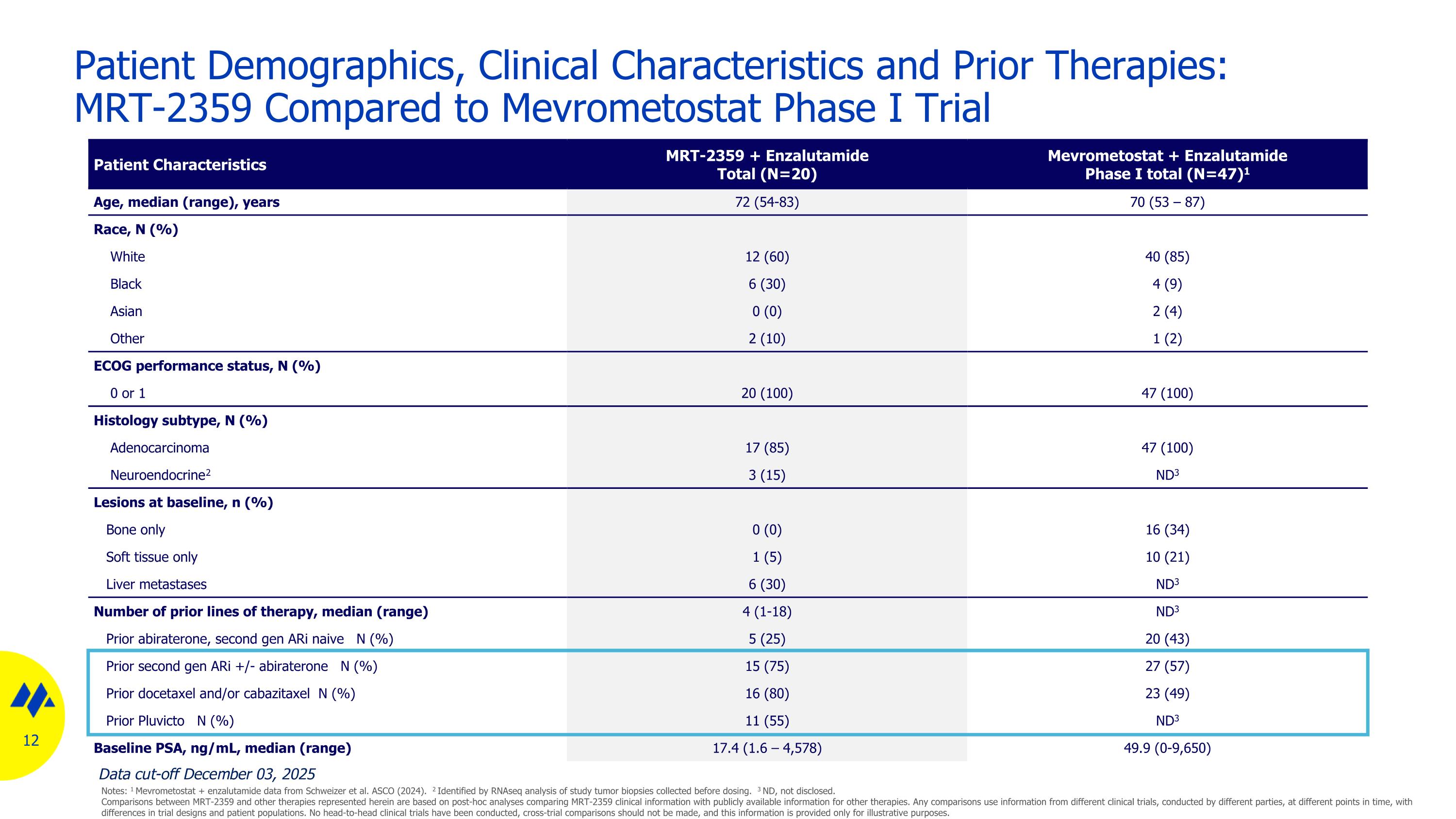
The Phase 1/2 study evaluated 0.5 mg and 0.75 mg of MRT-2359 administered orally on a 21-days-on, 7-days-off drug schedule in combination with enzalutamide, an AR inhibitor. The study population as of the data cutoff date of December 3, 2025, included 20 individuals with advanced CRPC who were heavily pretreated, including 15 (75%) previously treated with a second-generation AR inhibitor, 16 (80%) previously treated with taxane chemotherapy, and 11 (55%) previously treated with Pluvicto®. For analysis of efficacy, all patients were required to be evaluable for measurable disease and not have acquired neuroendocrine differentiation, as determined by RNAseq from screening biopsies.

Summary of Phase 1/2 Study Results in Metastatic CRPC Patients

All 20 patients enrolled were evaluable for safety.
The combination of MRT-2359 and enzalutamide maintained a favorable safety profile, with manageable, primarily gastrointestinal adverse events that were classified as mild or moderate (Grade 1 or Grade 2).
Of the 20 patients enrolled, 14 patients were evaluable for RECIST (Response Evaluation Criteria in Solid Tumors) and were confirmed to have non-neuroendocrine mCRPC.
Of the 14 evaluable patients, all of whom were assessed for AR alteration status using post hoc ctDNA analysis, 4 were confirmed to have AR mutations, and all 4 of those had PSA responses, including 2 patients with PSA90 responses.
2 RECIST partial responses (1 confirmed partial response and 1 unconfirmed partial response) were seen in the AR mutant subset and the DCR in the AR-mutant setting was 100%.
In addition, 5 patients with wild-type AR or positive for ARV7 transcripts had stable disease per RECIST, several of which were associated with tumor size reductions, resulting in a DCR of 64% (9 of 14) in the overall population of 14 evaluable patients.
Data showed that treatment effects were durable, in particular in patients with AR mutations or naïve to AR inhibitors.
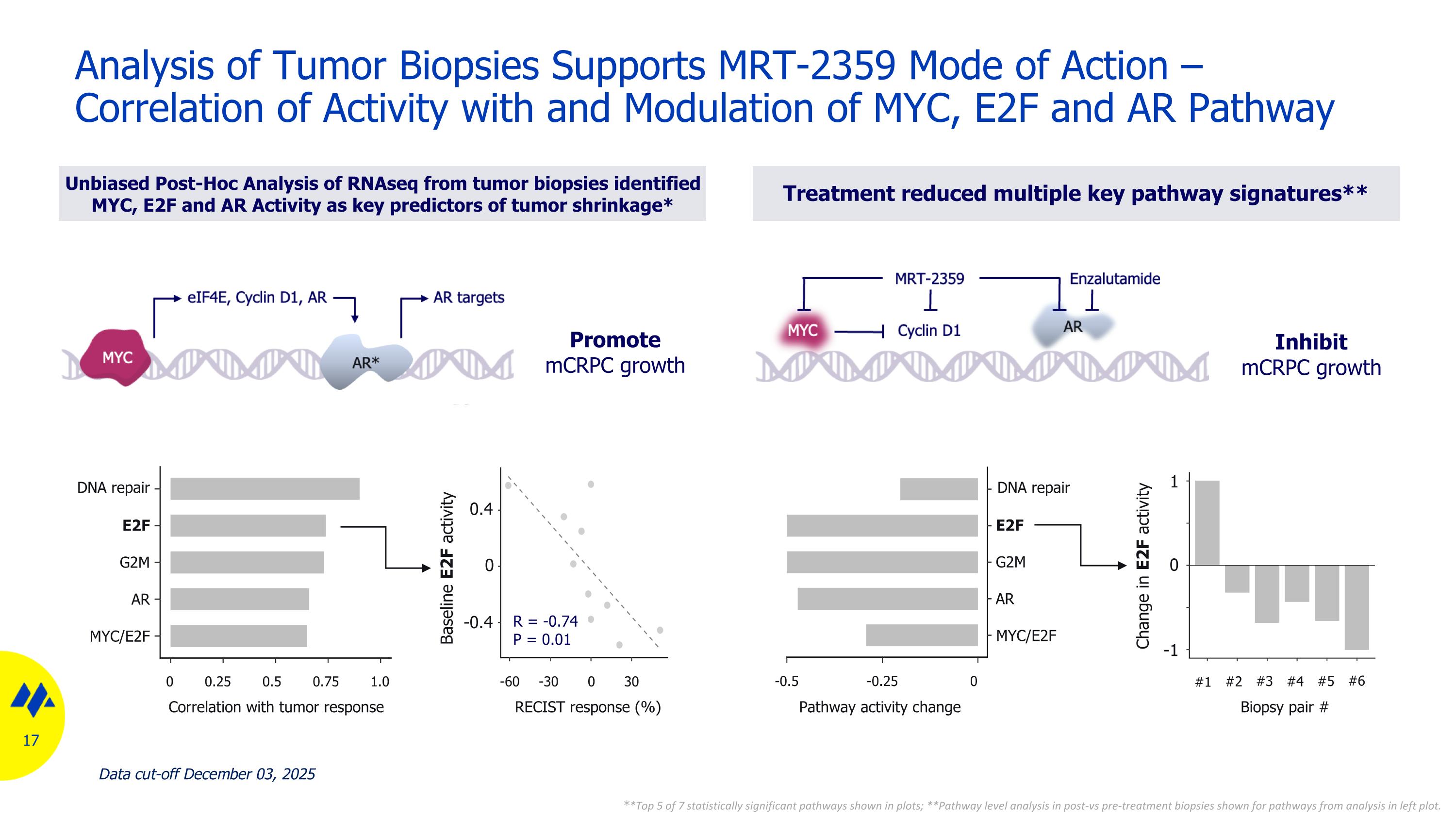
Clinical activity of the combination correlated to both MYC and AR pathway activity in baseline biopsies (as determined by RNAseq), and modulation of MYC, E2F, and AR pathways was seen by RNAseq in paired tumor biopsies.

Monte Rosa plans to present updated data from the Phase 1/2 study of MRT-2359 at the ASCO Genitourinary Cancers Symposium in February.

Monte Rosa plans to initiate a Phase 2 study of MRT-2359 in combination with a second-generation AR inhibitor. The study of up to 25 mCRPC patients, utilizing a two-stage design, is designed to efficiently assess the efficacy of MRT-2359 plus an AR inhibitor in mCRPC patients with AR mutations, with potential to expand the study into additional patient subsets, including patients naïve to 2nd generation AR inhibitors, should the activity in the AR mutant patient population confirm.


The study will evaluate PSA response, RECIST response, duration of response, progression-free survival (PFS), radiographic progression-free survival (rPFS), and safety. The study is anticipated to start in 2026.

The Phase 1/2 study also included six patients with hormone receptor (HR)+ breast cancer. Data from this population demonstrated a favorable safety profile. However, results did not present sufficient evidence of activity to support further development in this population.


Updated Guidance for MRT-8102

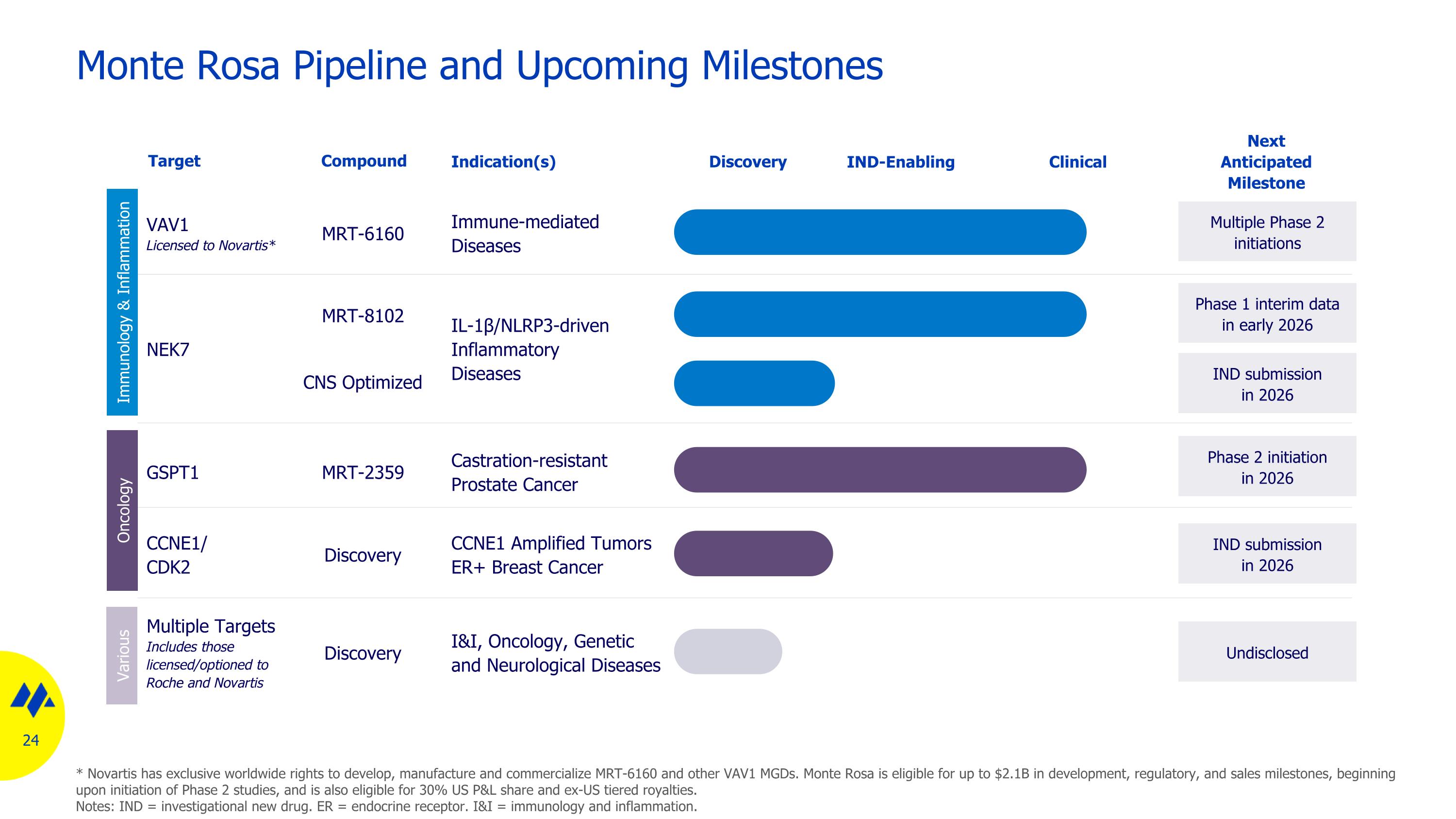
Monte Rosa announced that it plans to present interim Phase 1 data on MRT-8102 in early 2026. MRT-8102 is a first-in-class, NEK7-directed MGD for inflammatory diseases driven by the NLRP3 inflammasome, IL-1β, and IL-6. The ongoing Phase 1 study includes single-ascending dose/multiple-ascending dose (SAD/MAD) cohorts in healthy volunteers, as well as a Part 3 cohort designed to evaluate potential early proof of concept in subjects at increased CVD risk. The Company has initiated dosing in Part 3 of the study.


Forward-Looking Statements

This communication includes express and implied “forward-looking statements,” including forward-looking statements within the meaning of the Private Securities Litigation Reform Act of 1995. Forward-looking statements include all statements that are not historical facts and in some cases, can be identified by terms such as “may,” “might,” “will,” “could,” “would,” “should,” “expect,” “intend,” “plan,” “objective,” “anticipate,” “believe,” “estimate,” “predict,” “potential,” “continue,” “ongoing,” or the negative of these terms, or other comparable terminology intended to identify statements about the future. Forward-looking statements contained herein include, but are not limited to, statements about our ability to grow our product pipeline, our ability to successfully complete research and further development and commercialization of our drug candidates in current or future indications, including the timing and results of our clinical trials and our ability to conduct and complete clinical trials, statements regarding the promising interim results from our ongoing Phase 1/2 clinical study evaluating MRT-2359 in combination with enzalutamide in heavily pretreated patients with metastatic CRPC, our expectations regarding the clinical activity observed with MRT-2359 in combination with enzalutamide in heavily pretreated mCRPC patients and the significant opportunity for MRT-2359 in the rapidly evolving treatment landscape of prostate cancer, our plans to initiate a signal-confirming Phase 2 study evaluating MRT-2359 in combination with a second generation AR inhibitor in mCRPC patients with AR mutations and timing thereof, with potential to expand into additional patient subsets, the potential for the data from this study to confirm MRT-2359's clinical activity and position the program for advancement into registrational studies, the clinical significance of the clinical data read-out at upcoming scientific meetings and timing thereof, our plans to present interim Phase 1 data on MRT-8102 in early 2026, statements around our ability to capitalize on and potential benefits resulting from our research and translational insights, among others.

By their nature, these statements are subject to numerous risks and uncertainties, including those risks and uncertainties set forth in our most recent Annual Report on Form 10-K for the year ended December 31, 2024, filed with the U.S. Securities and Exchange Commission on March 20, 2025, and any subsequent filings, that could cause actual results, performance or achievement to differ materially and adversely from those anticipated or implied in the statements. You should not rely upon forward-looking statements as predictions of future events. Although our management believes that the expectations reflected in our statements are reasonable, we cannot guarantee that the future results, performance, or events and circumstances described in the forward-looking statements will be achieved or occur. Recipients are cautioned not to place undue reliance on these forward-looking statements, which speak only as of the date such statements are made and should not be construed as statements of fact. We undertake no obligation to publicly update any forward-looking statements, whether as a result of new information, any future presentations, or otherwise, except as required by applicable law. Certain information contained in these materials and any statements made orally during any presentation of these materials that relate to the materials or are based on studies, publications, surveys and other data obtained from third-party sources and our own internal estimates and research. While we believe these third-party studies, publications, surveys and other data to be reliable as of the date of these materials, we have not independently verified, and make no representations as to the adequacy, fairness, accuracy or completeness of, any information obtained from third-party sources. In addition, no independent source has evaluated the reasonableness or accuracy of our internal estimates or research and no reliance should be made on any information or statements made in these materials relating to or based on such internal estimates and research.


Item 9.01. Financial Statements and Exhibits

(d) Exhibits

99.1

Press Release issued by Monte Rosa Therapeutics, Inc. dated December 16, 2025.

99.2


MRT-2359 Phase 1/2 Clinical Data Update Presentation furnished by Monte Rosa Therapeutics, Inc. on December 16, 2025.

104

Cover Page Interactive Data File (embedded within the Inline XBRL document).


SIGNATURE

Pursuant to the requirements of the Securities Exchange Act of 1934, the registrant has duly caused this report to be signed on its behalf by the undersigned hereunto duly authorized.


Monte Rosa Therapeutics, Inc.


Date: December 16, 2025


By:

/s/ Markus Warmuth


Markus Warmuth


President and Chief Executive Officer


EX-99.1 2 glue-ex99_1.htm EX-99.1 EX-99.1

img106802192_0.jpg

Exhibit 99.1


Monte Rosa Therapeutics Announces Compelling Clinical Activity of MRT-2359 in Combination with Enzalutamide in Heavily Pretreated Metastatic Castration-Resistant Prostate Cancer Patients with Androgen Receptor Mutations


In mCRPC patients with androgen receptor (AR) mutations, treatment with MRT-2359 in combination with enzalutamide led to a 100% PSA response rate (4 of 4 patients) and a 100% disease control rate, including 2 patients with RECIST responses and 2 with stable disease


Combination of MRT-2359 and enzalutamide was generally well-tolerated with primarily Grade 1-2 adverse events


Company plans to initiate a new, signal-confirming Phase 2 study of MRT-2359 targeting AR mutant and AR signaling-dependent patients in 2026


Updated MRT-2359 data expected to be presented at ASCO Genitourinary Cancers Symposium in February 2026


Conference call and webcast planned for today at 8 a.m. ET


BOSTON, Mass., Dec. 16, 2025 – Monte Rosa Therapeutics, Inc. Monte Rosa Therapeutics, Inc. (Nasdaq: GLUE), a clinical-stage biotechnology company developing novel molecular glue degrader (MGD)-based medicines, today announced positive interim data from an ongoing Phase 1/2 clinical study evaluating MRT-2359 in combination with enzalutamide in heavily pretreated patients with metastatic castration-resistant prostate cancer (mCRPC). MRT-2359 is an investigational, orally bioavailable, GSPT1-directed MGD discovered and developed by Monte Rosa.


“We continue to be highly encouraged by the clinical activity observed with MRT-2359 in combination with enzalutamide in heavily pretreated mCRPC patients, a population with limited therapeutic options, with an overall disease control rate (DCR) of 64%. The responses seen in the subset of patients harboring AR mutations were particularly compelling, with 4 of 4 patients demonstrating a PSA response, including 2 PSA90 responses and 2 PSA50 responses. Two of the 4 patients with AR mutations showed a RECIST response, and the DCR in the AR mutant population was 100%. We believe these results are especially promising given that most of the patients with AR mutations, even more so than in the overall mCRPC trial population, received prior chemotherapy as well as radioligand therapy, or even experimental bispecific antibodies,” said Markus Warmuth, M.D., Chief Executive Officer of Monte Rosa Therapeutics. “We were also pleased to see through our biomarker work that MRT-2359 significantly impacted both the MYC and the E2F signaling pathways, suggesting a mechanism of action that is at least in part independent of inhibiting AR signaling, and confirming our preclinical studies. Given these findings and the favorable safety profile observed to date, we believe there is a significant opportunity for MRT-2359 in the rapidly evolving treatment landscape of prostate cancer.”


“While the data from the ongoing trial continue to mature, we plan to initiate a new, signal-confirming Phase 2 study, evaluating MRT-2359 in combination with a second-generation AR inhibitor in mCRPC patients with AR mutations,” said Filip Janku, M.D., Ph.D., Chief Medical Officer of Monte Rosa Therapeutics. “Data from this study have the potential to confirm MRT-2359’s clinical activity and may position the program for advancement into registrational studies. We also look forward to presenting updated data from the ongoing Phase 1/2 study at the ASCO Genitourinary Cancers Symposium conference in February.”


img106802192_1.jpg


The Phase 1/2 study evaluated 0.5 mg and 0.75 mg of MRT-2359 administered orally on a 21-days-on, 7-days-off drug schedule in combination with enzalutamide, an AR inhibitor. The study population as of the data cutoff date of December 3, 2025, included 20 individuals with advanced CRPC who were heavily pretreated, including 15 (75%) previously treated with a second-generation AR inhibitor, 16 (80%) previously treated with taxane chemotherapy, and 11 (55%) previously treated with Pluvicto®. For analysis of efficacy, all patients were required to be evaluable for measurable disease and not have acquired neuroendocrine differentiation, as determined by RNAseq from screening biopsies.


Summary of Phase 1/2 Study Results in Metastatic CRPC Patients

All 20 patients enrolled were evaluable for safety.
The combination of MRT-2359 and enzalutamide maintained a favorable safety profile, with manageable, primarily gastrointestinal adverse events that were classified as mild or moderate (Grade 1 or Grade 2).
Of the 20 patients enrolled, 14 patients were evaluable for RECIST (Response Evaluation Criteria in Solid Tumors) and were confirmed to have non-neuroendocrine mCRPC.
Of the 14 evaluable patients, all of whom were assessed for AR alteration status using post hoc ctDNA analysis, 4 were confirmed to have AR mutations, and all 4 of those had PSA responses, including 2 patients with PSA90 responses.
Two RECIST partial responses (1 confirmed partial response and 1 unconfirmed partial response) were seen in the AR mutant subset and the DCR in the AR-mutant setting was 100%.
In addition, 5 patients with wild-type AR or positive for ARV7 transcripts had stable disease per RECIST, several of which were associated with tumor size reductions, resulting in a DCR of 64% (9 of 14) in the overall population of 14 evaluable patients.
Data showed that treatment effects were durable, in particular in patients with AR mutations or naïve to AR inhibitors.
Clinical activity of the combination correlated to both MYC and AR pathway activity in baseline biopsies (as determined by RNAseq), and modulation of MYC, E2F, and AR pathways was seen by RNAseq in paired tumor biopsies.


Monte Rosa plans to present updated data from the Phase 1/2 study of MRT-2359 at the ASCO Genitourinary Cancers Symposium in February.


Monte Rosa plans to initiate a Phase 2 study of MRT-2359 in combination with a second-generation AR inhibitor. The study of up to 25 mCRPC patients, utilizing a two-stage design, is designed to efficiently assess the efficacy of MRT-2359 plus an AR inhibitor in mCRPC patients with AR mutations, with potential to expand the study into additional patient subsets, including patients naïve to 2nd generation AR inhibitors, should the activity in the AR mutant patient population confirm. The study will evaluate PSA response, RECIST response, duration of response, progression-free survival (PFS), radiographic progression-free survival (rPFS), and safety. The study is anticipated to start in 2026.


The Phase 1/2 study also included six patients with hormone receptor (HR)+ breast cancer. Data from this population demonstrated a favorable safety profile. However, results did not present sufficient evidence of activity to support further development in this population.


img106802192_1.jpg


Updated Guidance for MRT-8102

Monte Rosa announced today that it plans to present interim Phase 1 data on MRT-8102 in early 2026. MRT-8102 is a first-in-class, NEK7-directed MGD for inflammatory diseases driven by the NLRP3 inflammasome, IL-1β, and IL-6. The ongoing Phase 1 study includes single-ascending dose/multiple-ascending dose (SAD/MAD) cohorts in healthy volunteers, as well as a Part 3 cohort designed to evaluate potential early proof of concept in subjects at increased CVD risk. The Company has initiated dosing in Part 3 of the study.


Investor Conference Call
Monte Rosa will host a conference call and webcast presentation today, Dec. 16, 2025, at 8:00 a.m. ET. A webcast of the presentation will be accessible via the “Events & Presentations” section of Monte Rosa’s website at ir.monterosatx.com. Registration for the conference call is available at the following link. An archived version of the webcast will be made available for 30 days following the presentation.


About MRT-2359
MRT-2359 is a potent, highly selective, and orally bioavailable investigational molecular glue degrader (MGD) of GSPT1. MYC transcription factors (c-MYC, L-MYC and N-MYC) are well-established drivers of human cancers that maintain high levels of protein translation, which is critical for uncontrolled cell proliferation and tumor growth. Preclinical studies have shown this addiction to MYC-induced protein translation creates a dependency on GSPT1. By inducing degradation of GSPT1, MRT-2359 is designed to exploit this vulnerability, disrupting the protein synthesis machinery, leading to anti-tumor activity in MYC-driven tumors. MRT-2359 is being investigated in an ongoing Phase 1/2 study (clinicaltrials.gov identifier NCT05546268) in solid tumors, including castration-resistant prostate cancer (CRPC). In heavily pretreated CRPC patients, a patient group characterized by widespread expression of c-MYC, MRT-2359 demonstrated encouraging early signals of clinical response.


About MRT-8102
MRT-8102 is a potent, highly selective, and orally bioavailable investigational molecular glue degrader (MGD) that targets NEK7 for the treatment of inflammatory diseases linked to NLRP3, IL-1β, and IL-6 dysregulation. NEK7 has been shown to be required for NLRP3 inflammasome assembly, activation and IL-1β release both in vitro and in vivo. Aberrant NLRP3 inflammasome activation and the subsequent release of active IL-1β and interleukin-18 (IL-18) has been implicated in multiple inflammatory disorders, including cardiovascular disease, gout, osteoarthritis, neurologic disorders including Parkinson’s disease and Alzheimer’s disease, and metabolic disorders. In a non-human primate model, MRT-8102 was shown to potently, selectively, and durably degrade NEK7, and resulted in near-complete reductions of IL-1β and caspase-1 following ex vivo stimulation of whole blood. MRT-8102 has demonstrated a considerable safety margin (>200-fold exposure margin over projected human efficacious dose) in GLP toxicology studies. MRT-8102 is currently being investigated in a Phase 1 study (clinicaltrials.gov identifier NCT07119125) in healthy participants and participants at elevated cardiovascular disease risk.


About Monte Rosa

Monte Rosa Therapeutics is a clinical-stage biotechnology company developing highly selective molecular glue degrader (MGD) medicines for patients living with serious diseases. MGDs are small molecule protein degraders that have the potential to treat many diseases that other modalities, including other degraders, cannot.


img106802192_1.jpg


Monte Rosa’s QuEEN™ (Quantitative and Engineered Elimination of Neosubstrates) discovery engine combines AI-guided chemistry, diverse chemical libraries, structural biology, and proteomics to rationally design MGDs with unprecedented selectivity. Monte Rosa has developed the industry’s leading pipeline of first-in-class and only-in-class MGDs, spanning autoimmune and inflammatory diseases, oncology, and beyond, with three programs in the clinic. Monte Rosa has ongoing collaborations with leading pharmaceutical companies in the areas of immunology, oncology and neurology. For more information, visit www.monterosatx.com.


Forward-Looking Statements

This communication includes express and implied “forward-looking statements,” including forward-looking statements within the meaning of the Private Securities Litigation Reform Act of 1995. Forward-looking statements include all statements that are not historical facts and in some cases, can be identified by terms such as “may,” “might,” “will,” “could,” “would,” “should,” “expect,” “intend,” “plan,” “objective,” “anticipate,” “believe,” “estimate,” “predict,” “potential,” “continue,” “ongoing,” or the negative of these terms, or other comparable terminology intended to identify statements about the future. Forward-looking statements contained herein include, but are not limited to, statements about our ability to grow our product pipeline, our ability to successfully complete research and further development and commercialization of our drug candidates in current or future indications, including the timing and results of our clinical trials and our ability to conduct and complete clinical trials, statements regarding the promising interim results from our ongoing Phase 1/2 clinical study evaluating MRT-2359 in combination with enzalutamide in heavily pretreated patients with metastatic CRPC, our expectations regarding the clinical activity observed with MRT-2359 in combination with enzalutamide in heavily pretreated mCRPC patients and the significant opportunity for MRT-2359 in the rapidly evolving treatment landscape of prostate cancer, our plans to initiate a signal-confirming Phase 2 study evaluating MRT-2359 in combination with a second generation AR inhibitor in mCRPC patients with AR mutations and timing thereof, with potential to expand into additional patient subsets, the potential for the data from this study to confirm MRT-2359’s clinical activity and position the program for advancement into registrational studies, the clinical significance of the clinical data read-out at upcoming scientific meetings and timing thereof, our plans to present interim Phase 1 data on MRT-8102 in early 2026, statements around our ability to capitalize on and potential benefits resulting from our research and translational insights, among others. By their nature, these statements are subject to numerous risks and uncertainties, including those risks and uncertainties set forth in our most recent Annual Report on Form 10-K for the year ended December 31, 2024, filed with the U.S. Securities and Exchange Commission on March 20, 2025, and any subsequent filings, that could cause actual results, performance or achievement to differ materially and adversely from those anticipated or implied in the statements. You should not rely upon forward-looking statements as predictions of future events. Although our management believes that the expectations reflected in our statements are reasonable, we cannot guarantee that the future results, performance, or events and circumstances described in the forward-looking statements will be achieved or occur. Recipients are cautioned not to place undue reliance on these forward-looking statements, which speak only as of the date such statements are made and should not be construed as statements of fact. We undertake no obligation to publicly update any forward-looking statements, whether as a result of new information, any future presentations, or otherwise, except as required by applicable law. Certain information contained in these materials and any statements made orally during any presentation of these materials that relate to the materials or are based on studies, publications, surveys and other data obtained from third-party sources and our own internal estimates and research. While we believe these third-party studies, publications, surveys and other data to be reliable as of the date of these materials, we have not independently verified, and make no representations as to the adequacy, fairness, accuracy or completeness of, any information obtained from third-party sources.


img106802192_1.jpg


In addition, no independent source has evaluated the reasonableness or accuracy of our internal estimates or research and no reliance should be made on any information or statements made in these materials relating to or based on such internal estimates and research.


Investors
Andrew Funderburk

ir@monterosatx.com


Media
Cory Tromblee, Scient PR

media@monterosatx.com


###


EX-99.2 3 glue-ex99_2.htm EX-99.2

Slide 1

Degrading Proteins, Making Medicines MRT-2359 Phase 1/2 Clinical Data Update December 16, 2025 Exhibit 99.2


Slide 2

Forward-Looking Statements This communication includes express and implied “forward-looking statements,” including forward-looking statements within the meaning of the Private Securities Litigation Reform Act of 1995. Forward-looking statements include all statements that are not historical facts and in some cases, can be identified by terms such as “may,” “might,” “will,” “could,” “would,” “should,” “expect,” “intend,” “plan,” “objective,” “anticipate,” “believe,” “estimate,” “predict,” “potential,” “continue,” “ongoing,” or the negative of these terms, or other comparable terminology intended to identify statements about the future. Forward-looking statements contained herein include, but are not limited to, statements about our ability to grow our product pipeline, our ability to successfully complete research and further development and commercialization of our drug candidates in current or future indications, including the timing and results of our clinical trials and our ability to conduct and complete clinical trials, statements regarding the promising interim results from our ongoing Phase 1/2 clinical study evaluating MRT-2359 in combination with enzalutamide in heavily pretreated patients with metastatic CRPC, our expectations regarding the clinical activity observed with MRT-2359 in combination with enzalutamide in heavily pretreated mCRPC patients and the significant opportunity for MRT-2359 in the rapidly evolving treatment landscape of prostate cancer, our plans to initiate a signal-confirming Phase 2 study evaluating MRT-2359 in combination with a second generation AR inhibitor in mCRPC patients with AR mutations and timing thereof, with potential to expand into additional patient subsets, the potential for the data from this study to confirm MRT-2359’s clinical activity and position the program for advancement into registrational studies, the clinical significance of the clinical data read-out at upcoming scientific meetings and timing thereof, our plans to present interim Phase 1 data on MRT-8102 in early 2026, statements around our ability to capitalize on and potential benefits resulting from our research and translational insights, among others. By their nature, these statements are subject to numerous risks and uncertainties, including those risks and uncertainties set forth in our most recent Annual Report on Form 10-K for the year ended December 31, 2024, filed with the U.S. Securities and Exchange Commission on March 20, 2025, and any subsequent filings, that could cause actual results, performance or achievement to differ materially and adversely from those anticipated or implied in the statements. You should not rely upon forward-looking statements as predictions of future events. Although our management believes that the expectations reflected in our statements are reasonable, we cannot guarantee that the future results, performance, or events and circumstances described in the forward-looking statements will be achieved or occur. Recipients are cautioned not to place undue reliance on these forward-looking statements, which speak only as of the date such statements are made and should not be construed as statements of fact. We undertake no obligation to publicly update any forward-looking statements, whether as a result of new information, any future presentations, or otherwise, except as required by applicable law. Certain information contained in these materials and any statements made orally during any presentation of these materials that relate to the materials or are based on studies, publications, surveys and other data obtained from third-party sources and our own internal estimates and research. While we believe these third-party studies, publications, surveys and other data to be reliable as of the date of these materials, we have not independently verified, and make no representations as to the adequacy, fairness, accuracy or completeness of, any information obtained from third-party sources. In addition, no independent source has evaluated the reasonableness or accuracy of our internal estimates or research and no reliance should be made on any information or statements made in these materials relating to or based on such internal estimates and research. These materials remain the proprietary intellectual property of Monte Rosa Therapeutics and should not be distributed or reproduced in whole or in part without the prior written consent of Monte Rosa Therapeutics.

Slide 3

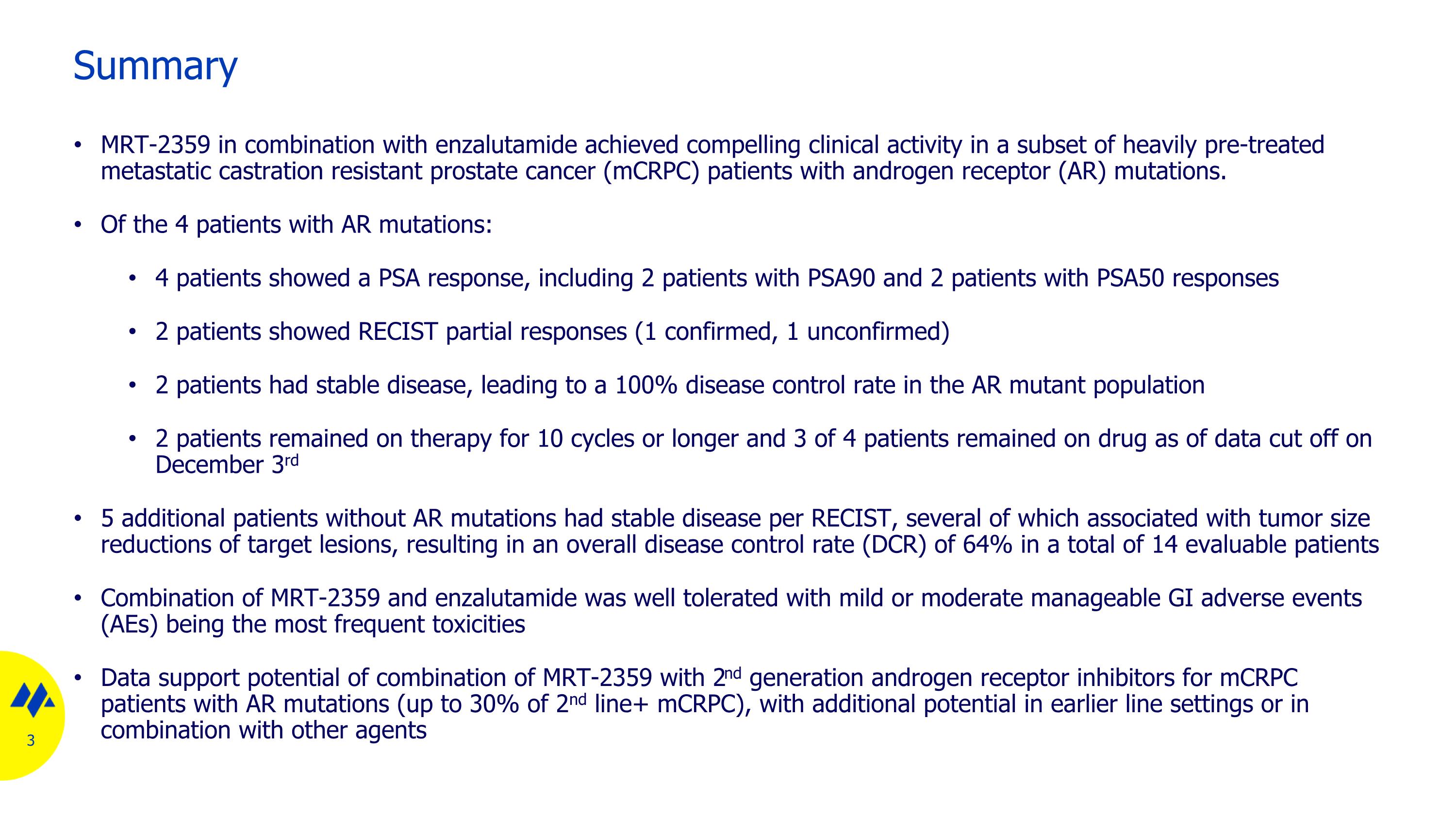
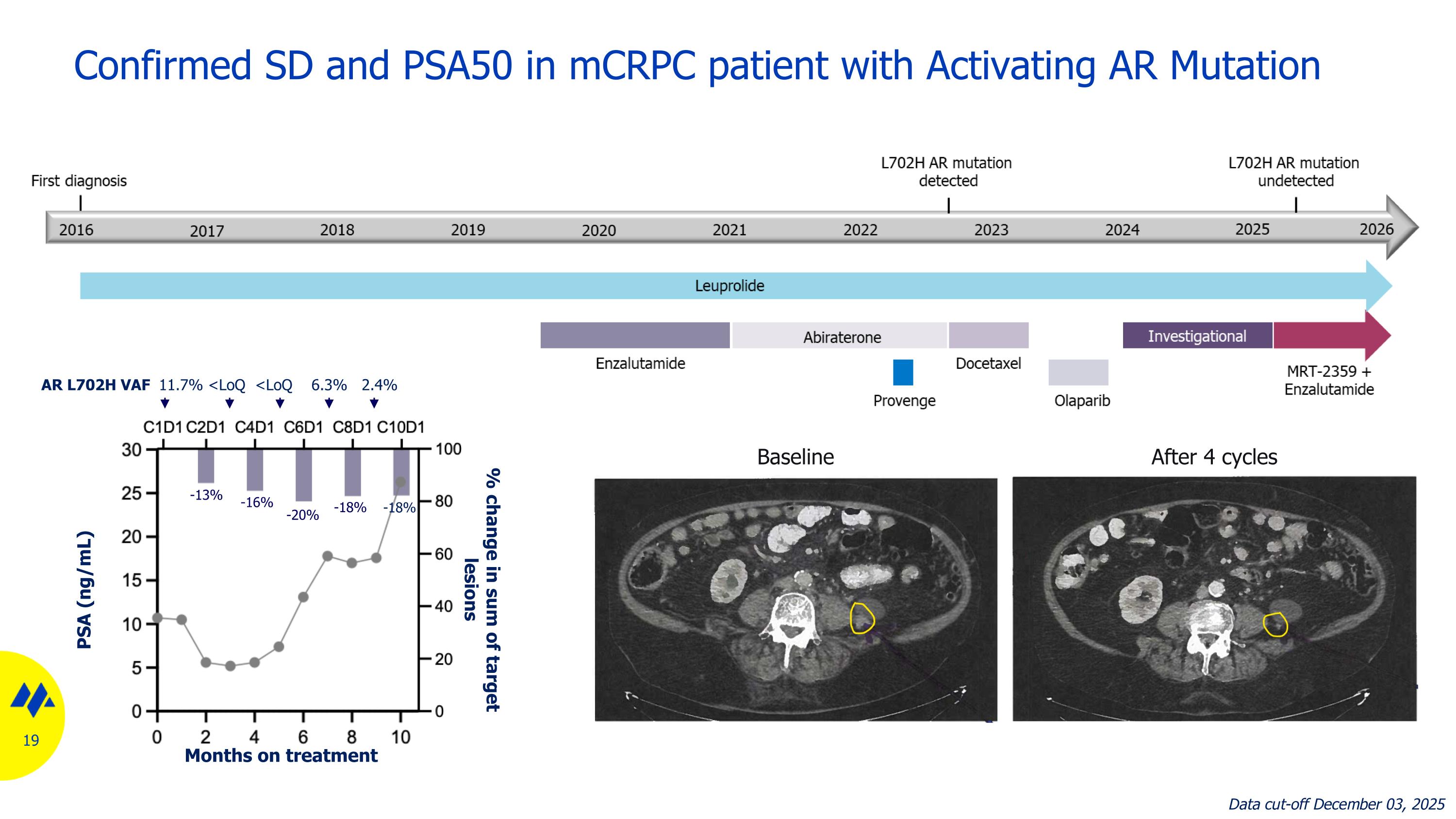
MRT-2359 in combination with enzalutamide achieved compelling clinical activity in a subset of heavily pre-treated metastatic castration resistant prostate cancer (mCRPC) patients with androgen receptor (AR) mutations. Of the 4 patients with AR mutations: 4 patients showed a PSA response, including 2 patients with PSA90 and 2 patients with PSA50 responses 2 patients showed RECIST partial responses (1 confirmed, 1 unconfirmed) 2 patients had stable disease, leading to a 100% disease control rate in the AR mutant population 2 patients remained on therapy for 10 cycles or longer and 3 of 4 patients remained on drug as of data cut off on December 3rd 5 additional patients without AR mutations had stable disease per RECIST, several of which associated with tumor size reductions of target lesions, resulting in an overall disease control rate (DCR) of 64% in a total of 14 evaluable patients Combination of MRT-2359 and enzalutamide was well tolerated with mild or moderate manageable GI adverse events (AEs) being the most frequent toxicities Data support potential of combination of MRT-2359 with 2nd generation androgen receptor inhibitors for mCRPC patients with AR mutations (up to 30% of 2nd line+ mCRPC), with additional potential in earlier line settings or in combination with other agents Summary


Slide 4

Therapeutic Rationale in mCRPC


Slide 5

mRNA eIF4E eIF4E complex Initiation Termination GSPT1 STOP eRF1 Ribosome with growing peptide chain eIF4E Ribosome stalling, translation reduction MRT-2359 eRF1 eRF1 Therapy-resistant mCRPC is characterized by increased MYC, E2F, AR and other oncogenic pathways activity MRT-2359 + enzalutamide suppress multiple oncogenes including AR*, MYC and Cyclin D1 GSPT1 MRT-2359 Exploits Key Therapeutic Vulnerabilities in Therapy-Resistant CRPC 2 Enzalutamide AR MYC * AR WT and variants (mutants and V7). eIF4E, Cyclin D1, AR AR targets AR* MYC 1


Slide 6

Pharmacogenomic Profiling Identified AR/MYC-positive Prostate Cancer Cell Lines as Exquisitely Sensitive to MRT-2359 Unbiased pharmacogenomic analysis identified prostate lineage as highly sensitive to MRT-2359 Selective sensitivity noted in MYC/AR+ lines; minimal sensitivity in AR negative lines AR-positive AR-negative Cell Line Panel Prostate Cell Lines Prostate Cell Lines


Slide 7

Proteomics Analysis Revealed Modulation of AR and MYC/E2F Pathway by MRT-2359 VCaP model (AR-V7 low) 22RV1 model (AR-V7 high) log2FC (MRT-2359) log2FC (enzalutamide) log2FC (MRT-2359) log2FC (enzalutamide) AR-independent proteins AR pathway-relevant proteins CRPC-relevant oncoproteins MRT-2359 treatment significantly reduced abundance of several CRPC-relevant oncoproteins AR abundance (WT and V7) and proteins regulated by AR were significantly reduced across cell lines Other CRPC-relevant oncogenes such as MYC and Cyclin D1, a member of the E2F pathway, were also significantly reduced Notably, MRT-2359 was more effective than enzalutamide at reducing AR activity downregulation downregulation


Slide 8

MRT-2359 in Combination with Enzalutamide or Pluvicto Demonstrated Increased Activity Over Monotherapies In Xenograft Models LNCaP AR Mutant (Mut), AR-V7 negative VCAP AR amplified, AR-V7 low MRT-2359 + enzalutamide drove tumor regressions in CDX models of CRPC with various AR alterations including LNCaP and VCaP MRT-2359 + Pluvicto improved activity over single agents in enzalutamide-resistant, AR-V7 expressing 22Rv1 model MRT-2359 + enzalutamide activity across AR mutant and AR-V7 low CDX models MRT-2359 + Pluvicto in AR-V7 CDX model Tumor volume (mm3)* 0 500 1000 1500 0 10 20 30 Treatment (days) Vehicle MRT-2359, 10 mg/kg QD Enzalutamide, 30 mg/kg QD MRT-2359 + Enzalutamide *Mean + SEM Tumor volume (mm3) 0 200 400 600 0 10 20 30 Treatment (days) Vehicle MRT-2359, 3 mg/kg QD Enzalutamide, 30 mg/kg QD MRT-2359 + Enzalutamide 22Rv1 AR-V7 high Tumor volume (mm3) Treatment (days) Vehicle MRT-2359, 1.5 mg/kg QD Pluvicto, 15 MBq MRT-2359 + Pluvicto 0 200 400 600 0 5 15 20 10 25


Slide 9

MRT-2359 Clinical Data Update


Slide 10

0.5mg 5/9 Phase 2: Expansion Cohort Phase 1: Dose Escalation 1.5mg 5/9 1mg 5/9 MRT-2359 Phase 1/2 Clinical Study Design Monotherapy of MRT-2359 in lung cancer, high-grade neuroendocrine tumors and solid tumors with N-/L-MYC amplification 2mg 5/9 | 5/9 = 5 days on drug, 9 days off drug | 21/7 = 21 days on drug, 7 days off drug | RP2D = recommended Phase 2 dose 0.5mg 21/7 0.75mg 21/7 RP2D Well-tolerated dose level Prostate cancer Combination of MRT-2359 with enzalutamide in heavily-pretreated metastatic castration resistant prostate cancer (CRPC) As of Dec. 3, 2025, enrolled 20 patients with heavily pretreated, RECIST measurable mCRPC


Slide 11

Biomarker Profiling of Tumor and Liquid Biopsies Identify key AR alterations in tumor biopsies, ctDNA, and CTCs, including AR mutations and AR-V7 transcripts Verify non-neuroendocrine histology through RNAseq Tissue biopsy L702H T877A/S H875Y AR mutations Tumor tissue CTCs ctDNA Liquid biopsy Sequencing Imaging DNA RNA Protein AR-V7 AR-FL Notes: ctDNA = circulating tumor DNA. CTC = circulating tumor cell

Slide 12

Patient Demographics, Clinical Characteristics and Prior Therapies: MRT-2359 Compared to Mevrometostat Phase I Trial Patient Characteristics MRT-2359 + Enzalutamide Total (N=20) Mevrometostat + Enzalutamide Phase I total (N=47)1 Age, median (range), years 72 (54-83) 70 (53 – 87) Race, N (%) White 12 (60) 40 (85) Black 6 (30) 4 (9) Asian 0 (0) 2 (4) Other 2 (10) 1 (2) ECOG performance status, N (%) 0 or 1 20 (100) 47 (100) Histology subtype, N (%) Adenocarcinoma 17 (85) 47 (100) Neuroendocrine2 3 (15) ND3 Lesions at baseline, n (%) Bone only 0 (0) 16 (34) Soft tissue only 1 (5) 10 (21) Liver metastases 6 (30) ND3 Number of prior lines of therapy, median (range) 4 (1-18) ND3 Prior abiraterone, second gen ARi naive N (%) 5 (25) 20 (43) Prior second gen ARi +/- abiraterone N (%) 15 (75) 27 (57) Prior docetaxel and/or cabazitaxel N (%) 16 (80) 23 (49) Prior Pluvicto N (%) 11 (55) ND3 Baseline PSA, ng/mL, median (range) 17.4 (1.6 – 4,578) 49.9 (0-9,650) Data cut-off December 03, 2025 Notes: 1 Mevrometostat + enzalutamide data from Schweizer et al. ASCO (2024). 2 Identified by RNAseq analysis of study tumor biopsies collected before dosing. 3 ND, not disclosed. Comparisons between MRT-2359 and other therapies represented herein are based on post-hoc analyses comparing MRT-2359 clinical information with publicly available information for other therapies. Any comparisons use information from different clinical trials, conducted by different parties, at different points in time, with differences in trial designs and patient populations. No head-to-head clinical trials have been conducted, cross-trial comparisons should not be made, and this information is provided only for illustrative purposes.


Slide 13

Combination of MRT-2359 and Enzalutamide was Well Tolerated and May be Favorable over EZH2 Inhibitors Dose Level MRT-2359 0.5 mg and Enzalutamide 160 mg N=14 MRT-2359 0.75 mg and Enzalutamide 160 mg N=6 Total N=20 CTC AE V5 Grade G1 (%) G2 (%) G3 (%) G4 (%) G1 (%) G2 (%) G3 (%) G4 (%) All grades Fatigue 3 (21) 2 (14) 1 (7) 0 2 (33) 2 (33) 0 0 10 (50) Diarrhea 5 (36) 0 1 (7) 0 4 (67) 0 0 0 9 (45) Nausea 1 (7) 2 (14) 0 0 1 (17) 2 (33) 0 0 7 (35) Arthralgia 3 (21) 1 (7) 0 0 1 (17) 1 (17) 0 0 6 (30) Decreased appetite 1 (7) 1 (7) 0 0 2 (33) 1 (17) 1 (17) 0 6 (30) Vomiting 1 (7) 1 (7) 0 0 1 (17) 3 (50) 0 0 6 (30) Neutropenia 2 (14) 0 1 (7) 0 0 0 2 (33) 0 5 (25) Muscular weakness 2 (14) 1 (7) 0 0 0 0 1 (17) 0 4 (20) Combination of MRT-2359 and enzalutamide was well tolerated Most frequent AEs were GI symptoms (nausea, diarrhea, vomiting), which were classified as mild or moderate and were manageable and not therapy limiting Treatment-Related AEs Occurring in >15% Patients Note: Comparisons between MRT-2359 and other therapies represented herein are based on post-hoc analyses comparing MRT-2359 clinical information with publicly available information for other therapies. Any comparisons use information from different clinical trials, conducted by different parties, at different points in time, with differences in trial designs and patient populations. No head-to-head clinical trials have been conducted, cross-trial comparisons should not be made, and this information is provided only for illustrative purposes. Data cut-off December 03, 2025


Slide 14

MRT-2359 and Enzalutamide Achieved High PSA Response Rate in AR Mutant mCRPC AR status V7 V7 V7 WT WT V7 V7 WT V7 V7 Mut Mut* Mut Mut RECIST Response PD PD SD PD SD SD SD PD SD PD SD SD PR PR RECIST % 0 -13 0 +29 -9 +12 -2 +67 -16 -7 -20 0 -62 -61 abi + - + - + + + - + - + + + + 2nd gen ARi + + + + - + + + + + + - - + Docetaxel + + + + - + - + + + + + + + Pluvicto + + - + - + - + + - - + + + Dosing (mg) 0.75 0.75 0.5 0.5 0.5 0.75 0.5 0.5 0.5 0.5 0.5 0.5 0.5 0.5 Best % PSA change MRT-2359 + enzalutamide achieved 100% PSA response rate; PSA response in 4 of 4 heavily pretreated patients with AR mutations PSA50 (n=2) PSA90 (n=2) PSA response rate in overall population suggests activity at least comparable to data shown in Phase 1 study of mevrometostat + enzalutamide Data cut-off December 03, 2025 * Further deepening of PSA response to -68% confirmed after data cut-off Note: Comparisons between MRT-2359 and other therapies represented herein are based on post-hoc analyses comparing MRT-2359 clinical information with publicly available information for other therapies. Any comparisons use information from different clinical trials, conducted by different parties, at different points in time, with differences in trial designs and patient populations. No head-to-head clinical trials have been conducted, cross-trial comparisons should not be made, and this information is provided only for illustrative purposes.


Slide 15

MRT-2359 plus Enzalutamide Achieved Tumor Regressions in AR Mutant mCRPC Best % change in RECIST in patients spanning AR alterations Durable disease control noted in mutant and ARi naïve patients AR status WT WT V7 V7 V7 Mut V7 V7 WT V7 V7 Mut Mut Mut RECIST Response PD PD SD PD SD SD SD PD SD PD SD SD PR PR RECIST % +67 +29 +12 0 0 0 -2 -7 -9 -13 -16 -20 -61 -62 PSA -4 +49 +8 +100 +50 -57 -0.3 -26 +25 +96 -9 -51 -94 -90 Abiraterone - - + + + + + - + - + + + + 2nd gen ARi + + + + + - + + - + + + + - Docetaxel + + + + + + - + - + + + + + Pluvicto + + + + - + - - - + + - + + Dose (mg) 0.5 0.5 0.75 0.75 0.5 0.5 0.5 0.5 0.5 0.75 0.5 0.5 0.5 0.5 Best % change in RECIST1.1 MUT MUT MUT MUT WT V7 V7 V7 V7 V7 V7 WT V7 WT ARi Naive Response Data cut-off December 03, 2025


Slide 16

Compelling Activity in Heavily Pretreated Patients with AR Mutations Best % change in ctDNA Best % change in RECIST Best % change in CTC counts Best % change in PSA Response SD SD* PR PR RECIST % -20 0 -62 -61 Abiraterone + + + + 2nd gen ARi + - - + Docetaxel + + + + Pluvicto - + + + N/A N/D 0 -20 -40 -60 -80 -100 Best % change in PSA N/A SD SD PR PR -20 0 -62 -61 + + + + + - - + + + + + - + + + ** **Data pending SD SD PR PR -20 0 -62 -61 + + + + + - - + + + + + - + + + SD SD PR PR -20 0 -62 -61 + + + + + - - + + + + + - + + + ** 0 -20 -40 -60 -80 -100 Best % change in RECIST 1.1 0 -20 -40 -60 -80 -100 Best % change in mutant ctDNA 0 -20 -40 -60 -80 -100 Best % change in CTC counts Data cut-off December 03, 2025 * Further deepening of PSA response to -68% confirmed after data cut-off

Slide 17

Analysis of Tumor Biopsies Supports MRT-2359 Mode of Action – Correlation of Activity with and Modulation of MYC, E2F and AR Pathway Unbiased Post-Hoc Analysis of RNAseq from tumor biopsies identified MYC, E2F and AR Activity as key predictors of tumor shrinkage* Treatment reduced multiple key pathway signatures** Baseline E2F activity 0 -1 DNA repair E2F G2M AR MYC/E2F Correlation with tumor response 1.0 0.75 0.5 0.25 0 30 0 -30 -60 RECIST response (%) 0 -0.4 0.4 DNA repair E2F G2M AR MYC/E2F Pathway activity change 0 -0.25 -0.5 #1 #2 #3 #4 #5 #6 Biopsy pair # **Top 5 of 7 statistically significant pathways shown in plots; **Pathway level analysis in post-vs pre-treatment biopsies shown for pathways from analysis in left plot. Change in E2F activity R = -0.74 P = 0.01 Promote mCRPC growth Inhibit mCRPC growth 1 Data cut-off December 03, 2025

Slide 18

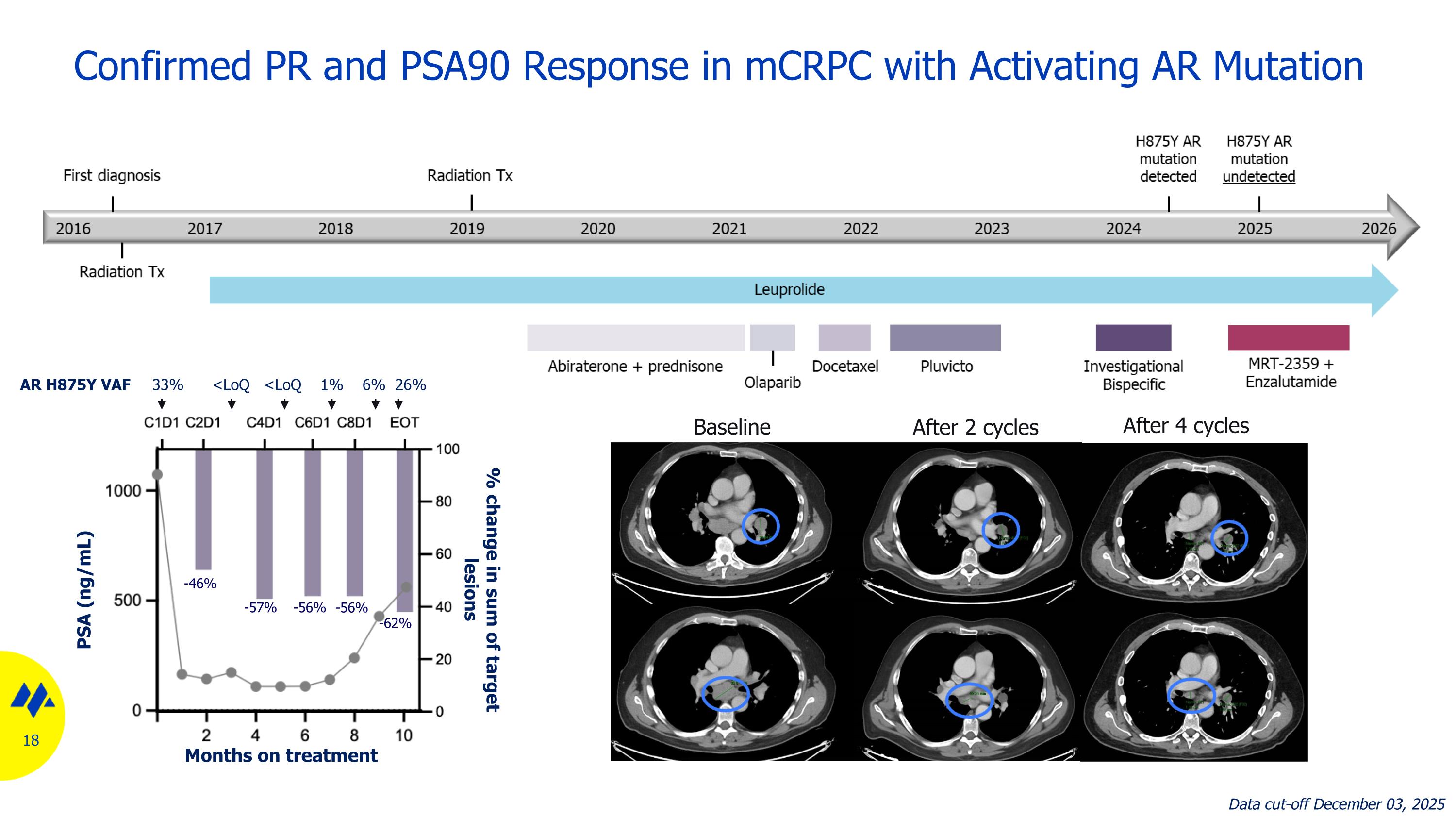
Confirmed PR and PSA90 Response in mCRPC with Activating AR Mutation Baseline After 2 cycles After 4 cycles Treatment cycle -46% -57% -56% -56% -62% AR H875Y VAF 33% <LoQ <LoQ 1% 6% 26% Months on treatment PSA (ng/mL) % change in sum of target lesions Data cut-off December 03, 2025

Slide 19

Confirmed SD and PSA50 in mCRPC patient with Activating AR Mutation AR L702H VAF 11.7% <LoQ <LoQ 6.3% 2.4% Baseline After 4 cycles -13% -16% -20% -18% -18% Data cut-off December 03, 2025 Months on treatment PSA (ng/mL) % change in sum of target lesions


Slide 20

Next Steps


Slide 21

MODeFIRe-1* Phase 2 MRT-2359 Phase 2 Study in CRPC (up to 25 pts) * MODeFIRe-1 Trial: Molecular Degrader For Inhibitor Resistance Enrollment Simon’s 2-Stage Design (up to 25 pts) mCRPC with AR mutations PSA +/- RECIST measurable Treatment MRT-2359 0.5mg (21/7) + 2nd gen ARi (apa, daro, or enza) 28-day cycles Planned study initiation in 2026, US-only Enrollment completion ~12 months after initiation Endpoints include PSA response, RECIST, DoR, rPFS, and safety Potential to expand to other AR driven populations, including patients without prior 2nd generation AR inhibitors


Slide 22

Summary


Slide 23

MRT-2359 in combination with enzalutamide achieved compelling clinical activity (100% PSA response) in a subset of heavily pre-treated metastatic castration resistant prostate cancer (mCRPC) patients with androgen receptor (AR) mutations. Overall disease control rate (DCR) of 64% in a total of 14 evaluable patients Combination of MRT-2359 and enzalutamide was well tolerated with mild or moderate manageable GI adverse events (AEs) being the most frequent toxicities Data support potential of combination of MRT-2359 with 2nd generation androgen receptor inhibitors for mCRPC patients with AR mutations (up to 30% of 2nd line+ mCRPC), with additional potential in earlier line settings or in combination with other agents Updated data from the Phase 1/2 study expected to be presented at ASCO Genitourinary Cancers Symposium in February 2026 Planning to initiate a signal-confirming 2-stage Phase 2 study of MRT-2359 in combination with 2nd generation AR inhibitor to target AR-mutated mCRPC in 2026 Summary and Next Steps

Slide 24

Monte Rosa Pipeline and Upcoming Milestones GSPT1 Castration-resistant Prostate Cancer IL-1β/NLRP3-driven Inflammatory Diseases VAV1 Licensed to Novartis* Immune-mediated Diseases Discovery Target Indication(s) Phase 2 initiation in 2026 Next Anticipated Milestone IND-Enabling Clinical Phase 1 interim data in early 2026 Multiple Phase 2 initiations Multiple Targets Includes those licensed/optioned to Roche and Novartis I&I, Oncology, Genetic and Neurological Diseases Undisclosed NEK7 Compound MRT-2359 MRT-6160 MRT-8102 Discovery IND submission in 2026 CNS Optimized CCNE1/CDK2 CCNE1 Amplified Tumors ER+ Breast Cancer IND submission in 2026 Discovery Immunology & Inflammation Oncology Various * Novartis has exclusive worldwide rights to develop, manufacture and commercialize MRT-6160 and other VAV1 MGDs. Monte Rosa is eligible for up to $2.1B in development, regulatory, and sales milestones, beginning upon initiation of Phase 2 studies, and is also eligible for 30% US P&L share and ex-US tiered royalties. Notes: IND = investigational new drug. ER = endocrine receptor. I&I = immunology and inflammation.


Slide 25

Q&A


Slide 26

Thank you